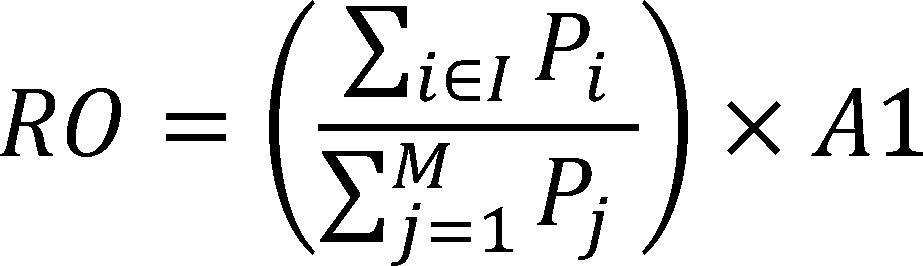
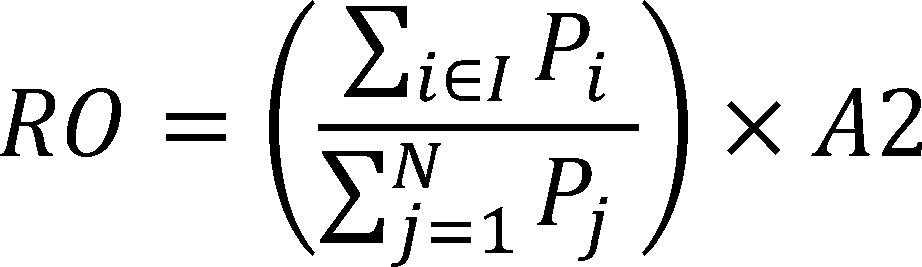
In this document, the Federal Communications Commission (Commission) adopts rules to reform the use of the 3.7-4.2 GHz band, also known as the C-Band. By repacking existing sate...
In this document, the Federal Communications Commission (Commission) adopts rules to reform the use of the 3.7-4.2 GHz band, also known as the C-Band. By repacking existing satellite operations into the upper 200 megahertz of the band (and reserving a 20 megahertz guard band), the Commission makes 280 megahertz of spectrum available for flexible use throughout the contiguous United States, and does so in a manner that ensures the continuous and uninterrupted delivery of services currently offered in the band. The Commission will hold a public auction to ensure that the public recovers a substantial portion of the value of this resource. And the Commission schedules that auction for later this year, with a robust transition schedule to ensure that a significant amount of spectrum is made available quickly for upcoming 5G deployments. This action is the next critical step in advancing American leadership in 5G and implementing the Commission's comprehensive 5G FAST Plan. The Commission modified the Report and Order released on March 3, 2020 with an erratum released on March 27, 2020 and a second erratum released on April 16, 2020. The changes from the first and second errata are included in this document.
DATES:
Effective date:
June 22, 2020.
Compliance date:
Compliance will not be required for §§ 25.138(a) and (b); 25.147(a) through (c); 27.14(w)(1) through (4); 27.1412(b)(3)(i), (c) introductory text, (c)(2), (d)(1) and (2), and (f) through (h); 27.1413(a)(2) and (3), (b), and (c)(3) and (7); 27.1414(b)(3), (b)(4)(i) and (iii), and (c)(1) through (3) and (6) and (7); 27.1415; 27.1416(a); 27.1417; 27.1419; 27.1421; 27.1422(c); 27.1424; and 101.101, Note (2) until the Commission publishes a document in the
Federal Register
announcing that compliance date.
ADDRESSES:
Federal Communications Commission, 445 12th Street SW, Washington, DC 20554.
FOR FURTHER INFORMATION CONTACT:
Anna Gentry of the Wireless Telecommunications Bureau, Mobility Division, at (202) 418-7769 or
Anna.Gentry@fcc.gov. For information regarding the PRA information collection requirements contained in this PRA, contact Cathy Williams, Office of Managing Director, at (202) 418-2918 or
Cathy.Williams@fcc.gov.
SUPPLEMENTARY INFORMATION:
This is a summary of the Commission's
Report and Order and Order of Proposed Modification
in GN Docket No. 18-122, FCC 20-22 adopted February 28, 2020 and released March 3, 2020. The full text of the
Report and Order and Order of Proposed Modification,
including all Appendices, is available for inspection and copying during normal business hours in the FCC Reference Center, 445 12th Street SW, Room CY-A257, Washington, DC 20554, or by downloading the text from the Commission's website at
https://docs.fcc.gov/public/attachments/FCC-20-22A1.pdf. Alternative formats are available for people with disabilities (Braille, large print, electronic files, audio format), by sending an email to
FCC504@fcc.gov
or calling the Consumer and Governmental Affairs Bureau at (202) 418-0530 (voice), (202) 418-0432 (TTY).
The Commission will send a copy of this
Report and Order and Order of Proposed Modification
in a report to be sent to Congress and the Government Accountability Office pursuant to the Congressional Review Act,
see5 U.S.C. 801(a)(1)(A).
Final Regulatory Flexibility Analysis
The Regulatory Flexibility Act (RFA) requires that an agency prepare a regulatory flexibility analysis for notice and comment rulemakings, unless the agency certifies that “the rule will not, if promulgated, have a significant economic impact on a substantial number of small entities.” Accordingly, the Commission has prepared a Final Regulatory Flexibility Analysis (FRFA) concerning the possible impact of the rule changes contained in this
Report and Order
on small entities. As required by the Regulatory Flexibility Act of 1980, as amended (RFA), an Initial Regulatory Flexibility Analysis (IRFA) was incorporated in the
Notice of Proposed Rulemaking (NPRM)
released in July 2018 in this proceeding (83 FR 44128, August 29, 2018). The Commission sought written public comment on the proposals in the
NPRM,
including comments on the IRFA. No comments were filed addressing the IRFA. This present Final Regulatory Flexibility Analysis (FRFA) conforms to the RFA.
Paperwork Reduction Act
The requirements in §§ 25.138(a) and (b); 25.147(a) through (c); 27.14(w)(1) through (4); 27.1412(b)(3)(i), (c) introductory text, (c)(2), (d)(1) through (2), and (f) through (h); 27.1413(a)(2) and (3), (b), and (c)(3) and (7); 27.1414(b)(3), (b)(4)(i) and (iii), and (c)(1) through (3) and (6) and (7); 27.1415; 27.1416(a); 27.1417; 27.1419; 27.1421; 27.1422(c); 27.1424; and 101.101, Note (2) constitute new or modified collections subject to the Paperwork Reduction Act of 1995 (PRA), Public Law 104-13. They will be submitted to the Office of Management and Budget (OMB) for review under Section 3507(d) of the PRA. OMB, the general public, and other Federal agencies will be invited to comment on the new or modified information collection requirements contained in this proceeding. In addition, the Commission notes that, pursuant to the Small Business Paperwork Relief Act of 2002, Public Law 107-198, see 44 U.S.C. 3506(c)(4), the Commission previously sought, but did not receive, specific comment on how the Commission might further reduce the information collection burden for small business concerns with fewer than 25 employees. The Commission describes impacts that might affect small businesses, which includes more businesses with fewer than 25 employees, in the Final Regulatory Flexibility Analysis.
Congressional Review Act
The Commission will send a copy of this Report & Order to Congress and the Government Accountability Office pursuant to the Congressional Review Act.
See5 U.S.C. 801(a)(1)(A). In addition, the Commission will send a copy of the
Report and Order and Order of Proposed Modification,
including this FRFA, to the Chief Counsel for Advocacy of the SBA. A copy of the
Report and Order and Order of Proposed Modification,
and FRFA (or summaries thereof) will also be published in the
Federal Register
.
Synopsis
I. Introduction
1. In this
Report and Order,
the Commission expands on its efforts to close the digital divide and promote U.S. leadership in the next generation of wireless services, including 5G wireless and other advanced spectrum-based services, by reforming the use of the 3.7-4.2 GHz band, also known as the C-Band. By repacking existing satellite operations into the upper 200 megahertz
( printed page 22805)
of the band (and reserving a 20 megahertz guard band), the Commission makes a significant amount of spectrum—280 megahertz or more than half of the band—available for flexible use throughout the contiguous United States, and does so in a manner that ensures the continuous and uninterrupted delivery of services currently offered in the band. The Commission will hold a public auction to ensure that the public recovers a substantial portion of the value of this resource. And it schedules that auction for later this year, with a robust transition schedule to ensure that a significant amount of spectrum is made available quickly for upcoming 5G deployments. This action is the next critical step in advancing American leadership in 5G and implementing the Commission's comprehensive strategy to Facilitate America's Superiority in 5G Technology (the 5G FAST Plan).
II. Background
2. Mid-band spectrum is well-suited for next generation wireless broadband services given the combination of favorable propagation characteristics (as compared to high bands) and the opportunity for additional channel re-use (as compared to low bands). With the ever-increasing demand for more data on mobile networks, wireless network operators increasingly have focused on adding data capacity. One technique for adding capacity is to use smaller cell sizes—
i.e.,
have each base station provide coverage over a smaller area. Using mid-band frequencies can be advantageous for deploying a higher density of base stations. The decreased propagation distances at these frequencies reduce the interference between base stations using the same frequency, thereby allowing base stations to be more densely packed and increasing the overall system capacity. Mid-band spectrum thus presents wireless providers with the opportunity to deploy base stations using smaller cells to achieve higher spectrum reuse than the lower frequency bands while still providing indoor coverage. In addition, mid-band spectrum offers more favorable propagation characteristics relative to higher bands for fixed wireless broadband services in less densely populated areas. Given these characteristics, the Commission expects mid-band spectrum to play a prime role in next-generation wireless services, including 5G.
3. For these same reasons, mid-band spectrum was a key focus of Congress in the Making Opportunities for Broadband Investment and Limiting Excessive and Needless Obstacles to Wireless Act (MOBILE NOW Act), when it considered how to address the pressing need for more spectrum for wireless broadband. Specifically, Section 605(b) of the MOBILE NOW Act requires the Commission to evaluate “the feasibility of allowing commercial wireless services, licensed or unlicensed, to use or share use of the frequencies between 3700 megahertz and 4200 megahertz.” The MOBILE NOW Act also requires that, no later than December 31, 2022, the Secretary of Commerce and the Commission “identify a total of at least 255 megahertz of Federal and non-Federal spectrum for mobile and fixed wireless broadband use.” In making 255 megahertz available, the MOBILE NOW Act provides that 100 megahertz below 8 GHz shall be identified for unlicensed use, 100 megahertz below 6 GHz shall be identified for use on an exclusive, flexible-use, licensed basis for commercial mobile use, and 55 megahertz below 8 GHz shall be identified for licensed, unlicensed, or a combination of uses.
4. The United States is not alone in recognizing the potential of mid-band spectrum for 5G. International governing bodies and several other countries likewise are reviewing the suitability of a number of frequency bands for next generation 5G wireless services, including the 3.7-4.2 GHz bands. For example, the Radio Spectrum Policy Group of the European Commission issued a mandate to the European Conference of Postal and Telecommunications Administrations (CEPT) that the 3.4-3.8 GHz band be the first primary band for 5G, and CEPT currently is developing a report that will provide recommendations for updating the European regulatory framework for this band. A number of European governments are taking actions to make parts of the band available for 5G. Germany intends to make the 3.4-3.8 GHz band available by the end of 2021. In December 2019, France announced the procedures for awarding licenses in the 3.4-3.8 GHz band, which it allocated as a “core” 5G band, consistent with the European Commission's guidance. And the Austrian government held its first auction of 5G licenses in the 3.4-3.8 GHz band in the spring of 2019. There is also significant interest in parts of the band in Asia and in Australia. For example, the Ministry of Internal Affairs and Communications in Japan awarded licenses in the 3.6-4.1 GHz band for 5G in 2019. In August 2019, Australia initiated an initial investigation of possible arrangements for fixed and mobile broadband use in the 3.7-4.2 GHz band. And in November 2018, the United Arab Emirates issued licenses in the 3.3-3.8 GHz band for the establishment of 5G networks.
A. Current Use of the 3.7-4.2 GHz Band and Adjacent Bands
5. The 3.7-4.2 GHz band currently is allocated in the United States exclusively for non-Federal use on a primary basis for Fixed Satellite Service (FSS) and Fixed Service. For FSS, the 3.7-4.2 GHz band (space-to-Earth or downlink) is paired with the 5.925-6.425 GHz band (Earth-to-space or uplink), and collectively these bands are known as the “conventional C-band.” Domestically, space station operators use the 3.7-4.2 GHz band to provide downlink signals of various bandwidths to licensed transmit-receive, registered receive-only, and unregistered receive-only earth stations throughout the United States. FSS operators use this band to deliver programming to television and radio broadcasters throughout the country and to provide telephone and data services to consumers. The 3.7-4.2 GHz band is also used for reception of telemetry signals transmitted from satellites to earth stations, typically near the edges of the band,
i.e.,
at 3.7 GHz or 4.2 GHz.
6. Satellites operating in the C-band typically have 24 transponders, each with a bandwidth of 36 megahertz. Thus, the 24 transponders on a satellite use 864 megahertz of spectrum, or 364 megahertz more than the 500 megahertz available. This is the result of spectrum reuse—adjacent transponders overlap, and self-interference is avoided by using opposite polarizations. Under existing rules, space station operators in the 3.7-4.2 GHz band are authorized to use all 500 megahertz exclusively at any orbital slot, but non-exclusively in terms of geographic coverage. Therefore, multiple FSS incumbents using satellites deployed at different locations in the geostationary orbit can transmit within overlapping geographic boundaries. Space stations that serve or transmit signals into the U.S. market may also be providing service to other countries.
7. For the Fixed Service in the 3.7-4.2 GHz band, 20 megahertz paired channels are assigned for point-to-point common carrier or private operational fixed microwave links. There are fewer than 100 fixed service licensees operating in the band.
8. Last year, in response to a Bureau-level public notice, space station operators and earth station owners filed certifications and information regarding their 3.7-4.2 GHz usage. Intelsat License
( printed page 22806)
LCC (Intelsat), SES Americom, Inc. (SES), Eutelsat S.A. (Eutelsat) and Telesat Canada, ABS Global (ABS), Hispamar S.A. (Hispasat), and Star One S.A. (Star One) provided specific information on the existing C-band downlink capacity and contracted use for 66 satellites authorized to provide service in the 3.7-4.2 GHz band to the United States. In March 2019, the most recent month of data collected, the combined FSS downlink capacity and usage of those 66 satellites was, respectively, 59,427 megahertz and 33,138 megahertz in total with 19,961 megahertz of usage providing service to the United States (
i.e.,
33.59% of the total capacity of the 66 satellites). Intelsat, SES, Eutelsat, Telesat Canada, and Star One have publicly disclosed the provision of service to registered earth stations in the United States in the 3.7-4.2 GHz band.
9. The spectrum band immediately below the 3.7-4.2 GHz band is already authorized for commercial wireless operations. In 2015, the Commission established the Citizens Broadband Radio Service in the 3.55-3.7 GHz band for shared use between commercial wireless operations and incumbent operations—including military radar systems, non-federal FSS earth stations, and, for a limited time, grandfathered wireless broadband licensees in the 3.65-3.7 GHz band. Under the Commission's rules, existing terrestrial wireless operations in the 3.65-3.7 GHz band are grandfathered for up to five years or until the end of their license term, whichever is longer. The Citizens Broadband Radio Service is available for flexible wireless use and will support next generation wireless services, including 5G. Spectrum at or below the 3.7 GHz band is also used for reception of telemetry signals transmitted by satellites. The band just above the 3.7-4.2 GHz band—4.2-4.4 GHz—is allocated for aeronautical radionavigation using radio altimeters in the United States. In 2015, the World Radio Conference added a global co-primary allocation for wireless avionics intra-communications systems. Radio altimeters are critical aeronautical safety-of-life systems primarily used at altitudes under 2500 feet and must operate without harmful interference. Wireless Avionics Intra-Communications systems provide communications over short distances between points on a single aircraft and are not intended to provide air-to-ground communications or communications between two or more aircraft.
B. Procedural History
10.
Mid-Band Notice of Inquiry.
—In the
NOI,
the Commission began an evaluation of whether spectrum between 3.7 GHz and 24 GHz could be made available for flexible wireless use. The
NOI
sought comment in particular on three mid-range bands that stakeholders had identified for expanded flexible use (3.7-4.2 GHz, 5.925-6.425 GHz, and 6.425-7.125 GHz), and it asked commenters to identify other mid-range frequencies that may be suitable for expanded flexible use. The Commission asked questions specific to the challenges and opportunities presented by each band. For example, the Commission asked commenters to identify options for more intensive fixed and mobile use in the 3.7-4.2 GHz band, including whether the band is desirable or suitable for mobile use, whether the existing Fixed Service rules should be modified to support more flexible and intensive fixed use, such as point-to-multipoint services.
11.
Freeze and Filing Window Public Notices.
—In April 2018, the Wireless Telecommunications, International, and Public Safety and Homeland Security Bureaus announced a temporary freeze on the filing of new or modified applications for earth station licenses, receive-only earth station registrations, and fixed microwave licenses in the 3.7-4.2 GHz band, in order to preserve the current landscape of authorized operations in the band pending the Commission's consideration of the issues raised in response to the
NOI.
In June 2018, the International Bureau established a window ending October 17, 2018 (later extended to October 31, 2018), for filing applications to license or register existing earth stations in the 3.7-4.2 GHz frequency band as a limited exception to the earth station application freeze. Further, the International Bureau announced a temporary freeze on the filing of certain space station applications, effective June 21, 2018.
12.
Order and Notice of Proposed Rulemaking.
—In July 2018, the Commission adopted an
Order and Notice of Proposed Rulemaking
(83 FR 44128, Aug. 28, 2018) (
Order and NPRM) in this proceeding. To enable the Commission to make an informed decision about the proposals discussed in the
NPRM,
the
Order
required certain parties to file information about their operations—including information on the scope of current FSS use of the band—and it noted that several of the potential transition methods outlined in the
NPRM
might require additional earth station or space station information.
13. In the
NPRM,
the Commission sought comment generally on the future of incumbent use of the 3.7-4.2 GHz band and specifically on how to define the classes of incumbents, including earth stations, space stations, and point-to-point FS. The Commission sought comment on revising its part 25 rules to limit eligibility to file applications for earth station licenses or registrations to incumbent earth stations, proposed to update International Bureau Filing System (IBFS) to remove 3.7-4.2 GHz band earth station licenses or registrations for which the licensee or registrant did not file the certifications required in the
Order
(to the extent they were licensed or registered before April 19, 2018), and sought comment on how to maintain the accuracy of IBFS data. Regarding space stations, the Commission proposed to revise its rules to bar new applications for space station licenses and new petitions for market access concerning space-to-Earth operations in the 3.7-4.2 GHz band. Given the limited number of point-to-point Fixed Service licensees in the band, the Commission proposed to sunset point-to-point Fixed Service use in the band, and it sought comment on whether existing fixed links should be grandfathered or transitioned out of the band over some time period, after which all licenses would either be cancelled or modified to operate on a secondary, non-interference basis.
14. The Commission also sought comment on the current and future economic value of FSS in the band, on approaches for expanding flexible and more intensive fixed use of the band without causing harmful interference to incumbent operations, and on proposals to clear all or part of the band for flexible use. More specifically, the Commission sought comment on a variety of approaches for expanding flexible use in the 3.7-4.2 GHz band, including market-based, auction-based, hybrid, and other approaches to repurpose some or all of the band. The Commission also sought comment on the appropriate band plan, as well as the licensing, operating, and technical rules for any new flexible use licenses in the band. In response to the
NPRM,
comments and reply comments were due on October 29, 2018 and December 11, 2018, respectively.
15.
May Public Notice.
—On May 3, 2019, the International and Wireless Telecommunications Bureaus issued a public notice (84 FR 25514, June 3, 2019) (
May 3 Public Notice) seeking comment on positions taken by the C-Band Alliance, the Small Satellite
( printed page 22807)
Operators, and T-Mobile. The
May 3 Public Notice
sought comment on the enforceable interference protection rights, if any, granted to space station operators against co-primary terrestrial operations and whether those rights depend on the extent to which incumbent earth stations receive their transmissions within the United States. The
May 3 Public Notice
also sought comment on the enforceable interference protection rights granted to licensed or registered receive-only earth station operators against co-primary terrestrial operations and whether registered receive-only earth station operators are eligible as “licensee[s]” under Section 309(j)(8)(G), to voluntarily relinquish their rights to protection from harmful interference in the reverse phase of an incentive auction. The
May 3 Public Notice
also asked whether the Commission had authority to offer payments to such earth stations to induce them to modify or relocate their facilities. The
May 3 Public Notice
also sought comment on the limits, if any, that Section 316 of the Act places on the proposals raised by the Commission in the
NPRM
or by the commenters in this docket and on obligations, if any, that Section 316 of the Act places on the Commission vis-à-vis licensed or registered receive-only earth station operators.
16.
July Public Notice.
—On July 19, 2019, the Wireless Telecommunications Bureau, International Bureau, Office of Engineering and Technology, and Office of Economics and Analytics issued a public notice (84 FR 35365, July 23, 2019) (
July 19 Public Notice) seeking comment on filings by: (1) ACA Connects—America's Communications Association, the Competitive Carriers Association, Charter Communications, Inc. (ACA Connects Coalition); (2) AT&T; and (3) the Wireless internet Service Providers Association, Google, and Microsoft (WISPA plan). In particular, the
July 19 Public Notice
sought comment on ways to increase the efficient shared use of the C-band through the submitted plans, the viability of ACA Connects Coalition's plan to move all video programming to fiber, and the viability of fiber generally.
III. Report and Order
17. The Commission believes C-band spectrum for terrestrial wireless uses will play a significant role in bringing next-generation services like 5G to the American public and assuring American leadership in the 5G ecosystem. The Commission takes action to make this valuable spectrum resource available for new terrestrial wireless uses as quickly as possible, while also preserving the continued operation of existing FSS services during and after the transition. The record in this proceeding makes clear that licensing mid-band spectrum for flexible use will lead to substantial economic gains, with some economists estimating billions of dollars in increases on spending, new jobs, and America's economy. At the same time, the Commission also recognizes the significant benefit to consumers provided by incumbent FSS services throughout the United States. Because the Commission finds that incumbent space station operators will be able to maintain the same services in the upper 200 megahertz as they are currently providing across the full 500 megahertz of C-band spectrum, the rules adopted in this
Report and Order
will benefit the American public by simultaneously preserving existing FSS services and making way for the provision of next-generation wireless services throughout the contiguous United States.
18. In this
Report and Order,
the Commission concludes that a public auction of the lower 280 megahertz of the C-band will best carry out the Commission's goals, and it adds a mobile allocation to the 3.7-4.0 GHz band so that next-generation services like 5G can use the band. Relying on the
Emerging Technologies
framework, the Commission adopts a process to relocate FSS operations into the upper 200 megahertz of the band, while fully reimbursing existing operators for the costs of this relocation and offering accelerated relocation payments to encourage a speedy transition. The Commission also adopts service and technical rules for overlay licensees in the 280 megahertz of spectrum designated for transition to flexible use.
A. Public Auction of 280 Megahertz of C-Band Spectrum for Flexible Use
19. After review of the extensive record in this proceeding, the Commission adopts a traditional Commission-administered public auction of overlay licenses in the 280 megahertz of C-band spectrum made available for flexible use. The Commission adopts this approach because it will rapidly and effectively repurpose this band for new wireless terrestrial uses, rely on established mechanisms for putting this valuable spectrum to its highest valued use pursuant to statutory criteria designed to promote competition and other important public interest goals, and provide reasonable accommodations to eligible space station operators and incumbent earth stations. The advantages of the public auction include making a significant amount of 3.7-4.2 GHz band spectrum available quickly for flexible-use licenses and adopting a transition period that aligns stakeholders' incentives, particularly those of incumbent FSS operators, so as to achieve an expeditious transition, while ensuring effective accommodation of relocated incumbent users.
20. In the
NPRM,
the Commission sought comment on a variety of market-based mechanisms for expanding flexible use in the 3.7-4.2 GHz band, including a private sale approach, auction mechanisms, and other hybrid approaches that combined elements of various mechanisms. For the private sale approach, the
NPRM
sought comment on a process whereby the satellite industry voluntarily would negotiate with any interested terrestrial operators for the sale of the space station operators' rights in the band and then would clear the negotiated-for spectrum and make it available for flexible use while ensuring uninterrupted incumbent earth station operations through a variety of potential means. With respect to more traditional, Commission-led transition mechanisms, the
NPRM
sought comment on various auction approaches, such as an overlay, incentive, and capacity auctions, including transition mechanisms used in prior proceedings. The
May 3 Public Notice
sought additional comment on the Commission's authority under the Act as well as approaches raised by the C-Band Alliance and T-Mobile. And the
July 19 Public Notice
sought additional comment on a public auction approach advocated by ACA Connects (the ACA Plan), among other issues. Under each of these approaches, the Commission sought comment on how to ensure that incumbent C-band users are effectively transitioned out of the spectrum made available for flexible-use and on whether to provide reimbursement to incumbent space station operators for the costs of transitioning their services.
21. The Commission adopts a traditional Commission-administered public auction of overlay licenses to make the C-band spectrum available expeditiously for next-generation terrestrial wireless use. With overlay licenses, the licensees obtain the rights to geographic area licenses “overlaid” on top of the incumbent licensees, meaning that they may operate anywhere within its geographic area, subject to protecting the operations of incumbent licensees. The Commission has offered two basic forms of overlay licenses: One that grandfathers legacy incumbents and allows their voluntary relocation, and another that makes relocation of incumbents to comparable facilities mandatory. The Commission
( printed page 22808)
adopts the latter approach—assigning overlay licenses via public auction with rules for clearing the band for flexible use and holding incumbents harmless—for several reasons.
22.
First,
the Commission finds that a public auction of flexible-use licenses—conditioned upon relocation of incumbent operations—will best ensure fairness and competition in the allocation of these new flexible-use licenses. The Commission has a long and successful history conducting public auctions of spectrum and has well-established oversight processes designed to promote transparency and ensure that valuable public spectrum resources are put to their highest and best use, while also promoting other public interest goals articulated in Section 309(j) of the Act. In more recent years, public auctions of new flexible-use rights have played a pivotal role in transitioning existing bands and making spectrum available for new uses. Importantly, the Commission carefully designs each auction to include transparent procedures that promote fair-market pricing and robust participation from a diverse group of bidders. Commission control and oversight of the auction of new flexible-use licenses in the 3.7-3.98 GHz band will ensure that a wide range of interested parties have fair and equal access to new spectrum rights that will be vital to the introduction of next-generation wireless services.
23.
Second,
a public auction will maintain the Commission's ability to ensure that incumbent space station operators and earth station owners are able to provide and receive the services and content that they currently provide and receive both during and after mandatory relocation. The safeguards the Commission adopts in conjunction with a public auction ensure that the clearing process is both equitable and transparent and that it provides customers of these incumbent C-band providers assurance that they will continue to be able to receive C-band services during and after the transition. In addition to licensing and technical rules designed to promote harmony between existing C-band services and new flexible uses in the band, the Commission adopts rules for the transition process to ensure that all relevant stakeholders have access to information regarding the necessary steps, costs, respective obligations of each party, and overall timeline for transitioning existing C-band services to the upper 200 megahertz of the band. The Commission's experience in overseeing other complicated, multi-stakeholder transitions of diverse incumbents demonstrates the need for Commission rules and oversight of the transition process to mitigate disputes among stakeholders, expedite the clearing process, and ensure all affected parties receive what they are entitled to in a timely manner.
24.
Third,
the Commission finds that its authority to hold such an auction is firmly established. Section 309 governs the Commission's process for granting licenses under Title III, and it expressly grants the Commission authority to hold an auction where mutually exclusive applications are accepted for initial spectrum licenses. The Commission has used an auction of overlay licenses on a number of occasions to repurpose spectrum for a new service, by requiring incoming licensees to clear the band (typically by funding the relocation of incumbent licensees) in order to fully deploy the new service in a manner that meets the goals and requirements that the Commission had established under Section 303 for providing that service. Since 1992, the Commission has also adopted a series of rules to enable new licensees to enter into voluntary or mandatory negotiations with incumbent operators to clear a spectrum band after which, failing an agreement, the new entrant could involuntarily clear incumbent operations by expressing its intent to commence operations in that band and paying for all reasonable relocation costs. Courts repeatedly have approved the Commission's use of this authority as a means of introducing new services and ensuring that displaced incumbents are placed in positions comparable to those that they had occupied prior to displacement. In light of this well-established precedent and the Commission's repeated success in conducting such auctions in a manner that promotes the public interest, convenience, and necessity, the Commission finds that it has ample legal authority to employ an auction of overlay licenses as a means of introducing new flexible uses in the C-band.
25.
Fourth,
the Commission finds that holding a public auction will ensure this spectrum gets put to its highest, best use quickly. In formulating the transition process and rules adopted in this
Report and Order,
stakeholders have repeatedly emphasized the need to make C-band spectrum available for flexible use as quickly as possible, with the goal of conducting an auction of overlay licenses in the 3.7-3.98 GHz band by the end of 2020. Indeed, by seeking comment, in a separate public notice, on procedures for an auction of 3.7 GHz Service licenses concurrently with this
Report and Order,
the Commission immediately initiates the necessary Commission processes to prepare for an auction. Notably, while satisfying the administrative procedures and requirements associated with a Commission-administered auction, the timelines adopted in this
Report and Order
result in spectrum being made available for flexible use at least as quickly as any of the other transition mechanisms proposed in this proceeding.
26. The Commission's decision to hold a public auction has overwhelming support in the record. A range of commenters with diverse interests support Commission-led auction approaches—including those involving spectrum clearing and geographic clearing—and they emphasize the importance, regardless of the chosen transition approach, that the Commission maintain oversight throughout the transition process. Several commenters support a traditional forward auction, using a standard clock auction format such as that used in Auction 102 for the 24 GHz band. Many commenters that support a public auction of flexible-use licenses in a portion of the 3.7-4.2 GHz band emphasize that the approach must also include a condition on the licenses requiring new flexible-use licensees to reimburse incumbent C-band users for their relocation costs. Certain parties that originally advocated for alternate transition mechanisms in this proceeding have come to support a public auction of overlay licenses as an effective approach to repurposing C-band spectrum for flexible use.
27. Next, the Commission designates 280 megahertz of C-band spectrum (3.7-3.98 GHz) throughout the contiguous United States to be cleared for auction plus another 20 megahertz (3.98-4.0 GHz) to be cleared to serve as a guard band. Given the high demand for mid-band spectrum, the Commission in the
NPRM
sought comment on whether to set a “socially efficient amount of [C-band] spectrum” for repurposing in order to ensure this valuable spectrum is put to its highest and best use.
28. The Commission finds that clearing the lower 280 megahertz (plus a 20 megahertz guard band) of the C-band strikes the appropriate balance between making available as much spectrum as possible for terrestrial use in a short timeframe and ensuring sufficient spectrum remains to support and protect incumbent uses. In particular, the Commission finds that making 280 megahertz available for flexible use is sufficiently large to spur necessary investment in equipment and network deployment resources for next-
( printed page 22809)
generation wireless services in this band. Numerous commenters support clearing 280 megahertz or more to support terrestrial 5G use.
29. The Commission's approach will permit all incumbents to maintain comparable service for existing customers and to obtain future customers in the upper part of the band, while making more efficient use of the band as a whole. C-band space station operators that currently are serving U.S. customers are in a unique position to quickly clear a significant portion of this band spectrally by transitioning their services to the upper portion of the band. Through a process of “satellite grooming,” each satellite company can use their internal fleet management resources to determine the most efficient way to migrate customers to the upper portion of the band, including in some instances by migrating customers to transponders on a different space station operator's fleet. The record adequately demonstrates the satellite industry's ability to clear 280 megahertz for public auction, along with a 20 megahertz guard band, while also ensuring that its customers and incumbent earth station operators are adequately transitioned and able to continue operations without interruption. Furthermore, the rules adopted in this
Report and Order
will ensure that incumbent operations are adequately accommodated and can continue to make use of existing satellite services, while incurring no significant transition costs. The Commission therefore finds that an auction of the lower 280 megahertz of C-band spectrum across the contiguous United States will best advance the Commission's goal of ensuring the United States' leadership in 5G deployment and service offerings without compromising the continued operation of existing C-band services.
30. The Commission's decision to hold a public auction of overlay licenses to operate in the 3.7-3.98 GHz band is the result of careful review of the extensive record in this proceeding, which included transition mechanism proposals submitted by a variety interested parties across stakeholder groups.
31.
C-Band Alliance.
—The Commission declines to adopt the C-Band Alliance proposal for a private sale approach led by incumbent C-band space station operators. The Commission finds that, relative to the C-Band Alliance proposal, the use of a public auction will provide a greater benefit to potential bidders, ensure Commission oversight and protect the interests of displaced incumbent C-band users, promote a rapid transition, and be more firmly grounded in established legal authority.
First,
the C-Band Alliance proposal would place the licensee selection process for an entire band of newly configured spectrum into private hands by vesting private entities with the exclusive ability to allocate new terrestrial rights to valuable C-band spectrum through privately negotiated sales that would not be subject to any of the procedural protections or public interest requirements that Commission-led auctions are designed to promote. Such an approach lacks the transparency and procompetitive features of a public auction and would provide bidders with less certainty about fair and equal access to new flexible-use licenses. In contrast to a private sale conducted by private entities whose primary incentive would be to maximize profits, a Commission-led auction will be driven by broader public interests, including robust participation by a diverse group of bidders, competitive pricing, and transparent allocation of this valuable public resource.
32.
Second,
Commission oversight of the public auction and issuance of flexible-use licenses conditioned upon relocation of incumbent operations will more effectively ensure that all incumbent C-band users are made whole upon completion of the transition. The C-Band Alliance's proposal would give certain incumbent space station operators substantial discretion to decide whether and to what extent all affected C-band users should be accommodated in the transition and compensated for their relocation costs. This responsibility is directly at odds with space station operators' fiduciary duties to their shareholders to maximize the retained profits from the private sale. In contrast, Commission oversight of a public auction and the transition process will be specifically designed to ensure that incumbent C-band users are able to maintain their existing services and are reimbursed for all reasonable costs associated with the transition.
33.
Third,
the Commission believes that a public auction of overlay licenses will make spectrum available for flexible-use just as fast as a private sale approach. Indeed, the Commission plans to hold the public auction this year—just as the C-Band Alliance had proposed for its private sale—and the Commission incorporates aspects of their proposed transition process and deadlines into this
Report and Order.
The Commission disagrees with the C-Band Alliance argument that any Commission-led auction mechanism would fail to overcome the holdout problem due to non-exclusive incumbent rights in the band and would require significant Commission intervention that would delay the auction approach relative to a market-based approach. Despite its initial claim that its private sale proposal would solve the holdout problem by incentivizing incumbent space station operators to cooperate in the transition and collectively sell their shared spectrum rights to new flexible-use licensees, only three incumbent C-band space station operators are members of the C-Band Alliance and have fully supported the C-Band Alliance's proposal. Unless the Commission were to adopt rules granting the C-Band Alliance exclusive authority to lead the transition and compelling non-member space station operators to cooperate with the C-Band Alliance's approach, there would be a potential, and indeed likely, holdout problem that could undermine the success of such a transition. The Commission believes such exclusive authority would raise significant competitive concerns in the absence of unanimity among incumbent space station operators. In other words, due to the existing licensing regime in this band, the potential holdout problem needs to be addressed regardless of whether the Commission adopts a public auction or private sale approach. The rules adopted in this
Report and Order
are specifically designed to reduce the risk of potential holdouts by aligning the incentives of all relevant C-band space station operators with the Commission's goals of rapid introduction of C-band spectrum into the marketplace, and the Commission finds that its public auction approach will provide for rapid clearing upon final action in this proceeding.
34.
Finally,
the Commission finds that a public auction is more consistent with the Commission's long-standing legal authority to manage spectrum in the public interest than a private sale conducted by incumbent space station operators. In contrast to the Commission's well-established authority to conduct auctions of overlay licenses conditioned upon the relocation of incumbent users, the C-Band Alliance proposal would require an unprecedented grant of authority to private entities to negotiate with new entrants for the conveyance of spectrum-use rights that FSS licensees do not currently have. While the Commission has previously modified the existing licenses of incumbents to assign new license rights without creating a mechanism to allow for the
( printed page 22810)
filing of mutually exclusive applications, such modifications were adopted in order to authorize the incumbent licensees to provide new or additional services. Under the C-Band Alliance proposal, the Commission would be granting incumbent space station operators new flexible-use rights
solely
for the purpose of allowing the incumbents to sell those rights on the secondary market, without actually requiring them to meet any buildout requirements or initiate terrestrial service. Indeed, given the full band, full arc nature of FSS licenses, incumbent space station operators could not provide terrestrial mobile services without causing interference to existing C-band satellite services.
35.
T-Mobile Proposal.
—The Commission declines to adopt T-Mobile's proposal of an incentive auction and modified proposal of a more traditional forward auction of flexible-use licenses.
First,
T-Mobile's proposal exceeds our incentive auction authority. Section 309(j)(8)(G) restricts our use of incentive auctions so that only “licensees” may voluntarily relinquish licensed “spectrum usage rights” in exchange for accelerated relocation payments. Unlike the incumbent space station operators, earth station registrants are not licensees. The Communications Act defines the term “license” narrowly as “that instrument of authorization
required by
[the Act] or the rules and regulations of the Commission made pursuant to [the Act], for the use or operation of apparatus for
transmission
of energy, or communications, or signals by radio, by whatever name the instrument may be designated by the Commission.” Since 1979 the Commission has found that licensing receive-only earth stations was not required by the Communications Act because, by definition, such earth stations do not transmit energy, communications, or signals by radio, and since 1991 receive-only earth stations have not been eligible to apply for a Commission license. While some receive-only earth stations in the C-band are licensed to transmit in another band (
i.e.,
licensed transmit-receive earth stations), that license to transmit does not provide the earth station operator with the right to transmit in the C-band, where they hold no “licensed spectrum usage rights.” Because receive-only earth stations are (and must be) unlicensed and have no “transmission” authority, earth station registrants may not participate in the supply-side of an incentive auction.
36.
Second,
because FSS licensees in the C-band share the same non-exclusive rights to transmit nationwide, across the full 500 megahertz, their license rights are not substitutes such that they could compete against one another in a reverse auction to forfeit those rights; all incumbent space station operators would need to clear their existing services from a portion of the band in order to make that spectrum available for flexible use. Section 309(j)(8)(G) specifically requires that, in order for the Commission to hold an incentive auction, “at least two
competing
licensees participate in the reverse auction.” Because incumbent C-band space station operators are not competing licensees that could bid against one another in a reverse auction, T-Mobile's proposal would be an unlawful exercise of the Commission's incentive auction authority.
37.
Third,
the incentive auction would result in a patchwork of spectrum and geographic areas being made available for flexible use, rather than a uniform block of spectrum being cleared throughout the contiguous United States. T-Mobile's proposal would allow incumbent earth station owners to agree to clear geographically, for example by switching existing C-band services to fiber. This would likely result in a disproportionate amount of C-band spectrum being made available in urban areas, where the demand for C-band spectrum is higher and the costs of transitioning to alternative transition mechanisms is lower than in rural areas. The Commission therefore finds that T-Mobile's proposal would undermine the Commission's stated goals for this proceeding to close the digital divide and promote the introduction of next-generation wireless services in all communities, both rural and urban, throughout the contiguous United States.
38. Because our public auction of overlay licenses provides a Commission-led auction mechanism to make 280 megahertz available for flexible use throughout the contiguous United States and compensate incumbent C-band users for their relocation costs, the Commission finds that it captures all the benefits of T-Mobile's proposal while avoiding the legal and practical complications of an incentive auction in this band. Indeed, T-Mobile now agrees that a traditional forward auction of overlay licenses will be a more straight-forward approach to implement than the incentive auction it originally proposed.
39.
ACA Connects Coalition Proposal.
—The Commission declines to adopt the ACA Connects Coalition proposal to transition MVPD earth stations to fiber and repack remaining earth station users into the upper portion of the band.
First,
while the ACA Connects Coalition proposes a public auction to award new terrestrial flexible-use licenses and assign obligations for transition costs, it does not provide potential bidders with the same certainty as the public auction of overlay licenses adopted here. Importantly, the ACA Connects Coalition suggests that programmers, MVPDs, and C-band service providers would negotiate contracts and develop plans for the transition “in the period between an FCC decision and the completion of an auction.” However, such private contract negotiations would involve decisions—such as how much spectrum will be made available, in which geographic areas, and on what timeline—that would be crucial for potential bidders to understand in advance of the auction. It is unclear from the ACA Connects Coalition proposal when these decisions would be made and how that information would be conveyed to potential bidders such that they could make informed decisions about the spectrum band and geographic areas they would compete for at auction. The Commission finds that its public auction of overlay licenses will provide bidders with more certainty by designating a uniform block of 280 megahertz that will be made available for flexible use throughout the contiguous United States.
40.
Second,
the Commission finds that its approach will more effectively ensure that all incumbent C-band users are adequately transitioned and able to continue receiving C-band services after the introduction of new terrestrial wireless operations in the 3.7 GHz Service. The Commission agrees with those commenters who point out that the ACA Connects Coalition proposal lacks important implementation details, such as how to manage the transition of a wide variety of stakeholders, including the design, testing, construction, and integration of nationwide fiber networks and the necessary provisions for maintaining fiber operations in the future. In contrast to the ACA Connects Coalition proposal, the approach the Commission adopts here ensures that incumbent earth station owners will be effectively transitioned and will be able to receive the same C-band services after the transition as they do today.
41.
Third,
the Commission finds that the ACA Connects Coalition proposal is likely to underestimate the complexities and costs of transitioning from C-band satellite spectrum to fiber and would be unlikely to facilitate more rapid and extensive deployment of terrestrial wireless services than the approach the
( printed page 22811)
Commission adopts in this
Report and Order.
The ACA Connects Coalition proposes that clearing would be conducted on a market-by-market basis, which would have “some urban markets” available for flexible-use in approximately 30 months, the “majority of remaining markets” in three years, and the last, “hard-to-build areas” in five years. The Commission shares the concerns of many commenters who doubt that the ACA Connects Coalition proposal could be completed by those timelines. The Commission finds that its approach minimizes the costs, complexities, and risks of delay inherent in the ACA Connects Coalition proposal and is therefore more likely to clear a substantial amount of C-band spectrum in a faster timeframe via a more efficient mechanism.
42.
Fourth,
the Commission finds that the approach adopted in this
Report and Order
is more consistent with the Commission's legal authority to manage spectrum and conduct auctions in the public interest than the ACA Connects Coalition proposal. Section 309(j) of the Act requires that all proceeds from the use of a competitive bidding system must be deposited in the U.S. Treasury. The ACA Connects Coalition proposal that the Commission retain a portion of the revenues from a traditional forward auction to cover the C-band incumbents' relocation costs would therefore violate the provisions of Section 309(j). There is an exception to this rule where the Commission exercises its incentive auction authority to incentivize incumbent licensees to relinquish their spectrum usage rights in exchange for a share of the auctions proceeds. However, because space station operators have non-exclusive rights the full C-band nationwide, an incentive auction in this band would fail to satisfy the Section 309(j)(8)(G) requirement that at least two competing licensees must participate in the reverse auction. The Commission therefore finds that the ACA Connects Coalition proposal would be an unlawful exercise of the Commission's incentive auction authority.
1. Allocation of the 3.7-4.2 GHz Band
43. The Commission adopts rules to add a primary non-Federal mobile, except aeronautical mobile, allocation to the 3.7-4.0 GHz band nationwide. In the United States, that band currently has exclusive non-Federal allocations for FSS and Fixed Service. In addition, the International Table of Frequency Allocations also has a mobile allocation worldwide in the band, with the limitation that in the Americas, Southeast Asia, Australia, and New Zealand, the mobile allocation excludes aeronautical mobile.
44. As the Commission noted in the
NPRM,
Section 303(y) provides the Commission with authority to provide for flexibility of use if: “(1) Such use is consistent with international agreements to which the United States is a party; and (2) the Commission finds, after notice and opportunity for public comment, that (A) such an allocation would be in the public interest; (B) such use would not deter investment in communications services and systems, or technology development; and (C) such use would not result in harmful interference among users.” Adopting a primary non-Federal mobile, except aeronautical mobile, allocation to the 3.7-4.0 GHz band and revising the FSS allocation within the contiguous United States will foster more efficient and intensive use of mid-band spectrum to facilitate and incentivize investment in next generation wireless services. Mid-band spectrum is important for next generation wireless broadband service due to its favorable propagation and capacity characteristics. Allocating the 3.7-4.0 GHz band nationwide for mobile services also meets the Commission's mandate under the MOBILE NOW Act to identify spectrum for mobile and fixed wireless broadband use. In addition, adopting this allocation will harmonize the Commission's allocations for the 3.7-4.0 GHz band with international allocations. Adding a primary mobile service allocation will provide the ability to make as much mid-band spectrum available as possible, which will help to ensure the nation's success in deploying the next generation of wireless services. Finally, because we adopt rules designating 3.98-4.0 GHz as a guard band and requiring FSS and Fixed Service licensees to transition their services to the upper portion of the band and to other bands, respectively, the introduction of mobile use will not result in harmful interference among users of the 3.7-4.2 GHz band.
45. The Commission also removes the FSS allocation within the contiguous United States in the 3.7-4.0 GHz band. To allow for flexible use of the 3.7-3.98 GHz band within the contiguous United States and for fixed use outside of the contiguous United States, the Commission leaves in place the existing Fixed Service allocation to the 3.7-4.2 GHz band while sunsetting the existing licenses for point-to-point operations within the contiguous United States. Authorizations for FSS and Fixed Service operations outside of the contiguous United States may continue to operate in the entire 3.7-4.2 GHz band. The Commission excludes locations outside of the contiguous United States from the public auction and relocation. Locations outside of the contiguous United States have a greater need for C-band services, particularly for the provision of services necessary for the protection of life and property—including telehealth, E911, and education services. The Commission agrees that Alaska, Hawaii, and the U.S. territories should be excluded from any reallocation and repurposing to terrestrial use because C-band service is often the only option available to reach remote villages to provide basic telephone service, E911, and broadband service used to support applications such as telehealth and distance learning. As a result, we believe it is appropriate to retain the FSS allocation across the 3.7-4.2 GHz band outside the contiguous United States.
46. The Commission also modifies footnote NG457A which describes the status of earth stations on vessels in 3.7-4.2 GHz to be consistent with its new band plan. NG457A will now provide that incumbent licensees may continue to provide service to earth stations on vessels on an unprotected basis vis-à-vis both fixed service operations and the new mobile services. In addition, NG457A will now limit the band where ESVs may be coordinated for up to 180 days to 4.0-4.2 GHz rather than 3.7-4.2 GHz as in the existing footnote because FSS will no longer have primary status below 4 GHz. These changes are necessary because of the addition of mobile services and the deletion of FSS in the 3.7-4.0 GHz band. While these changes to NG457A were not specifically proposed in the
NRPM,
they logically follow from the allocation changes that were proposed because earth stations on vessels are an application of the FSS and we proposed to remove FSS from some or all of the band in the
NPRM.
47. The Commission's plan will ensure that content that FSS now delivers to incumbent earth stations will continue uninterrupted as an essential element of the transition mechanism. Although the Commission allocates the 3.98-4.0 GHz band to mobile services, except aeronautical, for flexible use, the Commission declines at this time to establish service rules for that band. Instead, it will function as a guard band to protect earth station registrants from harmful interference both during and after the transition. The Commission also declines to add a mobile allocation to the 4.0-4.2 GHz band reserved for primary FSS use at this time, as doing so could undermine investment in content distribution. Figures 1 and 2
( printed page 22812)
below demonstrate the post-transition allocation and uses of the band in the contiguous United States and in the rest of the United States, respectively.
2. Competitive Bidding Rules
48. The Communications Act requires that the Commission resolve any mutually exclusive applications for new flexible-use licenses in this band through a system of competitive bidding. In the
NPRM,
the Commission sought comment on our proposal to conduct any auction for licenses in this band in conformity with the general competitive bidding rules set forth in part 1, subpart Q, of the Commission's rules. The Commission specifically proposed to employ part 1 rules governing competitive bidding design, application and certification procedures, reporting requirements, the prohibition on certain communications regarding the auction, and designated entity preferences and unjust enrichment. These competitive bidding rules provide a framework for the auction process. More detailed, auction-specific procedures will be addressed in the separate pre-auction process.
49. Given the record and the Commission's experience in successfully conducting auctions pursuant to the part 1 rules, the Commission adopts its proposal to employ those rules when developing the auction for new licenses in this band. Should the Commission subsequently modify its general competitive bidding rules, the modifications would apply as well.
50. We note that Section 647 of the Open-market Reorganization for the Betterment of International Telecommunications Act (ORBIT Act) prohibits the Commission from assigning by competitive bidding either orbital locations or spectrum used for the provision of international or global satellite communications services. In the
NPRM,
the Commission tentatively concluded that the ORBIT Act prohibition would not apply here, since any auctioned spectrum would be used for a new domestic terrestrial service, and the auction mechanisms would not be used to assign by competitive bidding orbital locations or spectrum used for the provision of international or global satellite communications services.
51. The Commission affirms its tentative conclusion. Based on the record and consistent with precedent on this issue, the Commission finds that Section 647 of the ORBIT Act does not prohibit it from assigning terrestrial licenses in this band through a system of competitive bidding.
a. Designated Entity Provisions
52. In the
NPRM,
the Commission sought comment on a proposal for bidding credits to be offered to designated entities when conducting an auction of new licenses in this band. In authorizing the Commission to use competitive bidding, Congress mandated that the Commission “ensure that small businesses, rural telephone companies, and businesses owned by members of minority groups and women are given the opportunity to participate in the provision of spectrum-based services.” Based on the its prior experience with the use of bidding credits in spectrum auctions, the Commission finds that using bidding credits is an effective tool to achieve the statutory objective of promoting participation of designated entities in the provision of spectrum-based service.
53.
Small Businesses.
—One way the Commission fulfills this mandate is through the award of bidding credits to small businesses. In the
Competitive Bidding Second Memorandum Opinion and Order,
the Commission stated that it would define eligibility requirements for small businesses on a service-specific basis, taking into account the capital requirements and other characteristics of each particular service in establishing the appropriate threshold. Further, in the
Part 1 Third Report and Order
and the more recent
Competitive Bidding Update Report and Order (81 FR 43523, July 5, 2016),
the Commission, while standardizing many auction rules, determined that it would continue a service-by-service approach to defining small businesses. In the
NPRM,
the Commission sought comment on whether to adopt bidding credits for the two larger designated entity business sizes provided in the part 1 rules.
54. In adopting competitive bidding rules for other spectrum bands that will
( printed page 22813)
be used as part of 5G services, the Commission included provisions for designated entities to promote opportunities for small businesses, rural telephone companies, and businesses owned by members of minority groups and women to participate in the provision of spectrum-based services. For example, the Commission adopted two small business definitions for the auction of licenses in the Upper Microwave Flexible Use Service (39 GHz band). These two small business definitions are the highest two of three thresholds in the Commission's standardized schedule of bidding credits.
55. The Commission adopts its proposal to apply the two small business definitions with higher gross revenues thresholds to auctions of overlay licenses in the 3.7-3.98 GHz band. Accordingly, an entity with average annual gross revenues for the relevant preceding period not exceeding $55 million will qualify as a “small business,” while an entity with average annual gross revenues for the relevant preceding period not exceeding $20 million will qualify as a “very small business.” Since their adoption in 2015, the Commission has used these gross revenue thresholds in auctions for licenses likely to be used to provide 5G services in a variety of bands. The results in these auctions indicate that these gross revenue thresholds have provided an opportunity for bidders claiming eligibility as small businesses to win licenses to provide spectrum-based services at auction. These thresholds do not appear to be overly inclusive as a substantial number of qualified bidders in these auctions do not come within the thresholds. This helps preclude designated entity benefits from flowing to entities for which such credits are not necessary.
56. The Commission also adopts its proposal to provide qualifying “small businesses” with a bidding credit of 15% and qualifying “very small businesses” with a bidding credit of 25%, consistent with the standardized schedule in part 1 of the Commission's rules. This proposal was modeled on the small business size standards and associated bidding credits that the Commission adopted for a range of other services. The Commission believes that this two-tiered approach has been successful in the past, and it will employ it once again. The Commission believes that use of the small business tiers and associated bidding credits set forth in the part 1 bidding credit schedule will provide consistency and predictability for small businesses. No commenter provides any alternative or reason why the bidding credit thresholds or small business definitions that the Commission adopts would not work in this service.
57.
Rural Service Providers.
—In the
NPRM,
the Commission also sought comment on a proposal to offer a bidding credit for rural service providers. The rural service provider bidding credit awards a 15% bidding credit to those that service predominantly rural areas and that have fewer than 250,000 combined wireless, wireline, broadband and cable subscribers. As a general matter, the Commission “has made closing the digital divide between Americans with, and without, access to modern broadband networks its top priority . . . [and is] committed to ensuring that all Americans, including those in rural areas, Tribal lands, and disaster-affected areas, have the benefits of a high-speed broadband connection.”
58. The Commission finds that a targeted bidding credit will better enable entities already providing rural service to compete for spectrum licenses at auction and in doing so, will increase the availability of 5G service in rural areas. Accordingly, the Commission will apply the rural service provider bidding credit to auctioning new licenses in this band.
3. Licensing and Operating Rules
59. Building on its previous experience introducing mobile service in bands shared with fixed terrestrial and FSS users, the Commission adopts rules to license new mobile operations under its part 27 rules, with modifications to tailor certain rules to the specific characteristics of C-band spectrum. The Commission adopts licensing and operating rules that afford licensees the flexibility to align licenses in the 3.7-3.98 GHz band with licenses in other spectrum bands governed by part 27 of the Commission's rules and other flexible-use services. Specifically, finding no opposition in the record, the Commission adopts rules requiring 3.7 GHz Service licensees in the 3.7-3.98 GHz band to comply with licensing and operating rules that are applicable to all part 27 services, including flexible use, regulatory status, foreign ownership reporting, compliance with construction requirements, renewal criteria, permanent discontinuance of operations, partitioning and disaggregation, and spectrum leasing. In addition, the Commission adopts service-specific rules for the 3.7-3.98 GHz band, including eligibility, mobile spectrum holdings policies, license term, performance requirements, renewal term construction obligations, and other licensing and operating rules to be included in part 27.
a. Band Plan
60.
Block Size.
—The Commission will designate the lower 280 megahertz of C-band spectrum in 100 megahertz increments as the A and B Blocks and in an 80-megahertz increment as C Block. The Commission will issue licenses in the A, B, and C Blocks in 20 megahertz “sub-blocks.” Specifically, the A Block (3.7-3.8 GHz), B Block: (3.8-3.9 GHz), and C Block (3.9-3.98 GHz) will be licensed according to the following channel plan:
61. In the
NPRM,
the Commission sought comment on whether 20 megahertz blocks would be appropriate for the wireless technologies that are likely to be deployed in this band. The Commission sought comment on the appropriate block size that would accommodate a wide range of terrestrial wireless services, while also providing sufficient bandwidth to support 5G services. Commenters support relatively smaller sized sub-blocks with the
( printed page 22814)
potential to aggregate to larger sizes of 60 to 160 megahertz.
62. The Commission finds that 100 megahertz blocks, with 20 megahertz sub-blocks, will provide sufficient flexibility for interested bidders to tailor their decisions based on the anticipated clearing costs and accelerated relocation payment obligations associated with a particular amount of spectrum or geographic license area. For carrier frequencies below 6 GHz, 3GPP has specified thirteen possible channel bandwidths for 5G deployments as follows: 5, 10, 15, 20, 25, 30, 40, 50, 60, 70, 80, 90, and 100 megahertz. To facilitate operation of 100 megahertz bandwidth 5G channels, the Commission implements and defines the uniform block size of 100 megahertz that would run across the entire band from 3.7-4.0 GHz. By allowing new flexible-use licensees to acquire full 100-megahertz blocks, the Commission will ensure that C-band spectrum is licensed in sufficiently wide bandwidths to enable 5G deployments. The inclusion of 20 megahertz sub-blocks provides sufficient flexibility for manufacturers and licensees to tailor application of the band to suit future needs, especially when considering that LTE can be made to coexist within or adjacent to 5G operations. A number of commenters support a Commission auction of this spectrum in 20 megahertz blocks. Because it finds that 20 megahertz sub-blocks provide sufficient flexibility, the Commission finds it unnecessary to divide the blocks even smaller into 10 megahertz sub-blocks, as some commenters have proposed.
63.
Spectrum Block Configuration.
—The Commission adopts rules to license the A, B, and C 20 megahertz sub-blocks of C-band spectrum in an unpaired spectrum block configuration because there is wide support in the record for this approach, and it will enhance the flexible and efficient use of the band for next-generation services and other advance spectrum-based services. In contrast to a paired channel configuration that assumes frequency division duplex operations, an unpaired spectrum configuration is technology neutral,
i.e.,
enables time division duplex operations, which has become increasingly prevalent in deployments of digital broadband networks. In light of these considerations, the Commission concludes that an unpaired spectrum block configuration will provide licensees the flexibility necessary to increase the capacity of their networks and make the most efficient use of C-band spectrum.
64.
Use of Geographic Licensing.
—Consistent with its approach in several other bands used to provide fixed and mobile services, the Commission finds that it is in the public interest to license the A, B, and C Blocks in 20 megahertz sub-blocks on an exclusive, geographic area basis. Geographic area licensing provides flexibility to licensees, promotes efficient spectrum use, and helps facilitate rapid assignment of licenses, using competitive bidding when necessary. There is wide support in the record for licensing C-band flexible-use spectrum on an exclusive, geographic basis, and the Commission finds that such an approach will give certainty to licensees and provide the efficiencies of scale and scope that drive innovation, investment, and rapid deployment of next generation services.
65.
Geographic License Area.
—The Commission adopts PEAs as the geographic license area for new 3.7 GHz Service licenses and divide those licenses into 20 megahertz sub-blocks within the A, B, and C Blocks; the Commission finds that this license-area size best optimizes and balances our statutory and regulatory objectives in licensing spectrum. In determining the appropriate geographic license area size, the Commission must consider several factors, including: (1) Facilitating access to spectrum by both small and large providers; (2) providing for the efficient use of spectrum; (3) encouraging deployment of wireless broadband services to consumers, including those in rural areas and Tribal lands; and (4) promoting investment in and rapid deployment of new technologies and services. In the
NPRM,
the Commission sought comment on using PEAs, as well as on licensing on a county, nationwide, or other basis.
66. The Commission finds that licensing on a PEA basis strikes the appropriate balance between being sufficiently large to facilitate wide-area deployments of 5G, while also being sufficiently small to ensure that small and regional carriers are able to compete for new 3.7 GHz Service licenses. PEAs offer a compromise between EAs, on the one hand, and CMAs or counties, on the other hand, because they are smaller than EAs and serve to separate rural from urban markets to a greater degree than EAs do (given that EAs often include both rural and urban markets), yet PEAs are also subdivisions that “nest” within EAs and can easily be aggregated to larger areas such as EAs, Major Economic Areas, and Regional Economic Areas. As a result, licensing new 3.7 GHz Service licenses on a PEA basis in the contiguous United States will encourage entry by providers that contemplate offering wireless broadband service on a localized basis, yet at the same time will not preclude carriers that plan to provide service on a much larger geographic scale. PEAs therefore will encourage auction participation by a diverse group of buyers and will generate competition between large, regional, and small carriers across various geographic areas, while also minimizing the difficult coordination and border issues that might arise from smaller license areas. The Commission agrees with commenters that recommend excluding areas outside of the contiguous United States from the transition and will not issue licenses in those PEAs.
67. In summary, for Blocks A, B, and C, the Commission will issue 3.7 GHz Service licenses on a PEA basis for 20 megahertz sub-blocks in the contiguous states and the District of Columbia (PEAs 1-41, 43-211, 213-263, 265-297, 299-359, and 361-411). The Commission will not issue flexible-use licenses for Honolulu, Anchorage, Kodiak, Fairbanks, Juneau, Puerto Rico, Guam-Northern Mariana Islands, U.S. Virgin Islands, American Samoa, and the Gulf of Mexico (PEAs numbers 42, 212, 264, 298, 360, 412-416).
b. Application Requirements & Eligibility
68. Licensees in the A, B, and C blocks must comply with the Commission's general application requirements. Further, the Commission adopts an open eligibility standard for licenses in the A, B, and C Blocks. The Commission has determined that eligibility restrictions on licenses may be imposed only when open eligibility would pose a significant likelihood of substantial harm to competition in specific markets and when an eligibility restriction would be effective in eliminating that harm.
69. The Commission agrees that the record in this proceeding does not demonstrate a compelling need for regulatory intervention to exclude potential participants. The Commission finds that adopting an open eligibility standard appropriately relies on market forces and will encourage efforts to develop new technologies, products, and services, while helping to ensure efficient use of this spectrum. Generally applicable qualifications that may apply under the Commission's rules, including those relating to citizenship and character, apply to any and all licenses issued for flexible use of this spectrum, and any person who has been, for reasons of national security, barred by any agency of the Federal Government from bidding on a contract,
( printed page 22815)
participating in an auction, or receiving a grant is ineligible.
c. Mobile Spectrum Holdings
70. The Commission does not impose a pre-auction bright-line limit on acquisitions of the 3.7-3.98 GHz band. Instead, it will incorporate into the spectrum screen the 280 megahertz of spectrum that we make available in the 3.7-3.98 GHz band. The Commission will also perform case-by-case review of the long-form license applications filed as a result of the auction.
71. In the
NPRM,
the Commission sought comment on whether and how to address mobile spectrum holdings issues to meet its statutory requirements and ensure competitive access in the 3.7-4.2 GHz band, including whether to include the 3.7-4.2 GHz band in the spectrum screen for secondary market transactions. The Commission proposed not to adopt a pre-auction bright-line limit on a party's ability to acquire spectrum in the 3.7-4.2 GHz band in a public auction. The Commission also asked whether to apply a post-auction case-by-case review of holdings when applications for initial licenses are filed and whether to limit the amount of spectrum one party can acquire through a market-based mechanism.
72. Similar to its approach in the
2017 Spectrum Frontiers Order and FNPRM (83 FR 37, Jan. 2, 2018; 83 FR 85, Jan. 2, 2018)
and the
2018 Spectrum Frontiers Order and FNPRM
(83 FR 34478, July 20, 2018), the Commission finds that, “[g]enerally, bright-line, pre-auction limits may restrict unnecessarily the ability of entities to participate in and acquire spectrum in an auction, and we are not inclined to adopt such limits on auction participation absent a clear indication that they are necessary to address a specific competitive concern.”
73. The Commission agrees with commenters that an in-band spectrum aggregation limit is unnecessary for this band. Commenters requesting an in-band limit raise only general concerns regarding the need to prevent a few dominant carriers from obtaining an excessive concentration of this spectrum and to ensure smaller carriers have a fair opportunity to obtain the spectrum. But limiting the amount of 3.7-3.98 GHz band spectrum that one party can acquire, as these commenters request, could unnecessarily restrict providers' ability to participate in the auction and acquire spectrum in this band. This ultimately could “constrain providers in their paths towards 5G deployment,” limit providers' “incentives to invest” in the band, and “delay the realization of related economic benefits.” Further, “a variety of spectral paths to 5G deployment in the United States” exist, including the additional opportunities for access to spectrum through our recent actions to remove restrictions on the 2.5 GHz band, to make the 3.5 GHz band available for priority access licenses, and to make millimeter-wave spectrum available through auction. Because the Commission's “balancing of objectives” has “shift[ed] towards facilitating rapid 5G deployment in the United States,” and because commenters have not pointed to “a clear indication” that in-band limits “are necessary to address a specific competitive concern,” the Commission finds it unnecessary to impose an in-band limit on the 3.7-3.98 GHz band. Instead, the Commission finds that a case-by-case review of acquisitions of 3.7-3.98 GHz band spectrum will allow the Commission to review spectrum aggregation on market competition without unnecessarily restricting entities from acquiring spectrum to deploy 5G services.
74. The Commission will include the A, B, and C Blocks of the 3.7-3.98 GHz band in the screen for secondary market transactions because the spectrum will become “suitable and available in the near term for the provision of mobile telephony/broadband services.” The relevant product market for the screen incorporates both mobile voice and data services, including services provided over advanced broadband wireless networks—particularly emerging, next generation wireless services. The Commission adopts flexible-use rules here to enable terrestrial mobile use for 5G deployment. Accordingly, it is appropriate to incorporate this band into the screen for mobile telephony/broadband services.
75. The Commission will add the 280 megahertz to the spectrum screen once the auction closes. While winners of the auction must clear incumbents from the band following the auction, the Commission finds it is “fairly certain” that the auctioned spectrum “will meet the criteria for suitable spectrum in the near term” once the auction closes, given the Commission's transition plan. This is consistent with its approach for the 600 MHz band (where the Commission found that the spectrum was available following the Broadcast Incentive Auction, even though incumbents had to be moved) and the 700 MHz band (where the Commission found that the spectrum was available a year and a half before the spectrum would be cleared by incumbents).
76. Finally, the Commission will perform case-by-case review of the long form applications of the 3.7-3.98 GHz spectrum following the auction. The Commission will use the same case-by-case review as it does for secondary market transactions, updated to account for the additional 3.7-3.98 GHz spectrum. As the Commission has explained, case-by-case review “permits bidders to participate fully” in acquiring the spectrum, “while still allowing the Commission to assess the impact on competition from the assignment of initial . . . licenses, and to take appropriate action to preserve or protect competition only where necessary.” As it has done in other bands made available for flexible use, the Commission will apply the standard articulated in the 2008
Union Telephone Order.
This review will create sufficient bidder certainty for the auction, consistent with Section 309(j)(3)(E).
d. License Term
77. The Commission finds that a 15-year license term will provide sufficient time to encourage investment in the 3.7-3.98 GHz band given the clearing, relocation, and repacking that must occur prior to mobile operations. In the
NPRM,
the Commission proposed a 15-year license term for this very reason, suggesting that 15 years would afford licensees sufficient time to achieve significant buildout obligations post-transition. Many commenters agree that a longer term is warranted where time-consuming activities are needed to ready the spectrum for mobile use, and several argue that 15 years will promote the provision of innovative services and applications.
78. The Commission agrees and concludes that a 15-year license term for the A, B, and C Blocks best serves the public interest by providing the time needed for significant investment that ultimately will usher in valuable services to consumers.
e. Performance Requirements; Renewal
79. The Commission recognizes the critical role that performance requirements play in ensuring that licensed spectrum does not lie fallow. The performance requirements the Commission adopts for the 3.7-3.98 GHz band take into account the unique characteristics of this band, but also will ensure that licensees begin providing service to consumers in a timely manner by relying on specific quantifiable benchmarks. To support a variety of different use cases in this spectrum, the Commission adopts below specific metrics for mobile/point-to-multipoint, fixed, and IoT services in the A, B, and C Blocks, consistent with its proposal in the
NPRM.
( printed page 22816)
80.
Mobile or Point-to-Multipoint Performance Requirements.
—The Commission concludes that licensees in the A, B, and C Blocks offering mobile or point-to-multipoint services must provide reliable signal coverage and offer service to at least 45% of the population in each of their license areas within eight years of the license issue date (first performance benchmark), and to at least 80% of the population in each of their license areas within 12 years from the license issue date (second performance benchmark). These population benchmarks are slightly more aggressive than those for other flexible-use services under part 27. Given the critical role of mid-band spectrum in today's spectral environment, the Commission finds that this approach is warranted.
81. Commenters generally support performance requirements to prevent warehousing of this valuable spectrum, but some object that these benchmarks are more stringent than for other part 27 services in lower frequency bands that have better propagation characteristics,
e.g.,
BRS, H Block, AWS-3, AWS-4, 600 MHz, and 700 MHz Upper C Band, that have better propagation characteristics than the 3.7-3.98 GHz band.
82. In the
NPRM,
the Commission proposed that the deadline for the first performance benchmark would be six years from the license issue date. However, consistent with the rules the Commission adopts for the transition of existing space station and earth station operations to the upper 200 megahertz of the band, new flexible-use licensees may not commence operations until the necessary clearing has been completed and the flexible-use licensee has complied with all obligations to provide reimbursement for relocation costs and any additional accelerated relocation payments have been made. The Commission anticipates that flexible-use licensees will begin deploying their systems and constructing their networks while incumbents are still transitioning out of the 3.7-3.98 GHz band so that flexible-use licensees are able to commence operations soon after incumbent clearing is complete. Nevertheless, given the potential length of that transition, the Commission finds that a six-year initial benchmark may not be reasonable. The Commission therefore finds it appropriate to adjust its proposed deadline for the first performance benchmark to eight years from the license issue date, in order to provide licensees additional time to deploy once the license area has been cleared of FSS use.
83. The Commission believes that 12 years will provide sufficient time for A, B, and C Block licensees, relying on mobile or point-to-multipoint service in accordance with our part 27 rules, to meet the proposed coverage requirements. Given the expected desirability of mid-band spectrum for the provision of innovative 5G services that promote American competitiveness, the performance benchmarks the Commission adopts are not unduly burdensome because it expects that the market will drive deployment beyond these Commission's benchmarks. The Commission anticipates that after satisfying the 12-year second performance benchmark, a licensee will continue to provide reliable signal coverage, or point-to-point links, as applicable, and offer service at or above that level for the remaining three years in the 15-year license term prior to renewal. The Commission, therefore, declines to set the second performance benchmark at the end of the license term, as some commenters proposed. Establishing benchmarks before the end of the license term will ensure continuity of service over the license term, which is essential to the Commission's evaluation under its renewal standards. We note that our Wireless Radio Services Renewal requirements include safe harbor certifications, in lieu of a detailed renewal showing, for qualified licensees.
84.
Alternate IoT Performance Requirements.
—The Commission recognized in the
NPRM
that 3.7-3.98 GHz licenses have flexibility to provide services potentially less suited to a population coverage metric. Therefore, the Commission sought comment on an alternative performance benchmark metric for licensees providing IoT-type fixed and mobile services. Based on the record evidence, the Commission will provide licensees in the A, B, and C Blocks the flexibility to demonstrate that they offer geographic area coverage of 35% of the license area at the first (eight-year) performance benchmark, and geographic area coverage of 65% of the license area at the second (12-year) performance benchmark. The Commission finds that the aforementioned levels of geographic coverage maintain reasonable parity between the requirements in these IoT-focused metrics and the requirements for mobile providers relying on population-based coverage metrics. This framework is intended to provide enough certainty to licensees to encourage investment and deployment in these bands as soon as possible, while retaining enough flexibility to accommodate both traditional services and innovative services or deployment patterns.
85. A performance metric based on geographic area coverage (or presence) will allow for networks that provide meaningful service but deploy along lines other than residential population. This definition separates “traditional” point-to-point links from the sensor and device connections that likely will be part of new IoT networks in these bands and applies to a network of fixed sensors or smart devices operating at low power over short distances. Although the Commission adopts an additional metric in order to facilitate the deployment of IoT and other innovative services, there is no requirement that a licensee build a particular type of network or provide a particular type of service in order to use whatever metric it selects to demonstrate that it met its performance requirement.
86.
Fixed Point-to-Point Under Flexible Use.
—Recognizing that its part 27 flexible-use policies enable licensees to potentially offer a variety of different services in the 3.7-3.98 GHz band, the Commission sought comment in the
NPRM
on performance metrics for licensees offering point-to-point service in the band. For licensees providing fixed, point-to-point links, the Commission generally has evaluated buildout by comparing the number of links in operation to the population of the license area.
87. The Commission adopts performance metrics using this framework, as proposed in the
NPRM.
Specifically, the Commission adopts a requirement that part 27 geographic area licensees providing Fixed Service in the A, B, and C Blocks band must demonstrate within eight years of the license issue date (first performance benchmark) that they have four links operating and providing service, either to customers or for internal use, if the population within the license area is equal to or less than 268,000. If the population within the license area is greater than 268,000, the Commission requires a licensee relying on point-to-point service to demonstrate it has at least one link in operation and providing service, either to customers or for internal use, per every 67,000 persons within a license area. The Commission requires licensees relying on point-to-point service to demonstrate within 12 years of the license issue date (final performance benchmark) that they have eight links operating and providing service, either to customers or for internal use, if the population within the license area is equal to or less than 268,000. If the population within the
( printed page 22817)
license area is greater than 268,000, the Commission requires a licensee relying on point-to-point service to demonstrate it is providing service and has at least two links in operation per every 67,000 persons within a license area.
88. These standards are generally similar to the standards the Commission established for fixed point-to-point services in the 2.3 GHz band and several
Spectrum Frontiers
bands. In the
NPRM,
the Commission also asked whether to require point-to-point links to operate with a transmit power greater than +43 dBm in order to be eligible to be counted under the point-to-point buildout standard. The Commission observed that for the UMFUS bands, the 43 dBm minimum power requirement is intended to separate traditional point-to-point links from the sensor and device connections anticipated to be part of new Internet of Things networks in those bands. The Commission received no comment on this issue. Based on the record, including the different propagation characteristics of the 3.7-3.98 GHz band, the Commission find that its approach in the
Spectrum Frontiers
proceeding does not support adoption of a similar rule for the 3.7-3.98 GHz band. Links in the 3.7-3.98 GHz band, however, must be part of a network that is actually providing service, whether to unaffiliated customers or for private, internal uses, and all links must be present and operational in accordance with our discontinuance and renewal rules. As with the mobile performance milestone, the size of the population will be calculated over the entire license area.
89.
Penalty for Failure To Meet Performance Requirements.
—Along with performance benchmarks, the Commission adopts meaningful and enforceable penalties for failing to ensure timely build-out. Specifically, as proposed in the
NPRM,
the Commission adopts a rule requiring that, in the event a licensee in the A, B, or C Block fails to meet the first performance benchmark, the licensee's second benchmark and license term would be reduced by two years, thereby requiring it to meet the second performance benchmark two years sooner (at 10 years into the license term) and reducing its license term to 13 years. Consistent with the approach in many other bands, the Commission concludes that, if a licensee fails to meet the second performance benchmark for a particular license area, its authorization for each license area in which it fails to meet the performance requirement shall terminate automatically without Commission action.
90. This approach will promote prompt buildout and appropriately penalize a licensee for not meeting its performance obligations for a particular license area. The Commission declines to adopt a “use-or-lose” regime, as suggested by some commenters, under which a licensee would lose only those areas within a license area that are not developed. The Commission finds that such an approach, which has been adopted rarely for other bands, likely would reduce incentives for licensees to build out to the less populated areas covered by their license, and would be less effective in ensuring use of the spectrum. In addition, in the event a licensee's authority to operate terminates, the licensee's spectrum rights would become available for reassignment pursuant to the competitive bidding provisions of Section 309(j) and any licensee who forfeits its license for failure to meet its performance requirements would be precluded from regaining the license.
91.
Compliance Procedures.
—In addition to compliance procedures applicable to all part 27 licensees, including the filing of electronic coverage maps and supporting documentation, the Commission adopts a rule requiring that such electronic coverage maps must accurately depict both the boundaries of each licensed area and the coverage boundaries of the actual areas to which the licensee provides service. Although the Commission sought comment on additional compliance procedures in the
NPRM,
only a small number of commenters addressed this issue.
92. As proposed in the
NPRM,
the rule the Commission is adopting requires measurements of populations served on areas no larger than the Census Tract level so a licensee deploying small cells has the option to measure its coverage using a smaller acceptable identifier such as a Census Block. The Commission finds that such procedures will confirm that the spectrum is being used consistent with the performance requirements. If a licensee does not provide reliable signal coverage to an entire license area, the licensee must provide a map that accurately depicts the boundaries of the area or areas within each license area not being served. Each licensee also must file supporting documentation certifying the type of service it is providing for each licensed area within its service territory and the type of technology used to provide such service. Supporting documentation must include the assumptions used to create the coverage maps, including the propagation model and the signal strength necessary to provide reliable service with the licensee's technology. The Commission will adopt conforming amendments to part 27 to include these requirements. The Commission directs the Wireless Telecommunications Bureau to specify the format of submissions, consistent with these determinations.
93.
License Renewal.
—As proposed in the
NPRM,
the Commission will apply the general renewal requirements applicable to all Wireless Radio Services licensees to 3.7-3.98 GHz band licensees in the A, B, and C Blocks. This approach will promote consistency across services.
94.
Renewal Term Construction Obligation.
—In addition to, and independent of, these general renewal provisions, the Commission finds that any additional renewal term construction obligations adopted in the
Wireless Radio Services Renewal Reform
proceeding would apply to licenses in the A, B, and C Blocks of the 3.7-3.98 GHz band.
95. In the
NPRM,
the Commission noted that the
Wireless Radio Services Renewal Reform FNPRM
(82 FR 41580, Sept. 1, 2017) sought comment on various renewal term construction obligations such as incremental increases in the construction metric in each subsequent renewal term. The Commission also noted that the
Wireless Radio Services Renewal Reform FNPRM
proposed to apply any rules adopted in that proceeding to all flexible geographic licenses. Commenters generally support the Commission's adopting renewal term construction obligations for the 3.7-3.98 GHz band in the context of the
Wireless Radio Services Renewal Reform
proceeding, as its decision ensures consistency across services.
96. The Commission finds that applying any additional renewal term construction obligations adopted in the
Wireless Radio Services Renewal Reform
proceeding to licenses in the A, B, and C Blocks will encourage robust deployment and maintain consistency across flexible geographic licensees.
B. The Transition of FSS Operations
97. For a successful public auction of overlay licenses in the 3.7-3.98 GHz band, bidders need to know before an auction commences when they will get access to that currently occupied spectrum as well as the costs they will incur as a condition of their overlay license. In this section, the Commission addresses precisely those questions while also setting forth a transition path that ensures that incumbent FSS users will continue to receive the content they
( printed page 22818)
do today both during and after the transition.
98. That transition of FSS operations relies on the Commission's
Emerging Technologies
framework, a framework the Commission has relied on since the early 1990s to facilitate the swift transition of spectrum from one use to another. In short, the framework allows for new licensees to incentivize a swift transition while requiring those licensees to hold incumbents harmless during the transition. Specifically, the Commission requires overlay licensees to pay for the reasonable relocation costs of incumbent space station and incumbent earth station operators who are required to clear the lower 300 megahertz of the C-band spectrum in the contiguous United States.
99. To effectuate that process, the Commission takes several steps.
First,
the Commission defines the class of incumbent earth stations and incumbent space stations to make clear what FSS entities it expects to take part in the transition (and what entities may be eligible for relocation payments).
Second,
the Commission lays out its legal authority to carry out the transition as well as the effect of that transition on future operations in the C-band.
Third,
the Commission sets a deadline for clearing the band by 2025 while offering incumbent space station operators the option to accelerate that process to 2021 for the lower 120 megahertz and 2023 for the upper 180 megahertz.
Fourth,
the Commission sets forth the relocation payments we expect incumbent operators to receive and how to apportion such payments among overlay licensees.
Fifth,
the Commission establishes a neutral, third-party clearinghouse to manage collection and distribution of relocation payments.
Sixth,
the Commission describes the logistics of transitioning FSS operations out of the lower 300 megahertz of the C-band spectrum.
Finally,
the Commission addresses additional issues related to the FSS transition, including the maintenance of IBFS data and revisions to the coordination policy for FSS and Fixed Services. The Commission finds that these rules will best promote the rapid and effective transition of incumbent FSS operations out of the portion of C-band spectrum to be made available for public auction.
1. Incumbent FSS Operations
100. In this section, the Commission defines the class of incumbent FSS space stations and earth stations that must be accommodated during the transition and reimbursed for their relocation costs. The Commission finds that its definition of incumbents effectively captures existing C-band FSS users that will need to be transitioned and protected in order to ensure that they are able to continue providing and receiving their existing services during and after the transition. Commenters generally agree that the Commission should define incumbent FSS operations for these purposes.
101.
Incumbent Space Station Operators.
—The Commission defines “incumbent space station operators” to include all C-band space station operators authorized to provide service to any part of the contiguous United States pursuant to an FCC-issued license or grant of market access as of June 21, 2018—the date of the International Bureau's temporary freeze on certain new space station applications in the 3.7-4.2 GHz band. There are eight such operators: ABS, Empresa, Eutelsat, Hispasat, Intelsat, SES, Star One, and Telesat.
102.
Incumbent Earth Stations.
—The Commission defines “incumbent earth stations” to be protected from interference from flexible-use licensees to include FSS earth stations that: (1) Were operational as of April 19, 2018; (2) are licensed or registered (or had a pending application for license or registration) in the IBFS database as of November 7, 2018; and (3) have timely certified, to the extent required by the July 2018
Order
adopted in FCC 18-91 (as we clarify below to include certain renewal applications and license and registration applications filed through November 7, 2018), the accuracy of information on file with the Commission.
103. This definition largely parallels the definition the Commission proposed in the
NPRM,
with a few minor changes. For one, the Commission affirms the finding of the International Bureau that registrants and licensees that filed applications or modifications during the processing window, which effectively updated or confirmed their earth station details, are exempt from the separate certification requirement. For another, the Commission includes all license and registration applications that were filed through November 7, 2018, rather than the initial filing window deadline (October 17, 2018) or the extended filing deadline (October 31, 2018) due to outages in the IBFS filing system around that deadline. Under the approach the Commission adopts, the fact that an earth station has not filed an exhibit demonstrating coordination with terrestrial Fixed Service stations will not disqualify it as an incumbent earth station. For earth stations licensed or registered before the processing window, the Commission finds that renewal applications, as well as certifications, filed by the May 28, 2019 certification deadline, effectively updated or confirmed their earth station details. And finally, the Commission makes clear that the definition does not include those whose authorization terminated by law because the earth station was not operational for more than 90 days.
104. Several commenters, including CCA, Microsoft, Motorola, and Verizon, support the Commission's proposed definition of incumbent earth stations. The Commission disagrees with commenters who assert the definition is too restrictive. Earth station operators have been provided ample opportunity to register their earth stations with the Commission. In addition to waiving the coordination requirement during the freeze filing window, the International Bureau took numerous other steps to ease the filing process, including conducting tutorials and providing step-by-step filing instructions on the Commission's website to assist those unfamiliar with the International Bureau's filing system. Moreover, the filing deadline was extended numerous times to accommodate filers. Therefore, contrary to the arguments of some commenters, the Commission has decided not to open another window for the registration of earth stations that existed as of April 19, 2018.
105. The Commission also declines to adopt the C-Band Alliance's suggestion that incumbent earth stations should encompass all earth stations identified by the C-Band Alliance. The Commission finds that there is a significant public interest in providing a stable, comprehensive list of incumbent earth stations that meet the criteria described above. The members of the C-Band Alliance and other space station operators may, of course, treat unregistered earth stations like incumbent earth stations for their own commercial purposes. But any such commercial decisions are outside the scope of this proceeding.
106. The Commission also adopts the proposal in the
NPRM
that the classes of earth stations entitled to protection and transition are those registered as fixed or temporary fixed (
i.e.,
transportable) earth stations in IBFS. That proposal was supported by the record. The Commission did not propose to include other classes of earth stations registered in IBFS, such as earth stations on vessels and other licensees operating under blanket earth stations, and the record does not support the inclusion of any additional classes of earth stations. The Commission directs the International Bureau to complete the
( printed page 22819)
processing of earth station license and registration applications filed during the limited freeze filing window.
107. As the Commission proposed in the
NPRM,
any receive-only earth stations that failed to meet the requirements to be incumbent earth stations will be removed from IBFS. In the
NPRM,
the Commission proposed to update IBFS to terminate 3.7-4.2 GHz band earth stations licenses or registrations for which the licensee or registrant had not timely filed the certification required by the
July 2018 Order
(to the extent it held or applied for a license or registration before April 19, 2018). Several commenters support such termination, as well as eliminating an obligation to protect those stations from harmful interference. For the same reasons that the Commission limits incumbent earth stations to those that timely filed the required certifications or submitted renewal applications by the certification deadline, the Commission now directs the International Bureau to terminate automatically the registrations of those uncertified receive-only earth stations in IBFS, consistent with our treatment of surrendered licenses and registrations that no longer authorize operations. The Commission proposes to modify the licenses of transmit-receive earth stations that failed to submit a certification or submit a renewal application by the certification deadline to remove their protection rights in 3.7-4.0 GHz and to allow them to continue to receive transmissions on an unprotected basis in 4.0-4.2 GHz. These licensed transmit-receive earth stations will not be considered eligible earth stations and will not be eligible to have their relocation expenses reimbursed, but can adjust their reception so as to receive transmissions to the upper 200 megahertz at their own expense.
2. Clearing the 3.7-4.0 GHz Band of FSS Operations
108. The Commission next adopts rules to limit FSS operations to the 4.0-4.2 GHz band in the contiguous United States. To accomplish this goal and make the 3.7-4.0 GHz band available for terrestrial wireless use, the Commission uses its authority under Section 316 of the Communications Act to modify the existing FSS licenses and market access authorizations held by space station operators in the band. The Commission finds that such modifications are consistent with its statutory authority, supported by judicial and Commission precedent, and will serve the public interest. The Commission also revises its rules to prohibit new applications for space station licenses and new petitions for market access concerning space-to-Earth operations in the 3.7-4.0 GHz band in the contiguous United States.
109.
Clearing Space Station Operations.
—Section 316 of the Communications Act vests the Commission with broad authority to modify licenses “if in the judgment of the Commission such action will promote the public interest, convenience, and necessity.” The Commission finds that modifying the authorizations of incumbent space station operators to clear use of the 3.7-4.0 GHz band (and confine their operations in the contiguous United States to the 4.0-4.2 GHz band) is within the Commission's statutory authority, consistent with prior Commission practice, and will promote the public interest convenience, and necessity. The Commission accordingly proposes to modify the authorizations of the incumbent space station operations to carry out the clearing of this band.
110. The Commission has long relied on Section 316 to change or reduce the frequencies used by a licensed service where it has found that doing so would serve the public interest. For example, in the
2002 MSS Order,
the Commission relied on its Section 316 authority to relocate the Motient Services, Inc. (Motient) spectrum assignment from solely upper L-band frequencies to mostly lower, internationally coordinated L-band frequencies and reduce it from 28 to 20 megahertz, to enable Motient to construct and operate an economically viable MSS system without interfering with maritime distress and safety communications. In the
DEMS Relocation Order,
the Commission, pursuant to Section 316, modified licenses to relocate the operations of certain Digital Electronic Message Service (DEMS) licensees from the 18 GHz band to the 24 GHz band, in order to accommodate Department of Defense military systems. Similarly, in the 2004
800 MHz Order (69 FR 67823, Nov. 22, 2004),
the Commission relied on Section 316 to relocate the public safety and other land mobile communications systems operating in the 800 MHz band to new spectral locations both within and outside the band (including the relocation of a large set of licenses then held by Nextel Communications, Inc., to the 1.9 GHz band), in order to eliminate the interference to the public safety and other high site, non-cellular systems caused by the inherently incompatible operations of the band's cellular-architecture multi-cell systems. The Commission has also relied on its Section 316 authority to “rearrang[e] licensees within a spectrum band.” And as part of the recent
Spectrum Frontiers
incentive auction, the Commission modified the authorizations of incumbent licensees by altering their assigned frequencies and, in many cases, their geographic service areas, in a way that ensured that the spectrum usage rights under the modified licenses were comparable to those under the originally configured licenses.
111. Notably, the Commission's modification authority under Section 316 does not require the consent of licensees. As the United States Court of Appeals for the District of Columbia Circuit has stressed, “if modification of licenses were entirely dependent upon the wishes of existing licensees, a large part of the regulatory power of the Commission would be nullified.” [1]
Indeed, that court has reiterated that Congress broadened the Commission's discretion by adding Section 316, which “provides the FCC with the authority to modify licenses without the approval of their holders.” [2]
Rather, the Commission need only find, as it does here, that the modification “serves the public interest, convenience and necessity.” [3]
Further, the courts have consistently held that the Commission may exercise its license modification authority as part of a rulemaking proceeding, as it does here.[4]
112. The International and Wireless Telecommunications Bureaus sought comment on the scope of our Section 316 authority to modify licenses in this proceeding in the
May 3 Public Notice.
The record confirms that modifying the licenses of the incumbent space station operators falls within the scope of the Commission's authority and would serve the public interest. As several commenters argue, modifying the authorizations of the incumbent space station operators is in the public interest because it will enable the clearing of 280 megahertz for public auction while preserving the content distribution system currently offered over the C-band spectrum by reserving for incumbent space station operators the upper 200 megahertz of the band.
113. One constraint, however, is that Congress limited the Commission's
( printed page 22820)
authority to only “modify” a license under Section 316, which the courts have construed to mean we may not effect a “fundamental change” to a license under this authority. Although effectively revoking a license or substantially disrupting a licensee's ability to provide service may amount to a fundamental change, courts have repeatedly found that if a licensee can continue to provide substantially the same service, a modification to that license is not a fundamental change.
114. The Commission finds that the upper 200 megahertz of spectrum it is reserving for future FSS operations is sufficient to continue the services that are provided today over the whole 500 megahertz of the C-band. Indeed, all incumbent space station operators that responded to the space-station data collection have agreed that the upper 200 megahertz portion of the band provides a sufficient amount of spectrum to support their services. Users of FSS services, agree that 200 megahertz is a sufficient amount of spectrum for space station operators to continue their services uninterrupted. Indeed, by adopting the clearing plan proposed by incumbent space station operators themselves and that they themselves have claimed allows for the full range of C-band services to continue in the contiguous United States, the Commission is confident that incumbent space station operators can continue to offer the services they do today after they clear their operations out of the 3.7-4.0 GHz band (and thus that this license modification does not constitute a fundamental change).
115. In sum, the Commission finds that a Section 316 modification would serve the public interest, as it will spur the investment in and deployment of next generation wireless services, while ensuring that incumbent space station services will be able to maintain the same services as they are currently providing. Consistent with prior practice, in these circumstances the Commission will accord to grants of market access the same protections in this regard that we accord to Commission licenses and grants of market access.
116. The Commission notes that, consistent with the scope of the public auction it adopts, the Section 316 license modification that the Commission adopts applies only to licenses and grants of market access held within the contiguous United States; authorizations for FSS operations outside of the contiguous United States may continue to operate in the entire 3.7-4.2 GHz band. Commenters argue, and the Commission agrees, that the Commission should exclude locations outside of the contiguous United States from the license modification. Locations outside of the contiguous United States, many of which are remote, have a greater need for a wide variety of C-band services, particularly for the provision of services necessary for the protection of life and property—including telehealth, E911, and education services.
117. The Commission finds that retaining C-band operation is important for the time being in areas outside of the contiguous United States. As a result, the Commission believes it is appropriate to exclude PEAs outside of the contiguous United States from the proposed license modification, notably in the Honolulu, Anchorage, Kodiak, Fairbanks, Juneau, Puerto Rico, Guam-Northern Mariana Islands, U.S. Virgin Islands, American Samoa, and the Gulf of Mexico PEAs (PEA numbers 42, 212, 264, 298, 360, 412-416) and FSS operations in those PEAs may continue to use the entire 3.7-4.2 GHz band.
118. The Commission also notes that, due to the nature of space-to-earth transmissions and the practicalities of space-to-earth communications, it does not modify the authorizations of incumbent space station operators to prohibit transmissions in the 3.7-4.0 GHz band entirely. Transmissions from space station operators can reach many countries at the same time. As a result of this, many transmissions from space station operators sent to locations outside of the contiguous United States and other countries may incidentally transmit to earth stations within the contiguous United States. Since space-to Earth transmissions pose no risk of harmful interference to terrestrial wireless operations, the Commission will allow such incidental transmissions without penalty, if the transmissions are duly authorized by a foreign government or the Federal Communications Commission. In other words, the Commission allows those transmissions that incidentally occur within the contiguous United States but are directed at earth stations outside that area. Beyond these incidental transmissions, the Commission will only permit space station operators to continue to operate in the contiguous United States in the 3.7-4.0 GHz band on an unprotected basis after the sunset date for the purpose of transmitting service to earth stations at four designated TT&C sites.
119. The C-Band Alliance and the Small Satellite Operators have argued that eliminating their right to operate and be protected from harmful interference over the lower 300 megahertz of the C-band without their consent would constitute a fundamental change to their license. The C-Band Alliance and the Small Satellite Operators also argue that, even if their existing services could continue after the transition, modifying their licensees would impermissibly alter their ability to expand their services to additional customers. The Commission disagrees. The D.C. Circuit has consistently upheld the Commission's authority to modify licenses where the affected licensee is able to continue providing substantially the same service following the modification. Thus, regardless of the amount of spectrum being repurposed or the licensees' ability to expand its operations after its license is modified, the primary consideration in determining whether a Section 316 modification is valid is whether the licensee will be able to provide substantially the same service after the modification as it was able to provide before. In the case of the C-Band Alliance and Eutelsat, the record clearly demonstrates that C-Band Alliance members will—by their own admission—be able to continue to provide service to their existing customers after the transition. For the Small Satellite Operators, the record clearly demonstrates that their members provide little to no service in the contiguous United States today and, as such, the remaining 200 megahertz of spectrum available after the transition period exceeds any reasonable estimate of their needs.
120.
First,
the amount of spectrum repurposed under a 316 modification is not the controlling factor in determining whether such a modification is valid. The C-Band Alliance and the Small Satellite Operators in particular contend that removing a licensee's rights to operate in 60% of the spectrum covered by its license constitutes a fundamental change to the license on its face. They argue that a reduction in the spectrum use rights afforded a licensee constitutes a fundamental change, regardless of whether the licensee is actually using the spectrum at the time. Both the C-Band Alliance and the Small Satellite Operators point to a decision by the Supreme Court,
MCI Telecommunications Corp.
v.
FCC,
which they assert supports their argument that the reduction of a certain percentage of a licensee's spectrum usage rights has been found to exceed the Commission's “modification authority.” [5]
However, the Court in
MCI
was addressing a statutory
( printed page 22821)
interpretation question under Title II of the Act: Whether “the statutory phrase `modify any requirement' gave it authority to eliminate rate-filing requirements, `the essential characteristic of a rate regulated industry,' for long-distance telephone carriers.” [6]
It was not examining the scope of the Commission's ability to modify a license pursuant to its “broad authority to manage spectrum” under Title III [7]
including its specific authority under Section 316 to modify the terms of licenses if—“in the judgment of the Commission”—such action “will promote the public interest, convenience, and necessity.” [8]
Ultimately, the Court concluded that rather than a legitimate exercise of the Commission's authority to make modifications in the tariffing requirement established by the Act, “[w]hat we have here, in reality, is a fundamental revision of the statute, changing it from a scheme of rate regulation in long-distance common-carrier communications to a scheme of rate regulation only where effective competition does not exist. That may be a good idea, but it was not the idea Congress enacted into law in 1934.”
121. Rather than standing, as the C-Band Alliance and the Small Satellite Operators would have it, for the proposition that a 60% change of anything, under any circumstances, cannot be regarded as a modification,
MCI
represents the Court's view that eliminating a requirement entirely is not a “modification” of that requirement. In this context, the Commission agrees that eliminating an incumbent space station operator's right to transmit entirely would not be a modification—but that is not what the Commission does here. Instead, the Commission finds that where an incumbent will be fully reimbursed to upgrade its facilities so that it can provide the same level of service more efficiently using less spectrum, requiring the incumbent to do so falls within the Commission's Title III authority to modify a license. In other words, a 60% reduction in spectrum available to an incumbent space station licensee—under the terms and conditions specified herein that provide the continuation of service throughout and after a transition—would not fundamentally change the overall nature of the rights and privileges originally granted under its license, and that the action therefore falls within the modification authority that Congress intended to bestow upon the Commission in granting this agency its broad Section 316 authority.
122. Indeed, since
MCI,
courts have examined various license modifications that the Commission has ordered under its Section 316 authority under the same basic standard the Commission is applying here—asking whether the modifications have worked a fundamental change in the nature of the license, using as a touchstone whether the licensee can still provide the same basic service under the modified license that it could prior to the modification. This functional test does not apply an arbitrary numerical limit on the amount of spectrum that must be preserved under a license. Thus, the C-Band Alliance and Small Satellite Operators' argument for applying such a test is contrary to both case law and Commission precedent.
123.
Second,
the Commission rejects C-Band Alliance and the Small Satellite Operators' contention that, since they will be foreclosed from transmitting to earth stations below 4.0 GHz, their licenses will be fundamentally altered. To the extent their argument rests on the potential foreclosure of the future reception of their signals by registered earth stations in the 3.7-4.0 GHz band, the Commission finds that any harm is, at best, speculative. The incumbent space station licensees will retain flexibility to expand their business within the 4.0-4.2 GHz band after the transition. With the deployment of compression and other technologies, this block is sufficient to at least serve the licensees' existing customers—which is the relevant standard governing the legality of a 316 modification—and may provide flexibility to obtain additional customers. The Commission notes that the failure of the Small Satellite Operators to demonstrate any significant past, present, or future base of earth station customers makes it reasonable to assume that any opportunities they might be losing as a result of the Commission's actions are, on a practical level,
de minimis.
Moreover, the opportunities they will have to continue to serve existing customers and to obtain new customers are sufficient to support the Commission's determination that the modification the Commission makes to their authorizations does not constitute a fundamental change. The Small Satellite Operators have failed to demonstrate their ability to lure existing customers away from their contracts with other providers or to explain how they had planned to obtain new customers, including how they planned to compete against the growing reliance on fiber delivery services as a high-quality substitute for satellite delivery.
124.
Third,
space station incumbents will not incur any unreimbursed reasonable expenses as a result of this license modification. Under the rules adopted here, the new C-band entrants would pay for the cost of the reconfiguration of all incumbent earth stations, as well as reasonable relocation costs associated with repacking FSS operations into the upper portion of the band. In sum, because the record indicates that space station operators will continue to be able to serve their customers with essentially the same services under very similar terms following the license modification we adopt today, and should not suffer any interruption of service during the repacking process, the Commission concludes that any reduction in spectrum access rights here will not effect a “fundamental change” for these companies under Section 316 precedent.[9]
125. The record in this proceeding, which sought comment on this question, supports this conclusion. The Commission also rejects the argument that, by modifying FSS space station licenses to remove their authorization in the lower 300 megahertz, the Commission will establish a “dangerous precedent about the FCC's ability to unilaterally devalue existing licenses.”
First,
it is unlikely that the Commission's decision to modify incumbent licenses in a manner that will allow them to continue to provide service to their customers and reimburse them for all of the relocation costs associated with the transition will appreciably devalue other, similarly situated non-exclusive licenses. According to SIA, the C-band satellite industry has been able to realize a return on their investments in the band amounting to an estimated $340 million in revenue per year. Given that incumbent space station operators will be fully reimbursed for the transition, the Commission finds that they will be able to continue to realize such returns after they transition to the upper 200 megahertz of the band, and that the actions the Commission takes here will not have a chilling effect on potential licensees going forward.
( printed page 22822)
126.
Second,
by their very nature, these incumbent space station licenses are fundamentally distinct, and easily distinguishable, from the exclusive geographic terrestrial licenses that the Commission issues through competitive bidding both in the rights conferred to the licensees and the method by which they are issued. Incumbent space station licensees have non-exclusive access to the band and did not obtain their current licenses through competitive bidding. Indeed, space station operators with grants of market access did not even have to pay an application fee to receive their license and have not been obligated to pay any regulatory fees as a condition of the authorization. Thus, unlike terrestrial licensees, incumbent space station operators have no expectation of exclusive access to a particular spectrum band and incurred no appreciable costs for use of this valuable public resource beyond investment in their own network. These clear differences are more than sufficient to distinguish incumbent space station licenses from exclusive terrestrial licenses and should reassure terrestrial licensees that their license rights will not be appreciably devalued by our actions in this order.
127. What is more, satellite licensees in this band can effectively reuse spectrum at the same terrestrial location without causing interference to overlapping transmissions. This effectively gives them more capacity than the spectrum in their licenses would provide without these techniques, and this will continue to be the case when they transition to the upper 200 megahertz of the band. Space station operators in the 3.7-4.2 GHz band are authorized to use the entire band exclusively at any orbital slot, but non-exclusively in terms of geographic coverage. Satellites operating in the C-band typically have 24 transponders, each with a bandwidth of 36 megahertz. Thus, the 24 transponders on a given satellite provide capacity that is equivalent to 864 megahertz of spectrum, or 364 megahertz more than the 500 megahertz currently available. This is the result of spectrum reuse—adjacent transponders overlap, and self-interference is avoided by using opposite polarizations. Today, multiple FSS incumbents using satellites deployed at different locations in the geostationary orbit can transmit within the same geographic boundaries over different frequencies or polarizations. After the transition, space station operators will still be able to use the same mechanisms to effectively achieve more capacity than the spectrum in their licenses will provide. In addition, they will be able to take advantage of new technologies to improve spectral efficiency (that will be implemented and funded by the transition), such as improved data compression and modulation techniques to further improve their spectral efficiency.
128. The Commission likewise rejects the argument that a Section 316 modification of FSS space station licenses to remove authorization in the lower 300 megahertz would constitute an unlawful “taking” under the Takings Clause of the U.S. Constitution. Commission licenses do not constitute a property right. Section 301 of the Act states that Commission licenses “provide for the use of [radio] channels, but
not the ownership thereof,
by persons for limited periods of time.” Section 304 of the Act requires licensees to waive “any claim to the use of any particular frequency or of the electromagnetic spectrum as against the regulatory power of the United States because of the previous use of the same, whether by license or otherwise.” Courts have generally affirmed that spectrum rights are not property rights subject to the Takings Clause.[10]
The plain language of the Act makes clear that a spectrum license is just that—a license to use spectrum—not a deed of ownership. The mere existence of Section 316 authority to modify licenses, including by removing authorization to operate on certain frequencies, makes clear that a Commission license is not an absolute property right to which the Takings Clause might apply.
129. Furthermore, even if FSS space station authorizations conferred cognizable property rights, which they do not, the license modification the Commission adopts in this
Report and Order
would not amount to a taking. A regulatory taking occurs “where a regulation denies all economically beneficial or productive use” of the property.[11]
The Commission agrees that, “because C-band satellites will still have significant economic benefit for the duration of their authorizations despite the C-band transition, the potential for a regulatory taking is significantly diminished.” The U.S. Supreme Court has explained that a taking is not readily found where “interference arises from some public program adjusting the benefits and burdens of economic life to promote the common good.” [12]
Here, by the space station operators' own admission, they will be able to continue to provide service to their existing customers after the transition, and the Commission adopts rules ensuring that incumbent FSS licensees are made whole for any costs they incur as a result of the transition. The Commission's modification of incumbent FSS licenses therefore does not amount to a taking under the U.S. Constitution.
130.
Clearing Earth Station Operations.
—Finally, the Commission's public interest analysis for transitioning the 3.7-3.98 GHz band to flexible use and reserving the 3.98-4.0 GHz band as a guard band extends to incumbent earth stations. The Commission reiterates its finding above that earth station registrants are not licensees. The Commission issues licenses pursuant to its authority under Title III of the Act, which requires a license for “the
transmission
of energy, or communications or signals by radio.” The Commission has long concluded that, because receive-only earth stations do not transmit, they do not require a license under Section 301 of the Act. In adopting rules providing for earth station registrants to receive interference protection through voluntary coordination, the Commission has done so under its Title I ancillary authority to its “other regulatory responsibilities to maximize effective use of satellite communications” over which the Commission has express Title III authority, including its Section 301 licensing and conditioning authority and its Section 303 authority to regulate radio transmissions in various specified ways, and made clear that a receive-only earth station registration does not confer a license. While Section 316 governs the Commission's modification of licenses, the Commission is not required by the Act to license receive-only earth stations and has found that it is not in the public interest to do so. The Commission has therefore relied on its ancillary authority to administer a registration regime for these stations, which it has an ongoing responsibility to modify as appropriate to ensure that it remains consistent with its regulation in the
( printed page 22823)
public interest of the licensed satellite stations. As an exercise of that responsibility, the Commission is thus modifying the earth station registrations to comport with the C-band reconfiguration it is ordering herein, by limiting the frequencies on which these earth stations may receive interference protection to the upper 200 megahertz of C-band spectrum.
131. A relatively small number of earth stations that receive in the 3.7-4.2 GHz band are licensed to transmit in another band (
i.e.,
licensed transmit-receive earth stations). That license to transmit does not provide the earth station operator with the right to transmit in the C-band, where they hold no “licensed spectrum usage rights.” To the extent earth stations have licenses to transmit in another band, the Commission finds that it has ample authority to propose to modify their authorizations to eliminate their interference protection rights in the lower 300 megahertz of the band, once cleared of satellite operations under the Commission's Section 316 authority. Like with the space station operators, this proposed modification does not effect a fundamental change because earth stations will continue to receive the same level of service (from satellite providers operating in the upper 200 megahertz of the band) and will remain able to provide the same services to their own customers as before their registration or license modification.
132.
New Earth Stations.
—On April 19, 2018, the staff released the
Freeze and 90-Day Earth Station Filing Window Public Notice (83 FR 35454, July 26, 2018),
which froze applications for new or modified earth stations in the 3.7-4.2 GHz band to preserve the current landscape of authorized operations pending action as part of the Commission's ongoing inquiry into the possibility of permitting mobile broadband use and more intensive fixed use of the band through this proceeding. Given its decision to limit FSS operations in the 3.7-4.0 GHz band in the contiguous United States but not elsewhere, the Commission converts the freeze for new FSS earth stations in the 3.7-4.0 GHz band in the contiguous United States into an elimination of the application process for registrations and licenses for those operations, and the Commission lifts the freeze for new FSS earth stations in the 3.7-4.2 GHz band outside of the contiguous United States as of the publication date of the
Report and Order.
133. The Commission revises the part 25 rules such that applications for 3.7-4.0 GHz band earth station licenses or registrations in the contiguous United States will no longer be accepted. Several commenters support permanently limiting eligibility to file applications for earth station licenses or registrations to incumbent earth stations. The Commission finds that limiting, as described, the registration of new earth stations in spectrum being transitioned to primary terrestrial use will provide a stable spectral environment for more intensive terrestrial use of 3.7-3.98 GHz and facilitate the rapid transition to terrestrial use.
134. With respect to registered incumbent earth stations that are transitioned to the 4.0-4.2 GHz band, the Commission will permit these earth stations to be renewed and/or modified to maintain their operations in the 4.0-4.2 GHz band. The Commission will not, however, accept applications for new earth stations in the 4.0-4.2 GHz portion of the band for the time being, during this transition period.
135.
New Space Station Operations.
—Consistent with its decision to continue to permit satellite operations in the upper 200 megahertz of the C-band, the Commission modifies its proposal to revise the rules to codify the International Bureau's June 21, 2018 freeze. Specifically, the Commission revises its rules to prohibit new applications for space station licenses and new petitions for market access concerning space-to-Earth operations in the 3.7-4.0 GHz band in the contiguous United States. Outside the contiguous United States for the 3.7-4.2 GHz band and nationwide for the 4.0-4.2 GHz band, these revisions do not apply. For the contiguous United States, allowing new satellite space station applicants to claim access to the 4.0-4.2 GHz FSS band could complicate the transition process. Accordingly, the Commission will continue the freeze on new applicants until the transition is completed, which will allow incumbent space station operators the flexibility to launch additional satellites to achieve an efficient transition to the upper portion of the band. Once the transition is completed, the International Bureau is directed to release a public notice announcing that the freeze is lifted.
136. Several terrestrial wireless operators support limiting new space station operations as proposed by the Commission. The Commission finds its approach strikes the appropriate balance between not allowing new space station applicants to claim access to the band to complicate the transition process and providing incumbent space station operators the flexibility to launch additional satellites to achieve an efficient transition to the upper portion of the band.
3. Transition Schedule
137. Consistent with the
Emerging Technologies
framework, the Commission finds a mix of carrots and sticks best accommodates the need to clear FSS operations out of the lower 300 megahertz as quickly as possible to facilitate new terrestrial, flexible-use operations and the need to preserve the content distribution ecosystem now contained in the C-band. Given the disagreements in the record on how long the transition will take, the Commission finds that a multi-stage transition that offers both positive incentives to operators for clearing early as well as negative incentives for operators that fail to clear by the end of the sunset period will best serve these goals.
138. The Commission establishes a Relocation Deadline of December 5, 2025 to ensure that all FSS operations are cleared in a timely manner, as well as two Accelerated Relocation Deadlines—a Phase I deadline of December 5, 2021 and a Phase II deadline of December 5, 2023—for incumbent space station operators that voluntarily relocate on an accelerated schedule (with additional obligations and incentives for such operators). And the Commission sets forth the consequences for meeting or failing to meet these deadlines.
139. In the
NPRM,
the Commission sought comment on reasonable benchmarks for incumbent space station operators to clear and make C-band spectrum available for flexible use to ensure a timely transition process. Recognizing that spectrum would likely be cleared incrementally over the course of the full clearing process, the Commission sought comment on appropriate periodic reporting requirements, as well as any procedural safeguards or penalties that may be necessary if the transition facilitator is unable to clear the spectrum within the designated clearing time period.
140. The record is divided on how long it will take to clear the lower 300 megahertz for terrestrial operations and relocate incumbent space station operators and incumbent earth stations to the upper 200 megahertz. In the context of proposing a private sale, the C-Band Alliance states that it could clear and repack enough satellite transponders to make 280 megahertz of spectrum available for 5G use in the contiguous United States within 36 months of such a sale in a two-step process. First, within 18 months of Commission action in this proceeding,
( printed page 22824)
the C-Band Alliance would be able to clear 120 megahertz in 46 of the top 50 PEAs. The C-Band Alliance claims it could achieve this benchmark without the need to launch new satellites. To achieve this, the C-Band Alliance proposes to provide passband filters to all earth stations that potentially may be affected by wireless terrestrial operations anywhere within the PEA, including earth stations that are outside of, but near enough to, the PEA to experience harmful interference. Second, within 36 months of its private sale, the C-Band Alliance would be able to clear the remaining PEAs for the first 120 megahertz, as well as an additional 180 megahertz throughout the contiguous United States. Space station operators that are not members of the C-Band Alliance support a rapid transition of C-band spectrum and have put forth similar transition timelines to those proposed by the C-Band Alliance. Eutelsat supports the 18- and 36-month timelines proposed by the C-Band Alliance, and states that, with diligent effort from all interested parties, an auction could commence in 2020, with transition milestones for the release of 100 megahertz and 300 megahertz of spectrum for flexible use at the end of 2021 and 2023, respectively. The Small Satellite Operators agree that 300 megahertz of C-band spectrum could be made available for 5G within 18 to 36 months through the use of non-proprietary, readily available compression technology. And other commenters agree that the proposed 18-month and 36-month timelines are attainable if all stakeholders' incentives are properly aligned.
141. Some commenters express skepticism that a transition of FSS operations can be accomplished under the timelines proposed by the C-Band Alliance. Meanwhile, users of FSS services like broadcasters simply caution that the transition will be enormous and complex.”
142. Given that the members of the C-Band Alliance and Eutelsat manage most of the C-band satellite traffic today and are the most knowledgeable parties about their operations in the C-band, the Commission is inclined to give the C-Band Alliance and Eutelsat the opportunity to make good on their claims that they can relocate existing C-band operations into the upper 200 megahertz quickly and to provide incentives for them to do so. The Commission nonetheless recognizes that the transition may take longer than the C-Band Alliance and Eutelsat claimed was necessary as a technical matter. Given the reasoned skepticism of many in the record and our own agreement with commenters that this transition will be an enormous and complex task, the Commission adopts a somewhat longer Relocation Deadline of five years to ensure the protection of incumbent earth stations should the transition take longer than the C-Band Alliance has forecast.
143. Specifically, the Commission concludes that a Relocation Deadline of December 5, 2025 is in the public interest. In particular, the Commission finds that the December 5, 2025 transition date strikes a fair and appropriate balance between bringing C-band spectrum to market and ensuring space station operators, earth station operators, and other stakeholders have the necessary time to complete this transition in a careful, fair, and cost-effective manner. This date ensures this spectrum will be made available for flexible use, while guaranteeing that vital television and radio services currently provided using the C-band will continue operating without interruption, both during and after the transition.
144. FSS operations in the C-band are critical to the delivery of television and radio programming, as well as many other services, for tens of millions of Americans, and it is in the public interest to ensure that these services are not disrupted. Given this, it is in the public interest to avoid sunsetting FSS operations before all services can be transitioned fully out of this part of the band. And the Commission finds that, even with the uncertainties in the record, a transition period through December 5, 2025 will be sufficient to ensure continued operations throughout the contiguous United States and the relocation of stations to the upper 200 megahertz of the band.
145. In setting the Relocation Deadline, the Commission must also account for the costs to the American public from delays in freeing up this important mid-band spectrum for terrestrial use, including for 5G. The C-Band Alliance itself has claimed that “[e]ach year of [delaying the deployment of C-band spectrum for flexible use] is value lost forever—here, about $50 billion or more per year in consumer surplus.” Whatever the merits of that particular valuation, the Commission agrees that delaying the transition of this spectrum longer than necessary will have significant negative effects for the American consumer and American leadership in 5G. The Commission thus finds that because a 2025 deadline is sufficient to relocate existing FSS operations, it is imperative we set the Relocation Deadline no later than 2025 so that we do not delay the use of this valuable public resource any longer than necessary.
146. The Commission notes that a five-year Relocation Deadline is wholly consistent with our precedent and past spectrum transitions. The Commission has overseen several complex transitions in other bands, involving thousands of authorized entities with diverse operational needs, customer bases, and technical requirements. Recent transition timelines have been as short as 39 months—such as in the Broadcast Incentive Auction—or longer than fourteen years—as in the 800 MHz transition.
147. In the
800 MHz Order,
the Commission repacked portions of the 800 MHz band to address a growing problem of harmful interference to 800 MHz public safety communication systems caused by the inherent incompatibility of those systems with high-density commercial wireless systems when situated in an increasingly congested, interleaved spectral environment. The 800 MHz repack has taken over fourteen years to complete, due to the need to ensure public safety transmissions are not disrupted. In contrast, the Commission expects the transition after the Broadcast Incentive Auction, which involves repacking full power and Class A television broadcast facilities, will take only 39 months. The Broadcast Incentive Auction, authorized by Congress, sought to reallocate spectrum used by TV broadcasters in order to provide new spectrum to be used for next generation wireless services. TV broadcasters, who previously used portions of spectrum above Channel 37, ranging from 614 MHz to 698 MHz, were assigned to a channel ranging from Channel 2 to Channel 36, consisting of the VHF low band (between Channel 2 and Channel 6), the VHF high band (between Channel 7 and 13), and the UHF band (between Channel 14 and 36). Additionally, some TV broadcasters operating in channels below Channel 37 were relocated to other channels below Channel 37.
148. The Commission sees this transition as more analogous to the Broadcast Incentive Auction repacking than it is to the 800 MHz transition. Here, unlike the 800 MHz transition, public safety services are not at stake and—although incumbent operations will be protected throughout the transition—moving FSS transmissions will not require the careful incremental adjustments required in the 800 MHz repack. As a result, repacking FSS transmission will not need as much time as has been needed for the repack of the 800 MHz band. However, the
( printed page 22825)
Commission also believes that the C-band transition may take longer than the Broadcast Incentive Auction, as this transition will involve a variety of different and complex elements that may require a longer transition timeline. For example, the transition here will likely require the design, construction, launch, and deployment of additional new satellites. Additionally, that transition involved only 987 TV licenses and not communications and coordination among and reimbursement to thousands of satellite and earth station stakeholders.
149. C-band space station operators do not have direct contractual relationships with many of the earth stations that receive their service transmissions and, as such, it may take additional time and effort to ascertain which FSS earth stations receive content from each incumbent space station operator and to assign responsibility for clearing each earth station. Regardless, the incumbent space station operators are in the best position to expeditiously transition this band to flexible use service and we note that they have already made significant progress in identifying earth stations and developing transition plans.
150. Despite having claimed it can complete the transition in three years, the C-Band Alliance has recently suggested that Commission precedent could require a 10-year (or greater) deadline for relocation under the
Emerging Technologies
precedent. The Commission disagrees. The Commission acknowledges that the Commission can and has set a 10-year deadline before, for example, when it relied on the
Emerging Technologies
framework to transition terrestrial fixed service licensees relocating from the 18.58-18.8 GHz and 18.8-19.3 GHz bands, to the 17.7-18.3 GHz band, in addition to allowing operations in the 18.3-18.58 GHz and 19.3-19.7 GHz bands on a co-primary basis. But in doing so, the Commission expressly found that, based on the circumstances before it, a sunset period of ten years for continued co-primary status of existing terrestrial fixed stations was an appropriate compromise that will allow these systems to continue to operate in these bands, while giving FSS interests the option to pay the cost of relocating such systems if FSS interests want to deploy operations in those areas before the 10-year sunset. But just because the Commission determined a ten-year transition was appropriate under one set of facts does not mean that a ten-year sunset period is appropriate or necessary for clearing the C-band. And the C-Band Alliance fails to acknowledge that involuntary relocation procedures became available after only two years in the precedent it cites—so no incumbent was “entitled” to a ten-year transition.
151.
Accelerated Relocation.
—The Commission also adopts two Accelerated Relocation Deadlines—a Phase I deadline of December 5, 2021 and a Phase II deadline of December 5, 2023—for incumbent space station operators that voluntarily relocate on an accelerated schedule (with additional obligations and incentives for such operators). The Commission will provide an opportunity for accelerated clearing by space station operators by making them eligible for accelerated relocation payments, if those space station operators are able to meet certain early clearance benchmarks for the band.
152. The Commission also finds that adopting rules to provide for Accelerated Relocation Deadlines, with incentives for eligible space station operators that voluntarily relocate according to an accelerated schedule, will promote the rapid introduction of a significant tranche of C-band spectrum by leveraging the technical and operational knowledge of space station operators, aligning their incentives to achieve a timely transition, and enabling that transition to begin as quickly as possible. It is undisputed in the record that eligible C-band space station operators are in a unique position to quickly clear a significant portion of this band spectrally by using satellite grooming to repack existing services into the upper portion of the band. Thus, under this scenario, the clearing process would begin much sooner and proceed at a more rapid pace in the years following release of this
Report and Order
than if the Commission relied on the December 5, 2025 sunset date as the sole means of incentivizing space station operators to make C-band spectrum available for flexible use.
153. Specifically, eligible space station operators will have the option to clear according to the following accelerated clearing timeline: (1) Clearing 100 megahertz (3.7-3.8 GHz) by December 5, 2021, and (2) clearing the remaining 180 megahertz (3.8-3.98 GHz) by December 5, 2023. To satisfy the early clearing benchmarks, space station operators would be required to clear an additional 20 megahertz by the end of the clearing period to be used as a guard band to protect FSS users that will continue to operate in the upper portion of the band.
154. In order to satisfy the Phase I Accelerated Relocation Deadline, a space station operator must repack any existing services and relocate associated incumbent earth stations throughout the contiguous United States into the upper 380 megahertz of the C-band (3820-4200 MHz) and must also provide passband filters to block signals from the 3700-3820 MHz band to associated incumbent earth stations in 46 of the top 50 PEAs by December 5, 2021. To satisfy the Phase II Accelerated Relocation Deadline, a space station operator must repack any existing service and relocate associated incumbent earth stations throughout the contiguous United States into the upper 200 megahertz of the C-band (4.0-4.2 GHz), and provide passband filters to block signals from the 3700-4000 MHz band to all associated incumbent earth stations in the contiguous United States by December 5, 2023. In both instances, the space station operator must not knowingly cause the incumbent earth stations that receive its transmission to temporarily or permanently lose service during or after the transition and must take all steps necessary to allow incumbent earth station operators to continue to receive substantially the same service during and after the relocation that they were able to receive before the transition.
155. As discussed below, a space station operator must coordinate with relevant earth station operators to perform any necessary system modifications, repointing, or retuning to receive transmissions that have been migrated to frequencies on new transponders or satellites, and must ensure that any incumbent earth stations currently receiving in the bottom 300 megahertz are able to continue receiving those services once they are transitioned to the upper portion of the band.
156.
Payments and Penalties Related to the Deadlines.
—Incumbent space station and earth station operators that clear their existing services from the lower 300 megahertz by the Relocation Deadline shall be eligible for reimbursement of their reasonable costs to transition.
157. In addition to reimbursement for their relocation costs, incumbent space station operators that satisfy the Accelerated Relocation Deadlines shall be eligible to receive an Accelerated Relocation Payment. A space station operator that elects to accept the Accelerated Relocation Payment for satisfying the Phase I Accelerated Relocation Deadline must also commit to complete the transition of the full 300 megahertz by the Phase II clearing deadline. If a space station operator fails to satisfy either the Phase I or Phase II
( printed page 22826)
deadline, it will not be eligible for the portion of the accelerated relocation payment attributable to the deadline that it missed.
158. Space station operators that fail to clear their existing services from the lower 300 megahertz by the final Relocation Deadline will not receive reimbursement for their reasonable relocation costs or any additional Accelerated Relocation Payments, and will also be subject to penalties for their failure to timely clear. Radio transmissions must be authorized by the FCC pursuant to Section 301, and transmissions sent by space station operators after the Relocation Deadline established above would be unauthorized and a violation of Section 301. Unauthorized transmissions by incumbent space station operators in violation of Section 301 can result in the imposition of sanctions by the FCC on such operators, including forfeiture penalties. Thus, after the Relocation Deadline, a space station operator which continues to operate in the 3.7-4.0 GHz band with the willful purpose of transmitting to earth stations within the contiguous United States, both registered and unregistered, would be “operat[ing] without an instrument of authorization for the service” and potentially subject to forfeitures and other sanctions.
159. While the Commission will review any potential violations on a case-by-case basis, unauthorized satellite transmissions to earth stations could result in forfeitures based on each unauthorized satellite operation, each unauthorized earth station operation, or each day of unauthorized operation of such satellites and earth stations. There are approximately 20,000 registered earth stations in the contiguous U.S., and some space station operators—some of whom transmit from multiple satellites—transmit to thousands of earth stations in the contiguous U.S. A space station operator operating in violation of its authorization could be assessed a separate violation on a daily basis for each earth station to which they willfully transmit and for each satellite from which the unauthorized transmission is sent. Alternatively, the Commission may consider each discrete transmission between a satellite and earth station a violation, resulting in a penalty for each of those unauthorized transmissions. Operation without an instrument of authorization for the service carries a base forfeiture of $10,000 per violation.
160. The Commission's rules allow it to adjust forfeiture penalties upward according to a set of criteria. Specifically, in exercising its forfeiture authority, the Commission must consider the “nature, circumstances, extent, and gravity of the violation and, with respect to the violator, the degree of culpability, any history of prior offenses, ability to pay, and such other matters as justice may require.” In addition, the Commission has established forfeiture guidelines, under which the Commission may adjust a forfeiture upward for violations that are egregious, intentional, or repeated, or that cause substantial harm or generate substantial economic gain for the violator. Thus, the Commission could potentially upwardly adjust the forfeiture penalties for space station operators if it found that a space station operator's misconduct merited an increase in penalties.
4. Relocation and Accelerated Relocation Payments
161. Under the framework the Commission adopts to facilitate a public auction of 280 megahertz of C-band spectrum, new overlay licensees must pay their share of relocation and accelerated relocation payments to reimburse incumbents for the reasonable costs of transitioning out of the lower 300 megahertz of the C-band in the contiguous United States. In this section, the Commission explains its authority to require such payments, explains what relocation costs are compensable, estimates the total relocation payments, establishes the accelerated relocation payments available to incumbent space stations that elect for an accelerated transition and meet those deadlines, and explains what share of the costs each overlay licensee will bear.
162.
Authority to Require Payments.
—The Commission finds that incumbent space station operators and incumbent earth station operators that must transition existing services to the upper portion of the band should be compensated for the costs of that transition. Because winning bidders will benefit from use of the spectrum, the Commission will condition their licenses on making all necessary relocation and accelerated relocation payments before they are allowed to deploy in the spectrum made available for flexible use.
163. The Commission's broad spectrum management and licensing authority under Section 303 provides it with the ability to “[m]ake such rules and regulations and prescribe such restrictions and conditions, not inconsistent with law, as may be necessary to carry out the provisions of this [Act.]” [13]
The Commission has repeatedly used this authority to impose conditions on new licensees, including buildout conditions, public safety obligations, and obligations to facilitate the transition of incumbents out of the spectrum at issue before commencing operations.
164. The Commission's authority to require new licensees to make relocation payments to incumbents is well established. Starting in 1992, the Commission adopted a series of rules (known as the
Emerging Technologies
framework) to enable new licensees to enter into voluntary or mandatory negotiations with incumbent operators to clear a spectrum band after which, failing an agreement, the new entrant could involuntarily clear incumbent operations by expressing its intent to commence operations in that band and paying for all reasonable relocation costs. For example, in 2000, the Commission, recognizing that new licensees in a band might be unable to design their systems to avoid interference from incumbent stations, adopted a relocation reimbursement process to “afford[ ] reasonable flexibility” for those new licensees “to roll out their operations in a timely and economic manner.” Similarly, in 2006, the Commission established procedures for the relocation of Broadband Radio Service and Fixed Microwave Service operation and further adopted cost-sharing rules to identify the reimbursement obligations for new entrants benefitting from the relocation of those incumbent services.
165. Notably, the Commission has taken a flexible approach in applying the
Emerging Technologies
framework, tailoring the particular obligations on incumbents and new licensees to suit the circumstances. And so, for example, the Commission has imposed cost-sharing obligations on incoming licensees to insure that relocation expenses would be borne by all new licensees that would benefit from such clearing—even if one such licensee were to take lead in working with incumbents to facilitate speedier clearing. Indeed, in 2013, the Commission adopted a cost-sharing mechanism for winning bidders to reimburse the entities that had previously cleared incumbents from the band.
166. Courts have upheld the Commission's use of this authority. In 1996, the U.S. Court of Appeals for the D.C. Circuit upheld the Commission's repeal of an exemption, which had previously shielded public safety licensees from a relocation regime in
( printed page 22827)
which new licensees would pay all costs associated with relocating incumbents to comparable facilities.[14]
The court found that the Commission had “adequately articulated a
reasoned
analysis based on studies and comments submitted during the rulemaking process” that justified its decision to require all incumbent licensees, including public safety licensees, to mandatory relocation. In the 2001
Teledesic
case, the D.C. Circuit, in affirming the Commission's authority to adopt such relocation compensation mechanisms, noted that the Commission's “consistent policy has been to prevent new spectrum users from leaving displaced incumbents with a sum of money too small to allow them to resume their operations at a new location.” [15]
The court observed that it previously had approved aspects of a similar relocation scheme, in a decision upholding the elimination of an exemption for public safety incumbents from a relocation regime in which new licensees would pay all costs associated with relocating incumbents to comparable facilities.
167. That same authority also allows the Commission to require overlay licensees to make accelerated relocation payments—payments designed to expedite a relocation of incumbents from a band. The Commission starts again with the
Emerging Technologies
framework, in which the Commission expressly allowed new licensees to make relocation payments separate and above relocation expenses “as an incentive to the incumbent to locate quickly.” For example, in reallocating certain bands for PCS operations in the 1990s, the Commission provided that incoming licensees could offer “premium payments or superior facilities, as an incentive to the incumbent to relocate quickly.” Ten years later, the Commission expressly authorized incentive payments to incumbent operators to expedite clearing. In those transitions, the Commission found that such acceleration agreements not only benefitted both entrants and incumbents, but, more importantly, served the public interest by significantly expediting transitions to flexible use.
168. Given the significant public interest benefits of clearing terrestrial, mid-band spectrum more quickly, which would bring next-generation services like 5G to the American public years earlier and help assure American leadership in the 5G ecosystem, the Commission finds that requiring overlay licensees to make accelerated relocations is in the public interest. The Commission starts by noting the significant benefits of accelerating a transition of this spectrum. Studies in the record indicate that licensing mid-band spectrum will lead to substantial economic gains. Economist Jeffrey Eisenach points to “consumer welfare gains from rapid allocation of C-band spectrum to mobile broadband carriers,” and he estimates that the “
annual
increase in consumer surplus is approximately equal to the total amount paid by the purchasers.” Eisenach also notes that “for every year of delay” in making the C-band spectrum available, “consumer welfare is reduced by $15 billion.” Similarly, Coleman Bazelon estimates that just one year of delay in transitioning the spectrum would reduce the value of repurposing the C-band by between 7% and 11%. Noting that the “economic value of spectrum is only a fraction of its total social value, the Brattle Group notes that “every $1 billion in delay costs would create total social costs of $10 billion to $20 billion.” These studies underscore the importance of incentivizing incumbents to clear the band for 5G use as quickly as possible.
169. Next, the Commission finds that simply allowing overlay licensees to negotiate with incumbent space station operators and incumbent earth station operators for an expedited departure from the band likely would prove ineffective in ensuring a speedy transition.
First,
incumbent space station operators face holdout problems. The complex nature of spectrum-sharing in the band (including the non-exclusive, non-terrestrially-bound, full band, full arc transmission rights held by each incumbent space station operator) poses one hurdle, since persuading a single operator to accelerate relocation may have no impact on expedited clearing of the band because other operators have not relocated (for example, a single incumbent earth station operator may have multiple earth stations clustered together, each pointing at a different satellite owned by a different incumbent space station operator). Because of this regulatory structure, each incumbent space station operator has strong incentives to holdout to extract a disproportionate premium for its participation.
Second,
overlay licensees face free rider problems. If one flexible-use licensee pays to clear a single PEA (let alone the contiguous United States), other licensees could benefit significantly from the clearing without paying their fair share.
Third,
numerous coordination problems exist. Transitioning the C-band satellite ecosystem to the upper part of the band will require communication and coordination with a large and diverse group of entities with different interests, including multiple incumbent space station operators and thousands of incumbent earth stations.
Fourth,
to meet the clearing deadlines set by the Commission and, in so doing, maximize the economic and social benefits of providing spectrum for next generation wireless services, space station operators will need to begin the clearing process immediately. To accomplish an early transition via negotiation, however, the satellite licensees would need to know the identities of each of the overlay licensees in the band and those will not be known until after the completion of the auction, sometime in 2021. Thus, relying solely on individual negotiations between licensees to accomplish earlier transition would be incompatible with the clearing deadlines established by the Commission.
170. Based on the unique circumstances of the band, the Commission therefore finds that it would best serve the public interest, consistent with the
Emerging Technologies
framework, to condition new licenses on making acceleration payments to satellite incumbents that voluntarily choose to clear the band on an expedited schedule. Like relocation payments, the Commission finds that requiring such mandatory payments is both in the public interest and within our Title III authority.
171. The Commission finds its decision to require new terrestrial licensees to pay relocation costs is broadly supported by the record. Commenters overwhelmingly urge the Commission to require new licensees to reimburse incumbents' costs to clear the band for flexible use.
172. Commenters also agree that it is appropriate to require new terrestrial licensees to make additional payments above relocation costs to incumbents that clear on accelerated timelines.
173. The vast majority of stakeholders that have submitted filings in the record on this issue agree that the Commission has the authority to require the new flexible use licensees both to pay the relocation costs of the incumbent space station operators and to make an accelerated relocation payment when certain conditions are met. The Commission's long practice of
( printed page 22828)
permitting voluntary relocation payments was affirmed by the D.C. Circuit in
Teledesic.
In the proceeding underlying that decision, the Commission followed its
Emerging Technologies
precedent and adopted rules that allowed new licensees to compel incumbents to relocate from the 18 GHz band and required such licensees to negotiate with incumbents prior to requiring them to leave the band and to pay reasonable relocation expenses. The SSOs similarly agree that the Commission's exercise of its general Title III authority to condition wireless licenses would include a mandatory acceleration payment and would constitute a reasonable extension of the Commission's
Emerging Technologies
precedent. Still other reports focus on the value of accelerating the clearing of this band. Coleman Bazelon estimates that a one year of delay in transitioning the spectrum would reduce the economic value of repurposing this band by between 7% and 11%. Additionally, Bazelon highlights the importance of consumer surplus, or social value, associated with accelerated clearing. He notes that “every $1 billion in delay costs would create total social costs of $10 billion to $20 billion.” Similarly, Dr. Eisenach, citing a study by Hazlett and Munoz, states that the “
annual
increase in consumer surplus is approximately equal to the total amount paid by the purchasers.”
174. Some commenters argue that the Communications Act prohibits the Commission from requiring overlay licensees to make accelerated relocation payments because Section 309(j) of the Act requires that “all proceeds from the use of a competitive bidding system under this subsection shall be deposited in the Treasury.” The Commission disagrees that this statutory provision would preclude such relocation payments. Under the rules the Commission adopts, all proceeds from the public auction will indeed be deposited in the Treasury in accordance with the requirements of the Act. By contrast, accelerated relocation payments are not “proceeds” of the auction. Instead, they will flow from the new licensees to the incumbents. This is precisely the arrangement that courts have upheld in the
Emerging Technologies
framework, and precisely the framework that allows us to require incumbents to make
any
relocation payments. The Commission does not read OTI as arguing that
all
relocation payments are prohibited—doing so would significantly hinder the Commission's work to manage spectrum in the public interest in a variety of bands and contexts (and would contradict the clear line of judicial precedent that has affirmed the Commission's authority to require such payments). And we cannot see why the language of Section 309(j) should treat one form of relocation payment as proceeds but not another, so long as all are tied to facilitating the swift and efficient transition of incumbents out of the band.
175. Some parties argue that earth station operators should receive accelerated relocation payments in exchange for expedited clearing as well. The Commission finds such arguments unavailing. Based on the record, the Commission anticipate that clearing any given incumbent earth station will be a relatively quick process—and will take far less time than the deadlines we establish for the transition. Instead, it is the fact that incumbent space station operators must account for the operational logistics of hundreds if not thousands of incumbent earth stations that make the overall transition significantly longer than it would take to transition a single earth station. And indeed, the Commission already requires incumbent space station operators that elect Accelerated Relocation to take upon themselves responsibility for transitioning all incumbent earth station operators that receive their services—they must coordinate with incumbent earth station registrants to perform any necessary system modifications, repointing, or retuning to receive transmissions that have been migrated to the upper portion of the band. The Commission thus finds that incumbent earth station operators can and will transition in a timely manner without the need for accelerated relocation payments.
176.
Compensable Relocation Costs.
The Commission next sets forth guidelines for compensable costs,
i.e.,
those reasonable relocation costs for which incumbent space station operators and incumbent earth station operators can seek reimbursement. Consistent with Commission precedent, compensable costs will include all reasonable engineering, equipment, site and FCC fees, as well as any reasonable, additional costs that the incumbent space station operators and incumbent earth station operators may incur as a result of relocation.
177. The Commission expects incumbents to obtain the equipment that most closely replaces their existing equipment or, as needed, provides the targeted technology upgrades necessary for clearing the lower 300 megahertz, and all relocation costs must be reasonable. “Reasonable” relocation costs are those necessitated by the relocation in order to ensure that incumbent space station operators continue to be able to provide substantially the same or better service to incumbent earth station operators, and that incumbent earth station operators continue to be able to provide substantially the same service to their customers after the relocation compared to what they were able to provide before. For example, parties have indicated that upgrades such as video compression, modulation/coding, and HD to SD down-conversion at downlink locations, may be necessary to accomplish efficient clearing—particularly in an accelerated timeframe. So long as the costs for which incumbents are seeking reimbursement are reasonably necessary to complete the transition in a timely manner (and reasonable in cost), such expenses would be compensable. Similarly, the Commission expects that some incumbents will not be able to replace older, legacy equipment with equipment that is exactly comparable in terms of functionality and cost because of advances in technology and because manufacturers often cease supporting older equipment. Incumbents may receive the reasonable replacement cost for such newer equipment to the extent it is needed to carry out the transition—and the Commission intends to allow reimbursement for the cost of that equipment and recognize that this equipment necessarily may include improved functionality beyond what is necessary to clear the band. In contrast, the Commission does not anticipate allowing reimbursement for equipment upgrades beyond what is necessary to clear the band. For example, if an incumbent builds additional functionalities into replacement equipment that are not needed to facilitate the swift transition of the band, it must reasonably allocate the incremental costs of such additional functionalities to itself and only seek reimbursement for the costs reasonably allocated to the needed relocation.
178. The Commission recognizes that incumbents may attempt to gold-plate their systems in a transition like this. Incumbents will not receive more reimbursement than necessary, and the Commission requires that, to qualify for reimbursement, all relocation costs must be reasonable. This requirement should give incumbents sufficient incentive to be prudent and efficient in their expenditures. If a particular expenditure is unreasonable, the incumbent will only receive compensation for the reasonable costs that the incumbent
( printed page 22829)
would have incurred had it made a more prudent decision.
179. Similarly, the Commission will not reimburse incumbent licensees for the speculative value of any business opportunities that they claim they would lose as a result of the transition. Since the incumbent space station operators will be able not only to maintain their current level of service after the transition, but to potentially serve new clients by employing point technology and adopting other network efficiencies, the Commission finds that there will be no compensable loss of business opportunity over and above their actual costs associated with the transition. Compensating licensees for speculative claims of future loss would be inconsistent with established Commission precedent and would not serve the public interest.
180. As in prior cases, the Commission will allow reimbursement of some “soft costs”—“legitimate and prudent transaction expenses” incurred by incumbents “that are directly attributable” to relocation. The Commission defines soft costs as transactional expenses directly attributable to relocation, to include engineering, consulting, and attorney fees, as well as costs of acquiring financing for clearing costs. This is consistent with suggestions from some commenters that the Commission should allow recovery of soft costs for relocation expenses.
181. In some prior proceedings, the Commission has subjected “soft” costs to a cap of 2% of the hard costs involved. Without a limit, “soft cost” transaction expenses such as engineering and attorney fees, could easily eclipse the “hard costs” of relocation, particularly for the thousands of incumbent earth stations that must be filtered, retuned, or repointed. A limit on transaction expenses can encourage transition efficiency, as many incumbent earth station operators own or manage multiple incumbent earth stations and thus have the ability to identify and implement economies of scale. Rather than a hard cap, the Commission finds it reasonable to establish a rebuttable presumption that soft costs should not exceed 2% of the relocation hard costs. This way, an incumbent may demonstrate that any fees in excess of 2% were reasonably and unavoidably incurred—and thus properly compensable. Establishing a rebuttable presumption is consistent with the Commission's approach in the 800 MHz Rebanding proceeding, in which the Commission used 2% of the hard costs as a “useful guideline for determining when transactional costs are excessive or unreasonable and charge[d] the Transition Administrator to give a particularly hard look at any request involving transactional costs that exceed two percent.” As discussed below, the Commission will establish a Relocation Payment Clearinghouse that can serve “as a watchdog over excess transactional costs.” Parties seeking reimbursement for soft costs that exceed 2% shall bear the burden of justifying these expenses.
182. For incumbent space station operators, flexible-use licensees will be required to reimburse eligible space station operators for their actual relocation costs, as long as they are not unreasonable, associated with clearing the lower 300 megahertz of the band while ensuring continued operations for their customers. First, the Commission expects that procuring and launching new satellites may be reasonably necessary to complete the transition. These new satellites will support more intensive use of the 4.0-4.2 GHz band after the transition. Second, incumbent space station operators will also need to consolidate their TT&C sites—to a maximum of four facilities in the contiguous United States—and reduce the number of gateway facilities. The costs involved with this consolidation process may include the installation of additional antennas at these facilities, procurement of new real estate, and support for customer migration to the relocated facilities. Third, the Commission expects that incumbent space station operators will need to install compression and modulation equipment at their terrestrial facilities to make more efficient use of spectrum resources and ensure that they are able to provide a consistent level of service after the transition. All of these migration tasks must be coordinated with the earth station transition process to ensure that earth stations are able to receive existing C-band services during and after the transition.
183. The Commission reiterates that compensable relocation costs are only those that are reasonable and needed to transition
existing
operations in the contiguous United States out of the lower 300 megahertz of the C-band. In order to meet this standard and qualify as eligible for relocation cost reimbursements, an incumbent space station operator must have demonstrated, no later than February 1, 2020, that it has an existing relationship to provide service via C-band satellite transmission to one or more incumbent earth stations in the contiguous United States. These existing relationships could include, for example, contractual obligations to provide C-band service to be received at a specific earth station location. And these existing relationships need not be direct but could include indirect relationships through content distributors or other entities, so long as the relationship requires the provision of C-band satellite services to one or more specific incumbent earth stations in the contiguous United States. Based on the record, only five incumbent space station operators have such operations: Eutelsat, Intelsat, SES, Star One, and Telesat. The Commission does not expect any other incumbent space station operators to need to incur any relocation costs, and thus the Commission does not expect them to be eligible for relocation payments. Nonetheless, such operators may be compensated for reasonable relocation costs should they demonstrate that those costs were truly required as a direct result of the transition of existing C-band services provided to one or more incumbent earth stations in the contiguous United States.
184. For incumbent earth station operators, the Commission expects the transition will require two types of system changes that may occur separately or simultaneously: Earth station migration and earth station filtering. First, earth station migration includes any necessary changes that will allow the earth stations to receive C-band services on new frequencies or from new satellites once space station operators have relocated their services into the upper portion of the band. For example, in instances where satellite transmissions need to be moved to a new frequency or to a new satellite, earth stations currently receiving those transmissions may need to be retuned or repointed in order to receive on the new frequencies or from the new satellite. Such a transition requires a “dual illumination” period, during which the same programming is simultaneously downlinked over the original frequency or satellite and over the new frequency or satellite so that the receiving earth station can continue receiving transmissions from the original frequency or satellite until it retunes or repoints the antenna to receive on the new frequency or satellite. Earth station migration may also require the installation of new equipment or software at earth station uplink and/or downlink locations for customers identified for technology upgrades necessary to facilitate the repack, such as compression technology or modulation. Second, passband filters must be installed on all existing earth
( printed page 22830)
stations to block signals from adjacent channels and to prevent harmful interference from new flexible-use operations. Earth station filtering can occur either simultaneously with, or after, the earth station migration. All of these earth station migration actions must be coordinated with satellite transponder clearing in order for earth stations to continue receiving existing C-band services during and after the transition. As such, the Commission expects relocation costs to include the cost to migrate and filter earth stations, including costs to retune, repoint, and install new antennas and install filters and compression software and hardware. The Commission clarifies that incumbent earth station operators will include some gateway earth station operators who are likewise eligible for reasonable relocation costs, and the Commission recognizes that their reasonable relocation costs may differ from those of non-gateway earth stations.
185. Some commenters request that the Commission give incumbent earth station operators flexibility to replace existing earth stations with fiber in their transition planning. The Commission agrees that providing incumbent earth station operators flexibility may allow them to make efficient decisions that better accommodate their needs. But the Commission also recognizes that replacing existing C-band operations with fiber or other terrestrial services may be, for some earth stations, more expensive by an order of magnitude. As such, incumbent earth station operators will have a choice: They may either accept reimbursement for the reasonable relocation costs by maintaining satellite reception or they may accept a lump sum reimbursement for
all
of their incumbent earth stations based on the average, estimated costs of relocating all of their incumbent earth stations. Incumbent earth station owners that elect the lump sum payment will not be eligible to submit estimated or actual reasonable relocation costs to the Clearinghouse. The Commission requires incumbent earth station operators (including any affiliates) to elect one of these two options, which must apply to all of each earth station operator's earth stations in the contiguous United States in order to prevent any improper cost shifting. And the Commission requires the decision to accept a lump sum reimbursement to be irrevocable—by accepting the lump sum, the incumbent takes on the risk that the lump sum will be insufficient to cover all its relocation costs—to ensure that incumbents have the appropriate incentive to accept the lump sum only if doing so is truly the more efficient option. While earth station operators that elect the lump sum payment will be responsible for performing any necessary transition actions, earth station operators that elect the lump sum payment must complete relocation consistent with the space station operator's deadlines (Phase I and Phase II Accelerated Relocation Deadlines to the extent applicable) for transition.
186. The Commission directs the Wireless Telecommunications Bureau to announce the lump sum that will be available per incumbent earth station as well as the process for electing lump sum payments. The Bureau should identify lump sum amounts for various classes of earth stations—
e.g.,
MVPDs, non-MVPDs, gateway sites—as appropriate. Incumbent earth station owners must make the lump sum payment election no later than 30 days after release of the announcement, and must indicate whether each incumbent earth station for which it elects the lump sum payment will be transitioned to the upper 200 megahertz in order to maintain C-band services or will discontinue C-band services.
187. The Commission reiterates that compensable relocation costs are only those that are reasonable and needed to transition
existing
operations in the contiguous United States out of the lower 300 megahertz of the C-band. The Commission stresses that, parties should seek cost reimbursement pursuant to the process outlined in this
Report and Order
for relocation costs outside of the contiguous United States, they must demonstrate that they were required to make the system modifications for which they seek reimbursement as a direct result of the transition in the contiguous United States to make spectrum available for flexible use.
188.
Estimated Relocation Costs of the FSS Transition.—
The Commission finds it appropriate to provide potential bidders in its public auction with an estimate of the relocation costs that they may incur should they become overlay licensees. The Commission cautions that its estimates are estimates only, and the Commission makes clear that overlay licensees will be responsible for the entire allowed costs of relocation—even to the extent that those costs exceed the estimated range of costs.
189. The record contains estimates of the total clearing cost ranging from about $3 billion to about $6 billion. Based on the current record, the Commission believes that reasonable estimated costs will include the following ranges, subject to further reevaluation when the Commission creates and releases the cost category schedule. With respect to satellite procurement and launch costs, the Commission believes that $1.28 billion to $2.5 billion is a reasonable estimated range. This accounts for $160-$250 million in capital costs for each satellite, the high and low ranges provided by the C-Band Alliance and SES, respectively, and the estimated range of eight to ten additional satellites. With respect to earth station costs, the Commission finds that a range of $1 billion to $2 billion is a reasonable estimate for repacking transponders, filter installing, re-pointing earth station dishes, and antenna feeding. This would account for the lower-end estimates provided by the C-Band Alliance and the upper-end estimates provided by ACA Connects. With respect to MVPD compression hardware, the Commission finds $500-$520 million to be a reasonable estimated range. This is consistent with ACA Connects' estimate of about $10,000 per transcoder and its claim that about 20 transcoders will be needed at each of 2,600 MVPD locations. It is also consistent with the C-Band Alliance's estimate of $500 million for compression costs. This leads to a total clearing cost estimate ranging from about $3.3 billion to $5.2 billion.
190.
Accelerated Relocation Payments.
—The Commission next addresses the amount of accelerated relocation payments that each eligible incumbent space station operator would receive if the Accelerated Relocation Deadlines are met.
191. The Commission starts by noting that predictions of the prices that will be paid for licenses to operate on this spectrum vary widely both in the record and in publicly available reports. On the low side, the Public Interest Spectrum Coalition estimates a range of $0.065 to $0.196 per MHz-pop and the Brattle Group suggests a range of $0.003 to $0.415 per MHz-pop from recent international C-band auctions. On the high side, the C-Band Alliance recently submitted a report by NERA Economic Consulting that estimates $0.50 to $0.90 per MHz-pop. In the middle, Kerrisdale Capital Management analyzed C-band auction revenues in three other advanced industrial economies to estimate $0.50 per MHz-pop and the American Action Forum estimate a range topping out at $0.597 per MHz-pop based on an econometric analysis of previous auctions.
192. It is thus no surprise that the commenters have proposed a wide range of values for accelerated relocation payments. On the low side, Eutelsat proposes making $2.75 billion
( printed page 22831)
available for “premium” payments for accelerated relocation. On the high side, the C-Band Alliance essentially argues that incumbent space station operators should receive a 50-50 split of auction revenues, or a $21.5 to $38.5 billion accelerated relocation payment, on the theory that incumbent space station operators should receive an equal part given the sale of their “asset.” The Commission notes, however, that the C-Band Alliance's analysis is based on the assumption that the Commission otherwise set a relocation deadline for FSS operations of 10 years.
193. The Commission notes, as a preliminary matter, that the C-Band Alliance's proposal seems to misunderstand the purpose of accelerated relocation payments. Incumbent space station operators are not “selling” their spectrum usage rights—instead they have the right to provide the services they currently offer going forward. Indeed, they have no terrestrial spectrum usage rights to “sell.” Furthermore, the transition we adopt, including relocation payments, will make them whole during and after that transition. The Commission's responsibility is to set an accelerated relocation payment that fairly incentivizes incumbent space station operators to expedite the transition while increasing the value of the entire transition effort for the American public.
194. The Commission starts by examining the value to the American public of an accelerated transition. Specifically, if all eligible space station operators are able to hit the Phase I Accelerated Relocation Deadline, then terrestrial operations by overlay licensees can commence in the lower 100 megahertz of the band in 46 PEAs (covering 58% of the population of the contiguous United States) by December 5, 2021 rather than December 5, 2023 (the Phase II deadline). And if all eligible space station operators are able to hit the Phase II Accelerated Relocation Deadline, then terrestrial operations by overlay licensees can commence throughout the contiguous United States by December 5, 2023 rather than by December 5, 2025 (the Relocation Deadline).
195. One useful exercise to frame an appropriate accelerated relocation payment would be to estimate the price that overlay licensees would willingly pay for an earlier transition, assuming that the free-rider and holdout problems could be overcome. Making the spectrum available to a licensee earlier increases the potential producer surplus earned by the licensee because it can begin to provide services to consumers on that spectrum sooner, thereby granting a specific commercial benefit to a new overlay licensee. So long as the Commission sets the accelerated relocation payment as a fraction of the bidder's expected incremental profits from deploying spectrum earlier, overlay licensees will themselves benefit even after making the accelerated relocation payment. In other words, if the Commission treats an estimated willingness to pay as an upper bound, allowing for an accelerated relocation payment in the amount specified would make overlay licensees no worse off and would likely make them better off for each year they received their new licenses earlier.
196. To establish a reasonable estimate of the price that overlay licensees would willingly pay to accelerate relocation, the Commission extrapolates the increase in expected profits from having access to the spectrum and the ability to deploy earlier than the Relocation Deadline. To do this, the Commission observes that the difference between an amount of money received at date
T2
and the same amount received at an earlier date
T1
is simply the accumulated interest that can be earned by investing the amount at date
T1, and holding it until date
T2.[16]
If
S
is the present value of an infinite stream of profits associated with deploying a spectrum license, then the additional value,
A,
of accelerating the date when spectrum license is available to
T1, as opposed to
T2, is the accumulated interest earned from the stream
S
between those two periods. Mathematically, the additional value of accelerating an income stream,
S,
by
m
months, where the industry annual weighted average cost of capital is
r
with interest compounded monthly is given by:
A
= [(1+
r
/12)m
−1]
S.[17]
197. To apply these observations in this context, the Commission uses a weighted average cost of capital of 8.5%, consistent with our precedent. The Commission also uses the index of PEA weights adopted by the Commission in the 39 GHz reconfiguration proceeding that were based on the 600 MHz, 700 MHz, and AWS-3 auctions to estimate that the 46 PEAs that are cleared by the Phase I Accelerated Relocation Deadline account for 77% of the total value of the first 100 megahertz cleared. Finally, the Commission estimates the present value of future profits that licensees expect to receive from their overlay licenses in 2025 (the Relocation Deadline) to be $0.50 per MHz-pop. The Commission finds this to be a reasonable estimate given the wide range of valuations in the record—which notably do not account for the spectrum potentially not becoming available until the Relocation Deadline nor for the additional costs of clearing this spectrum in the contiguous United States. Applying the general formula to the facts at hand then yields an estimated increase in economic profits for an accelerated relocation of approximately $10.52 billion.
198. Given the record, the Commission finds that a $9.7 billion accelerated relocation payment is reasonable and will serve the public interest. The Commission recognizes that the Commission could find reasonable several of the methods advocated in the record for calculating the total size of the accelerated relocation payment, and in doing so, it would need to rely on estimates on several variables such as increased willingness to pay for the spectrum, potential future industry profits for flexible use licensees, spectrum valuation, and the costs of accelerated transitioning. Ultimately, the Commission recognizes that this determination is a line-drawing exercise, in which it must attempt to establish an amount that is less than the incremental value to new entrants of accelerating the clearing deadline but large enough to provide an effective incentive to incumbent space station operators to complete such accelerated clearing. The Commission finds that a $9.7 billion accelerated relocation payment strikes the appropriate balance between these considerations and the amounts advocated in the record. Although some incumbent space station operators have argued for significantly more, the Commission finds that $9.7 billion is reasonably close—but still falls below the total amount we conservatively estimate that overlay licensees themselves would be willing to pay to clear this spectrum early and less than the additional profits overlay licensees expect to earn as a result of the accelerated clearing. This helps ensure that the Commission does not impose an obligation on overlay licensees that the
( printed page 22832)
Commission is not convinced they would have assumed on their own in the typical
Emerging Technologies
scenario in which voluntary accelerated relocation payments would be feasible.
199. Commenters challenge our decision to establish a $9.7 billion payment for accelerated relocation from two directions. Intelsat argues the amount is too low, while the Small Satellite Operators argue that the amount of the payment is too high. The Commission rejects these arguments. Set against one another, these competing arguments illustrate the complex policy considerations at issue and how our chosen accelerated relocation payment balances these competing concerns.
200. At the outset, each party questions how long relocation should take without any accelerated relocation payments. The Commission has already explained at length our reasoning for selecting the deadlines we do: The Relocation Deadline the Commission chooses reflects the balance between bringing C-band spectrum to market quickly (and thus not setting an excessively long transition) and ensuring no disruption to the C-band content distribution market that hundreds of millions of Americans currently rely on C-band services (and thus not setting a too short mandatory transition). Hence the Commission disagrees with each party that we should adjust the acceleration periods at issue in calculating accelerated relocation payments.
201. Next, parties challenge the decision to establish an upper bound at the overlay licensees' willingness to pay for the early clearing of spectrum. On the one hand, Intelsat argues that this ceiling is too low—and that focusing only on the economic benefit to new licensees ignores potential benefits to American consumers from the rapid deployment of 5G. The Small Satellite Operators, on the other hand, argue that this willingness-to-pay ceiling is too high. They argue that the upper bound must be “proportionate to the cost of providing comparable facilities.” The Commission finds that both parties misunderstand the
Emerging Technologies
framework.
202. The Commission agrees that it must take into account the tremendous public benefits of authorizing terrestrial use of this mid-band spectrum—but that does not mean the Commission's ability to impose obligations on overlay licensees is unbounded. Instead, the Commission reads its precedent as recognizing the justification for accelerated relocation payments only to the extent that willing market actors (free from holdout and free-rider problems) would pay for accelerated relocation. And in the end, no rational licensee would pay
more
than the amount they stood to gain from earlier access to the spectrum—regardless of whatever value was created for third parties.
203. The Commission does not read the language quoted as limiting the Commission's authority under the
Emerging Technologies
framework but instead just recognizing how the Commission applied that framework in one particular context. In that case the Commission had established guidelines for good-faith negotiations that limited incumbents' ability to demand “premium payments” that were not proportionate to the cost of providing comparable facilities. But as the court recognized in
Teledesic,
the Commission added that limitation as a check against holdout problems created by mandatory good-faith negotiations. Here the Commission chooses a different approach to address the problem of holdouts as well as the free-rider problem inherent to this transition. And by estimating the willingness of overlay licensees to make accelerated relocation payments, the Commission avoids the need for a lengthy period of mandatory negotiations before mandatory relocation—which the Commission estimates will bring about significant benefits to the public of making this spectrum available for terrestrial use much sooner.
204. Parties challenge the determination that an acceleration payment total of $9.7 billion strikes the appropriate balance. The Small Satellite Operators argue that it is too much, while Intelsat argues that it is not enough. To some extent both parties are correct: There is no precise science that allows the Commission to arrive at the “right” accelerated relocation payment total. But that is in large part because eligible space station operators have had every incentive not to disclose precisely how high an accelerated relocation payment must be for them to accept it. As these arguments make plain, the Commission's determination of an acceleration payment is a line-drawing exercise that balances a number of competing considerations. The accelerated relocation payment of $9.7 billion is an $800 million reduction from the estimated total willingness of flexible use licensees to pay $10.52 billion for earlier access to this spectrum. Allocating the vast majority of the estimated total willingness to pay to satellite operators (1) maximizes the possibility that such a payment will be sufficient to incent early clearing (2) while not exceeding the estimated value of acceleration to new licensees, and (3) accounts, to some extent, for a relatively conservative estimate of the value of the underlying spectrum. Of course, the Commission might have chosen a number lower than $9.7 billion, to gamble that space station operators might accept a lower price. But the smaller the payment the greater the risk that such a payment will be insufficient to incent earlier clearing. In light of the enormous benefit that the rapid deployment of 5G will confer on American consumers, and the costs of delaying such deployment for even one additional year, the Commission has chosen the figure that most minimizes that risk. While this exercise is necessarily imprecise, the Commission believes that $9.7 billion threads the needle through all of the considerations raised by the Small Satellite Operators, Intelsat, others in the record, as well as its own predictive judgment on what is necessary here.
205. The Commission also finds it necessary to specify the specific accelerated relocation payments that will be offered to each of the eligible space station operators so that each can make an intelligent decision whether to elect to participate in the accelerated relocation process. To accelerate clearing, each space station operator will need to engage in a complex and iterative process of coordinating between its programmer customers and incumbent earth stations, allocating resources to effectuate changes in both the space station and earth station segments of the FSS network, and orchestrating changes both in space and on the ground in order to ensure continuous and uninterrupted delivery of content. Given that these burdens will fall more heavily on some space station operators than others, the Commission finds that the most appropriate basis on which to allocate accelerated relocation payments among eligible space station operators is to estimate the relative contribution that each eligible space station operator is likely to make towards accelerating the transition of the 3.7-3.98 GHz band to flexible use and clearing the 3.98-4.0 GHz band, assuming all other operators accelerate their clearing. To that end, the Commission examines several pieces of evidence in the record.
206. To start, the Commission finds the best evidence in the record is a confidential 2019 report prepared by an independent accounting firm on behalf of the C-Band Alliance, which SES has submitted into the record. Based on data provided by C-Band Alliance members, this report purports to calculate each member of the C-Band Alliance's
( printed page 22833)
contribution to clearing (based in part on qualifying 2017 revenue) for the purpose of determining the share that each C-Band Alliance member would receive as a result of this proceeding. The Commission can think of no better evidence of the C-Band Alliance members' own understanding of their relative contribution to clearing than their own market-based assessment of the relative value that each member should derive from the process of freeing up this spectrum for flexible use. While many variables might enter into any valuation of contribution to clearing—such as each operator's relative number of earth stations, transponder usage, revenue, coverage, or other factors—the C-Band Alliance members were best situated to take all those variables into account in assigning allocations representing each member's valuation of its entitlement to a percentage of the proceeds from a private sale. The Commission calls this the “the market-based agreement” factor (note the Commission does not apply this factor to Star One, which was not a party to this agreement).
207. Intelsat objects to any reliance on this report and its prior agreement with SES, Eutelsat, and Telesat on how to approach a swift transition of the C-band. The Commission finds Intelsat's objections to the 2019 report unpersuasive. For one, Intelsat objects that the methodology of the report was premised largely on an assumption that SES and Intelsat had equal market share. That may be true—but that does not explain why Intelsat agreed to such an assumption just last year (nor what it has learned since then). Indeed, whatever the precise inputs underlying the confidential 2019 report, the ultimate findings were ratified by each member of the C-Band Alliance at the time—including Intelsat. For another, Intelsat points out that the confidential report was developed in the context of a private sale proposal in which the C-Band Alliance would receive a single payment for both clearing in an accelerated manner and relocation costs. But the Commission fails to see the relevance of these distinctions. For example, the Commission separately accounts for relocation payments from accelerated relocation payments in this
Report and Order
—but Intelsat provides no evidence, nor does any appear on the face of the report, that the relative contributions of each operator depended on relative relocation costs (nor does Intelsat explain why the separate treatment of such costs merits greater (or lesser) allocation of accelerated relocation payments). As another example, the Commission does not see why the negotiation of these allocations in the context of a private sale approach would fail to capture the contributions of the various signatories to another approach—like the public auction approach the Commission adopts herein. Indeed, the Commission finds the fact that these numbers were negotiated between experienced space station operators in the context of a concrete plan to clear the C-band for terrestrial use makes them more reliable, not less, as evidence of relative contribution to clearing. In short, despite Intelsat's recent protestations, the Commission finds the report is the single best proxy that we have for determining the relative contribution of each eligible space station operator (at least those four that signed the agreement) to accelerating the process of repurposing this spectrum.
208. Next, the Commission finds that transponder usage provides another proxy for the relative contributions of each space station operator to clearing. At a high level, the amount of transponder usage should correspond to the amount of traffic that the operator needs to repack—and space station operators with more traffic are likely to serve a greater number of earth stations with more content. And the Commission has reliable data for relative transponder usage: Satellite operators submitted confidential usage information in response to the Commission's May 2019 request for information on satellite use of the C-band. FSS space station licensees with C-band coverage of the United States or grants of market access were required to submit the average percentage of each transponder's capacity (megahertz) used and the maximum percentage of capacity used for each day in March of 2019. From this data the Commission can calculate the average megahertz of transponder usage as well as the usage shares for each satellite operator. The Commission thus includes transponder usage in its calculations because the Commission believes that it is a reliable proxy of the amount of traffic all eligible incumbent space station operators need to repack, as well as their relative contribution to accelerated clearing.
209. Third, the Commission takes into account each eligible space station operator's coverage of the contiguous United States with its C-band satellites. All operators with existing FSS space station licenses or grants of United States market access in the 3.7-4.2 GHz band also have equal access to the 280 megahertz of spectrum designated to transition to flexible use and the 20-megahertz guard band and an equal ability to serve customers in this band. Due to this shared licensing structure, all eligible space station operators serving incumbent earth stations in the contiguous United States will need to play a role in the transition and must cooperate to transition the spectrum successfully. This factor is, therefore, a very rough proxy for the myriad tasks that all eligible space station operators must undertake to clear the spectrum and for the fact that one of the eligible space station operators does not transmit to the full contiguous United States.
210. Finally, the Commission notes that there is no single correct weight to apply to each of these three factors. The Commission places the most significant weight on the market-based agreement factor because it reflects the parties' own valuation of each operator's relative contribution to clearing. But in acknowledgment of Intelsat's reservations about using the 2019 report, the fact that the report does not consider one eligible space station operator (Star One) because it wasn't a member of the C-Band Alliance, and the fact that the Commission does not have access to the underlying inputs evaluated by the independent auditor, the Commission is also assigning some weight to transponder usage and coverage separately. Among these two factors, the Commission finds that transponder usage, which reflects actual usage of the band, greatly outstrips (by an order of magnitude) the value of the third factor (coverage).[18]
Thus, the Commission specifies the allocations as follows:
( printed page 22834)
Accelerated Relocation Payment by Operator
Payment
Phase I
payment
Phase II
payment
Intelsat
$4,865,366,000
$1,197,842,000
$3,667,524,000
SES
3,968,133,000
976,945,000
2,991,188,000
Eutelsat
506,978,000
124,817,000
382,161,000
Telesat
344,400,000
84,790,000
259,610,000
Star One
15,124,000
3,723,000
11,401,000
Totals
9,700,001,000
2,388,117,000
7,311,884,000
211. The Clearinghouse will distribute the accelerated relocation payments to each eligible space station operator according to the amounts provided in the table. The Commission allocates roughly 25% of each operator's accelerated relocation payment to the completion of Phase I and 75% to the completion of Phase II. This split corresponds to the value of accelerated relocation that space station operators will need to make at each respective deadline. To be specific, the value of Phase II accelerated relocation (vis-à-vis relocation by the Relocation Deadline) is accelerating relocation of all 280 megahertz of spectrum across the contiguous United States by two years. Using the acceleration formula discussed above, this represents 75.38% of the total value to bidders of accelerated relocation. The value of Phase I accelerated relocation (vis-à-vis relocation by the Phase II Accelerated Relocation Deadline) is accelerating the relocation of 100 megahertz of spectrum in the 46 Phase I PEAs by two additional years. This represents 24.62% of the total value of bidders of accelerated relocation. The Commission notes that allocating the Phase I and Phase II payments this way maximizes the incentive for incumbent space station operators to complete the full Phase II transition in a timely manner, ensuring that all Americans get early access to next-generation uses of the 3.7 GHz band.
212. Taken together, the Commission finds that the three measures above should reflect—directly or by proxy—a variety of inputs, including relative contribution shares to relocation, population coverage in the contiguous United States, traffic, and number of earth stations served. These measures incorporate the best data presently available to the Commission on which to estimate the contributions of each eligible space station operator to the accelerated relocation process. Whatever the shortcomings of each individual measure or dataset, the Commission finds that these three measures considered together provide a reasonable approximation of the eligible space station operators' respective contributions, and therefore a reasonable basis on which to apportion accelerated relocation payments.
213. The Commission also finds that several alternative methods advocated by space station operators for allocating accelerated relocation payments are less reliable and objective than those the Commission relies on. For example, several parties suggest that the Commission should rely upon C-band revenues in measuring relative contributions, with Intelsat claiming that “revenue earned with respect to the current use of C-band spectrum in the contiguous 48 states provides a reasonable proxy for every one of the factors cited by the FCC for value being created by accelerated clearing: The number of customers, the amount of encumbered spectrum; the scope of incumbent earth stations served; content-distribution revenues; population of the United States; and traffic.” Although the Commission agrees that such revenues ordinarily would be closely correlated with traffic and a good proxy for a variety of other factors relevant to an eligible space station operator's estimated contribution—the record is largely bereft of such data. Intelsat itself, for example, has failed to file any reliable revenue or revenue share data. Instead, it estimates its own C-band revenues based on average usage as well as its own assertion that it has higher average wholesale prices than its competitors. The only other source evident of Intelsat's market share is a public report from Kerrisdale Capital Management that estimates Intelsat to have a roughly equal share with SES—although that report did not claim its estimates were particularly precise. In short, the Commission fails to see the value in relying on these incomplete and not-particularly-reliable proxies for revenue shares, especially given that actual revenue share itself is but a proxy for each operator's relative contribution to accelerated relocation.[19]
214. Or consider the C-Band Alliance's suggestion to allocate based on the number of incumbent earth station C-band feeds in the contiguous United States. Whatever the merits of such an approach (including the decision to count feeds, not incumbent earth stations), the Commission finds the record evidence insufficiently reliable to incorporate this metric into our analysis. Rather than pick and choose amongst this chaff of last-minute calculations that inevitably favor the filer, the Commission finds little evidence that relying on these estimates would produce a more accurate estimate of each operator's relative contribution to clearing (and we cannot find that a significant delay as initially suggested by the C-Band Alliance to create a new dataset would be in the public interest).
215. The Commission also rejects Eutelsat's proposal to allocate accelerated relocation payments not by relative contributions to a successful accelerated transition but instead based on “stranded capacity,”
i.e.,
the proportion of C-band satellite capacity that will be rendered unusable for protected FSS downlink services during the remaining useful lifetime of each relevant satellite. Eutelsat's proposal represents a significant departure from the
Emerging Technologies
precedent, fundamentally misinterprets the Commission's basis for the allocation of accelerated relocation payments among eligible space station operators, and lacks any economic rationale.
216.
First,
Eutelsat argues that allocation of accelerated relocation payments must be “reasonably related to the cost of relocation” and that the
( printed page 22835)
Commission's focus on the relative contribution of each operator to a successful transition is inconsistent with the
Emerging Technologies
framework. The Commission disagrees. Contrary to Eutelsat's claim, the basis of the Commission's allocation method is designed specifically to capture the relative contribution, in terms of both effort and cost, that each eligible space station operator will make to meet the Accelerated Relocation Deadlines based on three objective factors related to each space station operator's relative contribution: A market-based agreement reflecting space station operators' assessment of their own relative contribution to clearing; transponder usage; and satellite coverage in the contiguous United States. Each of these factors reflects both the effort that it will take to accelerate relocation and the corresponding costs of each operator to accomplish such acceleration.
217.
Second,
Eutelsat argues that stranded capacity is the better “proxy” for calculating relocation costs and thus allocating accelerated relocation payments. Again, the Commission disagrees. For one, stranded capacity is not a proxy for actual relocation costs. Actual relocation costs are those needed to relocate incumbents to comparable facilities that allow them to continue to provide
existing
services. Stranded capacity lacks any consideration of the extent to which existing services are actually provided over such capacity such that they would need to be relocated. Indeed, Eutelsat fails to acknowledge the substantial evidence in the record that the C-band satellite business suffers from significant and increasing excess capacity and rapidly declining revenues or that a space station operator with much stranded capacity but little existing business could likely continue to provide all of its existing services within the contiguous United States at relatively low cost (
e.g.,
without the need for new satellites). In other words, stranded capacity is not a good proxy for space station operator relocation costs. Nor is it a good proxy for the relocation costs of incumbent earth stations (indeed, stranded capacity does not account for such costs at all)—and Eutelsat simply asserts that such costs are not relevant. But of course, such costs
are
relevant to a successful relocation; and of course the Commission has expressly designed accelerated relocation payments to expedite the relocation of incumbent space stations
and
incumbent earth stations, to the benefit of the overlay licensees that require both to be relocated so they can deploy new terrestrial services in the band.
218.
Third,
despite Eutelsat's claim that its proposal is not a request to compensate satellite operators for the “lost revenues” or opportunity costs resulting from the transition, allocating relocation payments according to “lost C-band capacity,” without any consideration of whether such capacity actually has existing services that will need to be relocated as a result of the transition, as Eutelsat proposes, is precisely the type of opportunity cost calculation for which the Commission's
Emerging Technologies
precedent expressly declines to provide compensation. Rather than compensate space station operators based on the burden they are likely to bear in accelerating the clearing process, Eutelsat's proposal would reward those space station operators with the least-intensive use of existing capacity based on an assumption of future use of such capacity that far exceeds reasonably foreseeable demand. The Commission therefore finds that the formula for allocating accelerated relocation payments among eligible space station operators adopted herein, which provides compensation based on the relative contributions of each eligible space station operator to the accelerated relocation process, is far more grounded in Commission precedent and the underlying rationale for providing accelerated relocation payments than the allocation method proposed by Eutelsat.
219. Finally, the Commission finds that its definition of eligible space station operators appropriately encompasses the incumbent space station operators that will incur costs in order to transition existing U.S. services to the upper portion of the band and are therefore entitled to receive compensation for relocation costs and potential accelerated relocation payments. The Small Satellite Operators argue that any transition of C-band spectrum must provide compensation, including “premium” payments above relocation costs, to all space station operators that operate space stations that cover parts of the United States using C-band spectrum. However, the purpose of relocation costs and potential accelerated relocation payments is to compensate authorized space station operators that provide C-band services to
existing
U.S. customers using
incumbent
U.S. earth stations that will need to be transitioned to the upper portion of the band or otherwise accommodated in order to avoid harmful interference from new flexible-use operations. The Commission addresses the arguments of two of the Small Satellite Operators—Hispasat and ABS—that do not satisfy its definition of eligibility for relocation costs.
220.
Hispasat.
—Hispasat recently asked the Commission to make Hispasat eligible for relocation costs and accelerated relocation payments by changing the definition of eligible space station operators to remove the requirement that the incumbent space station operator must provide service to an
incumbent
earth station. The Commission notes that our definition of incumbent earth stations requires that earth stations must have been registered (or licensed as a transmit-receive earth station) by the relevant deadlines to qualify for relocation cost reimbursement. Hispasat states that it “does currently provide service in the contiguous United States” to nine earth stations in the contiguous United States operated by an evangelical church that did not register its earth stations with the Commission.
221. The Commission rejects Hispasat's request.
First,
the Commission is somewhat skeptical of Hispasat's apparently recent discovery that it serves earth stations using C-band spectrum in the contiguous United States. In its October 2018 comments in this proceeding, Hispasat made no mention of providing service to those or any other earth stations—indeed, Hispasat there claimed its plans to provide C-band services to the United States were placed on hold pending the outcome of the July 2018
NPRM.
And so The Commission puts little weight in Hispasat's recent claim to have generated “U.S. C-band revenue” in 2017 from services provided to the “at least nine” earth station locations that it claims it still currently serves (a claim unsupported by any further documentation). And the Commission declines to accept Hispasat's revisions to history that its prior filings in this proceeding demonstrate (rather than disclaim) that it has been providing satellite service in the contiguous United States for some time.
222.
Second,
although Hispasat makes much of its speculation that the owner of these nine earth stations lacked the sophistication or knowledge to register by the relevant deadlines and qualify as incumbent earth stations, the Commission finds that Hispasat has not even shown that these nine earth stations were eligible to register. For one, Hispasat appears to be careful in its filings not to claim that it uses the
C-band
spectrum to provide service to all those earth stations. Indeed, the Commission does not see how it could given that publicly-available coverage
( printed page 22836)
data for the Amazonas-3 satellite C-band beam footprint indicate that it is not capable of providing service to several of those earth station locations.[20]
(In contrast, that same satellite's
Ku-band
North America beam does cover the entire contiguous United States.) For another, Hispasat does not provide any specific information regarding
when
the earth stations it claims to serve began using C-band spectrum—they had to have been operational as of April 19, 2018, if they were going to be eligible to be registered.[21]
For yet another, Hispasat provides no explanation of unique circumstances that might merit consideration of these stations—and the Commission declines to adopt a different standard for the earth stations Hispasat claims to serve than the Commission does for any other existing C-band earth stations that were not registered by the relevant deadlines. Indeed, Hispasat fails to address one of the primary reasons the Commission froze new earth station authorizations and required existing earth stations to register by a fixed deadline in the first place: To avoid gamesmanship and stop operators from establishing new C-band operations or earth stations for the purpose of obtaining monies from the transition to new terrestrial, flexible-use operations in the band. It appears that Hispasat's entire premise is that it, and it alone, should be able to engage in that type of last-minute gamesmanship. The Commission does not accept that premise.
223.
Third,
the Commission rejects Hispasat's request because even if the Commission accepted it, Hispasat would not be an eligible incumbent space station operator. Specifically, the Commission limits relocation and accelerated relocation payments to those space station operators that had demonstrated, as of February 1, 2020, that they would incur any eligible costs as a result of the transition. Because Hispasat under its own proposal would not be able to recover any costs for transitioning incumbent earth stations (it makes clear that it is not asking to obtain incumbent status for the nine earth stations it now claims to serve), the only eligible costs it might have would be to transition transponder usage to the upper 200 megahertz. And Hispasat does not provide any information regarding what, if any, steps it would need to take to transition these alleged C-band services to the upper 200 megahertz; indeed it does not explicitly claim that those services are provided over frequencies in the lower 300 megahertz such that they would need to be transitioned
at all.
224. Because the purpose of relocation and accelerated relocation payments is to compensate eligible space station operators for actually relocating their existing services to the upper 200 megahertz, Hispasat has failed to demonstrate that the Commission's definition of “eligible space station operators” unduly excludes it from the class of incumbent space station operators entitled to relocation and accelerated relocation payments.
225.
ABS.
—ABS asks the Commission to make incumbent space station operators eligible for reimbursement of space station facilities that “will not remain comparable after the transition.” Specifically, to be eligible for such reimbursement, ABS proposes that an incumbent space station operator must operate a non-replacement satellite that gained its FCC authorization to provide service to any part of the contiguous United States within 12 months of the announcement of the freeze on C-band earth station applications or, alternatively, within 18 months of the issuance of the
NPRM
in this proceeding. ABS argues that the
NOI,
freeze on new earth station applications, and the
NPRM
in this proceeding “undermined ABS's reasonable efforts to commercialize the newly licensed satellite—and thus the Commission cannot know how much bandwidth ABS would have needed (but for the Commission's actions) to avoid an impairment of its C-band authorization.” As a result, ABS argues that it should be compensated for the proportion of the costs of launching its ABS-3A satellite attributable to eight transponders that will be effected by the transition.
226. The Commission rejects ABS's argument that uncertainty about the outcome of this proceeding resulted in its failure to commercialize any of its ABS-3A capacity, as the Commission finds this argument both unconvincing and irrelevant. The only ABS satellite capable of serving the United States has been operational since 2015. The ABS-3A satellite is positioned just south of the Ivory Coast of northwest Africa, and both its global and western hemisphere C-band beams provide only edge coverage to portions of the Eastern United States.[22]
ABS did not seek market access in the United States until March 2017, and only after the Commission released the
NOI
in this proceeding in August 2017 did ABS seek Commission authorization to construct an earth station in Hudson, NY in February 2018. Despite being granted such authorization in March 2018, ABS failed to construct and commence operations on the Hudson, NY earth station. In sum, ABS's satellite was operational for a year-and-a-half before it sought U.S. market access, for two years prior to the
NOI,
and nearly three years prior to the freeze on new C-band earth station registrations and the subsequent
NPRM.
The notion that ABS made significant investments in launching this satellite with the specific intent of providing robust services in the United States and that it must be compensated for the loss of those investments is contradicted both by its inaction in the United States in the four-and-a-half years since it launched ABS-3A and the actual capabilities of ABS-3A to provide service outside the United States. Indeed, the satellite's global and western hemisphere C-band beams target all or most of the South Atlantic Ocean, Africa, the Middle East, Europe, and South America and the eastern hemisphere C-band beam covers all or most of Africa, Europe, the Mediterranean Sea, and the Middle East.[23]
227. In any event, the requirement that new licensees reimburse incumbents for relocation costs applies to reasonable actual costs incurred in clearing the spectrum. This obligation does not include reimbursement of space station operators on an assumption of future use of currently unused capacity that far exceeds reasonably foreseeable demand—the loss of capacity that has not been used, is not used, and not likely to ever be used given the significant unused capacity that remains available to ABS is not a cognizable expense. Thus, the Commission rejects ABS's claim.
228.
Allocating Payment Obligations Among Overlay Licensees.
—Finally, the Commission explains the financial responsibilities that each flexible-use licensee will incur to reimburse the space station operators. The Commission finds it reasonable to base the share for each overlay licensee on the licensee's
pro rata
share of gross winning bids. This approach is similar to the Commission's approach in the H-Block proceeding, where the
( printed page 22837)
Commission likewise used a
pro rata
cost-sharing mechanism based on gross winning bids. Indeed, several commenters in this proceeding proposed the H-Block
pro rata
calculation as a model for determining winning bidders' shares here.
229. Specifically, for space station transition and Relocation Payment Clearinghouse costs, and in the event the Wireless Telecommunications Bureau selects a Relocation Coordinator, Relocation Coordinator costs, the
pro rata
share of each flexible-use licensee will be the sum of the final clock phase prices (
P) for the set of all license blocks (
I) that a bidder wins divided by the total final clock phase prices for all
N
license blocks sold in the auction. To determine a licensee's reimbursement obligation (
RO), that
pro rata
share would then be multiplied by the total eligible relocation costs (
RC). Mathematically, this is represented as:
230. For incumbent earth stations and fixed service incumbent licensee transition costs, a flexible-use licensee's
pro rata
share will be determined on a PEA-specific basis, based on the final clock phase prices for the license blocks it won in each PEA. To calculate the
pro rata
share for incumbent earth station transition costs in a given PEA, the same formula above will be used except now
I
will be the set of licenses a bidder won in the PEA,
N
will be the total blocks sold in the PEA and
RC
will be the PEA-specific earth station and fixed service relocation costs.
231. For the Phase I accelerated relocation payments, the
pro rata
share of each flexible use licensee of the 3.7 to 3.8 MHz in the 46 PEAs that are cleared by December 5, 2021, will be the sum of the final clock phase prices (
P) that the licensee won divided by the total final clock phase prices for all
M
license blocks sold in those 46 PEAs. To determine a licensee's
RO
the
pro rata
share would then be multiplied by the total accelerated relocation payment due for Phase I,
A1.
Mathematically, this is represented as:
232. For Phase II accelerated relocation payments, the
pro rata
share of each flexible use licensee will be the sum of the final clock phase prices (
P) that the licensee won in the entire auction, divided by the total final clock phase prices for all
N
license blocks sold in the auction. To determine a licensee's
RO
the
pro rata
share would then be multiplied by the total accelerated relocation payment due for Phase II,
A2.
Mathematically, this is represented as:
5. Relocation Payment Clearinghouse
233. Next, the Commission finds that selecting a single, independent Relocation Payment Clearinghouse to oversee the cost-related aspects of the transition in a fair, transparent manner will best serve the public interest. The Commission's experience in overseeing other complicated, multi-stakeholder transitions of diverse incumbents demonstrates the need for an independent party to administer the cost-related aspects of the transition in a fair, transparent manner, pursuant to Commission rules and oversight, to mitigate financial disputes among stakeholders, and to collect and distribute payments in a timely manner.
234. In the
NPRM,
the Commission sought comment on a variety of approaches for expanding flexible use of the band. The Commission noted that, under the private-sale approach, there was record support for a centralized facilitator, and it sought comment on having the relevant space station operators form a transition facilitator as a cooperative entity to coordinate negotiations, clearing, and repacking in the band. The Commission also asked about the role of the transition facilitator and the form of supervisory authority the Commission should maintain over it.
235. In the
July 19 Public Notice,
the Commission specifically sought comment on how the Commission's approaches during the AWS-3 and 800 MHz transitions might inform this proceeding. The Commission asked whether it should designate a transition administrator or require the creation of a clearinghouse to facilitate the sharing of the costs for mandatory relocation and repacking.
236. The Commission agrees with those commenters who contend that, regardless of the approach selected to transition some or all of the band to flexible use, the Commission should ensure that mechanisms exist to guarantee a transparent transition process with appropriate Commission oversight. The Commission has adopted cost-sharing plans that included private clearinghouses to administer reimbursement obligations among licensees, and the Commission finds a similar approach to be in the public interest here. The Clearinghouse must be a neutral, independent entity with no conflicts of interest (organizational or personal) on the part of the organization or its officers, directors, employees, contractors, or significant subcontractors. The Clearinghouse must have no financial interests in incumbent space station operators, incumbent earth station operators, content companies that distribute programming using this band, wireless operators, or any entity that may seek to acquire flexible-use licenses, or to manufacture or market equipment in this band. In addition, the officers, directors, employees, and/or contractors of the Clearinghouse should also have no financial or organizational conflicts of interest. The Clearinghouse must be able to demonstrate that it has the requisite expertise to perform the duties required, which will include collecting and distributing relocation and accelerated relocation payments, auditing incoming and outgoing invoices, mitigating cost disputes among parties, and generally acting as clearinghouse.
237.
Duties of the Clearinghouse.
—The Commission is cognizant of the need to establish measures to prevent waste, fraud, and abuse with respect to reimbursement disbursements. The Commission finds that the record and the Commission's experience in managing other complicated transitions demonstrate that an independent Clearinghouse will ensure that the transition is administered in a fair, transparent manner, pursuant to narrowly-tailored Commission rules and subject to Commission oversight.
238.
First,
the Clearinghouse will be responsible for collecting from all incumbent space station operators and all incumbent earth station operators a showing of their relocation costs for the transition as well as a demonstration of the reasonableness of those costs.[24]
In the event a party other than an incumbent earth station operator performs relocation work to transition an earth station (such as an incumbent space station operator or a network performing such work pursuant to an existing affiliation agreement), that party may directly submit the showing of relocation costs and receive reimbursement, provided the parties do not submit duplicate filings for the same earth station relocation work. The Clearinghouse will determine in the first instance whether costs submitted for
( printed page 22838)
reimbursement are reasonable. Parties seeking reimbursement for actual costs must submit to the Clearinghouse a claim for reimbursement, complete with sufficient documentation to justify the amount. The Clearinghouse shall review reimbursement requests to determine whether they are reasonable and to ensure they comply with the requirements adopted in this
Report and Order.
The Clearinghouse shall give parties the opportunity to supplement any reimbursement claims that the Clearinghouse deems deficient.
239. All incumbents seeking reimbursement for their actual costs shall provide justification for those costs. Entities must document their actual expenses and the Clearinghouse, or a third-party on behalf of the Clearinghouse, may conduct audits of entities that receive reimbursements. Entities receiving reimbursements must make available all relevant documentation upon request from the Clearinghouse or its contractor.
240. To determine the reasonableness of reimbursement requests, the Clearinghouse may consider the submission and supporting documentation, and any relevant comparable reimbursement submissions. The Clearinghouse may also submit to the Wireless Telecommunications Bureau for its review and approval a cost category schedule. Reimbursement submissions that fall within the estimated range of costs in the cost category schedule issued by the Bureau shall be presumed reasonable. If the Clearinghouse determines that the amount sought for reimbursement is unreasonable, it shall notify the party of the amount it deems eligible for reimbursement. The Commission also directs the Wireless Telecommunications Bureau to make further determinations related to reimbursable costs, as necessary, throughout the transition process.
241.
Second,
the Clearinghouse will apportion costs among overlay licensees and distribute payments to incumbent space stations, incumbent earth station operators, and appropriate surrogates of those parties that incur compensable costs. Following the public auction, the Clearinghouse shall calculate the total estimated share of each flexible-use licensee, as well as the estimated costs for the first six months of the transition following the auction. The initial six-month estimate shall incorporate the costs incurred prior to the auction as well as the six months following the auction. Flexible-use licensees shall pay their share of the initial estimated relocation payments into a reimbursement fund, administered by the Clearinghouse, shortly after the auction. The Clearinghouse shall draw from the reimbursement fund to pay approved, invoiced claims.
242. Going forward, the Clearinghouse shall calculate the overlay licensees' share of estimated costs for a six-month period and provide overlay licensees with the amounts they owe at least 30 days before each six-month deadline. Within 30 days of receiving the calculation of their initial share, and then every six months until the transition is complete, overlay licensees shall pay their share of estimated costs into the reimbursement fund. The Clearinghouse shall draw from the reimbursement fund to pay approved reimbursement claims. The Clearinghouse shall pay approved claims within 30 days of invoice submission to flexible-use licensees so long as funding is available. If the reimbursement fund does not have sufficient funds to pay approved claims before a six-month replenishment, the Clearinghouse shall provide flexible-use licensees with 30 days' notice of the additional shares they must contribute. Any interest arising from the reimbursement fund shall be used to defray the costs of the transition for all overlay licensees on a
pro rata
basis. At the end of the transition, the Clearinghouse shall return any unused amounts to overlay licensees according to their shares.
243. As a condition of their licenses, flexible-use licensees shall be responsible collectively for the accelerated relocation payments based on their
pro rata
share of the gross winning bids, similar to the way a flexible-use licensee's space station relocation and Clearinghouse costs are calculated. Where a space station operator has elected to meet the Accelerated Relocation Deadlines, the accelerated relocation payment
pro rata
calculation will be adjusted to reflect the winning bidders of the flexible-use licenses benefitting from the portion of cleared spectrum. Under this scenario, only the flexible-use licensees in the 46 PEAs of the lower 100 megahertz (A block) that are the subject of the Phase I Accelerated Relocation Deadline would pay the Phase I accelerated relocation payment, and all overlay licensees would pay the Phase II accelerated relocation payment.
244. If an overlay license is relinquished to the Commission prior to all relocation cost reimbursements and accelerated relocation payments being paid, the remaining payments will be distributed among other similarly situated overlay licensees. If a new license is issued for the previously relinquished rights prior to final payments becoming due, the new overlay licensee will be responsible for the same
pro rata
share of relocation costs and accelerated relocation payments as the initial overlay license. If an overlay licensee sells its rights on the secondary market, the new overlay licensee will be obligated to fulfill all payment obligations associated with the license.
245. Overlay licensees will, collectively, pay for the services of the Clearinghouse and staff. The Clearinghouse shall include its own reasonable costs in the cost estimates it uses to collect payments from overlay licensees. To ensure the Clearinghouse's costs are reasonable, the Clearinghouse shall provide to the Office of the Managing Director and the Wireless Telecommunications Bureau, by March 1 of each year, an audited statement of funds expended to date, including salaries and expenses of the Clearinghouse. It shall also provide additional financial information as requested by the Office or Bureau to satisfy the Commission's oversight responsibilities and/or agency-specific/government-wide reporting obligations.
246.
Third,
the Clearinghouse will serve in an administrative role and in a function similar to a special master in a judicial proceeding. The Clearinghouse may mediate any disputes regarding cost estimates or payments that may arise in the course of band reconfiguration; or refer the disputant parties to alternative dispute resolution fora.[25]
Any dispute submitted to the Clearinghouse, or other mediator, shall be decided within 30 days after the Clearinghouse has received a submission by one party and a response from the other party. Thereafter, any party may seek expedited non-binding arbitration, which must be completed within 30 days of the recommended decision or advice of the Clearinghouse or other mediator. The parties will share the cost of this arbitration if it is before the Clearinghouse.
247. Should any issues still remain unresolved, they may be referred to the Wireless Telecommunications Bureau within 10 days of recommended decision or advice of the Clearinghouse or other mediator and any decision of the Clearinghouse can be appealed to the Chief of the Bureau. When referring
( printed page 22839)
an unresolved matter, the Clearinghouse shall forward the entire record on any disputed issues, including such dispositions thereof that the Clearinghouse has considered. Upon receipt of such record and advice, the Bureau will decide the disputed issues based on the record submitted. The Bureau is directed to resolve such disputed issues or designate them for an evidentiary hearing before an Administrative Law Judge. If the Bureau decides an issue, any party to the dispute wishing to appeal the decision may do so by filing with the Commission, within 10 days of the effective date of the initial decision, a Petition for
de novo
review, whereupon the matter will be set for an evidentiary hearing before an Administrative Law Judge. Parties seeking
de novo
review of a decision by the Bureau are advised that, in the course of the evidentiary hearing, the Commission may require complete documentation relevant to any disputed matters, and, where necessary, and at the presiding judge's discretion, require expert engineering, economic or other reports, or testimony. Parties may therefore wish to consider possibly less burdensome and expensive resolution of their disputes through means of alternative dispute resolution.
248.
Fourth,
the Clearinghouse shall provide certain information and reports to the Commission to facilitate our oversight of the transition. Each quarter, the Clearinghouse shall file progress reports in such detail as the Wireless Telecommunications Bureau may require. Such reports shall include detail on the status of reimbursement funds available for obligation, the relocation and accelerated relocation payments issued, the amounts collected from overlay licensees, and any certifications filed by incumbents. The quarterly progress reports must account for all funds spent to transition the band, including its own expenses (including salaries and fees paid to law firms, accounting firms, and other consultants). The quarterly progress reports shall include descriptions of any disputes and the manner in which they were resolved.
249. The Clearinghouse shall provide to the Wireless Telecommunications Bureau and the Office of the Managing Director additional information upon request. For example, the Bureau may request that the Clearinghouse estimate the average costs of transitioning an incumbent earth station to aid the Bureau's determination of a lump sum payment for such stations that seek flexibility in pursuing the transition. Or the Bureau may require the Clearinghouse to file special reports leading up to or after the Relocation Deadline or the Accelerated Relocation Deadlines, reporting on the status of funds associated with such deadlines so that the Commission can take appropriate action in response. The Commission would anticipate that the Bureau would require the Clearinghouse to issue a special, audited report after the Relocation Deadline, identifying any issues that have not readily been referred to the Commission as well as what actions, if any, need to be taken for the Clearinghouse to complete its obligations (including the estimated costs and time frame for completing that work). And the Commission directs the Wireless Telecommunications Bureau to assign the Clearinghouse any additional tasks as needed to ensure that the transition of the band proceeds smoothly and expeditiously.
250. To the extent commenters argue that an independent Clearinghouse is unnecessary, the Commission disagrees. Allowing incumbent space station operators, or other stakeholders, to determine the reasonableness of their own costs and bill overlay licensees accordingly creates an inherent conflict of interest—one that can be easily mitigated through an independent third-party Clearinghouse.
251.
Selecting the Clearinghouse.
—In the 800 MHz proceeding, the Commission appointed a committee of stakeholders to select an independent Transition Administrator to manage the complicated process of relocating incumbent licensees, including public safety, within the 800 MHz band. The Commission follows suit and finds that the best approach for ensuring that the transition of the band will proceed on schedule is for a committee of stakeholders in the band to select a Relocation Payment Clearinghouse.
252. The search committee will be composed of nine members appointed by nine entities that we find, collectively, reasonably represent the interests of stakeholders in the transition. Specifically, Intelsat, SES, Eutelsat, NAB, NCTA, ACA, CTIA, CCA, and WISPA will each appoint one representative to the search committee. Intelsat, SES, and Eutelsat represent varying views of the space station operators, and Eutelsat shares many views similar to those of the Small Satellite Operators. Although the interests of incumbent earth stations are richly diverse, we find that the membership of NAB, NCTA, and ACA and their positions advocated in this proceeding fairly represent the broad interests of earth stations large and small, including those in rural areas and those that are transportable. The Commission also finds that the membership and advocacy of CTIA, CCA, and WISPA fairly represents the views of prospective flexible-use licensees, including small and rural businesses. The search committee should proceed by consensus; however, if a vote on selection of a Clearinghouse is required, it shall be by a majority vote.
253. The Commission recommends the search committee convene by March 31, 2020; the Commission requires that it shall convene no later than 60 days after publication of this
Report and Order
in the
Federal Register
. Further, it shall notify the Commission of the detailed selection criteria for the position of Clearinghouse by June 1, 2020. Such criteria must be consistent with the qualifications, roles, and duties of the Clearinghouse. The search committee should ensure that the Clearinghouse meets relevant best practices and standards in its operation to ensure an effective and efficient transition.
254. The Clearinghouse should be required, in administering the transition, to (1) engage in strategic planning and adopt goals and metrics to evaluate its performance, (2) adopt internal controls for its operations, (3) use enterprise risk management practices, and (4) use best practices to protect against improper payments and to prevent fraud, waste, and abuse in its handling of funds. The Clearinghouse must be required to create written procedures for its operations, using the Government Accountability Office's (GAO) Green Book [26]
to serve as a guide in satisfying such requirements.
255. The search committee should also ensure that the Clearinghouse adopts robust privacy and data security best practices in its operations, given that it will receive and process information critical to ensuring a successful and expeditious transition. The Clearinghouse should therefore also comply with, on an ongoing basis, all applicable laws and Federal government guidance on privacy and information security requirements such as relevant provisions in the Federal Information Security Management Act (FISMA),
27
( printed page 22840)
National Institute of Standards and Technology (NIST) publications, and Office of Management and Budget guidance. The Clearinghouse should be required to hire a third-party firm to independently audit and verify, on an annual basis, the Clearinghouse's compliance with privacy and information security requirements and to provide recommendations based on any audit findings; to correct any negative audit findings and adopt any additional practices suggested by the auditor; and to report the results to the Bureau.
256. The Wireless Telecommunications Bureau is directed to issue a Public Notice notifying the public that the search committee has published criteria for the selection of the Clearinghouse, outlining the submission requirements, and providing the closing dates for the selection of the Clearinghouse.
257. The search committee shall notify the Commission of its choice for the Clearinghouse no later than July 31, 2020. This notification shall: (a) Fully disclose any actual or potential organizational or personal conflicts of interest or appearance of such conflict of interest of the Clearinghouse or its officers, directors, employees, and/or contractors; and (b) set out in detail the salary and benefits associated with each position. Additionally, the Commission expects that the Clearinghouse will enter into one or more appropriate contracts with incumbent space station operators, overlay licensees, and their agents or designees. The Clearinghouse shall have an ongoing obligation to update this information as soon as possible after any relevant changes are made.
258. After receipt of the notification, the Bureau is hereby directed to issue a Public Notice inviting comment on whether the entity selected satisfies the criteria set out here. Following the comment period, the Bureau will issue a final order announcing that the criteria established in this
Report and Order
either have or have not been satisfied; should the Bureau be unable to find the criteria have been satisfied, the selection process will start over and the search committee will submit a new proposed entity. During the course of the Clearinghouse's tenure, the Commission will take such measures as are necessary to ensure a timely transition.
259. In the event that the search committee fails to select a Clearinghouse and to notify the Commission by July 31, 2020, the search committee will be dissolved without further action by the Commission. In the event that the search committee fails to select a Clearinghouse and to notify the Commission by July 31, 2020, two of the nine members of the search committee will be dropped therefrom by lot, and the remaining seven members of the search committee shall select a Clearinghouse by majority vote by August 14, 2020.
260. To ensure the timely and efficient transition of the band, the Commission directs the Wireless Telecommunications Bureau to provide the Clearinghouse with any needed clarifications or interpretations of the Commission's orders. The Bureau, in consultation with the Office of the Managing Director, may request any documentation from the Clearinghouse necessary to provide guidance or carry out oversight. And to protect the fair and level playing field for applicants to participate in the Commission's auction, beginning on the initial deadline for filing auction applications until the deadline for making post-auction down payments, the Clearinghouse must make real time disclosures of the content and timing of, and the parties to, communications, if any, from or to applicants in the auction, as applicants are defined by the Commission's rule prohibiting certain auction-related communications.[28]
261. The Wireless Telecommunications Bureau is hereby directed to issue a Public Notice upon receipt of a request of the Clearinghouse to wind down and suspend operations. If no material issues are raised within 15 days of the release of said Public Notice, the Bureau may grant the Clearinghouse's request to suspend operations on a specific date. Overlay licensees must pay all costs prior to the date set forth in the Public Notice.
6. The Logistics of Relocation
262. The Commission next addresses the logistics of relocating FSS operations out of the lower 300 megahertz of the C-band spectrum. The Commission discusses the obligations for eligible space station operators that select to clear by the Accelerated Relocation Deadlines and adopts filing requirements and deadlines associated with those obligations. The Commission also adopts additional requirements for eligible space station operators that do not elect to clear by the Accelerated Relocation Deadlines in order to ensure that incumbent earth station operators, other C-band satellite customers, and prospective flexible-use licensees are adequately informed and accommodated throughout the transition. Finally, the Commission finds it in the public interest to appoint a Relocation Coordinator to ensure that all incumbent space station operators are relocating in a timely manner.
263. In the
NPRM,
the Commission sought comment on the logistics of relocating FSS operations. The Commission sought comment on having the relevant space station operators form a transition facilitator as a cooperative entity to coordinate negotiations, clearing, and repacking in the band. The Commission also asked about the role of the transition facilitator and the form of supervisory authority the Commission should maintain over it. The Commission also sought comment on a process whereby, after the transition facilitator has coordinated with relevant stakeholders regarding the transition of services to the upper portion of the band, it would file with the Commission a transition plan describing the spectrum to be made available for flexible use, the timeline for completing the transition, and the commitments each party has made to ensure that all relevant stakeholders are adequately accommodated and able to continue receiving existing C-band services post-transition. The Commission sought comment on whether to require that the transition plan explain how the spectrum will be cleared, what types of provisions should be required to ensure that relevant stakeholders are adequately accommodated, and whether to set a deadline for the submission of a transition plan. To facilitate transparency in the transition process, the
NPRM
sought comment on whether the transition plan should be subject to Commission approval, and on whether it should be made available for public review and comment.
264. Several commenters argue for a centralized transition facilitator to guarantee a transparent transition process with appropriate Commission oversight. Several incumbent space station operators argue that a transition facilitator to coordinate relocation is either unnecessary or that incumbent space station operators should coordinate the relocation of their own customers. Several commenters in turn support requiring the submission of a transition plan to be made available for public review and comment. Commenters ask the Commission to require that the transition plan describe
( printed page 22841)
in detail the estimated costs to transition the band, including reimbursement of reasonable costs to incumbent earth station operators and satellite customers, the schedule for clearing and deadlines for a completed transition, and plans for how incumbents will be accommodated and continue to receive existing C-band services.
265. The Commission finds that making eligible space station operators individually responsible for all space station clearing obligations will promote an efficient and effective space station transition process. In light of the complicated interdependencies involved in transitioning earth station operations to the upper 200 megahertz of C-band spectrum, as well as the extensive number of registered incumbent earth stations, incumbent space station operators are best positioned to know when and how to migrate incumbent earth stations and when filtering incumbent earth stations is feasible. Incumbent space station operators have the technical and operational knowledge to perform the necessary satellite grooming to transition C-band satellite services into the upper 200 megahertz of the band. This approach will leverage space station operators' expertise, as well as their incentive to achieve an effective transition of space station operations, in order to maintain ongoing C-band services in the future.
266. The Commission nonetheless agrees with commenters that the Commission must maintain oversight of the transition throughout. The Commission tailors this transition plan to whether incumbent space station operators elect to meet the Accelerated Relocation Deadlines in recognition that such an election would align the incentives of the incumbent space station operators with the Commission's goal of rapidly introducing mid-band spectrum into the marketplace. The Commission starts with that election.
267.
Transition for Operators that Elect Accelerated Relocation.
—If space station operators choose to clear on the accelerated timeframe in exchange for an accelerated relocation payment, they must do so via a written commitment by filing an Accelerated Relocation Election in this docket by May 29, 2020. Commitments to early clearing will be crucial components of prospective flexible-use licensees' decisions to compete for a particular license at auction. The Commission therefore finds it appropriate to require space station operators to commit to early clearing as soon as possible to provide bidders with adequate certainty regarding the clearing date and payment obligations associated with each license. Such elections shall be public and irrevocable, and the Commission directs the Wireless Telecommunications Bureau to prescribe the precise form of such election via Public Notice no later than May 12, 2020.
268. Because the Commission finds that overlay licensees would only value accelerated relocation if a significant majority of incumbent earth stations are cleared in a timely manner, the Commission finds that at least 80% of accelerated relocation payments must be accepted via Accelerated Relocation Elections in order for the Commission to accept elections and require overlay licensees to pay accelerated relocation payments.[29]
The Commission accordingly directs the Wireless Telecommunications Bureau to issue a Public Notice by June 5, 2020, announcing whether sufficient elections have been made to trigger early relocation or not.
269. By electing accelerated relocation, an eligible space station operator voluntarily commits to paying the administrative costs of the Clearinghouse until the Commission awards licenses to the winning bidders in the auction, at which time those administrative costs will be repaid to those space station operators.
270. By electing accelerated relocation, an eligible space station operator voluntarily commits not only to relocating its own services out of the lower 300 megahertz by the Accelerated Relocation Deadlines (both Phase I and Phase II) but also to take responsibility for relocating its associated incumbent earth stations by those same deadlines. A space station operator must plan, coordinate, and perform (or contract for the performance of) all the tasks necessary to migrate any incumbent earth station that receives or sends signals to a space station owned by that operator, whether the satellite service provider is in direct privity of contract with the earth station operator or indirectly through another entity; in short, the space station operator must provide a turnkey solution to the transition. When a space station operator takes responsibility, its associated incumbent earth station operators need only facilitate the space station operator's completion of that earth station's relocation, for example, by helping with scheduling, providing access to facilities, and confirming the work performed.
271. The one exception to the rule is for incumbent earth station operators that choose to opt out of the formal relocation process by taking the lump sum relocation payment in lieu of its actual relocation costs. Such an incumbent earth station operator would then be responsible for coordinating with the relevant space station operator as necessary and performing all relocation actions on its own, including switching to alternative transmission mechanisms such as fiber.
272. Only incumbent earth station transition delays that are beyond the control of the incumbent space station operators will not impact their eligibility for the accelerated relocation payment. However, to partake of this exception, the Commission requires that any eligible space station operator submit a notice of any incumbent earth station transition delays to the Wireless Telecommunications Bureau within seven days of discovering an inability to accomplish the assigned earth station transition task. Such a request must include supporting documentation to allow for resolution as soon as practicable and must be submitted before the Accelerated Relocation Deadlines. To be clear, a space station operator's associated incumbent earth stations will lose their interference protection for the relevant band once the space station operator has met its obligations under the Accelerated Relocation Deadline for Phase I or Phase II.
273. The Commission will determine whether an eligible space station operator has met its accelerated benchmark on an individual basis in order to protect such operators from potential holdout from other operators. Maintaining individualized eligibility can facilitate competition among space station operators—after all, content distributors and incumbent earth stations are more likely to choose to use operators that can meet their publicly elected deadlines for the transition than those that fail to do so. And even if some eligible space station operators have not relocated by the Accelerated Relocation Deadlines, the Commission finds that value still exists for flexible-use licensees to be able to start deploying terrestrial operations in some areas before the final Relocation Deadline.[30]
( printed page 22842)
274. By providing Accelerated Relocation Deadlines that eligible space station operators can commit to meet in order to receive accelerated relocation payments, the Commission will align the space station operators' incentives with the Commission's goal of rapidly introducing mid-band spectrum into the marketplace.
275. The Commission's goal is to facilitate the expeditious deployment of next-generation services nationwide across the entire 280 megahertz made available for terrestrial use, and the Commission's rules must properly align the incentives of eligible space station operators to hit that target. To the extent eligible space station operators can meet the Phase I and Phase II Accelerated Relocation Deadlines, they will be eligible to receive the accelerated relocation payments associated with those deadlines. And the Commission agrees with commenters that electing space station operators should receive reduced, but non-zero, accelerated relocation payments should they miss the specific deadlines. Indeed, commenters rightly argue that creating a “cliff” on the first day beyond the relevant deadline could create perverse incentives for space station operators to rush the relocation process at the expense of their customers (to avoid the loss of the entire payment), or to stop transition work entirely (since they could not get any accelerated relocation payment if they miss the deadline even by a day or a month). The Commission thus adopts a sliding scale of decreasing accelerated relocation payments that will provide enough of a “carrot” for space station operators to continue to accelerate their relocation even where they miss the relevant deadline while also maintaining a “stick” that does not render the accelerated relocation deadlines meaningless. Specifically, the Commission adopts the following schedule of declining accelerated relocation payments for the six months following each Accelerated Relocation Deadline. If an incumbent space station operator cannot complete the transition within six months of the relevant Accelerated Relocation Deadline, its associated payment will drop to zero.
Date of completion
Incremental
reduction
(%)
Accelerated
relocation
payment
(%)
By Deadline
100
1-30 Days Late
5
95
31-60 Days Late
5
90
61-90 Days Late
10
80
91-120 Days Late
10
70
121-150 Days Late
20
50
151-180 Days Late
20
30
181+ Days Late
30
0
276. Subject to confirmation as to the validity of the certification, an eligible space station operator's satisfaction of the Accelerated Relocation Deadlines will be determined by the timely filing of a Certification of Accelerated Relocation demonstrating, in good faith, that it has completed the necessary clearing actions to satisfy each deadline. An eligible space station operator shall file a Certification of Accelerated Relocation with the Clearinghouse and make it available for public review in this docket once it completes its obligations but no later than the applicable relocation deadline. The Commission directs the Wireless Telecommunications Bureau to prescribe the form of such certification.
277. The Bureau, Clearinghouse, and relevant stakeholders will have the opportunity to review the Certification of Accelerated Relocation and identify potential deficiencies. The Commission directs the Wireless Telecommunications Bureau to prescribe the form of any challenges by relevant stakeholders as to the validity of the certification, and to establish the process for how such challenges will impact the incremental decreases in the accelerated relocation payment. If credible challenges as to the space station operator's satisfaction of the relevant deadline are made, the Bureau will issue a public notice identifying such challenges and will render a final decision as to the validity of the certification no later than 60 days from its filing. Absent notice from the Bureau of any such deficiencies within 30 days of the filing of the certification, the Certification of Accelerated Relocation will be deemed validated.
278. An eligible space station operator that meets the Phase I Accelerated Relocation Deadline and files the appropriate Certification of Accelerated Relocation may request its Phase I accelerated relocation payment for disbursement. The Clearinghouse will collect and distribute the accelerated relocation payments. The Clearinghouse shall promptly notify overlay licensees following validation of the Certification of Accelerated Relocation. Overlay licensees shall pay the accelerated relocation payments to the Clearinghouse within 60 days of the notice that eligible space station operators have met their respective accelerated clearing benchmark.[31]
The Clearinghouse shall disburse accelerated relocation payments to relevant space station operators within seven days of receiving the payment from overlay licensees. Overlay licensees may begin operations in their respective blocks and PEAs upon notice of a validated Certification of Accelerated Relocation, and, as relevant, following payment of any required accelerated relocation payments.[32]
279.
Transition for Non-Electing Operators.
—By declining to elect for accelerated relocation payments, an incumbent space station operator is irrevocably forfeiting any right to accelerated relocation payments, even if it completes all tasks by the Accelerated Relocation Deadlines and files a Certification of Accelerated Relocation. This is so because bidders in the public auction must know what obligations they will incur if they become overlay licensees, and the commitment to accelerated relocation therefore must
( printed page 22843)
come well in advance of the auction. The Commission therefore finds it appropriate to limit eligible space station operators' ability to make such an election in the Accelerated Relocation Election filed no later than May 29, 2020.
280.
Transition Plan.
—The Commission requires each eligible space station operator to submit to the Commission and make available for public review a Transition Plan describing the necessary steps and estimated costs to transition all existing services out of the lower 300 megahertz of C-band spectrum. Such plans must be filed by June 12, 2020. The Transition Plan must describe in detail the necessary steps for accomplishing the complete transition of existing C-band services to the upper 200 megahertz of the band by the Relocation Deadline or, as applicable, by the Accelerated Relocation Deadlines.[33]
Except where an incumbent earth station owner elects the lump sum payment and assumes responsibility for transitioning its own earth stations, eligible space station operators that elect Accelerated Relocation Payments are responsible for relocating all associated incumbent earth stations, and therefore must detail the details of such relocation in the Transition Plan.[34]
To the extent an incumbent space station operator does not elect Accelerated Relocation Payments but nevertheless plans to assume responsibility for relocating its own associated incumbent earth stations, it must make that clear in the Transition Plan (the responsibility otherwise falls on incumbent earth station owners to work with overlay licensees to facilitate an appropriate transition). The Transition Plan must also state a range of estimated costs for the transition, with appropriate itemization to allow reasonable review by overlay licensees, the Clearinghouse, and the Commission.
281. To ensure that incumbent earth station operators, other C-band satellite customers, and prospective flexible-use licensees are adequately informed regarding the transition, the Transition Plan must describe in detail: (1) All existing space stations with operations that will need to be repacked into the upper 200 megahertz; (2) the number of new satellites, if any, that the space station operator will need to launch in order to maintain sufficient capacity post-transition, including detailed descriptions of why such new satellites are necessary; (3) the specific grooming plan for migrating existing services to the upper 200 megahertz, including the pre- and post-transition frequencies that each customer will occupy; [35]
(4) any necessary technology upgrades or other solutions, such as video compression or modulation, that the space station operator intends to implement; (5) the number and location of earth stations antennas currently receiving the space station operator's transmissions that will need to be transitioned to the upper 200 megahertz; (6) an estimate of the number and location of earth station antennas that will require retuning and/or repointing in order to receive content on new transponder frequencies post-transition; and (7) the specific timeline by which the space station operator will implement the actions described in items (2) through (6).
282. The Commission recognizes that certain space station operators may find it advantageous or necessary to develop a combined space station grooming plan that allows for more efficient clearing by, for example, migrating customers to excess capacity on another space station operator's satellites. Such space station operators are free to file either individual or joint Transition Plans, so long as any combined plan separately identifies and describes all required information (
i.e.,
items 1 through 7) as it pertains to each individual operator.
283. Incumbent earth station operators, programmers, and other C-band stakeholders will have an opportunity to file comments on each Transition Plan by July 13, 2020. The Wireless Telecommunications Bureau is directed to issue a Public Notice detailing the process for such notice and comment.
284. The Commission also recognizes that there may be a need for an incumbent space station operator to make changes to its Transition Plan to update certain information or to cure any defects that may be identified by the Commission or by relevant stakeholders during the comment window. Space station operators must make any necessary updates or resolve any deficiencies in their individual Transition Plans by August 14, 2020. After this date, space station operators may only make further adjustments to their individual plans with the approval of the Commission.
285.
Relocation Coordinator and Status Reports.
—The Commission finds it in the public interest to provide for a Relocation Coordinator to ensure that all incumbent space station operators are relocating in a timely manner. If eligible space station operators elect accelerated relocation so that a supermajority (80%) of accelerated relocation payments are accepted (and thus accelerated relocation is triggered), the Commission finds it in the public interest to allow a search committee of such operators to select a Relocation Coordinator. Specifically, each electing space station operator may select one representative for the search committee, and the committee shall work by consensus to the extent possible or by supermajority vote (representing 80% of electing operators' accelerated relocation payments) to the extent consensus cannot be reached.[36]
If electing eligible space station operators select a Relocation Coordinator, they shall also be responsible for paying for its costs out of accelerated relocation payments—this will align the incentives of the Relocation Coordinator and the search committee to minimize costs while maximizing the chances of meeting the Accelerated Relocation Deadlines.[37]
286. The Relocation Coordinator must be able to demonstrate that it has the requisite expertise to perform the duties required, which will include: (1) Coordinating the schedule for clearing the band; (2) performing engineering analysis, as necessary, to determine necessary earth station migration actions; (3) assigning obligations, as
( printed page 22844)
necessary, for earth station migrations and filtering; (4) coordinating with overlay licensees throughout the transition process; (5) assessing the completion of the transition in each PEA and determining overlay licensees' ability to commence operations; and (6) mediating scheduling disputes. The search committee shall notify the Commission of its choice of Relocation Coordinator no later than July 31, 2020.
287. The Wireless Telecommunications Bureau is hereby directed to issue a Public Notice inviting comment on whether the entity selected satisfies the criteria set out here. Following the comment period, the Bureau will issue a final order announcing that the criteria established in this
Report and Order
either have or have not been satisfied; should the Bureau be unable to find the criteria have been satisfied, the selection process will start over and the search committee will submit a new proposed entity. During the course of the Relocation Coordinator's tenure, the Commission will take such measures as are necessary to ensure a timely transition.
288. In the event that the search committee fails to select a Relocation Coordinator and to notify the Commission by July 31, 2020, the search committee will be dissolved without further action by the Commission. In the event the search committee fails to select a Relocation Coordinator, or in the case that at least 80% of accelerated relocation payments are not accepted (and thus accelerated relocation is not triggered), the Commission will initiate a procurement of a Relocation Coordinator to facilitate the transition. Specifically, the Commission directs the Office of the Managing Director to initiate a procurement process, and the Wireless Telecommunications Bureau to take other necessary actions to meet the Accelerated Relocation Deadlines (to the extent applicable to any given operator) and the Relocation Deadline.
289. In the case that the Wireless Telecommunications Bureau selects the Relocation Coordinator, overlay licensees will, collectively, pay for the services of the Relocation Coordinator and staff. The Relocation Coordinator shall submit its own reasonable costs to the Relocation Payment Clearinghouse, who will then collect payments from overlay licensees. It shall also provide additional financial information as requested by the Bureau to satisfy the Commission's oversight responsibilities and/or agency-specific/government-wide reporting obligations. Once selected, the Commission expects that the Relocation Coordinator will enter into one or more appropriate contracts with incumbent space station operators, overlay licensees, and their agents or designees.
290. However selected, the Relocation Coordinator's responsibilities will be the same. In short, the Relocation Coordinator may establish a timeline and take actions necessary to migrate and filter incumbent earth stations to ensure uninterrupted service during and following the transition. The Relocation Coordinator must review the Transition Plans filed by all eligible space station operators and recommend any changes to those plans to the Commission to the extent needed to ensure a timely transition. To the extent that incumbent earth stations are not accounted for in eligible space station operators' Transition Plans, the Relocation Coordinator must prepare an Earth Station Transition Plan for such incumbent earth stations and may require each associated space station operator to file the information needed for such a plan with the Relocation Coordinator. Where space station operators do not elect to clear by the Accelerated Relocation Deadlines and therefore are not responsible for earth station migration and filtering, the Earth Station Transition Plan must provide timelines that ensure all earth station relocation is completed by the Relocation Deadline. The Relocation Coordinator will describe and recommend the respective responsibility of each party for earth station migration obligations in the Earth Station Transition Plan and assist incumbent earth stations in transitioning including, for example, by installing filters or hiring a third party to install such filters to the extent necessary. For example, where an earth station requires repointing or retuning to receive transmissions on a new frequency or satellite, it might be most efficient for the same party performing those tasks to also install the necessary filter at the same time.
291. The Relocation Coordinator shall coordinate its operations with overlay licensees, who must ultimately pay for such relocation costs. The most efficient party to perform earth station migration actions or install an earth station filter, and the timeframe for doing so, likely will vary widely across earth stations. Incumbent space station operators must cooperate in good faith with the Relocation Coordinator—and the Relocation Coordinator must, likewise, coordinate in good faith with incumbent space station operators—throughout the transition. The Relocation Coordinator will also be responsible for receiving notice from earth station operators or other satellite customers of any disputes related to comparability of facilities, workmanship, or preservation of service during the transition and shall subsequently notify the Wireless Telecommunications Bureau of the dispute and provide recommendations for resolution.
292. To protect the fair and level playing field for applicants to participate in the Commission's auction, beginning on the initial deadline for filing auction applications until the deadline for making post-auction down payments, the Relocation Coordinator must make real-time disclosures of the content and timing of, and the parties to, communications, if any, from or to applicants in the auction, as applicants are defined by the Commission's rule prohibiting certain auction-related communications.
293. The Commission also agrees with commenters like Global Eagle and NAB that regularly-filed status reports would aid our oversight of the transition. Specifically, the Commission requires each eligible space station operator to report the status of its clearing efforts on a quarterly basis, beginning December 31, 2020. Because eligible space station operators will likely need to cooperate to meet the accelerated timelines, the Commission invites and encourages them to file joint status reports. The Commission also requires the Relocation Coordinator to report on the overall status of clearing efforts on the same schedule. The Commission directs the Wireless Telecommunications Bureau to specify the form and format of such reports.
294. Finally, the Commission rejects Eutelsat's assertion that the Commission should require the Relocation Coordinator to be a neutral third party. Eutelsat argues that allowing the Relocation Coordinator to be selected by a supermajority vote representing at least 80% of the electing operators' accelerated relocation payments would give Intelsat and SES effective control over the Relocation Coordinator, leading to potential conflicts of interest. Eutelsat argues that the Relocation Coordinator should, instead, be a neutral, independent third party akin to the Relocation Payment Clearinghouse. The Commission disagrees. The Relocation Coordinator's responsibilities will require detailed coordination with space station operators and earth stations to assess the validity of Transition Plans and ensure that the space station operators meet their relocation deadlines. A truly independent Relocation Coordinator may not have the requisite knowledge or expertise to perform these essential functions and
( printed page 22845)
complete the transition in a timely manner. Given the complexity of the transition process, the importance of rapid clearing, and the need for ongoing coordination and cooperation with space station operators and their customers, the Commission finds that it is in the public interest for the Relocation Coordinator to be selected by parties representing the vast majority of the clearing responsibilities in the band. The Commission also finds that requiring the Relocation Coordinator to be a neutral, disinterested third party could create inefficiencies in the clearing process and endanger the successful completion of the transition. The Commission notes, however, that the Relocation Coordinator's responsibilities are the same vis-à-vis all incumbent space station operators and that it must operate in good faith to perform its duties on behalf of each incumbent operator.
7. Other FSS Transition Issues
295. In this section, the Commission addresses two additional issues related to the FSS Transition that were raised in the record.
296.
Maintenance of IBFS Data Accuracy.
—The Commission declines to require annual certification requirements or discontinuance requirements, as requested by advocates of point-to-multipoint flexible use in the band. The
NPRM
asked several questions about how best to maintain accurate earth station data in IBFS. The Commission believes there is increased awareness among incumbent earth station operators of their rights and responsibilities as a result of this proceeding and the various public notices associated with it. In addition, because FSS will no longer share with point-to-point in the contiguous United States and the Commission is not setting aside spectrum for point-to-multipoint or flexible use in the band on a shared basis with FSS using coordination or dynamic spectrum management, the Commission does not believe that such additional measures are necessary or worth the additional regulatory requirements. Further, Section 25.162 of the Commission's rules already requires FSS licensees to keep their Commission registration and license information up to date, and it is the responsibility of earth station registrants under the Commission's rules to surrender any registration or license for an earth station no longer in use.
297.
Revising the Coordination Policy Between FSS and FS Services.
—The full band, full arc coordination policy governs sharing between the co-primary FSS and FS services. In the contiguous United States this policy will be moot given our decisions today to transition the FSS allocation to the upper 200 megahertz of the band and to sunset incumbent point-to-point use of the band. Outside the contiguous United States, the record does not reflect any significant concerns with the existing policy. Indeed, satellite interests support retention of the full band, full arc policy and argue that the flexibility of full band, full arc is needed to deal with unanticipated satellite failures, emergencies on the ground, or unexpected interference. NCTA notes that earth station operators require flexibility to repoint and change frequencies. Accordingly, the Commission is not adopting its proposal to revise the coordination policy at this time to require earth stations to report to the Commission the actual frequencies and azimuths used. Nonetheless, if an earth station operator alleges harmful interference from wireless operations in adjacent bands, it must be prepared to provide all relevant technical data regarding its station's operation. Additionally, incumbent space station operations with earth stations will be protected on a primary basis in the remaining upper 200 megahertz of the band. Since the Commission is clearing 300 megahertz of the band and declining to permit point-to-multipoint communications within this band at this time, the Commission need not further limit the scope of earth station operations. Allowing continued flexibility will also facilitate antenna re-pointing to different satellites during the clearing process.
C. Fixed Use in the C-Band
298. The Commission adopts rules to sunset as of December 5, 2023, incumbent point-to-point Fixed Service use under part 101 in the 3.7-4.2 GHz band in the contiguous United States. The Commission finds that doing so will serve the public interest by facilitating the introduction of flexible use into this band and providing incumbent Fixed Service licensees with a reasonable period to self-relocate their permanent fixed operations out of the 3.7-4.2 GHz band. The Commission also declines to adopt modifications to part 101 to permit point-to-multipoint Fixed Service use in the 4.0-4.2 GHz band, as doing so could complicate the continued use of the 4.0-4.2 GHz band by FSS licensees during and after the transition.
299. As noted in the
NPRM,
point-to-point Fixed Service use of the band has declined steeply over the past 20 years and many other spectrum options are available for point-to-point links. In the contiguous United States, there are now only 87 point-to-point Fixed Service licenses in this band, of which 51 are permanent point-to-point Fixed Service and 36 temporary Fixed Service licenses.[38]
Frequency coordination allows FSS and terrestrial fixed microwave to share the band on a co-primary basis but coordination of mobile systems would be more complicated because the movement of the devices would require analyses and interference mitigation to avoid harmful interference to/from both services. Indeed, the Commission's
Emerging Technologies
framework has largely involved the relocation of fixed services to allow for mobile operations under new, flexible-use licenses. The Commission must therefore carefully balance these incumbent uses against the need for additional spectrum for flexible use in deciding upon the best means of resolving issues in this proceeding in the public interest.
300. The Commission finds that the relatively limited incumbent point-to-point Fixed Service use in this band may be accommodated by sunsetting primary operations in the 3.7-4.2 GHz band in the contiguous United States as of December 5, 2023. Accordingly, the Commission adopts a modified version of our proposal to sunset, in three years, incumbent point-to-point Fixed Service use in the 3.7-4.2 GHz band in the contiguous United States. Specifically, existing licensees, as of April 19, 2018, of licenses for permanent Fixed Service operations will have until December 5, 2023, to self-relocate their point-to-point links out of the 3.7-4.2 GHz band. The Commission is also revising its part 101 rules to specify that no applications for new point-to-point Fixed Service operations in the 3.7-4.2 GHz band will be granted for locations in the contiguous United States. The record in this proceeding demonstrates the need to allocate this spectrum for flexible use for the provision of 5G, and commenters overwhelmingly support the Commission's proposal to sunset incumbent point-to-point Fixed Service use in the contiguous United States. On the other hand, because the Commission is not authorizing new flexible-use services outside of the contiguous
( printed page 22846)
United States at this time, the Commission finds that it would not be in the public interest to maintain the existing freeze on new point-to-point Fixed Service links in those areas. Therefore, the freeze on point-to-point microwave Fixed Service applications for sites outside of the contiguous United States will be lifted on the date of publication of this action in the
Federal Register
. This decision lifting the freeze, in part, relieves a restriction and therefore is exempt from the effective date requirements of the Administrative Procedure Act. Moreover, the Commission finds that there is good cause for not delaying the partial lifting of the freeze because such a delay would be unnecessary and contrary to the public interest because it would not serve purposes of the freeze.
301. New equipment in other bands is readily available for point-to-point operations and allowing new authorizations in the 4.0-4.2 GHz band could frustrate the satellite repacking and overall repurposing of the 3.7-3.98 GHz band for 5G in the contiguous United States. Other bands available for assignment for fixed microwave services under part 101 include 5925-6425, 6525-6875, 6875-7125, 10,700-11,700, 17,700-18,300, 19,300-19,700 MHz, and 21,200-23,600 MHz. This sunset provision that the Commission adopts pursuant to its spectrum management authority under Title III will protect the operations of incumbent Fixed Service licensees while avoiding harmful interference to new flexible-use licensees and facilitating the FSS transition to the upper 200 megahertz.
302. In the
NPRM,
the Commission also sought comment on whether to treat those with permanent licenses differently from those with temporary licenses. The 36 licenses for temporary fixed links in the contiguous United States are blanket licenses to use any frequencies in the 3.7-4.2 GHz band for temporary links within a defined geographic area,
e.g.,
statewide. These licenses allow carriers to meet short-term needs for fixed links by prior coordinating specific frequencies and locations with all affected licensees.[39]
Although these licenses have 10-year terms, a link cannot be used at a given location for more than 180 days. To be sure, these temporary licenses are different from licenses for permanent links. The Commission finds, however, in the context of our actions today making 280 megahertz of mid-band spectrum available as rapidly as possible, that these distinctions do not provide a sufficient public interest justification for treating the 36 temporary fixed licensees differently from the 51 permanent fixed licensees in the 3.7-4.2 GHz band. While temporary fixed licensees operate on a non-interference basis, the burden of analyzing and responding to coordination requests from these operators and to protect any successfully coordinated operations for up to 180 days could add additional complexity to new flexible-use deployments and earth-station transitions. Accordingly, these 36 licensees will have until December 5, 2023, to modify or replace their temporary fixed 3.7-4.2 GHz band equipment with comparable equipment that operates in other bands. Additionally, given that other bands are available for temporary fixed operations, the Commission is revising our rules for the contiguous United States to bar acceptance of applications for new licenses for temporary fixed operations in the 3.7-4.2 GHz band.
303.
Relocation Reimbursement and Cost Sharing.
—Incumbent licensees of point-to-point Fixed Service links that relocate out of the 3.7-4.2 GHz band by December 5, 2023, shall be eligible for reimbursement of their reasonable costs based on the well-established “comparable facilities” standard used for the transition of microwave links out of other bands. Similar to the Commission's approach for earth station clearing, because fixed service relocation affects spectrum availability on a local basis, all flexible-use licensees in a PEA where an incumbent Fixed Service licensee self-relocated will share in the reimbursement of these reasonable costs on a
pro rata
basis. Incumbent Fixed Service licensees will be subject to the same demonstration requirements and reimbursement administrative provisions as those adopted above for incumbent earth station operators.
304.
Estimated Relocation Costs of the FS Transition.—
The Commission finds it appropriate to provide potential bidders in our public auction with an estimate of the relocation costs that they may incur should they become overlay licensees. The Commission cautions that our estimates are estimates only, and it makes clear that overlay licensees will be responsible for the entire allowed costs of relocation—even to the extent that those costs exceed the estimated range of costs. The Commission further cautions that the record contains no information on the cost estimates of clearing the 87 incumbent licensees in the band.
305. The Commission's licensing records reflect that the 51 licenses for permanent links authorize a total of 702 links (discrete frequencies). The Commission notes that for microwave links relocated from the 2.1 GHz Advanced Wireless Services bands, $184,991 was the average cost per link relocation registered with the AWS Clearinghouse. Using this average cost per link to estimate the total cost of clearing 702 links from the 3.7-4.2 GHz band, results in a cost estimate of $129.9 million. Licensees of temporary fixed links were not entitled to relocation reimbursement from AWS licensees so the AWS Clearinghouse data may be less informative. The record is devoid of any cost data but the average cost per temporary link should be 25-50% lower than for permanent links because temporary links do not usually involve towers. Using $138,743 (25% lower) as the average replacement cost, if each of the 36 licensees has equipment for one temporary fixed link in the 3.7-4.2 GHz band, this results in a cost estimate of $5.13 million and a total cost estimate for all fixed links of approximately $135 million.
2. More Intensive Point-to-Multipoint Fixed Use
306. The Commission has decided to adopt flexible-use rules for this band that allow operators the ability to use it for fixed or mobile operations (or a combination thereof), and thus declines to adopt changes to part 101 that would limit terrestrial use of any portion the 3.7-4.2 GHz band to point-to-multipoint Fixed Service use.
307. In the
NPRM,
the Commission sought comment on rules that would allow for the more intensive point-to-multipoint Fixed Service use of the band, how permitting fixed wireless would affect the possible future clearing of the band for flexible use and the use of the band for satellite operations, and the impact that point-to-multipoint use would have on the flexibility of FSS earth stations to modify their operations in response to technical and business needs. Although some commenters support variations of rules that would license non-geographic, unauctioned point-to-multipoint Fixed Service use of the 3.7-4.2 GHz band, a number of commenters oppose the proposal. Commenters emphasize that licensing point-to-multipoint Fixed Service before or during the transition would substantially devalue the spectrum for flexible use, increase the costs of the transition, and undermine market-based
( printed page 22847)
approaches to placing this spectrum to its most valued use.
308. The Commission agrees and finds that the record demonstrates that it would be unwise to open this band to point-to-multipoint Fixed use, as a stand-alone service, at this time. Other bands are available for point-to-multipoint use, including licensed spectrum immediately below 3.7 GHz. In short, permitting flexible use, fixed or mobile, services across the entire cleared band will ensure that prospective wireless providers have the ability to provide whichever services (including point-to-multipoint) that consumers most demand. And authorizing more intensive point-to-multipoint Fixed Service use of the 4.0-4.2 GHz band before the transition is over could dramatically complicate the repacking and relocation of FSS operations and earth station registrants.
D. Technical Rules for the 3.7-4.2 GHz Band
309. The Commission adopts technical rules for the 3.7-4.2 GHz band spectrum. The Commission finds that the technical rules it adopts herein will encourage efficient use of spectrum resources and promote investment in the 3.7-3.98 GHz band while protecting incumbent users in the band and in adjacent bands.
310. The Commission notes that Comcast recommends that the Commission “encourage interested stakeholders to convene a broad-based group to develop a comprehensive framework for addressing interference prevention, detection, mitigation, and enforcement.” Such groups have been successful in the past in providing the Commission with valuable insights and useful information regarding spectrum transitions for new uses.[40]
The Commission believes that such a multi-stakeholder group could provide valuable insight into the complex coexistence issues in this band and provide a forum for the industry to work cooperatively towards efficient technical solutions to these issues. The Commission encourages the industry to convene a group of interested stakeholders to develop a framework for interference prevention, detection, mitigation, and enforcement in the 3.7-4.2 GHz band. The Commission also encourages any multi-stakeholder group that is formed to consider best practices and procedures to address issues that may arise during the various phases of the C-band transition and to consider coexistence issues related to terrestrial wireless operations below 3.7 GHz. To ensure that all viewpoints are considered, the Commission encourages industry to include representatives of incumbent earth stations (including MVPDs and broadcasters), incumbent space station operators, wireless network operators, network equipment manufacturers, and aeronautical radionavigation equipment manufacturers. The Commission does not, however, take a position on the exact makeup or organizational structure of any such stakeholder group.
311. The Commission directs the Office of Engineering and Technology to act as a liaison for the Commission with any such multi-stakeholder group so formed. In particular, the Commission expects the Office to observe the functioning of any such group and the technical concerns aired to keep an ear to the ground, as it were, on technical developments that come to light as the relocation process occurs. The Commission also expects the Office to provide guidance to any such group on the topics on which it would be most helpful for the Commission to receive input and a sense of the time frames in which such input would be helpful.
1. Power Levels
312.
Base Station Power.
—To support robust deployment of next-generation mobile broadband services, the Commission will allow base stations in non-rural areas to operate at power levels up to 1640 watts per megahertz EIRP. In addition, consistent with other broadband mobile services in nearby bands (AWS-1, AWS-3, AWS-4 and PCS), the Commission will permit base stations in rural areas to operate with double the non-rural power limits (3280 watts per megahertz) in rural areas. The Commission extends the same power density limit to emissions with a bandwidth less than one megahertz to facilitate uniform power distribution across a licensee's authorized band regardless of whether wideband or narrowband technologies are being deployed. This approach also provides licensees the flexibility to optimize their system designs to provide wide area coverage without sacrificing the flexibility needed to address coexistence issues with FSS operations. Further, because advanced antenna systems often have multiple radiating elements in the same sector, the Commission clarifies that the power limits it is adopting apply to the aggregate power of all antenna elements in any given sector of a base station.
313. The Commission agrees with commenters and believe that, similar to development in other bands, these base station power limits will promote investment in the 3.7-3.98 GHz band and facilitate the rapid and robust deployment of next generation wireless networks, including 5G. The Commission also finds that adopting consistent power levels with other AWS bands will allow licensees to achieve similar coverage, creating network efficiencies between network deployments in different spectrum bands.
314. The Commission disagrees with commenters that argue that the base station power limits in this band should be lower to facilitate coexistence with FSS earth stations and flexible-use operations below the 3.7 GHz band edge. The Commission believes that the 3.7-3.98 GHz band will be a core band for next generation wireless networks, including 5G, and will require power levels consistent with other bands used for wide area wireless operations to reach its full potential. The Commission also finds that the protection mechanisms it adopts herein will ensure that the potential for harmful interference to incumbent FSS earth stations is minimized regardless of the base station power levels permitted in the band. Indeed, the Commission notes that the C-Band Alliance modified its original proposal specifically to support base station power levels consistent with those we adopt here and has indicated that such power levels will not inhibit the rapid introduction of next generation wireless services to this band.
315. The Commission declines to adopt its proposal to impose a different power level for emissions less than one megahertz wide as we do not believe such a distinction is necessary. That is, rather than impose an absolute power limit for narrow emissions, the Commission adopts the same power density limits for all emissions in the band. Verizon supports a power density rule without a separate power limit for emissions less than one megahertz and suggests a minimum channel bandwidth of five megahertz to ensure use of the band for broadband applications. The Commission notes that the power rules for PCS and AWS-1,
e.g.,
where base stations are permitted an EIRP of 1640 Watts/MHz for emissions greater than 1 megahertz or 1640 Watts per emissions with a bandwidth of less than 1 MHz, were developed when mobile services were transitioning from narrowband (GSM systems) to wideband
( printed page 22848)
technologies (CDMA). Thus, the Commission adopted the rules to ensure continued service to the public regardless of technology deployed. While 4G and 5G technologies have continued the trend towards wider channel bandwidths, certain narrowband Internet of Things (NB-IoT) technologies use smaller bandwidths (
e.g.,
180 kHz). The Commission does not believe a separate power per emission distinction is necessary to accommodate narrowband emissions because they are often integrated with wideband emissions as additional resource blocks as opposed to being deployed as separate systems. Nor does the Commission believe it should adopt a minimum emission bandwidth for the band because licensees should be permitted to choose the best technology or a mix of technologies to meet market demands. Moreover, the Commission is mindful of the interference potential possible under our proposed rule whereby a licensee could deploy up to five NB-IoT channels in one megahertz. This situation could lead to an aggregate power of 8200 Watts/MHz in an urban area and 16400 Watts/MHz in a rural area. Licensees still have flexibility to implement any technology in accordance with our technical flexibility framework and can design their networks to ensure coverage, but our rules will ensure power parity between technologies. This approach should avoid an unlikely, yet problematic scenario where a system stacks narrowband high-powered emissions to meet coverage goals while also potentially interfering with adjacent channel operations. Thus, the Commission set a uniform power density distribution across the full 3.7-3.98 GHz band regardless of channel bandwidth.
316. The Commission also declines to adopt a maximum power limit of 75 dBm EIRP, summed over all antenna elements. While the Commission sought comment on this limit in the
NPRM,
it received little support on the record and several parties claimed that such a limit could hinder network deployments. The Commission agrees and finds that an upper limit could hinder flexibility to deploy wider bandwidth technologies without any corresponding benefit, as 3.7-3.98 GHz band licensees will design their systems to protect earth station locations around their deployments.
317.
Mobile Power.
—The Commission adopts a 1 Watt (30 dBm) EIRP power limit for mobile devices, as proposed in the
NPRM.
The Commission finds that this mobile power limit will provide adequate power for robust mobile service deployment. Additionally, this limit will permit operation of mobile power classes as outlined in the 5G standards.[41]
The Commission note that most commenters support the proposed 1 Watt EIRP mobile power limit as adequate for 5G operations and as being consistent with industry standards.[42]
318. While a few commenters suggest allowing higher power limits, the Commission does not find the record supports a specific need for higher power at this time. Mobile devices typically operate at levels below 1 Watt to preserve battery life, meet human exposure limits, and meet power control requirements.
319. Similarly, the Commission disagrees with commenters that suggest lower mobile power limits consistent with those in the 3.5 GHz band. The Citizens Broadband Radio Service, which is based on lower power, narrower channels and a dynamic spectrum sharing framework, is fundamentally different than the service we are permitting in the 3.7-3.98 GHz band. Thus, the limits adopted there are not appropriate for this band. Licensees are expected to deploy much wider channel bandwidths and will operate in exclusively licensed spectrum. The mobile power limit the Commission adopts is intended to provide consistency between mobile 5G deployments in the 3.7-3.98 GHz band and comparable macro cell deployment in the PCS, AWS, and similar bands.
2. Out-of-Band Emissions
320.
Base Station Out-of-Band Emissions.
—The Commission adopts base station out-of-band emission (OOBE) requirements based on our proposed limits, which are similar to other AWS services. Specifically, base stations will be required to suppress their emissions beyond the edge of their authorization to a conducted power level of −13 dBm/MHz.
321. This limit is supported by several commenters because it avoids unnecessary constraints on flexible-use equipment in areas far from FSS earth stations and is compatible with the rules governing other mobile broadband services. The Commission adopts a conducted limit of −13 dBm/MHz because it is consistent with the emission limits the Commission has established for other mobile broadband services and the emission limits established for 5G technologies by standards bodies, and the Commission finds that this limit has been widely accepted as being adequate for reducing unwanted emissions into adjacent bands. The C-Band Alliance supports the OOBE limits contained in the 3GPP standard for band n77. Here the Commission establishes a fixed emission mask that fits within the 3GPP specifications and is less complicated. Further, the Commission is not adopting a suggestion to relax the limits in the first 10 megahertz outside of a licensee's authorized band because there is insufficient debate in the record on the impact of such a relaxation to adjacent channel operations and we believe manufacturers and licensees are familiar with our standard −13 dBm/MHz limit and have tools to ensure they meet this limit.
322. While some commenters support emission suppression to levels lower than what the Commission adopts, these more stringent emission limits would likely hinder the full potential of 5G deployment in this band. Because out-of-band emissions generally continue to decrease with spectral separation and manufacturers typically are able to filter those emissions to levels lower than what either our adopted limits or the 3GPP emission masks require,[43]
the Commission does not believe it is necessary to specify additional levels of suppression further outside the band.
323. For base station OOBE, the Commission applies the part 27 measurement procedures and resolution bandwidth that are used for AWS devices outlined in § 27.53(h). Specifically, a resolution bandwidth of 1 megahertz or greater will be used; except in the 1 megahertz bands immediately outside and adjacent to the licensee's frequency block where a resolution bandwidth of at least 1% of the emission bandwidth may be employed. These procedures have been successfully used to prevent harmful interference from similar services operating in nearby bands. Thus, the Commission concludes that there is no demonstrated reason to change them for the 3.7-3.98 GHz band.
324.
Mobile Out-of-Band Emissions.
—As with base station out-of-band emission limits, we adopt mobile emission limits similar to our standard emission limits that apply to other mobile broadband services. Specifically, mobile units must suppress the conducted emissions to no more than −13 dBm/MHz outside their authorized frequency band.
( printed page 22849)
325. This limit is widely supported by the comments. The Commission notes that those emission masks vary by channel bandwidth. The Commission agrees that requiring limits more stringent than the 3GPP requirements “could prevent user equipment that operates on wide channel bandwidths from being certified for use in the United States.” The Commission adopted a relaxation of the emission limit within the first five megahertz of the channel edge by varying the resolution bandwidth used when measuring the emission. For emissions within 1 megahertz from the channel edge, the minimum resolution bandwidth will be either one percent of the emission bandwidth of the fundamental emission of the transmitter or 350 kilohertz. In the bands between one and five megahertz removed from the licensee's authorized frequency block, the minimum resolution bandwidth will be 500 kilohertz. The adopted relaxation will not affect the interference to FSS above 4.0 GHz. The adopted relaxation will be entirely contained within the 20 megahertz guard band. The effect on Citizens Broadband Radio Service operations below 3.7 GHz should be minimal. This limit will ensure new 3.7 GHz Service operators have a robust equipment market in which mobile devices can be designed to operate across the variety of spectrum bands currently available for mobile broadband services. The Commission finds that this limit has been widely accepted as being adequate for reducing unwanted emissions into adjacent bands.
326. The Commission notes that the C-Band Alliance proposed a more stringent mobile equipment emission mask, but later supported emission masks developed by standards bodies suitable for 5G devices. As with the requirements for base stations, the Commission's approach will provide equipment developers and adjacent channel licensees certainty as compared to the 3GPP 5G OOBE specifications, which vary with bandwidth. The limit largely falls within the 3GPP mask and does not preclude higher levels of suppression should they be needed.
327. The Commission notes that, like the AWS requirements, the Commission is adopting provisions that permit licensees in the 3.7-3.98 GHz band to implement private agreements with adjacent block licensees to exceed the adopted OOBE limits. Finally, similar to other part 27 services, the Commission applies § 27.53(i), which states that the FCC may, in its discretion, require greater attenuation than specified in the rules if an emission outside of the authorized bandwidth causes harmful interference.
3. Antenna Height Limits
328. The Commission adopts its proposal not to restrict antenna heights for 3.7-3.98 GHz band operations beyond any requirements necessary to ensure physical obstructions do not impact air navigation safety. This is consistent with part 27 AWS rules, which generally do not impose antenna height limits on antenna structures.
329. Commenters generally support adopting 3.7-3.98 GHz band rules similar to existing part 27 rules to promote consistency.
330. Rather than using antenna height limits to reduce interference between mobile service licensees, as has been done in the past, the Commission more recently has used service boundary limits to provide licensees more flexibility to design their systems while still ensuring harmful interference protection between systems. As this has proven successful in other services, the Commission adopts that same approach in the 3.7-3.98 GHz band. Further, the Commission believes such limits would have limited practical effect because it expects that licensees generally will deploy systems predicated on lower tower heights and increased cell density achieving maximum 5G data throughput to as many consumers as possible. In rural areas where higher antennas may be used to provide longer range to serve sparse populations, the Commission believes that the service area boundary limits it is adopting will ensure that adjacent area licensees are protected from harmful interference.
4. Service Area Boundary Limit
331. The Commission adopts the −76 dBm/m2
/MHz power flux density (PFD) limit at a height of 1.5 meters above ground at the border of the licensees' service area boundaries as proposed in the
NPRM
and also permits licensees operating in adjacent geographic areas to voluntarily agree to higher levels at their common boundaries.
332. The commenters that specifically address the service area boundary limit support the −76 dBm/m2
/MHz PFD limit. The Commission also notes that this metric is straightforward to calculate or measure and also scales with channel bandwidth to provide licensees flexibility for demonstrating compliance.
5. International Boundary Requirements
333. The Commission adopts its proposal to apply § 27.57(c) of its rules to this band, which requires all part 27 operations to comply with international agreements for operations near the Mexican and Canadian borders. This requirement is consistent with all other part 27 services. Under this provision, licensee operations must not cause harmful interference across the border, consistent with the terms of the agreements currently in force. The Commission notes that modification of the existing rules might be necessary in order to comply with any future agreements with Canada and Mexico regarding the use of these bands.
6. Other Part 27 Rules
334. As proposed in the
NPRM,
the Commission adopts several additional technical rules applicable to all part 27 services, including §§ 27.51 (Equipment authorization), 27.52 (RF safety), 27.54 (Frequency stability), and part 1, subpart BB, of the Commission's rules (Disturbance of AM Broadcast Station Antenna Patterns) for operations in the 3.7-3.98 GHz band. As operations in the 3.7-3.98 GHz band will be a part 27 service, the Commission finds these rules implement important safeguards for all wireless services to ensure that devices meet RF safety limits and that the potential for causing harmful interference to other operations is minimized. Further, few commenters address these issues other than supporting uniformity of 3.7-3.98 GHz band regulations with other part 27 services that will operate in nearby bands.
335. As the Commission has done for other part 27 services since 2014, the Commission also require client devices to be capable of operating across the entire 3.7-3.98 GHz band. Specifically, the Commission adds the 3.7-3.98 GHz band to Section 27.75, which requires mobile and portable stations operating in the 600 MHz band and certain AWS-3 bands to be capable of operating across the relevant band using the same air interfaces that the equipment uses on any frequency in the band. This requirement does not require licensees to use any particular industry standard. The Commission agrees that cross band operability is important to ensure a robust equipment market for all licensees.
7. Protection of Incumbent FSS Earth Stations
336. The record reflects widely varying views on how to protect incumbent operations and whether such protections should be negotiated or mandated by rule. The Commission adopts here specific criteria for the protection of the incumbent FSS earth stations but acknowledge the possibility
( printed page 22850)
of private negotiations that depart from these limits.
337. The Commission will require a PFD limit of −124 dBW/m2
/MHz as measured at the earth station antenna. This PFD limit applies to all emissions within the earth station's authorized band of operation, 4.0-4.2 GHz. In the event of early clearing of the lower 100 megahertz (Phase 1 of the transition), the limit will apply to all emissions within the 3.82-4.2 GHz band. The Commission also requires a PFD limit of −16 dBW/m2
/MHz applied across the 3.7-3.98 GHz band at the earth station antenna as a means to prevent receiver blocking. This blocking limit applies to all emissions within the 3.7 GHz Service licensee's authorized band of operation.
a. Protection From Out of Band Emissions
338. The Commission adopts a PFD limit to protect registered FSS earth stations from out of band emissions from 3.7 GHz Service operations. For base and mobile stations operating in the 3.7-3.98 GHz band, the Commission adopts a PFD limit of −124 dBW/m2
/MHz, as measured at the antenna of registered FSS earth stations. 3.7 GHz Service licensees will be obligated to ensure that the PFD limit at FSS earth stations is not exceeded by base and mobile station emissions, which may require them to limit mobile operations when in the vicinity of an earth station receiver.
339. The record contains a range of proposals on how FSS earth stations should be protected. Notably, the C-Band Alliance proposes a formula to calculate the expected received aggregate PSD at each FSS earth station receiver. The C-Band Alliance's proposed approach would require terrestrial licensees to consider the aggregate effect of all mobile and base station operations within 40 km of each earth station over a defined span of look angles for the earth station and a defined reference antenna. Several commenters argue that the C-Band Alliance's proposal is overly protective and would hinder 5G deployment. AT&T recommends adopting a PFD limit of −124 dBW/m2
/MHz for 5G operations in the 50 megahertz immediately below the FSS band edge. The Commission agrees with this PFD value, but rather than apply it to stations only in a specific 50 megahertz as suggested by AT&T, it will apply that limit to all wireless operations in the 3.7-3.98 GHz band to ensure that earth stations are adequately protected.
340. The Commission finds that requiring compliance with a PFD limit is relatively simple and less burdensome on FSS earth station operators and 3.7 GHz Service licensees to implement than a PSD limit. Using PFD avoids the complexity of registering complex antenna gain patterns for more than twenty thousand earth stations, and it avoids multiple angular calculations that would be necessary to predict PSD within each satellite receiver. The PFD limit the Commission is adopting is based on a reference FSS antenna gain of 0 dBi, interference-to-noise (I/N) protection threshold of −6 dB, a 142.8K FSS earth station receiver noise temperature, and results in a calculated PFD of −120 dBW/m[2]
/MHz.[44]
To account for aggregate interference effects, which the Commission expects will be dominated by a single interferer, we adjust our calculated value by −4 dB (
i.e.,
assuming the dominant interferer is 40% of the aggregate power). This results in −120 dBW/m2
/MHz −4 dB = −124 dBW/m2
/MHz as the PFD limit to protect earth stations from out-of-band emissions. The Commission finds that using these parameters to calculate a PFD limit is reasonable and will adequately protect FSS earth station receivers from out-of-band emissions from fixed and mobile operations in the 3.7-3.98 GHz band.
341. The C-Band Alliance offered a method of estimating the effect of the aggregate power of all base stations within a certain distance of an FSS earth station. It provides a formula that considers the impact of aggregate power from all base stations and mobile devices from one licensee for operations within 40 km of an earth station, and if there are more than one licensee within 40 km it essentially divides allotted power by the number of licensees that operate in the subject area. This approach has challenges in that the number and location of mobile operations may be constantly changing, making it difficult to predict the aggregate power for all such stations. Thus, the C-Band Alliance approach assumes all relevant stations have equal potential to cause interference to an earth station. AT&T argues that the C-Band Alliance's aggregate power proposal is flawed, overly complex and does not account for the fact that a single dominant interferer drives the interference power received, not aggregate interference. The Commission agrees that the base stations closest to any earth station will have a larger potential for causing harmful interference than stations further away. The Commission declines to adopt the C-Band Alliance proposed methodology. The Commission finds that the methodology is excessively burdensome for FSS operators and terrestrial licensees, and it involves complex calculations that are unnecessary to reasonably limit the service impact of potential interference. Moreover, the PFD limit the Commission is adopting accounts for the potential of aggregate interference and will protect FSS earth stations from harmful interference.
342. The C-Band Alliance proposes that earth station protection be applied to all locations within one arc second (
i.e.,
about 30 meters depending on location) to provide a buffer around stations. The Commission declines to establish a buffered protection area for earth stations. The Commission observes that the angular variation over a 30 meter radius protection area is less than 1.7 degrees at distances greater than 1 km, and the path loss variation over a 30 meter radius protection area at distances greater than 1 km is less than 1 dB.[45]
The Commission finds that protecting an area of a certain radius instead of an actual deployment could hinder deployment closer to earth stations because it could minimize the effect of terrain or shielding.
b. Protection From Receiver Blocking
343. The Commission will require base stations and mobiles to meet a PFD limit of −16 dBW/m2
/MHz, as measured at the earth station antenna for all registered FSS earth stations. This blocking limit applies to all emissions within the 3.7 GHz Service licensee's authorized band of operation.
344. It is possible that emissions operating at high power, even one relatively removed in frequency, may overload a receiver in an adjacent band, also known as receiver blocking. Such blocking effects can be mitigated with filters designed to protect FSS earth stations from receiving energy intended for adjacent channels. Ericsson noted that the NTIA recommended the RF front-end preselection filters be included in new C-band earth station installation to preclude receiver front-end overload. The C-Band Alliance proposed an FSS blocking protection mechanism based on an aggregate power spectrum density (APSD) protection threshold that must be met by all terrestrial operators within 40 km of each earth station. The APSD is a function of the total amount of C-band spectrum, in megahertz, cleared for flexible-use licensees and the number of
( printed page 22851)
distinct licensees using the same frequency block within a 40 km radius of an earth station. The C-Band Alliance also proposed to install filters on all protected earth stations to reduce their susceptibility to blocking. After a series of refinements and testing of several prototype filters, the C-Band Alliance proposed the following definition of the FSS earth station filter mask:
Frequency range
Attenuation
From 3.7 GHz to 100 megahertz below FSS band edge
−70 dB.
From 100 megahertz below lower FSS band edge to 20 megahertz below lower FSS band edge
−60 dB.
From 20 megahertz below lower FSS band edge to 15 megahertz below lower FSS band edge
−30 dB.
From 15 megahertz below lower FSS band edge to lower FSS band edge
0 dB.
345. The transition of the 3.7-3.98 GHz band to flexible use may be conducted in phases, with an accelerated clearing of the lower 100 megahertz of the band. Some earth stations may need to have two different filters installed over the course of the transition. The filter mask above is defined relative to the lower band edge of the FSS and is applicable to both phases of the accelerated clearing plan. In Phase I, the FSS lower band edge is defined to be 3.82 GHz while in Phase II the FSS lower band edge is defined to be 4.0 GHz.
346. The Commission acknowledges that there can be variation in filter performance. However, when properly designed and installed, filters can have significant impact in reducing interference to FSS earth stations. While the Commission agrees with Verizon that C-band filter mask technology may be subject to further improvement, the Commission believes that failure to develop a baseline minimum specification can and will delay deployment of 5G networks in this band.
347. The Commission adopts a PFD limit to protect FSS earth stations from receiver blocking, relying on C-Band Alliance's filter specification for suppression of signals from the 3.7-3.98 GHz band. PFD is easily modeled at the design phase of a deployment, facilitates independent verification and testing by 3.7 GHz Service licensees and will greatly reduce the amount of coordination and the burden on all relevant parties. The Commission declines to adopt C-Band Alliance's suggested PSD limit for the same reasons described above in determining the PFD limit for out of band emissions. Most importantly, a PSD limit would require the use of detailed antenna pattern data for each individual earth station antenna and a multitude of angular computations for each base station. This level of complexity is an unnecessary burden and is not needed to provide adequate protection for earth stations.
348. C-Band Alliance states that through testing and analysis they have determined that the earth station receiver will encounter insignificant degradation if the aggregate power level across its entire operational frequency range is lower than −59 dBm at the input of the low-noise block downconverter (LNB). In determining the PFD blocking limit, the Commission uses the −59 dBm saturation limit suggested by the C-Band Alliance which includes an aggregate power factor, the filter's total rejection, the bandwidth of flexible-use service, and a 0 dBi FSS antenna gain. The Commission believes the use of 0 dBi FSS antenna gain is a valid assumption that helps simplify compliance and, for virtually all earth stations of record, provides greater than necessary protection. For the filter mask described above, the Commission has determined the total rejection to be 60.85 dB, for an accelerated Phase I where 3.7 GHz Service use will only operate in the 3.7-3.8 GHz frequency range. In the later Phase II band, the Commission has determined the total rejection to be somewhat greater at 64.46 dB over the full 3.7-4.0 GHz frequency range.[46]
Based on these parameters, we adopt a PFD blocking limit of −16 dBW/m2
/MHz for both Phase I and Phase II. This PFD applies at the earth station antenna and over the authorized band of operation of the 3.7 GHz Service licensee. The Commission declines to adopt Intelsat's request to set the PFD blocking limit to −30 dBW/m2/MHz, which incorrectly asserts that aggregation was not included in the calculation of the value. The Commission anticipates all stakeholders will work with manufacturers to obtain filters that have better performance characteristics than the baseline minimum specification if they are available. In the event of a claim of harmful interference, the earth station operator must demonstrate that they have installed a filter that complies with the mask described above. If they have not installed such a filter or are unable to make such a demonstration, and the 3.7 GHz Service licensee can confirm it meets the blocking PFD, the earth station operator will have to accept the interference.
c. Full Band/Full Arc Protections
349. Once the transition is complete, all FSS earth stations will operate above 4.0 GHz, so the Commission will continue to allow full band/full arc use of that band. The Commission sought comment in the
NPRM
on revising the full band/full arc policy for the C-band and several commenters addressed this matter. For example, the C-Band Alliance proposed limiting the orbital arc of satellites that may serve earth stations in the contiguous United States to 87° W.L. and 139° W.L. The Commission recognizes, however, that the proposal excludes satellites of competing operators that operate outside that arc. While the Commission finds merit in knowing the actual spectrum uses and orientation of earth stations for protection purposes, the Commission finds these merits are outweighed by the need to provide flexibility to earth stations that will be transitioned to operate above 4.0 GHz. Accordingly, the Commission will maintain the existing policy regarding full band/full arc for earth stations above 4.0 GHz.
8. Protection of TT&C Earth Stations
350. The Commission establishes a protection mechanism to allow continued use of the 3.7-4.0 GHz band by space station licensees operating TT&C links until these operations can be moved to other bands. The Commission notes that, for some satellites, TT&C links cannot be moved to other transponders within the satellite, but the earth station location for those TT&C links can be moved. Accordingly, until a replacement satellite can be launched, certain TT&C links will need to continue to operate on a co-channel basis with terrestrial 3.7 GHz Service spectrum.
a. Identification of TT&C Earth Stations To Be Protected and Operations at Protected Sites
351. According to the record, there are 14 unique locations in the contiguous United States where earth stations are currently providing TT&C functions in the C-band. Due to the potential to hinder 3.7 GHz Service deployment around these locations, the C-Band Alliance indicated that these operations could be consolidated into four locations. Specifically, they identified Brewster, WA and Hawley, PA as two locations where consolidated TT&C could be located. C-Band Alliance noted
( printed page 22852)
“[t]he key selection criteria are that any site: (1) Must be located at a sufficient distance from a major urban area or have a terrain profile such that the propagation losses between urban area and the TT&C/Gateway location will be large enough to attenuate Flexible Use base station transmissions to a level that will not unduly impair the Flexible Use licensee's operation in that urban area; (2) must be geographically diverse from the other TT&C/Gateway sites; (3) requires nearby access to major telecommunications points-of-presence; (4) requires some existing FSS infrastructure in place that can be improved upon for new or additional TT&C/Gateway infrastructure; (5) requires unhindered visibility to the geostationary satellite arc to elevation angles as low as 5 degrees; (6) must have sufficient land available to accommodate up to 20 very large (
i.e.,
up to 13m) transmit/receive antennas; (7) must be in an area unaffected by nearby aeronautical traffic; and (8) must be able to be built out (
e.g.,
building permits, zoning requirements) within a 36-month time frame.” The space station operators must identify the four consolidated TT&C locations as soon as feasible, but not later than the submission of the Transition Plan.[47]
Should the incumbent space station operators fail to come to consensus, the Commission expects that SES would identify two locations and Intelsat would identify the other two locations. The Commission's Wireless Telecommunications Bureau will assess the proposed locations, including consideration of the criteria proposed by C-band Alliance, and make a determination as to the reasonableness of the sites. The Wireless Telecommunications Bureau will consider the size of the population that would be affected as well as other factors in their assessment and may require alternative locations if the proposed sites are deemed deficient. Identification of the locations must also include all the technical parameters necessary to assess coexistence such as frequency, authorized bandwidth and specific look angles to existing satellites.
352. To facilitate protection of TT&C links while also transitioning them out of the 3.7 GHz Service band, the Commission will not authorize any new TT&C earth station links in the 3.7 GHz Service band within the contiguous United States unless it is to consolidate existing TT&C links into the selected locations for temporary operation. That is, the Commission will allow until December 5, 2021 to consolidate TT&C links to four protected locations. The Commission may allow existing TT&C operations to continue in their current location beyond the December 5, 2021 deadline either through a waiver request upon a sufficient showing to the International Bureau or through negotiated agreements with affected 3.7 GHz Service licensees. During the transition period prior to December 5, 2021, the space station operators will work to consolidate TT&C sites to four locations and ensure operations are adequately protected through coordination. After that date, operations that are not relocated may continue on an unprotected basis.
353. Further, until December 5, 2030, the Commission will allow protected operation of TT&C operations in the 3.7-4.0 GHz band at the consolidated locations. This should allow sufficient time for replacement satellites to be launched and satisfy the lifespan of existing satellites. After this transition period, these TT&C links may continue to operate on an unprotected basis until the satellites they are communicating with cease operation. The Commission will also allow negotiated agreements for longer operation where relevant parties should be able to arrange operating parameters to coexist to allow early entry by 3.7 GHz Service operations or extended operations by TT&C earth stations.
354. Further, the Commission will allow private negotiation of TT&C sites as well. Given the limited number of TT&C sites, the Commission believes private negotiations between the TT&C station operators and 3.7 GHz Service licensees may permit early entry of 3.7 GHz Service operations or may prolong TT&C operations in instances where these operations are designed to coexist. Alternatively, TT&C operations could negotiate to relocate to another country that is maintaining C-band FSS or a remote shielded location in the United States that is not heavily populated.
355. Lockheed Martin provides Launch and Early Operations Phase (LEOP) missions for new satellites. They state that the earth station, located in Carpentersville, NJ, has a unique topography that “ensures that interference from the facility is highly unlikely and has historically resulted in no known interference from Lockheed Martin's operations to other users of the band.” They requested that these LEOP operations be allowed to continue through use of the Commission's Special Temporary Authority (“STA”) licensing mechanism. The Commission agrees that such operations may seek authorization through the STA process.
356. The Commission also finds that earth stations located at TT&C sites may continue to be used—on an unprotected basis—for international gateway and other operations in the 3.7-4.0 GHz band. According to the C-band Alliance, these sites are critical ingestion points for a variety of customer services, including foreign language programming uplinked outside of the U.S, that require the use of the full 3.7-4.2 GHz band. SES contends that operations at these locations should be permitted to continue in the 3.7-4.0 GHz band on a protected basis. Intelsat argues that the Commission should permit FSS operations at designated TT&C sites on a secondary basis.
357. The Commission agrees with NAB and find that it is in the public interest to allow earth stations located at the four designated TT&C sites to continue to use the 3.7-4.0 GHz band for international gateway, and other purposes, on an unprotected basis during the TT&C transition period. Such uses will not cause harmful interference to terrestrial deployments in the band and will not be protected from harmful interference. As such, permitting these operations will not affect future deployments by flexible use licensees or delay the transition of the band. Extending interference protection to these operations, as requested by SES and C-band Alliance, could effectively preclude terrestrial operations across a wide geographic area near each TT&C facility across the entire 3.7-4.0 GHz band. This outcome would be inconsistent with the Commission's goals for this proceeding and the transition plan detailed herein.
358. The Commission declines to adopt Disney and Eutelsat's requests to allow secondary or unprotected FSS operations in the 3.7-4.0 GHz band nationwide. Expanding FSS access to the 3.7-4.0 GHz band during the transition period—even on an unprotected basis—could introduce uncertainty into the transition process and raise doubts about the availability of the band for new flexible use services. Such uses also create a perverse incentive for space station operators and earth station operators not to complete their transition work on schedule—leading to potential harmful interference or delays in making the spectrum available for next-generation services like 5G. In contrast, the Commission agrees with NAB that these operations should be permitted to continue in the 3.7-4.0 GHz band on an
( printed page 22853)
unprotected basis at designated TT&C sites during the 10-year TT&C transition period, or longer if agreements can be negotiated with terrestrial wireless operators. If all of the overlay licensees in the relevant PEA(s) agree that extending the use of any or all of these four TT&C sites for FSS operations is the highest and best use of the spectrum in the area, the Commission finds no public policy justification to intervene in such a voluntary transaction and second-guess the market.
b. Co-Channel Protection Criteria
359. TT&C earth stations perform a critical function in maintaining space station operations. While these operations need adequate protection, their operations will have a direct impact on the ability of mobile broadband services to operate on the same spectrum. The Commission adopted a single out-of-band emissions PFD level for protecting FSS earth stations above 4.0 GHz due to the large number of earth stations and the fact that many earth station operators lack sufficient technical skills to perform engineering analysis of potential interference sources. The PFD limit that the Commission adopted for earth stations necessarily relied on assumptions of some parameters such as noise temperature and elevation angle. TT&C operations have a wider range of variability in some of these key parameters and previous assumptions may no longer be sufficient. Given that there are few TT&C locations to be protected, it is possible to do more detailed analysis specific to each site's particular parameters. The Commission finds that a protection criteria of I/N = −6 dB is appropriate for TT&C links, as we did for the FSS earth stations described above. The 3.7 GHz Service licensee must ensure that the aggregated power from its operations will meet an I/N of −6 dB as received by the TT&C earth station. The Commission will require 3.7 GHz Service licensees to coordinate their operations within 70 km of TT&C earth stations that continue to operate in the 3.7-3.98 GHz band.
360. The Commission's decision to coordinate actual parameters for TT&C deployments is supported by many factors in the record. For example, a significant factor in the distance over which coordination is needed is the elevation angle in which the earth station is pointed. Several commenters pushed for limiting protections based upon a minimum elevation angle in order to reduce the distance from the earth station in which 3.7 GHz Service operations must coordinate. The Commission agrees that TT&C links are highly unlikely to conduct normal operations at such low elevation angles because control signals need a much higher degree of reliability than other traffic.[48]
But if a low elevation angle is unavoidable, an operator may be able to use technical solutions to achieve the necessary reliability. It is understood that low elevation angles may be needed during infrequent events such as the loss of a satellite.
361. Further, because there are fewer TT&C earth stations, and they are run by highly qualified technical staff, a coordination process that takes into account terrain, shielding, polarization and other technical parameters will result in adequate earth station protection and permit terrestrial use at a closer distance. The space station operators who manage TT&C links are sophisticated users with internal engineering resources. Reliance on the Commission's typical prior coordination process would be the simplest and most thorough approach. 3.7 GHz Service licensees are expected to take all practical steps necessary to minimize the risk of harmful interference to TT&C operations. Licensees will cooperate in good faith and make reasonable efforts to anticipate and resolve technical problems that may inhibit effective and efficient use of the spectrum. Licensees of stations suffering or causing harmful interference are expected to cooperate and resolve the problem by mutually satisfactory arrangements. If the licensees are unable to do so, the Commission may impose restrictions including specifying the transmitter power, antenna height, or area or hours of operation of the stations concerned. Any 3.7 GHz Service licensee with base stations located within the appropriate coordination distance is required to provide upon request an engineering analysis to the TT&C operator to demonstrate their ability to comply with the −6 dB I/N criteria. Both parties are expected to negotiate in good faith. If a dispute arises, either party can bring the issue to the FCC. Further, the Commission is only providing protection for TT&C operations. Other services or content that are capable of moving to different transponders must be moved above 4.0 GHz or other FSS bands unless parties negotiate other arrangements.
362. To minimize the impact of this coordination requirement, the Commission advises that the protection criteria will be applied only for the frequencies, bandwidths and look angles that will be in use at each TT&C site, not full band or full arc. For its purposes here, the Commission defines co-channel operations as when any of the 3.7 GHz Service licensee's authorized frequencies are separated from the center frequency of the TT&C earth station by less than 150% of the maximum emission bandwidth in use by the TT&C operation. They must continue to be protected over the bandwidth that they use. While this definition affords co-channel protection over more bandwidth than is in use, it is reasonable to allow for graduated receiver selectivity outside of the desired channel. The record is clear that the actual parameters of earth stations make a significant difference in the coordination process and the Commission does not feel it is justified to preclude 3.7 GHz Service operations by coordinating frequencies or look angles that are not being used. Unlike the typical conventional FSS earth station operator, TT&C earth station operators are aware of the precise engineering antenna patterns, look angles, noise temperature, and other specifications that allow a detailed coordination process to efficiently protect TT&C functions and allow 3.7 GHz Service operations at a safe distance, which can provide better margin for their robust operations.
363. The Commission agrees with commenters asserting that a 150 km coordination distance is overly conservative and instead, the Commission sets a co-channel coordination distance of 70 km for all TT&C operations. First, the Commission notes that it is allowing coordination based on the parameters of the TT&C's actual operations and finds it highly unlikely that the relevant TT&C locations will be pointed at the horizon presenting a burdensome coordination process with multiple terrestrial licensees for a scenario that is highly unlikely. Further, a 150 km coordination would complicate 3.7 GHz Service deployment for several licensees, many of whom would have an unlikely chance of having any impact on TT&C operations, especially due to their consolidation to areas with terrain shielding and other protective factors. Further, should any interference to a protected TT&C location occur, we require parties to act in good faith to resolve the interference.
c. Adjacent Channel Protection Criteria
364. To protect TT&C earth stations from adjacent channel interference due
( printed page 22854)
to out-of-band emissions, the Commission set the same interference protection criteria of −6 dB I/N ratio. This limit will apply to all emissions removed from the TT&C's center frequency by more than 150% of the TT&C's necessary emission bandwidth. Prior coordination is not required for adjacent channel licenses. Both 3.7 GHz Service licensees and TT&C earth station operators are expected to cooperate in good faith and make reasonable efforts to anticipate and resolve technical problems that may inhibit effective and efficient use of the spectrum. The TT&C operators should make available pertinent technical information about their systems upon request by the 3.7 GHz Service licensees. Licensees of stations suffering or causing harmful interference are expected to cooperate and resolve the problem by mutually satisfactory arrangements.
365. To provide protection from potential receiver overload, the Commission will require base stations and mobiles to meet a PFD limit of −16 dBW/m2
/MHz, as measured at the TT&C earth station antenna. This blocking limit applies to all emissions within the 3.7 GHz Service licensee's authorized band of operation. This is the same limit that is applied to other earth stations as described above and for the same reasons. All TT&C earth stations will be protected based on the assumption that robust filters have been installed at the facilities, like other FSS earth stations. Because the bandwidth of the TT&C emission can vary, this filter will have to be custom fit for each earth station. The quality should be just as robust, providing a minimum of 60 dB of rejection. The frequency at which the TT&C filter must meet this 60 dB of rejection will vary with the bandwidth. The Commission expects that the filter should meet 60 dB of rejection for all frequencies removed from the TT&C's center frequency by more than 150% of the TT&C's emission bandwidth, both above and below the TT&C channel. Further, the filter should provide 70 dB of rejection for all frequencies removed from the TT&C's center frequency by more than 250% of the TT&C's emission bandwidth, both above and below. Intelsat now claims that the protected bandwidth on both sides of the TT&C's telemetry signal must be at least 25 megahertz. But given that TT&Cs typically use a channel bandwidth of 400 to 800 kilohertz, the Commission finds this claim to be excessive. In the event of a claim of harmful interference, the earth station operator must demonstrate that they have installed a filter that complies with the mask described above. If they have not installed such a filter or are unable to make such a demonstration, and the 3.7 GHz Service licensee can confirm it meets the PFD, the TT&C operator will have to accept the interference.
9. Coexistence With Aeronautical Radionavigation
366. The nearby 4.2-4.4 GHz band is allocated to Aeronautical Radionavigation and aeronautical mobile (route) services worldwide.[49]
This band is home to radio altimeters and Wireless Avionics Intra-Communications systems used on aircraft and helicopters worldwide. Radio altimeters are critical aeronautical safety-of-life systems primarily used at altitudes under 2500 feet above ground level (AGL) and must operate without harmful interference. Wireless Avionics Intra-Communications systems provide communications over short distances between points on a single aircraft and are not intended to provide air-to-ground communications or communications between two or more aircraft.
367. By licensing only up to 3.98 GHz as flexible-use spectrum, the Commission is providing a 220-megahertz guard band between new services in the lower C-band and radio altimeters and Wireless Avionics Intra-Communications services operating in the 4.2-4.4 GHz band. This is double the minimum guard band requirement discussed in initial comments by Boeing and ASRC.
368. A set of preliminary test results prepared by the Aerospace Vehicle Systems Institute was provided to the Commission after the comment and reply period. AVSI's study simulated an aggregate 5G emission for various amounts of allocated spectrum and measured the received power level at which the accuracy of height measurements exceeds certain criteria. In one scenario, AVSI modeled a worst-case scenario with an aircraft altimeter operating at 200 feet AGL, with numerous other altimeters nearby creating in-band interference and aggregate base station emissions across the 3.7 to 4.0 GHz band. The preliminary results show that there may be a large variation in radio altimeter receiver performance between different manufacturers. The measured PSD levels at which errors occurred ranged from −21 to −51 dBm/MHz for the various types of altimeters that were tested. AVSI concluded that “most of the altimeters reported broadly consistent susceptibility to OoBI PSD levels until more than approximately 200 to 250 MHz of OoBI was introduced.” AVSI noted that as the amount of active spectrum increased above 3.9 GHz, the acceptable levels of PSD began to decrease.
369. T-Mobile commissioned a study by Alion to review the AVSI report and they raised several concerns. Alion noted that AVSI's analysis identified levels of interference where performance degradation occurred, but did not investigate whether these levels would occur in any reasonable scenario. Alion questioned the interference margin assumptions, noting that two of the initial altimeters types failed due to interference from other altimeters and the scenario had to be adjusted. They also questioned the simulated waveform for the 5G emissions, which showed flat out-of-band emissions approximately 40 dB below the carrier. Alion noted that emissions naturally decrease with frequency separation and concluded that the simulated emission “would not comply with the emission limits for virtually any services associated with a base station or fixed station governed by FCC rules: part 27 services, part 27.53 or part 96 services.”
370. The Commission agrees with T-Mobile and Alion that the AVSI study does not demonstrate that harmful interference would likely result under reasonable scenarios (or even reasonably “foreseeable” scenarios to use the parlance of AVSI). The Commission finds the limits it sets for the 3.7 GHz Service are sufficient to protect aeronautical services in the 4.2-4.4 GHz band. Specifically, the technical rules on power and emission limits the Commission sets for the 3.7 GHz Service and the spectral separation of 220 megahertz should offer all due protection to services in the 4.2-4.4 GHz band. The Commission nonetheless agrees with AVSI that further analysis is warranted on why there may even be a potential for some interference given that well-designed equipment should not ordinarily receive any significant interference (let alone harmful interference) given these circumstances. As such, the Commission encourages AVSI and others to participate in the multi-stakeholder group that the Commission expects industry will set up—and as requested by AVSI itself. The Commission expects the aviation industry to take account of the RF environment that is evolving below the 3980 MHz band edge and take
( printed page 22855)
appropriate action, if necessary, to ensure protection of such devices.
10. Coexistence With the Citizens Broadband Radio Service
371. The Commission does not require dynamic spectrum management or other protection mechanisms suggested by some to protect the Citizens Broadband Radio Service (operating below 3.7 GHz) or FSS operations (in the 4.0-4.2 GHz band) from new 3.7 GHz Service operations. Although some commenters support the use of some form of dynamic spectrum management or an automated coordination capability to mitigate interference from new 3.7 GHz Service operations into the 3.55-3.7 GHz band, the Commission finds such provisions are unwarranted in this instance and could hinder efficient 5G deployment in the band. Specifically, the Commission notes that the dynamic management approach is needed in the Citizens Broadband Radio Service to coordinate access between Priority Access Licensees and General Authorized Access users and to prevent interference to incumbent Federal and non-Federal operations. The same considerations are not present in the 3.7-4.2 GHz band and the transition and licensing approach the Commission adopts for introducing 3.7 GHz Service to the 3.7-3.98 GHz band is appropriate for the unique circumstances and anticipated use cases for the band. Further, the Commission denies requests that it require coordination between Citizens Broadband Radio Service and 3.7 GHz Service operations, but it encourages parties to explore synchronization of TDD operations to minimize interference between these adjacent services.
372. The Commission finds that 3.7 GHz Service operations above 3.7 GHz can coexist with operations below the band edge. First, the Commission notes that the emission limits it is adopting are consistent with other mobile service bands that have proven successful in coexisting with a variety of adjacent services. Further, the flexible nature of the equipment that will likely operate in the Citizens Broadband Radio Service band and the advanced spectrum management capabilities of the SAS should allow flexibility to access different channels in any location that might be near a higher-powered 3.7 GHz Service tower or make opportunistic use of different channels in different areas. Further, in some instances, operations above and below the 3.7 GHz band edge may be synchronized when they are deployed as part of a carrier's network. Synchronization of two different carriers can be implemented using traditional 3GPP methods based on an absolute timing reference.
IV. Final Regulatory Flexibility Analysis
A. Need for, and Objectives of, the Report and Order
373. In the
Report and Order and Order of Proposed Modification
(
Report and Order), the Commission expands on its efforts to close the digital divide and secure U.S. leadership in the next generation of wireless services, including fifth-generation (5G) wireless and other advanced spectrum-based services by making the 3.7-3.98 GHz band available for flexible terrestrial wireless use. The Commission adopts new rules for this band that are designed to achieve four key goals: (1) Make a significant amount of spectrum available for flexible use, including 5G services; (2) ensure that a significant amount of that spectrum is made available quickly so it can be used in upcoming 5G deployments; (3) recover for the public a portion of the value of this public spectrum resource; and (4) ensure the continuous and uninterrupted delivery of services currently offered in the 3.7-4.2 GHz band (C-band). Specifically, the Commission makes 280 MHz of spectrum available on a national basis through an auction conducted by the Commission. Because this band is prime spectrum for next generation wireless services, this action will serve as a critical step in advancing United States leadership in 5G and in implementing the Commission's comprehensive strategy to Facilitate America's Superiority in 5G Technology (the 5G FAST Plan). At the same time, the Commission adopts rules to accommodate incumbent Fixed Satellite Service and Fixed Services operations in the band, enabling those operators to have continuous and uninterrupted delivery of the same video programming and other content that they do today.
374. The 3.7-4.2 GHz band currently is allocated in the United States exclusively for non-Federal use on a primary basis for Fixed Satellite Service (FSS) and Fixed Service. For FSS, the 3.7-4.2 GHz band (space-to-Earth or downlink) is paired with the 5.925-6.425 GHz band (Earth-to-space or uplink), and collectively these bands are known as the “conventional C-band.” Domestically, space station operators use the 3.7-4.2 GHz band to provide downlink signals of various bandwidths to licensed transmit-receive, registered receive-only, and unregistered receive-only earth stations throughout the United States. FSS operators use this band to deliver programming to television and radio broadcasters throughout the country and to provide telephone and data services to consumers. The 3.7-4.2 GHz band is also used for reception of telemetry signals transmitted by satellites, typically near the edges of the band,
i.e.,
at 3.7 GHz or 4.2 GHz.
375. The
Report and Order
expands on the Commission's efforts to open up mid-band spectrum by making the 3.7-3.98 GHz band available for flexible-use wireless services. The Commission adds a mobile, except aeronautical mobile, allocation to the 3.7-4.0 GHz band. The Commission also adopts a process to transition this 280 megahertz of spectrum from incumbent use to new flexible-use by December 5, 2025, with accelerated relocation payment options for space station operators that serve earth stations in the contiguous United States to accelerate this transition in two stages: (1) 100 megahertz (3.7-3.8 GHz) by December 5, 2021 and (2) all 280 megahertz by December 5, 2023. In both cases, the space station operators would clear an additional 20 megahertz to be used as a guard band. The Commission adopts relocation and accelerated relocation payment rules including rules establishing an independent Relocation Payment Clearinghouse to oversee the cost-related aspects of the transition, as well as a Relocation Coordinator to ensure that all incumbent space station operators are relocating in a timely manner and ensure uninterrupted service during and following the transition. The Commission adopts service and technical rules for flexible-use licensees in the 280 megahertz of spectrum designated for transition to flexible use.
376. Adopting a primary non-Federal mobile, except aeronautical mobile, allocation to the 3.7-3.98 GHz band will foster more efficient and intensive use of mid-band spectrum to facilitate and incentivize investment in next generation wireless services. Mid-band spectrum is ideal for next generation wireless broadband service due to its favorable propagation and capacity characteristics. Allocating the 3.7-3.98 GHz band for mobile services will also address the Commission's mandate under the MOBILE NOW Act to identify spectrum for mobile and fixed wireless broadband use. In addition, adopting this allocation will harmonize the Commission's allocations for the 3.7-4.0 GHz band with international allocations. The Commission's plan will ensure that content that FSS now delivers to incumbent earth stations will continue uninterrupted.
( printed page 22856)
B. Summary of Significant Issues Raised by Public Comments in Response to the IRFA
377. There were no comments filed that specifically addressed the proposed rules and policies presented in the IRFA.
C. Response to Comments by the Chief Counsel for Advocacy of the Small Business Administration
378. Pursuant to the Small Business Jobs Act of 2010, which amended the RFA, the Commission is required to respond to any comments filed by the Chief Counsel for Advocacy of the Small Business Administration (SBA), and to provide a detailed statement of any change made to the proposed rules as a result of those comments.
379. The Chief Counsel did not file any comments in response to the proposed rules in this proceeding.
D. Description and Estimate of the Number of Small Entities To Which the Rules Will Apply
380. The RFA directs agencies to provide a description of and, where feasible, an estimate of the number of small entities that may be affected by the rules adopted herein. The RFA generally defines the term “small entity” as having the same meaning as the terms “small business,” “small organization,” and “small governmental jurisdiction.” In addition, the term “small business” has the same meaning as the term “small business concern” under the Small Business Act.” A “small business concern” is one which: (1) Is independently owned and operated; (2) is not dominant in its field of operation; and (3) satisfies any additional criteria established by the SBA.
381.
Small Businesses, Small Organizations, Small Governmental Jurisdictions.
Our actions, over time, may affect small entities that are not easily categorized at present. We therefore describe here, at the outset, three broad groups of small entities that could be directly affected herein. First, while there are industry specific size standards for small businesses that are used in the regulatory flexibility analysis, according to data from the SBA's Office of Advocacy, in general, a small business is an independent business having fewer than 500 employees. These types of small businesses represent 99.9% of all businesses in the United States, which translates to 30.7 million businesses.
382. Next, the type of small entity described as a “small organization” is generally “any not-for-profit enterprise which is independently owned and operated and is not dominant in its field.” The Internal Revenue Service (IRS) uses a revenue benchmark of $50,000 or less to delineate its annual electronic filing requirements for small exempt organizations. Nationwide, for tax year 2018, there were approximately 571,709 small exempt organizations in the U.S. reporting revenues of $50,000 or less according to the registration and tax data for exempt organizations available from the IRS.
383. Finally, the small entity described as a “small governmental jurisdiction” is defined generally as “governments of cities, counties, towns, townships, villages, school districts, or special districts, with a population of less than fifty thousand.” U.S. Census Bureau data from the 2017 Census of Governments indicate that there were 90,075 local governmental jurisdictions consisting of general purpose governments and special purpose governments in the United States. Of this number, there were 36,931 general purpose governments (county, municipal and town or township) with populations of less than 50,000 and 12,040 special purpose governments—independent school districts with enrollment populations of less than 50,000. Accordingly, based on the 2017 U.S. Census of Governments data, we estimate that at least 48,971 entities fall into the category of “small governmental jurisdictions.”
384.
Wireless Telecommunications Carriers (except Satellite).
This industry comprises establishments engaged in operating and maintaining switching and transmission facilities to provide communications via the airwaves. Establishments in this industry have spectrum licenses and provide services using that spectrum, such as cellular services, paging services, wireless internet access, and wireless video services. The appropriate size standard under SBA rules is that such a business is small if it has 1,500 or fewer employees. For this industry, U.S. Census Bureau data for 2012 show that there were 967 firms that operated for the entire year. Of this total, 955 firms had employment of 999 or fewer employees and 12 had employment of 1,000 employees or more. Thus under this category and the associated size standard, the Commission estimates that the majority of wireless telecommunications carriers (except satellite) are small entities.
385.
Satellite Telecommunications.
This category comprises firms “primarily engaged in providing telecommunications services to other establishments in the telecommunications and broadcasting industries by forwarding and receiving communications signals via a system of satellites or reselling satellite telecommunications.” Satellite telecommunications service providers include satellite and earth station operators. The category has a small business size standard of $35 million or less in average annual receipts, under SBA rules. For this category, U.S. Census Bureau data for 2012 show that there were a total of 333 firms that operated for the entire year. Of this total, 299 firms had annual receipts of less than $25 million. Consequently, we estimate that the majority of satellite telecommunications providers are small entities.
E. Description of Projected Reporting, Recordkeeping, and Other Compliance Requirements for Small Entities
386. The Commission expects the rules adopted in the
Report and Order
will impose new or additional reporting or recordkeeping and/or other compliance obligations on small entities as well as other applicants and licensees. In addition to the rule changes associated with transitioning the band through the approach adopted in the
Report and Order,
there are new service rule compliance obligations. New licensees in the 3.7-3.98 GHz band will have to meet various service rules, including construction benchmarks and technical operating requirements. In the event a small entity obtains licenses through auction, the small entity licensee would be required to satisfy construction requirements, operate in compliance with technical rules (
e.g.,
power, out of band emissions, and field strength limits), and may have to coordinate with incumbent FSS operations in limited instances. Small entity licensees would be responsible for making certain construction demonstrations with the Commission through the Universal Licensing System showing that they have satisfied the relevant construction benchmarks.
387. All filing, recordkeeping and reporting requirements adopted in the
Report and Order,
including professional, accounting, engineering or survey services used in meeting these requirements will be the same for small and large entities that intend to utilize these new 3.7 GHz Service licenses. To the extent having the same requirements for all licensees results in the costs of complying with the rules being relatively greater for smaller entities than for large ones, these costs are necessary to effectuate the purpose of the Communications Act, namely to further the efficient use of spectrum, to
( printed page 22857)
prevent spectrum warehousing and are necessary to promote fairness. Likewise, compliance with the service and technical rules and coordination requirements are necessary for the furtherance of the goals of protecting the public while also providing interference free services. Small entities must therefore comply with these rules and requirements. The Commission believes however, that small entities will benefit from having more information about opportunities in the 3.7-3.98 GHz band, more flexibility to provide a wider range of services, and more options for gaining access to wireless spectrum.
388. In order to comply with the rule changes adopted in the
Report and Order,
small entities may be required to hire attorneys, engineers, consultants, or other professionals. While the Commission cannot quantify the cost of compliance with the rule changes, we note that several of the rule changes are consistent with and mirror existing policies and requirements used for other part 27 flexible-use licenses. Therefore, small entities with existing licenses in other bands may already be familiar with such policies and requirements and have the processes and procedures in place to facilitate compliance resulting in minimal incremental costs to comply with our requirements for the 3.7-4.2 GHz band. The recordkeeping, reporting and other compliance obligations for small entities and other licensees are described below.
389.
Designated Entity Provisions.
The Commission adopts the proposal to apply the two small business definitions with higher gross revenues thresholds to auctions of overlay licenses in the 3.7-3.98 GHz band. Accordingly, an entity with average annual gross revenues for the relevant preceding period not exceeding $55 million will qualify as a “small business,” while an entity with average annual gross revenues for the relevant preceding period not exceeding $20 million will qualify as a “very small business.” Since their adoption in 2015, the Commission has used these gross revenue thresholds in auctions for licenses likely to be used to provide 5G services in a variety of bands. The results in these auctions indicate that these gross revenue thresholds have provided an opportunity for bidders claiming eligibility as small businesses to win licenses to provide spectrum-based services at auction. These thresholds do not appear to be overly inclusive as a substantial number of qualified bidders in these auctions do not come within the thresholds. This helps preclude designated entity benefits from flowing to entities for which such credits are not necessary.
390. The Commission also adopts the proposal to provide qualifying “small businesses” with a bidding credit of 15% and qualifying “very small businesses” with a bidding credit of 25%, consistent with the standardized schedule in part 1 of the rules. This proposal was modeled on the small business size standards and associated bidding credits that the Commission adopted for a range of other services. The Commission believes that use of the small business tiers and associated bidding credits set forth in the part 1 bidding credit schedule will provide consistency and predictability for small businesses.
391.
Rural Service Providers.
In the
NPRM,
the Commission also sought comment on a proposal to offer a bidding credit for rural service providers. The rural service provider bidding credit awards a 15% bidding credit to those that service predominantly rural areas and that have fewer than 250,000 combined wireless, wireline, broadband and cable subscribers. As a general matter, the Commission “has made closing the digital divide between Americans with, and without, access to modern broadband networks its top priority . . . [and is] committed to ensuring that all Americans, including those in rural areas, Tribal lands, and disaster-affected areas, have the benefits of a high-speed broadband connection.” In this proceeding, a variety of organizations and associations that in turn represent the providers that serve the most rural and sparsely populated areas of the country have come together to stress that “rules [for bringing this spectrum to market] should balance the competing needs of interested parties and offer meaningful opportunities for providers of all kinds and sizes to offer spectrum-based services to rural consumers.”
392.
Licensing and Operating Rules.
The Commission adopts licensing and operating rules that afford licensees the flexibility to align licenses in the 3.7-3.98 GHz band with licenses in other spectrum bands governed by part 27 of the Commission's rules and other flexible-use services. Specifically, the Commission adopts rules requiring 3.7 GHz Service licensees in the 3.7-3.98 GHz band to comply with licensing and operating rules that are similar to all part 27 services, including flexible use, regulatory status, foreign ownership reporting, compliance with construction requirements, renewal criteria, permanent discontinuance of operations, partitioning and disaggregation, and spectrum leasing.
393.
Application Requirements and Eligibility.
Licensees in the A, B, and C blocks must comply with the Commission's general application requirements. Further, the Commission adopts an open eligibility standard for licenses in the A, B, and C Blocks. The Commission has determined that eligibility restrictions on licenses may be imposed only when open eligibility would pose a significant likelihood of substantial harm to competition in specific markets and when an eligibility restriction would be effective in eliminating that harm.
394.
Mobile Spectrum Holdings.
The Commission does not impose a pre-auction bright-line limit on acquisitions of the 3.7-3.98 GHz band. Instead, the Commission will incorporate into the spectrum screen the 280 megahertz of spectrum that the Commission makes available in the 3.7-3.98 GHz band. The Commission will also perform case-by-case review of the long-form license applications filed as a result of the auction. In regard to mobile spectrum holdings, the Commission will include the A, B, and C Blocks of the 3.7-3.98 GHz band in the screen for secondary market transactions because the spectrum will become “suitable and available in the near term for the provision of mobile telephony/broadband services.” The Commission will add the 280 megahertz of spectrum to the screen once the auction closes.
395.
Mobile or Point-to-Multipoint Performance Requirements.
The Commission concludes that licensees in the A, B, and C Blocks offering mobile or point-to-multipoint services must provide reliable signal coverage and offer service to at least 45% of the population in each of their license areas within eight years of the license issue date (first performance benchmark), and to at least 80% of the population in each of their license areas within 12 years from the license issue date (second performance benchmark).
396.
Alternate IoT Performance Requirements.
The Commission recognized in the
NPRM
that 3.7-3.98 GHz licenses have flexibility to provide services potentially less suited to a population coverage metric. Therefore, the Commission sought comment on an alternative performance benchmark metric for licensees providing IoT-type fixed and mobile services. Based on the record evidence, the Commission will allow licenses in the A, B, and C Blocks offering IoT-type services to provide geographic area coverage of 35% of the license area at the first (eight-year) performance benchmark, and geographic area coverage of 65% of the license area at the second (12-year) performance benchmark.
( printed page 22858)
397.
Fixed Point-to-Point under Flexible Use Performance Requirements.
The Commission adopts a requirement that part 27 geographic area licensees providing Fixed Service in the A, B, and C Blocks band must demonstrate within eight years of the license issue date (first performance benchmark) that they have four links operating and providing service, either to customers or for internal use, if the population within the license area is equal to or less than 268,000. If the population within the license area is greater than 268,000, the Commission requires a licensee relying on point-to-point service to demonstrate it has at least one link in operation and providing service, either to customers or for internal use, per every 67,000 persons within a license area. The Commission requires licensees relying on point-to-point service to demonstrate within 12 years of the license issue date (final performance benchmark) that they have eight links operating and providing service, either to customers or for internal use, if the population within the license area is equal to or less than 268,000. If the population within the license area is greater than 268,000, the Commission requires a licensee relying on point-to-point service to demonstrate it is providing service and has at least two links in operation per every 67,000 persons within a license area.
398.
Penalty for Failure to Meet Performance Requirements.
Along with performance benchmarks, the Commission adopts meaningful and enforceable penalties for failing to ensure timely build-out. Specifically, as proposed in the
NPRM,
the Commission adopts a rule requiring that, in the event a licensee in the A, B, or C Block fails to meet the first performance benchmark, the licensee's second benchmark and license term would be reduced by two years, thereby requiring it to meet the second performance benchmark two years sooner (at 10 years into the license term) and reducing its license term to 13 years. If a licensee fails to meet the second performance benchmark for a particular license area, its authorization for each license area in which it fails to meet the performance requirement shall terminate automatically without Commission action.
399.
Compliance Procedures.
In addition to compliance procedures applicable to all part 27 licensees, including the filing of electronic coverage maps and supporting documentation, the Commission adopts a rule requiring that such electronic coverage maps must accurately depict both the boundaries of each licensed area and the coverage boundaries of the actual areas to which the licensee provides service. As proposed in the
NPRM,
the rule the Commission is adopting requires measurements of populations served on areas no larger than the Census Tract level so a licensee deploying small cells has the option to measure its coverage using a smaller acceptable identifier such as a Census Block. Each licensee also must file supporting documentation certifying the type of service it is providing for each licensed area within its service territory and the type of technology used to provide such service. Supporting documentation must include the assumptions used to create the coverage maps, including the propagation model and the signal strength necessary to provide reliable service with the licensee's technology.
400.
License Renewal.
As proposed in the
NPRM,
the Commission will apply the general renewal requirements applicable to all Wireless Radio Services (WRS) licensees to 3.7-3.98 GHz band licensees in the A, B, and C Blocks. This approach will promote consistency across services.
401.
Renewal Term Construction Obligation.
In addition to, and independent of, these general renewal provisions, the Commission finds that any additional renewal term construction obligations adopted in the
Wireless Radio Services Renewal Reform
proceeding would apply to licenses in the A, B, and C Blocks of the 3.7-3.98 GHz band.
402.
New Earth Stations.
On April 19, 2018, the staff released the
Freeze and 90-Day Earth Station Filing Window Public Notice,
which froze applications for new or modified earth stations in the 3.7-4.2 GHz band to preserve the current landscape of authorized operations pending action as part of the Commission's ongoing inquiry into the possibility of permitting mobile broadband use and more intensive fixed use of the band through this proceeding. Given the Commission's decision to limit FSS operations in the 3.7-4.0 GHz band in the contiguous United States but not elsewhere, the Commission converts the freeze for new FSS earth stations in the 3.7-4.0 GHz band in the contiguous United States into an elimination of the application process for registrations and licenses for those operations, and the Commission lifts the freeze for new FSS earth stations in the 3.7-4.2 GHz band outside of the contiguous United States as of the publication date of the Report and Order. Earth stations registered after the filing freeze is lifted will not be considered incumbent earth stations and will not qualify for reimbursement of relocation costs. Further, any new registered earth stations outside of the contiguous United States may not claim protection from harmful interference from new flexible-use licensees in the contiguous United States.
403. The Commission revises the part 25 rules such that applications for 3.7-4.0 GHz band earth station licenses or registrations in the contiguous United States will no longer be accepted. Limiting, as described, the registration of new earth stations in spectrum being transitioned to primary terrestrial use will provide a stable spectral environment for more intensive terrestrial use of 3.7-3.98 GHz and facilitate the rapid transition to terrestrial use.
404. With respect to registered incumbent earth stations that are transitioned to the 4.0-4.2 GHz band, the Commission will permit these earth stations to be renewed and/or modified to maintain their operations in the 4.0-4.2 GHz band. The Commission will not, however, accept applications for new earth stations in the 4.0-4.2 GHz portion of the band for the time being, during this transition period.
405.
Relocation and Accelerated Relocation Payments.
New overlay licensees must pay their share of relocation and accelerated relocation payments to reimburse incumbents for the reasonable costs of transitioning out of the lower 300 megahertz of the C-band in the contiguous United States. Based on the unique circumstances of the band, the Commission also finds it necessary to condition new licenses on making acceleration payments to satellite incumbents that voluntarily choose to clear the band on an expedited schedule. Like relocation payments, the Commission finds that requiring such mandatory payments is both in the public interest and within the Commission's Title III authority.
406.
Sunsetting Incumbent Point-to-Point Fixed Services.
Incumbent licensees of temporary fixed and permanent point-to-point Fixed Service links will have until December 5, 2023, to self-relocate their point-to-point links out of the 3.7-4.2 GHz band. The Commission also revises its part 101 rules to specify that no applications for new point-to-point Fixed Service will be granted in the contiguous United States.
407.
Relocation Reimbursement and Cost Sharing for Point-to-Point Fixed Services.
Incumbent licensees of permanent point-to-point Fixed Service links that self-relocate out of the band within December 5, 2023 shall be eligible for reimbursement of their reasonable costs based on the well-established “comparable facilities”
( printed page 22859)
standard used for the transition of microwave links out of other bands. Similar to the Commission's approach for earth station clearing, because fixed service relocation affects spectrum availability on a local basis, all flexible-use licensees in a PEA where an incumbent Fixed Service licensee self-relocated will share in the reimbursement of these reasonable costs on a
pro rata
basis. Incumbent Fixed Service licensees will be subject to the same demonstration requirements and reimbursement administrative provisions as those adopted above for incumbent earth station operators.
408.
Power Levels for Base Station Power.
To support robust deployment of next-generation mobile broadband services, the Commission will allow base stations in non-rural areas to operate at power levels up to 1640 watts per megahertz EIRP. In addition, consistent with other broadband mobile services in nearby bands (AWS-1, AWS-3, AWS-4 and PCS), the Commission will permit base stations in rural areas to operate with double the non-rural power limits (3280 watts per megahertz) in rural areas. The Commission extends the same power density limit to emissions with a bandwidth less than one megahertz to facilitate uniform power distribution across a licensee's authorized band regardless of whether wideband or narrowband technologies are being deployed.
409.
Power Levels for Mobile Power.
The Commission adopts a 1 Watt (30 dBm) EIRP power limit for mobile devices, as proposed in the
NPRM.
410.
Base Station Out-of-band Emissions.
The Commission adopts base station out-of-band emission (OOBE) requirements based on the proposed limits, which are similar to other AWS services. Specifically, base stations will be required to suppress their emissions beyond the edge of their authorization to a conducted power level of −13 dBm/MHz. For base station OOBE, we apply the part 27 measurement procedures and resolution bandwidth that are used for AWS devices outlined in section 27.53(h). Specifically, a resolution bandwidth of 1 megahertz or greater will be used; except in the 1 megahertz bands immediately outside and adjacent to the licensee's frequency block where a resolution bandwidth of at least 1% of the emission bandwidth may be employed.
411.
Mobile Out-of-Band Emissions.
As with base station out-of-band emission limits, the Commission adopts mobile emission limits similar to the standard emission limits that apply to other mobile broadband services. Specifically, mobile units must suppress the conducted emissions to no more than −13 dBm/MHz outside their authorized frequency band. We adopted a relaxation of the emission limit within the first five megahertz of the channel edge by varying the resolution bandwidth used when measuring the emission. For emissions within 1 MHz from the channel edge, the minimum resolution bandwidth will be either one percent of the emission bandwidth of the fundamental emission of the transmitter or 350 kHz. In the bands between one and five megahertz removed from the licensee's authorized frequency block, the minimum resolution bandwidth will be 500 kHz. The relaxation will not affect the interference to FSS above 4.0 GHz. The relaxation will be entirely contained within the 20 MHz guard band. The effect on CBRS operations below 3.7 GHz should be minimal.
412.
Antenna Heights Limit.
The Commission adopts the proposal not to restrict antenna heights for 3.7-3.98 GHz band operations beyond any requirements necessary to ensure air navigation safety. This is consistent with part 27 AWS rules, which generally do not impose antenna height limits on antenna structures.
413.
Service Area Boundary Limit.
The Commission adopts the −76 dBm/m2/MHz power flux density (PFD) limit at a height of 1.5 meters above ground at the border of the licensees' service area boundaries as proposed in the NPRM and also permits licensees operating in adjacent geographic areas to voluntarily agree to higher levels at their common boundaries.
414.
International Boundary Requirements.
The Commission adopts the proposal to apply section 27.57(c) of the rules, which requires all part 27 operations to comply with international agreements for operations near the Mexican and Canadian borders.
415.
Other Part 27 Rules.
The Commission adopts several additional technical rules applicable to all part 27 services, including sections 27.51 (Equipment authorization), 27.52 (RF safety), 27.54 (Frequency stability), and part 1, subpart BB of the Commission's rules (Disturbance of AM Broadcast Station Antenna Patterns) for operations in the 3.7-3.98 GHz band. The Commission requires client devices to be capable of operating across the entire 3.7-3.98 GHz band. Specifically, the Commission adds the 3.7-3.98 GHz band to section 27.75, which requires mobile and portable stations operating in the 600 MHz band and certain AWS-3 bands to be capable of operating across the relevant band using the same air interfaces that the equipment uses on any frequency in the band. This requirement does not require licensees to use any particular industry standard.
416.
Protection from Out of Band Emissions.
The Commission adopts a PFD limit to protect registered FSS earth stations from out of band emissions from 3.7 GHz Service operations. For base and mobile stations operating in the 3.7-3.98 GHz band, the Commission adopts a PFD limit of −124 dBW/m2
/MHz, as measured at the antenna of registered FSS earth stations. 3.7 GHz Service licensees will be obligated to ensure that the PFD limit at FSS earth stations is not exceeded by base and mobile station emissions, which may require them to limit mobile operations when in the vicinity of an earth station receiver.
417.
Protection from Receiver Blocking.
The Commission will require base stations and mobiles to meet a PFD limit of −16 dBW/m2
/MHz, as measured at the earth station antenna for all registered FSS earth stations. This blocking limit applies to all emissions within the 3.7 GHz Service licensee's authorized band of operation.
418.
Co-Channel Protection Criteria for TT&C Earth Stations.
A protection criteria of I/N = −6 dB is appropriate for TT&C links. The Commission will require 3.7 GHz Service licensees to coordinate their operations within 70 km of TT&C earth stations that continue to operate in the 3.7-3.98 GHz band.
419.
Adjacent Channel Protection Criteria for TT&C Earth Stations.
To protect TT&C earth stations from adjacent channel interference due to out-of-band emissions, the Commission sets the same interference protection criteria of −6 dB I/N ratio. Prior coordination is not required for adjacent channel licenses. To provide protection from potential receiver overload, the Commission will require base stations and mobiles to meet a PFD limit of −16 dBW/m2
/MHz, as measured at the TT&C earth station antenna.
420. Small entities may be required to hire attorneys, engineers, consultants, or other professionals to comply with the rule changes adopted in the
Report and Order.
Although the Commission cannot quantify the cost of compliance with the rule changes, we note that several of the rule changes are consistent with and mirror existing policies and requirements used for other part 27 flexible-use licenses. Therefore, small entities with existing licenses in other bands may already be familiar with such policies and requirements and have the processes and procedures in place to facilitate compliance resulting in minimal incremental costs to comply
( printed page 22860)
with our requirements for the 3.7-4.2 GHz band.
F. Steps Taken To Minimize the Significant Economic Impact on Small Entities, and Significant Alternatives Considered
421. The RFA requires an agency to describe any significant, specifically small business, alternatives that it has considered in reaching its approach, which may include the following four alternatives (among others): (1) The establishment of differing compliance or reporting requirements or timetables that take into account the resources available to small entities; (2) the clarification, consolidation, or simplification of compliance or reporting requirements under the rule for small entities; (3) the use of performance, rather than design, standards; and (4) an exemption from coverage of the rule, or any part thereof, for small entities.
422. In the
Report and Order,
the Commission has adopted a transition using a Commission-led competitive bidding process to make C-band spectrum available for next-generation terrestrial wireless use. We considered the position of the Small Satellite Operators, the C-Band Alliance, and the approaches of other commenters but believe that the Commission-led forward auction will leverage the best features of the various proposals submitted in the record and allow us to repurpose the socially efficient amount of spectrum for flexible use rapidly and transparently. It will also facilitate robust deployment of next-generation terrestrial wireless networks and ensure that qualified incumbents in the band are able to continue their operations without interruption. The advantages of the public auction approach include making a significant amount of 3.7-4.2 GHz band spectrum available quickly through a public auction of flexible use license, followed by a transition period that leverages incumbent FSS operators' expertise to achieve an effective relocation of existing services to the upper portion of the band, aligns stakeholders' incentives so as to achieve an expeditious transition, and ensures effective accommodation of incumbent users. It will also facilitate robust deployment of next generation terrestrial wireless networks and ensure that qualified incumbents in the band are able to continue their operations without interruption. We find that the public auction approach fulfills the Commission's obligations to manage spectrum in the public interest.
423. To ensure that small entities and all eligible interests are included in the Transition Plans and compensated for the transition to the upper 200 megahertz of the band, the transition obligations the Commission adopts require that, in order for a space station operator to satisfy the clearing benchmarks and become eligible for reimbursement of reasonable relocation costs and potential accelerated relocation payments, it must demonstrate that the space station transmissions and receiving earth station operations have been sufficiently cleared such that the new flexible-use licensee could begin operating without causing harmful interference to registered incumbent earth stations. We find that, if the Small Satellite Operators satisfy our definition of eligible space station operators such that they have incumbent registered earth station customers that will need to be transitioned to the upper portion of the band, then they would be entitled to reimbursement of reasonable relocation costs and potential accelerated relocation payments. This will ensure that any small space station operator incumbent affected by the transition will have the opportunity to participate.
424. The
Report and Order
adopts bidding credits for small and very small businesses. The auction of flexible-use licenses relies heavily on a competitive marketplace to set the value of spectrum and compensate incumbents for the costs of transitioning out of the lower 300 megahertz of the band. Specifically, for small entities, the Commission is focused on facilitating competition in the band and ensuring that all relevant interests, not just those of the largest companies, are represented. This will help to reduce the potential economic impact on small entities.
425. The license areas chosen in the
Report and Order
should provide spectrum access opportunities for smaller carriers by giving them access to less densely populated areas that match their footprints. While PEAs are small enough to provide spectrum access opportunities for smaller carriers and PEAs can be further disaggregated, these units of area also nest within and may be aggregated to form larger license areas. Thus, the rules should enable small entities and other providers providing service in the 3.7-3.98 GHz band to adjust their spectrum holdings more easily and build their networks pursuant to individual business plans, allowing them to manage the economic impact. We also believe this should result in small entities having an easier time acquiring or accessing spectrum.
426. Another step taken by the Commission that should help minimize the economic impact for small entities is the adoption of 15-year license terms for licenses in the 3.7-3.98 GHz band. Small entities should benefit from the opportunity for long term operational certainty and a longer period to develop, test and provision innovative services and applications. This longer licensing term should also allow small entities to curtail and spread out its costs. Lastly, as mentioned above, many of the rule changes adopted in the
Report and Order
are consistent with and mirror existing requirements for other bands. The Commission's decision to take this approach for the 3.7-3.98 GHz band should minimize the economic impact for small entities who are already obligated to comply with and have been complying with existing requirements in other bands.
V. Ordering Clauses
427. Accordingly,
It is ordered
that, pursuant to Sections 1, 2, 4(i), 4(j), 5(c), 201, 302, 303, 304, 307(e), 309, and 316 of the Communications Act of 1934, as amended, 47 U.S.C. 151, 152, 154(i), 154(j), 155(c), 201, 302, 303, 304, 307(e), 309, and 316, this
Report and Order is hereby adopted.
428.
It is further ordered
that the rules and requirements as adopted herein
are adopted,
effective sixty (60) days after publication in the
Federal Register
; and that the
Order of Proposed Modification
is effective as of the date of publication in the
Federal Register
; provided, however, that compliance will not be required for §§ 25.138(a) and (b); 25.147(a) through (c); 27.14(w)(1) through (4); 27.1412(b)(3)(i), (c) introductory text, (c)(2), (d)(1) and (2), and (f) through (h); 27.1413(a)(2) and (3), (b), and (c)(3) and (7); 27.1414(b)(3), (b)(4)(i) and (iii), (c)(1) through (3); 27.1415; 27.1416(a); 27.1417; 27.1419; 27.1421; 27.1422(c); 27.1424; and 101.101, Note (2) of the Commission's rules, which contain new or modified information collection requirements that require review by the Office of Management and Budget (OMB) under the Paperwork Reduction Act, until the effective date for those information collections is announced in a document published in the
Federal Register
after the Commission receives OMB approval. The Commission directs the Bureau to issue such document announcing the compliance dates for §§ 25.138(a) and (b); 25.147(a) through (c); 27.14(w)(1) through (4); 27.1412(b)(3)(i), (c) introductory text, (c)(2), (d)(1) and (2), and (f) through (h); 27.1413(a)(2) and (3), (b), and (c)(3) and (7); 27.1414(b)(3), (b)(4)(i) and (iii), (c)(1) through (3); 27.1415; 27.1416(a); 27.1417; 27.1419; 27.1421; 27.1422(c);
( printed page 22861)
27.1424; and 101.101, Note (2) accordingly.
429.
It is further ordered
that the freeze on applications for new FSS earth stations in the 3.7-4.2 GHz band outside of the contiguous United States and on applications for new point-to-point microwave Fixed Service sites outside of the contiguous United States will be lifted on the date of publication of this
Report and Order
in the
Federal Register
.
430.
It is further ordered
that, pursuant to Section 309 and 316 of the Communications Act of 1934, as amended, 47 U.S.C. 309 and 316, in the
Order of Proposed Modification
the Commission proposes that the licenses and authorizations of all 3.7-4.2 GHz FSS licensees and market access holders; all transmit-receive earth station licenses; and all Fixed Service licenses will be modified pursuant to the conditions specified in this
Report and Order
at paragraphs 123-125, 321, 323, 325, these modification conditions will be effective 60 days after publication of this
Report and Order and Order
in the
Federal Register
, provided, however, that in the event any FSS licensee, Fixed Service licensee, transmit-receive earth station licensee, or any other licensee or permittee who believes that its license or permit would be modified by this proposed action, seeks to protest this proposed modification and its accompanying timetable, the proposed license modifications specified in this
Report and Order and Order
and contested by the licensee or permittee shall not be made final as to such licensee or permittee unless and until the Commission orders otherwise. Pursuant to Section 316(a)(1) of the Communications Act of 1934, as amended, 47 U.S.C. 316(a)(1), publication of this
Report and Order
in the
Federal Register
shall constitute notification in writing of our
Order
proposing the modification of the 3.7-4.2 GHz FSS licenses, Fixed Service Licenses, transmit-receive earth station licenses, and of the grounds and reasons therefore, and those licensees and any other party seeking to file a protest pursuant to Section 316 shall have 30 days from the date of such publication to protest such Order.
431.
It is further ordered, pursuant to Section 309 and 316 of the Communications Act of 1934, as amended, 47 U.S.C. 309 and 316, that following the final modification of each FSS license and transmit-receive earth station license, the International Bureau shall further modify such licenses as are necessary in order to implement the specific band reconfiguration in the manner specified in this
Report and Order;
and the Wireless Telecommunications Bureau shall modify each Fixed Service license as necessary in order to implement the specific band reconfiguration in the manner specified in this
Report and Order.
432.
It is further ordered
that the Commission's Consumer and Governmental Affairs Bureau, Reference Information Center,
shall send
a copy of this
Report and Order,
including the Final Regulatory Flexibility Analysis, to the Chief Counsel for Advocacy of the Small Business Administration.
433.
It is further ordered
that this
Report and Order
SHALL BE sent to Congress and the Government Accountability Office pursuant to the Congressional Review Act, see 5 U.S.C. 801(a)(1)(A).
434. It is our intention in adopting these rules that, if any provision of the
Report and Order
or the rules, or the application thereof to any person or circumstance, is held to be unlawful, the remaining portions of such
Report and Order
and the rules not deemed unlawful, and the application of the
Report and Order
and the rules to other persons or circumstances, shall remain in effect to the fullest extent permitted by law.
Covered geographic licenses.
Covered geographic licenses consist of the following services: 1.4 GHz Service (part 27, subpart I, of this chapter); 1.6 GHz Service (part 27, subpart J); 24 GHz Service and Digital Electronic Message Services (part 101, subpart G, of this chapter); 218-219 MHz Service (part 95, subpart F, of this chapter); 220-222 MHz Service, excluding public safety licenses (part 90, subpart T, of this chapter); 600 MHz Service (part 27, subpart N); 700 MHz Commercial Services (part 27, subpart F and H); 700 MHz Guard Band Service (part 27, subpart G); 800 MHz Specialized Mobile Radio Service (part 90, subpart S); 900 MHz Specialized Mobile Radio Service (part 90, subpart S); 3.7 GHz Service (part 27, subpart O); Advanced Wireless Services (part 27, subparts K and L); Air-Ground Radiotelephone Service (Commercial Aviation) (part 22, subpart G, of this chapter); Broadband Personal Communications Service (part 24, subpart E, of this chapter); Broadband Radio Service (part 27, subpart M); Cellular Radiotelephone Service (part 22, subpart H); Citizens Broadband Radio Service (part 96, subpart C, of this chapter); Dedicated Short Range Communications Service, excluding public safety licenses (part 90, subpart M); H Block Service (part 27, subpart K); Local Multipoint Distribution Service (part 101, subpart L); Multichannel Video Distribution and Data Service (part 101, subpart P); Multilateration Location and Monitoring Service (part 90, subpart M); Multiple Address Systems (EAs) (part 101, subpart O); Narrowband Personal Communications Service (part 24, subpart D); Paging and Radiotelephone Service (part 22, subpart E; part 90, subpart P); VHF Public Coast Stations, including Automated Maritime Telecommunications Systems (part 80, subpart J, of this chapter); Upper Microwave Flexible Use Service (part 30 of this chapter); and Wireless Communications Service (part 27, subpart D).
* * * * *
3. Amend § 1.9005 by:
a. Removing the word “and” at the end of paragraph (kk);
b. Removing the period at the end of paragraph (ll) and adding “; and” in its place; and
5. Amend § 2.106 by revising page 41 of the Table of Frequency Allocations and adding footnote NG182 and revising footnote NG457A in the list of Non-Federal Government (NG) Footnotes to read as follows:
NG182 In the band 3700-4200 MHz, the following provisions shall apply:
(a) Except as provided in paragraph (c)(1) of this footnote, any currently authorized space stations serving the contiguous United States may continue to operate on a primary basis, but no applications for new space station authorizations or new petitions for market access shall be accepted for filing after June 21, 2018, other than applications by existing operators in the band seeking to make more efficient use of the band 4000-4200 MHz. Applications for extension, cancellation, replacement, or modification of existing space station authorizations in the band will continue to be accepted and processed normally.
(b) In areas outside the contiguous United States, the band 3700-4000 MHz is also allocated to the fixed-satellite service (space-to-Earth) on a primary basis.
(c) In the contiguous United States,
i.e.,
the contiguous 48 states and the District of Columbia as defined by Partial Economic Areas Nos. 1-41, 43-211, 213-263, 265-297, 299-359, and 361-411, which includes areas within 12 nautical miles of the U.S. Gulf coastline (
see
§ 27.6(m) of this chapter), the following provisions apply:
(1) Incumbent use of the fixed-satellite service (space-to-Earth) in the band 3700-4000 MHz is subject to the provisions of §§ 25.138, 25.147, 25.203(n) and part 27, subpart O, of this chapter;
(2) Fixed service licensees authorized as of April 19, 2018, pursuant to part 101 of this chapter, must self-relocate their point-to-point links out of the band 3700-4200 MHz by December 5, 2023;
(3) In the band 3980-4000 MHz, no new fixed or mobile operations will be permitted until specified by Commission rule, order, or notice.
* * * * *
NG457A Earth stations on vessels (ESVs), as regulated under 47 CFR part 25, are an application of the fixed-satellite service and the following provisions shall apply:
(a) In the band 3700-4200 MHz, ESVs may be authorized to receive FSS signals from geostationary satellites. ESVs in motion are subject to the condition that these earth stations may not claim protection from transmissions of non-Federal stations in the fixed and mobile except aeronautical mobile services. While docked, ESVs receiving in the band 4000-4200 MHz may be coordinated for up to 180 days, renewable. NG182 applies to incumbent licensees that provide service to ESVs in the band 3700-4000 MHz.
(b) In the band 5925-6425 MHz, ESVs may be authorized to transmit to geostationary satellites on a primary basis.
* * * * *
PART 25—SATELLITE COMMUNICATIONS
6. The authority citation for part 25 continues to read as follows:
Contiguous United States (CONUS).
For purposes of subparts B and C of this part, the contiguous United States consists of the contiguous 48 states and the District of Columbia as defined by Partial Economic Areas Nos. 1-41, 43-211, 213-263, 265-297, 299-359, and 361-411, which includes areas within 12 nautical miles of the U.S. Gulf coastline. In this context, the rest of the United States includes the Honolulu, Anchorage, Kodiak, Fairbanks, Juneau, Puerto Rico, Guam-Northern Mariana Islands, U.S. Virgin Islands, American Samoa, and the Gulf of Mexico PEAs (Nos. 42, 212, 264, 298, 360, 412-416).
See
§ 27.6(m) of this chapter.
* * * * *
8. Amend § 25.109 by adding paragraph (e) to read as follows:
(a) Applications for new, modified, or renewed earth station licenses and registrations in the 3.7-4.0 GHz portion of the band in CONUS are no longer accepted.
(b) Applications for new earth station licenses or registrations within CONUS in the 4.0-4.2 GHz portion of the band will not be accepted until the transition is completed and upon announcement by the International Bureau via Public Notice that applications may be filed.
(c) Fixed and temporary fixed earth stations operating in the 3.7-4.0 GHz portion of the band within CONUS will be protected from interference by licensees in the 3.7 GHz Service subject to the deadlines set forth in § 27.1412 of this chapter and are eligible for transition into the 4.0-4.2 GHz band so long as they:
(1) Were operational as of April 19, 2018 and continue to be operational;
(2) Were licensed or registered (or had a pending application for license or registration) in the IBFS database on November 7, 2018; and
(3) Timely certified the accuracy of the information on file with the Commission by May 28, 2019.
(d) Fixed and temporary earth station licenses and registrations that meet the criteria in paragraph (c) of this section may be renewed or modified to maintain operations in the 4.0-4.2 GHz band.
(e) Applications for new, modified, or renewed licenses and registrations for earth stations outside CONUS operating in the 3.7-4.2 GHz band will continue to be accepted.
The 3.7-4.0 GHz portion of the band is being transitioned in CONUS from FSS GSO (space-to-Earth) to the 3.7 GHz Service.
(a) New applications for space station licenses and petitions for market access concerning space-to-Earth operations in the 3.7-4.0 GHz portion of the band within CONUS will no longer be accepted.
(b) Applications for new or modified space station licenses or petitions for market access in the 4.0-4.2 GHz portion of the band within CONUS will not be accepted during the transition except by existing operators in the band to implement an efficient transition.
(c) Applications for new or modified space station licenses or petitions for market access for space-to-Earth operations in the 3.7-4.2 GHz band outside CONUS will continue to be accepted.
11. Amend § 25.203 by adding paragraph (n) to read as follows:
(n) From December 5, 2021 until December 5, 2030, consolidated telemetry, tracking, and control (TT&C) operations at no more than four locations may be authorized on a primary basis to support space station operations, and no other TT&C operations shall be entitled to interference protection in the 3.7-4.0 GHz band.
PART 27—MISCELLANEOUS WIRELESS COMMUNICATIONS SERVICES
12. The authority citation for part 27 continues to read as follows:
(c)
Scope.
The rules in this part apply only to stations authorized under this part or authorized under another part of this chapter on frequencies or bands transitioning to authorizations under this part.
14. Amend § 27.4 by adding in alphabetical order the definition for “3.7 GHz Service” to read as follows:
(m)
3700-3980 MHz band.
The 3.7 GHz Service is comprised of Block A (3700-3800 MHz); Block B (3800-3900 MHz); and Block C (3900-3980 MHz). These blocks are licensed as 14 individual 20 megahertz sub-blocks available for assignment in the contiguous United States on a Partial Economic Area basis,
see
§ 27.6(m), as follows:
16. Amend § 27.6 by adding paragraph (m) to read as follows:
(m)
3700-3980 MHz Band.
Service areas in the 3.7 GHz Service are based on Partial Economic Areas (PEAs) as defined by appendix A to this subpart (
see Wireless Telecommunications Bureau Provides Details About Partial Economic Areas,
DA 14-759, Public Notice, released June 2, 2014, for more information). The 3.7 GHz Service will be licensed in the contiguous United States,
i.e.,
the contiguous 48 states and the District of Columbia as defined by Partial Economic Areas Nos. 1-41, 43-211, 213-263, 265-297, 299-359, and 361-411. The service areas of PEAs that border the U.S. coastline of the Gulf of Mexico extend 12 nautical miles from the U.S. Gulf coastline. The 3.7 GHz Service will not be licensed for the following PEAs:
Table 3 to Paragraph
(m)
PEA No.
PEA name
42
Honolulu, HI.
212
Anchorage, AK.
264
Kodiak, AK.
298
Fairbanks, AK.
360
Juneau, AK.
412
Puerto Rico.
413
Guam-Northern Mariana Islands.
414
US Virgin Islands.
415
American Samoa.
17. Add appendix A to subpart A of part 27 to read as follows:
Appendix A to Subpart A of Part 27—List of Partial Economic Areas With Corresponding Counties
PEA No.
Federal
Information
Processing
System No.
County name
State
1
09001
Fairfield
CT
1
09003
Hartford
CT
1
09005
Litchfield
CT
1
09007
Middlesex
CT
1
09009
New Haven
CT
1
09011
New London
CT
1
09013
Tolland
CT
1
09015
Windham
CT
1
34003
Bergen
NJ
1
34013
Essex
NJ
1
34017
Hudson
NJ
1
34019
Hunterdon
NJ
1
34021
Mercer
NJ
1
34023
Middlesex
NJ
1
34025
Monmouth
NJ
1
34027
Morris
NJ
1
34029
Ocean
NJ
1
34031
Passaic
NJ
1
34035
Somerset
NJ
1
34037
Sussex
NJ
1
34039
Union
NJ
1
34041
Warren
NJ
1
36005
Bronx
NY
1
36027
Dutchess
NY
1
36047
Kings
NY
1
36059
Nassau
NY
1
36061
New York
NY
1
36071
Orange
NY
1
36079
Putnam
NY
1
36081
Queens
NY
1
36085
Richmond
NY
1
36087
Rockland
NY
1
36103
Suffolk
NY
1
36105
Sullivan
NY
1
36111
Ulster
NY
1
36119
Westchester
NY
1
42025
Carbon
PA
1
42069
Lackawanna
PA
1
42077
Lehigh
PA
1
42079
Luzerne
PA
1
42089
Monroe
PA
1
42095
Northampton
PA
2
06029
Kern
CA
2
06037
Los Angeles
CA
2
06059
Orange
CA
2
06065
Riverside
CA
2
06071
San Bernardino
CA
2
06079
San Luis Obispo
CA
2
06083
Santa Barbara
CA
2
06111
Ventura
CA
3
17031
Cook
IL
3
17043
DuPage
IL
3
17063
Grundy
IL
3
17089
Kane
IL
3
17091
Kankakee
IL
3
17093
Kendall
IL
3
17097
Lake
IL
3
17111
McHenry
IL
3
17197
Will
IL
3
18091
La Porte
IN
3
18089
Lake
IN
3
18127
Porter
IN
4
06001
Alameda
CA
4
06013
Contra Costa
CA
4
06041
Marin
CA
4
06053
Monterey
CA
4
06055
Napa
CA
4
06075
San Francisco
CA
4
06077
San Joaquin
CA
4
06081
San Mateo
CA
4
06085
Santa Clara
CA
4
06087
Santa Cruz
CA
4
06095
Solano
CA
4
06097
Sonoma
CA
4
06099
Stanislaus
CA
( printed page 22866)
5
11001
District of Columbia
DC
5
24003
Anne Arundel
MD
5
24005
Baltimore
MD
5
24510
Baltimore City
MD
5
24009
Calvert
MD
5
24011
Caroline
MD
5
24013
Carroll
MD
5
24017
Charles
MD
5
24019
Dorchester
MD
5
24025
Harford
MD
5
24027
Howard
MD
5
24029
Kent
MD
5
24031
Montgomery
MD
5
24033
Prince George's
MD
5
24035
Queen Anne's
MD
5
24037
St. Mary's
MD
5
24041
Talbot
MD
5
51510
Alexandria City
VA
5
51013
Arlington
VA
5
51059
Fairfax
VA
5
51600
Fairfax City
VA
5
51610
Falls Church City
VA
5
51107
Loudoun
VA
5
51683
Manassas City
VA
5
51685
Manassas Park City
VA
5
51153
Prince William
VA
6
10001
Kent
DE
6
10003
New Castle
DE
6
24015
Cecil
MD
6
34001
Atlantic
NJ
6
34005
Burlington
NJ
6
34007
Camden
NJ
6
34009
Cape May
NJ
6
34011
Cumberland
NJ
6
34015
Gloucester
NJ
6
34033
Salem
NJ
6
42011
Berks
PA
6
42017
Bucks
PA
6
42029
Chester
PA
6
42045
Delaware
PA
6
42071
Lancaster
PA
6
42091
Montgomery
PA
6
42101
Philadelphia
PA
7
25001
Barnstable
MA
7
25005
Bristol
MA
7
25007
Dukes
MA
7
25009
Essex
MA
7
25017
Middlesex
MA
7
25019
Nantucket
MA
7
25021
Norfolk
MA
7
25023
Plymouth
MA
7
25025
Suffolk
MA
7
25027
Worcester
MA
7
44001
Bristol
RI
7
44003
Kent
RI
7
44005
Newport
RI
7
44007
Providence
RI
7
44009
Washington
RI
8
48085
Collin
TX
8
48113
Dallas
TX
8
48121
Denton
TX
8
48139
Ellis
TX
8
48181
Grayson
TX
8
48221
Hood
TX
8
48251
Johnson
TX
8
48257
Kaufman
TX
8
48367
Parker
TX
8
48397
Rockwall
TX
8
48439
Tarrant
TX
8
48497
Wise
TX
9
12011
Broward
FL
9
12043
Glades
FL
9
12051
Hendry
FL
9
12061
Indian River
FL
9
12085
Martin
FL
9
12086
Miami-Dade
FL
9
12087
Monroe
FL
9
12093
Okeechobee
FL
9
12099
Palm Beach
FL
9
12111
St. Lucie
FL
10
48039
Brazoria
TX
10
48071
Chambers
TX
10
48157
Fort Bend
TX
10
48167
Galveston
TX
10
48201
Harris
TX
10
48291
Liberty
TX
10
48339
Montgomery
TX
10
48473
Waller
TX
11
13011
Banks
GA
11
13013
Barrow
GA
11
13035
Butts
GA
11
13057
Cherokee
GA
11
13059
Clarke
GA
11
13063
Clayton
GA
11
13067
Cobb
GA
11
13085
Dawson
GA
11
13089
DeKalb
GA
11
13097
Douglas
GA
11
13105
Elbert
GA
11
13113
Fayette
GA
11
13117
Forsyth
GA
11
13119
Franklin
GA
11
13121
Fulton
GA
11
13133
Greene
GA
11
13135
Gwinnett
GA
11
13137
Habersham
GA
11
13139
Hall
GA
11
13147
Hart
GA
11
13151
Henry
GA
11
13157
Jackson
GA
11
13159
Jasper
GA
11
13187
Lumpkin
GA
11
13195
Madison
GA
11
13211
Morgan
GA
11
13217
Newton
GA
11
13219
Oconee
GA
11
13221
Oglethorpe
GA
11
13223
Paulding
GA
11
13241
Rabun
GA
11
13247
Rockdale
GA
11
13257
Stephens
GA
11
13265
Taliaferro
GA
11
13297
Walton
GA
11
13311
White
GA
12
26049
Genesee
MI
12
26087
Lapeer
MI
12
26093
Livingston
MI
12
26099
Macomb
MI
12
26125
Oakland
MI
12
26155
Shiawassee
MI
12
26147
St. Clair
MI
12
26161
Washtenaw
MI
12
26163
Wayne
MI
13
12009
Brevard
FL
13
12017
Citrus
FL
13
12035
Flagler
FL
13
12049
Hardee
FL
13
12055
Highlands
FL
13
12069
Lake
FL
13
12083
Marion
FL
13
12095
Orange
FL
13
12097
Osceola
FL
13
12105
Polk
FL
13
12117
Seminole
FL
13
12119
Sumter
FL
13
12127
Volusia
FL
14
39007
Ashtabula
OH
14
39019
Carroll
OH
14
39029
Columbiana
OH
14
39035
Cuyahoga
OH
14
39043
Erie
OH
14
39055
Geauga
OH
14
39077
Huron
OH
14
39085
Lake
OH
14
39093
Lorain
OH
14
39099
Mahoning
OH
14
39103
Medina
OH
14
39133
Portage
OH
14
39151
Stark
OH
14
39153
Summit
OH
14
39155
Trumbull
OH
14
42085
Mercer
PA
15
04013
Maricopa
AZ
16
53009
Clallam
WA
16
53031
Jefferson
WA
16
53033
King
WA
16
53035
Kitsap
WA
16
53053
Pierce
WA
16
53061
Snohomish
WA
17
27003
Anoka
MN
17
27009
Benton
MN
17
27019
Carver
MN
17
27025
Chisago
MN
17
27037
Dakota
MN
17
27053
Hennepin
MN
17
27123
Ramsey
MN
17
27139
Scott
MN
17
27141
Sherburne
MN
17
27145
Stearns
MN
17
27163
Washington
MN
17
27171
Wright
MN
17
55109
St. Croix
WI
18
06073
San Diego
CA
19
41003
Benton
OR
19
41005
Clackamas
OR
19
41007
Clatsop
OR
19
41009
Columbia
OR
19
41041
Lincoln
OR
19
41043
Linn
OR
19
41047
Marion
OR
19
41051
Multnomah
OR
19
41053
Polk
OR
19
41057
Tillamook
OR
19
41067
Washington
OR
19
41071
Yamhill
OR
19
53011
Clark
WA
19
53015
Cowlitz
WA
19
53069
Wahkiakum
WA
20
08001
Adams
CO
20
08005
Arapahoe
CO
20
08013
Boulder
CO
20
08014
Broomfield
CO
20
08031
Denver
CO
20
08035
Douglas
CO
20
08047
Gilpin
CO
20
08059
Jefferson
CO
21
12053
Hernando
FL
21
12057
Hillsborough
FL
21
12101
Pasco
FL
21
12103
Pinellas
FL
( printed page 22867)
22
06005
Amador
CA
22
06007
Butte
CA
22
06011
Colusa
CA
22
06017
El Dorado
CA
22
06021
Glenn
CA
22
06057
Nevada
CA
22
06061
Placer
CA
22
06067
Sacramento
CA
22
06101
Sutter
CA
22
06113
Yolo
CA
22
06115
Yuba
CA
23
42003
Allegheny
PA
23
42005
Armstrong
PA
23
42007
Beaver
PA
23
42019
Butler
PA
23
42063
Indiana
PA
23
42073
Lawrence
PA
23
42125
Washington
PA
23
42129
Westmoreland
PA
24
17005
Bond
IL
24
17027
Clinton
IL
24
17121
Marion
IL
24
17133
Monroe
IL
24
17163
St. Clair
IL
24
29071
Franklin
MO
24
29099
Jefferson
MO
24
29183
St. Charles
MO
24
29189
St. Louis
MO
24
29510
St. Louis City
MO
25
21015
Boone
KY
25
21023
Bracken
KY
25
21037
Campbell
KY
25
21077
Gallatin
KY
25
21081
Grant
KY
25
21117
Kenton
KY
25
21135
Lewis
KY
25
21161
Mason
KY
25
21191
Pendleton
KY
25
39001
Adams
OH
25
39015
Brown
OH
25
39017
Butler
OH
25
39025
Clermont
OH
25
39027
Clinton
OH
25
39061
Hamilton
OH
25
39071
Highland
OH
25
39165
Warren
OH
26
04015
Mohave
AZ
26
32003
Clark
NV
27
49011
Davis
UT
27
49035
Salt Lake
UT
27
49045
Tooele
UT
27
49049
Utah
UT
27
49057
Weber
UT
28
48013
Atascosa
TX
28
48029
Bexar
TX
28
48091
Comal
TX
28
48187
Guadalupe
TX
29
12001
Alachua
FL
29
12003
Baker
FL
29
12007
Bradford
FL
29
12019
Clay
FL
29
12023
Columbia
FL
29
12029
Dixie
FL
29
12031
Duval
FL
29
12041
Gilchrist
FL
29
12047
Hamilton
FL
29
12067
Lafayette
FL
29
12075
Levy
FL
29
12089
Nassau
FL
29
12107
Putnam
FL
29
12109
St. Johns
FL
29
12121
Suwannee
FL
29
12125
Union
FL
30
20091
Johnson
KS
30
20209
Wyandotte
KS
30
29037
Cass
MO
30
29047
Clay
MO
30
29095
Jackson
MO
30
29165
Platte
MO
30
29177
Ray
MO
31
18011
Boone
IN
31
18035
Delaware
IN
31
18057
Hamilton
IN
31
18063
Hendricks
IN
31
18081
Johnson
IN
31
18095
Madison
IN
31
18097
Marion
IN
32
21047
Christian
KY
32
47021
Cheatham
TN
32
47037
Davidson
TN
32
47043
Dickson
TN
32
47125
Montgomery
TN
32
47147
Robertson
TN
32
47149
Rutherford
TN
32
47165
Sumner
TN
32
47187
Williamson
TN
32
47189
Wilson
TN
33
37053
Currituck
NC
33
51550
Chesapeake City
VA
33
51620
Franklin City
VA
33
51073
Gloucester
VA
33
51650
Hampton City
VA
33
51093
Isle of Wight
VA
33
51095
James City
VA
33
51115
Mathews
VA
33
51700
Newport News City
VA
33
51710
Norfolk City
VA
33
51735
Poquoson City
VA
33
51740
Portsmouth City
VA
33
51175
Southampton
VA
33
51800
Suffolk City
VA
33
51181
Surry
VA
33
51810
Virginia Beach City
VA
33
51830
Williamsburg City
VA
33
51199
York
VA
34
06019
Fresno
CA
34
06031
Kings
CA
34
06039
Madera
CA
34
06107
Tulare
CA
35
48209
Hays
TX
35
48331
Milam
TX
35
48453
Travis
TX
35
48491
Williamson
TX
36
22051
Jefferson Parish
LA
36
22057
Lafourche Parish
LA
36
22071
Orleans Parish
LA
36
22075
Plaquemines Parish
LA
36
22087
St. Bernard Parish
LA
36
22089
St. Charles Parish
LA
36
22093
St. James Parish
LA
36
22095
St. John the Baptist Parish
LA
36
22103
St. Tammany Parish
LA
36
22105
Tangipahoa Parish
LA
36
22109
Terrebonne Parish
LA
36
22117
Washington Parish
LA
36
28109
Pearl River
MS
37
39041
Delaware
OH
37
39045
Fairfield
OH
37
39049
Franklin
OH
37
39097
Madison
OH
37
39129
Pickaway
OH
38
55079
Milwaukee
WI
38
55089
Ozaukee
WI
38
55131
Washington
WI
38
55133
Waukesha
WI
39
40017
Canadian
OK
39
40027
Cleveland
OK
39
40031
Comanche
OK
39
40051
Grady
OK
39
40081
Lincoln
OK
39
40083
Logan
OK
39
40087
McClain
OK
39
40109
Oklahoma
OK
39
40125
Pottawatomie
OK
40
01015
Calhoun
AL
40
01073
Jefferson
AL
40
01117
Shelby
AL
40
01115
St. Clair
AL
40
01121
Talladega
AL
40
01125
Tuscaloosa
AL
40
01127
Walker
AL
41
36011
Cayuga
NY
41
36017
Chenango
NY
41
36023
Cortland
NY
41
36025
Delaware
NY
41
36043
Herkimer
NY
41
36053
Madison
NY
41
36065
Oneida
NY
41
36067
Onondaga
NY
41
36075
Oswego
NY
41
36077
Otsego
NY
41
36097
Schuyler
NY
41
36109
Tompkins
NY
42
15001
Hawaii
HI
42
15003
Honolulu
HI
42
15005
Kalawao
HI
42
15007
Kauai
HI
42
15009
Maui
HI
43
37071
Gaston
NC
43
37119
Mecklenburg
NC
43
37179
Union
NC
44
36037
Genesee
NY
44
36051
Livingston
NY
44
36055
Monroe
NY
44
36069
Ontario
NY
44
36073
Orleans
NY
44
36099
Seneca
NY
44
36101
Steuben
NY
44
36117
Wayne
NY
44
36121
Wyoming
NY
44
36123
Yates
NY
45
37063
Durham
NC
45
37135
Orange
NC
45
37183
Wake
NC
46
05005
Baxter
AR
46
05009
Boone
AR
46
05015
Carroll
AR
46
05023
Cleburne
AR
46
05029
Conway
AR
46
05045
Faulkner
AR
( printed page 22868)
46
05049
Fulton
AR
46
05063
Independence
AR
46
05065
Izard
AR
46
05067
Jackson
AR
46
05069
Jefferson
AR
46
05071
Johnson
AR
46
05085
Lonoke
AR
46
05089
Marion
AR
46
05101
Newton
AR
46
05105
Perry
AR
46
05115
Pope
AR
46
05117
Prairie
AR
46
05119
Pulaski
AR
46
05125
Saline
AR
46
05129
Searcy
AR
46
05135
Sharp
AR
46
05137
Stone
AR
46
05141
Van Buren
AR
46
05145
White
AR
46
05147
Woodruff
AR
46
05149
Yell
AR
47
48061
Cameron
TX
47
48215
Hidalgo
TX
47
48427
Starr
TX
47
48489
Willacy
TX
48
42001
Adams
PA
48
42041
Cumberland
PA
48
42043
Dauphin
PA
48
42067
Juniata
PA
48
42075
Lebanon
PA
48
42099
Perry
PA
48
42133
York
PA
49
36001
Albany
NY
49
36021
Columbia
NY
49
36035
Fulton
NY
49
36039
Greene
NY
49
36041
Hamilton
NY
49
36057
Montgomery
NY
49
36083
Rensselaer
NY
49
36091
Saratoga
NY
49
36093
Schenectady
NY
49
36095
Schoharie
NY
49
36113
Warren
NY
49
36115
Washington
NY
50
37149
Polk
NC
50
45007
Anderson
SC
50
45021
Cherokee
SC
50
45045
Greenville
SC
50
45073
Oconee
SC
50
45077
Pickens
SC
50
45083
Spartanburg
SC
50
45087
Union
SC
51
18019
Clark
IN
51
18043
Floyd
IN
51
18077
Jefferson
IN
51
18143
Scott
IN
51
21029
Bullitt
KY
51
21041
Carroll
KY
51
21103
Henry
KY
51
21111
Jefferson
KY
51
21185
Oldham
KY
51
21211
Shelby
KY
51
21223
Trimble
KY
52
21019
Boyd
KY
52
21043
Carter
KY
52
21063
Elliott
KY
52
21089
Greenup
KY
52
39053
Gallia
OH
52
39087
Lawrence
OH
52
39105
Meigs
OH
52
39167
Washington
OH
52
54005
Boone
WV
52
54007
Braxton
WV
52
54011
Cabell
WV
52
54013
Calhoun
WV
52
54015
Clay
WV
52
54019
Fayette
WV
52
54021
Gilmer
WV
52
54035
Jackson
WV
52
54039
Kanawha
WV
52
54043
Lincoln
WV
52
54045
Logan
WV
52
54053
Mason
WV
52
54067
Nicholas
WV
52
54073
Pleasants
WV
52
54079
Putnam
WV
52
54081
Raleigh
WV
52
54085
Ritchie
WV
52
54087
Roane
WV
52
54089
Summers
WV
52
54099
Wayne
WV
52
54101
Webster
WV
52
54105
Wirt
WV
52
54107
Wood
WV
52
54109
Wyoming
WV
53
04003
Cochise
AZ
53
04019
Pima
AZ
53
04023
Santa Cruz
AZ
54
36029
Erie
NY
54
36063
Niagara
NY
55
01033
Colbert
AL
55
01049
DeKalb
AL
55
01055
Etowah
AL
55
01059
Franklin
AL
55
01071
Jackson
AL
55
01077
Lauderdale
AL
55
01079
Lawrence
AL
55
01083
Limestone
AL
55
01089
Madison
AL
55
01095
Marshall
AL
55
01103
Morgan
AL
55
47103
Lincoln
TN
56
26005
Allegan
MI
56
26015
Barry
MI
56
26023
Branch
MI
56
26025
Calhoun
MI
56
26067
Ionia
MI
56
26077
Kalamazoo
MI
56
26107
Mecosta
MI
56
26117
Montcalm
MI
56
26121
Muskegon
MI
56
26123
Newaygo
MI
56
26127
Oceana
MI
56
26159
Van Buren
MI
57
51036
Charles City
VA
57
51041
Chesterfield
VA
57
51057
Essex
VA
57
51075
Goochland
VA
57
51085
Hanover
VA
57
51087
Henrico
VA
57
51097
King and Queen
VA
57
51101
King William
VA
57
51103
Lancaster
VA
57
51119
Middlesex
VA
57
51127
New Kent
VA
57
51133
Northumberland
VA
57
51145
Powhatan
VA
57
51159
Richmond
VA
57
51760
Richmond City
VA
58
17023
Clark
IL
58
18007
Benton
IN
58
18015
Carroll
IN
58
18017
Cass
IN
58
18021
Clay
IN
58
18023
Clinton
IN
58
18045
Fountain
IN
58
18055
Greene
IN
58
18067
Howard
IN
58
18093
Lawrence
IN
58
18103
Miami
IN
58
18105
Monroe
IN
58
18107
Montgomery
IN
58
18109
Morgan
IN
58
18117
Orange
IN
58
18119
Owen
IN
58
18121
Parke
IN
58
18133
Putnam
IN
58
18153
Sullivan
IN
58
18157
Tippecanoe
IN
58
18159
Tipton
IN
58
18165
Vermillion
IN
58
18167
Vigo
IN
58
18171
Warren
IN
58
18181
White
IN
59
05035
Crittenden
AR
59
47157
Shelby
TN
59
47167
Tipton
TN
60
33001
Belknap
NH
60
33011
Hillsborough
NH
60
33013
Merrimack
NH
60
33015
Rockingham
NH
60
33017
Strafford
NH
61
39039
Defiance
OH
61
39051
Fulton
OH
61
39063
Hancock
OH
61
39065
Hardin
OH
61
39069
Henry
OH
61
39095
Lucas
OH
61
39123
Ottawa
OH
61
39125
Paulding
OH
61
39143
Sandusky
OH
61
39147
Seneca
OH
61
39171
Williams
OH
61
39173
Wood
OH
61
39175
Wyandot
OH
62
39021
Champaign
OH
62
39023
Clark
OH
62
39057
Greene
OH
62
39109
Miami
OH
62
39113
Montgomery
OH
62
39135
Preble
OH
63
40021
Cherokee
OK
63
40037
Creek
OK
63
40097
Mayes
OK
63
40113
Osage
OK
63
40131
Rogers
OK
63
40143
Tulsa
OK
63
40145
Wagoner
OK
64
18039
Elkhart
IN
64
18049
Fulton
IN
64
18085
Kosciusko
IN
64
18087
Lagrange
IN
64
18099
Marshall
IN
64
18131
Pulaski
IN
64
18141
St. Joseph
IN
64
18149
Starke
IN
64
26021
Berrien
MI
64
26027
Cass
MI
64
26149
St. Joseph
MI
65
12021
Collier
FL
65
12071
Lee
FL
66
26037
Clinton
MI
66
26045
Eaton
MI
( printed page 22869)
66
26059
Hillsdale
MI
66
26065
Ingham
MI
66
26075
Jackson
MI
66
26091
Lenawee
MI
66
26115
Monroe
MI
67
12015
Charlotte
FL
67
12027
DeSoto
FL
67
12081
Manatee
FL
67
12115
Sarasota
FL
68
26081
Kent
MI
68
26139
Ottawa
MI
69
25003
Berkshire
MA
69
25011
Franklin
MA
69
25013
Hampden
MA
69
25015
Hampshire
MA
69
50003
Bennington
VT
70
06015
Del Norte
CA
70
41011
Coos
OR
70
41015
Curry
OR
70
41019
Douglas
OR
70
41029
Jackson
OR
70
41033
Josephine
OR
70
41039
Lane
OR
71
47001
Anderson
TN
71
47009
Blount
TN
71
47013
Campbell
TN
71
47093
Knox
TN
71
47105
Loudon
TN
71
47129
Morgan
TN
71
47145
Roane
TN
71
47151
Scott
TN
71
47173
Union
TN
72
12005
Bay
FL
72
12013
Calhoun
FL
72
12037
Franklin
FL
72
12039
Gadsden
FL
72
12045
Gulf
FL
72
12063
Jackson
FL
72
12065
Jefferson
FL
72
12073
Leon
FL
72
12077
Liberty
FL
72
12079
Madison
FL
72
12123
Taylor
FL
72
12129
Wakulla
FL
72
13087
Decatur
GA
72
13099
Early
GA
72
13131
Grady
GA
72
13201
Miller
GA
72
13253
Seminole
GA
72
13275
Thomas
GA
73
48141
El Paso
TX
74
13047
Catoosa
GA
74
13083
Dade
GA
74
13295
Walker
GA
74
47007
Bledsoe
TN
74
47011
Bradley
TN
74
47065
Hamilton
TN
74
47115
Marion
TN
74
47107
McMinn
TN
74
47121
Meigs
TN
74
47123
Monroe
TN
74
47139
Polk
TN
74
47143
Rhea
TN
74
47153
Sequatchie
TN
75
35001
Bernalillo
NM
75
35043
Sandoval
NM
76
06003
Alpine
CA
76
06027
Inyo
CA
76
06035
Lassen
CA
76
06051
Mono
CA
76
06063
Plumas
CA
76
06091
Sierra
CA
76
32510
Carson City
NV
76
32001
Churchill
NV
76
32005
Douglas
NV
76
32007
Elko
NV
76
32011
Eureka
NV
76
32013
Humboldt
NV
76
32015
Lander
NV
76
32019
Lyon
NV
76
32027
Pershing
NV
76
32029
Storey
NV
76
32031
Washoe
NV
76
32033
White Pine
NV
77
23001
Androscoggin
ME
77
23005
Cumberland
ME
77
23007
Franklin
ME
77
23013
Knox
ME
77
23015
Lincoln
ME
77
23017
Oxford
ME
77
23023
Sagadahoc
ME
77
23031
York
ME
78
37001
Alamance
NC
78
37081
Guilford
NC
78
37151
Randolph
NC
79
28001
Adams
MS
79
28005
Amite
MS
79
28021
Claiborne
MS
79
28023
Clarke
MS
79
28029
Copiah
MS
79
28031
Covington
MS
79
28035
Forrest
MS
79
28037
Franklin
MS
79
28041
Greene
MS
79
28061
Jasper
MS
79
28063
Jefferson
MS
79
28065
Jefferson Davis
MS
79
28067
Jones
MS
79
28069
Kemper
MS
79
28073
Lamar
MS
79
28075
Lauderdale
MS
79
28077
Lawrence
MS
79
28079
Leake
MS
79
28085
Lincoln
MS
79
28091
Marion
MS
79
28099
Neshoba
MS
79
28101
Newton
MS
79
28111
Perry
MS
79
28113
Pike
MS
79
28123
Scott
MS
79
28127
Simpson
MS
79
28129
Smith
MS
79
28147
Walthall
MS
79
28153
Wayne
MS
80
19155
Pottawattamie
IA
80
31055
Douglas
NE
80
31153
Sarpy
NE
81
26001
Alcona
MI
81
26011
Arenac
MI
81
26017
Bay
MI
81
26035
Clare
MI
81
26051
Gladwin
MI
81
26057
Gratiot
MI
81
26063
Huron
MI
81
26069
Iosco
MI
81
26073
Isabella
MI
81
26111
Midland
MI
81
26129
Ogemaw
MI
81
26145
Saginaw
MI
81
26151
Sanilac
MI
81
26157
Tuscola
MI
82
22005
Ascension Parish
LA
82
22007
Assumption Parish
LA
82
22033
East Baton Rouge Parish
LA
82
22047
Iberville Parish
LA
82
22063
Livingston Parish
LA
82
22121
West Baton Rouge Parish
LA
83
18001
Adams
IN
83
18003
Allen
IN
83
18009
Blackford
IN
83
18033
De Kalb
IN
83
18053
Grant
IN
83
18069
Huntington
IN
83
18075
Jay
IN
83
18113
Noble
IN
83
18151
Steuben
IN
83
18169
Wabash
IN
83
18179
Wells
IN
83
18183
Whitley
IN
84
01003
Baldwin
AL
84
01025
Clarke
AL
84
01035
Conecuh
AL
84
01053
Escambia
AL
84
01097
Mobile
AL
84
01099
Monroe
AL
84
01129
Washington
AL
84
01131
Wilcox
AL
85
45015
Berkeley
SC
85
45019
Charleston
SC
85
45029
Colleton
SC
85
45035
Dorchester
SC
86
21005
Anderson
KY
86
21011
Bath
KY
86
21017
Bourbon
KY
86
21049
Clark
KY
86
21067
Fayette
KY
86
21069
Fleming
KY
86
21073
Franklin
KY
86
21097
Harrison
KY
86
21113
Jessamine
KY
86
21165
Menifee
KY
86
21167
Mercer
KY
86
21173
Montgomery
KY
86
21181
Nicholas
KY
86
21187
Owen
KY
86
21201
Robertson
KY
86
21205
Rowan
KY
86
21209
Scott
KY
86
21239
Woodford
KY
87
12033
Escambia
FL
87
12091
Okaloosa
FL
87
12113
Santa Rosa
FL
87
12131
Walton
FL
88
24001
Allegany
MD
88
24021
Frederick
MD
88
24023
Garrett
MD
88
24043
Washington
MD
88
42055
Franklin
PA
88
42057
Fulton
PA
88
54057
Mineral
WV
89
45063
Lexington
SC
89
45079
Richland
SC
90
22025
Catahoula Parish
LA
90
22029
Concordia Parish
LA
90
22065
Madison Parish
LA
90
22107
Tensas Parish
LA
90
28007
Attala
MS
( printed page 22870)
90
28049
Hinds
MS
90
28051
Holmes
MS
90
28089
Madison
MS
90
28121
Rankin
MS
90
28149
Warren
MS
90
28163
Yazoo
MS
91
08041
El Paso
CO
91
08119
Teller
CO
92
17019
Champaign
IL
92
17025
Clay
IL
92
17029
Coles
IL
92
17035
Cumberland
IL
92
17041
Douglas
IL
92
17045
Edgar
IL
92
17049
Effingham
IL
92
17051
Fayette
IL
92
17053
Ford
IL
92
17079
Jasper
IL
92
17115
Macon
IL
92
17139
Moultrie
IL
92
17147
Piatt
IL
92
17173
Shelby
IL
92
17183
Vermilion
IL
93
22001
Acadia Parish
LA
93
22039
Evangeline Parish
LA
93
22045
Iberia Parish
LA
93
22055
Lafayette Parish
LA
93
22097
St. Landry Parish
LA
93
22099
St. Martin Parish
LA
93
22101
St. Mary Parish
LA
93
22113
Vermilion Parish
LA
94
48027
Bell
TX
94
48099
Coryell
TX
94
48145
Falls
TX
94
48309
McLennan
TX
95
21025
Breathitt
KY
95
21065
Estill
KY
95
21071
Floyd
KY
95
21109
Jackson
KY
95
21115
Johnson
KY
95
21119
Knott
KY
95
21127
Lawrence
KY
95
21129
Lee
KY
95
21133
Letcher
KY
95
21153
Magoffin
KY
95
21159
Martin
KY
95
21175
Morgan
KY
95
21189
Owsley
KY
95
21193
Perry
KY
95
21195
Pike
KY
95
21197
Powell
KY
95
21237
Wolfe
KY
95
51021
Bland
VA
95
51027
Buchanan
VA
95
51051
Dickenson
VA
95
51105
Lee
VA
95
51720
Norton City
VA
95
51167
Russell
VA
95
51185
Tazewell
VA
95
51195
Wise
VA
95
54047
McDowell
WV
95
54055
Mercer
WV
95
54059
Mingo
WV
96
21001
Adair
KY
96
21013
Bell
KY
96
21021
Boyle
KY
96
21045
Casey
KY
96
21051
Clay
KY
96
21053
Clinton
KY
96
21079
Garrard
KY
96
21087
Green
KY
96
21095
Harlan
KY
96
21121
Knox
KY
96
21125
Laurel
KY
96
21131
Leslie
KY
96
21137
Lincoln
KY
96
21151
Madison
KY
96
21147
McCreary
KY
96
21199
Pulaski
KY
96
21203
Rockcastle
KY
96
21207
Russell
KY
96
21217
Taylor
KY
96
21231
Wayne
KY
96
21235
Whitley
KY
96
47025
Claiborne
TN
97
19143
Osceola
IA
97
27013
Blue Earth
MN
97
27015
Brown
MN
97
27023
Chippewa
MN
97
27033
Cottonwood
MN
97
27043
Faribault
MN
97
27047
Freeborn
MN
97
27063
Jackson
MN
97
27067
Kandiyohi
MN
97
27073
Lac qui Parle
MN
97
27079
Le Sueur
MN
97
27081
Lincoln
MN
97
27083
Lyon
MN
97
27091
Martin
MN
97
27085
McLeod
MN
97
27093
Meeker
MN
97
27101
Murray
MN
97
27103
Nicollet
MN
97
27105
Nobles
MN
97
27127
Redwood
MN
97
27129
Renville
MN
97
27131
Rice
MN
97
27143
Sibley
MN
97
27147
Steele
MN
97
27161
Waseca
MN
97
27165
Watonwan
MN
97
27173
Yellow Medicine
MN
98
47019
Carter
TN
98
47059
Greene
TN
98
47073
Hawkins
TN
98
47163
Sullivan
TN
98
47171
Unicoi
TN
98
47179
Washington
TN
98
51520
Bristol City
VA
98
51169
Scott
VA
98
51173
Smyth
VA
98
51191
Washington
VA
99
28003
Alcorn
MS
99
28013
Calhoun
MS
99
28017
Chickasaw
MS
99
28019
Choctaw
MS
99
28025
Clay
MS
99
28043
Grenada
MS
99
28057
Itawamba
MS
99
28081
Lee
MS
99
28087
Lowndes
MS
99
28095
Monroe
MS
99
28097
Montgomery
MS
99
28103
Noxubee
MS
99
28105
Oktibbeha
MS
99
28115
Pontotoc
MS
99
28117
Prentiss
MS
99
28139
Tippah
MS
99
28141
Tishomingo
MS
99
28145
Union
MS
99
28155
Webster
MS
99
28159
Winston
MS
99
47071
Hardin
TN
99
47109
McNairy
TN
100
37013
Beaufort
NC
100
37031
Carteret
NC
100
37049
Craven
NC
100
37055
Dare
NC
100
37079
Greene
NC
100
37095
Hyde
NC
100
37103
Jones
NC
100
37107
Lenoir
NC
100
37117
Martin
NC
100
37137
Pamlico
NC
100
37147
Pitt
NC
100
37177
Tyrrell
NC
100
37187
Washington
NC
101
20015
Butler
KS
101
20173
Sedgwick
KS
102
08015
Chaffee
CO
102
08019
Clear Creek
CO
102
08027
Custer
CO
102
08029
Delta
CO
102
08037
Eagle
CO
102
08043
Fremont
CO
102
08045
Garfield
CO
102
08049
Grand
CO
102
08051
Gunnison
CO
102
08053
Hinsdale
CO
102
08057
Jackson
CO
102
08065
Lake
CO
102
08077
Mesa
CO
102
08081
Moffat
CO
102
08085
Montrose
CO
102
08091
Ouray
CO
102
08093
Park
CO
102
08097
Pitkin
CO
102
08103
Rio Blanco
CO
102
08107
Routt
CO
102
08113
San Miguel
CO
102
08117
Summit
CO
103
51043
Clarke
VA
103
51061
Fauquier
VA
103
51069
Frederick
VA
103
51139
Page
VA
103
51157
Rappahannock
VA
103
51171
Shenandoah
VA
103
51187
Warren
VA
103
51840
Winchester City
VA
103
54003
Berkeley
WV
103
54023
Grant
WV
103
54027
Hampshire
WV
103
54031
Hardy
WV
103
54037
Jefferson
WV
103
54065
Morgan
WV
103
54083
Randolph
WV
103
54093
Tucker
WV
104
08069
Larimer
CO
104
08123
Weld
CO
105
13073
Columbia
GA
105
13181
Lincoln
GA
105
13189
McDuffie
GA
105
13245
Richmond
GA
105
13317
Wilkes
GA
105
45003
Aiken
SC
105
45037
Edgefield
SC
106
39009
Athens
OH
106
39047
Fayette
OH
106
39059
Guernsey
OH
106
39073
Hocking
OH
106
39079
Jackson
OH
( printed page 22871)
106
39115
Morgan
OH
106
39119
Muskingum
OH
106
39121
Noble
OH
106
39127
Perry
OH
106
39131
Pike
OH
106
39141
Ross
OH
106
39145
Scioto
OH
106
39163
Vinton
OH
107
23003
Aroostook
ME
107
23009
Hancock
ME
107
23011
Kennebec
ME
107
23019
Penobscot
ME
107
23021
Piscataquis
ME
107
23025
Somerset
ME
107
23027
Waldo
ME
107
23029
Washington
ME
108
19049
Dallas
IA
108
19153
Polk
IA
108
19181
Warren
IA
109
37065
Edgecombe
NC
109
37069
Franklin
NC
109
37077
Granville
NC
109
37083
Halifax
NC
109
37127
Nash
NC
109
37131
Northampton
NC
109
37145
Person
NC
109
37181
Vance
NC
109
37185
Warren
NC
109
37195
Wilson
NC
110
21075
Fulton
KY
110
21105
Hickman
KY
110
47005
Benton
TN
110
47017
Carroll
TN
110
47023
Chester
TN
110
47033
Crockett
TN
110
47039
Decatur
TN
110
47045
Dyer
TN
110
47047
Fayette
TN
110
47053
Gibson
TN
110
47069
Hardeman
TN
110
47075
Haywood
TN
110
47077
Henderson
TN
110
47079
Henry
TN
110
47095
Lake
TN
110
47097
Lauderdale
TN
110
47113
Madison
TN
110
47131
Obion
TN
110
47183
Weakley
TN
111
05007
Benton
AR
111
05087
Madison
AR
111
05143
Washington
AR
111
29119
McDonald
MO
111
40001
Adair
OK
111
40041
Delaware
OK
112
21003
Allen
KY
112
21009
Barren
KY
112
21031
Butler
KY
112
21057
Cumberland
KY
112
21061
Edmonson
KY
112
21099
Hart
KY
112
21141
Logan
KY
112
21169
Metcalfe
KY
112
21171
Monroe
KY
112
21213
Simpson
KY
112
21219
Todd
KY
112
21227
Warren
KY
112
47027
Clay
TN
112
47035
Cumberland
TN
112
47049
Fentress
TN
112
47087
Jackson
TN
112
47111
Macon
TN
112
47133
Overton
TN
112
47137
Pickett
TN
112
47141
Putnam
TN
112
47169
Trousdale
TN
113
42031
Clarion
PA
113
42039
Crawford
PA
113
42049
Erie
PA
113
42053
Forest
PA
113
42121
Venango
PA
113
42123
Warren
PA
114
42051
Fayette
PA
114
42059
Greene
PA
114
54001
Barbour
WV
114
54017
Doddridge
WV
114
54033
Harrison
WV
114
54041
Lewis
WV
114
54049
Marion
WV
114
54061
Monongalia
WV
114
54077
Preston
WV
114
54091
Taylor
WV
114
54097
Upshur
WV
115
37021
Buncombe
NC
115
37087
Haywood
NC
115
37089
Henderson
NC
115
37099
Jackson
NC
115
37115
Madison
NC
115
37173
Swain
NC
115
37175
Transylvania
NC
116
17007
Boone
IL
116
17201
Winnebago
IL
116
55105
Rock
WI
117
13045
Carroll
GA
117
13077
Coweta
GA
117
13143
Haralson
GA
117
13149
Heard
GA
117
13171
Lamar
GA
117
13199
Meriwether
GA
117
13231
Pike
GA
117
13255
Spalding
GA
117
13263
Talbot
GA
117
13285
Troup
GA
117
13293
Upson
GA
118
18005
Bartholomew
IN
118
18013
Brown
IN
118
18031
Decatur
IN
118
18041
Fayette
IN
118
18059
Hancock
IN
118
18065
Henry
IN
118
18071
Jackson
IN
118
18079
Jennings
IN
118
18135
Randolph
IN
118
18139
Rush
IN
118
18145
Shelby
IN
118
18161
Union
IN
118
18177
Wayne
IN
119
53005
Benton
WA
119
53021
Franklin
WA
119
53077
Yakima
WA
120
05027
Columbia
AR
120
05073
Lafayette
AR
120
22013
Bienville Parish
LA
120
22015
Bossier Parish
LA
120
22017
Caddo Parish
LA
120
22027
Claiborne Parish
LA
120
22119
Webster Parish
LA
120
22127
Winn Parish
LA
121
42009
Bedford
PA
121
42013
Blair
PA
121
42021
Cambria
PA
121
42061
Huntingdon
PA
121
42087
Mifflin
PA
121
42111
Somerset
PA
122
55025
Dane
WI
123
39005
Ashland
OH
123
39033
Crawford
OH
123
39067
Harrison
OH
123
39075
Holmes
OH
123
39139
Richland
OH
123
39157
Tuscarawas
OH
123
39169
Wayne
OH
124
53027
Grays Harbor
WA
124
53041
Lewis
WA
124
53045
Mason
WA
124
53049
Pacific
WA
124
53067
Thurston
WA
125
17013
Calhoun
IL
125
17083
Jersey
IL
125
17117
Macoupin
IL
125
17119
Madison
IL
125
29073
Gasconade
MO
125
29113
Lincoln
MO
125
29139
Montgomery
MO
125
29163
Pike
MO
125
29219
Warren
MO
126
04007
Gila
AZ
126
04009
Graham
AZ
126
04011
Greenlee
AZ
126
04021
Pinal
AZ
127
18027
Daviess
IN
127
18037
Dubois
IN
127
18051
Gibson
IN
127
18083
Knox
IN
127
18101
Martin
IN
127
18123
Perry
IN
127
18125
Pike
IN
127
18129
Posey
IN
127
18147
Spencer
IN
127
18163
Vanderburgh
IN
127
18173
Warrick
IN
128
13009
Baldwin
GA
128
13021
Bibb
GA
128
13023
Bleckley
GA
128
13091
Dodge
GA
128
13153
Houston
GA
128
13169
Jones
GA
128
13225
Peach
GA
128
13235
Pulaski
GA
128
13289
Twiggs
GA
128
13315
Wilcox
GA
128
13319
Wilkinson
GA
129
17001
Adams
IL
129
17009
Brown
IL
129
17017
Cass
IL
129
17021
Christian
IL
129
17061
Greene
IL
129
17107
Logan
IL
129
17129
Menard
IL
129
17135
Montgomery
IL
129
17137
Morgan
IL
129
17149
Pike
IL
129
17167
Sangamon
IL
129
17169
Schuyler
IL
129
17171
Scott
IL
130
53063
Spokane
WA
131
37037
Chatham
NC
131
37085
Harnett
NC
131
37101
Johnston
NC
131
37105
Lee
NC
131
37163
Sampson
NC
132
48007
Aransas
TX
132
48025
Bee
TX
132
48355
Nueces
TX
( printed page 22872)
132
48391
Refugio
TX
132
48409
San Patricio
TX
133
48005
Angelina
TX
133
48161
Freestone
TX
133
48225
Houston
TX
133
48289
Leon
TX
133
48293
Limestone
TX
133
48313
Madison
TX
133
48347
Nacogdoches
TX
133
48373
Polk
TX
133
48395
Robertson
TX
133
48403
Sabine
TX
133
48405
San Augustine
TX
133
48407
San Jacinto
TX
133
48419
Shelby
TX
133
48455
Trinity
TX
133
48471
Walker
TX
134
39031
Coshocton
OH
134
39083
Knox
OH
134
39089
Licking
OH
134
39091
Logan
OH
134
39101
Marion
OH
134
39117
Morrow
OH
134
39159
Union
OH
135
48199
Hardin
TX
135
48241
Jasper
TX
135
48245
Jefferson
TX
135
48351
Newton
TX
135
48361
Orange
TX
135
48457
Tyler
TX
136
42035
Clinton
PA
136
42037
Columbia
PA
136
42081
Lycoming
PA
136
42093
Montour
PA
136
42097
Northumberland
PA
136
42109
Snyder
PA
136
42113
Sullivan
PA
136
42119
Union
PA
136
42131
Wyoming
PA
137
27049
Goodhue
MN
137
55005
Barron
WI
137
55013
Burnett
WI
137
55017
Chippewa
WI
137
55033
Dunn
WI
137
55035
Eau Claire
WI
137
55091
Pepin
WI
137
55093
Pierce
WI
137
55095
Polk
WI
137
55107
Rusk
WI
137
55113
Sawyer
WI
137
55129
Washburn
WI
138
50001
Addison
VT
138
50005
Caledonia
VT
138
50007
Chittenden
VT
138
50011
Franklin
VT
138
50013
Grand Isle
VT
138
50015
Lamoille
VT
138
50019
Orleans
VT
138
50021
Rutland
VT
138
50023
Washington
VT
139
05001
Arkansas
AR
139
05003
Ashley
AR
139
05011
Bradley
AR
139
05013
Calhoun
AR
139
05017
Chicot
AR
139
05019
Clark
AR
139
05025
Cleveland
AR
139
05039
Dallas
AR
139
05041
Desha
AR
139
05043
Drew
AR
139
05051
Garland
AR
139
05053
Grant
AR
139
05057
Hempstead
AR
139
05059
Hot Spring
AR
139
05061
Howard
AR
139
05079
Lincoln
AR
139
05095
Monroe
AR
139
05097
Montgomery
AR
139
05099
Nevada
AR
139
05103
Ouachita
AR
139
05109
Pike
AR
139
05139
Union
AR
140
51033
Caroline
VA
140
51047
Culpeper
VA
140
51630
Fredericksburg City
VA
140
51099
King George
VA
140
51113
Madison
VA
140
51137
Orange
VA
140
51177
Spotsylvania
VA
140
51179
Stafford
VA
140
51193
Westmoreland
VA
141
27001
Aitkin
MN
141
27007
Beltrami
MN
141
27021
Cass
MN
141
27029
Clearwater
MN
141
27035
Crow Wing
MN
141
27041
Douglas
MN
141
27051
Grant
MN
141
27057
Hubbard
MN
141
27059
Isanti
MN
141
27065
Kanabec
MN
141
27095
Mille Lacs
MN
141
27097
Morrison
MN
141
27115
Pine
MN
141
27121
Pope
MN
141
27149
Stevens
MN
141
27151
Swift
MN
141
27153
Todd
MN
141
27159
Wadena
MN
142
06009
Calaveras
CA
142
06043
Mariposa
CA
142
06047
Merced
CA
142
06069
San Benito
CA
142
06109
Tuolumne
CA
143
33003
Carroll
NH
143
33005
Cheshire
NH
143
33007
Coos
NH
143
33009
Grafton
NH
143
33019
Sullivan
NH
143
50009
Essex
VT
143
50017
Orange
VT
143
50025
Windham
VT
143
50027
Windsor
VT
144
48063
Camp
TX
144
48119
Delta
TX
144
48147
Fannin
TX
144
48159
Franklin
TX
144
48223
Hopkins
TX
144
48231
Hunt
TX
144
48277
Lamar
TX
144
48379
Rains
TX
144
48387
Red River
TX
144
48449
Titus
TX
144
48459
Upshur
TX
144
48467
Van Zandt
TX
144
48499
Wood
TX
145
47003
Bedford
TN
145
47015
Cannon
TN
145
47031
Coffee
TN
145
47041
DeKalb
TN
145
47051
Franklin
TN
145
47055
Giles
TN
145
47061
Grundy
TN
145
47117
Marshall
TN
145
47119
Maury
TN
145
47127
Moore
TN
145
47159
Smith
TN
145
47175
Van Buren
TN
145
47177
Warren
TN
145
47185
White
TN
146
37019
Brunswick
NC
146
37047
Columbus
NC
146
37129
New Hanover
NC
146
37141
Pender
NC
147
10005
Sussex
DE
147
24039
Somerset
MD
147
24045
Wicomico
MD
147
24047
Worcester
MD
147
51001
Accomack
VA
147
51131
Northampton
VA
148
53029
Island
WA
148
53055
San Juan
WA
148
53057
Skagit
WA
148
53073
Whatcom
WA
149
28039
George
MS
149
28045
Hancock
MS
149
28047
Harrison
MS
149
28059
Jackson
MS
149
28131
Stone
MS
150
29029
Camden
MO
150
29059
Dallas
MO
150
29065
Dent
MO
150
29085
Hickory
MO
150
29105
Laclede
MO
150
29125
Maries
MO
150
29131
Miller
MO
150
29141
Morgan
MO
150
29149
Oregon
MO
150
29161
Phelps
MO
150
29167
Polk
MO
150
29169
Pulaski
MO
150
29203
Shannon
MO
150
29215
Texas
MO
150
29225
Webster
MO
150
29229
Wright
MO
151
37067
Forsyth
NC
151
37169
Stokes
NC
152
48183
Gregg
TX
152
48203
Harrison
TX
152
48423
Smith
TX
153
55027
Dodge
WI
153
55039
Fond du Lac
WI
153
55047
Green Lake
WI
153
55055
Jefferson
WI
153
55127
Walworth
WI
154
45033
Dillon
SC
154
45043
Georgetown
SC
154
45051
Horry
SC
154
45067
Marion
SC
155
55015
Calumet
WI
155
55087
Outagamie
WI
155
55139
Winnebago
WI
156
16001
Ada
ID
157
04012
La Paz
AZ
157
04027
Yuma
AZ
157
06025
Imperial
CA
158
30029
Flathead
MT
158
30039
Granite
MT
158
30047
Lake
MT
158
30049
Lewis and Clark
MT
158
30053
Lincoln
MT
158
30061
Mineral
MT
( printed page 22873)
158
30063
Missoula
MT
158
30077
Powell
MT
158
30081
Ravalli
MT
158
30089
Sanders
MT
159
13007
Baker
GA
159
13017
Ben Hill
GA
159
13019
Berrien
GA
159
13027
Brooks
GA
159
13037
Calhoun
GA
159
13061
Clay
GA
159
13071
Colquitt
GA
159
13075
Cook
GA
159
13101
Echols
GA
159
13155
Irwin
GA
159
13173
Lanier
GA
159
13185
Lowndes
GA
159
13205
Mitchell
GA
159
13243
Randolph
GA
159
13273
Terrell
GA
159
13277
Tift
GA
159
13287
Turner
GA
159
13321
Worth
GA
160
48015
Austin
TX
160
48051
Burleson
TX
160
48057
Calhoun
TX
160
48089
Colorado
TX
160
48123
DeWitt
TX
160
48149
Fayette
TX
160
48175
Goliad
TX
160
48239
Jackson
TX
160
48285
Lavaca
TX
160
48321
Matagorda
TX
160
48469
Victoria
TX
160
48477
Washington
TX
160
48481
Wharton
TX
161
17003
Alexander
IL
161
17055
Franklin
IL
161
17059
Gallatin
IL
161
17065
Hamilton
IL
161
17069
Hardin
IL
161
17077
Jackson
IL
161
17081
Jefferson
IL
161
17087
Johnson
IL
161
17145
Perry
IL
161
17151
Pope
IL
161
17153
Pulaski
IL
161
17157
Randolph
IL
161
17165
Saline
IL
161
17181
Union
IL
161
17189
Washington
IL
161
17199
Williamson
IL
162
18025
Crawford
IN
162
18061
Harrison
IN
162
18175
Washington
IN
162
21027
Breckinridge
KY
162
21085
Grayson
KY
162
21093
Hardin
KY
162
21123
Larue
KY
162
21155
Marion
KY
162
21163
Meade
KY
162
21179
Nelson
KY
162
21215
Spencer
KY
162
21229
Washington
KY
163
19163
Scott
IA
163
17073
Henry
IL
163
17161
Rock Island
IL
164
01001
Autauga
AL
164
01051
Elmore
AL
164
01101
Montgomery
AL
165
01017
Chambers
AL
165
01019
Cherokee
AL
165
01029
Cleburne
AL
165
01111
Randolph
AL
165
13015
Bartow
GA
165
13055
Chattooga
GA
165
13115
Floyd
GA
165
13233
Polk
GA
166
06049
Modoc
CA
166
06089
Shasta
CA
166
06093
Siskiyou
CA
166
06103
Tehama
CA
166
41035
Klamath
OR
167
51005
Alleghany
VA
167
51015
Augusta
VA
167
51017
Bath
VA
167
51530
Buena Vista City
VA
167
51580
Covington City
VA
167
51660
Harrisonburg City
VA
167
51091
Highland
VA
167
51678
Lexington City
VA
167
51163
Rockbridge
VA
167
51165
Rockingham
VA
167
51790
Staunton City
VA
167
51820
Waynesboro City
VA
167
54025
Greenbrier
WV
167
54071
Pendleton
WV
167
54075
Pocahontas
WV
168
17143
Peoria
IL
168
17179
Tazewell
IL
168
17203
Woodford
IL
169
37061
Duplin
NC
169
37133
Onslow
NC
169
37191
Wayne
NC
170
01005
Barbour
AL
170
01031
Coffee
AL
170
01039
Covington
AL
170
01045
Dale
AL
170
01061
Geneva
AL
170
01067
Henry
AL
170
01069
Houston
AL
170
12059
Holmes
FL
170
12133
Washington
FL
170
13239
Quitman
GA
171
05033
Crawford
AR
171
05047
Franklin
AR
171
05083
Logan
AR
171
05127
Scott
AR
171
05131
Sebastian
AR
171
40061
Haskell
OK
171
40077
Latimer
OK
171
40079
Le Flore
OK
171
40135
Sequoyah
OK
172
27017
Carlton
MN
172
27031
Cook
MN
172
27061
Itasca
MN
172
27071
Koochiching
MN
172
27075
Lake
MN
172
27137
St. Louis
MN
172
55031
Douglas
WI
173
51019
Bedford
VA
173
51515
Bedford City
VA
173
51035
Carroll
VA
173
51063
Floyd
VA
173
51067
Franklin
VA
173
51071
Giles
VA
173
51121
Montgomery
VA
173
51155
Pulaski
VA
173
51750
Radford City
VA
173
54063
Monroe
WV
174
29043
Christian
MO
174
29077
Greene
MO
175
28009
Benton
MS
175
28033
DeSoto
MS
175
28071
Lafayette
MS
175
28093
Marshall
MS
175
28107
Panola
MS
175
28119
Quitman
MS
175
28137
Tate
MS
175
28143
Tunica
MS
175
28161
Yalobusha
MS
176
19015
Boone
IA
176
19025
Calhoun
IA
176
19027
Carroll
IA
176
19047
Crawford
IA
176
19073
Greene
IA
176
19075
Grundy
IA
176
19079
Hamilton
IA
176
19083
Hardin
IA
176
19091
Humboldt
IA
176
19127
Marshall
IA
176
19161
Sac
IA
176
19169
Story
IA
176
19171
Tama
IA
176
19187
Webster
IA
176
19197
Wright
IA
177
13029
Bryan
GA
177
13051
Chatham
GA
177
13103
Effingham
GA
178
20003
Anderson
KS
178
20011
Bourbon
KS
178
20059
Franklin
KS
178
20107
Linn
KS
178
20121
Miami
KS
178
29013
Bates
MO
178
29015
Benton
MO
178
29039
Cedar
MO
178
29083
Henry
MO
178
29101
Johnson
MO
178
29107
Lafayette
MO
178
29159
Pettis
MO
178
29195
Saline
MO
178
29185
St. Clair
MO
178
29217
Vernon
MO
179
19007
Appanoose
IA
179
19051
Davis
IA
179
19057
Des Moines
IA
179
19087
Henry
IA
179
19099
Jasper
IA
179
19101
Jefferson
IA
179
19107
Keokuk
IA
179
19111
Lee
IA
179
19123
Mahaska
IA
179
19125
Marion
IA
179
19135
Monroe
IA
179
19157
Poweshiek
IA
179
19177
Van Buren
IA
179
19179
Wapello
IA
179
17067
Hancock
IL
179
17071
Henderson
IL
179
29045
Clark
MO
179
29199
Scotland
MO
180
04005
Coconino
AZ
180
04025
Yavapai
AZ
181
05081
Little River
AR
181
05091
Miller
AR
181
05113
Polk
AR
181
05133
Sevier
AR
181
40013
Bryan
OK
181
40023
Choctaw
OK
181
40089
McCurtain
OK
181
40127
Pushmataha
OK
( printed page 22874)
181
48037
Bowie
TX
181
48067
Cass
TX
181
48315
Marion
TX
181
48343
Morris
TX
182
19103
Johnson
IA
182
19113
Linn
IA
183
29019
Boone
MO
183
29027
Callaway
MO
183
29051
Cole
MO
183
29053
Cooper
MO
183
29089
Howard
MO
183
29135
Moniteau
MO
183
29151
Osage
MO
184
22021
Caldwell Parish
LA
184
22035
East Carroll Parish
LA
184
22041
Franklin Parish
LA
184
22049
Jackson Parish
LA
184
22061
Lincoln Parish
LA
184
22067
Morehouse Parish
LA
184
22073
Ouachita Parish
LA
184
22083
Richland Parish
LA
184
22111
Union Parish
LA
184
22123
West Carroll Parish
LA
185
26013
Baraga
MI
185
26043
Dickinson
MI
185
26053
Gogebic
MI
185
26061
Houghton
MI
185
26071
Iron
MI
185
26083
Keweenaw
MI
185
26103
Marquette
MI
185
26109
Menominee
MI
185
26131
Ontonagon
MI
185
55037
Florence
WI
185
55051
Iron
WI
185
55075
Marinette
WI
185
55078
Menominee
WI
185
55083
Oconto
WI
185
55115
Shawano
WI
186
45023
Chester
SC
186
45057
Lancaster
SC
186
45091
York
SC
187
16005
Bannock
ID
187
16011
Bingham
ID
187
16019
Bonneville
ID
187
16033
Clark
ID
187
16043
Fremont
ID
187
16051
Jefferson
ID
187
16065
Madison
ID
187
16077
Power
ID
187
16081
Teton
ID
188
36003
Allegany
NY
188
36009
Cattaraugus
NY
188
36013
Chautauqua
NY
188
42083
McKean
PA
188
42105
Potter
PA
189
22003
Allen Parish
LA
189
22009
Avoyelles Parish
LA
189
22011
Beauregard Parish
LA
189
22043
Grant Parish
LA
189
22059
La Salle Parish
LA
189
22079
Rapides Parish
LA
189
22115
Vernon Parish
LA
190
30019
Daniels
MT
190
30021
Dawson
MT
190
30031
Gallatin
MT
190
30033
Garfield
MT
190
30037
Golden Valley
MT
190
30057
Madison
MT
190
30055
McCone
MT
190
30065
Musselshell
MT
190
30067
Park
MT
190
30069
Petroleum
MT
190
30083
Richland
MT
190
30085
Roosevelt
MT
190
30091
Sheridan
MT
190
30095
Stillwater
MT
190
30097
Sweet Grass
MT
190
30105
Valley
MT
190
30111
Yellowstone
MT
191
51007
Amelia
VA
191
51025
Brunswick
VA
191
51029
Buckingham
VA
191
51037
Charlotte
VA
191
51570
Colonial Heights City
VA
191
51049
Cumberland
VA
191
51053
Dinwiddie
VA
191
51595
Emporia City
VA
191
51081
Greensville
VA
191
51670
Hopewell City
VA
191
51111
Lunenburg
VA
191
51117
Mecklenburg
VA
191
51135
Nottoway
VA
191
51730
Petersburg City
VA
191
51147
Prince Edward
VA
191
51149
Prince George
VA
191
51183
Sussex
VA
192
37051
Cumberland
NC
193
20005
Atchison
KS
193
20043
Doniphan
KS
193
20045
Douglas
KS
193
20103
Leavenworth
KS
193
29003
Andrew
MO
193
29021
Buchanan
MO
194
42023
Cameron
PA
194
42027
Centre
PA
194
42033
Clearfield
PA
194
42047
Elk
PA
194
42065
Jefferson
PA
195
16009
Benewah
ID
195
16017
Bonner
ID
195
16021
Boundary
ID
195
16035
Clearwater
ID
195
16049
Idaho
ID
195
16055
Kootenai
ID
195
16057
Latah
ID
195
16061
Lewis
ID
195
16069
Nez Perce
ID
195
16079
Shoshone
ID
196
29017
Bollinger
MO
196
29023
Butler
MO
196
29031
Cape Girardeau
MO
196
29035
Carter
MO
196
29093
Iron
MO
196
29123
Madison
MO
196
29133
Mississippi
MO
196
29143
New Madrid
MO
196
29157
Perry
MO
196
29179
Reynolds
MO
196
29181
Ripley
MO
196
29201
Scott
MO
196
29207
Stoddard
MO
196
29223
Wayne
MO
197
39013
Belmont
OH
197
39081
Jefferson
OH
197
39111
Monroe
OH
197
54009
Brooke
WV
197
54029
Hancock
WV
197
54051
Marshall
WV
197
54069
Ohio
WV
197
54095
Tyler
WV
197
54103
Wetzel
WV
198
05021
Clay
AR
198
05031
Craighead
AR
198
05055
Greene
AR
198
05075
Lawrence
AR
198
05093
Mississippi
AR
198
05111
Poinsett
AR
198
05121
Randolph
AR
198
29069
Dunklin
MO
198
29155
Pemiscot
MO
199
13111
Fannin
GA
199
13123
Gilmer
GA
199
13129
Gordon
GA
199
13213
Murray
GA
199
13227
Pickens
GA
199
13281
Towns
GA
199
13291
Union
GA
199
13313
Whitfield
GA
200
37033
Caswell
NC
200
37157
Rockingham
NC
200
51590
Danville City
VA
200
51089
Henry
VA
200
51690
Martinsville City
VA
200
51141
Patrick
VA
200
51143
Pittsylvania
VA
201
48019
Bandera
TX
201
48127
Dimmit
TX
201
48163
Frio
TX
201
48171
Gillespie
TX
201
48259
Kendall
TX
201
48265
Kerr
TX
201
48283
La Salle
TX
201
48323
Maverick
TX
201
48325
Medina
TX
201
48385
Real
TX
201
48463
Uvalde
TX
201
48507
Zavala
TX
202
01113
Russell
AL
202
13053
Chattahoochee
GA
202
13145
Harris
GA
202
13197
Marion
GA
202
13215
Muscogee
GA
202
13259
Stewart
GA
202
13307
Webster
GA
203
26009
Antrim
MI
203
26019
Benzie
MI
203
26055
Grand Traverse
MI
203
26079
Kalkaska
MI
203
26085
Lake
MI
203
26089
Leelanau
MI
203
26101
Manistee
MI
203
26105
Mason
MI
203
26113
Missaukee
MI
203
26133
Osceola
MI
203
26165
Wexford
MI
204
21055
Crittenden
KY
204
21059
Daviess
KY
204
21091
Hancock
KY
204
21101
Henderson
KY
204
21107
Hopkins
KY
204
21149
McLean
KY
204
21177
Muhlenberg
KY
204
21183
Ohio
KY
204
21225
Union
KY
204
21233
Webster
KY
205
06023
Humboldt
CA
205
06033
Lake
CA
205
06045
Mendocino
CA
( printed page 22875)
205
06105
Trinity
CA
206
53001
Adams
WA
206
53007
Chelan
WA
206
53017
Douglas
WA
206
53025
Grant
WA
206
53037
Kittitas
WA
206
53047
Okanogan
WA
207
13003
Atkinson
GA
207
13005
Bacon
GA
207
13025
Brantley
GA
207
13039
Camden
GA
207
13049
Charlton
GA
207
13065
Clinch
GA
207
13069
Coffee
GA
207
13127
Glynn
GA
207
13191
McIntosh
GA
207
13229
Pierce
GA
207
13299
Ware
GA
208
37097
Iredell
NC
208
37159
Rowan
NC
209
55009
Brown
WI
209
55029
Door
WI
209
55061
Kewaunee
WI
210
36007
Broome
NY
210
36107
Tioga
NY
210
42115
Susquehanna
PA
211
40005
Atoka
OK
211
40019
Carter
OK
211
40029
Coal
OK
211
40033
Cotton
OK
211
40049
Garvin
OK
211
40063
Hughes
OK
211
40067
Jefferson
OK
211
40069
Johnston
OK
211
40085
Love
OK
211
40095
Marshall
OK
211
40099
Murray
OK
211
40107
Okfuskee
OK
211
40123
Pontotoc
OK
211
40133
Seminole
OK
211
40137
Stephens
OK
212
02020
Anchorage Borough
AK
213
41013
Crook
OR
213
41017
Deschutes
OR
213
41027
Hood River
OR
213
41031
Jefferson
OR
213
41037
Lake
OR
213
41055
Sherman
OR
213
41065
Wasco
OR
213
53039
Klickitat
WA
213
53059
Skamania
WA
214
31109
Lancaster
NE
215
37003
Alexander
NC
215
37023
Burke
NC
215
37035
Catawba
NC
216
20021
Cherokee
KS
216
20037
Crawford
KS
216
29011
Barton
MO
216
29097
Jasper
MO
216
29145
Newton
MO
216
40115
Ottawa
OK
217
48303
Lubbock
TX
218
55073
Marathon
WI
218
55097
Portage
WI
218
55141
Wood
WI
219
19019
Buchanan
IA
219
19021
Buena Vista
IA
219
19023
Butler
IA
219
19033
Cerro Gordo
IA
219
19037
Chickasaw
IA
219
19041
Clay
IA
219
19059
Dickinson
IA
219
19063
Emmet
IA
219
19065
Fayette
IA
219
19067
Floyd
IA
219
19069
Franklin
IA
219
19081
Hancock
IA
219
19109
Kossuth
IA
219
19131
Mitchell
IA
219
19147
Palo Alto
IA
219
19151
Pocahontas
IA
219
19189
Winnebago
IA
219
19195
Worth
IA
220
48135
Ector
TX
220
48329
Midland
TX
221
48247
Jim Hogg
TX
221
48479
Webb
TX
221
48505
Zapata
TX
222
47029
Cocke
TN
222
47057
Grainger
TN
222
47063
Hamblen
TN
222
47067
Hancock
TN
222
47089
Jefferson
TN
222
47155
Sevier
TN
223
19061
Dubuque
IA
223
19097
Jackson
IA
223
17085
Jo Daviess
IL
223
55043
Grant
WI
223
55045
Green
WI
223
55049
Iowa
WI
223
55065
Lafayette
WI
224
17015
Carroll
IL
224
17037
DeKalb
IL
224
17103
Lee
IL
224
17141
Ogle
IL
224
17177
Stephenson
IL
225
27055
Houston
MN
225
55053
Jackson
WI
225
55063
La Crosse
WI
225
55081
Monroe
WI
225
55121
Trempealeau
WI
225
55123
Vernon
WI
226
39003
Allen
OH
226
39011
Auglaize
OH
226
39107
Mercer
OH
226
39137
Putnam
OH
226
39161
Van Wert
OH
227
36045
Jefferson
NY
227
36049
Lewis
NY
227
36089
St. Lawrence
NY
228
51023
Botetourt
VA
228
51045
Craig
VA
228
51161
Roanoke
VA
228
51770
Roanoke City
VA
228
51775
Salem City
VA
229
32009
Esmeralda
NV
229
32017
Lincoln
NV
229
32021
Mineral
NV
229
32023
Nye
NV
229
49001
Beaver
UT
229
49017
Garfield
UT
229
49021
Iron
UT
229
49031
Piute
UT
229
49053
Washington
UT
230
37017
Bladen
NC
230
37093
Hoke
NC
230
37155
Robeson
NC
230
37165
Scotland
NC
231
31003
Antelope
NE
231
31011
Boone
NE
231
31021
Burt
NE
231
31023
Butler
NE
231
31025
Cass
NE
231
31037
Colfax
NE
231
31039
Cuming
NE
231
31053
Dodge
NE
231
31119
Madison
NE
231
31125
Nance
NE
231
31139
Pierce
NE
231
31141
Platte
NE
231
31143
Polk
NE
231
31155
Saunders
NE
231
31167
Stanton
NE
231
31177
Washington
NE
231
31179
Wayne
NE
232
20013
Brown
KS
232
20031
Coffey
KS
232
20085
Jackson
KS
232
20087
Jefferson
KS
232
20139
Osage
KS
232
20177
Shawnee
KS
233
37045
Cleveland
NC
233
37109
Lincoln
NC
233
37161
Rutherford
NC
234
37057
Davidson
NC
234
37059
Davie
NC
234
37197
Yadkin
NC
235
48375
Potter
TX
235
48381
Randall
TX
236
31001
Adams
NE
236
31015
Boyd
NE
236
31017
Brown
NE
236
31019
Buffalo
NE
236
31035
Clay
NE
236
31041
Custer
NE
236
31047
Dawson
NE
236
31071
Garfield
NE
236
31077
Greeley
NE
236
31079
Hall
NE
236
31081
Hamilton
NE
236
31089
Holt
NE
236
31093
Howard
NE
236
31103
Keya Paha
NE
236
31115
Loup
NE
236
31121
Merrick
NE
236
31129
Nuckolls
NE
236
31149
Rock
NE
236
31163
Sherman
NE
236
31175
Valley
NE
236
31181
Webster
NE
236
31183
Wheeler
NE
237
13031
Bulloch
GA
237
13043
Candler
GA
237
13109
Evans
GA
237
13179
Liberty
GA
237
13183
Long
GA
237
13251
Screven
GA
237
13267
Tattnall
GA
237
13305
Wayne
GA
238
45031
Darlington
SC
238
45041
Florence
SC
238
45089
Williamsburg
SC
239
37025
Cabarrus
NC
239
37167
Stanly
NC
240
51003
Albemarle
VA
240
51540
Charlottesville City
VA
240
51065
Fluvanna
VA
240
51079
Greene
VA
240
51109
Louisa
VA
240
51125
Nelson
VA
241
13001
Appling
GA
( printed page 22876)
241
13107
Emanuel
GA
241
13141
Hancock
GA
241
13161
Jeff Davis
GA
241
13167
Johnson
GA
241
13175
Laurens
GA
241
13209
Montgomery
GA
241
13237
Putnam
GA
241
13271
Telfair
GA
241
13279
Toombs
GA
241
13283
Treutlen
GA
241
13303
Washington
GA
241
13309
Wheeler
GA
242
22019
Calcasieu Parish
LA
242
22023
Cameron Parish
LA
242
22053
Jefferson Davis Parish
LA
243
17127
Massac
IL
243
21007
Ballard
KY
243
21033
Caldwell
KY
243
21035
Calloway
KY
243
21039
Carlisle
KY
243
21083
Graves
KY
243
21139
Livingston
KY
243
21143
Lyon
KY
243
21157
Marshall
KY
243
21145
McCracken
KY
244
20017
Chase
KS
244
20027
Clay
KS
244
20041
Dickinson
KS
244
20061
Geary
KS
244
20111
Lyon
KS
244
20117
Marshall
KS
244
20127
Morris
KS
244
20131
Nemaha
KS
244
20149
Pottawatomie
KS
244
20161
Riley
KS
244
20197
Wabaunsee
KS
244
20201
Washington
KS
245
29009
Barry
MO
245
29057
Dade
MO
245
29067
Douglas
MO
245
29091
Howell
MO
245
29109
Lawrence
MO
245
29153
Ozark
MO
245
29209
Stone
MO
245
29213
Taney
MO
246
01027
Clay
AL
246
01037
Coosa
AL
246
01081
Lee
AL
246
01087
Macon
AL
246
01123
Tallapoosa
AL
247
16027
Canyon
ID
247
16039
Elmore
ID
247
16073
Owyhee
ID
248
45027
Clarendon
SC
248
45055
Kershaw
SC
248
45061
Lee
SC
248
45085
Sumter
SC
249
48041
Brazos
TX
249
48185
Grimes
TX
250
35013
Dona Ana
NM
250
35051
Sierra
NM
251
20007
Barber
KS
251
20009
Barton
KS
251
20033
Comanche
KS
251
20047
Edwards
KS
251
20051
Ellis
KS
251
20053
Ellsworth
KS
251
20097
Kiowa
KS
251
20115
Marion
KS
251
20113
McPherson
KS
251
20135
Ness
KS
251
20145
Pawnee
KS
251
20151
Pratt
KS
251
20159
Rice
KS
251
20165
Rush
KS
251
20167
Russell
KS
251
20169
Saline
KS
251
20185
Stafford
KS
251
20195
Trego
KS
252
19035
Cherokee
IA
252
19093
Ida
IA
252
19133
Monona
IA
252
19141
O'Brien
IA
252
19149
Plymouth
IA
252
19167
Sioux
IA
252
19193
Woodbury
IA
252
46127
Union
SD
253
55001
Adams
WI
253
55021
Columbia
WI
253
55023
Crawford
WI
253
55057
Juneau
WI
253
55077
Marquette
WI
253
55103
Richland
WI
253
55111
Sauk
WI
254
55003
Ashland
WI
254
55007
Bayfield
WI
254
55019
Clark
WI
254
55041
Forest
WI
254
55067
Langlade
WI
254
55069
Lincoln
WI
254
55085
Oneida
WI
254
55099
Price
WI
254
55119
Taylor
WI
254
55125
Vilas
WI
255
28011
Bolivar
MS
255
28015
Carroll
MS
255
28027
Coahoma
MS
255
28053
Humphreys
MS
255
28055
Issaquena
MS
255
28083
Leflore
MS
255
28125
Sharkey
MS
255
28133
Sunflower
MS
255
28135
Tallahatchie
MS
255
28151
Washington
MS
256
51009
Amherst
VA
256
51011
Appomattox
VA
256
51031
Campbell
VA
256
51083
Halifax
VA
256
51680
Lynchburg City
VA
257
56001
Albany
WY
257
56005
Campbell
WY
257
56009
Converse
WY
257
56011
Crook
WY
257
56021
Laramie
WY
257
56027
Niobrara
WY
257
56031
Platte
WY
257
56045
Weston
WY
258
01009
Blount
AL
258
01043
Cullman
AL
258
01057
Fayette
AL
258
01093
Marion
AL
258
01133
Winston
AL
259
35005
Chaves
NM
259
35015
Eddy
NM
259
35025
Lea
NM
259
48165
Gaines
TX
259
48501
Yoakum
TX
260
26007
Alpena
MI
260
26029
Charlevoix
MI
260
26031
Cheboygan
MI
260
26039
Crawford
MI
260
26047
Emmet
MI
260
26119
Montmorency
MI
260
26135
Oscoda
MI
260
26137
Otsego
MI
260
26141
Presque Isle
MI
260
26143
Roscommon
MI
261
27027
Clay
MN
261
38017
Cass
ND
262
45013
Beaufort
SC
262
45049
Hampton
SC
262
45053
Jasper
SC
263
35019
Guadalupe
NM
263
35028
Los Alamos
NM
263
35033
Mora
NM
263
35047
San Miguel
NM
263
35049
Santa Fe
NM
264
02013
Aleutians East Borough
AK
264
02016
Aleutians West Census Area
AK
264
02050
Bethel Census Area
AK
264
02060
Bristol Bay Borough
AK
264
02070
Dillingham Census Area
AK
264
02122
Kenai Peninsula Borough
AK
264
02150
Kodiak Island Borough
AK
264
02164
Lake and Peninsula Borough
AK
264
02170
Matanuska-Susitna Borough
AK
264
02261
Valdez-Cordova Census Area
AK
265
19089
Howard
IA
265
19191
Winneshiek
IA
265
27039
Dodge
MN
265
27045
Fillmore
MN
265
27099
Mower
MN
265
27157
Wabasha
MN
265
27169
Winona
MN
265
55011
Buffalo
WI
266
37009
Ashe
NC
266
37011
Avery
NC
266
37027
Caldwell
NC
266
37189
Watauga
NC
266
47091
Johnson
TN
267
55071
Manitowoc
WI
267
55117
Sheboygan
WI
268
19031
Cedar
IA
268
19045
Clinton
IA
268
19115
Louisa
IA
268
19139
Muscatine
IA
268
17131
Mercer
IL
268
17195
Whiteside
IL
269
55101
Racine
WI
270
17011
Bureau
IL
270
17099
La Salle
IL
270
17105
Livingston
IL
270
17155
Putnam
IL
271
36015
Chemung
NY
271
42015
Bradford
PA
271
42117
Tioga
PA
272
48035
Bosque
TX
272
48049
Brown
TX
272
48083
Coleman
TX
272
48093
Comanche
TX
272
48133
Eastland
TX
( printed page 22877)
272
48143
Erath
TX
272
48193
Hamilton
TX
272
48217
Hill
TX
272
48333
Mills
TX
272
48425
Somervell
TX
273
17039
De Witt
IL
273
17113
McLean
IL
274
16013
Blaine
ID
274
16025
Camas
ID
274
16031
Cassia
ID
274
16047
Gooding
ID
274
16053
Jerome
ID
274
16063
Lincoln
ID
274
16067
Minidoka
ID
274
16083
Twin Falls
ID
275
48001
Anderson
TX
275
48213
Henderson
TX
275
48349
Navarro
TX
276
30011
Carter
MT
276
38001
Adams
ND
276
46019
Butte
SD
276
46033
Custer
SD
276
46047
Fall River
SD
276
46063
Harding
SD
276
46081
Lawrence
SD
276
46093
Meade
SD
276
46103
Pennington
SD
276
46105
Perkins
SD
277
20035
Cowley
KS
277
20049
Elk
KS
277
20073
Greenwood
KS
277
20077
Harper
KS
277
20079
Harvey
KS
277
20095
Kingman
KS
277
20155
Reno
KS
277
20191
Sumner
KS
278
20001
Allen
KS
278
20019
Chautauqua
KS
278
20099
Labette
KS
278
20125
Montgomery
KS
278
20133
Neosho
KS
278
20205
Wilson
KS
278
20207
Woodson
KS
278
40035
Craig
OK
278
40105
Nowata
OK
278
40147
Washington
OK
279
16041
Franklin
ID
279
16071
Oneida
ID
279
49003
Box Elder
UT
279
49005
Cache
UT
280
20025
Clark
KS
280
20055
Finney
KS
280
20057
Ford
KS
280
20067
Grant
KS
280
20069
Gray
KS
280
20071
Greeley
KS
280
20075
Hamilton
KS
280
20081
Haskell
KS
280
20083
Hodgeman
KS
280
20093
Kearny
KS
280
20101
Lane
KS
280
20119
Meade
KS
280
20129
Morton
KS
280
20171
Scott
KS
280
20175
Seward
KS
280
20187
Stanton
KS
280
20189
Stevens
KS
280
20203
Wichita
KS
280
40007
Beaver
OK
280
40025
Cimarron
OK
280
40139
Texas
OK
281
40091
McIntosh
OK
281
40101
Muskogee
OK
281
40111
Okmulgee
OK
281
40121
Pittsburg
OK
282
17057
Fulton
IL
282
17095
Knox
IL
282
17123
Marshall
IL
282
17125
Mason
IL
282
17109
McDonough
IL
282
17175
Stark
IL
282
17187
Warren
IL
283
36019
Clinton
NY
283
36031
Essex
NY
283
36033
Franklin
NY
284
45001
Abbeville
SC
284
45047
Greenwood
SC
284
45059
Laurens
SC
284
45065
McCormick
SC
285
04001
Apache
AZ
285
35006
Cibola
NM
285
35031
McKinley
NM
286
46099
Minnehaha
SD
287
55059
Kenosha
WI
288
48059
Callahan
TX
288
48253
Jones
TX
288
48441
Taylor
TX
289
49007
Carbon
UT
289
49013
Duchesne
UT
289
49015
Emery
UT
289
49019
Grand
UT
289
49029
Morgan
UT
289
49043
Summit
UT
289
49047
Uintah
UT
289
49051
Wasatch
UT
289
49055
Wayne
UT
290
27011
Big Stone
MN
290
27117
Pipestone
MN
290
27133
Rock
MN
290
27155
Traverse
MN
290
46005
Beadle
SD
290
46011
Brookings
SD
290
46025
Clark
SD
290
46029
Codington
SD
290
46039
Deuel
SD
290
46051
Grant
SD
290
46057
Hamlin
SD
290
46077
Kingsbury
SD
290
46079
Lake
SD
290
46097
Miner
SD
290
46101
Moody
SD
290
46109
Roberts
SD
290
46111
Sanborn
SD
291
37123
Montgomery
NC
291
37125
Moore
NC
291
37153
Richmond
NC
292
08101
Pueblo
CO
293
21221
Trigg
KY
293
47081
Hickman
TN
293
47083
Houston
TN
293
47085
Humphreys
TN
293
47099
Lawrence
TN
293
47101
Lewis
TN
293
47135
Perry
TN
293
47161
Stewart
TN
293
47181
Wayne
TN
294
19013
Black Hawk
IA
294
19017
Bremer
IA
295
40071
Kay
OK
295
40103
Noble
OK
295
40117
Pawnee
OK
295
40119
Payne
OK
296
42107
Schuylkill
PA
297
41001
Baker
OR
297
41021
Gilliam
OR
297
41023
Grant
OR
297
41049
Morrow
OR
297
41059
Umatilla
OR
297
41061
Union
OR
297
41063
Wallowa
OR
297
41069
Wheeler
OR
298
02068
Denali Borough
AK
298
02090
Fairbanks North Star Borough
AK
298
02180
Nome Census Area
AK
298
02185
North Slope Borough
AK
298
02188
Northwest Arctic Borough
AK
298
02240
Southeast Fairbanks Census Area
AK
298
02270
Wade Hampton Census Area
AK
298
02290
Yukon-Koyukuk Census Area
AK
299
29001
Adair
MO
299
29025
Caldwell
MO
299
29033
Carroll
MO
299
29049
Clinton
MO
299
29061
Daviess
MO
299
29063
DeKalb
MO
299
29079
Grundy
MO
299
29081
Harrison
MO
299
29103
Knox
MO
299
29117
Livingston
MO
299
29129
Mercer
MO
299
29171
Putnam
MO
299
29197
Schuyler
MO
299
29211
Sullivan
MO
300
01011
Bullock
AL
300
01013
Butler
AL
300
01041
Crenshaw
AL
300
01047
Dallas
AL
300
01085
Lowndes
AL
300
01105
Perry
AL
300
01109
Pike
AL
301
27109
Olmsted
MN
302
40003
Alfalfa
OK
302
40011
Blaine
OK
302
40015
Caddo
OK
302
40047
Garfield
OK
302
40053
Grant
OK
302
40073
Kingfisher
OK
302
40093
Major
OK
302
40151
Woods
OK
303
30005
Blaine
MT
303
30013
Cascade
MT
303
30015
Chouteau
MT
303
30035
Glacier
MT
303
30041
Hill
MT
303
30051
Liberty
MT
303
30073
Pondera
MT
303
30099
Teton
MT
303
30101
Toole
MT
304
37171
Surry
NC
304
37193
Wilkes
NC
305
40009
Beckham
OK
305
40039
Custer
OK
305
40043
Dewey
OK
305
40045
Ellis
OK
305
40055
Greer
OK
( printed page 22878)
305
40057
Harmon
OK
305
40059
Harper
OK
305
40065
Jackson
OK
305
40075
Kiowa
OK
305
40129
Roger Mills
OK
305
40149
Washita
OK
305
40153
Woodward
OK
306
48077
Clay
TX
306
48485
Wichita
TX
307
19119
Lyon
IA
307
31027
Cedar
NE
307
31107
Knox
NE
307
46009
Bon Homme
SD
307
46027
Clay
SD
307
46061
Hanson
SD
307
46067
Hutchinson
SD
307
46083
Lincoln
SD
307
46087
McCook
SD
307
46125
Turner
SD
307
46135
Yankton
SD
308
13079
Crawford
GA
308
13081
Crisp
GA
308
13093
Dooly
GA
308
13193
Macon
GA
308
13207
Monroe
GA
308
13249
Schley
GA
308
13261
Sumter
GA
308
13269
Taylor
GA
309
37015
Bertie
NC
309
37029
Camden
NC
309
37041
Chowan
NC
309
37073
Gates
NC
309
37091
Hertford
NC
309
37139
Pasquotank
NC
309
37143
Perquimans
NC
310
29055
Crawford
MO
310
29187
St. Francois
MO
310
29186
Ste. Genevieve
MO
310
29221
Washington
MO
311
08003
Alamosa
CO
311
08009
Baca
CO
311
08011
Bent
CO
311
08017
Cheyenne
CO
311
08021
Conejos
CO
311
08023
Costilla
CO
311
08025
Crowley
CO
311
08055
Huerfano
CO
311
08061
Kiowa
CO
311
08071
Las Animas
CO
311
08079
Mineral
CO
311
08089
Otero
CO
311
08099
Prowers
CO
311
08105
Rio Grande
CO
311
08109
Saguache
CO
311
35007
Colfax
NM
312
35045
San Juan
NM
313
48021
Bastrop
TX
313
48055
Caldwell
TX
313
48287
Lee
TX
314
48073
Cherokee
TX
314
48365
Panola
TX
314
48401
Rusk
TX
315
30003
Big Horn
MT
315
30009
Carbon
MT
315
30017
Custer
MT
315
30025
Fallon
MT
315
30075
Powder River
MT
315
30079
Prairie
MT
315
30087
Rosebud
MT
315
30103
Treasure
MT
315
56003
Big Horn
WY
315
56019
Johnson
WY
315
56029
Park
WY
315
56033
Sheridan
WY
316
16007
Bear Lake
ID
316
16029
Caribou
ID
316
49009
Daggett
UT
316
49033
Rich
UT
316
56007
Carbon
WY
316
56023
Lincoln
WY
316
56035
Sublette
WY
316
56037
Sweetwater
WY
316
56041
Uinta
WY
317
31059
Fillmore
NE
317
31067
Gage
NE
317
31095
Jefferson
NE
317
31097
Johnson
NE
317
31127
Nemaha
NE
317
31131
Otoe
NE
317
31133
Pawnee
NE
317
31147
Richardson
NE
317
31151
Saline
NE
317
31159
Seward
NE
317
31169
Thayer
NE
317
31185
York
NE
318
27069
Kittson
MN
318
27077
Lake of the Woods
MN
318
27089
Marshall
MN
318
27113
Pennington
MN
318
27125
Red Lake
MN
318
27135
Roseau
MN
318
38005
Benson
ND
318
38019
Cavalier
ND
318
38027
Eddy
ND
318
38063
Nelson
ND
318
38067
Pembina
ND
318
38071
Ramsey
ND
318
38079
Rolette
ND
318
38091
Steele
ND
318
38095
Towner
ND
318
38097
Traill
ND
318
38099
Walsh
ND
319
13095
Dougherty
GA
319
13177
Lee
GA
320
48235
Irion
TX
320
48413
Schleicher
TX
320
48435
Sutton
TX
320
48451
Tom Green
TX
321
18029
Dearborn
IN
321
18047
Franklin
IN
321
18115
Ohio
IN
321
18137
Ripley
IN
321
18155
Switzerland
IN
322
38009
Bottineau
ND
322
38013
Burke
ND
322
38023
Divide
ND
322
38049
McHenry
ND
322
38053
McKenzie
ND
322
38061
Mountrail
ND
322
38075
Renville
ND
322
38101
Ward
ND
322
38105
Williams
ND
323
35003
Catron
NM
323
35053
Socorro
NM
323
35057
Torrance
NM
323
35061
Valencia
NM
324
42103
Pike
PA
324
42127
Wayne
PA
325
38015
Burleigh
ND
325
38059
Morton
ND
326
27005
Becker
MN
326
27087
Mahnomen
MN
326
27107
Norman
MN
326
27111
Otter Tail
MN
326
27167
Wilkin
MN
327
45017
Calhoun
SC
327
45075
Orangeburg
SC
328
04017
Navajo
AZ
329
48047
Brooks
TX
329
48131
Duval
TX
329
48249
Jim Wells
TX
329
48261
Kenedy
TX
329
48273
Kleberg
TX
329
48297
Live Oak
TX
329
48311
McMullen
TX
330
17033
Crawford
IL
330
17047
Edwards
IL
330
17101
Lawrence
IL
330
17159
Richland
IL
330
17185
Wabash
IL
330
17191
Wayne
IL
330
17193
White
IL
331
48079
Cochran
TX
331
48189
Hale
TX
331
48219
Hockley
TX
331
48279
Lamb
TX
331
48305
Lynn
TX
331
48437
Swisher
TX
331
48445
Terry
TX
332
37007
Anson
NC
332
45025
Chesterfield
SC
332
45069
Marlboro
SC
333
39037
Darke
OH
333
39149
Shelby
OH
334
48011
Armstrong
TX
334
48065
Carson
TX
334
48075
Childress
TX
334
48087
Collingsworth
TX
334
48101
Cottle
TX
334
48129
Donley
TX
334
48179
Gray
TX
334
48191
Hall
TX
334
48195
Hansford
TX
334
48211
Hemphill
TX
334
48233
Hutchinson
TX
334
48295
Lipscomb
TX
334
48357
Ochiltree
TX
334
48393
Roberts
TX
334
48483
Wheeler
TX
335
22031
De Soto Parish
LA
335
22069
Natchitoches Parish
LA
335
22081
Red River Parish
LA
335
22085
Sabine Parish
LA
336
27119
Polk
MN
336
38035
Grand Forks
ND
337
48097
Cooke
TX
337
48237
Jack
TX
337
48337
Montague
TX
337
48363
Palo Pinto
TX
338
08007
Archuleta
CO
338
08033
Dolores
CO
338
08067
La Plata
CO
338
08083
Montezuma
CO
338
08111
San Juan
CO
339
31007
Banner
NE
339
31013
Box Butte
NE
339
31033
Cheyenne
NE
339
31045
Dawes
NE
339
31105
Kimball
NE
339
31123
Morrill
NE
( printed page 22879)
339
31157
Scotts Bluff
NE
339
31165
Sioux
NE
339
56015
Goshen
WY
340
35009
Curry
NM
340
35011
DeBaca
NM
340
35021
Harding
NM
340
35037
Quay
NM
340
35041
Roosevelt
NM
340
35059
Union
NM
341
35027
Lincoln
NM
341
35035
Otero
NM
342
46003
Aurora
SD
342
46015
Brule
SD
342
46017
Buffalo
SD
342
46023
Charles Mix
SD
342
46035
Davison
SD
342
46043
Douglas
SD
342
46053
Gregory
SD
342
46059
Hand
SD
342
46065
Hughes
SD
342
46069
Hyde
SD
342
46073
Jerauld
SD
342
46085
Lyman
SD
342
46117
Stanley
SD
342
46119
Sully
SD
342
46123
Tripp
SD
343
48043
Brewster
TX
343
48103
Crane
TX
343
48105
Crockett
TX
343
48243
Jeff Davis
TX
343
48301
Loving
TX
343
48371
Pecos
TX
343
48377
Presidio
TX
343
48383
Reagan
TX
343
48389
Reeves
TX
343
48443
Terrell
TX
343
48461
Upton
TX
343
48475
Ward
TX
343
48495
Winkler
TX
344
01007
Bibb
AL
344
01021
Chilton
AL
344
01065
Hale
AL
345
45039
Fairfield
SC
345
45071
Newberry
SC
345
45081
Saluda
SC
346
37039
Cherokee
NC
346
37043
Clay
NC
346
37075
Graham
NC
346
37113
Macon
NC
347
22037
East Feliciana Parish
LA
347
22077
Pointe Coupee Parish
LA
347
22091
St. Helena Parish
LA
347
22125
West Feliciana Parish
LA
347
28157
Wilkinson
MS
348
46013
Brown
SD
348
46021
Campbell
SD
348
46037
Day
SD
348
46041
Dewey
SD
348
46045
Edmunds
SD
348
46049
Faulk
SD
348
46091
Marshall
SD
348
46089
McPherson
SD
348
46107
Potter
SD
348
46115
Spink
SD
348
46129
Walworth
SD
348
46137
Ziebach
SD
349
37111
McDowell
NC
349
37121
Mitchell
NC
349
37199
Yancey
NC
350
05037
Cross
AR
350
05077
Lee
AR
350
05107
Phillips
AR
350
05123
St. Francis
AR
351
30109
Wibaux
MT
351
38007
Billings
ND
351
38011
Bowman
ND
351
38025
Dunn
ND
351
38029
Emmons
ND
351
38033
Golden Valley
ND
351
38037
Grant
ND
351
38041
Hettinger
ND
351
38043
Kidder
ND
351
38047
Logan
ND
351
38051
McIntosh
ND
351
38055
McLean
ND
351
38057
Mercer
ND
351
38065
Oliver
ND
351
38085
Sioux
ND
351
38087
Slope
ND
351
38089
Stark
ND
351
46031
Corson
SD
352
48177
Gonzales
TX
352
48255
Karnes
TX
352
48493
Wilson
TX
353
17075
Iroquois
IL
353
18073
Jasper
IN
353
18111
Newton
IN
354
55135
Waupaca
WI
354
55137
Waushara
WI
355
56025
Natrona
WY
356
53019
Ferry
WA
356
53043
Lincoln
WA
356
53051
Pend Oreille
WA
356
53065
Stevens
WA
357
35039
Rio Arriba
NM
357
35055
Taos
NM
358
48031
Blanco
TX
358
48053
Burnet
TX
358
48299
Llano
TX
359
08075
Logan
CO
359
08087
Morgan
CO
359
08095
Phillips
CO
359
08121
Washington
CO
359
08125
Yuma
CO
359
31057
Dundy
NE
360
02100
Haines Borough
AK
360
02105
Hoonah-Angoon Census Area
AK
360
02110
Juneau Borough
AK
360
02130
Ketchikan Gateway Borough
AK
360
02195
Petersburg
AK
360
02198
Prince of Wales-Hyder
AK
360
02220
Sitka Borough
AK
360
02230
Skagway Municipality
AK
360
02275
Wrangell
AK
360
02282
Yakutat Borough
AK
361
49023
Juab
UT
361
49027
Millard
UT
361
49039
Sanpete
UT
361
49041
Sevier
UT
362
16003
Adams
ID
362
16015
Boise
ID
362
16045
Gem
ID
362
16075
Payette
ID
362
16085
Valley
ID
362
16087
Washington
ID
363
48003
Andrews
TX
363
48033
Borden
TX
363
48115
Dawson
TX
363
48173
Glasscock
TX
363
48227
Howard
TX
363
48317
Martin
TX
364
30001
Beaverhead
MT
364
30007
Broadwater
MT
364
30023
Deer Lodge
MT
364
30043
Jefferson
MT
364
30093
Silver Bow
MT
365
40141
Tillman
OK
365
48009
Archer
TX
365
48023
Baylor
TX
365
48155
Foard
TX
365
48197
Hardeman
TX
365
48429
Stephens
TX
365
48447
Throckmorton
TX
365
48487
Wilbarger
TX
365
48503
Young
TX
366
53003
Asotin
WA
366
53023
Garfield
WA
366
53075
Whitman
WA
367
29007
Audrain
MO
367
29137
Monroe
MO
367
29175
Randolph
MO
367
29205
Shelby
MO
368
20029
Cloud
KS
368
20039
Decatur
KS
368
20065
Graham
KS
368
20089
Jewell
KS
368
20105
Lincoln
KS
368
20123
Mitchell
KS
368
20137
Norton
KS
368
20141
Osborne
KS
368
20143
Ottawa
KS
368
20147
Phillips
KS
368
20153
Rawlins
KS
368
20157
Republic
KS
368
20163
Rooks
KS
368
20183
Smith
KS
369
19003
Adams
IA
369
19071
Fremont
IA
369
19129
Mills
IA
369
19137
Montgomery
IA
369
19145
Page
IA
369
19173
Taylor
IA
369
29005
Atchison
MO
370
19011
Benton
IA
370
19095
Iowa
IA
370
19183
Washington
IA
371
37005
Alleghany
NC
371
51640
Galax City
VA
371
51077
Grayson
VA
371
51197
Wythe
VA
372
08039
Elbert
CO
372
08063
Kit Carson
CO
372
08073
Lincoln
CO
372
20023
Cheyenne
KS
372
20063
Gove
KS
372
20109
Logan
KS
372
20179
Sheridan
KS
372
20181
Sherman
KS
372
20193
Thomas
KS
372
20199
Wallace
KS
373
53013
Columbia
WA
373
53071
Walla Walla
WA
374
08115
Sedgwick
CO
374
31005
Arthur
NE
374
31009
Blaine
NE
( printed page 22880)
374
31029
Chase
NE
374
31049
Deuel
NE
374
31069
Garden
NE
374
31091
Hooker
NE
374
31101
Keith
NE
374
31111
Lincoln
NE
374
31113
Logan
NE
374
31117
McPherson
NE
374
31135
Perkins
NE
374
31171
Thomas
NE
375
35017
Grant
NM
375
35023
Hidalgo
NM
375
35029
Luna
NM
376
48111
Dallam
TX
376
48117
Deaf Smith
TX
376
48205
Hartley
TX
376
48341
Moore
TX
376
48359
Oldham
TX
376
48421
Sherman
TX
377
01023
Choctaw
AL
377
01063
Greene
AL
377
01091
Marengo
AL
377
01119
Sumter
AL
378
13033
Burke
GA
378
13125
Glascock
GA
378
13163
Jefferson
GA
378
13165
Jenkins
GA
378
13301
Warren
GA
379
26033
Chippewa
MI
379
26095
Luce
MI
379
26097
Mackinac
MI
380
26003
Alger
MI
380
26041
Delta
MI
380
26153
Schoolcraft
MI
381
48137
Edwards
TX
381
48271
Kinney
TX
381
48465
Val Verde
TX
382
56013
Fremont
WY
382
56017
Hot Springs
WY
382
56043
Washakie
WY
383
19039
Clarke
IA
383
19053
Decatur
IA
383
19117
Lucas
IA
383
19159
Ringgold
IA
383
19175
Union
IA
383
19185
Wayne
IA
384
19005
Allamakee
IA
384
19043
Clayton
IA
384
19055
Delaware
IA
385
29111
Lewis
MO
385
29127
Marion
MO
385
29173
Ralls
MO
386
45005
Allendale
SC
386
45009
Bamberg
SC
386
45011
Barnwell
SC
387
38003
Barnes
ND
387
38021
Dickey
ND
387
38039
Griggs
ND
387
38045
LaMoure
ND
387
38073
Ransom
ND
387
38077
Richland
ND
387
38081
Sargent
ND
388
19009
Audubon
IA
388
19029
Cass
IA
388
19085
Harrison
IA
388
19165
Shelby
IA
389
31061
Franklin
NE
389
31063
Frontier
NE
389
31065
Furnas
NE
389
31073
Gosper
NE
389
31083
Harlan
NE
389
31085
Hayes
NE
389
31087
Hitchcock
NE
389
31099
Kearney
NE
389
31137
Phelps
NE
389
31145
Red Willow
NE
390
48151
Fisher
TX
390
48335
Mitchell
TX
390
48353
Nolan
TX
390
48415
Scurry
TX
391
41025
Harney
OR
391
41045
Malheur
OR
392
29075
Gentry
MO
392
29087
Holt
MO
392
29147
Nodaway
MO
392
29227
Worth
MO
393
29041
Chariton
MO
393
29115
Linn
MO
393
29121
Macon
MO
394
46007
Bennett
SD
394
46055
Haakon
SD
394
46071
Jackson
SD
394
46075
Jones
SD
394
46095
Mellette
SD
394
46113
Shannon
SD
394
46121
Todd
SD
395
38031
Foster
ND
395
38069
Pierce
ND
395
38083
Sheridan
ND
395
38093
Stutsman
ND
395
38103
Wells
ND
396
19001
Adair
IA
396
19077
Guthrie
IA
396
19121
Madison
IA
397
01075
Lamar
AL
397
01107
Pickens
AL
398
31043
Dakota
NE
398
31051
Dixon
NE
398
31173
Thurston
NE
399
48281
Lampasas
TX
399
48411
San Saba
TX
400
48017
Bailey
TX
400
48069
Castro
TX
400
48369
Parmer
TX
401
48045
Briscoe
TX
401
48107
Crosby
TX
401
48125
Dickens
TX
401
48153
Floyd
TX
401
48169
Garza
TX
401
48263
Kent
TX
401
48345
Motley
TX
402
48095
Concho
TX
402
48267
Kimble
TX
402
48319
Mason
TX
402
48307
McCulloch
TX
402
48327
Menard
TX
403
30027
Fergus
MT
403
30045
Judith Basin
MT
403
30059
Meagher
MT
403
30071
Phillips
MT
403
30107
Wheatland
MT
404
49025
Kane
UT
404
49037
San Juan
UT
405
56039
Teton
WY
406
19105
Jones
IA
407
16023
Butte
ID
407
16037
Custer
ID
407
16059
Lemhi
ID
408
48081
Coke
TX
408
48399
Runnels
TX
408
48431
Sterling
TX
409
48207
Haskell
TX
409
48269
King
TX
409
48275
Knox
TX
409
48417
Shackelford
TX
409
48433
Stonewall
TX
410
31031
Cherry
NE
410
31075
Grant
NE
410
31161
Sheridan
NE
411
48109
Culberson
TX
411
48229
Hudspeth
TX
412
72001
Adjuntas
PR
412
72003
Aguada
PR
412
72005
Aguadilla
PR
412
72007
Aguas Buenas
PR
412
72009
Aibonito
PR
412
72011
Anasco
PR
412
72013
Arecibo
PR
412
72015
Arroyo
PR
412
72017
Barceloneta
PR
412
72019
Barranquitas
PR
412
72021
Bayamon
PR
412
72023
Cabo Rojo
PR
412
72025
Caguas
PR
412
72027
Camuy
PR
412
72029
Canovanas
PR
412
72031
Carolina
PR
412
72033
Catano
PR
412
72035
Cayey
PR
412
72037
Ceiba
PR
412
72039
Ciales
PR
412
72041
Cidra
PR
412
72043
Coamo
PR
412
72045
Comerio
PR
412
72047
Corozal
PR
412
72049
Culebra
PR
412
72051
Dorado
PR
412
72053
Fajardo
PR
412
72054
Florida
PR
412
72055
Guanica
PR
412
72057
Guayama
PR
412
72059
Guayanilla
PR
412
72061
Guaynabo
PR
412
72063
Gurabo
PR
412
72065
Hatillo
PR
412
72067
Hormigueros
PR
412
72069
Humacao
PR
412
72071
Isabela
PR
412
72073
Jayuya
PR
412
72075
Juana Diaz
PR
412
72077
Juncos
PR
412
72079
Lajas
PR
412
72081
Lares
PR
412
72083
Las Marias
PR
412
72085
Las Piedras
PR
412
72087
Loiza
PR
412
72089
Luquillo
PR
412
72091
Manati
PR
412
72093
Maricao
PR
412
72095
Maunabo
PR
412
72097
Mayaguez
PR
412
72099
Moca
PR
412
72101
Morovis
PR
412
72103
Naguabo
PR
412
72105
Naranjito
PR
412
72107
Orocovis
PR
412
72109
Patillas
PR
412
72111
Penuelas
PR
412
72113
Ponce
PR
412
72115
Quebradillas
PR
412
72117
Rincon
PR
412
72119
Rio Grande
PR
412
72121
Sabana Grande
PR
( printed page 22881)
412
72123
Salinas
PR
412
72125
San German
PR
412
72127
San Juan
PR
412
72129
San Lorenzo
PR
412
72131
San Sebastian
PR
412
72133
Santa Isabel
PR
412
72135
Toa Alta
PR
412
72137
Toa Baja
PR
412
72139
Trujillo Alto
PR
412
72141
Utuado
PR
412
72143
Vega Alta
PR
412
72145
Vega Baja
PR
412
72147
Vieques
PR
412
72149
Villalba
PR
412
72151
Yabucoa
PR
412
72153
Yauco
PR
413
66010
Guam
GU.
413
69085
Northern Islands
MP
413
69100
Rota
MP
413
69110
Saipan
MP
413
69120
Tinian
MP
414
78010
St. Croix
VI
414
78020
St. John
VI
414
78030
St. Thomas
VI
415
60010
Eastern District
AS
415
60020
Manu'a District
AS
415
60030
Rose Island
AS
415
60040
Swains Island
AS
415
60050
Western District
AS
416
99023
Gulf of Mexico Central and East
GM
416
99001
Gulf of Mexico West
GM
18. Amend § 27.11 by adding paragraph (l) to read as follows:
(l)
3700-3980 MHz band.
Authorizations for licenses in the 3.7 GHz Service will be based on Partial Economic Areas (PEAs), as specified in § 27.6(m), and the frequency sub-blocks specified in § 27.5(m).
19. Amend § 27.13 by adding paragraph (m) to read as follows:
(m)
3700-3980 MHz band.
Authorizations for licenses in the 3.7 GHz Service in the 3700-3980 MHz band will have a term not to exceed 15 years from the date of issuance or renewal.
20. Amend § 27.14 by revising the first sentence of paragraphs (a) and (k) and adding paragraph (v) to read as follows:
(a) AWS and WCS licensees, with the exception of WCS licensees holding authorizations for the 600 MHz band, Block A in the 698-704 MHz and 728-734 MHz bands, Block B in the 704-710 MHz and 734-740 MHz bands, Block E in the 722-728 MHz band, Block C, C1 or C2 in the 746-757 MHz and 776-787 MHz bands, Block A in the 2305-2310 MHz and 2350-2355 MHz bands, Block B in the 2310-2315 MHz and 2355-2360 MHz bands, Block C in the 2315-2320 MHz band, Block D in the 2345-2350 MHz band, and in the 3700-3980 MHz band, and with the exception of licensees holding AWS authorizations in the 1915-1920 MHz and 1995-2000 MHz bands, the 2000-2020 MHz and 2180-2200 MHz bands, or 1695-1710 MHz, 1755-1780 MHz and 2155-2180 MHz bands, must, as a performance requirement, make a showing of “substantial service” in their license area within the prescribed license term set forth in § 27.13. * * *
* * * * *
(k) Licensees holding WCS or AWS authorizations in the spectrum blocks enumerated in paragraphs (g), (h), (i), (q), (r), (s), (t), and (v) of this section, including any licensee that obtained its license pursuant to the procedures set forth in paragraph (j) of this section, shall demonstrate compliance with performance requirements by filing a construction notification with the Commission, within 15 days of the expiration of the applicable benchmark, in accordance with the provisions set forth in § 1.946(d) of this chapter. * * *
* * * * *
(v) The following provisions apply to any licensee holding an authorization in the 3700-3980 MHz band:
(1) Licensees relying on mobile or point-to-multipoint service shall provide reliable signal coverage and offer service within eight (8) years from the date of the initial license to at least forty-five (45) percent of the population in each of its license areas (“First Buildout Requirement”). Licensee shall provide reliable signal coverage and offer service within twelve (12) years from the date of the initial license to at least eighty (80) percent of the population in each of its license areas (“Second Buildout Requirement”). Licensees relying on point-to-point service shall demonstrate within eight years of the license issue date that they have four links operating and providing service to customers or for internal use if the population within the license area is equal to or less than 268,000 and, if the population is greater than 268,000, that they have at least one link in operation and providing service to customers, or for internal use, per every 67,000 persons within a license area (“First Buildout Requirement”). Licensees relying on point-to-point service shall demonstrate within 12 years of the license issue date that they have eight links operating and providing service to customers or for internal use if the population within the license area is equal to or less than 268,000 and, if the population within the license area is greater than 268,000, shall demonstrate they are providing service and have at least two links in operation per every 67,000 persons within a license area (“Second Buildout Requirement”).
(2) In the alternative, a licensee offering Internet of Things-type services shall provide geographic area coverage within eight (8) years from the date of the initial license to thirty-five (35) percent of the license (“First Buildout Requirement”). A licensee offering Internet of Things-type services shall provide geographic area coverage within twelve (12) years from the date of the initial license to sixty-five (65) percent of the license (“Second Buildout Requirement”).
(3) If a licensee fails to establish that it meets the First Buildout Requirement for a particular license area, the licensee's Second Buildout Requirement deadline and license term will be reduced by two years. If a licensee fails to establish that it meets the Second Buildout Requirement for a particular license area, its authorization for each license area in which it fails to meet the Second Buildout Requirement shall terminate automatically without Commission action, and the licensee will be ineligible to regain it if the Commission makes the license available at a later date.
(4) To demonstrate compliance with these performance requirements, licensees shall use the most recently available decennial U.S. Census Data at the time of measurement and shall base their measurements of population or geographic area served on areas no larger than the Census Tract level. The population or area within a specific Census Tract (or other acceptable identifier) will be deemed served by the licensee only if it provides reliable signal coverage to and offers service within the specific Census Tract (or other acceptable identifier). To the extent the Census Tract (or other acceptable identifier) extends beyond the boundaries of a license area, a licensee with authorizations for such areas may include only the population or geographic area within the Census Tract (or other acceptable identifier) towards meeting the performance requirement of a single, individual license. If a licensee does not provide reliable signal coverage to an entire license area, the license must provide a map that accurately depicts the boundaries of the area or areas within each license area not being served. Each
( printed page 22882)
licensee also must file supporting documentation certifying the type of service it is providing for each licensed area within its service territory and the type of technology used to provide such service. Supporting documentation must include the assumptions used to create the coverage maps, including the propagation model and the signal strength necessary to provide reliable service with the licensee's technology.
21. Amend § 27.50 by adding paragraph (j) to read as follows:
(j) The following power requirements apply to stations transmitting in the 3700-3980 MHz band:
(1) The power of each fixed or base station transmitting in the 3700-3980 MHz band and located in any county with population density of 100 or fewer persons per square mile, based upon the most recently available population statistics from the Bureau of the Census, is limited to an equivalent isotropically radiated power (EIRP) of 3280 Watts/MHz. This limit applies to the aggregate power of all antenna elements in any given sector of a base station.
(2) The power of each fixed or base station transmitting in the 3700-3980 MHz band and situated in any geographic location other than that described in paragraph (j)(1) of this section is limited to an EIRP of 1640 Watts/MHz. This limit applies to the aggregate power of all antenna elements in any given sector of a base station.
(3) Mobile and portable stations are limited to 1 Watt EIRP. Mobile and portable stations operating in these bands must employ a means for limiting power to the minimum necessary for successful communications.
(4) Equipment employed must be authorized in accordance with the provisions of § 27.51. Power measurements for transmissions by stations authorized under this section may be made either in accordance with a Commission-approved average power technique or in compliance with paragraph (j)(5) of this section. In measuring transmissions in this band using an average power technique, the peak-to-average ratio (PAR) of the transmission may not exceed 13 dB.
(5) Peak transmit power must be measured over any interval of continuous transmission using instrumentation calibrated in terms of an rms-equivalent voltage. The measurement results shall be properly adjusted for any instrument limitations, such as detector response times, limited resolution bandwidth capability when compared to the emission bandwidth, sensitivity, and any other relevant factors, so as to obtain a true peak measurement for the emission in question over the full bandwidth of the channel.
22. Amend § 27.53 by adding paragraph (l) to read as follows:
(l)
3.7 GHz Service.
The following emission limits apply to stations transmitting in the 3700-3980 MHz band:
(1) For base station operations in the 3700-3980 MHz band, the conducted power of any emission outside the licensee's authorized bandwidth shall not exceed −13 dBm/MHz. Compliance with this paragraph (l)(1) is based on the use of measurement instrumentation employing a resolution bandwidth of 1 megahertz or greater. However, in the 1 megahertz bands immediately outside and adjacent to the licensee's frequency block, a resolution bandwidth of at least one percent of the emission bandwidth of the fundamental emission of the transmitter may be employed. The emission bandwidth is defined as the width of the signal between two points, one below the carrier center frequency and one above the carrier center frequency, outside of which all emissions are attenuated at least 26 dB below the transmitter power.
(2) For mobile operations in the 3700-3980 MHz band, the conducted power of any emission outside the licensee's authorized bandwidth shall not exceed −13 dBm/MHz. Compliance with this paragraph (l)(2) is based on the use of measurement instrumentation employing a resolution bandwidth of 1 megahertz or greater. However, in the 1 megahertz bands immediately outside and adjacent to the licensee's frequency block, the minimum resolution bandwidth for the measurement shall be either one percent of the emission bandwidth of the fundamental emission of the transmitter or 350 kHz. In the bands between 1 and 5 MHz removed from the licensee's frequency block, the minimum resolution bandwidth for the measurement shall be 500 kHz. The emission bandwidth is defined as the width of the signal between two points, one below the carrier center frequency and one above the carrier center frequency, outside of which all emissions are attenuated at least 26 dB below the transmitter power.
* * * * *
23. Amend § 27.55 by adding paragraph (d) to read as follows:
(d)
Power flux density for stations operating in the 3700-3980 MHz band.
For base and fixed stations operation in the 3700-3980 MHz band in accordance with the provisions of § 27.50(j), the power flux density (PFD) at any location on the geographical border of a licensee's service area shall not exceed −76 dBm/m2
/MHz. This power flux density will be measured at 1.5 meters above ground. Licensees in adjacent geographic areas may voluntarily agree to operate under a higher PFD at their common boundary.
24. Amend § 27.57 by revising paragraph (c) to read as follows:
(c) Operation in the 1695-1710 MHz, 1710-1755 MHz, 1755-1780 MHz, 1915-1920 MHz, 1995-2000 MHz, 2000-2020 MHz, 2110-2155 MHz, 2155-2180 MHz, 2180-2200 MHz, and 3700-3980 MHz bands is subject to international agreements with Mexico and Canada.
25. Amend § 27.75 by adding paragraph (a)(3) to read as follows:
(3) Mobile and portable stations that operate on any portion of frequencies in the 3700-3980 MHz band must be capable of operating on all frequencies in the 3700-3980 MHz band using the same air interfaces that the equipment utilizes on any frequencies in the 3700-3980 MHz band.
Licenses in the 3.7 GHz Service are subject to competitive bidding.
Mutually exclusive initial applications for licenses in the 3.7 GHz Service are subject to competitive bidding. The general competitive bidding procedures set forth in 47 CFR part 1, subpart Q, will apply unless otherwise provided in this subpart.
(a)
Eligibility for small business provisions
—(1)
Definitions
—(i)
Small business.
A small business is an entity that, together with its affiliates, its controlling interests, and the affiliates of its controlling interests, has average gross revenues not exceeding $55 million for the preceding five (5) years.
(ii)
Very small business.
A very small business is an entity that, together with its affiliates, its controlling interests, and the affiliates of its controlling interests, has average gross revenues not exceeding $20 million for the preceding five (5) years.
(2)
Bidding credits.
A winning bidder that qualifies as a small business, as defined in this section, or a consortium of such small businesses as provided in § 1.2110(c)(6) of this chapter, may use a bidding credit of 15 percent, subject to the cap specified in § 1.2110(f)(2)(ii) of this chapter. A winning bidder that qualifies as a very small business, as defined in this section, or a consortium of such very small businesses as provided in § 1.2110(c)(6) of this chapter, may use a bidding credit of 25 percent, subject to the cap specified in § 1.2110(f)(2)(ii) of this chapter.
(b)
Eligibility for rural service provider bidding credit.
A rural service provider, as defined in § 1.2110(f)(4)(i) of this chapter, that has not claimed a small business bidding credit may use the bidding credit of 15 percent specified in § 1.2110(f)(4) of this chapter.
Transition of the 3700-3980 MHz band to the 3.7 GHz Service.
(a)
Transition of the 3700-3798 MHz Band.
The 3700-3980 MHz band is being transitioned in the lower 48 contiguous states and the District of Columbia from geostationary satellite orbit (GSO) fixed-satellite service (space-to-Earth) and fixed service operations to the 3.7 GHz Service.
(b)
Definitions
—(1)
Incumbent space station operator.
An incumbent space station operator is defined as a space station operator authorized to provide C-band service to any part of the contiguous United States pursuant to an FCC-issued license or grant of market access as of June 21, 2018.
(2)
Eligible space station operator.
For purposes of determining eligibility to receive reimbursement for relocation costs incurred as a result of the transition of FSS operations to the 4000-4200 MHz band, an eligible space station operators may receive reimbursement for relocation costs incurred as a result of the transition of FSS operations to the 4000-4200 MHz band. An eligible space station operator is defined as an incumbent space station operator that has demonstrated as of February 1, 2020, that it has an existing relationship to provide service via C-band satellite transmission to one or more incumbent earth stations in the contiguous United States. Such existing relationships may be directly with the incumbent earth station, or indirectly through content distributors or other entities, so long as the relationship requires the provision of C-band satellite services to one or more specific incumbent earth stations in the contiguous United States.
(3)
Incumbent earth station.
An incumbent earth station for this subpart is defined as an earth station that is entitled to interference protection pursuant to § 25.138(c) of this chapter. An incumbent earth station must transition above 4000 MHz pursuant to this subpart. An incumbent earth station will be able to continue receiving uninterrupted service both during and after the transition.
(4)
Earth station migration.
Earth station migration includes any necessary changes that allow the uninterrupted reception of service by an incumbent earth station on new frequencies in the upper portion of the band, including, but not limited to retuning and repointing antennas, “dual illumination” during which the same programming is simultaneously downlinked over the original and new frequencies, and the installation of new equipment or software at earth station uplink and/or downlink locations for customers identified for technology upgrades necessary to facilitate the repack, such as compression technology or modulation.
(5)
Earth station filtering.
A passband filter must be installed at the site of each incumbent earth station at the same time or after it has been migrated to new frequencies to block signals from adjacent channels and to prevent harmful interference from licensees in the 3.7 GHz Service. Earth station filtering can occur either simultaneously with, or after, the earth station migration, or can occur at any point after the earth station migration so long as all affected earth stations in a given Partial Economic Area and surrounding areas are filtered prior to a licensee in the 3.7 GHz Service commencing operations.
(6)
Contiguous United States
(CONUS). For the purposes of the rules established in this subpart, contiguous United States consists of the contiguous 48 states and the District of Columbia as defined by Partial Economic Areas Nos. 1-41, 43-211, 213-263, 265-297, 299-359, and 361-411, which includes areas within 12 nautical miles of the U.S. Gulf coastline (
see
§ 27.6(m)). In this context, the rest of the United States includes the Honolulu, Anchorage, Kodiak, Fairbanks, Juneau, Puerto Rico, Guam-Northern Mariana Islands, U.S. Virgin Islands, American Samoa, and the Gulf of Mexico PEAs.
(7)
Relocation Payment Clearinghouse.
A Relocation Payment Clearinghouse is a neutral, independent third-party to administer the cost management for the transition of the 3700-4000 MHz band from the Fixed Satellite Service and Fixed Service to the 3.7 GHz Service.
(8)
Relocation Coordinator.
A Relocation Coordinator is a third party that will ensure that all incumbent space station operators are relocating in a timely matter, and that is selected consistent with § 27.1413. The Relocation Coordinator will have technical experience in understanding and working on earth stations and will manage the migration and filtering of incumbent earth stations of eligible space station operators that decline accelerated relocation payment.
(a)
Relocation deadlines.
Eligible space station operators are responsible for all necessary actions to clear their transponders from the 3700-4000 MHz band (
e.g.,
launching new satellites, reprogramming transponders, exchanging customers) and to migrate the existing services of incumbent earth stations in CONUS to the 4000-4200 MHz band (unless the incumbent earth station opts out of the formal relocation process, per paragraph (e) of this section), as of December 5, 2025. Eligible space station operators that fail to do so will be in violation of the conditions of their license authorization and potentially subject to forfeitures and other sanctions.
(b)
Accelerated relocation deadlines.
An eligible space station operator shall qualify for accelerated relocation payments by completing an early transition of the band to the 3.7 GHz Service.
(1)
Phase I deadline.
An eligible space station operator shall receive an accelerated relocation payment if it clears its transponders from the 3700-
( printed page 22884)
3820 MHz band and migrates all associated incumbent earth stations in CONUS above 3820 MHz no later than December 5, 2021 (Phase I deadline). To satisfy the Phase I deadline, an eligible space station operator must also provide passband filters to block signals from the 3700-3820 MHz band on all associated incumbent earth stations in PEAs 1-4, 6-10, 12-19, 21-41, and 43-50 no later than December 5, 2021 (see § 27.6(m)). If an eligible space station operator receives an accelerated relocation payment for meeting this deadline, it must also satisfy the second early clearing deadline of December 5, 2023.
(2)
Phase II deadline.
An eligible space station operator shall receive an accelerated relocation payment if it clears its transponders from the 3700-4000 MHz band and migrates incumbent earth stations in CONUS above 4000 MHz no later than December 5, 2023 (Phase II deadline). To satisfy the Phase II deadline, an eligible space station operator must also provide passband filters on all associated incumbent earth stations in CONUS no later than December 5, 2023.
(3)
Transition delays.
An eligible space station operator shall not be held responsible for circumstances beyond their control related to earth station migration or filtering.
(i) An eligible space station operator must submit a notice of any incumbent earth station transition delays to the Wireless Telecommunications Bureau within 7 days of discovering an inability to accomplish the assigned earth station transition task. Such a request must include supporting documentation to allow for resolution as soon as practicable and must be submitted before the accelerated relocation deadlines.
(4)
Responsibility for meeting accelerated relocation deadlines.
An eligible space station operator's satisfaction of the accelerated relocation deadlines shall be determined on an individual basis.
(c)
Accelerated relocation election.
An eligible space station operator may elect to receive accelerated relocation payments to transition the 3700-4000 MHz band to the 3.7 GHz Service according to the Phase I and Phase II deadlines via a written commitment by filing an accelerated relocation election in GN Docket No. 18-122 no later than May 29, 2020.
(1) The Wireless Telecommunications Bureau will prescribe the precise form of such election via Public Notice no later than May 12, 2020.
(2) Each eligible space station operator that that makes an accelerated relocation election will be required, as part of its filing of this accelerated relocation election, to commit to paying the administrative costs of the Clearinghouse until the Commission awards licenses to the winning bidders in the auction, at which time those administrative costs will be repaid to those space station operators.
(d)
Transition Plan.
Eligible space station operators must file with the Commission in GN Docket No. 18-122 no later than June 12, 2020, a Transition Plan that describes the actions that must be taken to clear transponders on space stations and to migrate and filter earth stations. Eligible space station operators must make any necessary updates or resolve any deficiencies in their individual Transition Plans by August 14, 2020.
(1) The Transition Plan must detail the eligible space station operator's individual timeline and necessary actions for clearing its transponders from the 3700-4000 MHz band, including:
(i) All existing space stations with operations that will need to be transitioned to operations above 4000 MHz;
(ii) The number of new satellites, if any, that the space station operator will need to launch in order to maintain sufficient capacity post-transition, including detailed descriptions of why such new satellites are necessary;
(iii) The specific grooming plan for migrating existing services above 4000 MHz, including the pre- and post-transition frequencies that each customer will occupy;
(iv) Any necessary technology upgrades or other solutions, such as video compression or modulation, that the space station operator intends to implement;
(v) The number and location of incumbent earth stations antennas currently receiving the space station operator's transmissions that will need to be transitioned above 4000 MHz;
(vi) An estimate of the number and location of incumbent earth station antennas that will require retuning and/or repointing in order to receive content on new transponder frequencies post-transition; and
(vii) The specific timeline by which the space station operator will implement the actions described in its plan including any commitments to satisfy an early clearing.
(2) To the extent that incumbent earth stations are not accounted for in eligible space station operators' Transition Plans, the Relocation Coordinator must prepare an Earth Station Transition Plan for such incumbent earth stations and may require each associated space station operator to file the information needed for such a plan with the Relocation Coordinator.
(i) Where space station operators do not elect to clear by the accelerated relocation deadlines and therefore are not responsible for earth station relocation, the Earth Station Transition Plan must provide timelines that ensure all earth station relocation is completed no later than the relocation deadline.
(ii) The Relocation Coordinator will describe and recommend the respective responsibility of each party for earth station migration and filtering obligations in the Earth Station Transition Plan and assist incumbent earth stations in transitioning including, for example, by installing filters or hiring a third party to install such filters to the extent necessary.
(e)
Incumbent earth station opt-out.
An incumbent earth station within the contiguous United States may opt out of the formal relocation process and accept a lump sum payment equal to the estimated reasonable transition costs of earth station migration and filtering, as determined by the Wireless Telecommunications Bureau, in lieu of actual relocation costs. Such an incumbent earth station is responsible for coordinating with the relevant space station operator as necessary and performing all relocation actions on its own, including switching to alternative transmission mechanisms such as fiber, and it will not receive further reimbursement for any costs exceeding the lump sum payment. An incumbent earth station electing to opt out must inform the appropriate space station operator(s) and the Relocation Coordinator that earth station migration and filtering will not be necessary for the relevant earth station site and must coordinate with operators to avoid any disruption of video and radio programming.
(f)
Space station status reports.
On a quarterly basis, beginning December 31, 2020: Each eligible space station operator must provide a status report of its clearing efforts. Eligible space station operators may file joint status reports.
(g)
Certification of accelerated relocation.
Each eligible space station operator must file a timely certification that it has completed the necessary clearing actions to satisfy each accelerated relocation deadline. The certification must be filed once the eligible space station operator completes its obligations but no later than the applicable accelerated relocation deadline. The Wireless Telecommunication Bureau will prescribe the form of such certification.
( printed page 22885)
(1) The Bureau, Clearinghouse, and relevant stakeholders will have the opportunity to review the certification of accelerated relocation and identify potential deficiencies. The Wireless Telecommunications Bureau will prescribe the form of any challenges by relevant stakeholders as to the validity of the certification and will establish the process for how such challenges will impact the incremental decreases in the accelerated relocation payment as set- forth in § 27.1422(d).
(2) If credible challenges as to the space station operator's satisfaction of the relevant deadline are made, the Bureau will issue a public notice identifying such challenges and will render a final decision as to the validity of the certification no later than 60 days from its filing. Absent notice from the Bureau of any such deficiencies within 30 days of the filing of the certification, the certification of accelerated relocation will be deemed validated.
(h)
Delegated authority.
The Wireless Telecommunications Bureau is delegated the role of providing clarifications or interpretations to eligible space station operators of the Commission's orders for all aspects of the transition.
(a)
Search committee.
If eligible space station operators elect to receive accelerated relocation payments no later than May 29, 2020, so that a supermajority (80%) of accelerated relocation payments are accepted, each such electing eligible space station operator shall be eligible to appoint one member to a search committee that will seek proposals for a third-party with technical experience in understanding and working on earth stations to serve as a Relocation Coordinator and to manage the migration and filtering of incumbent earth stations of eligible space station operators that decline accelerated relocation payment.
(1) The search committee should proceed by consensus; however, if a vote on selection of a Relocation Coordinator is required, it shall be by a supermajority (80%).
(i) The search committee shall notify the Commission of its choice of Relocation Coordinator.
(ii) The Wireless Telecommunications Bureau shall issue a Public Notice inviting comment on whether the entity selected satisfies the criteria established in paragraph (b) of this section and issue a final order announcing whether the criteria has been satisfied;
(iii) Should the Wireless Telecommunications Bureau be unable to find the criteria have been satisfied, the selection process will start over and the search committee will submit a new proposed entity.
(2) If eligible space station operators select a Relocation Coordinator, they shall be responsible for paying its costs.
(3) In the event that the search committee fails to select a Relocation Coordinator and to notify the Commission by July 31, 2020, or in the case that at least 80% of accelerated relocation payments are not accepted (and thus accelerated relocation is not triggered):
(i) The search committee will be dissolved without further action by the Commission.
(ii) The Commission will initiate a procurement of a Relocation Coordinator to facilitate the transition. Specifically, the Office of the Managing Director will initiate the procurement, and the Wireless Telecommunications Bureau will take all other necessary actions to meet the accelerated relocation deadlines (to the extent applicable to any given operator) and the relocation deadline.
(iii) In the case that the Wireless Telecommunications Bureau selects the Relocation Coordinator, overlay licensees will, collectively, pay for the services of the Relocation Coordinator and staff. The Relocation Coordinator shall submit its own reasonable costs to the Relocation Clearinghouse, who will then collect payments from overlay licensees. It shall also provide additional financial information as requested by the Bureau to satisfy the Commission's oversight responsibilities and/or agency specific/government-wide reporting obligations.
(b)
Relocation Coordinator criteria.
The Relocation Coordinator must be able to demonstrate that it has the requisite expertise to perform the duties required, which will include:
(1) Coordinating the schedule for clearing the band;
(2) Performing engineering analysis, as necessary to determine necessary earth station migration actions;
(3) Assigning obligations, as necessary, for earth station migrations and filtering;
(4) Coordinating with overlay licensees throughout the transition process;
(5) Assessing the completion of the transition in each PEA and determining overlay licensees' ability to commence operations; and
(6) Mediating scheduling disputes.
(c)
Relocation Coordinator duties.
The Relocation Coordinator shall:
(1) Establish a timeline and take actions necessary to migrate and filter incumbent earth stations to ensure uninterrupted service during and following the transition.
(2) Review the Transition Plans filed by all eligible space station operators and recommend any changes to those plans to the Commission to the extent needed to ensure a timely transition.
(3) To the extent that incumbent earth stations are not accounted for in eligible space station operators' Transition Plans, the Relocation Coordinator must include those incumbent earth stations in an Earth Station Transition Plan.
(i) May require each associated space station operator to file the information needed for such a plan with the Relocation Coordinator.
(ii) Will describe and recommend the respective responsibility of each party for earth station migration obligations in the Earth Station Transition Plan and assist incumbent earth stations in transitioning including, for example, by installing filters or hiring a third party to install such filters to the extent necessary.
(4) Coordinate its operations with overlay licensees.
(5) Be responsible for receiving notice from earth station operators or other satellite customers of any disputes related to comparability of facilities, workmanship, or preservation of service during the transition and shall subsequently notify the Wireless Telecommunications Bureau of the dispute and provide recommendations for resolution.
(6) Must make real time disclosures of the content and timing of and the parties to communications, if any, from or to applicants to participate in the competitive bidding, as defined by § 1.2105(c)(5)(i) of this chapter whenever the prohibition in § 1.2105(c) of this chapter applies to competitive bidding for licenses in the 3.7 GHz Service.
(7) Incumbent space station operators must cooperate in good faith with the Relocation Coordinator throughout the transition.
(d)
Status reports.
On a quarterly basis, beginning December 31, 2020, the Relocation Coordinator must provide a report on the overall status of clearing efforts.
(e)
Document requests.
The Wireless Telecommunications Bureau, in consultation with the Office of Managing Director, may request any documentation from the Relocation Coordinator necessary to provide guidance or carry out oversight.
A Relocation Payment Clearinghouse shall be selected and serve to administer
( printed page 22886)
the cost-related aspects of the transition in a fair, transparent manner, pursuant to Commission rules and oversight, to mitigate financial disputes among stakeholders, and to collect and distribute payments in a timely manner for the transition of the 3700-4000 MHz band to the 3.7 GHz Service.
(a)
Selection process.
(1) A search committee will select the Relocation Payment Clearinghouse. The search committee shall consist of member appointed by each of following nine entities: ACA Connects, Intelsat, SES, Eutelsat S.A., National Association Broadcasters, National Cable Television Association, CTIA, Competitive Carriers Association, and WISPA.
(2) The search committee shall convene no later than June 22, 2020 and shall notify the Commission of the detailed selection criteria for the position of Relocation Payment Clearinghouse no later than June 1, 2020. Such criteria must be consistent with the qualifications, roles, and duties of the Relocation Payment Clearinghouse specified in this subpart. The Wireless Telecommunications Bureau (Bureau) is directed, on delegated authority, to issue a Public Notice notifying the public that the search committee has published criteria, outlining submission requirements, and providing the closing dates for the selection of the Relocation Payment Clearinghouse and source (
i.e.,
web page).
(3) The search committee should proceed by consensus; however, if a vote on selection of a Relocation Payment Clearinghouse is required, it shall be by a majority.
(4) In the event that the search committee fails to select a Relocation Payment Clearinghouse and to notify the Commission by July 31, 2020, the search committee will be dissolved without further action by the Commission. In the event that the search committee fails to select a Clearinghouse and to notify the Commission by July 31, 2020, two of the nine members of the search committee will be dropped therefrom by lot, and the remaining seven members of the search committee shall select a Clearinghouse by majority vote by August 14, 2020.
(5) During the course of the Relocation Payment Clearinghouse's tenure, the Commission will take such measures as are necessary to ensure timely compliance, including, should it become necessary, issuing subsequent public notices to select new Relocation Payment Clearinghouses(s).
(b)
Selection criteria.
(1) The Relocation Payment Clearinghouse must be a neutral, independent entity with no conflicts of interest (organizational or personal) on the part of the organization or its officers, directors, employees, contractors, or significant subcontractors.
(i) Organizational conflicts of interest means that because of other activities or relationships with other entities, the Relocation Payment Clearinghouse, its contractors, or significant subcontractors are unable or potentially unable to render impartial services, assistance or advice; the Relocation Payment Clearinghouse's objectivity in performing its function is or might be otherwise impaired; or the Relocation Payment Clearinghouse might gain an unfair competitive advantage.
(ii) Personal conflict of interest means a situation in which an employee, officer, or director of the Relocation Payment Clearinghouse, the Relocation Payment Clearinghouse's contractors or significant subcontractors has a financial interest, personal activity, or relationship that could impair that person's ability to act impartially and in the best interest of the transition when performing their assigned role, or is engaged in self-dealing.
(2) The Relocation Payment Clearinghouse must be able to demonstrate that it has the requisite expertise to perform the duties required, which will include collecting and distributing relocation and accelerated relocation payments, auditing incoming and outgoing estimates, mitigating cost disputes among parties, and generally acting as clearinghouse.
(3) The search committee should ensure that the Relocation Payment Clearinghouse meets relevant best practices and standards in its operation to ensure an effective and efficient transition. First, the Relocation Payment Clearinghouse should be required, in administering the transition, to:
(i) Engage in strategic planning and adopt goals and metrics to evaluate its performance;
(ii) Adopt internal controls for its operations;
(iii) Utilize enterprise risk management practices; and
(iv) Use best practices to protect against improper payments and to prevent fraud, waste and abuse in its handling of funds. The Relocation Payment Clearinghouse must be required to create written procedures for its operations, using the Government Accountability Office's Green Book to serve as a guide in satisfying such requirements.
(4) The search committee must also ensure that the Relocation Payment Clearinghouse adopts robust privacy and data security best practices in its operations, given that it will receive and process information critical to ensuring a successful and expeditious transition.
(i) When the prohibition in § 1.2105(c) of this chapter applies to competitive bidding for licenses in the 3.7 GHz service, the Relocation Payment Clearinghouse must make real time disclosures of the content and timing of and the parties to communications, if any, from or to applicants to participate in the competitive bidding, as defined by § 1.2105(c)(5)(i) of this chapter.
(ii) The Relocation Payment Clearinghouse should also comply with, on an ongoing basis, all applicable laws and Federal Government guidance on privacy and information security requirements such as relevant provisions in the Federal Information Security Management Act, National Institute of Standards and Technology publications, and Office of Management and Budget guidance.
(iii) The Relocation Payment Clearinghouse must hire a third-party firm to independently audit and verify, on an annual basis, the Relocation Payment Clearinghouse's compliance with privacy and information security requirements and to provide recommendations based on any audit findings; to correct any negative audit findings and adopt any additional practices suggested by the auditor; and to report the results to the Bureau.
(c)
Reports and information.
(1) The Relocation Payment Clearinghouse must provide quarterly reports that detail the status of reimbursement funds available for clearing obligations, the relocation and accelerated relocation payments issued, the amounts collected from overlay licensees, and any certifications filed by incumbents. The reports must account for all funds spent to transition the 3.7 GHz Service Band, including the Relocation Payment Clearinghouse's own expenses,
e.g.,
salaries and fees paid to law firms, accounting firms, and other consultants. The report shall include descriptions of any disputes and the manner in which they were resolved.
(2) The Relocation Payment Clearinghouse shall provide to the Office of the Managing Director and the Wireless Telecommunications Bureau, by March 1 of each year, an audited statement of funds expended to date, including salaries and expenses of the Clearinghouse.
(3) The Relocation Clearing House shall provide to the Wireless Telecommunications Bureau additional information upon request.
Parties seeking reimbursement of compensable relocation costs must document their actual expenses and the Relocation Payment Clearinghouse, or a third-party on behalf of the Relocation Payment Clearinghouse, may conduct audits of entities that receive reimbursements. Entities receiving reimbursements must make available all relevant documentation upon request from the Relocation Payment Clearinghouse or its contractor.
(a)
Determining reimbursable costs.
The Relocation Payment Clearinghouse shall review reimbursement requests to determine whether they are reasonable and to ensure they comply with the requirements adopted in this sub-part. The Relocation Payment Clearinghouse shall give parties the opportunity to supplement any reimbursement claims that the Relocation Payment Clearinghouse deems deficient. Reimbursement submissions that fall within the estimated range of costs in the cost category schedule issued by the Wireless Telecommunications Bureau shall be presumed reasonable. If the Relocation Payment Clearinghouse determines that the amount sought for reimbursement is unreasonable, it shall notify the party of the amount it deems eligible for reimbursement. The Wireless Telecommunications Bureau shall make further determinations related to reimbursable costs, as necessary, throughout the transition process.
(b)
Payment procedures.
Following a determination of the reimbursable amount, the Relocation Payment Clearinghouse shall incorporate approved claims into invoices, which it shall issue to each licensee indicating the amount to be paid. The Relocation Payment Clearinghouse shall pay approved claims within 30 days of invoice submission. The Relocation Payment Clearinghouse shall also include its own reasonable costs in the invoices.
The Relocation Payment Clearinghouse will establish and administer an account that will fund the costs for the transition of this band to the 3.7 GHz Service after an auction for the 3.7 GHz Service concludes. Licensees in the 3.7 GHz Service shall pay their
pro rata
share of six months' worth of estimated transition costs into a reimbursement fund, administered by the Relocation Payment Clearinghouse, shortly after the auction and then every six months until the transition is complete. The Relocation Payment Clearinghouse shall draw from the reimbursement fund to pay approved, invoiced claims, consistent with § 27.1418. If the reimbursement fund does not have sufficient funds to pay approved claims before a six-month replenishment, the Relocation Payment Clearinghouse shall provide 3.7 GHz Service licensees with 30 days' notice of the additional
pro rata
shares they must contribute. At the end of the transition, the Relocation Payment Clearinghouse shall refund any unused amounts to 3.7 GHz Service licensees according to their
pro rata
shares.
(a) Each eligible space station operator is responsible for the payment of its own satellite transition costs until the auction winners have been announced.
(b) Licensees in the 3.7 GHz Service shall pay their
pro rata
share of:
(1) The reasonable costs of the Relocation Payment Clearinghouse and, in the event the Wireless Telecommunications Bureau selects the Relocation Coordinator, the services of the Relocation Coordinator and its staff;
(2) The actual relocation costs, provided that they are not unreasonable, for eligible space station operators and incumbent fixed service licensees; the actual transition costs, provided they are not unreasonable, associated with the necessary migration and filtering of incumbent earth stations;
(3) Any lump sum payments, if elected by incumbent earth station operators in lieu of actual relocation costs; and
(4) Specified accelerated relocation payments for space station operators that clear on an accelerated timeframe. Licensees in the 3.7 GHz Service shall be responsible for the full costs of space station transition, the Relocation Payment Clearinghouse, and, if selected and established by the Wireless Telecommunications Bureau, the Relocation Coordinator, based on their
pro rata
share of the total auction bids of each licensee's gross winning bids in the auction overall; they shall be responsible for incumbent earth station and incumbent fixed service transition costs in a Partial Economic Area based on their
pro rata
share of the total gross bids for that Partial Economic Area.
(c) Following the auction, and every six months until the close of the transition, licensees in the 3.7 GHz Service shall submit their portion of estimated transition costs to a reimbursement fund, and the Relocation Payment Clearinghouse will reimburse parties incurring transition costs. If actual costs exceed estimated costs, the Relocation Payment Clearinghouse shall perform a true-up for additional funds from 3.7 GHz Service licensees.
(d) If 3.7 GHz band license is relinquished to the Commission prior to all relocation cost reimbursements and accelerated relocation payments being paid, the remaining payments will be distributed among other similarly situated 3.7 GHz band licensees. If a new license is issued for the previously relinquished rights prior to final payments becoming due, the new 3.7 GHz band licensee will be responsible for the same
pro rata
share of relocation costs and accelerated relocation payments as the initial 3.7 GHz band license. If a 3.7 GHz band licensee sells its rights on the secondary market, the new 3.7 GHz band licensee will be obligated to fulfill all payment obligations associated with the license.
The Wireless Telecommunications Bureau shall announce a lump sum that will be available per each incumbent earth station that elects to opt out from the formal relocation process, per § 27.1412(e), as well as the process for electing lump sum payments. Incumbent earth station owners must make the lump sum payment election no later than 30 days after the Bureau announces the lump sum payment amounts, and must indicate whether each incumbent earth station for which it elects the lump sum payment will be transitioned to the upper 200 megahertz in order to maintain C-band services or will discontinue C-band services.
(a) For space station transition and Relocation Payment Clearinghouse costs, and in the event the Wireless Telecommunications Bureau selects a Relocation Coordinator pursuant to § 27.1413(a), Relocation Coordinator costs, the
pro rata
share of each flexible-use licensee will be the sum of the final clock phase prices (
P) for the set of all license blocks that a bidder wins divided by the total final clock phase prices for all
N
license blocks sold in the auction. To determine a licensee's reimbursement obligation (
RO), that
pro rata
share would then be multiplied by the total eligible reimbursement costs (
RC). Mathematically, this is represented as:
(b) For incumbent earth stations and fixed service incumbent licensee transition costs, a flexible-use licensee's
( printed page 22888)
pro rata
share will be determined on a PEA-specific basis, based on the final clock phase prices for the license blocks it won in each PEA. To calculate the
pro rata
share for incumbent earth station transition costs in a given PEA, the same formula identified in § 27.1412(a) will be used, except
I
is the set of licenses a bidder won in the PEA,
N
is the total blocks sold in the PEA and
RC
is the PEA-specific earth station and fixed service relocation costs.
(c) For the Phase I accelerated relocation payments, the
pro rata
share of each flexible use licensee of the 3.7 to 3.8 MHz in the 46 PEAs that are cleared by December 5, 2021, will be the sum of the final clock phase prices (
P) that the licensee won divided by the total final clock phase prices for all
M
license blocks sold in those 46 PEAs. To determine a licensee's
RO
the
pro rata
share would then be multiplied by the total accelerated relocation payment due for Phase I,
A1.
Mathematically, this is represented as:
(d) For Phase II accelerated relocation payments, the
pro rata
share of each flexible use licensee will be the sum of the final clock phase prices (
P) that the licensee won in the entire auction, divided by the total final clock phase prices for all
N
license blocks sold in the auction. To determine a licensee's
RO
the
pro rata
share would then be multiplied by the total accelerated relocation payment due for Phase II,
A2.
Mathematically, this is represented as:
(a) Parties disputing a cost estimate, cost invoice, or payment or cost-sharing obligation must file an objection with the Relocation Payment Clearinghouse.
(b) The Relocation Payment Clearinghouse may mediate any disputes regarding cost estimates or payments that may arise in the course of band reconfiguration; or refer the disputant parties to alternative dispute resolution fora.
(1) Any dispute submitted to the Relocation Payment Clearinghouse, or other mediator, shall be decided within 30 days after the Relocation Payment Clearinghouse has received a submission by one party and a response from the other party.
(2) Thereafter, any party may seek expedited non-binding arbitration, which must be completed within 30 days of the recommended decision or advice of the Relocation Payment Clearinghouse or other mediator.
(3) The parties will share the cost of this arbitration if it is before the Relocation Payment Clearinghouse.
(c) Should any issues still remain unresolved, they may be referred to the Bureau within ten days of recommended decision or advice of the Relocation Payment Clearinghouse or other mediator and any decision of the Relocation Payment Clearinghouse can be appealed to the Chief of the Bureau.
(1) When referring an unresolved matter, the Relocation Payment Clearinghouse shall forward the entire record on any disputed issues, including such dispositions thereof that the Relocation Payment Clearinghouse has considered.
(2) Upon receipt of such record and advice, the Bureau will decide the disputed issues based on the record submitted. The Bureau is directed to resolve such disputed issues or designate them for an evidentiary hearing before an Administrative Law Judge. If the Bureau decides an issue, any party to the dispute wishing to appeal the decision may do so by filing with the Commission, within ten days of the effective date of the initial decision, a Petition for
de novo
review; whereupon the matter will be set for an evidentiary hearing before an Administrative Law Judge.
(3) Parties seeking
de novo
review of a decision by the Bureau are advised that, in the course of the evidentiary hearing, the Commission may require complete documentation relevant to any disputed matters; and, where necessary, and at the presiding judge's discretion, require expert engineering, economic or other reports or testimony. Parties may therefore wish to consider possibly less burdensome and expensive resolution of their disputes through means of alternative dispute resolution.
(a) Eligible space station operators that meet the applicable early-clearing benchmark(s), as confirmed in their Certification of Accelerated Relocation set-forth in § 27.1412(g), will be eligible for their respective accelerated relocation payment.
(b) The Relocation Payment Clearinghouse will distribute the accelerated relocation payments accordingly:
Table 1 to Paragraph
(b)
—Acclerated Relocation Payment by Operator
Payment
Phase I
payment
Phase II
payment
Intelsat
$4,865,366,000
$1,197,842,000
$3,667,524,000
SES
3,968,133,000
976,945,000
2,991,188,000
Eutelsat
506,978,000
124,817,000
382,161,000
Telesat
344,400,000
84,790,000
259,610,000
Star One
15,124,000
3,723,000
11,401,000
Totals
9,700,001,000
2,388,117,000
7,311,884,000
(c) The Relocation Payment Clearinghouse shall promptly notify 3.7 GHz Service licensees following validation of the certification of accelerated relocations as set-forth in Section 27.1412(g). 3.7 GHz Service licensees shall pay the accelerated relocation payments to the Clearinghouse within 60 days of the notice that eligible space station operators have met their respective accelerated clearing benchmark. The Clearinghouse shall disburse accelerated relocation payments to relevant space station operators within seven days of receiving the payment from overlay licensees.
(d) For eligible space station operators that fail to meet either the Phase I or Phase II benchmarks as of the relevant accelerated relocation deadline, the accelerated relocation payment will be reduced according to the following schedule of declining accelerated relocation payments for the six months following the relevant deadline:
( printed page 22889)
(a) To protect incumbent earth stations from out-of-band emissions from fixed stations, base stations and mobiles, the power flux density (PFD) of any emissions within the 4000-4200 MHz band must not exceed −124 dBW/m2
/MHz as measured at the earth station antenna.
(b) To protect incumbent earth stations from blocking, the power flux density (PFD) of any emissions within the 3700-3980 MHz band must not exceed −16 dBW/m2
/MHz as measured at the earth station antenna.
(c) All 3.7 GHz Service licensees, prior to initiating operations from any base or fixed station, must coordinate cochannel frequency usage with all incumbent Telemetry, Tracking, and Command (TT&C) earth stations within a 70 km radius. The licensee must ensure that the aggregated power from its operations meets an interference to noise ratio (I/N) of −6 dB to the TT&C earth station receiver. A base station's operation will be defined as cochannel when any of the 3.7 GHz Service licensee's authorized frequencies are separated from the center frequency of the TT&C earth station by less than 150% of the maximum emission bandwidth in use by the TT&C earth station.
(d) All 3.7 GHz Service licensees operating on an adjacent channel to an incumbent TT&C earth station must ensure that the aggregated power from its operations meets an interference to noise ratio (I/N) of −6 dB to the TT&C earth station receiver.
(e) To protect incumbent TT&C earth stations from blocking, the power flux density (PFD) of any emissions within the 3700-3980 MHz band must not exceed −16 dBW/m2
/MHz as measured at the TT&C earth station antenna.
Agreements between 3.7 GHz Service licensees and C-Band earth station operators.
The PFD limits in § 27.1423 may be modified by the private agreement of licensees of 3.7 GHz Service and entities operating earth stations in the 4000-4200 MHz band or TT&C operations in the 3700-3980 MHz band. A licensee of the 3.7 GHz Service who is a party to such an agreement must maintain a copy of the agreement in its station files and disclose it, upon request, to prospective license assignees, transferees, or spectrum lessees, and to the Commission.
PART 101—FIXED MICROWAVE SERVICES
27. The authority citation for part 101 continues to read as follows:
Contiguous United States.
For the 3700-4200 MHz band, the contiguous United States consists of the contiguous 48 states and the District of Columbia as defined by Partial Economic Areas Nos. 1-41, 43-211, 213-263, 265-297, 299-359, and 361-411, which includes areas within 12 nautical miles of the U.S. Gulf coastline (
see
§ 27.6(m) of this chapter). In this context, the rest of the United States includes the Honolulu, Anchorage, Kodiak, Fairbanks, Juneau, Puerto Rico, Guam-Northern Mariana Islands, U.S. Virgin Islands, American Samoa, and the Gulf of Mexico PEAs (Nos. 42, 212, 264, 298, 360, 412-416).
* * * * *
29. Amend § 101.101 by revising the table heading “Other” and the entry “3700-4200” and adding Note 2 to read as follows:
(2) Frequencies in this band are shared with stations in the fixed satellite service outside the contiguous United States. Applications for new permanent or temporary facilities in these bands will not be accepted for locations in the contiguous United States. Licensees, as of April 19, 2018, of existing permanent and temporary point-to-point Fixed Service links in the contiguous United States have until
( printed page 22890)
December 5, 2023, to self-relocate their point-to-point links out of the 3,700-4,200 MHz band. Such licensees may seek reimbursement of their reasonable costs based on the “comparable facilities” standard used for the transition of microwave links out of other bands,
see
§ 101.73(d) of this chapter (defining comparable facilities as facilities possessing certain characteristics in terms of throughput, reliability and operating costs) subject to the demonstration requirements and reimbursement administrative provisions administrative provisions in part 27, subpart O, of this chapter.
30. Amend § 101.147 by revising Notes 8, 14, and 25 to paragraph (a) and the heading of paragraph (h) to read as follows:
(8) This frequency band is shared with station(s) in the Local Television Transmission Service for locations outside the contiguous United States and applications for new permanent or temporary facilities in this band will not be accepted for locations in the contiguous United States. Existing licensees as of April 19, 2018, for permanent and temporary point-to-point Fixed Service links in the contiguous United States have until December 5, 2023, to self-relocate their point-to-point links out of the 3,700-4,200 MHz band. This frequency band is also shared in the U.S. Possessions in the Caribbean area, with stations in the International Fixed Public Radiocommunications Services.
* * * * *
(14) Frequencies in this band are shared with stations in the fixed satellite service. For 3,700-4,200 MHz, frequencies are only available for locations outside the contiguous United States and applications for new permanent or temporary facilities in this band will not be accepted for locations in the contiguous United States. Existing licensees as of April 19, 2018, of permanent and temporary point-to-point Fixed Service links in the contiguous United States have until December 5, 2023, to self-relocate their point-to-point links out of the 3,700-4,200 MHz.
* * * * *
(25) Frequencies in these bands are available for assignment to television STL stations. For 3,700-4,200 MHz, frequencies are only available for locations outside the contiguous United States and applications for new permanent or temporary facilities in this band will not be accepted for locations in the contiguous United States. Existing licensees as of April 19, 2018, of permanent and temporary point-to-point Fixed Service links in the contiguous United States have until December 5, 2023, to self-relocate their point-to-point links out of the 3,700-4,200 MHz band.
* * * * *
(h)
3,700 to 4,200 MHz outside the contiguous United States.
* * *
* * * * *
31. Amend § 101.803 by revising Note 1 to paragraph (d) to read as follows:
(1) This frequency band is shared with stations in the Point to Point Microwave Radio Service and, in United States Possessions in the Caribbean area, with stations in the International Fixed Radiocommunications Services. For 3,700-4,200 MHz frequencies are only available for locations outside the contiguous United States and applications for new permanent or temporary facilities in this band will not be accepted for locations in the contiguous United States. In the contiguous United States, licensees of existing licenses, as of April 19, 2018, for permanent point-to-point Fixed Service links have until December 5, 2023, to self-relocate their point-to-point links out of the 3,700-4,200 MHz band.
* * * * *
Footnotes
1.
Peoples Broadcasting Co.
v.
United States,
209 F.2d 286, 288 (D.C. Cir. 1953).
3.
California Metro Mobile Commc'ns, Inc.
v.
FCC,
365 F.3d 38, 45 (D.C. Cir. 2004). As the D.C. Circuit has noted, the Commission's judgements on the public interest arising from a license modification “are entitled to substantial judicial deference.”
NTCH, Inc.
v.
FCC,
—F.3d —, 2020 WL 855465 at *7 (D.C. Circ. 2020).
4.
See Celtronix Telemetry, Inc.
v.
FCC,
272 F.3d 585, 589 (D.C. Cir. 2001) (citing cases and noting that the Commission retains the power “to alter the term[s] of existing licenses by rulemaking”).
7.
Cellco P'ship
v.
FCC,
700 F.3d 534, 541-42 (D.C. Cir. 2012) (D.C. Cir. 2012) (“expansive powers”), quoting
NBC
v.
United States,
319 U.S. 190, 216 (1943);
see also NTCH, Inc.
v.
FCC,
—F.3d—, 2020 WL 855465 at *6 (D.C. Cir. 2020).
9.
See Mobile Relay Assocs.
v.
FCC,
457 F.3d 1, 12 (D.C. Cir. 2006) (upholding the Commission's decision not to compensate a licensee for hypothetical customer loss it might suffer as a result of rebanding).
10.
See, e.g., NextWave Pers. Commc'ns, Inc.,
200 F.3d 43, 51 (2d Cir. 1999),
cert. denied,
531 U.S. 924 (2000) (citing 47 U.S.C. 301 (the purpose of the Communications Act is to “to provide for the use of [radio] channels, but not the ownership thereof”)).
11.
See Lucas
v.
South Carolina Coastal Council,
505 U.S. 1003, 1015 (1992);
Agins
v.
City of Tiburon,
447 U.S. 255, 260-61 (1980) (balancing the property owner's economic losses and lost reasonable investment-backed expectations against the character of the government action).
12.
Penn Central Transportation Co.
v.
New York City,
438 U.S. 104, 124 (1978) (citing
Pennsylvania Coal Co.
v.
Mahon,
260 U.S. 393, 413 (1991) (“[g]overnment hardly could go on if to some extent values incident to property could not be diminished without paying for every such change in the general law”)).
16.
For example, the additional benefit of receiving $100 at the beginning of year 4 instead of year 5 if the interest rate were, say, 3% compounded annually, is simply .03 × $100 = $3, and the total value of receiving that amount at the start of year 4 is simply (1 + .03) × $100 = $103. Similarly, the total value of receiving $100 in year 3 instead of year 5 would be (1 + .03)2.
× $100 = $106.10, and the incremental value of receiving the $100 two years early would be [(1 + .03)2.
−1] × $100 = $6.10.
17.
As an example, if a portion of a profit stream that was worth say $15 was accelerated by 42 months, and the weighted cost of capital was 7%, then the benefit from accelerating that payment is given by:
A
= [(1+.07/12)42.
−1] × $15 = $4.15. For ease of calculation, we assume monthly compounding.
18.
We round all payments to the nearest thousand dollars and therefore the payment total does not sum exactly to $9.7 billion. Because we rely on confidential information in calculating these allocations and find that disclosing the relative weights placed on each factor could inadvertently disclose that confidential information to operators with knowledge of their own information, we reserve our discussion of the precise numbers involved in our calculations to a confidential appendix. And because Star One was not a signatory of the market-based agreement, we allocate the weight that would otherwise apply to that factor to the second most important factor (transponder usage) for its calculation and normalize all calculations to take this into account.
19.
Ironically enough, the confidential report filed by SES does contain estimated (and audited) revenue shares for one space station operator, SES Feb. 20, 2020
Ex Parte,
Attach. B (confidential), and to its credit, Intelsat does acknowledge as such, Intelsat Feb. 21, 2020
Ex Parte
at 3. But to the extent such information is valuable, we find it better to incorporate it directly through the market-based agreement factor described above rather than by placing this information on par with other unreliable information about revenue shares from elsewhere in the record.
21.
Beginning April 19, 2018, the Commission placed a freeze on all FSS earth station registrations for earth stations that were not operational as of that date.
24.
When an incumbent space station operator takes responsibility for clearing an incumbent earth station, the incumbent space station operator bears solely the responsibility of showing relocation costs and their reasonableness.
25.
We clarify that the Clearinghouse's dispute resolution role is limited to disputes over cost estimates or payments. Disputes related to the transition itself (
e.g.,
facilities, workmanship, preservation of service) should be reported to the Relocation Coordinator or the Wireless Telecommunications Bureau, as detailed below.
26.
GAO, The Green Book:
Standards for Internal Control in the Federal Government,
GAO-14-704G, (rel. Sep 10, 2014). Available at
https://www.gao.gov/greenbook/overview.
27.
Federal Information Security Management Act of 2002 (FISMA 2002), enacted as Title III, E-Government Act of 2002, Public Law 107-347, 116 Stat. 2899, 2946 (Dec. 17, 2002) was subsequently modified by the Federal Information Security Modernization Act of 2014 (Pub. L. 113-283, Dec. 18, 2014). As modified, FISMA is codified at 44 U.S.C. 3551et seq.
28.
See 47 CFR 1.2105(c). Because all applicants' communications with the Clearinghouse will be public as a result of this requirement and therefore available to other applicants, applicants must take care that their communications with the Clearinghouse do not violate the prohibition against communications by revealing bids or bidding strategies. Applicants further will have to consider their independent obligation to report potential violations to the Commission pursuant to auction rules.
29.
We make clear that if the accelerated elections meet the 80% threshold, only those space station operators that chose to clear on an accelerated timeframe will be expected to meet the accelerated deadlines.
30.
Although we anticipate that flexible-use licensees may begin deploying and constructing their networks before all incumbents have cleared the band, we clarify that—absent the consent of affected incumbent earth stations—flexible-use
licensees may not begin operations until either the filing of a validated Certification of Accelerated Relocation or the lapse of the Relocation Deadline.
31.
We note that overlay licensees that fail to submit timely payment would be in violation of a condition of their license and therefore be subject to enforcement action, including potential monetary forfeitures, as well as loss of the license.
32.
To the extent overlay licensees negotiate to clear incumbents from the band earlier than any deadlines, they may deploy service with the consent of affected incumbent earth stations earlier than the deadline—but only so long as they make all required payments to the Clearinghouse in a timely manner.
34.
We encourage space station operators to coordinate with and seek input from associated incumbent earth station operators and other C-band satellite customers in developing their Transition Plans, and to work cooperatively with earth station operators—even those that elect a lump sum payment—during the transition. We decline, however, to require space station operators to include all of their “express agreed commitments” to their customers in the transition plans, as QVC and HSN request, as such requirement would be overly burdensome. The opportunity to comment on Transition Plans provides these customers the opportunity to raise concerns.
35.
While we recognize that space station operators may have an interest in maintaining confidentiality regarding certain aspects of specific contractual agreements and identifying customer information, we require that any information necessary to effectuate the transition in a transparent manner must be included in this filing. If space station operators will be migrating customers to frequencies on a different operator's space station, the details of that arrangement between two space station operators would be deemed necessary information.
36.
Given that the space station operators have primary responsibility for transitioning their associated incumbent earth stations, we decline NCTA's request to include earth station operators in the search committee for the Relocation Coordinator.
37.
Because this approach for selecting the Relocation Coordinator does not require that the selected entity be a neutral third-party, it is possible that the search committee will select a consortium of eligible space station operators. We therefore reject SES's request that overlay licensees, rather than space station operators, pay for the costs of the Relocation Coordinator, as such an approach could lead to self-dealing on the part of the Relocation Coordinator and create unnecessary additional costs for overlay licensees.
39.
See, e.g., Universal Licensing System,
Call Sign KCA74 (authorizing temporary fixed operations statewide in two states in three bands); Call Sign KJA75 (authorizing temporary fixed operations statewide in nine states in over ten bands).
40.
For example, after the Commission created the Citizen's Broadband Radio Service, the Wireless Innovation Forum stood up the Spectrum Sharing Committee to serve as a common industry and government standards body to support the development and advancement of Citizen's Broadband Radio Service Standards.
See https://cbrs.wirelessinnovation.org/about.
42.
See
3GPP TS 38.101-3 version 15.2.0 Release 15 at 80 (UE Power class (PC) For FR1: Power class 3: 23 dBm and Power class 2: 26 dBm). AT&T Reply at 18; Ericsson Comments at 20; Nokia Comments at 12.
47.
X2nSat requests that the Commission designate the TT&C site located in Las Cruces, New Mexico as one of the four protected TT&C sites. X2nSat Feb. 13, 2020 Ex Parte at 1. We decline the invitation because X2nSat's arguments do not address the key criteria we expect the space station operators will use to make their selections.
48.
See, e.g.,
Recommendation ITU-R S.1716, Performance and availability objectives for fixed-satellite service telemetry, tracking and command systems, at 1 (TT&C carriers need higher performance reliability objectives than normal traffic carriers) (2005),
https://www.itu.int/rec/R-REC-S.1716.
49.
World Radio Conference-15 added a primary aeronautical mobile (route) service (AM(R)S) allocation to the 4.2-4.4 GHz band in all ITU Regions, and adopted footnote 5.436, which reserves the use of this allocation exclusively for wireless avionics intra-communications systems.
Use this for formal legal and research references to the published document.
85 FR 22804
Web Citation
Suggested Web Citation
Use this when citing the archival web version of the document.
“Expanding Flexible Use of the 3.7 to 4.2 GHz Band,” thefederalregister.org (April 23, 2020), https://thefederalregister.org/documents/2020-05164/expanding-flexible-use-of-the-3-7-to-4-2-ghz-band.