Renewable Fuel Standard Program: Standards for 2020 and Biomass-Based Diesel Volume for 2021, Response to the Remand of the 2016 Standards, and Other Changes
Under section 211 of the Clean Air Act, the Environmental Protection Agency (EPA) is required to set renewable fuel percentage standards every year. This action proposes the ann...
Under section 211 of the Clean Air Act, the Environmental Protection Agency (EPA) is required to set renewable fuel percentage standards every year. This action proposes the annual percentage standards for cellulosic biofuel, biomass-based diesel, advanced biofuel, and total renewable fuel that apply to gasoline and diesel transportation fuel produced or imported in the year 2020. Relying on statutory waiver authority that is available when the projected cellulosic biofuel production volume is less than the applicable volume specified in the statute, EPA is proposing volume requirements for cellulosic biofuel, advanced biofuel, and total renewable fuel that are below the statutory volume targets. We are also proposing the applicable volume of biomass-based diesel for 2021. This action also proposes to address the remand of the 2016 standard-setting rulemaking, as well as several regulatory changes to the Renewable Fuel Standard (RFS) program including new pathways, flexibilities for regulated parties, and clarifications of existing regulations.
DATES:
Comments.
Comments must be received on or before August 30, 2019.
Public hearing.
EPA will announce the public hearing date and location for this proposal in a supplemental
Federal Register
document.
ADDRESSES:
You may send your comments, identified by Docket ID No. EPA-HQ-OAR-2019-0136, by any of the following methods:
Federal eRulemaking Portal: www.regulations.gov
(our preferred method) Follow the online instructions for submitting comments.
Mail:
U.S. Environmental Protection Agency, EPA Docket Center, Office of Air and Radiation Docket, Mail Code 28221T, 1200 Pennsylvania Avenue NW, Washington, DC 20460.
Hand Delivery/Courier:
EPA Docket Center, WJC West Building, Room 3334, 1301 Constitution Avenue NW, Washington, DC 20004. The Docket Center's hours of operations are 8:30 a.m.-4:30 p.m., Monday-Friday (except Federal Holidays).
Instructions:
All submissions received must include the Docket ID No. for this rulemaking. Comments received may be posted without change to
www.regulations.gov,
including any personal information provided. For detailed instructions on sending comments and additional information on the rulemaking process, see the “Public Participation” information in Section X.
FOR FURTHER INFORMATION CONTACT:
Julia MacAllister, Office of Transportation and Air Quality, Assessment and Standards Division, Environmental Protection Agency, 2000 Traverwood Drive, Ann Arbor, MI 48105; telephone number: 734-214-4131; email address:
macallister.julia@epa.gov.
SUPPLEMENTARY INFORMATION:
Entities potentially affected by this proposed rule are those involved with the production, distribution, and sale of transportation fuels, including gasoline and diesel fuel or renewable fuels such as ethanol, biodiesel, renewable diesel, and biogas. Potentially affected categories include:
Category
NAICS 1
codes
SIC 2
codes
Examples of potentially affected entities
Industry
324110
2911
Petroleum refineries.
Industry
325193
2869
Ethyl alcohol manufacturing.
Industry
325199
2869
Other basic organic chemical manufacturing.
Industry
424690
5169
Chemical and allied products merchant wholesalers.
Industry
424710
5171
Petroleum bulk stations and terminals.
Industry
424720
5172
Petroleum and petroleum products merchant wholesalers.
Industry
221210
4925
Manufactured gas production and distribution.
Industry
454319
5989
Other fuel dealers.
1
North American Industry Classification System (NAICS).
2
Standard Industrial Classification (SIC).
This table is not intended to be exhaustive, but rather provides a guide for readers regarding entities likely to be affected by this proposed action. This table lists the types of entities that EPA is now aware could potentially be affected by this proposed action. Other types of entities not listed in the table could also be affected. To determine whether your entity would be affected by this proposed action, you should carefully examine the applicability criteria in 40 CFR part 80. If you have any questions regarding the applicability of this proposed action to a particular entity, consult the person listed in the
FOR FURTHER INFORMATION CONTACT
section.
Outline of This Preamble
I. Executive Summary
A. Summary of Major Provisions in This Action
1. Approach To Setting Volume Requirements
2. Cellulosic Biofuel
3. Advanced Biofuel
4. Total Renewable Fuel
5. 2021 Biomass-Based Diesel
6. Annual Percentage Standards
7. Response to Remand of 2016 Standards Rulemaking
8. Amendments to the RFS Program Regulations
B. Obligation To Reset Statutory Volumes
II. Authority and Need for Waiver of Statutory Applicable Volumes
A. Statutory Authorities for Reducing Volume Targets
1. Cellulosic Waiver Authority
2. General Waiver Authority
B. Severability
C. Treatment of Carryover RINs
1. Carryover RIN Bank Size
2. EPA's Proposed Decision Regarding the Treatment of Carryover RINs
III. Cellulosic Biofuel Volume for 2020
A. Statutory Requirements
B. Cellulosic Biofuel Industry Assessment
1. Review of EPA's Projection of Cellulosic Biofuel in Previous Years
2. Potential Domestic Producers
3. Potential Foreign Sources of Cellulosic Biofuel
4. Summary of Volume Projections for Individual Companies
C. Cellulosic Biofuel Volume for 2020
( printed page 36763)
1. Liquid Cellulosic Biofuel
2. CNG/LNG Derived From Biogas
3. Total Cellulosic Biofuel in 2020
IV. Advanced Biofuel and Total Renewable Fuel Volumes for 2020
A. Volumetric Limitation on Use of the Cellulosic Waiver Authority
B. Attainable Volumes of Advanced Biofuel
1. Imported Sugarcane Ethanol
2. Other Advanced Biofuel
3. Biodiesel and Renewable Diesel
a. Historical Supply of Biodiesel and Renewable Diesel
b. Assessment of Qualifying Feedstocks for Biodiesel and Renewable Diesel
c. Biodiesel and Renewable Diesel Imports and Exports
d. Attainable Volume of Advanced Biodiesel and Renewable Diesel
C. Volume Requirement for Advanced Biofuel
D. Volume Requirement for Total Renewable Fuel
V. Response to Remand of 2016 Rulemaking
A. Reevaluating the 2016 Annual Rule
1. The 2016 Renewable Fuel Standard
2. Agency Responsibility
B. Consideration of the Burdens of a Retroactive Standard
VI. Impacts of 2020 Volumes on Costs
A. Illustrative Costs Analysis of 2020 Proposed Volumes Compared to the 2020 Statutory Volumes Baseline
B. Illustrative Costs Analysis of the 2020 Proposed Volumes Compared to the 2019 Volumes Baseline Cellulosic Biofuel
VII. Biomass-Based Diesel Volume for 2021
A. Statutory Requirements
B. Review of Implementation of the Program and the 2021 Applicable Volume of Biomass-Based Diesel
C. Consideration of Statutory Factors Set Forth in CAA Section 211(o)(2)(B)(ii)(I)-(VI) for 2021 and Determination of the 2021 Biomass-Based Diesel Volume
VIII. Percentage Standards for 2020
A. Calculation of Percentage Standards
B. Small Refineries and Small Refiners
C. Proposed Standards
IX. Amendments to the RFS Program Regulations
A. Clarification of Diesel RVO Calculations
1. Downstream Re-Designation of Certified Non-Transportation 15 ppm Distillate Fuel to MVNRLM Diesel Fuel
2. Presumptive Inclusion of 15 ppm Sulfur Diesel Fuel
3. Presumptive Exclusion of 15 ppm Sulfur Diesel Fuel
4. Potential Expansion of Scope of Proposed Clarification to Gasoline
B. Pathway Petition Conditions
C. Esterification Pathway
D. Distillers Corn Oil and Distillers Sorghum Oil Pathways
E. Clarification of the Definition of Renewable Fuel Exporter and Associated Provisions
G. Executive Order 13175: Consultation and Coordination With Indian Tribal Governments
H. Executive Order 13045: Protection of Children From Environmental Health Risks and Safety Risks
I. Executive Order 13211: Actions Concerning Regulations That Significantly Affect Energy Supply, Distribution, or Use
J. National Technology Transfer and Advancement Act (NTTAA)
K. Executive Order 12898: Federal Actions To Address Environmental Justice in Minority Populations and Low-Income Populations
XII. Statutory Authority
I. Executive Summary
The Renewable Fuel Standard (RFS) program began in 2006 pursuant to the requirements in Clean Air Act (CAA) section 211(o) that were added through the Energy Policy Act of 2005. The statutory requirements for the RFS program were subsequently modified through the Energy Independence and Security Act of 2007 (EISA), leading to the publication of major revisions to the regulatory requirements on March 26, 2010.[1]
EISA's stated goals include moving the United States (U.S.) toward “greater energy independence and security [and] increas[ing] the production of clean renewable fuels.” [2]
The statute includes annual volume targets and requires EPA to translate those volume targets (or alternative volume requirements established by EPA in accordance with statutory waiver authorities) into compliance obligations that obligated parties must meet every year. In this action we are proposing the applicable volumes for cellulosic biofuel, advanced biofuel, and total renewable fuel for 2020, and biomass-based diesel (BBD) for 2021.[3]
We are also proposing the annual percentage standards (also known as “percent standards”) for cellulosic biofuel, BBD, advanced biofuel, and total renewable fuel that would apply to all gasoline and diesel produced or imported in 2020.[4]
In addition, we are also proposing to address the remand of the 2016 annual rule by the D.C. Circuit Court of Appeals, in
Americans for Clean Energy
v.
EPA,
864 F.3d 691 (2017) (hereafter “
ACE”). After considering relevant factors, including the inability of the market to produce appreciably higher volumes of renewable fuel in 2020 than we are proposing and our obligation to consider the burdens placed on obligated parties when setting retroactive standards, we are proposing to retain the original 2016 required volumes. Finally, we are proposing several regulatory changes to the RFS program to facilitate the implementation of this program in going forward including new pathways, flexibilities for regulated parties, and clarifications of existing regulations.
Today, nearly all gasoline used for transportation purposes contains 10 percent ethanol (E10), and on average diesel fuel contains nearly 5 percent biodiesel and/or renewable diesel.[5]
However, the market has fallen well short of the statutory volumes for cellulosic biofuel, resulting in shortfalls in the advanced biofuel and total renewable fuel volumes. In this action, we are proposing a volume requirement for cellulosic biofuel at the level we project to be available for 2020, along with an associated applicable percentage standard. For advanced biofuel and total renewable fuel, we are proposing reductions under the “cellulosic waiver authority” that would result in advanced biofuel and total renewable fuel volume requirements that are lower than the statutory targets by the same magnitude as the reduction in the cellulosic biofuel reduction. This would effectively maintain the implied statutory volumes for non-cellulosic advanced biofuel and conventional biofuel.[6]
The resulting proposed volume requirements for 2020 are shown in Table I-1. Relative to the levels
( printed page 36764)
finalized for 2019, the proposed 2020 volume requirements for cellulosic biofuel, advanced biofuel and total renewable fuel would be higher by approximately 120 million gallons. This entire increase for each category is attributable to increased projection of cellulosic biofuel production in 2020 (see Section III for a further discussion of our cellulosic biofuel projection). We are also establishing the volume requirement for BBD for 2021 at 2.43 billion gallons. This volume is equal to the BBD volume finalized for 2020.
Table I-1—Proposed Volume Requirements
a
2019 b
2020
statutory
volumes
2020
proposed
volumes
2021
proposed
volumes
Cellulosic biofuel (billion gallons)
0.42
10.50
0.54
n/a
Biomass-based diesel (billion gallons)
2.1
≥1.0
c
N/A
2.43
Advanced biofuel (billion gallons)
4.92
15.00
5.04
n/a
Renewable fuel (billion gallons)
19.92
30.00
20.04
n/a
a
All values are ethanol-equivalent on an energy content basis, except for BBD which is biodiesel-equivalent.
b
The 2019 volume requirements for cellulosic biofuel, advanced biofuel, and renewable fuel were established in the 2019 final rule (83 FR 63704, December 11, 2018). The 2019 BBD volume requirement was established in the 2018 final rule (82 FR 58486, December 12, 2017).
c
The 2020 BBD volume requirement of 2.43 billion gallons was established in the 2019 final rule (83 FR 63704, December 11, 2018).
A. Summary of Major Provisions in This Action
1. Approach To Setting Volume Requirements
For advanced biofuel and total renewable fuel, we are proposing reductions based on the “cellulosic waiver authority” that would result in advanced biofuel and total renewable fuel volume requirements that are lower than the statutory targets by the same magnitude as the reduction in the cellulosic biofuel applicable volume. Further discussion of our cellulosic waiver authority is found in Section II. This follows the same general approach as in the 2018 and 2019 final rules. The proposed volumes for cellulosic biofuel, advanced biofuel, and total renewable fuel exceed the required volumes for these fuel types in 2019.
2. Cellulosic Biofuel
EPA must annually determine the projected volume of cellulosic biofuel production for the following year. If the projected volume of cellulosic biofuel production is less than the applicable volume specified in section 211(o)(2)(B)(i)(III) of the statute, EPA must lower the applicable volume used to set the annual cellulosic biofuel percentage standard to the projected production volume. In this rule we are proposing a cellulosic biofuel volume requirement of 0.54 billion ethanol-equivalent gallons for 2020 based on our production projection. This volume is 0.12 billion ethanol-equivalent gallons higher than the cellulosic biofuel volume finalized for 2019. Our projection in Section III considers many factors, including RIN generation data for past years and 2019 to date that is available to EPA through the EPA Moderated Transaction System (EMTS); the information we have received regarding individual facilities' capacities, production start dates, and biofuel production plans; a review of cellulosic biofuel production relative to EPA's projections in previous annual rules; and EPA's own engineering judgment. To project cellulosic biofuel production for 2020 we used the same general methodology as in the 2019 final rule. However, we have used updated data to derive percentile values used in our production projection for liquid cellulosic biofuels and to derive the year-over-year change in the rate of production of compressed natural gas and liquified natural gas (CNG/LNG) derived from biogas that is used in the projection for CNG/LNG.
3. Advanced Biofuel
If we reduce the applicable volume of cellulosic biofuel below the volume specified in CAA section 211(o)(2)(B)(i)(III), we also have the authority to reduce the applicable volumes of advanced biofuel and total renewable fuel by the same or a lesser amount. We refer to this as the “cellulosic waiver authority.” The conditions that caused us to reduce the 2019 volume requirement for advanced biofuel below the statutory target remain relevant in 2020. As in the 2019 final rule, we investigated the projected availability of non-cellulosic advanced biofuels in 2020. In Section IV, we considered many factors, including constraints on the ability of the market to make advanced biofuels available, the ability of the standards we set to bring about market changes in the time available, the potential impacts associated with diverting biofuels and/or biofuel feedstocks from current uses to the production of advanced biofuel used in the U.S., the fact that the biodiesel tax credit is currently not available for 2020, the tariffs on imports of biodiesel from Argentina and Indonesia, as well as the cost of advanced biofuels. Based on these considerations we are proposing to reduce the statutory volume target for advanced biofuel by the same amount as the reduction in the statutory volume target for cellulosic biofuel. This results in a proposed advanced biofuel volume requirement for 2020 of 5.04 billion gallons, which is 0.12 billion gallons higher than the advanced biofuel volume requirement for 2019 and is entirely the result of the increase in projected cellulosic biofuel.
4. Total Renewable Fuel
As we have articulated in previous annual standard-setting rulemakings, we believe that the cellulosic waiver authority is best interpreted to require equal reductions in advanced biofuel and total renewable fuel. Consistent with previous years, we are proposing in Section IV to reduce total renewable fuel by the same amount as the reduction in advanced biofuel, such that the resulting implied volume requirement for conventional renewable fuel would be 15 billion gallons, the same as the implied volume requirement in the statute. The result is that the proposed 2020 volume requirement is 20.04 billion gallons.
5. 2021 Biomass-Based Diesel
In EISA, Congress specified increasing applicable volumes of BBD through 2012. Beyond 2012 Congress stipulated that EPA, in coordination with DOE and USDA, was to establish the BBD volume based on a review of the implementation of the program during calendar years specified in the tables in CAA 211(o)(B)(i) and other statutory factors, provided that the required volume for BBD could not be less than 1.0 billion gallons. Starting in 2013,
( printed page 36765)
EPA has set the BBD volume requirement above the statutory minimum, most recently resulting in 2.43 billion gallons for 2020. In this rule we are proposing to maintain the BBD volume for 2021 at 2.43 billion gallons.
We believe that this volume appropriately balances the factors set forth in the statute, which we detail in Section VII. Most notably, in recent years, the advanced biofuel volume requirement has driven the production and use of biodiesel and renewable diesel volumes over and above volumes required through the separate BBD standard, and we expect this to continue. EPA also continues to believe it is appropriate to maintain the opportunity for other advanced biofuels to compete for market share, potentially reducing the costs associated with the advanced biofuel volume in future years by maintaining this flexibility, and thus to establish the BBD volume at a level lower than the advanced biofuel volume. For these reasons, we are proposing an applicable volume of BBD for 2021 of 2.43 billion gallons.[7]
6. Annual Percentage Standards
The renewable fuel standards are expressed as a volume percentage and are used by each refiner and importer of fossil-based gasoline or diesel to determine their renewable fuel volume obligations.
Four separate percentage standards are required under the RFS program, corresponding to the four separate renewable fuel categories shown in Table I.A-1. The specific formulas we use in calculating the renewable fuel percentage standards are contained in the regulations at 40 CFR 80.1405. The percentage standards represent the ratio of the national applicable renewable fuel volume to the national projected non-renewable gasoline and diesel volume less any gasoline and diesel production attributable to small refineries granted an exemption prior to the date that the standards are set. The volume of transportation gasoline and diesel used to calculate the proposed percentage standards was based on Energy Information Administration's (EIA) April 2019 Short Term Energy Outlook (STEO), minus an estimate of fuel consumption in Alaska. The proposed applicable percentage standards for 2020 are shown in Table I.B.6-1. Details, including the projected gasoline and diesel volumes used, can be found in Section VIII.
Table I.B.6-1—Proposed 2020 Percentage Standards
Proposed
percentage
standards
Cellulosic biofuel
0.29
Biomass-based diesel
1.99
Advanced biofuel
2.75
Renewable fuel
10.92
7. Response to Remand of 2016 Standards Rulemaking
In 2015, EPA finalized the total renewable fuel standard for 2016, relying in part on the general waiver authority under a finding of inadequate domestic supply.[8]
Several parties challenged that action, and the D.C. Circuit, in
ACE,
vacated EPA's use of the general waiver authority under a finding of inadequate domestic supply, finding that such use exceeded EPA's authority under the Clean Air Act. Specifically, EPA had impermissibly considered demand-side factors in its assessment of inadequate domestic supply, rather than limiting that assessment to supply-side factors. The court remanded the rule back to EPA for further consideration in light of the court's ruling.
We have reconsidered the 2016 rulemaking as required by the court. The use of the general waiver authority reduced the 2016 volume requirement for total renewable fuel by 500 million gallons. In light of the retroactive nature of an increase in the volume requirement for total renewable fuel of 500 million gallons and the additional burden that such an increase would place on obligated parties, we are proposing to find that the applicable 2016 volume requirement for total renewable fuel and the associated percentage standard should not be changed. See Section V for further discussion.
8. Amendments to the RFS Program Regulations
In implementing the RFS program EPA has identified several areas where regulatory changes would assist EPA in implementing the RFS program in future years. These proposed regulatory changes comprise clarification of diesel RVO calculations, pathway petition conditions, a biodiesel esterification pathway, distillers corn oil and distillers sorghum oil pathways, and renewable fuel exporter provisions. Each of these proposed regulatory changes is discussed in greater detail in Section IX.
Additionally, we proposed a number of changes to the RFS regulations as part of the Renewables Enhancement and Growth Support (REGS) Rule.[9]
EPA is considering whether several of those proposed changes, which we believe to be relatively straightforward and would reduce the burden of RFS program implementation, could be finalized along with the regulatory changes proposed in this action as part of the 2020 RVO final rule. In doing so we would address any previous comments received in response to the 2016 REGS proposal on the provisions. Specifically, we are considering finalizing with the 2020 RVO Rule the proposed REGS Rule provisions listed below. The other provisions proposed in the REGS Rule remain under consideration, but we do not intend to finalize them along with the 2020 RVO Rule.[10]
Any comments received on REGS provisions other than those listed below will be deemed beyond the scope of this rulemaking.
Allowing Production of Biomass-Based Diesel From Separated Food Waste (REGS Section VIII.C)
Flexibilities for Renewable Fuel Blending for Military Use (REGS Section VIII.E)
Heating Oil Used for Cooling (REGS Section VIII.F)
New Pathway for Co-Processing Biomass With Petroleum To Produce Cellulosic Diesel, Jet Fuel, and Heating Oil (REGS Section VIII.M)
Public Access to Information (REGS Section VIII.O)
Redesignation of Renewable Fuel on a PTD for Non-Qualifying Uses (REGS Section VIII.R)
Other Revisions to the Fuels Program (REGS Section IX)
( printed page 36766)
B. Obligation To Reset Statutory Volumes
EISA also contained a requirement in CAA section 211(o)(7)(F) for a “Modification of Applicable Volumes” if certain conditions are met. This provision states that if EPA waives statutory volume targets beyond specified thresholds, the EPA shall modify or “reset” the statutory volume targets for all years following the year that the threshold was exceeded. With the finalization of the 2019 applicable volumes, we have triggered the requirements to reset the volume of total renewable fuel for 2020-2022.[11]
EPA intends to fulfill these requirements in a separate rulemaking.
II. Authority and Need for Waiver of Statutory Applicable Volumes
The CAA provides EPA with the authority to promulgate volume requirements below the applicable volume targets specified in the statute under specific circumstances. This section discusses those authorities. As described in the executive summary, we are proposing the volume requirement for cellulosic biofuel at the level we project to be available for 2020, and an associated applicable percentage standard. For advanced biofuel and total renewable fuel, we are proposing volume requirements and associated applicable percentage standards, based on use of the “cellulosic waiver authority” that would result in advanced biofuel and total renewable fuel volume requirements that are lower than the statutory targets by the same magnitude as the reduction in the cellulosic biofuel reduction. This would effectively maintain the implied statutory volumes for non-cellulosic advanced biofuel and conventional renewable fuel.[12]
A. Statutory Authorities for Reducing Volume Targets
In CAA section 211(o)(2), Congress specified increasing annual volume targets for total renewable fuel, advanced biofuel, and cellulosic biofuel for each year through 2022, and for BBD through 2012. Congress also authorized EPA to set volume requirements for subsequent years in coordination with USDA and DOE, and based upon consideration of specified factors. However, Congress also recognized that under certain circumstances it would be appropriate for EPA to set volume requirements at a lower level than reflected in the statutory volume targets, and thus provided waiver provisions in CAA section 211(o)(7).
1. Cellulosic Waiver Authority
Section 211(o)(7)(D)(i) of the CAA provides that if EPA determines that the projected volume of cellulosic biofuel production for a given year is less than the applicable volume specified in the statute, then EPA must reduce the applicable volume of cellulosic biofuel required to the projected production volume for that calendar year. In making this projection, EPA may not “adopt a methodology in which the risk of overestimation is set deliberately to outweigh the risk of underestimation” but must make a projection that “takes neutral aim at accuracy.”
API
v.
EPA,
706 F.3d 474, 479, 476 (D.C. Cir. 2013). Pursuant to this provision, EPA has set the cellulosic biofuel requirement lower than the statutory volume for each year since 2010. As described in Section III.D, the projected volume of cellulosic biofuel production for 2020 is less than the 10.5 billion gallon volume target in the statute. Therefore, for 2020, we are proposing a cellulosic biofuel volume lower than the statutory applicable volume, in accordance with this provision.
CAA section 211(o)(7)(D)(i) also provides EPA with the authority to reduce the applicable volume of total renewable fuel and advanced biofuel in years when it reduces the applicable volume of cellulosic biofuel under that provision. The reduction must be less than or equal to the reduction in cellulosic biofuel. For 2020, we are reducing the applicable volumes of advanced biofuel and total renewable fuel under this authority.
EPA has used the cellulosic waiver authority to lower the cellulosic biofuel, advanced biofuel and total renewable fuel volumes every year since 2014. Further discussion of the cellulosic waiver authority, and EPA's interpretation of it, can be found in the preamble to the 2017 final rule.[13]
See also
API
v.
EPA,
706 F.3d 474 (D.C. Cir. 2013) (requiring that EPA's cellulosic biofuel projections reflect a neutral aim at accuracy);
Monroe Energy
v.
EPA, 750 F.3d 909 (D.C. Cir. 2014) (affirming EPA's broad discretion under the cellulosic waiver authority to reduce volumes of advanced biofuel and total renewable fuel);
Americans for Clean Energy
v.
EPA
(“
ACE
”), 864 F.3d 691 (D.C. Cir. 2017) (same).
In this action we are proposing to use the cellulosic waiver authority to reduce the statutory volume targets for advanced biofuel and total renewable fuel by equal amounts, consistent with our long-held interpretation of this provision and our approach in setting the 2014-2019 standards. This approach considers the Congressional objectives reflected in the volume tables in the statute, and the environmental objectives that generally favor the use of advanced biofuels over non-advanced biofuels.[14]
See 81 FR 89752-89753 (December 12, 2016). See also 78 FR 49809-49810 (August 15, 2013); 80 FR 77434 (December 14, 2015). We are proposing, as described in Section IV, to reduce the advanced biofuel volume under the cellulosic waiver authority by the same quantity as the reduction in cellulosic biofuel, and to provide an equal reduction under the cellulosic waiver authority in the applicable volume of total renewable fuel. We are taking this action both because we do not believe that the statutory volumes can be achieved, and because we do not believe that backfilling of the shortfall in cellulosic with advanced biofuel would be appropriate due to high costs, as well as other factors such as feedstock switching and/or diversion of foreign advanced biofuels. The volumes of advanced biofuel and total renewable fuel resulting from this exercise of the cellulosic waiver authority provide for an implied volume allowance for conventional renewable fuel of 15 billion gallons, and an implied volume allowance for non-cellulosic advanced biofuel of 4.5 billion gallons, equal to the implied statutory volumes for 2020. As discussed in Section IV, we also believe that the resulting volume of advanced biofuel is attainable, and that the resulting volume of total renewable fuel can be made available by the market.
2. General Waiver Authority
Section 211(o)(7)(A) of the CAA provides that EPA, in consultation with the Secretary of Agriculture and the Secretary of Energy, may waive the applicable volumes specified in the Act in whole or in part based on a petition by one or more States, by any person subject to the requirements of the Act, or by the EPA Administrator on his own
( printed page 36767)
motion. Such a waiver must be based on a determination by the Administrator, after public notice and opportunity for comment that: (1) Implementation of the requirement would severely harm the economy or the environment of a State, a region, or the United States; or (2) there is an inadequate domestic supply.
At this time, we do not believe that the circumstances exist that would justify further reductions in the volumes using the general waiver authority.
B. Severability
The various portions of this rule are severable. Specifically, the following portions are severable from each other: the percentage standards for 2020 (described in Section VIII); the 2021 BBD volume requirement (Section VII); the supplemental total renewable fuel standard in response to the 2016 remand (Section V); and the regulatory amendments (Section IX). In addition, each of the regulatory amendments is severable from the other regulatory amendments. If any of the above portions is set aside by a reviewing court, we intend the remainder of this action to remain effective. For instance, if a reviewing court sets aside the supplemental total renewable fuel standard, we intend for the 2020 percentage standards, including the 2020 total renewable fuel standard, to go into effect.
C. Treatment of Carryover RINs
Consistent with our approach in the rules establishing the RFS standards for 2013 through 2019, we have also considered the availability and role of carryover RINs in setting the cellulosic biofuel, advanced biofuel, and total renewable fuel volume requirements for 2020. Neither the statute nor EPA regulations specify how or whether EPA should consider the availability of carryover RINs in exercising our statutory authorities.[15]
As noted in the context of the rules establishing the RFS standards for 2014 through 2019, we believe that a bank of carryover RINs is extremely important in providing obligated parties compliance flexibility in the face of substantial uncertainties in the transportation fuel marketplace, and in providing a liquid and well-functioning RIN market upon which success of the entire program depends.[16]
Carryover RINs provide flexibility in the face of a variety of unforeseeable circumstances that could limit the availability of RINs and reduce spikes in compliance costs, including weather-related damage to renewable fuel feedstocks and other circumstances potentially affecting the production and distribution of renewable fuel.[17]
On the other hand, carryover RINs can be used for compliance purposes, and in the context of the 2013 RFS rulemaking we noted that an abundance of carryover RINs available in that year, together with possible increases in renewable fuel production and import, justified maintaining the advanced and total renewable fuel volume requirements for that year at the levels specified in the statute.[18]
EPA's approach to the consideration of carryover RINs in exercising our cellulosic waiver authority was affirmed in
Monroe Energy
and
ACE
.[19]
An adequate carryover RIN bank serves to make the RIN market liquid wherein RINs are freely traded in an open market making them readily available and accessible to those who need them for compliance at prices established by that open market. Just as the economy as a whole functions best when individuals and businesses prudently plan for unforeseen events by maintaining inventories and reserve money accounts, we believe that the RFS program functions best when sufficient carryover RINs are held in reserve for potential use by the RIN holders themselves, or for possible sale to others that may not have established their own carryover RIN reserves. Were there to be too few RINs in reserve, then even minor disruptions causing shortfalls in renewable fuel production or distribution, or higher than expected transportation fuel demand (requiring greater volumes of renewable fuel to comply with the percentage standards that apply to all volumes of transportation fuel, including the unexpected volumes) could lead to the need for a new waiver of the standards and higher compliance costs, undermining the market certainty so critical to the RFS program. Moreover, a significant drawdown of the carryover RIN bank leading to a scarcity of RINs may stop the market from functioning in an efficient manner (
i.e.,
one in which there are a sufficient number of reasonably available RINs for obligated parties seeking to purchase them), even where the market overall could satisfy the standards. For all of these reasons, the collective carryover RIN bank provides a necessary programmatic buffer that both facilitates individual compliance and provides for smooth overall functioning of the program.[20]
1. Carryover RIN Bank Size
We estimate that there are currently approximately 2.19 billion total carryover RINs available, a decrease of 400 million RINs from the previous estimate of 2.59 billion total carryover RINs in the 2019 final rule.[21]
At the time of the 2019 final rule, we determined that carryover RINs should not be counted on to avoid or minimize the need to reduce the 2019 statutory volume targets under the cellulosic waiver authority.[22]
We also stated that we may or may not take a similar approach in future years, and that we would evaluate the issue on a case-by-case basis considering the facts in future years.
The 400 million RIN decrease in the total carryover RIN bank compared to that projected in the 2019 final rule results from various factors, including market factors and regulatory and enforcement actions. This estimate is also lower despite the fact that it includes the millions of RINs that were not required to be retired by small refineries that were granted hardship exemptions in recent years.[23]
This total
( printed page 36768)
volume of carryover RINs is approximately 11 percent of the total renewable fuel volume requirement that we are proposing for 2020, which is less than the 20 percent maximum limit permitted by the RFS regulations to be carried over for use in complying with the 2020 standards.[24]
The above discussion applies to total carryover RINs; we have also considered the available volume of advanced biofuel carryover RINs, which are a subset of the 2.19 billion total carryover RINs. At the time of the 2019 final rule, we estimated that there were approximately 600 million advanced carryover RINs available. We now estimate that there are currently approximately 390 million advanced carryover RINs available, a decrease of 210 million RINs from the previous estimate in the 2019 final rule. This volume of advanced carryover RINs is approximately 8 percent of the advanced renewable fuel volume requirement that we are proposing for 2020, which is less than the 20 percent maximum limit permitted by the regulations to be carried over for use in complying with the 2020 standards.
However, there remains considerable uncertainty surrounding the ultimate size of the carryover RIN bank for several reasons, including the possibility of additional small refinery exemptions, and the impact of both 2018 and 2019 RFS compliance on the bank of carryover RINs. In addition, we note that there have been enforcement actions in past years that have resulted in the retirement of carryover RINs to make up for the generation and use of invalid RINs and/or the failure to retire RINs for exported renewable fuel. Future enforcement actions could have similar results and require that obligated parties and/or renewable fuel exporters settle past enforcement-related obligations in addition to complying with the annual standards, thereby potentially creating demand for RINs greater than can be accommodated through actual renewable fuel blending in 2020. In light of these uncertainties, the net result could be a bank of total carryover RINs larger or smaller than 11 percent of the proposed 2020 total renewable fuel volume requirement, and a bank of advanced carryover RINs larger or smaller than 8 percent of the proposed 2020 advanced biofuel volume requirement.
2. EPA's Proposed Decision Regarding the Treatment of Carryover RINs
We have evaluated the volume of carryover RINs currently available and considered whether it would justify an intentional drawdown of the carryover RIN bank in setting the 2020 volume requirements. For the reasons described above, we do not believe this to be the case. The current bank of carryover RINs provides an important and necessary programmatic and cost spike buffer that will both facilitate individual compliance and provide for smooth overall functioning of the program. We believe that a balanced consideration of the possible role of carryover RINs in achieving the statutory volume objectives for cellulosic biofuel, advanced biofuel, and total renewable fuel, versus maintaining an adequate bank of carryover RINs for important programmatic functions, is appropriate when EPA exercises its discretion under its statutory authorities, and that the statute does not specify the extent to which EPA should require a drawdown in the bank of carryover RINs when it exercises its authorities. Therefore, for the reasons noted above and consistent with the approach we took in the rules establishing the RFS standards for 2014 through 2019, we are not proposing to set the 2020 volume requirements at levels that would envision an intentional drawdown in the bank of carryover RINs.
III. Cellulosic Biofuel Volume for 2020
In the past several years, production of cellulosic biofuel has continued to increase. Cellulosic biofuel production reached record levels in 2018, driven largely by CNG and LNG derived from biogas.[25]
Production of liquid cellulosic biofuel has also increased in recent years, even as the total production of liquid cellulosic biofuels remains much smaller than the production volumes of CNG and LNG derived from biogas (see Figure III-1). This section describes our assessment of the volume of cellulosic biofuel that we project will be produced or imported into the U.S. in 2020, and some of the uncertainties associated with those volumes.
( printed page 36769)
In order to project the volume of cellulosic biofuel production in 2020, we considered the accuracy of the methodologies used to project cellulosic biofuel production in previous years, data reported to EPA through EMTS, and information we collected through meetings with representatives of facilities that have produced or have the potential to produce qualifying volumes of cellulosic biofuel in 2020. EIA's projection of cellulosic biofuel production in 2020, which is not yet available at the time of this proposed rule, will also inform our projection of cellulosic biofuel production in the final rule.
There are two main elements to the cellulosic biofuel production projection: liquid cellulosic biofuel and CNG/LNG derived from biogas. To project the range of potential production volumes of liquid cellulosic biofuel we used the same general methodology as the methodology used in the 2018 and 2019 final rules. We have adjusted the percentile values used to select a point estimate within a projected production range for each group of companies based on updated information (through the end of 2018) with the objective of improving the accuracy of the projections. To project the production of cellulosic biofuel RINs for CNG/LNG derived from biogas, we used the same general year-over-year growth rate methodology as in the 2018 and 2019 final rules, with updated RIN generation data through March 2019. This methodology reflects the mature status of this industry, the large number of facilities registered to generate cellulosic biofuel RINs from these fuels, and EPA's continued attempts to refine its methodology to yield estimates that are as accurate as possible. This methodology is an improvement on the methodology that EPA used to project cellulosic biofuel production for CNG/LNG derived from biogas in the 2017 and previous years (see Section III.B for a further discussion of the accuracy of EPA's methodology in previous years). The methodologies used to project the production of liquid cellulosic biofuels and cellulosic CNG/LNG derived from biogas are described in more detail in Sections III.C-1 and III.C-2.
The balance of this section is organized as follows. Section III.A provides a brief description of the statutory requirements. Section III.B reviews the accuracy of EPA's projections in prior years, and also discusses the companies EPA assessed in the process of projecting qualifying cellulosic biofuel production in the U.S. Section III.C discusses the methodologies used by EPA to project cellulosic biofuel production in 2020 and the resulting projection of 0.54 billion ethanol-equivalent gallons.
A. Statutory Requirements
CAA section 211(o)(2)(B)(i)(III) states the statutory volume targets for cellulosic biofuel. The volume of cellulosic biofuel specified in the statute for 2020 is 10.5 billion gallons. The statute provides that if EPA determines, based on a letter provided to the EPA by EIA, that the projected volume of cellulosic biofuel production in a given year is less than the statutory volume, then EPA shall reduce the applicable volume of cellulosic biofuel to the projected volume available during that calendar year.[26]
In addition, if EPA reduces the required volume of cellulosic biofuel below the level specified in the statute, we may reduce the applicable volumes of advanced biofuels and total renewable fuel by the same or a lesser volume,[27]
and we are also required to make cellulosic waiver credits available.[28]
Our consideration of the 2020 volume requirements for advanced
( printed page 36770)
biofuel and total renewable fuel is presented in Section IV.
B. Cellulosic Biofuel Industry Assessment
In this section, we first explain our general approach to assessing facilities or groups of facilities (which we collectively refer to as “facilities”) that have the potential to produce cellulosic biofuel in 2020. We then review the accuracy of EPA's projections in prior years. Next, we discuss the criteria used to determine whether to include potential domestic and foreign sources of cellulosic biofuel in our projection for 2020. Finally, we provide a summary table of all facilities that we expect to produce cellulosic biofuel in 2020.
In order to project cellulosic biofuel production for 2020 we have tracked the progress of a number of potential cellulosic biofuel production facilities, located both in the U.S. and in foreign countries. We considered a number of factors, including information from EMTS, the registration status of potential biofuel production facilities as cellulosic biofuel producers in the RFS program, publicly available information (including press releases and news reports), and information provided by representatives of potential cellulosic biofuel producers. As discussed in greater detail in Section III.C.1, our projection of liquid cellulosic biofuel is based on a facility-by-facility assessment of each of the likely sources of cellulosic biofuel in 2020, while our projection of CNG/LNG derived from biogas is based on an industry-wide assessment. To make a determination of which facilities are most likely to produce liquid cellulosic biofuel and generate cellulosic biofuel RINs in 2019, each potential producer of liquid cellulosic biofuel was investigated further to determine the current status of its facilities and its likely cellulosic biofuel production and RIN generation volumes for 2020. Both in our discussions with representatives of individual companies and as part of our internal evaluation process we gathered and analyzed information including, but not limited to, the funding status of these facilities, current status of the production technologies, anticipated construction and production ramp-up periods, facility registration status, and annual fuel production and RIN generation targets.
1. Review of EPA's Projection of Cellulosic Biofuel in Previous Years
As an initial matter, it is useful to review the accuracy of EPA's past cellulosic biofuel projections. The record of actual cellulosic biofuel production and EPA's projected production volumes from 2015-2018 are shown in Table III.B-1. These data indicate that EPA's projection was lower than the actual number of cellulosic RINs made available in 2015,[29]
higher than the actual number of RINs made available in 2016 and 2017, and lower than the actual number of RINs made available in 2018. The fact that the projections made using this methodology have been somewhat inaccurate, under-estimating the actual number of RINs made available in 2015 and 2018, and over-estimating in 2016 and 2017, reflects the inherent difficulty with projecting cellulosic biofuel production. It also emphasizes the importance of continuing to make refinements to our projection methodology in order to make our projections more accurate.
Table III.B.1-1—Projected and Actual Cellulosic Biofuel Production (2015-2018); Million Gallons
a
Projected volume
b
Actual production volume
c
Liquid
cellulosic
biofuel
CNG/LNG
derived from biogas
Total cellulosic biofuel
d
Liquid
cellulosic
biofuel
CNG/LNG
derived from biogas
Total cellulosic biofuel
d
2015
e
2
33
35
0.5
52.8
53.3
2016
23
207
230
4.1
186.2
190.3
2017
13
298
311
11.8
239.5
251.3
2018
14
274
288
10.6
303.9
314.4
a
As noted in Section III.A. above, EPA has consistently interpreted the term “projected volume of cellulosic biofuel production” to include volumes of cellulosic biofuel likely to be made available in the U.S., including from both domestic production and imports. The volumes in this table therefore include both domestic production of cellulosic biofuel and imported cellulosic biofuel.
b
Projected volumes for 2015 and 2016 can be found in the 2014-2016 Final Rule (80 FR 77506, 77508, December 14, 2015); projected volumes for 2017 can be found in the 2017 Final Rule (81 FR 89760, December 12, 2016); projected volumes for 2018 can be found in the 2018 Final Rule (82 FR 58503, December 12, 2017).
c
Actual production volumes are the total number of RINs generated minus the number of RINs retired for reasons other than compliance with the annual standards, based on EMTS data.
d
Total cellulosic biofuel may not be precisely equal to the sum of liquid cellulosic biofuel and CNG/LNG derived from biogas due to rounding.
e
Projected and actual volumes for 2015 represent only the final 3 months of 2015 (October-December) as EPA used actual RIN generation data for the first 9 months of the year.
EPA's projections of liquid cellulosic biofuel were higher than the actual volume of liquid cellulosic biofuel produced each year from 2015 to 2018.[30]
As a result of the over-projections in 2015-2016 (and the anticipated over-projection in 2017), and in an effort to take into account the most recent data available and make the liquid cellulosic biofuel projections more accurate, EPA adjusted our methodology in the 2018 final rule.[31]
The adjustments to our methodology adopted in the 2018 final rule appear to have resulted in a projection that is close to the volume of liquid cellulosic biofuel produced in 2018. In this proposed rule we are again applying the approach we first used in the 2018 final rule: Using percentile values based on actual production in previous years, relative to the projected volume of liquid cellulosic biofuel in these years. We have adjusted the percentile values to project liquid cellulosic biofuel production based on actual liquid cellulosic biofuel production in 2016 to
( printed page 36771)
2018. We believe that the use of the methodology (described in more detail in Section III.D.1), with the adjusted percentile values, results in a projection that reflects a neutral aim at accuracy since it accounts for expected growth in the near future by using historical data that is free of any subjective bias.
We next turn to the projection of CNG/LNG derived from biogas. For 2018 and 2019, EPA used an industry-wide approach, rather than an approach that projects volumes for individual companies or facilities, to project the production of CNG/LNG derived from biogas. EPA used a facility-by-facility approach to project the production of CNG/LNG derived from biogas from 2015-2017. Notably the facility-by-facility methodology resulted in significant over-estimates of CNG/LNG production in 2016 and 2017, leading EPA to develop the alternative industry wide projection methodology first used in 2018. This updated approach reflects the fact that this industry is far more mature than the liquid cellulosic biofuel industry, with a far greater number of potential producers of CNG/LNG derived from biogas. In such cases, industry-wide projection methods can be more accurate than a facility-by-facility approach, especially as macro market and economic factors become more influential on total production than the success or challenges at any single facility. The industry-wide projection methodology slightly under-projected the production of CNG/LNG derived from biogas in 2018. However, the difference between the projected and actual production volume of these fuels was smaller than in 2017.
As further described in Section III.C.2, EPA is again projecting production of CNG/LNG derived from biogas using the industry-wide approach. We calculate a year-over-year rate of growth in the renewable CNG/LNG industry by comparing RIN generation for CNG/LNG derived from biogas from April 2017-March 2018 to the RIN generation for these same fuels from April 2018-March 2019 (the most recent month for which data are available). We then apply this year-over-year growth rate to the total number of cellulosic RINs generated and available to be used for compliance with the annual standards in 2018 to estimate the production of CNG/LNG derived from biogas in 2020.[32]
We have applied the growth rate to the number of available 2018 RINs generated for CNG/LNG derived from biogas as data from this year allows us to adequately account for not only RIN generation, but also for RINs retired for reasons other than compliance with the annual standards. While more recent RIN generation data is available, the retirement of RINs for reasons other than compliance with the annual standards generally lags RIN generation, sometimes by up to a year or more.[33]
Should this methodology continue to under predict in the future as it did in 2018, then we may need to revisit the methodology, but with only 2018 data to compare to it is premature to make any adjustments. We request comment on potential adjustments to this methodology for the final rule, especially if RIN generation data suggests that this methodology is likely to significantly under or over project the production of CNG/LNG derived from biogas in 2019.
The production volumes of cellulosic biofuel in previous years also highlight that the production of CNG/LNG derived from biogas has been significantly higher than the production of liquid cellulosic biofuel in previous years. This is likely the result of a combination of several factors, including the mature state of the technology used to produce CNG/LNG derived from biogas relative to the technologies used to produce liquid cellulosic biofuel, the relatively low production cost of CNG/LNG derived from biogas (discussed in further detail in Section VI), and the high RIN value of cellulosic RINs relative to the fuel value of CNG/LNG derived from biogas. Unlike liquid cellulosic fuels which are generally dependent on a high RIN value to produce fuel economically, in some cases CNG/LNG derived from biogas can be produced at a cost that is competitive with fossil natural gas without account for any RIN value. Further, while the cellulosic RIN value, which averaged $2.25 per RIN in 2018, is high relative to the fuel value for all types of cellulosic biofuels it is extremely high in the case of CNG/LNG derived from biogas (approximately 9 times the value of the fuel in 2018).[34]
These factors are unlikely to change in 2020. While we project production volumes of liquid cellulosic biofuel and CNG/LNG derived from biogas separately, the actual volume of each fuel type produced may be higher or lower than projected.
2. Potential Domestic Producers
There are several companies and facilities [35]
located in the U.S. that have either already begun producing cellulosic biofuel for use as transportation fuel, heating oil, or jet fuel at a commercial scale,[36]
or are anticipated to be in a position to do so at some time during 2020. The financial incentive provided by cellulosic biofuel RINs,[37]
combined with the fact that to date nearly all cellulosic biofuel produced in the U.S. has been used domestically [38]
and all the domestic facilities we have contacted in deriving our projections intend to produce fuel on a commercial scale for domestic consumption and plan to use approved pathways, gives us a high degree of confidence that cellulosic biofuel RINs will be generated for all cellulosic biofuel produced by domestic commercial scale facilities. To generate RINs, each of these facilities must be registered with EPA under the RFS program and comply with all the regulatory requirements. This includes using an approved RIN-generating pathway and verifying that their feedstocks meet the definition of renewable biomass. Most of the domestic companies and facilities considered in our assessment of potential cellulosic biofuel producers in 2019 have already successfully completed facility registration, and have successfully generated RINs.[39]
A brief
( printed page 36772)
description of each of the domestic companies (or group of companies for cellulosic CNG/LNG producers and the facilities using Edeniq's technology) that EPA believes may produce commercial-scale volumes of RIN generating cellulosic biofuel by the end of 2020 can be found in a memorandum to the docket for this final rule.[40]
General information on each of these companies or group of companies considered in our projection of the potentially available volume of cellulosic biofuel in 2020 is summarized in Table III.B.4-1.
3. Potential Foreign Sources of Cellulosic Biofuel
In addition to the potential sources of cellulosic biofuel located in the U.S., there are several foreign cellulosic biofuel companies that may produce cellulosic biofuel in 2019. These include facilities owned and operated by Beta Renewables, Enerkem, Ensyn, GranBio, and Raizen. All of these facilities use fuel production pathways that have been approved by EPA for cellulosic RIN generation provided eligible sources of renewable feedstock are used and other regulatory requirements are satisfied. These companies would therefore be eligible to register their facilities under the RFS program and generate RINs for any qualifying fuel imported into the U.S. While these facilities may be able to generate RINs for any volumes of cellulosic biofuel they import into the U.S., demand for the cellulosic biofuels they produce is expected to be high in their own local markets.
EPA's projection of cellulosic biofuel production in 2020 includes cellulosic biofuel that is projected to be imported into the U.S. in 2020, including potential imports from all the registered foreign facilities under the RFS program. We believe that due to the strong demand for cellulosic biofuel in local markets, the significant technical challenges associated with the operation of cellulosic biofuel facilities, and the time necessary for potential foreign cellulosic biofuel producers to register under the RFS program and arrange for the importation of cellulosic biofuel to the U.S., cellulosic biofuel imports from foreign facilities not currently registered to generate cellulosic biofuel RINs are generally highly unlikely in 2020. For purposes of our 2020 cellulosic biofuel projection we have excluded potential volumes from foreign cellulosic biofuel production facilities that are not currently registered under the RFS program.
Cellulosic biofuel produced at three foreign facilities (Ensyn's Renfrew facility, GranBio's Brazilian facility, and Raizen's Brazilian facility) generated cellulosic biofuel RINs for fuel exported to the U.S. in 2017 and/or 2018; projected volumes from each of these facilities are included in our projection of available volumes for 2020. EPA has also included projected volume from two additional foreign facilities. These two facilities (Enerkem's Canadian facility and Ensyn's Port-Cartier, Quebec facility) have both completed the registration process as cellulosic biofuel producers. We believe that it is appropriate to include volume from these facilities in light of their proximity to the U.S., the proven technology used by these facilities, the volumes of cellulosic biofuel exported to the U.S. by the company in previous years (in the case of Ensyn), and the company's stated intentions to market fuel produced at these facilities to qualifying markets in the U.S. All of the facilities included in EPA's cellulosic biofuel projection for 2020 are listed in Table III.B.4-1.
4. Summary of Volume Projections for Individual Companies
General information on each of the cellulosic biofuel producers (or group of producers, for producers of CNG/LNG derived from biogas and producers of liquid cellulosic biofuel using Edeniq's technology) that factored into our projection of cellulosic biofuel production for 2020 is shown in Table III.B.3-1. This table includes both facilities that
have
already generated cellulosic RINs, as well as those that have not yet generated cellulosic
RINs, but are projected to do so by the end of 2020. As
discussed above, we have focused on commercial-scale cellulosic biofuel production
facilities. Each of these facilities (or group of facilities) is discussed further in a memorandum to the docket.[41]
Table III.B.4-1—Projected Producers of Cellulosic Biofuel in 2020
Company name
Location
Feedstock
Fuel
Facility
capacity
(million
gallons
per year) 42
Construction start date
First production 43
CNG/LNG Producers 44
Various
Biogas
CNG/LNG
Various
Various
August 2014.
Edeniq
Various
Corn Kernel Fiber
Ethanol
Various
Various
October 2016.
Enerkem
Edmonton, AL, Canada
Separated MSW
Ethanol
10 45
2012
September 2017.46
Ensyn
Renfrew, ON, Canada
Wood Waste
Heating Oil
3
2005
2014.
Ensyn
Port-Cartier, QC, Canada
Wood Waste
Heating Oil
10.5
June 2016
January 2018.
GranBio
São Miguel dos Campos, Brazil
Sugarcane bagasse
Ethanol
21
Mid 2012
September 2014.
Poet-DSM
Emmetsburg, IA
Corn Stover
Ethanol
20
March 2012
4Q 2015.
( printed page 36773)
QCCP/Syngenta
Galva, IA
Corn Kernel Fiber
Ethanol
4
Late 2013
October 2014.
Red Rock Biofuels
Lakeview, OR
Wood Waste
Diesel, Jet Fuel, Naphtha
15
July 2018
2Q 2020.
Raizen
Piracicaba City, Brazil
Sugarcane bagasse
Ethanol
11
January 2014
July 2015.
C. Cellulosic Biofuel Volume for 2020
1. Liquid Cellulosic Biofuel
For our 2020 liquid cellulosic biofuel projection, we use the same general approach as we have in projecting these volumes in previous years. We begin by first categorizing potential liquid cellulosic biofuel producers in 2020 according to whether or not they have achieved consistent commercial scale production of cellulosic biofuel to date. We refer to these facilities as consistent producers and new producers, respectively. Next, we define a range of likely production volumes for 2020 for each group of companies. Finally, we use a percentile value to project from the established range a single projected production volume for each group of companies in 2020. As in the 2018 and 2019 final rules, we calculated percentile values for each group of companies based on the past performance of each group relative to our projected production ranges. This methodology is briefly described here and is described in detail in memoranda to the docket.[47]
We first separate the list of potential producers of cellulosic biofuel (listed in Table III.B.3-1) into two groups according to whether the facilities have achieved consistent commercial-scale production and cellulosic biofuel RIN generation. We next defined a range of likely production volumes for each group of potential cellulosic biofuel producers. The low end of the range for each group of producers reflects actual RIN generation data over the last 12 months for which data were available at the time our technical assessment was completed (April 2018-March 2019).[48]
For potential producers that have not yet generated any cellulosic RINs, the low end of the range is zero. For the high end of the range, we considered a variety of factors, including the expected start-up date and ramp-up period, facility capacity, and the number of RINs the producer expects to generate in 2020.[49]
The projected range for each group of companies is shown in Tables III.C.1-1 and III.C.1-2.[50]
Table III.C.1-1—2020 Production Ranges for Liquid Cellulosic Biofuel Producers Without Consistent Commercial Scale Production
[Million ethanol-equivalent gallons]
Companies included
Low end of
the range
High end of
the range a
Enerkem, Ensyn (Port Cartier facility), BioEnergy, Red Rock Biofuels
0
24
a
Rounded to the nearest million gallons.
Table III.C.1-2—2020 Production Ranges for Liquid Cellulosic Biofuel Producers With Consistent Commercial Scale Production
After defining likely production ranges for each group of companies, we next determined the percentile values to use in projecting a production volume for each group of companies. In this proposed rule we have calculated the
( printed page 36774)
percentile values using actual production data from 2016 through 2018. The first full year in which EPA used the current methodology for developing the range potential production volumes for each company was 2016, while 2018 is the most recent year for which we have complete data.
For each group of companies and for each year from 2016-2018, Table III.C.1-3 shows the projected ranges for liquid cellulosic biofuel production (from the 2014-16, 2017, and 2018 final rules), actual production, and the percentile values that would have resulted in a projection equal to the actual production volume.
Table III.C.1-3—Projected and Actual Liquid Cellulosic Biofuel Production in 2016-2018
[Million gallons]
Low end of
the range
High end of
the range
Actual
production 51
Actual
percentile
New Producers 52
2016
0
76
1.06
1st.
2017
0
33
8.79
27th.
2018
0
47
2.87
6th.
Average a
N/A
N/A
N/A
11th.
Consistent Producers 53
2016
2
5
3.28
43rd.
2017
3.5
7
3.02
−14th.
2018
7
24
7.74
4th.
Average a
N/A
N/A
N/A
11th.
a
We have not averaged the low and high ends of the ranges, or actual production, as we believe it is more appropriate to average the actual percentiles from 2016-2018 rather than calculating a percentile value for 2016-2018 in aggregate. This approach gives equal weight to the accuracy of our projections from 2016-2018, rather than allowing the average percentiles calculated to be dominated by years with greater projected volumes.
Based upon
this analysis, EPA has projected cellulosic biofuel production from new producers at the 11th percentile of the calculated range and from consistent producers at the 11th percentile.[54]
These percentiles are calculated by averaging the percentiles that would have produced cellulosic biofuel projections equal to the volumes produced by each group of companies in 2016-2018. Prior to 2016, EPA used different methodologies to project available volumes of cellulosic biofuel and thus believes it inappropriate to calculate percentile values based on projections from those years.[55]
We then used these percentile values, together with the ranges determined for each group of companies discussed above, to project a volume for each group of companies in 2020. These calculations are summarized in Table III.C.1-4.
Table III.C.1-4—Projected Volume of Liquid Cellulosic Biofuel in 2020
[Million ethanol-equivalent gallons]
Low end of
the range a
High end of
the range a
Percentile
Projected
volume a
Liquid Cellulosic Biofuel Producers; Producers without Consistent Commercial Scale Production
0
24
11th
3
Liquid Cellulosic Biofuel Producers; Producers with Consistent Commercial Scale Production
13
50
11th
17
Total
N/A
N/A
N/A
20
a
Volumes rounded to the nearest million gallons.
2. CNG/LNG Derived From Biogas
For 2020, EPA is proposing to use the same industry wide projection approach as used for 2018 and 2019 based on a year-over-year growth rate to project production of CNG/LNG derived from biogas used as transportation fuel.[56]
For this proposed rule, EPA calculated the year-over-year growth rate in CNG/LNG
( printed page 36775)
derived from biogas by comparing RIN generation from April 2018 to March 2019 (the most recent 12 months for which data are available) to RIN generation in the 12 months that immediately precede this time period (April 2017 to March 2018). The growth rate calculated using this data is 31.4 percent.[57]
These RIN generation volumes are shown in Table III.C.2-1.
Table III.C.2-1—Generation of Cellulosic Biofuel RINs for CNG/LNG Derived From Biogas
[Million gallons] 58
RIN generation
(April 2017-March 2018)
RIN generation
(April 2018-March 2019)
Year-over-year
increase
(%)
247
325
31.4
EPA then
applied this 31.4 percent year-over-year growth rate to the total number of 2018 cellulosic RINs generated and available for compliance for CNG/LNG. This methodology results in a projection of 525 million gallons of CNG/LNG derived from biogas in 2020. In previous proposed rules (2017 through 2019) we applied this rate of growth to the volume of CNG/LNG derived from biogas projected to be produced in the preceding annual rule (
e.g.,
in the 2019 proposed rule we applied the calculated year-over-year rate of growth to the volume of CNG/LNG derived from biogas projected to be produced in the 2018 final rule). In this proposed rule we are instead applying the calculated year-over-year rate of growth to the volume of CNG/LNG actually supplied in 2018 (taking into account actual RIN generation as well as RINs retired for reasons other than compliance with the annual volume obligations) to provide an updated projection of the production of these fuels in 2019, and then applying the rate of growth to this updated 2019 projection to project the production of these fuels in 2020.[59]
We note that this methodology (applying the calculated rate of growth to the last full year for which we have complete data) was also used in the 2018 and 2019 final rules. We are proposing to use this approach, with an updated rate of growth based on the most recent data available, in the 2020 final rule. By applying the rate of growth to the same baseline (use of qualifying CNG/LNG derived from biogas as transportation fuel) for the proposed and final rules we hope to avoid the potential for confusion that changing the baseline between the proposed rule and final rule may cause and to better enable stakeholders to comment on our proposed rule.
We believe that projecting the production of CNG/LNG derived from biogas in this manner appropriately takes into consideration the actual recent rate of growth of this industry, and that this growth rate accounts for both the potential for future growth and the challenges associated with increasing RIN generation from these fuels in future years. This methodology may not be appropriate to use as the projected volume of CNG/LNG derived from biogas approaches the total volume of CNG/LNG that is used as transportation fuel, as RINs can be generated only for CNG/LNG used as transportation fuel. We do not believe that this is yet a constraint as our projection for 2020 is below the total volume of CNG/LNG that is currently used as transportation fuel.[60]
3. Total Cellulosic Biofuel in 2020
After projecting production of cellulosic biofuel from liquid cellulosic biofuel production facilities and producers of CNG/LNG derived from biogas, EPA combined these projections to project total cellulosic biofuel production for 2020. These projections are shown in Table III.C.3-1. Using the methodologies described in this section, we project that 0.54 billion ethanol-equivalent gallons of cellulosic biofuel will be produced in 2020. We believe that projecting overall production in 2020 in the manner described above results in a neutral estimate (neither biased to produce a projection that is too high nor too low) of likely cellulosic biofuel production in 2019.
Table III.C.3-1—Projected Volume of Cellulosic Biofuel in 2020
Projected
volume
a
Liquid Cellulosic Biofuel Producers; Producers without Consistent Commercial Scale Production (million gallons)
3
Liquid Cellulosic Biofuel Producers; Producers with Consistent Commercial Scale Production (million gallons)
17
CNG/LNG Derived from Biogas (million gallons)
525
Total (billion gallons)
0.54
( printed page 36776)
Unlike in previous years, we have rounded the projected volume of cellulosic biofuel to the nearest 10 million gallons. This is consistent with the volumes in the tables containing the statutory volume targets for cellulosic biofuel through 2022. While in previous years we have rounded the required cellulosic biofuel volume to the nearest million gallons, the projected volume of cellulosic biofuel has grown such that this level of precision is unnecessary, and likely unfounded. By rounding to the nearest 10 million gallons the total projected volume of cellulosic biofuel is affected in the most extreme case by only 5 million gallons, or approximately 1% of the total projected volume. The uncertainty in the projected volume of cellulosic biofuel is significantly higher than any error introduced by rounding the projected volume to the nearest 10 million gallons.
For the final rule we intend to update our projections with the most recent data available. We intend to use this additional information to update various elements of our projections including: Which potential liquid cellulosic biofuel producers are included in our projections, how to categorize each potential producer (whether they have achieved consistent commercial scale production), the aggregate projected production range for each group of facilities, the percentile values used to project a production volume within the range, and the year-over-year growth rate used to project production of CNG/LNG derived from biogas. We request comment on our projected volume of cellulosic biofuel production for 2020 (0.54 billion gallons), as well as the various aspects of the methodology used to project production of both liquid cellulosic biofuels and CNG/LNG derived from biogas.
IV. Advanced Biofuel and Total Renewable Fuel Volumes for 2020
The national volume targets for advanced biofuel and total renewable fuel to be used under the RFS program each year through 2022 are specified in CAA section 211(o)(2)(B)(i)(I) and (II). Congress set annual renewable fuel volume targets that envisioned growth at a pace that far exceeded historical growth and, for years after 2011, prioritized that growth as occurring principally in advanced biofuels (contrary to previous growth patterns where most growth was in conventional renewable fuel). Congressional intent is evident in the fact that the implied statutory volume requirement for conventional renewable fuel is 15 billion gallons for all years after 2014, while the advanced biofuel volume requirements, driven largely by growth in cellulosic biofuel, continue to grow each year through 2022 to a total of 21 billion gallons.
Due to a projected shortfall in the availability of cellulosic biofuel, and consistent with our long-held interpretation of the cellulosic waiver authority as best interpreted to provide equal reductions to advanced biofuel and total renewable fuel volumes, we are proposing to reduce the statutory volume targets for both advanced biofuel and total renewable fuel for 2020 using the full extent of the cellulosic waiver authority. The remainder of this introduction summarizes our rationale for reducing advanced biofuel using the full extent of the cellulosic waiver authority, including the shortfall in reasonably attainable volumes of advanced biofuels and the high costs of advanced biofuel.[61]
Section IV.A explains the volumetric limitation on our use of the cellulosic waiver authority to reduce advanced biofuel and total renewable fuel volumes. Section IV.B presents our technical analysis of the reasonably attainable and attainable volumes of advanced biofuel. Sections IV.C and IV.D further explain our decision to exercise the maximum discretion available under the cellulosic waiver authority to reduce advanced biofuel and total renewable fuel, respectively.
To begin, we have evaluated the capabilities of the market and are making a proposed finding that the 15.0 billion gallons specified in the statute for advanced biofuel cannot be reached in 2020. This is primarily due to the expected continued shortfall in cellulosic biofuel; production of this fuel type has consistently fallen short of the statutory targets by 95 percent or more, and as described in Section III, we project that it will fall far short of the statutory target of 10.5 billion gallons in 2020. For this and other reasons described in this section we are proposing to reduce the advanced biofuel statutory target by the full amount of the shortfall in cellulosic biofuel for 2020.
In previous years when we have used the cellulosic waiver authority, we have determined the extent to which we should reduce advanced biofuel volumes by considering a number of different factors under the broad discretion which that authority provides, including:
The availability of advanced biofuels (e.g.,
historic data on domestic supply, expiration of the biodiesel blenders' tax credit, potential imports of biodiesel in light of the Commerce Department's determination on tariffs on biodiesel imports from Argentina and Indonesia, potential imports of sugarcane ethanol, and anticipated decreasing growth in production of feedstocks for advanced biodiesel and renewable diesel).
The energy security and greenhouse gas (GHG) impacts of advanced biofuels.
The availability of carryover RINs.
The apparent intent of Congress as reflected in the statutory volumes tables to substantially increase the use of advanced biofuels over time.
Increased costs associated with the use of advanced biofuels, and
The increasing likelihood of adverse unintended impacts associated with use of advanced biofuel volumes achieved through diversion of foreign fuels or substitution of advanced feedstocks from other uses to biofuel production.
Before the 2018 standards were set, the consideration of these factors led us to conclude that it was appropriate to set the advanced biofuel standard in a manner that would allow the partial backfilling of missing cellulosic volumes with non-cellulosic advanced biofuels.[62]
For the 2018 standards, we placed a greater emphasis on cost considerations in the context of balancing the various considerations, ultimately concluding that partial backfilling with non-cellulosic advanced biofuels was not warranted and the applicable volume requirement for advanced biofuel should be based on the maximum reduction permitted under the cellulosic waiver authority.[63]
In the 2019 standards final rule, we again concluded that partial backfilling was not warranted, primarily due to a shortfall in reasonably attainable volumes of advanced biofuels, high costs, and an interest in preserving the existing carryover RIN bank.[64]
These considerations in the 2019 standards final rule continue to apply to 2020. Again, we project that there will be insufficient reasonably attainable volumes of non-cellulosic advanced biofuels in 2020 to allow any backfilling for missing volumes of cellulosic biofuel.[65]
As a result of this projection,
( printed page 36777)
the high cost of advanced biofuels, and our consideration of carryover RINs, we are proposing to reduce the statutory volume target for advanced biofuel by the same amount as the reduction in cellulosic biofuel. This would result in the non-cellulosic component of the advanced biofuel volume requirement being equal to the implied statutory volume target of 4.5 billion gallons in 2020. This also equals the 2019 implied statutory volume target and final implied volume requirement for non-cellulosic advanced biofuel.
The predominant non-cellulosic advanced biofuels available in the near term are advanced biodiesel and renewable diesel.[66]
We expect limited growth in the availability of feedstocks used to produce these fuel types, absent the diversion of these feedstocks from other uses. In addition, we expect diminishing incremental GHG benefits and higher per gallon costs as the required volumes of advanced biodiesel and renewable diesel increase. These outcomes are a result of the fact that the lowest cost and most easily available feedstocks are typically used first, and each additional increment of advanced biodiesel and renewable diesel requires the use of feedstocks that are generally incrementally more costly and/or more difficult to obtain. Moreover, to the extent that higher advanced biofuel requirements cannot be satisfied through growth in the production of advanced biofuel feedstocks, they would instead be satisfied through a re-direction of such feedstocks from competing uses. Products that were formerly produced using these feedstocks are likely to be replaced by products produced using the lowest cost alternatives, likely derived from palm oil (for food and animal feed) or petroleum sources (for non-edible consumer products). This in turn could increase the lifecycle GHG emissions associated with these incremental volumes of non-cellulosic advanced biofuel, since fuels produced from both palm oil and petroleum have higher estimated lifecycle GHG emissions than qualifying advanced biodiesel and renewable diesel.[67]
There would also likely be market disruptions and increased burden associated with shifting feedstocks among the wide range of companies that are relying on them today and which have optimized their processes to use them. Higher advanced biofuel standards could also be satisfied by diversion of foreign advanced biofuel from foreign markets, and there would also be an increased likelihood of adverse unintended impacts associated with such diversions. Taking these and other considerations into account, we believe that it would be appropriate to exercise our discretion under the cellulosic waiver authority to set the advanced biofuel volume requirement at a level that would minimize such diversions.
We also considered whether this resulting volume of advanced biofuel is attainable, notwithstanding the likelihood of fuel and feedstock diversions and higher costs. Our assessment of advanced biofuel suggests that achieving the implied statutory volume target for non-cellulosic advanced biofuel in 2020 (4.5 billion gallons) is attainable. While it may also be possible that a volume of non-cellulosic advanced biofuel greater than 4.5 billion gallons may be attainable, a volume equal to or higher than 4.5 billion gallons would likely result in the diversion of advanced feedstocks from other uses or diversion of advanced biofuels from foreign sources, and thus is not reasonably attainable. In that case, our assessment of other factors, such as cost and GHG emissions, indicate that while such higher volumes may be attainable, it would not be appropriate to set the advanced biofuel volume requirement so as to require use of such volumes to partially backfill for missing cellulosic volumes.
Furthermore, several other factors have added uncertainty regarding the volume of advanced biofuels that we project are attainable in 2020, including tax credits and tariffs in both the U.S. and abroad which change unpredictably. As several of these factors primarily affect imports and exports of advanced biofuels they primarily impact the attainable volume of advanced biofuels rather than the reasonably attainable volume, which does not include increased volumes of imported biofuels relative to previous years. Each of these factors is discussed in more detail in Section IV.B.3.
The impact of our exercise of the cellulosic waiver authority is that after waiving the cellulosic biofuel volume down to the projected available level, and applying the same volume reduction to the statutory volume target for advanced biofuel, the resulting volume requirement for advanced biofuel for 2020 would be 120 million gallons more than the applicable volume used to derive the 2019 percentage standard. Furthermore, after applying the same reduction to the statutory volume target for total renewable fuel, the volume requirement for total renewable fuel would also be 120 million gallons more than the applicable volume used to derive the 2019 percentage standard. These increases are entirely attributable to a 120 million gallon increase in the cellulosic biofuel volume; the implied non-cellulosic advanced biofuel and conventional renewable fuel volumes would remain the same as in 2019 (4.5 and 15 billion gallons, respectively).
A. Volumetric Limitation on Use of the Cellulosic Waiver Authority
As described in Section II.A, when making reductions in advanced biofuel and total renewable fuel under the cellulosic waiver authority, the statute limits those reductions to no more than the reduction in cellulosic biofuel. As described in Section III.C, we are proposing to establish a 2020 applicable volume for cellulosic biofuel of 540 million gallons, representing a reduction of 9,960 million gallons from the statutory target of 10,500 million gallons. As a result, 9,960 million gallons is the maximum volume reduction for advanced biofuel and total renewable fuel that is permissible using the cellulosic waiver authority. Use of the cellulosic waiver authority to this maximum extent would result in volumes of 5.04 and 20.04 billion gallons for advanced biofuel and total renewable fuel, respectively.
( printed page 36778)
Table IV.A-1—Lowest Permissible Volumes Using Only the Cellulosic Waiver Authority
[Million gallons]
Advanced
biofuel
Total
renewable
fuel
Statutory target
15,000
30,000
Maximum reduction permitted under the cellulosic waiver authority
9,960
9,960
Lowest 2020 volume requirement permitted using only the cellulosic waiver authority
5,040
20,040
We are authorized under the cellulosic waiver authority to reduce the advanced biofuel and total renewable fuel volumes “by the same or a lesser” amount as the reduction in the cellulosic biofuel volume.[68]
As discussed in Section II.A, EPA has broad discretion in using the cellulosic waiver authority in instances where its use is authorized under the statute, since Congress did not specify factors that EPA must consider in determining whether to use the authority to reduce advanced biofuel or total renewable fuel, nor what the appropriate volume reductions (within the range permitted by statute) should be. This broad discretion was affirmed in both
Monroe
and
ACE
.[69]
Thus, we have the authority set the 2020 advanced biofuel volume requirement at a level that is designed to partially backfill for the shortfall in cellulosic biofuel. However, based on our consideration of a number of relevant factors, we are proposing to use the full extent of the cellulosic waiver authority in deriving volume requirements for 2020.
B. Attainable Volumes of Advanced Biofuel
We have considered both attainable and reasonably attainable volumes of advanced biofuel to inform our exercise of the cellulosic waiver authority. As used in this rulemaking, both “reasonably attainable” and “attainable” are terms of art defined by EPA.[70]
Volumes described as “reasonably attainable” are those that can be reached with minimal market disruptions, increased costs, reduced GHG benefits, and diversion of advanced biofuels or advanced biofuel feedstocks from existing uses. Volumes described as “attainable,” in contrast, are those we believe can be reached but would likely result in market disruption, higher costs, and/or reduced GHG benefits. Neither “reasonably attainable” nor “attainable” are meant to convey the “maximum achievable” level, which, as we explained in the 2017 final rule, we do not consider to be an appropriate target under the cellulosic waiver authority.[71]
Finally, we note that our assessments of the “reasonably attainable” and “attainable” volumes of non-cellulosic advanced biofuels are not intended to be as exacting as our projection of cellulosic biofuel production, described in Section III of this rule.[72]
As in prior rulemakings, we begin by considering what volumes of advanced biofuels are reasonably attainable. In
ACE,
the Court noted that in assessing what volumes are “reasonably attainable,” EPA had considered the availability of feedstocks, domestic production capacity, imports, and market capacity to produce, distribute, and consume renewable fuel.[73]
These considerations include both demand-side and supply-side factors.[74]
We are proposing to take a similar approach for 2020, with the added consideration of the possibility that higher volume requirements would lead to “feedstock switching” or diversion of advanced biofuels from use in other countries. We also took these factors into account in setting the 2017, 2018, and 2019 volume requirements, and we continue to believe that they are appropriate considerations under the broad discretion provided by the cellulosic waiver authority. We are proposing to establish the advanced biofuel volume requirement at a level that would seek to minimize such feedstock/fuel diversions within the discretion available under the cellulosic waiver authority.
Our individual assessments of reasonably attainable volumes of each type of advanced biofuel reflect this approach. As discussed in further detail in this section, we find that 60 million gallons of imported advanced ethanol, 60 million gallons of other advanced biofuels, and 2.78 billion gallons of advanced biodiesel and renewable diesel are reasonably attainable. Together with our projected volume of 540 million gallons of cellulosic biofuel, the sum of these volumes is 4.94 billion gallons, slightly less than the 5.04 billion gallons which is the lowest advanced biofuel requirement that EPA can require under the cellulosic waiver authority.
Therefore, we also have considered whether the market can nonetheless make available 5.04 billion gallons of advanced biofuel, notwithstanding likely feedstock/fuel diversions. That is, we assess whether 5.04 billion gallons is merely “attainable,” as opposed to “reasonably attainable.” In particular, we assess whether additional volumes of advanced biodiesel and renewable diesel are attainable. We conclude that 2.83 billion gallons of advanced biodiesel and renewable diesel are attainable, notwithstanding potential feedstock/fuel diversions. This quantity of advanced biodiesel and renewable diesel, together with the cellulosic biofuel, sugarcane ethanol, and other advanced biofuels described above, would enable the market to make
( printed page 36779)
available 5.04 billion gallons of advanced biofuels.
1. Imported Sugarcane Ethanol
The predominant available source of advanced biofuel other than cellulosic biofuel and BBD has historically been imported sugarcane ethanol. Imported sugarcane ethanol from Brazil is the predominant form of imported ethanol and the only significant source of imported advanced ethanol. In setting the 2019 standards, we estimated that 100 million gallons of imported sugarcane ethanol would be reasonably attainable.[75]
This was based on a combination of data from recent years demonstrating relatively low import volumes and older data indicating that higher volumes were possible. We also noted the high variability in ethanol import volumes in the past (including of Brazilian sugarcane ethanol), increasing gasoline consumption in Brazil, and variability in Brazilian production of sugar as reasons that it would be inappropriate to assume that sugarcane ethanol imports would reach the much higher levels suggested by some stakeholders.
At the time of the 2019 standards final rule, we used available data from a portion of 2018 to estimate that import volumes of sugarcane ethanol were likely to fall significantly below the 200 million gallons we had assumed when we set the 2018 standards. Since the 2019 final rule, new data reveals a continued trend of low imports. Specifically, import data for all of 2018 is now available and indicates that imports of sugarcane ethanol reached just 44 million gallons.
While it is difficult to predict imports for 2020, we believe that the most recent data suggests that it would be unreasonable to expect more than 100 million gallons of sugarcane ethanol imports in 2020. Moreover, the E10 blendwall, the existence of a recurring tax credit for biodiesel with which it competes within the advanced biofuel category, and the fact that imported sugarcane ethanol typically costs more than corn ethanol create disincentives for increasing imports above the levels in recent years.[76]
As a result of these factors and the lower levels that have occurred in recent years, we believe it would be appropriate to reduce the expected volume of imported sugarcane ethanol below 100 million gallons. Imports of sugarcane ethanol appear to have stabilized in the 2014-2018 timeframe in comparison to previous years. The average for these years was 62 million gallons. Due to the difficulty in precisely projecting future import volumes as described further below, we believe that a rounded value of 60 million gallons would be more appropriate and thus we use 60 million gallons of imported sugarcane ethanol for the purposes of projecting reasonably attainable volumes of advanced biofuel for 2020. While we have not conducted an in-depth assessment of the volume of sugarcane ethanol that could be imported into the U.S. without diverting this fuel from other markets, we believe the volume of fuel imported in previous years is a reasonable way to project the reasonably attainable volume of sugarcane ethanol in 2020.
We note that the future projection of imports of sugarcane ethanol is inherently imprecise and that actual imports in 2020 could be lower or higher than 60 million gallons. Factors that could affect import volumes include uncertainty in the Brazilian political climate, weather and harvests in Brazil, world ethanol demand and
( printed page 36780)
prices, constraints associated with the E10 blendwall in the U.S., the status of the biodiesel tax credit, world demand for and prices of sugar, and the cost of sugarcane ethanol relative to that of corn ethanol. After considering these factors, and in light of the high degree of variability in historical imports of sugarcane ethanol, we believe that 60 million gallons is reasonably attainable for 2020.[77]
2. Other Advanced Biofuel
In addition to cellulosic biofuel, imported sugarcane ethanol, and advanced biodiesel and renewable diesel, there are other advanced biofuels that can be counted in the determination of reasonably attainable volumes of advanced biofuel for 2020. These other advanced biofuels include non-cellulosic CNG, naphtha, heating oil, and domestically produced advanced ethanol. However, the supply of these fuels has been relatively low in the last several years.
Table IV.B.2-1—Historical Supply of Other Advanced Biofuels
[Million ethanol-equivalent gallons]
CNG/LNG
Heating oil
Naphtha
Domestic
ethanol
Total
a
2013
26
0
3
23
52
2014
20
0
18
26
64
2015
0
1
24
25
50
2016
0
2
26
27
55
2017
2
2
32
26
62
2018
1
3
31
25
60
a
Excludes consideration of D5 renewable diesel, as this category of renewable fuel is considered as part of BBD as discussed in Section IV.B.3.
The significant decrease after 2014 in CNG/LNG from biogas as advanced biofuel with a D code of 5 is due to the re-categorization in 2014 of landfill biogas from advanced (D code 5) to cellulosic (D code 3).[78]
Subsequently, total supply of these other advanced biofuels has exhibited no consistent trend during 2015 to 2018. Based on this historical record, we believe that 60 million gallons is reasonably attainable in 2020.[79]
As with sugarcane ethanol, we have not conducted an in-depth assessment of the volume of other advanced biofuels that could be made available to the U.S. without diverting this fuel from other markets. We believe the volume of fuel supplied in previous years is a reasonable way to project the reasonably attainable volume of sugarcane ethanol in 2020.
We recognize that the potential exists for additional volumes of advanced biofuel from sources such as jet fuel, liquefied petroleum gas (LPG), butanol, and liquefied natural gas (as distinct from CNG), as well as non-cellulosic CNG from biogas produced in digesters. However, since they have been produced, if at all, in only de minimis and sporadic amounts in the past, we do not have a reasonable basis for projecting substantial volumes from these sources in 2020.[80]
3. Biodiesel and Renewable Diesel
Having projected the production volume of cellulosic biofuel, and the reasonably attainable volumes of imported sugarcane ethanol and “other” advanced biofuels, we next assess the potential supply of advanced biodiesel and renewable diesel. First, we calculate the amount of advanced biodiesel and renewable diesel that would need to be supplied to meet the advanced requirement were we to exercise our maximum discretion under the cellulosic authority: 2.83 billion gallons. This calculation, shown in Table IV.B.3-1, helps inform the exercise of our waiver authorities. Second, we consider the historical supply of these fuels and the impact of the biodiesel tax policy on advanced biodiesel and renewable diesel use in the U.S. Next, we consider factors that could potentially limit the supply of these fuels including the production capacity of advanced biodiesel and renewable diesel production facilities, the ability for the market to distribute and use these fuels, the availability of feedstocks to produce these fuels, and fuel imports and exports. Based on our projection of the domestic growth in advanced biodiesel and renewable diesel feedstocks, we project a reasonably attainable volume of 2.75 billion gallons of advanced biodiesel and renewable diesel in 2020. Since this volume is lower than the 2.83 billion gallons we calculated would need to be supplied to meet the advanced requirement were we to exercise our maximum discretion under the cellulosic authority, we finally consider if additional supplies of advanced biodiesel and renewable diesel are attainable. Ultimately, we conclude that a volume of at least 2.83 billion gallons of advanced biodiesel and renewable diesel is attainable in 2020. We note that we have not attempted to determine the maximum attainable volume of these fuels. While the maximum attainable volume of advanced biodiesel and renewable diesel in 2020 is likely greater than 2.83 billion gallons we do not believe it would be appropriate to require a greater volume of these fuels due to the high cost and the increased likelihood of adverse unintended impacts associated with these fuels.
Calculating the volume of advanced biodiesel and renewable diesel that would be needed to meet the volume of advanced biofuel for 2020 is an important benchmark to help inform EPA's consideration of our waiver authorities. In situations where the reasonably attainable volume of biodiesel and renewable diesel exceeds the volume of these fuels that would be needed to meet the volume of advanced biofuel after reducing the advanced biofuel volume by the same amount as
( printed page 36781)
the cellulosic biofuel volume, as was the case in 2017 and 2018, EPA may consider whether or not to allow additional volumes of these fuels to backfill for missing cellulosic biofuel volumes. In situations where the reasonably attainable volume of advanced biodiesel and renewable diesel is less than the volume of these fuels that would be needed to meet the volume of advanced biofuel after reducing the advanced biofuel volume by the same amount as the cellulosic biofuel volume, EPA may consider whether or not to use additional waiver authorities, to the extent available, to make further reductions to the advanced biofuel volume.
Table IV.B.3-1—Determination of Volume of Biodiesel and Renewable Diesel Needed in 2020 To Achieve 5.04 Billion Gallons of Advanced Biofuel
[Million ethanol-equivalent gallons except as noted]
Lowest 2020 advanced biofuel volume requirement permitted using under the cellulosic waiver authority
Having
calculated the volume of advanced biodiesel and renewable diesel that would need to be supplied to meet the volume of advanced biofuel for 2020 after reducing the advanced biofuel volume by the same amount as the cellulosic biofuel volume, EPA next projected the reasonably attainable volume of these fuels for 2020. With regard to advanced biodiesel and renewable diesel, there are many different factors that could potentially influence the reasonably attainable volume of these fuels used as transportation fuel or heating oil in the U.S. These factors include the availability of qualifying biodiesel and renewable diesel feedstocks, the production capacity of biodiesel and renewable diesel facilities (both in the U.S. and internationally), and the availability of imported volumes of these fuels.[82]
A review of the volumes of advanced biodiesel and renewable diesel used in previous years is especially useful in projecting the potential for growth in the production and use of such fuels, since for these fuels there are a number of complex and inter-related factors beyond simply total production capacity (including the availability of advanced feedstocks, the expiration of the biodiesel tax credit, recent tariffs on biodiesel from Argentina and Indonesia, and other market-based factors) that are likely to affect the supply of advanced biodiesel and renewable diesel.
In addition to a review of the volumes of advanced biodiesel and renewable diesel used in previous years, we believe the likely growth in production of feedstocks used to produce these fuels, as well as the total projected available volumes of these feedstocks, are important factors to consider. This is because while there are many factors that could potentially limit the production and availability of these fuels, the impacts of increasing production of advanced biodiesel and renewable diesel on factors such as costs, energy security, and GHG emissions are expected to vary depending on whether the feedstocks used to produce these fuels are sourced from waste sources or by-products of other industries (such as the production of livestock feed or ethanol production),[83]
from the diversion of feedstocks from existing uses, or whether they drive increased oilseed production, or from the diversion of feedstocks from existing uses. The energy security and GHG reduction value associated with the growth in the use of advanced biofuels is greater when these fuels are produced from waste fats and oils or feedstocks that are byproducts of other industries (such as soybean oil from soybeans primarily grown as animal feed), rather than from materials that represent a switching of existing advanced feedstocks from other uses to renewable fuel production or the diversion of advanced biodiesel and renewable diesel from foreign markets. This is especially true if the parties that previously used the advanced biofuel or feedstocks replace these oils with low cost palm oil [84]
or petroleum-derived products, as we believe would likely be the case in 2020.[85]
In this case the global production of advanced biodiesel and renewable diesel would not increase, and the potential benefits associated with increasing the diversity of the supply of transportation fuel (energy security) [86]
and the production of additional volumes of advanced biodiesel and renewable diesel (low GHG sources of transportation fuel) would be reduced.
a. Historical Supply of Biodiesel and Renewable Diesel
Before considering the projected growth in the production of qualifying feedstocks that could be used to produce advanced biodiesel and renewable diesel, as well as the total
( printed page 36782)
volume of feedstocks that could be used to produce these fuels, it is helpful to review the volumes of biodiesel and renewable diesel that have been used in the U.S. in recent years. While historic data and trends alone are insufficient to project the volumes of biodiesel and renewable diesel that could be provided in future years, historic data can serve as a useful reference in considering future volumes. Past experience suggests that a high percentage of the biodiesel and renewable diesel used in the U.S. (from both domestic production and imports) qualifies as advanced biofuel.[87]
In previous years, biodiesel and renewable diesel produced in the U.S. have been almost exclusively advanced biofuel.[88]
Imports of advanced biodiesel increased through 2016, but were lower in 2017 and 2018, as seen in Table IV.B.2-1. Volumes of imported biodiesel and renewable diesel, which include both advanced and conventional biodiesel and renewable diesel, have varied significantly from year to year, as they are impacted both by domestic and foreign policies, as well as many economic factors.
Table IV.B.3-2—Advanced (D4 and D5) Biodiesel and Renewable Diesel From 2011 to 2018
[Million gallons] a
2011
2012
2013
2014 b
2015 b
2016
2017
2018
Domestic Biodiesel (Annual Change)
967 (N/A)
1,014 (+47)
1,377 (+363)
1,303 (−74)
1,253 (−50)
1,633 (+380)
1,573 (−60)
1,844 (+271)
Domestic Renewable Diesel (Annual Change)
62 (N/A)
23 (−39)
98 (+75)
156 (+58)
175 (+19)
226 (+51)
258 (+32)
306 (+48)
Imported Biodiesel (Annual Change)
44 (N/A)
40 (−4)
156 (+116)
130 (−26)
261 (+131)
562 (+301)
462 (−100)
173 (−289)
Imported Renewable Diesel (Annual Change)
0 (N/A)
28 (+28)
145 (+117)
129 (−16)
121 (−8)
170 (+49)
193 (+23)
185 (−8)
Exported Biodiesel and Renewable Diesel (Annual Change)
48 (N/A)
68 (+20)
83 (+15)
89 (+6)
96 (+7)
135 (+39)
171 (+36)
163 (−8)
Total c
(Annual Change)
1,025 (N/A)
1,037 (+12)
1,693 (+656)
1,629 (−64)
1,714 (+85)
2,456 (+742)
2,315 (−141)
2,345 (+30)
a
All data from EMTS. EPA reviewed all advanced biodiesel and renewable diesel RINs retired for reasons other than demonstrating compliance with the RFS standards and subtracted these RINs from the RIN generation totals for each category in the table above to calculate the volume in each year.
b
RFS required volumes for these years were not established until December 2015.
c
Total is equal to domestic production of biodiesel and renewable plus imported biodiesel and renewable diesel minus exports.
Table IV.B.3-3—Conventional (D6) Biodiesel and Renewable Diesel From 2011 to 2018
[Million gallons] a
2011
2012
2013
2014 b
2015 b
2016
2017
2018
Domestic Biodiesel (Annual Change)
0 (N/A)
0 (+0)
6 (+6)
1 (−5)
0 (+0)
0 (+0)
0 (+0)
0 (+0)
Domestic Renewable Diesel (Annual Change)
0 (N/A)
0 (+0)
0 (+0)
0 (+0)
0 (+0)
0 (+0)
0 (+0)
0 (+0)
Imported Biodiesel (Annual Change)
0 (N/A)
0 (+0)
31 (+31)
52 (+21)
74 (+22)
113 (+39)
0 (−113)
0 (+0)
Imported Renewable Diesel (Annual Change)
0 (N/A)
0 (+0)
53 (+53)
0 (−53)
106 (+106)
43 (−63)
144 (+101)
33 (−111)
Exported Biodiesel and Renewable Diesel (Annual Change)
0 (N/A)
0 (+0)
0 (+0)
0 (+0)
0 (+0)
1 (+1)
0 (−1)
0 (+0)
Total c
(Annual Change)
0 (N/A)
0 (+0)
90 (+90)
53 (−37)
180 (+127)
155 (−25)
144 (−11)
33 (−111)
a
All data from EMTS. EPA reviewed all conventional biodiesel and renewable diesel RINs retired for reasons other than demonstrating compliance with the RFS standards and subtracted these RINs from the RIN generation totals for each category in the table above to calculate the volume in each year.
b
RFS required volumes for these years were not established until December 2015.
c
Total is equal to domestic production of biodiesel and renewable plus imported biodiesel and renewable diesel minus exports.
Since 2011, the year-over-year changes in the volume of advanced biodiesel and renewable diesel used in the U.S. have varied greatly, from a low of 141 million fewer gallons from 2016 to 2017 to a high of 742 million additional gallons from 2015 to 2016. These changes were likely influenced by multiple factors such as the cost of biodiesel feedstocks and petroleum diesel, the status of the biodiesel blenders tax credit, growth in marketing of biodiesel at high volume truck stops and centrally fueled fleet locations, demand for biodiesel and renewable diesel in other countries, biofuel policies in both the U.S. and foreign countries, and the volumes of renewable fuels (particularly advanced biofuels) required by the RFS. This historical information does not indicate that the maximum previously observed increase of 742 million gallons of advanced biodiesel and renewable diesel would be reasonable to expect in 2019 or 2020, nor does it indicate that the low (or negative) growth rates observed in other years would recur. Rather, these data illustrate both the magnitude of the changes in advanced biodiesel and renewable diesel in previous years and the significant variability in these changes.
( printed page 36783)
The historic data indicates that the biodiesel tax policy in the U.S. can have a significant impact on the volume of biodiesel and renewable diesel used in the U.S. in any given year.[89]
While the biodiesel blenders tax credit has applied in each year from 2010 to 2017, it has only been prospectively in effect during the calendar year in 2011, 2013, and 2016, while other years it has been applied retroactively. The biodiesel blenders tax credit expired at the end of 2009 and was re-instated in December 2010 to apply retroactively in 2010 and extend through the end of 2011. Similarly, after expiring at the end of 2011, 2013, and 2014 the tax credit was re-instated in January 2013 (for 2012 and 2013), December 2014 (for 2014), December 2015 (for 2015 and 2016), and February 2018 (for 2017). Each of the years in which the biodiesel blenders tax credit was in effect during the calendar year (2013 and 2016) resulted in significant increases in the volume of advanced biodiesel and renewable diesel used in the U.S. over the previous year (656 million gallons and 742 million gallons respectively). However, following these large increases in 2013 and 2016, there was little to no growth in the use of advanced biodiesel and renewable diesel in the following years: Only 21 million gallons from 2013 to 2015, negative 141 million gallons from 2016 to 2017, and 30 million gallons from 2017 to 2018. This decrease from 2016 to 2017 occurred even though the required volume of advanced biofuel increased from 3.61 in 2016 to 4.28 billion gallons in 2017. This pattern is likely the result of both accelerated production and/or importation of biodiesel and renewable diesel in the final few months of years during which the tax credit was available to take advantage of the expiring tax credit, as well as relatively lower volumes of biodiesel and renewable diesel production and import in 2014, 2015, and 2017 than would have occurred if the tax credit had been in place.[90]
The availability of this tax credit also provides biodiesel and renewable diesel with a competitive advantage relative to other advanced biofuels that do not qualify for the tax credit.
Another important factor highlighted by the historic data is the impact of the recently imposed tariffs imposed the U.S. on biodiesel imported from Argentina and Indonesia. In December 2017 the U.S. International Trade Commission adopted tariffs on biodiesel imported from Argentina and Indonesia.[91]
According to data from EIA,[92]
no biodiesel was imported from Argentina or Indonesia since September 2017, after a preliminary decision to impose tariffs on biodiesel imported from these countries was announced in August 2017. As a result of these tariffs, total imports of biodiesel into the U.S. were significantly lower in 2018 than they had been in 2016 and 2017. The decrease in imported biodiesel did not, however, result in a decrease in the volume of advanced biodiesel and renewable diesel supplied to the U.S. in 2018. Instead, higher domestic production of advanced biodiesel and renewable diesel, in combination with lower exported volumes of domestically produced biodiesel, resulted in an overall increase in the volume of advanced biodiesel and renewable diesel supplied in 2018.
The historical data suggests that the supply of advanced biodiesel and renewable diesel could potentially increase from the projected 2.35 billion gallons in 2018 to 2.83 billion gallons in 2020 (the projected volume needed to meet the advanced biofuel volume for 2020 after reducing the statutory advanced biofuel volume by the same amount as the cellulosic biofuel reduction). This would represent an average annual increase of approximately 240 million gallons from 2018 to 2020. These increases are very similar to the average increase in the volume of advanced biodiesel and renewable diesel used in the U.S. from 2011 through 2018 (190 million gallons per year) and significantly less than the highest annual increase during this time (742 million gallons from 2015 to 2016).
b. Assessment of Qualifying Feedstocks for Biodiesel and Renewable Diesel
After reviewing the historical volume of advanced biodiesel and renewable diesel used in the U.S. and considering the possible impact of the expiration of the biodiesel tax credit (discussed in Section IV.B.3.a), EPA next considers other factors that may impact the production, import, and use of advanced biodiesel and renewable diesel in 2020. The production capacity of registered advanced biodiesel and renewable diesel production facilities is highly unlikely to limit the production of these fuels, as the total production capacity for biodiesel and renewable diesel at registered facilities in the U.S. (4.1 billion gallons) exceeds the volume of these fuels that are projected to be needed to meet the advanced biofuel volume for 2020 after exercising the cellulosic waiver authority (2.83 billion gallons).[93]
Significant registered production also exists internationally. Similarly, the ability for the market to distribute and use advanced biodiesel and renewable diesel appears unlikely constrain the growth of these fuels to a volume lower than 2.83 billion gallons. The investments required to distribute and use this volume of biodiesel and renewable diesel are expected to be manageable by the marketplace given the RIN value incentive, as this volume is less than 400 million gallons greater than the volume of biodiesel and renewable diesel produced, imported, and used in the U.S. in 2018.
Conversely, the availability of advanced feedstocks that can be used to produce advanced biodiesel and renewable diesel, as well as the availability of imported advanced biodiesel and renewable diesel, may be limited in 2020. We acknowledge that an increase in the required use of advanced biodiesel and renewable diesel could be realized through a diversion of advanced feedstocks from other uses, or a diversion of advanced biodiesel and renewable diesel from existing markets in other countries. Furthermore, the volume of advanced biodiesel and renewable diesel and their corresponding feedstocks projected to be produced globally exceeds the volume projected to be required in 2020 (2.83 billion gallons of advanced biodiesel and renewable diesel and the corresponding volume of advanced feedstocks) by a significant margin.[94]
In
( printed page 36784)
addition, actions unrelated to the RFS program, such as recent tariffs on soybeans exported to China, could result in increased supplies of domestic biodiesel feedstocks.[95]
However, we expect that further increases in advanced biofuel and renewable fuel volumes would be increasingly likely to incur adverse unintended impacts.
We perceive the net benefits to be lower both because of the potential disruption of the current biogenic fats, oils, and greases market, the associated cost impacts to other industries resulting from feedstock switching, and the potential adverse effect on lifecycle GHG emissions associated with feedstocks for biofuel production that would have been used for other purposes and which must then be backfilled with other feedstocks. Similarly, increasing the supply of biodiesel and renewable diesel to the U.S. by diverting fuel that would otherwise have been used in other countries results in higher lifecycle GHG emissions than if the supply of these fuels was increased by an increased collection of waste fats and oils or increased production of feedstocks that are byproducts of other industries, especially if this diversion results in increased consumption of petroleum fuels in the countries that would have otherwise consumed the biodiesel or renewable diesel. By focusing our assessment on the expected growth in the production of advanced feedstocks (rather than the total supply of these feedstocks in 2020, which would include feedstocks currently being used for non-biofuel purposes), we are attempting to minimize the incentives for the RFS program to increase the supply of advanced biodiesel and renewable diesel through feedstock switching or diverting biodiesel and renewable diesel from foreign markets to the U.S.
Advanced biodiesel and renewable diesel feedstocks include both waste oils, fats, and greases; and oils from planted crops. The projected growth in these feedstocks is expected to be modest relative to the volume of these feedstocks that are currently being used to produce biodiesel and renewable diesel. Most of the waste oils, fats, and greases that can be recovered economically are already being recovered and used in biodiesel and renewable diesel production or for other purposes. The availability of animal fats will likely increase with beef, pork, and poultry production. Most of the vegetable oil used to produce advanced biodiesel and renewable diesel that is sourced from planted crops comes from crops primarily grown for purposes other than providing feedstocks for biodiesel and renewable diesel, such as for livestock feed, with the oil that is used as feedstock for renewable fuel production a co-product or by-product.[96]
This is true for soybeans and corn, which are the two largest sources of feedstock from planted crops used for biodiesel production in the U.S.[97]
We do not believe that the increased demand for soybean oil or corn oil caused by a higher 2020 advanced biofuel standard would result in an increase in soybean or corn prices large enough to induce significant changes in agricultural activity.[98]
However, we acknowledge that production of these feedstocks is likely to increase as crop yields, oil extraction rates, and demand for the primary products increase in 2020.
We believe the most reliable source for projecting the expected increase in vegetable oils in the U.S. is USDA's World Agricultural Supply and Demand Estimates (WASDE). At the time of our assessment for this proposed rule, the most current version of the WASDE report (February 2019) only projects domestic vegetable oil production through 2018/2019. Based on domestic vegetable oil production from 2010/2011 through 2018/2019 as reported by WASDE, the average annual increase in vegetable oil production in the U.S. was 0.34 million metric tons per year.[99]
Assuming a similar increase in domestic vegetable oil production from 2018/2019 to 2019/2020, this additional quantity of vegetable oils could be used to produce approximately 97 million additional gallons of advanced biodiesel or renewable diesel in 2020 relative to 2018.[100]
In the 2019 final rule we also noted that the WASDE projected a decrease in trade of both oilseeds and vegetable oils. This projected decrease in oilseed trade is likely due to tariffs enacted by China on soybean exports from the U.S. As noted in the 2019 final rule, the duration and ultimate impacts of these tariffs on total exports of U.S. soybeans are highly uncertain. As in the 2019 final rule, we did not include the potential biodiesel or renewable diesel that could theoretically be produced from the oilseeds and vegetable oil projected to remain in the U.S. due to reduced trade of these products in our projection of the reasonably attainable volumes. This is because any biodiesel and renewable diesel produced from soybeans previously exported to China are necessarily diverted from other uses (even if the reason for this diversion is the tariffs, rather than the RFS program), and biodiesel produced from these diverted feedstocks is therefore more likely to have the adverse unintended effects as previously discussed.
In addition to virgin vegetable oils, we also expect increasing volumes of distillers corn oil [101]
to be available for use in 2020. The WASDE report does not project distillers corn oil production, so EPA must use an alternative source to project the growth in the production of this feedstock. For this proposed rule we use results from the World Agricultural Economic and Environmental Services (WAEES) model to project the growth in the production of distillers corn oil.[102]
In assessing the
( printed page 36785)
likely increase in the availability of distillers corn oil from 2019 to 2020, the authors of the WAEES model considered the effects of an increasing adoption rate of distillers corn oil extraction technologies at domestic ethanol production facilities, as well as increased corn oil extraction rates enabled by advances in this technology. The WAEES model projects that production of distillers corn oil will increase by approximately 120 million pounds from the 2018/2019 to the 2019/2020 agricultural marketing year. This quantity of feedstock could be used to produce approximately 15 million gallons of biodiesel or renewable diesel. We believe it is reasonable to use these estimates from the WAEES model for these purposes based on the projected increase in the use of corn oil extraction and corn oil yield increases.
While much of the increase in advanced biodiesel and renewable diesel feedstocks produced in the U.S. from 2019 to 2020 is expected to come from virgin vegetable oils and distillers corn oil, increases in the supply of other sources of advanced biodiesel and renewable diesel feedstocks, such as biogenic waste oils, fats, and greases, may also occur. The WAEES model projects an increase of only 14 million gallons in the volume of biodiesel produced from feedstocks other than soybean oil, canola oil, and distillers corn oil from 2019 to 2020.[103]
Conversely, an assessment conducted by LMC in 2017 and submitted in comments on our 2018 proposed rule projected that the waste oil supply in the U.S. could increase by approximately 2.4 million metric tons from 2016 to 2022.[104]
This estimate represents a growth rate of approximately 0.4 billion tons per year, or enough feedstock to produce approximately 115 million gallons of biodiesel and renewable diesel per year. This estimate, however, only accounts for potential sources of feedstock and not for the economic viability of recovering waste oils.
In the proposal we are not simply using the results from the WAEES model to project increases in the use of biogenic waste fats, oils, and greases (FOG), but have conducted our own analysis. To project the likely increase in the use of biogenic FOG we used historical data to determine the increase in the use of these feedstocks to produce biodiesel and renewable diesel. From 2015-2017 biodiesel and renewable diesel produced from biogenic FOG increased by an average of 32 million gallons per year.[105]
This annual increase is higher than the increase in the use of these feedstocks projected by the WAEES model, but lower than the potential increase projected by LMC. We have included an additional 32 million gallons of advanced biodiesel and renewable diesel from FOG in our assessment of the reasonably attainable volume for 2020, consistent with the observed annual increase in advanced biodiesel and renewable diesel produced from these feedstocks in recent years.
In total, we expect that increases in feedstocks produced in the U.S. are sufficient to produce approximately 144 million more gallons of advanced biodiesel and renewable diesel in 2020 relative to 2019. This number includes 97 million gallons from increased vegetable oil production, 15 million gallons from increased corn oil production, and 32 million gallons from increased waste oil collection. This number does not include additional volumes related to decreases in exported volumes of soybeans or soybean oil to China as a result of tariffs. Decreased exports of soybeans and soybean oil represent feedstocks diverted from use in other countries, while any additional in the collection of waste oils is highly uncertain. Our projection also does not consider factors which could potentially decrease the availability of advanced biofuel feedstocks that could be used to produce biodiesel or renewable diesel, such as an increase in the volume of vegetable oils used in food markets or other non-biofuel industries. In our 2019 final rule, we determined that 2.61 billion gallons of advanced biodiesel and renewable diesel were reasonably attainable in 2019,[106]
therefore our projection of the reasonably attainable volume of advanced biodiesel and renewable diesel in 2020 is 2.75 billion gallons.
EPA's projections of the growth of advanced feedstocks does not, however, suggest that the total supply of advanced biodiesel and renewable diesel to the U.S. in 2020 will be limited to 2.78 billion gallons. Rather, this is the volume of these fuels that we project could be supplied while seeking to minimize diversions of advanced feedstocks or biofuels from existing uses. The March 2019 WASDE projects that production of vegetable oil in the U.S. in the 2018/2019 market year will be sufficient to produce approximately 3.6 billion gallons of biodiesel and renewable diesel (including both advanced and conventional biofuels) if the entire volume of vegetable oil was used to produce these fuels. Additional advanced biodiesel and renewable diesel could be produced from waste fats, oils, and greases. The global production of vegetable oil projected in the 2018/2019 marketing year would be sufficient to produce approximately 58.0 billion gallons of biodiesel and renewable diesel (including both advanced and conventional biofuels).[107]
While it would not be reasonable to assume that all, or even a significant portion, of global vegetable oil production could be available to produce biodiesel or renewable diesel supplied to the U.S. for a number of reasons,[108]
the large global supply of vegetable oil indicates that 2.83 billion gallons of advanced biodiesel and renewable diesel is attainable in 2019. Reaching this level, however, may result in the diversion of advanced feedstocks currently used in other markets and/or the import of biodiesel and renewable diesel from these feedstocks.
Further, the attainable volume of advanced biodiesel and renewable diesel to the U.S. in 2020 could be increased by approximately 163 million gallons if all of the exported volumes of these fuels were used domestically. Diverting this fuel to markets in the U.S. may be complicated, however, as doing so would likely require higher prices for these fuels in the U.S. to divert the fuels from foreign markets that are presumably more profitable currently. It may also be more difficult and costly to distribute this additional volume of biodiesel and renewable diesel to domestic markets than the current foreign markets. Finally, reducing advanced biodiesel and renewable diesel exports may indirectly result in the decreased availability of imported
( printed page 36786)
volumes of these fuels, as other countries seek to replace volumes previously imported from the U.S.
c. Biodiesel and Renewable Diesel Imports and Exports
EPA next considered potential changes in the imports of advanced biodiesel and renewable diesel produced in other countries. In previous years, significant volumes of foreign produced advanced biodiesel and renewable diesel have been supplied to markets in the U.S. (see Table IV.B.2-1). These significant imports were likely the result of a strong U.S. demand for advanced biodiesel and renewable diesel, supported by the RFS standards, the low carbon fuel standard (LCFS) in California, the biodiesel blenders tax credit, and the opportunity for imported biodiesel and renewable diesel to realize these incentives. We have not included the potential for increased (or decreased) volumes of imported advanced biodiesel and renewable diesel in our projection of the reasonably attainable volume for 2020. There is a far higher degree of uncertainty related to the availability and production of advanced biodiesel and renewable diesel in foreign countries, as this supply can be impacted by a number of unpredictable factors such as the imposition of tariffs and increased incentives for the use of these fuels in other countries (such as tax incentives or blend mandates). EPA also lacks the data necessary to determine the quantity of these fuels that would otherwise be produced and used in other countries, and thus the degree to which the RFS standards are simply diverting this fuel from use in other countries as opposed to incentivizing additional production.
In addition to EPA's assessment of the market's ability to produce, import, distribute, and use the 2.83 billion gallons of advanced biodiesel and renewable diesel projected to be used in 2020 to meet the advanced biofuel volume requirement, EPA compared the projected increase in these fuels to the increases observed in recent years. A projected increase comparable to past increases further confirms that the volume is attainable. Domestic production of advanced biodiesel and renewable diesel, which averaged approximately 1.85 billion gallons in 2016 and 2017, increased to approximately 2.15 billion gallons in 2018. Of this total, approximately 163 million gallons of domestically produced biodiesel and renewable diesel was exported in 2018. If imported biodiesel and renewable diesel volumes remain constant at approximately 350 million gallons per year (the total volume of advanced biodiesel and renewable diesel imported in 2018) domestic production would need to increase by approximately 240 million gallons annually in 2019 and 2020 to reach a total advanced biodiesel and renewable diesel supply of 2.83 billion gallons by 2020.[109]
This growth is attainable, as it is only slightly higher than the average annual increase in the domestic production of advanced biodiesel and renewable diesel from 2011 to 2018 (approximately 160 million gallons), and lower than the rate of growth observed from 2017 to 2018 (approximately 320 million gallons) and in previous years (for example the increase of 443 million gallons from 2012 to 2013 or the increase of 431 million gallons from 2015 to 2016). We note, however, that using this volume of advanced biodiesel and renewable diesel in the U.S. may result in the diversion of advanced biodiesel and renewable diesel and/or feedstocks used to produce these fuels, as what is currently exported may instead be used in the U.S. and alternative sources would be needed to replace these volumes.
d. Attainable Volume of Advanced Biodiesel and Renewable Diesel
After a careful consideration of the factors discussed above, EPA has determined that the 2.83 billion gallons of advanced biodiesel and renewable diesel projected to be needed to satisfy the implied statutory volume for non-cellulosic advanced biofuel in 2020 (4.5 billion gallons) are attainable. The total production capacity of registered biodiesel and renewable diesel producers is significantly higher than 2.83 billion gallons, even if only those facilities that generated RINs for advanced biodiesel and renewable diesel in 2018 are considered (2.9 billion gallons). This volume (2.83 billion gallons) is only 200 million gallons higher than the total volume of biodiesel and renewable diesel supplied in 2016 (approximately 2.6 billion gallons), strongly suggesting that production capacity and the ability to distribute and use biodiesel and renewable diesel will not limit the supply of advanced biodiesel and renewable diesel to a volume below 2.83 billion gallons in 2020. Sufficient feedstocks are expected to be available to produce this volume of advanced biodiesel and renewable diesel in 2020. However, doing so may result in some level of diversion of advanced feedstocks and/or advanced biodiesel and renewable diesel from existing uses. Finally, the increase in the production and import of advanced biodiesel and renewable diesel projected from 2018 to 2020 to supply a volume of 2.83 billion gallons in 2020 is comparable to (or has been exceeded) by the increases observed in the past. While we do not believe it will be necessary, in the event that the supply of advanced biodiesel and renewable diesel falls short of the projected 2.83 billion gallons in 2020, obligated parties could rely on the available supply of carryover advanced RINs projected to be available in 2020 (See Section II.B for a further discussion of carryover RINs).
C. Volume Requirement for Advanced Biofuel
In exercising the cellulosic waiver authority for 2017 and earlier, we determined it was appropriate to require a partial backfilling of missing cellulosic volumes with volumes of non-cellulosic advanced biofuel we determined to be reasonably attainable, notwithstanding the increase in costs associated with those decisions.[110]
For the 2018 standards, in contrast, we placed a greater emphasis on cost considerations in the context of balancing the various considerations, ultimately concluding that the applicable volume requirement should be based on the maximum reduction permitted under the cellulosic waiver authority. In the 2019 standards final rule, we also concluded that it would be appropriate to exercise the maximum reduction permitted under the cellulosic waiver authority to set the advanced biofuel volume requirement at 4.92 billion gallons. We did this based on similar cost considerations as for 2018, as well as a shortfall in the reasonably attainable volume of advanced biofuels. We acknowledged it may be possible that more than 4.92 billion gallons of advanced biofuel is attainable in 2019, but did not believe that requiring higher volumes would be appropriate based on our expectation that doing so would lead to higher costs and feedstock switching and/or diversion of foreign advanced biofuels that would not be appropriate.
( printed page 36787)
For 2020, the implied statutory volume target for non-cellulosic advanced biofuel is identical to that for 2019 at 4.5 billion gallons, and this is the level that would result from application of the maximum reduction permitted under the cellulosic waiver authority. Moreover, the concerns we expressed for the 2019 standards regarding impacts on costs and feedstock switching and/or diversion of foreign advanced biofuels remain valid for 2020. As in 2019, the reasonably attainable volume of advanced biofuel for 2020 falls short of the volume resulting from the maximum exercise of the cellulosic authority, although that volume is likely to be attainable. Moreover, while there is some uncertainty in the volume of advanced biofuel that may be attainable or reasonably attainable in 2020, even if greater volumes of advanced biofuel are attainable or reasonably attainable, the high cost of these fuels provides sufficient justification to reduce the advanced biofuel volume for 2020 by the maximum amount under the cellulosic waiver authority. In the 2019 final rule we presented illustrative cost projections for sugarcane ethanol and soybean biodiesel in 2019, the two advanced biofuels that would be most likely to provide the marginal increase in volumes of advanced biofuel in 2020 in comparison to 2019. Sugarcane ethanol results in a cost increase compared to gasoline that ranges from $0.39-$1.04 per ethanol-equivalent gallon. Soybean biodiesel results in a cost increase compared to diesel fuel that ranges from $0.74-$1.23 per ethanol-equivalent gallon. The cost of these renewable fuels is high as compared to the petroleum fuels they displace.
Based on the information presented above, we believe that 5.04 billion gallons of advanced biofuel is attainable in 2020. After a consideration of the projected volume of cellulosic biofuel and reasonably attainable volumes of imported sugarcane ethanol and other advanced biofuels, we determined that 2.83 billion gallons of advanced biodiesel and renewable diesel would be needed to reach 5.04 billion gallons of advanced biofuel. Based on a review of the factors relevant to the supply of advanced biodiesel and renewable diesel as discussed in Section IV.B.2, including historic production and import data, the production capacity of registered biodiesel and renewable diesel producers, and the availability of advanced feedstocks, we have determined that 2.83 billion gallons of advanced biodiesel and renewable diesel is attainable in 2020. This is similar to the conclusions we reached for 2019, where we also determined that the same volume of non-cellulosic advanced biofuel would be attainable.
We acknowledge that there is some uncertainty regarding whether the market will actually supply 5.04 billion gallons of advanced biofuel in 2020. In the event that the market does not supply this volume, the carryover RIN bank represents a source of RINs that could help obligated parties meet an advanced biofuel volume requirement of 5.04 billion gallons in 2020 if the market fails to supply sufficient advanced biofuels. As discussed in greater detail in Section II.C.1, carryover RINs provide obligated parties compliance flexibility in the face of substantial uncertainties in the transportation fuel marketplace and provide a liquid and well-functioning RIN market upon which success of the entire program depends. We currently estimate that there are approximately 390 million advanced carryover RINs available.
D. Volume Requirement for Total Renewable Fuel
As discussed in Section II.A.1, we believe that the cellulosic waiver provision is best interpreted as requiring that the advanced biofuel and total renewable fuel volumes be reduced by equal amounts. For the reasons we have previously articulated, we believe this interpretation is consistent with the statutory language and best effectuates the objectives of the statute, including the environmental objectives that generally favor the use of advanced biofuels over non-advanced biofuels and the legislative intent reflected in the statutory volume tables.[111]
If we were to reduce the total renewable fuel volume requirement by a lesser amount than the advanced biofuel volume requirement, we would effectively increase the opportunity for conventional biofuels to participate in the RFS program beyond the implied statutory volume of 15 billion gallons. Applying an equal reduction of 9.96 billion gallons to both the statutory target for advanced biofuel and the statutory target for total renewable fuel results in a total renewable fuel volume of 20.04 billion gallons as shown in Table IV.A-1.[112]
This volume of total renewable fuel results in an implied volume of 15 billion gallons of conventional fuel, which is the same as in the 2019 final rule.
We note that because we are proposing to use the maximum reduction possible under the cellulosic waiver authority, no additional reductions are possible under that authority. While the general waiver authority does provide a means for further reductions in the applicable volume requirement for total renewable fuel, the record before us does not indicate that such a waiver is justified. In particular, in a separate memorandum we provide a description of the ways in which the market could make 20.04 billion gallons of total renewable fuel available in 2020.[113]
In light of the total volume of ethanol that could be used in 2020,[114]
along with the potential for conventional biodiesel and renewable diesel, we find that there would be sufficient volumes of conventional renewable fuel to reach 15 billion gallons and of total renewable fuel to reach 20.04 billion gallons.
V. Response to Remand of 2016 Rulemaking
In addition to proposing the applicable volume requirements and percentage standards for 2020, in this
( printed page 36788)
rulemaking we are also proposing to address the remand of the 2016 annual rule by the D.C. Circuit Court of Appeals, in
ACE.
In light of the fact that we can no longer incent additional renewable fuel generation in 2016, and the significant burden on obligated parties of imposing an additional standard, we are proposing to retain the original 2016 total renewable fuel standard. This section describes the relevant aspects of the 2016 annual rule, the court's decision, EPA's responsibilities following the court's remand, and our proposed approach.
A. Reevaluating the 2016 Annual Rule
1. The 2016 Renewable Fuel Standard
On December 14, 2015, we promulgated a rulemaking establishing the volume requirements and percentage standards for 2014, 2015, and 2016.[115]
In establishing those standards, we utilized the cellulosic waiver authority under CAA 211(o)(7)(D) to lower the cellulosic biofuel, advanced biofuel, and total renewable fuel volume requirements for 2016, and the general waiver authority under CAA 211(o)(7)(A) to lower total renewable fuel by an additional increment.
As an initial step, under CAA 211(o)(7)(D), we lowered the cellulosic biofuel volume requirement by 4.02 billion gallons, to the projected production of cellulosic biofuel for 2016, as required by the statute.[116]
Using that same authority, we then elected to reduce the advanced biofuel and total renewable fuel volumes. We did not reduce the advanced biofuel volume requirement by the full 4.02 billion gallons that was permitted under this authority, but rather by a lesser 3.64 billion gallons that resulted in an advanced biofuel volume requirement that was “reasonably attainable.” [117]
This allowed some advanced biofuel to “backfill” for the shortfall in cellulosic biofuel. We then reduced the total renewable fuel volume by an amount equivalent to the reduction in advanced biofuel in accordance with our longstanding interpretation that when making reductions to advanced biofuel and total renewable fuel under CAA 211(o)(7)(D), the best reading of the statute is to reduce them both by the same amount.[118]
As a second step, under CAA 211(o)(7)(A), under a finding of inadequate domestic supply, we further lowered the total renewable fuel standard by 500 million gallons for 2016.[119]
In assessing “inadequate domestic supply,” we considered the availability of renewable fuel to consumers. Based on such demand-side considerations, we made the additional 500 million gallon reduction in the total renewable fuel requirement.
The 2016 total renewable fuel standard was challenged in court. In an opinion issued on July 28, 2017, the D.C. Circuit vacated our use of the general waiver authority under a finding of inadequate domestic supply to reduce the 2016 total renewable fuel standard, the second step of setting the 2016 total renewable fuel standard.[120]
The court in
ACE
held that we had improperly focused on supply of renewable fuel to consumers, and that the statute instead requires a “supply-side” assessment of the volumes of renewable fuel that can be supplied to refiners, blenders, and importers.[121]
Other components of our interpretation of “inadequate domestic supply” were either upheld by the court in
ACE
(
e.g.,
our interpretation that carryover RINs are not part of the “supply” for purposes of this waiver authority) or were not challenged (
e.g.,
our consideration of biofuel imports as part of the domestic supply). Our use of the cellulosic waiver authority to provide the initial reduction in total renewable fuel was also upheld by the court.
2. Agency Responsibility
The court in
ACE
upheld our volume requirements for advanced biofuel and cellulosic biofuel, so there is therefore no need for the agency to adjust those 2016 final volume requirements. The court also upheld EPA's use of the cellulosic waiver authority to reduce the 2016 total renewable fuel volume requirement. The court only vacated our decision to further reduce that requirement under the “inadequate domestic supply” waiver authority, remanding this issue to the Agency for further consideration consistent with the court's opinion.[122]
Our obligation is thus to reevaluate the 2016 total renewable fuel volume requirement in accordance with the court's decision.
B. Consideration of the Burdens of a Retroactive Standard
We propose to find that imposing an additional burden on obligated parties for the 2016 volume requirements through a higher standard at this time would be unduly burdensome and inappropriate. In the
ACE
decision, and two previous decisions,[123]
the court stated that in imposing a retroactive standard, we must balance the burden on obligated parties of a retroactive standard with the broader goal of the RFS program to increase renewable fuel use.[124]
We believe that in the case of the 2016 renewable fuel volumes, any approach that requires additional volumes of renewable fuel use would impose a significant burden on obligated parties, without any corresponding benefit as any additional standard cannot result in additional renewable fuel use in 2016. Thus, we are proposing to retain the original 2016 total renewable fuel standard.
We believe the burdens associated with altering the 2016 standard are high. In order to revise the 2016 standard EPA would need to rescind the 2016 standard and return the RINs used for compliance returned to the original owners. Once those RINs were unretired, a process that could take several months, trading of those RINs could resume for a designated amount of time before retirements would again be required to demonstrate compliance. Obligated parties could then comply with a new, higher standard that includes an adjustment to the required total renewable fuel volume to address the
ACE
decision.
Under our current regulations, only 2015 and 2016 RINs can be used to demonstrate compliance with the 2016 standard.[125]
However, there are far fewer 2015 and 2016 RINs available today (
i.e.,
RINs that are valid but have not already been retired to comply with the 2015, 2016, or 2017 standards) than would be needed to comply with a supplemental standard commensurate with our exercise of the general waiver authority, that is, 500 million gallons. Additionally, the few 2015 and 2016 RINs available are unevenly held between obligated parties; because of the small number of RINs, any parties who held excess 2015 and 2016 RINs could attempt to sell them at a high price, creating dysfunction within the RIN market. These high prices would create a burden on obligated parties, without providing any incentive for additional renewable fuel use.
We also considered and rejected two alternative approaches for addressing the remand. First, we considered an
( printed page 36789)
approach where 2016 RINs used for compliance with the 2017 standards could be unretired and used for compliance with the increased 2016 standard, but this would essentially also reopen 2017 compliance, and likely 2018 compliance for the same reason.[126]
Reopening compliance would impose a significant burden on both obligated parties and EPA as described above. Moreover, stakeholders have expressed strong desires for consistent compliance requirements on an annual basis,[127]
and having compliance for the prior year complete before requiring compliance with the subsequent year is essential to properly account for the status of RINs, due to the 2-year RIN lifespan. Reopening compliance for 2016-2018 could have cascading effects on compliance for 2019 and subsequent years. Compliance with an additional standard would also necessarily result in a drawdown of the carryover RIN bank. It is no longer possible to generate 2016, 2017, or 2018 RINs; an additional standard would require the use of carryover RINs and drawdown of the carryover RIN bank, which as explained in Section II, we do not believe to be appropriate. Therefore, we do not find that it would be appropriate or reasonable to reopen compliance with the entire 2016 total renewable fuel standard.
Second, we also considered imposing an additional obligation as a supplement to the 2020 standards and allowing compliance with 2019 and 2020 RINs. Under this approach, there would likely be sufficient RINs to comply with an additional 500 million gallon standard. However, as we believe there are very limited opportunities to use biofuels beyond the volumes we are proposing for 2020,[128]
we believe that this is unlikely to incent significant new biofuel generation in 2020. Instead, it would likely lead to a significant draw-down of the carryover RIN bank, which as explained in section II, we do not believe to be appropriate.
For the forgoing reasons, we are proposing to retain the 2016 total renewable fuel in response to the court's remand in
ACE.[129]
VI. Impacts of 2020 Volumes on Costs
In this section, EPA presents its assessment of the illustrative costs of this proposed rulemaking. It is important to note that these illustrative costs do not attempt to capture the full impacts of this proposed rule. We frame the analyses we have performed for this rule as “illustrative” so as not to give the impression of comprehensive estimates. These estimates are provided for the purpose of showing how the cost to produce a gallon of a “representative” renewable fuel compares to the cost of petroleum fuel. There are a significant number of caveats that must be considered when interpreting these illustrative cost estimates. For example, there are many different feedstocks that could be used to produce biofuels, and there is a significant amount of heterogeneity in the costs associated with these different feedstocks and fuels. Some renewable fuels may be cost competitive with the petroleum fuel they replace; however, we do not have cost data on every type of feedstock and every type of fuel. Therefore, we do not attempt to capture this range of potential costs in our illustrative estimates.
The volumes for which we have provided cost estimates are described in Sections III and IV. In this section, we examine the illustrative costs of two different cases. In the first case, we provide illustrative cost estimates by comparing the proposed 2020 renewable fuel volumes to 2020 statutory volumes. In the second case, we examine the proposed 2020 renewable fuel volumes to the final 2019 renewable fuel volumes to estimate changes in the annual costs of the proposed 2020 volumes in comparison to the 2019 volumes.[130]
A. Illustrative Costs Analysis of 2020 Proposed Volumes Compared to the 2020 Statutory Volumes Baseline
In this section, EPA provides illustrative cost estimates that compare the proposed 2020 cellulosic biofuel volume requirements to the 2020 cellulosic statutory volume that would be required absent the exercise of our cellulosic waiver authority under CAA section 211(o)(7)(D)(i). As described in Section III, we are proposing a cellulosic volume of 540 million gallons for 2020, using our cellulosic waiver authority to waive the statutory cellulosic volume of 10.5 billion gallons by 9.96 billion gallons. Estimating the cost savings from renewable fuel volumes that are not projected to be produced is inherently challenging. EPA has taken the relatively straightforward methodology of multiplying this waived cellulosic volume by the wholesale per-gallon costs of cellulosic biofuel production relative to the petroleum fuels they displace. Since the implied non-cellulosic advanced biofuel and implied conventional renewable fuel volumes are unchanged from the statutory implied volumes, there is no need to estimate cost impacts for these volumes.
While there may be growth in other cellulosic renewable fuel sources, we believe it is appropriate to use cellulosic ethanol produced from corn kernel fiber at an existing corn starch ethanol production facility as representative of all liquid cellulosic renewable fuel. Even though there is no increase in liquid cellulosic biofuels in this proposed annual 2020 RFS rule, we believe it is appropriate to use these costs to estimate the cost savings from the statutory volumes. The majority of liquid cellulosic biofuel in 2020 is expected to be produced using this technology. In addition, as explained in Section III, we believe that production of the major alternative cellulosic biofuel—CNG/LNG derived from biogas—is limited in 2020 due to a limitation in the number of vehicles capable of using this form of fuel.[131]
EPA uses a “bottom-up” engineering cost analysis to quantify the costs of producing a gallon of cellulosic ethanol derived from corn kernel fiber. There are multiple processes that could yield cellulosic ethanol from corn kernel fiber. EPA assumes a cellulosic ethanol production process that generates biofuel using distiller's grains, a co-product of generating corn starch ethanol that is commonly dried and sold into the feed market as distillers dried
( printed page 36790)
grains with solubles (DDGS), as the renewable biomass feedstock. We assume an enzymatic hydrolysis process with cellulosic enzymes to break down the cellulosic components of the distiller's grains. This process for generating cellulosic ethanol is similar to approaches currently used by industry to generate cellulosic ethanol at a commercial scale, and we believe these cost estimates are likely representative of the range of different technology options being developed to produce ethanol from corn kernel fiber. We then compare the per-gallon costs of the cellulosic ethanol to the petroleum fuels that would be replaced at the wholesale stage, since that is when the two are blended together.
These cost estimates do not consider taxes, retail margins, or other costs or transfers that occur at or after the point of blending. Transfers are payments within society and are not additional costs (
e.g.,
RIN payments are one example of a transfer payment). We do not attempt to estimate potential cost savings related to avoided infrastructure costs (
e.g.,
the cost savings of not having to provide pumps and storage tanks associated with higher-level ethanol blends). When estimating per-gallon costs, we consider the costs of gasoline on an energy-equivalent basis as compared to ethanol, since more ethanol gallons must be consumed to travel the same distance as on gasoline due to the ethanol's lower energy content.
Table VI.A-1 below presents the cellulosic fuel cost savings with this proposed rule that are estimated using this approach.[132]
The per-gallon cost difference estimates for cellulosic ethanol ranges from $0.28-$3.28 per ethanol-equivalent gallon ($/EEG).[133]
Given that commercial cellulosic ethanol production is at an early stage in its deployment, these cost estimates have a significant range. Multiplying the per-gallon cost differences by the amount of cellulosic biofuel waived in this proposed rule results in approximately $2.8-$33 billion in cost savings.
Table VI.A-1—Illustrative Costs Analysis of 2020 Proposed Volumes Compared to the 2020 Statutory Volumes Baseline
Change in Required Cellulosic Biofuel from 2020 Statutory Volume (Million Ethanol-Equivalent Gallons)
(9,960)
Cost Difference Between Cellulosic Corn Kernel Fiber Ethanol and Gasoline Per Gallon ($/Ethanol-Equivalent Gallons) 134
($/EEG)
$0.28-$3.28
Annual Change in Overall Costs (Million $) 135
$(2,800)-$(33,000)
B. Illustrative Costs Analysis of the 2020 Proposed Volumes Compared to the 2019 Volumes Baseline
In this section, we provide illustrative cost estimates for the proposed 2020 volumes compared to the final 2019 RFS volumes. This results in an increase in cellulosic volumes for the 2020 RFS of 126 gallons (ethanol-equivalent).[136]
Cellulosic Biofuel
We anticipate that the increase in the proposed 2020 cellulosic biofuel volumes is composed of 126 million gallons of CNG/LNG derived from landfill biogas. Unlike past RFS annual rulemakings, there is no projected increase in liquid cellulosic biofuel in this proposed annual 2020 RFS rulemaking. Thus, we provide costs estimates for cellulosic biofuel solely based upon the costs of using CNG/LNG-derived cellulosic biogas.[137]
For CNG/LNG-derived cellulosic biogas, we provide estimates of the cost of displacing natural gas with CNG/LNG derived from landfill biogas to produce 126 million ethanol-equivalent gallons of cellulosic fuel. To estimate the cost of production of CNG/LNG derived from landfill gas (LFG), EPA uses Version 3.2 of the Landfill Gas Energy Cost Model, or LFG cost-Web. EPA ran the financial cost calculator for landfill projects with a design flow rate of 1,000 and 10,000 cubic feet per minute with the suggested default data. LFGcost-Web assumes that larger projects will result in lower fuel production costs, which in some cases are lower than the cost of fossil-fuel derived natural gas that is displaced due to economies of scale. The costs estimated for this analysis exclude any pipeline costs to transport the pipeline quality gas, as well as any costs associated with compressing the gas to CNG/LNG. These costs are not expected to differ significantly between LFG or natural gas. In addition, the cost estimates excluded the gas collection and control system infrastructure at the landfill, as EPA expects that landfills that produce high BTU gas in 2020 are likely to already have this infrastructure in place.[138]
To estimate the illustrative cost impacts of the change in CNG/LNG derived from LFG, we compared the cost of production of CNG/LNG derived from LFG in each case to the projected price of natural gas in 2020 in EIA's April 2019 STEO.[139]
Finally, we converted these costs to an ethanol-equivalent gallon ($/EEG) basis. The resulting cost estimates are shown in Table VI.B-1. The total costs of the proposed 2020 cellulosic volume compared to 2019 RFS cellulosic volume range from $(3.2)-$10 million. The lower end of this range reflects a cost savings due to the estimated costs
( printed page 36791)
of producing 10,000 cubic feet per minute of CNG/LNG landfill gas being lower than the projected cost of natural gas in EIA's STEO.
Table VI.B-1—Illustrative Costs Analysis of the 2020 Proposed Volumes Compared to the 2019 Volumes Baseline
Cellulosic volume
CNG/LNG Derived from Biogas Costs:
Cost Difference Between CNG/LNG Derived from Landfill Biogas and Natural Gas Per Gallon ($/Ethanol-Equivalent Gallons) ($/EEG)
$(0.03)-$0.08
Change in Volume (Million Ethanol-Equivalent Gallons)
126
Annual Increase in Overall Costs (Million $)
$(3.2)-$10
Range of Annual Increase in Costs with Cellulosic Volume (Million $)
$(3.2)-$10
The annual volume-setting process encourages consideration of the RFS program on a piecemeal (
i.e.,
year-to-year) basis, which may not reflect the full, long-term costs and benefits of the program. For the purposes of this proposed rule, other than the estimates of costs of producing a “representative” renewable fuel compared to cost of petroleum fuel, EPA did not quantitatively assess other direct and indirect costs or benefits of changes in renewable fuel volumes. These direct and indirect costs and benefits may include infrastructure costs, investment, climate change impacts, air quality impacts, and energy security benefits, which all are to some degree affected by the annual volumes. For example, we do not have a quantified estimate of the lifecycle GHG or energy security benefits for a single year (
e.g.,
2020). Also, there are impacts that are difficult to quantify, such as rural economic development and employment changes from more diversified fuel sources, that are not quantified in this rulemaking. While some of these impacts were analyzed in the 2010 final rulemaking that established the current RFS program, we have not analyzed these impacts for the 2020 volume requirements.[140]
VII. Biomass-Based Diesel Volume for 2021
In this section we discuss the proposed BBD applicable volume for 2021. We are setting this volume in advance of those for other renewable fuel categories in light of the statutory requirement in CAA section 211(o)(2)(B)(ii) to establish the applicable volume of BBD for years after 2012 no later than 14 months before the applicable volume will apply. We are not at this time proposing to set the BBD percentage standards that would apply to obligated parties in 2021 but intend to do so in late 2020, after receiving EIA's estimate of gasoline and diesel consumption for 2021. At that time, we will also set the percentage standards for the other renewable fuel types for 2021. Although the BBD applicable volume sets a floor for required BBD use, because the BBD volume requirement is nested within both the advanced biofuel and the total renewable fuel volume requirements, any BBD produced can be used to satisfy both of these other applicable volume requirements, even beyond the mandated BBD volume.
A. Statutory Requirements
The statute establishes applicable volume targets for years through 2022 for cellulosic biofuel, advanced biofuel, and total renewable fuel. For BBD, applicable volume targets are specified in the statute only through 2012. For years after those for which volumes are specified in the statute, EPA is required under CAA section 211(o)(2)(B)(ii) to determine the applicable volume of BBD, in coordination with the Secretary of Energy and the Secretary of Agriculture, based on a review of the implementation of the program during calendar years for which the statute specifies the volumes and an analysis of the following factors:
1. The impact of the production and use of renewable fuels on the environment, including on air quality, climate change, conversion of wetlands, ecosystems, wildlife habitat, water quality, and water supply;
2. The impact of renewable fuels on the energy security of the United States;
3. The expected annual rate of future commercial production of renewable fuels, including advanced biofuels in each category (cellulosic biofuel and BBD);
4. The impact of renewable fuels on the infrastructure of the United States, including deliverability of materials, goods, and products other than renewable fuel, and the sufficiency of infrastructure to deliver and use renewable fuel;
5. The impact of the use of renewable fuels on the cost to consumers of transportation fuel and on the cost to transport goods; and
6. The impact of the use of renewable fuels on other factors, including job creation, the price and supply of agricultural commodities, rural economic development, and food prices.
The statute also specifies that the volume requirement for BBD cannot be less than the applicable volume specified in the statute for calendar year 2012, which is 1.0 billion gallons.[141]
The statute does not, however, establish any other numeric criteria, and provides EPA discretion over how to weigh the importance of the often competing factors and the overarching goals of the statute when the EPA sets the applicable volumes of BBD in years after those for which the statute specifies such volumes. In the period 2013-2022, the statute specifies increasing applicable volumes of cellulosic biofuel, advanced biofuel, and total renewable fuel, but provides no numeric criteria, beyond the 1.0 billion gallon minimum, on the level at which BBD volumes should be set.
In establishing the BBD and cellulosic standards as nested within the advanced biofuel standard, Congress clearly intended to support development of BBD and especially cellulosic biofuels, while also providing an incentive for the growth of other non-specified types of advanced biofuels. In general, the advanced biofuel standard provides an opportunity for other advanced biofuels (advanced biofuels that do not qualify as cellulosic biofuel or BBD) to compete with cellulosic biofuel and BBD to satisfy the advanced biofuel standard after the cellulosic biofuel and BBD standards have been met.
( printed page 36792)
B. Review of Implementation of the Program and the 2021 Applicable Volume of Biomass-Based Diesel
One of the considerations in determining the BBD volume for 2021 is a review of the implementation of the program to date, as it affects BBD. This review is required by the CAA, and also provides insight into the capabilities of the industry to produce, import, export, distribute, and use BBD. It also helps us to understand what factors, beyond the BBD standard, may incentivize the availability of BBD. In reviewing the program, we assess numerous regulatory, economic, and technical factors, including the availability of BBD in past years relative to the BBD and advanced standards; the prices of BBD, advanced, and conventional RINs; the competition between BBD and other advanced biofuels in meeting the portion of the advanced standard not required to be met by BBD or cellulosic RINs; the maturation of the BBD industry over the course of the RFS program; and the effects of BBD standard on the production and development of both BBD and other advanced biofuels.
Table VII.B.1-1 shows, for 2011-2018, the number of BBD RINs generated, the number of RINs retired due to export, the number of RINs retired for reasons other than compliance with the annual BBD standards, and the consequent number of available BBD RINs; for 2011-2019, the BBD and advanced biofuel standards; and for 2020, the proposed advanced biofuel standard, and the BBD standard.
Table VII.B.1-1—Biomass-Based Diesel (D4) RIN Generation and Advanced Biofuel and Biomass-Based Diesel Standards in 2011-2019
[Million RINs or gallons] 142
BBD RINs
generated
Exported
BBD
(RINs)
BBD RINs
retired,
non-
compliance
reasons
Available
BBD RINs a
BBD
standard
(gallons) b
BBD
standard
(RINs) b
Advanced
biofuel
standard
(RINs) b
2011
1,692
72
98
1,522
800
1,200
1,350
2012
1,737
102
90
1,545
1,000
1,500
2,000
2013
2,740
125
93
2,523
1,280
1,920
2,750
2014
2,710
134
93
2,483
1,630
c
2,490
2,670
2015
2,796
143
30
2,622
1,730
c
2,655
2,880
2016
4,009
202
51
3,756
1,900
2,850
3,610
2017
3,849
257
35
3,557
2,000
3,000
4,280
2018
3,860
245
39
3,576
2,100
3,150
4,290
2019
N/A
N/A
N/A
N/A
2,100
3,150
4,920
2020
N/A
N/A
N/A
N/A
2,430
3,645
5,010
a
Available BBD RINs may not be exactly equal to BBD RINs Generated minus Exported RINs and BBD RINs Retired, Non-Compliance Reasons, due to rounding.
b
The volumes for each year are those used as the basis for calculating the percentage standards in the final rule. They have not been retroactively adjusted for subsequent events, such as differences between projected and actual gasoline and diesel use and exempted small refinery volumes.
c
Each gallon of biodiesel qualifies for 1.5 RINs due to its higher energy content per gallon than ethanol. Renewable diesel qualifies for between 1.5 and 1.7 RINs per gallon, but generally has an equivalence value of 1.7. While some fuels that qualify as BBD generate more than 1.5 RINs per gallon, EPA multiplies the required volume of BBD by 1.5 in calculating the percent standard per 80.1405(c). In 2014 and 2015 however, the number of RINs in the BBD Standard column is not exactly equal to 1.5 times the BBD volume standard as these standards were established based on actual RIN generation data for 2014 and a combination of actual data and a projection of RIN generation for the last three months of the year for 2015, rather than by multiplying the required volume of BBD by 1.5. Some of the volume used to meet the BBD standard in these years was renewable diesel, with an equivalence value higher than 1.5.
In reviewing
historical BBD RIN generation and use, we see that the number of RINs available for compliance purposes exceeded the volume required to meet the BBD standard in 2011, 2012, 2013, 2016 and 2017, and 2018. Additional production and use of biodiesel was likely driven by a number of factors, including demand to satisfy the advanced biofuel and total renewable fuels standards, the biodiesel tax credit,[143]
and various other State and local incentives and mandates allowing for favorable blending economics. The number of RINs available in 2014 and 2015 was approximately equal to the number required for compliance in those years, as the standards for these years were finalized at the end of November 2015 and EPA's intent at that time was to set the standards for 2014 and 2015 to reflect actual BBD use.[144]
In 2016, with RFS standards established prior to the beginning of the year and the blenders tax credit in place, available BBD RINs exceeded the volume required by the BBD standard by 906 million RINs (32 percent), and exceeded the volume required by the advanced biofuel standard. In 2017, the RFS standards were established prior to the beginning of the year, and the blenders tax credit was only applied retroactively; even without the certainty of a tax credit, the available BBD RINs exceeded the volume required by the BBD standard by 557 million RINs (19 percent). In 2018, the RFS standards were again established prior to the beginning of the year, and the blenders tax credit was not in place; even without a tax credit, the available BBD RINs exceed the volume required by the BBD standard by 426 million RINs (14 percent). In the table VII.B.1-1, we excluded exported BBD RINs from the calculation of “available RINs.” [145]
This indicates that in certain circumstances there is demand for BBD
( printed page 36793)
beyond the required volume of BBD. While EPA has consistently established the required volume in such a way as to allow non-BBD fuels to compete for market share in the advanced biofuel category, since 2016 the vast majority of non-cellulosic advanced biofuel used to satisfy the advanced biofuel obligations has been BBD.
The prices paid for advanced biofuel and BBD RINs beginning in early 2013 through December 2018 also support the conclusion that the advanced biofuel, and in some periods the total renewable fuel standards, provide a sufficient incentive for additional biodiesel volume beyond what is required by the BBD standard. Because the BBD standard is nested within the advanced biofuel and total renewable fuel standards, and therefore can help to satisfy three RVOs, we would expect the price of BBD RINs to exceed that of advanced and conventional renewable RINs.[146]
If, however, BBD RINs are being used (or are expected to be used) by obligated parties to satisfy their advanced biofuel obligations, above and beyond the BBD standard, we would expect the prices of advanced biofuel and BBD RINs to converge.[147]
Further, if BBD RINs are being used (or are expected to be used) to satisfy obligated parties' total renewable fuel obligation, above and beyond their BBD and advanced biofuel requirements, we would expect the price for all three RIN types to converge.
When examining RIN price data from 2011 through December 2018, shown in Figure VI.B.2-1, we see that beginning in early 2013 and through December 2018 the advanced RIN (D5) price and BBD (D4) RIN prices were approximately equal. Similarly, from early 2013 through late 2016 the conventional renewable fuel (D6) RIN and BBD RIN prices were approximately equal. This suggests that the advanced biofuel standard, and in some periods the total renewable fuel standard, are capable of incentivizing increased BBD volumes beyond the BBD standard. The advanced biofuel standard has incentivized additional volumes of BBD since 2013, while the total standard had incentivized additional volumes of BBD from 2013 through 2016.[148]
While final standards were not in place throughout 2014 and most of 2015, EPA had issued proposed rules for both of these years.[149]
In each year, the market response was to supply volumes of BBD that exceeded the proposed BBD standard in order to help satisfy the proposed advanced and total biofuel standards.[150]
Additionally, the RIN prices in these years strongly suggests that obligated parties and other market participants anticipated the need for BBD RINs to meet their advanced and total biofuel obligations, and responded by purchasing advanced biofuel and BBD RINs at approximately equal prices. We do note, however, that in 2011-2012 the BBD RIN price was significantly higher than both the advanced biofuel and conventional renewable fuel RIN prices. At this time, the E10 blendwall had not yet been reached, and it was likely more cost effective for most obligated parties to satisfy the portion of the advanced biofuel requirement that exceeded the BBD and cellulosic biofuel requirements with advanced ethanol.
( printed page 36794)
In raising the 2013 BBD volume above the 1 billion gallon minimum mandated by the statute, the EPA sought to “create greater certainty for both producers of BBD and obligated parties” while also acknowledging that, “the potential for somewhat increased costs is appropriate in light of the additional certainty of GHG reductions and enhanced energy security provided by the advanced biofuel volume requirement of 2.75 billion gallons.” [151]
Unknown at that time was the degree to which the required volumes of advanced biofuel and total renewable fuel could incentivize volumes of BBD that exceeded the BBD standard. In 2012 the available supply of BBD RINs exceeded the required volume of BBD by a very small margin (1,545 million BBD RINs were made available for compliance towards meeting the BBD requirement of 1,500 million BBD RINs). The remainder of the 2.0 billion-gallon advanced biofuel requirement was satisfied with advanced ethanol, which was largely imported from Brazil.[152]
From 2012 to 2013 the statutory advanced biofuel requirement increased by 750 million gallons. If EPA had not increased the required volume of BBD for 2013, and the advanced biofuel standard had proved insufficient to increase the supply of BBD beyond the statutory minimum of 1.0 billion gallons, an additional 750 million gallons of non-BBD advanced biofuels beyond the BBD standard would have been needed to meet the advanced biofuel volume requirement.
The only advanced biofuel other than BBD available in appreciable quantities in 2012 and 2013 was advanced ethanol, the vast majority of which was imported sugarcane ethanol. We had significant concerns as to whether or not the supply of advanced ethanol could increase this significantly (750 million gallons) in a single year. These concerns were heightened by the approaching E10 blendwall, which had the potential to increase the challenges associated with supplying increasing volumes of ethanol to the U.S. If neither BBD volumes nor advanced ethanol volumes increased sufficiently, we were concerned that some obligated parties might be unable to acquire the advanced biofuel RINs necessary to demonstrate compliance with their RVOs in 2013. Therefore, as discussed above, we increased the volume requirement for BBD in 2013 to help create greater certainty for BBD producers (by ensuring demand for their product above the 1.0 billion gallon statutory minimum) and obligated parties (by ensuring that sufficient RINs would be available to satisfy their advanced biofuel RVOs). Since 2013, however, we have gained significant experience implementing the RFS program. As discussed above, RIN generation data has consistently demonstrated that the advanced biofuel volume requirement, and in some circumstances the total renewable fuel volume requirement, are capable of incentivizing the supply of BBD above and beyond the BBD volume requirement. The RIN generation data also show that while we have consistently preserved the opportunity for fuels other that BBD to contribute towards satisfying the required volume of advanced biofuel, these other advanced biofuels have not been supplied in significant quantities since 2013.
( printed page 36795)
Table VII.B.1-2—Opportunity for and RIN Generation of “Other” Advanced Biofuels
[Million RINs]
Opportunity
for “Other”
advanced biofuels a
Available
advanced
(D5) RINs
Available
BBD (D4)
RINs in excess of the BBD
requirement b
2011
150
225
322
2012
500
597
45
2013
829
552
603
2014 c
192
143
−7
2015 c
162
147
−33
2016
530
98
906
2017
969
144
557
2018
852
178
426
a
The opportunity for “other” advanced biofuel is calculated by subtracting the number of cellulosic biofuel and BBD RINs required each year from the number of advanced biofuel RINs required. This portion of the advanced standard can be satisfied by advanced (D5) RINs, BBD RINs in excess of those required by the BBD standard, or cellulosic RINs in excess of those required by the cellulosic standard.
b
The available BBD (D4) RINs in excess of the BBD requirement is calculated by subtracting the required BBD volume (multiplied by 1.5 to account for the equivalence value of biodiesel) required each year from the number of BBD RINs available for compliance in that year. This number does not include carryover RINs, nor do we account for factors that may impact the number of BBD RINs that must be retired for compliance, such as differences between the projected and actual volume of obligated gasoline and diesel. The required BBD volume has not been retroactively adjusted for subsequent events, such as differences between projected and actual gasoline and diesel use and exempted small refinery volumes.
c
The 2014 and 2015 volume requirements were established in November 2015 and were set equal to the number of RINs projected to be available for each year.
In 2014 and 2015, we set the BBD and advanced standards at actual RIN generation, and thus the space between the advanced biofuel standard and the biodiesel standard was unlikely to provide an incentive for “other” advanced biofuels. For 2016-2018, the gap between the BBD standard and the advanced biofuel provided an opportunity for “other” advanced biofuels to be generated to satisfy the advanced biofuel standard. While the RFS volumes created the opportunity for up to 530 million, 969 million, and 852 million gallons of “other” advanced for 2016, 2017, and 2018 respectively to be used to satisfy the advanced biofuel obligation, only 97 million, 144 million, and 178 million gallons of “other” advanced biofuels were generated. This is significantly less than the volumes of “other” advanced available in 2012-2013. Despite creating space within the advanced biofuel standard for “other” advanced, in recent years, only a small fraction of that space has been filled with “other” advanced, and BBD continues to fill most of the gap between the BBD standard and the advanced standard.
Thus, while the advanced biofuel standard is sufficient to drive biodiesel volume separate and apart from the BBD standard, there does not appear to be a compelling reason to increase the “space” maintained for “other” advanced biofuel volumes. The overall volume of non-cellulosic advanced biofuel increased by 500 million gallons for 2019. We determined that it was appropriate to also increase the BBD volume by the same amount as it would preserve the space already available for other advanced biofuels to compete in 2018 (850 million RINs). This space is nearly six times the amount of other advanced biofuels used in 2017, and over eight times that used in 2016. Even in an optimistic scenario, we do not believe that the use of other advanced biofuels will approach such amounts by 2021. We recognize, however, the dynamic nature of the fuels marketplace, and the impact that the BBD blender's tax credit can have on the relative economics of BBD versus other advanced biofuels, so going forward we intend to assess the appropriate space for other advanced biofuels in subsequent rules setting BBD volumes. The volume of non-cellulosic advanced biofuel remains the same (4.5 billion gallons) in 2019-2021, and therefore, increasing the 2021 BBD volume to maintain space is not necessary in this action.
At the same time, the rationale for preserving the “space” for “other” advanced biofuels remains. We note that the BBD industry in the U.S. and abroad has matured since EPA first increased the required volume of BBD beyond the statutory minimum in 2013. To assess the maturity of the biodiesel industry, EPA compared information on BBD RIN generation by company in 2012 and 2018 (the most recent year for which complete RIN generation by company is available). In 2012, the annual average RIN generation per company producing BBD was about 11 million RINs (about 7.3 million gallons) with approximately 50 percent of companies producing less than 1 million gallons of BBD a year.[153]
The agency heard from multiple commenters during the 2012 and 2013 rulemakings that higher volume requirements for BBD would provide greater certainty for the emerging BBD industry and encourage further investment. Since that time, the BBD industry has matured in a number of critical areas, including growth in the size of companies, the consolidation of the industry, and more stable funding and access to capital. In 2012, the BBD industry was characterized by smaller companies with dispersed market share. By 2018, the average BBD RIN generation per company had climbed to over 36 million RINs (23.7 million gallons) annually, more than a 3-fold increase. Only 20 percent of the companies produced less than 1 million gallons of BBD in 2017.[154]
We are conscious of public comments claiming that BBD volume requirements that are a significant portion of the advanced volume requirements effectively disincentivize the future development of other promising advanced biofuel pathways.[155]
A variety of different types of advanced biofuels, rather than a single type such as BBD, would increase energy security (
e.g.,
by increasing the diversity of feedstock
( printed page 36796)
sources used to make biofuels, thereby reducing the impacts associated with a shortfall in a particular type of feedstock) and increase the likelihood of the development of lower cost advanced biofuels that meet the same GHG reduction threshold as BBD.[156]
We recognize that the space for other advanced biofuels in 2021 will ultimately depend on the 2021 advanced biofuel volume. While EPA is not establishing the advanced biofuel volume for 2021 in this action, we anticipate that the non-cellulosic advanced biofuel volume for 2021, when established, will be greater than 3.65 billion gallons (equivalent to 2.43 billion gallons of BBD, after applying the 1.5 equivalence ratio). This expectation is consistent with our actions in previous years. Accordingly, we expect that the 2021 advanced biofuel volume, together with the 2021 BBD volume proposed today, will continue to preserve a considerable portion of the advanced biofuel volume that could be satisfied by either additional gallons of BBD or by other unspecified and potentially less costly types of qualifying advanced biofuels.
C. Consideration of Statutory Factors Set Forth in CAA Section 211(o)(2)(B)(ii)(I)-(VI) for 2021 and Determination of the 2021 Biomass-Based Diesel Volume
The BBD volume requirement is nested within the advanced biofuel requirement, and the advanced biofuel requirement is, in turn, nested within the total renewable fuel volume requirement.[157]
This means that any BBD produced can be used to satisfy both these other applicable volume requirements even beyond the mandated BBD volume. The result is that in considering the statutory factors we must consider the potential impacts of increasing or decreasing BBD in comparison to other advanced biofuels.[158]
For a given advanced biofuel standard, greater or lesser BBD volume requirements do not change the amount of advanced biofuel used to displace petroleum fuels; rather, increasing the BBD requirement may result in the displacement of other types of advanced biofuels that could have been used to meet the advanced biofuels volume requirement. We are proposing to maintain the BBD volume for 2021 at 2.43 billion gallons based on our review of the statutory factors and the other considerations noted above and in the Draft Statutory Factors Assessment for Proposed 2021 BBD Docket Memorandum. This volume would preserve a gap for “other” advanced biofuels, that is the difference between the advanced biofuel volume and the sum of the cellulosic biofuel and BBD volumes. This would allow other advanced biofuels to continue to compete with excess volumes of BBD for market share under the advanced biofuel standard, while also supporting further growth in the BBD industry.
Consistent with our approach in setting the final BBD volume requirement for 2020, our primary assessment of the statutory factors for the 2021 BBD applicable volume is that because the BBD requirement is nested within the advanced biofuel volume requirement, we expect that the 2021 advanced volume requirement, when set next year, will determine the level of BBD use, production, and imports that occur in 2021. Therefore, we continue to believe that approximately the same overall volume of BBD would likely be supplied in 2021 even if we were to mandate a somewhat lower or higher BBD volume for 2021. Thus, we do not expect our 2021 BBD volume requirement to result in a significant difference in the factors we consider pursuant to CAA section 211(o)(2)(B)(ii)(I)-(VI) in 2021.
We also considered long-term impacts of the 2021 BBD volume.[159]
We find that while BBD volumes and resulting impact on the statutory factors in 211(o)(2)(B)(ii) will not likely be significantly impacted by the 2021 BBD volume in the short term, leaving room for growth of other advanced biofuels could have a beneficial impact on certain statutory factors in the long term. Notably, this incentivizes the development of other advanced biofuels with potentially superior cost, climate, environmental, and other characteristics, relative to BBD.
With the considerations discussed above in mind, as well as our analysis of the factors specified in the statute, we are proposing to set the applicable volume of BBD at 2.43 billion gallons for 2021. This volume would continue to preserve a significant gap between the advanced biofuel volume and the sum of the cellulosic biofuel and BBD volumes. This would allow other advanced biofuels to continue to compete with excess volumes of BBD for market share under the advanced biofuel standard. This would allow some long term certainty for investments on other advanced biofuels that over time could compete with BBD to fill the advanced biofuel standard. We believe this volume sets the appropriate floor for BBD, and that the volume of advanced biodiesel and renewable diesel actually used in 2021 will be driven by the level of the advanced biofuel and potentially the total renewable fuel standards that the Agency will establish for 2021. It also recognizes that while maintaining an opportunity for other advanced biofuels is important, the vast majority of the advanced biofuel used to comply with the advanced biofuel standard in recent years has been BBD. Based on information now available from recent years, despite providing a significant degree of space for “other” advanced biofuels, smaller volumes of “other” advanced have been utilized to meet the advanced standard. EPA believes that the BBD standard we are proposing today still provides sufficient incentive to producers of “other” advanced biofuels, while also acknowledging that the advanced standard has been met predominantly with biomass-based diesel. Our assessment of the required statutory factors and the implementation of the program supports a proposed volume of 2.43 billion gallons.
VIII. Percentage Standards for 2020
The renewable fuel standards are expressed as volume percentages and are used by each obligated party to determine their Renewable Volume Obligations (RVOs). Since there are four separate standards under the RFS program, there are likewise four separate RVOs applicable to each obligated party. Each standard applies to the sum of all non-renewable gasoline and diesel produced or imported.
Sections II through IV provide our rationale and basis for the proposed
( printed page 36797)
volume requirements for 2020.[160]
The volumes used to determine the proposed percentage standards are shown in Table VIII-1.
Table VIII-1—Volumes for Use in Determining the Proposed 2020 Applicable Percentage Standards
[Billion gallons]
Cellulosic biofuel
0.54
Biomass-based diesel
2.43
Advanced biofuel
5.04
Renewable fuel
20.04
For the purposes of converting these volumes into percentage standards, we generally use two decimal places to be consistent with the volume targets as given in the statute, and similarly two decimal places in the percentage standards. In past years we have used three decimal places for cellulosic biofuel in both the volume requirement and percentage standards to more precisely capture the smaller volume projections and the unique methodology that in some cases results in estimates of only a few million gallons for a group of cellulosic biofuel producers (see Section III for a further discussion of the proposed methodology for projecting cellulosic biofuel production and our decision to round the projected volume of cellulosic biofuel to the nearest 10 million gallons). However, the volume requirements for cellulosic biofuel have increased over time, and today's proposed volume requirements are the highest ever. We propose that volume requirements and percentage standards for cellulosic biofuel use two decimal places.
A. Calculation of Percentage Standards
To calculate the percentage standards, we are following the same methodology for 2020 as we have in all prior years. The formulas used to calculate the percentage standards applicable to producers and importers of gasoline and diesel are provided in 40 CFR 80.1405. The formulas rely on estimates of the volumes of gasoline and diesel fuel, for both highway and nonroad uses, which are projected to be used in the year in which the standards will apply. The projected gasoline and diesel volumes are provided by EIA, and include projections of ethanol and biomass-based diesel used in transportation fuel. Since the percentage standards apply only to the non-renewable gasoline and diesel produced or imported, the volumes of renewable fuel are subtracted out of the EIA projections of gasoline and diesel.
Transportation fuels other than gasoline or diesel, such as natural gas, propane, and electricity from fossil fuels, are not currently subject to the standards, and volumes of such fuels are not used in calculating the annual percentage standards. Since under the regulations the standards apply only to producers and importers of gasoline and diesel, these are the transportation fuels used to set the percentage standards, as well as to determine the annual volume obligations of an individual gasoline or diesel producer or importer under 40 CFR 80.1407.
As specified in the RFS2 final rule,[161]
the percentage standards are based on energy-equivalent gallons of renewable fuel, with the cellulosic biofuel, advanced biofuel, and total renewable fuel standards based on ethanol equivalence and the BBD standard based on biodiesel equivalence. However, all RIN generation is based on ethanol-equivalence. For example, the RFS regulations provide that production or import of a gallon of qualifying biodiesel will lead to the generation of 1.5 RINs. The formula specified in the regulations for calculation of the BBD percentage standard is based on biodiesel-equivalence, and thus assumes that all BBD used to satisfy the BBD standard is biodiesel and requires that the applicable volume requirement be multiplied by 1.5 in order to calculate a percentage standard that is on the same basis (
i.e.,
ethanol-equivalent) as the other three standards. However, BBD often contains some renewable diesel, and a gallon of renewable diesel typically generates 1.7 RINs.[162]
In addition, there is often some renewable diesel in the conventional renewable fuel pool. As a result, the actual number of RINs generated by biodiesel and renewable diesel is used in the context of our assessment of the applicable volume requirements and associated percentage standards for advanced biofuel and total renewable fuel, and likewise in obligated parties' determination of compliance with any of the applicable standards. While there is a difference in the treatment of biodiesel and renewable diesel in the context of determining the percentage standard for BBD versus determining the percentage standard for advanced biofuel and total renewable fuel, it is not a significant one given our approach to determining the BBD volume requirement. Our intent in setting the BBD applicable volume is to provide a level of guaranteed volume for BBD, but as described in Section VII.B of the 2019 standards final rule, we do not expect the BBD standard to be binding in 2020.[163]
That is, we expect that actual supply of BBD, as well as supply of conventional biodiesel and renewable diesel, will be driven by the advanced biofuel and total renewable fuel standards.
B. Small Refineries and Small Refiners
In CAA section 211(o)(9), enacted as part of the Energy Policy Act of 2005, and amended by the Energy Independence and Security Act of 2007, Congress provided a temporary exemption to small refineries [164]
through December 31, 2010. Congress provided that small refineries could receive a temporary extension of the exemption beyond 2010 based either on the results of a required DOE study, or based on an EPA determination of “disproportionate economic hardship” on a case-by-case basis in response to small refinery petitions. In reviewing petitions, EPA, in consultation with the Department of Energy, determines whether the small refinery has demonstrated disproportionate economic hardship and may grant refineries exemptions upon such demonstration.
EPA has granted exemptions pursuant to this process in the past. However, at this time no exemptions have been approved for 2020, and therefore we have calculated the percentage standards for 2020 without any adjustment for exempted volumes. We are maintaining our approach that any exemptions for 2020 that are granted after the final rule is released will not be reflected in the percentage standards that apply to all gasoline and diesel produced or imported in 2020.[165]
C. Proposed Standards
The formulas in 40 CFR 80.1405 for the calculation of the percentage standards require the specification of a total of 14 variables covering factors such as the renewable fuel volume
( printed page 36798)
requirements, projected gasoline and diesel demand for all states and territories where the RFS program applies, renewable fuels projected by EIA to be included in the gasoline and diesel demand, and projected gasoline and diesel volumes from exempt small refineries. The values of all the variables used for this final rule are shown in Table VIII.C-1.[166]
Table VIII.C-1—Values for Terms in Calculation of the Proposed 2020 Standards 167
[Billion gallons]
Term
Description
Value
RFV
CB
Required volume of cellulosic biofuel
0.54
RFV
BBD
Required volume of biomass-based diesel
2.43
RFV
AB
Required volume of advanced biofuel
5.04
RFV
RF
Required volume of renewable fuel
20.04
G
Projected volume of gasoline
143.49
D
Projected volume of diesel
57.06
RG
Projected volume of renewables in gasoline
14.62
RD
Projected volume of renewables in diesel
2.48
GS
Projected volume of gasoline for opt-in areas
0
RGS
Projected volume of renewables in gasoline for opt-in areas
0
DS
Projected volume of diesel for opt-in areas
0
RDS
Projected volume of renewables in diesel for opt-in areas
0
GE
Projected volume of gasoline for exempt small refineries
0.00
DE
Projected volume of diesel for exempt small refineries
0.00
Projected
volumes of gasoline and diesel, and the renewable fuels contained within them, were derived from values in the April 2019 version of EIA's Short-Term Energy Outlook. An estimate of fuel consumed in Alaska, derived from the June 29, 2018 release of EIA's State Energy Data System (SEDS) and based on the 2016 volumes contained therein, was subtracted from the nationwide volumes.
Using the volumes shown in Table VIII.C-1, we have calculated the proposed percentage standards for 2020 as shown in Table VIII.C-2.
Table VIII.C-2—Proposed Percentage Standards for 2020
Percent
Cellulosic biofuel
0.29
Biomass-based diesel
1.99
Advanced biofuel
2.75
Renewable fuel
10.92
IX. Amendments to the RFS Program Regulations
In implementing the RFS program, we have identified several changes to the program that would assist with implementation in future years. These proposed regulatory changes comprise clarification of diesel RVO calculations, pathway petition conditions, a biodiesel esterification pathway, distillers corn oil and distillers sorghum oil pathways, and renewable fuel exporter provisions. These regulatory changes are described in this section. In addition, as stated in Section I.A.8, we are considering finalizing certain provisions of the proposed REGS rule with the final 2020 RVO rule.[168]
A. Clarification of Diesel RVO Calculations
Historically, home heating oil (HO) and diesel fuel were virtually indistinguishable because both contained the same distillation range of hydrocarbons and high level of sulfur. EPA's diesel fuel sulfur regulations forced a distinction in the marketplace beginning in the 1990s and concluding in 2010 with the phase-in of the ultra-low sulfur diesel regulations for diesel fuel used in motor vehicles and motor vehicle engines (MV diesel fuel). Similarly, beginning in 2004, EPA promulgated requirements for diesel fuel used in nonroad, locomotive, and marine vehicles and engines (NRLM diesel fuel) that concluded phasing in at the end of 2014. Thus, all diesel fuel for use in motor vehicles and motor vehicle engines, and nonroad, locomotive, and marine vehicles and engines, is currently required to meet a 15 ppm sulfur per-gallon standard, under regulations set out in 40 CFR part 80, subpart I[169]
(For purposes of subpart I, such diesel fuel is also now collectively known as MVNRLM diesel fuel). We did not set standards for HO under subpart I, with the result that it remained high in sulfur content and cost less to produce than MVNRLM diesel fuel. As such, subpart I also requires all parties in the distribution system to ensure that diesel fuel containing 15 ppm sulfur or less (referred to as 15 ppm diesel fuel, ultra-low sulfur diesel fuel, or ULSD) remains segregated from higher sulfur fuels and to take measures to prevent sulfur contamination of ULSD.
The RFS regulations, which place a renewable fuel obligation (RVO) on the production and importation of diesel transportation fuel, but not on the production or importation of HO, were promulgated in 2010 and, similar to subpart I regulations, made the same presumption that HO and MVNRLM diesel fuel would be segregated. The RFS regulations did not anticipate that these fuels would become indistinguishable, have the same value in the marketplace, and be commingled in the fuel distribution system. For example, 40 CFR 80.1407 set forth requirements for obligated parties to include all products meeting the definition of MVNRLM diesel fuel, collectively called “diesel fuel,” at 40 CFR 80.2(qqq) that are produced or imported during a compliance period in the volume used to calculate their RVOs
( printed page 36799)
unless the diesel fuel is not transportation fuel.[170]
The definitions of MV and NRLM diesel fuel state that these products include fuel that is “made available” for use in motor vehicles and motor vehicle engines, and nonroad, locomotive, or marine vehicles and engines.[171]
When the RFS regulations were promulgated in 2010, the lower production cost of HO relative to diesel fuel provided economic incentive for refiners, pipelines, and terminals to produce and distribute HO separately from diesel fuel. After we promulgated the RFS regulations, however, many states began implementing programs designed to reduce the sulfur content of HO to 15 ppm or less (15 ppm HO). Currently, the majority of HO is required to meet a 15 ppm sulfur standard under numerous state and city programs in the Northeast and Mid-Atlantic,[172]
making HO once again indistinguishable from ULSD and of the same economic value as MVNRLM diesel fuel.[173]
Further, in 2015, additional regulations became effective that required marine diesel fuel used in Emissions Control Areas (ECA marine fuel) to contain 1,000 ppm sulfur or less.[174]
In response, many companies have opted to produce and distribute ECA marine fuel containing 15 ppm sulfur or less (15 ppm ECA marine fuel) fungibly with 15 ppm diesel fuel, rather than invest in infrastructure to distribute and segregate higher-sulfur ECA marine fuel. Since HO, ECA marine fuel, and other non-transportation fuels that meet a 15 ppm sulfur standard are essentially identical in the marketplace, we believe that some parties in the fuel distribution system are distributing them together—
i.e.,
commingling MVNRLM diesel fuel with 15 ppm HO and 15 ppm ECA marine fuel.
The regulations in 40 CFR part 80, subpart I, do not prohibit parties from commingling MVNRLM diesel fuel with other 15 ppm distillate fuel that is designated for non-transportation purposes. However, commingled fuel must meet all of the applicable requirements in subpart I because the resulting fuel is “made available” for use in motor vehicles, or nonroad, locomotive, or marine vehicles and engines.[175]
This means that any refiner or importer that produces or imports 15 ppm distillate fuel that is designated for non-transportation purposes and is commingled with MVNRLM diesel fuel must also certify the fuel as meeting the sampling, testing, reporting, and recordkeeping requirements in subpart I.[176]
Although this approach does not create compliance issues relating to subpart I requirements, we are concerned that some obligated parties (
e.g.,
refiners and importers) under the RFS program may be calculating RVOs without accounting for all of their 15 ppm distillate fuel (
i.e.,
distillate fuel that contains 15 ppm sulfur or less) that is ultimately sold for use as MVNRLM diesel fuel. Specifically, we are concerned that obligated parties may be excluding 15 ppm HO or 15 ppm ECA marine fuel from their RVO calculations, and that a downstream party may be re-designating this fuel as MVNRLM diesel fuel and not incurring an RVO.[177]
With the convergence of the MVNRLM diesel fuel, HO, and ECA marine fuel sulfur standards, some stakeholders have expressed confusion to EPA on accounting for 15 ppm distillate fuel that leaves the obligated party's gate designated as HO, ECA marine fuel, or other non-transportation fuels, but is subsequently re-designated as either MVNRLM diesel fuel or ultimately used as MVNRLM diesel fuel by a downstream entity. Specifically, some obligated parties have asked whether they are required to add re-designated MVNRLM diesel fuel back to their RVO calculations while some downstream entities have asked whether they are required to incur an RVO for MVNRLM diesel fuel they re-designate from non-transportation fuel to transportation fuel.
We intended for any diesel fuel not used as transportation fuel, such as HO or ECA marine fuel, to be excluded from RVO calculations in keeping with statutory requirements.[178]
We also intended for all diesel fuel ultimately used as transportation fuel to incur an RVO, even 15 ppm distillate fuel that is initially designated as non-transportation fuel and subsequently re-designated as transportation fuel by downstream parties.[179]
Thus, existing regulations allow downstream parties who are registered as refiners and who comply with all sampling, testing, recordkeeping, and other refiner requirements to “produce” MVNRLM diesel fuel from HO, ECA marine fuel, and other non-transportation fuels. These refiners incur RVOs for all MVNRLM diesel fuel that they “produce” from the non-transportation fuel. However, we believe that stakeholder confusion over who should account for re-designated fuel in their RVO may be causing the omission of some re-designated MVNRLM diesel fuel from RVO calculations altogether. Therefore, we are proposing to revise the RFS regulations to more clearly specify how volumes of re-designated MVNRLM diesel fuel are accounted for in obligated parties' RVO calculations in order to ensure that the RFS mandates continue to be met.
We are proposing to clarify the requirement for refiners and importers to include distillate fuel in their RVO compliance calculations by providing exceptions for the following three additional categories of fuel:
Distillate fuel, such as HO or ECA marine fuel, with a sulfur content greater than 15 ppm that is clearly designated for a use other than transportation fuel.
Distillate fuel that meets 15 ppm sulfur standard, is designated for non-transportation use, and that remains completely segregated from MVNRLM diesel fuel from the point of production through to the point of use for a non-transportation purpose.
Distillate fuel that that meets the 15 ppm diesel sulfur standard, that is ultimately used for non-transportation purposes, and that does not remain completely segregated from MVNRLM diesel fuel.
Since the first two categories of distillate fuel above are completely segregated from MVNRLM diesel fuel, we are not concerned about them being used as a transportation fuel and are therefore not proposing any additional requirements for these fuels to be excluded from a refiner or importer's RVO compliance calculations. However, because the third category of distillate fuel is not completely segregated and is indistinguishable from MVNRLM diesel
( printed page 36800)
fuel, we are proposing additional requirements for this type of distillate fuel to be excluded from a refiner or importer's RVO compliance calculations. Our proposed approach is described in Section IX.A.1; however, we are also seeking comment on two alternative approaches, which are described in Sections IX.A.2 and 3. We encourage stakeholders to comment on all three approaches because there is a reasonable likelihood that the agency may choose to finalize one of the alternative approaches.
1. Downstream Re-Designation of Certified Non-Transportation 15 ppm Distillate Fuel to MVNRLM Diesel Fuel
In order to allow refiners and importers to exclude distillate fuel that that meets the 15 ppm diesel sulfur standard, is ultimately used for non-transportation purposes, and does not remain completely segregated from MVNRLM diesel fuel from their RVO calculations, we are proposing to define a new category of distillate fuel: Certified non-transportation 15 ppm distillate fuel (“certified NTDF”). We are proposing to define certified NTDF as distillate fuel that meets all of the following requirements:
The fuel is certified as complying with the 15 ppm sulfur standard, cetane/aromatics standard, and all applicable sampling, testing, and recordkeeping requirements of40 CFR part 80, subpart I.
The fuel is designated on the product transfer document as 15 ppm HO, 15 ppm ECA marine fuel, or other non-transportation fuel (e.g.,
jet fuel, kerosene, No. 4 fuel, or distillate fuel for export only) with a notation that the fuel “Meets all MVNRLM diesel fuel standards,” with no designation as MVNRLM diesel fuel.
Additionally, in order for a refiner or exporter to exclude certified NTDF from their RVO calculations, they must also have a reasonable expectation that the fuel will be used as HO, ECA marine fuel, or another non-transportation purpose. This requirement is designed to prevent refiners and importers from circumventing the requirement to incur an RVO for all transportation fuel by simply designating transportation fuel as non-transportation fuel. While we recognize that the complexity of the fuel distribution system makes it difficult for refiners and importers to ensure in all situations that the fuel they produce and exclude from their RVO calculations will be used for non-transportation purposes, we are nonetheless proposing criteria that refiners or importers would need to meet to demonstrate that they have a reasonable expectation that certified NTDF will not be used as transportation fuel:
The refiner or importer supplies areas that use HO, ECA marine fuel, or 15 ppm distillate fuel for non-transportation purposes in the quantities being supplied by the refiner or importer.
The refiner or importer has entered into a contractual arrangement that prohibits the buyer from selling the fuel as MVNRLM diesel fuel.
The volume of fuel designated as HO, ECA marine fuel, or other non-transportation purposes is consistent with the refiner's or importer's past practices or reflect changed market conditions.
In addition, EPA may consider any other relevant information in assessing whether a refiner or importer has a reasonable expectation that the fuel was used for non-transportation purposes. We seek comment on whether these criteria are appropriate to determine that a refiner or importer has a reasonable expectation that their fuel will be used for non-transportation purposes.
Our intent is to ensure that all fuel ultimately used as MVNRLM diesel fuel incurs an RVO. In order to achieve this goal, we are proposing requirements that would allow parties in the fuel distribution system (
e.g.,
downstream of the original refinery or import facility) to sell certified NTDF as MVNRLM diesel fuel without incurring an RVO if the total volume of MVNRLM diesel fuel delivered during each compliance period does not exceed the amount of MVNRLM diesel fuel received during that compliance period. Parties who re-designate certified NTDF as MVNRLM diesel fuel would be a refiner for purposes of the RFS program and would therefore be required to register as a refiner. They would also be required to maintain a running balance of MVNRLM diesel fuel that they deliver and ensure that it does not exceed the volume of MVNRLM diesel fuel that they receive during the compliance period. If downstream parties deliver a volume of MVNRLM diesel fuel that exceeds the volume of MVNRLM diesel fuel they received in that compliance period, however, they would treat the difference as diesel fuel that they “produced” and incur an RVO on this volume. This will properly account for the aggregate volume of non-transportation fuel that is re-designated as MVNRLM diesel fuel under the RFS program. This one-sided test allows MVNRLM diesel fuel to be sold as HO or ECA marine fuel but prevents the erosion of the renewable fuel mandate. These parties would also be subject to recordkeeping requirements to ensure the enforceability of this program.
We are also proposing corresponding revisions to the RFS program reporting requirements, including requiring refiners and importers to report the volume of MVNRLM diesel fuel they produce or import, the volume of distillate fuel they produce or import that is not transportation fuel, and the volume of distillate fuel they produce or import that is certified NTDF. We are also proposing to require downstream parties who redesignate NTDF as MVNRLM diesel fuel to submit reports to EPA identifying the volume of MVNRLM diesel fuel received, the volume of MVNRLM diesel fuel discharged, the volume of fuel re-designated from certified NTDF to MVNRLM diesel fuel, and the volume of MVNRLM diesel fuel redesignated to non-transportation use. Further, for purposes of evaluating compliance, we are also proposing to:
Require parties who re-designate certified NTDF to MVNRLM diesel fuel to keep all records relating to these transactions.
Prohibit a party from exceeding its balance requirements without incurring an RVO.
Ensure that the attest auditors review relevant information to ensure compliance with applicable RFS program requirements.
2. Presumptive Inclusion of 15 ppm Sulfur Diesel Fuel
Under this alternative approach, refiners and importers would assume that any 15 ppm distillate fuel they produce or import is ultimately used as transportation fuel and would include this fuel in their RVO calculations regardless of its designation, unless a downstream party informs the refiner or importer that certain volumes of their 15 ppm distillate fuel were not used as transportation fuel. Under this approach, we would require a downstream party that sold any 15 ppm distillate fuel for purposes other than transportation fuel to notify the original refiner or importer of a 15 ppm distillate fuel's non-transportation use. We would also allow the upstream party to subtract the non-transportation volume from its RVO calculations upon notification from a downstream entity. We seek comment on whether terminals or other downstream parties could feasibly trace a volume of fuel that was sold for a non-transportation use to the original refiner and, if so, how.
Under this alternative approach, we would require refiners to report the total volume of 15 ppm diesel fuel they produce and the volume that they
( printed page 36801)
subtracted from their compliance calculations for fuel that was not used at transportation fuel. We would also require refiners and importers who exclude 15 ppm distillate fuel from their RVO calculation to obtain statements from downstream parties who sell the fuel certifying that it was used for a purpose other than transportation fuel. The downstream parties would also need to maintain sales records, contracts, or other documentation demonstrating that they sold the fuel to be used for a purpose other than transportation fuel. We would also prohibit a party from violating any of these new requirements and require that the attest auditor reviews relevant information to ensure compliance with applicable RFS regulations.
3. Presumptive Exclusion of 15 ppm Sulfur Diesel Fuel
Under this alternative approach, we would propose that a refiner or importer could exclude certified NTDF from its obligated volume of transportation fuel if it has a reasonable expectation that the fuel will not be used as transportation fuel, unless a downstream party notifies the refiner or importer that the certified NTDF was re-designated as transportation fuel. Under this alternative approach, we would require the downstream party to notify the refiner or importer prior to the downstream party's re-designation of the non-transportation fuel as transportation fuel.[180]
We would require a refiner or importer to include any non-transportation fuel in their obligated volume of transportation fuel if they are notified by a downstream party that the non-transportation fuel was redesignated and sold as transportation fuel. Under this approach, downstream parties would only be allowed to sell certified NTDF as MVNRLM diesel fuel if they are able to trace the redesignated fuel back to the refiner or importer who excluded the fuel from their RVO. We seek comment on whether such tracking would in fact be possible, including what types of transaction structures might be less complex to track than others. For example, a transaction between a refiner and a direct user of HO may be a relatively simple transaction to trace. We seek comment on what type of documentation could serve as the notification to the original refiner or importer of re-designation, as well as timing of notification. Under this approach, we would also revise the reporting, recordkeeping, prohibited acts, and attest engagement requirements that have been discussed in the other approaches above.
4. Potential Expansion of Scope of Proposed Clarification to Gasoline
While this proposed clarification is designed specifically to address the issue of the redesignation of 15 ppm diesel fuel, this type of situation may also arise for gasoline. We have received inquiries from stakeholders asking whether obligated parties could use a similar volume balancing approach to exclude exported volumes of gasoline from their RVO calculations. Since the gasoline benzene and sulfur programs require refiners and importers to account for specific levels of benzene and sulfur in each batch of gasoline, we have required parties to keep gasoline designated for export segregated from gasoline included in their compliance calculations. We have expected that obligated parties follow similar procedures to exclude gasoline exports from incurring an RVO under the RFS program. However, we recognize that it is much more challenging to identify specific sulfur and benzene levels for exported fuels versus simply tracking volumes exported. Therefore, we seek comment on whether we should broaden the scope of this action to cover gasoline exports or potentially other scenarios that may arise for the production and distribution of gasoline. We believe that any of the discussed options above for diesel fuel could apply to gasoline exports and the proposed regulations could be made applicable to gasoline, if finalized.
B. Pathway Petition Conditions
We are proposing to clarify our authority to enforce conditions created by requirements included in an approved pathway petition submitted under 40 CFR 80.1416. Since December 2010, we have approved over 115 pathway petitions. To qualify for the generation of RINs under an approved petition, the fuel must meet the conditions and associated regulatory provisions specified in EPA's petition approval document and the other definitional and regulatory requirements for renewable fuel specified in the CAA and EPA implementing regulations, including for RIN generation, registration, reporting, and recordkeeping. Common conditions include, but are not limited to, compliance monitoring plans detailing how parties will accurately and reliably measure and record the energy and material inputs and outputs required to ensure the lifecycle analysis, process flow diagrams showing the energy used for feedstock, fuel, and co-product operations, and certifications signed by responsible corporate officers.
We have authority to bring an enforcement action of these conditions under 40 CFR 80.1460(a), which prohibits producing or importing a renewable fuel without complying with the RIN generation and assignment requirements. The RFS regulations provide that RINs may only be generated if the fuel qualifies for a D code pursuant to 40 CFR 80.1426(f) or an approved petition submitted under 40 CFR 80.1416.[181]
If any of the conditions required by an approved petition are not met, then the fuel does not qualify for a D code, and RINs may not be generated. These conditions are also enforceable under 40 CFR 80.1460(b)(2), which prohibits creating a RIN that is invalid; a RIN is invalid if it was improperly generated.[182]
As stated above, a RIN is improperly generated if the fuel representing the RIN does not qualify for a D code, and by not following the all required conditions the fuel does not qualify for a D code.
We propose to modify the RFS regulations to clarify that renewable fuel must be produced in compliance with all conditions set forth in an approved petition submitted under 40 CFR 80.1416 (in addition to the applicable requirements of subpart M). We also propose to add a prohibited act for generating a RIN for fuel that fails to meet all the conditions set forth in an approved petition submitted under 40 CFR 80.1416 in order to provide more clarity regarding our ability to bring enforcement actions for failure to meet such conditions. We seek comment on these proposed clarifications.
C. Esterification Pathway
Table 1 to 40 CFR 80.1426 includes pathways for the production of biodiesel using specified feedstocks and the production process transesterification. Transesterification is the most commonly used method to produce biodiesel and involves reacting triglycerides with methanol, typically under the presence of a base catalyst.[183]
While the main component of oils, fats, and grease feedstocks are typically triglycerides, other components, such as free fatty acids (FFAs), can also exist. Removal or conversion of the FFAs is important where the traditional base-
( printed page 36802)
catalyzed transesterification production process is used; if they are not removed or converted prior to this process, FFAs will react with base catalysts to produce soaps that inhibit the transesterification reaction.
One of the most widely used methods for treating biodiesel feedstocks with a higher FFA content is acid catalysis. Acid catalysis typically uses a strong acid, such as sulfuric acid, to catalyze the esterification of the FFAs prior to the transesterification of the triglycerides as a pre-treatment step. Acid esterification can be applied to feedstocks with FFA contents above 5% to produce biodiesel. Because the transesterification of triglycerides is slow under acid catalysis, a technique commonly used to overcome the reaction rate issue is to first convert the FFAs through an acid esterification (also known as an acid “pretreatment” step), and then follow-up with the traditional base-catalyzed transesterification of triglycerides.
Under the RFS2 final rule, biodiesel from biogenic waste oils/fats/greases qualifies for D-codes 4 and 5 using a transesterification process. This conclusion was based on the analysis of yellow grease as a feedstock, where there was an acid pretreatment of the FFAs contained in the feedstock. In fact, one of the material inputs assumed in the modeling for the final RFS2 rule yellow grease pathway was sulfuric acid, which is the catalyst commonly used for acid esterification. As we had not stipulated transesterification with esterification pretreatment as a qualified production process in rows F and H to Table 1 to 40 CFR 80.1426, we are proposing to revise these entries to include esterification as a pretreatment step to transesterification.[184]
Further, there are feedstocks that may contain higher levels of FFAs compared to those included in the modeling for the RFS2 final rule from which FFAs could be seperated and processed into biodiesel through esterification.[185]
In the modeling analysis, we evaluated the key variables associated with these high levels of FFAs to determine whether they might cause the biodiesel produced from these high-FFA feedstocks via esterification or transesterification with esterification pretreatment to exceed the lifecycle GHG threshold of 50%. The National Biodiesel Board (NBB) conducted a comprehensive survey of the actual energy used by commercial biodiesel production plants in the U.S.[186]
The survey depicts the amount of energy and incidental process materials such as acids used to produce a gallon of biodiesel. The survey data returned represents 37% of the surveyed 230 NBB biodiesel members in 2008 and includes producers using a variety of virgin oils and recycled or reclaimed fats and oils. While there is no specific data on the FFA content of the feedstocks used, the feedstocks did include reclaimed greases, which represent the feedstocks which typically have the highest FFA content. As the data is partially aggregated, we used the maximum surveyed electricity and natural gas used at the facilities and a high estimate of “materials used” based on a sum of industry averages for all process materials for calculating potential GHG emissions.[187]
Even though some of the facilities might be processing feedstocks with relatively low FFA content, we believe that using these maximum observed inputs for energy used plus a high estimate for process materials used will result in the highest GHG emissions profile estimate for biodiesel production GHG emissions.
Using the same methodology as was used for the yellow grease modeling under the RFS2 final rule, but using the high energy and materials use assumptions per the above discussion and omitting any glycerin co-product credit, we estimate the emissions from biodiesel processing via esterification at 23,708 grams carbon dioxide-equivalent per million British Thermal Units (gCO2eq per mmBtu) of biodiesel. The estimated GHG emissions reduction for the entire process is a 71% reduction relative to the petroleum diesel baseline. Since the GHG threshold is a 50% reduction for biomass-based diesel and advanced biofuel, we believe that there is a large enough margin in the results to reasonably conclude that biodiesel using esterification of specified feedstocks with any level of FFA content meets the biomass-based diesel and advanced biofuel 50% lifecycle GHG reduction threshold. Since the biodiesel modeling completed for the final RFS2 rule includes esterification upstream of the transesterification process, and since, as described below even using worst case assumptions the biodiesel produced from these feedstocks will still qualify as advanced biofuel with the inclusion of the esterification process step, we again propose that it is appropriate to revise Table 1 to 40 CFR 80.1426 to include esterification as a qualified process under which biodiesel can be produced from the feedstocks currently listed in rows F and H. This includes processes that produce biodiesel through esterification with no subsequent transesterification of the output from the esterification process.
This addition of an esterification process will allow parties who have processing units that can take high-FFA feedstocks listed in rows F and H of Table 1 to 40 CFR 80.1426 and separate the FFAs and triglycerides for chemical processing in separate standalone esterification and transesterification units to generate RINs for the biodiesel produced. It is important to note that while this proposal would allow the separation of FFAs and triglycerides in qualified high-FFA feedstocks at the facility producing the biodiesel through these processes, we have determined that regulatory amendments would be needed to address situations where this separation takes place at a facility other than the ultimate renewable fuel production facility. In the Renewables Enhancement and Growth Support (REGS) rule, we proposed amendments to the RFS regulations to provide an appropriate regulatory structure for the generation of RINs for renewable fuel produced from a biointermediate,[188]
but those regulations have not been finalized. Therefore, any FFAs separated from triglycerides in a feedstock at a location other than the biodiesel production facility would be considered a biointermediate from which RINs cannot currently be generated.
( printed page 36803)
Therefore, we are proposing to revise rows F and H of Table 1 to 40 CFR 80.1426 by changing the existing process “Trans-Esterification” to be “Transesterification with or without esterification pretreatment” and adding “esterification” as approved production process. We are proposing these revisions to rows F and H without modifying the feedstocks listed in those rows, as these changes not intended to make any additional feedstocks eligible beyond those already listed in rows F and H.
D. Distillers Corn Oil and Distillers Sorghum Oil Pathways
We are proposing to add distillers corn oil and commingled distillers corn oil and sorghum oil as feedstocks to row I of Table 1 to 40 CFR 80.1426. While the lifecycle GHG emissions associated with using a very similar feedstock—distillers sorghum oil—as part of this pathway were evaluated in the grain sorghum oil pathway final rule (“sorghum oil rule”),[189]
these two feedstocks were not added to row I as part of that rulemaking. This section discusses the proposal to add distillers corn oil and commingled distillers corn oil and sorghum oil as feedstocks to row I and presents the lifecycle GHG emissions associated with these proposed pathways. We also explain why the most likely effect of adding these pathways will be to reduce the number of petitions submitted pursuant to 40 CFR 80.1416.
The March 2010 RFS2 rule included pathways for biodiesel and renewable diesel produced from non-food grade corn oil. The March 2013 Pathways I rule added pathways for heating oil and jet fuel from non-food grade corn oil in rows F and H of Table 1 to 40 CFR 80.1426, and added pathways for naphtha and LPG from
Camelina sativa
oil in row I.[190]
The sorghum oil rule amended the RFS regulations to add a new definition of distillers sorghum oil and to replace existing references to non-food grade corn oil with the newly defined term distillers corn oil. That rule also added a number of pathways to rows F and H of Table 1 to 40 CFR 80.1426 for biodiesel, renewable diesel, jet fuel, and heating oil produced from distillers sorghum oil and commingled distillers sorghum and corn oil. Pathways for naphtha and LPG produced from distillers sorghum oil via a hydrotreating process were also added to row I of Table 1 to 40 CFR 80.1426.
Commingled distillers corn oil and sorghum oil was added as a feedstock to rows F and H of Table 1 to 40 CFR 80.1426 because distillers sorghum oil is often co-produced with distillers corn oil at ethanol plants using a combination of grain sorghum and corn as feedstocks for ethanol production. Due to the recovery process of the oils from the distillers grains and solubles (DGS), where the ethanol plant is using a feedstock that combines grain sorghum and corn, it is not possible to physically separate the distillers sorghum and corn oils into two streams, nor is it possible to account for the volume of sorghum oil or corn oil in this mixture. For these and other reasons,[191]
after concluding that distillers sorghum oil satisfies the 50% GHG reduction threshold required for the advanced biofuel and biomass-based diesel, we added both distillers sorghum oil and “commingled distillers corn oil and sorghum oil” to rows F and H of Table 1 to 40 CFR 80.1426 in the sorghum oil rule. However, unlike rows F and H, row I did not include a pathway using “non-food grade corn oil” prior to that final rule, nor did we propose to add “distillers corn oil” to that row in the December 2017 sorghum oil proposed rule.[192]
Thus, in the absence of an assessment of lifecycle emissions showing that distillers corn oil also meets the GHG reduction threshold required for the pathways therein, in sorghum oil rule we decided “it would be premature for EPA to add either distillers corn oil or commingled distillers corn and sorghum oil as feedstocks in row I.” [193]
Currently, in order to generate D-code 5 RINs for naphtha and/or LPG produced from distillers corn oil and/or commingled distillers corn and sorghum oil, a fuel producer would first need to petition EPA pursuant to 40 CFR 80.1416, have EPA review and approve their requested pathway, and then submit and have EPA accept the registration for the new pathway. Adding these feedstocks to row I would eliminate the need for these petitions.
Table IX.D-1 shows the lifecycle GHG emissions associated with renewable diesel, jet fuel, naphtha, and LPG produced from distillers sorghum oil. These results are based on the analysis completed for the sorghum oil rule.[194]
The lifecycle GHG emissions associated with the statutory baseline fuels, 2005 average diesel and gasoline, are shown for comparison. Based on these results, we are proposing that naphtha and LPG produced from distillers corn oil and commingled distillers corn and sorghum oil satisfy the 50% lifecycle GHG reduction requirement at CAA section 211(o)(1)(B), relative to the statutory petroleum baseline, to be eligible for advanced biofuel RINs.
Table IX.D-1—Lifecycle GHG Emissions Associated With Biofuels Produced From Distillers Sorghum Oil
(kgCO
2
-eq/mmBtu)
Fuel
Renewable
diesel,
jet fuel
Naphtha
LPG
2005 Diesel
baseline
2005 Gasoline
baseline
Production Process
Hydrotreating
Refining
Livestock Sector Impacts
19.4
19.4
19.4
Feedstock Production
6.2
6.2
6.2
18.0
19.2
Feedstock Transport
0.3
0.3
0.3
Feedstock Pretreatment
0.0
0.0
0.0
Fuel Production
8.0
8.0
8.0
Fuel Distribution
0.8
0.8
0.8
Fuel Use
0.7
1.7
1.5
79.0
79.0
Total
35.4
36.4
36.2
97.0
98.2
( printed page 36804)
Percent Reduction
64%
63%
63%
Although the lifecycle GHG analysis for the sorghum oil rule focused on distillers sorghum oil, we believe it is also applicable to distillers corn oil for purposes of determining whether the distillers corn oil pathways under consideration satisfy the 50% GHG reduction requirement. For the sorghum oil rule, we estimated the livestock sector impacts associated with distillers sorghum oil based on a set of assumptions about the type of feed that would need to backfill for the reduction in mass of de-oiled DGS as compared to full-oil DGS. For that analysis we calculated a substitution rate for how much corn would be needed to backfill in livestock feed for every pound of grain sorghum oil diverted to biofuel production, by livestock type. The amounts of corn needed to replace each pound of extracted sorghum oil were largely based on studies that evaluated the nutritional values of regular and reduced-oil distillers grains produced as a co-product of corn starch ethanol.[195]
Given that the underlying data for our distillers sorghum oil assessment was largely based on studies conducted on corn ethanol co-products, we believe it is appropriate to apply the same results to similar proposed pathways using distillers corn oil feedstock.
One difference between distillers corn oil and sorghum oil is the rate of oil recovered per pound of corn versus grain sorghum processed. The distillers sorghum oil petition submitted by the National Sorghum Producers reported that 0.67 pounds of distillers sorghum oil are recovered per bushel of grain sorghum processed to ethanol, whereas 0.84 pounds of distillers corn oil is extracted per bushel of corn.[196]
Adjusting for this difference results in slightly lower livestock sector GHG emissions associated with naphtha and LPG produced from distillers corn oil.[197]
Based on this adjustment the results in Table IX.D-1 change from a 63% GHG reduction for naphtha and LPG produced from distillers sorghum oil to a 64% reduction for naphtha and LPG production from distillers corn oil. We therefore believe it is appropriate to conclude that these pathways satisfy the 50% GHG reduction requirement to qualify as advanced biofuel under the RFS program.
E. Clarification of the Definition of Renewable Fuel Exporter and Associated Provisions
We propose to clarify our definition of exporters of renewable fuel to ensure appropriate flexibility for market participants and to deter sham transactions. The current RFS regulations require an exporter of renewable fuel to acquire sufficient RINs to comply with all applicable RVOs incurred from the volumes of the renewable fuel exported.[198]
Exporter of renewable fuel is currently defined in 40 CFR 80.1401 as: “(1) A person that transfers any renewable fuel from a location within the contiguous 48 states or Hawaii to a location outside the contiguous 48 states and Hawaii; and (2) A person that transfers any renewable fuel from a location in the contiguous 48 states or Hawaii to Alaska or a United States territory, unless that state or territory has received an approval from the Administrator to opt in to the renewable fuel program pursuant to § 80.1443.” During implementation of the RFS program, we have observed contract structuring that may erode compliance assurance. For example, we have observed instances of export transactions in which parties have sold renewable fuel for export to entities purporting to accept RIN retirement obligations that were then not fulfilled by the buyer. We believe that these instances are related to potential ambiguity in the definition of “exporter of renewable fuel” as to what parties “transfer” fuel out of RFS program areas. Therefore, we are proposing an update to the definition language in this action to resolve the potential ambiguity and clarify the parties who may, and may not, be liable for exporter obligations. We have also observed that this language could be construed to include parties who transfer renewable fuel from the contiguous 48 states and Hawaii, to an area (either Alaska or a U.S. territory) that has received an approval to opt in to the RFS program. We did not intend to impose a RIN retirement obligation on these parties and are further proposing to clarify that exporting renewable fuel to opt-in areas does not incur an exporter renewable volume obligation as detailed below.
We considered whether to amend the RFS program regulations to be consistent with concepts from the Foreign Trade Regulations (FTR) and other federal export-related regulations, such as United States Principal Party in Interest (USPPI) and Foreign Principal Party in Interest (FPPI).[199]
However, the FTR and other export-related obligations in other federal programs use a traditional definition of “export” where exported goods leave the U.S. The RFS program addresses obligations incurred through the transfer of renewable fuel from areas covered by the program to both domestic and foreign areas not covered by the program. For instance, the transport of goods from Oregon to Alaska would not qualify as export under most federal export regulations, but the transport of biofuel from Oregon, a covered area, to Alaska, an uncovered
( printed page 36805)
area (unless Alaska chooses to opt in), would qualify as export under the RFS program. In addition, if we only adopted the FTR approach to allow allocation of exporter obligations among parties to an export transaction, we have concerns that a party that is insolvent or lacking assets in the United States could undertake those obligations and enforcement efforts could become overly resource intensive where the fuel has left the country. Given our concerns along with the inconsistency between the RFS program requirements and other export regulations, we do not believe it would be appropriate to amend the RFS program regulations to define an exporter as the USPPI or the FPPI.
In reviewing the FTR, we also considered the concept of routed export transactions and the associated flexibility for parties to an export transaction to structure that transaction to place some responsibilities with an FPPI.[200]
We believe that this framework is reflective of market custom, practice, and capability to contractually allocate liabilities and indemnities among parties to a commercial transaction. We prefer regulations that accommodate these flexibilities, while also balancing the need to protect RFS program integrity. Specifically, we want to allow parties to an export transaction to allocate RFS program exporter obligations as they see fit among themselves but protect against contract structuring that may erode compliance assurance.
Therefore, we are proposing to revise the definition of exporter of renewable fuel to clarify that it is “all buyers, sellers, and owners of the renewable fuel in a transaction that results in renewable fuel being transferred from a covered location to a destination outside of any covered location.” In conjunction with this proposed revision, we are proposing a definition of covered location as “the contiguous 48 states, Hawaii, and any state or territory that has received an approval from the Administrator to opt-in to the RFS program pursuant to § 80.1443.” As described above, we believe that this revised definition improves clarity on what constitutes an “export” under the RFS program (
e.g.,
how transfers to and from the contiguous 48 states and Hawaii relate to Alaska and U.S. territories). Our proposed regulations seek to permit contract flexibilities frequently employed in export transactions with respect to export obligations under other regulatory programs, such as the FTR, while providing compliance assurance so as to maintain a level playing field among would-be exporters and ensure RIN retirement so as to maintain the integrity of that market in accordance with the regulatory requirements.
Under the proposed definition, multiple parties may meet the definition of an exporter of renewable fuel. For instance, a person holding title to renewable fuel in the U.S. may sell renewable fuel to another person (either inside or outside of the covered areas) and cause the renewable fuel to leave the covered areas. Further, that buyer and seller may have a third party hold title to the renewable fuel during transit out of the covered areas. In this case, the buyer and the seller, both of whom are also owners of the renewable fuel, and the third-party holding company, as another owner of the renewable fuel in the transaction, would be jointly-and-severally liable for complying with the exporter provisions.[201]
EPA does not consider a person to be an exporter of renewable fuel if that person does not know or have reason to know that the renewable fuel will be exported. For instance, a renewable fuel producer who produces a batch of fuel, generates RINs, and sells the renewable fuel with attached RINs into the fungible fuel distribution system would not be considered an exporter of renewable fuel under the proposed definition unless they know or have reason to know that the batch of fuel would be exported. That is, the mere fact that a producer introduces renewable fuels into the stream of commerce, coupled with the fact that a significant portion of the overall biofuel is exported, does not make the producer an exporter of renewable fuel.
Our proposed regulations create broad flexibility for parties to assign responsibilities as they see fit among themselves in structuring an export transaction. These parties may contractually allocate RIN retirement, and associated registration, reporting, and attest engagement obligations, to any one of the parties that meets the definition of an exporter of renewable fuel. The party undertaking these requirements would then register as an exporter of renewable fuel as set forth in 40 CFR 80.1450(a). This approach is also consistent with our approach to the term “refiner,” under which multiple parties could be considered the refiner of a batch of fuel. In such instances, we have stated that each party meeting the definition of refiner will be held jointly-and-severally liable for refiner requirements, and we are proposing to adopt that approach for exporters of renewable fuel.[202]
We believe that the proposed amendments clarifying the definition of exporter of renewable fuel will provide flexibility to all parties in transactions that result in the transfer of renewable fuel from a covered location to locations outside of any covered location to contractually allocate RFS program obligations, indemnities, and pricing as they see fit in light of the regulatory requirements. Further, the existing RFS regulations provide that “[n]o person shall cause another person to commit an act in violation of any prohibited act under this section.” [203]
We believe that this prohibition will deter parties from engaging in sham transactions to evade RIN retirement obligations by transferring ownership to undercapitalized entities that do not meet their RIN retirement obligations. We are soliciting comment on this clarification, including any ambiguities that may persist in the proposed revised definition.
Finally, we are proposing to make changes throughout the RFS regulations to more consistently use the term “exporter of renewable fuel” rather than the term “exporter.” These clarifying edits reflect that the “exporter of renewable fuel” may be different than the “exporter” under other state and federal regulatory programs.
X. Public Participation
Submit your comments, identified by Docket ID No. EPA-HQ-OAR-2019-0136, at
www.regulations.gov
(our preferred method), or the other methods identified in the
ADDRESSES
section. Once submitted, comments cannot be edited or removed from the docket. EPA may publish any comment received to its public docket. Do not submit electronically any information you consider to be Confidential Business Information (CBI) or other information whose disclosure is
( printed page 36806)
restricted by statute. Multimedia submissions (audio, video, etc.) must be accompanied by a written comment. The written comment is considered the official comment and should include discussion of all points you wish to make. EPA will generally not consider comments or comment contents located outside of the primary submission (
i.e.,
on the web, cloud, or other file sharing system). For additional submission methods, the full EPA public comment policy, information about CBI or multimedia submissions, and general guidance on making effective comments, please visit
www.epa.gov/dockets/commenting-epa-dockets.
This action is a significant regulatory action that was submitted to the Office of Management and Budget (OMB) for review. Any changes made in response to OMB recommendations have been documented in the docket. EPA prepared an analysis of illustrative costs associated with this action. This analysis is presented in Section VI.
This action is expected to be an Executive Order 13771 regulatory action. Details on the estimated costs of this proposed rule can be found in EPA's analysis of the illustrative costs associated with this action. This analysis is presented in Section VI.
C. Paperwork Reduction Act (PRA)
The existing Information Collection Request (ICR) covering the RFS program is entitled “Recordkeeping and Reporting for the Renewable Fuel Standard Program,” EPA ICR No. 2546.01, OMB Control Number 2060-NEW; it is currently under OMB review. The existing RFS ICR covers registration, recordkeeping, and reporting requirements currently in 40 CFR part 80, subpart M. The changes affecting RVO calculations will not change the recordkeeping and reporting burdens vis-à-vis the existing collection. Certain of the proposed amendments in this action would result in an additional burden. The information collection activities related to the proposed amendments to the RFS regulations in this proposed rule have been submitted for approval to the Office of Management and Budget (OMB) under the PRA. You can find a copy of the ICR in the docket for this rule, identified by EPA ICR Number 2595.01, OMB Control Number 2060-NEW, and it is briefly summarized here. The parties for whom we anticipate an increase in burden are generally described as RIN generators (specifically, those who are producers of renewable fuel) due the proposed amendments related to pathways, and those who are generally described as obligated parties (specifically, those who are refiners and importers) due to the proposed provisions for certified NTDF. The supporting statement clearly indicates the proposed amendments and includes detailed tables with regulatory burden laid out by type of party, regulatory citation, description of information to be collected, estimated burden in hours and dollars, and reporting form or format. The following summarizes the burden:
Respondents/affected entities:
The respondents to this information collection fall into the following general industry categories: Petroleum refineries, ethyl alcohol manufacturers, other basic organic chemical manufacturing, chemical and allied products merchant wholesalers, petroleum bulk stations and terminals, petroleum and petroleum products merchant wholesalers, gasoline service stations, and marine service stations.
Respondent's obligation to respond:
Mandatory.
Estimated number of respondents:
6,323.
Total number of responses:
357,826.
Frequency of response:
Quarterly, annually, and occasionally.
Total estimated burden:
28,902 hours (per year). Burden is defined at 5 CFR 1320.3(b).
Total estimated cost:
$3,162,321 (per year).
An agency may not conduct or sponsor, and a person is not required to respond to, a collection of information unless it displays a currently valid OMB control number. The OMB control numbers for EPA's regulations in 40 CFR are listed in 40 CFR part 9.
Submit your comments on the Agency's need for this information, the accuracy of the provided burden estimates and any suggested methods for minimizing respondent burden to EPA using the docket identified at the beginning of this rule. You may also send your ICR-related comments to OMB's Office of Information and Regulatory Affairs via email to
OIRA_submission@omb.eop.gov,
Attention: Desk Officer for EPA. Since OMB is required to make a decision concerning the ICR between 30 and 60 days after receipt, OMB must receive comments no later than August 28, 2019. EPA will respond to any ICR-related comments in the final rule.
D. Regulatory Flexibility Act (RFA)
I certify that this action will not have a significant economic impact on a substantial number of small entities under the RFA. In making this determination, the impact of concern is any significant adverse economic impact on small entities. An agency may certify that a rule will not have a significant economic impact on a substantial number of small entities if the rule relieves regulatory burden, has no net burden, or otherwise has a positive economic effect on the small entities subject to the rule.
The small entities directly regulated by the RFS program are small refiners, which are defined at 13 CFR 121.201. With respect to the proposed amendments to the RFS regulations, this action will not impose any requirements on small entities that were not already considered under the final RFS2 regulations. This action makes relatively minor corrections and modifications to those regulations, and we do not anticipate that there will be any significant costs or cost savings associated with these proposed revisions.
With respect to the proposed 2020 percentage standards, we have evaluated the impacts on small entities from two perspectives: As if the standards were a standalone action or if they are a part of the overall impacts of the RFS program as a whole.
When evaluating the standards as if they were a standalone action separate and apart from the original rulemaking that established the RFS2 program, the standards could be viewed as increasing the cellulosic biofuel, advanced biofuel, and total renewable fuel volume requirements by 120 million gallons between 2019 and 2020. To evaluate the impacts of the volume requirements on small entities relative to 2019, we have conducted a screening analysis [204]
to assess whether we should make a finding that this action will not have a significant economic impact on a substantial number of small entities. Currently available information shows that the impact on small entities from implementation of this rule will not be significant. We have reviewed and assessed the available information, which shows that obligated parties,
( printed page 36807)
including small entities, are generally able to recover the cost of acquiring the RINs necessary for compliance with the RFS standards through higher sales prices of the petroleum products they sell than would be expected in the absence of the RFS program.[205]
This is true whether they acquire RINs by purchasing renewable fuels with attached RINs or purchase separated RINs. The costs of the RFS program are thus generally being passed on to consumers in the highly competitive marketplace. Even if we were to assume that the cost of acquiring RINs was not recovered by obligated parties, and we used the maximum values of the costs discussed in Section VI and the gasoline and diesel fuel volume projections and wholesale prices from the April, 2019 version of EIA's Short Term Energy Outlook, along with current wholesale biofuel prices, a cost-to-sales ratio test shows that the costs to small entities of the RFS standards are far less than 1 percent of the value of their sales.
While the screening analysis described above supports a certification that this rule will not have a significant economic impact on small refiners, we continue to believe that it is more appropriate to consider the standards as a part of our ongoing implementation of the overall RFS program. When considered this way, the impacts of the RFS program as a whole on small entities were addressed in the RFS2 final rule, which was the rule that implemented the entire program as required by EISA 2007.[206]
As such, the Small Business Regulatory Enforcement Fairness Act (SBREFA) panel process that took place prior to the 2010 rule was also for the entire RFS program and looked at impacts on small refiners through 2022.
For the SBREFA process for the RFS2 final rule, we conducted outreach, fact-finding, and analysis of the potential impacts of the program on small refiners, which are all described in the Final Regulatory Flexibility Analysis, located in the rulemaking docket (EPA-HQ-OAR-2005-0161). This analysis looked at impacts to all refiners, including small refiners, through the year 2022 and found that the program would not have a significant economic impact on a substantial number of small entities, and that this impact was expected to decrease over time, even as the standards increased. For gasoline and/or diesel small refiners subject to the standards, the analysis included a cost-to-sales ratio test, a ratio of the estimated annualized compliance costs to the value of sales per company. From this test, we estimated that all directly regulated small entities would have compliance costs that are less than one percent of their sales over the life of the program (75 FR 14862, March 26, 2010).
We have determined that this proposed rule will not impose any additional requirements on small entities beyond those already analyzed, since the impacts of this rule are not greater or fundamentally different than those already considered in the analysis for the RFS2 final rule assuming full implementation of the RFS program. This rule proposes to increase the 2020 cellulosic biofuel, advanced biofuel, and total renewable fuel volume requirements by 120 million gallons relative to the 2019 volume requirements, but those volumes remain significantly below the statutory volume targets analyzed in the RFS2 final rule. Compared to the burden that would be imposed under the volumes that we assessed in the screening analysis for the RFS2 final rule (
i.e.,
the volumes specified in the Clean Air Act), the volume requirements proposed in this rule reduce burden on small entities. Regarding the BBD standard, we are proposing to maintain the volume requirement for 2020 at the same level as 2019. While this volume is an increase over the statutory minimum value of 1 billion gallons, the BBD standard is a nested standard within the advanced biofuel category, which we are significantly reducing from the statutory volume targets. As discussed in Section VII, the BBD volume requirement is below what is anticipated to be produced and used to satisfy the advanced biofuel requirement. The net result of the standards being proposed in this action is a reduction in burden as compared to implementation of the statutory volume targets assumed in the RFS2 final rule analysis.
While the rule will not have a significant economic impact on a substantial number of small entities, there are compliance flexibilities in the program that can help to reduce impacts on small entities. These flexibilities include being able to comply through RIN trading rather than renewable fuel blending, 20 percent RIN rollover allowance (up to 20 percent of an obligated party's RVO can be met using previous-year RINs), and deficit carry-forward (the ability to carry over a deficit from a given year into the following year, providing that the deficit is satisfied together with the next year's RVO). In the RFS2 final rule, we discussed other potential small entity flexibilities that had been suggested by the SBREFA panel or through comments, but we did not adopt them, in part because we had serious concerns regarding our authority to do so.
Additionally, we realize that there may be cases in which a small entity may be in a difficult financial situation and the level of assistance afforded by the program flexibilities is insufficient. For such circumstances, the program provides hardship relief provisions for small entities (small refiners), as well as for small refineries.[207]
As required by the statute, the RFS regulations include a hardship relief provision (at 40 CFR 80.1441(e)(2)) that allows for a small refinery to petition for an extension of its small refinery exemption at any time based on a showing that the refinery is experiencing a “disproportionate economic hardship.” EPA regulations provide similar relief to small refiners that are not eligible for small refinery relief (see 40 CFR 80.1442(h)). We have currently identified a total of 9 small refiners that own 11 refineries subject to the RFS program, all of which are also small refineries.
We evaluate these petitions on a case-by-case basis and may approve such petitions if it finds that a disproportionate economic hardship exists. In evaluating such petitions, we consult with the U.S. Department of Energy and consider the findings of DOE's 2011 Small Refinery Study and other economic factors. To date, EPA has adjudicated petitions for exemption from 35 small refineries for the 2017 RFS standards (10 of which are owned by a small refiner).[208]
In sum, this proposed rule will not change the compliance flexibilities currently offered to small entities under the RFS program (including the small refinery hardship provisions we continue to implement) and available information shows that the impact on small entities from implementation of this rule will not be significant viewed either from the perspective of it being a standalone action or a part of the overall RFS program. We have therefore concluded that this action will have no net regulatory burden for directly regulated small entities.
( printed page 36808)
E. Unfunded Mandates Reform Act (UMRA)
This action does not contain an unfunded mandate of $100 million or more as described in UMRA, 2 U.S.C. 1531-1538, and does not significantly or uniquely affect small governments. This action implements mandates specifically and explicitly set forth in CAA section 211(o) and we believe that this action represents the least costly, most cost-effective approach to achieve the statutory requirements.
This action does not have federalism implications. It will not have substantial direct effects on the states, on the relationship between the national government and the states, or on the distribution of power and responsibilities among the various levels of government.
G. Executive Order 13175: Consultation and Coordination With Indian Tribal Governments
This action does not have tribal implications as specified in Executive Order 13175. This action will be implemented at the Federal level and affects transportation fuel refiners, blenders, marketers, distributors, importers, exporters, and renewable fuel producers and importers. Tribal governments will be affected only to the extent they produce, purchase, or use regulated fuels. Thus, Executive Order 13175 does not apply to this action.
H. Executive Order 13045: Protection of Children From Environmental Health Risks and Safety Risks
EPA interprets Executive Order 13045 as applying only to those regulatory actions that concern environmental health or safety risks that EPA has reason to believe may disproportionately affect children, per the definition of “covered regulatory action” in section 2-202 of the Executive Order. This action is not subject to Executive Order 13045 because it implements specific standards established by Congress in statutes (CAA section 211(o)) and does not concern an environmental health risk or safety risk.
I. Executive Order 13211: Actions Concerning Regulations That Significantly Affect Energy Supply, Distribution, or Use
This action is not a “significant energy action” because it is not likely to have a significant adverse effect on the supply, distribution, or use of energy. This action proposes the required renewable fuel content of the transportation fuel supply for 2020, consistent with the CAA and waiver authorities provided therein. The RFS program and this rule are designed to achieve positive effects on the nation's transportation fuel supply, by increasing energy independence and security and lowering lifecycle GHG emissions of transportation fuel.
J. National Technology Transfer and Advancement Act (NTTAA)
This rulemaking does not involve technical standards.
K. Executive Order 12898: Federal Actions To Address Environmental Justice in Minority Populations and Low-Income Populations
EPA believes that this action does not have disproportionately high and adverse human health or environmental effects on minority populations, low income populations, and/or indigenous peoples, as specified in Executive Order 12898 (59 FR 7629, February 16, 1994). This regulatory action does not affect the level of protection provided to human health or the environment by applicable air quality standards. This action does not relax the control measures on sources regulated by the RFS regulations.
XII. Statutory Authority
Statutory authority for this action comes from sections 114, 203-05, 208, 211, and 301 of the Clean Air Act, 42 U.S.C. 7414, 7522-24, 7542, 7545, and 7601.
2. Section 80.1401 is amended by adding in alphabetical order definitions for “ Certified non-transportation 15 ppm distillate fuel
or
certified NTDF
” and “
Covered location
” and revising the definition of “
Exporter of renewable fuel
” to read as follows:
Certified non-transportation 15 ppm distillate fuel
or
certified NTDF
means distillate fuel that meets all of the following:
(1) It has been certified as complying with the 15 ppm sulfur standard, cetane/aromatics standard, and all applicable sampling, testing, and recordkeeping requirements of subpart I of this part.
(2) It has been designated as 15 ppm heating oil, 15 ppm ECA marine fuel, or other non-transportation fuel (
e.g.,
jet fuel, kerosene, No. 4 fuel, or distillate fuel for export only) on its product transfer document and has not been designated as MVNRLM diesel fuel.
(3) The PTD for the distillate fuel meets the requirements in § 80.1453(e).
* * * * *
Covered location
means the contiguous 48 states, Hawaii, and any state or territory that has received an approval from the Administrator to opt-in to the renewable fuel program pursuant to § 80.1443.
* * * * *
Exporter of renewable fuel
means all buyers, sellers, and owners of the renewable fuel in a transaction that results in renewable fuel being transferred from a covered location to a destination outside of the covered locations.
* * * * *
3. Section 80.1405 is amended by adding paragraph (a)(11) to read as follows:
How are the Renewable Volume Obligations calculated?
* * * * *
(f) * * *
(9) Distillate fuel with a sulfur content greater than 15 ppm that is clearly
( printed page 36809)
designated for a use other than transportation fuel, such as heating oil or ECA marine fuel.
(10) Distillate fuel that meets a 15 ppm sulfur standard, is designated for non-transportation use, and that remains completely segregated from MVNRLM diesel fuel from the point of production through to the point of use for a non-transportation purpose, such as heating oil or ECA marine fuel.
(11) Certified NTDF, if the refiner or importer has a reasonable expectation that the fuel will be used for non-transportation purposes. To establish a reasonable expectation that the fuel will be used for non-transportation purposes, a refiner or importer must, at a minimum, do the following:
(i) Demonstrate that the refiner or importer supplies areas that use heating oil, ECA marine fuel, or 15 ppm distillate fuel for non-transportation purposes in the quantities being supplied by the refiner or importer.
(ii) Demonstrate that the refiner or importer has entered into a contractual arrangement that prohibits the buyer from selling the fuel as MVNRLM diesel fuel.
(iii) Demonstrate that the volume of fuel designated as heating oil, ECA marine fuel, or other non-transportation purposes is consistent with the refiner's or importer's past practices or reflect changed market conditions.
(iv) EPA may consider any other relevant information in assessing whether a refiner or importer has a reasonable expectation that the fuel was used for non-transportation purposes.
What are the requirements for parties that redesignate certified NTDF as MVNRLM diesel fuel?
(a) Parties that redesignate certified NTDF as MVNRLM diesel fuel must meet all of the following requirements:
(1) Register as a refiner under § 80.76 and as an obligated party under § 80.1450(a).
(2) Maintain a running balance of MVNRLM diesel fuel that they discharge and receive.
(i) Parties whose annual running balance at the end of the compliance period shows that the volume of MVNRLM diesel fuel discharged exceeds the volume of MVNRLM diesel fuel received incur an RVO for the volume of MVNRLM diesel fuel discharged above the volume of MVNRLM diesel fuel received during the compliance period. The volume of MVNRLM diesel fuel discharged above the volume of MVNRLM diesel fuel received is considered diesel fuel pursuant to § 80.1407(e) and contributes towards the party's annual RVO calculations.
(ii) Parties whose running balance for the compliance period shows that the volume of MVNRLM diesel fuel discharged did not exceed the volume of MVNRLM diesel fuel received do not incur an RVO on the MVNRLM diesel fuel for the compliance period.
(3) Comply with the reporting requirements of § 80.1451(a)(1)(xix) and (a)(3)(i).
(4) Comply with the recordkeeping requirements of § 80.1454(t).
(5) Comply with the attest engagement requirements of §§ 80.1464 and 80.1475, as applicable.
(b) Parties that incur an RVO under paragraph (a)(2)(i) of this section must comply with all applicable requirements for obligated parties under this subpart.
6. Section 80.1426 is amended by:
a. Revising paragraph (a)(1)(iii); and
b. Revising table 1 in paragraph (f)(1) the entries “F”, “H”, and “I”.
How are RINs generated and assigned to batches of renewable fuel by renewable fuel producers or importers?
(a) * * *
(1) * * *
(iii) The fuel was produced in compliance with the registration requirements of § 80.1450, the reporting requirements of § 80.1451, the recordkeeping requirements of § 80.1454, all conditions set forth in an approved petition submitted under § 80.1416, and all other applicable regulations of this subpart M.
* * * * *
(f) * * *
(1) * * *
Table 1 to § 80.1426—Applicable D Codes for Each Fuel Pathway for Use in Generating RINs
Fuel type
Feedstock
Production process requirements
D-code
* * * * * * *
F
Biodiesel, renewable diesel, jet fuel and heating oil
One of the following: Transesterification with or without esterification pre-treatment, Esterification, or Hydrotreating; excludes processes that co-process renewable biomass and petroleum
4
* * * * * * *
H
Biodiesel, renewable diesel, jet fuel and heating oil
One of the following: Transesterification with or without esterification pre-treatment, Esterification, or Hydrotreating; includes only processes that co-process renewable biomass and petroleum
RVOi
= The Renewable Volume Obligation for the obligated party or exporter of renewable fuel for calendar year i, in gallons.
* * * * *
(c) * * *
(2) In fulfillment of its ERVOs, each exporter of renewable fuel is subject to the provisions of paragraphs (a)(2), (a)(3), (a)(6), and (a)(8) of this section.
* * * * *
8. Section 80.1429 is amended by revising paragraph (b)(3) to read as follows:
Requirements for separating RINs from volumes of renewable fuel.
* * * * *
(b) * * *
(3) Any exporter of renewable fuel must separate any RINs that have been assigned to the exported renewable fuel volume. An exporter of renewable fuel may separate up to 2.5 RINs per gallon of exported renewable fuel.
* * * * *
9. Section 80.1430 is amended by:
a. Revising paragraph (a);
b. Revising in paragraph (b)(1) the definition of “k”;
c. Revising paragraphs (c), (d)(1), and (e) introductory text; and
(a) Any exporter of renewable fuel, whether in its neat form or blended shall acquire sufficient RINs to comply with all applicable Renewable Volume Obligations under paragraphs (b) through (e) of this section representing the exported renewable fuel. No provision of this section applies to renewable fuel purchased directly from the renewable fuel producer and for which the exporter of renewable fuel can demonstrate that no RINs were generated through the recordkeeping requirements of § 80.1454(a)(6).
(b) * * *
(1) * * *
k = A discrete volume of renewable fuel that the exporter of renewable fuel knows or has reason to know is cellulosic biofuel that is exported in a single shipment.
* * * * *
(c) If the exporter of renewable fuel knows or has reason to know that a volume of exported renewable fuel is cellulosic diesel, the exporter of renewable fuel must treat the exported volume as either cellulosic biofuel or biomass-based diesel when determining his Renewable Volume Obligations pursuant to paragraph (b) of this section.
(d) * * *
(1) If the equivalence value for a volume of exported renewable fuel can be determined pursuant to § 80.1415 based on its composition, then the appropriate equivalence value shall be used in the calculation of the exporter of renewable fuel's Renewable Volume Obligations under paragraph (b) of this section.
* * * * *
(e) For renewable fuels that are in the form of a blend at the time of export, the exporter of renewable fuel shall determine the volume of exported renewable fuel based on one of the following:
* * * * *
(h) Each person meeting the definition of exporter of renewable fuel for a particular export transaction is jointly and severally liable for completion of the requirements of this section and all associated RIN retirement demonstration, registration, reporting, and attest engagement obligations under this subpart. However, these requirements for exporters of renewable fuel must be met only once for any export transaction.
10. Section 80.1431 is amended by revising paragraph (b)(2) to read as follows:
(2) Invalid RINs cannot be used to achieve compliance with the Renewable Volume Obligations of an obligated party or exporter of renewable fuel, regardless of the party's good faith belief that the RINs were valid at the time they were acquired.
* * * * *
11. Section 80.1451 is amended by:
a. Revising paragraphs (a)(1)(i) and (v);
b. Adding paragraphs (a)(1)(xix), (a)(3)(i) and (ii); and
What are the reporting requirements under the RFS program?
(a) * * *
(1) * * *
(i) The obligated party's or exporter of renewable fuel's name.
* * * * *
(v) Separately, the production volume and import volume for the reporting year of all of the following:
(A) All of the gasoline products listed in § 80.1407(c).
(B) All of the MVNRLM diesel fuel products listed in § 80.1407(e).
(C) The combined production volume of all gasoline products and MVNRLM diesel fuel.
(D) Distillate fuel that is not transportation fuel.
(E) Distillate fuel that is certified NTDF.
* * * * *
(xix) For parties that redesignate certified NTDF as MVNRLM diesel fuel at any time in the compliance period pursuant to § 80.1408, all of the following:
(A) The volume of MVNRLM diesel fuel received during the compliance period.
(B) The volume of MVNRLM diesel fuel discharged during the compliance period.
(C) The volume of certified NTDF redesignated to MVNRLM diesel fuel during the compliance period.
(D) The volume of MVNRLM diesel fuel redesignated to non-transportation use during the compliance period.
* * * * *
(3) * * *
(i) For obligated parties that redesignate certified NTDF as MVNRLM diesel fuel for any quarter in the compliance period pursuant to § 80.1408, all of the following:
(A) The volume of MVNRLM diesel fuel received during the quarter.
(B) The volume of MVNRLM diesel fuel discharged during the quarter.
(C) The volume of certified NTDF redesignated to MVNRLM diesel fuel during the quarter.
(D) The volume of MVNRLM diesel fuel redesignated to non-transportation use during the quarter.
(ii) [Reserved]
(4) Reports required under this paragraph (a) must be signed and certified as meeting all the applicable requirements of this subpart by the owner or a responsible corporate officer of the obligated party or exporter of renewable fuel.
What are the product transfer document (PTD) requirements for the RFS program?
* * * * *
(b) Except for transfers to truck carriers, retailers, or wholesale purchaser-consumers, product codes may be used to convey the information required under paragraphs (a)(1)
( printed page 36811)
through (a)(11) and (e) of this section if such codes are clearly understood by each transferee.
* * * * *
(e) On each occasion when any party transfers custody or ownership of certified NTDF, except when such fuel is dispensed into motor vehicles or nonroad vehicles, engines, or equipment, the transferor must provide to the transferee documents that include all the following information, as applicable:
(1) The transferrer of certified NTDF must list all applicable required information as specified at § 80.590 and, if the distillate fuel contains renewable fuel, all applicable required information in paragraphs (a), (b), and (d) of this section.
(2) The transferrer must include the following statement on the PTD: “This fuel meets all MVNRLM diesel fuel standards.”
13. Section 80.1454 is amended by:
a. Revising paragraphs (a) introductory text, (a)(1), and (n);
b. Redesignating paragraph (t) as paragraph (u); and
c. Adding new paragraph (t). The revisions and addition reads as follows:
What are the recordkeeping requirements under the RFS program?
(a)
Requirements for obligated parties and exporters of renewable fuel.
Beginning July 1, 2010, any obligated party (as described at § 80.1406) or exporter of renewable fuel (as described at § 80.1430) must keep all of the following records:
(1) Product transfer documents consistent with § 80.1453 and associated with the obligated party's or exporter of renewable fuel's activity, if any, as transferor or transferee of renewable fuel or separated RINs.
* * * * *
(n) The records required under paragraphs (a) through (d), (f) through (l), and (t) of this section and under § 80.1453 shall be kept for five years from the date they were created, except that records related to transactions involving RINs shall be kept for five years from the date of the RIN transaction.
* * * * *
(t)
Requirements for parties that redesignate certified NTDF as MVNRLM diesel fuel.
Parties that redesignate certified NTDF as MVNRLM diesel fuel must keep all of the following additional records:
(1) Records related to all transactions in which certified NTDF is redesignated as MVNRLM diesel fuel.
(2) Records related to all transactions in which MVNRLM diesel fuel is redesignated to a non-transportation use.
(3) Records related to the volume of MVNRLM diesel fuel received.
(4) Records related to the volume of MVNRLM diesel fuel discharged.
(5) Records related to the volume of certified NTDF received.
(6) Records related to the volume of certified NTDF discharged.
* * * * *
14. Section 80.1460 is amended by adding paragraphs (b)(7) and (j) to read as follows:
Who is liable for violations under the RFS program?
(a) * * *
(1) Any person who violates a prohibition under § 80.1460(a) through (d) or § 80.1460(g) through (j) is liable for the violation of that prohibition.
(2) Any person who causes another person to violate a prohibition under § 80.1460(a) through (d) or § 80.1460(g) through (j) is liable for a violation of § 80.1460(e).
* * * * *
16. Section 80.1463 is amended by revising paragraph (d) to read as follows:
(d) Any person liable under § 80.1461(a) for a violation of § 80.1460(b)(1) through (4), (b)(6), or (b)(7) is subject to a separate day of violation for each day that an invalid RIN remains available for an obligated party or exporter of renewable fuel to demonstrate compliance with the RFS program.
17. Section 80.1464 is amended by:
a. Revising paragraphs (a) introductory text, (a)(1)(i)(A), (a)(1)(iii), (a)(1)(iv) introductory text, (a)(1)(iv)(A), (a)(1)(iv)(D), and (a)(1)(v); and
b. Adding paragraph (a)(1)(vii). The revisions and addition read as follows:
What are the attest engagement requirements under the RFS program?
* * * * *
(a)
Obligated parties and exporters of renewable fuel.
The following attest procedures shall be completed for any obligated party (as described at § 80.1406(a)) or exporter of renewable fuel (as described at § 80.1430):
(1) * * *
(i) * * *
(A) The obligated party's volume of all products listed in § 80.1407(c) and (e), or the exporter of renewable fuel's volume of each category of exported renewable fuel identified in § 80.1430(b)(1) through (b)(4).
* * * * *
(iii) For obligated parties, compare the volumes of products listed in § 80.1407(c), (e), and (f) reported to EPA in the report required under § 80.1451(a)(1) with the volumes, excluding any renewable fuel volumes, contained in the inventory reconciliation analysis under § 80.133 and the volume of non-renewable diesel produced or imported. Verify that the volumes reported to EPA agree with the volumes in the inventory reconciliation analysis and the volumes of non-renewable diesel produced or imported, and report as a finding any exception.
(iv) For exporters of renewable fuel, perform all of the following:
(A) Obtain the database, spreadsheet, or other documentation that the exporter of renewable fuel maintains for all exported renewable fuel.
* * * * *
(D) Select sample batches in accordance with the guidelines in § 80.127 from each separate category of renewable fuel exported and identified in § 80.1451(a); obtain invoices, bills of lading and other documentation for the representative samples; state whether any of these documents refer to the exported fuel as advanced biofuel or cellulosic biofuel; and report as a finding whether or not the exporter of renewable fuel calculated an advanced biofuel or cellulosic biofuel RVO for these fuels pursuant to § 80.1430(b)(1) or § 80.1430(b)(3).
(v) Compute and report as a finding the obligated party's or exporter of renewable fuel's RVOs, and any deficit RVOs carried over from the previous year or carried into the subsequent year, and verify that the values agree with the values reported to EPA.
* * * * *
(vii) For obligated parties that incur an RVO under § 80.1408(a)(2)(i), perform the additional attest engagement procedures described at § 80.1475 and report any findings in the
( printed page 36812)
report described in paragraph (d) of this section.
What are the attest engagement requirements for parties that redesignate certified NTDF as MVNRLM diesel fuel?
(a)(1) In addition to the attest engagement requirements under § 80.1464, all parties that redesignate certified NTDF as MVNRLM diesel fuel pursuant to § 80.1408 must arrange for an annual attest engagement conducted by an auditor using the minimum attest procedures specified in this section.
(2) All applicable requirements and procedures outlined in §§ 80.125 through 80.127 and § 80.130 apply to the auditors and attest engagement procedures specified in this section.
(3) Obligated parties must include any additional information required under this section in the attest engagement report under § 80.1464(d).
(4) Report as a finding if the party failed to either incur or satisfy an RVO if required.
(b)
EPA reports.
Auditors must perform the following:
(1) Obtain and read a copy of the obligated party's reports filed with EPA as required by § 80.1451(a)(1)(xix) for the reporting period.
(2) In the case of an obligated party's report to EPA that represents aggregate calculations for more than one facility, obtain the facility-specific volume and property information that was used by the refiner to prepare the aggregate report. Foot and crossfoot the facility-specific totals and agree to the values in the aggregate report. The procedures in paragraphs (b) and (c) of this section are then performed separately for each facility.
(3) Obtain a written representation from a company representative that the report copies are complete and accurate copies of the reports filed with EPA.
(4) Identify, and report as a finding, the name of the commercial computer program used by the refiner or importer to track the data required by the regulations in this part, if any.
(c)
Inventory reconciliation analysis.
Auditors must perform the following:
(1) Obtain an inventory reconciliation analysis for the facility for the reporting period for each of the following and perform the procedures at paragraphs (c)(2) through (4) of this section separately for each of the following products:
(i) The volume of certified NTDF that was redesignated as MVNRLM diesel fuel.
(ii) The volume of MVNRLM diesel fuel that was redesignated to a non-transportation use.
(iii) The volume of MVNRLM diesel fuel received.
(iv) The volume of MVNRLM diesel fuel discharged.
(v) The volume of certified NTDF received.
(vi) The volume of certified NTDF discharged.
(2) Foot and crossfoot the volume totals reflected in the analysis.
(3) Agree the beginning and ending inventory amounts in the analysis to the facility's inventory records.
(4) If the obligated party discharged more MVNRLM diesel fuel than received, agree the annual balance with the reports obtained at § 80.1475(b)(1) and verify whether the obligated party incurred and satisfied its RVO under § 80.1408(a)(2)(i).
(5) Report as a finding each of the volume totals along with any discrepancies.
(d)
Listing of tenders.
Auditors must perform the following:
(1) For each of the volumes listed in paragraphs (b)(1)(iii) through (b)(1)(vi) of this section, obtain a separate listing of all tenders from the refiner or importer for the reporting period. Each listing should provide for each tender the volume shipped and other information as needed to distinguish tenders.
(2) Foot to the volume totals per the listings.
(3) Agree the volume totals on the listing to the tender volume total in the inventory reconciliation analysis obtained in paragraph (b) of this section.
(4) For each of the listings select a representative sample of the tenders in accordance with the guidelines in § 80.127, and for each tender selected perform the following:
(i) Obtain product transfer documents associated with the tender and agree the volume on the tender listing to the volume on the product transfer documents.
(ii) Note whether the product transfer documents include the information required by § 80.590 and, for tenders involving the transfer of certified NTDF, the information required by § 80.1453(e).
4.
For a list of the statutory provisions related to the determination of applicable volumes, see the 2018 final rule (82 FR 58486, December 12, 2017; Table I.A-2).
5.
Average biodiesel and/or renewable diesel blend percentages based on EIA's April 2019 Short Term Energy Outlook (STEO) and EPA's Moderated Transaction System (EMTS).
6.
The statutory total renewable fuel, advanced biofuel and cellulosic biofuel requirements for 2020 are 30.0, 15.0 and 10.5 billion gallons respectively. This implies a conventional renewable fuel applicable volume (the difference between the total renewable fuel and advanced biofuel volumes, which can be satisfied by with conventional (D6) RINs) of 15.0 billion gallons, and a non-cellulosic advanced biofuel applicable volume (the difference between the advanced biofuel and cellulosic biofuel volumes, which can be satisfied with advanced (D5) RINs) of 4.5 billion gallons. Qualifying cellulosic biofuel can generate D3 RINs, biomass-based diesel can generate D4 RINs, advanced biofuel can generate D5 RINs, conventional renewable fuel can generate D6 RINs, and cellulosic diesel can generate D7 RINs.
7.
The 330 million gallon increase for BBD from 2019 (2.1 billion gallons) to 2020 (2.43 billion gallons) would generate approximately 500 million RINs, due to the higher equivalence value of biodiesel (1.5 RINs/gallon) and renewable diesel (generally 1.7 RINs/gallon).
9.
See 81 FR 80828 (November 16, 2016). While the REGS Rule proposal itself provided sufficient notice and opportunity for comment, this action gives additional notice regarding these provisions to provide greater transparency to stakeholders. EPA's decision to provide this additional notice is not required by law and does not require that we provide additional notice in similar circumstances going forward.
10.
The provisions related to “RVO Reporting” (REGS Section VIII.A) have been subsumed by the “Clarification of Diesel RVO Calculations” provisions in Section IX.A of this action. The provisions related to “Oil from Corn Oil Extraction” (REGS Section VIII.B) were already finalized in a separate action (see 83 FR 37735, August 2, 2018).
11.
The requirements to reset the volume of cellulosic biofuel and advanced biofuel were triggered in previous years. We intend to reset the cellulosic biofuel, advanced biofuel, and total renewable fuel volumes in the reset rule.
14.
Advanced biofuels are required to have lifecycle GHG emissions that are at least 50% less than the baseline defined in EISA. Non-advanced biofuels are required to have lifecycle GHG emissions that are at least 20% less than the baseline defined in EISA unless the fuel producer meets the grandfathering provisions in 40 CFR 80.1403. Beginning in 2015, all growth in the volumes established by Congress come from advanced biofuels.
15.
CAA section 211(o)(5) requires that EPA establish a credit program as part of its RFS regulations, and that the credits be valid to show compliance for 12 months as of the date of generation. EPA implemented this requirement though the use of RINs, which can be used to demonstrate compliance for the year in which they are generated or the subsequent compliance year. Obligated parties can obtain more RINs than they need in a given compliance year, allowing them to “carry over” these excess RINs for use in the subsequent compliance year, although use of these carryover RINs is limited to 20 percent of the obligated party's RVO. For the bank of carryover RINs to be preserved from one year to the next, individual carryover RINs are used for compliance before they expire and are essentially replaced with newer vintage RINs that are then held for use in the next year. For example, if the volume of the collective carryover RIN bank is to remain unchanged from 2018 to 2019, then all of the vintage 2018 carryover RINs must be used for compliance in 2019, or they will expire. However, the same volume of 2019 RINs can then be “banked” for use in 2020.
21.
The calculations performed to estimate the number of carryover RINs currently available can be found in the memorandum, “Carryover RIN Bank Calculations for 2020 NPRM,” available in the docket.
23.
Information about the number of small refinery exemptions granted and the volume of RINs not required to be retired as a result of those exemptions can be found at
www.epa.gov/
fuels-registration-reporting-and-compliance-help/rfs-small-refinery-exemptions
.
25.
The majority of the cellulosic RINs generated for CNG/LNG are sourced from biogas from landfills; however, the biogas may come from a variety of sources including municipal wastewater treatment facility digesters, agricultural digesters, separated municipal solid waste (MSW) digesters, and the cellulosic components of biomass processed in other waste digesters.
26.
CAA section 211(o)(7)(D)(i). The U.S. Court of Appeals for the District of Columbia Circuit evaluated this requirement in
API
v.
EPA,
706 F.3d 474, 479-480 (D.C. Cir. 2013), in the context of a challenge to the 2012 cellulosic biofuel standard. The Court stated that in projecting potentially available volumes of cellulosic biofuel EPA must apply an “outcome-neutral methodology” aimed at providing a prediction of “what will
actually
happen.”
Id.
at 480, 479. The Court also determined that Congress did not require “slavish adherence by EPA to the EIA estimate” and that EPA could “read the phrase `based on' as requiring great respect but allowing deviation consistent with that respect.” EPA has consistently interpreted the term “projected volume of cellulosic biofuel production” in CAA section 211(o)(7)(D)(i) to include volumes of cellulosic biofuel likely to be made available in the U.S., including from both domestic production and imports (
see, e.g.,80 FR 77420 (December 14, 2015) and 81 FR 89746 (December 12, 2016)). We do not believe it would be reasonable to include in the projection all cellulosic biofuel produced throughout the world, regardless of likelihood of import to the U.S., since volumes that are not imported would not be available to obligated parties for compliance and including them in the projection would render the resulting volume requirement and percentage standards unachievable through the use of cellulosic biofuel RINs.
29.
EPA only projected cellulosic biofuel production for the final three months of 2015, since data on the availability of cellulosic biofuel RINs (D3+D7) for the first nine months of the year were available at the time the analyses were completed for the final rule.
30.
We note, however, that because the projected volume of liquid cellulosic biofuel in each year was very small relative to the total volume of cellulosic biofuel, these over-projections had a minimal impact on the accuracy of our projections of cellulosic biofuel for each of these years.
32.
To project the volume of CNG/LNG derived from biogas in 2020, we multiply the number of 2018 RINs generated for these fuels and available to be used for compliance with the annual standards by the calculated growth rate to project production of these fuels in 2019 and then multiply the resulting number by the growth rate again to project the production of these fuels in 2020.
33.
Although we do not apply the calculated growth rate to the most recent monthly data on the number of RINs generated for CNG/LNG derived from biogas that are available for compliance, we do use it to calculate the year-over-year growth rate used to project the production of CNG/LNG derived from biogas in 2020.
34.
Average D3 RIN price in 2018 using EMTS data. To calculate the RIN value relative to the fuel value of CNG/LNG derived from biogas we converted the price of fossil natural gas in 2018 ($3.15 per MMBTU) from EIA's April 2019 STEO to the price per ethanol-equivalent gallon ($0.24 per 77,000 BTU) and compared this value to the average D3 RIN value in 2018 ($2.25).
35.
The volume projection from CNG/LNG producers and facilities using Edeniq's production technology do not represent production from a single company or facility, but rather a group of facilities utilizing the same production technology.
36.
For a further discussion of EPA's decision to focus on commercial scale facilities, rather than R&D and pilot scale facilities, see the 2019 proposed rule (83 FR 32031, July 10, 2018).
37.
According to data from EMTS, the average price for a 2018 cellulosic biofuel RINs sold in 2018 was $2.25. Alternatively, obligated parties can satisfy their cellulosic biofuel obligations by purchasing an advanced (or biomass-based diesel) RIN and a cellulosic waiver credit. The average price for a 2018 advanced biofuel RINs sold in 2018 was $0.48 while the price for a 2018 cellulosic waiver credit is $1.96 (EPA-420-B-17-036).
39.
Most of the facilities listed in Table III.B.3-1 are registered to produce cellulosic (D3 or D7) RINs with the exception of several of the producers of
CNG/LNG derived from biogas and Red Rock Biofuels.
42.
The Facility Capacity is generally equal to the nameplate capacity provided to EPA by company representatives or found in publicly available information. Capacities are listed in physical gallons (rather than ethanol-equivalent gallons). If the facility has completed registration and the total permitted capacity is lower than the nameplate capacity, then this lower volume is used as the facility capacity. For companies generating RINs for CNG/LNG derived from biogas the Facility Capacity is equal to the lower of the annualized rate of production of CNG/LNG from the facility at the time of facility registration or the sum of the volume of contracts in place for the sale of CNG/LNG for use as transportation fuel (reported as the actual peak capacity for these producers).
43.
Where a quarter is listed for the first production date EPA has assumed production begins in the middle month of the quarter (
i.e.,
August for the 3rd quarter) for the purposes of projecting volumes.
44.
For more information on these facilities see “May 2019 Assessment of Cellulosic Biofuel Production from Biogas (2020),” memorandum from Dallas Burkholder to EPA Docket EPA-HQ-OAR-2019-0136.
45.
The nameplate capacity of Enerkem's facility is 10 million gallons per year. However, we anticipate that a portion of their feedstock will be non-biogenic municipal solid waste (MSW). RINs cannot be generated for the portion of the fuel produced from non-biogenic feedstocks. We have taken this into account in our production projection for this facility (See “May 2019 Liquid Cellulosic Biofuel Projections for 2020 CBI”).
47.
“May 2019 Liquid Cellulosic Biofuel Projections for 2020 CBI” and “Calculating the Percentile Values Used to Project Liquid Cellulosic Biofuel Production for the 2020 NPRM,” memorandums from Dallas Burkholder to EPA Docket EPA-HQ-OAR-2019-0136.
48.
Consistent with previous years, we have considered whether there is reason to believe any of the facilities considered as potential cellulosic biofuel producers for 2020 is likely to produce a smaller volume of cellulosic biofuel in 2020 than in the previous 12 months for which data are available. At this time, EPA is not aware of any information that would indicate lower production in 2020 from any facility considered than in the previous 12 months for which data are available.
49.
As in our 2015-2019 projections, EPA calculated a high end of the range for each facility (or group of facilities) based on the expected start-up date and a six-month straight-line ramp-up period. The high end of the range for each facility (or group of facilities) is equal to the value calculated by EPA using this methodology, or the number of RINs the producer expects to generate in 2020, whichever is lower.
50.
More information on the data and methods EPA used to calculate each of the ranges in these tables in contained in “May 2019 Liquid Cellulosic Biofuel Projections for 2020 CBI” memorandum from Dallas Burkholder to EPA Docket EPA-HQ-OAR-2019-0136. We have not shown the projected ranges for each individual company. This is because the high end of the range for some of these companies are based on the company's production projections, which they consider confidential business information (CBI). Additionally, the low end of the range for facilities that have achieved consistent commercial scale production is based on actual RIN generation data in the most recent 12 months, which is also claimed as CBI.
51.
Actual production is calculated by subtracting RINs retired for any reason other than compliance with the RFS standards from the total number of cellulosic RINs generated.
52.
Companies characterized as new producers in the 2014-2016, 2017, and 2018 final rules were as follows: Abengoa (2016), CoolPlanet (2016), DuPont (2016, 2017), Edeniq (2016, 2017), Enerkem (2018), Ensyn Port Cartier (2018), GranBio (2016, 2017), IneosBio (2016), and Poet (2016, 2017).
53.
Companies characterized as consistent producers in the 2014-2016, 2017, and 2018 final rules were as follows: Edeniq Active Facilities (2018), Ensyn Renfrew (2016-2018), GranBio (2018), Poet (2018), and Quad County Corn Processors/Syngenta (2016-2018).
54.
For more detail on the calculation of the percentile values used in this final rule see “Calculating the Percentile Values Used to Project Liquid Cellulosic Biofuel Production for 2020,” available in EPA docket EPA-HQ-OAR-2019-0136.
55.
EPA used a similar projection methodology for 2015 as in 2016-2018, however we only projected cellulosic biofuel production volume for the final 3 months of the year, as actual production data were available for the first 9 months. We do not believe it is appropriate to consider data from a year for which 9 months of the data were known at the time the projection was made in determining the percentile values used to project volume over a full year.
56.
Historically RIN generation for CNG/LNG derived from biogas has increased each year. It is possible, however, that RIN generation for these fuels in the most recent 12 months for which data are available could be lower than the preceding 12 months. We believe our methodology accounts for this possibility. In such a case, the calculated rate of growth would be negative.
57.
This growth rate is higher than the growth rates used to project CNG/LNG volumes in the 2019 final rule (29.0%, see 83 FR 63717, December 11, 2018) and the 2018 final rule (21.6%, see 82 FR 58502, December 12, 2017).
58.
Further detail on the data used to calculate each of these numbers in this table, as well as the projected volume of CNG/LNG derived from biogas used as transportation fuel in 2020 can be found in “May 2019 Assessment of Cellulosic Biofuel Production from Biogas (2020)” memorandum from Dallas Burkholder to EPA Docket EPA-HQ-OAR-2019-0136.
59.
To calculate this value, EPA multiplied the number of 2018 RINs generated and available for compliance for CNG/LNG derived from biogas (303.9 million), by 1.314 (representing a 31.4 percent year-over-year increase) to project production of CNG/LNG in 2019, and multiplied this number (399.3 million RINs) by 1.314 again to project production of CNG/LNG in 2020.
60.
EPA is aware of several estimates for the quantity of CNG/LNG that will be used as transportation fuel in 2020. As discussed in a paper prepared by Bates White for the Coalition for Renewable Gas (“Renewable Natural Gas Supply and Demand for Transportation.” Bates White Economic Consulting, April 5, 2019) these estimates range from nearly 600 million ethanol-equivalent gallons in 2020 (February 2019 STEO) to over 1.5 billion gallons (Fuels Institute—US Share). While there is considerable uncertainty about the quantity of CNG/LNG that will be used in transportation fuel in 2020, all of these projections are greater than the volume of qualifying CNG/LNG derived from biogas projected to be used in 2020. Thus, the volume of CNG/LNG used as transportation fuel would not appear to constrain the number of RINs generated for this fuel in 2020.
61.
In the 2019 Final Rule we projected that additional volumes of soybean biodiesel would increase costs by $0.74-$1.23 per ethanol equivalent gallon and additional volumes of and sugarcane ethanol would increase costs by $0.39-$1.04 per ethanol equivalent gallon (83 FR 63734 December 11, 2018).
65.
As described further below, “reasonably attainable” volumes are not merely those that can
be attained given available biofuel production capacity and feedstocks, but also take into consideration factors such as costs and feedstock and/or fuel diversions that could create disruptions in other markets.
66.
While sugarcane ethanol, as well as a number of other fuel types, can also contribute to the supply of advanced biofuel, in recent years use of these other advanced biofuels has been considerably lower than use of advanced biodiesel or renewable diesel. See Table IV.B.3-1.
67.
For instance, see the draft GHG assessment of palm oil biodiesel and renewable diesel at 77 FR 4300 (January 27, 2012). Our consideration of lifecycle GHG emissions in today's action is limited to the discretionary exercise of our cellulosic waiver authority. We are not reopening or soliciting comment on the draft GHG assessment of palm oil biodiesel and renewable diesel, and any comments on that assessment will be deemed beyond the scope.
70.
Our consideration of “reasonably attainable” volumes is not intended to imply that “attainable” volumes are unreasonable or otherwise inappropriate. As we explain in this section, we believe that an advanced biofuel volume of 5.04 billion gallons, although not reasonably attainable, is attainable, and that establishing such volume would be an appropriate exercise of our cellulosic waiver authority.
71.
81 FR 89762 (December 12, 2016). The maximum achievable volume may be relevant to our consideration of whether to exercise the general waiver authority on the basis of inadequate domestic supply. However, for 2020, we have determined that after exercising our cellulosic waiver authority to the full extent permitted, the resulting advanced biofuel volume is attainable. Therefore, further reductions using the general waiver authority on the basis of inadequate domestic supply would not be necessary.
72.
The statute directs EPA to lower the cellulosic biofuel volume to the projected production level where that level falls short of the statutory volume. Under
API
v.
EPA,
706 F.3d 474, 479-80 (D.C. Cir. 2013), we must project this production level with neutral aim at accuracy, that is, make a technical determination about the market's ability to produce cellulosic biofuels. By contrast, the discretionary portion of the cellulosic waiver authority does not explicitly require EPA to project the availability of advanced biofuels, but instead confers broad discretion on EPA. Moreover, while we have chosen to estimate reasonably attainable and attainable volumes of advanced biofuel, these volumes do not equate to projected production alone. Rather, in exercising the discretionary portion of the cellulosic waiver authority, we also consider a range of policy factors—such as costs, greenhouse gas emissions, energy security, market disruptions, etc., as described throughout this section.
76.
The difference between D5 and D6 RIN prices can also influence the relative attractiveness to consumers of advanced ethanol compared to conventional ethanol. However, there has been considerable variability in this particular RIN prices difference over the last few years.
77.
Given the relatively small volumes of sugarcane ethanol we are projecting (approximately 1% of the advanced biofuel standard), even a significant deviation in its actual availability would likely have negligible impact on the market's ability to meet the advanced biofuel volumes.
79.
The imprecision in projecting volumes of other advanced biofuel has the same relative impact on our overall assessment of the attainability of advanced biofuel as our consideration of imports of sugarcane ethanol. Namely, even a significant deviation in the actual availability of other advanced biofuel would likely have negligible impact on the market's ability to meet the advanced biofuel volumes.
81.
To calculate the volume of advanced biodiesel and renewable diesel that would generate the 4.38 billion RINs needed to meet the advanced biofuel volume EPA divided the 4.38 billion RINs by 1.55. 1.55 is the approximate average (weighted by the volume of these fuels expected to be produced in 2020) of the equivalence values for biodiesel (generally 1.5) and renewable diesel (generally 1.7).
82.
Throughout this section we refer to advanced biodiesel and renewable diesel as well as advanced biodiesel and renewable diesel feedstocks. In this context, advanced biodiesel and renewable diesel refer to any biodiesel or renewable diesel for which RINs can be generated that satisfy an obligated party's advanced biofuel obligation (
i.e.,
D4 or D5 RINs). While cellulosic diesel (D7) also contributed towards an obligated party's advanced biofuel obligation, these fuels are discussed in Section III rather than in this section. An advanced biodiesel or renewable feedstock refers to any of the biodiesel, renewable diesel, jet fuel, and heating oil feedstocks listed in Table 1 to 40 CFR 80.1426 or in petition approvals issued pursuant to section 80.1416, that can be used to produce fuel that qualifies for D4 or D5 RINs. These feedstocks include, for example, soy bean oil; oil from annual cover crops; oil from algae grown photosynthetically; biogenic waste oils/fats/greases; non-food grade corn oil; camelina sativa oil; and canola/rapeseed oil (See pathways F, G, and H of Table 1 to section 80.1426).
83.
Vegetable oils from oilseeds grown in the U.S. such as soybeans and canola are generally by-products or secondary products of the production of livestock feed. However, depending on the relative value of protein meal and vegetable oil, as well as the cost of production of oilseed crops, higher demand for vegetable oil can lead to increased planting of oilseed crops. Vegetable oil is the primary product of palm oil plantations, and demand for this oil is the primary driver for increased planting of palm oil plantations.
85.
We believe palm or petroleum-derived products would likely be used replace advanced biodiesel and renewable diesel diverted to the U.S. as these products are currently the lowest cost sources.
86.
If qualifying vegetable oils that are diverted to produce biodiesel and renewable diesel in the U.S. are replaced with vegetable oil or petroleum products that would otherwise have been used in the transportation fuel pool there would be no increase in energy security. Conversely, if diverting vegetable oils to produce biodiesel and renewable diesel results in the increased production of vegetable oils or increased extraction of crude oil we would expect some energy security benefits.
87.
From 2011 through 2018 approximately 96 percent of all biodiesel and renewable diesel supplied to the U.S. (including domestically produced and imported biodiesel and renewable diesel) qualified as advanced biodiesel and renewable diesel (14,214 million gallons of the 14,869 million gallons) according to EMTS data.
88.
From 2011 through 2018 over 99.9 percent of all the domestically produced biodiesel and renewable diesel supplied to the U.S. qualified as advanced biodiesel and renewable diesel (12,268 million gallons of the 12,275 million gallons) according to EMTS data.
89.
The status of the tax credit does not impact our assessment of the reasonably attainable volume of advanced biodiesel and renewable diesel in 2020 as our assessment is primarily based on feedstock availability. The status of the tax credit may affect the maximum attainable volume of these fuels, but our assessment demonstrates that 2.83 billion gallons of advanced biodiesel and renewable diesel is attainable whether or not the tax credit is renewed prospectively (or retrospectively) for 2020.
90.
We also acknowledge that EPA not finalizing the required volumes of renewable fuel under the RFS program for 2014 and 2015 until December 2015 likely affected the volume of advanced biodiesel and renewable diesel supplied in these years. Further, the preliminary tariffs on biodiesel imported from Argentina and Indonesia announced in August 2017 likely negatively affected the volume of biodiesel supplied in 2017 and 2018.
93.
The production capacity of the sub-set of biodiesel and renewable diesel producers that generated RINs in 2018 is approximately 2.9 billion gallons. See “Biodiesel and Renewable Diesel Registered Capacity (March 2019)” Memorandum from Dallas Burkholder to EPA Docket EPA-HQ-OAR-2019-0136.
94.
The March 2019 WASDE projects production of vegetable oils in 2018/2019 in the World to be 203.93 million metric tons. This quantity of vegetable oil would be sufficient to produce approximately 58.3 billion gallons of biodiesel and renewable diesel. Global production of biodiesel is
projected to be 39.0 billion liters (10.3 billion gallons) in 2019 according to the July 2018 OECD-FAO Agricultural Outlook. Based on the projected production of biodiesel by country we estimate that approximately 85% of this biodiesel (all biodiesel except that produced in Columbia, Indonesia, Malaysia, and Thailand) could qualify as advanced biofuel if the feedstocks meet the definition of renewable biomass.
95.
The potential impacts of this tariff on the availability of biodiesel feedstocks is discussed in our discussion of available vegetable oils in Section IV.B.3.c.
96.
For example, corn oil is a co-product of corn grown primarily for feed or ethanol production, while soy and canola are primarily grown as livestock feed.
97.
According to EIA data 7,542 million pounds of soy bean oil and 2,085 million pounds of corn oil were used to produce biodiesel in the U.S. in 2018. Other significant sources of feedstock were yellow grease (1,668 million pounds), canola oil (total volume withheld, but monthly data suggests greater than 700 million pounds), and white grease (618 million pounds). Numbers from EIA's April 2019 Monthly Biodiesel Production Report (With data for February 2019).
98.
This position is supported by several commenters, including the South Dakota Soybean Association (EPA-HQ-OAR-2018-0167-0389), the International Council on Clean Transportation (EPA-HQ-OAR-2018-0167-0531), and the Union of Concerned Scientists (EPA-HQ-OAR-2018-0167-0535).
99.
According ot the February 2019 WASDE report, U.S. vegetable oil production in the 2018/2019 agricultural marketing year is projected to be 12.48 million metric tons. According to the January 2013 WASDE report, U.S. vegetable oil production in the 2010/2011 agricultural marketing year was 9.76 million metric tons.
100.
To calculate this volume, we have used a conversion of 7.7 pounds of feedstock per gallon of biodiesel or renewable diesel. This is based on the expected conversion of soybean oil (
extension.missouri.edu/p/G1990), which is the largest source of feedstock used to produce advanced biodiesel and renewable diesel. Conversion rates for other types of vegetable oils used to produce biodiesel and renewable diesel are similar to those for soybean oil.
102.
For the purposes of this rule, EPA relied on WAEES modeling results submitted as comments by the National Biodiesel Board on the 2019 proposed rule (Kruse, J., “Implications of an Alternative Advanced and Biomass Based Diesel Volume Obligation for Global Agriculture and Biofuels,” August 13, 2018, World Agricultural Economic and Environmental Services (WAEES)).
103.
Kruse, J., “Implications of an Alternative Advanced and Biomass Based Diesel Volume Obligation for Global Agriculture and Biofuels,” August 13, 2018, World Agricultural Economic and Environmental Services.
107.
The March 2019 WASDE projects production of vegetable oils in 2018/19 in the U.S. and the World to be 12.54 and 203.93 million metric tons respectively. To convert projected vegetable oil production to potential biodiesel and renewable diesel production we have used a conversion of 7.7 pounds of feedstock per gallon of biodiesel or renewable diesel.
108.
These reasons include the demand for vegetable oil in the food, feed, and industrial markets both domestically and globally; constraints related to the production, import, distribution, and use of significantly higher volumes of biodiesel and renewable diesel; and the fact that biodiesel and renewable diesel produced from much of the vegetable oil available globally would not qualify as an advanced biofuel under the RFS program.
109.
This estimate assumes that the U.S. continues to export approximately 100 million gallons of biodiesel per year in 2020. Alternatively, if the U.S. consumes all domestically produced biodiesel and renewable diesel, rather than exporting any of this fuel, domestic production of advanced biodiesel and renewable diesel would have to increase by approximately 150 million gallons annually in 2019 and 2020.
110.
See,
e.g.,
Renewable Fuel Standards for 2014, 2015 and 2016, and the Biomass-Based Volume for 2017: Response to Comments (EPA-420-R-15-024, November 2015), pages 628-631, available in docket EPA-HQ-OAR-2015-0111-3671.
112.
EPA also considered the availability of carryover RINs in determining whether reduced use of the cellulosic waiver authority would be warranted. For the reasons described in Section II.B, we do not believe this to be the case.
113.
“Market impacts of biofuels in 2020,” memorandum from David Korotney to docket EPA-HQ-OAR-2019-0136. In prior actions, similar analyses indicated that the market was capable of both producing and consuming the required volume of renewable fuels, and that as a result there was no basis for finding an inadequate domestic supply of total renewable fuel. See 82 FR 34229 & n.82 (July 21, 2017). Given the D.C. Circuit's decision in
ACE,
however, assessment of demand-side constraints is no longer relevant for determining inadequate domestic supply. However, we believe consideration of the ways that the market could make this volume available may still be generally relevant to whether and how EPA exercises its waiver authorities, such as our consideration of whether the volumes will cause severe economic harm.
114.
We note that the previously cited memorandum discusses the potential for total ethanol consumption in 2020, but does not make specific projections for E0, E15 and E85. Volumes of these ethanol blends are highly dependent upon consumer demand. In prior annual rules, we assessed volumes of these blends in determining whether and to what extent to exercise the inadequate domestic supply waiver authority. The D.C. Circuit's decision
ACE
precludes assessment of demand-side constraints in determining inadequate domestic supply, and consistent with that decision, we no longer assess such blend volumes. While we could still assess such blend volumes in deciding whether and to what extent to exercise our discretionary waiver authorities, and in evaluating the market's ability to meet the total renewable fuel requirement, doing so is not necessary. In terms of the market's ability to satisfy the total renewable fuel requirement, the more relevant consideration is whether the pool-wide ethanol volume, together with volumes of other biofuels, suffices. We note that EPA does not establish standards for E0, E15, or E85. Moreover, there has historically been a lack of reliable data on volumes of these blends.
124.
E.g., in
Monroe,
the court held that EPA's action was reasonable because it “considered various ways to minimize the hardship caused to obligated parties.”
Monroe
at 920.
127.
See,
e.g.,
Comments from API/AFPM on the 2014-2016 annual rule suggesting that delayed compliance can make it difficult to assess the size of the RIN bank, Docket ID: EPA-HQ-OAR-2015-0111-1948.
128.
See section IV (finding that the advanced biofuel volume resulting from the full reduction under the cellulosic waiver authority is not reasonably attainable, and further noting uncertainties relating to the attainable volume) and “Market impacts of biofuels in 2020,” available in the docket (describing limitations on the ability of the market to use biofuels).
129.
In addition to today's response to the remand, we note that the precedential effect of the
ACE
decision has governed subsequent RFS annual rules. Compare,
e.g.,82 FR 34229 & n.82 (July 21, 2017) (2018 annual rule proposal, issued prior to
ACE) (soliciting comment on whether it would be appropriate to exercise the inadequate domestic supply waiver authority based on the “maximum reasonably achievable volume” of renewable fuel, which incorporates demand-side considerations), with 82 FR 46177 (Oct. 4, 2017) (2018 annual rule availability of supplemental information and request for comment, issued after
ACE) (recognizing, under
ACE,
that EPA may not consider demand-side constraints in determining inadequate domestic supply).
130.
This action imposes renewable fuel standards only for 2020. However, solely for E.O. 13771 purposes in this section, we estimate the costs of the relevant volumes as though they applied in future years as well. Therefore, we use the term “annual costs” in this section.
132.
Details of the data and assumptions used can be found in a Memorandum available in the docket entitled “Cost Impacts of the Proposed 2020 Annual Renewable Fuel Standards”, Memorandum from Michael Shelby, Dallas Burkholder, and Aaron Sobel available in docket EPA-HQ-OAR-2019-0136.
133.
For the purposes of the cost estimates in this section, EPA has not attempted to adjust the price of the petroleum fuels to account for the impact of the RFS program, since the changes in the renewable fuel volume are relatively modest in comparison to the quantity of fuel associated with the petroleum market. Rather, we have simply used the wholesale price projections for gasoline and diesel as reported in EIA's April 2019 STEO.
134.
For this table and all subsequent tables in this section, approximate costs in per-gallon cost difference estimates are rounded to the cents place.
135.
For this table and all subsequent tables in this section, approximate resulting costs (other than in per-gallon cost difference estimates) are rounded to two significant figures.
136.
The implied non-cellulosic advanced biofuel and conventional renewable fuel volumes are the same for both years, so we do not need to estimate cost impacts for these volumes.
137.
Although there is no increase for liquid cellulosic biofuel in this proposed RFS annual 2020 rule, it is unknown if this volume may change in the final rule. While we do not present associated costs in this document, the methodology and assumptions we would use to represent liquid cellulosic biofuel can be found in a Memorandum available in the docket entitled, “Cost Impacts of the Proposed 2020 Annual Renewable Fuel Standards”, Memorandum from Michael Shelby, Dallas Burkholder, and Aaron Sobel available in docket EPA-HQ-OAR-2019-0136.
138.
Details of the data and assumptions used can be found in a Memorandum available in the docket entitled “Cost Impacts of the Proposed 2020 Annual Renewable Fuel Standards”, Memorandum from Michael Shelby, Dallas Burkholder, and Aaron Sobel available in docket EPA-HQ-OAR-2019-0136.
143.
The biodiesel tax credit was reauthorized in January 2013. It applied retroactively for 2012 and for the remainder of 2013. It was once again extended in December 2014 and applied retroactively to all of 2014 as well as to the remaining weeks of 2014. In December 2015 the biodiesel tax credit was authorized and applied retroactively for all of 2015 as well as through the end of 2016. In February 2018 the biodiesel tax credit was authorized and applied retroactively for all of 2017. The biodiesel tax credit is not currently in place for 2018 or 2019.
146.
This is because when an obligated party retires a BBD RIN (D4) to help satisfy their BBD obligation, the nested nature of the BBD standard means that this RIN also counts towards satisfying their advanced and total renewable fuel obligations. Advanced RINs (D5) count towards both the advanced and total renewable fuel obligations, while conventional RINs (D6) count towards only the total renewable fuel obligation.
147.
We would still expect D4 RINs to be valued at a slight premium to D5 and D6 RINs in this case (and D5 RINs at a slight premium to D6 RINs) to reflect the greater flexibility of the D4 RINs to be used towards the BBD, advanced biofuel, and total renewable fuel standard. This pricing has been observed over the past several years.
148.
Although we did not issue a rule establishing the final 2013 standards until August of 2013, we believe that the market anticipated the final standards, based on EPA's July 2011 proposal and the volume targets for advanced and total renewable fuel established in the statute. (76 FR 38844, 38843 July 1, 2011).
150.
EPA proposed a BBD standard of 1.28 billion gallons (1.92 billion RINs) for 2014 in our November 2013 proposed rule. The number of BBD RINs available in 2014 was 2.48 billion. EPA proposed a BBD standard of 1.70 billion gallons (2.55 billion RINs) for 2015 in our June 2015 proposed rule. The number of BBD RINs available in 2015 was 2.62 billion.
158.
While excess BBD production could also displace conventional renewable fuel under the total renewable standard, as long as the BBD applicable volume is lower than the advanced biofuel applicable volume our action in setting the BBD applicable volume is not expected to displace conventional renewable fuel under the total renewable standard, but rather is expected to displace other advanced biofuels. We acknowledge, however, that under certain market conditions excess volumes of BBD may also be used to displace conventional biofuels as may have been the case in 2013-16 when the prices of BBD, advanced, and conventional RINs converged. We have not, however, observed similar market dynamics in more recent years, and we think it is unlikely that BBD RINs will become the marginal biofuel used to meet the total renewable fuel standard in subsequent years. Rather, conventional biodiesel and renewable diesel have and will likely continue to play that role.
159.
“Memorandum to docket: Draft Statutory Factors Assessment for the 2021 Biomass-Based Diesel (BBD) Applicable Volumes.” See Docket EPA-HQ-OAR-2019-0136.
162.
Under 40 CFR 80.1415(b)(4), renewable diesel with a lower heating value of at least 123,500 Btu/gallon is assigned an equivalence value of 1.7. A minority of renewable diesel has a lower heating value below 123,500 BTU/gallon and is therefore assigned an equivalence value of 1.5 or 1.6 based on applications submitted under 40 CFR 80.1415(c)(2).
165.
We are not reopening this policy or any other aspect of the formula at 40 CFR 80.1405(c). Any comments received on such issues will be deemed beyond the scope of this rulemaking.
166.
To determine the 49-state values for gasoline and diesel, the amount of these fuels used in Alaska is subtracted from the totals provided by EIA because petroleum based fuels used in Alaska do not incur RFS obligations. The Alaska fractions are determined from the June 29, 2018 EIA State Energy Data System (SEDS), Energy Consumption Estimates.
168.
Any comments received on REGS provisions beyond the specific provisions listed in Section I.A.8 will be deemed beyond the scope of this rulemaking.
169.
Subpart I includes an exception to this requirement that allows diesel fuel used in locomotive or marine engines to meet a 500 ppm sulfur standard if the fuel is produced from transmix processors and distributed under an approved compliance plan.
172.
Connecticut, Delaware, Maine, Massachusetts, New Hampshire, New Jersey, New York, Rhode Island, Vermont, the District of Columbia, and the city of Philadelphia.
173.
See the New England Fuel Institute's (NEFI) “State Sulfur & Bioheat Requirements for No. 2 Heating Oil in the Northeast & Mid-Atlantic States,” available in the docket for this action.
174.
ECA marine fuel is not transportation fuel under the RFS regulations. Therefore, refiners and importers do not incur an RVO for ECA marine fuel that they produce or import.
176.
We have received requests from a number of regulated parties asking the agency to amend the fuels regulations to allow parties to more easily mix and fungibly ship HO, ECA marine fuel, and MVNRLM fuel that meet the 15 ppm sulfur standard. In a separate action, we intend to propose additional amendments that would significantly streamline these regulations (see RIN 2061-AT31 in EPA's Regulatory Agenda).
177.
A similar situation exists with respect to #1 diesel fuel which is used/blended in the winter due to cold temperature constraints and its often-identical counterparts of kerosene and jet fuel.
180.
This requirement would be consistent with the prohibition in 40 CFR 80.1460(c) (“[n]o person shall cause another person to commit an act in violation of any prohibited act under this section.”).
184.
In 2012, we issued a direct final rule and a parallel proposed rule (see 77 FR 700 and 77 FR 462, respectively; January 5, 2012) that would have determined that, among other regulatory changes, biodiesel produced from esterification met the GHG reduction requirements. Because we received adverse comment, we withdrew the direct final rule in its entirety (see 77 FR 13009, March 5, 2012). In the 2013 final rule based on the parallel proposal (78 FR 14190, March 5, 2013), we decided not to finalize a determination at that time on biodiesel produced from esterification and noted that we would instead make a final determination at a later time.
187.
According to the survey, the maximum electricity use for a producer reached as high as 3,071 Btu per gallon biodiesel. This is about 5 times higher than the industry average. The maximum natural gas usage for a producer reached as high as 12,324 Btu per gallon biodiesel, which is about 3.5 times higher than the industry average. For “materials used” only an industry average for each material was provided in the survey. Therefore, as a conservative estimate, we totaled all the average material inputs to equal 0.51 kg/gal biodiesel even though not all facilities are likely to use each and every one of the process materials listed in the survey (
e.g.,
we totaled all the acids used even though a facility is not likely to use each different acid).
195.
See Table III.2 (Full-Oil and Reduced-Oil Sorghum Distillers Grains with Solubles Displacement Ratios) of the sorghum oil rule (83 FR 37741, August 2, 2018) and accompanying footnote number 36, which lists the sources for the data in that table.
197.
The source of the difference is the amount of corn needed to replace one pound of full-oil versus reduced-oiled DDGS in beef cattle diets. In our analysis for the sorghum oil rule, we assumed, based on the best available data provided by NSP, USDA and commenters, that reduced-oil DDGS are replaced at a lower rate (1.173 lbs corn per lbs DDGS) than full-oil DDGS (1.196 lbs corn per lbs DDGS). Increasing the rate of oil extraction produces less de-oiled DDGS and requires corn replacement at the lower rate of 1.173. Thus, all else equal, higher rates of oil extraction result in lower GHG emissions per pound of oil extracted. It's possible this effect would disappear if we had higher resolution data on corn displacement ratios for DDGS with different oil contents, but such data are currently not available.
198.
We are not reconsidering or seeking comment on our well-settled policy of exporter RVOs. Exporters of renewable fuel must continue to acquire sufficient RINs to comply with all applicable RVOs, and as such we are not making any substantive changes to the relevant provisions at 40 CFR 80.1430(a) or (b). Any comments on the legality or propriety of the exporter renewable volume obligations, or the substance of 40 CFR 80.1430(a) or (b), are beyond the scope of this action.
199.
See,
e.g.,15 CFR 772.1 (defining exporter as “[t]he person in the United States who has the authority of a principal party in interest to determine and control the sending of items out of the United States”).
200.
Routed export transaction is the term used to describe an export transaction in which an FPPI directs the movement of goods out of the U.S. and authorizes a U.S. agent to file certain information required by the FTR.
201.
This example is meant to be a stylized illustration of how our proposed regulations could apply. It is not meant to exhaustively detail the entities that could meet the definition of exporter of renewable fuel in this type of transaction. To the extent that other parties meet the definition of exporter of renewable fuel, they would also be subject to the exporter provisions.
202.
See “Consolidated List of Reformulated Gasoline and Anti-Dumping Questions and Answers: July 1, 1994 through November 10, 1997,” EPA420-R-03-009, at 256 (July 2003) (discussing a scenario in which two parties would be considered refiners and would be independently responsible for all refinery requirements, which would only need to be met once).
204.
“Screening Analysis for the Proposed Renewable Fuel Standards for 2020,” memorandum from Dallas Burkholder and Nick Parsons to EPA Air Docket EPA-HQ-OAR-2018-0205.
205.
For a further discussion of the ability of obligated parties to recover the cost of RINs see “Denial of Petitions for Rulemaking to Change the RFS Point of Obligation,” EPA-420-R-17-008, November 2017.
Use this for formal legal and research references to the published document.
84 FR 36762
Web Citation
Suggested Web Citation
Use this when citing the archival web version of the document.
“Renewable Fuel Standard Program: Standards for 2020 and Biomass-Based Diesel Volume for 2021, Response to the Remand of the 2016 Standards, and Other Changes,” thefederalregister.org (July 29, 2019), https://thefederalregister.org/documents/2019-15423/renewable-fuel-standard-program-standards-for-2020-and-biomass-based-diesel-volume-for-2021-response-to-the-remand-of-th.
 www.regulations.gov
 40 CFR part 80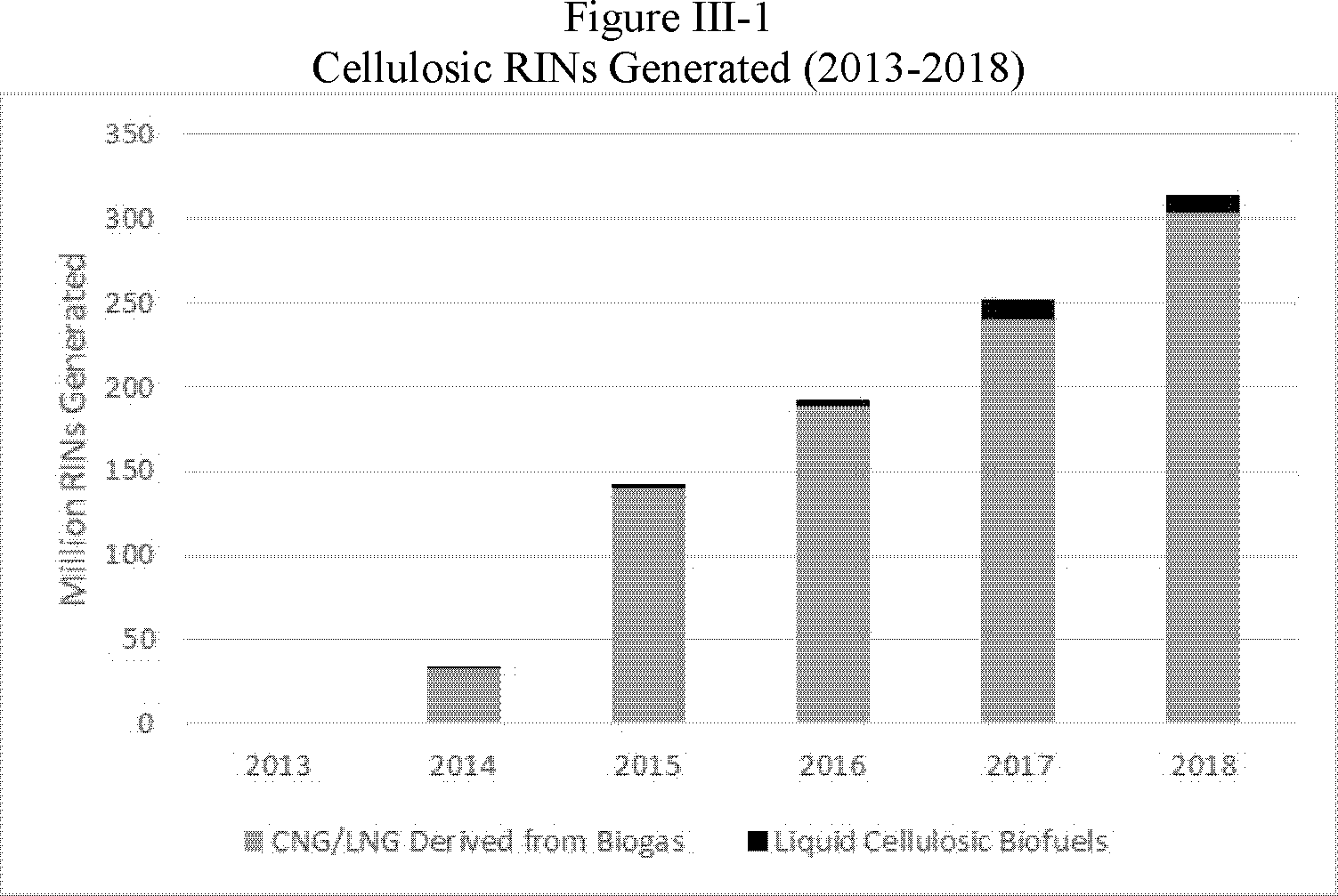
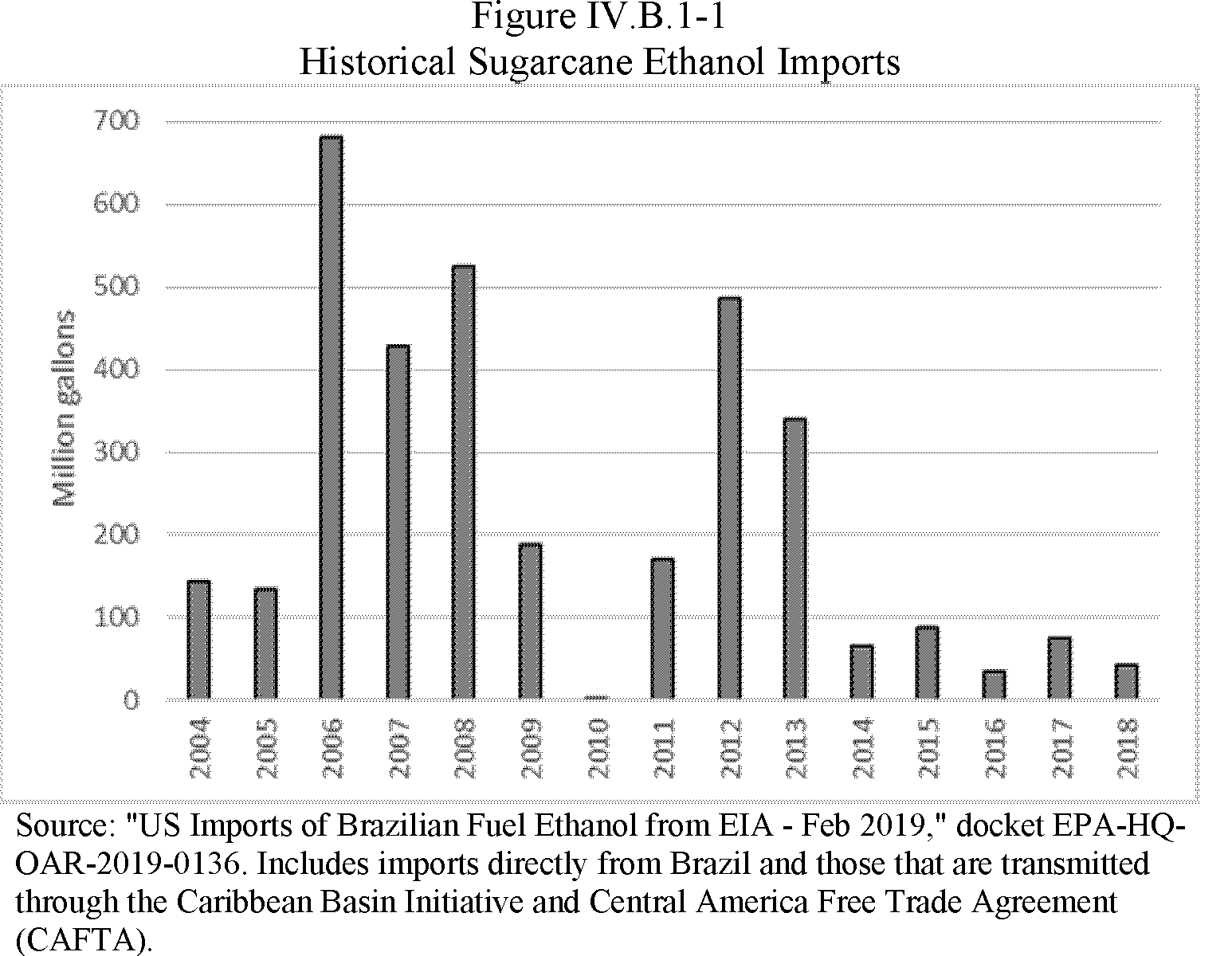
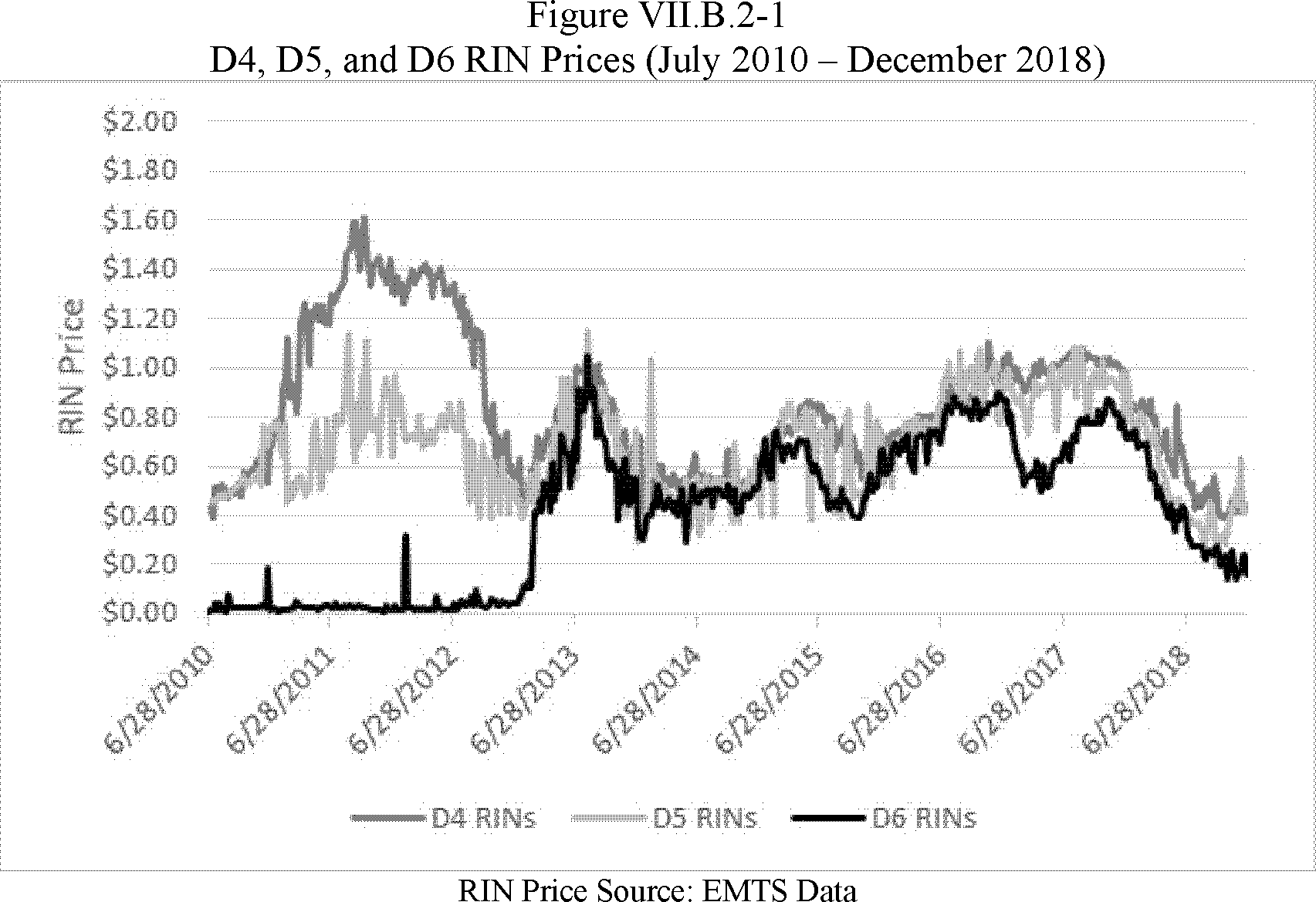
 www.epa.gov/dockets/commenting-epa-dockets
 2 U.S.C. 1531-1538
 www.usitc.gov/press_room/news_release/2017/er1205ll876.htm
 extension.missouri.edu/p/G1990
 www.biodiesel.org/news/RFS/rfs2docs/NBB%20Energy%20Use%20Survey%20FINAL.pdf