Federal Motor Vehicle Safety Standards; FMVSS No. 305a Electric-Powered Vehicles: Electric Powertrain Integrity Global Technical Regulation No. 20 Incorporation by Reference
Consistent with a Global Technical Regulation on electric vehicle safety, NHTSA is establishing Federal Motor Vehicle Safety Standard (FMVSS) No. 305a to replace FMVSS No. 305, ...
National Highway Traffic Safety Administration (NHTSA), Department of Transportation (DOT).
ACTION:
Final rule.
SUMMARY:
Consistent with a Global Technical Regulation on electric vehicle safety, NHTSA is establishing Federal Motor Vehicle Safety Standard (FMVSS) No. 305a to replace FMVSS No. 305, “Electric-powered vehicles: Electrolyte spillage and electrical shock protection.” Among other improvements, FMVSS No. 305a applies to light and heavy vehicles and includes performance requirements for the propulsion battery. NHTSA is also establishing a new regulation, part 561, “Documentation for Electric-powered Vehicles,” that requires manufacturers to compile risk mitigation documentation and to submit standardized emergency response information to assist first and second responders handling electric vehicles.
DATES:
Effective date:
This final rule is effective February 18, 2025.
IBR date:
The incorporation by reference of certain publications listed in the rule is approved by the Director of the Federal Register as of February 18, 2025.
Compliance dates:
The compliance date is December 22, 2025, for the emergency response documentation requirements. For all other requirements, the compliance date is September 1, 2027, for vehicles with a gross vehicle weight rating of 4,536 kilograms (kg) or less and September 1, 2028, for vehicles with a gross vehicle weight rating over 4,536 kg. Small-volume manufacturers, final-stage manufacturers, and alterers are provided an additional year to comply with the requirements beyond the dates identified above. Optional early compliance is permitted.
Petitions for Reconsideration:
Petitions for reconsideration of this final rule must be received no later than February 3, 2025.
ADDRESSES:
Petitions for reconsideration of this final rule must refer to the docket and notice number set forth above and be submitted to the Administrator, National Highway Traffic Safety Administration, 1200 New Jersey Avenue SE, West Building, Washington, DC 20590. All petitions received will be posted without change to
https://www.regulations.gov,
including any personal information provided.
Confidential Business Information:
If you wish to submit any information under a claim of confidentiality, you should submit your complete submission, including the information you claim to be confidential business information, to the Chief Counsel, NHTSA, at the address given under
FOR FURTHER INFORMATION CONTACT
. In addition, you should submit a copy, from which you have deleted the claimed confidential business information, to Docket Management at the address given above. When you send a submission containing information claimed to be confidential business information, you should include a cover letter setting forth the information specified in our confidential business information regulation (49 CFR part 512). Please see further information in the Regulatory Notices and Analyses section of this preamble.
Privacy Act:
The petition will be placed in the docket. Anyone is able to search the electronic form of all submissions to any of our dockets by the name of the individual submitting the submission (or signing the comment, if submitted on behalf of an association, business, labor union, etc.). You may review DOT's complete Privacy Act Statement in the
Federal Register
published on April 11, 2000 (Volume 65, Number 70; Pages 19477-78) or you may visit
https://www.transportation.gov/individuals/privacy/privacy-act-system-records-notices.
Docket:
For access to the docket to read background documents or comments received, go to
https://www.regulations.gov
at any time or to 1200 New Jersey Avenue SE, West Building, Room W12-140, Washington, DC 20590, between 9 a.m. and 5 p.m., Monday through Friday, except Federal holidays. Telephone: (202) 366-9826.
FOR FURTHER INFORMATION CONTACT:
For technical issues, you may contact Ms. Lina Valivullah, Office of Crashworthiness Standards; Telephone: (202) 366-8786; Email:
Lina.Valivullah@dot.gov;
Facsimile: (202) 493-2739. For legal issues, you may contact Ms. K. Helena Sung, Office of Chief Counsel; Telephone: (202) 366-2992; Email:
Helena.Sung@dot.gov;
Facsimile: (202) 366-3820. The mailing address of these officials is: National Highway Traffic Safety Administration, 1200 New Jersey Avenue, SE, Washington, DC 20590.
SUPPLEMENTARY INFORMATION:
Table of Contents
I. Executive Summary
II. Background
a. Overview of FMVSS No. 305
b. Overview of GTR No. 20
c. Statutory Authority
d. Overview of the Final Rule Requirements
e. Changes From the NPRM to the Final Rule
III. Summary of Comments
IV. Response to Comments on Proposed Requirements
a. Expanding Applicability of FMVSS No. 305a to Heavy Vehicles
1. Normal Vehicle Operations and Requirements for the REESS
2. Post-Crash Safety for Heavy School Buses
3. Post-Crash Safety for Other Heavy Vehicles
b. General Specifications Relating to Crash Testing
1. Low Energy Option for Capacitors
2. Assessing Fire or Explosion in Vehicle Post-Crash Test
3. Assessing Post-Crash Voltage Measurements
4. Electrolyte Leakage
c. Vehicle Controls for Safe REESS Operation
1. Vehicle- and Component-Level Testing
2. State of Charge (SOC)
3. Breakout Harness Location
4. Over-Temperature Test
5. Overcurrent Protection
6. Venting and Visual Inspection
d. Mitigating Risk of Thermal Propagation Due to Internal Short Within a Single Cell in the REESS
e. Thermal Event Warning
f. Vehicle Control Malfunction Warning
g. Protection Against Water Exposure
h. Miscellaneous GTR No. 20 Provisions Not Proposed
1. Vibration and Thermal Shock and Cycling
2. Fire Resistance
3. Low State of Charge
i. Low-Speed Vehicles
j. Emergency Response Information
k. Documentation Requirements
l. Compliance Dates
V. Response to Comments on Issues Not Discussed in the NPRM
a. Future Battery Chemistries
b. Marking and Labeling
c. Test Laboratories
d. Other Electrical Specifications
e. Static Rollover
VI. Rulemaking Analyses and Notices
I. Executive Summary
NHTSA is issuing this final rule to achieve two goals. First, NHTSA is establishing FMVSS No. 305a, “Electric-powered Vehicles: Electric Powertrain
( printed page 104319)
Integrity,” to upgrade and replace existing FMVSS No. 305. The new FMVSS No. 305a has all the requirements of FMVSS No. 305 and expands its applicability to vehicles with a gross vehicle weight rating (GVWR) greater than 4,536 kilograms (kg) (10,000 pounds (lb)). FMVSS No. 305a also adds requirements and test procedures covering new aspects of electric vehicle safety, such as performance requirements for the propulsion battery system, also referred to as the Rechargeable Electrical Energy Storage System (REESS). NHTSA is also establishing a new regulation, 49 CFR part 561 (part 561), “Documentation for Electric-powered Vehicles,” to require that manufacturers submit, at NHTSA's request, documentation addressing safety risk mitigation under specified scenarios to demonstrate that they considered, assessed, and mitigated risks for safe operation of the vehicle. Manufacturers are also required to submit documentation to ensure both first [1]
and second [2]
responders have access to vehicle-specific information about extinguishing REESS fires and mitigating safety risks associated with stranded energy [3]
when responding to emergencies. The restructured and upgraded FMVSS No. 305a will facilitate future updates to the standard as battery technologies and charging systems continue to evolve.
The second goal is to further NHTSA's effort to harmonize the Federal Motor Vehicle Safety Standards under the Economic Commission for Europe 1998 Global Agreement (“1998 Agreement”). The efforts of the U.S. and other contracting parties to the 1998 Agreement culminated in the establishment of Global Technical Regulation (GTR) No. 20, “Electric Vehicle Safety.” [4]
FMVSS No. 305 already incorporates a substantial portion of GTR No. 20's requirements due to a previous NHTSA rulemaking. In 2017, NHTSA amended FMVSS No. 305 to include electrical safety requirements from GTR No. 13, “Hydrogen and fuel cell vehicles,” pertaining to electric vehicle performance during normal vehicle operation and post-crash.[5]
Because GTR No. 13's provisions for electric vehicles were later incorporated into what would become GTR No. 20, the 2017 final rule that adopted GTR No. 13's provisions adopted what later became many of the requirements of GTR No. 20. That 2017 rulemaking, however, did not expand the applicability of FMVSS No. 305 to include heavy vehicles nor did it include requirements for the REESS. This final rule largely adopts these and other GTR No. 20 requirements.
The notice of proposed rulemaking (NPRM) preceding this final rule was published on April 15, 2024. The comment period closed on June 14, 2024. After carefully reviewing the comments, NHTSA is adopting the proposed requirements with some changes from the NPRM. Commenters to the NPRM commented on the applicability to heavy vehicles; vehicle-level testing; technical details on documentation requirements; test procedures for evaluating fire risk mitigation; warning in the case of a thermal event in the battery pack; and water exposure safety. NHTSA addresses the comments in this final rule with minor changes to the regulatory text. These changes include edits to definitions and test procedures for clarity and accuracy, addition of a provision to exempt out-of-reach rooftop charging systems from direct contact protection requirements, and new regulation part 561 for documentation requirements and emergency response information requirements.
High Level Summary of the Final Rule
FMVSS No. 305 currently only applies to passenger cars and to multipurpose passenger vehicles, trucks, and buses with a GVWR of 4,536 kg (10,000 lb) or less (“light vehicles”). Consistent with GTR No. 20, FMVSS No. 305a expands the current applicability of FMVSS No. 305 to vehicles with a GVWR greater than 4,536 kg (10,000 lb) (“heavy vehicles”). Under the final FMVSS No. 305a, light vehicles will be subject to requirements carried over from FMVSS No. 305 that ensure the safety of the electrical system during normal vehicle operations and after a crash (post-crash). They will also be subject to new requirements for the REESS. Heavy vehicles will be subject to the requirements for electrical system safety during normal vehicle operations and to requirements for the REESS. However, except for heavy school buses, they will not be subject to post-crash requirements. Heavy school buses (GVWRs greater than 4,536 kg (10,000 lb)) will be subject to the requirements for electrical system safety during normal vehicle operations and to the requirements for the REESS, and will have to meet post-crash test requirements to ensure the vehicles protect against unreasonable risk of electric shock and risk of fire after a crash. The post-crash tests are the same tests described in FMVSS No. 301 for heavy school buses (impacted at any point and at any angle by a moving contoured barrier).
The post-crash requirements of FMVSS No. 305a for light vehicles and heavy school buses include electric shock protection (there are four compliance options: low voltage, electrical isolation, protective barrier, and low energy for capacitors); REESS retention; electrolyte leakage; and fire safety. The requirements for REESS retention and electrolyte leakage are already in FMVSS No. 305, but the final rule adopts the NPRM proposal to enhance some provisions consistent with GTR No. 20.
FMVSS No. 305a also includes new and comprehensive performance requirements and risk mitigation strategies for safety of the REESS. These REESS requirements will apply to all vehicles, regardless of GVWR. A REESS provides electric energy for propulsion and may include necessary ancillary systems for physical support, thermal management, electronic controls, and casings. The requirements set a level of protection of the REESS against external fault inputs, ensure the REESS operations are within the manufacturer-specified functional range, and increase the likelihood of safe operation of the REESS and other electrical systems of the vehicle during and after water exposure during normal vehicle operations.
The final rule addresses some aspects of REESS safety through documentation measures, consistent with GTR No. 20. “Documentation measures” means a list of information provided by manufacturers, at NHTSA's request, that demonstrates that they considered, assessed, and mitigated identified risks for safe operation of the vehicle. The final rule's documentation requirements address: (a) safety risk mitigation associated with charging and discharging during low temperature; (b) providing a warning if there is a malfunction of vehicle controls that manage REESS safe operation; (c)
( printed page 104320)
providing a warning if there is a thermal event in the REESS; [6]
and (d) safety risk mitigation for thermal runaway and propagation due to an internal short circuit of a single cell. The GTR takes a documentation approach to these aspects of safety because of the rapidly evolving electric vehicle technologies and the variety of available REESS and electric vehicle designs. NHTSA agrees that there are currently no objective test procedures in these specified areas that are not design restrictive given the current state of knowledge. Thus, until test procedures and performance criteria can be developed for all vehicle powertrain architectures, 49 CFR part 561 will require manufacturers to submit documentation to NHTSA, at NHTSA's request, that identifies all known safety hazards, describes their risk mitigation strategies for the safety hazards, and, if applicable, describes how they provide a warning to address a safety hazard. The purpose of the documentation approach is two-fold. Given the variation of battery design and design specific risk mitigation systems, the documentation requirement will be a means of ensuring that each manufacturer has identified safety risks and safety risk mitigation strategies. The requirement provides a means for NHTSA to learn of the risks associated with the REESS, understand how the manufacturer is addressing the risks, and oversee those safety hazards. This approach is battery technology neutral, not design restrictive, and is intended to evolve over time as battery technologies continue to rapidly evolve. It is an interim measure intended to ensure that manufacturers will identify and address the safety risks of the REESS until such time as objective performance standards can be developed that can be applied to all applicable REESS designs.
As part of NHTSA's battery initiative and in response to a 2020 NTSB recommendation,[7]
the NPRM proposed to include in FMVSS No. 305a a requirement that vehicle manufacturers submit to NHTSA standardized emergency response guides (ERGs) and rescue sheets for each vehicle make, model, and model year. The uploaded ERGs and rescue sheets will be publicly available on NHTSA's website for easy searchable access. ERGs and rescue sheets communicate vehicle-specific information related to fire, submersion, and towing, as well as the location of components in the vehicle that may expose the vehicle occupants or rescue personnel to risks, the nature of a specific function or danger, and devices or measures which inhibit a dangerous state. The final rule adopts the proposed requirement to submit standardized emergency response information to a NHTSA website in part 561. The standardized information will be available and understandable to first and second responders so they can easily refer to vehicle-specific rescue information en route to or at the scene of a crash or fire event and respond to the emergency quickly and safely.
NHTSA is issuing this final rule pursuant to and in accordance with its authority under the National Traffic and Motor Vehicle Safety Act (Safety Act). Under 49 United States Code (U.S.C.) Chapter 301, Motor Vehicle Safety (49 U.S.C. 30101et seq.
), the Secretary of Transportation is responsible for prescribing motor vehicle safety standards that are practicable, meet the need for motor vehicle safety, and are stated in objective terms. The Safety Act also authorizes NHTSA to require manufacturers to retain certain records and/or make information available to NHTSA. Section 30166 of the Act provides NHTSA the ability to request and inspect manufacturer records that are necessary to enforce the prescribed regulations. NHTSA is authorized by delegation to issue regulations to carry out the agency's duties of ensuring vehicle safety.[8]
NHTSA believes there are no notable costs associated with this final rule. This final rule closely mirrors the electrical safety provisions of GTR No. 20, which have been voluntarily implemented by manufacturers in this country. The agency believes that the finalized safety standards are widely implemented by manufacturers of light and heavy electric vehicles and heavy electric school buses. Manufacturers are also already providing emergency response information to the National Fire Protection Association (NFPA); under part 561, they would just have to standardize the format and submit the information to NHTSA.
II. Background
a. Overview of FMVSS No. 305
The purpose of FMVSS No. 305, “Electric-powered vehicles: electrolyte spillage and electrical shock protection,” is to reduce deaths and injuries from electrical shock. The standard applies only to light vehicles (vehicles with a GVWR less than or equal to 4,536 (kg) (10,000 (lb)). The standard's requirements reduce the risk of harmful electric shock: (a) during normal vehicle operation; and (b) in post-crash situations to protect vehicle occupants, and rescue workers and others who may come in contact with the vehicle after a crash. The standard's requirements for the former protect against direct and indirect contact of high voltage sources during everyday operation of the vehicles. The focus of the “in-use” testing (unlike “post-crash” testing) deals with performance criteria that will be assessed without first exposing the vehicle to a crash test. The standard's post-crash test requirements address electrical isolation following frontal, rear, and side impacts of the vehicle, in addition to limiting electrolyte spillage from propulsion batteries.
FMVSS No. 305 already has many of GTR No. 20's requirements for light vehicles, including requirements for electrical safety during normal vehicle operation; post-crash electrolyte spillage; post-crash REESS retention; and most of the GTR's post-crash electrical safety options for high voltage sources.
b. Overview of GTR No. 20
1. The GTR Process
The United States is a contracting party to the Agreement concerning the Establishing of Global Technical Regulations for Wheeled Vehicles, Equipment and Parts which can be fitted and/or be used on Wheeled Vehicles (“1998 Agreement”). This agreement entered into force in 2000 and is administered by the UN Economic Commission for Europe's (UN ECE's) World Forum for the Harmonization of Vehicle Regulations (WP.29). The purpose of this agreement is to establish Global Technical Regulations (GTRs).
In March 2012, UNECE WP.29 formally adopted the proposal to establish GTR No. 20 at its one-hundred-and-fifty-eighth session. NHTSA chaired the development of GTR No. 20 and voted in favor of establishing GTR No. 20.
As a Contracting Party Member to the 1998 Global Agreement that voted in favor of GTR No. 20, NHTSA is obligated to initiate the process used in the U.S. to adopt the GTR as an agency regulation. This process was initiated by the NPRM published on April 15, 2024.
( printed page 104321)
NHTSA is not obligated to adopt the GTR after initiating this process. In deciding whether to adopt a GTR as an FMVSS, NHTSA follows the requirements for NHTSA rulemaking, including the Administrative Procedure Act, the National Traffic and Motor Vehicle Safety Act (Vehicle Safety Act), Presidential Executive Orders, and DOT and NHTSA policies, procedures, and regulations. Among other things, FMVSSs issued under the Vehicle Safety Act “shall be practicable, meet the need for motor vehicle safety, and be stated in objective terms.”
2. GTR No. 20
GTR No. 20 establishes performance-oriented requirements that reduce potential safety risks of electric vehicles while in use and after a crash event. The GTR includes provisions that address electrical shock associated with high voltage circuits of EVs and potential hazards associated with lithium-ion batteries and/or other REESS. One of the principles for developing GTR No. 20 was to address unique safety risks posed by electric vehicles and their components to ensure a safety level equivalent to conventional vehicles with internal combustion engines.
The requirements in GTR No. 20, for Phase 1 in the GTR development process, address issues relating to the safe operation of the REESS, and the mitigation of fire risk and other safety risks associated with the REESS. Phase 2 of the GTR No. 20 development process, which is ongoing, will address issues involving long-term research and verification.
GTR No. 20 applies to all electric-powered vehicles regardless of GVWR, in contrast to FMVSS No. 305, which only applies to light vehicles. FMVSS No. 305 currently includes the majority of GTR No. 20's requirements regarding electric shock protection and applies these only to light vehicles. GTR No. 20 also has safety requirements for the REESS beyond those in FMVSS No. 305. A summary of these additional requirements in GTR No. 20 for the REESS includes:
Safe operation of REESS under the following exposures during normal vehicle operations:
REESS protection under external fault conditions and extreme operating temperatures:
○ External short circuit
○ Overcharge
○ Over-discharge
○ Overcurrent
○ High operating temperature
○ Low operating temperature
Management of REESS emitted gases
Water exposure during vehicle washing and driving through 10-centimeter (cm) deep water on roadway
Resistance to short duration external gasoline pool fire *
Vibration environment during normal vehicle operations *
Warning systems for REESS safe operation in case of:
Low energy content in REESS *
REESS control operational failure
Thermal runaway propagation due to single cell short circuit in REESS
Thermal event in REESS
Installation (location) of REESS on the vehicle [10]
GTR No. 20 includes post-crash requirements but does not specify the crash tests for post-crash evaluation. Instead, the GTR allows contracting parties to apply the crash tests in their regulations. Further, the GTR allows contracting parties to permit regulated entities to comply with post-crash requirements without conducting vehicle crash tests. In place of crash tests, a contracting party may specify tests for “mechanical integrity” and “mechanical shock” of the REESS.
The April 2024 NPRM [11]
proposed to complete the alignment of FMVSS No. 305 with GTR No. 20 by proposing to establish FMVSS No. 305a, which adopts all the requirements in FMVSS No. 305 and extends the standard's electrical safety requirements to heavy vehicles. The NPRM also proposed to adopt the above requirements under normal vehicle operations for the REESS to light and heavy vehicles, except as noted by an asterisk, because requirements for thermal shock and cycling, resistance to short duration external pool fire, and vibration environment are already included under United States Hazardous Materials Regulations (HMR), 49 CFR parts 171 to 180, in accordance with the international lithium battery transportation requirements of UN 38.3, “Transport of dangerous goods: Manual of tests and criteria.” The NPRM proposed adding the post-crash test requirements in FMVSS No. 305 for light vehicles and adding a crash test for all school buses similar to that in FMVSS No. 301, “Fuel system integrity.” The NPRM also proposed a post-crash requirement for no observed fire or explosion in the vehicle for a duration of one hour after the crash test and a low energy post-crash option for capacitors in the electric power train to meet electrical safety requirements.
c. Statutory Authority
NHTSA is issuing this final rule pursuant to and in accordance with its authority under the National Traffic and Motor Vehicle Safety Act (Safety Act). Under 49 United States Code (U.S.C.) Chapter 301, Motor Vehicle Safety (49 U.S.C. 30101et seq.), the Secretary of Transportation is responsible for prescribing motor vehicle safety standards that are practicable, meet the need for motor vehicle safety, and are stated in objective terms (section 30111(a)). “Motor vehicle safety” is defined in the Safety Act (section 30102(a)(8)) as “the performance of a motor vehicle or motor vehicle equipment in a way that protects the public against unreasonable risk of accidents occurring because of the design, construction, or performance of a motor vehicle, and against unreasonable risk of death or injury in an accident, and includes nonoperational safety of a motor vehicle.” “Motor vehicle safety standard” means a minimum standard for motor vehicle or motor vehicle equipment performance (section 30102(a)(9)). When prescribing such standards, the Secretary must consider all relevant available motor vehicle safety information (section 30111(b)(1)). The Secretary must also consider whether a proposed standard is reasonable, practicable, and appropriate for the particular type of motor vehicle or motor vehicle equipment for which it is prescribed (section 30111(b)(3)) and the extent to which the standard will further the statutory purpose of reducing traffic accidents and associated deaths and injuries (section 30111(b)(4)). The responsibility for promulgation of FMVSSs is delegated to NHTSA (49 CFR 1.95).
The Safety Act also authorizes NHTSA to require manufacturers to retain certain records and/or make information available to NHTSA. Section 30166 of the Act provides NHTSA the ability to request and inspect manufacturer records that are necessary to enforce the prescribed regulations. NHTSA is also authorized by delegation to issue regulations to
( printed page 104322)
carry out the agency's duties of ensuring vehicle safety.[12]
d. Overview of the Final Rule Requirements
Consistent with GTR No. 20, the new FMVSS No. 305a expands the current applicability of FMVSS No. 305 to vehicles with a GVWR greater than 4,536 kg (10,000 lb) (“heavy vehicles”). Under FMVSS No. 305a:
Light vehicles are subject to requirements carried over from FMVSS No. 305 that ensure the safety of the electrical system during normal vehicle operations and after a crash (post-crash).[13]
They are also subject to new requirements for the REESS.
Heavy vehicles are subject to the requirements for electrical system safety during normal vehicle operations and to requirements for the REESS. However, except for heavy school buses, they are not subject to post-crash requirements. This exclusion of heavy vehicles, other than school buses, from crash tests, aligns with similar exclusions in FMVSS No. 301, “Fuel system integrity,” for conventional fuel vehicles and FMVSS No. 303, “Fuel system integrity of compressed natural gas vehicles,” for compressed natural gas vehicles.
Heavy school buses (GVWRs greater than 4,536 kg (10,000 lb)) [14]
are subject to the requirements for electrical system safety during normal vehicle operations and to the requirements for the REESS, and have to meet post-crash test requirements to ensure the vehicles protect against unreasonable risk of electric shock and risk of fire after a crash. The post-crash tests are the same tests described in FMVSS No. 301 for heavy school buses (impacted at any point and at any angle by a moving contoured barrier).
The post-crash requirements of FMVSS No. 305a for light vehicles and heavy school buses include electric shock protection (there are four compliance options: low voltage, electrical isolation, protective barrier, and low energy for capacitors); REESS retention; electrolyte leakage; and fire safety. The requirements for REESS retention and electrolyte leakage are in FMVSS No. 305, but FMVSS No. 305a enhances some provisions consistent with GTR No. 20. For example, FMVSS No. 305 does not specify that there must be no fire or explosion after a crash test. Electric vehicles may catch fire long after a collision or other occurrence resulting in a fault condition. To account for the potential delayed response, FMVSS No. 305a is prohibiting fire or explosion for a one-hour post-test period.
A substantial portion of FMVSS No. 305a focuses on safety provisions for the propulsion battery, the REESS. FMVSS No. 305a includes comprehensive performance requirements for the REESS. These REESS requirements apply to all vehicles, regardless of GVWR. A REESS provides electric energy for propulsion and may include necessary ancillary systems for physical support, thermal management, electronic controls, and casings. The requirements set a level of protection of the REESS against external fault inputs, ensure the REESS operations are within the manufacturer-specified functional range, and increase the likelihood of safe operation of the REESS and other electrical systems of the vehicle during and after water exposure during normal vehicle operations.
This final rule addresses some aspects of REESS safety through documentation measures, consistent with GTR No. 20, through a new regulation, part 561. “Documentation measures” means a list of information provided by manufacturers, at NHTSA's request, that demonstrates that they considered, assessed, and mitigated identified risks for safe operation of the vehicle. These documentation requirements address: (a) safety risk mitigation associated with charging and discharging during low temperature; (b) providing a warning if there is a malfunction of vehicle controls that manage REESS safe operation; (c) providing a warning if there is a thermal event in the REESS; and (d) safety risk mitigation for thermal runaway and propagation due to an internal short circuit of a single cell. The GTR takes a documentation approach to these aspects of safety because of the rapidly evolving electric vehicle technologies and the variety of available REESS and electric vehicle designs. The Informal Working Group experts that drafted the GTR determined there currently are no objective test procedures to evaluate safety risk mitigation designs or the operations of warnings of a malfunction of vehicle controls in a manner that is not design restrictive.
NHTSA agrees with this approach given the current state of knowledge. Thus, until test procedures and performance criteria can be developed for all vehicle powertrain architectures, manufacturers will be required to submit documentation to NHTSA, at NHTSA's request, that identifies all known safety hazards, describes risk mitigation strategies for the safety hazards, and, if applicable, describes how they provide a warning to address a safety hazard.[15]
The purpose of the documentation approach is two-fold. Given the variation of battery design and design specific risk mitigation systems, the documentation requirement is a means of ensuring that each manufacturer has identified safety risks and safety risk mitigation strategies. The requirement provides a means for NHTSA to learn of the risks associated with the REESS, understand how the manufacturer is addressing the risks, and oversee those safety hazards. This approach is battery technology neutral, not design restrictive, and is intended to evolve over time as battery technologies continue to rapidly evolve. It is an interim measure intended to ensure that manufacturers will identify and address the safety risks of the REESS until such time as objective performance standards can be developed that can be applied to all applicable REESS designs. NHTSA will also acquire information from the submissions to learn about the safety of the REESSs and potentially develop the future performance standards for FMVSS No. 305a. The documentation requirements are based on the approach of GTR No. 20, but NHTSA focused the GTR's documentation requirements to enable the agency to obtain more targeted information from manufacturers.
As part of NHTSA's battery initiative,[16]
this final rule also establishes, through regulation, a requirement that vehicle manufacturers submit to NHTSA emergency response guides (ERGs) and rescue sheets for each vehicle make, model, and model year. The purpose of the requirement is to provide information to first and second responders regarding the safe handling of the vehicle in emergencies and for towing and storing operations. The uploaded ERGs and rescue sheets will be publicly available on NHTSA's website for easy searchable access. ERGs and rescue sheets communicate vehicle-specific information related to fire, submersion, and towing, as well as the
( printed page 104323)
location of components in the vehicle that may expose the vehicle occupants or rescue personnel to risks, the nature of a specific function or danger, and devices or measures which inhibit a dangerous state.
NHTSA is requiring standardized formatting of the information. The ERG and rescue sheet requirements include the layout and format specified in ISO-17840, “Road vehicles—Information for first and second responders,” which standardize color-coded sections in a specific order to help first and second responders quickly identify pertinent vehicle-specific rescue information. The standardized information will be available and understandable to first and second responders so they can easily refer to vehicle-specific rescue information enroute to, or at the scene of, a crash or fire event and respond to the emergency quickly and safely.
e. Changes From the NPRM to the Final Rule
In developing this final rule, NHTSA made some modifications to the proposed regulatory requirements in response to comments received and to improve clarity and accuracy of the regulatory text. In addition to typographical corrections, the final rule differs from the April 2024 NPRM in the following ways:
1. Timing of voltage measurements for determining electrical isolation post-crash. The proposal required voltage measurements for assessment of post-crash electrical isolation to be made between 10 to 60 seconds from the time of impact. The final rule requires the voltage measurements for post-crash electrical isolation assessment to be made at least 10 seconds after impact. NHTSA determined that taking all the voltage measurements for determining electrical isolation would typically take more than 60 seconds and since electrical isolation value is not expected to change with time, only specifying a minimum time after impact for making the measurements is sufficient.
2. Definition of State of Charge (SOC). The definition of SOC was updated to clarify that it is the available electric charge in a REESS expressed as a percentage of its normal operating capacity specified by the manufacturer and not as a percentage of the total charge (stored energy) in the REESS.
3. Documentation requirements included in part 561. The NPRM proposed documentation requirements in FMVSS No. 305a for manufacturers to submit, upon request, documentation regarding vehicle and REESS designs to mitigate the risk of vehicle fire and explosion resulting from single cell thermal runaway in the REESS, loss or malfunction of controls managing safe operation of the REESS, and vehicle operations at low temperatures. The NPRM also proposed requiring manufacturers to submit emergency response information to a repository prior to the certification time of the vehicle. The final rule has moved these requirements to part 561 because documentation requirements without corresponding test procedures are better suited in a regulation. Additionally, the final rule requires emergency response information to be submitted to NHTSA's repository before first sale or lease of the vehicle model upon the compliance date.
4. Thermal event warning documentation requirement. The NPRM proposed a test procedure to evaluate the warning function resulting from a thermal event in the REESS. Due to practicability and safety concerns with the proposed test procedure, the final rule specifies an additional documentation requirement in part 561 for the REESS thermal event warning instead of a corresponding test procedure with the warning requirement.
5. Maximum time to conduct driving through standing water test (protection against water exposure). The NPRM proposed a maximum test duration of 5 minutes for the driving through standing water test. Based on NHTSA's recent testing, the final rule extends this time to 10 minutes because of the practicability concerns for conducting the test within 5 minutes for water pools shorter than 500 meters.
7. Exclusion for rooftop charging systems. The final rule excludes those high voltage devices on heavy vehicles not energized except during charging of the REESS, that are installed out of reach on the vehicle rooftop, from direct contact protection requirements. NHTSA inadvertently excluded this carveout for the out of reach high voltage devices from the proposed direct contact protection requirements.
8. Addition of loading specifications. The proposed crash test procedure for heavy school buses inadvertently omitted the loading specifications. Loading specifications matching FMVSS Nos. 301 and 303 have been added to the final regulatory text for completeness.
9. Compliance dates. The final rule adopts the proposed 1-year lead time from the date of publication of the final rule to comply with the emergency response information requirements. The proposed 2-year lead time for complying with all other requirements for light vehicles is largely adopted with a slight date change to align with the beginning of the model year on or after the first September 1 that is at least two years after the publication of the final rule. In response to comments received, the final rule extends the heavy vehicles' lead time to comply with the requirements other than the emergency response information requirements to the first September 1 that is at least three years after the publication of the final rule.
III. Summary of Comments
The NPRM preceding this final rule included requests for comment on several topics, including the post-crash requirements, the thermal event warning performance test, the water exposure tests, the exclusion of some GTR No. 20 requirements, and the documentation requirements. From April 15, 2024, to June 14, 2024, the agency received 38 comments on the NPRM, including one that appears to be an accidental duplicate submission. The comments were generally supportive of the proposed rule, particularly with regard to the collection of standardized emergency response information and harmonization with international regulations. Many commenters suggested modifications to the proposed requirements, including establishing documentation requirements in a separate regulation instead of the FMVSS. Of the 37 unique comments, the majority (26 comments) were submitted by vehicle and component manufacturers and industry associations. Comments were also submitted by standards testing laboratories (3 comments), a government agency (1 comment), and other stakeholders (7 comments).
The vehicle and component manufacturers that provided comments were American Honda Motor Co. (“Honda”), Blue Bird Body Company (“Blue Bird”), Bugatti Rimac d.o.o. (“Bugatti”), Daimler Truck North America (“DTNA”), Eaton Corporation (“Eaton”), Ford Motor Company (“Ford”), Freudenberg Battery Power Systems (“Freudenberg”), Honeywell International (“Honeywell”), Hyundai America Technical Center (“HATCI” or “Hyundai”), Lubrizol Corporation (“Lubrizol”), Lucid Motors (“Lucid”), Navistar, New Flyer of America (“NFA”), Nikola Corporation (“Nikola”), Nissan North America (“Nissan”), Prevost, Rivian Automotive (“Rivian”), Tesla, and Volkswagen Group of America (“Volkswagen”).
The industry associations that provided comments were the Alliance for Automotive Innovation (“Auto Innovators”), Coalition for Safe
( printed page 104324)
Autonomous Vehicles and Electrification (“SAVE Coalition”), Electric Drive Transportation Association (“EDTA”), MEMA Vehicle Suppliers Association (“MEMA”), National Electrical Manufacturers Association (“NEMA”), Truck and Engine Manufacturers Association (“EMA”), and Zero Emission Transportation Association (“ZETA”). Some manufacturers that submitted comments individually indicated that they belong to one of these industry associations and/or stated support for the comments submitted by an industry association.
The standards testing laboratories and associations that provided comments were UL Solutions, the American Council of Independent Laboratories (“ACIL”), and the American Association for Laboratory Accreditation (“A2LA”).
The National Transportation Safety Board (“NTSB”) submitted one comment, expressing strong support for the proposed rulemaking.
The other stakeholders that provided comments were the Center for Auto Safety (“CAS”), Consumer Reports, Creaform/Ametek (“Creaform”), Electric Vehicle Rescue App (“EV Rescue App,” two comments), Michael Lillo, and Kurt Vollmacher.
With regard to heavy vehicles, the commenters generally expressed support for the proposed requirements for heavy school buses. Comments on applying additional requirements to other heavy vehicles were more varied, with some commenters in favor of additional test requirements at the component level or at the vehicle level, and others opposed. One commenter requested that NHTSA add an exemption from the direct contact protection requirements during normal vehicle operation for rooftop charging systems on heavy vehicles.
With regard to post-crash safety, manufacturers expressed support for the inclusion of the low energy option for capacitors. Commenters also generally agreed with the proposed requirement that there be no evidence of fire or explosion for the duration of one hour after each crash test. Comments on the voltage measurement procedure were mixed, with some commenters in agreement and others requesting changes to the test specifications. Honda and Auto Innovators requested removal of the 60-second time limit for post-crash electrical isolation measurements, which would align the specification with GTR No. 20. For electrolyte leakage, commenters said that the updated terminology is appropriate, but the 5-liter maximum leakage requirement is no longer relevant with modern REESS chemistries.
With regard to the proposed requirements for safe operation of the REESS, commenters commented about certain aspects of the proposed test procedures, particularly the state of charge, breakout harness location, and test termination specifications. Many comments from industry disagreed with the agency's exclusion of component-level compliance test options. For the thermal event warning, some commenters also requested implementation of a documentation requirement instead of a test requirement.
For the proposed documentation requirements, some commenters requested clarification of the requirements and implementation in a separate regulation. Most commenters expressed strong support for NHTSA's proposed collection of standardized emergency response information, with a few vehicle manufacturers requesting a modification to the submission timeline. Some also requested extending the compliance date for the other proposed requirements beyond 2 years after publication of the final rule.
IV. Response to Comments on Proposed Requirements
a. Expanding Applicability of FMVSS No. 305a to Heavy Vehicles
1. Normal Vehicle Operations and Requirements for the REESS
Proposed Requirements
Consistent with GTR No. 20, the NPRM proposed to expand the current applicability of FMVSS No. 305 to heavy vehicles. Under FMVSS No. 305a, heavy vehicles (including heavy school buses) would have to meet the same requirements as light vehicles for electrical system safety during normal vehicle operations and for the REESS. The fundamentals for protecting against an electrical shock are the same for light vehicles and heavy vehicles. A failure of a high voltage system may cause injurious electric shock to the human body.
Comments Received
Commenters generally expressed support for applying the expanded electrical system safety requirements during normal vehicle operations to heavy school buses. Comments on applying these requirements to other heavy vehicles were more varied, with some commenters in favor of additional test requirements at the component level or at the vehicle level, and others opposed. MEMA agreed with the inclusion of heavy-duty vehicles without crash testing. Auto Innovators commented that FMVSS No. 305a should not apply to heavy vehicles at this time and more research is needed. Auto Innovators noted that the proposed regulatory requirements that were not previously applicable to heavy vehicles have potential design implications that require thorough consideration by the agency.
EMA disagreed specifically with application of the REESS overcurrent test to heavy vehicles, which were exempted in GTR No. 20. EMA said that NHTSA did not provide justification for applying the overcurrent test requirement to heavy vehicles. EMA also requested that NHTSA include an exemption from GTR No. 20 related to direct contact protection during normal vehicle operation. Specifically, EMA stated that the proposed requirement omitted an important exemption provision for some heavy vehicle applications. Under this provision, conductive connection devices not energized except during charging of the REESS that are located on the roof of the vehicle and out of reach of a person standing outside the vehicle are exempted from direct contact protection requirements. EMA explained that this exemption is necessary for rooftop pantograph charging systems used in some heavy vehicles like transit buses.
Agency Response
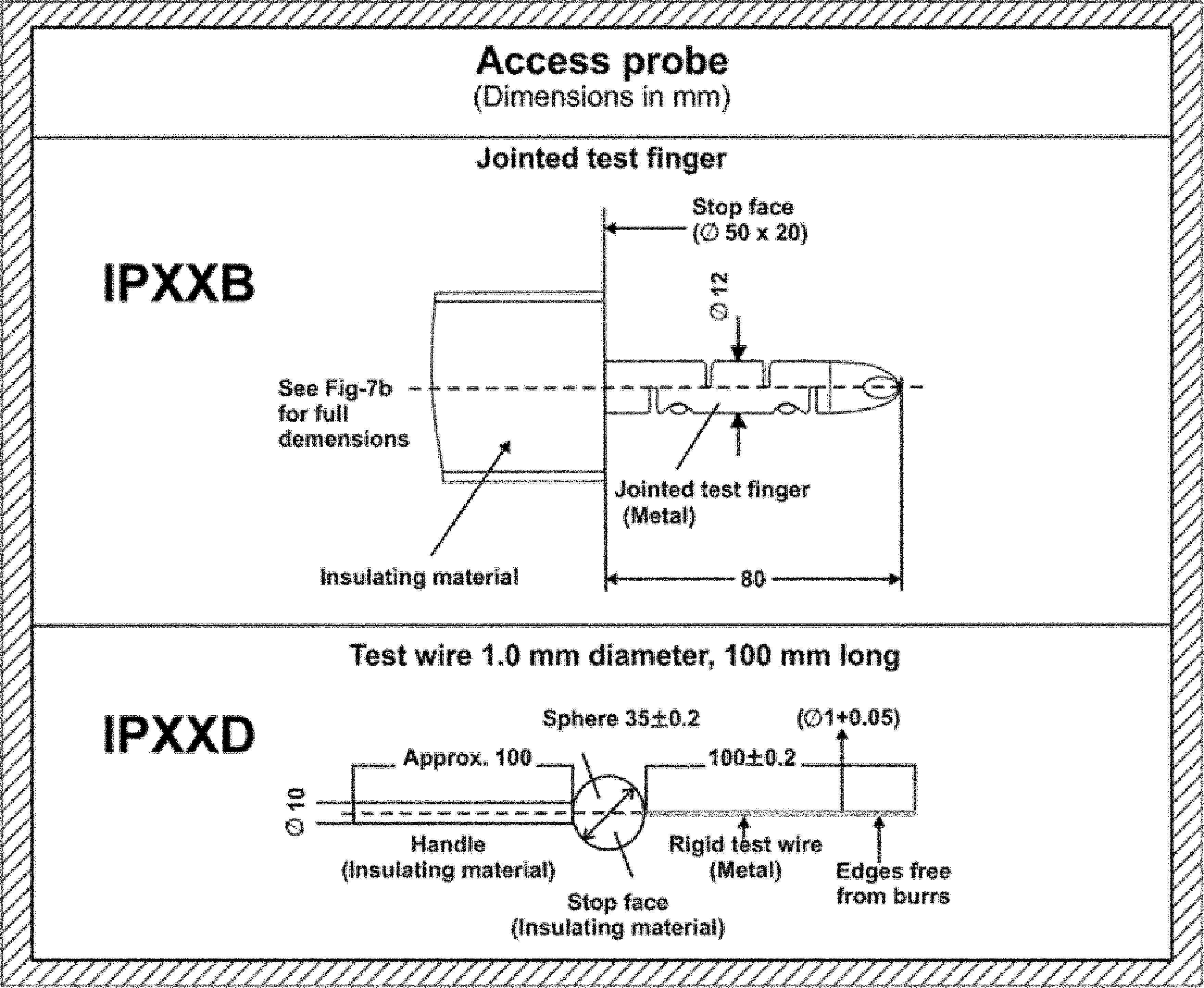
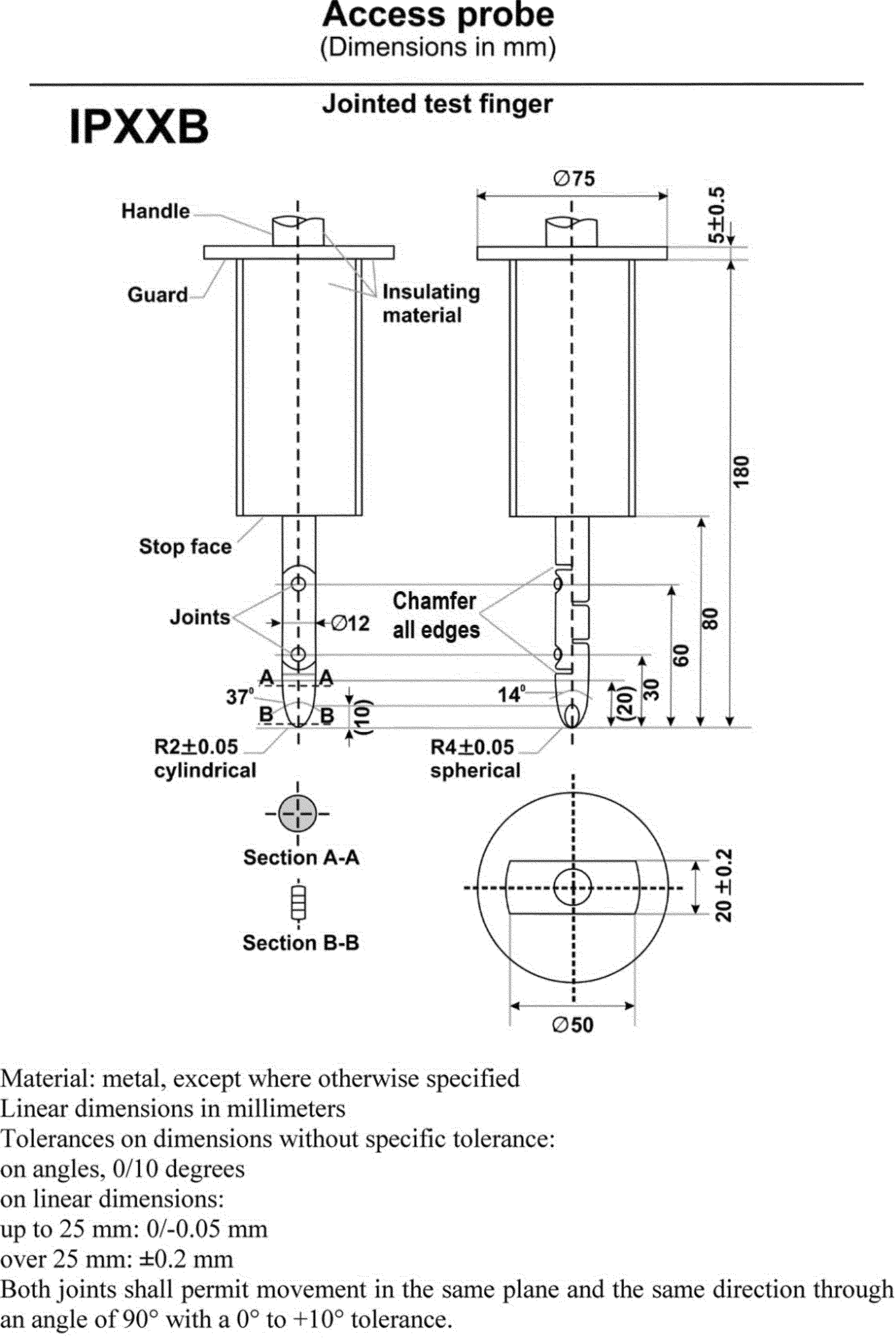
The agency is adopting most of the requirements for heavy vehicles as proposed in the NPRM, with one modification. Unlike the NPRM, the final rule excludes direct contact protection requirements from those high voltage devices on heavy vehicles not energized except during charging of the REESS, that are installed out of reach on the vehicle rooftop. NHTSA inadvertently excluded this carveout for high voltage rooftop charging devices on heavy vehicles from the direct contact protection provision in the proposed requirements for FMVSS No. 305a. GTR No. 20 excludes high voltage sources that are not energized except during charging of the REESS from direct contact protection requirements if they are located on the vehicle rooftop such that the wraparound distance from the instep of the vehicle, or the lowest step (if multiple steps are present) of the vehicle, to the high voltage source is at least 3 meters. NHTSA agrees that if the high voltage live parts are not energized except during charging of the REESS and are out of reach for a person standing outside of the vehicle, it is appropriate to exempt those parts from the IPXXB direct contact protection
( printed page 104325)
requirement. NHTSA has included the relevant language in the regulatory text of the final rule.
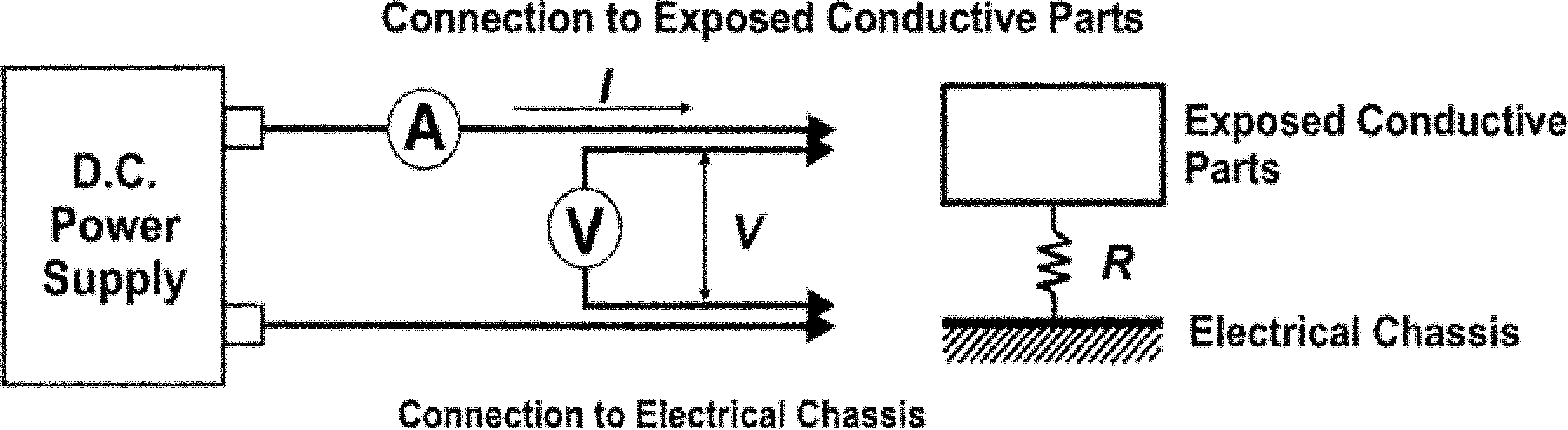
EMA also requested not applying the overcurrent test to heavy vehicles. The overcurrent test in GTR No. 20 is applicable to light vehicles that have the capability to be charged by an external DC supply. GTR No. 20 states that the overcurrent test for heavy vehicles will be considered in Phase 2, “as it is unclear how to apply on vehicles that have different charging technologies.” GTR No. 20 specifies two methods of conducting the overcurrent test. In the first method, the overcurrent is applied through the external DC supply equipment connected to the vehicle inlet while the vehicle is charging normally. In the second method, the charge current and the overcurrent are applied through a breakout harness connected just outside the REESS. The external DC supply equipment connected to the other end of the breakout harness supplies the normal charge as well as the overcurrent to the REESS. The overcurrent test procedure in FMVSS No. 305a uses the breakout harness method, so any challenges associated with testing via the charging inlet for different charging technologies are avoided. NHTSA evaluated the overcurrent test using the breakout harness and found it to be an easy test to conduct that is practical and feasible for different vehicle types.[17]
Auto Innovators recommended excluding heavy vehicles from FMVSS No. 305a electrical system safety during normal vehicle operations and REESS requirements at this time, citing the need for more research on the implications of these requirements on heavy vehicle designs. Auto Innovators did not provide additional information to support its statement. NHTSA believes the requirements for normal vehicle operations and the REESS in FMVSS No. 305a are basic safety measures that should be included in all electric vehicle designs.[18]
These basic safety measures ensure protection from electric shock and fire originating in the electric powertrain and specifically in the REESS. These measures include electrical isolation, direct and indirect contact protection, protection of the REESS from abuse and external inputs that could damage the REESS over time, and measures to ensure the REESS always operates within its safe operating boundaries. The agency believes that the requirements proposed in the NPRM for heavy vehicles, including the overcurrent test requirement, are relevant and appropriate for heavy vehicle safety and that the test procedures are practicable.
2. Post-Crash Safety for Heavy School Buses
Proposed Requirements
In addition to the requirements for electrical system safety during normal vehicle operations and for the REESS, the NPRM also proposed requirements for post-crash safety of heavy electric school buses. The NPRM proposed use of a moving contoured barrier test, where a barrier traveling at any speed up to 48 km/h (30 mph) impacts the school bus at any point and angle. The crash test requirement aligns FMVSS No. 305a with the requirements for heavy school buses in FMVSS No. 301, “Fuel system integrity,” and FMVSS No. 303, “Fuel system integrity of compressed natural gas vehicles.” The agency did not propose a provision in GTR No. 20 that allows the use of component-level mechanical integrity and mechanical shock tests instead of vehicle crash tests. NHTSA believes that post-crash safety is better evaluated at the system level in a crash test.
Comments Received
Commenters were generally in favor of the proposed crash test requirements for heavy school buses. Commenters NTSB, DTNA, Navistar, and EV Rescue App expressed full support for the expanded requirements for heavy school buses. In particular, NTSB agreed with expanding the post-crash requirements and making full use of the system-level requirements that exist for heavy school buses so the vehicles will be subject to the full intent and scope of FMVSS No. 305a. Bus manufacturers DTNA (Thomas Built Buses) and Navistar (IC Bus) also agreed with the proposed crash test performance requirements, which are consistent with FMVSS No. 301 and FMVSS No. 303. Navistar stated that the proposed requirements for heavy school buses were reasonable and would not add significant cost or weight to the vehicles. EMA noted that the loading requirements should be added to the crash test specifications in S10.2.3. Individual commenter Mr. Lillo also stated general support for enhanced EV school bus safety and suggested conducting time trials for bus evacuation.
One manufacturer disagreed with the proposed requirements for heavy school buses. Blue Bird stated that including multiple post-crash requirements makes FMVSS No. 305a more burdensome than the corresponding requirements for non-electric school buses. Blue Bird also said that the proposed rule would require manufacturers to crash a school bus every time they make a change to the battery pack. Blue Bird requested component-level testing instead of full-vehicle testing.
Agency Response
After reviewing the comments, NHTSA is adopting the crash test and post-crash requirements for heavy school buses as proposed in the NPRM, with the addition of loading specifications. EMA noted that the proposed regulatory text in the NPRM did not state the school bus loading condition for the crash test. This final rule corrects this inadvertent omission; loading specifications matching FMVSS Nos. 301 and 303, as suggested by EMA, have been added to the regulatory text for completeness. With regard to potential fire emergencies, in addition to the requirements of this final rule, electric school buses are subject to FMVSS No. 217, “Bus emergency exits and window retention and release,” which specifies operating forces, opening dimensions, and markings for emergency exits on school buses to facilitate rapid evacuation, and FMVSS No. 302, “Flammability of interior materials,” which specifies burn resistance requirements. NHTSA will also continue to evaluate school bus safety, including school bus evacuation, and update applicable safety standards as technology changes over time.
Most commenters, including bus manufacturers, agreed with the proposed requirements. The dissenting commenter expressed concerns over the testing burden. With regard to the crash test requirements for electric school buses, the dynamic moving contoured barrier test aligns FMVSS No. 305a with FMVSS Nos. 301 and 303, which address post-crash safety of heavy school buses using conventional fuel or compressed natural gas. The four post-crash requirements for FMVSS No. 305a are electric shock protection, REESS retention, electrolyte leakage, and fire safety. These requirements do not necessitate multiple crash tests and can be verified simultaneously. In other words, although there are four post-crash requirements, only one crash test is needed. There are also four compliance options for the electric shock protection requirement to provide flexibility. With regard to repeated full-
( printed page 104326)
vehicle crash testing for component modifications, the FMVSS specifies the procedures that NHTSA uses to evaluate compliance. Manufacturers may use other reasonable methods to certify the compliance of their vehicles, such as simulations and component-level testing, which they may find appropriate when making minor changes. The vehicles must meet the FMVSS when tested by NHTSA according to the test procedures in the standard. For these reasons, the agency is not persuaded by Blue Bird's comments on the test burden of conducting full-vehicle crash tests for school buses. NHTSA maintains that the requirements are reasonable and appropriate for school bus safety and is adopting all proposed requirements for heavy school buses from the NPRM.
3. Post-Crash Safety for Other Heavy Vehicles
Proposed Requirements
The NPRM did not propose crash testing requirements for heavy vehicles other than heavy school buses because there is currently no available test that would be appropriate for these vehicles. The NPRM sought comment on applying a moving contoured barrier crash test to all heavy electric vehicles while acknowledging the cost and practicability constraints. The NPRM also sought comment on component-level tests that are representative of actual impact loads in heavy vehicle crashes and that can be applied to different weight classes of heavy vehicles.
GTR No. 20 provides an option for evaluating post-crash safety of light vehicles using a mechanical integrity test (crush test) of the REESS, with a quasi-static load up to 100 kN. GTR No. 20 also includes a mechanical shock test that evaluates the REESS mountings and fixtures by accelerating and decelerating the REESS installed on a sled system. However, as noted in the NPRM, the loads and accelerations specified in GTR No. 20 may be too low for heavy vehicles. In the absence of additional data to develop appropriate requirements, the NPRM did not propose component-level crash testing of heavy vehicle REESS.
Comments Received
Comments on the potential post-crash requirements for heavy vehicles other than school buses were varied, with some commenters suggesting vehicle-level or component-level tests and others stating additional research is needed. NTSB commented that NHTSA should have proposed the REESS mechanical integrity and mechanical shock test requirements from GTR No. 20 for heavy vehicles, calling the exclusion “unnecessary.” NTSB noted that the component-level tests constitute an established and applicable standard for heavy vehicle REESS that is not design-restrictive. Alternatively, NTSB stated, FMVSS No. 305a could at least include documentation requirements for post-crash safety of the heavy vehicle REESS. MEMA and Eaton also stated support for the inclusion of mechanical integrity and mechanical shock tests with additional isolation criteria.
Heavy vehicle manufacturers, DTNA and Prevost, commented that additional research should be conducted before establishing test requirements for post-crash safety of heavy vehicle REESS. DTNA stated support for the concept of the mechanical integrity test in general, but said that further research is necessary to develop a repeatable, reproducible, and practical test method. Prevost said additional research is needed for mechanical shock testing because accelerations on the REESS are highly design dependent. While Auto Innovators disagreed with application of additional requirements to heavy vehicles in general, Auto Innovators said it did not have significant concerns about applying the mechanical shock test from GTR No. 20 to heavy vehicles and suggested refining the test procedure by defining the acceleration as a function of vehicle mass to provide a more granular method.
Heavy vehicle manufacturer NFA agreed with NHTSA's assessment that component-level tests are more appropriate than full scale crash tests for heavy vehicles due to practicability, as did Navistar and EMA. None of them provided data on crash loads for heavy vehicles; NFA expressly stated that it does not have sufficient data to determine test parameters at this time. NFA pointed to existing standards for mechanical shock testing, stating that it currently uses the mechanical shock requirements of UNECE R100, and noting industry standards for compressed natural gas (CNG) vehicles require that the CNG storage system can endure an inertial load of 8G, which is within the range of the component test procedure from GTR No. 20.
Truck manufacturer Nikola stated that it designed and tested its vehicles based on the moving barrier tests currently in FMVSS Nos. 208, 214, and 305, and recommended that NHTSA likewise use the moving barrier for any heavy vehicle crash test requirements because it is more representative of a passenger vehicle. For mechanical shock testing, Nikola said that test facilities are not currently equipped with a test apparatus capable of testing Nikola's entire REESS or subset. Regarding mechanical integrity testing, Nikola disagreed with establishing a requirement, as it is not required by GTR No. 20 and Nikola already requires its battery pack manufacturers to follow the UL 2580 standard, which includes a crush test.
Tesla commented that component-level testing is inadequate for mechanical integrity and mechanical shock testing, stating that the test will not be representative of the full vehicle, especially if the battery system must be removed from the vehicle for testing. Creaform, a 3D measurement and analysis company, also recommended vehicle-level post-crash requirements for heavy vehicles, saying that vehicle crashes can impose higher loads on an unprotected REESS than quasi-static crush tests, depending on the location of the REESS in the vehicle, and that adjusting the component-level mechanical integrity and mechanical shock test parameters would not cover the risks. Creaform said advanced numerical simulations can serve as a lower-cost alternative to vehicle crash testing. Battery manufacturer Freudenberg also disagreed with component-level mechanical integrity testing, stating it will place undue expectations on the battery enclosure. Freudenberg requested alignment of FMVSS No. 305a with the UNECE regulation, which exempts heavy vehicles from mechanical integrity test requirements.
Agency Response
In the absence of new data, the agency is not adopting post-crash requirements for heavy vehicles other than heavy school buses in FMVSS No. 305a. The agency did not propose post-crash requirements for heavy vehicles other than school buses in the NPRM because additional information is needed to develop requirements that are reasonable, practicable, and appropriate for the vehicles. While NTSB stated that the component-level tests in GTR No. 20 are appropriate, the comment did not provide additional information. NTSB also suggested a documentation requirement for post-crash safety, which was not discussed in the NPRM and is therefore out of scope for this final rule.
Comments from heavy vehicle manufacturers indicated that they currently use industry standards such as UL 2580, “Electric vehicle battery testing and certification,” and other safety regulations in designing their vehicles and procuring battery packs. The industry standards used by manufacturers are convenient tools to
( printed page 104327)
establish best practices in design and generally lack the objectivity needed for FMVSS. Further research will be needed to evaluate and modify such testing standards for inclusion in the FMVSS. Further investigation into heavy vehicle impacts and component-level test specifications would also address commenters' concerns regarding accurate representation of crash forces. As none of the comments provided supporting data, the agency maintains that additional research is necessary to determine appropriate post-crash requirements and acceptability criteria for heavy vehicles other than heavy school buses for future consideration of FMVSS adoption.
b. General Specifications Relating to Crash Testing
The NPRM proposed several general provisions from GTR No. 20 that would apply to various testing and performance requirements. These provisions pertain to light vehicles and heavy school buses subject to the crash testing requirements of the proposed FMVSS No. 305a.
1. Low Energy Option for Capacitors
Proposed Requirements
Currently, FMVSS No. 305 S5.3 requires that vehicles meet one of the following three criteria post-crash: electrical isolation; absence of high voltage; or physical barrier protection. The NPRM proposed to include a post-crash low energy option for capacitors in the electric powertrain that is included in GTR No. 20. Capacitors store electrical energy and may be connected directly to the chassis in some electric power trains. In fuel cell electric vehicles (FCEVs), the high-voltage systems may contain capacitors that are connected to high voltage buses and are not electrically isolated. Such capacitors may be high voltage sources post-crash (because a charged capacitor may not discharge quickly) and may not be able to comply with post-crash electrical safety requirements using the direct and indirect contact protection option or the electrical isolation option. However, capacitors may not pose a safety hazard when contacted, even though they may be high voltage sources post-crash, because they are low energy high voltage sources. NHTSA conducted an analysis of the potential hazard and concluded that the post-crash electrical safety compliance option for capacitors based on an electrical energy of 0.2 Joules or less provides adequate safety from electrical shock and long-term harmful effects on the human body.
Comments Received
Comments on the low energy option for capacitors were positive, with manufacturers expressing support for the inclusion. Tesla agreed that there is no need to fully discharge all the capacitors, and Auto Innovators noted that the option is consistent with GTR No. 20 and other applicable international regulations. Auto Innovators suggested changing the y-capacitor calculation to match ECE 100.03,[19]
noting that the proposed calculation “is inconsistent with ECE practice where the energy of a Y capacitor is the greater of 0.5Cy × V11^
2 or 0.5Cy × V2^
2.” Auto Innovators also suggested a minor edit to the text of S8.2 to clarify that the inclusion of the low energy specification for capacitors is an additional option for the post-crash electrical safety requirement.
MEMA and Eaton commented that the low energy option for capacitors in the powertrain should include additional isolation requirements. MEMA said, “criteria should include an isolation requirement from all parts of battery system to the external power output connectors of the battery pack as is currently included in FMVSS 305 S5.3, as well as avoiding a single point of failure as a standard and best-practice.” Eaton recommended the same criteria. MEMA and Eaton referred to these two additional requirements as “acceptability criteria,” and requested their inclusion in multiple sections.
Agency Response
In response to the comments, the final rule follows the proposal in including a low energy option for capacitors for post-crash electrical safety. However, as detailed below, the final rule adopts the GTR No. 20 method of calculating energy in y-capacitors. In addition, the first paragraph of S8.2 has been edited for clarity and the typographical errors in S8.2(a)(2) have been corrected as suggested by commenters.
Auto Innovators requested changing the y-capacitor energy calculation to that in ECE R.100.03. We note that ECE R.100.03 does not have the post-crash low energy optional method of meeting electric safety requirements because ECE R.100.03 does not address post-crash safety. The post-crash low energy option is available in ECE R.94,[20]
and the method of calculating capacitor energy post-crash is similar to that in GTR No. 20. The NPRM proposed calculating the energy stored in the two y-capacitors at once, assuming that each capacitance is the same, and requiring that the total energy not exceed 0.2 Joules. However, GTR No. 20 calculates the energy in each y-capacitor separately, using the individual capacitance, and requires that the energy in each capacitor does not exceed 0.2 Joules. Because the GTR No. 20 method uses the actual capacitance of each y-capacitor in the corresponding calculation, and therefore more accurately represents the stored energy in each, NHTSA is adopting the method from GTR No. 20 and requiring that the energy in each capacitor not exceed 0.2 Joules.
FMVSS No. 305a includes provisions for electrical isolation. As proposed, the post-crash electrical safety requirements in FMVSS No. 305a are the same as the current requirements in FMVSS No. 305, except for the addition of a low energy option for capacitors to comply with electrical safety requirements. All high voltage sources, including the REESS, need to be either electrically isolated, contactors open resulting in low voltage, or have direct and indirect contact protection. The low energy option for capacitors does not circumvent the requirements for electrical protection, but rather allows for another verification method.
The requirement to ensure no single point of failure (
e.g.,
contact failure) was not discussed in the NPRM and is not in scope of this rulemaking. The FMVSS requirements are written in a manner to not be design restrictive, and therefore do not prescribe a particular connection to the battery due to the variation of battery designs. However, the requirements for the REESS that are included in FMVSS No. 305a for normal vehicle operations and post-crash scenarios verify that the system design provides a requisite level of safety. Comprehensive risk mitigation of potential hazards is further addressed by the documentation requirements. As discussed later in Section IV.n., “Documentation Requirements,” manufacturers are required to demonstrate that they have considered and addressed identified safety risks for their vehicles. Designing separate connections to the battery and avoiding a single point of failure are examples of risk mitigation strategies that could be implemented by manufacturers along
( printed page 104328)
with other protective measures. Additional requirements for the post-crash low energy option for capacitors, beyond those test and documentation requirements discussed above, were not included in the NPRM and so are not in scope for this final rule. NHTSA will continue to study and discuss further requirements for battery safety, including additional requirements for post-crash low energy option for capacitors, during the ongoing efforts on Phase 2 updates to GTR No. 20. Harmonization with the GTR No. 20 Phase 2 updates would be considered in future updates to the FMVSS No. 305a requirements.
2. Assessing Fire or Explosion in Vehicle Post-Crash Test
Proposed Requirements
In accordance with GTR No. 20, NHTSA proposed to include in FMVSS No. 305a a requirement that there be no evidence of fire or explosion for the duration of one hour after the crash test for heavy school buses, and for the duration of one hour after each crash test and subsequent quasi-static rollover test for light vehicles. The assessment of fire or explosion would be verified by inspection without removal of the REESS or any parts of the vehicle.
Comments Received
Commenters generally agreed with the proposed requirement. MEMA, Auto Innovators, Lucid, and Nikola stated support, with Nikola saying that the provision should also apply to heavy vehicles if a crash test requirement is added. Tesla agreed with the proposal as well but requested additional guidance and an explicit evaluation procedure. In contrast to other industry members, SAVE Coalition disagreed with implementing the requirement at the vehicle level because FMVSS Nos. 208, 214, 301, and 303 do not include the same requirement for other types of vehicles. SAVE Coalition said, “If NHTSA's intent is to regulate fire risks from all vehicle systems, that requirement should be applied more generally in a regulation covering all vehicles regardless of powertrain. For the purposes of assessing electric vehicle safety, and to align with GTR 20 and the stated intent in the preamble, this requirement should be clarified to be specific to REESS related fires.”
Agency Response
After considering the comments, NHTSA has decided to adopt the proposed post-crash requirement that there be no evidence of fire or explosion. For electric vehicles, thermal runaway and propagation poses a significant fire risk regardless of electrolyte leakage from the battery pack, so FMVSS No. 305a addresses fire safety assessment directly. The post-crash assessment does not require disassembly of the vehicle or components. Evidence of fire or explosion could include flames, smoke, scorch marks, or other indications. If such evidence were visible at any time within the one-hour inspection period following the crash test, the vehicle would fail to meet the safety requirement. The agency maintains that the requirement is appropriate as written.
Regarding SAVE Coalition's concern that only electric vehicles, not other vehicle types, are subject to post-crash fire assessment, NHTSA would like to explain the FMVSS safety requirements that were cited. FMVSS No. 208, “Occupant crash protection,” and FMVSS No. 214, “Side impact protection,” apply to vehicles regardless of fuel type and address the physical forces and accelerations in a crash; electric and non-electric vehicles must meet the safety requirements in these FMVSSs. Fire resulting from spillage or leakage of combustible fuels is addressed in fuel specific FMVSSs, including FMVSS No. 301, “Fuel system integrity,” and FMVSS No. 303, “Fuel system integrity of compressed natural gas vehicles,” by limiting combustible fuel spillage or leakage. For electric vehicles, FMVSS No. 305a addresses fire safety assessment directly because limiting electrolyte leakage outside of the battery pack is insufficient to address the risk of fire from thermal runaway and propagation in the REESS. Further, it may be difficult to ascertain the origin of a fire observed at the vehicle level, and exempting fires that may originate in or involve other vehicle systems would not be beneficial to safety. For these reasons, the agency is adopting the proposed requirement.
3. Assessing Post-Crash Voltage Measurements
Proposed Requirements
The NPRM proposed that the post-crash voltage measurements in FMVSS No. 305a would be made between 10 seconds and 60 seconds after impact. Using the time of impact to define the measurement period avoids a source of ambiguity present in FMVSS No. 305 and is consistent with the GTR No. 20 test procedure. The voltage measurement and calculation methods in the NPRM are otherwise the same as those currently in FMVSS No. 305.
Comments Received
Comments on the voltage measurement procedure were mixed, with some commenters in agreement and others requesting changes to the test specifications. Manufacturers Nikola, Tesla, and Lucid agreed with the agency's rationale and stated support for the proposed requirements. However, Honda said that the timing language is ambiguous and “could be misinterpreted to mean that the requirements must be met both at 10 seconds and 60 seconds after the impact.” Honda also said that 60 seconds is insufficient for isolation resistance measurements and requested full alignment with GTR No. 20, which does not include the upper time limit for electrical isolation. Auto Innovators provided a similar comment, noting that electrical isolation is stable and requesting removal of the 60-second limit for post-crash isolation measurements.
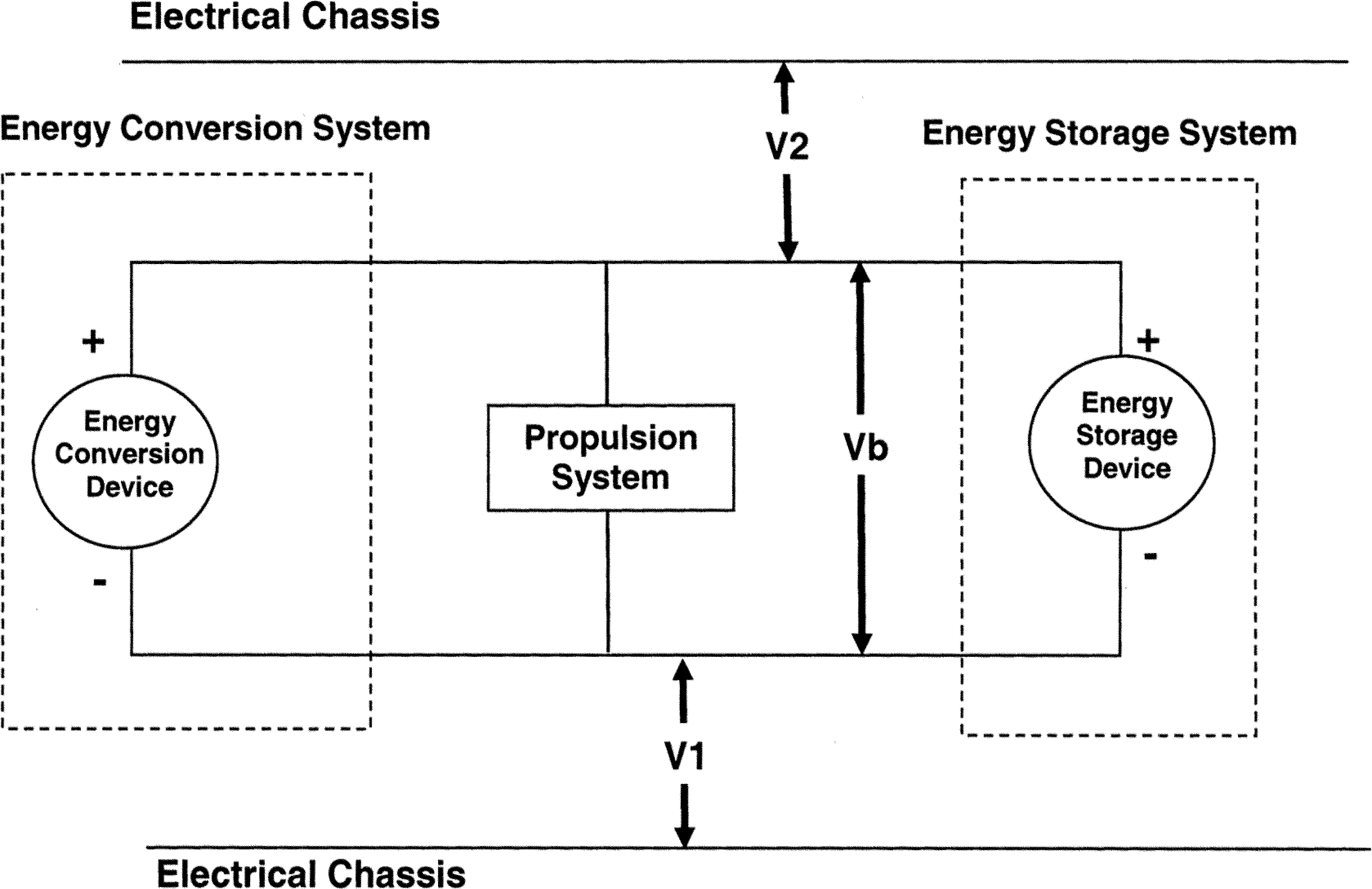
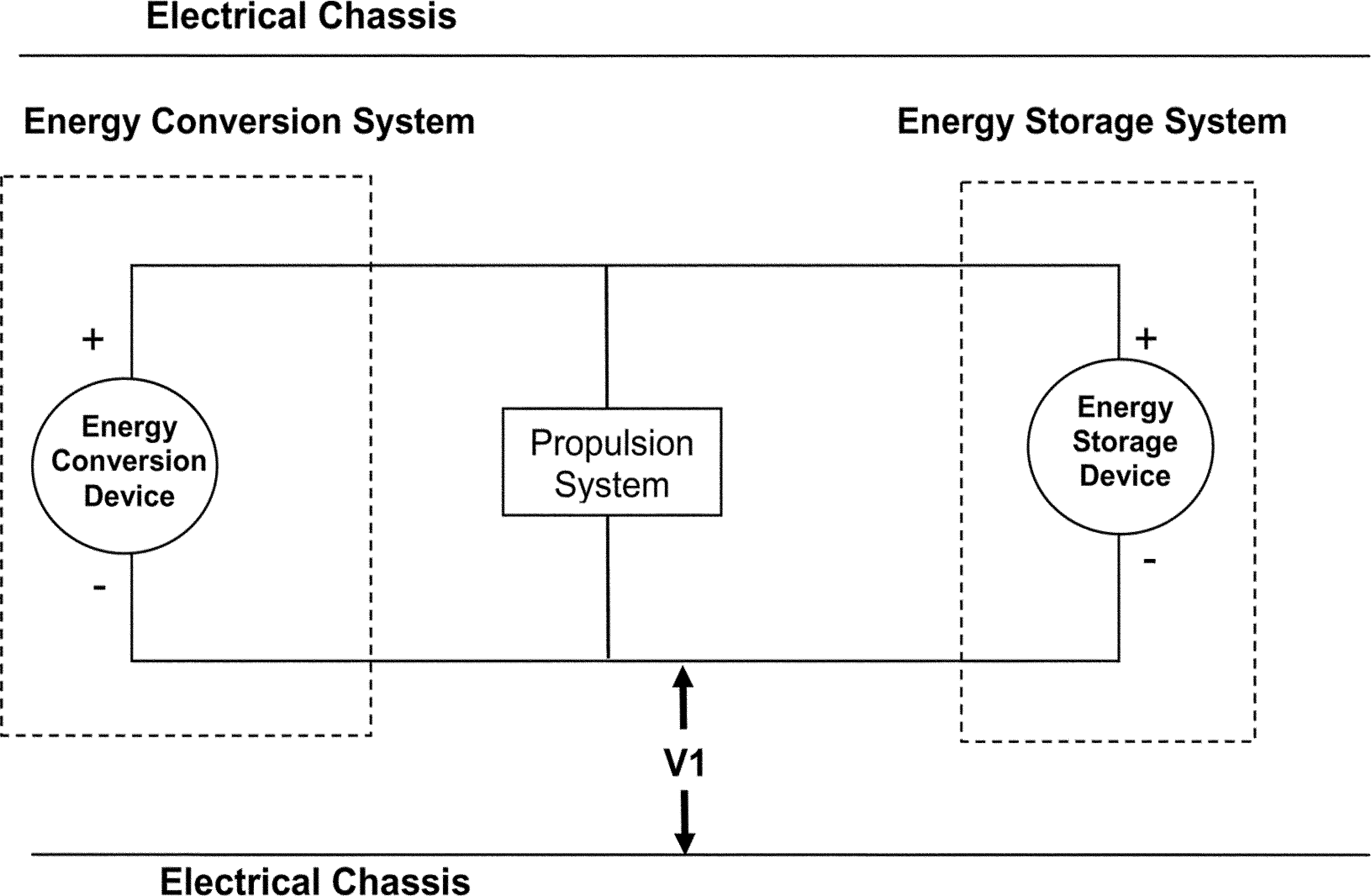
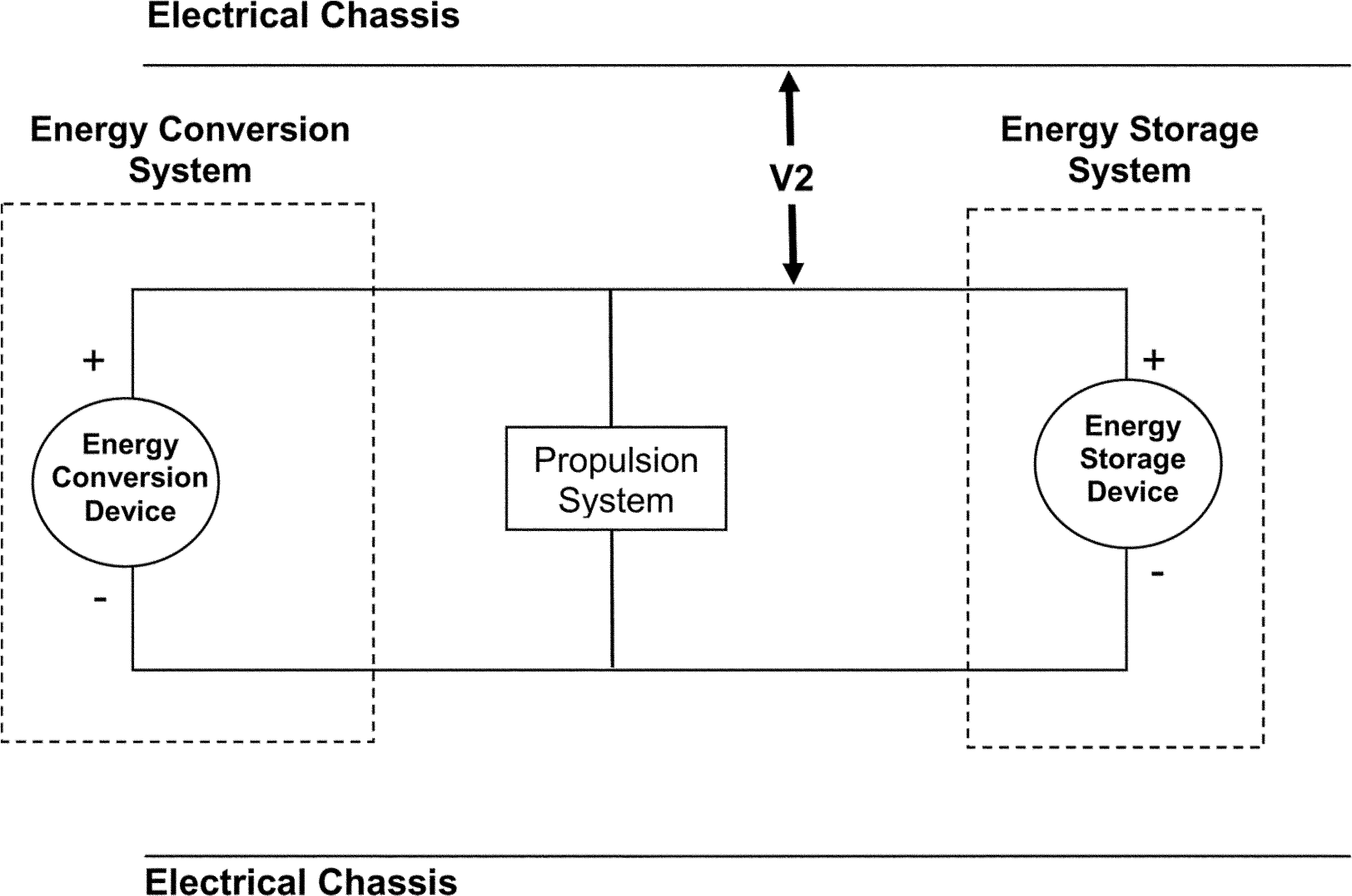
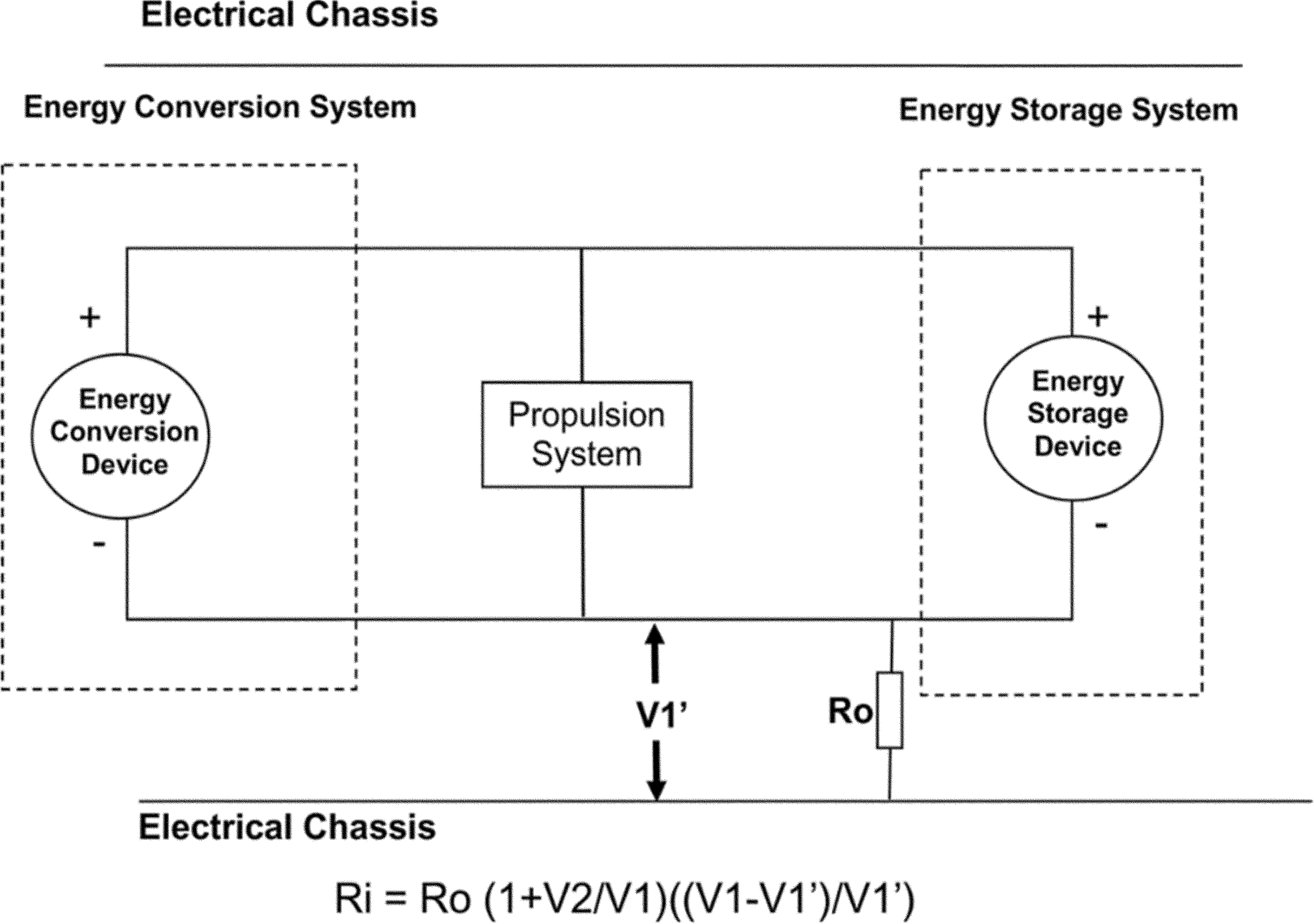
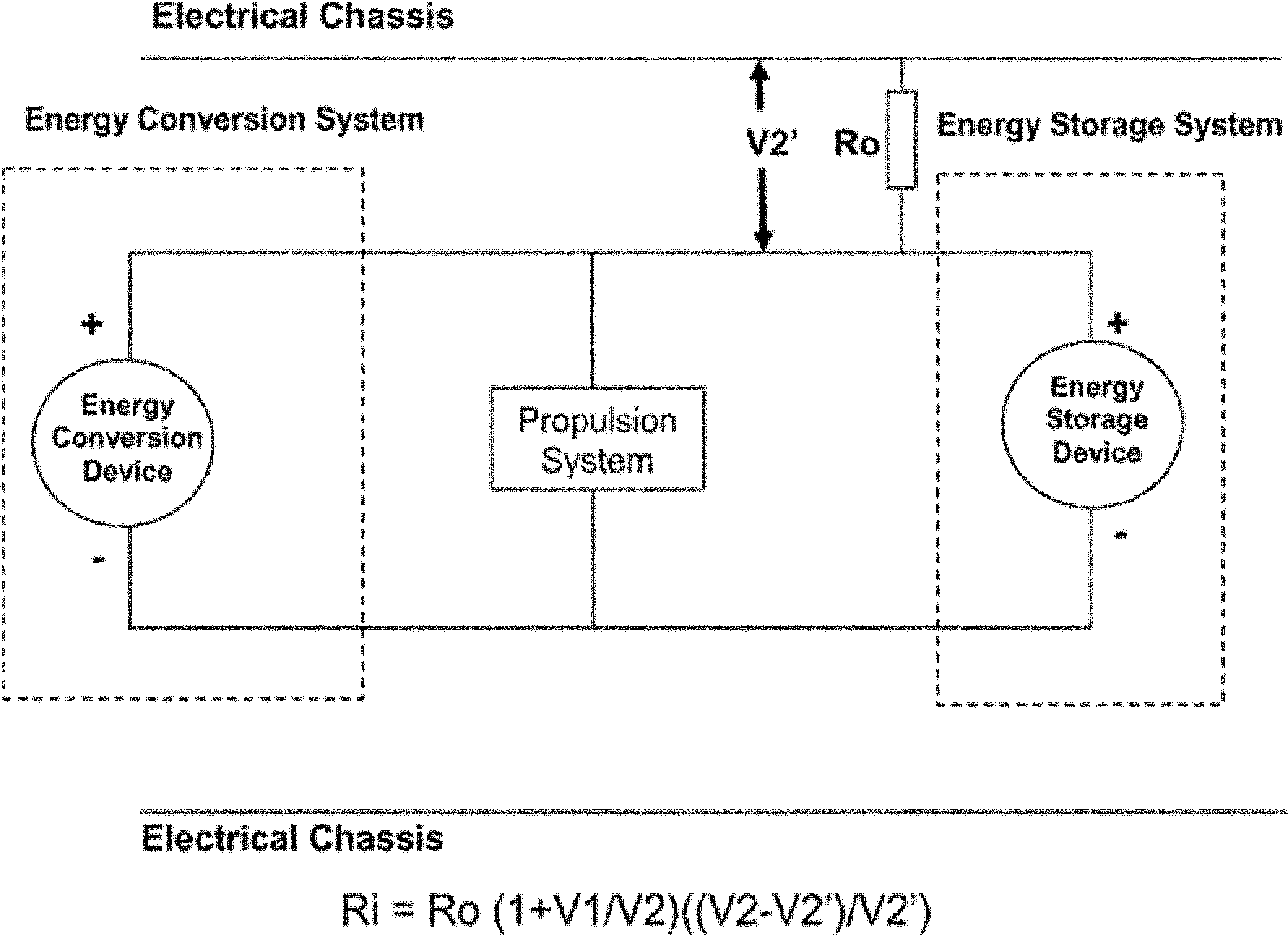
Auto Innovators commented on the proposed calculation method as well, stating, “the NPRM assumes that V1+V2=Vbat, but this may not be strictly true,” due to multimeter resistance. Auto Innovators provided revised diagrams and formulas and suggested that FMVSS No. 305a provide an electrical isolation compliance option matching ECE 100.03. Bugatti also disagreed with the calculation method for the electrical isolation baseline measurement, saying that it does not address a potential zero-volt measurement across Ro that may occur if Ri is much higher. Bugatti noted that the proposed requirements do not allow the use of a megohmmeter as an alternative method to avoid the zero-volt issue. Bugatti requested clarification and recommended adding the megohmmeter measurement method allowed by ECE 100.03. As with the low energy option for capacitors, Eaton again suggested adding acceptability criteria for battery isolation.
Agency Response
The agency is adopting the proposed requirements with a minor revision for the timing of voltage measurements for assessing electrical isolation post-crash. The proposed requirements stated that the post-crash voltage measurements would be made “between 10 to 60 seconds after impact.” The agency believes that this language is clear but agrees that the time specification should distinguish between compliance options. The post-crash electrical safety requirements include four compliance options: low voltage, electrical isolation, protective barrier, and low energy for
( printed page 104329)
capacitors. After further consideration, the agency agrees that the 60-second time limit is unnecessary for the electrical isolation measurement procedure because the values are static and that harmonization with the GTR No. 20 specification is appropriate. For these reasons, the post-crash test specification has been modified to state that the measurements for the electrical isolation compliance option are made at least 10 seconds after impact, with no upper time limit.
With regard to possible zero-volt measurements in the electrical isolation baseline calculation, the agency does not believe there is an issue. Consistent with GTR No. 20, the minimum resistance of the voltmeter is specified, and a higher resistance R0 can be used if the voltage measurement is very low. The agency has not observed zero-volt measurements in testing using the specified procedures, which were evaluated for practicability and repeatability. The megohmmeter option from UNECE R100 is not incorporated because research has shown that the megohmmeter method may provide different results than the multimeter method. The agency believes inclusion of the megohmmeter option could lead to inconsistent results and would not be beneficial.
Auto Innovators provided an alternate measurement method and calculations for electrical isolation resistance that takes into consideration the resistance of the multimeter used for voltage measurements. Auto Innovators noted that this alternate method is in ECE R.100.03 and requested harmonizing with ECE R.100.03. However, the test method and calculations in ECE R.100.03 [21]
are the same as those currently in FMVSS No. 305 and proposed in the NPRM for FMVSS No. 305a. Regardless, the agency will continue evaluating the recommended alternate procedure to determine whether the results and ease of testing support its inclusion in FMVSS No. 305a. The alternate method was not proposed in the NPRM and is therefore out of scope of this rulemaking. If the agency's research supports use of the alternate measurement procedure and calculations, they may be added at a later date. At this time, NHTSA is adopting the method currently in FMVSS No. 305 and proposed in the NPRM for inclusion in FMVSS No. 305a.
The suggestion to add acceptability criteria for battery isolation to the post-crash requirements was discussed earlier in Section IV.b.1, “Low Energy Option for Capacitors.”
4. Electrolyte Leakage
Proposed Requirements
The NPRM proposed to include a post-crash requirement limiting electrolyte leakage; this requirement is currently in FMVSS No. 305 as “electrolyte spillage” and permits no more than 5 liters of electrolyte spilled or leaked. NHTSA sought comment on the necessity and relevance of such a requirement for current EVs, as well as recommendations regarding electrolyte leakage detection methods and differentiation from other liquids.
Comments Received
Commenters agreed that the updated terminology of “electrolyte leakage” is appropriate but stated that the 5-liter maximum leakage requirement is no longer relevant. Auto Innovators and Nikola both said that leakage outside of the battery pack should not occur with modern EVs and that 5 liters is a very large amount. Auto Innovators stated that there is no reliable method to detect or quantify leakage and recommended that the requirement be removed entirely. Tesla stated that physical characteristics can be used to determine whether electrolyte or coolant has leaked from the vehicle if differentiation is a concern. Nikola suggested that any electrolyte leakage outside of the battery pack should constitute a failure. Blue Bird noted that there are many different forms of electrolytes, including solids and gels, and leakage may not be observed.
Agency Response
This final rule adopts the updated “electrolyte leakage” terminology and the current FMVSS No. 305 requirement for no more than 5 liters of electrolyte leakage post-crash. The cells of lithium-ion batteries in current EVs have small quantities of electrolyte that could leak out of the battery casing rather than spill. The agency agrees with commenters that any electrolyte leakage in EVs using lithium-ion batteries would be significantly lower than the current 5-liter limit in FMVSS No. 305. However, there are other types of batteries with aqueous electrolyte that may be considered for vehicle applications in the future.[22]
At this time, it is unclear whether the 5-liter limit will remain appropriate for future batteries. Specifically for vehicles using a REESS with aqueous electrolyte, GTR No. 20 similarly includes a requirement limiting electrolyte leakage to no more than 5 liters within 60 minutes after the crash test.[23]
Because there is no further information available, the agency is adopting the post-crash electrolyte leakage limit of 5 liters that is consistent with the current requirements in FMVSS No. 305 and GTR No. 20. However, unlike GTR No. 20, the agency is not distinguishing between REESS with different types of electrolyte; the requirements in FMVSS No. 305a are established as battery chemistry-neutral and are applicable to all types of REESS. The agency will continue to review and update the requirements in FMVSS No. 305a over time, as relevant information becomes available.
While one commenter suggested a requirement for no electrolyte leakage outside of the battery pack, a post-crash requirement prohibiting any electrolyte leakage from the pack was not proposed in the NPRM and is out of scope for this final rule. A post-crash test requirement prohibiting any amount of leakage outside of the battery pack may also be challenging to verify. However, as in FMVSS No. 305, this final rule includes a requirement that no visible trace of electrolyte shall leak into the passenger compartment of the vehicle for occupant safety. This final rule also adopts visual inspection requirements in the tests evaluating safety during normal vehicle operations, including no evidence of electrolyte leakage or venting (without disassembly of the vehicle), as discussed in Section IV.c.6., below.
c. Vehicle Controls for Safe REESS Operation
Overview
The NPRM proposed requirements and associated full-vehicle tests for vehicles to ensure they have controls managing safe REESS operation, specifically overcharge, over-discharge, overcurrent, over-temperature, and external short-circuit protection. These requirements are applicable to light vehicles and heavy vehicles, and are generally aligned with those in GTR No. 20, with minor differences for ease of testing. The NPRM also proposed documentation requirements for low-temperature protection, as in GTR No.
( printed page 104330)
20, because no practical test procedure currently exists.
Commenters addressed a variety of topics related to the requirements for safe REESS operation. The comments submitted by NTSB and Consumer Reports expressed appreciation and support for the requirements to ensure REESS safety and longevity. The comments from industry also expressed general agreement with the requirements for safe REESS operation but disagreed about certain aspects of the test procedures. Specifically, these comments addressed vehicle- and component-level testing, REESS state of charge, breakout harness location, over-temperature testing, overcurrent protection, and venting and visual inspection, as detailed below. Overall vehicle- and component-level testing is addressed below in section IV.c.1. Comments on specific testing provisions for vehicle controls are then addressed in sections IV.c.2 through c.6.
1. Vehicle- and Component-Level Testing
Proposed Requirements
The NPRM proposed vehicle-level testing using a breakout harness connected to a battery tester/cycler to evaluate vehicle controls for safe REESS operation. The test procedures ensure the vehicle controls provide protection against overcharge, over-discharge, overcurrent, over-temperature, and external short-circuit fault conditions. Maintaining the REESS within the manufacturer-specified functional range minimizes the risk of fire and electrical shock. NHTSA proposed vehicle-level testing of the REESS because testing at the equipment level would not evaluate all relevant vehicle controls or any interaction or interference between vehicle controls.
Comments Received
Many comments from industry disagreed with the agency's exclusion of component-level compliance test options, which are included in GTR No. 20 and ECE R100.03. Auto Innovators, Bugatti, EMA, Ford, Honda, Hyundai, Lucid, NFA, Nissan, UL Solutions, and ZETA were among those that requested component-level testing. ZETA stated that manufacturers “could face hurdles in transitioning to vehicle-level testing, including changing logistics, higher costs, and lack of testing equipment availability.” Auto Innovators likewise said that vehicle-level testing would add significant cost without increasing robustness or stringency.
Ford agreed with Auto Innovators, saying that it does not have large enough facilities, and noted that NHTSA did not provide data showing a need for full-vehicle testing. Honda stated that vehicle-level testing requires specialized parts, increases safety risks, and reduces control over test conditions compared to component-level testing. NFA said requiring full-vehicle testing would be burdensome and redundant, because the same pack would be tested multiple times. Hyundai said that the option to conduct testing at the component level would enable manufacturers to iterate on REESS design and safety systems more rapidly. Lucid said, “testing at the component level (REESS) provides the benefit of recreating the worst-case scenario, ideal for safety testing, due to its smaller thermal mass. Vehicle-level testing would also require larger thermal shock chambers than currently used at the REESS-level.” UL Solutions also suggested adding UL 2580 certification as another compliance option, while ZETA further requested that NHTSA allow manufacturers to specify their own boundary conditions for component-level testing because each vehicle model is different.
A few commenters suggested that component-level testing should be allowed under certain conditions or for specific tests. Nissan suggested that NHTSA allow a component-level compliance option if the manufacturer can demonstrate that the test results reasonably reflect the safety performance of the complete REESS under the same conditions. UL Solutions similarly requested that the agency “allow independent testing of the battery if the battery can demonstrate compliance to the requirements without the benefit of the vehicle support systems.” Tesla agreed with most of the proposed test procedures but requested a component-level compliance option for the over-temperature test, as “it would be difficult to characterize real-world driving temperature profiles fully and accurately due to variable drive states.” Nikola stated that vehicle-level testing for overcharge, over-discharge, and over-temperature protection cannot be conducted on hybrid or fuel cell EVs, so those tests should be conducted at the component level.
Agency Response
After reviewing the comments, the agency is adopting the requirements as proposed because vehicle-level testing is supported by NHTSA's research for its practicability and feasibility. NHTSA-funded research independently evaluated, refined, and validated the proposed vehicle-level test procedures for various types of electric vehicles (HEV, PHEV, and BEV).[24]
NHTSA conducted additional research to evaluate capabilities in compliance test laboratories and practicability of vehicle level tests.[25]
The test program demonstrated the ease of conducting tests at the vehicle level using breakout harnesses connected to a battery cycler/tester for the external inputs to the REESS without having to remove the REESS from the vehicle to conduct component-level tests. Evaluating REESS operation at the vehicle level is consistent with other FMVSSs and ensures the entire system is captured, including input from different subsystems and any interaction or interference between vehicle controls, and is most representative of real-world conditions. A vehicle level test also ensures that the boundary conditions are appropriate and would not be challenged in the event of a compliance test failure. NHTSA's initial research for test procedure development for electric vehicles was done with the whole vehicle and not with individual components in the vehicle.[26]
The comments did not demonstrate that component-level testing of the REESS would provide the same comprehensive evaluation, nor that full-vehicle tests cannot be conducted on all applicable vehicles.
In contrast to comments that vehicle-level tests are burdensome, overly costly, and require additional safety measures, NHTSA's testing program revealed the ease of conducting testing at the vehicle level multiple times on the same vehicle without significant cost. The overcharge, over-discharge, overcurrent, over-temperature, and external short-circuit test procedures in FMVSS No. 305a are non-destructive, are conducted at ambient temperatures, and can be conducted sequentially on the same vehicle, minimizing the time and cost of testing. The tests also include multiple end conditions for design flexibility. The agency maintains that the requirements are appropriate to replicate and confirm real-world vehicle operations and do not constitute an undue burden on manufacturers.
( printed page 104331)
We understand manufacturers may conduct testing for various scenarios beyond the requirements of FMVSS No. 305a, and such testing may be conducted at the vehicle level and/or the component level. FMVSSs establish minimum safety requirements and the FMVSS test procedures provide notice to establish how the agency would verify compliance. However, this does not mean that manufacturers must conduct the exact test in the FMVSS to certify their vehicles. The Safety Act requires manufacturers to ensure their vehicles comply with all applicable FMVSSs and to certify compliance of their vehicles with all applicable FMVSSs, and the Safety Act specifies that manufacturers may not certify compliance if, in exercising reasonable care, the manufacturer has reason to know the certificate is false or misleading. A manufacturer may use component-level tests to certify its vehicles if they exercise reasonable care in doing so. In other words, a manufacturer must ensure that its vehicles will meet the requirements of FMVSS No. 305a when NHTSA tests the vehicles in accordance with the test procedures specified in the standard, but the manufacturer may use different test procedures to do so.
2. State of Charge (SOC)
Proposed Requirements
Initial SOC ranges were specified for each of the proposed test procedures for vehicles to ensure they have controls managing safe REESS operations. Some of the SOC ranges differed from those in GTR No. 20 for practicability and ease of conducting the tests. For the overcharge, over-temperature, and external short-circuit tests, the REESS is initially at 90 to 95 percent SOC. For the over-discharge test, the REESS is initially at 10 to 15 percent SOC. For the over-current test, the REESS is initially at 40 to 45 percent SOC.
Comments Received
Several commenters stated that there should be more flexibility in the SOC ranges for the tests. Auto Innovators and Honda stated that the proposed values are too extreme and will likely have already activated the protections. Auto Innovators requested that NHTSA align the starting SOC values with those in GTR No. 20. Nissan suggested setting the starting SOC around the middle of the normal operating range for the overcharge and external short-circuit tests, as in UNECE Regulation No.100, because hybrid vehicles may fall outside the range of normal use if the REESS is initially set between 90 to 95 percent SOC. Bugatti commented similarly, “Prescribing absolute values for SoC of the REESS, without consultation of manufacturer-specified SoC operational windows, may influence test results due to possible risk for the REESS to be out of its normal operating SoC range, even from the beginning of tests.” Bugatti recommended removing SOC values and taking a similar approach to UNECE Regulation No. 100, which references manufacturer-specified SOC.
Agency Response
After reviewing the comments, the agency is adopting the proposed requirements with a minor modification to the definition of SOC to clarify the requirements and address commenters' concerns. The initial SOC specifications in the test procedures refer to the “operating SOC,” or percent charge available under normal operation as it may be displayed to the user. In other words, the charge level for beginning each test is based on the normal functional range of the REESS defined by the manufacturer, not direct measurement of the battery capacity. This distinction was not sufficiently clear in the NPRM, leading to concerns about the validity of the test parameters. However, the specified parameters were tested and validated for different types of electric vehicles, including HEV and PHEV. These tests included vehicle crash tests of battery electric vehicles [27]
and tests of vehicle controls that manage REESS operations and its health.[28]
The initial SOC ranges are intended to minimize the amount of time needed to conduct each test. Starting every test in the middle of the normal operating range rather than the upper or lower portion would lead to longer test times with no added benefit. In the event that the vehicle does not display the operating SOC, the charge level can be estimated using the information provided by the manufacturer.
To improve clarity, NHTSA is changing the definition of “State of charge” to mean the available electrical charge in a REESS expressed as a percentage of the normal operating capacity specified by the vehicle manufacturer.
3. Breakout Harness Location
Proposed Requirements
The NPRM proposed to conduct the REESS tests using a breakout harness connected to manufacturer-specified location(s) on the traction side of the REESS on the vehicle's electric powertrain. The manufacturer is required to specify the location(s) for connecting the breakout harness and may also provide an appropriate breakout harness for testing the vehicle. If the manufacturer does not provide a breakout harness, NHTSA will use a generic breakout harness to connect to the traction side of the REESS.
Comments Received
Regarding the overcharge, over-discharge, and overcurrent test procedures, Honda stated that the term “traction side” is too prescriptive and inconsistent with the proposed test procedure in S12.5, which did not include the same specification. Auto Innovators provided the same comment. Prevost requested clarification of the “traction side” designation to make clear which systems and subsystems are considered to be part of the traction side of the REESS and which are not. An example to clarify is whether the charging inlet is part of the “traction side” of the REESS. Prevost further suggested making note of a designated location when it is not specified by the manufacturer.
Agency Response
This final rule adopts the proposed requirements for the breakout harness location(s) as described in the NPRM, with edits for clarity and consistency. The “traction side” of the REESS refers to the connection between the REESS and the transmission, so it does not include the charging inlet. The traction side of the REESS is specified to ensure that external charging and regenerative charging are both captured by the test. Regenerative charging can potentially lead to overcharge conditions even if the vehicle controls prevent overcharging from the charging inlet. The manufacturer is also required to state the connection location(s) because a single location would not work for all vehicles and because connecting the harness to the wrong points of the powertrain could be damaging and/or hazardous. For the test operators' safety, ease of testing, and to prevent damage to the vehicle or test equipment, the manufacturer is required to recommend specific connection location(s). Although the NPRM clearly stated that the manufacturer is required to provide connection locations, the proposed
( printed page 104332)
regulatory text was inconsistent. The text in S12 has been edited to clarify the requirement. Additionally, because the manufacturer is required to provide connection locations, no default locations are necessary. Regarding the exclusion of “traction side” in S12.5, that test is intended to evaluate the response to an external short circuit, so the traction side specification does not apply. Another possible source of confusion could be due to the proposed text for S12.5 referencing “overcharge” instead of “external short-circuit;” the text has been corrected in the final rule.
4. Over-Temperature Protection
Proposed Requirements
The NPRM proposed to include the over-temperature protection requirement and test procedure from GTR No. 20, with minor changes. NHTSA's testing indicated that presoaking the vehicle was not necessary,[29]
so the NPRM proposed to remove presoaking from the procedure to reduce the test time and burden. The test procedure specifies that the test is conducted at ambient temperature, between 10°C and 30°C, with the cooling system disabled or minimized. The vehicle is driven on a chassis dynamometer using the manufacturer-provided drive profile, or with aggressive acceleration and deceleration if an appropriate drive profile is not provided.
Comments Received
Commenters generally agreed with the requirement but recommended changes to some aspects of the test procedure. MEMA stated agreement with the agency's decision to remove presoaking, and Auto Innovators agreed with removing the requirement but said it should be permitted. Auto Innovators also stated that several provisions were overly prescriptive and unnecessary, specifically the directions to conduct the test on a chassis dynamometer and/or in active driving mode, limit the ambient temperature to 30°C, and specify a one-hour time period. Honda also disagreed with the limits on the time period and ambient temperature, stating that there are situations where the battery temperature will not rise unless the ambient temperature rises. EMA also suggested modifying the standard cycle specification to allow a manufacturer supplied drive profile, as “S12.4 (d) requires using an appropriate manufacturers supplied drive profile and (h) should follow the same drive profile or allow for the option to follow the same manufactured supplied drive profile.” In an ex-parte meeting,[30]
Nissan commented that it was unclear whether all three test termination conditions had to be fulfilled to terminate the charge/discharge cycle.
Agency Response
After reviewing the comments, the agency is adopting the proposed requirements with an additional clarification for the manufacturer-provided drive profile. The proposed rule defined an appropriate drive profile by stating that it should raise the temperature of the REESS above the safe operating temperature within one hour. The test procedure specifies that the cooling system is disabled or functionally minimized for testing, but this provision was not stated when defining an appropriate drive profile. The commenters did not specify if the REESS cooling system was minimized in their testing. However, the agency recognizes that some vehicles may not be operable with cooling reduced to a level that would allow the REESS to overheat under the specified test conditions. To address commenters' concerns, if it is not possible to raise the temperature of the REESS without raising the ambient temperature of the vehicle above 30°C, the manufacturer may provide a drive profile that would trigger the over-temperature condition within one hour if the thermal management system were effectively disabled.
For the performance test, the test termination conditions in FMVSS No. 305a are identical to those in GTR No. 20, where the vehicle may be charged and discharged for up to 3 hours. The test time is not limited to one hour and it is not required to trigger the over-temperature protection, to avoid penalizing effective thermal management. The test procedure also does not prohibit presoaking or otherwise specify the starting temperature of the vehicle. However, the test is conducted at ambient temperature to avoid the added cost of testing in a heat chamber. The use of a chassis dynamometer and active driving possible mode of the vehicle are specified to ensure that the vehicle is tested in the normal operating state. The termination conditions were accurately described in the preamble of the NPRM and are the same as those in GTR No. 20. However, the agency agrees that the proposed regulatory text did not clearly indicate only one of the termination conditions needs to be fulfilled to terminate the discharge/charge cycle. The regulatory text specifying the test methods for evaluating vehicle controls managing REESS safe operations (S12) have all been modified to clarify the corresponding termination condition requirements in the final rule.
Section S12.4(h) of the over-temperature test procedure specifies conducting a standard cycle, if allowed by the vehicle. A standard cycle, as defined in GTR No. 20 and FMVSS No. 305a, consists of a standard discharge followed by a standard charge. The NPRM stated that the discharge and charge rates used for the standard cycle would be provided by the vehicle manufacturer. It also specified the alternative charge and discharge rates that would be used if the manufacturer did not provide them. The standard cycle is the same for each of the test procedures addressing safe operation of the REESS and is unrelated to other test specifications. The definition and use of the standard cycle are adopted as proposed.
5. Overcurrent Protection
Proposed Requirements
The NPRM proposed to include the overcurrent protection and test for vehicles capable of charging by direct current (DC) external electricity supply, as in GTR No. 20. During the test, the REESS is charged using the battery tester/cycler in accordance with the manufacturer's recommended charging procedure with the highest normal charge current specified by the manufacturer, or at a rate of C/3 current if none is provided. After charging is initiated, an over-current specified by the manufacturer is supplied, or the current is increased in 10-Ampere steps, until the vehicle over-current protection terminates charging or the temperature gradient of the REESS is within 4°C for a two-hour period. The standard cycle is then performed, if possible, and the test concludes with electrical isolation assessment and a one-hour observation period to assess evidence of electrolyte leakage, venting, fire, or rupture.
Comments Received
EDTA, MEMA, NEMA, and Eaton suggested expanding the overcurrent protection requirements to address battery isolation. NEMA said that the
( printed page 104333)
contactors can weld, leading to a system protection failure and a safety issue, and that GTR No. 20 does not offer adequate overcurrent protection in those cases. Eaton emphasized that contactor failure occurs frequently, as evidenced by recent vehicle recalls, and suggested NHTSA require manufacturers to demonstrate they can fully isolate the positive and negative poles of the battery following a vehicle crash or overcurrent event. EDTA, MEMA, and NEMA made similar comments, requesting battery isolation testing and documentation showing no single point of failure.
Agency Response
After reviewing the comments, the agency is adopting the proposed requirements. NHTSA agrees with commenters that contactor failure can lead to system protection failure and a safety issue. However, we do not see a need to explicitly require “fully isolat[ing] the positive and negative poles of the battery following a vehicle crash or overcurrent event,” as Eaton and other commenters suggested. The test procedures in the FMVSS are established to mitigate safety risks in a manner that is not design restrictive. In the adopted overcurrent test, the overcurrent is applied until either the protection controls terminate charging (contactors open), or a long time has passed without an appreciable change in REESS temperature. Additionally, after the overcurrent is applied, a standard cycle is performed, if possible,[31]
after which no electrolyte leakage, rupture, venting, fire, or explosion is permitted during a one-hour observation period. At the conclusion of the observation period, the electrical isolation is determined in a similar manner as in FMVSS No. 305, using a voltmeter to measure the voltages. The agency believes that the termination criteria for the application of overcurrent and the subsequent evaluations ensure that the main contactors in the REESS are not fused due to the overcurrent and therefore mitigate the safety risk. These requirements are intended to enhance safety while allowing manufacturers design flexibility.
NHTSA will continue to research and assess electric vehicle safety issues and the need for additional changes to the overcurrent requirements. NHTSA is also aware of vehicle fires originating at the vehicle charge inlet while the vehicle is being charged. Some of these fires have resulted from faulty connections between the charge connector and the vehicle. As part of NHTSA's Battery Safety Initiative,[32]
the agency continues to evaluate these safety risks and potential future agency actions to mitigate these risks.
6. Venting and Visual Inspection
Proposed Requirements
Venting is the release of excessive internal pressure from a cell or REESS in a manner intended by design to preclude rupture or explosion. Venting during normal vehicle use may result in varying degrees of safety risks to the vehicle occupant. The NPRM proposed that each of the tests evaluating vehicle controls for safe REESS operation (overcharge, over-discharge, overcurrent, over-temperature, and external short-circuit test procedures) would end with the vehicle observed for one hour for evidence of electrolyte leakage, rupture, venting, fire, or explosion, followed by voltage measurements for determining electrical isolation. NHTSA proposed that there be no evidence of electrolyte leakage, venting, or rupture that is verified by visual inspection without disassembly of any part of the vehicle. Visible smoke during and after the test, and/or the presence of soot and/or electrolyte residue in post-test visual inspection, are indicators of venting and electrolyte leakage. The agency acknowledged that research is needed to develop a repeatable, reproducible, and practical method to verify the occurrence of various vented gases and requested comment on the Informal Working Group's continuing work in Phase 2 of the GTR.
Comments Received
As a whole, commenters agreed that venting detection methods are challenging to specify at this time and appropriate sensors are still under development. Auto Innovators stated that the proposed visual inspection requirement is unnecessary because visible venting is unlikely. On the other hand, DTNA agreed with the visual inspection requirement but requested adding a test procedure provision where venting inspection is captured visually and with written description of the findings.
With regard to sensor research, Tesla stated agreement with the agency's assessment that more research is needed, and Nikola said it doesn't have enough to data to recommend the usage of such sensors for general application. For future test requirements, Rivian suggested that the detection method depend on whether the area of concern is the gas venting within the REESS or the risk of occupant/bystander exposure to vented gases. Rivian noted that gas detection outside of the REESS is more challenging than detection inside the REESS and recommended prioritizing carbon monoxide sensors. Auto Innovators suggested focusing on a limited number of critical gases, with an emphasis on release or venting that may impact occupants.
Agency Response
The agency is adopting the proposed requirements for no evidence of electrolyte leakage, rupture, venting, fire, or explosion as determined by visual inspection during a one-hour observation period for each of the vehicle controls for safe REESS operation tests. The commenters agreed that appropriate sensors and procedures for detection of vented gases are not currently available and that more research is needed. NHTSA is continuing to investigate gas detection methods and potential test procedures to address venting of hazardous gases such as carbon monoxide. This research will inform future rulemaking. At this time, the agency believes inclusion of the visual inspection requirement enhances safety protection to limit safety risk to vehicle occupants due to venting and should remain a minimum requirement until quantitative detection methods are fully developed. As with similar standards, the compliance test procedures will include recording of the visual inspection results, using detailed descriptions, video, and/or photographs as appropriate.
d. Mitigating Risk of Thermal Propagation Due to Internal Short Within a Single Cell in the REESS
Proposed Requirements
The NPRM proposed documentation requirements for risk mitigation of thermal propagation events resulting from single-cell thermal runaway (SCTR) due to an internal short circuit within a cell in the REESS. NHTSA's proposed documentation component structure is based on elements from GTR No. 20, ISO-6469-1: Amendment 1
( printed page 104334)
2022-11,[33]
and ISO-26262.[34]
The documentation submitted by the manufacturer is required to include all known risks to vehicle occupants and bystanders, risk assessment, risk management, and risk mitigation strategies in external charging mode, active driving possible mode, and parking mode. The objective of the documentation requirements is for vehicle manufacturers to identify the risks of single-cell thermal runaway and propagation for their REESS type, identify strategies to mitigate those risks, and demonstrate how those strategies work. The manufacturers' assessment and validation of risk mitigation strategies may involve a combination of physical testing and simulations at the component level and/or full vehicle level. The requirements are not design restrictive and apply to REESSs of all types.
Comments Received
There were several comments on SCTR risk mitigation documentation, including multiple requests for clarification. Tesla, HATCI, and Honeywell stated support for the proposed documentation approach. However, HATCI disagreed with the addition of the two new operation modes, stating they are unlikely to add material safety benefits while unnecessarily increasing the test and documentation burden, whereas Honeywell said the addition acknowledges the need to identify distinct risks and mitigations for each operational mode. Nissan suggested that NHTSA add a detailed description of safety risks “such as fire, explosion, or smoke” to enhance clarity regarding the severity of these risks in S13.1. Lubrizol stated strong support for the requirements proposed in the NPRM and provided graphs demonstrating the performance of their fluids for immersed thermal management of the REESS.
Auto Innovators questioned the necessity of the SCTR requirement given the inclusion of other thermal runaway and propagation requirements (
e.g.,
the requirement for a thermal event warning), and asked the agency to provide additional research to support the inclusion of this requirement, though it also said that the proposed reporting requirements appear to be reasonable. Additionally, Auto Innovators said the requirement should not apply to Ni-MH batteries because the electrolyte generally used in Ni-MH batteries is not flammable; Auto Innovators noted that GTR No. 20 and industry standards limited the requirement to flammable electrolyte REESS and that internal short-circuits are less likely in Ni-MH batteries due to greater spacing of the electrodes. Auto Innovators further requested clarification on several aspects of the requirements, including risks, validation strategies, and terminology where the FMVSS deviates from GTR No. 20. Auto Innovators said the term “vehicle power” in the definition of parking mode is ambiguous and could mean any voltage or just high voltage. Auto Innovators also said there should be processes for updates or corrections, the requirements should not be limiting, and providing confidential business information should not be required if the information is subject to public disclosure.
Lucid and NFA also requested further clarification of the requirements. Lucid said, “As proposed, the requirements could lead to either over- or under-reporting. Lucid stresses the importance of delineating the documentation requirement under Part IV, overall evaluation of risk mitigation, to avoid conflation with risk mitigation itself.” NFA likewise suggested that NHTSA define “the requisite detail level within the SCTR Risk Assessment and Mitigation documentation of the Proposal, with the expectation that it aligns with established best practices and industrial standards, such as ISO 26262 or SAE J1739.” NFA also stated that the vehicle manufacturers will need information from the REESS manufacturer and NHTSA should follow the confidential document treatment procedure of 49 CFR part 512 to protect proprietary information. Nikola agreed that it makes sense to not require a warning for SCTR and that a thermal runaway warning should be required. Nikola suggested a battery manufacturer requirement similar to the UL 2580 SCTR test, which forces a cell into thermal runaway. Similar to NFA, Nikola expressed concerns about obtaining proprietary information from battery manufacturers and suggested Confidential Business Information treatment per 49 CFR part 512.
Agency Response
For the final rule, the agency is adopting the proposed risk mitigation documentation requirements. However, instead of including the documentation requirements in FMVSS No. 305a as proposed, this final rule includes the risk mitigation documentation requirements in part 561. The purpose of these documentation requirements is to ensure that manufacturers have considered and addressed the risk of SCTR due to an internal short circuit, as the risk is highly dependent on REESS design and there is no one field-relevant performance test that can be applied to all REESS designs in a repeatable and reproducible manner. NHTSA-funded research examined various existing methods of initiating thermal runaway, including the heating element method, rapid heater method, nail penetration, and laser method, on batteries with a variety of chemistries, formats, and configurations.[35]
The agency's research indicated that the thermal runaway initiation methods may influence the test results and the most appropriate initiation method for a battery may depend on the battery chemistry, format, and configuration. Nikola referenced a private industry developed standard, UL 2580 “Standard for batteries for use in electric vehicles,” as a potential requirement for battery manufacturers. Among other requirements, UL 2580 specifies a test where a single cell is forced into thermal runaway, by any means recommended by the battery manufacturer, with a requirement for no evidence of fire or explosion for 1 hour after initiating thermal runaway. Such a test is not appropriate as a compliance test procedure because some thermal runaway initiation methods employed may require advanced equipment and knowledge of the REESS that is only available to the manufacturer. It is also difficult to establish objectivity and could be design restrictive. However, manufacturers may voluntarily use any or all of the tests in UL 2580 for validating risk mitigation strategies in their documentation submitted to the agency. For these reasons, the agency is not requiring a performance test for thermal runaway of a single cell.
Regarding the need for SCTR risk mitigation requirements given the other requirements in the proposal, including
( printed page 104335)
warning for a thermal event in the REESS, the agency believes a requirement to mitigate the risk of SCTR due to an internal short circuit is needed because: (1) there have been a number of electric vehicle fires in the field resulting from a short circuit within a cell in the REESS of vehicles in parking, charging, and driving modes, (2) none of the performance test requirements for the safe operation of the REESS (overcharge, over-discharge, overcurrent, external short-circuit tests) address SCTR and thermal propagation resulting from an internal short circuit, and (3) the thermal event warning is required when the vehicle is in the active driving possible mode to allow vehicle occupants to safely egress, but does not address prevention of vehicle fire.
With regard to specific battery chemistries, the documentation requirements for SCTR are battery chemistry neutral. Safety risks need to be evaluated and mitigated for all types of vehicle REESS, regardless of chemistry, to minimize the possibility of hazardous conditions. Gas venting, explosion, or other hazards can occur even without flammable electrolyte. The documentation requirements include identification of safety risks and mitigation strategies. If a REESS uses non-flammable electrolyte and the REESS cells have large spacing between electrodes, those elements may be included as primary risk mitigation strategies in the required documentation. Primary risk mitigation strategies include manufacturing quality control to mitigate defects in cells of REESS, REESS design features such as heat sinks, cell spacing, coolant, advanced battery management system with prognostics, and diagnostics systems to manage the health of the cells of an REESS and detect a possible thermal runaway condition before it occurs. Primary risk mitigation strategies reduce the risk of SCTR due to an internal short circuit and the occurrence of thermal propagation that may result from SCTR, while secondary risk mitigation strategies may not reduce the risk of thermal runaway or thermal propagation but reduce the hazards associated with thermal propagation. Secondary risk mitigation strategies include warning systems to vehicle occupants/bystanders and/or notification to emergency personnel in the event of thermal propagation (
e.g.,
automatic notification to 911 operators). The NPRM provided examples of mitigation strategies, but specific strategies are not mandated, allowing flexibility and practicability of various battery chemistry and battery systems without limiting only certain risk mitigation strategies known now. The risk reduction analysis requirement follows industry standard methodology.[36]
As previously stated, the requirements are based on those from GTR No. 20. NHTSA extended the requirements to include consideration of the external charging and parking modes to ensure safety under all normal vehicle operating conditions. The incremental amount of documentation from adding other operating modes is minimal. The operating modes were defined in the NPRM, with
Parking mode
defined as “the vehicle mode in which the vehicle power is turned off, the vehicle propulsion system and ancillary equipment such as the radio are not operational, and the vehicle is stationary.” Per this definition, both the high-voltage and the low-voltage power are turned off. The regulatory text also describes the information to include in each section of the documentation for completeness, from system diagrams to validation of risk mitigation strategies. As proposed, the required documentation is to be submitted upon request. Documentation containing proprietary information can be submitted as Confidential Business Information (CBI) under 49 CFR part 512 and will be handled accordingly. Documentation submission, regulations, and CBI are discussed further in Section k.
e. Thermal Event Warning
Proposed Requirements
As part of a risk-mitigation approach addressing multiple aspects of electrical system safety, the NPRM proposed a performance requirement for a thermal event warning. The term “thermal event” refers to a condition when the temperature within the REESS is significantly higher (as defined by the manufacturer) than the maximum operating temperature specified by the manufacturer. Thermal events may occur due to moisture and dust accumulation that causes a short circuit at the connections or electronic components within the REESS. A thermal event within a battery pack can be a safety critical event, as it can lead to smoke, fire, and/or explosion. A warning provided when a thermal event within the REESS occurs while the vehicle is in active driving possible mode would reduce the likelihood of occupant exposure to hazardous smoke, fire, and/or explosion. NHTSA also proposed that the visual warnings be provided to all front row occupants for vehicles with automated driving systems without manually operated driving controls.
Comments Received
There were many comments on the proposed thermal event warning test. Comments from Consumer Reports, Lucid, and EMA stated support for the actual audio-visual warning. Consumer Reports also suggested that NHTSA work with manufacturers to ensure all warnings are sufficiently prominent and convey the severity of the event. SAVE Coalition agreed with the warning overall but noted that it was only directed to the driver of the vehicle. To include vehicles equipped with automated driving systems, SAVE Coalition suggested adding, “For a vehicle without manually operated driving controls, the warning must be provided to occupants in all outboard designated seating positions.” On the other hand, Auto Innovators said, “We recommend remove requirements for AVs without manual driving controls; NHTSA has not provided rationale for why any warning needs to be provided to the `front row occupant'; the occupant cannot take any action based on the visual warning.” Honeywell suggested adding an auditory warning requirement for active charging and parking modes to enable relocation of adjacent vehicles, evacuation of building occupants, and alerts to bystanders. ACIL likewise encouraged NHTSA to include requirements for a warning to vehicle occupants and/or bystanders outside the vehicle in the event of thermal propagation.
Some commenters said that the NPRM discussion of “thermal runaway,” “thermal propagation,” and “thermal event” was unclear. Nissan suggested that sections S13.2 and S13.3 for the thermal event warning should be distinct from S13, thermal propagation safety, to ensure clarity and precision in addressing thermal safety risks within the documentation. Nikola said, “NHTSA is proposing to not have a warning for a thermal runaway but to require one for thermal event that is intended to inform occupants to egress the vehicle. The definitions of Thermal event and Thermal Runaway are being
( printed page 104336)
conflated.” NFA likewise stated that there appeared to be a discrepancy in NHTSA's statements about the relevance of SCTR and thermal event warnings.
Many comments disagreed with the parameters of the proposed test requirement. Auto Innovators said the NPRM did not provide references or otherwise explain the test parameters. They noted that battery modifications can be risky and suggested slower heating due to “concerns with the proposed test method of using a heater that abruptly achieves 600C within 30 seconds [which] could result in unstable test conditions.” NFA said that the three-minute timeframe seems arbitrary and uncorrelated with occupant hazard exposure, and suggested using the SCTR thermal propagation criteria from ECE R100. Tesla, HATCI, Honeywell, ZETA, Lucid, Nikola, and Honda all expressed similar concerns over the timing and occurrence of actual thermal runaway and propagation with the proposed test procedure. Some suggested other initiation methods or a ramp of 180 seconds as in GTR No. 20. Nissan said the temperature specification was too high. Honda recommended clarification that the temperature specification refers to the heater temperature, not the REESS temperature. Honda also requested clarification on allowable modifications to the REESS, including replacement of one or more cells with heater equipment preinstalled for accurate test results. Similarly, Bugatti requested “a clear definition of thermal runaway condition and confirmation whether instrumented cells will be allowed to recognize this event,” to ensure that manufacturers have flexibility to accommodate the test equipment if NHTSA does not allow other triggering methods.
Several vehicle and component manufacturers said that the vehicle-level test requirement is unnecessarily dangerous. MEMA said that the test would generate toxic smoke and other potentially unsafe conditions for test personnel, and contradicts other requirements to mitigate or stop thermal runaway. Ford said the heater test is “unnecessarily destructive and burdensome in that it requires the initiation of a thermal runaway to confirm the illumination of a warning light,” and recommended verification using an electronic signal instead. Prevost also expressed safety concerns, noted additional difficulty in testing heavy vehicles, and suggested a subsystem test. EMA suggested a documentation requirement or component-level test, as the full-vehicle test could destroy the vehicle and introduce an unsafe situation. Many other commenters also recommended implementing the documentation requirement from GTR No. 20 due to issues with the proposed test requirement.
Agency Response
After consideration of the comments, the agency is not adopting the proposed performance test requirement for the thermal event warning but is implementing a corresponding documentation requirement in part 561 instead. While the agency maintains the importance of the required thermal event warning, commenters raised concerns about the proposed test method and safety of testing. The agency agrees that additional research is needed to ensure that any performance test for the thermal event warning is well-defined, appropriate for all vehicles, and does not pose an undue risk to test personnel. In turn, the documentation requirements are adopted for the final rule.
The documentation requirements for the audio-visual thermal event warning are similar to those in GTR No. 20. Manufacturers are required to provide documentation to the agency, upon request, with a detailed description of the system for triggering the warning. Specifically, the documentation requirements include parameters and associated threshold levels that are used to indicate a thermal event (
e.g.,
temperature, temperature rise rate, SOC level, voltage drop, electrical current, etc.) to trigger the warning, as well as a system diagram and written explanation describing the sensors and operation of the vehicle controls that manage the REESS in the event of a thermal event.
The primary purpose of the adopted warning is to ensure occupants have sufficient time to exit the vehicle to minimize direct exposure to potential hazards. The warning is to be provided regardless of the cause of the thermal event. A thermal event in the REESS can lead to smoke, fire, and/or explosion, and a warning can reduce the likelihood of occupant exposure to these safety hazards. The audio-visual warning is provided to the driver, or to all front row occupants in the case of autonomous vehicles without manually operated controls, notifying of a thermal event in the REESS when the vehicle is in active driving possible mode. The agency believes this specification is appropriate to ensure the driver or the front row occupants in vehicles with automated driving systems without manually operated controls are alerted of the potential safety hazard to ensure the driver or occupants can stop and exit the vehicle. The front row provision for vehicles with automated driving systems is aligned with other FMVSSs [37]
and may be revised over time. The primary purpose of the adopted warning is to ensure occupants have sufficient time to exit the vehicle to minimize direct exposure to potential hazards. Activation of a warning to bystanders outside the vehicle was not proposed in the NPRM and is not in scope for this final rule. Additionally, further research needs to be conducted to determine the type and efficacy of such a warning to people outside the vehicle.
Some commenters said the discussion in the NPRM was unclear between the term of thermal event and SCTR and the corresponding warning requirements. Section 2 of the NPRM addressed thermal propagation from SCTR due to an internal short circuit within the cell; this is a specific hazard that can be minimized by risk evaluation and mitigation in design and manufacturing. Risk mitigation includes implementing strategies to prevent SCTR and to isolate a cell that is in thermal runaway to prevent thermal propagation. A warning specifically for SCTR is not required. However, any instance of thermal runaway and propagation that occurs, regardless of the cause, should trigger the thermal event warning for the vehicle occupants' safety. To minimize confusion, the documentation requirements for the thermal event warning and for SCTR risk mitigation are adopted in separate sections of part 561.
f. Vehicle Control Malfunction Warning
Proposed Requirements
The NPRM proposed a documentation requirement for a driver warning in the event of a malfunction of vehicle controls that manages the safe operation of the REESS. The warning documentation requirement is similar to GTR No. 20, with two added provisions, and is an interim measure intended to ensure that manufacturers will identify, address, and validate the effectiveness of their visual warnings that help manage safe REESS operation. This approach is intended to evolve over time as battery technologies and NHTSA's information about the REESS safety risk mitigation strategies evolve.
Comments Received
Comments on the vehicle control malfunction warning documentation requirement were positive. Nikola
( printed page 104337)
agreed with requiring a warning, stating that it already provides malfunction warnings to the driver and documents all the information in the monitoring and diagnostic documents required by the California Air Resources Board for powertrains. Tesla stated support for including the requirements in FMVSS No. 305a because they apply to all REESSs irrespective of crash conditions. HATCI and Auto Innovators also stated support for the proposed documentation requirements. Auto Innovators agreed that there is currently no practical test procedure and stated support for the documentation approach.
Agency Response
The agency is adopting the proposed requirements for a driver warning in the event of a malfunction of vehicle controls that manage the safe operation of the REESS. Commenters agreed that the warning and documentation requirement are appropriate and indicated that they may already maintain and produce such documentation as required by other regulations. For the final rule, the vehicle control malfunction warning requirements are adopted in FMVSS No. 305a and part 561.
g. Protection Against Water Exposure
Proposed Requirements
The NPRM proposed water exposure test requirements, where a vehicle shall maintain electrical isolation resistance after the vehicle is exposed to water under normal vehicle operation, such as in a car wash or while driving through a pool of standing water. As in GTR No. 20, the proposed test procedures specify the use of freshwater. The proposed physical test requirements comprised of two tests. The proposed washing test was similar to that in GTR No. 20, with the addition of exposing the vehicle underbody to the water stream to make the test more representative of vehicle washing. The proposed driving through standing water test was also similar to that in GTR No. 20, but with the maximum test duration reduced from 10 minutes to 5 minutes. Electrical isolation was proposed to be determined at the conclusion of each test, and once again after 24 hours.
The NPRM did not propose to allow the documentation or isolation loss warning compliance options from GTR No. 20 for the water exposure tests. The NPRM requested comment on the proposed test specifications, including water pressure for the washing test. The NPRM also requested comment on water salinity levels for the tests as well as potential test procedures for submersion.
Comments Received
There were a variety of comments on the water exposure requirements. Some commenters agreed with the proposed test procedures, while others requested additional compliance options or changes to the test specifications. For the washing test, Tesla stated support for the proposed test method and recommended keeping the freshwater specification from GTR No. 20. Auto Innovators suggested establishing a maximum test duration and changing the timing of the isolation checks to 12 hours to reduce the time burden. Auto Innovators said the test parameters should not include salinity because it is unnecessary and because a large amount of water will be needed, and the reproducibility of salinity levels is challenging. Nissan also said that using saline in the proposed tests would not significantly impact the evaluation and is unnecessary.
Hyundai requested clarification for the underbody spray distance and angle for the proposed test procedure to ensure the test is clear and repeatable. For water pressure, Eaton agreed with adopting IPX5 for normal driving conditions. NEMA also agreed that IPX5 matches normal conditions but suggested using IPX7 to address submersion concerns. Nikola said, “Increasing the pressure does seem prudent as it will be the standard practice to use a pressure washer to clean the vehicles,” and suggested IPX6.
Eaton stated support for the inclusion of the driving through standing water test. Tesla also agreed with the proposed procedure and suggested keeping the long rectangular pool for ease of defining driving and test evaluation methodologies. As with the washing test, Auto Innovators said there should not be a salinity requirement and requested changing the timing of the isolation checks to 12 hours. Prevost and EMA opposed the driving through standing water test for heavy vehicles. Prevost said, “Since NHTSA suggests improving vehicle washing test by adding the underside of the vehicle to the scope of the test, the driving through standing water tests does not seem to add value to the safety of the vehicle, as the washing test with the underbody included will be a harsher requirement than driving through 10cm of water at 20kph . . . Since facilities providing the infrastructures to perform the driving through standing water test will be scarce, this test would add significant costs while not improving vehicle safety.” EMA likewise stated that the washing test is more aggressive, test facilities for heavy vehicles do not currently exist, and NHTSA should remove the redundant and expensive driving through standing water test for heavy vehicles.
Auto Innovators, Hyundai, Nissan, and NFA requested inclusion of compliance options from GTR No. 20. Hyundai recommended harmonizing with GTR No. 20 and UNECE R100, in which the electrical isolation loss warning system is allowed as a compliance option. Nissan similarly requested a compliance option to harmonize with the UNECE. Auto Innovators asked that NHTSA allow a component-level test compliance option, and transit bus manufacturer NFA specifically requested component-level water exposure safety tests instead of full vehicle tests for heavy buses and motor coaches. NFA asserted that spraying the battery pack directly would constitute a more rigorous test than the proposed full-vehicle tests and said it is open to component-level testing at the IPX6 level.
With regard to submersion concerns, commenters generally agreed that further research is necessary, and some urged NHTSA to commit to a technical amendment. Auto Innovators said that more analysis is needed before determining whether additional test requirements should be implemented and recommended harmonizing with UNECE R100. EDTA recommended that NHTSA commit to a technical amendment and collaborate with stakeholders in collecting data to establish a test requirement addressing real-world flooding scenarios. MEMA, NEMA, and Eaton provided similar comments. Eaton also stated that rigorous test standards would enable the United States to maintain a position of technological leadership and prevent lower-quality imports from entering the market. NEMA said that testing documentation requirements should include water ingress and egress risks. Nikola said that submersion in saline should be compared to the salt spray test in UL2580. Tesla also recommended additional research on salinity. MEMA, NEMA, EDTA, and Eaton further recommended adding a leak check requirement for battery packs at the time of manufacture. MEMA and Eaton specified that the leak checks should include all sealing surfaces and be implemented as a documentation requirement; Eaton said the sealing surfaces between vent valves and the battery housing are often missed in current leak testing practices.
( printed page 104338)
Agency Response
After consideration of the comments, the agency believes the proposed test procedures remains practicable and the requirements mitigate the risk of short circuit or loss of electrical isolation due to water ingress under normal operating scenarios such as driving through standing water on the road or vehicle washing. NHTSA is adopting the proposed requirements with minor changes, including an increase of the standing water test maximum duration from 5 minutes to 10 minutes due to recent NHTSA testing. For the vehicle washing test, the NPRM included a figure from GTR No. 20 to specify the dimensions of the water nozzle and stated that the “nozzle specifications are from IEC 60529 for IPX5 water jet nozzle.” However, the provided figure depicted the nozzle dimensions from IEC 60034, wherein one internal dimension of the nozzle deviates from IEC 60529 by 2 mm. As IEC 60034 is specific to rotating electrical machines, it is more appropriate to use the nozzle specifications from IEC 60529, which was the standard referenced in the text of the NPRM. For these reasons, this final rule contains a corrected figure specifying water nozzle dimensions consistent with IEC 60529.
The NPRM proposed a maximum test duration of 5 minutes for the driving through standing water test instead of GTR No. 20's 10 minutes but also sought comment on the maximum duration. NHTSA conducted the driving through standing water test in August 2024 using a 30-meter length water pool with a 15-meter approach ramp on both ends of the pool.[38]
To accumulate 500 meters of driving through 10 cm of standing water, the vehicle needed to be driven 17 times through the 30-meter water pool. Based on the testing, the agency determined that a test duration of 5 minutes may not be sufficient when the test is conducted using a short water pool. Traversing the entry and exit ramps and turning around between each pass of the water pool adds to the total time necessary to complete the test. NHTSA estimates that 7.5 minutes is sufficient for a water pool length of 30 meters. More time would be needed to complete the test using water pools shorter than 30 meters. The maximum test duration time for conducting the driving through standing water test is 10 minutes in GTR No. 20, which NHTSA agrees is appropriate. Therefore, this final rule adopts a 10-minute time limit for the driving through standing water test.
Some comments addressed other parameters of the vehicle washing test, specifically test time, spray angle, and spray distance. The maximum test time is not stated because the test procedure specifies “washing test duration per square meter of the vehicle surface area is 60 to 75 seconds.” The maximum test time depends on the surface area of the vehicle, which can be measured in square meters and multiplied by 75 seconds per square meter to obtain the maximum test duration for the vehicle. The spray angle provision ensures that all directions are considered for water resistance and is consistent with the IPX5 standard and GTR No. 20. The test procedure states, “The vehicle is sprayed from any direction,” which means the vehicle must be able to meet the test requirements regardless of the angles used. With regard to the spray distance, the proposed requirement said, “the distance from the nozzle to the vehicle surface is 3.0 to 3.2 meters [and] may be reduced, if necessary, to ensure the surface is wet when spraying upwards.” The test procedure includes some adjustment to the nozzle distance because the water stream may not be capable of hitting a vehicle's lower side and bottom (underbody) unless the nozzle is pointed upwards and positioned closer than 3.0 to 3.2 meters from these vehicle surface areas. These provisions are consistent with GTR No. 20. Further, NHTSA believes the proposed testing parameters provide sufficient specification and flexibility for a repeatable test, thus, the agency is adopting the proposed specification.
Regarding the time interval between isolation measurements, Auto Innovators did not provide any supporting data for the request to reduce the minimum wait time to 12 hours. The isolation measurements are conducted immediately after water exposure and after a minimum of 24 hours, which is identical to the GTR No. 20 and ECE R.100 specifications. The agency believes that the 24-hour wait time is appropriate and consistent with observed electric vehicle fires initiating a day or longer after water exposure/submersion.[39]
In the absence of information demonstrating that reducing the time interval between isolation measurements would not significantly alter the test results, the agency is adopting the requirements as proposed.
Some commenters supported the addition of a warning option. Although visual warning indicators triggered from an isolation monitoring system could help mitigate safety concerns, NHTSA believes that this approach is not sufficient to solely mitigate a shock or fire hazard caused by the effects of water exposure. Consequently, the agency is not adopting the loss of isolation warning compliance option because warning signals alone are not sufficient for addressing loss of electrical isolation concerns.
Some commenters also requested component-level testing, particularly for heavy vehicles. The agency believes that component-level testing is not as representative of actual conditions as full-vehicle testing. Furthermore, the vehicle washing test does not pose an undue burden.
The agency also disagrees with EMA and Prevost's requests that heavy vehicles be excluded from the driving through standing water test. In support of their position, the two commenters said that test facilities do not accommodate heavy vehicles, it would be very expensive to conduct the test, and the test is redundant. The agency notes that FMVSSs establish minimum safety requirements and the FMVSS test procedures establish how the agency would verify compliance. The Safety Act requires manufacturers to ensure their vehicles comply with all applicable FMVSSs and to certify compliance of their vehicles with all applicable FMVSSs. The Safety Act specifies that manufacturers may not certify compliance if, in exercising reasonable care, the manufacturer has reason to know the certificate is false or misleading. A manufacturer may use component-level tests to certify its vehicles if they exercise reasonable care in doing so. Additionally, while NHTSA agrees that the driving through standing water test may not be as stringent as vehicle washing for certain heavy vehicle configurations with greater ground clearance and/or with the REESS located higher on the vehicle (
e.g.,
on the roof), vehicle configuration is not prescribed by the FMVSS and is left to the discretion of the manufacturer. Both water exposure tests represent reasonable scenarios for normal vehicle operations and establish minimum levels of safety for water exposure of electric vehicles. With the flexibilities afforded to manufacturers to certify compliance, NHTSA disagrees that the cost burden may be excessive for heavy vehicles. Some vehicle manufacturers suggested use of the IPX6
( printed page 104339)
or IPX7 standard instead of IPX5. NHTSA agrees that other standards such as IPX6 or IPX7 may be appropriate for evaluating the water resistance of electric vehicles. However, the corresponding IPX6 or IPX7 test procedures were not proposed in the NPRM and are out of scope for this final rule. While the final rule adopts the proposed requirements corresponding to IPX5, manufacturers are not prohibited from additional test methods beyond the FMVSS specifications and may choose to use the IPX6 or IPX7 standard to evaluate the water resistance of their vehicles.
The commenters agreed that saline should not be specified for the test procedures because it would not significantly affect the results and the salinity level would be difficult to maintain. The commenters also observed that the test procedures of using fresh water would harmonize with international standards. At this time, the agency agrees that generally, water exposure under normal vehicle operation occurs with freshwater; thus, keeping the freshwater specification is appropriate for these tests.
With regard to the battery leak check requirements suggested by some commenters, such requirements were not proposed in the NPRM and are also out of scope for this final rule. Typical leak check procedures require access via one of the vent valves; a requirement to check all sealing surfaces would necessitate a different test method that does not use an opening in the pack. Additionally, research on flood-damaged vehicles has shown that water ingress occurs for a variety of reasons and does not necessarily lead to catastrophic failure.[40]
NHTSA recognizes that further research is needed on the field incidences of electric vehicle fires following water exposure, particularly saltwater exposure, in order to establish additional requirements. NHTSA is taking the first step by adopting the proposed water exposure requirements for normal vehicle operations and continues to research salinity, immersion, and test procedures to support the development of future safety requirements and inform potential updates to the FMVSS.
h. Miscellaneous GTR No. 20 Provisions Not Proposed
The NPRM did not propose to require some provisions from GTR No. 20 for vibration, thermal shock and cycling, fire resistance, and low state of charge (SOC) of the REESS during normal vehicle operations. The NPRM requested comment on these exclusions.
j. Vibration and Thermal Shock and Cycling
NPRM Discussion
As stated in the NPRM, GTR No. 20 contains a vibration requirement and test procedure that applies a generic vertical vibration profile to the tested vehicle. NHTSA believes that this test is not representative of real-world conditions. In addition, vehicle manufacturers routinely perform vibration testing to ensure customer satisfaction and reliability. At the component level, electric vehicle batteries are currently subject to vibration test requirements for transportation under the United States Hazardous Materials Regulations (HMR), along all three orthogonal axes and for frequencies up to 200 Hz. With these current tests, NHTSA does not believe that the GTR No. 20 vibration test would address an additional safety need.
Similarly, at the component level, REESSs are already subject to thermal cycling test requirements for transportation under the HMR. 49 CFR 173.185 requires lithium-ion cells and batteries to comply with the test requirements in UN 38.3, including Test T2: Thermal test, which is the basis of the GTR No. 20 thermal shock and cycling test and includes a larger temperature range. NHTSA believes that incorporating the GTR No. 20 test would not address an additional safety need.
Comments Received
Comments from Auto Innovators and HATCI stated agreement with the agency's rationale and exclusion of these requirements. Regarding the vibration and thermal shock and cycling requirements of GTR No. 20, HATCI agreed with NHTSA's rationale for not including the tests given the more stringent U.S. regulations. Auto Innovators also agreed that introduction of new vibration profiles is unnecessary, as the test may not be representative of real-world conditions and industry uses other means to assess durability. For thermal shock and cycling, Auto Innovators said the test requirements in UN 38.3 T2 are sufficient. However, Nikola disagreed with the agency's decision not to add the thermal shock and cycling test. Nikola said that the HMR requirements are insufficient because UN 38.3 does not require testing of the assembled battery pack, and that relying on the shipping requirements for the cells or modules is a low bar to set for safety.
Agency Response
After reviewing the comments, the agency is not adopting additional requirements for vibration and thermal shock and cycling. Commenters agreed with the agency's rationale for excluding the vibration test requirements. Nikola said the thermal shock and cycling test requirements in GTR No. 20 should be included because testing of cells or modules is not equivalent to testing of the full battery pack; UN 38.3 does not require pack level testing if the cells and modules were tested. However, Nikola did not provide any data demonstrating that the existing requirements may be insufficient. For the final rule, the agency does not believe there is a safety need for additional thermal shock and cycling test requirements. In the absence of new supporting information, NHTSA maintains that UN 38.3 and the HMR appropriately address resistance to thermal shock and cycling for lithium cells and batteries.
2. Fire Resistance
NPRM Discussion
The GTR No. 20 fire resistance requirement applies to REESSs with flammable electrolyte installed in a vehicle at a height less than 1.5 m above the ground and is based on a UN Regulation for liquid fueled vehicles with plastic tanks. During the test, the REESS is exposed to a flame directly for 70 seconds and indirectly for 60 seconds. As stated in the NPRM, vehicle testing by Transport Canada indicated that the short duration of the external fire test would not result in explosion. Consequently, during Phase 1 of the GTR No. 20 discussions, the United States and Canada noted that the short duration component level test would not address a safety need and recommended removing it from GTR No. 20.
Comments Received
As with the vibration and thermal shock and cycling tests, HATCI expressed agreement with NHTSA's decision not to include the fire resistance test. Auto Innovators also agreed, stating that a test duration of under 10 minutes is insufficient to induce significant internal heating. Again, Nikola disagreed, stating that the vehicle testing by Transport Canada
( printed page 104340)
does not support the exclusion because industry designed its vehicles to be able to withstand the test. As a result, Nikola said excluding the requirement from the FMVSS could lead to less safe EV designs.
Agency Response
After reviewing the comments, the agency is not adopting the short duration fire resistance test. One commenter said that manufacturers design for the test and the exclusion could reduce safety. However, the agency does not believe that excluding the test requirement will lead manufacturers to redesign U.S. vehicles or REESSs in a manner that reduces the resistance to flame from below. The comments did not provide any new and supporting data on fire exposure or design. In the absence of further information demonstrating a safety need, the agency is not adopting the fire resistance test requirement at this time.
3. Low State of Charge (SOC) Telltale
NPRM Discussion
GTR No. 20 requires a telltale to the driver in the event of low REESS SOC. The NPRM did not propose the low SOC telltale because NHTSA believes this requirement is unnecessary because there is no corresponding low fuel warning requirement for conventional internal combustion engine vehicles. The NPRM requested comment on whether NHTSA should adopt the GTR No. 20's low SOC telltale requirement, and if yes, what the telltale should look like.
Comments Received
All of the comments on the low SOC telltale requirement agreed with NHTSA's proposal not to require a low SOC telltale. Nissan and Auto Innovators both stated that regulation is unnecessary because manufacturers already provide SOC information. HATCI likewise agreed with the stated rationale. Nikola also agreed with the exclusion, as “a requirement for low SOC would require standardizing when the light was to come on [and] it should be left up to the OEM.”
Agency Response
After reviewing the comments, the agency is not adding a low SOC telltale requirement. The agency believes that all electric-powered vehicles already provide low SOC telltales due to consumer demand. Regulation is unnecessary and excluding the low SOC telltale requirement is appropriate and consistent with not having a low fuel warning regulatory requirement for conventional internal combustion engine vehicles.
j. Low-Speed Vehicles
NPRM Discussion
The NPRM requested comments on applying aspects of FMVSS No. 305a to electric low-speed vehicles that travel under 40 km/h (25 mph) (as defined in 49 CFR 571.3).[41]
particularly for normal vehicle operations and safe operation of the REESS. The agency requested comment on the possible applicability of FMVSS No. 305a to low-speed vehicles and its relevant safety needs, including any supporting research on low-speed vehicles.
Comments Received
A few commenters addressed the inclusion of low-speed electric vehicles (LSEVs). NTSB said that LSEVs should be included, as the risks and potential hazards are well established and because NHTSA's proposed operational requirements involve appropriate safety planning and no performance measure or tests, and cited the collision of an autonomous electric shuttle that occurred in 2017. On the other hand, MEMA said the standard should not apply to LSEVs. Honeywell stated support specifically for application of the thermal event warning requirement, because low-speed vehicles often use the same battery cell types as cars and are likewise at risk for thermal events.
Agency Response
After reviewing the comments, the agency is not adopting additional requirements for LSEVs at this time. In general, low-speed vehicles such as golf carts are not subject to the same requirements as higher-speed motor vehicles. LSEVs are subject to FMVSS No. 500, “Low-speed vehicles,” which specifies required safety requirements for low-speed vehicles. While thermal events and other hazards are a concern for any rechargeable battery system, LSEVs generally have smaller batteries than higher-speed motor vehicles and are not subject to the same use conditions. The comments did not provide any supporting research on low-speed vehicles demonstrating a safety need for additional requirements. The autonomous shuttle crash cited by NTSB occurred at a very low speed and did not exhibit any safety hazards from the REESS. NHTSA will continue to assess electric vehicle safety and the need to establish additional requirements for LSEVs in the future when additional data is available.
j. Emergency Response Information
Proposed Requirements
The NPRM proposed to require manufacturers to submit standardized emergency response information for each vehicle model and model year to NHTSA's website for public access. The emergency response information would include the rescue sheet and the emergency response guide (ERG). The rescue sheets must follow the layout and format in ISO-17840-1:2022I (for vehicles with a GVWR less than or equal to 4,536 kg (10,000 lb)) and the format in ISO-17840-2:2019(E) (for vehicles with a GVWR greater than 4,536 kg (10,000 lb)). The ERGs must follow the template layout and format of ISO-17840-3:2019(E) and provide in-depth information linked and aligned to the corresponding rescue sheet to support the quick and safe action of emergency responders. The NPRM proposed that electronic versions of the rescue sheets and ERGs for all vehicles to which FMVSS No. 305a applies must be submitted prior to certification of the vehicle.
Comments Received
Many commenters expressed support for NHTSA's collection of standardized emergency response information. Consumer Reports, DTNA, EMA, Lucid, Nikola, Tesla, Volkswagen, ZETA, CAS, and EV Rescue App were among the commenters that stated agreement with the proposed requirements. Firefighter and ISO project leader Kurt Vollmacher also expressed support for the use of ISO 17840 and for the establishment of a central database. Some commenters asked for clarification of the requirements, suggested additional provisions, or requested modification to the submission timeline.
NTSB expressed strong support for all aspects of the proposed ERG and rescue sheet submission requirements, stating that NHTSA's proposal is a better approach than incorporating the information as part of the New Car Assessment Program, as NTSB originally recommended. NTSB agreed with hosting the standardized documents on a NHTSA website and suggested that NHTSA work with NFPA to redirect users to the new source of information. NTSB also stated that it is important to include the legacy information from the NFPA website because responders interact with vehicles from previous model years. Lucid likewise said NHTSA should include the ERGs from the NFPA site.
HATCI, Auto Innovators, and NFA expressed general support for the proposed requirements but requested
( printed page 104341)
clarification. HATCI said, “it is unclear the method by which the Agency plans to have manufacturers submit these documents and how the Agency intends to process the submissions,” and inquired whether NHTSA's proposal intends to replace the NFPA's housing of information or if manufacturers will need to submit the ERGs to multiple locations. Auto Innovators likewise said NHTSA should provide clear information and guidance for uploading the information to the NHTSA website to ensure timeliness and accuracy, and should “clarify its interpretation of ISO 17840 as the current standard on which all rescue sheets and ERGs should be based.” NFA asked “whether it would be permissible to consolidate the Rescue Sheet and ERG into a single document.”
With regard to the submission timeline, Auto Innovators requested “that NHTSA establish a process to ensure that ERGs are made available starting on the date when the subject vehicle is first introduced for sale in the United States . . . to protect final design information.” Volkswagen also requested submission just prior to market introduction, to allow the manufacturer to reserve its final design pictures or plans for press and social media release. Volkswagen said there would be no added risk to this timeline because the vehicle would not be available for sale or on public roads during this time.
Other suggestions from Auto Innovators were for NHTSA to establish a website with a distinct URL for ease of access, increase first responder awareness of the new resource through safety marketing, and consider partnerships for mobile and desktop applications as seen with Euro NCAP. Lucid suggested an additional requirement for ERGs to provide high-voltage warnings and identify proper personal protective equipment for dealing with high-voltage systems. Nikola said NHTSA should have the standardized ERGs submitted to NFPA, because the first responder industry knows to go to the NFPA website for information.
Agency Response
After reviewing the comments, the agency is adopting the proposed emergency response information requirements in part 561. Comments were largely in favor of the requirements, including standardization and submission of the documentation. The required documents must be vehicle-specific and conform to the ISO-17840's layout and format, which are incorporated by reference in part 561. Adoption of the existing standardization means that vehicle manufacturers, as well as first and second responders, are already accustomed to the content and formatting of the ERGs and rescue sheets, and that the documents are consistent. The standardized color-coded sections in a specific order will help first and second responders quickly identify pertinent vehicle-specific rescue information. Both the ERG and the rescue sheet are required, as the ERG provides relevant, in-depth information for a variety of potential incidents, while the rescue sheet is a shorter, simpler document for quick reference. The headings/contents of the rescue sheet and the ERG information from ISO are aligned with each other,
i.e.,
the ERG information works as an extension of the related rescue sheet. Consequently, due to the varying emergent situations that could occur, the ERG and rescue sheet should be provided as separate documents for the relevant safety need, consistency, and ease of access without confusion.
With regard to document submission and processing, the manufacturer will upload the emergency response documentation to the designated NHTSA website,
https://www.NHTSA.gov/ERG.[42]
The files will be publicly available and searchable by vehicle make, model, and model year, as provided at the time of upload. The documents should be submitted as PDF files per the guidelines provided on the website. NHTSA will not modify the contents of the documents submitted by the manufacturer. The manufacturer is responsible for submitting the correct ERG and rescue sheet files for each vehicle model and model year, including any subsequent updates or corrections that are needed. Secure user login will be provided for manufacturers to upload and manage documents. The ERGs and rescue sheets will be available to the public for viewing and to download without a login.
Some commenters requested later submission of the emergency response documents to protect final design information prior to market introduction without affecting safety. NHTSA agrees that a later submission date than the proposed certification date is appropriate and has revised the timeline accordingly. This final rule requires manufacturers to submit the emergency response guides and rescue sheets prior to first sale or lease of the subject vehicle model in the United States.
Commenters requested clarification on the legacy ERGs that are currently housed in the NFPA website [43]
and whether manufacturers should be submitting ERGs to multiple locations. NHTSA is coordinating with NFPA on ERGs currently housed with NFPA to migrate these legacy documents to the NHTSA specific website. Manufacturers will only need to submit the ERGs and rescue sheets to the NHTSA specified website prior to first vehicle sale or lease on the specified compliance date. NHTSA will socialize the location of the NHTSA website to first and second responders.
k. Documentation Requirements
NPRM Discussion
The NPRM requested comments on whether the proposed emergency response information requirements would be better placed in a general agency regulation than in FMVSS No. 305a, given that the documentation specifications are more akin to a disclosure requirement (disclosing information to NHTSA and the public) than a performance test or a consumer safety information requirement. The NPRM also sought comments on whether the proposed risk mitigation documentation requirements would be better placed in a general agency regulation. The mechanisms for enforcing a failure to meet a documentation requirement could differ depending on whether the requirement is in an FMVSS or not.
Comments Received
Comments on the documentation provisions were mixed. For the emergency response information, NTSB said that the emergency responder information requirements are straightforward enough to be included in this proposed rulemaking and should not be delayed for a separate regulation. MEMA stated that it agrees with NHTSA's proposed documentation provisions, with due regard for the protection of confidential business information that may be contained therein. Auto Innovators requested that NHTSA consider initiating rulemaking to add a Class Determination to 49 CFR part 512 for the technical documentation submissions to be presumptively confidential.
Most manufacturers and manufacturer associations that commented on this
( printed page 104342)
topic argued that the documentation should not be included in FMVSS No. 305a. Auto Innovators asserted that the documentation requirements are not objective standards and that reporting requirements should not be subject to the same recall and remedy obligations for FMVSS compliance. They reasoned that documentation does not directly affect safety and may be subject to change over time. Comments from DTNA, HATCI, EMA, NFA, and Nikola were similar. DTNA said the documentation requirements should be moved because the documentation is not associated with the vehicle meeting the performance requirements or information necessary to carry out the test procedure. HATCI said, “Minor or subjective, yet remediable, inquiries or revision requests and other inconsequential errors could be inordinately difficult to resolve within the framework of an FMVSS.”
Agency Response
After reviewing the comments, the agency agrees that the documentation requirements are better suited to a separate regulation than inclusion in FMVSS No. 305a. NHTSA regulates motor vehicle safety under many grants of authority. For example, one such authority is that NHTSA is authorized by the Vehicle Safety Act to issue FMVSS; a typical FMVSS specifies minimum performance requirements and may also include provisions requiring manufacturers to provide consumers safety information on properly using a safety system or item of equipment. Another is that the Vehicle Safety Act authorizes NHTSA to require manufacturers to retain certain records and/or make information available to NHTSA. Section 30166 of the Vehicle Safety Act provides NHTSA the ability to request and inspect manufacturer records that are necessary to enforce the prescribed regulations. NHTSA is also authorized by delegation to issue regulations to carry out the agency's duties of ensuring vehicle safety.[44]
Documentation requirements would be authorized under these authorities.
NHTSA is also mindful that the mechanisms for enforcing a failure to meet a documentation requirement could differ depending on whether the requirement is in an FMVSS or not. Section 30118 of the Vehicle Safety Act (49 U.S.C. 30118) provides that whenever the Secretary of Transportation (NHTSA by delegation) determines that a vehicle does not comply with an FMVSS, NHTSA (by delegation) must require the vehicle's manufacturer to notify the owners, purchasers and dealers of the vehicle or equipment of the noncompliance and remedy the noncompliance. An exception to the recall requirement in section 30120(h) authorizes NHTSA to exempt noncompliances from recall provisions based on a demonstration that the noncompliance is inconsequential to safety. In the case of a violation of a disclosure requirement in a regulation other than an FMVSS, the manufacturer could be subject to injunctive remedies and/or civil penalties,[45]
but would not be subject to a recall notification and remedy provision described above.
After consideration of the nature of the documentation specifications and corresponding enforcement mechanisms, this final rule establishes the technical documentation and emergency response documentation requirements in part 561, without additional delay. As proposed, submission of the emergency response information is required for all subject vehicles, while submission of the other documentation specified in part 561 is upon request. Requested documentation may be submitted as Confidential Business Information (CBI) under 49 CFR part 512. NHTSA will follow 49 CFR part 512 confidential submissions procedures.
Aligned with NHTSA's average record keeping requirements for regulations, the corresponding documentation requirements are required to be retained for five years.[46]
l. Compliance Dates
Proposed Requirements
The NPRM proposed a compliance date of two years after the publication of the final rule for the proposed requirements other than the emergency response information. The NPRM proposed a compliance date of one year after the final rule's publication for the proposed emergency response information submission to NHTSA to assist first and second responders. The NPRM further proposed that small-volume manufacturers, final-stage manufacturers, and alterers would be provided an additional year to comply with each of the requirements. Optional early compliance would be permitted.
Comments Received
MEMA agreed with the proposed compliance dates, while several other commenters requested additional time for the technical requirements. HATCI agreed with the compliance dates for the emergency response information but requested an additional year for the other requirements because some proposed provisions deviate from GTR No. 20 and heavy vehicle manufacturers will be newly subject to electric system integrity requirements. Auto Innovators also agreed with the one-year lead time for manufacturers to submit the required emergency response guides and rescue sheets but requested an additional two years beyond the proposed compliance date for the other requirements. In other words, they requested a lead time of 4 years, because substantive design changes might be required. They supported allowing an additional year for small-volume manufacturers, final-stage manufacturers, and alterers. EMA requested a 5-year lead time for heavy vehicles because heavy duty vehicle manufacturers will need to perform validation testing and make the appropriate design and production changes.
Bugatti requested a longer lead time for small-volume manufacturers because “the proposed lead periods do not allow sufficient time for the necessary assessments and validation to be conducted properly for small volume manufacturers and including final-stage manufacturers.” Bugatti stated that the dates should be aligned with FMVSS No. 127, “Automatic Emergency Braking Systems for Light Vehicles,” which has compliance dates of September 2029 and September 2030, so that multiple high impact regulations start simultaneously. For FMVSS No. 305a, these dates would result in lead times of approximately 5 years for large volume manufacturers and 6 years for small volume and final-stage manufacturers.
Agency Response
After reviewing the comments, the agency is adopting the proposed compliance date for the emergency response information requirements in part 561. The compliance date is one year after publication of this final rule for all applicable vehicles. NHTSA believes the 1-year compliance date for this proposed requirement is long enough for manufacturers to provide the information to NHTSA in the required format. They are already providing the information voluntarily to the NFPA. In
( printed page 104343)
the interest of public safety, the agency would like to provide the information on NHTSA's website as soon as possible. If manufacturers provide the information in a year, NHTSA can begin the process of posting the information shortly thereafter. Commenters agreed with the proposed compliance date for submission of the emergency response information to support first and second responders.
In response to the concern raised about proprietary information of new vehicle designs being made public before first sale or lease, the final rule submission timeline requires manufacturers to submit the emergency response guides and rescue sheets prior to first sale or lease of the subject vehicle model in the United States. In the first year that compliance with this requirement becomes mandatory, the compliance date may not coincide with the first sale or lease of a vehicle model for that year. In this case, the first sale or lease of the vehicle model on or after the mandatory compliance date is the time before which the emergency response information for the vehicle model must be submitted.
This final rule modifies the proposed compliance date of two years after publication of the final rule for light vehicle requirements, other than the emergency response information, such that the compliance date starts on the first September 1 that is at least 2 years after the final rule publication date to correspond to when a vehicle model year typically begins, instead of the originally proposed two years after the final rule publication.
HATCI requested an additional year and Auto Innovators requested an additional two years to meet the proposed requirements for light vehicles because some proposed provisions deviated from GTR No. 20. While the final rule generally adopts the proposed requirements, changes to the final rule largely align with GTR No. 20, such as the adoption of documentation for the thermal event warning requirement instead of a corresponding testing procedure and clarification of the definition of SOC. These final rule changes reduce the burden for additional lead time for compliance because of widespread voluntary compliance with GTR No. 20. Therefore, we believe a compliance date of the first September 1 that is at least 2 years after the publication of this final rule is sufficient for manufacturers of light vehicles to ensure compliance with the final rule.
On the other hand, the agency is extending the compliance date for heavy vehicle requirements by an additional year from the originally proposed one year after the publication of the final rule. NHTSA recognizes that heavy vehicles are not subject to the current FMVSS No. 305, and additional lead time is needed because design changes may be needed for heavy vehicles. As noted earlier, the changes made in the final rule better align with GTR No. 20 requirements. However, the final rule requires vehicle level testing that is optional in GTR No. 20 and requires overcurrent protection of the REESS for heavy vehicles that is not required in GTR No. 20. NHTSA acknowledges that heavy vehicle manufacturers may need time to assess fleet performance, review their risk management procedures, and document their mitigation strategies since they are newly subject to electric system integrity requirements. The agency believes a compliance date of the first September 1 that is at least 3 years after publication of the final rule is sufficient for applicable heavy vehicles to comply with FMVSS No. 305a.
Under 49 U.S.C. 30111(d), a standard may not become effective before the 180th day after the standard is prescribed or later than one year after it is prescribed, unless NHTSA finds, for good cause shown, that a different effective date is in the public interest and publishes a reason for the finding. A phased-in compliance period of two to four years that also aligns with the normal vehicle design cycle (model year) is in the public interest because most vehicles will require upgrades of hardware or software to meet the requirements of this final rule. To require compliance with this standard outside of the normal development cycle would significantly increase the cost of the rule because vehicles cannot easily be made compliant with the requirements of this final rule outside of the normal vehicle design cycle.
Note that as discussed in the Regulatory Flexibility Act section of this document, NHTSA is giving small-volume manufacturers, final-stage manufacturers, and alterers an additional year to comply.[47]
Optional early compliance is permitted. Additionally, in the interest of public safety, the effective date of this final rule is 60 days after its publication to establish the new requirements in the Code of Federal Regulations and to allow for optional early compliance.
V. Response to Comments on Issues Not Discussed in the NPRM
a. Future Battery Chemistries
Comments Received
MEMA suggested limiting the application of FMVSS No. 305a to lithium battery vehicles, to better align with GTR No. 20 and avoid misconceptions regarding other future battery chemistries. Using Environmental Protection Agency (EPA)'s 40 CFR 86.1840-01 “Special test procedures” as an example, Rivian suggested that NHTSA incorporate a similar provision into the regulatory text to address new chemistries, allowing manufacturers to submit alternative test procedures for NHTSA's review and advanced approval.
Agency Response
The agency believes that limiting the scope of FMVSS No. 305a to only lithium-ion batteries would not be beneficial to safety. There are safety risks with any type of propulsion system and any battery chemistry. While the FMVSS requirements are based on the current state of technology, they are intentionally chemistry neutral to allow for future developments. This neutral approach would not limit adoption of future battery chemistries and not be design restrictive. The emissions requirements cited by Rivian include additional provisions because vehicle manufacturers are required to obtain a certificate of conformity from the EPA. NHTSA's authority and regulation requirements are different from EPA's. NHTSA is authorized to issue FMVSSs that set performance requirements for new motor vehicles and items of motor vehicle equipment (
see49 U.S.C. Chapter 301). NHTSA does not provide approval of motor vehicles or motor vehicle equipment, and NHTSA does not determine compliance of a vehicle or item of motor vehicle equipment outside the context of an actual enforcement proceeding. Instead, manufacturers are required to self-certify that their products conform to all applicable safety standards that are in effect on the date of manufacture. FMVSS No. 305a does not specify or prohibit certain battery chemistries. Overall, NHTSA will continue to monitor the state of REESS technology and associated safety risks, and FMVSS requirements may be added or modified over time as REESS technology evolves.
b. Marking and Labeling
Comments Received
The Center for Auto Safety suggested NHTSA to establish and require
( printed page 104344)
distinctive marking in REESS-equipped vehicles to identify REESS-associated electrical shock hazards, electrical isolation points and mechanisms, and related design features by means of standardized, permanently affixed labels for reference by emergency personnel and consumers. Similarly, Consumer Reports suggested adding requirements for hazard warning labels aimed at consumers and maintenance technicians.
Agency Response
The NPRM did not propose additional requirements for specific, standardized markings or labeling of electric vehicles, and they are not in scope for this final rule. FMVSS No. 305, S5.4.1.1 currently requires high voltage cables to have an orange-colored outer covering and electric energy storage devices and electrical protection barriers to have a specific black and yellow high voltage marking. This final rule adopts these same high voltage identification requirements into FMVSS No. 305a, S6.1.1. In general, major maintenance and repair of electric vehicles is conducted by trained personnel at a manufacturer approved dealership; consumers are advised not to attempt modification or repair of high voltage systems. Emergency response personnel use vehicle documentation to help locate specific components, avoid electric shock hazards, and handle the vehicles safely. This final rule requires manufacturers to provide standardized ERGs and rescue sheets to NHTSA to create a centralized location for public access. In addition, some states already require specific license plates or other markings on the exterior of alternative fuel vehicles. NHTSA will continue to evaluate the type, location, and effectiveness of exterior markings that would further aid first and second responders and support general emergency mitigation.
c. Test Laboratories
Comment Received
A2LA suggested adopting conformity assessment activities such as requiring manufacturers to use ISO/IEC 17025 accredited testing laboratories.
Agency Response
As discussed above, NHTSA does not specify manufacturer development methods or test facility certifications. NHTSA does not provide approval of motor vehicles or motor vehicle equipment, and NHTSA does not determine compliance of a vehicle or item of motor vehicle equipment outside the context of an actual enforcement proceeding. Instead, manufacturers are required to self-certify that their products conform to all applicable safety standards that are in effect on the date of manufacture.
d. Other Electrical Specifications
Comments Received
EMA suggested adding definitions to S4 for “Tested-Device,” “Nominal voltage,” and “Suitable Lamp.” EMA also requested changing “working voltage” to “nominal voltage” in S7.1.2. For the loss of electrical isolation warning in S6.4, EMA suggested adding a 1-minute time limit for activation of the visual warning. EMA also requested removing the minimum voltage supply for the optional lamp in the physical barrier tests, as most vehicles have a standard voltage of 12 or 24 volts. EMA also said that S7.1 specified the voltmeter internal resistance be at least 10 MW and that it should be changed to 10 MΩ, and that “chamber” should be corrected to “chamfer” in figure 7b. For high voltage sources excluded from electrical isolation requirements, MEMA recommended harmonization with UNECE R100 to clarify that the 60VDC threshold also applies to pulsating DC voltages less than 60VDC in cases where there is no change in polarity.
Agency Response
NHTSA appreciates the commenters' review of the regulatory text and recommended updates. NHTSA's response to each issue raised is as follows:
1.
Definition of Tested-Device:
EMA requested allowing component-level testing and defining “Tested-Device.' This final rule does not use the term “Tested-Device,” because all tests are conducted at the full vehicle level and there are no component level tests in FMVSS No. 305a. The April 2024 NPRM used the definition for SOC that is in GTR No. 20, which refers to the charge of the “tested device.” However, in response to comments received, the SOC definition has been revised and now refers to the “REESS” instead of the “tested device.”
2.
Definition of Suitable Lamp:
S7.3.1 of FMVSS No. 305a describes the test procedure for evaluating protection from direct contact with high voltage sources. S7.3.1(c) specifies that a “suitable lamp” in series with a low voltage supply of 40-50 volts may be connected between the access probe (IPXXB or IPXXD) and any high voltage live parts inside the electrical protection barrier to indicate whether high voltage live parts were contacted. EMA recommended defining “suitable lamp” to mean “a circuit tester with an input voltage range of 50 VDC minimum, that is one of the following types: an incandescent lamp, LED indicator, buzzer, or Voltmeter.” EMA stated that the specification for the voltage supply should be changed such that the vehicle's own voltage of 12 or 24 volts could be used for the indicator lamp. The commenter's definition does not specify an upper limit for the voltage and seemingly contradicts its request to allow use of the vehicle's own power supply. The voltage range of 40-50 volts is specified in S7.3.1(c) to ensure sufficient current in the circuit that can be detected by the lamp, while also ensuring the current is not sufficiently high to pose a safety risk to testing personnel. The purpose of the lamp is merely to provide a quick visual indication of contact with high voltage sources. The agency believes that as long as a lamp compatible with the voltage supply of 40-50 volts is used, there is no need to specify the type of lamp. The regulatory text in FMVSS No. 305a S7.3 was adopted from S9 in FMVSS No. 305, which has been effective since 2017, and is the same as that in GTR No. 20 and UNECE R100. The agency will further assess EMA's recommendations regarding the test procedure for direct contact protection and will consider updates to the regulatory text later, if warranted. At this time, NHTSA is adopting the test procedure for direct contact protection currently in FMVSS No. 305 and proposed in the NPRM for inclusion in FMVSS No. 305a.
3.
Definition and Use of Nominal Voltage:
EMA requested defining and using the term “nominal voltage,” instead of “working voltage,” for determining voltage in S7.1.2 of FMVSS No. 305a. EMA provided a definition of “nominal voltage” to mean a value that represents the typical or midpoint of a battery's maximum operating voltage and the minimum operating voltage over its charge and discharge cycle. NHTSA is not making this requested change in the final rule. The agency notes that the term “working voltage” and method of determining voltage are adopted from FMVSS No. 305 and have been effective since 2010. We believe the term “working voltage” is appropriate because it evaluates whether a component in the electric power train is a high voltage source when the vehicle is fully charged. Additionally, the singular instance of “nominal voltage” in S12.2 of the NPRM regulatory text has been changed to “working voltage” for consistency.
4.
Time limit for activating warning alerting driver to loss of electrical
( printed page 104345)
isolation:
For the loss of electrical isolation warning in S6.4, EMA suggested adding a time limit: “The maximum time allowed to activate visual warning lamp shall be [less than] 1 minute when tested per S7.4.” NHTSA did not include a time limit for the warning to activate when there is a loss in electrical isolation, which is consistent with other warning requirements in FMVSSs,
e.g.,
the seat belt warning in FMVSS No. 208, “Occupant crash protection.” Activation of the warning is assessed visually by test personnel when loss in electrical isolation is simulated in accordance with S7.4.
5.
Typographical Error in figure 7b:
EMA requested changing the phrase, “chamber all edges,” to “chamfer all edges,” in figure 7b. Jointed Test Finger IPXXB, of the regulatory text. This final rule corrects the typographical error in figure 7b.
6.
Voltmeter resistance in S7.1 of FMVSS No. 305a:
EMA noted that the proposed S7.1 of FMVSS No. 305a specifies the voltmeter internal resistance be at least 10 MW and that it should be changed to 10 MΩ. The regulatory text in the April 2024 NPRM correctly specifies the voltmeter resistance in MΩ and so no change is made in the final rule regulatory text.
7.
Exclusion of certain high voltage sources from electrical isolation requirements:
MEMA requested clarifying that the exclusion in S6.3.2 also applies to pulsating DC voltages of less than 60 VDC in cases where there is no change in polarity. The September 2017 final rule [48]
updating FMVSS No. 305 excluded 48 V systems that are connected to the electrical chassis from electrical isolation requirements. In 48 V systems, the AC-DC inverter converts the DC current from the 48 V battery into AC for the 3-phase AC motor. The voltage between the electrical chassis and each of the phases of the AC electric motor is switched DC voltage (voltage between 0 and 48 volts). Because that voltage is less than 60 volts, it is considered low DC voltage under FMVSS No. 305. However, the voltage between two phases of the AC motor is AC, and may be slightly greater than 30 VAC under certain circumstances, which can be considered a high voltage AC source under the standard. However, the physical barrier protection (both direct and indirect contact protection) around the AC motor, and around cables from the inverter to the motor, would mitigate human contact with these AC high voltage sources, and thereby mitigate the likelihood of electric shock. In the 21st meeting of the working group developing GTR No. 20 Phase 2, the European Association of Automotive Suppliers (CLEPA) provided a rationale [49]
for also excluding pulsating DC high voltage sources with working voltage of 60 VDC or less where there is no change in polarity from electrical isolation requirements so as to accommodate 48 V air-cooled motor generators in the electric power train. NHTSA agrees with this rationale for this exclusion of pulsating DC high voltage sources with no change in polarity and with working voltage of 60 VDC or less from the electrical isolation requirements of S6.3.1 of FMVSS No. 305a.[50]
The regulatory text has been modified to provide this clarification.
e. Static Rollover
Comments Received
Tesla requested that NHTSA reconsider the static rollover test requirement, given the current state of EV batteries compared to older lead-acid batteries.
Agency Response
The agency believes that there is merit in the static rollover test requirement, consistent with other FMVSS requirements. In addition, the agency is retaining requirements pertaining to electrolyte leakage for REESS with liquid electrolyte.
NHTSA has considered the impact of this rulemaking action under Executive Orders 12866, 14094, and 13563, DOT Order 2100.6A and the Department of Transportation's regulatory policies and procedures. The final rule is not considered to be significant under the Department of Transportation's regulatory policies and procedures. 44 FR 11034 (Feb. 26, 1979). This action was not reviewed by the Office of Management and Budget under E.O. 12866.
This final rule issues FMVSS No. 305a and Part 561 to update and expand the requirements that are in FMVSS No. 305. Most of GTR No. 20 has already been adopted into FMVSS No. 305; this final rule completes the process by expanding FMVSS No. 305's applicability to heavy vehicles and by adopting the GTR's requirements for the REESS. Because there is widespread conformance with the requirements that would apply to existing vehicles, we anticipate no costs or benefits associated with this rulemaking.
This final rule also requires that electric vehicle manufacturers submit standardized emergency response information to a NHTSA central depository, to assist first and second responders. A comprehensive list of pertinent vehicle-specific rescue information at a central location will enable first and second responders to respond to emergencies as quickly and safely as possible. Currently, electric vehicle manufacturers voluntarily upload emergency response information to the National Fire Protection Association's training site, so manufacturers are already providing vehicle-specific emergency response information. Under Part 561, manufacturers will submit ERGs and rescue sheets to NHTSA instead. We anticipate no additional costs by the manufacturers.
Regulatory Flexibility Act
The Regulatory Flexibility Act of 1980 (5 U.S.C. 601et seq.) (“the Act”) requires agencies to evaluate the potential effects of their proposed and final rules on small businesses, small organizations, and small Government jurisdictions. The Small Business Administration's regulations at 13 CFR part 121 define a small business, in part, as a business entity “which operates primarily within the United States.” (13 CFR 121.105(a)).
The Act requires agencies to prepare and make available an initial and final regulatory flexibility analysis (RFA) describing the impact of proposed and final rules on small entities. An RFA is not required if the head of the agency certifies that the proposed or final rule will not have a significant impact on a substantial number of small entities. The head of the agency has made such a certification with regard to this final rule.
The factual basis for the certification (5 U.S.C. 605(b)) is set forth below. Although the agency is not required to issue an initial regulatory flexibility analysis, this section discusses many of
( printed page 104346)
the issues that an initial regulatory flexibility analysis would address.
Section 603(b) of the Act specifies the content of an RFA. Each RFA must contain:
1. A description of the reasons why action by the agency is being considered;
2. A succinct statement of the objectives of, and legal basis for, a final rule;
3. A description of and, where feasible, an estimate of the number of small entities to which the final rule will apply;
4. A description of the projected reporting, recording keeping and other compliance requirements of a final rule, including an estimate of the classes of small entities that will be subject to the requirement and the type of professional skills necessary for preparation of the report or record;
5. An identification, to the extent practicable, of all relevant Federal rules which may duplicate, overlap or conflict with the final rule;
6. Each final regulatory flexibility analysis shall also contain a description of any significant alternatives to the final rule which accomplish the stated objectives of applicable statutes and which minimize any significant economic impact of the final rule on small entities.
A description of the reason why action by the agency is being considered and the objectives of, and legal basis for, the final rule are discussed at length earlier in this document.
This final rule will directly affect manufacturers subject to FMVSS No. 305a and Part 561. The Small Business Administration's size standard regulation at 13 CFR part 121, “Small business size regulations,” prescribes small business size standards by North American Industry Classification System (NAICS) codes. NAICS code 336211, Motor Vehicle Body Manufacturing, prescribes a small business size standard of 1,000 or fewer employees. NAICS code 336390, Other Motor Vehicle Parts Manufacturing, prescribes a small business size standard of 1,000 or fewer employees. Most motor vehicle manufacturers would not qualify as a small business.
NHTSA is aware of 3 small manufacturers of light and heavy electric vehicles. NHTSA believes that this rule will not have a significant economic impact on these manufacturers for the following reasons. First, small manufacturers of light electric vehicles are already subject to the electric vehicle safety requirements of FMVSS No. 305 and have been certifying compliance to the standard for years. They are familiar with FMVSS requirements for electric vehicle safety, know how to assess the conformance of their vehicles with the requirements, and know how to certify their vehicles to the FMVSS. The new requirements for the REESS are manageable because the overcharge, over-discharge, over-current, over-temperature, and external short-circuit tests are non-destructive tests and can be conducted in serial order. The documentation requirements for safety risk mitigation associated with charging and discharging during cold temperature, safety risk mitigation associated with an internal short circuit in a single cell of a REESS, warning for a thermal event, and warning in the event of a malfunction of the vehicle controls that manage REESS safe operation are not design restrictive and add minimal cost. The documentation requirements simply ask manufacturers to describe to NHTSA how they have assessed certain safety risks and mitigated them.
Second, there already is widespread voluntary compliance by the manufacturers with GTR No. 20, which is also aligned with industry standards. Therefore, there will be only a minor economic impact.
Finally, although the final certification would be made by the manufacturer, this final rule allows one additional year for small volume manufacturers, final-stage manufacturers, and alterers to comply. This approach is similar to the approach NHTSA has taken in other rulemakings in recognition of manufacturing differences between larger and smaller manufacturers. NHTSA anticipates that EV components meeting FMVSS No. 305a will be developed by vehicle designers and suppliers and integrated into the fleets of larger vehicle manufacturers first, before small manufacturers. This final rule provides smaller manufacturers flexibility, so they have time to obtain the equipment and work with the suppliers after the demands of the larger manufacturers are met.
This final rule applies to heavy vehicles, so this NPRM would also affect manufacturers of vehicles of over 4,536 kg (10,000 lb) GVWR, some of which may be final-stage manufacturers.[51]
According to the U.S. Census, there are 570 small businesses in body manufacturing for light, medium, and heavy-duty classes. However, it is NHTSA's understanding that these small entities rarely make modifications to a vehicle's REESS system and instead rely upon the pass-through certification provided by the first-stage manufacturer, which is not typically a small business. The same is true for alterers, which are manufacturers that obtain and alter a complete vehicle prior to the vehicle's first sale to a consumer.[52]
Furthermore, even if the final-stage manufacturer or alterer must make the certification independently, as explained above this certification responsibility is manageable. The requirements do not involve crash testing (except for heavy school buses, as discussed below), and conformance with the requirements can be assessed relatively simply in a laboratory setting. And finally, this rule further accommodates final-stage manufacturers and alterers by providing them an additional year before compliance is required.[53]
For the reasons above, NHTSA does not believe that the economic impacts on small entities will be significant.
With regard to the crash test requirement for small manufacturers of heavy school buses, the additional requirement is for heavy school buses with high voltage electric propulsion systems to meet post-crash electrical safety requirements when impacted by the moving contoured barrier specified in FMVSS No. 301. This requirement does not require additional crash testing and aligns the applicability of FMVSS No. 305a with those of FMVSS Nos. 301 and 303. Per FMVSS No. 301 and FMVSS No. 303, heavy school buses (school buses with a GVWR greater than 4,536 kg) using conventional fuel or compressed natural gas for propulsion are required to maintain fuel system integrity in a crash test where the moving contoured barrier specified in FMVSS No. 301 traveling at any speed up to 48 km/h impacts the school bus at any point and angle. These requirements ensure post-crash safety to maintain the current high safety standards for school buses. Finally, this rule accommodates small manufacturers and final stage manufacturers of heavy school buses by providing them an additional year before compliance is required. For the reasons above, NHTSA
( printed page 104347)
does not believe that the economic impacts of this rule on small entities will be significant.
National Environmental Policy Act
NHTSA has analyzed this rule for the purposes of the National Environmental Policy Act. In accordance with 49 CFR 1.81, 42 U.S.C. 4336, and DOT NEPA Order 5610.1C, NHTSA has determined that this rule is categorically excluded pursuant to 23 CFR 771.118(c)(4) (planning and administrative activities, such as promulgation of rules, that do not involve or lead directly to construction). This rulemaking, which establishes Federal Motor Vehicle Safety Standard (FMVSS) No. 305a, “Electric-powered vehicles: Electrolyte spillage and electrical shock protection,” to update and replace FMVSS No.305 and to include performance requirements for propulsion batteries for light and heavy vehicles, and which establishes a new regulation, Part 561, “Documentation for Electric-powered Vehicles,” that requires manufactures to compile risk mitigation documentation and submit standardized emergency response information to assist first and second responders handling electric vehicles, is not anticipated to result in any environmental impacts, and there are no extraordinary circumstances present in connection with this rulemaking.
NHTSA has examined this rule pursuant to Executive Order 13132 (64 FR 43255; Aug. 10, 1999) and concluded that no additional consultation with States, local governments, or their representatives is mandated beyond the rulemaking process. The agency has concluded that the rule does not have sufficient federalism implications to warrant consultation with State and local officials or the preparation of a federalism summary impact statement. The rule does not have “substantial direct effects on the States, on the relationship between the national government and the States, or on the distribution of power and responsibilities among the various levels of government.”
NHTSA rules can have preemptive effect in two ways. First, the National Traffic and Motor Vehicle Safety Act contains an express preemption provision: When a motor vehicle safety standard is in effect under this chapter, a State or a political subdivision of a State may prescribe or continue in effect a standard applicable to the same aspect of performance of a motor vehicle or motor vehicle equipment only if the standard is identical to the standard prescribed under this chapter. 49 U.S.C. 30103(b)(1). It is this statutory command that preempts any non-identical State legislative and administrative law address the same aspect of performance. The express preemption provision described above is subject to a savings clause under which “[c]ompliance with a motor vehicle safety standard prescribed under this chapter does not exempt a person from liability at common law.” 49 U.S.C. 30103(e). Pursuant to this provision, State common law tort causes of action against motor vehicle manufacturers that might otherwise be preempted by the express preemption provision are generally preserved.
NHTSA rules can also preempt State law if complying with the FMVSS would render the motor vehicle manufacturers liable under State tort law. Because most NHTSA standards established by an FMVSS are minimum standards, a State common law tort cause of action that seeks to impose a higher standard on motor vehicle manufacturers will generally not be preempted. However, if and when such a conflict does exist—for example, when the standard at issue is both a minimum and a maximum standard—the State common law tort cause of action is impliedly preempted.
See Geier
v.
American Honda Motor Co.,
529 U.S. 861 (2000).
Pursuant to Executive Order 13132, NHTSA has considered whether this rule could or should preempt State common law causes of action. The agency's ability to announce its conclusion regarding the preemptive effect of one of its rules reduces the likelihood that preemption will be an issue in any subsequent tort litigation. To this end, the agency has examined the nature (
e.g.,
the language and structure of the regulatory text) and objectives of this rule and finds this rule, like many NHTSA rules, would prescribe only a minimum safety standard. As such, NHTSA does not intend that this rule preempt state tort law that would effectively impose a higher standard on motor vehicle manufacturers than that established by this rule. Establishment of a higher standard by means of State tort law would not conflict with the standards in this final rule. Without any conflict, there could not be any implied preemption of a State common law tort cause of action.
With respect to the review of the promulgation of a new regulation, section 3(b) of Executive Order 12988, “Civil Justice Reform” (61 FR 4729, Feb. 7, 1996), requires that Executive agencies make every reasonable effort to ensure that the regulation: (1) Clearly specifies the preemptive effect; (2) clearly specifies the effect on existing Federal law or regulation; (3) provides a clear legal standard for affected conduct, while promoting simplification and burden reduction; (4) clearly specifies the retroactive effect, if any; (5) adequately defines key terms; and (6) addresses other important issues affecting clarity and general draftsmanship under any guidelines issued by the Attorney General. This document is consistent with that requirement.
Pursuant to this Order, NHTSA notes as follows. The issue of preemption is discussed above. NHTSA notes further that there is no requirement that individuals submit a petition for reconsideration or pursue other administrative proceedings before they may file suit in court.
Executive Order 13045 (Protection of Children From Environmental Health and Safety Risk)
Executive Order 13045 (62 FR 19885, April 23, 1997) applies to any rule that: (1) is determined to be “economically significant” as defined under E.O. 12866, and (2) concerns an environmental, health, or safety risk that NHTSA has reason to believe may have a disproportionate effect on children. If the regulatory action meets both criteria, we must evaluate the environmental health or safety effects of the planned rule on children and explain why the planned regulation is preferable to other potentially effective and reasonably feasible alternatives considered by us.
This final rule is not subject to the Executive order because it is not economically significant as defined in E.O. 12866.
Privacy Act
Please note that anyone is able to search the electronic form of all comments received into any of our dockets by the name of the individual submitting the comment (or signing the comment, if submitted on behalf of an association, business, labor union, etc.). You may review DOT's complete Privacy Act Statement in the
Federal Register
published on April 11, 2000 (65 FR 19477-78), or online at
https://www.dot.gov/privacy.html.
Congressional Review Act
The Congressional Review Act, 5 U.S.C. 801 et. seq., as added by the Small Business Regulatory Enforcement Fairness Act of 1996, generally provides that before a rule may take effect, the
( printed page 104348)
agency promulgating the rule must submit a rule report, which includes a copy of the rule, to each House of the Congress and to the Comptroller General of the United States. NHTSA will submit a report containing this rule and other required information to the U.S. Senate, the U.S. House of Representatives, and the Comptroller General of the United States prior to publication of the rule in the
Federal Register
. This rule does not meet the criteria in 5 U.S.C. 804(2) to be considered a major rule. The rule will be effective sixty days after the date of publication in the
Federal Register
.
Paperwork Reduction Act
Under the procedures established by the Paperwork Reduction Act of 1995 (PRA) (44 U.S.C. 3501, et. seq.), Federal agencies must obtain approval from the OMB for each collection of information they conduct, sponsor, or require through regulations. A person is not required to respond to a collection of information by a Federal agency unless the collection displays a valid OMB control number. The Information Collection Request (ICR) for the new information collection described below has been forwarded to OMB for review and comment.
The final rule has two types of new collection of information that are part of the Part 561 requirements: (1) Electric Vehicles: Rescue Sheets and Emergency Response Guides and (2) Electric Vehicles: REESS Thermal Propagation Safety Risk Analysis and Mitigation Documentation. NHTSA sought comment on the new information collection requirements in the NPRM published on April 15, 2024.[54]
There were no PRA-specific comments provided. NHTSA's response to the comments and the final rule's information collection requirements are discussed in sections IV.j-l above. As discussed, NHTSA is largely adopting the proposal with some changes. In accordance with the requirements of the PRA, NHTSA is resubmitting the ICR for this final rule. In the final rule, the emergency response information and four documentation requirements are added to the general regulation Part 561 rather than in the proposed FMVSS No. 305a, given that the documentation specifications are more akin to a disclosure requirement than a performance test. The estimated total burden of this collection is modified to account for the final rule's addition of the audio-visual warning for a thermal event in the REESS to be part of the documentation requirements that was not initially proposed in the NPRM. For each vehicle model, vehicle manufacturers will need an estimated 84 hours to complete the four documentation requirements (17 hours to complete the documentation for low temperature operation safety, 17 hours for the documentation about warning in the event of operational failure of REESS vehicle controls, 17 hours for the documentation for thermal event warning, and 33 hours for the documentation covering thermal runaway due to internal short in a single cell of the REESS). After this rule's effective date, all 205 vehicle models are expected to compile the necessary information to meet the four documentation requirements. The total estimated annual burden hours for the four documentation requirements is 17,220 hours (205 vehicle models x 84 hours). The previous total estimated burden hours for the three documentation requirements in the NPRM was 13,735 hours (205 vehicle models × 67 hours).
The estimated total annual burden hours for the emergency response information was slightly decreased to approximately 2,335 hours from the original estimation of 2,506 burden hours. Because rescue sheets and emergency response guides often cover several model years, the percentage of models that would need new or updates to existing or previously submitted rescue sheets and ERGs is likely to decrease after the second year of the effective date. With additional documentation requirements from the final rule, the total estimated annual burden hours for the two new types of information collection is estimated to be 19,565 burden hours.
In the NPRM, NHTSA originally included labor costs under the burden cost calculation. NHTSA now estimates that there will be no costs to respondents other than the labor costs from the corresponding burden hours of compiling the information. Therefore, the total annual burden cost has now been corrected to be $0.
The OMB control numbers for NHTSA regulations are displayed at 49 CFR part 509. When OMB approves this ICR, the agency will announce that approval in the
Federal Register
and, as appropriate, display the OMB control number on the applicable collection instruments and publish a technical amendment to 49 CFR part 509 to display the OMB control number for the approved information collection activities contained in this final rule.
National Technology Transfer and Advancement Act
Section 12(d) of the National Technology Transfer and Advancement Act of 1995 (NTTAA), Public Law 104-113, as amended by Public Law 107-107 (15 U.S.C. 272), directs the agency to evaluate and use voluntary consensus standards in its regulatory activities unless doing so would be inconsistent with applicable law or is otherwise impractical. Voluntary consensus standards are technical standards (
e.g.,
materials specifications, test methods, sampling procedures, and business practices) that are developed or adopted by voluntary consensus standards bodies, such as the Society of Automotive Engineers (SAE). The NTTAA directs us to provide Congress (through OMB) with explanations when the agency decides not to use available and potentially applicable voluntary consensus standards.
This final rule is consistent with the goals of the NTTAA. This rule adopts a global consensus standard. The GTR was developed by a global regulatory body and is designed to increase global harmonization of differing vehicle standards. The GTR leverages the expertise of governments in developing a vehicle standard to increase electric vehicle safety, including the performance of the REESS. NHTSA's consideration of GTR No. 20 accords with the principles of NTTAA as NHTSA's consideration of an established, proven global technical regulation has reduced the need for NHTSA to expend significant agency resources on the same safety need addressed by GTR No. 20.
In addition, the following voluntary consensus standards have been used in developing this final rule:
ISO-6469-1: Amendment 1 2022-11.
ISO-26262:2018.
ISO 17840-1:2022(E), “Road vehicles—Information for first and second responders—Part 1: Rescue sheet for passenger cars and light commercial vehicles,” Second Edition, February 2022.
ISO 17840-2:2019(E), “Road vehicles—Information for first and second responders—Part 2: Rescue sheet for buses, coaches and heavy commercial vehicles,” First edition, April 201.
ISO 17840-3:2019(E), “Road vehicles—Information for first and second responders—Part 3: Emergency response guide template,” First Edition, April 2019.
( printed page 104349)
Unfunded Mandates Reform Act
Section 202 of the Unfunded Mandates Reform Act of 1995 (UMRA), Public Law 104-4, requires Federal agencies to prepare a written assessment of the costs, benefits, and other effects of proposed or final rules that include a Federal mandate likely to result in the expenditure by State, local, or Tribal governments, in the aggregate, or by the private sector, of more than $100 million annually (adjusted for inflation with base year of 1995). Adjusting this amount by the implicit gross domestic product price deflator for the year 2022 results in $177 million (111.416/75.324 = 1.48). This rule will not result in a cost of $177 million or more to State, local, or Tribal governments, in the aggregate, or the private sector. Thus, this rule is not subject to the requirements of sections 202 of the UMRA.
The policy statement in section 1 of Executive Order 13609 provides, in part: The regulatory approaches taken by foreign governments may differ from those taken by U.S. regulatory agencies to address similar issues. In some cases, the differences between the regulatory approaches of U.S. agencies and those of their foreign counterparts might not be necessary and might impair the ability of American businesses to export and compete internationally. In meeting shared challenges involving health, safety, labor, security, environmental, and other issues, international regulatory cooperation can identify approaches that are at least as protective as those that are or would be adopted in the absence of such cooperation. International regulatory cooperation can also reduce, eliminate, or prevent unnecessary differences in regulatory requirements.
The agency participated in the development of GTR No. 20 to harmonize the standards of electric vehicles. As a signatory member, NHTSA is incorporating electrical safety requirements and options specified in GTR No. 20 with modifications into FMVSS No. 305a and Part 561.
Incorporation by Reference
Under regulations issued by the Office of the Federal Register (1 CFR 51.5(a)), an agency must summarize in the preamble of a proposed or final rule the material it incorporates by reference and discuss the ways the material is reasonably available to interested parties or how the agency worked to make materials available to interested parties.
In this final rule, NHTSA incorporates by reference three documents into the Code of Federal Regulations. The first document is ISO 17840-1:2022(E), “Road vehicles—Information for first and second responders—Part 1: Rescue sheet for passenger cars and light commercial vehicles.” ISO 17840-1:2022(E) standardizes the content and layout of rescue sheets for passenger cars and light commercial vehicles.
The second document is ISO 17840-2:2019(E), “Road vehicles—Information for first and second responders—Part 2: Rescue sheet for buses, coaches and heavy commercial vehicles.” ISO 17840-2:2019(E) standardizes the rescue sheets for buses, coaches, and heavy commercial vehicles.
The third document is ISO 17840-3:2019(E), “Road vehicles—Information for first and second responders—Part 3: Emergency response guide template.” ISO 17840-3:2019(E) establishes a template and defines the general content for manufacturers' emergency response guides for all vehicle types.
All three documents are incorporated by reference solely to specify the layout and format of the rescue sheets and emergency response guides. The ISO material is available for review at NHTSA and is available for purchase from ISO.[55]
Severability
The issue of severability of FMVSSs is addressed in 49 CFR 571.9. It provides that if any FMVSS or its application to any person or circumstance is held invalid, the remainder of the part and the application of that standard to other persons or circumstances is unaffected.
Regulation Identifier Number
The Department of Transportation assigns a regulation identifier number (RIN) to each regulatory action listed in the Unified Agenda of Federal Regulations. The Regulatory Information Service Center publishes the Unified Agenda in April and October of each year. You may use the RIN contained in the heading at the beginning of this document to find this action in the Unified Agenda.
Executive Order 12866 requires each agency to write all rules in plain language. Application of the principles of plain language includes consideration of the following questions:
Have we organized the material to suit the public's needs?
Are the requirements in the rule clearly stated?
Does the rule contain technical language or jargon that isn't clear?
Would a different format (grouping and order of sections, use of headings, paragraphing) make the rule easier to understand?
Would more (but shorter) sections be better?
Could we improve clarity by adding tables, lists, or diagrams?
What else could we do to make the rule easier to understand?
If you have any responses to these questions, please write to us with your views.
Submission of Confidential Information
You should submit a redacted “public version” of your comment (including redacted versions of any additional documents or attachments). This “public version” of your comment should contain only the portions for which no claim of confidential treatment is made and from which those portions for which confidential treatment is claimed has been redacted. See below for further instructions on how to do this.
You also need to submit a request for confidential treatment directly to the Office of Chief Counsel. Requests for confidential treatment are governed by 49 CFR part 512. Your request must set forth the information specified in part 512. This information includes the materials for which confidentiality is being requested (as explained in more detail below); supporting information, pursuant to § 512.8; and a certificate, pursuant to § 512.4(b) and part 512, appendix A.
You are required to submit to the Office of Chief Counsel one unredacted “confidential version” of the information for which you are seeking confidential treatment. Pursuant to § 512.6, the words “ENTIRE PAGE CONFIDENTIAL BUSINESS INFORMATION” or “CONFIDENTIAL BUSINESS INFORMATION CONTAINED WITHIN BRACKETS” (as applicable) must appear at the top of each page containing information claimed to be confidential. In the latter
( printed page 104350)
situation, where not all information on the page is claimed to be confidential, identify each item of information for which confidentiality is requested within brackets: “[ ].”
You are also required to submit to the Office of Chief Counsel one redacted “public version” of the information for which you are seeking confidential treatment. Pursuant to § 512.5(a)(2), the redacted “public version” should include redactions of any information for which you are seeking confidential treatment (
i.e.,
the only information that should be unredacted is information for which you are not seeking confidential treatment).
NHTSA is currently treating electronic submission as an acceptable method for submitting confidential business information to the agency under part 512. Please do not send a hardcopy of a request for confidential treatment to NHTSA's headquarters. The request should be sent to Dan Rabinovitz in the Office of the Chief Counsel at
Daniel.Rabinovitz@dot.gov.
You may either submit your request via email or request a secure file transfer link. If you are submitting the request via email, please also email a courtesy copy of the request to K. Helena Sung at
Helena.Sung@dot.gov.
This part specifies requirements for the submission of standardized emergency response guides (ERGs) and rescue sheets for electric-powered vehicles. It also specifies requirements for other documentation, to be submitted to NHTSA upon request, addressing low temperature operation safety, warning in the event of malfunction of vehicle controls managing Rechargeable Electrical Energy Storage System (REESS) operations, warning in the case of a thermal event in the REESS, and safety risk mitigation for thermal runaway and propagation.
The purpose of this part is to ensure emergency response information is readily available for first and second responders regarding the safe handling of electric-powered vehicles and to ensure vehicle occupants are alerted to potentially hazardous conditions. The other documentation requirements are to ensure vehicle manufacturers identify and address safety risks associated with the electric propulsion system in addition to the requirements of part 571 of this chapter.
This part applies to passenger cars, multipurpose passenger vehicles, trucks, and buses that use electrical propulsion components with working voltages greater than 60 volts direct current (VDC) or 30 volts alternating current (VAC), and whose speed attainable over a distance of 1.6 km on a paved level surface is more than 40 km/h.
(a)
Rescue sheets and emergency response guides requirements.
Vehicles manufactured on or after December 22, 2025, are subject to § 561.6.
(b)
Documentation requirements.
(1) Vehicles with a gross vehicle weight rating of 4,536 kilograms (kg) or less manufactured on or after September 1, 2027, are subject to §§ 561.7 through 561.10.
(2) Vehicles with a gross vehicle weight rating over 4,536 kilograms (kg) manufactured on or after September 1, 2028, are subject to §§ 561.7 through 561.10.
(3) The requirements §§ 561.7 through 561.10 do not apply to small-volume manufacturers, final-stage manufacturers, and alterers of vehicles with a gross vehicle weight rating under 4,536 kilograms (kg) until one year after the date specified in paragraph (b)(1) of this section.
(4) The requirements §§ 561.7 through 561.10 do not apply to small-volume manufacturers, final-stage manufacturers, and alterers of vehicles with a gross vehicle weight rating over 4,536 kilograms (kg) until one year after the date specified in paragraph (b)(2) of this section.
The material listed in this section is incorporated by reference into this section with the approval of the Director of the Federal Register in accordance with 5 U.S.C. 522(a) and 1 CFR part 51. All approved incorporation by reference (IBR) material is available for inspection at the National Highway Traffic Safety Administration (NHTSA) or at the National Archives and Records Administration (NARA). Contact NHTSA at: 1200 New Jersey Avenue SE, Washington, DC 20590; (202) 366-2588;
www.nhtsa.gov/about-nhtsa/electronic-reading-room.
For information on the availability of this material at NARA, visit
www.archives.gov/contact.
The material may be obtained from the following paragraphs of this section.
(a) International Organization for Standardization (ISO), 1, ch. de la Voie-Creuse, CP 56, CH-1211 Geneva 20, Switzerland; phone: + 41 22 749 01 11; fax: + 41 22 733 34 30; website:
www.iso.org.
(1) ISO 17840-1:2022(E),
Road vehicles—Information for first and second responders—Part 1: Rescue sheet for passenger cars and light commercial vehicles,
Second Edition, February 2022, into § 561.6.
(2) ISO 17840-2:2019(E),
Road vehicles—Information for first and second responders—Part 2: Rescue sheet for buses, coaches and heavy commercial vehicles,
First edition, April 2019, into § 561.6.
(3) ISO 17840-3:2019(E),
Road vehicles—Information for first and second responders—Part 3: Emergency response guide template,
First Edition, April 2019, into § 561.6.
(a)
Statutory definitions.
All terms defined in section 30102 of the National Traffic and Motor Vehicle Safety Act (49 U.S.C. chapter 301,
et seq.) are used in their statutory meaning.
(b)
Motor vehicle safety standard definitions.
All terms defined in 49 CFR part 571 are used as defined therein.
(c)
Other definitions
—
Emergency response guide
means a document containing in-depth vehicle-specific information related to fire,
( printed page 104351)
submersion, leakage of fluids, towing, and storage of vehicles for first and second responders.
First responder
means a person with specialized training such as a law enforcement officer, paramedic, emergency medical technician, and/or firefighter.
Rescue sheet
means an abbreviated version of an emergency response guide that gives quick information about a vehicle's construction, intended for use by first and second responders at the scene of a crash.
Second responder
means a worker who supports first responders by cleaning up a site, towing vehicles, and/or supporting services after an event requiring first responders.
(a)
Rescue sheets.
Prior to first vehicle sale or lease, vehicle manufacturers shall submit rescue sheets to NHTSA.
(1) For vehicles with a GVWR less than or equal to 4,536 kg to which the requirement applies, submitted rescue sheets shall follow the layout and format in ISO-17840-1:2022(E) (incorporated by reference; see § 561.4).
(2) For vehicles with a GVWR greater than 4,536 kg to which the standard applies, the submitted rescue sheets shall follow the layout and format in ISO-17840-2:2019(E) (incorporated by reference; see § 561.4).
(3) The rescue sheets shall provide information for first responders to extricate occupants.
(b)
Emergency response guides (ERGs).
Prior to first vehicle sale or lease, vehicle manufacturers shall submit emergency response guides to NHTSA in accordance with the template layout and format in ISO-17840-3:2019(E) (incorporated by reference; see § 561.4). vehicles to which this requirement applies.
(1) The ERGs shall provide in-depth information linked and aligned to the corresponding rescue sheet to support the quick and safe action of first responders and second responders.
(2) The ERGs shall provide in-depth information related to electric vehicle fire, submersion, leakage of fluids, towing, transportation, and storage.
(3) The ERGs shall provide information to assist first responders in extricating occupants.
Documentation for low temperature operation safety.
At NHTSA's request, each manufacturer shall submit documentation that includes the following:
(a) The make, model, model year, and production dates of the vehicles to which the submitted documentation applies.
(b) The lower temperature boundary for safe REESS operation in all vehicle operating modes.
(c) A description and explanation of charge and discharge rates at the manufacturer specified lower temperature boundary for safe REESS operation.
(d) A description of the method used to detect REESS temperature.
(e) A system diagram with key components and subsystems involved in maintaining safe REESS charging and discharging operation for temperatures at or below the manufacturer specified lower temperature boundary for safe REESS operation.
(f) A description of how the vehicle controls, ancillary equipment, and design features were validated and verified for maintaining safe REESS operations at or below the manufacturer specified lower temperature boundary for safe REESS operation.
(g)
Overall evaluation: A description of the final manufacturer review/audit process and results of any final review or audit evaluating the technical content and the completeness and verity of paragraphs (a) through (f) of this section.
Documentation of a visual warning for malfunction of vehicle controls that manage REESS operation.
At NHTSA's request, each manufacturer shall submit documentation that includes the following:
(a) The make, model, model year, and production dates of the vehicles to which the submitted documentation applies.
(b) A system diagram that identifies all the vehicle controls that manage REESS operation. The diagram must identify what components are used to generate a visual warning indicating malfunction of vehicle controls to conduct one or more basic REESS operations.
(c) A written explanation describing the basic operation of the vehicle controls that manage REESS operation. The explanation must identify the components of the vehicle control system, provide description of their functions and capability to manage the REESS, and provide a logic diagram and description of conditions that would lead to triggering the telltale activation.
(d) Validation results from tests to confirm the display of a visual warning in the presence of a malfunction of the vehicle controls which manage safe operation of the REESS.
(e)
Overall evaluation:
A description of the final manufacturer review/audit process and results of the final review or audit which evaluated the technical content and the completeness and verity of paragraphs (a) through (d) of this section.
Documentation of an audio-visual warning for a thermal event in the REESS.
At NHTSA's request, each manufacturer shall submit documentation that includes the following:
(a) The make, model, model year, and production dates of the vehicles to which the submitted documentation applies.
(b) A system diagram of the thermal event warning system.
(c) A written explanation describing the basic operation of the thermal event warning system. The explanation must identify the components of the thermal event warning system, provide descriptions of their functions and capability, and provide a logic diagram and description of conditions that would lead to triggering the warning activation.
(d) Validation results from tests to confirm the activation of an audio-visual warning in the case of a thermal event in the REESS.
(e)
Overall evaluation:
A description of the final manufacturer review/audit process and results of the final review or audit which evaluated the technical content and the completeness and verity of paragraphs (a) through (d) of this section.
Documentation for single cell thermal runaway and propagation safety risk mitigation.
The vehicle manufacturer shall make available to NHTSA, upon request, documentation demonstrating how the vehicle and its REESS are designed to mitigate the safety risks associated with thermal propagation resulting from a single cell thermal runaway due to an internal short within the cell. The documentation shall demonstrate thermal propagation safety risk mitigation for the vehicle in external charging mode, active driving possible mode, and parking mode. The documentation shall include the following:
(a)
Vehicle information.
This part of the documentation shall identify the make, model, model year, and production dates of the vehicles to which the submitted documentation applies.
(b)
Part I: System analysis.
This part of the documentation shall identify the conditions which could lead to single-cell thermal runaway due to an internal short-circuit in different vehicle
( printed page 104352)
operational modes and allocate applicable functional units, components, and subsystems to each identified condition. This part shall include:
(1) A system diagram and a description of all relevant physical systems and components of the REESS, including information about the cell type and electrical configuration, cell chemistry, electrical capacity, voltage, current limits during charging and discharging, and thermal limits of the components that are critical for thermal propagation safety.
(2) A system diagram, operational description of sensors, components, functional units relevant to single-cell thermal runaway due to internal short-circuit and thermal propagation, and the interrelationship among the identified sensors, components, and functional units;
(3) A description of conditions under which a single-cell thermal runaway and propagation event due to an internal short-circuit could occur;
(4) A description of how the identified conditions were allocated to each identified component, functional unit, and subsystem;
(5) A description of the process used to review the identified conditions and their allocation to the identified sensors, components, and functional units, for completeness and validity; and
(6) A description of the warning or notification system before the thermal runaway occurs, including a description of the detection technology and mitigation strategies, if any.
(c)
Part II: Safety risk assessment and mitigation process.
This part of the documentation shall identify thermal propagation safety risk mitigation strategies for identified conditions leading to single cell thermal runaway in Part I and include:
(1) A description of the safety risks and safety risk mitigation strategies, and how these were identified, and
(2) A description of how each risk mitigation strategy manages, mitigates, or prevents the identified safety risks.
(3) Safety risk mitigation strategies identified should include those that mitigate the risk of single cell thermal runaway due to an internal short and mitigate the occurrence of thermal propagation due to single-cell thermal runaway resulting from an internal short-circuit within the cell.
(d)
Part III: Verification and validation of risk mitigation strategies.
This part of the documentation pertains to verification that the manufacturer identified safety risks and considered safety risk mitigation strategies and shall include:
(1) A description of how each risk mitigation strategy was verified and validated for effectiveness,
(2) A description of the verification and validation results for each risk mitigation strategy, and
(3) A description of and results from the vehicle level assessment.
(e)
Part IV: Overall evaluation of risk mitigation.
This part of the documentation summarizes the vehicle design and manufacturing strategies and their validation to mitigate the safety risks associated with thermal propagation due to single cell thermal runaway resulting from internal short within a cell. This part shall include a description of the final manufacturer review/audit process and results of the final review or audit evaluating the technical content and the completeness and verity of paragraphs (a) through (d) of this section.
Each applicable manufacturer shall maintain the information specified in §§ 561.7 through 561.10 for the documentation requirements for a period of five years from the date of manufacture.
PART 571—FEDERAL MOTOR VEHICLE SAFETY STANDARDS
2. The authority citation for part 571 continues to read as follows:
Standard No. 305; electric-powered vehicles: electrolyte spillage and electrical shock protection; applicable unless a vehicle is certified to § 571.305a.
* * * * *
S3.
Application.
This standard applies to passenger cars, and to multipurpose passenger vehicles, trucks, and buses with a gross vehicle weight rating (GVWR) of 4,536 kilograms (kg) or less, that use electrical propulsion components with working voltages greater than 60 volts direct current (VDC) or 30 volts alternating current (VAC), and whose speed attainable over a distance of 1.6 km on a paved level surface is more than 40 km/h, that are manufactured before September 1, 2027.
Standard No. 305a; electric-powered vehicles: Electric powertrain integrity; mandatory applicability begins on September 1, 2027.
S1.
Scope.
This standard specifies requirements for protection from harmful electric shock, fire, explosion, and gas venting during normal vehicle operation and during and after a crash.
S2.
Purpose.
The purpose of this standard is to reduce deaths and injuries during normal vehicle operations and during and after a crash that occur because of electrolyte leakage, intrusion of electric energy storage/conversion devices into the occupant compartment, electric shock, fire, explosion, and gas venting, including deaths and injuries due to driver error.
S3.
Application.
(a) This standard applies to passenger cars, multipurpose passenger vehicles, trucks, and buses that use electrical propulsion components with working voltages greater than 60 volts direct current (VDC) or 30 volts alternating current (VAC), and whose speed attainable over a distance of 1.6 km on a paved level surface is more than 40 km/h.
(b) Mandatory applicability begins September 1, 2027, for vehicles with a gross vehicle weight rating of 4,536 kilograms (kg) or less and September 1, 2028, for vehicles with a gross vehicle weight rating over 4,536 kg. Small-volume manufacturers, final-stage manufacturers, and alterers are provided an additional year to comply with the requirements beyond the dates identified in this paragraph (b).
S4.
Definitions.
Active driving possible mode
means the vehicle mode when application of pressure to the accelerator pedal (or activation of an equivalent control) or release of the brake system causes the electric power train to move the vehicle.
Automatic disconnect
means a device that when triggered, conductively separates a high voltage source from the electric power train or the rest of the electric power train.
Breakout harness
means connector wires that are connected for testing purposes to the REESS on the traction side of the automatic disconnect.
Capacitor
means a device used to store electrical energy, consisting of one or more pairs of conductors separated by an insulator: x-capacitors are connected between electrical mains or neutral and y-capacitors are connected between a main to ground.
Charge connector
is a conductive device that, by insertion into a vehicle charge inlet, establishes an electrical connection of the vehicle to an external electric power supply for the purpose of transferring energy.
( printed page 104353)
Chassis dynamometer
means a mechanical device that uses one or more fixed roller assemblies to simulate different road conditions within a controlled environment and is used for a wide variety of vehicle testing.
Connector
means a device providing mechanical connection and disconnection of high voltage electrical conductors to a suitable mating component, including its housing.
n C Rate
means the constant current of the REESS, which takes 1/n hours to charge or discharge the REESS between 0 and 100 percent state of charge.
Direct contact
is the contact of any person or persons with high voltage live parts.
Electric energy storage device
means a high voltage source that stores energy for vehicle propulsion. This includes, but is not limited to, a high voltage battery or battery pack, rechargeable energy storage device, and capacitor module.
Electric energy storage/conversion device
means a high voltage source that stores or converts energy for vehicle propulsion. This includes, but is not limited to, a high voltage battery or battery pack, fuel cell stack, rechargeable energy storage device, and capacitor module.
Electric energy storage/conversion system
means an assembly of electrical components that stores or converts electrical energy for vehicle propulsion. This includes, but is not limited to, high voltage batteries or battery packs, fuel cell stacks, rechargeable energy storage systems, capacitor modules, inverters, interconnects, and venting systems.
Electric power train
means an assembly of electrically connected components which includes, but is not limited to, electric energy storage/conversion systems and propulsion systems.
Electrical chassis
means conductive parts of the vehicle whose electrical potential is taken as reference and which are:
(1) Conductively linked together, and
(2) Not high voltage sources during normal vehicle operation.
Electrical isolation
of a high voltage source in the vehicle means the electrical resistance between the high voltage source and any of the vehicle's electrical chassis divided by the working voltage of the high voltage source.
Electrical protection barrier
is the part providing protection against direct contact with high voltage live parts from any direction of access.
Electrolyte leakage
means the escape of liquid electrolyte from the REESS.
Exposed conductive part
is a conductive part that can be touched under the provisions of the IPXXB protection degree and that is not normally energized, but that can become electrically energized under isolation fault conditions. This includes parts under a cover if the cover can be removed without using tools.
External charging mode
means the vehicle mode when the REESS is charging with external electric power supply connected through the charge connector to the vehicle charge inlet.
External electric power supply
is a power supply external to the vehicle that provides electric power to charge the electric energy storage device in the vehicle through the charge connector.
Fuel cell system
is a system containing the fuel cell stack(s), air processing system, fuel flow control system, exhaust system, thermal management system, and water management system.
High voltage live part
means a live part of a high voltage source.
High voltage source
means any electric component which is contained in the electric power train or conductively connected to the electric power train and has a working voltage greater than 30 VAC or 60 VDC.
Indirect contact
is the contact of any person or persons with exposed conductive parts.
Live part
is a conductive part of the vehicle that is electrically energized under normal vehicle operation.
Luggage compartment
is the space in the vehicle for luggage accommodation, separated from the passenger compartment by the front or rear bulkhead and bounded by a roof, hood or trunk lid, floor, and side walls, as well as by electrical protection barriers provided for protecting the occupants from direct contact with high voltage live parts.
Normal vehicle operation
includes operating modes and conditions that can reasonably be encountered during typical operation of the vehicle, such as driving, parking, and standing in traffic, as well as charging using chargers that are compatible with the specific charging ports installed on the vehicle. It does not include conditions where the vehicle is damaged, either by a crash or road debris, subjected to fire or water submersion, or in a state where service and/or maintenance is needed or being performed.
Parking mode
is the vehicle mode in which the vehicle power is turned off, the vehicle propulsion system and ancillary equipment such as the radio are not operational, and the vehicle is stationary.
Passenger compartment
is the space for occupant accommodation that is bounded by the roof, floor, side walls, doors, outside glazing, front bulkhead and rear bulkhead or rear gate, as well as electrical protection barriers provided for protecting the occupants from direct contact with high voltage live parts.
Propulsion system
means an assembly of electric or electro-mechanical components or circuits that propel the vehicle using the energy that is supplied by a high voltage source. This includes, but is not limited to, electric motors, inverters/converters, and electronic controllers.
Protection degree IPXXB
is protection from contact with high voltage live parts. It is tested by probing electrical protection barriers with the jointed test finger probe, IPXXB, in figure 7b to this standard.
Protection degree IPXXD
is protection from contact with high voltage live parts. It is tested by probing electrical protection barriers with the test wire probe, IPXXD, in figure 7a to this standard.
Rechargeable Electrical Energy Storage System (REESS)
means the rechargeable electric energy storage system that provides electric energy for electrical propulsion.
Rupture
means an opening through the casing of the REESS that would permit the IPXXB test probe to penetrate and contact live parts.
Service disconnect
is the device for deactivation of an electrical circuit when conducting checks and services of the vehicle electrical propulsion system.
State of charge (SOC)
means the available electrical charge in a REESS expressed as a percentage of the normal operating capacity specified by the vehicle manufacturer.
Thermal event
means the condition when the temperature within the REESS is significantly higher than the maximum operating temperature.
Thermal runaway
means an uncontrolled increase of cell temperature caused by exothermic reactions inside the cell.
Thermal propagation
means the sequential occurrence of thermal runaway within a REESS triggered by thermal runaway of a cell in the REESS.
VAC
means volts of alternating current (AC) expressed using the root mean square value.
VDC
means volts of direct current (DC).
Vehicle charge inlet
is the device on the electric vehicle into which the charge connector is inserted for the purpose of transferring energy and exchanging information from an external electric power supply.
( printed page 104354)
Venting
means the release of excessive internal pressure from cell or battery in a manner intended by design to preclude rupture or explosion.
Working voltage
means the highest root mean square voltage of the voltage source, which may occur across its terminals or between its terminals and any conductive parts in open circuit conditions or under normal operating conditions.
S5.
General requirements.
S5.1
Vehicles of GVWR of 4,536 kilograms (kg) or less (light vehicles).
Each vehicle with a GVWR of 4,536 kg or less shall meet the requirements set forth in S6 (normal vehicle operation safety), S8 (post-crash safety), S11 (vehicle controls managing REESS safe operations), S13 (warning in the case of thermal event in REESS), and S14 (water exposure safety) of this standard.
S5.2
Vehicles with a GVWR greater than 4,536 kg other than school buses (heavy vehicles other than school buses).
Each heavy vehicle with a GVWR greater than 4,536 kg, other than school buses, shall meet the requirements set forth in S6 (normal vehicle operation safety), S11 (vehicle controls managing REESS safe operations), S13 (warning in the case of thermal event in REESS), and S14 (water exposure safety) of this standard.
S5.3
School buses with a GVWR greater than 4,536 kg.
Each school bus with a GVWR greater than 4,536 kg shall meet the requirements set forth in S6 (normal vehicle operation safety), S8 (post-crash safety), S11 (vehicle controls managing REESS safe operations), S13 (warning in the case of thermal event in REESS), and S14 (water exposure safety) of this standard.
S6.
Normal vehicle operation safety.
Each vehicle to which this standard applies must meet the requirements in S6.1 to S6.6 of this standard, when tested according to the relevant provisions in S7 of this standard.
S6.1
Protection against direct contact.
S6.1.1
Marking.
The symbol shown in figure 6 to this standard shall be present on or near electric energy storage devices. The symbol in figure 6 shall also be visible on electrical protection barriers which, when removed, expose live parts of high voltage sources. The symbol shall be yellow and the bordering and the arrow shall be black.
S6.1.1.1 The marking is not required for electrical protection barriers that cannot be physically accessed, opened, or removed without the use of tools. Markings are not required for electrical connectors or the vehicle charge inlet.
S6.1.2
High voltage cables.
Cables for high voltage sources which are not located within electrical protection barriers shall be identified by having an outer covering with the color orange.
S6.1.3
Service disconnect.
For a service disconnect which can be opened, disassembled, or removed without tools, protection degree IPXXB shall be provided when tested under procedures specified in S7.3.1 of this standard using the IPXXB test probe shown in figures 7a and 7b to this standard.
S6.1.4
Protection degree of high voltage live parts.
(a) Protection degree IPXXD shall be provided for high voltage live parts inside the passenger or luggage compartment when tested according to the procedures specified in S7.3.1 of this standard using the IPXXD test probe shown in figure 7a to this standard.
(b) Protection degree IPXXB shall be provided for high voltage live parts in areas other than the passenger or luggage compartment when tested according to the procedures specified in S7.3.1 of this standard using the IPXXB test probe shown in figures 7a and 7b to this standard. High voltage live parts that are not energized except during charging of the REESS are excluded from protection degree IPXXB if they are located on the vehicle roof such that the wrap around distance from the instep of the vehicle, or the lowest step (if multiple steps are present) of the vehicle, to the high voltage source is at least 3 meters.
S6.1.5
Connectors.
All connectors shall provide direct contact protection by:
(a) Meeting the requirements specified in S6.1.4 when the connector is connected to its corresponding mating component; and,
(b) If a connector can be separated from its mating component without the use of a tool, meeting at least one of the following conditions from S6.1.5(b)(1), (2), or (3):
(1) The connector meets the requirements of S6.1.4 when separated from its mating component;
(2) The voltage of the live parts becomes less than or equal to 60 VDC or 30 VAC within one second after the connector is separated from its mating component; or
(3) The connector requires at least two distinct actions to separate from its mating component and there are other components that must be removed in order to separate the connector from its mating component and these other components cannot be removed without the use of tools.
S6.1.6
Vehicle charge inlet.
Direct contact protection for a vehicle charge inlet shall be provided by meeting the requirements specified in S6.1.4 when the charge connector is connected to the vehicle inlet and by meeting at least one of the requirements of S6.1.6(a) or (b).
(a) The vehicle charge inlet meets the requirements of S6.1.4 when the charge connector is not connected to it; or
(b) The voltage of the high voltage live parts becomes equal to or less than 60 VDC or equal to or less than 30 VAC within 1 second after the charge connector is separated from the vehicle charge inlet.
S6.2
Protection against indirect contact.
S6.2.1 The resistance between all exposed conductive parts of electrical protection barriers and the electrical chassis shall be less than 0.1 ohms when tested according to the procedures specified in S7.3.2 of this standard.
S6.2.2 The resistance between any two simultaneously reachable exposed conductive parts of the electrical protection barriers that are less than 2.5 meters from each other shall be less than 0.2 ohms when tested according to the procedures specified in S7.3.2 of this standard.
S6.3
Electrical isolation.
S6.3.1
Electrical isolation of AC and DC high voltage sources.
The electrical isolation of a high voltage source, determined in accordance with the procedure specified in S7.2 of this standard, must be greater than or equal to one of the following:
(a) 500 ohms/volt for an AC high voltage source;
(b) 100 ohms/volt for an AC high voltage source if it is conductively connected to a DC high voltage source, but only if the AC high voltage source meets the requirements for protection against direct contact in S6.1.4 and the protection from indirect contact in S6.2; or
(c) 100 ohms/volt for a DC high voltage source.
S6.3.2
Exclusion of high voltage sources from electrical isolation requirements.
A high voltage source that is conductively connected to an electric component which is conductively connected to the electrical chassis and has a working voltage less than or equal to 60 VDC, including a pulsating DC voltage source without a change in polarity, is not required to meet the electrical isolation requirements in S6.3.1 if the voltage between the high voltage source and the electrical chassis is less than or equal to 30 VAC or 60 VDC.
S6.3.3
Electrical isolation of high voltage sources for charging the electric
( printed page 104355)
energy storage device.
For the vehicle charge inlet intended to be conductively connected to the AC external electric power supply, the electric isolation between the electrical chassis and the high voltage sources that are conductively connected to the vehicle charge inlet during charging of the electric energy storage device shall be greater than or equal to 500 ohms/volt when the charge connector is disconnected. The electrical isolation is measured at the high voltage live parts of the vehicle charge inlet and determined in accordance with the procedure specified in S7.2 of this standard. During the measurement, the electric energy storage device may be disconnected.
S6.4
Electrical isolation monitoring.
DC high voltage sources of vehicles with a fuel cell system shall be monitored by an electrical isolation monitoring system that displays a warning for loss of isolation when tested according to S7.4 of this standard. The system must monitor its own readiness and the visual warning display must be provided to the driver. For a vehicle with automated driving systems and without manually operated driving controls, the visual warning must be provided to all the front row occupants.
S6.5
Electric shock protection during charging.
For motor vehicles with an electric energy storage device that can be charged through a conductive connection with a grounded external electric power supply, a device to enable conductive connection of the electrical chassis to the earth ground shall be provided. This device shall enable connection to the earth ground before exterior voltage is applied to the vehicle and retain the connection until after the exterior voltage is removed from the vehicle.
S6.6
Mitigating driver error.
S6.6.1
Indicator of active driving possible mode.
At least a momentary indication shall be given to the driver each time the vehicle is first placed in active driving possible mode after manual activation of the propulsion system. This requirement does not apply under conditions where an internal combustion engine directly or indirectly provides the vehicle's propulsion power when the vehicle is first placed in the active driving possible mode after manual activation of the propulsion system.
S6.6.2
Indicator of active driving possible mode when leaving the vehicle.
When leaving the vehicle, the driver shall be informed by an auditory or visual signal if the vehicle is still in the active driving possible mode.
S6.6.3
Prevent drive-away.
If the on-board electric energy storage device can be externally charged, vehicle movement of more than 150 mm by its own propulsion system shall not be possible as long as the charge connector of the external electric power supply is physically connected to the vehicle charge inlet in a manner that would permit charging of the electric energy storage device.
S7.
Electrical safety test procedures for normal vehicle operation safety.
The following provisions specify the test procedures associated with the requirements of S6 of this standard.
S7.1
Voltage measurements.
For the purpose of determining the voltage level of the high voltage source, voltage is measured as shown in figure 1 to this standard using a voltmeter that has an internal resistance of at least 10 MΩ. All post-crash voltage measurements for determining electrical isolation of high voltage sources specified in S8.2(a) of this standard are made at least 10 seconds after impact. All post-crash voltage measurements for determining the voltage levels specified in S8.2(b) of this standard and the energy in capacitors specified in S8.2(d) of this standard are made between 10 to 60 seconds after impact.
S7.1.1 For a high voltage source that has an automatic disconnect that is physically contained within itself, the voltage measurement after the test is made from the side of the automatic disconnect connected to the electric power train or to the rest of the electric power train if the high voltage source is a component contained in the power train. For a high voltage source that has an automatic disconnect that is not physically contained within itself, the voltage measurement after the test is made from both the high voltage source side of the automatic disconnect and from the side of the automatic disconnect connected to the electric power train or to the rest of the electric power train if the high voltage source is a component contained in the power train.
S7.1.2 Voltage Vb is measured across the two terminals of the voltage source. Before a vehicle crash test, Vb is equal to or greater than the working voltage as specified by the vehicle manufacturer.
S7.1.3 Voltage V1 is measured between the negative side of the high voltage source and the electrical chassis as shown in figure 2 to this standard. Voltage V2 is measured between the positive side of the high voltage source and the electrical chassis as shown in figure 3 to this standard.
S7.2
Test method for determining electrical isolation.
Measure the voltages V1, V2, and Vb as shown in figure 1 to this standard in accordance with S7.1.
S7.2.1 If V1 is greater than or equal to V2, insert a known resistance (Ro) between the negative side of the high voltage source and the electrical chassis. With the Ro installed, measure the voltage (V1') as shown in figure 4 to this standard between the negative side of the high voltage source and the electrical chassis. Calculate the electrical isolation resistance (Ri) according to the formula shown. Divide Ri (in ohms) by the working voltage of the high voltage source (in volts) to obtain the electrical isolation (in ohms/volt).
S7.2.2 If V2 is greater than V1, insert a known resistance (Ro) between the positive side of the high voltage source and the electrical chassis. With the Ro installed, measure the voltage (V2') as shown in figure 5 to this standard between the positive side of the high voltage source and the electrical chassis. Calculate the electrical isolation resistance (Ri) according to the formula shown. Divide Ri (in ohms) by the working voltage of the high voltage source (in volts) to obtain the electrical isolation (in ohms/volt).
S7.3
Test methods for evaluating physical barrier protection.
S7.3.1
Test method to evaluate protection from direct contact with high voltage sources.
(a) Any parts surrounding the high voltage components are opened, disassembled, or removed without the use of tools.
(b) The selected access probe is inserted into any gaps or openings of the electrical protection barrier with a test force between 9 Newton to 11 Newton with the IPXXB probe or 1 Newton to 2 Newton with the IPXXD probe. If the probe partly or fully penetrates into the electrical protection barrier, it is placed in every possible position to evaluate contact with high voltage live parts. If partial or full penetration into the electrical protection barrier occurs with the IPXXB probe, the IPXXB probe shall be placed as follows: starting from the straight position, both joints of the test finger are rotated progressively through an angle of up to 90 degrees with respect to the axis of the adjoining section of the test finger and are placed in every possible position.
(c) A low voltage supply (of not less than 40 V and not more than 50 V) in series with a suitable lamp may be connected between the access probe and any high voltage live parts inside the electrical protection barrier to indicate whether high voltage live parts were contacted.
( printed page 104356)
(d) A mirror or fiberscope may be used to inspect whether the access probe touches high voltage live parts inside the electrical protection barrier.
(e) Protection degree IPXXD or IPXXB is verified when the following conditions are met:
(1) The access probe does not touch high voltage live parts. The IPXXB access probe may be manipulated as specified in S7.3.1(b) for evaluating contact with high voltage live parts. The methods specified in S7.3.1(c) or S7.3.1(d) may be used to aid the evaluation. If method S7.3.1(c) is used for verifying protection degree IPXXB or IPXXD, the lamp shall not light up.
(2) The stop face of the access probe does not fully penetrate into the electrical protection barrier.
S7.3.2
Test method to evaluate protection against indirect contact with high voltage sources.
Any parts surrounding the high voltage components are opened, disassembled, or removed without the use of tools. At the option of the manufacturer, protection against indirect contact with high voltage sources shall be determined using the test method in S7.3.2(a) or (b).
(a)
Test method using a resistance tester.
The resistance tester is connected to the measuring points (the electrical chassis and any exposed conductive part of electrical protection barriers or any two simultaneously reachable exposed conductive parts of electrical protection barriers that are less than 2.5 meters from each other), and the resistance is measured using a resistance tester that can supply current levels of at least 0.2 Amperes with a resolution of 0.01 ohms or less. The resistance between two exposed conductive parts of electrical protection barriers that are less than 2.5 meters from each other may be calculated using the separately measured resistances of the relevant parts of the electric path.
(b)
Test method using a DC power supply, voltmeter, and ammeter.
(1) Connect the DC power supply, voltmeter, and ammeter to the measuring points (the electrical chassis and any exposed conductive part or any two simultaneously reachable exposed conductive parts that are less than 2.5 meters from each other) as shown in figure 8 to this standard.
(2) Adjust the voltage of the DC power supply so that the current flow becomes more than 0.2 Amperes.
(3) Measure the current I and the voltage V shown in figure 8 to this standard.
(4) Calculate the resistance R according to the formula, R = V/I.
(5) The resistance between two simultaneously reachable exposed conductive parts of electrical protection barriers that are less than 2.5 meters from each other may be calculated using the separately measured resistances of the relevant parts of the electric path.
S7.3.3
Test method to determine voltage between exposed conductive parts of electrical protection barriers and the electrical chassis and between exposed conductive parts of electrical protection barriers.
(a) Any parts surrounding the high voltage components are opened, disassembled, or removed without the use of tools.
(b) Connect the voltmeter to the measuring points (exposed conductive part of an electrical protection barrier and the electrical chassis or any two simultaneously reachable exposed conductive parts of electrical protection barriers that are less than 2.5 meters from each other).
(c) Measure the voltage.
(d) The voltage between two simultaneously reachable exposed conductive parts of electrical protection barriers that are less than 2.5 meters from each other may be calculated using the separately measured voltages between the relevant electrical protection barriers and the electrical chassis.
S7.4
Test method for evaluating on-board electrical isolation monitoring system.
Prior to any impact test, the requirements of S6.4 of this standard for the on-board electrical isolation monitoring system shall be tested using the following procedure.
(a) The electric energy storage device is at the state of charge specified in S7.1.
(b) The switch or device that provides power from the electric energy storage/conversion system to the propulsion system is in the activated position or the ready-to-drive position.
(c) Determine the isolation resistance, Ri, of the high voltage source with the electrical isolation monitoring system using the procedure outlined in S7.2.
(d) Insert a resistor with resistance Ro equal to or greater than 1/(1/(95 times the working voltage of the high voltage source)−1/Ri) and less than 1/(1/(100 times the working voltage of the high voltage source)−1/Ri) between the positive terminal of the high voltage source and the electrical chassis.
(e) The electrical isolation monitoring system indicator shall provide a visual warning to the driver. For a vehicle with automated driving systems and without manually operated driving controls, the visual warning must be provided to all the front row occupants.
S7.5
Test method for determining post-crash energy in capacitors.
(a) Prior to the crash tests, the vehicle manufacturer must identify the capacitors, type of capacitors (x-capacitors and y-capacitors) and their respective capacitance (Cx and Cy1
and Cy2) in the electric power train for which the low energy compliance option for post-crash electrical safety in S8.2(d) of this standard is applied.
(b) Voltages Vb, V1, and V2 are measured across the capacitors in accordance with S7.1.
(c) The total energy in a x-capacitor is equal to 0.5 × Cx × Vb2
.
(d) The total energy in the y-capacitor Cy1
is equal to 0.5 × Cy1
× V12
and the total energy in the y-capacitor Cy2
is equal to 0.5 × Cy2
× V22
.
S8.
Post-crash safety.
Each vehicle with a GVWR of 4,536 kg or less to which this standard applies must meet the requirements in S8.1, S8.2, S8.3, and S8.4 when tested according to S9 of this standard under the conditions of S10 of this standard. Each school bus with a GVWR greater than 4,536 kg to which this standard applies must meet the requirements in S8.1, S8.2, S8.3, and S8.4 when tested according to S9.5 of this standard under the conditions of S10.
S8.1
Fire safety.
Starting from the time of impact and continuing until one hour after the completion of the sequence of tests specified in S9 of this standard, there shall be no evidence of fire or explosion in any part of the vehicle. The assessment of fire or explosion is verified by visual inspection without disassembly of the REESS or vehicle.
S8.2
Electrical safety.
After each test specified in S9 of this standard, each high voltage source in a vehicle must meet one of the following electrical safety requirements: electrical isolation requirements of S8.2(a), the voltage level requirements of S8.2 (b), or the physical barrier protection requirements of S8.2(c); or the high voltage capacitors in the electric power train must meet the low-energy requirements of S8.2(d).
(a) The electrical isolation of the high voltage source, determined in accordance with the procedure specified in S7.2 of this standard, must be greater than or equal to one of the following:
(1) 500 ohms/volt for an AC high voltage source;
(2) 100 ohms/volt for an AC high voltage source if it is conductively connected to a DC high voltage source, but only if the AC high voltage source meets the physical barrier protection requirements specified in S8.2(c)(1) and (2); or
(3) 100 ohms/volt for a DC high voltage source.
( printed page 104357)
(b) The voltages V1, V2, and Vb of the high voltage source, measured according to the procedure specified in S7.1 of this standard, must be less than or equal to 30 VAC for AC components or 60 VDC for DC components.
(c) Protection against electric shock by direct and indirect contact (physical barrier protection) shall be demonstrated by meeting the following three conditions:
(1) The high voltage source (AC or DC) meets the protection degree IPXXB when tested according to the procedure specified in S7.3.1 of this standard using the IPXXB test probe shown in figures 7a and 7b to this standard;
(2) The resistance between exposed conductive parts of the electrical protection barrier of the high voltage source and the electrical chassis is less than 0.1 ohms when tested according to the procedures specified in S7.3.2 of this standard. In addition, the resistance between an exposed conductive part of the electrical protection barrier of the high voltage source and any other simultaneously reachable exposed conductive parts of electrical protection barriers within 2.5 meters of it must be less than 0.2 ohms when tested using the test procedures specified in S7.3.2 of this standard; and
(3) The voltage between exposed conductive parts of the electrical protection barrier of the high voltage source and the electrical chassis is less than or equal to 30 VAC or 60 VDC as measured in accordance with S7.3.3 of this standard. In addition, the voltage between an exposed conductive part of the electrical protection barrier of the high voltage source and any other simultaneously reachable exposed conductive parts of electrical protection barriers within 2.5 meters of it must be less than or equal to 30 VAC or 60 VDC as measured in accordance with S7.3.3 of this standard.
(d) The total energy of unidirectional single impulse currents from capacitors shall be less than 0.2 Joules when determined in accordance with the procedure specified in S7.5 of this standard.
S8.3
Electric energy storage/conversion device retention.
During and after each test specified in S9 of this standard:
(a) Electric energy storage/conversion devices shall remain attached to the vehicle by at least one component anchorage, bracket, or any structure that transfers loads from the device to the vehicle structure, and
(b) Electric energy storage/conversion devices located outside the occupant compartment shall not enter the occupant compartment.
S8.4
Electrolyte leakage from electric energy storage devices.
Not more than 5.0 liters of electrolyte shall leak from electric energy storage devices, and no visible trace of electrolyte shall leak into the passenger compartment. Leakage is measured from the time of the impact until 30 minutes thereafter, and throughout any static rollover after a barrier impact test, specified in S9 of this standard.
S9.
Crash test specifications.
A test vehicle with a GVWR less than or equal to 4,536 kg, under the conditions of S10 of this standard, is subject to any one single barrier crash test of S9.1, S9.2, or S9.3, followed by the static rollover test of S9.4. A school bus with a GVWR greater than 4,536 kg, under the conditions of S10, is subject to the contoured barrier crash test of S9.5. A particular vehicle need not meet further test requirements after having been subjected to a single barrier crash/static rollover test sequence.
S9.1
Frontal barrier crash.
The test vehicle, with test dummies in accordance with S6.1 of § 571.301, traveling longitudinally forward at any speed up to and including 48 km/h, impacts a fixed collision barrier that is perpendicular to the line of travel of the vehicle, or at an angle up to 30 degrees in either direction from the perpendicular to the line of travel of the vehicle.
S9.2
Rear moving barrier impact.
The test vehicle, with test dummies in accordance with S6.1 of § 571.301, is impacted from the rear by a barrier that conforms to S7.3(b) of § 571.301 and that is moving at any speed between 79 and 81 km/h.
S9.3
Side moving deformable barrier impact.
The test vehicle, with the appropriate 49 CFR part 572 test dummies specified in § 571.214 at positions required for testing by S7.1.1, S7.2.1, or S7.2.2 of Standard 214 (§ 571.214), is impacted laterally on either side by a moving deformable barrier moving at any speed between 52.0 km/h and 54.0 km/h.
S9.4
Post-impact test static rollover.
After each crash test specified in S9.1, S9.2, and S9.3, without any alteration of the vehicle, the vehicle is rotated on its longitudinal axis to each successive increment of 90 degrees under the test conditions of S10.3 of this standard.
S9.5
Moving contoured barrier crash.
The test vehicle, under the conditions of S10.1 and S10.2 of this standard, is impacted at any point and at any angle by the moving contoured barrier assembly, specified in S7.5 and S7.6 in § 571.301, traveling longitudinally forward at any speed up to and including 48 km/h.
S10.
Crash test conditions.
S10.1
State of charge.
The electric energy storage device(s) shall be at the state of charge specified in either S10.1(a), (b), or (c):
(a) At the maximum state of charge in accordance with the vehicle manufacturer's recommended charging procedures, as stated in the vehicle owner's manual or on a label that is permanently affixed to the vehicle; or
(b) If the manufacturer has made no recommendation for charging procedures in the owner's manual or on a label permanently affixed to the vehicle, at a state of charge of not less than 95 percent of the maximum capacity of the electric energy storage device(s); or
(c) If the electric energy storage device(s) is/are rechargeable only by an energy source on the vehicle, at any state of charge within the normal operating voltage defined by the vehicle manufacturer.
S10.2
Vehicle conditions.
The switch or device that provides power from the electric energy storage/conversion system to the propulsion system is in the activated position or the ready-to-drive position. Bypass any devices or systems that do not allow the propulsion system to be energized at the time of impact when the vehicle ignition is on and the vehicle is in neutral.
S10.2.1 The parking brake is disengaged and the vehicle drive system is in the neutral position. In a test conducted under S9.3 of this standard, the parking brake is set.
S10.2.2 Tires are inflated to the manufacturer's specifications.
S10.2.3 The vehicle, including test devices and instrumentation, is loaded as follows:
(a) A passenger car is loaded to its unloaded vehicle weight plus its rated cargo and luggage capacity weight, secured in the luggage compartment, plus the necessary test dummies as specified in S9 of this standard, restrained only by means that are installed in the vehicle for protection at its seating position.
(b) A multipurpose passenger vehicle, truck, or bus, with a GVWR of 4,536 kg (10,000 lb) or less, is loaded to its unloaded vehicle weight plus the necessary dummies, as specified in S9 of this standard, plus 136 kg or its rated GVWR, whichever is less, secured in the load carrying area and distributed as nearly as possible in proportion to its GVWR. For the purpose of this standard, unloaded vehicle weight does not include the weight of work-performing accessories. Each dummy is restrained only by means that are installed in the
( printed page 104358)
vehicle for protection at its seating position.
(c) A school bus with a GVWR greater than 4,536 kg is loaded to its unloaded vehicle weight, plus 54 kg of unsecured mass at each designated seating position.
S10.3
Static rollover test conditions.
The vehicle is rotated about its longitudinal axis, with the axis kept horizontal, to each successive increment of 90°, 180°, and 270° at a uniform rate, with 90° of rotation taking place in any time interval from 1 to 3 minutes. After reaching each 90° increment the vehicle is held in that position for 5 minutes.
S10.4
Rear moving barrier impact test conditions.
The conditions of S7.3(b) and S7.6 of § 571.301 apply to the conducting of the rear moving deformable barrier impact test specified in S9.2 of this standard.
S10.5
Side moving deformable barrier impact test conditions.
The conditions of S8.9, S8.10, and S8.11 of § 571.214 apply to the conduct of the side moving deformable barrier impact test specified in S9.3 of this standard.
S11.
Vehicle controls managing REESS safe operations.
Each vehicle to which the standard applies shall meet the requirements in S11.1, when tested according to S12 of this standard and the requirements in S11.2.
S11.1 When tested in accordance with the overcharge test in S12.1, the over-discharge test in S12.2, the overcurrent test in S12.3, the high-temperature test in S12.4, and the short circuit test in accordance with S12.5 of this standard, each vehicle shall meet the following:
(a) During the test, there shall be no evidence of electrolyte leakage, rupture, venting, fire, or explosion of the REESS as verified by visual inspection without disassembly of the vehicle.
(b) The isolation resistance of the high voltage sources measured after the test shall not be less than 100 ohms/volt when determined in accordance with S7.2 of this standard.
S11.2 In the event of operational failure of the vehicle controls that manage safe operation of the REESS, the vehicle must provide a visual warning while in active driving possible mode. The warning system shall monitor its own readiness and the visual warning must be provided to the driver. For a vehicle with automated driving systems and without manually operated driving controls, the visual warning must be provided to all the front row occupants.
S12.
Test methods for evaluating vehicle controls managing REESS safe operations.
S12.1 Overcharge test. The overcharge test is conducted at ambient temperatures between 10 °C and 30 °C, with the vehicle REESS initially set between 90 to 95 percent SOC. The following steps are conducted to evaluate the vehicle's overcharge protection controls:
(a) A breakout harness is connected to the traction side of the REESS. The manufacturer must specify an appropriate location(s) and attachment point(s) to connect the breakout harness.
(b) Temperature probes are connected to the REESS outer casing to monitor changes in REESS temperature. Temperature measurements may also be obtained through communication with the REESS control module.
(c) The external charge/discharge equipment, with maximum voltage and current set at least 10 percent higher than the REESS voltage and current limits, is connected to the breakout harness.
(d) The vehicle switch or device that provides power to the vehicle controls that manage REESS operations is set to the activated position.
(e) The REESS is charged with the external charge/discharge equipment with the maximum charge current specified by the manufacturer. If the manufacturer does not specify an appropriate charge current, then a charge rate of
1/3
C is used.
(f) Charging is continued until one of the following occurs:
(1) The overcharge protection control terminates the charge current;
(2) The REESS temperature is 10 °C above the manufacturer-specified maximum operating temperature of the REESS; or
(3) 12 hours have passed since the start of charging the vehicle.
(g) After the charge current is terminated, if charge and discharge are permitted by the vehicle controls, a standard cycle is performed in accordance with S12.6.
(h) After the completion of the standard cycle, or if the standard cycle was not performed, after charging is terminated, the vehicle is observed for 1 hour for evidence of electrolyte leakage, rupture, venting, fire, or explosion of the REESS.
(i) At the conclusion of the test, electrical isolation of the REESS is determined in accordance with S7.2 of this standard.
S12.2
Over-discharge test.
The over-discharge test is conducted at ambient temperatures between 10 °C and 30 °C, with the vehicle REESS initially set between 10 and 15 percent SOC. For a vehicle with on-board energy conversion systems such as an internal combustion engine or a fuel cell, the fuel supply is set to the minimum level where active driving possible mode is permitted. The following steps are conducted to evaluate the vehicle's over-discharge protection controls:
(a) A breakout harness is connected to the traction side of the REESS. The manufacturer must specify an appropriate location(s) and attachment point(s) to connect the breakout harness.
(b) Temperature probes are connected to the REESS outer casing to monitor changes in REESS temperature. Temperature measurements may also be obtained through communication with the REESS control module.
(c) The external charge/discharge equipment, with maximum voltage and current set at least 10 percent higher than the REESS voltage and current limits, is connected to the breakout harness.
(d) The vehicle switch or device that provides power from the REESS to the electric power train is set to the activated position or the active driving possible mode.
(e) The REESS is discharged with the external charge/discharge equipment with the maximum discharge rate under normal operating conditions specified by the manufacturer. If the manufacturer does not specify an appropriate discharge rate, a power load of 1kW is used.
(f) Discharging is continued until one of the following occurs:
(1) The over-discharge protection control terminates the discharge current;
(2) The temperature gradient of the REESS is less than 4°C through 2 hours from the start of discharge; or
(3) The vehicle is discharged to 25 percent of its working voltage level.
(g) After the discharge current is terminated, a standard cycle is performed in accordance with S12.6, if charge and discharge are permitted by the vehicle controls.
(h) After the completion of the standard cycle, or if the standard cycle was not performed, after discharging is terminated, the vehicle is observed for 1 hour for evidence of electrolyte leakage, rupture, venting, fire, or explosion of the REESS.
(i) At the conclusion of the test, electrical isolation of the REESS is determined in accordance with S7.2 of this standard.
S12.3
Overcurrent test.
The overcurrent test is only conducted on vehicles that have the capability of charging by DC external electricity supply. The test is conducted at ambient temperatures between 10 °C and 30 °C, with the vehicle REESS initially set between 40 to 50 percent SOC. The following steps are conducted to
( printed page 104359)
evaluate the vehicle's over-current protection controls:
(a) A breakout harness is connected to the traction side of the REESS. The manufacturer must specify an appropriate location(s) and attachment point(s) to connect the breakout harness.
(b) Temperature probes are connected to the REESS outer casing to monitor changes in REESS temperature. Temperature measurements may also be obtained through communication with the REESS control module.
(c) The external charge/discharge equipment, with maximum voltage and current set at least 10 percent higher than the REESS voltage and current limits, is connected to the breakout harness.
(d) The vehicle switch or device that provides power to the vehicle controls that manage REESS operations is set to the activated position.
(e) The REESS is charged with the external charge/discharge equipment with the maximum charge current specified by the manufacturer. If the manufacturer does not specify an appropriate charge current, then a charge rate of
1/3
C is used.
(f) After charging is initiated, the overcurrent specified by the manufacturer is supplied over the course of 5 seconds from the maximum charge current level to the over-current level. If the vehicle manufacturer does not supply an overcurrent level, a 10 Ampere over-current is supplied over 5 seconds. If charging is not terminated, the over-current supply is increased in steps of 10 Amperes.
(g) Charging at the over-current level is continued until one of the following occurs:
(1) The over-current protection control terminates the charge current; or
(2) The temperature gradient of the REESS is less than 4 °C through 2 hours from the first overcurrent input.
(h) After the charge current is terminated, if charge and discharge are permitted by the vehicle controls, a standard cycle is performed in accordance with S12.6.
(i) After the completion of the standard cycle or if the standard cycle was not performed, after charging is terminated, the vehicle is observed for 1 hour for evidence of electrolyte leakage, rupture, venting, fire, or explosion of the REESS.
(j) At the conclusion of the test, electrical isolation of the REESS is determined in accordance with S7.2 of this standard.
S12.4
Over-temperature test.
The overtemperature test is conducted at ambient temperatures between 10 °C and 30 °C on a chassis-dynamometer with the vehicle REESS initially set between 90 to 95 percent SOC. For a vehicle with on-board energy conversion systems such as an internal combustion engine or a fuel cell, the fuel supply is set to allow operation for about one hour of driving. The following steps are conducted to evaluate the vehicle's high temperature protection controls:
(a) The cooling system of the REESS is disabled using manufacturer supplied information. For an REESS that will not operate if the cooling system is disabled, the cooling operation is significantly reduced. If manufacturer does not supply information to disable or significantly reduce the cooling system, methods such as crimping the liquid cooling hose, removing refrigerant fluid, or blocking cabin air intakes for air cooled REESS are applied.
(b) Temperature probes are connected to the REESS outer casing to monitor changes in REESS temperature. Temperature measurements may also be obtained through communication with the REESS control module.
(c) The vehicle is installed on a chassis dynamometer and the vehicle switch or device that provides power from the REESS to the electric power train is set to the activated position or the active driving possible mode.
(d) The vehicle is driven on the dynamometer using an appropriate vehicle manufacturer supplied drive profile and charging information for discharge and charge of the REESS to raise the REESS temperature to its upper boundary safe operating temperature within one hour. If an appropriate manufacturer-supplied drive profile is not available, the vehicle is repeatedly accelerated to 80 mph and then decelerated to 15 mph within 40 seconds. If the manufacturer does not supply a charge profile, then a charge rate greater than
1/3
C current is used.
(e) The discharge/charge procedure on the chassis-dynamometer is continued until one of the following occurs:
(1) The vehicle terminates the discharge/charge cycle;
(2) The temperature gradient of the REESS is less than 4 °C through 2 hours from the start of the discharge/charge cycle; or
(3) Three (3) hours have passed since the start of discharge/charge cycles.
(f) After the discharge and charge procedure is terminated, if charge and discharge are permitted by the vehicle controls, a standard cycle is performed in accordance with S12.6.
(g) After the completion of the standard cycle, or if the standard cycle is not performed, after the discharge and charge procedure is terminated, the vehicle is observed for 1 hour for evidence of electrolyte leakage, rupture, venting, fire, or explosion of the REESS.
(h) At the conclusion of the test, electrical isolation of the REESS is determined in accordance with S7.2 of this standard.
S12.5
External short circuit test.
The short circuit test is conducted at ambient conditions with the vehicle REESS initially set between 90 to 95 percent SOC. The following steps are conducted to evaluate the vehicle's external short circuit protection controls:
(a) A breakout harness is connected to the REESS. The manufacturer must specify an appropriate location(s) and attachment point(s) to connect the breakout harness.
(b) Temperature probes are connected to the REESS outer casing to monitor changes in REESS temperature. Temperature measurements may also be obtained through communication with the REESS control module.
(c) The vehicle switch or device that provides power to the vehicle controls that manage REESS operations is set to the activated position.
(d) The short circuit contactor (with the contactors in open position) is connected to the breakout harnesses. The total resistance of the equipment to create the external short circuit (short circuit contactor and breakout harnesses) is verified to be between 2 to 5 milliohms.
(e) The short circuit contactor is closed to initiate the short circuit.
(f) The short circuit condition is continued until one of the following occurs:
(1) Short circuit current is terminated; or
(2) The temperature gradient of the REESS is less than 4 °C through 2 hours from the start of initiating the short circuit condition.
(g) After the short circuit current is terminated, if charge and discharge are permitted by the vehicle controls, a standard cycle is performed in accordance with S12.6.
(h) After the completion of the standard cycle, or if the standard cycle was not performed, after short circuit current is terminated, the vehicle is observed for 1 hour for evidence of electrolyte leakage, rupture, venting, fire, or explosion of the REESS.
(i) At the conclusion of the test, electrical isolation of the REESS is determined in accordance with S7.2 of this standard.
S12.6
Standard cycle.
The standard cycle is conducted at ambient temperatures between 10 °C and 30 °C and starts with a standard discharge
( printed page 104360)
followed by a standard charge. The discharge and charge procedures would follow manufacturer supplied information. The charge procedure is initiated 15 minutes after discharge is terminated.
(a) If the manufacturer does not provide a discharge procedure, the vehicle is discharged with 1C current until discharge is terminated by vehicle controls.
(b) If the manufacturer does not provide a charge procedure, the vehicle is charged with
1/3
C current until terminated by vehicle controls.
S13.
Warning in the case of thermal event in REESS.
The vehicle shall provide a warning to the driver in the case of a thermal event in the REESS when the vehicle is in active driving possible mode. The thermal event warning system must monitor its own readiness. The warning shall activate within three minutes of the onset of the thermal event. The warning shall consist of auditory and visual signals that remain active for at least 5 minutes. For a vehicle with automated driving systems and without manually operated driving controls, the visual warning must be provided to all the front row occupants.
S14.
Water exposure safety.
Each vehicle to which the standard applies shall maintain electrical isolation as specified in S6.3.1 and S6.3.2 of this standard at these times:
(a) Just after exposure to water in each of the two tests specified below and with the vehicle still wet; and
(b) After a minimum of 24 hours after completing each of the tests specified in S14.1 and S14.2.
S14.1
Vehicle washing test.
The vehicle is sprayed from any direction with a stream of freshwater from a standard test nozzle shown in figure 9 to this standard that has a nozzle internal diameter of 6.3 millimeters, delivery rate of 11.9 to 13.2 liters/minute, and water pressure at the nozzle between 30 kPa to 35 kPa.
(a) During the washing, the distance from the nozzle to the vehicle surface is 3.0 to 3.2 meters. The distance of the nozzle from the vehicle surface may be reduced, if necessary, to ensure the surface is wet when spraying upwards. The washing test duration per square meter of the vehicle surface area is 60 to 75 seconds, with a minimum total test duration of 3 minutes.
(b) The vehicle external surface, including the vehicle sides, front, rear, top, and bottom is exposed to the water stream. Border lines on the vehicle such glass seals, outline of opening parts (doors, windows, vehicle inlet cover), outline of front grille, and seals of vehicle lamps are exposed to the water stream from any direction.
(c) At the conclusion of the normal washing test, with the vehicle still wet, electrical isolation is determined in accordance with S7.2 of this standard.
S14.2
Driving through standing water test.
The vehicle is driven through a wade pool of at least 10 centimeters but not more than 15 centimeters depth of freshwater for a distance of 500 meters at a minimum speed of 12 mph (20 km/h) but not more than 15 mph (24 km/h).
(a) If the wade pool is less than 500 m in length, then the vehicle shall be driven through it several times for a total distance of 500 m. The total time, including the period outside of the wade pool, shall be less than 10 minutes.
(b) At the conclusion of the standing water test, with the vehicle still wet, electrical isolation is determined in accordance with S7.2 of this standard.
Figures to FMVSS No. 305a
Figure 1. Voltage Measurements of the High Voltage Source
( printed page 104361)
Figure 2. Measurement for V1 Voltage Between the Negative Side of the High Voltage Source and the Electrical Chassis
Figure 3. Measurement for V2 Voltage Between the Positive Side of the High Voltage Source and the Electrical Chassis
( printed page 104362)
Figure 4. Measurement for V1' Voltage Across Resistor Between Negative Side of the High Voltage Source and Electrical Chassis
( printed page 104363)
Figure 5. Measurement for V2' Voltage Across Resistor Between Positive Side of the High Voltage Source and Electrical Chassis
Figure 6. Marking of High Voltage Sources
Figure 7a. Access Probes for the Tests of Direct Contact Protection. Access Probe IPXXB (Top) and Access Probe IPXXD (Bottom)
( printed page 104364)
Figure 7b. Jointed Test Finger IPXXB
( printed page 104365)
Figure 8. Connection To Determine Resistance Between Exposed Conductive Parts of Electrical Protection Barrier and Electrical Chassis
Figure 9. Standard Nozzle for IPX5 Water Exposure Test
Issued in Washington, DC, under authority delegated in 49 CFR 1.95 and 501.
Adam Raviv,
Chief Counsel.
Footnotes
1.
“First responder” means a person with specialized training such as a law enforcement officer, paramedic, emergency medical technician, and/or firefighter, who is typically one of the first to arrive and provide assistance at the scene of an emergency.
2.
“Second responder” means a worker who supports first responders by cleaning up a site, towing vehicles, and/or returning services after an event requiring first responders.
5.
GTR No. 13 only applied to light vehicles. Normal vehicle operations include operating modes and conditions that can reasonably be encountered during typical operation of the vehicle, such as driving, parking, standing in traffic with the vehicle in drive mode, and charging. Final rule, 82 FR 44950, September 27, 2017.
6.
The NPRM proposed to include a thermal warning requirement and a corresponding test procedure. After consideration of comments, the final rule specifies an additional documentation requirement in part 561 for the REESS thermal event warning instead of a corresponding test procedure with the warning requirement.
10.
This requirement is intended for countries with type approval systems where a generic REESS can be approved separately from the vehicle. A vehicle with a pre-approved REESS that complies with the REESS installation requirement would not have to undergo post-crash safety assessment for approval. This installation requirement would not apply in the U.S. with a self-certification system.
12.
49 U.S.C. 322(a). This provision states that the Secretary of Transportation may prescribe regulations to carry out the duties and powers of the Secretary. The authority to implement the Vehicle Safety Act has been delegated to NHTSA.
13.
Current FMVSS No. 305 light vehicle post-crash test requirements (front, side, and rear crashes) are aligned with FMVSS No. 301's light vehicle post-crash test requirements.
14.
In the school bus safety area, stakeholders, including NHTSA, commonly refer to buses with a GVWR over 4,536 kg (10,000 lb) as “large” school buses.
15.
Section 30166 of the Vehicle Safety Act authorizes the Secretary of Transportation (NHTSA by delegation) the ability to request and inspect manufacturer records that are necessary to enforce the prescribed regulations.
20.
ECE R.94 Revision 4, “Concerning the Adoption of Harmonized Technical United Nations Regulations for Wheeled Vehicles, Equipment and Parts which can be Fitted and/or be Used on Wheeled Vehicles and the Conditions for Reciprocal Recognition of Approvals Granted on the Basis of these United Nations Regulations,”
https://unece.org/sites/default/files/2024-07/R094r4e.pdf.
22.
Sodium ion aqueous batteries (SIAB), which are environmentally benign, provide a promising alternative for safe, cost-effective, and scalable energy storage, with high power density. However, current SIABs have limited output voltage and inadequate energy density for vehicle applications.
23.
GTR No. 20 also requires that no more than 7 percent by volume of the REESS electrolyte shall leak into the passenger compartment. However, as noted in the NPRM, there is no practical way of measuring the quantity by volume of the electrolyte in the REESS to ensure compliance with such a requirement.
29.
NHTSA testing demonstrated that presoaking of the vehicle at elevated temperature does not raise the temperature of the REESS as significantly as by driving the vehicle under high acceleration and deceleration drive modes.
See
System-Level RESS Safety and Protection Test Procedure Development, Validation, and Assessment-Final Report. DOT HS 812 782 October 2019.
https://rosap.ntl.bts.gov/view/dot/42551.
33.
ISO 6469-1: Third Edition 2019-04 Amendment 1 2022-11, “Electrically propelled road vehicles—Safety specifications—Part 1: Rechargeable energy storage system (RESS),” specifies safety requirements for REESSs, including test methodology for initiating thermal runaway in a cell for the purpose of conducting a thermal runaway propagation test and a format for reporting on risk mitigation strategies of thermal propagation resulting from a thermal runaway in a single cell of an REESS due to an internal short within the cell.
34.
ISO 26262: 2018, “Road vehicles—Functional safety,” provides a comprehensive collection of standards to manage and implement road vehicle functional safety from concept phase to production and operation. The standard provides guidelines for overall risk management, individual component development, production, operation, and service.
37.
See
requirements in S9.2.2 of FMVSS No. 208 with regard to the air bag suppression telltale. The telltale is required to be visible to the front outboard passengers.
42.
The website is expected to go online in February 2025. Instructions for manufacturers regarding login credentials and file uploads will be provided on the website at a later date.
44.
49 U.S.C. 322(a). This provision states that the Secretary of Transportation may prescribe regulations to carry out the duties and powers of the Secretary. The authority to implement the Vehicle Safety Act has been delegated to NHTSA.
46.
For example, prior to the final rule published on August 16, 2024 (89 FR 66629), NHTSA's record retention period, under 49 CFR 576, for motor vehicles, child restraint systems, and tires concerning malfunctions that may be related to motor vehicle safety under the Safety Act was 5 years.
50.
Section 5.3.4.1 of IEC TS 60479-2, “Effects of current on human beings and livestock—Part 2,” available at
https://webstore.iec.ch/publication/63392,
states that for combination of DC and AC voltage sources where there is no change in polarity, half the peak voltage can be used for determining electric shock risk. Because the risk of electric shock for 30 VAC is the same as 60 VDC, pulsating DC voltages less than or equal to 60 VDC pose no additional risk and can also be excluded from the electrical isolation requirement. The direct and indirect contact protection requirements further mitigate the risk of electric shock.
51.
Final-stage manufacturers produce vehicles by obtaining an incomplete vehicle (comprising the chassis and other associated parts) manufactured by an incomplete vehicle manufacturer, which is typically a large manufacturer. The final-stage manufacturer produces a vehicle by installing the vehicle body on the incomplete vehicle. The final-stage manufacturer typically certifies a complete vehicle by staying within manufacturing instructions provided by the incomplete vehicle manufacturer.
52.
Alterers certify that the vehicle was altered by them and as altered conforms to all applicable FMVSS, bumper, and theft prevention standards affected by the alteration.