Collection and Use of Biometrics by U.S. Citizenship and Immigration Services
The U.S. Department of Homeland Security (DHS) proposes to amend its regulations governing biometrics use and collection. DHS proposes to require submission of biometrics by any...
The U.S. Department of Homeland Security (DHS) proposes to amend its regulations governing biometrics use and collection. DHS proposes to require submission of biometrics by any individual, regardless of age, filing or associated with an immigration benefit request, other request, or collection of information, unless exempted; expand biometrics collection authority upon alien arrest; define “biometrics;” codify reuse requirements; codify and expand DNA testing, use and storage; establish an “extraordinary circumstances” standard to excuse a failure to appear at a biometric services appointment; modify how VAWA self-petitioners and T nonimmigrant status applicants demonstrate good moral character; and clarify biometrics collection purposes.
DATES:
Submission of Public Comments:
Written comments on the proposed rule must be submitted on or before January 2, 2026. Comments on the information collection described in the Paperwork Reduction Act section of this proposed rule must be received on or before January 2, 2026. The electronic Federal Docket Management System will accept comments prior to midnight eastern time at the end of that day.
ADDRESSES:
You may submit comments on the entirety of this proposed rulemaking package, identified by DHS Docket No. USCIS-2025-0205, through the Federal eRulemaking Portal:
https://www.regulations.gov.
Follow the website instructions for submitting comments.
Comments must be submitted in English, or an English translation must be provided. Comments that will provide the most assistance to USCIS will reference a specific portion of the proposed rule, explain the reason for any recommended change, and include data, information, or authority that support such recommended change. Comments submitted in a manner other than the one listed above, including emails or letters sent to DHS or USCIS officials, will not be considered comments on the proposed rule and may not receive a response from DHS. Please note that DHS and USCIS will not accept or consider any comments that are hand-delivered, couriered, or sent by mail. In addition, USCIS cannot accept comments contained on any form of digital media storage devices, such as CDs/DVDs and USB drives. If you cannot submit your comment by using
https://www.regulations.gov,
please contact the Regulatory Coordination Division, Office of Policy and Strategy, U.S. Citizenship and Immigration Services, Department of Homeland Security, by telephone at (240) 721-3000 for alternate instructions.
FOR FURTHER INFORMATION CONTACT:
Security and Public Safety Division, Office of Policy and Strategy, U.S. Citizenship and Immigration Services, Department of Homeland Security, 5900 Capital Gateway Drive, Camp Springs, MD 20746; telephone (240) 721-3000.
SUPPLEMENTARY INFORMATION:
Table of Contents
I. Public Participation
II. Executive Summary
A. Purpose and Summary of the Regulatory Action
B. Summary of Costs and Benefits
III. Background and Purpose
A. Legal Authority and Guidance for DHS Collection and Use of Biometrics
1. Background Checks
2. Secure Document Production
3. Biometric Collection From U.S. Citizens, U.S. Nationals, and Lawful Permanent Residents
4. Required Biometric Collections
5. Administrative Guidance
B. The Use of Biometrics by DHS
IV. Discussion of Proposed Changes
A. Use of Biometrics for Identity Management and Enhanced Vetting
1. Identity Management
2. Enhanced and Continuous Vetting
B. Verify Identity, Familial Relationships, and Preclude Imposters
1. Use of DNA Evidence
2. Special Treatment of DNA Evidence
3. Identity Management
C. Flexibility in Biometrics Requirements
1. Definition of Biometrics
2. Additional Modalities
3. Amend Related Regulations To Align With the Purposes of This Proposed Rule and To Facilitate Electronic Filing
D. Biometrics Requirement for U.S. Citizens, U.S. Nationals, and Lawful Permanent Residents
1. The Adam Walsh Child Protection and Safety Act of 2006
2. The International Marriage Broker Regulation Act (IMBRA)
3. Certain Family-Based Petitioners
4. Violence Against Women Act (VAWA) Self-Petitioners
5. T Nonimmigrant Adjustment of Status Applicants
6. Persons Involved With EB-5 Regional Center Program
7. Collection of Biometrics From Other Individuals Associated With a Benefit Request, Other Request, or Collection of Information
E. Biometrics Services Appointments and Interviews
1. Biometric Services Appointments
2. Interviews for Benefits
3. Interviews for Alien Spouses
F. Proposed Implementation
1. Phased-In Additional Biometrics Collection
2. Collection of the Biometric Services Fee
G. Evidence of Age and Birth Parentage for an Adopted Child
V. Statutory and Regulatory Requirements
A. Executive Orders 12866 (Regulatory Planning and Review), 13563 (Improving Regulation and Regulatory Review), and 14192 (Unleashing Prosperity Through Deregulation)
1. Summary
2. Background and Purpose of the Proposed Rule
3. Population
4. Costs and Benefits of the Proposed Rule
B. Regulatory Flexibility Act
C. Small Business Regulatory Enforcement Fairness Act of 1996 (Congressional Review Act)
J. Executive Order 13175 (Consultation and Coordination With Indian Tribal Governments)
K. National Technology Transfer and Advancement Act
L. Executive Order 12630 (Governmental Actions and Interference With Constitutionally Protected Property Rights)
M. Executive Order 13045 (Protection of Children From Environmental Health Risks and Safety Risks)
N. Executive Order 13211 (Actions Concerning Regulations That Significantly Affect Energy Supply, Distribution, or Use)
Table of Abbreviations
AAC accompanied alien children
ABIS Automated Biometric Identification System
ADIT Alien Documentation, Identification and Telecommunication
APA Administrative Procedure Act
ASC Application Support Center
AWA Adam Walsh Child Protection and Safety Act of 2006
BIA Board of Immigration Appeals
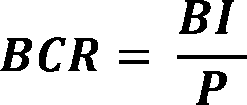
BCR Biometrics Collection Rate
BLS U.S. Bureau of Labor Statistics
CBP U.S. Customs and Border Protection
CFRP Cuban Family Reunification Parole
CHRI Criminal History Record Information
CJIS FBI Criminal Justice Information Services
( printed page 49063)
CNMI Commonwealth of the Northern Mariana Islands
CPI-U Consumer Price Index for All Urban Consumers
CPMS Customer Profile Management System
DACA Deferred Action for Childhood Arrivals
DHS Department of Homeland Security
DNA deoxyribonucleic acid
DoD U.S. Department of Defense
DOJ U.S. Department of Justice
DOS U.S. Department of State
EAD employment authorization document
ELIS Electronic Immigration System
EOIR Executive Office for Immigration Review
FBI Federal Bureau of Investigation
FWVP Filipino World War II Veterans Parole
FY Fiscal Year
GSA General Services Administration
HFRP Haitian Family Reunification Parole
HLA human leukocyte antigen
HSI Homeland Security Investigations
HSPD Homeland Security Presidential Directive
ICE U.S. Immigration and Customs Enforcement
IDENT Automated Biometric Identification System
IdHS Identity History Summary
IIRIRA Illegal Immigration Reform and Immigrant Responsibility Act of 1996
IMBRA International Marriage Broker Regulation Act
INS Immigration and Naturalization Service
IRIS Immigration Records and Identity Services Directorate
LPR lawful permanent resident
INA Immigration and Nationality Act
NASS National Appointment Scheduling System
NATO North Atlantic Treaty Organization
NEPA National Environmental Policy Act
NGI Next Generation Identification
NPD National Production Dataset
NPRM Notice of Proposed Rulemaking
NTA Notice to Appear (issued to initiate removal proceedings under INA sec. 240)
OIRA Office of Information and Regulatory Affairs
OMB Office of Management and Budget
OPQ Office of Performance and Quality
PRA Paperwork Reduction Act of 1995
RAIO Refugee, Asylum, and International Operations
RFA Regulatory Flexibility Act of 1980
RIA regulatory impact analysis
SBREFA Small Business Regulatory Enforcement Fairness Act of 1996
SEVP Student and Exchange Visitor Program
TPS Temporary Protected Status
UAC Unaccompanied Alien Children
UMRA Unfunded Mandates Reform Act of 1995
USCIS U.S. Citizenship and Immigration Services
VAWA Violence Against Women Act
I. Public Participation
DHS invites all interested parties to participate in this rulemaking by submitting written data, views, comments and arguments on all aspects of this proposed rule. DHS also invites comments that relate to the economic, environmental, or federalism effects that might result from this proposed rule. Comments must be submitted in English, or an English translation must be provided. Comments that will provide the most assistance to USCIS will reference a specific portion of the proposed rule, explain the reason for any recommended change, and include data, information, or authority that support such recommended change. Comments submitted in a manner other than the one listed above, including emails or letters sent to DHS or USCIS officials, will not be considered comments on the proposed rule and may not receive a response from DHS.
Instructions:
If you submit a comment, you must include the agency name (U.S. Citizenship and Immigration Services) and the DHS Docket No. USCIS-2025-0205 for this rulemaking. Regardless of the method used for submitting comments or material, all submissions will be posted, without change, to the Federal eRulemaking Portal at
https://www.regulations.gov,
and will include any personal information you provide. Therefore, submitting this information makes it public. You may wish to consider limiting the amount of personal information that you provide in any voluntary public comment submission you make to DHS. DHS may withhold information provided in comments from public viewing that it determines may impact the privacy of an individual or is offensive. For additional information, please read the Privacy and Security Notice at
https://www.regulations.gov.
Docket:
For access to the docket and to read background documents or comments received, go to
https://www.regulations.gov,
referencing DHS Docket No. USCIS-2025-0205. You may also sign up for email alerts on the online docket to be notified when comments are posted or a final rule is published.
II. Executive Summary
DHS proposes to amend its regulations concerning the use and submission of biometrics in the administration and enforcement of immigration and naturalization laws and the adjudication of any immigration application, petition, or benefit or any other related request or collection of information. This section summarizes the changes made by this proposed rule, which are described in detail in section IV of this preamble.
A. Purpose and Summary of the Regulatory Action
As detailed in section III.A of this preamble, DHS has broad statutory authority [1]
to collect or require submission of biometrics from: applicants, petitioners, and beneficiaries for immigration benefits; any individual filing or associated with a benefit request, other request, or collection of information; and from aliens upon their arrest for purposes of processing, care, custody, and initiation of removal proceedings.[2 3 4]
DHS currently collects, stores, and uses biometrics for various purposes, including but not limited to: conducting background checks to determine eligibility for a benefit request, other request, or collection of information; document production associated with an application, petition, or other request for certain immigration
( printed page 49064)
and naturalization benefits or other actions; and performing other functions related to administering and enforcing the immigration and naturalization laws, such as identity verification upon issuance of a Notice to Appear (NTA) for removal proceedings undersection 240 of the INA, 8 U.S.C. 1229a.
DHS is precluded in many cases from approving, granting, or providing immigration benefits to individuals with a record of certain criminal offenses or administrative violations, or who may pose risks to national security or public safety. Criminal histories are relevant because they are used to determine eligibility for immigration benefits and are part of the totality of the circumstances that USCIS considers when making a discretionary determination. Therefore, DHS must include national security considerations and criminal history background checks in its adjudications. Several statutes authorize DHS to conduct biometrics collections in relation to national security and public safety purposes, as well as for document production.[5]
Additionally, DHS is authorized to collect the biometrics of U.S. citizen and lawful permanent resident petitioners of family-based immigrant and nonimmigrant fiancé(e) petitions to determine if a petitioner has been convicted of certain crimes. Therefore, DHS requires a robust system for biometrics collection, storage, and use related to adjudicating immigration benefits and other requests and performing other functions necessary for administering and enforcing immigration and naturalization laws.
Current regulations also provide general authorities for the collection of biometrics in connection with administering immigration and naturalization benefits requests and in connection with administering and enforcing immigration laws. For example, any applicant, petitioner, sponsor, beneficiary, or individual filing a benefit request, other request, or collection of information request may be required to appear for biometrics collection.
See8 CFR 103.2(b)(9). DHS currently has authority to require an individual to submit biometric information to conduct background and security checks and perform other functions related to administering and enforcing immigration laws.
See8 CFR 103.16(a).
The immigration benefit request adjudication process requires DHS to verify the identity of an individual applying for or seeking to receive any benefit and requires that national security and criminal history background checks be conducted to determine if such an individual is statutorily eligible for the benefit. In general, adjudication of an immigration benefit request, other request, or collection of information includes a review of the individual's current immigration status, current and past immigration filings, and whether previous benefits were granted or denied. Immigration laws preclude DHS from granting many immigration and naturalization benefits to individuals with certain criminal or administrative violations, or with certain disqualifying characteristics, while also providing DHS discretion in granting an immigration benefit in many instances. DHS conducts checks to determine if an individual has a history that could render him or her inadmissible or removable, including a criminal record or association or involvement with human rights violations or terrorist activities or organizations. The current DHS biometric collection process for adjudication of immigration benefit requests or other requests or collections of information often begins with the collection of an individual's photograph, fingerprints, and signature at an authorized biometrics collection site. Collections outside the United States may be conducted on behalf of DHS by other federal agencies.
While DHS has the authority to collect biometrics from any applicant, petitioner, sponsor, beneficiary, requestor, or individual filing or associated with a benefit request, other request, or collection of information, or to perform other functions related to administering and enforcing the immigration and naturalization laws, submission of biometrics is currently only mandatory for certain benefit requests and enforcement actions. For all other benefit requests or other requests or collections of information and enforcement actions, DHS has discretion, in accordance with its statutory and regulatory authorities, to determine if the circumstances of the specific request or enforcement action warrant the collection of biometrics. If DHS determines that biometrics are needed in the individual case, DHS issues a notice to the individual with instructions for submitting biometrics and an explanation of the general purposes for which they may be used.
DHS has determined that it is necessary to expand its routine biometric collections to include individuals associated with immigration benefit requests or other requests or collection of information, and to perform other functions related to administering and enforcing the immigration and naturalization laws, such as verifying identity. Using biometrics for identity verification [6]
and management will assist DHS's efforts to combat trafficking, confirm the results of biographical criminal history checks, and deter fraud. Therefore, DHS proposes in this rule that any applicant, petitioner, sponsor, supporter, derivative, dependent, beneficiary, or individual filing or associated [7]
with a benefit request or other request or collection of information,[8]
including U.S. citizens, U.S. nationals and lawful permanent residents, and without regard to age, must submit biometrics unless DHS otherwise exempts the requirement. For the same reasons, the proposed rule proposes to authorize DHS to require biometrics for all aliens subject to section 240 removal proceedings, as well as aliens processed through other removal pathways including expedited removal under section 235 of the INA, 8 U.S.C. 1225, and aliens being processed for removal under section 238(b) of the INA, 8 U.S.C. 1228(b). This rule also proposes that DHS may collect biometrics from aliens subject to reinstatement of a prior removal order under section 241 of the INA, 8 U.S.C. 1231, and aliens subject to removal under the Visa Waiver Program, INA sec. 217, 8 U.S.C. 1187. Additionally, DHS proposes to remove the age restrictions for biometrics submission when issuing an NTA for section 240 removal proceedings or when processing aliens for removal
( printed page 49065)
through other pathways.
See
proposed 8 CFR 236.5.
The purpose of this rule is to establish a standard and provide notice that every individual filing or associated with a benefit request, other request, or collection of information is subject to the biometrics requirement, unless DHS exempts a category of requests or individuals, or a specific individual. This includes any alien apprehended, arrested or encountered by DHS in the course of performing its functions related to administering and enforcing the immigration and naturalization laws of the United States. As it relates to benefit requests, other requests and collections of information, notice of this requirement will be added in the form instructions for the relevant forms, as needed.
Under this proposed rule, if finalized, DHS will use biometrics for identity management in the immigration lifecycle,[9]
which will assist DHS in transitioning to a person-centric model to organize and manage its records, manage unique identities, and verify immigration records. Critically, it will also allow DHS to reduce reliance on biographic data for identity management. In general, biographic data is associated with an individual and is not intrinsically unique to that individual, at least as such biographic data relates to identification. For example, thousands of individuals may share the same name. Additionally, biographic data possesses inherent characteristics that limit its suitability for identity management, such that it can be changed over time. A person's name could have multiple spellings, a name can be legally changed, the digits in a date of birth could be transposed, and any identifier could relate to multiple individuals. Exclusive reliance on biographic data may result in errors, misidentification of individuals, and the potential that immigration benefits may be granted to ineligible or incorrect individuals or imposters.
In contrast to biographic data, using biometrics for identity verification and management in the immigration lifecycle will help ensure that an individual's immigration records pertain only to that specific individual. Biometrics-based identity management will also help DHS locate, maintain, and update the individual's immigration status, previously submitted identity documentation, as well as certain biographic data. DHS proposes to collect biometrics at any age to ensure the immigration records created for children can be related to their adult records later, and to help combat child trafficking, smuggling, and labor exploitation by facilitating identity verification, while also confirming the absence of criminal history or associations with terrorist organizations or gang membership.
In sum, the changes proposed in this rule will help DHS transition towards a biometric based system for identity verification and management. This will ensure that DHS can carry out its various responsibilities under the INA related to the administration and enforcement of the immigration and naturalization laws. It will also help ensure that DHS grants immigration-related benefits only to individuals who are statutorily eligible to receive them and will enable DHS to more effectively enforce the immigration laws against aliens who are potentially subject to removal.
DHS also plans to implement a program of continuous immigration vetting and require that aliens receive continued and subsequent evaluation to ensure they continue to present no risks to national security or public safety subsequent to their entry. This rule proposes that any individual alien who is present in the United States following an approved immigration benefit may be required to submit biometrics—without regard to any immigration filing—until they obtain or acquire U.S. citizenship. The rule further proposes that a U.S. citizen, U.S. national or lawful permanent resident may be required to submit biometrics if he or she filed a benefit request, other request, or collection of information in the past and it was either reopened or the previous approval is relevant to a benefit request, other request, or collection of information currently pending with DHS. The changes to the use and collection of biometrics and expanded scope of populations also are pertinent to CBP, ICE, and the Executive Office for Immigration Review (EOIR), a component of the U.S. Department of Justice (DOJ), given that immigration judges and the Board of Immigration Appeals (BIA) are prohibited from granting relief or protection from removal to an alien 14 years of age or older unless an ICE attorney reports that all required “identity, law enforcement, or security investigations or examinations” have been completed.
See
INA sec. 262, 8 U.S.C. 1302, and 8 CFR 1003.1(d)(6) and 1003.47(g) (related to fingerprinting biometrics specifically). ICE attorneys rely, in part, on USCIS' biometric collection to confirm and report this. Further, DHS has leeway in terms of which background and security checks are performed in this regard.
See “
Background and Security Investigations in Proceedings Before Immigration Judges and the Board of Immigration Appeals,” 70 FR 4743, 4744 (2005) (“There is no need for this rule to specify the exact types of background and security checks that DHS may conduct with respect to aliens in proceedings.”). As a result, this rule will help to ensure that ICE, immigration judges, and the BIA are timely and fully informed of the results of all identity, law enforcement, and security investigations prior to EOIR granting an alien relief or protection from removal.
DHS recognizes that it is removing the age restrictions associated with biometrics collection in DHS regulations, without DOJ making conforming changes and removing the age restrictions associated with biometrics collection in DOJ EOIR regulations. DHS and DOJ have disparate authorities and processes for collecting biometrics. Notwithstanding any conflict between DHS and DOJ authorities, DHS regulatory provisions control all DHS biometrics collections, since DHS can only collect biometrics under its own authorities, even if the benefit is pending with DOJ. DHS collects biometrics on behalf of DOJ as a courtesy to DOJ because of the existence of DHS/USCIS Application Support Centers. However, DHS is not authorized to operate or collect biometrics under DOJ authorities, and the rule does not seek to change that. Each Department is bound by their respective authorities and regulations. Noting that the expansion of the DHS regulations to encompass a broader scope does not constrain, supersede, or diminish the authority or application of the DOJ regulations in any respect. The agencies will continue to resolve any conflicts that result from disparate practices related to the collection and submission of biometrics through operational guidance and intra-governmental agreements when appropriate.
DHS anticipates that by removing age restrictions on the collection of biometrics this rule will enhance the ability of ICE and CBP to identify fraudulently claimed genetic relationships at the border and upon encounter.[10]
Under the current interpretation of the
Flores
Settlement Agreement, DHS is required to release
( printed page 49066)
or transfer to a licensed facility as expeditiously as possible any minor apprehended with a parent or legal guardian. This has led in the past to the practice of DHS releasing families together if their cases could not be fully resolved within approximately 20 days.[11]
This has encouraged the proliferation of fraudulent family unit schemes wherein unrelated adults and children claim genetic relationships in order to secure prompt release into the United States. Alien smuggling organizations are aware of this loophole and are taking full advantage of it, placing children into the hands of adult strangers, so they can pose as families and be released from immigration custody after crossing the border, creating another safety issue for these children.[12]
DHS's ability to collect biometrics, including DNA, regardless of a minor's age, will allow DHS to accurately prove or disprove claimed genetic relationships among apprehended aliens and ensure that unaccompanied alien children (UAC) are properly identified and cared for.[13]
Under the authority granted by the proposed rule, if finalized, individual DHS components may establish an age threshold as necessary for biometric collection specific to a particular component's operational needs.
Under this proposed rule, DHS may also require, request, or accept raw DNA (deoxyribonucleic acid) or DNA test results, which include a partial DNA profile,[14]
as evidence of genetic relationship, to determine eligibility for immigration and naturalization benefits or to perform any other functions necessary for administering and enforcing immigration and naturalization laws. Where evidence of a relationship is required, this rule proposes to grant DHS express authority to require, request, or accept raw DNA or DNA test results (which include a partial DNA profile) from relevant parties such as applicants, petitioners, derivatives, dependents, and beneficiaries, to prove or disprove the existence of a claimed, or unclaimed, genetic relationship or biological sex.[15]
DHS recognizes that there are qualifying family members, such as adopted children, who do not have a genetic relationship to the individual who makes an immigration benefit request on their behalf. To the extent the rule discusses using DNA evidence to establish claimed or unclaimed relationships in support of certain immigration benefit requests, it refers only to genetic relationships that can be demonstrated through DNA testing. Current regulations generally require documentary evidence such as marriage and birth certificates, and secondary evidence such as medical records, school records, religious documents, and affidavits to support claims based on familial relationships. DHS currently does not have regulatory provisions in place to require, request, or accept DNA testing results to prove or disprove the existence of claimed or unclaimed genetic relationships, but because documentary evidence may be unreliable or unavailable, in some situations, individuals are allowed to voluntarily submit DNA test results. Under this rule, DHS may expressly require, request, or accept raw DNA or DNA test results which include a partial DNA profile to prove or disprove the existence of a claimed, or unclaimed, genetic relationship.
Similarly, under this rule, DHS may expressly require, request, or accept raw DNA or DNA test results (which include a partial DNA profile) as evidence to determine eligibility for immigration and naturalization benefits or to perform any other functions necessary for administering and enforcing immigration and naturalization laws. For example, DHS may request DNA evidence to prove or disprove an individual's biological sex in instances where that determination will impact benefit eligibility. DHS currently does not have regulatory provisions in place to require, request, or accept DNA testing results for such purposes, but because documentary evidence may be unreliable or unavailable, in some situations, individuals may voluntarily submit DNA test results.
DHS proposes to collect, treat, and locate raw DNA (the physical sample taken from the applicable individual) that is taken as a biometric modality distinct from the other biometric modalities it is authorized to collect, at a DHS or DHS-authorized facility and further proposes to not handle, store or share any raw DNA for any reason beyond the original purpose of submission (
e.g.,
to prove or disprove the existence of a claimed or unclaimed genetic relationship or biological sex), unless DHS is required to share by law.[16]
DNA test results, which include a partial DNA profile, like other evidence, becomes part of the record, and DHS will store and share DNA test results for adjudication purposes, including to determine eligibility for immigration benefits or to perform any other functions necessary for administering and enforcing immigration and naturalization laws, to the extent permitted by law.[17]
In recent years, government agencies have grouped together identifying features and actions, such as fingerprints, photographs, and signatures under the broad term, biometrics. The terms, biometric “information,” “identifiers,” or “data,” are used to refer to all of these modalities, including additional features such as ocular image, palm print, voice print, and DNA. As a result, DHS has adopted the practice of referring to fingerprints, photographs, and signature collectively as “biometrics,” “biometric information,” or “biometric services.” With the exception of fingerprints, most laws on the subject do not specify individual biometric modalities such as ocular image, palm print, voice print, DNA, and/or any other biometric modalities that may be collected from an individual in the future. DHS is proposing to update the terminology in the applicable regulations to uniformly use the term “biometrics.” DHS seeks to utilize a single, inclusive term comprehensively throughout regulations and form instructions. DHS proposes to define the term “biometrics” to clarify and fully explain its authority to collect more than just “fingerprints” in connection with administering and enforcing the immigration and naturalization benefits or other services, and to expressly define “biometrics” to include a wider range of modalities than just fingerprints, photographs and signatures. DHS proposes to define the term “biometrics” to mean “measurable biological (anatomical, physiological or molecular structure) or behavioral characteristics of an individual,” and include a list of modalities of biometric collection.
See
proposed 8 CFR 1.2. DHS
( printed page 49067)
proposes the following biometrics as authorized biometric modalities that DHS may request, require, or accept from individuals in connection with services provided by DHS and to perform other functions related to administering and enforcing the immigration and naturalization laws:
Facial imagery (digital image, specifically for facial recognition and facial comparison);
Prints (including fingerprints and palm prints);
Signature (handwritten);
Ocular imagery (to include iris, retina and sclera);
Voice (voice print, vocal signature, and voice recognition); and/or
DNA (including partial DNA profile).
The proposed definition of biometrics would authorize the collection of specific biometric modalities and the use of biometrics for: identity enrollment, verification, and management in the immigration lifecycle; national security and criminal history background checks to support determinations of eligibility for immigration and naturalization benefits; the production of secure identity documents; to prove or disprove the existence of a claimed or unclaimed genetic relationship; establish biological sex (in circumstances when needed to determine benefit eligibility) and to perform other functions related to administering and enforcing the immigration and naturalization laws. To conform to the proposed definition, DHS proposes to remove individual references to “fingerprints,” “photographs,” and “signatures” in various provisions of its regulations and replace them with the term “biometrics.”
DHS has internal procedural safeguards to ensure technology used to collect, assess, and store the differing modalities is accurate, reliable, and valid.[18]
Further, as to any USCIS adjudication subject to 8 CFR 103.2(b)(16), if a decision will be adverse to an applicant, petitioner, or requestor, and is based on unclassified derogatory information the agency considered, including information obtained through biometrics, he or she shall be advised of that fact and offered an opportunity to rebut the information. DNA, while a biometric, would only be collected in limited circumstances, for example to prove or disprove existence of a claimed, or unclaimed, genetic relationship or biological sex, to determine eligibility for immigration and naturalization benefits, or perform any other function necessary for administering and enforcing immigration and naturalization laws.
DHS originally codified restrictions on the ages of individuals from whom biometrics could be collected based on the Department policies, practice, and on technological limitations. For biometrics use to expand to allow for identity management and verification through the entire immigration lifecycle, this rule would allow for biometric collection from any individual, without age limitation. Therefore, DHS proposes to remove all age limitations or restrictions on biometrics collection from current regulations in the context of both immigration benefit requests, other requests, or collection of information, entering or exiting the United States, NTA issuance, and to perform other functions related to administering and enforcing the immigration and naturalization laws.
DHS also proposes to consolidate sections of 8 CFR providing what USCIS can or will do with an immigration benefit request, other request, or collection of information, when required biometrics are not submitted and how biometrics appointments may be rescheduled. DHS is clarifying that it may reschedule a biometrics appointment in its discretion. In instances when an individual has informed DHS of an address change prior to the biometrics appointment, and the individual did not receive a notification of appointment to that new address, USCIS will reschedule the appointment.
DHS also proposes to incorporate a new standard that must be met if an individual seeks to reschedule a biometric services appointment. Under the proposed rule, an individual may reschedule their biometric services appointment one time prior to the date of their scheduled biometric services appointment for any reason. However, after the first reschedule, the individual must meet the standard of “extraordinary circumstances” to justify rescheduling a subsequent biometrics services appointment any additional times. DHS also proposes to apply the “extraordinary circumstances” standard if the individual fails to appear at any biometric services appointment that was not rescheduled.[19]
DHS believes in most cases the current “good cause” standard in 8 CFR 103.2(b)(9)(ii) does not create a high enough standard for rescheduling a biometrics appointment. The current “good cause” standard allows appointments to be frequently rescheduled and creates operational inefficiencies in the biometric submission process.
DHS further proposes to define instances that justify USCIS biometric reuse for an individual who may have a pending benefit request, other request, or collection of information that requires biometric submission and has previously submitted biometrics for another benefit request, other request, or collection of information. In those situations, USCIS must obtain a positive biometric-based identity verification before reusing an individual's previously submitted biometrics to process a benefit request, other request, or collection of information. Identity verification based solely upon a comparison of the individual's name or other non-unique biographic identification characteristics or data, or combinations thereof, does not constitute positive identity verification and will not be permitted to justify biometric reuse.
DHS is also proposing to remove or replace language that applies to paper filings with language that encourages electronic filing. References to position titles, form numbers, mailing addresses, copies, and office jurisdiction are proposed to be removed. In addition, DHS is proposing to remove internal USCIS processes from the regulatory text. DHS is also proposing to eliminate outdated requirements for submitting photographs for certain immigration benefit requests. The photograph submission and use requirements specified in the INA may be met by the collection and storage of digital images.
DHS is also proposing to require biometrics from U.S. citizens, U.S. nationals, or lawful permanent residents, including when they submit a family-based visa petition. This will assist in compliance with the Adam Walsh Child Protection and Safety Act of 2006 (AWA),[20]
which prohibits DHS from approving family-based immigrant visa petitions and nonimmigrant fiancé(e) visa petitions if the petitioner has been convicted of certain offenses. In addition, the International Marriage
( printed page 49068)
Broker Regulation Act (IMBRA) [21]
provides that petitioners for an alien fiancé(e) or alien spouse must submit criminal conviction information for certain crimes. The DHS proposal will allow DHS to review a Federal Bureau of Investigation (FBI) report of the petitioner's criminal history to comply with the AWA and IMBRA. The proposed requirement would extend to family-based petitions for a spouse, fiancé(e), parent, unmarried child under 21 years of age, unmarried son or daughter 21 years of age or over, married son or daughter of any age, sibling, and any derivative beneficiary of an immigrant or nonimmigrant visa based on a familial relationship.
Consistent with this, DHS proposes to require that Violence Against Women Act (VAWA) self-petitioners appear for biometric collection, and to remove the language advising self-petitioners who have resided in the United States for at least the 3-year period immediately preceding the filing of the self-petition to submit police clearance letters as evidence of good moral character, as well as the requirement that VAWA self-petitioners submit an affidavit as primary evidence of their good moral character. DHS will no longer need such police clearances or the self-petitioner's affidavit because it will be able to obtain the self-petitioner's criminal history using the submitted biometrics, reducing the burden on both DHS and many self-petitioners.
VAWA self-petitioners are currently required to demonstrate that they are persons of good moral character in order to be eligible for a VAWA self-petition. USCIS generally looks at the 3-year period immediately preceding the date the self-petition is filed, and may consider any conduct, behavior, acts, or convictions. Good moral character may be established by primary evidence, such as the self-petitioner's affidavit and local police clearances, or state-issued criminal background checks from each locality or state in the United States where the self-petitioner has been physically present or resided for 6 or more months during the 3 years before filing. While self-petitioners are encouraged to submit primary evidence, when possible, USCIS must consider any credible evidence relevant to the petition. DHS proposes to require biometrics from VAWA self-petitioners to obtain the self-petitioner's official FBI criminal history; support identity enrollment, verification, and management in the immigration lifecycle; and conduct national security and criminal history background checks. The proposed change will reduce the evidence required to establish good moral character for many self-petitioners. Law enforcement clearances or background checks will be required for self-petitioners who resided outside the United States or were physically present for 6 months or more, during the 3-year period immediately preceding the filing of the self-petition. DHS proposes to require the self-petitioner submit arrest reports which occurred during the 3 years prior to filing the self-petition, regardless of the petitioner residing or being physically present in the jurisdiction for 6 or more months. In addition, DHS proposes in certain cases to consider VAWA self-petitioners' conduct beyond the 3 years immediately before filing where earlier conduct is relevant to establishing the good moral character for a VAWA self-petitioner.
See
proposed 8 CFR 204.2(c)(2)(v), (e)(2)(v), and (j)(2)(v).
DHS further proposes to remove the automatic presumption of good moral character for VAWA self-petitioners under 14 years of age and require VAWA self-petitioners under 14 to submit biometrics like any other VAWA self-petitioner. Similarly, DHS proposes to eliminate the requirement that VAWA self-petitioners submit police clearance letters, unless they lived outside the United States during the requisite period. Adjudicators would assess good moral character based on the applicant's criminal history, national security background check, and any other credible and relevant evidence submitted. DHS also proposes to amend 8 CFR 245.23(g) to refer to the relevant “continuous period” rather than “continued presence,” and to provide that USCIS would be able to consider the applicant's conduct beyond the requisite period, where earlier conduct is relevant to the applicant's moral character and conduct during the requisite period does not reflect a reform of character.
DHS also proposes to remove the presumption of good moral character for T nonimmigrant adjustment of status applicants under 14 years of age. The rule proposes that such applicants submit biometrics that USCIS will use in the determination of good moral character and provides USCIS with the authority to require additional evidence of good moral character.
See
proposed 8 CFR 245.23(g). The proposed changes would remove the superfluous need for police clearance letters from T nonimmigrant adjustment applicants.
DHS proposes to continue its existing practice and collect biometrics and perform background checks on U.S. citizens, lawful permanent residents, and any other persons involved with an EB-5 regional center, new commercial enterprise or job-creating entity.
See
INA sec. 203(b)(5)(H)(iii), 8 U.S.C. 1152(b)(5)(H)(iii). USCIS proposes to also continue its existing practice to review the results of national security and criminal history background checks to decide whether such persons involved with such entities, and the entities themselves, are bona fide and eligible to participate in the regional center program.
Id.
DHS also proposes to remove 8 CFR 216.4(b)(1), “Authority to waive interview,” and 8 CFR 216.4(b)(2), “Location of interview” as they apply to a joint petition to remove the conditional basis of lawful permanent resident status filed by the alien and the alien's spouse. As any decision to waive the mandatory interview is purely discretionary, and 8 CFR 216.4(b)(1) simply reiterates this discretion, it serves no purpose, especially since determining whether the eligibility requirements for removal of conditions in 8 CFR 216.4(c) were established is central to the adjudication of the petition itself. Additionally, the limitation on who can conduct an interview and who has jurisdiction over an interview created by 8 CFR 216.4(b)(2) is unnecessary and creates operational restrictions that interfere with USCIS' ability to adjudicate the Form I-751, Petition to Remove Conditions on Residence. The decision to assign an interviewer and the location of an interview is a purely operational and procedural decision, and one that should be made upon the adjudicative priorities and operational resources available to USCIS.
DHS does not plan to immediately expand all of its programs to provide that all new biometrics modalities would be required of all individuals as of the effective date of a potential final rule. Only those revised forms that propose to add a particular biometric collection or DNA submission requirement in conjunction with this rule (as described in the Paperwork Reduction Act section of this preamble) will be immediately subject to new biometrics, modalities, or DNA requirements.[22]
DHS proposes that DHS component agencies may expand or contract their biometrics submission requirements described within this rule
( printed page 49069)
in the future by notice in the
Federal Register
, updated form instructions, or otherwise consistent with the Administrative Procedure Act (APA) and the PRA.
USCIS is authorized to collect biometric services fees and has generally incorporated the biometric services costs into most of the underlying immigration benefit request fees for which biometric services are applicable in its most recent rule addressing the USCIS fee schedule (89 FR 6194, Jan. 31, 2024 (Fee Rule)).
In 2020, DHS previously published a similar Notice of Proposed Rulemaking (NPRM) proposing to amend DHS regulations governing the use and collection of biometrics in the enforcement and administration of immigration laws (85 FR 56338, Sept. 11, 2020), however that NPRM was later withdrawn in May 2021 consistent with E.O. 14012 (86 FR 8277, Feb. 5, 2021), and the priorities of the administration at that time (86 FR 24750, May 10, 2021). On January 20, 2025, E.O. 14012 was rescinded by President Trump, and DHS intends to continue its previous efforts to enhance biometric submission, while also ensuring that all aliens seeking admission to the United States, or who are already in the United States, are vetted and screened (E.O. 14159, 90 FR 8443, Jan. 29, 2025; E.O. 14161, 90 FR 8451, Jan. 30, 2025).
B. Summary of Costs and Benefits
The proposed rule would enable DHS to conduct the administration and adjudication of immigration benefit requests with increased fidelity and is conducive to the evolution to a person-centric model for organizing and managing its records, enhanced and continuous vetting, and reduced dependence on paper documents, as is described more fully in the preamble. DHS estimates that about 1.12 million more biometrics submissions will be collected annually, and the resulting biometrics-submitting population will increase from a current baseline of 2.07 million to 3.19 million.
DHS estimates that the annual costs for individuals who will submit biometrics under the proposed rule will be $231.5 million. This includes costs to petitioners of family-based requests, costs to VAWA self-petitioners and T nonimmigrant petitioners submitting evidence to demonstrate good moral character, costs to potential persons involved with regional centers, and fee costs incurred by Temporary Protected Status (TPS) registrants and individuals in EOIR proceedings. DHS estimates costs to the government of $55,040 for fees that the FBI will collect for providing fingerprint-based Criminal History Record Information (CHRI) checks prior to issuing NTAs. Combining the biometrics portion, which includes the biometric services fees and fees charged by the FBI related to CHRI checks (noted above), plus $57.1 million in the DNA submission costs, the total monetized costs of this proposed rule will potentially be $288.7 million annually. To compare costs over a 10-year period of analysis Fiscal Year (FY) 2026 through FY 2035, DHS applies 3 percent and 7 percent discount rates to the total estimated costs of the proposed rule. DHS estimates the 10-year total costs of the proposed rule to be $2.5 billion discounted at 3 percent, and $2.0 billion discounted at 7 percent.
The proposed rule will benefit the public by reducing the evidentiary burden of VAWA self-petitioners and T nonimmigrant petitioners who will in most cases no longer have to gather evidence such as police clearance reports and affidavits to demonstrate good moral character. It will provide individuals requesting or associated with immigration and naturalization benefits a more reliable system for verifying their identity when submitting a benefit request. This will limit the potential for identity theft while also reducing the likelihood that DHS will be unable to verify an individual's identity and consequently deny the benefit. DHS is unable to quantify this benefit because it has no data on how often these events happen under existing regulations. Increasing the types of biometrics collected will allow for better identification of individuals because each modality increases the unique physical, biological or behavioral characteristics that USCIS can use to identify the individual.
Finally, the allowance of individuals to use DNA testing as evidence to demonstrate the existence of a claimed genetic relationship provides them the opportunity to demonstrate a genetic relationship using quicker, less intrusive, and more effective technology than the blood tests provided for in past regulations.
See8 CFR 204.2(d)(2)(vi). Similarly, the use of DNA test results as evidence to establish biological sex will also allow applicants to provide proof without the need to produce additional documentation such as birth records, or other information.
The proposed rule will benefit the U.S. Government by providing it with the necessary tools to tackle and limit identity fraud and improve USCIS identity management systems. The proposed rule will enable DHS to have more fidelity and efficiency in identity management in the immigration lifecycle and vetting of individuals seeking certain immigration and naturalization benefits. Expanding the population subject to biometrics submission provides DHS with the ability to better identify and limit fraud because biometrics comprise unique physical or behavioral characteristics that are difficult to falsify and are less likely to change over time the way biographical information does in the majority of cases. Biometrics will also help to reduce the administrative burden involved in identity verification and the performance of criminal history checks, by reducing the need for manual document review and name-based security checks. The proposed rule will also enhance the U.S. Government's capability to identify criminal activity and protect vulnerable groups by extending the submission of biometrics to populations under certain benefit requests. The removal of age restrictions and the collection of biometrics from all aliens under the age of 14 will assist DHS in its mission to combat human trafficking, child sex trafficking, forced labor exploitation, and alien smuggling.
III. Background and Purpose
A. Legal Authority and Guidance for DHS Collection and Use of Biometrics
As discussed in detail below in section IV of this preamble, DHS is proposing to amend its regulations governing its use and collection of biometrics by USCIS and other DHS components. In short, the key proposed changes include:
Requiring any individual filing or associated with an immigration-related benefit request or other request adjudicated by DHS, regardless of age, to appear for biometrics submission unless exempted.
Clarifying the purposes for which biometrics are collected, stored, and utilized and when they can be reused, including for enhanced and continuous vetting.
Expanding biometrics collection authority upon alien arrest or encounter.
Defining the term “biometrics” as the measurable biological (anatomical, physiological and molecular structure) or behavioral characteristics of an individual. Modalities meeting this definition of biometrics include but are not limited to DHS-approved: facial imagery (digital image, specifically for facial recognition and facial comparison), prints (including fingerprints and palm prints), signature (handwritten), ocular imagery (to include iris, retina, and sclera), voice (including voice print, vocal signature,
( printed page 49070)
and voice recognition), and DNA (partial DNA profile).
Specifying that DHS may require, request, or accept the submission of raw DNA or DNA test results to prove or disprove the existence of a claimed or unclaimed genetic relationship or as evidence of biological sex when a relationship or biological sex is relevant to an individual's statutory eligibility for an immigration-related benefit.
Using biometrics for VAWA self-petitioners and T nonimmigrant status applicants for assessing good moral character; and
Establishing an “extraordinary circumstances” standard to govern an individual's request to reschedule a biometric services appointment in certain circumstances, or when an individual fails to appear for appointment.
DHS has broad statutory authority under the INA to make these proposed changes. First, INA sec. 103(a)(1), 8 U.S.C. 1103(a)(1), provides DHS with expansive authority to administer and enforce the nation's immigration and naturalization laws, and INA sec. 103(a)(3), 8 U.S.C. 1103(a)(3), provides the Secretary of Homeland Security (“the Secretary”) with the authority to issue forms, regulations, instructions, other papers, and perform such other acts the Secretary deems necessary to carry out DHS's functions under the INA.
See also6 U.S.C. 202 (authorities of the Secretary). Under the INA, DHS, through USCIS, has authority to adjudicate most immigration-related benefits,[23]
and DHS components including ICE and CBP have authority related to the apprehension, inspection and admission, detention, and removal of aliens encountered in the interior of the United States or at or between the U.S. ports of entry.[24]
Accordingly, the Secretary has broad authority to issue regulations necessary to carry out DHS's functions related to immigration benefits and enforcement of the immigration laws. Establishing and verifying an individual's identity using biometrics falls within this authority.
Section 287(b) of the INA, 8 U.S.C. 1357(b), also provides DHS with authority for this proposed rule. That statute provides DHS with broad discretion and authority to “take and consider evidence concerning the privilege of any person to enter, reenter, pass through, or reside in the United States, or concerning any matter which is material or relevant to the enforcement of this chapter and the administration of the
Service.” 25Id.
DHS's authority to adjudicate benefits under the INA necessarily includes an obligation to ensure that benefits are granted only to those individuals who are statutorily eligible and warrant a favorable exercise of discretion. If finalized, this proposed rule would enhance DHS's ability to take and use evidence, through biometrics, to better ensure that USCIS grants benefits only to eligible individuals and identifies criminal or other threat actors attempting to obtain immigration benefits.
As explained below in section IV of the preamble, this proposed rule, if finalized, would allow DHS to collect and use biometrics more robustly to help verify and manage an individual's identity to deter fraud and provide DHS with increased fidelity in benefits adjudications. It would also enhance DHS's ability to complete background, criminal history, and other immigration history checks necessary to adjudicate certain benefits consistent with law. The expanded use of DNA would enable DHS to confirm or non-confirm eligibility for certain family-based immigration-benefit requests where relevant. This rule, if finalized, would also support DHS's efforts to use biometrics more robustly through enhanced and continuous vetting to ensure that aliens who have been granted benefits under the INA should continue to have the “privilege” of “residing” in the United States and are not a risk to national security or the public safety. It would also support DHS's ability to collect and use or reuse biometrics to establish identity throughout the immigration lifecycle which will increase the effective and efficient “administration” of DHS functions related to benefits adjudications. Therefore, this proposed rule fits within the authority granted under INA sec. 287(b), 8 U.S.C. 1357(b).
For similar reasons, INA sec. 235(d)(3), 8 U.S.C. 1225(d)(3), provides additional authority for this proposed rule. This statute provides that the Secretary and immigration officers shall:
have power . . . to take and consider evidence of or from any person touching the privilege of any alien or person he believes or suspects to be an alien to enter, reenter, transit through, or reside in the United States or concerning any matter which is material and relevant to the enforcement of this chapter and the administration of the Service.
This statute, in addition to the other statutes discussed above, provides authority to collect biometrics from all inadmissible and deportable aliens, regardless of age, that are subject to section 240 removal proceedings or other proceedings under INA secs. 235 (expedited removal) and 238(b) (aggravated felon removal), 8 U.S.C. 1225, 1238(b), in addition to certain other removable aliens, as proposed in this rule.
Accordingly, DHS is proposing to issue this regulation pursuant to the Secretary's broad authority under INA sec. 103(a), 8 U.S.C. 1103(a), to issue regulations necessary to carry out DHS's various functions and authorities under the INA, including under INA secs. 287(b) and 235(d)(3), 8 U.S.C. 1357(b) and 1225(d)(3), and the various statutes in the INA related to benefits administered and adjudicated by DHS.
1. Background Checks
In addition to DHS's broad authorities discussed above, various provisions of the INA governing immigration benefits impose an obligation on USCIS to confirm that an alien has not been convicted of a disqualifying offense and does not pose a threat to national security or public safety. Indeed, DHS is precluded in many cases from approving, granting, or providing immigration benefits to aliens with a record of certain criminal offenses or administrative violations.[26]
Whether granting a benefit is discretionary or not, criminal histories are relevant because they are used to determine eligibility for benefits and are part of the totality of the circumstances that USCIS considers when making a discretionary determination. Additionally, DHS is mandated to protect the American public from “aliens who intend to commit terrorist attacks, threaten our national security, espouse hateful ideology, or otherwise exploit the immigration laws for malevolent purposes” and to “vet and screen to the maximum degree possible all aliens
( printed page 49071)
who intend to be admitted, enter, or are already inside the United States.”
SeeE.O. 14161 secs. 1(a) and 2(a), 90 FR 8451, (Jan. 20, 2025). Therefore, DHS adjudications must include national security considerations and criminal history background checks.
For example, one statute precludes the filing of a family-based immigrant petition by someone who has been convicted of a “specified offense against a minor.”
See
INA sec. 204(a)(1)(A)(viii), 8 U.S.C. 1154(a)(1)(A)(viii). The criminal and security-related grounds of inadmissibility found in INA secs. 212(a)(2) through (3), 8 U.S.C. 1182(a)(2) through (3), apply to many benefits, such as adjustment to lawful permanent resident status, refugee status, and TPS. The INA provides that refugee applicants must be admissible as immigrants and the criminal, security, and terrorism-related grounds of inadmissibility apply to refugee applicants.
See
INA sec. 207(c)(1), 8 U.S.C. 1157(c)(1); INA sec. 212, 8 U.S.C. 1182. The INA provides that asylum may be granted on a discretionary basis.
See
INA sec. 208(a)(1)(A), 8 U.S.C. 1158(a)(1)(A). It provides that asylum applicants are subject to mandatory criminal and security bars.
See
INA sec. 208(b)(2)(A), 8 U.S.C. 1158(b)(2)(A). Sections of the INA apply the criminal, security, and terrorism-related bars to TPS applicants, including the mandatory asylum bars above.
See
INA secs. 244(c)(2)(A)(iii) through (B), 8 U.S.C. 1254a(c)(2)(A)(iii) through (B). Various INA sections require that adjustment of status applicants be admissible in order to qualify.
See, e.g.,
INA secs. 245(a)(2) and 209(b)(5), 8 U.S.C. 1255(a)(2) and 8 U.S.C. 1159(b)(5). The INA also provides a good moral character requirement for any applicant to be naturalized.
See
INA sec. 316(a)(3), 8 U.S.C. 1427(a)(3).
As discussed further below in section III.B. of this preamble, USCIS has long required aliens and certain other individuals associated with benefits applications to submit certain biometrics. USCIS needs these biometrics to run background checks to verify that an individual is not statutorily ineligible for the requested benefit and to protect national security and public safety. This proposed rule, if finalized, would enhance DHS's ability to establish an individual's identity through required biometrics collections and expanded modalities, which in turn will increase USCIS' ability to run background checks more quickly and with greater accuracy as discussed below.
Other statutes explicitly authorize DHS to conduct biometric services in relation to national security and public safety purposes. For example, Congress directed in the Uniting and Strengthening America by Providing Appropriate Tools Required to Intercept and Obstruct Terrorism Act of 2001 (USA PATRIOT Act), Public Law 107-56, 115 Stat. 354 (2001), reauthorized by Public Law 114-23, 129 Stat. 268 (2015) (codified at note to 8 U.S.C. 1365a, that “biometric technology” should be utilized in the development of the integrated entry-exit system originally mandated by the Illegal Immigration Reform and Immigrant Responsibility Act of 1996 (IIRIRA), Public Law 104-208, 110 Stat. 3009 (1996) (codified at 8 U.S.C. 1365a). The Intelligence Reform and Terrorism Prevention Act of 2004, Public Law 108-458, 118 Stat. 3638 (2004) (codified as amended at 8 U.S.C. 1365b), required the completion of a biometric data system to facilitate efficient immigration benefits processing and to protect the United States by preventing the entry of terrorists. These statutes reflect that Congress has recognized the importance and value of biometrics to the administration and enforcement of immigration laws, including to make the process of identifying aliens more efficient and accurate, and to protect national security. Although the primary focus of this proposed rule is biometrics collection and use for immigration-related benefits and processes, the rule is consistent with these overall goals. For USCIS, any limitations on the collection or use of biometrics in this proposed rule does not impact DHS law enforcement authorities or other national security or intelligence gathering activities.
Background checks are also required by EOIR regulation for aliens who apply for relief and protection in removal proceedings. Specifically, immigration judges and the BIA are prohibited from granting relief and protection to an alien unless an ICE attorney reports that all required “identity, law enforcement, or security investigations or examinations” have been completed.
See8 CFR 1003.1(d)(6) and 1003.47(g). Indeed, as pertaining to asylum applications, there is a statutory basis for such background checks as well.
See
INA sec. 208(d)(5)(A)(i), 8 U.S.C. 1158(d)(5)(A)(i);
See also8 CFR 1208.10. To the extent that any controversy may arise interpreting DHS and DOJ regulations regarding the removal of age restrictions for biometrics collection, DHS is not authorized to operate or collect biometrics under DOJ authorities, and this rule does not seek to change that. Each department is bound by their respective regulations. The agencies will continue to resolve any conflicts that result from disparate practices related to the collection and submission of biometrics through operational guidance and intra-governmental agreements when appropriate.
2. Secure Document Production
Still other statutes require the collection of biometrics for secure document production. For example, photographs are required by statute to create certificates of naturalization.
See
INA sec. 333(a), 8 U.S.C. 1444(a). Additionally, an alien granted asylum will be granted an employment authorization document (EAD) that shall at a minimum contain the fingerprint and photograph of such alien.
See8 U.S.C. 1738. Relatedly, the Enhanced Border Security and Visa Entry Reform Act of 2002 (Border Security Act), Public Law 107-173, 116 Stat. 543 (2002), requires that DHS issue aliens machine-readable, tamper-resistant visas and other travel and entry documents using biometric identifiers.
See8 U.S.C. 1732(b)(1).
3. Biometric Collection From U.S. Citizens, U.S. Nationals, and Lawful Permanent Residents
DHS is also authorized to collect the biometrics of U.S. citizens, U.S. nationals and lawful permanent resident petitioners of family-based immigrant petitions, and U.S. citizen petitioners of nonimmigrant fiancé(e) petitions, to determine if a petitioner has been convicted of certain crimes pursuant to the AWA, Public Law 109-248, 120 Stat. 587 (2006) (codified as amended in scattered sections of 18 and 42 U.S.C.)
See
INA secs. 402(a) and (b) (applicable immigration provisions), and IMBRA, Public Law 109-162, 119 Stat. 2960 (2006) (codified as amended at 8 U.S.C. 1375a). The AWA:
Prohibits U.S. citizens, U.S. nationals and lawful permanent residents who have been convicted of any “specified offense against a minor” from filing a family-based immigrant visa petition on behalf of any beneficiary, unless the Secretary determines, in his or her sole and unreviewable discretion, that the petitioner poses “no risk” to the beneficiary. INA secs. 204(a)(1)(A)(viii)(I) and (B)(i)(II);8 U.S.C. 1154(a)(1)(A)(viii)(I) and (B)(i)(II).
Renders ineligible to file “K” nonimmigrant fiancé(e) petitions those U.S. citizens convicted of such offenses, unless the Secretary determines, in his or her sole and unreviewable discretion,
( printed page 49072)
that the petitioner poses “no risk” to the fiancé(e) beneficiary. INA sec. 101(a)(15)(K), 8 U.S.C. 1101(a)(15)(K).
Independent of the AWA, USCIS is also required to disclose information regarding certain violent arrests and convictions for some U.S. citizen petitioners who file K-visas for fiancés or spouses in accordance with IMBRA, 8 U.S.C. 1375a.
4. Required Biometric Collections
Several sections of the INA also require DHS to collect certain biometrics from certain aliens for specific purposes. For example:
INA sec. 203(b)(5)(H)(iii),8 U.S.C. 1153(b)(5)(H)(iii), requires the Secretary to collect “fingerprints or other biometrics” from certain purposes related to the EB-5 visa category, specifically the regional center program.
INA secs. 333 and 335,8 U.S.C. 1444 and 1446, require the submission of photographs and a personal investigation before an application for naturalization, citizenship or other similar requests may be approved.
INA sec. 262(a) of the INA,8 U.S.C. 1302(a), generally requires aliens aged 14 and older, in the United States, to register with DHS and be fingerprinted, and INA sec. 264, 8 U.S.C. 1302, generally directs DHS to prepare registration and fingerprinting forms for such aliens.
INA sec. 287(f),8 U.S.C. 1357(f), requires DHS to fingerprint and photograph each alien 14 years of age or older when DHS issues an NTA.
These statutes require DHS to, at minimum, collect certain biometrics for certain populations, but they do not preclude or limit DHS from collecting additional modalities or expanding the populations subject to biometric requirements. Under this proposed rule, DHS will continue to collect the required biometrics from the individuals and aliens covered by these statutes. However, this rule proposes to expand the biometric modalities that DHS may collect from these individuals and others covered by the rule. Moreover, upon publication of this rule, DHS may require the submission of biometrics without regard to age from aliens against whom proceedings based on inadmissibility under section 212(a) of the INA or deportability under section 237 of the Act are initiated, including proceedings under sections 235, 238(b), and 240 of the INA.
See
proposed 8 CFR 236.5.
As discussed above in this section of the preamble, DHS has broad authority and discretion, including under INA secs. 103(a), 287(b), and 235(d)(3), 8 U.S.C. 1103(a), 1357(b) and 1225(d)(3), to collect biometrics from any person to establish and verify an individual's identity, eligibility for a benefit, and for other purposes material and relevant to DHS's benefits adjudication and enforcement functions under the INA. This authority also includes taking measures like the biometrics requirements proposed in this rule that are necessary for the effective and efficient administration of these functions. Therefore, Congress's decision to require certain biometric modalities from certain populations, does not limit DHS's broad authority to collect additional biometrics or expand the populations subject to biometrics submission requirements.
5. Administrative Guidance
This proposed rule is also consistent with non-statutory guidance on effective mechanisms for foreign national vetting, screening, and identification. DHS was directed by executive branch guidance to take actions that require a robust system for biometrics collection, storage, and use related to providing adjudication and naturalization services of immigration benefits. For example, with respect to secure documents, Homeland Security Presidential Directive (HSPD) 11, “
Comprehensive Terrorist-Related Screening Procedures,
” (Aug. 27, 2004) directs DHS to “incorporate security features . . . that resist circumvention to the greatest extent possible.” DHS is directed to consider the “. . . information individuals must present, including, as appropriate, the type of biometric identifier[s] or other form of identification or identifying information to be presented, at particular screening opportunities.” DHS was also directed to expand the use of biometrics, consistent with applicable law, to identify and screen for individuals who may pose a threat to national security by HSPD 24, “Biometrics for Identification and Screening to Enhance National Security,” (June 5, 2008). Further, National Security Presidential Memorandum—9 established the DHS-led National Vetting Center to improve vetting “to identify potential threats to national security, border security, homeland security, and public safety”, and included expanding biometric integration, sharing, and use to that end.[27]
More recently, DHS is directed, by E.O. 14161, to “identify all resources that may be used to ensure that all aliens seeking admission to the United States, or who are already in the United States, are vetted and screened to the maximum degree possible” with the intended goal to “protect its citizens from aliens who intend to commit terrorist attacks, threaten our national security, espouse hateful ideology, or otherwise exploit the immigration laws for malevolent purposes.”
B. The Use of Biometrics by DHS
Current regulations provide both general authorities for the collection of biometrics in connection with administering immigration and naturalization benefits as well as requirements specific to certain benefit types.[28]
Moreover, USCIS has authority under its current regulations to require an applicant, petitioner, sponsor, beneficiary, or individual filing a benefit request, other request, or collection of information to appear for biometrics.
See8 CFR 103.2(b)(9). In addition, DHS has the authority to require biometrics and payment of any associated biometric services fee from any applicant, petitioner, sponsor, beneficiary, or requestor, or individual filing or seeking a benefit request, other request, or collection of information on a case-by-case basis, through form instructions, or through a
Federal Register
notice.
Id.
The former INS first used fingerprints for immigration processing solely for the purpose of performing criminal history background checks related to applications for which eligibility required good moral character or non-existence of a record of certain criminal offenses.
See, e.g.,63 FR 12979 (Mar. 17, 1998) (prohibiting the former INS from accepting fingerprints for the purpose of conducting criminal background checks unless collected by certain U.S. Government entities). The beneficiary or applicant would submit fingerprints which were then checked against FBI databases to determine if they matched any criminal activity on file. The fingerprints were not retained by the INS and delays in processing would often result in individuals needing to submit fingerprints multiple times for the same application. Photographs were not historically collected by INS as a biometric identifier. For those immigration benefit requests that required a photograph to produce a resulting identity document, the regulations required submission of a
( printed page 49073)
passport-style photograph.
See, e.g.,8 CFR 204.2, 8 CFR 2210.5, and 8 CFR 264.2.
Today, DHS handles biometrics differently. Biometrics are still used in criminal history background checks to determine eligibility for immigration benefits and for public safety, fraud, and national security vetting. In addition, biometrics may be stored by DHS and used to verify an individual's identity in subsequent encounters with DHS. These encounters could vary from travel to and from the United States where an individual may encounter CBP officers, to arrest and detention by law enforcement components such as ICE, or to initiate removal proceedings.
DHS also uses collected biometric information for document production related to immigration benefits and status, including but not limited to: Travel Documents (Form I-512L), Permanent Resident Cards (Form I-551), Employment Authorization Documents (Form I-766), Certificates of Citizenship (Form N-560), Certificates of Naturalization (Form N-550), Replacement Certificates of Citizenship (Form N-561), and Replacement Certificates of Naturalization (Form N-570).[29]
Most of these secure documents are created using the digital photograph (and signature) that is taken by DHS at an ASC, and not the paper photograph mailed with the benefit request.[30]
As part of the benefit adjudications process, DHS must first verify the identity of an individual applying for or seeking any benefit. Biometric identity verification helps protect against fraud and imposters in subsequent encounters or filings for immigration benefits. Second, DHS must determine if the individual is eligible to receive the requested benefit. That determination may focus on the criminal, national security, and immigration history of the individual, depending on the eligibility requirements for the particular benefit type, and is accomplished through national security and criminal history background checks.
The immigration history review includes a review of the individual's current immigration status, current and past immigration filings, and whether previous immigration benefits were granted or denied. DHS conducts national security and criminal history background checks on individuals applying for an immigration benefit because U.S. immigration laws preclude DHS from granting many immigration and naturalization benefits to individuals with certain criminal or administrative violations, or with certain disqualifying characteristics (
e.g.,
certain communicable diseases, association with terrorist organizations, or lack of good moral character), while also providing DHS discretion in granting an immigration benefit in many instances.[31]
DHS conducts multiple types of national security and criminal history background checks, including but not limited to: (1) biographic information-based checks such as the FBI Name Check, and (2) biometrics checks against the DHS Automated Biometric Identification System (IDENT), the FBI Next Generation Identification (NGI) system, and the Department of Defense (DoD) Automated Biometric Identification System (ABIS).[32 33 34]
DHS also uses biometrics to determine if an individual has ties in their background, to activities such as an association with human rights violations, involvement in terrorist activities, or affiliation with terrorist organizations rendering them inadmissible. To that end, DHS may vet an individual's biometrics against data sets of foreign partners in accordance with international arrangements.[35]
The DHS biometrics process for benefits adjudication purposes generally begins with the collection of an individual's biometrics at an authorized biometrics collection site, including DHS offices, ASCs, military installations, U.S. consular offices abroad, and, in some cases, Federal, State, and local law enforcement installations. Biometrics may also be collected digitally by an agency-approved technology. Domestically, DHS established a robust program to allow individuals to provide biometrics at ASC facilities, where individuals are generally scheduled to appear at a location close to their address of record. DHS has also established mobile biometrics collection capabilities domestically for certain limited scenarios (
e.g.,
those who are homebound or reside in certain remote locations). For collections outside the United States, biometrics may be handled differently. When biometrics are required by DHS and DHS does not have a presence in that country, the Department of State (DOS) will continue to collect biometrics on behalf of DHS. In cases where DOS will issue a boarding foil, immigrant visa, or non-immigrant visa associated with a DHS form, DOS will continue to collect biometrics under its existing authority.
Currently, USCIS biometrics consist of a photograph, fingerprints, and signature to conduct identity, eligibility, national security, and criminal history background checks, and in certain
( printed page 49074)
situations, voluntary DNA testing to verify a claimed genetic relationship. For certain family-based benefit requests, where other evidence proves inconclusive, USCIS accepts, but does not require, DNA test results obtained from approved laboratories (along with other necessary identifiers, such as a name and date of birth), as evidence to assist in establishing the existence of genetic relationships. In these limited cases where DNA test results are voluntarily submitted, USCIS requires that DNA test results establish a sufficient probability of the existence of the alleged relationship to be accepted as evidence of that relationship.
DHS is bound by the confidentiality provisions of section 1367 of title 8 of the U.S. Code, “Penalties for disclosure of information” (originally enacted as section 384 of IIRIRA). Unless certain statutory exceptions apply (
e.g.,
the alien was convicted of a crime or crimes listed at INA 237(a)(2), etc.), all DHS officers and employees are generally prohibited from permitting use by or disclosure to anyone other than a sworn officer or employee of DHS, DOS, or DOJ of any information relating to a beneficiary of a pending or approved request for certain victim-based immigration benefits, such as an abused spouse waiver of the joint filing requirement to remove conditions on residence, a VAWA self-petition by an abused spouse or child of a U.S. citizen or lawful permanent resident, VAWA cancellation of removal or suspension of deportation, or application or petition for T or U nonimmigrant status, including the fact that they have requested such a benefit. Importantly, the protection against disclosure extends to all records or other information, including those that do not specifically identify the individual as an applicant, petitioner, or beneficiary of the T visa, U visa, or VAWA protections, and only ends when the benefit request is denied and all opportunities for appeal of the denial have been exhausted. Therefore, the biometric collection contemplated here would also be protected from disclosure during that period in accordance with the requirements and exceptions found in 8 U.S.C. 1367. Thus, DHS has not separately codified the section 1367 protections in this proposed rule.
IV. Discussion of Proposed Changes
A. Use of Biometrics for Identity Management and Enhanced Vetting
DHS requires the submission of biometrics for certain immigration benefit requests [36]
and for law enforcement purposes, including functions incident to apprehending, arresting, processing, and care and custody of aliens.[37]
In addition, DHS has the authority to require biometrics and a biometric services fee from any applicant, petitioner, sponsor, beneficiary, or requestor, or individual filing a request on a case-by-case basis via individual notice. Notice of this requirement may also be made through law, regulation, form instructions or as provided in a
Federal Register
notice.
See8 CFR 103.2(b)(9), 103.7(b)(1)(i)(C), and 103.17. Under this construct, although DHS has the authority to collect biometrics from any applicant, petitioner, sponsor, beneficiary, or requestor, or individual filing a request, biometrics are only mandatory for certain benefit requests. For all others, DHS must decide if the benefit requested, or circumstances of the request, justifies collection of biometrics and, if so, notify an individual that their biometrics are required along with when and where they will be collected.
The primary purpose of this proposed rule is to flip the current construct from one where biometrics may be collected based on past practices, individual notice, regulations, or the form instructions for a particular benefit, to a system under which biometrics are required for any immigration benefit request, other request, or collection of information unless DHS determines that biometrics are unnecessary for a specific population or benefit.
To this end, DHS is proposing to revise 8 CFR 103.16 to require that any applicant, petitioner, sponsor, beneficiary, or individual filing or associated with a benefit request, other request, or collection of information, to include U.S. citizens, U.S. nationals, and lawful permanent residents, and without regard to age, must submit biometrics, unless DHS otherwise exempts the requirement.
See
proposed 8 CFR 103.16(a)(1).[38]
This proposed rule would also give DHS discretion to require any individual associated with such requests or collections of information to submit or update biometrics while the request is pending with DHS for adjudication.
See
proposed 8 CFR 103.16(c)(1). DHS also proposes to establish standards related to scheduling, rescheduling, and failure to appear at biometrics appointments to better ensure that biometrics collections do not slow down USCIS' adjudication of benefits requests, other requests, and collections of information as discussed below in section IV.E of this preamble.[39]
As discussed further below, these proposed changes, if finalized, would increase DHS's ability to collect and use biometrics to establish and verify, with greater certainty, the identity of individuals requesting or associated with immigration-related benefits. DHS believes that the proposed changes, if finalized, would enhance DHS's ability to ensure that benefits are granted only to those who are eligible and to identify fraud, national security, and public safety risks during the benefits adjudication process, while also improving services to those who submit such benefit requests. USCIS' use of biometrics for criminal history background checks and document production is outdated.
As outlined above, DHS has broad statutory authority to administer and enforce immigration laws and adjudicate immigration-related benefits. This authority necessarily includes the use of tools, such as biometrics, needed to better verify identity and statutory eligibility, and to determine whether or not the individual poses a risk to national security or public safety in those instances where these factors may impact eligibility for an immigration benefit. Moreover, this proposed rule is intended to increase the collection and use of biometric information beyond benefits eligibility determinations. To this end, DHS proposes to expand the population of aliens who are subject to biometrics collection upon apprehension, arrest, or encounter by: (1) clarifying that DHS may require biometrics for all aliens subject to section 240 removal proceedings, as well as aliens processed through other removal pathways including expedited removal under section 235 of the INA, 8 U.S.C. 1225, and aliens subject to reinstatement of a prior removal order under section 241 of the INA, 8 U.S.C. 1231 and (2) removing age restrictions on biometrics as discussed further below in section IV.C.3 of this preamble.
See
proposed 8 CFR 236.5.
Biometrics collection upon apprehension, arrest, or encounter by
( printed page 49075)
DHS will allow DHS in subsequent encounters or filings to accurately identify the individuals encountered, and can prove or disprove any claimed, or unclaimed, genetic relationship. This in turn will allow DHS to make better informed decisions as to the processing, transporting, and managing the custody of aliens subject to DHS's law enforcement authorities. Having more reliable data about the identities of aliens in DHS custody will increase the safety of DHS facilities in which aliens are held in custody for both DHS law enforcement officers and aliens. It would also eliminate an incentive that currently exists for unscrupulous aliens to jeopardize the health and safety of minors to whom they are unrelated, transporting the minors on a dangerous journey across the United States border, and claiming to be the parents of unrelated minors in order to claim to be a “family unit” and thus obtain a relatively quick release from DHS custody.
This rule also supports DHS's efforts to implement a program of continuous immigration vetting. Under this proposed rule, any alien who is present in the United States following an approved immigration benefit request, other request, or collection of information may be required to submit biometrics or undergo biometric-based screening and vetting unless and until they are granted U.S. citizenship.
See
proposed 8 CFR 103.16(a)(3), (c)(2). To further implement continuous vetting, the rule proposes to clarify that DHS may store biometrics (other than raw DNA) submitted by an individual in connection with an immigration-related benefits request or other collection of information and use or reuse biometrics to conduct background checks to verify continued eligibility for immigration and naturalization-related benefits and for administering and enforcing the immigration laws.
See
proposed 8 CFR 103.16(d)(1).
In sum, these proposed changes and others discussed throughout this preamble, are intended to enhance DHS's ability to collect and use biometrics throughout the immigration lifecycle,
i.e.,
the period between an alien's first benefit request, other request, or collection of information submission, encounter, or apprehension, through naturalization or removal.
However, DHS does not propose to impose an absolute biometrics collection requirement in all instances for all forms filed with the USCIS.[40]
There may be circumstances where biometric collection would be unnecessary or duplicative. A particular application or petition (
e.g.,
an inadmissibility waiver request) may not require its own complete biometric collection when it is filed in conjunction with another benefit request, other request, or collection of information that already carries a biometrics collection requirement, and/or DHS determines it may reuse previously collected biometrics after a biometric-based verification. Under appropriate circumstances, DHS proposes to retain discretion to exempt certain forms from the complete biometric collection requirement because it would result in waste or redundancy to both the agency and the public. For example, when an alien files Form I-485, Application to Register Permanent Residence or Adjust Status, biometrics are collected from all applicants. However, if the same applicant also files Form I-601, Application for Waiver of Grounds of Inadmissibility, due to an inadmissibility concern, that form is associated with the Form I-485. In most cases, there is no need to independently require complete biometrics collection in conjunction with Form I-601 because DHS is already collecting biometrics in association with Form I-485. Form I-601 would never be filed without an associated form carrying a biometrics collection requirement (
i.e.,
an immigrant visa application, adjustment of status application, certain non-immigrant visa applications, etc.). In instances such as this, DHS will simply reuse and associate the biometrics collected on the Form I-485 to the Form I-601. If the Form I-601 was not concurrently filed with the Form I-485, USCIS would first obtain a positive biometrics-based identity verification and a biographic data match to the previously submitted Form I-485 before associating different biometrics to the Form I-601. Identity verification based solely upon a comparison of the individual's name or other non-unique biographic identification characteristics or data, or combinations thereof, would never constitute positive identity verification for purposes of USCIS biometric reuse.
Further, DHS recognizes that there is no value in imposing a biometric collection for forms that are only filed in conjunction with other forms that already require biometrics collection. Consequently, the DHS forms that are being revised and posted in accordance with the PRA for public comments do not include an absolute requirement for biometrics collection. Instead, the revised form instructions put the individual on notice that (1) every applicant, petitioner, sponsor, supporter, derivative, dependent, and beneficiary of an immigration benefit request, other request, or collection of information submitted to DHS is required to provide biometrics unless DHS otherwise exempts the requirement, and (2) that the individual will be notified of the time and place for the appointment. For most forms for which DHS proposes to mandate biometrics as proposed under this rule, DHS has incorporated any costs and fees associated with a biometric services appointment within the filing fee for the immigration benefit being sought.[41]
See the PRA section of this rule for information on how to comment on the proposed form instructions for implementing the changes proposed in this rule.
1. Identity Management
DHS is proposing to use biometrics for identity management, during the entire course of the immigration lifecycle for several reasons. This will facilitate DHS's transition to a person-centric model for organizing and managing its records.[42]
DHS plans to begin using biometrics to establish and manage unique identities as it organizes and verifies immigration records in a highly reliable, on-going, and continuous manner. Currently, USCIS relies on declared biographic data for identity management in the immigration lifecycle. Once an identity has been enrolled in IDENT [43]
and established within DHS, future activities and encounters may be added to the original enrollment and will be confirmed through identity verification at various points in the immigration lifecycle. Biometric-based identity verification may be done outside of the United States (by DHS or DOS) or within the United States (at ASCs, USCIS offices, or as prescribed by DHS in accordance with law). Biometric-based identity verification also allows the reuse of enrolled identity data (both biometric and biographic) that has already been
( printed page 49076)
vetted. Such reuse reduces the amount of erroneous or conflicting data that can be entered into systems and reduces the cost and complexity of repetitive collection and verification. After an identity has been biometrically verified, reusable fingerprints allow for more immediate and recurrent background checks, and reusable photographs allow for quick production of documents with high consistency and integrity.
In this proposed rule, DHS recognizes that biometric reuse is acceptable only when there is a biometric-based identity verification.
44See
proposed 8 CFR 103.16(a)(4). DHS has a duty to the public to ensure that immigration benefits are granted only to those who are eligible for them, to ensure that no benefit is provided to the wrong individual, and to verify that individuals entering the country are who they say they are.
See generally
INA sec. 103, 8 U.S.C. 1103 (charging DHS with the administration and enforcement of the INA). Further, DHS's responsibility is reinforced by E.O. 14161, which directs the Secretary of Homeland Security to “determine the information needed from any country to adjudicate any visa, admission, or other benefit under the INA for one of its nationals, and to ascertain whether the individual seeking the benefit is who the individual claims to be and that the individual is not a security or public-safety threat.”
A biometrically-based, person-centric records model ensures that an individual's records are complete and pertain only to that individual. Under this model, DHS would be able to easily locate, maintain, and update the correct individual's information such as: results from national security and criminal history background checks, current address (physical and mailing), immigration status, or to associate previously submitted identity documentation, such as birth certificates and marriage licenses, in future adjudications thereby reducing duplicative biographic or other evidentiary collections.
Biometrics are unique to each individual and provide USCIS with tools for identity management, which is critical to better ensuring benefits are granted only to those who are eligible, while improving the services provided to those who submit immigration benefit requests. With regard to age, DHS proposes to reserve the authority to collect biometrics at any age to ensure the immigration records created for children can more assuredly be related to their subsequent adult records despite changes to their physical appearance and biographic information. USCIS notes that with respect to these biometrics, as with any other agency decision subject to 8 CFR 103.2(b)(16), if a decision will be adverse to an applicant, petitioner, or requestor, and is based on unclassified derogatory information the agency considered, he or she shall be advised of that fact and offered an opportunity to rebut the information.
Another key driver for eliminating the age restrictions for biometric collection is the number of UAC and accompanied alien children (AAC) that have been intercepted at the border in recent years. The DHS proposal to remove age restrictions will help combat human trafficking, specifically human trafficking of children, including the trafficking and exploitation of children forced to accompany adults traveling to the United States with the goal of avoiding detention and exploiting immigration laws.
Beginning in May 2019, ICE Homeland Security Investigations (HSI) and CBP conducted a pilot program where, with consent from aliens presenting themselves as family units, officers used Rapid DNA [45]
testing technologies as a precise and focused investigative tool to identify suspected fraudulent families and vulnerable children who may be potentially exploited. Between June 2019 and September 2021, ICE HSI and CBP completed 3,516 Rapid DNA tests in instances where a parent-child relationship was suspect. Of those tested, 300 instances resulted in a negative finding, counter to the claimed parent-child relationship and indicating possible fraud (8.5 percent). The pilot program was concluded in May 2021 due to decreased testing attributable to Coronavirus Disease 2019 pandemic-related travel restrictions, among other considerations.[46]
Collecting biometrics on children that DHS encounters would assist in enabling definitive identification of them and may show that they have been reported missing. Generally, DHS plans to use the biometric information collected from children for identity management in the immigration lifecycle only, but will retain the authority for other uses in its discretion, such as background checks and for law enforcement purposes. DHS components have different statutory authorities and mission spaces; while ICE or CBP may elect to submit UAC or AAC collected biometrics to the FBI for criminal history background checks, USCIS would not routinely do so. Rather, for USCIS the biometrics collected from the majority of these children would be stored in IDENT [47]
to help DHS with future encounters. USCIS is authorized to share relevant information with law enforcement or other DHS components, including “biometrics” for identity verification and, consequently, it may share DNA test results, which include a partial DNA profile, with other agencies as it does other record information pursuant to existing law.
DHS will have the express authority to send UAC or AAC biometrics to the FBI for criminal history background checks, but depending on the DHS component encountering the subject may only send biometrics to the FBI if DHS has some articulable derogatory information on the subject and needs to confirm criminal history or an association with other illegal or terrorist organizations in the interests of public safety and national security. Biometrics collected to identify or refute claimed or unclaimed genetic relationships at the border would be maintained in law enforcement systems for future identity verification, subject to the restrictions found in proposed 8 CFR 103.16.
2. Enhanced and Continuous Vetting
Individuals with certain types of criminal convictions, or those who present a threat to national security or public safety are not eligible for certain benefits. Benefit eligibility determinations in these cases often focus on the criminal, national security, and immigration history of the individual. The immigration history review considers the individual's current immigration status, past immigration filings, and whether previous benefits were granted or
( printed page 49077)
denied. DHS conducts national security and criminal history background checks on individuals applying for or seeking an immigration benefit because U.S. immigration laws preclude DHS from granting many immigration and naturalization benefits to individuals with certain criminal or administrative violations, or with certain disqualifying characteristics (
e.g.,
lack of good moral character, certain communicable diseases, or association with terrorist organizations), while also providing DHS discretion in granting an immigration benefit in many instances.
See, e.g.,
INA sec. 208(b)(2)(A), 8 U.S.C. 1158(b)(2)(A) (mandatory bars to asylum); INA sec. 245(a)(2), 8 U.S.C. 1255(a)(2) (admissibility requirements for adjustment of status applicants and agency discretion); and INA sec. 316(a)(3), 8 U.S.C. 1427(a)(3) (good moral character requirement for naturalization).
This proposed rule would enhance DHS's ability to collect and use biometrics throughout the immigration lifecycle, from first benefit request, encounter, or apprehension to naturalization or removal. In the enforcement context, biometric collection when an individual is first encountered can establish an identity that can be relied upon in future encounters and interactions with the Federal government, help officers identify individuals in subsequent encounters, detect fraudulent identities, and confirm relationships between adults and children. Establishing and being able to match and confirm identities through biometric collection helps in the identification of scenarios and encounters involving child smuggling, trafficking, and exploitation. It can also help identify when an adult who has been previously encountered is posing as a child. Collection of biometrics during removal proceedings is primarily to verify that the individual is the correct individual being removed.
As part of the adjudication process for immigration benefits, DHS requires robust processes and procedures to administer the collection and use of biometrics from foreign nationals who enter the United States to ensure, as directed by the President, “that admitted aliens and aliens otherwise already present in the United States do not bear hostile attitudes toward its citizens, culture, government, institutions, or founding principles, and do not advocate for, aid, or support designated foreign terrorists and other threats to our national security.”
SeeE.O. 14161 sec. 1, 90 FR 8451 (Jan. 30, 2025). To accomplish this the President has directed the Secretary of Homeland Security to “vet and screen to the maximum degree possible all aliens who intend to be admitted, enter, or are already inside the United States, particularly those aliens coming from regions or nations with identified security risks.”
Id.
at sec. 2. The President also directed the Secretary to “take all appropriate action to use any available technologies and procedures to determine the validity of any claimed familial relationship between aliens encountered or apprehended by the Department of Homeland Security”
SeeE.O. 14165 sec. 9, 90 FR 8467, 8468 (Jan. 20, 2025).
The changes proposed in this rule would assist DHS in developing appropriate means for ensuring the proper collection of all information necessary for a rigorous evaluation of any grounds of inadmissibility or grounds for the denial of an immigration benefit request, other request, or collection of information. Notably, expanding biometrics collection will provide DHS with more comprehensive biometric-based information, including criminal and immigration history information that may be missed if biometrics submission is only required from a limited population and in a less expansive way than proposed by this rule. For example, enhanced biometric submission may reveal a history of crimes involving moral turpitude, activities related to terrorism, fraud or misrepresentation, or derogatory immigration history such as illegal entries and immigration violations.[48]
There are documented instances where biographical information was provided to USCIS, and relied upon in an adjudication, and subsequent biometric-based screening and vetting revealed additional derogatory information.[49]
The rule proposes to broaden the population required to submit biometrics, expands biometric modalities and enhances subject identification and the detection of possible threats to national security and public safety. Collectively, information obtained via biometric submission per this proposed rule will improve national security and public safety while ensuring that only eligible individuals are granted immigration benefits and are permitted to maintain a previously granted benefit.
DHS plans to implement a program of continuous immigration vetting during the entirety of the immigration lifecycle. Under continuous vetting, DHS may require aliens to be subject to continued and subsequent evaluation of eligibility for their immigration benefits to ensure they continue to present no risk of causing harm subsequent to their entry and are maintaining and complying with any terms of admission or conditions required of their nonimmigrant or immigrant status. This rule proposes that any individual alien who is present in the United States following an approved immigration benefit request, other request, or collection of information may be required to submit biometrics or undergo biometric-based screening and vetting unless and until they are granted U.S. citizenship.[50]
DHS also proposes, at its discretion and in conformance with the requirements articulated in this NPRM, to reuse previously submitted biometrics in certain circumstances to perform continuous vetting if DHS is able to obtain a positive biometrics based identity verification based on the individual's stored biometrics.
See
proposed 103.16(a)(4), (d)(1). DHS does not anticipate the implementation of continuous vetting to have an adverse effect on DHS's ability to timely adjudicate its pending benefit requests, or other requests or collections of information as the individuals subject to continuous vetting will have previously submitted biometrics that USCIS may reuse at its discretion after a biometric based identity verification.[51]
The rule further proposes that a U.S. citizen, U.S. national, or lawful permanent resident may be required to submit biometrics if he or she filed an immigration-related application, petition, or request in the past, and it was either reopened or the previous approval is relevant to the benefit request, other request, or collection of information pending with USCIS.
See
proposed 8 CFR 103.16(c)(2). For example, if an alien lost an approval notice from a previously approved visa petition, he or she would have to file a Form I-824,
Application for Action on an Approved Application or Petition.
Biometrics
( printed page 49078)
would be necessary to better verify the identity of the individual filing the Form I-824. In another example, if a United States citizen petitioner had a previously approved visa petition for a spouse and DHS discovered the potential existence of a “specified offense against a minor” it could result in a revocation of the approved visa petition—even where the conviction occurred prior to the visa petition approval or the enactment of the Adam Walsh Act.[52]
For any such case, DHS would begin by requesting biometrics for the United States citizen petitioner in order to confirm the existence of any potentially disqualifying criminal history information.
DHS welcomes public comment on the increased use of biometrics beyond criminal history background checks, to include identity management in the immigration lifecycle and enhanced vetting or other purposes, as well as any relevant data, information, or proposals.
B. Verify Identity, Familial Relationships, and Preclude Imposters
U.S. citizens, U.S. nationals, and lawful permanent residents petitioning for a family member, or individuals seeking to include a family member as a dependent or derivative (accompanying or follow-to-join) in an application for an immigration benefit, must demonstrate the existence of claimed genetic relationship or legal relationship in the case of gestational parentage. Current regulations generally require documentary evidence such as marriage and birth certificates as primary evidence of such a claimed relationship.[54]
In the absence of primary evidence, acceptable secondary evidence includes medical records, school records, religious documents, and affidavits.
See, e.g.,8 CFR 204.2(d)(2). However, documentary evidence may be unreliable or unavailable, and individuals need additional means to establish claimed genetic relationships, in cases where a genetic relationship is claimed, to avoid denial of a benefit request, other request, or collection of information. USCIS currently accepts DNA test results from laboratories accredited by the AABB (formerly the American Association of Blood Banks) as proof of the existence of a claimed genetic relationship where other evidence is unavailable.[55]
DHS proposes to revise its regulations to provide that DNA genetic testing can be required, requested, or accepted as evidence, either primary or secondary, to prove or disprove the existence of a claimed or unclaimed genetic relationship where necessary.
[56] See
proposed 8 CFR 103.16(d)(2). DNA is the only biometric that can verify a genetic relationship. Current regulations allow USCIS to require Blood Group Antigen or Human Leukocyte Antigen (HLA) tests to prove parentage only after other forms of evidence were inconclusive.
See8 CFR 204.2(d)(2)(vi). But those tests are no longer widely available and are not as reliable as a DNA test because, while blood-typing can be used as proof that an individual is not a child's biological parent, it cannot be used to
confirm
the individual
is
the child's parent.[57]
According to the AABB, DNA testing provides the most reliable scientific test available to resolve a genetic relationship and replaced older serological testing such as blood typing and serological HLA typing.[58]
Blood tests are also more invasive than DNA tests, as DNA collection generally does not require blood to be drawn from any individuals tested, and the most common method is a noninvasive buccal (mouth) swab.
DHS proposes to define the term “DNA” in regulation as “deoxyribonucleic acid, which carries the genetic instructions used in the growth, development, functioning, and reproduction of all known living organisms.”
See
proposed 8 CFR 1.2. When DHS uses the term “DNA” in this rule it is a reference to the raw genetic material, typically saliva, collected via buccal swab from an individual in order to facilitate DNA testing to prove or disprove genetic relationships or biological sex.[59]
DHS will only require, request, or accept DNA testing to prove or disprove a claimed, or unclaimed genetic relationship or to confirm biological sex. DHS will only store or share raw DNA or biological samples to facilitate DNA testing (by using a DHS or DHS-authorized facility, an on-site automated machine, or transmitting to the AABB-accredited laboratory conducting the testing), unless DHS is required to share by law.
See
proposed 8 CFR 103.16(d)(2).
For DHS, there are two different means of testing the raw DNA to prove or disprove the existence of a claimed or unclaimed genetic relationship. After DNA samples are collected, an individual's raw DNA material will be tested at a DHS facility or DHS authorized facility (locally by an automated machine (
i.e.,
Rapid DNA) [60]
or mailed to a traditional AABB-accredited laboratory for testing). This testing allows for the comparison of partial DNA profiles to determine the statistical probability that the individuals tested have or do not have a genetic relationship. In either case, a partial DNA profile would be produced as a result of the test. When DHS uses the term “partial DNA profile” it is a reference to a visual or printed partial representation of a small portion of an individual's particular DNA characteristics.[61]
An individual's partial DNA profile is a biometric identifier as unique as their fingerprints. Significantly, when an individual's DNA is tested in order to prove or disprove the existence of a claimed or unclaimed genetic relationship, the test
( printed page 49079)
does not reveal medical or hereditary conditions.[62]
The particular genetic markers profiled for relationship testing are markers specifically used to illustrate the existence of a genetic relationship. More specifically, the partial DNA profile created for relationship testing is a very small portion of an individual's full DNA characteristics. At present, DHS relationship tests profile between 16 and 24 genetic markers out of the nearly 2 million genetic markers typically contained in human DNA. In contrast with raw DNA or biological samples, which will not be shared or stored under any circumstances unless required to share by law, DHS may store or share DNA test results, which include a partial DNA profile, with other law enforcement agencies to the extent permitted by and necessary to enforce and administer the immigration and naturalization laws.
See
proposed 8 CFR 103.16(d)(2). For example, if a claimed genetic relationship is fraudulent and USCIS denies a petition, the DNA test results would be retained in the alien's A-file, the same as a rap sheet or a birth certificate; and if that alien is placed in removal proceedings EOIR would need to review the basis for the denial and any finding of fraud.
The testing entity conducts the DNA test, either automatically by machine or in a traditional laboratory environment and generates a DNA test result. The term “DNA test result” is a reference to the ultimate scientific conclusion made by DHS or DHS authorized AABB-accredited testing entity as to the claimed or unclaimed genetic relationship or determination of biological sex.[63]
The DNA test result is represented by a probability or percentage of the likelihood of the existence of the genetic relationship as a result of comparing at least two partial DNA profiles. DHS has established by policy what minimum threshold probability for the relationship that it would accept in proving or disproving the existence of a genetic relationship, depending on the particular relationship in question (
i.e.,
parent, full-sibling, half-sibling, etc.).[64]
DNA test results which include a partial DNA profile, where they indicate a sufficient probability of the existence of the relationship tested, are now accepted as evidence to establish parent and sibling genetic relationships.
See Matter of Ruzku,
26 I&N Dec. 731 (BIA 2016).
This rule further proposes to grant DHS express authority to require, request, or accept raw DNA or DNA test results, which include a partial DNA profile, from relevant parties, such as applicants, petitioners, derivatives, dependents, and beneficiaries, to determine eligibility for immigration and naturalization benefits, or to perform any other functions necessary for administering and enforcing immigration and naturalization laws.
See
proposed 8 CFR 103.16(a)(1) and (d)(2)(i)(A), (B). It is in DHS' and the public's interests to protect the integrity of the immigration system and ensure that any individual who receives an immigration benefit is eligible for that benefit. The use of DNA as evidence to support eligibility, where applicable, may assist in the adjudication of certain benefit requests, other requests or collection of information where documentary evidence may be unreliable or unavailable. For example, DHS currently does not have regulatory provisions in place to require DNA testing results to prove or disprove an individual's biological sex as it pertains to eligibility for a non-immigrant visa under INA sec. 101(a)(15)(P)(i)(a), 8 U.S.C. 1101(a)(15)(P)(i)(a), for certain athletes coming to the United States to compete in a sporting event and when documentary evidence may be unreliable or unavailable.[65]
In some situations, individuals are allowed to voluntarily submit DNA test results. Under this proposed rule, DHS may expressly require, request, or accept raw DNA or DNA test (to include a partial DNA profile) to prove or disprove an individual's biological sex in instances where that determination will impact benefit eligibility.
See
proposed 8 CFR 103.16(d)(2)(i) and (ii). DHS proposes to collect, treat and locate raw DNA (the physical sample taken from the applicable individual), at a DHS or DHS-authorized facility. DHS will not handle or share any raw DNA for any reason beyond the original purpose of submission (
e.g.,
to prove or disprove an individual's biological sex), unless DHS is required to share by law. DNA test results, which include a partial DNA profile, become part of the record, and DHS will store and share DNA test results, for adjudication purposes, including to determine eligibility for immigration and naturalization benefits or to perform any other functions necessary for administering and enforcing immigration and naturalization laws, to the extent permitted by law.
Consistent with current practice, the DNA test results, which include a partial DNA profile, obtained by DHS and showing the ultimate probability of relationship or biological sex, would be retained in the individual's Alien file (A-file) and made part of the record. Under this proposed rule, if finalized, DHS may use and store DNA test results as necessary to administer and enforce the immigration and naturalization laws, and share said DNA results with other law enforcement agencies to the extent permitted by law.
See
proposed 8 CFR 103.16(d)(2)(iii).
Currently, DHS allows individuals in certain situations to voluntarily submit DNA test results from AABB-accredited laboratories [66]
where other documentary evidence is inconclusive or unavailable.[67]
This rule proposes to clarify and codify that DHS may require, request, or accept raw DNA or DNA test results, which include a partial DNA profile, from relevant parties, such as applicants, petitioners, derivatives, dependents, and beneficiaries, to an immigration-related benefit request, other request, or collection of information as evidence of a claimed, or unclaimed genetic relationship or biological sex. It also proposes to clarify that DHS may consider DNA test results in adjudicating certain immigration benefits as a means of proving or disproving a claimed, or unclaimed genetic relationship, biological sex or to establish eligibility for the requested benefit. And the rule proposes to clarify DHS's authority to collect raw DNA from relevant parties, such as applicants, petitioners, derivatives, dependents, and beneficiaries, and
( printed page 49080)
either perform a DNA test at a DHS or DHS-authorized facility or send the raw DNA to a traditional AABB-accredited lab. DHS requests comments on all aspects of this proposal, including the collection, use, and retention of DNA evidence.
2. Special Treatment of DNA Evidence
While DNA is fundamentally a biometric identifier, DHS recognizes the increased sensitivity surrounding the use of genetic information. DHS believes the other biometric modalities that will be collected are sufficient for most of the goals of this rule.
See
proposed 8 CFR 1.2 (definition of biometrics); proposed 8 CFR 103.16(a) (biometric collection). Therefore, DHS proposes to treat raw DNA as a biometric modality distinct from the other biometric modalities it is authorized to collect.
See
proposed 8 CFR 1.2 (definition of DNA); proposed 8 CFR 103.16(d)(2). For purposes of DNA collected under this rule, DHS proposes that it will not handle or share any raw DNA for any reason beyond the original purpose of submission (
i.e.,
to prove or disprove the existence of a claimed or unclaimed genetic relationship or biological sex), unless DHS is required to share by law. DHS would only store, use, and share DNA test results, which include a partial DNA profile derived from the raw DNA,[68]
as provided by the testing entity or as produced by DHS, for adjudication purposes and would retain the results to perform any other functions necessary for administering and enforcing immigration and naturalization laws, to the extent permitted by law. DHS would also only use the raw DNA and DNA test results, which include a partial DNA profile, for the original purpose of submission (
i.e.,
to prove or disprove the existence of a claimed or unclaimed genetic relationship or an individual's biological sex) or as authorized by the immigration and naturalization laws. DHS components are authorized to share relevant information with law enforcement or other DHS components and, consequently, it may share DNA test results, which include a partial DNA profile, with other agencies when there are national security, public safety, fraud, or other investigative needs, but always pursuant to existing law.
See
proposed 8 CFR 103.16(d). DHS especially welcomes comments on these proposed provisions.
3. Identity Management
DHS must ensure that immigration benefits are not fraudulently obtained and are granted to the rightful person, and that individuals entering the country are who they say they are. As part of the benefit adjudications process, USCIS must verify the identity of an individual applying for or seeking any benefit to protect against fraud and imposters. In all circumstances, DHS must identify persons using aliases after prior immigration encounters and assist in efforts to prevent human smuggling and trafficking. Currently DHS relies mainly on paper-based documentary evidence when evaluating or verifying identity in administering its programs. Unfortunately, there is no guaranteed way to prevent the manufacturing, counterfeiting, alteration, sale, and use of fraudulent identity documents or other fraudulent documents to circumvent immigration laws or for identity theft. On the other hand, biometric identifiers are not transferable and may provide confirmation or non-confirmation of an individual's claimed identity. Therefore, DHS believes that the best approach to address the vulnerabilities in the immigration process, preclude imposters, and deter fraud would be to rely more on biometrics for identity management in the immigration lifecycle.
C. Flexibility in Biometrics Requirements
1. Definition of Biometrics
In recent years, government agencies have grouped together identifying features and actions, such as fingerprints, photographs, and signatures under the broad term, biometrics.[69]
The terms biometric “information,” “identifiers,” or “data” are used to refer to all of these features, including additional features such as ocular image (iris, retina and sclera), palm print, DNA, and voice print.[70]
For example, authorities such as 18 U.S.C. 1028(d)(7)(B) and 17 CFR 162.30(b)(8) refer to identifying information, including “unique biometric data, such as fingerprint, voice print or iris image, or other unique physical representation.” The term “biometrics” is also used in other laws and regulations.
See, e.g.,18 U.S.C. 1028(d)(7)(B), 17 CFR 162.30(b)(8)(ii), 21 CFR 11.3(b)(3), and 27 CFR 73.3. As a result, DHS has adopted the practice of referring to fingerprints and photographs collectively as “biometrics,” “biometric information,” or “biometric services.”
For example, the instructions for Form I-90, Application to Replace Permanent Resident Card, refer to a “biometric services appointment,” while the Form I-589, Application for Asylum and for Withholding of Removal, refers to “biometrics, including fingerprints and photographs.” Many forms also include a signature as a type of biometric identifier.
See
instructions for Form I-485 which references providing “biometrics” which is described as “fingerprints, photograph, and/or signature.” Most laws on the subject do not specify individual biometric modalities such as ocular image (iris, retina and sclera), palm print, voice print, DNA, and/or any other biometric modalities that may be collected from an individual in the future.
See, e.g.,8 U.S.C. 1732(b)(1) (requiring the issuance of travel documents that use biometric identifiers recognized by international standards organizations). By proposing to update the terminology in the regulations to uniformly use the term “biometrics” DHS seeks to utilize a single, inclusive term comprehensively throughout regulations and form instructions.
DHS proposes to define the term “biometrics” to clarify and expand its regulatory authority to collect more than just fingerprints while administering and enforcing immigration and naturalization benefits or other services or perform any other function necessary for administering and enforcing immigration and naturalization laws. To do this, DHS proposes to expressly define “biometrics” to mean “the measurable biological (anatomical, physiological and molecular structure) or behavioral characteristics of an individual.”
See
proposed definition of
Biometrics
in 8 CFR 1.2. Further, DHS proposes the following biometrics as authorized biometric modalities that may be requested or required from individuals in connection with the administration and enforcement of immigration and naturalization laws:
Facial imagery (digital image, specifically for facial recognition and facial comparison);
Prints (including fingerprints and palm prints);
Signature (handwritten);
Ocular imagery (to include iris, retina, and sclera);
The term “biometric modality” is used to describe a type or class of a biometric. The collection of a biometric implies its use in a system used to identify an individual; hence the use of the term “modality.” “Modality” is often interchanged, or used in conjunction, with the term “biometric” because the collection of a biometric implies automation. For example, an individual's face is a biometric, but DHS intends to collect a digital image of an individual's face, making a facial digital image the modality. Similarly, ocular imagery is a biometric, but DHS intends to collect an image of an individual's iris, retina or sclera, making the iris, retina or sclera image the “modality.” An individual's voice is a “biometric,” but DHS intends to collect an audible recording of an individual's voice, making a voice print the “modality.” Finally, an individual's raw DNA is a “biometric,” but upon testing, the partial DNA profile becomes the “modality” and the DNA test result is the memorialization or evidence to prove or disprove the existence of a claimed, or unclaimed, genetic relationship or an individual's biological sex, to determine eligibility for immigration and naturalization benefits, or perform any other function necessary for administering and enforcing immigration and naturalization laws. DHS will collect a photograph (facial image), fingerprint, palm print, audible recording, DNA, etc., for use in facial recognition, fingerprint and palm print recognition, ocular image recognition, voice recognition, DNA testing, etc.
The proposed definition of biometrics would codify and authorize the collection of specific biometric modalities and the use of biometrics for: identity enrollment, verification, and management in the immigration lifecycle; national security and criminal history background checks; determinations of eligibility for immigration and naturalization benefits; and the production of secure identity documents.
See
proposed 8 CFR 1.2. DNA, while a biometric, would be collected by USCIS in limited circumstances to prove or disprove the existence of a claimed, or unclaimed, genetic relationship, or biological sex and to determine eligibility for immigration and naturalization benefits or to perform any other functions necessary for administering and enforcing immigration and naturalization laws. Such examples include instances to verify a genetic relationship between a claimed biological parent and biological child or to prove or disprove an individual's biological sex in instances where that determination will impact benefit eligibility. Additionally, DNA evidence could be used to identify fraud in instances where DHS establishes the likelihood of a genetic relationship that invalidates eligibility for the benefit sought, such as the discovery of a parent-child or sibling relationship affiliated with a fraudulent claim of a marital relationship.
See
proposed 8 CFR 1.2 and 8 CFR 103.16(d)(2).
2. Additional Modalities
In addition to the current use of fingerprints [71]
and photographs [72]
(facial images) as biometric modalities, DHS proposes to begin requesting biometric collection (now and through emerging technologies) with the following additional biometric modalities: ocular (iris, retina, and sclera), palm print, voice, and DNA.
[73] See
proposed Definition of
Biometrics
in 8 CFR 1.2. The technology for collecting and using biometrics has undergone constant and rapid change.[74]
DHS needs to keep up with technological developments that will be used by the FBI and agencies with which we will be sharing and comparing biometrics and adjust collection and retention practices for both convenience and security, and to ensure the maximum level of service for all stakeholders. USCIS also has internal procedural safeguards to ensure technology used to collect, assess, and store the differing modalities is accurate, reliable, and valid. Additionally, as with any other USCIS petition or application, if a decision will be adverse to an applicant or petitioner and is based on unclassified derogatory information the agency considered, he or she shall be advised of that fact and offered an opportunity to rebut the information per current 8 CFR 103.2(b)(16). Therefore, DHS proposes that, as of the effective date of this rule, if finalized, it may begin collecting new biometrics modalities as follows.
a. Ocular Image
DHS proposes to collect and use ocular images as a biometric modality. The term ocular image refers to the eye and the structures within the eye to include the iris, retina and sclera. Ocular structure as a biometric modality is a valuable identifier especially for individuals whose fingerprints are unclassifiable or unattainable through loss of fingers, hand amputation, normal wear in the ridges and patterns over time (
e.g.,
due to age, types of employment, etc.), or deliberate eradication/distortion of fingerprint ridges to avoid identification and detection. Ocular scanning biometric technology measures the unique characteristics and patterns within the iris,[75]
retina and sclera to verify and authenticate identity. Biometric ocular recognition is fast, accurate, and offers a form of identification verification that requires no physical contact to collect. DHS may collect ocular images as part of the biometric enrollment process to enroll and verify identity against IDENT, as well as to assist in the adjudication process by verifying against previous immigration encounters.
b. Palm Print
DHS proposes to add palm prints as a biometrics modality in this rule. This proposal is consistent with what the FBI has announced as part of its NGI initiative for the development of the requirements for and deployment of an integrated National Palm Print Service.[76]
Law enforcement agencies indicate that at least 30 percent of the prints lifted from crime scenes—from knife hilts, gun grips, steering wheels, and window panes—are of palms, not fingers. For this reason, capturing and scanning latent palm prints is becoming an area of increasing interest among the law enforcement community. The National Palm Print Service [77]
is being
( printed page 49082)
developed to improve law enforcement's ability to exchange a more complete set of biometric information, make additional identifications, and improve the overall accuracy of identification through criminal history records. Collecting palm prints would permit DHS to align our background checks capability with the total available records at the FBI's CJIS Division, keep current with the changing records of law enforcement, and make sure immigration benefit background checks are as accurate and complete as possible. Therefore, DHS proposes to reserve the authority to incorporate palm prints into its biometrics collection.
c. Facial Image
DHS proposes to expand the use of facial photographs to reduce the burden of visiting an ASC for individuals previously biometrically enrolled by USCIS. For example, 1:1 facial biometric verification can be used in determining whether an applicant is who he or she is claiming to be and allows the reuse of previously collected fingerprints. Facial recognition can also be used to verify an identity if fingerprints are unobtainable subsequent to the initial biometric enrollment at an ASC. DHS would also use facial images and facial recognition technology for fraud, public safety or criminal history background checks, and national security screening and vetting. Facial photographs, as a biometric modality, are already collected by DHS for purposes such as secure document production and in some instances may be used to compare an individual to a claimed identity. DHS has collected facial photographs both manually and digitally for some time, such as for identity verification at ports of entry. DHS is proposing to increase the authorized use of previously collected biometrics, (such as facial photographs or fingerprints), but only after a biometric-based identity verification. DHS proposes to expand the use of facial recognition systems for those biometric-based identity verifications.[78]
d. Voice Print
DHS proposes to collect and use voice print as a biometric modality. DHS can use voice as a biometric in several ways to improve identity verification in several business processes. First, when immigration benefit requests are submitted electronically, an individual's voice print can be used to indicate that the individual who submitted the application is the same person who subsequently returns to access or change information.
Second, an individual's voice print can be used for integration into the call center process to accomplish faster, automated identification. Collecting and using an individual's voice print may reduce concerns about the caller's identity. With simpler identification and less effort, individuals will be able to call for assistance or inquire about the status of a pending immigration benefit request, other request, or collection of information more effectively. The current identity verification process is typically more time-consuming than voice; in fiscal year 2023, USCIS contact centers received 14 million calls for assistance from the public.[79]
This equates to an average of 53,846 calls to USCIS contact centers each day.[80]
The use of a voice biometric holds the promise of significantly reducing the time to verify a person's identity. Voice biometrics can be passive, where the user can say anything and a match is made from the voice to a voiceprint, or it can be active, where the caller is asked to recite a previously captured passphrase. In either option, the process is a natural, effortless way to identify the caller.
Third, voice verification could be used for identity verification in remote locations where an interview is required to adjudicate a benefit being sought, reducing the need for an applicant to travel to a USCIS Office. Finally, USCIS may also use voice prints, where applicable, to identify indicia of fraud, screen for public safety or criminal history, and vet potential national security issues.
DHS welcomes public comment on the various proposed modalities, reliability of technology, suggestions for alternative modalities, as well as its proposal for future modalities.
3. Amend Related Regulations To Align With the Purposes of This Proposed Rule and To Facilitate Electronic Filing
a. Clarify Terms
To conform with the proposed changes to expand biometric collection as previously discussed, DHS proposes to remove restrictive language elsewhere in regulations. Therefore, DHS proposes to remove individual references to “fingerprints,” “photographs,” and “signatures” where appropriate, and replace them with the more appropriate term “biometrics.” Further, DHS proposes to remove references to Blood Group Antigen tests as DHS seeks to expand biometric collection abilities to require, request or accept DNA or DNA test results. DHS proposes the following changes on account of proposed 8 CFR 103.16:
Removing and Reserving 204.2(d)(2)(vi);
Deleting8 CFR 204.3(c)(3), which requires biometric submissions from prospective adoptive parent(s), or adult members of the adoptive parents' household, and outlining potential waivers;
Removing the fingerprint requirement at8 CFR 204.4(d)(1), and references to fingerprint and completed background checks as elements specifically mentioned in 8 CFR 204.4(g)(2)(ii) regarding the determination that a sponsor is of good moral character;
Deleting and reserving8 CFR 204.310(b), which outlines the biometrics, waiver, and alternative evidentiary requirements for Form I-800A, Application for Determination of Suitability to Adopt a Child from a Convention Country;
Replacing “fingerprint processing” in the second sentence of8 CFR 208.10 with “biometric submission requirements;”
Replacing “must be fingerprinted for the purpose of issuance of Form I-688A” with “submit biometrics” pursuant to8 CFR 103.16 and replacing “shall” with “will” in proposed 8 CFR 210.2(c)(2)(iv);
Replacing “shall” with “will” and “presentation or completion of Form FD-258 (Fingerprint Card)” with “biometric submission” in proposed8 CFR 210.2(c)(3)(iv);
Replacing “shall” with “will” and “complete Form FD-258 (Fingerprint Card)” with “appear for biometric submission” in proposed8 CFR 210.2(c)(4)(iii).
Replacing “biometric information would be required” with “biometric information will be required” at8 CFR 215.9.
Replacing “fingerprints on Form FD-258” with “biometric collection” in8 CFR 235.7(a)(3) and replacing
( printed page 49083)
“fingerprints” with “biometrics” in 8 CFR 235.7(a)(4)(vi).
Replacing references to fingerprints and photographs with “submission of biometrics” at8 CFR 236.5.
Replaces “Fingerprinting requirements” with “Interview and biometric collection” and replaces references to fingerprints and FD-258s with biometrics at8 CFR 240.67(a).
Replacing reference to “fingerprinting” with “biometrics” in8 CFR 240.68.
Removing “fingerprinting” and replacing with “biometrics” in8 CFR 240.70(d)(4).
Removing reference to “photographs,” “a completed fingerprint card (Form FD-258)” and “fingerprint” and replacing with “biometrics” at8 CFR 245a.2(d), d(2)(ii), and (e)(1).
Removing reference to “photographs” and “a completed fingerprint card (Form FD-258))” in8 CFR 245a.4(b)(4) and removal of “Form FD-258 (Applicant Card)” with biometrics in 8 CFR 245a.4(b)(5).
Removing references to fingerprinting and replacing them with biometrics in8 CFR 264.1(e)(1), (2), (3), (3)(g), and 3(g)(1).
Removing and reserving8 CFR 264.2(d) which addressed fingerprinting.
Removing and reserving8 CFR 264.5(i) which addressed photographs and fingerprinting.
Removing “fingerprints” and replacing with “biometrics” in8 CFR 287.11(b)(3).
Removing “fingerprint” and replacing with “biometrics or biometric data” in8 CFR 335.2.
b. Remove Age Restrictions
DHS originally codified several of its regulatory biometric submission requirements with restrictions on the ages of individuals from whom biometrics could be collected. The codified ages were based on the policies, procedures, and practices in place at that time, such as not running criminal history background checks on children [81]
or technological limitations on collecting fingerprints from elderly persons.[82]
As stated earlier, DHS is proposing to expand the use of biometrics beyond criminal history background checks to include identity management and verification in the immigration lifecycle. Identity verification and management in the immigration lifecycle via biometrics is even more important in the case of children because their physical appearances can change relatively rapidly, and children often lack identity documents. The Department of State tacitly recognizes the same principle in issuing passports for individuals under the age of 16, which are only valid for 5 years.[83]
Passports for individuals over 16 are valid for a period of 10 years.[84]
The validity periods and collection practices do not render the biometric submission inaccurate, the photograph of the child is accurate the day it is collected, but over time the accuracy and reliability of the photograph diminishes. For those reasons, the removal of age restrictions may lead to more frequent biometric collections compared to adults.[85]
Consistent with this determination, DHS is removing the age restrictions for biometric collection writ large, including those for NTA issuance.
See
proposed 8 CFR 236.5. DHS has authority, under the immigration laws,[86]
to issue Forms I-862, Notices to Appear and Forms I-863, Notices of Referral to Immigration Judge, which are thereafter filed with the Immigration Court to commence removal proceedings under the INA. In removing the age restrictions for biometric collection relating to NTA issuance, DHS is ensuring that every individual's identity is established or verified—regardless of age—when they are placed in removal proceedings under the INA. Just as with the granting of immigration benefits, biographical identifiers are of limited use when verifying identity because individuals share common names and an individual may misrepresent his or her identity when facing immigration enforcement action. Furthermore, with respect to children under the age of 14 who are issued NTAs, the collection of biometric information to determine identity will significantly assist DHS in its mission to combat human trafficking, child sex trafficking, forced labor exploitation, and alien smuggling, while simultaneously promoting national security, public safety, and the integrity of the immigration system.
DHS is authorized to share relevant information internally, with other law enforcement agencies, and as otherwise permitted under law, including “biometrics” and, consequently, is proposing that it may share DNA test results, which include a partial DNA profile, with other agencies where there are national security, public safety, fraud, or other investigative needs, but always consistent with any legal limitations on such information sharing. Therefore, because the proposed requirements in this rule, requiring appearance for biometric collection or interview would apply to any individual, without age limitation, DHS proposes to remove all age limitations or restrictions on biometrics collection. However, DHS also proposes that the biometric collection may be exempted at DHS's discretion.
See
proposed 8 CFR 103.16.
Under the authority granted by the proposed rule, individual DHS components will be able to establish an age threshold for biometric collection specific to a particular component's operational needs. Immigration officers may collect biometrics, pursuant to the authority granted by INA sec. 287(b), 8 U.S.C. 1357(b) from individuals under the age of 14 categorically or on a case-by-case basis, depending on the circumstances. Section 287(f)(1) of the INA 8 U.S.C. 1357(f)(1) provides that through regulation DHS shall provide for the fingerprinting and photographing of each alien 14 years of age or older placed into removal proceedings. While this requires DHS to fingerprint and photograph any alien who is 14 years or older who is placed into removal
( printed page 49084)
proceedings, it does not limit or prohibit DHS authority to collect biometrics from aliens younger than 14 when authorized by other laws. Removing the age restrictions associated with biometric collections from the regulations will permit DHS components maximum flexibility in their day-to-day operations.
DHS reviewed statutes containing requirements for individuals to submit biometrics to DHS at a certain age and determined those statutes do not restrict or limit the collection of biometrics to these ages. First, INA sec. 262(b), 8 U.S.C. 1302, states “Whenever any alien attains his fourteenth birthday in the United States he shall, within 30 days thereafter, apply in person for registration and to be fingerprinted.” Second, INA sec. 264(a), 8 U.S.C. 1304, provides that the Secretary is authorized “to prepare forms for the registration and fingerprinting of aliens” aged 14 and older in the United States, as required by INA sec. 262, 8 U.S.C. 1302. While section 264(a) of the INA, 8 U.S.C. 1304(a) requires that biometrics be submitted by lawful permanent residents aged 14 and older, it does not limit or prohibit DHS authority from requiring anyone, including lawful permanent residents or individuals seeking immigration benefits who are under the age of 14, from submitting biometrics as authorized by other laws.
In addition to removing the age limit on biometrics, DHS proposes to update the regulations at 8 CFR 207.2(a) to provide that, at its discretion, USCIS may conduct interviews for refugee applicants under the age of 14. This proposed change will clarify that applicants for refugee status may be subject to the same interview requirements provided in proposed 8 CFR 103.2(b)(9), allowing USCIS, at its discretion to require an interview for any applicant, regardless of age. In applying this provision, if finalized, USCIS will exercise its discretion on a case-by-case basis, consistent with USCIS guidance and training materials related to interviewing and adjudicating claims involving children.
c. Remove Redundant Provisions
DHS proposes in this rule to have one regulatory provision that governs the requirement to submit biometrics for all immigration benefit requests or other requests or collections of information.
See
proposed 8 CFR 103.16. As discussed in section IV.E of this preamble, this new provision will also include the standard for rescheduling a biometrics services appointment and the consequences for failure to submit required biometrics, unless exempted.
Id.
Because proposed 8 CFR 103.16 will apply to all immigration benefit requests or other requests or collections of information adjudicated by USCIS, there is no need for separate provisions for rescheduling of biometric service appointments and biometrics submission requirements.[87]
Therefore, DHS is proposing to either revise separate provisions regarding failure to submit biometrics to cross-reference 8 CFR 103.16 or remove them entirely.
See
proposed 8 CFR 103.2(b)(9), 103.16(b), 208.10, 240.68, and 240.70(d)(4).
d. Remove Unnecessary Procedures and Requirements
DHS is proposing changes in this rule consistent with continued efforts to provide flexibility for applicants, petitioners, requestors and associated individuals to submit biometrics, file benefit requests or other requests or collections of information, and provide supporting documentation, as well as for USCIS to receive and process those requests in an electronic environment. In sections of the regulations governing biometrics submission requirements, DHS is also proposing to remove or replace language that applies solely to paper filings and benefit requests or other requests or collections of information with language that is applicable in both a paper and electronic environment. For example, references to position titles, form numbers, mailing, copies, and office jurisdiction are proposed to be removed, replacing “the director,” “service office having jurisdiction over the prior petition,” “service legalization office,” “legalization office,” “service office designated for this purpose,” “successor form,” and “The INS,” with “USCIS” or “DHS” in 8 CFR 204.4(d)(1), 210.2(c)(2)(iv), 210.2(c)(4)(iii), 210.5(b), 235.7(a), 245a.2; 245a.3, 245a.4, 245a.12, 214.2(k)(1) and 287.11(b)(3). In proposed 8 CFR 204.4(d)(1), the internal USCIS process is removed from the regulatory text, by replacing the requirement that petitioners submit documents within 1 year of the date requested, with a deadline provided in the request. Similarly, in proposed 8 CFR 207.7(f)(2) and 208.21(d), the specific procedure regarding transmissions to the U.S. Embassy or consulate is deleted from the regulatory text. In other sections, requirements to provide a paper fingerprint card or FD-258 are revised to simply require “biometrics.”
See8 CFR 210.2(c)(3)(iv), 210.2(c)(4)(iii), 240.67(a), 245a.2(d), and (e)(1).
To promote electronic filing and lessen dependence on paper, DHS is also proposing to eliminate references to the “ADIT [Alien Documentation, Identification and Telecommunication]-style” photograph requirement as outdated and revising any requirement for submitting photographs with immigration benefit requests or other requests or collections of information to reference photographs “in a notice to the individual,” “meeting the requirements in the instructions to the relevant form,” or “in the manner prescribed by biometrics notice or other notification by USCIS.”
See
proposed 8 CFR 103.16, 204.2(a)(2), 210.5(b), and 333.1(a).
DHS believes that the photograph submission and use requirements in the INA are met by digital photographs collected by USCIS as a biometric identifier. INA sec. 333, 8 U.S.C. 1444, states:
(a) Three identical photographs of the applicant shall be signed by and furnished by each applicant for naturalization or citizenship. One of such photographs shall be affixed by the Attorney General to the original certificate of naturalization issued to the naturalized citizen and one to the duplicate certificate of naturalization required to be forwarded to the Service.
(b) Three identical photographs of the applicant shall be furnished by each applicant for—
(1) a record of lawful admission for permanent residence to be made under INA sec. 249;
(2) a certificate of derivative citizenship; (3) a certificate of naturalization or of citizenship;
(4) a special certificate of naturalization;
(5) a certificate of naturalization or of citizenship, in lieu of one lost, mutilated, or destroyed;
(6) a new certificate of citizenship in the new name of any naturalized citizen who, subsequent to naturalization, has had his name changed by order of a court of competent jurisdiction or by marriage; and
(7) a declaration of intention.
One such photograph shall be affixed to each such certificate issued by the Attorney General and one shall be affixed to the copy of such certificate retained by the Service.
( printed page 49085)
There is nothing in INA sec. 333 that prohibits the submission of photographs electronically or with a digital image. A digital photograph collected at an ASC satisfies all of the requirements of INA sec. 333. Therefore, DHS proposes to revise 8 CFR 333.1 to provide that every applicant under section 333 of the Act must provide a photograph in the manner prescribed in his or her biometrics notice or other notification by USCIS.
e. Technical Edits and Edits for Clarity
DHS is also proposing technical edits to update or remove references to position titles, form numbers, mailing addresses, copies, and office jurisdiction, edits to regulatory text for clarity, and edits that remove unnecessary operational or procedural constraints that have become technologically or organizationally outdated. For example, proposed 8 CFR 207.7(d) uses the correct form name for “Refugee/Asylee Relative Petition,” but updates the regulatory text by replacing “revoke” with “reopened and denied” to accurately describe the procedural disposition of the “Refugee/Asylee Relative Petition” under the scenario governed by 8 CFR 207.7(d). DHS also proposes to amend its regulations to remove 8 CFR 216.4(b)(1) and (2) because the two sections are purely operational and are superfluous given the statutory requirements and regulatory revisions proposed to 8 CFR 103.2(b)(9). See INA sec. 216; 8 U.S.C. 1186a. The proposed changes would not alter regulatory eligibility requirements but rather would clarify certain interview procedures for conditional permanent residents to reduce potential redundancies and ensure greater uniformity within USCIS operations. Additionally, DHS is proposing edits to update terms and cross-references resulting from the revisions of this proposed rule.
See
proposed 8 CFR 103.2(b)(9), 208.21(f), 209.1(b), 209.2(c), 214.2(e)(23)(viii), 214.2(k)(1), 214.15(f)(1), 240.21(b)(2)(ii), 244.6(a), 244.17(a), and 245a.12(b) and (d).
D. Biometrics Requirement for U.S. Citizens, U.S. Nationals, and Lawful Permanent Residents
DHS proposes that any individual filing or associated with a benefit request, other request, or collection of information, must submit biometrics. In certain circumstances this will include U.S. citizens, U.S. nationals and lawful permanent residents (LPRs).
See
proposed 8 CFR 103.16(a)(1). Under current regulations, biometrics from U.S. citizens are generally mandatory only in connection with adoption-based petitions and applications.
See8 CFR 204.3(c)(3); 8 CFR 204.310(b). The regulations do not generally require biometrics from U.S. citizens or LPRs filing family-based petitions.
See generally8 CFR 204.1 and 214.2(k). As discussed below, DHS has determined that U.S. citizens, U.S. nationals and LPR petitioners must submit biometrics in connection with certain benefit requests in order for DHS to better ensure that it can comply with existing laws.
1. The Adam Walsh Child Protection and Safety Act of 2006
The Adam Walsh Child Protection and Safety Act of 2006 (AWA) amended the INA to prohibit a U.S. citizen or LPR from filing a family-based immigrant visa petition or nonimmigrant fiancé(e) visa petition if he or she has been convicted of a “specified offense against a minor,” unless the Secretary first determines, in the Secretary's sole and unreviewable discretion, that the petitioner poses “no risk” to the beneficiary.
See
Adam Walsh Child Protection and Safety Act of 2006, Public Law 109-248 (July 27, 2006), codified at INA secs. 204(a)(1)(A)(viii)(I) and (B)(i)(II), 8 U.S.C. 1154(a)(1)(A)(viii)(I) and (B)(i)(II), and INA sec. 101(a)(15)(K), 8 U.S.C. 1101(a)(15)(K). To comply with the AWA, USCIS has determined that the AWA requires that DHS must determine whether the petitioner poses “no risk” to any derivative beneficiaries.
The AWA defines “specified offense against a minor” as an offense against a minor (defined as a person who has not yet attained 18 years of age) that involves any of the following: [88]
An offense (unless committed by a parent or guardian) involving kidnapping;
An offense (unless committed by a parent or guardian) involving false imprisonment;
Possession, production, or distribution of child pornography;
Criminal sexual conduct involving a minor, or the use of the internet to facilitate or attempt such conduct; or
Any conduct that by its nature is a sex offense against a minor.[89]
2. The International Marriage Broker Regulation Act (IMBRA)
IMBRA [90]
requires U.S. citizen petitioners for an alien fiancé(e) (K-1) or alien spouse (K-3) nonimmigrant to submit with his or her Form I-129F, Petition for Alien Fiancé(e), criminal conviction information on any of the following “specified crimes”:
Domestic violence, sexual assault, child abuse and neglect, dating violence, elder abuse, and stalking, or an attempt to commit any of these crimes;
Homicide, murder, manslaughter, rape, abusive sexual contact, sexual exploitation, incest, torture, trafficking, peonage, holding hostage, involuntary servitude, slave trade, kidnapping, abduction, unlawful criminal restraint, false imprisonment, or an attempt to commit any of these crimes; and
Crimes relating to a controlled substance or alcohol where the petitioner has been convicted on at least three occasions and where such crimes did not arise from a single act.[91]
It also requires petitioners to submit information on any protection or restraining orders issued against the petitioner related to the “specified crimes” of domestic violence, sexual assault, child abuse and neglect, dating violence, elder abuse, and stalking, or an attempt to commit any of these crimes.[92]
If a petitioner indicates that he or she has been arrested or convicted by a court or by a military tribunal for one of these specified crimes, or if USCIS ascertains through relevant background checks that the petitioner was arrested or convicted, the petitioner is required to submit certified copies of all court and police records showing the charges and dispositions for every such arrest or conviction.
See
USCIS Form I-129F and Form I-129F Instructions, Part 3. If the petition is approved, the petitioner's Form I-129F (including all criminal background information and information regarding any protection or restraining orders submitted by the petitioner and any criminal background information that USCIS discovers during the course of conducting its routine background check) must be provided to DOS.
Id.; see also8 U.S.C. 1375a(a)(5)(A)(iii). DOS will then disclose this information to the beneficiary during the consular
( printed page 49086)
interview.
See
Form I-129F Instructions, Part 3.
3. Certain Family-Based Petitioners
USCIS is committed to complying with and furthering the purposes of AWA and IMBRA so that intended beneficiaries of family-based visa petitions are not placed at risk of harm from the persons who seek to facilitate their immigration to the United States. Without complete biometrics for all family-based petitioners, USCIS is required to rely only on name-based criminal checks when assessing family-based petitioners under AWA and IMBRA. These name-based checks do not identify all offenders with visa petitions who have been convicted of qualifying crimes under AWA and/or IMBRA. Name-based checks only yield petitioners who are
currently
required to register as a sex offender or who have a
current
order of protection in place or subject to an order of protection. However, AWA applies to family-based immigrant petitions and IMBRA applies to fiancé(e) and spousal nonimmigrant visa petitions with qualifying convictions regardless of when the criminality occurred and may apply to crimes in addition to those that would result in an individual being the subject of a protection order or a history of being listed as a registered sex offender. The current reliance on name-based checks means that certain family-based visa petitioners are not currently identified and vetted under AWA and IMBRA because USCIS does not routinely request biometrics from these populations. Requiring biometrics collection for all family-based petitioners will result in production of an official FBI criminal history result (currently referred to as an Identity History Summary (IdHS) and formerly referred to as a Record of Arrest and Prosecution) which provides greater accuracy and detail relating to the petitioner's criminal history.
USCIS already requires biometrics from all applicants, petitioners, their spouses, and all adult members of the household in the intercountry adoption context involving orphan and Hague Adoption Convention cases as part of its evaluation of the prospective adoptive parents' suitability to adopt a foreign-born child.
[93] See8 CFR 204.3(c)(3), 8 CFR 204.310(b). USCIS likewise needs to review the criminal histories of other petitioners before approving a family-based immigration benefit. USCIS' ability to utilize biometrics to conduct criminal history background checks to identify individuals convicted of any “specified offense against a minor” or “specified crime” will help prevent the approval of a petition in violation of the AWA or without the proper disclosure required by IMBRA.[94]
Therefore, DHS proposes to amend the regulations governing the requirements for Form I-130, Petition for Alien Relative, and Form I-129F to require those petitioners to routinely submit biometrics as required by proposed 8 CFR 103.16.
See
proposed 8 CFR 204.2(a)(2)(i) and 8 CFR 214.2(k)(1).
Affected family-based petitions include those petitioning for the following individuals:
Spouse;
Fiancé(e);
Parent;
Unmarried child under 21 years of age;
Unmarried son or daughter over 21 years of age or over;
Married son or daughter of any age;
Sibling; or
Any derivative beneficiary permitted to receive an immigrant or nonimmigrant visa based on his or her legal or genetic familial relationship to the beneficiary of such petition.
See
INA secs. 101(a)(15)(K), 201(b)(2)(A)(i), 203(a), and (d); 8 U.S.C. 1101(a)(15)(K), 1151(b)(2)(A)(i), 1153(a), and (d) (governing nonimmigrant fiancé(e)s, immediate relatives, and family-based preference and derivative categories/classifications).
4. Violence Against Women Act (VAWA) Self-Petitioners
Separate from the AWA and IMBRA provisions discussed above, VAWA self-petitioners [95]
are currently not generally required to submit biometrics for adjudication, though they may be scheduled for the limited submission of biometrics for purposes of identity verification and the production of EADs. For some alien victims of domestic violence, battery, or extreme cruelty, the U.S. citizen or lawful permanent resident family members who are eligible to file immigrant visa petitions for them threaten to withhold this legal immigration sponsorship as a tool of abuse. VAWA allows abused aliens to petition for legal status in the United States without relying on abusive U.S. citizen or lawful permanent resident spouses, parents, or children to petition for and sponsor their immigrant petition and Form I-485. The purpose of the VAWA program is to allow victims the opportunity to “self-petition” or independently seek legal immigration status. DHS proposes in this rule that any applicant, petitioner, sponsor, beneficiary, or individual filing or associated with a benefit request, other request, or collection of information, to include VAWA self-petitioners, must appear for biometrics collection unless biometrics are exempted.
See
proposed 8 CFR 204.2. In addition, as noted in the PRA section of this preamble, DHS proposes to revise the applicable forms to require VAWA self-petitioners to comply with the biometrics submission requirement proposed in this rule.
VAWA self-petitioners are currently not subject to a categorical biometric collection, however they may be required to submit biometrics on a non-routine basis for identity verification and the production of EADs, and they must establish good moral character required under 8 CFR 204.2(c)(2)(v) and 204.2(e)(2)(v). Currently, VAWA self-petitioners may establish good moral character through primary evidence, such as the self-petitioner's affidavit and local police clearances, or state-issued criminal background checks from each locality or state in the United States where the self-petitioner has resided for 6 or more months during the 3 years before filing. While VAWA self-petitioners are encouraged to submit primary evidence, when possible, USCIS considers any credible evidence of good moral character, such as affidavits from responsible persons who can knowledgeably attest to the self-petitioner's good moral character. USCIS does not currently categorically use biometrics to verify the accuracy or completeness of the disclosed criminal history information.
The proposed requirement for biometrics collection for VAWA self-petitioners would result in production of the self-petitioner's IdHS which provides greater accuracy and detail relating to the self-petitioner's criminal history. This would accomplish several goals. First, it would support the identity enrollment, verification, and management in the immigration lifecycle purpose for USCIS biometrics collection. Second, it supports the national security and criminal history background check's purpose for USCIS biometrics collection as relying on self-petitioners to obtain and present appropriate local police clearance letters is not the most reliable or efficient
( printed page 49087)
means of obtaining, or verifying, an accurate and complete criminal history for a self-petitioner. Third, it will simplify the petition for the self-petitioner as well as the adjudication for USCIS by reducing the evidence a self-petitioner must submit to establish good moral character. The self-petitioner will not need to contact the police department in every locality or state in which he or she has lived for 6 months during the 3 years prior to filing and USCIS will not need to analyze multiple police clearance letters or background checks for their findings. However, per the proposed rule, self-petitioners who lived outside the United States for 6 or more months during the 3-year period immediately preceding the filing of the self-petition must generally submit a law enforcement clearance, criminal background check, or similar report issued by an appropriate authority, until USCIS has automated data-sharing capabilities that allow the agency to query a foreign partner country for a self-petitioner's criminal history record information and notifies the public of such capability.
The proposed revision to 8 CFR 204.2(c)(2)(v), 204.2(e)(2)(v), and 204.2(j)(2)(v) to require biometrics from VAWA self-petitioners will eliminate the need for self-petitioners who resided in the United States 3 years before filing to obtain multiple police or law enforcement clearance letters. The majority of self-petitioners would only need to travel to one DHS or DHS authorized facility to submit biometrics. Further, USCIS adjudicators would no longer need to verify past addresses against police clearance letters, as the information discovered by collecting biometrics for criminal history and national security background checks will be credible and relevant evidence when considering the good moral character requirement.
Under the proposed rule, DHS would also add a provision incorporating the statutory requirements for self-petitioning parents enacted in VAWA 2005 related to good moral character.
See
proposed 8 CFR 204.2(j)(1)(i),
see also
INA sec. 204(a)(1)(A)(vii), 8 U.S.C. 1154(a)(1)(A)(vii). The proposed regulatory provision reflects the plain language of the statute and is consistent with the regulatory provisions for self-petitions for classification as spouses or children.
Id., See
proposed 8 CFR 204.2(j)(1)(i). This requirement is currently implemented through USCIS policy guidance, and DHS now proposes codifying it at proposed 8 CFR 204.2(j).
The preamble to the 1996 VAWA Interim Rule noted that the statutory VAWA self-petitioning provisions do not specify a period during which good moral character must be established: eligibility to self-petition requires that the alien “is a person of good moral character.”
See, e.g.,
INA sec. 204(a)(1)(A)(iii)(II)(bb), 8 U.S.C. 1154(a)(1)(A)(iii)(II)(bb). However, the general definition of good moral character and the triggering of the conditional bars are premised on the occurrence of conduct “during the period for which good moral character is required to be established.”
See
INA sec. 101(f), 8 U.S.C. 1101(f).
See, e.g.,
INA sec. 101(f)(5), 8 U.S.C. 1101(f)(5), barring “one who has been convicted of two or more gambling offenses committed
during such period
” (emphasis added). In the 1996 VAWA Interim Rule, INS characterized its interpretation and implementation of this statutory regime as requiring self-petitioners, including children ages 14 and older, to provide evidence establishing that they have been persons of good moral character for the 3 years preceding the date of filing.
See61 FR 13066. Additionally, INS retained discretion to consider the self-petitioner's conduct or acts prior to the 3-year period, if it found reason to believe the self-petitioner had not been a person of good moral character in the past.
Id.
The 1996 VAWA Interim Rule, however, did not codify an eligibility requirement that self-petitioners must demonstrate that they have been persons of good moral character for the 3 years before filing; the only reference to such a period is found in the evidentiary provisions stating that self-petitioners should submit police clearances or similar background reports for the 3 years before filing. 8 CFR 204.2(c)(2)(v) and (e)(2)(v). The regulation also provides for the denial of a pending self-petition, or the revocation of an approved self-petition if the self-petitioner has not yet been issued an immigrant visa or adjusted to LPR status, upon disclosure of evidence that the self-petitioner “is no longer” a person of good moral character or had not been a person of good moral character “in the past.” 8 CFR 204.2(c)(1)(vii) and (e)(1)(vii).
Upon publication of the 1996 VAWA Interim Rule, INS asserted in policy that the rule required self-petitioners 14 years of age and older to provide evidence of their good moral character for the 3 years before filing.[96]
In 2005, USCIS reiterated that the “inquiry into good moral character focuses on the 3 years immediately preceding the filing of the self-petition,” and again specified that USCIS has discretion to look beyond the 3 years if there is reason to believe that the self-petitioner may not have been a person of good moral character during that time.[97]
USCIS retains this policy to date.[98]
Through multiple subsequent VAWA reauthorizations, Congress has not acted to limit or otherwise change this longstanding policy.[99]
Accordingly, DHS proposes to codify its longstanding policy regarding how USCIS evaluates a self-petitioner's good moral character. DHS proposes that, when assessing good moral character for a VAWA self-petitioner, USCIS may consider the self-petitioner's conduct beyond the 3 years immediately before filing, where: 1) the earlier conduct or acts directly relate to a determination of the self-petitioner's present moral character; and 2) the conduct of the self-petitioner during the 3 years immediately before filing does not reflect that there has been a reform of character from an earlier period.
See
proposed 8 CFR 204.2(c)(2)(v), (e)(2)(v), and (j)(2)(v). When USCIS is aware of any conduct, behavior, acts, or convictions directly related to a self-petitioner's present good moral character, USCIS may consider that information even if it occurred prior to the 3-year period. The passage of time alone may not be sufficient to demonstrate a self-petitioner's present good moral character when there is evidence that they lacked good moral character in the past. The proposed rule codifies, consolidates, and clarifies existing policy and regulatory text regarding the period when good moral character must be demonstrated. DHS believes this approach effectively implements the statutory text requiring present good moral character and maintains consistency with the well-established policy guidance and falls within DHS's delegated authority under INA sec. 103, 8 U.S.C. 1103.
DHS further proposes to remove the automatic presumption of good moral character for VAWA self-petitioners
( printed page 49088)
under 14 years of age. Rather, DHS proposes that VAWA self-petitioners under 14 years of age will submit biometrics like any other VAWA self-petitioner, which USCIS will use in the determination of good moral character, and which preserves USCIS' discretionary authority to require that VAWA self-petitioners provide additional evidence of good moral character.
See
proposed 8 CFR 103.16. DHS does not believe this change is a significant departure from the existing regulatory scheme or that it will unduly burden self-petitioners under 14, because they will still not be required to submit evidence of good moral character apart from submitting biometrics as initial evidence with their self-petitions. Furthermore, the existing presumption is rebuttable. USCIS may currently request evidence of good moral character for self-petitioners under 14 years of age if USCIS has reason to believe a self-petitioner under 14 years of age lacks good moral character.
The proposed structure is intended to align the VAWA provisions with the agency's goals regarding biometrics collection from all applicants, petitioners, sponsors, derivatives, dependents, beneficiaries and individuals, without regard to age, unless USCIS exempts the biometrics requirement, while still preserving USCIS' authority to define evidentiary requirements for demonstrating good moral character for VAWA self-petitioners under 14 years of age in its discretion. Additionally, as with any other USCIS petition or application, if a decision will be adverse to an applicant or petitioner and is based on unclassified derogatory information the agency considered, he or she shall generally be advised of that fact and offered an opportunity to rebut the information.
See8 CFR 103.2(b)(16)(i).
5. T Nonimmigrant Adjustment of Status Applicants
Similar to the VAWA self-petitioners discussed above, aliens applying to adjust status based on underlying T nonimmigrant status also have a good moral character requirement. The INA permits the Secretary to grant T nonimmigrant status to individuals who are or were victims of a severe form of trafficking in persons who have complied with any reasonable request by a law enforcement agency for assistance in the investigation or prosecution of a crime involving acts of trafficking in persons (unless they were under 18 years of age at the time at least one of the acts of trafficking occurred, or they are unable to cooperate due to physical or psychological trauma).
See
INA secs. 101(a)(15)(T)(i)(I) and (III), 8 U.S.C. 1101(a)(15)(T)(i)(I) and (III). After the grant of T nonimmigrant status, an individual can apply for lawful permanent residence under INA sec. 245(l) and 8 CFR 245.23 by filing a Form I-485. Among several other eligibility requirements, an applicant seeking to adjust under INA sec. 245(l) must demonstrate good moral character from the date of lawful admission as a T nonimmigrant until the time USCIS adjudicates his or her adjustment of status application.
See8 CFR 245.23(g).
Currently, USCIS evaluates an applicant's good moral character for T nonimmigrant adjustment applicants by evaluating the applicant's affidavits, the results of biometric-based security checks, the submission of a “local police clearance or a state-issued criminal background check,” and other credible evidence on a case-by-case basis.
See8 CFR 245.23(g). There are several concerns with the use of affidavits and police clearance letters to establish good moral character where the applicant has resided domestically for the requisite period that will be addressed by this proposed rule. First, this proposed rule would make local police clearance letters for domestic residents unnecessary, because it would authorize biometrics to obtain good moral character information for all applicants and petitioners, including T nonimmigrant adjustment of status applicants. DHS proposes in this rule that any applicant, petitioner, sponsor, derivative, dependent, beneficiary, or individual filing or associated with a benefit request, other request, or collection of information must appear for biometrics collection unless biometrics are exempted. Second, official criminal history results from biometric-based security checks will provide a more reliable means for obtaining or verifying an accurate and complete criminal history for an applicant than official criminal history results that rely on applicants to obtain and present appropriate local police clearances or state-issued criminal background checks. Third, this proposed rule eliminates the additional burden that the submission of local police clearance letters creates for certain applicants (
e.g.,
applicants who resided in multiple jurisdictions during the requisite period). Fourth, since the submission of local police clearance letters is redundant, because T nonimmigrant adjustment of status applicants are currently subject to a biometrics requirement, it logically follows that the regulation should reflect that adjudicators assess good moral character with the most reliable and comprehensive evidence available (
i.e.,
official criminal history results from the biometric-based security checks).[100]
Presently, USCIS requires biometrics for T adjustment of status applicants, however, the regulations also require applicants to submit police clearance letters, if available, which adjudicators consider in addition to other credible evidence when determining good moral character. For these reasons, DHS proposes to eliminate the requirement that applicants for adjustment status based on underlying T nonimmigrant status submit self-obtained police clearance letters from United States jurisdictions.
There are several additional benefits to eliminating the self-obtained police clearance requirement for T adjustment of status applicants. First, requiring adjudicators to assess good moral character based in part on an official FBI criminal history result or IdHS provides greater accuracy and detail relating to the T nonimmigrant adjustment applicant's criminal history, as those results typically cover many jurisdictions. Second, eliminating the requirement supports the national security and criminal history background check purposes for USCIS biometrics collection. Third, eliminating the requirement will simplify the application and adjudication processes for the T nonimmigrant adjustment of status applications because the applicant will not need to contact the U.S.-based police department in every city in which he or she has lived during the requisite period and USCIS will not need to analyze multiple police letters for their findings. Due to certain limitations with biometric information sharing among foreign countries, applicants who have been subject to criminal arrest, charge, or conviction outside the United States during the requisite period will have to provide a law enforcement clearance, criminal background check, or similar report issued by an appropriate authority from the foreign jurisdiction in which criminal arrest, charge or conviction took place, until USCIS has automated data-sharing capabilities that allow the agency to query foreign partner countries for a self-petitioner's criminal history record information, and notifies the public of such capability.
As noted above, USCIS currently assesses good moral character based on
( printed page 49089)
biometric-based security check results and other relevant evidence in the file, including an affidavit from the applicant attesting to their good moral character accompanied by a local police clearance or a state-issued criminal background check from each locality or state in the United States in which the applicant has resided for 6 or more months during the requisite period in continued presence or T-1 nonimmigrant status. The proposed revision of 8 CFR 245.23(g) would codify the current USCIS policy and practice of collecting biometrics and eliminate the need for USCIS adjudicators to verify past addresses against police clearance letters, because the information in the applicant's criminal history and national security background check result will be the most relevant and reliable evidence for assessing good moral character. However, as proposed, if an applicant has been subject to criminal arrest, charge, or been convicted outside the United States during the requisite period, the applicant will have to provide a law enforcement clearance, criminal background check, or similar report issued by an appropriate authority from the foreign jurisdiction. Additionally, DHS may, in its discretion, request evidence of good moral character of a T applicant under the age of 14.
DHS also proposes to clarify regulatory language referring to the requisite period of good moral character for T nonimmigrant adjustment of status applicants. The current regulation references evaluating good moral character during a requisite period of “continued presence.”
See8 CFR 245.23(g)(1). “Continued presence” is an established term in the immigration and trafficking in persons context but is not the correct term to refer to the period relevant to USCIS' evaluation of good moral character. Rather, USCIS believes the current regulatory language was intended to refer to the requirement that the applicant be physically present “for a continuous period of at least 3 years since the date of admission as a nonimmigrant” or “continuous period during the investigation or prosecution of acts of trafficking.”
See
INA sec. 245(l)(1)(A); 8 U.S.C. 1255(l)(1)(A). Therefore, DHS proposes to amend 8 CFR 245.23(g) to refer to the relevant period, per INA sec. 245(l)(1)(A); 8 U.S.C. 1255(l)(1)(A), as the “requisite period” and remove references to “continued presence.”
Consistent with other adjudicative determinations of good moral character in certain limited circumstances, when assessing good moral character for T nonimmigrant adjustment applicants, USCIS would be able to consider the applicant's conduct beyond the requisite period, where: (1) the earlier conduct directly relates to a determination of the applicant's moral character during the requisite period; and (2) the conduct of the applicant during the requisite period does not reflect that there has been a reform of character from an earlier period.
See generally8 CFR 316.10(a)(2). In any such circumstance, DHS proposes that the existence of information within the requisite period would have to directly connect to the conduct outside the requisite period and reflect on the T nonimmigrant adjustment applicant's moral character during the requisite period. For example, if a T nonimmigrant adjustment applicant's criminal history reveals a violation of probation within the requisite period, DHS believes that identifying the conviction that gave rise to the underlying sentence of probation—even if that conviction occurred outside the requisite period—would directly bear on the T nonimmigrant adjustment applicant's moral character during the requisite period. In such an example, the T nonimmigrant adjustment applicant was under a criminal sentence during the requisite good moral character period such that USCIS should be able to assess the conviction, sentence, conditions of probation, and compliance with those conditions, as all would reflect on the T nonimmigrant adjustment applicant's good moral character. DHS further proposes to revise 8 CFR 245.23(g) to remove the presumption of good moral character for T nonimmigrant adjustment of status applicants under 14 years of age.
See8 CFR 245.23(g)(4). Rather, the rule provides that such applicants will submit biometrics like any other applicant, and it preserves USCIS' discretionary authority to require that applicants provide additional evidence of good moral character.
See
proposed 8 CFR 245.23(g).
DHS does not believe this change is a significant departure from the existing regulatory scheme or that it will burden applicants under 14 generally, because they will still not be required to submit evidence of good moral character apart from biometrics as initial evidence with their applications. Furthermore, the existing presumption is rebuttable. USCIS may currently request evidence of good moral character for applicants under 14 years of age if USCIS has reason to believe the applicant lacks good moral character. The proposed changes would remove the superfluous need for police clearance letters from T nonimmigrant adjustment applicants and remove the good moral character presumption for T nonimmigrant adjustment of status applicants under age 14. As noted in the PRA section of this preamble, DHS will revise the applicable forms to eliminate the police clearance letter requirement for T nonimmigrant adjustment applicants concomitant with this rule.
DHS proposes these changes to align the T nonimmigrant adjustment of status provisions with the agency's goals regarding biometrics collection, including identity management in the immigration lifecycle (without regard to age, unless USCIS exempts the biometrics requirement), while still preserving USCIS' discretionary authority to define evidentiary requirements for child applicants to demonstrate good moral character.
6. Persons Involved With EB-5 Regional Center Program
DHS proposes to continue its existing practice to require biometrics collection and perform biometric-based criminal history and national security background checks, as well as for purposes of identity verification, on all persons involved with a regional center, new commercial enterprise or job-creating entity, U.S. citizens, U.S. nationals and lawful permanent residents, as part of its determination of whether such persons and entities are eligible to participate in the regional center program. INA sec. 203(b)(5)(H); 8 U.S.C. 1153(b)(5)(H). DHS proposes to continue its existing practice that the biometric collection for background checks also extend, if the person is a legal entity or organization, to those persons having ownership, control, or beneficial interest in such legal entity or organization.
See
INA sec. 203(b)(5)(H)(v); 8 U.S.C. 1153(b)(5)(H)(v). Further, DHS proposes that the biometrics requirement may also include additional collections or checks for purposes of continuous vetting.
See
proposed 8 CFR 103.16(c)(2). Section 203(b)(5) of the INA, 8 U.S.C. 1153(b)(5), authorizes the EB-5 program generally as well as the related EB-5 regional center program.
7. Collection of Biometrics From Other Individuals Associated With a Benefit Request, Other Request, or Collection of Information
In addition to previously discussed petitioners, beneficiaries, co-applicants and persons involved with EB-5 regional center program, this rule, if finalized, would also authorize DHS to require biometrics from any individual,
( printed page 49090)
including U.S. citizens, nationals, and LPRs, who is otherwise associated with an immigration benefit request, other request, or collection of information as a means to deter and prevent fraud and protect the public. The proposed rule, if finalized, expands biometric submission to individuals associated with an immigration benefit request, other request, or collection of information, to include individuals who are not beneficiaries, petitioners or filers of forms submitted to USCIS. This can include but is not limited to financial sponsors of aliens or individuals who file affidavits of support on an alien's behalf as part of an immigration benefit request.[101]
By expanding biometric submission to all individuals filing or associated with an immigration benefit request, other request, or collection of information, USCIS can prevent and deter fraud by identifying fraudulent trends that impact the integrity of the request and identifying national security or public safety threats associated with the benefit request, other request or collection of information. For example, in July 2024, USCIS suspended parts of the Cuban, Haitian, Nicaraguan, Venezuelan (CHNV) parole processes after a USCIS Fraud Detection and National Security Directorate preliminary assessment identified concerns related to fraudulent supporter requests.[102]
These reported fraud trends and concerns were identified primarily by analyzing the biographical information provided by the financial supporters and filed with USCIS. Had USCIS possessed biometric data submitted by CHNV financial sponsors, USCIS would have been able to identify these emerging fraud trends in a more efficient manner. Biometrics submitted by financial sponsors would have provided USCIS with a person-centric approach to record management enabling USCIS systems to quickly detect problematic supporter requests. For example, the information obtained from biometric submission may have identified the immigration history of every sponsor, including previous sponsorships, as well as criminal histories that would be considered during adjudication of the request.[103]
DHS welcomes public comment on all aspects of this proposal, including expanding biometric collection to U.S. citizen or lawful permanent resident family-based petitioners including in order to better comply with AWA and IMBRA, expanding biometric collection to VAWA self-petitioners, eliminating police clearance letters for VAWA self-petitioners and T nonimmigrant adjustment applicants, modifying the VAWA self-petitioner and T nonimmigrant adjustment applicant's good moral character requirements for those under 14 years of age, and continuing biometric collection of persons involved with a regional center, new commercial enterprise or job-creating entity, U.S. citizens, U.S. nationals and lawful permanent residents, under the EB-5 program, as well as additional collections or checks for purposes of continuous vetting throughout the immigration lifecycle.
E. Biometrics Services Appointments and Interviews
1. Biometric Services Appointments
DHS is also proposing a new “extraordinary circumstance” standard when an individual requests rescheduling of a biometrics services appointment.[104]
Under the proposed rule, an individual may reschedule their biometric services appointment one time prior to the date of the scheduled biometric services appointment for any reason. Any additional requests to reschedule by an individual before the date of the biometric services appointment must be justified by extraordinary circumstances that prevent the individual from attending.
See
proposed 8 CFR 103.16(a)(8). If an individual fails to attend their scheduled appointment, absent extraordinary circumstances, DHS may take adverse administrative action on the associated benefit request, other request, or collection of information.
See
proposed 8 CFR 103.16(b)(1), (2).
Current regulations employ a “good cause” standard that USCIS considers when an individual requests to reschedule a biometric services appointment.
See8 CFR 103.2(b)(9)(ii). Current policy-based examples of “good cause” to reschedule a biometric services appointment may include, but are not limited to illness, medical appointment or hospitalization, previously planned travel or inability to obtain transportation.[105]
However, in practice, USCIS is aware of individuals taking advantage of this standard by requesting multiple biometric services appointment reschedule requests. According to USCIS data, in FY2023 there were 133,188 applicant-requested biometric services appointment reschedule requests and by FY2024 that number of applicant-requested reschedule requests increased to 199,585.[106]
While the aggregate number of applicant-requested reschedule requests is significant, it is not, without more data indicia of abuse.
However, USCIS data also show that in FY2023 33,285 receipts were associated with
more than one
reschedule request; by FY2024 that number increased to 36,855. In FY2023 and FY2024, USCIS data show 5,917 and 5,343, respectively, receipts associated with
more than two
reschedule requests. Realistically, this is over 11,000 receipts absorbing at least 33,000 ASC appointment slots (two rescheduled appointment slots and the presumptive third appointment where he or she appeared). In FY2023, 333 different receipts had
five or more
( printed page 49091)
reschedule requests and, within that population, multiple receipts were associated with
nine
reschedule requests. In FY2024, 241 receipts had
five or more
reschedule requests and, within that population, one receipt was associated with
ten
reschedule requests.[107]
Depending on when the reschedule request is received, USCIS may be able to fill the appointment slot with a different individual's biometrics service appointment, but not all rescheduled appointment slots can be filled which inevitably results in an unused appointment slot and wasted ASC capacity. Because biometrics service appointment slots are finite, unused appointments can contribute to overall increases in USCIS processing times. USCIS endeavors to achieve the most efficient ASC operations possible, however USCIS notes that under this proposed rule there is an increased risk of unused biometrics services appointment slots adversely impacting USCIS processing times. The proposed rule, if finalized would increase the number of filings subject to a biometrics requirement and although USCIS fully intends to modify ASCs to increase operational capacity, USCIS has an interest in ensuring that baseless reschedule requests do not hinder operations or adversely affect processing times. For this reason, a heightened standard will help USCIS weed out meritless reschedule requests so that appointment slots can be filled in order to maximize ASC capacity. As such, USCIS is amending the standard under which it will consider rescheduling a biometric services appointment to one of “extraordinary circumstances.”
See
proposed 8 CFR 103.16(a)(8).
As discussed further below in Section V.A.3.a.4 of this preamble, USCIS has found a significant volume of biometric services appointments are rescheduled under the “good cause” standard at least one time. Rescheduling biometric services appointments increases the operational burden on USCIS. Not only do USCIS employees need to vet the requests, but they must also reschedule the appointment for a different date. This also sometimes results in appointments that could have been used by another individual whereby that available appointment slot ends up being unfilled and wasted. In general, this leads to increased processing times for the adjudication of immigration benefit requests. Under typical adjudication processes, biometrics are submitted prior to an adjudicator reviewing a case and, if the biometrics are delayed, then it necessarily delays the adjudicator's review. However, USCIS recognizes that an individual may be originally scheduled for a biometric services appointment on a date they are not able to attend. To allow some flexibility, under the proposed rule, USCIS will allow individuals to reschedule their biometric services appointment, one time, for any reason, and select a new date and time to submit biometrics.
See
proposed 8 CFR 103.16(a)(8).
The proposed rule authorizes biometrics submission for all individuals, regardless of age, filing or associated with an immigration benefit request, other request, or collection of information, unless exempted. This will likely result in additional biometric services appointments with USCIS. To ensure a reduced burden on USCIS biometric services operations and efficient processing times for benefit requestors, the proposed rule establishes a higher standard for rescheduling biometrics services appointments and excusing failure to appear for previously scheduled biometric services appointments. The proposed “extraordinary circumstances” standard will be assessed on a case-by-case basis to include examples of unforeseen scenarios that impact an individual's ability to attend a previously scheduled appointment. For example, the unexpected death of an immediate family member or if the individual experiences a serious medical emergency requiring immediate medical attention or hospitalization. USCIS will exercise discretion in evaluating biometrics services appointment reschedule requests and requests to excuse a failure to appear for a previously scheduled biometric services appointment. “Extraordinary circumstances” will be a more stringent standard than the current “good cause” standard. However, as stated previously, to help offset this heightened standard, USCIS will not apply the “extraordinary circumstances” standard to an individual's first request to reschedule, instead USCIS will allow for the rescheduling of an individual's first ASC appointment for any reason or no reason. The individual need only submit a timely request to reschedule according to current public-facing guidance. Any second or subsequent reschedule requests would need to satisfy the higher “extraordinary circumstances” standard. “Extraordinary circumstances” will ensure that individuals required to appear for biometrics submission make every effort under their control to attend their scheduled biometric services appointment and submit biometrics, as required per the proposed regulation.
DHS is not, however, proposing to change the standard for failure to appear at a biometric services appointment in the asylum context.[108]
Consistent with the current regulation, an asylum applicant's failure to comply with biometrics submission requirements without good cause may result in dismissal of the application or waiver of the right to a USCIS adjudication, and failure to appear for a biometrics appointment or for an interview will only be excused if the applicant can demonstrate “exceptional circumstances.”
See
proposed 8 CFR 208.10. DHS is retaining this standard as to not create a disparity between USCIS asylum adjudications and EOIR asylum proceedings governed under DOJ regulations.
See8 CFR 1003.10, 1208.10, 1240.67(b)(3), and 1240.68.
2. Interviews for Benefits
DHS is also proposing to clarify the standards that apply when an individual seeks to reschedule or fails to appear for an interview with USCIS. Under the proposed rule, any individual required to appear for an interview may request to reschedule an interview for extraordinary circumstances.
See
proposed 8 CFR 103.2(b)(9)(iv). In contrast to proposed 8 CFR 103.16(a)(8)—allowing an alien to reschedule a biometric services appointment one time for any reason—USCIS will only reschedule an interview at the request of the individual, for extraordinary circumstances. DHS proposes to make these changes to increase operational efficiency within the adjudicative process. As with the rescheduling of biometric services appointments noted above, USCIS believes interviews with individuals filing or associated with a pending benefit request, other request, or collection of information, are often rescheduled leading to adjudicative delays. Interviews are required for the adjudication of many form types and delays caused by rescheduling can hinder USCIS processing times and delay adjudication, impacting the agency as well as the individual requesting the benefit. The interviews performed by USCIS personnel require extensive preparation, research, and file review to be conducted prior to the interview. Officer review in preparation for an interview is a more robust process than what is performed prior to a biometric services appointment, which
( printed page 49092)
is completed by contract staff. As such, the proposed rule, in contrast to the rescheduling of biometric services appointments, does not provide that an individual may reschedule an interview one time for any reason, because permitting individuals to fail to appear for an interview has a much greater and adverse impact on an officer's time and agency resources. By establishing “extraordinary circumstances” as a standard for rescheduling of interviews, USCIS seeks to permit rescheduling under limited circumstances while preventing delays in the adjudicative process.
Consistent with existing regulations,
see8 CFR 103.2(b)(13)(ii), USCIS is also proposing to clarify in 8 CFR 103.2(b)(9)(v) that failure to appear at an interview without prior authorization may result in a variety of consequences including denial of a benefit request, other request, or collection of information. With respect to a showing of exceptional circumstances in the asylum context, USCIS proposes to maintain the status quo.
See
proposed 8 CFR 208.10. As stated above, DHS is retaining this standard as to not create a disparity between USCIS asylum adjudications and EOIR asylum proceedings governed under DOJ regulations.
See8 CFR 1003.10, 1208.10, 1240.67(b)(3), and 1240.68.
3. Interviews for Alien Spouses
As previously stated, DHS also proposes to amend its regulations to remove 8 CFR 216.4(b)(1) and (2) because the two sections are purely operational and superfluous given the statutory requirements and regulatory revisions proposed to 8 CFR 103.2(b)(9).
See
INA sec. 216; 8 U.S.C. 1186a. Seeking the removal of the conditional basis for status—under INA sec. 216, 8 U.S.C. 1186a, and INA sec. 216(c)(2), 8 U.S.C. 1186a(c)(2)—requires that the alien spouse and the petitioning spouse appear for a personal interview, although DHS may waive the interview requirement in its discretion.
See
INA sec. 216(d)(3), 8 U.S.C. 1186a(d)(3). DHS also proposes to remove 8 CFR 216.4(b)(1), “Authority to waive interview,” and 8 CFR 216.4(b)(2), “Location of interview” as they apply to a joint petition to remove the conditional basis of lawful permanent resident status filed by the alien and the alien's spouse. The decision to waive the mandatory interview is purely discretionary and already provided for in 8 CFR 103.2(b)(9)(ii), and because 8 CFR 216.4(b)(1) simply reiterates this discretion, 8 CFR 216.4(b)(1) serves no purpose, especially since determining whether the eligibility requirements for removal of conditions in 8 CFR 216.4(c) were established is central to the adjudication of the petition itself. Any decision to waive the mandatory interview is purely discretionary, and 8 CFR 216.4(b)(1) simply reiterates what is provided in 8 CFR 103.2(b)(9)(ii). Additionally, the limitation on who can conduct an interview and who has jurisdiction over an interview created by 8 CFR 216.4(b)(2) is unnecessary and creates operational restrictions that interfere with USCIS' ability to adjudicate the Form I-751. The decision to assign an interviewer and the location of an interview is a purely operational and procedural decision, and one that should be made upon the adjudicative priorities and operational resources available to USCIS.
Proposed 8 CFR 103.2(b)(9)(iv) provides that failure to appear for a scheduled interview without prior authorization may result in a variety of consequences, including termination of conditional permanent resident status. Under proposed 8 CFR 216.4(b) failure to appear for an interview in connection with an alien spouse, when requested by USCIS, will result in automatic termination of the alien's permanent residence status. As discussed above in this section of the preamble, DHS proposes that the petitioners may, before the date of the scheduled interview, request, in the presence of extraordinary circumstances, that the interview be rescheduled or withdraw the petition.
See
proposed 8 CFR 103.2(b)(9)(iv). Additionally, the provisions at proposed 8 CFR 216.4(b) would permit petitioners to request rescheduling if the petitioners failed to appear and the petitioner demonstrates that extraordinary circumstances prevented the petitioner from attending the scheduled interview.
DHS does not plan to immediately expand all biometric programs to provide that all populations or all new modalities would be required as of the date the new regulations proposed in this rule take effect. As provided in proposed 8 CFR 103.16(a)(1), USCIS may exempt certain benefits requests, other requests, or collections of information, or any individuals or a specific individual from the rule's proposed biometric submission requirement. Only those revised forms that propose to add a particular biometric submission requirement in conjunction with this rule (as described in the PRA section of this preamble) or where individual notice is given will be immediately subject to new biometric requirements.
This rule permits DHS to request, require, or accept raw DNA and DNA test results, which include a partial DNA profile, for individual benefit requests or other requests or collections of information at its discretion.
As provided in proposed 8 CFR 103.16, DHS may expand or contract its biometrics submission requirements in the future when required by law, when required by regulation, by notice in the
Federal Register
, or by revising form instructions, consistent with the APA and PRA. Additionally, just as it is today, a non-routine biometric submission may be required through direct notice to an individual.[109]
If a decision by DHS to categorically collect biometrics from a new population of filers or to categorically collect new biometric modalities implicate the PRA, DHS will comply with any requirements that the PRA may impose based on the particular circumstances that are being changed.[110]
Regarding biometrics collections outside of the USCIS adjudication context, this rule proposes to give DHS components, including ICE and CBP, expanded authority to collect biometrics from aliens for use in relation to certain immigration enforcement activities as discussed in Sections IV.A.3 and IV.C.3.b of this preamble; however, the proposed rule provides these component with flexibility and discretion to implement this authority as appropriate within their own mission spaces and based on operational needs.
See
proposed 8 CFR 236.5.
2. Collection of the Biometric Services Fee
DHS currently incorporates most fees for biometric services into the underlying immigration benefit request fees for which biometric services are applicable to simplify the fee structure, reduce rejections of benefit requests for failure to include the biometric services fee, and better reflect how USCIS uses biometric information.[111]
In general, the
( printed page 49093)
fees established in the USCIS Fee Schedule are associated with the benefit, the adjudication, or the type of request and not solely determined by the form number listed in 8 CFR 106.2. However, there are instances where a separate biometric services fee may be charged, such as for a Temporary Protected Status (TPS) applicant or re-registrant or the DHS-EOIR biometric services fee.[112]
DHS currently describes this authority to require a fee for biometric services in 8 CFR 103.2(b)(9) (USCIS may require the payment of the biometric services fee in 8 CFR 106.2 or that the individual obtain a fee waiver. Such appearance and fee may also be required by law, regulation, form instructions, or
Federal Register
notice applicable to the request type.) DHS is proposing to retain this authority but will transfer it to the Biometric Services regulation at 8 CFR 103.16.
See
proposed 8 CFR 103.16.
G. Evidence of Age and Birth Parentage for an Adopted Child
DHS proposes to require a copy of a prospective adopted child beneficiary's birth certificate to establish the child's identity and age, and the identities of the child's birth parents (if known).
See
proposed 8 CFR 204.2(d)(2)(vii). Section 101(b)(1)(E) of the INA, 8 U.S.C. 1101(b)(1)(E), may serve as the basis of the approval of an immigrant visa petition filed by a U.S. citizen or an alien lawfully admitted for permanent residence on behalf of an adopted child whose adoption meets the requirements of INA sec. 101(b)(1)(E). Under INA sec. 101(b)(1)(E), an adopted child is the adoptive parent's child for immigration purposes, if the adoptive parent adopted the child before the child reached the age of 16 (or 18 if the sibling exception at INA sec. 101(b)(1)(E)(ii) applies), and the child has jointly resided with the adoptive parent in a bona fide parent-child relationship for at least 2 years, and has been under the legal custody of the adoptive parent for at least 2 years. To show that the adopted child was under the requisite age, the petitioner must prove the beneficiary's date of birth. To show a bona fide parent-child relationship, the petitioner must, among other things, identify the beneficiary's birth parents and show that they no longer reside with the child in a parent-child relationship and no longer exert primary parental control over the child. The best evidence to show age and birth parentage is a birth certificate issued by civil authorities. Therefore, DHS proposes to require that the petitioner submit a copy of the beneficiary's birth certificate, if available, to establish the beneficiary's identity, age, and the identities of the beneficiary's birth parents (if known).
See
proposed 8 CFR 204.2(d)(2)(vi).
DHS additionally proposes to update the regulation to align with INA sec. 101(b)(1)(E)(ii), 8 U.S.C. 1101(b)(1)(E)(ii), which provides that a beneficiary adopted while under age 18 (rather than age 16) may qualify as an adopted child under that provision if he or she is the birth sibling of a child described in INA secs. 101(b)(1)(E)(i) or (F)(i), was adopted by the same adoptive parent(s), and otherwise meet the requirements of INA sec. 101(b)(1)(E). While the INA uses the term “natural sibling,” DHS generally uses the term “birth siblings” synonymously, which includes half-siblings but does not include adoptive siblings.
See
proposed 8 CFR 204.2(d)(2)(vii).
DHS is soliciting public comment on all aspects of the proposed implementation plan, including alternative implementation plans (phased-in or otherwise).
V. Statutory and Regulatory Requirements
A. Executive Orders 12866 (Regulatory Planning and Review), 13563 (Improving Regulation and Regulatory Review), and 14192 (Unleashing Prosperity Through Deregulation)
E.O. 12866 (Regulatory Planning and Review) and 13563 (Improving Regulation and Regulatory Review) direct agencies to assess the costs and benefits of available regulatory alternatives and, if regulation is necessary, to select regulatory approaches that maximize net benefits. Executive Order 13563 emphasizes the importance of quantifying costs and benefits, reducing costs, harmonizing rules, and promoting flexibility. Executive Order 14192 (Unleashing Prosperity Through Deregulation) directs agencies to significantly reduce the private expenditures required to comply with Federal regulations and provides that “any new incremental costs associated with the new regulations shall, to the extent permitted by law be offset by the elimination of existing costs associated with at least 10 prior regulations.”
The Office of Management and Budget (OMB) has designated this rule a “significant regulatory action” and economically significant as defined under section 3(f)(1) of E.O. 12866, because its annual effects on the economy exceed $100 million in any year of the analysis. Accordingly, the rule has been reviewed by the Office of Management and Budget.
Additionally, this proposed rule is not an Executive Order 14192 regulatory action because it is being issued with respect to an immigration-related function of the United States. The rule's primary direct purpose is to implement or interpret the immigration laws of the United States (as described in INA sec. 101(a)(17), 8 U.S.C. 1101(a)(17)) or any other function performed by the U.S. Federal Government with respect to aliens.
See
OMB Memorandum M-25-20, “Guidance Implementing Section 3 of Executive Order 14192, titled “Unleashing Prosperity Through Deregulation” (Mar. 26, 2025).
1. Summary
DHS intends to amend its regulations governing its use and collection of biometrics. The changes include expanding the submission of biometrics to require any individual filing, regardless of age, associated with an immigration benefit or request to appear for biometrics submission unless exempted from appearing for such biometrics submission. DHS is also expanding biometrics collection authority upon alien arrest. The proposed rule makes changes to current regulations by defining the term “biometrics” to clarify and expand DHS's regulatory authority to collect biometrics information, establish an “extraordinary circumstances” standard to excuse a failure to appear at a biometric services appointment, modify how VAWA self-petitioners and T nonimmigrant status applicants demonstrate good moral character, and codify biometrics reuse requirements. DHS is further clarifying the purposes for which biometrics are collected, stored, and utilized. Lastly, the proposed rule provides that DHS may require, request, or accept the submission of raw DNA or DNA test results to prove or disprove the existence of a claimed or unclaimed genetic relationship or as evidence of biological sex.
The following analysis estimates impacts from proposed changes to the regulations governing collection of biometrics for benefit and other requests administered by USCIS. It does not include impacts to CBP and ICE, which have immigration enforcement responsibilities that may require collection, use, and storage of biometrics and use of USCIS systems or forms for which biometrics would be required by this rule. This rule generally does not propose to authorize CBP or ICE to expand biometrics collections beyond either component's independent
( printed page 49094)
authorities aside from authorizing the collection of additional biometrics modalities, and authorizing the expansion of CBP and ICE authority to collect biometrics from aliens under the age of 14, within their respective statutorily authorized mission spaces.
DHS estimates that under this proposed rule, about 1.12 million more biometrics submissions will be collected annually, and the resulting biometrics-submitting population will increase from a current baseline of 2.07 million to 3.19 million. Currently, DHS requires biometric submission from individuals associated with 26 immigration-related forms and may include additional individuals associated with other form types on an as-needed basis.[113]
The proposed rule is expanding DHS's regulatory authority to require biometric submission from individuals associated with all USCIS forms, including benefit requests, other requests, and other collections of information. The increase in biometric submissions will accrue to three population segments: (i) a small subset of forms in which biometric submissions is collected routinely and for which the age-eligible population will expand; (ii) the broadening of routine submissions to forms specified in the analysis for which submission is not currently routine; and (iii) the expansion of the age-eligible biometrics population to a collection of forms characterized by very low filing volumes, unspecified forms, and forms that are generally co-filed with forms where biometric submissions are collected routinely.
DHS currently incorporates the fee for biometric services into the underlying immigration benefit request fees for which biometric services are applicable to simplify the fee structure, reduce rejections of benefit requests for failure to include the biometric services fee, and better reflect how USCIS uses biometric information. 89 FR 6194 (Jan. 31, 2024). In general, the fees established in the USCIS Fee Schedule are associated with the benefit, the adjudication, or the type of request and not solely determined by the form number listed in 8 CFR 106.2.
See8 CFR 106.1(a). However, there are instances where a separate biometric services fee may be charged, such as for a TPS applicant or re-registrant or the DHS-EOIR biometric services fee.
See e.g.,8 CFR 106.2(a)(50)(iii).
DHS estimates that the annual costs for individuals who will submit biometrics under the proposed rule will be $231.5 million. This includes costs to petitioners of family-based requests, costs to VAWA self-petitioners and T nonimmigrant petitioners submitting evidence to demonstrate good moral character, costs to potential persons involved with regional centers, and fee costs incurred by TPS registrants and individuals in EOIR proceedings. DHS estimates costs to the government totaling $55,040 for fees that the FBI will collect for providing fingerprint-based CHRI checks prior to NTA issuance. Combining the biometrics portion, which includes the biometric services fees and fees charged by the FBI related to CHRI checks prior to NTA issuance (noted above), plus $57.1 million in the DNA submission costs, the total monetized costs of this proposed rule will potentially be $288.7 million annually.
USCIS established a robust process for scheduling and collecting biometric information through its facilities, including its Application Support Centers (ASCs). These centers mitigate potential costs and risks associated with the submission and retention of biometric information, as discussed in DHS's privacy compliance documentation.[114]
DHS anticipates it will incur costs due to the increase in biometrics submissions that will require more contract-based labor; new equipment and information technologies needed to collect, process, store, and utilize biometrics; cameras that are able to collect ocular images; devices used to record a voice print; and other equipment. USCIS currently reimburses the Department of State for the collection of DNA in countries where it does not have a presence. DHS does not currently know how many individuals will submit DNA under this proposed rule but there is the potential for additional costs if the Department of State facilitates additional DNA testing. DHS does not know the full costs to the government of expanding biometrics collection in terms of assets, process, storage, labor, and equipment.
DHS estimates that the proposed rule will reduce the evidentiary burden of VAWA self-petitioners and T nonimmigrant petitioners, who will no longer have to gather evidence such as police clearance reports and affidavits to demonstrate good moral character. It will provide individuals requesting or associated with immigration and naturalization benefits a more reliable system for verifying their identity when submitting a benefit request. This will limit the potential for identity theft while also reducing the likelihood that DHS will be unable to verify an individual's identity and consequently deny the benefit. DHS is unable to quantify this benefit because it has no data on how often these events happen under existing regulations. Increasing the types of biometrics collected will allow for better identification of individuals because each modality increases the unique physical characteristics that USCIS can use to identify the individual.
Finally, the allowance of individuals to use DNA testing as evidence to demonstrate the existence of a claimed genetic relationship will provide them the opportunity to demonstrate a genetic relationship using a quicker, less intrusive, and more effective technology than the blood tests provided for in current regulations.
115See8 CFR 204.2(d)(2)(vi). Similarly, the use of DNA test results as evidence to establish biological sex will allow applicants to provide proof without the need to produce additional documentation such as birth records, or other information.
The proposed rule will benefit the U.S. Government by enabling DHS to have more fidelity and efficiency in identity management in the immigration lifecycle and vetting of individuals seeking certain immigration and naturalization benefits. Expanding the population subject to biometrics submission provides DHS with the ability to better identify and limit fraud because biometrics comprise unique physical characteristics that are difficult to falsify and that do not change over time in the majority of cases. Biometrics will also help to reduce the administrative burden involved in identity verification and the performance of criminal history checks, by reducing the need for manual document review and name-based security checks. The proposed rule will also enhance the U.S. Government's capability to identify criminal activity
( printed page 49095)
and protect vulnerable groups by extending the submission of biometrics to populations under certain benefit requests.
In summary, the proposed rule would enable DHS to conduct the administration and adjudication of immigration benefit requests with increased fidelity and is conducive to the evolution to a person-centric model for organizing and managing its records, enhanced and continuous vetting, and reduced dependence on paper documents, as is described more fully in the preamble. DHS estimates that this proposed rule would create annual quantified costs of $288.71 million, including $288.66 million to the public and $55,040 to the Federal Government over the 10-year period of analysis (FY 2026 through FY 2035). To compare costs over time, DHS applies 3 percent and 7 percent discount rates to the total estimated costs of the proposed rule. DHS estimates the 10-year total costs of the proposed rule to be $2.5 billion discounted at 3 percent, and $2.0 billion discounted at 7 percent. Table 1 below provides a detailed summary of estimated quantifiable and unquantifiable impacts of proposed provisions.
Table 1—Summary of Provisions and Impacts
Changes under the proposed rule
Expected costs
Expected benefits
DHS proposes to require the submission of biometrics by any individual, regardless of age, filing or associated with an immigration benefit request, other requests, or other collections of information, unless exempt.
Individuals Submitting Biometrics—
Quantitative:
• Total annual direct costs of the proposed rule:
○ $231.52 million for about 1.12 million individuals who will now have to submit biometrics. Includes $231.28 million for biometric submission costs and $236,838 for biometric services fee costs.
Qualitative:
• There could be costs associated with privacy risks to individuals related to biometrics submissions; there may be minor time-related costs to the baseline population associated with the new modalities.
Government contractor—
Qualitative:
• The increase in biometrics likely will require more contract-based labor or other inputs.
Individuals Submitting Biometrics—
Qualitative:
• Provides individuals requesting or associated with immigration and naturalization benefits a more reliable system for verifying their identity when submitting a benefit request. This will limit the potential for identity theft. It will also reduce the likelihood of DHS being unable to verify an individual's identity and being required to deny a benefit request.
Government—
Qualitative:
• DHS will collect biometrics information from individuals under the age of 14, and therefore, increase the U.S. Government's capabilities of determining the identity of an individual under the age of 14 who may be vulnerable to human trafficking, child sex trafficking, forced labor exploitation, and alien smuggling.
• Enables DHS to collect additional modalities and to verify with greater certainty the identity of individuals requesting or associated with immigration and naturalization benefits. The expanded use of biometric information provides DHS with the ability to limit identity fraud, as biometrics are unique physical characteristics and more difficult to falsify.
DHS is expanding the biometric modalities that it uses to collect biometrics information to include the following: palm prints, DNA, ocular images (iris, retina, and sclera) and voice print.
Government—
Qualitative:
• DHS anticipates that there will be costs for the new equipment, information technologies, and typologies needed to collect, process, store, and utilize biometrics, including software updates; cameras that are able to collect ocular images; devices used to record a voice print; and other equipment.
Government—
Qualitative:
• Use of the new biometric technologies will allow DHS to adapt its programs and requirements in line with technological developments in this area and adjust collection practices for both convenience and to ensure the maximum level of service for all stakeholders.
DHS is establishing an “extraordinary circumstances” standard to excuse a failure to appear at a scheduled biometric services appointment.
Individuals Submitting Biometrics—
Qualitative:
• Individuals who fail to appear at a scheduled biometric services appointment, without prior authorization from USCIS as their circumstances do not meet the “extraordinary circumstances” standard to request rescheduling of their biometric services appointment, may result in denial, administrative closure, or dismissal of the applicable immigration benefit request or other request.
Individuals Submitting Biometrics—
Qualitative:
• The proposed rule will ensure submission of biometrics in a timely fashion leading to shorter processing times.
DHS is proposing to define instances that justify USCIS biometric reuse for an individual who may have a pending benefit request, other request, or collection of information that requires biometric submission and has previously submitted biometrics for another benefit request or benefit or collection of information.
Individuals Submitting Biometrics—
Quantitative:
• USCIS will reuse biometrics for those individuals whose biometric-based identity match is positive, thereby leading to unquantified time savings for such individuals.
DHS may require, request, or accept the submission of raw DNA or DNA test results to prove or disprove the existence of a claimed or unclaimed genetic relationship or as evidence of biological sex.
Individuals Submitting DNA Evidence—
Quantitative: • Potential annual costs for principal filers and beneficiaries/qualifying family members to submit DNA evidence range from $11.43 million to $102.86 million depending on how many individuals submit DNA evidence in support of a family-based benefit request.
• There are also expected travel and time related costs as well as privacy costs to individuals.
Government—
Qualitative:
• USCIS currently reimburses the Department of State for the collection of DNA in countries where it does not have a presence. There is the potential for additional costs if the Department of State facilitates additional DNA testing.
Individuals Submitting DNA Evidence—
Quantitative: • DNA testing results as evidence of claimed or unclaimed genetic relationship give individuals the opportunity to demonstrate a genetic relationship using a quicker, less intrusive, and more effective technology than previous regulations provided.
( printed page 49096)
DHS intends to modify how VAWA self-petitioners and T nonimmigrant alien petitioners, including those below the age of 14 years, demonstrate good moral character by proposing requirement for biometrics collection.
VAWA self-petitioners and T nonimmigrant alien petitioners—
Quantitative:
• $8.05 million for about 38,895 aliens116
to newly submit biometrics (included in the total costs amount)
Qualitative:
• There could be costs associated with privacy risks to aliens related to biometrics submissions; there may be some minor time-related costs to the baseline population associated with the new modalities.
Government contractor—
Qualitative:
• The increase in biometrics likely will require more contract-based labor or other inputs.
VAWA self-petitioners and T nonimmigrant alien petitioners—
Quantitative:
• The alien need not gather evidence such as local police clearance reports, State-issued criminal background checks, and affidavits to demonstrate good moral character, thereby leading to unquantified time savings.
Government—
Qualitative:
• It will help USCIS verify the identity of the VAWA self-petitioner and T nonimmigrant alien petitioners or verify the accuracy or completeness of the disclosed criminal history information.
DHS is removing the age restrictions for biometrics collection before issuing an NTA. (Analysis only considers impacts related to USCIS-administered provisions and does not address impacts related to CBP and ICE enforcement activities.)
Individuals Submitting Biometrics—
Quantitative:
• None; there will be no opportunity or travel-related costs associated with biometrics collection before issuing an NTA to aliens in custodial settings.
Government—
Quantitative:
• There will be annual costs of $55,040 accruing to fees the FBI will collect for providing fingerprint-based and name-based CHRI checks.
Government—
Qualitative:
• The collection of biometrics on all individuals under the age of 14 before issuing NTAs will significantly assist DHS in its mission to combat human trafficking, child sex trafficking, forced labor exploitation, and alien smuggling.
For primary evidence of the age and birth parentage for a prospective adopted child, DHS proposes to require a copy of the adopted child's birth certificate to establish the child's identity and age, and the identities of the child's birth parents (if known).
Petitioners—
Quantitative:
• None.
Petitioners—
Qualitative:
Clarifying evidentiary requirements for petitioners applying for immigration benefits for prospective adopted child.
Familiarization costs.
Individuals Submitting Biometrics—
Qualitative:
• For the population impacted by the proposed rule, there may be costs associated with reading and understanding the proposed rule. The cost of time will depend on the time spent and the hourly wage of the reviewer.
In addition to the impacts summarized above and as required by OMB Circular A-4, Table 2 presents the prepared accounting statement showing the costs and benefits associated with this regulation.[117]
The proposed rule provides the U.S. Government with tools to tackle and limit identity fraud and improve USCIS identity management systems. Additionally, the proposed rule will enhance the U.S. Government's capability to identify criminal activities and protect vulnerable populations. The removal of age restrictions and the collection of biometrics on all individuals under the age of 14 will assist DHS in its mission to combat human trafficking, child sex trafficking, forced labor exploitation, and alien smuggling.
RIA.
( printed page 49097)
The proposed rule provides individuals requesting or associated with immigration and naturalization benefits with a more reliable system for verifying their identity. It will also limit the potential for identity theft and reduce the likelihood of DHS being unable to verify an individual's identity and denying those requests.
COSTS
Annualized monetized costs for 10-year period starting in FY 2026 through FY 2035 (discount rates in parentheses)
(3% and 7%) $288.7.
RIA.
Annualized quantified, but un-monetized, costs
For the government, there will be costs germane to the procurement of equipment, information technology and typology, and systems possibly needed to support the increased biometrics modalities. There will also be a cost involving biometric information before the NTAs are issued to individuals under age 14.
RIA.
For individuals requesting or associated with immigration and naturalization benefits, there are travel and time related opportunity costs related to the DNA testing abroad. DHS also expects familiarization costs associated with the proposed rule.
Qualitative (unquantified) costs
N/A.
TRANSFERS
Annualized monetized transfers: “on budget”
N/A
N/A
N/A
From whom to whom?
N/A
N/A
N/A
Annualized monetized transfers: “off-budget”
N/A
N/A
N/A
From whom to whom?
N/A
N/A
N/A
Miscellaneous Analyses/Category
Effects.
Source Citation (RIA, preamble, etc.)
Effects on State, local, and/or Tribal governments
None.
Effects on small businesses
There may be small entity impacts to EB-5 regional centers, new commercial enterprises, or job-creating entities for biometrics collection germane to the potential persons involved with regional centers as part of their determination of whether such persons and entities are eligible to participate in the regional center program. However, costs to small entities would be indirect since they accrue to the persons involved with a regional center, new commercial enterprise, or job-creating entity rather than directly to these entities.
Regulatory Flexibility Act of 1980 (RFA) analysis.
Effects on wages
None.
Effects on growth
None.
As detailed in the analysis, in order to estimate the population of future biometrics submissions, it was necessary to extrapolate certain metrics and conditions to the future populations. Notably, DHS assumes that the demand for immigration benefits is inelastic and that the additional burden (cost) associated with submitting biometrics will not have a negative impact on the willingness of an individual to submit an application. Thus, DHS assumes that application submissions will stay the same, as compared to the baseline. Although DHS believes the methodology employed is appropriate, because the future actual generalized and form-specific collection rates of biometrics are unknown, the actual populations and costs could vary. In addition, the costs rely on a lower-end average wage to account for opportunity costs associated with biometrics submissions. If, on average, the wage is higher than that relied upon, the costs could vary as well. Actual results will depend on a number of factors, including policy, programmatic, operational, and practical considerations in the implementation of the collection of biometrics requirements under this proposed rule.
In summary, the proposed rule will enable USCIS to administer and adjudicate immigration benefit requests, other requests, or other collections of information with increased fidelity. This is conducive to the evolution to a person-centric model for organizing and managing records, enhanced and continuous vetting, and reduced dependence on paper documents, as is described more fully in the preamble.
( printed page 49098)
2. Background and Purpose of the Proposed Rule
Statutes and regulations provide USCIS the authority to collect biometric information with immigration and naturalization benefit requests.[118]
USCIS has the authority to collect biometrics and any associated biometric services fee from an applicant, petitioner, sponsor, beneficiary, requestor, or individual filing a benefit request on a case-by-case basis, through form instructions, or through a
Federal Register
notice.
See8 CFR 103.2(b)(9). Based on the relevant statutory and regulatory authorities, USCIS collects, stores, and utilizes biometrics to conduct background checks to determine eligibility for an immigration benefit or other request; and for document production associated with certain immigration and naturalization benefits or actions.
The USCIS biometrics process begins with the collection of an individual's biometric information at an authorized location, including USCIS offices, ASCs, military installations, and U.S. consular offices abroad. Currently, the types of biometric information that USCIS collects generally consist of a photograph, fingerprints, and signature. For certain refugee or asylum family-based petitions, USCIS also allows the submission of DNA test results obtained from approved laboratories, as either primary or secondary evidence to assist in establishing the existence of claimed genetic relationships.
Although DHS has broad authority to collect biometrics from populations associated with immigration benefit requests, collection is only mandatory and routine for certain age groups and forms.[119]
As a result, substantial populations associated with immigration benefit requests do not routinely submit biometrics. For the 5-year time span FY 2020 through FY 2024, an annual average of 2.07 million people submitted biometrics across 9.73 million immigration applications, petitions, and requests, yielding a generalized biometrics collection rate of 21 percent.
For individuals who do not provide biometric information in support of an immigration benefit request, USCIS has mainly relied on biographical information for identity management in the immigration lifecycle. Such biographical information is provided as part of the benefit request package.[120]
However, biographical information provided by individuals is generally not constant, consistent, or inherently unique. For example, biographical information can include an individual's height, weight, hair color, or other physical characteristics that are very likely to change over time and can be similar to the physical characteristics of others. Additionally, biographical information utilized for identity management in the immigration lifecycle imposes an administrative burden for USCIS adjudicators, as the document management and review associated with maintaining immigration files and verifying identities involve intensive manual processes. Finally, some biographical information is not inherently unique, as there are numerous individuals around the world who share names and dates of birth.
The lack of biometrics collection may pose risks to vulnerable populations. For example, U.S. citizen and lawful permanent resident petitioners are not required to routinely submit biometrics information in support of family-based immigrant and nonimmigrant fiancé(e) petitions, except for orphan and Hague Adoption Convention-related applications and petitions. Accordingly, DHS has limited capabilities to determine if a petitioner had been convicted of criminal conduct associated with the AWA and the IMBRA.[121]
Moreover, if DHS does not collect biometric information from individuals under the age of 14, it has limited capabilities to determine the identity of a child who may be vulnerable to human trafficking, child sex trafficking, forced labor exploitation, alien smuggling, or other exploitative transgressions. For example, a vulnerable child with similar characteristics to a child who has lawful immigration status may be moved across U.S. State and international borders under the assumed identity of that other child. Collecting biometrics from individuals who did submit such information provides DHS with further data, information, and tools to more effectively protect such vulnerable populations.
3. Population
DHS identified the baseline population as the annual average volume of biometrics submissions, which has been heavily concentrated within a small subset of specific USCIS forms. It is necessary to identify this “baseline” because it will be impacted by the proposed rule, even though DHS does not expect the proposed rule to incur additional monetized costs. Relative to this baseline, the proposed rule's impacts will accrue due to the removal of age restrictions, as well as a broadening of biometrics collection from people and to forms whereby biometrics have not been routinely collected. To estimate these populations who will be newly subject to biometric submission, DHS's estimates utilize recent average volume data for specific forms, grouping of forms, or biometrics collection in general.
For the 5-year span from FY 2020 through FY 2024, an annual average of 2.07 million individuals who filed for an immigration benefit or request submitted biometrics.[122]
The figures ranged from a low of 1.07 million in FY 2020 to a high of 2.67 million in FY 2024. DHS assumes that this population will continue to submit biometrics, although the modalities are expanded. Under the proposed rule, DHS will collect biometrics from certain populations from which DHS already has the authority to collect biometrics, but does not do so routinely, resulting in a broadening of the biometrics-submitting population across these form types. Additionally, the elimination of the current age restrictions for submitting biometrics will expand the biometrics submissions within the form types embedded in the baseline population (and applies to the new populations appropriate to the expanded form types). Finally, DHS may require, request, or accept DNA submissions from certain populations to prove or disprove the existence of a claimed or unclaimed genetic relationship or as evidence of biological sex.
DHS estimates the different populations that will be impacted by this proposed rule through two analytical phases. The first phase (Phase I) involves identifying the number of individuals who would continue to submit biometrics in the absence of this proposed rule. This group is the baseline (or “past”) population and is
( printed page 49099)
derived by using historical biometric submissions data. This group may face minor additional time requirements to submit biometrics information due to the increased modalities, including palm prints, facial and ocular images, or voice prints, but DHS does not quantify this cost because the time increase for this group is expected to be very small. This phase also provides the baseline populations for DNA submissions.
In the second phase (Phase II), DHS estimates the affected (new) populations under this proposed rule. In order to do so, it is necessary to develop metrics that can be extrapolated to the additional populations. The underlying logic and formulas that are used to estimate the new populations will be introduced as they are first needed. The resultant formulas will be applied to develop the biometrics, fee-paying, and DNA populations, in order.
a. Baseline Data—Populations Prior to the Proposed Rule
To derive the baseline population, we first present the number of biometric submissions by form. Second, DHS identifies the number of current DNA tests that are used to demonstrate a claimed genetic relationship in support of a family-based benefit request. Third, we discuss the individual costs of submitting biometrics and DNA tests and USCIS current policy on reuse of biometrics. Fourth, we present data on denials of immigration benefits due to nonappearance at a biometric services appointment.
1. Baseline Biometric Submissions
In Phase I of this analysis, DHS develops the baseline as the set of biometrics submitted in the past. It is the population who would continue to submit biometrics in the absence of the proposed rule, including all eligible applicants, petitioners, sponsors, beneficiaries, requestors, or individuals who currently submit biometrics information at an ASC in support of an immigration or naturalization benefit request. Because specific USCIS forms are used to request immigration benefits, and biometrics are submitted under certain USCIS form types, DHS uses the form type to group data and then formulate baseline population estimates.
Based on current practice, when an individual appears at an ASC for a biometric services appointment, his or her photograph, signature, and right index fingerprint is digitally collected and stored in the Customer Profile Management System (CPMS) database, which is the USCIS data repository for biometrics information. For eligible populations between the ages of 14 and 79, a full set of fingerprints are also collected and stored in CPMS. For this baseline analysis, the biometrics collection volume data originate from the CPMS database.
The baseline population consists of individuals who submitted biometrics in association with one immigration benefit request. For certain forms, as well as for certain biometric services appointments, an individual may submit biometrics in support of each individual immigration benefit request. Under these circumstances, there is a one-to-one match between the biometrics information submitted and the benefit request. However, there are instances where it is possible for an individual to have a single biometric services appointment in support of multiple forms, meaning the individual will only submit biometric information once, and not separately, for each individual immigration benefit request. In this situation, there will not be a one-to-one match between the number of receipts for forms that require biometrics and number of biometric submissions catalogued under those forms. Although this scenario represents a one-to-multiple match between the biometric information submitted and the immigration benefits requested, the physical act of submitting biometric information can be tracked under a primary form type in the CPMS database. A form may be logged as the primary form based upon the type of biometric data being submitted, the type of benefit being requested, or the order in which an individual's paperwork is received. Conversely, there are also instances where it is possible for multiple individuals to have biometric services appointments in support of a single form, meaning one immigration benefit request will yield multiple biometrics appointments and collections (
e.g.,
Form I-589 and Form I-590 require biometrics for primary applicant and any derivatives/family members, Application for Advance Processing of an Orphan Petition (Form I-600A) requires biometrics for all adult household members, etc.).
It is important to emphasize that because the costs developed in this analysis focus on the physical act of an individual submitting biometrics at an ASC, we have queried CPMS to account to the baseline population a single physical biometric transaction under one primary form type. We queried CPMS for biometric submissions for the past five fiscal years which invariably included COVID-19 public health emergency period starting from January 31, 2020, and ending on May 11, 2023. ASC services were temporarily suspended to the public and/or operations were at reduced capacity because of the COVID-19 pandemic. To mitigate the impact of ASC closures, USCIS initiated temporary changes to biometric reuse policy from May 2020 to January 2021.[123]
Actions taken by USCIS during the COVID-19 public health emergency had a dampening effect on the number of people coming into ASC to submit biometrics. Data captured in CPMS reveal that for the 5-year span of FY 2020 through FY 2024, an average of 2.07 million individuals submitted biometric information annually to USCIS in support of immigration and naturalization benefit requests (Table 3). USCIS notes that this estimate is significantly lower than the annual average of biometric submitting individuals in the 5-years span of FY 2013 through FY 2017 calculated in the previously published Biometrics NPRM due to the impact of the COVID-19 pandemic.[124 125]
Our analysis reveals that about 94 percent of biometric submissions have been heavily concentrated in a small group of ten forms, which we will designate the “Prevalent” set henceforth.
( printed page 49100)
Table 3—Biometric Submissions by Form/Grouping
[FY 2020 through FY 2024]
Form
2020
2021
2022
2023
2024
5-yr.
Annual
average
Share
of Total
(%)
Cumulative
Total
(%)
I-485
292,963
562,686
547,423
489,181
606,197
499,690
24.11
24.11
I-589
112,895
190,868
282,625
783,732
812,276
436,479
21.06
45.16
N-400
168,683
352,174
299,882
272,509
268,600
272,370
13.14
58.30
I-90
131,739
362,420
324,503
215,188
237,250
254,220
12.26
70.56
I-539
216,778
283,499
151,564
137,552
19,343
161,747
7.80
78.37
I-821
1,883
27,892
139,564
94,913
307,515
114,353
5.52
83.88
I-765
7,771
45,875
50,143
321,549
71,547
99,377
4.79
88.68
I-590
1,050
6,992
29,788
62,961
113,618
42,882
2.07
90.75
I-751
56,878
54,575
35,146
23,584
20,642
38,165
1.84
92.59
I-601A
19,082
54,125
34,616
22,852
21,280
30,391
1.47
94.05
Prevalent Group Subtotal
1,009,722
1,941,106
1,895,254
2,424,021
2,478,268
1,949,674
Expansion Group
15,803
36,859
33,379
49,959
74,182
42,036
2.03
96.08
Other Forms
41,482
116,669
70,651
62,027
115,405
81,247
3.92
100.00
Total
1,067,007
2,094,634
1,999,284
2,536,007
2,667,855
2,072,957
Source: USCIS, Immigration Records and Identity Services Directorate (IRIS), CPMS databases received in February 2025.
Note:
The Prevalent group includes the 10 listed forms in this table: I-485, I-589, N-400, I-90, I-539, I-821, I-765, I-590, I-751, and I-601A.
Over the 5-year period, 94.05 percent [126]
of biometric submissions were associated with the following ten forms:
a. Application to Register Permanent Residence or Adjust Status (Form I-485);
b. Application for Asylum and for Withholding of Removal (Form I-589);
c. Application for Naturalization (Form N-400);
d. Application to Replace Permanent Resident Card (Form I-90);
e. Application to Extend/Change Nonimmigrant Status (Form I-539);
f. Application for Temporary Protected Status (Form I-821);
g. Application for Employment Authorization (Form I-765);
h. Registration for Classification as a Refugee (Form I-590);
i. Petition to Remove the Conditions of Residence (Form I-751); and
j. Application for Provisional Unlawful Presence Waiver (Form I-601A).
The remaining forms not broken out by specific type in Table 3 are described as the “Expansion” group, which includes a set of forms under which DHS currently does not routinely collect biometrics, but instead has collected biometrics on a limited, case-by-case basis.[127]
Under the proposed rule, DHS is broadening routine biometrics collection to these forms. Table 3 shows this group accounted for 2.03 percent of total biometric submissions.[128]
The remaining “Other” group captures forms where DHS occasionally collects biometric information. While this group contains the largest number of forms, they tend to be characterized by very low filing volumes and biometrics collection comprising 3.92 percent of biometrics collections.[129]
Many of the forms in this group are supplements, co-filed with the Prevalent or Expansion forms, consequently biometric submission of applicants of “Other” form group are sometimes catalogued under the Prevalent or Expansion form groups.
2. DNA Testing Volume
The proposed rule provides USCIS with the authority to require, request, or accept raw DNA or DNA test results to prove or disprove the existence of a claimed or unclaimed genetic relationship, or as evidence of biological sex when relevant for certain immigration benefit requests, including but not limited to the following: [130]
Petition for Alien Relative (Form I-130);
Petition to Classify Orphan as an Immediate Relative (Form I-600);
Refugee/Asylee Relative Petition (Form I-730);
Petition to Classify Convention Adoptee as an Immediate Relative (Form I-800);
Application of T Nonimmigrant Status (Form I-914A);
Petition for U Nonimmigrant Status (Form I-918A);
Petition for Qualifying Family Member of a U-1 Nonimmigrant (Form I-929);
Application for Certificate of Citizenship (Form N-600);
Application for Citizenship and Issuance of Certificate Under Section 322 (Form N-600K); and
Any other form where the existence of a claimed genetic relationship is at issue for a beneficiary, derivative, rider, or qualifying family member.[131]
These family-based applications and petitions are included because DNA
( printed page 49101)
testing is a technology that can be used to establish a claimed or unclaimed genetic relationship where one is required for these benefit requests. Additionally, DNA testing, by verifying or not verifying genetic relationships, will help DHS to identify criminal activity (
i.e.,
immigration fraud, visa fraud, etc.) and protect vulnerable populations associated with human trafficking, child sex trafficking, forced labor exploitation, and alien smuggling.
Certain immigration benefit requestors are unable to establish the existence of a genetic relationship with family who wish to immigrate to the United States. Currently, the petitioner may submit, on a voluntary basis, DNA test results as evidence to establish authenticity of the claimed genetic relationship.
Traditional DNA test results are currently accepted by USCIS from laboratories accredited by the AABB. However, testing occurs between the petitioner and his or her claimed biological relative, the latter of whom may be located domestically or abroad. In general, the petitioner submits his or her DNA at a U.S.-accredited AABB lab, while the beneficiary/qualifying family member submits his or her DNA evidence at a government office outside the United States.[132]
For DNA evidence submitted at an international U.S. Government facility, DHS historically facilitated the collection through USCIS Refugee, Asylum, and International Operations (RAIO) Directorate's international offices, and it has a memorandum of understanding with DOS to facilitate the collection in countries where USCIS does not have a presence.
Table 4 summarizes the total number of DNA tests that were submitted to USCIS and DOS at international facilities in support of immigration benefit requests for Forms I-130, I-730, and the Haitian Family Reunification Parole Program.[133]
From FY 2020 through FY 2024, a total of 37,999 DNA tests were submitted at international facilities to USCIS, comprising 597 tests collected by USCIS and 37,402 tests collected by DOS. During this period, an annual average of 7,600 tests were submitted to USCIS, including an average of 119 tests collected by USCIS and 7,480 DNA tests collected by DOS. In FY 2022 and FY 2023, DOS was solely responsible for collecting DNA. To the annual average of 7,600 DNA test collection at international facilities, we add 340 DNA tests collected by USCIS at domestic facilities annually.[134]
DHS uses 7,940 as the annual average volumes to account for the current collection of DNA tests in support of an immigration benefit request.
Table 4—DNA Test Submissions at International Facilities for Form I-130, Form I-730, the Haitian Family Reunification Parole Program, the Cuban Family Reunification Parole Program, and the Filipino WWII Veterans Parole Program
[FY 2020 through FY 2024]
Fiscal year
Number of DNA
collections
(USCIS)
Number of DNA
collections
(DOS)
Total
2020
416
8,076
8,492
2021
1
4,563
4,564
2022
0
11,357
11,357
2023
0
9,238
9,238
2024
180
4,168
4,348
5-Year Total
597
37,402
37,999
5-Year Annual Average
119
7,480
7,600
Source: USCIS RAIO analysis, with data provided by DOS) on March 5, 2025.
Note:
Annual averages may not sum due to rounding.
3. Costs of Submitting Biometrics and DNA Test
DHS currently incorporates the fee for biometric services into the underlying immigration benefit request fees for which biometric services are applicable to simplify the fee structure, reduce rejections of benefit requests for failure to include the biometric services fee, and better reflect how USCIS uses biometric information. Pre-April 2024, the biometric services fee was separate from form filing fees. It led to a four-tier fee structure depending on an applicant's exemption to (a) pay filing fees and (b) submission of biometrics. DHS collected the biometric services fee from individuals submitting biometrics associated with a benefit request unless there were specific age restrictions for submitting the biometric services fee associated with each benefit request or there was an approved fee waiver. Starting from April 2024, the population that is paying the filing fees is also paying the biometric fees by default, except for Temporary Protected Status applicant/re-registrant and individuals in Executive Office of Immigration Review proceedings who continue to pay the $30 biometric services fee. The filing fee paying population has always remained smaller than the population that is eligible to submit biometrics as some forms such as I-590 have a $0 filing fee but require submission of biometrics from individuals aged 14 years to 79 years.
( printed page 49102)
In addition, individuals may apply for and be granted a fee waiver for certain immigration benefits and services.[135]
In general, fee-waiver requests are reviewed by considering whether the applicant is receiving a means-tested benefit, whether the applicant's household income level renders him or her unable to pay, or whether recent financial hardship renders an inability to pay. Under this proposed rule, DHS assumes that the same portions of the biometrics submitting population will continue to receive fee waivers for filing fees. In other words, the proposed rulemaking does not alter or impact the fee waiver protocol currently in place.
DHS also grants fee exemptions that are required by statute,[136]
provides other fee exemptions via regulations,[137]
and others by policy.[138]
Under this proposed rule, the appropriate portions of the biometrics fee-paying population will continue to receive available fee exemptions for biometric services.
Any individual who submits biometrics at an ASC endures cost of time to (a) travel to an ASC and (b) submit biometrics. DHS estimates that it takes 1 hour and 10 minutes to submit fingerprints, be photographed, and provide a signature. Individuals will need to travel to an ASC for their appointment. DHS estimates that the average round-trip distance to an ASC is 50 miles, and that the average travel time for the trip is 2.5 hours. The cost of travel also includes a mileage charge based on the estimated 50-mile round trip at the 2025 General Services Administration rate of $0.70 per mile.[139]
USCIS may conduct mobile biometric collection through authorized entities to accommodate persons with a disability or a health reason that precludes the individual from travelling to and appearing for a biometric services appointment at an ASC. Providing domestic mobile biometric services to benefit requestors is at the sole discretion of USCIS.[140]
In certain circumstances, USCIS may decide to reuse biometrics of an applicant, petitioner, requestor, or beneficiary submitted at a previous biometric services appointment. USCIS capability to reuse previously collected biometrics falls into two general categories: (a) reuse of previously collected fingerprints initiated by verifying the identity in-person at an ASC and (b) reuse of previously collected photographs initiated by biometric verification. In case of photograph reuse, USCIS will collect a new photograph at a biometric services appointment or reuse a photograph that has gone through biometric verification by a DHS-approved facial verification service.[141]
USCIS initiated temporary changes to biometric policy during the COVID-19 pandemic from May 2020 to January 2021 to mitigate the impact of ASC closures. USCIS allowed, under certain situations, fingerprint and photograph reuse without the need for an in-person identity verification at the ASCs while ASC services were temporarily suspended to the public and/or operations were at reduced capacity because of the COVID-19 pandemic.[142]
In Table 5, DHS presents data on volume of biometric services appointments where a photograph was reused [143]
for FY 2020 through FY 2024 by form groupings described in Table 3. Approximately 40 percent of scheduled biometric services appointments did not require in-person appearance as the photograph submitted in a previous biometric services appointment met the current criteria of photograph reuse.
Table 5—Volume of Reuse of Photographs From Previous Biometric Services Appointments by Form Grouping
[FY 2020 through FY 2024 total]
Form grouping
Scheduled biometric
services appointment
Reuse of photograph
Reuse %
Prevalent Group
27,993,124
10,519,322
37.58
Expansion Group
449,583
42,086
9.36
Other Forms
675,995,907
271,054,344
40.10
Total
704,438,614
281,615,752
39.98
Source: USCIS, IRIS, National Appointment Scheduling System (NASS) database, received in March 2025.
Note:
The count of scheduled biometric services appointments includes count of biometric services appointments rescheduled by USCIS or applicant.
Reuse of photographs refers to prior biometrics collection satisfying the biometrics classification. The applicant and any attorney representing the applicant receive a biometric services appointment notice, but no in-person appointment is required.
Even though Table 5 shows the prevalence of reuse of photographs by USCIS among scheduled biometric services appointments leading to nonrequirement of in-person biometric services appointments, our benefit cost analysis is oriented towards determining the burden imposed or burden reduced at an individual level. DHS presents data on the number of individuals whose photograph was taken at a biometric services
( printed page 49103)
appointment for a previous application, petition, or request was reused in Table 6. DHS estimates that a total of 13,577,982 individuals over the last 5 fiscal years did not go to an ASC for an in-person biometric services appointment, leading to opportunity cost of time savings of 1 hour 10 minutes per individual.
Table 6—Number of Individuals Where USCIS Reused Biometrics (Photographs), FY 2020 Through FY 2024
Fiscal year
Number of individuals
2020
1,725,420
2021
2,279,828
2022
2,392,222
2023
2,944,351
2024
4,236,161
5-Year Total
13,577,982
5-Year Annual Average
2,715,596
Source: USCIS Office of Performance and Quality (OPQ), National Production Dataset (NPD), CPMS databases. Data queried in August 2025.
The current process for submitting DNA test results begins when the principal applicant or petitioner submits raw DNA at an accredited AABB laboratory. The current estimated fees include a fee of approximately $230 to test the first genetic relationship, and $200 for each additional test.[144]
The principal applicant or petitioner will pay the fee directly to the accredited AABB laboratory. For beneficiaries/qualifying family members outside of the United States, a traditional DNA testing kit is sent from the AABB lab to a USCIS or DOS facility located overseas. For all DNA tests conducted outside of the United States, the beneficiaries/qualifying family members will be responsible for paying a trained professional who swabs his or her cheek to collect the DNA sample. DHS estimates this DNA swab test will cost the beneficiary between $400 and $800 per DNA collection outside of the United States.[145]
DHS does not currently track the time burden estimates for submitting traditional DNA at an AABB accredited lab or to a trained professional at a U.S. Government/DOS international facility and the travel cost or time burden for traveling to an AABB lab. However, most AABB labs have affiliates throughout the country where applicants and petitioners can submit DNA or DNA test results.
4. Denial of Immigration Benefit Due to Biometric Services Appointment Non-Appearance
USCIS considers a person to have abandoned an application, petition, or request if the person fails to appear for the biometric services appointment unless, by the appointment time, USCIS receives a change of address or rescheduling request that it concludes warrants excusing the failure to appear.
See8 CFR 103.2(b)(13). In Table 7, DHS presents data on the volume of denied immigration benefit requests due to failure to appear for biometric services appointments for FY 2020 through FY 2024. 1.2 percent of total denials across all USCIS forms was due to the applicant not showing up for the biometric services appointment.
Table 7—Number of Applications Denied Due to No Show for Biometric Services Appointment, FY 2020 through FY 2024
Fiscal year
Total
completions
Total denials
Denials due
to no show for
biometric services
appointment
Percent of denial due
to no show for
biometric services
appointment
2020
7,064,939
779,433
3,067
0.4
2021
6,882,371
707,010
13,966
2.0
2022
8,047,613
971,922
27,201
2.8
2023
10,379,262
1,071,936
10,550
1.0
2024
12,809,440
1,214,717
1,562
0.1
5-Year Total
45,183,625
4,745,018
56,346
1.2
5-Year Annual Average
9,036,725
949,004
11,269
Source: USCIS OPQ, NPD, Enterprise Correspondence Handling Online database (ECHO). Data queried in August 2025.
Currently, any person required to appear for a biometric services appointment can request that USCIS reschedule their biometric services appointment for good cause, before the scheduled appointment date and time.
See8 CFR 103.2(b)(9). Good cause refers to a benefit requestor providing a sufficient reason for their inability to appear for their biometric services appointment on the scheduled date. Sufficient reasons may include, but are not limited to:
Illness, medical appointment, or hospitalization;
Previously planned travel;
Significant life events such as a wedding, funeral, or graduation ceremony;
Inability to obtain transportation to the appointment location;
Inability to obtain leave from employment or caregiver responsibilities; and
( printed page 49104)
Late delivered or undelivered biometric services appointment notice.[146]
According to DHS's internal calculations, 21.91 percent of scheduled in-person biometric services appointments were rescheduled at least once in the last 5 fiscal years.[147]
DHS recently started tracking USCIS-rescheduled and immigrant benefit requestor-rescheduled in-person biometric services appointments, including the reasons provided by the benefit requestor when they place a request for biometric services appointment reschedule. From a sample of 2,592 biometric services appointment reschedule requests initiated by the immigrant benefit requestor, the top three reasons were:
Change of address;
Wrong address where the biometric services appointment notice was sent; and
DHS relies on Form I-862, Notice to Appear, to initiate removal proceedings under section 240 of the INA, 8 U.S.C. 1229a, and instruct an alien to appear before an immigration judge for those removal proceedings. An NTA is a charging document, not an identity document, nor is it evidence of having an immigration status or category.[149]
Table 8 provides the numbers of NTAs issued by DHS components for FY 2020 through FY 2024 to aliens under age 14. As Table 8 shows, there was a substantial increase in the number of relevant NTAs reported under non-USCIS DHS components starting from FY 2021.
USCIS received a total of 872 biometric submissions prior to issuance of Form I-862 for FY 2020 through FY 2024.[150]
Being a charging document, its issuance does not routinely involve biometric collection and Form I-862 falls in the “Other” category described in the Baseline Biometric Submissions section.
Table 8—DHS NTAs for Under 14 Years Old by Issuing Component or Agency, FY 2020 Through FY 2024
Issuing agency
2020
2021
2022
2023
2024
5-Year
total
5-Year
annual
average
CBP
19,730
115,670
116,510
300,630
342,350
894,890
178,978
ICE
1,170
12,820
62,480
27,550
9,330
113,350
22,670
USCIS
4,660
2,850
6,350
4,450
9,210
27,520
5,504
Agency-wise Total
25,560
131,340
185,330
332,630
360,890
1,035,750
207,152
Source: Office of Homeland Security Statistics analysis of February 2025 Persist Dataset.
Note:
USCIS NTAs are estimated based on EOIR Form I-862 cases not originating with CBP or ICE NTAs.
b. Prospective Adopted Children
The INA allows certain children born in other countries to obtain citizenship or lawful immigration status in the United States based on adoption. A U.S. citizen or LPR adoptive parent can file Form I-130, Petition for Alien Relative, to petition for their adopted child under the family-based provision. A U.S. citizen adoptive parent has the option of filing Form I-600, Petition to Classify Orphan as an Immediate Relative, under the Orphan provision [151]
or Form I-800, Petition to Classify Convention Adoptee as an Immediate Relative, to petition for a child under the Convention provision.[152]
In Table 9, we present data on USCIS adoption petitions by form for 5 fiscal years, FY 2020 through FY 2024. USCIS received an annual average of 179 Form I-130 adoption petitions, 1,044 Form I-600 and Form I-600A orphan petitions, and 2,588 Form I-800 and Form I-800A Hague Convention adoption petitions.
Table 9—Adoption Petitions by Form, FY 2020 through FY 2024
Fiscal year
Form I-130,
petition for
alien relative
Form I-600, petition to classify
orphan as an immediate relative and form I-600A, application for advance processing of an orphan petition
Form I-800, petition to classify
convention adoptee as an immediate
relative and form I-800A, application for determination of suitability to adopt a child from a convention country
2020
561
1,315
3,440
2021
277
1,131
2,369
2022
35
1,086
2,571
2023
10
996
2,248
2024
14
690
2,310
5-Year Total
897
5,218
12,938
5-Year Annual Average
179
1,044
2,588
Source:
USCIS OPQ, Performance Reporting Tool, ELIS and CLAIMS 3 Consolidated databases, data queried in March 2025.
( printed page 49105)
b. New Populations Under the Proposed Rule
New impacted populations will be created via broadened collection across an expanded set of forms, removal of age restrictions, and more frequent DNA submissions. Since the populations are not yet existent in context, DHS must develop appropriate tools to extrapolate certain conditions forward. DHS estimates that the proposed rule could result in a total annual average increase of 1.12 million biometric submissions. This estimate includes 835,784 submissions from broadened collection across an expanded set of forms (see Table 10); 166,414 submissions from the removal of age restrictions (see Table 10); and 115,645 submissions in forms with historically low biometric submission volumes (see Table 10). DHS estimates that the proposed rule could also add an additional 882,789 to the DNA testing population. The proceeding analysis discusses the newly impacted populations under the proposed rule.
1. New Biometrics Submission Population
Under proposed 8 CFR 264.2(d), this NPRM eliminates the upper and lower age limits for fingerprint collection and under proposed 8 CFR 103.16 the NPRM requires that biometrics be collected on any individual, including, but not limited to, applicants, petitioners, sponsors, supporters, derivatives, dependents, and beneficiaries, and may include U.S. citizens, U.S. nationals, and lawful permanent residents, unless exempted. As previously conveyed in Table 3, biometrics collection has already been intense within the Prevalent set of forms. Nevertheless, the removal of age restrictions will generate additional submissions for this group. For Form N-400, Form I-539,[153]
and Form I-601A there are no age restrictions regarding biometric submissions. Hence, the entire filing population for these three forms submits biometrics. Similarly, for Form I-765 there is no additional biometric submission as all applicants submit photograph and signature, and applicants aged 14 to 79 years additionally submit fingerprints. For Forms I-589, I-90, I-821, and I-751 there will be additional biometric submission from the population below 14 years age only, as biometric submission is currently required for these four forms' benefit requestors aged 14 years and above. For Forms I-485 and I-590, the additional biometric submission population will be drawn from applicants aged below 14 years and from applicants aged above 79 years. For the Prevalent forms, DHS obtained data on the age profiles of applicants and broke them out into two populations: (a) the population eligible in the baseline and (b) the new age-eligible population under this proposed rule.
We introduce conceptually a Biometrics Collection Rate (BCR), which is the proportion of biometric submissions out of the total age-eligible population within a form type.
Formula 1: Biometrics Collection Rate (BCR)
Where BCR represents the Biometrics Collection Rate for a specific form type, BI represents “intensity,” as the average number of individuals who currently submit biometrics information by form type in a fiscal year and P represents the volume of age-eligible benefit requests associated with a form type by fiscal year.
Ideally, an average BCR would be obtained across a number of forms to extrapolate to the new age-eligible population. For example, a BCR less than unity but relatively high would reflect the broadened collection but still account for non-complete collection. In our analysis we consider a BCR of unity. This essentially means that we assume that all filers in the newly eligible populations will submit biometrics. In reality, this BCR will overstate the new populations as it does not account for exemptions. Beginning with the Prevalent set of forms, those forms that we expect to involve the now eligible populations are presented in Table 10. The second column reports the now eligible populations, for illustration purposes the BCR is shown in the third column and ensuing new biometrics populations are reported in the fourth column. As Table 10 below shows, with no eligible new populations under Forms N-400, I-539, and I-601A, and under the assumption of a BCR of unity, about 166,414 new biometrics submissions are expected to accrue to the Prevalent set of forms annually.
The Expansion group of forms will accrue new biometrics from the dual forces of expanded collection and the removal of age restrictions. Therefore, it is not sufficient to solely focus on the population under age 14 and over age 79. Form I-730, Refugee/Asylee Relative Petition, eligible to submit biometric population is an example of one form in this Expansion group. USCIS routinely collects biometrics from Form I-730 beneficiaries aged 14 to 79 years. Under the proposed rulemaking, USCIS will start collecting biometrics from Form I-730 petitioners and beneficiaries without age restrictions. To determine the new annual biometrics population for the Expansion group of forms, we calculate the difference between total average annual filing volume and the total average annual biometrics collected. The total average annual filing volume captured the maximum population potentially impacted by the proposed rulemaking and the total average annual biometrics collected captured the baseline biometrics submitting population. For this group of forms, the total average annual filing volume is 877,820. Subtracting the current biometrics for this group (42,036 from Table 3), we arrive at 835,784. Again, under the assumption of a BCR of unity, this is the new annual biometrics population for the Expansion group.
From FY 2020 through FY 2024, an average of 81,247 biometric submissions (just under 4 percent of the total, Table 3) annually were included in the Other group. Two forms, Form I-131, Application for Travel Documents, Parole Documents, and Arrival/Departure Records; and Form I-821D, Consideration of Deferred Action for Childhood Arrivals, fall within this classification and make up 65.91 percent of total volume of biometrics submitted in the Other group of forms. USCIS routinely collects biometrics from Form I-131 and Form I-821D applicants aged 14 to 79 years. These two forms are impacted by the elimination of the age restrictions for collecting biometrics and their new biometric submission population was estimated using the same methodology as the Prevalent forms group. For the rest of the forms in the Other group, we relied on the Expansion group's approach, as USCIS plans to expand collection and remove age restrictions. In Table 10, DHS estimates an average annual increase of 1.12 million biometrics submissions.
( printed page 49106)
Table 10—New Biometrics Collection Population by Form/Form Groups
Form
New age-eligible
population
Applied
BCR
Annual average
new biometrics-
submitting population
I-485
52,007
1
52,007
I-589
97,748
1
97,748
N-400
0
N/A
N/A
I-90
6,427
1
6,427
I-539
0
N/A
N/A
I-821
7,798
1
7,798
I-765
0
N/A
N/A
I-590
1,293
1
1,293
I-751
1,141
1
1,141
I-601A
0
1
0
Prevalent Form Group Subtotal
166,414
Form group
New routine
collection and
age-eligible
population
Volume of
biometrics
New biometrics-
submitting population
Expansion
877,820
42,036
835,784
Other
143,344
27,699
115,645
Total
1,117,843
Source: USCIS OPQ and IRIS, CPMS and NPD databases, volume of biometrics data queried on March 28, 2025, new biometrics collection population by form queried in September 2025.
We delve into the nuances of subpopulations of five forms that are in the Expansion or Other classification in the following paragraphs. DHS proposes to amend the regulations governing the requirements for Form I-129F, Petition for Alien Fiancé(e), and Form I-130, Petition for Alien Relative, to require those petitioners to routinely submit biometrics as required by proposed 8 CFR 103.16.
See
proposed 8 CFR 204.2(a)(2)(i) and 8 CFR 214.2(k)(1). USCIS needs to review the criminal histories of petitioners before approving a family-based immigration benefit and therefore needs to utilize biometrics to conduct criminal history background checks to identify individuals convicted of any “specified offense against a minor” or “specified crime” and prevent the approval of a petition in violation of AWA or without the proper disclosure required by IMBRA.
Table 11 presents the number of family-based immigration benefit requests by form and for 5 fiscal years, FY 2020 through FY 2024. Table 11 also provides information on the counts of receipts filed by U.S. citizen petitioners who petitioned for immigration benefits for their alien fiancé(e) or alien spouse via Form I-129F or for their family member via Form I-130. USCIS did not routinely collect biometrics from Form I-129F and Form I-130 U.S. citizen petitioners, which is reflected in the low volume of biometrics submitted for these two forms, an average of 91 and 1,027 biometrics respectively, submitted annually in the past 5 fiscal years. As per the changes proposed in 8 CFR 204.2(a)(2)(i) and 8 CFR 214.2(k)(1), these two forms are placed in the Expansion group. The new annual biometrics-submitting population for these two forms is part of the 835,784 (see Table 10) for Expansion Form group.
Table 11—Filing Volume, Count of U.S. Citizen Petitioners and Volume of Biometric Collection of Family-Based Receipts (Form I-129F, Form I-130), FY 2020 Through FY 2024
Fiscal year
Form I-129F, petition for alien fiancé(e)
Form I-130, petition for alien relative
Receipts
Receipts filed
by U.S.
citizen petitioner
Volume of
biometrics
Receipts
Receipts filed
by U.S.
citizen petitioner
Volume of
biometrics
2020
38,209
35,010
7
724,492
599,555
222
2021
37,507
31,580
18
745,496
622,581
475
2022
48,194
39,574
107
910,997
783,343
861
2023
44,222
36,748
117
959,623
822,931
1,818
2024
43,459
37,727
205
989,649
837,326
1,758
5-Year Total
211,591
180,639
454
4,330,257
3,665,736
5,134
5-Year Annual Average
42,318
36,128
91
866,051
733,147
1,027
Source: USCIS, OPQ and IRIS, CLAIMS3, ELIS and CPMS databases, data queried in August 2025.
VAWA self-petitioners must establish good moral character as required under 8 CFR 204.2(c)(1)(vii), 204.2(e)(1)(vii), and 204.2(j)(1)(vii). Currently, VAWA self-petitioners may establish good moral character through primary evidence, such as the self-petitioner's affidavit and local police clearances, or State-issued criminal background checks from each locality or State in the United States where the self-petitioner has resided for 6 or more months during
( printed page 49107)
the 3 years before filing. As VAWA self-petitioners are currently not subject to a categorical biometric collection, USCIS is not able to categorically use biometrics to verify the accuracy or completeness of the disclosed criminal history information. DHS is proposing revisions to 8 CFR 204.2(c)(2)(v), 204.2(e)(2)(v), and 204.2(j)(2)(v) to categorically require biometrics from VAWA self-petitioners. DHS further proposes to remove the automatic presumption of good moral character for VAWA self-petitioners under 14 years of age. Therefore, VAWA self-petitioners under 14 years of age will submit biometrics like any other VAWA self-petitioner, which USCIS will use in the determination of good moral character.
See
proposed 8 CFR 204.2(c)(2)(v), 204.2(e)(2)(v), and 204.2(j)(2)(v). USCIS retains discretionary authority to require that VAWA self-petitioners provide additional evidence of good moral character on a case-by-case basis if additional evidence is necessary to make a good moral character determination.
See
proposed 8 CFR 204.2(c)(2)(v), 204.2(e)(2)(v), and 204.2(j)(2)(v).
As per the changes in the proposed rulemaking, DHS has placed VAWA self-petitioners in the Expansion form group. In Table 12, DHS calculates the average annual filing volumes for Form I-360 VAWA self-petitioners to account for the population who will begin to routinely submit biometrics information under this proposed rulemaking.[154]
Table 12—Form I-360 VAWA Self-Petitioners
[FY 2020 through FY 2024]
Fiscal year
2020
2021
2022
2023
2024
5-Year total
5-Year
annual average
Form I-360 VAWA self-petitioners
15,264
23,417
33,491
51,233
70,238
193,643
38,729
Source: USCIS OPQ, CLAIMS 3 database, data queried in August 2025. The 5-year total for Form I-360 is 193,643.
The proposed revision to 8 CFR 204.2(c)(2)(v), 204.2(e)(2)(v), and 204.2(j)(2)(v) to require biometrics from VAWA self-petitioners will eliminate the need for self-petitioners who resided in the United States 3 years before filing to obtain multiple police or law enforcement clearance letters. The majority of self-petitioners would only need to travel to one DHS-authorized facility to submit biometrics. Further, USCIS adjudicators would no longer need to verify past addresses against police clearance letters, as the information discovered by collecting biometrics for criminal history and national security background checks will be credible and relevant evidence when considering the good moral character requirement.
Similar to the VAWA self-petitioners discussed above, applicants applying to adjust status based on underlying T nonimmigrant status also have a good moral character requirement. Presently, USCIS requires biometrics for T adjustment of status applicants; however, the regulations also require applicants to submit police clearance letters, if available, which adjudicators consider in addition to other credible evidence when determining good moral character. DHS is proposing revision of 8 CFR 245.23(g) to codify the current USCIS policy and practice of collecting biometrics and to eliminate the need for USCIS adjudicators to verify past addresses against police clearance letters, because the information in the applicant's criminal history and national security background check result will be the most relevant and reliable evidence for assessing good moral character. On average, 4,017 victims of human trafficking applied for T nonimmigrant status annually in the last 5 fiscal years via Form I-914, Application for T Nonimmigrant Status.[155]
To account for the impacts of this proposed rule, we have placed Form I-914 in the “Other” classification. As USCIS already requires biometrics from Form I-914 applicants, the estimated additional annual biometric submitting population is below 1,000.
As explained in the proposed rule, DHS will continue collecting biometrics on all persons involved with a regional center, new commercial enterprise, or job-creating entity, which may include U.S. citizens, U.S. nationals, and lawful permanent residents, as part of its determination of whether such individuals and organizations are eligible to participate in the regional center program.
See
proposed 8 CFR 103.16(c)(2);
see also
INA sec. 203(b)(5)(H)(iii), 8 U.S.C. 1153(b)(5)(H)(iii). For organizations, this may also include those persons having any direct or indirect ownership, control, or other beneficial interest in such organization.
See
INA sec. 203(b)(5)(H)(v); 8 U.S.C. 1153(b)(5)(H)(v). Further, DHS proposes that the biometrics requirement may also include additional collections or checks for purposes of continuous vetting.
See
proposed 8 CFR 103.16(c)(2). Section 203(b)(5) of the INA, 8 U.S.C. 1153(b)(5), authorizes the EB-5 program generally as well as the related EB-5 regional center program. DHS pulled data from Form I-956, Application for Regional Center Designation; Form I-956F, Application for Approval of an Investment in a Commercial Enterprise; and Form I-956H, Bona Fides of Persons Involved with Regional Center Program. Each person involved with a regional center must fill out and submit supplement Form I-956H with the regional center's submission of Form I-956 and each person involved with a new commercial enterprise and affiliated job-creating entity must fill out and submit supplement Form I-956H with the regional center's submission of Form I-956F. In the past 3 fiscal years,[156]
USCIS received a total of 1,078 Forms I-956H attached with Forms I-956F.[157]
Aliens seeking classification under the EB-5 program through investment in a new commercial enterprise associated with a regional center must submit Form I-526E, Immigrant Petition by Regional Center Investor. If they are already in the United States with valid nonimmigrant status, they may also file Form I-485, Application to Register Permanent Resident Status, if an immigrant visa is or would be
( printed page 49108)
immediately available to them upon the approval of their Form I-526E petition. The volume of biometrics collected in connection with Form I-526E in the last 3 fiscal years is less than ten, reflective of the challenges in scheduling overseas biometric services appointments with Department of State for Form I-526E petitioners who are abroad [158]
as well as the lack of need for collection of biometrics in connection with adjudication of the Form I-526E for Form I-526E petitioners who are currently in the United States because biometrics will be collected from such aliens in connection with adjudication of the Form I-485. For Form I-956H applicants, biometrics are scheduled at the ASC closest to the applicant's address on Form I-956H in the United States or territories, but the volume of biometric collection is less than ten in the last 5 fiscal years. As alien Form I-526E petitioners who are already in the United States generally also file Form I-485, they do eventually get captured in the volume of biometric collection under Form I-485. And for all alien EB-5 petitioners, regardless of whether they apply for a visa from Department of State or adjust status domestically through adjudication of Form I-485, biometrics are also routinely collected in connection with Form I-829, Petition by Investor to Remove Conditions on Permanent Resident Status, which they file shortly before the second anniversary of obtaining status in order to remove conditions on their status.
For persons involved with a regional center, new commercial enterprise, or affiliated job-creating entity who submit a Form I-956H in connection with the filing of a Form I-956 or Form I-956F, the data were not salient to determine how many of 1,078 individuals (annual average of 359) are U.S. citizens or have LPR status. We placed Form I-956H in the Expansion form group and relied on information from Form I-956 and its supplements to ensure that we cover the maximum population potentially affected by the proposed rulemaking.
DHS estimates that the biometrics-submitting population will grow by 1.12 million due to the removal of age restrictions and the expansion of routine collection across a broader span of forms. DHS is proposing changes to biometric reuse policy and biometric reschedule standards that will determine the lower bound of the new biometrics-submitting population. DHS is proposing to define instances that justify USCIS biometric reuse for an individual who may have a pending benefit or other request or collection of information that requires biometric submission and has previously submitted biometrics for another benefit or other request or collection of information. In those situations, USCIS must obtain a positive biometric-based identity verification (
e.g.,
a fingerprint match or 1:1 facial verification) before reusing an individual's previously submitted biometrics in connection with a benefit request, other request, or collection of information. Identity verification based solely upon a comparison of the individual's name or other nonunique biographic identification characteristics or data, or combinations thereof, does not constitute positive identity verification and will not be permitted to justify biometric reuse. In Tables 5 and 6, we presented data on volume of reused biometrics (photographs) and number of beneficiaries whose photographs were reused from a previous biometric services appointment respectively. Following collection of initial biometrics, USCIS has the capability to verify an individual's identity using 2 or 4 fingerprints to match against the previously collected 10 fingerprints. Currently, DHS does not have the capability to broadly implement remote biometric identity verification (
e.g.,
a mobile application). Under the proposed rule, DHS cannot quantify the population whose biometric-based identity verification will be positive and hence cannot provide an accurate estimate of cost savings. At an individual level, any applicant, petitioner, sponsor, beneficiary, requestor, or an alien applying for immigration benefit who went into a USCIS or USCIS authorized facility to submit biometrics and USCIS was able to establish a positive biometric-based identity verification, will witness unquantified time savings.
Currently 8 CFR 103.2(b)(9) governs the required standard and the frequency with which one may reschedule an appearance for an interview or a biometric services appointment. DHS is proposing to amend 8 CFR 103.2(b)(9) by retaining the requirements to reschedule an appearance for an interview, removing any reference to biometric services appointments, and establishing the requirements to reschedule a biometric services appointment in 8 CFR 103.16. Both proposed 8 CFR 103.2(b)(9) and 103.16 provide that failure to appear for a scheduled interview or biometric services appointment without prior authorization may result in a variety of consequences, including denial of the immigration benefit request or termination of conditional permanent resident status.
DHS proposes that an individual may reschedule their biometric services appointment one time prior to the date of the scheduled biometric services appointment for any reason. However, DHS is proposing a new “extraordinary circumstances” standard that must be met to reschedule an interview or a biometric services appointment. DHS proposes that the petitioners may, before the date of the scheduled interview, in the presence of extraordinary circumstances, request that the interview be rescheduled. DHS also proposes that applicants may reschedule the date of their biometric services appointment one time for any cause. Any additional requests to reschedule by an individual before the date of the biometric services appointment must be justified by extraordinary circumstances that prevent the individual from attending. Incorporating the possibilities of exemptions, proposed biometric reuse policy, and proposed biometric services appointment reschedule standards, the number of individuals who will go to an USCIS authorized facility to submit their biometrics will be less than 1.10 million.
2. New DNA Submission Population
DHS proposes to revise its regulations to provide that raw DNA or DNA test results can be required, requested, or accepted as evidence, either primary or secondary, to prove or disprove the existence of a claimed or unclaimed genetic relationship where necessary.
159See
proposed 8 CFR 103.16(d)(2). The proposed rule allows certain benefit requestors to use, and authorizes USCIS to request, require, or accept, raw DNA or DNA test result submissions to verify a claimed or unclaimed genetic relationship in support of certain immigration benefit requests, including,
( printed page 49109)
but not limited to: Form I-130; Form I-590; Form I-589; Form I-600; Form N-600; Form N-600K; Form I-730; Form I-800; Form I-914A; Form I-918A; Form I-929; and any other form where the existence of a claimed or unclaimed genetic relationship is at issue for a beneficiary, derivative, rider, or qualifying family member.160
In past practice and under the proposed rule, each individual DNA test will incur a separate cost. For instance, a principal seeking a benefit request for 3 eligible beneficiaries or qualifying family members will incur 3 separate costs for the DNA testing.161
DHS is estimating the population for certain benefit requests where an individual may submit raw DNA or DNA test results in support of a claimed genetic relationship. DNA test results can be used to verify the existence or nonexistence of a claimed genetic relationship.162
DHS estimates the number of individuals who may submit raw DNA or DNA test results due to the proposed rule by first identifying the total number of applicants or petitioners and beneficiaries/qualifying family members who could submit raw DNA or DNA test results from the total annual volume of receipts for the form types, including Forms I-130, I-730, I-914, I-918, and I-929. For the purposes of this analysis, DHS assumes that any applicant, petitioner, or beneficiary associated with a benefit request would only submit his or her DNA evidence once annually regardless of the number of benefit requests with which they may be associated. These estimates are calculated using a unique ID for each eligible applicant, petitioner, or beneficiary.163
Table 13 provides a list of qualifying alien relatives on whose behalf a Form I-130 petitioner may be filed. To be eligible for approval of the petition, a Form I-130 petitioner must establish the existence of a qualifying relationship between the petitioner and the alien relative. From the list of qualifying alien relative types in Table 13, seven could be verified through DNA evidence. For instance, a birth parent files a Form I-130 petition on behalf of their 17-year-old child under the eligibility category 203(a)(2)(A), which covers an unmarried child under 21 of a permanent resident. This represents one claimed genetic relationship that could be verified through DNA testing. To estimate the number of Form I-130 petitioners and beneficiaries who could submit raw DNA or DNA test results, DHS quantifies the number of unique petitioners and beneficiaries who submit a Form I-130 based on one of the seven qualifying relative types that can be verified through DNA evidence.164
Table 13—Relative Types by Genetic Relation Considered for DNA Testing for Form I-130 Beneficiaries
Unmarried child (under age 21) of U.S. Citizen, 201(b) INA.
Unmarried son or daughter (21 or older) of U.S. Citizen, 203(a)(1) INA.
Married son or daughter of U.S. Citizen, 203(a)(3) INA.
Parent of U.S. Citizen, 201(b) INA.
Brother or sister of U.S. Citizen, 203(a)(4) INA.
Unmarried child under 21 of permanent resident, 203(a)(2)(A) INA.
Unmarried son or daughter (21 or older) of permanent resident, 203(a)(2)(B) INA.
Source: USCIS.
Note:
Under the proposed rule, DNA submission will not be limited to claimed genetic relationships. The proposed rule permits USCIS to require, request, or accept DNA submission in instances where claimed non-biological relationships are suspected to be fraudulent.
DHS is able
to estimate the number of eligible genetic relationships within the total annual volume of receipts for Forms I-130, I-730, I-929, I-914A, and I-918A. This grouping of forms is non-exhaustive, because USCIS may require, request, or accept DNA submissions to prove or disprove the existence of a claimed or unclaimed genetic relationship for other forms where the existence of a genetic relationship is at issue for a beneficiary, derivative, rider, or qualifying family member. As is shown in Table 14, from FY 2020 to FY 2024 an annual average of 362,705 Form I-130 petitioners filed on behalf of 492,390 Form I-130 beneficiaries with a claimed genetic relationship. Over the same time period, an annual average of 5,186 Form I-730 petitioners filed on behalf of 10,175 Form I-730 qualifying family members with a claimed genetic relationship. Taking into account all five forms in Table 14, an annual average of 375,650 petitioners filed on behalf of 515,078 beneficiaries with a claimed genetic relationship. Deducting the baseline DNA testing population of 7,940 (see Table 4) from the new DNA testing population of 890,729 provides us the total increase of 882,789 from the baseline population.
( printed page 49110)
Table 14—Populations With Claimed Genetic Relationships, Form I-130, Form I-730, Form I-929, Form I-914A, and Form I-918A
[FY 2020 through FY 2024]
Form
Principal
petitioner/applicant
Eligible dependent
(genetic relationship)
Total
I-130
362,705
492,390
855,095
I-730
5,186
10,175
15,360
I-929
72
84
156
I-914A
959
1,686
2,645
I-918A
6,728
10,745
17,473
5-Year Annual Average Total
375,650
515,078
890,729
Source: USCIS OPQ, CLAIMS 3 and ELIS databases, data queried in March 2025.
4. Costs and Benefits of the Proposed Rule
The cost-benefit analysis is separated into six sections. The first section focuses on the total costs of submitting biometrics for the public (applicants, petitioners, sponsors, beneficiaries, requestors, or individuals filing a benefit request, other request or collection of information), including the use of new modalities to collect biometric information. The second section is concerned with the costs to individuals associated with the provision that allows DHS to require, request, or accept DNA submissions to prove or disprove the existence of a claimed or unclaimed genetic relationship. The third section discusses the familiarization costs of the rule, and the fourth section discusses the costs of the proposed rule to the Federal Government. In the fifth section, DHS presents the total annual monetized costs projected over a 10-year implementation period (FY 2026 through FY 2035). Finally, DHS concludes with a discussion of the benefits of the proposed rule to both the Federal Government and the public.
a. Costs to the New Biometric-Submitting Population
The proposed rule increases the types of biometric modalities required to establish and verify an identity, including the potential use of ocular and facial image, palm print, and voice print. DHS does not expect a considerable increase in the time burden for an individual to submit biometric information to USCIS. Under this proposed rule, USCIS will collect an individual's ocular and facial images by using the same process to take a photograph.[165]
Similarly, during a biometrics appointment an individual currently submits an index finger press print, an 8-fingerprint set, or a full “10-roll” fingerprint set. DHS may also collect an individual's palm print by using the same procedure and equipment, which may take a few additional seconds, as will be the case for an individual's voice print. For these reasons, DHS does not expect the time burden to increase substantially beyond the time frame of 1 hour and 10 minutes. In situations of biometric reuse where a positive biometric-based identity verification (
e.g.,
a fingerprint or facial image match) is established remotely, the time frame will be shorter than 1 hour and 10 minutes. Current use of facial matching and remote biometric-based verification is limited to photographs for employment authorization document production.[166]
In that process, applicants are not required to attend a biometrics appointment where DHS systems confirm an identity match between the photograph submitted with the application and existing photos of the applicant in DHS holdings. However, DHS has not conducted pilot programs or field tests in contexts beyond the use of applicant-submitted photos for Form I-765 or for benefit requests without an existing photo submission requirement to validate this expectation. Therefore, the population that we have described throughout this analysis as the baseline is not expected to incur a quantified impact from this proposed rule in terms of costs.
New populations that will submit biometrics will incur the opportunity costs of time to submit biometric information at an ASC. To estimate the opportunity cost of time associated with new biometric submitting population, this analysis uses $46.84 per hour, the total compensation amount, including costs for wages and salaries and benefits from the Department of Labor, U.S. Bureau of Labor Statistics (BLS) report on Employer Costs for Employee Compensation detailing the average employer costs for employee compensation for all civilian workers in major occupational groups and industries.[167]
DHS accounts for worker benefits when estimating the opportunity cost of time by calculating a benefits-to-wage multiplier using the most recent BLS report detailing the average employer costs for employee compensation for all civilian workers in major occupational groups and industries. DHS estimates that the benefits-to-wage multiplier is 1.45, which incorporates employee wages and salaries and the full cost of benefits, such as paid leave, insurance, and retirement.[168]
DHS is aware that some forms, such as Form I-526E and Form I-956, are linked to investment authorization and that the effective minimum wage may not be realistic for these forms. However, the populations associated with these forms are relatively very small, and therefore insensitive to wage assumptions. While DHS does not rule out the possibility that some portion of the population might earn wages higher than the average level for all occupations, without solid information, relying on the average employer costs
( printed page 49111)
for employee compensation for all civilian workers in major occupational groups and industries is justifiable.
Individuals will need to travel to an ASC for their biometric services appointment.[169]
Consistent with past rulemakings, DHS estimates that the average round-trip distance to an ASC is 50 miles, and that the average travel time for the trip is 2.5 hours. 85 FR 56338, 56381 (Sept. 11, 2020); 78 FR 536, 572 (Jan. 3, 2013). The cost of travel also includes a mileage charge based on the estimated 50 mile round trip at the 2025 GSA rate of $0.70 per mile for use of a privately owned automobile.[170]
Because an individual alien would spend 1 hour and 10 minutes (1.17 hours) at an ASC to submit biometrics, summing the ASC time and travel time yields 3.67 hours.[171]
The opportunity costs of time to submit biometrics is $171.90.[172]
The travel cost is $35, which is the per mileage reimbursement rate of $0.70 multiplied by 50-mile travel distance. Summing up, the time-related and travel costs generate a per-person biometric submission cost of $206.90.[173]
DHS notes that the impacts of the proposed revisions to biometrics reuse policy, including pooling of biometrics appointments for family units, co-filing of forms, and the costs that would accrue to travel to an ASC, may be overstated. It is logical that children and families could travel together, reducing the number of individuals separately incurring travel costs. DHS does not have salient information to quantify this possibility.
To determine the annual cost of submitting biometrics, DHS applies the previously discussed new biometrics submitting populations estimated for three separate form groups. DHS estimated that 1,117,843 (see Table 10) additional individuals will submit biometrics under the proposed rule. At a per-filer cost of $206.90, derived above, biometrics submission costs are estimated at $231,281,786 from the 1,117,843 additional individuals who will submit biometrics under the proposed rule.[174]
While not all individuals will pay the $30 biometric services fee, we apply the fee to the Form I-821, Application for TPS, and EOIR proceedings' new biometrics submitting populations to account for costs incurred by the new biometric services fee-paying population. Not all EOIR forms require a biometric services fee. EOIR forms Form EOIR 40, Application for Suspension of Deportation, Form EOIR 42A, Application for Cancellation of Removal for Certain Permanent Residents, and Form EOIR 42B, Application for Cancellation of Removal and Adjustment of Status for Certain Nonpermanent Residents, require a $30 biometric services fee.[175]
DHS estimated the TPS and three EOIR forms' new biometric services fee submitting populations to be 7,895 (rounded) annually.[176 177]
Considering the biometric services fee, $236,838 in costs will be incurred by the biometric services fee-paying population annually.[178]
DHS proposes to remove the age restrictions for biometrics submission prior to issuing an NTA.
See
proposed 8 CFR 236.5. Under this proposed rule DHS will authorize biometric submission from aliens regardless of age during enforcement actions requiring identity verification. In terms of biometric submission from individuals detained by DHS for law enforcement purposes (
e.g.,
upon apprehension for removal from the United States), there is not likely to be a cost to these individuals whose biometrics are collected for purposes of NTA issuance. With respect to other DHS components (
i.e.,
ICE Enforcement and Removal Operations, CBP Office of Field Operations, and Border Patrol), individuals who fall into this category will generally be in custody when biometrics are collected, so there will be no opportunity costs or travel-related costs to the individual. USCIS does not take individuals into custody, so the biometric submissions for USCIS will not be in a custodial setting, so it may result in cost to the individuals.[179]
USCIS NTA issuance is currently and historically predicated on the denial of an immigration benefit request.
Adding together the cost associated with the biometric services fee-paying population to the sum of the biometrics costs yields $231,518,624 annually in undiscounted terms. Over the course of 10 years the undiscounted costs associated with biometrics are projected at $2.31 billion.
Expanded biometrics submissions may also result in additional processing time among the impacted populations, but DHS has not been able to quantify the costs of this additional time. DHS believes that the additional time associated with biometrics submissions will be relatively small.
DHS recognizes that some individuals who submit biometrics/DNA have concerns germane to privacy, intrusiveness, and security. Data security can be considered a cost. For example, companies insure against data breaches, as the insurance payment can be a valuation proxy for security. In terms of this proposed rule, data security is an intangible cost, and DHS does not rule out the possibility that there are costs that cannot be monetized that accrue to aspects of privacy and data security. Finally, DHS notes that based on the discussion above, a salient estimate of future DHS component-wise biometrics collections for individuals below the age of 14 prior to issuance of NTAs cannot be determined. However, DHS cannot rule out the possibility that there could be costs that cannot be presently quantified.
b. Costs Associated With New DNA Submissions
This section evaluates the costs associated with submitting raw DNA or DNA test results in support of a benefit request by first considering the fees associated with submitting evidence for DNA testing. Next, DHS considers the time burden for submitting raw DNA or DNA test results before addressing time burden costs of traveling to an accredited AABB lab and an overseas USCIS or DOS facility. The compilation of these costs segments comprises the
( printed page 49112)
total costs involving new DNA submissions.
The process for submitting raw DNA or DNA test results begins when the principal applicant or petitioner submits raw DNA at an accredited AABB laboratory, including a fee of approximately $230 to test the first genetic relationship, and $200 for each additional test.[180]
DHS does not currently track the time burden estimates for submitting traditional DNA at an AABB accredited lab or to a trained professional at a U.S. Government/DOS international facility. Therefore, DHS does not attempt to quantify these specific costs in the proposed rule. Similarly, DHS does not track the travel cost or time burden for traveling to an AABB lab. However, most AABB labs have affiliates throughout the country where applicants and petitioners can submit raw DNA for testing.
Some petitioners and beneficiaries/qualifying family members who submit DNA evidence to establish a genetic relationship in support of a benefit request will have to travel to an international USCIS or DOS U.S. Government office. Once again, DHS does not have specific information regarding the distance needed to travel to an approved international facility. Furthermore, DHS expects the travel distance to visit an overseas U.S. Government office to be higher due to a limited presence in most foreign countries.
In the first year this proposed rule is effective, DHS estimates a maximum of 375,650 principal applicants or petitioners filing on behalf of 515,078 (see Table 14) beneficiaries/qualifying family members based upon a claimed genetic relationship. Because the DNA testing costs decline once the first genetic relationship has been tested, DHS estimates there will be 375,650 DNA tests affiliated with the first DNA test and 139,428 DNA tests affiliated with additional family members.[181]
Based on these possibilities the total DNA testing fees will be $114,285,100 ($114.3 million), which comprise $86,399,500 to test a first genetic relationship and $27,885,600 to test additional family members with a claimed genetic relationship (Table 15).
Table 15—DNA Tests and Associated Costs
Population/fee
Principal
petitioner/applicant
(genetic relationship)
Eligible beneficiaries/
qualifying family members
(genetic relationship)
Total
DNA Fees:
Population
375,650
139,428
515,078
Test Fees
$230
$200
Total Cost
$86,399,500
$27,885,600
$114,285,100
Source: USCIS analysis using data from USCIS OPQ, CLAIMS 3 and ELIS databases, data queried in March 2025.
Because DHS is uncertain about how many individuals will be requested or required (or will elect) to submit raw DNA or DNA test results to prove or disprove the existence of a claimed or unclaimed genetic relationship, we present the following sensitivity analysis demonstrating a potential range of costs. Table 16 shows the range of values for the percentage of principal applicants or petitioners and the percentage of beneficiaries/qualifying family members who may submit raw DNA or DNA test results in support of a benefit request under this proposed rule.
Table 16—Total Range of Costs for Submitting DNA Evidence
Percent of principal petitioners/applicants and dependents submitting DNA evidence
Number of
principal petitioners
Number of
dependents
Number of
additional DNA tests
Total cost
[(B*$230) + (D*$200)]
10
37,565
51,508
13,943
$11,428,510
20
75,130
103,016
27,886
22,857,020
30
112,695
154,523
41,828
34,285,530
40
150,260
206,031
55,771
45,714,040
50
187,825
257,539
69,714
57,142,550
60
225,390
309,047
83,657
68,571,060
70
262,955
360,555
97,600
79,999,570
80
300,520
412,062
111,542
91,428,080
90
338,085
463,570
125,485
102,856,590
100
375,650
515,078
139,428
114,285,100
Source: USCIS analysis using data from USCIS OPQ, CLAIMS 3 and ELIS databases, data queried in March 2025.
Note:
Please note that totals may not sum due to rounding.
While Table 16 contemplates a maximum 100 percent collection level, it is reasonable to posit that less than complete collection will occur. Hence, we provide a varying estimate, corresponding to deciles of 10, 50, and 90. To attain a primary estimate of $57,142,550 for DNA submission costs, DHS uses the average of the low cost-10 percent ($11,428,510 or $11.43 million) and the high cost-90 percent ($102,856,590 or $102.86 million) estimates.
( printed page 49113)
c. Familiarization Costs
There could be familiarization costs associated with this proposed rule. Familiarization costs comprise the opportunity cost of the time spent reading and understanding the details of a proposed rule in order to fully comply with the new regulation(s) and are incurred in the first year of the implementation of proposed rule. Since a wide range of forms is covered in this proposed rule, it is possible that attorneys or human resource specialists could choose to review the proposed rule. The mean wages for attorneys and human resource specialists are, in order, $84.84 and $36.57.[182]
While DHS assumes much of this burden is already captured in the forms' estimated burdens, additional costs associated with familiarization would equate to the time spent reviewing this proposed rule (in hours) multiplied by the average wages.
d. Costs to the Federal Government
Under the proposed rule, there are several types of cost modules that may impact the Federal Government. The first cost module is attendant with the capacity of DHS to process biometrics for additional populations. As previously stated, the population that will submit biometrics at an ASC will increase due to elimination of the age restrictions and the expansion of collection across a broadened set of form types. In annual terms, the population that will submit biometrics will increase from a baseline volume of 2.07 million to an estimated volume of 3.19 million.
The DHS ASC contract was designed to be flexible in order to process varying benefit request volumes. The pricing mechanism within this contract embodies such flexibility. Specifically, the ASC contract is aggregated by USCIS district, and each district has five volume bands with its own pricing mechanism. As a general principle, the pricing strategy takes advantage of economies of scale in that larger biometric processing volumes have smaller corresponding biometric processing prices.[183]
Based on the current ASC contract, DHS expects that an additional 1.12 million biometric submissions per year will not impact DHS's ability to process these additional populations. In addition, DHS does not expect the Federal Government to incur additional costs as a result of the additional volumes that may submit biometrics under the proposed rule due to the diminishing cost structure. It is possible that for any individual district, the volume of new biometrics submissions might pull the totals to a level that will surpass current budget allocations for that district. If this occurs, costs could conceivably rise or budgets may need to be increased. Furthermore, although there are not expected to be direct costs from a budgetary perspective, because the increase in biometrics likely will require more contract-based labor or other inputs, these added resource-requirements constitute an additional unquantified cost of the proposed rule.
The second cost module accrues to the ability to use and implement the new modalities, such as ocular and facial images, palm print, and voice print, to collect biometrics in support of a benefit request. DHS has not quantified the aggregate cost for implementing the new modalities. Under the proposed rule, palm print may also be used for identity management in the immigration lifecycle. While DHS currently has equipment that could collect the palm print of an individual, additional updates may be necessary to accommodate the appropriate collection of this biometric evidence, and DHS may not yet be ready to implement collection of palm prints at the time of final rule publication. Although DHS does not present cost estimates for such software or any associated information technology typology in this rule, it has no reason to expect that such software updates will impose significant costs. Systems development personnel who will perform the enhancements to deploy palm collection and (if necessary) transmission are on existing contracts utilized for many purposes and are a sunk cost. Another modality that may be used to collect biometrics is related to an individual's voice print. It is possible to collect a voice print using standard electronic equipment such as microphones installed in cell phones, desk phones, computers, and laptops.
The third cost module involves the costs of facilitating DNA submission to prove or disprove the existence of a claimed or unclaimed genetic relationship or as evidence of biological sex. As previously stated, individuals submitting DNA in the United States will be responsible for paying the associated DNA testing fees. However, when the applicant, petitioner, or beneficiary/qualifying family member submits DNA outside of the United States, DHS facilitates DNA collection at USCIS Government offices or, if USCIS does not have an office in that country, DOS has agreed to facilitate collection of DNA. DHS does not currently charge a fee for facilitating the collection of DNA. At this time, DHS plans to incur all future costs for facilitating the collection of DNA. DOS facilitates the collection of DNA and USCIS reimburses DOS on a per case basis, determined by the DOS Cost of Service Model on an annual basis. DHS is unable to project how many new DNA tests facilitated by DOS will take place annually.
DHS will not request DNA testing for all applications or petitions where a genetic relationship or biological sex is relevant or claimed. Instead, DHS may require or request raw DNA or DNA testing when evidence of a genetic relationship, or biological sex cannot be obtained through other/documentary means. In addition, applicants can volunteer to submit DNA, but DHS has no method to project the number of people who will submit it. Additionally, a percentage of people will receive a request from USCIS to appear for DNA collection but will fail to appear (resulting in no collection). For these reasons, projecting a number is difficult.
As a result of this proposed rule, all DHS components will be able to collect biometrics from all minors during their initial immigration enforcement processing, which will require some operational changes for agents in the field. The costs of the proposed rule to DHS will stem from new guidance that will inform the staff of the change in operational procedures for biometric submission. The annual refresher training required of DHS staff will also need to be updated to reflect the elimination of age restrictions for biometrics. After the first year there will only be the reoccurring cost of the annual refresher. No new resources and no new system changes will be required as a result of this proposed rule. DHS's equipment used for collecting biometrics and the systems that house the information will not be impacted. The current equipment, including the mobile biometrics units and the databases used to record the case files of aliens in custody, have the capabilities and capacity to include biometrics for the new population cohorts of individuals under 14 years old. The most significant impact will be informing and retraining DHS staff of the change.
The current USCIS practice before issuing NTAs requires USCIS to
( printed page 49114)
resubmit any previously collected biometrics associated with the underlying denied benefit request to the FBI for updated criminal history information. We expect some monetized costs will accrue to USCIS as part of the fees it pays to the FBI for CHRI checks submitted by authorized users (it is noted that law enforcement agencies within DHS do not pay the fee, but USCIS is not considered a law enforcement agency by the FBI). There could be relatively minor costs to USCIS associated with transferring background check data. The fee that the FBI charges to USCIS is $10.[184]
Based on the USCIS-issued NTA below the age of 14 population of 5,504 (Table 8), the costs annually will be $55,040.[185]
To the extent that any costs described, including those not quantified for purposes of this analysis, deviate from these quantified estimates, evidence of such deviation will be considered in a future USCIS Fee Rule proposing adjusted fees calibrated to recover expected future costs for all USCIS workloads.
e. Total Quantified Estimated Costs of Regulatory Changes
In this section, DHS presents the total annual monetized costs projected over a 10-year implementation period. Having parsed out the costs to the additional biometrics submitting population (which includes the service fees), the DNA-related costs to the three ranges of populations submitting DNA or DNA test results, and the costs to the Federal Government, the three bins can be collated to estimate the total annualized quantifiable costs of the proposed rule. For this we present Table 17, which shows the undiscounted costs based on the three DNA data-range points suggested above.
Table 17—Total Monetized Costs of the Biometrics Notice of Proposed Rulemaking
[Undiscounted]
Primary estimate
Costs to Individuals:
Annual Biometric Submission Cost
$231,281,786
Annual Biometric Services Fee Cost
236,838
Total Annual Biometrics Cost
231,518,624
DNA-low
(10%)
DNA-midrange
(50%)
DNA-high
(90%)
Total Annual DNA Submission Cost
* 57,142,550
$11,428,510
$57,142,550
$102,856,590
Total Monetized Costs to Individuals
288,661,174
Costs to Federal Government:
Total Monetized Costs to Federal Government
55,040
Total Monetized Costs of the Proposed Rule
288,716,214
Source: USCIS analysis.
* Calculation: Average of the low and high estimates from Table 16.
Table 18 below shows costs over the 10-year implementation period of this proposed rule.
Table 18—Discounted Total Monetized Costs Over a 10-Year Period of Analysis
[$288,716,214 (Undiscounted)]
Fiscal year
3-Percent
7-Percent
2026
$280,307,004
$269,828,237
2027
272,142,722
252,175,922
2028
264,216,235
235,678,432
2029
256,520,616
220,260,217
2030
249,049,142
205,850,670
2031
241,795,284
192,383,804
2032
234,752,703
179,797,948
2033
227,915,245
168,035,465
2034
221,276,937
157,042,491
2035
214,831,978
146,768,683
10-Year Total
2,462,807,865
2,027,821,869
Annualized Monetized Costs
288,716,214
288,716,214
Source: USCIS analysis.
( printed page 49115)
f. Benefits to the Federal Government, Applicants, Petitioners, Sponsors, Beneficiaries, Requestors, or Individuals Filing an Immigration Request
The proposed rule provides individuals requesting or associated with immigration and naturalization benefits a more reliable system for verifying their identity when submitting a benefit request. This stands to limit the potential for identity theft and reduce the likelihood of DHS being unable to verify an individual's identity and consequently denying an approvable benefit or request. In addition, the proposed rule results in increased use of DNA test results with an initial filing as primary evidence without waiting for a determination of whether or not the documents submitted are sufficient to prove or disprove the existence of a claimed or unclaimed genetic relationship or to support a finding of biological sex.[186]
According to AABB, DNA testing provides the most reliable scientific test currently available to establish a genetic relationship.[187]
Therefore, DNA testing gives individuals the opportunity to demonstrate a genetic relationship using a more expedient, less intrusive, and more effective technology than the blood tests currently provided for in the regulations, and without laboring to gather documentation of the relationship.[188]
The proposed rule enables the U.S. government to know with greater certainty the identity of individuals requesting certain immigration and naturalization benefits. The expanded use of biometrics provides DHS with the ability to limit identity fraud because biometrics are unique physical characteristics and more difficult to falsify. In addition, using biometrics for identity verification is expected to reduce the administrative burden of manual paper review involved in verifying identities and performing criminal history checks.
The proposed rule also enhances the U.S. government's capability to identify criminal activity and protect vulnerable populations. For example, the provision to collect biometrics of U.S. citizens and lawful permanent resident petitioners of family-based immigrant and nonimmigrant fiancé(e) petitions will better enable DHS to determine if a petitioner has been convicted of certain crimes under the AWA and IMBRA. The proposed rule also improves the capability of the U.S. government to combat human trafficking, child sex trafficking, forced labor exploitation, and alien smuggling. Prior to this proposed rule, individuals under the age of 14 did not routinely submit biometrics in support of a benefit request. As a result, DHS's system for verifying the identity of vulnerable children was not as robust. For example, a vulnerable child with similar biographical characteristics to a child who has lawful immigration status in the United States could have been moved across the border under the assumed identity of that other child, although DHS does not have specific data to identify the entire scope of this problem.[189]
Under this proposed rule, DHS can utilize biometrics to verify a child's identity, which will be particularly useful in instances where biometrics are used to verify the identities of UAC and AAC.
There may be some general privacy concerns and/or risks associated with the collection and retention of biometric information. DHS identifies and mitigates any potential risks in various DHS privacy compliance documentation.[190]
However, this proposed rule does not create new impacts in this regard but expands the population that could have privacy concerns. DHS does not believe that merely adding additional populations subject to biometrics and authorizing additional biometric modalities increases vulnerability for breach or misuse appreciably. DHS currently employs technical, physical, and administrative controls to mitigate privacy risks during the biometric collection and management process. DHS continues to evaluate additional recommendations for improving internal processes to mitigate any emerging privacy and data security risks. DHS components, including USCIS, are in the process of updating Privacy Impact Assessments (PIAs).[191]
This renewal initiative will document DHS's enhanced security vetting of individuals seeking and/or associated with immigration benefits. This proposed rule is conducive to and compatible with USCIS' evolution towards a person-centric model for organizing and managing its records, enhanced and continuous vetting, and a reduced dependence on paper documents.
Finally, DHS is proposing evidentiary requirements for identity verification purposes of prospective adopted child beneficiaries. DHS proposes to require a copy of a prospective adopted child beneficiary's birth certificate to establish the child's identity and age, and the identities of the child's birth parents (if known).
See
proposed 8 CFR 204.2(d)(2)(vii). DHS additionally proposes to update the regulation to align with INA sec. 101(b)(1)(E)(ii), 8 U.S.C. 1101(b)(1)(E)(ii), which provides that a beneficiary adopted while under age 18 (rather than age 16) may qualify as an adopted child under that provision if he or she is the birth sibling of a child described in section 101(b)(1)(E)(i) or (F)(i) of the INA, 8 U.S.C. 1101(b)(1)(E)(i), (F)(i), was adopted by the same adoptive parent(s), and otherwise meet the requirements of INA sec. 101(b)(1)(E), 8 U.S.C. 1101(b)(1)(E). In Table 19, DHS presents data on prospective adopted child beneficiaries by age groups (15 years and below, 16, and 17 years). As a birth certificate of a prospective adopted child beneficiary is already listed as an example of primary evidence for Form I-130, Form I-600, and Form I-800,[192]
there are no changes to the public reporting burden of these three forms. Requiring a birth certificate in addition
( printed page 49116)
to an adoption decree clarifies which evidence needs to be collected by petitioners requesting immigration benefits for adopted child beneficiaries.
Table 19—Prospective Adopted Child Beneficiaries by Form and Age Groups
FY 2020 through
FY 2024
Form I-130,
Petition for alien relative
Form I-600, Petition to classify
orphan as an immediate relative
Form I-800, Petition to classify convention adoptee as an immediate relative
<=15 Years
16 or 17 Years
<=15 Years
16 or 17 Years
<=15 Years
16 or 17 Years
5-Year Total
363
255
1,792
238
4,788
186
5-Year Annual Average
73
51
358
48
958
37
Source: USCIS analysis using Form I-130 beneficiary data from USCIS OPQ, CLAIMS 3 and ELIS databases, data received in March 2025.
Form I-1600 and Form I-800 beneficiary data from USCIS OPQ, Adoption Case Management System database, data queried on April 8, 2025.
This proposed rule does not impact the national labor force or that of individual States and does not result in any tax or distributional impacts.
B. Regulatory Flexibility Act
The RFA, 5 U.S.C. 601-612, as amended by the Small Business Regulatory Enforcement Fairness Act of 1996, Public Law 104-121 (March 29, 1996), requires Federal agencies to consider the potential impact of regulations on small entities during the development of their rules to determine whether there will be a significant economic impact on a substantial number of small entities. The term “small entities” comprises small businesses, not-for-profit organizations that are not dominant in their fields, and governmental jurisdictions with populations of less than 50,000. An “individual” is not considered a small entity and costs to an individual are not considered a small entity impact for RFA purposes. In addition, the courts have held that the RFA requires an agency to perform a regulatory flexibility analysis of small entity impacts only when a rule directly regulates small entities.[193]
Consequently, indirect impacts from a rule on a small entity are not considered as costs for RFA purposes.
DHS has reviewed this regulation in accordance with the RFA and believes that most of the population impacted by this proposed rule will be individuals and not entities. DHS estimates that about 1.12 million more individuals could be impacted by this proposed rule annually in terms of incurring monetized costs.[194]
However, most of this impacted population involves individuals who would submit biometrics in support of individual benefits or other requests or collections of information, which are not covered by the RFA. The few entities that may be impacted include EB-5 regional centers, new commercial enterprises, or job-creating entities, because for purposes of identity verification DHS intends to continue its existing practice of requiring biometrics collection and performing biometric-based criminal history and national security background checks on all persons involved with these entities. If there are costs to small entities, the costs would be indirect since they accrue to the persons involved with a regional center, new commercial enterprise, or job-creating entity rather than directly to these entities.
This proposed rule does not mandate any actions or requirements for small entities. Individuals, rather than small entities, submit biometrics. Based on the information presented in this analysis and throughout the preamble, DHS certifies that this proposed rule would not have a significant economic impact on a substantial number of small entities.
C. Small Business Regulatory Enforcement Fairness Act of 1996 (Congressional Review Act)
The Congressional Review Act was included as part of the Small Business Regulatory Enforcement Fairness Act of 1996 (SBREFA) by section 804 of SBREFA, Public Law 104-121, 110 Stat. 847, 868,
et seq.
This proposed rule, if finalized, would be a major rule as defined by section 804 of SBREFA, because it would result in an annual effect on the economy of $100 million or more.
See5 U.S.C. 804(2)(A). Accordingly, absent exceptional circumstances, this proposed rule if enacted as a final rule would be effective at least 60 days after the date on which Congress receives a report submitted by DHS as required by 5 U.S.C. 801(a)(1).
D. Unfunded Mandates Reform Act of 1995
The Unfunded Mandates Reform Act of 1995 (UMRA) is intended, among other things, to curb the practice of imposing unfunded Federal mandates on State, local, and Tribal governments.[195]
Title II of UMRA requires each Federal agency to prepare a written statement assessing the effects of any Federal mandate in a proposed rule, or final rule for which the agency published a proposed rule, which includes any Federal mandate that may result in a $100 million or more expenditure (adjusted annually for inflation) in any one year by State, local, and Tribal governments, in the aggregate, or by the private sector.
See2 U.S.C. 1532(a). The inflation adjusted value of $100 million in 1995 is approximately $206 million in 2024 based on the Consumer Price Index for All Urban Consumer (CPI-U).[196]
This proposed rule does not contain such a mandate, because it would not impose any enforceable duty upon any other level of government or private sector entity. Requiring individuals to provide biometrics information would not result in any expenditures by the State, local, or Tribal governments, or by the private sector. The requirements of title II of UMRA; therefore, do not
( printed page 49117)
apply, and DHS has not prepared a statement under UMRA. DHS has, however, analyzed many of the potential effects of this proposed action in the RIA above.[197]
This proposed rule will not have substantial direct effects on the States, on the relationship between the National Government and the States, or on the distribution of power and responsibilities among the various levels of government. Therefore, in accordance with section 6 of E.O. 13132, Federalism, it is determined that this proposed rule does not have sufficient federalism implications to warrant the preparation of a federalism summary impact statement.
This proposed rule was drafted and reviewed in accordance with E.O. 12988, Civil Justice Reform. This proposed rule was written to provide a clear legal standard for affected conduct and was reviewed carefully to eliminate drafting errors and ambiguities, so as to minimize litigation and undue burden on the Federal court system. DHS has determined that this proposed rule meets the applicable standards provided in sections 3(a) and 3(b)(2) of E.O. 12988.
G. Paperwork Reduction Act
Under the PRA, 44 U.S.C. 3501-3512, DHS must submit to OMB, for review and approval, any reporting requirements inherent in a rule, unless they are exempt. In accordance with the PRA, the information collection notice is published in the
Federal Register
to obtain comments regarding the proposed edits to the information collection instruments. Please see the accompanying PRA documentation for the full analysis. Table 20 provides a summary of the PRA action being taken on the listed information collections as a result of this rulemaking.
Table 20—USCIS Information Collections PRA Action Summary
[Information Collections for PRA action: revision of a currently approved collection]
OMB Control No.
Form No.
Form title
1615-0008
G-325A
Biographic Information (for Deferred Action).
1615-0166
G-325R
Biographic Information (Registration).
1615-0082
I-90
Application to Replace Permanent Resident Card.
1615-0079
I-102
Application for Replacement/Initial Nonimmigrant Arrival-Departure Document.
1615-0009
I-129
Petition for Nonimmigrant Worker.
1615-0111
I-129CW
Petition for CNMI-Only Nonimmigrant Transition Worker.
1615-0001
I-129F
Petition for Alien Fiancé(e).
1615-0010
I-129S
Nonimmigrant Petition Based on Blanket L Petition.
1615-0012
I-130
Petition for Alien Relative.
I-130A
Supplemental Information for Spouse Beneficiary.
1615-0013
I-131
Application for Travel Document, Parole Documents, and Arrival/Departure Records.
1615-0135
I-131A
Application for Travel Document (Carrier Documentation).
1615-0014
I-134
Affidavit of Support.
1615-0015
I-140
Immigrant Petition for Alien Workers.
1615-0016
I-191
Application for Relief under Former Section 212(c) of the Immigration and Nationality Act.
1615-0017
I-192
Application for Advance Permission to Enter as Nonimmigrant Pursuant to Section 212(d)(3)(A)(ii) of the INA, Section 212(d)(13) of the INA, or Section 212(d)(14) of the INA.
1615-0018
I-212
Application for Permission to Reapply for Admission into the United States after Deportation or Removal.
1615-0095
I-290B
Notice of Appeal or Motion.
1615-0020
I-360
Petition for Amerasian, Widow(er), or Special Immigrant.
1615-0023
I-485
Application to Register Permanent Residence or Adjust Status.
I-485 Sup A
Supplement A to Form I-485, Adjustment of Status Under Section 245(i).
I-485J
Confirmation of Bona Fide Job Offer or Request for Job Portability Under INA Section 204(j).
1615-0026
I-526
Immigrant Petition by Alien Entrepreneur.
I-526E
Immigration Petition by Regional Center Investor.
1615-0003
I-539
Application to Extend/Change Nonimmigrant Status.
I-539A
Supplemental Information for Application to Extend/Change Nonimmigrant Status.
1615-0027
I-566
Inter-Agency Record of Request—A, G or NATO Dependent Employment Authorization or Change/Adjustment To/From A, G, NATO Status.
1615-0067
I-589
Application for Asylum and for Withholding of Removal.
1615-0068
I-590
Registration for Classification as a Refugee.
1615-0028
I-600
Petition to Classify Orphan as an Immediate Relative and Application for Advance Processing of Orphan Petition.
I-600A
Application for Advance Processing of an Orphan Petition.
I-600A Supplement 1
Listing of Adult Member of the Household.
I-600A Supplement 2
Consent to Disclose Information.
I-600A Supplement 3
Application for Advance Processing of an Orphan Petition.
1615-0029
I-601
Application for Waiver of Ground of Inadmissibility.
1615-0123
I-601A
Application for Provisional Unlawful Presence Waiver.
1615-0069
I-602
Application by Refugee for Waiver of Grounds of Inadmissibility.
1615-0030
I-612
Application for Waiver of the Foreign Residence Requirement of Section 212(e) of the Immigration and Nationality Act.
1615-0032
I-690
Application for Waiver of Grounds of Inadmissibility.
1615-0035
I-698
Application to Adjust Status from Temporary to Permanent Resident.
1615-0037
I-730
Refugee/Asylee Relative Petition.
1615-0038
I-751
Petition to Remove the Conditions on Residence.
( printed page 49118)
1615-0040
I-765
Application for Employment Authorization.
1615-0137
I-765V
Application for Employment Authorization for Abused Nonimmigrant Spouse.
1615-0005
I-817
Application for Benefits Under the Family Unity Program.
1615-0043
I-821
Application for Temporary Protected Status.
1615-0124
I-821D
Request for Deferred Action for Childhood Arrival.
1615-0044
I-824
Application for Action on an Approved Application.
1615-0045
I-829
Petition by Entrepreneur to Remove Conditions.
1615-0075
I-864
Affidavit of Support Under Section 213A of the Act.
I-864A
Contract Between Sponsor and Household Member.
I-864EZ
Affidavit of Support Under Section 213A of the Act.
1615-0072
I-881
Application for Suspension of Deportation or Special Rule Cancellation of Removal (Pursuant to Sec. 203 of Pub. L. 105-100).
1615-0099
I-914
Application for T Nonimmigrant Status.
I-914A
Supplement A to Form I-914, Application for Derivative T Nonimmigrant Status.
I-914B
Supplement B, Declaration for Trafficking Victim.
1615-0104
I-918
Petition for U Nonimmigrant Status.
I-918A
Form I-918, Supplement A, Petition for Qualifying Family Member of U-1 Recipient.
I-918B
Form I-918, Supplement B, U Nonimmigrant Status Certification.
1615-0106
I-929
Petition for Qualifying Family Member of a U-1 Nonimmigrant.
1615-0159
I-956
Application for Regional Center Designation.
I-956F
Application for Approval of an Investment in a Commercial Enterprise.
I-956G
Regional Center Annual Report.
I-956H
Bona fides of Persons Involved with Regional Center Program.
I-956K
Registration for Direct and Third-Party Promoters.
1615-0050
N-336
Request for Hearing on a Decision in Naturalization Proceedings Under Section 336.
1615-0052
N-400
Application for Naturalization.
1615-0056
N-470
Application to Preserve Residence for Naturalization.
1615-0091
N-565
Application for Replacement Naturalization/Citizenship Document.
1615-0057
N-600
Application for Certificate of Citizenship.
1615-0087
N-600K
Application for Citizenship and Issuance of Certificate Under Section 322.
DHS invites the public and other federal agencies to comment on the impact to the proposed collections of information. In accordance with the PRA, the information collection notice is published in the
Federal Register
to obtain comments regarding the proposed edits to the information collection instruments.
Comments are encouraged and will be accepted for 60 days from the publication date of the proposed rule. All submissions received must include the OMB Control Number in the body of the letter and the agency name. To avoid duplicate submissions, please use only one of the methods under the
ADDRESSES
and I. Public Participation section of this rule to submit comments. Comments on each information collection should address one or more of the following four points:
(1) Evaluate whether the collection of information is necessary for the proper performance of the functions of the agency, including whether the information will have practical utility;
(2) Evaluate the accuracy of the agency's estimate of the burden of the collection of information, including the validity of the methodology and assumptions used;
(3) Enhance the quality, utility, and clarity of the information to be collected; and
(4) Minimize the burden of the collection of information on those who are to respond, including through the use of appropriate automated, electronic, mechanical, or other technological collection techniques or other forms of information technology (
e.g.,
permitting electronic submission of responses).
USCIS Form G-325A (OMB Control Number 1615-0008)
Overview of this information collection:
(1)
Type of Information Collection Request:
Revision of a Currently Approved Collection.
(2)
Title of the Form/Collection:
Biographic Information (for Deferred Action).
(3)
Agency form number, if any, and the applicable component of the DHS sponsoring the collection:
G-325A; USCIS.
(4)
Affected public who will be asked or required to respond, as well as a brief abstract:
Primary: Individuals or households. USCIS uses Form G-325A to collect biographic information from individuals requesting deferred action for certain military service members and their family members, or for nonmilitary deferred action (other than deferred action based on Deferred Action for Childhood Arrivals (DACA), Violence Against Women Act, A-3, G-5 nonimmigrants, and T and U nonimmigrant visas).
(5)
An estimate of the total number of respondents and the amount of time estimated for an average respondent to respond:
The estimated total number of respondents for the information collection G-325A is 7,500 and the estimated hour burden per response is 2.39 hours; the estimated total number of respondents for the information collection biometrics is 7,500 and the estimated hour burden per response is 1.17 hours.
(6)
An estimate of the total public burden (in hours) associated with the collection:
The total estimated annual hour burden associated with this collection is 26,700 hours.
(7)
An estimate of the total public burden (in cost) associated with the collection:
The estimated total annual cost burden associated with this collection of information is $187,500.
( printed page 49119)
USCIS Form G-325R (OMB Control Number 1615-0166)
Overview of this information collection:
(1)
Type of Information Collection Request:
Revision of a Currently Approved Collection.
(2)
Title of the Form/Collection:
Biographic Information (Registration).
(3)
Agency form number, if any, and the applicable component of the DHS sponsoring the collection:
G-325R; USCIS.
(4)
Affected public who will be asked or required to respond, as well as a brief abstract:
Primary: Individuals or households. Aliens who are subject to alien registration requirements of the Immigration and Nationality Act, as amended, who have not yet registered.
(5)
An estimate of the total number of respondents and the amount of time estimated for an average respondent to respond:
The estimated total number of respondents for the information collection G-325R is 1,400,000 and the estimated hour burden per response is 0.67 hours; the estimated total number of respondents for the information collection biometrics is 1,400,000 and the estimated hour burden per response is 1.17 hours.
(6)
An estimate of the total public burden (in hours) associated with the collection:
The total estimated annual hour burden associated with this collection is 2,576,000 hours.
(7)
An estimate of the total public burden (in cost) associated with the collection:
The estimated total annual cost burden associated with this collection of information is $0.
USCIS Form I-90 (OMB Control Number 1615-0082)
Overview of this information collection:
(1)
Type of Information Collection Request:
Revision of a Currently Approved Collection.
(2)
Title of the Form/Collection:
Application to Replace Permanent Resident Card.
(3)
Agency form number, if any, and the applicable component of the DHS sponsoring the collection:
I-90; USCIS.
(4)
Affected public who will be asked or required to respond, as well as a brief abstract:
Primary: Individuals or households. Form I-90 is used by USCIS to determine eligibility to replace a Permanent Resident Card.
(5)
An estimate of the total number of respondents and the amount of time estimated for an average respondent to respond:
The estimated total number of respondents for the information collection Form I-90 (paper) is 444,601 and the estimated hour burden per response is 1.817 hours; the estimated total number of respondents for the information collection Form I-90 (electronic) is 296,400 and the estimated hour burden per response is 1.59 hours; the estimated total number of respondents for the information collection biometrics is 741,001 and the estimated hour burden per response is 1.17 hours.
(6)
An estimate of the total public burden (in hours) associated with the collection:
The total estimated annual hour burden associated with this collection is 2,146,087 hours.
(7)
An estimate of the total public burden (in cost) associated with the collection:
The estimated total annual cost burden associated with this collection of information is $254,163,343.
USCIS Form I-102 (OMB Control Number 1615-0079)
Overview of this information collection:
(1)
Type of Information Collection:
Revision of a Currently Approved Collection.
(2)
Title of the Form/Collection:
Application for Replacement/Initial Nonimmigrant Arrival-Departure Document.
(3)
Agency form number, if any, and the applicable component of the DHS sponsoring the collection:
I-102; USCIS.
(4)
Affected public who will be asked or required to respond, as well as a brief abstract:
Primary: Individuals or households. Nonimmigrants temporarily residing in the United States can use this form to request a replacement of a lost, stolen, or mutilated arrival-departure document, or to request a new arrival-departure document if one was not issued when the nonimmigrant was last admitted but is now in need of such a document. USCIS uses the information provided by the requester to verify eligibility, as well as his or her status; process the request; and issue a new or replacement arrival-departure document. If the application is approved, USCIS will issue an arrival-departure document.
(5)
An estimate of the total number of respondents and the amount of time estimated for an average respondent to respond:
The estimated total number of respondents for the information collection I-102 is 3,907 and the estimated hour burden per response is 0.4 hours; the estimated total number of respondents for the information collection biometrics is 3,907 and the estimated hour burden per response is 1.17 hours.
(6)
An estimate of the total public burden (in hours) associated with the collection:
The total estimated annual hour burden associated with this collection is 6,267 hours.
(7)
An estimate of the total public burden (in cost) associated with the collection:
The estimated total annual cost burden associated with this collection of information is $1,126,779.
USCIS Form I-129 (OMB Control Number 1615-0009)
Overview of this information collection:
(1)
Type of Information Collection:
Revision of a Currently Approved Collection.
(2)
Title of the Form/Collection:
Petition for Nonimmigrant Worker.
(3)
Agency form number, if any, and the applicable component of DHS sponsoring the collection:
Form I-129, E-1/E-2 Classification Supplement, Trade Agreement Supplement, H Classification Supplement, H-1B and H-1B1 Data Collection and Filing Exemption Supplement, L Classification Supplement, O and P Classification Supplement, Q-1 Classification Supplement, and R-1 Classification Supplement; USCIS.
(4)
Affected public who will be asked or required to respond, as well as a brief abstract:
Primary: Businesses or other for-profits; Not-for-profit institutions. USCIS uses Form I-129 and accompanying supplements to determine whether the petitioner and beneficiary(ies) is (are) eligible for the nonimmigrant classification. A U.S. employer, or agent in some instances, may file a petition for nonimmigrant worker to employ foreign nationals under the following nonimmigrant classifications: H-1B, H-2A, H-2B, H-3, L-1, O-1, O-2, P-1, P-2, P-3, P-1S, P-2S, P-3S, Q-1, or R-1 nonimmigrant worker. The collection of this information is also required from a U.S. employer on a petition for an extension of stay or change of status for E-1, E-2, E-3, Free Trade H-1B1 Chile/Singapore nonimmigrants and TN (United States-Mexico-Canada Agreement workers) who are in the United States.
(5)
An estimate of the total number of respondents and the amount of time estimated for an average respondent to respond:
The estimated total number of respondents for the information collection Form I-129 (paper filing) is 527,606 and the estimated hour burden per response is 2.55 hours. The estimated total number of respondents for the information collection Form I-129 (online electronic filing) is 45,000 and the estimated hour burden per
( printed page 49120)
response is 2.333 hours. The estimated total number of respondents for the information collection E-1/E-1 Classification Supplement is 12,050 and the estimated hour burden per response is 0.67 hours. The estimated total number of respondents for the information collection Trade Agreement Supplement (paper filing) is 10,945 and the estimated hour burden per response is 0.67 hours. The estimated total number of respondents for the information collection Trade Agreement Supplement (online electronic filing) is 2,000 and the estimated hour burden per response is 0.5833 hours. The estimated total number of respondents for the information collection H Classification (paper filing) is 426,983 and the estimated hour burden per response is 2.3 hours. The estimated total number of respondents for the information collection H Classification (online electronic filing) is 45,000 and the estimated hour burden per response is 2 hours. The estimated total number of respondents for the information collection H-1B and H-1B1 Data Collection and Filing Fee Exemption Supplement (paper filing) is 353,936 and the estimated hour burden per response is 1 hour. The estimated total number of respondents for the information collection H-1B and H-1B1 Data Collection and Filing Fee Exemption Supplement (online electronic filing) is 45,000 and the estimated hour burden per response is 0.9167 hour. The estimated total number of respondents for the information collection L Classification Supplement is 40,358 and the estimated hour burden per response is 1.34 hour. The estimated total number of respondents for the information collection O and P Classification Supplement is 28,434 and the estimated hour burden per response is 1 hour. The estimated total number of respondents for the information collection Q-1 Classification Supplement is 54 and the estimated hour burden per response is 0.34 hours. The estimated total number of respondents for the information collection R-1 Classification Supplement is 6,782 and the estimated hour burden per response is 2.34 hours; the estimated total number of respondents for the information collection biometrics is 572,606 and the estimated hour burden per response is 1.17 hours.
(6)
An estimate of the total public burden (in hours) associated with the collection:
The total estimated annual hour burden associated with this collection of information is 3,702,553 hours.
(7)
An estimate of the total public burden (in cost) associated with the collection:
The estimated total annual cost burden associated with this collection of information is $294,892,090.
USCIS Form I-129CW (OMB Control Number 1615-0111)
Overview of this information collection:
(1)
Type of Information Collection:
Revision of a Currently Approved Collection.
(2)
Title of the Form/Collection:
Petition for CNMI-Only Nonimmigrant Transition Worker.
(3)
Agency form number, if any, and the applicable component of the DHS sponsoring the collection:
Form I-129CW; USCIS.
(4)
Affected public who will be asked or required to respond, as well as a brief abstract:
Primary: Businesses or other for-profits. An employer uses this form to petition USCIS for an alien to temporarily enter as a nonimmigrant into the Commonwealth of the Northern Mariana Islands (CNMI) to perform services or labor as a CNMI-Only Transitional Worker (CW-1). An employer also uses this form to request an extension of stay or change of status on behalf of the alien worker.
(5)
An estimate of the total number of respondents and the amount of time estimated for an average respondent to respond:
The estimated total number of respondents for the information collection Form I-129CW is 5,975 and the estimated hour burden per response is 3.567 hours; the estimated total number of respondents for the information collection Form I-129CWR is 5,975 and the estimated hour burden per response is 2.50 hours; the estimated total number of respondents for the information collection biometrics is 5,975 and the estimated hour burden per response is 1.17 hours.
(6)
An estimate of the total public burden (in hours) associated with the collection:
The total estimated annual hour burden associated with this collection of information is 43,242 hours.
(7)
An estimate of the total public burden (in cost) associated with the collection:
The estimated total annual cost burden associated with this collection of information is $3,806,063.
USCIS Form I-129F (OMB Control Number 1615-0001)
Overview of information collection:
(1)
Type of Information Collection:
Revision of a Currently Approved Collection.
(2)
Title of the Form/Collection:
Petition for Alien Fiancé(e).
(3)
Agency form number, if any, and the applicable component of the DHS sponsoring the collection:
Form I-129F; USCIS.
(4)
Affected public who will be asked or required to respond, as well as a brief abstract:
Primary: Individuals or households. To date, through the filing of this form a U.S. citizen may facilitate the entry of his/her alien spouse or fiancé(e) into the United States so that a bona fide marriage may be concluded within 90 days of admission of the K-1 nonimmigrant beneficiary of the petition and the U.S. citizen petitioner.[198]
This form must be used to cover the provisions of section 1103 of the Legal Immigration Family Equity Act of 2000, which allows the spouse or child of a U.S. citizen to enter the United States as a nonimmigrant to await adjudication of a pending Form I-130. The Form I-129F is the only existing form that collects the requisite information so that an adjudicator can make the appropriate decisions.
(5)
An estimate of the total number of respondents and the amount of time estimated for an average respondent to respond:
The estimated total number of respondents for the information collection Form I-129F is 47,700 and the estimated hour burden per response is 2.937 hours; the estimated total number of respondents for the information collection biometrics is 47,700 and the estimated hour burden per response is 1.17 hours.
(6)
An estimate of the total public burden (in hours) associated with the collection:
The total estimated annual hour burden associated with this collection is 195,904 hours.
(7)
An estimate of the total public burden (in cost) associated with the collection:
The estimated total annual cost burden associated with this collection of information is $5,412,004.
USCIS Form I-129S (OMB Control Number 1615-0010)
Overview of information collection:
(1)
Type of Information Collection Request:
Revision of a currently approved collection.
(2)
Title of the Form/Collection:
Nonimmigrant Petition Based on Blanket L Petition.
(3)
Agency form number, if any, and the applicable component of the DHS sponsoring the collection:
Form I-129S; USCIS.
(4)
Affected public who will be asked or required to respond, as well as a brief
( printed page 49121)
abstract:
Primary: Businesses or other for-profits. Employers seeking to classify employees outside the United States as executives, managers, or specialized knowledge professionals, or as nonimmigrant intra-company transferees pursuant to a previously approved blanket petition under sections 214(c)(2) and 101(a)(15)(L) of the Act, may file this form. USCIS uses the information provided through this form to assess whether the employee meets the requirements for L-1 classification under blanket L petition approval. Submitting this information to USCIS is voluntary. USCIS may provide the information collected through this form to other Federal, State, local, and foreign government agencies and authorized organizations, and may also make it available, as appropriate, for law enforcement purposes or in the interest of national security.
(5)
An estimate of the total number of respondents and the amount of time estimated for an average respondent to respond:
The estimated total number of respondents for the information collection Form I-129S is 75,000 and the estimated hour burden per response is 2.687 hours; the estimated total number of respondents for the information collection biometrics is 75,000 and the estimated hour burden per response is 1.17 hours.
(6)
An estimate of the total public burden (in hours) associated with the collection:
The total estimated annual hour burden associated with this collection is 289,275 hours.
(7)
An estimate of the total public burden (in cost) associated with the collection:
The estimated total annual cost burden associated with this collection of information is $36,750,000.
USCIS Form I-130 (I-130A) (OMB Control Number 1615-0012)
Overview of information collection:
(1)
Type of Information Collection:
Revision of a Currently Approved Collection.
(2)
Title of the Form/Collection:
Petition for Alien Relative.
(3)
Agency form number, if any, and the applicable component of the DHS sponsoring the collection:
Form I-130/I-130A; USCIS.
(4)
Affected public who will be asked or required to respond, as well as a brief abstract:
Primary: Individuals or households. The information collected on this form is used to establish the existence of a relationship between the U.S. citizen, U.S. national, or lawful permanent resident petitioner and certain alien relative beneficiaries who wish to immigrate to the United States.
(5)
An estimate of the total number of respondents and the amount of time estimated for an average respondent to respond:
The estimated total number of respondents for the information collection Form I-130 (paper filings) is 437,500 and the estimated hour burden per response is 1.817 hours; the estimated total number of respondents for the information collection Form I-130 (online filings) is 437,500 and the estimated hour burden per response is 1.5 hours; the estimated total number of respondents for the information collection Form I-130A is 40,775 and the estimated hour burden per response is 0.833 hours; the estimated total number of respondents for the information collection biometrics is 915,775 and the estimated hour burden per response is 1.17 hours.
(6)
An estimate of the total public burden (in hours) associated with the collection:
The total estimated annual hour burden associated with this collection of information is 2,556,610 hours.
(7)
An estimate of the total public burden (in cost) associated with the collection:
The estimated total annual cost burden associated with this collection of information is $350,000,000.
USCIS Form I-131 (OMB Control Number 1615-0013)
Overview of information collection:
(1)
Type of Information Collection:
Revision of a Currently Approved Collection.
(2)
Title of the Form/Collection:
Application for Travel Documents, Parole Documents, and Arrival/Departure Records.
(3)
Agency form number, if any, and the applicable component of the DHS sponsoring the collection:
Form I-131; USCIS.
(4)
Affected public who will be asked or required to respond, as well as a brief abstract:
Primary: Individuals or households. Certain aliens—principally permanent or conditional residents, refugees or asylees, applicants for adjustment of status, aliens in TPS, and aliens abroad seeking humanitarian parole—must apply for a travel document to lawfully enter or reenter the United States. Eligible recipients of DACA may request an advance parole document based on humanitarian, educational, and employment reasons. Lawful permanent residents may file requests for travel permits (transportation letter or boarding foil).
(5)
An estimate of the total number of respondents and the amount of time estimated for an average respondent to respond:
The estimated total number of respondents for the information collection Form I-131 (paper filings) is 976,639 and the estimated hour burden per response is 3.1 hours; the estimated total number of respondents for the information collection Form I-131 (online filings) is 30,205 and the estimated hour burden per response is 2 hours; the estimated total number of respondents for the information collection biometrics is 49,615 and the estimated hour burden per response is 1.17 hours.
(6)
An estimate of the total public burden (in hours) associated with the collection:
The total estimated annual hour burden associated with this collection of information is 3,146,040 hours.
(7)
An estimate of the total public burden (in cost) associated with the collection:
The estimated total annual cost burden associated with this collection of information is $296,012,136.
USCIS Form I-131A (OMB Control Number 1615-0135)
Overview of information collection:
(1)
Type of Information Collection:
Revision of a Currently Approved Collection.
(2)
Title of the Form/Collection:
Application for Travel Document (Carrier Documentation).
(3)
Agency form number, if any, and the applicable component of the DHS sponsoring the collection:
Form I-131A; USCIS.
(4)
Affected public who will be asked or required to respond, as well as a brief abstract:
Primary: Individuals or households. USCIS uses the information provided on Form I-131A to verify the status of permanent or conditional residents and determine whether the applicant is eligible for the requested travel document.
(5)
An estimate of the total number of respondents and the amount of time estimated for an average respondent to respond:
The estimated total number of respondents for the information collection Form I-131A is 5,100 and the estimated hour burden per response is 0.837 hours; the estimated total number of respondents for the information collection biometrics is 5,100 and the estimated hour burden per response is 1.17 hours.
(6)
An estimate of the total public burden (in hours) associated with the collection:
The total estimated annual hour burden associated with this collection of information is 10,236 hours.
(7)
An estimate of the total public burden (in cost) associated with the collection:
The estimated total annual
( printed page 49122)
cost burden associated with this collection of information is $919,275.
USCIS Form I-134 (OMB Control Number 1615-0014)
Overview of information collection:
(1)
Type of Information Collection:
Revision of a Currently Approved Collection.
(2)
Title of the Form/Collection:
Affidavit of Support.
(3)
Agency form number, if any, and the applicable component of the DHS sponsoring the collection:
Form I-134; USCIS.
(4)
Affected public who will be asked or required to respond, as well as a brief abstract:
Primary: Individuals or households. USCIS and DOS consular officers use this form to determine whether an applicant for a visa, adjustment of status, or entry to the United States may possibly be excludable on the ground that he or she is likely to become a public charge.
(5)
An estimate of the total number of respondents and the amount of time estimated for an average respondent to respond:
The estimated total number of respondents for the information collection Form I-134 is 2,500 and the estimated hour burden per response is 1.65 hours; the estimated total number of respondents for the information collection biometrics is 2,500 and the estimated hour burden per response is 1.17 hours.
(6)
An estimate of the total public burden (in hours) associated with the collection:
The total estimated annual hour burden associated with this collection of information is 7,050 hours.
(7)
An estimate of the total public burden (in cost) associated with the collection:
The estimated total annual cost burden associated with this collection of information is $10,625.
USCIS Form I-140 (OMB Control Number 1615-0015)
Overview of information collection:
(1)
Type of Information Collection:
Revision of a Currently Approved Collection.
(2)
Title of the Form/Collection:
Immigrant Petition for Alien Workers.
(3)
Agency form number, if any, and the applicable component of the DHS sponsoring the collection:
Form I-140; USCIS.
(4)
Affected public who will be asked or required to respond, as well as a brief abstract:
Primary: Business or other for-profit U.S. employers may file this petition for certain alien beneficiaries to receive an employment-based immigrant visa.
(5)
An estimate of the total number of respondents and the amount of time estimated for an average respondent to respond:
The estimated total number of respondents for the information collection Form I-140 is 143,000 and the estimated hour burden per response is 0.981 hours; the estimated total number of respondents for the information collection biometrics is 143,000 and the estimated hour burden per response is 1.17 hours.
(6)
An estimate of the total public burden (in hours) associated with the collection:
The total estimated annual hour burden associated with this collection of information is 307,593 hours.
(7)
An estimate of the total public burden (in cost) associated with the collection:
The estimated total annual cost burden associated with this collection of information is $73,645,000.
USCIS Form I-191 (OMB Control Number 1615-0016)
Overview of information collection:
(1)
Type of Information Collection:
Revision of a Currently Approved Collection.
(2)
Title of the Form/Collection:
Application for Relief under Former Section 212(c) of the Immigration and Nationality Act.
(3)
Agency form number, if any, and the applicable component of the DHS sponsoring the collection:
Form I-191; USCIS.
(4)
Affected public who will be asked or required to respond, as well as a brief abstract:
Primary: Individuals or households. USCIS and EOIR use the information on the form to properly assess and determine whether the applicant is eligible for a waiver under former section 212(c) of INA.
(5)
An estimate of the total number of respondents and the amount of time estimated for an average respondent to respond:
The estimated total number of respondents for the information collection Form I-191 is 118 and the estimated hour burden per response is 1.197 hours; the estimated total number of respondents for the information collection biometrics is 118 and the estimated hour burden per response is 1.17 hours.
(6)
An estimate of the total public burden (in hours) associated with the collection:
The total estimated annual hour burden associated with this collection of information is 279 hours.
(7)
An estimate of the total public burden (in cost) associated with the collection:
The estimated total annual cost burden associated with this collection of information is $60,770.
USCIS Form I-192 (OMB Control Number 1615-0017)
Overview of information collection:
(1)
Type of Information Collection:
Revision of a Currently Approved Collection.
(2)
Title of the Form/Collection:
Application for Advance Permission to Enter as Nonimmigrant.
(3)
Agency form number, if any, and the applicable component of the DHS sponsoring the collection:
Form I-192; USCIS.
(4)
Affected public who will be asked or required to respond, as well as a brief abstract:
Primary: Individuals or households. The data collected will be used by CBP and USCIS to determine whether the applicant is eligible to enter the United States temporarily under the provisions of section 212(d)(3), 212(d)(13), and 212(d)(14) of the INA. The respondents for this information collection are certain inadmissible nonimmigrant aliens who wish to apply for permission to enter the United States and applicants for T or petitioners for U nonimmigrant status.
(5)
An estimate of the total number of respondents and the amount of time estimated for an average respondent to respond:
The estimated total number of respondents for the information collection Form I-192 (paper filings) is 61,050 and the estimated hour burden per response is 0.997 hours; the estimated total number of respondents for the information collection Form I-192 (online filings) is 7,000 and the estimated hour burden per response is 0.93 hours; the estimated total number of respondents for the information collection biometrics is 68,050 and the estimated hour burden per response is 1.17 hours.
(6)
An estimate of the total public burden (in hours) associated with the collection:
The total estimated annual hour burden associated with this collection of information is 146,995 hours.
(7)
An estimate of the total public burden (in cost) associated with the collection:
The estimated total annual cost burden associated with this collection of information is $17,522,875.
USCIS Form I-212 (OMB Control Number 1615-0018)
Overview of information collection:
(1)
Type of Information Collection:
Revision of a Currently Approved Collection.
(2)
Title of the Form/Collection:
Application for Permission to Reapply for Admission into the United States After Deportation or Removal.
(3)
Agency form number, if any, and the applicable component of the DHS
( printed page 49123)
sponsoring the collection:
Form I-212; USCIS.
(4)
Affected public who will be asked or required to respond, as well as a brief abstract:
Primary: Individuals or households. Sections 212(a)(9)(A) and 212(a)(9)(C) of the INA render an alien inadmissible to the United States unless he or she obtains the consent to reapply (also known as permission to reapply) for admission to the United States. An alien who is inadmissible under these provisions has either been removed (deported or excluded) from the United States, illegally reentered after having been removed (deported or excluded), or illegally reentered after having accrued more than 1 year of unlawful presence in the United States. The information collection required on Form I-212 is necessary for USCIS to determine whether the applicant is eligible to file the waiver. If the application is approved, the alien will be permitted to apply for admission to the United States, after being granted a visa by DOS as either an immigrant or a nonimmigrant.
(5)
An estimate of the total number of respondents and the amount of time estimated for an average respondent to respond:
The estimated total number of respondents for the information collection Form I-212 is 6,800 and the estimated hour burden per response is 1.687 hours; the estimated total number of respondents for the information collection Form I-212, CBP e-SAFE Filing, is 1,200 and the estimated hour burden per response is 2 hours; the estimated total number of respondents for the information collection biometrics is 350 and the estimated hour burden per response is 1.17 hours.
(6)
An estimate of the total public burden (in hours) associated with the collection:
The total estimated annual hour burden associated with this collection of information is 14,282 hours.
(7)
An estimate of the total public burden (in cost) associated with the collection:
The estimated total annual cost burden associated with this collection of information is $364,260.
USCIS Form 1-290B (OMB Control Number 1615-0095)
Overview of this information collection:
(1)
Type of Information Collection Request:
Revision of a Currently Approved Collection.
(2)
Title of the Form/Collection:
Notice of Appeal or Motion.
(3)
Agency form number, if any, and the applicable component of the DHS sponsoring the collection:
Form I-290B; USCIS.
(4)
Affected public who will be asked or required to respond, as well as a brief abstract:
Primary: Individuals or households. Form I-290B standardizes requests for appeals and motions and ensures that the basic information required to adjudicate appeals and motions is provided by applicants and petitioners, or their attorneys or representatives. USCIS uses the data collected on Form I-290B to determine whether an applicant or petitioner is eligible to file an appeal or motion, whether the requirements of an appeal or motion have been met, and whether the applicant or petitioner is eligible for the requested immigration benefit. Form I-290B can also be filed with ICE by schools appealing decisions on Form I-17, Petition for Approval of School for Attendance by a Nonimmigrant Student, or on filings for certification to ICE's SEVP.
(5)
An estimate of the total number of respondents and the amount of time estimated for an average respondent to respond:
The estimated total number of respondents for the information collection Form I-290B is 25,431 and the estimated hour burden per response is 1.184 hours; the estimated total number of respondents for the information collection biometrics is 25,431 and the estimated hour burden per response is 1.17 hours.
(6)
An estimate of the total public burden (in hours) associated with the collection:
The total estimated annual hour burden associated with this collection is 59,865 hours.
(7)
An estimate of the total public burden (in cost) associated with the collection:
The estimated total annual cost burden associated with this collection of information is $7,858,179.
USCIS Form I-360 (OMB Control Number 1615-0020)
Overview of information collection:
(1)
Type of Information Collection:
Revision of a Currently Approved Collection.
(2)
Title of the Form/Collection:
Petition for Amerasian, Widow(er), or Special Immigrant.
(3)
Agency form number, if any, and the applicable component of the DHS sponsoring the collection:
Form I-360; USCIS.
(4)
Affected public who will be asked or required to respond, as well as a brief abstract:
Primary: Individuals or households. Form I-360 may be used by an Amerasian; a widow or widower of a U.S. citizen; a battered or abused spouse or child of a U.S. citizen or lawful permanent resident; a battered or abused parent of a U.S. citizen son or daughter; or a special immigrant (religious worker; Panama Canal company employee; Canal Zone government employee; U.S. Government employee in the Canal Zone; physician; international organization employee or family member of such employee; juvenile court dependent; armed forces member; Afghanistan or Iraq national who supported the U.S. Armed Forces as a translator; Iraq national who worked for or on behalf of the U.S. Government in Iraq; or Afghan national who worked for or on behalf of the U.S. Government or the International Security Assistance Force in Afghanistan) who intend to establish their eligibility to immigrate to the United States. The data collected on this form are reviewed by USCIS to determine if the petitioner may be qualified to obtain the benefit. The data collected on this form will also be used to issue an EAD upon approval of the petition for battered or abused spouses, children, and parents, if requested.
(5)
An estimate of the total number of respondents and the amount of time estimated for an average respondent to respond:
The estimated total number of respondents for the information collection Form I-360 (Iraqi and Afghan Petitioners) is 1,916 and the estimated hour burden per response is 2.917 hours; the estimated total number of respondents for the information collection Form I-360 (Religious Worker) is 2,393 and the estimated hour burden per response is 2.167 hours; the estimated total number of respondents for the information collection Form I-360 (All Others) is 14,362 and the estimated hour burden per response is 1.917 hours; the estimated total number of respondents for the information collection is 17,000 and the estimated hour burden per response is 1.17 hours.
(6)
An estimate of the total public burden (in hours) associated with the collection:
The total estimated annual hour burden associated with this collection of information is 58,197 hours.
(7)
An estimate of the total public burden (in cost) associated with the collection:
The estimated total annual cost burden associated with this collection of information is $2,287,198.
USCIS Form I-485 (OMB Control Number 1615-0023)
Overview of information collection:
(1)
Type of Information Collection:
Revision of a Currently Approved Collection.
(2)
Title of the Form/Collection:
Application to Register Permanent Residence or Adjust Status.
(3)
Agency form number, if any, and the applicable component of the DHS
( printed page 49124)
sponsoring the collection:
Form I-485; USCIS.
(4)
Affected public who will be asked or required to respond, as well as a brief abstract:
Primary: Individuals or households. The information on Form I-485 will be used to request and determine eligibility for lawful permanent resident status. Supplement A is used to adjust status under section 245(i) of the INA.
(5)
An estimate of the total number of respondents and the amount of time estimated for an average respondent to respond:
The estimated total number of respondents for the information collection Form I-485 is 1,060,585 and the estimated hour burden per response is 6.86 hours; the estimated total number of respondents for the information collection Form I-485A is 44,848 and the estimated hour burden per response is 0.88 hours; the estimated total number of respondents for the information collection Form I-485 Supplement J is 57,353 and the estimated hour burden per response is 0.60 hour; the estimated total number of respondents for the information collection biometrics is 1,060,585 and the estimated hour burden per response is 1.17 hours.
(6)
An estimate of the total public burden (in hours) associated with the collection:
The total estimated annual hour burden associated with this collection of information is 8,590,376 hours.
(7)
An estimate of the total public burden (in cost) associated with the collection:
The estimated total annual cost burden associated with this collection of information is $363,780,655.
USCIS Form I-526 (OMB Control Number 1615-0026)
Overview of information collection:
(1)
Type of Information Collection:
Revision of a Currently Approved Collection.
(2)
Title of the Form/Collection:
Immigrant Petition by Alien Entrepreneur.
(3)
Agency form number, if any, and the applicable component of the DHS sponsoring the collection:
Form I-526; USCIS.
(4)
Affected public who will be asked or required to respond, as well as a brief abstract:
Primary: Individuals or households. The form is used to petition for classification as an alien entrepreneur as provided by sections 121(b) and 162(b) of the Immigration Act of 1990. The data collected on this form will be used by USCIS to determine eligibility for the requested immigration benefit.
(5)
An estimate of the total number of respondents and the amount of time estimated for an average respondent to respond:
The estimated total number of respondents for the information collection Form I-526 is 504 and the estimated hour burden per response is 1.65 hours; the estimated total number of respondents for the information collection Form I-526E is 4,000 and the estimated hour burden per response is 1.65 hours; the estimated total number of respondents for the information collection of biometrics is 4,504 and the estimated hour burden per response is 1.17 hours.
(6)
An estimate of the total public burden (in hours) associated with the collection:
The total estimated annual hour burden associated with this collection of information is 12,701 hours.
(7)
An estimate of the total public burden (in cost) associated with the collection:
The estimated total annual cost burden associated with this collection of information is $4,954,400.
USCIS Form I-539 (OMB Control Number 1615-0003)
Overview of information collection:
(1)
Type of Information Collection:
Revision of a Currently Approved Collection.
(2)
Title of the Form/Collection:
Application to Extend/Change Nonimmigrant Status.
(3)
Agency form number, if any, and the applicable component of the DHS sponsoring the collection:
Form I-539; USCIS.
(4)
Affected public who will be asked or required to respond, as well as a brief abstract:
Primary: Individuals or households. This form will be used for nonimmigrants to apply for an extension of stay, for a change to another nonimmigrant classification, or for obtaining V nonimmigrant classification.
(5)
An estimate of the total number of respondents and the amount of time estimated for an average respondent to respond:
The estimated total number of respondents for the information collection Form I-539 (paper) is 217,000 and the estimated hour burden per response is 1.667 hours; the estimated total number of respondents for the information collection Form I-539 (e-file) is 93,000 and the estimated hour burden per response is 1 hour; the estimated total number of respondents for the information collection Supplement A is 114,044 and the estimated hour burden per response is 0.35 hours; the estimated total number of respondents for biometrics processing is 424,044 and the estimated hour burden per response is 1.17 hours.
(6)
An estimate of the total public burden (in hours) associated with the collection:
The total estimated annual hour burden associated with this collection of information is 990,786 hours.
(7)
An estimate of the total public burden (in cost) associated with the collection:
The estimated total annual cost burden associated with this collection of information is $69,874,000.
USCIS Form I-566 (OMB Control Number 1615-0027)
Overview of information collection:
(1)
Type of Information Collection:
Revision of a Currently Approved Collection.
(2)
Title of the Form/Collection:
Interagency Record of Request A, G, or NATO Dependent Employment Authorization or Change/Adjustment To/From A, G, or NATO Status.
(3)
Agency form number, if any, and the applicable component of the DHS sponsoring the collection:
Form I-566; USCIS.
(4)
Affected public who will be asked or required to respond, as well as a brief abstract:
Primary: Individuals or households. The data on this form are used by DOS to certify to USCIS the eligibility of dependents of A or G principals requesting employment authorization, as well as for North Atlantic Treaty Organization (NATO)/Headquarters, Supreme Allied Commander Transformation (NATO/HQ SACT), to certify to USCIS similar eligibility for dependents of NATO principals. DOS also uses this form to certify to USCIS that certain A, G, or NATO nonimmigrants may change their status to another nonimmigrant status. USCIS uses data collected on this form in the adjudication of change or adjustment of status applications from aliens in A, G, or NATO classifications. USCIS also uses Form I-566 to notify DOS of the results of these adjudications.
(5)
An estimate of the total number of respondents and the amount of time estimated for an average respondent to respond:
The estimated total number of respondents for the information collection Form I-566 is 5,800 and the estimated hour burden per response is 1.2 hours.
(6)
An estimate of the total public burden (in hours) associated with the collection:
The total estimated annual hour burden associated with this collection of information is 6,960 hours.
(7)
An estimate of the total public burden (in cost) associated with the collection:
The estimated total annual
( printed page 49125)
cost burden associated with this collection of information is $746,750.00.
USCIS Form I-589 (OMB Control Number 1615-0067)
Overview of information collection:
(1)
Type of Information Collection Request:
Extension, Without Change, of a Currently Approved Collection.
(2)
Title of the Form/Collection:
Application for Asylum and for Withholding of Removal.
(3)
Agency form number, if any, and the applicable component of the DHS sponsoring the collection:
Form I-589; USCIS.
(4)
Affected public who will be asked or required to respond, as well as a brief abstract: Primary:
Individuals or households. Form I-589 is necessary to determine whether an alien applying for asylum and/or withholding of removal in the United States is classified as refugee and is eligible to remain in the United States.
(5)
An estimate of the total number of respondents and the amount of time estimated for an average respondent to respond:
The estimated total number of respondents for the information collection Form I-589 (paper filings) is approximately 152,542 and the estimated hour burden per response is 12 hours per response; the estimated total number of respondents for the information collection Form I-589 (online filings) is approximately 50,837 and the estimated hour burden per response is 11 hours per response; the estimated number of respondents providing biometrics is 197,278 and the estimated hour burden per response is 1.17 hours.
(6)
An estimate of the total public burden (in hours) associated with the collection:
The total estimated annual hour burden associated with this collection is 2,620,526 hours.
(7)
An estimate of the total public burden (in cost) associated with the collection:
The estimated total annual cost burden associated with this collection of information is $83,792,148.
USCIS Form I-590 (OMB Control Number 1615-0068)
Overview of information collection:
(1)
Type of Information Collection:
Revision of a Currently Approved Collection.
(2)
Title of the Form/Collection:
Registration for Classification as a Refugee.
(3)
Agency form number, if any, and the applicable component of the DHS sponsoring the collection:
Form I-590; USCIS.
(4)
Affected public who will be asked or required to respond, as well as a brief abstract:
Primary: Individuals or households. The Form I-590 is the primary document in all refugee case files and becomes part of the applicant's A-file. It is the application form by which a person seeks refugee classification and resettlement in the United States. It documents an applicant's legal testimony (under oath) as to his or her identity and claim to refugee status, as well as other pertinent information, including marital status, number of children, military service, organizational memberships, and violations of law. In addition to being the application form submitted by a person seeking refugee classification, Form I-590 is used to document that an applicant was interviewed by USCIS and record the decision by the USCIS officer to approve or deny the applicant for classification as a refugee. Regardless of age, each person included in the case as a derivative (spouse or unmarried child(ren)) of a principal applicant must have his or her own Form I-590. Refugees apply to CBP for admission with evidence of their approved Form I-590 in order to gain admission as a refugee. They do not have refugee status until they are admitted by CBP.
(5)
An estimate of the total number of respondents and the amount of time estimated for an average respondent to respond:
The estimated total number of respondents for the information collection Form I-590 is 50,000 and the estimated hour burden per response is 3.25 hours; the estimated total number of respondents for the information collection Form I-590 Request for Review is 3,000 and the estimated hour burden per response is 1 hour; the estimated total number of respondents for the information collection Form I-590 DNA evidence is 100 and the estimated hour burden per response is 2 hours; the estimated total number of respondents for the information collection biometrics is 53,000 and the estimated hour burden per response is 1.17 hours.
(6)
An estimate of the total public burden (in hours) associated with the collection:
The total estimated annual hour burden associated with this collection of information is 227,827 hours.
(7)
An estimate of the total public burden (in cost) associated with the collection:
The estimated total annual cost burden associated with this collection of information is $12,000.
USCIS Forms I-600, I-600A, I-600A/I-600 Supplement 1, I-600A/I-600 Supplement 2, I-600A/I-600 Supplement 3 (OMB Control Number 1615-0028)
Overview of information collection:
(1)
Type of Information Collection:
Revision of a Currently Approved Collection.
(2)
Title of the Form/Collection:
Petition to Classify Orphan as an Immediate Relative; Application for Advance Processing of Orphan Petition; Supplement 1, Listing of an Adult Member of the Household; Supplement 2, Consent to Disclose Information; and Supplement 3, Request for Action on Approved Form I-600A/I-600.
(3)
Agency form number, if any, and the applicable component of the DHS sponsoring the collection:
Form I-600; Form I-600A; Supplement 1; Supplement 2; Supplement 3; USCIS.
(4)
Affected public who will be asked or required to respond, as well as a brief abstract:
Primary: Individuals or households. A U.S. adoptive parent may file a petition to classify an orphan as an immediate relative through Form I-600 under section 101(b)(1)(F) of the INA. A U.S. prospective adoptive parent may file Form I-600A in advance of the Form I-600 filing and USCIS will make a determination regarding the prospective adoptive parent's eligibility to file Form I-600A and their suitability and eligibility to properly parent an orphan. A U.S. adoptive parent may file a petition to classify an orphan as an immediate relative through Form I-600 under section 101(b)(1)(F) of the INA. If a U.S. prospective/adoptive parent has an adult member of his or her household, as defined at 8 CFR 204.301, the prospective/adoptive parent must include the Supplement 1 when filing both Form I-600A and Form I-600. Form I-600/I-600A Supplement 2, Consent to Disclose Information, is an optional form that may be filed to authorize USCIS to disclose case-related information that would otherwise be protected under the Privacy Act, 5 U.S.C. 552a to adoption service providers or other individuals. Authorized disclosures will assist USCIS in the adjudication of Forms I-600A and I-600. Form I-600A/I-600 Supplement 3 is a form that prospective/adoptive parents must use if they need to request action such as an extended or updated suitability determination based upon a significant change in their circumstances or change in the number or characteristics of the children they intend to adopt, a change in their intended country of adoption, or a request for a duplicate notice of their
( printed page 49126)
approved Form I-600A suitability determination. Form I-600A/I-600 Supplement 3 provides a uniform and efficient method to facilitate this process for applicants and petitioners while capturing necessary fees and updates for USCIS adjudicators.
(5)
An estimate of the total number of respondents and the amount of time estimated for an average respondent to respond:
The estimated total number of respondents for the information collection Form I-600 is 1,200 and the estimated hour burden per response is 0.82 hours; the estimated total number of respondents for the information collection Form I-600A is 2,000 and the estimated hour burden per response is 0.82 hours; the estimated total number of respondents for the information collection Form I-600A Supplement 1 is 301 and the estimated hour burden per response is 0.82 hours; the estimated total number of respondents for the information collection Form I-600A Supplement 2 is 1,260 and the estimated hour burden per response is 0.25 hours; the estimated total number of respondents for the information collection Form I-600A Supplement 3 is 1,286 and the estimated hour burden per response is 0.82 hours; the estimated total number of respondents for the home study information collection is 2,500 and the estimated hour burden per response is 25 hours; the estimated total number of respondents for the biometrics information collection is 2,520 and the estimated hour burden per response is 1.17 hours; the estimated total number of respondents for the biometrics-DNA information collection is 2 and the estimated hour burden per response is 6 hours.
(6)
An estimate of the total public burden (in hours) associated with the collection:
The total estimated annual hour burden associated with this collection is 69,701 hours.
(7)
An estimate of the total public burden (in cost) associated with the collection:
The estimated total annual cost burden associated with this collection of information is $7,759,932.
USCIS Form I-601 (OMB Control Number 1615-0029)
Overview of information collection:
(1)
Type of Information Collection:
Revision of a Currently Approved Collection.
(2)
Title of the Form/Collection:
Application for Waiver of Grounds of Inadmissibility.
(3)
Agency form number, if any, and the applicable component of the DHS sponsoring the collection:
Form I-601; USCIS.
(4)
Affected public who will be asked or required to respond, as well as a brief abstract:
Primary: Individuals or households. Form I-601 is necessary for USCIS to determine whether the applicant is eligible for a waiver of inadmissibility under section 212 of the INA. Furthermore, this information collection is used by individuals who are seeking TPS.
(5)
An estimate of the total number of respondents and the amount of time estimated for an average respondent to respond:
The estimated total number of respondents for the information collection Form I-601 is 15,700 and the estimated hour burden per response is 1.467 hours; the estimated total number of respondents for the biometrics information collection is 15,700 and the estimated hour burden per response is 1.17 hours.
(6)
An estimate of the total public burden (in hours) associated with the collection:
The total estimated annual hour burden associated with this collection of information is 41,401 hours.
(7)
An estimate of the total public burden (in cost) associated with the collection:
The estimated total annual cost burden associated with this collection of information is $6,064,125.
USCIS Form I-601A (OMB Control Number 1615-0123)
Overview of information collection:
(1)
Type of Information Collection:
Revision of a Currently Approved Collection.
(2)
Title of the Form/Collection:
Application for Provisional Unlawful Presence Waiver of Inadmissibility.
(3)
Agency form number, if any, and the applicable component of the DHS sponsoring the collection:
Form I-601A; USCIS.
(4)
Affected public who will be asked or required to respond, as well as a brief abstract:
Primary: Individuals or households. Individuals who are immediate relatives of U.S. citizens and who are applying from within the United States for a waiver of inadmissibility under INA sec. 212(a)(9)(B)(v) prior to obtaining an immigrant visa abroad.
(5)
An estimate of the total number of respondents and the amount of time estimated for an average respondent to respond:
The estimated total number of respondents for the information collection Form I-601A is 63,000 and the estimated hour burden per response is 1.317 hours; the estimated total number of respondents to the information collection biometrics is 63,000 and the estimated hour burden per response is 1.17 hours.
(6)
An estimate of the total public burden (in hours) associated with the collection:
The total estimated annual hour burden associated with this collection of information is 156,681 hours.
(7)
An estimate of the total public burden (in cost) associated with the collection:
The estimated total annual cost burden associated with this collection of information is $3,212,390.
USCIS Form I-602 (OMB Control Number 1615-0069)
Overview of this information collection:
(1)
Type of Information Collection:
Revision of a Currently Approved Collection.
(2)
Title of the Form/Collection:
Application by Refugee for Waiver of Inadmissibility Grounds.
(3)
Agency form number, if any, and the applicable component of the DHS sponsoring the collection:
Form I-602; USCIS.
(4)
Affected public who will be asked or required to respond, as well as a brief abstract:
Primary: Individuals or households. The data collected on Form I-602, Application by Refugee for Waiver of Inadmissibility Grounds, will be used by USCIS to determine eligibility for waivers, and to report to Congress the reasons for granting waivers.
(5)
An estimate of the total number of respondents and the amount of time estimated for an average respondent to respond:
The estimated total number of respondents for the information collection Form I-602 is 240 and the estimated hour burden per response is 7.036 hours; the estimated total number of respondents to the information collection biometrics is 240 and the estimated hour burden per response is 1.17 hours.
(6)
An estimate of the total public burden (in hours) associated with the collection:
The total estimated annual hour burden associated with this collection is 1,969 hours.
(7)
An estimate of the total public burden (in cost) associated with the collection:
The estimated total annual cost burden associated with this collection of information is $30,900.
USCIS Form I-612 (OMB Control Number 1615-0030)
Overview of this information collection:
(1)
Type of Information Collection Request:
Revision of a Currently Approved Collection.
(2)
Title of the Form/Collection:
Application for Waiver of the Foreign Residence Requirement of Section
( printed page 49127)
212(e) of the Immigration and Nationality Act.
(3)
Agency form number, if any, and the applicable component of the DHS sponsoring the collection:
Form I-612; USCIS.
(4)
Affected public who will be asked or required to respond, as well as a brief abstract:
Primary: Individuals or households. This information collection is necessary and may be submitted only by an alien who believes that compliance with foreign residence requirements would impose exceptional hardship on his or her spouse or child who is a citizen of the United States, or a lawful permanent resident; or that returning to the country of his or her nationality or last permanent residence would subject him or her to persecution on account of race, religion, or political opinion. Certain aliens admitted to the United States as exchange visitors are subject to the foreign residence requirements of section 212(e) of the Immigration and Nationality Act (the Act). Section 212(e) of the Act also provides for a waiver of the foreign residence requirements in certain instances.
(5) An estimate of the total number of respondents and the amount of time estimated for an average respondent to respond: The estimated total number of respondents for the information collection Form I-612 is 7,200 and the estimated hour burden per response is 0.25 hours; the estimated total number of respondents to the information collection biometrics is 7,200 and the estimated hour burden per response is 1.17 hours.
(6) An estimate of the total public burden (in hours) associated with the collection: The total estimated annual hour burden associated with this collection is 9,504 hours.
(7) An estimate of the total public burden (in cost) associated with the collection: The estimated total annual cost burden associated with this collection of information is $882,000.
USCIS Form I-690 (OMB Control Number 1615-0032)
Overview of this information collection:
(1)
Type of Information Collection Request:
Revision of a Currently Approved Collection.
(2)
Title of the Form/Collection:
Application for Waiver of Grounds of Inadmissibility Under Sections 245A or 210 of the Immigration and Nationality Act.
(3)
Agency form number, if any, and the applicable component of the DHS sponsoring the collection:
Form I-690; USCIS.
(4)
Affected public who will be asked or required to respond, as well as a brief abstract:
Primary: Individuals or households. Applicants for lawful permanent residence under INA sec. 210 or 245A who are inadmissible under certain grounds of inadmissibility at INA sec. 212(a) would use Form I-690 to seek a waiver of inadmissibility. USCIS uses the information provided through Form I-690 to adjudicate waiver requests from individuals who are inadmissible to the United States. Based upon the instructions provided, a respondent can gather and submit the required documentation to USCIS for consideration of an inadmissibility waiver.
(5)
An estimate of the total number of respondents and the amount of time estimated for an average respondent to respond:
The estimated total number of respondents for the information collection Form I-690 is 30 and the estimated hour burden per response is 2.697 hours; the estimated total number of respondents for the information collection Form I-690 Supplement 1, Applicants With a Class A Tuberculosis Condition, is 11 and the estimated hour burden per response is 2 hours; the estimated total number of respondents to the information collection biometrics is 41 and the estimated hour burden per response is 1.17 hours.
(6)
An estimate of the total public burden (in hours) associated with the collection:
The total estimated annual hour burden associated with this collection is 151 hours.
(7)
An estimate of the total public burden (in cost) associated with the collection:
The estimated total annual cost burden associated with this collection of information is $4,523.00.
USCIS Form I-698 (OMB Control Number 1615-0035)
Overview of information collection:
(1) Type
of Information Collection:
Revision of a Currently Approved Collection.
(2) Title
of the Form/Collection:
Application to Adjust Status from Temporary to Permanent Resident.
(3)
Agency form number, if any, and the applicable component of the DHS sponsoring the collection:
Form I-698; USCIS.
(4)
Affected public who will be asked or required to respond, as well as a brief abstract:
Primary: Individuals and households. The data collected on Form I-698 are used by USCIS to determine the eligibility to adjust an applicant's residence status. The form serves the purpose of standardizing requests for the benefit and ensuring that basic information required to assess eligibility is provided by applicants. A person who has been granted temporary residence under Section 245A of the INA is eligible to apply to USCIS to adjust to permanent resident status no later than 43 months after their approval for temporary residence.
(5)
An estimate of the total number of respondents and the amount of time estimated for an average respondent to respond:
The estimated total number of respondents for the information collection Form I-698 is 18 and the estimated hour burden per response is 0.927 hours; the estimated total number of respondents for the information collection biometrics is 100 and the estimated hour burden per response is 1.17 hours.
(6)
An estimate of the total public burden (in hours) associated with the collection:
The total estimated annual hour burden associated with this collection of information is 134 hours.
(7)
An estimate of the total public burden (in cost) associated with the collection:
The estimated total annual cost burden associated with this collection of information is $8,820.
USCIS Form I-730 (OMB Control Number 1615-0037)
Overview of information collection:
(1)
Type of Information Collection:
Revision of a Currently Approved Collection.
(2)
Title of the Form/Collection:
Refugee/Asylee Relative Petition.
(3)
Agency form number, if any, and the applicable component of the DHS sponsoring the collection:
Form I-730; USCIS.
(4)
Affected public who will be asked or required to respond, as well as a brief abstract:
Primary: Individuals or households. Form I-730 is used by a refugee or asylee to file on behalf of his or her spouse and/or children for following-to-join benefits (
i.e.
refugee or asylee status) provided that the relationship to the principal refugee/asylee existed prior to their admission to the United States.
(5)
An estimate of the total number of respondents and the amount of time estimated for an average respondent to respond:
The estimated total number of respondents for the information collection Form I-730 is 13,000 and the estimated hour burden per response is 0.667 hours; the estimated total number of respondents for the information collection biometrics is 13,000 and the estimated hour burden per response is 1.17 hours.
(6)
An estimate of the total public burden (in hours) associated with the collection:
The total estimated annual hour burden associated with this
( printed page 49128)
collection of information is 23,881 hours.
(7)
An estimate of the total public burden (in cost) associated with the collection:
The estimated total annual cost burden associated with this collection of information is $1,592,500.
USCIS Form I-751 (OMB Control Number 1615-0038)
Overview of information collection:
(1)
Type of Information Collection:
Revision of a Currently Approved Collection; Extension.
(2)
Title of the Form/Collection:
Petition to Remove the Conditions on Residence.
(3)
Agency form number, if any, and the applicable component of the DHS sponsoring the collection:
Form I-751; USCIS.
(4)
Affected public who will be asked or required to respond, as well as a brief abstract:
Primary: Individuals or households. The information collected on Form I-751 is used by USCIS to verify the alien's status and determine whether he or she is eligible to have the conditions on his or her status removed. Form I-751 serves the purpose of standardizing requests for benefits and ensuring that basic information required to assess eligibility is provided by petitioners. USCIS also collects biometric information from the alien to verify their identity and check or update their background information.
(5)
An estimate of the total number of respondents and the amount of time estimated for an average respondent to respond:
The estimated total number of respondents for the information collection Form I-751 is 153,000 and the estimated hour burden per response is 4.387 hours; the estimated total number of respondents for the information collection biometrics is 306,000 and the estimated hour burden per response is 1.17 hours.
(6)
An estimate of the total public burden (in hours) associated with the collection:
The total estimated annual hour burden associated with this collection is 1,029,231 hours.
(7)
An estimate of the total public burden (in cost) associated with the collection:
The estimated total annual cost burden associated with this collection of information is $19,698,750.
USCIS Form I-765 (OMB Control Number 1615-0040)
Overview of information collection:
(1)
Type of Information Collection:
Revision of a Currently Approved Collection.
(2)
Title of the Form/Collection:
Application for Employment Authorization.
(3)
Agency form number, if any, and the applicable component of the DHS sponsoring the collection:
Form I-765; USCIS.
(4)
Affected public who will be asked or required to respond, as well as a brief abstract:
Primary: Individuals or households. USCIS uses Form I-765 to collect the information that is necessary to determine if an alien is eligible for an initial EAD, a new replacement EAD, or a subsequent EAD upon the expiration of a previous EAD under the same eligibility category. Aliens in many immigration statuses are required to possess an EAD as evidence of work authorization. To be authorized for employment, an alien must be lawfully admitted for permanent residence or authorized to be so employed by the INA or under regulations issued by DHS. Pursuant to statutory or regulatory authorization, certain classes of aliens are authorized to be employed in the United States without restrictions as to location or type of employment as a condition of their admission or subsequent change to one of the indicated classes. USCIS may determine the validity period assigned to any document issued evidencing an alien's authorization to work in the United States. These classes are listed in 8 CFR 274a.12.
(5)
An estimate of the total number of respondents and the amount of time estimated for an average respondent to respond:
The estimated total number of respondents for the information collection Form I-765 (paper filings) is 1,682,157 and the estimated hour burden per response is 4.38 hours; the estimated total number of respondents for the information collection Form I-765 (online filings) is 455,653 and the estimated hour burden per response is 4 hours; the estimated total number of respondents for the information collection Form I-765 (PDFi filings) is 148,190 and the estimated hour burden per response is 4.12 hours. The estimated total number of respondents for the information collection Form I-765 Worksheet is 302,000 and the estimated hour burden per response is 0.50 hours. The estimated total number of respondents for the information biometrics collection is 2,286,000 and the estimated hour burden per response is 1.17 hours.
(6)
An estimate of the total public burden (in hours) associated with the collection:
The total estimated annual hour burden associated with this collection of information is 12,626,622 hours.
(7)
An estimate of the total public burden (in cost) associated with the collection:
The estimated total annual cost burden associated with this collection of information is $378,035,820.
USCIS Form I-765V (OMB Control Number 1615-0137)
Overview of information collection:
(1)
Type of Information Collection:
Revision of a Currently Approved Collection.
(2)
Title of the Form/Collection:
Application for Employment Authorization for Abused Nonimmigrant Spouse.
(3)
Agency form number, if any, and the applicable component of the DHS sponsoring the collection:
Form I-765V; USCIS.
(4)
Affected public who will be asked or required to respond, as well as a brief abstract:
Primary: Individuals or households. USCIS will use Form I-765V to collect the information that is necessary to determine if the applicant is eligible for an initial EAD or renewal EAD as a qualifying abused nonimmigrant spouse. Aliens are required to possess an EAD as evidence of work authorization. To be authorized for employment, an alien must be lawfully admitted for permanent residence or authorized to be so employed by the INA or under regulations issued by DHS. Pursuant to statutory or regulatory authorization, certain classes of aliens are authorized to be employed in the United States without restrictions as to location or type of employment as a condition of their admission or subsequent change to one of the indicated classes. USCIS may determine the validity period assigned to any document issued evidencing an alien's authorization to work in the United States.
(5)
An estimate of the total number of respondents and the amount of time estimated for an average respondent to respond:
The estimated total number of respondents for the information collection Form I-765V is 350 and the estimated hour burden per response is 3.567 hours; the estimated total number of respondents for the information collection biometrics is 350 and the estimated hour burden per response is 1.17 hours.
(6)
An estimate of the total public burden (in hours) associated with the collection:
The total estimated annual hour burden associated with this collection of information is 1,658 hours.
(7)
An estimate of the total public burden (in cost) associated with the collection:
The estimated total annual cost burden associated with this collection of information is $87,500.
( printed page 49129)
USCIS Form I-817 (OMB Control Number 1615-0005)
Overview of information collection:
(1)
Type of Information Collection:
Revision of a Currently Approved Collection.
(2)
Title of the Form/Collection:
Application for Family Unity Benefits.
(3)
Agency form number, if any, and the applicable component of the DHS sponsoring the collection:
Form I-817; USCIS.
(4)
Affected public who will be asked or required to respond, as well as a brief abstract:
Primary: Individuals or households: This information collected will be used to determine whether the applicant meets the eligibility requirements for benefits under 8 CFR 236.14 and 245a.33. Per 8 CFR 236.15(d), an alien under Family Unity Program is authorized to be employed in the United States and will receive an EAD after USCIS grants the benefits. Therefore, USCIS will issue an EAD and approval notice to the applicant. The respondents for this information collection are foreign nationals who apply for Family Unity Benefits in the United States.
(5)
An estimate of the total number of respondents and the amount of time estimated for an average respondent to respond:
The estimated total number of respondents for the information collection Form I-817 is 346 and the estimated hour burden per response is 1.717 hours; the estimated total number of respondents for the information collection biometrics is 346 and the estimated hour burden per response is 1.17 hours.
(6)
An estimate of the total public burden (in hours) associated with the collection:
The total estimated annual hour burden associated with this collection of information is 999 hours.
(7)
An estimate of the total public burden (in cost) associated with the collection:
The estimated total annual cost burden associated with this collection of information is $42,385.
USCIS Form I-821 (OMB Control Number 1615-0043)
Overview of information collection:
(1)
Type of Information Collection:
Revision of a Currently Approved Collection.
(2)
Title of the Form/Collection:
Application for Temporary Protected Status.
(3)
Agency form number, if any, and the applicable component of the DHS sponsoring the collection:
Form I-821; USCIS.
(4)
Affected public who will be asked or required to respond, as well as a brief abstract:
Primary: Individuals or households. The information provided will be used by the USCIS to determine whether an applicant for TPS meets eligibility requirements.
(5)
An estimate of the total number of respondents and the amount of time estimated for an average respondent to respond:
The estimated total number of respondents for the information collection Form I-821 (paper filings) is 453,600 and the estimated hour burden per response is 2.227 hours; the estimated total number of respondents for the information collection Form I-821 (online filings) is 113,400 and the estimated hour burden per response is 1.92 hours; the estimated total number of respondents for the information collection biometrics is 567,000 and the estimated hour burden per response is 1.17 hours.
(6)
An estimate of the total public burden (in hours) associated with the collection:
The total estimated annual hour burden associated with this collection of information is 1,891,285 hours.
(7)
An estimate of the total public burden (in cost) associated with the collection:
The estimated total annual cost burden associated with this collection of information is $56,958,836.
USCIS Form I-821D (OMB Control Number 1615-0124)
Overview of information collection:
(1)
Type of Information Collection:
Revision of a Currently Approved Collection.
(2)
Title of the Form/Collection:
Consideration of Deferred Action for Childhood Arrivals.
(3)
Agency form number, if any, and the applicable component of DHS sponsoring the collection:
Form I-821D; USCIS.
(4)
Affected public who will be asked or required to respond, as well as a brief abstract:
Primary: Individuals or households. As part of the administration of its programs, certain aliens may use this form to request that USCIS exercise its prosecutorial discretion on a case-by-case basis to defer action in their case.
(5)
An estimate of the total number of respondents and the amount of time estimated for an average respondent to respond:
The estimated total number of respondents for the information collection Form I-821D Initial Request (paper) is 112,254 and the estimated hour burden per response is 2.817 hours; the estimated total number of respondents for the information collection Form I-821D Renewal Request (paper) is 221,167 and the estimated hour burden per response is 2.817 hours; the estimated total number of respondents for the information collection Form I-821D Renewal Request (Online) is 55,292 and the estimated hour burden per response is 2.5 hours; the estimated total number of respondents for the information collection biometrics is 388,713 and the estimated hour burden per response is 1.17 hours.
(6)
An estimate of the total public burden (in hours) associated with the collection:
The total estimated annual hour burden associated with this collection is 1,532,271 hours.
(7)
An estimate of the total public burden (in cost) associated with the collection:
The estimated total annual cost burden associated with this collection of information is $42,758,430.
USCIS Form I-824 (OMB Control Number 1615-0044)
Overview of information collection:
(1)
Type of Information Collection:
Revision of a Currently Approved Collection.
(2)
Title of the Form/Collection:
Application for Action on an Approved Application.
(3)
Agency form number, if any, and the applicable component of DHS sponsoring the collection:
Form I-824; USCIS.
(4)
Affected public who will be asked or required to respond, as well as a brief abstract:
Primary: Individuals and households. This information collection is used to request a duplicate approval notice, as well as to notify and to verify with the U.S. Consulate that a petition has been approved or that a person has been adjusted to permanent resident status.
(5)
An estimate of the total number of respondents and the amount of time estimated for an average respondent to respond:
The estimated total number of respondents for the information collection Form I-824 is 10,571 and the estimated hour burden per response is 0.237 hours; the estimated total number of respondents for the information collection biometrics is 10,571 and the estimated hour burden per response is 1.17 hours.
(6)
An estimate of the total public burden (in hours) associated with the collection:
The total estimated annual hour burden associated with this collection is 14,873 hours.
(7)
An estimate of the total public burden (in cost) associated with the collection:
The estimated total annual cost burden associated with this collection of information is $1,361,016.
( printed page 49130)
USCIS Form I-829 (OMB Control Number 1615-0045)
Overview of information collection:
(1)
Type of Information Collection:
Revision of a Currently Approved Collection.
(2)
Title of the Form/Collection:
Petition by Entrepreneur to Remove Conditions on Permanent Resident Status.
(3)
Agency form number, if any, and the applicable component of the DHS sponsoring the collection:
Form I-829; USCIS.
(4)
Affected public who will be asked or required to respond, as well as a brief abstract:
Primary: Individuals or households. This form is used by a conditional resident alien entrepreneur who obtained such status through a qualifying investment, to apply to remove conditions on his or her conditional residence.
(5)
An estimate of the total number of respondents and the amount of time estimated for an average respondent to respond:
The estimated total number of respondents for the information collection Form I-829 is 1,010 and the estimated hour burden per response is 3.62 hour; the estimated total number of respondents for the information collection biometrics is 1,010 and the estimated hour burden per response is 1.17 hours.
(6)
An estimate of the total public burden (in hours) associated with the collection:
The total estimated annual hour burden associated with this collection of information is 4,838 hours.
(7)
An estimate of the total public burden (in cost) associated with the collection:
The estimated total annual cost burden associated with this collection of information is $434,330.
USCIS Form I-864, I-864A, I-864EZ (OMB Control Number 1615-0075)
Overview of information collection:
(1)
Type of Information Collection:
Revision of a Currently Approved Collection.
(2)
Title of the Form/Collection:
Affidavit of Support under Section 213A of the INA and Notification of Reimbursement of Means-Tested Benefits.
(3)
Agency form number, if any, and the applicable component of the DHS sponsoring the collection:
Form I-864; Form I-864A; Form I-864EZ; USCIS.
(4)
Affected public who will be asked or required to respond, as well as a brief abstract:
Primary: Individuals or households. USCIS uses the data collected on Form I-864 to determine whether the sponsor has the ability to support the sponsored alien under section 213A of the INA. This form standardizes evaluation of a sponsor's ability to support the sponsored alien and ensures that basic information required to assess eligibility is provided by petitioners. Form I-864A is a contract between the sponsor and the sponsor's household members. It is only required if the sponsor used the income of his or her household members to reach the required 125 percent of the federal poverty guidelines. The contract holds these household members jointly and severally liable for the support of the sponsored immigrant. The information collection required on Form I-864A is necessary for public benefit agencies to enforce the Affidavit of Support in the event the sponsor used income of his or her household members to reach the required income level and the public benefit agencies are requesting reimbursement from the sponsor. USCIS uses Form I-864EZ in exactly the same way as Form I-864; however, less information is collected from the sponsors as less information is needed from those who qualify in order to make a thorough adjudication.
(5)
An estimate of the total number of respondents and the amount of time estimated for an average respondent to respond:
The estimated total number of respondents for Form I-864 is 453,345 and the estimated hour burden per response is 5.81 hours; the estimated total number of respondents for Form I-864A is 215,800 and the estimated hour burden per response is 1.25 hours; the estimated total number of respondents for Form I-864EZ is 100,000 and the estimated hour burden per response is 2.25 hours; the information collection biometrics is 543,345 and the estimated hour burden per response is 1.17 hours.
(6)
An estimate of the total public burden (in hours) associated with the collection:
The total estimated annual hour burden associated with this information collection of information is 3,764,398 hours.
(7)
An estimate of the total public burden (in cost) associated with the collection:
The estimated total annual cost burden associated with this information collection is $135,569,525.
USCIS Form I-881 (OMB Control Number 1615-0072)
Overview of information collection:
(1)
Type of Information Collection:
Revision of a Currently Approved Collection.
(2)
Title of the Form/Collection:
Application for Suspension of Deportation or Special Rule Cancellation of Removal.
(3)
Agency form number, if any, and the applicable component of the DHS sponsoring the collection:
Form I-881; USCIS.
(4)
Affected public who will be asked or required to respond, as well as a brief abstract:
Primary: Individuals or households. Form I-881 is used by USCIS asylum officers, EOIR immigration judges, and BIA board members to determine eligibility for suspension of deportation or special rule cancellation of removal under Section 203 of the Nicaraguan Adjustment and Central American Relief Act.
(5)
An estimate of the total number of respondents and the amount of time estimated for an average respondent to respond:
The estimated total number of respondents for the information collection Form I-881 is 202 and the estimated hour burden per response is 11.817 hours; the estimated total number of respondents for the information collection biometrics is 333 and the estimated hour burden per response is 1.17 hours.
(6)
An estimate of the total public burden (in hours) associated with the collection:
The total estimated annual hour burden associated with this collection of information is 2,777 hours.
(7)
An estimate of the total public burden (in cost) associated with the collection:
The estimated total annual cost burden associated with this collection of information is $100,419.
USCIS Form I-914, Supplement A and Supplement B (OMB Control Number 1615-0099)
Overview of information collection:
(1)
Type of Information Collection:
Revision of a Currently Approved Collection.
(2)
Title of the Form/Collection:
Application for T Nonimmigrant Status; Form I-914, Supplement A, Application for Derivative T Nonimmigrant Status; Form I-914, Supplement B, Declaration for Trafficking Victim.
(3)
Agency form number, if any, and the applicable component of the DHS sponsoring the collection:
Form I-914, Supplement A and Supplement B; USCIS.
(4)
Affected public who will be asked or required to respond, as well as a brief abstract:
Primary: Individuals or households. The information on all three parts of the form will be used to determine whether applicants meet the eligibility requirements for benefits. This application incorporates information pertinent to eligibility under the Victims of Trafficking and Violence Protection Act, Public Law 106-386, and a request for employment.
(5)
An estimate of the total number of respondents and the amount of time
( printed page 49131)
estimated for an average respondent to respond:
The estimated total number of respondents for the information collection Form I-914 is 1,310 and the estimated hour burden per response is 2.63 hours; the estimated total number of respondents for the information collection Form I-914A is 1,120 and the estimated hour burden per response is 1.083 hours; the estimated total number of respondents for the information collection Form I-914B law enforcement officer completion activity is 459 and the estimated hour burden per response is 3.58 hours; the estimated total number of respondents for the information collection Form I-914B contact by respondent to law enforcement is 459 and the estimated hour burden per response is 0.25 hours; the estimated total number of respondents for the information collection biometrics is 2,430 and the estimated hour burden per response is 1.17 hours.
(6)
An estimate of the total public burden (in hours) associated with the collection:
The total estimated annual hour burden associated with this collection of information is 9,259 hours.
(7)
An estimate of the total public burden (in cost) associated with the collection:
The estimated total annual cost burden associated with this collection of information is $2,532,300.
USCIS Form I-918, Supplement A, and Supplement B (OMB Control Number 1615-0104)
Overview of information collection:
(1)
Type of Information Collection:
Revision of a Currently Approved Collection.
(2)
Title of the Form/Collection:
Petition for U Nonimmigrant Status; Supplement A, Petition for Qualifying Family Member of U-1 Recipient; Supplement B, U Nonimmigrant Status Certification.
(3)
Agency form number, if any, and the applicable component of the DHS sponsoring the collection:
Form I-918, Supplement A and Supplement B; USCIS.
(4)
Affected public who will be asked or required to respond, as well as a brief abstract:
Primary: Individuals or households; Federal, State, and local governments. This petition permits victims of certain qualifying criminal activity and their immediate family members to apply for temporary nonimmigrant classification. This nonimmigrant classification provides temporary immigration benefits, potentially leading to permanent resident status, to certain victims of criminal activity who: suffered substantial mental or physical abuse as a result of having been a victim of criminal activity; have information regarding the criminal activity; and assist government officials in investigating and prosecuting such criminal activity.
(5)
An estimate of the total number of respondents and the amount of time estimated for an average respondent to respond:
The estimated total number of respondents for the information collection Form I-918 is 28,500 and the estimated hour burden per response is 4.92 hours; the estimated total number of respondents for the information collection Form I-918A is 19,900 and the estimated hour burden per response is 1.25 hours; the estimated total number of respondents for the information collection Form I-918B is 28,500 and the estimated hour burden per response is 1.42 hours; the estimated total number of respondents for the information collection biometrics is 48,400 and the estimated hour burden per response is 1.17 hours.
(6)
An estimate of the total public burden (in hours) associated with the collection:
The total estimated annual hour burden associated with this collection of information is 262,193 hours.
(7)
An estimate of the total public burden (in cost) associated with the collection:
The estimated total annual cost burden associated with this collection of information is $1,546,380.
USCIS Form I-929 (OMB Control Number 1615-0106)
Overview of information collection:
(1)
Type of Information Collection:
Revision of a Currently Approved Collection.
(2)
Title of the Form/Collection:
Petition for Qualifying Family Member of a U-1 Nonimmigrant.
(3)
Agency form number, if any, and the applicable component of the DHS sponsoring the collection:
Form I-929; USCIS.
(4)
Affected public who will be asked or required to respond, as well as a brief abstract: Primary:
Individuals or households. Section 245(m) of the INA allows certain qualifying family members who have never held U nonimmigrant status to seek lawful permanent residence or apply for immigrant visas. Before such family members may apply for adjustment of status or seek immigrant visas, the U-1 nonimmigrant who has been granted adjustment of status must file an immigrant petition on behalf of the qualifying family member using Form I-929. Form I-929 is necessary for USCIS to make a determination that the eligibility requirements and conditions are met regarding the qualifying family member.
(5)
An estimate of the total number of respondents and the amount of time estimated for an average respondent to respond:
The estimated total number of respondents for the information collection Form I-929 is 1,500 and the estimated hour burden per response is 0.817 hours; the estimated total number of respondents for the information collection biometrics is 1,500 and the estimated hour burden per response is 1.17 hours.
(6)
An estimate of the total public burden (in hours) associated with the collection:
The total estimated annual hour burden associated with this collection of information is 2,981 hours.
(7)
An estimate of the total public burden (in cost) associated with the collection:
The estimated total annual cost burden associated with this collection of information is $183,750.
USCIS Form I-956; I-956F; I-956G; I-956H; I-956K (OMB Control Number 1615-0159)
Overview of information collection:
(1)
Type of Information Collection:
Revision of a Currently Approved Collection.
(2)
Title of the Form/Collection:
Application for Regional Center Designation; Application for Approval of an Investment in a Commercial Enterprise; Regional Center Annual Statement; Bona Fides of Persons Involved with Regional Center Program; Registration for Direct and Third-Party Promoters.
(3)
Agency form number, if any, and the applicable component of the DHS sponsoring the collection:
Form I-956; Form I-956F; Form I-956G; Form I-956H; Form I-956K; USCIS.
(4)
Affected public who will be asked or required to respond, as well as a brief abstract: Primary:
Individuals or households. The Form I-956 is used to request USCIS designation as a regional center under INA sec. 203(b)(5)(E), or to request an amendment to an approved regional center designated under INA sec. 203(b)(5)(E). The Form I-956F is used by a designated regional center to request approval of each particular investment offering through an associated new commercial enterprise. The Form I-956G is used by regional centers to provide required information, certifications, and evidence to support their continued eligibility for regional center designation. Each approved regional center must file Form I-956G for each Federal fiscal year (October 1 through September 30) on or before December 29 of the calendar year in which the Federal fiscal year ended.
( printed page 49132)
The Form I-956H must be completed by each person involved with a regional center, new commercial enterprise, or affiliated job-creating entity and submitted as a supplement to Form I-956, Application for Regional Center Designation, or other forms where persons are required to attest to their eligibility to be involved with the EB-5 entity and compliance with INA sec. 203(b)(5)(H). The Form I-956K must be completed by each person acting as a direct or third-party promoter (including migration agents) of a regional center, any new commercial enterprise, an affiliated job-creating entity, or an issuer of securities intended to be offered to alien investors in connection with a particular capital investment project.
(5)
An estimate of the total number of respondents and the amount of time estimated for an average respondent to respond:
The estimated total number of respondents for the information collection Form I-956 is 400 and the estimated hour burden per response is 23 hours; the estimated total number of respondents for the information collection Form I-956F is 1,000 and the estimated hour burden per response is 25 hours; the estimated total number of respondents for the information collection Form I-956G is 643 and the estimated hour burden per response is 16.03 hours; for the audit requirement associated with the Form I-956G, the estimated total number of respondents for Compliance Review is 40 and the estimated hour burden per response is 24 hours, while the estimated total number of respondents for the information collection during the Site Visit is 40 and the estimated hour burden per response is 16 hours; the estimated total number of respondents for the information collection Form I-956H is 3,643 and the estimated hour burden per response is 1.65 hours; the estimated total number of respondents for the information collection of Biometrics Processing for Form I-956H is 3,643 and the estimated hour burden per response is 1.17 hours; the estimated total number of respondents for the information collection Form I-956K is 632 and the estimated hour burden per response is 2.04 hours.
(6)
An estimate of the total public burden (in hours) associated with the collection:
The total estimated annual hour burden associated with this collection is 57,657 hours.
(7)
An estimate of the total public burden (in cost) associated with the collection:
The estimated total annual cost burden associated with this collection of information is $2,907,788.
USCIS Form N-336 (OMB Control Number 1615-0050)
Overview of information collection:
(1)
Type of Information Collection:
Revision of a Currently Approved Collection.
(2)
Title of the Form/Collection:
Request for Hearing on a Decision in Naturalization Proceedings under Section 336.
(3)
Agency form number, if any, and the applicable component of the DHS sponsoring the collection:
N-336; USCIS.
(4)
Affected public who will be asked or required to respond, as well as a brief abstract:
Primary: Individuals or households. This form provides a method for applicants whose applications for naturalization are denied to request a new hearing by an Immigration Officer of the same or higher rank as the denying officer, within 30 days of the original decision.
(5)
An estimate of the total number of respondents and the amount of time estimated for an average respondent to respond:
The estimated total number of respondents for the information collection Form N-336 (paper) is 3,788 and the estimated hour burden per response is 2.567 hours; the estimated total number of respondents for the information collection Form N-336 (e-filing) is 1,263 and the estimated hour burden per response is 2.5 hours; the estimated total number of respondents for the information collection biometrics is 5,051 and the estimated hour burden per response is 1.17 hours.
(6)
An estimate of the total public burden (in hours) associated with the collection:
The total estimated annual hour burden associated with this collection of information is 18,791 hours.
(7)
An estimate of the total public burden (in cost) associated with the collection:
The estimated total annual cost burden associated with this collection of information is $2,601,265.
USCIS Form N-400 (OMB Control Number 1615-0052)
Overview of information collection:
(1)
Type of Information Collection:
Revision of a Currently Approved Collection.
(2)
Title of the Form/Collection:
Application for Naturalization.
(3)
Agency form number, if any, and the applicable component of the DHS sponsoring the collection:
N-400; USCIS.
(4)
Affected public who will be asked or required to respond, as well as a brief abstract: Primary:
Individuals or households. Form N-400 allows USCIS to fulfill its mission of fairly adjudicating naturalization applications and only naturalizing statutorily eligible individuals. Naturalization is the process by which U.S. citizenship is granted to a foreign citizen or national after he or she fulfills the requirements established by Congress in the INA. USCIS uses Form N-400 to verify that the applicant has met the requirements for naturalization.
(5)
An estimate of the total number of respondents and the amount of time estimated for an average respondent to respond:
The estimated total number of respondents for the information collection Form N-400 (paper) is 454,850 and the estimated hour burden per response is 8.547 hours; the estimated total number of respondents for the information collection Form N-400 (e-filing) is 454,850 and the estimated hour burden per response is 3.92 hours; the estimated total number of respondents for the information collection biometrics is 909,700 and the estimated hour burden per response is 1.17 hours.
(6)
An estimate of the total public burden (in hours) associated with the collection:
The total estimated annual hour burden associated with this collection of information is 6,734,964 hours.
(7)
An estimate of the total public burden (in cost) associated with the collection:
The estimated total annual cost burden associated with this collection of information is $423,351,638.
USCIS Form N-470 (OMB Control Number 1615-0056)
Overview of information collection:
(1)
Type of Information Collection:
Revision of a Currently Approved Collection.
(2)
Title of the Form/Collection:
Application to Preserve Residence for Naturalization.
(3)
Agency form number, if any, and the applicable component of the DHS sponsoring the collection:
N-470; USCIS.
(4)
Affected public who will be asked or required to respond, as well as a brief abstract:
Primary Individuals or households. The information collected on Form N-470 will be used to determine whether an alien who intends to be absent from the United States for a period of 1 year or more is eligible to preserve residence for naturalization purposes.
(5)
An estimate of the total number of respondents and the amount of time estimated for an average respondent to respond:
The estimated total number of respondents for the information
( printed page 49133)
collection Form N-470 is 120 and the estimated hour burden per response is 0.417 hours; the estimated total number of respondents for the information collection biometrics processing is 120 and the estimated hour burden per response is 1.17 hours.
(6)
An estimate of the total public burden (in hours) associated with the collection:
The total estimated annual hour burden associated with this collection of information is 190 hours.
(7)
An estimate of the total public burden (in cost) associated with the collection:
The estimated total annual cost burden associated with this collection of information is $14,700.
USCIS Form N-565 (OMB Control Number 1615-0091)
Overview of information collection:
(1)
Type of Information Collection:
Revision of a Currently Approved Collection.
(2)
Title of the Form/Collection:
Application for Replacement Naturalization/Citizenship Document.
(3)
Agency form number, if any, and the applicable component of the DHS sponsoring the collection:
N-565; USCIS.
(4)
Affected public who will be asked or required to respond, as well as a brief abstract: Primary:
Individuals or households. The form is provided by USCIS to determine the applicant's eligibility for a replacement document. An applicant may file for a replacement if he or she was issued one of the documents described above and it was lost, mutilated, or destroyed, or if the applicant's name was changed by a marriage or by court order after the document was issued and now seeks a document in the new name. If the applicant is a naturalized citizen who desires to obtain recognition as a citizen of the United States by a foreign country, he or she may apply for a special certificate for that purpose.
(5)
An estimate of the total number of respondents and the amount of time estimated for an average respondent to respond:
The estimated total number of respondents for the information collection Form N-565 (paper filing) is 15,150 and the estimated hour burden per response is 0.967 hours; the estimated total number of respondents for the information collection Form N-565 (online filing) is 15,150 and the estimated hour burden per response is 0.737 hours; the estimated total number of respondents for the information collection biometrics is 30,300 and the estimated hour burden per response is 1.17 hours.
(6)
An estimate of the total public burden (in hours) associated with the collection:
The total estimated annual hour burden associated with this collection of information is 61,267 hours.
(7)
An estimate of the total public burden (in cost) associated with the collection:
The estimated total annual cost burden associated with this collection of information is $3,901,124.
USCIS Form N-600 (OMB Control Number 1615-0057)
Overview of information collection:
(1)
Type of Information Collection:
Revision of a Currently Approved Collection.
(2)
Title of the Form/Collection:
Application for Certificate of Citizenship.
(3)
Agency form number, if any, and the applicable component of the DHS sponsoring the collection:
N-600; USCIS.
(4)
Affected public who will be asked or required to respond, as well as a brief abstract:
Primary: Individuals or households. Form N-600 collects information from respondents who are requesting a Certificate of Citizenship because they acquired U.S. citizenship either by birth abroad to a U.S. citizen parent(s), adoption by a U. S. citizen parent(s), or after meeting eligibility requirements after the naturalization of a foreign-born parent. This form is also used by applicants requesting a Certificate of Citizenship because they automatically became a citizen of the United States after meeting eligibility requirements for acquisition of citizenship by foreign-born children. USCIS uses the information collected on Form N-600 to determine if a Certificate of Citizenship can be issued to the applicant.
(5)
An estimate of the total number of respondents and the amount of time estimated for an average respondent to respond:
The estimated total number of respondents for the information collection Form N-600 (paper) is 26,810 and the estimated hour burden per response is 1.317 hours; the estimated total number of respondents for the information collection Form N-600 (e-filing) is 28,190 and the estimated hour burden per response is 0.75 hours; the estimated total number of respondents for the information collection biometrics is 55,000 and the estimated hour burden per response is 1.17 hours.
(6)
An estimate of the total public burden (in hours) associated with the collection:
The total estimated annual hour burden associated with this collection of information is 120,801 hours.
(7)
An estimate of the total public burden (in cost) associated with the collection:
The estimated total annual cost burden associated with this collection of information is $7,081,250.
USCIS Form N-600K (OMB Control Number 1615-0087)
Overview of information collection:
(1)
Type of Information Collection:
Revision of a Currently Approved Collection.
(2)
Title of the Form/Collection:
Application for Citizenship and Issuance of Certificate Under Section 322.
(3)
Agency form number, if any, and the applicable component of the DHS sponsoring the collection:
N-600K; USCIS.
(4)
Affected public who will be asked or required to respond, as well as a brief abstract: Primary:
Individuals or households. Form N-600K is used by children who regularly reside in a foreign country to claim U.S. citizenship based on eligibility criteria met by their U.S. citizen parent(s) or grandparent(s). The form may be used by both biological and adopted children under age 18. USCIS uses information collected on this form to determine that the child has met all of the eligibility requirements for naturalization under section 322 of the INA. If determined eligible, USCIS will naturalize and issue the child a Certificate of Citizenship before the child reaches age 18.
(5)
An estimate of the total number of respondents and the amount of time estimated for an average respondent to respond:
The estimated total number of respondents for the information collection Form N-600K (paper) is 2,187 and the estimated hour burden per response is 1.53 hours; the estimated total number of respondents for the information collection Form N-600K (e-filing) is 2,860 and the estimated hour burden per response is 1.14 hours; the estimated total number of respondents for the information collection biometrics is 5,047 and the estimated hour burden per response is 1.17 hours.
(6)
An estimate of the total public burden (in hours) associated with the collection:
The total estimated annual hour burden associated with this collection of information is 12,512 hours.
(7)
An estimate of the total public burden (in cost) associated with the collection:
The estimated total annual cost burden associated with this collection of information is $649,801.
H. Family Assessment
DHS has reviewed this rule in line with the requirements of section 654 of the Treasury General Appropriations Act, 1999, Public Law 105-277, 112
( printed page 49134)
Stat. 2681 (1998). DHS has systematically reviewed the criteria specified in section 654(c)(1), by evaluating whether this regulatory action: (1) impacts the stability or safety of the family, particularly in terms of marital commitment; (2) impacts the authority of parents in the education, nurture, and supervision of their children; (3) helps the family perform its functions; (4) affects disposable income or poverty of families and children; (5) only financially impacts families, if at all, to the extent such impacts are justified; (6) may be carried out by State or local government or by the family; or (7) establishes a policy concerning the relationship between the behavior and personal responsibility of youth and the norms of society. If the agency determines a regulation may negatively affect family well-being, then the agency must provide an adequate rationale for its implementation.
DHS has no data that indicates that this proposed rule will have any impacts on family well-being. DHS has determined that the implementation of this regulation will not negatively affect family well-being and will not have any impact on the autonomy and integrity of the family as an institution. DHS acknowledges that this proposal could increase the burden placed on some families applying for or petitioning for immigration benefits, such as time spent attending a biometric services appointment. However, as discussed in detail throughout this preamble, DHS believes the benefits of this proposal, such as enhanced vetting, identity verification, and a greater ability to detect fraud justify any increased burden that may impact families, this proposed rule's impact is justified, and no further actions are required.
I. National Environmental Policy Act
DHS and its components analyze proposed regulatory actions to determine whether the National Environmental Policy Act (NEPA), 42 U.S.C. 4321et seq.,
applies and, if so, what degree of analysis is required. DHS Directive 023-01 Rev. 01 “Implementing the National Environmental Policy Act” (Dir. 023- 01 Rev. 01) and Instruction Manual 023-01-001-01 Rev. 01 (Instruction Manual) [199]
establish the policies and procedures that DHS and its components use to comply with NEPA.
NEPA allows Federal agencies to establish, in their NEPA implementing procedures, categories of actions (“categorical exclusions”) that experience has shown do not, individually or cumulatively, have a significant effect on the human environment and, therefore, do not require an environmental assessment (EA) or environmental impact statement (EIS).[200]
The Instruction Manual, Appendix A lists the DHS Categorical Exclusions.[201]
Under DHS NEPA implementing procedures, for an action to be categorically excluded, it must satisfy each of the following three conditions: (1) The entire action clearly fits within one or more of the categorical exclusions; (2) the action is not a piece of a larger action; and (3) no extraordinary circumstances exist that create the potential for a significant environmental effect.[202]
This proposed rule is limited to amending DHS regulations concerning the submission and collection of biometrics and their use in the enforcement and administration of immigration laws by USCIS, CBP, and ICE and is not part of a larger DHS rulemaking action. DHS has reviewed this proposed rule and finds that no significant impact on the environment, or any change in environmental effect will result from the amendments being promulgated in this proposed rule.
Accordingly, DHS finds that the promulgation of this proposed rule's amendments to current regulations clearly fits within categorical exclusion A3 established in DHS's NEPA implementing procedures as an administrative change with no change in environmental effect, is not part of a larger federal action, and does not present extraordinary circumstances that create the potential for a significant environmental effect.
J. Executive Order 13175 (Consultation and Coordination With Indian Tribal Governments)
This rule does not have Tribal implications under Executive Order 13175, Consultation and Coordination with Indian Tribal Governments, because it does not have a substantial direct effect on one or more Indian Tribes, on the relationship between the Federal Government and Indian Tribes, or on the distribution of power and responsibilities between the Federal Government and Indian Tribes.
K. National Technology Transfer and Advancement Act
The National Technology Transfer and Advancement Act (NTTAA) (15 U.S.C. 272 note) directs agencies to use voluntary consensus standards in their regulatory activities unless the agency provides Congress, through OMB, with an explanation of why using these standards would be inconsistent with applicable law or otherwise impractical. Voluntary consensus standards are technical standards (
e.g.,
specifications of materials, performance, design, or operation; test methods; sampling procedures; and related management systems practices) that are developed or adopted by voluntary consensus standard bodies. This rule does not use technical standards. Therefore, we did not consider the use of voluntary consensus standards.
L. Executive Order 12630 (Governmental Actions and Interference With Constitutionally Protected Property Rights)
This rule would not cause the taking of private property or otherwise have taking implications under Executive Order 12630, Governmental Actions and Interference with Constitutionally Protected Property Rights.
M. Executive Order 13045 (Protection of Children From Environmental Health Risks and Safety Risks)
Executive Order 13045, Protection of Children from Environmental Health Risks and Safety Risks, requires agencies to consider the impacts of environmental health risk or safety risk that may disproportionately affect children. DHS has reviewed this rule and determined that this rule is not a covered regulatory action under Executive Order 13045. Although the rule is economically significant, it would not create an environmental risk to health or risk to safety that might disproportionately affect children. Therefore, DHS has not prepared a statement under this executive order.
N. Executive Order 13211 (Actions Concerning Regulations That Significantly Affect Energy Supply, Distribution, or Use)
Executive Order 13211, Actions Concerning Regulations That Significantly Affect Energy Supply, Distribution, or Use, requires agencies to consider the impact of rules that significantly impact the supply, distribution, and use of energy. DHS has reviewed this rule and determined that this rule would not have a significant adverse effect on the supply, distribution, or use of energy. Therefore,
( printed page 49135)
this rule does not require a Statement of Energy Effects under Executive Order 13211.
Biometrics
means the measurable biological (anatomical, physiological and molecular structure) or behavioral characteristics of an individual. Modalities meeting this definition of biometrics include but are not limited to DHS-approved: facial imagery (digital image, specifically for facial recognition and facial comparison), prints (including fingerprints and palm prints), signature (handwritten), ocular imagery (to include iris, retina, and sclera), voice (including voice print, vocal signature, and voice recognition), and DNA (partial DNA profile).
* * * * *
DNA
means deoxyribonucleic acid, which carries the genetic instructions used in the growth, development, functioning, and reproduction of all known living organisms.
* * * * *
PART 103—IMMIGRATION BENEFITS; BIOMETRIC REQUIREMENTS; AVAILABILITY OF RECORDS
3. The authority citation for part 103 continues to read as follows:
(i)
General.
The non-existence or other unavailability of required evidence creates a presumption of ineligibility. If a required document, such as a birth or marriage certificate, does not exist or cannot be obtained, an applicant, petitioner, or requestor must demonstrate this and submit secondary evidence, such as church or school records, pertinent to the facts at issue. If secondary evidence also does not exist or cannot be obtained, the individual filing or associated with a benefit request, other request, or collection of information as described in this chapter must demonstrate the unavailability of both the required document and relevant secondary evidence, and submit two or more affidavits, sworn to or affirmed by persons who are not parties to the petition, other benefit request, other request, or collection of information as described in this chapter who have direct personal knowledge of the event and circumstances. Secondary evidence must overcome the unavailability of primary evidence, and affidavits must overcome the unavailability of both primary and secondary evidence. Notwithstanding any other paragraph under this section, if DHS requires the submission of biometrics under § 103.16, neither secondary evidence nor affidavits will overcome the unavailability of the requested biometrics.
* * * * *
(9)
Appearance for interview.
(i) DHS may at any time require any individual filing or associated with a benefit request, other request, or collection of information as described in this chapter
( printed page 49136)
to appear for an interview. Such appearance may also be required by law, regulation, form instructions, or
Federal Register
notice applicable to the request type.
(ii) An interview may be waived by DHS, for an entire population or on a case-by-case basis, solely at its discretion.
(iii) Each individual required to appear under this paragraph (b)(9) will be provided notice of the date, time, and location of an interview.
(iv) Any individual required to appear under this paragraph (b)(9), or any individual authorized to file a benefit request, other request, or collection of information as described in this chapter on behalf of an individual who may be required to appear under this paragraph (b)(9), may, before the scheduled date of the appearance, either:
(A) For extraordinary circumstances, submit a request that the interview be rescheduled; or
(B) If applicable, withdraw the benefit request, other request, or collection of information as provided under paragraph (b)(6) of this section.
(v) Failure to appear for a scheduled interview without prior authorization from USCIS may result in denial, administrative closure, or dismissal of the applicable immigration benefit request, other request, or collection of information as described in this chapter; or termination of status, if applicable. USCIS may reschedule the interview at its sole discretion.
(vi) Notwithstanding paragraph (b)(9)(v) of this section, for an asylum application or asylum-related benefit, see § 208.10 of this chapter.
* * * * *
(13)
Effect of failure to respond to a request for evidence or failure to submit evidence or respond to a notice of intent to deny.
If the applicant, petitioner, sponsor, beneficiary, or any other individual filing or associated with a benefit request, other request, or collection of information as described in this chapter fails to respond to a request for evidence or to a notice of intent to deny by the required date, the benefit request, other request, or collection of information as described in this chapter may be summarily denied as abandoned, denied based on the record, or denied for both reasons. If other requested evidence or information necessary to the processing and approval of a case is not submitted by the required date, the benefit request, other request, or collection of information as described in this chapter may be summarily denied as abandoned.
(1)
Required.
Any individual filing or associated with a benefit request, other request, or collection of information as described in this chapter must submit biometrics to DHS unless exempted. Individuals subject to this requirement include, but are not limited to, applicants, petitioners, sponsors, supporters, derivatives, dependents, and beneficiaries of a request, and may include U.S. citizens, U.S. nationals, and lawful permanent residents. USCIS may require the payment of any biometric services fee in § 106.2 of this chapter for initial submission, resubmission, or reuse after biometric-based identity verification, unless that fee is otherwise waived or exempted. Such submission and fee may also be required by law, regulation, form instructions, or
Federal Register
notice applicable to the request type.
(2)
Method of submission.
When not exempted, DHS will prescribe the method by which submission of biometrics is to be conducted in a notice to the individual. In general, this will occur by scheduling the individual for a biometric services appointment at a DHS or DHS-authorized facility. Each individual will be provided notice of the date, time, and location of his or her appointment to submit biometrics. DHS will schedule the biometric services appointment at the nearest appropriate location to the individual's physical address, unless DHS determines, in its discretion, that scheduling at another location is appropriate.
(3)
Frequency of submission.
DHS may require an individual to submit biometrics more than once or, at its discretion, reuse previously submitted biometrics.
(4)
Reuse.
DHS will not reuse an individual's biometrics without a positive biometric-based identity verification. Identity verification based solely upon a comparison of the individual's name or other non-unique biographic identification characteristics or data, or combinations thereof, does not constitute positive identity verification for purposes of this paragraph (a)(4) and is not adequate for biometric reuse.
(5)
Removal of exemption.
DHS may change its decision to exempt biometrics for a form, program, or group at any time and will provide public notification of the change.
(6)
Intercountry adoption biometrics.
For intercountry adoption-related applications and petitions under § 204.3 of this chapter, or §§ 204.300 to 204.314 of this chapter, USCIS will require submission of biometrics from the applicant or petitioner, the applicant or petitioner's spouse, and any adult member of the household, as defined at § 204.301 of this chapter, in addition to the individuals identified in paragraph (a)(1) of this section. The particular intercountry adoption-related form, application, or petition will state this requirement, where it applies, in the form instructions.
(7)
Reschedule by DHS.
DHS or its designee may reschedule a biometric services appointment at its discretion. However, DHS or its designee will reschedule a biometric services appointment if:
(i) Before issuing the biometric services appointment notice, DHS or its designee received a valid change of address request; and
(ii) Such request for change of address request was timely, but service of the biometric services appointment notice was not properly completed under § 103.8.
(8)
Reschedule by individual.
An individual may reschedule their biometric services appointment one time prior to the date of the scheduled biometric services appointment for any reason. An individual, prior to the date of their scheduled biometric services appointment, may reschedule their biometric services appointment one additional time if the individual can demonstrate extraordinary circumstances preventing the individual from appearing as scheduled. In general, DHS or its designee will not consider reschedule requests submitted after the scheduled biometric services appointment.
(b)
Failure to appear for biometrics submission.
If an individual fails to appear for a scheduled biometric services appointment absent extraordinary circumstances:
(1)
Adverse actions.
DHS will, as appropriate, deem any right to an interview waived, deny, reopen, refer to the Executive Office for Immigration Review, dismiss, and/or take any other adverse administrative action on any associated pending benefit request, other request, or collection of information as described in this chapter;
(2)
Revocation.
DHS may terminate, rescind, or revoke the individual's immigration status, petition, benefit, or relief, where authorized by law; or
(3)
Asylum applicants.
For an asylum application or asylum-related benefit, failure to appear at the biometrics appointment will be excused if the applicant demonstrates that such failure was the result of exceptional
( printed page 49137)
circumstances. (see § 208.10 of this chapter).
(c)
Updates to biometrics
—
(1)
During adjudication.
Unless exempted, any individual filing or associated with a benefit request, other request, or collection of information as described in this chapter, including U.S. citizens, U.S. nationals, and lawful permanent residents, must appear as requested to submit biometrics to DHS upon notice while the benefit request, other request, or collection of information as described in this chapter is pending with DHS.
(2)
After approval.
Any individual alien may be required to submit biometrics again for purposes of continuous vetting, unless and until he or she is granted or acquires U.S. citizenship. A U.S. citizen, U.S. national, or lawful permanent resident may be required to submit biometrics if he or she filed or is associated with a benefit request, other request, or collection of information as described in this chapter in the past and either it was reopened or the previous approval is relevant to a benefit request, other request, or collection of information as described in this chapter that is currently pending with DHS. Persons associated with an EB-5 regional center, new commercial enterprise or job-creating entity under section 203(b)(5)(H) of the Act, U.S. citizens, U.S. nationals, and lawful permanent residents may also be required to submit biometrics again for purposes of continuous vetting.
(d)
Use and retention
—
(1)
Biometrics other than DNA.
DHS may store biometrics submitted by an individual as required by this section and use or reuse these biometrics to conduct background and security checks, verify identity, produce documents, determine eligibility for immigration and naturalization benefits, or as necessary for administering and enforcing immigration and naturalization laws. DHS will only reuse biometrics in accordance with paragraph (a)(4) of this section. Biometrics, other than DNA, may be shared with the following: appropriate Federal, State, and local law enforcement; intelligence community entities; and foreign governments, as authorized by law, international agreements, or other non-binding arrangements.
(2)
DNA evidence
—
(i) DHS may require, request, or accept the submission of raw DNA or DNA test results to prove or disprove a claimed, or unclaimed, genetic relationship or biological sex. DHS may use and store DNA test results, which include a partial DNA profile, as evidence of a claimed, or unclaimed, genetic relationship or biological sex:
(A) To determine eligibility for immigration and naturalization benefits; or
(B) To perform any other functions necessary for administering and enforcing immigration and naturalization laws.
(ii) DHS may at its discretion consider DNA test results, which include a partial DNA profile, to prove or disprove the existence of a claimed or unclaimed genetic relationship, or biological sex, relevant to any benefit request, other request, or collection of information as described in this chapter.
(iii) DHS will only use and handle raw DNA as long as necessary to obtain DNA test results, which include a partial DNA profile. DHS will destroy raw DNA once these test results are obtained, and DHS will not store or share raw DNA unless required by law. The DNA test results, which include a partial DNA profile, for any individual obtained as part of the benefit request, other request, or collection of information will remain a part of the file and record of proceeding. DHS will store and may share DNA test results, which include a partial DNA profile, for immigration adjudication purposes or for law enforcement purposes to the extent permitted by law.
PART 204—IMMIGRANT PETITIONS
6. The authority citation for part 204 continues to read as follows:
Petitions for relatives, widows and widowers, and abused spouses, children, and parents.
(a) * * *
(2)
Evidence for petition for a spouse.
In addition to evidence of United States citizenship or lawful permanent resident status, the petitioner must also provide evidence of the claimed relationship. A petition submitted on behalf of a spouse must be accompanied by:
(i) A certificate of marriage issued by civil authorities; and
(ii) Proof of the legal termination of all previous marriages of both the petitioner and the beneficiary.
* * * * *
(c) * * *
(2) * * *
(v)
Good moral character.
USCIS will assess the good moral character of the self-petitioner for a 3-year period immediately preceding the filing of the self-petition via criminal history information obtained through the self-petitioner's biometrics, other background checks, and any credible evidence submitted by the self-petitioner. USCIS may consider the self-petitioner's conduct beyond the 3 years preceding the petition filing, if the earlier conduct and acts directly relate to a determination of the self-petitioner's present moral character, and the conduct of the self-petitioner during the 3-year period does not reflect that there has been a reform of character from an earlier period. Until USCIS has automated data-sharing capabilities that allow the agency to query a foreign partner country for a self-petitioner's criminal history record information, and notifies the public of such capability, self-petitioners who lived outside the United States during the 3-year period immediately preceding the filing of the self-petition must generally submit a law enforcement clearance, criminal background check, or similar report issued by an appropriate authority. This report must generally be from any foreign jurisdiction in which the self-petitioner resided or was physically present for 6 or more months during the 3-year period immediately preceding the filing of the self-petition, in addition to biometrics. The self-petitioner must generally submit reports from any arrests that took place during the preceding 3 years, regardless of whether they resided or were physically present in that jurisdiction, whether in the United States or abroad, for 6 or more months. In limited circumstances, USCIS will consider a valid and credible explanation for why the above documents are unavailable in determining whether the self-petitioner has met the burden of proof in establishing good moral character.
* * * * *
(d) * * *
(2) * * *
(vi) [Reserved]
(vii)
Primary evidence for an adopted child or son or daughter.
A petition may be submitted on behalf of an adopted child or son or daughter by a U.S. citizen or lawful permanent resident if the adoption took place before the beneficiary's sixteenth birthday (or eighteenth birthday if the sibling exception at section 101(b)(1)(E)(ii) of the Act applies), and if the child has been in the legal custody of the adopting
( printed page 49138)
parent or parents and has resided with the adopting parent or parents for at least 2 years. A copy of the beneficiary's birth certificate issued by the appropriate civil authority, establishing the beneficiary's identity, age, and birth parentage (if known), and a certified copy of the adoption decree, issued by the appropriate civil authority, must accompany the petition.
* * * * *
(e) * * *
(2) * * *
(v)
Good moral character.
USCIS will assess the good moral character of the self-petitioner for a 3-year period immediately preceding the filing of the self-petition via criminal history information obtained through the self-petitioner's biometrics, other background checks, and any credible evidence submitted by the self-petitioner. USCIS may consider the self-petitioner's conduct beyond the 3 years preceding the petition filing, if the earlier conduct and acts directly relate to a determination of the self-petitioner's present moral character, and the conduct of the self-petitioner during the 3-year period does not reflect that there has been a reform of character from an earlier period. Until USCIS has automated data-sharing capabilities that allow the agency to query a foreign partner country for a self-petitioner's criminal history record information, and notifies the public of such capability, self-petitioners who lived outside the United States during the 3-year period immediately preceding the filing of the self-petition must generally submit a law enforcement clearance, criminal background check, or similar report issued by an appropriate authority. This report must generally be from any foreign jurisdiction in which the self-petitioner resided or was physically present for 6 or more months during the 3-year period immediately preceding the filing of the self-petition, in addition to biometrics. The self-petitioner must generally submit reports from any arrests that took place during the preceding 3 years, regardless of whether they resided or were physically present in that jurisdiction, whether in the United States or abroad, for 6 or more months. In limited circumstances, USCIS will consider a valid and credible explanation for why the above documents are unavailable in determining whether the self-petitioner has met the burden of proof in establishing good moral character.
* * * * *
(j)
Self-petition by parent of abusive citizen.
(1)
Eligibility.
(i) [Reserved]
(ii) [Reserved]
(iii) [Reserved]
(iv) [Reserved]
(v) [Reserved]
(vi) [Reserved]
(vii)
Good moral character.
A self-petitioner will be found to lack good moral character if he or she is a person described in section 101(f) of the Act. Extenuating circumstances may be taken into account if the person has not been convicted of an offense or offenses but admits to the commission of an act or acts that could show a lack of good moral character under section 101(f) of the Act. A person who was subjected to abuse in the form of forced prostitution or who can establish that he or she was forced to engage in other behavior that could render the person inadmissible under section 212(a) of the Act would not be precluded from being found to be a person of good moral character, provided the person has not been convicted for the commission of the offense or offenses in a court of law. A self-petitioner will also be found to lack good moral character, unless he or she establishes extenuating circumstances, if he or she willfully failed or refused to support dependents; or committed unlawful acts that adversely reflect upon his or her moral character, or was convicted or imprisoned for such acts, although the acts do not require an automatic finding of lack of good moral character. A self-petitioner's claim of good moral character will be evaluated on a case-by-case basis, taking into account the provisions of section 101(f) of the Act and the standards of the average citizen in the community. If the results of record checks conducted prior to the issuance of an immigrant visa or approval of an application for adjustment of status disclose that the self-petitioner is no longer a person of good moral character or that he or she has not been a person of good moral character in the past, a pending self-petition will be denied or the approval of a self-petition will be revoked.
(viii) [Reserved]
(ix) [Reserved]
(2)
Evidence for a self-petition for a parent.
(i) [Reserved]
(ii) [Reserved]
(iii) [Reserved]
(iv) [Reserved]
(v)
Good moral character.
USCIS will assess the good moral character of the self-petitioner for a 3-year period immediately preceding the filing of the self-petition via criminal history information obtained through the self-petitioner's biometrics, other background checks, and any credible evidence submitted by the self-petitioner. USCIS may consider the self-petitioner's conduct beyond the 3 years preceding the petition filing, if the earlier conduct and acts are directly related to a determination of the self-petitioner's present moral character, and the conduct of the self-petitioner during the 3-year period does not reflect that there has been a reform of character from an earlier period. Until USCIS has automated data-sharing capabilities that allow the agency to query a foreign partner country for a self-petitioner's criminal history record information and notifies the public of such capability, self-petitioners who lived outside the United States during the 3-year period immediately preceding the filing of the self-petition must generally submit a law enforcement clearance, criminal background check, or similar report issued by an appropriate authority. This report must generally be from any foreign jurisdiction in which the self-petitioner resided or was physically present for 6 or more months during the 3-year period immediately preceding the filing of the self-petition, in addition to biometrics. The self-petitioner must generally submit reports from any arrests that took place during the preceding 3 years, regardless of whether they resided or were physically present in that jurisdiction, whether in the United States or abroad, for 6 or more months. In limited circumstances, USCIS will consider a valid and credible explanation for why the above documents are unavailable in determining whether the self-petition has met the burden of proof in establishing good moral character.
(1)
Preliminary processing.
Upon initial submission of a petition with the preliminary processing documentary evidence required in paragraph (f)(1) of this section, USCIS will adjudicate the petition to determine whether there is reason to believe the beneficiary was fathered by a U.S. citizen, and, if so, request that the petitioner submit the evidence required by paragraph (f)(1) of this section and any additional evidence required. The petitioner must submit all
( printed page 49139)
required documents within the deadline provided in the request or the petition will be considered abandoned. To reactivate an abandoned petition, the petitioner must submit a new Petition for Amerasian, Widow(er), or Special Immigrant without the previously submitted documentation to USCIS.
* * * * *
(g) * * *
(2) * * *
(ii) Failure to meet the sponsorship requirements, including the completed background check, if USCIS finds that the sponsor is not of good moral character.
* * * * *
10. Section 204.5 is amended by revising paragraph (p)(4) to read as follows:
(4)
Application for employment authorization.
To request employment authorization, an eligible applicant described in paragraph (p)(1), (2), or (3) of this section must properly file an application for employment authorization with USCIS, with the appropriate fee, in accordance with § 274a.13(a) of this chapter and the form instructions. Employment authorization under this paragraph (p) may be granted solely in 1-year increments.
(a)
Filing.
Any alien who believes he or she is a refugee as defined in section 101(a)(42) of the Act, and is included in a refugee group identified in section 207(a) of the Act, may apply for admission to the United States by submitting an application and the required evidence, including biometrics as described in § 1.2 of this chapter, and as prescribed in § 103.16(a) of this chapter, and in accordance with the form instructions.
* * * * *
Section 207.2(a) is amended by revising paragraph (a) to read as follows:
(a)
Interview.
Each applicant 14 years old or older shall appear in person before an immigration officer for inquiry under oath to determine his or her eligibility for admission as a refugee. USCIS may require any applicant under 14 years old to appear for interview.
* * * * *
14. Section 207.7 is amended by revising paragraphs (d), (e), and (f)(2) to read as follows:
(d)
Filing.
A principal refugee admitted under section 207(c)(1) of the Act may request following-to-join benefits for his or her spouse and unmarried minor child(ren) (whether the spouse and children are inside or outside the United States) by filing a separate Refugee/Asylee Relative Petition in accordance with the form instructions for each qualifying family member. The request may only be filed by the principal refugee. Family members who derived their refugee status are not eligible to request derivative benefits on behalf of their spouse and child(ren). A separate Refugee/Asylee Relative Petition must be filed for each qualifying family member within 2 years of the refugee's admission to the United States unless USCIS determines that the filing period should be extended for humanitarian reasons. There is no time limit imposed on a family member's travel to the United States once the Refugee/Asylee Relative Petition has been approved, provided that the relationship of spouse or child continues to exist, and the approved Refugee/Asylee Relative Petition has not been subsequently reopened and denied. There is no fee for this benefit request.
(e)
Burden of proof—
(1)
Generally.
The burden of proof is on the principal refugee applicant or petitioner to establish by a preponderance of the evidence that the accompanying or following-to-join beneficiary is an eligible spouse or child. The burden of proof is on the petitioner to establish by a preponderance of evidence that he or she is an eligible petitioner.
(2)
Evidence.
Evidence must be provided as required by form instructions for the Registration for Classification as Refugee and/or Refugee/Asylee Relative Petition, as applicable. Where possible, evidence of the claimed relationship will consist of the documents specified in § 204.2(a)(1)(i)(B), (a)(1)(iii)(B), (a)(2), (d)(2), and (d)(5) of this chapter. It may consist of evidence specified in § 103.16(a) of this chapter, as applicable, and will consist of such evidence if required by USCIS. Evidence must establish that:
(i) The principal refugee applicant has the claimed relationship to the derivative where the derivative is accompanying the principal; or
(ii) The petitioner was previously admitted as a principal refugee and the petitioner has the claimed relationship to the following-to-join derivative.
(f) * * *
(2)
Spouse or child outside the United States.
When a spouse or child of a refugee is outside the United States and the Refugee/Asylee Relative Petition is approved, USCIS will notify the refugee of such approval.
* * * * *
PART 208—PROCEDURES FOR ASYLUM AND WITHHOLDING OF REMOVAL
15. The authority citation for part 208 continues to read as follows:
Failure to appear at an interview before an asylum officer or failure to follow requirements for biometrics processing.
Failure to appear for a scheduled interview without prior authorization may result in dismissal of the application or waiver of the right to an interview. Failure to comply with biometrics submission requirements without good cause may result in dismissal of the application or waiver of the right to an adjudication by an asylum officer. Failure to appear shall be excused if the notice of the interview or biometrics appointment was not mailed to the applicant's current address and such address had been provided to USCIS by the applicant prior to the date of mailing in accordance with section 265 of the Act and regulations promulgated thereunder, unless the asylum officer determines that the applicant received reasonable notice of the interview or biometrics appointment. Failure to appear at the interview or biometrics appointment will be excused if the applicant demonstrates that such failure was the result of exceptional circumstances.
17. Section 208.21 is amended by revising paragraphs (d) and (f) to read as follows:
(d)
Spouse or child outside the United States.
When a spouse or child of an alien granted asylum is outside the United States, the asylee may request accompanying or following-to-join benefits for his or her spouse or child(ren) by filing a separate Refugee/Asylee Relative Petition for each qualifying family member in accordance with the form instructions. A separate Refugee/Asylee Relative Petition for each qualifying family member must be filed within 2 years of the date on which the asylee was granted asylum, unless USCIS determines that the filing period should be extended for humanitarian reasons. When the Refugee/Asylee Relative Petition is approved, USCIS will notify the asylee of such approval. The approval of the Refugee/Asylee Relative Petition will remain valid for the duration of the relationship to the asylee and, in the case of a child, while the child is under 21 years of age and unmarried, provided also that the principal's status has not been terminated. However, the approved Refugee/Asylee Relative Petition will cease to confer immigration benefits after it has been used by the beneficiary for admission to the United States as a derivative of an asylee.
* * * * *
(f)
Burden of proof—
(1) The burden of proof is on the principal asylum applicant or petitioner to establish by a preponderance of the evidence that the accompanying applicant or following-to-join beneficiary is an eligible spouse or child. The burden of proof is on the petitioner to establish by a preponderance of the evidence that he or she was previously granted and maintains status as a principal asylee.
(2) Evidence must be provided as required by form instructions for the Application for Asylum and for Withholding of Removal or Refugee/Asylee Relative Petition, as applicable. Where possible, evidence of the claimed relationship will consist of the documents specified in § 204.2(a)(1)(i)(B), (a)(1)(iii)(B), (a)(2), (d)(2), and (d)(5) of this chapter. It may consist of evidence specified in § 103.16(a) of this chapter, as applicable, and will consist of such evidence if required by USCIS. Evidence must establish that:
(i) The principal asylum applicant has the claimed relationship to the derivative where the derivative is accompanying the principal; or
(ii) The petitioner was previously granted and maintains status as a principal asylee and the petitioner has the claimed relationship to the following-to-join beneficiary.
* * * * *
PART 209—ADJUSTMENT OF STATUS OF REFUGEES AND ALIENS GRANTED ASYLUM
18. The authority citation for part 209 continues to read as follows:
(b)
Application.
An applicant for adjustment of status under section 209(a) of the Act must submit an application on the form designated by USCIS with the fee specified in § 106.2 of this chapter and in accordance with the form instructions. Applicants must also submit biometrics in accordance with § 103.16 of this chapter.
* * * * *
20. Section 209.2 is amended by revising paragraph (c) to read as follows:
(c)
Application.
An applicant for adjustment of status under section 209(b) of the Act must submit an application on the form designated by USCIS with the fee specified in § 106.2 of this chapter and in accordance with the form instructions. Applicants must also submit biometrics in accordance with § 103.16 of this chapter. If the alien has been placed in removal, deportation, or exclusion proceedings subsequent to his or her grant of asylum, the application can be filed and considered only in proceedings under section 240 of the Act.
* * * * *
PART 210—SPECIAL AGRICULTURAL WORKERS
21. The authority citation for part 210 continues to read as follows:
(i) An Application for Temporary Resident Status as a Special Agricultural Worker must be filed with the required fee.
* * * * *
(iv) Each applicant, regardless of age, must appear at the appropriate USCIS office and submit biometrics pursuant to § 103.16 of this chapter. Each applicant will be interviewed by an immigration officer, except that the interview may be waived on a case-by-case basis at USCIS discretion.
(3) * * *
(iv) An applicant at an overseas processing office whose application is recommended for approval will be provided with an entry document attached to the applicant's file. Upon admission to the United States, the applicant must contact USCIS for biometric submission, examination of the applicant's file, and issuance of employment authorization.
(4) * * *
(iii)
Conditions of admission.
Aliens who present a preliminary application will be admitted to the United States for a period of 90 days with authorization to accept employment, if they are determined by an immigration officer to be admissible to the United States. Such aliens are required, within that 90-day period, to submit evidence of eligibility that meets the provisions of § 210.3, appear for biometric submission, obtain a report of medical examination in accordance with paragraph (d) of this section, and submit to USCIS a complete application as defined in § 210.1(c). USCIS may, for good cause, extend the 90-day period and grant further authorization to accept employment in the United States if an alien demonstrates he or she was unable to perfect an application within the initial period. If an alien described in this paragraph (c)(4)(iii) fails to submit a complete application to USCIS within 90 days or within such additional period as may have been authorized, his or her application may be denied for lack of prosecution, without prejudice.
* * * * *
24. Section 210.5 is amended by revising paragraph (b) to read as follows:
(b)
Biometrics collection.
To obtain proof of permanent resident status, an alien described in paragraph (a) of this section must follow USCIS instructions
( printed page 49141)
for obtaining a Permanent Resident Card, including verifying identity and submitting biometrics pursuant to § 103.16 of this chapter. The alien may appear before the date of adjustment if requested to do so by USCIS. The Permanent Resident Card will be issued after the date of adjustment.
* * * * *
PART 212—DOCUMENTARY REQUIREMENTS: NONIMMIGRANTS; WAIVERS; ADMISSION OF CERTAIN INADMISSIBLE ALIENS; PAROLE
25. The authority citation for part 212 continues to read as follows:
(i)
Required.
All aliens who apply for a provisional unlawful presence waiver under this section will be required to provide biometrics in accordance with § 103.16 of this chapter and the form instructions.
(ii)
Failure to appear for biometric services.
If an alien fails to appear for a biometric services appointment or fails to provide biometrics in the United States as directed by USCIS, a provisional unlawful presence waiver application will be considered abandoned and denied absent extraordinary circumstances consistent with the standard in § 103.16 of this chapter. The alien may not appeal or file a motion to reopen or reconsider an abandonment denial under § 103.5 of this chapter.
* * * * *
PART 214—NONIMMIGRANT CLASSES
27. The authority citation for part 214 continues to read as follows:
Special requirements for admission, extension, and maintenance of status.
* * * * *
(e) * * *
(23) * * *
(viii)
Information for background checks.
An applicant for E-2 CNMI Investor status or any applicant for derivative status as a spouse or child of an E-2 CNMI Investor must submit biometrics as required under § 103.16 of this chapter.
* * * * *
(k) * * *
(1)
Petition and supporting documents.
To be classified as a fiancé or fiancée as defined in section 101(a)(15)(K)(i) of the Act, an alien must be the beneficiary of an approved Petition for Alien Fiancé(e) or successor form as designated by USCIS.
* * * * *
29. Section 214.15 is amended by revising paragraph (f)(1) to read as follows:
Certain spouses and children of lawful permanent residents.
* * * * *
(f) * * *
(1)
Contents of application.
To apply for V nonimmigrant status, an eligible alien must submit:
(i) An Application to Extend/Change Nonimmigrant Status or successor form, in accordance with the form instructions and with the appropriate fee;
(ii) Biometrics in accordance with § 103.16 of this chapter;
(iii) A Medical Examination of Aliens Seeking Adjustment of Status, without the vaccination supplement; and
(iv) Evidence of eligibility as described in the Application to Extend/Change Nonimmigrant Status Supplement A or successor form, form instructions, and paragraph (f)(2) of this section.
* * * * *
30. Section 214.205 is amended by revising paragraph (a)(2)(iii) to read as follows:
(iii) The results of initial background checks based on biometrics submitted pursuant to § 103.2(b)(16) of this chapter are complete, have been reviewed, and do not present national security concerns.
* * * * *
PART 215—CONTROLS OF ALIENS DEPARTING FROM THE UNITED STATES; ELECTRONIC VISA UPDATE SYSTEM
31. The authority citation for part 215 continues to read as follows:
An alien admitted on certain temporary worker visas at a port of entry participating in the Temporary Worker Visa Exit Program must also depart at the end of his or her authorized period of stay through a port of entry participating in the program and must present designated biographic information and/or biometrics upon departure. U.S. Customs and Border Protection will publish a notice in the
Federal Register
designating which temporary workers must participate in the Temporary Worker Visa Exit Program, which ports of entry are participating in the program, which biographic information and/or biometrics will be required, and the format for submission of that information or biometrics by the departing designated temporary workers.
PART 216—CONDITIONAL BASIS OF LAWFUL PERMANENT RESIDENCE STATUS
34. The authority citation for part 216 continues to read as follows:
a. Removing the paragraph heading for paragraph (b), removing paragraphs (b)(1) and (2), and redesignating paragraph (b)(3) as paragraph (b); and
( printed page 49142)
Joint petition to remove conditional basis of lawful permanent resident status for alien spouse.
* * * * *
(b)
Termination of status for failure to appear for interview.
If the conditional resident alien and/or the petitioning spouse fail to appear for an interview in connection with the joint petition required by section 216(c) of the Act, the alien's permanent residence status will be automatically terminated as of the second anniversary of the date on which the alien obtained permanent residence. The alien shall be provided with written notification of the termination and the reasons therefor, and a notice to appear shall be issued initiating removal proceedings. The alien may seek review of the decision to terminate his or her status in such proceedings, but the burden shall be on the alien to establish compliance with the interview requirements. If the alien requests that the interview be rescheduled, pursuant to § 103.2(b)(9)(iv)(A) of this chapter, and if there are exceptional circumstances for granting the request, the interview may be rescheduled, as appropriate. If the interview is rescheduled at the request of the petitioners, USCIS shall not be required to conduct the interview within the 90-day period following the filing of the petition.
* * * * *
PART 235—INSPECTION OF PERSONS APPLYING FOR ADMISSION
36. The authority citation for part 235 continues to read as follows:
(3) * * * Notwithstanding the provisions of part 264 of this chapter, biometric collection in the manner prescribed by DHS may be required to participate in the PORTPASS program.
(4) * * *
(vi) If biometrics are required to assist in a determination of eligibility at that Point of Entry (POE), the applicant will be so advised by DHS, before submitting his or her application. The applicant will also be informed at that time of any biometric fee for conducting the biometric collection and any identity verification and national security and criminal history background checks. The biometric fee must be paid by the applicant to DHS before any processing of the application shall occur. The biometric fee may not be waived.
* * * * *
PART 236—APPREHENSION AND DETENTION OF INADMISSIBLE AND DEPORTABLE ALIENS; REMOVAL OF ALIENS ORDERED REMOVED
39. The authority citation for part 236 continues to read as follows:
Every alien against whom proceedings based on inadmissibility under section 212(a) of the Act or deportability under section 237 of the Act are initiated, including proceedings under sections 235, 238(b), and 240 of the Act, may be required to submit biometrics at a time and place determined by DHS. DHS may also require submission of biometrics by any alien whose deportation, exclusion, or removal order is reinstated under section 241(a)(5) of the Act, or who is determined to be removable under § 217.4 of this chapter.
PART 240—VOLUNTARY DEPARTURE, SUSPENSION OF DEPORTATION AND SPECIAL RULE CANCELLATION OF REMOVAL
41. The authority citation for part 240 continues to read as follows:
Suspension of deportation and adjustment of status under section 244(a) of the Act (as in effect before April 1, 1997) and cancellation of removal and adjustment of status under section 240A(b) of the Act for certain nonpermanent residents.
* * * * *
(b) * * *
(2) * * *
(ii) [Reserved]
(A) [Reserved]
(B) [Reserved]
(C) [Reserved]
(D) [Reserved]
43. Section 240.67 is amended by revising paragraph (a) as follows:
(a)
Interview and biometric collection.
USCIS will notify each applicant to appear for an interview only after USCIS has scheduled the applicant to submit biometrics in accordance with § 103.16 of this chapter and initiated national security and criminal history background checks.
(4) The applicant failed to appear for a scheduled interview with an asylum officer or failed to comply with biometrics requirements and such failure was not excused by USCIS, unless the application is dismissed.
* * * * *
PART 244—TEMPORARY PROTECTED STATUS FOR NATIONALS OF DESIGNATED FOREIGN STATES AND PERSONS WITHOUT NATIONALITY WHO LAST HABITUALLY RESIDED IN A TPS DESIGNATED STATE
46. The authority citation for part 244 continues to read as follows:
(a) An application for Temporary Protected Status must be submitted in
( printed page 49143)
accordance with the form instructions, the applicable country-specific
Federal Register
notice that announces the procedures for TPS registration or re-registration and, except as otherwise provided in this section, with the appropriate fees as described in § 106.2 of this chapter.
* * * * *
48. Section 244.17 is amended by revising paragraph (a) to read as follows:
(a) Aliens granted Temporary Protected Status must re-register periodically in accordance with USCIS instructions. Such registration applies to nationals of those foreign states designated for more than 1 year by DHS or where a designation has been extended for a year or more. Applicants for re-registration must apply during the period provided by USCIS. Applicants for re-registration do not need to pay the fee that was required for initial registration but are required to pay the biometric services fee, and if requesting an employment authorization document, the application fee for an Application for Employment Authorization. By completing the application, applicants attest to their continuing eligibility. Such applicants do not need to submit additional supporting documents unless requested by USCIS.
* * * * *
PART 245—ADJUSTMENT OF STATUS TO THAT OF PERSON ADMITTED FOR PERMANENT RESIDENCE
49. The authority citation for part 245 continues to read as follows:
Adjustment of status of certain Haitian nationals under the Haitian Refugee Immigrant Fairness Act of 1998 (HRIFA).
* * * * *
(h)
Application and supporting documents.
Each applicant for adjustment of status must file an application on the form prescribed by USCIS in accordance with the form instructions and with the appropriate fee prescribed in § 106.2 of this chapter.
* * * * *
51. Section 245.21 is amended by revising paragraph (b) to read as follows:
Adjustment of status of certain nationals of Vietnam, Cambodia, and Laos (section 586 of Pub. L. 106-429).
* * * * *
(b)
Application.
An applicant must submit an application on the form designated by USCIS with the fee specified in § 106.2 of this chapter and in accordance with the form instructions. Applicants must also submit biometrics in accordance with § 103.16 of this chapter.
* * * * *
52. Section 245.23 is amended by revising paragraph (g) to read as follows:
Adjustment of aliens in T nonimmigrant classification.
* * * * *
(g)
Good moral character:
A T-1 nonimmigrant applicant for adjustment of status under this section must demonstrate that he or she has been a person of good moral character since first being lawfully admitted as a T-1 nonimmigrant and until USCIS completes the adjudication of their application for adjustment of status. Claims of good moral character will be evaluated on a case-by-case basis, taking into account section 101(f) of the Act and the standards of the community. USCIS will determine an applicant's good moral character as follows:
(1) Reviewing any credible and relevant evidence, which includes, but is not limited to, criminal history information obtained through the applicant's biometrics and evidence submitted by the applicant.
(2) USCIS may consider the applicant's conduct beyond the requisite period, if the earlier conduct directly relates to a determination of the applicant's moral character during the requisite period, and the conduct of the applicant during the requisite period does not reflect that there has been a reform of character from an earlier period.
(3) Until USCIS has automated data-sharing capabilities that allow the agency to query a foreign partner country for an applicant's criminal history record information, and notifies the public of such capability, applicants who have been arrested, charged, or convicted outside the United States during the requisite period must submit a law enforcement clearance, criminal background check, or similar report issued by an appropriate authority from the foreign jurisdiction in which the applicant was arrested, charged, or convicted during the requisite period, in addition to biometrics.
(4) All T nonimmigrant applicants for adjustment of status age 14 and over are required to submit evidence of good moral character as initial evidence with their application. For T nonimmigrant applicants for adjustment of status under the age of 14, USCIS may request evidence of good moral character at any time, in its discretion.
* * * * *
PART 245a—ADJUSTMENT OF STATUS TO THAT OF PERSONS ADMITTED FOR TEMPORARY OR PERMANENT RESIDENT STATUS UNDER SECTION 245a OF THE IMMIGRATION AND NATIONALITY ACT
53. The authority citation for part 245a continues to read as follows:
54. Section 245a.2 is amended by revising the introductory text of paragraph (d), paragraph (d)(2)(ii), the last sentence of paragraph (e)(1), and paragraph (j) to read as follows:
(d)
Documentation.
Evidence to support an alien's eligibility for the legalization program must include documents establishing proof of identity, proof of residence, and proof of financial responsibility, as well as biometrics and a completed report of medical examination as described in paragraph (i) of this section and on the form prescribed by USCIS. USCIS may deny applications submitted with unverifiable documentation. Failure by an applicant to authorize release to USCIS of information protected by the Privacy Act and/or related laws in order for USCIS to adjudicate a claim may result in denial of the benefit sought. Acceptable supporting documents for these three categories are discussed below.
* * * * *
(2) * * *
(ii)
Proof of common identity.
The most persuasive evidence is a document issued in the assumed name that biometrically identifies the applicant. Other evidence that will be considered are affidavit(s) by a person or persons other than the applicant, made under oath, that identify the affiant by name and address and state the affiant's relationship to the applicant and the basis of the affiant's knowledge of the applicant's use of the assumed name. Affidavits accompanied by a photograph that has been identified by the affiant as the individual known to the affiant under the assumed name in question will carry greater weight.
* * * * *
( printed page 49144)
(e) * * *
(1) * * * The applicant must appear for a personal interview and submit biometrics as scheduled and as described in § 103.16 of this chapter.
* * * * *
(j)
Interview.
Each applicant will be interviewed by an immigration officer. USCIS may waive the interview on a case-by-case basis, at its discretion, pursuant to § 103.2(b)(9)(ii) of this chapter.
* * * * *
55. Section 245a.3 is amended by removing “(ADIT processing)” from the last sentence of paragraph (b)(1) and revising paragraph (e) to read as follows:
Application for adjustment from temporary to permanent resident status.
* * * * *
(e)
Interview.
Each applicant will be interviewed by an immigration officer, except that the adjudicative interview may be waived by USCIS on a case-by-case basis at its discretion, pursuant to § 103.2(b)(9)(ii) of this chapter. An applicant failing to appear for a scheduled interview may be afforded another interview if the applicant can demonstrate extraordinary circumstances prevented the applicant from appearing as scheduled by notice. Where an applicant fails to appear for more than one scheduled interview, his or her application will be held in abeyance until the end of 43 months from the date of the application for temporary residence was approved and adjudicated on the basis of the existing record.
* * * * *
56. Section 245a.4 is amended by revising the introductory text of paragraph (b)(4) and paragraphs (b)(4)(ii)(D), (b)(5)(i), and (b)(10) to read as follows:
Adjustment to lawful resident status of certain nationals of countries for which extended voluntary departure has been made available.
* * * * *
(b) * * *
(4)
Documentation.
Evidence to support an alien's eligibility for temporary residence status must include documents establishing proof of identity, proof of nationality, proof of residence, and proof of financial responsibility, as well as a report of medical examination as described in paragraph (i) of this section and on the form prescribed by USCIS. USCIS may deny any applications submitted with unverifiable documentation. USCIS may deny the benefit sought where an applicant fails to authorize release to USCIS of information protected by the Privacy Act or related laws in order for USCIS to adjudicate a benefit request. Acceptable supporting documents for the four categories of documentation are discussed as follows:
* * * * *
(ii) * * *
(D) Other credible documents, including those created by, or in the possession of, USCIS, or any other documents (excluding affidavits) that, when taken singly, or together as a whole, establish the alien's nationality.
* * * * *
(5)
Filing of application.
(i) An Application for Status as a Temporary Resident under Section 245A of the Immigration and Nationality Act must be filed on the form prescribed by USCIS and in accordance with the form instructions. The applicant must appear for a personal interview and submit biometrics as scheduled and as described in § 103.16 of this chapter. USCIS may, at its discretion:
(A) Require the applicant to file the application in person;
(B) Require the applicant to file the application by mail; or
(C) Permit the filing of applications whether by mail or in person.
* * * * *
(10)
Interview.
Each applicant will be interviewed by an immigration officer. USCIS may waive the interview on a case-by-case basis, at its discretion, pursuant to § 103.2(b)(9)(ii) of this chapter.
* * * * *
57. Section 245a.12 is amended by revising paragraphs (b) and (d) to read as follows:
(b)
Filing of applications in the United States.
USCIS has jurisdiction over all applications for the benefits of LIFE Legalization under this subpart B. All applications filed with USCIS for the benefits of LIFE Legalization must be submitted in accordance with application form instructions. After proper filing of the application, USCIS will notify the applicant to appear for an interview and to submit biometrics.
* * * * *
(d)
Application and supporting documentation.
Each applicant for LIFE Legalization adjustment of status must properly file an Application to Register Permanent Residence or Adjust Status, in accordance with the form instructions and with the appropriate fee(s). An applicant should complete Part 2 of the Application to Register Permanent Residence or Adjust Status by checking box “h—other” and writing “LIFE Legalization” next to that block. Each application must be accompanied by:
(1) A report of medical examination, as specified in § 245.5 of this chapter.
(2) Proof of application for class membership in
CSS, LULAC,
or
Zambrano
class action lawsuits as described in § 245a.14.
(3) Proof of continuous residence in an unlawful status since before January 1, 1982, through May 4, 1988, as described in § 245a.15.
(4) Proof of continuous physical presence from November 6, 1986, through May 4, 1988, as described in § 245a.16.
(5) Proof of citizenship skills as described in § 245a.17. This proof may be submitted either at the time of filing the application, subsequent to filing the application but before the interview, or at the time of the interview.
* * * * *
PART 264—REGISTRATION, BIOMETRIC COLLECTION, AND VETTING
58. The authority citation for part 264 continues to read as follows:
(e)
Biometrics exemption.
(1) Generally, DHS will not require biometrics submission under this section from nonimmigrant aliens who are:
(i) Admitted as foreign government officials, employees, and their immediate family members; international organization representatives, officers, employees, and their immediate family members; NATO representatives, officers, employees, and their immediate family members; and holders of diplomatic visas while they maintain such nonimmigrant status.
(ii) Nationals of countries that do not require biometrics collection of U.S. citizens temporarily residing therein.
(iii) Nonimmigrant aliens exempted under this provision may be required to appear in person for DHS to collect a photograph that can be used to create a secure identity document.
(2) Every nonimmigrant alien not included in paragraph (e)(1) of this section who departs from the United States within 1 year of his or her
( printed page 49145)
admission may be exempted from biometrics collection, provided he or she maintains his or her nonimmigrant status during that time; each such alien who has not previously provided biometrics will apply for registration and biometric submission at once if he or she remains in the United States in excess of 1 year.
(3) Every nonimmigrant alien who has not previously submitted biometrics will apply for registration and biometric submission at once upon his or her failure to maintain his or her nonimmigrant status.
* * * * *
(g)
Registration and biometrics of children.
Within 30 days after reaching the age of 14, any alien in the United States not exempt from alien registration under the INA and this chapter must apply for registration and submit biometrics under § 103.16 of this chapter, unless the submission of biometrics is exempt by USCIS.
(1)
Permanent residents.
If an alien who is a lawful permanent resident of the United States is temporarily absent from the United States when he or she reaches age 14, he or she must apply for registration and-submit biometrics within 30 days of his or her return to the United States in accordance with applicable form instructions. Furthermore, the alien must surrender any prior evidence of alien registration and USCIS will issue the alien new evidence of alien registration.
(2)
Others.
In the case of an alien who is not a lawful permanent resident, the alien's previously issued registration document will be noted to show that he or she has been re-registered and the date of re-registration.
(3) * * * DHS may require applicants to submit biometrics in accordance with § 103.16 of this chapter, and DHS may provide that biometric data to Federal, State, and local government agencies for the purpose of determining eligibility to participate in the PAL program.
* * * * *
PART 333—PHOTOGRAPHS
65. The authority citation for part 333 continues to read as follows:
Every applicant under section 333 of the Act must provide a photograph in the manner prescribed in the biometrics notice, applicable form instructions, or other notification provided by USCIS. USCIS may require applicants to attend a biometric services appointment to be photographed.
PART 335—EXAMINATION ON APPLICATION FOR NATURALIZATION
67. The authority citation for part 335 continues to read as follows:
(3) Confirmation from the Federal Bureau of Investigation that the biometrics or biometric data submitted for the criminal background check has been rejected.
* * * * *
Kristi Noem,
Secretary, U.S. Department of Homeland Security.
Footnotes
1.
The applicable statutory sections of each provision are explained in the body of the preamble which follows this Executive Summary.
2.
This rule proposes changes to the regulations governing collection of biometrics for benefit and other requests administered by USCIS. It also impacts U.S. Customs and Border Protection (CBP) and U.S. Immigration and Customs Enforcement (ICE), which have immigration enforcement responsibilities that may require collection, use, and storage of biometrics and use of USCIS systems or forms for which biometrics would be required by this rule. For example, ICE, Student and Exchange Visitor Program (SEVP) uses USCIS Form I-539, Application to Extend/Change Nonimmigrant Status, and Form I-765, Application for Employment Authorization Document. However, this rule generally does not propose to authorize CBP or ICE to expand biometrics collections beyond either agency's independent authorities, aside from authorizing the collection of additional biometrics modalities and authorizing the expansion of CBP and ICE authority to collect biometrics from aliens under the age of 14, within their respective statutorily authorized mission spaces. The applicable provisions are discussed further below.
3.
On October 27, 2025, CBP published the final rule, “Collection of Biometric Data from Aliens Upon Entry to and Departure from the United States,” 90 FR 48604 (Oct. 27, 2025) (CBP Final Rule). DHS considered the CBP Final Rule during the drafting of this NPRM and notes that the CBP Final Rule specifically amends DHS regulations relating to aliens' photographs when entering or exiting the United States. While the CBP Final Rule states that exemptions in current biometrics collections based on age (
i.e.,
under 14 and over 79) will continue to apply to biometrics other than facial images, 90 FR at 48609, DHS is now proposing to amend such exemptions for the reasons stated throughout this rule.Found 1 occurrence(s) in 1 file(s)
4.
In this notice, the terms “benefit request” or “other request” or “collection of information” refers to all requests processed by USCIS, including those that do not meet the definition of “benefit request” at 8 CFR 1.2 (“any application, petition, motion, appeal, or other request relating to an immigration or naturalization benefit”). For example, deferred action is solely an exercise of prosecutorial discretion by DHS, whereby an alien can request that DHS defer removal action for a certain period of time, and not an immigration benefit. Accordingly, a request for deferred action is not a “benefit request,” but is instead a request processed by USCIS.
7.
By “associated,” DHS means a person with substantial involvement or participation in the immigration benefit request, other request, or collection of information, such as a named derivative, beneficiary, petitioner's signatory, sponsor, or co-applicant. The terms “file,” “submit,” “associated with” or variations thereof, as used throughout this rule, do not relate to attorneys and accredited representatives, although attorneys and accredited representatives may file or submit a request on behalf of a client. DHS, at this time, is not proposing biometrics submission by attorneys and accredited representatives.
8.
A “collection of information” includes forms filed with USCIS that do not request an immigration benefit, but which provide information, typically in support of someone who is requesting an immigration benefit. For example, certain immigration benefits require proof of sufficient financial resources or support (such as parole based on urgent humanitarian reasons or significant public benefit) for the duration of the alien's stay in the United States. In such instances, Form I-134, Declaration of Financial Support, is filed by an individual who agrees to provide financial support to the alien who requested the benefit, but the supporter is not requesting a benefit.
9.
Immigration lifecycle refers to the processing period between an alien's first benefit request, other request, or collection of information submission, encounter, or apprehension, through naturalization or removal.
15.
This proposed rule is not concerned with, and creates no authority to limit, DNA sample collection required by 34 U.S.C. 40702(a)(1)(A) and 28 CFR 28.12 from individuals who are arrested, facing charges, or convicted and from non-United States persons who are detained under the authority of the United States.
19.
Upon publication of this rule, USCIS will issue policy guidance providing examples of “extraordinary circumstances” that meet the standard for rescheduling a biometric services appointment. USCIS similarly does not define the term “good cause” in the current text of 8 CFR 103.2(b)(9) but has issued accompanying policy guidance in the USCIS Policy Manual.
See
USCIS Policy Manual, Volume 1, Part C, Chapter 2—Biometrics Collection, A—Biometric Services Appointments.
21.
Violence Against Women and Department of Justice Reauthorization Act of 2005 (VAWA 2005), Public Law 109-162, 119 Stat. 2960 (2006); and (VAWA 2013), Public Law 113-4, sections 807-8, 127 Stat. 54, 112-17; 8 U.S.C. 1375a); INA secs. 214(d)(1) and (3).
23.
Section 415(b) of the Homeland Security Act of 2002 (“HSA”), Public Law 107-296, 116 Stat. 2135, 6 U.S.C. 271(b) transferred authority from DOJ to DHS to adjudicate most immigration-related benefits under INA, and charged USCIS, under the direction of the Secretary and the Director of USCIS with exercising this function.
See also
DHS, “Delegation to The Bureau of Citizenship and Immigration Services,” Delegation of Authority 0150.1,
https://www.hsdl.org/?view&did=234775.
25.
Prior to the HSA, the legacy Immigration and Naturalization Service (“INS”) administered the provisions of the INA related to immigration enforcement and benefits adjudication. In 2002, Congress abolished the INS and transferred these functions to the then-newly created DHS. By operation of the HSA, certain references to the “Attorney General” and the “Service” in the INA are understood to refer to the “Secretary” and “DHS”. HSA 1517, 6 U.S.C. 557.
26.
DHS would like to note that limitations on biometric collection or use in this proposed rule would not impact existing law enforcement authorities or other national security or intelligence gathering activities.
28.
See, e.g.,8 CFR 103.16(a), 204.2(a)(2) (requiring evidence of the claimed relationship), 204.3(c)(3) (requiring fingerprinting), 204.2(d)(2)(vi) (authorizing blood testing), 245a.2(d) (requiring photographs and a completed fingerprint card), and 316.4(a) (referring to form instructions which may require photographs and fingerprinting).
29.
See
Form I-485 Application to Register Permanent Residence or Adjust Status; Form I-90, Application to Replace Permanent Resident Card; Form I-765, Application for Employment Authorization; Form N-600, Application for Certificate of Citizenship; Form N-400, Application for Naturalization; Form N-565, Application for Replacement Naturalization/Citizenship Document;
See also,8 U.S.C. 1732(b) (Machine-readable, tamper-resistant entry and exit documents, Requirements) and 8 CFR 264.1(b) (Registration and fingerprinting).
30.
The paper photograph is retained and may be used to verify the identity of an applicant who is required to be interviewed by comparing it to the digitally captured photograph or the applicant's motor vehicle operator's license.
31.
See, e.g.,
INA sec 208(b)(2)(A), 8 U.S.C. 1158(b)(2)(A) (mandatory bars to asylum); INA secs. 245(a) through (k), 8 U.S.C. 1255(a)(2) (admissibility requirements for adjustment of status applicants); INA sec. 316(a)(3), 8 U.S.C. 1427(a)(3) (good moral character requirement for naturalization).
32.
IDENT will be replaced by a system called the Homeland Advanced Recognition Technology (HART). DHS will use the term “IDENT” in this rule to refer to both the current and successor systems.
33.
The FBI NGI system is operated by the FBI's Criminal Justice Information Services (CJIS) Division and provides the criminal justice community with multi-modal biometric and criminal history information.
See
“Privacy Impact Assessment Update for Biometric Interoperability Between the U.S. Department of Homeland Security and the U.S. Department of Justice,” (Oct. 13, 2011),
https://www.dhs.gov/sites/default/files/publications/privacy_pia_nppd_visit_update-b.pdf.
FBI's NGI database, in turn, also provides access to DoD's ABIS database.
34.
DoD's ABIS system is operated by the DoD and contains biometric records of individuals encountered overseas by the DoD that include known or suspected terrorists. The biographic and biometric data from ABIS is also transferred to the DoD's Special Operations Force Exhibition (SOFEX) Portal for additional biometric matching. Once complete, the NGI system forwards responses back from both the NGI and the ABIS systems to the IDENT system. When data is initially submitted and processed through IDENT, NGI, and ABIS, an ICE Analyst conducts biometric and biographic checks against other law enforcement and classified Intelligence Community databases before processing, exploiting, summarizing, and disseminating findings to the relevant ICE Attaché and Biometric Identification Transnational Migration Alert Program (BITMAP) PMT.
38.
As explained more fully later in this preamble, DHS is not proposing that the requirement that any applicant, petitioner, sponsor, beneficiary, or individual filing or associated with a benefit request or other request, U.S. citizens, U.S. nationals and lawful permanent residents, and without regard to age, must appear for biometrics collection will apply to DNA.
39.
DHS will make reasonable efforts that are consistent with the Government's need for biometrics in certain contexts and will comply with all requirements that are applicable under the Americans with Disabilities Act and the Federal Rehabilitation Act.
40.
Only certain family-based or other benefit requests would be impacted by the proposed provision to allow, request, or require DNA evidence to prove or disprove the existence of a claimed or unclaimed genetic relationship or biological sex.
47.
IDENT is the DHS enterprise repository for biometrics and provides biometric identification management services to DHS Components with technology for matching, storing, and sharing biometric data. DHS Office of Biometric Identity Management (OBIM) is the lead designated provider of biometric identity services for DHS and maintains the largest biometric repository in the U.S. government.
See https://www.dhs.gov/obim
(last updated Dec. 10, 2024).
49.
See, e.g., “
Individuals with Multiple Identities in Historical Fingerprint Enrollment Records Who Have Received Immigration Benefits,” Department of Homeland Security, Office of Inspector General, Office of Inspections and Special Reviews, OIG-17-111 (Sept. 2017); “Potentially Ineligible Individuals Have Been Granted U.S. Citizenship Because of Incomplete Fingerprint Records,” Department of Homeland Security, Office of Inspector General, Office of Inspections and Special Reviews, OIG-16-130 (Sept. 2016); “Review of U.S. Citizenship and Immigration Services' Alien Security Checks, Department of Homeland Security,” Office of Inspector General, Office of Inspections and Special Reviews, OIG-06-06 (Nov. 2005).
53.
The DNA Fingerprint Act authorizes the Attorney General to collect DNA from individuals arrested, facing charges, convicted, or from non-U.S. persons who are detained under the authority of the United States. 34 U.S.C. 40702. The implementing DOJ regulations require any agency of the United States that arrests or detains individuals or supervises individuals facing charges to collect DNA samples from individuals who are arrested, facing charges, or convicted, and from non-United States persons who are detained under the authority of the United States. 28 CFR 28.12(b). DHS notes that the DNA collection requirements of 34 U.S.C. 40702 and 28 CFR part 28, subpart B are for law enforcement identification purposes, whereas this rule proposes to establish the authority for the use of DNA to prove or disprove the existence of a claimed or unclaimed genetic relationships in the adjudication of immigration benefit requests.
55.
Although most of the collection of DNA samples is performed by the AABB-accredited laboratory conducting the testing, for individuals residing overseas, DHS or the Department of State facilitate collection and transmission of the DNA sample to the laboratory to ensure regularity in the collection and proper chain of custody of the DNA sample.
56.
This includes requiring, requesting, or accepting DNA testing to establish a genetic relationship with a birth parent in the context of a petition to classify a beneficiary as an orphan under INA sec. 101(b)(1)(F) or as a Convention adoptee under INA sec. 101(b)(1)(G).
60.
The DHS Science and Technology Directorate has been working in conjunction with DoD and DOJ to fund the development of cost-effective Rapid DNA equipment to allow non-technical users with appropriate training to analyze the DNA of individuals in a field setting and receive reliable results in about one hour.
64.
See
USCIS, DHS, “DNA Evidence of Sibling Relationships,” PM 602.0106.1, (April 17, 2018) (establishing the threshold probabilities for full and half sibling relationships); USCIS, DHS, “Genetic Relationship Testing; Suggesting DNA Tests Revisions to the Adjudicators Field Manual (AFM) Chapter 21 (AFM Update AD07-25),” (Mar. 19, 2008) (establishing voluntary or suggested nature of DNA testing to verify claimed relationships and citing AABB testing standards); DOS, “Foreign Affairs Manual,” 9 FAM 601.11-1(A)(a)(2), CT: VISA-1276 (May 12, 2021) (stating that DNA “test results reporting a 99.5 percent or greater degree of certainty” may be accepted by consular officers as “sufficient to support a biological relationship between a parent and child in visa cases”);
See also
DOJ, “Matter of Nejat Ibrahim RUZKU, Beneficiary of a visa petition filed by Abdalla Ibrahim Ruzku, Petitioner,” 26 I&N Dec. 731 (BIA 2016) (Mar. 29, 2016) (holding direct sibling-to-sibling DNA test results reflecting a 99.5 percent degree of certainty or higher that a full sibling biological relationship exists should be accepted and considered to be evidence of the relationship).
67.
See
USCIS, DHS, “Genetic Relationship Testing; Suggesting DNA Tests Revisions to the Adjudicators Field Manual (AFM) Chapter 21 (AFM Update AD07-25),” (Mar. 19, 2008) (establishing voluntary or suggested nature of DNA testing to verify claimed relationships and citing AABB testing standards).
80.
Calculation: 14,000,000 annual calls received/approximately 260 operational working days in a year = 53,846 calls received per operational working day (rounded).
82.
See
Michael Pearson, “Fingerprint Waiver Policy for All Applicants for Benefits Under the Immigration and Naturalization Act and Procedures for Applicants Whose Fingerprint Responses Expire after the Age Range During Which Fingerprints are Required,” Headquarters Office of Field Operations, Immigration and Naturalization Service, United States Department of Justice, (July 20, 2001) (waiving general fingerprinting requirements for certain ages and classifications of individuals otherwise required under regulation).
85.
DHS acknowledges that some biometric data are more subject to change over time in children than adults, which may result in lower accuracy match rates. For example, matches resulting from facial images of children, when using facial recognition tools, may have lower accuracy rates than adults due to changes attributed to growth and development. However, this potential issue can be mitigated with more frequent image collection, similar to the Department of State's approach to the validity period of child passport photos.
See generally,
U.S. Department of State website,
https://travel.state.gov/content/travel/en/passports/passport-help/after-getting-passport.html,
(“If you were age 16 or older when we issued your passport, your passport is valid for 10 years” but “If you were under 16 when we issued your passport, your passport is valid for 5 years.”). Further, additional biometric modalities, such as fingerprints, have been determined to be reliable for the identification of children long-term.
See also, https://biometrics.cse.msu.edu/Publications/Fingerprint/Jainetal_ChildFingerprintRecognition_TechRep_MSU-CSE-16-5.pdf
(last visited Jul. 24, 2025).
87.
Note that to avoid a disparate standard between USCIS asylum adjudications and asylum proceedings in the EOIR context, the current “exceptional circumstances” standard for asylum applicants, as established under 8 CFR 208.10 will be maintained as status quo. Failure to appear for an asylum interview or biometric services appointment in connection with an asylum claim will be excused if the applicant demonstrates that such failure to appear was the result of exceptional circumstances.
88.
Adam Walsh Child Protection and Safety Act of 2006 sec. 111(7), Public Law 109-248 (2006) (codified at 34 U.S.C. 20911(7) after editorial reclassification).
90.
International Marriage Broker Regulation Act of 2005, Public Law 109-162 (Jan. 5, 2006), codified at INA secs. 214(d)(1), (r)(1), and (r)(4), 8 U.S.C. 1184(d)(1), (r)(1), and (r)(4).
93.
In intercountry adoption cases, DHS must be satisfied that proper care will be provided to the child if admitted to the United States. INA secs. 101(b)(1)(F) and (G); 8 U.S.C. 1101(F) and (G).
95.
For purposes of this proposed rule, “VAWA self-petitioner” refers to aliens who file Form I-360, Petition for Amerasian, Widow(er), or Special Immigrant under INA secs. 204(a)(1)(A)(iii), (iv), or (vii).
96.
Office of Programs, Immigration and Naturalization Services, DOJ, “Implementation of Crime Bill Self-Petitioning for Abused or Battered Spouses or Children of U.S. Citizens or Lawful Permanent Residents,” (Apr. 16, 1996).
98.
See
USCIS, “Policy Manual,” Volume 3 Humanitarian Protection and Parole, Part D Violence Against Women Act, Chapter 2 Eligibility Requirements and Evidence, G. Good Moral Character,
https://www.uscis.gov/policy-manual/volume-3-part-d-chapter-2#S-G
(last updated Apr. 2, 2025).
99.
See, e.g., Dames & Moore
v.
Regan,
453 U.S. 654, 657 (1981) (“Long continued executive practice, known to and acquiesced in by Congress, raises a presumption that the President's action has been taken pursuant to Congress's consent”).
100.
Office of the Attorney General, DOJ, “Matter of Castillo-Perez,” 27 I&N Dec. 664, 666-67 (A.G. 2019) (Oct. 25, 2019) (discussing meaning of “good moral character” and explaining that “an alien's criminal record is highly probative of whether he possesses good moral character”).
101.
The terms “file,” “submit,” “associated with” or variations thereof, as used throughout this rule, do not relate to attorneys and accredited representatives, although attorneys and accredited representatives may file or submit a request on behalf of a client. DHS, at this time, is not proposing biometrics submission by attorneys and accredited representatives. Further, DHS, at this time, is not proposing biometrics submission by interpreters who may be associated with the filing of a benefit request, other request, or collection of information.
103.
In March 2025, the Secretary exercised her discretionary authority to terminate the CHNV parole programs in addition to the parole of aliens who had been granted parole under those programs but reserved the authority to grant case-by-case exceptions.
See 90 FR 13611 (March 25, 2025). The Federal Notice announcing the termination explained that those parole programs had not accomplished their stated aims, and that the programs had exacerbated backlogs, or risked exacerbating backlogs, for the immigration system writ large”; “had a disruptive impact” CBP operations at air-ports of entry; and were inconsistent with the Administration's foreign policy goals and “other measures to prevent the entry of illegal aliens”.
Id.
at 13615-13616.
104.
As discussed below in Section IV.E Discussion of Proposed Changes: Interviews, DHS is also proposing to apply the “extraordinary circumstances” standard when an individual makes a request to reschedule a required interview.
See
proposed 8 CFR 103.2(b)(9).
106.
This data was obtained from USCIS Immigration Records and Identity Service (IRIS), NASS database, data queried July 25, 2025. The data provided here for FY 2023 and FY 2024 reflects biometrics services appointment reschedule requests for only USCIS appointments as of July 25, 2025.
110.
In general, form revisions requiring a new biometric submission are subject to public notice in accordance with the Paperwork Reduction Act of 1995 (PRA), 44 U.S.C. 3501-3512, and its implementing regulations at 5 CFR 1320.
113.
USCIS has the general authority to require and collect biometrics from any applicant, petitioner, sponsor, beneficiary, or other individual residing in the United States for any immigration and naturalization benefit.
See 8 CFR 103.2(b)(9).
114.
See generally,
DHS, “Privacy Impact Assessments” (last updated Aug. 29, 2025),
https://www.dhs.gov/privacy-impact-assessments
(select drop down “Information Sharing, Interoperability, Biometrics, and Facial Recognition”);
see also
DHS, “Privacy Compliance” (last updated Mar. 28, 2025),
https://www.dhs.gov/compliance
(several public DHS compliance documents discuss privacy concerns for risks associated with the submission and retention of biometric information).
115.
DHS currently accepts DNA on a voluntary basis. DHS sends a Request for Evidence and affords the petitioner and beneficiary time to schedule a submission at an AABB accredited collection site. Currently, DHS only suggests DNA submissions in certain Form I-130s, Form I-730s, the Haitian Family Reunification Parole (HFRP) Program, the Cuban Family Reunification Parole (CFRP) Program, and the Filipino World War II Veterans Parole (FWVP) Program. Beyond these programs, DHS relies on documentary evidence as proof of the relationship.
117.
Office of Management and Budget, “Circular A-4” (Sept. 13, 2003),
https://trumpwhitehouse.archives.gov/sites/whitehouse.gov/files/omb/circulars/A4/a-4.pdf.
The primary estimate reported here reflects the average of the highest DNA submission rate (100 percent) and the lowest (0 percent). It also corresponds to the 50 percent midrange along the spectrum 10-90 percent that we utilize on grounds that realistically, there will be some collection (a positive rate) but not complete (100 percent) collection.
118.
See generally
INA sec. 103(a), 8 U.S.C. 1103; INA sec. 235(d)(3), 8 U.S.C. 1225(d)(3); and INA sec. 287(b), 8 U.S.C. 1357(b). For a list of specific authorities, refer to the preamble, Section III.A. Legal Authority and Guidance for USCIS Collection and Use of Biometrics.
119.
USCIS routine biometrics collection and the collection of the $85 biometric services fee has been for individuals between the ages of 14 and 79. The biometric services fee is included in form filing fee as of April 2024.
125.
Biometric data can be processed and stored on other USCIS systems, but CPMS is the database that represents the aggregated collection of biometrics by primary form type. We note that not all biometric modalities were covered in every data point we count as a biometric submission. The figures in the baseline represent at least one type of biometric collected with an associated benefit request. In this sense, we treat “biometric” as essentially a binary action—either it was collected or it was not without parsing out the individual modalities.
127.
DHS may request biometrics on a case-by-case basis when the adjudicating officer requests additional information to adjudicate a request. This could occur when there are any potential identity or fraud issues. DHS may also request biometrics information in compliance with the AWA or IMBRA.
129.
It is noted that the “Other” grouping includes those in which a particular form is not identified, which could occur for a variety of reasons. This may happen when biometric information has not been assigned to a primary form in the CPMS database or these individuals need to concurrently file with other forms where biometric information is currently required. Relevant calculation: 81,247 average biometric submission for other forms/2,072,957 total biometric submissions = 3.92 percent.
130.
As mentioned earlier in the preamble, DHS recognizes that there are qualifying family members, such as adopted children, who do not have a genetic relationship to the individual who files an immigration benefit request on their behalf. To the extent the proposed rule discusses using DNA evidence to establish qualifying relationships in support of certain immigration benefit requests, it is referring only to genetic relationships that can be demonstrated through DNA testing.
131.
This includes requiring, requesting, or accepting DNA testing to establish a genetic relationship with a birth parent in the context of a petition to classify a beneficiary as an orphan under INA section 101(b)(1)(F) or as a Convention adoptee under INA section 101(b)(1)(G), 8 U.S.C. 1101(b)(1)(F) or (G), respectively.
132.
DNA can be submitted in the United States to an accredited AABB lab if the principal and biological family members are all in the country. Alternatively, DNA can be submitted at an official overseas government facility. DHS is only able to quantify the exact number of DNA tests where at least one of the individuals is submitting his or her DNA evidence overseas. Although DHS does not track the location of the petitioner or biological family members giving his or her DNA evidence, based on the experience of USCIS RAIO, DHS expects that most DNA submissions at overseas facilities are from eligible biological family members and most principal applicants or petitioners submitting DNA would submit their DNA evidence within the United States.
133.
Only certain family-based benefit requests would be impacted by the provision to request, require, or accept DNA evidence to establish a biological relationship. The DNA tests associated with Form I-130 and Form I-730 are the only family-based benefit requests that would be impacted by the proposed rule that currently use DNA evidence to establish a biological relationship. Additionally, DHS is unable to identify separately the specific number of DNA tests associated with each form, the HFRP Program, the CFRP Program, and the FWVP Program. Therefore, DHS is using the aggregate number of DNA submissions to estimate the baseline population.
134.
USCIS analysis of data from USCIS Office of Performance and Quality (OPQ), CLAIMS 3 and Electronic Immigration System (ELIS) database, data queried in March 2025.
136.
USCIS is precluded by law from collecting a fee from members of the military for an Application for Naturalization under sections 328 and 329 of the INA. INA secs. 328(b) & 329(b), 8 U.S.C. 1439(b) & 1440(b).
143.
DHS is presenting data on photograph reuse biometric services appointments only as data on fingerprint reuse biometric services appointments are currently unavailable.
151.
U.S. citizens who plan to adopt an orphan from a non-Hague Convention country use Form I-600A, Application for Advance Processing of an Orphan Petition to request that USCIS determine their suitability and eligibility as prospective adoptive parents.
152.
USCIS uses Form I-800A, Application for Determination of Suitability to Adopt a Child from a Convention Country to adjudicate the eligibility and suitability of the applicant(s) who want to adopt a child who is habitually resident in a Hague Adoption Convention country.
154.
DHS expects less than 100 percent of Form I-360 VAWA self-petitioners to submit biometrics due to the existence of exemptions and waivers. However, DHS is not able to identify Form I-360 VAWA filers that file concurrently with other forms from current existing data sources. Therefore, DHS assumes that 100 percent of Form I-360 VAWA self-petitioners will submit biometrics for the purposes of this analysis.
156.
Congress repealed the legacy Regional Center Program authorized under Sec. 610 of PL 102-395 through the EB-5 Reform and Integrity Act of 2022. USCIS published Form I-956 and Form I-956 instructions in May 2022.
158.
The Form I-526E petition must be approved by USCIS before the alien can apply for an immigrant visa DS-260 at a U.S. Embassy or Consulate outside the United States. Biometrics are collected by DOS when the alien comes in for their visa interview.
159.
This includes requiring, requesting, or accepting DNA testing to establish a genetic relationship with a birth parent in the context of a petition to classify a beneficiary as an orphan under INA sec. 101(b)(1)(F) or as a Convention adoptee under INA sec. 101(b)(1)(G).
160.
DHS currently does not have regulatory provisions in place to require DNA testing results to prove or disprove an individual's biological sex as it pertains to eligibility for certain immigration benefits when documentary evidence may be unreliable or unavailable. USCIS data on submitted DNA tests do not have pertinent details to make the determination whether the DNA test results were submitted as evidence of biological sex. Hence, we were not able to analyze the impact of the proposed provision allowing DHS to require DNA test results as evidence of biological sex.
161.
The principal would need to pay three separate fees. The first fee would cover the cost of the DNA test with the first dependent, while the second and third fee would cover the additional costs for the remaining family members. However, the principal petitioner and the dependents would each incur separate travel and time burden costs.
162.
DNA test results from an AABB-accredited lab or using Rapid DNA can be used to validate a biological relationship. Although there is no expiration date for DNA test results examining a specific biological relationship, some AABB labs only keep the DNA test results for around 30 days. This means the test result documentation would either need to be maintained in the applicant, petitioner or beneficiary's USCIS file or the documentation would need to be maintained by the applicant or petitioner paying for the DNA test.
163.
DHS proposes that it may require, request, or accept DNA evidence in support of these family-based benefit requests because DNA testing is an established technology that can help determine if there is a biological relationship between two individuals. Additionally, DNA testing for these family-based benefit requests will help DHS to identify criminals and protect vulnerable populations under AWA and IMBRA.
164.
The petitioner may file on behalf of multiple family members, and though this includes individuals to whom the petitioner is not biologically related, such as stepchildren and adopted children, most of these claimed relationships are relationships that could be verified through DNA testing. The petitioner and his or her genetic relative(s) will only need to submit DNA evidence on one occasion to establish the claimed relationship with the relative in question. In addition, the DNA test results establishing the claimed relationship with a particular relative are valid indefinitely, meaning the test results could be used in subsequent benefit requests if the results are retained in USCIS files or the petitioner has an official copy of the test results. Therefore, DHS has used the fiscal year time stamp, full name and date of birth of the applicant, petitioner, and beneficiary to count the number of unique identities within a given fiscal year. This is done to avoid instances where one filer may be filing on behalf of multiple relatives, or the same individuals could be filing multiple benefit requests in a given year for which previous DNA test results will be valid.
167.
See
BLS, Economic News Release, “Employer Cost for Employee Compensation—September 2024,” Table 1. Employer costs per hour worked for employee compensation and costs as a percent of total compensation: civilian workers, by major occupational and industry group, (Dec. 17, 2024),
https://www.bls.gov/news.release/archives/ecec_12172024.pdf.
168.
The benefits-to-wage multiplier is calculated as follows: (Total Employee Compensation per hour)/(Wages and Salaries per hour) = $46.84/$32.25 = 1.452 = 1.45 (rounded).
See
BLS, Economic News Release, “Employer Cost for Employee Compensation—September 2024,” Table 1. Employer costs per hour worked for employee compensation and costs as a percent of total compensation: civilian workers, by major occupational and industry group, (Dec. 17, 2024),
https://www.bls.gov/news.release/archives/ecec_12172024.pdf.
169.
DHS expects the majority of biometrics appointments to occur in the United States at an ASC. However, in certain instances individuals may submit biometrics at an overseas USCIS or Department of State facility. However, because DHS does not currently have data tracking the specific number of biometric appointments that occur overseas, it uses the cost and travel time estimates for submitting biometrics at an ASC as an approximate estimate for all populations submitting biometrics in support of a benefit request.
176.
The time and travel costs of submitting biometrics at an ASC for TPS and three EOIR forms' new biometrics submitting population is part of the total costs to the new biometric submitting population.
177.
As a reminder, the population for Form I-821 (TPS), Form EOIR 40, Form EOIR 42A, and Form EOIR 42B presented in 7,894.6 biometric services fee-paying population of this analysis are filings by aliens under 14 years of age.
179.
The costs associated with aliens who have NTAs issued by USCIS and submitting biometrics to USCIS is accounted for in the total biometric costs incurred by biometric-submitting new population.
181.
Calculation: 515,078 beneficiaries/qualifying family members with a claimed biological relationship−375,650 principal applicants or petitioners = 139,428 DNA tests for additional family members.
182.
Data obtained from BLS, Occupational Employment Statistics, “May 2023 National Occupational Employment and Wage Estimates, United States,”
https://www.bls.gov/oes/2023/may/oes_nat.htm#23-0000
(last updated Apr. 3, 2024).
183.
Economies of scale is a technical term that is used to describe the process whereby the greater the quantity of output produced (in this case more biometric services appointments) the lower the per-unit fixed cost or per-unit variable costs.
184.
See 88 FR at 485 (Jan. 4, 2023) (reflecting $11.25 for fingerprint-based Centralized Billing Service Provider (CBSP) checks). Since the publication of the NPRM, the Federal Bureau of Investigation (FBI), U.S. Department of Justice, has revised its fee scheduled, effective January 1, 2025, and lowered the fee for CBSPs to $10.00. See 89 FR 68930 (Aug. 28, 2024).
186.
Currently, DNA evidence is only used as secondary evidence, after primary evidence (
e.g.,
medical records; school records) have proved inconclusive.
196.
See
BLS, “Historical Consumer Price Index for All Urban Consumers (CPI-U): U.S. city average, all items, by month,”
https://www.bls.gov/cpi/tables/supplemental-files/historical-cpi-u-202412.pdf
(last visited May 5, 2025). Calculation of inflation: (1) Calculate the average monthly CPI-U for the reference year (1995) and the current year (2024); (2) Subtract reference year CPI-U from current year CPI-U; (3) Divide the difference of the reference year CPI-U and current year CPI-U by the reference year CPI-U; (4) Multiply by 100 = [(Average monthly CPI-U for 2024-Average monthly CPI-U for 1995) ÷ (Average monthly CPI-U for 1995)] × 100 = [(313.689−152.383) ÷ 152.383] = (161.306/152.383) = 1.059 × 100 = 105.86 percent = 106 percent (rounded). Calculation of inflation-adjusted value: $100 million in 1995 dollars × 2.06 = $206 million in 2024 dollars.
Use this for formal legal and research references to the published document.
90 FR 49062
Web Citation
Suggested Web Citation
Use this when citing the archival web version of the document.
“Collection and Use of Biometrics by U.S. Citizenship and Immigration Services,” thefederalregister.org (November 3, 2025), https://thefederalregister.org/documents/2025-19747/collection-and-use-of-biometrics-by-u-s-citizenship-and-immigration-services.