Department of Justice
Antitrust Division
Notice is hereby given pursuant to the Antitrust Procedures and Penalties Act, 15 U.S.C. 16(b)-(h), that a proposed Final Judgment, Stipulation, and Competitive Impact Statement have been filed with the United States District Court for the Middle District of North Carolina in United States of America et al. v. RealPage, Inc. et al., Civil Action No. 1:24-cv-00710. On January 7, 2025, the United States filed a Complaint alleging that RealPage, Inc., along with six landlords, violated Section 1 of the Sherman Act, 15 U.S.C. 1, by unlawfully agreeing to share and use landlords' competitively sensitive information and agreeing to use RealPage's software to align pricing among competing landlords. The Complaint also alleges that RealPage violated Section 2 of the Sherman Act, 15 U.S.C. 2, by monopolizing or attempting to monopolize the commercial revenue management software market for conventional multifamily rental housing by preventing other software providers from effectively competing with products that do not harm the competitive process. The proposed Final Judgment, filed on November 24, 2025, seeks to stop the exchange of competitively sensitive data among competing landlords through RealPage and to deter exchanges of such data by other means, such as in revenue management meetings attended by competitors. RealPage must also ensure that certain features of RealPage's revenue management software do not facilitate an alignment of pricing among competing landlord users. RealPage must establish an antitrust compliance policy and cooperate with the United States in this litigation.
Copies of the Complaint, proposed Final Judgment, and Competitive Impact Statement are available for inspection on the Antitrust Division's website at https://www.justice.gov/atr and at the Office of the Clerk of the United States District Court for the Middle District of North Carolina. Copies of these materials may be obtained from the Antitrust Division upon request and payment of the copying fee set by Department of Justice regulations.
Public comment is invited within 60 days of the date of this notice. Such comments, including the name of the submitter, and responses thereto, will be posted on the Antitrust Division's website, filed with the Court, and, under certain circumstances, published in the Federal Register . Comments should be submitted in English and directed to Danielle Hauck, Acting Chief, Technology and Digital Platforms Section, Antitrust Division, Department of Justice, 450 Fifth Street NW, Suite 7100, Washington, DC 20530 (email address: ATR.Public-Comments-Tunney-Act-MB@usdoj.gov).
Suzanne Morris,
Deputy Director Civil Enforcement Operations, Antitrust Division.
In The United States District Court for the Middle District of North Carolina
UNITED STATES OF AMERICA, U.S. Department of Justice, Antitrust Division, 950 Pennsylvania Avenue NW, Washington, DC 20530, STATE OF NORTH CAROLINA, 114 W Edenton Street, Raleigh, NC 27603, STATE OF CALIFORNIA, 300 South Spring Street, Suite 1702, Los Angeles, CA 90013, STATE OF COLORADO, 1300 Broadway, 7th Floor, Denver, CO 80203, STATE OF CONNECTICUT, 165 Capitol Avenue, Hartford, CT 06106, STATE OF ILLINOIS, 115 S LaSalle St., Floor 23, Chicago, IL 60603, COMMONWEALTH OF MASSACHUSETTS, One Ashburton Place, 18th Floor, Boston, MA 02108, STATE OF MINNESOTA, 445 Minnesota Street, St. Paul, MN 55101, STATE OF OREGON, 100 SW Market St., Portland, OR 97201, STATE OF TENNESSEE, P.O. Box 20207, Nashville, TN 37202, and STATE OF WASHINGTON, 800 Fifth Avenue, Suite 2000, Seattle, WA 98104-3188, Plaintiffs, v. REALPAGE, INC., 2201 Lakeside Blvd., Richardson, TX 75082, CAMDEN PROPERTY TRUST, 11 Greenway Plaza, Ste. 2400, Houston, TX 77046, CORTLAND MANAGEMENT, LLC, 3424 Peachtree Rd., Ste. 300, Atlanta, GA 30326, CUSHMAN & WAKEFIELD, INC., 225 W Wacker Dr., Ste. 3000, Chicago, IL 60606, GREYSTAR REAL ESTATE PARTNERS, LLC, 465 Meeting St., Ste. 500, Charleston, SC 29403, LIVCOR, LLC, 233 South Wacker Dr., Ste. 4700, Chicago, IL 60606, PINNACLE PROPERTY MANAGEMENT SERVICES, LLC, 2401 Internet Blvd., Ste. 110, Frisco, TX 75034, and WILLOW BRIDGE PROPERTY COMPANY, LLC, 2000 McKinney Ave., Ste. 1100, Dallas, TX 75201, Defendants.
AMENDED COMPLAINT
Case No. 1:24-cv-00710-LCB-JLW
JURY TRIAL DEMANDED
Table of Contents
I. Introduction
II. RealPage's Revenue Management Software Is Fueled by Nonpublic, Competitively Sensitive Information Shared by Landlords
A. Landlords Agree To Share Nonpublic, Competitively Sensitive Transactional Data With RealPage for Use in Generating Competitors' Pricing Recommendations
B. AIRM and YieldStar Users Agree With RealPage To Use the Software To Align Pricing
C. RealPage's Transactional Data Is Fundamentally Different From Other Data Available to Landlords
D. RealPage Revenue Management Software Uses Nonpublic, Competitively Sensitive Data To Recommend Prices
1. AIRM and YieldStar Leverage Competitively Sensitive Data To Generate Price Recommendations
(a) AIRM Model Training Relies on Competitively Sensitive Data To Generate Learned Parameters
(b) AIRM and YieldStar Incorporate Competitors' Nonpublic Data To Generate Floor Plan Price Recommendations
(c) AIRM and YieldStar Use Competitors' Nonpublic Data—Including Data on Future Occupancy—To Determine Unit-Level Prices
2. LRO Relies Primarily on Landlords To Input Data on Competitors
E. RealPage Uses Multiple Mechanisms To Increase Compliance With Price Recommendations
1. AIRM and YieldStar Make It Easy To Accept Recommendations and More Difficult and Time-Consuming To Decline
2. RealPage Pushes Clients To Adopt Auto-Accept Settings That Automatically Approve Recommendations
3. RealPage Pricing Advisors Provide a “Check and Balance” on Property Managers To Increase Acceptance of Recommendations
4. Pricing Recommendations Heavily Influence Landlords' Behavior
III. Coordination Among Competing Landlords is a Feature of This Industry
A. Rental Housing is a Necessity for Millions of Americans
B. The Multifamily Property Industry Is Rife With Cooperation Among Ostensible Competitors
1. At the Local Level, the Multifamily Property Industry Comprises a Small Number of Large Landlords Managing Buildings With Different Owners
2. Landlords Regularly Discuss Competitively Sensitive Topics With Their Competitors and Swap Information
3. At RealPage User Group Meetings, Landlords Discuss Competitively Sensitive Topics
C. RealPage Uses Nonpublic Information To Allow Landlords To More Easily Compare Units on an Apples-to-Apples Basis
IV. RealPage Harms the Competitive Process and Renters By Entering Into Unlawful Agreements With Landlords To Share and Exploit Competitively Sensitive Data
A. AIRM and YieldStar Have the Purpose and Effect of Distorting the Competitive Pricing of Apartments
B. AIRM and YieldStar Impose Multiple Guardrails Intended To Artificially Keep Prices High or Minimize Price Decreases
C. AIRM and YieldStar Harm the Competitive Process by Discouraging the Use of Discounts and Price Negotiations
D. AIRM and YieldStar Increase and Maintain Landlords' Pricing Power by ( printed page 56287) Using Competitors' Data To Manage Lease Expirations
E. No Procompetitive Benefit Justifies, Much Less Outweighs, RealPage's Use of Competitively Sensitive Data To Align Competing Landlords
V. RealPage Uses Landlords' Competitively Sensitive Data To Maintain Its Monopoly and Exclude Commercial Revenue Management Software Competitors
A. Landlords Are Drawn to RealPage Because of Access to Nonpublic Transactional Data That Is Used To Increase Landlords' Revenue
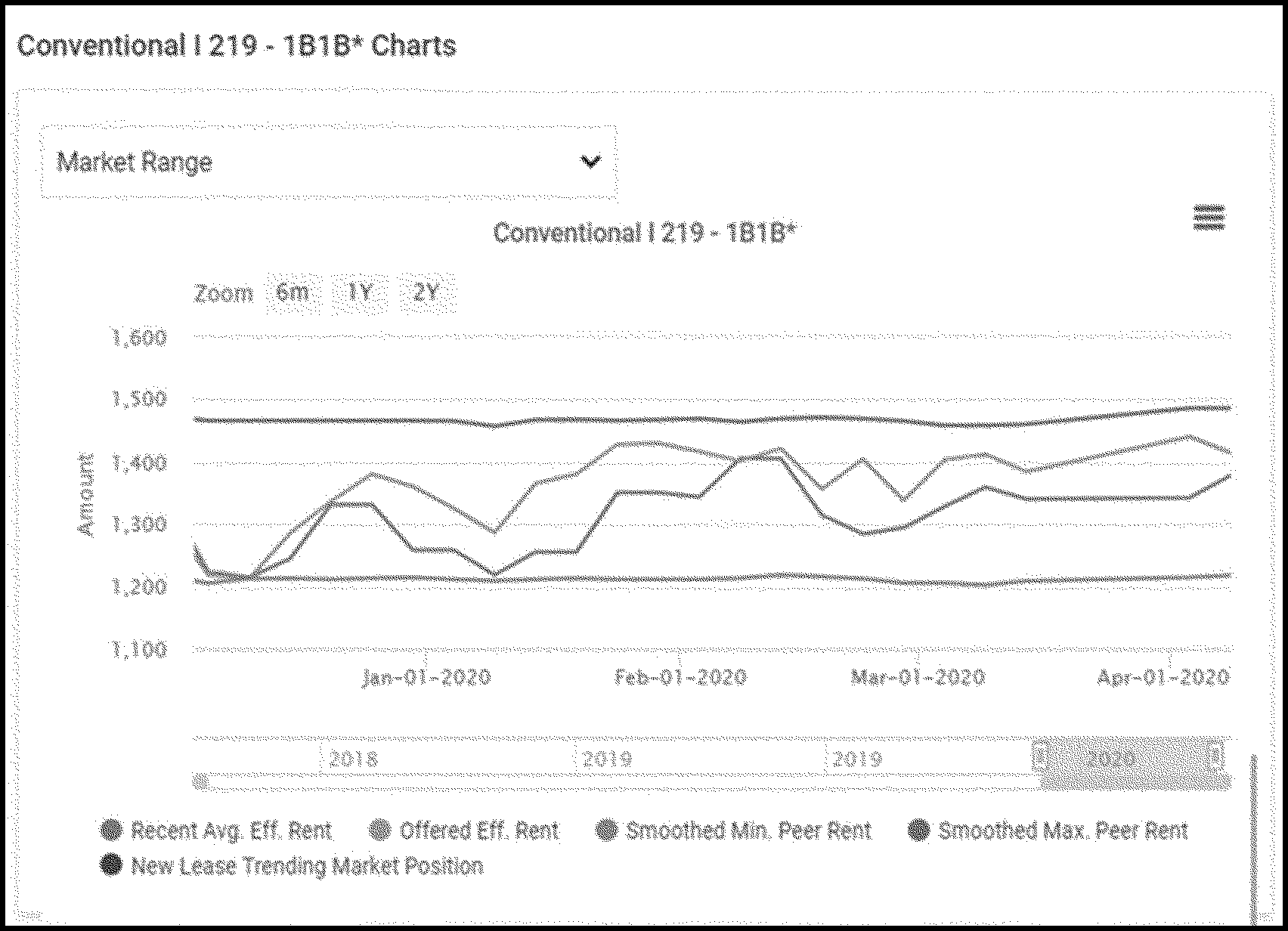
B. RealPage's Collection and Use of Competitively Sensitive Data Excludes Competition in Commercial Revenue Management Software
VI. Relevant Markets
A. Conventional Multifamily Rental Housing Markets
1. Product Markets
(a) Conventional Multifamily Rentals Are Distinct From Other Types of Multifamily Housing
(b) Single-Family Housing Is Not a Reasonable Substitute to Multifamily Rentals
(c) Conventional Multifamily Rental Units With Different Bedroom Counts Are Relevant Product Markets
2. Geographic Markets
(a) RealPage-Defined Submarkets Identify Relevant Geographic Markets
(b) Core-Based Statistical Areas (CBSAs) Are Relevant Geographic Markets
B. Commercial Revenue Management Software Market
1. Product Market
2. Geographic Market
VII. Jurisdiction, Venue, and Commerce
VIII. Violations Alleged
IX. Request for Relief
X. Demand for a Jury Trial
Appendix A: Submarkets
Appendix B: Submarkets By Bedroom Count
I. Introduction
1. Renters are entitled to the benefits of vigorous competition among landlords. In prosperous times, that competition should limit rent hikes; in harder times, competition should bring down rent, making housing more affordable. RealPage has built a business out of frustrating the natural forces of competition. In its own words, “a rising tide raises all ships.” This is more than a marketing mantra. RealPage sells software to landlords that collects nonpublic information from competing landlords and uses that combined information to make pricing recommendations. In its own words, RealPage “ helps curb [landlords'] instincts to respond to down-market conditions by either dramatically lowering price or by holding price when they are losing velocity and/or occupancy. . . . Our tool [ ] ensures that [landlords] are driving every possible opportunity to increase price even in the most downward trending or unexpected conditions ” (emphases added).
2. In fact, as RealPage's Vice President of Revenue Management Advisory Services described, “ there is greater good in everybody succeeding versus essentially trying to compete against one another in a way that actually keeps the entire industry down” (emphasis added). As he put it, if enough landlords used RealPage's software, they would “ likely move in unison versus against each other ” (emphasis added). To RealPage, the “greater good” is served by ensuring that otherwise competing landlords rob Americans of the fruits of competition—lower rental prices, better leasing terms, more concessions. At the same time, the landlords enjoy the benefits of coordinated pricing among competitors.
3. RealPage replaces competition with coordination. It substitutes unity for rivalry. It subverts competition and the competitive process. It does so openly and directly—and American renters are left paying the price.
4. Americans spend more money on housing than any other expense. On average, American households allocate more than one-third of their monthly income to housing. Some purchase a home, while others choose to, or must, rent. A family's selection of an apartment reflects a complex set of values and criteria including comfort, safety, access to schools, convenience, and critically, affordability. To ensure they secure the greatest value for their needs, renters rely on robust and fierce competition between landlords.
5. RealPage distorts that competition. Across America, RealPage sells landlords commercial revenue management software. RealPage develops, markets, and sells this software to enable landlords to sidestep vigorous competition to win renters' business. Many of the largest landlords in the United States, including Greystar, Camden, Cortland, Cushman & Wakefield and Pinnacle, LivCor, and Willow Bridge (collectively, Defendant Landlords), which would otherwise be competing with each other, submit or have submitted on a daily basis their competitively sensitive information to RealPage.[1] This nonpublic, material, and granular rental data includes, among other information, a landlord's rental prices from executed leases, lease terms, and future occupancy. RealPage collects a broad swath of such data from competing landlords, combines it, and feeds it to an algorithm.
6. Based on this process and algorithm, RealPage provides daily, near real-time pricing “recommendations” back to competing landlords. These recommendations are based on the sensitive information of their rivals. But these are more than just “recommendations.” Because, in its own words, a “rising tide raises all ships,” RealPage monitors compliance by landlords to its recommendations. RealPage also reviews and weighs in on landlords' other policies, including trying to—and often succeeding in—ending renter-friendly concessions (like a free month's rent or waived fees) to attract or retain renters. A significant number of landlords then effectively agree to outsource their pricing function to RealPage with auto acceptance or other settings such that RealPage as a middleman, and not the free market, determines the price that a renter will pay. Competing landlords choose to share their information with RealPage to “eliminate the guessing game” about what their competitors are doing and ultimately take instructions from RealPage on how to make business decisions to “optimize”—or in reality, maximize—rents.
7. Each landlord pays steep fees to license RealPage's software. RealPage's stated goals and value proposition are not a secret. Its executives are blunt: They want landlords to “avoid the race to the bottom in down markets.” Sometimes RealPage is even more direct, acknowledging that its software is aimed at “driving every possible opportunity to increase price” or observing that among landlords, “there is a greater good in everybody succeeding versus essentially trying to compete against one another in a way that actually keeps the entire industry down.”
8. But that is not how the free market works. A free market requires that landlords compete on the merits, not coordinate pricing. Landlords should win renters by offering whatever combination of price and quality they think is most attractive. For example, landlords could lower rents or provide other financial concessions, like free months of rent, or with investments in amenities like gyms, grilling areas, or pools. Put differently, the fear of losing a renter to a competitor should motivate rival landlords to compete vigorously.
9. RealPage's revenue management software ingests on a daily basis nonpublic rental rates, future apartment availability, and changes in competitors' rates and occupancy. As competitor- ( printed page 56288) landlords increase their rents, RealPage's software nudges other competing landlords to increase their rents as well. RealPage calls this “maximiz[ing] opportunity[.]” As RealPage explained to one landlord, by using competitors' data, they can identify situations where “we may have a $50 increase instead of a $10 increase for that day.” This is what RealPage encourages as “stretch and pull pricing.”
10. RealPage allows landlords to manipulate, distort, and subvert market forces. One landlord observed that RealPage's software “can eliminate the guessing game” for landlords' pricing decisions. Discussing a different RealPage product, another landlord said: “I always liked this product because your algorithm uses proprietary data from other subscribers to suggest rents and term. That's classic price fixing. . . .” A third landlord explained, “Our very first goal we came out with immediately out of the gate is that we will not be the reason any particular sub-market takes a rate dive. So for us our strategy was to hold steady and to keep an eye on the communities around us and our competitors.”
11. RealPage's scheme not only distorts competition to the detriment of renters, but also allows it to reinforce its dominant position in the market for commercial revenue management software. By its own account, RealPage controls at least 80 percent of that market. Its dominant position is protected by substantial data advantages due to its massive reservoir of ill-gotten competitively sensitive information from competing landlords. No other revenue management company can match RealPage's access to landlords' nonpublic, competitively sensitive rental data. This is why RealPage acknowledges that it “does not have any true competitors, mainly because our data is based on real lease transaction data.” RealPage's conduct is predatory and exclusionary, which has allowed it to distort the market opportunities for honest providers of revenue management software.
12. At bottom, RealPage is an algorithmic intermediary that collects, combines, and exploits landlords' competitively sensitive information. And in so doing, it enriches itself and compliant landlords, including Defendant Landlords, at the expense of renters who pay inflated prices and honest businesses that would otherwise compete.
13. The United States, and the States of North Carolina, California, Colorado, Connecticut, Illinois, Minnesota, Oregon, Tennessee, and Washington, and the Commonwealth of Massachusetts, acting by and through their respective Attorneys General, bring this action pursuant to Sections 1 and 2 of the Sherman Act to rid markets of (i) RealPage's and Defendant Landlords' unlawful information-sharing and pricing alignment schemes, and (ii) RealPage's illegal monopoly in commercial revenue management software. In so doing, Plaintiffs seek to restore the free market to deserving individuals, families, and honest businesses.
II. RealPages's Revenue Management Software Is Fueled by Nonpublic, Competitively Sensitive Information Shared by Landlords
14. RealPage dominates the market for commercial revenue management software that landlords use to price apartments, controlling at least 80 percent of that market, according to its own estimates. RealPage currently offers three revenue management systems to landlords: YieldStar, AI Revenue Management (AIRM), and Lease Rent Options (LRO). The company's main legacy software, YieldStar, is the product of three acquisitions and subsequent internal development. Its successor, AIRM, uses much of the same codebase as YieldStar, but RealPage claims that AIRM's refined models and forecasting are more precise. RealPage acquired its other revenue management software, LRO, in 2017. RealPage has made plans to sunset both YieldStar and LRO by the end of 2024.
15. Competitively sensitive data collected from competing landlords is a critical input to RealPage's revenue management software. AIRM and YieldStar collect this data, such as rental applications, executed new leases, renewal offers and acceptances, and forward-looking occupancy, and use it to generate price recommendations for the competing landlords. This information is among the most competitively sensitive data a landlord maintains.
16. The exploitation of sensitive data from competing landlords is central to RealPage's approach. As part of pitching its software to landlords, RealPage highlights that its pricing algorithms use their competitors' data sourced directly from “lease transaction data.” RealPage describes this nonpublic data from competitors as one of three “building blocks of price” in AIRM and YieldStar. Landlords thus share their competitively sensitive information with RealPage with the understanding that RealPage's software will use the data to generate recommendations for rivals (and vice versa).
A. Landlords Agree To Share Nonpublic, Competitively Sensitive Transactional Data With RealPage for Use in Generating Competitors' Pricing Recommendations
17. RealPage amasses nonpublic, competitively sensitive data from competing landlords through use of its pricing algorithms, other rental property software, and thousands of monthly phone calls. The combined troves of nonpublic, competitively sensitive data are much more granular, sensitive, timely, and comprehensive than alternatives—and far more detailed than any data publicly available to potential renters. RealPage then uses this data in generating competitors' pricing recommendations.
18. Data shared through YieldStar and AIRM. Each AIRM and YieldStar client agrees to share detailed data with RealPage that are private, updated nightly, and granular. The data includes lease-level information on each unit's effective rent (rent net of discounts), rent discounts, rent term, and lease status, as well as unit characteristics such as layout and amenities. It also includes the number of potential future renters who have visited a property or submitted a rental application.
19. Landlords understand that AIRM and YieldStar use their data to recommend prices not just for their own units, but also for competitors. For example, a revenue management director at Greystar testified that she understood that Greystar, and other competing landlords who used AIRM or YieldStar, agreed with RealPage to share their data, which was combined in a single data pool for use by YieldStar and AIRM. An executive at Willow Bridge noted the advantages to using YieldStar at a property if others in the property's submarket—the small geographic area around the property—also used YieldStar because “the shared data between the models at different communities can be a benefit in getting accurate transactional data on a timely basis.”
20. Landlords agree to provide this information for use by their competitors because they understand they will be able to leverage the sensitive information of their rivals in turn. In its pitch to prospective clients, RealPage describes AIRM's and YieldStar's access to competitors' granular, transactional data as a meaningful tool that it claims enables landlords to outperform their properties' competitors by 2-7%. RealPage clients receive training that highlights the role of competitors' transactional data in the price recommendation process. ( printed page 56289)
21. Data Shared Through Other RealPage Products. AIRM and YieldStar are not the only ways that RealPage shares nonpublic, competitively sensitive information among landlords. RealPage obtains the same confidential transactional data from landlords that license at least three other programs: OneSite, Performance Analytics with Benchmarking, and Business Intelligence.
22. OneSite is RealPage's property management software, which operates as the central source of data for landlords' leasing activity. Performance Analytics with Benchmarking allows landlords to compare the performance of their properties and floor plans ( e.g., a one-bedroom, one-bathroom unit) to their competitors. Business Intelligence is a data analytics tool that pulls data from a landlord's property management software and other products.
23. Each landlord using RealPage's OneSite, Business Intelligence, and Performance Analytics with Benchmarking products agrees to share its proprietary data with RealPage and agrees that RealPage's revenue management software can use the data to generate pricing recommendations. The license agreements for these products specifically identify the shared data, such as pricing information, as confidential, nonpublic information. RealPage takes this deeply confidential information and uses it to provide rent recommendations to competitors of these clients.
24. These agreements grant RealPage access to confidential information from over 16 million units across the country, including many that do not use its revenue management products. With respect to Performance Analytics with Benchmarking alone, a RealPage sales representative told a prospective client that “we have over 16 million units of data coming from various source operating systems (PMS) [property management software] into the PAB platform,” making RealPage the top choice for “transactional data benchmarking.” With properties containing approximately 3 million units using AIRM and YieldStar, these additional agreements meaningfully multiply the scale of the transactional data used by AIRM and YieldStar. This gives RealPage greater visibility, including into markets with less penetration by AIRM and YieldStar, granting even initial AIRM and YieldStar adopters in a new market the benefit of access to a significant amount of nonpublic, competitively sensitive information.
25. Landlords understand that AIRM and YieldStar will use data from these products. A revenue management director at Greystar explained that RealPage ingests transactional data from several RealPage products, besides AIRM and YieldStar, for use in revenue management. A property owner requested information from Greystar on which competing properties used revenue management software. In an internal response, the Greystar director noted that RealPage has “access to more transactional history than anyone and [is] pulling data from anyone using RealPage products which includes companies who manually price or use other revenue management firms but leveraging their BI [Business Intelligence] products.”
26. A revenue management executive at Willow Bridge asked RealPage if other specific landlords were using RealPage's non-revenue management products. The landlord's owner client was concerned about the data available to YieldStar because competing properties were unsophisticated and did not use revenue management. This executive wanted to confirm that “YieldStar will be able to leverage actual transactional data behind the scenes and not just look at offered rents for their comps.” RealPage reminded the Willow Bridge executive that RealPage collected transactional data for all users of OneSite, Business Intelligence, and Performance Analytics with Benchmarking, and reassured the executive that YieldStar had ample transactional and survey data for that area.
27. Calling Landlords. RealPage has an additional, complementary product called Market Analytics. Market Analytics compiles data from over 50,000 monthly phone calls that RealPage makes to landlords across the country. On these calls RealPage collects nonpublic, competitively sensitive information by floor plan on occupancy rates, effective rents, and concessions, as well as information on the owner, management company, and any revenue management software used at the property. These market surveys cover over 11 million units and approximately 52,000 properties. Landlords, including but not limited to those that use AIRM, YieldStar, or other RealPage products, knowingly share this nonpublic information with RealPage.
B. AIRM and YieldStar Users Agree With RealPAge To Use the Software To Align Pricing
28. In addition to agreeing to share nonpublic, competitively sensitive data with RealPage, each AIRM and YieldStar licensee agrees with RealPage to use the AIRM or YieldStar pricing software as RealPage designed it.[2] Landlords are expected to review daily AIRM or YieldStar floor plan price recommendations and use the programs to set scheduled floor plan rents or even unit-level prices.
29. While landlords may not accept every price recommendation, they use AIRM or YieldStar as their pricing software, regularly review AIRM or YieldStar floor plan recommendations, use AIRM or YieldStar to set a scheduled floor plan rent, and use AIRM or YieldStar to set unit-level prices.
30. Landlords who use AIRM and YieldStar know that others are using the same software. Some landlords track which revenue management software their competitors use, including by contacting competing properties directly and exchanging nonpublic information. Other landlords, including prospective AIRM and YieldStar users, ask RealPage whether there are existing AIRM and YieldStar users nearby before they themselves license the products.
31. An executive at Willow Bridge, for example, explained to her team how she would learn from RealPage data or from a property's website whether a property used revenue management. This information is important because properties that use revenue management tend to update prices much more frequently, and so a landlord will react differently to those price changes if it knows the competitor is using revenue management.
32. RealPage frequently tells prospective and current clients that a “rising tide raises all ships.” A RealPage revenue management vice president explained that this phrase means that “there is greater good in everybody succeeding versus essentially trying to compete against one another in a way that actually keeps the industry down.” This rising tide lifts all landlords, including but not limited to AIRM and YieldStar users.
33. In using AIRM and YieldStar, landlords expect this pricing alignment and use RealPage software in part for this reason. One landlord echoed the RealPage executive, using the phrase “a rising tide rises [sic] all ships” to explain that AIRM would move prices in a “similar manner” to how the top and bottom of the market move. Elsewhere that same landlord noted that “if everyone in the market is doing well and everyone in the market has [sic] is having the rates go up, so should ours, ( printed page 56290) right?” An employee at Willow Bridge referenced RealPage's use of the phrase “a rising tide raises all ships” to explain how AIRM would provide price recommendations that amplify market trends. Multiple landlords have expressed their preference that their competitors use YieldStar and AIRM because widespread use would benefit them all. An executive of one landlord (which itself uses YieldStar and AIRM) said in a 2021 earnings call that more sophisticated, “high-quality competition” was better for that landlord when “they all use revenue management. They are all smart. They raised rents when they should.” RealPage highlighted in promotional materials the sentiments of another landlord who noted, “It actually gives me chills to think about what a disadvantage we'd be at if we hadn't adopted YieldStar, knowing others are using it.”
C. RealPage's Transactional Data Is Fundamentally Different From Other Data Available to Landlords
34. The data that RealPage uses and supplies is unique relative to public data available to landlords on listing or property websites. As compared to public data, RealPage data is much more granular, covers a broader array of business information, and includes competitively sensitive data across several dimensions. For example:
- Information on Actual Transactions. RealPage's data include, for each lease, the unit, floor plan, listed rent, final transacted lease price (including any discounts), and lease term.
- Renewals. RealPage's data include the same information for lease renewals. Information on renewals is not listed publicly—not even asking rents—leaving a significant blind spot for landlords not using RealPage.
- Time Span. AIRM and YieldStar have access to current and historical lease data, from the previous day and going back two to three years.
- Future Demand. The shared data further includes information on tenant demand, including detailed information on inquiries and applications by potential future tenants.
- Accuracy. Landlords have greater assurance of the accuracy of the data because it comes directly from the landlords' own databases.
- Coverage. The RealPage data covers millions of units from users of its revenue management software and other products.
35. RealPage touts how its data is different. As one RealPage pitch deck put it, “we have [the] most data and the best data.” And the “[q]uality of data is best in class given that it is `lease transaction data'—this provides insight into performance data from actual signed leases, both new and renewal, net effective of concessions.” Another noted that without YieldStar “you'll be pricing your renewals in the dark without insight into actual lease transaction data that YS uses to help you make pricing decisions. This is critical to price renewals right[,] especially in a downturn.”
36. Access to this data proves important in winning over revenue management clients, including skeptical ones. One RealPage senior manager noted that a “highly suspicious CFO” was won over in part by YieldStar's “lease transaction data” that allowed his company to “achieve what his people couldn't achieve on their own.”
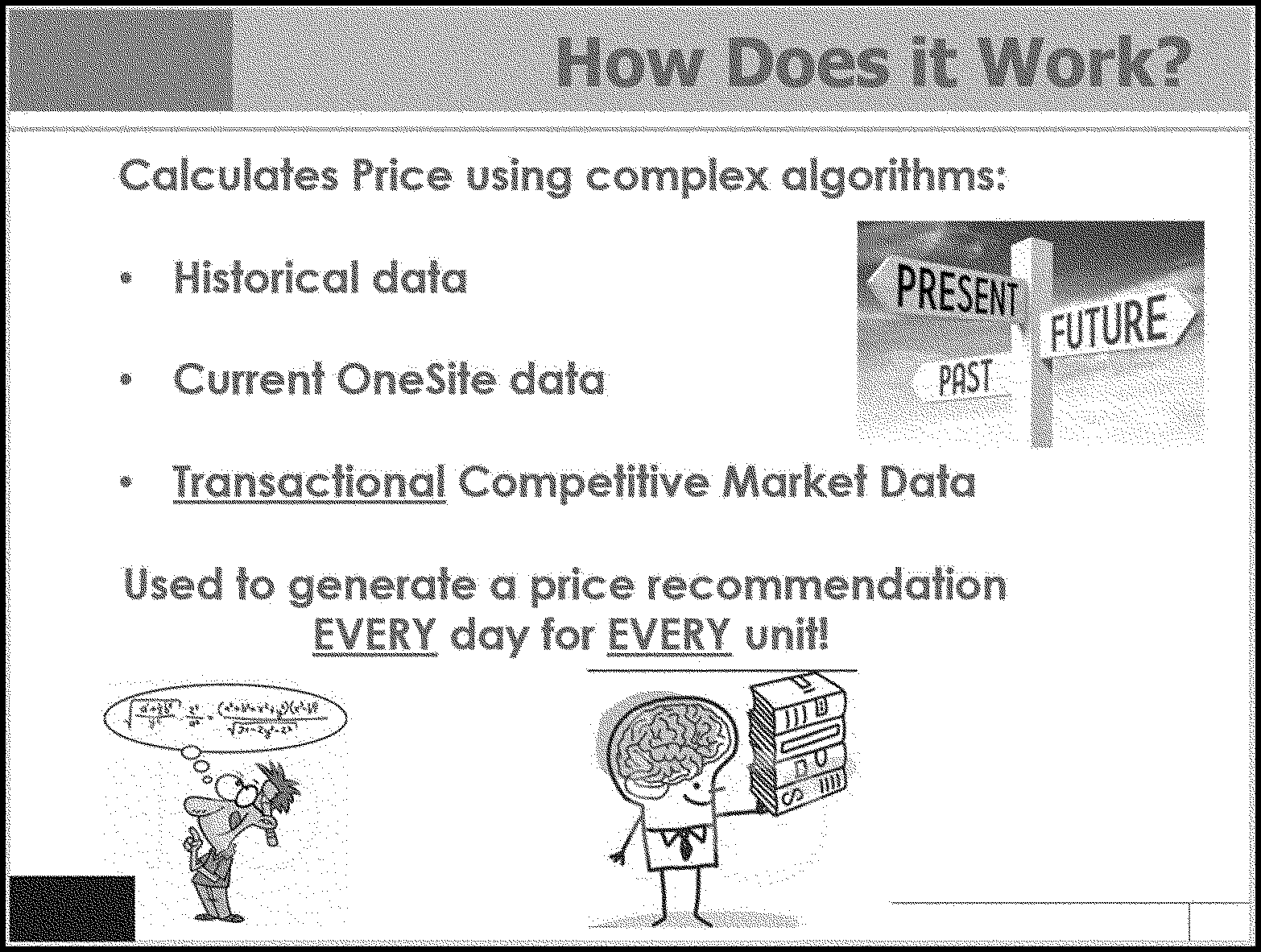
37. One landlord explained the benefits of YieldStar to its owner clients by calling the use of competitors' transactional data a “game changer! We have 100% truth on [competitors'] activity powering YieldStar recommendations.”
38. Another landlord's internal training presentation on YieldStar highlighted the importance of having access to competitors' transactional data:
D. RealPage Revenue Management Software Uses Nonpublic, Competitively Sensitive Data To Recommend Prices
39. AIRM and YieldStar are built upon similar code and leverage competitive data in similar ways. LRO, on the other hand, was originally developed outside of RealPage and takes a different approach.
1. AIRM and YieldStar Leverage Competitively Sensitive Data To Generate Price Recommendations
40. AIRM uses competitors' nonpublic, transactional data in three separate stages of the pricing process: (1) model training, (2) floor plan price recommendations, and (3) unit-level prices. YieldStar uses competitors' nonpublic, transactional data in stages two and three of its process.
(a) AIRM Model Training Relies on Competitively Sensitive Data To Generate Learned Parameters
41. In the first stage, RealPage trains its AIRM models using nonpublic data from OneSite and other property management software, totaling millions of executed lease transactions, new lead applications, renewal applications, and guest cards filled out by visiting potential tenants. This data is run through a machine learning model to generate learned parameters for supply and demand models that are then used for all AIRM clients across the country. Like the coefficients in a regression model, the learned parameters are applied to the data of a landlord's specific property, and to the data of its competitors, when AIRM makes pricing recommendations. RealPage generally retrains the models three to four times per year using updated nonpublic data.
(b) AIRM and YieldStar Incorporate Competitors' Nonpublic Data To Generate Floor Plan Price Recommendations
42. In the second stage AIRM or YieldStar provides a price recommendation for every floor plan of a given property. A floor plan is a grouping of units that share similar characteristics, such as the number of bedrooms and bathrooms and square footage. Landlords define the floor plans in their buildings—for example, a large apartment building might have separate sets of floor plans for studios, one-bedroom, and two-bedroom apartments. As discussed below, AIRM and YieldStar use competitors' nonpublic, transactional data in nearly every step of setting a recommended floor plan price, including identifying peer properties, forecasting occupancy and leasing, increasing rents to match competitors' changes, and determining the magnitude of price changes.
43. Identifying Peers. First, AIRM and YieldStar use confidential transaction data to identify a property's peer properties, which include close competitors. In selecting peer properties, RealPage's algorithm generally looks for properties with similar floor plans, within close geographic proximity, and with similar effective rents over time. AIRM or YieldStar clients may review the list of peer properties and request that RealPage add or remove specific properties.
44. AIRM or YieldStar then uses the nonpublic data from competitors' executed leases to generate a market range chart for each floor plan. This chart identifies a “smoothed” market minimum effective rent and market maximum effective rent. The market minimum is a hard floor. AIRM and YieldStar will not recommend a rent below the market minimum. On the other hand, the market maximum is a “soft ceiling,” and the programs will recommend prices above the ceiling.
45. The client has access to the market range chart within the AIRM and YieldStar interfaces. As shown below, for each floor plan the client can see the smoothed market minimum and market maximum and where the client's own floor plan sits within the market range.
46. Forecasting Occupancy and Leasing. Every night, for each participating property, AIRM applies the model's learned parameters to that property's internal transactional data to forecast the number of expected vacancies and expected lease applications for a certain period into the future. AIRM may also use competitors' data to adjust the projected supply.
47. AIRM or YieldStar then determines whether actual leasing for a floor plan is on track to meet predicted leasing. To do so, it creates a forecast of the number of leases over time, using nonpublic lease and application data from the subject property, and potentially from so-called surrogate properties (similar properties in the surrounding area).[3] When there is an imbalance between a property's actual and forecasted leasing, it recommends a price change.
48. Changing Rents to Match Competitors. Even when a property's supply and demand are balanced, RealPage's software will still recommend a price change, based on competitors' nonpublic data, when it determines that the market is moving. For example, if the minimum and maximum of the competing floor plans' effective rents increase, it will recommend a price increase to maintain the floor plan's market position (its price position relative to its competitors).
49. Determining Magnitude of Price Changes. Once AIRM or YieldStar has determined that it will recommend a price increase or a price decrease, it again uses competitors' transactional data to determine how much the price should move and provide a floor plan price recommendation. It uses nonpublic transactional data from peer properties, in addition to data from the subject property and surrogate properties, to generate a market response curve—analogous to a market demand curve—for every floor plan. This demand curve provides an estimate of how demand for particular apartments would change in response to changes in rents, a measure that RealPage calls elasticity. In other words, it uses competitors' nonpublic transactional data to calculate how many leases the property will likely gain or lose for a particular floor plan, for every price point along the curve. Using this data, AIRM or YieldStar can determine how much the price can increase and still achieve the target number of leases, or by how little price can decrease to maintain a target occupancy.
50. RealPage describes elasticity as a pivotal input into balancing supply and demand and, therefore, price.
51. The use of surrogate properties in this pricing process has the potential to push convergence on price even further. As two properties' surrogate sets become closer—and therefore their respective demand curves become more similar—AIRM and YieldStar will generate increasingly similar prices for the two properties. And the use of surrogates is common. One of the largest landlords in the country, for example, uses surrogates at over 80% of its properties.
52. This process repeats for every floor plan in the client's property, every night. A new floor plan price recommendation is generated daily.
(c) AIRM and YieldStar Use Competitors' Nonpublic Data—Including Data on Future Occupancy—To Determine Unit-Level Prices
53. A property manager at the landlord reviews each floor plan recommendation daily and enters the floor plan price. AIRM and YieldStar then use the floor plan price to generate prices for every unit within the floor plan. The unit price is shown in a pricing matrix, which provides the price for each combination of start date and lease term. To generate the price for an individual unit, the floor plan price is adjusted to account for unit-specific factors such as amenities ( e.g., a desirable view, the floor level, or an in-unit washer and dryer), staleness ( i.e., how long that specific unit has been vacant), and the timing of lease expirations. AIRM and YieldStar again use competitors' nonpublic data during this step in at least two ways.
54. First, AIRM and YieldStar use data on competitors' supply of multifamily housing to adjust recommendations to limit “exposure” with a feature called lease expiration management. Exposure refers to the number of units that are available for lease. Managing lease expirations is an important element of revenue management software. If too many leases expire and the corresponding units become available at the same time, supply increases and rents for those units will tend to drop. This process will also tend to repeat itself as the same units will become available at the same time a year later for leases with a standard twelve-month term.
55. The objective of expiration management is to smooth out this exposure so that landlords, as explained by one RealPage employee, “remain in a position of pricing power.” For example, if AIRM or YieldStar sees that a large number of units will likely be available in twelve months, it will increase the price recommendation for a twelve-month lease relative to price recommendations for leases of other terms, such as 11 months or 13 months, in order to nudge potential renters to accept those terms. Expiration management can only raise prices—AIRM does not lower a unit's price if the lease term would fall in an underexposed period.
56. This calculation does not rely only on the predicted future supply for the client's property. For any landlord who uses a “market seasonality” setting, AIRM and YieldStar also rely on competitors' transactional data and the supply for those competitors—including the supply of competitors' existing leases that expire in the future. AIRM and YieldStar thus work to manage lease expirations for the client's units based on how competitors' supply will change. RealPage strongly recommends to landlords that they use market seasonality.
57. The use of competitors' nonpublic data in expiration management to fill out the pricing matrix occurs regardless of whether the landlord accepts the AIRM or YieldStar recommendation. Thus, even if a landlord were to override every price recommendation, its rental prices would still be influenced by nonpublic information about its competitors' supply.
58. Second, AIRM and YieldStar include an amenity optimization feature. By pricing specific amenities within units, landlords can avoid making wholesale pricing changes to a floor plan if a specific unit fails to lease. Within the amenity analysis, AIRM and YieldStar provide market values for specific amenities to landlords, allowing them to compare their perceived value of an amenity with the nonpublic valuation of their competitors. The peer data include the market minimum and maximum value for specific amenities.
2. LRO Relies Primarily on Landlords To Input Data on Competitors
59. RealPage's LRO also provides pricing recommendations to users. Each week, LRO users manually input competitor information into the system that they have obtained from public websites or more questionable means, such as communicating directly with their competitors.
60. A small number of LRO users subscribe to a feature called AutoComp. With this feature, RealPage provides ( printed page 56293) information on competitors' rents, traffic, and occupancy. This information comes from market surveys that RealPage compiles using call centers to call competitor properties. Landlords may use LRO without using AutoComp.
E. RealPage Uses Multiple Mechanisms To Increase Compliance With Price Recommendations
61. AIRM and YieldStar provide daily price recommendations. RealPage has taken multiple steps to increase compliance with AIRM and YieldStar price recommendations. It designed AIRM and YieldStar to make it much easier to accept recommendations than to decline them. It built an auto-accept function and pushes clients to adopt it and increase its role. And its pricing advisors encourage landlords to follow AIRM and YieldStar pricing recommendations. Among their duties, pricing advisors review any request to override a price recommendation.
1. AIRM and YieldStar Make It Easy To Accept Recommendations and More Difficult and Time-Consuming To Decline
62. Every morning, the landlord's property manager chooses whether to accept the floor plan price recommendation, keep the previous day's rent, or override the recommendation. These options are the same for new leases and renewal leases. RealPage makes it easier and faster for a client to accept a recommendation than to decline it. When accepting recommendations, the manager can choose to do a bulk acceptance—she can accept all or multiple floor plan recommendations at once. But she cannot do the same when overriding, or rejecting, the recommendation.
63. Instead, for every recommendation that she does not accept—whether overriding or keeping the previous day's rent—the property manager must provide “specific business commentary” for diverging from the recommendation. This justification, RealPage instructs, should not be a mere preference for another price but must be based on a factor that the model cannot account for, such as local construction or renovations occurring in the building. It must be a “strong sound business minded approach.”
64. The property manager knows that these recommendation rejections and accompanying justifications will be sent to a RealPage pricing advisor.[4] If the pricing advisor disagrees with the rejection or justification, the disagreement is escalated for resolution to a landlord's regional manager, who typically supervises the property manager.
65. As one client who complained to RealPage explained, RealPage's design is “trying to persuade [clients] to take the recommendations (almost like we made it hard to do anything but).”
2. RealPage Pushes Clients To Adopt Auto-Accept Settings That Automatically Approve Recommendations
66. AIRM and YieldStar each include auto-accept functions. This functionality automatically accepts price recommendations falling within certain parameters. By default, AIRM and YieldStar set auto-accept parameters of a 3% daily change and an 8% weekly change. The landlord can change these parameters, disable or enable auto-accept, and even enable partial auto-accept. With partial auto-accept, if the recommendation exceeds the auto-accept parameters, the recommendation is accepted as far as the parameter permits. For example, if the auto-accept daily change limit is 4% and the price recommendation is 5%, using partial auto-accept will result in an increase of 4%. By enabling auto-accept, a landlord functionally delegates pricing authority to RealPage (within the bounds of the daily and weekly limits).
67. As part of the onboarding process, internal RealPage guidance states, “AUTO ACCEPT should be confirmed as `on' with parameters in place.” Internal AIRM training explained that RealPage wanted to “widen auto accept parameters” by introducing the feature and then “creating enough trust so that over time we have client[s] that are willing to let auto accept run with very wide parameters . . . AKA—accept all recommendations.” RealPage trains pricing advisors to have an “accountability conversation” or a “refresher on short term vs long term goals” for clients that show less tolerance for increasing auto-accept parameters.
68. Even if a landlord does not want to use auto-accept, RealPage trains its advisors to convince the landlord to turn it on with 0% limits—a setting whereby auto-accept will never accept price changes. The reason? So that it is no longer a question of whether the client turns on auto-accept, but only a matter of convincing them to widen the parameters and further delegate pricing decisions. RealPage instructs its advisors on best practices: “[I]f a partner is not ready to use auto acceptance, are they ready to use revenue management?”
3. RealPage Pricing Advisors Provide a “Check and Balance” on Property Managers To Increase Acceptance of Recommendations
69. RealPage offers landlords pricing advisory services. Landlords typically have an assigned pricing advisor, unless the client has internal revenue managers that were certified by RealPage. Pricing advisors play an important role in the daily review of pricing recommendations. Landlords' property managers are asked to review recommendations every morning by 9:30 a.m. After their review, a pricing advisor accepts agreed-upon pricing within an hour and escalates any disputes to the landlord's regional manager.
70. If a property manager disagrees with the direction of a recommended price change— e.g., the manager wants to implement a price decrease when the model recommends a price increase—the RealPage pricing advisor escalates the dispute to the manager's superior. As a pricing advisor manager explained in a client training, the advisor would “stop the process and reach out to our partners”—the property manager's supervisors—to “talk about this further.” The advisors, the manager elaborated, are part of a system of “checks and balances.” The client confirmed the value of this system to stop property managers from acting on emotions, which could limit RealPage's influence on their pricing.
71. Beyond the daily interactions between pricing advisors and their own property managers, clients agree to make meaningful changes when they use RealPage's pricing advisory services. Under the specifications for this service, clients agree to use AIRM or YieldStar exclusively to give quotes to potential renters, further tying landlords' pricing decisions to RealPage's software. Clients also agree to change their commission programs for leasing agents to “ensure these programs motivate sales behavior that is consistent with the objectives of revenue growth.” And clients further agree to revenue growth as the official metric to evaluate AIRM and YieldStar, as opposed to occupancy rates.
72. RealPage imposes additional requirements on landlords who want to use internal or in-house revenue management advisors with YieldStar or AIRM (rather than use RealPage pricing advisors). RealPage requires these ( printed page 56294) landlords' employees go through RealPage certification. Certification is a multiday course in which landlords are trained—at times in the same session—on AIRM and YieldStar use and best practices, according to RealPage. Certification includes observing and leading pricing calls with property managers and passing a written exam. This certification program facilitates the landlords' agreements with RealPage to align pricing by ensuring that landlords' internal revenue managers are trained and tested to use AIRM and YieldStar in the same way.
4. Pricing Recommendations Heavily Influence Landlords' Behavior
73. RealPage defines an acceptance as where the final floor plan price is within 1% of the recommended floor plan price. According to that definition, the average acceptance rate across all landlords nationally for new leases between January 2017 and June 2023 is between 40-50%. But RealPage itself recognizes that acceptance rates are not necessarily the best measure of its influence; one employee explained that the spread between a floor plan recommendation and the final scheduled floor plan price is more useful for measuring model adoption—and therefore influence—than the binary accept/reject decision that the RealPage-defined acceptance rate reflects. Widening the definition of acceptance even slightly to account for partial acceptances illustrates the influence of recommendations: nearly 60% of final floor plan prices are within 2.5% of RealPage's recommendation, and more than 85% are within 5% of RealPage's recommendation.
74. RealPage's preferred measure of acceptance understates the influence of RealPage's price recommendations and the effect of competitors' data. AIRM and YieldStar use competitors' nonpublic transactional data to adjust unit-level pricing, after a floor plan recommendation has been accepted or rejected. RealPage's metric does not capture the cumulative effect of rate acceptances over time. Nor do they capture when a client is influenced by and partially accepts a recommendation.
III. Coordination Among Competing Landlords Is a Feature of This Industry
75. Several characteristics of apartment-rental markets make it easier for landlords to coordinate with, or accommodate, each other. Rental housing is a necessity for many Americans, meaning that demand is inelastic—that is, changes in rent produce relatively small changes in the number of renters. There is significant concentration among landlords in local markets, and these landlords engage in widespread, regular communications with one another. And RealPage makes rental units more comparable to each other in AIRM and YieldStar, allowing landlords to track one another more easily. These industry characteristics exacerbate the harm to the competitive process—and ultimately to renters—from the exchange of nonpublic, competitively sensitive data through RealPage and the use of the AIRM and YieldStar models.
A. Rental Housing Is a Necessity for Millions of Americans
76. Shelter is a basic, foundational necessity of life. And for tens of millions of Americans, conventional multifamily apartment buildings are the only reasonable option for much of their lives. Many renters cannot afford the significant down payment needed to purchase a single-family home, among other requirements.
77. Demand for apartments is relatively inelastic. Rising rents have disproportionately affected low-income residents: The percentage of income spent on rent for Americans without a college degree increased from 30% in 2000 to 42% in 2017. In 2021, the proportion of severely burdened households—households spending more than half of their income on gross rent—was 25%, or approximately 10.4 million households, an increase in approximately 1 million households since 2019. By 2022, this number increased to 12.1 million households. For college graduates, the percentage of income spent on rent increased from 26% to 34% from 2000 to 2017.
B. The Multifamily Property Industry Is Rife With Cooperation Among Ostensible Competitors
78. Within particular metropolitan areas and neighborhoods, the multifamily property industry is concentrated and replete with competitively sensitive discussions among ostensible competitors. Landlords have agreed with one another to share nonpublic, sensitive information, both indirectly through RealPage software and directly outside of RealPage's software. RealPage facilitates some of these discussions, while others are made directly between competing landlords. These discussions supplement and reinforce the indirect information sharing among landlords that occurs through AIRM and YieldStar. As a result of this coordination, RealPage's pricing algorithms are even more likely to restrain, rather than promote, competition.
1. At the Local Level, the Multifamily Property Industry Comprises a Small Number of Large Landlords Managing Buildings With Different Owners
79. In 595 zip codes with at least 1,000 total multifamily units across 125 core-based statistical areas, five or fewer landlords manage more than 50% of the multifamily units. Within the submarkets alleged in this complaint, there are at least 214 zip codes, each with at least 1,000 total multifamily units, in which five or fewer landlords manage more than half of those units. Similarly, within the ten core-based statistical areas alleged in the complaint, there are 144 zip codes, each with at least 1,000 total multifamily units, in which five or fewer landlords manage more than half of those units.
80. The same landlord often oversees nearby properties with different owners. In at least 502 zip codes, at least one landlord using AIRM or YieldStar oversees properties with different owners.
81. There is also overlap among RealPage pricing advisor assignments. In at least 683 zip codes, within 96 core-based statistical areas, a RealPage pricing advisor has responsibility for properties managed by different landlords. RealPage takes no steps to avoid assigning the same pricing advisor to properties with different owners, even if those properties compete with each other or are RealPage-mapped competitors.
2. Landlords Regularly Discuss Competitively Sensitive Topics With Their Competitors and Swap Information
82. Landlords regularly solicit and obtain nonpublic information about inquiries by prospective renters, occupancy, and rents from their direct competitors. Although this information is not as accurate or thorough as the transactional-level data shared with AIRM and YieldStar, it is nonetheless sensitive competitive information.
83. Landlords collect this information through a variety of means, including weekly phone calls, emails, and in-person visits. Some landlords also share information on their local geographic markets through shared Google Drive documents. One RealPage employee explained to his colleagues, reflecting on his former time working at a landlord, that these weekly inquiries “required cooperation among the comp[etitor]s but wasn't hard to get that.” In June 2023, a senior director at Cushman & Wakefield admitted that ( printed page 56295) “this practice has been prevalent in our industry for a long time.”
84. Landlords not only knew of these so-called “market surveys,” but expected their property managers to participate. As a manager of Cushman & Wakefield's revenue management department explained, “we have always expected our properties to continue doing a traditional market survey[,]” which “gives us insight into the very specific handful of competitors closest to the subject property.”
85. At a February 2020 industry event, representatives from Cushman & Wakefield and two other landlords shared tips on collecting information on concessions and net effective rents from competitors. The suggestions included bi-weekly and monthly meetings with competitors, sponsored “cocktail hours for regional competitors to share info and build relationships and rapport,” and using Google Drive documents to share information on a weekly basis. Building relationships with competitors to get accurate data was “critical.” The representatives cautioned that the collected data was used to make “major decisions about pricing,” so the landlord employees collecting data should be trained accordingly to ask such questions as “are you seeing a slow down?” and “are you adjusting pricing?”
86. Some landlords engage in even more sensitive communications about price, demand, and market conditions. These communications are not isolated instances at a specific property. Rather, they are conversations at the corporate revenue management level about strategies and approaches to market conditions that apply to the landlords' business across all markets.
87. For example, in January 2018, Willow Bridge's director of revenue management reached out to Greystar's director of revenue management and asked about Greystar's use of auto accept in YieldStar. In response, Greystar's director provided Greystar's standard auto-accept settings, including daily and weekly limits and for which days of the week auto accept was used. The Greystar director, explaining why she provided this information, testified that the Willow Bridge director was a “colleague,” even though Willow Bridge was a competitor to Greystar.
88. In March 2020, Cushman & Wakefield's director of revenue management reached out to Willow Bridge's director of revenue management. The Cushman & Wakefield director wanted to hold a call among revenue management executives at multiple landlords to discuss market conditions, use of YieldStar, and strategy plans. The Willow Bridge director agreed and suggested a small number of landlords to invite to keep the group “tight.” The directors agreed to reach out to Greystar, as well as several other landlords.
89. Also in March 2020, a senior executive at Greystar obtained a copy of Willow Bridge's sensitive strategic plans regarding the COVID-19 pandemic. The plans included Willow Bridge's corporate protocols for concessions, rent increases, and lease terms. The plans recommended that property managers work closely with YieldStar and LRO to preserve rent integrity. The Greystar executive forwarded Willow Bridge's plans to executives at Cushman & Wakefield and another landlord. All four landlords compete with one another.
90. In September 2020, Camden's director of revenue management reached out to Greystar's director of its internal revenue management team. Camden asked Greystar—a direct competitor—what increases on renewal pricing Greystar had seen in August and offered what it had seen. Greystar's director replied with information not only on August renewals, but also on how Greystar planned to approach pricing in the upcoming quarter. Greystar's director further disclosed its practices on accepting YieldStar rates and use of concessions. As the conversation continued, the two competitors shared additional highly-sensitive information on occupancy—including in specific markets—demand, and the strategic use of concessions.
91. At the same time, Camden's director emailed a revenue management executive at LivCor and asked how LivCor was faring on raising renewal rates. He explained his request by noting that Performance Analytics provided some good data, but it was “hard to see what our competitors are signing today.” The two executives shared information about their respective renewal increases. After the Camden executive passed this information along internally, he continued his outreach with several other landlords and with the LivCor executive—who in the meantime had reached out to three other landlords about their renewal rates. Camden's internal team decided to raise a renewal cap to get to the same renewal gains as LivCor.
92. Camden's director received competitively sensitive information from at least four competitors. Another senior executive at Camden asked him to compile the information so it could be shared internally. That executive noted the usefulness of the competitors' information and the need to take advantage of the shared information while it was fresh.
93. In June 2021, Willow Bridge's head of revenue management emailed Greystar's revenue management director. She proposed collaborating with Greystar to convince a client to move all of its properties, including those managed by Willow Bridge and those managed by Greystar, to AIRM. But she also noted that, in thinking about “the larger picture as well,” it could be useful to “coordinate with the other companies that we often share business with” to prepare to move their clients to AIRM as well. Greystar responded favorably to transitioning the joint client to AIRM.
94. In November 2021, a revenue management executive at LivCor emailed an executive at Camden to propose a call to discuss Camden's “renewal philosophy,” for the purpose of informing how LivCor calculated renewal increases. The two spoke that day. The following day, another LivCor executive—who was included on the call—thanked the Camden executive for the opportunity to “connect on industry best practices” and asked another “operational question” about implementing “larger renewal increases.” The executives exchanged emails over the next few months, including discussing their respective strategies on maximum increases to lease renewal prices. They shared not only their increase limits in specific markets but also what price increases they were able to achieve. For example, in April 2022, the executive at LivCor reached out to Camden to share that “my current thinking (not sure it's right, just where my mind is at) is . . . prices for almost everything are up 20%. Therefore, unless there is a good reason not to, should we be increasing rates on rentable items by 20%?” The Camden executive responded, “I like your thinking.” He continued, “Typically, we lean into the demand signals to inspire a price increase. . . . I'm divided on whether the default increase should be 20% or closer to the 10%. . . . Curious what your thoughts are!?”
95. In September 2021, a property manager at Cortland explained to a colleague that the manager had called two competitors and received from them pricing information on two-bedroom and three-bedroom units. The property manager asked for the information to decide how to act on YieldStar's price recommendations.
96. Landlords also engage in group discussions with local and national competitors about sensitive topics. For example, for a number of months in ( printed page 56296) 2020, dozens of “high-level participants” from competing landlords participated in weekly “multifamily leadership huddle” videoconferences. The organizer informed participants that “the goal of the call is to share information about what our companies are doing, share some collateral and resources,” and then—perhaps recognizing the problematic nature of these calls—he claimed that “then we hang up and make our own decisions.”
97. In one such call in April 2020 with over 100 attendees, participants discussed a number of topics, including “pricing and renewal strategies.” Several senior landlord executives, including a Greystar senior managing director and a CEO of another landlord, participated and shared their practices on new leases and renewals, use of renter payment plans, and use of YieldStar and other revenue management software. On a similar call in October 2020, participants discussed current and forecast rent prices, renewal strategies, and use of concessions. A Willow Bridge employee forwarded a colleague notes from the call, and he specifically highlighted information about a competitor's use of concessions.
98. These conversations among competing landlords have extended from the national level to local markets across the country. For example, in Minnesota, property managers from Cushman & Wakefield, Greystar, and other landlords regularly discussed competitively sensitive topics, including their future pricing. When a property manager from Greystar remarked that another property manager had declined to fully participate due to “price fixing laws,” the Cushman & Wakefield property manager replied to Greystar, “Hmm . . . Price fixing laws huh? That's a new one! Well, I'm happy to keep sharing so ask away. Hoping we can kick these concessions soon or at least only have you guys be the only ones with big concessions! It's so frustrating to have to offer so much.” The property managers from Greystar and Cushman & Wakefield continued to discuss competitively sensitive topics. For example, in response to Greystar's tipoff that it had reduced concessions and “hop[ed] the Spring/Summer market allow us to pull further back on concessions,” the Cushman & Wakefield property manager replied, “That's great news and I love hearing about the concessions being pulled back. We have done the same and hoping the rest of the market follows suit.” These communications between RealPage users that are ostensibly competitors are examples of the industry-wide coordination that magnifies the anticompetitive effects of RealPage's software.
99. In addition to contacting each other directly, many landlords also exchange information through other intermediaries. One vendor offers a tool for landlords to exchange with one another nonpublic information on concessions, net effective rents, inquiries and visits by prospective renters, and occupancy that is pulled from each landlord's property management software. Over 150 landlords nationally have used this service, including Greystar, LivCor, and some of the other largest landlords across the country. The vendor's CEO described this as a “quid pro quo or give to get” arrangement among landlords where “if you share this data with me, I'll share the same data.” A RealPage employee noted that this vendor makes it “quicker and easier to get your market surveys.”
100. Some landlords use this direct exchange of competitively sensitive information to update competitor rents within LRO—a practice that RealPage is aware of and accepts.
101. Recently, under the scrutiny of antitrust lawsuits, some landlords have adopted internal policies prohibiting “call arounds” and other direct sharing of competitively sensitive information with direct competitors. But even assuming that their property managers fully comply with these legally unenforceable internal policies, these landlords continue to use RealPage's revenue management software.
3. At RealPage User Group Meetings, Landlords Discuss Competitively Sensitive Topics
102. RealPage holds monthly “user group” meetings attended by competing landlords that use RealPage's software. There are separate user group meetings for LRO and for YieldStar and AIRM.[5] One of RealPage's stated purposes for the user groups is to “to promote communications between users.” Attendees include a wide mix of competing landlords. For example, the June 2022 YieldStar user group included representatives from five of the largest property management companies in the country, among a larger group.
103. Recurring topics at the user group meetings include product enhancements and an “idea exchange” on potential changes to the products. The user group participants often vote on the proposals discussed in the idea exchange. But discussions have covered competitively sensitive topics, including managing lease expirations, pricing amenities, the use of concessions, pricing strategies, and how to manage properties during the COVID-19 pandemic. RealPage encouraged landlords to use the user group meetings to discuss such topics in their industry and set agendas for these meetings to aid them in doing just that, remarking that “[t]he user group is meant to be self-governed to a degree and the clients should be leading it.” These RealPage-fostered discussions among competitors enhance and facilitate the landlords' agreement with RealPage to use AIRM and YieldStar to align pricing.
104. At an April 2020 YieldStar user group meeting, the participants discussed strategies for handling the COVID-19 pandemic. In the presentation, two RealPage employees and a landlord led a group discussion of trends in rent payments and collections and provided five strategic tips. One tip encouraged landlords to “push for occupancy but don't give away the farm (pricing).” Another counseled landlords to “balance internal and external dynamics” and, referring to the nonpublic information used by YieldStar, to “use transactional market data for decision support and to know when you can be more aggressive” in pushing higher rents. Invited attendees included representatives from at least twelve landlords. At this meeting, Greystar and another landlord shared information on their usage of payment plans with tenants.
105. In May 2020, RealPage started a YieldStar user group meeting by surveying them on concessions. RealPage asked landlords how many of their properties offered concessions, whether concessions applied to new leases or renewals, and the types of concessions offered (such as discounts, gift cards, or other benefits). Invited attendees included representatives of thirteen landlords.
106. In March 2021, the user group meeting included a discussion on possible adjustments to how YieldStar calculated lease expiration premiums. A RealPage executive shared that she liked the idea of adding weekend premiums to incentivize prospective renters to move in during the week, and commented that “the rev[enue] potential would then scale up.” The LivCor representative responded in favor of weekend premiums, and another user group member suggested adding the proposal to the user group idea exchange. RealPage agreed to do so.
107. RealPage began its agenda for an April 2021 YieldStar user group meeting with “strategic insights” from a ( printed page 56297) RealPage economist. This employee shared “21 key strategic insights,” including “focus on renewals,” “be cautious with concessions,” and “drive up revenues—not just base rent.” Specifically, he urged the group to “push up new and renewal pricing where demand [is] solid” and warned against over-relying on concessions. They were instead to “trust the science” of YieldStar.
108. In May 2021, RealPage included a “Back to Basics” discussion in a YieldStar user group meeting. This discussion covered “returning to renewal increases post-COVID” and “declining concessions,” as well as eviction moratoria and areas where acceptance rates were “seeing significant uptick in past 6 months.” The meeting group chat is even more revealing. Over a period of approximately fifteen minutes, representatives from fifteen landlords shared their plans for renewal increases and their use of concessions. The questions were posed, “At what point do we go back to normal? I[f] we go back to normal[,] [i]s it now? Is anyone seeing that the model is raising rent and are you doing it?” In response, these representatives made statements on renewal increases such as “increasing, back to normal,” “major rent growth on the west coast,” “increasing the renewals,” “almost all markets we are raising rents,” “actually raising more than before covid at some,” “raising,” and “we are pushing to get back to normal. Sending increases.” A representative from LivCor stated, “increasing renewals and pushing new lease rents.”
109. The user group members were similarly open about their disinterest in concessions, signaling to each other that they do not intend to offer them or would offer them less frequently. Their pronouncements included “no consessions [sic],” “no concessions,” “considerably less concessions,” “less frequent and less aggressive,” “no concessions except in markets with a lot of lease-ups,” and “almost no concessions currently.” A representative from Willow Bridge noted concessions had “gone away a LOT. People asking for a free month on renewals and being denied, but still signing the renewal.”
110. When the discussion turned to acceptance rates, a RealPage employee stated that rates had “pretty much gone back to pre-COVID. Rate Acceptance has grown 11% over the past 6 months.” A landlord responded that they had “seen our acceptance rate increase tremendously.” Another user group member explained to the group, for “about 1/3 of the communities I manage the [YieldStar] model was too slow to respond, and we are pushing rates above market and above YS rec[ommendation].” A representative from Willow Bridge concluded, “Are we deciding as a group to remove hesitation? :).”
111. The LivCor representative who attended this May 2021 meeting testified that similar discussions happened numerous times during the COVID-19 pandemic—specifically, the beginning of 2020 through the middle of 2022. In these meetings, user group members discussed new and renewal rent increases, concessions, and renewal strategies, as well as other sensitive topics.
112. RealPage claims that this and other user group meetings were not recorded.
113. The July 2021 YieldStar user group meeting, held at RealWorld (a RealPage-hosted industry event), included a roundtable discussion among competitors. One of the discussion topics? “What is the one thing you consistently consider outside of the model when accepting or changing price and why?”
114. At the October 2021 YieldStar user group meeting, a RealPage economist gave a presentation regarding the 2022 market outlook. RealPage presented analyses on current occupancy and pricing, and on expected occupancy and rent growth in 2022 by geographic regions.
115. At the July 2022 RealWorld YieldStar user group meeting, RealPage hosted a “roundtable discussion” on market volatility and its impact on how to use revenue management, unit amenities and their impact on tenant rents, and best practices for conducting lease ups.[6]
116. RealPage recognized the sensitive nature of the information shared at these meetings. Beginning in late 2022, after public reporting about AIRM and YieldStar, RealPage added an antitrust compliance statement in the user group presentations. Among other directions, the statement instructed participants not to discuss “confidential or competitively sensitive information,” and then noted that this included “you or your competitors' prices or anything that may affect prices, such as current or future pricing strategies, costs, discounts, concessions or profit margins.” But these were the very topics of previous user group meetings, as described above, that RealPage encouraged its users to discuss. And these are the very types of nonpublic information that AIRM and YieldStar use to recommend and determine prices.
117. Landlords frequently take advantage of RealPage user group meeting invites to email each other directly. In August 2020, for example, an employee of Cortland emailed a user group invitee list and asked them to support a change to how YieldStar calculated the number of leases needed. In response, an employee of a different landlord agreed, adding that “I also rely on comparing available units to adj[usted] leases needed, to forecast leases, to gut check the pricing recs. These data points are always a factor in my pricing decisions.”
C. RealPage Uses Nonpublic Information To Allow Landlords To More Easily Compare Units on an Apples-to-Apples Basis
118. Renters typically search for a rental unit using certain key criteria, including the number of bedrooms and the location. Recognizing this market reality, RealPage enables landlords to more easily compare unit prices. When picking a property's “peer set,” RealPage matches floorplans with the same number of bedrooms that are geographically proximate. This makes it easier for landlords, through AIRM and YieldStar, to track and respond to competitors' movements at the floor plan level.
119. To account for amenities, RealPage instructs landlords to identify amenities using standardized naming conventions so that RealPage can use machine learning to group amenities together. RealPage then provides the market value for specific amenities, allowing landlords to more accurately identify and track how their competitors value these amenities and adjust their own pricing accordingly. The peer data include the market minimum and maximum value, as well as market quartile values, for specific amenities.
IV. RealPage Harms the Competitive Process and Renters by Entering Into Unlawful Agreements With Landlords To Share and Exploit Competitively Sensitive Data
120. AIRM's and YieldStar's use of nonpublic, competitively sensitive data is likely to harm, and has harmed, the competitive process and renters. AIRM and YieldStar distort the competitive process by using nonpublic data to maximize pricing increases and minimize pricing decreases. AIRM and YieldStar incorporate special rules, called “guardrails,” that override the ( printed page 56298) ordinary functioning of the algorithms in ways that tend to push rival landlords' rental prices higher than would occur in a competitive market. RealPage presses landlords to curtail “concessions” to renters. And AIRM and YieldStar's “lease expiration management” features aim to sequence vacancies to maximize landlords' pricing power.
A. AIRM and YieldStar Have the Purpose and Effect of Distorting the Competitive Pricing of Apartments
121. As RealPage frequently trumpets to landlords, “a rising tide raises all ships.” AIRM and YieldStar ensure that the `tide' flows primarily one way—higher rental prices. In a hot market, AIRM and YieldStar will recommend price increases to test what the market will bear, while in a down market AIRM and YieldStar will, to the extent possible, still increase or hold prices and minimize price decreases to reach the target occupancy rate.
122. AIRM and YieldStar are designed to help landlords press pricing beyond what they could otherwise achieve while reducing the risk that other landlords would undercut them. A revenue manager at Willow Bridge explained it succinctly: YieldStar is “designed to always test the top of the market whenever it feels it's safe to.” By using competitors' sensitive nonpublic data to generate elasticity estimates, among other things, AIRM and YieldStar can recommend higher price increases to extract more money from renters without losing an additional lease. As RealPage explained to a YieldStar client in training, this pricing elasticity measurement informs “how far do we stretch and pull pricing within the market.” That, in turn, means that “we may have a $50 increase instead of a $10 increase for that day.”
123. That insight, gleaned from competitors sharing sensitive, transactional data with RealPage, which is in turn shared with landlords through pricing recommendations, removes uncertainty and competitive pressure that benefits renters. As one landlord put it, these products “eliminate the guessing game” on rent.
124. As RealPage explains to its clients, AIRM and YieldStar reveal “hidden yield.” This extra yield or revenue is hidden in a competitive market—a market in which competitors do not share sensitive information with each other—because landlords “can't see the opportunity” and “fail to capture [the] full opportunity.”
125. AIRM and YieldStar disrupt the normal competitive bargaining process between landlords and renters. They place landlords in a better negotiating position vis-à-vis renters. Landlords using AIRM and YieldStar know that these models recommend floor plan prices and price units incorporating nonpublic data of their competitors, including effective rents and occupancy rates, all of which allow landlords to raise price with more certainty.
126. As landlords appreciate, AIRM and YieldStar use competitors' nonpublic data to predict with more certainty the highest price that the market will bear for a particular unit. A landlord is therefore less likely to negotiate on price. Any potential negotiation instead turns on lease term and move-in date, which AIRM and YieldStar adjust the pricing for to avoid overexposure for the landlord in the future.
127. AIRM and YieldStar also encourage landlords to follow each other in raising rents. When transactional data reveal that peers are raising effective rents—particularly the highest and lowest competitors for a given floor plan—AIRM and YieldStar follow with recommendations to increase rental prices. This movement with the market is ingrained in the AIRM and YieldStar models; AIRM and YieldStar will not recommend a floor plan price that falls below the market minimum.
128. Accordingly, as adoption of AIRM and YieldStar increases among peer competitors, the use of AIRM and YieldStar can push prices up through a feedback effect. As peers move up, other AIRM or YieldStar users may move up accordingly. This phenomenon, where participating landlords “likely move in unison versus against each other,” a RealPage executive testified, explains “the rising tide.” The same executive saw evidence of this “rising tide” in 2020: When looking at multiple peer sites using YieldStar, “we started to see the trajectory of performance and trends be eerily similar when comparing subject sites and comp sets, thus showing that we are in fact `r[a]ising the entire tide.' ” He acknowledged that YieldStar contributed to market prices rising as a tide.
129. Landlords rely on competitors' data within AIRM and YieldStar to determine their prices and how hard they need to try to be competitive. A revenue management director at Greystar noted in an internal AIRM deck that competitors' data is “like the boundaries of the street you are driving on.” The director elaborated that “the competitive market range are [sic] the edges of the road, staying in those boundaries are [sic] necessary to get you to the destination.”
130. Another landlord that used YieldStar told RealPage that within a week of adopting YieldStar they started increasing their rents, and within eleven months had raised rents more than 25% and eliminated concessions. The landlord added that they were now pricing at the top of their peers and, importantly, had “brought the rest of the Comps rents up with us.” A RealPage executive responded internally that this was a “great case study that highlights performance before, during, and a result of YS [YieldStar].”
131. A landlord explained in an internal presentation that because YieldStar recommends floor plan pricing that moves with the market—a market position—YieldStar would use competitors' data to inform “how competitive we need to be [e]ach [d]ay.”
( printed page 56299)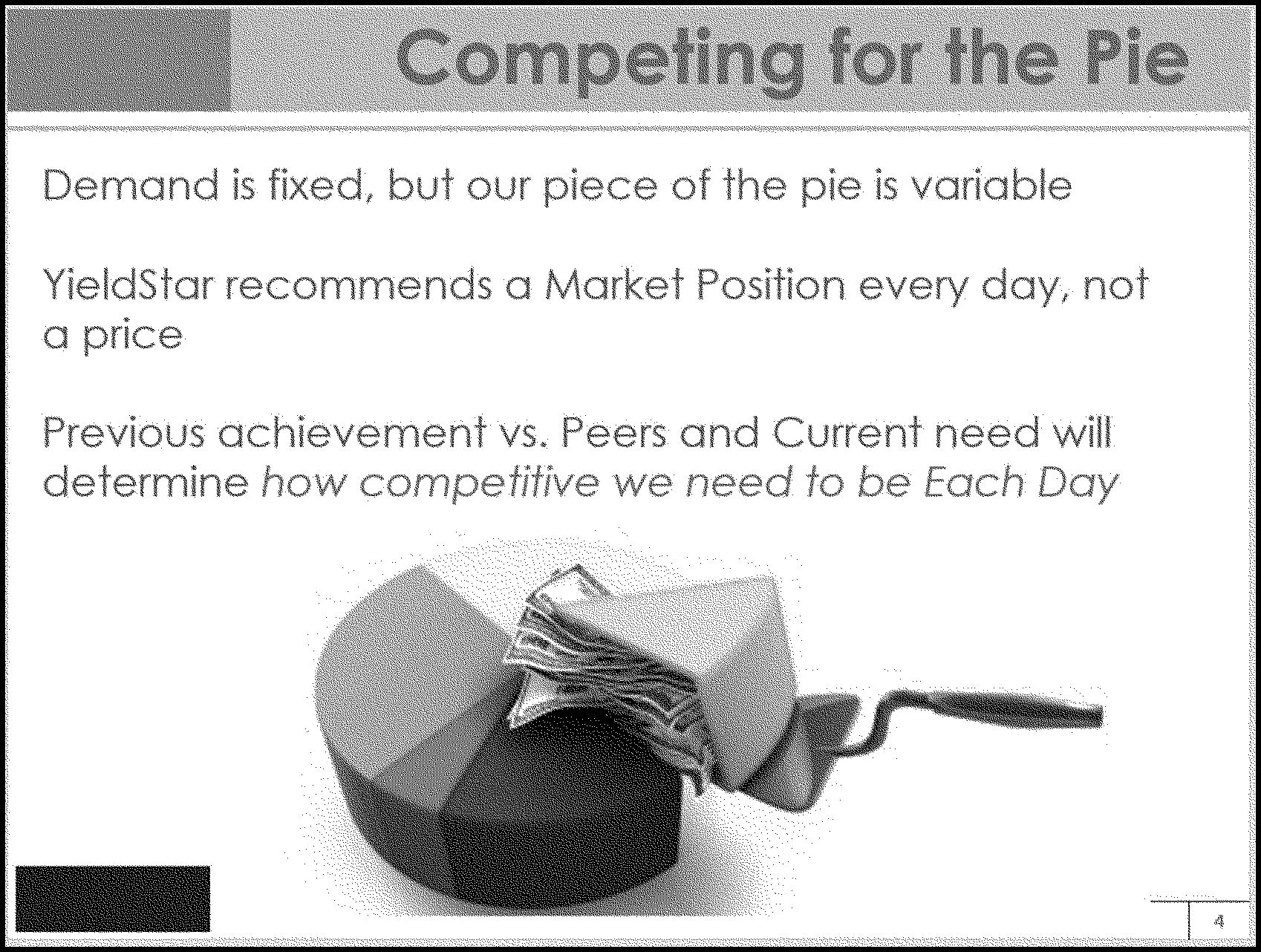
132. AIRM uses machine learning to train models on competing landlords' sensitive data. The parameters learned in this training are then applied to each AIRM client.[7] As a result, the model uses the same method and learned parameters to generate price recommendations from the relevant data for each landlord.
133. This aligns and stabilizes prices in at least two ways. First, it reduces volatility in how prices change, compared to a situation in which each client sets prices independently. No longer do competitors react in distinctive ways to changing market conditions as they would in a market without access to competitors' transactional data. Instead, AIRM price recommendations tend to standardize those reactions. This leads to the second result: pricing recommendations, and consequently pricing decisions, become more predictable and aligned among competitors as each is using the same set of learned model parameters.
134. RealPage has even manipulated competitor mappings to increase the likelihood that AIRM or YieldStar would recommend price increases. For example, a prominent client asked why a subject property had mapped peers located more than 100 miles away, in a different metropolitan area, when there were satisfactory mapped competitors within five miles. RealPage's response was that if these distant properties were not mapped, the client's property would be at the top of the market and it would be more difficult for AIRM to recommend price increases. RealPage had originally mapped these distant properties to give the model more room to recommend price increases for the client's property.
135. This dynamic exists not only in markets with growing demand, but also so-called “down markets,” where demand is decreasing. In a competitive market with a fixed supply (at least in the short run) of housing units, a demand decrease would result in prices falling. But AIRM and YieldStar resist price decreases in down markets as much as possible while achieving targeted occupancy rates. RealPage told one prospective AIRM client that the combination of “AI and the robust data in the RealPage ecosystem” would allow the landlord to “avoid the race to the bottom in down markets.”
136. Using competitors' transactional data to calibrate and set the bounds of its model enables YieldStar and AIRM to decrease prices as little as possible in a down market. As one example, in 2023 a landlord reached out to RealPage with concerns about price recommendations at a property. Despite the property having too many vacancies and peer properties decreasing in price, AIRM was recommending price increases, frustrating the property owner. A senior RealPage executive responded that the model was not lowering prices because “there isn't much elasticity between the recommended position and the current one” and “the model would recommend the highest possible position [ i.e., price] without affecting demand.”
137. RealPage succinctly summarized for landlords the effect of using AIRM and YieldStar in down markets: it “curbs [clients'] instincts to respond to down-market conditions by either dramatically lowering price or by holding price when they are losing velocity and/or occupancy.” These tools instill pricing discipline in landlords, curbing normal fully independent competitive reactions by substituting them with interdependent decision-making ( i.e., through the use of pricing recommendations based on shared, competitively sensitive information). These products ensure that clients are “driving every possible opportunity to increase price even in the most ( printed page 56300) downward trending or unexpected conditions.”
138. When one client wanted to cancel YieldStar, a RealPage executive noted to colleagues that with cancelation the client would lose “our helping them mitigate damage during rent control and covid.” In particular, the client would lose “us helping them rise with the tide given their strategy.”
139. Landlords understand the sensitivity of the information being shared and the likely anticompetitive effects. One potential client put it succinctly to RealPage: “I always liked this product [AIRM] because your algorithm uses proprietary data from other subscribers to suggest rents and term. That's classic price fixing. . . .”
140. Cushman & Wakefield recognized the anticompetitive potential of sharing this level of detailed competitor data. When a property owner asked for information on specific competitors, Cushman & Wakefield's director of revenue management replied that the requested tool, RealPage's Performance Analytics with Benchmarking, did not provide information on specific competitors. The reason? Performance Analytics with Benchmarking “tracks transactional information therefore due [to] the potential pricing collusion, it's anonymize[d] by RealPage.” Performance Analytics with Benchmarking draws from the same transactional database as AIRM and YieldStar. And while AIRM and YieldStar do not display the granular transactional data to the user, AIRM and YieldStar see and use that data. The price recommendations are based upon the very data that this client recognized could lead to collusion.
141. Even RealPage employees selling LRO recognized the anticompetitive harm from using competitors' transactional data to recommend prices. In a 2018 training deck provided to clients, RealPage explained, “we often times get the question about if comps are on LRO, can we just update the rents for you? Unfortunately, no, we can't. That could be considered price collusion, and it's illegal☐.” But this is precisely what AIRM and YieldStar do.
B. AIRM and YieldStar Impose Multiple Guardrails Intended To Artificially Keep Prices High or Minimize Price Decreases
142. Unsatisfied with relying merely on competitively sensitive data to advantage landlords, RealPage created “guardrails” within AIRM and YieldStar to force adjustments to the price recommendation. But these guardrails serve as one-way ratchets that help landlords, not renters, by increasing price recommendations or limiting a recommended decrease. And each of these guardrails makes use of competitively sensitive data that landlords agree to share with RealPage. These guardrails have even spurred multiple landlords to tell RealPage that AIRM and YieldStar are not dropping recommended rents as much as their individual conditions, or even market conditions, would warrant.
143. Hard Floor. AIRM and YieldStar will not recommend a floor plan price that falls below the smoothed market minimum effective rent. The market minimum is a hard floor. AIRM and YieldStar thus explicitly constrain floor plan price recommendations based on the prices of competitors, using shared nonpublic information.
144. Revenue Protection Mode. RealPage created a “revenue protection” mode that effectively lowers output to increase revenues. Revenue protection activates when AIRM or YieldStar predict—using calculations incorporating competitors' data—that demand is too low for a landlord to meet its target occupancy. Rather than lowering the price to stimulate demand, the algorithm reduces the target number of leases. AIRM and YieldStar then maximizes revenue for the reduced occupancy level, which tends to reduce price decreases or increase rental prices.
145. RealPage acknowledges that revenue protection “may seem counterintuitive to leasing needs.” In June 2023, a landlord complained to RealPage that “something in your model is broken” because “the pricing model is not lowering rents dramatically” despite the client's high exposure during a busy summer leasing season. RealPage explained that, with revenue protection, “the model still sees the way to make more revenue is to lease fewer units at higher prices.” In other words, the model seeks to “raise rates to get the highest dollar value possible for the leases we can statistically achieve” and ignore those leases that the client wants but the model predicts, using competitors' data, the client will not get.
146. The model's hard price floor can trigger revenue protection mode. In May 2022, for example, a landlord complained that AIRM was recommending price increases despite a projected shortfall in leases. Because revenue protection mode cannot be turned off, the RealPage pricing advisor recommended that the client reduce sustainable capacity. Sustainable capacity is a client-set parameter that imposes an inventory constraint and determines the number of leases AIRM and YieldStar will try to achieve. This is, of course, what revenue protection mode functionally does on its own: increase inventory constraints to reduce output.
147. This phenomenon, a RealPage employee explained internally, was “true revenue protection mode.” The client's floor plan was priced toward the bottom of its competitors. AIRM did not see any price decrease that would achieve the original target number of leases without dropping below the market floor (determined using competitors' data). Because AIRM never recommends prices below the market floor, AIRM instead reduced the number of leases and optimized against that new, lower occupancy rate.
148. Revenue protection mode interrupts AIRM's and YieldStar's normal revenue maximization process. As a RealPage data scientist explained, “the model really wants to reduce rent but is prevented from doing so by the revenue protection restriction.” Revenue protection leads to higher prices and lower occupancy.
149. Sold-Out Mode. Once a landlord reaches its targeted capacity for a particular floor plan, the model considers that floor plan “sold out” even though units may still be physically available. In that situation, AIRM and YieldStar recommends the maximum rent charged by a property's competitors, even if the floor plan's previous price was far lower.
150. RealPage intentionally designed sold-out mode to use competitively sensitive data to lift rents. In an earlier version of the software, sold-out mode pushed rents to 95% of that floor plan's highest recently achieved rent. But RealPage modified the algorithm in 2022 to go “straight to 100% of comps,” deliberately aligning rents with competitors' highest rents, rather than the property's own historical performance.[8]
151. The Governor. AIRM and YieldStar favor recommended price increases over price decreases. When the model calculates that the current day's “optimal” price will result in greater revenue than the previous day, a feature called the “governor” causes the model to recommend the current day's optimal price.[9] But when AIRM or YieldStar calculates that the current ( printed page 56301) day's optimal price will result in less revenue than the previous day, the governor recommends the recent average price even though it is not optimal for the current day. In other words, when market conditions weaken and the model calculates that a price decrease is warranted, this guardrail kicks in and recommends keeping the recent rent even though it is suboptimal. This asymmetry favors price increases over price decreases.
152. The effect of these guardrails is intentionally asymmetric. AIRM and YieldStar recommend price increases generated by the model. But the guardrails reduce or eliminate certain proposed price decreases even though the model has determined such deviations may contravene the landlord's individual economic interest.
C. AIRM and YieldStar Harm the Competitive Process by Discouraging the Use of Discounts and Price Negotiations
153. RealPage discourages landlords using AIRM and YieldStar from discounting rents. In the multifamily property industry, discounts typically consist of “concessions,” which are financial allowances (such as a free month's rent or waived fees) offered to incentivize renters. Concessions may be offered generally or negotiated individually with a potential tenant.
154. In a competitive marketplace, each landlord may independently decide to offer concessions so that it can better compete in enticing lessors. But, again, RealPage seeks to replace fully independent, competitive decision-making with collective action by ending concessions. AIRM and YieldStar do not work as well when landlords use one-off or lumpy concessions. In its “best practices” for revenue management to landlords, RealPage's guidance is simple: “Eliminate concessions.” Detailed “best practices” documents for both YieldStar and AIRM users explain that “concessions will no longer be used in conjunction with” YieldStar and AIRM.
155. When onboarding a new property, RealPage emphasizes the importance of accepting price recommendations without offering discounts, including “no concessions.” Concessions cause landlords to deviate from what RealPage determines is the maximum revenue-generating price.
156. Landlords have worked to implement RealPage's requests. In one YieldStar training, Greystar explained that “Concessions are gone!” In a client-facing FAQ document about its revenue management products, RealPage explained that “the vast majority of our clients have discontinued the use of concessions.” A 2023 RealPage client presentation showed that the number of units offering concessions generally trended downward from approximately 30% of units in 2013 to under 15% in 2023. A client's refusal to offer concessions is bolstered by its awareness of competing landlords receiving the same advice from RealPage. In addition to discouraging discounts, RealPage discourages negotiating prices with renters. RealPage trains landlords that “YieldStar [or AIRM] is managing your Price,” so the landlord's staff can focus on other things. The YieldStar or AIRM rent matrix is to be the source of prices that are given to a prospective renter. RealPage instructs leasing staff to provide prospective renters the specific price from the matrix that corresponds to the prospect's desired move-in date, unit, and lease term. RealPage cautions landlords not to show renters the matrix itself.
D. AIRM and YieldStar Increase and Maintain Landlords' Pricing Power by Using Competitors' Data To Manage Lease Expirations
157. Supply is a basic component of pricing. For this reason, information on a company's supply is highly sensitive, and its disclosure to competitors is particularly concerning. Yet AIRM and YieldStar use competitors' supply data precisely for the purpose of adjusting unit-level pricing, regardless of whether the landlord accepts the floor plan price recommendation. The goal of this “lease expiration management” is clear: As a RealPage senior manager explained for a client, using this data means that the client's property “will remain in a position of pricing power.”
158. The purpose of lease expiration management is to avoid too many units becoming available in the market at the same time. Expiration management only increases unit-level prices. It never reduces the price.
159. Every landlord can choose to use “market seasonality” to inform its lease expiration management. As the name suggests, market seasonality adjusts the landlord's prices based on how many of its competitors' units will be vacant—that is, future supply. This feature is popular among landlords. For example, one of the largest landlords in the United States uses it in 98% of its properties. Every single property that uses market seasonality is leveraging RealPage's access to this highly sensitive, nonpublic data about its competitors' supply to inform pricing. RealPage trains landlords to turn on market seasonality as a best practice.
160. When activated, the market seasonality function changes unit-level prices across the different possible lease terms regardless of whether the landlord accepts the AIRM or YieldStar floor plan price recommendation.
161. RealPage determines for landlords an important input into lease expiration management: the expirations threshold. This threshold influences the point at which expiration premiums are added. The threshold calculation relies on nonpublic lease transaction data for the property's submarket and pulls from numerous RealPage products, including YieldStar, AIRM, OneSite, Business Intelligence, and Performance Analytics with Benchmarking. Landlords cannot adjust the expirations threshold.
162. Fueled by competitor data, expiration management results in “increased stability” and “pricing power.” Using competitors' data reduces the risk of overexposure that “could erode rent roll growth.” By adjusting price recommendations based on how much total supply is forecast in the market for a given time period, AIRM empowers landlords to charge higher prices than they could without access to competitors' nonpublic data.
E. No Procompetitive Benefit Justifies, Much Less Outweighs, RealPage's Use of Competitively Sensitive Data To Align Competing Landlords
163. AIRM and YieldStar do not benefit the competitive process or renters. Any legitimate benefits of revenue management software can be achieved through less anticompetitive means, and any theoretical additional benefits of AIRM and YieldStar are not cognizable and outweighed by harm to the competitive process and to renters.
V. RealPage Uses Landlords' Competitively Sensitive Data To Maintain Its Monopoly and Exclude Commercial Revenue Management Software Competitors
164. Landlords are not the only ones that benefit from RealPage's rental pricing practices. RealPage benefits too through maintaining its monopoly over commercial revenue management software for conventional multifamily housing rentals. In that market, RealPage's internal documents reflect that it commands an 80% share.
165. RealPage's core value proposition creates a self-reinforcing feedback loop of data and scale advantages. The sharing of competitively sensitive information among rivals attracts more landlords that seek to maximize revenues and extract more money from renters. As a result of its exclusionary conduct, RealPage has been able to ( printed page 56302) obstruct rival software providers from competing on the merits via revenue management products that do not harm the competitive process.
166. Over time, RealPage has become more entrenched and has stymied alternatives unless they too enter into similar unlawful agreements with landlords to obtain and use nonpublic transactional data to price units. Even then, RealPage's unparalleled troves of competitively sensitive data provide an ill-gotten advantage.
A. Landlords Are Drawn to RealPage Because of Access to Nonpublic Transactional Data That Is Used To Increase Landlords' Revenue
167. Landlords prize RealPage's accumulation of nonpublic transactional data from competing landlords. For example, Greystar noted that “RealPage supplies the best set of transactional data available via their millions of units of data—this becomes a valuable source of truth to our competitive landscape.” In a training document for its employees, the same landlord explained that “better data = better outcomes” and that AIRM has “over 15 million units of data available.” From the perspective of Greystar, “pricing decisions start with data” and that precision in pricing “comes from data driven decisions.” Importantly, the landlord believed that AIRM's ability to “examine data quality . . . each night” via its property management software integrations, including guest card entry, “plays an important role” in pricing.
168. As another example, Cushman & Wakefield identified this data as especially helpful in a dense market because of insights into competitors' actions in the market. The same landlord also concluded that the more data points, the better confidence a landlord has in RealPage's rental recommendations. According to Cushman & Wakefield, more data—especially data about concessions—enabled the landlord to make better decisions because it showed the landlord where the market stood. Cushman & Wakefield's director of revenue management explained to a colleague that YieldStar “collects about 14 MILLION transactional lease data across the US and has over 20 years of historical records.” The director acknowledged that “[t]his is huge! Essentially, this is a window into the market and the shifts we are going to experience . . . Having insight into this data, allows [landlords] to make changes with the dynamic changes in the market.”
169. Willow Bridge, who compared AIRM to another commercial revenue management software product, noted that the competing product “is about half of the cost and does a good job in reviewing rents and making recommendations but does it without the additional reporting capabilities and market data that AIRM uses.” Ultimately, this landlord decided to push their owner clients towards AIRM. The landlord's decision to use AIRM was in part based on receiving “more accurate and time sensitive data” and noted that, although revenue management is not changing, “the amount of data and how that information is used to grow revenue is bigger and better than ever” with AIRM.
170. Landlords want access to RealPage's transactional data because RealPage advertises, and landlords believe, that the use of this data will increase a landlord's revenue. “Due to the amount of data RealPage possesses,” Greystar explained, RealPage developed AIRM “to leverage machine learning to improve both the supply and demand modeling and provide a tool to further customize to each asset's needs.” The materials sent to the landlord's clients also included a flyer explaining that AIRM will “outperform the market 2-7% year over year” and that it provides “[a]ctionable intelligence derived from the industry's largest lease transaction database of 13M+ units.”
171. Landlords view the lack of access to transactional data as a significant shortcoming in other commercial revenue management software. One landlord received a request from a property owner client for information on YieldStar and how it compared to another commercial revenue management product. A landlord executive explained that YieldStar was backed by robust data and “millions of units of transactional data to support not only their demand and forecast modeling but also their market/competitive set information.” She concluded that the other revenue management software was “in a completely different class” than YieldStar. More than two years later, the same executive again concluded that this company's new revenue management product was inferior to AIRM because AIRM had far more transactional data, supported by RealPage's Market Analytics survey data. In another example, a different landlord compared multiple commercial revenue management products to RealPage's YieldStar. He concluded that a major weakness of these alternatives was that they lacked access to transactional data on competitors' rents.
B. RealPage's Collection and Use of Competitively Sensitive Data Excludes Competition in Commercial Revenue Management Software
172. RealPage recognizes the barriers to competition on the merits that its data, scale, and business model provide. RealPage understands that “pricing decisions start with data.” RealPage explains to its clients that “[t]he data entered into your [property management software] and collected each night, along with current market data (and lead data if OneSite) provides insight into advantageous demand drivers, identifies revenue risk and opportunity, and captures this competitive landscape for informed pricing.”
173. This data and scale advantage is significant and creates a feedback loop that further increases barriers to competition for commercial revenue management software. RealPage touts its access to an “unmatched database.” In one case from 2023, a RealPage sales representative noted that RealPage's “revenue management is the most widely adopted solution in the industry” and RealPage had “approximately 4.8M units on revenue management.” In a 2023 presentation for AIRM, RealPage advertised that the “[a]mount of data we have (~17mm units) is unique to RealPage” and that the “[q]uality of data is best in class given that it is `Lease Transaction Data.' ” RealPage claimed this “supports that fact that the industry views RealPage as the source of truth for performance data.”
174. RealPage has used this competitively sensitive data to develop an AI-driven revenue management solution that leverages the scale and scope of its data. RealPage's plan to use this database as fuel for its AI pricing model is spelled out in a Go-To-Market summary from 2019. In that document, RealPage describes that:
RealPage can achieve $10 Million in organic ACV growth through delivery of the next generation of revenue management. Failure to do so reduces the opportunity to harvest gains from our $300M investment in LRO and places a portion of current $100M revenue management revenue at risk to emerging competitors, including Yardi and low-cost alternatives that say `all revenue management is the same.' Over time we can sunset YieldStar and LRO reducing expense, and leverage LRO capabilities as a revenue management lite offering.
175. This plan came to fruition with the introduction of AIRM. In a RealPage training presentation from February 2020—right before the launch of AIRM—RealPage discusses a new optimization solution that is built on the “RealPage Foundation” which is ( printed page 56303) defined as “13.5m units of lease transactional data informing our models with real actionable intelligence in near real time.” As described earlier in the deck, RealPage's competitors “lack the foundational capabilities on which to build upon” leaving RealPage with the possibility “to tie together each capability . . . in a single view.”
176. RealPage knows that its rivals do not have access to similar data sets. In one presentation from 2022, RealPage discussed competing revenue management products from Yardi and Entrata. Yardi and Entrata have fewer than 250,000 units, RealPage concluded, while RealPage had at least 4 million. Unlike RealPage, Yardi had a limited data set that used data only from Yardi's property management software. RealPage likewise explained that Entrata lacked much data outside of student housing and Entrata's revenue management software worked only with its own property management software, meaning Entrata could not pull data from RealPage's OneSite or other property management software products. RealPage further criticized manual in-house pricing options for having biased data, introducing errors through manual pricing, and being inefficient.
177. RealPage pitches prospective clients on its unique access to and use of nonpublic transactional data that is competitively sensitive. In 2021, RealPage discussed internally how to pitch AIRM to a prospective client who was considering an alternative revenue management solution. A RealPage employee pointed to the competitor's lack of “AI driven competitor information derived from lease transaction data.” Another employee added that the salesperson should amplify the prospective client's concerns about the competitor's lack of nonpublic transactional data, comparing it to buying a “Ferrari without an engine.” RealPage's chief economist concurred.
178. RealPage's use of competitors' nonpublic transactional data provides it an important advantage on pricing renewals. Information on renewals is not available publicly. Competing revenue management vendors who do not use nonpublic, competitively sensitive data are left partially blind to this important part of the rental market. In 2022, a RealPage salesperson stressed this advantage to a prospective client who was also considering a competing commercial revenue management solution. The salesperson noted the lease transaction data RealPage collected on a nightly basis and declared that RealPage had an “unequaled ability to stress test renewals nightly and drive amenity optimization.”
179. RealPage recognizes that its use of competitively sensitive data minimizes any competitive pressure it faces. A RealPage senior vice president explained in a strategy document that RealPage's unique nonpublic data on leasing decisions was a “data moat,” protecting RealPage from competitors. In 2020 RealPage's chief economist noted that RealPage's access to this data was a “major competitive advantage” and a “major reason we can do what we do.” In 2021 a prospective client asked RealPage why AIRM cost three times the amount of a competing revenue management product. Internally, a RealPage employee pointed to AIRM leveraging daily transactional data of over 13 million units to collect competitors' rents and forecast demand. He noted that multiple large landlords had refused to adopt the competing revenue management product rather than AIRM even when the competitor offered it for free. The same RealPage employee explained to another client that RealPage's leveraging of lease transaction data—with access to confidential data for over 14 million units—was a key advantage over a competing commercial revenue management provider.
180. In June 2023 a landlord emailed RealPage and asked, “who are your competitors?” A RealPage sales executive responded, “Our revenue management solution does not have any true competitors, mainly because our data is based on real lease transaction data from all kinds of third-party property management systems. . . .”
181. In addition, when discussing a potential entrant, a RealPage executive noted that the entrant needed “to get the data to enable [revenue management].” He further noted that [g]etting the data (and more modern methods) . . . will be hurdles for [the entrant].” Another RealPage senior executive explained that shifting clients from LRO, which is less reliant on competitively sensitive information of rivals, to AIRM, which is very reliant on such information, reduced the threat from new entry when she noted that migrating LRO clients to AIRM was “critical to reducing the risk that may come from this new [entrant's] offering.”
182. RealPage's power and conduct in connection with commercial revenue management software serves to exclude rivals and maintain its monopoly power. RealPage has ensured rivals cannot compete on the merits unless they enter into similar agreements with landlords, offer to share competitively sensitive information among rival landlords, and engage in actions to increase compliance. As a result of its exclusionary conduct, RealPage has been able to obstruct rival software providers from competing via revenue management products that do not harm the competitive process in addition to cementing its massive data and scale advantage that keeps increasing due to feedback effects.
VI. Relevant Markets
A. Conventional Multifamily Rental Housing Markets
1. Product Markets
183. Conventional multifamily rental housing is a relevant product market. Conventional multifamily rental housing includes apartments available to the general public in properties that have five or more living units. Conventional rental housing does not include student housing, affordable housing, age-restricted or senior housing, or military housing. This product market reflects consumer preferences, industry practice, and governmental policy.
184. In 2023, RealPage estimated the conventional multifamily rental market to cover approximately 14 million units. The 2021 American Housing Survey estimated a total of 21.1 million multifamily apartments—not limited to conventional—in the United States.
(a) Conventional Multifamily Rentals Are Distinct From Other Types of Multifamily Housing
185. Other types of multifamily apartment buildings are not good substitutes for conventional multifamily rentals. Some kinds of multifamily buildings are restricted to specific types of renters, such as student housing units, affordable housing units ( i.e., income-restricted housing), senior ( i.e., age-restricted) housing, and military housing. These housing units focused on different classes of renters are not reasonable substitutes for conventional multifamily rentals. RealPage distinguishes conventional multifamily as being in a different market segment from senior, affordable, and student housing in the ordinary course of business.
186. Non-conventional units are not widely available to all renters and can exhibit different buying patterns. For example, student housing serves individuals enrolled in higher education and is typically located on or near universities. Student housing is typically leased by the bed instead of by unit, and faces a significantly different leasing cycle and different patterns in ( printed page 56304) renewals and leasing practices. Recognizing these differences, RealPage will assign to student properties surrogates that are distant student assets rather than nearby conventional assets. RealPage in fact offers a different version of both AIRM and OneSite, its property management software, for the “student market.”
187. Affordable housing units are available only to individuals or households whose income falls below certain thresholds. Multiple federal affordable housing regulations, for example, require participants in affordable housing programs to have incomes lower than a set percentage, such as 30%, of the median family income in the local area. Affordable housing units are also relatively scarce, with families seeking such housing often waiting years on a waitlist. These legal and practical restrictions prevent affordable housing from being a reasonable substitute to conventional multifamily housing for the typical renter.
188. Senior housing is typically restricted to individuals aged 55 and older. RealPage separates senior housing into four categories: independent living, assisted living, memory care, and nursing care. Independent living offers senior-focused amenities—such as transportation, meals, and social gatherings among community members—that materially increase housing costs and are less desirable to younger households. The other three categories of senior housing provide professional or special care to assist renters with basic tasks like eating, bathing, and dressing, and they are not reasonable substitutes for conventional multifamily rentals.
189. Military housing is also not a reasonable substitute to conventional multifamily rentals. It is typically geographically proximate to military installations, with roughly 95% of military housing found on-base. Although civilians may in some cases be able to live in military housing properties experiencing low occupancy rates, military regulations place them below five higher-priority categories of potential renters, including active and retired military personnel.
(b) Single-Family Housing Is Not a Reasonable Substitute to Multifamily Rentals
190. The multifamily industry, government regulators, and policy documents distinguish between properties with at least five units, which are classified as “multifamily housing” and those with fewer units, which are classified as “single-family rentals.”
191. The purchase of single-family or other types of homes is not a reasonable substitute for conventional multifamily housing rentals. A former RealPage economist explained that “the choice between renting and owning is first and foremost a life stage and lifestyle choice over a financial one.” Single-family homes also generally require a substantial down payment. In March 2023, a RealPage economist estimated an “entry premium” of $800 per month to home ownership over rentals. According to a 2021 RealPage strategic planning guide, the “myth” that people were abandoning multifamily properties for single-family homes is false, stating that “rising home sales do not hurt apartment demand.” Single-family home sales are not reasonable substitutes for conventional multifamily housing.
192. More broadly, renters living in conventional multifamily apartments will not switch to single-family homes—purchases or rentals—because of a small increase in rent. The decision to move from an apartment building to a single-family home is primarily a life-stage and lifestyle choice. For example, the decision by a household to have children may spur a move to a single-family home. In many areas, relatively few children live in conventional multifamily apartments. Multifamily apartments typically offer community amenities and a different lifestyle, such as high walkability in an urban area, whereas single-family homes generally do not offer the same amenities and offer instead increased privacy, including private yards. A RealPage analyst explained in 2022 that because a move to a single-family home is a “lifestyle choice,” single-family home rentals were not direct competitors to multifamily rental housing. A 2022 RealPage deck, shared with a landlord, stated that multifamily rentals and single-family rentals were “complementary, not competitive,” and targeted different renters, with different floor plans, in different locations. Another RealPage analyst explained to a multifamily property owner that single-family rentals offer a different renter profile than multifamily rentals.
193. Industry participants agree that single-family rentals attract a different pool of renters from multifamily rentals. A managing director of a single-family rental property management company explained in 2021 that a renter's journey from multifamily apartment living to single-family rentals came as life stages evolved. The CEO of a single-family rental developer similarly explained that these single-family rental homes are for renters who age out of multifamily apartments.
194. Single-family rentals are also typically priced higher than multifamily apartments, further reducing potential substitution between them. The chairman of one institutional multifamily property owner explained in a 2022 earnings call that multifamily housing was relatively affordable compared to single-family rentals. An industry price index showed that, in March 2024, single-family rent was approximately 18% higher than multifamily rent.
(c) Conventional Multifamily Rental Units With Different Bedroom Counts Are Relevant Product Markets
195. Different bedroom floor plans also constitute relevant product markets. A key criterion by which a current or prospective renter searches for a rental unit is the number of bedrooms. One-bedroom units are substitutes for other one-bedroom units, two-bedroom units are substitutes for other two-bedroom units, and so forth. Individual renters may change their desired numbers of bedrooms, but this is typically tied to changes in circumstance independent from price. For example, the birth of a new child may require a family to shift from a one-bedroom unit to a two-bedroom unit.
196. RealPage adopts this practical reality in the ordinary course of business. For every property using AIRM or YieldStar, RealPage maps peer floor plans. These mapped floor plans capture reasonable substitutes for the subject property floor plan and reflect the perceived market by a prospective renter.
197. To be selected as a peer, a floor plan must have the same number of bedrooms. A RealPage employee explained the mapping process to a client: “we are looking specifically at the bedroom level. The tool will only map 2b[edroom] with 2b[edroom] or 1b[edroom] with 1b[edroom].” The object of mapping peers is to mirror the prospect buying experience by identifying properties that a potential tenant will see in online searches when searching for a particular floor plan and price range.
( printed page 56305)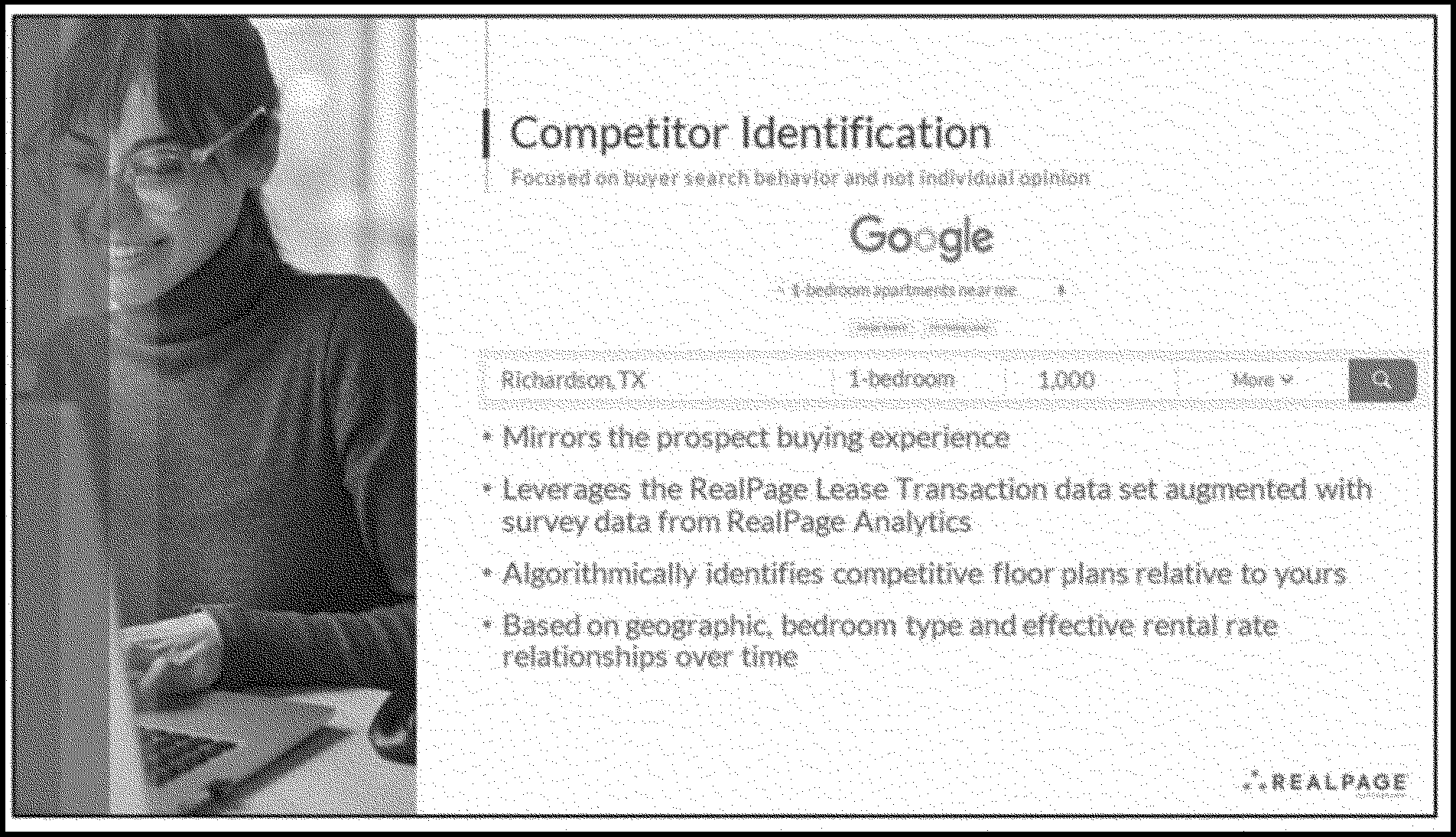
198. AIRM and YieldStar price the different floor plans, which consist of different numbers of bedrooms, independently. RealPage testified that the model considers no cross-price elasticity between different floor plans: “when you set up the different floor plans, a one bedroom, a two bedroom, or three bedroom, those are completely independent . . . . [T]here's no influence in what the pricing is for the two bedrooms, for example . . . has no influence on what the pricing is for the one bedrooms.” Landlords also take steps to maintain a pricing spread between one- and two-bedroom units and avoid pricing one-bedrooms at a higher rate than two-bedroom units.
199. Landlords recognize that units with different bedroom counts face different demand from renters. For example, Greystar explained internally in 2022 that demand for studio apartments differs from demand for three-bedroom units. A separate 2023 training by Greystar reiterated that demand trends, and therefore pricing trends, differ by bedroom counts and that staff should not react to a downward trend in one category, such as two bedrooms, with discounts in one- or three-bedroom units. At another time, Greystar emphasized the benefit of RealPage's lease expiration management feature because it is managed at the bedroom level—not at the property level—so it could match seasonal demand for units with that specific number of bedrooms. A revenue manager at Willow Bridge similarly explained to colleagues that one-bedroom units have drastically different demand patterns from two-bedroom units and from three-bedroom units.
2. Geographic Markets
200. Defining relevant geographic markets help courts assess the potential anticompetitive impact of the agreements challenged. Here, the relevant geographic markets for the purposes of analyzing the anticompetitive effects of RealPage's agreements with landlords are the areas in which the sellers (the landlords) sell and in which the purchasers (potential renters) can practicably turn for alternatives. RealPage's agreements are alleged to have suppressed price competition in the markets for conventional multifamily housing. The relevant geographic markets to assess those agreements are those property locations close enough for their apartments to be considered reasonable substitutes. In delineating a geographic market for conventional multifamily housing, the focus is inherently local. Renters are typically tied to a particular location for work, family, or other needs.
201. RealPage recognizes the local nature of geographic markets. One RealPage former employee explained that under “Real Estate 101 rules, real estate is local, local, local.” Another RealPage former chief economist noted that an effective evaluation of a property's performance must be done in comparison to similar properties in the property's neighborhood because competitive conditions in the neighborhood could differ widely from the city at large. When training landlords on lease expiration management, two RealPage executives explained that market seasonality was based on the most accurate geographic level, such as zip code, neighborhood, or submarket. They further explained that renters typically move locally. Similarly, a former property manager explained that potential tenants will look at a small number of properties in the same neighborhood, and it is on that neighborhood level where competition occurs among multifamily properties. This individual testified, “location really does matter in real estate.”
202. RealPage has created a tool called True Comps. Used in performance benchmarking products that provide decisional support to AIRM and YieldStar, True Comps provides a more accurate mapping of competitor properties. It uses an algorithm to find the properties most comparable to the subject property, as measured by characteristics including distance, effective rent, age, property height, and unit count and mix. By default, True Comps picks competitors within a 15-mile radius. In scoring distance, True Comps applies a “highly-punitive model”—the distance score drops from 99% for a distance of 0.05 miles, to 56% for a distance of 2 miles, and to 10% for a distance of 8 miles. Thus, RealPage acknowledges and incorporates small geographic areas as the appropriate ( printed page 56306) location in which to find true competitive alternatives.
203. During a property's implementation process, AIRM and YieldStar require the mapping of peer properties, including competitors. RealPage starts by looking for competitors within a half-mile radius from the subject property and then expands as necessary. Geographic proximity is in fact so important that YieldStar has a default radius that limits its search for competing properties to no more than 5 miles in urban settings, and to no more than 10 miles in suburban settings. RealPage has an internal process for escalating any proposed peer property that is more than 15 miles away.
(a) RealPage-Defined Submarkets Identify Relevant Geographic Markets
204. RealPage defines geographic submarkets in the ordinary course of business. Each submarket reflects the geographic area, defined by a set of zip codes, that features similar properties that compete for the same pool of potential renters. In constructing submarkets, which are generally larger than its neighborhoods, RealPage considers major roads, city and county boundaries, and school districts. RealPage also considers socioeconomic factors and apartment market characteristics, such as the age of properties and rental rates.
205. Even within a city, apartment demand varies significantly based on factors such as employment. Supply may also vary widely as existing properties and new construction may be located in different parts of a city. A former RealPage chief economist explained that because “real estate is very local . . . you typically want to take a . . . more narrow view if you can on what's going on in any given submarket.” [10]
206. The multifamily industry recognizes submarkets as an important geographic area for analyzing competition and pools of renters. Multiple industry analysts offer data by submarkets. A revenue management director at Greystar testified about a submarket that “everybody in our industry uses this term.” She further stated that submarkets are a standard categorization system, used by RealPage and others, including to benchmark a subject property's performance with comparable properties. A revenue manager at Cushman & Wakefield circulated a scorecard comparing performance to the submarket, and exclaimed that “we're perfectly aligned with the submarket” on rent roll.
207. A revenue management executive at Willow Bridge testified that submarkets identify specific, smaller areas of a city where renters look to live to be close to schools or work. This executive testified that submarkets typically identify the area within which a renter is comparing apartment options. This landlord tracks other properties' rents in a subject property's submarket to make sure the subject property remains competitive, and if rents in a submarket increased, then the landlord expected that its property in that submarket would also raise its rents.
208. Appendix A lists RealPage-defined submarkets that identify relevant local markets in which the agreements among RealPage and landlords to share nonpublic, competitively sensitive information for use in pricing conventional multifamily rentals have harmed, or are likely to harm, competition and thus renters.
209. The RealPage-defined submarkets identified in Appendix A are relevant markets in which the agreements between RealPage and AIRM and YieldStar users to align pricing has harmed, or is likely to harm, competition and thus renters. In each of these markets, the penetration rate for AIRM and YieldStar ranges from at least around 26% to 69%, and for AIRM, YieldStar, and OneSite ranges from at least around 30% to 78%.[11] In each of these markets, the landlords using AIRM or YieldStar and/or sharing competitively sensitive information collectively have market power.
210. Appendix B identifies submarkets by bedroom count that are relevant markets in which the agreements between RealPage and landlords, and agreements among landlords, to share nonpublic, competitively sensitive information for use in pricing conventional multifamily rentals have harmed, or are likely to harm, competition and thus renters.
211. The markets identified in Appendix B are relevant markets in which the agreements between RealPage and AIRM and YieldStar users to align pricing collectively have harmed, or are likely to harm, competition and thus renters. In each of these markets, the penetration rate for AIRM and YieldStar ranges from at least around 26% to 79%, and for AIRM, YieldStar, and OneSite ranges from at least around 30% to over 80%. In each of these markets, the landlords using AIRM or YieldStar and/or sharing competitively sensitive information collectively have market power.
(b) Core-Based Statistical Areas (CBSAs) are Relevant Geographic Markets
212. A core-based statistical area (CBSA) is also a relevant geographic market. A CBSA is a geographic area based on a county or group of counties. A CBSA has at least one core of at least 10,000 individuals. A CBSA includes adjacent counties that have a high degree of social and economic integration with the core, as measured by commuting ties. A CBSA includes both metropolitan statistical areas and micropolitan statistical areas. A CBSA includes the set of reasonable conventional multifamily rental alternatives to which a renter would turn in response to a small but significant, nontransitory price increase.
213. RealPage itself tracks CBSAs in the ordinary course of business and refers to them as “markets.”
214. Table 1 identifies relevant markets in which the agreements between RealPage and landlords, and agreements among landlords, to share nonpublic, competitively sensitive information for use in pricing conventional multifamily rentals collectively have harmed, or are likely to harm, competition and/or consumers. In each of these markets, the penetration rate for AIRM and YieldStar ranges from at least around 26% to 37%, and for AIRM, YieldStar, and OneSite ranges from at least around 35% to 45%. Three of these markets are located in North Carolina.
| Core-Based Statistical Area (CBSA) Markets | YS/AIRM 30% or more | YS/AIRM/OneSite 30% or more |
|---|---|---|
| Atlanta-Sandy Springs-Roswell, GA | Yes | Yes |
| ( printed page 56307) | ||
| Austin-Round Rock, TX | Yes | Yes |
| Charleston-North Charleston, SC | Yes | |
| Charlotte-Concord-Gastonia, NC-SC | Yes | Yes |
| Dallas-Fort Worth-Arlington, TX | Yes | Yes |
| Denver-Aurora-Lakewood, CO | Yes | Yes |
| Durham-Chapel Hill, NC | Yes | Yes |
| Nashville-Davidson—Murfreesboro—Franklin, TN | Yes | |
| Orlando-Kissimmee-Sanford, FL | Yes | Yes |
| Raleigh, NC | Yes | Yes |
215. The markets identified in Table 1 are relevant markets in which the agreements between RealPage and AIRM and YieldStar users to align pricing collectively have harmed, or are likely to harm, competition and thus renters.
216. Table 2 identifies relevant CBSAs by bedroom counts that are relevant markets in which the agreements between RealPage and landlords, and agreements among landlords, to share nonpublic, competitively sensitive information for use in pricing conventional multifamily rentals collectively have harmed, or are likely to harm, competition and/or consumers. In each of these markets, the penetration rate for AIRM and YieldStar ranges from at least around 27% to 42%, and for AIRM, YieldStar, and OneSite ranges from at least around 33% to 45%.
| Core-Based Statistical Area (CBSA) markets | Number of beds. | YS/AIRM 30% or more | YS/AIRM/OneSite 30% or more |
|---|---|---|---|
| Atlanta-Sandy Springs-Roswell, GA | 1 | Yes | Yes |
| Atlanta-Sandy Springs-Roswell, GA | 2 | Yes | Yes |
| Austin-Round Rock, TX | 1 | Yes | Yes |
| Austin-Round Rock, TX | 2 | Yes | Yes |
| Charleston-North Charleston, SC | 1 | Yes | Yes |
| Charleston-North Charleston, SC | 2 | Yes | |
| Charlotte-Concord-Gastonia, NC-SC | 1 | Yes | Yes |
| Charlotte-Concord-Gastonia, NC-SC | 2 | Yes | Yes |
| Dallas-Fort Worth-Arlington, TX | 1 | Yes | Yes |
| Dallas-Fort Worth-Arlington, TX | 2 | Yes | Yes |
| Denver-Aurora-Lakewood, CO | 1 | Yes | Yes |
| Denver-Aurora-Lakewood, CO | 2 | Yes | Yes |
| Durham-Chapel Hill, NC | 1 | Yes | Yes |
| Durham-Chapel Hill, NC | 2 | Yes | Yes |
| Nashville-Davidson—Murfreesboro—Franklin, TN | 1 | Yes | Yes |
| Nashville-Davidson—Murfreesboro—Franklin, TN | 2 | Yes | |
| Orlando-Kissimmee-Sanford, FL | 1 | Yes | Yes |
| Orlando-Kissimmee-Sanford, FL | 2 | Yes | Yes |
| Raleigh, NC | 1 | Yes | Yes |
| Raleigh, NC | 2 | Yes | Yes |
217. The markets identified in Table 2 are relevant markets in which the agreements between RealPage and AIRM and YieldStar users to align pricing collectively have harmed, or are likely to harm, competition and thus renters.
218. Even assuming available land and no regulatory constrictions, local markets for conventional multifamily rental housing feature substantial barriers to entry. Landlords seeking to respond to rising rental prices by expanding supply, rather than simply acquiring an existing property, typically face substantial lead times to construct a new multifamily property. Additionally, there are significant upfront capital costs, including to fund expenditures on building material and labor, that are recuperated over time, which may require landlords to secure financing.
B. Commercial Revenue Management Software Market
219. RealPage has monopoly power in the market for commercial revenue management software for conventional multifamily housing rentals in the United States, with a durable market share over 80%, according to internal documents and other information.
1. Product Market
220. Commercial revenue management software for conventional multifamily housing rentals is a relevant antitrust product market.
221. Other methods for pricing conventional multifamily housing units are not reasonable substitutes for commercial revenue management software. RealPage and others in the industry recognize that revenue management software companies for multifamily housing units compete primarily against each other and not manual or do-it-yourself pricing methods.
222. Internal documents from RealPage refer specifically to commercial revenue management for multifamily housing and recognize RealPage's substantial market share. For example, a 2021 strategy presentation described RealPage as “the market leader in commercial revenue ( printed page 56308) management for multifamily [housing] with 45 of the 50 Top NMHC Owner and Operators” all using RealPage's revenue management products.
223. A presentation to RealPage's board in 2022 noted that “[RealPage] has gained [the] pole position in Revenue Management largely through the success of AI Revenue Management, which has become RealPage's leading differentiating product.” Additionally, the presentation described how “Revenue Management is experiencing strong growth driven by AIRM” due to its “PMS agnostic approach” which gives RealPage the ability to aggregate data from its clients resulting in “revenue management [that] has achieved a market share of 95% of the top 50 owners and operators.”
224. RealPage acknowledges its market power and durable market position. A 2023 RealPage presentation reviewing the use of artificial intelligence in property technology noted that “RealPage is already the de facto market leader in certain key areas at leveraging AI for multifamily proptech” and shows “revenue management” as the area where it is the furthest ahead.” Later, the same presentation noted that RealPage's current offer for revenue management is “best-in-class” and that “[n]o other company is cross-pollinating their pricing tools with data in a way similar to [RealPage].” As early as 2019, a RealPage presentation for clients stated that RealPage “has around 80% of the Revenue Management market share.” That share has proved durable over time. In 2023, during a sales pitch to a property owner, a RealPage representative noted that “[RealPage] has 80% to 85% of the market share with the closest competitor around 12% (<750K units).”
225. In late 2021, a RealPage employee preparing competitor intelligence explained to RealPage's chief economist that RealPage “dominate[d]” revenue management. He added that RealPage “dominate[d]” Yardi and Entrata, which are the next two largest commercial revenue management competitors.
226. RealPage's monopoly power is protected by barriers to entry, including the unlawful collection and use of competitors' nonpublic transactional data on millions of multifamily units.
227. Landlords also recognize RealPage's substantial market share and market power over commercial revenue management software. In 2024, a landlord revenue management executive testified that manual pricing does not compete with AIRM. The same landlord pitched YieldStar to its owner clients by explaining that “it's evident manual pricing cannot solve at the level a revenue management tool can.”
228. In a 2023 pricing dispute with a large landlord, RealPage refused to lower the price for its AIRM software. In response, an employee employed by the landlord noted that it was no surprise they would not decrease their price, remarking that “[h]ere is the joy of a monopoly on a product category.” In 2021, a different landlord commented that “the entire industry is feeling the monopolizing effects of RealPage right now and everyone is hungry for a new product.” A third landlord noted during AIRM renewal negotiations in 2022 that it had no options besides RealPage, with a senior executive stating about RealPage, “too bad they have a monopoly going here!” Also in 2022, a fourth landlord, in the face of RealPage pushing a 400% increase in annual revenue management costs over a five-year period, bemoaned the “limited competition in the market around revenue management tools” and how “the industry desperately needs a solid competitor,” and then discussed a plan to “incubate a viable alternative to AIRM in the future.” In 2024, that alternative had less than one half of one percent market share.
2. Geographic Market
229. The United States is a relevant geographic market for commercial revenue management software. RealPage sells its commercial revenue management software in the United States and tracks its business in the United States in the ordinary course of business. RealPage sets its subscription prices on a nationwide basis. Further, RealPage can deploy its commercial revenue management software, which may use inputs from properties located throughout the country, in any U.S. state. Landlords in the United States purchase commercial revenue management software from RealPage to set rental prices for renters in the United States. Many landlords have centralized revenue management teams that set nationwide revenue management policies and conduct revenue management trainings for their employees across the United States.
VII. Jurisdiction, Venue, and Commerce
230. The United States brings this action pursuant to Section 4 of the Sherman Act, 15 U.S.C. 4, to prevent and restrain RealPage's violations of Sections 1 and 2 of the Sherman Act, 15 U.S.C. 1, 2.
231. The Attorneys General assert these claims based on their independent authority to bring this action pursuant to Section 16 of the Clayton Act, 15 U.S.C. 26, and common law, to obtain injunctive and other equitable relief based on RealPage's anticompetitive practices in violation of Sections 1 and 2 of the Sherman Act, 15 U.S.C. 1, 2.
232. The Attorneys General are the chief legal officers of their respective States. They have authority to bring actions to protect the economic well-being of their States and their residents, and to seek injunctive relief to remedy and protect against harm resulting from violations of the antitrust laws.
233. This Court has subject matter jurisdiction over this action under Section 4 of the Sherman Act, 15 U.S.C. 4, and 28 U.S.C. 1331, 1337(a), and 1345.
234. The Court has personal jurisdiction over RealPage, Inc. (“RealPage”); venue is proper in this District under Section 12 of the Clayton Act, 15 U.S.C. 22, and under 28 U.S.C. 1391 because RealPage transacts business and resides within this District.
235. RealPage is a privately-owned company organized and existing under the laws of the State of Delaware and is headquartered in Richardson, Texas. It is registered to do business in the State of North Carolina as a foreign corporation offering software solutions for the multifamily housing industry and software as a service.
236. RealPage engages in, and its activities substantially affect, interstate trade and commerce. RealPage provides a range of products and services that are marketed, distributed, and offered to consumers throughout the United States and across state lines.
237. The Court has personal jurisdiction over Camden Property Trust (“Camden”); venue is proper in this District under Section 12 of the Clayton Act, 15. U.S.C. 22, and under 28 U.S.C. 1391 because Camden transacts business and resides within this District.
238. Camden is a publicly-traded multifamily company organized under the laws of the State of Delaware and is headquartered in Houston, Texas. Camden is registered to do business in the State of North Carolina. Camden owns or manages at least one multifamily rental property using AIRM within this District.
239. Camden engages in, and its activities substantially affect, interstate trade and commerce. Camden owns or manages multifamily rental units across the United States, including within this District. Camden's rental properties are marketed and offered to consumers throughout the United States and across state lines. ( printed page 56309)
240. The Court has personal jurisdiction over Cortland Management, LLC (“Cortland”); venue is proper in this District under Section 12 of the Clayton Act, 15. U.S.C. 22, and under 28 U.S.C. 1391 because Cortland transacts business and resides within this District.
241. Cortland is a privately-owned company organized under the laws of the State of Delaware and is headquartered in Atlanta, Georgia. Cortland is responsible for the management of multifamily rental housing properties, either directly owned by an affiliated entity or other third-party owners of multifamily housing properties. Cortland is registered to do business in the State of North Carolina. Cortland owns or manages multiple multifamily rental properties within this District, which use (or recently used) AIRM. Cortland has a registered agent for service of process in this District.
242. Cortland engages in, and its activities substantially affect, interstate trade and commerce. Cortland owns or manages multifamily rental units across the United States, including within this District. Cortland's rental properties are marketed and offered to consumers throughout the United States and across state lines.
243. The Court has personal jurisdiction over Cushman & Wakefield, Inc. (“Cushman & Wakefield”) and Pinnacle Property Management Services, LLC (“Pinnacle”); venue is proper in this District under Section 12 of the Clayton Act, 15 U.S.C. 22, and under 28 U.S.C. 1391 because Cushman & Wakefield, including its subsidiary Pinnacle, transacts business and resides within this District.
244. Cushman & Wakefield is organized under the laws of the State of New York and is headquartered in Chicago, Illinois. Cushman & Wakefield's multifamily rental property business is operated through its subsidiary Pinnacle, and also under the Cushman & Wakefield name since acquiring Pinnacle in March 2020. Pinnacle is organized under the laws of the State of Delaware and is headquartered in Frisco, Texas. Pinnacle is registered to do business in the State of North Carolina. Cushman & Wakefield U.S., Inc. is also registered to do business in the State of North Carolina. Pinnacle owns or manages multiple multifamily rental properties using YieldStar within this District.
245. Cushman & Wakefield engages in, and its activities substantially affect, interstate trade and commerce. Through Pinnacle, Cushman & Wakefield owns or manages multifamily rental units across the United States, including within this District. Cushman & Wakefield provides a range of multifamily property and revenue management services that are marketed and offered to consumers throughout the United States and across state lines.
246. The Court has personal jurisdiction over Greystar Real Estate Partners, LLC (“Greystar”); venue is proper in this District under Section 12 of the Clayton Act, 15 U.S.C. 22, and under 28 U.S.C. 1391 because Greystar transacts business and resides within the District.
247. Greystar is a privately-owned company organized under the laws of the State of Delaware and is headquartered in Charleston, South Carolina. A Greystar management services entity is registered to do business in the State of North Carolina. Greystar owns or manages multiple multifamily rental properties using AIRM within this District.
248. Greystar engages in, and its activities substantially affect, interstate trade and commerce. Through its subsidiaries, including Greystar Management Services, LLC, Greystar North America Holdings, LLC, and GREP Washington, LLC, Greystar owns or manages multifamily rental units across the United States, including within this District. Greystar provides a range of products and services that are marketed and offered to consumers throughout the United States and across state lines.
249. The Court has personal jurisdiction over LivCor, LLC (“LivCor”); venue is proper in this District under Section 12 of the Clayton Act, 15 U.S.C. 22, and under 28 U.S.C. 1391 because LivCor transacts business and resides within this District.
250. LivCor is a privately-owned company organized under the laws of the State of Delaware and is headquartered in Chicago, Illinois. It is registered to do business in the State of North Carolina as a foreign corporation engaging in ownership and investment in real property and related services. LivCor owns or provides asset management services at least one multifamily rental property using AIRM within this District.
251. LivCor engages in, and its activities substantially affect, interstate trade and commerce. LivCor owns or provides asset management services for multifamily rental units across the United States, including within this District. LivCor provides multifamily asset management services that are marketed and offered to consumers throughout the United States and across state lines.
252. The Court has personal jurisdiction over Willow Bridge Property Company LLC (“Willow Bridge”); venue is proper in this District under 28 U.S.C. 1391 and Section 12 of the Clayton Act, 15 U.S.C. 22 because Willow Bridge transacts business and resides within this District.
253. Willow Bridge is a privately-owned company organized under the laws of the State of Texas and is headquartered in Dallas, Texas. Willow Bridge is registered to do business in the State of North Carolina as a foreign corporation offering services for the multifamily real estate industry. Willow Bridge owns or manages multiple multifamily rental properties using AIRM within this District.
254. Willow Bridge engages in, and its activities substantially affect, interstate trade and commerce. Willow Bridge owns or manages multifamily rental units across the United States, including within this District. Willow Bridge's rental properties are marketed and offered to consumers throughout the United States and across state lines.
255. The Durham-Chapel Hill CBSA is partially or entirely within the Middle District of North Carolina.
256. RealPage tracks the number of rental housing units that use its commercial revenue management software products, including AIRM and YieldStar, by market ( i.e., a CBSA) and submarket, and several of these markets and submarkets are entirely or partially within North Carolina. These RealPage-defined markets include Raleigh/Durham, NC; Charlotte-Concord-Gastonia, NC-SC; Greensboro/Winston-Salem, NC; Wilmington, NC; Fayetteville, NC; and Asheville, NC. The submarkets include Southwest Durham, Northwest Durham/Downtown, East Durham, and Chapel Hill/Carrboro, all of which are located entirely or partially within this District.
257. Defendant Landlords each own or manage one or more properties in one or more relevant markets within the Middle District of North Carolina for which they, along with other landlords and RealPage, currently agree (or have in the past agreed) to share information and align pricing by using AIRM or YieldStar to generate rental pricing using pooled, competitively sensitive information.
258. A substantial part of the activities and conduct giving rise to the claims asserted in this Complaint occurred within this District. As alleged in paragraphs 208-211 above and Appendices A and B below, relevant local geographic markets in which competition and renters have been harmed by RealPage's anticompetitive ( printed page 56310) conduct include the RealPage-defined submarkets in Raleigh/Durham. As alleged in paragraphs 214-217 above, relevant geographic markets in which competition and renters have been harmed by RealPage's anticompetitive conduct include the Durham-Chapel Hill CBSA.
VIII. Violations Alleged
First Claim for Relief: Violation of Section 1 of the Sherman Act by Unlawfully Sharing Information for Use in Competitors' Pricing
(By All Plaintiffs Against RealPage, Cushman & Wakefield, Greystar, LivCor, and Pinnacle; By All Plaintiffs Except Washington Against Camden and Willow Bridge; By the United States, Colorado, and North Carolina Against Cortland)
259. Plaintiffs incorporate the allegations of paragraphs 1 through 258 above.
260. Each landlord using AIRM and YieldStar, including each Defendant Landlord, has agreed with RealPage to provide RealPage daily nonpublic, competitively sensitive data. RealPage invites each landlord to share this information so that it can be pooled to generate pricing recommendations for the landlord and its competitors. Each of these landlords, including Defendant Landlords, uses (or has used) RealPage software, knowing or learning that RealPage will use this data to train its models and provide floor plan price recommendations and unit-level pricing not only for the landlord, but for the landlord's competitors (and vice versa). Landlords are therefore joining together in a way that deprives the market of fully independent centers of decision-making on pricing.
261. Each landlord using OneSite, Business Intelligence, or Performance Analytics with Benchmarking has agreed with RealPage to provide RealPage daily nonpublic, competitively sensitive data. RealPage invites each landlord to share this information, and each of these landlords understands that RealPage will use this data in RealPage's other products, including revenue management products that provide pricing recommendations and prices to competing landlords.
262. The transactional data these landlords agree to provide to RealPage, and indirectly to each other, includes current, forward-looking, granular, and highly competitively sensitive information. It includes information on effective rents, rent discounts, occupancy rates, availability, lease dates, lease terms, unit amenities, and unit layouts. Landlords also shared information on guest cards and lease applications.
263. Landlords, including Defendant Landlords and other landlords that compete with each other in the relevant markets alleged, have agreed with one another, through RealPage and directly, to exchange nonpublic, competitively sensitive data, both through RealPage's revenue management software and by other means. The other means include RealPage user groups, direct communications, market surveys, and other intermediaries. The information exchanged includes future pricing plans, current pricing and occupancy rates, pricing discounts, and guest traffic.
264. RealPage uses this nonpublic, competitively sensitive data to train its AIRM models and provide floor plan price recommendations and unit-level pricing to AIRM- and YieldStar-using landlords. AIRM and YieldStar are designed to increase prices as much as possible and minimize price decreases.
265. RealPage engages in a variety of conduct to increase compliance with the output of its products and the objectives it touts.
266. The sharing of nonpublic, competitively sensitive data with RealPage, and its use in AIRM and YieldStar, is anticompetitive. It harms or is likely to harm the competitive process and results, or is likely to result, in harm to renters and prospective renters in at least the relevant antitrust markets identified in this complaint.
267. In each relevant market, RealPage and participating landlords collectively have sufficient market power, including market and data penetration, to harm the competitive process and renters.
268. AIRM and YieldStar do not benefit the competitive process or renters. Any theoretical benefits are outweighed by harm to the competitive process and to renters.
269. Less restrictive alternatives are available to RealPage and the market. RealPage has recently altered AIRM or YieldStar for some clients to remove those clients' access to competitors' nonpublic data in at least certain portions of the software. RealPage has the ability to make changes to remove broader access to competitors' nonpublic data in AIRM and YieldStar. RealPage has the capability to modify its software products to eliminate competitive defects. LRO does not require the same type and quantity of nonpublic, transactional data pulled from competitors' property management software.[12] RealPage has stopped offering LRO to new clients and made plans to discontinue LRO for legacy clients by the end of 2024.
Second Claim for Relief: Violation of Section 1 of the Sherman Act Through Agreements to Align Pricing
(By All Plaintiffs Against RealPage, Cushman & Wakefield, Greystar, LivCor, and Pinnacle; By All Plaintiffs Except Washington Against Camden and Willow Bridge; By the United States, Colorado, and North Carolina Against Cortland)
270. Plaintiffs incorporate the allegations of paragraphs 1 through 268 above.
271. Each landlord, including Defendant Landlords, that licenses AIRM or YieldStar has agreed with RealPage to use the software as it has been designed. This includes providing nonpublic, competitively sensitive transactional data to RealPage, but more broadly is an agreement to use AIRM or YieldStar as the means to price the landlord's rental units. The landlord agrees to review AIRM or YieldStar floor plan price recommendations, use AIRM or YieldStar to set a scheduled floor plan rent, and use the AIRM or YieldStar pricing matrix to price units to renters.
272. AIRM and YieldStar are designed to “raise the tide” for all landlords, including AIRM- and YieldStar-using landlords. AIRM and YieldStar have the likely effect of aligning users' pricing processes, strategies, and pricing responses.
273. These landlords understand this effect, and it is a reason why they sign up for and use AIRM or YieldStar and discuss their usage with one another in user group meetings and other settings.
274. RealPage engages in a variety of conduct to increase compliance with the output of its products and the objectives it touts.
275. RealPage's user group meetings and its revenue management certification program facilitate landlords' agreements with RealPage to align pricing.
276. Taken together, the agreements between each AIRM or YieldStar landlord and RealPage to use AIRM or YieldStar, respectively, harm or are likely to harm the competitive process and renters.
277. The agreement by a landlord to use AIRM or YieldStar is an agreement to align users' pricing processes, strategies, and pricing responses. ( printed page 56311) Collectively, these agreements between landlords using AIRM or YieldStar and RealPage are harmful to the competitive process and to renters.
278. In each relevant submarket and CBSA, RealPage and participating AIRM or YieldStar landlords collectively have sufficient market power, including market and data penetration, to harm the competitive process and renters.
279. AIRM and YieldStar do not benefit the competitive process or renters. Any theoretical benefits are outweighed by harm to the competitive process and to renters, and less restrictive alternatives are available to RealPage and these landlords.
Third Claim for Relief: Violation of Section 2 of the Sherman Act Through Monopolization of the Commercial Revenue Management Software Market
(By All Plaintiffs Against RealPage)
280. Plaintiffs incorporate the allegations of paragraphs 1 through 279 above.
281. Commercial revenue management software for conventional multifamily housing rentals in the United States is a relevant antitrust market, and RealPage has monopoly power in that market.
282. RealPage has unlawfully monopolized the commercial revenue management market through unlawful exclusionary conduct. RealPage has amassed a massive reservoir of competitively sensitive data from competing landlords and used that data to sell AIRM and YieldStar. RealPage has ensured that rivals cannot compete on the merits unless they enter into similar agreements with landlords, offer to share competitively sensitive information among rival landlords, and engage in actions to increase compliance. As a result of its exclusionary conduct, RealPage has been able to obstruct rival software providers from competing via revenue management products that do not harm the competitive process in addition to cementing its massive data and scale advantage that keeps increasing due to self-reinforcing feedback effects.
283. RealPage's anticompetitive acts have harmed the competitive process and reduced feasible and less restrictive alternatives for landlords, which alternatives thereby pose less risk of competitive harm to renters.
284. RealPage's exclusionary conduct lacks a procompetitive justification that offsets the harm caused by RealPage's anticompetitive and unlawful conduct.
Fourth Claim for Relief, in the Alternative: Violation of Section 2 of the Sherman Act Through Attempted Monopolization of the Commercial Revenue Management Software Market
(By All Plaintiffs Against RealPage)
285. Plaintiffs incorporate the allegations of paragraphs 1 through 284 above.
286. Commercial revenue management software for conventional multifamily housing rentals in the United States is a relevant antitrust market.
287. RealPage has attempted to monopolize that market through unlawful exclusionary conduct enhanced by its self-reinforcing data and scale advantages. By amassing its massive reservoir of competitively sensitive data from competing landlords and the follow-on benefits that scale and its feedback effects provide in terms of blunting competition among landlords, RealPage's conduct excludes commercial revenue management rivals from competing on the merits in a lawful manner. As such, it has increased, maintained, or protected RealPage's power.
288. RealPage's anticompetitive acts have harmed the competitive process and reduced feasible and less restrictive alternatives for landlords, which alternatives thereby pose less risk of competitive harm to renters.
289. As inferred from the anticompetitive conduct described in Sections IV and V, supra, RealPage has acted with a specific intent to monopolize, and to eliminate effective competition in, the commercial revenue management software market in the United States. There is a dangerous probability that, unless restrained, RealPage will succeed in monopolizing the commercial revenue management software market in violation of Section 2 of the Sherman Act.
Fifth Claim for Relief: Violation of North Carolina Law
290. Plaintiff State of North Carolina incorporates the allegations of Paragraphs 1 through 289 above.
291. Defendants engaged in the conduct alleged above while operating their businesses in North Carolina markets, including, but not limited to, the markets alleged in paragraphs 214, 216, 256, and Appendices A and B. Defendants' anticompetitive conduct has affected commerce in North Carolina to a substantial degree by harming the competitive process and renters across the State including, but not limited to, in the North Carolina markets identified in paragraphs 214, 216, 256, and Appendices A and B.
292. Defendants' acts as alleged in the First and Second claims for reliefs stated in paragraphs 259-279 above, violate the North Carolina Unfair or Deceptive Trade Practices Act in that they constitute contracts in restraint of trade or commerce in North Carolina, and/or acts and contracts in restraint of trade or commerce which violate the principles of the common law. N.C.G.S. §§ 75-1, 75-2.
293. Defendant Real Page's acts as alleged in the Third and Fourth claims for relief stated in paragraphs 280-289, above, violate the North Carolina Unfair or Deceptive Trade Practices Act, N.C.G.S. § 75-1 et seq., in that they constitute unlawful monopolization of a part of trade or commerce in North Carolina. N.C.G.S. § 75-2.1. Plaintiff State of North Carolina seeks the following remedies available for claims under federal law and claims under N.C.G.S. §§ 75-1, 75-2, and 75-2.1, without limitation:
a. Injunctive and other equitable relief pursuant to Section 16 of the Clayton Act, 15 U.S.C. 26, N.C.G.S. § 75-14, and the common law of North Carolina;
b. Civil penalties pursuant to N.C.G.S. § 75-15.2, which provides a penalty of up to $5,000 per violation;
c. Costs of suit, including expert witness fees, costs of investigation, and attorney's fees pursuant to Section 16 of the Clayton Act, 15 U.S.C. 26 and N.C.G.S. § 75-16.1; and
d. Other remedies as the court may deem appropriate under the facts and circumstances of the case.
Sixth Claim for Relief: Violation of California Law
295. The State of California incorporates the allegations of Paragraphs 1 through 289 above.
296. Defendants' practices, as alleged above, violate the Sherman Act sections 1 and 2 and therefore constitute unlawful business practices under California's Unfair Competition Law (“UCL”), Cal. Bus. & Prof. Code § 17200, et seq.
297. Plaintiff State of California seeks the following:
a. injunctive relief and penalties pursuant to sections 17203 and 17206 of the UCL,
b. costs of suit, including expert witness fees, costs of investigation, and attorney's fees pursuant to Section 16 of the Clayton Act, 15 U.S.C. 26, and
c. other remedies as the court may deem appropriate under the facts and circumstances of the case. ( printed page 56312)
Seventh Claim for Relief: Violation of Colorado Law
298. Plaintiff State of Colorado repeats and re-alleges and incorporates by reference Paragraphs 1 through 289 in this Complaint as if fully set forth herein.
299. The acts alleged in the Complaint violate the Colorado Antitrust Act, § 6-4-101 et. seq., including C.R.S. § 6-4-104 and C.R.S. § 6-4-105. These violations substantially affect the people of Colorado and have impacts within the State of Colorado.
300. Each of the unlawful agreements, arrangements, or acts alleged herein constitute at least one distinct violation of the Colorado Antitrust Act within the meaning of C.R.S. § 6-4-113.
301. Defendants' acts alleged herein constitute a continuous pattern and practice of behavior within the meaning of C.R.S. § 6-4-113(2)(c).
302. Defendants' acts alleged herein were willful within the meaning of C.R.S. § 6-4-113(2)(d).
303. The State of Colorado seeks the following remedies under federal law and the Colorado Antitrust Act, including, without limitation:
a. Injunctive and other equitable relief pursuant to Section 16 of the Clayton Act, 15 U.S.C. 26 and C.R.S. § 6-4-112;
b. Civil penalties pursuant to C.R.S. § 6-4-113 for each violation of the Colorado Antitrust Act;
c. Costs and attorneys' fees, pursuant to Section 16 of the Clayton Act, 15 U.S.C. 26, and C.R.S. § 6-4-112(5); and
d. Other remedies as the Court may deem appropriate based on the facts properly alleged and proven.
Eighth Claim for Relief: Violation of Connecticut Law
304. Plaintiff State of Connecticut, acting by and through its Attorney General pursuant to Conn. Gen. Stat. § 35-44a, incorporates the allegations of paragraphs 1 through 289 above. The State of Connecticut brings its state and federal law claims for relief against all Defendants except Cortland.
305. The acts alleged in the Complaint also constitute violations of the Connecticut Antitrust Act, Conn. Gen. Stat. § 35-24 et seq. These violations had impacts within the State of Connecticut and substantially affected the citizens of Connecticut.
306. Plaintiff State of Connecticut seeks all remedies available under federal law and the Connecticut Antitrust Act, including, without limitation, the following:
a. Civil penalties pursuant to Conn. Gen. Stat. § 35-38, which provides that in any action instituted by the Attorney General, any person who has been held to have violated any of the provisions of the Connecticut Antitrust Act shall forfeit and pay to the state a civil penalty of not more than one million dollars for each violation;
b. Injunctive and other equitable relief pursuant to Section 16 of the Clayton Act, 15 U.S.C. 26, Conn. Gen. Stat. §§ 35-34, 35-44a;
c. Costs and fees including, without limitation, costs of investigation, litigation, expert witness fees, and attorney's fees pursuant to Section 16 of the Clayton Act, 15 U.S.C. 26, Conn. Gen. Stat. §§ 35-34, 35-44a; and
d. Other remedies as the Court may deem appropriate under the facts and circumstances of the case.
Ninth Claim for Relief: Violation of Illinois Law
307. Plaintiff State of Illinois, acting by and through its Attorney General, incorporates the allegations of paragraphs 1 through 289 above. The State of Illinois brings its state and federal law claims for relief against all Defendants except Cortland.
308. The acts alleged in the Complaint violate the Illinois Antitrust Act, 740 ILCS 10/1 et seq, including 740 ILCS 10/3(1), 740 ILCS 10/3(2), and 740 ILCS 10/3(3). These violations substantially affect the people of Illinois and have impacts within the State of Illinois.
309. The State of Illinois seeks all available remedies under federal law and the Illinois Antitrust Act, including, without limitation:
a. Injunctive and other equitable relief pursuant to Section 16 of the Clayton Act, 15 U.S.C. 26; and 740 ILCS 10/7;
b. Civil penalties pursuant to 740 ILCS 10/7(4) for each violation of the Illinois Antitrust Act;
c. Disgorgement, damages, and/or other equitable or monetary relief pursuant to federal law including Section 4 of the Sherman Act, 15 U.S.C. 4, Section 4c of the Clayton Act, 15 U.S.C. 15c and state law including 740 ILCS 10/7, and treble damages for injuries sustained, directly or indirectly, by individuals residing in Illinois to their property, pursuant to the State of Illinois' parens patriae authority under 740 ILCS 10/7(2);
d. Costs and attorneys' fees, pursuant to Section 4c of the Clayton Act, 15 U.S.C. 15c, Section 16 of the Clayton Act, 15 U.S.C. 26, 740 ILCS 10/7(2); and
e. Other remedies as the Court may deem appropriate on the basis of the facts properly alleged and proven.
Tenth Claim for Relief: Violation of Massachusetts Law
310. Plaintiff Commonwealth of Massachusetts repeats, realleges, and incorporates the allegations of paragraphs 1 through 289 above as if fully set forth herein. The Commonwealth of Massachusetts brings its state and federal law claims for relief against all Defendants except Cortland.
311. The acts alleged in the aforementioned paragraphs of this Complaint, including but not limited to unlawful agreements in restraint of trade and unlawful monopolization, constitute unfair methods of competition and/or unfair or deceptive acts or practices in trade or commerce in violation of the Massachusetts Consumer Protection Act, M.G.L c. 93A § 2 et seq.
312. Defendants knew or should have known that their conduct violated the Massachusetts Consumer Protection Act, M.G.L c. 93A § 2 et seq.
313. Plaintiff Commonwealth of Massachusetts is entitled to and seeks the following relief under M.G.L. c. 93A § 4:
a. Injunctive and other equitable relief pursuant to M.G.L. c. 93A § 4;
b. Civil penalties of up to $5,000 per each violation committed by the Defendants pursuant to M.G.L. c. 93A § 4;
c. Costs and fees including, without limitation, costs of investigation, litigation, and attorneys' fees pursuant to M.G.L. c. 93A § 4; and
d. Other remedies as the court may deem appropriate under the facts and circumstances of the case.
314. The Commonwealth of Massachusetts notified the Defendants of this intended action at least five days prior to the commencement of this action and gave the Defendants an opportunity to confer in accordance with M.G. L. c. 93A § 4.
Eleventh Claim for Relief: Violation of Oregon Law
315. Plaintiff State of Oregon, acting by and through its Attorney General, incorporates the allegations of paragraphs 1 through 289 above. The State of Oregon brings its state and federal law claims for relief against all Defendants except Cortland.
316. The acts alleged in the Complaint also constitute violations of the Oregon Antitrust Law, Oregon Revised Statutes (“ORS”) 646.705 to ORS 646.836. These violations had impacts within the State of Oregon and substantially affected the people of Oregon.
317. The State of Oregon appears in its sovereign or quasi-sovereign ( printed page 56313) capacities and under its statutory, common law, and equitable powers, and as parens patriae on behalf of natural persons residing in the State of Oregon pursuant to ORS 646.775(1). The State of Oregon seeks all remedies available under federal law and the Oregon Antitrust Law, including, without limitation, the following:
a. Disgorgement and/or other equitable relief pursuant to federal law including Section 4 of the Sherman Act, 15 U.S.C. 4, and state law pursuant to ORS 646.770, and ORS 646.775;
b. Injunctive and other equitable relief pursuant to Section 16 of the Clayton Act, 15 U.S.C. 26, ORS 646.760, ORS 646.770, and ORS 646.775;
c. Civil penalties pursuant to ORS 646.760(1) which provides that a court may assess for the benefit of the state a civil penalty of not more than $1,000,000 for each violation of the Oregon Antitrust Law,
d. Costs of suit, including expert witness fees, costs of investigation, and attorney's fees pursuant to Section 16 of the Clayton Act, 15 U.S.C. 26, ORS 646.760, ORS 646.770, ORS 646.775; and
e. Other remedies as the court may deem appropriate under the facts and circumstances of the case.
Twelfth Claim for Relief: Violation of Tennessee Law
318. Plaintiff State of Tennessee incorporates the allegations of paragraphs 1 through 289 above. The State of Tennessee brings its state and federal law claims for relief against all Defendants except Cortland.
319. Defendants engaged in the conduct described above, individually and collectively, to thwart competition for multifamily housing in Tennessee. This anticompetitive conduct in Tennessee harmed thousands of multifamily renters across the state.
320. Defendants' business practices have caused a reduction in competition in relevant Tennessee markets, including, but not limited to, in the markets identified in paragraphs 214 and 216 and Appendices A and B, and, as a result, Tennesseans have suffered anticompetitive harms.
321. Accordingly, Defendants' actions violate the Tennessee Trade Practices Act, Tenn. Code Ann. § 47-25-101, as amended.
322. Defendant RealPage engaged in the conduct described above to maintain its monopoly and exclude competing commercial revenue management software competitors.
323. Accordingly, Defendant RealPage's actions violate the Tennessee Trade Practices Act, Tenn. Code Ann. § 47-25-102, as amended.
324. This conduct has affected Tennessee trade and commerce to a substantial degree.
325. To remedy this anticompetitive conduct, the Tennessee Attorney General and Reporter seeks all remedies available to which it is entitled under federal law and claims under Tenn. Code Ann. §§ 47-25-101, 102, and 106, as amended, including, without limitation, the following:
a. injunctive or other equitable relief; reasonable attorney fees, costs, and expenses, pursuant to Section 16 of the Clayton Act, 15 U.S.C. 26, Tenn. Code Ann. § 47-25-106(b), and the common law of Tennessee;
b. civil penalties pursuant to Tenn. Code Ann. § 47-25-106(g);
c. costs of suit, including expert witness fees, costs of investigation, and attorney's fees pursuant to Section 16 of the Clayton Act, 15 U.S.C. 26 and Tenn. Code Ann. § 47-25-106(b); and
d. other legal and equitable remedies as the court may deem appropriate and the interest of justice may require under the facts and circumstances of the case.
Thirteenth Claim for Relief: Violation of Washington Law
326. The State of Washington incorporates the allegations in Paragraphs 1 through 289, except for the portions of paragraphs 95, 96, 97, 117, 131, 171, and 228 that Washington was unable to review due to confidentiality redactions. Washington reserves the right to adopt the portions of those paragraphs which are later disclosed.
327. Washington brings its federal and state law claims for relief against Defendants RealPage, Cushman & Wakefield, Pinnacle, Greystar, and LivCor (“Washington Defendants”).
328. Washington Defendants engaged in the conduct alleged above while operating their businesses in Washington. This anticompetitive conduct in Washington harmed the competitive process and renters across the State including in, but not limited to, the markets identified in Appendices A and B.
329. The acts alleged in the paragraphs incorporated by the State of Washington also constitute antitrust violations of the Washington Consumer Protection Act under Wash. Rev. Code § 19.86.030, which declares unlawful every contract, combination, or conspiracy in restraint of trade or commerce.
330. The acts alleged in the paragraphs incorporated by the State of Washington also constitute antitrust violations of the Washington Consumer Protection Act under Wash. Rev. Code § 19.86.040, which declares monopolization or attempts to monopolize unlawful.
331. Washington seeks the following remedies available under the Washington Consumer Protection Act and federal law including, without limitation, the following:
a. That the Court adjudge and decree that conduct alleged in the complaint to be unlawful and in violation of the Washington Consumer Protection Act, Wash. Rev. Code § 19.86.030 and § 19.86.040;
b. Injunctive and other equitable relief pursuant to Wash. Rev. Code § 19.86.080;
c. Damages including treble damages; disgorgement; and/or restitution and any appropriate interest pursuant to federal law including Sherman Act, 15 U.S.C. 4, 15c and pursuant to state law including Wash. Rev. Code § 19.86.080;
d. Civil penalties pursuant to Wash. Rev. Code § 19.86.140;
e. Costs and attorney's fees and any appropriate interest on those fees and costs pursuant to Sherman Act, 15 U.S.C. 15c and/or pursuant to Wash. Rev. Code § 19.86.080; and
f. Other remedies, including pre-judgement interest, as the court may deem appropriate under the facts and circumstances of the case.
IX. Request for Relief
332. To remedy these illegal acts, Plaintiffs request that the Court:
a. Adjudge and decree that Defendants have acted unlawfully to restrain trade in conventional multifamily rental housing markets across the United States in violation of Section 1 of the Sherman Act, 15 U.S.C. 1;
b. Adjust and decree that RealPage has acted unlawfully to monopolize, or attempt to monopolize, the commercial revenue management software market in the United States in violation of Section 2 of the Sherman Act, 15 U.S.C. 2;
c. Enjoin Defendants from continuing to engage in the anticompetitive practices described herein and from engaging in any other practices with the same purpose and effect as the challenged practices;
d. Enter any other preliminary or permanent relief necessary and appropriate to restore competitive conditions in the markets affected by Defendants' unlawful conduct;
e. Enter any additional relief the Court finds just and proper; and
f. Award Plaintiffs an amount equal to their costs, including reasonable attorneys' fees, incurred in bringing this action. ( printed page 56314)
X. Demand for a Jury Trial
333. Pursuant to Federal Rule of Civil Procedure 38(b), Plaintiffs demand a trial by jury of all issues properly triable to a jury in this case.
Dated this 7th day of January, 2025.
Respectfully submitted,
FOR PLAINTIFF UNITED STATES OF AMERICA:
DOHA MEKKI
Acting Assistant Attorney General
RYAN DANKS
Director of Civil Enforcement
CATHERINE K. DICK
Acting Director of Litigation
GEORGE C. NIERLICH
Deputy Director of Civil Enforcement
AARON HOAG
Chief
Technology & Digital Platforms Section
DANIELLE HAUCK
Assistant Chief
Technology & Digital Platforms Section
ADAM SEVERT
Assistant Chief
Technology & Digital Platforms Section
HENRY C. SU
Senior Litigation Counsel
DAVID A. GEIGER
SARAH M. BARTELS
MARKUS A. BRAZILL
JESSICA BUTLER-ARKOW
GRANT M. FERGUSSON
IAN HOFFMAN
JOHN J. HOGAN
CLAIRE M. MADDOX
ARSHIA NAJAFI
KRIS ANTHONY PÉREZ HICKS
JARIEL A. RENDELL
CHRISTINE SOMMER
ANDREW TISINGER
Attorneys
United States Department of Justice
Antitrust Division
450 Fifth Street NW, Suite 7100
Washington, DC 20530
Telephone: (202) 307-6200
Email: henry.su@usdoj.gov
* LEAD ATTORNEY TO BE NOTICED
FOR PLAINTIFF STATE OF NORTH CAROLINA:
JEFF JACKSON
Attorney General of North Carolina
DANIEL P. MOSTELLER
Associate Deputy Attorney General
KUNAL J. CHOKSI
Special Deputy Attorney General
N.C. Bar. No. 55666
JESSICA V. SUTTON
Special Deputy Attorney General
N.C. Bar No. 41652
North Carolina Department of Justice
114 W Edenton Street
Raleigh, NC 27603
Telephone: 919-716-6032
Email: kchoksi@ncdoj.gov
Attorneys for Plaintiff State of North Carolina
FOR PLAINTIFF STATE OF CALIFORNIA:
ROB BONTA
Attorney General of California
PAULA BLIZZARD
Senior Assistant Attorney General
NATALIE MANZO
Supervising Deputy Attorney General
DOAN-PHUONG (PAMELA) PHAM
QUYEN TOLAND
Deputy Attorneys General
Office of the Attorney General
California Department of Justice
300 South Spring Street, Suite 1702
Los Angeles, CA 90013
Tel: (213) 269-6000
Email: Pamela.Pham@doj.ca.gov
Attorneys for Plaintiff State of California
FOR PLAINTIFF STATE OF COLORADO:
PHILIP J. WEISER
Attorney General
ELIZABETH W. HEREFORD
Assistant Attorney General
BRYN WILLIAMS
First Assistant Attorney General
Colorado Department of Law
Office of the Attorney General
Ralph L. Carr Judicial Center
1300 Broadway, 7th Floor
Denver, CO 80203
Telephone: (720) 508-6000
Email: Bryn.williams@coag.gov
Attorneys for Plaintiff State of Colorado
FOR PLAINTIFF STATE OF CONNECTICUT:
WILLIAM TONG
Attorney General of Connecticut
JEREMY PEARLMAN
Associate Attorney General
NICOLE DEMERS
Deputy Associate Attorney General
JULIÁN A. QUIÑONES REYES
Assistant Attorney General
Office of the Connecticut Attorney General
165 Capitol Avenue
Hartford, CT 06106
Telephone: (860) 808-5030
Email: Julian.Quinones@ct.gov
Attorney for Plaintiff State of Connecticut
FOR PLAINTIFF STATE OF ILLINOIS:
KWAME RAOUL
Attorney General of Illinois
DANIEL BETANCOURT, Assistant Attorney General
JENNIFER M. CORONEL, Assistant Attorney General
PAUL J. HARPER, Assistant Attorney General
Office of the Illinois Attorney General
115 S. LaSalle St., Floor 23
Chicago, IL 60603
Tel: (773) 758-4634
Email: jennifer.coronel@ilag.gov
Attorneys for Plaintiff State of Illinois
Notices of Special Appearance forthcoming
FOR PLAINTIFF COMMONWEALTH OF MASSACHUSETTS:
ANDREA JOY CAMPBELL
Attorney General
KATHERINE W. KREMS
Assistant Attorney General
JENNIFER E. GREANEY
Assistant Attorney General, Deputy Chief
Antitrust Division
Office of the Massachusetts Attorney General
One Ashburton Place
18th Floor
Boston, Massachusetts 02108
(617) 963-2189
Attorneys for Plaintiff Commonwealth of Massachusetts
Notices of Special Appearance forthcoming
FOR PLAINTIFF STATE OF MINNESOTA:
KEITH ELLISON
Attorney General of Minnesota
KATHERINE A. MOERKE
ELIZABETH ODETTE
SARAH DOKTORI
Assistant Attorneys General
Office of the Minnesota Attorney General
445 Minnesota Street, Suite 600
St. Paul, MN 55101-2130
katherine.moerke@ag.state.mn.us
Telephone: (651) 757-1288
elizabeth.odette@ag.state.mn.us
Telephone: (651) 728-7208
Telephone: (651) 583-6694
Attorneys for Plaintiff State of Minnesota
FOR PLAINTIFF STATE OF OREGON:
DAN RAYFIELD
Attorney General of Oregon
Timothy D. Smith
Attorney-in-Charge
Antitrust, False Claims, & Privacy Section
Oregon Department of Justice
100 SW Market St, Portland OR 97201
503.798.3297 | tim.smith@doj.oregon.gov
Attorneys for Plaintiff State of Oregon
FOR PLAINTIFF STATE OF TENNESSEE:
JONATHAN SKRMETTI
Attorney General of Tennessee
S. ETHAN BOWERS
Senior Assistant Attorney General
DANIEL LYNCH
Assistant Attorney General
Office of the Tennessee Attorney General
P.O. Box 20207
Nashville, Tennessee 37202
6.15.837.5582 | Ethan.Bowers@ag.tn.gov
Attorneys for State of Tennessee
FOR PLAINTIFF STATE OF WASHINGTON:
ROBERT W. FERGUSON
Attorney General
BRIAN H. ROWE
RACHEL A. LUMEN
SARAH SMITH-LEVY
KENDALL SCOTT COWLES
Assistant Attorneys General
800 Fifth Avenue, Suite 2000
Seattle, WA 98104-3188
(206) 464-7744
kendall.scottcowles@atg.wa.gov
Attorney for Plaintiff State of Washington
( printed page 56315)Appendix A: Submarkets
| Area | Submarket | YS/AIRM 30% or more | YS/AIRM/OneSite 30% or more |
|---|---|---|---|
| Anaheim-Santa Ana-Irvine, CA | South Orange County | Yes | Yes |
| Atlanta-Sandy Springs-Roswell, GA | Alpharetta/Cumming | Yes | Yes |
| Atlanta-Sandy Springs-Roswell, GA | Briarcliff | Yes | Yes |
| Atlanta-Sandy Springs-Roswell, GA | Buckhead | Yes | Yes |
| Atlanta-Sandy Springs-Roswell, GA | Chamblee/Brookhaven | Yes | Yes |
| Atlanta-Sandy Springs-Roswell, GA | Decatur | Yes | Yes |
| Atlanta-Sandy Springs-Roswell, GA | Downtown Atlanta | Yes | Yes |
| Atlanta-Sandy Springs-Roswell, GA | Duluth | Yes | Yes |
| Atlanta-Sandy Springs-Roswell, GA | Dunwoody | Yes | Yes |
| Atlanta-Sandy Springs-Roswell, GA | Kennesaw/Acworth | Yes | Yes |
| Atlanta-Sandy Springs-Roswell, GA | Midtown Atlanta | Yes | Yes |
| Atlanta-Sandy Springs-Roswell, GA | Norcross | Yes | Yes |
| Atlanta-Sandy Springs-Roswell, GA | Northeast Atlanta | Yes | Yes |
| Atlanta-Sandy Springs-Roswell, GA | Northeast Cobb/Woodstock | Yes | Yes |
| Atlanta-Sandy Springs-Roswell, GA | Northeast Gwinnett County | Yes | Yes |
| Atlanta-Sandy Springs-Roswell, GA | Roswell | Yes | Yes |
| Atlanta-Sandy Springs-Roswell, GA | Sandy Springs | Yes | Yes |
| Atlanta-Sandy Springs-Roswell, GA | Smyrna | Yes | Yes |
| Atlanta-Sandy Springs-Roswell, GA | South Cobb County/Douglasville | Yes | Yes |
| Atlanta-Sandy Springs-Roswell, GA | Southeast Gwinnett County | Yes | Yes |
| Atlanta-Sandy Springs-Roswell, GA | Southeast Marietta | Yes | Yes |
| Atlanta-Sandy Springs-Roswell, GA | Southwest Atlanta | Yes | Yes |
| Atlanta-Sandy Springs-Roswell, GA | Vinings | Yes | Yes |
| Atlanta-Sandy Springs-Roswell, GA | West Atlanta | Yes | Yes |
| Austin-Round Rock, TX | Arboretum | Yes | Yes |
| Austin-Round Rock, TX | Cedar Park | Yes | Yes |
| Austin-Round Rock, TX | Downtown/University | Yes | Yes |
| Austin-Round Rock, TX | East Austin | Yes | Yes |
| Austin-Round Rock, TX | Far South Austin | Yes | Yes |
| Austin-Round Rock, TX | Far West Austin | Yes | Yes |
| Austin-Round Rock, TX | Near North Austin | Yes | Yes |
| Austin-Round Rock, TX | North Central Austin | Yes | Yes |
| Austin-Round Rock, TX | Northwest Austin | Yes | Yes |
| Austin-Round Rock, TX | Pflugerville/Wells Branch | Yes | Yes |
| Austin-Round Rock, TX | Round Rock/Georgetown | Yes | Yes |
| Austin-Round Rock, TX | South Austin | Yes | Yes |
| Austin-Round Rock, TX | Southwest Austin | Yes | Yes |
| Baltimore-Columbia-Towson, MD | Columbia/North Laurel | Yes | Yes |
| Birmingham-Hoover, AL | Southeast Birmingham | Yes | Yes |
| Boston-Cambridge-Newton, MA-NH | Chelsea/Revere/Charlestown | Yes | |
| Boston-Cambridge-Newton, MA-NH | East Middlesex County | Yes | |
| Boston-Cambridge-Newton, MA-NH | Quincy | Yes | |
| Boston-Cambridge-Newton, MA-NH | West Norfolk County | Yes | |
| Charleston-North Charleston, SC | Downtown/Mount Pleasant/Islands | Yes | Yes |
| Charleston-North Charleston, SC | West Ashley | Yes | Yes |
| Charlotte-Concord-Gastonia, NC-SC | Ballantyne | Yes | Yes |
| Charlotte-Concord-Gastonia, NC-SC | Huntersville/Cornelius | Yes | Yes |
| Charlotte-Concord-Gastonia, NC-SC | Matthews/Southeast Charlotte | Yes | |
| Charlotte-Concord-Gastonia, NC-SC | Myers Park | Yes | Yes |
| Charlotte-Concord-Gastonia, NC-SC | North Charlotte | Yes | Yes |
| Charlotte-Concord-Gastonia, NC-SC | South Charlotte | Yes | Yes |
| Charlotte-Concord-Gastonia, NC-SC | Southwest Charlotte | Yes | Yes |
| Charlotte-Concord-Gastonia, NC-SC | UNC Charlotte | Yes | Yes |
| Charlotte-Concord-Gastonia, NC-SC | Uptown/South End | Yes | Yes |
| Chicago-Naperville-Elgin, IL-IN-WI | The Loop | Yes | Yes |
| Colorado Springs, CO | North Colorado Springs | Yes | Yes |
| Dallas-Plano-Irving, TX | Addison/Bent Tree | Yes | Yes |
| Dallas-Plano-Irving, TX | Allen/McKinney | Yes | Yes |
| Dallas-Plano-Irving, TX | Carrollton/Farmers Branch | Yes | Yes |
| Dallas-Plano-Irving, TX | Central/East Plano | Yes | Yes |
| Dallas-Plano-Irving, TX | East Dallas | Yes | Yes |
| Dallas-Plano-Irving, TX | Frisco | Yes | Yes |
| Dallas-Plano-Irving, TX | Grand Prairie | Yes | Yes |
| Dallas-Plano-Irving, TX | Intown Dallas | Yes | Yes |
| Dallas-Plano-Irving, TX | Las Colinas/Coppell | Yes | Yes |
| Dallas-Plano-Irving, TX | Lewisville/Flower Mound | Yes | Yes |
| Dallas-Plano-Irving, TX | North Irving | Yes | Yes |
| Dallas-Plano-Irving, TX | North Oak Cliff/West Dallas | Yes | Yes |
| Dallas-Plano-Irving, TX | Oak Lawn/Park Cities | Yes | Yes |
| Dallas-Plano-Irving, TX | Richardson | Yes | Yes |
| Dallas-Plano-Irving, TX | Rockwall/Rowlett/Wylie | Yes | Yes |
| ( printed page 56316) | |||
| Dallas-Plano-Irving, TX | The Colony/Far North Carrollton | Yes | Yes |
| Dallas-Plano-Irving, TX | West Plano | Yes | Yes |
| Denver-Aurora-Lakewood, CO | Broomfield | Yes | Yes |
| Denver-Aurora-Lakewood, CO | Downtown/Highlands/Lincoln Park | Yes | Yes |
| Denver-Aurora-Lakewood, CO | Highlands Ranch | Yes | Yes |
| Denver-Aurora-Lakewood, CO | Littleton | Yes | Yes |
| Denver-Aurora-Lakewood, CO | Northeast Denver | Yes | Yes |
| Denver-Aurora-Lakewood, CO | Parker/Castle Rock | Yes | Yes |
| Denver-Aurora-Lakewood, CO | South Lakewood | Yes | Yes |
| Denver-Aurora-Lakewood, CO | Southeast Aurora/East Arapahoe County | Yes | Yes |
| Denver-Aurora-Lakewood, CO | Southeast Denver | Yes | Yes |
| Denver-Aurora-Lakewood, CO | Tech Center | Yes | Yes |
| Denver-Aurora-Lakewood, CO | Thornton/Northglenn | Yes | Yes |
| Denver-Aurora-Lakewood, CO | Westminster | Yes | Yes |
| Fort Lauderdale-Pompano Beach-Deerfield Beach, FL | Plantation/Davie/Weston | Yes | Yes |
| Fort Worth-Arlington, TX | Grapevine/Southlake | Yes | Yes |
| Fort Worth-Arlington, TX | Northeast Fort Worth/North Richland Hills | Yes | |
| Hartford-West Hartford-East Hartford, CT | Southeast Hartford/Middlesex County | Yes | |
| Houston-The Woodlands-Sugar Land, TX | Bear Creek | Yes | Yes |
| Houston-The Woodlands-Sugar Land, TX | Downtown/Montrose/River Oaks | Yes | Yes |
| Houston-The Woodlands-Sugar Land, TX | Far West Houston | Yes | Yes |
| Houston-The Woodlands-Sugar Land, TX | Friendswood/Pearland | Yes | Yes |
| Houston-The Woodlands-Sugar Land, TX | Galleria/Uptown | Yes | Yes |
| Houston-The Woodlands-Sugar Land, TX | Greater Heights/Washington Avenue | Yes | Yes |
| Houston-The Woodlands-Sugar Land, TX | Greenway/Upper Kirby | Yes | Yes |
| Houston-The Woodlands-Sugar Land, TX | Katy | Yes | Yes |
| Houston-The Woodlands-Sugar Land, TX | Memorial | Yes | Yes |
| Houston-The Woodlands-Sugar Land, TX | Sugar Land/Stafford | Yes | Yes |
| Houston-The Woodlands-Sugar Land, TX | The Woodlands | Yes | Yes |
| Houston-The Woodlands-Sugar Land, TX | West University/Medical Center/Third Ward | Yes | Yes |
| Jacksonville, FL | Baymeadows | Yes | Yes |
| Jacksonville, FL | Upper Southside | Yes | Yes |
| Kansas City, MO-KS | Lee's Summit/Blue Springs/Raytown | Yes | Yes |
| Las Vegas-Henderson-Paradise, NV | Henderson | Yes | Yes |
| Las Vegas-Henderson-Paradise, NV | Northwest Las Vegas | Yes | Yes |
| Las Vegas-Henderson-Paradise, NV | Summerlin/The Lakes | Yes | Yes |
| Los Angeles-Long Beach-Glendale, CA | Downtown Los Angeles | Yes | Yes |
| Memphis, TN-MS-AR | Cordova/Bartlett | Yes | Yes |
| Memphis, TN-MS-AR | Germantown/Collierville | Yes | Yes |
| Mobile/Daphne, AL | North Mobile | Yes | Yes |
| Nashville-Davidson—Murfreesboro—Franklin, TN | Central Nashville | Yes | Yes |
| Nashville-Davidson—Murfreesboro—Franklin, TN | East Nashville | Yes | Yes |
| Nashville-Davidson—Murfreesboro—Franklin, TN | Franklin/Brentwood | Yes | Yes |
| Nashville-Davidson—Murfreesboro—Franklin, TN | South Nashville | Yes | Yes |
| Nashville-Davidson—Murfreesboro—Franklin, TN | Southeast Nashville | Yes | Yes |
| Nashville-Davidson—Murfreesboro—Franklin, TN | West Nashville | Yes | |
| Orlando-Kissimmee-Sanford, FL | Altamonte Springs/Apopka | Yes | Yes |
| Orlando-Kissimmee-Sanford, FL | Casselberry/Winter Springs/Oviedo | Yes | Yes |
| Orlando-Kissimmee-Sanford, FL | Central Orlando | Yes | Yes |
| Orlando-Kissimmee-Sanford, FL | East Orange County | Yes | Yes |
| Orlando-Kissimmee-Sanford, FL | East Orlando | Yes | Yes |
| Orlando-Kissimmee-Sanford, FL | Kissimmee/Osceola County | Yes | Yes |
| Orlando-Kissimmee-Sanford, FL | Sanford/Lake Mary | Yes | Yes |
| Orlando-Kissimmee-Sanford, FL | South Orange County | Yes | Yes |
| Orlando-Kissimmee-Sanford, FL | Southwest Orlando | Yes | Yes |
| Orlando-Kissimmee-Sanford, FL | Winter Park/Maitland | Yes | Yes |
| Phoenix-Mesa-Scottsdale, AZ | Chandler | Yes | Yes |
| Phoenix-Mesa-Scottsdale, AZ | Deer Valley | Yes | Yes |
| Phoenix-Mesa-Scottsdale, AZ | North Glendale | Yes | Yes |
| Phoenix-Mesa-Scottsdale, AZ | South Phoenix | Yes | Yes |
| Portland-Vancouver-Hillsboro, OR-WA | Aloha/West Beaverton | Yes | Yes |
| Portland-Vancouver-Hillsboro, OR-WA | Central Portland | Yes | Yes |
| Portland-Vancouver-Hillsboro, OR-WA | Hillsboro | Yes | Yes |
| Portland-Vancouver-Hillsboro, OR-WA | Lake Oswego/Tualatin/Wilsonville | Yes | Yes |
| Raleigh/Durham, NC | Central Raleigh | Yes | Yes |
| Raleigh/Durham, NC | Chapel Hill/Carrboro | Yes | Yes |
| Raleigh/Durham, NC | East Durham | Yes | Yes |
| Raleigh/Durham, NC | Far North Raleigh | Yes | Yes |
| Raleigh/Durham, NC | Near North Raleigh | Yes | Yes |
| Raleigh/Durham, NC | North Cary/Morrisville | Yes | Yes |
| Raleigh/Durham, NC | Northeast Raleigh | Yes | Yes |
| Raleigh/Durham, NC | Northwest Durham/Downtown | Yes | |
| ( printed page 56317) | |||
| Raleigh/Durham, NC | Northwest Raleigh | Yes | Yes |
| Raleigh/Durham, NC | South Cary/Apex | Yes | Yes |
| Raleigh/Durham, NC | Southwest Durham | Yes | Yes |
| Reno, NV | South Reno | Yes | Yes |
| Richmond, VA | Northwest Richmond | Yes | Yes |
| Richmond, VA | Tuckahoe/Westhampton | Yes | Yes |
| Riverside-San Bernardino-Ontario, CA | Corona | Yes | |
| Riverside-San Bernardino-Ontario, CA | Rancho Cucamonga/Upland | Yes | Yes |
| Riverside-San Bernardino-Ontario, CA | Temecula/Murrieta | Yes | Yes |
| Salt Lake City/Ogden/Clearfield, UT | Midvale/Sandy/Draper | Yes | Yes |
| Salt Lake City/Ogden/Clearfield, UT | Southwest Salt Lake City | Yes | Yes |
| San Antonio-New Braunfels, TX | Far North Central San Antonio | Yes | Yes |
| San Antonio-New Braunfels, TX | Far Northwest San Antonio | Yes | Yes |
| San Antonio-New Braunfels, TX | North Central San Antonio | Yes | |
| San Antonio-New Braunfels, TX | Northwest San Antonio | Yes | Yes |
| San Diego-Carlsbad, CA | Downtown San Diego/Coronado | Yes | |
| San Diego-Carlsbad, CA | Northeast San Diego | Yes | Yes |
| Seattle-Bellevue-Everett, WA | Downtown Seattle | Yes | |
| Seattle-Bellevue-Everett, WA | Federal Way/Des Moines | Yes | |
| Seattle-Bellevue-Everett, WA | Redmond | Yes | |
| Seattle-Bellevue-Everett, WA | Renton | Yes | Yes |
| Tampa-St. Petersburg-Clearwater, FL | Carrollwood/Citrus Park | Yes | Yes |
| Tampa-St. Petersburg-Clearwater, FL | Central Tampa | Yes | Yes |
| Tampa-St. Petersburg-Clearwater, FL | Town and Country/Westchase | Yes | Yes |
| Tucson, AZ | Casas Adobes/Oro Valley | Yes | Yes |
| Tucson, AZ | Catalina Foothills | Yes | Yes |
| Washington-Arlington-Alexandria, DC-VA-MD-WV | Germantown | Yes | Yes |
| Washington-Arlington-Alexandria, DC-VA-MD-WV | Loudoun County | Yes | Yes |
| Washington-Arlington-Alexandria, DC-VA-MD-WV | Manassas/Far Southwest Suburbs | Yes | Yes |
| Washington-Arlington-Alexandria, DC-VA-MD-WV | Navy Yard/Capitol South | Yes | Yes |
| Washington-Arlington-Alexandria, DC-VA-MD-WV | Northeast DC | Yes | Yes |
| Washington-Arlington-Alexandria, DC-VA-MD-WV | Reston/Herndon | Yes | Yes |
| Washington-Arlington-Alexandria, DC-VA-MD-WV | Tysons Corner/Falls Church/Merrifield | Yes | Yes |
| Washington-Arlington-Alexandria, DC-VA-MD-WV | West Alexandria | Yes | Yes |
| Washington-Arlington-Alexandria, DC-VA-MD-WV | West Fairfax County | Yes | Yes |
| Washington-Arlington-Alexandria, DC-VA-MD-WV | Woodbridge/Dale City | Yes | Yes |
Appendix B: Submarkets by Bedroom Count
| Area | Submarket | Number of beds | YS/AIRM 30% or more | YS/AIRM/OneSite 30% or more |
|---|---|---|---|---|
| Anaheim-Santa Ana-Irvine, CA | South Orange County | 1 | Yes | Yes |
| Atlanta-Sandy Springs-Roswell, GA | Alpharetta/Cumming | 1 | Yes | Yes |
| Atlanta-Sandy Springs-Roswell, GA | Briarcliff | 1 | Yes | Yes |
| Atlanta-Sandy Springs-Roswell, GA | Buckhead | 1 | Yes | Yes |
| Atlanta-Sandy Springs-Roswell, GA | Chamblee/Brookhaven | 1 | Yes | Yes |
| Atlanta-Sandy Springs-Roswell, GA | Decatur | 1 | Yes | Yes |
| Atlanta-Sandy Springs-Roswell, GA | Downtown Atlanta | 1 | Yes | Yes |
| Atlanta-Sandy Springs-Roswell, GA | Duluth | 1 | Yes | Yes |
| Atlanta-Sandy Springs-Roswell, GA | Dunwoody | 1 | Yes | Yes |
| Atlanta-Sandy Springs-Roswell, GA | Kennesaw/Acworth | 1 | Yes | Yes |
| Atlanta-Sandy Springs-Roswell, GA | Midtown Atlanta | 1 | Yes | Yes |
| Atlanta-Sandy Springs-Roswell, GA | Norcross | 1 | Yes | Yes |
| Atlanta-Sandy Springs-Roswell, GA | Northeast Atlanta | 1 | Yes | Yes |
| Atlanta-Sandy Springs-Roswell, GA | Northeast Cobb/Woodstock | 1 | Yes | Yes |
| Atlanta-Sandy Springs-Roswell, GA | Northeast Gwinnett County | 1 | Yes | Yes |
| Atlanta-Sandy Springs-Roswell, GA | Roswell | 1 | Yes | Yes |
| Atlanta-Sandy Springs-Roswell, GA | Sandy Springs | 1 | Yes | Yes |
| Atlanta-Sandy Springs-Roswell, GA | Smyrna | 1 | Yes | Yes |
| ( printed page 56318) | ||||
| Atlanta-Sandy Springs-Roswell, GA | South Cobb County/Douglasville | 1 | Yes | Yes |
| Atlanta-Sandy Springs-Roswell, GA | Southeast Gwinnett County | 1 | Yes | Yes |
| Atlanta-Sandy Springs-Roswell, GA | Southeast Marietta | 1 | Yes | Yes |
| Atlanta-Sandy Springs-Roswell, GA | Southwest Atlanta | 1 | Yes | Yes |
| Atlanta-Sandy Springs-Roswell, GA | Vinings | 1 | Yes | Yes |
| Atlanta-Sandy Springs-Roswell, GA | West Atlanta | 1 | Yes | Yes |
| Austin-Round Rock, TX | Arboretum | 1 | Yes | Yes |
| Austin-Round Rock, TX | Cedar Park | 1 | Yes | Yes |
| Austin-Round Rock, TX | Downtown/University | 1 | Yes | Yes |
| Austin-Round Rock, TX | East Austin | 1 | Yes | Yes |
| Austin-Round Rock, TX | Far South Austin | 1 | Yes | Yes |
| Austin-Round Rock, TX | Far West Austin | 1 | Yes | Yes |
| Austin-Round Rock, TX | Near North Austin | 1 | Yes | Yes |
| Austin-Round Rock, TX | North Central Austin | 1 | Yes | Yes |
| Austin-Round Rock, TX | Northwest Austin | 1 | Yes | Yes |
| Austin-Round Rock, TX | Pflugerville/Wells Branch | 1 | Yes | Yes |
| Austin-Round Rock, TX | Round Rock/Georgetown | 1 | Yes | Yes |
| Austin-Round Rock, TX | South Austin | 1 | Yes | Yes |
| Austin-Round Rock, TX | Southwest Austin | 1 | Yes | Yes |
| Baltimore-Columbia-Towson, MD | Columbia/North Laurel | 1 | Yes | Yes |
| Birmingham-Hoover, AL | Southeast Birmingham | 1 | Yes | Yes |
| Boston-Cambridge-Newton, MA-NH | Chelsea/Revere/Charlestown | 1 | Yes | |
| Boston-Cambridge-Newton, MA-NH | East Middlesex County | 1 | Yes | Yes |
| Boston-Cambridge-Newton, MA-NH | Quincy | 1 | Yes | Yes |
| Boston-Cambridge-Newton, MA-NH | West Norfolk County | 1 | Yes | |
| Charleston-North Charleston, SC | Downtown/Mount Pleasant/Islands | 1 | Yes | Yes |
| Charleston-North Charleston, SC | West Ashley | 1 | Yes | Yes |
| Charlotte-Concord-Gastonia, NC-SC | Ballantyne | 1 | Yes | Yes |
| Charlotte-Concord-Gastonia, NC-SC | Huntersville/Cornelius | 1 | Yes | Yes |
| Charlotte-Concord-Gastonia, NC-SC | Matthews/Southeast Charlotte | 1 | Yes | Yes |
| Charlotte-Concord-Gastonia, NC-SC | Myers Park | 1 | Yes | Yes |
| Charlotte-Concord-Gastonia, NC-SC | North Charlotte | 1 | Yes | Yes |
| Charlotte-Concord-Gastonia, NC-SC | South Charlotte | 1 | Yes | Yes |
| Charlotte-Concord-Gastonia, NC-SC | Southwest Charlotte | 1 | Yes | Yes |
| Charlotte-Concord-Gastonia, NC-SC | UNC Charlotte | 1 | Yes | Yes |
| Charlotte-Concord-Gastonia, NC-SC | Uptown/South End | 1 | Yes | Yes |
| Chicago-Naperville-Elgin, IL-IN-WI | The Loop | 1 | Yes | Yes |
| Colorado Springs, CO | North Colorado Springs | 1 | Yes | Yes |
| Dallas-Plano-Irving, TX | Addison/Bent Tree | 1 | Yes | Yes |
| Dallas-Plano-Irving, TX | Allen/McKinney | 1 | Yes | Yes |
| Dallas-Plano-Irving, TX | Carrollton/Farmers Branch | 1 | Yes | Yes |
| Dallas-Plano-Irving, TX | Central/East Plano | 1 | Yes | Yes |
| Dallas-Plano-Irving, TX | East Dallas | 1 | Yes | Yes |
| Dallas-Plano-Irving, TX | Frisco | 1 | Yes | Yes |
| Dallas-Plano-Irving, TX | Grand Prairie | 1 | Yes | Yes |
| Dallas-Plano-Irving, TX | Intown Dallas | 1 | Yes | Yes |
| Dallas-Plano-Irving, TX | Las Colinas/Coppell | 1 | Yes | Yes |
| Dallas-Plano-Irving, TX | Lewisville/Flower Mound | 1 | Yes | Yes |
| Dallas-Plano-Irving, TX | North Irving | 1 | Yes | Yes |
| Dallas-Plano-Irving, TX | North Oak Cliff/West Dallas | 1 | Yes | Yes |
| Dallas-Plano-Irving, TX | Oak Lawn/Park Cities | 1 | Yes | Yes |
| Dallas-Plano-Irving, TX | Richardson | 1 | Yes | Yes |
| Dallas-Plano-Irving, TX | Rockwall/Rowlett/Wylie | 1 | Yes | Yes |
| Dallas-Plano-Irving, TX | The Colony/Far North Carrollton | 1 | Yes | Yes |
| Dallas-Plano-Irving, TX | West Plano | 1 | Yes | Yes |
| Denver-Aurora-Lakewood, CO | Broomfield | 1 | Yes | Yes |
| Denver-Aurora-Lakewood, CO | Downtown/Highlands/Lincoln Park | 1 | Yes | Yes |
| Denver-Aurora-Lakewood, CO | Highlands Ranch | 1 | Yes | Yes |
| Denver-Aurora-Lakewood, CO | Littleton | 1 | Yes | Yes |
| Denver-Aurora-Lakewood, CO | Northeast Denver | 1 | Yes | Yes |
| Denver-Aurora-Lakewood, CO | Parker/Castle Rock | 1 | Yes | Yes |
| Denver-Aurora-Lakewood, CO | South Lakewood | 1 | Yes | Yes |
| Denver-Aurora-Lakewood, CO | Southeast Aurora/East Arapahoe County | 1 | Yes | Yes |
| Denver-Aurora-Lakewood, CO | Southeast Denver | 1 | Yes | Yes |
| Denver-Aurora-Lakewood, CO | Tech Center | 1 | Yes | Yes |
| Denver-Aurora-Lakewood, CO | Thornton/Northglenn | 1 | Yes | Yes |
| Denver-Aurora-Lakewood, CO | Westminster | 1 | Yes | Yes |
| Fort Lauderdale-Pompano Beach-Deerfield Beach, FL | Plantation/Davie/Weston | 1 | Yes | Yes |
| Fort Worth-Arlington, TX | Grapevine/Southlake | 1 | Yes | Yes |
| Fort Worth-Arlington, TX | Northeast Fort Worth/North Richland Hills | 1 | Yes | Yes |
| Hartford-West Hartford-East Hartford, CT | Southeast Hartford/Middlesex County | 1 | Yes | |
| ( printed page 56319) | ||||
| Houston-The Woodlands-Sugar Land, TX | Bear Creek | 1 | Yes | Yes |
| Houston-The Woodlands-Sugar Land, TX | Downtown/Montrose/River Oaks | 1 | Yes | Yes |
| Houston-The Woodlands-Sugar Land, TX | Far West Houston | 1 | Yes | Yes |
| Houston-The Woodlands-Sugar Land, TX | Friendswood/Pearland | 1 | Yes | |
| Houston-The Woodlands-Sugar Land, TX | Galleria/Uptown | 1 | Yes | Yes |
| Houston-The Woodlands-Sugar Land, TX | Greater Heights/Washington Avenue | 1 | Yes | Yes |
| Houston-The Woodlands-Sugar Land, TX | Greenway/Upper Kirby | 1 | Yes | Yes |
| Houston-The Woodlands-Sugar Land, TX | Katy | 1 | Yes | Yes |
| Houston-The Woodlands-Sugar Land, TX | Memorial | 1 | Yes | Yes |
| Houston-The Woodlands-Sugar Land, TX | Sugar Land/Stafford | 1 | Yes | Yes |
| Houston-The Woodlands-Sugar Land, TX | The Woodlands | 1 | Yes | Yes |
| Houston-The Woodlands-Sugar Land, TX | West University/Medical Center/Third Ward | 1 | Yes | Yes |
| Jacksonville, FL | Baymeadows | 1 | Yes | Yes |
| Jacksonville, FL | Upper Southside | 1 | Yes | Yes |
| Kansas City, MO-KS | Lee's Summit/Blue Springs/Raytown | 1 | Yes | Yes |
| Las Vegas-Henderson-Paradise, NV | Henderson | 1 | Yes | Yes |
| Las Vegas-Henderson-Paradise, NV | Northwest Las Vegas | 1 | Yes | Yes |
| Las Vegas-Henderson-Paradise, NV | Summerlin/The Lakes | 1 | Yes | Yes |
| Los Angeles-Long Beach-Glendale, CA | Downtown Los Angeles | 1 | Yes | Yes |
| Memphis, TN-MS-AR | Cordova/Bartlett | 1 | Yes | Yes |
| Memphis, TN-MS-AR | Germantown/Collierville | 1 | Yes | Yes |
| Mobile/Daphne, AL | North Mobile | 1 | Yes | Yes |
| Nashville-Davidson—Murfreesboro—Franklin, TN | Central Nashville | 1 | Yes | Yes |
| Nashville-Davidson—Murfreesboro—Franklin, TN | East Nashville | 1 | Yes | Yes |
| Nashville-Davidson—Murfreesboro—Franklin, TN | Franklin/Brentwood | 1 | Yes | Yes |
| Nashville-Davidson—Murfreesboro—Franklin, TN | South Nashville | 1 | Yes | Yes |
| Nashville-Davidson—Murfreesboro—Franklin, TN | Southeast Nashville | 1 | Yes | Yes |
| Nashville-Davidson—Murfreesboro—Franklin, TN | West Nashville | 1 | Yes | Yes |
| Orlando-Kissimmee-Sanford, FL | Altamonte Springs/Apopka | 1 | Yes | Yes |
| Orlando-Kissimmee-Sanford, FL | Casselberry/Winter Springs/Oviedo | 1 | Yes | Yes |
| Orlando-Kissimmee-Sanford, FL | Central Orlando | 1 | Yes | Yes |
| Orlando-Kissimmee-Sanford, FL | East Orange County | 1 | Yes | Yes |
| Orlando-Kissimmee-Sanford, FL | East Orlando | 1 | Yes | Yes |
| Orlando-Kissimmee-Sanford, FL | Kissimmee/Osceola County | 1 | Yes | Yes |
| Orlando-Kissimmee-Sanford, FL | Sanford/Lake Mary | 1 | Yes | Yes |
| Orlando-Kissimmee-Sanford, FL | South Orange County | 1 | Yes | Yes |
| Orlando-Kissimmee-Sanford, FL | Southwest Orlando | 1 | Yes | Yes |
| Orlando-Kissimmee-Sanford, FL | Winter Park/Maitland | 1 | Yes | Yes |
| Phoenix-Mesa-Scottsdale, AZ | Chandler | 1 | Yes | Yes |
| Phoenix-Mesa-Scottsdale, AZ | Deer Valley | 1 | Yes | Yes |
| Phoenix-Mesa-Scottsdale, AZ | North Glendale | 1 | Yes | Yes |
| Phoenix-Mesa-Scottsdale, AZ | South Phoenix | 1 | Yes | Yes |
| Portland-Vancouver-Hillsboro, OR-WA | Aloha/West Beaverton | 1 | Yes | Yes |
| Portland-Vancouver-Hillsboro, OR-WA | Central Portland | 1 | Yes | Yes |
| Portland-Vancouver-Hillsboro, OR-WA | Hillsboro | 1 | Yes | Yes |
| Portland-Vancouver-Hillsboro, OR-WA | Lake Oswego/Tualatin/Wilsonville | 1 | Yes | Yes |
| Raleigh/Durham, NC | Central Raleigh | 1 | Yes | Yes |
| Raleigh/Durham, NC | Chapel Hill/Carrboro | 1 | Yes | |
| Raleigh/Durham, NC | East Durham | 1 | Yes | Yes |
| Raleigh/Durham, NC | Far North Raleigh | 1 | Yes | |
| Raleigh/Durham, NC | Near North Raleigh | 1 | Yes | Yes |
| Raleigh/Durham, NC | North Cary/Morrisville | 1 | Yes | Yes |
| Raleigh/Durham, NC | Northeast Raleigh | 1 | Yes | Yes |
| Raleigh/Durham, NC | Northwest Durham/Downtown | 1 | Yes | Yes |
| Raleigh/Durham, NC | Northwest Raleigh | 1 | Yes | Yes |
| Raleigh/Durham, NC | South Cary/Apex | 1 | Yes | Yes |
| Raleigh/Durham, NC | Southwest Durham | 1 | Yes | Yes |
| Reno, NV | South Reno | 1 | Yes | Yes |
| Richmond, VA | Northwest Richmond | 1 | Yes | Yes |
| Richmond, VA | Tuckahoe/Westhampton | 1 | Yes | Yes |
| Riverside-San Bernardino-Ontario, CA | Corona | 1 | Yes | Yes |
| Riverside-San Bernardino-Ontario, CA | Rancho Cucamonga/Upland | 1 | Yes | Yes |
| Riverside-San Bernardino-Ontario, CA | Temecula/Murrieta | 1 | Yes | Yes |
| Salt Lake City/Ogden/Clearfield, UT | Midvale/Sandy/Draper | 1 | Yes | Yes |
| Salt Lake City/Ogden/Clearfield, UT | Southwest Salt Lake City | 1 | Yes | Yes |
| San Antonio-New Braunfels, TX | Far North Central San Antonio | 1 | Yes | Yes |
| ( printed page 56320) | ||||
| San Antonio-New Braunfels, TX | Far Northwest San Antonio | 1 | Yes | Yes |
| San Antonio-New Braunfels, TX | North Central San Antonio | 1 | Yes | Yes |
| San Antonio-New Braunfels, TX | Northwest San Antonio | 1 | Yes | Yes |
| San Diego-Carlsbad, CA | Downtown San Diego/Coronado | 1 | Yes | Yes |
| San Diego-Carlsbad, CA | Northeast San Diego | 1 | Yes | Yes |
| Seattle-Bellevue-Everett, WA | Downtown Seattle | 1 | Yes | Yes |
| Seattle-Bellevue-Everett, WA | Federal Way/Des Moines | 1 | Yes | |
| Seattle-Bellevue-Everett, WA | Redmond | 1 | Yes | Yes |
| Seattle-Bellevue-Everett, WA | Renton | 1 | Yes | Yes |
| Tampa-St. Petersburg-Clearwater, FL | Carrollwood/Citrus Park | 1 | Yes | Yes |
| Tampa-St. Petersburg-Clearwater, FL | Central Tampa | 1 | Yes | Yes |
| Tampa-St. Petersburg-Clearwater, FL | Town and Country/Westchase | 1 | Yes | Yes |
| Tucson, AZ | Casas Adobes/Oro Valley | 1 | Yes | Yes |
| Tucson, AZ | Catalina Foothills | 1 | Yes | Yes |
| Washington-Arlington-Alexandria, DC-VA-MD-WV | Germantown | 1 | Yes | Yes |
| Washington-Arlington-Alexandria, DC-VA-MD-WV | Loudoun County | 1 | Yes | Yes |
| Washington-Arlington-Alexandria, DC-VA-MD-WV | Manassas/Far Southwest Suburbs | 1 | Yes | Yes |
| Washington-Arlington-Alexandria, DC-VA-MD-WV | Navy Yard/Capitol South | 1 | Yes | Yes |
| Washington-Arlington-Alexandria, DC-VA-MD-WV | Northeast DC | 1 | Yes | Yes |
| Washington-Arlington-Alexandria, DC-VA-MD-WV | Reston/Herndon | 1 | Yes | Yes |
| Washington-Arlington-Alexandria, DC-VA-MD-WV | Tysons Corner/Falls Church/Merrifield | 1 | Yes | Yes |
| Washington-Arlington-Alexandria, DC-VA-MD-WV | West Alexandria | 1 | Yes | Yes |
| Washington-Arlington-Alexandria, DC-VA-MD-WV | West Fairfax County | 1 | Yes | Yes |
| Washington-Arlington-Alexandria, DC-VA-MD-WV | Woodbridge/Dale City | 1 | Yes | Yes |
| Anaheim-Santa Ana-Irvine, CA | South Orange County | 2 | Yes | Yes |
| Atlanta-Sandy Springs-Roswell, GA | Alpharetta/Cumming | 2 | Yes | Yes |
| Atlanta-Sandy Springs-Roswell, GA | Briarcliff | 2 | Yes | Yes |
| Atlanta-Sandy Springs-Roswell, GA | Buckhead | 2 | Yes | Yes |
| Atlanta-Sandy Springs-Roswell, GA | Chamblee/Brookhaven | 2 | Yes | Yes |
| Atlanta-Sandy Springs-Roswell, GA | Decatur | 2 | Yes | Yes |
| Atlanta-Sandy Springs-Roswell, GA | Downtown Atlanta | 2 | Yes | Yes |
| Atlanta-Sandy Springs-Roswell, GA | Duluth | 2 | Yes | Yes |
| Atlanta-Sandy Springs-Roswell, GA | Dunwoody | 2 | Yes | Yes |
| Atlanta-Sandy Springs-Roswell, GA | Kennesaw/Acworth | 2 | Yes | Yes |
| Atlanta-Sandy Springs-Roswell, GA | Midtown Atlanta | 2 | Yes | Yes |
| Atlanta-Sandy Springs-Roswell, GA | Norcross | 2 | Yes | Yes |
| Atlanta-Sandy Springs-Roswell, GA | Northeast Atlanta | 2 | Yes | Yes |
| Atlanta-Sandy Springs-Roswell, GA | Northeast Cobb/Woodstock | 2 | Yes | Yes |
| Atlanta-Sandy Springs-Roswell, GA | Northeast Gwinnett County | 2 | Yes | Yes |
| Atlanta-Sandy Springs-Roswell, GA | Roswell | 2 | Yes | Yes |
| Atlanta-Sandy Springs-Roswell, GA | Sandy Springs | 2 | Yes | Yes |
| Atlanta-Sandy Springs-Roswell, GA | Smyrna | 2 | Yes | Yes |
| Atlanta-Sandy Springs-Roswell, GA | South Cobb County/Douglasville | 2 | Yes | Yes |
| Atlanta-Sandy Springs-Roswell, GA | Southeast Gwinnett County | 2 | Yes | Yes |
| Atlanta-Sandy Springs-Roswell, GA | Southeast Marietta | 2 | Yes | Yes |
| Atlanta-Sandy Springs-Roswell, GA | Southwest Atlanta | 2 | Yes | Yes |
| Atlanta-Sandy Springs-Roswell, GA | Vinings | 2 | Yes | Yes |
| Atlanta-Sandy Springs-Roswell, GA | West Atlanta | 2 | Yes | Yes |
| Austin-Round Rock, TX | Arboretum | 2 | Yes | Yes |
| Austin-Round Rock, TX | Cedar Park | 2 | Yes | Yes |
| Austin-Round Rock, TX | Downtown/University | 2 | Yes | Yes |
| Austin-Round Rock, TX | East Austin | 2 | Yes | Yes |
| Austin-Round Rock, TX | Far South Austin | 2 | Yes | Yes |
| Austin-Round Rock, TX | Far West Austin | 2 | Yes | Yes |
| Austin-Round Rock, TX | Near North Austin | 2 | Yes | Yes |
| Austin-Round Rock, TX | North Central Austin | 2 | Yes | Yes |
| Austin-Round Rock, TX | Northwest Austin | 2 | Yes | Yes |
| Austin-Round Rock, TX | Pflugerville/Wells Branch | 2 | Yes | Yes |
| Austin-Round Rock, TX | Round Rock/Georgetown | 2 | Yes | Yes |
| Austin-Round Rock, TX | South Austin | 2 | Yes | Yes |
| Austin-Round Rock, TX | Southwest Austin | 2 | Yes | Yes |
| Baltimore-Columbia-Towson, MD | Columbia/North Laurel | 2 | Yes | Yes |
| Birmingham-Hoover, AL | Southeast Birmingham | 2 | Yes | Yes |
| ( printed page 56321) | ||||
| Boston-Cambridge-Newton, MA-NH | East Middlesex County | 2 | Yes | Yes |
| Charleston-North Charleston, SC | Downtown/Mount Pleasant/Islands | 2 | Yes | Yes |
| Charleston-North Charleston, SC | West Ashley | 2 | Yes | Yes |
| Charlotte-Concord-Gastonia, NC-SC | Ballantyne | 2 | Yes | Yes |
| Charlotte-Concord-Gastonia, NC-SC | Huntersville/Cornelius | 2 | Yes | Yes |
| Charlotte-Concord-Gastonia, NC-SC | Myers Park | 2 | Yes | Yes |
| Charlotte-Concord-Gastonia, NC-SC | North Charlotte | 2 | Yes | Yes |
| Charlotte-Concord-Gastonia, NC-SC | South Charlotte | 2 | Yes | Yes |
| Charlotte-Concord-Gastonia, NC-SC | Southwest Charlotte | 2 | Yes | Yes |
| Charlotte-Concord-Gastonia, NC-SC | UNC Charlotte | 2 | Yes | Yes |
| Charlotte-Concord-Gastonia, NC-SC | Uptown/South End | 2 | Yes | Yes |
| Chicago-Naperville-Elgin, IL-IN-WI | The Loop | 2 | Yes | |
| Colorado Springs, CO | North Colorado Springs | 2 | Yes | Yes |
| Dallas-Plano-Irving, TX | Addison/Bent Tree | 2 | Yes | Yes |
| Dallas-Plano-Irving, TX | Allen/McKinney | 2 | Yes | Yes |
| Dallas-Plano-Irving, TX | Carrollton/Farmers Branch | 2 | Yes | |
| Dallas-Plano-Irving, TX | Central/East Plano | 2 | Yes | Yes |
| Dallas-Plano-Irving, TX | East Dallas | 2 | Yes | Yes |
| Dallas-Plano-Irving, TX | Frisco | 2 | Yes | Yes |
| Dallas-Plano-Irving, TX | Grand Prairie | 2 | Yes | Yes |
| Dallas-Plano-Irving, TX | Intown Dallas | 2 | Yes | Yes |
| Dallas-Plano-Irving, TX | Las Colinas/Coppell | 2 | Yes | Yes |
| Dallas-Plano-Irving, TX | Lewisville/Flower Mound | 2 | Yes | Yes |
| Dallas-Plano-Irving, TX | North Irving | 2 | Yes | |
| Dallas-Plano-Irving, TX | North Oak Cliff/West Dallas | 2 | Yes | Yes |
| Dallas-Plano-Irving, TX | Oak Lawn/Park Cities | 2 | Yes | Yes |
| Dallas-Plano-Irving, TX | Richardson | 2 | Yes | Yes |
| Dallas-Plano-Irving, TX | Rockwall/Rowlett/Wylie | 2 | Yes | Yes |
| Dallas-Plano-Irving, TX | The Colony/Far North Carrollton | 2 | Yes | Yes |
| Dallas-Plano-Irving, TX | West Plano | 2 | Yes | Yes |
| Denver-Aurora-Lakewood, CO | Broomfield | 2 | Yes | Yes |
| Denver-Aurora-Lakewood, CO | Downtown/Highlands/Lincoln Park | 2 | Yes | Yes |
| Denver-Aurora-Lakewood, CO | Highlands Ranch | 2 | Yes | Yes |
| Denver-Aurora-Lakewood, CO | Littleton | 2 | Yes | Yes |
| Denver-Aurora-Lakewood, CO | Northeast Denver | 2 | Yes | Yes |
| Denver-Aurora-Lakewood, CO | Parker/Castle Rock | 2 | Yes | Yes |
| Denver-Aurora-Lakewood, CO | South Lakewood | 2 | Yes | Yes |
| Denver-Aurora-Lakewood, CO | Southeast Aurora/East Arapahoe County | 2 | Yes | Yes |
| Denver-Aurora-Lakewood, CO | Southeast Denver | 2 | Yes | Yes |
| Denver-Aurora-Lakewood, CO | Tech Center | 2 | Yes | Yes |
| Denver-Aurora-Lakewood, CO | Thornton/Northglenn | 2 | Yes | Yes |
| Denver-Aurora-Lakewood, CO | Westminster | 2 | Yes | Yes |
| Fort Lauderdale-Pompano Beach-Deerfield Beach, FL | Plantation/Davie/Weston | 2 | Yes | Yes |
| Fort Worth-Arlington, TX | Grapevine/Southlake | 2 | Yes | Yes |
| Fort Worth-Arlington, TX | Northeast Fort Worth/North Richland Hills | 2 | Yes | |
| Hartford-West Hartford-East Hartford, CT | Southeast Hartford/Middlesex County | 2 | Yes | Yes |
| Houston-The Woodlands-Sugar Land, TX | Bear Creek | 2 | Yes | |
| Houston-The Woodlands-Sugar Land, TX | Downtown/Montrose/River Oaks | 2 | Yes | Yes |
| Houston-The Woodlands-Sugar Land, TX | Far West Houston | 2 | Yes | Yes |
| Houston-The Woodlands-Sugar Land, TX | Friendswood/Pearland | 2 | Yes | Yes |
| Houston-The Woodlands-Sugar Land, TX | Galleria/Uptown | 2 | Yes | Yes |
| Houston-The Woodlands-Sugar Land, TX | Greater Heights/Washington Avenue | 2 | Yes | Yes |
| Houston-The Woodlands-Sugar Land, TX | Greenway/Upper Kirby | 2 | Yes | Yes |
| Houston-The Woodlands-Sugar Land, TX | Memorial | 2 | Yes | Yes |
| Houston-The Woodlands-Sugar Land, TX | Sugar Land/Stafford | 2 | Yes | Yes |
| Houston-The Woodlands-Sugar Land, TX | The Woodlands | 2 | Yes | Yes |
| Houston-The Woodlands-Sugar Land, TX | West University/Medical Center/Third Ward | 2 | Yes | Yes |
| Jacksonville, FL | Baymeadows | 2 | Yes | Yes |
| Jacksonville, FL | Upper Southside | 2 | Yes | Yes |
| Kansas City, MO-KS | Lee's Summit/Blue Springs/Raytown | 2 | Yes | Yes |
| Las Vegas-Henderson-Paradise, NV | Henderson | 2 | Yes | Yes |
| Las Vegas-Henderson-Paradise, NV | Northwest Las Vegas | 2 | Yes | Yes |
| Las Vegas-Henderson-Paradise, NV | Summerlin/The Lakes | 2 | Yes | Yes |
| Los Angeles-Long Beach-Glendale, CA | Downtown Los Angeles | 2 | Yes | Yes |
| Memphis, TN-MS-AR | Cordova/Bartlett | 2 | Yes | Yes |
| Memphis, TN-MS-AR | Germantown/Collierville | 2 | Yes | Yes |
| Mobile/Daphne, AL | North Mobile | 2 | Yes | Yes |
| Nashville-Davidson—Murfreesboro—Franklin, TN | Central Nashville | 2 | Yes | Yes |
| Nashville-Davidson—Murfreesboro—Franklin, TN | East Nashville | 2 | Yes | Yes |
| ( printed page 56322) | ||||
| Nashville-Davidson—Murfreesboro—Franklin, TN | Franklin/Brentwood | 2 | Yes | Yes |
| Nashville-Davidson—Murfreesboro—Franklin, TN | South Nashville | 2 | Yes | Yes |
| Nashville-Davidson—Murfreesboro—Franklin, TN | Southeast Nashville | 2 | Yes | Yes |
| Orlando-Kissimmee-Sanford, FL | Altamonte Springs/Apopka | 2 | Yes | Yes |
| Orlando-Kissimmee-Sanford, FL | Casselberry/Winter Springs/Oviedo | 2 | Yes | Yes |
| Orlando-Kissimmee-Sanford, FL | Central Orlando | 2 | Yes | Yes |
| Orlando-Kissimmee-Sanford, FL | East Orange County | 2 | Yes | Yes |
| Orlando-Kissimmee-Sanford, FL | East Orlando | 2 | Yes | Yes |
| Orlando-Kissimmee-Sanford, FL | Kissimmee/Osceola County | 2 | Yes | Yes |
| Orlando-Kissimmee-Sanford, FL | Sanford/Lake Mary | 2 | Yes | Yes |
| Orlando-Kissimmee-Sanford, FL | South Orange County | 2 | Yes | Yes |
| Orlando-Kissimmee-Sanford, FL | Southwest Orlando | 2 | Yes | Yes |
| Orlando-Kissimmee-Sanford, FL | Winter Park/Maitland | 2 | Yes | Yes |
| Phoenix-Mesa-Scottsdale, AZ | Chandler | 2 | Yes | Yes |
| Phoenix-Mesa-Scottsdale, AZ | Deer Valley | 2 | Yes | Yes |
| Phoenix-Mesa-Scottsdale, AZ | North Glendale | 2 | Yes | Yes |
| Phoenix-Mesa-Scottsdale, AZ | South Phoenix | 2 | Yes | Yes |
| Portland-Vancouver-Hillsboro, OR-WA | Aloha/West Beaverton | 2 | Yes | Yes |
| Portland-Vancouver-Hillsboro, OR-WA | Central Portland | 2 | Yes | Yes |
| Portland-Vancouver-Hillsboro, OR-WA | Hillsboro | 2 | Yes | Yes |
| Portland-Vancouver-Hillsboro, OR-WA | Lake Oswego/Tualatin/Wilsonville | 2 | Yes | Yes |
| Raleigh/Durham, NC | Central Raleigh | 2 | Yes | Yes |
| Raleigh/Durham, NC | Chapel Hill/Carrboro | 2 | Yes | Yes |
| Raleigh/Durham, NC | East Durham | 2 | Yes | Yes |
| Raleigh/Durham, NC | Far North Raleigh | 2 | Yes | Yes |
| Raleigh/Durham, NC | Near North Raleigh | 2 | Yes | Yes |
| Raleigh/Durham, NC | North Cary/Morrisville | 2 | Yes | Yes |
| Raleigh/Durham, NC | Northeast Raleigh | 2 | Yes | Yes |
| Raleigh/Durham, NC | Northwest Raleigh | 2 | Yes | Yes |
| Raleigh/Durham, NC | South Cary/Apex | 2 | Yes | Yes |
| Raleigh/Durham, NC | Southwest Durham | 2 | Yes | Yes |
| Reno, NV | South Reno | 2 | Yes | Yes |
| Richmond, VA | Northwest Richmond | 2 | Yes | Yes |
| Richmond, VA | Tuckahoe/Westhampton | 2 | Yes | Yes |
| Riverside-San Bernardino-Ontario, CA | Corona | 2 | Yes | Yes |
| Riverside-San Bernardino-Ontario, CA | Rancho Cucamonga/Upland | 2 | Yes | Yes |
| Riverside-San Bernardino-Ontario, CA | Temecula/Murrieta | 2 | Yes | Yes |
| Salt Lake City/Ogden/Clearfield, UT | Midvale/Sandy/Draper | 2 | Yes | Yes |
| Salt Lake City/Ogden/Clearfield, UT | Southwest Salt Lake City | 2 | Yes | Yes |
| San Antonio-New Braunfels, TX | Far North Central San Antonio | 2 | Yes | Yes |
| San Antonio-New Braunfels, TX | Far Northwest San Antonio | 2 | Yes | Yes |
| San Antonio-New Braunfels, TX | North Central San Antonio | 2 | Yes | |
| San Antonio-New Braunfels, TX | Northwest San Antonio | 2 | Yes | |
| San Diego-Carlsbad, CA | Downtown San Diego/Coronado | 2 | Yes | Yes |
| San Diego-Carlsbad, CA | Northeast San Diego | 2 | Yes | Yes |
| Seattle-Bellevue-Everett, WA | Downtown Seattle | 2 | Yes | Yes |
| Seattle-Bellevue-Everett, WA | Federal Way/Des Moines | 2 | Yes | |
| Seattle-Bellevue-Everett, WA | Renton | 2 | Yes | Yes |
| Tampa-St. Petersburg-Clearwater, FL | Carrollwood/Citrus Park | 2 | Yes | Yes |
| Tampa-St. Petersburg-Clearwater, FL | Central Tampa | 2 | Yes | Yes |
| Tampa-St. Petersburg-Clearwater, FL | Town and Country/Westchase | 2 | Yes | Yes |
| Tucson, AZ | Casas Adobes/Oro Valley | 2 | Yes | Yes |
| Tucson, AZ | Catalina Foothills | 2 | Yes | Yes |
| Washington-Arlington-Alexandria, DC-VA-MD-WV | Germantown | 2 | Yes | Yes |
| Washington-Arlington-Alexandria, DC-VA-MD-WV | Loudoun County | 2 | Yes | Yes |
| Washington-Arlington-Alexandria, DC-VA-MD-WV | Manassas/Far Southwest Suburbs | 2 | Yes | Yes |
| Washington-Arlington-Alexandria, DC-VA-MD-WV | Navy Yard/Capitol South | 2 | Yes | Yes |
| Washington-Arlington-Alexandria, DC-VA-MD-WV | Northeast DC | 2 | Yes | Yes |
| Washington-Arlington-Alexandria, DC-VA-MD-WV | Reston/Herndon | 2 | Yes | Yes |
| Washington-Arlington-Alexandria, DC-VA-MD-WV | Tysons Corner/Falls Church/Merrifield | 2 | Yes | Yes |
| Washington-Arlington-Alexandria, DC-VA-MD-WV | West Alexandria | 2 | Yes | Yes |
| ( printed page 56323) | ||||
| Washington-Arlington-Alexandria, DC-VA-MD-WV | West Fairfax County | 2 | Yes | Yes |
| Washington-Arlington-Alexandria, DC-VA-MD-WV | Woodbridge/Dale City | 2 | Yes | Yes |
United States District Court for the Middle District of North Carolina
UNITED STATES OF AMERICA, Plaintiff, v. RealPage, Inc. Defendant.
No. 1:24-cv-00710-WLO-JLW
Proposed Final Judgment
Whereas, Plaintiff, United States of America, filed its Complaint on August 23, 2024, as amended on January 7, 2025;
And whereas, the United States and Defendant RealPage, Inc., have consented to entry of this Final Judgment without the taking of testimony, without trial or adjudication of any issue of fact or law, and without this Final Judgment constituting any evidence against or admission by any party relating to any issue of fact or law;
And whereas, Defendant agrees to undertake certain actions and refrain from certain conduct to remedy the loss of competition alleged in the Complaint;
And whereas, Defendant represents that the relief required by this Final Judgment can and will be made and that Defendant will not later raise a claim of hardship or difficulty as grounds for asking the Court to modify any provision of this Final Judgment;
Now therefore, it is ordered, adjudged, and decreed:
I. Jurisdiction
The Court has jurisdiction over the subject matter of and each of the parties to this action. The Complaint states claims upon which relief may be granted against Defendant under Sections 1 and 2 of the Sherman Act (15 U.S.C. 1, 2).
II. Definitions
As used in this Final Judgment:
A. “RealPage” or “Defendant” means Defendant RealPage, Inc., a Delaware corporation with its headquarters in Richardson, Texas, its successors and assigns, and its subsidiaries, divisions, groups, affiliates, partnerships, and joint ventures, and their directors, officers, managers, agents, and employees.
B. “Active Lease(s)” means the lease agreement that is in effect for a unit on any given date. Whether a lease agreement is an Active Lease is based on its end date as entered by a Property Manager or Property Owner, provided, however, that leases reflected in a snapshot or backup of a database that has been aged at least 16 months prior to the date of implementation of a model will not be deemed Active Leases as defined here.
C. “AIRM” means AI Revenue Management, a RealPage Revenue Management Product.
D. “AI Demand Model” means the model used in AIRM to predict the likelihood that a prospective tenant will apply for a unit at a Subject Property.
E. “AI Supply I Model” means the model used in AIRM to predict the likelihood that an expiring lease at the Subject Property will be renewed, rather than terminated, before a renewal rent offer has been approved by the Property Manager or Property Owner.
F. “AI Supply II Model” means the model used in AIRM to predict the likelihood that an expiring lease at the Subject Property will be renewed, rather than terminated, after a renewal rent offer has been approved by the Property Manager or Property Owner.
G. “Auto Accept” means a feature or mechanism of a Revenue Management Product that, when enabled by a user or licensee of a Revenue Management Product, automatically accepts or implements the Revenue Management Product's recommended price if it satisfies a set of pricing parameters (including as to maximum increase or decrease in rent) for a Floor Plan.
H. “Competitively Sensitive Information” means property-specific data or information (whether past, present, or prospective) that: (i) individually or when aggregated with such data or information from other properties, could be reasonably used to determine current or future rental supply, demand, or pricing for a property or a property's units, including executed rents, rental price concessions or discounts, guest traffic, guest applications, occupancy or vacancy, lease terms or lease expirations; (ii) relates to a Property Owner's or Property Manager's use of settings or user-specified parameters within Revenue Management Products with respect to the Property Owner's or Property Manager's property or properties; or (iii) relates to a Property Owner's or Property Manager's rental pricing amount, formula, or strategy, including rental price concessions or discounts with respect to the Property Owner's or Property Manager's property or properties.
I. “Cooperation Subject Matter” means the claims alleged in United States et al. v. RealPage et al. (currently docketed as No. 1:24-cv-00710 in the Middle District of North Carolina).
J. “Core-Based Statistical Area” or “CBSA” means a geographic area, as defined by the federal Office of Management and Budget, consisting of the counties or equivalent entities associated with at least one urban center (core) of at least 10,000 individuals, plus adjacent counties having a high degree of social and economic integration with the core as measured through commuting ties.
K. “Floor Plan” means a grouping of units for a Subject Property that share similar characteristics, such as square footage and the number of bedrooms and bathrooms.
L. “Governor Guardrail” means a feature or mechanism in the Runtime Operation of RealPage's Revenue Management Product that limits the RealPage Revenue Management Product's increase or decrease of the previous day's Floor Plan price recommendation by a certain percentage.
M. “Including” means including, but not limited to.
N. “Market Range Chart” means a chart or other visual representation that identifies, for a Subject Property's Floor Plan, a market minimum rent and a market maximum rent based on other properties' Floor Plan pricing.
O. “Market Rank” means a Subject Property variable that reflects that property's average rent level compared to distribution of rents in a market.
P. “Market Rent” means any variable that includes rent from Unaffiliated Properties.
Q. “Market Response Curve” means a curve that represents the price elasticity model for a Floor Plan.
R. “Market Surveys” means collections of Nonpublic Data compiled by RealPage including through call arounds, emails, texts, surveys, or similar communicative means from Property Managers or Property Owners.
S. “Model Training” means any process of analyzing data, including by machine learning or regression analysis, ( printed page 56324) to create or adjust a model (including a Random Forest model) or algorithm used in Revenue Management Product(s) to improve the accuracy of the model's or algorithm's predictions. Model Training includes the training of a model or algorithm to predict supply or demand at a particular property, which is then used during Runtime Operation.
T. “Nonpublic Data” means any Competitively Sensitive Information that is not Public Data.
U. “Owner Inputted Data” means any data about an Unaffiliated Property that a licensee or user inputs into a RealPage Revenue Management Product.
V. “Person” means any natural person, corporate entity, partnership, association, joint venture, or trust.
W. “Pricing Advisor” means a RealPage employee, contractor, or agent who supports or otherwise works with licensees or users of Revenue Management Product(s) and who participates in any way, including by providing advice or guidance, in (i) a Property Manager or Property Owner's determination of price or desired occupancy for a Floor Plan or unit, (ii) review of or recommendations about the price for a Floor Plan or unit, or (iii) software settings or parameters of Revenue Management Product(s).
X. “Pricing Ceiling” means, for a Floor Plan, the top of the pricing range as shown on the Market Range Chart or the Market Response Curve.
Y. “Pricing Floor” means, for a Floor Plan, the bottom of the pricing range as shown in the Market Range Chart or the Market Response Curve.
Z. “Property Manager(s)” means any Person, or a Person's agent, who manages (but does not own) a multifamily rental property.
AA. “Property Owner(s)” means any Person, or a Person's agent (not including Property Managers), that (directly or indirectly) owns or controls a multifamily rental property regardless of whether they also manage that rental property; multifamily rental properties have the same Property Owner if they are (directly or indirectly) owned or controlled by the same Person.
BB. “Pseudocode” means any plain or natural language description of the steps taken by an algorithm or other software program.
CC. “Public Data” means information (including information on a rental unit's asking price, publicly offered concessions, amenities, and availability) that is readily accessible to the general public, such as on the property's website, at a physical building, in brochures, or on an internet listing service. Public Data includes information on a rental unit's asking price, concessions, amenities, and availability provided by a Property Manager or a Property Owner to any natural person who reasonably presents himself as a prospective renter. Public Data does not include any Competitively Sensitive Information obtained through any communication between RealPage and one or more Property Managers or Property Owners or from any other Person, unless such information is also readily accessible to the general public.
DD. “RealPage RMS Meeting(s)” means RealPage steering committees, subcommittees, user groups, or Idea Exchange relating to Revenue Management Products, or variations of or communications related to such meetings, attended by more than one Property Owner or Property Manager that licenses or uses a RealPage Revenue Management Product. For avoidance of doubt, a RealPage RMS Meeting does not include any individualized communications between RealPage and a Property Manager or Property Owner to which RealPage provides products or services.
EE. “Revenue Management Product(s)” means any software or service, including software as a service, that generates rental prices or rental pricing recommendations for multifamily rental properties.
FF. “Runtime Operation” means any action taken by a Revenue Management Product while it runs, including generating rental prices or rental pricing recommendations for any unit or set of units at a Subject Property. Runtime Operation does not include Model Training.
GG. “Settled Antitrust Claims” means any civil federal antitrust claim brought by the United States and arising from Defendant's conduct that occurred before the filing of the Complaint in this action and that relates to Revenue Management Products, including RealPage Revenue Management Products that use Competitively Sensitive Information.
HH. “Sold-out Guardrail” means the operation of RealPage's Revenue Management Product that increases the recommended rental price for a Floor Plan when the Floor Plan reaches its target occupancy.
II. “States” means the states, commonwealths, and territories of the United States of America, as well as the District of Columbia.
JJ. “Subject Property” means a property for which a Revenue Management Product provides price recommendations or prices.
KK. “Surrogate Data” means data from a property other than the Subject Property that is used by the Revenue Management Product to supplement the Transactional Data for a Floor Plan.
LL. “Synthetic Curve” means a demand or supply curve created by Defendant or Defendant's agents without the use of Transactional Data or Nonpublic Data of any kind.
MM. “Third Party” means any Person other than RealPage.
NN. “Transactional Data” means a Subject Property's current and historical data, including lease data (including lease term, final transacted lease price, and discounts) and tenant demand (including inquiries and applications by potential future tenants).
OO. “Unaffiliated Property” or “Unaffiliated Properties” means a property or multiple properties whose Property Owner(s) are different than the Property Owner of a Subject Property.
PP. “Unaffiliated Property Data” means Nonpublic Data (other than Owner Inputted Data) belonging to individual Property Owners of multiple Subject Properties that together constitute Unaffiliated Properties.
III. Applicability
This Final Judgment applies to Defendant, as defined above, Defendant's officers, agents, servants, employees, and attorneys, and all other persons in active concert or participation with Defendant who receive actual notice of this Final Judgment.
IV. Prohibitions Regarding Nonpublic Data
A. Within 180 days after entry of the Stipulation and Order, Defendant must:
1. cease using current or historical Unaffiliated Property Data in the Runtime Operation of any Revenue Management Product, except as provided in Paragraph IV.C and E;
2. notify all Property Managers and Property Owners that license or use Defendant's Revenue Management Product(s) that Defendant may not seek Unaffiliated Property Data for use in Runtime Operation;
3. not use current, forward-looking, or historical Unaffiliated Property Data or Owner Inputted Data in Model Training for Revenue Management Products; provided however, that, Defendant may use historical or backward-looking Unaffiliated Property Data that is at least 12 months old and not from Active Leases;
4. limit any use in Revenue Management Products of Unaffiliated Property Data related to rental prices, subject to Paragraph IV.A.3 and except ( printed page 56325) as provided in IV.C, to training solely of the AI Supply II Model, so that such Unaffiliated Property Data cannot be used in Revenue Management Products for any other purpose, including to calculate a Market Rent or Market Rank;
5. cease using any models in Revenue Management Products trained on Unaffiliated Property Data that restrict or filter Nonpublic Data by geography or that can identify geographic effects at a granularity more specific than nationwide; provided however, that Defendant may identify geographic effects at a granularity no more specific than statewide in training the AI Demand Model, AI Supply I Model and AI Supply II Model; and
6. retrain applicable models in its Revenue Management Products so that data used to train all models is restricted to data that complies with Paragraph IV.A.3-5.
B. Within 180 days after entry of the Stipulation and Order, Defendant must not share, publish, disclose, or otherwise provide or make accessible in a Revenue Management Product (including in Runtime Operation) to any licensee of a Revenue Management Product any Unaffiliated Property Data or Owner Inputted Data inputted by another Property Owner, or a Property Manager acting on the Property Owner's behalf, regardless of form, aggregation, anonymization, or age of the Unaffiliated Property Data or Owner Inputted Data except as permitted in Paragraph IV.E.
C. Within 180 days after entry of the Stipulation and Order, Defendant must not use the same Synthetic Curve within the same CBSA for Unaffiliated Properties or use Unaffiliated Property Data to supplement Floor Plan data in Revenue Management Product(s). Provided, however, that Defendant may use Unaffiliated Property Data to supplement a Floor Plan's Transactional Data if, and only if, there is no comparable Surrogate Data available from the same reasonably identifiable Property Owner, and only until the Subject Property has achieved two years of its own Transactional Data. Defendant must obtain the Unaffiliated Property Data used pursuant to this Paragraph IV.C from a property outside of the CBSA of the Subject Property, and Defendant cannot use such data for different Unaffiliated Properties in the same CBSA as the Subject Property. Defendant must not disclose the location or the identity of the Property Owner, Property Manager, or any Unaffiliated Property whose Nonpublic Data is used to supplement a Floor Plan's Transactional Data.
D. Defendant must not conduct, commission, solicit, or otherwise knowingly accept Nonpublic Data through Market Surveys (i) for use in Revenue Management Product(s) or (ii) otherwise for purposes of recommending a Subject Property's Floor Plan pricing, unit level pricing, or occupancy levels.
E. Defendant must not use, share, publish, disclose or otherwise provide to Unaffiliated Properties, (i) in Revenue Management Product(s) or (ii) otherwise for purposes of recommending a Subject Property's Floor Plan pricing, unit level pricing, or occupancy levels, data or information on rental occupancy, availability, or prices collected through Market Surveys conducted, commissioned, or otherwise obtained by Defendant after September 30, 2024.
F. Nothing in this Final Judgment prohibits or limits Defendant's collection of data or information from a Property Owner, or a Property Manager on behalf of the Property Owner, for use that is consistent with the terms of this Final Judgment.
V. Prohibitions Regarding Revenue Management Product Features
A. Within 180 days after entry of the Stipulation and Order, Defendant must not offer any Revenue Management Product that:
1. includes any Auto Accept feature that does not require a licensee or user to individually set parameters (including as to a maximum increase or decrease in rent);
2. includes any Governor Guardrail that does not have symmetrical upper and lower bounds for the recommended change in rental price, by a percentage to be determined and adjusted by the licensee or user;
3. reduces the target number of leases, except to round up or down to the nearest whole number of leases when calculating expected revenue;
4. generates rental price recommendations under the Sold-out Guardrail using anything other than the Subject Property's own information, including historical position; or
5. prohibits, disincentivizes, or impedes in any way a user's or licensee's ability to reject or override any price recommendation; provided, however, that nothing in this Final Judgment prohibits a Property Owner or a Property Manager from maintaining records within Defendant's Revenue Management Product(s) regarding decisions for rejecting or overriding any price recommendation.
B. Beginning 180 days after entry of the Stipulation and Order, any Revenue Management Product Defendant offers must allow the licensee or user to set parameters that permit pricing recommendations to go below the Pricing Floor to the same extent such pricing recommendations exceed the Pricing Ceiling.
C. Upon entry of the Stipulation and Order, Defendant may not require or provide any incentives, including economic incentives, to any licensee or user of RealPage's Revenue Management Products to accept any recommended rental prices or range of prices or incentivize any RealPage employee or agent to solicit, request, or get a licensee or user to accept any recommended rental prices or range of prices.
D. Upon entry of the Stipulation and Order, Defendant may not implement any Revenue Management Product feature that uses or relies on Unaffiliated Property Data in a manner inconsistent with this Final Judgment.
VI. Additional Prohibitions
A. Within 60 days of the entry of the Stipulation and Order, Pricing Advisors must not disclose, share with, or otherwise disseminate Unaffiliated Property Data or Owner Inputted Data (i) in Revenue Management Product(s) or (ii) otherwise for purposes of recommending a Subject Property's Floor Plan pricing, unit level pricing, or occupancy levels.
B. Defendant must not through RealPage RMS Meetings discuss or facilitate discussions about market analysis or trends based on Nonpublic Data or Owner Inputted Data or pricing strategies. Provided, however, and for avoidance of doubt, this Paragraph VI.B does not prohibit (i) RealPage from discussing its products' functionality or software-related technical issues, or (ii) Pricing Advisors from having individualized discussions with individual licensees or users of RealPage Revenue Management Products about setting rental prices and software settings if those discussions are based solely on Public Data or that licensee's or user's Nonpublic Data.
VII. Appointment of a Monitor
A. Upon application of the United States, which Defendant may not oppose, the Court will appoint a Monitor selected by the United States in its sole discretion and approved by the Court. Defendant may propose a pool of three candidates for the Monitor appointment to the United States and the United States may consider Defendant's perspectives on the proposed candidates or any other candidates identified by the United States. The United States will retain the right, in its sole discretion, either to ( printed page 56326) select the Monitor from among the three candidates proposed by Defendant or to select a different candidate. Once approved, the court-appointed Monitor should be considered by the United States and Defendant to be an arm and representative of the Court.
B. The Monitor will have the power and authority to monitor Defendant's compliance with the terms of this Final Judgment and the Stipulation and Order entered by the Court and will have other powers as the Court deems appropriate. The Monitor will have no responsibility or obligation for the operation of Defendant's business. No attorney-client relationship will be formed between Defendant and the Monitor.
C. The Monitor will have the authority to take such steps as, in the judgment of the Monitor and the United States, may be necessary to accomplish the Monitor's responsibilities. The Monitor may seek information from Defendant's personnel, including in-house counsel, compliance personnel, and internal auditors. Defendant must establish a policy, annually communicated to all employees, that employees may disclose any information to the Monitor without reprisal for such disclosure. Defendant must not retaliate against any employee or Third Party for disclosing information to the Monitor.
D. Defendant may not object to actions taken by the Monitor in fulfillment of the Monitor's responsibilities under any Order of the Court on any ground other than malfeasance by the Monitor. Disagreements between the Monitor and Defendant related to the scope of the Monitor's responsibilities do not constitute malfeasance. Objections by Defendant must be conveyed in writing to the United States and the Monitor within 20 calendar days of the Monitor's action that gives rise to Defendant's objection, or the objection is waived.
E. The Monitor will serve at the cost and expense of Defendant pursuant to a written agreement, on terms and conditions, including confidentiality requirements and conflict of interest certifications, approved by the United States in its sole discretion. If the Monitor and Defendant are unable to reach such a written agreement within 14 calendar days of the Court's appointment of the Monitor, or if the United States, in its sole discretion, declines to approve the proposed written agreement, the United States, in its sole discretion, may take appropriate action, including making a recommendation to the Court, which may set the terms and conditions for the Monitor's work, including compensation, costs, and expenses.
F. The Monitor may hire, at the cost and expense of Defendant, any agents and consultants that are reasonably necessary in the Monitor's judgment to assist with the Monitor's duties. These agents or consultants will be directed by, and solely accountable to, the Monitor and will serve on terms and conditions, including confidentiality requirements and conflict-of-interest certifications, approved by the United States in its sole discretion. Within three business days of hiring any agents or consultants, the Monitor must provide written notice of the hiring and the rate of compensation to Defendant and the United States.
G. The compensation of the Monitor and agents or consultants retained by the Monitor must be on reasonable and customary terms commensurate with the individuals' experience and responsibilities.
H. The Monitor must account for all costs and expenses incurred.
I. Defendant's failure to promptly pay the Monitor's accounted-for costs and expenses, including for agents and consultants, will constitute a violation of this Final Judgment and may result in sanctions ordered by the Court. If Defendant makes a timely objection in writing to the United States to any part of the Monitor's accounted-for costs and expenses, Defendant must establish an escrow account into which Defendant must pay the disputed costs and expenses until the dispute is resolved.
J. Defendant must use best efforts to cooperate fully with the Monitor and to assist the Monitor to monitor Defendant's compliance with its obligations under this Final Judgment and the Stipulation and Order. Subject to reasonable protection for trade secrets, other confidential research, development, or commercial information, or any applicable privileges, Defendant must provide the Monitor and agents or consultants retained by the Monitor with full and complete access to all personnel (current and former), agents, consultants, books, records, and facilities. Defendant may not take any action to interfere with or to impede accomplishment of the Monitor's responsibilities.
K. The Monitor must investigate and report on Defendant's compliance with this Final Judgment and the Stipulation and Order, including as follows, and will have other powers as the Court deems appropriate: (i) to obtain and review Defendant's books, records, and documents relating to Defendant's compliance with the Final Judgment; (ii) to interview Defendant's officers, employees, and agents; (iii) to obtain, or inspect at a location chosen by the United States in its sole discretion, the code and Pseudocode for RealPage's Revenue Management Products; (iv) to obtain documents showing how the models for RealPage's Revenue Management Products are trained; (v) to obtain documents showing how RealPage's Revenue Management Products determine prices for multifamily rental property units during its Runtime Operation; (vi) to obtain documents showing whether Nonpublic Data is being used or shared, including compliance with Paragraph IV.A; and (vii) to make annual written reports to the United States, with the first report due six months after the Monitor's work plan is approved under Paragraph VII.L, which process will include such monitoring and verification throughout the monitorship period as necessary to establish that Defendant has complied with the obligations in this Final Judgment.
L. Within 30 calendar days after appointment of the Monitor by the Court, and on a yearly basis thereafter, the Monitor must provide to the United States and Defendant a proposed written work plan. Defendant may provide comments on the proposed written work plan to the United States and the Monitor within 14 calendar days after receipt of the proposed written work plan, after which the Monitor must produce a final work plan to the United States and Defendant, for approval by the United States in its sole discretion. Any disputes between Defendant and the Monitor with respect to any written work plan will be decided by the United States in its sole discretion. The United States retains the right, in its sole discretion, to require changes or additions to a work plan at any time.
M. The Monitor may communicate ex parte with the Court when, in the Monitor's judgment, such communication is reasonably necessary to the Monitor's duties under this Final Judgment, including if Defendant fails to pay the Monitor's costs and expenses in a timely manner or otherwise violate this Final Judgment.
N. The Monitor will serve for a term of three years beginning on the date that the Monitor's written work plan is finalized pursuant to Paragraph VII.L, unless the United States, in its sole discretion, determines a different period—not to exceed an additional 18 months (which need not be consecutive to the original three-year monitor term)—is appropriate.
O. If the United States determines that the Monitor is not acting diligently or in ( printed page 56327) a reasonably cost-effective manner, or if the Monitor resigns or becomes unable to accomplish the Monitor's duties, the United States may recommend that the Court appoint a substitute.
P. To the extent there are multiple monitors in related Final Judgments against other defendants in United States v. RealPage et al. (currently docketed as 1:24-cv-00710 in the Middle District of North Carolina), the United States, in its sole discretion, will consider whether it is appropriate for efficiency purposes to appoint the same monitor in related Final Judgments.
VIII. Antitrust Compliance Program
A. Within 30 days of entry of the Stipulation and Order, Defendant must submit a written antitrust compliance policy for approval by the United States in its sole discretion that complies with the obligations set forth in this Final Judgment. Defendant must annually train all employees with responsibility for developing, implementing, maintaining, selling, advising on, or otherwise involved in Revenue Management Product(s)or features in the United States, including Pricing Advisors, on this written policy.
B. Within 30 days of entry of the Stipulation and Order, Defendant must designate an antitrust compliance officer. Defendant must identify to the United States the antitrust compliance officer's name, business address, telephone number, and email address. Within forty-five (45) days of a vacancy in Defendant's antitrust compliance officer position, Defendant must appoint a replacement and must identify to the United States the replacement's name, business address, telephone number, and email address. Defendant's initial and replacement appointments of an antitrust compliance officer are subject to the approval of the United States in its sole discretion. Defendant is responsible for all costs and expenses related to the antitrust compliance officer. The antitrust compliance officer will be responsible for:
1. auditing on a bi-annual basis compliance with Paragraph V.A-B;
2. attending and monitoring, or arranging for the attendance or monitoring by another individual trained in antitrust law, any RealPage RMS Meeting;
3. performing bi-annual audits to ensure that Surrogate Data has been eliminated from a Subject Property's database if the Subject Property has achieved at least two years of historical Transactional Data, pursuant to Paragraph IV.C;
4. implementing and enforcing Defendant's antitrust compliance policy and annual training required by Paragraph VIII.A; and
5. reporting any communication regarding RealPage RMS Meetings pursuant to Paragraph VIII.D.
C. On an annual basis beginning 180 calendar days after entry of the Stipulation and Order, Defendant must:
1. submit to the United States a certification from Defendant's General Counsel attesting under penalty of perjury that (i) Defendant has established and maintained the antitrust compliance policy and annual training required by Paragraph VIII.A; (ii) Defendant has complied with the attestation requirement in Paragraph VIII.C.3; (iii) Defendant has complied with the requirements in Sections IV and V;
2. submit to the United States a certification from the antitrust compliance officer attesting under penalty of perjury that (i) Defendant has taken reasonable steps to comply with Paragraph IV.A.3; (ii) the antitrust compliance officer has attended, or arranged the attendance of another individual trained in antitrust law at, all RealPage RMS Meetings; (iii) RealPage RMS Meetings have complied with the restrictions described in Paragraph VI.B; (iv) the antitrust compliance officer has reported all communications pursuant to Paragraph VIII.D; and (v) the antitrust compliance officer has performed bi-annual audits to ensure compliance with Paragraphs VIII.B; and
3. require all Pricing Advisors to attest under penalty of perjury that they have complied with the requirements in Paragraph VI.A.
D. If any participant in a RealPage RMS Meeting discusses or facilitates discussions regarding topics prohibited by Section VI.B, the antitrust compliance officer, designated pursuant to Paragraph VIII.B, must provide to the United States and to the Monitor the following information about the RealPage RMS Meeting within 30 days:
1. the date, time, location, and a description of the meeting's content;
2. all participants, including denoting all participants who discussed or facilitated discussion of present or future market conditions, pricing, discounts, occupancy, renewal rates, or use of concessions;
3. a description of any document shown at the meeting, which Defendant must also produce to the United States;
4. a description of all documents received or provided by Defendant during the meeting, which Defendant must also produce to the United States; and
5. a description of all chats, recordings, or documents associated with the meeting, including agendas and meeting minutes, which Defendant must also produce to the United States.
IX. Compliance Inspection
A. For the purposes of determining or securing compliance with this Final Judgment or related orders such as the Stipulation and Order or determining whether this Final Judgment should be modified or vacated, upon written request of an authorized representative of the Assistant Attorney General for the Antitrust Division and reasonable notice to Defendant, Defendant must permit, from time to time and subject to legally recognized privileges, authorized representatives, including agents retained by the United States:
1. to have access during Defendant's business hours to inspect and copy, or at the option of the United States, to require Defendant to provide electronic copies of all books, ledgers, accounts, records, data, and documents wherever located, in the possession, custody, or control of Defendant relating to any matters contained in this Final Judgment; and
2. to interview, either informally or on the record, Defendant's officers, employees, or agents, wherever located, who may have their individual counsel present, relating to any matters contained in this Final Judgment. The interviews must be subject to the reasonable convenience of the interviewee and without restraint or interference by Defendant;
3. to obtain documents sufficient to show how RealPage's Revenue Management Product is trained and how it determines prices for multifamily rental property units during its Runtime Operation; and
4. to obtain, or inspect at a location at the Division's discretion and subject to necessary safeguards to protect confidentiality, the code and Pseudocode of RealPage's Revenue Management Product.
B. Upon the written request of an authorized representative of the Assistant Attorney General for the Antitrust Division, Defendant must submit written reports or respond to written interrogatories, under oath if requested, relating to any matters contained in this Final Judgment.
X. Cooperation
A. Subject to reaching a settlement with all States that, as of the entry of the Stipulation and Order, are plaintiffs in United States et al. v. RealPage et al. (currently docketed as No. 1:24-cv-00710 in the Middle District of North Carolina), Defendant must cooperate fully and truthfully with the United ( printed page 56328) States in any civil investigation or civil litigation the United States brings or has brought relating to the Cooperation Subject Matter. Defendant must use its best efforts to ensure that all current and former officers, directors, employees, and agents also fully and promptly cooperate with the United States. Defendant's cooperation must include:
1. making up to 25 employees available for voluntary interviews for up to 100 hours total at the request of the United States relating to the Cooperation Subject Matter and considering reasonable requests for interviews of additional employees;
2. providing full and truthful written or oral testimony in deposition, trial, or other proceeding relating to the Cooperation Subject Matter and making witnesses available to the United States upon reasonable notice before any such testimony;
3. providing proffers, which may be made by counsel for Defendant, describing Defendant's knowledge of, and evidence relating to, the Cooperation Subject Matter;
4. within 30 days of receiving a written request (whether formal or informal) from the United States for documents, information, or other material relating to the Cooperation Subject Matter (or whatever additional time the Division grants in its sole discretion), produce to the United States all responsive documents, information, and other materials, wherever located, not protected under the attorney-client privilege or the work-product doctrine, in the possession, custody, or control of Defendant or its agents, as well as a log of any responsive documents, information, or other materials that were not provided, including an explanation of the basis for withholding such materials, and authenticating or otherwise assisting with establishing the evidentiary foundation of any documents Defendant produced or produces to the United States; and
5. taking all steps necessary to preserve all documents, information, and other materials relating to the Cooperation Subject Matter until the United States provides written notice to Defendant that its obligation to do so has expired.
B. Subject to Defendant's full, truthful, and continuing cooperation, as required under Paragraph X.A, Defendant is fully and finally discharged and released from the Settled Antitrust Claims.
C. Nothing in this Section affects Defendant's obligation to respond to any formal discovery requests in litigation or a civil investigative demand issued by the United States.
XI. Public Disclosure
A. No information or documents obtained pursuant to any provision in this Final Judgment, including reports the Monitor provides to the United States pursuant to Paragraph VII.K, may be divulged by the United States or the Monitor to any person other than an authorized representative of the executive branch of the United States, except in the course of legal proceedings to which the United States is a party, including grand-jury proceedings, or as otherwise required by law.
B. In the event that the Monitor receives a subpoena, court order, or other court process seeking production of information or documents obtained pursuant to any provision in this Final Judgment, including reports the Monitor provides to the United States pursuant to Paragraph VII.K, the Monitor must notify the United States and Defendant immediately and prior to any disclosure, so that Defendant may address such potential disclosure and, if necessary, pursue alternative legal remedies, including if deemed appropriate by Defendant, intervention in the related proceedings.
C. In the event of a request by a Third Party, pursuant to the Freedom of Information Act, 5 U.S.C. 552, for disclosure of information obtained pursuant to any provision of this Final Judgment, the United States will act in accordance with that statute and the Department of Justice regulations at 28 CFR part 16, including the provision on confidential commercial information, at 28 CFR 16.7. Defendant, when submitting information to the Antitrust Division, should designate the confidential commercial information portions of all applicable documents and information under 28 CFR 16.7. Designations of confidentiality expire 10 years after submission, “unless the submitter requests and provides justification for a longer designation period.” See 28 CFR 16.7(b).
D. If at the time that Defendant furnishes information or documents to the United States pursuant to any provision of this Final Judgment, Defendant represents and identifies in writing information or documents for which a claim of protection may be asserted under Rule 26(c)(1)(G) of the Federal Rules of Civil Procedure, and Defendant marks each pertinent page of such material “Subject to claim of protection under Rule 26(c)(1)(G) of the Federal Rules of Civil Procedure,” the United States must give Defendant 10 calendar days' notice before divulging the material in any legal proceeding (other than a grand jury proceeding).
XII. Retention of Jurisdiction
The Court retains jurisdiction to enable any party to this Final Judgment to apply to the Court at any time for further orders and directions as may be necessary or appropriate to carry out or construe this Final Judgment, to modify any of its provisions, to enforce compliance, and to punish violations of its provisions.
XIII. Enforcement of Final Judgment
A. If at any time during the five-year period following entry of this Final Judgment, the United States determines in its sole discretion that the Final Judgment has failed to fully redress the violations alleged in the Complaint, then the United States may re-open this proceeding to seek additional relief. Such additional relief may be ordered by this Court upon a finding by a preponderance of the evidence that there is a reasonable probability that the proposed Final Judgment did not fully redress the violations alleged in the Complaint.
B. The United States retains and reserves all rights to enforce the provisions of this Final Judgment, including the right to seek an order of contempt from the Court. In a civil contempt action, a motion to show cause, or a similar action brought by the United States relating to an alleged violation of this Final Judgment, the United States may establish a violation of this Final Judgment and the appropriateness of a remedy therefor by a preponderance of the evidence, and Defendant waives any argument that a different standard of proof should apply.
C. This Final Judgment should be interpreted to give full effect to the procompetitive purposes of the antitrust laws and to restore the competition the United States alleges was harmed by the challenged conduct. Defendant may be held in contempt of, and the Court may enforce, any provision of this Final Judgment that, as interpreted by the Court in light of these procompetitive principles and applying ordinary tools of interpretation, is stated specifically and in reasonable detail, whether or not it is clear and unambiguous on its face. In any such interpretation, the terms of this Final Judgment should not be construed against either party as the drafter.
D. In an enforcement proceeding in which the Court finds that Defendant has violated this Final Judgment, the United States may apply to the Court for an extension of this Final Judgment, together with other relief that may be appropriate. In connection with a ( printed page 56329) successful effort by the United States to enforce this Final Judgment against Defendant, whether litigated or resolved before litigation, Defendant must reimburse the United States for the fees and expenses of its attorneys, as well as all other costs including experts' fees, incurred in connection with that effort to enforce this Final Judgment, including in the investigation of the potential violation.
E. For a period of four years following the expiration of this Final Judgment, if the United States has evidence that Defendant violated this Final Judgment before it expired, the United States may file an action against Defendant in this Court requesting that the Court order: (1) Defendant to comply with the terms of this Final Judgment for an additional term of at least four years following the filing of the enforcement action; (2) all appropriate contempt remedies; (3) additional relief needed to ensure Defendant complies with the terms of this Final Judgment; and (4) fees or expenses as called for by this Section.
XIV. Expiration of Final Judgment
Unless the Court grants an extension, this Final Judgment will expire seven years from the date of its entry, except that after four years from the date of its entry, this Final Judgment may be terminated upon notice by the United States to the Court and Defendant that continuation of this Final Judgment is no longer necessary or in the public interest.
XV. Reservation of Rights
This Final Judgment terminates only the claims stated in the Complaint against Defendant and does not affect other charges or claims the United States may file. The United States retains all rights to investigate or prosecute, under all applicable laws, any other claims against the Defendant that may be brought in the future. The entry of this Final Judgment does not limit the ability of any non-settling attorney general of any State to bring or maintain any action under federal or state law against Defendant.
Nothing in this Final Judgment impairs or limits any authority of a State or local government to impose different or additional requirements on the use of Nonpublic Data by statute, regulation, or ordinance, or affects Defendant's obligations under state or local law.
XVI. Public Interest Determination
Entry of this Final Judgment is in the public interest. The parties have complied with the requirements of the Antitrust Procedures and Penalties Act, 15 U.S.C. 16, including by making available to the public copies of this Final Judgment and the Competitive Impact Statement, public comments thereon, and any response to comments by the United States. Based upon the record before the Court, which includes the Competitive Impact Statement and, if applicable, any comments and response to comments filed with the Court, entry of this Final Judgment is in the public interest.
Date:
[Court approval subject to procedures of Antitrust Procedures and Penalties Act, 15 U.S.C. 16]
United States District Judge
United States District Court for the Middle District of North Carolina
UNITED STATES OF AMERICA, Plaintiff, v. REALPAGE, INC., Defendant.
No. 1:24-cv-00710-WLO-JLW
Competitive Impact Statement
The United States has obtained a settlement with RealPage that protects American renters by prohibiting the use of competitively sensitive information in RealPage's software to set rental prices, and by ending anticompetitive practices to align pricing among competing landlords. In accordance with the Antitrust Procedures and Penalties Act, 15 U.S.C. 16(b)-(h) (the “APPA” or “Tunney Act”), the United States files this Competitive Impact Statement related to the proposed Final Judgment as to Defendant RealPage, which has been filed in this civil antitrust proceeding (ECF No. 159-1).
I. Nature and Purpose of the Proceeding
On August 23, 2024, the United States, along with co-plaintiff States, filed a civil antitrust Complaint (the “Complaint”) against RealPage, Inc. (“RealPage”). On January 7, 2025, the United States and its co-plaintiff States amended the Complaint to add six property management companies as Defendants.
RealPage licenses three revenue management products to property management companies and property owners (collectively, “landlords”). These software products are AI Revenue Management (“AIRM”), YieldStar, and Lease Rent Options (“LRO”). RealPage's revenue management products are used by landlords to determine how to price floor plans and units in conventional multifamily rental housing, i.e., multiunit apartments that they manage and lease.[13]
The Complaint alleges that RealPage, along with six landlords, violated Section 1 of the Sherman Act, 15 U.S.C. 1, by unlawfully agreeing to share and use competitively sensitive information for the properties that each landlord manages and leases. RealPage uses nonpublic, competitively sensitive data to train its algorithmic models (“models”) that AIRM leverages, and to provide floor plan price recommendations and unit-level pricing to landlords when they are running AIRM or YieldStar. The sharing and use of nonpublic, competitively sensitive information harms or is likely to harm the competitive process, renters, and prospective renters.
The Complaint further alleges that RealPage and the landlords that use AIRM and YieldStar violated Section 1 of the Sherman Act, 15 U.S.C. 1, by unlawfully agreeing to use RealPage's software to align pricing among competing landlords. RealPage entered into individual agreements with landlords to use AIRM or YieldStar. By agreeing to use AIRM or YieldStar as it has been designed by RealPage, competing landlords align their pricing processes, strategies, and pricing responses, e.g., how they go about setting rents, pricing amenities, and managing occupancy levels in local rental markets. As alleged in the Complaint, both RealPage and landlords knew that the software was designed to align pricing. They used the phrase “a rising tide rises [sic] all ships” to explain that AIRM and YieldStar would move prices in a “similar manner” to how the top and bottom of the market moved. See Am. Compl. ¶ 33. Collectively, these agreements harm the competitive process and actual and prospective renters.
Finally, the Complaint alleges that RealPage violated Section 2 of the Sherman Act, 15 U.S.C. 2, by monopolizing or attempting to monopolize the commercial revenue management software market for conventional multifamily rental housing. Through its licensing agreements with landlords that use its software products, RealPage has amassed a massive reservoir of competitively sensitive data from competing landlords. RealPage has ensured that other providers of revenue management products cannot compete on the merits unless they enter into similar agreements with landlords, thereby obstructing them from ( printed page 56330) competing with products that do not harm the competitive process.
On November 24, 2025, the United States filed a proposed Final Judgment and a Stipulation and Order (“Stipulation and Order”) (ECF Nos. 159 & 159-1), which are designed to remedy the loss of competition alleged in the Complaint due to RealPage's conduct.
The proposed Final Judgment, which is explained more fully below, imposes a number of requirements and restrictions on RealPage that address the United States' concerns regarding RealPage's anticompetitive conduct alleged in the Complaint.
First, the proposed Final Judgment imposes restrictions on how RealPage can use competitively sensitive data from landlords. The proposed Final Judgment identifies two discrete phases of how RealPage's revenue management products operate: runtime operation and model training. Runtime operation is a landlord's use of the software to provide pricing recommendations and prices for the specific floor plans and units in a particular rental property. Model training is any process of analyzing data to create a model or algorithm, including the models that RealPage uses to predict supply and demand, which is then used in the runtime operation. Subject to limited exceptions, RealPage will not be allowed to use nonpublic data from competing properties in runtime operation. In training the models, RealPage will be limited to using backward-looking data that has been aged at least 12 months and is not from active leases, i.e., a unit with a rental agreement that is in effect.
Second, the proposed Final Judgement restricts RealPage's ability to source and share nonpublic information between landlords. The proposed Final Judgement imposes significant limitations on RealPage's ability to use, share, publish, disclose or provide competitors' nonpublic data to a landlord, including through RealPage's revenue management products or its pricing advisors. Relatedly, RealPage must not conduct any market surveys, the collection of potentially competitively sensitive nonpublic data through call arounds, emails, or other methods, for use in its revenue management products or to recommend a rental price or occupancy level during the term of the proposed Final Judgment. Finally, RealPage must not discuss or facilitate discussions among landlords about market analyses or trends based on nonpublic data, or about pricing strategies.
Third, the proposed Final Judgement limits RealPage's ability to use models trained using nonpublic, competitively sensitive information to determine price and supply below a certain geographic level. RealPage may not train AI Demand, AI Supply I, and AI Supply II with a geographic variable narrower than a state. RealPage may not use nonpublic, competitively sensitive data to train any future models with a geographic variable narrower than the nation.
Fourth, RealPage must modify or ensure that certain software features are designed to address the allegations in the Complaint. For example, RealPage may not prohibit or impede a landlord's ability to reject or override a recommended price. Similarly, any software feature that automatically accepts recommended prices must require that a landlord individually sets the parameters regarding that acceptance. Any limit on price increases and decreases must be symmetrical, and a landlord must individually determine the limits.
Fifth, RealPage must adopt and comply with a series of compliance measures. A monitor will be appointed for a term of three years, which the United States may extend by up to 18 months if it deems appropriate. RealPage will also adopt a written antitrust compliance policy and train its employees on the policy. RealPage must allow the United States to inspect its documents and to interview its employees to ensure compliance with the Final Judgment.
Finally, RealPage must provide cooperation to the United States in this civil proceeding ( United States et al. v. RealPage et al.) with respect to the United States' Section 1 claims against the remaining landlord defendants.
Under the terms of the Stipulation and Order, RealPage must abide by and comply with the provisions of the proposed Final Judgment until it is entered by the Court or until the time for all appeals of any Court ruling declining entry of the proposed Final Judgment has expired.
The United States and RealPage have stipulated that the proposed Final Judgment may be entered by the Court after compliance with the APPA. Entry of the proposed Final Judgment will terminate this action with respect to RealPage, except that the Court will retain jurisdiction to construe, modify, or enforce the provisions of the proposed Final Judgment and to punish violations thereof by RealPage.
II. Description of Events Giving Rise to the Alleged Sherman Act Violations
RealPage, headquartered in Richardson, Texas, is the largest provider of commercial revenue management software for conventional multifamily rental housing in the United States. Currently, RealPage offers three revenue management products: AIRM, YieldStar, and LRO. RealPage's software calculates a recommended rental price for floor plans and a rental price for units for landlords across the United States.
RealPage provides landlords who use its revenue management products with pricing recommendations and pricing based on competitors' competitively sensitive data. When they are running, AIRM and YieldStar leverage confidential, competitively sensitive data collected from landlords as critical inputs to generate price recommendations for competing landlords. These data include rental applications, executed new leases, renewal offers and acceptances, and occupancy estimates and projections. The data are pulled from property management software, such as RealPage's OneSite product, that landlords use to collect and track rental payments, manage leases, track property maintenance requests, perform accounting functions, and perform other property management functions. By contrast, LRO relies on data that a landlord manually inputs into the software. The sensitive nature of this information may vary by user. The data inputted by a licensee or user into LRO could potentially be—and has historically included—nonpublic, competitively sensitive information.
Widespread adoption and use of RealPage's revenue management products lead to pricing decisions by competing landlords that are based on recommendations coming from a common pricing model that is powered by competitively sensitive, nonpublic data, which harms the ability of renters to obtain a competitive price for their housing. The use of competitors' competitively sensitive data in this manner harms current and prospective renters as well as the competitive process itself.
AIRM and YieldStar, additionally, incorporate certain product features that, as alleged in the Complaint, align pricing of competing landlord users. For example, AIRM and YieldStar incorporate special rules, called “guardrails,” that override the ordinary functioning of the model in ways that tend to push rival landlords' rental prices higher than would occur in a competitive market.
In addition to information sharing that occurs through the running of the software, the Complaint alleges that competitively sensitive information was shared during RealPage revenue ( printed page 56331) management software meetings (“RealPage RMS meetings”) attended by competing landlord users of AIRM and YieldStar. During these meetings, competing landlords discussed pricing strategies and market trends based on nonpublic, competitively sensitive data.
In summary, the Complaint alleges that RealPage unlawfully used nonpublic, competitively sensitive information in software for pricing competitors' rental units; that RealPage designed its software to align pricing between competitors; and that by unlawfully using nonpublic, competitively sensitive information, RealPage has also unlawfully monopolized the commercial revenue management software market for conventional multifamily rental housing.
III. Explanation of the Proposed Final Judgment
The relief required by the proposed Final Judgment is designed to remedy the loss of competition in the conventional multifamily rental housing markets alleged in the Complaint by significantly limiting RealPage from sharing competitively sensitive, nonpublic information, directly or indirectly, with competing landlords, and from offering software features that would align pricing between competing landlords. Additionally, the proposed Final Judgment is designed to remedy the loss of competition in the commercial revenue management software market for conventional multifamily rental housing by enabling competing revenue management software that does not illegally use confidential, competitively sensitive data to more effectively compete against RealPage's software. The terms described below are designed to ensure that RealPage ends its anticompetitive conduct and prevent RealPage from engaging in the same or similar conduct in the future.
A. Prohibitions Regarding Nonpublic Data
The proposed Final Judgment imposes restrictions on how RealPage uses nonpublic data in its revenue management software during runtime operation and in model training. Determining the appropriate parameters for the use of nonpublic data requires an industry- and fact-specific analysis. The agreed-upon terms in this settlement are guided by the specific facts and claims at issue here, including: (1) the specific characteristics of and competitive dynamics in the conventional multifamily rental housing industry; (2) how the data are used in the industry and the applicable software; and (3) the principle that firms should not make pricing decisions using insight drawn from their competitors' nonpublic, competitively sensitive data.
1. Prohibitions Regarding Use of Nonpublic Data in Runtime Operation
Paragraph IV.A.1 generally prohibits RealPage from using competing landlords' data in the runtime operation of its revenue management software. Runtime operation refers to the process by which the software generates a recommended price for a floor plan or a unit-level price in a particular multifamily rental property. In other words, this is the execution of a model, including the application of a model to property-specific data, to generate a pricing recommendation. Runtime operation does not include the training of an underlying model. This Paragraph ensures that the software's floor plan price recommendation or unit-level price, as determined during the runtime operation, is solely based on a property owner's own nonpublic data or data available to the general public. The prohibition will help to restore competition between landlords.
Paragraph IV.B generally prohibits RealPage from sharing, publishing, disclosing, or otherwise providing or making accessible any nonpublic, competitively sensitive data in its revenue management products, including in their runtime operations. This Paragraph covers not only other landlords' data shared with RealPage but also any data from a competing property that a landlord might have obtained and entered in the software from a source other than RealPage. Relatedly, Paragraph IV.A.2 requires RealPage to notify landlords that RealPage is not seeking nonpublic, competitively sensitive information from competing properties.
Paragraph IV.C also limits RealPage's use of surrogate data or synthetic curves. Surrogate data refers to data used when a property does not have at least two years of its own transactional history or enough units within a given floor plan to run RealPage's software. Synthetic curves are demand or supply curves created by RealPage without the use of transactional data or nonpublic data of any kind. Surrogate data and synthetic curves are used to construct market response curves—analogous to market demand curves—when a property does not have enough of its own property data. The restrictions in Paragraph IV.C prevent competing properties with different owners from using the same surrogate data or curves to determine prices and thereby prevent a meaningful means of pricing alignment.
The proposed Final Judgment allows for two exceptions to the prohibition of using data from other landlords in the runtime operations of RealPage's revenue management products. First, Paragraph IV.C allows RealPage to use nonpublic data from a property with a different owner as surrogate data only if: (1) a subject property does not have at least two years of its own transactional data and (2) the subject property owner does not have two years' worth of comparable data from a different property it owns. If these conditions are met, RealPage may supplement a floor plan's history with comparable surrogate data from a property with a different owner but only if that property is in a different Core-Based Statistical Area (“CBSA”).[14] RealPage may not use the same surrogate data for properties with different owners in the same CBSA. This narrow exception is designed to avoid any anticompetitive effect from competing properties using the same nonpublic data while allowing smaller or less established property owners to use RealPage's revenue management software and borrow surrogate data from properties in a different CBSA.
Paragraph IV.E provides a second exception to RealPage's use of nonpublic data in its runtime operation: data collected through market surveys that were conducted before September 30, 2024. A market survey is a practice whereby RealPage and landlords, through call arounds, emails or other methods, collect potentially competitively sensitive, nonpublic data from competing landlords to use in the software's runtime operation for competing properties. Under Paragraph IV.D, RealPage agrees not to conduct any new market surveys during the duration of the Final Judgment. Before September 30, 2024, RealPage's software used data collected through market surveys to determine a floor plan's market position. The Final Judgment permits limited use of the pre-September 30, 2024, aged, nonpublic data to minimize disruption to the operation of certain aspects of the software that do not pose threats to competition.
The prohibitions in the proposed Final Judgment and described above are designed to ensure that, going forward, use of RealPage's revenue management products will not constrain independent ( printed page 56332) decision making or reduce competition in the conventional multifamily rental housing industry.
2. Prohibitions Regarding Use of Nonpublic Data in Model Training
Paragraphs IV.A.3-6 set forth restrictions and obligations on what nonpublic data RealPage may use in training its models for revenue management products. Model training is any process of analyzing data, including by machine learning or regression analysis, to create or adjust a model or algorithm to improve the accuracy of the model's or algorithm's predictions. Models are trained using data to define and refine the rules or instructions by which they operate. The proposed Final Judgment permits limited use of nonpublic, property-specific data in model training.
RealPage relies on three models in AIRM: AI Demand, AI Supply I, and AI Supply II. AI Demand predicts the likelihood that a prospective tenant will apply for a unit at a specific property. The AI Supply models predict the likelihood that an expiring lease will be renewed rather than terminated. AI Supply I predicts the likelihood of renewal before a renewal rent offer has been approved by the landlord, while AI Supply II predicts the likelihood of renewal using an approved renewal rent offer. Each of RealPage's models is one of multiple inputs used to determine, during runtime operation, the supply and demand at a particular property.
Paragraph IV.A.3 prohibits RealPage from using current, forward-looking, or historical nonpublic data in training its revenue management software models, unless the data are at least 12 months old and not from active leases. According to the U.S. Bureau of Labor Statistics, 12 months is the most common lease length with only about 7% of leases being over 12-months.[15] Aging the data for at least 16 months will exclude virtually all active leases to be used in training the model. Working from this premise, under the proposed Final Judgment lease data that has been aged at least 16 months will not be deemed data from an active lease.
The combination of these requirements prevents RealPage from using current, forward-looking, or certain historical nonpublic data in training the models, minimizing any competitive concerns related to the use of this nonpublic information to determine how the models are trained.
Paragraph IV.A.4 of the proposed Final Judgment restricts RealPage from using rental price data in training its model, including a prohibition on using nonpublic data to calculate a market rent or market rank ( i.e., the property's relative position to its competitors based on average rent). There is one exception that allows RealPage to use rental prices, subject to these requirements described above, in training its AI Supply II model. The AI Supply II model predicts the likelihood of renewal of an expiring lease at a particular property after a renewal offer has been approved by the landlord. It relies on rent renewal offers ( i.e., rental prices), which are nonpublic by nature.
Paragraph IV.A.5 prohibits RealPage's current or future models from being used in a manner that restricts or filters nonpublic data by geography or that can identify geographic effects that are narrower than nationwide. This will limit RealPage's ability to create new regional, state-wide, or local models by using geographic variables narrower than nationwide. The proposed Final Judgment permits RealPage to continue using state and regional variables in training its current models: AI Demand, AI Supply I, and AI Supply II. Because of the nature of these three models and because states tend to be larger than the largest local market (CBSAs) alleged in the Complaint, the United States determined that anticompetitive conduct in the alleged local markets due to this exception is not likely.
Paragraph IV.A.6 requires RealPage to retrain its models, should it be necessary, in accordance with the restrictions described above.
B. Prohibitions Regarding Revenue Management Software Features
The Complaint alleges that some of RealPage's revenue management software features align pricing between competing landlords. Paragraphs V.A-C are designed to address alignment of pricing through use of common nonpublic data or through software design.
Paragraphs V.A-C require RealPage to refrain from implementing existing product features in its revenue management products unless certain conditions are met. Paragraph V.D bars RealPage from implementing in the future any feature that relies on competing landlords' data.
Paragraph V.A.1 requires any auto-accept feature in a RealPage revenue management product (a feature that allows recommended prices to be automatically implemented) to be able to be configured individually by licensees or users. Paragraph V.A.4 requires that RealPage not use data from a particular property's competitors when the sold-out guardrail is active for that property. The sold-out guardrail is an operation in the software that increases the recommended rental price for a floor plan when the property's floor plan reaches its target occupancy. Thus, a landlords' own data—not competitors' nonpublic, competitively sensitive data—will dictate the recommended price for a landlord's units.
Paragraph V.A.3 addresses how RealPage may alter the target number of leases for each floor plan. This feature determines the number of units that should be rented out at a given point in time to reach sustainable capacity—the target number of units per floor plan that a landlord wants to lease—by the end of the leasing window. Therefore, altering the target leases for a floor plan can directly influence the recommended price. Paragraph V.A.3 prohibits RealPage from artificially reducing the number of target leases.
The Complaint alleges that RealPage's software did not recommend prices below a price floor, a value determined by a property's competitors. RealPage allowed price recommendations to go above the price ceiling, a value also determined by competitors' nonpublic, competitively sensitive data. Paragraphs IV.A.1 and V.B address these allegations. Paragraph IV.A.1, discussed above, prohibits RealPage from using nonpublic, competitively sensitive data in runtime operation, including in determining the price ceiling and floor. Paragraph V.B requires RealPage to allow prices to go below the price floor by the same percentage as it allows the price to go above the price ceiling. This eliminates the disparity between the “hard floor” and “soft ceiling” identified in the Complaint. In addition, the maximum percentage by which the price can fluctuate must be set by the landlord, not RealPage. This will promote independent decision making from each landlord based only on the public data available to them. It also allows renters to benefit from market fluctuations, preventing RealPage from favoring price increases over price decreases.
Paragraph V.C prohibits RealPage from requiring landlords, or providing them with any incentives, to accept any recommended rental prices or range of prices. This restriction promotes landlords' independent decision making.
Paragraph V.D prohibits RealPage from implementing additional features that rely on nonpublic, competitively ( printed page 56333) sensitive data that are inconsistent with the terms of the Final Judgment.
C. Additional Prohibitions
Paragraph VI.A specifically prohibits pricing advisors, RealPage employees who consult on software configurations and revenue management, from disclosing nonpublic, competitively sensitive data from other property owners while assisting a user or licensee with setting rental prices or occupancy levels. Paragraph VI.B prohibits RealPage from discussing or facilitating discussions in RMS meetings about market analyses or market trends based on nonpublic data, or about pricing strategies.
D. Appointment of a Monitor
The proposal Final Judgment requires that RealPage be subject to an appointed compliance monitor selected by the United States in its sole discretion. The monitor will assess RealPage's compliance with the Final Judgment, in particular RealPage's use of nonpublic data in its revenue management products, RealPage's compliance with the requirements regarding product features in its revenue management products, and RealPage's compliance with discussions using nonpublic data outside of the software.
Paragraph VII.B provides the monitor with authority to investigate RealPage's compliance with the Final Judgment. Per Paragraph VII.C, the monitor will have the authority to take steps necessary to accomplish the monitor's responsibilities. These steps may include interviewing RealPage employees and collecting RealPage documents. The monitor will also provide an annual report to the United States setting forth RealPage's efforts to comply with its obligations under the Final Judgment.
The monitor will serve at RealPage's expense, on such terms and conditions as the United States approves in its sole discretion. RealPage will be required to assist the compliance monitor in fulfilling his or her obligations. The monitor will serve for three years from the approval of the workplan. The United States has the ability, in its sole discretion, to extend the term of the monitor by up to 18 months which need not be consecutive to the original three-year term.
E. Compliance Terms
Pursuant to Paragraph IX.A, RealPage must provide the United States with access to RealPage's books, records, data, and documents, including communications with other property management companies, to enable the United States to assess RealPage's compliance with the terms of the Final Judgment. RealPage must also permit the United States to interview RealPage's officers, employees, or agents relating to any matters contained in this Final Judgment. Additionally, Paragraph IX.A. provides that RealPage must, upon request, provide the United States with documents describing how RealPage's software is trained and how it determines prices for properties, as well as changes to these processes. RealPage must also allow the United States to inspect RealPage's software code and pseudocode of that software for independent verification.
Paragraph VIII.B requires RealPage's antitrust compliance officer to implement and enforce RealPage's antitrust compliance policy and annual training, audit compliance with the software feature requirements, attend any RealPage RMS meetings, and audit the use of surrogate data, per Paragraph IV.C. Paragraph VIII.C requires RealPage to submit an annual certification from its General Counsel that RealPage has established and maintained this annual antitrust compliance policy and training, that pricing advisors have attested under penalty of perjury that they have not shared nonpublic, competitively sensitive data per Paragraph VI.A, and that RealPage has complied with the restrictions regarding use of nonpublic data and with certain product features, described above.
Finally, Paragraph VIII.D requires RealPage to notify the United States and the monitor should anyone during the RealPage RMS meetings discuss pricing strategies or market trends.
F. Cooperation
Under the terms of the proposed Final Judgment, and subject to RealPage reaching settlement with certain States, RealPage must cooperate with the United States relating to the United States' claims against the remaining property management company defendants included in the Complaint. This required cooperation includes voluntary interviews with at least 25 RealPage employees for up to 100 hours. In addition, RealPage must provide cooperation to the United States by making witnesses available before trial, providing testimony, proffering evidence, and producing documents and other information.
G. Other Provisions
The proposed Final Judgment also contains provisions designed to promote compliance with and make enforcement of the Final Judgment more effective. Paragraph XIII.A allows the United States to seek additional relief if during the five-year period following the entry of the Final Judgment, the United States determines in its sole discretion that the Final Judgment has failed to fully redress the violations alleged in the Complaint. Paragraph XIII.B provides that the United States retains and reserves all rights to enforce the Final Judgment, including the right to seek an order of contempt from the Court. Under the terms of this paragraph, RealPage has agreed that in any civil contempt action, any motion to show cause, or any similar action brought by the United States regarding an alleged violation of the Final Judgment, the United States may establish the violation and the appropriateness of any remedy by a preponderance of the evidence and that RealPage has waived any argument that a different standard of proof should apply. This provision aligns the standard for compliance with the Final Judgment with the standard of proof that applies to the underlying offense addressed by the Final Judgment.
Paragraph XIII.C provides additional clarification regarding the interpretation of the provisions of the proposed Final Judgment. Pursuant to Paragraph XIII.C of the proposed Final Judgment, RealPage agrees that it will abide by the proposed Final Judgment and that it may be held in contempt of the Court for failing to comply with any provision of the proposed Final Judgment that is stated specifically and in reasonable detail, as interpreted in light of its procompetitive purpose.
Paragraph XIII.D provides that if the Court finds in an enforcement proceeding that RealPage has violated the Final Judgment, the United States may apply to the Court for an extension of the Final Judgment, together with such other relief as may be appropriate. In addition, to compensate American taxpayers for any costs associated with investigating and enforcing violations of the Final Judgment, Paragraph XIII.D provides that in any successful effort by the United States to enforce the Final Judgment against RealPage, whether litigated or resolved before litigation, RealPage must reimburse the United States for attorneys' fees, experts' fees, and other costs incurred in connection with that effort to enforce this Final Judgment, including the investigation of the potential violation.
Paragraph XIII.E states that the United States may file an action against RealPage for violating the Final Judgment for up to four years after the Final Judgment has expired or been terminated. This provision is meant to address circumstances such as when evidence that a violation of the Final ( printed page 56334) Judgment occurred during the term of the Final Judgment is not discovered until after the Final Judgment has expired or been terminated, or when there is not sufficient time for the United States to complete an investigation of an alleged violation until after the Final Judgment has expired or been terminated. This provision therefore makes clear that, for four years after the Final Judgment has expired or been terminated, the United States may still challenge a violation that occurred during the term of the Final Judgment.
Finally, Section XIV of the proposed Final Judgment provides that the Final Judgment will expire seven years from the date of its entry, except that after four years from the date of its entry, the Final Judgment may be terminated upon notice by the United States to the Court and to RealPage that continuation of the Final Judgment is no longer necessary or in the public interest.
IV. Remedies Available to Potential Private Plaintiffs
Section 4 of the Clayton Act, 15 U.S.C. 15, provides that any person who has been injured as a result of conduct prohibited by the antitrust laws may bring suit in federal court to recover three times the damages the person has suffered, as well as costs and reasonable attorneys' fees. Entry of the proposed Final Judgment neither impairs nor assists the bringing of any private antitrust damage action. Under the provisions of Section 5(a) of the Clayton Act, 15 U.S.C. 16(a), the proposed Final Judgment has no prima facie effect in any subsequent private lawsuit that may be brought against RealPage.
V. Procedures Available for Modification of the Proposed Final Judgment
The United States and RealPage have stipulated that the proposed Final Judgment may be entered by the Court after compliance with the provisions of the APPA, provided that the United States has not withdrawn its consent. The APPA conditions entry upon the Court's determination that the proposed Final Judgment is in the public interest.
The APPA provides a period of at least 60 days preceding the effective date of the proposed Final Judgment within which any person may submit to the United States written comments regarding the proposed Final Judgment. Any person who wishes to comment should do so within 60 days of the date of publication of this Competitive Impact Statement in the Federal Register , or within 60 days of the first date of publication in a newspaper of the summary of this Competitive Impact Statement, whichever is later. All comments received during this period will be considered by the U.S. Department of Justice, which remains free to withdraw its consent to the proposed Final Judgment at any time before the Court's entry of the Final Judgment. The comments and the responses of the United States will be filed with the Court. In addition, the comments and the United States' responses will be published in the Federal Register unless the Court agrees that the United States instead may publish them on the U.S. Department of Justice, Antitrust Division's internet website.
Written comments should be submitted in English to: Danielle Hauck, Acting Chief, Technology and Digital Platforms Section, Antitrust Division, United States Department of Justice, 450 Fifth St. NW, Suite 7100, Washington, DC 20530.
The proposed Final Judgment provides that the Court retains jurisdiction over this action, and the parties may apply to the Court for any order necessary or appropriate for the modification, interpretation, or enforcement of the Final Judgment.
VI. Alternatives to the Proposed Final Judgment
As an alternative to the proposed Final Judgment, the United States considered a full trial on the merits against RealPage. The United States could have continued its litigation against RealPage and brought the case to trial, seeking relief including an injunction against RealPage's sharing of competitively sensitive, nonpublic data with competing landlords, an injunction against RealPage imposing product features in its revenue management products that may have the effect of aligning prices, and an injunction preventing RealPage from facilitating communications in RealPage meetings regarding market trends or pricing strategies. The United States concludes that entry of the proposed Final Judgment is in the public interest insofar as it avoids the time, expense, and uncertainty of a full trial on the merits.
VII. Standard of Review Under the APPA for the Proposed Final Judgment
Under the Clayton Act and APPA, proposed Final Judgments, or “consent decrees,” in antitrust cases brought by the United States are subject to a 60-day comment period, after which the Court shall determine whether entry of the proposed Final Judgment “is in the public interest.” 15 U.S.C. 16(e)(1). In making that determination, the Court, in accordance with the statute as amended in 2004, is required to consider:
(A) the competitive impact of such judgment, including termination of alleged violations, provisions for enforcement and modification, duration of relief sought, anticipated effects of alternative remedies actually considered, whether its terms are ambiguous, and any other competitive considerations bearing upon the adequacy of such judgment that the court deems necessary to a determination of whether the consent judgment is in the public interest; and
(B) the impact of entry of such judgment upon competition in the relevant market or markets, upon the public generally and individuals alleging specific injury from the violations set forth in the complaint including consideration of the public benefit, if any, to be derived from a determination of the issues at trial.
15 U.S.C. 16(e)(1)(A) & (B). In considering these statutory factors, the Court's inquiry is necessarily a limited one as the government is entitled to “broad discretion to settle with the defendant within the reaches of the public interest.” United States v. Microsoft Corp., 56 F.3d 1448, 1461 (D.C. Cir. 1995); United States v. U.S. Airways Grp., Inc., 38 F. Supp. 3d 69, 75 (D.D.C. 2014) (explaining that the “court's inquiry is limited” in Tunney Act settlements); United States v. InBev N.V./S.A., No. 08-1965 (JR), 2009 U.S. Dist. LEXIS 84787, at *3 (D.D.C. Aug. 11, 2009) (noting that a court's review of a proposed Final Judgment is limited and only inquires “into whether the government's determination that the proposed remedies will cure the antitrust violations alleged in the complaint was reasonable, and whether the mechanisms to enforce the final judgment are clear and manageable”); United States v. Charleston Area Med. Ctr., Inc., No. CV 2:16-3664, 2016 WL 6156172, at *2 (S.D.W. Va. Oct. 21, 2016) (explaining that in evaluating whether the proposed final judgment is in the public interest, the inquiry is “a narrow one.”); United States v. Mountain Health Care, 1:02-CV-288-T, 2003 WL 22359598, at *7 (W.D.N.C. 2003) (“[W]ith respect to the adequacy of the relief secured by the decree, a court may not `engage in an unrestricted evaluation of what relief would best serve the public.' ”) citing United States v. BNS Inc., 858 F.2d 456, 462-63 (9th Cir. 1988)).
As the United States Court of Appeals for the D.C. Circuit has held, under the APPA a court considers, among other things, the relationship between the remedy secured and the specific allegations in the government's Complaint, whether the proposed Final ( printed page 56335) Judgment is sufficiently clear, whether its enforcement mechanisms are sufficient, and whether it may positively harm third parties. See Microsoft, 56 F.3d at 1458-62; United States v. Math Works, No. 02-888-A, 2003 WL 1922140, *17 (E.D. Va. 2003). With respect to the adequacy of the relief secured by the proposed Final Judgment, a court may not “make de novo determination of facts and issues.” United States v. W. Elec. Co., 993 F.2d 1572, 1577 (D.C. Cir. 1993) (quotation marks omitted); see also Microsoft, 56 F.3d at 1460-62; United States v. Alcoa, Inc., 152 F. Supp. 2d 37, 40 (D.D.C. 2001); United States v. Enova Corp., 107 F. Supp. 2d 10, 16 (D.D.C. 2000); InBev, 2009 U.S. Dist. LEXIS 84787, at *3. Instead, “[t]he balancing of competing social and political interests affected by a proposed antitrust decree must be left, in the first instance, to the discretion of the Attorney General.” W. Elec. Co., 993 F.2d at 1577 (quotation marks omitted). “The court should also bear in mind the flexibility of the public interest inquiry: the court's function is not to determine whether the resulting array of rights and liabilities is the one that will best serve society, but only to confirm that the resulting settlement is within the reaches of the public interest.” Microsoft, 56 F.3d at 1460 (quotation marks omitted); see also United States v. Deutsche Telekom AG, No. 19-2232 (TJK), 2020 WL 1873555, at *7 (D.D.C. Apr. 14, 2020); Math Works, 2003 WL 1922140 at *18; Mountain Health Care, 2003 WL 22359598, at *7. More demanding requirements would “have enormous practical consequences for the government's ability to negotiate future settlements,” contrary to congressional intent. Microsoft, 56 F.3d at 1456. “The Tunney Act was not intended to create a disincentive to the use of the consent decree.” Id.
The United States' predictions about the efficacy of the remedy are to be afforded deference by the Court. See, e.g., Microsoft, 56 F.3d at 1461 (recognizing courts should give “due respect to the Justice Department's . . . view of the nature of its case”); United States v. Iron Mountain, Inc., 217 F. Supp. 3d 146, 152-53 (D.D.C. 2016) (“In evaluating objections to settlement agreements under the Tunney Act, a court must be mindful that [t]he government need not prove that the settlements will perfectly remedy the alleged antitrust harms[;] it need only provide a factual basis for concluding that the settlements are reasonably adequate remedies for the alleged harms.” (internal citations omitted)); United States v. Republic Servs., Inc., 723 F. Supp. 2d 157, 160 (D.D.C. 2010) (noting “the deferential review to which the government's proposed remedy is accorded”); United States v. Archer-Daniels-Midland Co., 272 F. Supp. 2d 1, 6 (D.D.C. 2003) (“A district court must accord due respect to the government's prediction as to the effect of proposed remedies, its perception of the market structure, and its view of the nature of the case.”). The ultimate question is whether “the remedies [obtained by the Final Judgment are] so inconsonant with the allegations charged as to fall outside of the `reaches of the public interest.' ” Microsoft, 56 F.3d at 1461.
Moreover, the Court's role under the APPA is limited to reviewing the remedy in relationship to the violations that the United States has alleged in its Complaint, and does not authorize the Court to “construct [its] own hypothetical case and then evaluate the decree against that case.” Microsoft, 56 F.3d at 1459; see also U.S. Airways, 38 F. Supp. 3d at 75 (noting that the court must simply determine whether there is a factual foundation for the government's decisions such that its conclusions regarding the proposed settlements are reasonable); InBev, 2009 U.S. Dist. LEXIS 84787, at *20 (“[T]he `public interest' is not to be measured by comparing the violations alleged in the complaint against those the court believes could have, or even should have, been alleged”); Math Works, 2003 WL 1922140 at *18; Mountain Health Care 2003 WL 22359598, at *8. Because the “court's authority to review the decree depends entirely on the government's exercising its prosecutorial discretion by bringing a case in the first place,” it follows that “the court is only authorized to review the decree itself,” and not to “effectively redraft the complaint” to inquire into other matters that the United States did not pursue. Microsoft, 56 F.3d at 1459-60.
In its 2004 amendments to the APPA, Congress made clear its intent to preserve the practical benefits of using judgments proposed by the United States in antitrust enforcement, Public Law 108-237 § 221, and added the unambiguous instruction that “[n]othing in this section shall be construed to require the court to conduct an evidentiary hearing or to require the court to permit anyone to intervene.” 15 U.S.C. 16(e)(2); see also U.S. Airways, 38 F. Supp. 3d at 76 (indicating that a court is not required to hold an evidentiary hearing or to permit intervenors as part of its review under the Tunney Act). This language explicitly wrote into the statute what Congress intended when it first enacted the Tunney Act in 1974. As Senator Tunney explained: “[t]he court is nowhere compelled to go to trial or to engage in extended proceedings which might have the effect of vitiating the benefits of prompt and less costly settlement through the consent decree process.” 119 Cong. Rec. 24,598 (1973) (statement of Sen. Tunney). “A court can make its public interest determination based on the competitive impact statement and response to public comments alone.” U.S. Airways, 38 F. Supp. 3d at 76 (citing Enova Corp., 107 F. Supp. 2d at 17).
VIII. Determinative Documents
There are no determinative materials or documents within the meaning of the APPA that were considered by the United States in formulating the proposed Final Judgment.
Dated: November 24, 2025
Respectfully submitted,
FOR PLAINTIFF
UNITED STATES OF AMERICA:
Henry C. Su
David A. Geiger
Danielle G. Hauck
John J. Hogan
Kris A. Perez Hicks
Attorneys
United States Department of Justice Antitrust Division
Technology and Digital Platforms Section
450 Fifth St. NW, Suite 7100
Washington, DC 20530
Telephone: (202) 307-6200
Email: henry.su@usdoj.gov