Mandatory Toy Safety Standards: Requirements for Neck Floats
Section 106(a) of the Consumer Product Safety Improvement Act of 2008 (CPSIA) mandates that ASTM F963 shall be a mandatory toy safety standard. ASTM F963-23, however, does not e...
Section 106(a) of the Consumer Product Safety Improvement Act of 2008 (CPSIA) mandates that ASTM F963 shall be a mandatory toy safety standard. ASTM F963-23, however, does not establish specific performance requirements for aquatic toys, such as neck floats. The U.S. Consumer Product Safety Commission (CPSC or Commission) is issuing this final rule establishing additional performance requirements specifically for neck floats and revised labeling requirements for neck floats to address fatal hazards associated with neck floats. The Commission is also amending CPSC's list of notice of requirements (NORs) to include neck floats.
DATES:
This rule will become effective June 15, 2026. The incorporation by reference of the publication listed in this rule is approved by the Director of the Federal Register as of June 15, 2026.
The incorporation by reference of certain other material listed in this rule was approved for use by the Director of the Federal Register as of April 20, 2024.
FOR FURTHER INFORMATION CONTACT:
Carol Afflerbach, Compliance Officer, Office of Compliance, Consumer Product Safety Commission, 4330 East West Highway, Bethesda, MD 20814-4408, telephone: 301-743-8595; email:
cafflerbach@cpsc.gov.
Zachary R. Goldstein, Project Manager, Division of Mechanical Engineering, Directorate for Laboratory Sciences, Consumer Product Safety Commission, 5 Research Place, Rockville, MD 20850; telephone: 301-987-2472; email:
zgoldstein@cpsc.gov.
SUPPLEMENTARY INFORMATION:
I. Background and Statutory Authority
A. Background
Section 106(a) of the Consumer Product Safety Improvement Act of 2008 (CPSIA) made ASTM International's (ASTM) voluntary standard for toys, ASTM F963-07,
Standard Consumer Safety Specification for Toy Safety
(except sections 4.2 and Annex 4), a mandatory safety standard for toys beginning 180 days after the enactment date of the CPSIA. 15 U.S.C. 2056b(a). The CPSIA states that ASTM F963 shall be considered a consumer product safety standard issued by the Commission under section 9 of the Consumer Product Safety Act (CPSA; 15 U.S.C. 2058). Since 2009, CPSC has enforced ASTM F963 as a mandatory standard for toys.[1 2]
In 2017, the Commission codified the mandatory toy standard in 16 CFR part 1250, Safety Standard Mandating ASTM F963 for Toys, and incorporated by reference the newly revised ASTM standard at that time, ASTM F963-16. 82 FR 8989 (Feb. 2, 2017). Most recently, on January 18, 2024, the Commission updated part 1250 to incorporate by reference a 2023 revision, ASTM F963-23. 89 FR 3344.
ASTM F963-23 includes requirements for toys, including but not limited to a category of toys known as “aquatic toys.” Section 3.1.4 of ASTM F963-23 defines an aquatic toy as “an article, whether inflatable or not, intended to bear the mass of a child and used as an instrument of play in shallow water. This does not include bath toys, beach balls, and United States Coast Guard-approved life saving devices.” 16 CFR part 1250.
ASTM F963-23 includes generally applicable performance requirements for all toys, such as flammability and toxicology (lead, phthalates, etc.). The mandatory standard also includes specific performance requirements for some toys, including pacifiers (4.20), teethers and teething toys (4.22), rattles (4.23), and squeeze toys (4.24), among others. The standard, however, does not include any specific performance requirements for aquatic toys or neck floats.
The standard also contains generally applicable marking and labeling requirements for all toys for warning labels, instructional literature, and packaging. In addition, for aquatic toys, the standard includes, in section 5.4, specific labeling requirements that apply to aquatic toys like neck floats and their packaging.
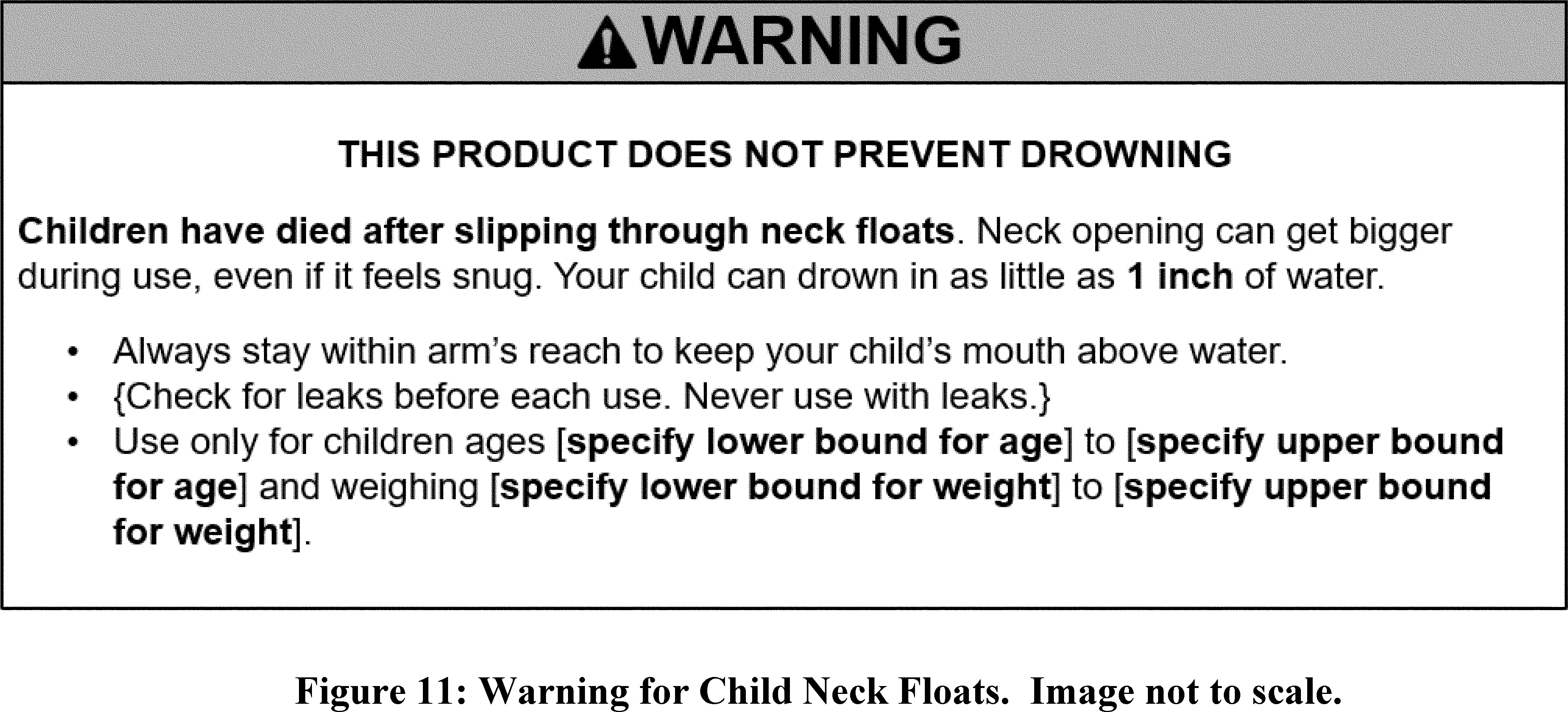
The labeling requirements are intended to communicate to the consumer that an aquatic toy is not a lifesaving device and to warn caregivers against leaving a child unattended while using the aquatic toy. More specifically, it requires aquatic toys, and their packaging, carry a safety label that at minimum includes the following, or equivalent, text: “
This is not a lifesaving device. Do not leave child unattended while device is in use.”
It also requires “no advertising copy or graphics shall state or imply that the child will be safe with such a toy if left unsupervised.” The Commission determined that warning requirements specified in section 5.4 of ASTM F963-23 are inadequate for neck floats because they do not adequately address the hidden hazards specifically associated with these products, such as the risk of neck opening expansion during use, the risk of drowning in very shallow water, and the risk of death associated with partial or full slip-through.
As noted above, ASTM F963-23 does not establish adequate requirements specific to neck floats because it does not include specific performance requirements that take an aquatic environment and associated hazards into consideration for these toys. For example, rattles and pacifiers account for the expected use scenario that infants may attempt to put them in their mouths, and to address this, ASTM F963-23 establishes a performance requirement in sections 4.20 and 4.23 that they must not pass through the Pacifier Test Fixture and Rattle Test Fixture, respectively, to mitigate the possible choking or impaction hazard associated with that use. In comparison, for aquatic toys, there are no requirements to adequately address foreseeable use hazards such as those identified for neck floats in this rule. For example, even though aquatic toys are defined as “intended to bear the mass of a child,” there are no buoyancy performance requirements in ASTM F963-23 to evaluate whether an aquatic toy can adequately perform that duty.
On November 20, 2024, the Commission issued a Notice of Proposed Rulemaking (NPR) to address hazards associated with neck floats. Incident data, discussed in the NPR (and described in section III of this preamble), demonstrated that children have suffered drowning injuries and deaths associated with the use of neck floats. The NPR included a proposed definition of “neck floats” and performance requirements that included requirements for conditioning, buoyancy, restraining systems, and the neck opening. The NPR proposed to amend existing marking, labeling, and instructional literature requirements. The NPR also stated that it would revise the title of part 1250 from “Safety Standard Mandating ASTM F963 for Toys” to “Safety Standards for Toys,” to reflect the inclusion of additional
( printed page 58097)
requirements that are not included in the existing requirements in ASTM F963-23. The Commission received 145 public comments on the NPR.
B. Statutory Authority and Voluntary Standards Activity
The Commission is authorized to issue this final rule pursuant to both sections 106(c) and (d) of the CPSIA. 15 U.S.C. 2056b(c) and (d). Section 106(c) requires the Commission to periodically review and revise its mandatory toy safety standards to ensure that such standards provide the highest level of safety for toys that is feasible. 15 U.S.C. 2056b(c). Section 106(d) further requires the Commission to examine and assess the effectiveness of its mandatory toy safety standards in protecting children from safety hazards, and then to promulgate consumer product safety standards that are more stringent than the existing requirements if the Commission determines that the more stringent standards would further reduce the risk of injury associated with such toys.
Id.
at 2056b(d). Consistent with the consultation requirement in section 106(d)(1) of the CPSIA, staff have worked with the ASTM F15.22 Subcommittee since 2009 to update the toy standard. In August 2021, CPSC staff corresponded with the ASTM Subcommittee and task group to discuss hazards associated with neck floats, including sharing incident data associated with neck floats and staff's recommendation to develop performance requirements to address the hazards identified in the incident data.
In December 2024, ASTM held an exploratory meeting to determine if there was interest from its members and stakeholders in designating a subcommittee for work developing a standard for buoyancy aids for children. Following an organizational meeting in January 2025, ASTM designated the F15.07 subcommittee to develop the draft standard. CPSC staff attended both the exploratory and organizational meetings.
CPSC staff have been involved with the F15.07 subcommittee meetings since its inception and participates in its two task groups that focus on performance requirements and warning labels. At these meetings, staff recommended that the subcommittee consider the requirements proposed in the NPR as the baseline for their draft. The subcommittee is also considering performance requirements not discussed in the NPR, such as seam strength, puncture resistance, and protrusions, among others. The F15.07 subcommittee's work is in the drafting phase and there have been no balloted draft performance requirements to date.
C. Notice of Proposed Rulemaking (NPR)
On November 20, 2024, the Commission published an NPR to address hazards associated with neck floats that are not adequately addressed by the current mandatory standard provisions for aquatic toys, such as neck floats. The scope of the NPR included “neck floats,” defined as “an article, whether inflatable or not, that encircles the neck, supports the weight of the child by being secured around the neck (such as by fastening, tightening, or other methods), is used as an instrument of play in water environments including sinks, baths, paddling pools and swimming pools, and is intended for use by children up to and including 4 years of age.” Neck floats are typically available as either inflatable or inherently buoyant (non-inflatable) products, though it's foreseeable that they may also be constructed using a combination of both inflatable and inherently buoyant components. The scope of the NPR excluded products not defined as neck floats within the proposed rule and U.S. Coast Guard-regulated life-saving devices.
The proposed neck float requirements included performance requirements and labeling and instructional literature requirements to address the following hazards associated with the use of a neck float:
(1) children slipping through the product for reasons associated with inflation, which includes deflation and underinflation;
(2) children slipping through the product for reasons not associated with inflation;
(3) children slipping through the product due to a restraint system failure; and
(4) children submerging in water without slipping through the product.
In the NPR, the Commission also proposed to amend its regulation at 16 CFR 1112 to add “neck floats” to the list of products that require third-party testing as a basis for certification.
D. Final Rule Overview
Pursuant to section 106 of the CPSIA, the Commission is issuing a mandatory standard for neck floats, with requirements that are more stringent than the current requirements in ASTM F963-23, that would further reduce the risk of injury associated with neck floats and would achieve the highest level of safety that is feasible for such products.[3] 15 U.S.C. 2056b. In this final rule, the Commission addresses the four types of hazards described in the NPR. Each of these hazard patterns presents a risk of drowning. The Commission is adding performance requirements to part 1250 of the CFR to address these risks. The Commission is also revising labeling requirements for neck floats under part 1250, including mandating warnings on products and instructional literature. Lastly, the Commission is issuing a stockpiling prohibition under part 1250 for neck floats pursuant to section 9(g)(2) of the CPSA. 15 U.S.C. 2058(9)(g)(2).
However, based on public comments received on the NPR and staff's analysis, and as discussed in more detail in sections V and VI of this preamble, the Commission is finalizing this rule with the following clarifications and changes to the proposed rule:
1. The rule retains the proposed temperature conditioning without further modification, but clarifies an error in the description of the temperature conditioning requirement which incorrectly stated the cold temperature boundary as -30 °C instead of -10 °C.
2. The regulatory text of the proposed rule erroneously proposed modifications to a portion of section 4.2.1 of ANSI/APSP/ICC-16 2017,
American National Standard for Suction Outlet Fitting Assemblies (SOFA),
that was not intended to be incorporated by reference in this final rule. Both the proposed rule and final rule only incorporate by reference sections 4.2.1.1-4.2.1.4 of ANSI/APSP/ICC-16 2017. Reference to those unincorporated sections, previously § 1250.5(c)(1)(iv) and (v) in the proposed rule, have been removed.
3. The UV conditioning methods will remain as proposed, however the total length of conditioning time required by those methods will be reduced from the proposed 720 hours to 180 hours using methods (a) and (b), from the proposed 1000 hours to 250 hours using method (c), and from the proposed 750 hours to 188 hours using method (d) from sections 4.2.1.1-4.2.1.4 of ANSI/APSP/ICC-16 2017 in § 1250.5(c)(1)(iv) to better reflect foreseeable outdoor use conditions of neck floats.
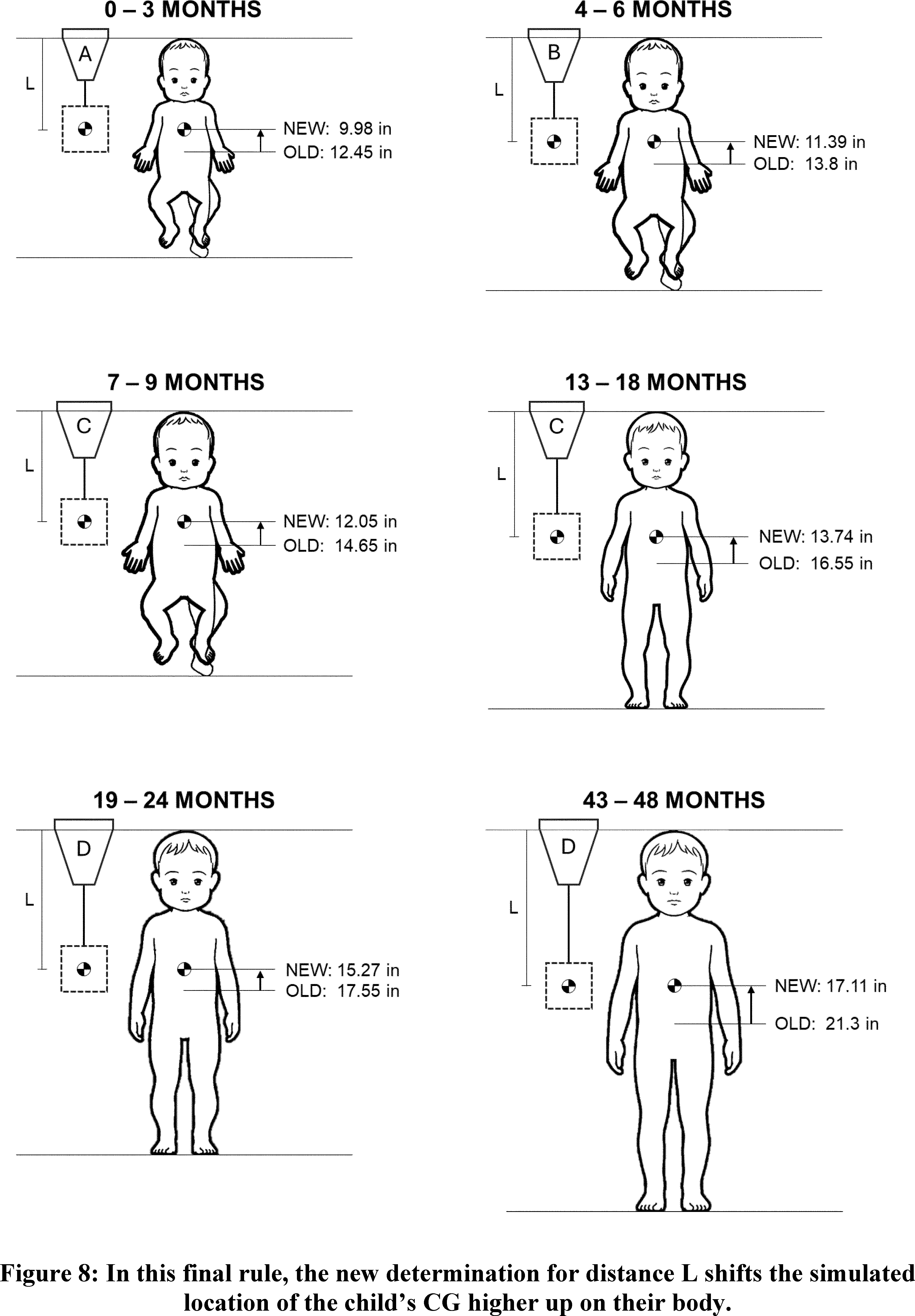
4. In the neck opening test procedure, the length of distance L, which represents the location of the occupant's Center of Gravity (CG) and is used to determine the position of the hanging weight used, is shortened to better
( printed page 58098)
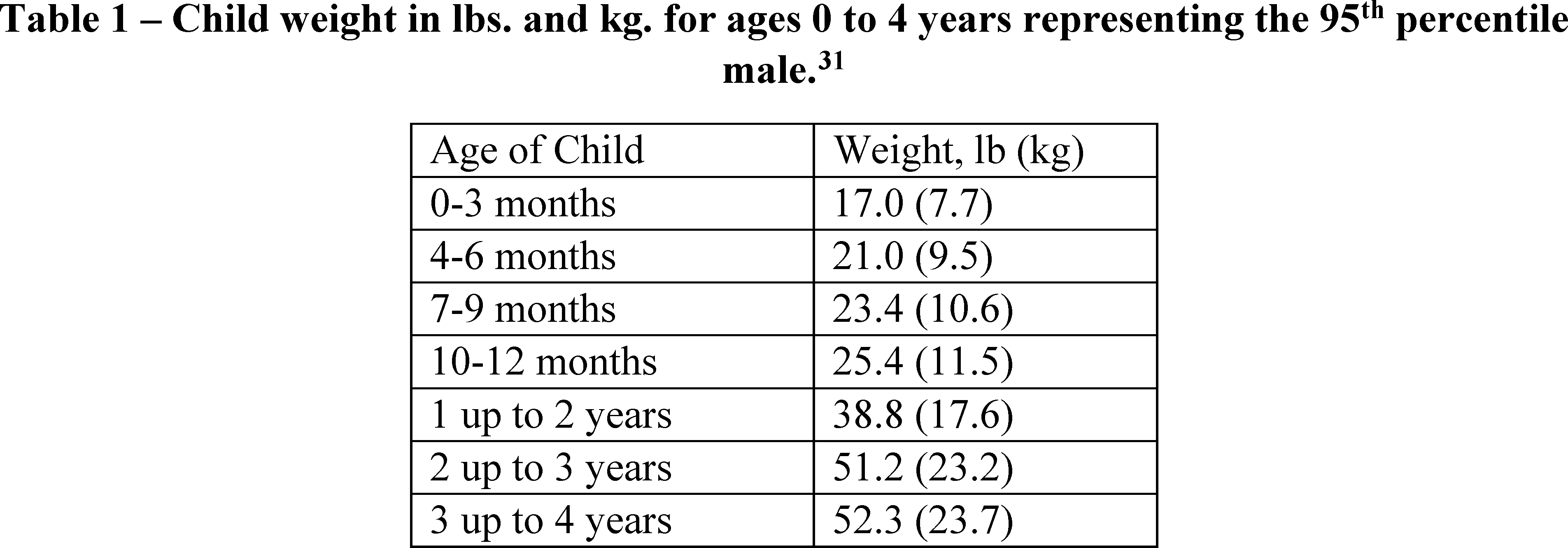

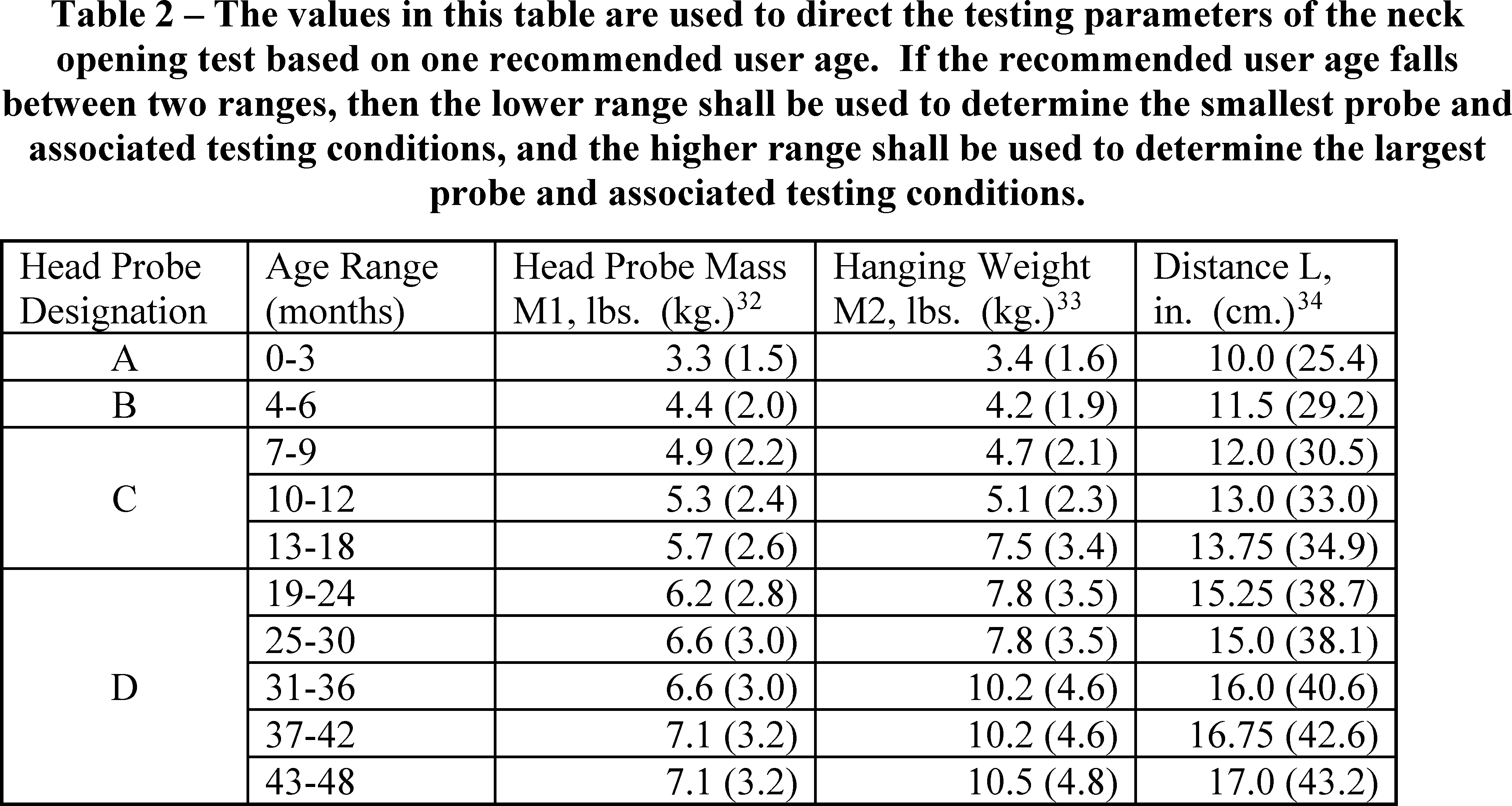
reflect the CG location in the bodies of young children. Also, in the neck opening test, the mass of the hanging weight is reduced for select age ranges to more accurately represent growth transitions. The revised values are included in Table 2.
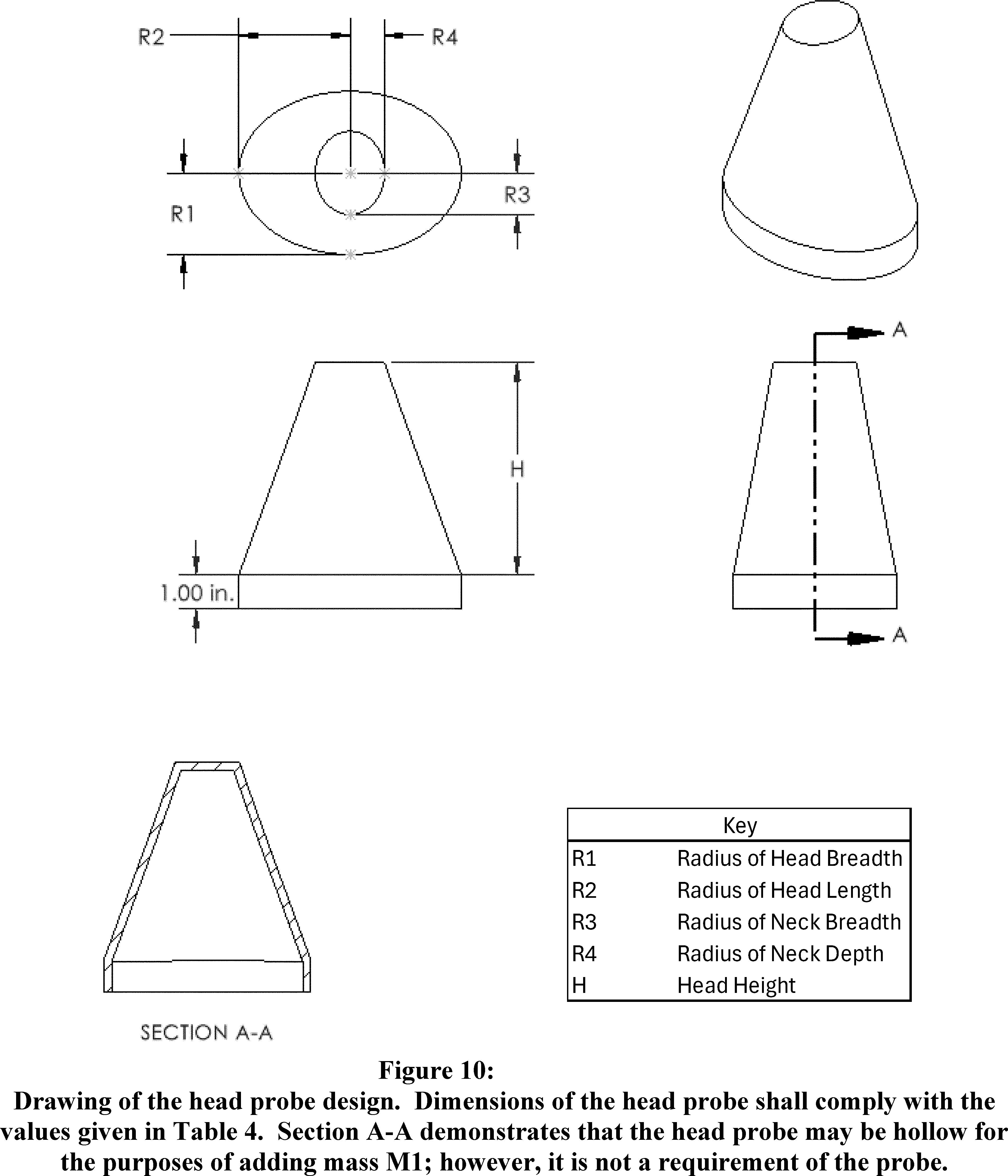
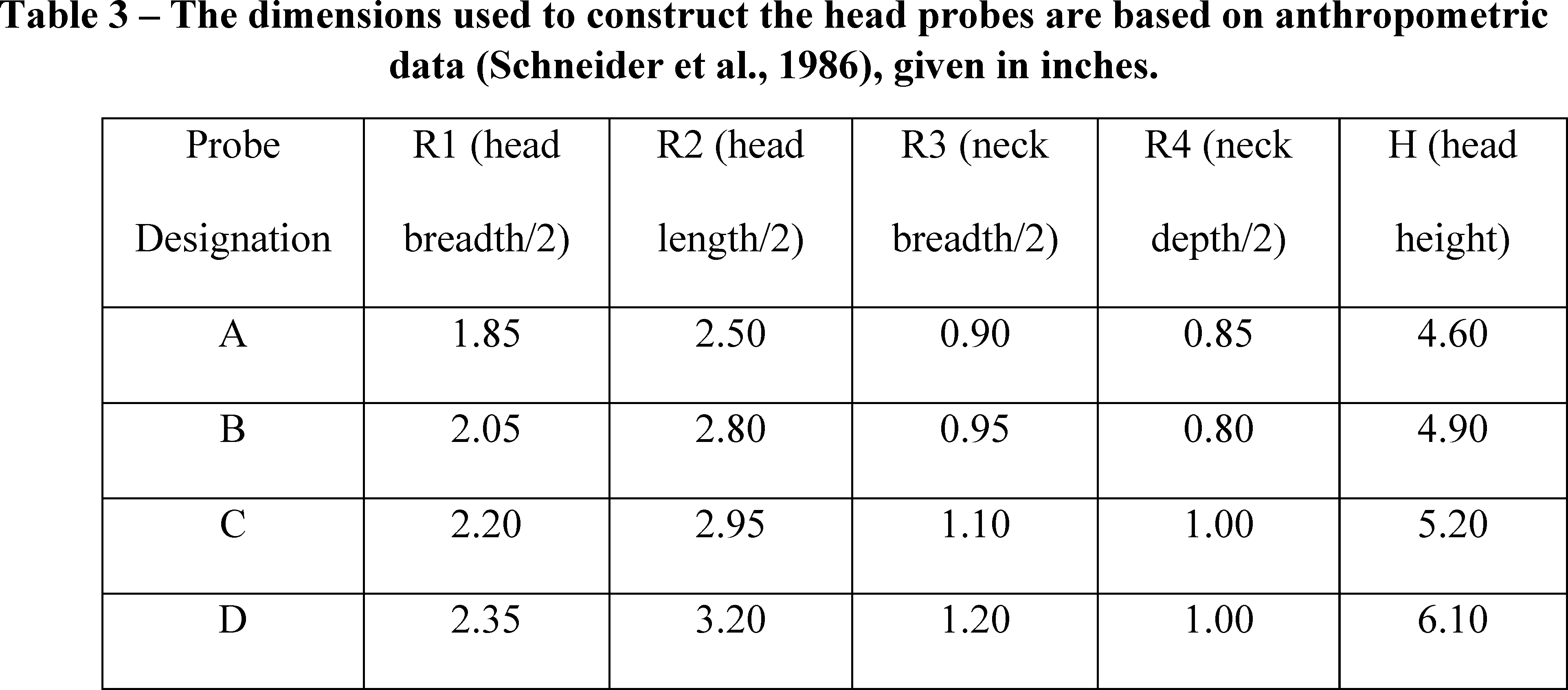
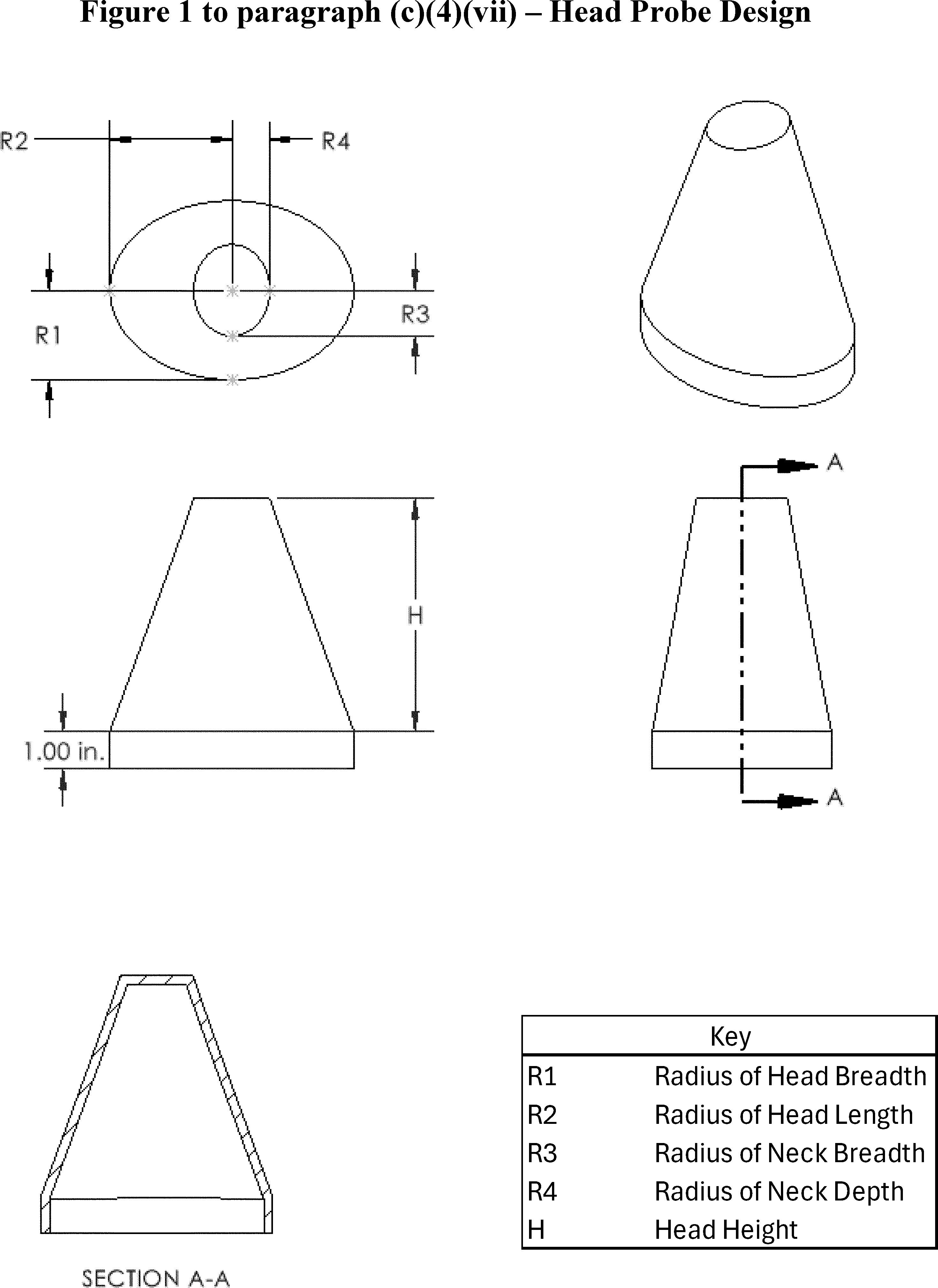
5. The head probe drawings and dimensions presented as Figure 5 and Table 4 in section V of the NPR were inadvertently not included in the proposed regulatory text for the rule. They have been added to the regulatory text in § 1250.5(c)(4)(vii) as Figure 1 and Table 3.
6. To prevent any confusion concerning applicable requirements for neck floats in ASTM F963-23, the final rule revises the text in § 1250.5(c) by replacing “any general requirements” with “any applicable performance requirements.”
II. Description of Toys Within the Scope of the Rule
The scope of the final rule includes all neck floats, as defined in § 1250.5(b) as “an article, whether inflatable or not, that encircles the neck, supports the weight of the child by being secured around the neck (such as by fastening, tightening, or other methods), is used as an instrument of play in water environments including sinks, baths, paddling pools and swimming pools, and is intended for use by children up to and including 4 years of age.”
Section 3.1.92 of ASTM F963-23 defines a “toy” as “any object designed, manufactured, or marketed as a plaything for children under 14 years of age.” Section 3.1.4 of ASTM F963-23 defines an “aquatic toy” as “an article, whether inflatable or not, intended to bear the mass of a child and used as an instrument of play in shallow water. This does not include bath toys, beach balls, and United States Coast Guard-approved life saving devices.” Neck floats are subject to the mandatory toy standard as an aquatic toy because they are instruments of play that are designed to allow a child to play in water, including shallow water.
Neck floats are aquatic toys that are typically ring-shaped tubes with discontinuous ends that wrap around a child's neck. This placement is intended to allow the child's head to float above the water while supporting their body. As is the case with other aquatic toys,[4]
this design is intended to allow the child to float and play in water.
Neck floats are available as both inflatable and inherently buoyant (non-inflatable) products. Inflatable variants rely on air to provide buoyancy and are generally packaged and distributed while deflated. Caregivers must inflate the neck float prior to their initial use and are generally advised to check and re-inflate the neck float prior to subsequent uses as well. Inflatable neck floats have not typically been sold with an air pump and are generally intended to be inflated by mouth. In contrast, an inherently buoyant neck float likely does not require any additional effort from the caregiver to ensure that it floats.
Commission staff's market research indicates that inflatable neck floats are primarily composed of plastic sheeting, typically polyvinyl chloride (PVC) plastic, held together through a process known as PVC welding. This manufacturing process fuses the plastic sheeting together by applying heat that melts the individual sheets (Foreman, 2024). The restraint systems of these neck floats also appear to be joined to the product using PVC welding. Non-inflatable or inherently buoyant neck floats are generally composed of two components: a buoyant internal ring made of open- or closed-cell foam that provides the neck float's shape and flotation, and a fabric cover that encases the foam, typically secured with a zipper. The restraint systems are stitched into the fabric cover.
Neck floats are advertised for use by infants and toddlers based on minimum/maximum weight and suggested age ranges to identify appropriate product sizes. Most retailers advertise the products for children 0 to 6 months for small sizes, 6 to 18 months for medium sizes, and 2 to 5 years for large sizes. The products generally are marketed for use in bathtubs and pools. Retail prices for neck float products intended for children typically range from $10 to $60 depending on material type and art design, with inherently buoyant products being more expensive than inflatable products.
Neck floats include: (1) inflatable neck floats; (2) inherently buoyant (non-inflatable) neck floats; and (3) neck floats that use a combination of inflatable and inherently buoyant components. All other products that are not neck floats, under the definition of “neck float” in § 1250.5(b), are outside the scope of this rule. Life-saving flotation devices regulated by the U.S. Coast Guard, including those that attach to the neck of a user, are also outside the scope of this rule.
III. Incident Data and Hazard Patterns
In the NPR, the Commission identified 115 incidents in Consumer Product Safety Risk Management System (CPSRMS) [5]
associated with the use of neck floats between January 2019 and January 2024. Two of these incidents resulted in a fatality, two incidents led to hospitalization, five incidents led to emergency department (ED) treatment, and one incident led to care by a medical professional. The remaining 105 incidents identified in CPSRMS noted home care, possible but uncertain medical treatment, or the level of care was not reported. In many of the non-fatal incidents, drowning appears to have been averted due to quick action by a caregiver to rescue the infant. Of the reported incidents that indicate a child's age, children's ages range from 17 days to 12 months old. Where specified, most incidents occurred in home bathtubs, though some reports indicated use in pools. The National Electronic Injury Surveillance System (NEISS) [6]
database contained no incident reports during that time period referencing neck floats.
A. Neck Float Hazards
Based on staff's assessment of the incident data reported in CPSRMS and other information discussed in the NPR, and publicly available consumer-uploaded pictures and videos of the product in use, the Commission determines that neck floats pose a risk of drowning or severe injury caused by children slipping through a neck float or being submerged underwater while using a neck float.
As described in the NPR, drowning is a multiphase process of pathophysiological changes (
e.g.,
asphyxia, electrolyte imbalance, blood volume changes, alterations in respiration) that results in death if not interrupted. Seventy-seven incidents reported either full (76 incidents) or partial (one incident) submersion of a
( printed page 58099)
child's airway (nose and/or mouth) in water after slipping through the product. Additionally, 87 incidents reported a child's head slipping through the neck hole of the product. Three incidents report turning, rotating, or flipping in the product, leading to the submersion of the nose and/or mouth. Because infants generally cannot self-rescue, every slip-through or submersion incident has the potential to result in drowning injury or death, if caregivers do not intervene to quickly pull the infant from the water.
The Commission is aware that in four incidents, caregivers performed medical treatment at home. In two of the four incidents, caregivers intervened to rescue and assist an infant that was not breathing after being pulled from the water (one report of CPR, and one report of back thumps). In nine incidents, caregivers sought medical attention by going to an emergency department, calling 911, calling a nurse/medical helpline, or by visiting an urgent care. The two incidents reporting injuries that required hospital admission, and the two fatalities, occurred in a home bathtub. During these incidents, the victim was submerged for an unknown length of time.
B. Incident Data and Hazard Patterns
A neck float's ability to keep the child's mouth and/or nose above the water depends on the product's capability to remain buoyant and upright during use, and its ability to secure the child in the intended use position for the duration of use such that the child does not slip through the product's neck opening and become submerged underwater.[7]
The Commission is aware of four hazard patterns associated with the risk of drowning:
(1) slip-through not associated with inflation;
(2) slip-through associated with inflation;
(3) slip-through associated with restraint system failure; and
The Commission is aware of 52 reported incidents which involved an infant slipping through the product despite the neck float showing no signs of deflation, underinflation, or any other reported product issues. Forty-four of these incidents reported a child's mouth and/or nose submerging under the water, posing a risk of drowning or otherwise aspirating water. Slip-through still occurred in the other seven incidents; however, the caregiver's immediate intervention prevented submersion. Where reported, victims ranged in age from 17 days old to 8 months old. One fatal incident involved the drowning of a 6-month-old female child using a neck float, who was left unattended for an unknown amount of time in a bathtub.
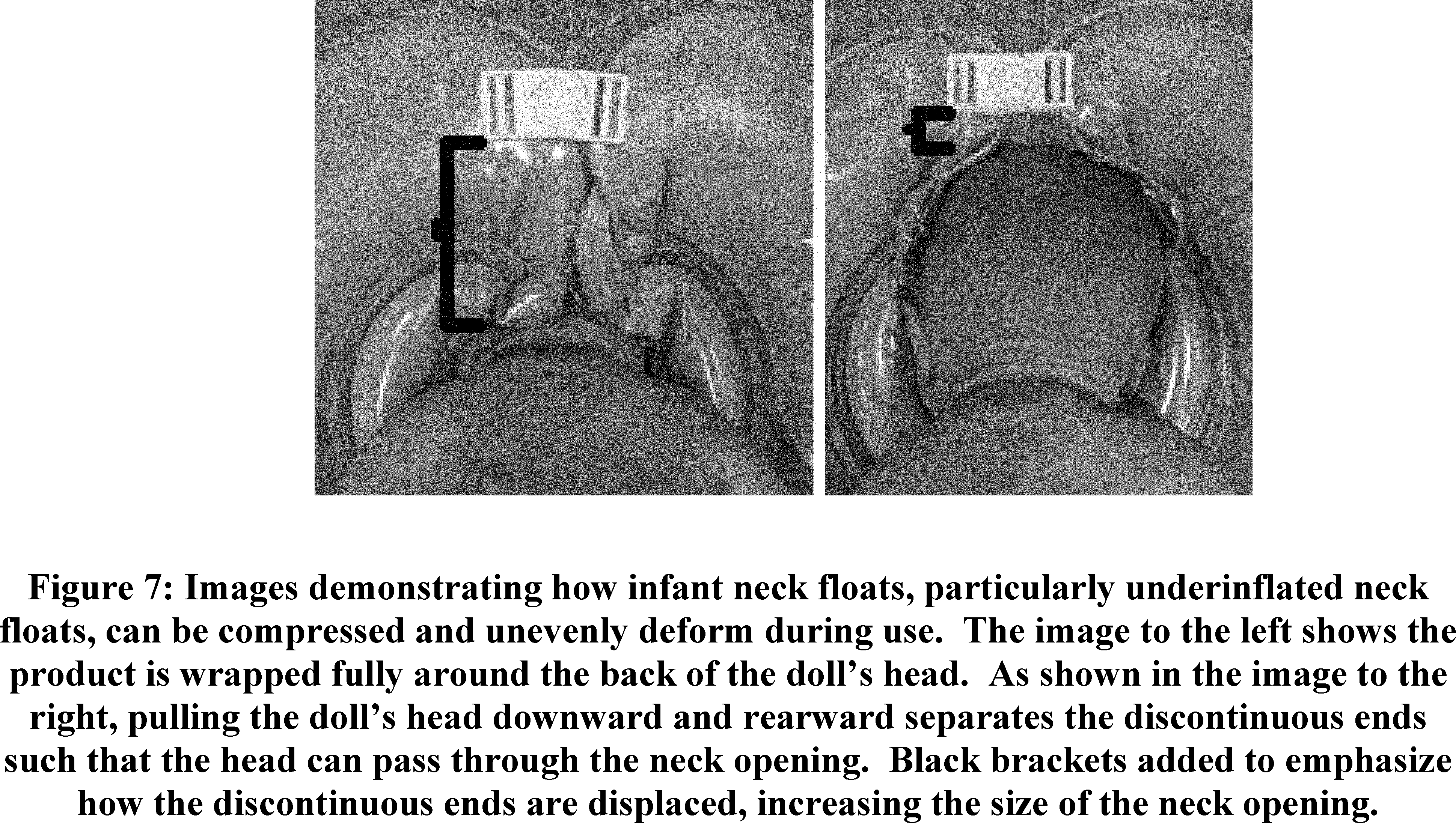
As discussed in the NPR, several factors can lead to an infant slipping through the product despite the neck float showing no signs of deflation, underinflation, or any other reported product issues. Neck floats are typically marketed for a wide range of ages and weights, and this variability in sizes and weights increases the possibility of an ill-fitting neck float causing the child to slip through the neck opening. Even if a neck float appears to fit a child securely, the child's position and activity can cause them to slip through the product. Incident data and publicly available consumer-uploaded content of children in neck floats demonstrate that children are likely to tilt their head forward and rearward, tuck their chin, bite the chin rest, twist their head in the product, wiggle their bodies, kick their legs, flail their arms, and even push up on the front underside of their product, which can separate the discontinuous ends, deform the neck opening, or otherwise alter the fit of the neck float on the child, resulting in the child's mouth and nose sliding into the water.
2. Slip-Through Associated With Inflation
The Commission is aware of 54 incidents where children slipped through or had the potential to slip through the neck opening because the neck floats were more pliable or compressible at lower pressure levels or deflated during use. Fifty-two of these incidents, including one fatality, involved holes, tears, or other leaks in neck floats at the time of the incident resulting in product deflation. Thirty-three victims slipped through the product. The rest were at risk of slipping through the product because of issues pertaining to inflation (hole, tear, unknown deflation type, etc.). For example, IDI 220714CCC3162 indicates the product was intentionally underinflated because the caregiver believed the victim would have been uncomfortable if it was fully inflated. Where reported, victims ranged in age from 28 days old to 10 months old. Two drowning injuries and one drowning death were reported in this category.
3. Slip-Through Associated With Restraint System Failure
The Commission is aware of one incident involving a 7-month-old infant, who slipped out of a neck float due to a latch/restraint failure. Specifically, in the report for this incident, Y227Q815A, the caregiver indicated that there was an issue with the “clear plastic by the buckle” that caused the victim's head to slip through the neck opening, and that the “strap needs to be glued to the other side otherwise it opens.”
4. Submersion Without Slip-Through
The Commission is aware of at least three incidents where children, ranging in age from 3 months to 6 months old, either tilted, rotated, and/or flipped such that their faces contacted the water while wearing neck floats without slipping through the neck float and without having a fastening or restraint system failure, putting them at risk of drowning. No injuries or deaths were reported in this category.
IV. Voluntary Standards
A. Review of Voluntary Standards Development
For aquatic toys such as neck floats, ASTM F963-23 only specifies minimal labeling requirements and does not establish specific performance requirements for aquatic toys, including neck floats, beyond the general performance requirements all toys must comply with, as applicable.
In the past, ASTM attempted to develop additional requirements for aquatic toys and CPSC staff participated in these efforts. In August 2022, the ASTM F15.22 subcommittee developed a dedicated aquatic toy revision task group to develop a draft ballot with performance requirements for aquatic toys. There have been no balloted draft requirements to date, however. Since publication of the NPR in November 2024, on December 2, 2024, ASTM held an exploratory call to determine whether there was interest from its members to designate a subcommittee dedicated to drafting the proposed voluntary standard. On January 13, 2025, ASTM held an organizational call to discuss the scope of the prospective standard and proposed definitions for products falling within that scope. On February 27, 2025, CPSC was alerted that ASTM Committee F15 established a new subcommittee on buoyancy aids for children, F15.07, to develop a draft standard for buoyancy aids, including neck floats.
( printed page 58100)
The F15.07 subcommittee had its first meeting on March 27, 2025, and created two task groups: one for performance requirements and one for warnings/labels. These task groups have met monthly since then. The subcommittee scheduled a second meeting on June 24, 2025, to discuss both task groups' progress. CPSC staff have participated in all subcommittee and task group meetings since the exploratory call in December 2024. The task groups have also considered how other existing standards address products similar to the subject of the draft voluntary standard. CPSC staff recommended the task groups consider the requirements proposed in the NPR.
The F15.07 subcommittee is still in the process of developing its draft voluntary standard. There have been no balloted draft requirements to date, nor is CPSC aware of an expected schedule for a future ballot on draft requirements. Voluntary standards development is an iterative process, and there is no set minimum time limit within which a draft standard must be completed for consideration by the subcommittee.
B. Other Relevant Standards
The U.S. Coast Guard uses ANSI/CAN/UL 12402-5:2022,
Personal Flotation Devices—Part 5: Buoyancy Aids (Level 50)—Safety Requirements,
and ANSI/CAN/UL 12402-9:2022,
Personal Flotation Devices—Part 9: Test Methods,
to evaluate level 50 Personal Flotation Devices (PFDs) such as life vests. Some PFDs utilize flotation devices located around the user's collar, similar to neck floats. PFDs are classified into levels based on intended use conditions, including calm versus stormy water and relative closeness to possible rescue, such as at the beach versus offshore, with level 50 being the least stringent. These factors are not comparable or relevant to the use of neck floats in a pool or bathtub environment. ANSI/CAN/UL 12402-5:2022 does classify possible PFD users into four categories based on weight, with “Infant PFDs” being intended for users weighing less than 15 kg (33 lbs.). However, certain performance requirement metrics for level 50 PFDs are listed as “not allowed” for the infant class. For these reasons, ANSI/CAN/UL 12402-5:2022 and ANSI/CAN/UL 12402-9:2022 are not appropriate to apply to regulate neck floats, without sufficient modification, to adapt its otherwise universal test methods with acceptance criteria suited for the infant class.
BS EN ISO 13138:2021,
Buoyant aids for swimming instruction,
is a multi-part standards collection for the European Union's (EU) three swimming aid classifications. Class A swimming aids such as swim seats, covered by BS EN ISO 13138-3:2021, are intended to be used by children up to 36 months as a “passive” user to introduce them to the in-water environment. Class B swimming aids, covered by BS EN ISO 13138-1:2021, are intended to introduce an “active” user to the range of swimming motions. Class C swimming aids, covered by BS EN 13138-2:2021, are products held in the hands or by the body and are intended to aid “active” users with improving specific aspects of swimming strokes. Class C swimming aids are intended for use by advanced swimmers, or even adult beginners.
Class A devices as defined by BS EN ISO 13138:2021 most closely align with the target users of neck float products within the scope of this rule. However, BS EN ISO 13138:2021 classifies flotation products that attach at the neck as Class B devices. Most of the general performance requirements in BS EN ISO 13138-1:2021 and 13138-3:2021 and the associated test methods across the two standards are largely identical, with some exceptions. Many of the unique tests for Class A devices in BS EN 13138-3:2021 do not apply to neck floats because Class A devices are swim seats. Tests for Class A products are not appropriate for neck floats because these flotation devices are placed and attached at the waistline versus at the neck for Class B flotation devices.
Additionally, test methods in BS EN ISO 13138-1:2021 for Class B devices, including buoyancy testing, align with the test methods for their respective counterparts in ANSI/CAN/UL 12402: 2022, although the exact performance requirements differ. The risk management factors and tests of both ANSI/CAN/UL 12402:2022 and BS EN ISO 13138-1:2021 may address many of the hazards identified in section III of this preamble and are universal in application. However, to adequately address the identified hazards associated with neck floats, the performance requirements and test methods will require modifications, as discussed in more detail in section VI of this preamble.
V. Response to Comments
The Commission received 145 comments on the NPR during the comment period. Comments can be accessed by searching for docket number CPSC-2024-0039 at
https://www.regulations.gov.
Commenters included industry members, consumer advocacy groups, physical therapists, and consumers. A manufacturer, Otteroo, submitted comments and divided its comments into 85 separate submissions, so 85 of the 145 comments were from Otteroo. Several comments were submitted on behalf of multiple parties, such as joint submissions from Consumer Reports, Safe Infant Sleep, and the U.S. Public Interest Group.
Three comments expressed direct support for the NPR, while six other comments expressed agreement that neck floats required regulation, but disagreed with the approach taken by the NPR. Seventy-eight comments were generally against the proposal, 27 did not express an opinion on the proposal itself, and 25 suggested changes to the proposal without indicating whether they were for or against it. Six comments were determined to be out of scope.
All comments fell into eight broad categories: (1) scope of the rule; (2) hazards and incident data; (3) recalls; (4) voluntary standards; (5) performance requirements; (6) marking and labeling requirements; (7) prohibited stockpiling; and (8) regulatory alternatives. The comments are summarized and addressed below, organized by category. Public comments related to small business issues are discussed in section XII of this preamble.
A. Scope of the Rule
1. Neck Floats
Comments:
The Commission received 27 comments from consumers, a professional engineer, two former lifeguards/swim instructors, Consumer Federation of America, Safe Infant Sleep, U.S. Public Interest Research Group, US Drowning Research Alliance, the Toy Association (TA) and Otteroo discussing the classification of neck floats as toys under the mandatory toy standard, which incorporates ASTM F963-23. Some commenters stated that neck floats should not be considered a toy. For instance, a consumer asserted that neck floats do not meet the definition of a “toy” in ASTM F963-23. The same consumer argued that Congress did not authorize CPSC to change the definition of “toy” or an “aquatic toy” in ASTM F963-23 by claiming that it is inherent in the definition of “aquatic toy” that for an item to be an “instrument of play,” it needs to provide play value. In addition, Otteroo, a neck float manufacturer, stated that other international bodies such as the EU do not consider neck floats to be toys. Otteroo asserted that neck floats are not marketed as playthings and are not an instrument of play because their primary purpose is as a buoyancy aid even if the user may
( printed page 58101)
engage in play and experience joy while wearing the neck float.
The TA asserted that the Commission referred to neck floats as non-toy items in past statements. TA noted: (i) a warning issued by CPSC in November 2022 where an Otteroo product was described as an infant flotation ring; (ii) a Commissioner's statement about this warning which also discussed how new parents should be informed before buying baby products generally; (iii) communication by the CPSC Small Business Ombudsman telling a manufacturer that neck floats are not toys; and (iv) previous communication with CPSC staff also indicated that it was not a toy. TA also claimed that third-party labs agree that neck floats are not toys.
The Commission also received comments suggesting that neck floats should be classified as non-toy products based on other uses. Some commenters provided alternative classifications such as flotation devices, medical devices, and bathing aids. A consumer stated that a neck float is not a toy and should be considered as an aid or a device because the user is strapped in and unable to escape without support. The Consumer Federation of America, Safe Infant Sleep, and the U.S. Public Interest Research Group stated that caregivers use neck floats as safety devices, not for amusement. Otteroo also commented that classifying neck floats as toys ignores possible medical and functional uses of neck floats and requested that the definition of neck floats should be revised to account for these possible uses.
Response:
The Commission considers a neck float to be an “aquatic toy,” as defined in ASTM F963-23, and a “toy” subject to the mandatory toy standard. “Toy” as defined in section 3.1.92 of ASTM F963-23 is “any object designed, manufactured, or marketed as a plaything for children under 14 years of age.” The term “plaything” used in the definition of “toy” is not defined in ASTM F963-23. In addition, contrary to the commenter's assertion, the term “play value” is not a requirement in the standard's definition of “toy” or “aquatic toy.” ASTM F963-23, however, in section 1.4 is explicit about excluding articles “not primarily of play value” such as finished materials from model kits. Also in section 1.4, ASTM F963-23 specifically excludes items such as “constant air inflatables,” but no other inflatables or any aquatic toys are specifically excluded.
ASTM F963-23 does contain specific definitions for certain types of toys, including aquatic toys. “Aquatic toys” as defined in section 3.1.4 of ASTM F963-23 is “an article, whether inflatable or not, intended to bear the mass of a child and used as
an instrument of play
in shallow water . . .” (Emphasis added). This is not unusual in ASTM F963-23, as the standard provides definitions for other specific types of toys, subject to the mandatory toy standard, such as: battery-operated toy (3.1.11); close-to-the-ear toy (3.1.14); hand-held toy (3.1.37); large and bulky toy (3.1.46); latex ballon (3.1.47); magnetic/electrical experimental set (3.1.49); projectile toy with stored energy (3.1.64); push or pull toy (3.1.69), rattle (3.1.70); soft-filled toy/stuffed toy (3.1.82); squeeze toy (3.1.85); tabletop, floor, or crib toy (3.1.89); teether (3.1.91); toy chest (3.1.93); toy seat (3.1.94); and yo yo elastic tether toy (3.1.95). All the definitions of these toys contain a description of the specific toy and their function and intended use. This is also the case for the definition of aquatic toy, which describes the toy (inflatable or uninflatable article), function (to bear the mass of a child) and use (as an instrument of play in shallow water).
Neck floats meet the definition of an aquatic toy in the standard because they are “article[s]” that are available as “inflatable or not” and are “intended to bear the mass of a child” and are “used as an instrument of play in shallow water.” Neck floats are included within the broader definition of an “aquatic toy” in the standard and thus are toys as defined in ASTM F963-23. Moreover, the definition of latex balloon in ASTM F963-23 lists examples of toys used in an aquatic environment which includes “rafts, water wings, swim rings, and other similar items.” Neck floats are comparable to these listed items because they are commonly designed, marketed, intended, and used to provide buoyancy for play and amusement in water. This means that neck floats are used to keep a child afloat (avoid sinking, not life-saving) to allow them to play in the water, which is similar to other aquatic toys such as water wings and swim rings.
In addition, although the Commission's mandatory toy standard already includes aquatic toys such as neck floats within the scope of the standard, the Commission is not limited to promulgating safety standards only for toys within ASTM F963's existing standards. Rather, Congress mandated that the Commission also “take into account other children's product safety rules,” promulgate standards that are more stringent than existing standards to further reduce the risk of injury, and ensure that its mandatory toy safety rules “provide the highest level of safety for such products that is feasible.” 15 U.S.C. 2056b(b)(c).
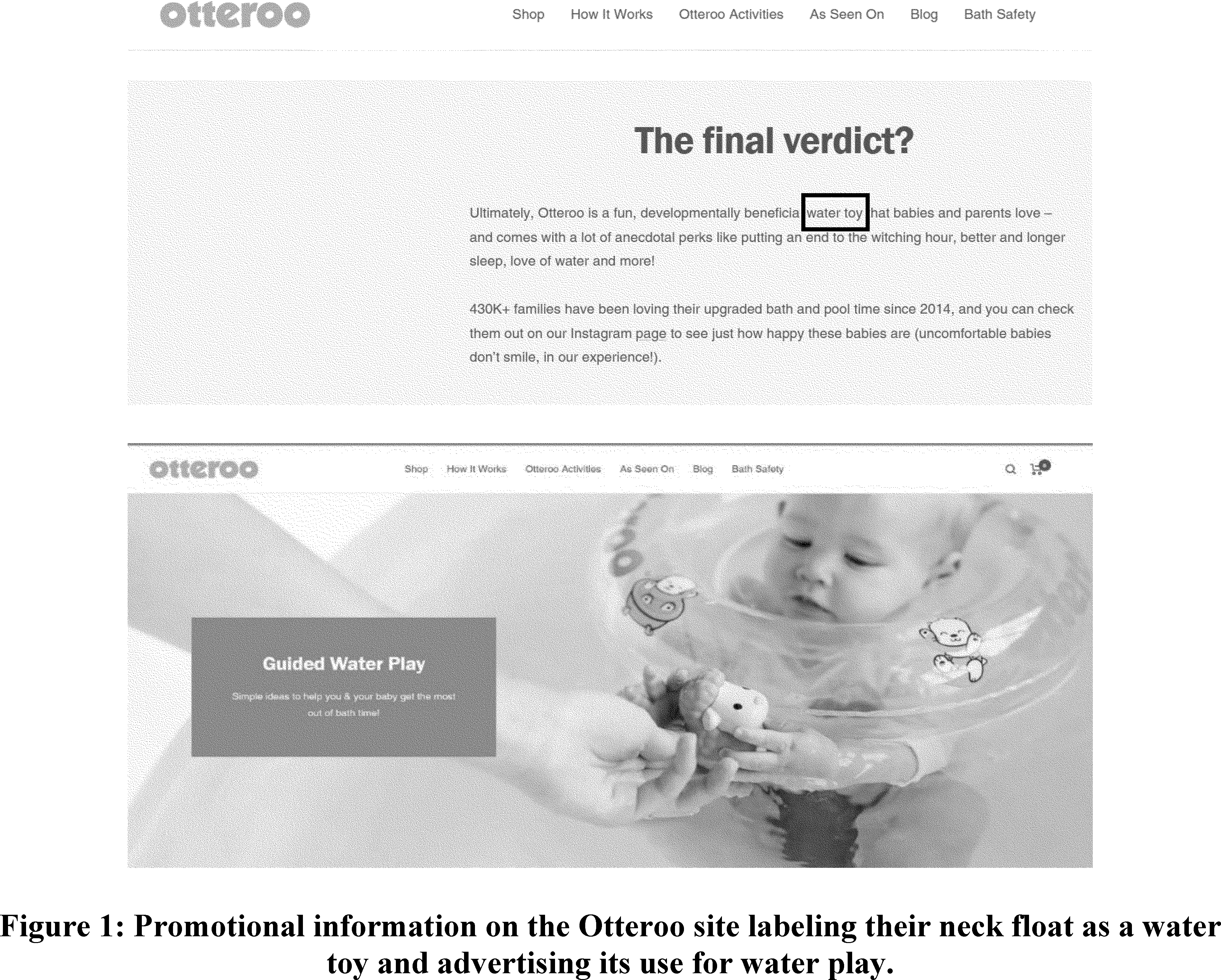
Furthermore, contrary to Otteroo's assertion that neck floats are not marketed as playthings, Otteroo's own marketing and customer reviews shared on its web pages and social media demonstrate that Otteroo has marketed their products as toys for water play, calling them “water toys” and highlighting “guided water play” under their “Otteroo Activities” tab (Figure 1).[9 10]
( printed page 58102)
Otteroo also posted a blog post on its website, “How Early Water Play Can Support Your Baby's Development,” which describes its product as useful for playing in the water and having fun, and states: “Your baby will be having such a good time exploring and enjoying his or her newfound freedom that you'll forget that the time with Otteroo playing in the water is so good for your kiddie, too!” [11]
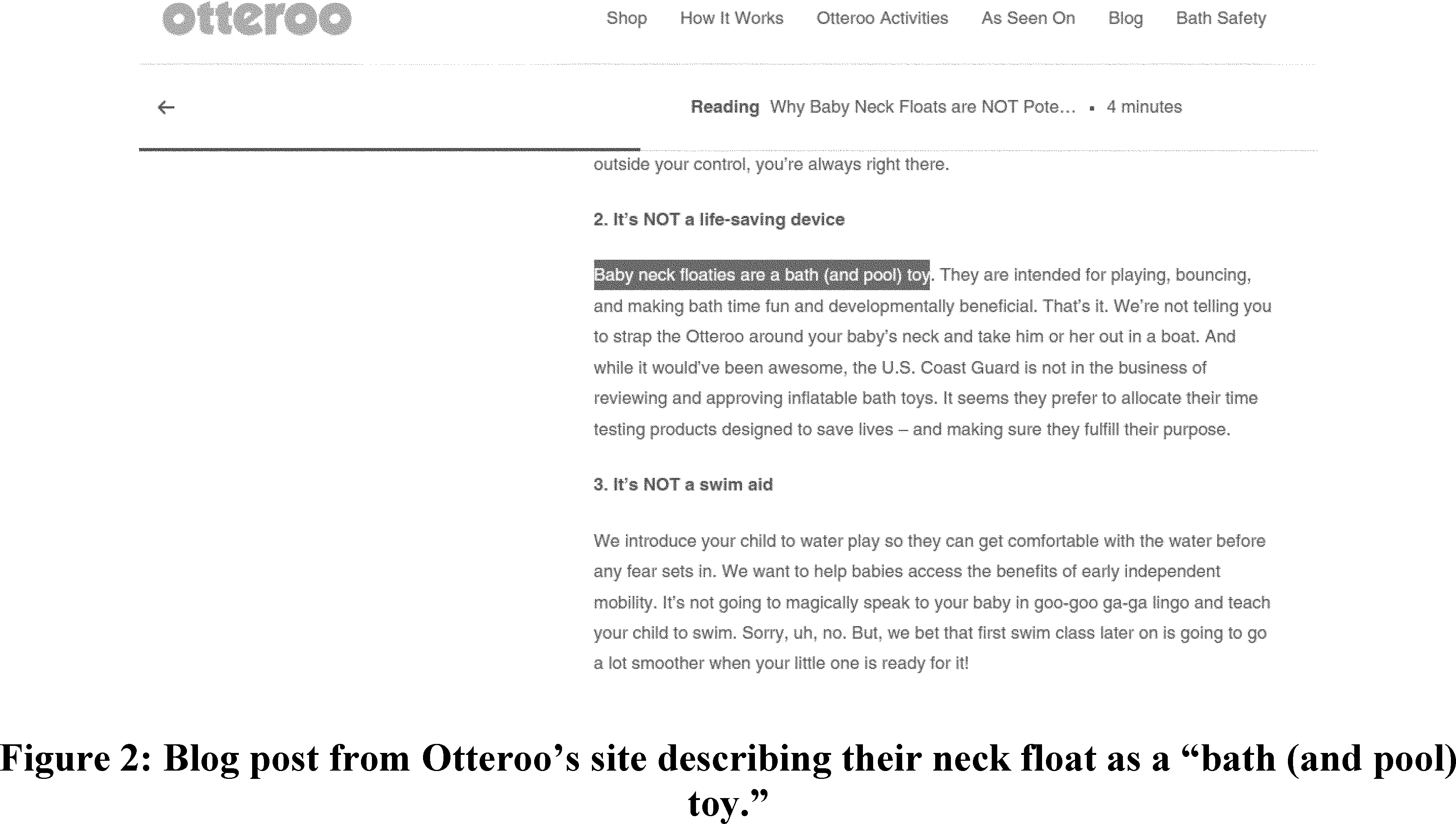
In another blog post (Figure 2), “Why Baby Neck Floats are NOT Potential Death Traps,” Otteroo clarifies that its neck float products are not life-saving devices and not swimming-aids; instead, the manufacturer clarifies that its “Baby neck floaties are a bath (and pool) toy.”
( printed page 58103)
In addition, on Otteroo's YouTube page, the company shares an interview with Julie Forbes, who Otteroo says is their “Otteroo mom.” [12]
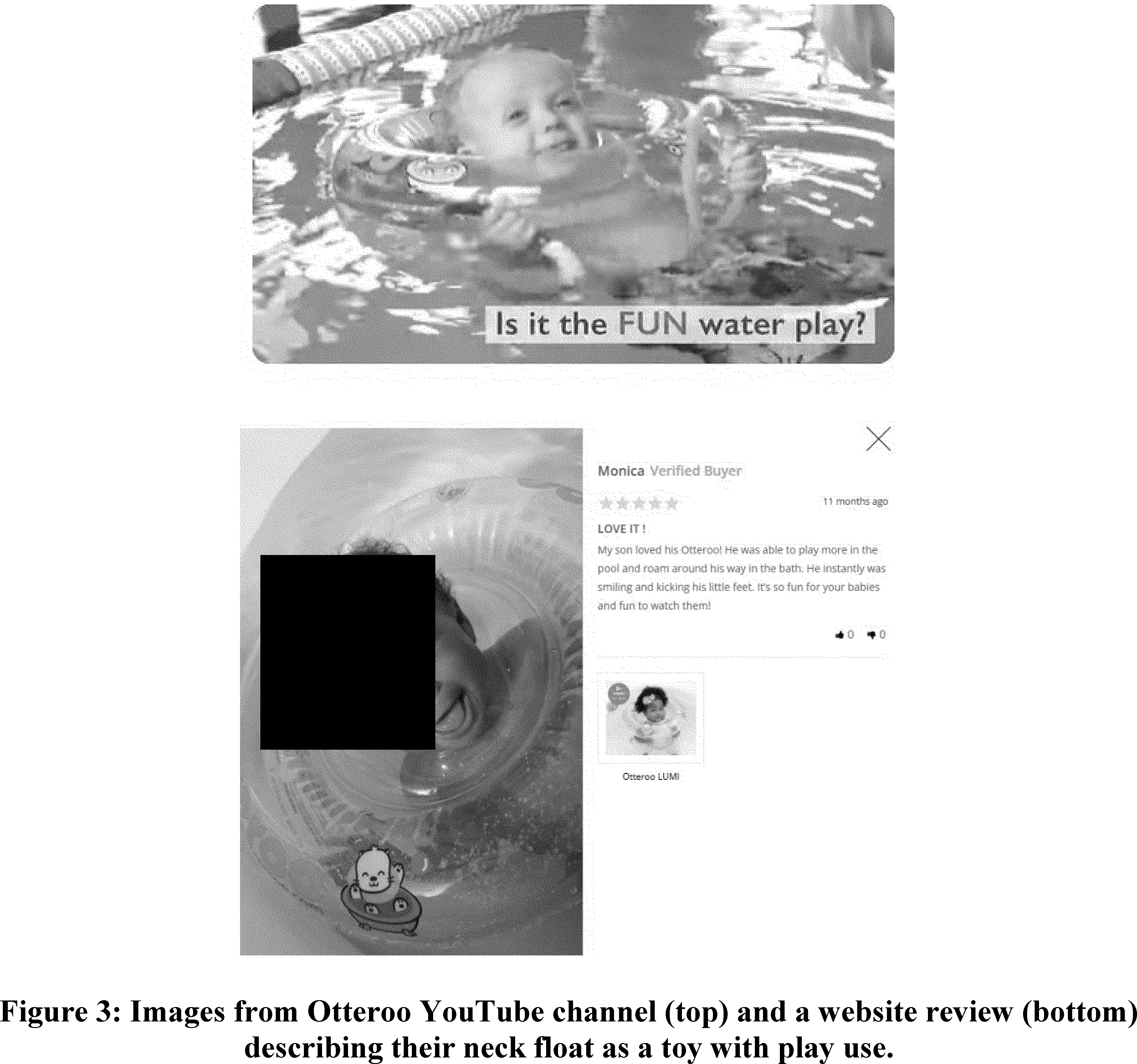
In the interview, Ms. Forbes describes Otteroo neck floats as “for most babies, this is a fun toy. It gets them comfortable in the water. They can enjoy water play.” Otteroo's YouTube channel also spotlights a video of children smiling and wearing neck floats in the water and asks whether the babies are having fun because of water play.[13]
Otteroo also shares customer reviews of its product, where consumers share descriptions and pictures of their children using neck floats and having fun, playing in and enjoying the water (Figure 3).[14]
( printed page 58104)
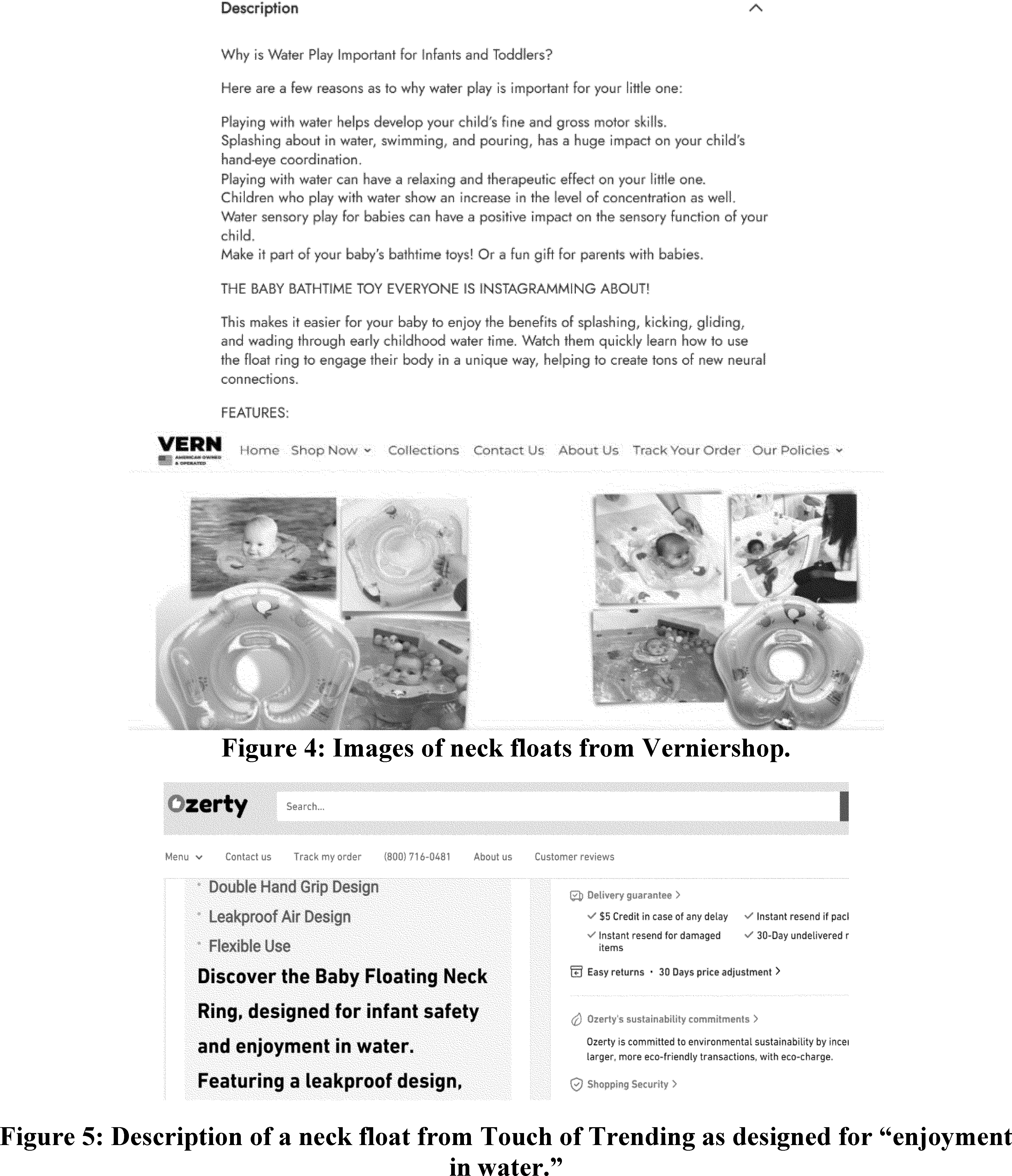
There are also others who advertise neck floats as toys for water play,[15]
show children playing in water [16]
(Figure 4), and their neck floats are designed for enjoyment in water [17]
(Figure 5).
( printed page 58105)
In addition, the mandatory toy standard does not exclude products that are toys because a user is strapped in and unable to escape without assistance. Also, while regulatory approaches of other entities, such as the EU, may be informative to CPSC, the Commission is not subject to or limited by regulatory frameworks based on EU laws and policy.
In response to TA's comments attributing certain statements to CPSC, the Commission clarifies:
(1) A CPSC warning described the product as an “infant flotation ring” which is similar to a swim ring in the toy standard; regardless the notice did not classify how the product was regulated and merely provided a description of the product.
(2) The statement issued by a Commissioner discussed baby products in general, cautioning parents to be wary of their claims. The statement did not claim that neck floats are not toys.
(3) Third-party labs' opinions regarding a legal interpretation of the Commission's regulations are not relevant/controlling.
(4) The commenter's claim about communication with the CPSC staff and the office of the Small Business Ombudsman (SBO) about the product's determination premanufacturing is not supported by any evidence or context. In addition, guidance provided by the
( printed page 58106)
SBO or staff is considered non-binding.[18]
2. Other Products
Comments:
The Commission received seven comments from Otteroo regarding the decision to propose rulemaking for neck floats. Otteroo stated that there are other consumer products that have resulted in drowning deaths and injuries including pools, bathtubs, and buckets. Otteroo questioned why CPSC is disproportionately focusing on neck floats, despite a letter to ASTM in 2021 which included incident reports for a range of other inflatable bather products, including four fatalities attributed to non-neck float consumer products. Otteroo questioned why the NPR only concerned neck floats and requested CPSC to address all forms of inflatable products instead of just neck floats. Otteroo also requested CPSC to clarify its position on other consumer products, such as bathtubs, buckets, and car seats that are also involved in incident reports of injury or death due to consumer misuse or neglect, and to explain why the Commission allegedly is focusing on neck floats despite Otteroo's assertion that data point to a lack of supervision as the primary risk factor, not the product design.
Response:
Other consumer products are out of scope for this rulemaking. The Commission's decision to promulgate a safety standard for neck floats is based on hazards identified in the incident data and staff's expertise and assessment to support that a more stringent standard will further reduce the risk of injury and will provide the highest level of safety for such products that is feasible. Data requests made by ASTM or other groups do not determine the focus of rulemaking, and the Commission's decision to pursue rulemaking regarding neck floats is not an indication that other product areas are not of concern to the agency, nor an indication that rulemaking will not be considered for other consumer products.
The incident data shared with ASTM in 2021 contained 26 total cases concerning “inflatable infant bather products” used in bathtubs and pools. In that letter, staff stated that they believed the products in question met the definition of an aquatic toy from section 3.1.4 of ASTM F963-19. Contrary to the assertions from the comment, that data included six fatalities across all 26 reported incidents and the majority (four) of those fatalities were attributed to neck float use.
CPSC does not dismiss the impact and importance of proper supervision around water environments, and stresses that caregivers must maintain proper supervision around those environments as expressed in the labeling requirements in this final rule. However, relying on caregiver intervention to prevent an ongoing incident from resulting in catastrophic injury or death is not a valid alternative to performance requirements that can reduce the risk of those incidents occurring. CPSC staff's assessment of incident data in the NPR supports the Commission's determination that the primary risks associated with neck float use, including slip-through, restraint system failure, and submergence without slip-through, can be reduced through the performance and warnings/labeling requirements of this final rule.
3. Other Uses
Comments:
Twenty-four commenters including consumers, Tender Ones Therapy Services, Inc., a professional engineer, a pediatric physical therapist, two former lifeguards/swim instructors, a clinic employee, Consumer Reports, Safe Infant Sleep, the U.S. Public Interest Research Group, Consumer Federation of America, U.S. Drowning Research Alliance, and Otteroo discussed possible medical/therapeutic uses of neck floats and U.S. Food and Drug Administration's (FDA) activities regarding neck floats. Some commenters stated their belief that neck floats have medical/therapeutic benefits and uses, or they are primarily manufactured to attain those benefits. Otteroo asserted that these possible medical benefits were not considered by the Commission and detailed their efforts with FDA to pursue a De Novo application to classify neck floats as a medical device. Some commenters noted a previous FDA publication warning against the use of neck floats as they may pose a risk to infants. Otteroo commented that the FDA warning should be removed because it is “outdated.”
Response:
Medical or therapeutic uses of neck floats that are FDA-regulated medical devices are not within the scope of this rulemaking. Any neck floats that are medical devices under 15 U.S.C. 2052(a)(5)(H) are not subject to this rule.
The FDA has previously issued a warning against the use of neck floats on June 28, 2022, advising against their use with babies for water therapy interventions, especially with babies who have developmental delays or special needs such as spina bifida, spinal muscular atrophy (SMA) type 1, Down syndrome, or cerebral palsy, stating the use of these products can lead to death or serious injury. The warning further states: “Recently, the FDA became aware of companies marketing neck floats for use as a water therapy tool without FDA clearance or approval. The FDA has communicated our concerns about these promotional materials to these companies and will continue to monitor promotional materials and claims for these devices.” CPSC requested comments on the NPR regarding this FDA warning, as it is considered relevant to the discussion of neck float safety.
B. Hazards and Incident Data
1. Toy Hazards
Comments:
Three consumers, a professional engineer, Swim Safety Education, Consumer Reports, Consumer Federation of America, U.S. Drowning Alliance, Otteroo, and the TA expressed concerns that classifying neck floats as toys may trivialize the hazards by creating a false sense of security for consumers. TA further elaborated that “characterizing infant neck floats as toys sends a message that these are primarily children's products and safe for children, like other children's `toys,' rather than properly emphasizing the unique risks and how the product should be safely used,
i.e.,
only under direct and full-on supervision of an adult, and constant vigilance. Consumers may hear `toy' and lower their guard towards drowning risk.” Other commenters explained that even if considered an “aquatic toy,” it is plausible that a neck float's resemblance to a life-saving device creates a false sense of security that may cause caregivers to lower their guard towards the drowning risk. Swim Safety Education proposed creating a distinct category of attaching/wearable floats to prevent trivializing safety concerns.
Response:
The Commission disagrees that categorizing neck floats as toys trivializes the submersion hazards associated with them. These products are already marketed and sold as toys. Otteroo neck floats, for example, have been marketed as a “fun toy” used for “playing in the water,” as described above. Additionally, Congress recognized that toys may present a risk of injury or death to children and directed CPSC to address that risk via rulemaking. 15 U.S.C. 2056b.
It is well-documented that toys and other recreational products intended for children can pose serious, even life-threatening hazards. The Commission's mandatory toy standard and the ASTM
( printed page 58107)
F963 toy standard are designed to reduce the likelihood of death and serious injury associated with toys, including toys used in aquatic activities like rafts, water wings, and swim rings. Neck floats that are designed and marketed to keep a child's mouth and nose above the water without the child having to perform an action, such as tread water or hold onto the product, are especially likely to be seen by caregivers as a method of keeping children floating above water, even if they are toys or have warnings indicating they are not life-saving devices.
CPSC agrees that the resemblance of neck floats to products intended as life-saving devices, particularly the design and marketing of these products, creates a false sense of security for caregivers. The toy standard regulates against risks/hazards, but the product is still a toy. Thus, the final rule incorporates performance and labeling requirements to emphasize the unique risks and promote safe use.
2. Slip-Through Hazard
Comments:
Otteroo requested CPSC to provide empirical evidence, such as a human factors study or data analysis, to support the assertion in the NPR that “neck floats can feel secure around a child's neck and appear as though the child's head cannot pass through the neck opening, yet, during use, whether from deflation, the child's activity, or both, the child's head does slip through the product such that their mouth and nose become submerged;” and the claim that “some caregivers intentionally inflate neck floats to air pressures that leave space around a child's neck to address their perception of discomfort for their child, not appreciating that the likelihood of slip-through increases as the product's inflation level decreases.”
Response:
In developing this rule, CPSC staff examined various child neck floats on the market, including those most frequently cited in incidents involving children slipping through the neck opening. Staff tested neck floats by placing the products around the necks of anthropometrically accurate infant and toddler dolls in and out of water to evaluate the likelihood and relevant circumstances for slip-through to occur. This examination included varying Pounds-per-Square-Inch-Guage (PSIG) pressure amounts. Staff observed that the neck floats could feel sufficiently snug to prevent the dolls' heads from slipping through the neck opening, whether fully or partially inflated, yet, due to various reasonably foreseeable circumstances, such as the application of lubricants like soapy water (
e.g.,
IDI 210901CCC1906 indicates the victim had a “heavy lather” of soap on their head and their head slipped through the neck opening because their head and neck were slippery), deflation during use (
e.g.,
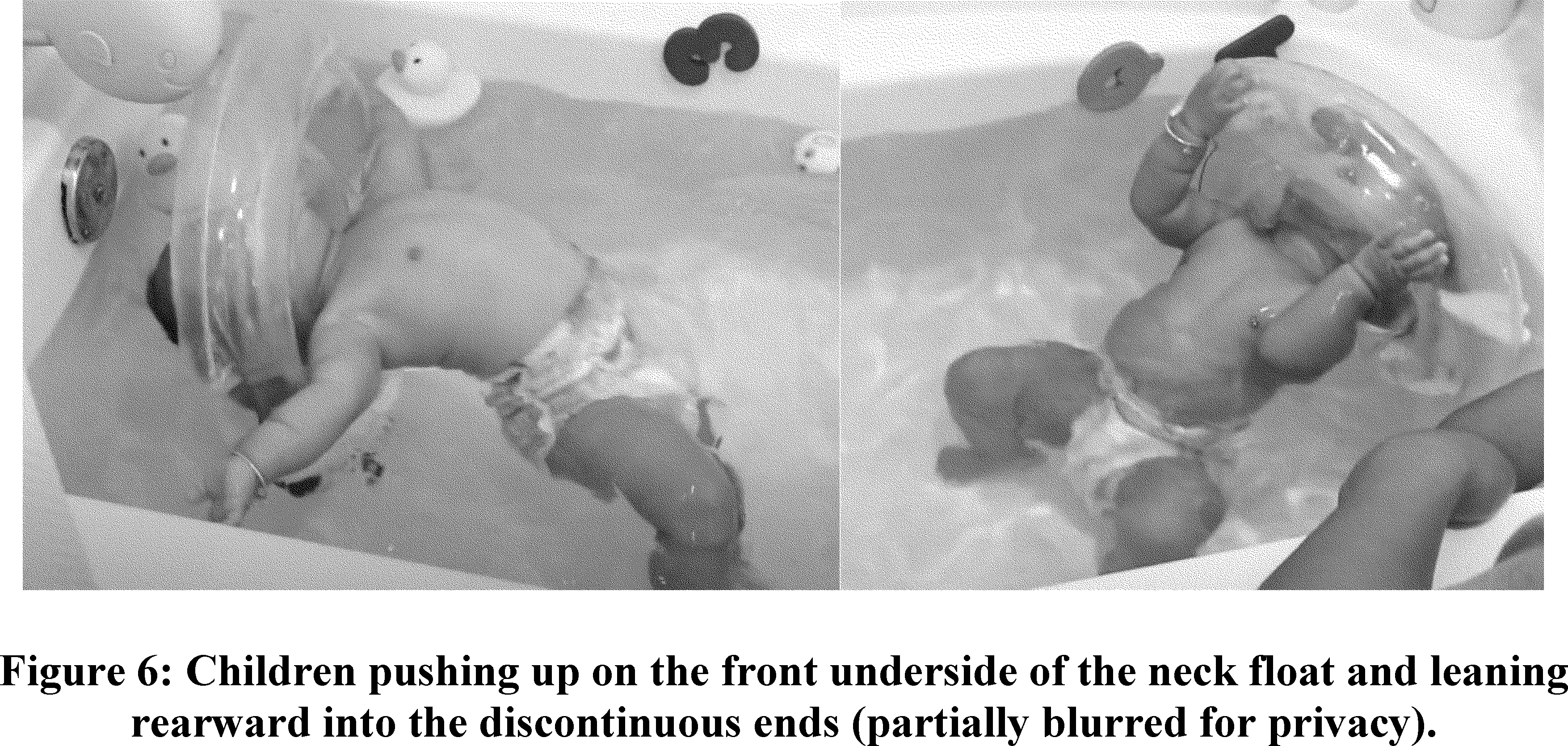
IDI 220714CCC3155 indicates the incident unit deflated during use due to a hole that the caregiver identified via a bubble test following the slip-through incident), and body movements like pushing up on the front underside of the product while leaning back, such as seen in Figure 6, could cause the neck opening to deform and expand to the point that the child's mouth and/or nose slip underwater. The Commission also notes that Otteroo has recognized that if a neck float deflates during use, such as from a leak, the child can slip through it: “Otteroo [(the neck float)] won't hold its shape if a leak develops and your baby can slip through.” [19]
Numerous incident reports describe incident units having a tight fit when placed on the victims, yet slip-through occurred nonetheless (
e.g.,
IDI 210910CCC1030 indicates the incident unit was “fully inflated” and felt “quite tight,” yet the victim's head slipped through the neck opening). Additionally, as explained in the NPR, some slip-throughs involved neck floats that caregivers had intentionally underinflated, due to their perception that the victims were uncomfortable when the neck floats were fully inflated (
e.g.,
IDI 220714CCC3162 indicates the caregiver intentionally underinflated the incident unit because she was “worried about the product being too tight around the victim's neck”). Inflatable neck floats typically do not have other means for adjustability of the fit around the child's neck beyond the amount of inflation, so it is reasonably foreseeable that caregivers seeking to adjust the fit would intentionally underinflate the product. Slip-through due to inadequate inflation may also be unintentional in nature, as there is no clear metric for users to determine what “full inflation” means, and overinflation may result in the product bursting.
( printed page 58108)
3. Restraint System Failure
Comments:
Otteroo requested CPSC to remove the hazard pattern for “Slip-Through Associated With Restraint System Failures” and its associated test requirements from the final rule unless it can produce a human factors study or usability testing. Otteroo stated that the only incident data cited in conjunction with the restraint system hazard pattern shows a manufacturing defect, not a design failure, and there are no incidents to support fasteners becoming undone that would support the need for such requirements. Otteroo added that given the age range of the product, the only way the fasteners could come undone is through caregiver action, and such user error can only be addressed through education and warnings, not through additional product requirements. Lastly, Otteroo claimed that the mitigation strategy of clear warnings emphasizing close supervision was employed successfully in this hazard pattern.
Response:
The integrity of the fasteners, including their connection to each other and to the product, can be affected by user weights, sizes, and actions, such as children pushing up on the floats, kicking, and thrashing. Failure of the fastener/restraint system, whether from disconnecting entirely or simply loosening during use, is likely to result in the child's mouth and nose being submerged in water, and the requirements in the rule are intended to address both design and manufacturing defects that similarly pose a drowning hazard to children. Requiring fastener and restraint system performance requirements is a standard practice in safety standards concerning infant-used products where applicable, such as in section 6.4 of ASTM F833-21 for carriages and strollers, which was, in part, incorporated by reference in this final rule. Therefore, the Commission will not remove the hazard pattern and associated test requirements from the rule.
4. Incident Data
Comments:
Otteroo asserted that in CPSC's description of IDI 230317CCC3554 in the NPR contradicts the details contained in the report. Otteroo claimed that the report did not note that any injury or treatment was received for the submersion incident. Otteroo also asserted that CPSC inaccurately claimed that this incident resulted in an injury that required hospital admission.
Response:
According to the narrative in IDI 230317CCC3554, the “child was found limp and cyanotic with his face underwater,” caregivers administered CPR, and the child subsequently required hospitalization. This is consistent with the description in the reports associated with IDI 230317CCC3554. Incidents in which a victim is minimally symptomatic typically resolve without sustaining serious injuries or requiring continued medical treatment, but incidents where a victim swallows or aspirates significant amounts of water requires medical attention or observation.
Comments:
Otteroo commented that CPSC attributed the incident in IDI 230720CCC1797 to the “slip-through not associated with inflation” hazard pattern. Otteroo stated that CPSC implied that there is a design defect in the neck float's chin rest. Otteroo noted that in this incident, the caregiver did not perform a bubble test to check for leaks. Otteroo suggested that the neck float may have had an undetected leak and asserted that a chin rest does not function to prevent slip-throughs. Otteroo requested that the CPSC remove the reference to this IDI from the rule to avoid presenting what Otteroo characterizes as unsupported conclusions that unfairly mischaracterize the product.
Response:
As explained in the NPR, IDI 210824HCC1797 indicates the victim's head slipped through the neck opening as he turned his head. There was no indication that the product had deflated at the moment of slip-through. Therefore, the Commission is not removing IDI 230720CCC1797. The NPR does not cite this case as evidence of a design defect in the incident unit's chin rest; rather, the NPR cites this case as evidence that, while the chin rest may help reduce the likelihood of slip-through, it does not prevent slip-through, as evidenced by the fact that the majority of incident units had pronounced chin rests. Otteroo argued that the chin rest does not function to prevent slip-through; however, chin rests are intended to support the child's chin above the water, making it more difficult for their mouth to go underwater. The chin rest also provides a visual indication of how the neck float is intended to be oriented, as slip-through is much more likely to occur if the child's face is against the discontinuous ends, which can separate and deform more easily than the other sides of the neck opening. One adverse consequence of this design is that consumers are more likely to mistakenly believe the child's head cannot pass through the neck opening because their chin is supported; however, deformation of the neck opening and the child twisting or tilting their head can negate this benefit of the chin rest.
Comments:
Otteroo asserted that CPSC incorrectly determined that a neck float was associated with the incident in IDI 200915HFE0001 because a police report stated that the caregiver initially told the police on the scene that the infant was placed in a bath seat after using a neck float. Otteroo further argued that there was no conclusive evidence that a neck float was being worn by an infant at the time of the incident in IDI 200915HFE0001.
Response:
In the Maine state police report associated with 200915HFE0001, the victim was wearing a neck float at the time of the incident. The police report indicated the caregiver specified that a bath seat was placed in the bath after she found the infant non-responsive. She further explained that she put the bath seat in the tub because she was scared and did not want her mother to be mad at her for what happened. The police report also described the caregiver explaining that she placed the victim in the neck float and recorded videos of the victim using it prior to his drowning. Maine's Office of Child and Family Services assessment narrative and a Maine state police audio interview with the victim's mother contained in the IDI corroborates this narrative.
Comments:
Otteroo requested that IDIs 210826CCC1826, 210901CCC3625, 210910CCC1030, 210901CCC1904, 210910CCC1029, 220714CCC3164, 230317CCC3555, and 230720CCC1766 and incident Y227C309G be removed from the rule or revised to reflect the full context of the incidents, including the caregiver's attentiveness and absence of any injuries, because the severity of the incident is allegedly misrepresented and Otteroo asserts that CPSC failed to acknowledge the effectiveness of close supervision as a risk mitigation strategy.
Response:
The incident data relied upon for the analysis in the NPR accurately describes the severity of the incidents in the referenced IDIs. None of these incidents resulted in an injury, and the NPR did not describe these incidents as injuries. Instead, the NPR describes the actions that caregivers took, including seeking medical attention or providing home care following the incident. In IDI 220714CCC3164, caregivers provided treatment at home, as described in the NPR. In IDIs 210826CCC1826, 210901CCC3625, and 230720CCC1766 and incident Y227C309G, caregivers sought medical attention by going to an emergency department. In IDI 210910CCC1029, caregivers visited an
( printed page 58109)
urgent care. Caregivers called 911 in IDI 210910CCC1030 and a nurse/medical helpline in IDIs 230317CCC3555 and 210901CCC1904. As discussed in the NPR, every slip through or submersion incident has the potential to be a drowning, resulting in injury or death, if caregivers do not intervene quickly to pull the infant from the water. Based on this information, the Commission is not removing or revising the specified IDIs and Y227C309G.
Comments:
Otteroo asserted that the conclusion that the infants in IDIs 2108826CCC3606 and 220714CCC3164 received medical treatment is not supported by the facts. Otteroo also stated that the conclusion that “the caregivers intervened to resuscitate an infant” in incident I2360082A is an exaggeration of the events described and requested that the phrase “caregivers intervened to resuscitate the infant” be removed from the rule.
Response:
The Commission disagrees that the IDIs 2108826CCC3606 and 220714CCC2164 mischaracterize the care the infants received. The NPR clearly stated that in both incidents no medical attention was sought from medical professionals, and no injuries were reported. The Commission, however, agrees with the commenters that the phrase “caregivers intervened to resuscitate an infant” may not accurately reflect the scenario in the incident and clarifies that caregivers intervened to rescue and assist the infant.
Comments:
Otteroo stated that in IDI 220714CCC3155, CPSC intentionally combined details from two separate incidents to create a misleading narrative that proper inspections and the bubble test are ineffective. Otteroo requested the removal of IDI 210901CCC1899 from the rule because it is used twice in the NPR as an exemplar incident, once to discuss environmental factors such as confined spaces and again to discuss product tears.
Response:
CPSC staff examined all available incident data associated with inflatable neck floats. In the case of IDI 220714CCC3155, this includes multiple incidents reported by a consumer that are associated with the same product. Some incidents, such as IDI 210901CCC1899, document multiple risk factors that resulted in an incident. These incidents are relevant to the Commission's determination that neck floats pose a risk of drowning, and so the Commission is not removing the IDIs.
Comments:
Otteroo requested the removal, or a revision with full context, of IDI 210901CCC1906, used as an example of how lubricants make neck floats more slippery because the incident description omits that the caregiver identified a leak near the product chin rest. Otteroo asserted that soapy water is a common and expected use case for neck floats and requested that the CPSC remove references to soapy water in the NPR and eliminate its associated testing in the neck opening performance requirement because these elements lack sufficient evidence and risk imposing unnecessary regulatory burdens that do not align with the identified root causes of incidents.
Response:
The Commission is not removing references to soapy water in the NPR or eliminating its associated testing requirements. The Commission concludes that many neck floats are marketed for use when bathing children and the slipperiness of the neck float's material and exposure of the neck float to lubricants can allow the product to slide more easily against the child's skin, increasing the likelihood of the child twisting and slipping through the product during use.
Comments:
Otteroo requested CPSC to revise its inclusion of IDI 220714CCC1014 in its current form, to ensure all possible contributing factors (such as underinflation) are investigated before drawing conclusions, and to acknowledge the critical role of caregiver supervision in the incident. Otteroo also commented that although IDI 220714CCC3162 is an example of an underinflation incident where the caregiver intentionally underinflated the neck float, it is important to note that the caregiver was present and closely supervising the infant throughout the incident, demonstrating caregiver attentiveness to mitigate risk in that case. Additionally, Otteroo stated that caregivers will reinflate as they did in IDI 210908CCC1982 or reglue the clear plastic near the buckle as they did in Y227Q815A of a neck float instead of seeking a replacement and that caregivers will continue to use the product, demonstrating that caregiver supervision is effective in maintaining safety even when product issues such as deflation arise.
Response:
The Commission disagrees with the commenter regarding the conclusions related to IDI 220714CCC1014. In this incident report, the victim's caregiver performed a bubble test after inflating the product by mouth and did not observe any visible leaks, yet the neck float deflated. Therefore, it is unlikely, based on the investigation, that the caregiver underinflated the product.
Regarding the role of caregiver supervision in IDIs 220714CCC1014, 220714CCC3162, and 210908CCC1982 and incident Y227Q815A, every slip-through or submersion incident has the potential to be a drowning, resulting in injury or death, if caregivers do not intervene to quickly pull the infant from the water. Drowning statistics and water safety campaigns have shown that caregiver supervision can be imperfect and insufficient to avoid drowning hazards, and many children drown every year.[20 21]
Caregiver supervision should not be relied on to prevent injuries and death when product issues arise such as deflation and restraint/buckle issues. In fact, the labeling requirements in the rule acknowledge that caregiver supervision is imperfect and these requirements are intended, along with the other requirements of the rule, to mitigate the drowning hazard. Therefore, the Commission declines to remove or revise the IDIs to clarify caregiver attentiveness or supervision.
Comments:
Otteroo disagreed with CPSC's categorization of IDIs 220714CCC3166 and 220714CCC3156 and incident Y217O989B as submersion for children “tilting, rotating, or flipping such that their face contacted the water.” Instead, Otteroo claimed that these incidents did not involve slip-throughs in the neck float or restraint system failures and therefore should not be considered submersion events. Otteroo stated that the incident IDIs demonstrate the effectiveness of close supervision as a reliable mitigation strategy. Specifically, Otteroo suggested that the incident in IDI 220714CCC3156 should be categorized under the hazard pattern for “Slip-Through Associated With Inflation” rather than “Submersion Without Slip-Through” because water was found in a chamber of the neck float following the incident by the caregiver and suggested removal of IDIs 220714CCC3156 and 220714CCC3166.
Response:
Children can be submerged in water while wearing neck floats without slip-through or fastener and restraint system failures, putting them at risk of drowning. In at least three incidents, children reportedly tilted, rotated, and/or flipped in the neck float such that their faces contacted the water. In IDI 220714CCC3166, the child tilted forward and ingested water; in IDI 220714CCC3156, the child was able to rotate his body such that his face was in contact with water; and in report
( printed page 58110)
Y217O989B, a child leaned back and flipped in the product. These are considered submersion events because the victim was able to contact the water with their face, posing a drowning risk. Additionally, IDI 220714CCC3156 should not be moved to the hazard pattern “Slip-Through Associated With Inflation” because, in this submersion without slip-through incident, the victim did not slip through the product and therefore does not fit that hazard pattern.
Comments:
Otteroo commented that because very little information was made available to CPSC by the police regarding IDI 210114HCC1250, it is impossible for CPSC to conclude that the incident was a result of a product malfunction or leaking or deflation. Otteroo stated that CPSC only had access to a general description of the neck float product found on their own website and knowledge of the items in the bathroom at the time of the investigation. As a result, Otteroo concluded that CPSC's determinations were not supported by evidence.
Response:
The information contained in IDI documents was made available to the public by CPSC, to the extent allowable by applicable law. Some records associated with CPSC incident data contain confidential and sensitive information that requires redaction prior to public access, as is the case with IDI 210114HCC1250.
The documents associated with IDI 210114HCC1250 released alongside the NPR state that at the time of the original IDI review date, March 1, 2021, CPSC investigators had access to limited information provided primarily by a health care professional. However, the IDI also notes that there were three addendums to the initial report, during which additional information requests concerning this incident were collected and processed. This includes access to police reports, medical records, and the child abuse investigative report, among other documents. The determination that this incident involved an infant slipping through a neck float product, and that this slip-through incident was associated with product deflation during use, was made after reviewing all documents and data concerning this incident and was not limited to only the initial CPSC incident report filed in 2021. Images from the report show a deflated neck float at the scene which corroborates this narrative.
5. Swimming Position
Comments:
A former swim instructor/lifeguard and the Great Lakes Surf Rescue Project commented that neck floats present a drowning risk to children because neck floats put children in a vertical position and condition children to assume that position, even when the product is removed, and give a false sense of swimming ability to children. These commenters asserted that children must unlearn the vertical position and relearn proper horizontal positioning necessary for swimming. In addition, the Great Lakes Surf Rescue Project expressed concerns that caregivers believe neck floats will prevent their children from submerging and do not recognize the slip through hazard. A consumer requested CPSC to conduct research on neck floats to understand child psychology and their use and misuse.
Response:
The requirements in this final rule are based on incident data and staff's analysis. Staff did not identify the hazard pattern described by the commenters. CPSC is not aware of data to support the claim that the use of neck floats will condition children to assume the vertical body position in water, even if the neck float is removed, increasing the likelihood of drowning. The Commission agrees that children accustomed to neck floats may develop a false sense of confidence in their ability to float/swim; however, this can be said of any product on which children rely to keep them afloat, particularly those that do not depend on the child's activity to remain afloat. The rule reduces the likelihood of drowning associated with neck floats based on the known hazard patterns. The rule also contains warnings that explain the drowning risk associated with neck floats to consumers, which can further educate consumers on water safety. Staff will, however, continue to monitor incident reports concerning neck floats in the future, and the Commission may propose additional requirements or modify existing requirements to respond to new hazard patterns identified by that data.
6. Diving Reflex
Comments:
Otteroo commented on IDI 220714CCC1021, which described an incident where an infant slipped through a neck float and was not immediately breathing when rescued from the submersion incident, stating that infants have a diving reflex that is present until six months of age that functions as a protective mechanism that allows infants to hold their breath underwater. Otteroo stated that it is crucial for CPSC to contextualize incidents such as this consistent with natural infant physiology and to avoid overstating the risk without sufficient evidence. Otteroo argued that temporary submersion with immediate retrieval does not present significant harm.
Response:
The Commission disagrees with the commenter that temporary submersion with immediate retrieval does not present a significant risk of harm. Every slip-through or submersion incident has the potential to be a drowning, resulting in injury or death, if caregivers do not intervene to quickly pull the infant from the water. The infant diving reflex should not be relied upon to prevent drowning. Although this reflex is highly prevalent in the first year of life, the reflex is not present in every infant and at every infant age.[22]
Aspirating significant amounts of water can require medical attention or observation, especially for very young infants because of the risk of lung injury. The risk of injury is dependent on the duration of submersion and amount of water that enters the lungs, as well as the immediacy of rescue and resuscitation efforts.
C. Recalls
Comments:
The Commission received a comment from Otteroo regarding previous recall action of its neck float product and questioned why CPSC expressed safety concerns for neck floats despite previously “approving its launch.” Otteroo requested CPSC re-establish open communication with it to develop safety measures.
Response:
The hazard pattern identified in the recall concerned the seam leaking air and deflation of Otteroo's product, which presented a risk of drowning. This particular hazard was addressed in the Corrective Action Plan (CAP) [23]
in 2014, which included the terms of the remedial action agreed upon between the firm, Otteroo, and CPSC. CPSC does not approve or certify any market product either through pre-market testing or otherwise. The commenter is likely referring to the aforementioned CAP, which does not constitute a blanket-approval of their products. A CAP is a voluntary measure agreed to by a firm and does not prohibit the Commission from acting
( printed page 58111)
under CPSIA section 106 to address a risk of injury presented by toys.
Moreover, in this rule, the Commission is addressing other hazards associated with all neck floats (not just Otteroo's product), which include slip-through associated with inflation or otherwise, restraint system failures, and submersion without slip-through.
Concerning Otteroo's request for communication with CPSC, Commission staff have continued to participate in voluntary standards activities with Otteroo. Otteroo also has participated in the public comment process of this rulemaking and the Commission has considered Otteroo's comments in developing this final rule.
D. Voluntary Standards
1. Voluntary Standard Development
Comments:
The Commission received comments from one consumer, Otteroo, and TA regarding CPSC's involvement with ASTM. Otteroo asserted that CPSC is ignoring ASTM activity and refusing to acknowledge their efforts and alleged that CPSC is choosing to move forward without considering ASTM's input. The consumer encouraged continued participation in ASTM's effort, including the recently formed F15.07 subcommittee on buoyancy aids for children. TA recommended CPSC pause work related to the NPR on neck floats and invest resources in the ASTM effort to develop the Buoyancy Aids for Children safety standard.
In addition, the Commission received comments from Otteroo questioning whether CPSC expects ASTM to adopt similar requirements to CPSC's proposal for other buoyancy aids, asserting it would be a challenge due to inconsistences with international standards such as AS/NZS 1900:2014,
Flotation Aids for Water Familiarization and Swimming Tuition,
and EN 13138-1:2021. The commenters requested CPSC consider aligning with established international standards to reduce regulatory burden.
Response:
Section IV of this preamble and the NPR provide a detailed description of CPSC's participation in the ASTM activities concerning buoyancy aids and toys, including neck floats. The ASTM F15.07 subcommittee was established in January 2025, after the NPR was published in November 2024. In December 2024, staff attended an exploratory call discussing whether ASTM should establish a designated subcommittee for buoyancy aids. Staff also participated in the first official F15.07 subcommittee meeting, which was held on March, 24, 2025. Staff will continue to participate in this subcommittee's efforts to develop a safety standard for buoyancy aids for children. At this time, ASTM does not have a standard that adequately addresses the risks identified for neck floats. Accordingly, to prevent future deaths and injuries associated with neck floats based on the hazards addressed in this final rule, the Commission will not pause its efforts in reducing these risks to wait for ASTM. Once a final standard is published by ASTM, the Commission may consider it in a future action.
CPSC staff recommended to the F15.07 subcommittee that the subcommittee consider the requirements from the NPR in their draft standard for buoyancy aids for children. Ultimately, however, CPSC is not responsible for the final decisions that ASTM and its members make regarding their safety standards. Otteroo did not provide information to support their claim that adopting international standards that currently do not apply to aquatic toys such as neck floats would reduce regulatory burden, and the Commission has assessed that current voluntary standards do not sufficiently address the risk of injury.
2. Incorporation by Reference
Comments:
The Commission received comments from Otteroo regarding the agency's incorporation by reference of existing standards. Otteroo stated that referencing non-toy standards contradicts the toy determination. Otteroo questioned why the Commission did not adopt EN 13138-1:2021, requested further clarification on how ANSI/CAN/UL 12402-9:2022 or ANSI/APSP/ICC-16 2017 was determined to be relevant to neck floats, and urged the Commission to reassess the applicability of the standards that are incorporated by reference. Consumer Reports, Safe Infant Sleep and the U.S. Public Interest Research Group commented in support of the NPR's assessment of the standards that are incorporated by reference.
Response:
Incorporating standards by reference that are not specific to the subject product is a routine practice and fully complies with legal requirements. The Commission appreciates the work of voluntary standards committees. Although the Commission assesses that existing standards do not adequately address slip-through hazards associated with neck floats, the Commission determined that some parts of the existing standards EN 13138-1:2021, ANSI/CAN/UL 12402-9:2022 and ANSI/APSP/ICC-16 2017 were relevant to support the performance requirements to address the safety hazards for neck floats. For instance, as discussed in the NPR, although the requirements from the multi-part standards series used by the EU for swimming aids, EN 13138:2021 parts 1-3, are intended for swimming instruction and are not comparable to neck float use, the Commission based the requirements for restraint system, specifically for the fastening mechanism, on these standards.
As discussed in the NPR, ANSI/CAN/UL 12402-9:2022 includes test methods that apply to personal flotation devices located around the user's collar, similar to where neck floats are located on infants. The test method in ANSI/CAN/UL 12402-9:2022 applies to level 50 PFDs, which are the most stringent and meant to apply to PFDs used in stormy waters offshore. For this reason, the Commission is incorporating this standard, with modifications, for the thermal conditioning requirement in § 1250.5(c)(i) to account for the use of neck floats in a pool or bathtub environment.
For the buoyancy requirement, the Commission considered both ANSI/CAN/UL 12402-9:2022 and BS EN 13138-1:2021 to evaluate the buoyancy of flotation devices after a 24-hour submergence period to determine how much buoyancy is lost. As discussed in the NPR, ultimately the Commission is incorporating ANSI/CAN/UL 12402-9:2022 because it includes a 5 percent loss metric, compared to a 10 percent loss metric in BS EN 13138-1:2021, which is the more stringent of those two standards and determined to be more appropriate to achieve the highest level of safety that is feasible and to reduce the risk of injury and death associated with neck floats.
The Commission is incorporating ANSI/APSP/ICC-16 2017 by reference for UV conditioning requirement to account for sun exposure during use of neck floats, which may include outdoor use and temporary or primary outdoor storage conditions. The test method in ANSI/APSP/ICC-16 2017 applies to a Suction Outlet Fitting Assembly (SOFA) that is designed to be used in pools, spas, and hot tubs, and includes all components such as the cover, grate, adapters, supports, riser rings, and fasteners, to account for the UV exposure of SOFA to ensure its safe and proper functionality in aquatic environments. As discussed in section VI of this preamble, the Commission is modifying this requirement to better align with the expected UV exposure of a neck float.
3. Publicly Available Standards
Comments:
Center of Individual Rights (CIR) asserted that the NPR
( printed page 58112)
violates statutory and constitutional guarantees regarding the public's right to access the law. The commenter stated that the agency's exercise of its federal authority exceeds the industry consensus that the agency ordinarily follows, at the expense of one company, Otteroo. CIR also commented that the public comment period closed on the incoming administration's first business day and therefore disregarded potential implications for this rulemaking based on the change.
The commenter asserted that the proposed rule exercises unconstitutionally delegated power because Congress designated ASTM with the primary responsibility of creating binding legal obligations for affected industries and delegated future lawmaking power with the mandatory update provision of the CPSIA. CIR argued that in the proposed rule, the Commission takes some of this power back arbitrarily by creating new and extra obligations for one disfavored industry, removing lawmaking even further away from Congressional control.
CIR also argued that the incorporation by reference of standards set by private organizations is unlawful because it violates Freedom of Information Act (FOIA) and the Administrative Procedures Act (APA) and its requirement to “make available to the public” all “substantive rules of general applicability adopted as authorized by law,” 5 U.S.C. 552(a)(1)(D), and because it hides binding law behind a paywall in violation of principles of due process and fair notice.
Response:
Under the CPSIA, Congress stated that the Commission shall promulgate more stringent requirements than those in the mandatory toy rule, ASTM F963, if the Commission determines that more stringent standards would further reduce the risk of injury of such toys. 15 U.S.C. 2056b(b)(2). In addition, the Commission is also directed to periodically review and revise the mandatory toy standard to ensure that such rules provide the highest level of safety for such products that is feasible.
Id.
2056b(c).
This final rule establishes requirements for neck floats. The rule is not specific to Otteroo, as there are other manufactures of neck floats (
e.g.,
Mambobaby).
In accordance with Office of the Federal Register (OFR) regulations, 1 CFR part 51, when the Commission proposes or finalizes a rule which includes private standards by incorporating them by reference, these standards are reasonably available to the public as described in section X of this preamble. This process complies with all statutory and constitutional requirements.
The Commission voted to approve the NPR with a 60-day comment deadline, on October 23, 2024. The OFR determines the publication date for the NPR after the Commission submits it to the OFR. The NPR was published on November 20, 2024, in the
Federal Register
. As a result, the comment deadline was designated to be January 21, 2025, which was after Inauguration Day.
E. Performance Requirements
1. ASTM F963 Requirements
Comments:
TA commented that the statements in the NPR that ASTM F963-23 only has labeling requirements, in section 5.4, for aquatic toys is erroneous and asserted that aquatic toys must still comply with all other applicable sections of ASTM F963-23. In addition, TA commented that, even though it is true, it is irrelevant to state that there are no specific performance requirements for aquatic toys in ASTM F963-23 because neck floats are not toys subject to ASTM F963-23.
Response:
Based on some of the language used in the NPR, it may appear as though the NPR is stating that ASTM F963-23 only includes labeling requirements for aquatic toys. For example, in the NPR, the first summary of the Commission's assessment of the existing requirements stated that “ASTM F963-23 does not establish adequate requirements specific to neck floats because it does not include any performance requirements for these toys.” There are two other instances where the NPR stated that “ASTM F963-23 does not establish any performance requirements for aquatic toys, including neck floats.” In both cases, it was tied to specific concerns for aquatic toys. In the first instance, the statement was followed by a discussion of the ASTM F15.22 subcommittee's development of a dedicated aquatic toy revision task group to develop a draft ballot with performance requirements for aquatic toys. The second time, the statement was followed by the inadequacy of the ASTM F963-23 to address children slipping through neck floats or being submerged into water. However, both in the NPR and in this final rule, in § 1250.5(a), it specifies that section 1250.5,
Requirements for Neck Floats,
adds requirements for neck floats in addition to the requirements in §§ 1250.1 and 1250.2, which are the other applicable performance requirements in ASTM F963-23 that apply to all toys (such as lead and flammability requirements). Therefore, to clarify, ASTM F963-23 contains certain performance requirements and labeling requirements for all toys, including aquatic toys, as discussed in more detail in section I of this preamble. In addition, ASTM F963-23 contains specific labeling requirements for aquatic toys but does not contain specific performance requirements for aquatic toys. The NPR referred to the performance requirements applicable to all toys as “general requirements” in § 1250.5(c). To prevent any confusion about applicable requirements for neck floats in ASTM F963-23, the final rule revises the text in § 1250.5(c) by replacing “any general requirements” with “any applicable performance requirements” to state: “In addition
to any applicable performance requirements
from § 1250.1 or § 1250.2, all neck floats within the scope of the rule must meet the performance requirements in this section to reduce the risk of children drowning while using a neck float.” [Emphasis added].
2. Necessity of Performance Standards
Comments:
The Commission received comments from Otteroo requesting the rationale, justification, or evidence that the proposed requirements are necessary for improving the safety of neck floats.
Response:
In the NPR, the Commission provided its rationale for each proposed performance requirement, which was based on staff's analysis of incident data and staff's assessment regarding the effectiveness of existing standards or guidelines to address the hazards identified in the incident data. The Commission is adopting the requirements proposed in the NPR for the reasons discussed in the NPR and in this document, with the changes discussed in section VI of this preamble.
3. New Hazards
Comments:
Consumer Federation of America, Safe Infant Sleep, and U.S. Public Interest Research Group expressed concern that the proposed performance requirements may make neck floats more dangerous by introducing new hazards such as strangulation. These commenters asserted that no performance requirement is sufficient to mitigate the risks because the demographic of neck floats users is too vulnerable.
Response:
The Commission assesses that the final rule's performance requirements will reduce the risk of injury and will not pose a strangulation hazard. To develop the test methods in
( printed page 58113)
the final rule, staff reviewed available anthropometric data, including head and neck measurements, and found that the neck opening of neck floats can accommodate very large necks while still being small enough to prevent very small heads from slipping through the neck opening. For example, as explained in the NPR, the maximum neck circumference of a 43-to-48-month-old (10.2 in.) is smaller than the minimum head circumference of a 0-to-3-month-old (14.6 in.). While neck floats wrap round the neck, neck floats do not retain the occupant within the float by compressing or tightening around the neck. Instead, the inner edge of the float supports the chin and the back of the head, which keeps the child's head above water.
Neck floats will not be able to meet the requirements of the final rule by simply shrinking the diameter of the float's neck opening. The required test evaluates the neck opening with probes sized to the 5th percentile head and neck measurements in their respective age classes. A neck float that relies purely on geometry to prevent one of these head probes from slipping through it during dynamic testing would necessarily be too small for the remaining 95 percent of end users. Therefore, to meet the requirements of the final rule, manufacturers need to eliminate or reduce the capability of the neck opening to unintentionally expand and deform enough to cause slip-through.
Moreover, although staff assessed that the performance requirements do not pose a strangulation hazard, staff also assessed that even if a product posed such a hazard, caregivers are likely to (1) understand that an overly-tight neck float is hazardous for a child's respiration and blood flow, (2) recognize the symptoms of decreased respiration and blood flow, and (3) intervene in the event of sustained pressure on the neck sufficient to cause harm. Compression of the neck region leading to sustained pressure on the neck in an area close to the carotid arteries can cause unconsciousness in 10-15 seconds, and death within 2-3 minutes. Caregivers are likely to be present when the product is initially donned and remove a dangerously tight neck float before harm is caused by compression of the neck. Strangulation due to compression of the neck has not been identified as a hazard pattern in current incident data. On the contrary, as noted in the NPR, incident data indicate that caregivers are generally aware of the product's fit around their child's neck. Where sizing of the product was a concern, caregivers erred towards oversizing the product for their child, ultimately increasing the risk of slip-through, due to perceived “discomfort.”
4. Feasibility
Comments:
The Commission received comments from Otteroo that discussed the inherent wear-and-tear risks of any inflatable product. Otteroo questioned whether it is feasible to apply the proposed performance requirements to other inflatables and whether the requirements apply to other inflatables.
Response:
Based on incident data and staff's analysis, the Commission is finalizing a safety standard for neck floats to address the identified hazards in section III of this preamble. Other inflatable products are not included within the scope of this rulemaking. However, the Commission regularly assesses incident data and may take future action for other inflatable products if hazard patterns necessitate such action. The feasibility of this rule with respect to neck floats is discussed in section IX of this preamble.
5. Conditioning Requirements
Comments:
Otteroo and one consumer submitted comments on the proposed conditioning requirements. Both commenters objected to the temperature and UV requirements stating that they should not apply to a product like neck floats because they allegedly are meant for indoor use. Otteroo stated that in international standards relevant to neck floats, such as EN 13138-1:2021 and AS/NZS 1900:2014, there are no “unrealistic” requirements for conditioning for cold temperatures and UV exposure. These commenters suggested aligning the proposed requirements with the international standards by replacing the proposed requirements with the requirements in the referenced standards, which would requiring removing the UV requirement in the final rule. Otteroo also stated the 720-hour UV exposure test designed for spa and pool outlets exposed to prolonged sunlight in outdoor pools is irrelevant to neck floats because they are typically used indoors or other controlled environments and not stored outdoors. The commenter also added that the −10 °C requirement, derived from the USCG approved PFD standard, is unnecessary because neck floats are not intended for extreme open water conditions. Otteroo also stated that long-term temperature degradation is a minimal concern for neck floats intended to be used in more controlled environments, in comparison to PFDs. Otteroo suggested either removing the cold storage consideration or modifying the range of consideration for temperature condition to 20-40 C. Otteroo also pointed out there were inconsistencies between the temperature range the NPR references from EN 13138-1:2021 with −10 ± 2 °C as the cold conditioning temperature and what the NPR proposes with −30 ± 2 °C as the cold range temperature.
Response:
Incident data show that neck floats are used in both indoor and outdoor environments. They may be used and stored outdoors near pools (such as on pool decks, in outdoor sheds or in storage boxes) exposing them to outdoor temperatures and UV radiation. At least four incidents reported in the NPR detail neck float use in outdoor settings including kiddie pools and community pools. In addition, product marketing and publicly available consumer-uploaded pictures and videos of the product in use demonstrate neck floats being used in outdoor settings, including on Otteroo's website.[24]
As explained in the NPR, conditioning procedures related to cold temperatures and UV exposure are meant to simulate outdoor elements including temperature changes and UV exposure due to foreseeable outdoor use and/or storage. Therefore, to ensure that the product is tested under realistic circumstances, the requirement to condition for cold temperature and UV exposure is retained in the final rule.
In the final rule, however, the Commission is revising the UV exposure to account for the expected UV exposure of a neck float. The NPR proposed to incorporate by reference four UV conditioning methods for neck floats in accordance with sections 4.2.1.1-4.2.1.4 of ANSI/APSP/ICC-16 2017, which governs pool and spa drain covers. While outdoor pool and spa drain covers are expected to be exposed to sunlight even while the pool itself is closed due to seasonal use, neck floats may foreseeably see outdoor use only while seasonal weather permits typical pool access. While the effects of accelerated weathering compared to actual outdoor exposure are dependent on the UV source and material being evaluated, staff understand that the duration of those four methods roughly correlates to daily year-round exposure because it applies to fixed components, in outdoor pools and spas, that are immovable once installed. Therefore,
( printed page 58114)
the Commission will reduce the real-time estimate of these conditioning methods from approximately 12 months down to approximately three months. Three months has been selected as the new UV benchmark to represent outdoor sun exposure for only a single season rather than the full year and is intended to reflect outdoor neck float use during the summer months when many outdoor pools are typically open for use. Accordingly, in this final rule, the total duration of exposure in each of the four methods is reduced by 75 percent from the proposed 720 hours to 180 hours using methods (a) and (b), from the proposed 1000 hours to 250 hours using method (c), and from the proposed 750 hours to 188 hours using method (d) in section 4.2.1.1-4.2.1.4 of ANSI/APSP/ICC-16 2017. Additionally, staff assess that the typical age and weight recommendations for neck float use provided by manufacturers generally restrict their potential use by any single child to roughly one year, rendering repeated year-long UV weathering of neck floats unnecessary to simulate their expected real-world use.
The concerns raised by the commenters with regard to temperature conditioning requirements are misplaced because the Commission accounted for the difference between PFDs and neck floats, as discussed in the NPR. The Commission proposed to incorporate ANSI/CAN/UL 12401-9:2022, with modifications to cold temperature thresholds. Section 5.5.5.1 of ANSI/CAN/UL 12401-9:2022 requires alternate exposure to hot temperature at 60 ± 2 °C (140 ± 4 °F) for 8 hours, then to cold temperature at −30 ± 2 °C (−22 ± 4 °F) for 8 hours, repeated for two complete cycles. As discussed in the NPR, EN ISO 13138-1:2021, also recommends conditioning with a hot temperature of 60 ± 2 °C (140 ± 4 °F). Otteroo incorrectly stated that EN 13138-1:2021 does not have cold temperature conditioning requirements. Moreover, the Commission proposed to modify the cold temperature requirement referenced in ANSI/CAN/UL 12401-9:2022 by replacing it with the cold temperature set point in EN ISO 13138-1:2021 at −10 ± 2 °C. This modification was based on the Commission's reasoning that it is unlikely that a neck float will be stored in the lower temperature requirement of −30 ± 2 °C. Therefore, the conditioning requirements for hot and cold temperature are aligned with an international standard, EN 1313801-1:2021, as requested by the commenter.
Lastly, the Commission had proposed to modify the conditioning time in ANSI/CAN/UL 12402-9:2022 to only one 8-hour conditioning period at each temperature point instead of two 8-hour cycles, in recognition that neck floats generally are not exposed to the same extreme conditions that PFDs may be expected to operate in. In addition, the commenter's claim that long-term thermal degradation is a minimal concern for neck floats was not supported by data or other cited evidence. In the NPR, the Commission details the effect of temperature on plastics as a basis for this requirement. Accordingly, the Commission is finalizing the temperature conditioning requirements based on an international standard, as proposed with the noted modifications to account for the difference between PFDs and neck floats.
There is a discrepancy in the NPR noted by Otteroo that is clarified in this final rule. Though the description of the proposed requirement and the proposed regulatory text from the NPR align with the requirement discussed above for this final rule, an error in section V of the NPR incorrectly described the cold temperature requirement as −30 ± 2 °C instead of −10 ± 2 °C.
6. Minimum Buoyancy Requirement
Comments:
The Commission received comments from Otteroo on the proposed buoyancy requirements. Otteroo stated that the requirement for all neck floats to demonstrate a minimum upward buoyancy equal to or greater than 30 percent of the expected weight capacity of a neck float will lead to over-designed products that are impractical and cost-prohibitive, particularly for small businesses and consumers. Otteroo asserted that the 30 percent body mass is erroneously based on data for adults that are incomparable to infants because infant heads account for 25 percent of their weight while the other 75 percent is more buoyant than an adult due to higher water content. Otteroo also requested justification for the safety factor of three applied to the 10 percent body weight specification, stating that the proposed requirement exceeds what is required from international standards for similar products such as EN 13138-1:2021.
Otteroo further questioned why the internal pressure of 0.1 ± 0.01 PSIG for this test was more stringent than the internal pressure required for PFDs, 4.0 ± 0.1 kPa (0.58 ± 0.016 PSIG), under ANSI/CAN/UL 12402-9:2022. Otteroo requested studies/data to justify the requirement of the proposed PSIG for neck floats.
Response:
The Commission disagrees with the suggestion that products will necessarily become overdesigned and more expensive. Currently, neck floats that meet the requirements of the final rule already are available on the market, including the 30 percent minimum upward buoyancy when inflated at 0.1 PSIG.
As discussed in the NPR, the 30 percent minimum buoyancy is based on multiplying a safety factor of three to 10 percent, which is the approximate body weight, on average, a human bears while submerged to their neck in water. Testing protocol for juvenile products and toys typically requires a safety factor of three times the recommended user's weight to account for variations such as user weight and size, product manufacturing, and real-world conditions. For example, performance requirements in ASTM F963-23 for toys intending to bear the weight of a child, such as the overload testing of ride-on toys and toy seats in section 8.28 of ASTM F963-23, requires the test load to be three times the weight indicated by Table 7 in ASTM F963-23 or three times the manufacturer's stated weight capacity, whichever is greater. This safety factor is particularly important where a safety standard is addressing a risk of infant death and where Congress required the Commission to set a standard at “the highest level of safety . . . feasible.” 15 U.S.C. 2056b(c).
The commenter did not provide any data or sources for the suggestion that an infant's head is equal to 25 percent of its body weight. Due to this, staff are unable to determine if the ratio suggested by the commenter reflects the minimum, maximum, or average head-to-body ratio; therefore, staff maintain that the 30 percent minimum requirement, as explained in NPR and in response here, is more appropriate metric to use in this buoyancy evaluation.
International standards suggested by the commenter, such as EN 13138-1:2021, are intended for swimming aids for swimming instruction. Use of a swimming aid for swimming instruction suggests the capacity of the user to possess and further develop the ability to swim, and a device intended to foster that ability would be one designed to assist the user but not bear their full weight in a water environment so that the user may develop the strength and technique to do so on their own, unassisted. Neck floats, however, generally are used by infants that do not possess the capacity to swim on their own. The minimum buoyancy requirement of this final rule, which is based on the child weight data provided in Table 1 in section VI of this preamble, ranges from 22.7-69.8 N at the youngest and eldest extremes of the
( printed page 58115)
age spectrum within the scope of this final rule. It is intentionally greater than the requirements of standards such as EN 13138-1:2021, which ranges from 20-25 N for collar swimming aids over the same age spectrum, to account for this difference between swimming aids and aquatic toys and to adequately provide for the safety of neck float users.
The Commission is requiring inflatables to be evaluated at 0.1 PSIG due to the slip-through associated with inflation hazard pattern established by incident data. This hazard pattern demonstrates the capacity for neck floats to be used, even under caregiver supervision, to such degree that the child slips through the neck opening on their own before the neck float becomes deflated enough to sink with the occupant, as depicted in incident data discussed in section III of this preamble. To account for this reasonably foreseeable use and hazard pattern, the inflation pressure is less than what would otherwise be considered “fully inflated,” but high enough for the neck float to pass visual inspection by a caregiver so that it appears to retain the expected shape and maintain expected functionality. The inflation pressure of 0.1 PSIG is the limit at which the Commission determined that it is reasonably foreseeable that a caregiver will continue allowing their child to use the neck float, despite the increased slip-through risk posed by the reduced internal inflation pressure. As described in the NPR, staff confirmed through testing that, even when inflated to only 0.1 PSIG, there are neck floats currently on the market that meet this 30 percent buoyancy requirement in this final rule.
7. Restraint System Requirements
Comments:
Otteroo provided comments on the proposed restraint system requirements asserting that only user error on the part of the caregiver is responsible for incidents involving the restraint system because infants cannot be expected to unlatch themselves. This manufacturer suggested that this hazard can only be addressed through education and warnings rather than performance requirements for restraint systems. Otteroo further requested that the hazard pattern associated with restraint system failures and the associated testing requirements should be removed in the final rule, unless the Commission provides a human factors study or usability testing to support its claim that the location of latches may afford greater separation enough to require restraint system testing. Otteroo claimed that, without this empirical evidence, the requirement imposes an undue financial burden on manufacturers without addressing a demonstrated risk or improving safety outcomes.
Response:
As discussed in the NPR, the requirements for restraint systems are intended to reduce the likelihood of an unintentional release of a fastener mechanism during use, and to reduce the likelihood of component failures in a restraint system and detachment from the neck float. The purpose of requiring release mechanisms to have either a double-action release system with two distinct, but simultaneous actions to release, or a single-action release system that requires a minimum of 50 N to release is to reduce the risk of the fastener system unintentionally being released during use. While it is true that the infant using the neck float interacting with the fastener system is a factor that could contribute to the fastener system's unintentional release, these performance requirements are not intended to only prevent that single, explicit interaction. Rather than preventing any one specific cause of unintended release, the requirements of this rule increase the reliability that fastener systems will only be released when the caregiver explicitly wants to release it because the risk of other sources of unintentional release, including but not limited to infant interaction with the fastener system, are sufficiently reduced through the final rule's performance requirement.
The Commission explained in the NPR that the location of the restraint system on the product directly impacts the neck opening's ability to expand because the fastener system used to connect the discontinuous ends of the neck float together is logically the only physical component keeping them connected. If that fastener system fails, whether by unintentional release or by physical separation from the neck float, then there will be no other physical components to prevent the two ends from separating, which may lead to the neck opening widening during use and the occupant slipping through as a result. In addition, the Commission explained in the NPR that the location of latches of a restraint system on a neck float can be a significant factor because they can contribute to a slip-through if the discontinuous ends have the latches located far from the child's neck and affording greater separation of the part on the discontinuous ends closer to the child, where separation is most dangerous for neck opening expansion.
Furthermore, as discussed in the NPR, compressibility/deformability of inflatable neck floats introduces a unique slip-through risk because it can cause the size and shape of the neck opening to change during use as is demonstrated in Figure 7. In this figure, it is physically evident that the latching system of the neck float directly impacts the extent of separation the neck opening experiences due to the deformation of the inflatable neck float.
( printed page 58116)
Staff note that the requirements concerning fasteners, in isolation, are not expected to impose a significant economic effect on firms. Neck float products with fasteners currently available for sale at online US retailers are listed at very similar or identical prices as products without fasteners. Staff note that this indicates fasteners do not impose undue financial burden on manufacturers. As discussed in the NPR, other standards impose requirements for fastener safety, including EN 13138-1:2021, which has similar requirements for fastener systems on swimming aids; ASTM F963-23, which has similar requirements on locking devices for folding mechanisms intended to prevent unexpected or sudden movement; and other ASTM standards concerning children's products that make use of fastener systems, such as ASTM F833-21 for carriages and strollers, which also have similar fastener system requirements intended to prevent unintentional release. The requirements of this final rule may be considered typical regarding fastener system unintentional release prevention, and by that measure should not be considered an undue financial burden on the manufacturer to address this hazard as a standard practice.
8. Secondary Attachment System
Comment:
The American Academy of Pediatrics (AAP) commented to agree with CPSC staff's assessment against establishing requirements for a secondary attachment system.
Response:
In the NPR, the Commission considered and ultimately rejected a potential requirement for neck floats to incorporate a secondary attachment system as a backup in the event the primary neck opening securement fails. The Commission agrees with the commenter and will not be finalizing a requirement for a secondary attachment system based on the concerns expressed in the NPR.
9. Neck Opening Test
Comments:
The Commission received comments from Otteroo regarding the proposed neck opening test requirements. Otteroo stated that the proposed probes are not anatomically correct, are too rigid, and do not mimic infant anatomy. Otteroo also asserted that the probe weights should be completely on top of the float rather than partially within the neck opening as proposed. Otteroo requested that CPSC design better test probes to account for anatomy and weight distribution. Otteroo also asserted that the proposed test method does not properly simulate real-world-use conditions and ignores the impact that water properties such as viscosity may have because the proposed test is conducted in the air and recommended that it be performed in water instead. Otteroo further asserted that the test incorrectly assumes forces acting on the neck opening are uniform and consistent and does not take dynamic motion of the occupant such as kicking, flailing, or twisting into account, requesting the procedure be modified to account for those motions. Otteroo claimed that the Center of Gravity (CG) of an infant is higher on their body relative to an adult, thus the proposed length L, used to designate the position of the body's CG, is too long, and it should be closer to the neck than the waist. Otteroo asserted that soapy water is irrelevant to the scenario and lacks evidence to support its inclusion, requesting its removal from the procedure. Otteroo also asserted that underinflation is irrelevant to the scenario with minimal evidence to support it increases slip-through risks, requesting its removal from the procedure. Otteroo suggested consulting with others (biomechanics experts, pediatric specialists, water safety professionals) to develop a more accurate test protocol.
Otteroo requested the basis for using language such as “not proprietary” and “reasonably sourced” to describe the neck probes used in the neck opening test in the NPR, as pertains to technological feasibility.
Response:
The probes are anatomically accurate in their representation of users of neck floats. As described in the NPR, the dimensions of the probes were selected based on the minimum and maximum circumferences of a 5th percentile child's body beginning from the neck and moving up past the crown according to available anthropometric
( printed page 58117)
data (Schneider et al., 1986). Those dimensions reflect the narrowest and widest dimensions of a child's head according to the age range of the probe, and are by staff's assessment the minimum dimensions that must be considered when evaluating a neck float for slip-through hazards. Staff also assess the placement of the probe in the neck float during testing and recommended weight distribution to be an accurate representation of real-world use because the weight of a child's head is naturally distributed within the head, as the probe is intended to reflect, and because seating the narrow end of the probe, representing a child's neck, into the neck opening imitates the neck float's attachment to a child as the neck opening wraps around the neck while the head sits atop it.
In addition, the Commission disagrees that probes are “too rigid.” The requirement being evaluated in this test method is whether the neck opening can expand during use such that a child will slip-through and be submerged underwater. This test method proposes to use rigid probes that always maintain the critical dimensions of the neck/head of the neck float's user during the evaluation to that end. There are other instances of rigid body probes being utilized to evaluate a toy's interaction with a human user, too, such as the head probe used to evaluate entanglement hazards related to cords and elastics in section 4.14 of ASTM F963-23.
As discussed in the NPR, and by the commenter, infant movement can be erratic. In developing this test method, CPSC considered the various movements an infant could make, which may include but is not limited to kicking, twisting, or flailing. The pendulum motion described in the NPR simulated that randomness in a way that could be replicated by other testing labs. The initial swing of the pendulum, which imparts the most force on the probe, simulates a sudden burst of energy such as that created by flailing and gradually decreases with each swing back-and-forth. Subsequent back-and-forth swings simulate rhythmic repeated motion, as may be expected of kicking in water, and the free swing of that pendulum develops a rotating element to introduce some effects of twisting. Because the Commission already accounted for the movements suggested by the commenter, the test method for the neck opening test is being finalized as proposed in the final rule.
The Commission acknowledges that the higher viscosity of water compared to air would introduce a new variable to the neck opening test, a dampening force that would reduce the movement caused by the swinging pendulum weight (referred to as M2 in the test method). This would reduce the magnitude of the moment that a swing creates on the probe and cause that weight to come to a rest more quickly compared to its performance in air because the pendulum loses more kinetic energy fighting against the greater drag force acting on it while moving underwater compared to in the air. It is explicitly because of this effect water viscosity would have on the test that staff recommended the test be conducted in air, so that the swinging pendulum continues to provide mechanical stimulus as described above without becoming overdamped by water and slowing to an immediate stop upon release. To reflect performance in a water environment, the test method requires the M2 swinging weight to represent the in-water weight of the child's body, to be determined as a fraction of the total body weight, specifically 20 percent of the dry-land weight of the maximum intended occupant according to the manufacturer's recommended use instructions, to account for the buoyant effects water has on the human body.
After considering the comment regarding the location of the user's CG based on length L, the Commission agrees that the distance for L proposed in the NPR, which was determined as half of the 95th percentile stature of the neck float's user, was too long. The center of mass for a human is generally situated in the body's torso, though it may skew closer to the chest or stomach depending on an individual's body composition. The commenter notes that the distribution of weight for infants and young children, particularly in the legs, is different than that for adults, and that the CG location defined by length L should be higher for infants to reflect this. Based on further analysis and testing by staff, the Commission will require, in the final rule, that the distance L shall be determined by applying the 50th percentile location of the CG to the 95th percentile standing height of the user in the specified age range. Using this measurement when determining the CG will position the CG distance, measured from the top of the head, closer to the chest-line of the user. This change will reduce the length of L, as depicted in Figure 8, and ultimately reduce the magnitude of the moment acting on the probe caused by the swinging pendulum.
( printed page 58118)
The inclusion of a soap solution is based on the incident data verifying its involvement as a contributing factor to a slip-through event and as a foreseeable element of general neck float use in a bathtub. The Commission received several comments from consumers on neck float use specifically in the context of bathing an infant. In addition, firms such as Otteroo market their products for use in bathtubs, in addition to pools.
( printed page 58119)
This further verifies the foreseeable association of soapy water and neck float use. Soapy water introduces a lubricant that would increase the likelihood of a slip-through scenario, and based on its foreseeable use, staff do not agree that its impact should be removed from consideration in the test method. Accordingly, the Commission is not removing this requirement.
The rationale for the 0.1 PSIG inflation factor is discussed at length earlier in this same section of the preamble. Accordingly, based on the explanations provided above, the Commission is not removing the requirement to deflate to 0.1 PSIG.
The neck opening test was developed, including revisions in the final rule, with expert staff in CPSC divisions including Engineering Sciences/Laboratory Sciences Mechanical, Human Factors, Health Sciences, and CPSC's machinist.
Otteroo requested the basis for using the language such as “not proprietary” and “reasonably sourced” to describe the neck probes used in the neck opening test in the NPR. In the discussion regarding technological feasibility, the NPR explained that though testing laboratories may need to procure additional equipment to accommodate the conditioning, buoyancy, and neck opening requirements, the tools required for those test methods are not proprietary or exclusive items and may be reasonably sourced from commercial providers. With regard to test probes for the neck opening test, the NPR and the final rule acknowledge that head probes are unique; however, the probes required to be used for the neck opening test are not protected under any registered trade name and the dimensions have been fully provided in a public setting at no cost to the reader, and therefore are not proprietary. The basis for using the reasonably sourced language includes the lack of specialty items designated for the probe's fabrication. The Commission is not requiring that the test probes be fabricated using difficult/expensive to acquire materials, or even to be created using specific machining processes that require special expertise or equipment to perform. CPSC used a 3D printer for the neck probes using a commercially available machine with commercially available filament.
F. Marking and Labeling Requirements
1. Supervision
Comments:
The Commission received 46 comments that discussed whether encouraging caregiver supervision of children in and around water is an adequate solution to prevent drowning associated with neck floats. Otteroo and some consumers expressed that supervision is an effective risk mitigation strategy for the slip-through and other submersion hazards. They pointed to incident reports to highlight cases in which caregivers prevented death or serious injury by quickly retrieving their children to prevent them from drowning after slipping through a neck float. They also stated that the fatal incidents were caused by caregivers leaving their children unattended and suggested that constant caregiver supervision could have prevented the deaths.
Consumer Reports, Consumer Federation of America, Safe Infant Sleep, the U.S. Public Interest Research Group, and some consumers expressed that relying on supervision without performance requirements is not an effective risk mitigation strategy for the slip-through and other submersion hazards. These commenters stated that neck floats exhibit a clear hazard based on the incident reports, including fatalities where children drowned while wearing the product, and cases where children would have drowned without immediate caregiver intervention. They also stated that product marketing of neck floats as safe and trusted can give caregivers a false sense of security. They also commented that drowning and other harm from the child's mouth and nose submerging in water can occur very quickly and because early signs of distress may not be noticeable to caregivers (even in the same room), caregivers may be delayed in rescuing children who are incapable of self-rescue.
Response:
Encouraging supervision of children in and around water is not an adequate solution to prevent drowning associated with neck floats. The Commission agrees with commenters who expressed that relying on supervision without performance requirement is not an effective risk mitigation strategy for the slip-through and other submersion hazards. Such a strategy also would not “ensure . . . the highest level of safety for such products that is feasible.” 15 U.S.C. 2056b(c). The Commission also agrees with commenters that it is common sense to supervise children in and around water, especially those who cannot swim. Yet, drowning remains a leading cause of death for children globally. There has been a persistent gap between caregivers knowing they should supervise children in and around water and practicing active, touch supervision. Lapses in adequate supervision are especially common when children are in shallow water and/or wearing a flotation device.
The Commission assesses it is reasonably foreseeable that caregivers will relax their supervision of children using neck floats, whether remaining in the same room/space and performing other or simultaneous activities, or even leaving the child unattended for brief periods. As commenters explained, there are myriad reasons why caregivers relax their supervision of children wearing neck floats. The NPR detailed numerous reasons why caregivers overestimate the capabilities of neck floats and underappreciate the nature and likelihood of children submerging underwater during the use of neck floats, such as:
Neck floats are marketed and commonly recognized as effective at keeping children's upper airways above water so they can safely interact, play, and be bathed in water.
The products are typically effective at keeping children afloat without the child needing to do anything. Caregivers are likely to judge the product to be safe and reliable after observing past incident-free use of the product by their children and others.
Neck floats often appear to be secure around the child's neck, and may have design elements like a chin rest, which can make it seem like the child's head cannot pass through the neck opening even though it can.
The environment does not appear to be dangerous or uncontrolled, such as confined spaces with shallow water (e.g.,
a bathtub with only several inches of water).
The incident data demonstrate patterns in children's upper airways suddenly and unexpectedly submerging in water while using neck floats, typically due to the product's neck opening deforming and expanding during use in ways that caregivers are likely to overlook and underestimate.
As commenters explained, hazardous, even life-threatening outcomes, may result even when caregivers are in the same room as children using neck floats in and around water. Children, especially infants, generally cannot self-rescue in a drowning scenario, so every slip-through or submersion incident has the potential to be a drowning, resulting in injury or death if caregivers do not quickly rescue the child. Water aspiration into the lungs and water ingestion can happen even with very brief submersions, and distracted caregivers may not hear and notice that the child is drowning because the act of drowning can be silent or otherwise not
( printed page 58120)
stand out from typical use of the product.[25]
2. Checking for Leaks
Comments:
Otteroo asserted that leaks are an inevitability of inflatable products, and that consumers should be responsible for checking the products for leaks prior to each use. Otteroo acknowledged that CPSC claims this is not a realistic expectation for consumers. Otteroo stated that the potential for leaks is not a design defect, and that the solution is caregiver supervision of children wearing neck floats. Otteroo also asserted that NPR claims that “incident data shows that caregivers are unlikely to perform a leak check prior to every use of the product” suggests that preventing leaks falls solely on the manufacturer and inflatable products must never experience wear and tear that could lead to leaks.
Response:
The Commission agrees with Otteroo that wear and tear and the potential for leaks are risks associated with inflatable products, including but not limited to neck floats. For this rule, based on incident data, the Commission is particularly concerned about the incidents involving child neck floats because these products are intended for vulnerable populations who depend on the products to keep from submerging their mouth and nose underwater, and who cannot self-rescue in the event of submersion. As discussed in the response above and in the NPR, the Commission explains the multitude of reasons why simply instructing consumers to supervise their children better is not a reasonable and adequate solution, such as caregivers getting a false sense of security in the products, children's false sense of confidence in/around water, and because signs of drowning can be imperceptible or mistaken for continued playing.
Fifty-two reported incidents involved an infant slipping through the product despite the neck float showing no signs of deflation, underinflation, or any other reported product issues. Even if a neck float appears to fit a child securely, that is, around a child's neck with little to no extra space, the child's position and activity can cause them to slip through the product. Incident data and publicly available consumer-uploaded content of children in neck floats demonstrate that children will use neck floats on their back, on their chest, on their side, and while sitting or standing, and are likely to tilt their head forward and rearward, tuck their chin, bite the chin rest, twist their head in the neck float, wiggle their bodies, kick their legs, flail their arms, and even push up on the front underside of the neck float. These and other actions can separate the discontinuous ends, deform the neck opening, or otherwise alter the fit of the neck float on the child, resulting in the child's mouth and nose sliding into the water.
3. Effectiveness of Warnings
Comments:
The Commission received 16 comments on the warning requirements for neck floats. Otteroo claimed that clear warnings that address the need for constant supervision are adequately effective without performance requirements in preventing deaths and serious injuries that could result from the use of neck floats. Otteroo claimed that existing labeling practices are sufficient without having to comply with new labeling requirements and pointed to other standards, such as EN 13138-1:2021, which address “common-sense safety measures, such as warnings about drowning risks and the necessity for supervision.” Otteroo questioned the effectiveness and appropriateness of the proposed warnings. Otteroo further questioned why CPSC recommends warnings and instructional literature if it considers safety messaging to be ineffective.
Consumer Federation of America, Safe Infant Sleep, U.S. Public Interest Research Group, and a consumer supported the warning language in the proposed rule as increasing the safety of neck floats by communicating the hazards and how to avoid the hazards. However, Consumer Reports, Safe Infant Sleep, the U.S. Public Interest Research Group, and Consumer Federation of America argued that even improved warnings are not sufficient to mitigate the risks for various reasons, such as follows: the illusion of safety created by the products, marketing as safe and trusted, drowning can occur very quickly, inability to self-rescue, and early signs of distress may not be noticeable to caregivers, even if the children and caregivers are in the same room.
Responses:
Otteroo references EN 13138-1:2021, which requires warnings for certain buoyancy/swimming devices. In particular, these warnings include that the product will not protect against drowning, that all air chambers must be fully inflated, and that constant supervision must be provided while the product is used. The vast majority of products involved in reported neck float incidents had on-product warnings and warnings in instructional literature, which directed caregivers to always supervise their children, to check for leaks, and other relevant guidance. Yet, numerous incidents have occurred and demonstrate that caregivers did not always follow these warnings (
e.g.,
IDI 210908CCC1983 indicates the caregiver read the incident unit's warnings and instructional literature but did not perform any bubble tests). As discussed in CPSC's above response regarding supervision, caregivers are likely to have a false sense of security that neck floats will keep their children's mouth and nose above the water during use, and children are likely to develop a false sense of confidence in and around water.
Warnings for neck floats have inherent weaknesses, as their success requires the uphill battle of overcoming caregiver underappreciation of the risk and severity of injury. The effectiveness of warnings for neck floats depends on caregivers reading them, understanding them, remembering them, and heeding them every time the neck floats are used. Warnings for neck floats are unlikely to be universally effective, but strong warnings are likely to inform and convince some consumers about the hazards, and the Commission is finalizing warnings that are complementary to performance requirements, which aim to reduce the likelihood of sudden and unexpected submersion by improving the safety of the products' design. The warnings will increase the likelihood of caregivers being informed about the hazards and how to avoid the hazards, but the best way to prevent drowning is to have performance requirements that prevent an infant from slipping through the product and that do not rely on constant supervision and intervention to prevent infant death.
The Commission concludes that the warnings required by the final rule are necessary to address the submersion hazards associated with child neck floats. The language in the warnings aims to attract attention to the hazards by using vivid and personalized, yet concise, language to identify the risks and motivate positive behavioral change to avoid the risks. The warnings explain that children have died from slipping through neck floats. This is to communicate to caregivers who read the warnings that children drowning while using a neck float is not simply a theoretical hazard, but an outcome that has tragically occurred and may occur again.
The warnings explain that the neck opening can expand during use even if
( printed page 58121)
it feels snug. This is because incident data demonstrate that caregivers thought their neck floats were too tight around their children's necks to permit the children's heads to slip through, and yet their heads slipped through, nonetheless. CPSC staff examined neck floats and concurred with this perception that the snugness makes it seem like a child's head cannot pass through the opening without the neck float being unclipped or deflated, yet reasonably foreseeable circumstances (as discussed in previous responses to comments in this section of the preamble) can result in the child's head slipping through.
The warnings explain that children can drown in as little as 1 inch of water. This is to emphasize the importance of watching children even when it seems like there would not be enough water to cause a risk of drowning. Similarly, the warnings include statements to provide touch supervision with emphasis that the caregivers need to be attentive to keep their children's mouths above the water. This emphasis highlights the potential that the neck float will not always keep the child from drowning.
For products with inflatable components, the warnings include statements to check for leaks and to not use the product with leaks (the proposed instructional literature requirements include explaining how to check for leaks). While the incident data demonstrate cases in which caregivers did not perform the leak tests as instructed, some of the involved caregivers did indicate that they performed the tests appropriately, therefore, these warnings are still important and are likely to be more effective given the strong language in the other required warnings. Lastly, the warnings include specifying intended user ages and weights so caregivers know for whom the products were designed.
Additional warnings may be necessary for certain products, and the rule supports neck floats including additional warnings not specified by this final rule as long as the additional warnings neither confuse nor conflict with the required language to be addressed in the warnings.
G. Prohibited Stockpiling
Comment:
The Commission received a comment from Otteroo regarding the proposal to prohibit stockpiling. Otteroo asserted that the NPR negatively portrays manufacturers, includes claims regarding reputation that are unfounded, and does not provide evidence that stockpiling or other irresponsible behavior would occur. Otteroo further asserted that small businesses do not have the resources to stockpile the products and requested that the speculative language be removed.
Response:
The language used in the NPR highlights the Commission's concerns regarding potential manufacturers circumventing the purpose of the safety standard for neck floats. It is not directed at any specific business entity. Additionally, the commenter states that small businesses do not have the resources to stockpile products; therefore, such businesses will be unaffected by a stockpiling requirement.
H. Regulatory Alternatives
1. Education
Comments:
The Commission received comments from Otteroo and Great Lakes Surf Rescue Project that opined on the subject of public education for safe use of neck floats. Great Lakes Surf Rescue Project asserted that regulation and education were the solutions to addressing the hazards. Otteroo recommended there should be public education efforts that emphasize the importance of providing constant supervision when the child is using the product in or around water. Great Lakes Surf Rescue Project recommended explaining to caregivers that flotation aids can result in various concerns, such as false sense of security, getting children accustomed to the “drowning position” (vertical in water with the head tipped back and no purposeful movements for the arms and legs), and leading children who cannot swim to enter bodies of water without flotation aids.
Response:
There have been numerous public awareness raising campaigns over the past decades to reduce instances of childhood drowning, and CPSC has participated in such efforts.[26]
CPSC continues to support these efforts; however, childhood drowning remains a leading cause of death for children despite these many attempts at public education, including recommendations for active and touch supervision. As discussed in previous responses to comments in this section of the preamble, it is reasonably foreseeable that caregivers will not provide adequate supervision, particularly for neck floats. Therefore, the Commission is issuing a final rule that includes performance requirements and mandatory safety messaging to reduce the risk and severity of the submersion hazards for neck floats.
2. ASTM Standard for Flotation Products
Comments:
The Commission received 10 comments from consumers, two former lifeguards, a clinic employee, US Drowning Research Alliance, and Otteroo expressing support for creating a separate safety standard or regulation dedicated to flotation products for children in general, including but not limited to neck floats, with specific guidance for “attaching and wearable flotation products.”
Response:
The scope of this rulemaking is limited to neck floats. Accordingly, the Commission is finalizing a safety standard for neck floats. Regarding safety standards to address flotation devices more broadly, as discussed in previous responses to comments in this section of the preamble, CPSC staff continue to participate in the ASTM designated subcommittee F15.07 as it develops a potential standard for buoyancy aids for children.
3. Ban
Comments:
The Commission received comments from consumers and consumer groups regarding a ban on neck floats. The Consumer Federation of America, Safe Infant Sleep and U.S. Public Interest Research Group asserted that no amount of regulation would be sufficient to address all hazards associated with neck floats and that neck floats must be banned. A consumer recommended a ban and referenced California's ban on wearable personal flotation devices that are not approved by the U.S. Coast Guard. American Academy of Pediatrics, Consumer Reports, Safe Infant Sleep, and the U.S. Public Interest Research Group voiced their preference for a ban on neck floats and their desire to pursue one in the future in addition to suggesting that CPSC consider acting on the matter as a rule under CPSIA section 104 (15 U.S.C. 2056a) for infant and toddler products. Those commenters, however, stated that they would support the proposed rulemaking effort for the time being. One consumer commenter agreed that neck floats required regulation and described them as inherently hazardous products. This commenter, however, expressed uncertainty about reducing the risk associated with neck floats to an acceptable level by the proposed requirements.
Response:
The Commission determines that a ban on neck floats is not necessary based on incident data, staff's engineering, health sciences, and
( printed page 58122)
human factors assessments. The requirements of the final rule, in § 1250.5, for neck floats have been assessed to reduce the risk of injury associated with neck floats and provide the highest level of safety for such products that is feasible.
VI. Description of the Final Rule for Neck Floats
Based on the comments received on the NPR and staff's engineering and human factors assessments, the final rule establishes new requirements in § 1250.5 to 16 CFR part 1250, Safety Standard Mandating ASTM F963 for Toys, to better address known hazards associated with neck floats and to provide the highest level of safety for such products that is feasible.
To address the risk of injury described in section III of this preamble, in § 1250.5(b), this final rule includes a definition for “neck float” discussed in section II of this preamble, adds new performance requirements, and revises existing labeling requirements for neck floats. More specifically, the final rule includes test requirements for conditioning, buoyancy, fastening systems, restraining systems, and neck openings, and revised marking, labeling and literature requirements. These requirements are more stringent than the existing requirements in part 1250 to further reduce the risk of injury associated with neck floats and to provide the highest level of safety for such products that is feasible to address child drownings associated with neck floats. Below, we summarize the requirements in the final safety standard, including changes from the NPR.
A. Performance Requirements To Address Drowning Hazards
Because ASTM F963-23 does not establish specific performance requirements for aquatic toys, including neck floats, the Commission determines that it fails to adequately address children slipping through neck floats or otherwise being submerged into water and does not provide the highest level of safety for such products that is feasible.
1. Conditioning Procedure
The final rule requires neck floats to undergo a conditioning procedure prior to conducting any other tests under section 1250.5(c)(1), which includes thermal, chlorinated salt water, and ultraviolet (UV) light exposure, in this order. In response to public comments, the Commission is revising the conditioning requirements for UV exposure, as discussed below. All inflatable neck floats subject to the final rule are required to be deflated for all of the testing requirements in the conditioning procedure.
a. Exposure to Varying Temperatures
Section 1250.5(c)(1) of the final rule incorporates by reference section 5.5.4.1 of ANSI/CAN/UL 12402-9:2022, Temperature cycling test, for both inflatable and inherently buoyant neck floats, with three modifications. The final rule excludes the separate requirement in ANSI/CAN/UL 12401-9:2022 to fully open inherently buoyant PFDs. Another modification is based on adjusting exposure to cold temperatures from -30 ± 2 °C to -10 ± 2 °C (14 ± 4 °F). The last modification reduces the thermal conditioning for a single 8-hour period at both temperature extremes (60 ± 2 °C and -30 ± 2 °C) followed by a 24-hour period at room temperature (20 ± 2 °C (68 ± 4 °F)).
b. Exposure to Chlorinated Salt Water
Section 1250.5(c)(2) of the final rule requires that a neck float should be submerged in a chlorinated saltwater solution, after completing thermal conditioning in accordance with § 1250.5(c)(1). The solution is required to be prepared by dissolving 32 grams [27]
of sodium chloride (NaCl) in one liter of aqueous solution containing 2 ppm chlorine at pH 7.0-7.8.[28]
The neck float is required to be submerged in the necessary volume of the prepared chlorinated saltwater solution, in darkness and at room temperature (20 ± 2 °C (68 ± 4 °F)) for 8 hours.
c. Exposure to Ultraviolet Light
In § 1250.5(c)(1), for exposure to UV light, the final rule incorporates by reference sections 4.2.1.1-4.2.1.4 of ANSI/APSP/ICC-16 2017 with some changes from the proposed rule. The requirements in section 4.2.1.1-4.2.1.4 of ANSI/APSP/ICC-16 2017 include the “Ultraviolet Light Exposure Tests” selected per the discretion of the evaluator:
“(a) 720 hours of twin enclosed carbon-arc (ASTM G153, Table X1.1 Cycle 1 except the Black Panel Temperature shall be 50° C); or
(b) 720 hours of twin enclosed carbon-arc (ASTM G153, a programmed cycle of 20 minutes consisting of a 17-minute light exposure and a 3-minute exposure to water spray with light shall be used with a black-panel temperature of 63 ± 3 °C); or
(c) 1,000 hours of xenon-arc (ASTM G155, Table X3.1 Cycle 1 except the Black Panel Temperature should be 50 °C); or
(d) 750 hours of fluorescent (ASTM G154, Table X2.1 Cycle 1 except the 8-hour UV shall be at a Black Panel Temperature of 50 °C and the 4-hour condensation Black Panel Temperature shall be 40 °C).” [29]
In response to public comments, the Commission is revising the UV exposure to more conservatively account for the expected UV exposure of a neck float. Accordingly, in the final rule, the total duration of exposure in each of the four methods is reduced by 75 percent from the proposed 720 hours to 180 hours using methods (a) and (b), from the proposed 1000 hours to 250 hours using method (c), and from the proposed 750 hours to 188 hours using method (d) from sections 4.2.1.1-4.2.1.4 of ANSI/APSP/ICC-16 2017. Additionally, the NPR erroneously proposed modifications to a portion of section 4.2.1 of ANSI/APSP/ICC-16 2017 that was not intended to be incorporated by reference in this final rule. Both the NPR and the final rule only incorporate by reference section 4.2.1.1-4.2.1.4 of ANSI/APSP/ICC-16 2017. Reference to those unincorporated sections, previously § 1250.5(c)(1)(iv) and (v) in the NPR, have been removed.
2. Minimum Buoyancy Requirements
In § 1250.5(c)(2) the Commission is finalizing minimum buoyancy requirements to prevent unintentional submergence. Specifically, the final rule requires all neck floats to demonstrate a minimum upward buoyancy equal to or greater than 30 percent of the expected weight capacity of the neck float, which will ensure that a neck float is buoyant during use.[30]
Additionally, the final rule will require inherently buoyant neck floats to not lose more than 5 percent of their initial buoyancy after being submerged for a 24-hour period.
The expected weight capacity, as defined in § 1250.5(b), will be determined as the neck float's maximum recommended user weight, or the weight provided in Table 1 based on the
( printed page 58123)
neck float's maximum recommended user age, whichever is greater.
The Commission is incorporating by reference the test method from sections 5.5.9.2-5.5.9.4 of ANSI/CAN/UL 12402-9:2022, with modifications, in the final rule to determine the minimum buoyancy for all neck floats. Section 5.5.9.3 of ANSI/CAN/UL 12402-9:2022 requires a swimming device to be inflated to the pressure provided by its primary means of inflation, or to 4.0 ± 0.1 kPa (0.58 ± 0.016 PSIG), whichever is less, if it contains inflatable components. This final rule, however, requires that any neck float utilizing inflatable components must be inflated to the lower internal air pressure of 0.1 ± 0.01 PSIG for the duration of this test.
3. Restraint Systems
To reduce the likelihood of a restraint system failure on a neck float, which can result in a child slipping through the product, the Commission finalizes in § 1250.5(c)(3) requirements for the release mode of the fastening mechanism, and overall mechanical integrity of restraint systems.
The final rule requires the release mechanism of neck float fasteners to have either a double-action release system with two distinct, but simultaneous actions to release, or a single-action release system that requires a minimum of 50 N to release. Additionally, the Commission is incorporating by reference section 6.4.4,
Restraining System,
and 7.5.1,
Restraining System Integrity Test Method,
of ASTM F833-21 in the final rule, with modifications to omit both the CAMI dummy evaluation following testing, and any evaluation to section 7.5.2 of ASTM F833-21,
Restraining System occupant Retention Test.
Section 6.4.4 of ASTM F833-21 requires that a restraint system and any closure mechanisms such as buckles must not part or slip more than 1 inch (25 mm) when tested in accordance with section 7.5 of ASTM F833-21. Additionally, the standard requires that any anchorages must remain attached without separating from their attachment points during testing. Section 7.5.1 of ASTM F833-21 specifies the testing method for this requirement, which includes applying a force of 200 N (45 lbf) to a single attachment point on the restraining system. Specifically, the standard requires that force is applied gradually within 5 seconds and maintained for an added 10 seconds, and repeated a total of five times with a 5 second maximum time interval between tests for each attachment point on the restraint system.
4. Neck Opening Test Requirements
To address the hazard of a child slipping through a neck float, the Commission is finalizing requirements for the neck opening on a neck float under § 1250.5(c)(4). To meet the requirement, the neck opening of the neck float must not admit the passage of a specified head probe (Figure 10) when subjected to a specified dynamic movement.
The final rule requires that, prior to conducting the test, any adjustable restraint straps on the neck float must be set at the loosest (largest) setting possible, and any inflatable components of the neck float must be inflated to an internal air pressure of 0.1 ± 0.01 PSIG.
The neck opening of the neck float shall be saturated with a soapy solution, prepared according to section 7.4.1.5 of ASTM F1967-19,
Standard Consumer Safety Specification for Infant Bath Seats,
for “Baby Wash Test Solution” incorporated by reference in the final rule. Next, a specified head probe of specific mass (M1) should be positioned in the neck opening and a hanging weight of specific mass (M2) shall be suspended below the head probe at a distance (L), relative to the head probe (see Table 2 for details on M1, M2 and L for various user-age categories).
The hanging weight shall then be brought up to a 90-degree displacement angle and released such that it is swung front-to-back relative to the neck float's user as shown in Figure 9. The hanging weight must be allowed to move freely for 30 seconds in this manner. After 30 seconds have passed, the hanging weight shall be brought up again to a 90-degree displacement angle, this time so that it swings side-to-side relative to the neck float's user and released to swing freely for 30 seconds in this manner. This alternating pattern is repeated for up to a total of ten swinging cycles, five front-to-back and five side-to-side, or until the head probe fully slips through the neck opening.
( printed page 58124)
The choice of specified head probe, mass M1, mass M2, and length L is based on the manufacturer's recommended user age range, in conjunction with Table 2. If the recommended user age falls between two ranges, then the lower range shall be used to determine the smallest probe and associated testing conditions, and the higher range shall be used to determine the largest probe and associated testing conditions.
( printed page 58125)
Dimensions
of the head probe shall comply with the values given in Table 3. Section A-A of Figure 10 demonstrates that the head probe may be hollow for the purposes of adding mass M1; however, it is not a requirement of the probe.
The narrowest end of the probe is an ellipse whose semi-major axis corresponds to the neck depth, and whose semi-minor axis corresponds to the neck breadth. The widest end of the probe is an ellipse whose semi-major axis corresponds to the head length, and whose semi-minor axis corresponds to the head breadth on the plane passing through the point of greatest protrusion on the forehead and the point of greatest protrusion on the back of the head. The distance between the narrowest and widest circumferences on the probe is equal to the height of the head.
( printed page 58126)
( printed page 58127)
C. Marking, Labeling, and Instructional Literature Requirements
The final rule includes marking, labeling, and instructional literature requirements, as proposed in the NPR. As detailed in the NPR and discussed above in responses to comments on the NPR, the marking, labeling, and instructional literature requirements increase the likelihood of caregivers being informed about the hazards and how to avoid the hazards.
1. Warning Label
The final rule requires, in § 1250.5(d)(1), that instead of complying with the warning text of section 5.4 of ASTM F963-23, neck floats and their packaging must include the safety alert symbol, signal word, and word message as shown in Figure 11. The warnings are required to be in the English language, in a distinct color contrasting its background, conspicuous, and permanent on the principal display panel as defined in section 3.1.62 of the ASTM F963-23 incorporated by reference in § 1250.10.
a. Content
The beginning statement, “THIS PRODUCT DOES NOT PREVENT DROWNING,” clearly articulates that children can still drown even though they use the product, and is bold and capitalized to attract the consumer's attention. The portion, “[specify lower bound for age],” should be filled with the lowest age intended for use of the product and in bold font. The portion, “[specify upper bound for age],” should be filled with the highest age intended for use of the product and in bold font. The portion, “[specify lower bound for weight],” should be filled with the minimum intended weight in pounds for use of the product and in bold font. The portion, “[specify upper bound for weight],” should be filled with the maximum intended weight in pounds for use of the product and in bold font. The portion, “{Check for leaks before each use. Never use with leaks.},” is only required and appropriate for child neck floats with inflatable components. The brackets should be omitted from the label in each case above.
( printed page 58128)
b. Format
For formatting, the final rule incorporates by reference sections 6.1-6.4, 7.2-7.6.3, and 8.1 of ANSI Z535.4-2023, with the following changes:
For enforceability, in sections 6.2.2, 7.3, 7.5, and 8.1.2, replace the word “should” with “shall;”
Also, for enforceability, in section 7.6.3, replace the phrase “should (when feasible)” with the word “shall;” and
To allow greater production flexibility without affecting the efficacy of the warnings, strike the word “safety” when used immediately before a color (e.g.,
replace “safety white” with “white”).
The signal word, “WARNING,” must appear in sans serif letters in upper case only and be at least
1/8
inch (3.2 mm) in height and be center or left aligned. The height of the exclamation mark inside the safety alert symbol, an exclamation mark in a triangle, as shown in the example warnings must be at least half the height of the triangle and be centered vertically inside the triangle. The message panel text capital letters cannot be less than
1/16
inch (1.6 mm) and the message panel text shall be center or left aligned and appear in sans serif letters. The text in each column should be arranged in list or outline format, with precautionary (hazard avoidance) statements preceded by bullet points. Precautionary statements must be separated by bullet points if paragraph formatting is used.
c. Placement
Consistent with the recommendations of the Ad Hoc Task Group and requirements in section 5.3.6 of ASTM F963-23, the final rule requires that the warning label identified in Figure 11 is positioned conspicuously on the product, such that it is visible clearly and, in its entirety, when the product is placed on the child. In addition, for the product's packaging, to ensure that the label is in an area of the packaging that stands out and is visible, the warning label in Figure 11 must be placed in the principal display panel, which is defined in section 3.1.62 of ASTM F963-23 as “the display panel for a retail package or container, bin, or vending machine that is most likely to be displayed, shown, presented, or examined under normal or customary conditions of display for retail sale.”
2. Instructional Literature
The final rule includes requirements for the instructional literature for all neck floats. The instructional literature must be easy to read and understand, and shall be in the English language, at a minimum, consistent with the Ad Hoc recommended language under § 1250.5(d)(2). These instructions must be printed on the product and provided separately, such as a user manual, and include information on assembly, installation, maintenance, cleaning, and use, where applicable. The instructions must explain how to check for adequate fit of the product to prevent the child from slipping through the neck opening. Instructional literature provided with the product, but not printed on the product, must include all warnings specified above in section 1 on content. Any instructions provided in addition to those required in this section must neither contradict nor confuse the meaning of the required information, nor be otherwise misleading to the consumer. For products with inflatable components, the instructional literature must include clear directions for testing the product for leaks prior to each use.
D. Severability
If any requirements in the final rule are stayed or determined to be invalid by a court, the Commission intends that the remaining requirements in the rule will continue in effect and finds that the individual requirements in the rule each independently promote the safety of infants. This applies to all provisions adopted as part of the safety standard for neck floats under section 106 of the CPSIA, to reflect the Commission's intent that part 1250 be given its greatest effect.
VII. Prohibited Stockpiling
The Commission is finalizing § 1250.5(e) to prohibit any manufacturer of neck floats from stockpiling their products towards circumventing the purpose of this rule, as discussed in the NPR. 15 U.S.C. 2058(g)(2). More specifically, firms cannot manufacture or import noncompliant products in a given month more than a rate of 105 percent of the base period. The base period is the average monthly manufacturing or import volume within the last 13 months of production that immediately precedes the month of promulgation of the final rule.
VIII. Amendment to 16 CFR part 1112 To Include Notice of Requirements for Safety Standard for Toys: Requirements for Neck Floats
Products subject to a consumer product safety rule under the CPSA, or to a similar rule, ban, standard, or regulation under any other act enforced by the Commission, must be certified as complying with all applicable CPSC-enforced requirements. 15 U.S.C. 2063(a). Certification of children's products subject to a children's product safety rule must be based on testing conducted by a CPSC-accepted third party conformity assessment body. 15 U.S.C. 2063(a)(2). The Commission must publish an NOR for the accreditation of testing laboratories as third party conformity assessment bodies to assess conformity with a children's product safety rule. 15 U.S.C. 2063(a)(3). This rule for neck floats is a children's product safety rule that requires an issuance of an NOR.
The Commission's rules, at 16 CFR part 1112, establish requirements for accreditation of third-party conformity assessment bodies to test for conformance with a children's product safety rule in accordance with section 14(a)(2) of the CPSA. Part 1112 also lists the NORs that the CPSC has published. In the NPR, the Commission proposed to amend part 1112 to include the Safety Standard for Toys: Requirements for Neck Float in the list of children's product safety rules for which the CPSC has issued NORs. Section 16 CFR 1112.15(a)(57) is being finalized as proposed in the NPR.
Laboratories applying for acceptance as a CPSC-accepted third party conformity assessment body to test to the new Safety Standard for Toys: Requirements for Neck Floats are required to meet the third-party conformity assessment body accreditation requirements in part 1112. When a laboratory meets the requirements as a CPSC-accepted third party conformity assessment body, the laboratory can apply to the CPSC to have the Safety Standard for Toys: Requirements for Neck Floats included in its scope of accreditation as reflected on the CPSC website at:
www.cpsc.gov/labsearch.
IX. Feasibility of the Final Rule
Pursuant to section 106(c) of the CPSIA, Congress directed the Commission to “periodically review and revise the rules set forth under this section to ensure that such rules provide the highest level of safety for such products that is feasible.” 15 U.S.C. 2056b(c). The Commission's statutory obligation is to ensure that toys have the highest level of safety that the producers are capable of achieving, considering technological and economic ability. Based on staff's analysis provided in this NPR and the responses to comments in the final rule, the Commission determines that the final rule is technically and economically feasible.
( printed page 58129)
A. Technological Feasibility
A rule is technically feasible if it is capable of being done. For example, compliant products might already be on the market; or the technology to comply with the requirements might be commercially available; or existing products could be made compliant; or alternative practices, best practices, or operational changes would allow manufacturers to comply. See,
e.g.,15 U.S.C. 1278a(d) (discussing lead limits). The Commission determines that the requirements of this final rule meet technical feasibility criteria. No new or even emerging technology is needed to manufacture a compliant product.
In addition, although testing laboratories may need to procure additional equipment to accommodate the conditioning, buoyancy, and neck opening requirements, the tools required for those test methods are not proprietary or exclusive items and may be reasonably sourced from commercial providers, see section V in this preamble for further explanation. Of the testing tools required by this final rule, only the specified head probes are unique; however, staff were able to fabricate those probes using commercially available resources. Additionally, many of the test methods in the final rule are already either included in CPSC mandatory standards or come from other previously published external safety standards.
B. Economic Feasibility
The Commission determines that the final rule is economically feasible because the cost of compliance would not threaten the viability of the industry. Based on staff's analysis, the Commission expects a significant economic effect on firms supplying inflatable neck floats and a de minimis impact on firms supplying inherently buoyant neck floats, which are more easily made compliant with the rule. The availability of inherently buoyant products, which are compliant or can be readily made compliant, with the final rule demonstrates that the final rule is economically feasible.
X. Incorporation by Reference
Section 1250.5 incorporates by reference portions of ANSI/CAN/UL 12402-9:2022, ANSI/APSP/ICC-16 2017, ANSI Z535.4-2023, ASTM F833-21 and ASTM F1967-19. The Office of the Federal Register (OFR) has regulations concerning incorporation by reference. 1 CFR part 51. For a final rule, agencies must discuss, in the preamble to the rule, ways in which the material the agency incorporates by reference is reasonably available to interested parties and how interested parties can obtain the material. In addition, the preamble to the final rule must summarize the material. 1 CFR 51.5(b)(3).
In accordance with the OFR regulations, section V and VI of this preamble summarizes the provisions of ANSI/CAN/UL 12402-9:2022, ANSI/APSP/ICC-16 2017, ASTM F833-21, ASTM F1967-19 and ANSI Z535.4-2023 that the Commission is incorporating by reference into § 1250.5. ANSI/CAN/UL 12402-9:2022, ANSI/APSP/ICC-16 2017, ASTM F833-21, ASTM F1967-19 and ANSI Z535.4-2023 are copyrighted. Before the effective date of this rule, you can view a copy of the standards at:
To download or print the standards, interested parties can purchase copies from the following sources:
(1) Pool and Hot Tub Alliance (PHTA), 1650 King Street, Suite 602, Alexandria, VA 22314; phone: (703) 838-0083; website:
www.phta.org.
(i) ANSI/APSP/ICC-16 2017,
American National Standard for Suction Outlet Fitting Assemblies (SOFA) for Use in Pools, Spas, and Hot Tubs,
(approved August 18, 2017).
(2) Underwriters Laboratories (UL), 1250 Connecticut Avenue NW, Suite 520, Washington, DC 20036; phone: (202) 296-7840; website:
www.ul.com.
(i) ANSI/CAN/UL 12402-9:2022,
Standard for Personal Flotation Devices—Part 9: Test Methods,
(dated January 18, 2022).
(3) National Electrical Manufacturers Association (NEMA), 1300 17th St. N, Arlington, VA 22209; phone: (703) 841-3200; website:
www.nema.org.
(i) ANSI Z535.4-23,
American National Standard for Product Safety Signs and Labels
(approved December 14, 2023).
(4) ASTM International (ASTM), 100 Barr Harbor Drive, PO Box C700, West Conshohocken, PA 19428-2959; phone: (610) 832-9585; website:
www.astm.org.
(i) ASTM F833-21,
Standard Consumer Safety Performance Specification for Carriages and Strollers,
(approved June 15, 2021).
(ii) ASTM F1967-19,
Standard Consumer Safety Specification for Infant Bath Seats,
(approved May 1, 2019).
ASTM F963-23 is referenced in the amendatory text of this document and was previously approved for 16 CFR 1250.10.
Alternatively, interested parties can also schedule an appointment to inspect a copy of the standards at CPSC's Office of the Secretary, U.S. Consumer Product Safety Commission, 4330 East-West Highway, Bethesda, MD 20814, telephone: (301) 504-7479; email:
cpsc-os@cpsc.gov.
XI. Effective Date
The APA generally requires that the effective date of a rule be at least 30 days after publication of the final rule. 5 U.S.C. 553(d). In the NPR, the Commission proposed and is now finalizing an effective date of 180 days after the publication of the final rule. The rule applies to all neck floats manufactured after the effective date. 15 U.S.C. 2058(g)(1).
As stated in the NPR, some neck floats may already comply with the proposed requirements; however, most neck floats would need to be redesigned, manufacturing equipment may need to be retooled, and all neck floats would require third-party testing to the new requirements. 15 U.S.C. 2063(a)(3).[35]
The changes in the final rule do not change the assessment that some neck floats may already comply with the finalized requirements. To provide time to comply with the rule for those neck floats that will require redesigning to comply, to ensure adequate lab capacity to test and certify toys, and to spread the cost of compliance over a period of months, the Commission is finalizing the rule with a 180-day effective date
( printed page 58130)
after publication of the final rule in the
Federal Register
.
The Commission determines that the effective date of 180 days is sufficient for firms to come into compliance, because the tests are consistent with testing required in 16 CFR parts 1215, 1227, and 1450. For other tests that are based on ANSI/CAN/UL 12402-9:2022, no unique tools will be required. For the neck opening testing, staff were able to fabricate head probes within a reasonable time using commercially available resources. Accordingly, CPSC expects that these laboratories are competent to conduct the required testing and obtain their International Organization for Standardization (ISO) accreditation and CPSC-acceptance updated in the normal course.
XII. Regulatory Flexibility Act (RFA)
The Regulatory Flexibility Act generally requires an agency to prepare a final regulatory flexibility analysis (FRFA), for a final rule, that describes the impact the rule would have on small businesses. 5 U.S.C. 604(a). The FRFA must contain:
1. a statement of the need for, and objectives of, the rule;
2. a statement of the significant issues raised by the public comments in response to the initial regulatory flexibility analysis, a statement of the assessment of the agency of such issues, and a statement of any changes made in the proposed rule as a result of such comments;
3. the response of the agency to any comments filed by the Chief Counsel for Advocacy of the Small Business Administration (SBA) in response to the proposed rule, and a detailed statement of any change made to the proposed rule in the final rule as a result of the comments;
4. a description of and an estimate of the number of small entities to which the rule will apply or an explanation of why no such estimate is available;
5. a description of the projected reporting, recordkeeping and other compliance requirements of the rule, including an estimate of the classes of small entities which will be subject to the requirement and the type of professional skills necessary for preparation of the report or record; and
6. a description of the steps the agency has taken to minimize the significant economic impact on small entities consistent with the stated objectives of applicable statutes, including a statement of the factual, policy, and legal reasons for selecting the alternative adopted in the final rule and why each one of the other significant alternatives to the rule considered by the agency which affect the impact on small entities was rejected.
Id.
This final rule will have a significant economic impact on a substantial number of small U.S. entities operating within the affected market, primarily from redesign costs in the first year that the final rule would be effective. A significant impact would occur for small companies whose products do not meet the proposed requirements. Staff prepared an IRFA for this rulemaking that was provided in the preamble of the NPR. The FRFA is provided below.
A. Need for and Objectives of This Rule
The objective of the final rule is to reduce the risk of injury and death associated with neck floats, as discussed in section III of this preamble. A detailed analysis of the objectives and statutory basis for the rule is set forth in section I of the preamble. As discussed in section VI of this preamble, the rule sets mandatory requirements for neck floats to address the slip-through hazards and drowning risks associated with these products and adds neck floats to the list of products for which an NOR is required.
B. Issues Raised by Public Comments Concerning Impact on Small Entities; Changes in Response to Those Comments
Two commenters expressed concerns related to the economic impact of the proposed rule. One commenter submitted multiple comments with concerns about undue burden to small businesses and third-party testing costs. Commenters submitted quotes from a CPSC-accredited lab indicating the initial cost of testing will be higher than CPSC estimates.
The Commission agrees that the potential burden of the rule on small businesses in the affected markets will be significant. Burden estimates generated by CPSC meet and exceed the threshold for a significant economic effect on a substantial number of small businesses operating in this space. Regarding the testing cost estimates, CPSC staff find the estimates provided by the commenter to be reasonable given the requirements. Staff note that variations in price quotes for services from labs are common; however, to avoid an underestimate of these costs, CPSC has revised its burden estimate to incorporate the commenter's quote.
Another commenter expressed concerns related to the burden on small firms from the neck opening test probe, as the commenter believes accredited labs may be unwilling to perform the necessary testing. The commenter asked for an expected cost estimate for a lab to perform the test.
Quotes received from accredited labs and discussions of similar requirements for other product types indicate laboratories' willingness to perform numerous testing protocols of varying types. Creating fixtures, probes, mounts, and tools to perform these protocols is a normal part of testing labs' business models. Prices for these services will vary between labs. Testing services for neck floats may be higher than other products, as the product is rather obscure. Quotes for individual test services provided by another commenter indicate small businesses could have to pay close to $2,000 for an individual test.
C. Issues Raised by the Staff of the Small Business Administration's Chief Counsel for the Office of Advocacy
The U.S. Small Business Administration's (SBA) Office of Advocacy did not submit any public comments on the NPR.
D. Description and Estimate of Number of Small Entities Affected
Small entities subject to this rule include small businesses that supply neck floats to the U.S. market, which includes manufacturers and importers. The North American Industry Classification System (NAICS) defines product codes for U.S. firms. Firms that manufacture neck floats may be categorized under various NAICS product codes. Most of these firms likely fall under NAICS code such as 339930 Doll, Toy, and Game Manufacturing, 326190 Other Plastics Product Manufacturing, and 326199 All Other Plastic Product Manufacturing. Importers of these products could also vary among different NAICS codes, with a majority of the firms categorized under NAICS codes as wholesalers: 423920 Toy and Hobby Goods and Supplies Merchant Wholesalers, and 424610 Plastics Materials and Basic Forms and Shapes Merchant Wholesalers.
Currently, unlike inherently buoyant neck floats, the inflatable versions of these products are not available for purchase through larger retailers and retailers with physical store locations. Retailers of neck floats fall under NAICS codes 459120 Hobby, Toy, and Game Stores, 452210 Department Stores, 452310 General Merchandise Stores Including Warehouse Clubs and Supercenters, and 454390 Other Direct Selling establishments. Flotation products can be sold among varying retail channels focused on swimming or toddler products. Therefore, the NAICS codes listed in this FRFA for retailers,
( printed page 58131)
importers, and manufacturers are unlikely to be exhaustive.
Under the SBA guidelines, a manufacturer, importer, and retailer of neck float products is categorized as “small” based on the SBA's size thresholds associated with the NAICS code. SBA uses the number of employees to determine whether a manufacturer or importer is a small business while SBA uses annual revenues to consider retailers. Based on 2021 Statistics of U.S. Businesses (SUSB) data,[36]
and a review of publicly available data on annual revenues, CPSC estimated the number of firms classified as small for the most relevant NAICS codes. Table 4 and Table 5 provide the estimated number of small firms by each NAICS code.[37]
CPSC estimates that a total of 19 small U.S. manufacturers and importers, and 27,260 small U.S. retailers, deal in neck floats.
The data indicated that all the manufacturers/importers of these products are considered to be small businesses. CPSC assesses that the total size of this market likely does not exceed $5 million in aggregate.
E. Compliance, Reporting and Recordkeeping Requirements of the Rule
The final rule will require manufacturers and importers of neck floats to meet performance, warning label, and instructional literature requirements, and to conduct third-party testing to demonstrate compliance. Section VI of this preamble describes the performance, warning label and instructional literature requirements.
( printed page 58132)
Small manufacturers will incur one-time costs related to redesign, retooling, testing, labeling/literature updates and ongoing certification costs to comply with the rule for product lines that currently do not meet the requirements of the final rule. Generally, CPSC considers an impact to be potentially significant if it exceeds 1 percent of a firm's revenue. Based on the aforementioned costs, CPSC expects approximately 19 small firms to incur a cost that exceeds 1 percent of the annual revenue of the firm.
Staff assess that a large majority of inflatable neck float products do not, as currently constructed, meet the requirements of the final rule. These products will require redesigning, retooling, and additional components to comply with the final rule. Major design changes are needed to meet the performance requirements related to durability, buoyancy, and the neck opening test. The Commission anticipates that design and/or material changes, which may include modifying the shape of the neck float or modifying the structure by transitioning between or combining inherently buoyant and inflatable flotation components, would be required to the entirety of the product. The potential product costs are therefore the incremental cost for the material change and the one-time labor cost to perform the redesign and retooling. Inherently buoyant neck floats are expected to incur significantly lower costs.
CPSC estimates that the incremental costs of the material change to be $6 per product based on a comparison of retail prices of inflatable neck floats with non-inflatable neck floats. This assumes that most inherently buoyant neck floats are likely to meet the performance standards without costly modification, while inflatable neck floats are likely not to comply with the performance requirements without modification. CPSC assumes the observed premium of 20 percent of retail price [38]
for non-inflatables represents the incremental cost of material between the types. CPSC estimates a range of 3 to 4 months of labor by a material engineer would be required for neck float redesign. Data from the Bureau of Labor Statistics (BLS) indicates that the average full hourly compensation rate of a material engineer, which includes wages [39]
and benefits,[40]
is $79.64 per hour.[41]
Because neck float designs are very similar across product models and firms, CPSC assesses that firms would be able to incorporate design changes across all products lines that the manufacturer offers without additional effort required for each product line. CPSC staff estimate a range of possible redesign costs of $38,227 to $50,970 per firm.[42]
Some additional costs might be incurred related to updating and/or adding labels/literature. Generally, the costs associated with modifying or adding warning labels or instructional literature are low on a per unit basis because manufacturers of these products are already required to provide labels with their product. Nearly every manufacturer also provides some literature with their product. A one-time update is expected to be less than $0.01 in cost per product sold. Therefore, CPSC expects the incremental cost related to the labeling and instructional literature provisions to be
de minimis.
F. Third-Party Testing Costs
The final rule requires manufacturers and importers of neck floats to comply with performance requirements and demonstrate compliance by required third-party testing. As specified in 16 CFR part 1109, entities that are not manufacturers of children's products, such as importers, may rely on the certificate of compliance provided by others.
Neck float manufacturers could incur some additional costs for certifying compliance with the final rule. The certification of compliance must be completed by a third-party conformity assessment body. Based on a comment to the NPR, CPSC is revising the cost of certification testing for all requirements from a range of $130 to $250 per product sample to approximately $2,767 per product sample. As a result, with the two models per firm as the average, the testing and certification cost is $5,534 per firm.
G. Efforts To Minimize Impact, Alternatives Considered
The Commission considered four alternatives to minimize the significant economic impact on small entities: (1) not establishing a mandatory standard for neck floats, (2) establishing an information and education campaign for neck floats, (3) incorporating existing international standards without modification, and (4) setting a later effective date.
1. Not Establishing a Mandatory Standard
Section 106 of the CPSIA requires CPSC to promulgate toy safety standards that are “more stringent than” the applicable mandatory standard, ASTM F-963, if the Commission determines that more stringent requirements would further reduce the risk of injury associated with the product. 15 U.S.C. 2056b(c). Section 106 also requires CPSC to periodically review and revise the rules set forth under section 106 to ensure that such rules provide the highest level of safety for such products that is feasible. 15 U.S.C. 2056b(d). Given CPSC's statutory mandate, and continuing incidents associated with neck float as described in section III of this preamble, the Commission determines that it must address the safety of children using neck floats to mitigate the risk of drowning. While failing to promulgate a mandatory standard for neck floats would have no direct impact on U.S. small businesses, it would allow unsafe products to remain on the market and ignore a known drowning hazard to children, with reported fatalities. The Commission determines that the existing requirements in ASTM F963-23 are inadequate, as discussed in section IV of this preamble, and is therefore moving forward with this rulemaking to comply with its statutory mandate and prioritize the safety of children by mitigating potential child slip-throughs and submergence in water associated with the use of neck floats.
2. Information and Education Campaign
The Commission considered creating an information and education campaign to better alert parents and caregivers regarding the drowning hazard associated with neck floats, see section V in this preamble. This would require consumer outreach efforts like advertising and marketing related to the hazards. This alternative could be implemented independent of regulatory action. Although information campaigns may be helpful, there were deaths associated with these products while CPSC was conducting extensive drowning prevention educational campaigns. This demonstrates that information and education alone are inadequate to address the drowning hazard associated with neck floats. Therefore, the Commission finds that
( printed page 58133)
while information campaigns might be helpful, performance standards would be more effective in preventing deaths associated with the use of neck floats.
3. Incorporate BS EN 13138-1:2021 Without Modifications
The Commission considered adopting BS EN 13138-1:2021 without modifications, discussed in section IV of this preamble, because it has similar requirements as the final rule. Some neck float products currently available in the U.S. are advertised as meeting these requirements, and as a result, these products would be unaffected by the requirements in the final rule. Adopting this alternative would reduce the number of firms subject to the rule. However, the international standard does not include specifications for slip-through hazards associated with neck floats. As a result, the Commission determines that this alternative is unlikely to prevent drowning related injuries to children who may slip through neck floats.
4. Later Effective Date
To reduce burden on small businesses, the Commission considered adopting an effective date later than 180 days after
Federal Register
publication, to spread the cost of compliance over a longer period. Although some neck floats already comply with most of the requirements, most neck floats (primarily inflatable neck floats) would need to be redesigned, and all neck floats would require third-party testing to the new requirements. In this case, as described above, the Commission determines that 180 days is reasonable for firms to comply with the rule, and many labs are already CPSC-accepted to conduct the same or similar testing and products expected to already be compliant are currently available for purchase.
H. Impact on Small Manufacturers
Generally, CPSC considers an impact to be potentially significant if it exceeds 1 percent of a firm's revenue. Staff assess that small manufacturers/importers would incur costs from redesign, retooling, additional components, testing and labeling to comply with the final rule. Staff estimate these costs will greatly exceed the 1 percent threshold and will impact nearly all small manufacturers/importers identified. Manufacturers and importers of inflatable neck floats are expected to have at least a 5 percent impact. Staff have determined that a substantial number of neck float manufacturers/importers would be impacted by the final rule. Therefore, the final rule will have a significant impact on a substantial number of small firms operating in this market.
XIII. Environmental Considerations
The Commission's regulations address whether the agency is required to prepare an environmental assessment or an environmental impact statement. Under these regulations, certain categories of CPSC actions normally have “little or no potential for affecting the human environment,” and therefore do not require an environmental assessment or an environmental impact statement. Safety standards providing performance and labeling requirements for consumer products come under this categorical exclusion. 16 CFR 1021.5(c)(1). The final rule for neck floats falls within the categorical exclusion.
XIV. Paperwork Reduction Act
This rule contains information collection requirements that are subject to public comment and review by the Office of Management and Budget (OMB) under the Paperwork Reduction Act of 1995 (PRA; 44 U.S.C. 3501-3521). In this document, pursuant to 44 U.S.C. 3507(a)(1)(D), CPSC sets forth:
Title for the collection of information;
Summary of the collection of information;
Brief description of the need for the information and the proposed use of the information;
Description of the likely respondents and proposed frequency of response to the collection of information;
Estimate of the burden that shall result from the collection of information; and
Notice that comments may be submitted to the OMB.
The preamble to the NPR discussed the information collection burden of the rule and specifically requested comments on the accuracy of CPSC's estimates. 89 FR 91586. The estimated burden of this collection of information is unchanged from the NPR. CPSC did not receive any comments regarding the information collection burden in the NPR through OMB. OMB has assigned control number 3041-0211 for this collection of information.
Title:
Mandatory Toy Safety Standard: Requirements for Neck Floats.
Description:
The final rule requires each neck float within the scope of the rule to meet the rule's new performance and labeling in § 1250.5, which are summarized in section VI of this preamble. Specifically, the rule includes marking, labeling, and instructions literature requirements for neck floats toys. These requirements fall within the definition of “collection of information,” as defined in 44 U.S.C. 3502(3).
Description of Respondents:
Persons who manufacture or import neck floats.
Estimated Burden:
CPSC estimates the burden of this collection of information as cited in Table 6.
This estimate is based on the following: CPSC estimates there are 20 suppliers that would respond to this collection annually, and that the majority of these entities would be considered small businesses. CPSC assumes that on average each respondent that reports annually would respond once, as product models for neck floats are brought to market and new labeling and instruction materials are created, for a total of 20 responses annually (20 respondents × 1 responses per year). CPSC assumes that on average it will take one hour for each respondent to create the required label and one hour for them to create the required instructions, for an average response burden of two hours per response. Therefore, the total burden hours for the collection are estimated to be 40 hours annually (20 responses × 2 hours per response = 40 total burden hours).
( printed page 58134)
CPSC estimates the hourly compensation for the time required to create and update labeling and instructions is $41.76.[43]
Therefore, the estimated annual cost of the burden requirements is $1,670 ($41.76 per hour × 40 hours = $1,670.40). No operating, maintenance, or capital costs are associated with the collection. Based on this analysis, the information collection would impose a burden to industry of 40 hours at a cost of $1,670 annually. In compliance with the Paperwork Reduction Act of 1995 (44 U.S.C. 3507(d), CPSC has submitted the information collection requirements of this final rule to OMB. Recordkeeping burden for certification and testing is accounted for under OMB Control Number 3041-0159, Third Party Testing of Children's Products.
XV. Certification and Notice of Requirements
Section 14(a) of the CPSA imposes the requirement that products subject to a consumer product safety rule under the CPSA, or to a similar rule, ban, standard, or regulation under any other act enforced by the Commission, must be certified as complying with all applicable CPSC-enforced requirements. 15 U.S.C. 2063(a). Section 14(a)(2) of the CPSA requires that certification of children's products subject to a children's product safety rule be based on testing conducted by a CPSC-accepted third party conformity assessment body. Section 14(a)(3) of the CPSA requires the Commission to publish an NOR for the accreditation of third-party conformity assessment bodies (or laboratories) to assess conformity with a children's product safety rule to which a children's product is subject. The final rule creates a new 16 CFR 1250.5 as part of 16 CFR part 1250 that is a children's product safety rule that requires the issuance of a NOR.
16 CFR part 1112 establishes requirements for accreditation of third-party conformity assessment bodies to test for conformity with a children's product safety rule in accordance with section 14(a)(2) of the CPSA. Part 1112 also codifies all the NORs issued previously by the Commission. Accordingly, the Commission is amending part 1112 to add neck floats to the list of NORs.
Testing laboratories applying for acceptance as a CPSC-accepted third-party conformity assessment body to test to the standard for neck floats would be required to meet the third-party conformity assessment body accreditation requirements in part 1112. When a laboratory meets the requirements as a CPSC-accepted third-party conformity assessment body, the laboratory can apply to CPSC to have 16 CFR 1250.5,
Safety Standard for Toys: Requirements for Neck Floats,
included within the laboratory's scope of accreditation of CPSC safety rules listed for the laboratory on the CPSC website at:
https://www.cpsc.gov/cgi-bin/labsearch/.
XVI. Preemption
Section 26(a) of the CPSA, 15 U.S.C. 2075(a), states that when a consumer product safety standard is in effect and applies to a product, no state or political subdivision of a state may either establish or continue in effect a standard or regulation that prescribes requirements for the performance, composition, contents, design, finish, construction, packaging, or labeling of such product dealing with the same risk of injury unless the state requirement is identical to the federal standard. Section 106(f) of the CPSIA deems rules issued under that provision “consumer product safety standards.” Therefore, once this final rule is issued under section 106 of the CPSIA takes effect, it will have a preemptive effect in accordance with section 26(a) of the CPSA.
Pursuant to the Congressional Review Act (CRA; 5 U.S.C. 801-808) and Executive Order (E.O.) 12866, OIRA has determined that this rule does not qualify as a “major rule,” as defined in 5 U.S.C. 804(2), and is not a significant regulatory action as defined under section 2(f) of E.O. 12866. To comply with the CRA, CPSC will submit the required information to each House of Congress and the Comptroller General.
(a)
Scope and purpose.
This section establishes performance and labeling requirements for neck floats to reduce the risk of children drowning while using a neck float. The provisions of this part are intended to address the risk of injury and death to children from neck float hazards. This section adds requirements for neck float in addition to the requirements of §§ 1250.1 and 1250.2.
(b)
Definitions.
In addition to the definitions in ASTM F963-23 (incorporated by reference, see § 1250.10), the following definitions apply for the purposes of this section:
Expected weight capacity
means the maximum weight capacity the neck float is rated for, per the manufacturer's recommended use instructions.
Neck float
means an article, whether inflatable or not, that encircles the neck, supports the weight of the child by being secured around the neck (such as by fastening, tightening, or other methods), is used as an instrument of play in water environments including
( printed page 58135)
sinks, baths, paddling pools, and swimming pools, and is intended for use by children up to and including 4 years of age in water environments including sinks, baths, paddling pools, and swimming pools.
Restraint system
means interconnecting components, whether adjustable or not, that are integral to a neck float and are intended to hold the occupant in position relative to the neck float. A restraint system uses fastening mechanisms, such as buckles or Velcro straps, to secure together.
(c)
Performance requirements.
In addition to any applicable performance requirements from § 1250.1 or § 1250.2, all neck floats within the scope of the rule must meet the performance requirements in this section to reduce the risk of children drowning while using a neck float.
(1)
Conditioning procedure.
Neck floats shall undergo thermal conditioning in accordance with section 5.5.4.1 of ANSI/CAN/UL 12402-9:2022 (incorporated by reference, see § 1250.10), with modifications provided in paragraphs (c)(1)(i) through (iii) of this section. Following thermal conditioning, a neck float shall undergo exposure conditioning in a chlorinated saltwater bath. The chlorinated saltwater bath shall be prepared by dissolving 32 grams of sodium chloride (NaCl) in 1 liter of aqueous solution containing 2 ppm chlorine at pH 7.0-7.8. The necessary volume of solution at those concentrations shall be prepared to fully submerge the neck float, in darkness and at room temperature (20 ± 2°C (68 ± 4 °F)) for 8 hours. Lastly, the neck float shall undergo ultraviolet light exposure conditioning in accordance with sections 4.2.1.1-4.2.1.4 of ANSI/APSP/ICC-16 2017 (incorporated by reference, see § 1250.10), with the modifications provided in paragraph (c)(1)(iv) of this section, prior to any testing in accordance with paragraphs (c)(2) through (4) of this section. Any inflatable component(s), if applicable, of the neck float shall be deflated during the conditioning procedure.
(i) The words “Inflatable PFDs” shall be removed and replaced with “Neck floats” in section 5.5.4.1 of ANSI/CAN/UL 12402-9:2022.
(ii) The cold temperature “−30 ± 2°C” shall be removed and replace with “−10 ± 2°C” in section 5.5.4.1 of ANSI/CAN/UL 12402-9:2022.
(iii) The words “for two complete cycles,” and the paragraph after item b) “Inflatable PFDs, shall be . . . inflated for (5,0 ± 0.1) min.” shall be removed from section 5.5.4.1 of ANSI/CAN/UL 12402-9:2022.
(iv) The exposure duration for each UV conditioning methods shall be reduced from 720 hours to 180 hours using methods (a) and (b), from 1000 hours to 250 hours using method (c), and from 750 hours to 188 hours using method (d) from sections 4.2.1.1-4.2.1.4 of ANSI APSP ICC-16 2017.
(2)
Minimum buoyancy requirements.
Neck floats shall demonstrate a minimum upward buoyancy equal to or greater than 30 percent the expected weight capacity of the neck float, and neck floats utilizing inherently buoyant components shall lose no more than 5 percent of their initial buoyancy, when tested in accordance with sections 5.5.9.2-5.5.9.4 of ANSI/CAN/UL 12402-9:2022 with the following additions and exclusions:
(i) The words “PFD” shall be removed and replaced with “neck float.”
(ii) The weight of the cage shall be equal to 1.1 times the expected weight capacity of the neck float, which shall be determined based on either the maximum weight capacity according to the manufacturer's recommended user weight, or the weight given by table 1 to this paragraph (c)(2)(ii) according to the manufacturer's recommended user age, whichever is greater. If the manufacturer's recommended user age falls between two age range options, the older range shall be used.
Table 1 to Paragraph (
c
)(2)(
ii
)—Expected Weight Capacity
Age of child
Weight, lbs.
(kg.)
0-3 months
17.0 (7.7)
4-6 months
21.0 (9.5)
7-9 months
23.4 (10.6)
10-12 months
25.4 (11.5)
1 up to 2 years
38.8 (17.6)
2 up to 3 years
51.2 (23.2)
3 up to 4 years
52.3 (23.7)
(iii) The sentence “If the PFD contains inflatable . . . whichever is less” shall be removed from the first paragraph of section 5.5.9.3 of ANSI/CAN/UL 12402-9:2022. In its place, the following sentence shall be added to the beginning of that section: “Any inflatable component(s), if applicable, of the neck float shall be inflated to an internal air pressure of 0.1 ± 0.01 PSIG.”
(iv) Add “If the neck float contains inherently buoyant components” to the beginning of the third paragraph (“The assembly shall remain . . . recorded as B”) of section 5.5.9.3 of ANSI/CAN/UL 12402-9:2022.
(v) Remove the last two paragraphs “The water temperature . . . immersion period” from section 5.5.9.3 of ANSI/CAN/UL 12402-9:2022.
(vi) Remove the last paragraph “The water temperature . . . and pressure conditions” from section 5.5.9.4 of ANSI/CAN/UL 12402-9:2022.
(3)
Restraint system requirements.
All restraint systems used to attach the neck float to the body or to connect components of the neck float together shall require the release of the fastening mechanism to have either a double-action release system that requires two distinct, but simultaneous actions to release, or a single-action release system that requires a minimum of 50 N to release. The restraint system shall also comply with the requirements of section 6.4.4 when tested in accordance with section 7.5.1 of ASTM F833-21 (incorporated by reference, see § 1250.10), with the following exclusions:
(i) The sentence “At the . . . 2 in. (51 mm).” of section 6.4.4 of ASTM F833-21 shall be removed.
(ii) [Reserved]
(4)
Neck opening test requirement.
The neck opening of the neck float shall not admit the passage of a specified head probe when tested in accordance with the following test procedure:
(i) The neck float shall be placed on an elevated platform and positioned directly above and centered about a circular opening in that platform large enough to allow the head probes to fall fully through it. The surfaces of the neck float shall be saturated with baby wash solution, prepared in accordance with section 7.4.1.5 of ASTM F1967-19 (incorporated by reference, see § 1250.10).
(ii) If the neck float includes adjustable restraint straps, then all applicable head probes shall be evaluated at the loosest (largest) setting.
(iii) Any inflatable components of the neck float shall be inflated to an internal air pressure of 0.1 ± 0.01 PSIG.
(iv) A specified head probe, as described in paragraph (c)(4)(vii) of this section, shall then be weighted to mass M1 and positioned in the neck opening. A hanging weight of mass M2 shall then be suspended below the head probe at distance L, where L includes the length between the narrowest and widest circumference of the specified head probe. The choice of specified head probe, mass M1, mass M2, and distance L shall be determined using table 2 to this paragraph (c)(4)(iv) based on the manufacturer's recommended youngest and oldest user age. If the manufacturer's recommended user age falls between two age range options, the younger or older range shall be considered, as is appropriate.
( printed page 58136)
Table 2 to Paragraph (
c
)(4)(
iv
)—Neck Opening Test
Head probe designation
Age range
(months)
Head probe
mass M1, lbs.
(kg.)
Hanging
weight M2, lbs.
(kg.)
Distance L,
in.
(cm.)
A
0-3
3.3 (1.5)
3.4 (1.6)
10.0 (25.4)
B
4-6
4.4 (2.0)
4.2 (1.9)
11.5 (29.2)
C
7-9
4.9 (2.2)
4.7 (2.1)
12.0 (30.5)
10-12
5.3 (2.4)
5.1 (2.3)
13.0 (33.0)
13-18
5.7 (2.6)
7.5 (3.4)
13.75 (34.9)
D
19-24
6.2 (2.8)
7.8 (3.5)
15.25 (38.7)
25-30
6.6 (3.0)
7.8 (3.5)
15.0 (38.1)
31-36
6.6 (3.0)
10.2 (4.6)
16.0 (40.6)
37-42
7.1 (3.2)
10.2 (4.6)
16.75 (42.6)
43-48
7.1 (3.2)
10.5 (4.8)
17.0 (43.2)
(v) If the neck float's recommended age range could apply to two or more head probes this procedure will be conducted first using the smallest applicable head probe, then repeated using the largest applicable head probe.
(vi) The hanging weight shall be swung for a total of ten 30-second cycles by raising the hanging weight to a 90-degree angle and releasing it. Alternate between a front-to-back swinging direction interval and side-to side interval, relative to the intended position of the neck float user. The 10 alternating swing cycles shall occur consecutively.
(vii) Head probes shall be constructed in accordance with figure 1 and table 3 to this paragraph (c)(4)(vii). Section A-A in figure 1 to this paragraph (c)(4)(vii) demonstrates that the head probe may be hollow for the purposes of adding mass M1, however it is not a requirement of the probe.
( printed page 58137)
Table 3 to Paragraph (
c
)(4)(
vii
)—Head Probe Dimensions
Probe designation
R1
(head
breadth/2), in.
R2
(head
length/2), in.
R3
(neck
breadth/2), in.
R4
(neck
depth/2), in.
H LI>(head
height), in.
A
1.85
2.50
0.90
0.85
4.60
B
2.05
2.80
0.95
0.80
4.90
C
2.20
2.95
1.10
1.00
5.20
D
2.35
3.20
1.20
1.00
6.10
(d)
Labeling requirements.
All neck floats and the packaging of neck floats must meet the marking, labeling, and instructional literature requirements in this section to reduce the risk of children drowning while using a neck float.
(1)
Requirements for marking and labeling.
(i) Instead of complying with the warning text of section 5.4 of ASTM F963-23, neck floats and the packaging of neck floats must include the safety alert symbol, signal word, and word message as shown in figure 2 to this paragraph (d)(1)(i).
( printed page 58138)
(ii) The warnings shall be in the English language at a minimum.
(iii) The warnings shall be conspicuous and permanent on the principal display panel as defined in section 3.1.62 of the version of ASTM F963-23 and in a distinct color contrasting to the background on which it appears.
(iv) The warnings shall conform to ANSI Z535.4-2023 (incorporated by reference, see § 1250.10), sections 6.1-6.4, 7.2-7.6.3, and 8.1, with the following changes:
(A) In sections 6.2.2, 7.3, 7.5, and 8.1.2, of ANSI Z535.4-2023 replace the word “should” with the word “shall.”
(B) In section 7.6.3 of ANSI Z535.4-2023, replace the phrase “should (when feasible)” with the word “shall.”
(C) In ANSI Z535.4-2023, strike the word “safety” when used immediately before a color (for example, replace safety white” with “white”).
(v) Certain text in the message panel must be in bold and in capital letters as shown in the example warning labels in figure 2 to paragraph (d)(1)(i) of this section. Text must use black lettering on a white background or white lettering on a black background.
(vi) The message panel text shall appear in sans serif letters and be center or left aligned. Text with precautionary (hazard avoidance) statements shall be preceded by bullet points.
(vii) Multiple precautionary statements shall be separated by bullet points if paragraph formatting is used.
(viii) The safety alert symbol
!
and the signal word “WARNING” shall appear in sans serif letters and be at least 1/8” (3.2mm) high and be center or left aligned. The remainder of the text shall be in characters whose upper case shall be at least 1/16” (1.6mm) high.
(ix) The safety alert symbol, an exclamation mark in a triangle, when used with the signal word, must precede the signal word. The base of the safety alert symbol must be on the same horizontal line as the base of the letters of the signal word. The height of the safety alert symbol must equal or exceed the signal word letter height. The exclamation mark must be at least half the size of the triangle centered vertically.
(x) The warning contained within {} “Check for leaks before use. Never use with leaks.” is only required for neck floats utilizing inflatable components.
(2)
Requirements for instructional literature.
Instructions shall have the same warning labels that must appear on the product and provided separately, as a user manual, with similar formatting requirements, but without the need to be in color. However, the signal word and safety alert symbol shall contrast with the background of the signal word panel, and the warnings shall contrast with the background of the instructional literature. The instructions shall include information on assembly, installation, maintenance, cleaning and use, where applicable. The instructions shall explain how to check for adequate fit of the neck float around the child's neck to prevent slipping through the center opening. For neck floats utilizing inflatable components, the instructions shall include clear directions for testing the neck float for leaks. Any additional instructions provided, that are not required, shall neither contradict nor confuse the meaning of the requirements.
(e)
Prohibited stockpiling
—(1)
Prohibited acts.
Manufacturers and importers of neck floats shall not manufacture or import neck floats that do not comply with the requirements of this part between December 15, 2025, and June 15, 2026, at a rate that is greater than 105 percent of the rate at which they manufactured or imported neck floats during the base period for the manufacturer or importer.
(2)
Base period.
The base period for neck floats is the average monthly manufacturing or import volume within the last 13 months of production immediately preceding December 15, 2025.
5. Revise and republish § 1250.10 to read as follows:
Certain material is incorporated by reference into this part with the approval of the Director of the Federal Register in accordance with 5 U.S.C. 552(a) and 1 CFR part 51. All approved incorporation by reference (IBR) material is available for inspection at the U.S. Consumer Product Safety Commission and at the National Archives and Records Administration (NARA). Contact the U.S. Consumer Product Safety Commission at: Office of the Secretary, U.S. Consumer Product Safety Commission, 4330 East West Highway, Bethesda, MD 20814; telephone (301) 504-7479, email
cpsc-os@cpsc.gov.
For information on the availability of this material at NARA, visit
www.archives.gov/federal-register/cfr/ibr-locations
or email
fr.inspection@nara.gov.
The material may be obtained from the following sources:
(a) ASTM International: 100 Barr Harbor Drive, P.O. Box C700, West Conshohocken, PA 19428-2959; telephone (610) 832-9585;
www.astm.org.
(1) ASTM F833-21, Standard Consumer Safety Performance
( printed page 58139)
Specification for Carriages and Strollers, approved June 15, 2021; into § 1250.5(c).
(2) ASTM F963-23, Standard Consumer Safety Specification for Toy Safety, approved on August 1, 2023; into §§ 1250.2(a), 1250.4(b) and (d), 1250.5(b) and (d).
(3) ASTM F1967-19, Standard Consumer Safety Specification for Infant Bath Seats, approved May 1, 2019; into § 1250.5(c).
(b) National Electrical Manufacturers Association (NEMA): 1300 North 17th Street, Suite 900, Rosslyn, Virginia 22209; (703) 841-3200;
www.nema.org.
(1) ANSI Z535.4-2023, American National Standard for Product Safety Signs and Labels (approved December 14, 2023); into §§ 1250.4(d) and 1250.5(d).
(2) [Reserved]
(c) Pool and Hot Tub Alliance (PHTA), 1650 King Street, Suite 602, Alexandria, VA 22314; phone: (703) 838-0083; website:
www.phta.org.
(1) ANSI/APSP/ICC-16 2017, American National Standard for Suction Outlet Fitting Assemblies (SOFA) for Use in Pools, Spas and Hot Tubs, approved August 18, 2017 ; into § 1250.5(c).
(2) [Reserved]
(d) Underwriters Laboratories (UL), 1250 Connecticut Avenue NW, Suite 520, Washington, DC 20036; phone: (202) 296-7840; website:
www.ul.com.
(1) ANSI/CAN/UL 12402-9:2022, Standard for Safety for Personal Flotation Devices—Part 9: Test Methods, First Edition, dated January 18, 2022; into § 1250.5(c).
(2) [Reserved]
Alberta E. Mills,
Secretary, Consumer Product Safety Commission.
Footnotes
1.
Since the CPSIA's enactment in 2008, ASTM has revised F963 five times: ASTM F963-08, ASTM F963-11, ASTM F963-16, ASTM F963-17, and ASTM F963-23 (approved August 1, 2023).
2.
Section 3.1.92 of ASTM F963-23 defines a toy as: “Any object designed, manufactured, or marketed as a plaything for children under 14 years of age.”
4.
For example, section 3.1.47 of ASTM F963-23 includes a list of examples of toys used in aquatic activities which include “rafts, water wings, swim rings, or other similar items.”
5.
CPSRMS is the epidemiological database that houses all anecdotal reports of incidents received by CPSC, “external cause”-based death certificates purchased by CPSC, all in-depth investigations of these anecdotal reports, as well as investigations of select National Electronic Injury Surveillance System (NEISS) reported injuries. CPSRMS documents include hotline reports, online reports, news reports, medical examiner's reports, death certificates, retailer/manufacturer reports, and documents sent by state and local authorities, among others.
6.
NEISS is a statistically valid surveillance system for collecting injury data. NEISS is based on a nationally representative probability sample of hospitals in the U.S. and its territories. Each participating NEISS hospital reports patient information for every emergency department visit associated with a consumer product or a poisoning to a child younger than five years of age. The total number of product-related hospital emergency department visits nationwide can be estimated from the sample of cases reported in the NEISS. See
https://www.cpsc.gov/Research--Statistics/NEISS-Injury-Data.
22.
Pedroso FS, Riesgo RS, Gatiboni T, Rotta NT. The diving reflex in healthy infants in the first year of life. J Child Neurol. 2012 Feb;27(2):168-71. doi: 10.1177/0883073811415269. Epub 2011 Aug 31. PMID: 21881008.
23.
The term “corrective action plan” (CAP) generally includes any type of remedial action taken by a firm. A CAP could, for example, provide for the return of a product to the manufacturer or retailer for a cash refund or a replacement product; for the repair of a product; and/or for public notice of the hazard. A CAP may include multiple measures that are necessary to protect consumers. The Commission staff refer to corrective actions as “recalls” because the public and media more readily recognize and respond to that description.
29.
American National Standards Institute (ANSI) and Association of Pool & Spa Professionals.
American National Standard for Suction Outlet Fitting Assemblies (SOFA) for Use in Pools, Spas, and Hot Tubs.
American National Standards Institute (ANSI), 18 Aug. 2017,
APSP.org.
30.
Buoyancy is a property of the object's density, and for inflatables is achieved by increasing the float's volume by blowing it up, without substantially affecting the float's mass.
37.
Some discrepancies exist between the published SBA size standard NAICS code and the SUSB code. Staff used the code description to match the size standard to the correct value. Retailer size determination is made using 2017 SUSB data by applying the ratio of firms that meet the standard to the 2021 data values.
40.
The ratio of full compensation to wages for someone in
Professional and related occupations
in the Manufacturing industry is 1.50 ($68.47 compensation per hour ÷ $45.60 wage per hour) as of December 2023. Table 4. Private industry workers by occupational and industry group—2023 Q04 Results (
bls.gov).
43.
U.S. Bureau of Labor Statistics, “Employer Costs for Employee Compensation,” March 2024, Table 4, total compensation for all sales and office workers in goods-producing private industries:
https://www.bls.gov/news.release/archives/ecec_06182024.htm.