Securities and Exchange Commission
- [Release No. 34-104504; File No. 4-698]
I. Introduction
On December 18, 2025, the Consolidated Audit Trail, LLC (“CAT LLC”), on behalf of the following parties to the National Market System Plan Governing the Consolidated Audit Trail (the “CAT NMS Plan” or “Plan”): [1] 24X National Exchange LLC, BOX Exchange LLC, Cboe BYX Exchange, Inc., Cboe BZX Exchange, Inc., Cboe C2 Exchange, Inc., Cboe EDGA Exchange, Inc., Cboe EDGX Exchange, Inc., Cboe Exchange, Inc., Financial Industry Regulatory Authority, Inc., Investors Exchange LLC, Long-Term Stock Exchange, Inc., MEMX LLC, Miami International Securities Exchange LLC, MIAX Emerald, LLC, MIAX PEARL, LLC, MIAX Sapphire, LLC, Nasdaq BX, Inc., Nasdaq GEMX, LLC, Nasdaq ISE, LLC, Nasdaq MRX, LLC, Nasdaq PHLX LLC, The NASDAQ Stock Market LLC, New York Stock Exchange LLC, NYSE American LLC, NYSE Arca, Inc., NYSE National, Inc., and NYSE Texas, Inc. (collectively, the “Participants,” “self-regulatory organizations,” or “SROs”) filed with the Securities and Exchange Commission (“SEC” or “Commission”) pursuant to Section 11A(a)(3) of the Securities Exchange Act of 1934 (“Exchange Act”),[2] and Rule 608 thereunder,[3] a proposed amendment (the “2025 Cost Savings Amendment”) to further reduce the costs of the consolidated audit trail (the “CAT”).[4] Exhibit A sets forth the proposed revisions to the CAT NMS Plan to be made under the 2025 Cost Savings Amendment. Exhibit B sets forth the proposed revisions to the CAT NMS Plan to implement the “Reduced Linkage Processing Timeline Component of the Original CAT LLC Proposal.” Exhibit C sets forth the changes proposed revisions to the CAT NMS Plan to implement the “Full Elimination of CAIS/CCID Component of Original CAT LLC Proposal.” Exhibit D sets forth: (i) a chart providing a comparison of Rule 613(c)(7) and Section 6.3(d) of the CAT NMS Plan, and Industry Member Data, as defined in Section 6.4(d)(ii) of the CAT NMS Plan; and (ii) a chart providing a comparison of Rule 613(e)(7) under the Exchange Act and Section 6.5(a)(ii) of the CAT NMS Plan. The Commission is publishing this notice to solicit comments from interested persons on the 2025 Cost Savings Amendment.
II. Description of the Plan Amendment
Set forth in this Section II is the description of the proposed 2025 Cost Savings Amendment, along with information required by Rule 608(a) under the Exchange Act,[5] as prepared and submitted by the Participants to the Commission.[6]
CAT LLC strongly supports meaningful reductions in CAT costs while preserving the system's core regulatory functionality. To this end, CAT LLC and the Plan Processor have continuously pursued cost savings measures within their control and have achieved meaningful cost reductions within the significant regulatory restraints of the CAT NMS Plan.[7] In addition, CAT LLC has proposed to the Commission a series of cost savings amendments, exemptive relief requests, and no action requests to allow the CAT to operate on a more efficient and cost-effective basis.[8] While the Participants have achieved meaningful savings to date, more comprehensive cost reductions require Commission approval to permit their implementation.
The CAT operating budget initially approved by the Operating Committee for 2025 was approximately $249 million.[9] In May 2025, the Participants revised the budget down by $21 million dollars to approximately $228 million to reflect cost savings achieved through the implementation of the 2024 Cost Savings Amendment and other optimizations.[10] In November 2025, the Participants further revised the budget down by another $40 million to approximately $188 million due to further implementation of the 2024 Cost Savings Amendment and other optimizations.[11] This $188 million budget includes approximately $122 million in cloud hosting fees, $54 million in Plan Processor operating fees and expenses, and other general and administrative costs.
Based on current estimates, CAT LLC anticipates that this 2025 Cost Savings Amendment may reduce CAT costs (currently operating with an approximate $188 million annual budget) by approximately $55 to $73 million per year, without compromising the regulatory purposes of the CAT. 12 ( printed page 61507) CAT LLC notes that these estimated cost savings are based on current costs for 2025 and are inclusive of potential cost savings related to the 2025 Cost Savings Exemptive Order recently issued by the Commission. As detailed below, several components of this 2025 Cost Savings Amendment would codify and/or build upon elements of the 2025 Cost Savings Exemptive Order; these savings are consolidated and should not be combined with savings described in the 2025 Cost Savings Exemptive Order to avoid double-counting. CAT LLC respectfully urges the Commission to approve this 2025 Cost Savings Amendment expeditiously so that these cost savings measures may be implemented as soon as possible.
In developing this 2025 Cost Savings Amendment, CAT LLC, with the Plan Processor, thoroughly considered a range of alternatives and variations to the proposals described in this amendment, balancing the potential costs and benefits of each, including regulatory impact. In particular, and as discussed below, CAT LLC prepared an initial proposal (“Original CAT LLC Proposal”) that was then presented to certain Industry Members for feedback. Based on feedback from the Advisory Committee and others in the industry, CAT LLC determined to amend the Original CAT LLC Proposal and to propose this 2025 Cost Savings Amendment instead. As a result, the 2025 Cost Savings Amendment is the product of ongoing discussions among the SEC staff, Participants, the Plan Processor, the Advisory Committee and Industry Members to identify changes to the CAT that would allow the CAT to operate more efficiently while preserving its regulatory benefits. It is an ongoing priority for the CAT to operate in a cost-effective manner, and CAT LLC will continue to explore cost savings opportunities that do not compromise the regulatory goals of the CAT.
Original CAT LLC Proposal to Maximize Cost Savings (Estimated Savings of ~$70 to $90 Million). CAT LLC developed a proposal designed to maximize cost savings while preserving the CAT's core regulatory functionality (“Original CAT LLC Proposal”). The Original CAT LLC Proposal is estimated to provide approximately $70 to $90 million in annual cost savings, which includes an annual reduction in cloud hosting fees of $55 to $75 million, and approximately $15 million in total Plan Processor operating fees.[13]
As described below, the Original CAT LLC Proposal calls for the full elimination of the CAT Customer & Account Information System (“CAIS”) and the CAT Customer ID (“CCID”). As noted above, the current 2025 CAT budget of $188 million includes an estimated $122 million in cloud hosting services and $54 million in total Plan Processor fees.[14] Under the Original CAT LLC Proposal, the current CAIS-related cloud hosting services fees, estimated at $6.5 to $9 million, would be eliminated. The current CAIS-related Plan Processor fees, estimated at $24.5 million ($20.7 million in operating fees and $3.8 million in licensing fees), would also be eliminated, but would be offset in part by other estimated increases in Plan Processor fees, resulting in total Plan Processor fees of approximately $39 million on an annualized basis. Thus, overall, the Plan Processor has proposed a $15 million reduction ($54 million reduced to $39 million) in total Plan Processor fees under the Original CAT LLC Proposal.
The Original CAT LLC Proposal includes the following eight components:
| No. | Amendment | Description | Estimated annual reduction of cloud hosting fees from november 2025 budget (million) |
|---|---|---|---|
| 1 | Interim CAT-Order-ID Amendment | Elimination of Interim CAT-Order-ID/Maintain Ad Hoc Capability | $2-$3 |
| 2 | Data Storage Amendment | Reduction of Retention Period for Certain Categories of CAT Data | 23.5-32 |
| ( printed page 61508) | |||
| 3 | Late Data Re-Processing Amendment | Elimination of Late Data Re-Processing | 14-19 |
| 4 | OTQT Amendment | Elimination of Online Targeted Query Tool (OTQT) | 2.5-3.5 |
| 5 | Rejected Message Amendment | Elimination of Participant Reporting of Rejected Messages | 0.5 |
| 6 | Data Availability Amendment | Adopt More Cost-Efficient Data Availability Timeline | 1.5-2 |
| 7 | Full Elimination of CAIS/CCID | Elimination of CAIS, Reporting of Customer and Account Information, and CCID | 6.5-9 |
| 8 | Reduced Linkage Processing Timeline | Reduction of Linkage Processing Timeline from Four Days to Two Days | 6-8 |
| Total Estimated Annual Savings for Cloud Hosting Services | 55-75 | ||
| Total Estimated Annual Savings for Plan Processor Operating Fees | 15 | ||
| Total Estimated Annual Savings from November 2025 Budget | 70-90 | ||
Discussions with Industry regarding Original CAT LLC Proposal. CAT LLC discussed two aspects of the Original CAT LLC Proposal—the Full Elimination of CAIS/CCID component and the Reduced Linkage Processing Timeline component—that would, if approved, have a direct impact on Industry Members with members of the Advisory Committee, the Securities Industry and Financial Markets Association (“SIFMA”) and the Financial Information Forum (“FIF”). While CAT LLC understands that not all Industry Members share the same views on these proposals, the clear consensus of these discussions was that, while these proposals would achieve significant CAT cost savings, they would impose certain compliance costs on Industry Members. Based on industry feedback from these discussions, CAT LLC determined to modify these two components of the Original CAT LLC Proposal as follows for the 2025 Cost Savings Amendment.
- CAT LLC is proposing the Reference Data Amendment (as described below) instead of the Full Elimination of CAIS/CCID component of the Original CAT LLC Proposal. With this change, potential cost savings in annual cloud hosting costs would be reduced from approximately $6.5 to $9 million to approximately $4 to $6 million.
- CAT LLC has determined not to include the Reduced Linkage Processing Timeline Component of the Original CAT LLC Proposal in the 2025 Cost Savings Amendment.
With this change, potential cost savings in annual cloud hosting costs would be reduced by approximately $6 to $8 million.
In addition to the reduction in cost savings for cloud hosting services, by changing these two components of the Original CAT LLC Proposal, cost savings related to reduced Plan Processor operating fees would be reduced by approximately $8 million.
2025 Cost Savings Amendment (Estimated Savings of ~$55 to $73 Million). The 2025 Cost Savings Amendment would consist of the following seven items described below with their estimated annual savings. Note that the first six items of the 2025 Cost Savings Amendment are the same as the first six items of the Original CAT LLC Proposal.
| No. | Amendment | Description | Estimated annual reduction of cloud hosting fees from November 2025 budget (million) |
|---|---|---|---|
| 1 | Interim CAT-Order-ID Amendment | Elimination of Interim CAT-Order-ID/Maintain Ad Hoc Capability | $2-$3 |
| 2 | Data Storage Amendment | Reduction of Retention Period for Certain Categories of CAT Data | 23.5-32 |
| 3 | Late Data Re-Processing Amendment | Elimination of Late Data Re-Processing | 14-19 |
| 4 | OTQT Amendment | Elimination of Online Targeted Query Tool (OTQT) | 2.5-3.5 |
| 5 | Rejected Message Amendment | Elimination of Participant Reporting of Rejected Messages | 0.5 |
| 6 | Data Availability Amendment | Adopt More Cost-Efficient Data Availability Timeline | 1.5-2 |
| ( printed page 61509) | |||
| 7 | Reference Data Amendment | Elimination of CAIS and Reporting of Customer and Account Information/Adoption of Reference Data Approach to Generate CCIDs | 4-6 |
| Total Estimated Annual Savings for Cloud Hosting Services | 48-66 | ||
| Total Estimated Annual Savings for Plan Processor Operating Fees | 7 | ||
| Total Estimated Annual Savings from November 2025 Budget | 55-73 | ||
Additionally, as described below, CAT LLC proposes to amend the CAT NMS Plan to adopt a spending cap provision that is designed to safeguard against future requests or interpretations that would expand the then-existing functionality or system operations of the CAT without a clear assessment of whether the costs outweigh any associated benefits.
The proposed changes to the CAT NMS Plan to implement the 2025 Cost Savings Amendment are set forth in Exhibit A [15] to this filing.[16]
The timing of when these cost savings will be realized will depend on the timing of Commission action on this 2025 Cost Savings Amendment. As described in further detail below, the Plan Processor has proposed one-time implementation costs and timelines for each component of the 2025 Cost Savings Amendment, if approved by the Commission, as follows.
1. Interim CAT-Order-ID Amendment: $225,000 (6 to 8 weeks).
2. Data Storage Amendment: $165,000 to $265,000: (3 to 4 months).
3. Late Data Re-Processing Amendment: $250,000 to $500,000 (2 to 4 months).
4. OTQT Amendment: $135,000 (8 to 10 weeks).
5. Rejected Message Amendment: $75,000 to $150,000 (2 to 4 months).
6. Data Availability Amendment: $200,000 to $400,000 (3 to 6 months).
7. Reference Data Amendment: $2.5 to $3.5 million (9 to 12 months).
Request for Comment on Alternative Proposals. Although CAT LLC is proposing more modest cost savings measures based on industry feedback than what could be achieved under the Original CAT LLC Proposal, CAT LLC agrees with Chairman Atkins' comments that “CAT must be more efficient and cost-effective.” [17] CAT LLC also recognizes that the Commission has previously exercised its authority to modify proposed amendments to the CAT NMS Plan.[18] CAT LLC believes the Participants can satisfy their self-regulatory obligations were the Commission to determine to maximize CAT costs savings and modify this amendment to incorporate the Original CAT LLC Proposal.
To this end, CAT LLC urges the Commission to request comment and quantitative data from Industry Members on the relative cost and benefits of the Original CAT LLC Proposal versus this 2025 Cost Savings Amendment. In particular, the Commission should request comment regarding whether Industry Members support the continued existence of the CCID (under the Reference Data Amendment or otherwise) or would support its full elimination, and the costs and benefits that could result from either approach. Based on discussions with Industry Members, CAT LLC understands that while many Industry Members support the continued existence of the CCID, some believe that regulators should not have the ability to identify a market participant's trading activity across multiple CAT Reporters and would support its full elimination. In addition, the Commission should request comment regarding whether Industry Members support a reduction of the linkage processing timeline from four days to two days as discussed in the Original CAT LLC Proposal, and the costs and benefits that could result from either approach. Based on discussions with Industry Members, CAT LLC understands that while many Industry Members support the existing timeline, some believe a reduction may be possible if it would not have an adverse effect on firm processing and compliance statistics.
The following table summarizes the differences in estimated cost savings between the Original CAT LLC Proposal versus the proposal as modified based on industry feedback (reflected in this 2025 Cost Savings Amendment), based on the November 2025 budget. ( printed page 61510)
| Original CAT LLC proposal (million) | Modified proposal based on industry feedback—2025 Cost Savings Amendment (million) | |
|---|---|---|
| Total CAT Costs Under November 2025 Budget | $188 | $188 |
| Total Estimated Annual Savings for Cloud Hosting Services | 55-75 | 48-66 |
| Total Estimated Reduction in Plan Processor Operating Fee | 15 | 7 |
| Total Estimated Savings | 70-90 | 55-73 |
| Total Estimated Resulting Annual CAT Costs After Cost Savings Measures | 98-118 | 115-133 |
Requirements Pursuant to Rule 608(a)
A. Description of the Proposed Amendments to the CAT NMS Plan
1. Interim CAT-Order-ID Amendment: Elimination of Interim CAT-Order-ID/Maintain Ad Hoc Capability
CAT LLC proposes to amend the CAT NMS Plan to provide for delivery of an interim CAT-Order-ID on an “as requested by the SEC” basis, rather than on a daily basis (the “Interim CAT-Order-ID Amendment”).[19] The Interim CAT-Order-ID Amendment would reduce CAT annual costs for cloud hosting services by approximately $2 to $3 million annually, subject to incremental costs incurred for any SEC-initiated ad hoc requests (as discussed further below).
The Interim CAT-Order-ID Amendment is consistent with and would codify the exemptive relief related to the interim CAT-Order-ID as set forth in the 2025 Cost Savings Exemptive Order.[20] Correspondingly, the estimated cost savings for the Interim CAT-Order-ID Amendment are the same as expected with regard to the implementation of the exemptive relief in the 2025 Cost Savings Exemptive Order related to the interim CAT-Order-ID.[21] The following compares the estimated annual cost savings for cloud hosting services for the exemptive relief related to the interim CAT-Order-ID in the 2025 Cost Savings Exemptive Order and the Interim-CAT-Order ID Amendment.
| Estimated annual cost savings for cloud hosting services (million) | ||
|---|---|---|
| Cost Savings: 2025 Cost Savings Amendment | Interim CAT-Order-ID Amendment | $2-$3 |
| Cost Savings: 2025 Cost Savings Exemptive Order | Requirements To Create Lifecycle Linkages by T+1 at Noon Eastern Time | 2-3 |
a. Current CAT NMS Plan Requirements
Section 6.1 of Appendix D of the CAT NMS Plan states that “Noon Eastern Time T+1 (transaction date + one day)” is the deadline for “initial data validation, lifecycle linkages and communication of errors to CAT Reporters.” The CAT NMS Plan further explains that the Plan Processor must “link and create the order lifecycle” using a “daisy chain approach,” in which “a series of unique order identifiers, assigned to all order events handled by CAT Reporters are linked together by the Central Repository and assigned a single CAT-generated CAT-Order-ID that is associated with each individual order event and used to create the complete lifecycle of an order.” [22] With regard to these provisions, the Commission has stated that
But the CAT NMS Plan does expressly require the creation of lifecycle linkages by noon Eastern Time on T+1. And the obligation to assign CAT Order IDs—the mechanism by which the Plan Processor creates lifecycle linkages—by noon Eastern Time on T+1 necessarily follows from that requirement.[23]
In its November 2023 Exemptive Order, the Commission granted exemptive relief from the requirement to assign an interim CAT-Order-ID by T+1 at noon ET, subject to certain conditions. One condition is the requirement for the Plan Processor to maintain or improve the existing performance of functionality providing lifecycle linkages for all order events by T+1 at 9 p.m. ET, except an interim CAT-Order-ID was not required for Options Market Maker quotes in Listed Options (“OMM Quotes”).[24] On December 12, 2024, the Commission subsequently approved the 2024 Cost Savings Amendment, which removed the requirement that OMM Quotes be subject to “any requirement to link and create an order lifecycle,” such that OMM Quotes need not “undergo any linkage validation, linkage feedback, or lifecycle enrichment processing, but will undergo ingestion validation.” [25]
Accordingly, pursuant to the current CAT NMS Plan and the November 2023 Exemptive Order, the Plan Processor currently assigns an interim CAT-Order-ID by T+1 at 9 p.m. ET, rather than by T+1 at noon ET,[26] except with regard to OMM Quotes, and subsequently provides a final CAT-Order-ID at T+5 at ( printed page 61511) 8 a.m. ET pursuant to the following timeline:
T+1 @ 8 a.m. ET: Initial submissions due
T+1 @ 12 p.m. ET: Initial data validation, communication of errors to CAT Reporters; unlinked data available to regulators
T+1 @ 9 p.m. ET: Interim CAT-Order-ID available [27]
T+3 @ 8 a.m. ET: Resubmission of corrected data
T+4 @ 8 a.m. ET: Final lifecycle assembly begins, reprocessing of late submissions and corrections
T+5 @ 8 a.m. ET: Corrected data available to Participant regulatory staff and the SEC.[28]
b. Conditional Exemptive Relief Regarding the Interim CAT-Order-ID Pursuant to 2025 Cost Savings Exemptive Order
In its 2025 Cost Savings Exemptive Order, the Commission granted conditional exemptive relief to allow the Participants to further relax requirements related to the provision of the Interim CAT-Order-ID.[29] Specifically, the Commission granted conditional exemptive relief from the requirements in Sections 3 and 6.1 of Appendix D of the CAT NMS Plan that lifecycle linkages be created by T+1 at noon Eastern Time, subject to the following conditions:
- The Plan Processor must provide lifecycle linkages with a final CAT-Order-ID for all order events by T+5 at 8 a.m. Eastern Time, except that lifecycle linkages will not be required for OMM Quotes consistent with the provisions approved by the 2024 Cost Savings Amendment.
- Upon requests made by authorized regulatory users from the Participants or the Commission, the Plan Processor shall create interim CAT-Order-IDs for a specified trade date or dates and thereby provide linked lifecycles to regulators before T+5 at 8 a.m. Eastern Time.[30]
The conditional exemptive relief granted in the 2025 Cost Savings Exemptive Order supersedes the conditional exemptive relief set forth in the November 2023 Exemptive Order with respect to lifecycle linkage timeframes.[31] In providing this exemptive relief, the Commission determined that such relief should “preserve the core regulatory benefits of Rule 613 and the CAT NMS Plan, while enabling the Participants to realize meaningful cost savings.” [32]
c. Proposed Revisions to the CAT NMS Plan
CAT LLC proposes to amend the Plan to state that the Plan does not require assignment of interim CAT-Order-IDs on a regular ongoing basis; rather, interim CAT-Order-IDs shall be provided only on an “as requested by the SEC” basis. To implement this change, CAT LLC proposes the following changes to the CAT NMS Plan.
CAT LLC proposes to amend the CAT NMS Plan to eliminate the requirement to provide an interim CAT-Order-ID on a regular ongoing basis. Specifically, CAT LLC proposes to delete the phrase “lifecycle linkages” from the following bullet in Section 6.1 of Appendix D of the CAT NMS Plan: “Noon Eastern Time T+1 (transaction date + one day)−Initial data validation, lifecycle linkages and communication of errors to CAT Reporters.” Similarly, CAT LLC proposes to delete the phrase “Life Cycle Linkage” from the second box in Figure A in Section 6.1 of Appendix D of the CAT NMS Plan, which currently states: “12:00 p.m. ET T+1 Initial Validation, Life Cycle Linkage, Communication of Errors.”
CAT LLC also proposes to amend the CAT NMS Plan to require CAT LLC to provide an interim CAT-Order-ID on an “as requested by the SEC” basis. Specifically, CAT LLC proposes to add the following provision to Section 6.1 of Appendix D of the CAT NMS Plan:
Upon request of a senior officer of the SEC's Division of Trading and Markets, the SEC's Division of Enforcement, or the SEC's Division of Examinations to CAT LLC, the Plan Processor shall be directed to create an interim CAT-Order-ID and make it available to regulators. The timing and cost of ad hoc runs of the interim CAT-Order-ID would be based on the number of trade dates and the data volumes to be processed in the request, but generally would be anticipated to be processed by T+2 at 9 p.m. ET if the request is received prior to T+2 at 4 a.m. ET, or within 14 hours of receiving the request if such request was received after T+2 at 4 a.m. ET.
As indicated in the draft language, such ad hoc requests for an interim CAT-Order-ID may be made by the designated representatives of the SEC, not the Participants. The Participants rely on the final CAT-Order-ID and do not require an interim CAT-Order-ID.
CAT LLC also proposes to revise Section 6.1 of Appendix D of the CAT NMS Plan to clarify that the data made available to Participant regulatory staff and the SEC on T+5 must not only be corrected but also linked. Specifically, CAT LLC proposes to revise the following bullet in Section 6.1 of Appendix D of the CAT NMS Plan: “8:00 a.m. Eastern Time T+5 (transaction date + five days)−Corrected data available to Participant regulatory staff and the SEC” by adding the phrase “and linked.” With this change, this bullet would read “8:00 a.m. Eastern Time T+5 (transaction date + five days)−Corrected and linked data available to Participant regulatory staff and the SEC.” [33]
d. The Benefits of the Interim CAT-Order-ID Amendment Significantly Outweigh Its Costs
i. The Interim CAT-Order-ID Amendment Would Result in an Estimated $2 to $3 Million in Annual Cost Savings for Cloud Hosting Services
Based on current data volumes, delivery of an interim CAT-Order-ID on an “as requested by the SEC” basis, rather than on a regular ongoing basis, is estimated to result in approximately $2 to $3 million in annual savings for cloud hosting services.[34] These cost savings estimates are based on certain assumptions and the current scope of the CAT, and may vary based on, among other things, the details of the requirements in any final amendment approved by the Commission.[35]
CAT LLC would add a separate line item to its budget to reflect costs related to any SEC requests to generate an interim CAT-Order-ID. The estimated cost of an ad hoc interim CAT-Order-ID delivery could range from approximately $8,000 to $12,000, but ultimately would depend on various unknowns including the then-current availability of compute resources and the size of the data volumes to be processed in the request.[36]
( printed page 61512)To implement the proposal, the Plan Processor has proposed a one-time change request fee of approximately $225,000. The Plan Processor estimates it would take approximately 6 to 8 weeks to fully implement the changes for the Interim CAT-Order-ID Amendment. One-time implementation costs will generally consist of Plan Processor labor costs associated with coding and software development, as well as any related cloud fees associated with the development, testing, and load testing of the proposed changes for the proposed amendment. Even accounting for this one-time implementation cost, the proposal would allow CAT LLC to achieve substantial cost savings in the first year.[37]
ii. The Interim CAT-Order-ID Amendment Would Preserve the Core Regulatory Purposes of the CAT
CAT LLC further believes the Interim CAT-Order-ID Amendment would have limited regulatory impact. CAT LLC has determined that eliminating the automatic regular assignment of the interim CAT-Order-ID, while maintaining the option of assigning an interim CAT-Order-ID on an ad hoc basis, would not adversely affect the regulatory objectives of the CAT, including market oversight.
First, as regulators, the Participants rely on the final CAT-Order-ID and do not require an interim CAT-Order-ID. The interim CAT-Order-ID is currently provided on T+1 at 9 p.m. ET, and the final CAT-Order-ID, which replaces the interim CAT-Order-ID, is currently provided four days later at T+5 at 8 a.m. ET. As the SEC noted in its 2025 Cost Savings Exemptive Order, making the final CAT-Order-ID available by T+5 “should generally continue to be faster than was possible before the CAT existed.” [38] Moreover, the final CAT-Order-ID reflects reporting errors that have been rectified within the Plan's allowed processing window. Accordingly, because the CAT is not a real-time system, and the final CAT-Order-ID is provided only a short time after the interim CAT-Order-ID is currently provided, the Participants do not believe that elimination of the interim CAT-Order-ID would impact their regulatory programs.
Second, as the SEC noted in the 2025 Cost Savings Exemptive Order, regulators will be able to access and analyze raw unprocessed data prior to T+5 at 8 a.m. Eastern Time, “which functionality should continue to enable regulatory users to effectively and expeditiously review data in the case of a major market event, albeit slightly slower than is currently possible.” [39]
Third, for those limited instances in which an interim CAT-Order-ID is necessary for regulatory purposes, CAT LLC will make the interim CAT-Order-ID available upon request of a senior officer of the SEC's Division of Trading and Markets, the SEC's Division of Enforcement, or the SEC's Division of Examinations to CAT LLC. CAT LLC proposes limiting this ability to a senior officer (as opposed to any regulatory user of the SEC) to limit the frequency of such requests given the significant number of SEC regulatory users and to ensure that the costs associated with processing such requests (which could range from approximately $8,000 to $12,000, or more, per request) are closely aligned with the Commission's priorities. This would preserve the SEC's ability to obtain an interim CAT-Order-ID on an as-needed basis (for example, in the case of a major market event), while avoiding the substantial cost of delivering an interim CAT-Order-ID on a regular ongoing basis.
The Participants believe the availability of such data, combined with the ability of the senior officers of the SEC to request an interim CAT-Order-ID on an ad hoc basis and the delivery of the final CAT-Order-ID, is sufficient for regulatory purposes. Because the CAT is a historical regulatory audit trail rather than a real-time system, the de minimis benefit that may result from producing an interim CAT-Order-ID slightly earlier than a final CAT-Order-ID would not justify the significant cost.
iii. The Interim CAT-Order-ID Amendment Would Not Adversely Impact Industry Members
CAT LLC also believes the Interim CAT-Order-ID Amendment would reduce costs with limited regulatory impact without adversely impacting Industry Members. The interim CAT-Order-ID is an internal function within CAT, and, therefore, does not directly affect the requirements applicable to CAT Reporters. Accordingly, CAT LLC does not anticipate that the Interim CAT-Order-ID Amendment would have an adverse impact on Industry Members or their costs.
iv. The Interim CAT-Order-ID Amendment Would Enhance Market Efficiency
CAT LLC also believes the Interim CAT-Order-ID Amendment would enhance the efficiency of the securities markets. As discussed above, the Interim-CAT-Order-ID Amendment would provide significant annual cost savings for CAT LLC. Such cost savings would not only benefit CAT LLC, but would also provide cost savings for any Participants and Industry Members that are required to fund the CAT in accordance with the CAT NMS Plan. Ultimately, such cost savings would benefit investors and the U.S. markets as a whole, thereby facilitating the goals of the Exchange Act.
2. Data Storage Amendment: Reduction of Retention Period for Certain Categories of CAT Data
CAT LLC proposes to amend the CAT NMS Plan to permit the Plan Processor to delete (i) all CAT Data older than three years (other than CAT Data with a shorter retention period as described below); (ii) OMM Quotes older than six months; (iii) Interim Operational Data older than 15 days; and (iv) quote and NBBO data included in the SIP Data [40] from the OPRA Plan or any successor SIP [41] for Listed Options [42] (“Options SIP Data”) older than six months (the “Data Storage Amendment”). The Data Storage Amendment would reduce annual CAT costs for cloud hosting services by approximately $23.5 to $32 million annually.[43] To the extent the Commission deems it necessary to grant exemptive relief from the recordkeeping and data retention requirements of SEC Rule 17a-1 or any other provision under the Exchange Act or the CAT NMS Plan in order to effectuate this proposal, for the same reasons as discussed herein, CAT LLC requests that the Commission utilize its authority under Section 36(a)(1) of the Exchange Act [44] and Rule ( printed page 61513) 608(e) of Regulation NMS [45] to grant such exemptive relief.
As discussed further below, the Data Storage Amendment expands upon the substance of the exemptive relief related to data storage and retention granted by the Commission in the 2025 Cost Savings Exemptive Order and further increases the anticipated cost savings related to data storage and retention by approximately $6.5 to $9 million. Specifically, the Data Storage Amendment expands upon the exemptive relief related to data storage and retention as set forth in the 2025 Cost Savings Exemptive Order by:
- Deleting all CAT Data older than three years, rather than older than five years;
- Deleting OMM Quotes older than six months, rather than older than one year; and
- Deleting Options SIP Data older than six months, rather than older than five years.
Both the Data Storage Amendment and the exemptive relief provided in the 2025 Cost Savings Exemptive Order would allow for the deletion of Interim Operational Data older than 15 days. The following compares the estimated annual cost savings related to data storage and retention relief granted in the 2025 Cost Savings Exemptive Order [46] and the Data Storage Amendment.
| Estimated annual cloud hosting cost savings (million) | ||
|---|---|---|
| Cost Savings: 2025 Cost Savings Amendment | Data Storage Amendment | $23.5-$32 |
| Cost Savings: 2025 Cost Savings Exemptive Order | Requirements Related to Data Storage and Retention | 47 17-23 |
a. Current CAT NMS Plan Requirements
Section 6.1(d)(i) of the CAT NMS Plan requires the Plan Processor to comply with the recordkeeping requirements of SEC Rule 613(e)(8). In turn, SEC Rule 613(e)(8) requires that the Central Repository retain information collected pursuant to SEC Rule 613(c)(7) and (e)(7) in a convenient and usable standard electronic data format that is directly available and searchable electronically without any manual intervention for a period of not less than five years.
Section 6.5(d) of the CAT NMS Plan provides: “Consistent with Appendix D, Data Retention Requirements, the Central Repository shall retain the information collected pursuant to paragraphs (c)(7) and (e)(7) of SEC Rule 613 in a convenient and usable standard electronic data format that is directly available and searchable electronically without any manual intervention by the Plan Processor for a period of not less than six (6) years, subject to the exceptions in Section 6.3 of Appendix D.”
Section 1.4 of Appendix D of the CAT NMS Plan provides, in relevant part, that “[t]he Plan Processor must develop a formal record retention policy and program for the CAT, to be approved by the Operating Committee, which will, at a minimum . . . [m]ake data directly available and searchable electronically without manual intervention for at least six years, subject to the exceptions in Section 6.3 of Appendix D.”
Section 3.4 of Appendix D (Requirements for Options Market Maker Quotes in Listed Options) governs the processing and storage of OMM Quotes.
Section 6.3 of Appendix D (Exceptions to Data Availability Requirements) provides that “Raw Unprocessed Data” older than 15 days, “Interim Operational Data” older than 15 days, and all submission and feedback files older than 15 days may be retained in an archive storage tier, and that such archived data “is not directly available and searchable electronically without manual intervention and will not be subject to any query tool performance requirements until it is restored to an accessible storage tier.” Pursuant to Section 6.3 of Appendix D, “[t]he Plan Processor will restore archived data to an accessible storage tier upon request to the CAT Help Desk by an authorized regulatory user from the Participants or a senior officer from the SEC.”
b. Conditional Exemptive Relief Regarding Data Storage and Retention Pursuant to 2025 Cost Savings Exemptive Order
In its 2025 Cost Savings Exemptive Order, the Commission granted conditional exemptive relief from SEC Rule 17a-1, SEC Rule 613(e)(8), Sections 6.1(d)(i) and 6.5(b) of the CAT NMS Plan, and Sections 1.4 and 6.3 of Appendix D of the CAT NMS Plan, to the extent necessary to allow the Participants to:
- Delete all CAT Data older than five years.
- Move CAT Data older than three years to a more cost-effective storage tier (i.e., a tier requiring some “manual intervention” to retrieve data), subject to the condition that the Plan Processor will restore archived CAT Data which is older than three years old to an accessible storage tier upon request to the CAT Help Desk by an authorized regulatory user from the Participants or from the SEC.
- Delete OMM Quotes data after one year from the CAT System.
- Delete Interim Operational Data older than 15 days.[48]
In granting this exemptive relief, the Commission stated it “does not believe the reduced data storage and shorter data retention periods permitted by the conditional exemptive relief granted herein would unduly impact regulators' ability to oversee the markets.” [49] The SEC stated in the 2025 Cost Savings Exemptive Order that it “understands from its communications with the Participants that such measures [with regard to the exemptive relief regarding data storage and retention) could save ( printed page 61514) approximately $11-$15 million annually.” 50
c. Proposed Revisions to the CAT NMS Plan
With the Data Storage Amendment, CAT LLC proposes to amend the CAT NMS Plan to permit the Plan Processor to delete (i) all CAT Data older than three years; (ii) OMM Quotes older than six months; (iii) Interim Operational Data older than 15 days; and (iv) Options SIP Data older than six months. The Data Storage Amendment expands upon the exemptive relief related to data storage and retention as set forth in the 2025 Cost Savings Exemptive Order by:
- Deleting all CAT Data older than three years, rather than older than five years;
- Deleting OMM Quotes older than six months, rather than older than one year; and
- Deleting Options SIP Data older than six months, rather than older than five years.
Both the Data Storage Amendment and the exemptive relief provided in the 2025 Cost Savings Exemptive Order would allow for the deletion of Interim Operational Data older than 15 days. The Data Storage Amendment would reduce CAT costs for cloud hosting services by approximately $23.5-$32 million annually. The following chart indicates the estimated cost savings for cloud hosting services with regard to each of the four components of the Data Storage Amendment.
| Proposal | Estimated reduction in cloud hosting fees (low range) (million) | Estimated reduction in cloud hosting fees (high range) (million) |
|---|---|---|
| Delete CAT Data older than three years (other than CAT Data with shorter retention periods) | $8.8 | $12 |
| Delete OMM Quotes older than six months | 9.2 | 12.4 |
| Delete Interim Operational Data older than 15 days | 1.9 | 2.6 |
| Delete Options SIP Data older than six months | 3.7 | 5.0 |
To implement the Data Storage Amendment, CAT LLC proposes to make the following changes to the CAT NMS Plan.
i. Section 6.1(d)(i) of the CAT NMS Plan
Section 6.1(d)(i) of the CAT NMS Plan states, in relevant part, that “[t]he Plan Processor shall . . . comply with . . . the recordkeeping requirements of SEC Rule 613(e)(8).” CAT LLC proposes to replace the requirement to comply with “the recordkeeping requirements of SEC Rule 613(e)(8)” with a requirement to comply with “the recordkeeping requirements of Section 6.5 and Appendix D.” [51] This change would simplify Section 6.1(d)(i) by referring to the data retention provisions in the CAT NMS Plan itself, and would eliminate any confusion or perceived inconsistency regarding legacy language in Rule 613 that data be made “directly available and searchable electronically without any manual intervention for a period of not less than five years.”
ii. Section 6.5(b)(i) of the CAT NMS Plan
CAT LLC proposes to amend Section 6.5(b)(i) of the CAT NMS Plan to permit the Plan Processor to delete CAT Data older than three years. Section 6.5(b)(i) of the CAT NMS Plan currently states:
Consistent with Appendix D, Data Retention Requirements, the Central Repository shall retain the information collected pursuant to paragraphs (c)(7) and (e)(7) of SEC Rule 613 in a convenient and usable standard electronic data format that is directly available and searchable electronically without any manual intervention by the Plan Processor for a period of not less than six (6) years, subject to the exceptions in Section 6.3 of Appendix D. Such data when available to the Participant regulatory staff and the SEC shall be linked.
First, CAT LLC proposes to amend this provision to state that CAT Data will be retained for a period of not less than three years, and in a convenient and usable standard electronic data format that is directly available and searchable electronically without any manual intervention by the Plan Processor.
Second, CAT LLC proposes to simplify this provision by replacing the references to “the information collected pursuant to paragraphs (c)(7) and (e)(7) of SEC Rule 613” with “CAT Data.” CAT Data is defined in Section 1.1 of the CAT NMS Plan to mean “data derived from Participant Data, Industry Member Data, SIP Data, and such other data as the Operating Committee may designate as `CAT Data' from time to time.” Participant Data, as defined in Section 6.3(d) of the CAT NMS Plan, and Industry Member Data, as defined in Section 6.4(d)(ii) of the CAT NMS Plan, collectively, correspond to the information set forth in paragraph (c)(7) of SEC Rule 613, subject to certain changes approved by the Commission. A comparison of the Plan provisions and the corresponding provisions in SEC Rule 613 is set forth in Chart 1 in Exhibit D. Similarly, SIP Data, as defined in Section 6.5(a)(ii) of the CAT NMS Plan, corresponds to the information set forth in paragraph (e)(7) of SEC Rule 613, subject to certain changes approved by the Commission. A comparison of the Plan provisions and the corresponding provisions in SEC Rule 613 is set forth in Chart 2 in Exhibit D. In light of the differences between paragraphs (c)(7) and (e)(7) of SEC Rule 613 and the corresponding provisions of the CAT NMS Plan, and to eliminate any confusion or perceived inconsistency regarding legacy language in SEC Rule 613, CAT LLC believes it is appropriate to refer to “CAT Data” as defined in the Plan rather than to provisions of SEC Rule 613.
Third, CAT LLC proposes to add a reference to Section 3.4 of Appendix D of the CAT NMS Plan, which governs the storage of OMM Quotes, and a reference to proposed Section 6.4, which describes the reduced retention period for Interim Operational Data and Options SIP Data (as discussed below).
With these proposed changes, Section 6.5(b)(i) of the CAT NMS Plan would read as follows:
Consistent with Appendix D, Data Retention Requirements, the Central Repository shall retain CAT Data for a period of not less than three (3) years, and in a convenient and usable standard electronic data format that is directly available and searchable electronically without any manual intervention by the Plan Processor, subject to the exceptions in Section 3.4, Section 6.3 and Section 6.4 of Appendix D. Such data when available to the Participant regulatory staff and the SEC shall be linked.
iii. Section 1.4 of Appendix D of the CAT NMS Plan
Correspondingly, CAT LLC proposes to amend Section 1.4 of Appendix D of the CAT NMS Plan to replace the ( printed page 61515) existing provision that requires the Plan Processor to develop a formal record retention policy and program for the CAT, which will at a minimum “[m]ake data directly available and searchable electronically without manual intervention for at least six years, subject to the exceptions in Section 6.3 of Appendix D” with the following provision: “Retain CAT Data for a period of not less than three (3) years and make it directly available and searchable electronically without manual intervention, subject to the exceptions in Section 3.4, Section 6.3 and Section 6.4 of Appendix D.”
iv. Section 3.4 of Appendix D of the CAT NMS Plan
CAT LLC proposes to amend Section 3.4 of Appendix D of the CAT NMS Plan to add the following sentence: “Notwithstanding any other provision of the CAT NMS Plan, this Appendix D, or Exchange Act Rule 17a-1, Options Market Maker quotes in Listed Options older than six months may be deleted by the Plan Processor.”
The Plan Participant Technical Specifications currently define three types of events used to report Options Market Maker Quotes: Option Quote (OQ), Option Quote Cancel (OQC) and Option Complex Quote (OCQ) events.[52] Under the proposal, Option Quote (OQ), Option Quote Cancel (OQC), and Option Complex Quote (OCQ) events would be deleted from the CAT after six months. Trades resulting from an Options Market Maker Quote would continue to be reportable as Option Trade (OT) events; however, the OT event will not be associated with any OMM Quote.
v. Section 6.3 of Appendix D of the CAT NMS Plan
CAT LLC proposes to amend Section 6.3 of Appendix D of the CAT NMS Plan to remove the references to archiving of Interim Operational Data older than 15 days. Instead, CAT LLC proposes to delete Interim Operational Data older than 15 days. As a result, CAT LLC proposes to delete the following from Section 6.3 of Appendix D of the CAT NMS Plan:
- Interim Operational Data older than 15 days. “Interim Operational Data” means all processed, validated and unlinked data made available to regulators by T+1 at 12:00 p.m. ET and all iterations of processed data made available to regulators between T+1 and T+5, but excludes the final version of corrected data that is made available at T+5 at 8:00 a.m. ET. For the avoidance of doubt, “Interim Operational Data” does not include processed data relating to Options Market Maker quotes in Listed Options made available to regulators by T+1 at 12:00 p.m. ET.
CAT LLC proposes to address the retention period of Interim Operational Data in new Section 6.4 of Appendix D of the CAT NMS Plan, as discussed below.
vi. Section 6.4 of Appendix D of the CAT NMS Plan
CAT LLC proposes to add a new Section 6.4 to Appendix D of the CAT NMS Plan to describe the reduced retention periods for Interim Operational Data and Options SIP Data. Specifically, proposed Section 6.4 of Appendix D of the CAT NMS Plan would state the following:
Notwithstanding any other provision of the CAT NMS Plan, this Appendix D, or Exchange Act Rule 17a-1, the following may be deleted from the CAT by the Plan Processor:
- Interim Operational Data older than 15 days. “Interim Operational Data” means all processed, validated and unlinked data made available to regulators by T+2 at 8:00 a.m. ET and all iterations of processed data made available to regulators between T+2 and T+6, but excludes the final version of corrected data that is made available by T+6 at 8:00 a.m. ET. For the avoidance of doubt, “Interim Operational Data” does not include processed data relating to Options Market Maker quotes in Listed Options made available to regulators by T+2 at 8:00 a.m. ET.
- Options SIP Data older than six months. “Options SIP Data” means quote and NBBO data included in the SIP Data from the OPRA Plan or any successor SIP for Listed Options.
d. The Benefits of the Data Storage Amendment Significantly Outweigh Its Costs
The benefits of the Data Storage Amendment significantly outweigh its costs. This proposal would allow CAT LLC to achieve an estimated $23.5-$32 million in annual cost savings for cloud hosting services, materially advancing CAT LLC's ongoing efforts to reduce CAT operating costs. Moreover, the Data Storage Amendment would not adversely affect the core regulatory purposes of the CAT.
i. The Data Storage Amendment Would Result in an Estimated $23.5-$32 Million in Annual Cost Savings for Cloud Hosting Services
CAT LLC, after consultation with the Plan Processor, has determined the Data Storage Amendment would allow CAT LLC to achieve approximately $23.5-$32 million in annual cost savings for cloud hosting services.[53] These cost savings estimates are based on certain assumptions and the current scope of the CAT, and may vary based on, among other things, the details of the requirements in any final amendment approved by the Commission.[54]
When the CAT NMS Plan was adopted in 2016, it was “expected that the Central Repository will grow to more than 29 petabytes of raw, uncompressed data.” [55] The Plan Processor currently projects, however, that cumulative storage will be approximately 820 to 830 petabytes for 2025—more than 28 times this original estimate. CAT LLC and the Plan Processor have continually implemented optimizations that have significantly decreased per-unit storage costs despite increasing data volumes, but storage costs remain a significant component of overall CAT costs. Since the implementation of the 2024 Cost Savings Amendment in April 2025, storage costs during the period Q2 2025 through Q3 2025 have ranged from 32% to 41% of monthly cloud hosting services fees.
One major driver of storage costs to date is the requirement that CAT Data must be “directly available and searchable electronically without any manual intervention by the Plan Processor for a period of not less than six (6) years,” subject to narrow exceptions approved as part of the 2024 Cost Savings Amendment.[56] The retention of six years of CAT Data (or ( printed page 61516) even five years of CAT Data under the 2025 Cost Savings Exemptive Order, which has not yet been implemented) would continue to lead to significant costs that outstrip regulatory need.[57]
Another major driver of storage costs is OMM Quotes. OMM Quotes (the vast majority of which result in a cancellation) are the single largest data source for the CAT, comprising approximately 98% of all Options Exchange events and approximately 44% of all transaction volume.[58] The Participants have been working to limit the costs related to OMM Quotes since the inception of the CAT.[59] Although these prior efforts have realized significant cost savings, the costs associated with storing six years of OMM Quotes under the CAT NMS Plan (or even one year under the 2025 Cost Savings Exemptive Order), remains high in light of the limited regulatory uses and benefits of such data, as described in more detail in Section A.2.d.ii below. Accordingly, CAT proposes to delete OMM Quotes older than six months.[60]
Relatedly, the CAT is required to maintain copies of Options SIP Data for six years under the CAT NMS Plan (or five years under the 2025 Cost Savings Exemptive Order). However, such data is voluminous and imposes significant costs on the CAT. Options SIP Data currently represents 25% of storage costs. Accordingly, like with OMM Quotes, CAT proposes to delete Options SIP Data older than six months.
Furthermore, the CAT is required to maintain all copies of Interim Operational Data.[61] After five years of CAT operation, the Participants have not used Interim Operational Data for regulatory purposes. Therefore, the cost of retaining this data, even in a lower-priced archival storage tier, is not justified given its limited usage.
To implement the Data Storage Amendment, the Plan Processor has proposed a one-time change request setting forth an implementation fee of approximately $165,000-$265,000. The Plan Processor estimates that it would take approximately three to four months to fully implement the changes for the Data Storage Amendment. One-time implementation costs will generally consist of Plan Processor labor costs associated with coding and software development, as well as any related cloud fees associated with the development, testing, and load testing of the proposed changes for the proposed amendment. Even accounting for this one-time implementation cost, the proposal would allow CAT LLC to achieve substantial cost savings in the first year.
ii. The Data Storage Amendment Would Preserve the Core Regulatory Purposes of the CAT
CAT LLC believes the cost savings associated with the Data Storage Amendment are readily justified given the minimal impact on the regulatory purposes of the CAT.
First, with regard to the proposed three-year retention period for CAT Data, based on their regulatory experiences to date, the Participants do not anticipate generally needing CAT Data older than three years to support their regulatory programs. In addition, as the SEC noted with regard to its own use of the CAT, the first three years of CAT Data “will be more frequently accessed and needed by regulatory users based on its experience in using the CAT.” [62] In addition, although the Plan Processor does not have insight into how bulk data extracted from the repository (via BDSQL or Direct Read) is used by regulators, OTQT usage metrics (via DIVER) from January to November 2025 demonstrate that only 2% of DIVER requests (750 out of 38,028 requests) were for trade dates older than three years.
Second, the vast majority of OMM Quote lifecycles do not involve any execution or allocation and Participant regulatory users very rarely access such data. The SEC recognized that the costs of retaining older OMM Quotes exceed their regulatory benefit, stating in the 2025 Cost Savings Exemptive Order that “based on Commission experience in using the CAT and CAT Data, the Commission expects that regulators are less likely to access OMM Quotes data after a period of one year and thus the costs of maintaining older OMM Quotes data in the CAT are not sufficiently justified by its regulatory benefits.” [63] The Participants believe the Commission's reasoning is also applicable to OMM Quotes older than six months, not just OMM Quotes older than one year.
Third, the Participants also do not believe that the cost of retaining Options SIP Data for more than six months is justified by regulatory need. Based on their regulatory experiences to date, the Participants generally do not anticipate needing Options SIP Data older than six months to support their regulatory programs.
Fourth, as noted above, Interim Operational Data generally does not provide any regulatory value after the final corrected version of CAT Data is delivered by T+5 at 8 a.m. ET. Regulators generally access the latest, corrected version of CAT Data, and after five years of operation, the Participants have not made use of the Interim Operational Data for regulatory purposes. Under the 2024 Cost Savings Amendment, Interim Operational Data may be retained in a low-cost archive storage tier, but the costs associated with storing this data even in an archive storage tier continue to outweigh any regulatory benefit. The SEC agreed with this conclusion when it stated that “deleting Interim Operational Data older ( printed page 61517) than 15 days will likely have little effect, as the Commission understands from communications with the Participants that it has not been used after nearly five years of CAT operation.” [64]
Finally, to the extent any Participant or the SEC determined a need for CAT Data that would be deleted pursuant to these proposed revisions, the data could be copied and stored separately within its own environment for its own use. In addition, the underlying Participant and Industry Member data would continue to be available to the SEC for the full retention periods mandated by SEC Rule 17a-1 and SEC Rule 17a-4.[65] Accordingly, in the unlikely event that a regulator required such data, the regulator could request such data directly from Participants or Industry Members, as appropriate. Based on their regulatory experiences to date, however, the Participants expect that such instances would be rare, and, as result, such costs would be de minimis.
iii. The Data Storage Amendment Would Not Adversely Impact Industry Members
CAT LLC also believes the Data Storage Amendment would reduce costs with limited regulatory impact without having an adverse impact on Industry Members. Data storage and retention is an internal function within CAT and facilitates access to CAT Data by regulatory users of CAT, and, therefore, does not directly affect the reporting and other requirements applicable to Industry Members. Accordingly, CAT LLC does not anticipate that the Data Storage Amendment would have an adverse impact on Industry Members or their costs.
iv. The Data Storage Amendment Would Enhance Market Efficiency
CAT LLC also believes the Data Storage Amendment would enhance the efficiency of the securities markets because it would significantly reduce costs with limited regulatory impact. Importantly, the amount of data reported to CAT and that must be stored by CAT LLC is orders of magnitude in excess of that expected at the time that the Plan was approved. As noted above, when the CAT NMS Plan was adopted in 2016, it was “expected that the Central Repository will grow to more than 29 petabytes of raw, uncompressed data.” [66] The Plan Processor currently projects cumulative storage will be approximately 820 to 830 petabytes for 2025. As discussed above, the Data Storage Amendment would provide significant annual cost savings for CAT LLC. Such cost savings would not only benefit CAT LLC, but would also provide cost savings for any Participants and Industry Members that are required to fund the CAT in accordance with the CAT NMS Plan. Ultimately, such cost savings would benefit investors and the U.S. markets as a whole, thereby facilitating the goals of the Exchange Act.
3. The Late Data Re-Processing Amendment: Elimination of Late Data Re-Processing
CAT LLC proposes to amend the CAT NMS Plan to discontinue re-processing for late or corrected data received after T+4 at 8:00 a.m. Eastern Time [67] (“Late Reported Data”) (the “Late Data Re-Processing Amendment”). The Late Data Re-Processing Amendment would reduce CAT costs for cloud hosting services by approximately $14-$19 million annually, plus a $300,000 reduction in the Plan Processor annual operating fee, which is accounted for in the Plan Processor operating fee discussion above.[68]
As discussed further below, the Late Data Re-Processing Amendment would expand upon the substance of the exemptive relief related to late data re-processing granted by the Commission in the 2025 Cost Savings Exemptive Order and increases the anticipated cost savings related to late data re-processing exemptive relief.[69] Specifically, the Late Data Re-Processing Amendment expands upon the exemptive relief related to late data re-processing as set forth in the 2025 Cost Savings Exemptive Order by eliminating all late re-processing. The following compares the estimated annual cost savings related to late data re-processing relief granted in the 2025 Cost Savings Exemptive Order and the Late Data Re-Processing Storage Amendment. Note that the $14-$19 million cost savings for the Late Data Re-Processing Amendment includes the $12.5-17 million estimated to be achieved though the exemptive relief provided by the 2025 Cost Savings Exemptive Order related to late data re-processing, an incremental savings of approximately $1.5 to $2 million.
| Estimated annual cloud hosting cost savings (million) | ||
|---|---|---|
| Cost Savings: 2025 Cost Savings Amendment | Late Data Re-Processing Amendment | $14-$19 |
| Cost Savings: 2025 Cost Savings Exemptive Order | Requirements for Re-Processing of Late Records | $12.5-$17 |
a. Current CAT NMS Plan Requirements
( printed page 61518)The CAT NMS Plan requires that “[a]ll CAT Data reported to the Central Repository must be processed and assembled to create the complete lifecycle of each Reportable Event.” [70] The CAT NMS Plan sets a deadline of T+3 at 8:00 a.m. Eastern Time for the “[r]esubmission of corrected data” and a deadline of T+5 at 8:00 a.m. Eastern Time for the Plan Processor to make “[c]orrected data available to Participant regulatory staff and the SEC.” [71] For data corrections received after T+5, the CAT NMS Plan specifies that “Participants' regulatory staff and the SEC must be notified and informed as to how re-processing will be completed.” [72] The Commission has stated that “[t]ogether, these sections require the Plan Processor to process and assemble any corrected CAT Data received after T+5 into complete order event lifecycles and to notify regulatory users as to how such re-processing will be completed.” [73]
b. Exemptive Relief Pursuant to November 2023 Exemptive Order
In November 2023, the Commission granted conditional exemptive relief from the re-processing requirements for corrected data received after T+5 that are set forth in Section 3 of Appendix D of the CAT NMS Plan and Section 6.2 of the CAT NMS Plan.[74]
The vast majority of lifecycles are complete as of T+5, and the vast majority of Late Reported Data does not impact lifecycle linkages.[75] However, in the limited circumstances in which there is a missing link between two disjoined segments of an order lifecycle,[76] full re-processing of the entire set of data for each trade for which Late Reported Data is received (including assigning a new CAT-Order-ID for the entire lifecycle) would be exceedingly costly. Accordingly, the Participants developed, and the Commission granted exemptive relief permitting, the “Enhanced Late to the Lifecycle” process.” Specifically, the exemptive relief provided the following:
The Plan Processor must maintain its implementation of functionality related to late data lifecycle association that was approved by the Operating Committee on January 14, 2022 (the “Late to the Lifecycle process”) and on September 20, 2022 (the “Targeted Replay process”) (collectively, the “Enhanced Late to the Lifecycle process”). Under the Enhanced Late to the Lifecycle process, all late records ( i.e., records received after T+5) include the date of the correction and, if applicable, the record identifier of the record being corrected as part of normal re-processing. In addition, the late record is now associated with all relevant lifecycles as part of normal re-processing, such that order event lifecycles may now be associated with more than one CAT Order ID.[77]
The Commission further required, as a condition to the November 2023 exemptive relief, that the Participants implement so-called “Full Replay” functionality. “Full Replay” presents post-T+5 data in a manner substantially similar to how such data would have been represented if it had been reported prior to T+5, including by replicating and replaying records with enrichments impacted by post-T+5 submissions, creating updated enrichments, and persisting the replicated records within the underlying data. Specifically, the exemptive relief provided the following:
- The following functionality must be fully implemented and made available to regulatory users:
○ Functionality that creates a lifecycle mapping which indicates all lifecycle associations made during the Enhanced Late to the Lifecycle process;
○ Functionality that presents to regulatory users post-T+5 data in a manner substantially similar to how such data would have been represented if it had been reported prior to T+5, including by replicating and replaying records with enrichments impacted by post-T+5 submissions, creating updated enrichments, and persisting the replicated records within the underlying data (the “Full Replay process”); and
○ Functionality that enhances the OTQT, including the ability to include or exclude any records that were created or replaced as a result of the Full Replay process.
Such functionality must be fully implemented and made available to regulatory users within twelve months of the change order's approval by the Participants.
- The Plan Processor must schedule the Enhanced Late to the Lifecycle process and the Full Replay process to run weekly, such that late reported data received through Friday of the prior week are available for regulatory users on the following business day at 8 a.m. Eastern Time, absent extraordinary circumstances, for data within the prior 18 months. For data outside of this 18-month window, the Participants must schedule the Enhanced Late to the Lifecycle process and the Full Replay process to run no less frequently than quarterly.[78]
The cost of implementing the “Full Replay” functionality required by the Commission included $1.76 million in one-time costs, $360,000 in recurring annual Plan Processor operating fees. In addition, the functionality has led to millions of dollars each year in ongoing cloud hosting services fees. For example, in the six months following implementation of the “Full Replay” process required by the Commission, total production costs associated with late data processing were $7.16 million, reaching a high monthly cost of $1.6 million in May 2025—more than 18% of the overall cloud costs for May 2025. Since the start of 2025, only 1% of the overall linkable volume processed by the Central Repository required re-processing. Accordingly, the millions of dollars in costs associated with re-processing a relatively small percentage of overall CAT Data are disproportionately significant and continue to far outweigh the regulatory benefit.
c. Conditional Exemptive Relief Regarding Late Data Re-Processing Pursuant to 2025 Cost Savings Exemptive Order
Recognizing that “these relaxed requirements were extremely costly to implement even for a relatively limited amount of CAT Data,” [79] the Commission granted in its 2025 Cost Savings Exemptive Order “conditional exemptive relief to allow the Participants to further reduce requirements related to the re-processing of late records.” [80] Specifically, the Commission granted conditional exemptive relief from the re-processing requirements for late records in Sections 3, 6.1, and 6.2 of Appendix D of the CAT NMS Plan, subject to the following conditions:
- The Plan Processor must maintain its implementation of the above-described Enhanced Late to the Lifecycle process for late records from trade dates within the prior 3 years. For data outside of this 3-year window, no re-processing is required.
- For all late records, the Plan Processor must run the above-described ( printed page 61519) Enhanced Late to the Lifecycle process no less frequently than quarterly.
- The Plan Processor must maintain the above-described functionality that creates a lifecycle mapping which indicates all lifecycle associations made during the Enhanced Late to the Lifecycle process.
- Upon requests made by authorized regulatory users from the Participants or the Commission, the Plan Processor must perform the Full Replay process on specified data, such that late records received through Friday of the prior week are available for regulatory users on the following business day at 8 a.m. Eastern Time, absent extraordinary circumstances.
- For late records received after T+5 at 8 a.m. Eastern Time, the Plan Processor must continue to notify regulatory users how re-processing will be completed.[81]
This conditional exemptive relief is intended to supersede the conditional exemptive relief set forth in the November 2023 Exemptive Order with respect to re-processing of data received after T+5.[82]
The Commission stated the following in support of its exemptive relief:
The Commission understands from communications with the Participants that most order event lifecycles would be unaffected by the conditional exemptive relief granted herein—the vast majority of order event lifecycles are currently completed on time, and the vast majority of late-reported data does not impact lifecycle linkages. For the less than 1% of late-reported data that does require additional re-processing to construct an order event lifecycle, requiring the Participants to run the Enhanced Late to the Lifecycle process quarterly for trade dates within the prior 3 years should still provide regulatory users with the ability to quickly and reliably identify and link all relevant lifecycles associated with the late-reported data that is most frequently needed and accessed by regulatory users. Although this approach requires some manual intervention by regulatory users, the Commission believes this is a reasonable trade-off for the millions of dollars of cost savings the Commission expects will likely flow from significantly reducing the usage of the Full Replay process and any additional costs savings that may be realized from requiring the Plan Processor to perform the Enhanced Late to the Lifecycle process quarterly instead of weekly. Moreover, under the conditional exemptive relief granted herein, regulatory users will be able to request that the Plan Processor perform the Full Replay process on specified data, which should continue to enable regulatory users to react to major market events in an effective and expeditious way.
d. Proposed Revisions to the CAT NMS Plan
With the Late Data Re-Processing Amendment, Late Reported Data would not be subject to any re-processing and would be added to the audit trail without any lifecycle enrichments. Specifically, CAT LLC proposes to discontinue all Enhanced Late to the Lifecycle and all Full Replay re-processing.[83] To eliminate the requirement to re-process Late Reported Data, CAT LLC proposes to revise Section 6.2 of Appendix D of the CAT NMS Plan, which currently states, in relevant part:
If corrections are received after T+5, Participants' regulatory staff and the SEC must be notified and informed as to how re-processing will be completed. The Operating Committee will be involved with decisions on how to re-process the data; however, this does not relieve the Plan Processor of notifying the Participants' regulatory staff and the SEC.
CAT LLC proposes to amend Section 6.2 of Appendix D of the CAT NMS Plan to modify the re-processing requirements for data received after T+5. CAT LLC proposes to revise Section 6.2 of Appendix D of the CAT NMS Plan to state that “[n]otwithstanding any other requirements of the CAT NMS Plan, or the Exchange Act or the rules and regulations thereunder, records received after T+4 at 8:00 a.m. Eastern Time will not be subject to any re-processing and will be added to the audit trail without any lifecycle enrichments.” This change also clarifies that the cut-off time is T+4 at 8:00 a.m. Eastern Time, rather than T+5. Correspondingly, CAT LLC proposes to remove the requirement that, “[i]f corrections are received after T+5, Participants' regulatory staff and the SEC must be notified and informed as to how re-processing will be completed.” In addition, CAT LLC proposes to remove from Section 6.2 of Appendix D of the CAT NMS Plan the statement that “[t]he Operating Committee will be involved with decisions on how to re-process the data; however, this does not relieve the Plan Processor of notifying the Participants' regulatory staff and the SEC.”
As revised, the relevant portion of Section 6.2 of Appendix D would read as follows:
Notwithstanding any other requirements of the CAT NMS Plan, or the Exchange Act or the rules and regulations thereunder, records received after T+4 at 8:00 a.m. Eastern Time will not be subject to any re-processing and will be added to the audit trail without any lifecycle enrichments.
With this proposed change, the Plan Processor will continue to provide data regarding late submissions to CAT Reporters and regulators. The Plan Processor will continue to make available summary statistics on late submission through its report card program.[84] Additionally, FINRA CAT will continue to publish detailed information regarding late submissions and other issues to regulators through its data issue search system, and to send summary emails describing new data issues to all query tool users on a weekly basis.[85] Finally, the distinction between trade date and submission date continues to be available on a record-by-record basis within the Central Repository. Accordingly, regulators can identify and review late data submissions by leveraging summary statistics provided by the Plan Processor, by reviewing the catalog of data issues updated daily in the data issue search system, and by reviewing the underlying records themselves.
e. The Benefits of the Late Data Re-Processing Amendment Significantly Outweigh Its Costs
CAT LLC believes that the anticipated savings associated with the Late Data Re-Processing Amendment would substantially outweigh the limited regulatory impact on the CAT. The Late Data Re-Processing Amendment would allow CAT LLC to achieve an estimated $14-$19 million in annual cost savings for cloud hosting services, which would materially advance CAT LLC's ongoing efforts to reduce CAT operating costs. Moreover, these cost reductions would not adversely affect the regulatory purposes of the CAT.
i. The Late Data Re-Processing Amendment Would Result in an Estimated $14-$19 Million in Annual Cost Savings for Cloud Hosting Services
CAT LLC, after consultation with the Plan Processor, has determined that eliminating Late Data Re-Processing would allow CAT LLC to achieve ( printed page 61520) approximately $14-$19 million in annual cost savings in cloud hosting services. These cost savings estimates are based on certain assumptions and the current scope of the CAT, and may vary based on, among other things, the details of the requirements in any final amendment approved by the Commission.[86]
To implement the proposal, the Plan Processor has proposed a one-time change request implementation fee of approximately $250,000 to $500,000. The Plan Processor estimates that it would take approximately two to four months to fully implement the changes for the Late Data Re-Processing Amendment. One-time implementation costs will generally consist of Plan Processor labor costs associated with coding and software development, as well as any related cloud fees associated with the development, testing, and load testing of the proposed changes for the proposed amendment. Even accounting for this one-time implementation cost, the proposal would allow CAT LLC to achieve substantial cost savings in the first year.
Although only a small portion of CAT Data is Late Reported Data, the costs of the re-processing of such data are disproportionately significant. CAT LLC does not believe that the significant costs of linking such a small percentage of the overall CAT Data are justified.[87]
ii. The Late Data Re-Processing Amendment Would Preserve the Core Regulatory Purposes of the CAT
CAT LLC further believes that the Late Data Re-Processing Amendment would have limited regulatory impact. All Participants believe that this approach would be sufficient for their regulatory purposes and is vastly preferable to routinely incurring the current, significant costs of regular, automated re-processing.
CAT LLC has had substantial experience with the reporting of CAT Data for several years now. Based on such experience, CAT LLC has seen substantial compliance with the CAT reporting timelines.[88] For example, in the past year, only 0.82% of Reportable Events were reported late, and only 0.07% of Reportable Events required re-processing. In addition, the following provides the percentage of late reports through the first ten months of 2025 for (1) new records and (2) corrections [89] and repairs [90] for each indicated time period:
| Reported | New records (%) | Corrections & repairs (%) |
|---|---|---|
| By T+4 8 a.m | 99.72 | 3.49 |
| Between T+4 and T+10 | 0.05 | 0.78 |
| Between T+10 and T+30 | 0.02 | 0.53 |
| Between T+30 and T+60 | 0.20 | 1.08 |
| Beyond T+60 | 0.00 | 94.12 |
The chart demonstrates that the vast majority of first-time “late” data (99.72%) is reported by T+4 8 a.m. When firms submit repairs and corrections, most of the corrections and repairs (94.2%) are submitted beyond T+60. This data indicates that changes to feedback timing would not dramatically impact how regulators perceive CAT Data when measured in the aggregate.
Moreover, Late Reported Data would continue to be ingested by the CAT, and, therefore, it would continue to be available to regulators if necessary.
iii. The Late Data Re-Processing Amendment Would Not Adversely Impact Industry Members
CAT LLC also believes that the Late Data Re-Processing Amendment would reduce costs with limited regulatory impact without having an adverse impact on Industry Members. Late data re-processing is an internal function within CAT, and, therefore, does not directly affect the reporting and other requirements applicable to Industry Members. Industry Members are currently subject to regulatory requirements to report CAT Data in a timely manner.[91] This proposed amendment does not change that requirement in any fashion. Accordingly, CAT LLC does not anticipate that the Late Data Re-Processing Amendment would have an adverse impact on Industry Members' reporting or their costs.
Furthermore, based on discussions with the Participants, CAT LLC does not believe that the Late Data Re-Processing Amendment would lead to material increases in Electronic Blue Sheet or other follow-up requests to confirm the data for investigations or enforcement actions.
iv. The Late Data Re-Processing Amendment Would Enhance Market Efficiency
CAT LLC also believes that the Late Data Re-Processing Amendment would enhance the efficiency of the securities markets. Late data re-processing is an internal function within CAT, and, therefore, does not directly affect the requirements applicable to CAT Reporters. As discussed above, however, the Late Data Re-Processing Amendment would provide significant cost savings for CAT LLC. Such cost savings would not only benefit CAT LLC, but they would also benefit any Participants and Industry Members that are required to fund the CAT in accordance with the ( printed page 61521) CAT NMS Plan. Ultimately, such cost savings would benefit investors and the U.S. markets as a whole, thereby facilitating the goals of the Exchange Act.
4. OTQT Amendment: Elimination of Online Targeted Query Tool (OTQT)
CAT LLC proposes to amend the CAT NMS Plan to eliminate the requirement to provide an online targeted query tool (“OTQT”) (the “OTQT Amendment”). The OTQT Amendment would reduce CAT cloud hosting services costs by approximately $2.5-$3.5 million annually.
The OTQT Amendment is consistent with and would codify the exemptive relief related to the OTQT as set forth in the 2025 Cost Savings Exemptive Order.” [92] Correspondingly, the estimated cost savings for the OTQT Amendment are the same as expected with regard to the implementation of the exemptive relief related to the OTQT in the 2025 Cost Savings Exemptive Order. The following compares the estimated annual cost savings for the exemptive relief related to the OTQT in the 2025 Cost Savings Exemptive Order and the OTQT Amendment.
| Estimated annual cloud hosting cost savings (million) | ||
|---|---|---|
| Cost Savings: 2025 Cost Savings Amendment | OTQT Amendment | $2.5-$3.5 |
| Cost Savings: 2025 Cost Savings Exemptive Order | Requirement To Provide an OTQT | 93 $2.5-$3.5 |
a. Current CAT NMS Plan Requirements
Section 6.10(c)(i) of the CAT NMS Plan requires the Plan Processor to provide the Participants and the Commission with access to processed CAT Data through an OTQT. Section 6.10(c)(i)(A) of the CAT NMS Plan provides: “The online targeted query tool will provide authorized users with the ability to retrieve CAT Data via an online query screen that includes the ability to choose from a variety of pre-defined selection criteria. Targeted queries must include date(s) and/or time range(s), as well as one or more of a variety of fields.” Section 8.1, including Sections 8.1.1-8.1.3, of Appendix D of the CAT NMS Plan sets forth certain performance requirements for the OTQT, including timeframes by which results must be returned for various types of queries.
In connection with the settlement of litigation brought by the Participants, in November 2023, the Commission granted conditional relief from the OTQT performance requirements, subject to the OTQT satisfying the performance requirements set forth in the November 2023 Exemptive Order.[94]
b. Conditional Exemptive Relief Regarding OTQT Pursuant to 2025 Cost Savings Exemptive Order
In its 2025 Cost Savings Exemptive Order, the Commission granted conditional exemptive relief from the requirements for DIVER, ARLE, OLA Viewer, and MIRS volume concentration and market replay tools. Specifically, for these tools, the Commission granted conditional exemptive relief from the above-described provisions in the CAT NMS Plan directing the Participants to maintain an OTQT and setting forth performance requirements for the OTQT, subject to certain conditions. The conditional exemptive relief granted in the 2025 Cost Savings Exemptive Order supersedes the conditional exemptive relief set forth in the November 2023 Exemptive Order with respect to OTQT performance standards. In providing this exemptive relief, the Commission stated that it “understands, based on communications with the Participants, that elimination of the OTQT will generate meaningful cost savings, and the Commission does not believe that elimination of the OTQT functionality would unduly impact regulators' oversight of the markets.” [95] The SEC stated in the 2025 Cost Savings Exemptive Order that this exemptive relief regarding the OTQT functionality was anticipated to reduce CAT cloud hosting services costs by approximately $2.35-$2.85 million annually.[96]
c. Proposed Revisions to CAT NMS Plan
With the OTQT Amendment, CAT LLC would propose to amend the CAT NMS Plan to eliminate the requirement to provide the OTQT.[97] The OTQT Amendment would be consistent with the exemptive relief related to the OTQT as set forth in the 2025 Cost Savings Exemptive Order, and, therefore, the OTQT Amendment would incorporate the estimated $2.5-$3.5 million annual reduction in cloud hosting services costs into the Plan. To eliminate the requirement that regulators be provided with access to CAT Data through the OTQT from the CAT NMS Plan, CAT LLC proposes to make the following changes to the CAT NMS Plan.
i. Section 6.10(c) of the CAT NMS Plan
CAT LLC proposes to amend Section 6.10(c) of the CAT NMS Plan to eliminate the requirement to provide access to CAT Data via the OTQT. The introductory paragraph in Section 6.10(c) of the CAT NMS Plan states:
Consistent with Appendix D, Functionality of the CAT System, the Plan Processor shall provide Participants and the SEC with access to all CAT Data stored in the Central Repository. Regulators will have access to processed CAT Data through two different methods; an online targeted query tool, and user-defined direct queries and bulk extracts.
CAT LLC proposes to delete from this provision the reference to “two different methods” and the reference to “an online targeted query tool.”
In addition, CAT LLC proposes to delete paragraph (A) of Section 6.10(c)(i) of the CAT NMS Plan and replace it with a “Reserved” designation. Paragraph (A) currently states:
The online targeted query tool will provide authorized users with the ability to retrieve CAT Data via an online query screen that includes the ability to choose from a variety of pre-defined selection criteria. Targeted queries must include date(s) and/or time range(s), as well as one or more of a variety of fields.
ii. Appendix D of the CAT NMS Plan
CAT LLC also proposes deleting certain sections of Appendix D of the ( printed page 61522) CAT NMS Plan that address requirements related to the OTQT.
CAT LLC proposes to delete Section 8.1.1 of Appendix D (“Online Targeted Query Tool”) and Section 8.1.2 of Appendix D (“Online Targeted Query Tool Performance Requirements”) in their entirety and to redesignate these sections as “Reserved.”
CAT LLC proposes to revise the title of Section 8.1.3 of Appendix D, which reads “Online Targeted Query Tool Access and Administration” to delete the reference to the “Online Targeted Query Tool Access,” and clarify the reference to Administration by revising the title to read “Administration of Regulatory Access.” In addition, CAT LLC proposes to delete the following sentence including the reference to the OTQT: “PII data must not be available via the online targeted query tool or the user-defined direct query interface.”
CAT LLC proposes to revise Section 8.2 of Appendix D to remove the sentence that currently states that “[t]he CAT System must contain the same level of control, monitoring, logging and reporting as the online targeted query tool.” The deletion of this sentence does not affect the comparable requirements related to user-defined direct queries or bulk extracts, as the requirement being deleted is repetitive of requirements regarding control, monitoring, logging and reporting set forth in Section 8.2.2 of Appendix D of the CAT NMS Plan.
Finally, CAT LLC also proposes to delete other remaining references to the OTQT from Appendix D of the CAT NMS Plan, including from Sections 3.4, 8.1, and 8.4. These amendments are set forth in Exhibit A.
d. The Benefits of the OTQT Amendment Significantly Outweigh Its Costs
i. The OTQT Amendment Would Result in an Estimated $2.5-$3.5 Million in Annual Cost Savings for Cloud Hosting Services
CAT LLC, after consultation with the Plan Processor, has determined that eliminating the OTQT, as permitted pursuant to the 2025 Cost Savings Exemptive Order and as described in this OTQT Amendment, would allow CAT LLC to achieve a total of approximately $2.5-$3.5 million in annual cost savings for cloud hosting services. These cost savings estimates are based on certain assumptions and the current scope of the CAT, and may vary based on, among other things, the details of the requirements in any final amendment approved by the Commission.[98]
To implement the proposal, the Plan Processor has proposed a one-time change request implementation fee of approximately $135,000. The Plan Processor estimates that it would take approximately eight to ten weeks to fully implement the changes for the OTQT Amendment. One-time implementation costs will generally consist of Plan Processor labor costs associated with coding and software development, as well as any related cloud fees associated with the development, testing, and load testing of the proposed changes for the proposed amendment. Even accounting for this one-time implementation cost, the proposal would allow CAT LLC to achieve substantial cost savings in the first full year.
ii. The OTQT Amendment Would Preserve the Core Regulatory Purposes of the CAT
CAT LLC further believes that this OTQT Amendment would have limited regulatory impact. Based on the current regulatory use of the OTQT, CAT LLC has determined that the elimination of the OTQT would not adversely affect market oversight.
First, as the SEC noted in the 2025 Cost Savings Exemptive Order, “[t]he elimination of OTQT functionality would not in any way impact the underlying CAT Data that is made available to regulators.” [99] The proposed change only would affect the manner in which CAT Data is accessed by regulatory users at the SEC and the Participants.
Second, the Participants and the Commission agree that their regulatory programs would not be impaired by the loss of the OTQT functionality. Section 6.10(c)(i) of the CAT NMS Plan requires the Plan Processor to provide Participants and the SEC with access to CAT Data through two different methods in addition to the OTQT: (1) user-defined direct queries; and (2) bulk extracts. Currently, the user-defined query tool is “BDSQL,” and the bulk extract tool is “Direct Read.” The “BDSQL” and “Direct Read” interfaces represent significantly more sophisticated and cost-efficient methods of providing access to CAT Data than the OTQT. The Participants unanimously agree that each of their regulatory groups would be able to conduct their regulatory programs using only BDSQL and Direct Read, and could otherwise adjust by creating and operating, or continuing to operate, their own internal tools to replicate the queries they would otherwise run on the OTQT.[100] In addition, having regulators develop and use their own bespoke and diverse tools could promote innovation as opposed to every regulator being wed to the same tool.
In the 2025 Cost Savings Exemptive Order, the Commission stated that “[t]he Commission likewise believes that its own regulatory program would not be impaired by the loss of certain OTQT functionality.” [101] The Commission explained that the “Staff already have the necessary skill sets to use the BDSQL and Direct Read tools, which will be maintained by the Plan Processor, and the Commission has already developed internal tools that replicate functionality supplied by the DIVER, ARLE, OLA Viewer, and MIRS volume concentration and market replay tools that may not be available if the Participants utilize this exemptive relief.” [102] As a result, the Commission determined to provide conditional exemptive relief with regard to the requirement to provide the OTQT.
iii. The OTQT Amendment Would Not Adversely Impact Industry Members
CAT LLC also believes that the OTQT Amendment would reduce costs with limited regulatory impact without having an adverse impact on Industry Members. The OTQT is an internal function within CAT and a tool available for use by regulatory users of CAT, and, therefore, does not directly affect the reporting and other requirements applicable to Industry Members. Accordingly, CAT LLC does not anticipate that the OTQT Amendment would have an adverse impact on Industry Members or their costs.
iv. The OTQT Amendment Would Enhance Market Efficiency
CAT LLC also believes that the OTQT Amendment would enhance the efficiency of the securities markets because it would reduce costs with limited regulatory impact. As discussed above, the OTQT Amendment would provide significant annual cost savings for CAT LLC. Such cost savings would not only benefit CAT LLC, but also would provide cost savings for any Participants and Industry Members that are required to fund the CAT in accordance with the CAT NMS Plan. Ultimately, such cost savings would benefit investors and the U.S. markets as ( printed page 61523) a whole, thereby facilitating the goals of the Exchange Act.
In addition, CAT LLC does not believe that the OTQT Amendment would adversely affect market efficiency because it understands that the Participants have already built their own tools to use in place of the OTQT, or rely on other Participants that have done so. Accordingly, the OTQT Amendment would only enhance efficiency by removing redundant regulatory systems from the market. In addition, reliance on tools that are tailored to the needs of the various regulators also would enhance efficiency, rather than relying on one uniform tool for all regulators. Moreover, the OTQT Amendment does not propose to change the other means provided by the CAT for accessing CAT Data ( e.g., bulk extract).
5. Rejected Message Amendment: Elimination of Participant Reporting of Rejected Messages
CAT LLC proposes to amend the CAT NMS Plan to eliminate the requirement for Participants to report rejected order messages (the “Rejected Message Amendment”). The Rejected Message Amendment would reduce CAT costs for cloud hosting services by approximately $500,000 annually.
The 2025 Cost Savings Exemptive Order did not address rejected messages. Accordingly, the estimated cost savings of approximately $500,000 annually are over and above the cost savings allowed via the 2025 Cost Savings Exemptive Order.
a. Current CAT NMS Plan Requirements
Section 6.3(d)(i) of the CAT NMS Plan requires Participants to “record and electronically report to the Central Repository” certain information for “each order and each Reportable Event,” including “for original receipt or origination of an order.” The CAT NMS Plan specifies that “order” has “the meaning set forth in Rule 613(j)(8),” [103] which further defines “order” to include: “(i) [a]ny order received by a member of a national securities exchange or national securities association from any person; (ii) [a]ny order originated by a member of a national securities exchange or national securities association; or (iii) [a]ny bid or offer.” The SEC has stated the following regarding these provisions:
These provisions require the Participants to report all orders that are “received,” not just those orders that are “received and successfully processed by the matching engine,” those orders that are “received and accepted,” and/or those orders that are “received and assigned an order ID”; the reporting requirement is not conditioned on how a Participant acts on an order that is received. For example, if a Participant receives a message that contains all of the terms necessary for an order to be executed, that message still constitutes a “received” order that must be reported pursuant to the provisions of Section 6.3(d) of the CAT NMS Plan regardless of whether it is subsequently rejected. Moreover, as “CAT Data,” rejected orders must also be “processed and assembled to create the complete lifecycle of each Reportable Event” under Appendix D, Section 3 of the CAT NMS Plan.[104]
The Commission recognized that “the Participants continue to disagree with its interpretation of these requirements and challenge the feasibility of strict compliance with that interpretation.” [105]
b. Conditional Exemptive Relief Regarding Rejected Messages Pursuant to November 2023 Exemptive Order
In connection with the settlement of litigation brought by the Participants, in November 2023, the Commission granted conditional exemptive relief from the requirements set forth in Rule 613(c)(7), Section 6.3(d)(i) of the CAT NMS Plan, and Appendix D, Section 3 of the CAT NMS Plan relating to Participant reporting of rejected orders and subsequent linkage of such orders, subject to the below conditions.[106] The Commission stated that this relief “does not resolve the parties' interpretive disagreement on this issue, but instead provides exemptive relief that renders resolution of the issue unnecessary.” [107]
- The Participants must maintain or improve their existing reporting of orders that are received and subsequently rejected, including maintenance by Participants of any existing reporting or linkage of the keys necessary for the linkage processing specified below. The Plan Processor must maintain its existing validations of such orders.
- The Participants must approve a change order to adopt the below-described functionality no later than 60 days following the effective date of this Order:
○ Functionality that will attempt “forward lifecycle linkage” processing, including all enrichments currently provided for other order events, of Industry Member MEOR, MOOR, and MEMR Order Route events containing a routeRejectedFlag populated as “true” with their corresponding Participant Reject Message events described in the Participant Technical Specifications in instances where the keys necessary for such linkage are available ( i.e., Symbol (or Option ID), RoutingParty, RoutedOrderID, Session). Such functionality must be fully implemented and made available to regulatory users within twelve months of the change order's approval by the Participants.
The Participant Technical Specifications reflect the exemptive relief provided in the 2023 November 2023 Exemptive Order.[108]
c. Proposed Revisions to CAT NMS Plan
With the Rejected Message Amendment, CAT LLC proposes to amend the CAT NMS Plan to eliminate the requirement for Participants to report rejected order messages to the CAT. The Rejected Message Amendment would reduce CAT cloud hosting services costs by approximately $500,000 annually. To implement the Rejected Message Amendment, CAT LLC proposes to add paragraph (h) to Section 6.3 of the CAT NMS Plan, which would state the following:
Rejected Messages. Notwithstanding any provision of the CAT NMS Plan (including Appendix D) or the Exchange Act, no Participant shall be required to record and electronically report to the Central Repository any order rejected by the Participant nor any Reportable Events related to such rejected order. For the avoidance of doubt, an order that is received by the Participant but not accepted by the Participant is an order rejected by the Participant for purposes of this paragraph.
d. The Benefits of the Rejected Message Amendment Significantly Outweigh Its Costs
i. The Rejected Message Amendment Would Result in an Estimated $500,000 in Annual Cost Savings for Cloud Hosting Services
CAT LLC, after consultation with the Plan Processor, has determined that eliminating the requirement for Participants to report rejected order messages would allow CAT LLC to achieve approximately $500,000 in cost savings for cloud services annually. This cost savings estimate is based on certain assumptions and the current scope of the CAT, and may vary based on, among other things, the details of the requirements in any final amendment approved by the Commission.[109] In addition, the ( printed page 61524) Participants estimate that the Rejected Message Amendment would provide material cost savings for the Participants collectively as well.
To implement the proposal, the Plan Processor has proposed a one-time change request setting forth an implementation fee of approximately $75,000 to $150,000. The Plan Processor estimates that it would take approximately two to four months to fully implement the changes for the Rejected Message Amendment. One-time implementation costs will generally consist of Plan Processor labor costs associated with coding and software development, as well as any related cloud fees associated with the development, testing, and load testing of the proposed changes for the proposed amendment. Even accounting for this one-time implementation cost, the proposal would allow CAT LLC to achieve substantial cost savings in the first year.
ii. The Rejected Message Amendment Would Preserve the Core Regulatory Purposes of the CAT
CAT LLC believes that the Rejected Message Amendment would have limited regulatory impact. Based on the current regulatory use of the CAT, CAT LLC has determined that the elimination of the reporting of rejected messages would not adversely affect market oversight. CAT LLC understands that the Participants have not used rejected message data reported for regulatory purposes to date. Accordingly, the data collected with respect to such messages may be of little beneficial use to regulators.
iii. The Rejected Message Amendment Would Not Adversely Impact Industry Members
CAT LLC also believes that the Rejected Message Amendment would reduce costs with limited regulatory impact without having an adverse impact on Industry Members. The requirement to report rejected order messages applies to Participants, not Industry Members, and, therefore, does not directly affect the reporting and other requirements applicable to Industry Members. Accordingly, CAT LLC does not believe that the Rejected Message Amendment would have an adverse impact on Industry Members or their costs.
iv. The Rejected Message Amendment Would Enhance Market Efficiency
CAT LLC also believes that the Rejected Message Amendment would enhance the efficiency of the securities markets because it would reduce costs with limited regulatory impact. As discussed above, the Rejected Message Amendment would provide significant annual cost savings for CAT LLC. It also would reduce costs of Participants required to report rejected messages. Such cost savings would not only benefit CAT LLC, but also would provide cost savings for any Participants and Industry Members that are required to fund the CAT in accordance with the CAT NMS Plan. Ultimately, such cost savings would benefit investors and the U.S. markets as a whole, thereby facilitating the goals of the Exchange Act.
6. Data Availability Amendment: Adopt More Cost-Effective Data Availability Timeline
CAT LLC proposes to amend the CAT NMS Plan to adopt a more cost-effective data availability timeline (the “Data Availability Amendment”). The Data Availability Amendment would (1) extend the time by which raw unprocessed data must be made available to Participants' regulatory staff and SEC from 12:00 p.m. Eastern Time on T+1 to 8:00 a.m. Eastern Time on T+2, and (2) extend the time by which final data must be ready for regulators from 8:00 a.m. Eastern Time on T+5 to 8:00 a.m. Eastern Time on T+6. The Data Availability Amendment would reduce CAT costs for cloud hosting services by approximately $1.5-$2 million annually. Extending the timelines permits flexibility in the deployment of compute resources, permitting cost reduction through optimization.
The 2025 Cost Savings Exemptive Order did not address the timeline changes included in the Data Availability Amendment. Accordingly, the estimated cost savings of approximately $1.5-$2 million annually are over and above the cost savings allowed via the 2025 Cost Savings Exemptive Order.
a. Current CAT NMS Plan Requirements
Section 6.1 of Appendix D of the CAT NMS Plan (Data Processing) sets forth the following timeframes (also reflected in Figure A of Section 6.1) regarding data availability:
- Noon Eastern Time T+1 (transaction date + one day)—Initial data validation, lifecycle linkages and communication of errors to CAT Reporters;
- 8:00 a.m. Eastern Time T+5 (transaction date + five days)—Corrected data available to Participant regulatory staff and the SEC.
Section 6.2 of Appendix D of the CAT NMS Plan (Data Availability Requirements) provides that “[p]rior to 12:00 p.m. Eastern Time on T+1, raw unprocessed data that has been ingested by the Plan Processor must be available to Participants' regulatory staff and the SEC,” and that “[b]etween 12:00 p.m. Eastern Time on T+1 and T+5, access to all iterations of processed data must be available to Participants' regulatory staff and the SEC.”
Section 6.3 of Appendix D of the CAT NMS Plan (Exceptions to Data Availability Requirements) describes “Raw Unprocessed Data” to mean “data that has been ingested by the Plan Processor and made available to regulators prior to 12:00 p.m. Eastern Time on T+1,” and describes “Interim Operational Data” to mean “all processed, validated and unlinked data made available to regulators by T+1 at 12:00 p.m. ET and all iterations of processed data made available to regulators between T+1 and T+5, but excludes the final version of corrected data that is made available at T+5 at 8:00 a.m. ET.”
b. Proposed Revisions to CAT NMS Plan
CAT LLC proposes to revise references in Sections 6.1, 6.2 and 6.3 of Appendix D of the CAT NMS Plan to reflect the proposed revised timeline.[110]
| Current | Proposal | |
|---|---|---|
| Initial Data Submission | 8:00 a.m. ET T+1 | 8:00 a.m. ET T+1 |
| ( printed page 61525) | ||
| Initial Validation, Error Feedback 111 | 12:00 p.m. ET T+1 | 12:00 p.m. ET T+1 |
| Resubmission of Errors Due | 8:00 a.m. ET T+3 | 8:00 a.m. ET T+3 |
| Reprocessing of Error Corrections | T+4 | T+4 |
| Data Ready for Regulators | 8:00 a.m. T+5 | 8:00 a.m. T+6 112 |
With regard to Section 6.1 of Appendix D of the CAT NMS Plan, CAT LLC proposes to revise the following bullet in Section 6.1 of Appendix D of the CAT NMS Plan: “8:00 a.m. Eastern Time T+5 (transaction date + five days)—Corrected data available to Participant regulatory staff and the SEC,” by replacing the reference to 8:00 a.m. Eastern Time T+5 with 8:00 a.m. Eastern Time T+6. Moreover, CAT LLC proposes to make corresponding changes to the times in Figure A in Section 6.1 of Appendix D of the CAT NMS Plan.
CAT LLC also proposes the following changes to Section 6.2 of Appendix D:
- CAT LLC proposes to replace the reference to 12:00 p.m. Eastern Time on T+1 with a reference to 8:00 a.m. Eastern Time on T+2 in the following sentence in Section 6.2 of Appendix D of the CAT NMS Plan: “Prior to 12:00 p.m. Eastern Time on T+1, raw unprocessed data that has been ingested by the Plan Processor must be available to Participants' regulatory staff and the SEC.”
- CAT LLC proposes to replace the reference to 12:00 p.m. Eastern Time on T+1 with a reference to 8:00 a.m. Eastern Time on T+2, and the reference to T+5 with T+6 in the following sentence in Section 6.2 of Appendix D of the CAT NMS Plan: “Between 12:00 p.m. Eastern Time on T+1 and T+5, access to all iterations of processed data must be available to Participants' regulatory staff and the SEC.”
- CAT LLC proposes to revise the third paragraph of Section 6.2 of Appendix D of the CAT NMS Plan to change the reference to a five-day process to a “six-day process,” and to change the reference to T+5 to T+6.
In addition, CAT LLC proposes to revise the timeline for providing raw unprocessed data to regulators by replacing the reference to “12:00 p.m. Eastern Time on T+1” with the reference to “8:00 a.m. Eastern Time on T+2.” As a result, this statement would read as follows: “Raw Unprocessed Data older than 15 days. `Raw Unprocessed Data' means data that has been ingested by the Plan Processor and made available to regulators prior to 8:00 a.m. Eastern Time on T+2.”
c. The Benefits of the Data Availability Amendment Significantly Outweigh Any Regulatory Impact
i. The Data Availability Amendment Would Result in an Estimated $1.5-$2 Million in Annual Cost Savings for Cloud Hosting Services
CAT LLC, after consultation with the Plan Processor, has determined that adopting the more cost-efficient data availability deadlines as set forth in this Data Availability Amendment would allow CAT LLC to achieve approximately $1.5-$2 million in annual cost savings in cloud hosting services. Extending the timelines permits flexibility in the deployment of compute resources, permitting cost reduction through optimization. These cost savings estimates are based on certain assumptions and the current scope of the CAT, and may vary based on, among other things, the details of the requirements in any final amendment approved by the Commission.[113]
To implement the proposal, the Plan Processor has proposed a one-time change request setting forth an implementation fee of approximately $200,000-$400,000. The Plan Processor estimates that it would take approximately three to six months to fully implement the changes for the Data Availability Amendment. One-time implementation costs will generally consist of Plan Processor labor costs associated with coding and software development, as well as any related cloud fees associated with the development, testing, and load testing of the proposed changes for the proposed amendment. Even accounting for this one-time implementation cost, the proposal would allow CAT LLC to achieve substantial cost savings in the first year.
ii. The Data Availability Amendment Would Preserve the Core Regulatory Purposes of the CAT
The CAT is not a real-time system. As a result, CAT LLC believes that this Data Availability Amendment would have limited regulatory impact. The Participants unanimously agree that obtaining a final lifecycle by T+6, in lieu of T+5, is sufficient to conduct their regulatory programs, and that the cost savings associated with modifying the current processing timelines substantially outweigh any limited delay associated with this shift to T+6, particularly given that regulators will continue to have access to raw unprocessed data ingested by the Plan Processor prior to T+2 at 8:00 a.m. ET and will continue to have access to all processed data between T+2 at 8:00 a.m. ET and T+6 at 8:00 a.m. ET. Accordingly, CAT LLC has determined that the modified data availability timeline proposed herein would not adversely affect market oversight.
iii. The Data Availability Amendment Would Not Adversely Impact Industry Members
CAT LLC also believes that the Data Availability Amendment would reduce costs with limited regulatory impact without having an adverse impact on Industry Members. Changing the timelines for providing data to the regulators would not directly affect the reporting and other requirements applicable to Industry Members. Accordingly, CAT LLC does not anticipate that the Data Availability Amendment would have an adverse impact on Industry Members' reporting or their costs.
iv. The Data Availability Amendment Would Enhance Market Efficiency
CAT LLC also believes that this Data Availability Amendment would enhance the efficiency of the securities markets. For many years, CAT LLC has received extensive feedback from the Plan Processor regarding various technical and operational issues ( printed page 61526) associated with satisfying current Plan processing deadlines. In particular, the Plan Processor has long highlighted the inherent complexity and substantial cost of processing extremely large volumes of data in a short period of time. By extending the timelines for providing regulators with data by mere hours, the Plan Processor would have additional time to process the data in a more cost-efficient manner.
In addition, as discussed above, the Data Availability Amendment would provide significant annual cost savings for CAT LLC. Such cost savings would not only benefit CAT LLC, but it would also provide cost savings for any Participants and Industry Members that are required to fund the CAT in accordance with the CAT NMS Plan. Ultimately, such cost savings would benefit investors and the U.S. markets as a whole, thereby facilitating the goals of the Exchange Act.
7. Reference Data Amendment: Elimination of CAIS and Reporting of Customer and Account Information/Adoption of Reference Data Approach To Generate CCIDs
CAT LLC proposes to amend the CAT NMS Plan to eliminate both the requirement to report Customer Account Information and Customer Identifying Information to the CAT and to eliminate CAIS from the CAT, and to adopt a new more, focused approach for the CCID that would allow for the generation of a CCID while minimizing the data needed for its creation. This “Reference Data Amendment” would reduce CAT costs for cloud hosting services by approximately $4-$6 million annually, as well as provide for potential reductions in the operating fees for the Plan Processor.[114] As discussed in more detail in subsection 9.a below, in direct response to industry feedback, CAT LLC determined to propose this Reference Data Amendment instead of the Full Elimination of the CAIS/CCID Component of the Original CAT LLC Proposal, despite the lower cost savings associated with the Reference Data Amendment.
The 2025 Cost Savings Exemptive Order did not address the proposed changes to CAIS. Accordingly, the estimated cost savings related to the elimination of CAIS and its replacement by the Reference Data Amendment are separate and apart from the cost savings described in the 2025 Cost Savings Exemptive Order.
As previously noted, the current 2025 CAT budget of $188 million includes an estimated $122 million in cloud hosting services and $54 million in total Plan Processor fees.[115] Under the Reference Data Amendment, the current CAIS-related cloud hosting services fees, estimated at $6.5 to $9 million, would be reduced by approximately $4 to $6 million annually, resulting in an estimated $2.5 to $3 million in cloud hosting fees on an annualized basis. The current CAIS-related Plan Processor fees, estimated at $24.5 million ($20.7 million in operating fees and $3.8 million in licensing fees), would also be eliminated, but would be offset in part by other estimated increases in Plan Processor fees, resulting in total Plan Processor fees of approximately $47 million on an annualized basis (inclusive of approximately $4 million in licensing fees). Thus, overall, the Plan Processor has estimated a $7 million reduction ($54 million reduced to $47 million) in total Plan Processor fees under the proposed 2025 Cost Savings Amendment. Accordingly, the difference in total Plan Processor fees between the Original CAT LLC Proposal ($39 million) and this 2025 Cost Savings Amendment ($47 million) is approximately $8 million, which includes approximately $4 million in licensing fees.
a. Customer Information Approach
The CAT NMS Plan originally adopted the Customer Information Approach, which is “a reporting model that requires broker-dealers to provide detailed account and Customer information to the Central Repository, including the specific identities of all Customers associated with each account, and have the Central Repository correlate the Customer information across broker-dealers, assign a unique customer identifier to each Customer ( i.e., the CAT-Customer-ID), and use that unique customer identifier consistently across all CAT Data.” [116]
The Customer Information Approach requires each Industry Member to assign a unique Firm Designated ID or FDID [117] to each customer account. Under the Customer Information Approach in the original CAT NMS Plan, an FDID is a unique and persistent identifier for each trading account designated by Industry Members for purposes of providing data to the Central Repository.[118] According to the CAT NMS Plan, Industry Members must submit an initial set of Customer information to the Central Repository, including, as applicable, (1) the FDID; (2) the Customer's name, address, date of birth, Individual Taxpayer Identification Number (“ITIN”)/Social Security Number (“SSN”), and individual's role in the account ( e.g., primary holder, joint holder, guardian, trustee, person with power of attorney); and (3) Legal Entity Identifier (“LEI”), and/or Large Trader ID (“LTID”), if applicable, which would be updated as set forth in the CAT NMS Plan.[119]
Under the CAT NMS Plan, for each new order submitted to the transaction database of the CAT Central Repository, broker-dealers are required to report the FDID for such new order, and the Plan Processor must associate specific Customers and their CAT-Customer-IDs with individual order events based on the reported FDIDs. Within the Central Repository, each Customer would be uniquely identified by identifiers or a combination of identifiers such as an ITIN/SSN, date of birth, and, as applicable, LEI and LTID. The Plan Processor is required to use these unique identifiers to map orders to specific Customers across all broker-dealers.[120]
Under the Customer Information Approach, the Plan Processor must maintain information of sufficient detail to uniquely and consistently identify each Customer across all CAT Reporters, and associated accounts from each CAT Reporter, and must document and publish, with the approval of the Operating Committee, the minimum list of attributes to be captured to maintain this association.[121] In addition, the Plan Processor must maintain valid Customer ( printed page 61527) Identifying Information and Customer Account Information for each trading day and provide a method for Participants and the Commission to easily obtain historical changes to that information ( e.g., name changes, address changes).[122]
Customer Identifying Information is defined in Section 1.1 of the CAT NMS Plan to mean:
information of sufficient detail to identify a Customer, including, but not limited to, (a) with respect to individuals: name, address, date of birth, individual tax payer identification number (“ITIN”)/social security number (“SSN”), individual's role in the account ( e.g., primary holder, joint holder, guardian, trustee, person with the power of attorney); and (b) with respect to legal entities: name, address, Employer Identification Number (“EIN”)/Legal Entity Identifier (“LEI”) or other comparable common entity identifier, if applicable; provided, however, that an Industry Member that has an LEI for a Customer must submit the Customer's LEI in addition to other information of sufficient detail to identify a Customer.
Customer Account Information is defined in Section 1.1 of the CAT NMS Plan to include, but not be limited to:
account type, customer type, date account opened, and large trader identifier (if applicable); except, however, that (a) in those circumstances in which an Industry Member has established a trading relationship with an institution but has not established an account with that institution, the Industry Member will (i) provide the Account Effective Date in lieu of the “date account opened”; (ii) provide the relationship identifier in lieu of the “account number”; and (iii) identify the “account type” as a “relationship”; (b) in those circumstances in which the relevant account was established prior to the implementation date of the CAT NMS Plan applicable to the relevant CAT Reporter (as set forth in Rule 613(a)(3)(v) and (vi)), and no “date account opened” is available for the account, the Industry Member will provide the Account Effective Date in the following circumstances: (i) where an Industry Member changes back office providers or clearing firms and the date account opened is changed to the date the account was opened on the new back office/clearing firm system; (ii) where an Industry Member acquires another Industry Member and the date account opened is changed to the date the account was opened on the post-merger back office/clearing firm system; (iii) where there are multiple dates associated with an account in an Industry Member's system, and the parameters of each date are determined by the individual Industry Member; and (iv) where the relevant account is an Industry Member proprietary account.[123]
b. CCID Alternative
On March 17, 2020, the Commission granted exemptive relief related to the reporting of SSNs/ITINs, dates of birth, and account numbers to the CAT (“2020 CCID Alternative Exemptive Order”).[124] Instead of reporting dates of birth and account numbers, Industry Members are required to report years of birth and FDIDs. In addition, the 2020 CCID Alternative Exemptive Order also permitted the implementation of the CCID Alternative. Under the CCID Alternative, the Plan Processor generates a unique identifier for a Customer, called a CCID, using a two-phase transformation process that avoids the requirement to have SSNs/ITINs reported to the CAT as originally contemplated by SEC Rule 613 and the CAT NMS Plan. In the first transformation phase, a CAT Reporter transforms the SSN/ITIN into an interim transformed value. This transformed value, and not the SSN/ITIN, is submitted to a separate system within the CAT, referred to as the CCID Subsystem. The transformed value is sent to the CAT separate and apart from the other Customer and account information. The CCID Subsystem then performs a second transformation to create a globally unique CCID for each Customer that is not known to, and not shared with, the original CAT Reporter. The CCID is then sent to CAIS, where it is linked with the other Customer and account information. The CCID may then be used by the Participants' regulatory staff and the SEC in queries and analyses of CAT Data. CAT LLC currently operates in accordance with the CCID Alternative.
c. 2025 CAIS Exemptive Order
On February 10, 2025, the Commission published an order (the “2025 CAIS Exemptive Order”) sua sponte, granting exemptive relief related to the reporting of names, addresses, and years of birth for natural persons reported with transformed SSNs or ITINs to CAIS.[125] Upon review of this order, CAT LLC noted certain limitations.
First, CAT LLC and the Participants understand that the 2025 CAIS Exemptive Order is permissive at the discretion of Industry Members (meaning that Industry Members may choose to take advantage of the exemptive relief or choose to continue reporting names, addresses, and years of birth for natural persons reported with transformed SSNs or ITINs to CAIS) and only applies to natural persons reported with transformed SSNs or ITINs, and not to natural persons reported without transformed SSNs/ITINs, including foreign nationals, or to legal entities. As a result, the Plan Processor must maintain all software that is required to continue to accept such Customer information for those Industry Members who choose to continue reporting it, as well as to support regulatory queries of names, addresses, and years of birth for non-exempted persons. Consequently, the 2025 CAIS Exemptive Order will not result in any cost savings.
Second, in granting its 2025 CAIS Exemptive Order, the SEC cited security considerations, concluding that the benefits of reporting names, addresses, and years of birth for natural persons reported with transformed SSNs or ITINs no longer justify the potential risks.[126] However, the 2025 CAIS Exemptive Order only applies to the reporting of such Customer information after the date of the order, and only to the extent that Industry Members choose to discontinue reporting such exempted Customer information. In addition, the 2025 CAIS Exemptive Order does not address the deletion of existing, previously reported Customer information currently stored in CAIS. Further, the 2025 CAIS Exemptive Order does not apply to natural persons who are not reported with transformed SSNs or ITINs ( e.g., foreign nationals) or legal entities.
In light of these issues, on March 7, 2025, CAT LLC filed with the SEC a proposed amendment to the CAT NMS Plan relating to the CAIS.[127] This proposed amendment would eliminate requirements that Industry Members report Customer names, Customer addresses, account names, account addresses, years of birth, and authorized trader names, would provide for the deletion of previously reported Customer information, and would achieve significant annual savings in CAT operating costs. The SEC has not yet approved or disapproved this proposed amendment.
d. Description of Reference Data Approach
With this Reference Data Amendment, CAT LLC proposes to amend the CAT NMS Plan to adopt the Reference Data ( printed page 61528) Approach. The following describes the Reference Data Approach.
i. Submission of Data to CAT by Industry Members
Under the Reference Data Approach, Industry Members would be required to report to the CAT a smaller subset of the data than they are currently required to report to the CAT. The following describes the data that Industry Members would be required to submit to the CAT under the Reference Data Approach.
Industry Members would be required to collect and record certain identification information for their Customers (such as SSNs, ITINs, Employer Identification Numbers (“EINs”) or foreign identifiers). However, Industry Members would not provide such Customer identification information to the CAT. Instead, for each Customer other than foreign Customers, each Industry Member would submit to the Reference Database of the CAT (the information system of the CAT that would contain Reference Data) (1) the hashed version of each Customer's identification information, which would be referred to as the Transformed Identifier or TID, as well as (2) the type of identifier used to create the Transformed Identifier ( e.g., SSN/ITIN, EIN or foreign identifier), and such type of identifier would be referred to as the Transformed Identifier Type or TID Type. For foreign Customers, each Industry Member would be required to submit two items in addition to the TID and TID Type; Industry Members also would be required to submit (1) the Foreign TID Type, which is the type of foreign identifier used to create the TID ( e.g., passport, LEI, driver's license), and (2) the Foreign TID Country Code, which is the country that issued the foreign identifier used to create the TID. This data is collectively referred to as “CCID Generation Data.”
In addition, Industry Members would be required to submit to the Reference Database the following “CCID Transaction Enrichment Data” for each account and Customer, as applicable:
- Firm Designated ID;
- Date FDID Opened, which means the date the account was opened (or the Account Effective Date);
- Date FDID Closed, which means the date the account was closed (or relationship or entity identifier was ended) at the Industry Member;
- Customer Role Start Date, which means the date the Customer became associated with the account; and
- Customer Role End Date, which means the date the Customer is no longer associated with the account.
Furthermore, Industry Members would be required to report to the Reference Database the following data types: account type, clearing broker, branch office, registered representative, and individual's role in the account. Industry Members would be required to report this data to the Reference Database, not to CAIS. This data, along with CCID Generation Data and CCID Transaction Enrichment Data would be referred to as Reference Data. These five categories of data would assist regulatory surveillance programs and would help to reduce Electronic Blue Sheet requests and other inquiries from the Participants and the SEC. CAT LLC requests comment on the inclusion of these five categories of data as Reference Data.
In addition, the definition of Reference Data would not include the Large Trader ID (“LTID”).[128] Accordingly, CAT LLC also requests comment on the exclusion of the LTID from the Reference Database.
ii. Reference Database
Under the Reference Data Approach, Industry Members would no longer report Customer Account Information and Customer Identifying Information to CAIS, and CAIS would be eliminated. Instead, the Reference Data, which includes CCID Generation Data, CCID Transaction Enrichment Data, and account type, clearing broker, branch office, registered representative, and individual's role in the account, would be reported to and collected in the Reference Database. Correspondingly, the regulatory and other features related to CAIS and the collection of Customer information ( e.g., Regulatory Portal, CAIS Report Card, CCID Rotation) also would eliminated.
iii. Generation of CCID
The process for generating the CCID under the Reference Data Approach is materially the same as the current process. Using a combination of the TID and the TID Type (or, for foreign Customers, a combination of TID, TID Type, Foreign TID Type and Foreign TID Country Code), the Plan Processor would create a CCID for each Customer. The CCID is a globally unique identifier generated for each combination of TID and TID Type (or, for foreign Customers, a combination of TID, TID Type, Foreign TID Type and Foreign TID Country Code). Each time any Industry Member submits the same combination of these two field values (or these four field values for foreign customers), the same CCID would be generated within the CAT such that each unique Customer would only be assigned a single CCID.
iv. Enrichment of Reportable Events With CCID
The Plan Processor would enrich Reportable Events for an order with the CCID for the relevant Customer using the FDID as the key. The output of this enrichment process would be a mapping of CCIDs to FDIDs that would allow regulators to associate a Customer with transaction data. The Plan Processor would use the CCID Transaction Enrichment Data reported by Industry Members to the Reference Database ( i.e., FDID, Date FDID Opened, Date FDID Closed, Customer Role Start Date and Customer Role End Date) to enrich Reportable Events with the CCID. The Date FDID Opened and Date FDID Closed are necessary to determine which Reportable Events are eligible for enrichment with the appropriate CCID, and the Customer Role Start Date and Customer Role End Date are necessary to determine which CCIDs were associated with the FDID on the date of the Reportable Event. Once the Plan Processor enriches Reportable Events with the CCID, regulators can track the same CCID and Customer across different FDIDs and across different Industry Members.
v. Regulatory Access to Reference Data
The Plan Processor will continue to create a CCID:FDID mapping table, which allows regulators to connect accounts with customers. However, under the Reference Data Approach, the mapping table will be expanded to include the additional Reference Data elements. In addition, relevant historical CCID, FDID and Reference Data will be migrated to the updated mapping table; with such migration, such relevant historical data would not be eliminated.
With the elimination of CAIS, the CAIS regulatory portal also would be eliminated. With the Reference Data Approach, regulators would access the FDID, CCID and Reference Data via the FDID:CCID mapping table. The mapping table with the FDID, CCID and Reference Data would be made available to regulators via the CAT query tools ( i.e., the user defined direct query and bulk extraction tools), or a regulator's own regulatory applications for the CAT. In addition, to the extent that a regulator needs to use a social security number, EIN, or foreign identifier (which it has obtained from outside the CAT) to investigate CAT activity, the Plan Processor would provide a method ( e.g., an application programming ( printed page 61529) interface (“API”)) that would permit regulators to use the social security number to look up a CCID.
e. Proposed Revisions to the CAT NMS Plan
To incorporate the Reference Data Approach in the CAT NMS Plan, CAT LLC proposes the following revisions to CAT NMS Plan.
i. Definitions
CAT LLC proposes adding certain new defined terms to Section 1.1 of the CAT NMS Plan, and deleting terms that would be obsolete with the adoption of the Reference Data Approach. Specifically, CAT LLC would add the following new defined terms and their definitions:
- “CCID Transaction Enrichment Data” shall mean Firm Designated ID, Date FDID Opened, Date FDID Closed, Customer Role Start Date, and Customer Role End Date.
- “CCID Generation Data” shall mean the Transformed Identifier and Transformed Identifier Type.
- “Customer Role Start Date” means the date the Customer became associated with the relevant account for the order.
- “Customer Role End Date” means the date the Customer is no longer associated with the relevant account for the order.
- “Date FDID Closed” means the date the relevant account for the order was closed (or relationship or entity identifier was ended) at the Industry Member.
- “Date FDID Opened” means the date the relevant account for the order was opened; except, however, that (a) in those circumstances in which an Industry Member has established a trading relationship with an institution but has not established an account with that institution, the Industry Member will provide the Account Effective Date in lieu of the “Date FDID Opened;” and (b) in those circumstances in which the relevant account was established prior to the implementation date of the CAT NMS Plan applicable to the relevant CAT Reporter (as set forth in Rule 613(a)(3)(v) and (vi)), and no “date account opened” is available for the account, the Industry Member will provide the Account Effective Date in the following circumstances: (i) where an Industry Member changes back office providers or clearing firms and the date account opened is changed to the date the account was opened on the new back office/clearing firm system; (ii) where an Industry Member acquires another Industry Member and the date account opened is changed to the date the account was opened on the post-merger back office/clearing firm system; (iii) where there are multiple dates associated with an account in an Industry Member's system, and the parameters of each date are determined by the individual Industry Member; and (iv) where the relevant account is an Industry Member proprietary account.[129]
- “Foreign TID Country Code” means the country that issued the foreign identifier used to create the Transformed Identifier.
- “Foreign TID Type” means, for foreign customers, the type of foreign identifier used to create the Transformed Identifier (e.g., passport, Legal Entity Identifier (“LEI”), or driver's license).
- “Reference Data” means CCID Generation Data, CCID Transaction Enrichment Data, account type, clearing broker, branch office, registered representative, and individual's role in the account.
- “Reference Database” means the information system of the CAT containing Reference Data.
- “Transformed Identifier Type” or “TID Type” means the type of identifier used to create the Transformed Identifier (e.g., SSN/ITIN, EIN or foreign identifier).
- “Transformed Identifier” or “TID” means the transformed version of the input used to identify unique Customers, where such inputs may include, but are not limited to, individual tax payer identification number (“ITIN”) or social security number (“SSN”), Employer Identification Number (EIN, including QI-EIN, WP-EIN, and WT-EIN), or certain foreign identifiers.
CAT LLC would also add the phrase “or `CAT-Customer-ID' or `CCID' ” to the current definition of “Customer-ID.” The revised definition would read as follows “ `Customer-ID' or `CAT-Customer-ID' or `CCID' has the same meaning provided in SEC Rule 613(j)(5).”
Finally, CAT LLC proposes to eliminate the terms “Customer Account Information” and “Customer Identifying Information” and “PII” [130] as they would no longer be relevant under the Reference Data Approach.[131] However, as noted above, with the Reference Data Approach, Industry Members would be required to report “account type” to the Reference Database; “account type” is currently included in the definition of “Customer Account Information.” Similarly, Industry Members would be required to report “the individual's role in the account”; this item is currently included in the definition of “Customer Identifying Information.”
ii. Section 6.4 of the CAT NMS Plan
CAT LLC proposes to revise Section 6.4 of the CAT NMS Plan to reflect the Reference Data Approach. Section 6.4(d)(ii)(C) of the CAT NMS Plan requires each Participant, via its CAT Compliance Rule, to require its Industry Members to record and report to the Central Repository the following: “for the original receipt or origination of an order, the Firm Designated ID for the relevant Customer, and in accordance with Section 6.4(d)(iv), Customer Account Information and Customer Identifying Information for the relevant Customer.” CAT LLC proposes to revise this provision to indicate that, under the Reference Data Approach, Industry Members are required to provide the CCID Transaction Enrichment Data for the relevant account for the order and the CCID Generation Data for the relevant Customer for the order, not the Customer Account Information or Customer Identifying Information. Accordingly, CAT LLC proposes to revise Section 6.4(d)(ii)(C) of the CAT NMS Plan to require Industry Members to provide the following: “with respect to the original receipt or origination of an order, the CCID Transaction Enrichment Data for the relevant account for the order, and the CCID Generation Data for the relevant Customer for the order, in accordance with Section 6.4(d)(iv).”
In addition, CAT LLC proposes to revise Section 6.4(d)(iv) of the CAT NMS Plan to reflect the Reference Data Approach as well. Section 6.4(d)(iv) of the CAT NMS Plan currently states the following:
Each Industry Member must submit an initial set of the Customer information ( printed page 61530) required in Section 6.4(d)(ii)(C) for Active Accounts to the Central Repository upon the Industry Member's commencement of reporting to the Central Repository. Each Industry Member must submit to the Central Repository any updates, additions or other changes to the Customer information required in Section 6.4(d)(ii)(C) on a daily basis for all Active Accounts. In addition, on a periodic basis as designated by the Plan Processor and approved by the Operating Committee, each Industry Member will be required to submit to the Central Repository a complete set of all Customer information required in Section 6.4(d)(ii)(C). The Plan Processor will correlate such Customer information across all Industry Members, use it to assign a Customer-ID for each Customer, and use the Customer-ID to link all Reportable Events associated with an order for a Customer.
CAT LLC proposes to replace the references to Customer information with “Reference Data,” which includes CCID Generation Data, CCID Transaction Enrichment Data and additional data elements, in the first two sentences. As a result, Industry Members would be required to submit Reference Data for each Customer with an Active Account, not Customer information or Active Accounts, to the CAT.
In addition, CAT LLC proposes to eliminate the periodic refresh of data, and therefore proposes to delete the following sentence from Section 6.4(d)(iv) of the CAT NMS Plan: “In addition, on a periodic basis as designated by the Plan Processor and approved by the Operating Committee, each Industry Member will be required to submit to the Central Repository a complete set of all Customer information required in Section 6.4(d)(ii)(C).” [132] The periodic refresh requirement has been used with the existing approach to Customer information to provide a means to update Customer information that may change ( e.g., name changes due to marriage, address changes due to moves). With the Reference Data Amendment, CAT reporting of this type of Customer information would no longer be required. Furthermore, Reportable Events would be submitted with an FDID, which would continue to be subject to validations by the Plan Processor.
Finally, CAT LLC proposes to revise the last sentence of Section 6.4(d)(iv) of the CAT NMS Plan to reflect the Reference Data Approach. It would state that “[t]he Plan Processor will use the CCID Generation Data to assign a Customer-ID for each Customer, and use the CCID Transaction Enrichment Data to enrich and link all Reportable Events associated with an order with the CCID for a Customer.”
With these changes, Section 6.4(d)(iv) of the CAT NMS Plan would read as follows:
Each Industry Member must submit an initial set of the Reference Data required in Section 6.4(d)(ii)(C) for each Customer with an Active Account(s) to the Central Repository upon the Industry Member's commencement of reporting to the Central Repository. Each Industry Member must submit to the Central Repository any updates, additions or other changes to the Reference Data required in Section 6.4(d)(ii)(C) on a daily basis for all Active Accounts. The Plan Processor will use the CCID Generation Data to assign a Customer-ID for each Customer, and use the CCID Transaction Enrichment Data to enrich and link all Reportable Events associated with an order with the CCID for a Customer.
iii. Section 6.2 of Appendix D of the CAT NMS Plan
CAT LLC proposes to revise Section 6.2 of Appendix D of the CAT NMS Plan to reflect the adoption of the Reference Data Approach. Specifically, Figure B and the two paragraphs below Figure B describe the timeline for submitting and processing Customer information. CAT LLC proposes to revise Figure B, including its title, and the following two paragraphs to indicate that the submission and processing timeline apply to Reference Data, rather than Customer information.
iv. Section 9 of Appendix D of the CAT NMS Plan
CAT LLC also proposes to revise Section 9 of Appendix D of the CAT NMS Plan to reflect the move to the Reference Data Approach. Section 9, as indicated by its title “CAT Customer and Customer Account Information,” addresses the reporting and processing of Customer information. CAT LLC proposes to revise the title for Section 9 to read “CAT-Customer-ID.”
A. Section 9.1 of Appendix D of the CAT NMS Plan
CAT LLC proposes to revise Section 9.1 of Appendix D of the CAT NMS Plan in accordance with the Reference Data Approach. First, CAT LLC proposes to change the title of Section 9.1 from “Customer and Customer Account Information Storage” to “Assignment of CCID.” Second, CAT LLC proposes to eliminate the description of the capture of Customer information and its storage in the first paragraph, as it would no longer apply under the Reference Data Approach, and replace it with the following description of the creation of the CCID:
The CAT must capture and store in the Reference Database the TID and TID Type for each customer (or, for foreign customers, the TID, TID Type, Foreign TID Type and Foreign TID Country Code) submitted by Industry Members to the CAT.
Third, CAT LLC proposes to replace the reference to “Customer and Customer Account Information” with a reference to “Reference Data” in the second paragraph of Section 9.1 of Appendix D of the CAT NMS Plan. The paragraph would then read as follows: “The Plan Processor must maintain valid Reference Data for each trading day and provide a method for Participants' regulatory staff and the SEC to easily obtain historical changes to the Reference Data.”
Fourth, CAT LLC proposes to revise the third paragraph of Section 9.1 of Appendix D of the CAT NMS Plan, which describes the data validation process related to Customer information, by clarifying that the validation process applies to Reference Data rather than Customer information. With such changes, this paragraph would read as follows: “The Plan Processor will design and implement a robust data validation process for submitted Reference Data.”
Fifth, CAT LLC proposes to revise the fourth paragraph of Section 9.1 of Appendix D of the CAT NMS Plan to clarify that the Plan Processor will use CCID Generation Data submitted by Industry Member CAT Reporters to the CAT to assign the CCID for each Customer. With this change, this paragraph would read as follows:
The Plan Processor will use the CCID Generation Data submitted by Industry Member CAT Reporters to the CAT to assign a unique Customer-ID for each Customer. The Customer-ID must be consistent across all broker-dealers that have an account associated with that Customer. This unique CAT-Customer-ID will not be returned to CAT Reporters and will only be used internally by the CAT.
Sixth, CAT LLC proposes to revise the final paragraph in Section 9.1 of Appendix D of the CAT NMS Plan to clarify that the Industry Members would submit Reference Data for each Customer with an Active Account or Accounts for all Active Accounts with the Reference Data Approach. CAT LLC also proposes to change the reference to “Broker-Dealers” to “Industry Members” as the requirement applies to Industry Members and “Industry Member” is a defined term in the CAT ( printed page 61531) NMS Plan.[133] In addition, CAT LLC proposes to eliminate the requirement to provide a periodic refresh process, by deleting the sentence in Section 9.1 of Appendix D of the CAT NMS Plan that states that “In addition, the Plan Processor must have a process to periodically receive full account lists to ensure the completeness and accuracy of the account database.” Furthermore, CAT LLC proposes to revise the sentence that states “[t]he Central Repository must support account structures that have multiple account owners and associated Customer information (joint accounts, managed accounts, etc.), and must be able to link accounts that move from one CAT Reporter to another ( e.g., due to mergers and acquisitions, divestitures, etc.)” by deleting the reference to “associated Customer information,” as such Customer information will no longer be reported to CAT. With these changes, the final paragraph of Section 9.1 of Appendix D of the CAT NMS Plan would read as follows:
Industry Members will initially submit Reference Data for each Customer with an Active Account(s) to the Plan Processor and subsequently submit updates and changes on a daily basis. The Central Repository must support account structures that have multiple account owners (joint accounts, managed accounts, etc.), and must be able to link accounts that move from one CAT Reporter to another ( e.g., due to mergers and acquisitions, divestitures, etc.).
B. Section 9.2 of Appendix D of the CAT NMS Plan
Section 9.2 of Appendix D of the CAT NMS Plan is entitled “Required Attributes for Customer Information Data Submitted by Industry Members.” Because Customer information would not be collected under the Reference Data Approach, CAT LLC proposes to rename this section as “CCID Transaction Enrichment Data.” In addition, Section 9.2 of Appendix D of the CAT NMS Plan requires, at a minimum, the following Customer information data attributes must be accepted by the Central Repository: Account Owner Name, Account Owner Mailing Address, Account Tax Identifier (SSN, TIN, ITIN), Market Identifiers (Large Trader ID, LEI), Type of Account and Firm Identifier Number, Primer Broker ID, Bank Depository ID, and Clearing Broker. CAT LLC proposes to revise this provision to continue to require the acceptance of the clearing broker and account type, to further require the acceptance of branch office, registered representative, and individual's role in the account, to require the CCID Transaction Data, and to remove the other data elements.
With these changes, Section 9.2 would read as follows:
The following CCID Transaction Enrichment Data must be accepted by the Central Repository and stored in the Reference Database of the CAT: FDID, Date FDID Opened, Date FDID Closed, Customer Role Start Date, and Customer Role End Date.
In addition, the following data must be accepted by the Central Repository and stored in the Reference Database of the CAT: account type, clearing broker, branch office, registered representative, and individual's role in the account.
C. Section 9.3 of Appendix D of the CAT NMS Plan
CAT LLC also proposes to revise Section 9.3 of Appendix D of the CAT NMS Plan in light of the new Reference Data Approach. First, CAT LLC proposes to delete the first sentence of Section 9.3 of Appendix D of the CAT NMS Plan, which states that “[t]he Plan Processor will assign a CAT-Customer-ID for each unique Customer,” as it is repetitive of the similar statement in Section 9.1 of Appendix D of the CAT NMS Plan. Second, CAT LLC proposes to delete the second sentence as it no longer would apply under the Reference Data Approach. The second sentence states that “[t]he Plan Processor will determine a unique Customer using information such as SSN and DOB for natural persons or entity identifiers for Customers that are not natural persons and will resolve discrepancies.” Third, CAT LLC proposes to revise the third sentence in Section 9.3 of Appendix of the CAT NMS Plan, which states that “[o]nce a CAT-Customer-ID is assigned, it will be added to each linked (or unlinked) order record for that Customer,” to more specifically describe the enrichment of Reportable Events under the Reference Data Approach. Specifically, the third sentence would be revised to state that “[o]nce a CAT-Customer-ID is assigned, the Plan Processor will use the CCID Transaction Enrichment Data to enrich Reportable Events for that Customer with the CCID.” Finally, CAT LLC proposes to revise the final sentence in Section 9.3 of Appendix D of the CAT NMS Plan to clarify that the Plan Processor would provide a CCID:FDID mapping table to regulators to allow them to identify if the same Customer is trading across accounts and/or across Industry Members. With these changes, Section 9.3 of Appendix D of the CAT NMS Plan would read as follows:
Once a CAT-Customer-ID is assigned, the Plan Processor will use the CCID Transaction Enrichment Data to enrich Reportable Events for that Customer with the CCID.
Participants and the SEC must be able to use the unique CAT-Customer-ID to track orders from any Customer or group of Customers, regardless of what brokerage account was used to enter the order, including through a CCID:FDID mapping table, which allows regulators to identify if the same Customer is trading across accounts and/or across Industry Members.
D. Section 9.4 of Appendix D of the CAT NMS Plan
CAT LLC also proposes to revise Section 9.4 of Appendix D of the CAT NMS Plan to reflect the elimination of CAIS and the introduction of the Reference Data Approach. First, CAT LLC proposes to change the title of Section 9.4 of Appendix D of the CAT NMS Plan from “Error Resolution for Customer Data” to “Error Resolution for Reference Data.” Second, CAT LLC proposes to eliminate the requirement that the Plan Processor design and implement procedures and mechanisms to handle minor and material inconsistencies in Customer information. Such procedures are related to resolving discrepancies in Customer information, which would no longer be submitted to the CAT with the elimination of CAIS. Finally, CAT LLC proposes to remove the stated examples of reasons identified as the source of the issues, as they apply to the reporting of Customer information to CAIS ( e.g., duplicate SSNs, discrepancies in LTID). As revised, Section 9.4 of Appendix D of the CAT NMS Plan would read as follows:
The Central Repository must have an audit trail showing the resolution of all errors related to Reference Data. The audit trail must, at a minimum, include the:
- CAT Reporter submitting the data;
- Initial submission date and time;
- Data in question or the ID of the record in question;
- Reason identified as the source of the issue;
- Date and time the issue was transmitted to the CAT Reporter, included each time the issue was re-transmitted, if more than once;
- Corrected submission date and time, including each corrected submission if more than one, or the record ID(s) of the corrected data or a flag indicating that the issue was resolved and corrected data was not required; and
- Corrected data, the record ID, or a link to the corrected data.
E. Section 9.5 of Appendix D of the CAT NMS Plan
CAT LLC proposes to add a new Section 9.5 to Appendix D of the CAT NMS Plan, entitled “Regulator Access to Reference Data.” This new section would describe that the Plan Processor would provide a mapping table for the FDIDs, CCIDs and Reference Data and ( printed page 61532) the methods by which the Plan Processor must provide regulators with access to such data. In addition, proposed Section 9.5 of Appendix D of the CAT NMS Plan would describe the requirement for the Plan Processor to provide a method for regulators to look up data in the mapping table using data obtained from outside the CAT that is used for the creation of the TID, such as the social security number, EIN or foreign identifiers. The new Section 9.5 of Appendix would read as follows:
The Plan Processor will provide a mapping table for the FDIDs, CCIDs and Reference Data, and make such mapping table available to regulators via the user defined direct query and bulk extraction tools, and, if requested, via a regulator's own regulatory applications for the CAT. The Plan Processor also must provide regulators with a method ( e.g., an application programming interface (“API”)) that regulators could use to look up a CCID using the input used to identify unique Customers for the TID, where such inputs may include, but are not limited to, individual tax payer identification number (“ITIN”) or social security number (“SSN”), Employer Identification Number (EIN, including QI-EIN, WP-EIN, and WT-EIN), or certain foreign identifiers.
F. Section 9.6 of Appendix D of the CAT NMS Plan
CAT LLC proposes to add a new Section 9.6, entitled “Deletion of Certain Customer Data,” to Appendix D of the CAT NMS Plan. This new section would require CAT LLC to direct the Plan Processor to delete from CAIS all existing Customer information or other data in CAIS, except for the FDID-CCID mapping table and clarify that such Customer information and data do not constitute records that CAT LLC must retain under Exchange Act Rule 17a-1. The new Section 9.6 of Appendix D would read as follows:
Notwithstanding any other provision of the CAT NMS Plan, this Appendix D, or the Exchange Act, CAT LLC shall direct the Plan Processor to retire CAIS and to develop and implement a mechanism to delete from CAIS all Customer information or other data in CAIS, except for the FDID-CCID mapping table and historical FDIDs, CCIDs and Reference Data. The Plan Processor will migrate the FDID-CCID mapping table and historical FDIDs, CCIDs and Reference Data to the updated mapping table. For the avoidance of doubt, such data does not constitute records that must be retained by the CAT under Exchange Act Rule 17a-1.
To the extent that the Commission deems it necessary to grant exemptive relief from the recordkeeping and data retention requirements of Rule 17a-1 under the Exchange Act in order to effectuate the proposed changes as set forth in proposed new Section 9.6 of Appendix D of the CAT NMS Plan, for the same reasons as discussed herein, the Participants request that the Commission utilize its authority under Section 36(a)(1) of the Exchange Act and Rule 608(e) of Regulation NMS to grant such exemptive relief with respect to the deletion of such reported data described above on a retroactive and prospective basis.
v. Section 10 of Appendix D of the CAT NMS Plan
CAT LLC proposes to revise Sections 10.1 and 10.3 of Appendix D of the CAT NMS Plan to reflect that, under the Reference Data Approach, Industry Members would report Reference Data to the CAT, and not Customer Account Information and Customer Identifying Information. Specifically, Section 10.1 of Appendix D of the CAT NMS Plan states that “[t]he Plan Processor must develop tools to allow each CAT Reporter to . . . Manage Customer and Customer Account Information.” CAT LLC proposes to revise this to state that “[t]he Plan Processor must develop tools to allow each CAT Reporter to . . . Manage Reference Data.” In addition, Section 10.3 of Appendix D of the CAT NMS Plan states that “CAT Help Desk support functions must include . . . [s]upporting CAT Reporters with data submissions and data corrections, including submission of Customer and Customer Account Information.” CAT LLC proposes to revise this to state that “CAT Help Desk support functions must include . . . [s]upporting CAT Reporters with data submissions and data corrections, including submission of Reference Data.”
e. The Benefits of the Reference Data Amendment Significantly Outweigh Its Costs
i. The Reference Data Amendment Would Result in an Estimated $4-$6 Million in Annual Cost Savings for Cloud Hosting Services
CAT LLC, after consultation with the Plan Processor, has determined that adopting the Reference Data Approach would allow CAT LLC to achieve a total of approximately $4-$6 million in savings per year related to cloud hosting services fees, as well as provide for the potential reduction in Plan Processor operating fees.[134] These cost savings estimates are based on certain assumptions and the current scope of the CAT, and may vary based on, among other things, the details of the requirements in any final amendment approved by the Commission.
To implement the Reference Data Amendment, the Plan Processor has proposed a one-time change request implementation fee of approximately $2.5-$3.5 million. The Plan Processor estimates that it would take approximately nine to twelve months, including an allowance for three to four months for industry testing, to fully implement the changes for the Reference Data Amendment. One-time implementation costs will generally consist of Plan Processor labor costs associated with coding and software development, as well as any related cloud fees associated with the development, testing, and load testing of the Reference Data Approach. Even accounting for this one-time implementation cost, the Reference Data Amendment would allow CAT LLC to achieve substantial cost savings in the first year.
ii. The Reference Data Amendment Would Further Address the SEC's Stated Security Considerations
In addition to allowing CAT LLC to achieve significant annual cost savings, the Reference Data Amendment would build upon prior efforts to limit Customer information in the CAT. This Reference Data Amendment would eliminate the submission of Customer information, while preserving the regulatory goals of SEC Rule 613 because the Plan Processor would continue to create a unique CCID allowing regulators to conduct cross-market, cross-broker, and cross-account surveillance.
The Reference Data Amendment also would address the security-related considerations cited by the SEC in the 2025 CAIS Exemptive Order with respect to all Customers. As discussed in more detail above, the 2025 CAIS Exemptive Order grants relief from the requirement to report names, addresses, and years of birth for natural persons reported with transformed SSNs or ITINs to CAIS, but it does not address the deletion of existing data currently stored in CAIS. Therefore, the 2025 CAIS Exemptive Order only addresses new natural persons reported with transformed SSNs or ITINs added to CAIS after the date of the order. It does not address the SEC's cited security considerations with respect to (1) existing natural persons reported with transformed SSNs or ITINs with data already stored in CAIS; (2) natural persons who are not reported with transformed SSNs or ITINs, including foreign nationals; or (3) legal entity Customers. The Reference Data Amendment addresses the SEC's security considerations with respect to all Customers by fully eliminating the requirement to report Customer ( printed page 61533) information to CAT and by requiring CAT LLC to direct the Plan Processor to delete all such Customer information that is currently stored in the CAT (except for data necessary for the mapping table).
iii. The Reference Data Amendment Would Preserve the Core Regulatory Purposes of CAT
CAT LLC believes that the Reference Data Amendment would not adversely affect market oversight. Under the Reference Data Amendment, the Plan Processor would continue to create a unique CCID for each Customer, and to provide CCID enrichment of Reportable Events. Because the Plan Processor would continue to provide CCID enrichment of Reportable Events, the Reference Data Amendment would not impact the ability of regulators to see a Customer's trading activity across accounts, broker-dealers, and markets. By preserving regulators' ability to see a Customer's activity when performing cross-market, cross-broker, and cross-account surveillance, the Reference Data Amendment would achieve significant cost savings and eliminate unnecessary Customer information in the CAT without impacting a key aspect of CAT's intended regulatory use.
iv. The Reference Data Amendment Would Have a Beneficial Impact on Industry Members
CAT LLC also believes that the Reference Data Amendment would reduce costs with limited regulatory impact while having a positive impact on Industry Members. With the Reference Data Approach, Industry Members would no longer need to incur the costs related to the submission of certain types of data to CAIS, including Customer Identifying Information and Customer Account Information, as CAIS would be eliminated. Instead, Industry Members would be required to submit a far narrower set of data, the Reference Data, to the CAT. Moreover, under the Reference Data Approach, a CCID would continue to be created and assigned to each unique Customer. Based on conversations with members of the CAT Advisory Committee, SIFMA and FIF, CAT LLC understands that many Industry Members would prefer to continue having the CCID in the CAT to avoid the potential for increased Electronic Blue Sheet and other inquiries from the Participants and the SEC that may occur without the ability to track Customer activity across brokers and markets using the CCID.[135] Accordingly, CAT LLC anticipates that the Reference Data Amendment would have a positive impact on Industry Members and their CAT-related costs.
v. The Reference Data Amendment Would Enhance Market Efficiency
CAT LLC also believes that the Reference Data Amendment would enhance the efficiency of the securities markets because it would reduce costs with limited regulatory impact. As discussed above, the Reference Data Amendment would provide significant annual cost savings for CAT LLC. Such cost savings would not only benefit CAT LLC, but also would provide cost savings for any Participants and Industry Members that are required to fund the CAT in accordance with the CAT NMS Plan. Ultimately, such cost savings would benefit investors and the U.S. markets as a whole, thereby facilitating the goals of the Exchange Act.
8. Implementation of a Spending Cap
In prior years, incremental requests or interpretations of what is required under Rule 613 and the CAT NMS Plan have significantly increased the complexity and cost of the system. CAT LLC proposes to amend the CAT NMS Plan to adopt a spending cap provision that is designed to safeguard against future requests or interpretations that would expand the then-existing functionality or system operations of the CAT without a clear assessment of whether the costs outweigh any associated benefits. Specifically, CAT LLC proposes to add Section 11.1(a)(iii) to the Plan, which would provide as follows:
(iii) Spending Cap on Functionality and Operational Changes. Any additions or modifications to the then-existing functionality or system operations of the CAT that would have the effect of materially increasing the operating expenses of the Company cannot occur unless approved pursuant to a CAT NMS Plan amendment that has become effective in accordance with Rule 608(b) of Regulation NMS or by an order of the Commission, except where such additions or modifications were approved by the Operating Committee or its designee with the intent to (i) maintain in all material respects the then-existing CAT functionality and system operations or to otherwise ensure the security of the CAT system or CAT Data; or (ii) realize cost savings.
The proposed spending cap would safeguard against future additions or modifications to the then-existing functionality or system operations of the CAT, including incremental requests or interpretations of the CAT NMS Plan that would increase the costs of the system. The proposed spending cap reflects a shared understanding that the existing functionality and associated costs of the CAT are materially consistent with the CAT NMS Plan, and additions or modifications, including any subsequent interpretations, requests, or other requirements that impose additions or modifications to the functionality or system operations of the CAT beyond this scope, would require an effective CAT NMS Plan amendment before implementation, which would include public notice and comment, or an order by the Commission. This will create greater predictability for budgeting, compliance, and operational planning purposes.
As noted in proposed Section 11.1(a)(iii) above, any additions or modifications to the then-existing functionality or system operations of the CAT that would have the effect of materially increasing the operating expenses of the Company could only be effected pursuant to an approved CAT NMS Plan amendment or by another order of the Commission. This would include, for example, ad hoc requests to change system functionality or changes requested based on interpretations of Plan requirements, and would therefore provide for an opportunity for consideration of the costs and benefits associated with changes related to such functionality, system operations, or interpretations. For the avoidance of doubt, the spending cap is not intended to inhibit the ability of the Operating Committee in the ordinary course day-to-day management of the CAT ( e.g., annual adjustments to vendor and insurance costs), nor is the spending cap intended to affect the existing process for approving amendments to the CAT NMS Plan.
9. Alternative Approaches With Greater Costs Savings
As discussed above, based on industry feedback, CAT LLC is not proposing in this filing two aspects of the Original CAT LLC Proposal—the Reduced Linkage Processing Timeline Component and the Full Elimination of CAIS/CCID Component. These two alternatives, if proposed, would add to the savings that would be provided by 2025 Cost Savings Amendment. CAT LLC, however, describes these two Components of the Original CAT LLC Proposal in detail below and specifically requests comment on whether CAT LLC should include these Components in this proposed amendment. ( printed page 61534)
a. Full Elimination of CAIS/CCID Component of Original CAT LLC Proposal
The Original CAT LLC Proposal includes the Full Elimination of CAIS/CCID Component, which would eliminate CAIS, the reporting of all Customer Identifying Information and Customer Account Information, and the CCID. As discussed in Section 7 above, after discussions with members of the Advisory Committee and other Industry Member groups about the Full Elimination of CAIS/CCID Component, CAT LLC determined to propose the Reference Data Amendment instead of the Full Elimination of CAIS/CCID Component of the Original CAT LLC Proposal. The Full Elimination of CAIS/CCID Component would have resulted in estimated savings for cloud hosting services of $6.5 to $9 million, which is more than the savings provided by Reference Data Amendment, in addition to potential savings related to the Plan Processor operating fee.[136] However, members of the Advisory Committee and members of other Industry Member groups raised concerns regarding this alternative, including the potential for increased Electronic Blue Sheet and other inquiries from the Participants and the SEC that may occur without the ability to track Customer activity across market, brokers, accounts using the CCID, and the increased costs related to such requests. CAT LLC specifically requests comment on whether CAT LLC should propose the Full Elimination of CAIS/CCID Component of the Original CAT LLC Proposal instead of the Reference Data Amendment.
Although CAT LLC is not proposing the Full Elimination of CAIS/CCID Component of the Original CAT LLC Proposal, the following describes the revisions to the CAT NMS Plan that would be necessary to incorporate this alternative into the Plan. Such changes would replace the changes discussed in Section 7 above with regard to the Reference Data Approach. These changes are set forth in detail in Exhibit C to this proposed amendment.
i. Definitions
Implementing the Full Elimination of CAIS/CCID Component would require the deletion of terms from Article I of the CAT NMS Plan that would be obsolete with the adoption of this alternative. Specifically, CAT LLC would propose to delete the terms “Account Effective Date,” “Active Accounts,” “Customer Account Information,” “Customer-ID,” “Customer Identifying Information” and “PII” [137] as they would no longer be relevant under this approach.[138]
ii. Section 6.4 of the CAT NMS Plan
If CAT LLC were to propose the Full Elimination of CAIS/CCID Component, CAT LLC also would propose to revise Section 6.4 of the CAT NMS Plan to reflect this alternative. Section 6.4(d)(ii)(C) of the CAT NMS Plan requires each Participant, via its CAT Compliance Rules, to require its Industry Members to record and report to the Central Repository the following: “For the original receipt or origination of an order, the Firm Designated ID for the relevant Customer, and in accordance with Section 6.4(d)(iv), Customer Account Information and Customer Identifying Information for the relevant Customer.” CAT LLC would propose to delete this provision, and mark paragraph (C) as reserved.
In addition, CAT LLC would propose to delete Section 6.4(d)(iv) of the CAT NMS Plan to reflect the Full Elimination of CAIS/CCID Component of the Original CAT LLC Proposal as well. Section 6.4(d)(iv) of the CAT NMS Plan currently states the following:
Each Industry Member must submit an initial set of the Customer information required in Section 6.4(d)(ii)(C) for Active Accounts to the Central Repository upon the Industry Member's commencement of reporting to the Central Repository. Each Industry Member must submit to the Central Repository any updates, additions or other changes to the Customer information required in Section 6.4(d)(ii)(C) on a daily basis for all Active Accounts. In addition, on a periodic basis as designated by the Plan Processor and approved by the Operating Committee, each Industry Member will be required to submit to the Central Repository a complete set of all Customer information required in Section 6.4(d)(ii)(C). The Plan Processor will correlate such Customer information across all Industry Members, use it to assign a Customer-ID for each Customer, and use the Customer-ID to link all Reportable Events associated with an order for a Customer.
iii. Section 6.2 of Appendix D of the CAT NMS Plan
If CAT LLC were to propose the Full Elimination of CAIS/CCID Component, CAT LLC would propose to revise Section 6.2 of Appendix D of the CAT NMS Plan to reflect this alternative. Specifically, Figure B and the two paragraphs below Figure B describe the timeline for submitting and processing Customer information. As a result, CAT LLC would propose to delete Figure B and the two paragraphs below Figure B.
iv. Section 9 of Appendix D of the CAT NMS Plan
If CAT LLC were to propose the Full Elimination of CAIS/CCID Component, CAT LLC also would propose to delete Section 9 of Appendix D of the CAT NMS Plan in its entirety. Section 9 of Appendix D, as indicated by its title “CAT Customer and Customer Account Information,” addresses the reporting and processing of Customer information. CAT LLC proposes to revise the title for Section 9 of Appendix D of the CAT NMS Plan to mark it as “Reserved.” Correspondingly, CAT LLC would propose to delete each of the subsections of Section 9—Section 9.1 (Customer and Customer Account Information Storage), Section 9.2 (Required Data Attributes for Customer Information Data Submitted by Industry Members), Section 9.3 (Customer-ID Tracking), and Section 9.4 (Error Resolution for Customer Data), and mark each Section as “Reserved.”
In addition, CAT LLC would propose to add a new Section 9.5, entitled “Deletion of Certain Customer Data,” to Appendix D of the CAT NMS Plan. This new section would require CAT LLC to direct the Plan Processor to delete from CAIS all existing Customer information or other data in CAIS, and clarify that such Customer information and data do not constitute records that CAT LLC must retain under Exchange Act Rule 17a-1. The new Section 9.5 of Appendix D would read as follows:
Notwithstanding any other provision of the CAT NMS Plan, this Appendix D, or the Exchange Act, CAT LLC shall direct the Plan Processor to retire CAIS and to develop and implement a mechanism to delete from CAIS all Customer information or other data in CAIS. For the avoidance of doubt, such data does not constitute records that must be retained by the CAT under Exchange Act Rule 17a-1.
If CAT LLC were to propose the Full Elimination of CAIS/CCID Component, ( printed page 61535) to the extent that the Commission deems it necessary to grant exemptive relief from the recordkeeping and data retention requirements of Rule 17a-1 under the Exchange Act in order to effectuate the proposed changes as set forth in proposed new Section 9.5 of Appendix D of the CAT NMS Plan, for the same reasons as discussed herein, the Participants would request that the Commission utilize its authority under Section 36(a)(1) of the Exchange Act and Rule 608(e) of Regulation NMS to grant such exemptive relief with respect to the deletion of such reported data described above on a retroactive and prospective basis.
v. Section 10 of Appendix D of the CAT NMS Plan
If CAT LLC were to propose the Full Elimination of CAIS/CCID Component, CAT LLC would propose to revise Sections 10.1 and 10.3 of Appendix D of the CAT NMS Plan to delete the requirements related to Customer information. Specifically, Section 10.1 of Appendix D of the CAT NMS Plan states that “[t]he Plan Processor must develop tools to allow each CAT Reporter to . . . Manage Customer and Customer Account Information.” CAT LLC would propose to delete this bullet regarding managing Customer and Customer Account Information. In addition, Section 10.3 of Appendix D of the CAT NMS Plan states that “CAT Help Desk support functions must include . . . [s]upporting CAT Reporters with data submissions and data corrections, including submission of Customer and Customer Account Information.” CAT LLC would propose to revise this bullet by deleting the phrase “including submission of Customer and Customer Account Information.”
b. Reduced Linkage Processing Timeline Component of the Original CAT LLC Proposal
The Original CAT LLC Proposal includes the Reduced Linkage Processing Timeline Component, which would reduce the linkage processing timeline from four days to two days. With this alternative, feedback would be provided twice: once on T+2 at 8 a.m. (regarding all data for trade date T submitted by T+1 8 a.m.) and again on T+3 8 a.m. (regarding all data for trade date T submitted by T+2 8 a.m.). A linkage error discovered for an on-time submission would be provided as feedback on T+2. A CAT Reporter would have 24 hours to submit their correction for on-time correction credit, but would not receive linkage feedback on the repair attempt.
In developing the Original CAT LLC Proposal, CAT LLC noted that, through the first ten months of 2025, 80% of linkage errors were resolved by T+2 8 a.m., 12% were resolved by T+3 8 a.m., and 1% were resolved by T+4 8 a.m. “Outside the window” repairs constituted 6% of the whole, while 2% went unrepaired. CAT LLC further noted that this alternative would have resulted in an additional estimated savings of $6-$8 million in cloud hosting services costs annually, as well as potential reductions in the operating fees for the Plan Processor.
After discussions with the CAT LLC Advisory Committee and other Industry Member groups, however, CAT LLC determined not to propose the Reduced Linkage Processing Timeline Component of the Original CAT LLC Proposal. Members of the CAT Advisory Committee and other Industry Member groups raised concerns regarding this alternative, including the fact that this alternative would provide CAT Reporters with only two rounds of linkage feedback and delay the availability of feedback by 20 hours. As a result, Industry Members would have just one 24-hour window to correct linkage errors associated with on-time submissions.[139] Any corrections submitted by Industry Members would not receive additional linkage feedback.
Accordingly, members of the CAT Advisory Committee and other Industry Member groups raised issues with the shortened amount of time that would be available to Industry Members to review and provide corrected data under the reduced linkage timeline, which they were concerned may increase regulatory compliance risks for Industry Members and may reduce the accuracy of CAT Data. The industry also raised the potential need for more personnel to accomplish the necessary data review and corrections. As a result, CAT LLC determined not to include this Reduced Linkage Processing Timeline Component in this 2025 Cost Savings Amendment at this time. CAT LLC specifically requests comment on whether CAT LLC should propose the Reduced Linkage Processing Timeline Component of the Original CAT LLC Proposal.
Although CAT LLC is not proposing the Reduced Linkage Processing Timeline Component of the Original CAT LLC Proposal at this time, the following describes the revisions to the CAT NMS Plan that would be necessary to incorporate this alternative into the Plan. These changes are set forth in detail in Exhibit B to this proposed amendment.
If CAT LLC were to propose the Reduced Linkage Processing Timeline Component, CAT LLC would propose to revise the timeline set forth in Section 6.1 of Appendix D of the CAT NMS Plan to reflect the modified linkage processing timeline set forth below.[140]
| Current | Proposal | |
|---|---|---|
| Initial Data Submission | 8:00 a.m. ET T+1 | 8:00 a.m. ET T+1 |
| Initial Validation, Error Feedback 141 | 12:00 p.m. ET T+1 | 8:00 a.m. ET T+2 |
| Resubmission of Errors Due | 8:00 a.m. ET T+3 | 8:00 a.m. ET T+3 |
| Reprocessing of Error Corrections | 8:00 a.m. ET T+4 | 8:00 a.m. ET T+3 |
| ( printed page 61536) | ||
| Data Ready for Regulators | 8:00 a.m. T+5 | 8:00 a.m. T+6 |
B. Governing or Constituent Documents
Not applicable.
C. Implementation of Amendment
The Participants propose to implement the proposal upon approval of the 2025 Cost Savings Amendment by directing the Plan Processor to make the technological changes necessary to implement this Amendment.
D. Development and Implementation Phases
Subject to SEC approval of this 2025 Cost Savings Amendment, the Participants and the Plan Processor will determine an implementation schedule to effectuate the proposed changes.
E. Analysis of Impact on Competition
CAT LLC does not believe that the 2025 Cost Savings Amendment would result in any burden on competition that is not necessary or appropriate in furtherance of the purposes of the Exchange Act. Indeed, CAT LLC believes that the 2025 Cost Savings Amendment will have a positive impact on competition, efficiency and capital formation. The 2025 Cost Savings Amendment will provide significant savings in CAT costs while imposing minimal impact on the regulatory use of CAT Data. Such substantial cost savings would benefit all participants in the markets for NMS Securities and OTC Equity Securities, including Participants, Industry Members, and most importantly, investors. Such cost savings would assist the U.S. market in its competition in the global markets as well. Moreover, in light of the limited impact on the regulatory purposes of the CAT, CAT LLC believes that the 2025 Cost Savings Amendment is appropriate in the public interest and consistent with the protection of investors. In this way, the 2025 Cost Savings Amendment would enhance the markets for NMS Securities and OTC Equity Securities for all market participants.
Furthermore, the 2025 Cost Savings Amendment would provide significant cost savings without creating any disparate impact between or among market participants. Any Participants and Industry Members required to contribute to the funding of the CAT under the CAT NMS Plan would also benefit from the reduced CAT costs due to the proposed changes regarding the 2025 Cost Savings Amendment.
For all of these reasons, CAT LLC does not believe that the 2025 Cost Savings Amendment would result in any burden on competition that is not necessary or appropriate in furtherance of the purposes of the Exchange Act.
F. Written Understanding or Agreements Relating to Interpretation of, or Participation in Plan
Not applicable.
G. Approval by Plan Sponsors in Accordance With Plan
Section 12.3 of the CAT NMS Plan states that, subject to certain exceptions, the CAT NMS Plan may be amended from time to time only by a written amendment, authorized by the affirmative vote of not less than two-thirds of all of the Participants, that has been approved by the SEC pursuant to Rule 608 of Regulation NMS under the Exchange Act or has otherwise become effective under Rule 608 of Regulation NMS under the Exchange Act. In addition, the proposed amendment was discussed during Operating Committee meetings. The Participants, by a vote of the Operating Committee taken on December 17, 2025, have authorized the filing of this 2025 Cost Savings Amendment with the SEC in accordance with the CAT NMS Plan.
H. Description of Operation of Facility Contemplated by the Proposed Amendment
Not applicable.
I. Terms and Conditions of Access
Not applicable.
J. Method of Determination and Imposition, and Amount of, Fees and Charges
Not applicable.
K. Method and Frequency of Processor Evaluation
Not applicable.
L. Dispute Resolution
Not applicable.
III. Solicitation of Comments
The Commission seeks comment on the amendment. Interested persons are invited to submit written data, views and arguments concerning the foregoing, including whether the amendment is consistent with the Exchange Act. Comments may be submitted by any of the following methods:
Electronic Comments
- Use the Commission's internet comment form (www.sec.gov/rules/sro.shtml); or
- Send an email torule-comments@sec.gov. Please include File Number 4-698 (2025 Cost Savings Amendment) on the subject line.
 www.sec.gov/rules/sro.shtml
Paper Comments
- Send paper comments in triplicate to Secretary, Securities and Exchange Commission, 100 F Street NE, Washington, DC 20549-1090.
All submissions should refer to File Number 4-698 (2025 Cost Savings Amendment). This file number should be included on the subject line if email is used. To help the Commission process and review your comments more efficiently, please use only one method. The Commission will post all comments on the Commission's internet website ( www.sec.gov/rules/sro.shtml). Copies of the submission, all subsequent amendments, all written statements with respect to the proposed plan amendment that are filed with the Commission, and all written communications relating to the amendment between the Commission and any person, other than those that may be withheld from the public in accordance with the provisions of 5 U.S.C. 552, will be available for website viewing. Copies of the filing also will be available for inspection and copying at the Participants' offices. Do not include personal identifiable information in submissions; you should submit only information that you wish to make available publicly. We may redact in part or withhold entirely from publication submitted material that is obscene or subject to copyright protection. All submissions should refer to File Number 4-698 (2025 Cost Savings Amendment) and should be submitted on or before January 30, 2026.
 5 U.S.C. 552
For the Commission, by the Division of Trading and Markets, pursuant to delegated authority.[142]
Sherry R. Haywood,
Assistant Secretary.
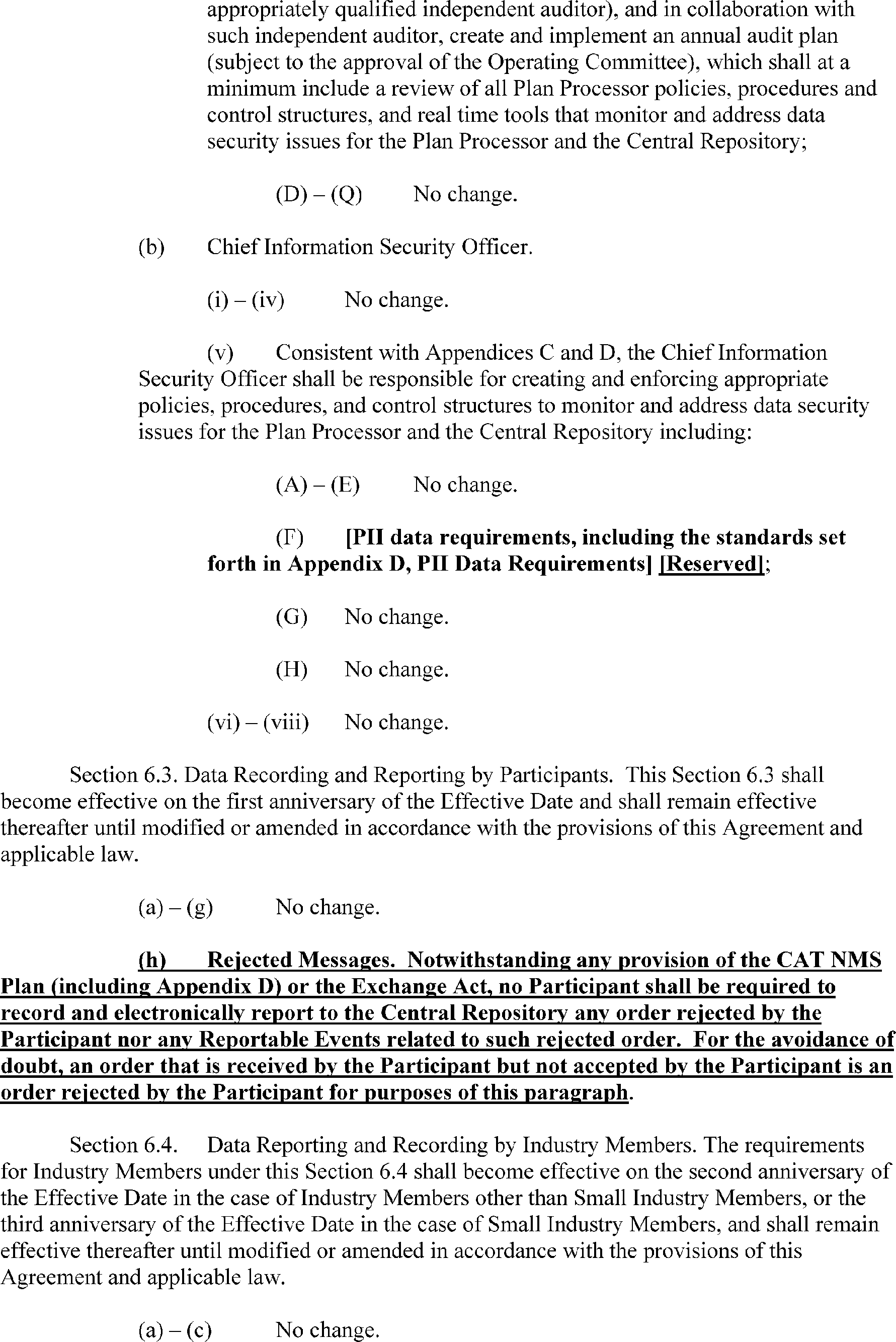
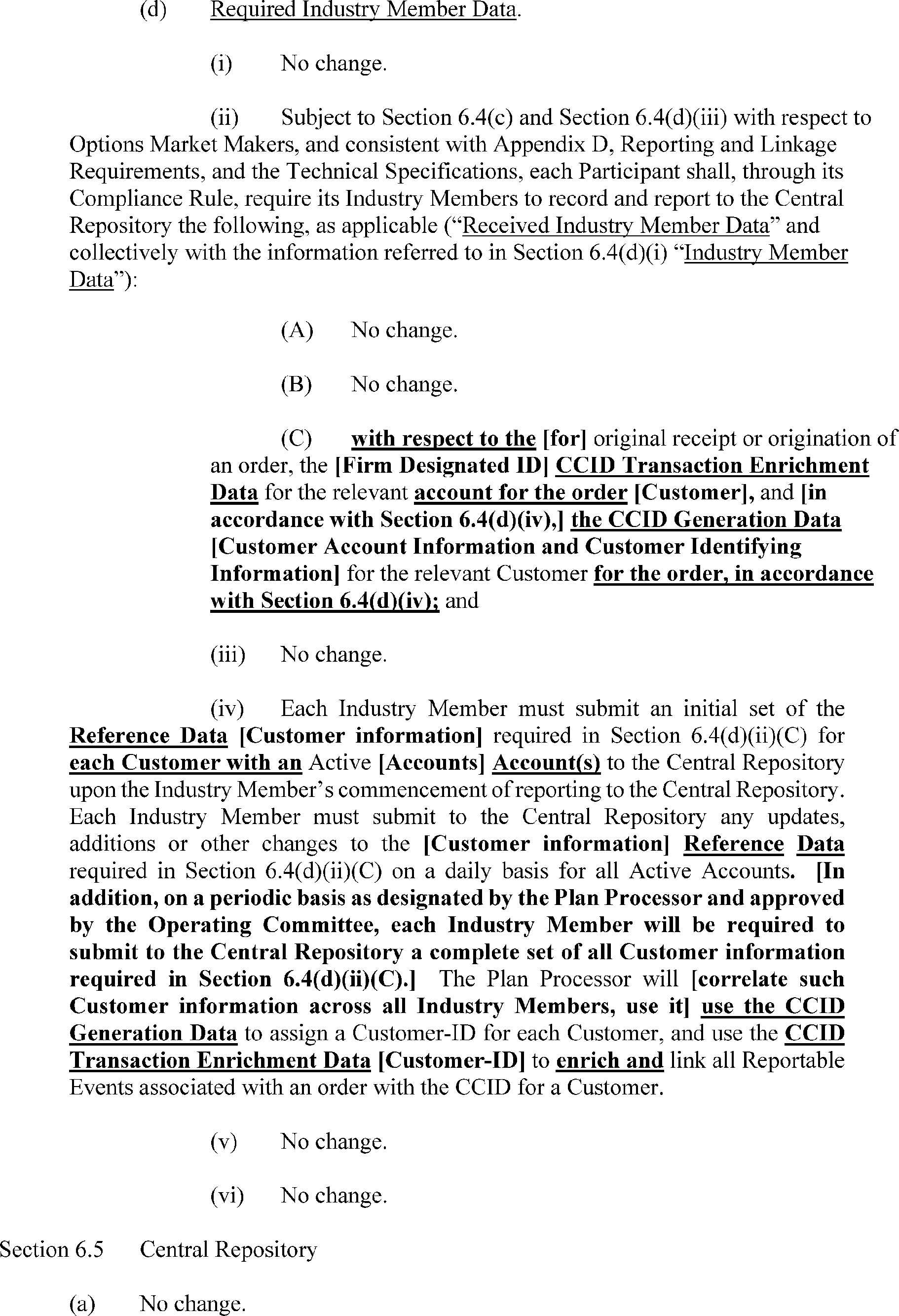
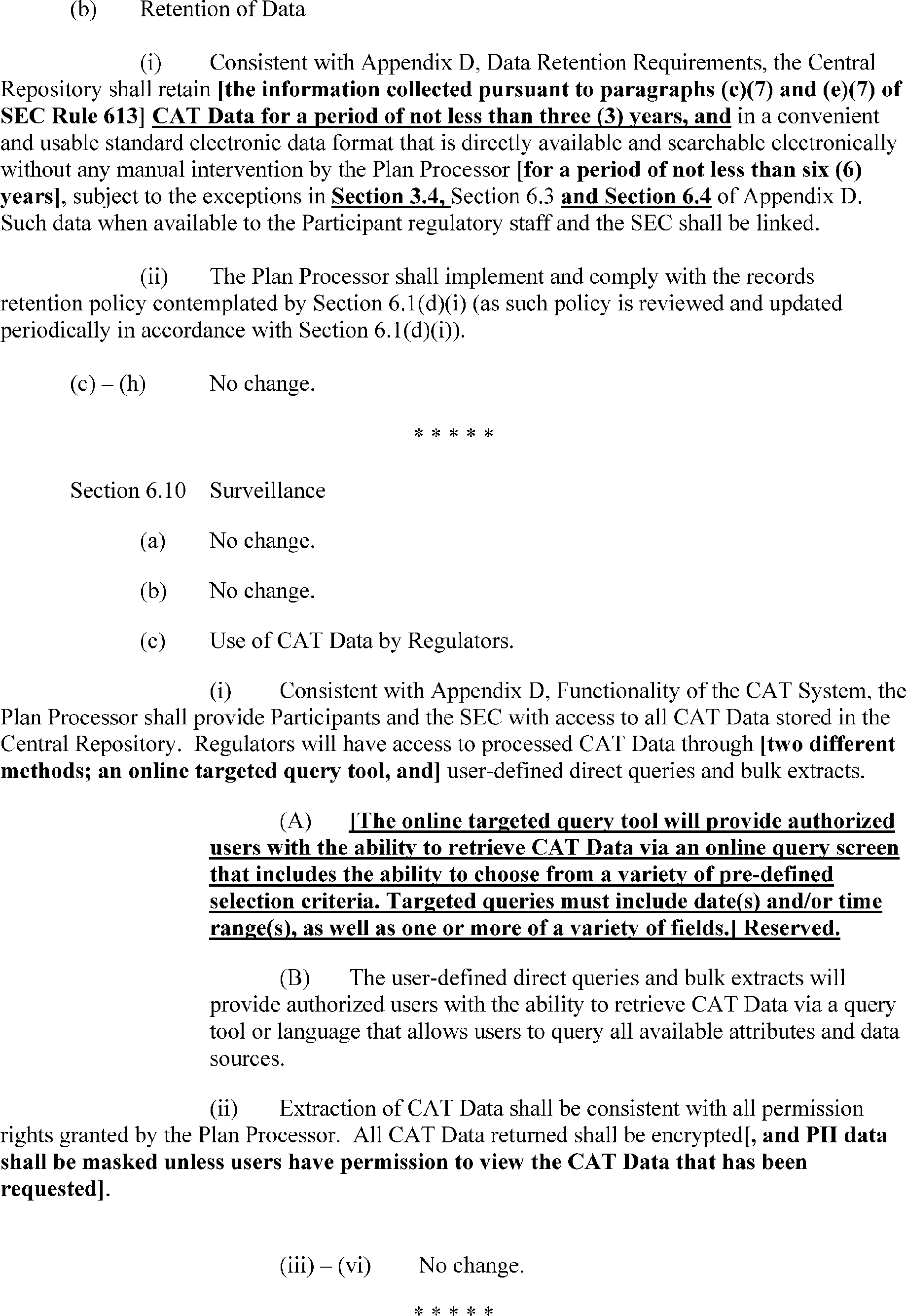
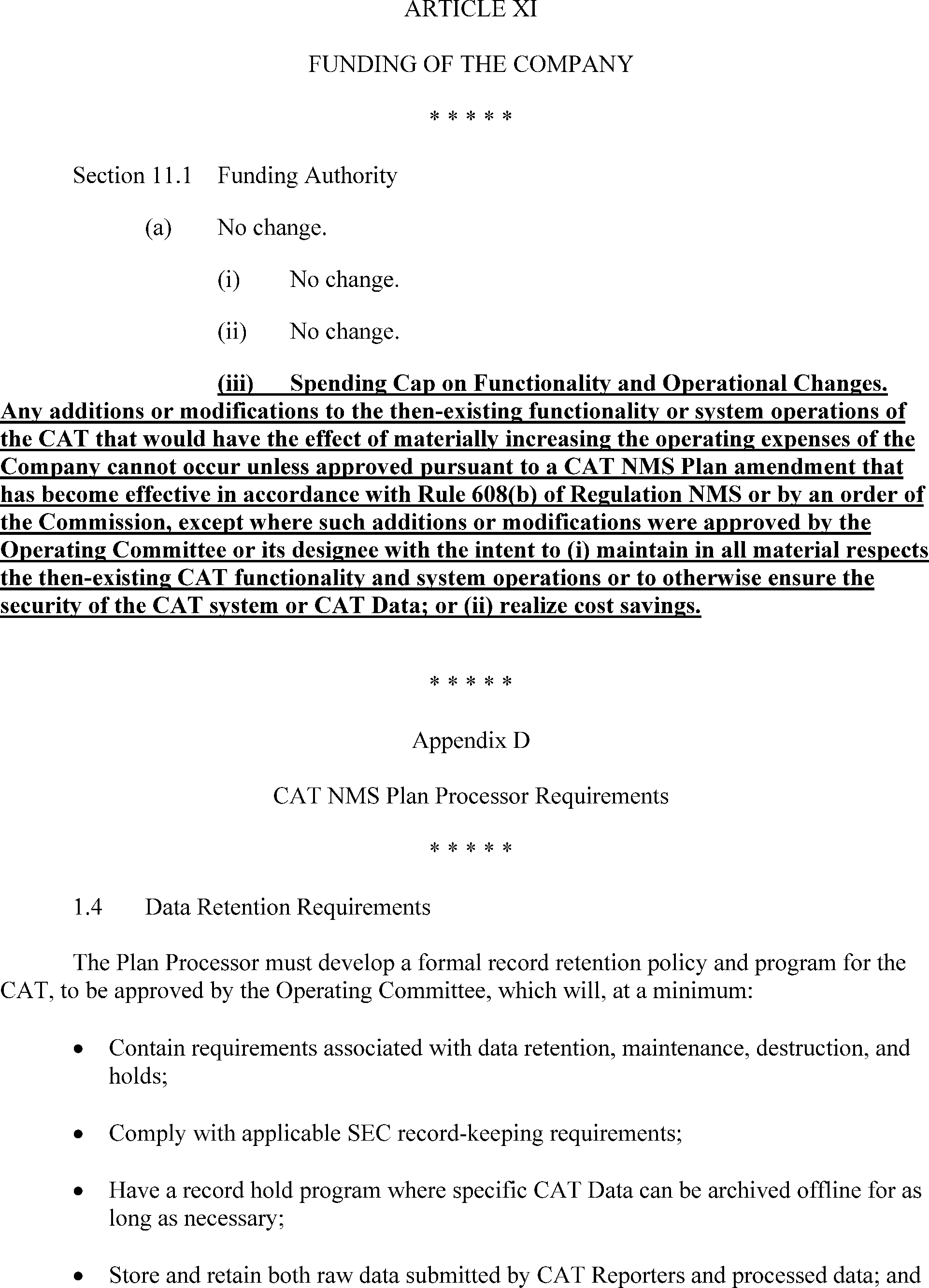
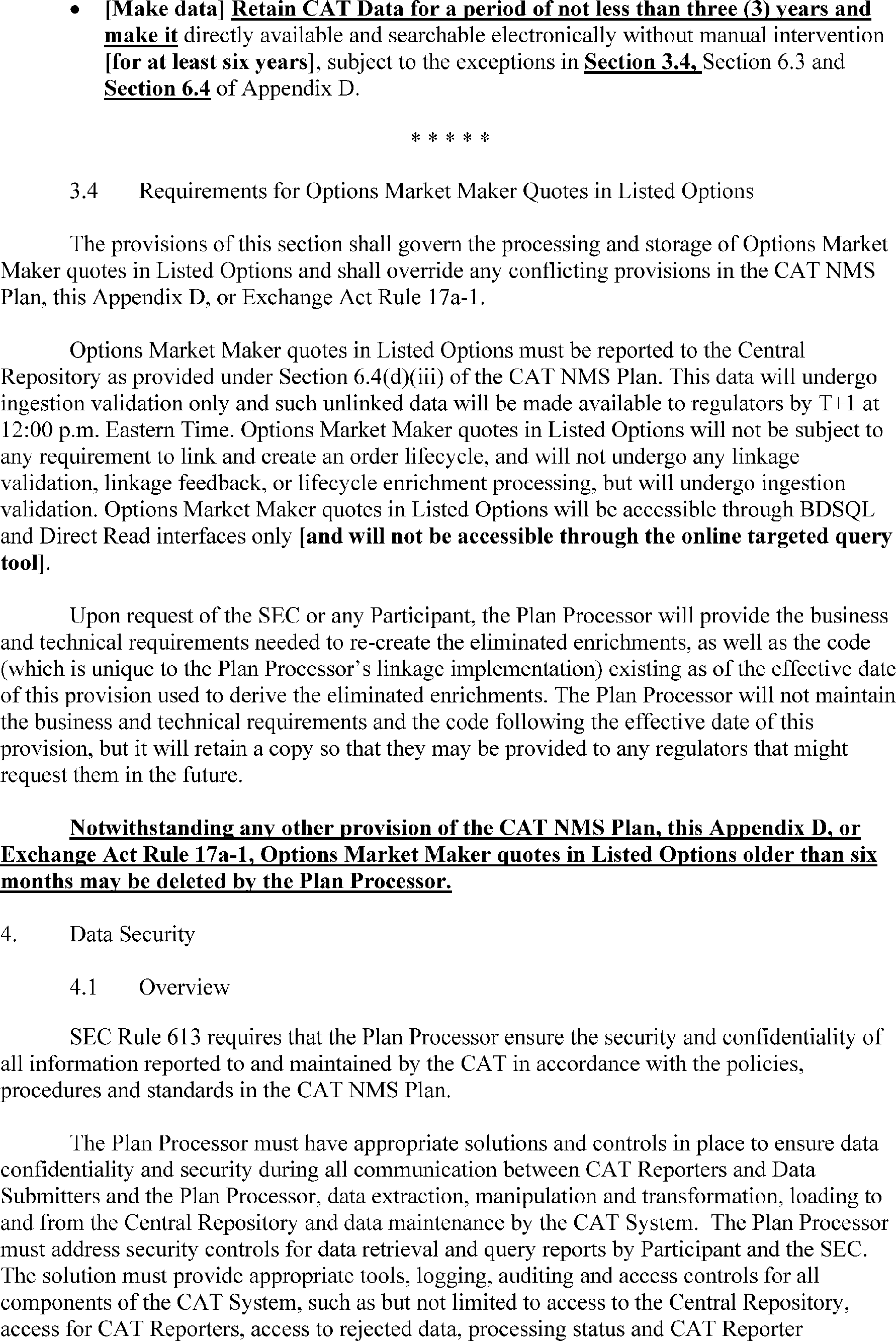
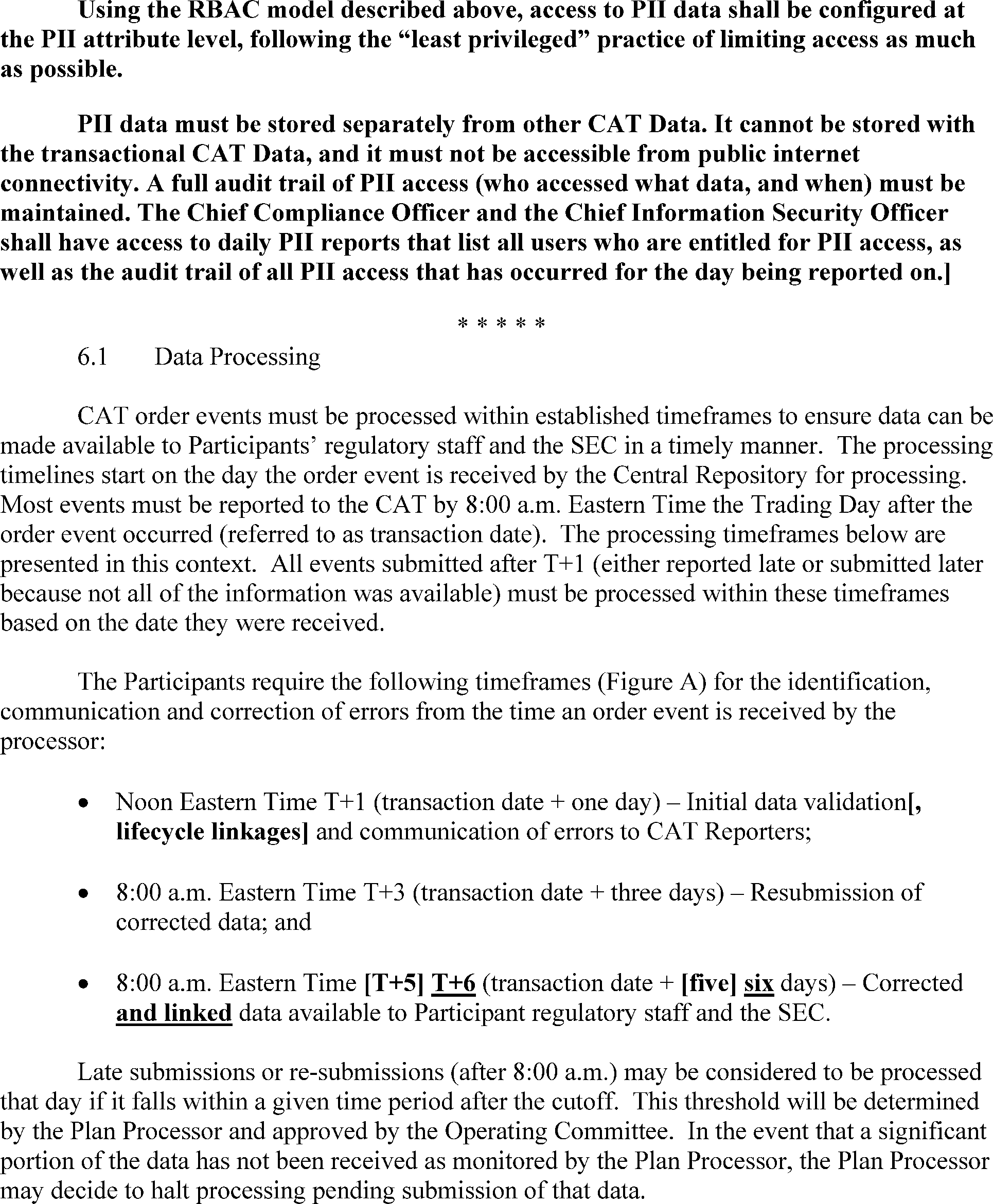
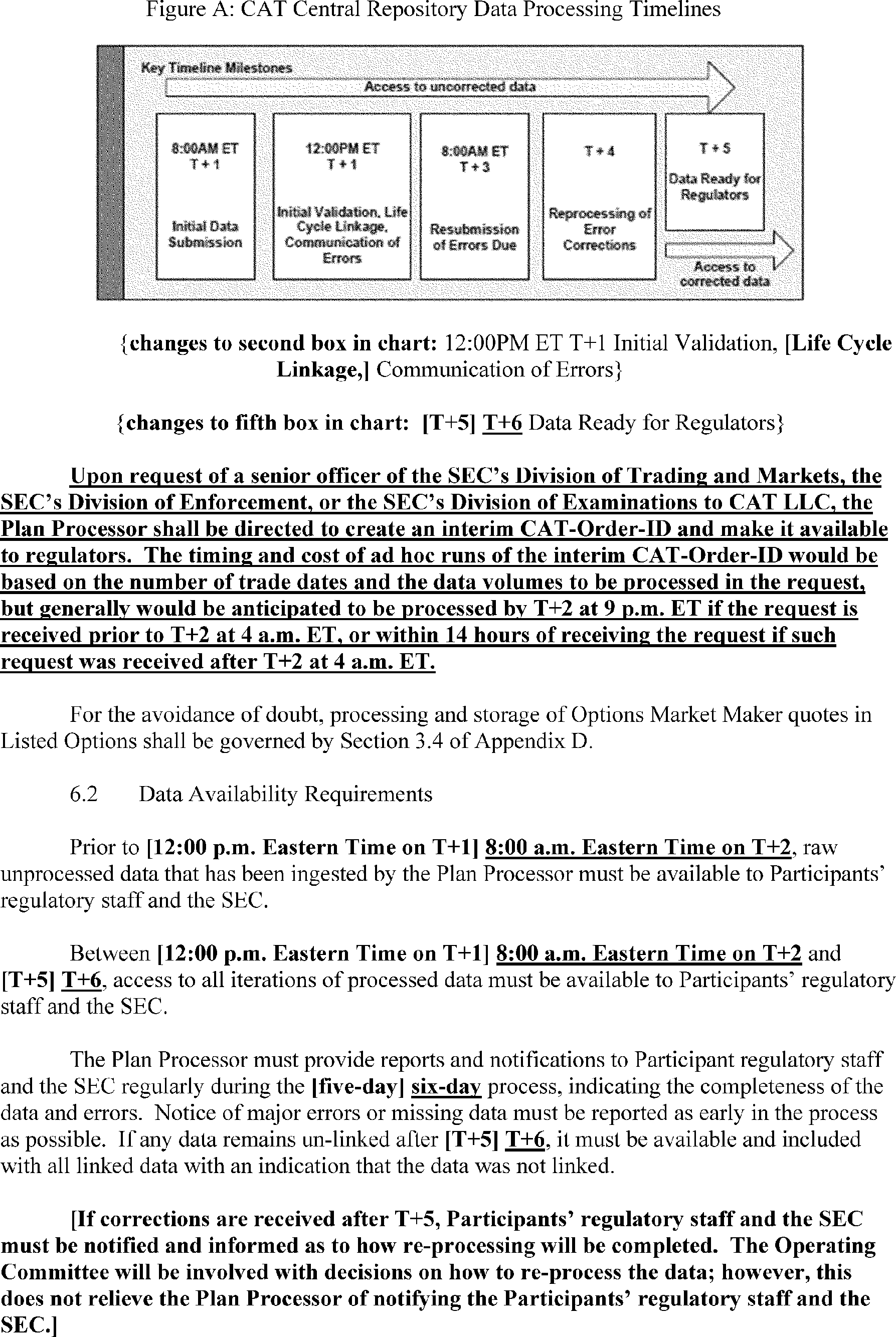
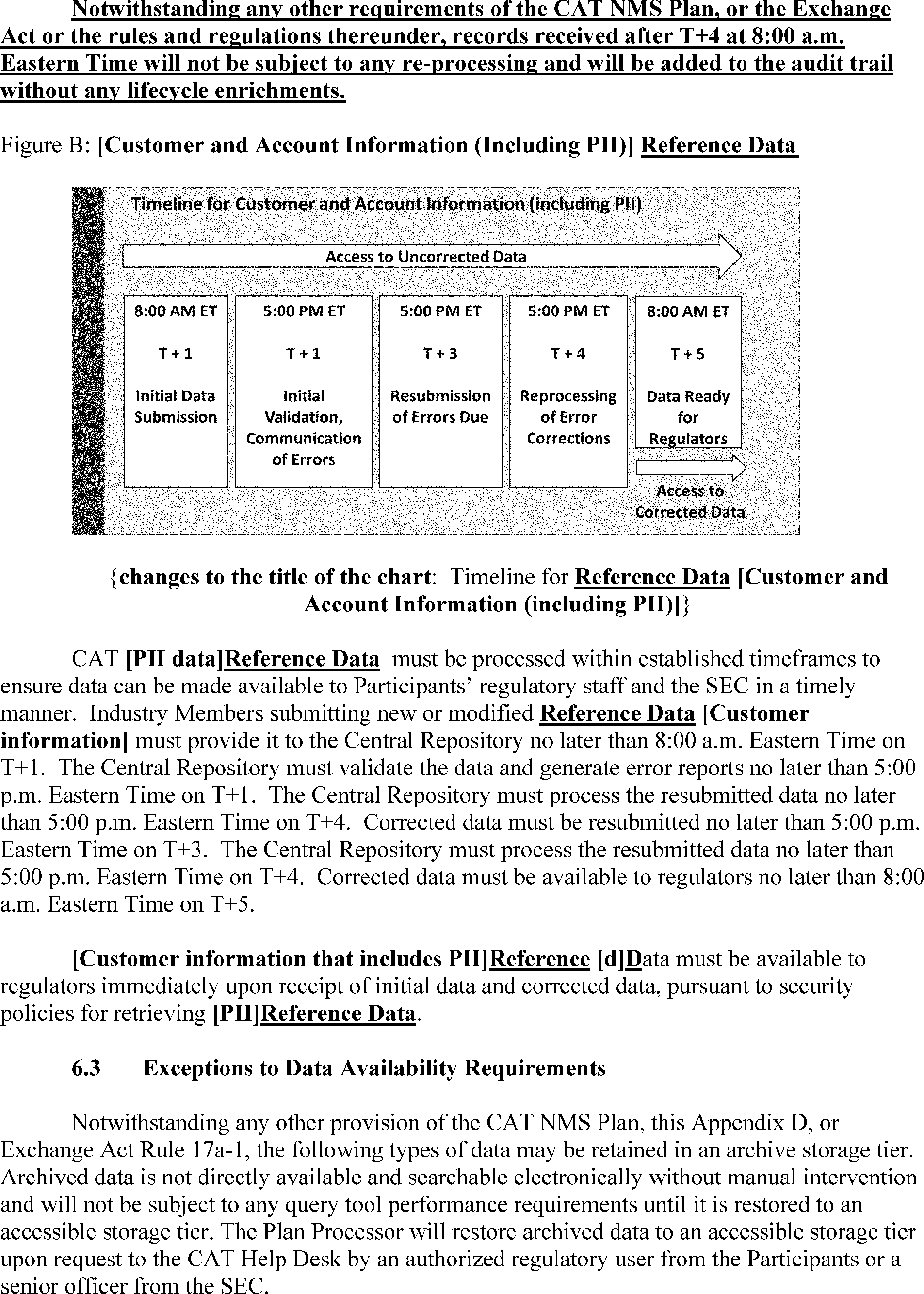

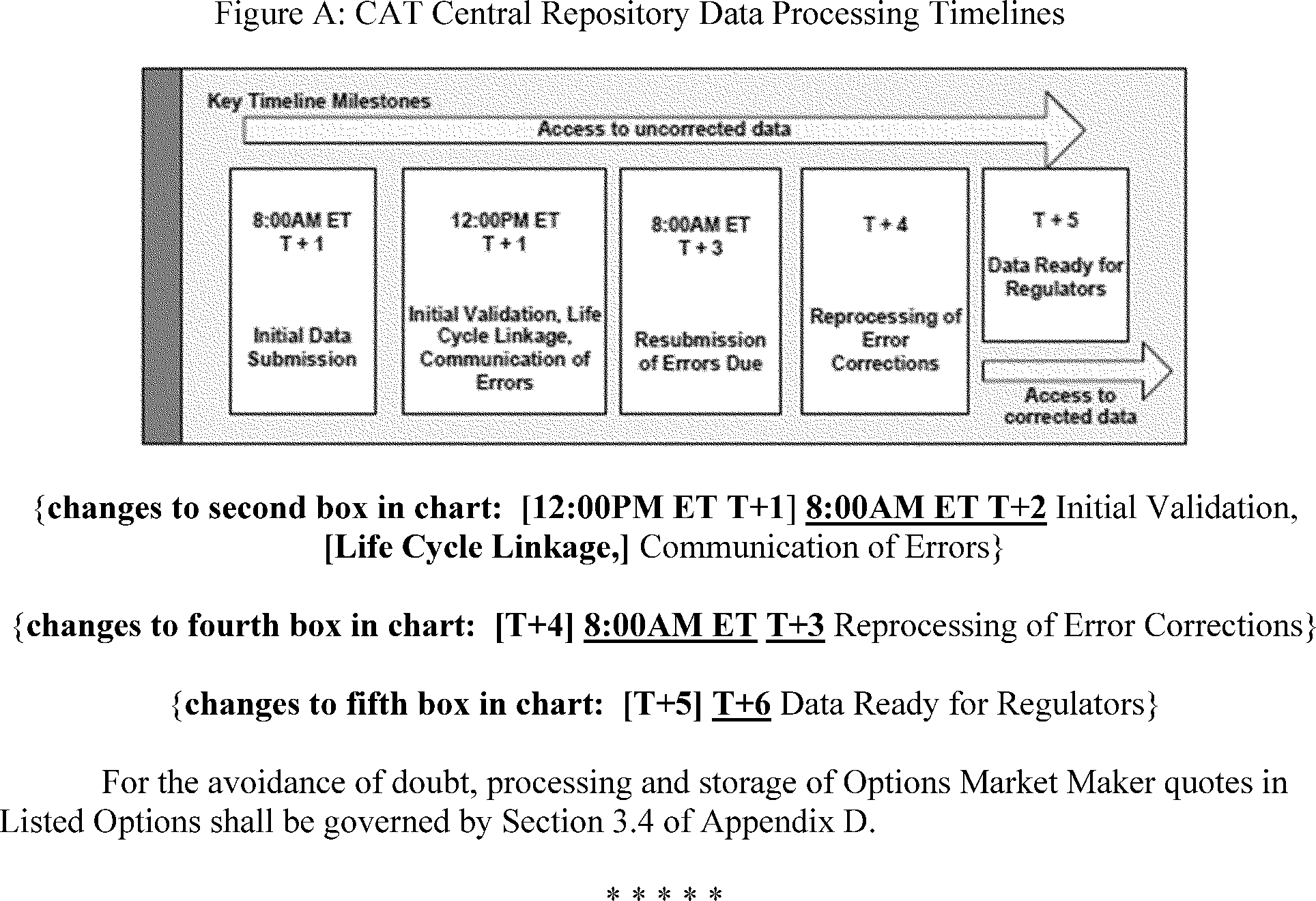
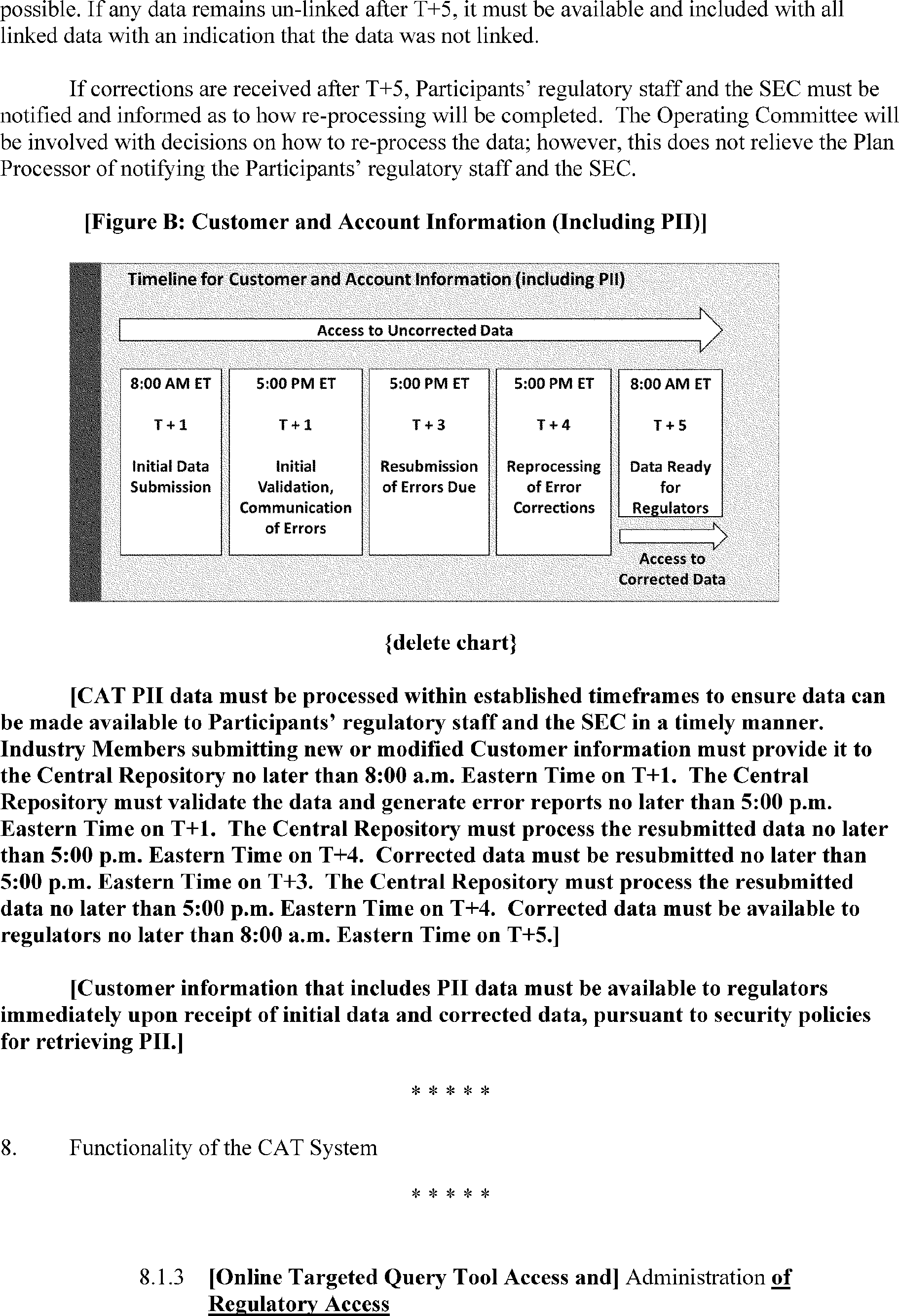
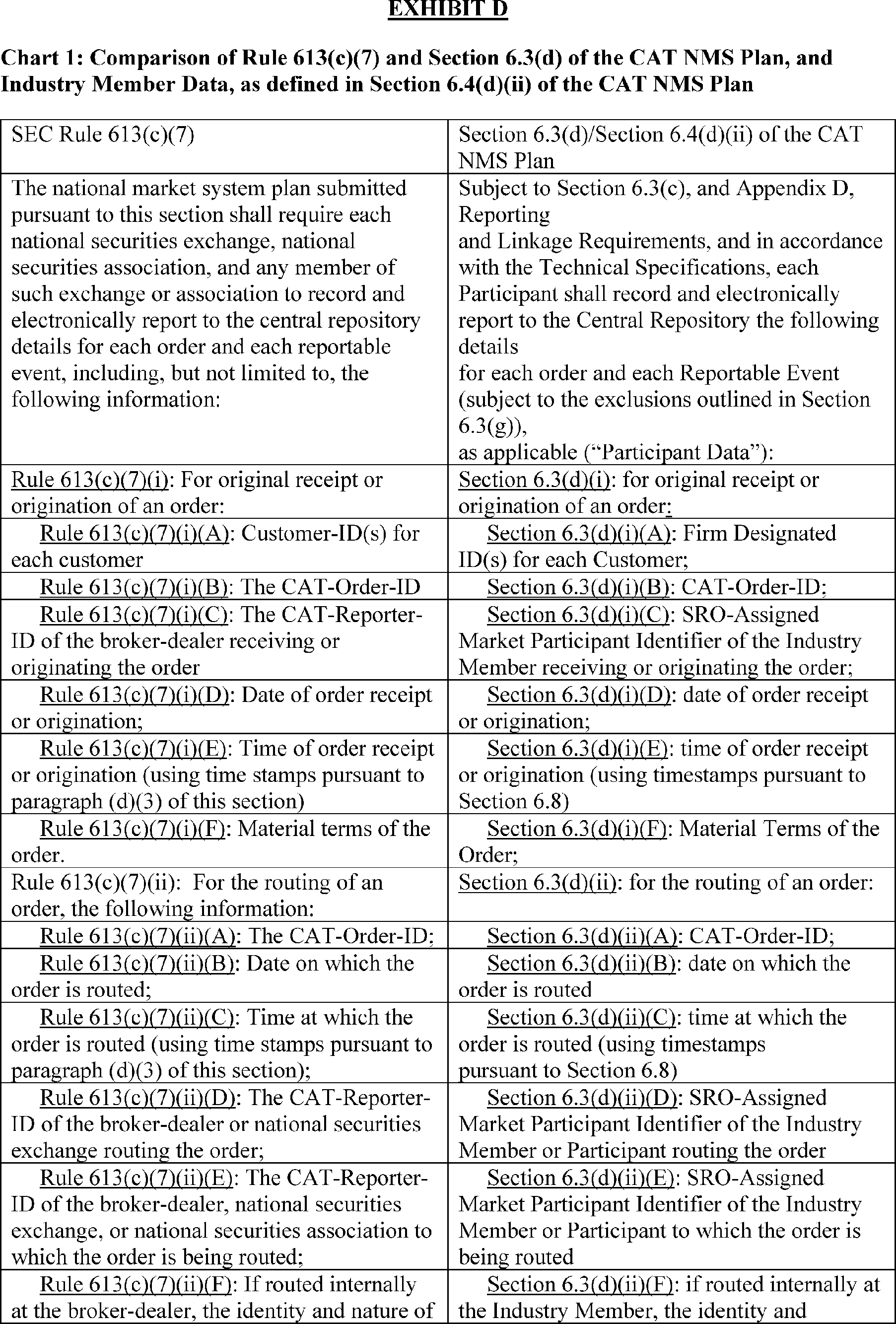
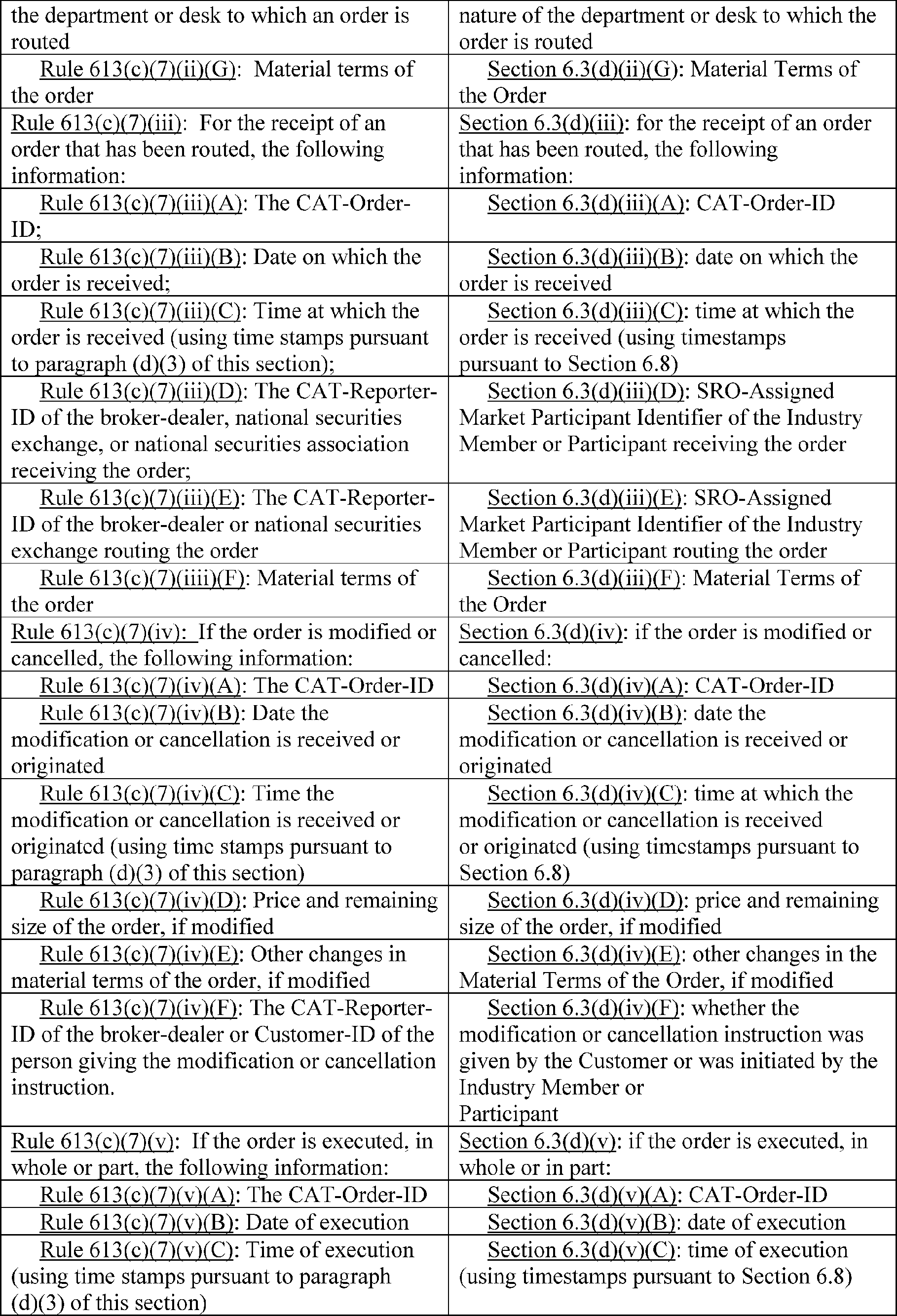
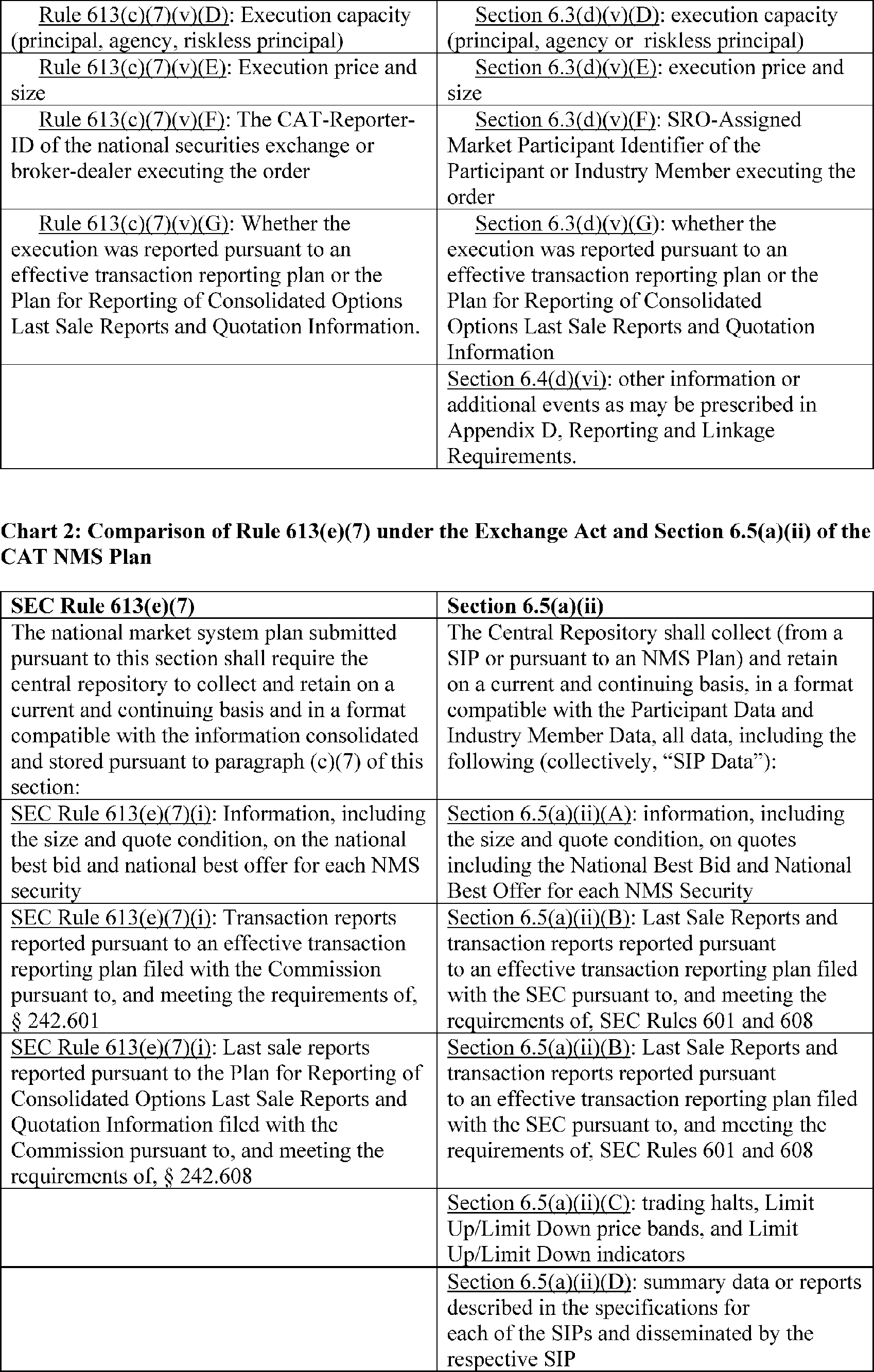
 17 CFR 242.613
 www.catnmsplan.com
 catnmsplan.com/sites/default/files/2024-03/03.27.24-Proposed-CAT-NMS-Plan-Amendment-Cost-Savings-Amendment.pdf