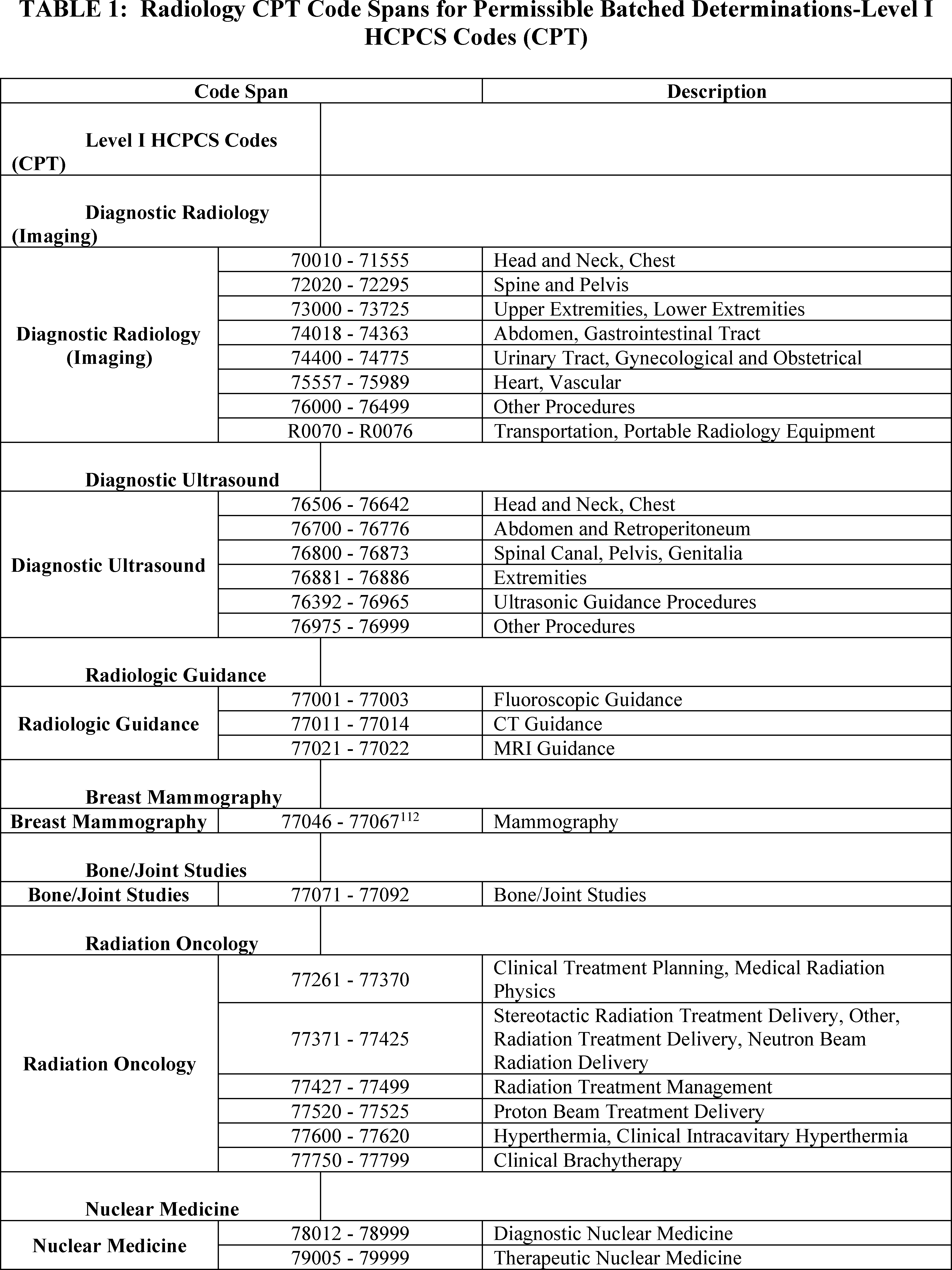
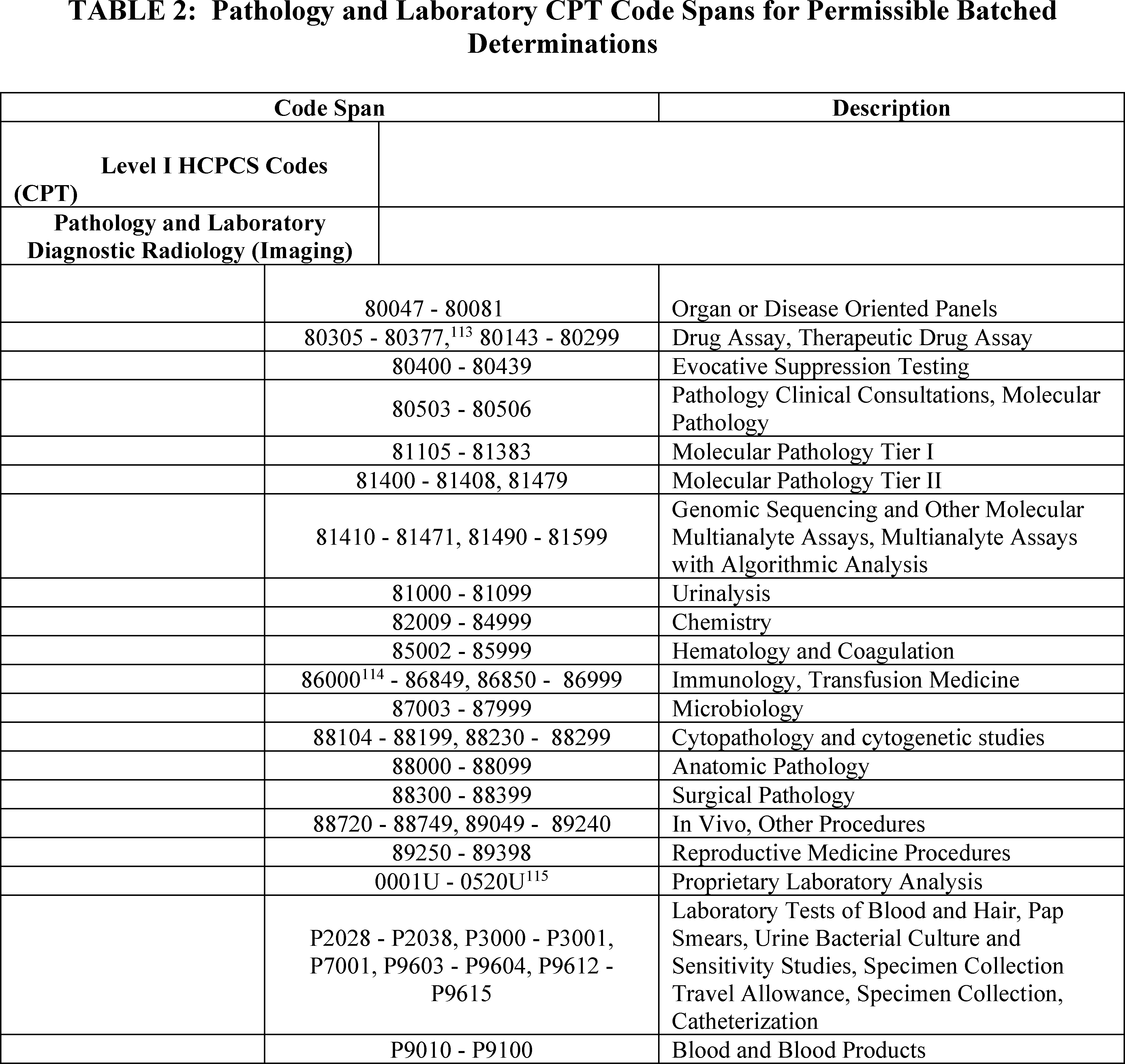
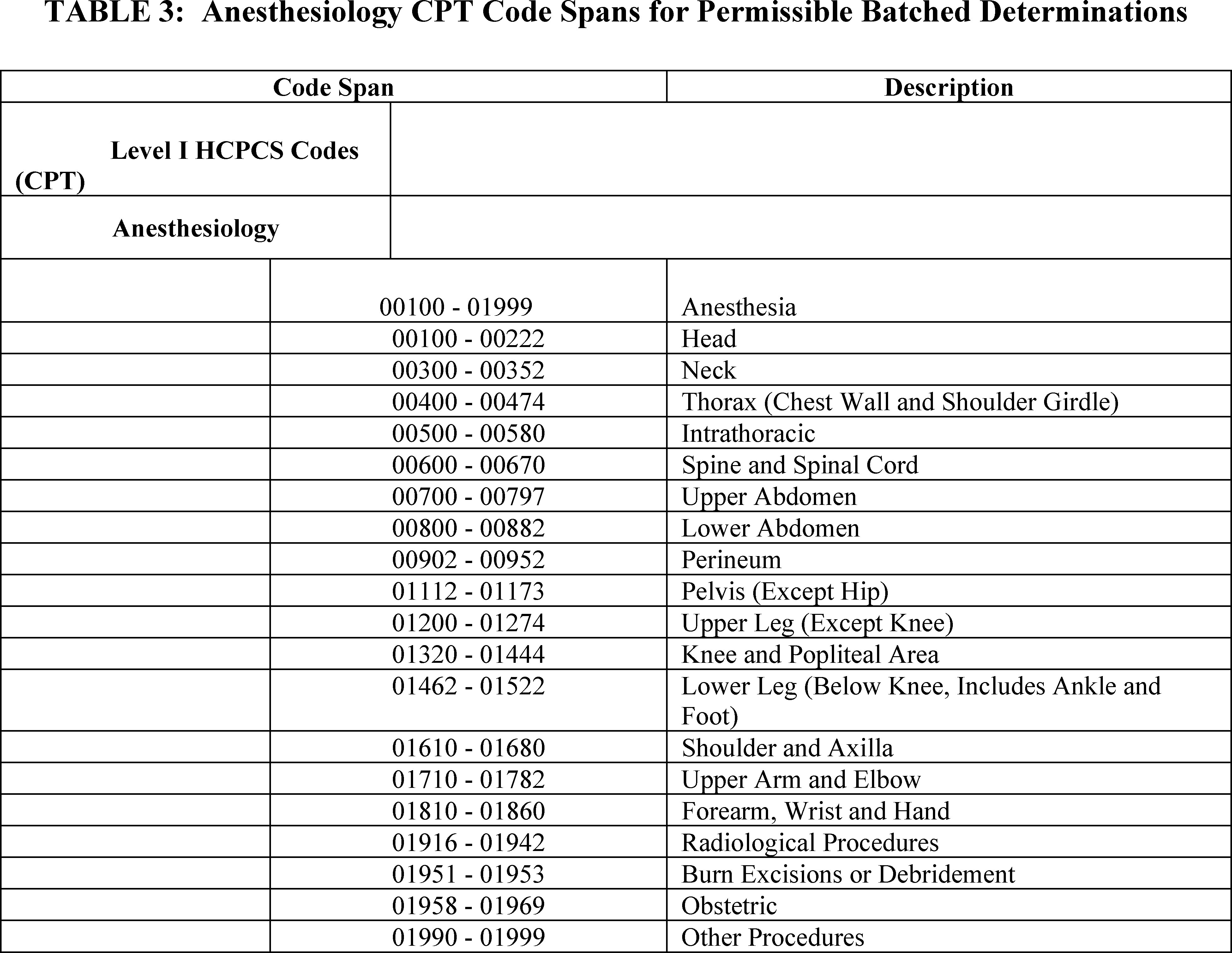
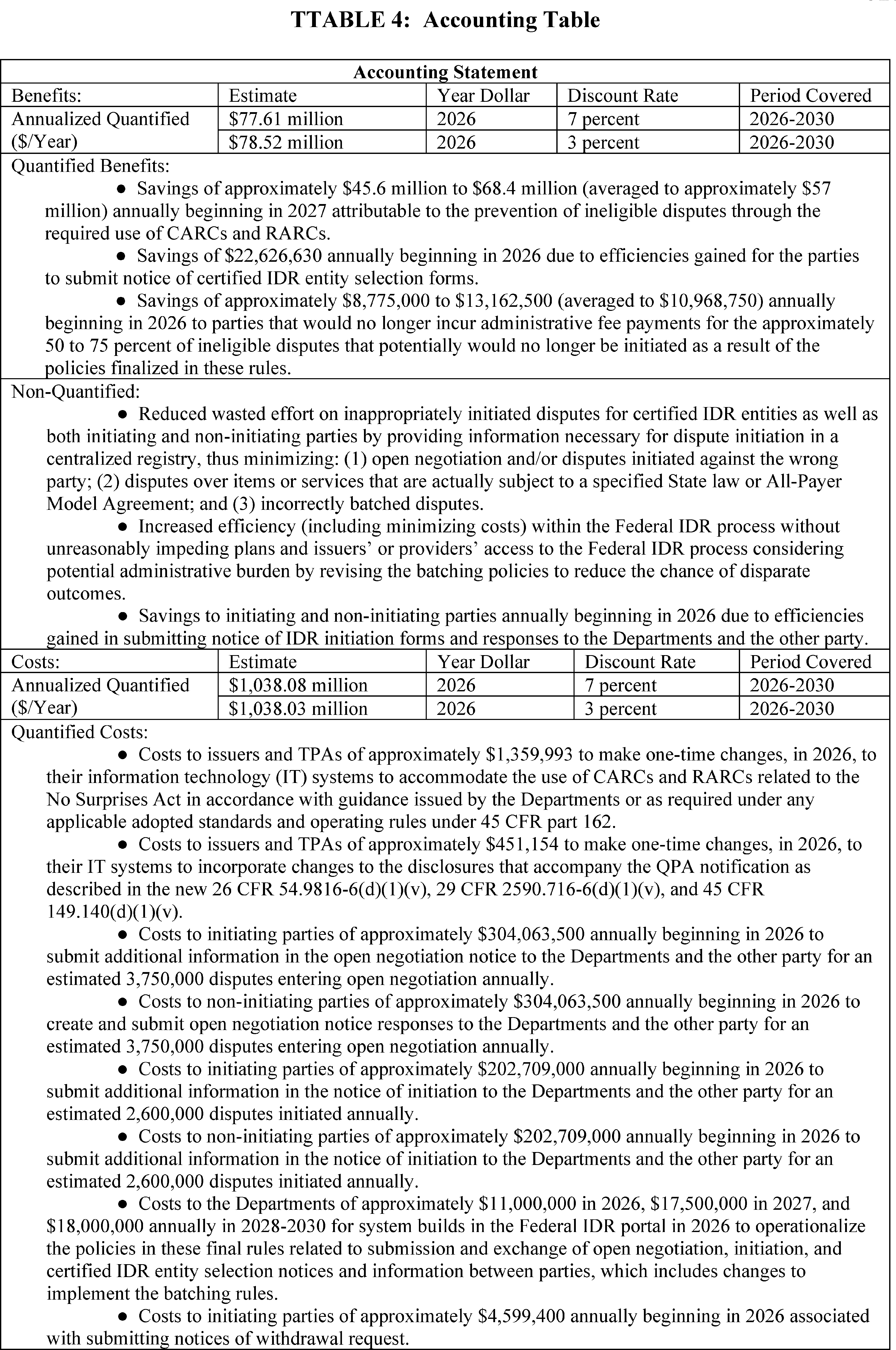
This document sets forth these final rules related to certain provisions of the No Surprises Act regarding the Federal independent dispute resolution (IDR) process, which was es...
Office of Personnel Management; Internal Revenue Service, Department of the Treasury; Employee Benefits Security Administration, Department of Labor; Centers for Medicare & Medicaid Services, Department of Health and Human Services.
ACTION:
Final rule.
SUMMARY:
This document sets forth these final rules related to certain provisions of the No Surprises Act regarding the Federal independent dispute resolution (IDR) process, which was established as part of the Consolidated Appropriations Act, 2021 (CAA). These rules finalize new requirements relating to the disclosure of information that group health plans and health insurance issuers offering group or individual health insurance coverage must include along with the initial payment or notice of denial of payment for certain items and services subject to the surprise billing protections in the No Surprises Act. These final rules also require plans and issuers to communicate information by using claim adjustment reason codes (CARCs) and remittance advice remark codes (RARCs), as specified in guidance, when providing any paper or electronic remittance advice (ERA) to an entity that does not have a contractual relationship with the plan or issuer. This document also finalizes amendments to certain requirements related to the open negotiation period preceding the Federal IDR process, the initiation of the Federal IDR process, the Federal IDR dispute eligibility review process, and the payment and collection of administrative fees and certified IDR entity fees. This document also finalizes the definition of bundled payment arrangements, amends requirements related to batched items and services and amends the rules for extensions of timeframes due to extenuating circumstances. Additionally, this document finalizes provisions that require plans and issuers to register in the Federal IDR portal. In accordance with Federal law, a summary of these rules may be found at
https://www.regulations.gov/.
DATES:
Effective date:
These final rules are effective on August 3, 2026.
Applicability date:
See section II.H. of these final rules for information on the applicability dates.
FOR FURTHER INFORMATION CONTACT:
Cameron Stokes, Office of Personnel Management, at 202-936-0162; Alexander Krupnick, Internal Revenue Service, Department of the Treasury, at 202-317-5500; Elizabeth Schumacher or Rebecca Miller, Employee Benefits Security Administration, Department of Labor, at 202-693-8335; Bryan Kirk, Centers for Medicare & Medicaid Services, Department of Health and Human Services, at 301-492-4122.
Customer Service Information:
Information from the Office of Personnel Management (OPM) on health benefits plans offered under the Federal Employees Health Benefits (FEHB) Program can be found on the OPM website (
https://www.opm.gov/healthcare-insurance/healthcare/). Individuals interested in obtaining information from the Department of Labor (DOL) concerning employment-based health coverage laws may call the Employee Benefits Security Administration (EBSA) Toll-Free Hotline at 1-866-444-EBSA (3272) or visit the DOL's website (
www.dol.gov/agencies/ebsa). In addition, information from the Department of Health and Human Services (HHS) on private health insurance coverage and coverage provided by non-Federal governmental group health plans can be found on the Centers for Medicare & Medicaid Services (CMS) website (
https://www.cms.gov/marketplace), information on health care reform can be found at
https://www.healthcare.gov,
and information on surprise medical bills can be found at
https://www.cms.gov/nosurprises.
SUPPLEMENTARY INFORMATION:
I. Background
A. Preventing Surprise Medical Bills and Establishing the Federal Independent Dispute Resolution (IDR) Process
The No Surprises Act amended chapter 100 of the Internal Revenue Code (Code), Part 7 of the Employee Retirement Income Security Act (ERISA), and title XXVII of the Public Health Service Act (PHS Act) to provide Federal protections against surprise billing by limiting out-of-network cost sharing and prohibiting balance billing in many of the circumstances in which surprise bills most frequently arise.[1]
Section 102 of the No Surprises Act added section 9816 of the Code, section 716 of ERISA, and section 2799A-1 of the PHS Act, which contain limitations on cost sharing and requirements regarding the timing of initial payments and notices of denial of payment by plans and issuers for emergency services furnished by nonparticipating providers and nonparticipating emergency facilities, and for non-emergency services furnished by nonparticipating providers for patient visits to participating health care facilities. “Health care facilities” are generally defined as hospitals, hospital outpatient departments, critical access hospitals, and ambulatory surgical centers.[2]
Section 103 of the No Surprises Act established a Federal IDR process that plans and issuers and nonparticipating providers and facilities may utilize to resolve certain disputes regarding out-of-network rates under section 9816 of the Code, section 716 of ERISA, and section 2799A-1 of the PHS Act.
Section 105 of the No Surprises Act added section 9817 of the Code, section 717 of ERISA, and section 2799A-2 of the PHS Act. These sections contain limitations on cost sharing and requirements for the timing of initial payments and notices of denial of payment by plans and issuers for air
( printed page 33901)
ambulance services furnished by nonparticipating providers of air ambulance services and allow plans and issuers and nonparticipating providers of air ambulance services to utilize the Federal IDR process.
The No Surprises Act also added provisions to title XXVII of the PHS Act in a new part E that apply to health care providers, facilities, and providers of air ambulance services, such as prohibitions on balance billing for certain items and services and requirements related to disclosures about balance billing protections.
The Departments of the Treasury, Labor, and HHS (the Departments), along with the Office of Personnel Management (OPM), are issuing regulations in phases that implement provisions of the No Surprises Act and have issued multiple rulemakings since 2021 to implement various provisions. More specifically relevant to these final rules, the Departments and OPM issued interim final rules (July 2021 interim final rules [3]
and October 2021 interim final rules [4]
), and the Departments issued final rules (August 2022 final rules [5]
) implementing provisions of sections 9816 and 9817 of the Code, sections 716 and 717 of ERISA, and sections 2799A-1 and 2799A-2 of the PHS Act. These rules implement provisions to protect consumers from surprise medical bills for emergency services, non-emergency services furnished by nonparticipating providers for patient visits to participating facilities [6]
in certain circumstances, and air ambulance services furnished by nonparticipating providers of air ambulance services. These rules also implement provisions to establish a Federal IDR process to determine payment amounts when there is a dispute between plans or issuers and providers, facilities, or providers of air ambulance services about the out-of-network rate for these services in cases where a specified State law or an applicable All-Payer Model Agreement does not provide a method for determining the total amount payable.
The July 2021 interim final rules and October 2021 interim final rules generally apply to plans and issuers (including grandfathered health plans) for plan years (in the individual market, policy years) beginning on or after January 1, 2022, and to health care providers, facilities, and providers of air ambulance services for items and services furnished during plan years (in the individual market, policy years) beginning on or after January 1, 2022.[7]
The August 2022 final rules became effective October 25, 2022, and are applicable for items and services provided or furnished on or after October 25, 2022, for plan years (in the individual market, policy years) beginning on or after January 1, 2022.
As outlined in sections I.D and I.F of the preamble to the Federal Independent Dispute Resolution Operations proposed rules [8]
(2023 proposed rules), certain provisions of these rules relating to the methodology for calculating the qualifying payment amount (QPA), the information that a certified IDR entity must consider in making a payment determination, and certain restrictions on the qualified IDR items or services that may be considered jointly as part of a batched dispute have been vacated by the United States District Court for the Eastern District of Texas (District Court).[9]
The District Court also vacated guidance [10]
raising the Federal IDR administrative fee from $50 to $350 per party for disputes initiated during the calendar year beginning January 1, 2023. On October 30, 2024, the Fifth Circuit issued an opinion and order in
TMA III,
which partially reversed the district court's decision for certain provisions related to the methodology for calculating the QPA that had been vacated by the district court in
TMA III.
On May 30, 2025, the Fifth Circuit granted a request from the plaintiffs in
TMA III
for a rehearing en banc and vacated the Fifth Circuit's October 30, 2024 panel opinion. As a result, the district court's decision from August 24, 2023 continues to bind the Departments pending the Fifth Circuit's en banc decision.
On September 26, 2023, the Departments published the Federal IDR Process Administrative Fee and Certified IDR Entity Fee Ranges Proposed Rules (IDR Process Fees proposed rules) [11]
to amend the administrative fee and certified IDR entity fee provisions in the October 2021 interim final rules to provide additional guidance and promote transparency in the administrative fee calculation and certified IDR entity fee ranges. These rules were finalized on December 21, 2023 (IDR Process Fees final rules) [12]
and are effective for disputes initiated on or after January 22, 2024.
On November 3, 2023, the Departments issued the Federal Independent Dispute Resolution Operations Proposed Rules (2023 proposed rules) to further amend existing requirements related to the Federal IDR process. The comment period for the 2023 proposed rules closed on January 2, 2024. On January 22, 2024, the Departments reopened the comment period from January 22, 2024, to February 5, 2024, to give interested parties additional time to review the 2023 proposed rules and submit comments.
B. The Federal IDR Process to Date
On April 15, 2022, the Departments launched the Federal IDR portal to accept disputes regarding the appropriate out-of-network rate for claims subject to the surprise billing protections of the No Surprises Act. In the first year of operations, disputing parties submitted 489,000 disputes, which is 14 times the number of disputes that the Departments had expected to receive in an entire calendar year.[13 14]
The high volume of dispute submissions has continued, and as of January 31, 2026, disputing parties have
( printed page 33902)
submitted over 5.1 million disputes for review.[15]
Several factors likely contribute to the high volume of initiated disputes and longer timeframes for resolution of disputes in the Federal IDR process. First, providers, facilities, and providers of air ambulance services (providers)§[16]
have alleged that plans' and issuers' QPA calculations are sometimes artificially low and that plans and issuers are making initial payments based on these artificially low QPAs, which incentivizes the use of the Federal IDR process for a larger number of items and services. Second, providers, plans and issuers have alleged, on numerous occasions, that the other party regularly fails to engage in meaningful open negotiation during the 30-business-day open negotiation period, resulting in relatively few disputes being settled outside of the Federal IDR process. Interested parties also shared that the lack of meaningful engagement in open negotiation contributes to inefficiencies within the Federal IDR process because disputing parties that fail to engage in open negotiation may not exchange information that would facilitate the Federal IDR process, such as contact information and other required disclosures, or may exchange only incomplete information. Third, the District Court's successive rulings in
TMA II, TMA IV,
and
TMA III
have necessitated multiple temporary shutdowns of the Federal IDR process to comply with the District Court's orders. Reopening the Federal IDR portal each time has required the Departments to draft new guidance, engage in new rulemaking, implement significant system updates, and communicate changes to disputing parties and certified IDR entities. Finally, initiating parties are submitting a large number of ineligible disputes, leading to both a high volume of dispute submissions and slow processing of disputes.
From April 15, 2022 to December 31, 2024, non-initiating parties challenged the eligibility of 976,721 disputes for the Federal IDR process, and certified IDR entities found 355,804 disputes ineligible.[17]
Ineligible disputes often involve an item or service that is not a qualified IDR item or service because it is payable by a health plan or coverage that is not subject to the surprise billing protections of the No Surprises Act, such as Medicare or Medicaid, or because the item or service is subject to a specified State law or an All-Payer Model Agreement. Additionally, many batched disputes were found ineligible due to the initiating party incorrectly batching items or services in a manner that did not comply with the regulations, such as batching claims paid by different plans or issuers.[18]
Certified IDR entities have similarly reported encountering incorrectly bundled disputes. For example, a provider may incorrectly try to submit as a bundle an emergency room facility code with various item and service codes included as line items, rather than properly submitting a single service code (for example, a Diagnosis-Related Group (DRG) code under which a provider, facility, or provider of air ambulance services can bill for multiple items or services).[19]
Disputes are also ineligible when the disputing parties initiate the Federal IDR process after failing to satisfy the 30-business-day open negotiation period requirements specified under 29 CFR 2590.716-8(b)(1) and 45 CFR 149.510(b)(1) or after 4 business days after the end of the 30-business-day open negotiation period as specified under 29 CFR 2590.716-8(b)(2)(i) and 45 CFR 149.510(b)(2)(i).
To address the high volume of disputes submitted to the Federal IDR process, the Departments have provided ongoing technical assistance to certified IDR entities and disputing parties by issuing guidance as well as performing research and outreach on dispute eligibility determinations.[20]
In addition, the Departments have implemented Federal IDR portal system enhancements, such as enabling non-initiating parties to submit supporting documentation to contest dispute eligibility within their response to the notice of IDR initiation and requiring non-initiating parties to attest to the health plan type.[21]
This allows the Departments to collect information regarding dispute eligibility earlier in the process to identify whether the eligibility requirements are met. However, despite the efforts to date, the Departments and certified IDR entities continue to experience challenges related to determining eligibility for the Federal IDR process, such as delays due to necessary outreach by the certified IDR entities to the disputing parties to obtain or verify information regarding the eligibility of a dispute.
C. Federal IDR Operations Proposed Rules
The 2023 proposed rules were intended to address issues that are critical to the timely rendering of payment determinations and to address feedback from interested parties and certified IDR entities to improve the functioning of the Federal IDR process.
Specifically, the 2023 proposed rules sought to enhance sharing information for plans, issuers, and providers by requiring that these parties share specific information before initiating the Federal IDR process, including by providing No Surprises Act-specific claim adjustment reason codes (CARCs) and remittance advice remark codes (RARCs) with a remittance advice. The 2023 proposed rules also sought to amend the information that must be disclosed about the QPA. Additionally, the 2023 proposed rules proposed to require plans and issuers to register with the Federal IDR portal to facilitate identification of the parties to a dispute and determine whether coverage of an item or service that is the subject of the dispute is subject to a specified State law, an All-Payer Model Agreement, or the Federal IDR process for determining the out-of-network rate. To facilitate communication and improve open negotiation, the 2023 proposed rules sought to amend to the content requirements of the standard open negotiation notice, establish requirements related to an open negotiation response notice, and clarify the timing for when the open negotiation period begins. Additionally, the 2023 proposed rule included amendments to the notice of IDR initiation and new requirements for the initiation response from the non-initiating party.[22]
The rules also proposed establishing a new process for
( printed page 33903)
providing and receiving notices related to the IDR process.
The 2023 proposed rules also sought to introduce clearer timeframes for certain steps in the Federal IDR process. More specifically, the 2023 proposed rules proposed procedures for selecting a certified IDR entity and handling conflict-of-interest reviews to account for the time it takes certified IDR entities to confirm that they do not have a conflict of interest with either party. The 2023 proposed rules also proposed to establish a departmental eligibility review process and require that additional information be submitted to support eligibility determinations, conflict-of-interest reviews, or payment determinations. The 2023 proposed rules also proposed to establish a standard process for disputes to be withdrawn from the Federal IDR process. The Departments also proposed amendments to adjust the timeframe for submission of offers and payment determination.
Regarding fee collections, the proposed rule included amendments related to the collection of certified IDR entity fees and administrative fees. The Departments proposed a reduced administrative fee amount for low-dollar disputes to address access concerns by certain interested parties that regularly provide services with low-dollar values. The Departments also proposed reduced administrative fee amounts for non-initiating parties in cases of ineligible disputes as well as pursuing Federal debt collection of the administrative fee from parties that do not pay as required.
The Departments proposed to amend requirements related to batched items and services and bundled payment arrangements. These amendments sought to provide clarity in how parties can submit multiple items and services as either batched items and services or bundled payment arrangements in a single dispute and to provide additional flexibility in submitting multiple items and services. The proposed rules also proposed to expand upon situations in which timeframes may be waived due to extenuating circumstances.
The Departments received 124 timely comments during both comment periods [23]
in response to the proposed rules from a wide variety of interested parties, including private citizens; consumer and advocacy organizations; employers and other plan sponsors; health information technology, health care consulting, and health care staffing companies; health care providers and facilities and health systems; health insurance issuers; service providers, including third party administrators (TPAs) and revenue cycle management organizations; trade and professional associations; and researchers. Many commenters provided detailed feedback on multiple aspects of the proposed rules and in response to various specific comment solicitations included in the preamble to the proposed rules and the request for information. After reviewing the comments received, the Departments are finalizing the 2023 proposed rules, with some changes in response to comments as described in more detail later in this preamble, to improve the overall functioning of the Federal IDR process.
II. Overview of the Final Rules—Departments of the Treasury, Labor, and HHS
A. Definition of Bundled Payment Arrangement
Section 9816(c)(3)(B) of the Code, section 716(c)(3)(B) of ERISA, and section 2799A-1(c)(3)(B) of the PHS Act state that the Departments shall provide that, in the case of items and services which are included by a provider or facility as part of a bundled payment, such items and services may be part of a single determination. The October 2021 interim final rules specify that in the case of qualified IDR items and services billed by a provider, facility, or provider of air ambulance services as part of a bundled payment arrangement, or if a plan or issuer makes or denies an initial payment as a bundled payment, the qualified IDR items and services may be submitted as part of one dispute and are subject to the rules for batched disputes and the certified IDR entity fee for single disputes.[24]
The preamble to the October 2021 interim final rules describes a bundled payment arrangement as an instance in which a group health plan or health insurance issuer pays a provider, facility, or provider of air ambulance services a single payment for multiple services furnished during an episode of care to a single patient.[25]
To clarify how certified IDR entities can identify a dispute that includes a bundled payment arrangement, the Departments provided a definition for a bundled arrangement in the
August 2022 Technical Assistance for Certified IDR Entities.[26]
The 2023 proposed rules proposed to codify the definition set forth in the
August 2022 Technical Assistance for Certified IDR Entities.
Specifically, the Departments proposed to amend 26 CFR 54.9816-3T, 29 CFR 2590.716-3, and 45 CFR 149.30 by defining the term “bundled payment arrangement” as an arrangement under which: (1) a provider, facility, or provider of air ambulance services bills for multiple items or services furnished to a single patient under a single service code that represents multiple items or services (for example, a diagnostic related group (DRG) code); or (2) a plan or issuer makes an initial payment or notice of denial of payment to a provider, facility, or provider of air ambulance services under a single service code that represents multiple items or services furnished to a single patient (for example, a DRG code).
To further clarify the process for resolving IDR disputes for bundled payment arrangements, the Departments proposed to remove the language under 26 CFR 54.9816-8T(c)(3)(ii), 29 CFR 2590.716-8(c)(3)(ii), and 45 CFR 149.510(c)(3)(ii) stating that a bundled payment arrangement is subject to the rules for batched disputes. While a bundled payment arrangement is, by definition, billed by the same provider or group of providers, facility, or same provider of air ambulance services and paid by the same group health plan or health insurance issuer, not all requirements for batched disputes, including those finalized under 26 CFR 54.9816-8(c)(4), 29 CFR 2590.716-8(c)(4) and 45 CFR 149.510(c)(4) of these final rules, apply to bundled payment arrangements. Therefore, it is not entirely accurate to say that bundled payment arrangements are subject to the rules for batched disputes.
The Departments solicited comment on the definition and treatment of bundled payment arrangements in the 2023 proposed rules. The Departments also solicited comment on examples of service or procedural codes other than DRGs that would meet the proposed definition of a bundled payment arrangement. After consideration of the comments received, and for the reasons described below, the Departments are finalizing the definition of the term “bundled payment arrangement” at 26
( printed page 33904)
CFR 54.9816-3, 29 CFR 2590.716-3, and 45 CFR 149.30 as proposed. The Departments did not receive any comments on the proposed amendment to remove the language under 26 CFR 54.9816-8T(c)(3)(ii), 29 CFR 2590.716-8(c)(3)(ii), and 45 CFR 149.510(c)(3)(ii) stating that a bundled payment arrangement is subject to the rules for batched disputes, and are finalizing this amendment as proposed.[27]
Commenters generally supported the proposed definition of bundled payment arrangement. However, the Departments also received a comment opposing the proposed definition, stating that bundled disputes should be defined as a single episode of care on a single claim form. This commenter stated that bundled payment arrangements are typically for contracted services and are not relevant to out-of-network claims subject to the No Surprises Act.
Several commenters also had additional recommendations regarding scenarios or types of services that could be defined as a bundled payment arrangement. Another commenter recommended that the definition of bundling used for the Medicare program be used for the purposes of the No Surprises Act. Another commenter suggested that bundled payment arrangements under the proposed definition be limited to situations where the provider or facility and the plan or issuer mutually agree to bundling, or a recognized DRG or all-patients refined diagnosis related group (APR DRG) applies to the claim. A few commenters provided examples of services or procedural codes other than DRGs that would meet the proposed bundled payment arrangement definition. One of these commenters stated that Current Procedural Terminology (CPT) and Healthcare Common Procedure Coding System (HCPCS) codes, particularly for laboratory services, could be used for bundled payment arrangements under the proposed definition.
Even if bundled payment arrangements are most often used for contracted services, as the commenter suggested, some qualified IDR items and services provided by out-of-network providers will still meet the definition of bundled payment arrangement as defined under the proposed rules. Section 9816(c)(3)(B) of the Code, section 716(c)(3)(B) of ERISA, and section 2799A-1(c)(3)(B) of the PHS Act explicitly contemplate bundled payments within the context of the Federal IDR process, which is a process that only applies to claims for out-of-network items and services, and therefore we disagree that bundled payment arrangements are not relevant to out-of-network claims subject to the No Surprises Act.
For the comment requesting additional guidance about the types of services that may be defined as bundled payment arrangements, the Departments believe that existing guidance provided in the
August 2022 Technical Assistance for Certified IDR Entities
and in the preamble to the 2023 proposed rules provides sufficient examples of bundled payment arrangements. The Departments restate the example in the preamble to the 2023 proposed rules: if a physician performs bilateral mammography, the provider shall report (or for the purpose of the Federal IDR process, the provider shall bill) the Current Procedural Terminology (CPT) code 77066 (
Diagnostic mammography . . . bilateral). The provider should not submit CPT code 77065 (
Diagnostic mammography . . . unilateral) with 2 UOS or CPT code 77065 LT (
unilateral left breast mammography) plus CPT code 77065 RT (
unilateral right breast mammography). Under this example, the provider performed multiple services, and therefore, under these final rules, if the services are billed or reimbursed under one service code (CPT code 77066), all services performed under that service code (CPT codes 77065 LT and 77065 RT) may be considered a bundled payment arrangement for purposes of the Federal IDR process.
The definition of bundled payment arrangements under these final rules allows disputes to be bundled by a single CPT code, DRG code, or HCPCS code, provided the dispute otherwise complies with such definition. We disagree that bundling should be limited to a recognized DRG or APR DRG, as doing so would be overly restrictive and would limit initiating parties' ability to submit bundled disputes. The Departments favor broader criteria for bundling to increase the number of claims eligible to be submitted as a bundled payment arrangement. Further, the Departments disagree that they should adopt the Medicare definition of bundled payments for purposes of submitting claims, because there are multiple definitions that exist in guidance and regulation that rely on a defined episode of care, single illness or condition, or course of treatment, which the Departments proposed as a method of batching at 26 CFR 54.9816-8(c)(4)(i)(C)(
2), 29 CFR 2590.716-8(c)(4)(i)(C)(
2), and 45 CFR 149.510(c)(4)(i)(C)(
2
).[28]
Additionally, the Departments decline to finalize a rule limiting the use of bundled payment arrangements to situations where the provider and the plan or issuer mutually agree to the use of bundling, as a commenter suggested. Such a limitation creates an administrative barrier to submitting a bundled dispute and could disincentivize parties from using or relying on bundled payment arrangements, which could decrease the accessibility of the Federal IDR process for bundled payment arrangements.
B. Use of CARCs and RARCs
1. Existing Payment Communication Practice and Requirements
As described in the preamble to the 2023 proposed rules, the Health Insurance Portability and Accountability Act of 1996 (HIPAA) mandated the adoption of electronic standards for certain health care transactions, including health care payment and remittance advice.[29]
When remittance advice is transmitted electronically, it is commonly referred to as an electronic remittance advice or ERA.[30]
All ERAs must comply with the Accredited Standards Committee (ASC) X12 835 transaction standard adopted by HHS under 45 CFR 162.1602.
The ASC X12 835 implementation guide mandates the use of CARCs and RARCs to communicate remittance information (as opposed to any other code systems, such as proprietary codes developed by specific plans and
( printed page 33905)
issuers).[31]
CARCs explain why a claim or service line was paid differently than it was billed.[32]
RARCs provide additional explanations for a remittance. RARCs are either “supplemental,” meaning that they provide additional explanation for an adjustment already described by a CARC, or “informational,” meaning they convey information about remittance processing and are not related to a specific adjustment or CARC.[33]
The lists of approved CARCs and RARCs are maintained by separate committees (the CARC Committee and the RARC Committee) designated by HHS to review requests to add, remove, or modify existing CARCs and RARCs. The HIPAA operating rule adopted at 45 CFR 162.1603(a)(4) requires plans and issuers to use a uniform set of CARCs and RARCs for defined business scenarios.[34]
Any interested party can use publicly available forms to submit requests for new or modified CARCs and RARCs and accompanying explanations to the respective committees on a rolling basis. Each committee meets on a regularly scheduled, periodic basis to discuss proposed new CARCs and RARCs or modifications of existing CARCs and RARCs with the sponsors of such changes and determine whether to approve or deny the recommended change or new CARC or RARC.[35]
Updated lists of approved CARCs and RARCs, along with an updated list of approved CARC and RARC combinations and business scenarios, are published three times each year.[36]
The RARC Committee has approved a set of specific RARCs that convey information related to the No Surprises Act, including which provisions apply to a claim, how cost sharing was calculated, and whether a payment for a claim was an initial or final payment.[37]
While these RARCs are currently available for use by plans and issuers, the No Surprises Act-specific RARCs do not address all required QPA disclosures or all data elements relevant to whether a payment dispute arising from an item or service included on a remittance advice is eligible for the Federal IDR process. Furthermore, the current standards and operating rules that govern ERA transactions under HIPAA do not include specific requirements that dictate which combinations of CARCs and RARCs must be used to communicate claim adjudication information in business scenarios anticipated by the No Surprises Act.[38]
2. Requiring CARCs and RARCs To Improve Communication Between Parties
In the preamble to the 2023 proposed rules, the Departments identified communication gaps between plans or issuers and providers that contribute to inefficiencies in resolving disputes in the Federal IDR process including, but not limited to: (1) whether the consumer protections against balance billing and out-of-network cost sharing under the No Surprises Act apply to an item or service; (2) how cost sharing and the out-of-network rates are determined (that is, through an All-Payer Model Agreement, specified State law, or the Federal rules); (3) how and with whom to initiate open negotiation; and (4) which items or services eligible for the Federal IDR process can be batched or bundled into one dispute.
Under section 9816(a)(2)(B)(ii) of the Code, section 716(a)(2)(B) of ERISA, and section 2799A-1(a)(2)(B)(ii) of the PHS Act, the Departments are directed to establish through rulemaking the information that a plan or issuer must share with a provider or facility when making a determination of the QPA.[39]
Under section 9833 of the Code, section 734 of ERISA, and section 2792 of the PHS Act, the Departments are authorized to issue such regulations as may be necessary and appropriate to carry out the provisions of chapter 100 of the Code, part 7 of ERISA, and title XXVII of the PHS Act, respectively, including the provisions directing the Departments to establish the Federal IDR process.
In the 2023 proposed rules, the Departments proposed new disclosure rules at 26 CFR 54.9816-6A, 29 CFR 2590.716-6A, and 45 CFR 149.100. These proposals would require plans and issuers to use CARCs and RARCs, as specified in guidance issued by the Departments, or as required under any applicable adopted standards and operating rules under 45 CFR part 162, to communicate information related to whether a claim for an item or service furnished by an entity that does not have a direct or indirect contractual relationship with the plan or issuer for the furnishing of such item or service under the plan or coverage is subject to the provisions of 26 CFR 54.9816 and 54.9817; 29 CFR 2590.716 and 2590.717; or 45 CFR part 149, subpart B, E, or F.
The Departments sought comment on the CARC and RARC proposal. After reviewing comments, and in light of the considerations discussed in this section of these final rules, the Departments are finalizing the CARC and RARC proposal with minor modifications.
a. In General
Many commenters supported the proposal to require plans and issuers to use CARCs and RARCs to standardize communication between plans and issuers and providers early in the claims process for out-of-network items and
( printed page 33906)
services. Several commenters noted that some plans and issuers currently use No Surprises Act-related RARCs, but usage is not consistent across all plans and issuers or in every circumstance in which they apply. Many commenters stated that the proposal would reduce the number of ineligible disputes submitted to the Federal IDR process by allowing parties to more easily identify ineligible claims, including, for example, allowing providers to automate some aspects of claims analysis, increasing the speed with which providers can review remittances and determine eligibility for the Federal IDR process compared to current manual review processes. One commenter highlighted that the proposal would provide more information for initiating parties and certified IDR entities, which would improve the certified IDR entity's ability to determine a dispute's eligibility.
The Departments agree with commenters who suggested that the CARC and RARC requirement will facilitate communication between plans or issuers and providers, thereby reducing the number of ineligible disputes submitted to the Federal IDR process and thus allowing certified IDR entities to focus resources more efficiently. In addition, the use of RARCs and CARCs will reduce the need for providers to engage in resource-intensive manual examination of paper or other non-standardized eligibility information.
However, a few commenters opposed the CARC and RARC proposal. One of these commenters stated that because only a few of the currently available RARCs specific to the No Surprises Act relate to how claims are paid and negotiated, requiring their use would not improve providers' ability to determine whether they may initiate open negotiation and the Federal IDR process. Another commenter noted that disclosures provided separately from the electronic transaction are often more detailed than what is likely to be communicated via CARCs and RARCs, and that requiring CARCs and RARCs to be added to a remittance advice provided with the initial payment or notice of denial of payment would be redundant with what plans are already providing in other steps of the Federal IDR process.
The Departments have determined that CARCs and RARCs provided on remittance advice as required under these final rules will help to address communication challenges between plans or issuers and providers, even when information that could be conveyed by a CARC or RARC may also be available through another mechanism or at a later point in the payment dispute process. Specifically, using a CARC or RARC to convey information in ASC X12 835 transactions, prior to the open negotiation period, could improve or replace later communications or render them entirely unnecessary. For example, the Departments are aware that because the ASC X12 835 electronic transaction standard does not accommodate the QPA disclosures that plans and issuers are required to provide under 26 CFR 54.9816-6(d), 29 CFR 2590.716-6(d), and 45 CFR 149.140(d), plans and issuers generally provide all required disclosures by an alternate mechanism, such as using email or sending in paper form. Providers therefore receive disclosures separately from, and often much later than, electronic transactions and have reported challenges linking the disclosures to the correct transaction.[40]
However, requiring certain disclosure information to be provided using a CARC or RARC means that information will be conveyed to the provider as part of the ASC X12 835 transaction. A CARC or RARC provided in a remittance advice that clearly and accurately identifies an item or service as being eligible or ineligible for the Federal IDR process could remove delays in initiating the open negotiation period or prevent a dispute over payment for that item or service from incorrectly proceeding to the Federal IDR process.[41]
In other cases, CARCs and RARCs may provide information prior to the initiation of the Federal IDR process that is not available through other mechanisms and could be used to prevent the initiation of an incorrectly batched dispute. For example, as described elsewhere in this preamble, the Departments are finalizing requirements that certain plans and issuers provide specific data elements in the Federal IDR registry established under 26 CFR 54.9816-9, 29 CFR 2590.716-9, and 45 CFR 149.530, such as plan type or whether a self-insured plan has properly effectuated an election to opt in to a specified State law or an All-Payer Model Agreement under section 1115A of the Social Security Act. Such data will be provided at the level of the plan or coverage. By contrast, similar information could be provided through CARCs and RARCs for each specific line item on a remittance advice and convey information specific to a particular item or service. Line item level details are relevant to disputes in which a specified State law or All-Payer Model Agreement applies to certain items and services and the Federal IDR process applies to others.
The Departments clarify that the requirement to use specified CARCs and RARCs under these final rules will be in addition to the disclosure requirements at 26 CFR 54.9816-6(d), 29 CFR 2590.716-6(d), and 45 CFR 149.140(d) and Federal IDR registry requirements at 26 CFR 54.9816-9, 29 CFR 2590.716-9, and 45 CFR 149.530. To the extent that a CARC or RARC could be used to fulfill a separate disclosure requirement, such as the requirements at 29 CFR 2590.716-6(d) and 45 CFR 149.140(d), the Departments will issue future guidance to identify how and when a specific code can be used to meet a particular requirement.
b. Application to Items and Services Not Subject to No Surprises Act Surprise Billing Requirements
The Departments also proposed in the 2023 proposed rules that the requirements under 26 CFR 54.9816-6A, 29 CFR 2590.716-6A, and 45 CFR 149.100 relating to CARCs and RARCs would apply to plans and issuers when sending any paper or electronic remittance advice to entities with which they do not have a direct or indirect contractual relationship, including for items and services to which the No Surprises Act surprise billing requirements do not apply. The Departments proposed this approach so that CARCs and RARCs could be used to convey when the No Surprises Act does not apply to a particular item or service and reduce the submission of ineligible disputes to the Federal IDR process.
Several commenters supported this proposal, stressing the importance of understanding when the No Surprises Act does not apply to a particular item or service to avoid submission of ineligible disputes to the Federal IDR process. One commenter highlighted that requiring a RARC that identifies an item or service as being ineligible for a State or Federal balance billing protection would significantly and immediately reduce the number of
( printed page 33907)
ineligible dispute initiations, allowing certified IDR entities to address future payment disputes more efficiently, while another commenter suggested the proposal would reduce financial and administrative burdens associated with identifying whether balance billing is prohibited. On the other hand, a small number of commenters indicated that applying the provision to out-of-network claims for items and services that are not subject to the surprise billing provisions in the No Surprises Act would require additional time to implement and could cause provider confusion and increase operational burden for plans and issuers.
The Departments acknowledge these final rules may require some plans and issuers to implement new processes to include CARCs and RARCs related to the No Surprises Act on remittance advice but have determined that there is a critical need to provide this information to improve the functioning of the Federal IDR process. Just as it is important for providers to understand when an item or service is subject to the surprise billing protections under the No Surprises Act, it is equally important to understand when an item or service is not subject to these protections, so that parties can take appropriate steps to resolve payment issues and avoid submission of ineligible disputes to the Federal IDR process. Therefore, the Departments are finalizing this aspect of the proposed requirements as proposed.
In the preamble to the 2023 proposed rules, the Departments stated that, because direct billing of patients for an amount greater than the applicable in-network cost-sharing requirement is largely limited to items and services to which the No Surprises Act does not apply, the 2023 proposed rules would not require plans and issuers to provide CARCs and RARCs on remittance advice provided directly to participants, beneficiaries, and enrollees.[42]
However, the Departments sought comment on whether a plan or issuer should generate a remittance advice that can be obtained upon request by the provider when the plan or issuer makes a payment directly to a participant, beneficiary, or enrollee, and whether the proposed requirement to use CARCs and RARCs to convey No Surprises Act-specific information should apply in these circumstances.
The Departments did not receive any comments on this provision in the 2023 proposed rules. These final rules do not require plans and issuers to use CARCs and RARCs on remittance advice for payments made directly to participants, beneficiaries, or enrollees—including if the remittance advice is requested by the provider that furnished the item or service for which payment is made. The proposed regulation text has been modified to make clear that the provision applies when providing remittance advice to an entity “(other than a participant, beneficiary, or enrollee)” that does not have a contractual relationship with the plan or issuer.
c. Use of Guidance
The Departments proposed that certain procedural aspects of the CARC and RARC requirement would be implemented through guidance, including the specific CARCs and RARCs that plans and issuers would be required to use to satisfy the disclosure requirements under proposed 26 CFR 54.9816-6A, 29 CFR 2590.716-6A, and 45 CFR 149.100.[43]
The Departments are finalizing this part of the proposal as proposed. Accordingly, these final rules establish the general requirement that plans and issuers use CARCs and RARCs, in the manner and timeframe specified in guidance, to communicate information about whether an item or service identified on a claim is or is not subject to the surprise billing requirements under the No Surprises Act. Future guidance will identify the specific CARCs and RARCs to be used in particular circumstances, which, as discussed below in section II.B.2.e of this preamble, when surprise billing protections do apply, may include use of CARCs and RARCs to communicate relevant procedural or administrative information related to application of the surprise billing protections to the items or services at issue. Future guidance will also provide any administrative and technical instructions necessary to facilitate the use of mandated CARCs and RARCs in all paper or electronic remittance advice transactions to providers that do not have a contractual relationship with the plan or issuer. Approval of new CARCs and RARCs or modifications to existing CARCs and RARCs, including the existing list of No Surprises Act-related RARCs, will be subject to the existing CARC Committee and RARC Committee processes, as mentioned above.
Most commenters generally supported the use of guidance to implement the proposal. Some of these commenters also provided specific recommendations for how the Departments could ensure future guidance would be clear and effective. Commenters recommended that any guidance should include explicit timelines for compliance and provide clear direction for how specified CARCs and RARCs must be used. As discussed in section II.B.2.g of this preamble, several commenters requested that guidance address potential non-compliance, including describing oversight mechanisms and penalties and providing contact information for filing complaints against parties that are non-compliant with the CARC and RARC requirement. As discussed in more detail in section II.H.1 of this preamble, several commenters emphasized the importance of implementing the CARC and RARC requirements as quickly as possible.
A few commenters recommended that the Departments use notice-and-comment rulemaking, rather than guidance, to change existing, or identify new, CARCs and RARCs. For example, one commenter stated that plans and issuers could provide feedback through rulemaking regarding the initial development of technically and operationally complex requirements, but once initial requirements were reviewed and agreed upon by industry, future updates could be issued via guidance. Another commenter recommended rulemaking to allow interested parties to comment on specific challenges that could be raised by individual CARCs and RARCs.
The Departments have determined that guidance, rather than notice-and-comment rulemaking, is appropriate for providing the technical and operational instruction needed to implement this provision. This approach will provide necessary flexibility, enabling the Departments to better respond to evolving needs and circumstances, including the flexibility to discontinue specification of certain CARCs and RARCs should the information they communicate become readily available to providers through a different mechanism or otherwise become unnecessary. Further, as discussed in
( printed page 33908)
the preamble to the 2023 proposed rules, this approach mirrors the longstanding framework in which interested parties may submit requests to add, remove, or modify existing CARCs and RARCs, but updates to the lists of approved CARCs and RARCs and the required CARC and RARC code combinations provided for in the HIPAA-mandated operating rule are issued outside of the notice-and-comment rulemaking process.[44]
d. Technical and Operational Considerations
The Departments solicited comment on circumstances in which a plan or issuer would be unable to determine whether an item or service included on a remittance advice is, or is not, subject to the Federal IDR process at the time the remittance advice is issued to a provider, facility, or provider of air ambulance services. One commenter identified a scenario in which a provider submits a claim, but the related facility claim containing the information needed to determine applicability of the No Surprises Act is submitted later. The Departments understand that plans and issuers sometimes need to adjust remittance advice (for example, to reflect corrections or new information that could impact payment) and anticipate that plans and issuers will apply existing processes [45]
to modify remittance advice as needed to ensure compliance with the CARC and RARC requirement being finalized in these final rules. Because the Departments anticipate corrections will be needed infrequently, the Departments do not expect making corrections with ERA using CARCs and RARCs as required by these final rules to be overly burdensome on plans or issuers.
The Departments also sought comment on the technical and operational steps that plans and issuers would need to take to initially implement new No Surprises Act-specific CARCs and RARCs, including plans and issuers that do not currently use CARCs and RARCs, or that are currently able to accommodate only one CARC and RARC combination per line item. Several commenters noted that many plans and issuers already use CARCs and RARCs, albeit inconsistently for No Surprises Act-specific RARCs, and are familiar with the use of such codes generally, and suggested that implementation of the proposed CARC and RARC requirement would not be technically or operationally difficult. However, several other commenters noted that ERAs have limited space to enter additional data, including CARCs and RARCs. In many cases, HIPAA-mandated standards for electronic data interchange already require plans and issuers to include specific code combinations on ERAs, further limiting the available space for additional No Surprises Act-specific CARCs and RARCs. Commenters explained that a plan's current system might only accommodate a single RARC per line item; in cases when an existing requirement already mandates the use of a CARC or RARC to describe, for example, a payment adjustment, the plan may not be able to accommodate an additional No Surprises Act-related CARC or RARC. As a partial solution, a few commenters requested that the Departments design CARCs and RARCs to convey multiple data elements in a single code and avoid a scenario where plans and issuers would have to combine multiple codes to convey required information related to the No Surprises Act.
The Departments have determined that because all plans and issuers that provide ERA transactions that are subject to the HIPAA Administrative Simplification requirements are required to use CARCs and RARCs, most plans and issuers already have the capacity to implement the CARC and RARC requirement. However, as stated in the preamble to the 2023 proposed rules, the Departments acknowledge that implementing any new requirements affecting remittance advice, including the CARC and RARC requirement, may increase burden and pose technical and operational challenges for some plans and issuers, particularly those whose systems do not currently accommodate multiple CARCs and RARCs per line item. In light of the comments described above, the Departments will consider providing technical direction in future guidance to facilitate implementation of the CARC and RARC requirements on ERA with limited space available for data elements. As discussed in the 2023 proposed rules [46]
and section II.H.1 of this preamble, the Departments are aware that after guidance is issued identifying the specific CARCs and RARCs required to be used, plans and issuers will need additional time to implement the CARC and RARC requirement. The Departments will establish an appropriate applicability date in guidance, as further discussed in section II.H. of these final rules. Plans and issuers will not be required to use CARCs and RARCs under these final rules until such date as provided for in future guidance.
e. Additional CARCs and RARCs
As described in section II.B.1 of this preamble, the RARC Committee has approved a set of informational RARCs that plans and issuers can use to convey information about the No Surprises Act when providing remittances to providers. In the preamble to the 2023 proposed rules, the Departments solicited comment on whether, and if so, what information related to the No Surprises Act's surprise billing provisions that is not conveyed in the existing RARCs would be helpful to convey through the creation of additional RARCs. Many commenters provided feedback on the existing No Surprises Act-related RARCs, as well as recommendations for potential new CARCs and RARCs.
As noted in section II.B.2 of this preamble, multiple commenters noted that plans and issuers have not adopted a consistent approach to using RARCs to provide information related to the No Surprises Act. Given this lack of consistency, one commenter recommended that the Departments undertake an inventory of the current RARC list before introducing new CARCs and RARCs specific to the No Surprises Act. Another commenter requested utilizing a single, consistent list of CARCs and RARCs that provide a common language for understanding remittance information, regardless of payer. A few other commenters recommended that, because CARCs and RARCs are often generic, requiring a “plain language” explanation of the specific reason for a claim denial would benefit all parties.
Other commenters provided feedback on specific, current RARCs. Several commenters recommended that the Departments specify in guidance that plans and issuers must use one of two “mutually exclusive” RARCs: N871, which identifies an initial payment that was calculated based on a specified State law in accordance with the No Surprises Act; or N859, which identifies a claim that was processed subject to the No Surprises Act and that is eligible for Federal dispute resolution. Another commenter recommended requiring N883 to identify an item or service that
( printed page 33909)
was processed according to State law.[47]
Several commenters stated that the RARC Committee should deactivate RARC N830 and the Departments should not include it in future guidance.[48]
Commenters identified N830 as the most common No Surprises Act-related RARC being provided by plans and issuers, but explained that N830 is problematically vague because it does not distinguish between claims that are subject to State dispute resolution processes and claims subject to the Federal IDR process. These commenters stated that N830 therefore does not provide meaningful guidance to providers and facilities seeking to determine the appropriate State or Federal venue for their payment dispute. Another commenter recommended deactivating several codes that distinguish between emergency, non-emergency, and air ambulance services, because providers are already aware of the services that they render and can typically identify more granular information about specific items and services from other information on the remittance.[49]
Many commenters also recommended creating new RARCs to communicate information that cannot be conveyed using existing RARCs. Commenters generally recommended creating RARCs that would convey the following information about a claim: (1) identifying when State or Federal surprise billing protections do not apply; (2) when surprise billing protections do apply, the applicable dispute resolution process or payment amount (such as the Federal IDR process; processes or amounts governed by a specified State law, including whether a self-insured plan has opted into a specified State law; or an amount determined by an All-Payer Model Agreement); and (3) plan type (such as a fully or self-insured ERISA plan, a non-Federal governmental plan, an FEHB plan, or individual health insurance coverage). A few commenters also recommended that the Departments require that plans and issuers convey information about the QPA using RARCs, such as a RARC that specifies when the allowed amount is the QPA or one or more RARCs that convey the QPA disclosures required under 29 CFR 2590.716-6(d) and 45 CFR 149.140(d), including the QPA itself. One commenter requested that the Departments require plans and issuers providing a payment in the form of a bundled payment to use CARCs and RARCs to disclose the application of a bundling methodology and identify each item or service included in such bundling, to ensure that plans and issuers provide a QPA for each item or service in a bundled payment.[50]
The Departments also solicited comment regarding any experiences with State-level CARC and RARC requirements related to State surprise billing laws. One commenter emphasized the importance of considering State-Federal interactions when developing guidance mandating plans and issuers use specific CARCs and RARCs to avoid conflicts with State requirements.
The Departments agree with commenters who recommend undertaking a thorough inventory of the existing No Surprises Act-related RARCs as part of the process for developing future guidance and recognize the importance of considering potential interactions with State-level code requirements. The Departments also acknowledge that it may be necessary to supplement the existing RARC list with new RARCs to comprehensively address whether and how the No Surprises Act applies to items and services included on a remittance advice. The Departments will take the commenters' recommendations into consideration when developing future guidance.
f. Applicability to Paper and Electronic Remittance Advice
The Departments proposed that plans and issuers be required to include CARCs and RARCs on “any paper or electronic remittance advice” provided to an out-of-network provider, facility, or provider of air ambulance services, and requested feedback on whether a more general term, such as “any remittance advice” would be helpful in characterizing the types of communications accompanying payments for items and services. A few commenters supported the use of the more general term “any remittance advice” instead of “any paper or electronic remittance advice,” provided that plans and issuers would retain the flexibility to choose whether to use paper or electronic communication. One commenter requested that plans and issuers retain the flexibility to provide all required disclosures on “separate page disclosures,” as they explained is commonly done today. Another commenter requested that the Departments apply the proposed CARC and RARC requirements to ERA only, excepting plans and issuers from the requirements when they issue a paper remittance advice or EOB. This commenter stated that paper remittance advice is generally prepared for the benefit of plan members or for providers who do not use HIPAA electronic transactions and do not generally furnish items and services that are subject to the No Surprises Act. A few commenters cited the added provider burden associated with paper remittance advice and requested that the Departments encourage the use of ERA. By contrast, other commenters supported the Departments' proposal to apply the requirements to paper and ERA and highlighted the importance of standardizing the communication between plans and issuers and providers, regardless of the method of communication. One commenter noted that out-of-network providers were particularly likely to rely on paper remittance advice because they were less likely to have established electronic communication with a plan with which they do not contract.
After reviewing comments, the Departments are finalizing a modified version of the proposal to require that, when providing any remittance advice (including in paper or electronic form) to an entity (other than a participant, beneficiary, or enrollee) that does not have a contractual relationship, directly or indirectly, with a group health plan or a health insurance issuer offering group or individual health insurance
( printed page 33910)
coverage for the furnishing of an item or service under the plan or coverage, in response to a claim for payment for health care items and services furnished by that entity, the plan or issuer must use CARCs and RARCs, in the manner and timeframe specified in guidance issued by the Departments. This modification to the proposed language does not alter the requirements proposed in the 2023 proposed rules, but rather more clearly communicates that the requirement to use CARCs and RARCs, as specified in guidance, applies to a plan or issuer regardless of the format of the remittance advice it uses to communicate with an entity with which it does not have a direct or indirect contractual relationship.
In response to comments raising concerns generally related to the use of paper remittances or ERA, the Departments acknowledge that paper remittance advice may impose a higher administrative burden on providers. However, as noted in the 2023 proposed rules and in section II.B.1 of this preamble, the Departments understand that some plans and issuers routinely communicate with some providers using paper remittance advice and other formats outside the purview of the HIPAA transaction standards. Indeed, it is particularly important to ensure that the requirements apply to paper remittances, to the extent that plans or issuers use paper remittance advice for items and services provided by entities with which they do not have a direct or indirect contractual relationship. By applying the CARC and RARC requirement regardless of remittance advice format, these final rules ensure that entities that do not receive ERA will benefit from improved access to standardized Federal IDR process eligibility information early in the claims process. The Departments reiterate that the CARC and RARC requirement in these final rules only applies to plans and issuers when sending any paper or electronic remittance advice to entities with which they do not have a direct or indirect contractual relationship. It does not apply to any remittance information or EOB sent from plans and issuers directly to plan participants, beneficiaries, or enrollees.
The 2023 proposed rules did not propose any changes to requirements governing the format of remittances or remittance advice. The Departments clarify that these final rules neither establish a requirement to use a specific format nor alter existing requirements related to the use of electronic or paper remittance advice (such as the requirement that entities subject to electronic transactions requirements under HIPAA must use ERA at the request of a provider, facility, or provider of air ambulance services, regardless of its network status or other contractual relationship with the plan or issuer).[51]
g. Enforcement of CARC and RARC Requirement
Many commenters highlighted the importance of ensuring that the CARC and RARC requirement is strictly and consistently enforced. Several commenters recommended imposing monetary penalties on plans and issuers that fail to provide required CARCs and RARCs. Several commenters recommended that the Departments modify the Federal IDR process to either create consequences for plans or issuers that fail to provide appropriate CARCs or RARCs, or provide relief for providers that are impacted by a plan's or issuer's failure to provide appropriate CARCs and RARCs.
In previously issued guidance, the Departments stated that when a plan or issuer fails to comply with the QPA disclosure requirements,[52]
providers retain the right to initiate the open negotiation period within 30 business days of receiving the initial payment or notice of denial of payment.[53]
The Departments further stated that in cases in which a plan or issuer fails to comply with the disclosure requirements, the provider did not have the information necessary to initiate the 30-business-day open negotiation period, and the provider subsequently missed the deadline to initiate the Federal IDR process, the provider may alternatively request an extension to initiate the Federal IDR process by emailing a request for extension due to extenuating circumstances to
FederalIDRQuestions@cms.hhs.gov.
In response to comments, the Departments note that this option to request extensions will also apply in cases where a plan or issuer fails to provide CARCs and RARCs as required under these final rules. The Departments are not imposing additional Federal IDR process consequences in these final rules on plans and issuers that fail to provide CARCs and RARCs, which could complicate and delay payment determinations, but will continue to assess the need for Federal IDR process changes and propose any such changes in future rulemaking. The Departments will use existing processes to enforce requirements under the Code, ERISA, and the PHS Act that apply to group health plans and health insurance issuers, including the requirements added by these final rules.
C. Information To Be Shared About the QPA
As described in section I.B of this preamble, the July 2021 interim final rules and August 2022 final rules provide that if the recognized amount for an item or service is the QPA, plans and issuers must make certain disclosures about the QPA with each initial payment or notice of denial of payment and must also provide certain additional information upon request.[54]
This information must be provided in writing, either on paper or electronically, to a provider, facility, or provider of air ambulance services, as applicable.[55]
These requirements were intended to ensure the disclosure of information about the QPA in any instance in which an item or service could be eligible for the Federal IDR process. However, the current text of the regulations describing when such disclosures are required does not precisely mirror all instances in which an item or service could be eligible for the Federal IDR process.
The term “recognized amount” is not used in the statute or regulations for purposes of determining cost sharing for air ambulance services furnished by nonparticipating providers of air ambulance services. Accordingly, in the 2023 proposed rules, the Departments proposed a change to 26 CFR 54.9816-6T(d), 29 CFR 2590.716-6(d), and 45 CFR 149.140(d) to specify that, in the case of air ambulance services, plans and issuers must disclose the QPA and certain information about the QPA when cost sharing is calculated based on the lesser of the QPA or the amount billed by the provider of air ambulance services. The Departments similarly proposed that, in the case of emergency and applicable non-emergency services,
( printed page 33911)
information about the QPA must be disclosed when the recognized amount is lesser of the QPA or the amount billed by the provider or facility. This proposal to require the disclosure when the amount billed is used to determine cost sharing takes into account the rare circumstances where the billed amount is less than the QPA. In such cases, cost sharing must be based on the billed amount, as specified in existing rules at 29 CFR 2590.716-3, 29 CFR 2590.717-1(b)(2), 45 CFR 149.30, and 45 CFR 149.130(b)(2).
Lastly, the Departments proposed technical changes to clarify several definitional terms and proposed several additional items of information that must be included as part of the disclosure. After considering the comments received, the Departments are finalizing the proposed changes with minor modifications.
The Departments received several comments expressing support for the proposed change to 26 CFR 54.9816-6T(d), 29 CFR 2590.716-6(d), and 45 CFR 149.140(d) to reflect that the term “recognized amount” does not apply for air ambulance services. These commenters stated that the change in terminology will result in plans and issuers providing necessary information for all items and services that may be subject to the Federal IDR process, making it easier for providers of air ambulance services to decide, prior to the open negotiation process, whether a claim is eligible for the IDR process.
After considering the comments, the Departments are finalizing this amendment as proposed. The amendment does not change existing policy but rather is a technical amendment to reflect that the term “recognized amount” is not used in the statute or the regulations for purposes of determining cost sharing for air ambulance services furnished by nonparticipating providers of air ambulance services. Instead, for air ambulance services, cost sharing is calculated based on the lesser of the QPA or the amount billed by the provider of air ambulance services.
The Departments also proposed amendments to 26 CFR 54.9816-6(d), 29 CFR 2590.716-6(d), and 45 CFR 149.140(d) to require plans and issuers to make the same disclosures regarding the QPA and related information when the recognized amount (or for air ambulance services, the amount on which cost sharing is based) is the amount billed by the provider, facility, or provider of air ambulance services.
Several commenters stated their support for this clarifying amendment, stating that in cases where the recognized amount (or the amount upon which cost sharing is based) is the billed amount, the QPA and its related disclosures are important information to have prior to the open negotiation period and when assessing whether to initiate a Federal IDR dispute. These commenters also explained that the change would facilitate certified IDR entities' determinations of whether a claim is eligible for the Federal IDR process, but did not expand further on this point. A few commenters urged that this change not be finalized. Those commenters stated that disclosing certain information about the QPA when the calculation of cost sharing involves the billed amount would incentivize providers to increase their billed charges to the QPA (or higher), which would in turn increase costs to patients and the larger health care system. In addition, one commenter stated that this change is unfeasible because the disclosure requirements would apply to items and services for which the payer is unable to generate QPA values, due to limited sample sizes.
The Departments disagree with the concerns stated by commenters about finalizing the amendment as proposed. When an All-Payer Model Agreement or specified State law does not apply, the recognized amount used to determine cost sharing (or for air ambulance services, the amount upon which cost sharing is based) for an item or service subject to the No Surprises Act is the lesser of the amount billed by the provider or facility or the QPA. When the QPA is not the lesser amount and therefore is not used to determine cost sharing, the item or service may nevertheless be eligible for the Federal IDR process, provided other conditions of eligibility are met. Because certified IDR entities are required under statute to consider the QPA in rendering a payment determination, the Departments have concluded that it is critical that plans and issuers share information about the QPA even when the billed amount, rather than the QPA, is used to determine cost sharing.[56]
In response to the comment regarding inability to calculate QPA values due to a limited sample size, the Departments note that QPAs are based on contracted rates, and not on amounts billed by providers.[57]
Accordingly, after considering the concerns raised and the many comments received supporting the proposed changes, the Departments are finalizing this amendment as proposed.
The Departments also proposed technical and conforming amendments to align the requirements under 26 CFR 54.9816-6T, 29 CFR 2590.716-6, and 45 CFR 149.140 with the October 2021 interim final rules and current practice. One of these proposed changes was to specify that “days,” as described in the disclosure provisions (for example, the 30-business-day open negotiation period), are counted using “business days” (rather than “calendar days”), where applicable. One commenter stated concern that specifying “business days” instead of “calendar days” would lead to delays and explained that the Congress did not specify the use of business days, suggesting that calendar days were intended. However, the proposed change is consistent with the Departments' previously described interpretation of the statute. Specifically, in the October 2021 interim final rules, the Departments noted, “[t]he statute is largely silent on whether the term ‘days’ used in these provisions means business days or calendar days. However, in certain provisions, the No Surprises Act specifies the use of calendar days or business days, indicating that where the statute is silent the Departments may choose either meaning.” [58]
The Departments have determined that aligning the timeframes described in the disclosure with the existing timeframes for open negotiation will minimize confusion. Therefore, to ensure conformity and consistency between the disclosures and the regulatory timeframes, the Departments have finalized the amendments as proposed, interpreting “days” as “business days” for the purpose of the disclosures required under 29 CFR 2590.716-6(d) and 45 CFR 149.140(d), to align with the previously codified regulatory timeframes.[59]
The Departments also proposed technical and conforming amendments to align the language in 29 CFR 2590.716-6(d)(1)(iv) and 45 CFR 149.140(d)(1)(iv) with the requirements established in the October 2021 interim final rules regarding initiation of open negotiation and the Federal IDR process by replacing the phrase “amount of total payment” with the term “out-of-network rate,” as defined in 29 CFR 2590.716-3 and 45 CFR 149.30, and by describing an unsuccessful open
( printed page 33912)
negotiation period as not resulting in an “agreement on the amount of payment” rather than not resulting in a “determination.” The Departments received one comment supporting the proposed changes and did not receive any comments opposing these amendments. The Departments are finalizing these changes as proposed.
The Departments further proposed that plans' and issuers' disclosures must include a statement that explains that a provider, facility, or provider of air ambulance services must notify the Departments to initiate open negotiation. The requirement, which would update the disclosure language consistent with related changes that the Departments proposed in the 2023 proposed rules,[60]
would apply to disclosures that are made after the open negotiation notice can be submitted through the Federal IDR portal. Commenters stated support for the proposed change and the Departments are finalizing this change in 29 CFR 2590.716-6(d)(1)(iv)(A)(
2) and 45 CFR 140(d)(1)(iv)(A)(
2) as proposed.
As the Departments explained in the preamble to the 2023 proposed rules, disclosure of additional information with the QPA as proposed is critical to ensuring that all parties have the information necessary to determine whether a payment dispute is eligible for the Federal IDR process. Accordingly, the Departments proposed amending the disclosure requirements at 26 CFR 54.9816-6T, 29 CFR 2590.716-6, and 45 CFR 149.140 by redesignating paragraph (d)(1)(v) as (d)(1)(vi) and adding a new paragraph (d)(1)(v) to require plans and issuers to disclose the legal business name of the plan (if any) or issuer; the legal business name of the plan sponsor (if applicable); and the registration number assigned under proposed 26 CFR 54.9816-9, 29 CFR 2590.716-9, or 45 CFR 149.530, if the plan or issuer is registered with the Federal IDR registry. The Departments also sought comment on the specific technical and operational steps that would be necessary for plans and issuers to disclose this additional information when providing an initial payment or notice of denial of payment, including the appropriate implementation period that would allow plans and issuers to complete these steps to comply with the 2023 proposed rules, if finalized, and any additional proposed disclosures that might be required to be communicated using a CARC or RARC as specified in guidance issued by the Departments. In consideration of the comments received, the Departments are finalizing the disclosure requirements with minor modifications as discussed below.
The Departments received many comments in support of these proposals. Many commenters in support explained that the new content elements would facilitate open negotiation by ensuring all parties have more accurate contact information for the specific plan or issuer. Commenters further stated that the proposed requirements would establish clearer standards for initiating IDR, ensure all parties have the information they need to efficiently determine eligibility for IDR, identify which entity is ultimately responsible for payment following a payment determination, and reduce confusion regarding the application of the “cooling off” period.
A few commenters were generally supportive of the proposed disclosure requirements but recommended minor changes. For example, a few commenters opposed the proposal to require inclusion of the legal business name of a plan sponsor, when applicable. One of these commenters recommended that plan sponsors be permitted to use the “does business as” or product marketing name recognized by the relevant State insurance regulator, instead of the legal business name when the plan sponsor has assigned the responsibility for managing claims administration to its issuer or TPA, stating that in such circumstances, the plan sponsor information is not necessary to adjudicate a Federal IDR dispute and may cause confusion. Another commenter recommended that the Departments require the disclosure of the legal business name of the group health plan and sponsor only for self-insured group health plans. Another commenter opposed the Departments' proposal, expressing concern that the additional items proposed to be required as part of the disclosure are duplicative of other steps in the Federal IDR process.
The Departments disagree that the proposed disclosures are duplicative of other steps in the Federal IDR process. As discussed in the preamble to the 2023 proposed rules, transparent and meaningful disclosure about the calculation of the QPA is crucial to inform the negotiation process. Ensuring consistency and uniformity between the information that plans and issuers provide in the Federal IDR registry discussed in section II.F of the preamble and the information disclosed by plans and issuers with their initial payment or notice of denial of payment is also necessary to ensure the efficient operation of the Federal IDR process. Allowing parties to choose whether to disclose their legal business name or their “does business as” name would undermine that uniformity.
As explained in more detail in section II.F of the preamble which outlines the Federal IDR registration process, self-insured plans must provide the legal business name of their plan sponsor even if the sponsor has apportioned responsibility to its TPA, as certified IDR entities and initiating parties must distinguish between self-insured group health plans with the same TPA to determine whether items and services were paid by the same self-insured group health plan and are therefore eligible to be batched together in a single dispute.
To align required disclosures with the Federal IDR registration process, the Departments are finalizing with a minor modification the requirement that plans and issuers include, as part of the required disclosures, the registration number assigned to the plan or issuer, as required under 26 CFR 54.9816-9, 29 CFR 2590.716-9, or 45 CFR 149.530, as applicable. The phrase, “if the plan or issuer is registered,” has been replaced with “as required” to better reflect that a plan or issuer is required to include a registration number as part of the disclosures when it becomes subject to the registration requirement. Under these final rules, each self-insured group health plan, FEHB Program carrier, and health insurance issuer offering group or individual health insurance coverage subject to the Federal IDR process must register with the Federal IDR Registry before the later of the date that is 90 business days after the date the registry becomes available or the date the plan sponsor or health insurance issuer begins offering a group health plan or health insurance coverage or FEHB Program carrier begins offering an FEHB plan subject to the Federal IDR process. Failure to comply with the registration requirement by the applicable date will be a violation of these final rules.
The Departments also received many comments suggesting additional information that could be included in the disclosures. Many commenters recommended that the Departments require that plans and issuers, when providing the QPA with the initial payment or notice of denial of payment, also disclose more detailed information on the specific methodology and data used for calculating the QPA. One commenter suggested requiring a fax number in addition to contact information that is already required. Some commenters recommended that the Departments require standardized
( printed page 33913)
communication from plans and issuers that are beyond the proposed use of CARCs/RARCs so that the QPA and related disclosure information is presented clearly and consistently to providers and facilities. These commenters believe the QPA currently is not provided in a clearly identifiable manner, that the ASC X12 835 transaction standard should be used, and that since there are limits on the current ASC X12 835 transaction standard, it should be modified so that all information, including the QPA, is disclosed uniformly.
While nothing in these final rules precludes including a fax number as part of a plan's or issuer's contact information, the Departments decline to require that information at this time given that some plans and issuers may not have fax numbers, especially as fax machines become increasingly replaced by digital technology such as email. In addition, the Departments decline to require disclosure of additional information about the methodology and data used for calculating the QPA in these final rules because these additional disclosures would not assist parties in determining whether a payment dispute is eligible for the Federal IDR process and would be difficult to implement. These final rules also do not modify the ASC X12 835 transaction standard, which is outside the scope of this rulemaking.
The provisions of these final rules related to disclosure of information about the QPA apply to disclosures required to be provided on or after the effective date of the final rules, as discussed in more detail in section II.H.I of this preamble.
D. Open Negotiation and Initiation of the Federal IDR Process
1. Open Negotiation
a. Determination of Payment Amount Through Open Negotiation
The Departments proposed several amendments to the open negotiation provisions at 26 CFR 54.9816-8(b)(1), 29 CFR 2590.716-8(b)(1), and 45 CFR 149.510(b)(1) to impose new information exchange requirements and to establish a process for tracking open negotiation through the Federal IDR portal in anticipation of initiation of a Federal IDR process dispute.
First, the Departments proposed to amend paragraphs 26 CFR 54.9816-8(b)(1)(i), 29 CFR 2590.716-8(b)(1)(i), and 45 CFR 149.510(b)(1)(i) to establish a requirement that a party must provide a written open negotiation notice to the other party and to the Departments through the Federal IDR portal to initiate the open negotiation period, and that such notice must comply with the content requirements of proposed paragraph (b)(1)(ii) and in the manner specified in proposed (b)(3), as discussed in sections II.D.1.c and III.D.3 of this preamble, respectively.[61]
The Departments sought comment on this proposed amendment. After consideration of comments, the Departments are finalizing this amendment as proposed.
Many commenters supported the proposal to establish the requirement that a party must provide a written open negotiation notice to the other party and the Departments through the Federal IDR portal to initiate the open negotiation period. Many stated that the use of the Federal IDR portal would be beneficial for all parties. These commenters noted that using the portal to transmit the open negotiation notice and track the initiation of the 30-business-day open negotiation period would encourage meaningful participation in negotiations, improve transparency, support information sharing, and increase administrative efficiency. A few commenters stated that the proposal would improve certified IDR entities' ability to determine the eligibility of an item or service for the Federal IDR process.
Several other commenters generally supporting the proposal suggested additional changes or clarifications. Some of these commenters expressed concern that the current Federal IDR portal infrastructure would require extensive improvements to effectively implement the proposal and should undergo prototype testing to ensure successful implementation. A few commenters urged the Departments to utilize automation to reduce duplicative administrative requirements when submitting an open negotiation notice. Some commenters urged the Departments to clarify that a party initiating open negotiation is not required to submit open negotiation information through any mechanism other than the Federal IDR portal (for instance, through a payor's proprietary portal).
A few commenters opposed the proposal to establish the requirement that to initiate the open negotiation period, a party must provide a written open negotiation notice to the other party and the Departments through the Federal IDR portal. One commenter opposed the addition of any new requirements during the open negotiation process, as it would increase burden on the parties. Another commenter cautioned that this requirement would ultimately raise negotiated costs and increase overall upward pressure on health care prices because sharing additional information before IDR initiation would decrease the overall cost to providers of participating in the Federal IDR process, particularly for eligible disputes, by smoothing information exchanges and making filing easier, and increase provider leverage in pre-IDR negotiations.
After consideration of comments, the Departments are finalizing the proposal to amend paragraph 26 CFR 54.9816-8(b)(1)(i), 29 CFR 2590.716-8(b)(1)(i), and 45 CFR 149.510(b)(1)(i) to establish a requirement that a party must provide a written open negotiation notice to the other party and to the Departments through the Federal IDR portal to initiate the open negotiation period. This will improve communication and transparency between parties while enabling certified IDR entities to determine whether a dispute has completed the required open negotiation period. While the Departments understand the concern regarding upward pressure on healthcare pricing based on increased provider participation in open negotiation, these final rules incentivize parties to negotiate and may therefore discourage over-reliance on disputing claims through the Federal IDR process and help parties identify ineligible disputes prior to initiating IDR. This, in turn, could lower costs for both disputing parties who must pay fees to participate in the Federal IDR process, which could ultimately reduce costs for consumers. Further, prioritizing the negotiation of out-of-network rates before initiation of the Federal IDR process could contribute to improved contract or network negotiations between providers and plans. The Departments expect parties to negotiate in good faith and comply with the requirements finalized in these rules.
The Departments also acknowledge the concerns expressed regarding limited portal functionality and increasing administrative burden, but have determined that the administrative simplicity of having all notices go
( printed page 33914)
through one portal will outweigh the operational burdens of using the portal.
Further, these final rules consolidate the exchange of all required open negotiation notices through the Federal IDR portal and do not require parties to submit multiple notices or submit notices through plan and issuer proprietary portals to initiate open negotiation. It is the Departments' position that a disputing party cannot require and should not expect the other party to also submit any notices under these final rules through such proprietary portals. The Departments will continue to pursue a streamlined open negotiation experience within the Federal IDR portal that collects the relevant information to facilitate negotiations while minimizing duplicative administrative work.
Second, the Departments proposed to amend 26 CFR 54.9816-8(b)(1)(i), 29 CFR 2590.716-8(b)(1)(i), and 45 CFR 149.510(b)(1)(i) to specify that the 30-business-day open negotiation period begins on the day on which the party first submits the open negotiation notice, including the remittance advice documentation specified in proposed 26 CFR 54.9816-8(b)(1)(ii)(A)(
12), 29 CFR 2590.716-8(b)(1)(ii)(A)(
12), and 45 CFR 149.510(b)(1)(ii)(A)(
12), to the other party and the Departments. This amendment does not change the 30-business-day timeframe for engaging in open negotiation, but instead would provide greater clarity for parties engaged in open negotiation and improve the shared understanding of deadlines related to the open negotiation period. After consideration of comments, the Departments are finalizing this amendment as proposed.
A few commenters generally supported this proposed amendment to 26 CFR 54.9816-8(b)(1)(i), 29 CFR 2590.716-8(b)(1)(i), and 45 CFR 149.510(b)(1)(i). One of these commenters noted that the proposal would minimize operational and resource issues for providers by establishing clear expectations about the open negotiation timeframe.
While no commenters explicitly opposed the proposal, a few commenters suggested additional requirements. One commenter suggested that the Departments clarify that the open negotiation period should only be considered to have been initiated once a completed open negotiation notice has been submitted to the Departments and the other party, regardless of whether the remittance advice has been sent.
The Departments are finalizing as proposed the amendment to 26 CFR 54.9816-8(b)(1)(i), 29 CFR 2590.716-8(b)(1)(i), and 45 CFR 149.510(b)(1)(i) to specify that the 30-business-day open negotiation period begins on the day a party first submits the open negotiation notice, including the remittance advice documentation specified in paragraph (b)(1)(ii)(A)(
12) to the other party and the Departments. However, in the event that the party submitting the open negotiation notice did not receive the remittance advice because a plan or issuer failed to comply with the disclosure requirements in 26 CFR 54.9816-6(d)(1), 29 CFR 2590.716-6(d)(1) or (2), and 45 CFR 149.140(d)(1) or (2), that party retains the right to initiate the open negotiation within 30 business days of receiving the initial payment or notice of denial of payment, consistent with
FAQs About Affordable Care Act and Consolidated Appropriations Act, 2021 Implementation Part 55.[62]
By clarifying the conditions required to initiate open negotiation, the Departments anticipate that the parties will have a better understanding of the requirements to initiate open negotiation and will be able to better allocate resources to negotiation efforts.
Finally, for the proposed amendments to the open negotiation provisions at 26 CFR 54.9816-8(b)(1), 29 CFR 2590.716-8(b)(1), and 45 CFR 149.510(b)(1), a few commenters noted that, if finalized, the open negotiation provisions may exceed the Departments' statutory authority to implement the Federal IDR process, as open negotiation is not explicitly included in the Departments' implementation mandate.
The Departments disagree. Under section 9816(c)(1)(B) of the Code, section 716(c)(1)(B) of ERISA, and section 2799A-1(c)(1)(B) of the PHS Act, the open negotiation period must conclude before a party may initiate IDR, making it a required component of the Federal IDR process. Additionally, the statute directs the Departments to jointly establish one Federal IDR process under which a certified IDR entity must determine the out-of-network rate for any qualified IDR item or service subject to IDR initiation. In implementing the Federal IDR process, the Departments have determined that the current requirements should be improved to facilitate beginning the open negotiation period. As a result, the Departments are finalizing the requirements for disputing parties to furnish the open negotiation notice and open negotiation response notice through the Federal IDR portal to capture this information.
b. Open Negotiation Response Notice
The Departments proposed language at 26 CFR 54.9816-8(b)(1)(i), 29 CFR 2590.716-8(b)(1)(i), and 45 CFR 149.510(b)(1)(i) to require that the party in receipt of the open negotiation notice provide a written notice and supporting documentation in response to the open negotiation notice (open negotiation response notice) to the other party and the Departments through the Federal IDR portal as soon as practicable, but no later than the 15th business day of the 30-business-day open negotiation period. The Departments solicited comment on this proposed requirement. After consideration of comments, the Departments are finalizing this requirement as proposed.
Many commenters generally supported the proposal to require the party in receipt of the open negotiation notice to provide an open negotiation response notice by the 15th business day of the 30-business-day open negotiation period. A few of these commenters noted that the proposal to require the open negotiation response notice would increase parties' accountability in negotiations and improve transparency of the information relevant to the item or service subject to negotiation.
A few commenters opposed the proposal to require an open negotiation response notice. These commenters shared concerns regarding the burden of such a requirement. One commenter noted that the current Federal IDR portal functionality would not support such a requirement, and that the operational disruption caused by the volume of open negotiation submissions would compromise the entire Federal IDR process.
The Departments requested comment on whether the party in receipt of the open negotiation notice should be required to furnish the open negotiation response notice to the other party and the Departments earlier than proposed to allow additional time for the party submitting the open negotiation notice to review the open negotiation response notice. The Departments also sought comment on imposing a deadline for the open negotiation response notice later than the proposed deadline, such as by the 20th business day or up to the last day of the 30-business-day open negotiation period.
Several commenters advised against extending the deadline to respond with the open negotiation response notice, asserting that the extra time would be
( printed page 33915)
unnecessary. A few commenters also supported the Departments' clarification in the preamble to the 2023 proposed rules that the failure to respond to the open negotiation notice would not extend or otherwise alter the completion of the 30-business-day open negotiation timeframe. One commenter suggested that if a plan or issuer does not respond to the open negotiation notice by the 15th business day of the 30-business-day open negotiation period, the Departments should allow a provider to initiate the Federal IDR process before the end of the 30-business-day open negotiation period. Another commenter opposed the proposed 15-business-day deadline, stating that compliance with the requirement would not be possible due to the high volume of disputes, and suggested instead that the response should be accepted at any time during the 30-business-day open negotiation period. Several commenters recommended a shorter deadline for response. Several commenters were in favor of extending the timeline, stating that more time would be needed to review and meaningfully consider the content of the open negotiation notice. A few commenters suggested extending the timeline to 20 business days. A few commenters made suggestions regarding conditions to be satisfied by the open negotiation notice before the proposed 15-business-day deadline is triggered. These commenters requested that the Departments clarify the expectations for participation in the open negotiation period if either the provider or plan is not furnished with complete information regarding the item or service.
After reviewing comments received, the Departments are finalizing 26 CFR 54.9816-8(b)(1)(i), 29 CFR 2590.716-8(b)(1)(i), and 45 CFR 149.510(b)(1)(i) as proposed. The Departments maintain that the open negotiation response notice will increase transparency and improve the exchange of information during open negotiation. While finalizing this provision adds an additional requirement to the process, the efficiencies achieved by requiring a response from the parties in receipt of the open negotiation notice will likely result in more meaningful participation in open negotiation overall. The Departments have determined that the 15-business-day deadline to respond to the open negotiation notice provides an appropriate amount of time for the party to respond and will encourage a meaningful exchange of information during open negotiation. This deadline provides equal time for each party to review their respective notices, and either reducing or extending the deadline to submit the open negotiation response notice from 15 business days would disadvantage one of the two parties. Therefore, the Departments have determined that the proposed policy appropriately balances each party's interest and should be finalized.
The Departments note that under section 9816(c)(1) of the Code, section 716(c)(1) of ERISA, and section 2799A-1(c)(1) of the PHS Act, the parties must exhaust the open negotiation period prior to initiating the Federal IDR process. Accordingly, initiation of the Federal IDR process before the end of the 30-business day open negotiation period is not permitted.
The Departments acknowledge the importance of providing a party with complete information before it is expected to respond and note that all open negotiation notice elements in these final rules are required. The Departments reiterate that if a party fails to furnish an open negotiation response notice containing all required information to the other party and the Departments, the Departments may review and determine whether enforcement action may be appropriate. However, failure to timely furnish an open negotiation response notice in any specific open negotiation will not extend the open negotiation period, delay the timeframe for initiation of the Federal IDR process, or affect either party's ability to initiate the Federal IDR process.
Additionally, the Departments sought comment on allowing certified IDR entities, as a means of incentivizing participation in the proposed exchange of notices, to take into consideration a party's good faith compliance with the 15-business-day deadline for the open negotiation response notice when making their payment determinations. The Departments are declining to finalize this policy and therefore are not establishing a “good faith” requirement in regulation.
Many commenters supported this idea. Many of these commenters requested that the Departments allow certified IDR entities to penalize the party for non-compliance and specifically suggested that failure to timely respond to the open negotiation notice should result in a default determination, or the automatic selection of the provider's offer during the Federal IDR process. Several of these commenters also noted that if the Departments were to allow certified IDR entities to consider a party's compliance with the requirement to provide an open negotiation response notice, the Departments should explicitly connect non-compliance with a failure to engage in good faith negotiations. Some of these commenters suggested that the Departments adopt more explicit standards regarding good faith negotiation to support this interpretation. A few commenters offered that the Departments should establish a good faith requirement in regulation, while a few other commenters suggested that the Departments provide guidance to the certified IDR entities to consider failure to respond to the open negotiation notice as evidence of “bad faith.” Further, a few commenters provided recommendations related to the adoption of good faith requirements, specifically, that the Departments should allow certified IDR entities to consider any offers that deviate considerably between open negotiation and IDR offer to be evidence of “bad faith” engagement.
A few commenters opposed allowing certified IDR entities to consider compliance with the proposed requirement when making their payment determinations. One of these commenters noted that since the No Suprises Act does not specify how the parties must engage in open negotiation, parties have the discretion to decide whether to engage in negotiations, and penalizing parties for the way they engage in negotiations would be inappropriate and exceed the Departments' authority. Another commenter stated that certified IDR entities should not be requested to evaluate the substance of negotiations or allegations of failure to negotiate in good faith, as this is inconsistent with normal mediation rules and practices and may have a chilling effect on negotiations. Further, the commenter suggested that for operational ease, if either party fails to furnish required documents during open negotiation, the disputes should be presumed eligible for the Federal IDR process without requiring outreach on the part of the certified IDR entity. Another commenter noted that certified IDR entities are already permitted to consider any relevant information except for the prohibited factors identified in the statute and regulation, and therefore it would be inconsistent with the statute and regulation to suggest that a certified IDR entity could not consider the fact that a party failed to negotiate during open negotiation.
The No Surprises Act does not specify how parties must engage in open negotiation, only that it must occur prior to initiation of the Federal IDR process, and therefore it is more appropriate for disputing parties to
( printed page 33916)
determine how they wish to negotiate. The Departments also agree with the commenter who stated that the proposal would not be consistent with normal mediation rules and practices, and that it could have a chilling effect on negotiation. Under the statute, certified IDR entities are permitted to consider any additional information provided by a disputing party related to the offer to determine the appropriate out-of-network rate, except for the prohibited factors identified in statute.[63]
Further, a default determination refers only to a situation where one party's offer is not received (including in the circumstance where, under these final rules and as outlined in section II.E.3.d of this preamble, one party fails to timely pay the certified IDR entity fee or administrative fee). It would therefore not be appropriate for a certified IDR entity to render a default judgment based a party's noncompliance with the 15-business-day deadline for the open negotiation response notice, an activity that precedes initiation of the Federal IDR process.
A few commenters made recommendations about the Departments' enforcement more broadly. A few commenters stated that the Departments should monitor and take enforcement action against non-compliant parties; one commenter suggested that the Departments impose an increased administrative fee for a party's failure to provide the open negotiation response notice. Several other commenters noted that, as proposed, the rules do not contain sufficiently strict enforcement language to prompt parties to comply with the requirement to provide an open negotiation response notice and urged the Departments to clarify the enforcement mechanisms or penalties for failure to respond in the final rule.
Finally, a few commenters encouraged the Departments to take a more active role in monitoring disputing parties' conduct and taking quality assurance measures. They recommended that the Departments monitor party responsiveness during open negotiation and evidence of engagement in pre- and post- IDR communications, such as the requirement to make timely payment. One commenter suggested that additional guidance on the calculation of business days be provided to avoid miscalculations and confusion.
The Departments clarify here that for the purposes of calculating Federal IDR process timelines, business days do not include Federal holidays and weekends.[64]
In general, all parties are required to comply with the requirements established in these final rules, and the Departments will use existing processes to enforce requirements under the Code, ERISA, and PHS Act that apply to group health plans and health insurance issuers, including requirements under these final rules. The Departments note that disputing parties may report incidents of non-compliance to the No Surprises Help Desk, which will aid in conducting targeted oversight activities as needed. Furthermore, the Departments will evaluate the need for additional guidance and education resources to support interested parties' understanding of the timelines, requirements, and processes established in these final rules.
(1) Information sufficient to identify the provider, facility or provider of air ambulance services, including name and current contact information (including the legal business name, email address, phone number, and mailing address) as provided with the claim form submitted by the provider, facility, or air ambulance provider to the plan or issuer, and the National Provider Identifier (NPI);
(2) Information sufficient to identify the plan or issuer, including the plan's or issuer's registration number as required under § 54.9816-9, § 2590.716-9, and § 149.530, if the plan or issuer is registered under § 54.9816-9, § 2590.716-9, and § 149.530, or an attestation from the party submitting the open negotiation notice that the plan or issuer was not registered prior to the date it submitted the notice; the legal business name of the plan or issuer, as well as the current contact information (name, email address, phone number, and mailing address) of the plan or issuer as provided with the initial payment or notice of denial of payment; and if the party submitting the open negotiation notice is a plan or issuer, the plan type (for example, self-insured or fully-insured);
(3) The name and contact information (including the legal business name, email address, phone number, and mailing address) for any third party representing the party submitting the open negotiation notice, and an attestation that the third party has the authority to act on behalf of the party it represents in the open negotiation;
(4) Information sufficient to identify the item or service, including: the date(s) the item or service was furnished and, if the party submitting the open negotiation notice is a provider, facility, or provider of air ambulance services, the date(s) that the provider, facility, or provider of air ambulance services received the initial payment or notice of denial of payment for the item or service from the plan or issuer; the type of item or service (specifically, whether the item or service is an emergency service as defined § 54.9816-4T(c)(2)(i) or (ii), § 2590.716-4(c)(2)(i) or (ii), and § 149.110(c)(2)(i) or (ii), non-emergency item or service as described in § 54.9816-5T(b), § 2590.716-5(b), and § 149.120(b), or an air ambulance service as defined in § 54.9816-3T, § 2590.716-3 and § 149.30); whether the service is a professional service or facility-based service; the State where the item or service was furnished; the claim number; the service code; and information sufficient to identify the location where the item or service was furnished (such as place of service code or bill type code);
(5) The initial payment amount (including $0 if, for example, payment is denied);
(6) The qualifying payment amount, if provided with the initial payment or notice of denial of payment or if the party submitting the open negotiation notice is a plan or issuer;
(7) An offer of an out-of-network rate for each item or service;
(8) If the party submitting the open negotiation notice is a plan or issuer, the amount of cost sharing imposed for the item or service, if any;
(9) If the party submitting the open negotiation notice is a provider or facility, a statement that the items or services do not qualify for the notice
( printed page 33917)
and provide consent exception described at 45 CFR 149.410(b) or 45 CFR 149.420(c) through (i);
(10) A statement that the provider, facility, or provider of air ambulance services was a nonparticipating provider, nonparticipating emergency facility, or nonparticipating provider of air ambulance services on the date the item or service was furnished;
(11) General information listed in the standard open negotiation notice developed by the Secretary under paragraph (b)(3) of this section describing the open negotiation period and the Federal IDR process (including a description of the purpose of the open negotiation period and Federal IDR process and key deadlines in the open negotiation period and Federal IDR process); and
(12) A copy of the initial payment or notice of denial of payment or other remittance advice that is required to include the disclosures under § 54.9816-6T(d)(1) and 54.9816-6(d)(1), § 2590.716-6(d)(1), and § 149.140(d)(1) for the item or service.
After consideration of comments, the Departments are finalizing the required elements on the open negotiation notice as proposed, with two exceptions. The Departments are modifying proposed 26 CFR 54.9816-8(b)(1)(ii)(A)(
2)
and (
12), 29 CFR 2590.716-8(b)(1)(ii)(A)(
2)
and (
12), and 45 CFR 149.510(b)(1)(ii)(A)(
2)
and (
12). Specifically, the Departments are modifying the proposal at 26 CFR 54.9816-8(b)(1)(ii)(A)(
2), 29 CFR 2590.716-8(b)(1)(ii)(A)(
2), and 45 CFR 149.510(b)(1)(ii)(A)(
2) in three ways: (1) regarding the information sufficient to identify a plan or issuer, to remove the language “if the plan or issuer is registered under” § 54.9816-9, § 2590.716-9, and § 149.530; (2) to require, when applicable, that the party submitting the open negotiation notice attest that the plan or issuer's registration number was not provided on any remittance advice, rather than attest that the plan or issuer was not registered prior to the date the open negotiation notice was submitted; and (3) to require the open negotiation notice to include the legal business name of the plan sponsor when the entity furnishing the open negotiation notice is a self-insured group health plan that does not have a legal business name. With regard to the proposal at the proposal at 26 CFR 54.9816-8(b)(1)(ii)(A)(1
2), 29 CFR 2590.716-8(b)(1)(ii)(A)(1
2), and 45 CFR 149.510(b)(1)(ii)(A)(1
2), the Departments are modifying the proposal by requiring the open negotiation notice to include a copy of any remittance advice associated with the initial payment or notice of denial of payment for the item or service, rather than a copy of the initial payment or notice of denial of payment or other remittance advice that includes the required disclosures.
Many commenters generally supported the proposed elements on the open negotiation notice, with several stating that the proposed elements would improve engagement in open negotiation and enhance understanding of eligibility for the Federal IDR process. As discussed below, many commenters stated their support for, or opposition to, specific open negotiation notice content elements including required contact information, required payment information and documentation, and required statements.
Several commenters supported the proposal to require the open negotiation notice to include detailed contact information identifying the parties engaged in negotiations under proposed 26 CFR 54.9816-8(b)(1)(ii)(A)(
1)
through (
3), 29 CFR 2590.716-8(b)(1)(ii)(A)(
1)
through (
3), and 45 CFR 149.510(b)(1)(ii)(A)(
1)
through (
3). These commenters specifically supported the provision of enhanced contact information for payers and providers, the NPI, the plan type (if the initiating party is a plan or issuer), and the plan or issuer registration number, and indicated that these elements would help facilitate negotiations between the correct parties. A few commenters stated various concerns regarding the requirement to provide information sufficient to identify the plan or issuer, including the plan's or issuer's registration number. One commenter noted that the registration number should be the only required contact information element in the open negotiation notice, while another commenter opposed the addition of this element entirely, asserting that it would increase the burden on providers. Another commenter opposed the proposal that a provider submitting an open negotiation notice should be responsible for attesting that the payer was not registered prior to the date the party submitted its open negotiation notice, stating that the provider should not be held responsible for providing information not in their control or possession.
The requirement to provide enhanced contact information sufficient to identify the provider, facility, or provider of air ambulance services under 26 CFR 54.9816-8(b)(1)(ii)(A)(
1), 29 CFR 2590.716-8(b)(1)(ii)(A)(
1), and 45 CFR 149.510(b)(1)(ii)(A)(
1) will improve communication in open negotiation and assist parties in correctly identifying the other party to engage during open negotiation. Further, the requirement to provide information sufficient to identify the plan or issuer, including the plan's or issuer's registration number, would not add undue burden since the registration number will be provided on the remittance advice associated with the initial payment or notice of denial of payment for the item or service and would provide the benefit of access to validated contact information from the plan or issuer. In the Departments' experience implementing the Federal IDR process, providers have struggled to identify the correct plan or issuer on documentation associated with the initial payment or the notice of denial of payment. The registry requirement, discussed in section II.F of this preamble, and associated registration number will help the provider accurately identify and contact the appropriate plan or issuer to initiate open negotiation, particularly if the plan or issuer fails to clearly disclose such information with its initial payment or denial of payment.
At 26 CFR 54.9816-8(b)(1)(ii)(A)(
2), 29 CFR 2590.716-8(b)(1)(ii)(A)(
2), and 45 CFR 149.510(b)(1)(ii)(A)(
2), the Departments proposed that, in the event the plan or issuer is not registered by the time the provider, facility, or provider of air ambulance services initiates the open negotiation period, the party submitting the open negotiation notice must attest that the party receiving the open negotiation notice was not registered prior to the date the party submitted its open negotiation notice, and would use the contact information currently required by the disclosure requirements for the initial payment or notice of denial of payment in sections 26 CFR 54.9816-6T(d)(1)(v), 29 CFR 2590.716-6(d)(1)(v), and 45 CFR 149.140(d)(1)(v) to complete the open negotiation notice.[65]
The Departments are finalizing paragraph (b)(1)(ii)(A)(
2) with a modification that,
( printed page 33918)
if the party submitting the open negotiation notice does not include a registration number in the open negotiation notice, it must provide an attestation that the plan's or issuer's registration number was not provided on any remittance advice associated with the initial payment or notice of denial of payment for the item or service. This modification places appropriate responsibility on the provider as it requires them to attest only to something about which they have direct knowledge (that is, whether the remittance advice contained the plan's or issuer's registration number, rather than whether the plan or issuer registered). Additionally, the Departments recognize that not all self-insured group health plans will have a legal business name, and to ensure that a legal business name is captured in such cases, are finalizing a modification to require the open negotiation notice to include the legal business name of the plan sponsor in the case the party submitting the open negotiation notice is a self-insured group health plan that does not have a legal business name.
In addition, some commenters provided feedback on the requirement to provide information sufficient to identify the item or service under proposed 26 CFR 54.9816-8(b)(1)(ii)(A)(
4), 29 CFR 2590.716-8(b)(1)(ii)(A)(
4), and 45 CFR 149.510(b)(1)(ii)(A)(
4). They stated that this proposal would help the negotiating parties identify the item or service subject to the open negotiation. A few commenters noted that the requirement to provide the claim number would support the correct and timely identification of the item or service subject to negotiation. The Departments agree with the commenters' feedback.
Several commenters supported the proposal requiring that the open negotiation notice include the initial payment amount, the QPA, and the amount of cost-sharing related to the item or service subject to open negotiation under 26 CFR 54.9816-8(b)(1)(ii)(A)(
5), (
6), and (
8), 29 CFR 2590.716-8(b)(1)(ii)(A)(
5), (
6), and (
8), and 45 CFR 149.510(b)(1)(ii)(A)(
5), (
6), and (
8), respectively. A few commenters supported requiring disclosure of the amount of cost sharing if the party submitting the open negotiation notice is a plan or issuer. A few commenters generally supported the proposal to disclose the QPA on the open negotiation notice, if provided with the initial payment or notice of denial of payment, while several other commenters opposed it. Commenters that opposed this proposal also noted that since the plan or issuer already has the QPA, the provision of this information is duplicative and unnecessary. Further, a few commenters indicated that requiring submission of the QPA with an offer for a different out-of-network rate inappropriately signals that the QPA is the most relevant factor in determining the out-of-network rate during open negotiation. One commenter noted that the Departments should only allow plans or issuers to submit the QPA amount on the remittance advice or provide it upon request.
For 26 CFR 54.9816-8(b)(1)(ii)(A)(
6) and (
8), 29 CFR 2590.716-8(b)(1)(ii)(A)(
6) and (
8), and 45 CFR 149.510(b)(1)(ii)(A)(
6) and (
8), the Departments maintain that submitting the QPA and the amount of cost sharing in the open negotiation notice will support parties in their efforts to negotiate an out-of-network rate and enhance their awareness of factors considered during the Federal IDR process, if they choose to initiate. In particular, because the amount of cost sharing for a qualified IDR item or service is determined by the QPA, requiring the amount of cost sharing paid or owed by the participant, beneficiary, or enrollee could support parties in making informed offers while negotiating. As discussed below, an open negotiation response notice provided by a plan or issuer must state either that the QPA reflected in the open negotiation notice accurately reflects the QPA disclosed with the initial payment for the item or service, or if not, state the QPA it believes to be correct, and documentation to support the statement (for example, the remittance advice confirming the QPA). Therefore, requiring the QPA to be disclosed on the open negotiation notice will facilitate better communication between parties in identifying whether there may be a mistake in the identified QPA, such as a typographical error or the incorrect use of the cost sharing amount rather than the QPA, so that the potential initiating party has the correct information before initiating the Federal IDR process. The purpose of including this element on the open negotiation notice is not to provide the plan or issuer with new information, but rather to provide an opportunity for the plan or issuer to validate that the provider or facility has identified the correct value as the QPA, or provide a correction on the open negotiation response notice as needed. This exchange of information is important to establish a common understanding of the item or service.
In addition, the inclusion of the QPA on the open negotiation notice would not signal that the QPA has disproportionate significance in determining an out-of-network rate. The amount of the offers made during the open negotiation period are determined by the parties engaged in negotiations. The Departments do not seek to restrict those offers or imply that the parties should consider the QPA in negotiating an out-of-network rate. Rather, the inclusion of the QPA in the open negotiation notice mirrors the requirement to submit the QPA as part of the notice of IDR initiation, which is required because certified IDR entities are required to consider the QPA when making a payment determination. Because the QPA is relevant to the payment determination and must be included in the notice of IDR initiation, it should be included in the open negotiation notice as well to facilitate negotiations.
Some commenters supported the proposal to require a copy of any remittance advice associated with the initial payment or notice of denial of payment for the item or service to be included in the open negotiation notice at proposed 26 CFR 54.9816-8(b)(1)(ii)(A)(
12), 29 CFR 2590.716-8(b)(1)(ii)(A)(
12), and 45 CFR 149.510(b)(1)(ii)(A)(
12). These commenters indicated that such a requirement would support the timely identification of the items and services subject to open negotiation and enable the party in receipt of the open negotiation notice to comply with response deadlines. One of these commenters also suggested that the Departments clarify that all pages of the remittance advice must be submitted, as the remark codes are often located at the end of the document. Several commenters opposed the requirement to submit copies of payment documents with the open negotiation notice, asserting that they are difficult to obtain and administratively burdensome to extract and provide. One of these commenters suggested that if the Departments finalize the requirement to provide a copy of the remittance advice, then the party should not have to manually enter the details of each item or service into the Federal IDR portal as a means of balancing the overall burden associated with submission. A few of the commenters that opposed this requirement noted that the Departments did not explain in the 2023 proposed rules how the uploaded documents would be used, and suggested that, if necessary, the Departments should require only plans and issuers to provide this documentation, as they originate the documents and have access to the information.
( printed page 33919)
For 26 CFR 54.9816-8(b)(1)(ii)(A)(
12), 29 CFR 2590.716-8(b)(1)(ii)(A)(
12), and 45 CFR 149.510(b)(1)(ii)(A)(
12), provision of the remittance advice associated with the initial payment or notice of denial of payment for the item or service will support the shared understanding of the items and services being negotiated and their eligibility for the Federal IDR process. Further, the provision of this documentation will reduce confusion and miscommunication between the parties during open negotiation. In the Departments' experience, many plans and issuers are unable to identify the claims submitted by providers during open negotiation. Requiring disputing parties to include a copy of the remittance advice with the open negotiation notice will enable the party in receipt of the open negotiation notice to quickly identify the item or service subject to negotiation. The exchange of this documentation will also support the goal of reducing ineligible disputes, as the required disclosures will contain information allowing parties to determine whether an item or service is eligible for the Federal IDR process during open negotiation.
The Departments disagree with the commenters' assertion that submission of the remittance advice document with the open negotiation notice should not be finalized because they are difficult to extract and provide. The party initiating the open negotiation process should be prepared to provide the payment details it has received on the items and services subject to negotiation, including the remittance advice. Therefore, the potential burden of providing the remittance advice does not outweigh the benefits of reducing confusion and miscommunication between parties during open negotiation. In addition, the Departments are aware that, currently under the Federal IDR process, providers regularly provide copies of remittance advice documents to certified IDR entities when needed to confirm eligibility. The purpose of requiring these documents at the open negotiation stage is to encourage parties to evaluate the eligibility of an item or service before initiation of the Federal IDR process. As described in section II.B.2 of this preamble, these final rules require that remittance advice include disclosures supporting the accurate identification of whether items and services are subject to the No Surprises Act. Data from the 2024 Federal IDR Public Use Files (PUF) reflect that parties continue to submit disputes for items and services that are ineligible for the Federal IDR process.[66]
Submission of remittance advice containing eligibility disclosures will ensure that both parties have access to information which clarifies the NSA's applicability to an item or service prior to initiating the Federal IDR process. After considering the comments received, the Departments maintain that the provision of the remittance advice during the open negotiation stage will improve the parties' understanding of IDR eligibility and reduce the submission of ineligible disputes. However, the Departments recognize that 26 CFR 54.9816-8(b)(1)(ii)(A)(
12), 29 CFR 2590.716-8(b)(1)(ii)(A)(
12), and 45 CFR 149.510(b)(1)(ii)(A)(
12), as proposed could have been interpreted to require only the initial payment or notice of denial of payment. Therefore, the Departments are finalizing a modification to the proposal by requiring a copy of any remittance advice associated with the initial payment or notice of denial of payment for the item or service, rather than a copy of the initial payment or notice of denial of payment or other remittance advice that includes the required disclosures.
Finally, a few commenters offered additional recommendations regarding the content of the open negotiation notices. Such additional recommendations were beyond the scope of these final rules, but the Departments agree that provision of this information may enhance communication about the value of the services in the open negotiation process and encourage disputing parties to discuss such information in open negotiation if they so choose.
(1) regarding the information sufficient to identify a plan or issuer, to remove the language “if the plan or issuer is registered under” § 54.9816-9, § 2590.716-9, and § 149.530; (2) to require, when applicable, that the party submitting the open negotiation notice attest that the plan or issuer's registration number was not provided on any remittance advice, rather than attest that the plan or issuer was not registered prior to the date the open negotiation notice was submitted; and (3) to require the open negotiation notice to include the legal business name of the plan sponsor when the entity furnishing the open negotiation notice is a self-insured group health plan that does not have a legal business name.
At 26 CFR 54.9816-8(b)(1)(ii)(A)(1
2), 29 CFR 2590.716-8(b)(1)(ii)(A)(1
2), and 45 CFR 149.510(b)(1)(ii)(A)(1
2) the Departments are modifying the proposal by requiring the open negotiation notice to include a copy of any remittance advice associated with the initial payment or notice of denial of payment for the item or service, rather than a copy of the initial payment or notice of denial of payment or other remittance advice that includes the required disclosures. Therefore, the elements required as finalized are:
(1) Information sufficient to identify the provider, facility, or provider of air ambulance services, including the name and current contact information (including the legal business name, email address, phone number, and mailing address) as provided with the claim form submitted by the provider, facility, or air ambulance provider to the plan or issuer, and the applicable National Provider Identifier (NPI);
(2) Information sufficient to identify the plan or issuer, including the plan's or issuer's registration number, as required under § 54.9816-9, § 2590.716-9, and § 149.530, or an attestation from the party submitting the open negotiation notice that the plan or issuer's registration number was not provided on any remittance advice associated with the initial payment or notice of denial of payment for the item or service; the legal business name of the plan or issuer (or, in the case of a self-insured group health plan that does not have a legal business name, the legal business name of the plan sponsor), as well as the current contact information (name, email address, phone number, and mailing address) of the plan or issuer as provided with any remittance advice associated with the initial payment or notice of denial of payment for the item or service; and if the party submitting the open negotiation notice is a plan or issuer, the plan type (for example, self-insured or fully-insured);
(3) The name and contact information (including the legal business name, email address, phone number, and mailing address) for any third party representing the party submitting the open negotiation notice, and an attestation that the third party has the authority to act on behalf of the party it represents in the open negotiation;
( printed page 33920)
(4) Information sufficient to identify the item or service, including: the date(s) the item or service was furnished and, if the party submitting the open negotiation notice is a provider, facility, or provider of air ambulance services, the date(s) that the provider, facility, or provider of air ambulance services received the initial payment or notice of denial of payment for the item or service from the plan or issuer; the type of item or service (specifically, whether the item or service is an emergency service as defined in § 54.9816-4T(c)(2)(i) or (ii), § 2590.716-4(c)(2)(i) or (ii), and § 149.110(c)(2)(i) or (ii), a non-emergency service as described in § 54.9816-5T(b), § 2590.716-5(b), and § 149.120(b), or an air ambulance service as defined in § 54.9816-3T, § 2590.716-3, and § 149.30); whether the service is a professional service or facility-based service; the State where the item or service was furnished; the claim number; the service code; and information to identify the location where the item or service was furnished (such as, place of service code or bill type code);
(5) The initial payment amount (including $0 if payment is denied);
(6) The qualifying payment amount, if provided in a remittance advice associated with the initial payment or notice of denial of payment, or if the party submitting the open negotiation notice is a plan or issuer;
(7) An offer of an out-of-network rate for each item or service;
(8) If the party submitting the open negotiation notice is a plan or issuer, the amount of cost sharing imposed for the item or service, if any;
(9) If the party submitting the open negotiation notice is a provider or facility, a statement that the items and services do not qualify for the notice and consent exception described at 45 CFR 149.410(b) or 45 CFR 149.420(c) through (i);
(10) A statement that the provider, facility, or provider of air ambulance services was a nonparticipating provider, nonparticipating emergency facility, or nonparticipating provider of air ambulance services on the date the item or service was furnished;
(11) General information listed in the standard open negotiation notice developed by the Secretary pursuant to paragraph (b)(3) of this section describing the open negotiation period and the Federal IDR process (including a description of the purpose of the open negotiation period and Federal IDR process and key deadlines in the open negotiation period and Federal IDR process); and
(12) A copy of any remittance advice associated with the initial payment or notice of denial of payment for the item or service.
Finally, the Departments solicited comment on whether the party submitting the open negotiation notice should be required to provide a statement describing why the party is initiating the open negotiation period, including any of the considerations for certified IDR entity determinations currently described in 29 CFR 2590.716-8(c)(4)(iii) and 2590.717-2(b)(2) and 45 CFR 149.510(c)(4)(iii) and 149.520(b)(2). A few commenters supported requiring the party submitting the open negotiation notice to provide a statement describing why they are pursuing open negotiation, while several commenters opposed the proposal, stating that it is burdensome and unnecessary. Several of these commenters noted that providers generally pursue open negotiation because they are getting reimbursed at a rate below sustainable market clearing rates. One commenter cautioned that any statement regarding their rationale for negotiating should not bind the party in question, and that parties must be allowed to change their assessment of the dispute as information is exchanged. Another commenter noted that requiring such a statement would impose an additional barrier to accessing open negotiation and is beyond the Departments' authority to impose.
After consideration of these comments, the Departments are not adding a requirement for a party to include on the open negotiation notice a statement as to the party's reason for pursuing open negotiation. The Departments are persuaded by commenters' arguments that adding such a requirement would be burdensome and unnecessary, and that a party's assessment of a dispute may reasonably change between open negotiation and initiation of the Federal IDR process.
d. Open Negotiation Response Notice Content
The Departments proposed at 26 CFR 54.9816-8(b)(1)(iii)(A), 29 CFR 2590.716-8(b)(1)(iii)(A), and 45 CFR 149.510(b)(1)(iii)(A) to require that the party receiving an open negotiation notice must provide a response to the open negotiation notice that would include the same information being finalized at 26 CFR 54.9816-8(b)(1)(ii)(A)(
1) through (
3), 29 CFR 2590.716-8(b)(1)(ii)(A)(
1) through (
3), and 45 CFR 149.510(b)(1)(ii)(A)(
1) through (
3), which require that the party initiating open negotiation provide contact information sufficient to identify the provider, facility, or provider of air ambulance services; information sufficient to identify the plan or issuer; and the name and contact information for any third party representing a party in the open negotiation. The Departments further proposed that the open negotiation response notice would also include the following information under proposed 26 CFR 54.9816-8(b)(1)(iii)(A)(
4) through (
11), 29 CFR 2590.716-8(b)(1)(iii)(A)(
4) through (
11), and 45 CFR 149.510(b)(1)(iii)(A)(
4) through (
11):
(
4) Information sufficient to identify the item or service included in the open negotiation notice, including the date(s) the item or service was furnished, and if the party submitting the open negotiation response notice is a provider, facility, or provider of air ambulance services, the date(s) that the provider, facility, or provider of air ambulance services received the initial payment or notice of denial of payment for such item or service from the plan or issuer, and the claim number;
(
5) If the party submitting the open negotiation response notice is a plan or issuer, a statement as to whether it agrees that the initial payment amount (including $0 if, for example, payment is denied) and the qualifying payment amount reflected in the open negotiation notice accurately reflects the initial payment amount and qualifying payment amount disclosed with the initial payment for the item or service, and if not, or if the open negotiation notice indicates that the initial payment amount or qualifying payment amount was not communicated by the plan or issuer with the initial payment or notice of denial of payment or other remittance advice, the initial payment amount (including $0 if, for example, payment is denied) and/or qualifying payment amount it believes to be correct, and documentation to support the statement (for example, the remittance advice confirming the qualifying payment amount);
(
6) If the party in receipt of the open negotiation notice is a plan or issuer, the amount of cost sharing imposed for the item or service, if any;
(
7) A counteroffer of an out-of-network rate for each item or service or an acceptance of the other party's offer;
(
8) If the party submitting the open negotiation response notice is a provider or facility, a statement that the items and services do not qualify for the notice and consent exception described at 45 CFR 149.410(b) or 149.420(c) through (i);
( printed page 33921)
(
9) With respect to each item or service, either a statement and supporting documentation that explains why the item or service is not subject to the Federal IDR process or a statement agreeing that the item or service is subject to the Federal IDR process;
(
10) A statement as to whether any of the information provided in the open negotiation notice is inaccurate and the basis for the statement, as well as supporting documentation; and
(
11) A statement confirming that the initial payment or notice of denial of payment or other remittance advice provided by the party submitting the open negotiation notice under paragraph (b)(1)(ii)(A)(
12) of this section is accurate, and if inaccurate, a copy of the accurate initial payment or notice of denial of payment or other remittance advice required to include the disclosures under § 54.9816-6(d)(1), § 54.9816-6T(d)(1), § 2590.716-6(d)(1), and § 149.140(d)(1), for the item or service.
The Departments sought comment on the content elements of the open negotiation response notice, including the proposed requirement to submit a counteroffer for an out-of-network rate for the item or service or a statement accepting the other party's offer on the open negotiation response notice. Specifically, the Departments sought comment on whether it would hinder meaningful negotiation between the parties outside the Federal IDR portal, or whether it would promote negotiation among parties that might otherwise not negotiate.
After consideration of comments, the Departments are finalizing as proposed the requirements for an open negotiation response notice at 26 CFR 54.9816-8(b)(1)(iii)(A), 29 CFR 2590.716-8(b)(1)(iii)(A), and 45 CFR 149.510(b)(1)(iii)(A), with two exceptions. The Departments are finalizing the proposal at 26 CFR 54.9816-8(b)(1)(iii)(A)(
2), 29 CFR 2590.716-8(b)(1)(iii)(A)(
2), and 45 CFR 149.510(b)(1)(iii)(A)(
2) with three modifications: (1) regarding the information sufficient to identify a plan or issuer, to remove the language “if the plan or issuer is registered under” § 54.9816-9, § 2590.716-9, and § 149.530; (2) to require, when applicable, that the party submitting the open negotiation response notice attest that the plan or issuer's registration number was not provided on any remittance advice, rather than attest that the plan or issuer was not registered prior to the date the open negotiation response notice was submitted; and (3) to require the open negotiation response notice to include the legal business name of the plan sponsor when the entity furnishing the open negotiation notice is a self-insured group health plan that does not have a legal business name. The Departments are also declining to finalize the proposed requirement at 26 CFR 54.9816-8(b)(1)(iii)(A)(
7), 29 CFR 2590.716-8(b)(1)(iii)(A)(
7), and 45 CFR 149.510(b)(1)(iii)(A)(
7) that an open negotiation response notice include a counteroffer of an out-of-network rate for each item or service or an acceptance of the other party's offer. The Departments did not receive comments on the proposed required elements on the open negotiation response notice at 26 CFR 54.9816-8(b)(1)(iii)(A)(
1), (
4), (
8), (
10), and (
11), 29 CFR 2590.716-8(b)(1)(iii)(A)(
1), (
4), (
8), (
10), and (
11), and 45 CFR 149.510(b)(1)(iii)(A)(
1), (
4), (
8), (
10), and (
11), and therefore are finalizing as proposed. The Departments are finalizing the proposed elements at 26 CFR 54.9816-8(b)(1)(iii)(A)(
8) through (
11), 29 CFR 2590.716-8(b)(1)(iii)(A)(
8) through (
11), and 45 CFR 149.510(b)(1)(iii)(A)(
8) through (
11) at redesignated 26 CFR 54.9816-8(b)(1)(iii)(A)(
7) through (
10), 29 CFR 2590.716-8(b)(1)(iii)(A)(
7) through (
10), and 45 CFR 149.510(b)(1)(iii)(A)(
7) through (
10).
Many commenters generally supported the proposed required elements on the open negotiation response notice, and one commenter opposed the requirement to provide the notice altogether. Of those in support, a few indicated that requiring the proposed elements would encourage meaningful exchange between parties during the open negotiation period. A few commenters stated concern regarding the additional burden and cost to the responding party, and one suggested narrowing the required elements to a subset of the proposed content or providing clear templates and guidance for parties on how to submit the required information. Some commenters provided feedback on specific content elements, as described in greater detail below.
Several commenters supported the proposal under 26 CFR 54.9816-8(b)(1)(iii)(A)(
2), 29 CFR 2590.716-8(b)(1)(iii)(A)(
2), and 45 CFR 149.510(b)(1)(iii)(A)(
2) to require the identification of the plan type on the open negotiation response notice if the party submitting the open negotiation response notice is a plan or issuer. Commenters noted that this element would help providers correctly identify the plan type as fully-insured or self-insured. One commenter recommended the Departments clarify that any required field which relates to identifying a group health plan is applicable only in the case of a self-insured group health plan, as the identity of the group health plan is not relevant to the Federal IDR process if the plan is fully-insured. Another commenter supported the requirements under proposed 26 CFR 54.9816-8(b)(1)(iii)(A)(
2) and (
3), 29 CFR 2590.716-8(b)(1)(iii)(A)(
2) and (
3), and 45 CFR 149.510(b)(1)(iii)(A)(
2) and (
3) to provide enhanced contact information on the open negotiation response notice.
The Departments agree that the collection of plan or issuer information generally, including information regarding any third party representing a plan or issuer, will improve the exchange of accurate information prior to initiation of the Federal IDR process. In particular, providers receiving correct information during open negotiation about group health plans' fully-insured or self-insured status will help them to determine whether disputed items and services are eligible for a State or Federal process, and, if eligible for the Federal process, enable them to batch correctly. Since this is the only proposed field that would identify group health plans as such, the Departments maintain that this piece of information should be included in the open negotiation response notice. Additionally, the Departments acknowledge that the requirement to provide a legal business name may apply slightly differently to fully-insured group health plans and self-insured group health plans, and therefore are finalizing a modification at 26 CFR 54.9816-8(b)(1)(iii)(A)(
2), 29 CFR 2590.716-8(b)(1)(iii)(A)(
2), and 45 CFR 149.510(b)(1)(iii)(A)(
2) to require group health plans to provide their own legal business name, unless they are a self-insured group health plan without a legal business name, in which case they must provide the legal business name of its plan sponsor. In alignment with the required elements for the open negotiation notice, the Departments are also finalizing paragraph (b)(1)(iii)(A)(
2) with a modification to require, when applicable, that the party submitting the open negotiation response notice attest that the plan or issuer's registration number was not provided on any remittance advice, rather than attest that the plan or issuer was not registered prior to the date the open negotiation response notice was submitted. The Departments are finalizing 26 CFR 54.9816-8(b)(1)(iii)(A)(
3), 29 CFR 2590.716-8(b)(1)(iii)(A)(
3), and 45 CFR 149.510(b)(1)(iii)(A)(
3) as proposed.
A few commenters supported the requirement at 26 CFR 54.9816-8(b)(1)(iii)(A)(
5), 29 CFR 2590.716-
( printed page 33922)
8(b)(1)(iii)(A)(
5), and 45 CFR 149.510(b)(1)(iii)(A)(
5) that, if the open negotiation notice indicates that the QPA was not communicated by the plan or issuer with the initial payment or notice of denial of payment or other remittance advice, the responding party (if a plan or issuer) must indicate the QPA it believes to be correct, and provide documentation to support the statement (for example, the remittance advice confirming the QPA). These commenters stated that the QPA is sometimes misunderstood or miscommunicated between the parties. Several commenters recommended amendments to the proposed collection of the QPA on the open negotiation response notice. One suggested that if the QPA is not provided with the initial payment or notice of denial of payment, the non-initiating party must provide the QPA related to the claim to the Departments and the provider on the open negotiation response notice. A few other commenters recommended adding the QPA methodology to the response notice. One of these commenters further recommended that the response notice include a certification that the QPA has been calculated in accordance with the regulations invalidated by
TMA III.[67]
The Departments agree that the requirement to confirm the accuracy of the QPA will assist parties in understanding the QPA and the details of the claim prior to initiating the Federal IDR process. The Departments also agree with commenters who highlighted the importance of ensuring providers receive an accurate QPA, even if one was not included with the initial payment, notice of denial of payment, or other remittance advice. For that reason, the Departments proposed at 26 CFR 54.9816-8(b)(1)(iii)(A)(
5), 29 CFR 2590.716-8(b)(1)(iii)(A)(
5), and 45 CFR 149.510(b)(1)(iii)(A)(
5) that if the open negotiation notice does not accurately reflect the initial payment amount and qualifying payment amount disclosed with the initial payment for the item or service, or the initial payment amount or qualifying payment amount was not communicated by the plan or issuer in a remittance at alle, then the responding party (if a plan or issuer,) must provide the QPA it believes to be correct and provide documentation to support the QPA (for example, the remittance advice confirming the QPA). The goal of this requirement is to build mutual understanding of the claim, and to correct any mistakes made on the part of the party submitting the open negotiation notice. It is not intended to be an opportunity to recalculate or dispute the QPA or initial payment amount, which are established values and, in the case of the initial payment amount, may be addressed through the negotiation or the Federal IDR process. The Departments acknowledge commenters' recommendations to add the QPA methodology to the open negotiation response notice. However, as noted above, the Departments do not intend the sharing of QPA on the open negotiation response notice to provide an opportunity to dispute the QPA; rather, the purpose is simply to ensure each party is considering the same QPA during the open negotiation process. The Departments will rely on the existing agency processes, such as QPA audits, to ensure plans and issuers are calculating QPAs in accordance with the established methodology.
One commenter supported the proposal to require, if the responding party is a plan or issuer, inclusion of the amount of cost sharing imposed for the item or service at issue under proposed 26 CFR 54.9816-8(b)(1)(iii)(A)(
6), 29 CFR 2590.716-8(b)(1)(iii)(A)(
6), and 45 CFR 149.510(b)(1)(iii)(A)(
6). Another commenter identified a discrepancy between the proposed regulatory text about the open negotiation response notice at 26 CFR 54.9816-8(b)(1)(iii)(A)(
6), 29 CFR 2590.716-8(b)(1)(iii)(A)(
6), and 45 CFR 149.510(b)(1)(iii)(A)(
6
), which requires submission of cost sharing “imposed,” whereas the relevant preamble language of the 2023 proposed rules [68]
references cost sharing “paid or owed.” This commenter requested clarification on this point because while plans and issuers would know and could report the cost-sharing imposed, providers are not in a position to know whether the cost-sharing was paid or is owed.
Several commenters supported the proposal to provide a counteroffer on the open negotiation response notice under proposed 26 CFR 54.9816-8(b)(1)(iii)(A)(
7), 29 CFR 2590.716-8(b)(1)(iii)(A)(
7), and 45 CFR 149.510(b)(1)(iii)(A)(
7). These commenters stated that such a requirement would encourage participation in negotiations and prompt settlement prior to initiating the Federal IDR process. A few others noted that it would create a clear record of the parties' negotiation positions for certified IDR entities. Relatedly, a few supportive commenters recommended certain parameters on the provision of the counteroffers, including that final offers during the Federal IDR process should not be allowed to be more than 10 percent higher than offers submitted during open negotiation. Another commenter recommended that the open negotiation response notice permit the responding party to describe its methodology for arriving at a counteroffer, such as reimbursement calculations, and its sources of information.
Several other commenters opposed requiring a counteroffer on the open negotiation response notice. Some commenters noted that the counteroffer is not required under statute and imposing such a requirement exceeds the Departments' authority, with one of these commenters also stating that this requirement could encourage gaming. Another commenter suggested that the Departments finalize this field as optional, rather than required, to align with statutory authority. A few commenters also stated concerns that such an amount would devalue the QPA. Commenters stated that the QPA or the initial payment amount should always be considered the counteroffer on the part of the plan or issuer. One commenter noted that all offers should be constrained by the QPA. Some commenters stated concerns about the certified IDR entity's ability to see a counteroffer provided during open negotiation for disputes later submitted to the Federal IDR process. These commenters noted that negotiations should be kept private and only limited information should be available to the certified IDR entities through the Federal IDR portal. A few commenters stated that the Departments should not have access to negotiation information.
As stated above, the Departments are not finalizing the proposed requirement to provide a counteroffer of an out-of-
( printed page 33923)
network rate for each item or service or an acceptance of the other party's offer under proposed 26 CFR 54.9816-8(b)(1)(iii)(A)(
7), 29 CFR 2590.716-8(b)(1)(iii)(A)(
7), and 45 CFR 149.510(b)(1)(iii)(A)(
7). The Departments understand commenters' concerns about the private nature of negotiations and agree that neither the Departments nor certified IDR entities need to see the details of the parties' negotiations. The Departments also understand that the provision of this additional information would constitute an additional burden on non-initiating parties. As such, the Departments are not finalizing the requirement to provide a counteroffer in the open negotiation response notice. The Departments note that the parties may share counteroffers via their preferred method of communication during open negotiation, but need not do so at all, or, if they chose to do so, need not use the Federal IDR portal.
Several commenters supported the proposal under 26 CFR 54.9816-8(b)(1)(iii)(A)(
9), 29 CFR 2590.716-8(b)(1)(iii)(A)(
9), and 45 CFR 149.510(b)(1)(iii)(A)(
9) to require a statement on whether and why the item or service subject to open negotiation is or is not eligible for the Federal IDR process. A few commenters noted that it is most useful to require this exchange of information during the open negotiation period because it can prevent the initiation of ineligible disputes. One commenter in support of the requirement suggested that if a responding party fails to raise eligibility concerns (and support them with documentation), any eligibility objections raised by that party during the Federal IDR process should be waived to encourage identification of ineligible items and services prior to IDR initiation and to eliminate time-consuming follow up performed by certified IDR entities in response to eligibility objections raised during the Federal IDR process. One commenter opposed the use of eligibility information submitted during the open negotiation period to prevent a party from initiating the Federal IDR process. Another commenter requested that the Departments clarify what “supporting documentation” under 26 CFR 54.9816-8(b)(1)(iii)(A)(
9), 29 CFR 2590.716-8(b)(1)(iii)(A)(
9), and 45 CFR 149.510(b)(1)(iii)(A)(
9) would be required on the part of the responding party and stated that only previously unavailable information would be useful, while submitting an EOB which is already available to both parties would not be productive. This commenter suggested that the Departments require supporting documentation such as an explanation of the QPA calculation, eligibility concerns, or reasons why the non-initiating party believes the Federal IDR process does not apply. Another commenter requested that the Departments specify in greater detail documentation that would adequately support an assertion that the 90-day cooling off period was in effect for an item or service.
The requirement under 26 CFR 54.9816-8(b)(1)(iii)(A)(
9), 29 CFR 2590.716-8(b)(1)(iii)(A)(
9), and 45 CFR 149.510(b)(1)(iii)(A)(
9
) to provide a statement as to whether the item and service subject to negotiation are eligible for the Federal IDR process and supporting documentation during open negotiation will enhance the efficiency of the parties' communication and reduce the number of ineligible disputes entering the Federal IDR process. Recently published data reflects that parties continue to struggle to correctly identify the eligibility of items and services for the Federal IDR process.[70]
By requiring parties to exchange information during open negotiation on the eligibility of an item or service for the Federal IDR process prior to IDR initiation, both parties will benefit from a mutual understanding of eligibility which will aid them in pursuing negotiations and assessing the cost of participating in the Federal IDR process.
The Departments note that the provisions in these final rules requiring parties to submit a statement as to whether the items or services subject to negotiation are eligible for the Federal IDR process will not prevent a party from initiating the Federal IDR process for an ineligible item or service. While this information is intended to support disputing parties' determination of eligibility prior to the Federal IDR process and avoid initiating ineligible disputes, the provision of this information does not limit either party's ability to initiate the Federal IDR process. Certified IDR entities will make their own eligibility determinations based on the information provided to them via the notices of IDR initiation, initiation response, and certified IDR entity selection. As explained in section II.D.2.b of this preamble, eligibility objections can be raised in the notice of IDR initiation response, and the reason(s) for objective can vary from those raised during open negotiation. Further, the provision of supporting documentation is essential to the effective implementation of this requirement to allow non-initiating parties to substantiate an eligibility objection. In implementing the Federal IDR process, the Departments have learned that often when a non-initiating party objects to the eligibility of an item or service in its initial payment or notice of denial of payment, it does not provide sufficient information for the certified IDR entity or the other party to understand the basis for its objection, and when the non-initiating party submits documentation demonstrating ineligibility in the course of the current IDR process, the certified IDR entity may receive this information, but the initiating party may not. Therefore, the Departments will require the party sending the open negotiation response notice to provide both a statement regarding eligibility, and documentation that supports the statement, to the other party and the Departments.
The Departments clarify that examples of such documentation could include, but are not limited to, a remittance advice with a RARC clarifying that an item or service is subject to a specified State law, an EOB reflecting an item or service is subject to payment by Medicare, or an external review decision reflecting an adverse benefit determination due to an item or service not being covered by the plan or issuer. However, these represent illustrative examples, as the Departments do not intend to restrict the types of documents a party may submit to corroborate that an item or service is not subject to the Federal IDR process.
The Departments are finalizing as proposed the requirements for an open negotiation response notice at 26 CFR 54.9816-8(b)(1)(iii)(A), 29 CFR
( printed page 33924)
2590.716-8(b)(1)(iii)(A), and 45 CFR 149.510(b)(1)(iii)(A), with two exceptions. The Departments are finalizing 26 CFR 54.9816-8(b)(1)(iii)(A)(
2), 29 CFR 2590.716-8(b)(1)(iii)(A)(
2), and 45 CFR 149.510(b)(1)(iii)(A)(
2) with three modifications: (1) regarding the information sufficient to identify a plan or issuer, to remove the language “if the plan or issuer is registered under” § 54.9816-9, § 2590.716-9, and § 149.530; (2) to require, when applicable, that the party submitting the open negotiation response notice attest that the plan or issuer's registration number was not provided on any remittance advice, rather than attest that the plan or issuer was not registered prior to the date the open negotiation response notice was submitted; and (3) to require the open negotiation response notice to include the legal business name of the plan sponsor when the entity furnishing the open negotiation notice is a self-insured group health plan that does not have a legal business name. At 26 CFR 54.9816-8(b)(1)(iii)(A)(
7), 29 CFR 2590.716-8(b)(1)(iii)(A)(
7), and 45 CFR 149.510(b)(1)(iii)(A)(
7) the Departments are declining to finalize the proposed requirement to provide a counteroffer of an out-of-network rate for each item or service or an acceptance of the other party's offer. As a result, the Departments are redesignating 26 CFR 54.9816-8(b)(1)(iii)(A)(
8) through (
11), 29 CFR 2590.716-8(b)(1)(iii)(A)(
8) through (
11), and 45 CFR 149.510(b)(1)(iii)(A)(
8) through (
11) as 26 CFR 54.9816-8(b)(1)(iii)(A)(
7) through (
10), 29 CFR 2590.716-8(b)(1)(iii)(A)(
7) through (
10), and 45 CFR 149.510(b)(1)(iii)(A)(
7) through (
10).
Therefore, the elements required as finalized are:
(1) Information sufficient to identify the provider, facility, or provider of air ambulance services, including the name and current contact information (including the legal business name, email address, phone number, and mailing address) as provided with the claim form submitted by the provider, facility, or provider of air ambulance services to the plan or issuer, and the applicable NPI;
(2) Information sufficient to identify the plan or issuer, including the plan's or issuer's registration number, as required under § 54.9816-9, § 2590.716-9, and § 149.530, or an attestation from the party submitting the open negotiation response notice that the plan or issuer's registration number was not provided on any remittance advice associated with the initial payment or notice of denial of payment for the item or service, as well as the legal business name of the plan or issuer (or, in the case of a self-insured group health plan that does not have a legal business name, the legal business name of the plan sponsor), the current contact information (name, email address, phone number, and mailing address) of the plan or issuer as provided with any remittance advice associated with the initial payment or notice of denial of payment for the item or service; and if the party submitting the open negotiation response notice is a plan or issuer, the plan type (for example, self-insured or fully-insured);
(3) The name and contact information (including the legal business name, email address, phone number, and mailing address) for any third party representing the party submitting the open negotiation response notice, and an attestation that the third party has the authority to act on behalf of the party it represents in the open negotiation;
(4) Information sufficient to identify the item or service included in the open negotiation notice, including the date(s) the item or service was furnished, and if the party submitting the open negotiation response notice is a provider, facility, or provider of air ambulance services, the date(s) that the provider, facility, or provider of air ambulance services received the initial payment or notice of denial of payment for the item or service from the plan or issuer, and the claim number;
(5) If the party submitting the open negotiation response notice is a plan or issuer, a statement as to whether it agrees that the initial payment amount (including $0 if payment is denied) and the qualifying payment amount reflected in the open negotiation notice accurately reflect the initial payment amount and qualifying payment amount disclosed with the initial payment for the item or service, and if not, or if the open negotiation notice indicates that the initial payment amount or qualifying payment amount was not communicated by the plan or issuer in a remittance advice associated with the initial payment or notice of denial of payment, the initial payment amount (including $0 if payment is denied) and/or qualifying payment amount it believes to be correct, and documentation to support the statement (for example, the remittance advice confirming the qualifying payment amount);
(6) If the party submitting the open negotiation response notice is a plan or issuer, the amount of cost sharing imposed for the item or service, if any;
(7) If the party submitting the open negotiation response notice is a provider or facility, a statement that the items and services do not qualify for the notice and consent exception described at 45 CFR 149.410(b) or 45 CFR 149.420(c) through (i);
(8) For each item or service, either a statement and supporting documentation that explains why the item or service is not subject to the Federal IDR process or a statement agreeing that the item or service is subject to the Federal IDR process;
(9) A statement as to whether any of the information provided in the open negotiation notice is inaccurate and the basis for the statement, as well as supporting documentation; and
(10) A statement confirming that the initial payment or notice of denial of payment or other remittance advice reflected in the open negotiation notice under paragraph (b)(1)(ii)(A)(12) of this section is accurate, or if inaccurate, a copy of the accurate remittance advice associated with the initial payment or notice of denial of payment for the item or service.
Finally, the Departments acknowledge commenters' concerns regarding the visibility of offers, as well as other information shared during open negotiation to certified IDR entities in the event the Federal IDR process is later initiated. The Departments note that certified IDR entities will not be able to access any notices exchanged during open negotiation via the Federal IDR portal. Certified IDR entities are tasked with reviewing information provided on the notice of IDR initiation and notice of IDR initiation response, as well as any requested information to supplement their eligibility review and final determination. The only relevant open negotiation information that certified IDR entities require to conduct their work is confirmation of the open negotiation start date as captured by the Federal IDR portal.
The Departments will monitor compliance with the requirement to submit the open negotiation response notice. As stated in the 2023 proposed rules, a lack of response would not alter the duration of the open negotiation period.[71]
e. Technical Amendments
The Departments proposed several technical amendments to the open negotiation regulatory text. These changes correct or remove regulatory text that is being updated by the open negotiation provisions in these final rules. First, the Departments proposed a
( printed page 33925)
technical correction to the cross-reference at 26 CFR 54.9816-8T(b)(1)(i), 29 CFR 2590.716-8(b)(1)(i), and 45 CFR 149.510(b)(1)(i), which incorrectly directs readers to the definition of a qualified IDR item or service at paragraph (a)(2)(xii)(A), but should instead reference paragraph (a)(2)(xi)(A), which is the correct citation for the definition of a qualified IDR item or service.
Second, the Departments proposed to remove the current regulatory text that describes the manner in which the open negotiation notice must be provided. The requirements for submitting the open negotiation notice described in current paragraphs 26 CFR 54.9816-8T(b)(1)(ii)(B), 29 CFR 2590.716-8(b)(1)(ii)(B), and 45 CFR 149.510(b)(1)(ii)(B) will be removed because the requirements related to the manner of submission of the open negotiation notice (and under these rules the open negotiation response notice as well), have been updated, as described in section II.D.3 of this preamble.
The Departments did not receive comments on these technical amendments and are finalizing them as proposed.
f. Implementation of Open Negotiation Through the Federal IDR Portal
As discussed in section II.D.3 of the preamble to these final rules, to implement the requirements for submitting the open negotiation notice and the open negotiation response notice, the Departments will modify the Federal IDR portal to allow parties to send the open negotiation notice and open negotiation response notice to the other party and the Departments through the Federal IDR portal.
The Departments sought comment on whether the disputing parties should be required to use the Federal IDR portal for further communication related to open negotiation beyond the initiation of open negotiation and the submission of the open negotiation response notice. The Departments sought comment on what modes of correspondence might be useful to the parties during the open negotiation period (for example, the submission of additional documentation to the other party, live chat, or message exchange, etc.) and if the content of those communications should be accessible to the certified IDR entities through the IDR portal if a dispute is initiated on the relevant item or service. Lastly, the Departments solicited comment on whether there are any additional challenges preventing the parties from, or clarifications needed to assist the parties in, fully engaging in meaningful negotiations during the open negotiation period.
Many commenters supported the use of the Federal IDR portal as the central communication hub for open negotiation. Most of the commenters in support cited that the use of a centralized platform for negotiating would reduce burden on the parties and simplify the open negotiation process. One commenter noted that the exclusive use of the Federal IDR portal has the potential to improve communication but should not be considered a priority at this time so that the Departments may focus on addressing other challenges to the Federal IDR process. A few commenters recommended building a multi-purpose messaging field within the portal. Another noted that it would be acceptable to allow submission of protected health information through the portal.
Several commenters opposed the use of the Federal IDR portal as the sole platform to conduct open negotiation. A few commenters noted that negotiations would be more productive when conducted between the two parties outside of the Federal IDR portal. Other commenters noted that sole use of the Federal IDR portal could limit the parties' ability to negotiate, and that there may be cases where resolution can best be achieved by face-to-face meetings or other means of negotiation, and therefore, the Federal IDR portal should not be the only permissible venue for open negotiation. Another commenter raised concerns related to the ability to negotiate in the event the Federal IDR portal experiences a system failure. A few commenters stated that a flexible approach would serve parties best, with one of these commenters elaborating that parties should be able to select their method of communication, so long as all communications are documented.
The Departments are finalizing the requirement for disputing parties to exchange the open negotiation notice and the open negotiation response notice through the Federal IDR portal as described earlier in this preamble but are declining to require any other communications to be made through the Federal IDR portal. The Departments note that, in line with commenters' feedback, the greatest benefit of these provisions, as finalized, will be the exchange of the open negotiation and open negotiation response notices through the Federal IDR portal. While the use of a single hub for negotiations and disputes may streamline the user experience, the Departments will continue to prioritize ensuring the smooth and consistent operations of the Federal IDR portal, and will consider commenters' suggestions regarding new functionality for the future.
2. Changes to the Initiation of the Federal IDR Process
The Departments proposed to amend the IDR initiation provisions at 26 CFR 54.9816-8T(b)(2), 29 CFR 2590.716-8(b)(2), and 45 CFR 149.510(b)(2) to improve communication between parties, accelerate dispute processing, and reduce the burden on certified IDR entities when determining whether a case is eligible for the Federal IDR process. Specifically, at 26 CFR 54.9816-8T(b)(2)(i), 29 CFR 2590.716-8(b)(2)(i), and 45 CFR 149.510(b)(2)(i) the 2023 proposed rules proposed to require the initiating party to submit a written notice of IDR initiation, consistent with 29 CFR 2590.716-8(b)(2)(ii) and 45 CFR 149.510(b)(2)(ii), to the non-initiating party, and to the Departments in the manner specified in paragraph (b)(3), during the 4-business-day period beginning on the first business day after the last day of the open negotiation period (unless it is otherwise required to be submitted in the timeframe specified in 29 CFR 2590.716-8(c)(5)(vii)(C) and 45 CFR 149.510(c)(5)(vii)(C)) and include additional information in the notice of IDR initiation. The 2023 proposed rules also proposed to require non-initiating parties to provide a response to the notice of IDR initiation (notice of IDR initiation response) to the Departments and to the initiating party through the Federal portal within 3 business days after the date of IDR initiation. Section II.D.3 of this preamble describes how the parties would provide both the notice of IDR initiation and notice of IDR initiation response to the other party and the Departments. The Departments are finalizing as proposed the provisions at 26 CFR 54.9816-8T(b)(2)(i), 29 CFR 2590.716-8(b)(2)(i), and 45 CFR 149.510(b)(2)(i).
a. Notice of IDR Initiation
The Departments proposed to amend the content of the notice of IDR initiation and redesignate 26 CFR 54.9816-8T(b)(2)(iii)(A), 29 CFR 2590.716-8(b)(2)(iii)(A), and 45 CFR 149.510(b)(2)(iii)(A) as 26 CFR 54.9816-8(b)(2)(ii)(A), 29 CFR 2590.716-8(b)(2)(ii)(A), and 45 CFR 149.510(b)(2)(ii)(A). Under the 2023 proposed rules, several of the content elements in the notice of IDR initiation would also be required in the open negotiation notice and open negotiation
( printed page 33926)
response notice.[72]
As outlined in section II.D.1.d. of the preamble to the 2023 proposed rules, by restating information on the notices, parties would have an opportunity to confirm or update information necessary to continue negotiations and identify any information discrepancies that could impact eligibility for the Federal IDR process. As noted under the 2023 proposed rules, the open negotiation notice and notice of IDR initiation would often not be identical since disputing parties do not always decide to initiate the Federal IDR process for all items and services included in the open negotiation notice. The Departments anticipated that the Federal IDR portal would be able to prepopulate identifying information from the open negotiation notices and open negotiation response notices, which would mitigate additional burden on the disputing parties.
The elements that the Departments proposed to be included in the notice of IDR initiation were:
(1) Information sufficient to identify the provider, facility, or provider of air ambulance services, including the name and current contact information (including the legal business name, email address, phone number, and mailing address), and the NPI; and if the initiating party is a provider, facility, or provider of air ambulance services, the Tax Identification Number (TIN);
(2) Information sufficient to identify the plan or issuer, including the plan's or issuer's registration number, as required under § 54.9816-9, § 2590.716-9, and § 149.530 if the plan or issuer is registered under § 54.9816-9, § 2590.716-9, and § 149.530, or an attestation from the initiating party that the plan or issuer was not registered prior to the date that it submitted the notice; the legal business name of the plan or issuer, as well as the current contact information (name, email address, phone number, and mailing address) of the plan or issuer as provided with the initial payment or notice of denial of payment; and if the initiating party is a plan or issuer, the plan type (for example, self-insured or fully-insured) and TIN (or, in the case of a plan that does not have a TIN, the TIN of the plan sponsor);
(3) The name and contact information (including the legal business name, email address, phone number, and mailing address) for any third party representing the initiating party, and an attestation that the third party has the authority to act on behalf of the party it represents in the Federal IDR process;
(4) Information sufficient to identify whether the dispute being initiated includes batched or bundled qualified IDR items or services as described in paragraph (c)(4) of this section;
(5) Information sufficient to identify the qualified IDR item or service that is the subject of the notice of IDR initiation, including the date(s) the qualified IDR item or service was furnished; if the initiating party is a provider, facility, or provider of air ambulance services, the date(s) that the provider, facility, or provider of air ambulance services received the initial payment or notice of denial of payment for such item or service from the plan or issuer; the date the open negotiation period under paragraph (b)(1) of this section began; the type of item or service (specifically, whether the item or service is an emergency service as defined § 54.9816-4T(c)(2)(i) or (ii), § 2590.716-4(c)(2)(i) or (ii), and § 149.110(c)(2)(i) or (ii), non-emergency item or service as described in § 54.9816-5T(b), § 2590.716-5(b), and § 149.120(b), or an air ambulance service as defined in § 54.9816-3T, § 2590.716-3 and § 149.30); whether the service is a professional service or facility-based service; the State where the item or service was furnished; the claim number; the service code; and information to identify the location the item or service was furnished (including place of service code or bill type code);[73]
(6) The initial payment amount (including $0 if, for example, payment is denied);
(7) The qualifying payment amount, if provided with the initial payment or notice of denial of payment or if the initiating party is a plan or issuer;
(8) If the initiating party is a provider or facility, a statement that the items and services do not qualify for the notice and consent exception described at 45 CFR 149.410(b) or 149.420(c) through (i);
(9) A statement that the provider, facility, or provider of air ambulance services was a nonparticipating provider, nonparticipating emergency facility, or nonparticipating provider of air ambulance services on the date the item or service was furnished;
(10) Attestation that the item or service under dispute is a qualified IDR item or service, and the basis for the attestation;
(11) General information listed in the standard notice of IDR initiation developed by the Secretary under paragraph (b)(3) of this section describing the Federal IDR process (including a description of the purpose of the Federal IDR process and key deadlines in the Federal IDR process);
(12) A copy of the initial payment or notice of denial of payment or other remittance advice that is required to include the disclosures under § 54.9816-6(d)(1) and § 54.9816-6T(d)(1), § 2590.716-6(d)(1), and § 149.140(d)(1), for the item or service;
(13) Preferred certified IDR entity; and
(14) A statement describing the key aspects of the claim, such as patient acuity or level of training of the provider, facility, or provider of air ambulance services that furnished the qualified IDR item or service, discussed by the parties during open negotiation that relate to the payment for the disputed claim, whether the reasons for initiating the Federal IDR process are different from the aspects of the claim discussed during the open negotiation period, and an explanation of why the party is initiating the Federal IDR process, including any of the permissible considerations described in §§ 54.9817-2(c)(5)(iii) and 54.9817-2(b)(2), §§ 2590.716-8(c)(5)(iii) and 2590.717-2(b)(2), and §§ 149.510(c)(5)(iii) and 149.520(b)(2) that serve as the party's basis for initiating the Federal IDR process.
The Departments sought comment on these proposals. Specifically, the Departments sought comment on the new content elements for the notice of IDR initiation and whether additional elements should be required to facilitate the exchange of information necessary to initiate the Federal IDR process. Further, the Departments solicited
( printed page 33927)
comment on the proposed requirement for the initiating party to include in the notice of IDR initiation a statement describing any key aspects of the claim discussed by the parties during open negotiation, whether the considerations for initiating the Federal IDR process are different from the key aspects of the claim discussed during the open negotiation period, and an explanation of why the party is initiating the Federal IDR process, including any of the permissible considerations described at 26 CFR 54.9816-8(c)(4)(iii) and 54.9817-2(b)(2), 29 CFR 2590.716-8(c)(4)(iii) and 2590.717-2(b)(2), and 45 CFR 149.510(c)(4)(iii) and 149.520(b)(2).
The Departments are finalizing the proposal at 26 CFR 54.9816-8(b)(2)(ii)(A)(
2), 29 CFR 2590.716-8(b)(2)(ii)(A)(
2), and 45 CFR 149.510(b)(2)(ii)(A)(
2) with three modifications: (1) regarding the information sufficient to identify a plan or issuer, to remove the language “if the plan or issuer is registered under” § 54.9816-9, § 2590.716-9, and § 149.530; (2) to require, when applicable, that the party submitting the notice of IDR initiation attest that the plan or issuer's registration number was not provided on any remittance advice, rather than attest that the plan or issuer was not registered prior to the date the notice of IDR initiation was submitted; and (3) to require the notice of IDR initiation to include the legal business name of the plan sponsor when the entity furnishing the open negotiation notice is a self-insured group health plan that does not have a legal business name. The Departments are also finalizing a technical correction at 26 CFR 54.9816-8(b)(2)(ii)(A)(
6), 29 CFR 2590.716-8(b)(2)(ii)(A)(
6), and 45 CFR 149.510(b)(2)(ii)(A)(
6), to remove the language “for example” from the proposed requirement that the notice of IDR initiation must include “the initial payment amount (including $0 if, for example, payment is denied)”, but are otherwise finalizing as proposed. The Departments are finalizing at 26 CFR 54.9816-8(b)(2)(ii)(A)(
7), 29 CFR 2590.716-8(b)(2)(ii)(A)(
7), and 45 CFR 149.510(b)(2)(ii)(A)(
7) a requirement that the initiating party provide, if it is a plan or issuer, the amount of cost sharing imposed for the item or service, if any. The Departments included the same requirement in the open negotiation notice, open negotiation response notice, and notice of IDR initiation response, but accidently omitted it in the 2023 proposed rules for the notice of IDR initiation. The Departments always intended for this to be a parallel provision across all four notices, similar to many other elements finalized in these final rules, and are therefore correcting its omission from 2023 proposed rules in these final rules. The Departments are not finalizing the requirement at 26 CFR 54.9816-8(b)(2)(ii)(A)(
14), 29 CFR 2590.716-8(b)(2)(ii)(A)(
14), and 45 CFR 149.510(b)(2)(ii)(A)(
14) for the initiating party to provide a statement describing the key aspects of the claim, such as patient acuity or level of training of the provider, facility, or provider of air ambulance services that furnished the qualified IDR item or service discussed by the parties during open negotiation that relate to the payment for the disputed claim, whether the reasons for initiating the Federal IDR process are different from the aspects of the claim discussed during the open negotiation period, and an explanation of why the party is initiating the Federal IDR process, including any of the permissible considerations described in paragraph (c)(5)(iii) of this section and § 54.9817-2(b)(2) that serve as the party's basis for initiating the Federal IDR process.
The Departments are not finalizing the requirement at 26 CFR 54.9816-8(b)(2)(ii)(A)(
14), 29 CFR 2590.716-8(b)(2)(ii)(A)(
14), and 45 CFR 149.510(b)(2)(ii)(A)(
14) for the initiating party to provide a statement describing the key aspects of the claim, such as patient acuity or level of training of the provider, facility, or provider of air ambulance services that furnished the qualified IDR item or service discussed by the parties during open negotiation that relate to the payment for the disputed claim, whether the reasons for initiating the Federal IDR process are different from the aspects of the claim discussed during the open negotiation period, and an explanation of why the party is initiating the Federal IDR process, including any of the permissible considerations described in paragraph (c)(5)(iii) of this section and § 54.9817-2(b)(2) that serve as the party's basis for initiating the Federal IDR process.
The Departments received several comments offering general suggestions about the initiation of the Federal IDR process, including concerns that the process is administratively burdensome. For example, one commenter requested that the Departments verify that the parties engaged in open negotiation prior to permitting an initiating party to submit a notice of IDR initiation. Another commenter indicated that when many disputes are initiated on a given day, non-initiating parties and certified IDR entities may face downstream workflow challenges, and the likelihood of meaningful negotiations in any one dispute is decreased. This commenter suggested that the Departments build in additional flexibilities for responding parties in this circumstance, or impose a reasonable daily limit on the number of initiated disputes per party.
The Departments are confident that the notice of IDR initiation as well as
( printed page 33928)
other changes in these final rules, will minimize ad hoc communications among parties and certified IDR entities to obtain relevant eligibility information and encourage early negotiations, thus increasing the efficiency and accessibility of the Federal IDR process as a whole and reducing the likelihood that initiating parties submit ineligible disputes. Therefore, the benefit of requiring the notices of open negotiation, open negotiation response, IDR initiation, and IDR initiation response greatly outweighs the burden required to submit them. With respect to the comment requesting that the Departments verify that parties engaged in open negotiation prior to permitting an initiating party to submit a notice of IDR initiation, the Departments reiterate that this is one of the benefits of requiring the notice of open negotiation and open negotiation response, and requiring that they be submitted through the IDR portal, as noted previously. The provisions of these notices through the Federal IDR portal will allow certified IDR entities to easily confirm whether open negotiation occurred properly when making an eligibility determination.
Additionally, the Departments received comments on the proposal at 26 CFR 54.9816-8T(b)(2)(i), 29 CFR 2590.716-8(b)(2)(i), and 45 CFR 149.510(b)(2)(i) that the initiating party generally must submit a written notice of IDR initiation to the non-initiating party, and to the Departments during the 4-business-day period beginning on the first business day after the last day of the open negotiation period. Several commenters supported the language included in the 2023 proposed rules, while a few commenters recommended extending the timeframe for initiating the Federal IDR process beyond 4 business days after the close of the open negotiation period due to limited staffing, high dispute volume, and the complexity of IDR submissions. For example, one commenter suggested 10 business days, and another requested 5 business days for consistency with timelines in other aspects of the Federal IDR process.
The Departments note that the 4-business-day timeframe to initiate the Federal IDR process following the open negotiation period is a statutory requirement set forth in section 9816(c)(1)(B) of the Code, section 716(c)(1)(B) of ERISA, and section 2799A-1(c)(1)(B) of the PHS Act that cannot be modified absent extenuating circumstances.[74]
A few commenters stated general support for the Departments' proposal to enhance the notice of IDR initiation by adding new elements. One commenter supported requiring content elements in the notice of IDR initiation that are also required in the open negotiation notice only if the Federal IDR portal would prepopulate such information to mitigate the additional administrative burden. Several commenters supported the proposals requiring the notice of IDR initiation to include information sufficient to identify the items and services under dispute, the QPA, an attestation of the item's or service's eligibility for the Federal IDR process, and a description of factors discussed during open negotiation, at proposed 26 CFR 54.9816-8(b)(2)(ii)(A)(
5), (
7), (
10), and (
14), 29 CFR 2590.716-8(b)(2)(ii)(A)(
5), (
7), (
10), and (
14), and 45 CFR 149.510(b)(2)(ii)(A)(
5), (
7), (
10), and (
14), respectively. The Departments did not receive specific comments regarding the requirements at proposed 26 CFR 54.9816-8(b)(2)(ii)(A)(
1) through (
4), (
6), and (
11) through (
13), 29 CFR 2590.716-8(b)(2)(ii)(A)(
1) through (
4), (
6), and (
11) through (
13), and 45 CFR 149.510(b)(2)(ii)(A)(
1) through (
4), (
6), and (
11) through (
13).
Some commenters recommended that the requirement to include the QPA in a notice of IDR initiation at proposed 26 CFR 54.9816-8(b)(2)(ii)(A)(
7), 29 CFR 2590.716-8(b)(2)(ii)(A)(
7), and 45 CFR 149.510(b)(2)(ii)(A)(
7) be applied only when plans or issuers, but not providers, submit the notice of IDR initiation. Specifically, commenters recommended that providers should have the option to leave the QPA field blank or allow the provider initiating the Federal IDR process to select “not provided” or “unknown” for plan- or issuer-specific information that the plan or issuer has failed to provide. One commenter opposed the requirement that providers include the QPA in the notice of IDR initiation because there is no mechanism for a provider to validate what the payer may represent as a QPA and the QPA may not adequately represent fair reimbursement. Another commenter recommended that all fields must be completed in the notice of IDR initiation for the initiating party to submit the notice. Another commenter suggested that the final rules should clarify that the provider may only submit additional information regarding the dispute if it relates to factors identified in the notice of IDR initiation.
The Departments understand commenters' reasoning for recommending that providers that submit a notice of IDR initiation not be required to include the QPA. The Departments proposed, and are finalizing, that when the party initiating IDR is a provider, the QPA needs only to be provided if it was included with the initial payment or notice of denial of payment. The Departments have determined that this sufficiently mitigates commenters' concerns. Further, the Departments note that they will require the QPA to be included in the notice of IDR initiation to ensure both parties are aware of the QPA associated with the item or service under dispute, and not to provide providers with the opportunity to dispute the accuracy of the QPA or comment on its fairness as reimbursement. The Departments will rely on the existing agency processes, such as QPA audits, to ensure plans and issuers are calculating QPAs in accordance with the established methodology.
One commenter opposed the proposals at 26 CFR 54.9816-8(b)(2)(ii)(A)(
8) and (
9), 29 CFR 2590.716-8(b)(2)(ii)(A)(
8) and (
9), and 45 CFR 149.510(b)(2)(ii)(A)(
8) and (
9), requiring providers and facilities to confirm that the items and services do not qualify for the notice and consent exception, and provide a statement that the provider, facility, or provider of air ambulance services was a nonparticipating provider, nonparticipating emergency facility, or nonparticipating provider of air ambulance services on the date the item or service was furnished. This commenter stated that providers would have no reason to attempt to avail themselves of the Federal IDR process if these conditions were not met and therefore believed this information is unnecessary.
The Departments note that a statement that the items and services do not qualify for the notice and consent exception, and a statement that the provider, facility, or provider of air ambulance services was a nonparticipating provider, nonparticipating emergency facility, or nonparticipating provider of air ambulance services on the date the item or service was furnished, are information necessary for certified IDR entities to determine eligibility. As outlined further in sections II.E.1.b and II.E.1.c of this preamble, the Departments' experience operating the Federal IDR process has been that eligibility determinations can be extremely complex, and it is in the best
( printed page 33929)
interest of disputing parties, certified IDR entities, and the Departments to identify ineligible disputes as early in the process as possible. Therefore, the burden of supplying this information on the notice of IDR initiation does not outweigh the benefits of providing certified IDR entities with sufficient information to properly determine a dispute's eligibility for the Federal IDR process.
A few commenters opposed the requirement at proposed 26 CFR 54.9816-8(b)(2)(ii)(A)(
10), 29 CFR 2590.716-8(b)(2)(ii)(A)(
10), and 45 CFR 149.510(b)(2)(ii)(A)(
10) that the initiating party must attest that the item or service is a qualified IDR item or service that is eligible for the Federal IDR process and identify the basis for its attestation. These commenters stated that this requirement would impose an unnecessary additional administrative burden, as initiating parties already evaluate eligibility before initiating, and an initiating party would not initiate IDR if they did not believe the item or service was a qualified IDR item or service that is eligible for the Federal IDR process given the costs associated with the Federal IDR process.
The Departments appreciate these commenters' concerns but have determined that the requirement to attest that the item or service is a qualified IDR item or service that is eligible for the Federal IDR process imposes minimal burden because the information needed to attest to eligibility can be found in other fields and attachments of the notice of IDR initiation (for example, the remittance advice containing the No Surprises Act eligibility disclosure). Additionally, this attestation will encourage initiating parties to scrutinize whether their claims are eligible for the Federal IDR process which may reduce the number of ineligible disputes.[75]
Several commenters opposed the requirement at proposed 26 CFR 54.9816-8(b)(2)(ii)(A)(
14), 29 CFR 2590.716-8(b)(2)(ii)(A)(
14), and 45 CFR 149.510(b)(2)(ii)(A)(
14
) that the initiating party provide a statement describing the key aspects of the claim discussed by the parties during open negotiation and whether the reasons for initiating the Federal IDR process are different than those discussed during the open negotiation period. A few of these commenters stated that this information should not be relevant to a certified IDR entity's decisions, and that information required for submission to the certified IDR entity should be strictly limited to information relevant to the certified IDR entity's decision under the statute, which would include evidence of good faith negotiations, or the absence thereof, during the open negotiation period.[76]
A few commenters stated that these requirements would significantly increase the burdens on initiating parties, with little benefit to the efficiency of the Federal IDR process. One commenter further noted that to the extent plans or issuers claim they are often unaware of the reasons why the provider is initiating the Federal IDR process, it is because plans or issuers are not engaging with providers during open negotiation.
After consideration of comments, the Departments are not finalizing the requirement that initiating parties provide a statement as to whether the considerations for the Federal IDR process are different than those discussed during the open negotiation period. In alignment with the discussion in section II.D.1.d of this preamble, the Departments agree that it is not necessary for certified IDR entities to view detailed information related to the open negotiation period beyond the information needed to verify that open negotiation occurred properly prior to initiation of the Federal IDR process.
Additionally, the Departments are finalizing the proposal at 26 CFR 54.9816-8(b)(2)(ii)(A)(
2), 29 CFR 2590.716-8(b)(2)(ii)(A)(
2), and 45 CFR 149.510(b)(2)(ii)(A)(
2) with three modifications: (1) regarding the information sufficient to identify a plan or issuer, to remove the language “if the plan or issuer is registered under” § 54.9816-9, § 2590.716-9, and § 149.530; (2) to require, when applicable, that the party submitting the notice of IDR initiation attest that the plan or issuer's registration number was not provided on any remittance advice, rather than attest that the plan or issuer was not registered prior to the date the notice of IDR initiation was submitted; and (3) to require the notice of IDR initiation to include the legal business name of the plan sponsor when the entity furnishing the open negotiation notice is a self-insured group health plan that does not have a legal business name. The Departments are also finalizing a technical correction at 26 CFR 54.9816-8(b)(2)(ii)(A)(
6), 29 CFR 2590.716-8(b)(2)(ii)(A)(
6), and 45 CFR 149.510(b)(2)(ii)(A)(
6), to remove the language “for example” from the proposed requirement that the notice of IDR initiation must include “the initial payment amount (including $0 if, for example, payment is denied)”, but are otherwise finalizing as proposed. The Departments are finalizing at 26 CFR 54.9816-8(b)(2)(ii)(A)(
7), 29 CFR 2590.716-8(b)(2)(ii)(A)(
7), and 45 CFR 149.510(b)(2)(ii)(A)(
7) a requirement that the initiating party provide, if it is a plan or issuer, the amount of cost sharing imposed for the item or service, if any. The Departments included the same requirement in the open negotiation notice, open negotiation response notice, and notice of IDR initiation response, but failed to include it in the 2023 proposed rules for the notice of IDR initiation. The Departments always intended for this to be a parallel provision across all four notices, similar to many other elements finalized in these final rules, and are therefore correcting its omission from 2023 proposed rules in these final rules. The Departments are not finalizing the requirement at 26 CFR 54.9816-8(b)(2)(ii)(A)(
14), 29 CFR 2590.716-8(b)(2)(ii)(A)(
14), and 45 CFR 149.510(b)(2)(ii)(A)(
14) for the initiating party to provide a statement describing the key aspects of the claim, such as patient acuity or level of training of the provider that furnished the qualified IDR item or service discussed by the parties during open negotiation that relate to the payment for the disputed claim, whether the reasons for initiating the Federal IDR process are different from the aspects of the claim discussed during the open negotiation period, and an explanation of why the party is initiating the Federal IDR process, including any of the permissible considerations described in paragraph (c)(5)(iii) of this section and § 54.9817-2(b)(2) that serve as the party's basis for initiating the Federal IDR process.
(
1) Information sufficient to identify the provider, facility, or provider of air ambulance services, including the name and current contact information (including the legal business name, email address, phone number, and mailing address), and the NPI; and if the initiating party is a provider, facility, or provider of air ambulance services, the Taxpayer Identification Number (TIN);
(
2) Information sufficient to identify the plan or issuer, including the plan's or issuer's registration number, as required under § 54.9816-9, § 2590.716-9, and § 149.530, or an attestation from the initiating party that the plan's or issuer's registration number was not provided on any remittance advice associated with the initial payment or notice of denial of payment for the item or service; the legal business name of the plan or issuer (or, in the case of a self-insured group health plan that does not have a legal business name, the legal business name of the plan sponsor), as well as the current contact information (name, email address, phone number, and mailing address) of the plan or issuer as provided with any remittance advice associated with the initial payment or notice of denial of payment for the item or service; and if the initiating party is a plan or issuer, the plan type (for example, self-insured or fully-insured) and TIN (or, in the case of a plan that does not have a TIN, the TIN of the plan sponsor);
(
3) The name and contact information (including the legal business name, email address, phone number, TIN, and mailing address) for any third party representing the initiating party, and an attestation that the third party has the authority to act on behalf of the party it represents in the Federal IDR process;
(
4) Information sufficient to identify whether the dispute being initiated includes batched or bundled qualified IDR items or services as described in paragraph (c)(4) of this section;
(
5) Information sufficient to identify the qualified IDR item or service that is the subject of the notice of IDR initiation, including the date(s) the qualified IDR item or service was furnished; if the initiating party is a provider, facility, or provider of air ambulance services, the date(s) that the provider, facility, or provider of air ambulance services received the initial payment or notice of denial of payment for such item or service from the plan or issuer; the date the open negotiation period under paragraph (b)(1) of this section began; the type of item or service (specifically, whether the item or service is an emergency service as defined § 54.9816-4T(c)(2)(i) or (ii), § 2590.716-4(c)(2)(i) or (ii), and § 149.110(c)(2)(i) or (ii), non-emergency item or service as described in § 54.9816-5T(b), § 2590.716-5(b), and § 149.120(b), or an air ambulance service as defined in § 54.9816-3T, § 2590.716-3 and § 149.30); whether the service is a professional service or facility-based service; the State where the item or service was furnished; the claim number; the service code; and information to identify the location the item or service was furnished (including place of service code or bill type code);
(
6) The initial payment amount (including $0 if payment is denied);
(
7) If the initiating party is a plan or issuer, the amount of cost sharing imposed for the item or service, if any;
(
8) The qualifying payment amount, if provided with the initial payment or notice of denial of payment, or if the initiating party is a plan or issuer;
(
9) If the initiating party is a provider or facility, a statement that the items and services do not qualify for the notice and consent exception described at 45 CFR 149.410(b) or 149.420(c) through (i);
(
10) A statement that the provider, facility, or provider of air ambulance services was a nonparticipating provider, a nonparticipating emergency facility, or nonparticipating provider of air ambulance services on the date the item or service was furnished;
(
11) Attestation that the item or service under dispute is a qualified IDR item or service as defined in paragraph (a)(2)(xi) of this section and is eligible for the Federal IDR process, and the basis for the attestation;
(
12) General information listed in the standard notice of IDR initiation developed by the Secretary under paragraph (b)(3) of this section describing the Federal IDR process (including a description of the purpose of the Federal IDR process and key deadlines in the Federal IDR process);
(
13) A copy of any remittance advice associated with the initial payment or notice of denial of payment for the item or service; and
(
14) Preferred certified IDR entity.
The Departments are confident that the finalized elements will reduce inefficiencies in communication and the submission of ineligible disputes. The Departments understand the commenters' recommendation that the contents of the notice of IDR initiation be required only if the Federal IDR portal can prepopulate such information from the open negotiation notice. Limiting the administrative burden is a priority for the Departments, as they intend to promote accessibility of the Federal IDR process. The Departments will take these concerns into consideration when implementing these final rules and will explore options to limit data entry burden where possible.
b. Notice of IDR Initiation Response
The Departments proposed to amend 26 CFR 54.9816-8(b)(2)(iii), 29 CFR 2590.716-8(b)(2)(iii), and 45 CFR 149.510(b)(2)(iii) to require that the non-initiating party provide a written notice and supporting documentation in response to the notice of IDR initiation to the initiating party and the Departments within 3 business days after the date of IDR initiation (including any objections regarding preferred certified IDR entity selection and notice of any objection to Federal IDR process eligibility) to increase transparency and improve efficiencies in the Federal IDR process.
The Departments proposed to add 26 CFR 54.9816-8(b)(2)(iii)(A), 29 CFR 2590.716-8(b)(2)(iii)(A), and 45 CFR 149.510(b)(2)(iii)(A) to provide that the
( printed page 33931)
notice of IDR initiation response must include certain information about the item or service that is the subject of the dispute and the party submitting the notice of IDR initiation response.
The elements that the Departments proposed to be included in the notice of IDR initiation response were:
(1) Information sufficient to identify the provider, facility, or provider of air ambulance services, including the name and current contact information (including the legal business name, email address, phone number, and mailing address), and the NPI; and if the non-initiating party is a provider, facility, or provider of air ambulance services, the TIN;
(2) Information sufficient to identify the plan or issuer, including the plan's or issuer's registration number, as required under § 54.9816-9, § 2590.716-9, and § 149.530 if the plan or issuer is registered under § 54.9816-9, § 2590.716-9, and § 149.530 or an attestation from the non-initiating party that the plan or issuer was not registered prior to the date that it submitted the notice; the legal business name of the plan or issuer, as well as the current contact information (name, email address, phone number, and mailing address) of the plan or issuer as provided with the initial payment or notice of denial of payment; and if the non-initiating party is a plan or issuer, the plan type (for example, self-insured or fully-insured) and TIN (or, in the case of a plan that does not have a TIN, the TIN of the plan sponsor);
(3) The name and contact information (including the legal business name, email address, phone number, and mailing address) for any third party representing the non-initiating party, and an attestation that the third party has the authority to act on behalf of the party it represents in the Federal IDR process;
(4) Information sufficient to identify each item or service included in the notice of IDR initiation, including the date(s) the item or service was furnished. If the non-initiating party is a provider, facility, or provider of air ambulance services, the date(s) that the provider, facility, or provider of air ambulance services received the initial payment or notice of denial of payment for such item or service from the plan or issuer, and the claim number;
(5) If the non-initiating party is a plan or issuer, a statement as to whether the non-initiating party agrees that the initial payment (including $0 if, for example, payment is denied) and the qualifying payment amount reflected in the notice of IDR initiation is accurate for the item or service that is the subject of the dispute, and if not, the initial payment amount (including $0 if, for example, payment is denied) and/or qualifying payment amount it believes to be correct, and documentation to support the statement (for example, the remittance advice confirming the qualifying payment amount);
(6) If the non-initiating party is a plan or issuer, the amount of cost sharing imposed for the item or service, if any;
(7) If the non-initiating party is a provider or facility, a statement that the items and services do not qualify for the notice and consent exception described at 45 CFR 149.410(b) or 45 CFR 149.420(c) through (i);
(8) With respect to each item or service that is the subject of the dispute, either an attestation that the item or service is a qualified IDR item or service, or for each item or service that the non-initiating party asserts is not a qualified IDR item or service, an explanation and documentation to support the statement;
(9) A statement confirming that the initial payment or notice of denial of payment or other remittance advice provided by the initiating party under paragraph (b)(2)(ii)(A)(12) of this section is accurate, and if inaccurate, a copy of the accurate initial payment or notice of denial of payment or other remittance advice required to include the disclosures under §§ 54.9816-6(d)(1) and 54.9816-6T(d)(1), § 2590.716-6(d)(1), and § 149.140(d)(1), for the item or service;
(10) A statement as to whether any of the information provided in the notice of IDR initiation is inaccurate and the basis for the statement as well as any supporting documentation; and
(11) A statement as to whether the non-initiating party agrees or objects to the initiating party's preferred certified IDR entity. If the non-initiating party objects to the initiating party's preferred certified IDR entity, the notice of IDR initiation response must include the name of an alternative preferred certified IDR entity and, if applicable, an explanation of any conflict of interest with the initiating party's preferred certified IDR entity.
As outlined in section II.D.2.b of the preamble to the 2023 proposed rules, the Departments proposed that if a non-initiating party were to fail to furnish a notice of IDR initiation response to the initiating party and the Departments, or fail to include all of the required information in bad faith (for example, intentional omission of detail with the intent to advance the process without providing sufficient content), the Departments could review and determine whether enforcement actions under existing authorities may be appropriate. However, the Departments noted that in failing to furnish a notice of IDR initiation response, whether intentionally or not, non-initiating parties would lose the ability to select an alternative certified IDR entity, assert ineligibility early in the process, and correct incorrect information contained in the notice of IDR initiation.
The Departments sought comment on these proposals, including any administrative burden associated with the additional disclosure requirements. The Departments are finalizing as proposed 26 CFR 54.9816-8(b)(2)(iii); 26 CFR 54.9816-8(b)(2)(iii)(A)(
1), (
4), (
6), (
7), (
10), and (
11); 29 CFR 2590.716-8(b)(2)(iii), 29 CFR 2590.716-8(b)(2)(iii)(A)(
1), (
4), (
6), (
7), (
10), and (
11); 45 CFR 149.510(b)(2)(iii), and 45 CFR 149.510(b)(2)(iii)(A)(
1), (
4), (
6), (
7), (
10), and (
11). The Departments are finalizing with modifications the proposals at 26 CFR 54.9816-8(b)(2)(iii)(A)(
2), (
3), (
5), (
8), and (
9), 29 CFR 2590.716-8(b)(2)(iii)(A)(
2), (
3), (
5), (
8), and (
9), 45 CFR 149.510(b)(2)(iii)(A)(
2), (
3), (
5), (
8), and (
9). Similar to the notice of IDR initiation, the Departments are finalizing the proposal at 26 CFR 54.9816-8(b)(2)(iii)(A)(
2), 29 CFR 2590.716-8(b)(2)(iii)(A)(
2), and 45 CFR 149.510(b)(2)(iii)(A)(
2) with three modifications: (1) to remove the language “if the plan or issuer is registered under” § 54.9816-9, § 2590.716-9, and § 149.530; (2) regarding the information sufficient to identify a plan or issuer, to remove the language “if the plan or issuer is registered under” § 54.9816-9, § 2590.716-9, and § 149.530; (2) to require, when applicable, that the party submitting the notice of IDR initiation response attest that the plan or issuer's registration number was not provided on any remittance advice, rather than attest that the plan or issuer was not registered prior to the date the notice of IDR initiation response was submitted; and (3) to require the notice of IDR initiation response to include the legal business name of the plan sponsor when the entity furnishing the open negotiation notice is a self-insured group health plan that does not have a legal business name. The Departments are also finalizing 26 CFR 54.9816-8(b)(2)(iii)(A)(
3), 29 CFR 2590.716-8(b)(2)(iii)(A)(
3), and 45 CFR 149.510(b)(2)(iii)(A)(
3) with a correction by adding “TIN” to the parenthetical describing the contact information to be provided by any third party representing the non-initiating party. Further, the Departments are finalizing
( printed page 33932)
a technical correction at 26 CFR 54.9816-8(b)(2)(iii)(A)(
5), 29 CFR 2590.716-8(b)(2)(iii)(A)(
5), and 45 CFR 149.510(b)(2)(iii)(A)(
5), to strike the language “for example” from the proposed requirement that the notice of IDR initiation response include “the initial payment amount (including $0 if, for example, payment is denied)”. Additionally, the Departments are finalizing a modification to add “as defined in paragraph (a)(2)(xi) of this section and is eligible for the Federal IDR process” after “qualified IDR item or service”, from the proposal at 26 CFR 54.9816-8(b)(2)(iii)(A)(8), 29 CFR 2590.716-8(b)(2)(iii)(A)(8), and 45 CFR 149.510(b)(2)(iii)(A)(
8), which required an attestation that the item or service under dispute is a qualified IDR item or service, or if the non-initiating party asserts it is not a qualified IDR item or service, an explanation and documentation to support the assertion.
Finally, the Departments are finalizing at 26 CFR 54.9816-8(b)(2)(iii)(A)(
9), 29 CFR 2590.716-8(b)(2)(iii)(A)(
9), and 45 CFR 149.510(b)(2)(iii)(A)(
9) a modification to require the non-initiating party to provide a statement confirming that the remittance advice associated with the initial payment or notice of denial of payment provided by the initiating party under paragraph (b)(2)(ii)(A)(
13) of this section is accurate, or, if inaccurate, a copy of the accurate remittance advice associated with the initial payment or notice of denial of payment for the item or service. This final policy would replace the proposed requirement to provide this statement for the initial payment or notice of denial of payment or other remittance advice provided by the initiating party. A statement confirming the initial payment or notice of denial of payment contained in the notice of IDR initiation is accurate, and if not, the initial payment amount (including $0 if payment is denied) is contained at 26 CFR 54.9816-8(b)(2)(iii)(A)(
5), 29 CFR 2590.716-8(b)(2)(iii)(A)(
5), and 45 CFR 149.510(b)(2)(iii)(A)(
5), as finalized, and therefore, the Departments are finalizing this modification to remove the duplication at 26 CFR 54.9816-8(b)(2)(iii)(A)(
9), 29 CFR 2590.716-8(b)(2)(iii)(A)(
9), and 45 CFR 149.510(b)(2)(iii)(A)(
9).
With regard to the proposal at 26 CFR 54.9816-8(b)(2)(iii), 29 CFR 2590.716-8(b)(2)(iii), and 45 CFR 149.510(b)(2)(iii), and similar to the notice of IDR initiation, several commenters generally supported the proposal for the non-initiating party to submit a notice of IDR initiation response to the initiating party and the Departments through the Federal IDR portal within 3 business days after the date of IDR initiation. However, some commenters stated that the Departments should extend the timeline to furnish the notice of IDR initiation response. Commenters stated that a longer timeframe was necessary because submitting such a form is administratively burdensome, with one citing the high volume of disputes. Some commenters stated that the 3-business-day timeframe could lead to more ineligible disputes proceeding in the Federal IDR process. Another commenter stated that a longer timeframe would reduce the risk of administrative errors and ensure effective and prompt information sharing. A few commenters expressed that it is important to align with the proposed 5-business-day eligibility determination timeframe such that non-initiating parties are given an equal amount of time as certified IDR entities to consider the dispute initiated.
The Departments note that the proposed timeframe for the notice of IDR initiation response is necessary to meet the statutory requirement under section 9816(c)(4)(F) of the Code, section 716(c)(4)(F) of ERISA, and section 2799A-1(c)(4)(F) of the PHS Act, which requires that the Departments provide a method for the disputing parties subject to the Federal IDR process to jointly select a certified IDR entity no later than 3 business days following the date of the IDR initiation. If the Departments extended the amount of time a non-initiating party has to send a notice of IDR initiation response, the parties would be unable to jointly select a certified IDR entity within the required timeframe. Additionally, because the notice of IDR initiation will include most of the information required to be included in the notice of IDR initiation response, responding to the notice of IDR initiation should not require excessive research or communication between parties.
Several commenters offered additional recommendations regarding the method and timing of the notice of IDR initiation response. Several commenters recommend that non-initiating parties should not be required to respond until all the information has been provided. One commenter urged the Departments to permit partial submissions for the notice of IDR initiation response. Specifically, the commenter noted that the Departments could require that the non-initiating party provide, within 3 business days, information on the dispute's eligibility, at a minimum, and allow that party to submit later the other elements required in the notice of IDR initiation response.
Regarding recommendations on the method and timing of the notice of IDR initiation response, the Departments reiterate that the Federal IDR process will not stop if a non-initiating party fails to submit a complete and timely notice of IDR initiation response. Under these final rules at 26 CFR 54.9816-8(b)(2)(ii)(A), 29 CFR 2590.716-8(b)(2)(ii)(A), and 45 CFR 149.510(b)(2)(ii)(A), initiating parties are required to provide certain information about the item or service and the parties, but in some circumstances may not have all the information to do so. In these instances, non-initiating parties are required to submit all information they are able to provide in the notice of IDR initiation response and the Departments will not toll the notice of IDR initiation response timeframe if they are not able to do so or the notice of IDR initiation response is incomplete. Allowing non-initiating parties to submit partial information in the notice of IDR initiation response and submit additional information later would only serve to delay the Federal IDR process from proceeding, which would not support the statutory imperative for selection of the certified IDR entity to occur 3 business days after initiation. The Departments did not propose to make any of the required elements in the notice of IDR initiation response optional, and are not finalizing the requirements as such, as doing so would thwart the intent of these provisions to increase transparency and improve efficiency in the Federal IDR process.
One commenter urged the Departments to clarify in the final rules that providers under no circumstances would be required to submit the same information required in the open negotiation notice and notice of IDR initiation through another mechanism in addition to the Federal IDR portal, either directly to plans and issuers or the Departments, or through a payor-specific portal. The commenter requested that the Departments state that the submission of required notices and supporting documentation through the Federal IDR portal will be the sole means of exchanging information, and that providers will not be required to perform duplicative work. Another commenter requested clarification on how a party will be notified through the Federal IDR portal when information about a relevant dispute has been entered into the portal. The commenter also requested clarification on whether and how parties can log into the portal and track the progress of each dispute
( printed page 33933)
and have access to all supporting information regarding each dispute.
The Departments clarify that under these final rules, a party must furnish to the other party and the Departments the notices and supporting documentation described in proposed paragraphs (b)(1)(ii) (open negotiation notice), (b)(1)(iii) (open negotiation response notice), (b)(2)(ii) (notice of IDR initiation), and (b)(2)(iii) (notice of IDR initiation response) through the Federal IDR portal, using the standard forms developed by the Departments. Disputing parties will only be required to submit these notices to engage in the Federal IDR process, and a disputing party cannot mandate that the other party submit a required notice through their proprietary portals or any other method. However, once the required notices are furnished via the Federal IDR portal, parties may continue negotiating an out-of-network rate via the communication channel of their choosing, including through proprietary portals. The Departments also clarify that they will enhance the Federal IDR portal to allow the parties to transmit notices, including supporting documentation, through the Federal IDR portal, to streamline submission and receipt of information, as outlined further in section II.D.3 of this preamble.
Regarding the information submission requirements, several commenters supported the proposed content elements, and a few commenters opposed certain proposed content elements in the notice of IDR initiation response. A few commenters opposed the proposals at 26 CFR 54.9816-8(b)(2)(iii)(A)(
1) through (
3), 29 CFR 2590.716-8(b)(2)(iii)(A)(
1) through (
3), and 45 CFR 149.510(b)(2)(iii)(A)(
1) through (
3) to require disputing parties to include their TIN in either notice, and to permit its use in collecting debt, because doing so could harm small providers. Another commenter opposed requiring non-initiating parties to restate any information in the notice of IDR initiation response that was included in the notice of IDR initiation unless the non-initiating party believes the information to be incorrect. Another commenter suggested that the notice of IDR initiation response have a required field for the plan type (self-insured, fully-insured, FEHB, etc.) and the “legal business name” of the issuer, or employer group for self-insured plans, if this notice is implemented before the registry is implemented. Another commenter recommended the Departments not finalize any requirements that a party provide information where the missing information is not in the party's possession or control, such as requiring providers to furnish the initial payment amount or notice of denial of payment or other remittance advice.
The Departments acknowledge the commenters' concerns regarding the collection of the TIN and its potential harm to small providers. However, as discussed in section II.E.3.d of this preamble, the Departments require parties' TINs to facilitate debt collection from a party that failed to pay its administrative fees, where applicable, by serving as a unique identifier for disputing parties.[77]
The Departments also note that by requiring the open negotiation and IDR initiation notices to include some duplicate information, parties will have an opportunity to confirm or update information necessary to continue negotiations and identify information discrepancies that could impact eligibility. While this may be seen as duplicative work, the open negotiation and IDR initiation notices serve two different purposes. Open negotiation is a required precursor to IDR initiation, and the information being required under this rule will facilitate mutual understanding between the parties about the items or service under dispute, and support negotiation in advance of IDR initiation. The notices of IDR initiation and IDR initiation response are required to initiate the Federal IDR process only after open negotiation has failed, and will require information that will be received and reviewed by the selected certified IDR entity, which is not true of the open negotiation notices. As noted previously, the only information related to open negotiation that certified IDR entities require to conduct their work is confirmation of the open negotiation start date as captured by the Federal IDR portal. However, much of the information contained in the open negotiation notices is still required to initiate the Federal IDR process and must be evaluated by selected certified IDR entities to make eligibility and payment determinations, and therefore, is still required in the notices of IDR initiation and initiation response. Further, requiring this information at IDR initiation will reduce the likelihood that additional outreach will be needed to make eligibility or payment determinations, improving IDR dispute processing.
Finally, several commenters recommended requiring at 26 CFR 54.9816-8(b)(2)(iii)(A)(
8), 29 CFR 2590.716-8(b)(2)(iii)(A)(
8), and 45 CFR 149.510(b)(2)(iii)(A)(
8) that any objection raised by the non-initiating party to the eligibility of a dispute must be included in the notice of IDR initiation response. One commenter specifically requested that the rules state that the non-initiating party waives any right to object after submitting the notice of IDR initiation response, and further recommended that if the non-initiating party objects after the deadline to submit a notice of IDR initiation response, the objection should only be considered by the certified IDR entity if it relates to No Surprises Act jurisdiction issues. This commenter also recommended that non-jurisdictional objections be waived if evidence supporting the objection is not submitted within 3 business days after the date of IDR initiation.
The Departments understand commenters' concern over late eligibility objections and the recommendation that disputing parties should not be allowed to contest eligibility after the deadline to submit the notice of IDR initiation response. However, certified IDR entities are statutorily prohibited from making payment determinations for items and services that are not subject to the No Surprises Act, and therefore they cannot ignore eligibility objections made at any point during the IDR process.[78]
The Departments encourage disputing parties to contest eligibility during open negotiation or via the notice of IDR initiation response to avoid outcomes where disputes are later found to be ineligible, which may result in parties paying fees they would not otherwise have to pay, and to minimize unnecessary backlog for certified IDR entities. Therefore, we are finalizing the requirement to provide an attestation that the item or service under dispute is a qualified IDR item or service and is eligible for the Federal IDR process, or an explanation and documentation to support an assertion that the item or service is not a qualified IDR item or service that is eligible for the Federal IDR process, in the notice of IDR initiation response, as proposed. Further
( printed page 33934)
discussion of this topic is outlined in section II.E.1.b of this preamble.
(1) Information sufficient to identify the provider, facility, or provider of air ambulance services, including the name and current contact information (including the legal business name, email address, phone number, and mailing address), and the NPI; and if the non-initiating party is a provider, facility, or provider of air ambulance services, the TIN;
(2) Information sufficient to identify the plan or issuer, including the plan's or issuer's registration number, as required under § 54.9816-9, § 2590.716-9, and § 149.530, or an attestation from the non-initiating party that plan's or issuer's registration number was not provided on any remittance advice associated with the initial payment or notice of denial of payment for the item or service; the legal business name of the plan or issuer (or, in the case of a self-insured group health plan that does not have a legal business name, the legal business name of the plan sponsor), as well as the current contact information (name, email address, phone number, and mailing address) of the plan or issuer as provided with any remittance advice associated with the initial payment or notice of denial of payment; and if the non-initiating party is a plan or issuer, the plan type (for example, self-insured or fully-insured) and TIN (or, in the case of a plan that does not have a TIN, the TIN of the plan sponsor);
(3) The name and contact information (including the legal business name, email address, phone number, TIN, and mailing address) for any third party representing the non-initiating party, and an attestation that the third party has the authority to act on behalf of the party it represents in the Federal IDR process;
(4) Information sufficient to identify each item or service included in the notice of IDR initiation, including the date(s) the item or service was furnished and if the non-initiating party is a provider, facility, or provider of air ambulance services, the date(s) that the provider, facility, or provider of air ambulance services received the initial payment or notice of denial of payment for such item or service from the plan or issuer, and the claim number;
(5) If the non-initiating party is a plan or issuer, a statement as to whether the non-initiating party agrees that the initial payment (including $0 if payment is denied) and the qualifying payment amount reflected in the notice of IDR initiation is accurate for the item or service that is the subject of the dispute, and if not, the initial payment amount (including $0 if payment is denied) and/or qualifying payment amount it believes to be correct, and documentation to support the statement (for example, the remittance advice confirming the qualifying payment amount);
(6) If the non-initiating party is a plan or issuer, the amount of cost sharing imposed for the item or service, if any;
(7) If the non-initiating party is a provider or facility, a statement that the items and services do not qualify for the notice and consent exception described at 45 CFR 149.410(b) or 45 CFR 149.420(c) through (i);
(8) For each item or service that is the subject of the dispute, either an attestation that the item or service is a qualified IDR item or service as defined in paragraph (a)(2)(xi) of this section and is eligible for the Federal IDR process, or for each item or service that the non-initiating party asserts is not a qualified IDR item or service that is eligible for the Federal IDR process, an explanation and documentation to support the assertion;
(9) A statement confirming that the remittance advice associated with the initial payment or notice of denial of payment provided by the initiating party under paragraph (b)(2)(ii)(A)(13) of this section is accurate or, if inaccurate, a copy of the accurate remittance advice associated with the initial payment or notice of denial of payment for the item or service;
(10) A statement as to whether any of the information provided in the notice of IDR initiation is inaccurate and the basis for the statement, as well as any supporting documentation; and
(11) A statement as to whether the non-initiating party agrees or objects to the initiating party's preferred certified IDR entity. If the non-initiating party objects to the initiating party's preferred certified IDR entity, the notice of IDR initiation response must include the name of an alternative preferred certified IDR entity and, if applicable, an explanation of any conflict of interest with the initiating party's preferred certified IDR entity.
3. Manner of Notices
The Departments proposed to remove the regulatory text at 26 CFR 54.9816-8T(b)(1)(ii)(B), (b)(2)(iii)(B), and (b)(2)(iii)(C); 29 CFR 2590.716-8(b)(1)(ii)(B), (b)(2)(iii)(B), and (b)(2)(iii)(C); and 45 CFR 149.510(b)(1)(ii)(B), (b)(2)(iii)(B), and (b)(2)(iii)(C) and to establish new requirements related to the manner of submission of open negotiation notices and notices of IDR initiation to the Departments and the other party at 26 CFR 54.9816-8(b)(3), 29 CFR 2590.716-8(b)(3), and 45 CFR 149.510(b)(3). The Departments proposed that these requirements would also apply to the open negotiation response notice and the notice of IDR initiation response. Specifically, the Departments proposed that a party must furnish to the other party, and the Departments, the notices and supporting documentation described in proposed paragraphs (b)(1)(ii) (open negotiation notice), (b)(1)(iii) (open negotiation response notice), (b)(2)(ii) (notice of IDR initiation), and (b)(2)(iii) (notice of IDR initiation response) through the Federal IDR portal, using standard forms to be developed by the Departments. After review of comments, the Departments are finalizing these provisions as proposed.
The Departments only received comments in support of the removal of paragraphs 26 CFR 54.9816-8T(b)(1)(ii)(B), (b)(2)(iii)(B), and (b)(2)(iii)(C); 29 CFR 2590.716-8(b)(1)(ii)(B), (b)(2)(iii)(B), and (b)(2)(iii)(C); and 45 CFR
( printed page 33935)
149.510(b)(1)(ii)(B), (b)(2)(iii)(B), and (b)(2)(iii)(C) and the establishment of new requirements related to the manner of submission of open negotiation notices and notices of IDR initiation to the Departments and the other party at 26 CFR 54.9816-8(b)(3), 29 CFR 2590.716-8(b)(3), and 45 CFR 149.510(b)(3). Several commenters stated that all notices related to open negotiation and the Federal IDR process should be submitted through the Federal IDR portal to improve efficiency and reduce miscommunication between the parties.
Though the Departments did not receive any comments opposing the use of the Federal IDR portal for the exchange of the required notices, many comments provided operational recommendations for the exchange of notices and supporting documentation via the Federal IDR portal. Many commenters requested specific functionalities to reduce administrative burden, such as auto-population of the notice of IDR initiation based on information submitted in the notices of open negotiation or open negotiation response. Several commenters also made recommendations regarding incomplete information, and one commenter recommended screening for duplicate submissions. Several commenters also proposed specific technical recommendations regarding the infrastructure of the Federal IDR portal itself, such as the use of application programming interface (API) or bulk upload technology, automated generation of notices, and recommendations to ensure privacy and security of information submitted to the portal.
After consideration of comments, the Departments are finalizing as proposed the new requirements related to the manner of submission of the open negotiation notice, open negotiation response notice, notice of IDR initiation, and notice of IDR initiation response to the Departments and the other party. To implement these final rules, the Departments will enhance the Federal IDR portal to allow the parties to transmit notices, including supporting documentation, through the portal. By streamlining the submission of these notices, the Departments may be able to use information submitted on one notice to pre-populate subsequent notices, reducing the burden of providing duplicative information, while maintaining the parties' ability to edit the notice fields where appropriate. The Departments will consider commenters' technical and operational recommendations as they continue to improve the Federal IDR portal.
E. Federal IDR Process Following Initiation
1. Certified IDR Entity Selection and Eligibility Determinations
a. Certified IDR Entity Selection
Section 9816(c)(4)(F) of the Code, section 716(c)(4)(F) of ERISA, section 2799A-1(c)(4)(F) of the PHS Act, and the October 2021 interim final rules [79]
provide parties to a dispute 3 business days after the initiation date of the Federal IDR process to jointly select a certified IDR entity. If parties to a dispute fail to jointly select a certified IDR entity within the required timeframe, the Departments must select the certified IDR entity no later than 6 business days after the initiation date of the Federal IDR process. More specifically, under the current rules, the non-initiating party may agree or object to the preferred certified IDR entity that the initiating party identifies in its notice of IDR initiation. If the non-initiating party fails to object within 3 business days after the date of IDR initiation, the preferred certified IDR entity identified in the notice of IDR initiation will be selected and will be treated as jointly selected by the parties. The initiating party's preferred certified IDR entity becomes the certified IDR entity for the dispute, provided that the certified IDR entity does not have a conflict of interest. If the non-initiating party objects to the initiating party's preferred certified IDR entity, it must notify the initiating party of the objection and propose an alternative preferred certified IDR entity within 3 business days after the date of IDR initiation. The initiating party must then agree or object to the alternative preferred certified IDR entity within 3 business days after the date of IDR initiation. If the initiating party fails to agree or object to the alternative preferred certified IDR entity within that timeframe, the alternative preferred certified IDR entity selected by the non-initiating party will be selected and will be treated as jointly selected by the parties. If the parties fail to jointly select a certified IDR entity within 3 business days after the date of IDR initiation, the Departments select a certified IDR entity through random selection.[80]
Further, under the current rules, the initiating party must provide a notice of certified IDR entity selection to the Departments indicating whether the parties have agreed or failed to agree on the selection of a certified IDR entity, as soon as practicable but no later than 1 business day after selection or failure to select a certified IDR entity.[81]
The notification must include an attestation by both parties, or by the initiating party if the non-initiating party fails to object to the selection of the certified IDR entity, that the selected certified IDR entity does not have a conflict of interest as specified in 26 CFR 54.9816-8(c)(1)(ii), 29 CFR 2590.716-8(c)(1)(ii), and 45 CFR 149.510(c)(1)(ii).[82]
Under the current rules, after the selection of the certified IDR entity by the parties (including when the initiating party selects a certified IDR entity and the non-initiating party fails to object), or by the Departments when the parties fail to select a certified IDR entity, the certified IDR entity must review the selection and attest that it meets the conflict-of-interest requirements.[83]
If the certified IDR entity is unable to attest that it meets the conflict-of-interest requirements within 3 business days of selection, the parties, upon notification, must select another certified IDR entity. In such circumstances, the date of the notification sent by the certified IDR entity informing the parties that it cannot attest that it meets the conflict-of-interest requirements is treated as the date of IDR initiation for the purposes of selecting a new certified IDR entity.
Since implementation of the Federal IDR process, the Departments have identified ways to improve the process for selecting a certified IDR entity. First, in the Departments' experience, when a non-initiating party waits until the third business day after the date of IDR initiation to select an alternative preferred certified IDR entity, the initiating party often lacks sufficient time to agree or object to the alternative preferred certified IDR entity. As a result, the alternative preferred certified IDR entity is effectively “jointly” selected by default. The Departments have determined that for a certified IDR entity to be “jointly” selected, the parties must agree on, or be given the opportunity to object to, that certified IDR entity. Therefore, the Departments proposed at 26 CFR 54.9816-8(c)(1)(ii), 29 CFR 2590.716-8(c)(1)(ii), and 45 CFR 149.510(c)(1)(ii) to amend the process for selecting a certified IDR entity when the parties fail to jointly select a certified IDR entity under section
( printed page 33936)
9816(c)(4)(F)(i) of the Code, section 716(c)(4)(F)(i) of ERISA, and section 2799A-1(c)(4)(F)(i) of the PHS Act.
Second, as part of the current operations, the Federal IDR portal automates the process for selecting the certified IDR entity by requiring the initiating party and the non-initiating party to communicate directly through the Federal IDR portal when selecting, agreeing on, or objecting to a certified IDR entity. Therefore, the Departments are notified automatically through the Federal IDR portal if both parties have agreed on a certified IDR entity. Similarly, when the Departments select a certified IDR entity, the disputing parties are notified automatically, once the selected certified IDR entity attests to having no conflicts of interest. As described in section II.D of this preamble, 26 CFR 54.9816-8(b)(2), 29 CFR 2590.716-8(b)(2), and 45 CFR 149.510(b)(2), as finalized, require initiating parties to submit their preferred certified IDR entity in the notice of IDR initiation, and non-initiating to agree or object by providing the name of an alternate preferred certified IDR entity, and if applicable, an explanation of any conflict of interest with the initiating party's preferred certified IDR entity, in the notice of IDR initiation response. Because the Departments proposed that the notice of IDR initiation and notice of IDR initiation response would collect this information through the Federal IDR portal, the Departments also proposed to amend the notice of certified IDR entity selection requirements at 26 CFR 54.9816-8(c)(1)(iii), 29 CFR 2590.716-8(c)(1)(iii), and 45 CFR 149.510(c)(1)(iii). Specifically, the Departments proposed to amend the mechanism for parties to agree or object and select another alternative preferred certified IDR entity after the non-initiating party submits the notice of IDR initiation response form and before the deadline for parties to jointly select a certified IDR entity, which is within 3 business days after the date of IDR initiation.
Third, the Departments proposed to establish at 26 CFR 54.9816-8(c)(1)(i)(D), 29 CFR 2590.716-8(c)(1)(i)(D), and 45 CFR 149.510(c)(1)(i)(D) a process by which disputing parties could continue the process of jointly selecting a certified IDR entity after the non-initiating party submits the notice of IDR initiation response form and before the deadline for parties to jointly select a certified IDR entity. The Departments proposed that in such circumstances, disputing parties must submit a notice of certified IDR entity selection, and that such notice must include a statement indicating the party's agreement with, or objection to, the other party's alternative preferred certified IDR entity and, if applicable, an explanation of any conflict of interest with the alternative preferred certified IDR entity. If the party in receipt of a notice of certified IDR entity selection objects to the other party's alternative preferred certified IDR entity and the party submits a notice of certified IDR entity selection by the end of the third business day after the date of IDR initiation, that party's notice of certified IDR entity selection reflecting the objection would be required to include the name of another alternative preferred certified IDR entity.
Several commenters expressed general support for the proposals related to certified IDR entity selection, with some expressing support for their potential to eliminate alleged gaming tactics whereby non-initiating parties wait to object to a certified IDR entity until the initiating party has little to no time to respond. One commenter generally opposed the proposed timeframes for certified IDR entity selection, stating that in cases where non-initiating parties select an alternative preferred certified IDR entity that initiating parties disagree with, initiating parties will not have sufficient time to respond.
The Departments have heard concerns from multiple initiating parties regarding non-initiating parties' attempts at gaming certified IDR entity selection by waiting to object to initiating parties' preferred certified IDR entity until there is little to no time to respond. The Departments' proposals aimed to mitigate this general concern by allowing sufficient time for both parties to meaningfully engage in the process, including in cases where they disagree with an alternative preferred certified IDR entity. Therefore, the Departments are finalizing largely as proposed, with minor modifications to improve readability, the proposals regarding selection of the certified IDR entity at 26 CFR 54.9816-8(c)(1)(ii), 29 CFR 2590.716-8(c)(1)(ii), and 45 CFR 149.510(c)(1)(ii); 26 CFR 54.9816-8(c)(1)(iii), 29 CFR 2590.716-8(c)(1)(iii), and 45 CFR 149.510(c)(1)(iii); and 26 CFR 54.9816-8(c)(1)(i)(D), 29 CFR 2590.716-8(c)(1)(i)(D), and 45 CFR 149.510(c)(1)(i)(D). The Departments have determined that providing an alternative timeline for responses received on the third business day following IDR initiation will incentivize both parties to provide the notices of IDR initiation response and IDR entity selection earlier, giving both parties recourse to accept or object to the other party's selection. Further, the Departments anticipate that these proposals will strike an appropriate balance between the interests of both parties without delaying the Federal IDR process and will not significantly increase burden on either party.
A few commenters provided general recommendations to the Departments on certified IDR entity selection. One commenter encouraged the Departments to increase transparency regarding certified IDR entities' statistics, such as regular reporting on each entity's backlog, number of disputes resolved including monthly averages, average amount of time from IDR initiation through payment determination, number of ineligible determinations, and win rates by parties, to encourage a more meaningful choice between certified IDR entities. Another commenter stated that the Departments should not allow parties to select any certified IDR entity unless at least 80 percent of its assigned open disputes are less than 90 days old from the certified IDR entity's receipt of the case.
The Departments provide regular updates on the Federal IDR process via the Federal IDR PUF in accordance with section 9816(c)(7)(A) of the Code, section 716(c)(7)(A) of ERISA, and section 2799A-1(c)(7)(A) of the PHS Act, which includes aggregated information regarding payment determinations, number of ineligible disputes, and top disputing parties, among other things.[84]
Further, the Departments now issue bi-monthly IDR reports to provide greater transparency and more current information about volume of disputes received and resolved in the Federal IDR process.[85]
The Departments believe that this information together provides sufficient transparency into the Federal IDR process. At this time, the Departments do not intend to release information at the individual certified IDR entity level. Such information could incline initiating parties to select certified IDR entities based on provider win rates or incentivize certified IDR entities to render determinations that would gain them more disputes, impeding fair, unbiased, and impartial determinations.
Additionally, the Departments did not propose to restrict disputing party selection of a certified IDR entity based on a certified IDR entity's throughput or backlog of disputes, and therefore are
( printed page 33937)
not finalizing such a change. However, at the Departments' direction, or of their own volition, certified IDR entities may temporarily pause receiving new disputes to reduce their backlogs should throughput become a significant concern. Additionally, should a disputing party believe that a certified IDR entity is unable to fulfill its obligations of certification, they may submit a petition to revoke the certification of a certified IDR entity and include supporting documentation.[86]
The Departments also acknowledge the commenter's recommendation to add the collection of parties' rationales for selecting a certain certified IDR entity to the data elements required to be collected when selecting a preferred or alternate preferred certified IDR entity. The Departments have determined that collecting of this information would create additional burden for disputing parties without producing substantial benefits.
i. Preliminary Selection of the Certified IDR Entity
In the 2023 proposed rules, the Departments proposed to amend 26 CFR 54.9816-8T(c)(1)(i), 29 CFR 2590.716-8(c)(1)(i), and 45 CFR 149.510(c)(1)(i) to establish the preliminary selection of the certified IDR entity in accordance with the statutory requirement at section 9816(c)(4)(F) of the Code, section 716(c)(4)(F) of ERISA, and section 2799A-1(c)(4)(F) of the PHS Act. The process proposed in the 2023 proposed rules for preliminary selection of the certified IDR entity would require the non-initiating party to agree or object to the preferred certified IDR entity in the notice of IDR initiation response within 3 business days after the date of IDR initiation, as outlined in section II.D.2.b of the preamble to these final rules. Under the proposal at 26 CFR 54.9816-8(c)(1)(i)(A), 29 CFR 2590.716-8(c)(1)(i)(A), and 45 CFR 149.510(c)(1)(i)(A), if the non-initiating party agreed or failed to object to the selection of the initiating party's preferred certified IDR entity in its notice of IDR initiation response within 3-business days after the date of IDR initiation, the initiating party's preferred certified IDR entity would be considered jointly selected by the parties on the third business day after the date of IDR initiation.
Under proposed 26 CFR 54.9816-8(c)(1)(i)(B), 29 CFR 2590.716-8(c)(1)(i)(B), and 45 CFR 149.510(c)(1)(i)(B), if the non-initiating party objected to the selection of the initiating party's preferred certified IDR entity by designating an alternative preferred certified IDR entity in its notice of IDR initiation response within the 3-business-day timeframe after the date of IDR initiation, the initiating party would then have the opportunity to agree or object to the alternative preferred certified IDR entity using the notice of certified IDR entity selection in the manner specified in paragraph (c)(1)(i)(D). The Departments then proposed alternative processes depending on the when the notice of IDR initiation response was submitted and initiating party's response. First, the Departments proposed that regardless of when the notice of IDR initiation response was submitted (provided it was within 3 business days after the date of IDR initiation), if the initiating party agreed to the alternative preferred certified IDR entity within 3 business days after the date of IDR initiation the alternative preferred certified IDR entity would be considered jointly selected by the parties. Second, if the notice of IDR initiation response was submitted on or before the second business day after the date of IDR initiation, and the initiating party failed to respond within 3 business days after the date of IDR initiation, the alternative preferred certified IDR entity would be considered jointly selected by the parties Third, the Departments proposed that if the non-initiating party submitted the notice of IDR initiation response on the third business day after the date of IDR initiation, and the initiating party did not agree on the same day, the parties would have failed to jointly select a certified IDR entity and selection would proceed under proposed 26 CFR 54.9816-8(c)(1)(i)(C), 29 CFR 2590.716-8(c)(1)(i)(C), and 45 CFR 149.510(c)(1)(i)(C). This proposed provision was intended to ensure that initiating parties had sufficient time to respond to the alternative preferred certified IDR entity identified in the notice of IDR initiation response, and that the certified IDR entity was not effectively jointly selected by default. Under proposed 26 CFR 54.9816-8(c)(1)(i)(C), 29 CFR 2590.716-8(c)(1)(i)(C), and 45 CFR 149.510(c)(1)(i)(C), the Departments proposed to amend the process for parties to respond to each other's selection of an alternative preferred certified IDR entity after the non-initiating party submitted its notice of IDR initiation response within the 3-business-day period after IDR initiation. Specifically, if a certified IDR entity was not jointly selected, the non-initiating party could agree to the alternative preferred certified IDR entity selected in the initiating party's notice of certified IDR entity selection or select another alternative preferred certified IDR entity by submitting a notice of certified IDR entity selection to the initiating party and to the Departments. This back-and-forth could continue until the earlier of the date that the parties agreed on an alternative preferred certified IDR entity or the deadline for joint selection, which is 3 business days after the date of IDR initiation. However, if either the notice of IDR initiation response or the notice of certified IDR entity selection is submitted on the third business day after the date of IDR initiation, the party last in receipt of the applicable notice would not be allowed to select another alternative preferred certified IDR entity, as outlined later in this preamble. Once a party had submitted a notice of certified IDR entity selection, it could not submit another notice of certified IDR entity selection until it had received a responding notice of certified IDR entity selection from the other party.
Under proposed 26 CFR 54.9816-8(c)(1)(i)(C)(
1), 29 CFR 2590.716-8(c)(1)(i)(C)(
1), and 45 CFR 149.510(c)(1)(i)(C)(
1), if a party submitted a notice of certified IDR entity selection to the other party on the first or second day after the date of IDR initiation and the party in receipt of the notice agreed or failed to object to the alternative preferred certified IDR entity by the end of the third business day after the date of IDR initiation, the alternative preferred certified IDR entity would be considered jointly selected by the parties. Under proposed 26 CFR 54.9816-8(c)(1)(i)(C)(
2), 29 CFR 2590.716-8(c)(1)(i)(C)(
2), and 45 CFR 149.510(c)(1)(i)(C)(
2), if a party submitted a notice of certified IDR entity selection to the other party on the third business day after the date of IDR initiation and the party last in receipt of the notice agreed to the alternative preferred certified IDR entity on the same day, the alternative preferred
( printed page 33938)
certified IDR entity would be considered jointly selected by the parties. Under proposed 26 CFR 54.9816-8(c)(1)(i)(C)(
3), 29 CFR 2590.716-8(c)(1)(i)(C)(
3), and 45 CFR 149.510(c)(1)(i)(C)(
3), if a party submitted a notice of certified IDR entity selection to the other party on the third business day after the date of IDR initiation and the party last in receipt of the notice does not agree to the alternative preferred certified IDR entity on the same day, the parties would have failed to jointly select a certified IDR entity.
The Departments also proposed to provide at 26 CFR 54.9816-8(c)(1)(i)(D), 29 CFR 2590.716-8(c)(1)(i)(D), and 45 CFR 149.510(c)(1)(i)(D) that a party must submit a notice of certified IDR entity selection to notify the Departments and the other party of any subsequent agreement or objection to an alternative preferred certified IDR entity after the non-initiating party submitted the notice of IDR initiation response. The Departments also proposed to require the party to furnish the notice of certified IDR entity selection using the standard form developed by the Departments through the Federal IDR portal within 3 business days after the date of IDR initiation. The Departments also proposed to amend the content of the existing notice of certified IDR entity selection and to specify that the notice must include a statement indicating the party's agreement with or objection to the other party's alternative preferred certified IDR entity and, if applicable, an explanation of any conflict of interest with the other party's alternative preferred certified IDR entity. If the party in receipt of a notice of certified IDR entity selection objected to the other party's alternative preferred certified IDR entity and the party in receipt of the notice submitted its own notice of certified IDR entity selection by the end of the third business day after the date of IDR initiation, that party's notice of certified IDR entity selection reflecting the objection was required to include the name of another alternative preferred certified IDR entity.
The Departments proposed to amend 26 CFR 54.9816-8(c)(1)(iv), 29 CFR 2590.716-8(c)(1)(iv), and 45 CFR 149.510(c)(1)(iv), which describe the certified IDR entity selection process when the disputing parties fail to jointly select a certified IDR entity, and redesignate them as 26 CFR 54.9816-8(c)(1)(ii), 29 CFR 2590.716-8(c)(1)(ii), and 45 CFR 149.510(c)(1)(ii). The Departments proposed that if the parties failed to jointly select a certified IDR entity within 3 business days after the date of IDR initiation, the Departments would select a certified IDR entity. The parties would have failed to jointly select a certified IDR entity in one of two circumstances: (1) by the end of the third business day after the date of IDR initiation, the party last in receipt of the notice of IDR initiation response or the notice of certified IDR entity selection had objected to the other party's alternative preferred certified IDR entity, or (2) if a party submitted the notice of IDR initiation response or the notice of certified IDR entity selection to the other party on the third business day after the date of IDR initiation, and the party in receipt of the notice does not agree to the alternative preferred certified IDR entity on the same day.
As part of the Departments' proposed process to select a certified IDR entity when the parties do not jointly select one,[87]
the Departments would first confirm whether a party submitted the notice of IDR initiation response or notice of certified IDR entity selection with an alternative preferred certified IDR entity on the third business day after the date of IDR initiation without the other party's agreement to the selection. If either notice was provided on the third business day after the date of IDR initiation without the other party's agreement to the alternative preferred certified IDR entity by the end of third business day after the date of IDR initiation, the Departments would provide the party last in receipt of the applicable notice 2 additional business days to either agree or object to the other party's alternative preferred certified IDR entity selection. In these circumstances, under the proposed rules, if a party last in receipt of the applicable notice agrees with the other party's alternative preferred certified IDR entity and notifies the Departments of the agreement or fails to notify the Departments of its objection in the Federal IDR portal by the fifth business day after the date of IDR initiation, the Departments would select the final alternative preferred certified IDR entity selected in the applicable notice. Once the Departments make their final selection, parties would not be allowed to select another alternative preferred certified IDR entity. If the party last in receipt of the notice notifies the Departments of its objection to the alternative preferred certified IDR entity by the fifth business day after the date of IDR initiation, the Departments would proceed with random selection of the certified IDR entity from among the certified IDR entities (other than the preferred certified IDR entity and any alternative preferred certified IDR entity previously selected in such dispute by a party, unless there is no other certified IDR entity available to select) that charge a fee within the allowed range of certified IDR entity fees not later than the sixth business day after the date of IDR initiation. If there are insufficient certified IDR entities that charge a fee within the allowed range of certified IDR entity fees available to arbitrate the dispute, the Departments would select a certified IDR entity that has received approval, as described in paragraphs 26 CFR 54.9816-8(e)(2)(vii)(A), 29 CFR 2590.716-8(e)(2)(vii)(A), and 45 CFR 149.510(e)(2)(vii)(A), to charge a fee outside of the allowed range of certified IDR entity fees. In either case, as required under section 9816(c)(4)(F) of the Code, section 716(c)(4)(F) of ERISA, and section 2799A-1(c)(4)(F) of the PHS Act, the Departments would notify the parties of the preliminarily selected certified IDR entity not later than 6 business days after the date of IDR initiation when the parties do not jointly select the certified IDR entity.
The Departments also proposed to amend 26 CFR 54.9816-8(c)(1)(iii), 29 CFR 2590.716-8(c)(1)(iii), and 45 CFR 149.510(c)(1)(iii) to provide that the date of preliminary selection of the certified IDR entity is 3 business days after the date of IDR initiation if the parties jointly selected a certified IDR entity, or 6 business days after the date of IDR initiation if the parties failed to jointly select a certified IDR entity and the Departments instead selected the certified IDR entity.
After consideration of comments, the Departments are finalizing these provisions with the following modifications: (1) revising the definition of failure to jointly select a certified IDR entity; specifying that days refers to “business days”; (2) replacing any uses of the phrases “does not agree” and “fails to object” to “fails to respond”; and (3) moving certain language from proposed 26 CFR 54.9816-8(c)(1)(i)(B), 29 CFR 2590.716-8(c)(1)(i)(B), and 45 CFR 149.510(c)(1)(i)(B) to subordinate paragraphs (c)(1)(i)(B)(1) through (3). These modifications are intended to promote clarity and do not impose any substantive changes from the proposed rule.
With regard to the first modification, the Departments proposed that the party last in receipt of the notice of IDR initiation response or notice of certified IDR entity selection must object to the other party's alternative preferred certified IDR entity. The Departments recognize how requiring the party “last
( printed page 33939)
in receipt” of the applicable notice to object may be confusing, given that objection changes which party is “last in receipt” of the notice, and are therefore finalizing a modification to proposed 26 CFR 54.9816-8(c)(1)(ii), 29 CFR 2590.716-8(c)(1)(ii), and 45 CFR 149.510(c)(1)(ii). As finalized, the parties will have failed to jointly select a certified IDR entity if, by the end of the third business day after the date of IDR initiation, the party last in receipt of the notice of IDR initiation response or the notice of certified IDR entity selection has received an objection to their preferred or alternative preferred certified IDR entity in the applicable notice, changing the trigger for failure to select to the actual notice received, rather than a notice that requires subsequent objection. The Departments are also adding language to specify the reference to days in 26 CFR 54.9816-8(c)(1)(i)(C)(
1), 29 CFR 2590.716-8(c)(1)(i)(C)(
1), and 45 CFR 149.510(c)(1)(i)(C)(
1) is to `business days' for clarity. The Departments are also finalizing updates throughout 26 CFR 54.9816-8(c)(1)(i) and (ii), 29 CFR 2590.716-8(c)(1)(i) and (ii), and 45 CFR 149.510(c)(1)(i) and (ii) to replace the terms “does not agree” and “fails to object” with “fails to respond” to reduce potential confusion from having multiple terms that mean the same thing. The Departments are confident that this change will improve the clarity of the regulations.
“If the initiating party agrees to the non-initiating party's alternative preferred certified IDR entity within 3 business days after the date of IDR initiation, the alternative preferred certified IDR entity will be considered jointly selected by the parties” at26 CFR 54.9816-8(c)(1)(i)(B)(
1), 29 CFR 2590.716-8(c)(1)(i)(B)(
1), and 45 CFR 149.510(c)(1)(i)(B)(
1);
“If the non-initiating party submits the notice of IDR initiation response on or before the first or second business day after the date of IDR initiation, and the initiating party fails to respond within 3 business days after the date of IDR initiation, the alternative preferred certified IDR entity will be considered jointly selected by the parties” at26 CFR 54.9816-8(c)(1)(i)(B)(
2), 29 CFR 2590.716-8(c)(1)(i)(B)(
2), and 45 CFR 149.510(c)(1)(i)(B)(
2); and
“If the non-initiating party submits the notice of IDR initiation response on the third business day after the date of IDR initiation and the initiating party fails to respond on the same day, selection will proceed pursuant to paragraph (c)(1)(i)(C) of this section” at26 CFR 54.9816-8(c)(1)(i)(B)(
3), 29 CFR 2590.716-8(c)(1)(i)(B)(
3), and 45 CFR 149.510(c)(1)(i)(B)(
3).
Several commenters supported the Departments' proposals regarding preliminary selection of a certified IDR entity with some stating the proposal would be an effective response to alleged gaming by non-initiating parties waiting until the last opportunity to object to a preferred certified IDR entity. One commenter supported the provision of two additional business days for certified IDR entity selection if a notice is received on the third business day. Another commenter supported the proposed requirement that both parties agree on the certified IDR entity selection, while allowing initiating parties to select their preferred certified IDR entity when the non-initiating party does not respond. One commenter stated that many non-initiating parties mitigate difficulties with the selection process under the current rules by choosing not to respond. Some commenters stated that the volume of disputes initiated is so high and burdensome for non-initiating parties that they cannot engage in the certified IDR entity selection process.
The Departments' proposals aimed to mitigate commenters' concerns about alleged gaming by allowing sufficient time for both parties to meaningfully engage in the process. In addition, the provisions referenced by the commenters above will incentivize both initiating and non-initiating parties to provide the notices of IDR initiation response and the notice of certified IDR entity selection, as applicable, in a timely manner, giving both parties recourse to accept or object to the other party's selection. Specifically, the Departments are confident that the provisions providing two additional business days for certified IDR entity selection when a notice is received on the third business day, as well as the requirement that to proceed, both parties must agree on a certified IDR entity, while providing a path forward if one party does not respond, will sufficiently mitigate commenters' concerns.
The Departments agree that meaningful engagement by non-initiating parties is an important part of the certified IDR entity selection process, as it ensures that non-initiating parties have an opportunity to weigh in on which certified IDR entity is ultimately responsible for determining the out-of-network rate for the items or services under dispute. Without this, initiating parties would have an outsized influence on which certified IDR entity is adjudicating a dispute. The Departments have determined that these proposals strike an appropriate balance between the interests of both parties, mitigate the potential for delays due to nonresponse, and do not significantly increase burden on either party.
Some commenters offered specific recommendations for preliminary selection of the certified IDR entity. Some commenters opposed the Departments' proposal that the date of preliminary IDR entity selection be 3 business days after the date of IDR initiation or recommended the Departments increase the timeframe. A few commenters indicated that 3 business days is not a sufficient amount of time for preliminary certified IDR entity selection, particularly in light of the significant volume of disputes that non-initiating parties may receive through the Federal IDR process. One commenter recommended that non-initiating parties should be limited to receiving no more than 100 claims per day. Another commenter recommended that the Departments create cross-referencing tracking functionality between the IDR registry and selection, so that certified IDR entities with known conflicts of interest are removed from the selection pool.
The Departments acknowledge commenters' request for additional time for parties to complete the preliminary selection process and concerns about their ability to engage in preliminary selection of the certified IDR entity given the significant volume of disputes. As outlined in section 9816(c)(4)(F) of the Code, section 716(c)(4)(F) of ERISA, and section 2799A-1(c)(4)(F) of the PHS Act, disputing parties must jointly select a certified IDR entity not later than the last day of the 3-business-day period following the date of the initiation of the process. Consistent with these statutory timelines, the Departments specify in these final rules that parties' preliminary selection of the certified
( printed page 33940)
IDR entity must occur no later than 3 business days following IDR initiation. Consistent with section 9816(c)(4)(F) of the Code, section 716(c)(4)(F) of ERISA, and section 2799A-1(c)(4)(F) of the PHS Act, when the parties do not jointly select the certified IDR entity, the final rules will ensure that the certified IDR entity selection occurs within 6 business days after the date of IDR initiation. Similarly, the statute does not limit the number of claims that may be the subject of open negotiation or IDR initiation, and the Departments do not intend to artificially limit access to the Federal IDR process in this manner. The Departments also note the commenter's recommendation to incorporate cross-tracking functionality between the IDR registry and selection of the certified IDR entity. As described in section II.F of this preamble, the Departments will consider this suggestion as they establish and implement the IDR registry.
A few commenters offered specific recommendations related to random selection. One commenter requested further information on the percentage of cases the Departments estimate will require random selection. Further, the commenter noted that it would be unreasonable for physician practices to assume the responsibility to engage in the back-and-forth of the selection process if a significant proportion of cases end up in random selection. Another commenter requested that instead of the current proposal for random selection of a certified IDR entity, the Departments should require random selection once each party's first proposed certified IDR entity is rejected by the opposing party. One commenter, despite generally supporting the proposal, opposed random assignment of a certified IDR entity when both parties disagree, stating that it could lead to multiple certified IDR entities over time for different cases, which could be cumbersome and inefficient. Another commenter recommended that automatic emails be sent to all parties within 3 business days of IDR initiation if a certified IDR entity is randomly selected.
As outlined in the information collection requirements (ICR) in section V.F of the preamble to these final rules, the Departments expect, based on internal Federal IDR process data that, for a small proportion of disputes (approximately 2 percent), the initiating party and the non-initiating party will exchange the notice of certified IDR entity selection multiple times within the proposed timeframe before reaching agreement and jointly selecting or defaulting to random selection. As a result, the volume of cases expected to proceed to random selection is very limited; however, the changes in these final rules encouraging such back and forth may increase this likelihood slightly. Therefore, while the Departments note concerns from commenters regarding the potential burden associated with multiple rounds of back-and-forth only to result in random selection, the Departments anticipate that this would only occur in a limited number of cases.
The Departments also note that in the event disputing parties fail to jointly select a certified IDR entity, and the Departments proceed to random selection, both parties will be notified of the Departments' selection not later than 6 business days after IDR initiation. This will occur via automatic email from the Federal IDR portal.
The Departments acknowledge the commenter's recommendation to proceed to random selection in the event that both parties object to the other party's first preferred or alternate preferred certified IDR entity, as well as the commenter's note that the Departments' proposal could lead to a party's disputes being adjudicated by multiple certified IDR entities over time for different cases, which could be cumbersome and inefficient. The Departments agree that the approach recommended by the commenter could limit the burden associated with the certified IDR entity selection process and allow the process to move more quickly. However, the Departments have determined that those benefits are not outweighed by the adverse effects of limiting parties' choice in selecting a certified IDR entity.
ii. Final Selection of the Certified IDR Entity and Certified IDR Entity Conflict-of-Interest Review
In the 2023 proposed rules, the Departments proposed that after the certified IDR entity is preliminarily selected under 26 CFR 54.9816-8(c)(1)(iii), 29 CFR 2590.716-8(c)(1)(iii), and 45 CFR 149.510(c)(1)(iii), the preliminarily selected certified IDR entity would review the selection and attest to the Departments whether it meets the conflict-of-interest requirements as outlined in proposed 26 CFR 54.9816-8(c)(1)(iv)(A)(
1) through (
3), 29 CFR 2590.716-8(c)(1)(iv)(A)(
1) through (
3), and 45 CFR 149.510(c)(1)(iv)(A)(
1) through (
3). The Departments did not propose new conflict-of-interest requirements; however, the Departments proposed to make non-substantive amendments to improve clarity and align the attestation with the structure of the reorganized provisions so that selection of a certified IDR entity will be finalized only if the certified IDR entity attests as follows: (1) the certified IDR entity does not have a conflict of interest as defined in paragraphs 26 CFR 54.9816-8(a)(2)(iv), 29 CFR 2590.716-8(a)(2)(iv), and 45 CFR 149.510(a)(2)(iv); (2) the certified IDR entity will only assign personnel to a dispute and make decisions regarding hiring, compensation, termination, promotion, or other similar matters related to personnel assigned to the dispute in a manner that is not based upon the likelihood that the assigned personnel will support a particular party to the dispute; and (3) the certified IDR entity will not assign any personnel to a dispute who would have any conflicts of interest, as defined in paragraphs 26 CFR 54.9816-8(a)(2)(iv), 29 CFR 2590.716-8(a)(2)(iv), and 45 CFR 149.510(a)(2)(iv), regarding any party to the dispute or whose relationship with a party within the 1 year immediately preceding the assignment to the dispute would violate the restrictions on aiding or advising a former employer or principal in a manner similar to the restrictions set forth in 18 U.S.C. 207(b).
Under 26 CFR 54.9816-8(c)(1)(iv)(B), 29 CFR 2590.716-8(c)(1)(iv)(B), and 45 CFR 149.510(c)(1)(iv)(B), the Departments also proposed that if the certified IDR entity notified the Departments within 3 business days of the date of preliminary selection of the certified IDR entity that it does not meet the conflict-of-interest requirements, or does not respond within 3 business days after the date of its preliminary selection, the Departments would randomly select another certified IDR entity, as opposed to allowing the parties additional opportunities to jointly select a different certified IDR entity, to create operational efficiencies and minimize delays in processing disputes. The Departments would notify the parties of the new randomly selected certified IDR entity no later than 1 business day after the previously selected certified IDR entity notified the Departments that it had a conflict of interest, or, if the previously selected certified IDR entity failed to respond within 3 business days after the date of its preliminary selection, the Departments would notify the parties no
( printed page 33941)
later than 1 business day after the end of the 3-business-day period.
The Departments also proposed at 26 CFR 54.9816-8(c)(1)(iv)(C), 29 CFR 2590.716-8(c)(1)(iv)(C), and 45 CFR 149.510(c)(1)(iv)(C) that, if the preliminarily selected certified IDR entity attests within 3 business days that it meets the conflict-of-interest requirements, the Departments will notify the parties no later than 1 business day after the certified IDR entity so attests. The date of final selection of the certified IDR entity would be the date that the Departments provide the notice to the parties.
The Departments sought comment on these proposals and after consideration of comments, the Departments are finalizing these provisions as proposed.
One commenter supported the Departments' proposal to randomly select another certified IDR entity if the selected certified IDR entity does not meet the conflict-of-interest requirements or does not respond within 3 business days of its preliminary selection, as the proposal would require certified IDR entities to timely complete their conflict-of-interest attestation. Another commenter opposed the random selection of another certified IDR entity, as it has the potential to increase backlogs and cause confusion among certified IDR entities if they are unaware of dispute reassignments.
A few commenters provided recommendations related to the conflict-of-interest requirements for certification of an IDR entity. One commenter emphasized that each certified IDR entity must have sufficient medical, legal, and other expertise (including medical coding and billing), while also being free of conflicts of interest. Another commenter recommended that the Departments establish a mechanism to address potential conflicts of interest identified during a certified IDR entity's credentialing process, because eliminating conflicts of interest is essential both to maintain the integrity of the Federal IDR process and protect against potential biases in decision-making. This commenter further recommended that certified IDR entities be removed from the list of eligible entities when they have a documented conflict of interest with a party.
The Departments maintain that it is important to implement a timeframe that permits a meaningful opportunity for conflict-of-interest review by the certified IDR entity. The Departments note, however, that they encourage certified IDR entities to regularly check the Federal IDR portal to keep up to date on any pending requests, reduce the potential for increasing backlogs, and avoid the potential for confusion if disputes are reassigned. The Departments understand that in many cases, certified IDR entities utilize their own systems to complete conflict-of-interest reviews and that this process may have initially been burdensome or caused delays. However, the Departments have been implementing operational improvements to facilitate the easier transfer of data between such systems and the Federal IDR portal via API technology to reduce operational inefficiencies and support certified IDR entity throughput of disputes. The Departments anticipate that this will help mitigate the concerns of certified IDR entities that rely on their own systems for processing disputes. In addition, many functions are required to be completed in the Federal IDR portal, so regular access to the system is already required.
The Departments acknowledge commenters' recommendations for improvement to the conflict-of-interest requirements related to certification of IDR entities. However, these comments are out of scope as the Departments did not propose changes to IDR entity certification requirements. The Departments note that while a certified IDR entity may have a conflict of interest for a specific party, that does not mean it will have a conflict of interest with every party such that it should be removed from the list of eligible certified IDR entities. Further, under these proposals, certified IDR entities are required to review each selection for a conflict of interest and attest that no such conflict exists to become the finally selected certified IDR entity. As such, a certified IDR entity's failure to meet these requirements will result in the Departments randomly selecting another certified IDR entity.
After consideration of comments, the Departments are finalizing the provisions for the final selection of a certified IDR entity as proposed. As explained in section II.E.3.b.i of these final rules, final selection of the certified IDR entity will trigger the requirements for administrative fee payment.
b. Federal IDR Process Eligibility Review
i. Federal IDR Process Eligibility Determination by Certified IDR Entity
Section 9816(c)(5)(A) and (B) of the Code, section 716(c)(5)(A) and (B) of ERISA, and section 2799A-1(c)(5)(A) and (B) of the PHS Act specify that “[n]ot later than 10 days after the date of selection of the certified IDR entity for a determination for a qualified IDR item or service,” both parties must submit their offers, and “[n]ot later than 30 days after the date of selection of the certified IDR entity for a determination for a qualified IDR item or service,” the certified IDR entity must select between those two offers. The No Surprises Act does not specify a timeframe or process by which certified IDR entities (or the Departments) must assess whether an item or service that is the subject of a dispute is a “qualified IDR item or service” that is eligible for the Federal IDR process. The No Surprises Act does, however, identify circumstances when the Federal IDR process does not apply to an item or service, such as when a claim is subject to a specified State law or All-Payer Model Agreement.[88]
Therefore, the certified IDR entity (or the Departments) must determine whether an item or service submitted for the Federal IDR process is a “qualified IDR item or service” that is eligible for resolution through the Federal IDR process.
Under the October 2021 interim final rules, certified IDR entities are required to review the information in the notice of IDR initiation to determine whether the dispute is eligible for resolution through the Federal IDR process, and if the dispute is ineligible, to notify the Departments within 3 business days of making that determination.[89]
The Departments further clarified in the
Federal IDR Process Guidance for Certified IDR Entities[90]
that certified IDR entities must make their eligibility determination within 3 business days after they are selected, which is before the date the parties must submit an offer of an out-of-network rate (not later than
( printed page 33942)
10 business days after the date of selection of the certified IDR entity) and before the certified IDR entity must make a payment determination (30 business days after the date of selection of the certified IDR entity). The Departments' experience operating the Federal IDR process has been that eligibility determinations can be extremely complex, particularly in States where certain items and services are covered by specified State laws and others are “qualified IDR items and services” eligible for the Federal IDR process. In addition, the time certified IDR entities spend working on disputes found to be ineligible drains resources needed to efficiently operate the Federal IDR process. As such, it is in the best interest of disputing parties, certified IDR entities, and the Departments to identify ineligible disputes as early in the process as possible.
Given that the statute does not contemplate an eligibility determination process, the 2023 proposed rules sought to allow certified IDR entities 2 additional business days to review the notices of IDR initiation, IDR initiation response, and certified IDR entity selection and to make an eligibility determination. The Departments proposed to remove 26 CFR 54.9816-8T(c)(1)(v), 29 CFR 2590.716-8(c)(1)(v), and 45 CFR 149.510(c)(1)(v),[91]
and add proposed 26 CFR 54.9816-8(c)(2)(i), 29 CFR 2590.716-8(c)(2)(i), and 45 CFR 149.510(c)(2)(i), which would allow certified IDR entities 5 business days after the date of their final selection to make an eligibility determination. To do so, the selected certified IDR entity would be required to review the information in the notice of IDR initiation, the notice of IDR initiation response, and any additional information set forth in proposed 26 CFR 54.9816-8(c)(2)(ii), 29 CFR 2590.716-8(c)(2)(ii), and 45 CFR 149.510(c)(2)(ii), and make a final determination as to whether the item or service is a qualified IDR item or service that is eligible for the Federal IDR process, and notify the Departments and both parties of its determination no later than 5 business days after the date of its final selection as the certified IDR entity. If the certified IDR entity determined that the item or service was not a qualified IDR item or service that is eligible for the Federal IDR process, the dispute would be closed, and the selected certified IDR entity would not take any action on the dispute.
The Departments are finalizing this policy as proposed to give certified IDR entities an additional 2 business days to make an eligibility determination. These final rules are intended to facilitate more efficient processing of eligibility reviews, and the Departments therefore expect that, due to the changes being finalized in this rule, 5 business days will be sufficient.
The Departments sought comment on this proposal, including the appropriate amount of time certified IDR entities should be provided to conduct eligibility reviews. A few commenters generally supported the proposals to simplify the process of determining eligibility for the Federal IDR process, while a few commenters opposed the five-business-day period to determine eligibility. Several commenters provided additional recommendations related to eligibility review, for example, that certified IDR entities be provided more standardized training on how to evaluate eligibility for the Federal IDR process, including applicable specified State laws. These commenters stated this would promote consistency and accuracy in eligibility determinations across the certified IDR entities.
A few commenters recommended that a dispute's eligibility be evaluated during open negotiation or prior to the selection of the certified IDR entity, and that automated functionality should be incorporated. A few other commenters recommended that attestations be used to determine eligibility. One of these commenters suggested that certified IDR entities should be authorized to proceed with an eligibility determination based on such attestations without requiring further outreach, absent proof contradicting an attestation. Another commenter requested that certified IDR entities be required to provide a written rationale of their eligibility determination, while another commenter suggested that plans' or issuers' explanations of benefits should contain clear information on whether a claim is eligible for the Federal IDR process under the No Surprises Act. Another commenter noted that batching eligibility depends on multiple factors, and information provided by a payer about eligibility may not be accurate or helpful for these disputes. The commenter further stated that while some providers may disregard the payer's opinion on eligibility, there is a significant likelihood of a chilling effect on small entities, including small rural hospitals, who may read the payer's opinion as fact and lose their opportunity to seek a more appropriate reimbursement rate.
The Departments acknowledge commenters' recommendation to have disputing parties attest to eligibility The Departments encourage disputing parties to discuss dispute eligibility during open negotiation prior to initiating the Federal IDR process to minimize the potential that ineligible cases are submitted. Specifically, initiating parties should rely both on the information they receive from non-initiating parties, including the required disclosures, as well as their own analysis to assess eligibility of a dispute for the Federal IDR process. The Departments also encourage non-initiating parties to contest eligibility by providing supporting evidence with the open negotiation response notice and the notice of IDR initiation response in the event they believe a claim is ineligible for the Federal IDR process. The Departments also note that, currently, disputing parties must attest to an item or service being eligible for the Federal IDR process in the notice of IDR initiation. In light of the previous statements, the Departments are not modifying the proposal to allow certified IDR entities to rely on parties' attestation of eligibility.
With respect to the comment requesting that certified IDR entities be required to provide written rationale of their eligibility determination, the Departments note that written rationales are provided via payment determinations and under these final rules, certified IDR entities must notify disputing parties and the Departments within 5 business days of determining a dispute is ineligible, as outlined in 26 CFR 54.9816-8(c)(2)(i), 29 CFR 2590.716-8(c)(2)(i), and 45 CFR 149.510(c)(2)(i), as finalized. Further, requiring certified IDR entities to provide rationale indicating why a dispute has been found eligible or ineligible, for each dispute, would create substantial additional burden for certified IDR entities and may unnecessarily delay the Federal IDR process. Certified IDR entities may need more than 5 business days to conduct eligibility determinations and provide this rationale, given the volume of disputes that have been initiated in the Federal IDR process to date. Therefore, the Departments are not finalizing a requirement for certified IDR entities to provide written rationale of their eligibility determination.
In response to the commenter noting that batching eligibility depends on multiple factors, and information provided by a payer about eligibility may not be accurate or helpful, the
( printed page 33943)
Departments proposed and are finalizing, as outlined in sections II.B. through C. of this preamble, multiple changes to promote communication between disputing parties and to ensure certified IDR entities have the information they need to make accurate eligibility determinations, including for batched disputes. Further, the Departments acknowledge that batching eligibility depends on multiple factors, and the proposals regarding early communication and batching, as outlined in sections II.B. through D. and II.E.2. of this preamble will improve clarity around the treatment of batched items and services. The Departments encourage disputing parties to communicate early and often regarding eligibility of a dispute for the Federal IDR process.
The Departments acknowledge commenters' recommendations for further improvements to the eligibility determination process. The Departments provide policy and operational updates to all certified IDR entities to ensure that all certified IDR entities have the necessary information to make consistent eligibility determinations. In addition to the Federal IDR process guidance for certified IDR entities that the Departments have already released,[92]
the Departments have developed a standardized curriculum designed to improve consistency among already-certified IDR entities, and to aid in onboarding newly certified IDR entities. Further, HHS maintains: (1) a repository of the Consolidated Appropriations Act, 2021 (CAA) enforcement letters which capture our understanding of the PHS Act provisions, as extended or added by the CAA, that each State is enforcing either directly or through a collaborative enforcement agreement, and the provisions that CMS is enforcing. These letters also communicate whether the Federal IDR process applies in each State, and in what circumstances, and a chart summarizing applicability for the Federal IDR process.[93]
The Departments agree that collectively, these actions will increase the efficiency and consistency of eligibility determinations. The Departments also acknowledge commenters' recommendation to incorporate automation into the eligibility determination process. The Departments will explore automation possibilities when evaluating future enhancements to the Federal IDR portal.
Several commenters suggested that, to the extent a disputing party fails to timely object to a dispute's eligibility, the certified IDR entity should not consider subsequent eligibility challenges. One commenter stated that determining eligibility within five business days is only achievable if no outreach is required by the certified IDR entity, particularly to resolve late eligibility objections.
The Departments understand commenters' concern over late eligibility objections and the recommendation that disputing parties should not be allowed to contest eligibility following an eligibility determination. However, as noted previously, certified IDR entities are statutorily prohibited from making payment determinations for items and services that are not subject to the No Surprises Act, and therefore they cannot ignore eligibility objections made at any point during the IDR process.[94]
The Departments also note that certified IDR entities are routinely making eligibility determinations within 5 business days.
Several commenters recommended that the Departments establish a process through which disputing parties can appeal a final eligibility determination, including those based on demonstrable clerical errors, mistakes during eligibility reviews, or mistakes in a final payment determination. Several commenters suggested that parties be told specifically on what basis the opposing party is contesting eligibility and be given a reasonable amount of time to submit evidence of ineligibility or eligibility.
The Departments note that this is beyond the scope of the rule and the Departments are not establishing a formal appeals process for eligibility determinations. Should either party believe an error or violation has occurred, the Departments encourage parties to contact the No Surprises Help Desk to file a complaint.[95]
ii. Departmental Eligibility Review for Federal IDR Process Eligibility Determinations
In the 2023 proposed rules, the Departments proposed a departmental eligibility review process to address extenuating circumstances, such as when the volume of disputes outpaces the capacity of certified IDR entities to timely process eligibility determinations, whereby the Departments could facilitate timely payment determinations or the effective processing of disputes. Specifically, the Departments proposed adding 26 CFR 54.9816-8(c)(2)(ii), 29 CFR 2590.716-8(c)(2)(ii), and 45 CFR 149.510(c)(2)(ii), which would establish an eligibility review process whereby, when the conditions set forth in proposed sections 26 CFR 54.9816-8(c)(2)(ii)(A), 29 CFR 2590.716-8(c)(2)(ii)(A), and 45 CFR 149.510(c)(2)(ii)(A) are met (as described in this preamble section II.E.1.b.ii), the Departments would conduct the eligibility review and make the eligibility determination on behalf of the certified IDR entity (departmental eligibility review). The Departments intended for their role in conducting eligibility determinations to be temporary and did not intend to continue this role if the other policies proposed in the 2023 proposed rules, along with ongoing Federal IDR portal improvements, were successful in improving dispute processing and reducing the volume of ineligible disputes.
In addition, before invoking the application of the departmental eligibility review, the Departments proposed to post advance public notification of the date on which the departmental eligibility review would take effect, and the reasons for invoking the application of the departmental eligibility review. Before ending the application of the departmental eligibility review, the Departments also proposed that the Secretary would post advance public notification of the date on which the departmental eligibility review would no longer be in effect and the reasons for ending the application of the departmental eligibility review, as applicable. The Departments sought comment on these proposals, including
( printed page 33944)
whether the departmental eligibility reviews, when they are applicable, should be applied to all certified IDR entities or if the Departments should apply these proposed rules to only the certified IDR entities with significant dispute backlogs. The Departments are not finalizing this proposal based on certified IDR entities' increased rate of making eligibility determinations and closing disputes since the 2023 proposed rules were published.
Several commenters supported the proposal to establish a departmental eligibility review process during periods of delay or other extenuating circumstances. Several commenters stated this would allow the Federal IDR process to progress for disputing parties in times of high dispute volume and prevent a backlog of disputes. A few commenters opposed the proposal to establish a departmental eligibility review process. One of these commenters raised concerns that the Departments are biased in favor of health plans, while another commenter stated that the Departments should not assist certified IDR entities that cannot perform an essential function of the Federal IDR process and that certified IDR fees already account for complex eligibility review. A few commenters also recommended ways the Departments could administer departmental eligibility review so that it could be most beneficial.
The Departments appreciate commenters' feedback and recommendations regarding the Departmental eligibility review proposal. Based on new data obtained by the Departments following the publication of the 2023 proposed rules, the Departments are not finalizing the proposal, given that certified IDR entities have significantly improved rates of completing eligibility determinations and have closed a record number of disputes.[96]
Absent the substantial backlog that was present when the 2023 proposed rules were drafted, the Departments maintain that certified IDR entities are best positioned to make eligibility determinations. Instead of assisting with eligibility determinations, the Departments will prioritize reviewing IDR entity applications for certification to increase the number of certified IDR entities available to adjudicate disputes, which will help manage the number of disputes in the Federal IDR process.
iii. Application of the Departmental Eligibility Review and Notification Regarding Applicability of the Departmental Eligibility Review
Since the Departments are not finalizing the proposal at 26 CFR 54.9816-8(c)(2)(ii), 29 CFR 2590.716-8(c)(2)(ii), and 45 CFR 149.510(c)(2)(ii) to make Federal IDR process eligibility determinations the responsibility of the Departments in specified circumstances, the Departments are not finalizing 26 CFR 54.9816-8(c)(2)(ii)(A) and (B), 29 CFR 2590.716-8(c)(2)(ii)(A) and (B), and 45 CFR 149.510(c)(2)(ii)(A) and (B) regarding the application and notification of the departmental eligibility review. The Departments will maintain the current regulations so that certified IDR entities continue to determine dispute eligibility for the Federal IDR process. The Departments did not receive comments on these provisions.
c. Request for Additional Information
In the Departments' experience in operating the Federal IDR process, disputing parties have not consistently submitted all information necessary for a certified IDR entity to make a conflict-of-interest assessment, an eligibility determination, or a payment determination. Certified IDR entities must frequently reach out to the disputing parties, sometimes multiple times, to obtain the information needed to effectively carry out their duties. Such outreach is time intensive, inefficient, and costly. Even as the Departments proposed methods in the 2023 proposed rules to promote the exchange of information throughout the Federal IDR process, the Departments anticipated that certified IDR entities and the Departments likely would still need to collect additional information to compensate for disputing parties' failure to provide necessary information and make accurate determinations in a timely fashion.
Thus, the Departments proposed in new 26 CFR 54.9816-8(c)(2)(iii), 29 CFR 2590.716-8(c)(2)(iii), and 45 CFR 149.510(c)(2)(iii) to establish that the Departments and the certified IDR entity may request additional information from either party to a dispute at any time, including for the purpose of assessing whether a conflict of interest exists, conducting an eligibility determination, or making a payment determination. The 2023 proposed rules proposed to codify in regulation existing guidance in the
August 2022 Technical Assistance for Certified IDR Entities
regarding timeframes for certified IDR entities to conduct outreach to gather additional information.[97]
The 2023 proposed rules proposed to require a party to submit any requested additional information within 5 business days to the Departments or to the selected certified IDR entity, as applicable, through the Federal IDR portal. Following a request for additional information, under the proposed rules, the time period for the applicable stage of the Federal IDR process would be tolled until the earlier of the date all of the requested information is provided or the 5-business-day period expires, and each subsequent timeframe in the Federal IDR process would be determined based on the date of completion of the stage of the Federal IDR process that was tolled for provision of the requested information. Under the 2023 proposed rules, if a party failed to submit the additional information as required, the related determination, including the conflict-of-interest review, eligibility determination, or payment determination would be made without the requested information unless a good-cause extension of the 5-business-day period, as specified in 26 CFR 54.9816-8(g)(1)(i), 29 CFR 2590.716-8(g)(1)(i), and 45 CFR 149.510(g)(1)(i) had been provided, and the party subsequently submits the additional information requested within the extended period. However, the statute does not allow for an extension of the timeframe for parties to make a payment after the certified IDR entity has made its payment determination.[98]
Therefore, payments required by a payment determination must be provided within 30 calendar days of that payment determination.[99]
After consideration of comments, the Departments are finalizing this provision with a modification to remove references to “the Secretary” requesting additional information and an acknowledgement that if the related determination cannot be made because both parties failed to provide the additional information as required, the dispute will be considered withdrawn. As noted previously, since the Departments are not finalizing the proposed provisions related to departmental eligibility review and
( printed page 33945)
certified IDR entities will continue to be responsible for making eligibility and payment determinations, the Departments are finalizing the proposal at 26 CFR 54.9816-8(c)(2)(iii), 29 CFR 2590.716-8(c)(2)(iii), and 45 CFR 149.510(c)(2)(iii) and redesignating it as 26 CFR 54.9816-8(c)(2)(ii), 29 CFR 2590.716-8(c)(2)(ii), and 45 CFR 149.510(c)(2)(ii), and are finalizing to only allow certified IDR entities to request additional information from disputing parties. The Departments also clarify that should the requested information not be received, certified IDR entities are required to proceed adjudicating the dispute without the requested information, if possible. However, as outlined in section II.E.1.d.ii of this preamble, if proceeding with an eligibility or payment determination is not possible because both parties did not provide the requested information, the dispute will be considered withdrawn.
Several commenters supported the proposal that the Departments or the certified IDR entity may request additional information from either party to a dispute at any time, and the party must submit the requested additional information within 5 business days through the Federal IDR portal.
As explained in the preamble to the 2023 final rules, the Departments determined that a 5-business-day period is sufficient for a response without unduly delaying the Federal IDR process, and is consistent with the 5-business-day outreach period set forth in the
August 2022 Technical Assistance for Certified IDR Entities.[100]
The Departments anticipate that this deadline will incentivize parties to submit information promptly, and that tolling any applicable time periods will give certified IDR entities sufficient time to make such information requests without encroaching on other timeframes.
Several commenters suggested modifications to the proposal requiring disputing parties to provide information requested by the certified IDR entity within 5 business days. One commenter recommended clarifying that the disputing parties waive any objections to eligibility if the certified IDR entity receives no response, or an inadequate response, to outreach by the certified IDR entity within 5 business days. The commenter also recommended clarifying that parties may show good cause for late responses to outreach in certain circumstances, but also recommended that an allegation that the certified IDR entity used the wrong email to request additional information would not be considered good cause if the email was provided by the initiating party upon dispute initiation and was not corrected by the non-initiating party prior certified IDR entity selection, or the email was used by the plan or issuers on their disclosures or in the IDR registry.
A few commenters stated that the certified IDR entity should not be able to proceed with the Federal IDR process or make a payment determination until the additional information requested is received. Another commenter stated that the certified IDR entity should assume that the claim is eligible for the Federal IDR process and the appropriate payment for the item or service subject to the dispute is the amount submitted by the initiating party. One commenter stated that the certified IDR entity should be required to document that it gave the initiating party the required five business days to provide additional information.
The Departments disagree with the commenter's recommendation that a disputing party should waive any eligibility objections if it provides no response, or an inadequate response, to outreach by the certified IDR entity within 5 business days. As noted above, certified IDR entities are statutorily prohibited from making payment determinations for items and services that are not subject to the No Surprises Act, and therefore disputing parties must have the opportunity to object to eligibility at any point in the Federal IDR process. However, under these final rules, if a party is nonresponsive to a request for additional information, certified IDR entities are required to proceed adjudicating the dispute without the requested information; therefore, if a party fails to provide requested information to contest the eligibility of a dispute, the certified IDR entity may determine the dispute is eligible for the IDR process. In response to the other comment from the same commenter recommending a clarification that parties may show good cause for late responses to outreach in certain circumstances, the Departments also clarify that most time periods specified in 26 CFR 54.9816-8, 29 CFR 2590.716-8, and 45 CFR 149.510, including the one to provide requested documentation within 5 business days, may be extended in extenuating circumstances, under 26 CFR 54.9816-8(g)(1)(i), 29 CFR 2590.716-8(g)(1)(i), and 45 CFR 149.510(g)(1)(i).
The Departments acknowledge the commenter's recommendation that if the disputing parties provide the incorrect contact information to the other party via the required disclosures prior to dispute initiation and do not correct it prior to selection of the certified IDR entity, and the disputing party does not receive the certified IDR entity's request for additional information sent to such incorrect contact, the disputing party should not be eligible for a good cause extension to the deadline to respond to the request for additional information on the basis of not receiving the request. Each disputing party is responsible for ensuring that all information in their communications (for example, on the required disclosures, notices of open negotiation or open negotiation response, notices of IDR initiation or initiation response, or registration in the IDR registry) is correct, and that if errors are found, they are corrected immediately. The Departments have received complaints from initiating parties that non-initiating parties intentionally provide inaccurate contact information as a method of gaming the Federal IDR process. In response to these concerns, including the commenter's recommendation, the Departments clarify that in the event that (1) the certified IDR entity sends a request for additional information to the wrong contact; (2) this contact information matches what the disputing party provided in the required disclosures or in the IDR registry outlined in section II.F of this preamble; and (3) the disputing party does not receive the request for information because it was sent to the wrong contact based on information that disputing party provided, the disputing party from whom information was requested would not be eligible for an extension of the deadline to provide requested information on the basis of not receiving the request. The Departments also clarify that good cause extensions may be granted in situations where a party was unable to respond through no fault of their own, such as in the event of a natural disaster, in accordance with 26 CFR 54.9816-8(g)(1)(i), 29 CFR 2590.716-8(g)(1)(i), and 45 CFR 149.510(g)(1)(i).
Under these final rules, if a disputing party does not respond to the request for additional information in a timely manner, the certified IDR entity must continue to process the dispute without the information. However, the certified IDR entity should not assume, in these circumstances, that the claim is eligible for the Federal IDR process. Certified
( printed page 33946)
IDR entities must still conduct their due diligence and evaluate eligibility for the Federal IDR process, even in the absence of the requested information, and should not treat nonresponse as confirmation of eligibility.
Finally, the Departments acknowledge the recommendation to require certified IDR entities to document requests for additional information; however, the Departments did not propose and are not finalizing such a requirement. Requiring each certified IDR entity to document every instance of a request for additional information and each subsequent response would be unnecessarily burdensome, and would not yield significant additional benefits.
The Departments did not receive any comments on the proposal to toll for up to 5 business days the 30-business-day deadline for rendering a payment determination if a certified IDR entity has not received all additional requested information pertinent to a decision, and are therefore finalizing as proposed.
d. Authority To Continue Negotiations or Withdraw
i. Authority To Continue to Negotiate
To correct an omission in the current regulatory language at 45 CFR 149.510(c)(2)(i), HHS proposed a non-substantive change to add the term “enrollee” to references to participants and beneficiaries. HHS proposed to add the term “enrollee” to account for individuals who are enrolled in the individual health insurance market whose cost sharing must be considered as part of the total out-of-network rate agreed upon by both parties and to clarify who may not be billed for additional payments if the agreed upon out-of-network rate exceeds the QPA.
In addition, the Departments also proposed technical revisions to the existing requirements for the authority to continue negotiations, which are currently set forth at 26 CFR 54.9816-8T(c)(2), 29 CFR 2590.716-8(c)(2), and 45 CFR 149.510(c)(2). They also proposed to redesignate paragraph (c)(2) as (c)(3), which includes the non-substantive change to the language at current paragraph (c)(2)(i), and to amend the title at current paragraph (c)(2) by adding to the end of it “or withdraw.”
The Departments did not receive any comments on the proposal to amend 45 CFR 149.510(c)(2)(i) to add the term “enrollee”, to redesignate paragraph (c)(2) to (c)(3), to make non-substantive changes to current paragraph (c)(2)(i), or to change the title at current paragraph (c)(2). Therefore, the Departments are finalizing these changes as proposed.
ii. Withdrawals
The Departments proposed to add 26 CFR 54.9816-8(c)(3)(ii), 29 CFR 2590.716-8(c)(3)(ii), and 45 CFR 149.510(c)(3)(ii) to establish a process for disputes to be withdrawn from the Federal IDR process. Under the 2023 proposed rules, the Departments proposed that a dispute may be withdrawn from the Federal IDR process before a payment determination is made if any one of four conditions at proposed 26 CFR 54.9816-8(c)(3)(ii)(A) through (D), 29 CFR 2590.716-8(c)(3)(ii)(A) through (D), and 45 CFR 149.510(c)(3)(ii)(A) through (D) is met. The 2023 proposed rules proposed to codify and expand upon existing guidance whereby disputing parties can mutually agree to withdraw a dispute from the Federal IDR process.[101]
The first proposed condition would allow a dispute to be withdrawn when the initiating party provides notification through the Federal IDR portal to the Departments and the certified IDR entity (if selected) that both parties to the dispute agree to withdraw the dispute from the Federal IDR process without agreement on an out-of-network rate. The notification would be required to include the dispute number, a statement about both parties' agreement to withdraw, and signatures from authorized signatories for both parties. The second proposed condition would allow a dispute to be withdrawn when the initiating party provides a standard withdrawal request notice through the Federal IDR portal to the Departments, the certified IDR entity (if selected), and the non-initiating party, and the non-initiating party notifies the Departments, certified IDR entity (if selected), and the initiating party through the Federal IDR portal of its agreement to withdraw from the Federal IDR process within 5 business days of the initiating party's request. If the non-initiating party fails to respond within 5 business days of the initiating party's request, the non-initiating party would be considered to have agreed to the withdrawal, and the dispute would be withdrawn.
The third proposed condition would allow a dispute to be withdrawn when a certified IDR entity or the Departments cannot determine eligibility because both parties are nonresponsive to a request for additional information as described in proposed 26 CFR 54.9816-8(c)(2)(ii), 29 CFR 2590.716-8(c)(2)(ii), and 45 CFR 149.510(c)(2)(ii). The fourth proposed condition would allow a dispute to be withdrawn when the certified IDR entity cannot make a payment determination because both parties have failed to submit an offer as described in proposed 26 CFR 54.9816-8(c)(5)(i), 29 CFR 2590.716-8 (c)(5)(i), and 45 CFR 149.510(c)(5)(i).
The Departments sought comment on these proposals, including whether there are other circumstances for which the Departments should consider a dispute withdrawn. The Departments are finalizing as proposed the addition of paragraphs 26 CFR 54.9816-8(c)(3)(ii), 29 CFR 2590.716-8(c)(3)(ii), and 45 CFR 149.510(c)(3)(ii) to establish a process for disputes to be withdrawn from the Federal IDR process, with modifications. The Departments are adding language to the second proposed condition at 26 CFR 54.9816-8(c)(3)(ii)(B), 29 CFR 2590.716-8(c)(3)(ii)(B), and 45 CFR 149.510(c)(3)(ii)(B) to include timing clarifications where the non-initiating party takes more than 5 business days to affirmatively respond (or fails to respond). The Departments are also adding language to the third and fourth proposed conditions at 26 CFR 54.9816-8(c)(3)(ii)(C) and (D), 29 CFR 2590.716-8(c)(3)(ii)(C) and (D), and 45 CFR 149.510(c)(3)(ii)(C) and (D), respectively, to recognize that the proposed language exemplifies situations in which a certified IDR cannot determine eligibility or make a payment determination, but that there may be other similar situations.
Several commenters generally supported the proposal to establish conditions for dispute withdrawal in regulation. A few commenters stated that the proposal would improve efficiency and reduce administrative burden on all parties. One commenter supported the requirement of the initiating party to send a withdrawal request, proposed in paragraph (c)(3)(ii)(B), but recommended that the Departments clarify that a non-initiating party is required to provide its response to the withdrawal request to the certified IDR entities as soon as possible, but no later than 5 business days, to reduce risk of delay.
After consideration of comments, the Departments have determined that it is appropriate to add language at 26 CFR 54.9816-8(c)(3)(ii)(B), 29 CFR 2590.716-8(c)(3)(ii)(B), and 45 CFR 149.510(c)(3)(ii)(B) so that it states, “Provision of the withdrawal request through the Federal IDR portal pauses the Federal IDR process for 5 business days or until the non-initiating party
( printed page 33947)
responds, whichever happens first.” Tolling Federal IDR process timelines for a maximum of 5 business days or until the non-initiating party responds will help ensure the parties can contemplate withdrawal of a dispute without the pressure to prepare and submit an offer or fees, which is especially important when a non-initiating party takes the full 5 business days to affirmatively respond (or fail to respond). In this scenario, should an initiating party submit a withdrawal request after a certified IDR entity has affirmatively determined eligibility for the Federal IDR process and requested offers and fees, the tolling of this time would pause the offers and fees timeline, so that, if the withdrawal is rejected by the non-initiating party, the remainder of the time is available to both parties to complete submission of offers and fees. If this modification was not made, the 5 business days in which the non-initiating party has to respond to a request to withdraw a dispute would overlap with the time each party has to submit offers and pay required fees. Absent this tolling, parties may be disincentivized to initiate a withdrawal because they would simultaneously be required to be preparing offers and fees in the event the other party declines to withdraw the dispute. These changes align with the language being finalized at 26 CFR 54.9816-8(c)(2)(ii), 29 CFR 2590.716-8(c)(2)(ii), and 45 CFR 149.510(c)(2)(ii), as described in section II.E.1.c of this preamble, regarding the 5-business-day tolling of timelines during requests for information.
One commenter, while generally supportive of establishing a withdrawal process, opposed the proposed ability of the non-initiating party to deny a withdrawal request and indicated that the initiating party should have the ability to unilaterally withdraw a dispute at any time prior to payment determination. The commenter also suggested that if parties move to withdraw a dispute after a certified IDR entity has been selected, the Departments should grant certified IDR entities the authority to approve or deny the withdrawal. Specifically, non-initiating parties should not be able to force initiating parties to continue pursuing a payment determination, thus burdening them with the associated costs and ultimately wasting resources.
The initiating party is responsible for ensuring that, if open negotiation fails, it only submits disputes that it intends to resolve through the Federal IDR process. Allowing the initiating party to unilaterally withdraw disputes could reduce its incentive to ensure it only submits eligible disputes. Further, the proposed withdrawal process does not limit the ability of the parties to continue to negotiate a settlement on an out-of-network rate, as described in 26 CFR 54.981.6-8(c)(3)(i), 29 CFR 2590.716-8(c)(3)(i), and 45 CFR 149.510(c)(3)(i) of these final rules. These final rules at 26 CFR 54.981.6-8(c)(3)(ii)(B), 29 CFR 2590.716-8(c)(3)(ii)(B), and 45 CFR 149.510(c)(3)(ii)(B) also provide a path for initiating parties to withdraw disputes in which the non-initiating party does not respond timely to the request for withdrawal.
Additionally, with regard to the commenter's alternate suggestion to grant certified IDR entities the authority to decide whether to permit a withdrawal after the certified IDR entity has been selected, the Departments have determined that disputing parties are in the best position to determine if a withdrawal is appropriate, because they generally know more details about the dispute based on ongoing negotiations.
After consideration, the Departments have determined that it is appropriate to add language at 26 CFR 54.9816-8(c)(3)(ii)(C) and (D), 29 CFR 2590.716-8(c)(3)(ii)(C) and (D), and 45 CFR 149.510(c)(3)(ii)(C) and (D) to recognize that the proposed instances in which a certified IDR entity cannot determine eligibility or make a payment determination, respectively, may be broader than as proposed. As such, the Departments are modifying the final language at 26 CFR 54.9816-8(c)(3)(ii)(C) and (D), 29 CFR 2590.716-8(c)(3)(ii)(C) and (D), and 45 CFR 149.510(c)(3)(ii)(C) and (D) to include “for example” to indicate that instances of both parties being nonresponsive to a request for additional information or instances in which both parties fail to submit an offer, respectively, exemplify circumstances in which a certified IDR entity cannot move forward with processing a dispute, but that there may be other situations that also impede a certified IDR entity from making a payment determination or determining eligibility.
Additionally, a few commenters provided suggestions on the content of the proposed withdrawal notices. One of these commenters recommended adding a description of why the dispute has been withdrawn, arguing that sharing this information with the other disputing party is important to better inform responding parties of any potential patterns in withdrawals. The other commenter recommended the required notifications include an acknowledgment by the parties that the consumer will not be balance billed if the dispute is withdrawn.
The Departments agree that clear communication regarding withdrawals is important to efficiently remove disputes from the Federal IDR process. The Departments note that requesting parties to provide a description of why the dispute was withdrawn adds additional burden to the disputing parties. On balance, the burden to a party to describe why the dispute has been withdrawn outweighs the benefit to the responding party to identify any potential pattern in withdrawals, especially given that 26 CFR 54.981.6-8(c)(2), 29 CFR 2590.716-8(c)(2), and 45 CFR 149.510(c)(2) contemplate allowing parties to continue negotiating after initiation of the Federal IDR process and that the goal of resolving the dispute through negotiation at any point before a final payment determination may be the impetus of a withdrawal after initiation. Specifically, requiring the parties to provide a reason for dispute withdrawal would add additional time and administrative burden and also risks inadvertently disclosing information that could impact future negotiations. These factors may deter disputing parties from continuing to negotiate a resolution before the final payment determination. Additionally, even if a pattern of withdrawals were to emerge from any additional data collected, attributing bad faith to a party in a pattern of withdrawals may be difficult because one of the goals of the Federal IDR process is to resolve a dispute through negotiation at any point before a final payment determination. Further, the Departments recognize that protecting consumers from balance billing is a critical objective of the No Surprises Act. However, if the parties withdraw a dispute from the Federal IDR process before a certified IDR entity determines the dispute is eligible, the dispute may be one that is not subject to the balance billing protections of the No Surprises Act, and therefore the Departments cannot direct a withdrawal notice to indicate that balance billing is prohibited.
2. Treatment of Batched Items and Services and Bundled Payment Arrangements
Under section 9816(c)(3)(A) of the Code, section 716(c)(3)(A) of ERISA, and section 2799A-1(c)(3)(A) of the PHS Act, the Departments are directed to, “under the IDR process . . . specify criteria under which multiple qualified IDR dispute items and services are permitted to be considered jointly as part of a single determination by an entity for purposes of encouraging the efficiency (including minimizing costs) of the IDR process.” The No Surprises
( printed page 33948)
Act sets four criteria for qualified IDR items and services to be considered jointly as part of a single determination (that is, “batched”) at section 9816(c)(3)(A)(i) through (iv) of the Code, section 716(c)(3)(A)(i) through (iv) of ERISA, and section 2799A-1(c)(3)(A)(i) through (iv) of the PHS Act.
Under the October 2021 interim final rules, multiple qualified IDR items and services are required to meet four conditions to be batched and considered as part of a single payment determination.[102]
First, the qualified IDR items and services must be billed by the same provider or group of providers, the same facility, or same provider of air ambulance services, which means the items and services must be billed under the same NPI or TIN. Second, payment for the items and services must be made by the same group health plan or health insurance issuer. Third, the qualified IDR items and services must be the same or similar items and services. The October 2021 interim final rules established that qualified IDR items and services were the same or similar items or services if those items and services are billed under the same service code with modifiers (if applicable), or billed under a comparable service code with modifiers (if applicable) under a different procedural code system. As outlined in section I of this preamble, this requirement, set forth at 29 CFR 2590.716-8(c)(3)(i)(C) and 45 CFR 149.510(c)(3)(i)(C), has been vacated by the District Court in
TMA IV.
Fourth, all the qualified IDR items and services must have been furnished within the same 30-business-day period or have open negotiation periods ending within the 90-calendar-day suspension period (also referred to as the “cooling off period”) under 29 CFR 2590.716-8(c)(4)(vii)(B) and 45 CFR 149.510(c)(4)(vii)(B).
Furthermore, section 9816(c)(3)(B) of the Code, section 716(c)(3)(B) of ERISA, and section 2799A-1(c)(3)(B) of the PHS Act direct the Departments, as part of specifying criteria for batched disputes, to provide that qualified IDR items and services included by a provider or facility as part of a bundled payment arrangement may be part of a single determination. The October 2021 interim final rules specify at 26 CFR 54.9816-8T(c)(3)(ii), 29 CFR 2590.716-8(c)(3)(ii), and 45 CFR 149.510(c)(3)(ii), that items and services may be submitted as a bundled payment arrangement when qualified IDR items and services are billed by a provider, facility, or provider of air ambulance services as part of a bundled payment arrangement, or where a plan or issuer makes or denies an initial payment as a bundled payment. The
August 2022 Technical Assistance for Certified IDR Entities
clarified that for the purposes of the Federal IDR process, a bundled payment arrangement is an arrangement under which: (1) a provider, facility, or provider of air ambulance services bills for multiple items or services under a single service code; or (2) a plan or issuer makes an initial payment or notice of denial of payment to a provider, facility, or provider of air ambulance services under a single service code that represents multiple items or services (for example, a DRG).[103]
As discussed in section I of this preamble, portions of this guidance relating to batched air ambulance disputes were vacated by the District Court in
TMA III.
The Departments also defined bundled payment arrangements at 29 CFR 2590.716-8(c)(3)(ii), and 45 CFR 149.510(c)(3)(ii) as being subject to the rules for batched determinations and the certified IDR entity fee for single determinations.[104]
The Departments proposed revisions to the requirements for the treatment of batched items and services, proposed to define “bundled payment arrangement” at 26 CFR 54.9816-3T, 29 CFR 2590.716-3, and 45 CFR 149.30, and proposed technical changes to the treatment of bundled payment arrangements.
a. Treatment of Batched Items and Services
In the 2023 proposed rules, the Departments proposed to amend the batching regulations. The Departments proposed to redesignate paragraph (c)(3) as paragraph (c)(4) under 26 CFR 54.9816-8, 29 CFR 2590.716-8, and 45 CFR 149.510. Newly redesignated paragraph (c)(4)(i) of these sections proposed to provide that up to 25 qualified IDR items and services could be batched and considered jointly as part of one payment determination only if all requirements under paragraphs (c)(4)(i)(A) through (D) were met. The Departments also proposed to amend certain of the four batching criteria under paragraphs (c)(4)(i)(A) through (D).
First, for newly redesignated paragraph (c)(4)(i)(A), the Departments did not propose any changes to the requirement set forth under the October 2021 interim final rules that batched items and services must be billed by the same provider, facility, or provider of air ambulance services.
Second, for the requirement that batched items and services must be paid by the same plan or issuer, the Departments proposed to amend the October 2021 interim final rules at newly redesignated paragraph (c)(4)(i)(B) to add clarifying language on how to batch claims involving group health plans that are fully-insured versus self-insured.
Third, the Departments proposed to replace the language vacated by the District Court in
TMA IV
under 26 CFR 54.9816-8T(c)(3)(i)(C), 29 CFR 2590.716-8(c)(3)(i)(C), and 45 CFR 149.510(c)(3)(i)(C) of the October 2021 interim final rules at redesignated paragraphs (c)(4)(i)(C)(
1) through (
3). The proposed, amended language at paragraph (c)(4)(i)(C) sets forth specific criteria under which multiple qualified IDR items and services would be considered to relate to the treatment of a similar condition.
Fourth, for the requirement under the October 2021 interim final rules that batched items and services must have been furnished within the same 30-business-day period, the Departments proposed at paragraph (c)(4)(i)(D) to further clarify that batched qualified IDR items and services must have been furnished within the same 30-business-day period following the date on which the first item or service included in the batched determination was furnished and have been the subjects of a 30-business-day open negotiation period that ended within 4 business days of IDR initiation, except as provided in proposed 26 CFR 54.9816-8(c)(5)(vii), 29 CFR 2590.716-8(c)(5)(vii), and 45 CFR 149.510(c)(5)(vii) (which refers to the 90-calendar-day “cooling off” period).
As discussed in greater detail below, the Departments are generally finalizing these provisions as proposed with a modification to the line-item limit for batched disputes. The Departments are finalizing the proposal to redesignate paragraph (c)(3) as paragraph (c)(4) under 26 CFR 54.9816-8, 29 CFR 2590.716-8, and 45 CFR 149.510. As discussed below in section II.E.2.a.i of this preamble, under these final rules, newly redesignated paragraph (c)(4)(i) of these sections modifies the line-item
( printed page 33949)
limit from 25 as proposed to 50, such that a certified IDR entity may consider up to 50 qualified IDR items and services as part of one payment determination if the qualified IDR items and services meet the requirements under paragraphs (c)(4)(i)(A) through (D).
The Departments have determined that based on commenters' feedback and their experience in operating the Federal IDR process, the finalized batching requirements strike an appropriate balance among several important objectives, including: ensuring the batching rules do not unreasonably impede parties' access to the Federal IDR process, minimizing relative costs and administrative burden, and simplifying Federal IDR process operations to minimize dispute backlogs. Further, these provisions will help ensure that qualified IDR items and services included in batched disputes have clear definitional principles that would yield logical eligibility determinations across certified IDR entities, including determinations of whether items or services are properly submitted as batched disputes. Finally, these provisions will reduce potential risk that large and complicated batches would extend the time needed for certified IDR entities to make eligibility and payment determinations.
The Departments solicited comment on the above batching proposals, including whether there are different or additional ways to encourage procedural efficiency and minimize administrative costs through the batching rules.
Many commenters stated their general support for the batching proposals included in the 2023 proposed rules. Several commenters generally opposed the batching proposals. Some of these commenters encouraged the Departments to further refine the proposed batching rules in a way that promotes efficient and timely resolution of disputes. Other commenters stated specific concerns regarding the batching proposals, including that they would lead to excessive batching of claims by initiating parties, would not produce significant efficiencies, and would not align with current billing or reimbursement practices. Another commenter requested that the Departments provide examples in the final rules of the types of claims that can be batched together, with scenarios related to real-world claims processing and various payer types.
Other commenters offered suggestions regarding the batching proposals generally, such as allowing more flexibility in the requirements for which items and services can be batched, as well as operational considerations to improve efficiency in filing batched disputes in the Federal IDR portal.
The Departments intend to release clarifying guidance regarding the batching provisions, as finalized, and their implementation. The Departments appreciate the commenter's recommendation to provide examples of the types of claims that can be batched together, with scenarios related to real-world claims processing and various payer types, in these final rules. The Departments will consider providing such examples in guidance. The Departments will also consider comments recommending opportunities for improved efficiency in batched dispute submission in the Federal IDR portal in the implementation of these final rules.
In addition to the Departments' batching proposals, the Departments noted in the 2023 proposed rules that they are considering altering current guidance on the resubmission of incorrectly batched disputes to remove this flexibility 90 business days after the applicability date of the finalized batching provisions. As discussed below in section II.E.2.a.v of this preamble, the Departments intend to remove the flexibility to resubmit incorrectly batched disputes 120 days following the applicability of the registry provisions, as finalized.
i. Line-Item Limit for Batched Items and Services
In the 2023 proposed rules, the Departments proposed at 26 CFR 54.9816-8(c)(4)(i), 29 CFR 2590.716-8(c)(4)(i), and 45 CFR 149.510(c)(4)(i) to limit batched disputes to 25 line items in a single dispute. Section 9816(c)(3)(A) of the Code, section 716(c)(3)(A) of ERISA, and section 2799A-1(c)(3)(A) of the PHS Act direct the Departments to “specify criteria under which multiple qualified IDR dispute items and services are permitted to be considered jointly as part of a single determination by an entity for purposes of encouraging the efficiency (including minimizing costs) of the IDR process.” With the goal of improving efficiency, the Departments proposed a 25-line-item limit to ensure that large and complicated batches do not extend the timeframe needed for certified IDR entities to make eligibility and payment determinations, and to ensure that certified IDR entities are able to reasonably forecast and cover their costs through the fees they set for batched disputes.
The Departments sought comment on the proposed limit on the number of qualified IDR items and services in a batched dispute and whether an alternative line-item limit higher or lower than 25 line items would be more appropriate to promote efficiencies and cost savings in the Federal IDR process. In the 2023 proposed rules, the Departments also indicated they were considering whether a 50-line-item limit would be a more reasonable cap to encourage efficiencies for disputing parties, while still allowing certified IDR entities sufficient time to review the eligibility of batched disputes and make payment determinations within the 30-business-day requirement. The Departments also sought comment on whether a line-item limit should be imposed at all and whether and how such a provision could increase efficiency and allow disputes to be processed in a timelier manner.
Many commenters supported the proposal to limit batched disputes to 25 line items per dispute, citing improved efficiency, consistency, predictability, and prevention of overuse or abuse of the Federal IDR process. A few commenters supported a general cap on the number of items in a batch, while a few other commenters noted that the 25-line-item limit would help certified IDR entities manage disputes effectively. However, one commenter emphasized that efficiencies would only be realized if the limit is enforced and sufficient information is provided to payers regarding which claim number, patient, and group health plan or health insurance policy is responsible for payment. Some commenters indicated that limits higher than 25 line items would be less efficient and create challenges in meeting Federal IDR process timelines. Another commenter noted that each line item requires individual documentation, review, and payment reconciliation which can be time consuming and therefore should be limited.
Several other commenters suggested a cap that is lower than 25 items, noting that 25 line items would continue to create complexity and challenges meeting required timelines. One commenter stated that a number close to the proposed 25-line-item limit is appropriate to process disputes in a timely manner. However, the commenter recommended the Departments consider making the limit an even number close to the original proposed 25 (such as 20 or 30) for ease of operationalizing the proposed provision to split the certified IDR entity fee evenly between the parties, in the event each party prevails in an equal number of determinations for a batched dispute.
( printed page 33950)
Several commenters generally supported increasing the proposed limit above 25 line items, to a cap of 50, 75, or 100 line items. One commenter noted that a 50-line-item cap would both enhance efficiency and reduce wasteful spending. Another commenter noted that consolidation throughout the healthcare marketplace has led to larger issuers and medical practices in most areas, and thus many mid- and large-sized medical practices that bill under one TIN will have the same or similar payment issues for significantly more than 25 items (for example, up to 100 items or services), thus increasing administrative burden.
Many commenters opposed the proposal to establish any line-item limit, describing it as arbitrary and overly restrictive. These commenters stated it would increase administrative burdens, costs, delays, and workloads. A few commenters stated that the statute and existing regulations already provide reasonable batching limits, such as the limit for items and services provided by the same provider or TIN within a 30-business day period. Some commenters stated concerns that the proposed limit would negate efficiencies and cost savings from the expansion of opportunities for batching in the proposed rules.
A few commenters highlighted that the 25-line-item limit is problematic for providers with high volumes of small-dollar claims, making the Federal IDR process economically unfeasible as it would force providers with high volumes of out-of-network claims into multiple negotiations and duplicative IDR disputes, each with fees and strict timeframes. One commenter questioned whether certified IDR entities' recommendations were driven by efficiency or their own financial interests, and suggested the Departments should not have proposed a 25-line-item limit based on feedback from certified IDR entities because of potential conflicts of interest. One commenter noted it would be helpful to better understand why certified IDR entities have reported needing to review individual line items within a batch to make an award determination, as this appears contrary to the purpose of batching.
The Departments maintain their position that a line-item limit, generally, will improve efficiency and consistency among certified IDR entities, as well as predictability in the Federal IDR process. Under current rules, there is no line-item limit, which has proven cumbersome for certified IDR entities, who have at times received disputes with hundreds of line items. The Departments understand that the line-item limit must be enforced to be effective, and that sufficient information about the items and services within the batch, including the health plan type, must be available to both disputing parties to meaningfully engage in the Federal IDR process.
The Departments understand commenters' concerns related to the 25-line-item limit, including concerns related to potential administrative burden, cost, and difficulty in separating a single patient encounter involving more than 25-line-items into more than one batch. The Departments agree that a 25-line-item limit is too restrictive, may limit the effectiveness of the Departments' batching proposals, could be a cost barrier to accessing the Federal IDR process, and may result in administrative burden. The Departments recognize this is especially true for providers with high volumes of small dollar claims, which could result in the Federal IDR process being economically unviable for certain parties.
Based on internal data on the sizes of batches the Departments have determined that a 50-line item limit will ensure that the vast majority (99 percent) of batched disputes satisfy the line item limit. The Departments acknowledge that certified IDR entities state that batching is complex, and that disputes with high numbers of line items can be unwieldy, difficult to evaluate, and take significantly more time to review, which can slow down the Federal IDR process. This policy will ensure that the outlier batches with hundreds of line items, which certified IDR entities struggle to adjudicate timely, must be broken up, but that most other batched disputes will not. Limiting to 50 line items will therefore balance the needs of all parties involved in the Federal IDR process and will promote efficiency and accessibility of batching without extending timeframes needed for certified IDR entities to render eligibility and payment determinations. Accordingly, based on this data and the comments received, the Departments are finalizing a 50 line-item limit for batched disputes at 26 CFR 54.9816-8(c)(4)(i), 29 CFR 2590.716-8(c)(4)(i), and 45 CFR 149.510(c)(4)(i).[105]
The Departments considered higher and lower line-item limits before settling on 50. A lower line-item limit, while improving efficiency of the process for certified IDR entities and simplifying eligibility and payment determinations, could be overly restrictive to disputing parties, especially providers and facilities with numerous low cost disputes. On the other hand, a higher line-item limit could complicate and delay the eligibility and payment determinations for certified IDR entities. The Departments also concluded that having no line-item limits is also not a tenable solution, as batches containing hundreds of line items would make it difficult for certified IDR entities to make eligibility and payment determinations within statutory timeframes.
Other commenters suggested alternatives to placing an overall cap on the number of line items. One commenter recommended no line-item limit for items and services that accumulate during the 90-day cooling off period, noting that the number of disputes that accumulate during the cooling off period could result in more than 25 line items, and the No Surprises Act allows for these cases to move through IDR together if the initiating party so chooses. Another commenter stated that if a limitation must be placed, then an alternative would be to limit the number of claims (as opposed to line items) allowed to be included in a batched dispute (for example, only allow up to 5 claims per batched dispute). Lastly, one commenter suggested reevaluating the line-item limitation after a year, considering other changes in these proposed rules that would improve efficiency of eligibility determinations and the open negotiation process.
As discussed in section II.E.2.a.v of this preamble, the Departments are finalizing a shortened cooling off period of 30 business days for batched determinations to reduce complexity, inefficiency, administrative burden, and cost in the Federal IDR process. The Departments are not persuaded by the recommendation to limit the number of claims (representing an episode of care with multiple items and services on a single claim form) as opposed to line items (representing a single item or service) allowed to be included in a batched dispute, as batching multiple claims in one dispute could lead to very large, complex batches that could delay the eligibility and payment determination process for certified IDR entities. We note that, as described in section II.E.2.a.iv.A, the Departments will permit disputing parties to batch items and services furnished during a single patient encounter, defined as a patient encounter on one or more consecutive days during which the qualified IDR items or services were
( printed page 33951)
furnished to the same patient and billed on the same claim form. The Departments appreciate the suggestion on reevaluating the line-item limitation after a year and will consider doing so accordingly.
The Departments also solicited comment on whether the line-item limit should vary depending on the type of batched dispute. For example, there could be a 25-line-item limit for items and services furnished to a single patient on the same or consecutive dates of service and billed on the same claim, and a 50-line-item limit for items and services furnished to one or more patients under the same service code.
Several commenters recommended that the number of items and services included in a single patient encounter should not be capped at all or should be higher than 25. Several commenters noted that splitting up a single patient encounter into multiple batches could result in multiple IDR entities reviewing the claim associated with the single patient encounter, which would make it difficult for certified IDR entities to consider all the relevant factors and evaluate the episode in its entirety in determining the appropriate out-of-network rate. A few commenters also stated that fragmenting a claim exceeding a 25-line-item limit would raise the provider's submission costs for the Federal IDR process and can sever related items and services furnished during that single patient encounter. One of these commenters noted that separating single patient encounters in other circumstances would be construed as fraudulent billing since it could secure higher payment by circumventing bundling methodologies, since they could submit multiple offers for the same bundled payment split across multiple disputes.
Some commenters recommended that no line-item limit should be applied to items and services with an identical or comparable code or service codes belonging to the same Category I CPT code range. These commenters stated that the facts to be considered by the certified IDR entity (other than claim number and date of service) are essentially the same for all services in the batch. The commenters stated that batches involving hundreds or thousands of claims would not be cumbersome for certified IDR entities, since there would be a single set of facts and a single decision to be made for all services in the batch. One commenter stated that imposing a line-item limit on batches with the same service code reduces the cost and time efficiencies of batching that way. A few commenters supported a 50-line-item limit for items and services furnished to one or more patients under the same service code or Category I CPT code range, and one commenter recommended a cap of 100 line items.
Several commenters suggested the Departments finalize an alternate framework for particular provider specialties. One commenter stated that emergency physicians, in particular, should be able to submit batched sets of claims with at least 75 claims per batch. A few commenters recommended no line-item limit or a higher line-item limit (for example, 100 line items) to accommodate most hospital- and facility-based claims. One of these commenters shared that, for a single episode of care, their outpatient emergency claims range between 2 and 85 line items and thus advocated a higher line-item limit for emergency room claims. One commenter stated that if the Departments remain concerned that the batching of emergency department (ED) evaluation and management services across similar codes would burden the Federal IDR process, a reasonable line-item limit on batching for these services only (for example, 50 line items per batch) could promote efficiency and address certified IDR entity concerns.
One commenter noted that a maximum batch size of 100 would ensure greater flexibility for anesthesia claims. Another commenter recommended that items and services furnished by the same anesthesia provider or group (with the same TIN) with a single plan or issuer and billed under CPT codes 00100-01999 should be permitted to be batched without a line-item limit. Another commenter supported a ceiling of 50 line items for batching for anesthesia, noting it would create a backstop to ensure batches are a reasonable size for disputing parties and certified IDR entities.
A few commenters opposed varying the line-item limit by the different types of batched disputes outlined in the proposed rules, such as batched disputes that represent a single patient encounter and batched disputes with services in the same CPT code range. These commenters stated that establishing different thresholds for different types of batched disputes is likely to add complexity and confusion among disputing parties about which line-item limit applies. Many commenters supported a 50 line-item limit, either generally, as noted above, or specific to the method of batching, as sufficient to encourage efficient and economical batched disputes.
For single patient encounters, the Departments understand that for particularly complex cases or those requiring extensive post-stabilization services, a 25 line-item limit could be cumbersome to divide, and agree with commenters supporting 50 line items for all batched disputes as a reasonable cap for such encounters. While internal data shows the vast majority of batched disputes are under 50 line items and the average batch size is 7 line items, some batched disputes are as large as 816 line items. Such disputes need to be divided so that certified IDR entities can timely review them, notwithstanding the burden of splitting the line items into multiple batches. The benefit to certified IDR entities of being able to see the full claim would not outweigh the burden to certified IDR entities of adjudicating over 50 line items in one batched dispute, especially considering that certified IDR entities can request additional information about the claim under dispute if needed. Therefore, the Departments are not finalizing an alternative line-item limit for single patient encounter disputes.
The Departments are similarly not finalizing no line-item limits for items and services with identical or comparable codes or service codes belonging to the same Category I CPT code range, because certified IDR entities must still review each line item for relevant factors such as patient acuity. As a result, batches with many line items would be difficult for certified IDR entities to timely review, and we disagree with the commenter's assertion that batches of this type involving hundreds or thousands of claims would not be cumbersome because there would be a single set of facts and a single decision to be made for all services in the batch. The Departments are not finalizing no line-item limit for certain specialties such as emergency medicine or anesthesiology for the same reasons. While an expanded limit of 100-line items would mitigate concerns for initiating parties about the burden of separating items and services into multiple batches, a 100-line item limit would increase burden for certified IDR entities who would have to evaluate up to double the number of items and services both for eligibility and payment determinations. The Departments have determined that a 50-line item limit appropriately balances burden between certified IDR entities and disputing parties.
The Departments agree with commenters supporting a 50-line-item limit for items and services, either generally or specific to the method of batching (for example, batching by single patient encounter, same or comparable service codes, same
( printed page 33952)
Category I CPT code range, or by specialty) as sufficient to encourage efficient and economical batching. In addition, it would be cumbersome for disputing parties, certified IDR entities, and the Departments to operationalize different line-item limits under different circumstances, even if they provide some efficiencies. After consideration of comments, the Departments are not finalizing an alternative limit for items and services represented by an identical or comparable code or service code belonging to the same Category I CPT code range nor by specialty, and as noted above, are finalizing a 50-line-item limit for all batched disputes.
The Departments also solicited comment on whether the certified IDR entity fee structure for batched determinations should be adjusted given the proposed changes to the batching rules. Under 26 CFR 54.9816-8(e)(2)(viii), 29 CFR 2590.716-8(e)(2)(viii) and 45 CFR 149.510(e)(2)(viii), the current IDR entity fee structure requires fixed fees within a range for both single determinations and batched determinations, as well as a fixed tiered fee for every additional 25 line items within a batched dispute, beginning with the 26th line item.
Several commenters stated concern about the current IDR entity fee structures and suggested alternative IDR entity fee structures. One commenter stated that a 25-line-item limit on batches would reduce complexity and cost in the certified IDR entity fee structure by creating more certainty for certified IDR entities in expected burden for each batch. The commenter stated that if the batches are highly variable, certified IDR entities may need to establish a more gradated fee structure, which could be complicated if any line-items within the batch are ultimately deemed ineligible. The commenter stated concern that certified IDR entities may inflate their fees to account for the potential of very large batches. Another commenter who supported a 25-line-item limit for batched disputes stated that a line-item charge would be more equitable. Another commenter requested that the Departments exempt a single hospital claim (that is, UB-04) or physician claim (that is, CMS1500) with multiple line items from the tiered batched pricing and instead charge a fixed fee for these claims. Another commenter recommended a standard pricing model across all certified IDR entities and types of single or batched submissions at a low and reasonable cost. The commenter stated that the current fee structure often deters providers from submitting an IDR dispute on lower reimbursement claims to the Federal IDR process. One commenter requested that providers not be charged additional fees for the number of line items that are included in batched disputes, noting that additional fees will significantly limit the number of underpaid claims that providers can submit to the Federal IDR process. A few commenters stated that a line-item limit on batched disputes is unnecessary as the IDR Process Fees final rule included the option of additional certified IDR entity fees for batches over 25 line items to account for additional time and effort for processing larger batches.
The Departments acknowledge comments about adjusting the certified IDR entity fee structure for batched determinations given the proposed changes to the batching rules. After considering the comments, the Departments are declining to modify the existing batched fee structure. Certified IDR entities set their fees annually and, based on the parameters set forth in the IDR Process Fees final rules,[106]
they may elect to update their fees one additional time per calendar year. No certified IDR entity has yet to use the option of changing fees an additional time per year, even after the
TMA III
opinion and order resulted in significant changes to batching guidance, as discussed in section I of this preamble. As such, setting fees once per year inclusive of the tiered fee with the option to change fees an additional time per year will be sufficient going forward to accommodate changes to batching.
In addition, the IDR Process Fees final rules finalized a tiered batched fee structure, whereby certified IDR entities are permitted to charge a fixed tiered fee within a specified range for every additional 25 line items within a batched dispute beginning with the 26th line item. Since existing rules set parameters for how much certified IDR entities can charge for batched disputes with 26 to 50 line items, the decision to finalize a 50-line-item limit for batch disputes will not unreasonably inflate certified IDR entity fees. A charge based on the number of line items would be unnecessarily complex as compared to the tiered fee for batched determinations that is already in place.
The Departments were not persuaded by the recommendation to provide an alternative fee structure specifically for batches based on single UB-04 or CMS1500 claim forms. The batched tiered fee structure finalized in the IDR Process Fees final rules [107]
was intended to fairly compensate certified IDR entities for their time in rendering eligibility and payment determinations for batched disputes, which are more complex than single disputes. The use of a single claim form may simplify, but does not eliminate, the need for certified IDR entities to ensure that all line items on the claim form are eligible for the Federal IDR process and similarly does not mitigate the amount of analysis required to render a payment determination.
The Departments understand the commenters' recommendations for a more standardized pricing model across all certified IDR entities, as well as the commenter's concern that the current fee structure may serve to deter providers from utilizing the Federal IDR process, particularly for low-dollar claims. Nevertheless, the Departments have determined that the current fee structure, which allows certified IDR entities to set a fee within a specified range, and for disputing parties to select a certified IDR entity in part based on that fee, is more equitable than uniform fees as it allows certified IDR entities to set their fee based on the time spent adjudicating disputes, the experience of their personnel, and other factors relevant to their role in making eligibility and payment determinations.[108]
The Departments disagree with comments asserting that the batched tiered fees finalized in the IDR Process Fees final rules eliminate the need for a line-item limit. The additional cost of submitting larger batches does not invalidate the need for reasonable limits to promote the efficiency of batching.
This current state effectively addresses the commenters' concerns because certified IDR entities can set their fees annually according to the proposed batched rules and can change them, if needed, one additional time per year. After consideration of comments, the Departments are not finalizing changes to certified IDR entities' fee structure for batched disputes.
ii. Batched Items and Services Must Be Billed by the Same Provider, Facility, or Provider of Air Ambulance Services
The Departments proposed to redesignate 26 CFR 54.9816-8(c)(3)(i)(A), 29 CFR 2590.716-8(c)(3)(i)(A), and 45 CFR 149.510(c)(3)(i)(A) as 26 CFR 54.9816-8(c)(4)(i)(A), 29 CFR 2590.716-
( printed page 33953)
8(c)(4)(i)(A), and 45 CFR 149.510(c)(4)(i)(A), respectively. The Departments proposed no changes to this provision, which provides that qualified IDR items and services may be considered as part of a single batched determination only where they were billed by the same provider or group of providers, the same facility, or the same provider of air ambulance services. The provision also provides that qualified IDR items and services are billed by the same provider or group of providers, the same facility, or the same provider of air ambulance services if the items or services are billed with the same NPI or TIN. The Departments did not receive comments on this provision and are finalizing as proposed.
iii. Batched Items and Services Must Be Paid by the Same Plan or Issuer
Section 9816(c)(3)(A)(ii) of the Code, section 716(c)(3)(A)(ii) of ERISA, and section 2799A-1(c)(3)(A)(ii) of the PHS Act state that an item can be batched if payments for such items and services were made by the
same group health plan or health insurance issuer.
The Departments have interpreted this language to permit the batching of claims payable by a health insurance issuer where the issuer is required to make payment for qualified IDR items and services on behalf of different group health plans insured by the issuer.[109]
However, for self-insured plans, the term “same group health plan” in the statutory provision expressly limits batching to claims payable by the same self-insured plan and does not permit batching of qualified IDR items and services payable by different self-insured plans, even when payments are made through the same TPA.[110]
When a self-insured plan contracts with a TPA, the self-insured plan, not the TPA, is obligated to pay for claims incurred under the plan. The TPA may perform administrative functions on behalf of the self-insured plan, but it is not legally obligated to pay claims, except to the extent required under a contract with the self-insured group health plan. Therefore, to satisfy the statutory requirement that items and services may be batched if payment for the items or services are required to be made by the same group health plan or health insurance issuer, the Departments do not permit a TPA to batch items and services that are payable by different group health plans that contract with the TPA for administrative services.
Under proposed 26 CFR 54.9816-8(c)(4)(i)(B), 29 CFR 2590.716-8(c)(4)(i)(B), and 45 CFR 149.510(c)(4)(i)(B), the Departments proposed to retain the provision established in the October 2021 interim final rules that qualified IDR items and services may be batched and considered jointly as part of one payment determination if payment for the qualified IDR items and services is made by the same group health plan or health insurance issuer. However, because the Departments have received questions about how to batch items and services for disputes involving fully- versus self-insured group health plans, the Departments proposed to clarify in the 2023 proposed rules that for fully-insured group health plans and for individual health insurance coverage, the batching requirement at 26 CFR 54.9816-8(c)(4)(i)(B), 29 CFR 2590.716-8(c)(4)(i)(B), and 45 CFR 149.510(c)(4)(i)(B) would be satisfied if the same issuer is required to make payment for the qualified IDR items and services, even if the qualified IDR items and services relate to claims from different insured group health plans or individual market policies. For self-insured group health plans, this requirement would be satisfied if the same self-insured group health plan is required to make payment for the qualified IDR items and services, including when the plan makes payments through a TPA. The requirement would not be satisfied if multiple self-insured group health plans are required to make payments for the qualified IDR items and services, even if those group health plans make payments through the same TPA. This proposal sought to clarify that while a given TPA may administer multiple self-insured plans, the requirements under ERISA sections 716 and 717 apply to the self-insured group health plan (and not the TPA), including payment or reimbursement of the qualified IDR items and services. The Departments are finalizing these clarifications as proposed.
Several commenters stated their support for the proposal that claims from multiple self-insured group plans using the same TPA may not be batched. One of these commenters stated that while self-insured group health plans may use the same TPA, the plan benefit structures, provider networks, and other aspects of the plan will differ, making comparisons by a certified IDR entity across claims from multiple self-funded plans difficult. One commenter indicated that, to the extent batching by TPA were permitted, strict requirements for initiating parties to clearly identify the group health plan or health insurance policy would be essential.
Several commenters opposed the proposal to limit batching to the same self-insured plan. Several commenters requested that the Departments allows disputes to be batched when they involve multiple self-insured plans utilizing the same TPA. A few commenters emphasized that the identity of a self-insured group health plan is not a standard data element in the claims process and that remittances often only provide information about the TPA with the initial payment.
One commenter stated that a longer period during which items and services may be batched may help mitigate challenges related to batching by self-insured plans rather than TPAs.
The Departments are finalizing the proposed clarifying amendments to paragraph (c)(4)(i)(Bas proposed, as the Departments' long-standing interpretation is consistent with the requirements of section 9816(c)(3)(A)(ii) of the Code, section 716(c)(3)(A)(ii) of ERISA, and section 2799A-1(c)(3)(A)(ii) of the PHS Act. While the Departments understand commenters' desire to batch by TPA to reduce administrative burdens and costs, doing so is not permitted under statute when the items and services are payable by different group health plans. With regard to concerns that commenters lack the information necessary to distinguish self-insured plans from their TPAs, the Departments are finalizing multiple other proposals, such as the requirement to use CARCs and RARCs, enhanced QPA disclosures, and new required data elements on the open negotiation and IDR initiation notices, that will make this information available. In addition, publicly available data in the Departments' IDR PUFs demonstrate that self-insured plans represent a significant portion of batched disputes, indicating that providers are able to effectively batch disputes by group health plan.
iv. Batched Items and Services Must Be Related to the Treatment of a Similar Condition
Section 9816(c)(3)(A) of the Code, section 716(c)(3)(A) of ERISA, and section 2799A-1(c)(3)(A) of the PHS Act require the Departments to specify criteria under which multiple qualified IDR items and services can be batched for the purposes of encouraging efficiency (and minimizing costs), and sets forth four situations in which
( printed page 33954)
batching may be permitted. In line with those requirements, the Departments proposed to amend redesignated 26 CFR 54.9816-8(c)(4)(i)(C), 29 CFR 2590.716-8(c)(4)(i)(C), and 45 CFR 149.510(c)(4)(i)(C), to permit initiating parties to batch qualified IDR items and services in three specific circumstances described below.
First, the Departments proposed that the qualified IDR item or service must be furnished to a single patient during a single patient encounter. Under proposed redesignated 26 CFR 54.9816-8(c)(4)(i)(C)(
1), 29 CFR 2590.716-8(c)(4)(i)(C)(
1), and 45 CFR 149.510(c)(4)(i)(C)(
1), the Departments proposed that qualified IDR items and services would be considered to relate to the treatment of a similar condition when they were furnished to a single patient during the same patient encounter. The Departments proposed to define a single patient encounter as a patient encounter on one or more consecutive days during which the qualified IDR items or services were furnished to the same patient and billed on the same claim form.
Second, Departments proposed that the qualified IDR item or service must be billed under the same or comparable service code. At proposed redesignated 26 CFR 54.9816-8(c)(4)(i)(C)(
2), 29 CFR 2590.716-8(c)(4)(i)(C)(
2), and 45 CFR 149.510(c)(4)(i)(C)(
2), the Departments proposed to reestablish, after being vacated in
TMA IV,
the provision that qualified IDR items and services would be considered to relate to the treatment of a similar condition when they were furnished to one or more patients during different patient encounters and were billed under the same service code or a comparable code under a different procedural code system, such as CPT codes with modifiers, if applicable, HCPCS with modifiers, if applicable, or DRG codes with modifiers, if applicable.
Third, the Departments proposed that qualified IDR item or service must be billed under the same Category I CPT code range for anesthesiology, radiology, pathology, and laboratory items and services, as defined by the Departments in guidance. The Departments proposed at 26 CFR 54.9816-8(c)(4)(i)(C)(
3), 29 CFR 2590.716-8(c)(4)(i)(C)(
3), and 45 CFR 149.510(c)(4)(i)(C)(
3) that for anesthesiology, radiology, pathology, and laboratory qualified IDR items and services, items and services would be considered to relate to the treatment of similar conditions when they are furnished to one or more patients and were billed under service codes belonging to the same Category I CPT code ranges, which would be specified in guidance published by the Departments.
The Departments are finalizing the policy at paragraph (c)(4)(i)(C) as proposed, except that they are making a few technical corrections as described in section II.E.2.a.iv.C below. Several commenters expressed general support for the Departments' proposal to reassess and broaden the criteria under which multiple qualified IDR items or services are considered related to the “treatment of a similar condition.” One commenter stated the proposal would enhance the ability to batch claims, increase the efficiency of the Federal IDR process, and expand the circumstances in which it is economically feasible to submit claims to the Federal IDR process. Another commenter requested that the Departments provide additional clarifying guidance, including specific examples of the types of claims that can or cannot be batched under different scenarios (that is, furnished to the same patient and billed on the same claim form or provided to one or more patients and billed under the same or comparable code).
The Departments agree that the various provisions outlined in these final rules will expand the circumstances in which parties are able to batch items and services together when submitting claims to the Federal IDR process and will increase the efficiency of the process and reduce administrative burden and cost of accessing the process. The Departments intend to publish clarifying guidance and will take into consideration commenters' recommendations for what to include in such guidance. More specific comments and responses are discussed below.
A. Items and Services Are Considered To Relate to the Treatment of a Similar Condition if They Are Furnished To a Single Patient During the Same Patient Encounter
The Departments proposed at 26 CFR 54.9816-8(c)(4)(i)(C)(
1), 29 CFR 2590.716-8(c)(4)(i)(C)(
1), and 45 CFR 149.510(c)(4)(i)(C)(
1) that qualified IDR items and services would be considered to relate to the treatment of a similar condition when they are furnished to a single patient during the same patient encounter (hereinafter referred to as “batching by single patient encounter”). The Departments proposed to define a single patient encounter as a patient encounter on one or more consecutive days during which the qualified IDR items or services were furnished to the same patient and billed on the same claim form.
The Departments understand from engagement with providers, medical coding professionals, and certified IDR entities that items and services furnished during a single patient encounter and billed by the same provider, facility, or provider of air ambulance services on one claim form generally relate to the treatment of the same or similar condition. The Departments have determined that the proposed definition of a single patient encounter will simplify and promote efficiency in the Federal IDR process for IDR entities and disputing parties. For example, when making a payment determination, a certified IDR entity must consider information about certain “additional circumstances” described in section 9816(c)(5)(C)(ii) of the Code, section 716(c)(5)(C)(ii) of ERISA, and section 2799A-1(c)(5)(C)(ii) of the PHS Act, if a disputing party provides information about such circumstances. These circumstances, which include the level of training, experience, and quality outcome measurements of the provider or facility that furnished the item or services, and the acuity of the individual receiving the item or service, would be the same for all items and services included in a dispute batched by patient encounter. Therefore, batching items and services by patient encounter will allow certified IDR entities to make one assessment for the additional factors for all the line items in the dispute. Batching by single patient encounter also helps the non-initiating party more readily identify relevant items or services, since each dispute would relate to a single claim form in the non-initiating party's records, as opposed to having to locate and review multiple claim forms.
The Departments further note that the finalized option for batching by single patient encounter would codify existing batching policy for providers of air ambulance services by allowing them to submit a single dispute for a patient's air ambulance transport (provided the other batching requirements are met). This approach is consistent with the
TMA III
opinion and order, which vacated provisions of the
August 2022 Technical Assistance for Certified IDR Entities
that in effect required each air ambulance service code to be submitted as a single dispute, requiring at least two separate IDR disputes for a single air ambulance transport. Under these final rules, mileage and base rates, as well as any other item or service furnished during a single air transport and billed for on the same claim form, could be batched.
The Departments requested comment on this proposal, including any data or
( printed page 33955)
other information that supports or contradicts the Departments' understanding underlying this proposal.
Many commenters supported the Departments' proposal to allow batching by single patient encounter. Some commenters agreed that this proposal would improve efficiency, accuracy, and flexibility; reduce costs; and improve providers' access to the Federal IDR process. A few commenters noted that this proposal would streamline the Federal IDR process. One of those commenters agreed that much of the relevant documentation considered by a certified IDR entity would be the same for a single patient encounter, and the policy would make it easier for non-initiating parties to identify the claims involved as the dispute would relate to a single claim form. Another commenter stated that this proposal better reflects the hospital reimbursement process compared to current batching rules because hospital facility emergency and outpatient claims contracts generally do not specify payment based on one CPT code but rather the whole encounter. Another commenter stated that the proposed policy would be especially relevant for specialties with large code sets and relatively low per-code rates of reimbursement.
The Departments agree that allowing parties to batch by single patient encounter will improve efficiency and flexibility in batching, reduce costs, help streamline the batching process for these claims, and increase disputing parties' access to the Federal IDR process. The Departments also agree that this will be particularly helpful for complex cases involving multiple items and services and those involving relatively low per-code rates of reimbursement.
For air ambulance claims, a few commenters specifically supported the ability to batch the base rate and mileage for air ambulance claims as a single dispute, noting it would create efficiencies for providers and certified IDR entities through a single process. One of these commenters specifically stated they believe air ambulance claims are significantly different in substance and that lumping all claims into a singular process has led to a crisis in the processing of air ambulance claims and reimbursement. The commenter requested that the Departments recognize this structural difference and establish a separate process to initiate single disputes for implementation for air ambulance services.
The Departments agree that allowing batching by single patient encounter will create efficiencies for providers of air ambulance services, thereby addressing some of the challenges encountered by these providers in the Federal IDR process due to differences in how claims for air ambulance services are structured. The Departments do not intend to create a separate process for providers of air ambulance services.
One commenter opposed the proposal to batch by single patient encounter. Specifically, the commenter recommended that the Departments should treat items and services furnished to a single patient in a single patient encounter and reported on a single claim form as a bundled dispute that is the subject of a single determination. This commenter further noted that the batching rules should be reserved for claims involving more than one episode of care (for example, multiple patients billed under the same code).
The Departments disagree with the commenter's recommendation that items and services furnished to a single patient during the same patient encounter should be treated as a bundled payment arrangement instead of a batched dispute. Items and services furnished during a single patient encounter generally involve multiple service codes that are subject to multiple charges. Therefore, they cannot be considered a bundled payment arrangement which, under the
August 2022 Technical Assistance for Certified IDR Entities
and as finalized in section II.E.2.b of this preamble, must involve multiple items and services under a single service code.
Several commenters suggested changes to the proposal to allow batching by single patient encounter. Some commenters made operational recommendations for implementing these proposals, such as a commenter's suggestion that there should be requirements for every line item to list the same claim number and for the initiating party to attest on the details page or the line-item page of the Federal IDR portal that all line items were provided during the same episode of care.
A few commenters recommended removing the language “consecutive dates of service” from the definition of a single patient encounter. They stated that the requirement that items and services be furnished on consecutive days is unnecessarily restrictive for specialties such as radiology. These commenters were concerned that the proposal would allow items and services for the same patient, same provider, same or consecutive days, with a different CPT code, to be batched, but would not allow for follow-up imaging related to the same condition on non-consecutive days, even if only a few days apart. The commenter recommended removing the requirement that items and services be furnished on consecutive dates because the same 30-business-day period is already established. Similarly, a commenter recommended that the requirement for batching by single patient encounter read: “the items and services were furnished to a single patient during one or more dates of service within the already established 30-business-day batching criteria.” This commenter stated the other batching requirements (including same provider TIN, same group health plan, and same 30-business-day period) would prevent this approach from being overly inclusive.
The Departments understand the commenter's concern that defining a single patient encounter as a “patient encounter on one or more consecutive days” could exclude follow-up care. However, the Departments have determined that this requirement is appropriate to not overly broaden the scope of what could be included in a batch and complicate certified IDR entities' determination of eligibility. Similarly, redefining single patient encounters to “the items and services furnished to a single patient during one or more dates of service within the already established 30-business-day batching criteria” could lead to large, unwieldy batches representing multiple episodes of care with the same patient, if, for example, the patient was readmitted to the hospital more than once in a 30-business-day period.
The Departments understand that batching by single patient encounter may not be efficient for radiology services in some cases. However, the Departments also proposed batching requirements that would allow radiology claims belonging to the same range of Category I CPT codes as defined by the Departments in guidance to be batched together, even if furnished to different patients, as described in section II.E.2.a.iv.C of this preamble. Therefore, the Departments believe that removing the requirement that a single patient encounter occur on one or more non-consecutive days is not necessary to address the commenter's concerns.
A few commenters also recommended the removal of the proposed language “billed on the same claim form.” One commenter explained that radiology services can only include one physician per claim. Another commenter recommended allowing batching of multiple claims together for services rendered by neonatologists during a
( printed page 33956)
single hospital stay because limiting batching to a single claim form does not conform with how services are provided and billed for in the neonatal intensive care unit.
In general, requiring items and services to be billed on the same claim form to be considered part of a single patient encounter will simplify and encourage efficiency of the Federal IDR process for disputing parties and certified IDR entities. With regard to services rendered by neonatologists during a single hospital stay, as noted above, neonatology providers have the option to submit a single dispute as a bundled arrangement if: (1) the provider, facility, or provider of air ambulance services bills for multiple items or services under a single service code; or (2) the plan or issuer makes an initial payment or notice of denial of payment to a provider, facility, or provider of air ambulance services under a single service code that represents multiple items or services (for example, a DRG). As such, the Departments do not believe it is necessary to allow batching of multiple claims for services rendered by neonatologists during a single hospital stay beyond the batching and bundling requirements that are being finalized.
A few commenters suggested the Departments consider expanding batching by single patient encounter to include multiple patients and codes when each individual patient's care was sufficiently similar and inclusive of the same codes. For example, a commenter stated if 10 patients with the same payer/provider/Metropolitan Statistical Area (MSA) combination had each received emergency medicine care represented by CPT codes 99284 and 93010, initiating parties should be allowed to submit a single batch for these 10 patient claims inclusive of both CPT codes.
The Departments do not believe that batching of multiple patient encounters would improve efficiency, as it would require certified IDR entities to review multiple patient acuities and multiple other factors affecting the payment determination, adding unreasonable complexity to the determination. Requiring that cases be “sufficiently similar” invites additional complexity and would require certified IDR entities to exercise judgement as to what is considered sufficiently similar. The purpose of paragraphs (c)(4)(i)(C)(
1) through (
3) is to define what “treatment of a similar condition” means to provide clarity for certified IDR entities and disputing parties, and the commenter's proposed language of “sufficiently similar” would not do so. While other batching options (including batching together same or comparable service codes or batching together anesthesia, radiology, pathology or laboratory codes within the same Category I CPT code ranges) involve multiple patient encounters, these batching options involve the same or similar service codes within a batch. They are thus less complex compared to batching multiple patient encounters that include disparate service codes from different claims, and will ensure items and services relate to treatment of a similar condition.
A few commenters requested that the Departments provide an option for hospitals and physicians to dispute an entire claim, rather than requiring line-item detail on every disputed claim. One of the commenters noted that providers are already supplying sufficient details, including copies of the remittance advice, a copy of the UB04 claim form, and an itemized bill, so line-item detail should not be required on every dispute.
To properly evaluate disputes for eligibility and payment determinations, certified IDR entities must inspect each line item; therefore, the Departments cannot allow batched disputes to be submitted at the claim level with no line-item details. However, the Departments encourage parties submitting a dispute to the Federal IDR process to rely on single patient encounter batching when possible to simplify the burden associated with entering multiple items as some of the dispute-level information need only be entered once, as compared to splitting a claim across multiple single disputes or batches which would require entering some of the same dispute-level information multiple times.
After consideration of comments and to encourage efficiency in the Federal IDR process, the Departments are finalizing as proposed the policy under which qualified IDR items and services would be considered to relate to the treatment of a similar condition when they were furnished to a single patient during the same patient encounter at 26 CFR 54.9816-8(c)(4)(i)(C)(
1), 29 CFR 2590.716-8(c)(4)(i)(C)(
1), and 45 CFR 149.510(c)(4)(i)(C)(
1).
B. Items and Services Are Considered To Relate to the Treatment of a Similar Condition if They Are Furnished to One or More Patients and Are Billed Under the Same or Comparable Service Code
The Departments proposed at 26 CFR 54.9816-8(c)(4)(i)(C)(
2), 29 CFR 2590.716-8(c)(4)(i)(C)(
2), and 45 CFR 149.510(c)(4)(i)(C)(
2), to reestablish the provision that qualified IDR items and services would be considered to relate to the treatment of a similar condition when they were furnished to one or more patients and were billed under the same service code or a comparable code under a different procedural code system, such as, if applicable: CPT codes with modifiers, Healthcare Common Procedure Coding System (HCPCS) with modifiers, or DRG codes with modifiers. As outlined in section I.B of this preamble, the District Court's decision in
TMA IV
vacated this previously established provision at 26 CFR 54.9816-8T(c)(3)(i)(C), 29 CFR 2590.716-8(c)(3)(i)(C), 45 CFR 149.510(c)(3)(i)(C) on the grounds that it violated the notice-and-comment requirement under the Administrative Procedure Act.
The Departments proposed to allow qualified IDR items or services billed under the same code or under comparable codes of different coding systems to be considered to relate to treatment of a similar condition because they essentially would be the same item or service. For example, CPT code 93000 and HCPCS code G0403 both correspond to a routine electrocardiogram (with 12 leads). This proposal was intended to simplify and encourage the efficiency of the Federal IDR process by retaining a clearly defined methodology for disputing parties and certified IDR entities to determine whether qualified IDR items and services are appropriately batched, which would contribute to the efficiency and consistency of such determinations across certified IDR entities. The Departments requested comment on this proposal.
The Departments also requested comment on whether there are circumstances in which a single provider, facility, or provider of air ambulance services would bill for the same qualified IDR item or service using different code sets or whether the proposed flexibility could potentially incentivize billing practices specifically intended to circumvent these batching rules or other requirements of the Federal IDR process. The Departments did not receive comments on this comment solicitation and are finalizing this provision as proposed.
Several commenters generally supported the proposal that qualified IDR items and services would be considered to relate to the treatment of a similar condition when they were furnished to one or more patients and were billed under the same service code or a comparable code under a different procedural code system, as described in proposed 26 CFR 54.9816-8(c)(4)(i)(C)(
2), 29 CFR 2590.716-
( printed page 33957)
8(c)(4)(i)(C)(
2), and 45 CFR 149.510(c)(4)(i)(C)(
2). Commenters described the proposed policy as an appropriate way of grouping items and services, and they noted that batching across multiple similar CPT codes could improve efficiency. One commenter stated support for this proposal, provided that multiple other ways to satisfy the requirement that items and services be “related to the treatment of a similar condition”, and that the Departments engage interested parties in implementing the rules.
The Departments agree that the proposed batching requirements that would allow batching by the same service code or comparable service code under a different procedural system would improve efficiency. The Departments also agree with the commenter's request that there be multiple ways to satisfy the requirement that multiple items and services relate to the treatment of a similar condition, including batching by same service code or comparable code under a different procedural system. The Departments are finalizing these proposals to allow batching by the same service code or comparable code under a different procedural system because this appropriately batches items and services that represent treatment of a similar condition in a way that will improve efficiency.
C. Anesthesiology, Radiology, Pathology, and Laboratory Items and Services Are Considered To Relate to the Treatment of a Similar Condition If They Are Furnished to One or More Patients and Are Billed Under Service Codes Belonging to the Same Category I CPT Code Ranges, as Specified in Guidance
The Departments also proposed at 26 CFR 54.9816-8(c)(4)(i)(C)(
3), 29 CFR 2590.716-8(c)(4)(i)(C)(
3), and 45 CFR 149.510(c)(4)(i)(C)(
3
) that anesthesiology, radiology, pathology, and laboratory qualified IDR items and services would be considered to relate to the treatment of similar conditions when they are furnished to one or more patients and billed under service codes belonging to the same Category I CPT code ranges, which would be specified in guidance published by the Departments. As stated in the 2023 proposed rules, the Departments stated their view that, due to the variability of the conditions represented within the broad CPT Category I sub-categories (that is, Anesthesia, Cardiovascular, Diagnostic Radiology, Pathology and Laboratory, etc.[111]
), batching by broad CPT Category I sub-categories would reduce, rather than promote, greater efficiency of the Federal IDR process and would be less likely to relate to the treatment of a similar condition. Thus, the Departments proposed to specify in guidance narrower ranges of CPT codes within sub-categories of CPT Category I codes that may be batched, as they would ensure items and services relate to the treatment of a similar condition, and would promote efficiency in the Federal IDR process.
Many commenters supported the proposal to allow batching for anesthesiology, radiology, pathology, and laboratory items and services under service codes belonging to the same Category I CPT code range as specified in guidance published by the Departments. Commenters stated support for permitting batching by these provider types and specialties who frequently engage with the Federal IDR process, and stated that the additional flexibility would particularly facilitate access to the Federal IDR process for lower-dollar-value claims. Commenters stated that the proposal would further the statute's goals of encouraging procedural efficiency and minimizing administrative costs. Several commenters indicated that the proposal to permit batching by anesthesia CPT body-part range in particular would help expand the batching criteria for anesthesiology physicians, streamlining the Federal IDR process both for these providers and certified IDR entities.
After reviewing the comments received in response to proposed 26 CFR 54.9816-8(c)(4)(i)(C)(
3), 29 CFR 2590.716-8(c)(4)(i)(C)(
3), and 45 CFR 149.510(c)(4)(i)(C)(
3),
the Departments are finalizing this provision as proposed. Furthermore, under these final rules, the Departments will publish guidance for paragraph (c)(4)(i)(C)(
3) in the manner set forth in the preamble to the 2023 proposed rules and as described below. However, as discussed below, the Departments have made technical corrections to the Category I CPT code ranges outlined in these final rules.
The Departments proposed to divide Category I CPT codes into ranges based on the Departments' characterization of those codes as being related to the treatment of a similar condition. Tables 1 through 3 below detail the proposed ranges of Category I CPT sub-categories for anesthesiology, radiology, pathology, and laboratory items or services that an initiating party may batch together within a single dispute (provided the other batching requirements are met). The Departments proposed to permit batching only of codes within these ranges for anesthesiology, radiology, pathology, and laboratory qualified IDR items and services. These specialties involve furnishing some of the most common ancillary items and services furnished by out-of-network providers that are initiated in the Federal IDR process. By using the more narrowly defined Category I CPT code spans for batched disputes, as indicated in Tables 1 through 3, the Departments could ensure that the items or services in a dispute both relate to the treatment of a similar condition and increase the efficiency of the Federal IDR process, since the associated items or services would share the clinical commonality of pertaining to patients who require diagnostic imaging, radiation oncology, similar laboratory tests, etc. The proposed code ranges include items and services performed on the same or adjacent body parts, ensuring that they relate to treatment of similar conditions.
The Departments are making technical corrections to the Category I CPT code family proposal. In the tables at paragraph II.E.2.a.iv.C. of this section, the Departments have modified the code range for the breast mammography Category I CPT code range to be 77046—77067. The Departments are also making technical corrections to code ranges to align with updates to the 2025 CPT Manual from the American Medical Association (AMA). For pathology and laboratory codes in the tables at paragraph II.E.2.iv.C of this section, the Departments have modified the code range for the drug assay, therapeutic drug assay Category I CPT code range to delete code 83993; have modified the code range for the immunology, transfusion medicine Category I CPT code range to 8600—86849; and have modified the code range for the proprietary laboratory analysis Category I CPT code range to 0001U—0520U.
The Departments sought comment on the proposal to permit anesthesiology, radiology, pathology, and laboratory qualified IDR items and services that were furnished under service codes belonging to the same Category I CPT code section to be batched together in a single dispute, within the proposed Category I CPT code spans for batched disputes. The Departments also requested any data or other information that supports or contradicts the Departments' understanding underlying the proposal.
After reviewing comments received, the Departments are finalizing the
( printed page 33958)
proposed ranges of Category I CPT sub-categories for anesthesiology, radiology, pathology, and laboratory items or services as detailed in Tables 1 through 3 to be published in guidance. However, the Departments will make technical corrections to some code ranges as described above, and will include in such guidance the appropriate ways to batch or bundle the four anesthesia add-on codes that function as modifiers.
Several commenters in support of the proposed ranges of Category I CPT sub- categories stated that, if batching were permitted by the full Category I division (that is, Evaluation and Management, Anesthesia, Surgery, Radiology, Pathology & Laboratory, or Medicine), it would add variability and thus further complicate the certified IDR entities' determinations. One commenter opposing the proposal requested that batching instead be permitted by provider specialty.
The Departments acknowledge commenters' suggestions and feedback on the proposed Category I CPT code ranges. The Departments agree with commenters that batching by the full Category I division of codes would be overly broad, add unwanted variability to the process, and thus further complicate certified IDR entities' ability to determine eligibility. Batching by specialty would also be overly broad and would likely lead to dissimilar conditions included in the same batch, which is impermissible by statute, complicating certified IDR entities' ability to evaluate the dispute for an appropriate out-of-network amount. For example, if the Departments permitted batching across the entirety of the Category I CPT code subcategory for radiology, an individual dispute could contain an X-ray of the eye for detection of a foreign body (CPT code 70030), a bilateral screening mammography (CPT code 77067), and simple intensity modulated radiation treatment delivery (CPT code 77385). It is the Departments' view that such disparate services cannot be considered to relate to the treatment of a similar condition, as is required under statute.
Several commenters suggested changes to the policy to permit batching of items and services by Category I CPT code range related to radiology and anesthesiology. A few these commenters noted that batching by the 27 Category I CPT code ranges of the radiology division, in which CPT codes are grouped according to body parts, would add complexity and impose a greater burden on providers and certified IDR entities in identifying the eligibility of the items and services and determining if they were properly batched. One commenter stated that the sub-categories are not medically based and that there is no medical reason to separate out types of imaging by modality as the 27 sub-categories reflect. Another commenter noted that the sub-categories do not align with standard clinical practice since all diagnostic exams may be used together (for example, ultrasounds are frequently used in conjunction with radiographs, CT, and MRI).
One commenter stated that the Departments should ensure that the appropriate clinical expertise is obtained from the national medical specialty societies as to how feasible the proposed subcategories would be and whether there are alternative categories that may be more practical and efficient for radiologists, pathologists, and anesthesiologists than those proposed in the 2023 proposed rule.
A few commenters requested that the Departments allow items and services within the same four categories of CPT codes to be batched together: diagnostic radiology, interventional radiology, nuclear medicine, and radiation oncology. Some of these commenters further noted that these four categories align with Medicare's existing specialty classification system, with a few of these commenters stating that this would better align clinical practice with the statute.
Another commenter specifically stated that the Departments' proposed groupings by body part is not a good way to identify similar services for purposes of batching. One commenter stated that, within most of the proposed sub-categories, there are x-rays that might involve a $10 payment to the radiologist, MRIs that might involve a $100 payment, and other modalities with charges between $10 and $100. This commenter suggested that a more reasonable approach would be to group by imaging modality (
e.g.,
CT, MRI, ultrasound, mammography, and x-ray/radiography), where appropriate payment amounts and other relevant facts are more likely to be similar.
In response to commenters who suggested broader batching for particular Category I CPT code ranges, including for diagnostic radiology, interventional radiology, nuclear medicine, radiation oncology, and imaging modality, the Departments note that the Category I CPT code ranges proposed are derived from the AMA CPT code manual. Accordingly, these ranges are medically based, as they are based on standardized AMA definitions and are widely used and accepted. In addition, batched items and services with broader Category I CPT code ranges, as suggested by some commenters, would not be related to the treatment of a similar condition because they would likely represent a wider range of dissimilar conditions, even if batching such items and services would lead to greater efficiencies for certain types of providers (for example, radiology providers).
One commenter objected to the fact that the Department's proposal to allow items and services in the same Category I CPT code range to be batched together would not allow an x-ray of the orbit performed before an MRI (such as before a breast MRI) and a screening mammogram to be batched together because they belong to different Category I CPT code ranges. The commenter stated that these two services are related to the treatment of a similar condition (a radiologic diagnosis) and are frequently interpreted by the same radiology practice (or even same radiologist), often on the same day. The commenter agreed that it is reasonable to separate CPT 77385, a radiation treatment code, from the diagnostic radiology codes, and that interventional radiology and nuclear medicine should be separated from diagnostic radiology and radiation oncology codes.
The Departments recognize that standard clinical practice may require the use of multiple diagnostic exams for a single patient that correspond to certain radiology code ranges, such as, in the example provided by a commenter, when a provider furnishes an x-ray of the orbit and a screening mammogram. In such situations, the items and services could likely be batched by single patient encounter instead of CPT code range, as described in 26 CFR 54.9816-8 (c)(4)(i)(C)(
1), 29 CFR 2590.716-8(c)(4)(i)(C)(
1), and 45 CFR 149.510(c)(4)(i)(C)(
1) of these final rules. The Departments also note that multiple orbit bone x-rays could be batched together, while multiple screening mammograms could be batched together under 29 CFR 2590.716-8(c)(4)(i)(C)(
3) and 45 CFR 149.510(c)(4)(i)(C)(
3).
One commenter stated that the Departments should allow the four anesthesia add-on codes (99100, 99116, 99135, 99140) to also be batched with the code or codes for the underlying anesthesia services. The commenter noted that these four codes describe various qualifying circumstances such as age or hypothermia that complicate the furnishing of anesthesia services and accordingly entitle the provider to additional reimbursement. The commenter emphasized that the four
( printed page 33959)
anesthesia add-on codes function as modifiers and should be treated as such.
The Departments agree with the commenter that the four anesthesia add-on codes (99100, 99116, 99135, 99140) function as modifiers and should be treated as such. These codes represent qualifying circumstances such as age, hypothermia, hypotension, or emergency conditions and would not be reported alone but would be reported as additional procedure numbers qualifying an anesthesia procedure or service. Therefore, it would be appropriate to batch or bundle these anesthesia add-on codes together with the underlying anesthesia code. The Departments plan to publish guidance on appropriate ways to batch or bundle these add-on codes.
One commenter indicated that the numbers for “Breast Mammography” included in Tables 2 through 5 of the 2023 proposed rules are reversed, and should read 77067—77076, rather than 77076—77067. Upon further investigation, the Departments have determined that the correct range for breast mammography is 77046—77067, as shown in Table 1.
The Departments also proposed that they would establish descriptions of each sub-category of CPT codes, and would update in guidance periodically as necessary the allowable ranges of service codes belonging to the same CPT sub-category for purposes of batching under proposed 26 CFR 54.9816-8(c)(4)(i)(C)(
3), 29 CFR 2590.716-8(c)(4)(i)(C)(
3), and 45 CFR 149.510(c)(4)(i)(C)(
3). CPT codes are defined in the AMA's “CPT Manual,” which is updated and published annually. The AMA releases the CPT manual in the fall of each year to precede their January 1st effective date. The Departments proposed that they would review the modifications made to the CPT manual once available and determine if the modifications necessitate updates to the Category I CPT code spans for batched disputes based on the Departments' interpretation of the pre-existing descriptive categories with which a new Category I CPT code most closely aligns. The Departments are finalizing this provision as proposed.
Commenters supported the Departments' proposal to periodically update through guidance the permissible ranges of service codes that may be batched, recommended that interested parties be given the opportunity to submit comments in response to such initial guidance, and suggested that interested parties should be allowed up to 12 months to incorporate any new requirements once approved by the Departments, as payers, providers, and certified IDR entities will need to adopt administrative and operational changes to implement the CPT code ranges.
The Departments appreciate feedback from interested parties and understand the importance of ongoing engagement on updates to guidance materials. In publishing future guidance, as noted above, the Departments will review updates to the AMA's CPT Code Manual and make corresponding changes as appropriate, but these code ranges typically do not undergo substantial changes year over year. The AMA typically updates the CPT Code Manual in the fall to allow parties to implement changes, with codes becoming effective January 1st of the following year. When changes are needed, the Departments will issue guidance without delay and will take feedback received from interested parties into consideration when producing this guidance. As such, the CPT code flexibility to allow batching by Category I CPT code ranges outlined in these final rules, solicitation of comment for the baseline code ranges, and consideration of comments in future guidance sufficiently address commenters' concern regarding the need for a comment period on such guidance.
( printed page 33960)
( printed page 33961)
( printed page 33962)
The Departments solicited comment in the 2023 proposed rules on whether there were other Category I CPT code subsections (for example, Medicine and Surgery) that would satisfy the statutory requirements that batched items and services relate to the treatment of a similar condition and encourage efficiency of the Federal IDR process. The Departments did not receive comments on this request.
The Departments also sought comment on whether there are ways to provide additional batching flexibility for emergency department services in a way that mitigates the Departments' concerns that claims for treatment of dissimilar conditions would be batched, and that would promote the efficiency of the Federal IDR process. For example, the Departments sought data or estimates related to a potential decrease in the number of disputes involving emergency department services that would be submitted to the IDR process if emergency department providers were permitted to batch items and services across the five evaluation and management Level I CPT codes. The Departments sought estimates that these efficiencies could be gained without a commensurate increase in the diversity of documentation that certified IDR entities would need to review to evaluate disputes related to different, but similar conditions.
Several commenters responded to the Departments' comment solicitation on whether there are ways to provide additional batching flexibility for emergency department services. Several commenters generally opposed the Departments' decision not to allow emergency medicine specialists who furnish items or services with certain Category 1 CPT code sections to batch such items and services. These commenters stated that significant efficiencies could be gained in allowing batching by emergency medicine services within certain Category I CPT code sections and argued that the proposed requirements that would not allow batching by emergency medicine visits pose a significant barrier for entry into the Federal IDR process. They added that low payments on out-of-network claims for emergency medicine evaluation and management services may be financially significant in the aggregate but are not cost-effective to dispute on an individual basis.
Additionally, several commentors urged the Departments to provide additional batching flexibility for emergency department services through different methods. Several commenters urged the Departments to either permit batching of evaluation and management CPT codes across levels or allow batching of all emergency medicine evaluation and management codes together, with the suggested alternative that the Departments allow certain codes, including critical care codes (CPT 99284-99285 and CPT 99291-99292) to be batched together in a single dispute. Other commenters suggested batching emergency medicine levels 1-3 together (CPT 99281-99293) and emergency medicine levels 4-5 (CPT 99284-99285), or Levels 4-5 and critical care codes together. Another commenter urged the Departments to allow batching for an emergency medical condition as defined in the No Surprises Act and according to the Act's statutory prudent layperson standard. A few commenters stated that all patients presenting to the
( printed page 33963)
emergency department will receive the required evaluation and clinical stabilization mandated under the Emergency Medical Treatment & Labor Act (EMTALA), regardless of the CPT code that is ultimately billed. Thus, the commenters claimed that the patient's condition and the provider's approach to treating the patient are effectively the same, and the items and services represented by all CPT codes 99281-99285 would be similar. Finally, another commenter opposed batching multiple emergency medicine CPT codes together, stating that there is likely to be confusion among certified IDR entities in determining the proper level of coding for a given service. The commenter recommended the Departments retain single-CPT batching for emergency medicine.
The Departments maintain that batching multiple emergency medicine evaluation and management codes together, or batching of a “family” of emergency services or emergency medical conditions together, would not satisfy the statutory directive under section 9816(c)(3)(A)(iii) of the Code, section 716(c)(3)(A)(iii) of ERISA, and section 2799A-1(c)(3)(A)(iii) of the PHS Act that items and services within a batch must be related to the treatment of a similar condition. The variability of the conditions that are represented across the emergency medicine evaluation and management CPT codes would increase the likelihood for dissimilar conditions to be batched. For instance, if CPT codes 99281-99285 could be batched together, one batched dispute could contain items and services related to such diverse situations as an insect bite and a heart attack. This would still be true even if batching emergency medicine levels 1-3 together (CPT 99281-99293) and emergency medicine levels 4-5 (CPT 99284-99285), or Levels 4-5 and critical care codes together. For example, if two high level emergency medicine evaluation and management codes (99284, 99285) or two critical care codes (99291, 99292) could be batched together, the conditions represented in one batched dispute could include such diverse situations as a patient evaluated for an acute myocardial infarction, respiratory distress, electrocution, or poisoning. Additionally, if permitting batching of multiple emergency medicine evaluation and management codes were permitted under statute, doing so would likely cause significant confusion for certified IDR entities when making eligibility and payment determinations because the dissimilar conditions represented in the batch would involve significant variation across the factors the certified IDR entity must assess including the acuity of the patient and the level of training and experience of the provider.
The Departments reiterate that the disputing parties are permitted to batch groups of emergency services or emergency medical conditions under 29 CFR 2590.716-8(c)(4)(i)(C)(
1) and 45 CFR 149.510(c)(4)(i)(C)(
1) of these final rules, provided that they were furnished to a single patient during the same patient encounter.
The Departments do not agree with commenters' argument that all patients presenting to the emergency department will receive the required evaluation and clinical stabilization mandated under the EMTALA, regardless of the CPT code that is ultimately billed, and therefore that all emergency medicine items and services should be permitted to be batched. While it may be true that all patients presenting to an emergency department subject to EMTALA receive a required evaluation and clinical stabilization, they may receive it for very different medical conditions, and such clinical stabilization may encompass very different items and services. Therefore, the Departments disagree that batching all emergency medicine items and services would be consistent with the statutory requirement that batched items be related to the treatment of a similar condition.
The Departments also sought comment on whether there are any items and services similar to pathology, radiology, and laboratory qualified IDR items and services to which this policy should apply. For example, the Departments sought comment on whether additional batching flexibility, consistent with the statutory requirements, is necessary or appropriate for providers of lower-dollar items or services other than laboratory, pathology, or radiology services, to remove impediments and promote reasonable access to the Federal IDR process.
In response, one commenter requested the Departments consider establishing an alternative method for batching claims with the same plan or issuer for multiple patients when the services provided to those patients involve intraoperative neuromonitoring (IONM) modalities, all of which utilize the same 10 or less CPT codes. The commenter explained that if an IONM provider wants to initiate a Federal IDR dispute against a plan or issuer for multiple patients, all of whom underwent a spine surgery and received the same or similar IONM modalities, that IONM provider must initiate multiple IDR disputes, one for each CPT code. The commenter stated there is a high probability that a range of CPT codes specific to IONM services would relate to the treatment of a similar condition, similar to the proposed ranges for anesthesiology, radiology, pathology, and laboratory items or services, and thus involve clinical commonalities that, when batched together, increase the efficiency of the Federal IDR process.
The Departments acknowledge the commenter drawing attention to IONM modalities as a method of batching. However, much like the evaluation and management emergency medicine codes, IONM code ranges represent a variety of examinations or monitoring techniques that could apply broadly to many different conditions. For instance, there are only three IONM codes (95940, 95941, and G0453) and they could be used for monitoring neurological function in a range of different surgeries including spinal, vascular, orthopedic and brain surgeries. Unlike anesthesiology, radiology, pathology and laboratory services, it is not possible to define narrower code ranges of IONM services related to body part or modality that would ensure the items or services in these code ranges represent similar conditions. Therefore, the Departments have determined that batching by IONM code as the commenter suggested would increase the likelihood that batches would not be related to the treatment of a similar condition, and are not adopting the recommendation to incorporate IONM code ranges into the available Category I CPT code ranges finalized in these rules and issued in future guidance.
The Departments also requested comment on the proposed pathology and laboratory Category I CPT code spans for batched disputes. Specifically, the Departments solicited comment on whether Organ or Disease Oriented Panels, Urinalysis, and Chemistry Category I CPT codes should be combined for batched disputes. The Departments also solicited comment on whether and how items and services that share the same anesthesia conversion factor could be considered to relate to the treatment of similar conditions and, if so, how batching by anesthesia conversion factor could meaningfully encourage efficiency in the Federal IDR process.
Several commenters urged the Departments to provide flexibility to batch anesthesia services that share the same conversion factor, expressing that the proposed rules remain overly restrictive for anesthesia providers. Commenters emphasized that anesthesia
( printed page 33964)
is unlike other medical specialties in several ways: (1) billing and payments for disparate anesthesia procedures are based on the same conversion factor, not the same CPT code; (2) while the CPT code categories describe the location where the surgery or procedure is performed, the location of the surgery or procedure is not directly relevant to the anesthetic care that is being provided; and (3) there is no manifestation of the underlying condition on the calculation of the anesthesia professional service fee. Commenters therefore concluded that batching by CPT code group for anesthesia services is far less consistent with the statute than batching by conversion factor, and that disputing parties are seeking a determination on the out-of-network rate for the anesthesia conversion factor rather than the CPT or similar code.
Commenters urged the Departments to consider the concept of “similar condition” in unique ways. One commenter noted that the Departments should look at the conditions treated by anesthesiologists when determining statutorily appropriate batching criteria. The commenter explained that general anesthesia treats the condition of a patient being under the effects of general anesthesia, regional anesthesia treats the condition of a patient being under the effects of regionalized anesthesia, pain management treats the condition of chronic pain (regardless of the pain's originating source), and so forth. The commenter stated that these different anesthesia categories have different CPT codes but treat similar conditions.
Another commenter stated that “similar condition” itself could be generalized to include all patients who require or need anesthesia to allow them to receive necessary care. They explained that anesthesia is applied and used with the same intent regardless of the procedure being performed, the body part involved in the procedure, or the patient's underlying disease or condition. One commenter interpreted the term “similar condition” to include the need for blunting of pain, movements, autonomic responses and memory or consciousness as well as the need to achieve an anesthetic state which renders the patient unaware and insensate so that an invasive therapeutic or diagnostic procedure can be completed.
Batching by anesthesia conversion factor may not necessarily be related to the treatment of a similar condition, as required by section 9816(c)(3)(A)(iii) of the Code, section 716(c)(3)(A)(iii) of ERISA, and section 2799A-1(c)(3)(A)(iii) of the PHS Act, or encourage efficiency. The suggestion that general anesthesia, regional anesthesia, and pain management could be categories of anesthesia that treat similar conditions fails to consider that general anesthesia could apply broadly to a significant number of medical procedures, and regional anesthesia and pain management could apply to virtually anywhere in the body. The Departments maintain that anesthesia care with the same conversion factor may often relate to dissimilar conditions. It is the Departments' understanding that conversion factors would be identical for every out-of-network service furnished by an anesthesiologist provider or provider group, and therefore all anesthesiologist services would be permitted to be batched (provided they meet the other batching requirements), which would render 9816(c)(3)(A)(iii) of the Code, section 716(c)(3)(A)(iii) of ERISA, and section 2799A-1(c)(3)(A)(iii) of the PHS Act meaningless.
Permitting anesthesiology qualified IDR items and services that were furnished under service codes belonging to the same Category I CPT code section to be batched will allow anesthesiologists to batch items and services within a related body-part code group, which will ensure the items and services relate to the treatment of a similar condition. Since anesthesia on a particular body part would be related to a similar condition and the payment considerations a certified IDR entity would evaluate would be similar, batching by Category I CPT code section would increase efficiency and satisfy commenters concerns about the ability to effectively batch anesthesia codes together.
Batching based on CPT code categories will lead to greater efficiency under 29 CFR 2590.716-8(c)(4)(i)(C)(
3) and 45 CFR 149.510(c)(4)(i)(C)(
3) of these final rules, more closely align with the statutory requirement that batched items and services relate to the treatment of a similar condition, and lead to less variability among the items and services and factual circumstances that certified IDR entities must consider. Therefore, Departments are not adopting batching by anesthesia conversion factor.
Overall, these batching rules will facilitate access to the Federal IDR process considering the relative costs and administrative burden associated with participating. Consistent with feedback from interested parties, these rules will also allow providers of lower-dollar qualified IDR items and services, such as providers of anesthesiology, radiology, pathology, and laboratory items or services, to batch more services than were permitted under the October 2021 interim final rules. These final rules will improve the efficiency of the Federal IDR process while avoiding new operational complexities that could create or exacerbate dispute backlogs.
v. Batched Items and Services Must Have Been Furnished Within the Same Time Period
The Departments also considered using their statutory waiver authority under section 9816(c)(9) of the Code, section 716(c)(9) of ERISA, and section 2799A-1(c)(9) of the PHS Act to shorten the 90-calendar-day cooling off period, as specified in 26 CFR 54.9816-8T(c)(5)(vii)(B), 29 CFR 2590.716-8(c)(5)(vii)(B), and 45 CFR 149.510(c)(5)(vii)(B), to between 1 to 30 business days for batched disputes. The Departments also sought comment on alternative lengths of the cooling off period for batched disputes, including zero days. These changes would also
( printed page 33965)
require the Departments to change the reference to the “90-calendar-day cooling off period” specified at proposed 26 CFR 54.9816-8T(c)(4)(i)(D), 29 CFR 2590.716-8(c)(4)(i)(D), and 45 CFR 149.510(c)(4)(i)(D).
Several commenters urged the Departments to allow items and services furnished during a time period longer than 30 business days from the date the first item or service was furnished to be batched. A few commenters stated the 30-business-day timeline is insufficient to promote efficiency and reduce administrative costs for the disputing parties, and that permitting batching for items and services furnished during longer timeframes, such as 90 business days, would increase efficiency and better align with care episodes. Another commenter recommended that the only service date limitation on a large batch of the same service code or batch of service codes in the same Category I CPT code range be that dates of service occur in the same calendar year, in view of the fact that QPAs are generally fixed per calendar year.
Other comments expressed concerns about the way batching works in practice. One commenter stated that providers may hold claims from the beginning of a 30-business-day period longer than may be necessary and then rush to submit claims to open negotiation and the IDR process from the end of the same 30-business-day period, all to ensure that the IDR initiation timeline is met following the end of the open negotiation period. Another commenter stated it was not unusual for plans and issuers to delay payment on certain claims, or reprocess at a later date, so that such claims cannot be placed into a 30-business-day batch or an economical size.
Another commenter recommended removing the language at 26 CFR 54.9816-8(c)(3)(i)(D), 29 CFR 2590.716-8(c)(3)(i)(D), and 45 CFR 149.510(c)(3)(i)(D) which says batched items and services must be furnished within the same 30-business-day period, or the same 90-calendar-day period under paragraph (c)(4)(vi)(B), as applicable, because it suggests that all items and services furnished during a 90-calender day cooling off period may be batched together. The commenter noted that the statute requires items and services to be furnished within 30 business days of the first batched item or service and there is no authorization to expand this timeframe limitation.
In response to these comments, the Departments note that the 30-business day time period is set in statute and cannot be altered absent extenuating circumstances. With regard to the Departments' consideration of shortening the cooling off period of batched disputes, section 9816(c)(9) of the Code, section 716(c)(9) of ERISA, and section 2799A-1(c)(9) of the PHS Act, provides that the Departments may modify any deadline or timing requirement under subsection (c) (other than the establishment of the IDR process and the timing of payment to prevailing parties) “. . . to ensure that all claims that occur during a 90-day period following a payment determination for which a notification is not permitted to be submitted during such period by reason of the cooling off period requirements are eligible for the Federal IDR process”. The Departments stated they were considering using this statutory waiver authority to shorten the 90-calendarday cooling off period for qualified IDR items and services for which a certified IDR entity makes a payment determination as part of a batched dispute. In particular, the Departments considered shortening the cooling off period for batched disputes to between 1 to 30 business days. This would allow certain items and services that would otherwise be ineligible for the Federal IDR process during the 90-calendar day cooling off period to be eligible, and create efficiencies for the disputing parties, certified IDR entities, and the Federal IDR process.
The Departments sought comment on their use of the statutory waiver authority to shorten the cooling off period to between 1 and 30 business days for batched disputes and alternative time periods the Departments should consider for the cooling off period in this circumstance.
The Departments also solicited comment on the application of the cooling off period for a dispute consisting of multiple items and services batched by single patient encounter or CPT code ranges. For example, if provider X submitted a notice of IDR initiation that included as part of a batched dispute a single view x-ray of the abdomen (CPT code 74018) to payer Y, and the certified IDR entity made a determination on the dispute, should provider X be allowed to submit another dispute within the 90-day period following such determination that involves a single view x-ray of the abdomen (CPT code 74018) to payer Y? The Departments stated that, under the proposed batching rules, the 90-calendar-day cooling off period could result in operational challenges both to disputing parties and certified IDR entities. In the example above, provider X would have to remove an x-ray of the abdomen (CPT code 74018) from any subsequent notices of IDR initiation to payer Y within the 90-calendar-day period following such determination. If it does not, then those services would be found ineligible by the certified IDR entity and removed from the dispute, while the remaining eligible items or services in the batch would proceed in the Federal IDR process. Where subsequent disputes involve larger numbers of items or services, as is often the case with disputes batched by single patient encounter, this could be extremely burdensome. It would also be burdensome for certified IDR entities who would have to determine that none of the items or services submitted in a batched dispute are subject to the cooling off period.
Some commenters have highlighted that since cooling off periods are allowed to overlap, providers may be required to wait multiple years before the Federal IDR process could be initiated against high volume plans and issuers. This may occur when a party initiates a dispute, and, before a payment determination is made, the party initiates another dispute with respect to the same other party and item or service. In this situation, both determinations will trigger a 90-calendar-day cooling off period, beginning on the date of each payment determination, for subsequent disputes involving the same parties and the same item or service. If the same party initiates a third dispute with respect to the same other party and item or service before a determination on the first two has been made, the dispute will trigger a third 90-calendar-day cooling off
( printed page 33966)
period beginning on the date of payment determination.
As such, when numerous disputes involving the same parties and same item or service are submitted in quick succession, this can result in a “stacking” of cooling off periods whereby one begins before the previous one has ended.
Several commenters stated that the 90-calendar-day cooling off period would present numerous operational, resource, and efficiency challenges, especially for multiple items and services batched by patient encounter or CPT code ranges.
Another commenter noted that, based on the language in the statute, the cooling off period does not apply to batched disputes. A few commenters expressed that extending a cooling off period beyond 90 days of the first decision rendered was not contemplated by the statute, even in the case that another decision is rendered during an existing cooling off period, such that no stacked or overlapping of cooling off periods could lead to delays lasting months or years. One of these commenters stated they could imagine scenarios where significant time is spent by physician practices removing single services from batched submissions to meet the “cooling off” requirements. Another commenter also believed that the same concerns about overlapping cooling off periods and significant delays apply for single and bundled disputes.
Another commenter stated that inconsistent interpretations by various certified IDR entities around when and to which parties and claims the cooling off period applies has led to inefficiencies in the Federal IDR process and unnecessary administrative burden. The commenter stated that some certified IDR entities require multiple cooling off periods for claims, which results in certain claims being subject to a perpetual state of “cooling off.” The commenter recommended that the Departments provide clear guidance about the application of a cooling off period that the certified IDR entities can apply consistently. The commenter also suggested that the Federal IDR portal should include information to allow for the identification and screening of parties and qualified IDR items and services that are subject to the cooling off period.
A few commenters suggested that parties should be required to provide all elements needed to assess the cooling off period, such as proof of payment determination that triggered the cooling off period, and that the Departments should state that if any of the required elements are not provided by the party asserting the cooling off period, then the cooling off period will not apply. One of these commenters recommended that the cooling off period not apply at all for batched disputes involving different service codes, including batched disputes based on a single patient encounter.
Many commenters supported the proposal for the Departments to use their statutory waiver authority to reduce the length of the 90-day cooling off period for batched disputes, which would aid in reducing complexity and inefficiency in the Federal IDR process. Several commenters supported the Departments shortening the cooling off period from 90 calendar days to 1 business day for all disputes, and some supported the same change only for batched disputes. A few commenters supported the elimination of the cooling off period altogether.
Several commenters supported the Departments shortening of the cooling off period for all disputes to between 30 and 45 business days, with one specifying this should apply to non-batched or single code batched disputes. Additionally, a few commenters supported reducing the cooling off period further to between 1 and 30 business days, with suggestions to limit the timeframe to no more than 10 days or even as short as 7 days.
After review of comments, the Departments have determined that to encourage the efficiency of the Federal IDR process, the Departments should exercise their waiver authority in section 9816(c)(9) of the Code, section 716(c)(9) of ERISA, and section 2799A 1(c)(9) of the PHS Act to reduce the length of the cooling off period to 30 business day for batched disputes. The Departments agree with commenters stating that the 90-calendar-day cooling off period would present significant challenges, particularly for items or services batched by single patient encounter or CPT code ranges, and have determined that finalizing this change will enhance the effectiveness of the batching provisions, as finalized. As noted above, some commenters recommended shortening or eliminating the cooling off period for all claims, rather than only batched claims. The Departments have determined that a 30-business-day cooling off period for batched disputes balances the need to (1) minimize the burden of removing from batched disputes items and services that are subject to the cooling off period, and (2) avoid the re-adjudication of disputes involving the same parties and items and services, which adds volume to the Federal IDR process. Further shortening or eliminating the cooling off period for all claims would undermine the intended effect of the cooling off period to encourage the early resolution of disputes through open negotiation and reduce the number of disputes that are initiated in the Federal IDR process. A 30-business-day cooling off period for batched disputes is in line with other timelines in the Federal IDR process (for example, the 30-business-day open negotiation period, and the 30-business-day period during which batched items and services must be furnished) and strikes an appropriate balance between minimizing burden and discouraging re-adjudication of similar claims.
For commenters' concerns regarding the application of the cooling off period to batched disputes and the idea of stacked or overlapping cooling off periods, section 9816(c)(5)(E)(ii) of the Code, section 716(c)(5)(E)(ii) of ERISA, and section 2799A-1(c)(5)(E)(ii) of the PHS Act state that the 90-calendar-day cooling off period applies “for an initial notification submitted under paragraph (1)(B) [the IDR initiation notice].” The Departments interpret this to mean that the cooling off period applies to any otherwise eligible dispute, single or batched, for which a notice of IDR initiation was provided, if the conditions of section 9816(c)(5)(E)(ii) of the Code, section 716(c)(5)(E)(ii) of ERISA, and section 2799A-1(c)(5)(E)(ii) of the PHS Act are met. This includes overlapping cooling off periods, given the 90-day cooling off periods required under statute may sometimes lead to overlap or stack cooling off periods.
The Departments appreciate the commenter's statement that various certified IDR entities apply the cooling off period inconsistently and requested guidance on how the cooling off period should be applied, as well as the suggestion that additional information be included in the Federal IDR portal to help identify cooling off periods. As noted previously, the Departments intend to publish clarifying guidance about the finalized batching provisions, which will include details regarding the applicability and implementation of the cooling off period. The Departments are confident that such guidance will provide clarity for both certified IDR entities and disputing parties, and will therefore lead to consistent application of the applicable rules. The Departments also remind commenters that, should a disputing party believe a dispute is ineligible for the Federal IDR process due to the application of the cooling off period, the disputing party should provide documentation to support this assertion, including proof of a payment
( printed page 33967)
determination involving the same items or services and same other party, when contesting eligibility during selection of the certified IDR entity.
Finally, the Departments did not solicit comment on whether to shorten the cooling off period for single disputes, and therefore are not finalizing such a policy. The Departments are finalizing a shortened cooling off period for batched disputes to ensure that disputing parties are able to realize the efficiencies (including cost savings) of the batching provisions in these final rules, as finalized, but are not convinced that the same flexibility is required for single disputes since determining whether a cooling off period applies to a single dispute is much more straightforward.
In addition to these proposals, as explained in the preamble to the 2023 proposed rules, the Departments indicated that they were considering altering current guidance on the resubmission of incorrectly batched disputes. In the
August 2022 Technical Assistance for Certified IDR Entities,
the Departments stated that inappropriately batched or bundled disputes may be resubmitted as properly batched or individual disputes if the qualified IDR items and services that are subject to the disputes meet all other applicable requirements, including requirements for timely initiation of the Federal IDR process. The Departments stated in the 2023 proposed rules that they were considering removing this flexibility 90 business days after the proposed batching provisions would become applicable, to give disputing parties sufficient time to adjust to the new proposed batching rules, if finalized.
Several commenters requested that the Departments maintain the option to resubmit inappropriately batched items and services, with some raising concerns that disallowing the resubmission of eligible items and services could incentivize issuers to make eligibility harder to assess. One commenter stated the Departments should permanently maintain this option, while another suggested it should be available “even if only temporarily.” Another commenter agreed in concept with the idea to remove the option to resubmit improperly batched disputes, but suggested the certified IDR entity be allowed to keep any items and services meeting eligibility criteria so that only the remaining items and services that do not meet the criteria would be ineligible.
A few commenters noted that procedural errors or good faith mistakes (such as the inclusion of a single ineligible claim), should not be fatal to the process or preclude physicians from receiving fair reimbursement for their services. One commenter stated that the Departments should allow initiating parties to cure claims identified by the certified IDR entity as improperly batched to enable the parties to avoid additional administrative fees associated with resubmission. Another commenter suggested clarifying that only certified IDR entities should determine batching appropriateness, and that parties should not challenge batching during open negotiation as grounds for ineligibility.
In response to the comments received regarding this proposal, the Departments are removing the ability to resubmit inappropriately batched or bundled disputes, but are doing so 120 days after plans and issuers are required to register in the IDR registry, instead of 90 business days after the proposed batching provisions would become applicable, as proposed. The Departments note that the flexibility to resubmit inappropriately batched items and services resulted, in part, from a time when the Federal IDR process was new and there was considerable uncertainty around proper batching after the
TMA IV
ruling. During this time, disputing parties were having difficulty determining what constituted a proper batch, and certified IDR entities were familiarizing themselves with making eligibility and payment determinations. However, now both disputing parties and certified IDR entities are much better equipped to engage in the process, greatly limiting the need for this additional flexibility.
As such, the Departments will rescind the flexibility allowing parties to resubmit incorrectly batched disputes effective 120 days after plans and issuers are required to register in the IDR registry. As outlined in section II.F of these final rules, one of the benefits of the IDR registry is to ensure that providers are able to accurately identify plans, issuers, and FEHB carriers as well as their contact information to properly identify the payer against whom they are initiating a dispute, which would allow initiating providers to correctly batch items and services. The implementation of the registry, along with the batching guidance to be published after these final rules, will allow initiating parties to appropriately batch disputes. Therefore, once the registry provisions are implemented, the initiating party should have the information they require to submit an appropriate batch, reducing the need for resubmission flexibility with respect to batched disputes. However, the Departments want to ensure parties have sufficient time to adapt to the implementation of the registry and the new batching rules, while balancing the Departments' need to improve efficiency in the Federal IDR process and their desire to eliminate a process that serves to lengthen and increase the cost of using it. The Departments have determined that rescinding the flexibility to resubmit incorrectly batched disputes 120 days after plans and issuers are required to register provides such a balance.
These final rules, including required disclosures and open negotiation, address concerns that disallowing the resubmission of eligible claims would create an incentive for plans and issuers to make claim eligibility more difficult to assess. By improving early communication between providers and plans and issuers, such as the requirement to use CARCs and RARCs, the Departments are confident that efforts by either party to make it more difficult to assess the applicability of the Federal IDR process will be significantly mitigated, if not fully addressed.
In accordance with
August 2022 Technical Assistance for Certified IDR Entities[117]
and
Federal Independent Dispute Resolution (IDR) Process Batching and Air Ambulance Policy Frequently Asked Questions (FAQs),[118]
certified IDR entities who determine a dispute to be inappropriately batched are directed to proceed with rendering payment determinations for the items or services that are found to be properly batched. The Departments did not propose to alter this portion of the guidance, and therefore it remains in effect under these final rules.
b. Treatment of Bundled Payment Arrangements
The Departments proposed at 26 CFR 54.9816-8(c)(4)(ii), 29 CFR 2590.716-8(c)(4)(ii), and 45 CFR 149.510(c)(4)(ii) that qualified IDR items and services that meet the definition of a bundled payment arrangement at proposed 26 CFR 54.9816-3, 29 CFR 2590.716-3, and 45 CFR 149.30 may be submitted and considered as a single payment determination for which the certified IDR entity must make one payment determination for the multiple items and services included in the bundled payment arrangement. The Departments further proposed that bundled payment arrangements submitted under paragraph (c)(4)(ii) would continue to be
( printed page 33968)
subject to the certified IDR entity fee for single determinations as described at 29 CFR 2590.716-8(e)(2)(vii) and 45 CFR 149.510(e)(2)(vii). These proposed technical amendments to existing 26 CFR 54.9816-8(c)(3)(ii), 29 CFR 2590.716-8(c)(3)(ii), and 45 CFR 149.510(c)(3)(ii) would include a reference to the definition of “bundled payment arrangement,” [119]
a correction that the certified IDR entity must make one payment determination for the multiple qualified IDR items and services included in the bundled payment arrangement, removal of the language that bundled payment arrangements are subject to the rules for batched determinations, and an updated cross-reference to paragraph (c)(4)(ii).
The Departments did not receive comments on this provision and are finalizing as proposed.
3. Administrative and Certified IDR Entity Fee Collection
The Departments proposed to amend the administrative and certified IDR entity fee provisions of 26 CFR 54.9816-8(d), 29 CFR 2590.716-8(d), and 45 CFR 149.510(d) to adjust the timing of collection of the administrative and certified IDR entity fees and make changes to the administrative fee methodology. These proposals were intended to be consistent with the requirement that total administrative fees paid are estimated to be equal to the amount of expenditures estimated to be made by the Departments to carry out the Federal IDR process, to accelerate dispute processing, and to reduce the burden on certified IDR entities.
After consideration of comments, and as discussed in detail below, the Departments are finalizing, with modifications, the proposals related to the establishment of the administrative fee amount, the timing of certified IDR entity fee collection, and the application of Federal IDR process guidance in circumstances involving failure to pay administrative and certified IDR entity fees. However, the Departments are not finalizing the proposals regarding the timing and manner of administrative fee collection or the reduced administrative fees for low-dollar and ineligible disputes.
a. Establishment of the Administrative Fee Amount
Under section 9816(c)(8)(B) of the Code, section 716(c)(8)(B) of ERISA, section 2799A-1(c)(8)(B) of the PHS Act, and the October 2021 interim final rules, the administrative fee is established annually in a manner so that the total administrative fees paid for a year are estimated to be equal to the amount of expenditures estimated to be made by the Departments to carry out the Federal IDR process for that year. In December 2023, in an effort to provide additional guidance and promote transparency in the administrative fee calculation and certified IDR entity fee ranges, the Departments finalized the IDR Process Fees final rules.[120]
These final rules were published after the 2023 proposed rules.[121]
In the IDR Process Fees final rules, the Departments stated that the administrative fee provisions finalized in IDR Process Fees final rules are effective, and unchanged by the proposals in the 2023 proposed rules, unless and until the administrative fee provisions in the 2023 proposed rules are finalized. In these final rules, the Departments are not finalizing the proposal included in the 2023 proposed rules which would have modified the administrative fee methodology set forth in the IDR Process Fees final rules. Accordingly, the methodology as finalized in the IDR Process Fees final rules will continue to be effective. Under that methodology, the Departments calculate the administrative fee by dividing the estimated annual expenditures to be made by the Departments in carrying out the Federal IDR process by the estimated annual number of administrative fees to be paid by the disputing parties to certified IDR entities (who then remit such fees to the Departments).[122]
In the 2023 proposed rules, the Departments proposed changes to the administrative fee methodology and the administrative fee amount to reflect the impact of other proposed provisions in the 2023 proposed rules that, if finalized as proposed, would affect the administrative fee collections process and the Departments' expenditures to carry out the Federal IDR process.[123]
The Departments proposed using the number of disputes initiated to estimate the total number of administrative fees paid in the administrative fee methodology to reflect the proposal to collect the administrative fee earlier in the Federal IDR process, as explained further in sections II.E.3.a.i and II.E.3.b.i of this preamble. Using the proposed methodology and estimating inputs using the Federal IDR portal data available at the time of the 2023 proposed rules, the Departments calculated the proposed administrative fee for disputes initiated on or after January 1, 2025, by dividing the projected annual expenditures of approximately $100.2 million to be made by the Departments in carrying out the Federal IDR process by the projected annual number of administrative fees to be paid by the disputing parties of 691,000.[124]
This resulted in a proposed full administrative fee amount of $150 per party per dispute.
The Departments also proposed that the reduced administrative fee for both parties in low-dollar disputes would be 50 percent of the full administrative fee (or $75) per party per dispute, and the reduced administrative fee for non-initiating parties in ineligible disputes would be 20 percent of the full administrative fee (or $30) per non-initiating party per dispute.[125]
Additionally, the Departments proposed to amend 26 CFR 54.9816-8(d)(2)(i), 29 CFR 2590.716-8(d)(2)(i), and 45 CFR 149.510(d)(2)(i) to require each party participating in the Federal IDR process to pay the administrative fee directly to the Departments, instead of to the certified IDR entity for remittance to the Departments, as is currently required. The Departments also stated that if one or more of the provisions proposed in the 2023 proposed rules was not finalized, or if the estimated inputs changed between the publication of the proposed and final rules based on more recent data available, the Departments would recalculate the administrative fee amount when finalizing the rules to reflect these relevant changes.
After considering comments received, and because the Departments are not
( printed page 33969)
finalizing the proposals to (1) change the timing of administrative fee collection, (2) collect administrative fees directly, (3) reduce the administrative fees for ineligible and low-dollar disputes, or (4) modify the administrative fee methodology, the administrative fee methodology set forth in the IDR Process Fees final rules remains in effect.[126]
However, in accordance with the 2023 proposed rules, the Departments are finalizing updated estimates of the total administrative fees paid and expenditures to be made by the Departments to carry out the Federal IDR process to be used in the current administrative fee methodology to reflect the most recent data available in time for incorporation in these final rules. As described further below, the Departments are increasing their estimate of the total number of administrative fees paid annually from approximately 691,000, as specified in the 2023 proposed rules, to approximately 6.9 million. This reflects estimating the number of administrative fees paid using the most recent data available in time for incorporation in these final rules from 1 year of Federal IDR operations from May 2025 to April 2026 (during which approximately 5.3 million administrative fees were collected by the Departments) and increasing that amount by 30 percent to account for a projected increase in administrative fees paid, as a result of the significant decrease in the administrative fee amount finalized in these rules, as described further below.[127 128]
The Departments are also updating the expenditures estimated to be made by the Departments in carrying out the Federal IDR process from approximately $100.2 million, as specified in the 2023 proposed rules, to approximately $119.4 million in these final rules to reflect the costs of carrying out the Federal IDR process at the current volume of disputes and take into consideration the costs of implementing the provisions finalized in these final rules, as discussed below.
Using the updated inputs, the administrative fee for disputes initiated on or after June 11, 2026, as set forth in section II.H.1.f of these final rules, will be calculated under the current administrative fee methodology (that is, the methodology established in the IDR Process Fees final rules) by dividing the estimated annual expenditures to be made by the Departments in carrying out the Federal IDR process ($119.4 million) by the estimated annual number of administrative fees paid by disputing parties (6.9 million). This results in a finalized administrative fee amount of $15 per party per dispute, which the Departments are finalizing in 26 CFR 54.9816-8(d)(2)(ii)(B), 29 CFR 2590.716-8(d)(2)(ii)(B), and 45 CFR 149.510(d)(2)(ii)(B).[129 130]
i. Administrative Fee Methodology—Estimated Total Number of Administrative Fees Paid
In the 2023 proposed rules, the Departments proposed to estimate the total number of administrative fees to be paid based on the number of disputes initiated. The Departments proposed to use this metric because other proposed operational changes in the 2023 proposed rules discussed in sections II.E.3.b and II.E.3.c of this preamble would have resulted in the Departments' direct collection of administrative fees closer to a dispute's date of initiation, and therefore, the total number of initiated disputes would be indicative of the number of disputes for which fees would be paid. As such, in the 2023 proposed rules, the Departments estimated that 420,000 disputes would be initiated annually, which translated to an annual estimate of 691,000 administrative fees paid.[131]
Because the Departments are not finalizing the proposals to change the timing of administrative fee collection or to collect administrative fees directly, as discussed further below, the Departments are not finalizing the proposal to estimate the total number of administrative fees paid in the administrative fee methodology based on the number of disputes initiated. Certified IDR entities will continue to collect administrative fees on the Departments' behalf and, as an operational matter, certified IDR entities have discretion when to collect the administrative fee so long as administrative fees are collected by the time offers are submitted.[132]
When the administrative fee is collected as such, it is not an accurate proxy of the administrative fees to be paid, as described in more detail below. As such, the Departments will continue to use the methodology finalized in the IDR Process Fees final rules whereby the Departments estimate the total number of administrative fees paid in the administrative fee calculation based on the number of administrative fees paid
( printed page 33970)
to certified IDR entities.[133]
As explained in the IDR Process Fees final rules, the Departments finalized such methodology because it is the most accurate metric available to capture the existing collection processes, since it reflects administrative fees paid for disputes in any stage of the Federal IDR process after certified IDR entity selection.[134]
Several commenters supported the proposal to estimate the total number of administrative fees paid in the administrative fee methodology based on the number of disputes initiated, with some explaining that their support was based on a recognition that other proposals included in the 2023 proposed rules would decrease the backlog of outstanding disputes and reduce the number of disputes that are open and unresolved. A few commenters opposed the proposed metric for estimating the total number of administrative fees paid and recommended alternative metrics. For example, one commenter urged the Departments to use the number of disputes for which disputing parties submitted offers and suggested that this would be an accurate reflection of the number of administrative fees paid. A few commenters stated support for the methodology finalized in the IDR Process Fees final rules that uses the estimated number of administrative fees paid to certified IDR entities to estimate the total number of administrative fees paid.
The Departments note that without finalizing the proposed changes to the administrative fee collections processes noted above, which would have resulted in the Departments' direct collection of administrative fees closer to a dispute's date of initiation, the number of disputes initiated within a given period may not appropriately reflect the number of administrative fees paid within that same period and could risk under- or overestimating administrative fee collections. Because certified IDR entities have discretion to delay collection of the administrative fee until the time of offer submission, there may be a significant lag between the time of dispute initiation and administrative fee payment.[135]
In addition, because administrative fees are only collected for disputes that complete final certified IDR entity selection, parties to disputes that are initiated but subsequently settled or withdrawn prior to final certified IDR entity selection will not pay an administrative fee.[136]
Therefore, the Departments will continue to use the administrative fee methodology finalized in the IDR Process Fees final rules, which estimates the number of administrative fees paid to certified IDR entities in the administrative fee methodology.
In addition, the Departments considered alternative metrics on which to base the calculation of the administrative fee. The Departments considered using the number of disputes for which parties submitted offers. However, this metric would not accurately reflect the estimated number of administrative fees that would be paid, since certified IDR entities may collect the administrative fee at any time between final certified IDR entity selection and submission of offers,[137]
and disputing parties who pay earlier in that window may not ultimately submit an offer. For example, if a selected certified IDR entity collects administrative fees from both disputing parties upon selection but the initiating party withdraws the dispute before offers are submitted, then, under this alternative metric, the Departments would not consider the administrative fees paid in their estimate. This could result in the Departments underestimating the total number of administrative fees paid and therefore collecting a greater amount of administrative fees than necessary to fund the Federal IDR process. With regard to the commenters who supported the methodology in the IDR Process Fees final rules, the Departments reiterate that the Departments are not finalizing changes to the administrative fee methodology in these final rules, and therefore the methodology set forth in the IDR Process Fees final rules remains in place.[138]
Many commenters raised concerns that the Departments are underestimating the number of disputes initiated in the proposed administrative fee methodology and requested the Departments reconsider their estimates used in the calculation. A few commenters also noted that the number of disputes has far exceeded the Departments' estimates since the Federal IDR process began. A few commenters suggested that the proposed provisions in the 2023 proposed rules could streamline the Federal IDR process and lead to fewer dispute initiations, but they did not anticipate that this decrease in initiations would be realized by 2025. Another commenter disagreed that the proposed batching provisions would reduce dispute initiations and urged the Departments to eliminate the approximately 25 percent reduction in the number of disputes initiated.
The Departments appreciate commenters' feedback as to the accuracy of the Departments' estimate of the volume of initiated disputes. However, as previously mentioned, because the Departments are not finalizing certain administrative fee provisions described in these final rules, the Departments are not finalizing the proposal to use the estimated number of disputes initiated to estimate the total number of administrative fees paid annually and will continue to use the total number of administrative fees paid to certified IDR entities. In addition, because the Departments are not finalizing modifications to use the number of initiated disputes in the administrative fee methodology, the Departments are not finalizing the assumption that the proposed batching provisions will result in a 25 percent reduction in the volume of initiated disputes.[139]
Notwithstanding, the Departments agree with commenters that the number of disputes initiated has exceeded the Departments' estimates since the Federal IDR process began. Additionally, the Departments have
( printed page 33971)
seen a continued increase in utilization of the Federal IDR process.[140]
Further, based on comment received and experience, the Departments estimate that a lower administrative fee will make the Federal IDR process more accessible for small and rural providers and for low-dollar claims, thus increasing the number of disputes initiated and administrative fees paid. To account for this increased utilization, in these final rules, the Departments project a 30 percent increase in addition to the total number of administrative fees paid during the period of May 2025 to April 2026 (which was 5.3 million administrative fees paid) used to generate the estimate of 6.91 million administrative fees paid.
A few commenters also noted concerns regarding the data used to project the number of disputes initiated annually. One commenter disagreed that the available data could sufficiently project utilization of the Federal IDR process and cautioned against using 6 months of data when there are seasonal changes in utilization of the Federal IDR process due to claims processing or revenue goals. For example, this commenter noted that towards the end of the year, providers may be more concerned with extracting dollars to meet revenue goals which could lead providers to initiate more disputes towards year-end, while issuers may be more concerned with saving dollars to meet profit targets and as such could be less willing to pay. Another commenter suggested that the Departments inappropriately assumed that they have one year of reliable data to estimate the number of initiated disputes, noting that the data available at the time of the 2023 proposed rules underestimates utilization of the Federal IDR process due to the pauses in the Federal IDR process operations and unclear guidelines for submission and eligibility.
As previously explained, the Departments are updating the estimate of total administrative fees paid (691,000 in the 2023 proposed rules) using the most recent data available in time for incorporation in these final rules on administrative fees paid to certified IDR entities from May 2025 to April 2026. After consideration of the comments, the Departments will finalize the administrative fee amount using the most recent 1-year period of Federal IDR process data.[141]
The Departments agree with commenters that using data from a 1-year period to project future trends will improve the stability of estimates by accounting for seasonal and other fluctuations in the data.[142]
Now, after the Federal IDR process has remained in continuous operation for over 2 years, the Departments have seen a continued increase in utilization of the Federal IDR process.[143 144]
The Departments estimate that approximately 440,000 administrative fees are paid to certified IDR entities per month using the 1-year period of Federal IDR process data from May 2025 through April 2026, and when increased by 30 percent as described above, the Departments project this figure forward by 12 months to estimate that approximately 6.9 million administrative fees will be paid annually.
ii. Administrative Fee Methodology—Estimated Expenditures
As noted above, in the 2023 proposed rules, the Departments estimated the annual expenditures to carry out the Federal IDR process to be approximately $100.2 million.[145]
This estimate took into account all relevant proposals included in the 2023 proposed rules impacting the Departments' annual expenditures. As discussed below, the Departments are revising the expenditures estimated to be made by the Departments in carrying out the Federal IDR process from approximately $100.2 million in the 2023 proposed rules to approximately $119.4 million in these final rules to reflect the costs of carrying out the Federal IDR process at the current volume of disputes and to account for the costs of implementing the provisions finalized in these final rules.
The Departments received comments requesting further clarification on the estimated expenditures used to calculate the administrative fee amount. Several commenters requested that the Departments explain the increase in expenditures to carry out the Federal IDR process between 2024 and 2025. Many commenters urged the Departments to provide more transparency, including providing the estimated expenditures for each category of activity outlined in the 2023 proposed rules, or disclosing the underlying data supporting the cost estimates to provide opportunity to comment on the administrative fee calculation. A few commenters maintained that the Departments are required to disclose more information about the bases of their overall cost estimate under the Administrative Procedure Act and suggested that the 2023 proposed rules did not provide enough detail on the estimated expenditures to allow interested parties to meaningfully comment.
The Departments' estimate of $100.2 million to carry out the Federal IDR process in the 2023 proposed rules included the costs associated with provisions that, if finalized, were anticipated to take effect on or after January 1, 2025, such as the costs associated with Departmental eligibility review as discussed in section II.E.1.b.ii. of this preamble and direct Departmental collection of the administrative fee as discussed in section II.E.3.c of this preamble.[146]
In contrast, the estimated expenditures for 2024 finalized in the IDR Process Fees final rules ($56.6 million) did not include the costs associated with the
( printed page 33972)
proposals in the 2023 proposed rules, and is therefore lower than the Departments' estimated expenditures provided in the 2023 proposed rules and in these final rules.[147]
The Departments' revised estimate of expenditures of $119.4 million in these final rules reflects both estimated increases and decreases in expenditures.
With regard to increases, the Departments have increased expenditures to meet the increased utilization of the Federal IDR process since the publication of the IDR Process Fees final rules.[148 149]
For example, the Departments have had increased costs associated with maintenance and improved functionality of the Federal IDR portal, as well as program integrity activities. Since the publication of the 2023 proposed rules in November 2023, the No Surprises Help Desk has experienced a 17 percent increase in the number of inquiries. Furthermore, as a higher proportion of the No Surprises Help Desk inquiries are associated with the Federal IDR process, the Departments have also allocated greater costs to the Federal IDR process to fund the Help Desk response to those inquiries. In addition, the Departments are including the projected costs of the provisions being finalized in these rules, such as the registry requirement, some of which require system builds and ongoing maintenance. With regard to decreases, the Departments removed costs associated with proposed provisions that are not being finalized, such as direct Departmental collection of the administrative fee and Departmental eligibility review as outlined in section II.E.1.b.ii of this preamble.
In addition, the Departments disagree with commenters that the Departments did not provide sufficient information on estimated expenditures to allow meaningful comment. The Departments described the contract costs and Federal resources associated with estimated expenditures to carry out the Federal IDR process in the preamble to the 2023 proposed rules.[150]
To promote greater transparency while not releasing sensitive contract information, the Departments break down the $119.4 million estimate of expenditures to carry out the Federal IDR process, which includes anticipated contract and Federal personnel costs, by category of expenditure, and provide approximate cost estimates for the following categories of Federal IDR process activities: [151 152]
Maintaining, operating, and improving the Federal IDR portal, certifying IDR entities, and collecting data from certified IDR entities, including implementing the Federal IDR registry discussed in section II.F. of the preamble to these final rules (approximately $61,000,000);
Conducting program integrity activities, such as certain QPA audits (as further described later in this preamble) and IDR payment determination audits, and receiving and investigating Federal IDR process-related complaints (approximately $23,400,000, of which QPA audits resulting from complaints filed by providers comprise approximately $5,000,000); [153]
Providing outreach and technical assistance to parties and certified IDR entities, including providing technical assistance to certified IDR entities with respect to eligibility determinations (approximately $24,500,000, of which technical assistance associated with eligibility determinations comprises approximately $10,000,000); [154]
and
Collecting administrative fees from certified IDR entities (approximately $10,500,000), which includes costs to invoice certified IDR entities for administrative fees collected, provide the system infrastructure to record and remit administrative fees collected, track data on fees collected, and make continuous improvements to the collections process and invoicing systems.
Several commenters raised concerns about the inclusion of certain types of expenses in the administrative fee methodology, stating that these expenses are not exclusive to the Federal IDR process, lack definite scope, or are not constant sources of costs, and suggested that including these expenses would overestimate expenditures. Specifically, one commenter suggested the costs of hiring and paying Federal personnel was duplicative of several other categories of activities, the certification of new IDR entities could pay for itself with the increased capacity to collect administrative fees, and the costs of maintaining the Federal IDR portal should be much less than the up-front costs of the portal.
Under 26 CFR 54.9816-8(d)(2), 29 CFR 2590.716-8(d)(2), and 45 CFR 149.510(d)(2), the Departments are required to estimate expenditures to carry out the Federal IDR process to establish the administrative fee amount. In estimating expenditures, the Departments include only contract and Federal personnel costs associated with the categories of Federal IDR process activities outlined in the bullets above. While some contract costs will be used to implement provisions finalized in these rules, some will also be used for ongoing maintenance and operational costs of carrying out the Federal IDR process, which may vary over time depending on the volume of disputes. In addition, the Departments clarify that these costs are not duplicated across categories. The Departments note that these expenditures include activities that are anticipated to improve the efficiency of the Federal IDR process
( printed page 33973)
over time, such as certifying new IDR entities. Therefore, the cost savings from some expenditures will be reflected in future years' expenditures estimates. In addition, the Departments clarify that the Federal IDR portal changes finalized in these rules, such as the Federal IDR registry, require both implementation and maintenance costs. As another example, the Departments' estimated expenditures for the Federal IDR portal include establishing the transmission of notice of IDR initiation forms between parties and the intake of initiation responses through the Federal IDR portal.
Some commenters recommended excluding all or some of the QPA audit costs when estimating expenditures, with some commenters noting that the QPA also serves a function in calculating patient cost sharing for services covered by the No Surprises Act's balance-billing protections. In addition, these commenters requested the Departments to disclose all information related to volume and Federal costs associated with the program integrity activities, including the QPA and IDR payment determination audits. One commenter specifically requested the Departments distinguish between the portion of QPA audits to be funded by administrative fees compared to other sources. This commenter also requested public disclosure of the results and any errors identified through audits to the extent that these audits are funded by administrative fees. In contrast, one commenter supported including QPA audits when estimating expenditures and agreed they are necessary to carry out the Federal IDR process and promote integrity and confidence in the Federal IDR process.
In estimating the expenditures to carry out the Federal IDR process, the Departments are including estimated costs for QPA audits related to complaints by providers regarding inaccurate QPAs because such costs are necessary to carry out the Federal IDR process.[155]
Conducting QPA audits in response to complaints or allegations from providers helps ensure plans and issuers provide correctly calculated QPAs, which promotes the integrity of the Federal IDR process.[156]
In addition, because certified IDR entities must consider the relevant QPA among other factors in making each payment determination, inaccurate QPAs could impact the accuracy of payment determinations made by certified IDR entities, and therefore it is necessary to conduct QPA audits to promote accuracy of the Federal IDR process. Furthermore, as explained in the IDR Process Fees final rules, it is the responsibility of the Departments (or the applicable State authorities), rather than the provider, facility, provider of air ambulance services, or the certified IDR entity, to monitor plan and issuer compliance with the QPA requirements.[157]
In the absence of QPA audits to investigate complaints from providers that one or more of a plan's or issuer's QPAs are inaccurate, plan and issuer compliance with QPA requirements would go unchecked, which could threaten the fairness of the Federal IDR process.[158]
We have therefore determined that the cost of QPA audits to investigate complaints by providers must be included in the Departments' estimate of expenditures to carry out the Federal IDR process. The costs of HHS conducting QPA audits for complaints from potential disputing parties that a plan's or issuer's QPAs are inaccurate are estimated to be approximately $5,000,000 annually. Finally, the Departments agree that audit results should be made public upon completion. To that end, audit results are currently published on the CMS website.[159]
We note that the Departments do not include the costs of QPA audits conducted: (1) in connection with Department of Labor, OPM, or Department of the Treasury investigations; (2) randomly; [160]
or (3) in response to complaints from participants, beneficiaries, or enrollees, which likely relate to the QPA as used to calculate patient cost sharing, and are therefore not related to carrying out the Federal IDR process.
In addition, some commenters raised concerns about including the costs of investigating complaints of non-compliance into the administrative fee methodology. A commenter requested clarity on the “investigating relevant complaints” expense and noted that “relevant” complaints beyond the Federal IDR process would be inappropriate to include in the calculation of the administrative fee amount. Another commenter supported including the cost of IDR decision audits in the administrative fee but reminded the Departments that this work must directly support the Federal IDR process to be included in the administrative fee calculation. Another commenter noted that the Departments have not been responsive to complaints and have not provided guidance to parties and certified IDR entities when there is disagreement on how a dispute should be resolved, and the Departments should ensure providers get value from the services they pay for through the administrative fee.
The Departments clarify that the complaints costs included in the estimated expenditures in the administrative fee methodology only include costs associated with receiving and investigating Federal IDR process-related complaints. For example, such costs include investigating complaints within the Departments' jurisdiction regarding the failure of a non-prevailing party to timely pay the out-of-network rate as established by the certified IDR entity.[161]
Complaints costs do not include costs for complaints that are not related to the Federal IDR process, such as those related to the QPA for patient cost sharing. The Departments note that disputing parties receive many benefits paid for by the administrative fee, ranging from use of the Federal IDR portal to assistance provided via the No Surprises Help Desk. The Departments also provide guidance to parties and certified IDR entities through the CMS website and the Federal IDR mailbox at
FederalIDRQuestions@cms.hhs.gov.[162]
Commenters also noted the potential impact of the provisions in the 2023 proposed rules, if finalized, on the estimated expenditures to carry out the Federal IDR process. Some commenters stated that the proposed provisions would help decrease costs by lowering the volume of ineligible disputes or increasing the efficiency of the Federal IDR process and could therefore lead to decreases in the administrative fee. However, one of these commenters also
( printed page 33974)
suggested that the proposed provisions could reduce the per-dispute cost to the Departments and increase utilization of the Federal IDR process, and therefore the net effect on the overall costs to carry out the Federal IDR process would be unclear. Another commenter raised concerns that, as the Federal IDR process is used with greater volume and efficiency, the cost of administering the program annually will increase, leading to annual increases in the administrative fee for which providers will be required to budget. In contrast, other commenters suggested that the proposed administrative fee alongside other provisions in the proposed rule, such as the timing of administrative fee collection and the batching guidelines, may impede participation in the Federal IDR process. One of these commenters recommended reducing administrative fees for at least 12 months after new batching rules go into effect to evaluate the impact of the new rules on the costs of administering the Federal IDR process.
The Departments anticipate that the improvements to the Federal IDR process that are being finalized in these rules, including improvements to the Federal IDR portal, disclosure requirements, and batching requirements, will increase the efficiency of the Federal IDR process. These efficiencies will be realized over time, which may exert downward pressure on the administrative fee in the future. However, the Departments also note that increasing the efficiency of the Federal IDR process could increase utilization of the process, which could require the Departments to expend more resources to carry out the Federal IDR process. Accordingly, the net effect of efficiencies gained and utilization is unclear. The Departments will monitor the impact of the provisions finalized in these final rules, such as the batching regulations, on the costs of administering the Federal IDR process over time.
Several commenters suggested the Departments consider cost-saving alternatives, such as addressing the root causes of costly eligibility determinations and implementing policies to disincentivize the submission of ineligible claims or bad faith conduct, to reduce overall administrative costs rather than simply raising the administrative fee.
The improvements to the Federal IDR process finalized in these rules—including required use of CARCs and RARCs as discussed in section II.B.2. of this preamble, and the open negotiation response notice as discussed in section II.D.1.b. of this preamble—help address the root causes of many costly eligibility determinations and will serve to reduce the submission of ineligible claims and bad faith conduct, which may exert downward pressure on the administrative fee to the extent that they reduce expenditures over time. The Departments also note that the administrative fee finalized in these rules is significantly lower than any previously established administrative fee.
A few commenters suggested that the Departments consider other funding sources besides the administrative fee to fund the Federal IDR process. One commenter suggested that funds from the No Surprises Act's $500 million appropriation, rather than the administrative fee amount, should cover a portion of QPA audits, specifically. Another commenter raised concerns that the Federal IDR process would continue to generate substantial administrative costs and therefore recommended replacing the Federal IDR process with another mechanism for determining out-of-network payments.
The Departments note that section 9816(c)(8)(B) of the Code, section 716(c)(8)(B) of ERISA, and section 2799A-1(c)(8)(B) of the PHS Act specifically provide that the amount of the administrative fee is an amount established by the Departments in a manner such that the total amount of fees paid by all parties is estimated to be equal to the amount of expenditures estimated to be made by the Departments for the year in carrying out the Federal IDR process. While the CAA appropriated $500 million to establish and initially implement the No Surprises Act provisions in the initial years of operations, this appropriation cannot be used to fund ongoing expenditures to carry out the Federal IDR process; rather, the administrative fee must fund the Departments' costs for carrying out the Federal IDR process.
iii. Administrative Fee Amount
As noted above, in the 2023 proposed rules, the Departments proposed an administrative fee amount of $150 per party per dispute based on the proposed administrative fee methodology. For the reasons described throughout this preamble, the Departments are finalizing an administrative fee of $15 per party per dispute for disputes initiated on or after June 11, 2026, as set forth in section II.H.1.f of this preamble. This reduction from the $150 administrative fee amount in the proposed rules and the $115 administrative fee that has been effective since January 22, 2024, reflects maintaining the current administrative fee methodology (that is, the methodology established in the IDR Process Fees final rules) and updating inputs to the administrative fee methodology based on the most recent Federal IDR process data available.[163]
Many commenters opposed the proposed $150 per party per dispute administrative fee amount, suggesting that it would create barriers to the Federal IDR process, decrease utilization of the Federal IDR process, and be cost-prohibitive to certain providers, especially to rural hospitals, small physician practices, providers of low-dollar services, or providers of certain specialties, such as radiology, emergency medicine, hospital medicine, and inpatient neurology. A few commenters also noted that larger hospital systems, providers with greater financial resources, and providers of higher-billing specialties may be better equipped to participate in the Federal IDR process. Some commenters noted that providers would be forced to accept low rates from plans and issuers if the administrative fee makes the Federal IDR process too costly, which in turn would discourage providers from filing disputes and may incentivize issuers to underpay providers or abuse the No Surprises Act. Several commenters suggested that these dynamics could discourage providers from filing disputes, thereby undermining meaningful representation of smaller market participants and distorting the accuracy of Federal IDR process outcomes, or could disincentivize plans and issuers from either negotiating fair in-network contracts or, in some cases, renewing contracts, thereby forcing providers out of networks. Some commenters suggested that patients could also be impacted by higher administrative fee amounts, either through plans and issuers narrowing provider networks or increasing premiums and cost-sharing amounts, or providers passing on costs to patients or going out of business.
The Departments acknowledge commenters' concerns related to accessibility of the Federal IDR process, but the Departments are statutorily required to set the administrative fee amount such that the total amount of administrative fees paid for a year is estimated to be equal to the amount of expenditures estimated to be made by the Departments in carrying out the
( printed page 33975)
Federal IDR process for such year.[164]
The Departments are finalizing a lower administrative fee of $15 per party per dispute, as explained throughout this preamble, and the Departments anticipate that this lower administrative fee amount will improve the accessibility of the Federal IDR process, especially for the parties for whom commenters expressed concerns, such as small and rural providers and providers of certain medical specialties. The Departments expect that smaller providers, including independent practices, that may initiate low-dollar disputes and are less able to take advantage of batching to submit higher-value disputes, will benefit from the administrative fee amount of $15 per party per dispute, which is less than the proposed $75 per party per dispute administrative fee for low-dollar disputes set forth in the 2023 proposed rules. In addition, the Departments note that the Federal IDR process has already seen broad market participation across the spectrum of providers, and smaller and larger providers alike have engaged with the process under various administrative fee amounts.[165]
As discussed in the IDR Process Fees final rules,[166]
with regard to comments stating that a higher administrative fee could result in narrowing networks, many factors may impact whether a provider, facility, or provider of air ambulance services and a plan or issuer will enter a network agreement with one another, including the market power of each party, Federal and State network adequacy laws, and the amount paid for out-of-network services. However, as the Departments are finalizing an administrative fee of $15 per party per dispute, which is significantly lower than the proposed administrative fee of $150 per party per dispute, the Departments do not anticipate that the administrative fee will materially impact the equilibrium of these factors in determining network breadth. In addition, the Departments do not anticipate that the provisions finalized in these rules, including the lower $15 per party per dispute administrative fee, will cause plans and issuers to increase premiums or patient cost sharing.
Many commenters expressed concerns that increases to the administrative fee favor plans and issuers over providers. A few commenters noted that plans and issuers can afford higher administrative fees, and one commenter suggested that plans and issuers are in a stronger financial position to outlast providers through the Federal IDR process as they can pass through costs to enrollees through increased premiums. In addition, many commenters suggested that increases to the administrative fee place undue burden on providers and noted that providers already incur substantial operational costs to engage in the Federal IDR process. A few commenters also stated concerns that plans and issuers are not paying their administrative fees, which would lead to providers disproportionately covering the costs of the Federal IDR process.
While the Departments recognize the concerns that the administrative fee may place financial burden on providers, we note that any such concern should likely be mitigated by the reduction of the administrative fee to $15.
Several commenters proposed specific administrative fee amounts as alternatives to the proposed $150 per party per dispute administrative fee amount. Some commenters recommended a $50 per party per dispute administrative fee amount, and one commenter suggested an administrative fee of $115 per party per dispute to align with the IDR Process Fees final rules that were published during the comment period for the 2023 proposed rules. One commenter stated that the proposed administrative fee is greater than what the No Surprises Act intended. Another commenter stated that the Departments cannot change the administrative fee amount because they lack sufficient data to accurately set the administrative fee amount. Another commenter stated concern about the administrative fee amount in the 2023 proposed rules being proposed immediately after the comment period for the IDR Process Fees proposed rules expired and suggested that the Departments are deciding administrative fees without regard to the notice and comment period.
As previously stated, the Departments must meet the statutory requirements to set the administrative fee amount such that the total amount of administrative fees paid for a year is estimated to be equal to the amount of expenditures estimated to be made by the Departments in carrying out the Federal IDR process for such year.[167]
The Departments note that the statute did not include a dollar-value for the administrative fee amount for Federal IDR process disputes in the No Surprises Act.[168]
Therefore, the Departments disagree that proposed administrative fee is greater than what the Congress intended. The Departments also clarify that the public has received notice and opportunity to comment on the administrative fee as required under applicable law. The proposed administrative fee amount of $150 per party per dispute in the IDR Process Fees proposed rules was calculated under the administrative fee methodology as outlined in those proposed rules, and the $115 per party per dispute administrative fee amount finalized in the IDR Process Fees final rules was calculated based on incorporating comments received on the administrative fee methodology and estimating the inputs to the administrative fee methodology using the best data available at the time of those final rules. While the proposed administrative fee amount in the 2023 proposed rules was also $150 per party per dispute, this amount was separately calculated under the administrative fee methodology proposed in the 2023 proposed rules.[169]
Many commenters requested alternative fee structures for the administrative fee. For example, the Departments received comments suggesting that the administrative fee amount be a variable fee based on the amount being disputed or provider size, subject to a cap to avoid excessive fees, or that the fee be refundable to the prevailing party or paid by the losing party. A few commenters suggested increasing the administrative fee for parties who attempt to initiate disputes in the Federal IDR process without going through open negotiation or who substantially modify their offer as compared to their last offer during open negotiation to disincentivize bad faith conduct that increases burden on the Federal IDR process. One commenter suggested that the Departments offset the administrative fee for smaller
( printed page 33976)
providers by increasing the administrative fee for larger providers. Another commenter suggested that requiring the non-prevailing party to pay a higher administrative fee would raise the financial stakes of participating in the Federal IDR process and could subsequently increase plans' and issuers' incentives to bring providers in-network, reach an agreement during open negotiation, and more carefully consider dispute eligibility, or increase the Departments' capacity to better handle dispute volume. Some commenters specifically recommended a base administrative fee amount with a tiered fee based on the amount in dispute and suggested that this would improve transparency on how the fee is established. Another commenter suggested that the administrative fee be the lesser of $115 per party per dispute or 10 percent of the QPA, which would be split evenly between parties, and suggested that the QPA is a fair basis as it would be known to both parties upon initiation of the Federal IDR process and is related to the value of the service rendered. Alternatively, one commenter suggested replacing the administrative fee with a user fee that plans and issuers pay to the Departments for use of the QPA to help cover the estimated expenditures to carry out the Federal IDR process.
While the Departments considered the alternative fee structures along with the proposals to reduce the administrative fee for both parties in low-dollar disputes and for non-initiating parties in ineligible disputes, as discussed in sections II.E.3.e and f of the preamble to these final rules, the Departments are not finalizing these modifications to the administrative fee methodology and will continue to calculate a flat administrative fee amount per party per dispute. As previously mentioned, the No Surprises Act requires that each party to a dispute for which a certified IDR entity is selected must pay an administrative fee for participating in the Federal IDR process.[170]
Therefore, the Departments do not have the statutory authority to require the non-prevailing party to directly pay the prevailing party's administrative fee, or vice versa. It would be operationally unfeasible for the Departments to establish a variable fee structure based on provider size, the amount being disputed, or the QPA, because these metrics vary for different disputes and would therefore introduce a significant level of uncertainty when calculating a fee amount to align with the statutory requirement that the total estimated amount of fees paid for a year must be approximately equal to the amount of expenditures estimated to be made by the Departments to carry out the Federal IDR process.
In addition, it would be inequitable to charge a higher administrative fee to parties who utilize the Federal IDR process more often, as they already pay for this higher utilization through the assessment of an administrative fee for each dispute they submit to the Federal IDR process. The Departments also find it unnecessary to assess a higher administrative fee on disputing parties who attempt to initiate disputes in the Federal IDR process without going through open negotiation or who substantially modify their offer as compared to their last offer during open negotiation. Instead, the Departments anticipate that improvements to the Federal IDR process finalized in these rules—including disclosure requirements related to the QPA as discussed in section II.C of this preamble, required use of CARCs and RARCs as discussed in section II.B.2 of this preamble, and the open negotiation response notice as discussed in section II.D.1.b of this preamble—will encourage meaningful participation in open negotiation before initiating the Federal IDR process and disincentivize the submission of ineligible claims. Further, it would be operationally difficult and add complexity to the Federal IDR process to assess different administrative fees to ineligible disputes based upon the subjective evaluation of good faith compliance by the disputing parties in each dispute. Also, as previously explained in this preamble, the Departments do not anticipate that the amount of the administrative fee would materially impact network breadth. Additionally, the Departments cannot fund the Federal IDR process by assessing a user fee from plans and issuers for use of the QPA, as the Departments must charge each party an administrative fee for participating in the Federal IDR process in an amount such that the total amount of fees paid is estimated to be equal to the amount of expenditures estimated to be made by the Departments in a year in carrying out the Federal IDR process.[171]
As such, the Departments will continue to assess a flat administrative fee amount per party per dispute and will calculate the administrative fee amount using the methodology set forth in the IDR Process Fees final rules.
b. Time of Collection of Certified IDR Entity Fee and Administrative Fee
i. Time of Collection of Administrative Fee
The Departments proposed multiple changes to the timing of the collection of the administrative fee in proposed 26 CFR 54.9816-8(d)(2)(i)(A), 29 CFR 2590.716-8(d)(2)(i)(A), and 45 CFR 149.510(d)(2)(i)(A). The Departments proposed to require the initiating party to pay the administrative fee within 2 business days of the date of preliminary selection of the certified IDR entity, and to require the non-initiating party to pay the administrative fee within 2 business days of the date of notice that an eligibility determination for the Federal IDR process has been reached by either the certified IDR entity or the Departments under proposed 26 CFR 54.9816-8(c)(2), 29 CFR 2590.716-8(c)(2), and 45 CFR 149.510(c)(2). The Departments also proposed that the non-initiating party would pay a reduced administrative fee for disputes that are determined ineligible for the Federal IDR process; therefore, eligibility would need to be determined before the non-initiating party is charged the administrative fee.
The Departments also proposed at 26 CFR 54.9816-8(d)(2)(i)(C), 29 CFR 2590.716-8(d)(2)(i)(C), and 45 CFR 149.510(d)(2)(i)(C) that the administrative fee would still be
( printed page 33977)
required to be paid if the parties had not yet paid it at the time of settlement or withdrawal, unless the dispute is closed for nonpayment of the administrative fee by the initiating party within 2 business days after preliminary selection of the certified IDR entity.
The Departments sought comment on these proposals. After reviewing the comments, considering operational constraints, and in light of the fact that the Departments are not finalizing direct Departmental collection of the administrative fee as described in section II.E.3.c of these final rules, the Departments are not finalizing these proposals. The Departments are maintaining the current timing of payment of the administrative fee in 26 CFR 54.9816-8(d)(2)(i), 29 CFR 2590.716-8(d)(2)(i), and 45 CFR 149.510(d)(2)(i), whereby the parties must, at the time the certified IDR entity is selected under paragraph (c)(1), pay to the certified IDR entity a non-refundable administrative fee that is due to the Departments, regardless of dispute eligibility, for participating in the Federal IDR process. The Departments clarify that, as amended by these final rules and established in 26 CFR 54.9816-8(c)(1)(iv), 29 CFR 2590.716-8(c)(1)(iv), and 45 CFR 149.510(c)(1)(iv), selection under paragraph (c)(1) requires preliminary and final selection of the certified IDR entity. The Departments are also maintaining the current guidance that provides that certified IDR entities may, as an operational matter, invoice administrative fees at the time of certified IDR entity selection and collect the administrative fees no later than the time of offer submission, though the Departments clarify that the disputing parties' obligation to pay the administrative fee attaches upon final certified IDR entity selection.[172]
Finally, the Departments are not finalizing the proposals regarding the administrative fee structure for withdrawn and settled disputes.
The Departments received comments supporting the proposals to set the initiating party's deadline to pay the administrative fee within 2 business days after the date of preliminary certified IDR entity selection and the non-initiating party's deadline to pay within 2 business days after receiving notice of an eligibility determination. The Departments also received comments opposing this proposal and suggesting various other deadlines, such as 10 business days or 5 business days, or basing the deadline on calendar days rather than business days. One commenter noted that the 2-business-day timeline would increase administrative burden, limit provider resources, and be challenging to operationalize. Some commenters generally wanted both the initiating and non-initiating parties to have the same deadline to pay the administrative fee. A few commenters stated that both parties should have the same deadline and pay up front, upon initiation of the dispute. One commenter stated that both parties should pay later, after a payment determination is reached. Another commenter stated that the disputing parties should pay both their administrative fee and their certified IDR entity fee at the same time. Another commenter requested that the Departments monitor compliance with administrative fee timeframes. Another commenter stated that the Departments should charge interest to parties that fail to timely pay the administrative and certified IDR entity fees.
After consideration of comments and the operational burdens associated with these proposals, and due to the decision not to finalize Departmental eligibility review, the Departments are not finalizing the proposed changes to the timing of collection of the administrative fee. These proposed changes were intended to function concurrently with direct Departmental collection of the administrative fee as proposed in the amendments to 26 CFR 54.9816-8(d)(2)(i), 29 CFR 2590.716-8(d)(2)(i), and 45 CFR 149.510(d)(2)(i), which are not being finalized. Additionally, as further explained in section II.E.3.c of this preamble, it would be more burdensome than originally anticipated for the Departments to implement and operationalize a payment portal for disputing parties to pay their administrative fees directly to the Departments. While the Departments appreciate that some commenters supported the proposed changes to the timing of collection of the administrative fee, other commenters suggested alternate timelines and highlighted potential imbalances that could result from one party paying before another, as well as the burden of requiring administrative and certified IDR entity fee payments at different times. After consideration of those comments, the Departments determined that maintaining the existing timeline will maintain efficiency and reduce complexity for disputing parties and certified IDR entities.
Further, the Departments acknowledge that disputing parties and certified IDR entities have improved compliance with administrative fee payment requirements as the Federal IDR process has matured over the past few years, which limits the need to collect the administrative fee earlier in the Federal IDR process. The Departments anticipate that maintaining current administrative fee collection processes will capitalize on the operational efficiencies that certified IDR entities have achieved since the inception of the Federal IDR process with minimal disruption to disputing parties and certified IDR entities and will promote the timely resolution of disputes. Therefore, the Departments are maintaining the current timing of payment of the administrative fee in 26 CFR 54.9816-8(d)(2)(i), 29 CFR 2590.716-8(d)(2)(i), and 45 CFR 149.510(d)(2)(i), whereby the parties must, at the time the certified IDR entity is selected, pay to the certified IDR entity non-refundable administrative fee due to the Departments for participating in the Federal IDR process.[173]
The Departments will monitor compliance with the applicable administrative fee payment deadlines and may impose consequences for non-payment as permitted by Federal Debt Collection authorities.[174]
The Departments will also consider whether future changes are necessary based on their monitoring of compliance with the administrative fee payment deadline and, if necessary, will propose any such
( printed page 33978)
changes in future rulemaking. As discussed in section II.E.3.d of this preamble, the Departments may establish a debt and pursue collection from a party to a dispute of any administrative fee that is not timely paid under applicable Federal Debt Collection authorities. The Departments would be required to charge interest in accordance with 31 CFR 901.9 and 45 CFR 30.18 on delinquent debt, including unpaid Federal IDR administrative fees. However, as certified IDR entity fees are due and payable to the certified IDR entity, the Departments did not propose to charge interest to parties that fail to timely pay the certified IDR entity fee at this time.
For the Departments' proposals regarding administrative fees for settled and withdrawn disputes, the Departments received a few comments opposing the proposals. Some commenters opposed both parties being charged an administrative fee for disputes that are settled or withdrawn before a payment determination. A few of these commenters suggested that both parties should have their administrative fee refunded if the dispute is settled before an eligibility determination is made, and one commenter recommended refunding the administrative fee regardless of the eligibility determination to incentivize settlement before a payment determination. Alternatively, one commenter supported the proposal with a suggestion that the withdrawal agreement include a statement regarding the distribution of the administrative and certified IDR entity fees across the disputing parties.
As mentioned previously in this section, the Departments are not finalizing the proposals to modify the timing of administrative fee collection. Therefore, the Departments are also not finalizing the proposals regarding administrative fee collections for settled and withdrawn disputes, because the proposed changes that would not have required the administrative fee to be paid if the dispute was withdrawn or settled before the initiating party paid the administrative fee would have also resulted in administrative closure of the dispute, and were inextricably linked to the administrative fee being collected upon preliminary selection of the certified IDR entity, which the Departments are not finalizing. As such, all parties to a dispute for which final selection of a certified IDR entity has been completed (regardless of eligibility) must pay a non-refundable administrative fee for participating in the Federal IDR process, regardless of whether the dispute is later withdrawn or settled.[175 176]
ii. Time of Collection of Certified IDR Entity Fee
Additionally, the Departments proposed to codify the current guidance that settlements and withdrawals [179]
of disputes should be treated similarly for determining the portion of the certified IDR entity fee each party is obligated to pay.[180]
More specifically, the Departments proposed to add 26 CFR 54.9816-8(d)(1)(iv), 29 CFR 2590.716-8(d)(1)(iv), and 45 CFR 149.510(d)(1)(iv) to provide that when the parties reach an agreement on an out-of-network rate for qualified IDR items or services or agree to withdraw a dispute under the circumstances set forth at proposed 26 CFR 54.9816-8(c)(3)(ii), 29 CFR 2590.716-8(c)(3)(ii), and 45 CFR 149.510(c)(3)(ii), for a dispute for which there is final selection of the certified IDR entity and a determination that the dispute is eligible for the Federal IDR process but for which the certified IDR entity has not made a payment determination, the certified IDR entity would be required to return half of each party's certified IDR entity fee within 30 business days of notification to the certified IDR entity of the agreement or withdrawal, unless directed otherwise by both parties. This proposed new paragraph would relocate the similar requirement for when parties reach an agreement, currently captured in 26 CFR 54.9816-8T(c)(2)(ii) and (e)(2)(ix), 29 CFR 2590.716-8(c)(2)(ii) and (e)(2)(ix), and 45 CFR 149.510(c)(2)(ii) and (e)(2)(ix), which requires the certified IDR entity to return half of each party's certified IDR entity fee within 30 business days. This proposed paragraph
( printed page 33979)
would also require withdrawals to be treated the same as settlements for purposes of payment of the certified IDR entity fee.
Finally, to clarify the responsibilities of disputing parties and certified IDR entities when disputes are settled or withdrawn prior to an eligibility determination, the Departments proposed to add 26 CFR 54.9816-8(d)(1)(v), 29 CFR 2590.716-8(d)(1)(v), and 45 CFR 149.510(d)(1)(v) to provide that when the parties reach an agreement on an out-of-network rate or agree to withdraw the dispute for which there is a final selection of the certified IDR entity but for which no final eligibility determination has been made, the certified IDR entity would be required to return each party's full certified IDR entity fee within 30 business days of the date both parties notify the certified IDR entity that they have agreed on an out-of-network rate or agreed to withdraw the dispute.
The Departments received a few comments supporting the proposed requirement in 26 CFR 54.9816-8(d)(1)(i), 29 CFR 2590.716-8(d)(1)(i), and 45 CFR 149.510(d)(1)(i) that each party to a dispute must pay to the certified IDR entity the predetermined certified IDR entity fee no later than the time the disputing parties submit their offers. The Departments also received comments opposing this proposal, given the Departments' proposal to collect the administrative fee earlier in the Federal IDR process as outlined in section II.E.3.b.ii of the 2023 proposed rules.[182]
Some of these commenters stated concerns that the proposal would increase administrative burden on disputing parties by requiring two separate transactions for the certified IDR entity and administrative fees. A few commenters suggested that the timing of collection of the certified IDR entity fee should be aligned with the collection of the administrative fee.
The Departments are maintaining the current policy that certified IDR entity fees are due at the time of offer submission, in accordance with 26 CFR 54.9816-8(d)(1)(i),[183] 29 CFR 2590.716-8(d)(1)(i), and 45 CFR 149.510(d)(1)(i) of these final rules. The Departments recognize that requiring disputing parties to engage in separate transactions for administrative fee and certified IDR entity fee payments would increase burden. For the reasons explained in sections II.E.3.b.i and II.E.3.c of this preamble, the Departments are not finalizing the proposal for Departmental collection of the administrative fee or timing of administrative fee payment; therefore, certified IDR entities will continue to collect administrative fees on the Departments' behalf, and disputing parties may continue to pay both the administrative fee and the certified IDR entity fee upon offer submission in one transaction, if that is how the selected certified IDR entity has set up their invoicing processes.[184]
One commenter requested clarity on how certified IDR entities would communicate their predetermined certified IDR entity fee amounts to disputing parties, how certified IDR entity fee payments would be collected, and what entity would be responsible for ensuring that there was a successful transaction of the correct fee amount.
The Departments currently make publicly available a list of certified IDR entities and their certified IDR entity fees for the current calendar year.[185]
Further, under current practice, once a certified IDR entity has determined that the dispute is eligible for the Federal IDR process, the certified IDR entity invoices fees directly to the disputing parties, and such invoice includes instructions for how to pay the fee.[186]
The selected certified IDR entity is responsible for collecting the certified IDR entity fee.
The Departments received a few comments regarding the certified IDR entity's timeframe for returning the certified IDR entity fee to the prevailing party after payment determination. One commenter recommended that Departments allow 5 business days for the certified IDR entity fee to be refunded to the prevailing party after the payment determination, as opposed to 30 business days, and suggested that this would be consistent with the administrative fee timelines. One commenter noted challenges in receiving timely refunds from certified IDR entities and recommended collection of the certified IDR entity fees through the Federal IDR portal to facilitate refunding the certified IDR entity fee owed to the prevailing party. Another commenter suggested that refunds to the prevailing party should be accompanied by documentation, including identification numbers of each dispute to which the refund is being issued to better account for the payment of the refunds.
The Departments are finalizing the proposal to move the requirement currently in paragraphs 26 CFR 54.9816-8T(d)(1)(ii),[187] 29 CFR 2590.716-8(d)(1)(ii), and 45 CFR 149.510(d)(1)(ii), whereby the certified IDR entity is required to return the fee paid by the prevailing party within 30 business days following the date of the certified IDR entity's payment determinations, to 26 CFR 54.9816-8(d)(1)(iii), 29 CFR 2590.716-8(d)(1)(iii), and 45 CFR 149.510(d)(1)(iii). This timeframe is required under section 9816(c)(6) of the Code, section 716(c)(6) of ERISA, and section 2799A-1(c)(6) of the PHS Act. With regard to the suggestion to collect fees through the Federal IDR portal, the Departments have determined that certified IDR entities should retain flexibility to implement procedures to collect the certified IDR entity fee that align with their organizational needs and maximize efficiency, rather than requiring collection of the certified IDR entity fee through the Federal IDR portal. Requiring certified IDR entities to collect the certified IDR entity fee through the Federal IDR portal would be costly and unnecessary because certified IDR entities are already required, as part of the IDR entity certification process, to demonstrate that the IDR entity maintains systems and procedures for collecting and refunding certified IDR entity fees.[188]
While the Departments did not propose any requirements for increased documentation regarding
( printed page 33980)
refunds, the Departments will consider this recommendation for future guidance to certified IDR entities on refunds.
Regarding the proposed requirements at 26 CFR 54.9816-8(d)(1)(v), 29 CFR 2590.716-8(d)(1)(v), and 45 CFR 149.510(d)(1)(v) related to disputes settled or withdrawn after final selection of the certified IDR entity but before payment determination, as discussed in more detail in section II.E.1.d.ii of this preamble, the Departments are finalizing these proposed requirements, with modifications. The Departments are also finalizing a conforming amendment at 26 CFR 54.9816-8(e)(2)(ix), 29 CFR 2590.716-8(e)(2)(ix), and 45 CFR 149.510(e)(2)(ix) that clarify the certified IDR entity's obligation to return fees within 30 business days of notification of a settlement or withdrawal. The Departments received a few comments on the proposal to require certified IDR entities to return half of each party's certified IDR entity fee within 30 business days of the settlement or withdrawal, unless directed otherwise by both parties. One commenter generally supported the proposal but suggested that the agreement between the disputing parties should also specify the distribution of both the administrative and certified IDR entity fees across disputing parties. Some commenters recommended that a greater portion of the certified IDR entity fee should be returned in certain circumstances, such as when an eligible dispute is settled or withdrawn prior to payment determination to encourage meaningful negotiation throughout the entirety of the Federal IDR process.
The Departments are finalizing the proposed provisions in 26 CFR 54.9816-8(d)(1)(v), 29 CFR 2590.716-8(d)(1)(v), and 45 CFR 149.510(d)(1)(v) that, unless directed otherwise by both parties, the certified IDR entity must return half of each party's certified IDR entity fee within 30 business days of the date both parties notify the certified IDR entity of the agreement or withdrawal for disputes for which there is a final selection of the certified IDR entity, the dispute has not been determined ineligible for the Federal IDR process, and a payment determination has not yet been made.[189]
This provision aligns with the requirements of the No Surprises Act, section 9816(c)(5)(F)(ii) of the Code, section 716(c)(5)(F)(ii) of ERISA, and section 2799A-1(c)(5)(F)(ii) of the PHS Act, that give disputing parties the flexibility to communicate a different distribution of payment to the certified IDR entity, while ensuring that the certified IDR entity has clear direction related to payment responsibility in the event the parties choose not to communicate a different distribution.
While disputing parties reaching an agreement on an out-of-network rate for qualified IDR items or services outside of the Federal IDR process may also agree upon their own method of allocating the costs of administrative fees due, section II.E.3.b.i of this preamble explains that certified IDR entities must collect administrative fees from each party to a dispute for which a certified IDR entity is selected. For the recommendation that a greater portion of the certified IDR entity fee be returned in certain circumstances, such an approach is not permitted under the No Surprises Act. Section 9816(c)(5)(F)(ii) of the Code, section 716(c)(5)(F)(ii) of ERISA, and section 2799A-1(c)(5)(F)(ii) of the PHS Act provide that if the parties to a dispute reach a settlement before a payment determination, each party must pay half of the certified IDR entity fee, unless the parties otherwise agree to a different distribution of responsibility for half the certified IDR entity fee. As explained in the 2023 proposed rules, the Departments view withdrawals as analogous to settlements because, in both instances, parties are removing themselves from the Federal IDR process and consenting to close the dispute. Therefore, the Departments interpret section 9816(c)(5)(F)(ii) of the Code, section 716(c)(5)(F)(ii) of ERISA, and section 2799A-1(c)(5)(F)(ii) of the PHS Act to require each party to pay half of the certified IDR entity fee when they withdraw a dispute before a payment determination is made, unless the parties otherwise agree to a different distribution of responsibility for the fee.
Regarding disputes settled or withdrawn after final selection of the certified IDR entity, but before eligibility determination, as discussed in more detail in section II.E.1.d.ii of this preamble, a few commenters supported the Departments' proposed provision to return the certified IDR entity fees to the disputing parties. One commenter noted that the proposal would encourage parties to negotiate fair out-of-network rates after the open negotiation process has concluded but before eligibility and payment determinations have been made. Another commenter noted that the proposal does not remedy inconsistent application of withdrawal procedures and suggested that certified IDR entities are disincentivized to process withdrawals efficiently, especially while the dispute is pending an eligibility determination, because the certified IDR entity will be able to retain a portion of certified IDR entity fees if the dispute is found eligible. This commenter urged the Departments to establish a formal process for certified IDR entities to process mutually agreed upon withdrawals and suggested that the Departments require the disputing parties to submit a standard notice to the certified IDR entity acknowledging their mutual agreement to withdraw the dispute from the Federal IDR process.
As previously explained, the timing of certified IDR entity fee provisions being finalized in these rules will encourage parties to continue negotiating fair out-of-network rates throughout the Federal IDR process, which may result in withdrawals or settlements. If disputing parties agree to a settlement or withdrawal before an eligibility determination, they benefit from having any certified IDR entity fees collected being returned; if disputing parties agree to a settlement or withdrawal after an eligibility determination but before a payment determination, they would still have the benefit of only paying one half of the certified IDR entity fee rather than the full certified IDR entity fee in the event that they are the non-prevailing party in the payment determination. In addition, the Departments agree with the recommendation to establish a formal process for certified IDR entities to process mutually-agreed-upon withdrawals and are therefore finalizing such a process with modifications to recognize that the proposed language exemplifies situations in which a certified IDR entity cannot determine eligibility or make a payment determination, but that there may be other similar situations that may result in a withdrawal, as described in section II.E.1.d.ii of this preamble.
Some commenters disagreed with the Departments' overall proposal to treat certified IDR entity fee payment similarly in cases of settlements and withdrawals. A few commenters recommended that the withdrawal of a dispute be considered a determination in favor of the non-initiating party that agreed to the withdrawal request. These commenters further suggested that the initiating party should be responsible for all certified IDR entity fees, or the
( printed page 33981)
non-initiating party should have their certified IDR entity fee returned. Some parties stated concerns that withdrawal requests overburden the Federal IDR process and that the proposed provisions incentivize parties to initiate disputes without doing their due diligence on eligibility, as they can wait until the moment of eligibility determination to withdraw a dispute without incurring responsibility to pay the certified IDR entity fee. One commenter noted that this proposal inadequately considers the resources that certified IDR entities invest in making eligibility determinations that may be made between dispute initiation and withdrawal.
As previously stated, the Departments maintain that withdrawals are analogous to settlements because, in both instances, parties are removing themselves from the Federal IDR process and consenting to close the dispute, even if they are not agreeing to an out-of-network rate as a condition for closure. Assessing a certified IDR entity fee when parties jointly choose to voluntarily remove a dispute from the Federal IDR process by withdrawal, after an eligibility determination, encourages disputing parties to resolve the dispute earlier in the Federal IDR process. In addition, the Departments do not have concerns with withdrawals overburdening the Federal IDR process because, as noted in section V.F.7 of this preamble, the Departments expect that dispute withdrawals will be relatively rare. Based on internal data, the Departments anticipate that approximately 4 percent of disputes (or 80,000 disputes) will be withdrawn annually.
Finally, some commenters requested clarity on the proposed provisions regarding certified IDR entity fees in cases of settlements or withdrawals. One commenter suggested that the Departments clarify that the certified IDR entity fee must be returned within 30 business days of the certified IDR entity's receipt of the withdrawal notice by the last party to notify them, to ensure that the certified IDR entity has the full 30 business days to process the request. This commenter also noted that the certified IDR entity may make a payment determination before knowing that a withdrawal or agreement between the disputing parties was made and recommended that the certified IDR entity be allowed to charge the full certified IDR entity fee to the non-prevailing party until proof can be provided that the withdrawal or agreement between the disputing parties was rendered prior to the certified IDR entity's payment determination.
To address commenters' requests to clarify the proposed revisions related to certified IDR entity fees in the cases of settlements or withdrawals, the Departments are modifying the proposed language at 26 CFR 54.9816-8(d)(1)(v), 29 CFR 2590.716-8(d)(1)(v), and 45 CFR 149.510(d)(1)(v). Specifically, as finalized, these provisions provide that for a dispute for which there is final selection of a certified IDR entity, but the dispute has been determined ineligible or no eligibility determination has been made for the dispute in accordance with 26 CFR 54.9816-8(c)(2), 29 CFR 2590.716-8(c)(2), and 45 CFR 149.510(c)(2) (excluding situations as provided in 26 CFR 54.9816-8(c)(3)(ii)(C), 29 CFR 2590.716-8(c)(3)(ii)(C), and 45 CFR 149.510(c) (3)(ii)(C) where a certified IDR entity cannot determine eligibility), the certified IDR entity is required to return the entirety of each party's certified IDR entity fee within 30 business days of the date both parties notify the certified IDR entity under those two circumstances. The Departments are modifying the language of 26 CFR 54.9816-8(d)(1)(v), 29 CFR 2590.716-8(d)(1)(v), and 45 CFR 149.510(d)(1)(v) to reflect these two circumstances in 26 CFR 54.9816-8(d)(1)(v)(A) and (B), 29 CFR 2590.716-8(d)(1)(v)(A) and (B), and 45 CFR 149.510(d)(1)(v)(A) and (B). The first circumstance is when the parties reach an agreement on an out-of-network rate for qualified IDR items or services before the certified IDR entity has made a payment determination. The second circumstance is when the parties withdraw the dispute before the certified IDR entity has made a payment determination. This modification includes additional language to clarify the return requirements for the certified IDR entity fee when a dispute has been determined ineligible. Further, this reorganization seeks to provide the clarity commenters requested, without impacting the substantive rights or obligations of the parties.
The Departments clarify that the proposed and finalized provision ensures that certified IDR entities will have 30 business days from the date both parties notify the certified IDR entity that they have agreed on an out-of-network rate or agreed to withdraw the dispute to issue the required refunds. The requirement that both parties must notify the certified IDR entity means that the certified IDR entity will need to be in receipt of both the request to withdraw and the agreement to withdraw prior to returning the certified IDR entity fee to each party. The Departments acknowledge commenters' concerns that a certified IDR entity may make a payment determination before knowing that a withdrawal or agreement between the disputing parties was made. The Departments encourage disputing parties to inform the certified IDR entity as soon as possible to prevent this from occurring. However, if it occurs, the certified IDR should return half of each party's certified IDR entity fee in accordance with the Departments' guidance for correcting errors identified after dispute closure.[190]
c. Manner of Administrative Fee Collection
The Departments proposed to amend 26 CFR 54.9816-8(d)(2)(i), 29 CFR 2590.716-8(d)(2)(i), and 45 CFR 149.510(d)(2)(i) to require each party participating in the Federal IDR process to pay the administrative fee directly to the Departments, instead of to the certified IDR entity for remittance to the Departments. The purpose of this proposal was to improve dispute processing times and reduce certified IDR entities' administrative burden. To support the transition to directly collecting the administrative fee and to improve the operation of current processes, the Departments also proposed to make conforming amendments to 26 CFR 54.9816-8(e)(2)(vi) and (ix), 29 CFR 2590.716-8(e)(2)(vi) and (ix), and 45 CFR 149.510(e)(2)(vi) and (ix) to reflect that certified IDR entities must maintain appropriate safeguards, controls, and procedures for any administrative fees they may be in possession of before the effective date of direct Departmental collection.[191]
The Departments sought comment on these proposals. After consideration of comments and the operational burdens associated with these proposals, and in recognition of improvements that certified IDR entities have made in their administrative fee collections processes, the Departments are not finalizing the proposed changes to the manner of administrative fee collection for the Federal IDR process administrative fee at this time. Therefore, because the Departments are not finalizing the proposed operational changes to the manner of administrative fee collection, the proposed conforming changes to
( printed page 33982)
reflect the requirements certified IDR entities were required to maintain for any administrative fee they may be in possession of before direct Departmental collection under the 2023 proposed rules are moot and are also not finalized in these final rules.
Several commenters stated support for the proposal that the Departments directly collect administrative fees, stating the proposal would result in greater transparency and efficiency and also increase the overall collection of fees. However, one commenter believed that this change would result in additional delays because it would require the Departments to notify the certified IDR entity whether administrative fees had been paid before the Federal IDR process could move forward. The Departments did not receive any comments on the proposed conforming amendments for certified IDR entities to maintain appropriate safeguards, controls, and procedures currently required for any administrative fees they may be in possession of before collection of administrative fees directly by the Departments.
Because certified IDR entities have made improvements to their collection processes, the burdens of operationalizing direct collection of the administrative fee by the Departments outweigh potential benefits at this time. Additionally, because disputing parties and certified IDR entities have improved overall compliance with administrative fee payment requirements as the Federal IDR process has matured over the past few years, the Departments anticipate that maintaining the current manner of administrative fee collection will promote stability and transparency, and will allow the Departments to operationalize other improvements while minimizing disruption to the disputing parties and certified IDR entities.
Additionally, the Departments sought comment on restricting the manner of payment of administrative and certified IDR entity fees to only electronic payment methods, including electronic funds transferred from a bank account, rather than allowing payment by check. Many commenters stated support for restricting the manner of payment for administrative and certified IDR entity fees to only electronic payment methods. While one commenter suggested the Departments maintain the ability to accept payment by check, a few commenters emphasized that requiring electronic payments would streamline the process and provide greater efficiency. Commenters also noted that requiring electronic payments would reduce the administrative burden for disputing parties and allow for better tracking of payments. Regarding types of electronic payment methods the Departments should accept, several commenters stated support for allowing credit cards as a method of payment, while others stated support for allowing electronic funds transfers through the Automated Clearing House (ACH) network. A few commenters stated support for having a variety of electronic payment methods to address challenges and delays in setting up certified IDR entities in their systems to receive payment via electronic funds transfers or through the ACH network. A few commenters urged the Departments to ensure that there are no additional fees associated with the electronic payment and collection of administrative fees.
One commenter recommended standardizing the use of escrow accounts so that certified IDR entities could withdraw monies as needed. Another commenter recommended establishing a standardized process to aggregate payments across invoices for multiple disputes. Another commenter requested that there be exceptions for physician practices and other providers who may only be able to use checks for payment. A few commenters recommended that the Departments accept payment of administrative fees through the Federal IDR portal.
Additionally, a few commenters made recommendations about the method of payment for refunded certified IDR entity fees. One commenter requested that the Departments require that certified IDR entity fee refunds also be issued through electronic payments, to minimize errors and delays in the processing of refunds. Another commenter requested that the Departments continue to allow certified IDR entity fee refunds to be made by check.
Because the Departments are not finalizing the proposals for the Departments to directly collect the administrative fee, and disputing parties will continue to pay the administrative fee to the certified IDR entities, the Departments are not restricting the manner of payment of administrative fees to only electronic payment methods at this time. Further, the Departments are not restricting the manner of payment of certified IDR entity fees to only electronic payments. However, the Departments agree with commenters and recognize that accepting a variety of electronic payment methods facilitates efficient and timely payment of administrative fees and ensures the process is accessible to all potential disputing parties. As such, in addition to certified IDR entities providing clear, transparent invoicing practices to notify parties of when a fee is owed and confirm payment receipt, the Departments encourage certified IDR entities to accept payment via a variety of payment types, including credit cards and transfers from personal and business bank accounts through the ACH network.
Further, the Departments did not propose or seek comments on restricting the manner of refunds for certified IDR entity fees, and for the reasons described above are not finalizing such an approach.
d. Application of Federal IDR Process Requirements in Circumstances Involving a Failure To Pay Certified IDR Entity Fees or Administrative Fees
i. Application of Federal IDR Process Requirements in Circumstances Involving a Failure To Pay Certified IDR Entity Fees
For the certified IDR entity fee, the Departments proposed changes to paragraphs 26 CFR 54.9816-8(d)(1)(ii), 29 CFR 2590.716-8(d)(1)(ii), and 45 CFR 149.510(d)(1)(ii) to codify existing guidance [192]
and provide that if either party fails to pay the certified IDR entity fee by the time the offer is due, that party's offer would not be considered received. The Departments also proposed that if a party fails to submit an offer or a party's offer is not considered received due to nonpayment of the certified IDR entity fee, the non-prevailing party continues to be responsible for payment of the certified IDR entity fee. As discussed further below, after consideration of comments, the Departments are finalizing these policies as proposed.
Some commenters recommended additional and alternative actions certified IDR entities could take in response to a party's failure to pay the certified IDR entity fee, expanding the proposal for failure to pay the certified IDR entity fee. One commenter supported greater enforcement of a non-initiating party's failure to pay its certified IDR entity fee. Another commenter suggested that the certified IDR entity should have the ability to decline any dispute where a disputing party has outstanding fees due. In addition, one commenter noted that the
( printed page 33983)
certified IDR entities should have the right to use “netting” of funds owed and refunds due.
The Departments recognize the challenges certified IDR entities may experience when a party fails to timely pay the certified IDR entity fee, and as such, are finalizing the provision at 26 CFR 54.9816-8(d)(1)(ii), 29 CFR 2590.716-8(d)(1)(ii), and 45 CFR 149.510(d)(1)(ii) as proposed to ensure disputing parties have a strong incentive to pay the certified IDR entity fee. The Departments reiterate that parties that fail to pay the certified IDR entity fee as required will continue to be responsible for the fee, and certified IDR entities may pursue debt collection consistent with applicable law. Further, the Departments did not propose to allow certified IDR entities to decline a dispute if a party has an outstanding balance and are not finalizing such a policy. However, these final rules do not preclude certified IDR entities from applying business practices to support their organizational needs, such as the netting of funds owed if permitted under applicable State law or determining how to handle disputes should a certified IDR entity find that an excessive debt could impact a certified IDR entity's unbiased and impartial payment determination, such that there is a conflict of interest.
ii. Application of Federal IDR Process Requirements in Circumstances Involving a Failure To Pay Administrative Fees
The Departments proposed to add new 26 CFR 54.9816-8(d)(2)(i)(C), 29 CFR 2590.716-8(d)(2)(i)(C), and 45 CFR 149.510(d)(2)(i)(C) to codify existing guidance [193]
related to closure of a dispute for non-payment of the administrative fee and stipulated that if the initiating party fails to pay the administrative fee within 2 business days of the date of preliminary selection of the certified IDR entity under paragraph (c)(1)(iii), the dispute would be closed due to nonpayment and neither party would be responsible for the administrative fee. The Departments explained in the preamble to the 2023 proposed rules that they would not impose an obligation to pay the administrative fee on either party in this circumstance, since the dispute was terminated before substantial work was undertaken to process it. The Departments also proposed in new paragraph (d)(2)(i)(C) that if the non-initiating party fails to pay the administrative fee within 2 business days of an eligibility determination, that party's offer would not be considered received. In such circumstance, the non-initiating party would continue to be responsible for payment of the administrative fee. In addition, if the dispute is determined to be ineligible for the Federal IDR process, the Departments proposed that the non-initiating party would continue to be responsible for payment of the reduced administrative fee proposed in the 2023 proposed rules in 26 CFR 54.9816-8(d)(2)(iii)(B), 29 CFR 2590.716-8(d)(2)(iii)(B), and 45 CFR 149.510(d)(2)(iii)(B), as discussed in section II.E.3.f of this preamble.
Further, the Departments proposed in 26 CFR 54.9816-8(d)(2)(i)(D), 29 CFR 2590.716-8(d)(2)(i)(D), and 45 CFR 149.510(d)(2)(i)(D) that any party that fails to timely pay the administrative fee owed in accordance with paragraph (d)(2)(i)(A) is still obligated to pay the administrative fee otherwise due and owing, except as provided in paragraph (d)(2)(i)(C) when a dispute is closed for the initiating party's failure to make a timely administrative fee payment. Failure to pay the administrative fee would result in a debt owed to the Federal Government, after netting any amounts owed by the Federal Government in accordance with 45 CFR 156.1215, as applicable. The debt would then be collected under applicable debt collection authorities.[194]
Additionally, the Departments proposed that the party to the dispute that incurs the debt would be determined by the TIN or NPI associated with the plan, issuer, provider, facility, or provider of air ambulance services that is a party to the dispute. That is, if a plan or issuer utilizes a TPA or service vendor, or a provider or facility engages a revenue cycle management company or other representative to represent them in the Federal IDR process (hereinafter referred to as a “representative entity”), the plan, issuer, provider, facility, or provider of air ambulance services would be responsible for the administrative fee debt, not the representative entity. However, the Departments noted that a representative entity would still be allowed to manage or initiate the Federal IDR process on behalf of a disputing party, including remitting the administrative fee amount on behalf of the party to the dispute.[195]
A few commenters supported the proposed provision that if an initiating party fails to timely pay the administrative fee, the dispute would be closed and neither party would owe the administrative fee. One commenter noted that this proposed provision would reduce the financial burden on the non-initiating party. Additionally, a few commenters supported the proposal that if the non-initiating party fails to timely pay the administrative fee, the administrative fee would still be owed, and the non-initiating party's offer would not be considered received. One commenter suggested that if the non-initiating party fails to timely pay its administrative fee, the Departments should ensure that the certified IDR entity is automatically notified, through the Federal IDR portal, of the non-initiating party's failure to pay within the required timeline and triggered to make a payment determination in favor of the initiating party's offer.
Because the Departments are not finalizing the proposals related to timing and manner of administrative fee collection as discussed in sections II.E.3.b.i and II.E.3.c of this preamble, and are maintaining the current guidance providing that certified IDR entities may, as an operational matter, collect administrative fees no later than the time of offer submission, the Departments are not finalizing the proposal that if an initiating party fails to timely pay the administrative fee, the dispute will be closed and neither party will owe the administrative fee. Since both parties will be permitted to pay the administrative fee at the same time, no later than offer submission, and the Departments may have incurred administrative costs at such time in the
( printed page 33984)
dispute lifecycle, closing the dispute for the initiating party's failure to pay the administrative fee would deny the non-initiating party resolution on a dispute for which they have paid an administrative fee and expended resources. Therefore, under the administrative fee timeline finalized in this rule, the more appropriate remedy for failure to pay the administrative fee is for the non-paying party's offer to not be considered received. As such, the Departments are finalizing the proposals to codify that if a party fails to pay the administrative fee, at the time specified in 26 CFR 54.9816-8T(d)(2)(i), 29 CFR 2590.716-8(d)(2)(i), and 45 CFR 149.510(d)(2)(i), or at the time specified by the certified IDR entity in conformance with existing guidance,[197]
that party's offer will not be considered received, and such party will continue to be responsible for payment of the administrative fee.
A few commenters supported the proposal that the Departments would pursue collection under Federal debt collection authorities from a party to a dispute of any administrative fee that is not timely paid, after netting any administrative fee amounts owed by issuers to the Federal Government from payments owed to issuers by the Federal Government in accordance with 45 CFR 156.1215. However, one commenter recommended that the Departments delay netting administrative fees until the Federal IDR process is more stable. Some commenters opposed netting, suggesting that allowing HHS to net unpaid administrative fees would add burden and complexity to the payment process and hinder issuers' ability to determine which fees for which disputes were being netted in a monthly payment and collections cycle. A few commenters expressed concern that if a provider is unable to pay the administrative fee, it is likely due to the provider facing financial challenges, and therefore the Departments should not net or take Federal debt collection actions against providers and should balance any policies aimed at pursuing debt collection against providers, especially small practices and rural providers. One commenter recommended that if a party engages with a representative entity to act on its behalf throughout the Federal IDR process, there should be a way to identify which entity is responsible for payments to avoid confusion and enable the Departments to pursue debt collection against the proper entity. Additionally, other commenters indicated that, often, financial transactions related to the Federal IDR process are between the representative entity and a provider and that many plan sponsors are not equipped to directly participate in the Federal IDR process.
Because the Departments are not finalizing the proposals related to manner of administrative fee collection as discussed in section II.E.3.c of this preamble, and disputing parties will continue to pay administrative fees to the certified IDR entities, the Departments are not finalizing the proposal that the Departments will pursue collection from a party to a dispute for any administrative fee that is not timely paid to the Departments. However, should the Departments determine that a debt to the Federal Government exists that has become due and owing by a disputing party, the Departments are required to comply with Federal debt collection authorities to collect any such debts,[198]
including netting in accordance with 45 CFR 156.1215, as applicable, as part of HHS' integrated monthly payment and collections cycle. Additionally, since the Departments are not finalizing the proposed direct Departmental collection of the administrative fee and to ensure the Departments are in compliance with Federal debt collection authorities, it is appropriate for the Departments to implement netting provisions related to the administrative fee at 45 CFR 156.1215. The Departments will work with certified IDR entities to collect any delinquent administrative fees from parties, as necessary, in compliance with Federal law. Further, as finalized in the 2025 HHS notice of benefit and payment parameters,[199]
the netting provisions related to the administrative fee in 45 CFR 156.1215 only apply to issuers and their affiliates operating under the same TIN, not to providers, which should assuage commenters' concerns.
As discussed in section II.E.3.d of the 2023 proposed rules, representative entities are allowed to manage the Federal IDR process on behalf of disputing parties, including remitting the administrative fee on behalf of the party to the dispute. Therefore, in consideration of comments and feedback from interested parties, the Departments are clarifying that when a party to a dispute or its representative entity either (1) provides the attestation on the notice of IDR initiation or IDR initiation response as described in 26 CFR 54.9816-8(b)(2)(ii)(A)(
3) and (b)(2)(iii)(A)(
3), 29 CFR 2590.716-8(b)(2)(ii)(A)(
3) and (b)(2)(iii)(A)(
3), and 45 CFR 149.510(b)(2)(ii)(A)(
3) and (b)(2)(iii)(A)(
3
),[200]
or (2) in the event no notice of IDR initiation response is submitted, submits alternative information to the Departments, such as a designation in the Federal IDR registry, that a representative entity is acting on behalf of the disputing party in the Federal IDR process and accepts responsibility for payment of the administrative fee, the representative entity and the disputing party will be jointly and severally liable for the administrative fee, including incurring the debt for nonpayment of the administrative fee. This means that should the Departments determine that a debt exists, and a party to a dispute or its representative entity has identified that the representative entity is responsible for incurring the debt for nonpayment of administrative fees, the Departments may pursue applicable Federal debt collection actions against the representative entity and the disputing party on whose behalf the representative entity is acting.[201]
However, should a party to a dispute or its representative entity identify that the disputing party is responsible for incurring any debt for nonpayment of the administrative fees, the Departments may pursue Federal debt collection actions only against the disputing party on whose behalf the representative entity is acting.
Additionally, although completing a notice of IDR initiation response is required, in the event a notice of IDR initiation response is not submitted by a non-initiating party, the Departments may rely on the information available through the Federal IDR registry to ascertain whether a representative entity
( printed page 33985)
is responsible for payment of the administrative fee.[202]
Should the representative entity attest on the notice of IDR initiation response (or in the Federal IDR registry) that it is acting on behalf of a disputing party in the Federal IDR process and incurring the debt for nonpayment of administrative fees, the Departments may initiate Federal debt collection activities against the representative entity as prescribed in government-wide standards for administrative collection. Further, when a representative entity is acting on behalf of a disputing party, the certified IDR entity will bill the representative entity. Representative entities may choose to pursue reimbursement for the administrative fee debts from any disputing party with whom they contract.
The Departments acknowledge the need to ensure that processes for collecting administrative fees from disputing parties allow for flexibility to collect from representative entities. The Departments understand that currently, most contracts in place between representative entities and disputing parties require the representative entities to pay administrative fees on behalf of the disputing parties. The Departments recognize, however, that there are various ways a contract may address the payment of administrative fees by a representative entity on behalf of a disputing party. For example, one contract may require a disputing party to reimburse its representative entity for any administrative fees paid, while another may make a disputing party's representative entity responsible, without reimbursement, for payment of administrative fees. A more complex contract between a disputing party and its representative entity could involve payment arrangements in which the costs of administrative fees are built into administrative service cost methodologies within the contract involving multiple layers of subcontracts between the disputing party, its direct representative entity, and subcontracted service providers.
The Departments have determined that disputing parties and their representative entities best understand their unique needs and business relationships. In many scenarios, disputing parties that engage with representative entities to act on their behalf in the Federal IDR process, such as self-insured plans and small providers, have determined their resources are better allocated by delegating the direct role in the Federal IDR process to the representative entity, including making administrative fee payments to the Departments. As such, the Departments have determined that requiring disputing parties to retain a direct role would be complex and burdensome, could undermine the expeditious resolution of disputes, and may constrain the existing contracts between disputing parties and their respective representative entities.
e. Administrative Fee Structure for Disputing Parties in Low-Dollar Disputes
The Departments proposed to add 26 CFR 54.9816-8(d)(2)(iii)(A) through (C), 29 CFR 2590.716-8(d)(2)(iii)(A) through (C), and 45 CFR 149.510(d)(2)(iii)(A) through (C) to establish a framework for reducing the administrative fee in certain situations. The Departments proposed in 26 CFR 54.9816-8(d)(2)(iii)(A), 29 CFR 2590.716-8(d)(2)(iii)(A), and 45 CFR 149.510(d)(2)(iii)(A) to charge both parties a reduced administrative fee when the initiating party attests that the highest offer made during open negotiation by either party was less than a proposed predetermined threshold. Further, the Departments proposed in 26 CFR 54.9816-8(d)(2)(iii)(A), 29 CFR 2590.716-8(d)(2)(iii)(A), and 45 CFR 149.510(d)(2)(iii)(A) that the reduced administrative fee amount for these low-dollar disputes would be 50 percent of the administrative fee amount. The Departments proposed this administrative fee structure to address concerns that disputes over relatively low-dollar claims, such as radiology claims, are being priced out of the Federal IDR process and to further the goal of financial accessibility while ensuring that the Departments can collect sufficient funds to cover the costs of carrying out the Federal IDR process.[203]
After reviewing the comments, and in light of the considerations discussed in this section, the Departments are not finalizing the proposed administrative fee structure for low-dollar disputes; instead, the Departments will maintain the fixed per party, per dispute administrative fee structure as currently outlined in 26 CFR 54.9816-8(d)(2), 26 CFR 54.9816-8T(d)(2), 29 CFR 2590.716-8(d)(2), and 45 CFR 149.510(d)(2).
Many commenters supported reducing the administrative fee for initiating and non-initiating parties in low-dollar disputes. Commenters suggested that a reduced administrative fee for low-dollar disputes would promote equitable access, balance the costs of maintaining a Federal IDR process that operates efficiently and effectively with the costs to participate, and improve the financial accessibility of the Federal IDR process, especially for small and rural providers or providers with low-dollar claims. One commenter noted the importance of the reduced administrative fee for providers of pathology services. Alternatively, a few commenters opposed the reduced administrative fee for low-dollar disputes and recommended maintaining a standard administrative fee for all eligible disputes.
The Departments acknowledge commenters' views that reducing administrative fees for both parties in low dollar disputes would promote financial accessibility for all parties in the Federal IDR process, including for providers in rural communities, small practices, and providers billing for services with low-dollar costs. However, the significant reduction in the administrative fee amount finalized in these rules to $15 per party per dispute, as described in section II.E.3.a of this preamble, resolves these concerns without the complexities and associated costs of an adaptive fee structure. While some disputes from smaller providers or providers of relatively low-dollar claims, such as providers of radiology services or laboratory and pathology physicians, may have been priced out of the Federal IDR process, the Departments have observed a significant number of disputes from these types of providers in the Federal IDR process, suggesting that cost may not be a prohibitive barrier to participating.[204]
In addition, while smaller providers initiating low-dollar disputes have been less able to take advantage of batching low-dollar services to submit higher-value disputes, the new batching provisions being finalized in these final rules, as discussed in section II.E.2.a. of this preamble, will make batching more accessible to smaller providers initiating low-dollar disputes.
Many commenters raised concerns with the Departments' proposal to identify low-dollar disputes based on
( printed page 33986)
whether the highest offer made during open negotiation by either party is below a predetermined threshold. Commenters urged the Departments to use an alternative basis to identify low-dollar disputes, such as “amount in dispute” or the “amount in controversy” to further improve financial accessibility of the Federal IDR process. Commenters offered various definitions for the “amount in dispute,” including the difference or aggregate difference between: (1) the initiating party's offer and the initial payment; (2) the highest offer and the initial payment; (3) the highest offer made by the non-initiating party and the initial payment; or (4) the initiating party's offer and the non-initiating party's offer. One commenter suggested that the QPA would be a fairer basis to identify low-dollar disputes, as would be known to both parties upon initiation of the Federal IDR process and is related to the value of the service rendered.
Relatedly, many commenters did not agree with the Departments' proposal to set the predetermined threshold equal to the amount of the full administrative fee. Several commenters noted that there could be disputes where the highest offer submitted in open negotiation is greater than the administrative fee, but the amount parties are disputing is less than the full administrative fee, and therefore it would not be economical for parties to initiate these disputes in the Federal IDR process. Some commenters were also concerned that a threshold equal to the amount of the proposed full administrative fee, which was $150 per party per dispute as proposed in the 2023 proposed rules, would not be meaningful and would be rare for disputes to meet. One of these commenters noted that it would not be reasonable to pursue a dispute with a total out-of-network rate less than $150 after factoring in a $75 per party per dispute administrative fee and the costs of gathering data and navigating the Federal IDR process. Some commenters requested that the Departments increase the predetermined threshold to receive the reduced administrative fee for low-dollar disputes above the administrative fee to further increase the accessibility of the Federal IDR process or maintain the value of the Federal IDR process for parties with low-dollar offers. One commenter suggested setting a threshold of at least twice the amount of the administrative fee. Another commenter suggested that the threshold be set at 10 percent higher than the administrative fee.
The Departments recognize the difficulty in adopting a standard framework to identify low-dollar disputes. The Departments considered commenters' concerns with identifying low-dollar disputes based on the highest offer submitted by either party in open negotiation and commenters' alternative bases to determine the financial barrier to access the Federal IDR process; however, because the Departments are not finalizing any reduced administrative fee for parties in low-dollar disputes, the Departments have determined it is not necessary to address commenters' various suggested approaches for identifying low-dollar disputes.
Several commenters stated that the proposed reduced administrative fee for low-dollar disputes is too high and requested the Departments consider further reductions. A few commenters requested to increase the reduction beyond 50 percent. One of these commenters suggested that the Departments consider waiving the administrative fee entirely in cases where the amount in dispute is less than or equal to the administrative fee. Some commenters estimated that a proposed reduced administrative fee of $75 per party per dispute for low-dollar disputes leaves the Federal IDR process financially viable for only 11-24 percent of radiology claims and less than 50 percent of pathology claims. Some commenters requested that the administrative fee for low-dollar disputes be $50 or less per party per dispute to avoid disproportionately impacting physician practices, small and rural hospitals, imaging services, or providers with limited resources. Another commenter noted that even a $50 per party per dispute administrative fee would present a financial barrier for nearly 30 percent of radiology services.
The Departments' analysis of disputes show that small providers are already participating in the Federal IDR process. Notwithstanding, the Departments have determined that the administrative fee amount of $15 per party per dispute finalized in these rules increases access to the Federal IDR process, and so any continuing concern about small providers' access to the Federal IDR process should be significantly mitigated. Based on feedback from commenters, the finalized administrative fee of $15 per party per dispute should not disproportionately impact provider practices, small and rural hospitals, imaging services, or providers with limited resources. The Departments have determined that the administrative fee structure of one fixed administrative fee at a rate of $15 per party per dispute for all disputes addresses commenters' concerns while minimizing the burden of imposing a variable fee structure and providing an equitable fee structure to all parties.
A few commenters recommended establishing a variable administrative fee structure for low-dollar disputes. One commenter suggested setting the reduced administrative fee amount at 50 percent of the highest offer made during open negotiation. Another commenter proposed using a sliding scale where the reduced administrative fee would be 50 percent of the initiating party's potential gain, calculated as the difference between the initiating party's offer and the initial payment. Another commenter proposed determining the amount of the reduced administrative fee as the lesser of $115 per party per dispute or 10 percent of the QPA and splitting this amount evenly between parties.
The Departments considered alternative variable fee structures for low-dollar disputes, but due to added complexity related to implementing such structures and estimating the amount of administrative fees to be paid in a year for the purposes of establishing the administrative fee amount, the Departments decided to not pursue those structures.
A few commenters raised concerns that a reduced administrative fee for low-dollar disputes could incentivize increased utilization of the Federal IDR process, including the initiation of low-dollar or multiple disputes rather than batching claims. Several commenters expressed concern that such increased utilization could raise the administrative costs and generate additional revenue needs for the Department to operate the Federal IDR process, while also potentially contributing to higher overall health care costs over time, contrary to the Congress's intent under the No Surprises Act. One comment further noted that large provider staffing companies and private equity-backed providers may be initiating low-dollar disputes to gain negotiating leverage in payment determinations. Other commenters urged the Departments to monitor the impact of a reduced fee on dispute volume and available program funding, or suggested eliminating the use of the Federal IDR process for low-dollar disputes altogether by requiring payment of such claims at the billed amount.
While it is not the Departments' policy goal to increase or decrease utilization of the Federal IDR process through setting the administrative fee amount, and although the Departments are not finalizing a reduced administrative fee for low-dollar disputes, the Departments recognize
( printed page 33987)
that lowering the administrative fee for parties to all disputes may increase Federal IDR process utilization. However, the Departments also note that other finalized provisions in these rules, such as the enhanced disclosure requirements as discussed section II.C of this preamble and open negotiation through the Federal IDR portal as discussed section II.D.3 of this preamble, may decrease Federal IDR process utilization by reducing the number of ineligible disputes initiated, and could therefore mitigate some of the increased utilization that may result from the decrease in the administrative fee. As previously explained in section II.E.3.a of this preamble, the Departments must calculate the administrative fee consistent with the statutory requirement that total administrative fees paid are estimated to be equal to the amount of expenditures estimated to be made by the Departments to carry out the Federal IDR process, and therefore cannot modify the administrative fee as a means of increasing or decreasing utilization.
Some commenters requested that the Departments finalize an offer cap for parties receiving the reduced administrative fee in low-dollar disputes to avoid potential future abuse of the proposed low-dollar fee, including situations where an initiating party attests to a low-dollar dispute only to be awarded a payment determination above the low-dollar dispute threshold. A few of these commenters suggested setting the offer cap equal to the amount of the proposed full administrative fee, and one commenter suggested setting the offer cap equal to the amount of the reduced administrative fee. One commenter believed that an offer cap would align parties' incentives to consider offers in the open negotiation period. Several commenters urged the Departments to raise the offer cap above the administrative fee if the offer cap on low-dollar disputes were finalized to reflect that parties are not disputing over the entire offer, but rather the difference between offers. One commenter opposed a cap on offers and urged the Departments to prioritize equal access to the Federal IDR process.
In addition, some commenters recommended other guardrails to prevent potential abuse of the reduced fee for low-dollar disputes. One commenter recommended that fee reductions only take place in situations where providers and plans and issuers do not expect to interact frequently in the future. This commenter noted that the reduced fee could encourage providers that frequently interact with certain plans and issuers to overuse the Federal IDR process to punish plans and issuers that fail to offer acceptable terms and to improve future bargaining power even when associated fees outweigh potential gains from participation. Another commenter suggested that any administrative costs associated with low-dollar disputes should only be assessed on the payer as they would otherwise be incentivized to make low payments on claims that would not be cost-effective to pursue in the Federal IDR process. Another commenter suggested that plans and issuers will have an incentive to underpay providers as long as it is cost-prohibitive for a practice to initiate disputes on low-dollar services, which threatens access to care for patients, and therefore, this commenter urged the Departments to consider any guardrails at a later date, as needed, and focus on prioritizing equal access to the Federal IDR process.
Because the Departments are not finalizing the proposed framework to reduce the administrative fee for parties in low-dollar disputes, the Departments are not finalizing an associated offer cap or any guardrails to prevent potential abuse of such low-dollar fee. Further, as discussed above, the Departments have determined that the administrative fee structure of one fixed administrative fee at a rate of $15 per party per dispute for all disputes addresses commenters' concerns regarding equal access to the Federal IDR process.
f. Administrative Fee Structure for Non-Initiating Parties in Ineligible Disputes
In the preamble to the 2023 proposed rules, the Departments explained that implementing an efficient Federal IDR process requires both parties to be active participants in the process, and that submission of ineligible and incomplete disputes delays processing of disputes.[205]
The Departments also explained that charging a reduced administrative fee to the non-initiating party for an ineligible dispute would more fairly allocate the costs associated with ineligible disputes by assigning the majority of those costs to the party best suited to prevent submission of such disputes—the initiating party.[206]
To assess the projected amount of the reduced administrative fee, the Departments evaluated several factors, including reduction of follow-up required for ineligible disputes, lower utilization of the Federal IDR portal for disputes that are closed as ineligible before a payment determination, and the proportion of total disputes that are ineligible. After evaluating these factors, the Departments balanced the need to collect an administrative fee from all parties to disputes that utilize the Federal IDR portal with the need to equitably allocate burden across the parties, as well as the need to enable greater access to the Federal IDR process, and determined that assessing a reduced administrative fee amount of 20 percent of the full administrative fee for the non-initiating party in an ineligible dispute would be appropriate.
The Departments sought comment on this proposal, including whether the amount of the reduced administrative fee for non-initiating parties in ineligible disputes should be the same as the amount of the reduced administrative fee for both parties in low-dollar disputes discussed in section II.E.3.e of this preamble. The Departments also proposed that if either or both parties have not acted in good faith in their submissions or responses, the Departments could decline to charge a reduced administrative fee. The Departments solicited comments on situations in which the Departments should decline to charge the non-initiating party a reduced administrative fee for an ineligible dispute, such as if the Departments obtain evidence that the non-initiating party withheld key information during open negotiation (or initiation) that the dispute was ineligible, and the Departments also solicited comments on additional approaches the Departments should consider to mitigate potential abuse of the proposed reduced administrative fee structure.
After reviewing the comments, and in light of changes in circumstances since the 2023 proposed rules and the policies and administrative fee amount being
( printed page 33988)
finalized in these rules, the Departments are not finalizing the proposal to charge a non-initiating party a reduced administrative fee of 20 percent of the full administrative fee amount when either the certified IDR entity or the Departments determine the entire dispute is ineligible for the Federal IDR process. Instead, the Departments will maintain the fixed per party, per dispute administrative fee structure as currently outlined in 26 CFR 54.9816-8(d)(2), 26 CFR 54.9816-8T(d)(2), 29 CFR 2590.716-8(d)(2), and 45 CFR 149.510(d)(2) and discussed in more detail in section II.E.3.a of this preamble.
Many commenters supported the proposal to reduce the administrative fee for non-initiating parties in ineligible disputes. Some commenters suggested that the proposal, in combination with other provisions in the 2023 proposed rules, such as requiring disclosures, conducting open negotiation through the Federal IDR portal, and closing disputes when the initiating party fails to pay the administrative fee within the required timeframe, would deter initiating parties from submitting ineligible disputes. A few commenters further supported the proposal, stating that a reduced administrative fee for non-initiating parties in ineligible disputes would appropriately account for the financial burden on non-initiating parties when engaging with initiating parties prior to the initiation of the Federal IDR process and responding to ineligible disputes. One commenter noted that initiating parties are not disincentivized from submitting ineligible disputes under current collections processes, because administrative fees for ineligible disputes are not collected, thus increasing the financial burden on non-initiating parties.
Several commenters suggested that non-initiating parties should not be required to pay a full administrative fee for ineligible disputes, because initiating parties are primarily at fault for the submission of ineligible disputes. These commenters noted the enhanced disclosure requirements in the 2023 proposed rules would provide initiating parties with all the information needed to determine if a dispute is eligible for the Federal IDR process. Some commenters suggested that the Departments waive the administrative fee entirely for non-initiating parties for ineligible disputes. A few commenters supported waiving the administrative fee for the non-initiating party entirely in situations where the non-initiating party fulfills its obligation to inform the initiating party of a dispute's ineligibility, but the initiating party disregards material information and submits a dispute in bad faith or to inflict financial harm on the non-initiating party.
In contrast, several commenters opposed the reduced administrative fee for non-initiating parties in ineligible disputes, suggesting that the proposal presumes that initiating parties are responsible for the submission of ineligible disputes, or that it disincentivizes plans and issuers from providing complete or accurate eligibility information. Many commenters pointed out that non-initiating parties bear some or all responsibility for the submission of ineligible disputes because they do not provide sufficient information with their initial payment, and it is therefore unfair to charge initiating parties the full administrative fee. Another commenter did not understand why the initiating party should be assessed an administrative fee in situations where the non-initiating party does not claim the dispute is ineligible and suggested the Departments focus on penalizing non-initiating parties for ineligible disputes.
Many commenters suggested further reducing the administrative fee for non-initiating parties in ineligible disputes, including reducing the fee to 10 percent of the full administrative fee. Other commenters recommended imposing additional consequences on initiating parties to deter the submission of ineligible disputes, including increasing the initiating party's administrative fee beyond the full amount or requiring initiating parties to pay a substantial portion of the non-initiating party's administrative fee. Some commenters expressed concern that a small number of providers may submit ineligible disputes to burden or disrupt the Federal IDR process and asserted that requiring initiating parties to pay only the full administrative fee is an insufficient deterrent, as data from the 2022 Q4 Federal IDR Report shows a high rate of non-initiating parties challenging dispute eligibility and the majority of these disputes being found ineligible.[207]
Some commenters requested that the Departments treat an ineligible dispute determination as a decision on the part of the non-initiating party and only assess administrative fees and certified IDR entity fees on initiating parties.
The Departments understand commenters' views in support of a reduced administrative fee for non-initiating parties in ineligible disputes. However, as result of changes in circumstances since the 2023 proposed rules and the policies and administrative fee amount being finalized in these rules, the Departments are not finalizing a reduced administrative fee for non-initiating parties in ineligible disputes. First, as a result of Federal IDR process improvements and disputing parties' increasing familiarity with eligibility requirements, the percentage of disputes found ineligible has declined significantly since the 2023 proposed rules.[208]
Specifically, the Departments note that the submission rate of ineligible disputes has decreased from 69 percent in the first half of 2022 to 17 percent in the first 6 months of 2025.[209]
Therefore, a reduced administrative fee for non-initiating parties in ineligible disputes is less necessary to achieve the Departments' policy goal of reducing ineligible disputes and increasing throughput. Additionally, the Departments anticipate that provisions in these final rules, including requiring disclosures as discussed in sections II.B. and II.C. of this preamble and conducting open negotiation through the Federal IDR portal as discussed in section II.D.3 of this preamble, will further reduce the number of ineligible disputes by providing initiating parties with clearer and more accessible information needed to determine dispute eligibility before submission. For example, plans and issuers will be required to both provide complete and accurate information using approved CARCs and RARCs with the initial payment or notice of denial of payment and exchange meaningful information during the open negotiation period. These requirements are designed to address key information gaps that providers frequently report encountering when assessing eligibility for the Federal IDR process.
Second, requiring disclosures as discussed in sections II.B. and II.C. of this preamble and conducting open
( printed page 33989)
negotiation through the Federal IDR portal as discussed in section II.D.3. of the preamble will make it less costly for non-initiating parties to defend a dispute that is ultimately determined ineligible for the Federal IDR process, further limiting the need to reduce their administrative fee. Third, the Departments have determined that concerns about financial harm to non-initiating parties for ineligible disputes will be significantly mitigated by the finalized lower administrative fee amount of $15 per party per dispute.
Lastly, after reviewing comments, the Departments now recognize that having consistent administrative fee amounts for initiating parties and non-initiating parties and not providing a reduced or waived fee for one party (or any other different administrative fee structure) is more appropriate, in part because the party at fault for an ineligible dispute is not always clear. In particular, the Departments agree with commenters that responsibility for submission of an ineligible dispute may, in some circumstances, fall on initiating parties, and may, in other circumstances, fall on non-initiating parties. The Departments also recognize that there are many reasons why an ineligible dispute may be submitted to the Federal IDR process and cannot easily place the responsibility of a particular ineligible dispute submission entirely on either party. The Departments also acknowledge that both initiating and non-initiating parties may make mistakes when submitting and responding to ineligible disputes. However, at the same time, the Departments maintain that, under the No Surprises Act and existing collection processes, each party to a dispute for which a certified IDR entity is selected must pay an administrative fee, including parties to ineligible disputes for which a certified IDR entity is selected.[210]
Therefore, for these reasons, the Departments are not finalizing a reduced, waived, or any otherwise different administrative fee structure for non-initiating parties in ineligible disputes, and non-initiating parties will continue to be charged the same administrative fee as initiating parties.
4. Payment Determination
a. Submission of Offers Deadline
Sections 9816(c)(5)(B) and 9817(b)(5)(B) of the Code, sections 716(c)(5)(B) and 717(b)(5)(B) of ERISA, and sections 2799A-1(c)(5)(B) and 2799A-2(b)(5)(B) of the PHS Act provide that not later than 10 days after the date of selection of the certified IDR entity for a determination for a qualified IDR item or service, as defined in 26 CFR 54.9816-8T(a)(2)(xi), 29 CFR 2590.716-8(a)(2)(xi), and 45 CFR 149.510(a)(2)(xi), the plan or issuer and the provider, facility, or provider of air ambulance services must each submit to the certified IDR entity an offer for a payment amount for such qualified IDR item or service. The Departments codified this in the October 2021 interim final rules at 29 CFR 2590.716-8(c)(4)(i) and 45 CFR 149.510(c)(4)(i). In that rule, the Departments specified that parties to the Federal IDR process must also submit information requested by the certified IDR entity relating to the offer.
In the 2023 proposed rules, the Departments proposed to redesignate 26 CFR 54.9816-8T(c)(4), 29 CFR 2590.716-8(c)(4), and 45 CFR 149.510(c)(4) as 26 CFR 54.9816-8T(c)(5), 29 CFR 2590.716-8(c)(5), and 45 CFR 149.510(c)(5), respectively, and amend redesignated 26 CFR 54.9816-8T(c)(5)(i), 29 CFR 2590.716-8(c)(5)(i), and 45 CFR 149.510(c)(5)(i) to establish that the submission of offer is due from the provider and plan or issuer not later than 10 business days after the date of final selection of the certified IDR entity, as outlined in section II.E.1.a.ii. of the preamble to the proposed rules. This proposed amendment would establish that the time period for submission of offers would commence when the Departments notify the parties that final selection of the certified IDR entity has been completed or, if the Departments have granted an extension to the eligibility determination timeframe as described at proposed 26 CFR 54.9816-8(g)(1)(ii)(A), 29 CFR 2590.716-8(g)(1)(ii)(A), and 45 CFR 149.510(g)(1)(ii)(A) due to extenuating circumstances, when an eligibility determination has been made. The Departments are finalizing as proposed that offers are due from the parties not later than 10 business days after of the date of final selection of the certified entity, or not later than 10 business days after the qualified IDR items and services are determined eligible in the event that any of the extenuating circumstances described in 26 CFR 54.9816-8T(g)(1)(ii), 29 CFR 2590.716-8(g)(1)(ii), and 45 CFR 149.510(g)(1)(ii) apply.
The Departments received a few comments on the proposal modifying the time period for submission of offers. One commenter generally supported the proposal, while another opposed it on the grounds that it may limit the ability of the certified IDR entity to review information submitted by the initiating party. One commenter recommended that the Departments revise the proposed regulatory text as it relates to submission of offers with the American Arbitration Association's arbitration rules, such as allowing the certified IDR entities to share the final offers with the parties to encourage settlement.
The proposed time period for submission of offers does not detract from the amount of time certified IDR entities are granted to review information submitted by the initiating party, given that this time period only refers to the timeframe by which disputing parties must submit their offers to the certified IDR entity. While it is true that this timeframe occurs simultaneously with the timeframe for certified IDR entities to make a payment determination, in the event that disputing parties wait until the final day to submit their offers, under these final rules, the certified IDR entity would still have 20 business days remaining to make their payment determination.
For the commenter recommending the Departments revise the proposed regulatory text as it relates to the submission of offers to allow certified IDR entities to share the final offers, the Departments consider this comment out-of-scope because the Departments proposal only relates to the time period for parties to submit offers.
After consideration of the comments received, the Departments are finalizing the proposal that the submission of offers will be due 10 business days after final selection of the certified IDR entity, or not later than 10 business days after the determination of eligibility in the event of extenuating circumstances.
b. Payment Determination and Notification Deadline
Sections 9816(c)(5)(A) and 9817(b)(5)(A) of the Code, sections 716(c)(5)(A) and 717(b)(5)(A) of ERISA, and sections 2799A-1(c)(5)(A) and 2799A-2(b)(5)(B) of the PHS Act provide that not later than 30 days after the date of selection of the certified IDR entity for a determination for a qualified IDR item or service, as defined in in 26 CFR 54.9816-8T(a)(2)(xi), 29 CFR 2590.716-8(a)(2)(xi) and 45 CFR 149.510(a)(2)(xi), the certified IDR entity will select one of the submitted offers to be the amount of payment for such item or service and will notify the provider or facility and the plan or issuer of the offer selected. Under the October 2021 interim final rules at 26 CFR 54.9816-8T(c)(4)(ii), 29 CFR 2590.716-8(c)(4)(ii) and 45 CFR 149.510(c)(4)(ii), the Departments established that the
( printed page 33990)
certified IDR entity must select an offer no later than 30 business days after the selection of the certified IDR entity.
Additionally, the Departments proposed to codify definitions for the prevailing and non-prevailing parties that were described in the Calendar Year 2022 Fee Guidance for the Independent Dispute Resolution Process and in the October 2021 interim final rules. The Departments proposed to add paragraphs 26 CFR 54.9816-8(c)(5)(ii)(A)(
1) and (
2), 29 CFR 2590.716-8(c)(5)(ii)(A)(
1) and (
2), and 45 CFR 149.510(c)(5)(ii)(A)(
1) and (
2), which would define prevailing and non-prevailing party in the case of single determinations or batched determinations. The Departments proposed that a prevailing party, in the case of single determinations, would be the party whose offer is selected by the certified IDR entity. In the case of batched determinations, the prevailing party would be the party with the most determinations in its favor. If each party prevails in an equal number of determinations, neither party would be considered the prevailing party, and the certified IDR entity fee would be split evenly between the parties. The Departments proposed that the non-prevailing party, in the case of single determinations, would be the party whose offer is not selected by the certified IDR entity and would be responsible for paying the certified IDR entity fee. In the case of batched determinations, the party with the fewest determinations in its favor is considered the non-prevailing party and would be responsible for paying the certified IDR entity fee. The Departments solicited comment on the proposals related to payment determination and notification.
Further, the Departments proposed technical amendments to update the cross-references in paragraphs 26 CFR 54.9816-8(c)(5)(ii)(A) and (B), 29 CFR 2590.716-8(c)(5)(ii)(A) and (B), and 45 CFR 149.510(c)(5)(ii)(A) and (B) to reflect the proposed redesignation of paragraphs 26 CFR 54.9816-8(c)(5), 29 CFR 2590.716-8(c)(5), and 45 CFR 149.510(c)(5). Within these paragraphs, reference to paragraphs (c)(4)(i) and (c)(4)(iii) would be updated to paragraphs (c)(5)(i) and (c)(5)(iii), respectively, and reference to paragraphs (c)(4)(ii)(A) and (c)(4)(vi) would be updated to paragraphs (c)(5)(ii)(A) and (c)(5)(vi), respectively. The Departments are finalizing as proposed that these time periods will commence at the date of final selection of the certified IDR entity. Additionally, the Departments are finalizing as proposed that if the Departments grant an extension to the eligibility determination timeframe described at proposed 26 CFR 54.9816-8(g)(1)(ii)(A), 29 CFR 2590.716-8(g)(1)(ii)(A), and 45 CFR 149.510(g)(1)(ii)(A) for extenuating circumstances, the submission of offers and payment determination deadlines would be based on the date of eligibility determination. This would create consistency across the timeframes for the Federal IDR process described in these rules and improve implementation of the Federal IDR process.[211]
The Departments did not receive comments on the proposed definitions for the prevailing and non-prevailing parties and therefore, for the reasons described in the proposed rule, are finalizing them as proposed.
A few commenters misconstrued the proposal to mean that the Departments were proposing an additional 30 business days to the timeline for payment determination and notification, rather than proposing that the date of final selection would determine the beginning of the 30-business-day timeframe to determine an out-of-network rate and provide notification of the selected offer. Another commenter suggested extending the timeframe for notification to 60 business days.
The Departments clarify that they did not propose to increase the length of time that certified IDR entity have to issue a payment determination and that extending this notification to 60 business days is not permitted under the statute; instead, the Departments proposed, the date by which the 30 business day period to make a payment determination begins, and therefore this comment is out of scope. After reviewing comments received, the Departments are finalizing as proposed that the requirement to provide notification of the payment determination to the parties will commence not later than 30 business days after the date of final selection of the certified IDR entity, or not later than 30 business days after the qualified IDR items and services are determined eligible in the event that any of the extenuating circumstances described in 26 CFR 54.9816-8T(g), 29 CFR 2590.716-8(g), and 45 CFR 149.510(g) apply.
One commenter urged the Departments to assess the certified IDR entity fee based on the percentage of prevailing determinations in a batch, rather than the number of prevailing determinations. This commenter provided that, for example, if a disputing party was the non-prevailing party for 40 percent of the batched dispute line items, then that non-prevailing party should pay 40 percent of the certified IDR entity fee. This commenter further stated that the Departments' proposed method of assessing the certified IDR entity fee in batched dispute could disincentivize batching.
The Departments disagree that the requirement for the party with the fewest determinations in its favor in a batch to pay the certified IDR entity fee would disincentivize batching, as the Departments have not heard any similar concerns and cannot identify how such a requirement would disincentivize batching. Additionally, based on recently available data in the IDR PUF for Quarter 3 and Quarter 4 of 2024, payment determinations involving batched disputes increased from 15 percent of disputes to 27 percent of disputes, indicating that initiating parties are increasingly relying on batching to submit disputes and that the payment requirement does not disincentive batching.[212]
In addition, the commenter's suggestion to assess the certified IDR entity fee based on the percentage of favorable determinations adds unnecessary complexity to the workload of certified IDR entities in collecting the certified IDR entity fee, who would be required to alter their systems and processes to account for the calculation of fees for each batched dispute differently, rather than charging the same flat fee and applying it equally
( printed page 33991)
to each party, with the prevailing party being refunded its fee in full.
5. Extension of Time Periods for Extenuating Circumstances
Under section 9816(c)(9) of the Code, section 716(c)(9) of ERISA, and section 2799A-1(c)(9) of the PHS Act, and as explained in the October 2021 interim final rules and subregulatory guidance issued by the Departments, the time periods required under the No Surprises Act and 26 CFR 54.9816-8, 29 CFR 2590.716-8, and 45 CFR 149.510 (other than the timing of the payments to prevailing parties) may be modified in the case of extenuating circumstances at the Departments' discretion. This requirement was codified at 26 CFR 54.9816-8T(g), 29 CFR 2590.716-8(g), and 45 CFR 149.510(g).
The Departments proposed to amend 26 CFR 54.9816-8T(g), 29 CFR 2590.716-8(g), and 45 CFR 149.510(g) to combine the information in existing paragraphs (g)(1)(i) and (g)(1)(ii) into paragraph (g)(1)(i) and to establish at paragraph (g)(1)(i) that the Departments, including at the request of a certified IDR entity or a disputing party, would determine whether an extension is necessary because the parties or certified IDR entity cannot meet applicable timeframes due to matters beyond the control of the certified IDR entity or one or both parties, or for other good cause. Under this provision, the Departments would provide an extension on a case-by-case basis, as opposed to solely relying on one of the parties to submit an extension request.
The Departments also proposed to establish at 26 CFR 54.9816-8(g)(1)(ii), 29 CFR 2590.716-8(g)(1)(ii), and 45 CFR 149.510(g)(1)(ii) a generally applicable extension of time periods when the Departments determine that such extension is necessary due to extenuating circumstances that contribute to systematic delays in processing disputes under the Federal IDR process, such as a high volume of disputes or Federal IDR portal system failures. Additionally, the Departments proposed to post a public notice about any generally applicable extensions of time periods. Under the proposed changes, the Departments would extend the time periods under paragraph (g)(1)(ii) without requiring a case-by-case analysis of individual extension requests.
In the preamble to the 2023 proposed rules, the Departments stated that under extenuating circumstances caused by an unforeseen high volume of disputes, the Departments would grant certified IDR entities an extension of the eligibility determination timeframe.[214]
The amount of time provided in such an extension would be determined by the Departments based on the volume of disputes and the number of active certified IDR entities at the time the extension is granted. An extension of the eligibility determination deadline, if granted by the Departments, would not alter the length of the subsequent timeframes in the Federal IDR process. Rather, the extended eligibility deadline would be a starting point for the other established IDR deadlines. Accordingly, the submission of an offer would be due 10 business days after the extended eligibility determination timeframe and the payment determination would be due 30 business days after the extended eligibility determination timeframe, in accordance with the requirements established in statute and regulation. The Departments sought comment on these proposals.
After consideration of comments, the Departments are finalizing the provisions regarding extensions for extenuating circumstances as proposed. The extension policy will provide much needed flexibility to the certified IDR entities and the disputing parties and will ensure that the Federal IDR process continues to function as intended when extenuating circumstances disrupt operations.
Several commenters supported the proposed extensions of time periods for extenuating circumstances, so as to provide needed flexibility to the parties and certified IDR entities. Some of these commenters appreciated the acknowledgement that systemic delays and other unforeseen causes of high volumes of dispute initiations disrupt the Federal IDR process, and they stated support for the extension policy because it would maintain certified IDR entities' ability to reach fair determinations despite extenuating circumstances. A few commenters noted that the generally applicable extension of deadlines would enable non-initiating parties to participate more meaningfully in the Federal IDR process since they are particularly impacted by extenuating circumstances in which high volumes of disputes outpace their capacity to respond. One commenter noted that the suspensions of the Federal IDR portal necessitated by court orders in multiple cases demonstrated why the Departments must establish a general extension of deadlines when disruptions occur.[215]
A few commenters made suggestions regarding the specific amounts of time that should be provided to disputing parties and certified IDR entities by the Departments in the event of a systemic failure or portal suspension. One of these commenters requested that following a general portal suspension, the Departments should grant a grace period of at least 30 days to allow non-initiating parties to meaningfully review and respond to all disputes, while another commenter requested that the Departments extend the notification of payment determinations from 30 business days to 60 business days in the event that certified IDR entities require additional time to make determinations. Another commenter suggested that parties be allowed to request extensions that apply to all pending disputes initiated during a specified period of time, rather than on a case-by-case basis.
( printed page 33992)
While there were no comments explicitly opposing the proposed extension policy, several commenters stated concern that the extensions would be overutilized and contribute to the overall lengthening of the Federal IDR process. These commenters urged the Departments to utilize the proposed flexibility only in extremely rare circumstances. Several commenters stated concern that the Departments did not sufficiently define the criteria of what qualified as an extenuating circumstance. A few of these commenters also objected to including a “high volume of disputes” as an extenuating circumstance, since this lacks specificity, and a high volume of disputes has been a near constant since the start of the Federal IDR process. Similarly, one commenter noted that extenuating circumstances should not include “inadequate certified IDR entity resources,” as this is a problem that the Departments must remedy.
A few commenters requested details on the implementation of the proposed case-by-case and generally applicable extension flexibility. A few commenters suggested the Departments establish monitoring, remediation, and penalty mechanisms to ensure certified IDR entities are compliant with statutory deadlines. A few commenters also cautioned that, while extensions may be useful in limited circumstances, too much flexibility in timelines will negatively impact the Federal IDR process overall. Commenters noted that any delays in adjudication ultimately benefit payers and harm providers who must wait to receive reimbursement. A few commenters urged the Departments to adhere closely to the timelines established in the No Surprises Act.
The Departments acknowledge commenter concerns regarding overutilization and overly broad definitions of extenuating circumstances. The Departments also share the concerns stated by commenters regarding the need for a timely and efficient Federal IDR process. The Departments clarify that they do not intend to implement generally applicable extensions of the Federal IDR timeline as a matter of course. This policy is intended to provide the Departments with appropriate recourse when systematic delays in processing challenge the functioning or efficiency of the Federal IDR process. The Departments have determined that this standard strikes the appropriate balance between being sufficiently broad to allow flexibility in response to unforeseen disruptions, but also specific enough to put certified IDR entities and disputing parties on notice of when timeline extensions may be granted. Separately, the Departments do not intend for such extensions to extend beyond the posted notification, and therefore are not finalizing a grace period once a general portal suspension has ended. While the Departments can understand the commenter's concern, should additional time be needed for a disputing party to respond to specific cases in this circumstance, they could request extensions on a case-by-case basis While many of the provisions proposed and finalized in these rules are intended to improve efficiencies in the Federal IDR process, the Departments understand that unforeseen circumstances may arise. Therefore, the Departments remain unconvinced that narrowing the exercise of their authority to extend deadlines would benefit parties and certified IDR entities. The Departments also clarify that the “case-by-case” language in the proposal is not intended to refer to a single dispute, but rather, a party or certified IDR entity's circumstance which may merit an extension due to unforeseen circumstances beyond its control. Therefore, as the commenter suggested, a disputing party could request extensions for multiple disputes affected by the same extenuating circumstances at one time.
The Departments reiterate that the deadline for payment following a determination is defined in statute and may not be extended, even under extenuating circumstances.
F. Federal IDR Process Registration of Group Health Plans, Health Insurance Issuers, and Federal Employees Health Benefits Carriers
The Departments proposed adding 26 CFR 54.9816-9, 29 CFR 2590.716-9, and 45 CFR 149.530 (88 FR 75803) to require that plans, issuers, and FEHB carriers subject to the Federal IDR process submit certain information to the Departments through a registry. Specifically, under the proposed rules, plans, issuers, and FEHB carriers would be required to provide the following information upon registration:
(1) The legal business name (if any) of the group health plan, issuer, or FEHB Program carrier and, if applicable, the legal business name of the group health plan sponsor;
(2) Whether the registrant is a self- or fully-insured group health plan subject to ERISA, an FEHB Program carrier, an issuer offering individual or group market insurance coverage, a self- or fully-insured non-Federal governmental plan, or a self-insured church plan;
(3) The State(s) in which the plan or coverage is subject to a specified State law, for any items or services to which the protections against balance billing apply;
(4) The State(s) in which the plan or coverage is subject to an All-Payer Model Agreement under section 1115A of the Social Security Act, for any items or services to which the protections against balance billing apply;
(5) For self-insured group health plans not otherwise subject to State law, any State(s) in which the group health plan has properly effectuated an election to opt in to a specified State law, if that State allows a plan not otherwise subject to the State law to opt in; and, for FEHB plans that adopt a specified State law under their FEHB carrier's contract terms, any State(s) in which they have made such an adoption;
(6) Contact information, including a telephone number and email address, for the appropriate person or office to initiate open negotiation for purposes of determining an amount of payment (including cost sharing) for such item or service; and contact information, including a telephone number and email address, for the appropriate person or office to initiate the Federal IDR process;
(7) The 14-digit Health Insurance Oversight System (HIOS) identifier, or, if the 14-digit HIOS identifier has not been assigned, the 5-digit HIOS identifier; or if no HIOS identifier is available, the plan's or the plan sponsor's Employer Identification Number (EIN) and the plan's plan number (PN), if a PN is available, and for FEHB Program carriers, the applicable contract number(s) and plan code(s);
(8) Any additional information needed to identify the plan or issuer and the applicable Federal and State requirements for determining appropriate out-of-network payment rates for items or services to which the protections against balance billing apply, as specified by the Departments in guidance, or such additional information needed for FEHB carriers as specified by OPM in guidance; and
(9) Any additional information needed for purposes of administrative fee collection, as specified by the Departments in guidance, or such additional information needed for FEHB carriers as specified by OPM in guidance.
The Departments proposed that, upon submission of this information, each plan, issuer, or FEHB carrier would be assigned an IDR registration number (“registration number”). The Departments proposed gathering this
( printed page 33993)
registration information in a centralized IDR registry, which the Departments would make available through the Federal IDR portal to parties seeking to initiate open negotiation or a dispute. The Departments solicited comment on whether to also make the registry available to the public. The Departments additionally proposed that the registry would be searchable. The Departments proposed that plans, issuers, and FEHB carriers would generally be required to register by the later of 30 business days after the effective date of the final rules, 30 business days after the registry becomes available, or at the time that the plan or issuer began offering coverage, whichever is later. The Departments solicited comment on whether 30 business days would be enough time to register and the potential impact of providing additional time to register. The Departments proposed that registered plans, issuers, and FEHB carriers would be required to update their registration information within 30 business days of any change and to confirm accuracy annually during the fourth quarter of each calendar year. The Departments additionally proposed to allow third parties to complete a plan, issuer, or FEHB carrier's initial registration and subsequent updates, should the plan, issuer, or FEHB carrier grant it authority to do so. Separately, as discussed in this preamble at section II.C, the Departments proposed amendments to the disclosure requirements at 26 CFR 54.9816-6(d), 29 CFR 2590.716-6(d), and 45 CFR 149.140(d) to require plans, issuers, and FEHB carriers to provide the applicable registration number with an initial payment or notice of denial of payment.
After consideration of comments, the Departments are finalizing 26 CFR 54.9816-9, 29 CFR 2590.716-9, and 45 CFR 149.530 as proposed, except they will allow health insurance issuers to register once on behalf of all their fully-insured individual and group market coverage; are modifying and not finalizing the collection of certain data elements, as described in more detail below; and are providing 90 business days to register from the date the Departments provide notice that the registry is available.
Commenters overwhelmingly supported the proposal to require plans, issuers, and FEHB carriers subject to the Federal IDR process to register with the Federal IDR portal. Many commenters stated that the registry would help providers accurately identify plans, issuers, and FEHB carriers, as well as their contact information. Many commenters also stated that the registry would reduce the number of ineligible disputes initiated within the Federal IDR process. In particular, some commenters stated that the registry would help providers identify the type of payer against whom they are initiating a dispute, allowing the initiating provider to correctly batch items and services as well as identify whether a specified State law or the Federal IDR process applies to the determination of the out-of-network rate. Several commenters also stated support for the registry to reduce the number of disputes incorrectly initiated against the wrong payer.
Some commenters opposed the proposed registration requirement in whole or in part. One commenter opposed finalizing any aspect of the proposed registration requirement, stating it would be duplicative of other disclosures and Federal IDR policies and would not fully address the communication and information-sharing issues that affect the Federal IDR process. Several commenters opposed requiring fully-insured group health plans to register because they believed it was not necessary, while other commenters similarly opposed requiring every plan and issuer to register separately.
Finally, some commenters supported the proposed registration requirement but stated concern about the administrative burden associated with registering on the proposed timeline. Specifically, some commenters stated that 30 business days was insufficient time to register and suggested extending the initial registration period to between 45 and 90 business days, although other commenters stated that 30 business days provided sufficient time to register.
Several commenters recommended reducing the data elements required for registration to minimize the burden on registrants, improve accuracy and usability, and to avoid the burden of providing information which the commenters believed was readily available elsewhere.
The Departments agree that the registry will help providers accurately identify plans, issuers, and FEHB carriers as well as their contact information, reducing the number of ineligible disputes initiated within the Federal IDR process and reducing the number of disputes incorrectly initiated against the wrong plan or issuer. The Departments recognize the burden created by registration but are confident that the improvements in communication and reduction in ineligible and misdirected disputes created by registration will provide significant benefit to all disputing parties, outweighing the associated burden. However, the Departments wish to minimize the burden of registration for plans, issuers, and FEHB carriers. To that end, the Departments are modifying, and not finalizing, the collection of certain data elements, as described further below. Additionally, the Departments are reducing the number of entities required to register by finalizing the registration requirement with modifications, allowing health insurance issuers to register only once on behalf of all their fully-insured individual and group market coverage that they insure. This finalized requirement, at 26 CFR 54.9816-9(b)(1), 29 CFR 2590.716-9(b)(1), and 45 CFR 149.530(b)(1), states that each self-insured group health plan, each FEHB Program carrier, and each health insurance issuer offering group or individual health insurance coverage must register. Under this finalized requirement, fully-insured group health plans and individual health coverage products do not need to register individually.
The Departments are not finalizing the collection of certain registry data elements, are finalizing certain elements with modifications, and are finalizing others as proposed, as outlined below.
The Departments proposed at 26 CFR 54.9816-9(b)(2)(i), 29 CFR 2590.716-9(b)(2)(i), and 45 CFR 149.530(b)(2)(i) to require registrants to submit the legal business name (if any) of the group health plan, issuer, or FEHB Program carrier and, if applicable, the legal business name of the group health plan sponsor. Some commenters opposed this proposal, including a commenter who stated that the legal business name of the plan sponsor is not necessary for adjudicating a No Surprises Act-related dispute when the sponsor has apportioned responsibility to its insurer or TPA. Another commenter recommended revising the proposal to require the group health plan's legal business name only if the plan is self-insured.
The Departments agree that plan and plan sponsor's legal business names are not necessary for fully-insured group health plans, and should be required only for self-insured group health plans. As discussed above, the Departments are finalizing a modified registration requirement such that fully-insured group health plans and individual health coverage products do not need to register individually. Therefore, the Departments are not requiring fully-insured group health plans to provide their legal business name or the legal business name of their sponsor. The Departments maintain that self-insured plans must provide their legal business
( printed page 33994)
name and the name of their plan sponsor even if the sponsor has apportioned responsibility for plan administration and No Surprises Act compliance to its TPA, as certified IDR entities and initiating parties must distinguish between self-insured group health plans with the same TPA to determine whether items and services were paid by the same self-insured group health plan and are therefore eligible to be batched together in a single dispute. Plan name and plan sponsor name are both needed to properly identify self-insured plans because some self-insured group health plans do not have legal business names, and some have a legal business name that is the same as or similar to that of other plans, making it necessary to use plan sponsor name to differentiate between the plans. Additionally, the identity of a self-insured group health plan is relevant to eligibility determinations, including, for example, when it represents that it has opted in to a specified State law. The identity of the plan is also important because, if applicable, the self-insured plan (rather than the TPA) is responsible for making payment within 30 calendar days following the date of the certified IDR entity's determination.
The Departments proposed at 26 CFR 54.9816-9(b)(2)(ii), 29 CFR 2590.716-9(b)(2)(ii), and 45 CFR 149.530(b)(2)(ii) to require registrants to state whether the plan or coverage is a self-insured or fully-insured group health plan subject to ERISA, individual health insurance coverage, a plan offered by an FEHB carrier, or a self- or fully-insured non-Federal governmental plan, or a self-insured church plan. One commenter supported the inclusion of this data element for transparency and to help mitigate confusion and uncertainty at the point of care. Other commenters opposed the proposal that registrants state whether the plan or coverage is a self-insured or fully-insured group health plan subject to ERISA, as the commenters read this proposal to require registration of fully-insured group health plans subject to ERISA separately from the registration of the issuer that insures them. These commenters stated that registration by an issuer should be sufficient to satisfy the requirement for a fully-insured group health plan to register, as eligible items and services paid by the same issuer may be batched together in a single dispute, even if they relate to different fully-insured group health plans or individual health coverage.
The Departments agree. Since, in these final rules, the Departments are not requiring fully-insured group health plans to register, they are not finalizing the requirement for fully-insured group health plans to provide their legal business name or the legal business name of their plan sponsor when registering. Therefore, the Departments are finalizing with modifications 26 CFR 54.9816-9(b)(2)(ii), 29 CFR 2590.716-9(b)(2)(ii), and 45 CFR 149.530(b)(2)(ii) to require that registrants state whether they are a self-insured group health plan subject to ERISA, an FEHB carrier, an issuer offering individual or group market insurance coverage, a self or fully-insured non-Federal governmental plan, or a self-insured church plan, and to not require fully-insured group health plans to similarly identify themselves.
The Departments proposed at 26 CFR 54.9816-9(b)(2)(iii), 29 CFR 2590.716-9(b)(2)(iii), and 45 CFR 149.530(b)(2)(iii) to require registrants to list the State(s) in which the plan or coverage is subject to a specified State law for any items or services subject to the No Surprises Act. The Departments also proposed at 26 CFR 54.9816-9(b)(iv), 29 CFR 2590.716-9(b)(2)(iv), and 45 CFR 149.530(b)(2)(iv) to require registrants to list the State(s) in which the plan or coverage is subject to an All-Payer Model Agreement. Some commenters stated that requiring this information would be overly burdensome for plans, issuers, and FEHB carriers and might fail to fully resolve eligibility questions. They noted that State law applicability can vary based on claim-specific factors, and that State balance billing protections generally apply based on the State in which a plan or coverage is offered or licensed, rather than the State where health care services are rendered. Other commenters indicated that plans, issuers, and FEHB carriers should not be responsible for determining whether a specified State law or All-Payer Model Agreement apply, with some recommending that the Departments populate specified State law or All-Payer Model Agreement applicability from its own data sources if such information is necessary for registration.
The Departments agree with commenters that it would be unduly burdensome and duplicative to require issuers of fully-insured plans and carriers of other coverage to list, when registering, the State(s) in which it is subject to a specified State law or All-Payer Model Agreement because such plans and coverage are subject to any such laws in any State in which it is offered or licensed. Given these comments, the Departments are modifying the proposed requirement for registrants to specify any States in which they are subject to a Specified State law or All-Payer Model Agreement to instead require certain registrants to provide minimal State information: issuers offering individual or group market insurance coverage must specify the State in which they are licensed, while self-insured non-Federal governmental plans must specify the State(s) in which the plan is offered. This information will allow registry users, including the Departments and certified IDR entities, to identify whether an issuer is subject to a specified State law or All-Payer Model Agreement while minimizing burden on registrants. State of licensure or coverage information will additionally be helpful to properly identify issuers and non-Federal governmental plans that may have similar legal business names in different States of licensure or operations. The Departments are not imposing this requirement on self-insured employer-sponsored (other than non-Federal government plans) or church group health plans, which often operate nationwide or in many States, in contrast to issuers, who are licensed in a single State. Likewise, self-insured non-Federal governmental plans generally offer coverage to the employees of a single State or small group of States, making it less burdensome for these plans to provide State information. The Departments are finalizing this modified requirement at 26 CFR 54.9816-9(b)(iv), 29 CFR 2590.716-9(b)(2)(iv), and 45 CFR 149.530(b)(2)(iv) and are not finalizing proposed 26 CFR 54.9816-9(b)(iv), 29 CFR 2590.716-9(b)(2)(iv), and 45 CFR 149.530(b)(2)(iv). The Departments are therefore redesignating proposed paragraphs (b)(2)(v) through (b)(2)(ix) as paragraphs (b)(2)(iv) through (b)(2)(viii).
The Departments further proposed at 26 CFR 54.9816-9(b)(2)(v), 29 CFR 2590.716-9(b)(2)(v), and 45 CFR 149.530(b)(2)(v) to require a registrant to state, if the registrant is a self-insured group health plan not otherwise subject to State law, any State(s) in which the group health plan has properly effectuated an election to opt in to a specified State law, and for FEHB plans that adopt a specified State law under their FEHB carrier's contract terms, any State(s) in which the carrier has made such an adoption. The Departments are finalizing this proposal with modifications at redesignated 26 CFR 54.9816-9(b)(2)(iv), 29 CFR 2590.716-9(b)(2)(iv), and 45 CFR 149.530(b)(2)(iv), to explicitly require self-insured church plans and self-insured non-Federal governmental plans to provide the information specified in redesignated paragraph (b)(2)(iv), and to also require registrants subject to redesignated
( printed page 33995)
paragraph (b)(2)(iv) to state whether they are subject to an All-Payer Model Agreement.
The Departments have determined that finalizing this requirement for FEHB carriers and self-insured group health plans (including self-insured church plans and non-Federal governmental plans) is necessary to provide definitive information for initiating parties and certified IDR entities on whether items or services paid by such a plan or carrier are subject to a State or Federal dispute resolution process, as many States do not maintain publicly available lists of self-insured plans or FEHB carriers that have opted in to their specified State law. The Departments do not maintain, and are not aware of, any other single database that provides this information necessary for disputing parties or certified IDR entities to determine the eligibility of a dispute for the Federal process. The Departments note that there are no existing All-Payer Model Agreements which permit opt-in, but should such an agreement be instituted in the future, it would be necessary to collect opt-in information to provide definitive information for initiating parties and certified IDR entities on whether items or services paid by such a plan or carrier are subject to an All-Payer Model Agreement or the Federal dispute resolution process.
The Departments proposed at 26 CFR 54.9816-9(b)(2)(vi), 29 CFR 2590.716-9(b)(2)(vi), and 45 CFR 149.530(b)(2)(vi) to require registrants to provide contact information, including a telephone number and email address, for the appropriate person or office to initiate open negotiation for purposes of determining an amount of payment (including cost sharing) for such item or service. The Departments additionally solicited comment on whether plans, issuers, or FEHB carriers would need to register multiple points of contact in their submissions to the IDR registry.
Several commenters supported the requirement to include contact information to initiate open negotiation, some of whom recommended additionally collecting appropriate contact information for each stage of the Federal IDR process. Several of these commenters indicated that some payers may have different entities handling the Federal IDR process at different process stages or in different States or regions, and therefore should be allowed to provide multiple contacts in their registration. Other commenters stated that only a single point of contact should be listed in the registry to reduce confusion and administrative burden on providers. One commenter stated that requiring a single contact would force parties to remove information that is no longer accurate and therefore improve the registry's functionality. A small number of commenters did not support the requirement to include contact information to initiate open negotiation. One of these commenters indicated that if a requirement to initiate open negotiation through the Federal IDR portal were finalized, this information would not be necessary, as open negotiation communication could go through the portal. Another commenter noted that the contact information for self-insured group health plans should not be required, particularly in instances when a TPA is engaged in the Federal IDR process on the plan's behalf.
After considering comments, the Departments are finalizing with modifications the requirement that registrants provide contact information, including a telephone number and email address, for the appropriate office or person to initiate open negotiation for purposes of determining an amount of payment (including cost sharing) for such item or service. The Departments are modifying this requirement to additionally require contact information, including a telephone number and email address, for the appropriate office or person to initiate the Federal IDR process, and are redesignating this requirement as 26 CFR 54.9816-9(b)(2)(v), 29 CFR 2590.716-9(b)(2)(v), and 45 CFR 149.530(b)(2)(v). The addition of contact information for initiation of the Federal IDR process is responsive to commenters who noted that some registrants may use different service providers or offices for IDR process operations than for the open negotiation process. The Departments have determined that finalizing these requirements as modified will address concerns raised by providers, and plans, issuers, and FEHB carriers about misdirected open negotiation and IDR initiation notices. The Departments note that they will permit a self-insured group health plan's point of contact to be a third party, which should address the commenter's concern that it would be burdensome to require plan sponsors to provide a point of contact if they have contracted with a TPA to provide plan administration services.
The Departments acknowledge the concerns shared by some commenters about existing business practices that plans, issuers, and FEHB carriers employ using multiple points of contact for open negotiation and IDR initiation. In light of these existing business practices, the Departments intend to permit (but not require) registrants to register multiple points of contact, and will specifically allow registrants who are self-insured group health plans (including church plans and non-Federal governmental plans) to register different points of contact for claims processed by different TPAs. However, the Departments caution that flexibility to register multiple points of contact for other purposes, such as specific types of medical services or particular geographic areas cannot be accommodated at this time due to the need to ensure timely and efficient registration, prevent sensitive beneficiary information from being misdirected to a service provider who should not receive it, and promote integration of information from the registry automatically into other functionalities of the Federal IDR portal to streamline operations—a goal supported by an overwhelming majority of commenters on the proposed rules. Registrants who provide multiple points of contact should be prepared to also provide a single fallback open negotiation contact which can triage open negotiation requests internally to the appropriate person or entity, and a single fallback point of contact which can do the same for notices of IDR initiation, to accommodate situations in which the initiating party cannot determine which point of contact is most appropriate. The Departments note that the extended implementation date of the registry provided in these final rules at 26 CFR 54.9816-9(b)(1), 29 CFR 2590.716-9(b)(1), and 45 CFR 149.530(b)(1) allows additional time for plans and issuers to set up requisite lines of communication across service providers.
The Departments proposed adding 26 CFR 54.9816-9(b)(2)(vii), 29 CFR 2590.716-9(b)(2)(vii), and 45 CFR 149.530(b)(2)(vii), requiring registrants to provide the 14-digit Health Insurance Oversight System (HIOS) identifier; or if the 14-digit HIOS identifier has not been assigned, the 5-digit HIOS identifier; or if no HIOS identifier is available, the plan's or the plan sponsor's Employer Identification Number (EIN) and the plan's plan number (PN), if a PN is available, or for FEHB carriers, the applicable contract number(s) and plan code(s). One commenter supported specifically requiring the 14-digit HIOS identifier and stated that the 5-digit HIOS identifier may seem sufficient but puts a burden on providers. Several commenters specifically opposed the proposed requirement to provide the 14-digit HIOS identifier, which they stated was unnecessary and overly
( printed page 33996)
burdensome. Many of these commenters noted that the 5-digit HIOS identifier and/or plan's or plan sponsor's EIN would be sufficient for identifying the plan, considering the purposes of the IDR registry. One commenter suggested that the plan sponsor's EIN under proposed 26 CFR 54.9816-9(b)(2)(vii), 29 CFR 2590.716-9(b)(2)(vii), and 45 CFR 149.530(b)(2)(vii) be removed from the IDR registry requirements and be collected on the open negotiation response notice instead.
In consideration of the comments, the Departments are finalizing this proposal at redesignated 26 CFR 54.9816-9(b)(2)(vi), 29 CFR 2590.716-9(b)(2)(vi), and 45 CFR 149.530(b)(2)(vi), with modifications to require registrants to provide only the 5-digit HIOS identifier rather than the 14-digit HIOS identifier, while finalizing the other elements of this provision as proposed. A 5-digit HIOS ID captures the issuer's unique ID number; a 14-digit HIOS ID begins with the same 5-digit unique ID number, then adds the Issuer's 2-digit State abbreviation, the 3-digit Product ID, and a 4-digit component ID. In general, for fully-insured coverage, all coverage with the same 5-digit HIOS ID is issued by the same issuer and may therefore be registered a single time, making provision of a 14-digit HIOS ID number unnecessary for fully-insured coverage. For the comment regarding collection of the EIN, the Departments do not agree that EIN should instead be collected on the open negotiation response notice, as collecting it as part of the registry allows disputing parties to provide it once, instead of on multiple notices.
The Departments proposed adding 26 CFR 54.9816-9(b)(2)(viii), 29 CFR 2590.716-9(b)(2)(viii), and 45 CFR 149.530(b)(2)(viii), requiring registrants to provide additional information needed to identify the plan or issuer and the applicable Federal and State requirements for determining appropriate out-of-network payment rates for items or services to which the protections against balance billing in this part apply, as specified by the Secretary in guidance, or such additional information needed for FEHB carriers as specified by OPM in guidance. Additionally, in 26 CFR 54.9816-9(b)(2)(ix), 29 CFR 2590.716-9(b)(2)(ix), and 45 CFR 149.530(b)(2)(ix), the Departments proposed requiring registrants to provide additional information needed for purposes of administrative fee collection, as specified by the Secretary in guidance, or such additional information needed for FEHB carriers as specified by OPM in guidance. The Departments did not receive comments on these proposals and are finalizing them as proposed, but redesignating them as 26 CFR 54.9816-9(b)(2)(vii) and (viii), 29 CFR 2590.716-9(b)(2)(vii) and (viii), and 45 CFR 149.530(b)(2)(vii) and (viii), respectively. The Departments anticipate that such additional information may include billing contact information for administrative fee collection and an attestation that a representative entity is acting on behalf of a registrant in the Federal IDR process and accepts responsibility for payment of the administrative fee. The Departments note that any sensitive financial or contractual information provided during registration will be kept confidential to the Departments, stored securely, and will not be disclosed to end users of the Federal IDR portal.
The Departments also proposed adding 26 CFR 54.9816-9(b)(3), 29 CFR 2590.716-9(b)(3), and 45 CFR 149.530(b)(3), requiring registrants to timely report a change to their registration information within 30 calendar days after the information changes, and requiring registrants to confirm the accuracy of their registration annually in the fourth quarter of each calendar year. Several commenters supported this proposed timeline for updating disclosures and the proposed annual confirmation of registration accuracy. These commenters noted that the proposed timelines to update and verify information would help ensure that the contents of the IDR registry are complete and accurate. No commenters opposed the proposed timelines. Therefore, the Departments are finalizing this provision as proposed. The Departments note that registrants who fail to confirm the accuracy of their registration annually in the fourth quarter of each calendar year will be treated as having failed to register and will be required to re-register in the following calendar year.
The Departments proposed adding 26 CFR 54.9816-9(b)(4), 29 CFR 2590.716-9(b)(4), and 45 CFR 149.530(b)(4) to allow TPAs or other service providers to register on behalf of group health plans and health insurance issuers. While several commenters supported this proposal, one commenter stated that submission of disputes by TPAs is problematic and inefficient because the plan, not the TPA, is the party who is subject to the decision or liable for the payment. Some commenters also recommended that since many TPAs are likely to have numerous clients, the Departments should also allow bulk data file uploads to achieve operational efficiencies.
The Departments are finalizing 26 CFR 54.9816-9(b)(4), 29 CFR 2590.716-9(b)(4), and 45 CFR 149.530(b)(4) as proposed, allowing TPAs or service providers to register on behalf of a group health plan or health insurance issuer. The Departments note that permitting TPAs to register on behalf of plans does not alter the plan's responsibility to ensure compliance with No Surprises Act requirements, including requirements to make a payment under a certified IDR entity's payment determination. The Departments will consider commenters' requests for technical solutions to allow TPAs and other service providers to achieve administrative efficiencies when registering on behalf of multiple group health plans.
The Departments sought comment on the best way to separately identify multiple group health plans offered by the same plan sponsor, or multiple FEHB plans offered by the same FEHB carrier, to avoid the issuance of duplicate registration numbers for the same plan or a single registration number for multiple plans. In response to this comment solicitation, a few commenters recommended requiring or permitting registration of all entities under a single registration of the parent company, which may reduce confusion and administrative burden. A few commenters stated that the Departments should prevent group health plans or health insurance issuers from having multiple identification numbers, which could make it difficult to assess a claim's eligibility for batching. These commenters recommended a limit of one identification number per group health plan or health insurance issuer. One commenter indicated that registration numbers must be group health plan-specific to be effective in batching. Otherwise, they stated, the registration of plans will fall short of the intended objective of proper plan identification.
The Departments agree with these commenters that an important goal of the IDR registry is to make it easier to correctly batch items and services paid by the same self-insured group health plan, issuer, or FEHB carrier. To accomplish this goal, registration numbers for self-insured plans must be assigned at the self-insured plan level, while registration for fully-insured coverage must be done at the issuer level, such that a provider, plan or issuer, or certified IDR entity can clearly determine which items and services can be batched together based on whether the plan or issuer's registration number is the same. Contrary to the commenters' assertion, requiring or
( printed page 33997)
permitting registration of all entities under a single registration of the parent company would increase confusion and administrative burden by obscuring which items or services were paid by different self-insured group health plans or issuers under the same parent company. Therefore, these final rules do not permit parent-company level registration.
The Departments sought comment on whether to stagger the requirement for plans, issuers, and FEHB carriers to register, such as by requiring registration only after submitting or receiving their first open negotiation notice or only after receiving a certain number of disputes in a calendar year. While one commenter supported staggering the registration process, several opposed delaying the registration requirement until a plan, issuer, or FEHB carrier receives an open negotiation notice or receives a certain number of disputes. These commenters expressed concerns about the risk of missing or incomplete information in the registry if registration was made contingent upon the receipt of an open negotiation notice or a certain number of disputes, as information from plans and issuers that had not received an open negotiation notice or met the dispute threshold would be missing from the registry.
The Departments are not finalizing a staggered registration requirement and are instead finalizing a modified requirement whereby all plans, issuers, and FEHB carriers register by the later of 90 business days after the registry becomes available or the date the group health plan or health insurance issuer begins offering a group health plan or health insurance coverage subject to the Federal IDR process or FEHB Program carrier begins offering an FEHB plan, whichever is later. This requirement has been modified to lengthen the registration period in response to comments requesting a longer registration period. It has additionally been modified to remove the requirement to register by 30 days after the effective date of these final rules, as the registry will not be available within that time frame. The Departments will announce when the registry becomes available to registrants, and therefore, the deadline by when plans and issuers will be required to register.
After consideration of comments, the Departments believe a staggered registration timeline would create a complex set of unique deadlines for each plan, issuer, and FEHB carrier that would require considerable resources for the Departments to enforce. By contrast, providing a single deadline for registration provides a clear standard for all interested parties. A single deadline also mitigates the risk of missing or incomplete information raised by commenters. Extending the deadline to 90 business days, rather than 30 business days, following the date of the registry becoming available is responsive to commenters' requests for additional time to register; 90 business days was the longest time period requested by commenters, and therefore, the Departments are confident that 90 business days will provide sufficient time for plans, issuers, and FEHB carriers to register.
The Departments sought comment on approaches to ensure the completeness and accuracy of the registry and appropriate measures to address inaccuracies. This includes approaches to address failure to confirm accuracy of the registration annually, such as restricting submission of payment offers until completion of the proposed registration. The Departments also solicited comment on approaches to address circumstances in which a provider, facility, or provider of air ambulance services initiates a dispute in good faith based on information submitted by a plan or issuer as part of its registration and the dispute is later determined to be incorrectly batched or otherwise ineligible for the Federal IDR process because the information provided was incorrect. To ensure the completeness of the registry, a few commenters generally supported restricting submission of offers until completion of registration. One commenter recommended that if a plan or issuer fails to register through the Federal IDR registry by the time an offer is due in the Federal IDR process, the plan's or issuer's offer should not be considered received, which would result in a default judgment in the provider's favor. Another commenter noted that the Departments should inform certified IDR entities that they can make an adverse inference if plans, issuers, and FEHB carriers fail to register or furnish their registration number. The Departments did not receive any comments opposing restricting submission of offers until completion of registration.
The Departments note that, under these final rules, the open negotiation notice, open negotiation response, notice of IDR initiation, and notice of IDR initiation response must include the plan or issuer's registration number.[216]
The Departments also expect that the notice of offer form will include the plan or issuer's registration number as a required field. Therefore, the Departments expect that plans and issuers will be unable to submit an offer or otherwise respond to or initiate an IDR dispute if they fail to register and receive a registration number by the later of the date that is 90 business days after the registry becomes available, or the date the plan, issuer, or FEHB carrier begins offering a plan or coverage subject to the Federal IDR process. Plans and issuers that realize, upon receipt of a dispute, that they are unable to engage in the dispute process because they have not registered and received a registration number, will have multiple opportunities to re-engage after receiving a registration number throughout the lifecycle of any given dispute, beginning with the open negotiation response notice, which must be provided within 15 business days of open negotiation initiation, as specified in 26 CFR 54.9816(b)(1)(iii)(A), 29 CFR 2590.716-8(b)(1)(iii)(A), and 45 CFR 149.510(b)(1)(iii)(A). The Departments expect that a registration number will typically be provided to a registrant immediately upon the registrant's completion of the online IDR registration form. Therefore, if the plan or issuer registers after the initiation of the dispute but before a dispute process deadline, such as before the deadline for the submission of offers, the plan or issuer will be able to respond to the dispute. However, the Departments do not anticipate providing extensions to plans or issuers who forfeit an opportunity to participate in any particular portion of the IDR process for a dispute (such as to send a notice of certified IDR entity selection) because the applicable timeline elapsed before the plan or issuer came into compliance with the registration requirement. The Departments expect that if a plan or issuer registers after the offer submission deadline has passed for a given dispute, the plan or issuer will be unable to submit an offer, and the certified IDR entity will make a determination accordingly.
The Departments solicited comment on compliance and enforcement measures that could be used to ensure
( printed page 33998)
registry information is accurate and on the appropriate way to treat disputes initiated based on a good faith reliance on incorrect information in the IDR registry. Some commenters supported the Departments' use of their enforcement, investigative, and referral authority to promote compliance and ensure the accuracy of the registry. One commenter supported the Departments' proposal that plans, issuers, and FEHB carriers provide updated information within 30 business days of the change of the information, as well as the proposal that all registrants confirm registration annually as a method of ensuring the proposed IDR registry's accuracy. Some commenters recommended that, if the registry does not contain the information needed to determine whether claims can be submitted as a batch or to assess the accuracy of a batched submission, or contains incorrect information, and a dispute is incorrectly batched as a result, the dispute should nevertheless be allowed to proceed as though it were correctly batched. These commenters emphasized that the initiating party and the certified IDR entity must be able to rely on the information in the registry. Another commenter recommended that if a dispute initiated in good faith based on information provided to the registry by the plan or issuer is later determined ineligible due to inappropriate batching caused by the incorrect information, the plan or issuer should pay all costs associated with that ineligible dispute. Additionally, some commenters suggested that a plan, issuer, or FEHB carrier's failure to register should result in the provider, facility, or air ambulance provider prevailing by default, without the plan, issuer, or FEHB carrier being allowed to submit an offer even if the plan, issuer, or FEHB carrier remedies its failure to register prior to the offer deadline.
The Departments understand that initiating parties and certified IDR entities must be able to rely on the completeness and accuracy of the registry to ensure its utility. However, a dispute that cannot be batched because it contains items and services paid by different plans or issuers or which is otherwise ineligible for the Federal IDR process under statute or regulation cannot be allowed to proceed through the Federal IDR process, even if the dispute was initiated in good faith based on information provided in the registry. Therefore, the Departments agree with the commenters who stated that a better approach to ensuring the accuracy of the registry is to use the Departments' existing authority over plans, issuers, and FEHB carriers to encourage compliance, including through complaint investigations, targeted market conduct examinations, corrective action plans, and other enforcement mechanisms permitted under applicable law for entities found to be out of compliance with registration requirements and disclosure requirements (as plans, issuers, and FEHB carriers must include their IDR registration number as an element of the required QPA disclosures under new 29 CFR 2590.716-6(d)(1)(v), and 45 CFR 149.140(d)(1)(v)).
G. Transparency Regarding In-Network and Out-of-Network Deductibles and Out-of-Pocket Limitation
Section 9816(e) of the Code, section 716(e) of ERISA, and section 2799A-1(e) of the PHS Act, as added by section 107 of division BB of the CAA, require a group health plan or a health insurance issuer offering group or individual health insurance coverage and providing or covering any benefit for items or services to include, in clear writing, on any physical or electronic plan or insurance ID card issued to participants, beneficiaries, or enrollees, any applicable deductibles, any applicable out-of-pocket maximum limitations, and a telephone number and website address for individuals to seek consumer assistance information, such as information related to in-network hospitals and urgent care facilities. In the 2023 proposed rules, the Departments indicated they were considering, under the general rulemaking authority granted to the Departments to establish the Federal IDR process under section 9816(c)(2)(A) of the Code, section 716(c)(2)(A) of ERISA, and section 2799A-1(c)(2)(A) of the PHS Act, requiring that each plan or insurance ID card include information about whether the individual's plan or coverage is subject to Federal or State surprise billing protections. The Departments acknowledged that the ID cards may not be able to clarify the applicability of the Federal IDR process in all contexts, because in some States the Federal protections will apply for some items, services, and providers, while the State protections will apply for others. The Departments sought comment on this potential approach, including whether ID cards should display the plan or coverage type (such as self-insured or fully-insured ERISA plan, non-Federal governmental plan, church plan, FEHB plan, or individual health insurance coverage), as well as whether a symbol or code could be included on cards that would indicate the applicable regulatory authority of the plan or coverage (that is, State or Federal entity, or both).
Many commenters supported adding language to ID cards to reflect which surprise billing protections apply to the plan or coverage, including requiring ID cards to display the plan or coverage type or a symbol or code on ID cards that would indicate the applicable regulatory authority of the plan or coverage. One commenter stated that the inclusion of this information on ID cards would help consumers understand where they might receive support or file complaints related to surprise billing protections, because current enforcement procedures still depend on consumers knowing their rights and complaining to the correct regulatory authority if they are wrongfully billed. One commenter stated that Texas currently requires State-regulated plans (that is, PPO, EPO and HMO plans) to have the letters “DOI” (for Department of Insurance) or “TDI” (for Texas Department of Insurance) on ID cards and requires self-insured ERISA plans that opt-in to Texas's specified State law as defined in 45 CFR 149.30 to have “TXI” on the front of the patient's ID card.
Several commenters opposed requiring ID cards to display plan or coverage type or a symbol or code indicating regulatory authority. A few commenters cited limited available space on plan or insurance ID cards today due to many required elements—both Federal and State—and that many members and providers find them challenging to navigate. These commenters also suggested that jurisdictional information on ID cards could be misleading, given an ID card for a self-insured group health plan would not indicate if it opted into the State process. They indicated that this information is unnecessary on ID cards, since it will already be provided to providers and facilities through other avenues, including the proposed IDR Registry, and the proposed use of RARC and CARCs to communicate remittance information. One commenter stated that other plan documents, namely the Summary of Benefits and Coverage, as well as a health plan's or issuer's consumer-facing mobile application or website, contain this information and allow for personalization. This commenter also noted that, in States where this information is required on ID cards, the information is often not captured by providers and rates of ineligible disputes are not significantly different from States without these requirements. Another commenter requested the Departments to recognize that in the vast majority of cases under
( printed page 33999)
the No Surprises Act, hospital-based physician groups never see an insurance card for a patient receiving services in a facility, and therefore the suggestion to add information to ID cards is not a reliable method to communicate surprise billing jurisdictional information to providers.
A few commenters recommended other ways to clarify whether Federal or State surprise billing protections apply. One commenter recommended requiring each plan or issuer to include the applicable Federal IDR registration number assigned under proposed 26 CFR 54.9816-9, 29 CFR 2590.716-9, and 45 CFR 149.530, stating that as long as the Federal IDR registry is publicly available, displaying the registration number on the ID card would provide all users with key No Surprises Act-related information while using little space. A few commenters recommended that ID cards provide an email address and telephone number for initiating negotiations or to discuss questions regarding claims that may be covered by balance billing laws. One commenter recommended that a requirement that plans and issuers include the plan or coverage type on the open negotiation response notice would be a more efficient and a simpler way to help providers determine whether the Federal IDR process, an applicable specified State law, or All-Payer Model Agreement applies. Another commenter recommended including a funding status indicator on ID cards to indicate which laws govern a plan or policy and the appropriate venue for regulatory oversight. One commenter referenced Washington's requirement that plans and issuers include a HIPAA transaction code in their communication to providers indicating whether a claim is subject to the State's laws. This commenter explained that Washington also requires plans and issuers to provide patients with an EOB that indicates whether a claim is subject to the State's balance billing law. This commenter urged the Departments to consider requiring ID cards to include information, more generally, on whether a plan or policy is subject to State or Federal law, citing Texas and Colorado as States that require this information on ID cards.
The Departments appreciate these comments. The Departments solicited comments about requiring the inclusion of certain information on insurance ID cards to inform future rulemaking. The Departments did not propose, and are not finalizing, any such requirements. The Departments will consider these comments as they explore future rulemaking related to ID cards.
H. Applicability
1. Applicability Dates
These final rules modify and add to certain provisions of the July 2021 and October 2021 interim final rules. Those interim final rules generally became applicable for plan years (in the individual market, policy years) beginning on or after January 1, 2022. The Departments sought comment on whether disputing parties and certified IDR entities would need additional time to implement the proposed modifications after the final rules are published.
a. Definition of Bundled Payment Arrangement
The Departments proposed that the provision in 26 CFR 54.9816-3, 29 CFR 2590.716-3, and 45 CFR 149.30 that would add the definition of bundled payment arrangement, would apply beginning on the effective date of the final rules. The Departments received one comment regarding the proposed effective date for the definition of bundled payment arrangement, which supported an effective date of 30 days after publication, but no later than 60 days. As explained in section II.A of this preamble, these final rules codify the existing definition set forth in guidance and therefore providers, plans, issuers, or certified IDR entities should not be required to modify existing processes to comply with the definition. Therefore, it is appropriate for this definition to become applicable on the effective date of the final rules, which is 60 days after the publication date of these final rules, which aligns with the commenter's request.
b. Use of CARCs and RARCs
The Departments proposed that the provisions in 26 CFR 54.9816-6A, 29 CFR 2590.716-6A, and 45 CFR 149.100 that would require plans and issuers to communicate information using CARCs and RARCs, as specified in guidance, would take effect on the effective date of these final rules. In the preamble to the proposed rules, the Departments requested comments on two potential approaches for establishing an applicability date for the use of CARCs and RARCs. Under the first approach, the final rules would establish a standard interval, such as 6 months or 1 year, for CARCs and RARCs to be used after the issuance of guidance. Under the second approach, the timeframe would be set forth in future guidance, but would not be less than, for example, 6 months between when guidance is issued and when plans and issuers must begin using specified CARCs and RARCs. The Departments sought comments on what timeframe would provide plans and issuers with a sufficient timeframe to comply.
Multiple commenters provided feedback on when the CARC and RARC provision should become applicable and when plans and issuers should be required to comply with the future guidance. Most commenters generally supported applying this provision on the effective date of the final rule. A few commenters urged the Departments to finalize the proposal and issue guidance as soon as possible, while several commenters recommended the Departments consider finalizing the CARC and RARC provisions separately from and earlier than other provisions of the 2023 proposed rules. These commenters expressed concerns with any approach that would unnecessarily delay improvements to the Federal IDR process. A few other commenters recommended that the Departments provide an applicability date ranging from 6 months to 1 year after guidance is issued. These commenters emphasized the need for plans and issuers to develop and test their payment systems to ensure effective implementation of the CARC and RARC provision. Another commenter advised that the appropriate applicability date should reflect the number and complexity of new CARCs and RARCs required under future guidance, estimating that a small number of new codes could be implemented in 2 to 3 months, whereas a requirement that plans and issuers use all current No Surprises Act-related RARCs could require up to 2 years given the need for new technical configurations. One commenter requested that the Departments establish an applicability date that would reflect a specific timeline for compliance with the CARC and RARC provision.
The Departments recognize that plans and issuers will need time to implement future guidance after it is issued, including for issuing paper remittance advice outside the purview of the HIPAA transaction standards. The Departments also recognize that the appropriate applicability date could vary based on the number and complexity of CARCs and RARCs issued in the guidance authorized in these final rules. Further, the Departments anticipate updating the guidance as new CARCs and RARCs are approved and as the needs of parties subject to the Federal IDR process evolve. For example, if the ASC X12 835 transaction standard is amended in the future to allow for additional No Surprises Act-related disclosures and subsequently
( printed page 34000)
adopted and incorporated by reference under HIPAA regulations in 45 CFR part 162, the Departments could update guidance to avoid having duplicative requirements.[217]
The Departments have determined that it is important to accommodate future changes efficiently. Therefore, while the provision will become effective upon the effective date of these final rules, the Departments intend to establish an applicability date through guidance for the use of specified CARCs or RARCs. The Departments intend to issue guidance on the DOL (
https://www.dol.gov/agencies/ebsa) and CMS (
https://cciio.cms.gov) websites within 6 months of publication of these final rules (and as necessary thereafter). It is anticipated that guidance will provide regulated entities no less than 4 months to come into compliance. This approach is intended to avoid unnecessary delay to improvements to the Federal IDR process while ensuring plans and issuers have sufficient time to operationalize the CARC and RARC requirements. Plans and issuers will not be required to use CARCs and RARCs under these final rules until the applicability date specified in guidance.
c. Information To Be Shared About the QPA
The Departments are finalizing modifications to the regulations at 26 CFR 54.9816-6T(d), 26 CFR 54.9816-6(d), 29 CFR 2590.716-6(d), and 45 CFR 149.140(d) addressing information to be shared about the QPA, which will apply to disclosures required to be provided on or after the effective date of the final rules. Until the relevant changes to these disclosure requirements are applicable, plans and issuers are required to continue to comply with the existing requirements. In response to the Departments' request for comment on an applicability date that would reflect an appropriate implementation period, some commenters stated that complying with the new disclosure requirements would necessitate technical and operational steps that would require a year to implement, while other commenters encouraged the Departments to make the disclosure requirements effective immediately upon finalization. The Departments acknowledge that compliance with these new disclosure requirements, including the new content elements, may require some technical and operational changes. However, as discussed in section II.C of this preamble, in the Departments' view, these changes should apply without significant delay to ensure that all parties—including providers as well as certified IDR entities—have the information necessary to determine whether a payment dispute may be eligible for the Federal IDR process. Therefore, as proposed, these provisions will apply to disclosures required to be provided on or after the effective date of the final rules.
d. Definition of Batched Qualified Items and Services
The Departments proposed that the proposed modifications for batched qualified IDR items and services at 26 CFR 54.9816-8(a)(2)(i), 29 CFR 2590.716-8(a)(2)(i), and 45 CFR 149.510(a)(2)(i) would be applicable for disputes with open negotiation periods beginning 90 days after the effective day of these final rules. The Departments did not receive comments on this proposal, and are finalizing as proposed.
e. Open Negotiation, Initiation, Certified IDR Entity Selection, Authority to Continue Negotiations, Withdrawals, Eligibility, Batching, Submission of Offers and Payment Determination, Extensions
The Departments proposed that the proposed modifications to the Federal IDR process for open negotiation, IDR initiation, selection of the certified IDR entity, the Federal IDR process eligibility review, the authority to continue negotiations or withdraw, the treatment of batched and bundled qualified IDR items and services, the submission of offers and payment determination and notification, the suspension of certain subsequent IDR requests and subsequent submission of requests, and the extension of time periods for extenuating circumstances would apply to disputes with open negotiation periods beginning on or after the later of August 15, 2024, or 90 days after the effective date of the final rules, if finalized. The Departments are finalizing modifications such that the following provisions set forth in these final rules will apply to disputes with open negotiation periods beginning 90 days after the Departments issue guidance announcing that the functionality supporting these provisions has become available:
The Departments anticipate that all functionality associated with these provisions will be available 24 months after the effective date of these final rules. The Departments will be implementing these provisions on a rolling basis and will issue guidance announcing when the functionality supporting each requirement becomes available and the corresponding applicability date. Following the finalization of these rules, the Departments intend to publish clarifying guidance regarding the implementation of these provisions.
The Departments proposed that the open negotiation and IDR initiation provisions at 26 CFR 54.9816-8T(b), 29 CFR 2590.716-8(b), and 45 CFR 149.510(b) would be applicable for disputes with open negotiation periods beginning on or after the later of August 15, 2024, or 90 days after the effective day of these final rules. A few commenters recommended that the Departments delay the applicability and implementation of the open negotiation provisions, including the transmission of notices through the Federal IDR portal, to ensure proper functionality. They noted that parties are not prepared to engage in the new process. One commenter suggested a 10-month delay in the implementation of the open negotiation provisions.
The Departments also proposed that the requirements for the treatment of batched and bundled qualified IDR items and services at 26 CFR 54.9816-
( printed page 34001)
8(c)(4), 29 CFR 2590.716-8(c)(4), and 45 CFR 149.510(c)(4) would be applicable for disputes with open negotiation periods beginning on or after the later of August 15, 2024, or 90 days after the effective day of these final rules. Several commenters opposed the proposed effective date for the treatment of batched items and services. A few commenters stated that the effective date should be sooner, with one commenter stating that they should be effective as soon as possible. One commenter recommended that the Departments extend the effective date, asserting that providers are likely to need more time to make the necessary adjustments, if finalized.
The Departments consider the successful operations of the Federal IDR portal a top priority and agree that interested parties need time to adjust to the operations and processes. Therefore, Departments are finalizing a modification to the applicability of the open negotiation, IDR initiation, and batching provisions such that these provisions, as finalized, will apply for open negotiation periods beginning 90 days after the Departments issue guidance announcing that the functionality supporting these provisions has become available.
The Departments recognize that each of these proposed changes will require disputing parties and certified IDR entities to modify existing processes and systems to align with the proposed requirements. For example, some certified IDR entities may need to update their own proprietary portals to facilitate their eligibility and payment determinations to align with the new batching requirements. Further, the Departments will need to design and implement system changes to the Federal IDR portal, such as allowing the disputing parties to submit new and updated notices through the Federal IDR portal and updating the system's collection of newly permissible batched disputes. This applicability date is intended to ensure the Departments, disputing parties, and certified IDR entities have sufficient time to understand the finalized changes to the Federal IDR process and modify current operations. The Departments will announce the functionality implementing these provisions to disputing parties and certified IDR entities in advance of when they will become available, so that disputing parties have sufficient time to prepare for the changes made in the Federal IDR portal before each provision becomes applicable.
f. Administrative and Certified IDR Entity Fee Collection
The Departments proposed to amend the administrative and certified IDR entity fee provisions of 26 CFR 54.9816-8(d), 29 CFR 2590.716-8(d), and 45 CFR 149.510(d) to make changes to the administrative fee methodology and to adjust the timing of collection of the administrative fee and certified IDR entity fee. The Departments also proposed to codify Federal IDR process guidance in circumstances involving the failure to pay the administrative fee and certified IDR entity fees and proposed establishing a framework for reducing the administrative fee for low-dollar and ineligible disputes.
The Departments are finalizing, with modifications, the proposals related to the establishment of the fee amount and timing of certified IDR entity fee collection. The Departments are also finalizing, with modifications, the proposals related to the application of Federal IDR process guidance in circumstances involving the failure to pay administrative and certified IDR entity fee. The Departments are not finalizing the proposals regarding the timing and manner of administrative fee collection or reducing administrative fee for low-dollar and ineligible disputes.
The modifications to the regulations at 26 CFR 54.9816-8(d)(2)(ii), 29 CFR 2590.716-8(d)(2)(ii), and 45 CFR 149.510(d)(2)(ii) regarding the amount of the administrative fee of $15 per party per dispute will apply to disputes initiated on or after June 11, 2026, which is 5 business days from the publication date of August 3, 2026 of these final rules.
The Administrative Procedure Act (APA) ordinarily requires a 30-day delay in the effective date of a final rule from the date of its publication in the
Federal Register
.[218]
This 30-day delay in effective date can be waived, however, if an agency finds good cause to support an earlier effective date.[219]
Additionally, Subtitle E of the Small Business Regulatory Enforcement Fairness Act of 1996 (also known as the
( printed page 34002)
Congressional Review Act or CRA) requires a 60-day delay in the effective date for major rules unless an agency finds good cause that notice and public procedure are impracticable, unnecessary, or contrary to the public interest, in which case the rule shall take effect at such time as the agency determines
The Departments have determined that there is good cause to waive the APA's and CRA's delayed effective date requirements for the provisions at 26 CFR 54.9816-8(d)(2)(ii), 29 CFR 2590.716-8(d)(2)(ii), and 45 CFR 149.510(d)(2)(ii) to lower the administrative fee to $15 per party per dispute, because delay of the effective date for such provisions would be contrary to public interest and unnecessary.
Since the Departments set the administrative fee amount in the IDR Process Fees final rules at $115 per party per dispute effective January 22, 2024, there have been significant increases in administrative fee collections due to higher than anticipated utilization of the Federal IDR process. These sustained levels of utilization increase the number of administrative fees collected and support lowering the administrative fee under the methodology for establishing the administrative fee as discussed in section II.E.3. of these final rules.[220]
As such, delaying the effective date of the lower administrative fee would constrain access to the Federal IDR process. This conclusion is supported by statements from interested parties indicating that as the non-refundable administrative fee amount rises, it becomes an obstacle to providers' ability to seek redress for underpayment from health plans. It is further supported by commenters, as explained in section II.E.3. of these final rules, requesting that the Departments reduce the administrative fee, and several of those commenters directly suggesting that reducing the administrative fee improves the financial accessibility of the Federal IDR process (especially for small and rural providers) and encourages providers with low-value claims to participate in the Federal IDR process. Similarly, a few commenters requested for the reduced administrative fee to take effect as early as possible. Therefore, delaying the effective date of the new, lower administrative fee amount for 60 days would be contrary to the goal of ensuring an accessible Federal IDR process, and the Departments find that it is in the public interest to waive the delay in the effective date of the administrative fee.
Further, the effective date delay is intended to provide sufficient time for the regulated entities to implement the requirements before a final rule takes effect. Sometimes a waiver of the effective date delay directly impacts the entities required to comply with these rules by minimizing or even eliminating the time during which they can prepare to comply with these rules. However, lowering the administrative fee from $115 per party per dispute to $15 per party per dispute does not impede disputing parties' ability to comply with these rules, as disputing parties are already required to pay a non-refundable administrative fee to participate in the Federal IDR process and these final rules do not change this requirement.
For the foregoing reasons, the Departments have found good cause to waive the APA's and CRA's delayed effective date requirements and determined that the provisions of the lowered administrative fee at 26 CFR 54.9816-8(d)(2)(ii), 29 CFR 2590.716-8(d)(2)(ii), and 45 CFR 149.510(d)(2)(ii) finalized in this rule are effective June 11, 2026, which is 5 business days from the date these rules publish in the
Federal Register
.
The changes at 26 CFR 54.9816-8(d)(1)(i) through (v), 29 CFR 2590.716-8(d)(1)(i) through (v), and 45 CFR 149.510(d)(1)(i) through (v) governing the timing of payment of the certified IDR entity fee, failure to timely pay the certified IDR entity fee, and method of allocation of the certified IDR entity fee in the event of a payment determination, agreement, withdrawal, and settlement codify existing practices, and therefore these provisions will be applicable upon the effective date of the final rules.
Until the relevant applicability date for the requirements of the Federal IDR process at 26 CFR 54.9816-8, 29 CFR 2590.716-8, and 45 CFR 149.510, plans, issuers, providers, and certified IDR entities are required to continue to comply with the corresponding section of 29 CFR 2590.716-8 and 45 CFR 149.510 currently in effect. To ensure compliance with these requirements, the Departments will generally use existing processes for enforcing the relevant provisions of the Code, ERISA, and PHS Act that apply to group health plans and health insurance issuers, including the provisions added by the No Surprises Act.[221]
The Departments intend to monitor for non-compliance with these requirements when they become applicable, subject to workforce availability.
The Departments received comments in regard to the modifications to the regulations at 26 CFR 54.9816-8(d), 29 CFR 2590.716-8(d), and 45 CFR 149.510(d) addressing the time and manner of payment and collection of the administrative fee, the procedures in the event that either party fails to pay the administrative fee, and the framework for establishing the administrative fee structures. Several commenters recommended the Departments finalize an earlier effective date for the reduced administrative fee structure for low-dollar and ineligible disputes. A few of these commenters urged the Departments to implement these proposals as quickly as possible to increase access to the Federal IDR process and provide a cost-effective forum for providers to obtain reimbursement. A few commenters specifically suggested that the Departments implement these
( printed page 34003)
administrative fee policies within 30 days of the effective date of these final rules, with one commenter suggesting that any timeline over 60 days would be unnecessary. However, a few commenters recognized the Departments' need to align the effective dates with the time needed to build in operational changes to effectuate any new policies. A few commenters suggested that 90 days after publication of the final rules would provide sufficient time for parties to comply with the administrative fee policy changes. Alternatively, one commenter recommended the Departments delay implementation of the new fee structure for low dollar disputes until the Departments have the ability to match the payment of fees to specific disputes.
After consideration of these comments and since the Departments are no longer finalizing the time and manner of payment and Departmental collection of the administrative fee and are codifying existing guidance, the changes at 26 CFR 54.9816-8(d)(2), 29 CFR 2590.716-8(d)(2), and 45 CFR 149.510(d)(2) regarding the failure to pay the administrative fee will be applicable upon the effective date of these final rules.
The modifications to the remaining provisions at 26 CFR 54.9816-8(d)(2), 29 CFR 2590.716-8(d)(2), and 45 CFR 149.510(d)(2) addressing the time and manner of payment and Departmental collection of the administrative fee, the collection, under applicable debt collection authorities, of an administrative fee that is not timely paid, and the framework for establishing the administrative fee structures are not being finalized, as discussed further in section II.E.3 of this preamble.
g. Federal IDR Registry
Finally, the Departments proposed that the provisions that establish the Federal IDR registry, and the associated requirements at 26 CFR 54.9816-9, 29 CFR 2590.716-9, and 45 CFR 149.530 would become applicable on the effective date of the final rules. The Departments solicited comment on this approach. Commenters did not directly support or oppose the proposal that these provisions become applicable on the effective date of the final rules, although several commented on timelines to complete registration outlined within these provisions. Some commenters supported the Departments' proposal to require registration within 30 business days of the registry becoming available, but many commenters requested at least 60 to 90 business days to register. As a result, and as discussed in section II.F. of these final rules, the Departments are finalizing a modification to the Federal IDR registry applicability date, such that the requirements at 26 CFR 54.9816-9, 29 CFR 2590.716-9, and 45 CFR 149.530 will be applicable 90 business days after the Departments issue guidance announcing that the functionality supporting the registry provisions has become available.
2. Applicability of Surprise Billing Protections To Ground Ambulance Services
The Departments have received questions about how the surprise billing protections under the No Surprises Act apply to ground ambulance services. In section II.H.2. of the preamble to the 2023 proposed rules, the Departments clarified that the No Surprises Act's surprise billing provisions do not apply to emergency or non-emergency ground ambulance services. This includes transport by ground ambulance after a participant, beneficiary, or enrollee has been stabilized and needs to be transferred to another facility for continued observation or treatment.[222]
Instead, the Congress enacted section 117 of the No Surprises Act, which required the Departments to establish and convene an advisory committee for the purpose of reviewing options to improve the disclosure of charges and fees for ground ambulance services, better inform consumers of insurance options for such services, and protect consumers from balance billing. Originally chartered on November 16, 2021, the advisory committee held a series of public meetings and issued a request for comment on 14 topics related to balance billing for ground ambulance services before issuing its final report on August 28, 2024.[223]
The report makes several recommendations, including that the Congress require coverage of ground ambulance emergency medical services outside of the framework of the No Surprises Act emergency services provisions; prohibit balance billing for emergency ground ambulance services; and establish a national rate or rate methodology to guarantee reasonable payment for providers of ground ambulance emergency services. The Departments used the 2023 proposed rules as an opportunity to clarify their interpretation of the applicability of the surprise billing protections under the No Suprises Act to ground ambulance services.
Several commenters generally stated understanding that the No Surprises Act's surprise billing provisions do not apply to ground ambulance services, and no commenters disagreed with the Departments' interpretation. Other commenters recommended the Departments take specific actions to protect consumers from surprise ground ambulance bills, including taking action to ensure that ground ambulance providers receive fair payment directly from issuers on a reasonable timeframe or working with the Congress to prohibit balance billing for ground ambulance services. The Departments acknowledge these comments but note that the recommended actions are outside the scope of this rulemaking.
III. Severability
The Departments proposed that if any provision of the final rules is held to be invalid or unenforceable by its terms, or as applied to any person or circumstance, the final rules will be construed so as to continue to give maximum effect to these rules as permitted by law, unless the holding is one of utter invalidity or unenforceability. The Departments also proposed that in the event a provision is found to be utterly invalid or unenforceable, the provision will be severable from the final rules, as well as the interim final rules and final rules they amend and will not affect the remainder thereof or the application of the provision to persons not similarly situated or to dissimilar circumstances. The Departments further proposed that, to the extent a reviewing court holds that any provision of the final rules is unlawful, the remaining rules should take effect and be given the maximum effect permitted by law. The Departments proposed severability clauses to emphasize that the provisions in 26 CFR 54.9816-6A, 54.9816-6, 54.9816-8, and 54.9816-9; 29 CFR 2590.716-6A, 2590.716-6, 2590.716-8, and 2590.716-9; and 45 CFR 149.100, 149.140, 149.510 and 149.530 are intended to be severable from one another to simplify the Federal IDR process regulations by having one regulation section for the severability
( printed page 34004)
provisions applicable to the entire Federal IDR process. Additionally, the Departments proposed that if the severability provisions in new proposed 26 CFR 54.9816-8(i)(1) and (2), 29 CFR 2590.716-8(i)(1) and (2), and 45 CFR 149.510(i)(1) and (2) are finalized, the Departments would remove the severability provisions finalized in the IDR Process Fees final rules at 26 CFR 54.9816-8(d)(3)(i) and (ii), 29 CFR 2590.716-8(d)(3)(i) and (ii), and 45 CFR 149.510(d)(3)(i) and (ii). After considering the comments, the Departments are finalizing these policies as proposed.
A few commenters supported the inclusion of the severability provisions. These commenters noted that the Departments should ensure that as much of these final rules remain intact as possible to minimize uncertainty and ensure consistent, predictable, and successful implementation. The Departments received no comments opposed to the inclusion of the severability provisions.
The Departments agree that the severability clause will help mitigate uncertainty for the reasons described in section II of this preamble. While the policies in combination in these final rules ameliorate different difficulties in the Federal IDR process and result in a more efficient and transparent process for the disputing parties and certified IDR entities, the Departments intend for each of the policies to function independently. For the reasons described in section II of this preamble, the Departments have determined that their authority to implement each aspect of the Federal IDR process under section 9816 of the Code, section 716 of ERISA, and section 2799A-1 of the PHS Act in the regulation is well-supported in law and practice and should be upheld in any legal challenge. The Departments are also confident that the exercise of their authority reflects sound policy.
IV. Overview of the Proposed Rules—Office of Personnel Management
OPM proposed to amend existing 5 CFR 890.114(a) to include references to the Departments' regulations.[224]
OPM has the responsibility of administering the Federal Employees Health Benefits (FEHB) Program. This responsibility includes maintaining oversight and enforcement authority for FEHB plans, which are Federal governmental plans. In the July and October 2021 interim final rules, OPM adopted the Departments' regulations that implement the sections of the Code, ERISA, and the PHS Act that are referenced in 5 U.S.C. 8902(p). Generally, under 5 U.S.C. 8902(p), each FEHB contract must require a carrier to comply with requirements described in the Code, ERISA, and PHS Act in the same manner as they apply to a group health plan or health insurance issuer.
Subject to OPM regulations and contract provisions, FEHB carriers must comply with the specified provisions of the Departments' regulations. The Departments proposed amendments to 5 CFR 890.114 to allow for continued conformity, oversight, and enforcement. Specifically, through 5 CFR 890.114 and its proposed amendments, FEHB carriers and their plans would be required to comply with all provisions of these final rules. Among other things, under the 2023 proposed rules, FEHB carriers would be required to:
Comply with these final rules' new requirements relating to the disclosure of information that FEHB carriers must include along with the initial payment or notice of denial of payment for certain items and services subject to the surprise billing protections in the No Surprises Act;
Communicate information by using CARCs and RARCs when providing any remittance advice (including in paper or electronic form) to an entity that does not have a direct or indirect contractual relationship with the FEHB carrier;
Comply with amended requirements related to the open negotiation period preceding the Federal IDR process, the initiation of the Federal IDR process, the Federal IDR dispute eligibility review, and the payment and collection of certified IDR entity and administrative fees;
Comply with amended requirements related to the extension of timeframes due to extenuating circumstances, batched items and services, and bundled payment arrangements; and
Register in the Federal IDR portal established by the Departments and provide the required data elements as applicable to FEHB carriers.
OPM did not receive comments on this provision and is finalizing this provision as proposed.
V. Economic Impact and Paperwork Burden
A. Summary
These final rules add new 26 CFR 54.9816-6A, 29 CFR 2590.716-6A, and 45 CFR 149.100 requiring plans and issuers to use CARCs and RARCs, as specified in guidance issued by the Departments, or as required under any applicable adopted standards and operating rules under 45 CFR part 162, on any remittance advice (including in paper or electronic form), to communicate information related to whether a claim for an item or service furnished by an entity (other than a participant, beneficiary, or enrollee) that does not have a direct or indirect contractual relationship with the plan or issuer for the furnishing of such item or service under the plan or coverage is subject to the provisions of 26 CFR 54.9816 and 54.9817; 29 CFR 2590.716 and 2590.717; or 45 CFR part 149, subpart B, E, or F.
The Departments are also finalizing revisions to the regulation addressing information to be shared about the QPA to make clear these disclosures are required when the recognized amount (or for air ambulance services, the amount on which cost sharing is based) is the QPA or the amount billed by the provider, facility, or provider of air ambulance services. This change reflects that the term “recognized amount” is not used for air ambulance services and make technical corrections to address omissions where providers of air ambulance services were not listed alongside other providers and facilities in the current regulatory text.
The Departments are also finalizing amendments to the content of the statement regarding open negotiation that is a required element of the information to be shared about the QPA. Specifically, the Departments are finalizing that the required statement specify that the 30-day period for open negotiation is 30 business days; reference providers of air ambulance services (in addition to providers and facilities); specify that a party wishing to initiate open negotiation must provide the required open negotiation notice generally within 30 business days of receiving an initial payment or notice of denial of payment; and include language in the QPA disclosure notifying the provider, facility, or provider of air ambulance services that it must notify the Departments and the plan or issuer to initiate the open negotiation period.[225]
The Departments are also finalizing requirements that plans and issuers disclose the legal business name (if any) of the plan or issuer; the legal business name of the self-insured group health plan sponsor
( printed page 34005)
(if applicable); and the registration number assigned to the plan or issuer, as required under 26 CFR 54.9816-9, 29 CFR 2590.716-9, or 45 CFR 149.530, as applicable.
These final rules also require the party initiating open negotiation to provide an open negotiation notice and supporting documentation to the other party and to the Departments via the Federal IDR portal to initiate the open negotiation period. The Departments are also finalizing several new content requirements for the open negotiation notice. Furthermore, these final rules require the party in receipt of the open negotiation notice to provide a response to the open negotiation notice, with specified content and supporting documentation to the other party and the Departments no later than the 15th business day of the 30-business-day open negotiation period.
In addition, the Departments are finalizing amendments to the notice of IDR initiation content requirements to require the initiating party to submit certain additional information in the notice of IDR initiation. The Departments are also finalizing that the non-initiating party must submit a written response to the notice of IDR initiation to the initiating party and to the Departments within 3 business days after the date of IDR initiation. These final rules require the notice of IDR initiation response to include an attestation that the item or service that is the subject of the dispute is a qualified IDR item or service that is eligible for the Federal IDR process, or an assertion that the item or service is not a qualified IDR item or service that is eligible for the Federal IDR process, and an explanation and documentation to support the assertion. Furthermore, the Departments are finalizing that the non-initiating party is also required to indicate in the notice of IDR initiation response whether it agrees or objects to the initiating party's preferred certified IDR entity and provide a statement designating an alternative preferred certified IDR entity if the non-initiating party objects to the initiating party's preferred certified IDR entity.
These final rules require parties furnishing the open negotiation notice, open negotiation response notice, notice of IDR initiation, and notice of IDR initiation response to provide the notices and supporting documentation to the other party and to the Departments on the same day via the Federal IDR portal.
The Departments are finalizing that if the party last in receipt of either the notice of IDR initiation response or the notice of certified IDR entity selection received the notice on the third business day after the date of IDR initiation, the Departments will provide the party 2 additional business days to agree or object to other party's alternative preferred certified IDR entity selection. The Departments are finalizing that if the party agrees with the other party's alternative preferred certified IDR entity and notifies the Departments of such agreement, or if the party fails to notify the Departments of its objection by the fifth business day after the date of IDR initiation, the Departments will select the alternative preferred certified IDR entity as the certified IDR entity for the dispute. The Departments are finalizing that if the party notifies the Departments of its objection to the alternative preferred certified IDR entity by the fifth business day after the date of IDR initiation, the Departments will proceed with random selection of the certified IDR entity.
Furthermore, the Departments are finalizing that the date of preliminary selection of the certified IDR entity will be 3 business days after the date of IDR initiation if the parties jointly selected a certified IDR entity, or 6 business days after the date of IDR initiation if the parties fail to agree and jointly select a certified IDR entity, and the Departments randomly select a certified IDR entity. These final rules establish that if a selected certified IDR entity attests to having a conflict of interest, the Departments will randomly select another certified IDR entity, and the date of final selection of the certified IDR entity will be the date the Departments provide notice to the parties that the new certified IDR entity has attested that it meets the conflict-of-interest requirements.
The Departments are finalizing several requirements regarding eligibility determinations. Specifically, the Departments are finalizing that after the selected certified IDR entity attests that it meets the conflict-of-interest requirements, the selected certified IDR entity must review the information provided in the notice of IDR initiation and notice of IDR initiation response, as well as any additional information requested and received, and make an eligibility determination no later than 5 business days after the date of final selection of the certified IDR entity.
The Departments are finalizing a process for disputes to be withdrawn from the Federal IDR process. Specifically, the Departments are finalizing that a dispute may be withdrawn from the Federal IDR process if: (1) the initiating party provides notification through the Federal IDR portal to the Secretary and the certified IDR entity (if selected) that both parties agree to withdraw the dispute from the Federal IDR process, with signatures from authorized signatories for both parties; (2) the initiating party provides a standard withdrawal request notice to the Departments, the certified IDR entity (if selected) and the non-initiating party notifies the Secretary, certified IDR entity (if selected), and initiating party of its agreement to withdraw the dispute within 5 business days of the initiating party's request (or the non-initiating party fails to respond within 5 business days of the initiating party's request); (3) the certified IDR entity or the Departments cannot determine eligibility, for example, because both parties are nonresponsive to any requests for additional information to determine eligibility; or (4) the certified IDR entity cannot make a payment determination, for example, because both parties have failed to submit an offer as described in section II.E.4. of this preamble.s
The Departments are also finalizing amendments to the batching regulations for the Federal IDR process to increase efficiency and create a workable framework for disputing parties and certified IDR entities. Specifically, the Departments are finalizing amendments to allow qualified IDR items and services to be batched if: (1) the items and services were furnished to a single patient during a patient encounter on one or more consecutive dates of service and billed on the same claim form (single patient encounter); (2) the items and services were furnished to one or more patients and were billed under the same service code, or a comparable code under a different procedural code system; or (3) anesthesiology, radiology, pathology, and laboratory qualified IDR items and services were furnished under service codes belonging to the same Category I CPT code range, as specified in guidance by the Departments. These final rules also require that no more than 50 qualified IDR items and services may be considered jointly as part of one payment determination for the purposes of batched determinations.
The Departments are additionally finalizing a new administrative fee amount, which was calculated by updating the inputs to the administrative fee methodology finalized in the IDR Process Fees final rule with the most recent Federal IDR portal data available. The Departments are also finalizing requirements for when a party fails to pay the administrative fee or fails to timely pay the certified IDR entity fee associated with the Federal IDR process. The Departments are also finalizing changes
( printed page 34006)
to the timing and collection of the certified IDR entity fee. The Departments are also finalizing the allocation of certified IDR entity fees in the event disputing parties agree to an out-of-network rate or agree to withdraw a dispute before an eligibility determination is made, or after an eligibility determination is made but before a payment determination is made.
The Departments are also finalizing clarifications to the extenuating circumstances in which the time periods, other than under 29 CFR 2590.716-8(c)(4)(ix) and 45 CFR 149.510(c)(4)(ix), may be extended. Specifically, the Departments are finalizing that such extenuating circumstances include circumstances that contribute to systematic delays in processing disputes under the Federal IDR process, such as an unforeseen volume of disputes or Federal IDR portal system failures. The Departments are also finalizing that when the Departments determine that the parties or certified IDR entities cannot meet applicable timeframes due to systemic delays in processing disputes, the Departments will post a public notice regarding any extension of time periods due to such extenuating circumstances. These final rules also establish that such extenuating circumstances include, for a specific dispute, when the Departments determine that the parties or certified IDR entity cannot meet applicable timeframes due to matters beyond the control of one or both parties or the certified IDR entity, or for other good cause. Further, the Departments are finalizing that a certified IDR entity may submit a request for an extension due to extenuating circumstances to the Departments through the Federal IDR portal.
Finally, the Departments are finalizing a requirement that self-insured group health plans, issuers, and FEHB Program carriers that are subject to the Federal IDR process register with the Federal IDR portal and submit certain information to the Departments. Under these final rules, initial registration is required to be completed by the later of the date that is 90 business days after the registry becomes available or the date the group health plan or health insurance issuer begins offering a group health plan or health insurance coverage or FEHB Program carrier begins offering an FEHB plan subject to the Federal IDR process.
The Departments have examined the effects of these final rules as required by Executive Order 13563 (76 FR 3821, January 21, 2011, Improving Regulation and Regulatory Review); Executive Order 12866 (58 FR 51735, October 4, 1993, Regulatory Planning and Review); Executive Order 14192 (90 FR 9065, January 31, 2025, Unleashing Prosperity Through Deregulation); the Regulatory Flexibility Act (Pub. L. 96-354, enacted September 19, 1980, Pub. L. 96-354); section 1102(b) of the Social Security Act (42 U.S.C. 1302(b)); section 202 of the Unfunded Mandates Reform Act of 1995 (March 22, 1995, Pub. L. 104-4); and Executive Order 13132 (64 FR 43255, August 10, 1999, Federalism); and the Congressional Review Act (5 U.S.C. 804(2)).
B. Executive Orders 12866, 13563, and 14192
Executive Orders 12866 and 13563 direct agencies to assess all costs and benefits of available regulatory alternatives and, if regulation is necessary, to select regulatory approaches that maximize net benefits (including potential economic, environmental, public health and safety effects, distributive impacts, and equity), and Executive Order 14192 (90 FR 9065) directs agencies to reduce unnecessary regulatory burdens.
Under Executive Order 12866, “significant” regulatory actions are subject to review by the Office of Management and Budget (OMB). Section 3(f) of Executive Order 12866 defines a “significant regulatory action” as an action that is likely to result in a rule that may: (1) have an annual effect on the economy of $100 million or more or adversely affect in a material way the economy, a sector of the economy, productivity, competition, jobs, the environment, public health or safety, or State, local, or tribal governments or communities; (2) create a serious inconsistency or otherwise interfere with an action taken or planned by another agency; (3) materially alter the budgetary impact of entitlements, grants, user fees, or loan programs or the rights and obligations of recipients thereof; or (4) raise novel legal or policy issues arising out of legal mandates, the President's priorities, or the principles set out in the Executive Order.
Based on the Departments' estimates, OMB's Office of Information and Regulatory Affairs (OIRA) has determined these rules are significant under section 3(f)(1) of Executive Order 12866, and a regulatory impact analysis (RIA) has been prepared. Under Subtitle E of the Small Business Regulatory Enforcement Fairness Act of 1996 (also known as the Congressional Review Act), OIRA has also determined that this is a major rule as defined under 5 U.S.C. 804(2).
C. Need for Regulatory Action
As outlined in section II.B of this preamble, gaps in communication between plans and issuers and providers have resulted in confusion around issues such as whether an item or service is eligible for resolution in the Federal IDR process; how cost sharing and out-of-network rates must be determined (that is, through an All-Payer Model Agreement, specified State law, or Federal rules); how and with whom to initiate open negotiation; and which eligible items and services can be batched or bundled into one dispute. Additionally, a higher-than-expected number of disputes have been submitted to the Federal IDR process for resolution, with many found to be ineligible,[226]
contributing to inefficiencies in resolving disputes in the Federal IDR process.
These final rules require plans and issuers to use CARCs and RARCs, as specified in guidance issued by the Departments, or as required under any applicable, adopted standards and operating rules under 45 CFR part 162, to communicate information related to whether a claim for an item or service furnished by an entity that does not have a direct or indirect contractual relationship with the plan or issuer for the furnishing of the item or service under the plan or coverage is subject to the provisions of 26 CFR 54.9816 and 54.9817; 29 CFR 2590.716 and 2590.717; or 45 CFR part 149, subpart B, E, or F.
The July 2021 interim final rules require plans and issuers to disclose the QPA and certain other information regarding the QPA for an item or service furnished by a provider, facility, or provider of air ambulance services, and specific information regarding the initiation of the Federal IDR process. These requirements were later amended by the August 2022 final rules. As outlined in section II.C of this preamble, the Departments are finalizing amendments to regulations at 29 CFR 2590.716-6(d) and 45 CFR 149.140(d) to specify that plans and issuers must disclose the QPA and certain information about the QPA not only
( printed page 34007)
when the recognized amount (or for air ambulance services, the amount on which cost sharing is based) is the QPA but also when the recognized amount is the amount billed by the provider, facility, or provider of air ambulance services, as these items and services will also be eligible for the Federal IDR process (provided all other eligibility criteria are satisfied).
In addition, the Departments are finalizing amendments to the statement required to be provided by plans and issuers regarding the initiation of open negotiation and availability of the Federal IDR process. The Departments are also finalizing amendments to the content of the statement to refer to providers of air ambulance services (as well as providers and facilities), and to specify that the open negotiation period is counted in business days and that a party wishing to initiate open negotiation must provide the required notice generally within 30 business days of receiving an initial payment or notice of denial of payment. Furthermore, the Departments are finalizing that the statement must also note that the provider, facility, or provider of air ambulance services must notify the plan or issuer and the Departments, through the Federal IDR portal, to initiate open negotiation. To ensure payment disputes are directed to the correct parties, the Departments are finalizing a requirement, with a modification clarifying that disclosures regarding the QPA include the legal business name (if any) of the plan or issuer; the legal business name of the self-insured group health plan sponsor (if applicable); and the registration number assigned to the plan or issuer as required under new 26 CFR 54.9816-9, 29 CFR 2590.716-9, or 45 CFR 149.530, as applicable.
As outlined in section II.D.1 of this preamble, interested parties generally report that disputing parties are not negotiating with each other during the open negotiation period that is required before initiation of the independent dispute resolution process to the extent expected by the Departments. To encourage effective use of the open negotiation period, the Departments are finalizing requirements that the party initiating open negotiation must use a standardized open negotiation notice form, which includes an enumerated list of information, and must send supporting documentation to the other party and the Departments to initiate the open negotiation period. Furthermore, the party in receipt of the open negotiation notice will be required to provide a response to the open negotiation notice to the other party and the Departments no later than the 15th business day of the 30-business-day open negotiation period. This will create more certainty regarding whether and when the initiating party began open negotiation by ensuring that start and end dates are documented in the Federal IDR portal. Additionally, this may reduce the number of ineligible disputes initiated by requiring the exchange of eligibility information during open negotiation.
As outlined in section II.D.2 of this preamble, to accelerate dispute processing and reduce the burden on certified IDR entities, the Departments are finalizing a requirement that the initiating party provide an enumerated list of additional information in the notice of IDR initiation, including the claim number and an attestation that the item or service under dispute is a qualified IDR item or service that is eligible for the Federal IDR process and the basis on which the party believes it is so. Similarly, the Departments are finalizing a requirement that the non-initiating party must provide a response to the notice of IDR initiation that must also include an enumerated list of information, including an agreement to the preferred certified IDR entity identified in the notice of IDR initiation or an alternate preferred certified IDR entity selection, an attestation that the item or service under dispute is a qualified IDR item or service that is eligible for the Federal IDR process, and for each item or service that the non-initiating party asserts is not a qualified IDR item or service that is eligible for the Federal IDR process, an explanation and documentation to support the assertion. These additional elements will assist in determining whether the item or service is a qualified IDR item or service that is eligible for the Federal IDR process, allow for a streamlined process to track the initiation of the Federal IDR process, enhance communication among the parties, and facilitate a more efficient Federal IDR process.
As outlined in section II.E.1.a of this preamble, since the implementation of the Federal IDR process, the Departments have identified potential areas to improve upon and provide additional clarity for the process for selecting a certified IDR entity. In the Departments' experience implementing this process, when a non-initiating party waits until the third business day after the date of IDR initiation to select an alternative preferred certified IDR entity, the initiating party lacks sufficient time to agree or object to the alternative preferred certified IDR entity. To provide the parties sufficient opportunity to agree or object to the alternative preferred certified IDR entity, the Departments are finalizing amendments to the process for selecting a certified IDR entity when the parties fail to jointly agree on a certified IDR entity. Specifically, the Departments are finalizing that if the party last in receipt of either the notice of IDR initiation response or the notice of certified IDR entity selection received the notice on the third business day after the date of IDR initiation without the other party's agreement to the other party's alternative preferred certified IDR entity by the end of third business day after the date of IDR initiation, the Departments will provide the party 2 additional business days to agree or object to other party's preferred certified IDR entity selection.
To provide clarity and to codify the process and timeframes for selecting a certified IDR entity, the certified IDR entity's conflict-of-interest review, and the date the certified IDR entity is considered finally selected, the Departments are finalizing a process for preliminary selection of the certified IDR entity and final selection of the certified IDR entity. The Departments have determined that the conflict-of-interest review by the certified IDR entity should not cut into the time periods for either the disputing parties to submit their offers or for the certified IDR entity to make a payment determination. Thus, the Departments are finalizing requirements providing for a certified IDR entity conflict-of-interest review process that must be conducted before a preliminarily selected certified IDR entity is considered to be a final selected certified IDR entity. Under these final rules, final selection of the certified IDR entity will trigger the timeframes for conducting an eligibility review, accepting offers of an out-of-network payment amount and making a payment determination.
As outlined in section II.E.1.d.ii of this preamble, the Departments have identified potential areas to improve upon and provide additional clarity for the process for disputes to be withdrawn from the Federal IDR process. Currently, there is no clear uniform process for parties, the certified IDR entity, or the Departments to withdraw a dispute from the Federal IDR process. To establish a process for withdrawals, the Departments are finalizing four conditions in which a dispute may be withdrawn from the Federal IDR process by the initiating party, the Departments, or the certified IDR entity before a payment determination is made. Specifically, the Departments are finalizing that a
( printed page 34008)
dispute may be withdrawn from the Federal IDR process if: (1) the initiating party provides notification through the Federal IDR portal to the Departments and the certified IDR entity (if selected) that both parties agree to withdraw the dispute from the Federal IDR process, with signatures from authorized signatories for both parties; (2) the initiating party provides a standard withdrawal request notice to the Departments, the certified IDR entity (if selected), and the non-initiating party, and the non-initiating party notifies the Secretary, certified IDR entity (if selected), and initiating party of its agreement to withdraw within 5 business days of the initiating party's request (or the non-initiating party fails to respond within 5 business days of the initiating party's request); (3) the certified IDR entity or the Departments cannot determine eligibility, for example, because both parties to the dispute are nonresponsive to any requests for additional information to determine eligibility; or (4) the certified IDR entity cannot make a payment determination, for example, because both parties to the dispute have failed to submit an offer as described in section II.E.4 of this preamble. The Departments have determined that these policies strike a balance between fairness to the disputing parties and efficiency of the Federal IDR process by generally requiring mutual agreement by the disputing parties to withdraw the dispute and providing that a dispute will be withdrawn in the event the parties are nonresponsive within the required timeframes.
As outlined in section II.E.2 of this preamble, in response to the Departments' experiences with batched determinations and operationalizing the Federal IDR process, as well as consideration of interested parties' feedback, the Departments are finalizing batching policies for the Federal IDR process to increase efficiency and create a workable framework for disputing parties and certified IDR entities. The Departments are finalizing that initiating parties may submit up to 50 qualified IDR items and services (or “line items”) jointly to be considered as part of a single payment determination, provided they meet the Departments' remaining batching requirements. The Departments are finalizing batching provisions that allow parties the flexibility to batch line items that relate to the treatment of similar conditions, with necessary limitations to encourage efficiency. Specifically, the policy allows all qualified IDR items and services within the following groupings to be batched together: (1) the items and services were furnished to a single patient during a patient encounter on one or more consecutive dates of service and billed on the same claim form (single patient encounter); (2) the items and services were furnished to one or more patients and billed under the same service code, or a comparable code under a different procedural code system; or (3) anesthesiology, radiology, pathology, and laboratory qualified IDR items and services were furnished under service codes belonging to the same Category I CPT code range, as specified in guidance published by the Departments. The Departments have determined that this approach appropriately balances several objectives of the Federal IDR process, including: encouraging efficiency (including minimizing costs) within the Federal IDR process without unreasonably impeding plans and issuers' or providers' access to the Federal IDR process and considering relative costs and administrative burden; providing a framework to expedite processing of the backlog of Federal IDR disputes by simplifying the Federal IDR process while avoiding creating new operational complexities; and ensuring that items and services included in batched determinations have a clear organizing principle that makes for logical and consistent payment determinations across certified IDR entities to reduce the chance of disparate outcomes. The Departments are also finalizing the codification of the definition of a bundled payment arrangement, as currently set forth in guidance, at 26 CFR 54.9816-3, 29 CFR 2590.716-3, and 45 CFR 149.30.
As outlined in section II.E.3 of this preamble, to implement a fair and efficient Federal IDR process, the Departments are finalizing amendments to the certified IDR entity fee provisions of the Federal IDR process to align financial incentives for disputing parties with the efforts associated with administering the Federal IDR process. The Departments are also finalizing a new administrative fee amount, calculated by updating the inputs to the administrative fee methodology finalized in the IDR Process Fees final rules with the most recent Federal IDR portal data available. This new administrative fee is a reduction from the administrative fee previously finalized in the IDR Process Fees final rules and will improve accessibility of the Federal IDR process while ensuring sufficient administrative fee collections to carry out the Federal IDR process.
As outlined in section II.E.5 of this preamble, the Departments are finalizing a general extension of time when the Departments determine that such extension is necessary due to extenuating circumstances that contribute to systematic delays in processing disputes under the Federal IDR process, such as a high volume of disputes or Federal IDR portal system failures. This will allow the Departments to extend the time periods under the Federal IDR process without requiring a case-by-case analysis of individual extension requests. The Departments have determined that granting certain extensions in this manner will provide protection for parties engaged in the Federal IDR process from the impact of systematic processing delays and ensure that unforeseen circumstances do not unfairly disadvantage a party or hinder its ability to comply with the Federal IDR process timeframes. This will also provide more transparency into the timing it would take for a dispute to be processed.
As outlined in section II.F of this preamble, the Departments are finalizing a requirement that self-insured group health plans, health insurance issuers, and FEHB Program carriers subject to the Federal IDR process register with the Departments and provide general information on the application of the Federal IDR process to items or services covered by the plan or coverage. Providers report that when they initiate open negotiation prior to initiating the Federal IDR process, it is often difficult to identify the plan or issuer with which they are seeking to initiate a dispute, determine the correct contact information for initiating open negotiation or a dispute, and distinguish between different self-insured group health plans with the same third-party administrator. To address these issues, the Departments are finalizing a registry containing this information, which will help providers initiate open negotiation and the Federal IDR process with all required information by resolving the aforementioned information-sharing issues between parties.
D. Summary of Impacts and Accounting Table
The expected benefits and costs of these final rules are summarized in Table 4 and discussed in this section of the preamble. In accordance with OMB Circular A-4, Table 4 depicts an accounting statement summarizing the Departments' assessment of the benefits and costs associated with this regulatory action. The Departments are unable to quantify all benefits and costs of these final rules but have sought, where possible, to describe these non-
( printed page 34009)
quantified impacts. The effects in Table 4 reflect non-quantified impacts and estimated direct monetary costs resulting from the provisions of these final rules.
( printed page 34010)
( printed page 34011)
1. Benefits
These final rules seek to maximize benefits to providers, plans, and issuers and to reduce burdens on certified IDR entities. The Departments solicited comment regarding the assumptions made in this section and any additional benefits that would be associated with the policies in the 2023 proposed rules. The Departments also sought comment from individuals from minority and underserved communities, and providers who serve these individuals, to help address the benefits that are associated with these final rules related to these communities specifically. The Departments did not receive any such comments.
a. Use of Claim Adjustment Reason Codes and Remittance Advice Remark Codes
The new provisions at 26 CFR 54.9816-6A, 29 CFR 2590.716-6A, and 45 CFR 149.100 require plans and issuers to use CARCs and RARCs, as specified in guidance issued by the Departments or as required under any applicable adopted standards and operating rules under 45 CFR part 162, to convey information related to the No Surprises Act when providing any remittance advice (including in paper or electronic form) in response to a claim for payment for health care items and services furnished by an entity that does not have a direct or indirect contractual relationship with the plan or issuer. These provisions will help to ensure plans and issuers convey information to providers in a standardized manner so that they may understand whether and how the No Surprises Act applies to claims for out-of-network items and services and to determine whether disputes over payments are eligible for the Federal IDR process or subject to a specified State law or All-Payer Model Agreement for purposes of determining the out-of-network rate. The use of CARCs and RARCs will reduce the potential for the communication issues discussed in section II.B of this preamble, and will help providers identify items and services that are not subject to the No Surprises Act's surprise billing protections and thus identify items and services that are not eligible for the Federal IDR process.
By improving plan or issuer communication with providers, the CARC and RARC requirements, in combination with other provisions of
( printed page 34012)
these final rules, will reduce the number of ineligible disputes submitted to the Federal IDR process, as further described throughout this section and section II.B of this preamble, and reduce the need for providers to engage in resource-intensive manual examination of paper or other non-standardized eligibility information. The potential reduction in ineligible Federal IDR disputes could result in lower administrative costs for certified IDR entities and disputing parties, and faster payment determinations, which in turn could result in providers receiving reimbursements sooner.
The Departments have estimated the cost savings attributable specifically to the CARC and RARC requirements by quantifying the potential avoided cost and burden associated with those ineligible disputes related to the No Surprises Act that these provisions are anticipated to avert. As discussed in section V.D.1.k. of this preamble, Federal IDR process data from 2025 indicates that approximately 450,000 disputes were determined to be ineligible by certified IDR entities in that year and that the Departments anticipate a 30 percent increase in dispute volume, including ineligible disputes, could occur due to the reduced administrative fee amount finalized in these rules. The Departments also note in section V.D.1.k. of these final rules that the cumulative impact of all provisions in these final rules could result in a total decrease in ineligible disputes of approximately 50 to 75 percent, or 292,500 to 438,750 disputes, annually. Furthermore, the Departments estimate that approximately 50 percent of that total reduction (146,250 to 219,375 disputes) will be attributable specifically to the CARC and RARC requirements.
This estimate reflects the Departments' view that receipt of a standardized CARC and RARC code, communicating that a claim is not subject to the NSA's provisions, may deter an initiating party from submitting a dispute that would otherwise be found ineligible. The Departments recognize that some initiating parties may continue to submit disputes despite receiving this information. As such, the Departments consider the 50 percent attribution to be an assumption that reflects uncertainty about the degree to which the CARC and RARC requirements alone, relative to the other provisions in these final rules, will drive reductions in ineligible submissions.
For each ineligible dispute prevented, the Departments estimate the avoided costs and burden incurred by the initiating and non-initiating parties. As described in sections V.F.4. and V.F.5.a. of this preamble, the Departments estimate that preparing and submitting each of the four required notices (the open negotiation notice, the open negotiation response notice, the notice of IDR initiation, and the notice of IDR initiation response) will require 1.5 hours per party, or 3 hours combined across both parties, with an associated estimated combined cost of $311.88. The Departments estimate a total avoided cost of approximately $311.88 per ineligible dispute prevented, resulting in a total annualized cost savings of approximately $45.6 million to $68.4 million per year beginning in 2027 for the prevention of an estimated 146,750 to 219,375 ineligible disputes being submitted as a direct result of the CARC and RARC requirements.[227]
The Departments acknowledge several sources of uncertainty in this estimate. Due to the overall lack of data, the Departments are unable to accurately estimate the proportion of ineligible disputes specifically attributable to NSA applicability and the CARC and RARC requirements' overall ability to deter ineligible submissions, and the estimated per-dispute and total costs and burdens. Due to this uncertainty, the Departments acknowledge that the actual savings realized, because of the CARC and RARC provisions of these final rules, may be higher or lower than the Departments estimate. The Departments have applied conservative assumptions throughout this analysis and present the estimate as a reasonable approximation of the expected savings.
b. Information To Be Shared About the QPA
These final rules revise 29 CFR 2590.716-6(d) and 45 CFR 149.140(d) to specify that plans and issuers must disclose the QPA and certain information about the QPA when the recognized amount (or for air ambulance services, the amount on which cost sharing is based) is the lesser of the QPA or the amount billed by the provider of air ambulance services. These revisions provide greater clarity regarding when these disclosures must be provided so that parties have critical information for any dispute that may be eligible for the Federal IDR process.
Further, the amendments at 26 CFR 54.9816-6(d)(1)(v), 29 CFR 2590.716-6(d)(1)(v), and 45 CFR 149.140(d)(1)(v) require plans and issuers to disclose the legal business name (if any) of the self-insured group health plan, FEHB Program carrier, or issuer; the legal business name of the self-insured group health plan sponsor (if applicable); and the registration number assigned to the plan or issuer, as required under 26 CFR 54.9816-9, 29 CFR 2590.716-9, or 45 CFR 149.530, as applicable. The amendments will help to direct payment disputes to the appropriate parties, facilitate more productive open negotiation, and reduce the number of ineligible disputes ultimately submitted to the Federal IDR process (as further described in section V.D.1.k of this preamble).
c. Open Negotiation
The Departments are finalizing open negotiation provisions at 26 CFR 54.9816-8(b)(1), 29 CFR 2590.716-8(b)(1), and 45 CFR 149.510(b)(1) to require the party initiating open negotiation to provide an open negotiation notice and supporting documentation to the other party and the Departments through the Federal IDR portal to initiate the open negotiation period. The Departments are also expanding the required information on the open negotiation notice to include new elements. Furthermore, the Departments are finalizing that the party in receipt of the open negotiation notice will be required to provide a response to the open negotiation notice and supporting documentation to the other party and the Departments no later than the 15th business day of the 30-business-day open negotiation period. Both of these notice provisions require the parties to provide specific information detailed in the regulatory text of these final rules.
The Departments are finalizing these changes to improve information sharing among the parties and the Departments. These changes create more certainty regarding whether and when a party began open negotiation by recording start and end dates. Furthermore, these changes may allow the parties to focus negotiations on items or services they believe would ultimately be eligible for the Federal IDR process. Additionally, these changes create an additional exchange of eligibility-related disclosures between the parties that may reduce the number of ineligible disputes submitted to the Federal IDR process, as further described in section V.D.1.k of this preamble. While the Departments have issued guidance to clarify that the use of an issuer's proprietary open negotiation portal is not required by the parties, many issuers currently maintain their own open negotiation portals and
( printed page 34013)
encourage parties to submit notices through them. These final rules will benefit providers by creating a centralized location in which they can exchange information for open negotiation, as opposed to using different portals and systems depending on the plan or issuer. These requirements reduce the number of platforms or vehicles the party submitting the open negotiation notice currently use to furnish the notices and supporting documentation to both the Departments and the other party.
d. Initiating the Federal IDR Process and Notice of IDR Initiation
The Departments are finalizing changes to 26 CFR 54.9816-8(b)(2), 29 CFR 2590.716-8(b)(2), and 45 CFR 149.510(b)(2). Specifically, under these final rules, the initiating party is required to provide additional elements on the notice of IDR initiation, including expanded information to identify the disputing parties (as well as any third party representing a party) and additional information to identify the item or service subject to the dispute.
Similarly, the non-initiating party must provide a response to the notice of IDR initiation including an enumerated list of information with additional disclosures, such as either a statement agreeing to the preferred certified IDR entity or an alternative preferred certified IDR entity, and an attestation as to the eligibility of the item or service that is the subject of the dispute. These additional elements will assist in determining whether the item or services is eligible for the Federal IDR process, allow for a streamlined process to track dispute initiation, enhance communication between the parties, and facilitate a more efficient process of IDR initiation. Information about why the non-initiating party believes the dispute is ineligible for the Federal IDR process will assist the certified IDR entity in its review of dispute eligibility, thereby streamlining the eligibility review process.
Additionally, by streamlining the submission of these notices through the Federal IDR portal, including the open negotiation notice and open negotiation response notice, the Departments anticipate upgrading the Federal IDR portal functionality such that information submitted for one notice may be used to pre-populate subsequent notices, reducing the burden of providing duplicative information. For instance, if a party that submitted the open negotiation notice through the Federal IDR portal decides to initiate the Federal IDR process after the open negotiation period has ended, the Departments anticipate that the Federal IDR portal may be able to pre-populate the fields in the notice of IDR initiation with the same information that was provided in the open negotiation notice. Furthermore, these requirements will reduce the number of platforms or vehicles the initiating party must use to furnish the notice of IDR initiation and supporting documentation to both the Departments and the other party. This administrative streamlining will simplify the burden on initiating parties and will create greater efficiency.
e. Certified IDR Entity Selection
The Departments are amending 26 CFR 54.9816-8(c)(1), 29 CFR 2590.716-8(c)(1), and 45 CFR 149.510(c)(1) regarding the process for certified IDR entity selection and submission of the notice of certified IDR entity selection. In the Departments' experience implementing the Federal IDR process, when a non-initiating party waits until the third business day after the date of IDR initiation to select an alternative preferred certified IDR entity, the initiating party lacks sufficient time to agree or object to the alternative preferred certified IDR entity. To provide the parties sufficient opportunity to agree or object to an alternative preferred certified IDR entity, the Departments proposed that if the party last in receipt of either the notice of IDR initiation response or the notice of certified IDR entity selection received the notice on the third business day after the date of IDR initiation without agreement to the other party's alternative preferred certified IDR entity by the end of third business day after the date of IDR initiation, the Departments will provide the party 2 additional business days to agree or object to other party's alternative preferred certified IDR entity selection.
Further, to provide clarity and to codify the process and timeframes for selecting a certified IDR entity, the certified IDR entity's conflict-of-interest review, and the date the certified IDR entity selection is considered finally selected, the Departments proposed to establish a process for preliminary selection of the certified IDR entity and final selection of the certified IDR entity. The Departments have determined that the conflict-of-interest review by the certified IDR entity should not reduce the time periods for either the disputing parties to submit their offers or for the certified IDR entity to make a payment determination. For this reason, the requirements that will provide for a certified IDR entity conflict-of-interest review process that must be conducted before a preliminary selection of the certified IDR entity is considered a final selected certified IDR entity. Under these final rules, the final selection of the certified IDR entity will trigger the timeframes for conducting an eligibility review and the requirement to pay the administrative fee. Further, completion of final selection of the certified IDR entity will trigger the timeframes for accepting offers of an out-of-network payment amount, and making a payment determination. The Departments have determined that this will streamline the exchange of information between parties, provide clarity on the dates that trigger the timeframes for offer submission and payment determinations, and relieve the time constraints on disputing parties and certified IDR entities by not having the conflict-of-interest review reduce the timeframe for submitting offers and payment determinations, and therefore are finalizing as proposed.
f. Federal IDR Process Eligibility Determinations
The Departments are not finalizing the proposal to amend 26 CFR 54.9816-8(c), 29 CFR 2590.716-8(c), and 45 CFR 149.510(c) to make Federal IDR process eligibility determinations the responsibility of the Departments in certain circumstances.
As the Departments are maintaining current operations, there is no impact associated with this provision.
g. Withdrawals
The Departments are finalizing the addition of 26 CFR 54.9816-8(c)(3)(ii), 29 CFR 2590.716-8(c)(3)(ii), and 45 CFR 149.510(c)(3)(ii) to establish a process for disputes to be withdrawn from the Federal IDR process. First, these final rules allow a dispute to be withdrawn from the Federal IDR process if the initiating party provides notification through the Federal IDR portal to the Departments and the certified IDR entity (if selected) that both parties agree to withdraw the dispute, with signatures from authorized signatories for both parties. These final rules also establish that the initiating party could withdraw a dispute by submitting a standard withdrawal request notice to the Departments, the non-initiating party, and the certified IDR entity (if selected) through the Federal IDR portal. In this case, the non-initiating party will then be required to provide the standard withdrawal request response notice within 5 business days indicating agreement or objection to the request for withdrawal. If the non-initiating party fails to respond within 5 business days of the initiating party's request, the non-
( printed page 34014)
initiating party would be considered to have agreed to the dispute's withdrawal.
The Departments are also finalizing the proposal to establish that the certified IDR entity or the Departments may withdraw a dispute from the Federal IDR process if the certified IDR entity or the Departments cannot determine eligibility, for example, because both parties are nonresponsive to any requests for additional information to determine eligibility, or if the certified IDR entity cannot make a payment determination, for example, because both parties have failed to submit an offer as described in 26 CFR 54.9816-8(c)(5)(i), 29 CFR 2590.716-8(c)(5)(i), and 45 CFR 149.510(c)(5)(i). The Departments have determined that these policies will both provide fairness to the disputing parties and encourage efficiency of the Federal IDR process by generally requiring mutual agreement by the disputing parties to withdraw the dispute and providing that the dispute will be withdrawn in the event the parties are nonresponsive within the required timeframes. Permitting the withdrawal of a dispute in such cases will decrease the number of payment determinations the certified IDR entity is required to adjudicate, improving efficiency of the Federal IDR process.
h. Treatment of Batched Items and Services
The Departments are finalizing amendments to the batching policies in response to the Departments' experiences with batched determinations and operationalizing the Federal IDR process and the District Court's order vacating certain batching provisions,[228]
as well as consideration of interested parties' feedback regarding the Federal IDR process. The Departments are finalizing that initiating parties may submit up to 50 qualified IDR items and services (or “line items”) jointly to be considered as part of a single payment determination, provided the line items meet the Departments' remaining batching requirements. Under these final regulations, parties have flexibility to batch line items that relate to the treatment of similar conditions with necessary limitations to encourage efficiency. Specifically, the regulations allow all qualified IDR items and services to be batched by: (1) items and services furnished to a single patient during a patient encounter on one or more consecutive dates of service and billed on the same claim form (single patient encounter); (2) items and services furnished to one or more patients and billed under the same service code, or a comparable code under a different procedural code system; or (3) anesthesiology, radiology, pathology, and laboratory qualified IDR items and services furnished under service codes belonging to the same Category I CPT code range, as specified in guidance by the Departments, to address the unique circumstances of certain medical specialties and provider types.
As outlined in section II.E.2 of this preamble, this approach will encourage efficiency (including minimizing costs) within the Federal IDR process without unreasonably impeding plans and issuers' or providers' access to the Federal IDR process considering relative costs and administrative burden; provide a framework to expedite processing of the backlog of Federal IDR disputes by simplifying the Federal IDR process; and ensure that items and services included in batched determinations have a clear organizing principle that makes for logical and consistent payment determinations across certified IDR entities to reduce the chance of disparate outcomes.
i. Extension of Time Periods for Extenuating Circumstances
The Departments are amending 26 CFR 54.9816-8(g), 29 CFR 2590.716-8(g), and 45 CFR 149.510(g) to establish at paragraph (g)(1)(i) that for a specific dispute, the Departments on their own initiative, may determine whether an extension is necessary because the parties or certified IDR entity cannot meet applicable timeframes due to matters beyond the control of the certified IDR entity or one or both parties, or for other good cause. Under these final rules, the Departments will provide an extension on a case-by-case basis. Paragraph (g)(1)(i) also provides that the certified IDR entity or either party may also submit a request for an extension due to extenuating circumstances to the Secretary through the Federal IDR portal, and must attest that it will take prompt action to ensure that the certified IDR entity's payment determination may be made as soon as practicable under the circumstances.
The Departments are also finalizing at 26 CFR 54.9816-8(g)(1)(ii), 29 CFR 2590.716-8(g)(1)(ii), and 45 CFR 149.510(g)(1)(ii) a generally applicable extension of time periods when the Departments determine that such extension is necessary due to extenuating circumstances that contribute to systematic delays in processing disputes under the Federal IDR process, such as a high volume of disputes or Federal IDR portal system failures. The Departments will also post a public notice about any generally applicable extensions of time periods. Under these final rules, the Departments may extend the time periods under the Federal IDR process without requiring a case-by-case analysis of individual extension requests. Granting certain extensions in this manner will provide protection for parties engaged in the Federal IDR process from the impact of systematic processing delays and ensure that unforeseen circumstances do not unfairly disadvantage a party or hinder its ability to comply with the Federal IDR process timeframes. This will also provide more transparency into the time it would take for a dispute to be processed.
j. Registration of Group Health Plans and Health Insurance Issuers
The Departments are finalizing under 26 CFR 54.9816-9, 29 CFR 2590.716-9, or 45 CFR 149.530 a requirement for self-insured group health plans, health insurance issuers, and FEHB Program carriers to submit certain information to the Departments through an IDR registry. The Departments will make the resulting registry available to parties initiating open negotiation requests or disputes through the Federal IDR portal. Access to the IDR registry will provide a single, centralized place for parties to find contact information for a plan or issuer, therefore reducing time spent by providers when they initiate open negotiation. The registry will also help reduce wasted effort on inappropriately initiated disputes for certified IDR entities, as well as both initiating and non-initiating parties, by minimizing: (1) disputes initiated against the wrong party; (2) disputes over items or services that are subject to a specified State law or All-Payer Model Agreement; and (3) disputes that are incorrectly batched.
k. Reduction in Ineligible Disputes
The Departments anticipate that these final rules, including the use of CARCs and RARCs, the requirements in the open negotiation notice and response and the IDR initiation notice and response, the modifications to batching requirements, and the registry for group health plans and health insurance issuers, will reduce the number of ineligible disputes initiated in the Federal IDR process each year. Federal IDR process data from 2025 indicate that approximately 450,000 disputes were determined to be ineligible by certified
( printed page 34015)
IDR entities in that year.[229]
As discussed in section V.D.3.a.1. of this preamble, due to the reduced administrative fee amount finalized in these rules, the Departments anticipate an increase in dispute volume of approximately 30 percent resulting from these rules. Therefore, in the future, the Departments estimate approximately 585,000 disputes could be determined ineligible by certified IDR entities annually. Based on this data and the rates of ineligibility attributable to various reasons (for example, State jurisdiction over the dispute or the dispute being initiated against the wrong non-initiating party), the Departments estimate that a total decrease in ineligible disputes of approximately 50 to 75 percent, or 292,500 to 438,750 disputes, could result from the cumulative impact of these policies each year. This could represent a cost savings of approximately $8,775,000 to $13,162,500 to parties that would no longer incur the finalized administrative fee amount of $15 per party per dispute for these ineligible disputes that potentially would no longer be initiated as a result of the policies finalized in these rules (thus freeing societal resources to an extent approximated by the fee amount).[230]
The Departments have calculated this estimated range to reflect that the policies in these final rules, while severable, may work in concert with one another to reduce ineligible disputes. Uncertainties in the reduction of ineligible disputes remain, and the Departments note that variables such as the number of disputes initiated have changed over time and may continue to fluctuate. Therefore, it is possible that the number of ineligible disputes ultimately prevented by the policies in these final rules could be outside of the range estimated in this paragraph.
2. Costs
These final rules seek to minimize costs to providers, plans, and issuers. The Departments sought comments on the assumptions made in this section and any additional costs that would be incurred by affected parties associated with the policies in these final rules. The Departments also sought comment from individuals from minority and underserved communities, and providers who serve these individuals, to help address the costs that would be associated with these final rules related to these communities specifically.
a. Required Use of CARCs and RARCs
Plans and issuers will incur costs to comply with the requirements of these final rules related to the use of CARCs and RARCs. Plans and issuers will be required to use CARCs and RARCs on remittance advice (including in paper or electronic form), in accordance with guidance issued by the Departments or as required under any applicable adopted standards and operating rules under 45 CFR part 162. This will be necessary when processing out-of-network claims [231]
to communicate information related to whether a claim for an item or service furnished by an entity that does not have a direct or indirect contractual relationship with the plan or issuer for the furnishing of the item or service under the plan or coverage is subject to the No Surprises Act's surprise billing requirements and Federal IDR process provisions.
The Departments estimate that 1,380 issuers [232]
and 205 TPAs [233]
will incur a one-time cost to automate the process to include the appropriate CARCs and RARCs in the appropriate remittance advice and comply with the policies. The Departments anticipate that issuers and TPAs will need to make a one-time change to their IT systems to accommodate new No Surprises Act-related CARCs and RARCs specified by the Departments in future guidance, or as required under any applicable adopted standards and operating rules under 45 CFR part 162. The Departments estimate that each issuer or TPA will require a computer programmer 8 hours (at an hourly rate of $94.88) [234]
to make changes to their IT system to allow for the incorporation of newly developed No Surprises Act-related CARCs and RARCs (or already-developed RARCs that might be required) into their remittance advice and an operations manager 1 hour (at an hourly rate of $99.00) [235]
to verify accuracy and accessibility. The Departments estimate that each issuer or TPA will require a total of 9 hours, with an associated cost of $858.[236]
For all issuers and TPAs, the Departments estimate a one-time burden of 14,265 hours, with an associated total cost of $1,359,993, in 2026.
The Departments anticipate that most issuers and TPAs that are subject to HIPAA Administrative Simplification requirements currently use ERA and therefore are already required to use CARCs and RARCs in their ERAs to
( printed page 34016)
providers. However, the Departments recognize that some plans, issuers, and TPAs might not have the capacity to use more than one CARC and RARC per line item or might not currently use CARCs and RARCs when providing paper remittances. These issuers and TPAs will incur a higher burden and cost associated with these provisions, particularly to the extent that an issuer or TPA is required to use multiple CARCs and RARCs per line item. In addition, plans and issuers with narrow networks may incur increased costs, as they will likely process more out-of-network claims to which this requirement will apply. The Departments anticipate that TPAs will, in general, pass on the costs to implement the use of CARCs and RARCs to plan sponsors, which in turn may be passed on to participants in the form of higher premiums or contributions.
The Departments sought comment on these estimates, the number of issuers or TPAs that do not currently have the ability to include CARCs and RARCs on paper remittance advice, what the burden and cost would be, and if any of those costs would be passed on to plan sponsors, to meet the requirements of this provision. The Departments specifically sought comment on whether plans and issuers generally have the ability to use CARCs and RARCs in both paper and electronic remittance advice, or just electronic remittance advice. The Departments did not receive any comments indicating that the ability to use CARCs and RARCs is limited to electronic remittance advice.
As discussed in section II.B.2.f. of this preamble, a couple of commenters stated that the use of paper remittance advice increases administrative burden for providers, and one commenter recommended the Departments apply the proposed RARC and CARC requirements to electronic remittance advice only, as the commenter was of the view that providers who receive paper remittance advice do not generally furnish items and services subject to the No Surprises Act. The Departments recognize that an issuer's or TPA's current IT structure could play a role in their ability to meet the requirements of these final provisions and the ability to apply more than one CARC and RARC combination on a single line item, if required in certain scenarios. The Departments sought comment on issuers' and TPAs' capability to implement No Surprises Act-specific CARCs and RARCs and to use more than one CARC and RARC combination on a single line item if necessary; what barriers plans, issuers, and TPAs may face in developing and implementing this capability; and what associated burden and cost would be incurred to implement and operationalize this capability for both electronic and paper remittance advice. Comments received for plans' or TPAs' capability to implement No Surprises Act-specific CARCs and RARCs and to use more than one CARC and RARC combination on a single line item if necessary are discussed and addressed in section II.B.2.f. of this preamble. However, no comments were received that specified associated cost or burden that would be incurred to implement and operationalize this capability.
In addition, the use of CARCs and RARCs on remittance advice (including in paper or electronic form) is expected to potentially reduce costs to certified IDR entities by reducing the number of ineligible disputes submitted to the Federal IDR process, as further described in section V.D.1.k. of this preamble. It will also reduce administrative costs incurred by parties related to initiating and responding to ineligible disputes.
b. Information To Be Shared About the QPA
As detailed in section V.F.3. of this preamble, the Departments estimate that in the aggregate, plans (or their TPAs) and issuers will incur a one-time cost, in 2026 of approximately $451,154 to make changes to their IT systems to incorporate the required QPA disclosure information described in the amendments to 26 CFR 54.9816-6(d)(1)(iv) and (v), 29 CFR 2590.716-6(d)(1)(iv) and (v), and 45 CFR 149.140(d)(1)(iv) and (v).[237]
c. Open Negotiation
The Departments proposed amendments to the open negotiation provisions to require the party initiating open negotiation to provide an open negotiation notice and supporting documentation to the other party and the Departments through the Federal IDR portal to initiate the open negotiation period. The Departments are also expanding the required information on the open negotiation notice to include new elements. Furthermore, the party in receipt of the open negotiation notice will be required to provide a response to the open negotiation notice within the first 15 business days of the 30-business-day open negotiation period.
To implement the final rules impacting the submission of information to the Federal IDR portal (including the policies pertaining to the notice of IDR initiation and notice of IDR initiation response forms, and the notice of certified IDR entity selection form), the Departments will implement system changes to the Federal IDR portal to ensure parties are able to submit the open negotiation notice through the portal to the other party and the Departments, and to allow for a response from the non-initiating party. The Departments estimate that their costs to implement all portal system changes described in these final rules will be approximately $11,000,000 in fiscal year 2026, $17,500,000 in 2027, and $18,000,000 annually in 2028-2030 based on internal contract estimates.
The Departments estimate that these final rules increase burden for the parties submitting the open negotiation notice and the open negotiation response notice.[238]
The total burden associated with these new requirements for parties will be 5,850,000 hours at a cost of $608,127,000 annually beginning in 2026.[239]
The burden associated with this information collection is discussed further in section V.F.4. of this preamble.
The Departments sought comment on these costs and any other burdens interested parties foresee resulting from this proposal. The Departments did not receive comments on these estimates and therefore are finalizing them as discussed in this preamble section.
d. Initiating the Federal IDR Process and Notice of IDR Initiation
The Departments are finalizing changes impacting the process for initiating the Federal IDR process and the notice of IDR initiation. The cost associated with updates to the Federal IDR portal for IDR initiation are described in the previous section V.D.2.c regarding open negotiation costs. The Departments are finalizing these changes to accelerate dispute processing and reduce the burden on certified IDR entities. Specifically, the Departments are finalizing the requirement for the initiating party to provide additional information and supporting documentation on the notice of IDR initiation. The Departments are also finalizing the requirement that the non-initiating party to provide a response to the notice of IDR initiation within 3 business days of the date of
( printed page 34017)
IDR initiation that must include an enumerated list of information with additional disclosures, including a statement agreeing to the preferred certified IDR entity or providing an alternative preferred certified IDR entity, information regarding the eligibility of the item or service subject to the dispute, and supporting documentation.
These changes will add requirements that parties must submit information at the initiation of the Federal IDR process. The Departments estimate that these requirements, as finalized, will represent an annual burden of 3,900,000 hours with an associated cost of $405,418,000 beginning in 2026. The burden associated with this information collection is discussed further in section V.F.5.a. of this preamble.
e. Certified IDR Entity Selection
The Departments are amending the process for the preliminary selection of the certified IDR entity and the submission of the notice of certified IDR entity selection. Specifically, under these final rules, the Departments are finalizing the requirement that the non-initiating party must agree or object to the preferred certified IDR entity in the notice of IDR initiation response within 3 business days after the date of IDR initiation as outlined in section II.D.2.b. of this preamble. Due to this change, the initiating party will only be required to submit the notice of certified IDR entity selection if the non-initiating party submits an alternative preferred certified IDR entity in the notice of IDR initiation response. The initiating party will submit its notice agreeing or objecting to the non-initiating party's alternative preferred certified IDR entity through the Federal IDR portal. The non-initiating party will only be required to submit the notice of certified IDR entity selection if the initiating party provides an alternative preferred certified IDR entity in the notice of certified IDR entity selection within the 3-business-day period following the date of IDR initiation.
Compared to the existing estimated burden to select a certified IDR entity, the Departments estimate that the efficiencies gained from these requirements, as finalized, will represent an annual burden savings of 539,500 hours with an associated cost savings of $22,626,630 beginning in 2026.[240]
The burden associated with this information collection is discussed further in section V.F.5.b. of this preamble.
f. Federal IDR Eligibility Determinations
The Departments are not finalizing the proposed amendments at 26 CFR 54.9816-8(c)(2)(ii), 29 CFR 2590.716-8(c)(2)(ii), and 45 CFR 149.510(c)(2)(ii) to make Federal IDR process eligibility determinations the responsibility of the Departments in certain circumstances, at the discretion of the Departments, and are maintaining the current regulations and flexibilities permitted under subregulatory guidance such that certified IDR entities continue to determine dispute eligibility for the Federal IDR process. In the 2023 proposed rules, the Departments estimated that when the departmental eligibility review is in effect it would cost approximately $17,199,000 in 2025 and $41,277,600 per year beginning in 2026.[241]
The Departments sought comment on these estimates.
As the Departments are maintaining the current operations and not finalizing this policy in these final rules, there is no cost associated with this provision.
g. Withdrawals
The Departments are adding 26 CFR 54.9816-8(c)(3)(ii), 29 CFR 2590.716-8(c)(3)(ii), and 45 CFR 149.510(c)(3)(ii) to establish a process for disputes to be withdrawn from the Federal IDR process. If the withdrawal is not agreed upon by both parties, these final rules require the initiating party to submit a withdrawal request to the Departments and the non-initiating party through the Federal IDR portal. The non-initiating party will then be required to provide a response within 5 business days indicating agreement or objection to the request for withdrawal. If the non-initiating party fails to respond within 5 business days of the initiating party's request, the non-initiating party will be considered to have agreed to the dispute's withdrawal. This new collection will result in a cost to the parties of $5,689,840 ($4,599,400 for initiating parties and $1,090,440 for non-initiating parties) annually beginning in 2026, as outlined further in section V.F.7 of this preamble.[242]
h. Treatment of Batched Items and Services
The Departments are finalizing revisions to the batching policies in response to the Departments' experiences with batched determinations and operationalizing the Federal IDR process, the District Court's order vacating certain batching provisions,[243]
as well as consideration of interested parties' feedback regarding the Federal IDR process. Under these final regulations, the Departments will allow parties the flexibility to batch qualified IDR items and services (or “line items”) that relate to the treatment of a similar condition with necessary limitations to encourage efficiency. Specifically, the regulations will allow all qualified IDR items and services to be batched by: (1) items and services furnished to a single patient during a patient encounter on one or more consecutive dates of service and billed on the same claim form (single patient encounter); (2) items and services furnished to one or more patients and billed under the same service code, or a comparable code under a different procedural code system; or (3) anesthesiology, radiology, pathology, and laboratory qualified IDR items and services furnished under service codes belonging to the same Category I CPT code range, as specified in guidance by the Departments, to address the unique circumstances of certain medical specialties and provider types.
To implement this policy, the Departments will need to implement system changes to the Federal IDR portal to ensure that the ability to batch under the new rules is operationalized. The total cost to implement system changes associated with submitting information through the portal, including those related to batching, is described in the open negotiation cost section of these final rules (section V.D.2.c of this preamble). While the Federal IDR portal currently has batching capabilities, these final rules allow for additional permissible mechanisms of batching which would need to be collected and captured in the Federal IDR portal.
( printed page 34018)
i. Administrative and Certified IDR Entity Fee Collection
For the reasons explained in section II.E.3 of this preamble, the Departments are not finalizing the proposed provisions regarding the manner of administrative fee collection, timing of administrative fee collection, and reduced administrative fees for low-dollar and ineligible disputes, and therefore, there are no costs associated with these provisions. Here, the Departments summarize and respond to comments on the costs associated with the administrative and certified IDR entity fee provisions that are being finalized in these rules and are discussed further in section II.E.3 of this preamble.
1. Establishment of the Administrative Fee Amount and Methodology
The Departments are finalizing a new administrative fee amount for disputes initiated on or after June 11, 2026. This administrative fee amount was calculated by updating the estimates used in the inputs to the administrative fee methodology finalized in the IDR Process Fees final rules using the most recent available data. In the 2023 proposed rules, the Departments estimated that these policies would cost disputing parties approximately $36,198,000 annually beginning in 2025.[244]
This cost estimate was based on an estimate of 420,000 disputes initiated annually. The Departments sought comment on these estimates and assumptions.
The Departments received a few comments stating that the estimate of 420,000 disputes initiated annually was too low. The Departments also received a few comments indicating that the number of disputes initiated annually may increase as a result of the provisions proposed in the 2023 proposed rules, specifically the reduced administrative fee for low-dollar disputes and the provisions that would result in increased information-sharing across the parties. Another commenter stated that the proposed administrative fee provisions in the 2023 proposed rules would reduce the number of disputes, specifically the number of ineligible disputes. Finally, a commenter requested that the Departments monitor the impact of any finalized administrative fee provisions on the number of disputes.
As discussed in section II.E.3.a of this preamble, after consideration of comments and for the reasons described in these final rules, the Departments are not finalizing the proposed modifications to the administrative fee methodology and are finalizing updated estimates in the current administrative fee methodology to reflect the most recent data available and establish a new administrative fee amount for disputes initiated on or after June 11, 2026. To further explain, the Departments will continue to use the methodology finalized in the IDR Process Fees final rules that estimates the total number of administrative fees paid using the estimated number of administrative fees paid to certified IDR entities rather than using the number of disputes initiated. As explained in section II.E.3.a of this preamble, using Federal IDR process data from between May 2025 and April 2026, the Departments estimate that 6.9 million administrative fees will be paid to certified IDR entities annually. In addition, as explained in section II.E.3.e of this preamble, the Departments recognize that lowering the administrative fee from $115, as finalized in the Federal IDR Process Fees final rule, to $15, as finalized in these final rules, could increase the number of disputes initiated in the Federal IDR process, but the Departments also note that other finalized provisions in these rules, such as the enhanced disclosure requirements and open negotiation through the Federal IDR portal, may reduce the number of ineligible disputes initiated, and therefore mitigate some of the increased utilization that may result from the decrease in the administrative fee. The Departments will continue to monitor dispute trends and propose any new administrative fee amounts that may be appropriate given future trends in future notice and comment rulemaking.
As the Departments are finalizing a lower administrative fee amount, as discussed further in section II.E.3 of this preamble, the Departments are updating the transfer estimates associated with the administrative fee amount finalized in these final rules as described in section V.D.3.a.1 of this preamble.
2. Time of Collection of Certified IDR Entity Fee
The Departments are finalizing clarifications to and codifications of existing policy that each party to a dispute that the certified IDR entity determines eligible for the Federal IDR process must pay the predetermined certified IDR entity fee to the certified IDR entity no later than the time the party submits its offer. The Departments are also finalizing codifications of existing policy that the certified IDR entity must retain the certified IDR entity fee paid by the party whose offer was not selected, and must return the fee paid by the prevailing party within 30 business days following the date of the certified IDR entity's payment determination. Further, the Departments are finalizing that in the event of a batched dispute in which each party prevails in an equal number of determinations, the certified IDR entity fee will be split evenly between the parties, and the certified IDR entity will be required to return half of the fee paid by each party within 30 business days following the date of the certified IDR entity's payment determination.
The Departments are also finalizing that when the parties reach an agreement on an out-of-network rate for qualified IDR items and services or agree to withdraw a dispute that has already been assigned to a certified IDR entity and determined eligible for the Federal IDR process but for which the certified IDR entity has not made a payment determination, the certified IDR entity will be required to return half of each party's certified IDR entity fee within 30 business days of the agreement or withdrawal. Finally, the Departments are finalizing that when parties reach an agreement on an out-of-network rate or agree to withdraw the dispute for which there is a final selection of the certified IDR entity, but the dispute has been determined ineligible or no eligibility determination has been made for the dispute (excluding situations where a certified IDR entity cannot determine eligibility), the certified IDR entity will be required to return the entirety of each party's certified IDR entity fee within 30 business days of the date both parties notify the certified IDR entity that they have reached an agreement on an out-of-network rate for qualified IDR items or services before the certified IDR entity has made its payment determination or withdrawn the dispute before the certified IDR entity has made its payment determination. The Departments do not anticipate any costs associated with the finalization of these provisions, given that these provisions, as finalized, are consistent with the No Surprises Act and the Departments' existing guidance.
3. Application of Federal IDR Process Requirements in Circumstances Involving a Failure To Pay Certified IDR Entity Fees or Administrative Fees
The Departments are finalizing clarifications to and codifications of existing policies related to the application of Federal IDR process requirements in circumstances when a
( printed page 34019)
party fails to timely pay the certified IDR entity fee. The Departments are also finalizing, with modifications, requirements for when a party fails to pay the administrative fee. Specifically, nonpayment of the certified IDR entity or administrative fee by a party will result in the party's offer not being received and such party will be responsible for the payment of the fees. The Departments have determined that the impact of this rule will be minimal, as the purpose of these provisions is to codify existing practices. Further, the Departments clarify that, consistent with current operations, any administrative fee amounts determined to be owed by a disputing party under the Federal IDR process are governed by Federal Debt Collection Law.[245]
As the Departments are maintaining current rules and operations, there is no impact associated with these rules.
After consideration of comments, as discussed in more detail in section II.E.3.d of this preamble, the Departments clarify that representative entities are allowed to manage the Federal IDR process on behalf of a disputing party, including remitting the administrative fee on behalf of the party to the dispute, and an affirmative attestation may indicate that a representative entity is responsible for incurring the debt for nonpayment of administrative fees that would result in joint and several liability for administrative fee debts. The impact of this clarification will be minimal for the parties, as the purpose of this rule is to clarify that parties to a dispute can enforce their existing (or future) contracts with a representative entities in a manner that delegates authority to act on behalf of that disputing party in the Federal IDR process, including the duty to pay the associated administrative fee. To align with standard business practices, including common terms included in contracts between representative entities and disputing parties, streamline communication of the delegation of the duty to pay the administrative fee, and reduce burden, the Departments clarify that an attestation related to the obligation to pay the administrative fee may result in the Departments pursuing applicable Federal debt collection actions against the representative entity and the disputing party on whose behalf the representative entity is acting. Further, it will take a
de minimis
amount of time for the initiating and non-initiating parties to include their TINs (which is required to link debts owed by the disputing parties to the Departments) on the notice of IDR initiation and the notice of IDR initiation response.
j. Extension of Time Periods for Extenuating Circumstances
The Departments are finalizing that the Departments, at their own initiative or at the request of a certified IDR entity or a party, may determine whether an extension is necessary because the parties or certified IDR entity cannot meet applicable timeframes due to matters beyond the control of the certified IDR entity or one or both parties, or for other good cause. The process for requesting an extension due to extenuating circumstances will remain the same as when this process was established in the October 2021 interim final rules, and entities will continue to submit the Request for Extension due to Extenuating Circumstances form through the Federal IDR portal. However, based on the changes in these regulations, the Departments estimate that the number of requests will increase due to the addition of certified IDR entities, thus slightly increasing the total burden associated with this collection. The Departments estimate that the costs associated with certified IDR entity requests for the extension will be $210 annually beginning in 2026.[246]
This cost is explained in further detail in section V.F.9 of this preamble.
k. Registration of Group Health Plans and Health Insurance Issuers
Establishing the Federal IDR registry will impose a cost on the Departments by requiring them to develop and build the registry. The Departments anticipate incurring a cost of approximately $3,000,000 to develop and build the Federal IDR registry in FY 2026, with annual ongoing costs to maintain the registry of $150,000 on average thereafter, based on internal contract estimates. Additionally, enrolling in the Federal IDR registry will impose a cost on plans and issuers by requiring them to submit information to the Departments. These costs amount to $1,417,783 in 2026 and $88,760 annually beginning in 2027 and are further described in section V.F.10 of this preamble.[247]
3. Transfers
a. Administrative and Certified IDR Entity Fee Collection
For the reasons explained in section II.E.3 of this preamble, the Departments are not finalizing the proposed provisions regarding the manner of administrative fee collection, timing of administrative fee collection, and reduced administrative fees for low-dollar and ineligible disputes, and therefore, there are no costs, benefits, or transfers associated with these provisions. The Departments summarize and respond to comments on the effects associated with the administrative and certified IDR entity fee provisions that are being finalized in section II.E.3 of this preamble.
1. Establishment of the Administrative Fee Amount and Methodology
The Departments are finalizing a new administrative fee amount for disputes initiated on or after June 11, 2026.
The administrative fee amount was calculated by updating the inputs to the administrative fee methodology finalized in the IDR Process Fees final rules with recent Federal IDR portal data as discussed in section II.E.3.a of this preamble, and complies with the statutory requirement that the Departments set the administrative fee amount such that the total amount of fees paid for a year is estimated to be equal to the amount of expenditures estimated to be made by the Departments in carrying out the Federal IDR process for such year. This administrative fee amount will allow the Departments to administer the Federal IDR process and maintain the administrative fee methodology that reflects the current structure of administrative fee collections.
In the 2023 proposed rules, the Departments estimated that there would be costs associated with the proposed administrative fee policies as the Departments would directly collect administrative fees from parties closer to the time of initiation rather than the time a dispute is closed.[248]
However, after consideration of comments and for the reasons described in section V.D.2.i.1 of this preamble, the Departments are modifying the proposed assumptions and cost estimates and estimate that lowering the administrative fee from $115 per party
( printed page 34020)
per dispute, as finalized in the IDR Process Fees final rules, to $15 per party per dispute, as finalized in these final rules, will result in a reduction in administrative fees paid as follows. Under current administrative fee collection operations and based on data from May 2025 to April 2026, the Departments estimate that parties pay certified IDR entities an average monthly volume of 440,000 administrative fees. The Departments project this figure forward by 12 months to estimate that approximately 5.3 million administrative fees would be paid annually if the current administrative fee policies were to remain applicable. Therefore, if the current administrative fee of $115 per party per dispute were to remain applicable, parties would pay approximately $607,200,000 in administrative fees.[249]
In these final rules, the Departments are finalizing an administrative fee of $15 per party per dispute for disputes initiated on or after June 11, 2026. The Departments now project a total of 6.9 million administrative fees will be paid annually based on internal data from one year of Federal IDR process operations.[250]
Thus, based on this data and assuming the number of administrative fees paid remains stable year over year and the administrative fee amounts are not subsequently changed through notice and comment rulemaking, the Departments estimate that disputing parties will pay approximately $102,960,000 in administrative fees annually beginning on the publication date of these rules.[251]
Therefore, the reduction in administrative fees paid associated with this policy, representing transfers from the Departments (which otherwise would have received these fees) to the parties (who will now retain a large portion of these fees) will be $100 per party per dispute ($115 current fee—$15 new fee finalized in these rules), totaling approximately $504,240,000 annually beginning on the publication date of these provisions ($607,200,000 if the administrative fee amount were to remain $115 and the volume of disputes were to remain constant—$102,960,000 as finalized).
After consideration of comments, the Departments are finalizing these estimates with modifications as discussed in the prior paragraphs.
2. Time of Collection of Certified IDR Entity Fee
The Departments are finalizing clarifications to and codifications of existing policy that each party to a dispute that the certified IDR entity determines eligible for the Federal IDR process must pay to the certified IDR entity the predetermined certified IDR entity fee no later than the time the parties submit their offers. The Departments are also finalizing codifications of existing policy that the certified IDR entity must retain the certified IDR entity fee paid by the party whose offer was not selected, and must return the fee paid by the prevailing party within 30 business days following the date of the certified IDR entity's payment determination. Further, the Departments are finalizing that in the event of a batched dispute in which each party prevails in an equal number of determinations, the certified IDR entity fee will be split evenly between the parties, and the certified IDR entity will be required to return half of the fee paid by each party within 30 business days following the date of the certified IDR entity's payment determination or the date the certified IDR entity is notified by both parties of an agreement or withdrawal. Given that these policies are consistent with the No Surprises Act and existing guidance, these amendments provide clarity to disputing parties and certified IDR entities regarding the timing and collection of certified IDR entity fees.
The Departments are also finalizing that when the parties reach an agreement on out-of-network rates for qualified IDR items and services or agree to withdraw a dispute that has already been assigned to a certified IDR entity and determined eligible for the Federal IDR process but for which the certified IDR entity has not made a payment determination, the certified IDR entity will be required to return half of each party's certified IDR entity fee within 30 business days of the agreement or withdrawal. Finally, the Departments are finalizing that when parties reach an agreement on an out-of-network rate or agree to withdraw the dispute for which there is a final selection of the certified IDR entity but the dispute has been determined ineligible or no eligibility determination has been made for the dispute (excluding situations where a certified IDR entity cannot determine eligibility), the certified IDR entity will be required to return the entirety of each party's certified IDR entity fee within 30 business days of the date both parties notify the certified IDR entity that they have reached an agreement on an out-of-network rate for qualified IDR items or services before the certified IDR entity has made its payment determination or withdrawn the dispute before the certified IDR entity has made its payment determination. These provisions encourage disputing parties to engage in meaningful negotiations while ensuring that certified IDR entities are compensated for the resources invested in making eligibility determinations and payment determinations prior to the settlement or withdrawal of disputes.
3. Application of Federal IDR Process Requirements in Circumstances Involving a Failure To Pay Certified IDR Entity Fees or Administrative Fees
The Departments are finalizing clarifications to and codifications of existing policies related to the application of Federal IDR requirements in circumstances when a party fails to timely pay the certified IDR entity fee. The Departments are also finalizing, with modifications, requirements for when a party fails to pay the administrative fee. Specifically, the failure to timely pay the certified IDR entity fee or the failure to pay the administrative fee will result in the certified IDR entity not considering the party's offer received and such party will continue to be responsible for payment of the fees. The Departments have determined that the impact of this policy will be minimal as the purpose is to codify an existing policy in regulation. Additionally, as discussed in more detail in section II.E.3.d of this preamble, after consideration of comments, the Departments clarify that representative entities are allowed to manage the Federal IDR process on behalf of a disputing party, including remitting the administrative fee on behalf of the party to the dispute. Further, an affirmative attestation may be used to indicate that a representative entity is responsible for incurring the debt for nonpayment of administrative fees that would result in joint and several liability for administrative fee debts. The Departments have determined that the impact of this change will be minimal, but this clarification helps ensure that parties to a dispute can enforce their existing (or future) contracts with a representative entity in a manner that delegates authority to act on behalf of that
( printed page 34021)
disputing party in the Federal IDR process, including the duty to pay the associated administrative fee. To simplify this communication to the Departments, allow maximum payment related flexibilities, and avoid constraining the contractual relationships between disputing parties and their respective representative entities, the Departments clarify that an attestation related to the obligation to pay the administrative fee may result in the Departments pursuing applicable Federal debt collection actions for administrative fee debts against the representative entity and the disputing party on whose behalf the representative entity is acting.
4. Uncertainties
While the ASC X12 835 transaction standard, mandated under HIPAA regulations,[252]
already requires issuers and TPAs to use CARCs and RARCs when sending ERA transactions and allows for use of multiple CARCs and RARCs for each line item, the Departments are uncertain whether issuers and TPAs currently have the capability to incorporate this information on paper remittance advice or to use multiple CARC and RARC combinations for individual line items on any remittance advice (including in paper or electronic form); what barriers and challenges issuers and TPAs will face to implement and operationalize this capability; and whether substantial system changes will need to be implemented to effectuate this final policy as operationalized in guidance.
It is unclear whether the Federal IDR process will experience the same operating conditions, such as the number of disputes initiated or the number of ineligible disputes submitted, in light of these final rules. Changes to operating conditions will impact the resources required to carry out the Federal IDR process over time. However, as it is difficult to project the overall net effect of these finalized provisions on the operating conditions, it is also difficult to project the impact on expenditures to carry out the Federal IDR process over time. Changes to the expenditures to carry out the Federal IDR process may place upwards or downwards pressure on the administrative fee amount depending on whether estimated expenditures increase or decrease.
The economies of scale that may be realized by batching qualified IDR items and services are uncertain, including whether there will be a reduction in the amount of fees each party has to pay since parties will generally be allowed to batch more items and services in a single dispute under these final rules than under the vacated provisions (discussed in section II.E.2 of this preamble). The specific provisions of the batching policies may have differing effects on the trends in dispute initiation overall. For example, the increased flexibility to batch based on a single patient encounter may increase initiation of batched disputes, while the cap on the number of line items within a batch may require parties that previously submitted batches with a high number of line items to divide the claims across multiple batched disputes. For these reasons, the Departments recognize the uncertainty in estimating the potential impact on the number of disputes initiated, and thus the fees collected, due to the batching provisions. Further, it is uncertain if increased batching will lead to fewer disputes and decreased collection of administrative fees by the Departments.
It is uncertain how much time will be needed for plans, issuers, carriers, and TPAs to collect the registration information that they will be required to provide under these final rules. Furthermore, it is unclear how many group health plans will choose to self-register in the IDR registry, rather than relying on a TPA or other third party to register on their behalf. If a significant number of group health plans self-register, this may increase the burden to industry as well as the operational burden to the Departments to create and maintain the registry.
Although the Departments have analyzed the last 12 months of Federal IDR process data available to inform their projections of Federal IDR process utilization, it is uncertain if the trends in this data will remain applicable for two reasons. First, the Federal IDR process is still in an early phase of implementation and has not yet achieved the stabilization that occurs with long-term uptake of the process. Initially, the Departments estimated that approximately 22,000 disputes would be submitted to the process each year; [253]
uptake of the process, however, has rapidly outpaced that estimate as dispute initiations have grown exponentially since implementation, and analysis has revealed an estimated number closer to 2,000,000 annual disputes is more accurate.[254]
Second, although each provision of these final rules could be implemented separately and is severable, when reviewed holistically, implementation of these final rules will create comingled impacts, including on the number and type of disputes initiated, such that it is uncertain what the overall collective impact of these policies will be. For example, although the Departments project a 50 to 75 percent decrease in the number of ineligible disputes as outlined further in section V.D.1.k of this preamble, other provisions such as expanded batching and the new, lower administrative fee amount for all disputes are anticipated to increase access to the Federal IDR process, such that the total number of disputes initiated yearly may increase overall. Further, the provisions designed to increase communication between the disputing parties, such as the registry, open negotiation, and dispute initiation provisions, are anticipated to reduce the number of ineligible disputes initiated and increase the number of disputes resolved through open negotiation. However, the Departments are uncertain whether additional parties will utilize the Federal IDR process due to these process improvements, which could ultimately bring more disputes into the process.
Overall, some of these provisions, as finalized, may reduce the number of disputes while others may increase the number of disputes initiated. Additionally, whether there will be a reduction in costs to the disputing parties is also uncertain under these collective rules. For example, a provider that previously believed that the nature of their practice made it infeasible to initiate a dispute due to financial concerns may find the Federal IDR process more financially accessible under the new, lower administrative fee, thus incurring the associated cost and administrative fees and increasing the annual dispute number. While a lower administrative fee increases accessibility of the Federal IDR process
( printed page 34022)
to providers with lower-revenue practices, the Departments do not anticipate significant increases in the number of disputes initiated when considering the lower administrative fee alongside the other finalized provisions in this rule.
5. Regulatory Review Cost Estimation
If regulations impose administrative costs on entities, such as the time needed to read and interpret rules, regulatory agencies should estimate the total cost associated with regulatory review. Based on comments received on the 2023 proposed rules, the Departments estimate that at least 2,013 entities will review these final rules, including 1,380 issuers, 205 TPAs, and at least 428 other interested parties (for example, State insurance departments, State legislatures, industry associations, advocacy organizations, and providers and provider organizations). The Departments acknowledge that this assumption may understate or overstate the number of entities that will ultimately review these final rules.
Using the median hourly wage rate from the Bureau of Labor Statistics for a Lawyer (Code 23-1011) to account for average labor costs (including a 100 percent increase for the cost of fringe benefits and other indirect costs), the Departments estimate that the cost of reviewing these final rules will be $145.34 per hour.[255]
The Departments estimate, based on an average reading speed of 200 to 250 words per minute, that it will take each reviewing entity approximately 14.5 hours to review these final rules, with an associated cost of approximately $2,107.43 (14.5 hours × $145.34 per hour). Therefore, the Departments estimate that the total burden to review these final rules will be approximately 29,189 hours (2,013 reviewers × 14.5 hours per reviewer), with an associated cost of approximately $4,061,087 (2,013 reviewers × $2,107.43 per reviewer). The Departments solicited comment on this approach to estimating the total burden and cost for interested parties to read and interpret these final rules. No comments were received on the number of entities that will review these final rules, so the Departments are finalizing these estimates as discussed in the previous paragraphs.
E. Regulatory Alternatives
In developing these final rules, the Departments considered various alternative approaches.
The Departments are finalizing the proposal at 26 CFR 54.9816-6A, 29 CFR 2590.716-6A, and 45 CFR 149.100 to require plans and issuers to use CARCs and RARCs on remittance advice (including in paper or electronic form) in accordance with guidance issued by the Departments or as required under any applicable, adopted standards and operating rules under 45 CFR part 162. The Departments considered applying the requirement to use CARCs and RARCs under new 26 CFR 54.9816-6A, 29 CFR 2590.716-6A, and 45 CFR 149.100 only to claims subject to the surprise billing protections of the No Surprises Act. However, providers have sought to initiate open negotiation or the Federal IDR process for a sizeable number of claims that are not subject to the No Surprises Act. Therefore, the Departments concluded that plans and issuers should be required to communicate information regarding the applicability of the No Surprises Act for all out-of-network claims, and that a narrower application would be less impactful. Thus, the finalized approach may reduce the number of ineligible claims submitted to the Federal IDR process.
The Departments considered specifying in regulation which CARCs and RARCs must be used, rather than providing this information in guidance. The Departments concluded that retaining the flexibility to identify the CARCs and RARCs to be used in specified scenarios in guidance rather than through notice-and comment-rulemaking will provide greater ability to quickly address communication gaps that are contributing to the backlog of Federal IDR disputes and future implementation challenges, as the Departments better understand these gaps. This approach mirrors the longstanding framework in which interested parties may submit requests to add, remove, or modify existing CARCs and RARCs, but updates to the lists of approved CARCs and RARCs and the required CARC and RARC code combinations provided for in the HIPAA-mandated operating rule are issued outside of the notice-and-comment rulemaking processes.
The Departments also considered continuing to allow plans and issuers to use No Surprises Act-specific RARCs on a solely voluntary basis. However, since the RARC Committee approved a set of RARCs for optional use, effective March 1, 2022, providers and plans and issuers have continued to report communication challenges and to request more standardized mechanisms for communicating information. The Departments concluded that requiring certain CARCs and RARCs to be used in specific circumstances will provide a more effective means of standardizing communication and better achieve a number of aims, including improving information flow between plans and issuers and providers and consequently reducing the submission of ineligible claims to the Federal IDR process.
The Departments did not propose changes to the HIPAA transaction standards (such as the ASC X12 835 standard) or operating rules in the 2023 proposed rules and are not finalizing any changes to these standards in these final rules.[256]
However, the Departments received several comments in response to the 2023 proposed rules that included recommendations for modifying or leveraging the existing ASC X12 835 standard to improve communications between plans and issuers and providers, and improve the functioning of the Federal IDR process. Although modifications to HIPAA-mandated transaction standards are outside of the scope of these final rules, the Departments acknowledge and appreciate these comments. As noted by several commenters, changes to the ASC X12 835 transaction standard would be a lengthy undertaking that would also require adoption and incorporation by reference of any such updated transaction standard under HIPAA regulations in 45 CFR part 162. This would not immediately address the current backlog or underlying inefficiencies in the Federal IDR process. The Departments also note that these changes would not address non-electronic communications, such as paper remittance advice.
Thus, the Departments determined that it was appropriate to adopt the requirement finalized in these rules to require the use of certain to-be-determined CARCs and RARCs in specific circumstances, as this requirement will provide a more immediate solution that could be aligned with changes to the ASC X12 835 transaction standards later. The Departments continue to monitor the implementation of the No Surprises Act to determine whether future changes to the HIPAA transaction standards and operating rules, in accordance with the mandated HIPAA standards and operating rules development and adoption processes, might provide a long-term mechanism for facilitating communication related to the No
( printed page 34023)
Surprises Act between plans or issuers and providers.
The Departments are finalizing amendments to the open negotiation provisions at 26 CFR 54.9816-8(b)(1)(i), 29 CFR 2590.716-8(b)(1)(i), and 45 CFR 149.510(b)(1)(i) to require the party initiating open negotiation to provide an open negotiation notice and supporting documentation to the other party and the Departments to initiate the open negotiation period. Furthermore, the party in receipt of the open negotiation notice will be required to provide a response to the open negotiation notice to the other party and the Departments no later than the 15th business day of the 30-business-day open negotiation period.
The Departments considered alternative ways for the party initiating open negotiation to notify the Departments of the initiation of open negotiation instead of submitting the notice through the Federal IDR portal. The Departments considered requiring the party submitting the open negotiation notice to notify the Departments via mail or email but concluded that the portal would provide a more logical place for the notice to be provided, as this is where Federal IDR process information is stored. The Departments also considered taking no action and maintaining the current process in which parties initiating open negotiation do not inform the Departments directly of the initiation of open negotiation. However, the Departments determined that these changes are necessary to clarify when open negotiation are initiated to best track the flow of Federal IDR process dispute initiations. The amendments to this regulation will create more certainty regarding whether and when the party initiating open negotiation begins open negotiation by ensuring that start and end dates are documented in the Federal IDR portal, which is the official place of record for the Federal IDR process. Further, the Departments acknowledge the additional burden that small entities may face in meeting the requirements of the Federal IDR process since they may not have dedicated staff to perform all the functions necessary to meet the requirements. However, the Departments have determined that centralizing the submission of open negotiation notices through the Federal IDR portal will reduce the burden on small entities as it will reduce the number of channels through which they have to submit these notices.
The Departments also considered alternatives to requiring the party in receipt of the open negotiation notice to provide a response to the open negotiation notice within the 30-business-day open negotiation period. The Departments considered maintaining the status quo of not requiring this response but have determined that creating this requirement is the better alternative, because it will create an additional exchange of eligibility-related disclosures between the parties and foster better communication between the parties to improve the Federal IDR process. The Departments also proposed that the open negotiation response notice would include a counteroffer of an out-of-network rate for each item or service or an acceptance of the other party's offer. After reviewing comments, the Departments have determined that this element is not necessary for parties to meaningfully negotiate prior to and during open negotiation, or after initiation of the Federal IDR process. In addition, the Departments agree that this is not information that either the Departments or certified IDR entities need to oversee or adjudicate disputes in the Federal IDR process. Therefore, the Departments are not finalizing the proposed requirement to submit a counteroffer as part of the open negotiation response notice.
The Departments are also finalizing requirements that the open negotiation notice contain additional specific information and be in a specific format as outlined in section II.D.1.c of this preamble. The Departments are further finalizing requirements that the open negotiation response notice must be provided, using the standard form developed by the Departments, no later than the 15th business day of the 30-business-day open negotiation period through the Federal IDR portal, resulting in receipt by the party initiating open negotiation and the Departments on the same day. The Departments considered maintaining the status quo and not requiring the additional information, the specific format, or timing, but these rules create an additional exchange of information necessary to help the Federal IDR process operate more efficiently, improve communication between the parties, and allow certified IDR entities to more easily confirm completion of the open negotiation period.
The Departments are finalizing, with modifications, amendments to the IDR initiation provisions of 26 CFR 54.9816-8(b)(2), 29 CFR 2590.716-8(b)(2), and 45 CFR 149.510(b)(2) to accelerate dispute processing and reduce the burden on certified IDR entities. Specifically, the Departments are finalizing requirements that the initiating party provide an enumerated list of additional information on the notice of IDR initiation, including specific contact information on whether the initiating party is a provider, facility, or provider of air ambulance services, or a plan or issuer, as well as any third party representing the initiating party in the dispute, including legal business name, email address, phone number, mailing address, and TIN. The initiating party will also be required to include the NPI to identify the provider, facility, or provider of air ambulance services and the plan or issuer IDR registration number. Further, if any third party represents the initiating party, the notice of IDR initiation must include an attestation that the third party has the authority to act on behalf of the party it represents in the Federal IDR process.
Similarly, the Departments are finalizing requirements that the non-initiating party provide a response to the notice of IDR initiation, within 3 business days after the date of IDR initiation, that must include an enumerated list of information, including an agreement or disagreement that the dispute is eligible for the Federal IDR process, supporting documentation if the non-initiating party believes a dispute is not eligible, and an agreement to the preferred certified IDR entity identified in the notice of IDR initiation or an alternate preferred certified IDR entity selection.
The Departments are finalizing that these notices must be provided to the other party and the Departments electronically through the Federal IDR portal.
The Departments considered alternatives to these notices and the information they are required to contain, including contemplating notices that required less information. The Departments also considered not requiring these notices, recognizing the potential for administrative burden to provide this additional information within the specified timeframe, particularly for the small entities that may regularly engage with the Federal
( printed page 34024)
IDR process and may not have staff dedicated to perform this function. However, the Departments determined that these notices are necessary to address processing and communication issues caused by the lack of information. These new requirements will provide information to the certified IDR entities that is frequently missing under the status quo. Additionally, compared to previous burden estimates in the October 2021 interim final rules, the Departments estimate that due to efficiencies gained as a result of these final rules, there will be a reduction in administrative burden to initiate the Federal IDR process, as discussed further in section V.F.5.a of this preamble.
Each of the new required elements will provide specific information needed by the certified IDR entities to successfully conduct the Federal IDR process. The lack of these information elements creates a burden on the certified IDR entities, as they are currently required to undertake concerted efforts to obtain the information from the parties or other sources. This has resulted in additional time and effort for the certified IDR entities and caused the Federal IDR process to move at a slower pace than is desired. The Departments have determined that requiring the parties to provide these notices and the information contained in them within the timeframes and in the manner being finalized will result in a reduction in this burden on the certified IDR entities and will result in greater efficiency of the Federal IDR process overall. These additional elements will assist in determining whether the items or services associated with the dispute are eligible for the Federal IDR process, allow for a streamlined process to track dispute initiation, enhance communication between the parties, and facilitate a more efficient process of IDR initiation.
The Departments are finalizing a process for the preliminary selection of the certified IDR entity and final selection of the certified IDR entity at 26 CFR 54.9816-8(c)(1), 29 CFR 2590.716-8(c)(1), and 45 CFR 149.510(c)(1). Specifically, the Departments are finalizing amendments to the preliminary selection of the certified IDR entity process to establish that if the party last in receipt of either the notice of IDR initiation response or the notice of certified IDR entity selection received the notice on the third business day after the date of IDR initiation and failed to respond to the other party's alternative preferred certified IDR entity by the end of third business day after the date of IDR initiation, the Departments will provide the party 2 additional business days to agree or object to other party's alternative preferred certified IDR entity selection. Further, the Departments are finalizing that the date of preliminary selection of the certified IDR entity will be 3 business days after the date of IDR initiation if the parties jointly selected a certified IDR entity, or 6 business days after the date of IDR initiation if the parties fail to jointly select a certified IDR entity and the Departments select a certified IDR entity either based on the agreement (or failure to respond) of the party in receipt of the last notice (either the notice of IDR initiation response or the notice of certified IDR entity selection) or through random selection. Lastly, the Departments are finalizing a process for finalizing selection of the certified IDR entity at 26 CFR 54.9816-8(c)(1)(iv), 29 CFR 2590.716-8(c)(1)(iv), and 45 CFR 149.510(c)(1)(iv), which establishes that the date of final selection of the certified IDR entity is the date the Departments provide notice to the parties that the preliminarily selected certified IDR entity attests that it meets the conflict-of-interest requirements.
The Departments considered alternatives to these provisions. The Departments considered maintaining the status quo and not modifying the process of selecting a certified IDR entity. However, the current rules require the conflict-of-interest review to occur concurrently with the eligibility review, within 3 business days, which the Departments have determined is not sufficient time, particularly given the complexity of properly determining eligibility for the Federal IDR process. The Departments have determined that finalizing the provisions for preliminary and final selection will not increase burden for disputing parties, including small entities, as the time period for disputing parties to jointly select a certified IDR entity is not changing. However, the Departments acknowledge that in separating the conflict-of-interest review and eligibility determination activities by finalizing the final selection and eligibility determination provisions, the Departments are extending the time between a dispute's initiation and payment determination by a maximum of 5 business days. The Departments have determined that the certified IDR entity must be considered preliminarily selected until it is determined that the certified IDR entity has no conflict of interest, and that the conflict-of-interest review should not cut into the time periods for either disputing party to submit their offers or for the certified IDR entity to make a payment determination.
The Departments are not finalizing amendments to 26 CFR 54.9816-8(c), 29 CFR 2590.716-8(c), and 45 CFR 149.510(c) regarding Federal IDR eligibility determinations which would have made Federal IDR process eligibility reviews the responsibility of the Departments under certain circumstances.
The Departments considered being more involved in the entire eligibility review process on a permanent basis; however, the Departments have determined that the majority of eligibility work—in particular, eligibility determinations—should be conducted by certified IDR entities, particularly if the other policies in these final rules and non-regulatory improvements are successful in improving throughput. The Departments also considered maintaining the status quo of certified IDR entities performing the full scope of the eligibility determination process. After review of comments and significant improvements in certified IDR entity throughput in making eligibility determinations, the Departments determined the status quo should be maintained. The Departments do not anticipate that this provision will have a differential impact on small entities. Therefore, the Departments are not finalizing this provision to move the responsibility for Federal IDR eligibility determinations between the Departments and certified IDR entities.
The Departments are finalizing the addition of 26 CFR 54.9816-8(c)(3)(ii), 29 CFR 2590.716-8(c)(3)(ii), and 45 CFR 149.510(c)(3)(ii) to establish a process for disputes to be withdrawn from the Federal IDR process. Specifically, the Departments are finalizing that a dispute may be withdrawn from the Federal IDR process if: (1) the initiating party provides notification through the Federal IDR portal to the Secretary and the certified IDR entity (if selected) that both parties agree to withdraw the dispute from the Federal IDR process, with signatures from authorized
( printed page 34025)
signatories for both parties; (2) the initiating party provides a standard withdrawal request notice to the Departments, the certified IDR entity (if selected), and the non-initiating party, and the non-initiating party notifies the Secretary, certified IDR entity (if selected), and initiating party of its agreement to withdraw within 5 business days of the initiating party's request (or the non-initiating party fails to respond within 5 business days of the initiating party's request); (3) the certified IDR entity or the Departments cannot determine eligibility, for example, because both parties to the dispute are nonresponsive to any requests for additional information to determine eligibility; or (4) the certified IDR entity cannot make a payment determination, for example, because both parties to the dispute have failed to submit an offer as described in 26 CFR 54.9816-8(c)(5)(i), 29 CFR 2590.716-8(c)(5)(i), and 45 CFR 149.510(c)(5)(i).
The Departments considered alternatives to this policy. The Departments considered maintaining the status quo and not formalizing the process for disputes to be withdrawn. The Departments recognize that the withdrawal process may place a particular burden on resource constrained small entities, which are more likely to face greater challenges meeting the timetables finalized in this policy. However, given that the current rules do not establish a clear uniform process for disputes to be withdrawn, this policy will encourage efficiency by creating a centralized process for the parties to request a withdrawal of a dispute and requiring the dispute to be withdrawn in the event the parties are nonresponsive within the required timeframes. Further, the Departments also have determined that permitting the withdrawal of a dispute in these cases will decrease the number of payment determinations the certified IDR entity is required to adjudicate. Therefore, the Departments are finalizing this policy as proposed.
The Departments are finalizing, with modification, the amendments at 26 CFR 54.9816-8(c)(4), 29 CFR 2590.716-8(c)(4), and 45 CFR 149.510(c)(4) for the treatment of batched items and services in the Federal IDR process. After considering feedback from interested parties, the Departments have determined that the batching rules should be amended to capture additional efficiencies and expand access to the Federal IDR process, while avoiding combinations of unrelated claims in a single dispute that could unnecessarily complicate an IDR payment determination and reduce efficiency. The Departments also anticipate that these batching policies will be particularly beneficial to small entities. By offering greater flexibility, these policies will reduce the economic cost of the Federal IDR process and the burden on small entities' billing and coding staff.
The Departments considered different approaches to expand the batching rules at 26 CFR 54.9816-8(c)(4), 29 CFR 2590.716-8(c)(4), and 45 CFR 149.510(c)(4) for determining whether the items or services are related to treatment of a similar condition. In particular, the Departments considered approaches that relied on existing code sets that would capture a wider range of items and services than those under the current regulations, including the vacated provisions (discussed in section II.E.2 of this preamble). The rationale underlying batching based on code sets (or subsets of those code sets) is that, based on the manner in which these code sets were built (by medical and coding professionals and others), the code sets present a reasonable basis upon which to conclude that certain sections (or subsections) of those code sets describe items and services that are related to the treatment of a similar condition.
The broadest potentially workable standard the Departments considered for determining whether the items or services are related to treatment of a similar condition is the Berenson-Eggers Type of Service (BETOS) codes. The BETOS coding system was originally developed for analyzing the growth in Medicare expenditures and is not utilized for the purposes of billing.[257]
The Restructured BETOS Classification System (RBCS) includes HCPCS Level I codes (commonly referred to as “CPT codes”) and HCPCS Level II codes (commonly referred to as “HCPCS codes”) and groups CPT and HCPCS procedural codes into a few very broad categories: (1) anesthesia, (2) evaluation and management, (3) procedures, (4) imaging, (5) tests, (6) durable medical equipment, (7) treatment, and (8) other. However, this could theoretically offer unlimited batching of services furnished by specialty providers and, accordingly, result in batches that would be difficult for certified IDR entities to adjudicate in a timely manner. While this coding system is stable over time and is relatively immune to minor changes in technology or practice patterns, this approach would require parties and certified IDR entities to learn and become familiar with a new framework for categorizing items and services for the specific purpose of engaging with the Federal IDR process. The Departments have determined that this would result in confusion and an exacerbation of backlog issues.
The Departments also considered allowing initiating parties to batch all items and services with the same ICD-10 diagnosis code. Every medical claim includes at least one ICD-10 diagnosis code, including a primary diagnosis code and optional secondary diagnosis codes. There are approximately 68,000 ICD-10 diagnosis codes that cover a wide variation in patient diagnoses. Given the wide variation in diagnoses and the fact that a single ICD-10 diagnosis code can cover a wide range of individual items or services, the Departments determined that diagnosis codes are not a reasonable basis upon which to determine that items or services provided to different patients sufficiently relate to treatment of a similar condition. Furthermore, the Departments have determined that this level of variation could create complexity for disputing parties and certified IDR entities and increase the risk of inconsistent batching determinations.
In addition to batching based on code sets, the Departments considered specific recommendations from interested parties on creating additional batching flexibilities for determining whether the items or services are related to treatment of a similar condition. As outlined in section II.E.2 of this preamble, anesthesiologists have advocated for batching by conversion factor since contracting practices for anesthesiology items and service focus on conversion factor rates. The Departments have determined that this approach would undermine the Departments' efforts to increase efficiency in the Federal IDR process. Because conversion factors would be identical for every out-of-network service furnished by an anesthesiologist provider or provider group, the “same conversion factor” requirement would result in the provider or provider group being able to batch every out-of-network service it furnishes that otherwise satisfies the requirements of the batching rules at finalized 26 CFR 54.9816-8(c)(4), 29 CFR 2590.716-
( printed page 34026)
8(c)(4), and 45 CFR 149.510(c)(4). Instead, the Departments have determined that batching based on CPT code categories will lead to greater efficiency, will more closely align with the interpretation of treatment of a similar condition, and will lead to less risk in the variability among the items and services and factual circumstances that certified IDR entities must consider.
Additionally, the Departments considered feedback provided by emergency physicians, who stated that the nature of emergency care makes it difficult for them to batch claims under the current rules and suggested that the batching rules should allow for the most common evaluation and management CPT codes (99281-99285) to be batched together. However, the Departments have concluded that in the context of emergency care, the acuity of a patient may vary substantially in these circumstances. This means that certified IDR entities would need to review complex and disparate factual conditions for each item or service in a batch pertaining to emergency care, which would be extremely time consuming. Batching in these circumstances would therefore exacerbate payment determination delays and compound the backlog of disputes.
Similarly, the Departments considered allowing batching of all items and services within one of the six major sections of the CPT code book: (1) evaluation & management, (2) anesthesiology, (3) surgery, (4) radiology, (5) pathology and laboratory, and (6) medicine. This could allow batching of the services most often provided by emergency physicians, anesthesiologists, radiologists, pathologists, and other specialty providers. Due to the breadth of CPT codes relevant to surgery and radiology services, the Departments considered further limiting providers' batching ability to the specific services represented by the code spans relevant to each row in Table 6 that correlates to surgery or radiology services. While these delineations could serve as straightforward guidelines that may result in consistent application of a batching standard across certified IDR entities, the Departments have determined that variations in these services within a batched dispute could present challenges to certified IDR entities' efficient resolution of disputes due again to the fact-specific and time-intensive nature of reviewing information specific to each item or service within a batch.
The Departments have determined that specific, narrower ranges within CPT Category I sections for anesthesiology, radiology, pathology, and laboratory services could mitigate this risk, more closely relate to the treatment of a similar condition, and encourage efficiencies of the Federal IDR process. The Departments have also determined that including Category I CPT code ranges for other specialties may result in overly broad batches that will relate to dissimilar conditions. Further, the Departments have determined that batching based on CPT code categories will lead to greater efficiency, will more closely align with the interpretation of treatment of a similar condition, and will lead to less variability among the items and services and factual circumstances that certified IDR entities must consider.
Thus, in balancing the need to create a workable batching rule for all parties and encouraging efficiency (including minimizing costs) to the Federal IDR process, the Departments determined that it is appropriate to finalize amendments to allow qualified IDR items and services to be batched by: (1) items and services furnished to a single patient during a patient encounter on one or more consecutive dates of service and billed on the same claim form (single patient encounter); (2) items and services furnished to one or more patients and billed under the same service code, or a comparable code under a different procedural code system; or (3) anesthesiology, radiology, pathology, and laboratory qualified IDR items and services furnished under
( printed page 34027)
service codes belonging to the same Category I CPT code range, as specified in guidance by the Departments, to address the unique circumstances of certain medical specialties and provider types.
These final rules impose a limit of 50 qualified IDR items and services as part of a single batched dispute to prevent a circumstance where an unlimited number of qualified IDR items or services are batched together. The Departments considered different approaches to mitigate the risk of large batches that may require certified IDR entities to review the eligibility for each line item, the acuity of each patient, and/or other payment determination factors for each line item in the batch. First, the Departments considered modifying regulations related to the certified IDR entity fee to permit certified IDR entities to charge per line item. However, the Departments determined that a per-line-item charge would present cost challenges for providers with lower dollar-value claims when utilizing the Federal IDR process. The Departments subsequently considered modifying the certified IDR entity fee structure such that the certified IDR entity could charge per unique service code, so that certified IDR entities would be able to be adequately compensated for the time and work involved in payment determinations, while allowing for flexibility to batch a greater number of line items per dispute. However, given the Departments' experience in managing the Federal IDR process, the Departments have determined that such a modification to the certified IDR entity fee structure would still necessitate a line-item limit to ensure certified IDR entities are able to make payment determinations within the required 30-business-day period. It is the Departments' understanding that a per service code charge and line-item limit combined may unnecessarily restrict access to the Federal IDR process.
The Departments also considered limiting a batched dispute to more than 50 different payment offers. For line items in which the payment offers are equal, the certified IDR entity could resolve all such line items through its review of a single set of facts and documentation. A few certified IDR entities noted that it is easier to resolve payment determinations if the QPA is the same across codes. However, to accommodate batching of more than 50 qualified IDR items and services with equal payment offers, the initiating party would need to provide the offer for each line item or service earlier in the process such as during open negotiation or in the notice of IDR initiation as opposed to only at the time of the notice of offer. The Departments have determined that this option would prove challenging because it would raise the issue of how to handle the limit of unique payment offers if the non-initiating party disagrees with the amount of unique payment offers. Further, under this approach, if the Departments would require offer information at the time of IDR initiation, the initiating party would only have 4 days to establish their offer following the end of the open negotiation period.
Lastly, the Departments considered imposing line-item limits to mitigate the risk of unwieldy batches. Specifically, the Departments proposed a limit of no more than 25 qualified IDR items or services in a batched determination, but considered alternative limits, such as 50 qualified IDR items or services. As of September 15, 2025, the average number of line items per batched dispute was 7 line items from April 2022 to September 2025. The Departments considered that while the average number of line items per batched dispute is much lower than the 50-line-item limit, this data is reflective of the number of line items a party can submit under the same service code, or a comparable code under a different procedural code system, and that there may likely be a higher average with the additional proposed batching flexibilities.
After review of comments and recently available internal data regarding the size of batches submitted to the Federal IDR process, the Departments are finalizing a 50 line-item limit for batched disputes.
The Departments considered maintaining the current administrative fee collection policies, in which certified IDR entities have until the time of offer submission to collect both the administrative fee and the certified IDR entity fee. The Departments have determined that this is the best course of action given current Federal IDR process operating conditions and the other provisions finalized in these rules, such as the new, lower administrative fee amount.
Further, the Departments considered requiring the initiating party to pay the administrative fee within 1 business day of the date of preliminary selection of the certified IDR entity. The Departments considered whether the initiating party, by virtue of being the party that brings the dispute into the Federal IDR process, takes a more active role from the outset, and it should therefore be aware that it would be required to pay the administrative fee soon after initiating the dispute. In contrast, the Departments considered whether it was appropriate to allow the non-initiating party an additional business day from the date of notice of an eligibility determination to pay the administrative fee, because the non-initiating party neither controls when the dispute is initiated nor when eligibility is determined. On balance, and in considering comments received requesting more time to pay, the Departments determined that maintaining the current policy and operations such that the selected certified IDR entity must collect the administrative fee from both parties by the time the parties submit their offers for the dispute, was appropriate to allow equitable and longer payment timeframes for both disputing parties.[258]
The Departments considered maintaining the status quo of certified IDR entities collecting the administrative fee on behalf of the Departments. While during the first year of Federal IDR process operations, collection of the administrative fee by the certified IDR entities was inefficient, the Departments and certified IDR entities have improved their collections operations in recent years and realized significant gains in efficiency and invoicing. Therefore, the Departments have determined that continuing current collections operations, whereby the certified IDR entities collect both the administrative fee and the certified IDR entity fee from each party and subsequently remit collected administrative fees to the Departments, is appropriate and will support stability in the Federal IDR process.
The Departments considered various options to scale the administrative fee based on the circumstances of the parties. For example, the Departments proposed, but are not finalizing, an administrative fee structure that would have provided an administrative fee reduction when the initiating party attested that the highest offer made during open negotiation by either party was less than a predetermined threshold. The Departments also considered creating an administrative
( printed page 34028)
fee that would be scaled based on the value of the dispute initiated, such as charging each disputing party an administrative fee that was 20 percent of the value of the dispute submitted. The Departments, however, have determined that this approach is not appropriate for two reasons. First, the value of disputes can have a wide range, such as a $5 million dispute for a NICU inpatient hospital stay compared to a $500 outpatient service. This example structure would result in parties to the former dispute paying a $1 million administrative fee and parties to the latter dispute paying a $100 administrative fee. Second, the Departments recognize that resolving a dispute generally costs the Departments the same amount regardless of whether the dispute involves low-dollar or high-dollar items or services, and the Federal IDR process is intended to streamline resolution of payment disputes between plans or issuers and providers.
Further, the nature of estimating the administrative fee based on the expenditures made by the Departments in a given year means the administrative fee is not particularized to an individual dispute. This makes a sliding scale impractical to apply to the wide range of disputes subject to the Federal IDR process. Many commenters supported a reduced administrative fee for initiating and non-initiating parties in low-dollar disputes, in part to promote equitable access, balance the costs of maintaining a Federal IDR process that operates efficiently and effectively with the costs to participate, and improve the financial accessibility of the Federal IDR process, especially for small and rural providers or providers with low-value claims. The Departments determined that the lower administrative fee being finalized in these final rules for all disputes, regardless of dispute value, makes administrative fee reductions unnecessary, and therefore the Departments are maintaining a standardized administrative fee for all parties in all disputes to advance equitable access for all parties to the Federal IDR process.
Additionally, the Departments proposed, but are not finalizing, an administrative fee structure that would have reduced the administrative fee amount for non-initiating parties in ineligible disputes to 20 percent of the full administrative fee amount. Many commenters supported a reduced administrative fee for non-initiating parties for ineligible disputes; however, commenters also urged the Departments to extend the reduced administrative fee to initiating parties in ineligible disputes to recognize non-initiating parties' responsibility in the submission of ineligible disputes, recognize the complexity of determining eligibility, or promote equity in the Federal IDR process. Many commenters highlighted concerns with assigning the responsibility for ineligible submissions to initiating parties, stating that initiating parties often lack information to determine if a dispute is eligible due to perceived non-compliance with open negotiation and dispute eligibility disclosure requirements by non-initiating parties.
In deciding to maintain a standardized administrative fee for all parties in all disputes, regardless of dispute eligibility, the Departments determined a uniform application of administrative fees better accounts for dispute initiation costs that attach to every dispute, regardless of eligibility. The Departments determined this standardized administrative fee for all parties in all disputes was a more appropriate distribution of the Departments' expenditures which the administrative fee is designed to recoup. The Departments also had concerns that initiating parties could be penalized by paying for an ineligible dispute if an initiating party submitted disputes in good faith and the non-initiating party later provided evidence the dispute was not eligible. Further, the Departments considered not charging non-initiating parties for ineligible disputes; however, because the statute indicates that each party to a dispute is responsible for the administrative fee, and even in ineligible disputes the non-initiating party is benefiting from Federal IDR process safeguards such as access to the Federal IDR registry and open negotiation, the Departments determined that payment of an administrative fee for non-initiating parties is appropriate.
Because the Departments are not finalizing a change to the existing requirements, there is no additional burden to small entities associated with the administrative fee. Rather, as the Departments are finalizing a lower administrative fee amount in these final rules, all parties, including small entities, will experience cost savings for the administrative fee.
Under the amendments to 26 CFR 54.9816-8(g), 29 CFR 2590.716-8(g), and 45 CFR 149.510(g), the Departments may provide an extension of the time periods associated with the Federal IDR process if they identify unforeseen or good cause delays on a case-by-case basis, as opposed to solely relying on one of the parties to submit an extension request. Further, the Departments are also codifying a generally applicable extension of time periods when the Departments determine that such extension is necessary due to extenuating circumstances that contribute to systematic delays in processing disputes under the Federal IDR process, such as an unforeseen high volume of disputes or Federal IDR portal system failures.
The Departments considered alternatives to these provisions, including maintaining the status quo and not modifying the ability of the Departments to provide extensions on a case-by-case basis or for generally applicable extensions of time periods. Additionally, the Departments considered only finalizing the former, and not finalizing the codification of generally applicable extensions. However, the Departments have determined that both pathways to granting extensions of time periods for extenuating circumstances are necessary for the parties and entities participating in the Federal IDR process and thus are finalizing them. In particular, the Departments have determined that the ability to grant generally applicable extensions of time periods due to extenuating circumstances that contribute to systematic delays will provide protection for parties engaged in the Federal IDR process from the impact of systematic processing delays and ensure that unforeseen circumstances do not unfairly disadvantage a party or hinder its ability to comply with the Federal IDR process timeframes. Furthermore, these additional protections may be especially beneficial to small entities, which may face difficulty in complying with the timelines finalized in this rulemaking. This policy may partially offset the additional timeframe compliance burden placed on small entities, as described throughout this section, by providing greater flexibility in obtaining extensions in extenuating circumstances.
These final rules require self-insured group health plans, health insurance issuers, and FEHB Program carriers to submit certain information to the Departments by the later of the date that is 90 business days after the registry becomes available or the date the group health plan or health insurance issuer
( printed page 34029)
begins offering a group health plan or health insurance coverage or FEHB Program carrier begins offering an FEHB plan subject to the Federal IDR process, through an IDR registration process, and will make the resulting registry available to parties initiating open negotiation requests or disputes through the Federal IDR portal. The Departments recognize that this finalized policy may impose burden on resource constrained small entities by requiring them to submit additional information to the Departments. In the 2023 proposed rules, the Departments discussed alternatives such as limiting registration information to a plan's or issuer's contact information and plan type or requiring more comprehensive registration information, including a list of items and services that the plan covers which would be subject to a specified State law or All-Payer Model Agreement.259
Commenters suggested additional alternatives, which are discussed in detail in section II.F. of this preamble. In consideration of these comments, the Departments are modifying the registration requirement in these final rules to provide a longer registration timeline, reduce the registration information required, and clarify that issuers need only register once on behalf of all their fully-insured coverage.
F. Paperwork Reduction Act
Under the Paperwork Reduction Act of 1995 (PRA), 44 U.S.C. 3501-3520, the Departments are required to provide notice in the
Federal Register
and solicit public comment before a collection of information requirement is submitted to the Office of Management and Budget (OMB) for review and approval. To fairly evaluate whether an information collection should be approved by OMB, 44 U.S.C. 3506(c)(2)(A) requires that the Departments solicit comment on the following issues:
The need for the information collection and its usefulness in carrying out the proper functions of our agency.
The accuracy of our estimate of the information collection burden.
The quality, utility, and clarity of the information to be collected.
Recommendations to minimize the information collection burden on the affected public, including automated collection techniques.
The Departments solicited comment on each of these issues for the following sections of this document that contain information collection requirements (ICRs):
1. Wage Estimates
To derive wage estimates, the Departments generally used data from the Bureau of Labor Statistics to derive median labor costs (including a 100 percent increase for fringe benefits and overhead) for estimating the burden associated with the information collection requirements (ICRs).260
Table 7 presents the median hourly wage, the cost of fringe benefits and overhead, and the adjusted hourly wage from the May 2024 National Occupational Employment and Wage Estimates (
https://www.bls.gov/oes/current/oes_nat.htm).
As indicated, employee hourly wage estimates have been adjusted by a factor of 100 percent. This is necessarily a rough adjustment, both because fringe benefits and overhead costs vary significantly across employers and because methods of estimating these costs vary widely across studies.
2. Annual Estimates
of Disputes Used in the Paperwork Reduction Act Analyses
Table 8 summarizes the annual estimated number of disputes that are expected to go through each part of the Federal IDR process for purposes of the Paperwork Reduction Act analyses in these final rules. Further details on how these estimates were calculated are discussed throughout section V.F of this preamble.
The July 2021 interim final rules, as amended by the August 2022 final rules, require plans and issuers to provide certain information regarding the QPA to providers when making an initial payment or notice of denial of payment when the QPA is the recognized amount.
These final rules require plans and issuers to disclose the legal business name (if any) of the self-insured group health plan, FEHB Program carrier, or issuer; the legal business name of the self-insured group health plan sponsor (if applicable); and the assigned Federal IDR registration number (once the plan or issuer is required to register with the Federal IDR registry). In addition, these final rules amend the statement required under 26 CFR 54.9816-6T(d)(1)(iv), 29 CFR 2590.716-6(d)(1)(iv), and 45 CFR 149.140(d)(1)(iv) to make technical and conforming changes to the content of the statement.
The Departments assume that TPAs will provide this information on behalf of the self-insured plans they administer. The Departments assume that 1,380 issuers and 205 TPAs [261]
will automate the process of preparing and providing this information to providers. The Departments anticipate that issuers and TPAs will need to make one-time changes to their IT systems to incorporate the changes to the disclosures that accompany the QPA notification. The Departments estimate that for each plan and issuer, on average, it will take a computer programmer 3 hours (at an hourly rate of $94.88) to incorporate the changes. The Departments estimate the one-time burden for each plan or issuer, to be incurred in 2026, will be 3 hours on average, with an equivalent cost of approximately $285. The Departments estimate a total one-time burden, for all issuers and TPAs, of 4,755 hours,[262]
with an associated cost of approximately $451,154. As the Departments share jurisdiction, HHS will account for 50 percent of the total one-time burden, or approximately 2,378 burden hours, with an equivalent cost of approximately $225,577. The Departments of Labor and the Treasury will each account for 25 percent of the total burden, or approximately 1,189 burden hours, with an equivalent cost of approximately $112,789. The Departments sought comment on these burden estimates but did not receive any.
In addition, the Departments are revising the regulations addressing information to be shared about the QPA to make clear these disclosures are required when the recognized amount (or for air ambulance services, the amount on which cost sharing is based) is the lesser of the QPA or the amount billed by the provider, facility, or provider of air ambulance services. The Departments anticipate that the latter is not a common occurrence and therefore will not result in an increase in burden for plans and issuers.
( printed page 34031)
The Departments will revise the information collection currently approved under OMB control number 0938-1401 to account for this new burden.[263]
These final rules require a party to provide an open negotiation notice containing additional required elements and supporting documentation to the other party and the Departments to initiate the open negotiation period. These final rules expand the required information in an open negotiation notice to include new content described at 26 CFR 54.9816-8(b)(1)(ii)(A), 29 CFR 2590.716-8(b)(1)(ii)(A), and 45 CFR 149.510(b)(1)(ii)(A).
Furthermore, the Departments are finalizing the requirement that the party in receipt of the open negotiation notice must provide a response to the open negotiation notice through the Federal IDR portal no later than the 15th business day of the 30-business-day open negotiation period. The open negotiation response notice will require the elements described at 26 CFR 54.9816-8(b)(1)(iii)(A), 29 CFR 2590.716-8(b)(1)(iii)(A), and 45 CFR 149.510(b)(1)(iii)(A).
In the 2023 proposed rules, the Departments estimated that this policy would result in a total annual hour burden of 840,000 hours with an equivalent cost of approximately $88,158,000 for 560,000 disputes annually beginning in 2025.[264]
The Departments sought comment on these estimates, and after considering comments received and analyzing more recent data available since the publication of the 2023 proposed rules, the Departments are revising these estimates as discussed further in the subsequent paragraphs.
A couple of commenters provided feedback on the assumptions used to calculate the burden associated with the submission of the open negotiation notice and open negotiation response notice. Some of these commenters disagreed with the Departments estimated annual number of open negotiation initiated (560,000) and noted that the volume of annual open negotiation is likely much higher. A couple of commenters noted that to complete new proposed fields in the open negotiation response notice, and based on the Departments' labor hour estimate, large staffing increases would be necessary.
The Departments acknowledge commenters' concerns that the estimated number of annual open negotiation (560,000) used to calculate the estimated burden does not reflect an appropriate estimation of open negotiation. Because open negotiation currently occur outside of the Federal IDR portal, there is a paucity of data with which to calculate the estimates. The Departments carefully considered the assumptions used to generate the estimated burden associated with this policy and determined that using the existing data on the number of disputes submitted to the portal in 2022, and the previous assumptions regarding the proportion of items and services which go through open negotiation provided the most reasonable estimate at the time. Since publication of the 2023 proposed rules, the Departments have released updated data on the number of disputes initiated in the Federal IDR process and have been able to update their estimates on open negotiation to reflect an increased volume of submissions. As further described in this section, based on the most recently available Federal IDR process data [265]
and an assumption that dispute volume will increase by 25 percent based on the reduced administrative fee amount finalized in these rules, as discussed in section V.D.3.a.(1) of this preamble, the Departments estimate that 2,600,000 disputes will be initiated annually, and that 33 percent of disputes would be resolved in open negotiation before entering the Federal IDR process. Therefore, the Departments are revising the estimated number of annual open negotiations to 3,900,000.
Further, the Departments acknowledge that the estimated increase in burden associated with the submission of notices may necessitate staffing increases on the part of parties initiating open negotiation. Two of the key policy goals of these final rules are to encourage parties to resolve out-of-network payments through open negotiation, before incurring the costs associated with the Federal IDR process, and to reduce the number of ineligible disputes submitted to the Federal IDR process. The requirements, which increase burden and may necessitate greater staff support, are balanced by the reduction in fees paid in the Federal IDR process, and in particular, administrative fees paid on ineligible disputes. The Departments will closely monitor the impact of the burden on interested parties to determine if further refinements to policy are needed.
In addition to the paperwork costs for the Federal IDR process previously accounted for in the July 2021 interim final rules and October 2021 interim final rules, the Departments estimate that it will take a compensation and benefits manager 30 minutes (at an hourly rate of $134.96) and an office clerk 15 minutes (at an hourly rate of $41.94) on average to prepare and submit the additional information for open negotiation for each plan, issuer, or FEHB carrier and provider, facility or provider of air ambulance services initiating open negotiation. This results in a cost of $77.97 per party per open negotiation notice. Similarly, the Departments estimate that it will take a compensation and benefits manager 30 minutes (at an hourly rate or $134.96) and an office clerk 15 minutes (at an hourly rate of $41.94) on average to prepare and submit the open negotiation response notice for each party in receipt of the open negotiation notice, resulting in a cost of $77.97 per party per open negotiation response notice. The Departments estimate that 33 percent of disputes would be resolved in open negotiation before entering the Federal IDR process, and the Departments estimate that 2,600,000 disputes will be initiated annually based on Federal IDR portal data.[266]
Accordingly, the Departments estimate that 3,900,000 disputes per year would go through open negotiation, requiring 3,900,000 initiating parties to prepare and submit the additional materials for the open negotiation notice and 3,900,000 non-initiating parties to prepare and submit the additional materials for the open negotiation notice response
notice.267 268
( printed page 34032)
At a cost of approximately $77.97 ($67.48 for 30 minutes by the compensation and benefits manager and $10.49 for 15 minutes by the office clerk, or a combined hourly rate of approximately $103.95) per party per dispute, this results in a total annual burden of 5,850,000 hours with an equivalent cost of approximately $608,127,000 for 3,900,000 disputes annually beginning in 2026.[269]
As the Departments and OPM share jurisdiction, HHS will account for 45 percent of the total burden, or approximately 2,632,500 burden hours, with an equivalent cost of approximately $273,657,150. The Departments of Labor and the Treasury will each account for 25 percent of the total burden, or approximately 1,462,500 burden hours, with an equivalent cost of approximately $152,031,750. OPM will account for 5 percent of the total burden, or approximately 292,500 burden hours, with an equivalent cost of approximately $30,406,350.
The Departments will revise the information collection currently approved under OMB control number 1210-0169 to account for this new burden.[270]
a. Notice of IDR Initiation and Notice of IDR Initiation Response
To initiate the Federal IDR process, the initiating party must submit a written notice of IDR initiation to the non-initiating party and to the Departments (using the standard form developed by the Departments) during the 4-business-day period beginning on the first business day after the close of the 30-business-day open negotiation period. The Departments are finalizing several new required elements in addition to the existing required information in the written notice of IDR initiation described at 26 CFR 54.9816-8(b)(2)(ii)(A), 29 CFR 2590.716-8(b)(2)(ii)(A), and 45 CFR 149.510(b)(2)(ii)(A).
These final rules also require that the non-initiating party submit a written response to the notice of IDR initiation to the initiating party and to the Departments during the 3-business-day period beginning on the day after the notice of IDR initiation is received by the Departments. The IDR initiation response notice must include the content described at 26 CFR 54.9816-8(b)(2)(iii)(A), 29 CFR 2590.716-8(b)(2)(iii)(A), and 45 CFR 149.510(b)(2)(iii)(A).
In the 2023 proposed rules, the Departments estimated that this policy would result in a total annual hour burden of 630,000 hours with an equivalent cost of approximately $66,118,500 for 420,000 disputes annually beginning in 2025.[271]
The Departments sought comment on these estimates and did not receive any comments. However, after analyzing more recent data available on dispute initiations since the publication of the 2023 proposed rules, the Departments estimate that 2,600,000 disputes will be initiated annually and are revising these burden estimates as discussed further in the subsequent paragraphs.
The Departments estimate that it would take a compensation and benefits manager 30 minutes (at an hourly rate of $134.96) and an office clerk 15 minutes (at an hourly rate of $41.94) on average to prepare and submit the additional statements for the notice of IDR initiation for each initiating party, resulting in a cost of $77.97 per party per notice of IDR initiation. Similarly, the Departments estimate that it would take a compensation and benefits manager 30 minutes (at an hourly rate of $134.96) and an office clerk 15 minutes (at an hourly rate of $41.94) on average to prepare and submit the notice of IDR initiation response for each non-initiating party, resulting in a cost of $77.97 per party per notice of IDR initiation response. The Departments estimate that 2,600,000 disputes will be initiated annually, requiring work by 5,200,000 disputing parties. At a cost of $77.97 ($67.48 for 30 minutes by the compensation and benefits manager at $134.96 per hour and $10.49 for 15 minutes by the office clerk at $41.94 per hour, or a combined hourly rate of $103.95) per party, this results in a total estimated annual hour burden of 3,900,000 hours or an equivalent cost burden of $405,418,000 for 2,600,000 disputes, which includes 1,950,000 estimated annual burden hours or an equivalent annual cost burden of $202,709,000 each for initiating and non-initiating parties, respectively, beginning in 2026.[272]
( printed page 34033)
As the Departments and OPM share jurisdiction, HHS will account for 45 percent of the total burden, or approximately 1,755,000 burden hours, with an equivalent cost of approximately $182,438,100. The Departments of Labor and the Treasury will each account for 25 percent of the total burden, or approximately 975,000 burden hours, with an equivalent cost of approximately $101,354,500. OPM will account for 5 percent of the total burden, or approximately 195,000 burden hours, with an equivalent cost of approximately $20,270,900.
However, the Departments previously estimated in the October 2021 interim final rules that it would take 2 hours for a legal professional to write the notice of IDR initiation and 15 minutes for a clerical worker to prepare and send the initiating notice.[273]
The burden associated with the notice of IDR initiation was estimated to be 2.25 hours per party, with an equivalent cost of approximately $224, as well as approximately $520 in mailing costs for an estimated 5 percent of disputes where the notices would need to be mailed. In comparison, the Departments now estimate in these final rules that it will take each party 1.5 hours less to prepare and submit the notice of IDR initiation or notice of IDR initiation response at a cost of $146.03 less per party per notice. Of this 1.5 hours, the Departments estimate that a challenging-to-quantify portion can be attributed to efficiencies gained by improvements made to the Federal IDR portal and process improvements by disputing parties submitting the current notice of IDR initiation in their efforts to streamline their own operations and their increased familiarity with the Federal IDR process over time resulting in fewer errors and faster submissions, which are external to these final rules. The Departments estimate that the remaining portion can be attributed to the efficiencies created by these final rules. In particular, the Departments are finalizing the submission of the notice of IDR initiation and notice of IDR initiation response through the Federal IDR portal, eliminating the need for initiating parties to submit the notice of IDR initiation to non-initiating parties outside of the Federal IDR portal, including all mailing costs associated with non-electronic submissions. Further, as outlined in section II.D.2.b. of this preamble, since many of the elements contained in the open negotiation notice and open negotiation response notice are duplicative of those that are required in the notice of IDR initiation and notice of IDR initiation response, the burden associated with the open negotiation notice and open negotiation response notice outlined in section V.F.4. of this preamble will largely eliminate the burden associated with preparing the same information for IDR initiation for both parties.
The Departments will revise the information collection currently approved under OMB control number 1210-0169 to account for the new burden.[274]
b. Preliminary Selection of the Certified IDR Entity
The Departments anticipate that the amendments to the process for the preliminary selection of the certified IDR entity will reduce the overall burden associated with collecting information through the notice of certified IDR entity selection. In these final rules, the Departments are finalizing that the non-initiating party must agree or object to the preferred certified IDR entity in the notice of IDR initiation response. Accordingly, the initiating party will only be required to submit the notice of certified IDR entity selection if the non-initiating party objects to the initiating party's preferred certified IDR entity and submits an alternative preferred certified IDR entity in the notice of IDR initiation response, thus limiting the frequency with which the Departments expect the initiating party to submit this information. Similarly, the non-initiating party will only be required to use the notice of certified IDR entity selection if the non-initiating party objected to the initiating party's alternative preferred certified IDR entity included in the initiating party's notice of certified IDR selection form. The content submitted through the notice will also be streamlined to only reflect information confirming the party's agreement or objection, preferred alternative to other party's alternative preferred certified IDR entity, and if applicable, an explanation of the conflict of interest with the alternative preferred certified IDR entity.
Under the current rules and currently approved PRA package (OMB control number 1210-0169), the Departments assume that all disputes require the submission of the notice of certified IDR entity selection, and that each notice corresponds to approximately 1.25 burden hours, with an equivalent cost of approximately $119.[275]
Across all disputes, the Departments assume an annual burden of approximately 21,794 hours at a cost of approximately $2,071,583 for parties to submit the notice of certified IDR entity selection.[276]
In the 2023 proposed rules,
( printed page 34034)
the Departments anticipated that the frequency and content of this collection would change, and estimated the total annual burden associated with the proposed changes would be 65,100 hours with an equivalent cost of $2,575,356.[277]
This would result in a cost associated with this policy of $503,773 ($2,575,356−$2,071,583).[278]
The Departments sought comment on this cost estimate and did not receive any comments. However, based on new data available at the time of these final rules, the Departments are updating estimated burden as follows.
Under these final rules, this information collection will be limited to those disputes in which either party does not agree to the other party's preferred alternative certified IDR entity. For this subset of disputes, the initiating party will be required to submit the notice of certified IDR entity selection to indicate agreement or objection to the non-initiating party's alternate preferred certified IDR entity selection as indicated in the notice of IDR initiation response, and both parties will have the ability to submit the notice back-and-forth during the 3-day period after the date of IDR initiation until an agreed upon entity is identified or the parties fail to jointly agree. The content of the collection will be revised to only require a party to indicate their agreement or objection and if applicable an explanation of the conflict of interest, and identification of an alternate preferred certified IDR entity. Thus, the Departments anticipate that it will take a respondent much less time to submit this information than previously estimated.
Based on internal data, in approximately 29 percent of disputes, the non-initiating party objects to the certified IDR entity selected by the initiating party. Further, out of the 29 percent of disputes in which the non-initiating party objected to the certified IDR entity selected by the initiating party, in the majority of those disputes (93 percent, or 27 percent of all disputes) the initiating party agreed to the alternate preferred certified IDR entity selected by the non-initiating party. In a very small percentage (approximately 2 percent) of disputes, the non-initiating party and initiating party engage in a back-and-forth by objecting to each other's preferred certified IDR entities multiple times. Based on the number of disputes submitted from Federal IDR portal data from 2024 and 2025, and increasing by 30 percent to account for the impact of the reduced administrative fee amount finalized in these rules, the Departments estimate that approximately 702,000 disputes [279]
would require the initiating party to submit a notice of certified IDR entity selection form a single time. The Departments estimate that it will take an office clerk 30 minutes (at an hourly rate of $41.94) on average to prepare and submit the notice indicating agreement or objection to the alternate preferred certified IDR entity and selecting an alternative entity, if applicable. This would result in a cost of $20.97 per dispute. For the approximately 702,000 disputes that would require this collection, the total annual hourly burden would be 351,000 hours, with an equivalent annual cost of approximately $14,720,940.[280]
In addition, the Departments expect that, for a very small proportion of disputes, the initiating party and the non-initiating party will exchange the notice of certified IDR entity selection multiple times within the timeframe before reaching agreement and jointly selecting or defaulting to random selection. To reflect the additional burden associated with disputes requiring multiple notices, the Departments estimate that approximately 52,000 disputes will require the provision of two total rounds of notice exchange [281]
by the initiating party and non-initiating party before either jointly selecting a certified IDR entity or defaulting to selection by the Departments.[282]
As discussed in the previous paragraph, the Departments estimate that it will take an office clerk 30 minutes (at an hourly rate of $41.94) on average to prepare and submit the notice indicating agreement or objection to the alternate preferred certified IDR entity and selecting an alternative entity, if applicable. Therefore, using an estimate of two total rounds of notice exchange, this will result in a cost of $41.94 per dispute, and a total annual hourly burden of 52,000 hours with an equivalent cost of $2,180,880.[283]
The Departments estimate that in total for disputes requiring this collection, including both the 702,000 disputes that the Departments anticipate will require a single submission of the notice of certified IDR entity selection form and the 52,000 disputes requiring multiple submissions of the form, the average
( printed page 34035)
burden per response will be approximately 0.53 hours [284]
with an equivalent cost of approximately $22.42 per response.[285]
However, as discussed earlier in this section, as the current information collection assumes a burden per respondent of 1.25 hours, the Departments estimate that the changes to the requirement to submit this notice will result in a decrease in burden per respondent of approximately 0.72 hours (1.25 hours−0.53 hours). Therefore, the total annual burden savings as a result of the efficiencies gained in these final rules will be 539,500 hours with an associated cost savings of $22,626,630 annually beginning in 2026.[286]
As the Departments and OPM share jurisdiction, HHS will account for 45 percent of the total burden savings, or approximately 242,775 burden hours, with an equivalent cost savings of approximately $10,181,984. The Departments of Labor and the Treasury will each account for 25 percent of the total burden savings, or approximately 134,875 burden hours each, with an equivalent cost savings of approximately $5,656,658 each. OPM will account for 5 percent of the total burden savings, or approximately 26,975 burden hours, with an equivalent cost savings of approximately $1,131,332.
The Departments will revise the information collection currently approved under OMB control number 1210-0169 to account for this revised burden.
The Departments are establishing at 26 CFR 54.9816-8(c)(3)(ii), 29 CFR 2590.716-8(c)(3)(ii), and 45 CFR 149.510(c)(3)(ii) a process for disputes to be withdrawn from the Federal IDR process. The withdrawal process will require the creation of a new collection of information and increase burden on the initiating and non-initiating parties required to submit the notice. These final rules require the initiating party to submit a withdrawal request to the Departments and the non-initiating party through the Federal IDR portal. The non-initiating party must provide a response within 5 business days indicating agreement or objection to the request for withdrawal. Each dispute will therefore require a collection from both the initiating (requesting) and the non-initiating (responding) parties to
( printed page 34036)
withdraw. If the non-initiating party fails to respond, the non-initiating party will be considered to have agreed to the dispute's withdrawal. The Departments expect that dispute withdrawals will be relatively rare. Based on internal data, the Departments anticipate that approximately 4 percent of disputes (or 104,000 disputes) will be withdrawn annually.
In the 2023 proposed rules, the Departments estimated that this policy would result in a total estimated annual burden of 12,600 hours or an equivalent cost burden of $910,392 across both the initiating and non-initiating parties.
287
The Departments sought comment on these estimates and did not receive any comments. However, based on new data available since the time of the 2023 proposed rules, the Departments are updating these estimates as follows in the subsequent paragraphs.
The Departments estimate that it will take a compensation and benefits manager 15 minutes (at an hourly rate of $134.96) and an office clerk 15 minutes (at an hourly rate of $41.94) for the initiating party to prepare and submit the notice of request for withdrawal to the non-initiating party and the Departments through the Federal IDR portal, resulting in a time of 30 minutes and cost of $44.23 per dispute for the initiating party.[288]
For the anticipated 104,000 withdrawn disputes annually, initiating parties will incur a total of 52,000 burden hours with an equivalent cost burden of $4,559,400 to submit withdrawal requests annually.[289]
Because the notice of withdrawal response will have fewer data elements and will require a lower amount of time and labor burden to submit, the Departments estimate that it will take an office clerk approximately 15 minutes (at an hourly rate of $41.94) on average for the non-initiating party to submit the notice of withdrawal response to the initiating party and the Departments through the Federal IDR portal, resulting in a cost of $10.49 per response.[290]
For the anticipated 104,000 withdrawn disputes annually, the non-initiating party will incur a total of 26,000 burden hours or an equivalent cost burden of $1,090,440 to submit withdrawal responses annually.[291]
This results in a total estimated annual burden of 78,000 hours or an equivalent cost burden of $5,689,840 across both the initiating and non-initiating parties.[292]
As the Departments and OPM share jurisdiction, HHS will account for 45 percent of the total burden, or approximately 35,100 burden hours, with an equivalent cost of approximately $2,2,560,428. The Departments of Labor and the Treasury will each account for 25 percent of the total burden, or approximately 19,500 burden hours, with an equivalent cost of approximately $1,422,460. OPM will account for 5 percent of the total burden, or approximately 3,900 burden hours, with an equivalent cost of approximately $284,492.
The Departments will revise the information collection currently approved under OMB control number 1210-0169 to account for this burden.
The Departments are not finalizing the proposal that the administrative fee due from each party for participating in the Federal IDR process be paid to the Departments and are maintaining current policy and operations. The burden currently associated with this policy is the time and effort for a certified IDR entity to track payments made by disputing parties and submit the administrative fees to HHS upon invoice. This burden is already included in the No Surprises Act: IDR Process PRA package,[293]
and the Departments estimated that the burden association with this information collection would be removed if direct Departmental collection of the administrative fee was finalized as proposed. Because the Departments are not finalizing this provision as proposed, the Departments are no longer removing this burden.
The Departments did not receive comments on these assumptions, and therefore, the Departments are finalizing these assumptions as discussed in this section.
The Departments anticipate that codifying the ability of certified IDR entities to submit case-by-case extension requests in the same manner as parties will slightly increase the estimated burden associated with collecting requests for extensions. In general, the Departments maintain the expectation that requests for extensions due to extenuating circumstances will be
( printed page 34037)
relatively limited, and do not expect that certified IDR entities will submit a high volume of requests for extensions, particularly since these final rules also codify the Departments' ability to grant case-by-case extensions of their own initiative without a prior request from certified IDR entities or parties. Based on internal data, the Departments anticipate that certified IDR entities will submit approximately 20 such requests for extensions annually.
In the 2023 proposed rules, the Departments estimated that this policy would result in a total annual burden of 5 hours with an equivalent cost of approximately $197.80.[294]
The Departments sought comment on these estimates and did not receive any comments. However, the Departments are updating these estimates in accordance with more recent BLS wage rates available at the time of these final rules as follows.
The Departments estimate that it will take an office clerk approximately 15 minutes (at an hourly rate of $41.94) on average to prepare and submit the Request for Extension due to Extenuating Circumstances form. Based on internal data reflecting the number of extension requests submitted by certified IDR entities, the Departments estimate that approximately 20 extensions requests will be submitted by certified IDR entities annually. Accordingly, the Departments estimate that the burden associated with the submission of the extension request notice by certified IDR entities will be 5 hours with an equivalent cost of approximately $210 [295]
across all certified IDR entities in addition to the existing burden estimate for extension requests submitted by plans, issuers, FEHB carriers, and providers already approved under OMB control number 1210-0169. As the Departments and OPM share jurisdictions, HHS will account for 45 percent of the total burden, or approximately 2.25 burden hours, with an equivalent cost of approximately $94.40. The Departments of Labor and the Treasury will each account for 25 percent of the total burden, or approximately 1.25 burden hours each, with an equivalent cost of approximately $52.43 each. OPM will account for 5 percent of the total burden, or approximately 0.25 burden hours, with an equivalent cost of approximately $10.49.
The Departments will revise the information collection currently approved under OMB control number 1210-0169 to account for this additional burden.
These final rules require plans and issuers that are subject to the Federal IDR process to register and submit certain information to the Departments.
The Departments assume that TPAs will register on behalf of most self-insured plans. In the 2023 proposed rules, the Departments estimated that the total burden for initial registration and submission of information would be 20,460 hours, with an equivalent cost of approximately $1,575,693,[296]
and the total burden for updating information in a timely way by all issuers and TPAs would be approximately 1,279 hours with an equivalent cost of approximately $94,252 beginning in 2025.[297]
The Departments sought comment on these estimates and received comments expressing concern about the administrative burden associated with the proposed registration. These included concerns that some required data elements were unnecessary to achieve the objective of improving communication between disputing parties, as well as concerns that, if the Departments intended to require fully-insured group health plans to register, this would significantly increase the burden of the proposed registration. The Departments addressed these concerns in section II.F of this preamble.
After consideration of comments, the Departments are finalizing the proposed registration requirement with modifications. To address concerns regarding the administrative burden of registering, and as discussed in further detail in section II.F, the Departments are streamlining the requirements for registration, including modifying or removing some of the required data elements associated with registration, and are clarifying that issuers will not need to separately register fully-insured group health plans. These modifications will reduce the burden incurred by plans and issuers to comply with this provision. Therefore, and given the most recent number of issuers and TPAs and BLS wage rates, Departments have updated these estimates as follows.
The Departments estimate that a total of 1,585 issuers and TPAs will incur a burden to comply with this provision. The Departments estimate that for each issuer and TPA, an administrative assistant will spend 7.5 hours, rather than the 8 hours initially estimated (at an hourly rate of $44.52), a compensation and benefits manager will spend 2 hours (at an hourly rate of $134.96), and a lawyer will spend 2
( printed page 34038)
hours (at an hourly rate of $145.34), to communicate with plans, gather the necessary information, and prepare the registration, resulting in a combined hourly rate of approximately $77.78. The estimated total burden for each issuer or TPA would be 11.5 hours with an equivalent cost of approximately $894.50.[298]
The estimated total burden for initial registration and submission of information will be 18,228 hours, with an equivalent cost of approximately $1,417,783.[299]
As the Departments and OPM share jurisdictions, HHS will account for 45 percent of the total burden, or approximately 8,202 burden hours, with an equivalent cost of approximately $638,002. The Departments of Labor and the Treasury will each account for 25 percent of the total burden, or approximately 4,557 burden hours, with an equivalent cost of approximately $354,446. OPM will account for 5 percent of the total burden, or approximately 911 burden hours, with an equivalent cost of approximately $70,889.
The regulation will also require that plans update the information associated with their registration no later than 30 days after such information changes or at least annually. The Departments estimate that for each issuer and TPA, an administrative assistant will spend 30 minutes (at an hourly rate of $44.52) and a compensation and benefits manager will spend 15 minutes (at an hourly rate of $134.96) to update information in a timely way when such information changes, resulting in a combined hourly rate of approximately $74.67. The estimated total burden for each issuer or TPA will be 0.75 hours with an equivalent cost of approximately $56.00.[300]
The Departments estimate that updating information in a timely way will incur a total annual burden for all issuers and TPAs of approximately 1,189 hours with an equivalent cost of approximately $88,760 beginning in 2027.[301]
As the Departments and OPM share jurisdictions, HHS will account for 45 percent of the total burden, or approximately 535 burden hours, with an equivalent cost of approximately $39,942. The Departments of Labor and the Treasury will each account for 25 percent of the total burden, or approximately 297 burden hours, with an equivalent cost of approximately $22,190. OPM will account for 5 percent of the total burden, or approximately 59 burden hours, with an equivalent cost of approximately $4,438.
The Departments will revise the information collection currently approved under OMB control number 1210-0169 to account for this new burden.[302]
The annual information collections in these final rules are summarized as follows:
( printed page 34039)
( printed page 34040)
HHS has submitted
a copy of these final rules to OMB for its review of the rule's information collection and recordkeeping requirements. These requirements are not effective until they have been approved by OMB.
G. Regulatory Flexibility Act
The Regulatory Flexibility Act (RFA) (5 U.S.C. 601,
et seq.) requires agencies to analyze options for regulatory relief of small entities, to prepare a final regulatory flexibility analysis, and to describe the impact of these final rules on small entities, unless the head of the agency can certify that the rule will not have a significant economic impact on a substantial number of small entities. The RFA generally defines a “small entity” as (1) a proprietary firm meeting the size standards of the Small Business Administration (SBA), (2) a not-for-profit organization that is not dominant in its field, or (3) a small government jurisdiction with a population of less than 50,000. States and individuals are not included in the definition of “small entity.” The Departments use a change in revenues of more than 3 to 5 percent as its measure of significant economic impact on a substantial number, or 5 percent, of small entities. For purposes of the RFA, small entities include small businesses, nonprofit organizations, and small governmental jurisdiction. The data and conclusions presented in this section amount to the Departments' final regulatory flexibility analysis under the RFA.
1. Need for Regulatory Action, Objectives, and Legal Basis
These final rules authorized by the No Surprises Act are intended to address specific issues that are critical to ensuring the timely rendering of payment determinations and to address feedback from interested parties and certified IDR entities to improve the functioning of the Federal IDR process. These final rules are intended to address some of the common communication issues between disputing parties stemming from a lack of clarity as to whether items and services are qualified IDR items and services eligible for the Federal IDR process. These final rules impose requirements and create incentives for parties to engage with one another during the open negotiation period, which will help reduce the volume of ineligible disputes.
Specifically, these final rules make changes to the information that plans, issuers, and providers must share before initiating the Federal IDR process by including new requirements at 26 CFR 54.9816-6A, 29 CFR 2590.716-6A, and 45 CFR 149.100 to require plans and issuers to provide CARCs and RARCs when providing any remittance advice (including in paper or electronic form) in response to a claim for payment for health care items or services furnished by an entity with which it does not have a direct or indirect contractual relationship. Additionally, the Departments are making amendments at 26 CFR 54.9816-6, 29 CFR 2590.716-6, and 45 CFR 149.140 to the information that must be disclosed about the QPA. These final rules also establish new requirements at 26 CFR 54.9816-9, 29 CFR 2590.716-9, and 45 CFR 149.530, which require plans and issuers to register with the Federal IDR portal to better enable a provider to identify the appropriate plan or issuer with which it has a dispute and determine whether its coverage of an item or service is subject to a specified State law, an All-Payer Model Agreement, or the Federal IDR process for determining the out-of-network rate.
To further facilitate communication and improve open negotiation, these final rules amend the open negotiation process that precedes the Federal IDR process. Specifically, at 26 CFR 54.9816-8(b)(1), 29 CFR 2590.716-8(b)(1), and 45 CFR 149.510(b)(1), these final rules amend the content requirements of the standard open negotiation notice, establish requirements related to an open negotiation response notice, and clarify the timing for when the open negotiation period begins. These final rules also amend the process for initiating the Federal IDR process. Specifically, at 26 CFR 54.9816-8(b)(2), 29 CFR 2590.716-8(b)(2), and 45 CFR 149.510(b)(2), these final rules amend the content of the notice of IDR initiation and establish new requirements for a notice of IDR initiation response from the non-initiating party. At 26 CFR 54.9816-8(b)(3), 29 CFR 2590.716-8(b)(3), and 45 CFR 149.510(b)(3), these final rules also establish a new manner for providing notices to the other party and the Departments.
These final rules also provide additional clarity regarding timeframes within the Federal IDR process. The No Surprises Act includes certain timeframes by which certain steps of the Federal IDR process must be conducted. For example, disputing parties must jointly select a certified IDR entity not later than the last day of the 3-business-day period following the date of the initiation of the Federal IDR process, and if the parties fail to jointly select a certified IDR entity, the Departments must select a certified IDR entity not later than 6 business days after the date of IDR initiation.[304]
While the No Surprises Act also provides detailed timeframes for certain other steps in the process, the steps that must be conducted before a payment determination can be issued are not as clearly defined, such as when a certified IDR entity must conduct a conflict-of-interest review and must determine whether an item or service is a qualified IDR item or service, as defined in 29 CFR 2590.716-8(a)(2)(xi) and 45 CFR 149.510(a)(2)(xi), and eligible for the Federal IDR process. Therefore, the provisions in these final rules adjust certain steps and establish associated timeframes. These include provisions related to establishing a process for preliminary selection of the certified IDR entity and final selection of the certified IDR entity as set out in 26 CFR 54.9816-8(c)(1), 29 CFR 2590.716-
( printed page 34041)
8(c)(1), and 45 CFR 149.510(c)(1), to account for the time it takes certified IDR entities to confirm that they do not have a conflict of interest with either party.
It is the Departments' intention that the implementation of the provisions in these final rules will lead to a more efficient Federal IDR process and more timely payment determinations.
2. Small Entities Regulated
The provisions in these final rules affect plans (or their TPAs), health insurance issuers offering group or individual health insurance coverage, certified IDR entities, and providers.
In the 2023 proposed rules, the Departments estimated that there were 1,500 issuers in the U.S. health insurance market [305]
and 205 TPAs in 2021.[306]
Health insurance issuers are generally classified under the North American Industry Classification System (NAICS) code 524114 (Direct Health and Medical Insurance Carriers). According to SBA size standards,[307]
entities with average annual receipts of $47 million or less are considered small entities for this NAICS code. The Departments expect that few, if any, insurance companies underwriting health insurance policies fall below these size thresholds. Using data available at the time from MLR annual report submissions for the 2022 MLR reporting year,[308]
the Departments assumed 4.1 percent of health insurance issuers would be considered small entities and applied this same assumption to TPAs to estimate that 62 health insurance issuers and 8 TPAs, of the total of 1,500 health insurance issuers and 205 TPAs across the country, would be considered small entities.[309]
The Departments sought comment on this assumption and did not receive any such comments.
The Departments are updating these estimates with more recent available data as follows. The Departments estimate that there are 1,380 health insurance issuers [310]
and 205 TPAs across the country.[311]
Based on data from MLR annual report submissions from the 2023 MLR reporting year, approximately 84 out of 479 issuers of health insurance coverage nationwide had total premium revenue of $47 million or less.[312]
However, the Departments also estimate, based on MLR data, that over 80 percent of these small companies belong to larger holding groups, and many, if not all, of these small companies, are likely to have non-health lines of business (
e.g.,
life, property & casualty, and title insurance) that would result in their revenues exceeding $47 million. The Departments have determined that the same assumptions also apply to TPAs that will be affected by these final rules.[313]
To produce a conservative estimate, for the purposes of this analysis, the Departments are modifying their estimates to assume 3.5 percent, or 48 health insurance issuers and 7 TPAs, of the total of 1,380 health insurance issuers and 205 TPAs across the country, are considered small entities.[314]
These final rules also affect health care providers and facilities due to the requirements for the initiating party to submit the open negotiation notice to the non-initiating party and the Departments, among other policies.[315]
In the 2023 proposed rules, the Departments estimated that 140,270 physicians, on average, bill on an out-of-network basis.[316]
The number of small physicians is estimated based on the SBA's size standards. The size standard applied for providers is NAICS 62111 (Offices of Physicians), for which a business with less than $16 million in receipts is considered to be small. By this standard, the Departments estimated that 47.2 percent or 66,207 physician offices would be considered
( printed page 34042)
small under the SBA's size standards.[317]
The Departments also noted that the final rules would affect non-physician providers and providers of air ambulance services but lacked data on the number of non-physician providers and on the air ambulance sub-sector. Therefore, the Departments used the estimate of 66,207 physicians as the number of small providers in the analysis in the 2023 proposed rules.[318]
The Departments sought comment on this assumption and did not receive any such comments.
However, the Departments are updating these estimates with more recent available data. Using updated data from the Statistics of U.S. Businesses (SUSB), the Departments now estimate that 36.4 percent or 51,072 physicians are considered small under the SBA's size standards.[319]
The Departments continue to lack data on the number of non-physician providers and providers of air ambulance services who will be impacted. Therefore, the Departments use 51,072 as the number of small providers in this analysis.
In addition, the Departments are adding an estimate of the number of small facilities to arrive at an overall estimate of the number of providers and facilities impacted by these final rules. The size standard for facilities is NAICS 62211 (General Medical and Surgical Hospitals), for which a business with less than $47 million in receipts is considered to be small. By this standard, the Departments estimate that 44.4 percent of 2,573, or 1,142 facilities, are considered small under the SBA's size standards.[320]
The Departments add the estimate of 1,142 small facilities to 51,072 small providers to estimate that 52,214 small providers and facilities will be impacted by these final rules.
Based on the Departments' experience operating the Federal IDR process, significantly fewer than 52,214 small providers and facilities have accessed the process to date, but the Departments lack adequate data to better inform the number of small providers and facilities impacted by these final rules. The Departments are also aware that many providers are subject to a specified State law or All-Payer Model Agreement, rather than the Federal IDR process, and therefore would not have reason to access the Federal IDR process or need to review these final rules.[321]
Therefore, although the Departments acknowledge that 52,214 small providers and facilities is likely a significant overestimate of the number of small providers and facilities impacted by these final rules, the Departments use this number of small providers and facilities in this analysis to be conservative.
Additionally, based on Federal IDR process data, the Departments assumed in the 2023 proposed rules that only 15 percent of all disputes involve small providers.[322]
The Departments also assumed that 5 percent of all disputes that did not involve the top 10 non-initiating parties could have involved any of the 1,695 issuers and TPAs that were not the top 10 non-initiating parties (1,500 issuers and 205 TPAs total—10 top non-initiating parties = 1,695 remaining issuers and TPAs). The Departments also assumed that the same proportion of small issuers and TPAs to all issuers and TPAs would also apply to the number of disputes each issuer or TPA is involved in. The Departments sought comment on these assumptions and did not receive any such comments.
The Departments are updating these estimates based on more recent Federal IDR process data, which indicates that the top 10 initiating parties or their representatives initiated approximately 70 percent of disputes, and the top 10 non-initiating parties or their representatives were initiated against in approximately 90 percent of disputes in 2024.[323]
These top 10 parties are large provider groups or revenue cycle management groups and large insurance companies or representatives of self-insured group health plans. Therefore, for purposes of this analysis in these final rules, the Departments assume that 30 percent of all disputes involve small providers. The 10 percent of all disputes that do not involve the top 10 non-initiating parties could involve any of the 1,575 issuers and TPAs that are not the top 10 non-initiating parties (1,380 issuers and 205 TPAs total—10 top non-initiating parties = 1,575 remaining issuers and TPAs). The Departments continue to assume that the same proportion of small issuers and TPAs to all issuers and TPAs applies to the number of disputes each issuer or TPA is involved in, as small issuers and TPAs cover fewer enrollees than large issuers and TPAs.
3. Compliance Requirements
The policies in these final rules that will result in an increased burden to small entities are described below.
These final rules require that plans and issuers use CARCs and RARCs to convey information related to the No Surprises Act, on any remittance advice (including in paper or electronic form). As outlined in section V.D.2.a of this preamble, the Departments estimate that each issuer or TPA will require a computer programmer 8 hours (at an hourly rate of $94.88) to make one-time changes to their IT system to allow for the incorporation of newly developed No Surprises Act-related CARCs and RARCs (or already-developed RARCs that might become required) into their remittance advice and an operations manager 1 hour (at an hourly rate of $99.00) to verify accuracy and accessibility. The one-time cost per issuer/TPA associated with this requirement is $858.[324]
The Departments also are amending the information plans and issuers must provide related to the QPA with an initial payment or notice of denial of payment. As explained in section V.F.3 of this preamble, the Departments anticipate that issuers and TPAs will need to make one-time changes to their IT systems to incorporate the changes to the disclosures that accompany the QPA notification, and therefore this will result in an annual burden. The Departments estimate that for each plan and issuer, on average, it will take a computer programmer 3 hours (at an hourly rate of $94.88) to incorporate the changes. The one-time cost per issuer/
( printed page 34043)
TPA associated with this change is $285.[325]
Additionally, the Departments are finalizing amendments to require a party to provide an open negotiation notice and supporting documentation to the other party and the Departments to initiate the open negotiation period. Furthermore, the party in receipt of the open negotiation notice will be required to provide a response to the open negotiation notice that is provided to the other party and the Departments within the first 15 business days of the 30-business-day open negotiation period. As explained in section V.F.4 of this preamble, the Departments estimate it will cost $77.97 for each initiating party to provide an open negotiation notice and supporting documentation and $77.97 for each non-initiating party to provide the open negotiation response notice. The annual burden per small provider or facility associated with this policy is $1,715,[326]
and the annual burden per small issuer/TPA associated with this policy is $19,337.[327]
Furthermore, the Departments will continue requiring the initiating party to submit a written notice of IDR initiation to the non-initiating party and to the Departments. The Departments are also finalizing that the non-initiating party must submit a written response to the notice of IDR initiation to the initiating party and to the Departments. As explained in section V.F.5.a of this preamble, the Departments estimate each initiating party will incur a cost of $77.97 for each notice of IDR initiation submitted for each dispute, and each non-initiating party will incur a cost of $77.97 for each notice of IDR initiation response submitted for each dispute. The annual burden per small provider or facility associated with this policy is $1,170,[328]
and the annual burden per small issuer/TPA associated with this policy is $12,865.[329]
Additionally, the Departments are finalizing amendments to revise the content in the notice of certified IDR entity selection form to reflect that this notice will only be used in situations in which the non-initiating party disagrees with the initiating party's preferred certified IDR entity identified in the notice of IDR initiation form. As explained in section V.F.5.b of this preamble, due to efficiencies gained as a result of these final rules, the Departments estimate that each initiating party and each non-initiating party will save $30.01 for each dispute for which a notice of certified IDR entity selection is required. The annual burden saved per small provider or facility associated with this policy is $120,[330]
and the annual burden saved per small issuer/TPA associated with this policy is $1,440.[331]
Moreover, the Departments are finalizing the establishment of a process for disputes to be withdrawn from the Federal IDR process, including the creation of new notice of withdrawal and notice of withdrawal response forms. As explained in section V.F.7 of this preamble, the Departments estimate it will cost $44.23 for each initiating party to submit a notice of withdrawal and $10.49 for each non-initiating party to submit a notice of withdrawal response. The annual burden per small provider or facility associated with this policy is $44,[332]
and the annual burden per small issuer/TPA associated with this policy is $73.[333]
Additionally, for disputes initiated on or after June 11, 2026, the Departments are finalizing the administrative fee amount of $15 per party per dispute. This results in a reduction in administrative fees paid of $100 per party per dispute, as discussed further in section V.D.3.a.1 of this preamble. The annual burden saved per small provider or facility associated with this policy is −$1,500,[334]
and the annual burden saved per small issuer/TPA is −$16,500.[335]
For more details, please refer to section V.D.3.a.1 of this preamble.
Finally, the Departments are finalizing amendments to require plans and issuers to submit information to the Departments to receive a registration number. The initial (one-time) burden per issuer/TPA associated with this policy is $895,[336]
and the annual burden per issuer/TPA associated with this policy is $56.[337]
For more details, please refer to section V.F.10 of this preamble.
The Departments estimate the one-time cost to review these final rules would be $2,107 per entity. For more details, please refer to section V.D.5 of this preamble.
Thus, the per-entity estimated annual cost for each small issuer/TPA is $14,391, and the per-entity estimated annual cost for each small provider or facility is $1,309. The total annual cost
( printed page 34044)
for small issuers and TPAs is $791,505, and the total annual cost for small providers is $68,348,126. The per-entity estimated one-time cost for each small issuer/TPA is $4,145, and the per-entity estimated one-time cost for each small provider is $2,107. The total one-time cost for small issuers and TPAs is $227,975, and the total one-time cost for small providers is $110,014,898. See Tables 20, 21, 22, and 23.
The annual cost per small provider or facility of $1,309 is approximately 0.10 percent of the average annual receipts per small provider and approximately 0.01 percent of the average annual receipts per small facility. The Departments anticipate that small providers and facilities will be unlikely to initiate disputes unless they anticipate prevailing in the dispute and receiving payment from issuers or TPAs that exceeds the costs incurred to initiate the dispute. Additionally, data from the public reports on the Federal IDR process released to date by the Departments show that providers and facilities prevail in approximately 85 percent of disputes.[338]
The Departments therefore have determined that the impact of these costs on small providers and facilities will likely be
de minimis.
The annual cost per small issuer/TPA of $14,391 is approximately 0.63 percent of the average annual receipts per small issuer/TPA. The Departments anticipate that small issuers/TPAs could pass on these costs to consumers in the form of slightly higher premiums (or for TPAs, higher administration fees). Therefore, the Departments have determined that the actual increase in costs and subsequent impact on revenue will be de minimis. Additionally, the
( printed page 34045)
Departments anticipate that by batching qualified IDR items and services, there may be a reduction in the per-service cost of the Federal IDR process, and potentially the aggregate administrative costs, because the Federal IDR process is likely to exhibit at least some economies of scale.[339]
The Departments sought comment on these assumptions and did not receive any such comments.
The Departments sought comment on the analysis in the 2023 proposed rules and sought information on the number of small issuers, TPAs, providers, or facilities that may be affected by the provisions in these final rules, as well as any additional costs or savings associated with these final rules that could have a significant economic impact on a substantial number of small entities. The Departments did not receive comments on these estimates and therefore are finalizing these estimates as discussed previously in this section. The Departments received comments on the overall impact of the provisions in the 2023 proposed rules on small providers and respond to those comments throughout sections II.D.2 through II.E.4 of this preamble.
4. Duplication, Overlap, and Conflict with Other Rules and Regulations
The Departments do not anticipate any duplication, overlap, or conflict with other rules and regulations [340]
associated with these final rules. These final rules revise current regulations and add new regulations to continue to implement the No Surprises Act and improve the Federal IDR process. The Departments sought comment on any duplication, overlap, or conflict with other rules and regulations identified by interested parties.
The Departments did not receive comments on these assumptions and therefore are finalizing them as proposed.
5. Significant Alternatives
The regulatory alternatives considered in developing these final rules and their impact on small entities are discussed in section V.E of this preamble. The regulatory alternatives considered in developing these final rules and their impact on small entities are discussed in section V.E of this preamble. The Departments have determined that none of these alternatives would both achieve the policy objectives and goals of these final rules as previously stated and be less burdensome to small entities. For example, although the policies pertaining to the open negotiation notice and response and withdrawal form and response may impose costs on small entities, these policies are critical to ensuring the exchange of information between the parties in a standardized time and format, to reduce wasted effort for the parties at other stages of the Federal IDR process due to inappropriately or incorrectly initiated open negotiation or Federal IDR process disputes. Additionally, the policies pertaining to certified IDR entity selection will reduce costs to small entities due to efficiencies gained in these final rules compared to current policy and operations, as discussed in section V.F.5.b. of this preamble, as well as section V.G.3. of this RFA.
Although the Departments recognize that the less stringent timetables considered in certain regulatory alternatives described in section V.E of this preamble may account for the resources available to small entities, they would be contrary to the policy objectives of these final rules. Alternative timelines for small entities for any of the policies described in these rules were not considered. The Departments did not identify any alternatives to these policies that would be less burdensome to small entities while still achieving the objectives of these final rules. In addition, the policies pertaining to the administrative fee may impose costs on small entities, but the $15 per party administrative fee amount in these final rules for disputes initiated on or after June 11, 2026 is $100 less than the $115 per party administrative fee amount for disputes initiated on or after January 22, 2024.[341]
Therefore, although some of the regulatory alternatives considered may have led to a minor reduction in burden to small entities, the Departments have determined that they would ultimately undermine the policies to reduce the cost to initiate a Federal IDR process dispute for small entities in certain situations, which are anticipated to confer a far greater benefit to small entities.
6. Small Rural Hospitals
In addition, section 1102(b) of the Social Security Act requires the Departments to prepare a regulatory impact analysis if a rule may have a significant impact on the operations of a substantial number of small rural hospitals. This analysis must conform to the provisions of section 604 of the RFA. For purposes of section 1102(b) of the Act, the Departments define a small rural hospital as a hospital that is located outside of a metropolitan statistical area and has fewer than 100 beds. The Departments have determined that these final rules are not subject to section 1102(b) of the Act. Therefore, the Secretary certifies that these final rules will not have a significant economic impact on a substantial number of small rural hospitals.
H. Unfunded Mandates Reform Act
Section 202 of the Unfunded Mandates Reform Act of 1995 (UMRA) requires that agencies assess anticipated costs and benefits and take certain other actions before issuing a final rule or any final rule for which a general notice of proposed rulemaking was published that includes any Federal mandate that may result in expenditures in any 1 year by State, local, or tribal governments, in the aggregate, or by the private sector, of $100 million in 1995 dollars, updated annually for inflation. That threshold is approximately $212 million in 2026. As discussed earlier in the RIA, plans, issuers, TPAs, certified IDR entities, and providers will incur costs to comply with the provisions of these final rules, as well as savings due to efficiencies gained through these final rules. The Departments estimate the combined impact on State, local, or tribal governments and the private sector will not be above the threshold.
I. Federalism
Executive Order 13132 outlines the fundamental principles of federalism. It requires adherence to specific criteria by Federal agencies in formulating and implementing policies that have “substantial direct effects” on the States, the relationship between the national government and States, or on the distribution of power and responsibilities among the various levels of government. Federal agencies issuing regulations that have these
( printed page 34046)
federalism implications must consult with State and local officials and describe the extent of their consultation and the nature of the concerns of State and local officials in the preamble to these final rules.
The Departments do not anticipate that these final rules will have any federalism implications or limit the policy-making discretion of the States in compliance with the requirement of Executive Order 13132. The Departments recognize that at least one State (and possibly more) currently requires the use of RARCs to communicate information related to the applicability of State balance billing laws. In these instances, these final rules will not infringe upon States' ability to continue to specify requirements related to using CARCs and RARCs, unless such standards or requirements prevent the application of the Federal requirements.
State and local government health plans may be subject to the Federal IDR process where a specified State law or All-Payer Model Agreement does not apply. The No Surprises Act authorizes States to enforce the new requirements, including those related to balance billing, for plans, issuers, and providers, with HHS enforcing only in cases where the State has notified HHS that the State does not have the authority to enforce or is otherwise not enforcing, or HHS has made a determination that a State has failed to substantially enforce the requirements. However, in the Departments' view, the federalism implications of these final rules are substantially mitigated because some States have their own process for determining the total amount payable under a plan or coverage for out-of-network emergency services and for out-of-network providers related to patient visits to in-network facilities. Where a State has a specified State law, the State law, rather than the Federal IDR process, will apply to determine the total amount payable. The Departments anticipate that some States, with their own process, may want to change their laws or adopt new laws in response to these final rules. The Departments anticipate that these States would incur a small incremental cost when making changes to their laws.
In compliance with the requirement of Executive Order 13132 that agencies examine closely any policies that may have federalism implications or limit the policy making discretion of the States, the Departments have engaged in efforts to consult with and work cooperatively with affected States, including participating in conference calls with and attending conferences of the National Association of Insurance Commissioners and consulting with State insurance officials on an individual basis.
While developing these rules, the Departments attempted to balance the States' interests in regulating health insurance issuers with the need to ensure market stability. By doing so, the Departments complied with the requirements of Executive Order 13132.
Executive Order 14192, entitled “Unleashing Prosperity Through Deregulation,” was issued on January 31, 2025, and requires that “any new incremental costs associated with new regulations will, to the extent permitted by law, be offset by the elimination of existing costs associated with at least 10 prior regulations.” The Departments estimate that, beginning in 2026, these final rules will generate approximately $0.8 billion in annualized costs at a 7 percent discount rate using a perpetual time horizon, in 2024 dollars. These final rules are, therefore, considered an Executive Order 14192 regulatory action.
This final regulation is subject to the Congressional Review Act provisions of the Small Business Regulatory Enforcement Fairness Act of 1996 (5 U.S.C. 801et seq.) and has been transmitted to the Congress and the Comptroller General for review.
Accordingly, the Treasury Department and the IRS amend 26 CFR part 54 as follows:
PART 54—PENSION EXCISE TAXES
Par. 3.
The authority citation for part 54 is amended by adding entries for §§ 54.9816-3, 54.9816-6A, and 54.9816-9 in numerical order to read in part as follows:
(a) The definitions in § 54.9801-2 apply to §§ 54.9816-4 through 54.9816-9, 54.9817-1, 54.9817-2, and 54.9822-1, unless otherwise specified. In addition, for purposes of §§ 54.9816-4 through 54.9816-9, 54.9817-1, 54.9817-2, and 54.9822-1, the following definition applies:
Bundled payment arrangement
means an arrangement under which—
(1) A provider, facility, or provider of air ambulance services bills for multiple items or services furnished to a single patient under a single service code that represents multiple items or services (for example, a Diagnosis-Related Group (DRG) code); or
(2) A plan or issuer makes an initial payment or notice of denial of payment to a provider, facility, or provider of air ambulance services under a single service code that represents multiple items or services furnished to a single patient (for example, a DRG code).
Use of claim adjustment reason codes and remittance advice remark codes.
(a)
In general.
When providing any remittance advice (including in paper or electronic form) to an entity (other than a participant, beneficiary, or enrollee) that does not have a contractual relationship, directly or indirectly, with a group health plan or a health insurance issuer offering group or individual health insurance coverage for the furnishing of an item or service under the plan or coverage, in response to a claim for payment for health care items and services furnished by that entity, the plan or issuer must use claim adjustment reason codes (CARCs) and remittance advice remark codes (RARCs) (as those terms are described in standards and operating rules adopted at 45 CFR part 162) in the manner and timeframe specified in guidance issued by the Secretaries of the Treasury, Labor, and Health and Human Services, or as required under any applicable adopted standards and operating rules under 45 CFR part 162, to communicate information related to whether the claim is or is not subject to the provisions of this part and 45 CFR 149 subparts E and F.
(b)
Severability
—(1) Any provision of this section held to be invalid or unenforceable by its terms, or as applied to any person or circumstance, will be construed so as to continue to give maximum effect to the provision permitted by law, unless such holding is one of utter invalidity or unenforceability, in which event the provision will be severable from this section and will not affect the remainder thereof or the application of the provision to persons not similarly situated or to dissimilar circumstances.
(2) The provisions in this section are intended to be severable from the provisions in §§ 54.9816-6, 54.9816-8, and 54.9816-9, from any grant of forbearance from removal resulting from this subpart, and from any provision referenced in §§ 54.9816-6, 54.9816-8, and 54.9816-9.
Methodology for calculating qualifying payment amount.
(a)
Definitions.
For further guidance, see 29 CFR 2590.716-6(a) introductory text through (a)(17).
* * * * *
(b)
Methodology for calculation of median contracted rate.
For further guidance, see 29 CFR 2590.716-6(b).
(c)
Methodology for calculation of the qualifying payment amount.
For further guidance, see 29 CFR 2590.716-6(c).
(d)
Information to be shared about the qualifying payment amount.
In cases in which the recognized amount, for an item or service furnished by a nonparticipating provider or nonparticipating emergency facility, is the qualifying payment amount or the amount billed by the provider or facility, or if the amount on which cost sharing is based for air ambulance services furnished by a nonparticipating provider of air ambulance services is the qualifying payment amount or the amount billed by the provider of air ambulance services, the plan or issuer must provide to the provider, facility, or provider of air ambulance services, as applicable, in writing, in paper or electronic form—
(1) With an initial payment or notice of denial of payment under § 54.9816-4, § 9816-5, or § 54.9817:
(ii) If the qualifying payment amount is based on a downcoded service code or modifier—
(A) A statement that the service code or modifier billed by the provider, facility, or provider of air ambulance services was downcoded;
(B) An explanation of why the claim was downcoded, which must include a description of which service codes were altered, if any, and a description of which modifiers were altered, added, or removed, if any; and
(C) The amount that would have been the qualifying payment amount had the service code or modifier not been downcoded;
(A) If the provider, facility, or provider of air ambulance services, as applicable, wishes to initiate a 30-business-day open negotiation period for purposes of determining the out-of-network rate, the provider, facility, or provider of air ambulance services must:
(
1) Contact the appropriate person or office to initiate open negotiation generally within 30 business days of receiving the initial payment or notice of denial of payment, and
(
2) For disclosures required to be provided on or after the later of August 3, 2026 and the date that the open negotiation notice can be submitted through the Federal independent dispute resolution (IDR) portal, notify the Secretary of the Treasury (Secretary) as described under § 54.9816-8(b)(1)(i); and
(B) If the 30-business-day open negotiation period does not result in an agreement on the amount of payment, the provider, facility, or provider of air ambulance services may generally initiate the Federal IDR process within 4 business days after the end of the 30-business-day open negotiation period;
( printed page 34048)
(v) For disclosures required to be provided on or after August 3, 2026, the legal business name (if any) of the self-insured group health plan, FEHB Program carrier, or issuer and, if applicable, the legal business name of the self-insured group health plan sponsor, and the registration number assigned to the plan or issuer, as required under § 54.9816-9.
(h)
Severability.
(1) Any provision of this section held to be invalid or unenforceable by its terms, or as applied to any person or circumstance, will be construed so as to continue to give maximum effect to the provision permitted by law, unless such holding is one of utter invalidity or unenforceability, in which event the provision will be severable from this section and will not affect the remainder thereof or the application of the provision to persons not similarly situated or to dissimilar circumstances.
(2) The provisions in this section are intended to be severable from the provisions in §§ 54.9816-6A, 54.9816-8, and 54.9816-9, from any grant of forbearance from removal resulting from this subpart, and from any provision referenced in §§ 54.9816-6A, 54.9816-8, and 54.9816-9.
Par. 7.
Section 54.9816-8 is revised to read as follows:
(2)
Definitions.
For further guidance, see 29 CFR 2590.7160-8(a)(2). Additionally, for purposes of this section, the following definitions apply:
(i)
Batched qualified IDR items and services
means multiple qualified Independent Dispute Resolution (IDR) items or services that are considered jointly as part of one payment determination by a certified IDR entity for purposes of the Federal IDR process in accordance with paragraph (c)(4)(i) of this section.
(b)
Determination of payment amount through open negotiation and initiation of the Federal IDR process
—(1)
Determination of payment amount through open negotiation
—(i)
In general.
For an item or service that meets the requirements of 29 CFR 2590.716-8(a)(2)(xi)(A), the provider, facility, or provider of air ambulance services or the group health plan or health insurance issuer offering group or individual health insurance coverage may, during the 30-business-day period beginning on the day the provider, facility, or provider of air ambulance services receives an initial payment or notice of denial of payment regarding the item or service, initiate a 30-business-day open negotiation period for purposes of determining the out-of-network rate for such item or service. To initiate the open negotiation period, a party must submit a written open negotiation notice with the content specified in paragraph (b)(1)(ii) of this section to the other party and to the Secretary in the manner specified in paragraph (b)(3) of this section. The 30-business-day open negotiation period begins on the day on which the party first submits the open negotiation notice, including the remittance advice documentation specified in paragraph (b)(1)(ii)(A)(
12) of this section to the other party and the Secretary of the Treasury (Secretary). The party in receipt of the open negotiation notice must provide to the party that initiated open negotiation and to the Secretary in the manner specified in paragraph (b)(3) of this section, as soon as practicable, but no later than the 15th business day of the 30-business-day open negotiation period, a written notice and supporting documentation in response to the open negotiation notice, as specified in paragraph (b)(1)(iii)(A) of this section.
(ii)
Open negotiation notice
—(A)
Content.
The open negotiation notice must include, for the item or service that is the subject of the open negotiation notice, information about the item or service and the parties, including:
(1)
Information sufficient to identify the provider, facility, or provider of air ambulance services, including the name and current contact information (including the legal business name, email address, phone number, and mailing address) as provided with the claim form submitted by the provider, facility, or provider of air ambulance services to the plan or issuer, and the applicable National Provider Identifier (NPI);
(2)
Information sufficient to identify the plan or issuer, including the plan's or issuer's registration number, as required under § 54.9816-9, or an attestation from the party submitting the open negotiation notice that the plan's or issuer's registration number was not provided on any remittance advice associated with the initial payment or notice of denial of payment for the item or service; the legal business name of the plan or issuer (or, in the case of a self-insured group health plan that does not have a legal business name, the legal business name of the plan sponsor), as well as the current contact information (name, email address, phone number, and mailing address) of the plan or issuer as provided with any remittance advice associated with the initial payment or notice of denial of payment for the item or service; and if the party submitting the open negotiation notice is a plan or issuer, the plan type (for example, self-insured or fully-insured);
(3)
The name and contact information (including the legal business name, email address, phone number, and mailing address) for any third party representing the party submitting the open negotiation notice, and an attestation that the third party has the authority to act on behalf of the party it represents in the open negotiation;
(4)
Information sufficient to identify the item or service, including: the date(s) the item or service was furnished and, if the party submitting the open negotiation notice is a provider, facility, or provider of air ambulance services, the date(s) that the provider, facility, or provider of air ambulance services received the initial payment or notice of denial of payment for the item or service from the plan or issuer; the type of item or service (specifically, whether the item or service is an emergency service as defined in § 2590.716-4(c)(2)(i) or (ii), a non-emergency service as described in § 2590.716-5(b), or an air ambulance service as defined in § 2590.716-3); whether the service is a professional service or facility-based service; the State where the item or service was furnished; the claim number; the service code; and information to identify the location where the item or service was furnished (such as, place of service code or bill type code);
(5)
The initial payment amount (including $0 if payment is denied);
(6)
The qualifying payment amount, if provided in a remittance advice associated with the initial payment or notice of denial of payment, or if the
( printed page 34049)
party submitting the open negotiation notice is a plan or issuer;
(7)
An offer of an out-of-network rate for each item or service;
(8)
If the party submitting the open negotiation notice is a plan or issuer, the amount of cost sharing imposed for the item or service, if any;
(9)
If the party submitting the open negotiation notice is a provider or facility, a statement that the items and services do not qualify for the notice and consent exception described at 45 CFR 149.410(b) or 45 CFR 149.420(c) through (i);
(10)
A statement that the provider, facility, or provider of air ambulance services was a nonparticipating provider, nonparticipating emergency facility, or nonparticipating provider of air ambulance services on the date the item or service was furnished;
(11)
General information listed in the standard open negotiation notice developed by the Secretary pursuant to paragraph (b)(3) of this section describing the open negotiation period and the Federal IDR process (including a description of the purpose of the open negotiation period and Federal IDR process and key deadlines in the open negotiation period and Federal IDR process); and
(12)
A copy of any remittance advice associated with the initial payment or notice of denial of payment for the item or service.
(B) [Reserved]
(iii)
Open negotiation response notice
—(A)
Content.
The response to the open negotiation notice must include, for the item or service that is the subject of the open negotiation response notice, information about the item or service and the parties, including:
(1)
Information sufficient to identify the provider, facility, or provider of air ambulance services, including the name and current contact information (including the legal business name, email address, phone number, and mailing address) as provided with the claim form submitted by the provider, facility, or provider of air ambulance services to the plan or issuer, and the applicable NPI;
(2)
Information sufficient to identify the plan or issuer, including the plan's or issuer's registration number, as required under § 54.9816-9, or an attestation from the party submitting the open negotiation response notice that the plan's or issuer's registration number was not provided on any remittance advice associated with the initial payment or notice of denial of payment for the item or service, as well as the legal business name of the plan or issuer (or, in the case of a self-insured group health plan that does not have a legal business name, the legal business name of the plan sponsor), the current contact information (name, email address, phone number, and mailing address) of the plan or issuer as provided with any remittance advice associated with the initial payment or notice of denial of payment for the item or service; and if the party submitting the open negotiation response notice is a plan or issuer, the plan type (for example, self-insured or fully-insured);
(3)
The name and contact information (including the legal business name, email address, phone number, and mailing address) for any third party representing the party submitting the open negotiation response notice, and an attestation that the third party has the authority to act on behalf of the party it represents in the open negotiation;
(4)
Information sufficient to identify the item or service included in the open negotiation notice, including the date(s) the item or service was furnished, and if the party submitting the open negotiation response notice is a provider, facility, or provider of air ambulance services, the date(s) that the provider, facility, or provider of air ambulance services received the initial payment or notice of denial of payment for the item or service from the plan or issuer, and the claim number;
(5)
If the party submitting the open negotiation response notice is a plan or issuer, a statement as to whether it agrees that the initial payment amount (including $0 if payment is denied) and the qualifying payment amount reflected in the open negotiation notice accurately reflect the initial payment amount and qualifying payment amount disclosed with the initial payment for the item or service, and if not, or if the open negotiation notice indicates that the initial payment amount or qualifying payment amount was not communicated by the plan or issuer in a remittance advice associated with the initial payment or notice of denial of payment, the initial payment amount (including $0 if payment is denied) and/or qualifying payment amount it believes to be correct, and documentation to support the statement (for example, the remittance advice confirming the qualifying payment amount);
(6)
If the party submitting the open negotiation response notice is a plan or issuer, the amount of cost sharing imposed for the item or service, if any;
(7)
If the party submitting the open negotiation response notice is a provider or facility, a statement that the items and services do not qualify for the notice and consent exception described at 45 CFR 149.410(b) or 45 CFR 149.420(c) through (i);
(8)
For each item or service, either a statement and supporting documentation that explains why the item or service is not subject to the Federal IDR process or a statement agreeing that the item or service is subject to the Federal IDR process;
(9)
A statement as to whether any of the information provided in the open negotiation notice is inaccurate and the basis for the statement, as well as supporting documentation; and
(10)
A statement confirming that the initial payment or notice of denial of payment or other remittance advice reflected in the open negotiation notice under paragraph (b)(1)(ii)(A)(
12) of this section is accurate, or if inaccurate, a copy of the accurate remittance advice associated with the initial payment or notice of denial of payment for the item or service.
(B) [Reserved]
(2)
Initiating the Federal IDR process
—(i)
In general.
Either party may initiate the Federal IDR process for a qualified IDR item or service as defined in 29 CFR 2590.716-8(a)(2)(xi) for which the parties have not agreed on an out-of-network rate by the last day of the open negotiation period provided for under paragraph (b)(1) of this section. To initiate the Federal IDR process, a party (the initiating party) must submit a written notice of IDR initiation, consistent with paragraph (b)(2)(ii) of this section, to the other party to the dispute (the non-initiating party) and to the Secretary in the manner specified in paragraph (b)(3) of this section, during the 4-business-day period beginning on the first business day after the last day of the open negotiation period (unless it is otherwise required to be submitted in the timeframe specified in paragraph (c)(5)(vii)(C) of this section). The date of IDR initiation is the date the Secretary receives the notice of IDR initiation described in paragraph (b)(2)(ii) of this section.
(A)
Exception for items and services provided by certain nonparticipating providers and facilities.
A party may not initiate the Federal IDR process for an item or service if, for that item or service, the party knows (or reasonably should have known) that the provider or facility provided notice and received consent under 45 CFR 149.410(b) or 45 CFR 149.420(c) through (i).
(B) [Reserved]
(ii)
Notice of IDR initiation
—(A)
Content.
The notice of IDR initiation must include, for the item or service that is the subject of the notice,
( printed page 34050)
information about the item or service and the parties including:
(1)
Information sufficient to identify the provider, facility, or provider of air ambulance services, including the name and current contact information (including the legal business name, email address, phone number, and mailing address), and the NPI; and if the initiating party is a provider, facility, or provider of air ambulance services, the Taxpayer Identification Number (TIN);
(2)
Information sufficient to identify the plan or issuer, including the plan's or issuer's registration number, as required under § 54.9816-9, or an attestation from the initiating party that the plan's or issuer's registration number was not provided on any remittance advice associated with the initial payment or notice of denial of payment for the item or service; the legal business name of the plan or issuer (or, in the case of a self-insured group health plan that does not have a legal business name, the legal business name of the plan sponsor), as well as the current contact information (name, email address, phone number, and mailing address) of the plan or issuer as provided with any remittance advice associated with the initial payment or notice of denial of payment for the item or service; and if the initiating party is a plan or issuer, the plan type (for example, self-insured or fully-insured) and TIN (or, in the case of a plan that does not have a TIN, the TIN of the plan sponsor);
(3)
The name and contact information (including the legal business name, email address, phone number, TIN, and mailing address) for any third party representing the initiating party, and an attestation that the third party has the authority to act on behalf of the party it represents in the Federal IDR process;
(4)
Information sufficient to identify whether the dispute being initiated includes batched or bundled qualified IDR items or services as described in paragraph (c)(4) of this section;
(5)
Information sufficient to identify the qualified IDR item or service that is the subject of the notice of IDR initiation, including the date(s) the qualified IDR item or service was furnished; if the initiating party is a provider, facility, or provider of air ambulance services, the date(s) that the provider, facility, or provider of air ambulance services received the initial payment or notice of denial of payment for such item or service from the plan or issuer; the date the open negotiation period under paragraph (b)(1) of this section began; the type of item or service (specifically, whether the item or service that meets the requirements of 29 CFR 2590.716-8(a)(2)(xi)(A) is an emergency service as defined in 29 CFR 2590.716-4(c)(2)(i) or (ii), a non-emergency service as described in 29 CFR 2590.716-5(b), or an air ambulance service as defined in 29 CFR 2590.716-3); whether the service is a professional service or facility-based service; the State where the item or service was furnished; the claim number; the service code; and information to identify the location the item or service was furnished (including place of service code or bill type code);
(6)
The initial payment amount (including $0 if payment is denied);
(7)
If the initiating party is a plan or issuer, the amount of cost sharing imposed for the item or service, if any;
(8)
The qualifying payment amount, if provided with the initial payment or notice of denial of payment, or if the initiating party is a plan or issuer;
(9)
If the initiating party is a provider or facility, a statement that the items and services do not qualify for the notice and consent exception described at 45 CFR 149.410(b) or 45 CFR 149.420(c) through (i);
(10)
A statement that the provider, facility, or provider of air ambulance services was a nonparticipating provider, a nonparticipating emergency facility, or nonparticipating provider of air ambulance services on the date the item or service was furnished;
(11)
Attestation that the item or service under dispute is a qualified IDR item or service as defined in 29 CFR 2590.716-8(a)(2)(xi) and is eligible for the Federal IDR process, and the basis for the attestation;
(12)
General information listed in the standard notice of IDR initiation developed by the Secretary under paragraph (b)(3) of this section describing the Federal IDR process (including a description of the purpose of the Federal IDR process and key deadlines in the Federal IDR process);
(13)
A copy of any remittance advice associated with the initial payment or notice of denial of payment for the item or service; and
(14)
Preferred certified IDR entity.
(B) [Reserved]
(iii)
Notice of IDR initiation response.
The non-initiating party must provide to the initiating party and the Secretary in the manner specified in paragraph (b)(3) of this section within 3 business days after the date of IDR initiation, a written notice and supporting documentation in response to the notice of IDR initiation, as specified in paragraph (b)(2)(iii)(A) of this section.
(A)
Content.
The notice of IDR initiation response must include, for the item or service that is the subject of the notice, information about the item or service and the parties, including:
(1)
Information sufficient to identify the provider, facility, or provider of air ambulance services, including the name and current contact information (including the legal business name, email address, phone number, and mailing address), and the NPI; and if the non-initiating party is a provider, facility, or provider of air ambulance services, the TIN;
(2)
Information sufficient to identify the plan or issuer, including the plan's or issuer's registration number, as required under § 54.9816-9, or an attestation from the non-initiating party that the plan's or issuer's registration number was not provided on any remittance advice associated with the initial payment or notice of denial of payment for the item or service; the legal business name of the plan or issuer (or, in the case of a self-insured group health plan that does not have a legal business name, the legal business name of the plan sponsor), as well as the current contact information (name, email address, phone number, and mailing address) of the plan or issuer as provided with any remittance advice associated with the initial payment or notice of denial of payment; and if the non-initiating party is a plan or issuer, the plan type (for example, self-insured or fully-insured) and TIN (or, in the case of a plan that does not have a TIN, the TIN of the plan sponsor);
(3)
The name and contact information (including the legal business name, email address, phone number, TIN, and mailing address) for any third party representing the non-initiating party, and an attestation that the third party has the authority to act on behalf of the party it represents in the Federal IDR process;
(4)
Information sufficient to identify each item or service included in the notice of IDR initiation, including the date(s) the item or service was furnished and if the non-initiating party is a provider, facility, or provider of air ambulance services, the date(s) that the provider, facility, or provider of air ambulance services received the initial payment or notice of denial of payment for such item or service from the plan or issuer, and the claim number;
(5)
If the non-initiating party is a plan or issuer, a statement as to whether the non-initiating party agrees that the initial payment (including $0 if payment is denied) and the qualifying payment amount reflected in the notice of IDR initiation is accurate for the item or service that is the subject of the dispute, and if not, the initial payment amount (including $0 if payment is
( printed page 34051)
denied) and/or qualifying payment amount it believes to be correct, and documentation to support the statement (for example, the remittance advice confirming the qualifying payment amount);
(6)
If the non-initiating party is a plan or issuer, the amount of cost sharing imposed for the item or service, if any;
(7)
If the non-initiating party is a provider or facility, a statement that the items and services do not qualify for the notice and consent exception described at 45 CFR 149.410(b) or 45 CFR 149.420(c) through (i);
(8)
For each item or service that is the subject of the dispute, either an attestation that the item or service is a qualified IDR item or service as defined in 29 CFR 2590.716-8(a)(2)(xi) of this section and is eligible for the Federal IDR process, or for each item or service that the non-initiating party asserts is not a qualified IDR item or service that is eligible for the Federal IDR process, an explanation and documentation to support the assertion;
(9)
A statement confirming that the remittance advice associated with the initial payment or notice of denial of payment provided by the initiating party under paragraph (b)(2)(ii)(A)(
13) of this section is accurate or, if inaccurate, a copy of the accurate remittance advice associated with the initial payment or notice of denial of payment for the item or service;
(10)
A statement as to whether any of the information provided in the notice of IDR initiation is inaccurate and the basis for the statement, as well as any supporting documentation; and
(11)
A statement as to whether the non-initiating party agrees or objects to the initiating party's preferred certified IDR entity. If the non-initiating party objects to the initiating party's preferred certified IDR entity, the notice of IDR initiation response must include the name of an alternative preferred certified IDR entity and, if applicable, an explanation of any conflict of interest with the initiating party's preferred certified IDR entity.
(B) [Reserved]
(3)
Manner.
A party furnishing notices as required under paragraphs (b)(1)(ii) and (iii) and (b)(2)(ii) and (iii) of this section must furnish the notices using the standard forms developed by the Secretary and must furnish the notices and supporting documentation to the other party and the Secretary through the Federal IDR portal.
(c)
Federal IDR process following initiation.
—(1)
Selection of certified IDR entity
—(i)
Preliminary selection of the certified IDR entity.
Within 3 business days after the date of IDR initiation, the non-initiating party must agree or object to the preferred certified IDR entity identified in the notice of IDR initiation by submitting the notice of IDR initiation response described in paragraph (b)(2)(iii) of this section, which contains the information described in subordinate paragraph (b)(2)(iii)(A)(
11) thereof.
(A) If the non-initiating party agrees or fails to respond to the selection of the initiating party's preferred certified IDR entity in the manner and timeframe described in paragraph (c)(1)(i) of this section, the initiating party's preferred certified IDR entity will be considered jointly selected on the third business day after the date of IDR initiation.
(B) If the non-initiating party objects to the selection of the initiating party's preferred certified IDR entity by designating an alternative preferred certified IDR entity in the manner and timeframe described in paragraph (c)(1)(i) of this section, the initiating party may then agree or object to the non-initiating party's alternative preferred certified IDR entity by submitting the notice of certified IDR entity selection in the manner specified in paragraph (c)(1)(i)(D) of this section.
(
1) If the initiating party agrees to the non-initiating party's alternative preferred certified IDR entity within 3 business days after the date of IDR initiation, the alternative preferred certified IDR entity will be considered jointly selected by the parties.
(
2) If the non-initiating party submits the notice of IDR initiation response on the first or second business day after the date of IDR initiation, and the initiating party fails to respond within 3 business days after the date of IDR initiation, the alternative preferred certified IDR entity will be considered jointly selected by the parties.
(
3) If the non-initiating party submits the notice of IDR initiation response on the third business day after the date of IDR initiation and the initiating party fails to respond on the same day, selection will proceed pursuant to paragraph (c)(1)(i)(C) of this section.
(C) If a certified IDR entity is not jointly selected under paragraph (c)(1)(i)(A) or (B) of this section, either party may select an alternative preferred certified IDR entity by submitting the notice of certified IDR entity selection in the manner specified in paragraph (c)(1)(i)(D) of this section, until the earlier of the date that the parties agree on the alternative preferred certified IDR entity or the deadline for joint selection, which is 3 business days after the date of IDR initiation. Once a party submits a notice of certified IDR entity selection, it may not submit another notice of certified IDR entity selection until it receives a responding notice of certified IDR entity selection from the other party.
(1)
If a party submits a notice of certified IDR entity selection to the other party on the first or second business day after the date of IDR initiation and the party in receipt of the notice agrees or fails to respond to the alternative preferred certified IDR entity by the third business day after the date of IDR initiation, the alternative preferred certified IDR entity will be considered jointly selected by the parties.
(2)
If a party submits a notice of certified IDR entity selection to the other party on the third business day after the date of IDR initiation and the party last in receipt of the notice agrees to the alternative preferred certified IDR entity on the same day, the alternative preferred certified IDR entity will be considered jointly selected by the parties.
(3)
If a party submits a notice of certified IDR entity selection to the other party on the third business day after the date of IDR initiation and the party last in receipt of the notice fails to respond to the alternative preferred certified IDR entity on the same day, the parties will have failed to jointly select a certified IDR entity.
(D) To notify the other party and the Secretary of an agreement or objection to an alternative preferred certified IDR entity as described in paragraph (c)(1)(i)(C) of this section, a party must furnish a notice of certified IDR entity selection, using the standard form developed by the Secretary, to the other party and the Secretary through the Federal IDR portal within 3 business days after the date of IDR initiation. The notice of certified IDR entity selection must include a statement indicating the party's agreement with or objection to the other party's alternative preferred certified IDR entity and, if applicable, an explanation of any conflict of interest with the alternative preferred certified IDR entity, and the name of another alternative preferred certified IDR entity. However, in the event the conditions for failure to jointly select a certified IDR entity apply, selection will proceed in accordance with paragraph (c)(1)(ii) of this section.
(ii)
Failure to jointly select a certified IDR entity.
If the parties fail to jointly select a certified IDR entity within 3 business days after the date of IDR initiation, the Secretary will select a certified IDR entity. The parties will have failed to jointly select a certified IDR entity if, by the end of the third business day after the date of IDR
( printed page 34052)
initiation, the party last in receipt of the notice of IDR initiation response or the notice of certified IDR entity selection has received an objection to their preferred or alternative preferred certified IDR entity in the applicable notice. Alternatively, the parties will have failed to jointly select a certified IDR entity if the notice of IDR initiation response or the notice of certified IDR entity selection is submitted to the other party on the third business day after the date of IDR initiation and the party in receipt of the notice fails to respond to the alternative preferred certified IDR entity on the same day.
(A) In selecting the certified IDR entity, the Secretary will first confirm whether a party submitted the notice of IDR initiation response or the notice of certified IDR entity selection with an alternative preferred certified IDR entity on the third business day after the date of IDR initiation without the other party's agreement to the selection. If either notice was provided on the third business day after the date of IDR initiation without the other party's agreement to the alternative preferred certified IDR entity by the end of the third business day after the date of IDR initiation, the Secretary will provide the party last in receipt of the applicable notice, as of the end of the third business day after the date of IDR initiation, 2 additional business days to agree or object to the other party's alternative preferred certified IDR entity selection.
(1)
If the party last in receipt of the applicable notice, as of the end of the third business day after the date of IDR initiation, agrees with the other party's alternative preferred certified IDR entity and notifies the Secretary of the agreement, or fails to respond in the Federal IDR portal by the fifth business day after the date of IDR initiation, the Secretary will select the final alternative preferred certified IDR entity selected in the applicable notice.
(2)
If the party last in receipt of the applicable notice, as of the end of the third business day after the date of IDR initiation, notifies the Secretary of its objection to the alternative preferred certified IDR entity by the fifth business day after the date of IDR initiation, the Secretary will randomly select a certified IDR entity from among the certified IDR entities (other than the preferred certified IDR entity and any alternative preferred certified IDR entity previously selected in such dispute by a party, unless there is no other certified IDR entity available to select) that charge a fee within the allowed range of certified IDR entity fees, not later than the sixth business day after the date of IDR initiation. If there are insufficient certified IDR entities that charge a fee within the allowed range of certified IDR entity fees available to arbitrate the dispute, the Secretary will select a certified IDR entity that has received approval, as described in paragraph (e)(2)(vii)(A) of this section, to charge a fee outside of the allowed range of certified IDR entity fees. In either case, the Secretary will notify the parties of the preliminary selection of the certified IDR entity not later than 6 business days after the date of IDR initiation.
(B) [Reserved]
(iii)
Date of preliminary selection of the certified IDR entity.
The date of preliminary selection of the certified IDR entity will be:
(A) Three business days after the date of IDR initiation if the parties jointly select a certified IDR entity, as specified in paragraph (c)(1)(i) of this section; or
(B) Six business days after the date of IDR initiation, if the parties fail to jointly select a certified IDR entity as specified in paragraph (c)(1)(ii) of this section.
(iv)
Final selection of the certified IDR entity
—(A)
Conflict-of-interest review.
The certified IDR entity preliminarily selected for a dispute must review the selection. The selection of the certified IDR entity will be finalized only if the certified IDR entity attests to the Secretary that it meets the following requirements:
(1)
The certified IDR entity does not have a conflict of interest as defined in 29 CFR 2590.716-8(a)(2)(iv);
(2)
The certified IDR entity will only assign personnel to a dispute and make decisions regarding hiring, compensation, termination, promotion, or other similar matters related to personnel assigned to the dispute in a manner that is not based upon the likelihood that the assigned personnel will support a particular party to the dispute; and
(3)
The certified IDR entity will not assign any personnel to a dispute who would have any conflicts of interest, as defined in 29 CFR 2590.716-8(a)(2)(iv), regarding any party to the dispute or whose relationship with a party within the 1 year immediately preceding the assignment to the dispute would violate the restrictions on aiding or advising a former employer or principal in a manner similar to the restrictions set forth in 18 U.S.C. 207(b).
(B)
Failure to meet conflict-of-interest requirements.
If the certified IDR entity fails to attest to the Secretary within 3 business days of the date of preliminary selection of the certified IDR entity that it meets the requirements of paragraphs (c)(1)(iv)(A)(
1) through (
3) of this section, the Secretary will randomly select another certified IDR entity consistent with paragraph (c)(1)(ii) of this section. The Secretary will notify the parties of the new randomly preliminarily selected certified IDR entity no later than 1 business day after the date of preliminary selection of the certified IDR entity, no later than 1 business day after the end of the 3-business-day period.
(C)
Date of final selection of the certified IDR entity.
If the certified IDR entity that has been preliminarily selected attests within 3 business days that it meets the requirements of paragraph (c)(1)(iv)(A) of this section, the Secretary will notify the parties of the final selection of the certified IDR entity no later than 1 business day after the certified IDR entity attests that it meets the conflict-of-interest requirements. The date of final selection of the certified IDR entity is the date that the Secretary provides this notice to the parties.
(2)
Federal IDR process eligibility review
—(i)
Federal IDR process eligibility determination by certified IDR entity.
The selected certified IDR entity must review the information in the notice of IDR initiation, notice of IDR initiation response, and any additional information described in paragraph (c)(2)(ii) of this section, and make a final determination as to whether the item or service is a qualified IDR item or service (and in the case of a batched dispute, whether the items or services are qualified IDR items or services), as defined in 29 CFR 2590.716-8(a)(2)(xi), that is eligible for the Federal IDR process. The certified IDR entity must make such a determination and notify the Secretary and both parties no later than 5 business days after the date of final selection of the certified IDR entity. If the certified IDR entity determines that the item or service is not a qualified IDR item or service that is eligible for the Federal IDR process, the dispute will be closed, and the selected certified IDR entity will not take any further action with respect to the dispute. In the case of a batched dispute, only those items and services determined to be qualified IDR items or services that are eligible for the Federal IDR process and that meet the requirements of paragraph (c)(4)(i) of this section will continue through the Federal IDR process, and the selected certified IDR entity will not take any further action with respect to the other items and services included in the batched dispute.
(ii)
Request for additional information.
The selected certified IDR entity may request additional
( printed page 34053)
information from either party to a dispute at any time, including for the purpose of assessing whether a conflict of interest exists, conducting an eligibility determination, or making a payment determination.
(A) Upon request, a party must submit the additional information within 5 business days to the selected certified IDR entity through the Federal IDR portal. Following a request for additional information, the time period for the applicable stage of the Federal IDR process will be tolled until the earlier of the date either all of the requested information is provided or the 5-business-day period expires, and each subsequent timeframe in the Federal IDR process will be determined based on the date of completion of the stage of the Federal IDR process that was tolled for provision of the requested information.
(B) If a party fails to submit the additional information as required, the related determination, including the conflict-of-interest review, eligibility determination, or payment determination, will be made without the requested information unless a good-cause extension of the 5-business-day period, as specified in paragraph (g)(1)(i) of this section, has been provided, and the party subsequently submits the additional information requested within the extended period. If the related determination cannot be made because both parties failed to provide the additional information as required, the dispute will be considered withdrawn, as specified in paragraph (c)(3)(ii) of this section.
(3)
Authority to continue negotiations or withdraw.
(i)
Authority to continue to negotiate.
If the parties to the Federal IDR process agree on an out-of-network rate for a qualified IDR item or service after providing the notice of IDR initiation to the Secretary required under paragraph (b)(2)(ii) of this section, but before the certified IDR entity has made its payment determination, the amount agreed to by the parties for the qualified IDR item or service will be treated as the out-of-network rate for the qualified IDR item or service. To the extent the amount exceeds the initial payment amount and any cost sharing paid or owed by the participant, beneficiary, or enrollee, payment must be made directly by the plan or issuer to the nonparticipating provider, nonparticipating facility, or nonparticipating provider of air ambulance services not later than 30 calendar days after the date the agreement is reached. In no instance may either party seek additional payment from the participant, beneficiary, or enrollee, calculated based on the agreed-upon amount, in instances in which the out-of-network rate exceeds the qualifying payment amount. The initiating party must send a notification for the parties' agreement to the Secretary and the certified IDR entity (if selected) through the Federal IDR portal as soon as possible, but no later than 3 business days after the date of the agreement. The notification must include the dispute number, a statement of the agreed-on out-of-network rate for the qualified IDR item or service, and signatures from authorized signatories for both parties.
(ii)
Withdrawal of disputes.
A dispute may be withdrawn from the Federal IDR process by the initiating party, the Secretary, or a certified IDR entity before a payment determination is made, if one of the following conditions is met:
(A) The initiating party provides notification through the Federal IDR portal to the Secretary and the certified IDR entity (if selected) that both parties to the dispute agree to withdraw the dispute from the Federal IDR process without agreement on an out-of-network rate. The notification must include the dispute number, a statement about both parties' agreement to withdraw, and signatures from authorized signatories for both parties;
(B) The initiating party provides a standard withdrawal request notice through the Federal IDR portal to the Secretary, the certified IDR entity (if selected), and the non-initiating party of its request to withdraw the dispute from the Federal IDR process, and the non-initiating party notifies the Secretary, certified IDR entity (if selected), and the initiating party through the Federal IDR portal of its agreement to withdraw from the Federal IDR process within 5 business days of the initiating party's request. Provision of the withdrawal request through the Federal IDR portal pauses the Federal IDR process for 5 business days or until the non-initiating party responds, whichever happens first. If the non-initiating party fails to respond within 5 business days of the initiating party's request, the non-initiating party will be considered to have agreed to the withdrawal, and the dispute will be withdrawn;
(C) The certified IDR entity cannot determine eligibility, for example, because both parties to the dispute are nonresponsive to any requests for additional information to determine eligibility as described in paragraph (c)(2)(ii) of this section; or
(D) The certified IDR entity cannot make a payment determination, for example, because both parties to the dispute have failed to submit an offer as described in paragraph (c)(5)(i) of this section.
(4)
Treatment of batched qualified IDR items and services.
— (i)
In general.
For purposes of encouraging efficiencies (including minimizing costs) in the Federal IDR process, a certified IDR entity may consider up to 50 qualified IDR items and services jointly as part of a single payment determination that is subject to the certified IDR entity fee for batched disputes only if the qualified IDR items and services meet the requirements of this paragraph (c)(4)(i):
(B) Payment for the qualified IDR items and services is required to be made by the same group health plan or health insurance issuer. For group or individual health insurance coverage, this requirement is satisfied if the same issuer is required to make payment for the qualified IDR items and services, even if the qualified IDR items and services relate to claims from different group health plans or individual market policies. For self-insured group health plans, this requirement is satisfied if the same self-insured group health plan is required to make payment for the qualified IDR items and services, including when the plan makes payments through a third party administrator; the requirement is not satisfied if multiple self-insured group health plans are required to make payments for the qualified IDR items and services, even if those group health plans make payments through the same third party administrator;
(C) The qualified IDR items and services meet any of the following criteria under which multiple qualified IDR items and services relate to the treatment of a similar condition:
(1)
The qualified IDR items or services were furnished to a single patient during a single patient encounter. For purposes of this section, a single patient encounter is defined as a patient encounter on one or more consecutive days during which the qualified IDR items or services were furnished to the same patient and billed on the same claim form; or
(2)
The qualified IDR items and services were furnished to one or more patients and were billed under the same service code or a comparable code under a different procedural coding system, such as Current Procedural Terminology (CPT) codes with modifiers, if applicable, Healthcare Common Procedure Coding System (HCPCS) codes with modifiers, if applicable, or Diagnosis-Related Group
( printed page 34054)
(DRG) codes with modifiers, if applicable; or
(3)
For anesthesiology, radiology, pathology, and laboratory qualified IDR items and services, the qualified IDR items and services were furnished to one or more patients and were billed under service codes belonging to the same Category I CPT code range, as specified in guidance published by the Secretary; and
(D) All the qualified IDR items and services were furnished within the same 30-business-day period following the date on which the first item or service included in the batched dispute was furnished, and the qualified IDR items and services were the subjects of a 30-business-day open negotiation period that ended within 4 business days of IDR initiation, except as provided in paragraph (c)(5)(vii)(B) of this section.
(ii)
Treatment of bundled payment arrangements.
Qualified IDR items and services that meet the definition of a bundled payment arrangement under § 54.9816-3 may be submitted and considered as a single payment determination, and the certified IDR entity must make a single payment determination for the multiple qualified IDR items and services included in the bundled payment arrangement. Bundled payment arrangements as defined in § 54.9816-3 and submitted under this paragraph (c)(4)(ii) are subject to the certified IDR entity fee for single determinations.
(5)
Payment determination for a qualified IDR item or service
—(i)
Submission of offers.
Not later than 10 business days after the date of final selection of the certified IDR entity as described in paragraph (c)(1)(iv)(C) of this section (or not later than 10 business days after the qualified IDR items and services are determined eligible as described in paragraph (c)(2) of this section, when the Secretary determines that any of the extenuating circumstances described in paragraph (g)(1)(ii) of this section apply, the plan or issuer and the provider, facility, or provider of air ambulance services:
(ii)
Payment determination and notification.
Not later than 30 business days after the date of final selection of the certified IDR entity as described in paragraph (c)(1)(iv)(C) of this section (or not later than 30 business days after the qualified IDR items and services are determined eligible as described in paragraph (c)(2) of this section, when the Secretary determines that any of the extenuating circumstances described in paragraph (g) of this section apply), the certified IDR entity must:
(A) Select as the out-of-network rate for the qualified IDR item or service one of the offers submitted under paragraph (c)(5)(i) of this section, weighing only the considerations specified in paragraph (c)(5)(iii) of this section (as applied to the information provided by the parties pursuant to 29 CFR 2590.716-8(c)(5)(i). The certified IDR entity must select the offer that the certified IDR entity determines best represents the value of the qualified IDR item or service as the out-of-network rate.
(
1)
Prevailing party.
In the case of single determinations, the party whose offer is selected by the certified IDR entity is considered the prevailing party. In the case of batched determinations, the party with the most determinations in its favor is considered the prevailing party.
(
2)
Non-prevailing party.
In the case of single determinations, the party whose offer is not selected by the certified IDR entity is considered the non-prevailing party. In the case of batched determinations, the party with the fewest determinations in its favor is considered the non-prevailing party.
(
3)
Parties prevailing in equal numbers of determinations.
If each party prevails in an equal number of determinations, neither party will be considered the prevailing party or the non-prevailing party, and the certified IDR entity fee will be split evenly between the parties.
(iii)
Considerations in determination.
In determining which offer to select:
(A) The certified IDR entity must consider the qualifying payment amount(s) for the applicable year for the same or similar item or service.
(B) The certified IDR entity must consider information submitted by a party that relates to the following circumstances:
(
1) The level of training, experience, and quality and outcomes measurements of the provider or facility that furnished the qualified IDR item or service (such as those endorsed by the consensus-based entity authorized in section 1890 of the Social Security Act).
(
2) The market share held by the provider or facility or that of the plan or issuer in the geographic region in which the qualified IDR item or service was provided.
(
3) The acuity of the participant or beneficiary receiving the qualified IDR item or service, or the complexity of furnishing the qualified IDR item or service to the participant or beneficiary.
(
4) The teaching status, case mix, and scope of services of the facility that furnished the qualified IDR item or service, if applicable.
(
5) Demonstration of good faith efforts (or lack thereof) made by the provider or facility or the plan or issuer to enter into network agreements with each other, and, if applicable, contracted rates between the provider or facility, as applicable, and the plan or issuer, as applicable, during the previous 4 plan years.
(C) The certified IDR entity must also consider information provided by a party in response to a request by the certified IDR entity under 29 CFR 2590.716-8(c)(5)(i)(A)(2) that relates to the offer for the payment amount for the qualified IDR item or service that is the subject of the payment determination and that does not include information on factors described in 29 CFR 2590.716-8(c)(5)(v).
(D) The certified IDR entity must also consider additional information submitted by a party that relates to the offer for the payment amount for the qualified IDR item or service that is the subject of the payment determination and that does not include information on factors described in 29 CFR 2950.716-8(c)(5)(v).
(iv) [Reserved]
(v)
Prohibition on consideration of certain factors.
For further guidance, see 29 CFR 2950.716-8(c)(5)(v).
(vi)
Written decision.
(A) The certified IDR entity must explain its determination in a written decision submitted to the parties and the Secretary, in a form and manner specified by the Secretary;
(B) The certified IDR entity's written decision must include an explanation of their determination, including what information the certified IDR entity determined demonstrated that the offer selected as the out-of-network rate is the offer that best represents the value of the qualified IDR item or service, including the weight given to the qualifying payment amount and any additional credible information under paragraphs (c)(5)(iii)(B) through (D) of this section.
(vii)
Effects of determination.
(A)
Binding.
A determination made by a certified IDR entity under paragraph (c)(5)(ii) of this section:
(B)
Suspension of certain subsequent IDR requests.
In the case of a single determination made by a certified IDR entity under paragraph (c)(5)(ii) of this section, the party that submitted the initial notification under paragraph (b)(2) of this section may not submit a subsequent notification involving the same other party for a claim for the same item or service that was the
( printed page 34055)
subject of the initial notification during the 90-calendar-day period following the determination. In the case of a batched determination made by a certified IDR entity under paragraph (c)(5)(ii) of this section, the party that submitted the initial notification under paragraph (b)(2) of this section may not submit a subsequent notification involving the same other party for a claim for the same items or services that were the subject of the initial notification during the 30-business-day period following the determination.
(C)
Subsequent submission of requests permitted.
In the case of a single determination made by a certified IDR entity under paragraph (c)(5)(ii) of this section, if the end of the open negotiation period specified in paragraph (b)(1) of this section occurs during the 90-calendar-day suspension period regarding claims for the same item or service that were the subject of the single determination, either party may initiate the Federal IDR process for those claims by submitting a notification as specified in paragraph (b)(2) of this section during the 30-business-day period beginning on the day after the last day of the 90-calendar-day suspension period. In the case of a batched determination made by a certified IDR entity under paragraph (c)(5)(ii) of this section, if the end of the open negotiation period specified in paragraph (b)(1) of this section is completed in the 30 business days prior to or during the 30-business-day suspension period regarding claims for the same items or services that were the subject of the batched determination, either party may initiate the Federal IDR process for those claims by submitting a notification as specified in paragraph (b)(2) of this section during the 4-business-day period beginning on the business day after the 30-business-day suspension period as described in paragraph (c)(5)(vii)(B) of this section.
(d)
Costs of IDR process
—(1)
Certified IDR entity fee
—(i)
Timing of payment of certified IDR entity fee.
Each party to a dispute for which there is a final selection of the certified IDR entity and a determination that the dispute is eligible for the Federal IDR process in accordance with paragraph (c)(2) of this section must pay to the certified IDR entity the predetermined certified IDR entity fee charged by the certified IDR entity. The certified IDR entity fee must be paid no later than the date a party submits its offer to the certified IDR entity, in accordance with paragraph (c)(5)(i) of this section.
(ii)
Failure to timely pay certified IDR entity fee.
If a party fails to pay the certified IDR entity fee as specified in paragraph (d)(1)(i) of this section, that party's offer will not be considered received. Such party will continue to be responsible for payment of the certified IDR entity fee.
(iii)
Method of allocation of the certified IDR entity fee after a payment determination.
After making a payment determination, the certified IDR entity will retain the certified IDR entity fee described under paragraph (d)(1)(i) of this section paid by the non-prevailing party as defined in paragraph (c)(5)(ii)(A)(
2) of this section. The certified IDR entity must return the fee paid by the prevailing party, as defined in paragraph (c)(5)(ii)(A)(
1) of this section, within 30 business days following the date of the certified IDR entity's payment determination. In the event of a batched dispute in which each party prevails in an equal number of determinations, the certified IDR entity fee will be split evenly between the parties. In that case, the certified IDR entity must return half of the fee paid by each party within 30 business days following the date of the certified IDR entity's payment determination.
(iv)
Method of allocation of the certified IDR entity fee upon agreement or withdrawal after an eligibility determination.
For a dispute for which there is a final selection of the certified IDR entity and a determination that the dispute is eligible for the Federal IDR process in accordance with paragraph (c)(2) of this section, unless directed otherwise by both parties, the certified IDR entity is required to return half of each party's certified IDR entity fee within 30 business days of the date both parties notify the certified IDR entity that they have:
(A) Reached an agreement on an out-of-network rate for qualified IDR items or services before the certified IDR entity has made its payment determination, as described in paragraph (c)(3)(i) of this section; or
(B) Withdrawn the dispute before the certified IDR entity has made its payment determination, as described in paragraph (c)(3)(ii) of this section.
(v)
Method of allocation of the certified IDR entity fee upon agreement or withdrawal before an eligibility determination.
For a dispute for which there is a final selection of the certified IDR entity, but the dispute has been determined ineligible or no eligibility determination has been made for the dispute, in accordance with paragraph (c)(2) of this section (excluding situations as provided in paragraph (c)(3)(ii)(C) of this section where a certified IDR entity cannot determine eligibility), the certified IDR entity is required to return the entirety of each party's certified IDR entity fee within 30 business days of the date both parties notify the certified IDR entity that they have:
(A) Reached an agreement on an out-of-network rate for qualified IDR items or services before the certified IDR entity has made its payment determination, as described in paragraph (c)(3)(i) of this section; or
(B) Withdrawn the dispute before the certified IDR entity has made its payment determination, as described in paragraph (c)(3)(ii) of this section.
(ii)
Administrative fee amount.
The administrative fee amount will be established through notice and comment rulemaking no more frequently than once per calendar year in a manner such that the total administrative fees paid for a year are estimated to be equal to the amount of expenditures estimated to be made by the Secretaries of the Treasury, Labor, and Health and Human Services for the year in carrying out the Federal IDR process. The administrative fee amount will remain in effect until changed by notice and comment rulemaking.
(A) For disputes initiated on January 22, 2024, through June 10, 2026, the administrative fee amount is $115 per party per dispute.
(B) For disputes initiated on or after June 11, 2026, the administrative fee amount is $15 per party per dispute.
(iii)
Failure to pay the administrative fee.
If a party fails to pay the administrative fee as specified in paragraph (d)(2) of this section, that party's offer will not be considered received. Such party will continue to be responsible for payment of the administrative fee.
(e)
Certification of IDR entity.
—(1)
In general.
For further guidance, see 29 CFR 2590.716-8(e)(1).
(vii) Provide, no more frequently than once per calendar year, a fixed fee for single determinations and a separate fixed fee for batched determinations, as well as additional fixed tiered fees for batched determinations, if applicable, within the upper and lower limits for each, as established by the Secretary in notice and comment rulemaking. The certified IDR entity fee ranges
( printed page 34056)
established by the Secretary in rulemaking will remain in effect until changed by notice and comment rulemaking. The certified IDR entity may not charge a fee outside the limits set forth in rulemaking unless the certified IDR entity or IDR entity seeking certification receives advance written approval from the Secretary to charge a fixed fee beyond the upper or lower limits by following the process described in paragraph (e)(2)(vii)(A) of this section. A certified IDR entity may also seek advance written approval from the Secretary to update its fees one additional time per calendar year by meeting the requirements described in paragraph (e)(2)(vii)(A). The Secretary will approve a request to charge a fixed fee beyond the upper or lower limits for fees as set forth in rulemaking or to update the fixed fee during the calendar year if, in their discretion, they determine the information submitted by a certified IDR entity or IDR entity seeking certification demonstrates that the proposed change to the certified IDR entity fee would ensure the financial viability of the certified IDR entity or IDR entity seeking certification and would not impose on parties an undue barrier to accessing the Federal IDR process.
(A) In order for the certified IDR entity or IDR entity seeking certification to receive the Secretary's written approval to charge a fixed fee beyond the upper or lower limits for fees as set forth in rulemaking or to update the fixed fee during the calendar year, the certified IDR entity or IDR entity seeking certification must submit to the Secretary, in the form and manner specified by the Secretary:
(
1) The fixed fee the certified IDR entity or IDR entity seeking certification believes is appropriate for the certified IDR entity or IDR entity seeking certification to charge;
(
2) A description of the circumstances that require the alternative fixed fee, or that require a change to the fixed fee during the calendar year, as applicable; and
(
3) A detailed description that reasonably explains how the alternative fixed fee or the change to the fixed fee during the calendar year, as applicable, will be used to mitigate the effects of those circumstances.
(B) [Reserved]
(viii) For disputes initiated on or after January 22, 2024, certified IDR entities are permitted to charge a fixed certified IDR entity fee for single determinations within the range of $200 to $840, and a fixed certified IDR entity fee for batched determinations within the range of $268 to $1,173, unless a fee outside such ranges is approved by the Secretary, pursuant to paragraph (e)(2)(vii)(A) of this section. As part of the batched determination fee, certified IDR entities are permitted to charge an additional fixed tiered fee within the range of $75 to $250 for every additional 25 line items within a batched dispute, beginning with the 26th line item. The ranges for the certified IDR entity fees for single and batched determinations will remain in effect until changed by notice and comment rulemaking.
(ix) Have a procedure in place to retain the certified IDR entity fees described in paragraph (d)(1) of this section paid by both parties in a trust or escrow account and to return the certified IDR entity fee paid by the prevailing party or a portion of each party's certified IDR entity fee in the case of an agreement described in paragraph (c)(3)(i) of this section, a withdrawal described in paragraph (c)(3)(ii) of this section, or a circumstance in which each party prevails in an equal number of determinations, as described in paragraph (d)(1)(iii) of this section, within 30 business days following the date of the determination or the date the certified IDR entity is notified by both parties of an agreement or withdrawal, as applicable;
(F) The rationale for the certified IDR entity's decision, including the extent to which the decision relied on the criteria in paragraphs (c)(5)(iii)(B) through (D) of this section.
(g)
Extension of time periods for extenuating circumstances.
(1)
In general.
The time periods specified in this section (other than the time for payment, if applicable, under paragraph (c)(5)(ix) of this section) may be extended in extenuating circumstances at the Secretary's discretion. Extenuating circumstances include, but are not limited to, when:
(i) For a specific dispute, the Secretary determines that the parties or certified IDR entity cannot meet applicable timeframes due to matters beyond the control of one or both parties or the certified IDR entity, or for other good cause. The certified IDR entity or either party may also submit a request for an extension due to extenuating circumstances to the Secretary through the Federal IDR portal. The requesting certified IDR entity or party must attest that it will take prompt action to ensure that the certified IDR entity's payment determination under this section may be made as soon as administratively practicable under the circumstances; or
(ii) The Secretary determines that the parties or certified IDR entity cannot meet applicable timeframes due to systematic delays in processing disputes under the Federal IDR process, such as an unforeseen volume of disputes or Federal IDR portal system failures. Extensions provided due to extenuating circumstances caused by an unforeseen volume of disputes will be applied to the timeframe for eligibility determinations under paragraph (c)(2) of this section. Extensions provided due to extenuating circumstances caused by systems failures within the Federal IDR portal will be applied to the Federal IDR process timeframe(s) determined relevant by the Secretary. The Secretary will post a public notice regarding any extensions of time periods under this paragraph (g)(1)(ii).
(A)
Timeframe following an extension to eligibility determination.
When an extension to the eligibility determination timeframe under paragraph (g)(1)(ii) of this section is in effect, the start date of the subsequent timeframes in the Federal IDR process will be determined based on the date of completion of the eligibility determination by the certified IDR entity.
(
1)
Submission of offers.
The parties must submit their offers and certified
( printed page 34057)
IDR entity fees to the certified IDR entity not later than 10 business days after the qualified IDR items and services are determined eligible as described in paragraph (c)(2) of this section.
(
2)
Payment determination.
The certified IDR entity must make the payment determination and provide notification of the payment determination to the parties not later than 30 business days after the qualified IDR items and services are determined eligible as described in paragraph (c)(2) of this section.
(B)
Timeframe following an extension to other timeframes in the Federal IDR process.
When an extension to any timeframe within the Federal IDR process, other than the eligibility timeframe, is in effect under paragraph (g)(1)(ii) of this section, the start date of each subsequent timeframe in the Federal IDR process will be determined based on the date of completion of the process for which the extension was granted.
(2) [Reserved]
(h)
Applicability date.
(1) Paragraph (a) of this section is applicable for plan years (or in the individual market, policy years) beginning on or after January 1, 2022, except that the provisions regarding IDR entity certification at paragraph (a) of this section are applicable beginning on October 7, 2021, and the revised definition for batched IDR items and services at paragraph (a)(2)(i) of this section is applicable to disputes with open negotiation periods beginning on November 1, 2026.
(2) Paragraph (b) of this section is applicable to disputes with open negotiation periods beginning 90 calendar days after the Departments issue guidance announcing that the functionality supporting these provisions has become available.
(3) Paragraph (c)(1) of this section, regarding the selection of a certified IDR entity, is applicable for plan years (or in the individual market, policy years) beginning on or after January 1, 2022, and the modifications at paragraph (c)(1) of this section are applicable to disputes with open negotiation periods beginning 90 calendar days after the Departments issue guidance announcing that the functionality supporting these provisions has become available.
(4) Paragraph (c)(2) of this section, regarding the Federal IDR process eligibility review, paragraph (c)(3) of this section, regarding the authority to continue negotiations or withdraw, and paragraph (c)(4) of this section, regarding the treatment of batched and bundled qualified IDR items and services, are applicable for plan years (or in the individual market, policy years) beginning on or after January 1, 2022. The modifications at paragraphs (c)(3)(i) and (c)(3)(ii)(C) and (D) of this section are applicable beginning on November 1, 2026. The amendments at paragraphs (c)(2), (c)(3)(ii)(A) and (B), and (c)(4) of this section are applicable to disputes with open negotiation periods beginning 90 calendar days after the Departments issue guidance announcing that the functionality supporting these provisions has become available.
(5) Paragraphs (c)(5)(ii) and (iii) of this section regarding payment determination and notification and considerations in payment determinations, and paragraph (c)(5)(vi)(B) of this section regarding written decisions are applicable for items or services furnished on or after October 25, 2022, are applicable for plan years (or in the individual market policy years) beginning on or after January 1, 2022. Paragraphs (c)(5)(i), (c)(5)(v) through (vi)(A), and (c)(5)(vii) through (ix) of this section regarding submission of offers, prohibition on consideration of certain factors, written decision, effects of determination, recordkeeping requirements, and payment are applicable for plan years (or in the individual market, policy years) beginning on or after January 1, 2022. The modifications at paragraphs (c)(5)(i) and (ii), and (c)(5)(vii)(B) and (C) of this section regarding the deadlines for the submission of offers, payment determination and notification, suspension of certain subsequent IDR requests, and subsequent submission of requests permitted are applicable to disputes with open negotiation periods beginning 90 calendar days after the Departments issue guidance announcing that the functionality supporting these provisions has become available.
(6) Paragraph (d)(1) of this section regarding the certified IDR entity fee is applicable to disputes initiated on or after August 3, 2026. Paragraph (d)(2)(ii) of this section regarding the administrative fee is applicable to disputes initiated on or after June 11, 2026. Paragraph (d)(2)(iii) of this section regarding failure to pay the administrative fee is applicable on or after August 3, 2026.
(7) Paragraph (e) of this section is applicable for plan years (or in the individual market, policy years) beginning on or after January 1, 2022, except that the provisions regarding IDR entity certification at paragraphs (e)(1), (e)(2)(i) through (vi), (e)(2)(x) and (xi), and (e)(3) through (6) of this section are applicable beginning on October 7, 2021. Paragraph (e)(2)(ix) of this section regarding procedures to retain the certified IDR entity fee is applicable beginning on August 3, 2026.
(8) Paragraph (f) of this section is applicable for plan years (or in the individual market, policy years) beginning on or after January 1, 2022, except that paragraph (f)(1)(v)(F) of this section regarding reporting of information relating to the Federal IDR process is applicable for items or services furnished on or after October 25, 2022, for plan years (or in the individual market policy years) beginning on or after January 1, 2022.
(9) Paragraph (g) of this section regarding the extension of time periods for extenuating circumstances is applicable for plan years (or in the individual market, policy years) beginning on or after January 1, 2022. The modifications at paragraph (g) of this section are applicable beginning on November 1, 2026.
(10) Until the relevant applicability date for the requirements of this section, plans, issuers, providers, facilities, providers of air ambulance services and certified IDR entities are required to continue to comply with the corresponding section of § 54.9816-8 in effect prior to June 4, 2026.
(i)
Severability.
(1) Any provision of this section held to be invalid or unenforceable by its terms, or as applied to any person or circumstance, will be construed so as to continue to give maximum effect to the provision permitted by law, unless such holding is one of utter invalidity or unenforceability, in which event the provision will be severable from this section and will not affect the remainder thereof or the application of the provision to persons not similarly situated or to dissimilar circumstances.
(2) The provisions of paragraphs (b)(1), (c)(2)(ii), (c)(4), (d)(2), and (g)(1) of this section are intended to be severable from one another, from any grant of forbearance from removal resulting from this subpart, and from any provision referenced in those paragraphs. The provisions in this section are intended to be severable from the provisions in §§ 54.9816-6A, 54.9816-6 and 54.9816-9 from any grant of forbearance from removal resulting from this subpart, and from any provision referenced in §§ 54.9816-6A, 54.9816-6 and 54.9816-9.
Par. 8.
Section 54.9816-9 is added to read as follows:
Federal independent dispute resolution registry of group health plans, health insurance issuers, and Federal Employees Health Benefits Program Carriers.
(a)
Establishment of Federal independent dispute resolution registry.
The Secretary of the Treasury (Secretary), jointly with the Secretary of the Health and Human Services and the Secretary of Labor, will establish a Federal independent dispute resolution (IDR) registry consisting of the information described in paragraph (b)(2) of this section, and will assign a registration number for each self-insured group health plan, self- or fully-insured non-Federal governmental plan, health insurance issuer offering group or individual health insurance coverage, and contract held by a Federal Employees Health Benefits (FEHB) Program carrier. The information contained in the registry will be made available to parties seeking to initiate an open negotiation or a dispute through the Federal IDR portal.
(b)
Federal IDR registration
—(1)
Registration requirement.
Each self-insured group health plan, each FEHB Program carrier, and each health insurance issuer offering group or individual health insurance coverage subject to the Federal IDR process must register with the Federal IDR registry as specified by the Departments in guidance. Initial registration must be completed by the later of the date that is 90 business days after the Departments issue guidance announcing that the functionality supporting the registry has become available, or the date the plan sponsor or health insurance issuer begins offering a group health plan or health insurance coverage or FEHB Program carrier begins offering an FEHB plan subject to the Federal IDR process.
(2)
Required data elements.
Self-insured group health plans, FEHB Program carriers, and health insurance issuers offering group or individual health insurance coverage subject to the registration requirement must include the following information with their registration:
(i) The legal business name (if any) of the self-insured group health plan, FEHB Program carrier, or issuer and, if applicable, the legal business name of the self-insured group health plan sponsor;
(ii) Whether the registrant is a self-insured group health plan subject to ERISA, an FEHB Program carrier, an issuer offering individual or group market insurance coverage, a self-insured non-Federal governmental plan, or a self-insured church plan;
(iii) For issuers offering individual or group market insurance coverage and for self-insured non-Federal governmental plans, the State(s) in which the plan is offered or the coverage is licensed;
(iv) For self-insured group health plans not otherwise subject to State law, including self-insured church plans and self-insured non-Federal governmental plans, any State(s) in which the group health plan has properly effectuated an election to opt in to a specified State law as defined in 29 CFR 2590.716-3, or an All-Payer Model Agreement under section 1115A of the Social Security Act, if the terms of that agreement allow a plan not otherwise subject to the agreement to opt in; and for FEHB Program plans that adopt a specified State law or All-Payer Model Agreement pursuant to their FEHB Program carrier's contract terms, any State(s) in which they have made such an adoption;
(v) Contact information, including a telephone number and email address, for the appropriate office or person to initiate open negotiation for purposes of determining an amount of payment (including cost sharing) for such item or service; and contact information, including a telephone number and email address, for the appropriate office or person to initiate the Federal IDR process;
(vi) The 5-digit Health Insurance Oversight System (HIOS) identifier, if available; and, for self-insured group health plans, the plan's or the plan sponsor's Employer Identification Number (EIN) and the plan's plan number (PN), if a PN is available, and for FEHB Program carriers, the applicable contract number(s) and plan code(s);
(vii) Additional information needed to identify the plan or issuer and the applicable Federal and State requirements for determining appropriate out-of-network payment rates for items or services to which the protections against balance billing in this part apply, as specified by the Secretary in guidance, or such additional information needed for FEHB Program carriers as specified by OPM in guidance; and
(viii) Additional information needed for purposes of administrative or certified IDR entity fee collection, as specified by the Secretary in guidance, or such additional information needed for FEHB Program carriers as specified by OPM in guidance.
(3)
Updating disclosures.
A plan or issuer must timely report to the Secretary changes to the information required under this section within 30 calendar days after the information changes. A plan or issuer must confirm the accuracy of its registration annually in the fourth quarter of each calendar year.
(4)
Third party authority.
The requirements of paragraphs (b)(1) through (3) of this section may be performed by a third party administrator or service provider with authority to act on behalf of the self-insured group health plan, health insurance issuer offering group or individual health insurance coverage, or FEHB carrier offering an FEHB plan subject to the Federal IDR process. If the registration requirements are performed by such third party administrator or service provider, the group health plan or health insurance issuer offering group or individual health insurance coverage must require that such third party administrator or service provider clearly delineate each group health plan or health insurance issuer offering group health insurance coverage for which it has authority to act. If such third party administrator or service provider fails to provide the information in compliance with the requirements of paragraphs (b)(1) through (3) of this section, the plan or issuer will be in violation of the requirements of this section.
(c)
Severability.
(1) Any provision of this section held to be invalid or unenforceable by its terms, or as applied to any person or circumstance, will be construed so as to continue to give maximum effect to the provision permitted by law, unless such holding is one of utter invalidity or unenforceability, in which event the provision will be severable from this section and will not affect the remainder thereof or the application of the provision to persons not similarly situated or to dissimilar circumstances.
(2) The provisions in this section are intended to be severable from the provisions in §§ 54.9816- 6A, 54.9816-6, and 54.9816-8, from any grant of forbearance from removal resulting from this subpart, and from any provision referenced in §§ 54.9816- 6A, 54.0916-6, and 54.9816-8.
DEPARTMENT OF LABOR
Employee Benefits Security Administration
For the reasons stated in the preamble, the Department of Labor amends 29 CFR part 2590 as set forth below:
( printed page 34059)
PART 2590—RULES AND REGULATIONS FOR GROUP HEALTH PLANS
9. The authority citation for part 2590 continues to read as follows:
Bundled payment arrangement
means an arrangement under which—
(1) A provider, facility, or provider of air ambulance services bills for multiple items or services furnished to a single patient under a single service code that represents multiple items or services (for example, a Diagnosis-Related Group (DRG) code); or
(2) A plan or issuer makes an initial payment or notice of denial of payment to a provider, facility, or provider of air ambulance services under a single service code that represents multiple items or services furnished to a single patient (for example, a DRG code).
* * * * *
11. Section 2590.716-6 is amended by:
a. Revising paragraphs (d) introductory text and (d)(1)(iv);
b. Redesignating paragraph (d)(1)(v) as paragraph (d)(1)(vi);
c. Adding a new paragraph (d)(1)(v);
d. Revising paragraph (d)(2) introductory text; and
Methodology for calculating qualifying payment amount.
* * * * *
(d)
Information to be shared about the qualifying payment amount.
In cases in which the recognized amount, for an item or service furnished by a nonparticipating provider or nonparticipating emergency facility, is the qualifying payment amount or the amount billed by the provider or facility, or if the amount on which cost sharing is based for air ambulance services furnished by a nonparticipating provider of air ambulance services is the qualifying payment amount or the amount billed by the provider of air ambulance services, the plan or issuer must provide to the provider, facility, or provider of air ambulance services, as applicable, in writing, in paper or electronic form—
(1) * * *
(iv) A statement that—
(A) If the provider, facility, or provider of air ambulance services, as applicable, wishes to initiate a 30-business-day open negotiation period for purposes of determining the out-of-network rate, the provider, facility, or provider of air ambulance services must:
(
1) Contact the appropriate person or office to initiate open negotiation generally within 30 business days of receiving the initial payment or notice of denial of payment; and
(
2) For disclosures required to be provided on or after the later of August 3, 2026 and the date that the open negotiation notice can be submitted through the Federal independent dispute resolution (IDR) portal, notify the Secretary as described under § 2590.716-8(b)(1)(i); and
(B) If the 30-business-day open negotiation period does not result in an agreement on the amount of payment, the provider, facility, or provider of air ambulance services may generally initiate the Federal IDR process within 4 business days after the end of the 30-business-day open negotiation period;
(v) For disclosures required to be provided on or after August 3, 2026, the legal business name (if any) of the self-insured group health plan or issuer and, if applicable, the legal business name of the self-insured group health plan sponsor, and the registration number assigned to the plan or issuer, as required under § 2590.716-9.
* * * * *
(2) In a timely manner upon the request of the provider, facility, or provider of air ambulance services:
* * * * *
(g)
Severability—
(1) Any provision of this section held to be invalid or unenforceable by its terms, or as applied to any person or circumstance, will be construed so as to continue to give maximum effect to the provision permitted by law, unless such holding is one of utter invalidity or unenforceability, in which event the provision will be severable from this section and will not affect the remainder thereof or the application of the provision to persons not similarly situated or to dissimilar circumstances.
(2) The provisions in this section are intended to be severable from the provisions in §§ 2590.716-6A, 2590.716-8, and 2590.716-9, from any grant of forbearance from removal resulting from this subpart, and from any provision referenced in §§ 2590.716-6A, 2590.716-8, and 2590.716-9.
12. Section 2590.716-6A is added to subpart D to read as follows:
Use of claim adjustment reason codes and remittance advice remark codes.
(a)
In general.
When providing any remittance advice (including in paper or electronic form) to an entity (other than a participant or beneficiary) that does not have a contractual relationship, directly or indirectly, with a group health plan or a health insurance issuer offering group or individual health insurance coverage for the furnishing of an item or service under the plan or coverage, in response to a claim for payment for health care items and services furnished by that entity, the plan or issuer must use claim adjustment reason codes (CARCs) and remittance advice remark codes (RARCs) (as those terms are described in standards and operating rules adopted in 45 CFR part 162) in the manner and timeframe specified in guidance issued by the Secretaries of the Treasury, Labor, and Health and Human Services, or as required under any applicable adopted standards and operating rules under 45 CFR part 162, to communicate information related to whether the claim is or is not subject to the provisions of this subpart and 45 CFR part 149, subparts E and F.
(b)
Severability—
(1) Any provision of this section held to be invalid or unenforceable by its terms, or as applied to any person or circumstance, will be construed so as to continue to give maximum effect to the provision permitted by law, unless such holding is one of utter invalidity or unenforceability, in which event the provision will be severable from this section and will not affect the remainder thereof or the application of the provision to persons not similarly situated or to dissimilar circumstances.
(2) The provisions in this section are intended to be severable from the provisions in §§ 2590.716-6, 2590.716-8, and 2590.716-9, from any grant of forbearance from removal resulting from this subpart, and from any provision referenced in §§ 2590.716-6, 2590.716-8, and 2590.716-9.
13. Section 2590.716-8 is amended by:
a. Revising paragraphs (a)(2)(i), (b)(1)(i), and (b)(1)(ii)(A);
( printed page 34060)
b. Removing and reserving paragraph (b)(1)(ii)(B);
c. Adding a new paragraph (b)(1)(iii);
d. Revising paragraph (b)(2)(i);
e. Redesignating paragraph (b)(2)(ii) as paragraph (b)(2)(i)(A);
f. Adding and reserving paragraph (b)(2)(i)(B);
g. Redesignating paragraph (b)(2)(iii) as paragraph (b)(2)(ii) and revising newly redesignated paragraph (b)(2)(ii);
h. Adding new paragraphs (b)(2)(iii) and (b)(3);
i. Revising paragraph (c)(1);
j. Redesignating paragraphs (c)(2) through (4) as paragraphs (c)(3) through (5), respectively;
k. Adding a new paragraph (c)(2);
l. Revising newly redesignated paragraphs (c)(3), (c)(4)(i) introductory text, (c)(4)(i)(B) through (D), (c)(4)(ii), (c)(5)(i) introductory text, and (c)(5)(ii);
m. Removing and reserving newly redesignated paragraph (c)(5)(iv);
n. Revising newly redesignated paragraphs (c)(5)(vi) and (vii);
o. Revising paragraphs (d)(1) and (d)(2)(ii);
p. Adding new paragraph (d)(2)(iii);
q. Removing paragraph (d)(3);
r. Revising paragraphs (e)(2)(ix), (g), and (h); and
(i)
Batched qualified IDR items and services
means multiple qualified IDR items or services that are considered jointly as part of one payment determination by a certified IDR entity for purposes of the Federal IDR process in accordance with paragraph (c)(4)(i) of this section.
* * * * *
(b)
Determination of payment amount through open negotiation and initiation of the Federal IDR process
—(1)
Determination of payment amount through open negotiation
—(i)
In general.
For an item or service that meets the requirements of paragraph (a)(2)(xi)(A) of this section, the provider, facility, or provider of air ambulance services or the group health plan or health insurance issuer offering group or individual health insurance coverage may, during the 30-business-day period beginning on the day the provider, facility, or provider of air ambulance services receives an initial payment or notice of denial of payment regarding the item or service, initiate a 30-business-day open negotiation period for purposes of determining the out-of-network rate for such item or service. To initiate the open negotiation period, a party must submit a written open negotiation notice with the content specified in paragraph (b)(1)(ii) of this section to the other party and to the Secretary in the manner specified in paragraph (b)(3) of this section. The 30-business-day open negotiation period begins on the day on which the party first submits the open negotiation notice, including the remittance advice documentation specified in paragraph (b)(1)(ii)(A)(
12) of this section to the other party and the Secretary. The party in receipt of the open negotiation notice must provide to the party that initiated open negotiation and to the Secretary in the manner specified in paragraph (b)(3) of this section, as soon as practicable, but no later than the 15th business day of the 30-business-day open negotiation period, a written notice and supporting documentation in response to the open negotiation notice, as specified in paragraph (b)(1)(iii)(A) of this section.
(ii)
Open negotiation notice—
(A)
Content.
The open negotiation notice must include, for the item or service that is the subject of the open negotiation notice, information about the item or service and the parties, including:
(
1) Information sufficient to identify the provider, facility, or provider of air ambulance services, including the name and current contact information (including the legal business name, email address, phone number, and mailing address) as provided with the claim form submitted by the provider, facility, or provider of air ambulance services to the plan or issuer, and the applicable National Provider Identifier (NPI);
(
2) Information sufficient to identify the plan or issuer, including the plan's or issuer's registration number, as required under § 2590.716-9, or an attestation from the party submitting the open negotiation notice that the plan's or issuer's registration number was not provided on any remittance advice associated with the initial payment or notice of denial of payment for the item or service; the legal business name of the plan or issuer (or, in the case of a self-insured group health plan that does not have a legal business name, the legal business name of the plan sponsor), as well as the current contact information (name, email address, phone number, and mailing address) of the plan or issuer as provided with any remittance advice associated with the initial payment or notice of denial of payment for the item or service; and if the party submitting the open negotiation notice is a plan or issuer, the plan type (for example, self-insured or fully-insured);
(
3) The name and contact information (including the legal business name, email address, phone number, and mailing address) for any third party representing the party submitting the open negotiation notice, and an attestation that the third party has the authority to act on behalf of the party it represents in the open negotiation;
(
4) Information sufficient to identify the item or service, including: the date(s) the item or service was furnished and, if the party submitting the open negotiation notice is a provider, facility, or provider of air ambulance services, the date(s) that the provider, facility, or provider of air ambulance services received the initial payment or notice of denial of payment for the item or service from the plan or issuer; the type of item or service (specifically, whether the item or service is an emergency service as defined in § 2590.716-4(c)(2)(i) or (ii), a non-emergency service as described in § 2590.716-5(b), or an air ambulance service as defined in § 2590.716-3); whether the service is a professional service or facility-based service; the State where the item or service was furnished; the claim number; the service code; and information to identify the location where the item or service was furnished (such as, place of service code or bill type code);
(
5) The initial payment amount (including $0 if payment is denied);
(
6) The qualifying payment amount, if provided in a remittance advice associated with the initial payment or notice of denial of payment, or if the party submitting the open negotiation notice is a plan or issuer;
(
7) An offer of an out-of-network rate for each item or service;
(
8) If the party submitting the open negotiation notice is a plan or issuer, the amount of cost sharing imposed for the item or service, if any;
(
9) If the party submitting the open negotiation notice is a provider or facility, a statement that the items and services do not qualify for the notice and consent exception described at 45 CFR 149.410(b) or 149.420(c) through (i);
(
10) A statement that the provider, facility, or provider of air ambulance services was a nonparticipating provider, nonparticipating emergency facility, or nonparticipating provider of air ambulance services on the date the item or service was furnished;
(
11) General information listed in the standard open negotiation notice developed by the Secretary pursuant to paragraph (b)(3) of this section
( printed page 34061)
describing the open negotiation period and the Federal IDR process (including a description of the purpose of the open negotiation period and Federal IDR process and key deadlines in the open negotiation period and Federal IDR process); and
(
12) A copy of any remittance advice associated with the initial payment or notice of denial of payment for the item or service.
(B) [Reserved]
(iii)
Open negotiation response notice—
(A)
Content.
The response to the open negotiation notice must include, for the item or service that is the subject of the open negotiation response notice, information about the item or service and the parties, including:
(
1) Information sufficient to identify the provider, facility, or provider of air ambulance services, including the name and current contact information (including the legal business name, email address, phone number, and mailing address) as provided with the claim form submitted by the provider, facility, or provider of air ambulance services to the plan or issuer, and the applicable NPI;
(
2) Information sufficient to identify the plan or issuer, including the plan's or issuer's registration number, as required under § 2590.716-9, or an attestation from the party submitting the open negotiation response notice that the plan's or issuer's registration number was not provided on any remittance advice associated with the initial payment or notice of denial of payment for the item or service, as well as the legal business name of the plan or issuer (or, in the case of a self-insured group health plan that does not have a legal business name, the legal business name of the plan sponsor), the current contact information (name, email address, phone number, and mailing address) of the plan or issuer as provided with any remittance advice associated with the initial payment or notice of denial of payment for the item or service; and if the party submitting the open negotiation response notice is a plan or issuer, the plan type (for example, self-insured or fully-insured);
(
3) The name and contact information (including the legal business name, email address, phone number, and mailing address) for any third party representing the party submitting the open negotiation response notice, and an attestation that the third party has the authority to act on behalf of the party it represents in the open negotiation;
(
4) Information sufficient to identify the item or service included in the open negotiation notice, including the date(s) the item or service was furnished, and if the party submitting the open negotiation response notice is a provider, facility, or provider of air ambulance services, the date(s) that the provider, facility, or provider of air ambulance services received the initial payment or notice of denial of payment for the item or service from the plan or issuer, and the claim number;
(
5) If the party submitting the open negotiation response notice is a plan or issuer, a statement as to whether it agrees that the initial payment amount (including $0 if payment is denied) and the qualifying payment amount reflected in the open negotiation notice accurately reflect the initial payment amount and qualifying payment amount disclosed with the initial payment for the item or service, and if not, or if the open negotiation notice indicates that the initial payment amount or qualifying payment amount was not communicated by the plan or issuer in a remittance advice associated with the initial payment or notice of denial of payment, the initial payment amount (including $0 if payment is denied) and/or qualifying payment amount it believes to be correct, and documentation to support the statement (for example, the remittance advice confirming the qualifying payment amount);
(
6) If the party submitting the open negotiation response notice is a plan or issuer, the amount of cost sharing imposed for the item or service, if any;
(
7) If the party submitting the open negotiation response notice is a provider or facility, a statement that the items and services do not qualify for the notice and consent exception described at 45 CFR 149.410(b) or 149.420(c) through (i);
(
8) For each item or service, either a statement and supporting documentation that explains why the item or service is not subject to the Federal IDR process or a statement agreeing that the item or service is subject to the Federal IDR process;
(
9) A statement as to whether any of the information provided in the open negotiation notice is inaccurate and the basis for the statement, as well as supporting documentation; and
(
10) A statement confirming that the initial payment or notice of denial of payment or other remittance advice reflected in the open negotiation notice under paragraph (b)(1)(ii)(A)(
12) of this section is accurate, or, if inaccurate, a copy of the accurate remittance advice associated with the initial payment or notice of denial of payment for the item or service.
(B) [Reserved]
(2)
Initiating the Federal IDR process
—
(i)
In general.
Either party may initiate the Federal IDR process for a qualified IDR item or service as defined in paragraph (a)(2)(xi) of this section for which the parties have not agreed on an out-of-network rate by the last day of the open negotiation period provided for under paragraph (b)(1) of this section. To initiate the Federal IDR process, a party (the initiating party) must submit a written notice of IDR initiation, consistent with paragraph (b)(2)(ii) of this section, to the other party to the dispute (the non-initiating party) and to the Secretary in the manner specified in paragraph (b)(3) of this section, during the 4-business-day period beginning on the first business day after the last day of the open negotiation period (unless it is otherwise required to be submitted in the timeframe specified in paragraph (c)(5)(vii)(C) of this section). The date of IDR initiation is the date the Secretary receives the notice of IDR initiation described in paragraph (b)(2)(ii) of this section.
(A)
Exception for items and services provided by certain nonparticipating providers and facilities.
A party may not initiate the Federal IDR process for an item or service if, for that item or service, the party knows (or reasonably should have known) that the provider or facility provided notice and received consent under 45 CFR 149.410(b) or 45 CFR 149.420(c) through (i).
(B) [Reserved]
(ii)
Notice of IDR initiation
—
(A)
Content.
The notice of IDR initiation must include, for the item or service that is the subject of the notice, information about the item or service and the parties, including:
(
1) Information sufficient to identify the provider, facility, or provider of air ambulance services, including the name and current contact information (including the legal business name, email address, phone number, and mailing address), and the NPI; and if the initiating party is a provider, facility, or provider of air ambulance services, the Taxpayer Identification Number (TIN);
(
2) Information sufficient to identify the plan or issuer, including the plan's or issuer's registration number, as required under § 2590.716-9, or an attestation from the initiating party that the plan's or issuer's registration number was not provided on any remittance advice associated with the initial payment or notice of denial of payment for the item or service; the legal business name of the plan or issuer (or, in the case of a self-insured group health plan that does not have a legal
( printed page 34062)
business name, the legal business name of the plan sponsor), as well as the current contact information (name, email address, phone number, and mailing address) of the plan or issuer as provided with any remittance advice associated with the initial payment or notice of denial of payment for the item or service; and if the initiating party is a plan or issuer, the plan type (for example, self-insured or fully-insured) and TIN (or, in the case of a plan that does not have a TIN, the TIN of the plan sponsor);
(
3) The name and contact information (including the legal business name, email address, phone number, TIN, and mailing address) for any third party representing the initiating party, and an attestation that the third party has the authority to act on behalf of the party it represents in the Federal IDR process;
(
4) Information sufficient to identify whether the dispute being initiated includes batched or bundled qualified IDR items or services as described in paragraph (c)(4) of this section;
(
5) Information sufficient to identify the qualified IDR item or service that is the subject of the notice of IDR initiation, including the date(s) the qualified IDR item or service was furnished; if the initiating party is a provider, facility, or provider of air ambulance services, the date(s) that the provider, facility, or provider of air ambulance services received the initial payment or notice of denial of payment for such item or service from the plan or issuer; the date the open negotiation period under paragraph (b)(1) of this section began; the type of item or service (specifically, whether the item or service that meets the requirements of paragraph (a)(2)(xi)(A) of this section is an emergency service as defined in § 2590.716-4(c)(2)(i) or (ii), a non-emergency service as described in § 2590.716-5(b), or an air ambulance service as defined in § 2590.716-3); whether the service is a professional service or facility-based service; the State where the item or service was furnished; the claim number; the service code; and information to identify the location the item or service was furnished (including place of service code or bill type code);
(
6) The initial payment amount (including $0 if payment is denied);
(
7) If the initiating party is a plan or issuer, the amount of cost sharing imposed for the item or service, if any;
(
8) The qualifying payment amount, if provided with the initial payment or notice of denial of payment, or if the initiating party is a plan or issuer;
(
9) If the initiating party is a provider or facility, a statement that the items and services do not qualify for the notice and consent exception described at 45 CFR 149.410(b) or 149.420(c) through (i);
(
10) A statement that the provider, facility, or provider of air ambulance services was a nonparticipating provider, a nonparticipating emergency facility, or a nonparticipating provider of air ambulance services on the date the item or service was furnished;
(
11) Attestation that the item or service under dispute is a qualified IDR item or service as defined in paragraph (a)(2)(xi) of this section and is eligible for the Federal IDR process, and the basis for the attestation;
(
12) General information listed in the standard notice of IDR initiation developed by the Secretary under paragraph (b)(3) of this section describing the Federal IDR process (including a description of the purpose of the Federal IDR process and key deadlines in the Federal IDR process);
(
13) A copy of any remittance advice associated with the initial payment or notice of denial of payment for the item or service; and
(
14) Preferred certified IDR entity.
(B) [Reserved]
(iii)
Notice of IDR initiation response.
The non-initiating party must provide to the initiating party and the Secretary in the manner specified in paragraph (b)(3) of this section within 3 business days after the date of IDR initiation, a written notice and supporting documentation in response to the notice of IDR initiation, as specified in paragraph (b)(2)(iii)(A) of this section.
(A)
Content.
The notice of IDR initiation response must include, for the item or service that is the subject of the notice, information about the item or service and the parties, including:
(
1) Information sufficient to identify the provider, facility, or provider of air ambulance services, including the name and current contact information (including the legal business name, email address, phone number, and mailing address), and the NPI; and if the non-initiating party is a provider, facility, or provider of air ambulance services, the TIN;
(
2) Information sufficient to identify the plan or issuer, including the plan's or issuer's registration number, as required under § 2590.716-9, or an attestation from the non-initiating party that the plan's or issuer's registration number was not provided on any remittance advice associated with the initial payment or notice of denial of payment for the item or service; the legal business name of the plan or issuer (or, in the case of a self-insured group health plan that does not have a legal business name, the legal business name of the plan sponsor), as well as the current contact information (name, email address, phone number, and mailing address) of the plan or issuer as provided with any remittance advice associated with the initial payment or notice of denial of payment; and if the non-initiating party is a plan or issuer, the plan type (for example, self-insured or fully-insured) and TIN (or, in the case of a plan that does not have a TIN, the TIN of the plan sponsor);
(
3) The name and contact information (including the legal business name, email address, phone number, TIN, and mailing address) for any third party representing the non-initiating party, and an attestation that the third party has the authority to act on behalf of the party it represents in the Federal IDR process;
(
4) Information sufficient to identify each item or service included in the notice of IDR initiation, including the date(s) the item or service was furnished and if the non-initiating party is a provider, facility, or provider of air ambulance services, the date(s) that the provider, facility, or provider of air ambulance services received the initial payment or notice of denial of payment for such item or service from the plan or issuer, and the claim number;
(
5) If the non-initiating party is a plan or issuer, a statement as to whether the non-initiating party agrees that the initial payment (including $0 if payment is denied) and the qualifying payment amount reflected in the notice of IDR initiation is accurate for the item or service that is the subject of the dispute, and if not, the initial payment amount (including $0 if payment is denied) and/or qualifying payment amount it believes to be correct, and documentation to support the statement (for example, the remittance advice confirming the qualifying payment amount);
(
6) If the non-initiating party is a plan or issuer, the amount of cost sharing imposed for the item or service, if any;
(
7) If the non-initiating party is a provider or facility, a statement that the items and services do not qualify for the notice and consent exception described at 45 CFR 149.410(b) or 149.420(c) through (i);
(
8) For each item or service that is the subject of the dispute, either an attestation that the item or service is a qualified IDR item or service as defined in paragraph (a)(2)(xi) of this section and is eligible for the Federal IDR process, or for each item or service that the non-initiating party asserts is not a qualified IDR item or service that is eligible for the Federal IDR process, an
( printed page 34063)
explanation and documentation to support the assertion;
(
9) A statement confirming that the remittance advice associated with the initial payment or notice of denial of payment provided by the initiating party under paragraph (b)(2)(ii)(A)(
13) of this section is accurate, or if inaccurate, a copy of the accurate remittance advice associated with the initial payment or notice of denial of payment for the item or service;
(
10) A statement as to whether any of the information provided in the notice of IDR initiation is inaccurate and the basis for the statement, as well as any supporting documentation; and
(
11) A statement as to whether the non-initiating party agrees or objects to the initiating party's preferred certified IDR entity. If the non-initiating party objects to the initiating party's preferred certified IDR entity, the notice of IDR initiation response must include the name of an alternative preferred certified IDR entity and, if applicable, an explanation of any conflict of interest with the initiating party's preferred certified IDR entity.
(B) [Reserved]
(3)
Manner.
A party furnishing notices as required under paragraphs (b)(1)(ii) and (iii) and (b)(2)(ii) and (iii) of this section must furnish the notices using the standard forms developed by the Secretary and must furnish the notices and supporting documentation to the other party and the Secretary through the Federal IDR portal.
(c)
Federal IDR process following initiation—
(1)
Selection of certified IDR entity
—(i)
Preliminary selection of the certified IDR entity.
Within 3 business days after the date of IDR initiation, the non-initiating party must agree or object to the preferred certified IDR entity identified in the notice of IDR initiation by submitting the notice of IDR initiation response described in paragraph (b)(2)(iii) of this section, which contains the information described in subordinate paragraph (b)(2)(iii)(A)(
11) thereof.
(A) If the non-initiating party agrees or fails to respond to the selection of the initiating party's preferred certified IDR entity in the manner and timeframe described in paragraph (c)(1)(i) of this section, the initiating party's preferred certified IDR entity will be considered jointly selected on the third business day after the date of IDR initiation.
(B) If the non-initiating party objects to the selection of the initiating party's preferred certified IDR entity by designating an alternative preferred certified IDR entity in the manner and timeframe described in paragraph (c)(1)(i) of this section, the initiating party may then agree or object to the non-initiating party's alternative preferred certified IDR entity by submitting the notice of certified IDR entity selection in the manner specified in paragraph (c)(1)(i)(D) of this section.
(
1) If the initiating party agrees to the non-initiating party's alternative preferred certified IDR entity within 3 business days after the date of IDR initiation, the alternative preferred certified IDR entity will be considered jointly selected by the parties.
(
2) If the non-initiating party submits the notice of IDR initiation response on the first or second business day after the date of IDR initiation, and the initiating party fails to respond within 3 business days after the date of IDR initiation, the alternative preferred certified IDR entity will be considered jointly selected by the parties.
(
3) If the non-initiating party submits the notice of IDR initiation response on the third business day after the date of IDR initiation and the initiating party fails to respond on the same day, selection will proceed pursuant to paragraph (c)(1)(i)(C) of this section.
(C) If a certified IDR entity is not jointly selected under paragraph (c)(1)(i)(A) or (B) of this section, either party may select an alternative preferred certified IDR entity by submitting the notice of certified IDR entity selection in the manner specified in paragraph (c)(1)(i)(D) of this section, until the earlier of the date that the parties agree on the alternative preferred certified IDR entity or the deadline for joint selection, which is 3 business days after the date of IDR initiation. Once a party submits a notice of certified IDR entity selection, it may not submit another notice of certified IDR entity selection until it receives a responding notice of certified IDR entity selection from the other party.
(
1) If a party submits a notice of certified IDR entity selection to the other party on the first or second business day after the date of IDR initiation and the party in receipt of the notice agrees or fails to respond to the alternative preferred certified IDR entity by the third business day after the date of IDR initiation, the alternative preferred certified IDR entity will be considered jointly selected by the parties.
(
2) If a party submits a notice of certified IDR entity selection to the other party on the third business day after the date of IDR initiation and the party last in receipt of the notice agrees to the alternative preferred certified IDR entity on the same day, the alternative preferred certified IDR entity will be considered jointly selected by the parties.
(
3) If a party submits a notice of certified IDR entity selection to the other party on the third business day after the date of IDR initiation and the party last in receipt of the notice fails to respond to the alternative preferred certified IDR entity on the same day, the parties will have failed to jointly select a certified IDR entity.
(D) To notify the other party and the Secretary of an agreement or objection to an alternative preferred certified IDR entity as described in paragraph (c)(1)(i)(C) of this section, a party must furnish a notice of certified IDR entity selection, using the standard form developed by the Secretary, to the other party and the Secretary through the Federal IDR portal within 3 business days after the date of IDR initiation. The notice of certified IDR entity selection must include a statement indicating the party's agreement with or objection to the other party's alternative preferred certified IDR entity and, if applicable, an explanation of any conflict of interest with the alternative preferred certified IDR entity, and the name of another alternative preferred certified IDR entity. However, in the event the conditions for failure to jointly select a certified IDR entity apply, selection will proceed in accordance with paragraph (c)(1)(ii) of this section.
(ii)
Failure to jointly select a certified IDR entity.
If the parties fail to jointly select a certified IDR entity within 3 business days after the date of IDR initiation, the Secretary will select a certified IDR entity. The parties will have failed to jointly select a certified IDR entity if, by the end of the third business day after the date of IDR initiation, the party last in receipt of the notice of IDR initiation response or the notice of certified IDR entity selection has received an objection to their preferred or alternative preferred certified IDR entity in the applicable notice. Alternatively, the parties will have failed to jointly select a certified IDR entity if the notice of IDR initiation response or the notice of certified IDR entity selection is submitted to the other party on the third business day after the date of IDR initiation and the party in receipt of the notice fails to respond to the alternative preferred certified IDR entity on the same day.
(A) In selecting the certified IDR entity, the Secretary will first confirm whether a party submitted the notice of IDR initiation response or the notice of certified IDR entity selection with an alternative preferred certified IDR entity on the third business day after the date of IDR initiation without the other
( printed page 34064)
party's agreement to the selection. If either notice was provided on the third business day after the date of IDR initiation without the other party's agreement to the alternative preferred certified IDR entity by the end of the third business day after the date of IDR initiation, the Secretary will provide the party last in receipt of the applicable notice, as of the end of the third business day after the date of IDR initiation, 2 additional business days to agree or object to the other party's alternative preferred certified IDR entity selection.
(
1) If the party last in receipt of the applicable notice, as of the end of the third business day after the date of IDR initiation, agrees with the other party's alternative preferred certified IDR entity and notifies the Secretary of the agreement, or fails to respond in the Federal IDR portal by the fifth business day after the date of IDR initiation, the Secretary will select the final alternative preferred certified IDR entity selected in the applicable notice.
(
2) If the party last in receipt of the applicable notice, as of the end of the third business day after the date of IDR initiation, notifies the Secretary of its objection to the alternative preferred certified IDR entity by the fifth business day after the date of IDR initiation, the Secretary will randomly select a certified IDR entity from among the certified IDR entities (other than the preferred certified IDR entity and any alternative preferred certified IDR entity previously selected in such dispute by a party, unless there is no other certified IDR entity available to select) that charge a fee within the allowed range of certified IDR entity fees, not later than the sixth business day after the date of IDR initiation. If there are insufficient certified IDR entities that charge a fee within the allowed range of certified IDR entity fees available to arbitrate the dispute, the Secretary will select a certified IDR entity that has received approval, as described in paragraph (e)(2)(vii)(A) of this section, to charge a fee outside of the allowed range of certified IDR entity fees. In either case, the Secretary will notify the parties of the preliminary selection of the certified IDR entity not later than 6 business days after the date of IDR initiation.
(B) [Reserved]
(iii)
Date of preliminary selection of the certified IDR entity.
The date of preliminary selection of the certified IDR entity will be:
(A) Three business days after the date of IDR initiation if the parties jointly select a certified IDR entity, as specified in paragraph (c)(1)(i) of this section; or
(B) Six business days after the date of IDR initiation, if the parties fail to jointly select a certified IDR entity as specified in paragraph (c)(1)(ii) of this section.
(iv)
Final selection of the certified IDR entity
—
(A)
Conflict-of-interest review.
The certified IDR entity preliminarily selected for a dispute must review the selection. The selection of the certified IDR entity will be finalized only if the certified IDR entity attests to the Secretary that it meets the following requirements:
(
1) The certified IDR entity does not have a conflict of interest as defined in paragraph (a)(2)(iv) of this section;
(
2) The certified IDR entity will only assign personnel to a dispute and make decisions regarding hiring, compensation, termination, promotion, or other similar matters related to personnel assigned to the dispute in a manner that is not based upon the likelihood that the assigned personnel will support a particular party to the dispute; and
(
3) The certified IDR entity will not assign any personnel to a dispute who would have any conflicts of interest, as defined in paragraph (a)(2)(iv) of this section, regarding any party to the dispute or whose relationship with a party within the 1 year immediately preceding the assignment to the dispute would violate the restrictions on aiding or advising a former employer or principal in a manner similar to the restrictions set forth in 18 U.S.C. 207(b).
(B)
Failure to meet conflict-of-interest requirements.
If the certified IDR entity fails to attest to the Secretary within 3 business days of the date of preliminary selection of the certified IDR entity that it meets the requirements of paragraphs (c)(1)(iv)(A)(
1) through (
3) of this section, the Secretary will randomly select another certified IDR entity consistent with paragraph (c)(1)(ii) of this section. The Secretary will notify the parties of the new randomly preliminarily selected certified IDR entity no later than 1 business day after the date of preliminary selection of the certified IDR entity, no later than 1 business day after the end of the 3-business-day period.
(C)
Date of final selection of the certified IDR entity.
If the certified IDR entity that has been preliminarily selected attests within 3 business days that it meets the requirements of paragraph (c)(1)(iv)(A) of this section, the Secretary will notify the parties of the final selection of the certified IDR entity no later than 1 business day after the certified IDR entity attests that it meets the conflict-of-interest requirements. The date of final selection of the certified IDR entity is the date that the Secretary provides this notice to the parties.
(2)
Federal IDR process eligibility review—(i) Federal IDR process eligibility determination by certified IDR entity.
The selected certified IDR entity must review the information in the notice of IDR initiation, notice of IDR initiation response, and any additional information described in paragraph (c)(2)(ii) of this section, and make a final determination as to whether the item or service is a qualified IDR item or service (and in the case of a batched dispute, whether the items or services are qualified IDR items or services), as defined in paragraph (a)(2)(xi) of this section, that is eligible for the Federal IDR process. The certified IDR entity must make such a determination and notify the Secretary and both parties no later than 5 business days after the date of final selection of the certified IDR entity. If the certified IDR entity determines that the item or service is not a qualified IDR item or service that is eligible for the Federal IDR process, the dispute will be closed, and the selected certified IDR entity will not take any further action with respect to the dispute. In the case of a batched dispute, only those items and services determined to be qualified IDR items or services that are eligible for the Federal IDR process and that meet the requirements of paragraph (c)(4)(i) of this section will continue through the Federal IDR process, and the selected certified IDR entity will not take any further action with respect to the other items and services included in the batched dispute.
(ii)
Request for additional information.
The selected certified IDR entity may request additional information from either party to a dispute at any time, including for the purpose of assessing whether a conflict of interest exists, conducting an eligibility determination, or making a payment determination.
(A) Upon request, a party must submit the additional information within 5 business days to the selected certified IDR entity through the Federal IDR portal. Following a request for additional information, the time period for the applicable stage of the Federal IDR process will be tolled until the earlier of the date either all of the requested information is provided or the 5-business-day period expires, and each subsequent timeframe in the Federal IDR process will be determined based on the date of completion of the stage of the Federal IDR process that was
( printed page 34065)
tolled for provision of the requested information.
(B) If a party fails to submit the additional information as required, the related determination, including the conflict-of-interest review, eligibility determination, or payment determination, will be made without the requested information unless a good-cause extension of the 5-business-day period, as specified in paragraph (g)(1)(i) of this section, has been provided, and the party subsequently submits the additional information requested within the extended period. If the related determination cannot be made because both parties failed to provide the additional information as required, the dispute will be considered withdrawn, as specified in paragraph (c)(3)(ii) of this section.
(3)
Authority to continue negotiations or withdraw.
(i)
Authority to continue to negotiate.
If the parties to the Federal IDR process agree on an out-of-network rate for a qualified IDR item or service after providing the notice of IDR initiation to the Secretary required under paragraph (b)(2)(ii) of this section, but before the certified IDR entity has made its payment determination, the amount agreed to by the parties for the qualified IDR item or service will be treated as the out-of-network rate for the qualified IDR item or service. To the extent the amount exceeds the initial payment amount and any cost sharing paid or owed by the participant or beneficiary, payment must be made directly by the plan or issuer to the nonparticipating provider, nonparticipating facility, or nonparticipating provider of air ambulance services not later than 30 calendar days after the date the agreement is reached. In no instance may either party seek additional payment from the participant or beneficiary, calculated based on the agreed-upon amount, in instances in which the out-of-network rate exceeds the qualifying payment amount. The initiating party must send a notification for the parties' agreement to the Secretary and the certified IDR entity (if selected) through the Federal IDR portal as soon as possible, but no later than 3 business days after the date of the agreement. The notification must include the dispute number, a statement of the agreed-on out-of-network rate for the qualified IDR item or service, and signatures from authorized signatories for both parties.
(ii)
Withdrawal of disputes.
A dispute may be withdrawn from the Federal IDR process by the initiating party, the Secretary, or a certified IDR entity before a payment determination is made, if one of the following conditions is met:
(A) The initiating party provides notification through the Federal IDR portal to the Secretary and the certified IDR entity (if selected) that both parties to the dispute agree to withdraw the dispute from the Federal IDR process without agreement on an out-of-network rate. The notification must include the dispute number, a statement about both parties' agreement to withdraw, and signatures from authorized signatories for both parties;
(B) The initiating party provides a standard withdrawal request notice through the Federal IDR portal to the Secretary, the certified IDR entity (if selected), and the non-initiating party of its request to withdraw the dispute from the Federal IDR process, and the non-initiating party notifies the Secretary, certified IDR entity (if selected), and the initiating party through the Federal IDR portal of its agreement to withdraw from the Federal IDR process within 5 business days of the initiating party's request. Provision of the withdrawal request through the Federal IDR portal pauses the Federal IDR process for 5 business days or until the non-initiating party responds, whichever happens first. If the non-initiating party fails to respond within 5 business days of the initiating party's request, the non-initiating party will be considered to have agreed to the withdrawal, and the dispute will be withdrawn;
(C) The certified IDR entity cannot determine eligibility, for example, because both parties to the dispute are nonresponsive to any requests for additional information to determine eligibility as described in paragraph (c)(2)(ii) of this section; or
(D) The certified IDR entity cannot make a payment determination, for example, because both parties to the dispute have failed to submit an offer as described in paragraph (c)(5)(i) of this section.
(4)
Treatment of batched qualified IDR items and services—
(i)
In general.
For purposes of encouraging efficiencies (including minimizing costs) in the Federal IDR process, a certified IDR entity may consider up to 50 qualified IDR items and services jointly as part of a single payment determination that is subject to the certified IDR entity fee for batched disputes only if the qualified IDR items and services meet the requirements of this paragraph (c)(4)(i) of this section:
* * * * *
(B) Payment for the qualified IDR items and services is required to be made by the same group health plan or health insurance issuer. For group or individual health insurance coverage, this requirement is satisfied if the same issuer is required to make payment for the qualified IDR items and services, even if the qualified IDR items and services relate to claims from different group health plans or individual market policies. For self-insured group health plans, this requirement is satisfied if the same self-insured group health plan is required to make payment for the qualified IDR items and services, including when the plan makes payments through a third party administrator; the requirement is not satisfied if multiple self-insured group health plans are required to make payments for the qualified IDR items and services, even if those group health plans make payments through the same third-party administrator;
(C) The qualified IDR items and services meet any of the following criteria under which multiple qualified IDR items and services relate to the treatment of a similar condition:
(
1) The qualified IDR items or services were furnished to a single patient during a single patient encounter. For purposes of this section, a single patient encounter is defined as a patient encounter on one or more consecutive days during which the qualified IDR items or services were furnished to the same patient and billed on the same claim form; or
(
2) The qualified IDR items and services were furnished to one or more patients and were billed under the same service code or a comparable code under a different procedural coding system, such as Current Procedural Terminology (CPT) codes with modifiers, if applicable, Healthcare Common Procedure Coding System (HCPCS) codes with modifiers, if applicable, or Diagnosis-Related Group (DRG) codes with modifiers, if applicable; or
(
3) For anesthesiology, radiology, pathology, and laboratory qualified IDR items and services, the qualified IDR items and services were furnished to one or more patients and were billed under service codes belonging to the same Category I CPT code range, as specified in guidance published by the Secretary; and
(D) All the qualified IDR items and services were furnished within the same 30-business-day period following the date on which the first item or service included in the batched dispute was furnished, and the qualified IDR items and services were the subjects of a 30-business-day open negotiation period that ended within 4 business days of
( printed page 34066)
IDR initiation, except as provided in paragraph (c)(5)(vii)(B) of this section.
(ii)
Treatment of bundled payment arrangements.
Qualified IDR items and services that meet the definition of a bundled payment arrangement under § 2590.716-3 may be submitted and considered as a single payment determination, and the certified IDR entity must make a single payment determination for the multiple qualified IDR items and services included in the bundled payment arrangement. Bundled payment arrangements as defined in § 2590.716-3 and submitted under this paragraph (c)(4)(ii) are subject to the certified IDR entity fee for single determinations.
(5)
Payment determination for a qualified IDR item or service—
(i)
Submission of offers.
Not later than 10 business days after the date of final selection of the certified IDR entity as described in paragraph (c)(1)(iv)(C) of this section (or not later than 10 business days after the qualified IDR items and services are determined eligible as described in paragraph (c)(2) of this section, when the Secretary determines that any of the extenuating circumstances described in paragraph (g)(1)(ii) of this section apply), the plan or issuer and the provider, facility, or provider of air ambulance services:
* * * * *
(ii)
Payment determination and notification.
Not later than 30 business days after the date of final selection of the certified IDR entity as described in paragraph (c)(1)(iv)(C) of this section (or not later than 30 business days after the qualified IDR items and services are determined eligible as described in paragraph (c)(2) of this section, when the Secretary determines that any of the extenuating circumstances described in paragraph (g) of this section apply), the certified IDR entity must:
(A) Select as the out-of-network rate for the qualified IDR item or service one of the offers submitted under paragraph (c)(5)(i) of this section, weighing only the considerations specified in paragraph (c)(5)(iii) of this section (as applied to the information provided by the parties pursuant to 29 CFR 2590.716-8(c)(5)(i). The certified IDR entity must select the offer that the certified IDR entity determines best represents the value of the qualified IDR item or service as the out-of-network rate.
(
1)
Prevailing party.
In the case of single determinations, the party whose offer is selected by the certified IDR entity is considered the prevailing party. In the case of batched determinations, the party with the most determinations in its favor is considered the prevailing party.
(
2)
Non-prevailing party.
In the case of single determinations, the party whose offer is not selected by the certified IDR entity is considered the non-prevailing party. In the case of batched determinations, the party with the fewest determinations in its favor is considered the non-prevailing party.
(
3)
Parties prevailing in equal numbers of determinations.
If each party prevails in an equal number of determinations, neither party will be considered the prevailing party or the non-prevailing party, and the certified IDR entity fee will be split evenly between the parties.
(B) Notify the plan or issuer and the provider or facility, as applicable, of the selection of the offer under paragraph (c)(5)(ii)(A) of this section, and provide the written decision required under (c)(5)(vi) of this section.
(iii)
Considerations in determination.
In determining which offer to select:
(A) The certified IDR entity must consider the qualifying payment amount(s) for the applicable year for the same or similar item or service.
(B) The certified IDR entity must consider information submitted by a party that relates to the following circumstances:
(
1) The level of training, experience, and quality and outcomes measurements of the provider or facility that furnished the qualified IDR item or service (such as those endorsed by the consensus-based entity authorized in section 1890 of the Social Security Act).
(
2) The market share held by the provider or facility or that of the plan or issuer in the geographic region in which the qualified IDR item or service was provided.
(
3) The acuity of the participant, beneficiary, or enrollee receiving the qualified IDR item or service, or the complexity of furnishing the qualified IDR item or service to the participant, beneficiary, or enrollee.
(
4) The teaching status, case mix, and scope of services of the facility that furnished the qualified IDR item or service, if applicable.
(
5) Demonstration of good faith efforts (or lack thereof) made by the provider or facility or the plan or issuer to enter into network agreements with each other, and, if applicable, contracted rates between the provider or facility, as applicable, and the plan or issuer, as applicable, during the previous 4 plan years.
(C) The certified IDR entity must also consider information provided by a party in response to a request by the certified IDR entity under paragraph (c)(5)(i)(A)(
2) of this section that relates to the offer for the payment amount for the qualified IDR item or service that is the subject of the payment determination and that does not include information on factors described in paragraph (c)(5)(v) of this section.
(D) The certified IDR entity must also consider additional information submitted by a party that relates to the offer for the payment amount for the qualified IDR item or service that is the subject of the payment determination and that does not include information on factors described in paragraph (c)(4)(v) of this section.
* * * * *
(vi)
Written decision.
(A) The certified IDR entity must explain its determination in a written decision submitted to the parties and the Secretary, in a form and manner specified by the Secretary;
(B) The certified IDR entity's written decision must include an explanation of their determination, including what information the certified IDR entity determined demonstrated that the offer selected as the out-of-network rate is the offer that best represents the value of the qualified IDR item or service, including the weight given to the qualifying payment amount and any additional credible information under paragraphs (c)(5)(iii)(B) through (D) of this section.
(vii)
Effects of determination.
(A)
Binding.
A determination made by a certified IDR entity under paragraph (c)(5)(ii) of this section:
(B)
Suspension of certain subsequent IDR requests.
In the case of a single determination made by a certified IDR entity under paragraph (c)(5)(ii) of this section, the party that submitted the initial notification under paragraph (b)(2) of this section may not submit a subsequent notification involving the same other party for a claim for the same item or service that was the subject of the initial notification during the 90-calendar-day period following the determination. In the case of a batched determination made by a certified IDR entity under paragraph (c)(5)(ii) of this section, the party that submitted the initial notification under paragraph (b)(2) of this section may not submit a subsequent notification involving the same other party for a claim for the same items or services that were the subject of the initial notification during the 30-business-day period following the determination.
(C)
Subsequent submission of requests permitted.
In the case of a single determination made by a certified IDR entity under paragraph (c)(5)(ii) of this section, if the end of the open
( printed page 34067)
negotiation period specified in paragraph (b)(1) of this section occurs during the 90-calendar-day suspension period regarding claims for the same item or service that were the subject of the single determination, either party may initiate the Federal IDR process for those claims by submitting a notification as specified in paragraph (b)(2) of this section during the 30-business-day period beginning on the day after the last day of the 90-calendar-day suspension period. In the case of a batched determination made by a certified IDR entity under paragraph (c)(5)(ii) of this section, if the end of the open negotiation period specified in paragraph (b)(1) of this section is completed in the 30 business days prior to or during the 30-business-day suspension period regarding claims for the same items or services that were the subject of the batched determination, either party may initiate the Federal IDR process for those claims by submitting a notification as specified in paragraph (b)(2) of this section during the 4-business-day period beginning on the business day after the 30-business-day suspension period as described in paragraph (c)(5)(vii)(B) of this section.
* * * * *
(d)
Costs of IDR process
—(1)
Certified IDR entity fee.—
(i)
Timing of payment of certified IDR entity fee.
Each party to a dispute for which there is a final selection of the certified IDR entity and a determination that the dispute is eligible for the Federal IDR process in accordance with paragraph (c)(2) of this section must pay to the certified IDR entity the predetermined certified IDR entity fee charged by the certified IDR entity. The certified IDR entity fee must be paid no later than the date a party submits its offer to the certified IDR entity, in accordance with paragraph (c)(5)(i) of this section.
(ii)
Failure to timely pay certified IDR entity fee.
If a party fails to pay the certified IDR entity fee as specified in paragraph (d)(1)(i) of this section, that party's offer will not be considered received. Such party will continue to be responsible for payment of the certified IDR entity fee.
(iii)
Method of allocation of the certified IDR entity fee after a payment determination.
After making a payment determination, the certified IDR entity will retain the certified IDR entity fee described under paragraph (d)(1)(i) of this section paid by the non-prevailing party as defined in paragraph (c)(5)(ii)(A)(
2) of this section. The certified IDR entity must return the fee paid by the prevailing party, as defined in paragraph (c)(5)(ii)(A)(
1) of this section, within 30 business days following the date of the certified IDR entity's payment determination. In the event of a batched dispute in which each party prevails in an equal number of determinations, the certified IDR entity fee will be split evenly between the parties. In that case, the certified IDR entity must return half of the fee paid by each party within 30 business days following the date of the certified IDR entity's payment determination.
(iv)
Method of allocation of the certified IDR entity fee upon agreement or withdrawal after an eligibility determination.
For a dispute for which there is a final selection of the certified IDR entity and a determination that the dispute is eligible for the Federal IDR process in accordance with paragraph (c)(2) of this section, unless directed otherwise by both parties, the certified IDR entity is required to return half of each party's certified IDR entity fee within 30 business days of the date both parties notify the certified IDR entity that they have:
(A) Reached an agreement on an out-of-network rate for qualified IDR items or services before the certified IDR entity has made its payment determination, as described in paragraph (c)(3)(i) of this section; or
(B) Withdrawn the dispute before the certified IDR entity has made its payment determination, as described in paragraph (c)(3)(ii) of this section.
(v)
Method of allocation of the certified IDR entity fee upon agreement or withdrawal before an eligibility determination.
For a dispute for which there is a final selection of the certified IDR entity, but the dispute has been determined ineligible or no eligibility determination has been made for the dispute, in accordance with paragraph (c)(2) of this section (excluding situations as provided in paragraph (c)(3)(ii)(C) of this section where a certified IDR entity cannot determine eligibility), the certified IDR entity is required to return the entirety of each party's certified IDR entity fee within 30 business days of the date both parties notify the certified IDR entity that they have:
(A) Reached an agreement on an out-of-network rate for qualified IDR items or services before the certified IDR entity has made its payment determination, as described in paragraph (c)(3)(i) of this section; or
(B) Withdrawn the dispute before the certified IDR entity has made its payment determination, as described in paragraph (c)(3)(ii) of this section.
(2) * * *
(ii)
Administrative fee amount.
The administrative fee amount will be established through notice-and-comment rulemaking no more frequently than once per calendar year in a manner such that the total administrative fees paid for a year are estimated to be equal to the amount of expenditures estimated to be made by the Secretaries of the Treasury, Labor, and Health and Human Services for the year in carrying out the Federal IDR process. The administrative fee amount will remain in effect until changed by notice-and-comment rulemaking.
(A) For disputes initiated on January 22, 2024, through June 10, 2026, the administrative fee amount is $115 per party per dispute.
(B) For disputes initiated on or after June 11, 2026, the administrative fee amount is $15 per party per dispute.
(iii)
Failure to pay the administrative fee.
If a party fails to pay the administrative fee as specified in paragraph (d)(2) of this section, that party's offer will not be considered received. Such party will continue to be responsible for payment of the administrative fee.
(e) * * *
(2) * * *
(ix) Have a procedure in place to retain the certified IDR entity fees described in paragraph (d)(1) of this section paid by both parties in a trust or escrow account and to return the certified IDR entity fee paid by the prevailing party or a portion of each party's certified IDR entity fee in the case of an agreement described in paragraph (c)(3)(i) of this section, a withdrawal described in paragraph (c)(3)(ii) of this section, or a circumstance in which each party prevails in an equal number of determinations, as described in paragraph (d)(1)(iii) of this section, within 30 business days following the date of the determination or the date the certified IDR entity is notified by both parties of an agreement or withdrawal, as applicable;
* * * * *
(g)
Extension of time periods for extenuating circumstances
—(1)
In general.
The time periods specified in this section (other than the time for payment, if applicable, under paragraph (c)(5)(ix) of this section) may be extended in extenuating circumstances at the Secretary's discretion. Extenuating circumstances include, but are not limited to, when:
(i) For a specific dispute, the Secretary determines that the parties or certified IDR entity cannot meet applicable timeframes due to matters beyond the control of one or both parties or the certified IDR entity, or for
( printed page 34068)
other good cause. The certified IDR entity or either party may also submit a request for an extension due to extenuating circumstances to the Secretary through the Federal IDR portal. The requesting certified IDR entity or party must attest that it will take prompt action to ensure that the certified IDR entity's payment determination under this section may be made as soon as administratively practicable under the circumstances; or
(ii) The Secretary determines that the parties or certified IDR entity cannot meet applicable timeframes due to systematic delays in processing disputes under the Federal IDR process, such as an unforeseen volume of disputes or Federal IDR portal system failures. Extensions provided due to extenuating circumstances caused by an unforeseen volume of disputes will be applied to the timeframe for eligibility determinations under paragraph (c)(2) of this section. Extensions provided due to extenuating circumstances caused by systems failures within the Federal IDR portal will be applied to the Federal IDR process timeframe(s) determined relevant by the Secretary. The Secretary will post a public notice regarding any extensions of time periods under this paragraph (g)(1)(ii).
(A)
Timeframe following an extension to eligibility determination.
When an extension to the eligibility determination timeframe under paragraph (g)(1)(ii) of this section is in effect, the start date of the subsequent timeframes in the Federal IDR process will be determined based on the date of completion of the eligibility determination by the certified IDR entity.
(
1)
Submission of offers.
The parties must submit their offers and certified IDR entity fees to the certified IDR entity not later than 10 business days after the qualified IDR items and services are determined eligible as described in paragraph (c)(2) of this section.
(
2)
Payment determination.
The certified IDR entity must make the payment determination and provide notification of the payment determination to the parties not later than 30 business days after the qualified IDR items and services are determined eligible as described in paragraph (c)(2) of this section.
(B)
Timeframe following an extension to other timeframes in the Federal IDR process.
When an extension to any timeframe within the Federal IDR process, other than the eligibility timeframe, is in effect under paragraph (g)(1)(ii) of this section, the start date of each subsequent timeframe in the Federal IDR process will be determined based on the date of completion of the process for which the extension was granted.
(2) [Reserved]
(h)
Applicability date.
(1) Paragraph (a) of this section is applicable for plan years beginning on or after January 1, 2022, except that the provisions regarding IDR entity certification at paragraph (a) of this section are applicable beginning on October 7, 2021, and the revised definition for batched IDR items and services at paragraph (a)(2)(i) of this section is applicable to disputes with open negotiation periods beginning on November 1, 2026.
(2) Paragraph (b) of this section is applicable to disputes with open negotiation periods beginning 90 calendar days after the Departments issue guidance announcing that the functionality supporting these provisions has become available.
(3) Paragraph (c)(1) of this section, regarding the selection of a certified IDR entity, is applicable for plan years beginning on or after January 1, 2022, and the modifications at paragraph (c)(1) of this section are applicable to disputes with open negotiation periods beginning 90 calendar days after the Departments issue guidance announcing that the functionality supporting these provisions has become available.
(4) Paragraph (c)(2) of this section, regarding the Federal IDR process eligibility review, paragraph (c)(3) of this section, regarding the authority to continue negotiations or withdraw, and paragraph (c)(4) of this section, regarding the treatment of batched and bundled qualified IDR items and services, are applicable for plan years beginning on or after January 1, 2022. The modifications at paragraphs (c)(3)(i) and (c)(3)(ii)(C) and (D) of this section are applicable beginning on November 1, 2026. The amendments at paragraphs (c)(2), (c)(3)(ii)(A) and (B), and (c)(4) of this section are applicable to disputes with open negotiation periods beginning 90 calendar days after the Departments issue guidance announcing that the functionality supporting these provisions has become available.
(5) Paragraphs (c)(5)(ii) and (iii) of this section regarding payment determination and notification and considerations in payment determinations and paragraph (c)(5)(vi)(B) of this section regarding written decisions are applicable for items or services furnished on or after October 25, 2022, are applicable for plan years beginning on or after January 1, 2022. Paragraphs (c)(5)(i), (c)(5)(v) through (c)(5)(vi)(A), and (c)(5)(vii) through (ix) of this section regarding submission of offers, prohibition on consideration of certain factors, written decision, effects of determination, recordkeeping requirements, and payment are applicable for plan years beginning on or after January 1, 2022. The modifications at paragraphs (c)(5)(i) and (ii) and (c)(5)(vii)(B) and (C) of this section regarding the deadlines for the submission of offers, payment determination and notification, suspension of certain subsequent IDR requests, and subsequent submission of requests permitted are applicable to disputes with open negotiation periods beginning 90 calendar days after the Departments issue guidance announcing that the functionality supporting these provisions has become available.
(6) Paragraph (d)(1) of this section regarding the certified IDR entity fee is applicable to disputes initiated on or after August 3, 2026. Paragraph (d)(2)(ii) of this section regarding the administrative fee is applicable to disputes initiated on or after June 11, 2026. Paragraph (d)(2)(iii) of this section regarding failure to pay the administrative fee is applicable beginning on August 3, 2026.
(7) Paragraph (e) of this section is applicable for plan years beginning on or after January 1, 2022, except that the provisions regarding IDR entity certification at paragraphs (e)(1), (e)(2)(i) through (vi), (e)(2)(x) and (xi), and (e)(3) through (6) of this section are applicable beginning on October 7, 2021. Paragraph (e)(2)(ix) of this section regarding procedures to retain the certified IDR entity fee is applicable beginning on August 3, 2026.
(8) Paragraph (f) of this section is applicable for plan years beginning on or after January 1, 2022, except that paragraph (f)(1)(v)(F) of this section regarding reporting of information relating to the Federal IDR process is applicable for items or services furnished on or after October 25, 2022, for plan years beginning on or after January 1, 2022.
(9) Paragraph (g) of this section regarding the extension of time periods for extenuating circumstances is applicable for plan years beginning on or after January 1, 2022. The modifications at paragraph (g) of this section are applicable beginning on November 1, 2026.
(10) Until the relevant applicability date for the requirements of this section, plans, issuers, providers, facilities, providers of air ambulance services, and certified IDR entities are required to continue to comply with the corresponding section of § 2590.716-8 in effect prior to June 4, 2026.
( printed page 34069)
(i)
Severability.
(1) Any provision of this section held to be invalid or unenforceable by its terms, or as applied to any person or circumstance, will be construed so as to continue to give maximum effect to the provision permitted by law, unless such holding is one of utter invalidity or unenforceability, in which event the provision will be severable from this section and will not affect the remainder thereof or the application of the provision to persons not similarly situated or to dissimilar circumstances.
(2) The provisions of paragraphs (b)(1), (c)(2)(ii), (c)(4), (d)(2), and (g)(1) of this section are intended to be severable from one another, from any grant of forbearance from removal resulting from this subpart, and from any provision referenced in those paragraphs. The provisions in this section are intended to be severable from the provisions in §§ 2590.716-6, 2590.716-6A, and 2590.716-9, from any grant of forbearance from removal resulting from this subpart, and from any provision referenced in §§ 2590.716-6, 2590.716-6A, and 2590.716-9.
14. Section 2590.716-9 is added to subpart F to read as follows:
Federal independent dispute resolution registry of group health plans, health insurance issuers, and Federal Employees Health Benefits Program Carriers.
(a)
Establishment of Federal independent dispute resolution registry.
The Secretary, jointly with the Secretary of the Treasury and the Secretary of Labor, will establish a Federal independent dispute resolution (IDR) registry consisting of the information described in paragraph (b)(2) of this section, and will assign a registration number for each self-insured group health plan, and health insurance issuer offering group health insurance coverage. The information contained in the registry will be made available to parties seeking to initiate an open negotiation or a dispute through the Federal IDR portal.
(b)
Federal IDR registration
—
(1)
Registration requirement.
Each self-insured group health plan, and each health insurance issuer offering group health insurance coverage subject to the Federal IDR process must register with the Federal IDR registry as specified by the Departments in guidance. Initial registration must be completed by the later of the date that is 90 business days after the Departments issue guidance announcing that the functionality supporting the registry has become available, or the date the plan sponsor or health insurance issuer begins offering a group health plan or health insurance coverage subject to the Federal IDR process.
(2)
Required data elements.
Self-insured group health plans and health insurance issuers offering group or individual health insurance coverage subject to the registration requirement must include the following information with their registration:
(i) The legal business name (if any) of the self-insured group health plan or issuer and, if applicable, the legal business name of the self-insured group health plan sponsor;
(ii) Whether the registrant is a self-insured group health plan subject to ERISA or an issuer offering group market insurance coverage;
(iii) For issuers offering group market insurance coverage, the State(s) in which the plan is offered or the coverage is licensed;
(iv) For self-insured group health plans not otherwise subject to State law, any State(s) in which the group health plan has properly effectuated an election to opt in to a specified State law as defined in § 2590.716-3, or an All-Payer Model Agreement under section 1115A of the Social Security Act, if the terms of that agreement allow a plan not otherwise subject to the agreement to opt in;
(v) Contact information, including a telephone number and email address, for the appropriate office or person to initiate open negotiation for purposes of determining an amount of payment (including cost sharing) for such item or service; and contact information, including a telephone number and email address, for the appropriate office or person to initiate the Federal IDR process;
(vi) The 5-digit Health Insurance Oversight System (HIOS) identifier, if available; and for self-insured group health plans, the plan's or the plan sponsor's Employer Identification Number (EIN) and the plan's plan number (PN), if a PN is available;
(vii) Additional information needed to identify the plan or issuer and the applicable Federal and State requirements for determining appropriate out-of-network payment rates for items or services to which the protections against balance billing in this part apply, as specified by the Secretary in guidance; and
(viii) Additional information needed for purposes of administrative or certified IDR entity fee collection, as specified by the Secretary in guidance.
(3)
Updating disclosures.
A plan or issuer must timely report to the Secretary changes to the information required under this section within 30 calendar days after the information changes. A plan or issuer must confirm the accuracy of its registration annually in the fourth quarter of each calendar year.
(4)
Third-party authority.
The requirements of paragraphs (b)(1) through (3) of this section may be performed by a third-party administrator or service provider with authority to act on behalf of the self-insured group health plan or health insurance issuer offering group health insurance coverage subject to the Federal IDR process. If the registration requirements are performed by such third-party administrator or service provider, the group health plan or health insurance issuer offering group health insurance coverage must require that such third-party administrator or service provider clearly delineate each group health plan or health insurance issuer offering group health insurance coverage for which it has authority to act. If such third-party administrator or service provider fails to provide the information in compliance with the requirements of paragraphs (b)(1) through (3) of this section, the plan or issuer will be in violation of the requirements of this section.
(c)
Severability.
(1) Any provision of this section held to be invalid or unenforceable by its terms, or as applied to any person or circumstance, will be construed so as to continue to give maximum effect to the provision permitted by law, unless such holding is one of utter invalidity or unenforceability, in which event the provision will be severable from this section and will not affect the remainder thereof or the application of the provision to persons not similarly situated or to dissimilar circumstances.
(2) The provisions in this section are intended to be severable from the provisions in §§ 2590.716-6, 2590.716A-6, and 2590.716-8, from any grant of forbearance from removal resulting from this subpart, and from any provision referenced in §§ 2590.716-6, 2590.716-6A, and 2590.716-8.
DEPARTMENT OF HEALTH AND HUMAN SERVICES
For the reasons stated in the preamble, the Department of Health and Human Services amends 45 CFR part 149 as set forth below:
PART 149—SURPRISE BILLING AND TRANSPARENCY REQUIREMENTS
15. The authority citation for part 149 continues to read as follows:
Bundled payment arrangement
means an arrangement under which—
(1) A provider, facility, or provider of air ambulance services bills for multiple items or services furnished to a single patient under a single service code that represents multiple items or services (for example, a Diagnosis-Related Group (DRG) code); or
(2) A plan or issuer makes an initial payment or notice of denial of payment to a provider, facility, or provider of air ambulance services under a single service code that represents multiple items or services furnished to a single patient (for example, a DRG code).
* * * * *
17. Section 149.100 is added to subpart B to read as follows:
Use of claim adjustment reason codes and remittance advice remark codes.
(a)
In general.
When providing any remittance advice (including in paper or electronic form) to an entity (other than a participant, beneficiary, or enrollee) that does not have a contractual relationship, directly or indirectly, with a group health plan or a health insurance issuer offering group or individual health insurance coverage for the furnishing of an item or service under the plan or coverage, in response to a claim for payment for health care items and services furnished by that entity, the plan or issuer must use claim adjustment reason codes (CARCs) and remittance advice remark codes (RARCs) (as those terms are described in standards and operating rules adopted in part 162 of this subtitle), in the manner and timeframe specified in guidance issued by the Secretaries of the Treasury, Labor, and Health and Human Services, or as required under any applicable adopted standards and operating rules under part 162 of this subtitle, to communicate information related to whether the claim is or is not subject to the provisions of this subpart and subparts E and F of this part.
(b)
Severability—
(1) Any provision of this section held to be invalid or unenforceable by its terms, or as applied to any person or circumstance, will be construed so as to continue to give maximum effect to the provision permitted by law, unless such holding is one of utter invalidity or unenforceability, in which event the provision will be severable from this section and will not affect the remainder thereof or the application of the provision to persons not similarly situated or to dissimilar circumstances.
(2) The provisions in this section are intended to be severable from the provisions in §§ 149.140, 149.510, and 149.530, from any grant of forbearance from removal resulting from this subpart, and from any provision referenced in §§ 149.140, 149.510, and 149.530.
18. Section 149.140 is amended by:
a. Revising paragraphs (d) introductory text and (d)(1)(iv);
b. Redesignating paragraph (d)(1)(v) as paragraph (d)(1)(vi);
c. Adding a new paragraph (d)(1)(v);
d. Revising paragraph (d)(2) introductory text; and
Methodology for calculating qualifying payment amount.
* * * * *
(d)
Information to be shared about the qualifying payment amount.
In cases in which the recognized amount, for an item or service furnished by a nonparticipating provider or nonparticipating emergency facility, is the qualifying payment amount or the amount billed by the provider or facility, or if the amount on which cost sharing is based for air ambulance services furnished by a nonparticipating provider of air ambulance services is the qualifying payment amount or the amount billed by the provider of air ambulance services, the plan or issuer must provide to the provider, facility, or provider of air ambulance services, as applicable, in writing, in paper or electronic form—
(1) * * *
(iv) A statement that—
(A) If the provider, facility, or provider of air ambulance services, as applicable, wishes to initiate a 30-business-day open negotiation period for purposes of determining the out-of-network rate, the provider, facility, or provider of air ambulance services must:
(
1) Contact the appropriate person or office to initiate open negotiation generally within 30 business days of receiving the initial payment or notice of denial of payment, and
(
2) For disclosures required to be provided on or after the later of August 3, 2026 and the date that the open negotiation notice can be submitted through the Federal independent dispute resolution (IDR) portal, notify the Secretary as described under § 149.510(b)(1)(i); and
(B) If the 30-business-day open negotiation period does not result in an agreement on the amount of payment, the provider, facility, or provider of air ambulance services may generally initiate the Federal IDR process within 4 business days after the end of the 30-business-day open negotiation period;
(v) For disclosures required to be provided on or after August 3, 2026, the legal business name (if any) of the self-insured group health plan, FEHB Program carrier, or issuer and, if applicable, the legal business name of the self-insured group health plan sponsor, and the registration number assigned to the plan or issuer, as required under § 149.530.
* * * * *
(2) In a timely manner upon the request of the provider, facility, or provider of air ambulance services:
* * * * *
(h)
Severability—
(1) Any provision of this section held to be invalid or unenforceable by its terms, or as applied to any person or circumstance, will be construed so as to continue to give maximum effect to the provision permitted by law, unless such holding is one of utter invalidity or unenforceability, in which event the provision will be severable from this section and will not affect the remainder thereof or the application of the provision to persons not similarly situated or to dissimilar circumstances.
(2) The provisions in this section are intended to be severable from the provisions in §§ 149.100, 149.510, and 149.530, from any grant of forbearance from removal resulting from this subpart, and from any provision referenced in §§ 149.100, 149.510, and 149.530.
19. Section 149.510 is amended by—
a. Revising paragraphs (a)(2)(i),(b), (c), (d)(1), and (d)(2)(ii);
b. Adding new paragraph (d)(2)(iii);
c. Removing paragraph (d)(3);
d. Revising paragraphs (e)(2)(ix), (g), and (h); and
(i)
Batched qualified IDR items and services
means multiple qualified IDR items or services that are considered jointly as part of one payment determination by a certified IDR entity for purposes of the Federal IDR process in accordance with paragraph (c)(4)(i) of this section.
* * * * *
( printed page 34071)
(b)
Determination of payment amount through open negotiation and initiation of the Federal IDR process.
(1)
Determination of payment amount through open negotiation.
(i)
In general.
For an item or service that meets the requirements of paragraph (a)(2)(xi)(A) of this section, the provider, facility, or provider of air ambulance services or the group health plan or health insurance issuer offering group or individual health insurance coverage may, during the 30-business-day period beginning on the day the provider, facility, or provider of air ambulance services receives an initial payment or notice of denial of payment regarding the item or service, initiate a 30-business-day open negotiation period for purposes of determining the out-of-network rate for such item or service. To initiate the open negotiation period, a party must submit a written open negotiation notice with the content specified in paragraph (b)(1)(ii) of this section to the other party and to the Secretary in the manner specified in paragraph (b)(3) of this section. The 30-business-day open negotiation period begins on the day on which the party first submits the open negotiation notice, including the remittance advice documentation specified in paragraph (b)(1)(ii)(A)(
12) of this section, to the other party and the Secretary. The party in receipt of the open negotiation notice must provide to the party that initiated open negotiation and to the Secretary in the manner specified in paragraph (b)(3) of this section, as soon as practicable, but no later than the 15th business day of the 30-business-day open negotiation period, a written notice and supporting documentation in response to the open negotiation notice, as specified in paragraph (b)(1)(iii)(A) of this section.
(ii)
Open negotiation notice.
(A)
Content.
The open negotiation notice must include, for the item or service that is the subject of the open negotiation notice, information about the item or service and the parties, including:
(
1) Information sufficient to identify the provider, facility, or provider of air ambulance services, including the name and current contact information (including the legal business name, email address, phone number, and mailing address) as provided with the claim form submitted by the provider, facility, or provider of air ambulance services to the plan or issuer, and the applicable National Provider Identifier (NPI);
(
2) Information sufficient to identify the plan or issuer, including the plan's or issuer's registration number, as required under § 149.530, or an attestation from the party submitting the open negotiation notice that the plan's or issuer's registration number was not provided on any remittance advice associated with the initial payment or notice of denial of payment for the item or service; the legal business name of the plan or issuer (or, in the case of a self-insured group health plan that does not have a legal business name, the legal business name of the plan sponsor), as well as the current contact information (name, email address, phone number, and mailing address) of the plan or issuer as provided with any remittance advice associated with the initial payment or notice of denial of payment for the item or service; and if the party submitting the open negotiation notice is a plan or issuer, the plan type (for example, self-insured or fully-insured);
(
3) The name and contact information (including the legal business name, email address, phone number, and mailing address) for any third party representing the party submitting the open negotiation notice, and an attestation that the third party has the authority to act on behalf of the party it represents in the open negotiation;
(
4) Information sufficient to identify the item or service, including: the date(s) the item or service was furnished and, if the party submitting the open negotiation notice is a provider, facility, or provider of air ambulance services, the date(s) that the provider, facility, or provider of air ambulance services received the initial payment or notice of denial of payment for the item or service from the plan or issuer; the type of item or service (specifically, whether the item or service is an emergency service as defined in § 149.110(c)(2)(i) or (ii), a non-emergency service as described in § 149.120(b), or an air ambulance service as defined in § 149.30); whether the service is a professional service or facility-based service; the State where the item or service was furnished; the claim number; the service code; and information to identify the location where the item or service was furnished (such as, place of service code or bill type code);
(
5) The initial payment amount (including $0 if payment is denied);
(
6) The qualifying payment amount, if provided in a remittance advice associated with the initial payment or notice of denial of payment, or if the party submitting the open negotiation notice is a plan or issuer;
(
7) An offer of an out-of-network rate for each item or service;
(
8) If the party submitting the open negotiation notice is a plan or issuer, the amount of cost sharing imposed for the item or service, if any;
(
9) If the party submitting the open negotiation notice is a provider or facility, a statement that the items and services do not qualify for the notice and consent exception described at 45 § 149.410(b) or § 149.420(c) through (i);
(
10) A statement that the provider, facility, or provider of air ambulance services was a nonparticipating provider, nonparticipating emergency facility, or nonparticipating provider of air ambulance services on the date the item or service was furnished;
(
11) General information listed in the standard open negotiation notice developed by the Secretary pursuant to paragraph (b)(3) of this section describing the open negotiation period and the Federal IDR process (including a description of the purpose of the open negotiation period and Federal IDR process and key deadlines in the open negotiation period and Federal IDR process); and
(
12) A copy of any remittance advice associated with the initial payment or notice of denial of payment for the item or service.
(B) [Reserved]
(iii)
Open negotiation response notice.
(A)
Content.
The response to the open negotiation notice must include, for the item or service that is the subject of the open negotiation response notice, information about the item or service and the parties, including:
(
1) Information sufficient to identify the provider, facility, or provider of air ambulance services, including the name and current contact information (including the legal business name, email address, phone number, and mailing address) as provided with the claim form submitted by the provider, facility, or provider of air ambulance services to the plan or issuer, and the applicable NPI;
(
2) Information sufficient to identify the plan or issuer, including the plan's or issuer's registration number, as required under § 149.530, or an attestation from the party submitting the open negotiation response notice that the plan's or issuer's registration number was not provided on any remittance advice associated with the initial payment or notice of denial of payment for the item or service, as well as the legal business name of the plan or issuer (or, in the case of a self-insured group health plan that does not have a legal business name, the legal business name of the plan sponsor), the current contact information (name, email address, phone number, and mailing address) of the plan or issuer as provided with any remittance advice associated with the initial payment or notice of denial of payment for the item
( printed page 34072)
or service; and if the party submitting the open negotiation response notice is a plan or issuer, the plan type (for example, self-insured or fully-insured);
(
3) The name and contact information (including the legal business name, email address, phone number, and mailing address) for any third party representing the party submitting the open negotiation response notice, and an attestation that the third party has the authority to act on behalf of the party it represents in the open negotiation;
(
4) Information sufficient to identify the item or service included in the open negotiation notice, including the date(s) the item or service was furnished, and if the party submitting the open negotiation response notice is a provider, facility, or provider of air ambulance services, the date(s) that the provider, facility, or provider of air ambulance services received the initial payment or notice of denial of payment for the item or service from the plan or issuer, and the claim number;
(
5) If the party submitting the open negotiation response notice is a plan or issuer, a statement as to whether it agrees that the initial payment amount (including $0 if payment is denied) and the qualifying payment amount reflected in the open negotiation notice accurately reflect the initial payment amount and qualifying payment amount disclosed with the initial payment for the item or service, and if not, or if the open negotiation notice indicates that the initial payment amount or qualifying payment amount was not communicated by the plan or issuer in a remittance advice associated with the initial payment or notice of denial of payment, the initial payment amount (including $0 if payment is denied) and/or qualifying payment amount it believes to be correct, and documentation to support the statement (for example, the remittance advice confirming the qualifying payment amount);
(
6) If the party submitting the open negotiation response notice is a plan or issuer, the amount of cost sharing imposed for the item or service, if any;
(
7) If the party submitting the open negotiation response notice is a provider or facility, a statement that the items and services do not qualify for the notice and consent exception described at § 149.410(b) or § 149.420(c) through (i);
(
8) For each item or service, either a statement and supporting documentation that explains why the item or service is not subject to the Federal IDR process or a statement agreeing that the item or service is subject to the Federal IDR process;
(
9) A statement as to whether any of the information provided in the open negotiation notice is inaccurate and the basis for the statement, as well as supporting documentation; and
(
10) A statement confirming that the initial payment or notice of denial of payment or other remittance advice reflected in the open negotiation notice under paragraph (b)(1)(ii)(A)(
12) of this section is accurate, or, if inaccurate, a copy of the accurate remittance advice associated with the initial payment or notice of denial of payment for the item or service.
(B) [Reserved]
(2)
Initiating the Federal IDR process.
(i)
In general.
Either party may initiate the Federal IDR process for a qualified IDR item or service as defined in paragraph (a)(2)(xi) of this section for which the parties have not agreed on an out-of-network rate by the last day of the open negotiation period provided for under paragraph (b)(1) of this section. To initiate the Federal IDR process, a party (the initiating party) must submit a written notice of IDR initiation, consistent with paragraph (b)(2)(ii) of this section, to the other party to the dispute (the non-initiating party) and to the Secretary in the manner specified in paragraph (b)(3) of this section, during the 4-business-day period beginning on the first business day after the last day of the open negotiation period (unless it is otherwise required to be submitted in the timeframe specified in paragraph (c)(5)(vii)(C) of this section). The date of IDR initiation is the date the Secretary receives the notice of IDR initiation described in paragraph (b)(2)(ii) of this section.
(A)
Exception for items and services provided by certain nonparticipating providers and facilities.
A party may not initiate the Federal IDR process for an item or service if, for that item or service, the party knows (or reasonably should have known) that the provider or facility provided notice and received consent under § 149.410(b) or § 149.420(c) through (i).
(B) [Reserved]
(ii)
Notice of IDR initiation.
(A)
Content.
The notice of IDR initiation must include, for the item or service that is the subject of the notice, information about the item or service and the parties including:
(
1) Information sufficient to identify the provider, facility, or provider of air ambulance services, including the name and current contact information (including the legal business name, email address, phone number, and mailing address), and the NPI; and if the initiating party is a provider, facility, or provider of air ambulance services, the Taxpayer Identification Number (TIN);
(
2) Information sufficient to identify the plan or issuer, including the plan's or issuer's registration number, as required under § 149.530, or an attestation from the initiating party that the plan's or issuer's registration number was not provided on any remittance advice associated with the initial payment or notice of denial of payment for the item or service; the legal business name of the plan or issuer (or, in the case of a self-insured group health plan that does not have a legal business name, the legal business name of the plan sponsor), as well as the current contact information (name, email address, phone number, and mailing address) of the plan or issuer as provided with any remittance advice associated with the initial payment or notice of denial of payment for the item or service; and if the initiating party is a plan or issuer, the plan type (for example, self-insured or fully-insured) and TIN (or, in the case of a plan that does not have a TIN, the TIN of the plan sponsor);
(
3) The name and contact information (including the legal business name, email address, phone number, TIN, and mailing address) for any third party representing the initiating party, and an attestation that the third party has the authority to act on behalf of the party it represents in the Federal IDR process;
(
4) Information sufficient to identify whether the dispute being initiated includes batched or bundled qualified IDR items or services as described in paragraph (c)(4) of this section;
(
5) Information sufficient to identify the qualified IDR item or service that is the subject of the notice of IDR initiation, including the date(s) the qualified IDR item or service was furnished; if the initiating party is a provider, facility, or provider of air ambulance services, the date(s) that the provider, facility, or provider of air ambulance services received the initial payment or notice of denial of payment for such item or service from the plan or issuer; the date the open negotiation period under paragraph (b)(1) of this section began; the type of item or service (specifically, whether the item or service that meets the requirements of paragraph (a)(2)(xi)(A) of this section is an emergency service as defined in § 149.110(c)(2)(i) or (ii), a non-emergency service as described in § 149.120(b), or an air ambulance service as defined in § 149.30); whether the service is a professional service or facility-based service; the State where the item or service was furnished; the
( printed page 34073)
claim number; the service code; and information to identify the location the item or service was furnished (including place of service code or bill type code);
(
6) The initial payment amount (including $0 if payment is denied);
(
7) If the initiating party is a plan or issuer, the amount of cost sharing imposed for the item or service, if any;
(
8) The qualifying payment amount, if provided with the initial payment or notice of denial of payment, or if the initiating party is a plan or issuer;
(
9) If the initiating party is a provider or facility, a statement that the items and services do not qualify for the notice and consent exception described at § 149.410(b) or § 149.420(c) through (i);
(
10) A statement that the provider, facility, or provider of air ambulance services was a nonparticipating provider, a nonparticipating emergency facility, or nonparticipating provider of air ambulance services on the date the item or service was furnished;
(
11) Attestation that the item or service under dispute is a qualified IDR item or service as defined in paragraph (a)(2)(xi) of this section and is eligible for the Federal IDR process, and the basis for the attestation;
(
12) General information listed in the standard notice of IDR initiation developed by the Secretary under paragraph (b)(3) of this section describing the Federal IDR process (including a description of the purpose of the Federal IDR process and key deadlines in the Federal IDR process);
(
13) A copy of any remittance advice associated with the initial payment or notice of denial of payment for the item or service; and
(
14) Preferred certified IDR entity.
(B) [Reserved]
(iii)
Notice of IDR initiation response.
The non-initiating party must provide to the initiating party and the Secretary in the manner specified in paragraph (b)(3) of this section within 3 business days after the date of IDR initiation, a written notice and supporting documentation in response to the notice of IDR initiation, as specified in paragraph (b)(2)(iii)(A) of this section.
(A)
Content.
The notice of IDR initiation response must include, for the item or service that is the subject of the notice, information about the item or service and the parties, including:
(
1) Information sufficient to identify the provider, facility, or provider of air ambulance services, including the name and current contact information (including the legal business name, email address, phone number, and mailing address), and the NPI; and if the non-initiating party is a provider, facility, or provider of air ambulance services, the TIN;
(
2) Information sufficient to identify the plan or issuer, including the plan's or issuer's registration number, as required under § 149.530, or an attestation from the non-initiating party that the plan's or issuer's registration number was not provided on any remittance advice associated with the initial payment or notice of denial of payment for the item or service; the legal business name of the plan or issuer (or, in the case of a self-insured group health plan that does not have a legal business name, the legal business name of the plan sponsor), as well as the current contact information (name, email address, phone number, and mailing address) of the plan or issuer as provided with any remittance advice associated with the initial payment or notice of denial of payment; and if the non-initiating party is a plan or issuer, the plan type (for example, self-insured or fully-insured) and TIN (or, in the case of a plan that does not have a TIN, the TIN of the plan sponsor);
(
3) The name and contact information (including the legal business name, email address, phone number, TIN, and mailing address) for any third party representing the non-initiating party, and an attestation that the third party has the authority to act on behalf of the party it represents in the Federal IDR process;
(
4) Information sufficient to identify each item or service included in the notice of IDR initiation, including the date(s) the item or service was furnished and if the non-initiating party is a provider, facility, or provider of air ambulance services, the date(s) that the provider, facility, or provider of air ambulance services received the initial payment or notice of denial of payment for such item or service from the plan or issuer, and the claim number;
(
5) If the non-initiating party is a plan or issuer, a statement as to whether the non-initiating party agrees that the initial payment (including $0 if payment is denied) and the qualifying payment amount reflected in the notice of IDR initiation is accurate for the item or service that is the subject of the dispute, and if not, the initial payment amount (including $0 if payment is denied) and/or qualifying payment amount it believes to be correct, and documentation to support the statement (for example, the remittance advice confirming the qualifying payment amount);
(
6) If the non-initiating party is a plan or issuer, the amount of cost sharing imposed for the item or service, if any;
(
7) If the non-initiating party is a provider or facility, a statement that the items and services do not qualify for the notice and consent exception described at § 149.410(b) or § 149.420(c) through (i);
(
8) For each item or service that is the subject of the dispute, either an attestation that the item or service is a qualified IDR item or service as defined in paragraph (a)(2)(xi) of this section and is eligible for the Federal IDR process, or for each item or service that the non-initiating party asserts is not a qualified IDR item or service that is eligible for the Federal IDR process, an explanation and documentation to support the assertion;
(
9) A statement confirming that the remittance advice associated with the initial payment or notice of denial of payment provided by the initiating party under paragraph (b)(2)(ii)(A)(
13) of this section is accurate, or, if inaccurate, a copy of the accurate remittance advice associated with the initial payment or notice of denial of payment for the item or service;
(
10) A statement as to whether any of the information provided in the notice of IDR initiation is inaccurate and the basis for the statement, as well as any supporting documentation; and
(
11) A statement as to whether the non-initiating party agrees or objects to the initiating party's preferred certified IDR entity. If the non-initiating party objects to the initiating party's preferred certified IDR entity, the notice of IDR initiation response must include the name of an alternative preferred certified IDR entity and, if applicable, an explanation of any conflict of interest with the initiating party's preferred certified IDR entity.
(B) [Reserved]
(3)
Manner.
A party furnishing notices as required under paragraphs (b)(1)(ii) and (iii) and (b)(2)(ii) and (iii) of this section must furnish the notices using the standard forms developed by the Secretary and must furnish the notices and supporting documentation to the other party and the Secretary through the Federal IDR portal.
(c)
Federal IDR process following initiation
—
(1)
Selection of certified IDR entity.
(i)
Preliminary selection of the certified IDR entity.
Within 3 business days after the date of IDR initiation, the non-initiating party must agree or object to the preferred certified IDR entity identified in the notice of IDR initiation by submitting the notice of IDR initiation response described in paragraph (b)(2)(iii) of this section, which contains the information
( printed page 34074)
described in subordinate paragraph (b)(2)(iii)(A)(
11) thereof.
(A) If the non-initiating party agrees or fails to respond to the selection of the initiating party's preferred certified IDR entity in the manner and timeframe described in paragraph (c)(1)(i) of this section, the initiating party's preferred certified IDR entity will be considered jointly selected on the third business day after the date of IDR initiation.
(B) If the non-initiating party objects to the selection of the initiating party's preferred certified IDR entity by designating an alternative preferred certified IDR entity in the manner and timeframe described in paragraph (c)(1)(i) of this section, the initiating party may then agree or object to the non-initiating party's alternative preferred certified IDR entity by submitting the notice of certified IDR entity selection in the manner specified in paragraph (c)(1)(i)(D) of this section.
(
1) If the initiating party agrees to the non-initiating party's alternative preferred certified IDR entity within 3 business days after the date of IDR initiation, the alternative preferred certified IDR entity will be considered jointly selected by the parties.
(
2) If the non-initiating party submits the notice of IDR initiation response on the first or second business day after the date of IDR initiation, and the initiating party fails to respond within 3 business days after the date of IDR initiation, the alternative preferred certified IDR entity will be considered jointly selected by the parties.
(
3) If the non-initiating party submits the notice of IDR initiation response on the third business day after the date of IDR initiation and the initiating party fails to respond on the same day, selection will proceed pursuant to paragraph (c)(1)(i)(C) of this section.
(C) If a certified IDR entity is not jointly selected under paragraph (c)(1)(i)(A) or (B) of this section, either party may select an alternative preferred certified IDR entity by submitting the notice of certified IDR entity selection in the manner specified in paragraph (c)(1)(i)(D) of this section, until the earlier of the date that the parties agree on the alternative preferred certified IDR entity or the deadline for joint selection, which is 3 business days after the date of IDR initiation. Once a party submits a notice of certified IDR entity selection, it may not submit another notice of certified IDR entity selection until it receives a responding notice of certified IDR entity selection from the other party.
(
1) If a party submits a notice of certified IDR entity selection to the other party on the first or second business day after the date of IDR initiation and the party in receipt of the notice agrees or fails to respond to the alternative preferred certified IDR entity by the third business day after the date of IDR initiation, the alternative preferred certified IDR entity will be considered jointly selected by the parties.
(
2) If a party submits a notice of certified IDR entity selection to the other party on the third business day after the date of IDR initiation and the party last in receipt of the notice agrees to the alternative preferred certified IDR entity on the same day, the alternative preferred certified IDR entity will be considered jointly selected by the parties.
(
3) If a party submits a notice of certified IDR entity selection to the other party on the third business day after the date of IDR initiation, and the party last in receipt of the notice fails to respond to the alternative preferred certified IDR entity on the same day, the parties will have failed to jointly select a certified IDR entity.
(D) To notify the other party and the Secretary of an agreement or objection to an alternative preferred certified IDR entity as described in paragraph (c)(1)(i)(C) of this section, a party must furnish a notice of certified IDR entity selection, using the standard form developed by the Secretary, to the other party and the Secretary through the Federal IDR portal within 3 business days after the date of IDR initiation. The notice of certified IDR entity selection must include a statement indicating the party's agreement with or objection to the other party's alternative preferred certified IDR entity and, if applicable, an explanation of any conflict of interest with the alternative preferred certified IDR entity, and the name of another alternative preferred certified IDR entity. However, in the event the conditions for failure to jointly select a certified IDR entity apply, selection will proceed in accordance with paragraph (c)(1)(ii) of this section.
(ii)
Failure to jointly select a certified IDR entity.
If the parties fail to jointly select a certified IDR entity within 3 business days after the date of IDR initiation, the Secretary will select a certified IDR entity. The parties will have failed to jointly select a certified IDR entity if, by the end of the third business day after the date of IDR initiation, the party last in receipt of the notice of IDR initiation response or the notice of certified IDR entity selection has received an objection to their preferred or alternative preferred certified IDR entity in the applicable notice. Alternatively, the parties will have failed to jointly select a certified IDR entity if the notice of IDR initiation response or the notice of certified IDR entity selection is submitted to the other party on the third business day after the date of IDR initiation and the party in receipt of the notice fails to respond to the alternative preferred certified IDR entity on the same day.
(A) In selecting the certified IDR entity, the Secretary will first confirm whether a party submitted the notice of IDR initiation response or the notice of certified IDR entity selection with an alternative preferred certified IDR entity on the third business day after the date of IDR initiation without the other party's agreement to the selection. If either notice was provided on the third business day after the date of IDR initiation without the other party's agreement to the alternative preferred certified IDR entity by the end of the third business day after the date of IDR initiation, the Secretary will provide the party last in receipt of the applicable notice, as of the end of the third business day after the date of IDR initiation, 2 additional business days to agree or object to the other party's alternative preferred certified IDR entity selection.
(
1) If the party last in receipt of the applicable notice, as of the end of the third business day after the date of IDR initiation, agrees with the other party's alternative preferred certified IDR entity and notifies the Secretary of the agreement, or fails to respond, in the Federal IDR portal by the fifth business day after the date of IDR initiation, the Secretary will select the final alternative preferred certified IDR entity selected in the applicable notice.
(
2) If the party last in receipt of the applicable notice, as of the end of the third business day after the date of IDR initiation, notifies the Secretary of its objection to the alternative preferred certified IDR entity by the fifth business day after the date of IDR initiation, the Secretary will randomly select a certified IDR entity from among the certified IDR entities (other than the preferred certified IDR entity and any alternative preferred certified IDR entity previously selected in such dispute by a party, unless there is no other certified IDR entity available to select) that charge a fee within the allowed range of certified IDR entity fees, not later than the sixth business day after the date of IDR initiation. If there are insufficient certified IDR entities that charge a fee within the allowed range of certified IDR entity fees available to arbitrate the dispute, the Secretary will select a certified IDR entity that has received approval, as described in paragraph
( printed page 34075)
(e)(2)(vii)(A) of this section, to charge a fee outside of the allowed range of certified IDR entity fees. In either case, the Secretary will notify the parties of the preliminary selection of the certified IDR entity not later than 6 business days after the date of IDR initiation.
(B) [Reserved]
(iii)
Date of preliminary selection of the certified IDR entity.
The date of preliminary selection of the certified IDR entity will be:
(A) Three business days after the date of IDR initiation if the parties jointly select a certified IDR entity, as specified in paragraph (c)(1)(i) of this section; or
(B) Six business days after the date of IDR initiation, if the parties fail to jointly select a certified IDR entity as specified in paragraph (c)(1)(ii) of this section.
(iv)
Final selection of the certified IDR entity
—
(A)
Conflict-of-interest review.
The certified IDR entity preliminarily selected for a dispute must review the selection. The selection of the certified IDR entity will be finalized only if the certified IDR entity attests to the Secretary that it meets the following requirements:
(
1) The certified IDR entity does not have a conflict of interest as defined in paragraph (a)(2)(iv) of this section;
(
2) The certified IDR entity will only assign personnel to a dispute and make decisions regarding hiring, compensation, termination, promotion, or other similar matters related to personnel assigned to the dispute in a manner that is not based upon the likelihood that the assigned personnel will support a particular party to the dispute; and
(
3) The certified IDR entity will not assign any personnel to a dispute who would have any conflicts of interest, as defined in paragraph (a)(2)(iv) of this section, regarding any party to the dispute or whose relationship with a party within the 1 year immediately preceding the assignment to the dispute would violate the restrictions on aiding or advising a former employer or principal in a manner similar to the restrictions set forth in 18 U.S.C. 207(b).
(B)
Failure to meet conflict-of-interest requirements.
If the certified IDR entity fails to attest to the Secretary within 3 business days of the date of preliminary selection of the certified IDR entity that it meets the requirements of paragraphs (c)(1)(iv)(A)(
1) through (
3) of this section, the Secretary will randomly select another certified IDR entity consistent with paragraph (c)(1)(ii) of this section. The Secretary will notify the parties of the new randomly preliminarily selected certified IDR entity no later than 1 business day after the date of preliminary selection of the certified IDR entity, no later than 1 business day after the end of the 3-business-day period.
(C)
Date of final selection of the certified IDR entity.
If the certified IDR entity that has been preliminarily selected attests within 3 business days that it meets the requirements of paragraph (c)(1)(iv)(A) of this section, the Secretary will notify the parties of the final selection of the certified IDR entity no later than 1 business day after the certified IDR entity attests that it meets the conflict-of-interest requirements. The date of final selection of the certified IDR entity is the date that the Secretary provides this notice to the parties.
(2)
Federal IDR process eligibility review—
(i)
Federal IDR process eligibility determination by certified IDR entity.
The selected certified IDR entity must review the information in the notice of IDR initiation, notice of IDR initiation response, and any additional information described in paragraph (c)(2)(ii) of this section, and make a final determination as to whether the item or service is a qualified IDR item or service (and in the case of a batched dispute, whether the items or services are qualified IDR items or services), as defined in paragraph (a)(2)(xi) of this section, that is eligible for the Federal IDR process. The certified IDR entity must make such a determination and notify the Secretary and both parties no later than 5 business days after the date of final selection of the certified IDR entity. If the certified IDR entity determines that the item or service is not a qualified IDR item or service that is eligible for the Federal IDR process, the dispute will be closed, and the selected certified IDR entity will not take any further action with respect to the dispute. In the case of a batched dispute, only those items and services determined to be qualified IDR items or services that are eligible for the Federal IDR process and that meet the requirements of paragraph (c)(4)(i) of this section will continue through the Federal IDR process, and the selected certified IDR entity will not take any further action with respect to the other items and services included in the batched dispute.
(ii)
Request for additional information.
The selected certified IDR entity may request additional information from either party to a dispute at any time, including for the purpose of assessing whether a conflict of interest exists, conducting an eligibility determination, or making a payment determination.
(A) Upon request, a party must submit the additional information within 5 business days to the selected certified IDR entity through the Federal IDR portal. Following a request for additional information, the time period for the applicable stage of the Federal IDR process will be tolled until the earlier of the date either all of the requested information is provided or the 5-business-day period expires, and each subsequent timeframe in the Federal IDR process will be determined based on the date of completion of the stage of the Federal IDR process that was tolled for provision of the requested information.
(B) If a party fails to submit the additional information as required, the related determination, including the conflict-of-interest review, eligibility determination, or payment determination, will be made without the requested information unless a good-cause extension of the 5-business-day period, as specified in paragraph (g)(1)(i) of this section, has been provided, and the party subsequently submits the additional information requested within the extended period. If the related determination cannot be made because both parties failed to provide the additional information as required, the dispute will be considered withdrawn, as specified in paragraph (c)(3)(ii) of this section.
(3)
Authority to continue negotiations or withdraw.
(i)
Authority to continue to negotiate.
If the parties to the Federal IDR process agree on an out-of-network rate for a qualified IDR item or service after providing the notice of IDR initiation to the Secretary required under paragraph (b)(2)(ii) of this section, but before the certified IDR entity has made its payment determination, the amount agreed to by the parties for the qualified IDR item or service will be treated as the out-of-network rate for the qualified IDR item or service. To the extent the amount exceeds the initial payment amount and any cost sharing paid or owed by the participant, beneficiary, or enrollee, payment must be made directly by the plan or issuer to the nonparticipating provider, nonparticipating facility, or nonparticipating provider of air ambulance services not later than 30 calendar days after the date the agreement is reached. In no instance may either party seek additional payment from the participant, beneficiary, or enrollee, calculated based on the agreed-upon amount, in instances in which the out-of-network rate exceeds the qualifying payment amount. The initiating party must send a notification for the parties' agreement
( printed page 34076)
to the Secretary and the certified IDR entity (if selected) through the Federal IDR portal as soon as possible, but no later than 3 business days after the date of the agreement. The notification must include the dispute number, a statement of the agreed-on out-of-network rate for the qualified IDR item or service, and signatures from authorized signatories for both parties.
(ii)
Withdrawal of disputes.
A dispute may be withdrawn from the Federal IDR process by the initiating party, the Secretary, or a certified IDR entity before a payment determination is made, if one of the following conditions is met:
(A) The initiating party provides notification through the Federal IDR portal to the Secretary and the certified IDR entity (if selected) that both parties to the dispute agree to withdraw the dispute from the Federal IDR process without agreement on an out-of-network rate. The notification must include the dispute number, a statement about both parties' agreement to withdraw, and signatures from authorized signatories for both parties;
(B) The initiating party provides a standard withdrawal request notice through the Federal IDR portal to the Secretary, the certified IDR entity (if selected), and the non-initiating party of its request to withdraw the dispute from the Federal IDR process, and the non-initiating party notifies the Secretary, certified IDR entity (if selected), and the initiating party through the Federal IDR portal of its agreement to withdraw from the Federal IDR process within 5 business days of the initiating party's request. Provision of the withdrawal request through the Federal IDR portal pauses the Federal IDR process for 5 business days or until the non-initiating party responds, whichever happens first. If the non-initiating party fails to respond within 5 business days of the initiating party's request, the non-initiating party will be considered to have agreed to the withdrawal, and the dispute will be withdrawn;
(C) The certified IDR entity cannot determine eligibility, for example, because both parties to the dispute are nonresponsive to any requests for additional information to determine eligibility as described in paragraph (c)(2)(ii) of this section; or
(D) The certified IDR entity cannot make a payment determination, for example, because both parties to the dispute have failed to submit an offer as described in paragraph (c)(5)(i) of this section.
(4)
Treatment of batched qualified IDR items and services
—
(i)
In general.
For purposes of encouraging efficiencies (including minimizing costs) in the Federal IDR process, a certified IDR entity may consider up to 50 qualified IDR items and services jointly as part of a single payment determination that is subject to the certified IDR entity fee for batched disputes, only if the qualified IDR items and services meet the requirements of this paragraph (c)(4)(i) of this section:
* * * * *
(B) Payment for the qualified IDR items and services is required to be made by the same group health plan or health insurance issuer. For group or individual health insurance coverage, this requirement is satisfied if the same issuer is required to make payment for the qualified IDR items and services, even if the qualified IDR items and services relate to claims from different group health plans or individual market policies. For self-insured group health plans, this requirement is satisfied if the same self-insured group health plan is required to make payment for the qualified IDR items and services, including when the plan makes payments through a third party administrator; the requirement is not satisfied if multiple self-insured group health plans are required to make payments for the qualified IDR items and services, even if those group health plans make payments through the same third party administrator;
(C) The qualified IDR items and services meet any of the following criteria under which multiple qualified IDR items and services relate to the treatment of a similar condition:
(
1) The qualified IDR items or services were furnished to a single patient during a single patient encounter. For purposes of this section, a single patient encounter is defined as a patient encounter on one or more consecutive days during which the qualified IDR items or services were furnished to the same patient and billed on the same claim form; or
(
2) The qualified IDR items and services were furnished to one or more patients and were billed under the same service code or a comparable code under a different procedural coding system, such as Current Procedural Terminology (CPT) codes with modifiers, if applicable, Healthcare Common Procedure Coding System (HCPCS) codes with modifiers, if applicable, or Diagnosis-Related Group (DRG) codes with modifiers, if applicable; or
(
3) For anesthesiology, radiology, pathology, and laboratory qualified IDR items and services, the qualified IDR items and services were furnished to one or more patients and were billed under service codes belonging to the same Category I CPT code range, as specified in guidance published by the Secretary; and
(D) All the qualified IDR items and services were furnished within the same 30-business-day period following the date on which the first item or service included in the batched dispute was furnished, and the qualified IDR items and services were the subjects of a 30-business-day open negotiation period that ended within 4 business days of IDR initiation, except as provided in paragraph (c)(5)(vii)(B) of this section.
(ii)
Treatment of bundled payment arrangements.
Qualified IDR items and services that meet the definition of a bundled payment arrangement under § 149.30 may be submitted and considered as a single payment determination, and the certified IDR entity must make a single payment determination for the multiple qualified IDR items and services included in the bundled payment arrangement. Bundled payment arrangements as defined in § 149.30 and submitted under this paragraph (c)(4)(ii) are subject to the certified IDR entity fee for single determinations.
(5)
Payment determination for a qualified IDR item or service.
(i)
Submission of offers.
Not later than 10 business days after the date of final selection of the certified IDR entity as described in paragraph (c)(1)(iv)(C) of this section (or not later than 10 business days after the qualified IDR items and services are determined eligible as described in paragraph (c)(2) of this section, when the Secretary determines that any of the extenuating circumstances described in paragraph (g)(1)(ii) of this section apply), the plan or issuer and the provider, facility, or provider of air ambulance services:
* * * * *
(ii)
Payment determination and notification.
Not later than 30 business days after the date of final selection of the certified IDR entity as described in paragraph (c)(1)(iv)(C) of this section (or not later than 30 business days after the qualified IDR items and services are determined eligible as described in paragraph (c)(2) of this section, when the Secretary determines that any of the extenuating circumstances described in paragraph (g) of this section apply), the certified IDR entity must:
(A) Select as the out-of-network rate for the qualified IDR item or service one of the offers submitted under paragraph (c)(5)(i) of this section, weighing only the considerations specified in
( printed page 34077)
paragraph (c)(5)(iii) of this section (as applied to the information provided by the parties pursuant to 29 CFR 2590.716-8(c)(5)(i). The certified IDR entity must select the offer that the certified IDR entity determines best represents the value of the qualified IDR item or service as the out-of-network rate.
(
1)
Prevailing party.
In the case of single determinations, the party whose offer is selected by the certified IDR entity is considered the prevailing party. In the case of batched determinations, the party with the most determinations in its favor is considered the prevailing party.
(
2)
Non-prevailing party.
In the case of single determinations, the party whose offer is not selected by the certified IDR entity is considered the non-prevailing party. In the case of batched determinations, the party with the fewest determinations in its favor is considered the non-prevailing party.
(
3) Parties prevailing in equal numbers of determinations.
If each party prevails in an equal number of determinations, neither party will be considered the prevailing party or the non-prevailing party, and the certified IDR entity fee will be split evenly between the parties.
(B) Notify the plan or issuer and the provider or facility, as applicable, of the selection of the offer under paragraph (c)(5)(ii)(A) of this section, and provide the written decision required under (c)(5)(vi) of this section.
(iii)
Considerations in determination.
In determining which offer to select:
(A) The certified IDR entity must consider the qualifying payment amount(s) for the applicable year for the same or similar item or service.
(B) The certified IDR entity must consider information submitted by a party that relates to the following circumstances:
(
1) The level of training, experience, and quality and outcomes measurements of the provider or facility that furnished the qualified IDR item or service (such as those endorsed by the consensus-based entity authorized in section 1890 of the Social Security Act).
(
2) The market share held by the provider or facility or that of the plan or issuer in the geographic region in which the qualified IDR item or service was provided.
(
3) The acuity of the participant, beneficiary, or enrollee receiving the qualified IDR item or service, or the complexity of furnishing the qualified IDR item or service to the participant, beneficiary, or enrollee.
(
4) The teaching status, case mix, and scope of services of the facility that furnished the qualified IDR item or service, if applicable.
(
5) Demonstration of good faith efforts (or lack thereof) made by the provider or facility or the plan or issuer to enter into network agreements with each other, and, if applicable, contracted rates between the provider or facility, as applicable, and the plan or issuer, as applicable, during the previous 4 plan years.
(C) The certified IDR entity must also consider information provided by a party in response to a request by the certified IDR entity under paragraph (c)(5)(i)(A)(
2) of this section that relates to the offer for the payment amount for the qualified IDR item or service that is the subject of the payment determination and that does not include information on factors described in paragraph (c)(5)(v) of this section.
(D) The certified IDR entity must also consider additional information submitted by a party that relates to the offer for the payment amount for the qualified IDR item or service that is the subject of the payment determination and that does not include information on factors described in paragraph (c)(4)(v) of this section.
(iv) [Reserved]
(v)
Prohibition on consideration of certain factors.
In determining which offer to select, the certified IDR entity must not consider:
(A) Usual and customary charges (including payment or reimbursement rates expressed as a proportion of usual and customary charges);
(B) The amount that would have been billed by the provider or facility for the qualified IDR item or service had the provisions of 45 CFR 149.410 and 149.420 (as applicable) not applied; or
(C) The payment or reimbursement rate for items and services furnished by the provider or facility payable by a public payor, including under the Medicare program under title XVIII of the Social Security Act; the Medicaid program under title XIX of the Social Security Act; the Children's Health Insurance Program under title XXI of the Social Security Act; the TRICARE program under chapter 55 of title 10, United States Code; chapter 17 of title 38, United States Code; or demonstration projects under section 1115 of the Social Security Act.
(vi)
Written decision.
(A) The certified IDR entity must explain its determination in a written decision submitted to the parties and the Secretary, in a form and manner specified by the Secretary;
(B) The certified IDR entity's written decision must include an explanation of their determination, including what information the certified IDR entity determined demonstrated that the offer selected as the out-of-network rate is the offer that best represents the value of the qualified IDR item or service, including the weight given to the qualifying payment amount and any additional credible information under paragraphs (c)(5)(iii)(B) through (D) of this section.
(vii)
Effects of determination.
(A)
Binding.
A determination made by a certified IDR entity under paragraph (c)(5)(ii) of this section:
* * * * *
(B)
Suspension of certain subsequent IDR requests.
In the case of a single determination made by a certified IDR entity under paragraph (c)(5)(ii) of this section, the party that submitted the initial notification under paragraph (b)(2) of this section may not submit a subsequent notification involving the same other party for a claim for the same item or service that was the subject of the initial notification during the 90-calendar-day period following the determination. In the case of a batched determination made by a certified IDR entity under paragraph (c)(5)(ii) of this section, the party that submitted the initial notification under paragraph (b)(2) of this section may not submit a subsequent notification involving the same other party for a claim for the same items or services that were the subject of the initial notification during the 30-business-day period following the determination.
(C) Subsequent submission of requests permitted.
In the case of a single determination made by a certified IDR entity under paragraph (c)(5)(ii) of this section, if the end of the open negotiation period specified in paragraph (b)(1) of this section occurs during the 90-calendar-day suspension period regarding claims for the same item or service that were the subject of the single determination, either party may initiate the Federal IDR process for those claims by submitting a notification as specified in paragraph (b)(2) of this section during the 30-business-day period beginning on the day after the last day of the 90-calendar-day suspension period. In the case of a batched determination made by a certified IDR entity under paragraph (c)(5)(ii) of this section, if the end of the open negotiation period specified in paragraph (b)(1) of this section is completed in the 30 business days prior to or during the 30-business-day suspension period regarding claims for the same items or services that were the subject of the batched determination, either party may initiate the Federal IDR process for those claims by submitting
( printed page 34078)
a notification as specified in paragraph (b)(2) of this section during the 4-business-day period beginning on the business day after the 30-business-day suspension period as described in paragraph (c)(5)(vii)(B) of this section.
* * * * *
(d)
Costs of IDR process.
(1)
Certified IDR entity fee.
(i)
Timing of payment of certified IDR entity fee.
Each party to a dispute for which there is a final selection of the certified IDR entity and a determination that the dispute is eligible for the Federal IDR process in accordance with paragraph (c)(2) of this section must pay to the certified IDR entity the predetermined certified IDR entity fee charged by the certified IDR entity. The certified IDR entity fee must be paid no later than the date a party submits its offer to the certified IDR entity, in accordance with paragraph (c)(5)(i) of this section.
(ii)
Failure to timely pay certified IDR entity fee.
If a party fails to pay the certified IDR entity fee as specified in paragraph (d)(1)(i) of this section, that party's offer will not be considered received. Such party will continue to be responsible for payment of the certified IDR entity fee.
(iii)
Method of allocation of the certified IDR entity fee after a payment determination.
After making a payment determination, the certified IDR entity will retain the certified IDR entity fee described under paragraph (d)(1)(i) of this section paid by the non-prevailing party as defined in paragraph (c)(5)(ii)(A)(
2) of this section. The certified IDR entity must return the fee paid by the prevailing party, as defined in paragraph (c)(5)(ii)(A)(
1) of this section, within 30 business days following the date of the certified IDR entity's payment determination. In the event of a batched dispute in which each party prevails in an equal number of determinations, the certified IDR entity fee will be split evenly between the parties. In that case, the certified IDR entity must return half of the fee paid by each party within 30 business days following the date of the certified IDR entity's payment determination.
(iv)
Method of allocation of the certified IDR entity fee upon agreement or withdrawal after an eligibility determination.
For a dispute for which there is a final selection of the certified IDR entity and a determination that the dispute is eligible for the Federal IDR process in accordance with paragraph (c)(2) of this section, unless directed otherwise by both parties, the certified IDR entity is required to return half of each party's certified IDR entity fee within 30 business days of the date both parties notify the certified IDR entity that they have:
(A) Reached an agreement on an out-of-network rate for qualified IDR items or services before the certified IDR entity has made its payment determination, as described in paragraph (c)(3)(i) of this section; or
(B) Withdrawn the dispute before the certified IDR entity has made its payment determination, as described in paragraph (c)(3)(ii) of this section.
(v)
Method of allocation of the certified IDR entity fee upon agreement or withdrawal before an eligibility determination.
For a dispute for which there is a final selection of the certified IDR entity, but the dispute has been determined ineligible or no eligibility determination has been made for the dispute, in accordance with paragraph (c)(2) of this section (excluding situations as provided in paragraph (c)(3)(ii)(C) of this section where a certified IDR entity cannot determine eligibility), the certified IDR entity is required to return the entirety of each party's certified IDR entity fee within 30 business days of the date both parties notify the certified IDR entity that they have:
(A) Reached an agreement on an out-of-network rate for qualified IDR items or services before the certified IDR entity has made its payment determination, as described in paragraph (c)(3)(i) of this section; or
(B) Withdrawn the dispute before the certified IDR entity has made its payment determination, as described in paragraph (c)(3)(ii) of this section.
(2) * * *
(ii)
Administrative fee amount.
The administrative fee amount will be established through notice and comment rulemaking no more frequently than once per calendar year in a manner such that the total administrative fees paid for a year are estimated to be equal to the amount of expenditures estimated to be made by the Secretaries of the Treasury, Labor, and Health and Human Services for the year in carrying out the Federal IDR process. The administrative fee amount will remain in effect until changed by notice and comment rulemaking.
(A) For disputes initiated on January 22, 2024, through June 10, 2026, the administrative fee amount is $115 per party per dispute.
(B) For disputes initiated on or after June 11, 2026, the administrative fee amount is $15 per party per dispute.
(iii)
Failure to pay the administrative fee.
If a party fails to pay the administrative fee as specified in paragraph (d)(2) of this section, that party's offer will not be considered received. Such party will continue to be responsible for payment of the administrative fee.
(e) * * *
(2) * * *
(ix) Have a procedure in place to retain the certified IDR entity fees described in paragraph (d)(1) of this section paid by both parties in a trust or escrow account and to return the certified IDR entity fee paid by the prevailing party or a portion of each party's certified IDR entity fee in the case of an agreement described in paragraph (c)(3)(i) of this section, a withdrawal described in paragraph (c)(3)(ii) of this section, or a circumstance in which each party prevails in an equal number of determinations, as described in paragraph (d)(1)(iii) of this section, within 30 business days following the date of the determination or the date the certified IDR entity is notified by both parties of an agreement or withdrawal, as applicable;
* * * * *
(g)
Extension of time periods for extenuating circumstances.
—(1)
In general.
The time periods specified in this section (other than the time for payment, if applicable, under paragraph (c)(5)(ix) of this section) may be extended in extenuating circumstances at the Secretary's discretion. Extenuating circumstances include, but are not limited to, when:
(i) For a specific dispute, the Secretary determines that the parties or certified IDR entity cannot meet applicable timeframes due to matters beyond the control of one or both parties or the certified IDR entity, or for other good cause. The certified IDR entity or either party may also submit a request for an extension due to extenuating circumstances to the Secretary through the Federal IDR portal. The requesting certified IDR entity or party must attest that it will take prompt action to ensure that the certified IDR entity's payment determination under this section may be made as soon as administratively practicable under the circumstances; or
(ii) The Secretary determines that the parties or certified IDR entity cannot meet applicable timeframes due to systematic delays in processing disputes under the Federal IDR process, such as an unforeseen volume of disputes or Federal IDR portal system failures. Extensions provided due to extenuating circumstances caused by an unforeseen volume of disputes will be applied to the timeframe for eligibility determinations under paragraph (c)(2) of this section. Extensions provided due to
( printed page 34079)
extenuating circumstances caused by systems failures within the Federal IDR portal will be applied to the Federal IDR process timeframe(s) determined relevant by the Secretary. The Secretary will post a public notice regarding any extensions of time periods under this paragraph (g)(1)(ii).
(A)
Timeframe following an extension to eligibility determination.
When an extension to the eligibility determination timeframe under paragraph (g)(1)(ii) of this section is in effect, the start date of the subsequent timeframes in the Federal IDR process will be determined based on the date of completion of the eligibility determination by the certified IDR entity.
(
1)
Submission of offers.
The parties must submit their offers and certified IDR entity fees to the certified IDR entity not later than 10 business days after the qualified IDR items and services are determined eligible as described in paragraph (c)(2) of this section.
(
2)
Payment determination.
The certified IDR entity must make the payment determination and provide notification of the payment determination to the parties not later than 30 business days after the qualified IDR items and services are determined eligible as described in paragraph (c)(2) of this section.
(B)
Timeframe following an extension to other timeframes in the Federal IDR process.
When an extension to any timeframe within the Federal IDR process, other than the eligibility timeframe, is in effect under paragraph (g)(1)(ii) of this section, the start date of each subsequent timeframe in the Federal IDR process will be determined based on the date of completion of the process for which the extension was granted.
(2) [Reserved]
(h)
Applicability date.
(1) Paragraph (a) of this section is applicable for plan years (or in the individual market, policy years) beginning on or after January 1, 2022, except that the provisions regarding IDR entity certification at paragraph (a) of this section are applicable beginning on October 7, 2021, and the revised definition for batched IDR items and services at paragraph (a)(2)(i) of this section is applicable to disputes with open negotiation periods beginning on November 1, 2026.
(2) Paragraph (b) of this section is applicable to disputes with open negotiation periods beginning 90 calendar days after the Departments issue guidance announcing that the functionality supporting these provisions has become available.
(3) Paragraph (c)(1) of this section, regarding the selection of a certified IDR entity, is applicable for plan years (or in the individual market, policy years) beginning on or after January 1, 2022, and the modifications at paragraph (c)(1) of this section are applicable to disputes with open negotiation periods beginning 90 calendar days after the Departments issue guidance announcing that the functionality supporting these provisions has become available.
(4) Paragraph (c)(2) of this section, regarding the Federal IDR process eligibility review, paragraph (c)(3) of this section, regarding the authority to continue negotiations or withdraw, and paragraph (c)(4) of this section, regarding the treatment of batched and bundled qualified IDR items and services, are applicable for plan years (or in the individual market, policy years) beginning on or after January 1, 2022. The modifications at paragraphs (c)(3)(i) and (c)(3)(ii)(C) and (D) of this section are applicable beginning on November 1, 2026. The amendments at paragraphs (c)(2), (c)(3)(ii)(A) and (B), and (c)(4) of this section are applicable to disputes with open negotiation periods beginning 90 calendar days after the Departments issue guidance announcing that the functionality supporting these provisions has become available.
(5) Paragraphs (c)(5)(ii) and (iii) of this section regarding payment determination and notification and considerations in payment determinations, and paragraph (c)(5)(vi)(B) of this section regarding written decisions are applicable for items or services furnished on or after October 25, 2022, are applicable for plan years (or in the individual market policy years) beginning on or after January 1, 2022. Paragraphs (c)(5)(i), (c)(5)(v) through (c)(5)(vi)(A), and (c)(5)(vii) through (ix) of this section regarding submission of offers, prohibition on consideration of certain factors, written decision, effects of determination, recordkeeping requirements, and payment are applicable for plan years (or in the individual market, policy years) beginning on or after January 1, 2022. The modifications at paragraphs (c)(5)(i) and (ii), and (c)(5)(vii)(B) and (C) of this section regarding the deadlines for the submission of offers, payment determination and notification, suspension of certain subsequent IDR requests, and subsequent submission of requests permitted are applicable to disputes with open negotiation periods beginning 90 calendar days after the Departments issue guidance announcing that the functionality supporting these provisions has become available
(6) Paragraph (d)(1) of this section regarding the certified IDR entity fee is applicable to disputes initiated on or after August 3, 2026. Paragraph (d)(2)(ii) of this section regarding the administrative fee is applicable to disputes initiated on or after June 11, 2026. Paragraph (d)(2)(iii) of this section regarding failure to pay the administrative fee is applicable beginning on August 3, 2026.
(7) Paragraph (e) of this section is applicable for plan years (or in the individual market, policy years) beginning on or after January 1, 2022, except that the provisions regarding IDR entity certification at paragraphs (e)(1), (e)(2)(i) through (vi), (e)(2)(x) and (xi), and (e)(3) through (6) of this section are applicable beginning on October 7, 2021. Paragraph (e)(2)(ix) of this section regarding procedures to retain the certified IDR entity fee is applicable beginning on August 3, 2026.
(8) Paragraph (f) of this section is applicable for plan years (or in the individual market, policy years) beginning on or after January 1, 2022, except that paragraph (f)(1)(v)(F) of this section regarding reporting of information relating to the Federal IDR process is applicable for items or services furnished on or after October 25, 2022, for plan years (or in the individual market policy years) beginning on or after January 1, 2022.
(9) Paragraph (g) of this section regarding the extension of time periods for extenuating circumstances is applicable for plan years (or in the individual market, policy years) beginning on or after January 1, 2022. The modifications at paragraph (g) of this section are applicable beginning on November 1, 2026.
(10) Until the relevant applicability date for the requirements of this section, plans, issuers, providers, facilities, providers of air ambulance services and certified IDR entities are required to continue to comply with the corresponding section of § 149.510 in effect prior to June 4, 2026
(i)
Severability.
(1) Any provision of this section held to be invalid or unenforceable by its terms, or as applied to any person or circumstance, will be construed so as to continue to give maximum effect to the provision permitted by law, unless such holding is one of utter invalidity or unenforceability, in which event the provision will be severable from this section and will not affect the remainder thereof or the application of the provision to persons not similarly situated or to dissimilar circumstances.
(2) The provisions of paragraphs (b)(1), (c)(2)(ii), (c)(4), (d)(2), and (g)(1)
( printed page 34080)
of this section are intended to be severable from one another, from any grant of forbearance from removal resulting from this subpart, and from any provision referenced in those paragraphs. The provisions in this section are intended to be severable from the provisions in §§ 149.100, 149.140, and 149.530, from any grant of forbearance from removal resulting from this subpart, and from any provision referenced in §§ 149.100, 149.140, and 149.530.
20. Section 149.530 is added to subpart F to read as follows:
Federal independent dispute resolution registry of group health plans, health insurance issuers, and Federal Employees Health Benefits Program Carriers.
(a)
Establishment of Federal independent dispute resolution registry.
The Secretary, jointly with the Secretary of the Treasury and the Secretary of Labor, will establish a Federal independent dispute resolution (IDR) registry consisting of the information described in paragraph (b)(2) of this section, and will assign a registration number for each self-insured group health plan, self- or fully-insured non-Federal governmental plan, health insurance issuer offering group or individual health insurance coverage, and contract held by a Federal Employees Health Benefits (FEHB) Program carrier. The information contained in the registry will be made available to parties seeking to initiate an open negotiation or a dispute through the Federal IDR portal.
(b)
Federal IDR registration
—
(1)
Registration requirement.
Each self-insured group health plan, each FEHB Program carrier, and each health insurance issuer offering group or individual health insurance coverage subject to the Federal IDR process must register with the Federal IDR registry as specified by the Departments in guidance. Initial registration must be completed by the later of the date that is 90 business days after the Departments issue guidance announcing that the functionality supporting the registry has become available, or the date the plan sponsor or health insurance issuer begins offering a group health plan or health insurance coverage or FEHB Program carrier begins offering an FEHB plan subject to the Federal IDR process.
(2)
Required data elements.
Self-insured group health plans, FEHB Program carriers, and health insurance issuers offering group or individual health insurance coverage subject to the registration requirement must include the following information with their registration:
(i) The legal business name (if any) of the self-insured group health plan, FEHB Program carrier, or issuer and, if applicable, the legal business name of the self-insured group health plan sponsor;
(ii) Whether the registrant is a self-insured group health plan subject to ERISA, an FEHB Program carrier, an issuer offering individual or group market insurance coverage, a self-insured non-Federal governmental plan, or a self-insured church plan;
(iii) For issuers offering individual or group market insurance coverage and for self-insured non-Federal governmental plans, the State(s) in which the plan is offered or the coverage is licensed;
(iv) For self-insured group health plans not otherwise subject to State law, including self-insured church plans and self-insured non-Federal governmental plans, any State(s) in which the group health plan has properly effectuated an election to opt in to a specified State law as defined in § 149.30, or an All-Payer Model Agreement under section 1115A of the Social Security Act, if the terms of that agreement allow a plan not otherwise subject to the agreement to opt in; and for FEHB Program plans that adopt a specified State law or All-Payer Model Agreement under their FEHB Program carrier's contract terms, any State(s) in which they have made such an adoption;
(v) Contact information, including a telephone number and email address, for the appropriate office or person to initiate open negotiation for purposes of determining an amount of payment (including cost sharing) for such item or service; and contact information, including a telephone number and email address, for the appropriate office or person to initiate the Federal IDR process;
(vi) The 5-digit Health Insurance Oversight System (HIOS) identifier, if available; and, for self-insured group health plans, the plan's or the plan sponsor's Employer Identification Number (EIN) and the plan's plan number (PN), if a PN is available, and for FEHB Program carriers, the applicable contract number(s) and plan code(s);
(vii) Additional information needed to identify the plan or issuer and the applicable Federal and State requirements for determining appropriate out-of-network payment rates for items or services to which the protections against balance billing in this part apply, as specified by the Secretary in guidance, or such additional information needed for FEHB Program carriers as specified by OPM in guidance; and
(viii) Additional information needed for purposes of administrative or certified IDR entity fee collection, as specified by the Secretary in guidance, or such additional information needed for FEHB Program carriers as specified by OPM in guidance.
(3)
Updating disclosures.
A plan or issuer must timely report to the Secretary changes to the information required under this section within 30 calendar days after the information changes. A plan or issuer must confirm the accuracy of its registration annually in the fourth quarter of each calendar year.
(
4)
Third party authority.
The requirements of paragraphs (b)(1) through (3) of this section may be performed by a third party administrator or service provider with authority to act on behalf of the self-insured group health plan, health insurance issuer offering group or individual health insurance coverage, or FEHB carrier offering an FEHB plan subject to the Federal IDR process. If the registration requirements are performed by such third party administrator or service provider, the group health plan or health insurance issuer offering group or individual health insurance coverage must require that such third party administrator or service provider clearly delineate each group health plan or health insurance issuer offering group health insurance coverage for which it has authority to act. If such third party administrator or service provider fails to provide the information in compliance with the requirements of paragraphs (b)(1) through (3) of this section, the plan or issuer will be in violation of the requirements of this section.
( printed page 34081)
(c)
Severability.
(1) Any provision of this section held to be invalid or unenforceable by its terms, or as applied to any person or circumstance, will be construed so as to continue to give maximum effect to the provision permitted by law, unless such holding is one of utter invalidity or unenforceability, in which event the provision will be severable from this section and will not affect the remainder thereof or the application of the provision to persons not similarly situated or to dissimilar circumstances.
(2) The provisions in this section are intended to be severable from the provisions in §§ 149.100, 149.140, and 149.510, from any grant of forbearance from removal resulting from this subpart, and from any provision referenced in §§ 149.100, 149.140, and 149.510.
Footnotes
1.
On December 27, 2020, the CAA was enacted. Title I of the CAA is also known as the No Surprises Act. Public Law 116-260 (December 27, 2020).
2.
Section 102(d)(1) of the No Surprises Act amended the Federal Employees Health Benefits Act, 5 U.S.C. 8901et seq.,
by adding a new subsection (p) to 5 U.S.C. 8902. Under this new provision, each FEHB Program contract must require a carrier to comply with requirements described in sections 9816 and 9817 of the Code, sections 716 and 717 of ERISA, and sections 2799A-1 and 2799A-2 of the PHS Act (as applicable) in the same manner as these provisions apply for a group health plan or health insurance issuer offering group or individual health insurance coverage.
7.
The interim final rules also include interim final regulations under 5 U.S.C. 8902(p) issued by OPM that specify how certain provisions of the No Surprises Act apply to health benefit plans offered by carriers under the Federal Employees Health Benefits Act. These provisions apply to carriers in the FEHB Program for contract years beginning on or after January 1, 2022. The disclosure requirements at 45 CFR 149.430 regarding patient protections against balance billing are applicable as of January 1, 2022.
9.
See
Tex. Med. Ass'n
v.
U.S. Dep't of Health & Hum. Servs.,
587 F. Supp. 3d 528 (E.D. Tex. 2022) (
TMA I);
Tex. Med. Ass'n
v.
U.S. Dep't of Health & Hum. Servs.,
654 F. Supp. 3d 575 (E.D. Tex. 2023),
aff'd,
No. 23-40217 (5th Cir. August 2, 2024) (
TMA II);
Tex. Med. Ass'n
v.
U.S. Dep't of Health & Hum. Servs.,
Case No. 6:22-cv-450-JDK (E.D. Tex. August 24, 2023),
Tex. Med. Ass'n
v.
U.S. Dep't of Health & Hum. Servs.,
120 F.4th 494 (5th Cir. 2024), and
Tex. Med. Ass'n
v.
U.S. Dep't of Health & Hum. Servs.,
Case No. 23-40605 (5th Cir. May 30, 2025) (collectively,
TMA III); and
Tex. Med. Ass'n
v.
U.S. Dep't of Health & Hum. Servs.,
Case No. 6:23-cv-00059-JDK, (E.D. Tex. August 3, 2023) (
TMA IV).
14.
In the regulatory impact analysis of the October 2021 interim final rules (86 FR 55980, 56068-56070), the Departments estimated that 17,333 disputes involving non-air ambulance services and 4,899 disputes involving air ambulance services would be submitted to the Federal IDR process during the first year of implementation.
16.
For purposes of these final rules, unless otherwise stated, whenever the Departments are referring to providers, facilities, and providers of air ambulance services, or to “providers” for short that are parties to Federal IDR process disputes, the Departments are referring to nonparticipating providers, facilities, and providers of air ambulance services.
17.
A dispute is not eligible for the Federal IDR process unless it concerns an item or service that meets the definition of a qualified IDR item or service. 29 CFR 2590.716-8(a)(2)(xi) and 45 CFR 149.510 (a)(2)(xi).
23.
Comments on the 2023 proposed rules were due by January 2, 2024. However, the Departments subsequently reopened the comment period from January 22, 2024, to February 5, 2024, to provide additional time for interested parties to consider and comment on any implications of the IDR Process Fees final rules.
See 89 FR 3896 (Jan. 22, 2024).
27.
The 2023 proposed rules included language that would have amended Treasury Department temporary regulations issued in July and October 2021. Those temporary regulations have since expired and are not being amended as proposed in the 2023 proposed rules. Corresponding sections of the Department of Labor's interim final regulations at 86 FR 36872 and 86 FR 55980 may be relied upon until those sections of the previously proposed Treasury regulations are published in final form.
29.
88 FR 75744, 75759 (November 3, 2023). The ASC X12N 835 Version 5010 (835 transaction), adopted at 45 CFR 162.1602, is the current HIPAA standard that plans and issuers must use to electronically transmit explanations of benefits (EOBs) or remittance advice information to providers and facilities.
38.
The ASC X12 835 transaction standard requires health plans to convey information about the adjudication of a claim using CARCs and RARCs. The Phase III 360 CORE Uniform Use of CARCs and RARCs (835) Rule, adopted at 45 CFR 162.1603, requires plans to use specified combinations of CARCs and RARCs in certain business scenarios. CAQH CORE. (June 2012).
Phase III 360 CORE Uniform Use of CARCs and RARCs (835) Rule, Version 3.0.0,
available at
https://43908627.fs1.hubspotusercontent-na1.net/hubfs/43908627/CARCsRARCs_835_Rule.pdf.
39.
The No Surprises Act does not include the same language addressing disclosures to providers of air ambulance services. However, the July 2021 interim final rules implemented the statute's cost-sharing requirements for air ambulance services by requiring that plans and issuers base any coinsurance and deductible for air ambulance services furnished by a nonparticipating provider of air ambulance services on the lesser of the QPA or the billed amount for the services. 86 FR 36884 (July 13, 2021). Therefore, the July 2021 interim final rules also applied the requirement to make disclosures regarding the QPA for providers of air ambulance services. As stated in the preamble to the July 2021 interim final rules, the Departments recognize that providers of air ambulance services subject to the surprise billing rules (as well as providers and emergency facilities) need transparency regarding how the QPA was calculated to inform the open negotiation process, the decision whether to initiate the Federal IDR process, and the amount of the offer to submit. 86 FR 36898 (July 13, 2021).
41.
The use by a plan or issuer of a CARC or RARC that conveys that an item or service is ineligible for the Federal IDR process is not a dispositive determination of eligibility and would not prevent a certified IDR entity from determining that the item or service is eligible through the eligibility review process finalized in these final rules.
See 26 CFR 54.9816-8(c)(2), 29 CFR 2590.716-8(c)(2), and 45 CFR 149.510(c)(2) and section II.E.1.b of this preamble.
42.
See 88 FR 75744, 75762 and 75763 (November 3, 2023). While a plan or issuer should not send payment for items and services that are subject to the surprise billing provisions of the No Surprises Act to any individual or entity other than the provider, the Departments acknowledge there may be circumstances in which a plan or issuer initially determines that an item or service is not subject to the surprise billing provisions of the No Surprises Act and sends payment and a corresponding ERA to a participant, beneficiary, or enrollee, but subsequently, upon the receipt of new or updated information, revises that assessment (for example, when an in-network facility submits a claim for a non-emergency service after the plan or issuer has processed an out-of-network provider claim for the same item or service). In these cases, the plan or issuer would be required to provide an updated remittance advice to the provider that includes any relevant required CARCs or RARCs.
43.
Neither the proposal nor these final rules alter HHS' authority under HIPAA to implement future guidance for ERA or to adopt new or modified standards or operating rules in accordance with Title XI Part C—Administrative Simplification of the Social Security Act.
44.
See 45 CFR 162.1603(a)(3-4), and Phase III CORE 360 Uniform Use of Claim Adjustment Reason Codes and Remittance Advice Remark Codes (835) Rule, available at
https://www.caqh.org/core/operating-rules
(outlining the process for maintaining CORE-defined CARC, RARC & Claim Adjustment Group Code Combinations).
48.
The RARC text associated with N830 is: “Alert: The charge[s] for this service was processed in accordance with Federal/State, Balance Billing/No Surprise Billing regulations. As such, any amount identified with OA, CO, or PI cannot be collected from the member and may be considered provider liability or be billable to a subsequent payer. Any amount the provider collected over the identified PR amount must be refunded to the patient within applicable Federal/State timeframes. Payment amounts are eligible for dispute under any Federal/State documented appeal/grievance process(es).”
See
CMS, “Remittance Advice Remake Codes Related to the No Surprises Act,” available at
https://www.cms.gov/CCIIO/Programs-and-Initiatives/Other-Insurance-Protections/CAA-NSA-RARC-Codes.pdf.
49.
In the case of payments that are not on a fee-for-service basis, plans and issuers are required to calculate a QPA for each item or service according to the requirements at 29 CFR 2590.716-6(b)(2)(iii) and 45 CFR 149.140(b)(2)(iii) and disclose the QPA for each item or service involved in an initial payment or notice of denial of payment according to the requirements at 29 CFR 2590.716-6(d)(1)(i) and 45 CFR 149.140(d)(1)(i).
50.
In the case of payments that are not on a fee-for-service basis (such as bundled or capitated payments), plans and issuers are required to calculate a QPA for each item or service according to the requirements at 29 CFR 2590.716-6(b)(2)(iii) and 45 CFR 149.140(b)(2)(iii) and disclose the QPA for each item or service involved in an initial payment according to the requirements at 29 CFR 2590.716-6(d)(1)(i) and 45 CFR 149.140(d)(1)(i).
51.
See 45 CFR 162.925(a)(1) (providing that if an entity requests a health plan to conduct a transaction as a standard transaction, the health plan must do so).
56.
The Departments note that a plan or issuer must provide the required QPA disclosures, regardless of the cost-sharing requirement imposed under the plan or coverage, including for example, when the cost-sharing requirement for the item or service is $0 or is a copayment.
61.
As discussed in section II.D.3 of this preamble, the Departments are finalizing new paragraphs 26 CFR 54.9816-8(b)(3), 29 CFR 2590.716-8(b)(3), and 45 CFR 149.510(b)(3), which describe the manner in which the open negotiation, open negotiation response, and notice of IDR initiation notices must be transmitted. Specifically, a party must furnish to the other party, and the Departments, the notices and supporting documentation described in paragraphs (b)(1)(ii) (open negotiation notice), (b)(1)(iii) (open negotiation response notice), (b)(2)(ii) (notice of IDR initiation), and (b)(2)(iii) (notice of IDR initiation response) through the Federal IDR portal, using the standard forms to be developed by the Departments.
65.
The contact information currently required under 26 CFR 54.9816-6T(d)(1)(v), 29 CFR 2590.716-6(d)(1)(v), and 45 CFR 149.140(d)(1)(v) is “[c]ontact information, including a telephone number and email address, for the appropriate person or office to initiate open negotiations for purposes of determining an amount of payment (including cost sharing) for such item or service.”
67.
Tex. Med. Ass'n
v.
U.S. Dep't of Health & Hum. Servs.,
Case No. 6:22-cv-450-JDK (E.D. Tex. August 24, 2023),
Tex. Med. Ass'n
v.
U.S. Dep't of Health & Hum. Servs.,
120 F.4th 494 (5th Cir. 2024), and
Tex. Med. Ass'n
v.
U.S. Dep't of Health & Hum. Servs.,
Case No. 23-40605 (5th Cir. May 30, 2025).
70.
According to the 2025 Federal IDR PUF, 40 percent of disputes initiated were challenged by the non-initiating party as ineligible. As mentioned above, 17 percent of disputes closed were closed due to ineligibility by a certified IDR entity.
See: https://www.cms.gov/nosurprises/policies-and-resources/reports.
75.
The IDR PUFs highlight that while the volume of ineligible disputes has declined significantly from 69 percent in the first half of 2022 to 17 percent in quarter 1 and 2 of 2025, submission of ineligible disputes remains a problem.
See https://www.cms.gov/nosurprises/policies-and-resources/reports.
76.
The Departments note that neither applicable statute nor regulations require certified IDR entities to consider when making a payment determination whether a party engaged in good faith negotiation during the open negotiation period. Certified IDR entities are directed to consider good faith contract negotiations.
See
Code section 9816(c)(5)(C)(ii)(V), ERISA section 716(c)(5)(C)(ii)(V), and PHS Act section 2799A-1(c)(5)(C)(ii)(V).
78.
U.S. Department of Health and Human Services, U.S. Department of Labor, and U.S. Department of the Treasury. (June 2025) (Federal Independent Dispute Resolution (IDR) Technical Assistance for Certified IDR Entities and Disputing Parties: Errors Identified After Dispute Closure. June 2025, available at:
https://www.cms.gov/nosurprises/policies-and-resources/overview-of-rules-fact-sheets.
94.
U.S. Department of Health and Human Services, U.S. Department of Labor, and U.S. Department of the Treasury. (June 2025)
Federal Independent Dispute Resolution (IDR) Technical Assistance for Certified IDR Entities and Disputing Parties: Errors Identified After Dispute Closure,
available at:
https://www.cms.gov/nosurprises/policies-and-resources/overview-of-rules-fact-sheets.
119.
As outlined in section II.A. of the proposed rule, the Departments proposed to amend 26 CFR 54.9816-3, 29 CFR 2590.716-3, and 45 CFR 149.30 to define the term “bundled payment arrangement.”
120.
The IDR Process Fees final rules finalized the administrative fee amount for disputes initiated on or after January 22, 2024. See the IDR Process Fees final rules for a complete background of administrative fee amounts since the inception of the Federal IDR process.
See 88 FR 88494 (December 21, 2023).
121.
The Departments published the IDR Process Fees final rules on December 21, 2023 (88 FR 88494). On November 3, 2023, the Departments published the 2023 proposed rules (88 FR 75744), in the period between the September IDR Process Fees proposed rules (88 FR 65888) and the December IDR Process Fees final rules (88 FR 88494).
122.
The IDR Process Fees final rules used the term “estimated” rather than “projected” in describing the administrative fee methodology to ensure the methodology is described consistently with the terminology of the statutes.
See 88 FR 88494, 88499-88510 (December 21, 2023).
124.
The best available data at the time of publishing the 2023 proposed rules was from February to July 2023 and represented the most recent 6-month period of continuous Federal IDR process data before Federal IDR process operations were temporarily paused on August 3, 2023.
125.
In the 2023 proposed rules, the Departments provided a table (Table 5 at 88 FR 75767, 75795) that detailed what the proposed administrative fee amounts would be depending on the dispute type.
127.
As described further in this preamble, the Departments arrived at the estimate of approximately 691,000 administrative fees paid based on estimating that 420,000 disputes would be initiated annually. This estimate used the most recent 6-month period of continuous Federal IDR process data before Federal IDR process operations were temporarily paused on August 3, 2023 and assumed a prospective reduction of approximately 25 percent in the number of initiated disputes. See the 2023 proposed rules (88 FR 75744, 75792 through 75796) for a full discussion of the estimated inputs used in the proposed administrative fee methodology.
128.
As described further in this preamble, the Departments' estimate of approximately 6.9 million administrative fees paid is a significant increase from the estimate provided in the 2023 proposed rules and reflects the dramatic increase in utilization of the Federal IDR process. See the
Supplemental Background on the Federal IDR PUF, July 1-December 31, 2024
(May 28, 2025), available at:
https://www.cms.gov/files/document/Federal-idr-supplemental-background-2024-q3-2024-q4.pdf.
129.
As described later in these rules, the Departments estimate that the finalized administrative fee of $15 per party per dispute will result in an estimated annual collection approximately equal to the projected annual expenditures of approximately $119.4 million.
130.
Dividing the predicted expenditures associated with the operation of the Federal IDR process by the projected number of administrative fees results in an unrounded administrative fee amount of $17.41; the Departments round this number down, resulting in a finalized administrative fee amount of $15 per party per dispute.
131.
The Departments used the most recent six-month period of continuous Federal IDR process data before Federal IDR process operations were temporarily paused on August 3, 2023 and assumed a prospective reduction of approximately 25 percent in the number of initiated disputes to arrive at an estimate of 420,000 disputes initiated annually. The Departments determine that this would be approximately equal to 691,000 full administrative fees paid given that both parties to a dispute pay an administrative fee and, under the provisions proposed, both initiating and non-initiating parties would pay 50 percent of the full administrative fee in low-dollar disputes and non-initiating parties would pay 20 percent of the full administrative fee in ineligible disputes.
See 88 FR 75744, 75792-75796 (November 3, 2023).
132.
For administrative efficiency, the Departments' guidance allows certified IDR entities the discretion to delay collection of the administrative fee until a party submits its offer, which is the same time that each party is required to pay the certified IDR entity fee described in 26 CFR 54.9816-8(d)(1), 29 CFR 2590.716-8(d)(1), and 45 CFR 149.510(d)(1).
See 88 FR 75744, 75797 (November 3, 2023).
See also
Sections 4.8 and 10.1 of the Federal Independent Dispute Resolution (IDR) Process Guidance for Certified IDR Entities, December 2023 Update to March 2023 Guidance, available at
https://www.cms.gov/files/document/Federal-idr-guidance-idr-entities-march-2023.pdf.
135.
For administrative efficiency, the Departments' guidance allows certified IDR entities the discretion to delay collection of the administrative fee until a party submits its offer, which is the same time the party is required to pay the certified IDR entity fee described in 26 CFR 54.9816-8(d)(1), 29 CFR 2590.716-8(d)(1), and 45 CFR 149.510(d)(1).
See 88 FR 75744, 75797 (November 3, 2023).
See also
Sections 4.8 and 10.1 of the Federal Independent Dispute Resolution (IDR) Process Guidance for Certified IDR Entities, December 2023 Update to March 2023 Guidance, available at
https://www.cms.gov/files/document/Federal-idr-guidance-idr-entities-march-2023.pdf.
136.
As explained later in this preamble, as amended by the regulatory language in 26 CFR 54.9816-8(c)(1)(iv), 29 CFR 2590.716-8(c)(1)(iv), and 45 CFR 149.510(c)(1)(iv) in these final rules, selection requires preliminary and final selection of the certified IDR entity. Disputing parties that withdraw or settle before final certified IDR entity selection are not required to pay the administrative fee. The 2023 proposed rules proposed to tie the administrative fee to preliminary certified IDR entity selection.
137.
See 26 CFR 54.9816-8(d)(2)(i), 29 CFR 2590.716-8(d)(2)(i), and 45 CFR 149.510(d)(2)(i).
See also
October 2021 interim final rules that indicate the Departments will have incurred expenditures to administer the Federal IDR process even in instances in which the parties reach an agreement before the certified IDR entity makes a payment determination. 86 FR 55980, 56001.
139.
The Departments removed a similar assumption when finalizing the IDR Process Fees final rules and noted that the Departments would consider whether any modifications made to the administrative fee methodology in those final rules should also be adopted when finalizing the administrative fee amount using the methodology proposed in the 2023 proposed rules.
141.
At the time of finalizing the administrative fee methodology in the IDR Process Fees final rules, the Departments' best data available to estimate administrative fees paid to certified IDR entities was from the most recent 6-month period of continuous Federal IDR process data before Federal IDR process operations were temporarily paused in August 2023. Effective October 6, 2023, the Departments reopened the Federal IDR portal for the initiation of certain new single and bundled disputes. Processing of in-progress batched disputes, new batched disputes, and new air ambulance disputes remained suspended while the Departments worked to update batching and air ambulance guidance and operations to align with the District Court's opinions and orders in
Texas Medical Association et al.
v.
United States Department of Health and Human Services et al.,
Case No. 6:22-cv-450-JDK (E.D. Tex.) and
Texas Medical Association
v.
United States Department of Health and Human Services,
No. 23-59, 2023 WL 4977746, (E.D. Tx. Aug 3, 2023) (
TMA IV). On December 15, 2023, the Departments reopened the Federal IDR portal to process all dispute types, including previously initiated batched disputes, new batched disputes, and new single disputes involving air ambulance services.
142.
As previously mentioned, the Departments will not assume, as set forth in the 2023 proposed rules, a 25 percent reduction in the volume of initiated disputes to reflect the impact of the proposed batching provisions. Rather, given the significant decrease in the administrative fee rate and historical trends, the Departments anticipate a 30 percent increase in the volume of initiated disputes and have calculated the administrative fee accordingly.
143.
After temporarily pausing Federal IDR process operations in August 2023, the Departments reopened the Federal IDR portal to process all dispute types, including previously initiated batched disputes, new batched disputes, and new single disputes involving air ambulance services, on December 15, 2023.
147.
The Departments reference the estimate provided in the IDR Process Fees rules because this was the last notice-and-comment rulemaking that finalized the administrative fee methodology and provided an estimate of the expenditures to be made by the Departments in carrying out the Federal IDR process.
148.
As noted in the
Supplemental Background on the Federal IDR PUF, July 1-December 31, 2024,
disputing parties initiated approximately 116 percent more disputes through the Federal IDR portal in 2024 than 2023. Since the estimate of $56.6 million was provided in the IDR Process Fees final rules, the Departments continued to implement changes to enhance the overall efficiency of the Federal IDR process and manage dispute volume. Overall, this effort has contributed to approximately a 440 percent increase in the number of disputes closed in 2024 compared to 2023.
https://www.cms.gov/files/document/Federal-idr-supplemental-background-2024-q3-2024-q4.pdf.
149.
As previously noted, the Departments have made continuous improvements to enhance the overall efficiency of the Federal IDR process and manage dispute volume. Although the Departments estimated their expenditures to carry out the Federal IDR process in 2024 to be $56.6 million in the IDR Process Fees final rules, the Federal IDR Supplemental Tables for 2024 Q1 through Q4 show actual expenditures totaling more than $65 million. See, for example,
https://www.cms.gov/files/document/Federal-idr-supplemental-tables-2024-q1.xlsx.
151.
As discussed further in this preamble section, the Departments have reconsidered costs associated with total estimated expenditures of carrying out the Federal IDR process and are revising the total annual estimated expenditures from approximately $100.2 million to approximately $119.4 million. This breakdown revises and reorganizes the categories of expenditures to provide more transparency and to align with the categorization in the IDR Process Fees final rules. For example, the 2023 proposed rules included two separate bullets for activities related to conducting program integrity activities and investigating relevant complaints. In these final rules, these bullets were combined, and the Departments provided an estimated total cost for this group of Federal IDR process activities.
152.
The Departments clarify that Federal personnel costs are included in the category of expenditures to which they relate. The Departments also distribute contract costs funding Federal IDR process oversight, governance, regulatory support, and technical support across all categories of expenditures.
153.
As previously noted in these final rules, the term “providers” refers to nonparticipating providers, nonparticipating facilities, and nonparticipating providers of air ambulance services.
155.
This approach is consistent with the approach for estimating expenditures that was finalized in the IDR Process Fees final rules.
See 88 FR 88494, 88505 (December 21, 2023).
156.
For any dispute in the Federal IDR process, a plan or issuer is required to disclose the QPA to the provider, facility, or provider of air ambulance services along with the initial payment or notice of denial of payment for items and services, and disputing parties must include the QPA for items and services when initiating a dispute.
157.
Section 9816(a)(2)(A)(i) of the Code, section 716(a)(2)(A) of ERISA, and section 2799A-1(a)(2)(A)(i) of the PHS Act.
See
also 88 FR 884494, 88504 (December 21, 2023).
158.
The accuracy of a plan's or issuer's QPA (or QPA methodology) may not be reviewed within a payment determination under the Federal IDR process.
See 86 FR 55980, 55996 (October 7, 2021).
160.
The Departments exclude random QPA audits because the Departments cannot reasonably assume that plans or issuers that are randomly selected would be parties to disputes in the Federal IDR process.
163.
See the IDR Process Fees final rules for a complete background of administrative fee amounts since the inception of the Federal IDR process.
See 88 FR 88494 (December 21, 2023).
165.
For example, as shown in the Federal IDR Supplemental Tables for 2025 Q2, of the disputes initiated in Q2 of 2025 with a known provider practice or facility size, providers with fewer than 50 employees initiated approximately 41 percent of disputes.
https://www.cms.gov/files/document/federal-idr-supplemental-tables-2025-q2.xlsx.
169.
The $150 administrative fee proposed in the IDR Process Fees proposed rules was calculated by dividing the approximately $70 million estimate of expenditures to be made by the Departments in carrying out the Federal IDR process by the estimate of 450,000 administrative fees paid annually. The $150 fee proposed in the 2023 proposed rules was calculated by dividing the approximately $100.2 million estimate of expenditures to be made by the Departments in carrying out the Federal IDR process by the estimate of 691,000 administrative fees paid annually.
171.
OMB Circular A-25 established Federal policy regarding user fees and specifies that a user fee charge will be assessed against each identifiable recipient of special benefits derived from Federal activities beyond those received by the general public. See OMB Circular No. A-25 Revised.
https://www.whitehouse.gov/wp-content/uploads/2017/11/Circular-025.pdf.
176.
Disputes initiated as a result of technical errors, such as duplicate disputes, are not exempt from these requirements. If the dispute is identified as a duplicate prior to final selection of the certified IDR entity and is withdrawn, then the disputing parties are not responsible for the administrative fee. If the dispute is withdrawn after final selection of the certified IDR entity, or if the dispute is identified as a duplicate and dismissed for ineligibility after final selection of the certified IDR entity, then the disputing parties are responsible for the administrative fee.
See
U.S. Department of Health and Human Services, U.S. Department of Labor, and U.S. Department of the Treasury. (June 6, 2025).
Federal Independent Dispute Resolution (IDR) Technical Assistance for Certified IDR Entities and Disputing Parties: Errors Identified After Dispute Closure. https://www.cms.gov/files/document/idr-ta-errors-after-dispute-closure.pdf.
179.
The parties may negotiate an out-of-network rate before a determination is made (a settlement) or the parties may provide notification through the Federal IDR portal to the Departments and the certified IDR entity (if selected) that indicates that both parties agree to close (withdraw) the dispute from the Federal IDR process without agreement on an out-of-network rate (a withdrawal).
184.
The Departments allow certified IDR entities to collect administrative fees and certified IDR entity fees up until the time of offer submission. If the certified IDR entity fee and administrative fee are not collected from a party, the certified IDR entity will not accept the non-paying party's offer.
See,
for example,
https://www.cms.gov/files/document/Federal-idr-guidance-disputing-parties-march-2023.pdf.
186.
The Departments allow certified IDR entities to collect administrative fees and certified IDR entity fees up until the time of offer submission. If the certified IDR entity fee and administrative fee are not collected from a party, the certified IDR entity will not accept the non-paying party's offer.
See,
for example,
https://www.cms.gov/files/document/Federal-idr-guidance-disputing-parties-march-2023.pdf.
189.
The Departments recognize that certified IDR entities have until the time of offer submission to collect certified IDR entity fees, and therefore, there may be cases where parties withdraw a dispute after the dispute is determined to be eligible but before a payment determination has been made and the certified IDR entity has not yet collected certified IDR entity fees from the disputing parties. In these cases, the certified IDR entity should only invoice the disputing parties for one half of the certified IDR entity fee.
200.
As finalized at 26 CFR 54.9816-8(b)(2)(ii)(A)(
3) and (b)(2)(iii)(A)(
3), 29 CFR 2590.716-8(b)(2)(ii)(A)(
3) and (b)(2)(iii)(A)(
3), and 45 CFR 149.510(b)(2)(ii)(A)(
3) and (b)(2)(iii)(A)(
3), the notice of IDR initiation and IDR initiation response are required to include “[t] he name and contact information (including the legal business name, email address, phone number, and mailing address) for any third party representing the [non-]initiating party, and an attestation that the third party has the authority to act on behalf of the party it represents in the Federal IDR process.” To clarify the extent to which a third party has authority to act on behalf of the party it represents, the attestation may indicate that the representative entity or disputing party is obligated to pay the administrative fee and incurs the debt for nonpayment.
201.
If a representative entity provides contractual evidence that the disputing party it is representing is liable for the payment of the administrative fee, then the Departments would pursue Federal debt collection actions against the disputing party.
202.
Under the Federal IDR registry, as finalized in 26 CFR 54.9816-9(b)(2)(viii), 29 CFR 2590.716-9(b)(2)(viii), and 45 CFR 149.530(b)(2)(viii), the Departments may require upon registration “[a]dditional information needed for the purposes of administrative or certified IDR entity fee collection, as specified by the [Departments] in guidance,” which may include an attestation that a representative entity is responsible for acting on behalf of a plan or issuer.
213.
See Tex. Med. Ass'n
v.
U.S. Dep't of Health & Hum. Servs.,
654 F. Supp. 3d 575 (E.D. Tex. 2023),
aff'd,
No. 23-40217 (5th Cir. August 2, 2024) (
TMA II).
215.
See Tex. Med. Ass'n
v.
U.S. Dep't of Health & Hum. Servs.,
654 F. Supp. 3d 575 (E.D. Tex. 2023),
aff'd,
No. 23-40217 (5th Cir. August 2, 2024) (
TMA II),
Tex. Med. Ass'n
v.
U.S. Dep't of Health & Hum. Servs.,
Case No. 6:22-cv-450-JDK (E.D. Tex. August 24, 2023) (
TMA III), and
Tex. Med. Ass'n
v.
U.S. Dep't of Health & Hum. Servs.,
Case No. 6:23-cv-00059-JDK, (E.D. Tex. August 3, 2023) (
TMA IV).
217.
The HIPAA standards adoption process for electronic, administrative healthcare transactions process generally requires the Secretary to adopt standards developed or modified by standard setting organizations (SSOs) accredited by the American National Standards Institute (ANSI), such as X12 and to rely on recommendations of the National Committee on Vital and Health Statistics (NCVHS).
See 42 U.S.C. 1320d-1320d-8. ANSI accredited SSOs make modifications to standards through a structured process that involves public review and ensures consensus.
220.
The Departments' administrative fee collections increased by 195 percent between the first 6 months of calendar year 2024 and the last 6 months of calendar year 2024, which corresponds to the increased utilization of the Federal IDR process over the same period.
See
the Federal IDR Supplemental Tables for 2024 Q4 (May 28, 2025), Federal IDR Supplemental Tables for 2024 Q3 (May 28, 2025), Federal IDR Supplemental Tables for 2024 Q2 (March 18, 2025), and Federal IDR Supplemental Tables for 2024 Q1 (March 18, 2025),
available at: https://www.cms.gov/nosurprises/policies-and-resources/reports.
221.
See
sections 502 (providing DOL with civil enforcement authority) and 504 of ERISA (providing DOL with authority to determine whether any person has violated or is about to violate any provision of ERISA or any regulation or order thereunder, including for group health plans);
see also
section 2723 of the PHS Act and 45 CFR 150.101 et seq.
(setting forth HHS's enforcement procedures related to the provisions of title XXVII of the PHS Act, including bases for initiating investigations and performing market conduct examinations). For an overview of applicable enforcement mechanisms,
see also
Staman, Jennifer (2020). “Federal Private Health Insurance Market Reforms: Legal Framework and Enforcement,” Congressional Research Service, available at
https://crsreports.congress.gov/product/pdf/R/R46637.
224.
OPM also finalizes a technical correction in 5 CFR 890.114 that would add a cross-reference to 26 CFR 54.9817-2, which concerns the independent dispute resolution process for air ambulance services. The addition of this cross-reference is necessary because 5 CFR 890.114 also cites to parallel provisions at 29 CFR 2590.717-2 and 45 CFR 149.520.
225.
For a description of the requirement for parties to notify the Departments when they initiate open negotiation,
see
section II.D.1 of this preamble.
226.
In the first 6 months of 2025, approximately 17 percent of disputes were determined ineligible for the Federal IDR process. As a result of process improvements and greater familiarity among disputing parties of eligibility requirements, the percent of disputes found ineligible has declined significantly since the first full year of Federal IDR process operations.
See
U.S. Department of Health and Human Services, U.S. Department of Labor, and U.S. Department of the Treasury.
Supplemental Background on Federal Independent Dispute Resolution Public Use Files January 1, 2054—June 30, 2025
(January 21, 2026), available at
https://www.cms.gov/files/document/federal-idr-supplemental-background-2025-q1-2025-q2.pdf.
227.
This is calculated as follows: $77.97 per notice × 4 notices = $311.88 per party. $311.88 × 146,250 disputes = $45.6 million (low); $311.88 × 219,375 disputes = $68.4 million (high).
230.
This range is calculated as follows: Low estimate of 292,500 ineligible disputes × 2 parties per dispute × $15 per party per dispute administrative fee = $8,775,000. High estimate of 438,750 ineligible disputes × 2 parties per dispute × $15 per party per dispute administrative fee = $13,162,500.
232.
Based on data from MLR annual report for the 2023 MLR reporting year.
See https://www.cms.gov/CCIIO/Resources/Data-Resources/mlr.
Issuers are defined as health insurance company/State combination and refers to the legal entities or subsidiaries that are licensed and operate within a specific State.
234.
Wage rate derived from the BLS May 2024 National Occupational Employment and Wage Estimates for Computer Programmer (occupation 15-1251). Median hourly rate ($47.44) has been increased by 100 percent to account for the cost of fringe benefits and other indirect costs ($47.44 × 200% = $94.88).
235.
Wage rate derived from the BLS May 2024 National Occupational Employment and Wage Estimates for General and Operations Managers (occupation 11-1021). Median hourly rate ($49.50) has been increased by 100 percent to account for the cost of fringe benefits and other indirect costs ($49.50 × 200% = $99.00).
237.
As explained in section V.F.3, this is calculated based on a one-time cost estimate of $284.64 per issuer/TPA to be incurred in 2026. $284.64 per issuer/TPA x (1,380 issuers + 205 TPAs) = $451,154 in total one-time costs.
240.
This is calculated as follows: Existing estimate of 1.25 hours per respondent to complete the notice of certified IDR entity selection—new unrounded estimate of 0.53448 hours per respondent = reduction of 0.71552 hours per respondent. 0.71552 hours × 754,000 respondents = 539,500 total hours saved annually. 539,500 hours × $41.94 per hour = $22,626,630 total annual cost savings.
241.
At the time of the 2023 proposed rules, the Departments estimated the annual cost of conducting eligibility review would be $41,277,600 and prorated this to $17,199,000 for 2024 as the Departments anticipated that, if finalized as proposed, Departmental eligibility review would begin in August 2024. See the 2023 proposed rules for additional background on these estimates. 88 FR 75822.
242.
This is calculated as follows: $44.23 per initiating party to submit a withdrawal request × approximately 104,000 disputes withdrawn annually = $4,599,400 in total annual costs to initiating. $10.49 per non-initiating party to submit a withdrawal request response × approximately 104,000 disputes withdrawn annually = $1,090,440 in total annual costs to non-initiating parties.
247.
These estimates are calculated as follows: 11.5 hours per respondent for initial registration × $77.78 combined average hourly rate = $894.50 cost per respondent. $894.50 × 1,585 respondents = $1,417,783 total one-time cost. 0.75 hours per respondent for annual updates × $74.67 combined average hourly rate = $56 cost per respondent. $56 × 1,585 respondents = $88,760 total annual cost.
250.
This estimate includes a 30 percent increase in the total number of administrative fees paid during the period from May 2025 to April 2026 to account for potential increased utilization as a result of the significant decrease in the administrative fee amount finalized in these rules.
253.
In the regulatory impact analysis of the October 2021 interim final rules, the Departments estimated that 17,333 disputes involving non-air ambulance services and 4,899 disputes involving air ambulance services would be submitted to the Federal IDR process during the first year of implementation, totaling 22,232 anticipated disputes.
258.
As explained previously, as amended by these final rules and established in 26 CFR 54.9816-8(c)(1)(iv), 29 CFR 2590.716-8(c)(1)(iv), and 45 CFR 149.510(c)(1)(iv), selection under paragraph (c)(1) requires preliminary and final selection of the certified IDR entity. Therefore, parties to disputes that complete final selection of the certified IDR entity are responsible for paying the administrative fee within this timeframe.
261.
Based on data from MLR annual report for the 2023 MLR reporting year. See
https://www.cms.gov/CCIIO/Resources/Data-Resources/mlr.
Issuers are defined as health insurance company/State combination and refers to the legal entities or subsidiaries that are licensed and operate within a specific State and Non-issuer TPAs based on data derived from the 2016 benefit year reinsurance program contributions.
263.
OMB Control Number: 0938-1401 (CMS-10780, Requirements Related to Surprise Billing: Qualifying Payment Amount, Notice and Consent, Disclosure on Patient Protections Against Balance Billing, and State Law Opt-in).
266.
As previously explained, the Departments project the number of disputes initiated in the last 6 months of 2024 and the first 6 months of 2025 forward and increase this projection by 30 percent to account for the reduced administrative fee amount finalized in these rules to arrive at an annual estimate of 2,600,000 disputes.
See
the Supplemental Background on Federal Independent Dispute Resolution Public Use Files July 1, 2024—December 31, 2024 (May 28, 2025), available at:
https://www.cms.gov/files/document/Federal-idr-supplemental-background-2024-q3-2024-q4.xlsx. See also
the Supplemental Background on Federal Independent Dispute Resolution Public Use Files January 1, 2025—June 30, 2025 (January 21, 2026),
available at: https://www.cms.gov/files/document/federal-idr-supplemental-background-2025-q1-2025-q2.pdf.
267.
The Departments assume approximately 66 percent of disputes going through open negotiation will continue to the Federal IDR process. Because Federal IDR portal data from the second half of 2024 through the first half of 2025 suggests that
2,000,000 disputes are initiated annually in the Federal IDR process, and the Departments assume a 30 percent increase in dispute volume due to the reduced administrative fee amount finalized in these rules, the Departments assume 3,900,000 disputes will go through open negotiation (2,000,000*1.3/0.66 = approximately 3,900,000). See supra.
268.
While either party to a dispute in the Federal IDR process may have been the party to initiate open negotiation, the Departments assume, for the purposes of this analysis, that the parties initiating the Federal IDR process are those that initiated open negotiation.
269.
For precision, this is calculated using the unrounded hourly rate, which is approximately $103.9533. 3,900,000 disputes × 2 parties per dispute × 0.75 hours per party per dispute = 5,850,000 annual burden hours. 5,850,000 annual burden hours × approximately $103.9533 per dispute = $608,127,000.
275.
This is calculated as follows: (1 hour for a medical and health services professional to write the notice × $105.01 hourly wage rate) + (15 minutes for a clerical worker to prepare and send the notice × $55.23 hourly wage rate) = $118.82.
276.
This was calculated at the time based on an estimated 17,435 of disputes in the Federal IDR process with a notice of certified IDR entity selection. The 2023 proposed rules had an error in this calculation resulting in total annual costs of
$2,156,635. The correct calculation is as follows: 17,435 disputes × 1.25 hours = 21,794 annual hours and 17,435 disputes × $118.82 per disputes cost = $2,071,583 annual cost.
277.
This was calculated based on an estimated 121,800 disputes in the Federal IDR process with a notice of certified IDR entity selection and with a per dispute cost of approximately $21.14.
See
the 2023 proposed rules (88 FR 75744, 75838-75839) for more detail on this calculation.
278.
As previously noted, the 2023 proposed rules had an error in the calculation of total annual costs, which resulted in as estimated cost associated with this policy of $418,721 ($2,575,356−$2,156,635).
279.
This is calculated as follows: approximately 2,600,000 disputes initiated × 0.27 = 702,000 disputes requiring the initiating party to submit a notice of certified IDR entity selection form a single time.
281.
Internal data show that the highest number of times a certified IDR entity was selected for a single dispute was five. Since these final rules amend the frequency of use of the notice of certified IDR entity selection by transferring one of the selection instances to the notice of IDR initiation, five unique selections would correspond to four exchanges of the notice of certified IDR entity selection. However, the Departments anticipate that four exchanges would be quite rare based on internal data, so the Departments are using two exchanges of the notice of certified IDR entity selection in these estimates. The Departments sought comment on these assumptions and did not receive any.
284.
The precise unrounded number for the weighted average time per response is 0.53448 hours. This unrounded number is used to calculate the total annual burden across the disputes requiring the submission of a notice of certified IDR entity selection. The calculation is as follows: 0.53448 weighted average time per response × 754,000 disputes = 403,000 total annual burden hours.
287.
At the time of the 2023 proposed rules, the Departments assumed 16,800 disputes would be withdrawn annually.
See 88 FR 75744, 75839-74840 (November 3, 2023).
288.
This is calculated as follows: 0.25 hours per response × $134.96 hourly rate for a compensation and benefits manager = $33.74 per response. 0.25 hours per response × $41.94 hourly rate for an office clerk = $10.49 per response. $33.74 + $10.49 = approximately $44.23 total per response.
292.
This is calculated as follows: $4,599,400 total initiating party cost + $1,090,440 total non-initiating party cost = $5,689,840 overall total cost.
296.
This was calculated based on 1,705 issuers and TPAs each spending 12 hours at an average hourly rate of approximately $77.01.
See
the 2023 proposed rules (88 FR 75744, 75842-75843) for additional details.
297.
This was calculated based on 1,705 issuers and TPAs each spending 0.75 hours at an average hourly rate of approximately $73.71.
See
the 2023 proposed rules (88 FR 75744, 75842-75843) for additional details.
298.
For precision, this is calculated using the unrounded hourly rate, which is approximately $77.783. 11.5 hours × $77.783 hourly rate = $894.50 per issuer/TPA.
300.
For precision, this is calculated using the unrounded hourly rate, which is approximately $74.667. 0.75 hours × $74.667 hourly rate = $56.00 per issuer/TPA.
302.
OMB Control Number: 0938-1401 (CMS-10780, Requirements Related to Surprise Billing: Qualifying Payment Amount, Notice and Consent, Disclosure on Patient Protections Against Balance Billing, and State Law Opt-in).
303.
5,200,000 respondents are duplicated between the open negotiation and Federal IDR process initiation information collections because these respondents must compete open negotiation to be a party to an initiated dispute; therefore, the total number of respondents has been reduced to reflect an accurate total of respondents.
305.
Centers for Medicare and Medicaid Services. (2022).
Medical Loss Ratio Data and System Resources,
available at
https://www.cms.gov/CCIIO/Resources/Data-Resources/mlr. There were 483 issuers of health insurance coverage nationwide and 1,500 issuer-State combinations in the data available at the time of the 2023 proposed rules.
308.
Centers for Medicare and Medicaid Services. (2022).
Medical Loss Ratio Data and System Resources,
available at
https://www.cms.gov/CCIIO/Resources/Data-Resources/mlr. There were 483 issuers of health insurance coverage nationwide and 1,500 issuer-State combinations in the data available at the time of the 2023 proposed rules.
310.
Based on data from MLR annual report for the 2023 MLR reporting year.
See https://www.cms.gov/CCIIO/Resources/Data-Resources/mlr.
Issuers are defined as health insurance company/State combination and refers to the legal entities or subsidiaries that are licensed and operate within a specific State.
314.
These numbers are calculated as follows: 80 percent of small companies belong to larger holding groups, so 20 percent do not and would be small entities. 84 issuers x 0.20 = approximately 17 issuers. 17/479 = 3.5 percent. Applying the 3.5 percent to 1,380 issuers and 205 TPAs total = 48 small issuers and 7 small TPAs.
315.
Historically, less than 1 percent of disputes for emergency and non-emergency services have been submitted by group health plans, health insurance issuers, or FEHB carriers.
See
U.S. Department of Labor, U.S. Department of the Treasury, and U.S. Department of Health and Human Services. (December 15, 2022)
Initial Report on the Federal Independent Dispute Resolution (IDR) Process, April 15—September 30, 2022,
available at
https://www.cms.gov/files/document/initial-report-idr-april-15-september-30-2022.pdf.
318.
The Departments also noted in the 2023 proposed rules that 66,207 small providers would be a conservative estimate as significantly fewer than 66,207 small providers had accessed the process to date.
320.
Based on data from the NAICS Association for NAICS code 62211, the Departments estimate the percent of businesses within the industry of General Medical and Surgical Hospitals with less than $47 million in annual sales. United States Census Bureau (May 2021).
2022 SUSB Annual Data Tables by Establishment Industry. See https://www.census.gov/data/tables/2022/econ/susb/2022-susb-annual.html.
326.
This is calculated as follows: 3,900,000 disputes in open negotiation—70 percent (2,730,000) disputes entered into open negotiation by the top 10 initiating parties = 1,170,000 disputes entered into open negotiation by other initiating parties. 1,170,000 disputes/52,214 small providers/facilities = approximately 22 disputes initiated per small provider annually. 22 disputes × $77.97 per dispute = $1,715 per small provider.
327.
This is calculated as follows: 3,900,000 disputes in open negotiation—90 percent (3,510,000) disputes entered into open negotiation against the top 10 non-initiating parties = 390,000 disputes entered into open negotiation against other non-initiating parties. 390,000 disputes/1,575 issuers/TPAs = 248 disputes per issuer/TPA. 248 disputes × $77.97 per dispute = $19,337 per small issuer/TPA.
328.
This is calculated as follows: 2,600,000 disputes initiated—70 percent (1,820,000) disputes initiated by the top 10 initiating parties = 780,000 disputes initiated by other initiating parties. 780,000 disputes/52,214 small providers/facilities = approximately 15 disputes initiated per small provider annually. 15 disputes × $77.97 per dispute = $1,170 per small provider.
329.
This is calculated as follows: 2,600,000 disputes initiated—90 percent (2,340,000) disputes initiated against the top 10 non-initiating parties = 260,000 disputes initiated against other non-initiating parties. 260,000 disputes/1,575 issuers/TPAs = 165 disputes per issuer/TPA annually. 165 disputes × $77.97 per dispute = $12,865 per small issuer/TPA.
330.
This is calculated as follows: 754,000 disputes for which a notice of certified IDR entity selection is required—70 percent (527,800) disputes initiated by the top 10 initiating parties = 226,200 disputes for other initiating parties. 226,200 disputes/52,214 small providers/facilities = 4 disputes per small provider annually. 4 disputes × −$30.01 = −$120 per small provider.
331.
This is calculated as follows: 754,000 disputes for which a notice of certified IDR entity selection is required—90 percent (678,600) disputes initiated against the top 10 non-initiating parties = 75,400 disputes for other non-initiating parties. 75,400 disputes/1,575 issuers/TPAs = 48 disputes per issuer/TPA annually. 48 disputes × −$30.01 = −$1,440 per small issuer/TPA.
332.
This is calculated as follows: 104,000 disputes withdrawn—70 percent (72,800) disputes withdrawn by the top 10 initiating parties = 31,200 disputes withdrawn by other initiating parties. 31,200 disputes/52,214 small providers/facilities = less than 1 dispute withdrawn per small provider annually. 1 dispute × $44.23 per dispute = $44 per small provider.
333.
This is calculated as follows: 104,000 disputes withdrawn—90 percent (93,600) disputes withdrawn against the top 10 non-initiating parties = 10,400 disputes withdrawn against other non-initiating parties. 10,400 disputes/1,575 issuers/TPAs = 7 disputes withdrawn per issuer/TPA annually. 7 disputes × $10.49 per dispute = $73 per small issuer/TPA.
334.
This is calculated as follows: 2,600,000 disputes initiated—70 percent (1,820,000) disputes initiated by the top 10 initiating parties = 780,000 disputes initiated by other initiating parties. 780,000 disputes/52,214 small providers/facilities = approximately 15 disputes initiated per small provider annually. 15 disputes × −$100 per dispute = −$1,500 per small provider
335.
This is calculated as follows: 2,600,000 disputes initiated—90 percent (2,340,000) disputes initiated against the top 10 non-initiating parties = 260,000 disputes initiated against other non-initiating parties. 250,000 disputes/1,575 issuers/TPAs = 165 disputes per small issuer/TPA annually. 165 disputes × −$100 per dispute) = −$16,500 per small issuer/TPA.
336.
As explained in section V.F.10 of this preamble, the Departments estimate it will take each issuer/TPA 11.5 hours at an hourly rate of approximately $77.78 to complete the initial registration and submission of information. 11.5 hours × $77.78 = approximately $895.
337.
As explained in section V.F.10 of this preamble, the Departments estimate it take each issuer/TPA 0.75 hours at an hourly rate of approximately $74.67 to update information in a timely way when such information changes. 0.75 hours × $74.67 = approximately $56.
341.
See Federal Independent Dispute Resolution (IDR) Process Administrative Fee and Certified IDR Entity Fee Ranges
final rules. 88 FR 88494 (December 21, 2023).