The Coast Guard is proposing to amend regulations to conform to requirements in the National Defense Authorization Act for Fiscal Year 2026, which required the Commandant to pro...
The Coast Guard is proposing to amend regulations to conform to requirements in the National Defense Authorization Act for Fiscal Year 2026, which required the Commandant to prohibit any vessel anchoring on the reach of the Hudson River between Yonkers, New York and Kingston, New York. We invite your comments on this proposed rulemaking.
DATES:
Comments and related material must be received by the Coast Guard on or before August 7, 2026.
ADDRESSES:
To submit comments and view available documents, go to
https://www.regulations.gov
and search for USCG-2026-0042.
FOR FURTHER INFORMATION CONTACT:
If you have questions about this proposed rule, contact Mr. Craig Lapiejko, Northeast District, Waterways Management Specialist, U.S. Coast Guard; telephone 571-607-6314 or email
Craig.D.Lapiejko@uscg.mil.
SUPPLEMENTARY INFORMATION:
I. Table of Abbreviations
CFR Code of Federal Regulations
COTP Captain of the Port
DHS Department of Homeland Security
FR Federal Register
NPRM Notice of proposed rulemaking
§ Section
U.S.C. United States Code
II. Background and Authority
The Coast Guard is proposing this rule under its authority in 46 U.S.C.
( printed page 34586)
70006, 70007, and 70034. The purpose of this rule is to conform to changes required by the National Defense Authorization Act for Fiscal Year 2026 (Pub. L. 119-60) (2026 NDAA). Section 7327 of the 2026 NDAA amended section 8437 of the William M. (Mac) Thornberry National Defense Authorization Act for Fiscal Year 2021 (Pub. L. 116-283) (2021 NDAA). Section 8437 of the 2021 NDAA directed the Secretary of the department in which the Coast Guard is operating to suspend the establishment of new anchorage grounds on the Hudson River between Yonkers, New York, and Kingston, New York. As amended by the 2026 NDAA, § 8437 provides that the Commandant shall prohibit any vessel from anchoring on the reach of the Hudson River between Yonkers, New York and Kingston, New York, unless such anchoring is within any anchorage established before January 1, 2021.
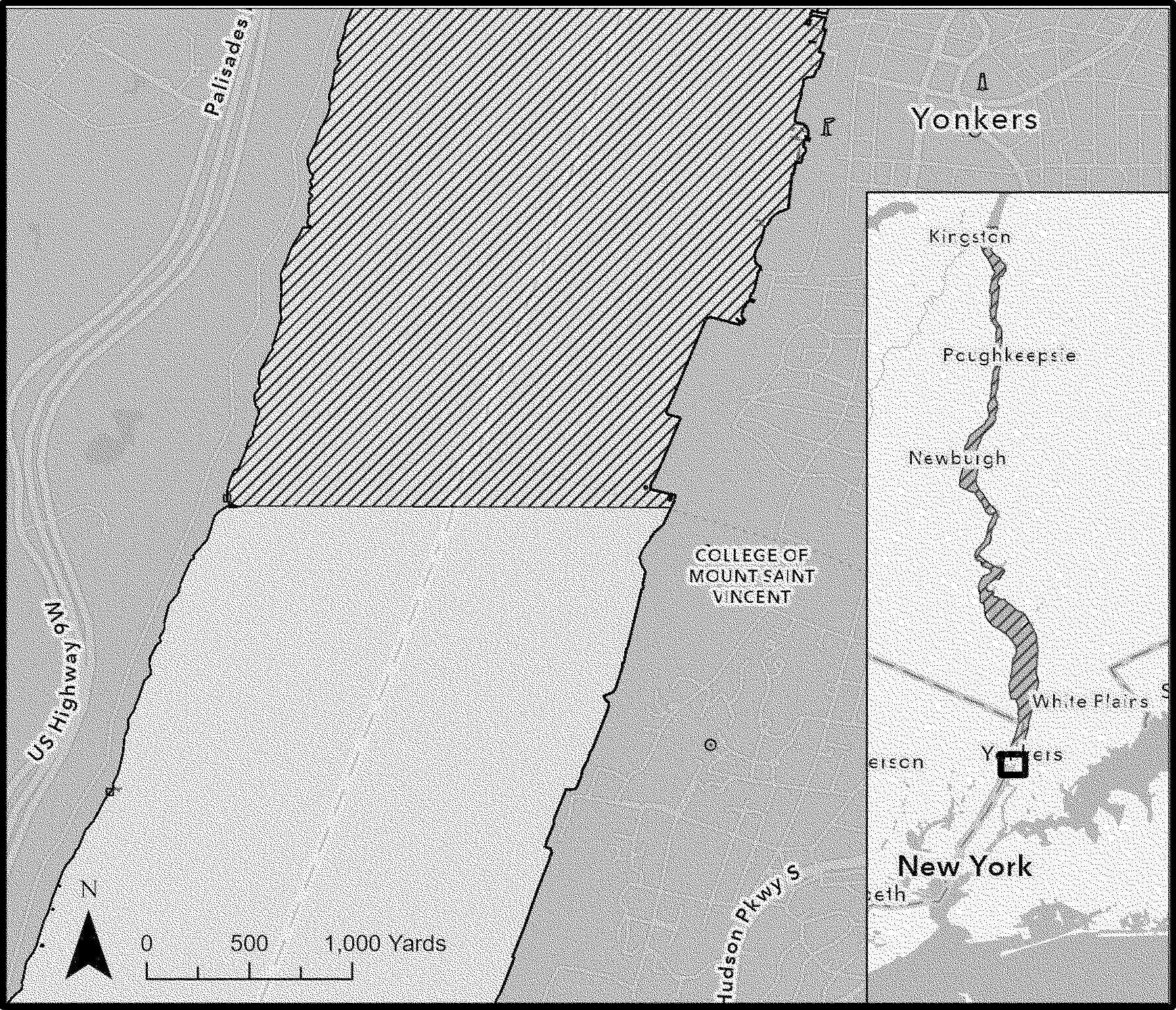
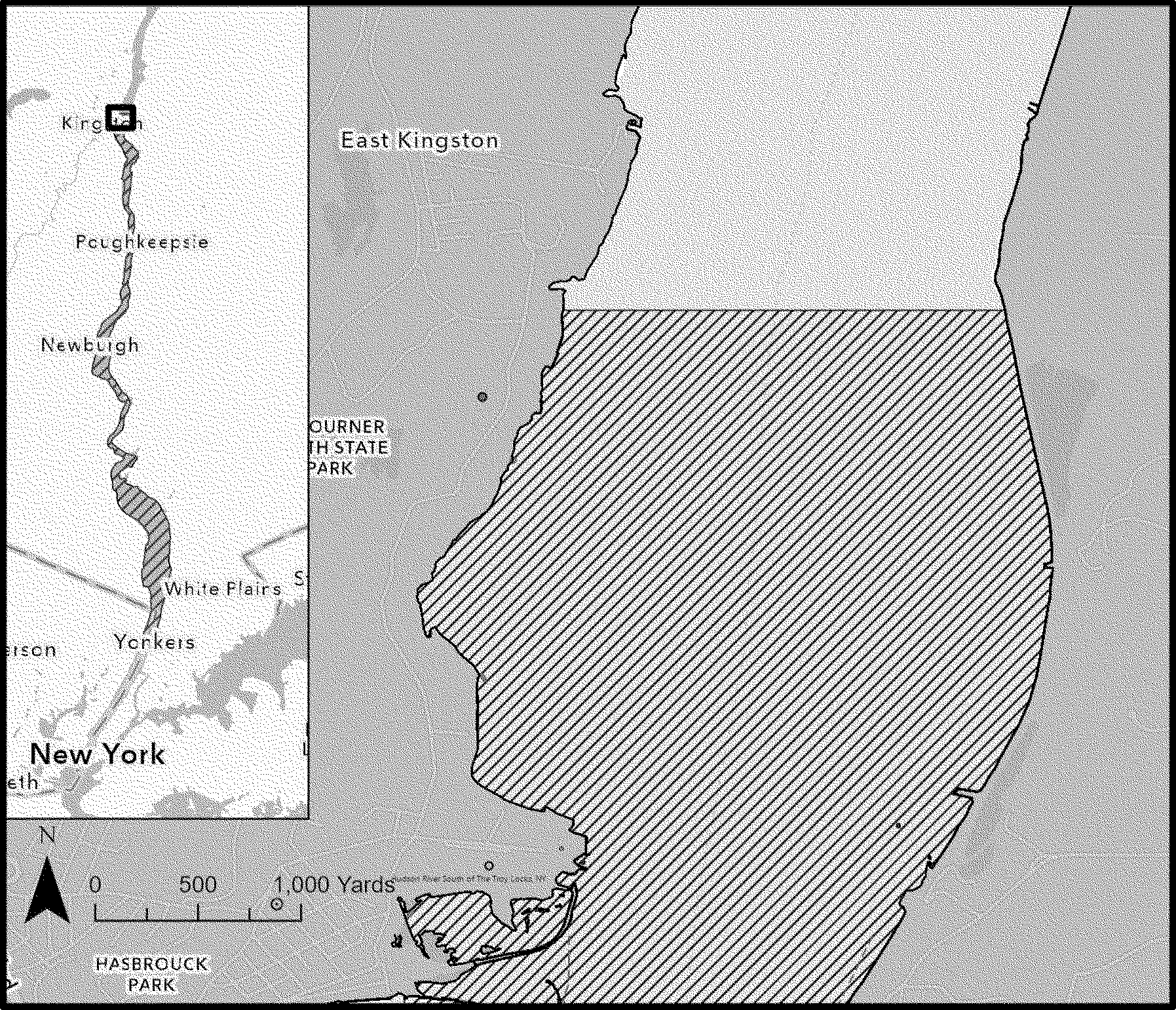
To implement this statutory requirement, we are proposing a southern boundary demarcation point near Yonkers, New York, and a northern boundary demarcation point near Kingston, New York, defined by specific coordinates. The NDAA requirements would apply to the area between these boundary demarcation points. We are also proposing a requirement to notify the Captain of the Port New York (COTP) when using an exception. The regulatory text we are proposing appears at the end of this document.
III. Discussion of the Rule
This proposed rule would add a new paragraph to section 110.115(l) to the anchorage ground regulation for the Port of New York, as cited in 33 CFR 110.155. The new paragraph, 33 CFR 110.115(l)(15), would prohibit any vessel from anchoring on the reach of the Hudson River between Yonkers, New York, and Kingston, New York except under certain conditions. This prohibition is required by § 8437(c) of the 2021 NDAA, as amended by the 2026 NDAA.
To precisely establish the area in which the anchoring prohibition applies, the Coast Guard proposes adding a southern boundary demarcation line at the southernmost end of Yonkers, New York, and a northern boundary demarcation line at the northernmost end of Kingston, New York. We have chosen these boundaries because they provide clear, enforceable limits; ensure comprehensive regulatory coverage; and align with common practices in regulatory boundary-setting.
Figure 1 illustrates the southern boundary demarcation point in the Yonkers, New York, area, while Figure 2 depicts the northern boundary demarcation point in the Kingston, New York, area. Full size colored chartlets are available in the docket.
(Figure 1 Chartlet Showing the Southern Boundary Demarcation Point, Yonkers, New York)
( printed page 34587)
(Figure 2 Chartlet Showing the Northern Boundary Demarcation Point, Kingston, New York)
This rule would still permit anchoring in an anchorage established prior to January 1, 2021. Additionally, the master or pilot of a vessel operating in this area would be able to take actions necessary to maintain the safety of the vessel or to prevent the loss of life or property. Nothing in this rule would be construed as limiting the authority of the Secretary of the department in which the Coast Guard is operating to exercise authority over the movement of a vessel under section 70002 of title 46, United States Code, or any other applicable laws or regulations governing the safe navigation of a vessel. These exceptions are consistent with the prohibition in § 8437(c) and the savings clause in § 8437(d) of the 2021 NDAA, as amended by the 2026 NDAA, as well as the safety exception in 46 U.S.C. 70007(d). The exceptions would be found in § 110.155(l)(15)(ii) and (iii).
In § 110.155(l)(15)(iv), the Coast Guard proposes that vessels over 20 meters in length notify the COTP when using the exception in proposed § 110.155(l)(15)(ii)(A). This will enable the COTP to maintain awareness of vessels anchored outside of established anchorages. It would remain unnecessary to notify the COTP when anchoring in an anchorage established prior to January 1, 2021, or when the Coast Guard is directing the vessel to anchor.
Regulations for special anchorage areas on the Hudson River are located in § 110.60(c) and regulations for anchorage grounds on the Hudson River are located in § 110.155(c). All of the anchorage grounds and special anchorage areas on the Hudson River were established prior to January 1, 2021. Therefore, we did not identify any anchorage grounds or special anchorage areas on the Hudson River that would need to be removed as part of this change. Vessels may continue to anchor in any anchorage ground or special anchorage area on the Hudson River specified in §§ 110.60(c) and 110.155(c). We propose to add a Note to § 110.155(c) alerting mariners to the special requirements in § 110.155(l)(15).
The regulatory text we are proposing appears at the end of this document. While most of these requirements are taken directly from the NDAA and are not discretionary, the Coast Guard invites comments on the proposed coordinates for the boundary demarcation points for which the prohibition on anchoring applies and the notification requirement.
IV. Regulatory Analyses
We developed this proposed rule after considering numerous statutes and Executive orders related to rulemaking. Below we summarize our analyses
( printed page 34588)
based on a number of these statutes and Executive orders.
A. Impact on Small Entities
The Regulatory Flexibility Act of 1980, 5 U.S.C. 601-612, as amended, requires Federal agencies to consider the potential impact of regulations on small entities during rulemaking. The term “small entities” comprises small businesses, not-for-profit organizations that are independently owned and operated and are not dominant in their fields, and governmental jurisdictions with populations of less than 50,000. Section 605 of the RFA allows an agency to certify a rule, in lieu of preparing an analysis, if the rulemaking is not expected to have a significant economic impact on a substantial number of small entities. The Coast Guard certifies under 5 U.S.C. 605(b) that this proposed rule would not have a significant economic impact on a substantial number of small entities for the following reasons.
Vessels will be able to anchor in anchorages established prior to January 1, 2021, or use an exception if they need to anchor on the Hudson River between Yonkers, New York, and Kingston, New York.
If you think that your business, organization, or governmental jurisdiction qualifies as a small entity and that this proposed rule would have a significant economic impact on it, please submit a comment (see
ADDRESSES
) explaining why you think it qualifies and how and to what degree this proposed rule would economically affect it.
Under section 213(a) of the Small Business Regulatory Enforcement Fairness Act of 1996 (Pub. L. 104-121), if this proposed rule will affect your small business, organization, or governmental jurisdiction and you have questions, contact the person listed in the
FOR FURTHER INFORMATION CONTACT
section. Small businesses may send comments to the Small Business and Agriculture Regulatory Enforcement Ombudsman and the Regional Small Business Regulatory Fairness Boards by calling 1-888-REG-FAIR (1-888-734-3247).
B. Collection of Information
This proposed rule will not call for a new collection of information under the Paperwork Reduction Act of 1995 (44 U.S.C. 3501-3520).
C. Federalism and Indian Tribal Governments
We have analyzed this proposed rule under Executive Order 13132, Federalism, and have determined that it is consistent with the fundamental federalism principles and preemption requirements described in that Order.
Also, this proposed rule does not have tribal implications under Executive Order 13175, Consultation and Coordination with Indian Tribal Governments, because it does not have a substantial direct effect on one or more Indian tribes, on the relationship between the Federal Government and Indian tribes, or on the distribution of power and responsibilities between the Federal Government and Indian tribes.
D. Unfunded Mandates Reform Act
As required by The Unfunded Mandates Reform Act of 1995 (2 U.S.C. 1531-1538), the Coast Guard certifies that this proposed rule will not result in an annual expenditure of $100,000,000 or more (adjusted for inflation) by a State, local, or tribal government, in the aggregate, or by the private sector.
E. Environment
We have analyzed this proposed rule under Department of Homeland Security Directive 023-01, Rev. 1, associated implementing instructions, and Environmental Planning COMDTINST 5090.1 (series), which guide the Coast Guard in complying with the National Environmental Policy Act of 1969 (42 U.S.C. 4321et seq.), and have determined that this action is one of a category of actions that do not individually or cumulatively have a significant effect on the human environment. This proposed rule involves an area on the Hudson River where vessels may not anchor, as well as notification requirements for certain vessels anchored during exempted circumstances. It is categorically excluded from further review under paragraphs L5 and L54 of Appendix A, Table 1 of DHS Instruction Manual 023-01-001-01, Rev. 1. A Record of Environmental Consideration supporting this determination is available in the docket.
V. Public Participation and Request for Comments
We view public participation as essential to effective rulemaking and will consider all comments and material received during the comment period. Your comment can help shape the outcome of this rulemaking. If you submit a comment, please include the docket number for this rulemaking, indicate the specific section of this document to which each comment applies, and provide a reason for each suggestion or recommendation.
Submitting comments.
We encourage you to submit comments at
https://www.regulations.gov.
To do so, go to
https://www.regulations.gov,
type USCG-2026-0042 in the search box and click “Search.” Next, look for this document in the Search Results column, and click on it. Then click on the Comment option. If you cannot submit your material by using
https://www.regulations.gov,
call or email the person in the
FOR FURTHER INFORMATION CONTACT
section of this proposed rule for alternate instructions.
Viewing material in the docket.
To view available documents, find the docket as described in the previous paragraph, and then select “Supporting & Related Material” in the Document Type column. We will post public comments in our online docket. Additional information is on the
https://www.regulations.gov
Frequently Asked Questions web page.
Personal information.
We accept anonymous comments. Comments we post to
https://www.regulations.gov
will include any personal information you have provided. For more about privacy and submissions to the docket in response to this document, see DHS's eRulemaking System of Records notice (85 FR 14226, March 11, 2020).
Anchoring is prohibited on the reach of the Hudson River between Yonkers, New York and Kingston, New York except as described in 110.155(l)(15).
* * * * *
(l) * * *
(15) Hudson River prohibition.
(i) Prohibition. Except as provided in paragraph (ii) of this section, anchoring is prohibited in the Hudson River between the southern boundary
( printed page 34589)
demarcation point in Yonkers, New York, created by a line draw from 40°54′55.54″ N, 073°55′39.72″ W; to, 40°54′55.54″ N, 073°54′37.72″ W; and a northern boundary demarcation point in Kingston, New York, created by a line draw from 41°56′59.78″ N, 073°57′45.25″ W; to, 41°56′59.78″ N, 073°56′43.18″ W.
(ii) Exceptions. A vessel may anchor in the area described in paragraph (i) of this section under the following conditions:
(A) The master or pilot of a vessel operating in that area is taking actions necessary to maintain the safety of the vessel or to prevent the loss of life or property; or
(B) The vessel is anchored within an anchorage that was established prior to January 1, 2021.
(iii) Nothing in this section shall be construed as limiting the authority of the Secretary of the department in which the Coast Guard is operating to exercise authority over the movement of a vessel under section 70002 of title 46, United States Code, or any other applicable laws or regulations governing the safe navigation of a vessel.
(iv) Every vessel over 20 meters in length that is anchoring pursuant to § 110.155(l)(15)(ii)(A) must notify the Captain of the Port when it sets and weighs anchor.
* * * * *
Michael E. Platt,
RADM, U.S. Coast Guard, Commander, Northeast District.
Use this for formal legal and research references to the published document.
91 FR 34585
Web Citation
Suggested Web Citation
Use this when citing the archival web version of the document.
“Anchorages; Port of New York,” thefederalregister.org (June 8, 2026), https://thefederalregister.org/documents/2026-11434/anchorages-port-of-new-york.