Securities and Exchange Commission
- [Release No. 34-105689; File No. SR-ISE-2026-36]
Pursuant to Section 19(b)(1) of the Securities Exchange Act of 1934 (“Act”),[1] and Rule 19b-4 thereunder,[2] notice is hereby given that on June 5, 2026, Nasdaq ISE, LLC (“ISE” or “Exchange”) filed with the Securities and Exchange Commission (“Commission”) the proposed rule change as described in Items I and II below, which Items have been prepared by the Exchange. The Commission is publishing this notice to solicit comments on the proposed rule change from interested persons.
I. Self-Regulatory Organization's Statement of the Terms of Substance of the Proposed Rule Change
The Exchange proposes to decrease the ISE Options Regulatory Fee (“ORF”) rate that will be effective on July 1, 2026.[3] Additionally, the Exchange proposes a non-substantive amendment to Options 7, Section 9C, Options Regulatory Fee, regarding the July 1, 2026 rule text that describes the ORF collection methodology.
While the changes proposed herein are effective upon filing, the Exchange has designated the proposed rule change to be operative on July 1, 2026.
The text of the proposed rule change is available on the Exchange's website at https://listingcenter.nasdaq.com/rulebook/ise/rulefilings, and at the principal office of the Exchange.
II. Self-Regulatory Organization's Statement of the Purpose of, and Statutory Basis for, the Proposed Rule Change
In its filing with the Commission, the Exchange included statements concerning the purpose of and basis for the proposed rule change and discussed any comments it received on the proposed rule change. The text of these statements may be examined at the places specified in Item IV below. The Exchange has prepared summaries, set forth in sections A, B, and C below, of the most significant aspects of such statements.
A. Self-Regulatory Organization's Statement of the Purpose of, and Statutory Basis for, the Proposed Rule Change
1. Purpose
ISE previously filed various rule proposals [4] to amend its ORF methodology and the rate for July 1, 2026. At this time, ISE proposes to decrease the July 1, 2026 ORF rate from $0.0092 to $0.0080 per contract side. Additionally, the Exchange proposes a non-substantive amendment to Options 7, Section 9C, Options Regulatory Fee, regarding the July 1, 2026 rule text that describes the ORF collection methodology.
July 1, 2026 ORF
As of July 1, 2026, ISE will assess ORF for options transactions cleared by The Options Clearing Corporation (“OCC”) in the customer [5] range, however ORF would be assessed to each ISE Member [6] for executions that occur on ISE. Specifically, the ORF would be collected by OCC on behalf of ISE from Members and non-members for all customer transactions executed on ISE. ORF would be assessed and collected on all ultimately cleared customer contracts, taking into account adjustments for CMTA that were provided to ISE the same day as the trade.[7] Further, the Exchange would bill ORF according to the clearing instructions provided on the execution. More specifically, ISE proposes to assess ORF based on the clearing instruction provided on the execution on trade date and would not take into consideration CMTA changes or transfers that occur at OCC.[8]
ISE filed a rule proposal on July 17, 2025 to assess an ORF of $0.0092 per contract side for January 2, 2026, the implementation of which was subsequently delayed to July 1, 2026.[9] Nearly a year has passed since ISE set the ORF rate for July 1, 2026.[10] At this time, ISE proposes to decrease the ORF rate from $0.0092 to $0.0080 per contract side.[11] This rate change is influenced by a review of costs and an increase in options volumes since the July 2025 rule change. ISE will continue to ensure that ORF Regulatory Revenue [12] does not exceed a material portion of Options Regulatory Costs.[13] More specifically, ISE will endeavor to ensure that ORF Regulatory Revenue generated from ORF will not exceed 82% of Options Regulatory Costs. The Exchange will notify Members via an Options Trader Alert of any change in the amount of the fee at least 30 calendar days prior to the effective date of the change.
As is the case today, ISE will monitor ORF Regulatory Revenue to ensure that it, in combination with other regulatory fees and fines, does not exceed Options Regulatory Costs. In determining whether an expense is considered an Options Regulatory Costs, the Exchange ( printed page 36905) will continue to review all costs and make determinations whether there is a nexus between the expense and a regulatory function. The Exchange notes that fines collected by the Exchange in connection with a disciplinary matter will continue to offset Options Regulatory Costs.
ORF Regulatory Revenue is designed to recover a material portion of the Options Regulatory Costs to the Exchange for the supervision and regulation of Members' transactions, including performing routine surveillances, investigations, examinations, financial monitoring, and policy, rulemaking, interpretive, and enforcement activities. Options Regulatory Costs include direct regulatory expenses [14] and certain indirect expenses in support of the regulatory function.[15]
Rule Text Amendment
Options 7, Section 9C, Options Regulatory Fee, provides, among other things, that, “Specifically, the ORF is collected by OCC on behalf of ISE from ISE Members and non-Members for all customer transactions executed on ISE.” The Exchange proposes to amend this sentence to instead provide,
The ORF is collected by the OCC on behalf of the Exchange from either (1) a Member that was the clearing firm for the transaction or (2) a non-Member that was the clearing firm where a Member was the executing firm for the transaction.
This rule text more specifically describes the Exchange's collection process as explained in its prior rule proposal.[16] The Exchange proposes this revised rule text because it provides greater clarity to the manner in which ORF is collected. This proposed amendment is non-substantive.
2. Statutory Basis
The Exchange believes the proposed rule change is consistent with the Securities Exchange Act of 1934 (the “Act”) and the rules and regulations thereunder applicable to the Exchange and, in particular, the requirements of Section 6(b) of the Act.[17] Specifically, the Exchange believes the proposed rule change is consistent with Section 6(b)(4) of the Act,[18] which provides that Exchange rules may provide for the equitable allocation of reasonable dues, fees, and other charges among its members, and other persons using its facilities. Additionally, the Exchange believes the proposed rule change is consistent with the Section 6(b)(5) [19] requirement that the rules of an exchange not be designed to permit unfair discrimination between customers, issuers, brokers, or dealers.
The Exchange believes the proposed reduction of the July 1, 2026 ORF rate is reasonable because it would help ensure that ORF Regulatory Revenue does not exceed a material portion of the Exchange's Options Regulatory Costs. As noted above, the ORF is designed to recover a material portion, but not all, of the Exchange's Options Regulatory Costs. Further, the Exchange believes the proposed fee change is reasonable because customer transactions will be subject to a lower ORF than the rate that would otherwise be in effect in July 2026.
The Exchange designed the ORF to generate ORF Regulatory Revenue that would be less than the Exchange's Options Regulatory Costs, thereby ensuring that such revenue, in combination with other regulatory fees and fines, does not exceed Options Regulatory Costs. This is consistent with the view of the Commission that regulatory fees be used for regulatory purposes and not to support the Exchange's business operations. As discussed above; however, after review of its Options Regulatory Costs and ORF Regulatory Revenue, which includes revenues from ORF and other regulatory fees and fines, the Exchange determined that absent a reduction in ORF it may collect ORF Regulatory Revenue which would exceed its Options Regulatory Costs. Indeed, the Exchange notes that when taking into account options volume since July 2025, it estimates the ORF, if left unchanged, may generate ORF Regulatory Revenue that would cover more than the approximated Exchange's projected Options Regulatory Costs.
( printed page 36906)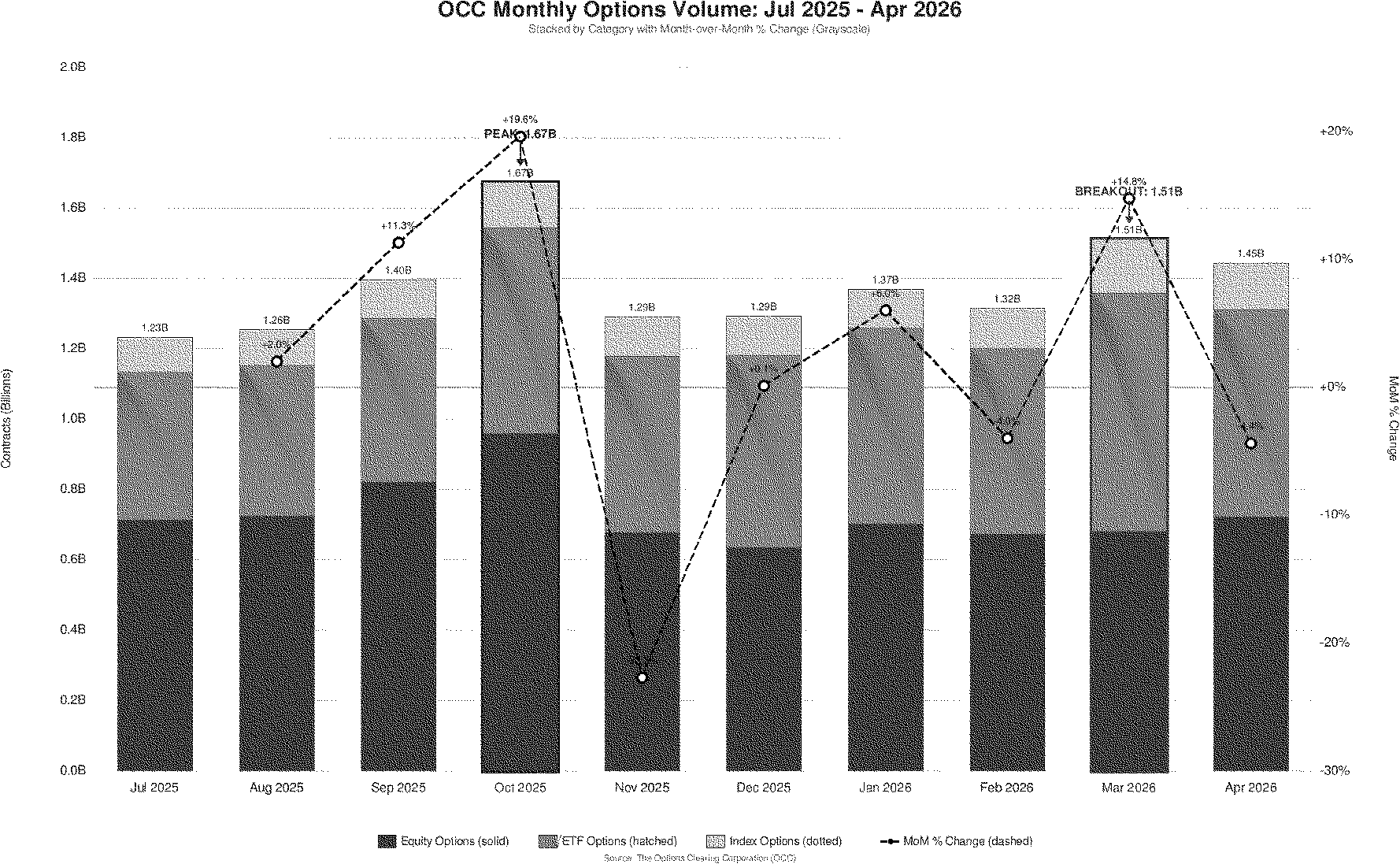
As such, the Exchange believes it is reasonable and appropriate to decrease the ORF amount from $0.0092 to $0.0080 per contract side.
The Exchange also believes the proposed fee change is equitable and not unfairly discriminatory because collecting 82% of Options Regulatory Costs is appropriate and correlates to the degree of regulatory responsibility and Options Regulatory Costs borne by the Exchange with respect to customer transactions. The Exchange's proposal continues to ensure that Options Regulatory Revenue, in combination with other regulatory fees and fines, does not exceed Options Regulatory Costs. Fines collected by the Exchange in connection with a disciplinary matter will continue to offset Options Regulatory Costs. Capping ORF collected at 82% of Options Regulatory Costs, commencing July 1, 2026, is reasonable, equitable and not unfairly discriminatory as the Options Regulatory Revenue collected will offset the corresponding Options Regulatory Costs associated with on exchange customer transactions. The Exchange will review the ORF Regulatory Revenue and will amend the ORF if it finds that its ORF Regulatory Revenue exceeds its projections.
Rule Text Amendment
Amending the rule text at Options 7, Section 9C is a non-substantive amendment that is designed to more specifically describe the Exchange's collection process as explained in its prior rule proposal.[20]
B. Self-Regulatory Organization's Statement on Burden on Competition
The Exchange does not believe that the proposed rule change will impose any burden on intra-market competition not necessary or appropriate in furtherance of the purposes of the Act because this collection accounts for customer executions, which will be capped at 82% of Options Regulatory Costs commencing July 1, 2026. Further, the Exchange will review the ORF Regulatory Revenue and would amend the ORF if it finds that its ORF Regulatory Revenue exceeds its projections.
The proposed changes to ORF do not impose an undue burden on inter-market competition because ORF is a regulatory fee that supports regulation in furtherance of the purposes of the Act. The Exchange notes, however, the proposed change is not designed to address any competitive issues. The Exchange is obligated to ensure that the amount of ORF Regulatory Revenue, in combination with its other regulatory fees and fines, does not exceed Options Regulatory Cost.
Rule Text Amendment
Amending the rule text at Options 7, Section 9C is a non-substantive amendment and, therefore, has no impact on competition.
C. Self-Regulatory Organization's Statement on Comments on the Proposed Rule Change Received From Members, Participants, or Others
No written comments were either solicited or received.
III. Date of Effectiveness of the Proposed Rule Change and Timing for Commission Action
The foregoing rule change has become effective pursuant to Section 19(b)(3)(A) of the Act [21] and paragraph (f) of Rule 19b-4 [22] thereunder. At any time within 60 days of the filing of the proposed rule change, the Commission summarily may temporarily suspend such rule change if it appears to the Commission that such action is necessary or appropriate in the public interest, for the protection of investors, or otherwise in furtherance of the purposes of the Act. If the Commission takes such action, the Commission will institute proceedings to determine whether the proposed rule change should be approved or disapproved.
IV. Solicitation of Comments
Interested persons are invited to submit written data, views and arguments concerning the foregoing, including whether the proposed rule change is consistent with the Act. Comments may be submitted by any of the following methods: ( printed page 36907)
Electronic Comments
- Use the Commission's internet comment form (https://www.sec.gov/rules/sro.shtml); or
- Send an email torule-comments@sec.gov. Please include file number SR-ISE-2026-36 on the subject line.
Paper Comments
- Send paper comments in triplicate to Secretary, Securities and Exchange Commission, 100 F Street NE, Washington, DC 20549-1090.
All submissions should refer to file number SR-ISE-2026-36. This file number should be included on the subject line if email is used. To help the Commission process and review your comments more efficiently, please use only one method. The Commission will post all comments on the Commission's internet website ( https://www.sec.gov/rules/sro.shtml). Copies of the filing will be available for inspection and copying at the principal office of the Exchange. Do not include personal identifiable information in submissions; you should submit only information that you wish to make available publicly. We may redact in part or withhold entirely from publication submitted material that is obscene or subject to copyright protection.
All submissions should refer to file number SR-ISE-2026-36 and should be submitted on or before July 9, 2026.
For the Commission, by the Division of Trading and Markets, pursuant to delegated authority.[23]
J. Matthew DeLesDernier,
Deputy Secretary.