Royalty for Oil and Gas Lost From Onshore Federal and Indian Leases
In response to the One Big Beautiful Bill Act, enacted on July 4, 2025, and Executive Order (E.O.) 14154, entitled, "Unleashing American Energy," dated January 20, 2025, the Bur...
In response to the One Big Beautiful Bill Act, enacted on July 4, 2025, and Executive Order (E.O.) 14154, entitled, “Unleashing American Energy,” dated January 20, 2025, the Bureau of Land Management (BLM) is proposing to modify its existing regulations pertaining to royalties due on oil and natural gas lost on Federal and Indian leases. These modifications would reduce unnecessary compliance burdens for operators and streamline the BLM's royalty determinations on lost oil or natural gas.
DATES:
Send your comments on this proposed rule to the BLM on or before August 24, 2026. The BLM is not obligated to consider any comments received after this date in making its decision on the final rule.
If you wish to comment on the information collection requirements in this proposed rule, please note that the Office of Management and Budget (OMB) is required to make a decision concerning the collection of information contained in this proposed rule between 30 and 60 days after publication of this proposed rule in the
Federal Register
. Therefore, comments should be submitted to OMB by July 24, 2026.
ADDRESSES:
Submit your comments using one of the following methods:
Mail, Personal, or Messenger Delivery:
U.S. Department of the Interior, Director (630), Bureau of Land Management, 1849 C St. NW, Room 5646, Washington, DC 20240, Attention: RIN #1004-AF33.
Federal eRulemaking Portal: www.regulations.gov.
In the Search box, enter the docket number “BLM-2025-0235” and click the “Search” button. Follow the instructions at this website. As required by 5 U.S.C. 553(b)(4), the Portal also contains a plain language summary of the proposed rule.
For Comments on Information-Collection Requirements:
Written comments and recommendations for the information collection requirements should be sent to
www.reginfo.gov/public/do/PRAMain.
Find this particular information collection by selecting “Currently under Review—Open for Public Comments” or by using the search function.
If you submit comments on these information-collection burdens, you should provide the BLM with a copy at one of the addresses shown earlier in this section so that we can summarize all written comments and address them in the final rulemaking. Please indicate “Attention: Paperwork Reduction Act Comments (RIN 1004-AF33).” Comments not pertaining to the proposed rule's information-collection burdens should not be submitted to OMB. The BLM is not obligated to consider or include in the administrative record for the final rule any comments that are improperly directed to OMB.
FOR FURTHER INFORMATION CONTACT:
John Ajak, Acting Division Chief, Fluid Minerals Division, telephone: (505) 549-9654, email:
jajak@blm.gov,
or by mail to Bureau of Land Management, 1849 C St. NW, Room 5633, Washington, DC 20240, for information regarding the substance of this final rule.
Individuals in the United States who are deaf, deafblind, hard of hearing, or have a speech disability may dial 711 (TTY, TDD, or TeleBraille) to access telecommunications relay services. Individuals outside the United States should use the relay services offered within their country to make international calls to the point-of-contact in the United States.
SUPPLEMENTARY INFORMATION:
I. List of Acronyms
II. Background
III. Summary of the Proposed Rule
IV. Section-by-Section Discussion of Proposed Rule
V. Procedural Matters
I. List of Acronyms
AO = Authorized Officer
APD = Application for Permit to Drill
API = American Petroleum Institute
BLM = Bureau of Land Management
CA = Communitization Agreement
( printed page 37907)
CAA = Clean Air Act
CFR = Code of Federal Regulations
FMP = Facility measurement point
FOGRMA = Federal Oil and Gas Royalty Management Act
GAO = Government Accountability Office
GOR = Gas-to-oil ratio
IMDA = Indian Mineral Development Act of 1982
IMLA = Indian Mineral Leasing Act of 1938
LDAR = Leak detection and repair
Mcf = thousand cubic feet at standard conditions
MLA = Mineral Leasing Act of 1920, as amended
NTL = Notice to Lessees
NTL-4A = Notice to Lessees: Royalty or Compensation for Oil and Gas Lost
OGOR = Oil and Gas Operations Report
ONRR = Office of Natural Resources Revenue
RIA = Regulatory Impact Analysis
Unit PA = Unit participating area
VFMP = Venting and flaring measurement point
WMP = Waste Minimization Plan
II. Background
For many decades, the BLM's Notice to Lessees and Operators 4A: Royalty or Compensation for Oil and Gas Lost (NTL-4A) governed royalty and compensation for oil and gas lost on Federal or Indian leases and it still governs in five states due to ongoing litigation.
NTL-4A was issued on January 1, 1980, as an update to earlier provisions. It clarified when oil and gas losses were considered “avoidably lost,” such as losses due to negligence or improper authorization, versus “unavoidably lost,” such as emergencies, equipment failures, circumstances where capture is not economic, and authorized flaring and venting. It also outlined strict conditions for venting or flaring, including time limits during emergencies, well purging, and testing, and it required operators to obtain approval from the authorized officer in many situations.
NTL-4A remained the primary regulatory standard for decades until the BLM issued the 2016 Waste Prevention Rule, which imposed stricter requirements on venting, flaring, measurement, and gas capture, while replacing NTL-4A's subjective considerations with objective standards that could be consistently applied nationwide. In September 2018, the BLM rescinded the 2016 Waste Prevention Rule and returned to a regulatory framework modeled after NTL-4A, without restoring NTL-4A's subjective standards for emergencies and economics. In April 2024, NTL-4A was ultimately superseded by another Waste Prevention rule.
On April 10, 2024, the BLM published a final rule concerning royalties due on lost oil and gas entitled, “Waste Prevention, Production Subject to Royalties, and Resource Conservation” (89 FR 25378) (the 2024 Rule). In response to section 50103 of the One Big Beautiful Bill Act (Pub. L. 119-21), enacted on July 4, 2025; E.O. 14154, “Unleashing American Energy;” and additional direction from the Secretary, the BLM has reconsidered the rule and proposes to modify it by reducing unnecessary compliance burdens for operators and streamlining BLM royalty determinations on lost oil or natural gas. The proposed rule includes and, in some instances, revises provisions from earlier rules, adds new provisions, and codifies certain provisions of NTL-4A. NTL-4A was implemented in the vertical drilling era but to a great degree has proven ill-suited to address royalty determinations in an era of horizontal drilling and hydraulic fracturing and increased gas volumes associated with those techniques. The proposed regulations would be codified in the Code of Federal Regulations (CFR) and would replace current requirements governing royalty determinations.
The Department is now proposing to revise the 2024 Rule and eliminate the significant and overburdensome regulatory requirements that it imposes on operators. While the Department would prefer to rescind the 2024 Rule in its entirety, which would better meet the goals and direction of E.O. 14154 to “promote sound regulatory decision making and prioritize the interests of the American people” and ensure that “an abundant supply of reliable energy is readily accessible in every State and territory of the Nation,” a revision of the 2024 Rule avoids the question of which rule would apply if the 2024 Rule were to be fully rescinded given the lack of a proposed rule to fully replace it.
Prior to the promulgation of the 2024 Rule, the Department twice attempted to replace NTL-4A with a more modern regulatory framework to account for royalties on lost oil and gas. First, in 2016, the Department promulgated the rule entitled, “Waste Prevention, Production Subject to Royalties, and Resource Conservation,” (81 FR 83008 (Nov. 18, 2016)) (2016 Rule). As detailed below, the U.S. District Court for the District of Wyoming subsequently vacated the 2016 Rule, though that decision was subsequently vacated by the Tenth Circuit.[1]
Then, in 2018 during the first Trump administration, the Department promulgated the rule entitled, “Waste Prevention, Production Subject to Royalties, and Resource Conservation; Rescission or Revision of Certain Requirements,” (83 FR 49184 (Sept. 28, 2018)) (2018 Rule), which rescinded the 2016 Rule, except for certain royalty provisions. The 2018 Rule, too, was subsequently vacated.[2]
In light of this rulemaking and litigation history, rescinding the 2024 Rule would revert the Department regulations to the 2016 Rule rather than the older NTL-4A.
As such, the Department is interested in hearing from the public about our rationale for this approach to the proposed rule, rather than rescinding the 2024 Rule in its entirety. Please send any comments you may have about our analysis of the rulemaking and litigation history and regarding whether the Department should instead rescind the 2024 Rule in its entirety, notwithstanding concerns about reverting to the 2016 Rule.
The following discussion describes the BLM's management of its oil and gas program, including the challenges that the BLM faces in making oil and gas royalty determinations. It also describes the legal framework within which the BLM administers the Mineral Leasing Act of 1920 (MLA), 30 U.S.C. 181et seq.,
and related statutory authorities and regulations. Following this background section is a summary of the proposed rule and a section-by-section
( printed page 37908)
analysis of the regulatory text, which, if adopted in a final rule, would revise one section in part 3160 of title 43 of the CFR and replace subpart 3179 in part 3170.
A. The Oil and Gas Program
The BLM is responsible for managing over 245 million surface acres of land, primarily located in 12 Western States, and 700 million acres of subsurface mineral estate, located throughout the United States. The BLM maintains a program for leasing these lands for oil and gas development and regulates oil and gas production on Federal leases. While the BLM does not manage the leasing of Indian lands for oil and gas production, it does regulate oil and gas operations on many Indian leases under the Secretary's statutory and Tribal trust responsibilities.
The BLM's onshore oil and gas program is a significant contributor to oil and gas production in the United States. Based on data for fiscal year 2024, production from 96,946 Federal onshore oil and gas wells [3]
accounted for approximately 8 percent of the nation's natural gas supply and 9 percent of its oil.[4]
In that year, operators produced 686 million barrels of oil and 4.48 trillion cubic feet of natural gas from onshore Federal and Indian oil and gas leases. The production of this oil and gas in 2024 generated more than $7.7 billion in royalties. Approximately $5.9 billion of these royalties were shared between the United States and the States in which production occurred. Approximately $1.8 billion of these royalties went directly to Tribes or Indian allottees for production from Indian lands.[5]
While most natural gas extracted during drilling and production is captured, it is not uncommon for gas to reach the surface that cannot be feasibly sold or used on-lease. This typically happens during drilling, production testing, well purging, and emergencies. It also occurs during production, when capacity of distribution pipelines is limited and for other reasons. When this occurs, the uncaptured gas must either be combusted (
i.e.,
flared) or vented (
i.e.,
released directly into the atmosphere).
B. Royalties on Lost Oil or Gas
While determining royalties due on gas sold is relatively straightforward, determining royalties due on gas that is lost during production is a more complicated task given the associated metering requirements. Regulation of these determinations has a long and complex history and has been the subject of many administrative appeals and lawsuits.
Beginning in 1980 (when vertical drilling was the predominant industry practice) and for almost four decades thereafter, BLM royalty determinations were governed by NTL-4A.[6]
To obtain a royalty determination for vented or flared gas, operators were required, under either section III(A) or section IV(B) of NTL-4A, to submit to the BLM their requests for royalty-free flaring using a BLM form designated as “Sundry Notices and Reports on Wells” (Form 3160-5, commonly referred to as a Sundry Notice).
The Sundry Notice must include documentation substantiating that an emergency precluded routing of gas to the sales line (Sec. III(A)), or that capture would not be economic. (Sec. IV(B)). Sometimes the operator has to submit sundries to flare royalty-free because there is a backlog of rights-of-way applications for infrastructure, other times the pipelines are at capacity. Operators frequently challenged BLM decisions on these sundries, advancing arguments that capitalized on the subjective nature of the determinations required by NTL-4A, such as whether capture and sale of gas was “economic” or infeasible due to an “emergency.” [7]
Hundreds of sundries seeking unavoidable loss determinations are now pending before the BLM, a testament to NTL-4A's unsuitability, and based on an unpublished analysis performed by the North Dakota Field Office, the BLM estimates that thousands more such sundries could potentially be filed.
In 2016, the BLM made the first of three attempts to replace NTL-4A with a modern, workable rule, one suited to the increased production levels observed in the preceding decade and tailored to use of horizontal drilling and hydraulic fracturing techniques. By 2016, use of these techniques had become the predominant practice.[8]
In 2018, the BLM promulgated a second rule to reduce unnecessary compliance burdens, realign regulations with the BLM's existing statutory authorities, and re-establish longstanding requirements that had been replaced, such as continuing to allow royalty-free flaring if the operator found the gas capture to be economically not feasible.[9]
Both rules were challenged in district court: the 2016 rule for regulating air emissions in excess of the BLM's authority under the Mineral Leasing Act of 1920 (MLA), 30 U.S.C. 181et seq.,[10]
and the 2018 rule for failure to comply with the National Environmental Policy Act (NEPA), among other things.[11]
In July 2020, the U.S. District Court for the Northern District of California vacated the 2018 rule, briefly restoring the 2016 rule to governing status.[12]
Four months later, the U.S. District Court for the District of Wyoming vacated most of the 2016 rule, including all provisions relevant to royalty determination.[13]
Together, these judicial decisions operated to reinstate NTL-4A.
In 2021, the BLM commenced a third effort to modernize its royalty regulations, publishing a proposed rule in 2022, 87 FR 73588 (Nov. 30, 2022), and later a final rule. 89 FR 25378 (Apr. 10, 2024).[14]
Like the 2016 and 2018 rules, the 2024 Rule was designed to streamline royalty determinations, principally by replacing NTL-4A's subjective considerations with objective standards that could be efficiently and consistently applied nationwide. The 2024 Rule was also designed to improve well-site safety and to reduce waste of gas in a manner that avoids implicating concerns over regulation of air quality identified by the Wyoming district
( printed page 37909)
court.[15]
Like the 2016 rule, the preamble to the 2024 Rule touted the additional royalties that would be paid based on predicted increases in gas capture, but the increased royalties benefit only the lessors, tribes, and states. Meanwhile, lessees or operators bear the compliance cost.
Shortly after the rule was promulgated, five States (North Dakota, Wyoming, Montana, Texas, and Utah) filed a lawsuit, which is still pending. They advance several grounds for a court order setting aside (
i.e.,
vacating) the 2024 Rule, including an argument similar to one that prevailed in the Wyoming district court cases.[16]
Specifically, the States argue that the BLM exceeded its MLA authority in regulating air emissions and thus intruded on the delegated regulatory province of the States under the Clean Air Act (CAA).[17]
While the North Dakota court has stayed proceedings and has not ruled on the merits, it did preliminarily enjoin implementation and enforcement of the rule within the five plaintiff States, concluding plaintiffs were likely to prevail on their claim that the 2024 Rule preempts “an area that is already regulated” by the States under their delegated CAA authority.[18]
The BLM appealed the injunctive order to the Eighth Circuit Court of Appeals. However, in February 2025, before briefing concluded, the BLM requested and obtained an order holding the appellate proceedings in abeyance indefinitely.[19]
In support of its request, the BLM explained it needed time to consider, among other things, E.O. 14154, “Unleashing American Energy,” which directs Federal agencies to identify any rules or other actions that “impose an undue burden on the identification, development, or use of domestic energy resources,” and to consider whether to “suspend, revise, or rescind” them.[20]
As a result of the district court's 2024 injunction, NTL-4A now governs BLM royalty determinations in North Dakota, Wyoming, Montana, Texas, and Utah. In all other States where Federal or Indian oil or gas is produced (other than on leases issued by The Osage Tribe), the 2024 Rule governs royalty determinations.
C. Legal Authority
Pursuant to a delegation of Secretarial authority, the BLM is authorized to regulate oil and gas exploration and production activities on Federal and Indian leases under a variety of statutes, including the MLA, the Mineral Leasing Act for Acquired Lands of 1947 (MLAAL), the Federal Oil and Gas Royalty Management Act of 1982 (FOGRMA), the Indian Mineral Leasing Act of 1938 (IMLA), the Indian Mineral Development Act of 1982 (IMDA), and the Act of March 3, 1909.[21]
These statutes authorize the Secretary to promulgate such rules and regulations as may be necessary to carry out the various statutory purposes.[22]
In 2022, Congress amended the MLA to expressly require lessees to pay royalties “on all gas produced,” 30 U.S.C. 1727(a),[23]
subject to: a limited exception for emergencies (up to 48 hours); an exception for on-lease use of produced gas; and an exception for produced gas that is “unavoidably lost.”
Id.
1727(b). Certain provisions in the 2024 Rule implemented the 2022 MLA amendments,[24]
including § 3179.83 (2024) (Emergencies), which codified the noted 48-hour cap on royalty-free flaring. However, the 2022 amendments were repealed on signing of the One Big Beautiful Bill Act (OBBB).
See
sec. 50103, Public Law 119-21 (July 4, 2025). As further discussed below, the BLM proposes amending the regulations to address the OBBB.
Finally, in FOGRMA, Congress established a system for collecting and accounting for Federal mineral royalties and made lessees liable for royalties on “oil or gas lost or wasted from a lease site when such loss or waste is due to negligence [or] the failure to comply with any rule or regulation, order or citation issued under [FOGRMA] or any mineral leasing law.” [25]
The proposed regulations restate the FOGRMA negligence provision.
See43 CFR 3179.41(e) (proposed).
III. Summary of the Proposed Rule
E.O. 14154,
Unleashing American Energy,
directs agencies to identify rules that “impose an undue burden on the identification, development, or use of domestic energy resources,” and to consider whether to “suspend, revise, or rescind” them. It emphasizes the importance of job creation and the availability of reliable and affordable electricity, as well as the need for low energy prices to avoid “driving up the cost of transportation, heating, utilities, farming, and manufacturing, while weakening our national security.” [26]
These are sound and legitimate objectives for Interior to consider when making decisions within its broad MLA authority to regulate oil and gas development on Federal and Indian lands.
Responding to E.O. 14154, the Secretary issued Order No. 3418 (Feb. 3, 2025),[27]
which directed removal of impediments to the development and use of energy and natural resources subject to Interior's jurisdiction. The order identified a goal of advancing innovation to improve energy and critical minerals identification, permitting, leasing, development, production, transportation, refining, distribution, exporting, and generation capacity of the United States to provide a reliable, diversified, growing, and affordable supply of energy for our Nation.[28]
Section 50103 of the OBBB repealed Section 50263 of the Inflation Reduction Act, Public Law 117-169 (2022) (Royalties on all Extracted Methane). Section 50263 specified that, for all new leases, royalties shall be assessed for all gas produced, including all gas that is consumed or lost by venting, flaring, or negligent releases through any equipment during upstream operations. Exceptions included: gas vented or flared for not longer than 48 hours in an emergency situation that poses a danger to human health, safety, or the environment; gas used or consumed within the area of the lease, unit, or communitized area for the benefit of the lease, unit, or communitized area; or gas that is unavoidably lost. Given these directives, and changes in law, the BLM carefully reconsidered the 2024 Rule to identify undue burdens on operators and impediments to energy development that could be either
( printed page 37910)
eliminated or refined for greater efficiency. The effort resulted in this proposed rule, which is best understood by how it changes the current rule.
The 2024 Rule was designed to eliminate the inefficiencies of NTL-4A, an objective the BLM still favors, as well as to improve royalty collection and safety and to reduce waste of oil and gas. However, it attempted these things by requiring unnecessarily expensive equipment and imposing reporting and administrative obligations that are not required by statute. For example, the 2024 Rule revised 43 CFR 3162.3-1 (Drilling applications and plans), to add a requirement that an operator either submit a waste minimization plan with any application for a permit to drill (APD), or “self-certify” that it will “capture 100 percent of oil-well gas produced by an oil well.” [29]
In 2024, the BLM estimated the recurring cost to operators of this requirement at $400,000 annually. The BLM is proposing to eliminate these provisions because they are overly expensive, they are not required by law, operators are already financially incentivized to capture and sell as much gas as possible, and the pipeline capacity constraints of the 2010s have been alleviated to a degree. Additionally, given the objectives of E.O. 14154 and S.O. 3418, the BLM concludes that removing these provisions appropriately advances one of the MLA's central purposes, to “promote the orderly development” of Federal oil and gas “through private enterprise.” [30]
The 2024 Rule also requires operators to develop, submit, and implement “leak detection and repair” (LDAR) programs, to be approved by the BLM.
See43 CFR 3179.100, 3179.101, 3179.102 (2024).
In the RIA for this proposed rule, the BLM examined the recurring cost to operators of developing and maintaining the LDAR programs. This cost is estimated to be $16.8 million annually. The proposed rule eliminates this overly burdensome and expensive requirement, which, according to BLM estimates, would be only minimally effective in reducing waste. The BLM estimates that the 2024 Rule's LDAR requirement would allow for the annual capture of about 555,000 Mcf of gas, with an annual royalty value of $210,000. Under the 2024 Rule, this small increase in royalty revenue would be achieved at an expense of $16.8 million, a costly circumstance that is not warranted. Further, the volume of gas that the LDAR requirements are estimated to capture (555,000 Mcf) represents a very small fraction of the “lost gas” problem. Total annual gas losses (from venting, flaring, and leaks) are estimated at 55.5 Bcf.[31]
The 2024 LDAR requirements were forecast to eliminate a mere 1 percent of these estimated losses. It is unfair to expect operators to bear this inequitably high cost for generating such a small amount of additional royalty revenue. The BLM therefore proposes to eliminate the three noted LDAR provisions and the references to LDAR in current § 3179.41(b)(9) because they are not required by law, they are uneconomic, and operators are already financially incentivized to capture and sell gas. Eliminating this requirement will also advance the objectives of E.O. 14154 and S.O. 3418 by removing an undue burden on energy development.
The BLM further proposes to revise a provision in § 3179.41, which establishes that some portion of flaring caused by pipeline capacity constraints constitutes an avoidable loss and is thus subject to a royalty obligation. Section 3179.41 in the 2024 Rule defines unavoidable loss by specifying 13 “operations or sources” where loss of gas is deemed unavoidable.
See43 CFR 3179.41(b) (2024). One of these circumstances—very common in recent years—is the need to flare gas due to pipeline capacity constraints, including midstream processing failures and similar transportation-to-market challenges. Under § 3179.41(b)(11) (2024), such flaring is deemed unavoidable, to a point. That point is specified in current § 3179.70. Once an operator exceeds certain arbitrary monthly limits—stated in thousand cubic feet of gas (Mcf) per barrel of oil produced per month—royalties are due. The limits on royalty-free flaring in the 2024 Rule are:
(1) 0.08 Mcf per month in year 1 (from July 1, 2024, to July 1, 2025).
(2) 0.07 Mcf per month in year 2.
(3) 0.06 Mcf per month in year 3.
(4) 0.05 Mcf per month will begin in year 4 and thereafter.
Id.
3179.70.
The proposed rule would eliminate these limits on royalty-free flaring by removing § 3179.70 and the reference to it in § 3179.41(b)(11) (2024) (
see
proposed § 3179.41(b)(10)). The current limits benefit lessors through modestly increased royalties, while burdening lessees and operators with significant added expense and operational difficulties. The limits on unavoidable loss in current § 3179.70 are not required by statute and, in the BLM's view, impose significant and undue financial burden on operators who are already incentivized to capture and sell gas. Further, the limits impose additional accounting and record-keeping requirements on operators. The BLM concludes that removing these limits and the corresponding administrative burdens, which increase operator costs, appropriately removes undue burdens on development of domestic energy.
For these same reasons, the BLM proposes to eliminate or reduce additional limitations on unavoidable loss in § 3179.41(b). Under the proposed rule, the following sources of lost gas would be retained as unavoidable losses (
i.e.,
royalty-free), but the time or volume limits on that royalty-free flaring would either be removed or relaxed: new well completion or recompletion; emergencies; use of an oil storage tank that is in compliance with § 3174.5(b); leaks; well tests for existing completions, downhole well maintenance and liquids unloading; and, as discussed in preceding paragraph, pipeline capacity constraints. The BLM proposes to retain leaks as unavoidable losses, but without requiring an LDAR program. Instead, the BLM will continue to hold operators responsible under § 3162.5-3 to operate in a workmanlike manner, which includes avoiding leaks.
There are several additional sources of lost gas deemed unavoidable under the 2024 Rule which are retained in the proposed rule unchanged, except for minor edits for clarity or consistency with other rule revisions. These are: well drilling; normal operating losses from a natural-gas-activated pneumatic controller or pump; facility and pipeline maintenance (
e.g.
depressurization of equipment); and flaring of gas from which at least 50 percent of the natural gas liquids have been removed on-lease and captured for market. The first source is derived from NTL-4A and its inclusion in the proposed rule reflects long-standing operational practice. The remaining sources have been in place since 2016 and two are standard industry practice (
i.e.,
the pneumatic controller provision and the facility and
( printed page 37911)
pipeline maintenance provision) that have proven safe and practical from both operator and BLM perspective. The final source (
i.e.,
the 50 percent provision for natural gas liquids) is intended to ensure greater capture of gas with high Btu content and reduced Btu content at the flare. The BLM is also proposing to remove two sources of lost gas because they are unnecessary: specifically, flaring during dewatering of exploratory coalbed methane wells, and flaring from a well that is not connected to a gas pipeline, to the extent that such flaring was authorized by an APD.
Lastly, the proposed rule would expand the current definition of unavoidable loss in 3179.41(b) by designating as unavoidable the flaring of gas that is of such a low quality as to be unmerchantable, where the operator demonstrates the poor gas quality (
see
proposed sec. 3179.41(b)(12)). Operators should not be required to pay royalties on gas that cannot be sold or beneficially used.
IV. Section-by-Section Discussion of Proposed Rule
Current § 3162.3-1 requires an operator to submit an APD before conducting any drilling operations on a Federal or Indian oil or gas lease. No drilling operations may commence before APD approval. This proposed rule would reduce the requirements for an oil-well APD by removing the requirement to submit either a waste minimization plan (WMP) or a self-certification, which was intended to allow operators to verify that they have planned for the capture of the associated gas from an oil well.
The current rule requires an operator to submit either a WMP or a self-certification stating that the operator will capture 100 percent of the gas that the oil-well produces. Under the current rule, the WMP must include the following information: (1) The anticipated initial oil production rate from the oil well and the anticipated production decline over the first 3 years of production; (2) The anticipated initial oil-well gas production rate from the oil-well and the anticipated production decline over the first 3 years of production; (3) Certification that the operator has a valid, executed gas sales contract to sell 100 percent of the oil-well gas, less gas anticipated for use on lease pursuant to 43 CFR subpart 3178, to a purchaser; and (4) Any information demonstrating the operator's plans to avoid the waste of gas production from any source, including, as appropriate, from pneumatic equipment, storage tanks, and leaks. The self-certification is a written statement that the operator will capture 100 percent of the gas produced except for any gas used on-lease under 43 CFR subpart 3178 or gas lost from an emergency under § 3179.83. For wells drilled with an approved WMP, flaring is subject to the monthly limitations on royalty-free flaring in current § 3179.70. Any flaring under an APD subject to a self-certification has a royalty obligation.
Under the current rule, the BLM would approve an administratively and technically complete oil-well APD with a WMP or self-certification statement or defer action on an APD that was not administratively and technically complete until such time as the operator is able to amend the application to comply with the requirements of a WMP or self-certification statement. The current rule requires the applicant to address the BLM-identified deficiencies in the WMP or the self-certification statement within 2 years of the submission of the application or the BLM will disapprove the APD.
The proposed rule would remove the requirement to submit either a WMP or self-certification with an oil-well APD. The BLM proposes to do this because the requirements are very expensive, they are not required by law, operators are already financially incentivized to capture as much gas as possible because it benefits them financially to do so, and much of the pipeline capacity constraints of the 2010s have been alleviated.
Subpart 3179—Royalty for Oil and Gas Lost From Onshore Federal and Indian Leases
§ 3179.1 Purpose
The purpose of the 2024 Rule is fourfold: (1) To implement and carry out the purpose of the statutes related to the prevention of waste from Federal and Indian (other than The Osage Nation) oil and gas leases; (2) Protection of worker safety; (3) Conservation of surface resources; and (4) Management of the public lands for multiple use and sustained yield.
See89 FR 25426. The current rule's requirements are primarily focused on the prevention of waste from Federal and Indian oil and gas leases.
This proposed rule would change the purpose to: (1) Ensuring proper compensation of mineral rights owners for produced oil or gas that is lost from Federal or Indian (except Osage Tribe) oil and gas leases; (2) Promotion of orderly and efficient development and administration of fluid mineral resources; (3) Reduction of regulatory burdens for operators of Federal oil and gas leases; and (4) Streamlining the BLM's administration of oil and gas losses.
Although it is not stated in the purpose section in the rule text, this proposed rule also addresses concerns raised by the GAO in accounting for natural gas emissions with new requirements for the assignment of a venting or flaring measurement point (VFMP).[32]
§ 3179.2 Scope
The scope identifies the operations to which the various provisions of proposed subpart 3179 would apply. Paragraph (a) in the proposed rule remains substantively the same as the current rule, stating that the provisions of proposed subpart 3179 would apply to: (1) All onshore Federal and Indian (other than Osage Tribe) oil and gas leases, unit participating agreements (PAs), and communitization agreements (CAs); (2) Indian Mineral Development Act oil and gas agreements; (3) Leases and other business agreements and contracts for the development of Tribal energy resources under a Tribal Energy Resource Agreement entered into with the Secretary; and (4) Wells, equipment, and operations on State or private tracts that are committed to a federally approved unit or CA.
The proposed scope would remove paragraph (b) of the current rule that, along with the opening phrase in paragraph (a) of the current provision, provided that five sections of this subpart (see §§ 3179.50, 3179.90, and 3179.100 through 3179.102) apply only to operations and production equipment located on Federal or Indian surface estates and not to State or private tracts. Under the proposed rule, the requirements in the five listed sections would be removed, so there is no further need for paragraph (b). Current paragraph (c) would be redesignated as paragraph (b).
§ 3179.10 Definitions and Acronyms
The current rule contains definitions for 11 terms (“automatic ignition system,” “capture,” “compressor station,” “gas-to-oil ratio (GOR),” “gas well,” “high-pressure flare,” “leak,” “liquids unloading,” “lost oil or lost
( printed page 37912)
gas,” “low-pressure flare,” and “pneumatic controller”) to assist with understanding the rule's requirements.
Proposed § 3179.10 would also contain definitions for 11 terms (“capture,” “gas-to-oil ratio (GOR),” “gas well,” “liquids unloading,” “lost gas,” “lost oil,” “pneumatic controller,” “Sundry Notice,” “Type 1 equipment,” “Type 2 equipment,” and “venting and flaring measurement point (VFMP)”). Some defined terms have a particular meaning in this proposed rule. Other defined terms may be familiar to many readers, but the BLM is including their definitions in the proposed rule to improve the clarity of the regulatory text. The proposed definition section would remove the terms “automatic ignition system,” “compressor station,” “high-pressure flare,” “leak,” and “low-pressure flare,” which appear in the current rule, since the terms are not used in the proposed regulatory text. The definitions of “capture,” “gas-to-oil ratio,” and “pneumatic controller” would remain unchanged from the current rule. The BLM also proposes rearranging and simplifying the current definition for “gas well” without changing its meaning.
The BLM proposes to make minor changes to two definitions: “liquids unloading” and “lost oil or gas.” The proposed definition of the term “liquids unloading” would change the language that states “the wellbore of a completed gas well” to read “the wellbore of a gas well.” The inclusion of the word “completed” in the current phrasing in the 2024 Rule to describe a gas well does not improve the meaning of the term “liquids unloading.” The BLM proposes to split the term “lost oil or gas” and include separate definitions for “lost gas” and “lost oil.” The current rule's definition for “lost oil or gas” is too narrow for the proposed rule's objective of providing requirements for circumstances where lost gas production may be vented, flared, or combusted and the combined definition with its modifiers is unclear. The proposed definition for “lost gas” accommodates the idea that lost gas may be vented, flared, or combusted prior to removal from the lease, unit PA, or CA and cannot be recovered. The proposed definition for “lost oil” recognizes that oil can escape containment prior to removal from the lease, unit PA, or CA and may, in some instances, be recovered as waste oil, reconditioned, and placed into marketable condition for sale. In other instances, recovered oil would be disposed of as slop oil.
The BLM also proposes to add definitions for the terms “Sundry Notice,” “Type 1 equipment,” “Type 2 equipment,” and “Venting and flaring measurement point.” The term “Sundry Notice,” which is not currently defined, would have the same meaning throughout part 3170. The BLM would include the new term, “type 1 equipment,” to describe the vent lines, flares or combustors that manage gas that would normally go to a sales line. This new term would replace and update the concept of “high-pressure flare” to eliminate any association with pressure for this type of equipment and to avoid confusion with the need for a pressure rating, as well as the unintended implication that the BLM requires flaring. Further, during the implementation of the current rule, the BLM observed that some operators were interpreting the term “high-pressure flare” to exclude gas that is “combusted” at combustors. The chemical reaction at flares and combustors is the same; but to avoid an overly exacting interpretation of the singular use of either flaring or combusting, the BLM proposes to use both terms throughout the proposed rule, as well as in the definition for “type 1 equipment.” The same is true of the new proposed term “type 2 equipment.” The addition of the proposed term “type 2 equipment” would replace and update the concept of the term “low-pressure flare” without an association to pressure or an unintended requirement to flare. The proposed rule would include a new requirement for operators to apply for a “venting and flaring measurement point (VFMP)” number to use for production accountability on monthly operator-completed “Oil and Gas Operations Reports” (OGORs). The VFMP, which is the point where produced gas that would normally go to a sales line is estimated or measured before being vented, flared, or combusted.
The proposed rule includes a list of acronyms in the definitions section of the regulatory text to correct an oversight in the current rule regarding the acronyms that are used in this subpart. Acronyms for the current rule only appear in the preamble. The preamble is not published in the Code of Federal Regulations and therefore the current rule's acronyms are less readily available to the public. By including the acronyms in this proposed rule's regulatory text, the BLM intends to provide clarity and improve readability.
§ 3179.11 Severability
This proposed section describes the legal principle of “severability” and applies it to the regulations in subpart 3179. If a court finds any portion of these regulations is to be invalid or unenforceable as to a particular set of circumstances or individuals, the BLM's intention is that the remaining portions of the regulations would remain in effect and the BLM would continue to enforce them.
The BLM proposes to retain this severability section within the regulation text, with one non-substantive edit (substituting “persons” for “people”). If this proposed rule is adopted as a final rule and a court were to find certain sections invalid, the BLM's goal is for the remaining sections of the rule to remain in effect.
§ 3179.30 Incorporation by Reference (IBR)
This proposed rule would incorporate an industry standard in its entirety in the CFR, a practice known as incorporation by reference. This standard was developed through a consensus process, facilitated by the American Petroleum Institute (API), with input from the oil and gas industry. The BLM has reviewed this standard and determined that it would further the purposes of proposed § 3179.50. The standard is currently approved for use in existing § 3179.71(c), which the BLM is proposing to remove in this rule (see discussion regarding existing § 3179.71 later in this preamble). In addition to relocating the standard within subpart 3179, this proposed rule would also make minor edits to existing § 3179.30 by updating the BLM point of contact and adding the acronym “IBR.” The proposed standard referenced in this section would be incorporated in its entirety.
The proposed incorporation of the industry standard follows the requirements found in 1 CFR part 51. The industry standard can be incorporated by reference pursuant to 1 CFR 51.7 because, among other things, it would substantially reduce the volume of material published in the
Federal Register
; the standard is published, bound, numbered, and organized; and the standard proposed for incorporation is readily available to the general public through purchase from the standard organization or through inspection at any BLM office with oil and gas administrative responsibilities. 1 CFR 51.7(a)(3) and (4). The language of incorporation in final 43 CFR 3179.30 meets the requirements of 1 CFR 51.9.
The API material that the BLM is proposing to incorporate by reference is available for inspection at the Bureau of Land Management, Division of Fluid Minerals, U.S. Department of the Interior, 1849 C Street NW, Washington,
( printed page 37913)
DC 20240, telephone 202-208-3801; and at all BLM offices with jurisdiction over oil and gas activities.
The API material is also available for inspection and purchase from API, 200 Massachusetts Avenue NW, Suite 100, Washington DC 20001-5571; telephone 202-682-8000; online purchase
www.apiwebstore.org/Standards.
In addition, the API provides free read-only access to the API standard that the BLM proposes to incorporate by reference via an online reading room
publications.api.org/.
The following describes the API standard that the BLM proposes to incorporate by reference in this rule: specifically, the API Manual of Petroleum Measurement Standards (MPMS) Chapter 22.3, Testing Protocol for Flare Gas Metering; Second Edition, November 2025 (“API 22.3”).This standard covers the testing and reporting protocols for natural gas flare meters. This standard discusses the testing to be performed, how the test data should be analyzed, and how measurement uncertainty is determined based on the test data.
§ 3179.40 When Lost Production Is Subject to Royalty
This proposed section states that royalty is due when oil and gas production is avoidably lost and further that royalty is not due on oil and gas production that is unavoidably lost. This proposed section is identical to the current rule § 3179.42 (but for deletion of the word “any,” which is grammatically unnecessary).
§ 3179.41 Determining When the Loss of Oil or Gas Is Avoidable or Unavoidable
Section 3179.41 in the current and proposed rules defines unavoidable loss. The current rule identifies 13 operations or sources that qualify as unavoidable loss, subject to specified time and volume limitations. Proposed § 3179.41 identifies 12 operations or sources that would qualify as unavoidable loss (two of the current 13 are proposed for removal and one is proposed to be added). The changes proposed here reflect the implementation of E.O. 14154 and S.O. 3418.
In the current rule, § 3179.41(b)(1), losses experienced during well drilling are deemed unavoidable, subject to the limitations in § 3179.80 that require the BLM to determine whether the loss of well control was due to operator negligence. Any loss determined to be a result of operator negligence is an avoidable loss and subject to a royalty obligation. The proposed rule, § 3179.100 would allow for up to a total of 17 days of unavoidable loss for an emergency while drilling and would require the operator to pay royalties thereafter regardless of operator negligence.
Current § 3179.81 contains a flaring allowance for well completion or recompletion. Under that section, new well completions or recompletions are entitled to royalty-free flaring until one of the following occurs: (1) Thirty days have passed since the beginning of flowback; (2) 20,000 Mcf is flared; or (3) Flowback routed to the production separator for sales. The current rule, § 3179.81(b) and (c), allows the operator to request an additional 60 days of flaring based on flowback delays caused by well or equipment problems or to request an additional 30,000 Mcf of gas flaring for exploratory oil wells in remote locations. The current rule also allows for two additional extensions of 90 days each for the dewatering and initial evaluation of an exploratory coalbed methane well.
Except as noted in the paragraph that follows, most of current § 3179.81 is proposed for relocation to § 3179.41(b)(2). The proposed provision would allow royalty-free flaring, venting, or combusting for new well completions and recompletions until one of the following occurs: (1) Thirty days have passed since the beginning of flowback unless the BLM extends this time period; (2) 50,000 Mcf is vented, flared, or combusted unless the BLM approves an increased flared volume; or (3) Flowback has been routed to the production separator unless extended by the BLM. The proposed change to relocate these requirements into § 3179.41(b)(2) would consolidate the unavoidable loss operations and sources into a single section of subpart 3179 and would conform the three currently listed limitations on unavoidable loss to the limits that were established in NTL-4A. The extension of time for exploratory coalbed methane dewatering in the current rule would be removed because, based on current production records, this is no longer needed.
The exception noted in the preceding paragraph involves time extensions or volume increases in connection with new well completions and recompletions. Current § 3179.81(b) and (c) would be relocated to proposed § 3179.41(c). The proposed provision would allow the operator to request an extension of time or an increase of volume beyond the limits established in paragraph (b)(2) when flowback delays are caused by well or equipment problems. The proposed rule would no longer cap the time extension at 60 days. In addition, it would remove the volume limit on royalty-free flaring for exploratory wells in remote locations where additional flaring may be needed in advance of pipeline construction.
The proposed rule would also relocate current § 3179.82 into proposed § 3179.41(b)(3). The proposed requirements limit venting, flaring, or combusting gas from existing completion well tests to no longer than 48 hours but allow for an extension of time. This provision would be increased from 24 hours, as it appears in the current rule, to 48 hours in this proposed rule to afford operators a more reasonable amount of time to prepare and submit to BLM a Sundry Notice seeking additional time, potentially reducing the number of Sundry Notices for BLM to process, and to reduce the burden on operators who may only need 48 hours to conclude a test on an existing completion. Increasing the time for requesting an extension reduces operator and BLM burden and is thus consistent with E.O. 14154, in particular, by eliminating an undue burden on energy development.
From the lists of unavoidable loss operations and sources in the current and proposed rules, the two rules include essentially the same five overlapping unavoidable loss operations: (1) Emergency situations; (2) Operation of a natural-gas-activated pneumatic controller or pump; (3) Downhole well maintenance or liquids unloading; (4) Facility and pipeline maintenance; and (5) Gas from which 50 percent of the natural gas liquids have been removed on-lease and captured for market.
In the proposed rule, § 3179.41(b)(4) would modify emergency situations based on the OBBB (July 4, 2025) and provide a new time limit on unavoidable loss established in proposed § 3179.100.
The unavoidable loss provision for the operation of a natural-gas-activated pneumatic controller or pump in the current rule is identical to § 3179.41(b)(5) in the proposed rule and is consistent with the MLA and 43 CFR subpart 3178. In proposed § 3179.41(b)(7), the BLM would maintain the provisions for downhole well maintenance and liquids unloading as unavoidable losses, but would increase the 24-hour limit on royalty-free flaring to 48 hours to provide operators a more realistic time limit to complete downhole work and would remove any related requirements that appear in current § 3179.91. The proposed provisions for facility and pipeline maintenance in § 3179.41(b)(9)
( printed page 37914)
and the venting, flaring, or combusting of gas from which at least 50 percent of the natural gas liquids have been removed in § 3179.41(b)(11) are identical to the current rule.
Given that the proposed rule would eliminate provisions that apply only on Federal or Indian surface estate, certain changes regarding oil storage tanks are necessary. Section 3179.41(b)(6) in the proposed rule would treat normal operating losses from oil storage tanks as unavoidable, regardless of whether the tank is located on Federal or Indian surface estate. Oil storage tanks would still be required to comply with the requirements in § 3174.5(b) (oil tank equipment requirements) and if the operator elects to install vapor recovery equipment on the tanks, then the hydrocarbons that are collected and sold would have a royalty obligation. However, if hydrocarbons are collected with recovery equipment on tanks and sent to flare, there would be no royalty obligation.
Since the proposed rule would remove the LDAR program (
see
discussion below on removal of §§ 3179.100, 3179.101, and 3179.102), leaks would be considered an unavoidable loss if the operator has performed operations and maintained equipment in accord with § 3162.5-3. Any reference to the LDAR program would be removed when discussing leaks as an unavoidable loss.
Section 3179.41(b)(10) in the proposed rule would continue to allow for the unavoidable loss of gas due to pipeline capacity and midstream processing constraints or failures, or other similar events that prevent oil-well gas from being transported through the connected pipeline. However, in § 3179.70, the current rule limits the volume of unavoidable loss based on the volume of gas flared per barrel of oil produced beginning with 0.08 Mcf per barrel of oil produced and reducing to 0.05 Mcf per barrel of oil produced over a 3-year period. Under the proposed rule, the unavoidable loss limits for pipeline capacity constraints set out in § 3179.70 would be eliminated. Any associated gas that an operator is unable to sell due to pipeline capacity and midstream processing constraints or failures is proposed to be an unavoidable loss. The BLM is proposing to remove the unavoidable loss limit because it is not required by law, it constitutes a burden on energy development, and operators are already incentivized to collect and sell as much gas as possible.
Proposed § 3179.41(b)(12) lists a new source of unavoidable loss that would provide for the royalty-free venting, flaring, or combusting of gas that is of such poor quality that it is unmerchantable. The proposed section would also require the operator to provide to the authorized officer, upon request, a gas analysis report demonstrating the poor gas quality and documentation of the rejection of gas for sales by a midstream company or gas processor. The inclusion of this provision comes from a recommendation received in the previous rulemaking and the BLM agrees that this is a circumstance that qualifies as an unavoidable loss. If an operator is unable to sell the produced gas to a midstream company or gas processor and must vent, flare, or combust the gas to produce oil, no royalty obligation is incurred.
Current § 3179.60, which prohibits the flaring or venting of gas-well gas, would be relocated in its entirety to proposed § 3179.41(d). The proposed rule would maintain that gas from gas wells may not be vented, flared, or combusted, except where it is unavoidably lost under § 3179.41(b). Gas wells should never vent, flare, or combust gas due to pipeline capacity constraints.
Current § 3179.41(c) states that lost oil or lost gas that is not “unavoidably lost” as defined in paragraphs (a) and (b) of the current section is “avoidably lost.” The proposed rule includes the idea of operator negligence as an additional reason for an avoidable loss. Under proposed § 3179.41(e), a loss of gas by operator negligence is avoidable. Any loss that is not defined in paragraph (b) of this proposed section as an unavoidable loss is also avoidable.
The proposed rule would change the designation of existing § 3179.73 to proposed § 3179.42. The only change to existing § 3179.73 would be to the effective dates for this new rulemaking. This proposed section would modify the provision of the current rule that allows for prior BLM decisions authorizing royalty-free venting or flaring to continue for 6 months after the 2024 rule's effective date and increase that to 12 months to facilitate a smooth transition. After that time, the requirements of this subpart would govern the royalty-bearing status of any venting, flaring, or combusting. This section is consistent with lease terms, which subject all leases to “regulations hereafter promulgated when not inconsistent with lease rights granted or specific provisions of this lease.”
See
BLM standard lease Form 3100-011. The BLM proposes a 12-month postponement of the effective date to allow for a successful transition for both operators and the BLM. The time between the proposed and final rules would allow operators the opportunity to plan for this change should it be retained in the final rule.
§ 3179.43 Data Submission and Notification Requirements
This proposed section appears in the current rule but would be updated in the proposed rule. The BLM proposes to restate in proposed § 3179.43 the requirement that is also found in § 3173.10(b) for operators to submit Sundry Notices electronically, using the BLM's electronic commerce application, unless the operator is a small business, as defined by the U.S. Small Business Administration and does not have access to the internet. While the BLM understands most operators are currently using the electronic commerce application, the inclusion of this requirement ensures electronic submission continues to be the standard.
The main purpose of this section is to provide a table that contains a convenient summary of the requirements of this subpart for use by the regulated community and BLM inspectors. The two tables in this section include the Sundry-Notice requirements and set forth certain information that the operator must provide to the Authorized Officer (AO) upon request. The proposed tables also include a regulatory citation to the source of each requirement within the subpart. The BLM proposes to include these tables as “Table to § 317X-.43” within each subpart of part 3170, as oil and gas regulations are updated, for quick user reference (
e.g.,
§ 317X.43), regardless of the subpart. The BLM proposes to eliminate Table 3 in the current rule because the proposed rule would eliminate the leak detection and repair program.
§ 3179.50 Measurement of Oil-Well Gas Volume at Type 1 Equipment
The BLM proposes to include in this section the measurement requirements from current § 3179.71(c). The proposed measurement requirements would apply only to Type 1 equipment with flow greater than 1,050 Mcf per month over the averaging period, as defined in 43 CFR 3170.3. The BLM proposes to maintain the current provision allowing operators to commingle flared gas from more than one lease, unit PA, or CA without BLM approval. When determining if measurement is required, the operator must use the total volume flared over the averaging period
( printed page 37915)
(previous 12 months of production) divided by 12 months. When the Type 1 equipment contains gas from multiple leases or agreements, the total volume from all agreements flowing through the Type 1 equipment is used to calculate the average flow for the averaging period.
The volumetric measurement requirements in this proposed section are the same as in the current rule. The proposed rule would require that measurement systems use either orifice plate measurement or ultrasonic meters. The orifice metering systems would be required to comply with the low-volume measurement requirements in current 43 CFR 3175.80 and the electronic gas measurement requirements in current § 43 CFR 3175.100. The proposed ultrasonic metering system requirements include the requirement to test according to the API 22.3 standard and report the test results consistent with the sample report in API 22.3, Annex A. The results of this ultrasonic test must be made available to the AO upon request. The BLM is proposing to require ultrasonic meters to be installed and operated for flare use according to the manufacturer's specifications, which must be provided to the AO upon request. Finally, the BLM proposes to require operators to evaluate their production facilities and determine which type of flare measurement system is safe for their facilities.
The proposed threshold for requiring measurement at Type 1 equipment was set at the low end of the low-volume flow category for a gas facility measurement point (FMP). Based on flared volumes reported to ONRR from calendar years 2022 through 2024 inclusive, the BLM estimates that 914 individual locations would require a metering system. The BLM cannot anticipate how many operators will take advantage of combining gas volumes, nor does it know how many operators are already combining volumes sent to Type 1 equipment from multiple leases or agreements. Combining gas from multiple leases or agreements for venting, flaring, or combustion purposes would change the number of locations with volumes greater than or equal to 1,050 Mcf per month over the averaging period requiring a metering system. Therefore, the BLM uses 914 locations, a high estimate, as the baseline for locations requiring measurement for commingling for venting, flaring, or combustion purposes when preparing the RIA.
The BLM has maintained the requirement to measure lost gas at Type 1 equipment to better account for all gas produced from Federal and Indian leases. A threshold for measurement was established at an average of 1,050 Mcf per month over the averaging period by adopting the low-volume flow category established in subpart 3175. The BLM estimates that approximately 12 percent of the 7,746 locations with reported flaring account for 84 percent of the total flared gas volume and the current and proposed rules require the use of a metering system at these locations. This proposed measurement requirement continues to address the GAO recommendation about the BLM not properly accounting for lost gas that was lost based on the measurement requirements established in the current rule.[33]
Proposed 3179.50(c) would also change the deadlines for compliance from the current rule's three flow categories to two flow categories with deadlines 1 and 2 years after the effective date of the rule. The current rule requires an operator that flares greater than or equal to 30,000 Mcf per month over the averaging period to install measurement equipment by December 10, 2024; an operator that flares less than 30,000 Mcf per month and greater than or equal to 6,000 Mcf per month over the averaging period to install measurement equipment by June 10, 2025; and an operator that flares greater than 6,000 Mcf and greater than or equal to 1,500 Mcf per month over the averaging period to install measurement equipment by December 10, 2025. Under the proposed rule, an operator flaring greater than or equal to 3,000 Mcf per month over the averaging period would be required to install measurement equipment by 1 year after the effective date of the rule; and an operator flaring less than 3,000 Mcf per month and greater than or equal to 1,050 Mcf per month over the averaging period would be required to install measurement equipment by 2 years after the effective date of the rule. Both the proposed and current rules have no measurement requirements for equipment venting, flaring, or combusting less than 1,050 Mcf per month over the averaging period.
Based on the ONRR data averaged over the 3-year timeframe under consideration (2022 through 2024), there are 914 locations requiring measurement and 356 of these locations vent, flare, or combust greater than 3,000 Mcf per month over the averaging period and would be required to install measurement systems within 1 year after the effective date of the rule. The remaining 558 locations would be required to install measurement within 2 years after the effective date of the rule. With this proposed timeline, the BLM would have accurate measurement for 84 percent of gas at Type 1 equipment, greatly alleviating GAO's concerns. The BLM considers this a reasonable timeline for industry and would allow the BLM to more fully understand total production.
As discussed later in this preamble, this proposed section would replace existing § 3179.50 Safety.
§ 3179.51 Required Reporting of Vented, Flared, or Combusted Gas Volumes
The current rule contains § 3179.72,
Required reporting and recordkeeping of vented and flared gas volumes.
This section establishes the requirements for reporting to ONRR all avoidable and unavoidable flared volumes, using the operator-completed OGOR form. Operators are required to report the gas quality (Btu) based on the gas-sample requirements of the rule established in § 3179.70. In addition, the current rule requires operators to maintain records on flaring events, emergencies, and manual downhole liquids unloading or well purging operations. The AO could request these records from the operator as needed.
The proposed rule would change the existing section designation and heading as it appears in the current rule from § 3179.72 to § 3179.51,
Required reporting of vented, flared, or combusted gas volumes.
While the proposed rule would maintain the requirement for operators to report to ONRR all flared volumes, whether avoidable and unavoidable, it would revise the requirement to include vented or combusted volumes regardless of whether the volume is measured or estimated.
With the requirements proposed in this section, the BLM would establish the foundation for production accountability for losses, whether avoidable or unavoidable. Good fluid mineral resource stewardship includes accountability for the full volume produced from a well, lease, unit PA, or CA. Production reporting should tell the story of the volume produced and how that volume was ultimately used. The proposed reporting requirement would account for one part of the story of the produced volume.
§ 3179.60 Standards for Creating an Operator-Assigned Venting or Flaring Measurement Point Number (VFMP)
In this proposed rule, the BLM introduces new proposed standards that
( printed page 37916)
would allow an operator to self-assign a venting or flaring measurement point number (VFMP) to its Type 1 equipment to facilitate reporting of losses. The operator would assign the VFMP number based on the standards described in this proposed section. The first two positions of the VFMP would consist of the VFMP type code. There would be four possible type codes for use that describe whether the Type 1 equipment is on-lease or off-lease and commingled or not.
See
proposed § 3179.60(a). The operator would create positions three, four, five, and six of the VFMP number from letters A through Z and digits zero through nine.
See
proposed § 3179.60(b). This series of four alphanumeric positions needs to be unique for each of the operator's locations and pieces of Type 1 equipment. The operator would use its ONRR-assigned onshore/payor number for the balance of the positions.
See
proposed § 3179.60(c). The proposed VFMP would be used for production reporting of vented, flared, or combusted gas, whether royalty bearing or not, on the OGOR using the appropriate disposition code (
i.e.,
a two-digit code used by operators to report the disposition of production on the OGOR). The use of a VFMP number on the OGOR would create a verification link between production and accounting that uses measurement.
§ 3179.61 Applying for a Venting or Flaring Measurement Point Number
Section 3179.61 would be a new section that would require operators to apply for a proposed VFMP number using a Sundry Notice and to do so by the deadline prescribed in Table 1 to paragraph (d) in proposed § 3179.50. For Type 1 equipment that is handling greater than or equal to 3,000 Mcf per month over the averaging period, operators would be required to apply for an operator-assigned VFMP number within 1 year of the effective date of the rule. For Type 1 equipment handling less than 3,000 and greater than or equal to 1,050 Mcf per month over the averaging period, operators would be required to apply for an operator-assigned VFMP number within 2 years of the effective date of the rule. For Type 1 equipment handling less than 1,050 Mcf per month over the averaging period, operators would be required to apply for an operator-assigned VFMP number within 3 years of the effective date of the rule. Based on the ONRR production data from calendar years 2022 through 2024 inclusive, the BLM anticipates operators submitting 356 applications in the first year, 558 applications in the second year, and 6,832 applications in the third year. The BLM would review the operator-assigned VFMP numbers to make sure operators do not duplicate the use of any VFMPs.
The proposed rule would also require operators to submit a Sundry Notice for a new operator-assigned VFMP number when there is a BLM-approved change of operator. This requirement is necessary because part of the VFMP number is the ONRR-assigned operator or payor number. When there is a change of operator, the ONRR payor number would change for reporting purposes. The BLM estimates approximately 250 changes of operator nationwide annually.
§ 3179.100 Emergencies
Current § 3179.83 allows operators to flare gas royalty-free during an emergency, unless flaring is not feasible, for no longer than 48 hours, consistent with the 2022 MLA amendments, 30 U.S.C. 1727 (Aug. 16, 2022), which were recently repealed by the OBBB.[34]
The proposed rule would revise this provision. Under current § 3179.83, an “emergency situation” is a “temporary, infrequent, and unavoidable situation in which the loss of gas is necessary to avoid a danger to human health, safety, or the environment.” The proposed rule at § 3179.100 would remove the reference to “unavoidable,” which is separately defined in proposed § 3179.41(b).
Current § 3179.83(c) requires an operator to submit a Sundry Notice within 45 days of the start of an emergency that estimates the volumes vented or flared beyond the initial 48 hours, describes the details of the emergency event, and describes any measures taken to control the emergency event. From the information provided in this Sundry Notice, the BLM determines if the loss is an unavoidable loss pursuant to current § 3179.41. The proposed rule would dispense with this Sundry Notice requirement and instead require payment of royalties for production lost in an emergency after 48 hours of commencement of the emergency, which could be extended for up to 15 additional days. The BLM proposes to retain the 48-hour provision in the current rule and to allow the BLM discretion to extend the period of an unavoidable loss up to 15 days, recognizing (i) that operators are already financially incentivized to capture and sell as much gas as possible, and (ii) that operator negligence is established as an avoidable loss under proposed § 3179.41(e). This added flexibility reduces operator burden consistent with E.O. 14154.
§ 3179.104 Downhole Well Maintenance and Liquids Unloading
The current § 3179.91 and the proposed § 3179.104 are largely the same, with minor exceptions, including most notably the removal of current paragraph (b) which states, “The operator must minimize the loss of gas associated with downhole well maintenance and liquids unloading, consistent with safe operations.” The BLM proposes to remove this paragraph because the BLM's expectation is that reasonable operations and the incentive to sell gas dictate the minimization of lost gas associated with downhole well maintenance and liquids unloading. Moreover, after further evaluation, the BLM concludes that it has no way to reasonably enforce the current requirement.
Additionally, proposed paragraph (a) would add the term “combusted” to sentences that currently refer only to “venting and flaring.” The BLM is proposing to add the term “combusted” to clarify for operators that flaring that happens at a flare stack and gas combustion in a combustor would be covered by this section. Even though the BLM anticipates that most, if not all gas, from downhole well maintenance is vented, operators may vent, flare, or combust gas lost from the operations addressed by this section. The remaining provisions of the current rule (
i.e.,
paragraphs (c), (d), and (e)) remain the same. except for minor text changes for clarity.
C. Sections That the BLM Proposes To Remove or Redesignate the Section Number From the 2024 Rule
§ 3179.40 (2024) Reasonable Precautions To Prevent Waste
The BLM proposes to remove current § 3179.40 entitled, “Reasonable precautions to prevent waste” and, as discussed earlier, the BLM would redesignate the section and use it for current § 3179.42, “When lost production is subject to royalty.” Commenters for the 2024 rulemaking stated that the existing section was: (1) Vague and difficult for the BLM to consistently enforce; (2) Lacking in actionable requirements; and (3) Giving the BLM open-ended discretion to prescribe “reasonable measures” to prevent waste as conditions of APD approval. In response to the comments, the BLM relied on its existing statutory authority in the MLA to require
( printed page 37917)
reasonable precautions to prevent waste. The BLM responded that commenters did not provide specific examples of how the MLA's use of “reasonable precautions” would manifest as an “irreconcilable and unworkable conflict” with the 2024 Rule. While the BLM has statutory authority to prescribe “reasonable measures” to prevent waste, after further reflection, is proposing to remove this section based on several of the comments on the previous rulemaking.
For example, the BLM agrees that the current section lacks actionable requirements, which makes the provision difficult for the BLM to enforce. In addition, the term “reasonable measures” used throughout the existing section is subjective and open to interpretation by every BLM field office, allowing for inconsistent enforcement nationwide. One of the reasons for eliminating NTL-4A's subjective standards for royalty determinations is to promote regulatory consistency nationwide. The same principle applies in the context of waste minimization. In addition, there is no guarantee that a BLM imposed “reasonable measure” as a condition of APD approval would not render a new completion unprofitable, contrary to the intent of the MLA. Since the effective date of the current rule, in States where the rule continues to be in full force and effect, the BLM has not created any conditions of APD approval that reference this section or that specify reasonable measures to prevent waste. For these reasons, and a desire to create objective requirements that operators are capable of fulfilling, the BLM proposes to remove this section from the proposed rule.
§ 3179.50 (2024) Safety
Current § 3179.50 (consisting of paragraphs (a) through (c)) applies only to Federal and Indian surface estates. Current paragraph (a) requires an operator to flare, rather than vent, gas that is not captured unless: (1) Flaring the gas is technically infeasible, such as when volumes are too small to flare; (2) The loss of gas is uncontrollable or venting is necessary for safety in an emergency situation; (3) Venting gas during normal operation of a natural-gas-activated pneumatic controller or pump; (4) Venting from an oil storage tank; (5) Venting during downhole maintenance or liquids unloading operations; (6) Venting caused by leaks; (7) Venting for facility and pipeline maintenance; or (8) Venting gas is necessary and flaring is prohibited by Federal, State, local, or Tribal law or regulation, or enforceable permit term. Current paragraph (b) requires all flares and combustion devices on Federal and Indian surface estate to be equipped with an automatic ignition system or an on-demand ignition system and any flare that is venting gas would be subject to a $1,000 immediate assessment for the operator. Current paragraph (c) requires operators to place flares (on Federal and Indian surface) a sufficient distance from the tanks' containment area and from any other significant structures or objects, taking the prevailing wind direction into consideration.
While the current rule limits the application of the requirements in this section to Federal and Indian surface estate, the provision raises questions about whether the BLM uses this section to regulate air quality, as occurred in
North Dakota,[35]
as opposed to regulating royalty obligations for lost gas. The BLM proposes to remove this existing section for two main reasons. First, one of the purposes of the proposed rule is to eliminate any sections that are limited in their applicability to Federal and Indian surface estate. In the proposed rule, all sections would apply to all Federal and Indian leases, unit PAs, and CAs, consistent with the statutory authority for part 3170 as described below at the beginning of this proposed subpart's regulatory text. Limiting the application of particular rule sections to Federal and Indian surface estate creates the possibility of inconsistent enforcement. Second, the BLM wants to remove any doubt that it is solely regulating royalty obligations for lost oil or lost gas, not air quality. As discussed earlier, the proposed rule would repurpose the section designation for “Measurement of oil-well gas volume at Type 1 equipment.”
§ 3179.60 (2024) Gas-Well Gas
This section in the current rule prohibits the venting or flaring of gas-well gas, except where it is unavoidably lost pursuant to current § 3179.41(b). In the proposed rule, this same provision would be moved to proposed § 3179.41(c). The current section title, Gas-well gas, does not appear in the proposed rule. So, while the section has been extensively revised, the content of the existing provision prohibiting venting, flaring, or combusting gas-well gas, except where gas is unavoidably lost under § 3179.41(b), is retained in the proposed rule.
§ 3179.70 (2024) Oil-Well Gas
This section in the current rule establishes a monthly unavoidable loss limitation, beyond which oil-well gas flared due to pipeline capacity constraints, including midstream processing failures or similar events, would be considered an avoidable loss and be subject to a royalty obligation. The unavoidable loss limitation begins at 0.08 Mcf per barrel of oil produced in the first year following the effective date of the rule and reduces by 0.01 Mcf per barrel to 0.05 Mcf per barrel of oil produced over a 3-year period, as discussed in section III (Summary of the Proposed Rule). The intent of this section was to eliminate the need for an inefficient case-by-case determination of an avoidable/unavoidable loss for gas flaring necessitated by pipeline capacity issues and to allow for some unavoidable flaring that was capped by a practical limit.
For the current rule, the BLM reviewed a number of alternative proposals received during the previous public-comment period. The BLM considered and declined recommendations to adopt a time-based limit to flaring.[36]
For years, the BLM has encountered significant obstacles (including frequent appeals and lawsuits) when implementing the emergency provision in NTL-4A section III(A), which allowed operators to flare royalty-free for “24 hours per incident and to 144 hours cumulative for the lease during any calendar month.” Applying this method in North Dakota, the BLM learned that the time-limit approach is difficult to enforce, and operators learned they were ill-prepared to provide flaring volumes based on time. Operators do not maintain hourly production data that could be used for NTL-4A emergency determinations. Based on this past experience, the BLM decided against adopting a time-based approach in the current rule.
For the current rule, the BLM also considered and rejected commenters' suggestion that the BLM adopt a capture percentage approach like the one used in the 2016 rule. Based on previous experience, the BLM has learned that enforcement of a gas-capture approach is difficult. A gas-capture-percentage approach would need to allow operators to submit individual Sundry Notices for each flaring event and for the BLM to make determinations on each case and would need to include a provision for an operator to seek an exemption to the gas capture percentage requirement, thus returning operators and the BLM to
( printed page 37918)
time-consuming and administratively burdensome case-by-case Sundry Notice submissions and determinations like those provided for in NTL-4A, which led to backlogs.
Section 3179.70(a) in the current rule provides part of the definition for an unavoidable loss. However, in the proposed rule, the BLM would include all operations and sources of unavoidably lost gas in proposed § 3179.41(b).
The BLM proposes to completely remove the unavoidable loss limits for flared gas in current § 3179.70(a) with the understanding that operators are incentivized to sell gas.
Current § 3179.70(b) allows the BLM to curtail or shut-in production to avoid the undue waste of Federal or Indian gas when an operator has reported flaring in excess of 1 Mcf per barrel of oil produced per month for 3 consecutive months and the BLM confirms the flaring is ongoing. Current § 3179.70(c) provides restrictions that must be met for the BLM to issue an order to curtail or shut-in of production. If a BLM order to curtail or shut-in production would adversely affect production of oil or gas from non-Federal or non-Indian mineral interests, the BLM may only issue an order to the extent that the BLM is authorized to regulate the rate of production under the governing unit or communitization agreement. Without this authority, the BLM is required to contact the State regulatory authority having jurisdiction over the oil and gas production from the non-Federal and non-Indian mineral interests and request that the State regulatory authority take appropriate action to limit the waste of gas. Following publication of the 2024 Rule, the BLM recognized the difficulty in enforcing the provisions to curtail or shut-in production. There is a 45-day lag between the end of a production month and the requirement to report production, including flaring, to ONRR. Given the delay between production and reporting, it is very difficult for the BLM to track 3 months of consecutive flaring and to confirm the flaring is ongoing. In addition, the States with the highest flaring rates are the States where the mineral interest is mixed and likely governed by a unit or communitization agreement. This provision would likely have created appeals to the BLM or IBLA based on the authority in a unit or communitization agreement regarding the ability of the BLM to regulate the rate of production.
For these reasons, this entire section and all its provisions would be removed from the proposed rule.
§ 3179.72 Required Reporting and Recordkeeping of Vented and Flared Gas Volumes
As discussed earlier, the proposed rule would redesignate existing § 3179.72 to proposed new § 3179.51.
As discussed earlier, the contents of this section would be redesignated to § 3179.42 Prior approvals regarding royalty-free flaring.
§ 3179.80 (2024) Loss of Well Control While Drilling
The BLM's predecessor, the U.S. Geological Survey, published Notice to Lessees and Operators of Onshore Federal and Indian Oil and Gas Leases, Reporting of Undesirable Events (NTL-3A) in March 1979. NTL-3A is still in effect and can be found at
www.ntc.blm.gov/krc/system/files?file=legacy/uploads/9616/NTL-3A%20Undesirable%20Events.pdf.
It requires operators to report major undesirable events (MUE) as soon as practical, but within a maximum of 24 hours, with a subsequent written report to be submitted no later than 15 days following the MUE. An MUE includes: (1) Oil, saltwater, and toxic liquid spills, or any combination of these that result in the uncontained spilling of 100 or more barrels of liquid; (2) Equipment failures or other accidents that result in the venting of 500 or more Mcf of gas; (3) Any fire which consumes the volume of 100 or more barrels of oil or 500 or more Mcf of gas; (4) Any spill, venting, or fire, regardless of the volume, that occurs in a sensitive area, such as parks, recreation sites, wildlife refuges, lakes, reservoirs, streams, and urban or suburban area; (5) Each accident involving a fatal injury; and (6) Every blowout (loss of control of any well) that occurs.
In addition, NTL-3A requires operators to submit a written report for other-than-major undesirable events. These events include: (1) Oil, saltwater, and toxic liquid spills, or any combination of these that result in the uncontained spilling of at least 10 barrels but less than 100 barrels of liquid in nonsensitive areas and all discharges of 100 or more barrels when the spill is entirely contained by the facility firewall; (2) Equipment failures or other accidents that result in the venting of at least 50 but less than 500 Mcf of gas in non-sensitive areas; (3) Any fire which consumes the volume of at least 10 barrels but less than 100 barrels of liquid or at least 50 but less than 500 Mcf of gas; and (4) each accident involving a major or life threatening injury. Section V of NTL-3A requires operators to report all volumes of oil spilled, gas vented, and all hydrocarbons consumed by fire or otherwise lost on the OGOR. Consistent with E.O. 14192 “Unleashing Prosperity through Deregulation,” the BLM proposes to remove the current § 3179.80, which is duplicative of the long-standing NTL-3A reporting requirements for undesirable events. The proposed rule would make losses during well drilling an emergency and subject to the unavoidable loss limitations in proposed § 3179.100.
In the preamble for the current rule, published at 89 FR 25378, the BLM relied on the 2022 MLA amendments, 30 U.S.C. 1727, which were repealed by the OBBB, to support its inclusion of the requirements in this section. The preamble indicates that the details provided in the Sundry Notice would enable it to determine whether the loss of well control was due to operator negligence which would then carry a royalty obligation. Under proposed § 3170.100, regardless of operator negligence, there would be a royalty obligation for any production loss after the first 48 hours of an emergency per lease, unit PA, or CA per month, a time limit the BLM may extend for up to 15 days.. The BLM proposes to remove § 3179.80 related to loss of well control because the provisions in the current section are fully effectuated either by NTL-3A or by § 3179.100 of the proposed rule.
§ 3179.81 (2024) Well Completion or Recompletion Flaring Allowance
Current § 3179.81 allows for royalty-free flaring for new well completions or recompletions until one of the following occurs: (1) Thirty days have passed since the beginning of flowback following completion or recompletion; (2) The operator has flared 20,000 Mcf of gas; or (3) Flowback has been routed to the production separator. In addition, § 3179.81 allows operators to apply by Sundry Notice for an additional 60 days of royalty-free flaring based on flowback delays caused by well or equipment failure or up to an additional 30,000 Mcf of gas for exploratory oil wells in remote locations where additional flaring may be needed in advance of construction of pipeline infrastructure. The proposed rule relocates and updates these requirements to proposed § 3179.41(b)(2). Therefore, the BLM proposes to remove § 3179.81 from the regulations.
( printed page 37919)
§ 3179.82 (2024) Subsequent Well Tests for an Existing Completion
The BLM would relocate the modified requirements in this section to proposed § 3179.41(b)(3) and (c). The current rule allows for testing of existing completions for no longer than 24 hours. The operator may request an extension of time for good reason by Sundry Notice. The proposed rule allows testing of existing completions for no longer than 48 hours with the ability for an operator to request an extension by Sundry Notice.
§ 3179.83 Emergencies
As discussed earlier, the contents of this section would be redesignated to § 3179.100 Emergencies.
§ 3179.90 (2024) Oil Storage Tank Vapors
In the current rule, this section applies only to facilities with oil storage tanks located on Federal or Indian surface estate. An operator is allowed to open the hatch on an oil storage tank only to the extent necessary to conduct production and measurement operations. When the BLM discovers an oil storage tank hatch that has been left open or unlatched, and unattended, then the BLM will impose a $1,000 immediate assessment on the operator. This current section also requires the operator to ensure that all oil storage tanks, hatches, connections, and other access points are vapor tight. Where practical and safe, an operator must flare gas released from an oil storage tank. The BLM also allows an operator to commingle vapors from multiple storage tanks without prior approval.
The BLM proposes to remove this section for two reasons. First, this section duplicates the oil storage tank vapor tight requirements found in § 3174.5(b)(3) and there is no reason to duplicate them in subpart 3179, only for facilities on Federal and Indian surface estate. Second, in litigation over the BLM's past and current rules, plaintiffs have claimed, and courts have concluded that the BLM has no authority to regulate air quality and, for the purposes of royalty accounting, whether gas is vented or flared is irrelevant.
§ 3179.91 Downhole Well Maintenance and Liquids Unloading
As discussed earlier in this preamble, current § 3179.91 is essentially the same as proposed § 3179.104 and the existing section designation would be eliminated.
§ 3179.92 (2024) Size of Production Equipment
In the current rule, the BLM requires operators to use production and processing equipment of sufficient size to accommodate the volumes of production expected at the facility. Appropriately sized equipment means a lower volume of solution gas in the oil and lower tank vapors. While the BLM continues to maintain that appropriately sized equipment translates to more gas in the sales line, there is no way for the BLM to practically enforce this requirement. For this reason, the BLM proposes to remove this requirement from the regulations.
§ 3179.100 (2024) Leak Detection and Repair Program, § 3179.101 (2024) Repairing Leaks, and § 3179.102 (2024) Required Recordkeeping for Leak Detection and Repair
The BLM proposes to remove the leak detection and repair (LDAR) program requirements in the 2024 Rule. These requirements currently apply only to facilities located on Federal or Indian surface estate and are found in three sections of the current rule. The first, § 3179.100, requires operators to prepare and maintain a statewide LDAR program and submit it to the BLM state office that has jurisdiction over the production. Under the current rule, a program must include an inspection plan both for well pads with wellheads that have no production, processing, or storage equipment, and for well pads that do have one or more of these items. Operators are required to update their LDAR program annually. The second section, § 3179.101, includes requirements for either repairing leaks within 30 calendar days or notifying the BLM, with good cause, when a repair is delayed beyond 30 calendar days. Under this section, in no case will the BLM approve a delay of a repair beyond 2 years. The section also includes requirements for the management of ineffective leak repairs. The third section imposes multiple recordkeeping requirements, (
e.g.,
documenting every leak inspection, every leak detected, every leak repaired successfully, and every unsuccessful leak repair, with many required data points) and it requires that a report on these matters be maintained in a current status on site for inspection by the BLM on request.
While requirements in the current rule are applicable only on Federal and Indian surface estate, and not on private or State surface estate, they are nonetheless burdensome and of questionable utility. Further, the LDAR program is not required by law and its burdensome requirements are expensive for operators (estimated in 2024 at $16.8 million annually and expected to generate just $210,000 in additional royalties, to the advantage of State, and Federal
lessors
only). The LDAR program is uneconomic and is a significant impediment to the development and use of energy, inconsistent with the objectives of E.O. 14154. The BLM therefore proposes to remove the three LDAR sections from the regulations.
E.O. 12866 provides that the Office of Information and Regulatory Affairs (OIRA) within the Office of Management and Budget (OMB) will review all significant rules. OIRA determined this proposed rule is significant.
E.O. 13563 reaffirms the principles of E.O.12866 while calling for improvements in the Nation's regulatory system to promote predictability, to reduce uncertainty, and to use the best, most innovative, and least burdensome tools for achieving regulatory ends. The Executive order directs agencies to consider regulatory approaches that reduce burdens and maintain flexibility and freedom of choice for the public where these approaches are relevant, feasible, and consistent with regulatory objectives. E.O. 13563 emphasizes further that regulations must be based on the best available science and that the rulemaking process must allow for public participation and an open exchange of ideas. We have developed this proposed rule in a manner consistent with these requirements.
The monetized costs and benefits of this rule can be seen in the following table along with the transfer payments this rule would provide in the form of a decrease in royalties paid by industry. The total monetized net benefit on an annualized basis would be $15 million.
( printed page 37920)
Costs and Benefits Summary
[2025-2034]
7% Discount rate
3% Discount rate
NPV
($MM)
Annualized
($MM)
NPV
($MM)
Annualized
($MM)
Reduction of Costs:
Measurements
−$0.075
−$0.01
−$0.03
−$0.004
LDAR
64.55
9.19
78.40
9.19
Administrative Burdens
52.94
7.54
64.30
7.54
Total Reduction in Costs
117.42
16.72
142.67
16.73
Reduction in Benefits:
LDAR
11.74
1.67
14.5
1.7
Total Reduction in Benefits
11.74
1.67
14.5
1.7
Net Benefits
105.68
15.05
128.2
15.03
Transfer Payments
135
19.2
167.04
19.6
The BLM reviewed the requirements of the proposed rule and determined that they would not adversely affect, in a material way, the economy, a sector of the economy, productivity, competition, jobs, the environment, public health or safety, or State, local, or Tribal governments or communities. For more detailed information, see the regulatory impact analysis (RIA) prepared for this proposed rule.
When developing this proposed rule, the BLM considered alternative regulatory approaches, including whether to revise, suspend or rescind the current rule in its entirety, consistent with the directions of S.O. 3418 (Feb. 3, 2025). After determining to revise the rule, BLM considered costs and benefits of numerous scenarios under which some sections would be removed (LDAR, WMPs) and others retained (
i.e.,
measurement). The BLM also considered whether to rescind, retain or revise the royalty free flaring limits in current 43 CFR 3179.70. The BLM ultimately chose to rescind the provision.
The RIA has been posted in the docket for the proposed rule on the Federal Rulemaking Portal:
www.regulations.gov.
In the Search box, enter docket number “BLM-2025-0235” click the “Search” button, open the docket folder, and look under “Supporting Documents.”
B. Regulatory Flexibility Act
The Regulatory Flexibility Act (5 U.S.C. 601et seq.) (RFA) requires that Federal agencies prepare a regulatory flexibility analysis for rules subject to the notice-and-comment rulemaking requirements under the Administrative Procedure Act (5 U.S.C. 500et seq.), if the rule would have a significant economic impact, whether detrimental or beneficial, on a substantial number of small entities. See 5 U.S.C. 601-612. Congress enacted the RFA to ensure that government regulations do not unnecessarily or disproportionately burden small entities. Small entities include small businesses, small governmental jurisdictions, and small not-for-profit enterprises.
The BLM reviewed the Small Business Administration (SBA) size standards for small businesses and the number of entities fitting those size standards as reported by the U.S. Census Bureau in the Economic Census. The SBA data shows there are 5,196 entities across the two relevant NAICS codes, of those 5,107 are considered small businesses and of those 1,710 are affected by this rule.The BLM concludes that the vast majority of entities operating in the relevant sectors are small businesses, as defined by the SBA. As such, the rule, if adopted as final, would likely affect a substantial number of small entities.
The BLM reviewed the proposed rule and has determined that, although it would likely affect a substantial number of small entities, that effect would not be significant. Looking across all sizes of small business from as small as 5 employees to over 1000 employees, we found that the impact of this rule is less than 0.1% of annual income per entity. The basis for this determination is explained in more detail in the RIA. Because the proposed rule would not have a “significant economic impact on a substantial number of small entities,” as that phrase is used in 5 U.S.C. 605, a final regulatory flexibility analysis and regulatory compliance guide are not required. The Secretary of the Interior certifies under 5 U.S.C. 605(b) that this proposed rule would not have a significant economic impact on a substantial number of small entities.
D. Unfunded Mandates Reform Act (UMRA)
The proposed rule would not have a significant or unique effect on State, local, or Tribal governments or the private sector. It contains no requirements that would apply to State, local, or Tribal governments. The proposed rule would revise requirements that would otherwise apply to the private sector participating in a voluntary Federal program. The costs that the proposed rule would impose on the private sector would be below the monetary threshold established at 2 U.S.C. 1532(a). A statement containing the information required by the Unfunded Mandates Reform Act (UMRA) (2 U.S.C. 1531et seq.) is therefore not required for the proposed rule. This proposed rule is also not subject to the requirements of section 203 of UMRA because it contains no regulatory requirements that might significantly or uniquely affect small governments, because it contains no requirements that apply to such governments, nor does it impose obligations upon them.
E. Governmental Actions and Interference With Constitutionally Protected Property Right—Takings (E.O. 12630)
This proposed rule would not effect a taking of private property or otherwise have taking implications under E.O. 12630. A takings implication assessment is not required.
The proposed rule would replace the BLM's current rules governing venting and flaring, which are contained in
( printed page 37921)
NTL-4A. Therefore, the proposed rule would impact some operational and administrative requirements on Federal and Indian lands. All such operations are subject to lease terms which expressly require that subsequent lease activities be conducted in compliance with subsequently adopted Federal laws and regulations.
This proposed rule conforms to the terms of those leases and applicable statutes and, as such, the rule would not be a government action capable of interfering with constitutionally protected property rights. Therefore, the BLM has determined that the rule would not cause a taking of private property or require further discussion of takings implications under Executive order 12630.
Under the criteria in section 1 of E.O. 13132, this proposed rule would not have sufficient federalism implications to warrant the preparation of a federalism summary impact statement. A federalism impact statement is not required.
The proposed rule would not have a substantial direct effect on the States, on the relationship between the Federal Government and the States, or on the distribution of power and responsibilities among the levels of government. It would not apply to States or local governments or State or local governmental entities. The rule would affect the relationship between operators, lessees, and the BLM, but it would not directly impact the States. Therefore, in accordance with E.O. 13132, the BLM has determined that this proposed rule would not have sufficient federalism implications to warrant preparation of a Federalism Assessment.
This proposed rule complies with the requirements of E.O. 12988. More specifically, this proposed rule meets the criteria of section 3(a), which requires agencies to review all regulations to eliminate errors and ambiguity and to write all regulations to minimize litigation. This proposed rule would also meet the criteria of section 3(b)(2), which requires agencies to write all regulations in clear language with clear legal standards.
H. Consultation and Coordination With Indian Tribal Governments (E.O. 13175 and Departmental Policy)
The Department strives to strengthen its government-to-government relationship with Indian Tribes through a commitment to consultation with Indian Tribes and recognition of their right to self-governance and Tribal sovereignty.
The BLM evaluated this proposed rule under the Department's consultation policy and under the criteria in E.O. 13175 to identify possible effects of the rule on federally recognized Indian Tribes. Since the BLM approves proposed operations on all Indian (except Osage Tribe) onshore oil and gas leases, the proposed rule has the potential to affect Indian Tribes.
On December, 19, 2025, the BLM sent a letter to each registered Tribe informing them of certain rulemaking efforts, including the development of this proposed rule. The letter offered Tribes the opportunity for individual government-to-government consultation regarding the proposed rule. The opportunity for Tribal consultation will remain open throughout the rulemaking process.
I. Paperwork Reduction Act
The Paperwork Reduction Act (PRA) (44 U.S.C. 3501-3521) generally provides that an agency may not conduct or sponsor and, not withstanding any other provision of law, a person is not required to respond to a collection of information, unless it displays a currently valid OMB control number. Collections of information include any request or requirement to obtain, maintain, retain, or report information to an agency, or disclose information to a third party or to the public (44 U.S.C. 3502(3) and 5 CFR 1320.3(c)).
This proposed rule contains new, revised, and removed information-collection requirements that are subject to review by OMB under the PRA. OMB has approved the existing information-collection requirements contained in 43 CFR parts 3178 and 3179 under OMB control number 1004-0211.
Currently, there are 58,351 annual responses, 125,751 annual burden hours, and $ 24,175,000 non-hour cost burdens approved under this OMB control number. The BLM projects that the information collections as revised in this proposed rule would result in 8,636 annual responses (from 58,351 to 8,636), 17,672 annual burden hours (from 125,751 to 17,672), and $0 non-hour cost a reduction (from $24,175,000 to $0). The change in annual burdens would result from the revisions in the proposed rule which would remove and revise certain information collection requirements. The changes to the information collection requirements, along with the resulting burden changes are discussed below.
Revised Information Collection
Current rule § 3179.102 Allowance for new well completion and recompletion venting, flaring, and combustion and § 3179.103 Allowance for well tests for an existing completion venting, flaring, and combustion. Proposed rule § 3179.41 Determining when a loss of oil or gas is avoidable or unavoidable. (Specifically proposed § 3179.41(b)(2) and (3)).
The reporting requirements will remain unchanged; however, the threshold for reporting was increase for 20 MMcf to 50 MMcf volume of gas vented or flared. This would result in a reduction of 50 responses and 50 burden hours.
New Information Collection
§ 3179.41 Determining When Loss of Oil or Gas Is Avoidable or Unavoidable
The proposed rule would require operators to submit documentation, upon request of the Authorized Officer, demonstrating that the produced gas is unmerchantable and the midstream company or gas processor refuses to purchase the gas. (§ 3179.41 (c)(12)). This would result in an increase of 5 responses and 10 burden hours.
§ 3179.60 & 3179.61 Application for an Operator-Assigned VFMP Number
The BLM proposes to require operators to create an operator-assigned venting or flaring measurement point number (VFMP) according to the requirements established in paragraphs (a) through (c). The proposed VFMP number will be used when reporting vented or flared volumes on the OGOR. Further, the VFMP number allows for accurate accounting of vented or flared gas volumes while establishing fewer measurement requirements than those established for facility measurement points (FMP) in subpart 3175. This revision would result in an increase of 7,500 responses and 15,000 burden hours.
§ 3179.61 Application for New VFMP Number Following a BLM-Approved Change of Operator
To establish the VFMP, the BLM proposes the operator submit a Sundry Notice when venting, flaring, or combusting gas at Type 1 equipment under § 3179.50. Once the BLM approves the VFMP operator-assigned number, the operator will use this number to report vented, flared, or combusted gas volumes on the OGOR. An operator will only need to establish the VFMP number once. If there is a BLM approved change of operator, the new operator must submit a Sundry
( printed page 37922)
Notice for a new VFMP number under § 3179.61(d). The proposed VFMP will be used for production reporting of vented, flared, or combusted gas, whether royalty bearing or not, on the OGOR using the appropriate disposition code. This revision would result in an increase of 1,000 responses and 2,000 burden hours.
Removed Information Collection
§ 3162.3-1 Drilling Applications and Plans
The proposed rule would amend § 3162.3-1 to remove the self-certification and waste minimization plan from the requirements for an Application for Permit to Drill. These revisions in the proposed rule would result in a reduction of −5,000 responses and −5,000 burden hours.
Current § 3179.71(d), (e), and (f) Measurement of Flared Oil-Well Gas Volume and Installing and Maintaining Orifice Meters—Proposed 43 CFR 3179.51(c) Required Reporting of Vented, Flared, or Combusted Gas Volumes
The sampling and reporting requirements under current § 3179.71(d), (e), and (f) are removed from the proposed rule, which allows the operator to use the gas quality measured at the FMP for the vented, flared, or combusted volume (proposed § 3179.51(c)). The operator will not have any information collection burdens for the requirement for gas sampling and reporting beyond those already required in part 3175. The removal of this information collection requirement would result in a reduction of 400 annual responses, a reduction of 400 annual burden hours, and a reduction of $24,175,000.
§ 3179.72(c) Required Reporting of Vented and Flared Gas Volumes
The requirement to maintain records of each flaring event has been removed from the proposed rule. The BLM proposes that there will no longer be an information collection burden for the operator for each flaring event. In the proposed rule, the BLM requires the operator to report all vented, flared, or combusted gas on the OGOR to ONRR. The ONRR reporting requirements will capture all flaring events. The removal of this information collection requirement would result in a reduction of 25,000 annual responses and 6,250 annual burden hours.
§ 3179.80 Loss of Well Control While Drilling
§ 3179.80 provided that the operator must notify the BLM within 24 hours of the start of the loss of well control event and submit a Sundry Notice within 15 days following conclusion of the event to the BLM describing the loss of well control. The BLM anticipates that the loss of well control will be captured under emergencies. This would result in a decrease of 1 response and 1 burden hour.
§ 3179.100 Leak Detection and Repair Program
§ 3179.100 required an operator to maintain a leak detection and repair (LDAR) program designed to prevent the unreasonable and undue waste of federal or Indian gas and to submit an annual report on inspections and repairs. The removal of this information collection requirement would result in a decrease of 6,000 annual responses and 48,000 annual burden hours.
§ 3179.101 Repairing Leaks
§ 3179.101(b) required that an operator repair any leak as soon as practicable, and in no event later than 30 calendar days after discovery, unless good cause exists to delay the repair for a longer period. Good cause for delay of repair exists if the repair (including replacement) is technically infeasible (including unavailability of parts that have been ordered), would require a pipeline blowdown, a compressor station shutdown, a well shut-in, or would be unsafe to conduct during operation of the unit. Paragraph (b) of this section required that if there is good cause for delaying the repair beyond 30 calendar days, the operator must notify the BLM of the cause by Sundry Notice. The removal of this information collection requirement would result in a decrease of 75 annual responses and 150 annual burden hours.
§ 3179.102(a) Leak Detection Inspection Recordkeeping and § 3179.102(b) Annual Summary Report on the Previous Year's Inspection Activities
Operators were required to keep records of inspections and repairs and submit those records to the BLM upon request. Section 3179.102 requires that an operator maintain the following records for the period required under § 3162.4-1(d) of this title and make them available to the BLM upon request. The removal of this information collection requirement would result in a decrease of 12,000 annual responses and 60,000 annual burden hours.
Burden Adjustments
§ 3179.100 Emergencies (Report of Volumes Flared or Vented Beyond 48 Hours)
The estimated number of annual responses will be reduced from 500 to 25 (−475) and the average response time increased from 2 hours to 8 hours resulting in a net 800 hour decrease in annual burden hours.
§ 3179.41 Determining When the Loss of Oil or Gas is Avoidable or Unavoidable
The burdens for the information collection requirement contained in § 3179.41(b)(11) regarding notification prior to flaring of gas when at least 50 percent of natural gas liquids have been removed and captured for market will be adjusted based on more current program data. The proposed rule would not change these requirements. The estimated number of annual responses will be reduced from 25 to 6 resulting in the number of annual burden hours reduced from 50 to 12. This is an overall reduction in 19 annual responses and 38 annual burden hours.
Summary of Burden Changes
The below table summarizes the burden changes that are projected because of the proposed rule along with the proposed adjustment to burden that is not associated with this proposed rule.
Type of change
Responses
Hours
Non-hour cost burden
Current Burdens
58,351
125,751
$24,175,000
Total Net Program Changes Due to Proposed Rule
−49,221
−107,241
−24,175,000
Burden Adjustment
−494
−838
0
New Total Annual Burdens
8,636
17,672
0
( printed page 37923)
The resulting new estimated total burdens for OMB Control Number 1004-0211, along with a summary of the information collection requirements are provided below.
Title:
Royalty for Oil and Gas Lost from Onshore Federal and Indian Leases (43 CFR parts 3178 and 3179).
OMB Control Number:
1004-0211.
Form Number:
3160-5 (OMB Control Number 1004-0137).
Type of Review:
Revision of a currently approved collection.
Description of Respondents:
Federal and Indian leases, as well as State and private tracts committed to a federally approved lease, unit, or communitized area.
Estimated Number of Respondents:
1,000.
Estimated Number of Annual Responses:
8,636.
Estimated Completion Time per Response:
Varies from 1 hour to 8 hours depending on activity.
Estimated Total Annual Burden Hours:
17,672.
Respondents' Obligation:
Required to obtain or retain a benefit.
Frequency of Collection:
On occasion.
Estimated Total Non-Hour Cost:
$0.
The complete information collection request that has been submitted to OMB for this proposed rule is available at
www.reginfo.gov/public/do/PRAMain.
Find this information collection by selecting “Currently under Review—Open for Public Comments” or by using the search function. If you want to comment on the information-collection requirements of this proposed rule, please send your comments and suggestions on this information-collection by the date indicated in the
DATES
and
ADDRESSES
sections as previously described.
J. National Environmental Policy Act
The Department anticipates that the categorical exclusion at 43 CFR 46.210(i) will apply to the final rule, and that there will be no extraordinary circumstances.
K. Actions Concerning Regulations That Significantly Affect Energy Supply, Distribution, or Use (E.O. 13211)
Under E.O. 13211, agencies are required to prepare and submit to OMB a statement of energy effects for significant energy actions. This statement is to include a detailed statement of “any adverse effects on energy supply, distribution, or use (including a shortfall in supply, price increases, and increase use of foreign supplies)” for the action and reasonable alternatives and their effects.
Section 4(b) of E.O. 13211 defines a “significant energy action” as “any action by an agency (normally published in the
Federal Register
) that promulgates or is expected to lead to the promulgation of a final rule or regulation, including notices of inquiry, advance notices of proposed rulemaking, and notices of proposed rulemaking: (1)(i) That is a significant regulatory action under E.O. 12866 or any successor order; and (ii) Is likely to have a significant adverse effect on the supply, distribution, or use of energy; or (2) That is designated by the Administrator of (OIRA) as a significant energy action.”
Since the compliance costs for this rule would represent a small fraction of company net incomes, the BLM has concluded that the rule is unlikely to impact the investment decisions of firms. See section 9 of the BLM's RIA. Also, any incremental production of gas estimated to result from the rule's enactment would constitute a small fraction of total U.S. gas production, and any potential and temporary deferred production of oil would likewise constitute a small fraction of total U.S. oil production. For these reasons, we do not expect that the proposed rule would significantly impact the supply, distribution, or use of energy. As such, the rulemaking would not be a “significant energy action” as defined in E.O. 13211.
L. Clarity of This Regulation (E.O.s 12866, 12988, and 13563)
We are required by E.O.s 12866 (section 1(b)(12)), 12988 (section 3(b)(1)(B)), and 13563 (section 1(a)), and by the Presidential memorandum of June 1, 1988, to write all rules in plain language. This means that each rule must:
(a) Be logically organized;
(b) Use the active voice to address readers directly;
(c) Use common, everyday words and clear language rather than jargon;
(d) Be divided into short sections and sentences; and
(e) Use lists and tables wherever possible.
If you feel that we have not met these requirements, send us comments by one of the methods listed in the
ADDRESSES
section. To better help the BLM revise the proposed rule, your comments should be as specific as possible. For example, you should tell us the numbers of the sections or paragraphs that you find unclear, which sections or sentences are too long, the sections where you feel lists or tables would be useful, etc.
Authors
The principal authors of this proposed rule are: Amanda Fox, Petroleum Engineer, Spokane, WA; Beth Poindexter, Petroleum Engineer (Contractor), Oklahoma City, OK; Phyllisina Vinson, Attorney Advisor, Office of the Solicitor, Department of the Interior; John S. Most, Attorney Advisor, Office of the Solicitor, Department of the Interior. Technical support provided by: Tyson Sackett, Economist, Cheyenne, WY; Scott Rickard, Economist, Billings, MT. Assisted by William Maxim F Tambekou, Petroleum Engineer, Washington, DC; and Senior Regulatory Analysts Faith Bremner and Darrin King of the BLM Washington Office.
(d) The Application for Permit to Drill process must be initiated at least 30 days before commencement of operations is desired. Prior to approval, the application must be administratively and technically complete. A complete
( printed page 37924)
application consists of Form 3160-3 and the following attachments:
(1) A drilling plan, which may already be on file, containing information required by paragraph (e) of this section and appropriate orders and notices.
(2) A surface use plan of operations containing information required by paragraph (f) of this section and appropriate orders and notices.
(3) Evidence of bond coverage as required by the Department of the Interior regulations.
(4) Such other information as may be required by applicable orders and notices.
* * * * *
PART 3170—ONSHORE OIL AND GAS PRODUCTION
3. The authority citation for part 3170 continues to read as follows:
Subpart 3179—Royalty for Oil and Gas Lost From Onshore Federal and Indian Leases
§ 3179.1
The purpose of this subpart is to implement statutes to: ensure proper compensation for produced oil or gas that is lost from Federal or Indian (other than The Osage Tribe) oil and gas leases; promote the orderly and efficient development and administration of fluid mineral resources; reduce regulatory burdens for operators of Federal oil and gas leases, unit participating areas (unit PAs), and communitization agreements (CAs); and streamline administration for the Bureau of Land Management (BLM). This subpart supersedes 43 CFR subpart 3179, as promulgated on April 10, 2024 (
see Waste Prevention, Production Subject to Royalties, and Resource Conservation,89 FR 25378), as well as a direct final rule promulgated November 22, 2024 (
see Waste Prevention, Production Subject to Royalties, and Resource Conservation,89 FR 92602), which made technical corrections and other minor edits to the final rule. This subpart also supersedes two prior rules relating to resource conservation and compensation for lost oil or lost gas: (1)
Waste Prevention, Production Subject to Royalties, and Resource Conservation,81 FR 83008 (Nov. 18, 2016); and (2)
Waste Prevention, Production Subject to Royalties, and Resource Conservation; Rescission or Revision of Certain Requirements,83 FR 49184 (Sept. 28, 2018). In addition, this subpart supersedes those portions of a 1980 rule pertaining to venting and flaring of produced gas, unavoidably and avoidably lost gas, and waste prevention, specifically,
Royalty or Compensation for Oil and Gas Lost; Revocation of Certain Provisions Contained in Notices to Lessees and Operators
(
NTL-4A), 44 FR 76600 (Dec. 27, 1979).
(1) Onshore Federal and Indian (other than The Osage Tribe) oil and gas leases, federally approved unit PAs, and CAs;
(2) Indian Mineral Development Act (IMDA) agreements, unless specifically excluded in the agreement or unless the relevant provisions of this subpart are inconsistent with the agreement;
(3) Leases and other business agreements and contracts for the development of Tribal energy resources under a Tribal Energy Resource Agreement (TERA) entered into with the Secretary, unless specifically excluded in leases, TERAs, or other business agreements; and
(4) Wells, equipment, and operations on State or private tracts committed to federally approved unit PAs or CAs defined by or established under 43 CFR subpart 3105 or 43 CFR part 3180.
(b) For purposes of this subpart, the term “lease” also includes IMDA agreements.
Capture
means the physical containment of natural gas for transportation to market or productive use of natural gas and includes reinjection and royalty-free on-site use pursuant to subpart 3178.
Gas-to-oil ratio (GOR)
means the ratio of gas to oil in the production stream expressed in standard cubic feet of gas per barrel of oil at standard conditions.
Gas well
means a well for which the energy equivalent of the gas produced, including its entrained liquefiable hydrocarbons, exceeds the energy equivalent of the oil produced, as determined at the time of well completion.
Liquids unloading
means the removal of an accumulation of liquid hydrocarbons or water from the wellbore of a gas well.
Lost gas
means produced gas that is vented, either intentionally or unintentionally, flared, or combusted before being removed from the lease, unit PA, or CA, and cannot be recovered.
Lost oil
means produced oil that escapes containment, before being removed from the lease, unit PA, or CA, and cannot always be recovered.
Pneumatic controller
means an automated instrument used for maintaining a process condition, such as liquid level, pressure, delta-pressure, or temperature.
Sundry Notice
means the BLM Sundry Notices and Reports on Wells (Form 3160-5).
Type 1 equipment
means a vent line, flare, or combustor that consists of open-air pipe, open-air flare stack, flare pit, enclosed flare, or a combustion device designed for venting, flaring, or combustion of gas that would normally go to sales.
Type 2 equipment
means a vent line, flare, or combustor that consists of an open-air pipe, open-air flare stack, flare pit, enclosed flare or combustion device generally used on oil storage tanks or other low-pressure equipment.
Venting and flaring measurement point
(VFMP) means a point where gas produced from a Federal or Indian lease, unit PA, or CA that would normally go to sales is estimated or measured before or as it is vented, flared, or combusted.
The following acronyms are used in this subpart:
AO = Authorized Officer
API = American Petroleum Institute
BLM = Bureau of Land Management
Btu = British thermal unit
CA = Communitization Agreement
CFR = Code of Federal Regulations
FMP = Facility measurement point
GOR = Gas-to-oil ratio
IMDA = Indian Mineral Development Act of 1982
( printed page 37925)
Mcf = thousand cubic feet at 60 degrees Fahrenheit and 14.73 pounds per square inch absolute pressure
If a court holds any provisions of the regulations in this subpart or their applicability to any person or circumstances invalid, the remainder of this subpart and its applicability to other persons or circumstances will not be affected.
Certain material is incorporated by reference into this subpart with the approval of the Director of the Federal Register under 5 U.S.C. 552(a) and 1 CFR part 51. To enforce any edition other than that specified in this section, the BLM must publish a rule in the
Federal Register
, and the material must be reasonably available to the public. All approved IBR material is available for inspection at the BLM and at the National Archives and Records Administration (NARA). Contact the BLM Division of Fluid Minerals at 1849 C Street NW, Washington, DC 20240, telephone 202-208-3801;
www.blm.gov/programs/energy-and-minerals/oil-and-gas.
The approved IBR material is also available for inspection at all BLM offices with jurisdiction over oil and gas activities. For information on inspecting this material at NARA, visit
www.archives.gov/federal-register/cfr/ibr-locations.html
or email
fr.inspection@nara.gov.
The material may be obtained from the following source:
(a) American Petroleum Institute (API), 200 Massachusetts Ave. NW, Suite 1100, Washington, DC 20001; telephone 202-682-8000. API offers free, read-only access to some of the material at
publications.api.org.
(1) API Manual of Petroleum Measurement Standards Chapter 22.3, Testing Protocol for Flare Gas Metering; Second Edition, November 2025 (“API 22.3”), IBR approved for § 3179.50(b)(2)(i). (2) [Reserved]
Determining when a loss of oil or gas is avoidable or unavoidable.
For the purposes of this subpart:
(a) Lost oil is “unavoidably lost” if the operator has taken reasonable steps to avoid the loss of produced oil, and the operator has complied fully with applicable laws, lease terms, regulations, provisions of a previously approved operating plan, and other written orders of the BLM.
(b) Lost gas is “unavoidably lost” if the operator has taken reasonable steps to avoid the loss of produced gas and to sell the gas or use it for the benefit of the lease, unit PA, or CA; the operator has complied fully with applicable laws, lease terms, regulations, provisions of a previously approved operating plan, and other written orders of the BLM; and the gas is lost from the following operations or sources:
(1) Well drilling, subject to the limitations in § 3179.100;
(2) New well completion and recompletion until one of the following occurs, unless extended by the BLM under paragraph (c) of this section:
(i) Thirty days have passed since the beginning of the flowback following a new completion or recompletion;
(ii) The operator has vented, flared, or combusted 50,000 Mcf of gas; or
(iii) Flowback has been routed to the production separator.
(3) Existing completion well tests for no longer than 48 hours and the operator may request, by Sundry Notice, an extension of time with good reason, which will not be unreasonably withheld, including, but not limited to, situations where more flow data are needed;
(4) Emergency situations, subject to the limitations in § 3179.100;
(5) Operation of a natural-gas-activated pneumatic controller or pump;
(6) Use of an oil storage tank that is in compliance with § 3174.5(b), including when Type 2 equipment is installed at the storage tank, unless the gas is sold;
(7) Downhole well maintenance or liquids unloading performed in compliance with § 3179.104;
(8) Leaks, when the operator has performed operations and maintained equipment in accord with § 3162.5-3;
(9) Facility and pipeline maintenance, such as when an operator must blow-down and depressurize equipment to perform maintenance or repairs;
(10) Pipeline capacity constraints or failures, midstream processing constraints or failures, or other similar events that prevent oil-well gas from being transported through the connected pipeline;
(11) Venting, flaring, or combusting of gas from which at least 50 percent of natural gas liquids have been removed on-lease and captured for market, if the operator has notified the BLM by Sundry Notice prior to conducting such capture. The inlet to the equipment used to remove the natural gas liquids must be a Facility Measurement Point (FMP); or
(12) Gas that is of such quality that it is unmerchantable, and the operator is able to provide a gas analysis report demonstrating the poor gas quality and documentation of the rejection of gas for sales by a midstream company or gas processor to the AO upon request.
(c) For new well completions and recompletions, the operator may request, by Sundry Notice, an extension of time or increase of volume beyond the limits established in paragraph (b)(2) of this section, including but not limited to situations where flowback delays are caused by well or equipment problems;
(d) Gas-well gas may not be vented, flared, or combusted, except where it is unavoidably lost under § 3179.41(b).
(e) Oil or gas lost by operator negligence or that is not “unavoidably lost” as defined in paragraph (b) of this section is “avoidably lost.”
(a) Existing approvals to flare royalty-free, which are in effect as of the effective date of this rule, will continue in effect until [DATE 12 MONTHS AFTER EFFECTIVE DATE OF THE FINAL RULE]. After that date, the royalty-bearing status of all flaring will be determined according to this subpart.
(b) The provisions in this subpart do not affect any determination made by the BLM before or after [EFFECTIVE DATE OF THE FINAL RULE] with respect to flaring that occurred prior to [EFFECTIVE DATE OF THE FINAL RULE].
(a) The operator must submit any Sundry Notices electronically to the BLM office having jurisdiction over the lease, unit PA, or CA using the BLM's electronic commerce application, unless the operator:
(1) Is a small business, as defined by the U.S. Small Business Administration, and
(2) Does not have access to the internet, in which case the operator may submit Sundry Notices on paper.
(b) Table 1 summarizes the Sundry Notice requirements in this subpart.
( printed page 37926)
Table 1 to Paragraph (
b
)—Notification by Sundry Notice Requirements
Sundry notice requirements
Reference
Extension of time limit for well testing for an existing completion
§ 3179.41(b)(3).
Flaring of gas following removal of ≥50 percent of the natural gas liquids from the gas stream on-lease
§ 3179.41(b)(11).
Extension of time limit or volumetric limit for a new well completion or recompletion venting, flaring, or combustion during flowback
§ 3179.41(c).
Application for operator-assigned VFMP number
§§ 3179.60 and 3179.61.
Application for new VFMP following a BLM-approved change of operator
§ 3179.61(d).
Extension of time for up to 5 additional days per lease, unit PA, or CA per month for an emergency situation
§ 3179.100(b).
(c) Table 2 summarizes the provisions in this subpart that require an operator to provide information to the AO upon request.
Table 2 to Paragraph (
c
)—Information Required At the Request of the AO
Information required at the request of the AO
Reference
Documentation of gas analysis demonstrating poor gas quality and documentation of rejection of gas for sales by midstream company or gas processor
§ 3179.41(b)(12).
API 22.3 test report required for ultrasonic meter used to measure gas volume at Type 1 equipment
§ 3179.50(c)(2)(i).
Manufacturer's specifications for ultrasonic meters, including installation and operation specifications
§ 3179.50(c)(2)(ii).
Method for estimating vented, flared, or combusted gas volume at Type 1 equipment
Measurement of oil-well gas volume at Type 1 equipment.
(a) The operator may commingle gas that is being vented, flared, or combusted from more than one lease, unit PA, or CA to common Type 1 equipment without BLM approval, subject to the allocation requirement in paragraph (f). The site facility diagram required under § 3173.11 must indicate that the Type 1 equipment is common, commingled Type 1 equipment and list the leases, unit PAs, or CAs contributing gas to the common piece of equipment.
(b) The operator must measure vented, flared, or combusted gas at Type 1 equipment for volumes greater than or equal to 1,050 Mcf per month over the averaging period. For Type 1 equipment measuring less than 1,050 Mcf per month over the averaging period, the operator may estimate the volume vented, flared, or combusted.
(c) Type 1 equipment requiring measurement must use either orifice plates and orifice meter tubes, or ultrasonic meters. Type 1 equipment measurement systems must meet the following requirements:
(1) When using orifice metering systems, the operator must comply with the low-volume measurement requirements in § 3175.80, and the low-volume electronic gas measurement requirements in § 3175.100.
(2) When using ultrasonic metering systems, the operator must comply with the following requirements:
(i) Upon request from the AO, the operator must submit test reports prepared in accordance with API 22.3 (incorporated by reference, see § 3179.30) for any make and model of ultrasonic meter used to measure gas at Type 1 equipment.
(ii) The operator must install and operate ultrasonic metering systems for venting, flaring, or combustion according to the manufacturer's specifications and upon request, the operator must submit those specifications to the AO.
(iii) The operator must use ultrasonic metering systems that comply with the low-volume electronic gas measurement requirements in § 3175.100.
(3) Operators must evaluate the production facility to determine which type of vent, flare, or combustion equipment is safe for the facility.
(d) The operator must install appropriate meters at all Type 1 equipment pursuant to paragraph (c) of this section according to the phased-in timeline in Table 1 to Paragraph (d) of this section.
Table 1 to Paragraph (
d
)—Deadline For Compliance With Measurement at Type 1 Equipment and Applying for an Operator-Assigned VFMP Number
Type 1 equipment flow category
Deadline for measurement compliance at Type 1 equipment and operator-assigned VFMP number
≥3,000 Mcf per month
[INSERT DATE ONE YEAR AFTER EFFECTIVE DATE OF THE FINAL RULE].
<3,000 Mcf per month and ≥1,050 Mcf per month
[INSERT DATE TWO YEARS AFTER EFFECTIVE DATE OF THE FINAL RULE].
<1,050 Mcf per month
No measurement requirement. [INSERT DATE THREE YEARS AFTER EFFECTIVE DATE OF THE FINAL RULE] for applying for VFMP number.
(e) For Type 1 equipment with volumes less than 1,050 Mcf per month, the vented, flared, or combusted volume may be estimated or measured.
(1) The operator must determine how to estimate the vented, flared, or combusted volume;
(2) The operator must make the estimation method available to the AO upon request;
(f) When Type 1 equipment combines gas from multiple leases, unit PAs, or CAs, the operator may measure the gas at a single point at the Type 1 equipment and allocate gas volumes based on the oil production from each lease, unit PA, or CA as follows:
( printed page 37927)
Equation 1 to Paragraph (f)
Where:
n = The total number of leases, unit PAs, or CAs sending gas to a common piece of Type 1 equipment
VFi
= The gas volume vented, flared, or combusted from the ith lease, unit PA, or CA sent to a common piece of Type 1 equipment
VFt
= The total volume vented, flared, or combusted from a common piece of Type 1 equipment
Vopi
= The total volume of oil produced from oil wells on the ith lease, unit PA, or CA
(g) Measurement points for Type 1 equipment are not FMPs for the purposes of subpart 3175 but are VFMPs under § 3179.60.
Required reporting of vented, flared, or combusted gas volumes.
(a) The operator must report all vented, flared, or combusted volumes, measured or estimated, and both avoidable and unavoidable losses, using all applicable ONRR reporting requirements.
(b) The operator must report the gas volume and gas quality on the OGOR using the approved VFMP number.
(c) The operator must report the gas quality in Btu on the OGOR based on the following:
(1) When measuring the volume at Type 1 equipment for a single lease, unit PA, or CA, the operator must report the gas quality on the OGOR from the gas analysis at the gas FMP under subpart 3175; or
(2) When measuring the volume at Type 1 equipment for more than one lease, unit PA, or CA, the operator must report the gas quality on the OGOR for each lease, unit PA, or CA contributing gas to common Type 1 equipment from the gas analysis at the gas FMP under subpart 3175 at each lease, unit PA, or CA.
Standards for creating an operator-assigned venting or flaring measurement point number (VFMP).
Each piece of type 1 equipment requires a separate VFMP number on the OGOR for reporting the gas volumes and gas quality that is vented, flared, or combusted from that piece of equipment. Operators must submit, by Sundry Notice, an application for approval of an operator-assigned, unique VFMP number for Type 1 equipment. The VFMP number must be composed of alphanumeric characters only, and must conform to the following standards:
(a) The first two positions of the VFMP number consist of the VFMP type code. The operator must assign the type code under the following table:
Table 1 to § 3179.60 Type Codes for VFMP
Type code
Name
Description
51
On-lease Type 1 equipment
On-lease Type 1 equipment means on-lease measurement using an orifice or ultrasonic meter or volume estimation of vented, flared, or combusted gas.
52
Off-lease Type 1 equipment
Off-lease Type 1 equipment means approved off-lease measurement or estimation of vented, flared, or combusted gas.
53
Commingled Type 1 equipment—on-lease
Commingled Type 1 equipment means on-lease measurement using an orifice or ultrasonic meter from more than one lease, unit PA, or CA.
54
Commingled Type 1 equipment—off-lease
Commingled Type 1 equipment means off-lease measurement using an orifice or ultrasonic meter from more than one lease, unit PA, or CA.
(b) The VFMP number positions three, four, five, and six, are composed of a unique combination of digits (0 through 9) and letters (A through Z) to identify an operator's self-assigned VFMP; and
(c) The VFMP number positions from seven onward are the ONRR-assigned onshore operator/payor number for the VFMP's corresponding lease, unit PA, or CA.
Applying for a venting or flaring measurement point number.
(a) The operator must submit, by Sundry Notice, an application for the BLM's approval of the operator-assigned VFMP number for Type 1 equipment. The BLM will review the operator-assigned VFMP numbers to ensure operators correctly assign the numbers according to § 3179.60. The operator must submit separate applications for each VFMP that it will use for each piece of Type 1 equipment.
(b) The operator must apply for approval of an operator-assigned VFMP number within the time provided in Table 1 to Paragraph (d) in § 3179.50.
(c) For commingled Type 1 equipment, the operator must submit a separate Sundry Notice for each lease, unit PA, or CA contributing gas to the Type 1 equipment and use the same operator-assigned VFMP number for the single piece of equipment.
(d) When there is a BLM-approved change of operator, then the new operator must submit a Sundry Notice for a new VFMP number following the convention established in this section.
(a) An operator may vent, flare, or combust gas royalty-free under § 3179.41(b)(4) for no longer than 48 hours per lease, unit PA, or CA per month during an emergency situation, which may be extended for up to 15 additional days, which will not be unreasonably withheld, after which royalties are due. For purposes of this subpart, an “emergency situation” is a situation in which the loss of gas is necessary to avoid danger to human health, safety, or the environment.
(b) For emergencies that extend beyond 48 hours, the operator may request, by Sundry Notice, an extension of time for up to 15 additional days beyond the time limit established in paragraph (a) of this section.
(c) Scheduled maintenance does not constitute emergency situations for the purposes of royalty assessment.
(a) Gas vented, flared, or combusted during downhole well maintenance and well purging is royalty free for a period not to exceed 48 hours per event, provided that the requirements of paragraphs (b) through (d) of this section are met. Gas vented, flared, or combusted from a plunger lift system or an automated well control system is royalty free, provided the requirements of paragraphs (b) and (c) of this section are met.
(b) For wells equipped with a plunger lift system or an automated well control system, minimizing gas loss under paragraph (b) of this section includes optimizing the operation of the system to minimize gas losses to the extent possible, consistent with removing liquids that would inhibit proper function of the well.
( printed page 37928)
(c) For any liquids unloading by manual well purging, the operator must ensure that the person conducting the well purging remains present on-site throughout the unloading process and return of the well to production.
(d) For purposes of this section, “well purging” means blowing accumulated liquids out of a wellbore by reservoir pressure, whether manually or by an automatic control system that relies on real-time pressure or flow, timers, or other well data, where the gas is vented. Provisions in this subpart pertaining to well purging do not apply to wells equipped with a plunger lift system.
Footnotes
1.
The 2016 Rule was challenged in the U.S. District Court for the District of Wyoming based on an allegation that it was regulating air emissions in excess of the BLM's authority under the Mineral Leasing Act of 1920 (MLA), 30 U.S.C. 181et seq. Western Energy Alliance
v.
Jewell,
No. 2:16-cv-00280-SWS (D. Wyo., Nov. 16, 2016);
Wyoming
v.
United States Dep't of the Interior,
No. 2:16-cv-00285-SWS (D. Wyo., Nov. 18, 2016) (consolidated). In 2020, the U.S. District Court for the District of Wyoming vacated most of the 2016 rule based on the Department confessing error.
Wyoming,
493 F. Supp. 3d 1046, 1087 (D. Wyo. 2020). However, after the 2024 Rule was promulgated, the appeal that the environmental plaintiffs took to the Tenth Circuit from the Wyoming district court's decision vacating the 2016 Rule was dismissed as moot and the Tenth Circuit vacated the underlying Wyoming district court decision on August 13, 2024.
Wyoming
v.
United States Dep't of the Interior,
2024 U.S. App. LEXIS 20310, 2024 WL 3791170 (10th Cir. Aug. 13, 2024). Consequently, the 2016 Rule would become effective if the 2024 Rule were rescinded.
2.
The 2018 Rule was challenged in the U.S. District Court for the Northern District of California based on allegations that the rule failed to comply with the National Environmental Policy Act (NEPA), among other things.
California
v.
Bernhardt,
No. 4:18-cv-05712-YGR (N.D. Cal., Sept. 18, 2018),
Sierra Club
v.
Bernhardt,
4:18-cv-05984-YGR ((N.D. Cal., Sept. 28, 2018) (consolidated). In July 2020, the U.S. District Court for the Northern District of California vacated the 2018 Rule.
California,
472 F. Supp. 3d 573, 632 (N.D. Cal. 2020). Although the Department filed a protective notice of appeal with the U.S. Court of Appeals for the Ninth Circuit in 2020 pending resolution of the
Wyoming
case, the appeal has been in administrative closure since the Wyoming district court vacated the 2016 Rule.
California Air Resources Board
v.
Bernhardt,
No. 20-16793 (9th Cir.).
5.
Production and revenue numbers are derived from data maintained by the Office of Natural Resources Revenue and are available at
revenuedata.doi.gov/.
9.
Waste Prevention, Production Subject to Royalties, and Resource Conservation; Rescission or Revision of Certain Requirements,83 FR 49184 (Sept. 28, 2018).
10.
Western Energy Alliance
v.
Jewell,
No. 2:16-cv-00280-SWS (D. Wyo., Nov. 16, 2016);
State of Wyoming
v.
United States Dep't of the Interior,
No. 2:16-cv-00285-SWS (D. Wyo., Nov. 18, 2016) (consolidated).
11.
State of California
v.
Bernhardt,
No. 4:18-cv-05712-YGR (N.D. Cal., Sept. 18, 2018),
Sierra Club
v.
Bernhardt,
4:18-cv-05984-YGR ((N.D. Cal., Sept. 28, 2018) (consolidated).
14.
In November 2024, the BLM published a direct final rule to correct certain technical errors in the 2024 Rule.
See Waste Prevention, Production Subject to Royalties, and Resource Conservation,89 FR 92602 (Nov. 22, 2024). The direct final rule became effective December 23, 2024.
15.
See Wyoming,
493 F. Supp. 3d 1046, 1065 (holding that the 2016 rule upended the Clean Air Act's “cooperative federalism framework and usurp[ed] the authority to regulate air emissions”).
29.
See
89 FR at 25399;
see also
§§ 3162.3-1(j)(1)-(2), 3162.3-1(j)(3), 3162.3-1(j)(4), and 3162.3-1(k) (required elements of plan and self-certification).
30.
Geosearch, Inc.
v.
Andrus,
508 F. Supp. 839, 842 (D. Wyo. 1981) (citing
Harvey
v.
Udall,
384 F.2d 883 (10th Cir. 1967), quoting Senate Subcommittee of the Committee on Interior and Insular Affairs, The Investigation of Oil and Gas Lease Practices, 84th Cong., 2nd Sess. 2 (1957));
see also
Public Law 66-146, 41 Stat. 437 (Feb. 25, 1920) (Mineral Leasing Act) (“An Act to
promote
the mining of coal, phosphate, oil, gas and sodium on the public domain.”) (emphasis added).
31.
The total volume of gas lost (55.5 billion) is based on actual venting and flaring data from ONRR and on the BLM's estimate of annual volumes of leaked gas.
35.
See
2024 U.S. Dist. LEXIS 164665 at *16 (D.N.D. Sept. 12, 2024) (the court found that the 2024 Rule preempted “an area that is already regulated” by the States under the Clean Air Act).
Use this for formal legal and research references to the published document.
91 FR 37906
Web Citation
Suggested Web Citation
Use this when citing the archival web version of the document.
“Royalty for Oil and Gas Lost From Onshore Federal and Indian Leases,” thefederalregister.org (June 24, 2026), https://thefederalregister.org/documents/2026-12738/royalty-for-oil-and-gas-lost-from-onshore-federal-and-indian-leases.
 www.regulations.gov
 5 U.S.C. 553(b)(4)
 www.reginfo.gov/public/do/PRAMain
 part 3160 of title 43 of the CFR
 www.apiwebstore.org/Standards
 publications.api.org/
 www.ntc.blm.gov/krc/system/files?file=legacy/uploads/9616/NTL-3A%20Undesirable%20Events.pdf
 www.blm.gov/programs/energy-and-minerals/oil-and-gas
 www.archives.gov/federal-register/cfr/ibr-locations.html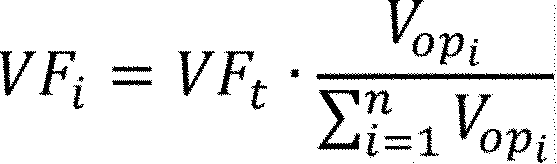
 www.doi.gov/sites/doi.gov/files/fy2023-blmgreenbook.pdf
 revenuedata.doi.gov/