The FAA is adopting a new airworthiness directive (AD) for all Diamond Aircraft Industries GmbH (DAI) Model DA 42, DA 42 NG, and DA 42 M-NG airplanes. This AD was prompted by oc...
[Docket No. FAA-2026-7216; Project Identifier MCAI-2026-00693-A; Amendment 39-23409; AD 2026-14-08]
RIN 2120-AA64
AGENCY:
Federal Aviation Administration (FAA), DOT.
ACTION:
Final rule; request for comments.
SUMMARY:
The FAA is adopting a new airworthiness directive (AD) for all Diamond Aircraft Industries GmbH (DAI) Model DA 42, DA 42 NG, and DA 42 M-NG airplanes. This AD was prompted by occurrences of uncommanded rudder deflection caused by a cracked nose landing gear (NLG) hydraulic actuator rod end, which could lead to failure of the NLG actuator and interference with the rudder control system, forcing the rudder into left-hand deflection. This AD requires revising the existing airplane flight manual (AFM) for your airplane to provide the flight crew with revised operating limitations, repetitively inspecting certain NLG hydraulic actuator rod ends for cracks, deformation, corrosion, damage, and free movement of the spherical bearing, and depending on the results of any inspection, replacing the affected NLG hydraulic actuator rod end with a serviceable part. This AD also prohibits the installation of an affected NLG hydraulic actuator rod end unless certain conditions are met. The FAA is issuing this AD to address the unsafe condition on these products.
DATES:
This AD is effective July 20, 2026.
The Director of the Federal Register approved the incorporation by reference of a certain publication listed in this AD as of July 20, 2026.
The FAA must receive comments on this AD by August 31, 2026.
ADDRESSES:
You may send comments, using the procedures found in 14 CFR 11.43 and 11.45, by any of the following methods:
Federal eRulemaking Portal:
Go to
regulations.gov. Follow the instructions for submitting comments.
Fax:
(202) 493-2251.
Mail:
U.S. Department of Transportation, Docket Operations, M-30, West Building Ground Floor, Room W12-140, 1200 New Jersey Avenue SE, Washington, DC 20590.
Hand Delivery:
Deliver to Mail address above between 9 a.m. and 5 p.m., Monday through Friday, except Federal holidays.
AD Docket:
You may examine the AD docket at
regulations.gov
under Docket No. FAA-2026-7216; or in person at Docket Operations between 9 a.m. and 5 p.m., Monday through Friday, except Federal holidays. The AD docket contains this final rule, the mandatory continuing airworthiness information (MCAI), any comments received, and other information. The street address for Docket Operations is listed above.
Material Incorporated by Reference:
For Diamond Aircraft material identified in this AD, contact DAI, N.A. Otto-Straβe 5, A-2700 Wiener Neustadt, Austria; phone: +43 2622 26700; email:office@diamond-air.at;
website:
diamondaircraft.com/.
You may view this material at the FAA, Airworthiness Products Section, Operational Safety Branch, 1100 Main, Kansas City, MO 64105. For information
( printed page 44741)
on the availability of this material at the FAA, call (817) 222-5110. It is also available at
regulations.gov
under Docket No. FAA-2026-7216.
FOR FURTHER INFORMATION CONTACT:
Zakaria Abdi, Aviation Safety Engineer, FAA, 1600 Stewart Avenue, Suite 410, Westbury, NY 11590; phone: (316) 946-4141; email:
zakaria.f.abdi@faa.gov.
SUPPLEMENTARY INFORMATION:
Comments Invited
The FAA invites you to send any written data, views, or arguments about this final rule. Send your comments using a method listed under the
ADDRESSES
section. Include “Docket No. FAA-2026-7216; Project Identifier MCAI-2026-00693-A” at the beginning of your comments. The most helpful comments reference a specific portion of the final rule, explain the reason for any recommended change, and include supporting data. The FAA will consider all comments received by the closing date and may amend this final rule because of those comments.
Except for Confidential Business Information (CBI) as described in the following paragraph, and other information as described in 14 CFR 11.35, the FAA will post all comments received, without change, to
regulations.gov, including any personal information you provide. The agency will also post a report summarizing each substantive verbal contact received about this final rule.
Confidential Business Information
CBI is commercial or financial information that is both customarily and actually treated as private by its owner. Under the Freedom of Information Act (FOIA) (5 U.S.C. 552), CBI is exempt from public disclosure. If your comments responsive to this AD contain commercial or financial information that is customarily treated as private, that you actually treat as private, and that is relevant or responsive to this AD, it is important that you clearly designate the submitted comments as CBI. Please mark each page of your submission containing CBI as “PROPIN.” The FAA will treat such marked submissions as confidential under the FOIA, and they will not be placed in the public docket of this AD. Submissions containing CBI should be sent to Zakaria Abdi, Aviation Safety Engineer, FAA, 1600 Stewart Avenue, Suite 410, Westbury, NY 11590. Any commentary that the FAA receives which is not specifically designated as CBI will be placed in the public docket for this rulemaking.
Background
The European Union Aviation Safety Agency (EASA), which is the Technical Agent for the Member States of the European Union, has issued EASA Emergency AD 2026-0125-E, dated June 29, 2026 (EASA Emergency AD 2026-0125-E). EASA Emergency AD 2026-0125-E states that occurrences of uncommanded rudder deflection were reported due to a cracked NLG hydraulic actuator rod end. Investigation revealed that a crack in the NLG hydraulic actuator rod end could lead to failure of the NLG actuator and interference with the rudder control system, forcing the rudder into left-hand deflection. The affected parts are installed on DAI Model DA 42, DA-42 M, DA 42 NG, and DA 42 M-NG airplanes. This condition, if not detected and corrected, could lead to restricted rudder travel in the landing gear retracted configuration and result in reduced control of the airplane. EASA later revised EASA Emergency AD 2026-0125 with EASA AD 2026-0125R1, dated June 30, 2026 (EASA AD 2026-0125R1) (also referred to as the MCAI) to revise the applicability of certain actions. The MCAI requires revising the existing AFM for your airplane to provide the flight crew with revised operating limitations, repetitively inspecting certain NLG hydraulic actuator rod ends for cracks, corrosion, deformation, damage, and free movement of the spherical bearing, and depending on the results of any inspection, replacing the affected NLG hydraulic actuator rod end with a serviceable part. The MCAI also prohibits the installation of an affected NLG hydraulic actuator rod end unless certain conditions are met.
You may examine the MCAI in the AD docket at
regulations.gov
under Docket No. FAA-2026-7216.
Material Incorporated by Reference Under 1 CFR Part 51
The FAA reviewed Diamond Aircraft Mandatory Service Bulletin (MSB) 42-154 and MSB 42NG-101, dated June 29, 2026 (issued as one document), published with Diamond Aircraft Work Instruction WI-MSB 42-154 and WI-MSB 42NG-101, dated June 29, 2026 (issued as one document). This material specifies procedures for inspecting certain NLG hydraulic actuator rod ends for cracks, deformation, corrosion, damage, and free movement of the spherical bearing. This material also specifies replacing any NLG hydraulic actuator rod end found with cracks, corrosion, deformation, damage, or lack of free movement of the spherical bearing with a serviceable part. This material also includes a reporting requirement of the results of the first inspection. In addition, the material specifies sending any damaged parts to DAI. This material is reasonably available because the interested parties have access to it through their normal course of business or by the means identified in the
ADDRESSES
section.
FAA's Determination
These products have been approved by the civil aviation authority of another country and are approved for operation in the United States. Pursuant to the FAA's bilateral agreement with this State of Design Authority, that authority has notified the FAA of the unsafe condition described in the MCAI and material referenced above. The FAA is issuing this AD after determining that the unsafe condition described previously is likely to exist or develop on other products of the same type design.
AD Requirements
This AD requires revising the Limitations section of the existing AFM for your airplane to provide the flight crew with revised operating limitations, repetitively inspecting certain NLG hydraulic actuator rod ends cracks, deformation, corrosion, damage, and free movement of the spherical bearing, and, depending on the results of the inspection, replacing the affected NLG hydraulic actuator rod end with a serviceable part. This AD also prohibits the installation of an affected NLG hydraulic actuator rod end unless certain conditions are met.
The owner/operator (pilot) holding at least a private pilot certificate may revise the existing AFM and must enter compliance with the applicable paragraph of this AD into the airplane maintenance records in accordance with 14 CFR 43.9(a) and 14 CFR 91.417(a)(2)(v). The record must be maintained as required by 14 CFR 91.417, 121.380, or 135.439. This action can be performed equally well by a pilot or a mechanic. This is an exception to the FAA's standard maintenance regulations.
Differences Between This AD and the MCAI and Referenced Material
The MCAI applies to DAI Model 42 M airplanes, but this AD does not include this model because it does not have an FAA type certificate.
The referenced material specifies to return damaged parts to the manufacturer. However, this AD does not require this action.
( printed page 44742)
Interim Action
The FAA considers that this AD is an interim action. If final action is later identified, the FAA might consider further rulemaking.
Justification for Immediate Adoption and Determination of the Effective Date
Section 553(b) of the Administrative Procedure Act (APA) (5 U.S.C. 551et seq.) authorizes agencies to dispense with notice and comment procedures for rules when the agency, for “good cause,” finds that those procedures are “impracticable, unnecessary, or contrary to the public interest.” Under this section, an agency, upon finding good cause, may issue a final rule without providing notice and seeking comment prior to issuance. Further, section 553(d) of the APA authorizes agencies to make rules effective in less than thirty days, upon a finding of good cause.
An unsafe condition exists that requires the immediate adoption of this AD without providing an opportunity for public comments prior to adoption. The FAA has found that the risk to the flying public justifies forgoing notice and comment prior to adoption of this rule because the FAA has determined that a cracked NLG hydraulic actuator rod end could lead to failure of the NLG actuator and interference with the rudder control system. This can result in restricted rudder travel in the landing gear retracted configuration and reduced control of the airplane. Because this condition can occur without warning and vary from airplane to airplane, the FAA is requiring an immediate flight operating restriction for those airplanes that have 1,000 hours total time-in-service and a compliance time for inspections for some airplanes as low as 5 flight cycles. These compliance times are shorter than the time necessary for the public to comment and for publication of the final rule. Accordingly, notice and opportunity for prior public comment are impracticable and contrary to the public interest pursuant to 5 U.S.C. 553(b).
In addition, the FAA finds that good cause exists pursuant to 5 U.S.C. 553(d) for making this amendment effective in less than 30 days, for the same reasons the FAA found good cause to forgo notice and comment.
Regulatory Flexibility Act
The requirements of the Regulatory Flexibility Act (RFA) do not apply when an agency finds good cause pursuant to 5 U.S.C. 553 to adopt a rule without prior notice and comment. Because the FAA has determined that it has good cause to adopt this rule without prior notice and comment, RFA analysis is not required.
Costs of Compliance
The FAA estimates that this AD affects 267 airplanes of U.S. registry.
The FAA estimates the following costs to comply with this AD:
Estimated Costs
Action
Labor cost
Parts cost
Cost per product
Cost on U.S. operators
Inspect the NLG actuator rod end
4 work-hours × $85 per hour = $340 per inspection cycle
$0
$340 per inspection cycle
$90,780 per inspection cycle
Revise the AFM
1 work-hour × $85 per hour = $85
0
$85
$22,695
Report inspection results (first inspection only)
1 work-hour × $85 per hour = $85
0
$85
$22,695
The FAA estimates the following costs to do any necessary replacements that would be required based on the results of the inspection. The agency has no way of determining the number of airplanes that might need replacements.
On-Condition Costs
Action
Labor cost
Parts cost
Cost per product
Replace NLG hydraulic actuator rod end
1 work-hour × $85 per hour = $85
$126
$211
Replace the entire NLG hydraulic actuator
6 work-hours × $85 per hour = $510
4,161
4,671
*Only one replacement action would be required.
The FAA has included all known costs in its cost estimate. According to the manufacturer, however, some of the costs of this AD may be covered under warranty, thereby reducing the cost impact on affected operators.
Paperwork Reduction Act
A federal agency may not conduct or sponsor, and a person is not required to respond to, nor shall a person be subject to a penalty for failure to comply with a collection of information subject to the requirements of the Paperwork Reduction Act unless that collection of information displays a currently valid OMB Control Number. The OMB Control Number for this information collection is 2120-0056. Public reporting for this collection of information is estimated to take approximately 1 hour per response, including the time for reviewing instructions, searching existing data sources, gathering and maintaining the data needed, and completing and reviewing the collection of information. All responses to this collection of information are mandatory. Send comments regarding this burden estimate or any other aspect of this collection of information, including suggestions for reducing this burden, to: Information Collection Clearance Officer, Federal Aviation Administration, 10101 Hillwood Parkway, Fort Worth, TX 76177-1524.
Authority for This Rulemaking
Title 49 of the United States Code specifies the FAA's authority to issue rules on aviation safety. Subtitle I, section 106, describes the authority of the FAA Administrator. Subtitle VII: Aviation Programs describes in more detail the scope of the Agency's authority.
The FAA is issuing this rulemaking under the authority described in Subtitle VII, Part A, Subpart III, Section 44701: General requirements. Under that section, Congress charges the FAA with promoting safe flight of civil
( printed page 44743)
aircraft in air commerce by prescribing regulations for practices, methods, and procedures the Administrator finds necessary for safety in air commerce. This regulation is within the scope of that authority because it addresses an unsafe condition that is likely to exist or develop on products identified in this rulemaking action.
Regulatory Findings
This AD will not have federalism implications under Executive Order 13132. This AD will not have a substantial direct effect on the States, on the relationship between the national government and the States, or on the distribution of power and responsibilities among the various levels of government.
For the reasons discussed above, I certify that this AD:
This airworthiness directive (AD) is effective July 20, 2026.
(b) Affected ADs
None.
(c) Applicability
This AD applies to all Diamond Aircraft Industries GmbH (DAI) Model DA 42, DA 42 M-NG, and DA 42 NG airplanes, certificated in any category.
(d) Subject
Joint Aircraft System Component (JASC) Codee 3233, Landing Gear Actuator.
(e) Unsafe Condition
This AD was prompted by occurrences of uncommanded rudder deflection caused by a cracked nose landing gear (NLG) hydraulic actuator rod end. The FAA is issuing this AD to prevent cracked rod ends from leading to the failure of the NLG actuator and interference with the rudder control system. The unsafe condition, if not addressed, could result in restricted rudder travel in the landing gear retracted configuration and result in reduced control of the airplane.
(f) Compliance
Comply with this AD within the compliance times specified, unless already done.
(g) Definitions
For the purpose of this AD, the following definitions apply:
(1) An “affected part” is an NLG hydraulic actuator rod end having part number (P/N) X11-0006-SMRCD10IRMR.7403 or P/N X11-0006-GARSW-10RR.
(2) A “serviceable part” is an affected part that is new (never previously installed on an airplane) or that, before installation, has been inspected and corrected as required by paragraphs (h)(2) and (3) of this AD.
(3) A “flight cycle” is defined as one takeoff and one landing. Each additional takeoff and landing associated with a touch-and-go, or a go-around, is accounted for as an additional take-off and landing.
(h) Required Actions
(1) Before accumulating 1,000 hours total time-in-service (TTIS) on the airplane or before further flight after the effective date of this AD, whichever occurs later, incorporate the information in figure 1 of this AD into the Limitations section of your existing airplane flight manual (AFM). Incorporating a copy of this AD into the Limitations Section of your AFM is an acceptable method for this action.
Figure 1 to Paragraph (h)(1)—AFM Limitation
(i) This operating limitation may be removed after the first inspection required by paragraph (h)(2) of this AD has been accomplished. The first inspection required by paragraph (h)(2) of this AD may be done in lieu of this operating limitation provided it is done within the compliance times specified in paragraph (h)(1) of this AD.
(ii) The owner/operator (pilot) holding at least a private pilot certificate may revise the existing AFM for your airplane and must enter compliance with the applicable paragraph of this AD into the airplane maintenance records in accordance with 14 CFR 43.9(a) and 14 CFR 91.417(a)(2)(v). The record must be maintained as required by 14 CFR 91.417, 121.380, or 135.439.
(2) Within the compliance times specified in table 1 to paragraph (h)(2) of this AD and thereafter at intervals not to exceed 4,000 flight cycles, inspect the affected part for cracks, deformation, corrosion, damage, and free movement of the spherical bearing in accordance with Section III of Diamond Aircraft Work Instruction WI-MSB 42-154 and WI-MSB 42NG-101, dated June 29, 2026 (issued as one document), published with Diamond Aircraft Mandatory Service Bulletin MSB 42-154 and MSB 42NG-101, dated June 29, 2026 (issued as one document).
Table 1 Paragraph (
h
)(2)—Initial Inspection Compliance Time
Aircraft hours TTIS accumulated on the effective date of this AD
Compliance time
More than 4,000
Within 5 flight cycles after the effective date of this AD.
4,000 or less and more than 1,000
Within 50 flight cycles after the effective date of this AD.
Up to and including 1,000
Within 2,000 flight cycles after the effective date of this AD.
( printed page 44744)
Aircraft having an original airworthiness certificate issued on or after the effective date of this AD
Within 4,000 flight cycles since issuance of the original airworthiness certificate.
(3) If, during any inspection as required by paragraph (h)(2) of this AD, any crack, deformation, corrosion, damage, or lack of free movement of the spherical bearing is found, before further flight, replace the affected part with a serviceable part as specified in Section III of Diamond Aircraft Work Instruction WI-MSB 42-154 and WI-MSB 42NG-101, dated June 29, 2026 (issued as one document), published with Diamond Aircraft Mandatory Service Bulletin MSB 42-154 and MSB 42NG-101, dated June 29, 2026 (issued as one document). Replacing the NLG hydraulic actuator with an NLG hydraulic actuator that is equipped with a serviceable part is an acceptable method to comply with this requirement.
(4) Within 14 days after performing any inspection required by paragraph (h)(2) of this AD or within 14 days after the effective date of this AD, whichever occurs later, report the inspection results (including no findings, for the first inspection only), using the Execution Report in Diamond Aircraft Mandatory Service Bulletin MSB 42-154 and MSB 42NG-101, dated June 29, 2026 (issued as one document)), published with Diamond Aircraft Work Instruction WI-MSB 42-154 and WI-MSB 42NG-101, dated June 29, 2026 (issued as one document).
(i) Parts Installation Limitation
As of the effective date of this AD, do not install an affected part on any airplane unless it is a serviceable part as defined in paragraph (g)(2) of this AD.
(j) No Return of Parts
Where Diamond Aircraft Work Instruction WI-MSB 42-154 and WI-MSB 42NG-101, dated June 29, 2026 (issued as one document), published with Diamond Aircraft Mandatory Service Bulletin MSB 42-154 and MSB 42NG-101, dated June 29, 2026 (issued as one document), specifies to return damaged parts to DAI, this AD does not require this action.
(k) Alternative Methods of Compliance (AMOCs)
The Manager, International Validation Branch, FAA, has the authority to approve AMOCs for this AD, if requested using the procedures found in 14 CFR 39.19. In accordance with 14 CFR 39.19, send your request to your principal inspector or local Flight Standards District Office, as appropriate. If sending information directly to the manager of the International Validation Branch, send it to the attention of the person identified in paragraph (l) of this AD and email to:
AMOC@faa.gov.
Before using any approved AMOC, notify your appropriate principal inspector, or lacking a principal inspector, the manager of the local flight standards district office/certificate holding district office.
(l) Additional Information
For more information about this AD, contact Zakaria Abdi, Aviation Safety Engineer, FAA, 1600 Stewart Avenue, Suite 410, Westbury, NY 11590; phone: (316) 946-4141; email:
zakaria.f.abdi@faa.gov.
(m) Material Incorporated by Reference
(1) The Director of the Federal Register approved the incorporation by reference of the material listed in this paragraph under 5 U.S.C. 552(a) and 1 CFR part 51.
(2) You must use this material as applicable to do the actions required by this AD, unless the AD specifies otherwise.
(i) Diamond Aircraft Mandatory Service Bulletin MSB 42-154 and MSB 42NG-101, dated June 29, 2026 (issued as one document), published with Diamond Aircraft Work Instruction WI-MSB 42-154 and WI-MSB 42NG-101, dated June 29, 2026 (issued as one document).
(ii) [Reserved]
(3) For Diamond Aircraft material identified in this AD, contact Diamond Aircraft Industries GmbH, N.A. Otto-Straβe 5, A-2700 Wiener Neustadt, Austria; phone: +43 2622 26700; email:
office@diamond-air.at;
website:
diamondaircraft.com/.
(4) You may view this material at the FAA, Airworthiness Products Section, Operational Safety Branch, 1100 Main, Kansas City, MO 64105. For information on the availability of this material at the FAA, call (817) 222-5110.
 14 CFR 11.43
 5 U.S.C. 552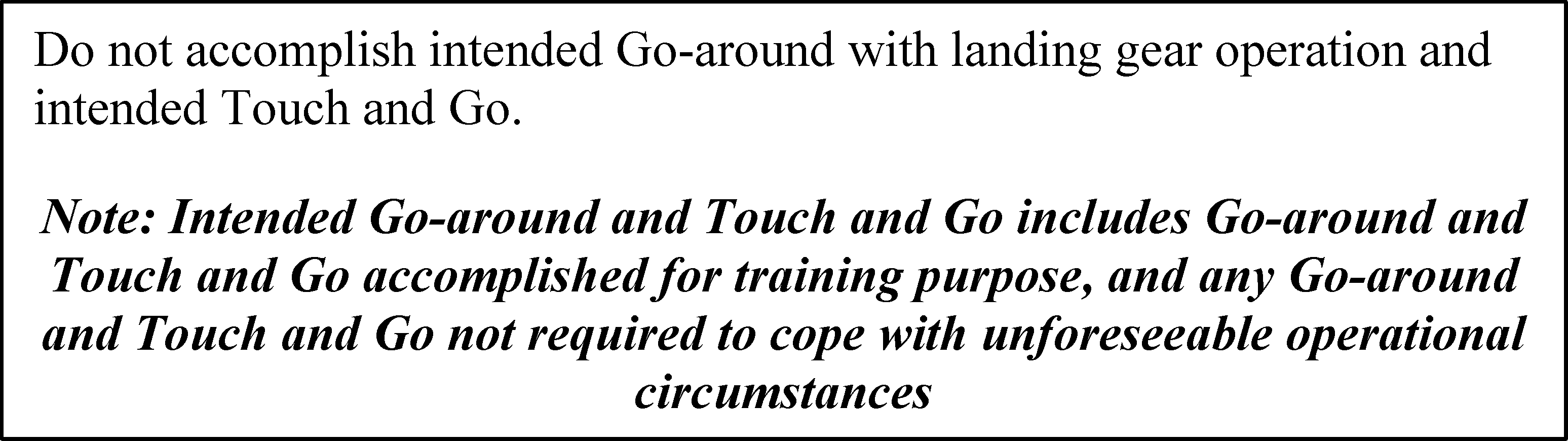
 www.archives.gov/federal-register/cfr/ibr-locations