Takes of Marine Mammals Incidental to Specified Activities; Taking Marine Mammals Incidental to Texas Parks and Wildlife Department Fisheries Research
NMFS, upon request from Texas Parks and Wildlife Department (TPWD), is promulgating regulations to govern the taking of marine mammals incidental to fisheries research in the co...
National Marine Fisheries Service (NMFS), National Oceanic and Atmospheric Administration (NOAA), Commerce.
ACTION:
Final rule; notification of issuance of Letter of Authorization (LOA).
SUMMARY:
NMFS, upon request from Texas Parks and Wildlife Department (TPWD), is promulgating regulations to govern the taking of marine mammals incidental to fisheries research in the coastal bays of Texas over the course of 5 years. These regulations, which allow for the issuance of a Letter of Authorization (LOA) for the incidental take of marine mammals during the specified activities in the specified geographical region during the effective dates of the regulations, prescribe the permissible methods of taking and other means of effecting the least practicable adverse impact on marine mammal species or stocks and their habitat, as well as requirements pertaining to the monitoring and reporting of such taking.
DATES:
Effective from August 1, 2026, through July 31, 2031.
In case of problems accessing these documents, please call the contact listed below.
FOR FURTHER INFORMATION CONTACT:
Craig Cockrell, Office of Protected Resources, NMFS, (301) 427-8401.
SUPPLEMENTARY INFORMATION:
Purpose of Regulatory Action
These regulations, promulgated under the authority of the Marine Mammal Protection Act (MMPA) (16 U.S.C. 1361et seq.), establish a framework for authorizing the take of marine mammals incidental to fisheries-independent research conducted by the TPWD in Texas bays and estuaries.
Legal Authority for the Action
Section 101(a)(5)(A) of the MMPA (16 U.S.C. 1371(a)(5)(A)) directs the Secretary of Commerce, as delegated to NMFS, to allow, upon request, the incidental, but not intentional, taking of small numbers of marine mammals by U.S. citizens who engage in a specified activity (other than commercial fishing) within a specified geographical region for up to 5 years if, after notice and public comment, the agency makes certain findings and promulgates regulations that set forth permissible methods of taking pursuant to that activity and other means of effecting the “least practicable adverse impact” on the affected species or stocks and their habitat (see Mitigation section), as well as monitoring and reporting requirements.
Summary of Major Provisions Within the Rule
The following is a summary of the major provisions of this rule regarding TPWD's fisheries research:
TPWD staff and others involved in the research activities will be required to attend the Protected Species Safe Handling, Release, and Identification Workshops prior to conducting the fisheries research activities.
TPWD would eliminate dolphin “hot spot” sampling grids where bottlenose dolphins have been taken more than once since the beginning of the survey or grids where multiple adjacent grids have had at least one bottlenose dolphin encounter.
TPWD would minimize soak time by utilizing the “last out/first in” strategy for gillnets set in grids where bottlenose dolphins have been encountered within the last 5 years. A net set in this manner will be deployed last for the day and retrieved first on the next day which may reduce soak times by as much as 6.6 hours. This procedure will be implemented in six sampling grids.
TPWD would set only new or fully repaired gillnets thereby eliminating holes greater than 6 inches (in) (15 centimeter (cm)) stretched mesh.
TWPD would set gillnets with minimal slack and a short marker buoy attached to the deep end of the net.
Staff would immediately respond to any net disturbance observed while gear is soaking.
TWPD would modify gillnets to avoid more than a 4- in (10- cm) gap between float/lead line and net when net is set.
TWPD would conduct dedicated marine mammal observations at least 15 minutes prior to setting nets and avoid setting nets if dolphins are observed at or approaching within the survey area.
Background
The MMPA prohibits the take of marine mammals, with certain exceptions. Sections 101(a)(5)(A) and (D) of the MMPA (16 U.S.C. 1361et seq.) directs the Secretary of Commerce (as delegated to NMFS) to allow, upon request, the incidental, but not intentional, taking of small numbers of marine mammals by U.S. citizens who engage in a specified activity (other than commercial fishing) within a specified geographical region if certain findings are made and either regulations are proposed or, if the taking is limited to harassment, a notice of a proposed incidental harassment authorization (IHA) is provided to the public for review.
Authorization for incidental takings shall be granted if NMFS finds that the taking will have a negligible impact on the species or stock(s) and will not have an unmitigable adverse impact on the availability of the species or stock(s) for taking for subsistence uses (where relevant). Further, NMFS must prescribe the permissible methods of taking and
( printed page 45208)
other means of effecting the least practicable adverse impact on the affected species or stocks and their habitat, paying particular attention to rookeries, mating grounds, and areas of similar significance, and on the availability of the species or stocks for taking for certain subsistence uses (collectively referred to as “mitigation”) and requirements pertaining to the monitoring and reporting of the takings. The definitions of all applicable MMPA statutory terms used above are included in the relevant sections below and can be found in section 3 of the MMPA (16 U.S.C. 1362) and NMFS regulations at 50 CFR 216.103.
Summary of Request
On October 31, 2023, NMFS received a request from TPWD for a rulemaking and associated 5-year LOA to take marine mammals incidental to fisheries research activities. Following NMFS' review of the application, TPWD submitted a revised version on March 3, 2025. NMFS deemed TPWD's application adequate and complete on May 12, 2025. TPWD requests authorization for take of bottlenose dolphins by mortality and serious injury (M/SI) and by Level A harassment.
A notice of receipt of the application submitted by TPWD was published in the
Federal Register
on May 19, 2025 (90 FR 21285), with a 30-day comment period. During the comment period NMFS received 50 comments from members of the public regarding TPWD's application for an incidental take authorization. The comments largely expressed general support for TPWD's request. NMFS considered these comments in the preparation of the proposed and final rule.
On March 18, 2026, NMFS published a proposed rule and request for comments in the
Federal Register
(91 FR 12972). The public comment period on the proposed rule was open for 30 days from March 18, 2026, through April 17, 2026. A summary of public comments received during this 30-day period are described in the Comments and Responses section of this final rule; full public comments may be viewed at
www.regulations.gov/docket/NOAA-NMFS-2025-0801.
Description of the Activity
Overview
TPWD conducts a long-term standardized fishery-independent monitoring program to assess the relative abundance and size of finfish and shellfish in Texas bays. Results from this program are primarily used by TPWD to manage Texas' marine finfish and shellfish resources. Data gathered through the survey are also used by multiple other state and federal agencies, universities, non-governmental organizations, and the private sector. The use of gillnets during these surveys may result in take by Level A harassment (injury) or M/SI of marine mammals.
Dates and Duration
These gillnet surveys are conducted throughout the coastal bay system of Texas and occur in the spring and fall. The spring season begins the second full week in April and extends for 10 weeks. The fall season begins the second full week in September and extends for 10 weeks. TPWD expects to set 780 gillnets annually within the Texas bay system.
Specific Geographic Region
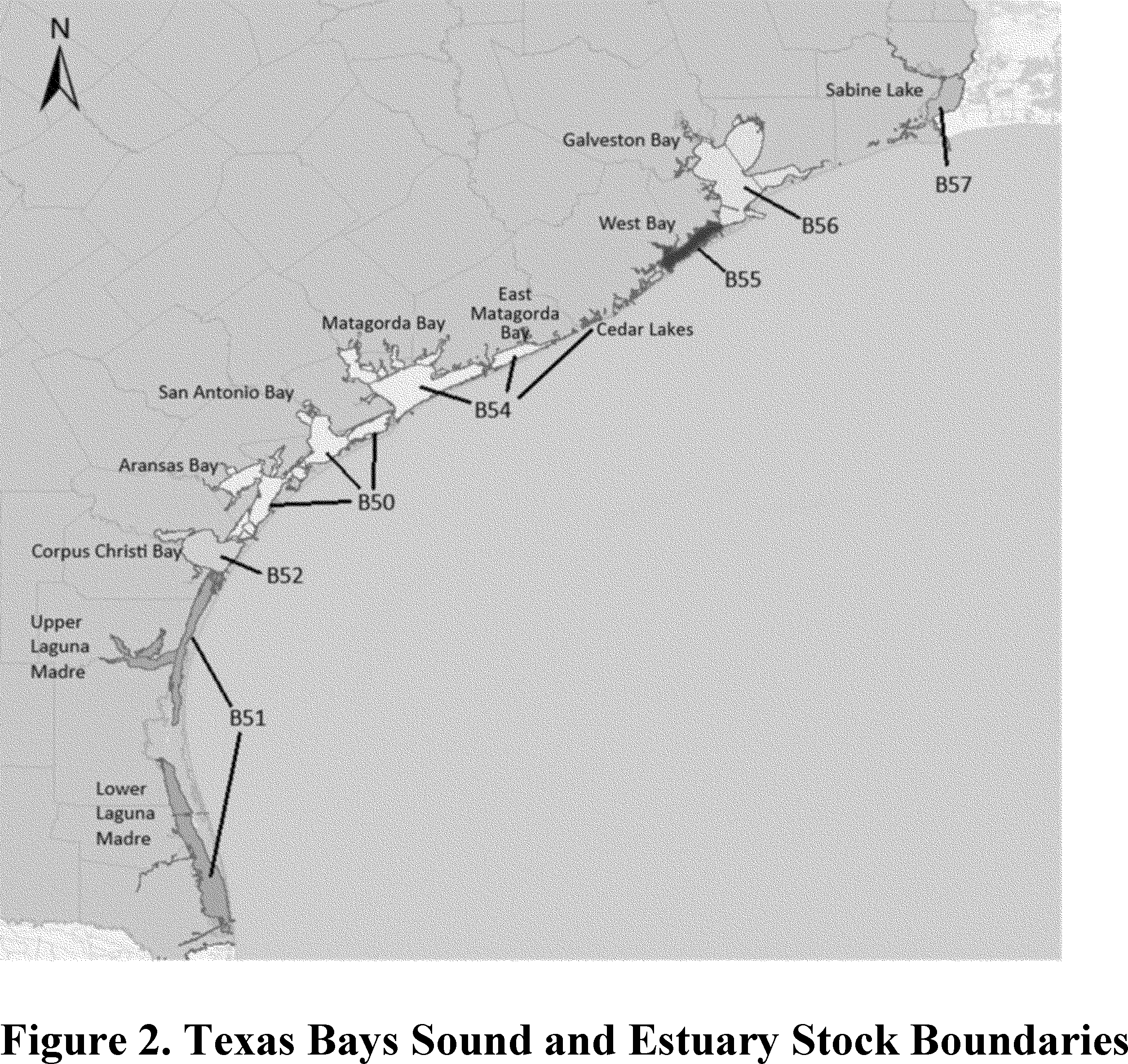
Gillnets would be used in each of the 10 major Texas bay systems: Sabine Lake, Galveston, Cedar Lakes, East Matagorda, Matagorda, San Antonio, Aransas, Corpus Christi, upper Laguna Madre, and lower Laguna Madre (see figure 1). Each bay is separated into 1 minute by 1 minute grid cells and sampling sites are chosen at random. These bays consist of open-bay bottom (
i.e.,
mainly sand and mud bottom) habitat which are influenced by ocean waters through inlets. Marshes and intertidal flats typically make up the edges of the bays and are made up of relatively shallow water (Armstrong 1987).
( printed page 45209)
Detailed Description of the Specified Activity
A detailed description of TPWD's planned activities are provided in the proposed rule (91 FR 12972; March 18, 2026). Since publication of the proposed rule, TPWD has not made any modifications to their specified activities; therefore, we refer the reader to the proposed rule for a detailed description of the specified activities. Mitigation, monitoring, and reporting measures proposed by TPWD and included in this final rule are also described in detail in the proposed rule and summarized later in this document (please see Mitigation and Monitoring and Reporting).
Changes From Proposed to Final Rule
Since the publication of the proposed rule, NMFS has updated the annual M/SI values for three of the seven stocks of bottlenose dolphin stocks authorized for take under this final rule. After reviewing data in Maze-Foley and Garrison (2024) and the Marine Mammal Strandings Database, NMFS determined that the “at sea” serious injuries were inadvertently omitted from the annual M/SI analysis. NMFS updated the annual M/SI values for the Laguna Madre stock by adding three additional serious injuries resulting in an increase of annual M/SI for that stock from 0.6 to 1.2. The Copano Bay/Aransas Bay/San Antonio Bay/Redfish Bay/Espiritu Santo Bay stock has been updated to include one additional serious injury resulting in an increase of annual M/SI for that stock from 0.6 to 0.8. The Galveston Bay, East Bay, Trinity Bay stock has been updated to include one additional serious injury resulting in an increase of annual M/SI for that stock from 1.2 to 1.4. The descriptions of serious injuries and the annual M/SI calculations have been updated in Description of Marine Mammals in the Area of Specified Activities and Negligible Impact Determination sections (table 7) of this final rule.
NMFS also determined that the calculation of the Potential Biological Removal (PBR) value for the Matagorda Bay, Tres Palacios Bay, Lavaca Bay stock was incorrect. In the proposed rule the PBR was presented as 1.3, but the correct PBR is 1.2 and has been updated in table 7 of the Negligible
( printed page 45210)
Impact Determination section of this final rule.
NMFS has also updated the permanently eliminated grid numbers for sampling in the Mitigation section of this final rule. At the time of the proposed rule TPWD had not updated the list of eliminated sampling grids based on the two most recent (2024) encounters with bottlenose dolphins. Grid 302 in the Matagorda Bay complex has been updated as a permanently excluded grid cell as a result of those recent bottlenose dolphin encounters.
Finally, NMFS is correcting an error in the reporting section of the preamble that stated TPWD would be required to report all encounters with bottlenose dolphins within 48 hours of the encounter. NMFS has corrected this requirement to 24 hours to make it consistent with the regulatory text of this final rule.
Comments and Responses
NMFS published the proposed rule (91 FR 12972) on March 18, 2026, with a 30-day comment period. NMFS received 130 comments in total, with 124 being from the general public, including two letters from groups of students at the University of Arizona. The majority of these comments expressed general support for TPWD and NMFS' proposed action. Some comments also expressed general support for conservation of marine mammals. As these comments did not provide information specific to NMFS' proposed action, we do not address them further. In addition, NMFS received comment letters from the following organizations: American Sportfishing Association, Coastal Conservation Association, Center for Sportfishing Policy, Coastal Carolina University (CCU), Galveston Bay Foundation (GBF), and Texas Marine Mammal Stranding Network (TMMSN). The comments submitted by recreational fishing groups (American Sportfishing Association, Coastal Conservation Association, and Center for Sportfishing Policy) expressed general support for TPWD and NMFS' proposed action. Summaries of all relevant, substantive comments and NMFS' responses to these comments are provided below.
Comment 1:
CCU and the GBF urged caution in relying on the preliminary abundance estimates developed by Garrison (2025) on the basis of photo-identification data collected by Texas A&M for the Copano Bay/Aransas Bay/San Antonio Bay/Redfish Bay/Espiritu Santo Bay, Nueces Bay/Corpus Christi Bay, and Laguna Madre stocks. The commenters suggested that the abundance estimates may overestimate true stock abundance because some sighted individuals may be transients from coastal stocks.
Response 1:
The last stock assessment update for these stocks was completed in 1992. The abundance estimates from 1992 were known to be underestimates (Garrison, pers. comm.), and it is likely that these stocks have increased in size since that time. For example, the abundance estimate for the Galveston Bay/East Bay/Trinity Bay stock increased from 152 in 1992 to 842 in 2016 (NMFS 2022). Therefore, NMFS and TPWD identified a need to update the abundance estimates with more recent information, and NMFS Southeast Fisheries Science Center (SEFSC) performed an analysis of photo-identification data provided by Texas A&M University researchers to determine minimum abundance estimates (Nmins) for the three stocks listed above. While we acknowledge the potential that some sighted dolphins included in the analysis are transients from coastal stocks, the Nmins
may also be underestimated because they do not include individuals with non-distinct fins (primarily calves and younger animals) and do not account for animals that are present in the population but have not been seen during the surveys. There was insufficient data available to conduct a full analysis to estimate detection probability and population size. The SEFSC noted uncertainty in the boundaries between the defined stocks and little information on animal movement within and between these estuarine systems. Given these levels of uncertainty, the SEFSC's approach to developing the estimates, discussed below, minimizes the potential that they represent overestimates of actual abundance.
SEFSC's analysis recognized the potential for transient animals (
i.e.,
animals from neighboring coastal stocks) within the estuaries and attempted a partial correction. SEFSC plotted a 2-kilometer (km) buffer area around the Aransas Pass, a major entry point into the estuaries of interest, and excluded individuals that were observed exclusively within the Aransas Pass region from the estimates of Nmin. There were 374 individual dolphins in the catalog that were seen only within the Aransas Pass buffer zone. Of these, 336 have only been seen once during the surveys. One individual with eight sightings in this area was seen four times in the Corpus Christi Bay stock area and four times in the Copano/Aransas Bay area. These data support excluding animals occurring only within the Aransas Bay buffer area from our estimates of minimum stock size. However, we acknowledge that this does not fully address the potential for transient animals occurring well inside the estuaries away from Aransas Pass.
Most animals observed during the Texas A&M University photo-identification surveys were seen only once, providing limited information on stock identity or residence patterns. For stock assignment of animals sighted once, the SEFSC examined the data from animals seen multiple times to estimate the probability that an animal belongs to a given stock when it is seen within that stock area on its first observation. Based on this probability equation, an individual was included in or excluded from a given stock based on the location of the first sighting of the individual. Insufficient information exists within these data to exclude animals with only one sighting from the estuarine stock. While the direct count likely underestimates the total population size, including significant numbers of transient animals would inflate the minimum estimate. Observations of takes also include both estuarine resident and transient animals in this population estimate. Thus, while there is significant uncertainty, the Texas A&M University photo-identification surveys represent the best available data and, as analyzed by the SEFSC, provide a reasonable assessment of the impact of human-caused mortality and serious injury on these estuarine bottlenose dolphin stocks.
Comment 2:
CCU and TMMSN expressed concerns specifically regarding the West Bay stock of bottlenose dolphins, noting the low estimated population abundance for the stock. CCU noted that the two takes that were proposed for authorization for the stock would represent 5.7 percent of the estimated stock size and 11.4 percent of the female population (assuming an even ratio of males and females) and that the potential for loss of females with offspring may compound the effects on the small stock size. As acknowledged by NMFS in the proposed rule, TMMSN noted that any single M/SI event would exceed the West Bay stock's annual PBR and stated that the rule does not fully account for cumulative mortality from other ongoing stressors to which this stock is exposed. The commenters requested “a more explicit cumulative mortality analysis for the West Bay stock prior to finalizing the LOA.”
Response 2:
NMFS acknowledges commenters' concerns regarding the small size of the West Bay stock, including the potential impacts of loss of reproductive females. However, the
( printed page 45211)
results of our negligible impact analysis demonstrated that the annual mortality authorized under the rule (0.2) is less than the annual PBR value of 0.3. Therefore, while the authorized mortality of dolphins from the West Bay stock, including the potential for mortality of a female dolphin, may affect annual rates of recruitment, it is unlikely to adversely affect the stock through this impact. No compelling information that would contradict this finding is provided by commenters, who recite information (
e.g.,
low population size) acknowledged by NMFS and accounted for in its negligible impact analysis for the stock.
Regarding TMMSN's suggestion that NMFS fails to adequately account for all mortality, there are no data regarding other sources of annual M/SI, and TMMSN provides none for consideration. TMSSN provides no details regarding the “more explicit cumulative mortality analysis” it recommends be conducted, nor does it provide information that might be evaluated in such an analysis.
Comment 3:
GBF recommended “development of a plan that outlines steps to follow if numbers surpass PBR during a given year.”
Response 3:
If a single take of a West Bay dolphin occurs, PBR for that year (annual value currently estimated at 0.3) will necessarily be exceeded. This does not indicate that any special measures must be undertaken, as this is the scenario contemplated in this rule and evaluated as part of the negligible impact analysis,
i.e.,
one take over 5 years. If a second take of West Bay dolphins occurs during the 5-year effective period for the rule, NMFS agrees that it would be appropriate to reevaluate the activity in West Bay and determine whether additional measures are necessary to prevent additional take from occurring. The LOA includes a measure allowing NMFS to modify, suspend, or withdraw the LOA if it determines that the taking may be causing a greater than negligible impact on the stock. However, NMFS does not agree that the issue of takes in West Bay requires development of a plan, as suggested by GBF.
Comment 4:
The TMMSN asserted that predicted entanglement risks and injury outcomes may be underestimated because 43 percent of historical entanglements with TPWD gillnets have unknown or undetermined dispositions. TMMSN suggested that these incidents were likely to have resulted in M/SI and further recommended that NMFS “reflect this uncertainty conservatively in final take authorization levels.”
Response 4:
Injury determinations did not begin until 2007, which explains why there are 19 interactions with undetermined outcomes in TPWD's historical bottlenose dolphin encounter data. However, we did reasonably use rates of known injury, serious injury, and mortality to assign a disposition to bottlenose dolphin take estimates. These estimates provide the best available information for use in estimating future take numbers, and the take numbers analyzed herein are reasonable representations of the available information. TMMSNs comment does not provide data or other specific information to suggest that the take numbers are not reasonably reflective of what is likely to occur.
Comment 5:
Several commenters suggested that NMFS should make changes to the proposed mitigation requirements. Recommendations included encouraging the use of sampling gear other than gillnet gear that would have a lower chance of take by M/SI and that nets should only be set during the daytime hours. Commenters also noted that some of the mitigation measures do not provide sufficient protection for bottlenose dolphins. Specifically, commenters asserted that dolphins can become entangled in gillnets with 6-in mesh, noting that the rostrum or appendages can still become entangled in the net and that immediate response to net disturbances is not realistic during overnight soaks. Commenters also urged NMFS to implement additional mitigation measures specifically limiting sampling areas or limiting sampling in the spring.
Response 5:
NMFS addressed known issues associated with the specified activity in the proposed rule. For example, while we acknowledge that a requirement to set nets only during daylight hours would reduce dolphin takes due to the increased ability of field personnel to quickly respond to a dolphin entanglement, significant changes to the specified activity would be impracticable, as they would fundamentally change TPWD's longstanding survey protocols and impact TPWD's multi-decade time series of data.
Regarding the recommended changes to mitigation, NMFS and TPWD have worked together to identify survey blocks where surveys will not occur due to the higher risk of dolphin encounters. In the proposed rule, NMFS preliminarily determined that the proposed measures were sufficient to effect the least practicable adverse impact on the affected stocks, and commenters do not provide new information for NMFS' consideration.
Comment 6:
A commenter expressed concerns over the enforcement of the mitigation and monitoring requirements within the regulations and LOA.
Response 6:
The mitigation measures will be evaluated in the annual reports required by the regulations and subsequent LOA. NMFS will review the mitigation measure effectiveness used during the surveys. The mitigation measures are required, and failure to adhere to the required measure may result in the suspension or revocation of the LOA. NMFS and TPWD have agreed to the required measures, and they are expected to result in a least practical adverse impact to coastal stocks of bottlenose dolphins. NMFS does not have concerns over the enforcement of these measures, and the commenter did not present any information for NMFS to consider that may make these mitigation measures unenforceable.
Comment 7:
CCU and the TMMSN both commented on the required time to report marine mammal interactions. They noted that in the preamble of the rule the requirement was stated as 48 hours and in the regulatory text it was 24 hours.
Response 7:
NMFS acknowledges this error and has corrected the required time period to 24 hours as recommended by CCU and TMMSN.
Comment 8:
TMMSN suggested NMFS require TPWD to notify the NMFS Office of Protected Resources (OPR) and NMFS Southeast Regional Office (SERO) at “near real-time” when a live entangled dolphin is released from the gear with GPS location, photographs, a description of any visible injuries or gear remaining on the animal, and the animal's direction of travel at last observation. If a mortality or a suspected serious injury occurs, TMMSN suggested that NMFS require TPWD to notify the same offices in “near real-time” of the first observation in order to aid timely carcass retrieval. TMMSN asserted that these requirements would be operationally achievable with the use of a cell phone and the minimum necessary for stranding network responders to provide meaningful support.
Response 8:
As stated above and in the reporting requirements of this rule, the current requirement for TPWD to report encounters with dolphins is 24 hours. TMMSN did not define “near real-time” in its comment letter. The 24-hour requirement remains sufficient for notification of dolphin encounters with gillnets.
Comment 9:
The GBF suggested that the photo-identification data used in relevant analyses be submitted to the Gulf of Mexico Dolphin Identification
( printed page 45212)
System (GoMDIS), noting that this database is used by dolphin researchers throughout the Gulf, helps ensure quality control, and facilitates matching among regional catalogs.
Response 9:
NMFS acknowledges the value of GoMDIS for use in harmonizing the data collected by researchers throughout the GOA. The raw data that was used in the population estimates was collected by Texas A&M researchers and is not the property of NMFS. Given this, NMFS is not able to share the data with the GoMDIS database.
Comment 10:
TMMSN suggested NMFS add several requirements and recommendations to the LOA for TPWD's gillnet surveys. First, TMMSN requested NMFS require TPWD to formalize non-governmental (NGO) stranding network involvement for any encounters with dolphins by TPWD. This would involve an agreement to coordinate with and support the NGO stranding network organization(s) for response, necropsy, and data collection costs associated with gillnet related dolphin interactions. TMMSN asserted that this agreement would meaningfully strengthen the scientific record on which future authorizations depend.
TMMSN also stated that the proposed rule relied heavily on photo-identification data to assess stock structure and abundance estimates and that continued support of long-term research could aid in tracking any changes in status of the small resident population where take is requested by TPWD. TMMSN requested that NMFS include a recommendation in the LOA for TPWD to provide continued support for photo-identification research in the coastal bays of Texas.
Finally, TMMSN suggested that NMFS include a recommendation for TPWD to contribute to stranding response capacity where their gillnet surveys occur. TMMSN noted that Bay, Sound, and Estuary (BSE) bottlenose dolphin stocks face multiple compounding stressors including harmful algal blooms, vessel strikes, contaminant loads, and human-caused harassment not including the gillnets TPWD uses for their surveys. Timely stranding response enables recovery of dead dolphins for necropsy and data collection and rescue of some animals that might otherwise survive may not without prompt care.
Response 10:
The requirements in the LOA include coordination with the stranding coordinator at the SERO. Once a gillnet encounter occurs and the stranding coordinator is notified, the partner stranding networks are notified for response. In an effort to require TPWD to reach out to a single point of contact for reporting gillnet encounters, NMFS will continue to require TPWD to reach out to the SERO. Although not included in this rule, NMFS will continue to work with TPWD and stranding networks to find feasible ways to encourage and support collaboration to improve stranding response in the future.
Description of Marine Mammals in the Area of Specified Activities
Sections 3 and 4 of TPWD's application summarize available information regarding status and trends, distribution and habitat preferences, and behavior and life history of the potentially affected species. NMFS fully considered all of this information, and we refer the reader to these descriptions. Additional information regarding population trends and threats may be found in NMFS' Stock Assessment Reports (SARs) (
www.fisheries.noaa.gov/national/marine-mammal-protection/marine-mammal-stock-assessments), and more general information about these species (
e.g.,
physical and behavioral descriptions) may be found on NMFS' website (
www.fisheries.noaa.gov/find-species).
Table 1 lists all species or stocks for which take is expected and authorized for this activity and summarizes information related to the population or stock, including regulatory status under the MMPA and Endangered Species Act (ESA) and potential biological removal (PBR), where known. PBR is defined by the MMPA as the maximum number of animals, not including natural mortalities, that may be removed from a marine mammal stock while allowing that stock to reach or maintain its optimum sustainable population (as described in NMFS' SARs) defined in section 3 of the MMPA (16 U.S.C. 1362(20)). Since serious injury or mortality is anticipated to be authorized under this action, PBR and annual M/SI from anthropogenic sources are included here as gross indicators of the status of the species or stocks.
To provide a background for how estuarine bottlenose dolphin stocks are identified, we provide the following excerpt from the Bottlenose Dolphin Stock Structure Research Plan for the Central Northern Gulf of America (GOA) (NMFS 2007), which more specifically describes the stock structure of bottlenose dolphins within the bays, sounds, and estuaries of the GOA. “The distinct stock status for each of the 31 inshore areas of contiguous, enclosed, or semi-enclosed bodies of waters is community-based. That is, stock delineation is based on the finding, through photo-identification (photo-ID) studies, of relatively discrete dolphin communities in the few Gulf of America (GOA) areas that have been studied (Waring
et al.,
2007). This finding was then generalized to all enclosed inshore GOA waters where bottlenose dolphins exist. A community consists of resident dolphins that regularly share large portions of their ranges and interact with each other to a much greater extent than with dolphins in adjacent waters. The term emphasizes geographic and social relationships of dolphins. Bottlenose dolphin communities do not necessarily constitute closed demographic populations, as individuals from adjacent communities may interbreed.”
Marine mammal abundance estimates presented in this document represent the total number of individuals that make up a given stock or the total number estimated within a particular study or survey area. NMFS' stock abundance estimates for most species represent the total estimate of individuals within the geographic area, if known, that comprises that stock. For some species, this geographic area may extend beyond U.S. waters. All managed stocks in this region are assessed in NMFS' U.S. Atlantic SARs. All values presented in table 1 are the most recent available and are available online at:
www.fisheries.noaa.gov/national/marine-mammal-protection/marine-mammal-stock-assessments.
Table 1—Species 1
Likely Impacted by the Specified Activities
Common name
Scientific name
Stock
ESA/MMPA
status;
strategic
(Y/N) 2
Stock abundance
(CV, N
min
, most recent
abundance survey) 3
Potential
biological
removal
Annual M/SI 4
Order Artiodactyla—Cetacea—Odontoceti (toothed whales)
Family Delphinidae:
( printed page 45213)
Bottlenose Dolphin
Tursiops truncatus
Laguna Madre
-, -, Y
80 (1.57, UNK, 1992)
UND
0.8
Matagorda Bay, Tres Palacios Bay, Lavaca Bay
-, -, Y
61 (0.45, UNK, 1992)
UND
0.4
Nueces Bay, Corpus Christi
-, -, Y
58 (0.61, UNK, 1992)
UND
0.2
Copano Bay, Aransas Bay, San Antonio Bay, Redfish Bay, Espiritu Santo Bay
2
ESA status: Endangered (E), Threatened (T)/MMPA status: Depleted (D). A dash (-) indicates that the species is not listed under the ESA or designated as depleted under the MMPA. Under the MMPA, a strategic stock is one for which the level of direct human-caused mortality exceeds PBR or which is determined to be declining and likely to be listed under the ESA within the foreseeable future. Any species or stock listed under the ESA is automatically designated under the MMPA as depleted and as a strategic stock.
3
NMFS marine mammal stock assessment reports online at:
www.fisheries.noaa.gov/national/marine-mammal-protection/marine-mammal-stock-assessment-reports-region/.
CV is coefficient of variation; N
min
is the minimum estimate of stock abundance. As discussed below N
min
values for the Copano Bay/Aransas Bay/San Antonio Bay/Redfish Bay/Espiritu Santo Bay Stock, Nueces Bay/Corpus Christi Bay Stock, and the Laguna Madre Stocks have been updated based on a photo identification survey conducted by Texas A&M University.
4
These values, found in NMFS' SARs, represent annual levels of human-caused mortality plus serious injury from all sources combined (
e.g.,
commercial fisheries, ship strike). Annual M/SI often cannot be determined precisely and is in some cases presented as a minimum value or range.
As indicated above, the seven managed stocks of bottlenose dolphins listed in table 1 temporally and spatially co-occur with the activity to the degree that take is reasonably likely to occur.
Texas BSE Bottlenose Dolphins
Bottlenose dolphins have been identified in seven distinct coastal stocks within the inner estuaries of Texas (table 1). Shane (1977) and Gruber (1981) documented year-round residency of individual common bottlenose dolphins in some of the estuarine waters of Texas coastal bays. Analysis of genetic data supports the fact that many of the coastal Texas stocks are comprised of resident populations (NMFS 2021). In general, the Texas coastal stocks only occur in discrete BSE waters. However, it has been documented that limited mixing with other non-resident stocks does occur in the passes of the Gulf of America (NMFS 2021).
NMFS has acknowledged that as additional information about these BSE stocks becomes available, combination or further division of the stocks or modification of the stock boundaries may be warranted (NMFS 2021). Estimated population size across the seven coastal stocks in Texas is a wide range (
e.g.,
N 37-842).
SEFSC used unpublished data to develop a provisional update to the population abundance estimate for the Matagorda Bay/Tres Palacios Bay/Lavaca Bay stock. The SEFSC conducted stock structure research (biopsy sampling surveys) from 2012-2014. During the biopsy sampling, photos were taken for photo-ID and 285 individual dolphins with distinct dorsal fins were identified within this stock's boundaries (NMFS SEFSC, UNPUBLISHED DATA). This provided an abundance estimate (Nbest) of 150 individuals from this stock. The Nbest
value of 150 individuals was used to calculate an estimated PBR for this stock given a current value is not available in the associated SAR.
In addition, the SEFSC, in collaboration with Texas A&M University researchers, developed provisional Nmins
for three stocks with outdated Nmins: the Copano Bay/Aransas Bay/San Antonio Bay/Redfish Bay/Espiritu Santo Bay Stock, Nueces Bay/Corpus Christi Bay Stock, and the Laguna Madre Stock. The report used photo-identification data collected by Texas A&M University for dolphins within the ranges of these stocks from 2018 to 2025. Individual animals were assigned to a stock based on the majority of their sighting locations. For individuals sighted one time, data was examined from animals seen multiple times to estimate the probability of a given stock assignment conditional on its being seen within a given stock area on its first observation. A transient area was defined for the Aransas Pass and animals sighted in that area were not included in the population estimate due to the likelihood of sighted animals being from coastal stocks. Additional details on the methods used by the SEFSC are in Garrison (2025), which is available online at:
www.fisheries.noaa.gov/action/incidental-take-authorization-texas-parks-and-wildlife-departments-independent-fisheries.
SEFSC then used these updated Nmin
values to calculate PBR values for the three stocks (Garrison 2025). The PBR formula NMFS used to calculate PBR is (Nmin
*0.5Rmax
*Fr) where Rmax
is the maximum net productivity rate and Fr
is the recovery factor. The Rmax
and the Fr
values for bottlenose dolphins are available in table 1 of the 2024 SARs. The data used for each stock and resultant PBR is shown in table 2.
The stocks for which NMFS proposes to authorize take incidental to the TPWD's gillnet fisheries research are grouped in the GOA BSE SAR. As discussed above, NMFS received data from Texas A&M researchers and consulted with the SEFSC to develop updated Nmin
estimates for the Copano Bay/Aransas Bay/San Antonio Bay/Redfish Bay/Espiritu Santo Bay stock, Nueces Bay/Corpus Christi Bay stock, and the Laguna Madre stock. Further, information was available from the SEFSC for the Matagorda Bay/Tres Palacios Bay/Lavaca Bay stock that informed population estimates. For the remaining stocks, NMFS is proposing to use the information from the SARs for M/SI and Nmin
values.
( printed page 45214)
Table 2—Calculated PBR Values for Three Stocks of Texas BSE Bottlenose Dolphins
Stock
N
min
(Garrison 2025)
R
max
F
r
PBR
Copano Bay, Aransas Bay, San Antonio Bay, Redfish Bay, Espiritu Santo Bay
669
0.04
0.4
5
Nueces Bay, Corpus Christi
1,744
0.04
0.4
14
Laguna Madre
222
0.04
0.4
2
NMFS considered take by M/SI relative to residual PBR (
i.e.,
the estimate of ongoing anthropogenic M/SI is subtracted from the PBR value) (see the Negligible Impact Determination section for additional description of residual PBR and how it is calculated). The M/SI data presented in the most recent SARs update for these BSE stocks was from 2015-2019. During the development of this rule, NMFS reviewed M/SI data from Maze-Foley and Garrison (2024) and the Marine Mammal Stranding Database, which included data from 2019-2023, to provide the most up-to-date estimated annual rates of M/SI (table 7). These data updated the annual M/SI estimates for all BSE stocks of bottlenose dolphins as shown in table 7 and are different from what is presented in the most recent update to the bottlenose dolphin BSE SARs report (see Negligible Impact Determination). This data represents the best available data for estimating the annual M/SI values for these stocks, including correcting an error for the Galveston Bay, East Bay, Trinity Bay stock where two serious injuries were incorrectly assigned to the wrong stock in Maze-Foley and Garrison (2024).
NMFS identified five mortalities and 10 serious injuries over the 2019 to 2023 time period as analyzed in Maze-Foley and Garrison (2024) (the most recent information available). Three of the five mortalities were from hook and line fishing gear, two of which were from the Copano Bay/Aransas Bay/San Antonio Bay/Redfish Bay/Espiritu Santo Bay stock and one of which was from the Nueces Bay/Corpus Christi Bay stock. The other two mortalities were determined to be from vessel strikes and were from the Nueces Bay/Corpus Christi Bay and Galveston Bay/East Bay/Trinity Bay stocks, respectively. As described previously, NMFS has corrected the serious injury numbers from 10 to 15 from the proposed to final rule. Of the 15 serious injuries, six were from the Galveston Bay/East Bay/Trinity Bay stock from hook and line gear, trap pot gear, and entanglements with unidentified fishing gear. Illegal gillnet gear entanglements, unidentified fishing gear, hook and line gear, and a vessel strike resulted in six serious injuries to animals in the Laguna Madre stock. The remaining three serious injuries resulted from two entanglements in unknown trap/pot gear and hook and line gear involving animals in the Copano Bay/Aransas Bay/San Antonio Bay/Redfish Bay/Espiritu Santo Bay stock and a vessel strike involving an animal in the Nueces Bay/Corpus Christi Bay stock. NMFS has updated the M/SI estimates for all of the stocks where take is authorized. These corrections do not change NMFS' findings for any stock.
Unusual Mortality Events (UME)—The marine mammal UME program was established in 1991. A UME is defined under the MMPA as a stranding that is unexpected, involves a significant die-off of any marine mammal population, and demands immediate response. From 1992 through 2012, five UME events have occurred for Texas bottlenose dolphins, and each UME has been closed and is no longer active. Three of the five UME causes were undetermined and the remaining two were caused by infectious diseases and biotoxins. More information related to UMEs is available on the NMFS website at:
www.fisheries.noaa.gov/national/marine-mammal-protection/marine-mammal-unusual-mortality-events.
Biological Important Areas (BIAs)—In 2015, NOAA's Cetacean Density and Distribution Mapping Working Group identified BIAs for 24 cetacean species, stocks, or populations in 7 regions within U.S. waters, including the GOA. For BSE bottlenose dolphin stocks in the GOA, the BIAs are areas in which small and resident populations are concentrated. BIAs are ;region-, species-, and time-specific.
The delineation of BIAs does not have direct or immediate regulatory consequences. Rather, the BIA assessment is intended to provide the best available science to help inform regulatory and management decisions under existing authorities about some, though not all, important cetacean areas in order to minimize the impacts of anthropogenic activities on cetaceans and achieve conservation and protection goals. In addition, the BIAs and associated information may be used to identify information gaps and prioritize future research and modeling efforts to better understand cetaceans, their habitat, and ecosystems. Table 3 provides a list of BIAs for bottlenose dolphins found within the TPWD's fisheries research areas.
Small and Resident Population—Areas and months within which small and resident populations occupying a limited geographic extent exist.
Table 3—BIAs Within the TPWD Fisheries Research Area
BIA name
BIA
Time of year
Size
kilometers
(km2
)
Galveston Bay
Small and Resident
Year-round
1,222
San Luis Pass
Small and Resident
Year-round
143
Matagorda Bay and Espiritu Santo Bay
Small and Resident
Year-round
740
Aransas Pass
Small and Resident
Year-round
273
Potential Effects of Specified Activities on Marine Mammals and Their Habitat
The effects of the fisheries research from TPWD's survey activities have the potential to result in M/SI of bottlenose dolphins in the coastal bays of Texas. The proposed rule included a discussion of the effects of these surveys on bottlenose dolphins and their habitat. That information and analysis is not repeated here.
( printed page 45215)
Estimated Take of Marine Mammals
This section provides an estimate of the number of incidental takes that will be authorized under this final rule, which will inform NMFS' consideration of “small numbers” and the negligible impact determinations. When discussing take, we consider three manners of take: mortality, serious injury, and non-serious injury (Level A harassment). Serious injury is defined as an injury that could lead to mortality, while Level A harassment refers to an injury that could not lead to mortality. Except with respect to certain activities not pertinent here, the MMPA defines “harassment” as any act of pursuit, torment, or annoyance which (i) has the potential to injure a marine mammal or marine mammal stock in the wild (Level A harassment) or (ii) has the potential to disturb a marine mammal or marine mammal stock in the wild by causing disruption of behavioral patterns, including, but not limited to, migration, breathing, nursing, breeding, feeding, or sheltering (Level B harassment). No takes by Level B harassment are expected from TPWD's activities.
TPWD has a history of taking bottlenose dolphins incidental to their fisheries research using gillnet gear. The take resulting from gear interaction includes mortality, serious injury, and Level A harassment (injury). TPWD has predicted the number of takes that would occur over the 5-year period of the rulemaking based on past encounters within the established stock boundaries of each Texas BSE bottlenose dolphin stock where take is expected. Each of these stocks has a respective survey block number (
e.g.,
B50) (also see figure 1) and TPWD further refined the survey blocks with 1 minute latitude by 1 minute longitude blocks where gillnets would be set (see figure 6 a-f of TPWD's application). TPWD used a catch-to-effort calculation to estimate their expected annual take numbers.
In estimating take, TPWD used historical interactions data with bottlenose dolphins from 1983-2024 (table 4). Using this data, TPWD evaluated 5-year rolling averages for each survey block deriving the average number of encounters over each set of 5 years between 1983-2024. For example, in block 50 from 1983 through 2024, two rolling 5-year time periods had five encounters and one period had six. For this particular block, TPWD selected five encounters as the appropriate 5-year rolling total because it had the higher occurrence (twice between 1983-2024). TPWD chose the lower 5-year rolling total for this block since there was a high probability of that level of take occurring during the effective period of the requested LOA. For each of the blocks with interactions 5-year rolling totals were developed. TPWD then selected the highest recurring 5-year rolling totals for their estimated take levels (table 5). TPWD used these totals to inform their take request over the 5-year period of this final rule for each block with interactions of bottlenose dolphins (see Figure 1 for depiction of blocks relative to the different bays).
Table 4—TPWD's Historical Interactions With Bottlenose Dolphins From 1983 Through 2024
Blocks with interactions
Number of interactions
B50
19
B51
8
B52
8
B54
9
Table 5—TPWD's 5-Year Highest Occurring Rolling Totals Per Block
B50
B51
B52
B54
Number of Interactions
5
3
3
3
Years
1998-2002; 2012-2016
1989-1993
1996-2000
2019-2024
In order for TPWD to assign the appropriate levels of take as M/SI or Level A harassment from the 5-year averages, TPWD calculated the expected percentages of those dispositions on an annual basis. To calculate those percentages TPWD used catch and effort from each block in the steps below.
TPWD first assigned the bottlenose dolphins with an unknown disposition (either mortality or released alive) based on the proportion of encounters with known dispositions in the same given survey block. Based on these proportions, the number of unknowns in each survey block were assigned to either a released alive or mortality determination.
TPWD then calculated the expected number of bottlenose dolphin mortalities and individuals released alive per set for each block including the newly assigned unknown dolphins from the preceding step.
TPWD then used serious injury determinations (the result of a serious injury determination is whether the injury was serious or non-serious) provided by NMFS for each of their dolphin encounters with gillnets to calculate the expected number of non-serious injuries and serious injuries from the expected number of dolphins to be released alive per set.
TPWD multiplied the expected number of dolphins to be released alive by the proportions of serious injury to total injury determinations and the proportion of non-serious injury determinations to total injury determinations to calculate the expected number of injuries and serious injuries per set.
To determine the expected number of M/SI encounters per year, TPWD added the calculated number of mortalities and serious injuries per set from the steps above and then multiplied that number by the number of sets per year in the given survey block.
A similar calculation was completed to determine the number of expected non-serious injuries per year.
A detailed example of the catch and effort calculation steps is available in Appendix 5 of TPWD's application for block 50 within the Copano Bay/Aransas Bay/San Antonio Bay/Redfish Bay/Espiritu Santo Bay stock boundary.
Once the expected annual take numbers by Level A harassment and M/SI was calculated for each block, TPWD calculated the percentages of expected take by Level A harassment and take by M/SI on an annual basis. In the final step, TPWD used the annual percentages and multiplied them by the 5-year rolling totals as described above for each block (table 5) to assign the appropriate levels of take by Level A harassment and M/SI from a given 5-year rolling total.
TPWD has not had any encounters with bottlenose dolphins in West Bay (block 55), Galveston Bay/East Bay/Trinity Bay (block 56), or Sabine Lake (block 57). For these blocks TPWD requested one take by M/SI and one take by Level A harassment over the course of the 5-year period of this final rule. TPWD elected to request take for these blocks because there is a potential for
( printed page 45216)
interactions with bottlenose dolphins from stocks in these areas.
NMFS agrees with the calculations by TPWD and is authorizing the amount of take outlined in table 6.
Table 6—Total Take by Stock Annually and Over the 5-Year Regulations for TPWD Gillnet Fisheries Research
Stock
Total take by injury
(Level A harassment)
over 5-years
Total take by
M/SI over 5-years
Total take
over 5-years
Copano Bay/Aransas Bay/San Antonio Bay/Redfish Bay/Espiritu Santo Bay
2
3
5
Laguna Madre
1
2
3
Nueces Bay/Corpus Christi Bay
1
2
3
Matagorda Bay/Tres Palacios Bay/Lavaca Bay
1
2
3
West Bay
1
1
2
Galveston Bay/East Bay/Trinity Bay
1
1
2
Sabine Lake
1
1
2
Mitigation
In order to issue an LOA under section 101(a)(5)(A) of the MMPA, NMFS must set forth the permissible methods of taking pursuant to the activity and other means of effecting the least practicable impact on the species or stock and its habitat, paying particular attention to rookeries, mating grounds and areas of similar significance. (Section 101(a)(5)(A) of the MMPA also requires consideration of the availability of the species or stock for taking for certain subsistence uses, but this consideration does not apply to this action.) NMFS regulations require applicants for incidental take authorizations to include information about the availability and feasibility (economic and technological) of equipment, methods, and manner of conducting the activity or other means of effecting the least practicable adverse impact upon the affected species or stocks and their habitat (50 CFR 216.104(a)(11)).
In evaluating how mitigation may or may not be appropriate to ensure the least practicable adverse impact on species or stocks and their habitat NMFS considers two primary factors:
(1) The manner in which, and the degree to which, the successful implementation of the measure(s) is expected to reduce impacts to marine mammals, marine mammal species or stocks, and their habitat. This factor considers the nature of the potential adverse impact being mitigated (
e.g.,
likelihood, scope, range). It further considers the likelihood that the measure will be effective if implemented (
i.e.,
probability of accomplishing the mitigating result if implemented as planned) and the likelihood of effective implementation (probability implemented as planned); and
(2) The practicability of the measures for applicant implementation, which may consider such things as cost and impact on operations.
The mitigation requirements in this final rule were proposed by TPWD in its adequate and complete application or are the result of subsequent coordination between NMFS and TPWD. TPWD has agreed that all of the mitigation measures are practicable. NMFS has fully reviewed the specified activities and the mitigation measures to determine if the mitigation measures would result in the least practicable adverse impact on marine mammals and their habitat, as required by the MMPA, and has determined the measures are appropriate.
Gillnet Gear Measures
Only new or fully repaired gillnets are used thereby eliminating any hole size greater than 6 in (15 cm) stretched mesh.
TPWD must use gillnets with 2,101 hangings which connect the net to the float and lead line, with all hangings less than or equal to 4 in (10 cm) along the float and lead line to reduce entanglements.
TPWD must set gillnets to ensure each gillnet is set as tight as possible from the surface to the seafloor and has marker buoys attached with ropes to the junctures of each mesh size and the end of the net as short as possible.
Gillnet Sampling Measures
If any bottlenose dolphins are present deployment of gillnets must not occur until all of the dolphins have left the area.
If bottlenose dolphins enter the area while a gillnet is being set, the lead line must be raised and lowered repeatedly to encourage the animals to leave the site. If bottlenose dolphins remain in the area, the gillnet must be hauled back onto the vessel and an alternative site selected.
Any live captured marine mammals must be released from the gillnet gear and returned to the water as soon as possible with no gear or as little gear as possible remaining on the animal. Animals must be released without removing them from the water.
TPWD must eliminate sampling sites where bottlenose dolphins have been encountered more than once in a single grid or sites where multiple adjacent grids have had at least one dolphin encounter. These grids include: Aransas Bay grids 280, 290, 291, 300, 301, and 308 (figure 6c in TPWD application); Corpus Christi Bay grids 8, 20, and 132 (figure 6b in TPWD application); Matagorda Bay grid 302 (figure 6d in TPWD application); and Lower Laguna Madre grids 47, 318, and 319 (figure 6a in TPWD application).
At sites where marine mammals have been encountered within the last 5 years, gillnet soak time must be minimized by utilizing the “last out/first in” strategy. A net set in this manner will be deployed last for the day and retrieved first on the next day which may reduce soak times by as much as 6.6 hours. This procedure will be implemented in six sampling grids.
Based on our evaluation of the applicant's measures, NMFS has determined that the mitigation measures provide the means of effecting the least practicable impact on the affected species or stocks and their habitat, paying particular attention to rookeries, mating grounds, and areas of similar significance.
Monitoring and Reporting
Section 101(a)(5)(A) of the MMPA states that NMFS must set forth requirements pertaining to the monitoring and reporting of marine mammal taking. The MMPA implementing regulations at
( printed page 45217)
216.104(a)(13) indicate that requests for authorizations must include the suggested means of accomplishing the necessary monitoring and reporting that will result in increased knowledge of the species and of the level of taking or impacts on populations of marine mammals that are expected to be present while conducting the activities. Effective reporting is critical to both compliance and ensuring that sufficient information about the action and its effects on marine mammals and their habitat is collected.
Monitoring and reporting requirements prescribed by NMFS should contribute to improved understanding of one or more of the following:
Occurrence of marine mammal species or stocks in the area in which take is anticipated (e.g.,
presence, abundance, distribution, density);
Nature, scope, or context of likely marine mammal exposure to potential stressors/impacts (individual or cumulative, acute or chronic), through better understanding of: (1) action or environment (e.g.,
source characterization, propagation, ambient noise), (2) affected species (
e.g.,
life history, dive patterns), (3) co-occurrence of marine mammal species with the activity, or (4) biological or behavioral context of exposure (
e.g.,
age, calving or feeding areas);
Individual marine mammal responses (behavioral or physiological) to acoustic stressors (acute, chronic, or cumulative), other stressors, or cumulative impacts from multiple stressors;
How anticipated responses to stressors impact either (1) long-term fitness and survival of individual marine mammals or (2) populations, species, or stocks;
Effects on marine mammal habitat (e.g.,
marine mammal prey species, acoustic habitat, or other important physical components of marine mammal habitat); and
Mitigation and monitoring effectiveness.
The monitoring and reporting requirements included in this final rule were proposed by TPWD in its adequate and complete application or are the result of subsequent coordination between NMFS and TPWD. NMFS concurred that these measures are appropriate.
Staff Training
TPWD staff must attend Safe Handling, Release, and Identification Workshops. TPWD will also ensure that at least one staff member on every gillnet sampling trip has had the training.
Staff meetings must be held prior to the start of each gillnet season to go over “Special Instructions for Handling Bottlenose Dolphins” in the TPWD Marine Resource Monitoring Operations Manual (appendix 6 of TPWD's application) including scanning for the presence of dolphins prior to gillnet sets, scanning nets for entanglements, and what to do if there is an entanglement.
Visual Monitoring by Staff
When approaching a gillnet site, TPWD staff that are setting the net will slow the vessel and bring it off plane between 600 and 1,000 ft (183 and 305 m) from the shoreline. All staff members will scan the surface of the water for 15 minutes to watch and listen for surface activity prior to setting the nets.
Should a bottlenose dolphin be observed during the 15-minute observation period at the site, the net must not be deployed. The net may only be deployed if the bottlenose dolphins are observed swimming on a path away from the site consistently for 15 minutes or are not re-sighted within 15 minutes.
Reporting
TPWD currently reports marine mammal entanglements to NMFS SERO. The final regulations would standardize a comprehensive reporting scheme and require TPWD to report all incidents of marine mammal interaction to OPR and NMFS SERO within 24 hours of occurrence. TPWD should also provide any supplemental information to OPR and SERO upon request. Information related to marine mammal interaction (
e.g.,
animal captured or entangled in research gear) must include the following:
Time, date, and location (latitude/longitude) of the incident;
Description of the incident including, but not limited to, monitoring prior to and occurring at time of incident;
Description of the animal(s) involved (e.g.,
size, age class);
Water depth and net location where entangled;
Nature of the entanglement (i.e.,
part(s) of the animal(s) entangled, where in the net it was entangled);
Fate of the animal(s);
Detailed description of events, including how the animal(s) was disentangled and its behavior upon release, including signs of injury (if alive); and
Photographs or video footage of the animal(s).
TPWD would also be required to submit an annual report to OPR no later than 90 days following the end of the fall sampling season. TPWD would provide a final report within 30 days following resolution of comments on the draft report. These reports shall contain, at minimum, the following:
Locations and time/date of all net sets;
All instances of marine mammal observations and descriptions of any mitigation procedures implemented or not implemented and why;
A written evaluation of the effectiveness of TPWD mitigation strategies in reducing the number of marine mammal interactions with survey gear, including gear modifications and best professional judgment and suggestions for changes to the mitigation strategies, if any; and
A summary of all relevant marine mammal training and any coordination with OPR.
Negligible Impact Analysis and Determination
NMFS has defined negligible impact as an impact resulting from the specified activity that cannot be reasonably expected to and is not reasonably likely to adversely affect the species or stock through effects on annual rates of recruitment or survival (§ 216.103). A negligible impact finding is based on the lack of likely adverse effects on annual rates of recruitment or survival (
i.e.,
population-level effects). An estimate of the number of takes alone is not enough information on which to base an impact determination. In addition to considering estimates of the number of marine mammals that might be taken through harassment, NMFS considers other factors, such as the likely nature of any impacts or responses (
e.g.,
intensity, duration), the context of any impacts or responses (
e.g.,
critical reproductive time or location, foraging impacts affecting energetics), as well as effects on habitat and the likely effectiveness of the mitigation. We also assess the number, intensity, and context of estimated takes by evaluating this information relative to population status. Consistent with the 1989 preamble for NMFS' implementing regulations (54 FR 40338, September 29, 1989), the impacts from other past and ongoing anthropogenic activities are incorporated into this analysis via their impacts on the baseline (
e.g.,
as reflected in the regulatory status of the species, population size and growth rate where known, and ongoing sources of human-caused mortality).
( printed page 45218)
The MMPA requires that PBR be estimated in SARs and that it be used in applications related to the management of take incidental to commercial fisheries (
i.e.,
the take reduction planning process described in section 118 of the MMPA and the determination of whether a stock is “strategic” as defined in section 3 of the MMPA). While nothing in the statute requires the application of PBR outside the management of commercial fisheries interactions with marine mammals, NMFS recognizes that as a quantitative metric, PBR may be useful as a consideration when evaluating the impacts of other human-caused activities on marine mammal stocks. Outside the commercial fishing context, and in consideration of all known human-caused mortality, PBR can help inform the potential effects of M/SI requested to be authorized under section 101(a)(5)(A) of the MMPA. As noted by NMFS and the U.S. Fish and Wildlife Service in our implementing regulations for the 1986 amendments to the MMPA (54 FR 40341, September 29, 1989), the Services consider many factors, when available, in making a negligible impact determination, including, but not limited to: (1) the status of the species or stock relative to optimum sustainable population (OSP) (if known); (2) whether the recruitment rate for the species or stock is increasing, decreasing, stable, or unknown; (3) the size and distribution of the population; and (4) existing impacts and environmental conditions. In this multi-factor analysis, PBR can be a useful indicator for when, and to what extent, the agency should take an especially close look at the circumstances associated with the potential mortality of the final action, along with any other factors that could influence annual rates of recruitment or survival.
PBR is defined in Section 3 of the MMPA as the maximum number of animals, not including natural mortalities, that may be removed from a marine mammal stock while allowing that stock to reach or maintain its OSP and, although not controlling, can be one measure considered among other factors when evaluating the effects of M/SI on a marine mammal species or stock during the section 101(a)(5)(A) process. OSP is defined in section 3 of the MMPA as the number of animals which will result in the maximum productivity of the population or the species, keeping in mind the carrying capacity of the habitat and the health of the ecosystem of which they form a constituent element. A primary goal of the MMPA is to ensure that each species or stock of marine mammal is maintained at or returned to its OSP.
PBR values are calculated by NMFS as the level of annual removal from a stock that will allow that stock to equilibrate within OSP at least 95 percent of the time and is the product of factors relating to the minimum population estimate of the stock (Nmin); the productivity rate of the stock at a small population size; and a recovery factor. Determination of appropriate values for these three elements incorporates significant precaution, such that application of the parameter to the management of marine mammal stocks may be reasonably certain to achieve the goals of the MMPA. For example, calculation of the minimum population estimate (Nmin) incorporates the precision and variability associated with abundance information, while also providing (typically the 20th percentile of a log-normal distribution of the population estimate) reasonable assurance that the stock size is equal to or greater than the estimate (Barlow
et al.,
1995). In general, the three factors are developed on a stock-specific basis in consideration of one another in order to produce conservative PBR values that appropriately account for both imprecision that may be estimated as well as potential bias stemming from lack of knowledge of a particular stock (Wade 1998).
When considering PBR during evaluation of effects of M/SI under MMPA section 101(a)(5)(A), we utilize a two-tiered analysis for each stock for which M/SI is authorized.
We first compare the total human-caused average annual M/SI estimate from all sources, including the M/SI authorized from the specific activity, to PBR. If the total M/SI estimate is less than or equal to PBR, then the specific activity is considered to have a negligible impact on that stock. The goal of the assessment is to determine whether total annual human-caused mortality, including from the specified activity, would exceed PBR. To aid in the evaluation and get a clearer picture of the amount of annual M/SI that remains without exceeding PBR, for each species or stock, we first calculate a “residual PBR,” which equals PBR minus the ongoing annual human-caused M/SI (
i.e.,
Residual PBR = PBR − (best available annual M/SI estimate + other M/SI authorized under section 101(a)(5)(A) of the MMPA (where relevant))). If the ongoing human-caused M/SI from other sources does not exceed PBR (
i.e.,
the residual PBR is a positive number), we consider how the authorization of incidental M/SI from the specified activities being evaluated compares to residual PBR using the framework in the following paragraph. If the ongoing anthropogenic mortality from other sources already exceeds PBR (
i.e.,
the residual PBR is a negative number), we conduct additional analysis (described below as “Tier 2” analysis).
To reiterate, if the M/SI from the specified activity does not exceed PBR, the impacts of the authorized M/SI on the species or stock are generally considered to be negligible. As a simplifying analytical tool in the evaluation, we first consider whether the M/SI from the specified activities could cause incidental M/SI that is less than 10 percent of residual PBR, which we consider an “insignificance threshold.” If so, we consider M/SI from the specified activities to represent an insignificant incremental increase in ongoing anthropogenic M/SI for the marine mammal stock in question that alone will not adversely affect annual rates of recruitment and survival and for which additional analysis or discussion of the anticipated M/SI is not required because the negligible impact standard will not be exceeded on that basis alone.
When the M/SI from the specified activity is above the insignificance threshold, it does not indicate that the M/SI associated with the specified activity is necessarily approaching a level that would exceed negligible impact. Rather, it is used as a cue to look more closely at if and when the M/SI for the specified activity approaches residual PBR (
i.e.,
the closer the M/SI from the specified activity is to 100 percent residual PBR). In that case, it becomes increasingly necessary to carefully consider whether there are other factors that could affect reproduction or survival (
e.g.,
take by Level A and/or Level B harassment that has been predicted to impact reproduction or survival of individuals) or whether any other considerations should be taken into account (
e.g.,
as information that illustrates high uncertainty involved in the calculation of PBR for some stocks).
Recognizing that the impacts of any authorized incidental take by Level A or Level B harassment from the specified activities would not combine with the effects of the authorized M/SI to adversely affect the stock through effects on recruitment or survival, if the authorized M/SI for the specified activity is less than residual PBR, the M/SI, alone, would be considered to have a negligible impact on the species or stock. In cases where the Tier 2 analysis is necessary (
i.e.,
total M/SI including the amount estimated to occur
( printed page 45219)
incidental to the specific activity exceeds PBR), we again evaluate the estimated M/SI from the specified activity relative to the stock's PBR. If the M/SI from the specified activity is less than or equal to 10 percent of PBR and other major sources of human-caused mortality have mitigation in place, then the individual specified activity is considered to have a negligible impact on that stock. If the estimate exceeds 10 percent of PBR, then, absent other mitigating factors, the specified activity could be considered likely to have a non-negligible impact on that stock and additional analysis is necessary. As shown below, no Tier 2 analysis is necessary here for any of the stocks where take is authorized.
Overall, PBR is a conservative metric and not sufficiently precise to serve as an absolute predictor of population effects upon which mortality caps would appropriately be based. For example, in some cases stock abundance (which is one of three key inputs into the PBR calculation) is underestimated, which could result in an underestimate of PBR. Alternatively, we sometimes may not have complete M/SI data to compare to PBR, which could result in an overestimate of residual PBR. The accuracy and certainty around the data that feed any PBR calculation, such as the abundance estimates, must be carefully considered to evaluate whether the calculated PBR accurately reflects the circumstances of the particular stock. PBR is helpful in informing the analysis of the effects of mortality on a species or stock because it is important from a biological perspective to be able to consider how the total mortality in a given year may affect the population. However, section 101(a)(5)(A)(i)(I) of the MMPA indicates that NMFS shall authorize the requested incidental take from a specified activity if we find that the total of such taking (
i.e.,
from the specified activity) will have a negligible impact on such species or stock. In other words, the task under the statute is to evaluate the applicant's anticipated take based on their take's impact on the species or stock, not other entities' impacts on the species or stock.
On June 17, 2020, NMFS finalized new Criteria for Determining Negligible Impact under MMPA section 101(a)(5)(E). The guidance explicitly notes the differences in the negligible impact determinations required under paragraph 101(a)(5)(E), as compared to paragraphs (a)(5)(A) and (D) of section 101, and specifies that the procedure in that document is limited to how the agency conducts negligible impact analyses for commercial fisheries under section 101(a)(5)(E). In this rule, NMFS has described its method for considering PBR to evaluate the effects of potential mortality in the negligible impact analysis. NMFS has reviewed the 2020 guidance and determined that our consideration of PBR in the evaluation of mortality as described above and in the rule remains appropriate for use in the negligible impact analysis for TPWD's activities under section 101(a)(5)(A). Our evaluation of the M/SI for each of the stocks follows.
We first consider maximum potential incidental M/SI from the gillnet analysis for the affected stocks of bottlenose dolphin (table 5) in consideration of NMFS' threshold for identifying insignificant M/SI take. By considering the maximum potential incidental M/SI in relation to PBR and ongoing sources of anthropogenic mortality as described above, we begin our evaluation of whether the potential incremental addition of M/SI through gillnet interactions may affect the stocks' annual rates of recruitment or survival. We also consider the interaction of those mortalities with incidental taking of that stock by Level A harassment pursuant to the specified activity.
Table 7—Summary Information of Bottlenose Dolphin Stocks Related to TPWD Gillnet Fishery Surveys
Stock
Annual M/SI
(specified activity)
PBR
Estimated
annual M/SI
(other activities)
Residual PBR
(r-PBR) 1
Take/r-PBR
(%)
Laguna Madre
0.4
2
1.2 (0.6)
0.83
(1.4)
50.03
(28.6)
Nueces Bay/Corpus Christi Bay
0.4
14
0.6
13.4
3.0
Copano Bay/Aransas Bay/San Antonio Bay/Redfish Bay/Espiritu Santo Bay
0.6
5
0.83
(0.6)
4.23
(4.4)
14.33
(13.6)
Matagorda Bay/Tres Palacios Bay/Lavaca Bay
0.4
1.23
(1.3)
0
1.23
(1.3)
33.3
Galveston Bay/East Bay/Trinity Bay
0.2
6.3
2
1.43
(1.2)
4.93
(5.1)
4.03
(3.9)
West Bay
0.2
0.3
0
0.3
66.6
Sabine Lake
0.2
0.9
0
0.9
22.2
1
Residual PBR (r-PBR) = PBR-annual M/SI. No other M/SI is authorized for Texas BSE dolphin stocks.
2
The estimated annual M/SI for the Galveston Bay, East Bay, Trinity Bay stock includes two additional serious injuries that were assigned to the wrong stock incorrectly in Maze-Foley and Garrison (2024). The annual M/SI estimate includes those additional serious injuries here.
3
Corrected M/SI values and resultant r-PBR and take/PBR ratio in the table. Values from the proposed rule can be found in parentheses.
As described above, NMFS' M/SI analytical approach may include two tiers, as applicable. Specifically, we first address stocks for which total known human-caused M/SI is below PBR (
i.e.,
the M/SI from the specified activity is below residual PBR), considering those with M/SI both below and above the insignificance threshold. Then, if applicable, we discuss stocks for which total mortality exceeds PBR in a Tier 2 analysis in which we compare the M/SI of the specified activity alone against PBR and consider other factors as necessary.
In this case, total M/SI, including the take here for authorization, is below PBR, indicating that the incremental addition of the take by M/SI anticipated to occur as a result of TPWD's survey activities would not alone result in greater than a negligible impact. The authorized take does not exceed the insignificance threshold (10 percent r-PBR) for the Nueces Bay/Corpus Christi Bay and Galveston Bay/East Bay/Trinity Bay stocks, and we do not further discuss the estimated M/SI take for those stocks. As noted above, for a species or stock with authorized M/SI less than 10 percent of residual PBR, we consider M/SI from the specified activities to represent a clearly insignificant incremental increase in ongoing anthropogenic M/SI that alone (
i.e.,
in the absence of any other take and barring any other unusual circumstances) will clearly not adversely affect annual rates of recruitment and survival.
For the remaining stocks, the estimated take exceeds the insignificance threshold (while remaining below total r-PBR). As described above, if the total M/SI estimate is less than or equal to PBR, which is the case here, then the
( printed page 45220)
specified activity is considered to have a negligible impact on that stock. Although the M/SI from takes authorized here for the specified activity is above the insignificance threshold, as described above, that does not indicate that the M/SI associated with the specified activities is necessarily approaching a level that would exceed negligible impact. Rather, it is used as a cue to look more closely if and when the M/SI for the specified activity approaches residual PBR, as it becomes increasingly necessary (the closer the M/SI from the specified activity is to 100 percent residual PBR) to carefully consider whether there are other factors that could affect reproduction or survival. Here, the M/SI is not closely approaching residual PBR (ranging from 14-67 percent of r-PBR) and there are no other factors that would suggest that the authorized mortality (alone) would have more than a negligible impact on this stock. For three stocks (Matagorda Bay/Tres Palacios Bay/Lavaca Bay, West Bay, and Sabine Lake), there is no other known source of M/SI according to Maze-Foley and Garrison (2024) and the Marine Mammal Stranding Database. The Laguna Madre and Copano Bay/Aransas Bay/San Antonio Bay/Redfish Bay/Espiritu Santo Bay have all experienced some M/SI from other sources over the most recent 5-year period for which data are available. However, the driving factor behind the higher percentages of r-PBR is the small stock size which results in a low PBR, meaning that rare, isolated instances of M/SI can result in a low r-PBR. However, there is no sustained pattern of ongoing annual anthropogenic mortality for any of these stocks that would indicate cause for concern in relation to the take by M/SI that is estimated to occur as a result of TPWD's activities.
In addition, we must also still determine that any impacts on the species or stock from other types of take (
i.e.,
harassment) caused by the applicant do not combine with the impacts from mortality or serious injury addressed here to result in adverse effects on the species or stock through effects on annual rates of recruitment or survival. The rule also allows for a limited number of takes by non-serious injury for each stock (no more than 1 to 2 takes per stock by Level A harassment over the 5-year duration). Given the limited number of potential instances, these injuries are unlikely to be of a nature or level that would impact reproduction or survival.
Based on the analysis contained herein of the likely effects of the specified activity on marine mammals and their habitat and taking into consideration the implementation of the monitoring and mitigation measures, NMFS finds that the total marine mammal take from the activity will have a negligible impact on all affected marine mammal species or stocks.
Small Numbers
As noted previously, only take of small numbers of marine mammals may be authorized under section 101(a)(5)(A) and (D) of the MMPA for specified activities other than military readiness activities. The MMPA does not define small numbers. Therefore, in practice, where estimated numbers are available, NMFS compares the number of individuals taken to the most appropriate estimation of abundance of the relevant species or stock in our determination of whether an authorization is limited to small numbers of marine mammals. When the predicted number of individuals to be taken is fewer than one-third of the species or stock abundance, the take is considered to be of small numbers (see 86 FR 5322, January 19, 2021). Additionally, other qualitative factors may be considered in the analysis, such as the temporal or spatial scale of the activities.
The number of takes NMFS is authorizing is below one-third of the abundance for all of the bottlenose dolphins BSE stocks where take is authorized (table 8). The total annual number of takes authorized is no higher than one percent of the population for any of the affected Texas BSE stocks.
Table 8—Amount of Take of Texas BSE Bottlenose Dolphin Stocks Relative to Stock Abundance
Stock
Stock
abundance
Total take
(annual)
Percent of population
authorized for take
Copano Bay/Aransas Bay/San Antonio Bay/Redfish Bay/Espiritu Santo Bay
1
669
1
0.2
Laguna Madre
1
222
0.6
0.3
Nueces Bay/Corpus Christi Bay
1
1,744
0.6
<0.1
Matagorda Bay/Tres Palacios Bay/Lavaca Bay
2
150
0.6
0.4
West Bay
3
37
0.4
1.1
Galveston Bay/East Bay/Trinity Bay
3
842
0.4
<0.1
Sabine Lake
3
122
0.4
0.3
1
Abundance values used for these stocks are the N
min
calculated values from the Garrison (2025) report.
2
The SEFSC conducted stock structure research (biopsy sampling surveys) from 2012-2014. During the biopsy sampling, photos were taken for photo-ID and 285 individual dolphins with distinct dorsal fins were identified within this stock boundaries (NMFS SEFSC, UNPUBLISHED DATA). Abundance value shown here is N
best
.
3
Abundance values for these stocks come from the SARs.
Based on the analysis contained herein of the activity (including the mitigation and monitoring measures) and the anticipated take of marine mammals, NMFS finds that small numbers of marine mammals would be taken relative to the population size of the affected species or stocks.
Unmitigable Adverse Impact Analysis and Determination
There are no relevant subsistence uses of the affected marine mammal stocks or species implicated by this action. Therefore, NMFS has determined that the total taking of affected species or stocks would not have an unmitigable adverse impact on the availability of such species or stocks for taking for subsistence purposes.
Endangered Species Act
Section 7(a)(2) of the ESA of 1973 (16 U.S.C. 1531et seq.) requires that each Federal agency ensures that any action it authorizes, funds, or carries out is not likely to jeopardize the continued existence of any endangered or threatened species or result in the destruction or adverse modification of designated critical habitat. To ensure ESA compliance with the issuance of
( printed page 45221)
LOAs, NMFS consults internally whenever we propose to authorize take for endangered or threatened species.
No incidental take of ESA-listed species is authorized or expected to result from this activity. Therefore, NMFS has determined that formal consultation under section 7 of the ESA is not required for this action.
National Environmental Policy Act
To comply with the National Environmental Policy Act of 1969 (NEPA; 42 U.S.C. 4321et seq.) and NOAA Administrative Order (NAO) 216-6A, NMFS must review our proposed action (
i.e.,
the issuance of an LOA) with respect to potential impacts on the human environment.
Accordingly, NMFS has prepared an Environmental Assessment (EA) to evaluate the environmental impacts associated with the proposed issuance of the regulations and LOA. NMFS' draft EA was made available during the proposed rule public comment period. No comments on the EA were received. NMFS has issued a final EA and Finding of No Significant Impact (FONSI) available at:
www.fisheries.noaa.gov/action/incidental-take-authorization-texas-parks-and-wildlife-departments-independent-fisheries.
Waiver of Delay in Effective Date
The Assistant Administrator for Fisheries has determined the requirement for a 30-day delay in the effective date of the regulations does not apply to this final rule because it relieves a restriction and because there is good cause for the rule to take effect upon publication. Section 553 of the APA provides that the required publication or service of a substantive rule shall be made not less than 30 days before its effective date with certain exceptions, including (1) for a substantive rule that relieves a restriction or (2) when the agency finds and provides good cause for foregoing delayed effectiveness. (5 U.S.C. 553(d)(1), (d)(3)). Here, consistent with the APA, 5 U.S.C. 553(d)(1), the issuance of regulations under section 101(a)(5)(A) of the MMPA is a substantive rule that relieves the statutory prohibition on the taking of marine mammals, specifically, the incidental taking of marine mammals associated with the specified activities. TPWD staff conducting fisheries sampling are prohibited from taking marine mammals incidental to their specified activities until these regulations are effective.
The Assistant Administrator has also determined that there is good cause under the APA (5 U.S.C. 553(d)(3)) to waive the 30-day delay in the effective date of this final rule. No individual or entity, other than TPWD will avail themselves of the take authorization afforded by this rule and regulations, are affected by the provisions of these regulations, and TPWD staff do not require 30 days to prepare for implementation of the regulations. The regulated entity, TPWD, has informed NMFS that it requests that this final rule take effect by August 1, 2026 to ensure that TPWD has sufficient time to plan for the fall sampling season.
For these reasons, NMFS finds that the 30-day delay in the effective date requirement does not apply to this final rule.
This rule is not an E.O. 14192 regulatory action because this action is not significant under E.O. 12866.
Regulatory Flexibility Act (RFA)
Pursuant to section 605(b) of the RFA, the Chief Counsel for Regulation of the Department of Commerce certified to the Chief Counsel for Advocacy of the Small Business Administration during the proposed rule stage that this action will not have a significant economic impact on a substantial number of small entities. The factual basis for the certification was published in the proposed rule and is not repeated here. No comments were received regarding this certification. As a result, a regulatory flexibility analysis is not required, and none has been prepared.
Paperwork Reduction Act (PRA)
This final rule contains collection-of-information requirements subject to the provisions of the PRA. These requirements have been approved by OMB under control number 0648-0151 “Applications and Reporting Requirements for the Incidental Take of Marine Mammals by Specified Activities Under the Marine Mammal Protection Act” and include the applications for regulations, subsequent LOAs, and reports. Notwithstanding any other provision of law, no person is required to respond to, nor shall a person be subject to a penalty for failure to comply with, a collection of information subject to the requirements of the PRA unless that collection of information displays a currently valid OMB control number.
The current information collection approved by OMB under control number 0648-0151 includes burden estimates for incidental take authorizations issued under the MMPA. The current numbers approved under 0648-0151 are as follows: 576 respondents, 576 responses, 70,236 burden hours, and $2,892,557 in labor and miscellaneous costs. This current rulemaking is expected to result in the following burden estimates; 1 respondent, 13 responses, and 9,302 burden hours, $136,823 in labor and miscellaneous costs. The burden hours in this rule fall within the existing burden estimates associated with this control number.
(a) Regulations in this subpart apply only to the Texas Parks and Wildlife Department (TPWD) and those persons acting under its authority during fishery research surveys and authorize the incidental taking of marine mammals that occurs in the area outlined in paragraph (b) of this section and that occurs incidental to research survey program operations. Requirements imposed upon TPWD must be implemented by those persons the TPWD authorizes or funds to conduct activities on its behalf.
(b) The taking of marine mammals by TPWD may be authorized in a letter of authorization (LOA) only if the taking occurs within the following Texas bays: Matagorda, Tres Palacios, Lavaca Bay (Includes Lavaca and Tres Palacios with the eastern limit is roughly Caney Creek), Copano Bay, San Antonio, Aransas, Redfish, Espiritu Santo (bounded by the Matagorda Island barrier and the Espiritu Santo Bay flats), Corpus Christi and Nueces Bay (Northern limit at Mesquite Bay; southern limit at the Upper Laguna Madre flats), upper Laguna Madre and lower Laguna Madre (From the John F. Kennedy Memorial Causeway (27.648 N, 97.276 W) south to the Rio Grande), West Bay (From the I-45 Causeway southwest to Drum Bay/San Luis Pass area), Galveston, East, Trinity Bay (Southwest boundary is the I-45 Galveston Causeway Bridge (29.288 N, 94.888 W) Includes Bolivar Roads), and Sabine Lake (From the Sabine Pass jetties east to the Louisiana border). See Figure 2.
Under a LOA issued pursuant to §§ 216.106 of this chapter and 217.96, the holder of the LOA (hereinafter “TPWD”) may incidentally, but not intentionally, take marine mammals within the areas described in § 217.90 by Level A harassment, serious injury, or mortality associated with fisheries research provided the activity is in compliance with all terms, conditions, and requirements of the regulations in this subpart and the relevant LOA.
(a) Except for the taking permitted in § 217.90 and authorized by the LOA issued under § 216.106 of this chapter, it is unlawful for any person to do any of the following in connection with the specified activities:
(1) Violate or fail to comply with the terms, conditions, and requirements of this subpart or the LOA issued under this subpart;
(2) Take any marine mammal not specified in § 217.90;
(3) Take any marine mammal specified in the LOA in any manner other than as specified in the LOA;
(4) Take any marine mammal specified in § 217.90 after NMFS determines such taking results in more than a negligible impact on the species or stock of such marine mammal; or
(5) Take any marine mammal specified in § 217.90 after NMFS determines such taking results in an unmitigable adverse impact on the species or stock of such marine mammal for taking for subsistence uses.
(a) When conducting the activities identified in § 217.90(a), the mitigation measures contained in this subpart and any LOA issued under §§ 216.106 and 217.96 of must be implemented by TPWD. These mitigation measures include:
(1) Only new or fully repaired gillnets may be used.
( printed page 45223)
(2) TPWD must use gillnets with 2,101 hangings which connect the net to the float and lead line, with all hangings less than or equal to 4 inch (in) or 10 centimeters (cm) along the float and lead line.
(3) TPWD must set gillnets to ensure each gillnet is set as tight as possible from the surface to the seafloor and has marker buoys attached with ropes to the junctures of each mesh size and the end of the net as short as possible.
(4) If any bottlenose dolphins are present, deployment of gillnets shall not occur until all dolphins have left the area.
(5) If bottlenose dolphins enter the area while a gillnet is being set, the lead line shall be raised and lowered repeatedly to encourage the animals to leave the site. If bottlenose dolphins remain in the area, the gillnet must be hauled back onto the vessel, and an alternative site must be selected.
(6) Any live captured marine mammals must be released from the gillnet gear and returned to the water as soon as possible with no gear or as little gear as possible remaining on the animal. Animals must be released without removing them from the water.
(7) TPWD must not set gillnets in grids where dolphins have been taken on more than one occasion or where multiple adjacent grids have had at least one dolphin encounter.
(8) TPWD must implement a “last out/first in” set strategy at sites where bottlenose dolphins have been encountered within the last 5-years. A net set in this manner will be deployed last for the day and retrieved first on the next day.
(a)
Staff training.
TPWD staff must attend a safe handling, release, and identification workshop. TPWD shall ensure that at least one staff member on every gillnet sampling trip has had the training. TPWD shall hold staff meetings prior to the start of each gillnet season which will include: special instructions for handling bottlenose dolphins, scanning for the presence of dolphins prior to gillnet sets, scanning nets for entanglements, and what to do if there is an entanglement.
(b)
Visual monitoring.
TPWD staff must slow the vessel between 600 to 1000 feet (ft) (183 to 305 meters (m)) from the shoreline when approaching a sampling site. All staff members would scan the surface of the water for 15 minutes to watch and listen for surface activity prior to setting the nets. If a bottlenose dolphin is observed during the 15-minute observation period at the site, the net shall not be deployed. If bottlenose dolphins are observed, the net may only be deployed if the bottlenose dolphins are observed on a path away from the site consistently for 15 minutes or are not re-sighted within 15 minutes.
(c)
Reporting of injured or dead marine mammals.
(1) In the event that the activity defined in § 217.90(a) causes the take of a marine mammal in a prohibited manner, TPWD shall not set any more nets until such time as an appropriate decision regarding the activity continuation can be made by NMFS Office of Protected Resources (OPR). OPR will review the circumstances of the prohibited take and determine what measures are necessary to minimize the likelihood of further prohibited take. The report must include the information included in paragraph (c)(2) of this section, details of research survey, monitoring conducted prior to interaction, full descriptions of any observations of the animals, the context (vessel and conditions), decisions made, and rationale for decisions made in vessel and gear handling.
(2) TPWD shall report all marine mammals encounters observed during fishery research surveys that are not attributed to the specified activity to the Southeast Regional Stranding Coordinator within 24 hours. The following information shall be provided:
(i) Time, date, and location (latitude/longitude) of the incident;
(ii) Description of the incident including, but not limited to, monitoring prior to and occurring at time of incident;
(iv) Description of the animal(s) involved (
e.g.,
size, age class);
(v) Water depth and net location where entangled;
(vi) Nature of the entanglement (
i.e.,
part(s) of the animal(s) entangled, where in the net it was entangled);
(vii) Fate of the animal(s);
(viii) Detailed description of events, including how the animal(s) was disentangled and behavior upon release, including signs of injury (if alive); and
(ix) Photographs or video footage of the animal(s).
(d)
Annual reporting.
(1) TPWD shall submit an annual summary report to OPR not later than 90 days following the end of the fall sampling season. TPWD shall provide a final report within 30 days following resolution of comments on the draft report.
(2) These reports shall contain, at minimum, the following:
(i) Locations and time/date of all net sets;
(ii) All instances of marine mammal observations and descriptions of any mitigation procedures implemented or not implemented and why;
(iii) All incidents of marine mammal interactions, including all information required in paragraph (b) of this section;
(iv) A written evaluation of the effectiveness of TPWD mitigation strategies in reducing the number of marine mammal interactions with survey gear, including gear modifications and best professional judgment and suggestions for changes to the mitigation strategies, if any; and
(v) A summary of all relevant marine mammal training and any coordination with OPR.
(a) To incidentally take marine mammals pursuant to these regulations, TPWD must apply for and obtain an LOA.
(b) An LOA, unless suspended or revoked, may be effective for a period of time not to exceed the expiration date of these regulations.
(c) In the event of projected changes to the activity or to mitigation and monitoring measures required by an LOA, TPWD must apply for and obtain a modification of the LOA as described in § 217.97.
(d) The LOA shall set forth:
(1) Permissible methods of incidental taking;
(2) Means of effecting the least practicable adverse impact (
i.e.,
mitigation) on the species, its habitat, and on the availability of the species for subsistence uses; and
(3) Requirements for monitoring and reporting.
(e) Issuance of the LOA shall be based on a determination that the level of taking will be consistent with the findings made for the total taking allowable under these regulations.
(f) Notice of issuance or denial of an LOA shall be published in the
Federal Register
within 30 days of a determination.
Renewals and modifications of Letters of Authorization.
(a) An LOA issued under §§ 216.106 of this chapter and 217.96 for the activity identified in § 217.90(a) shall be renewed or modified upon request by the applicant, provided that:
(1) The specified activity and mitigation, monitoring, and reporting measures, as well as the anticipated impacts, are the same as those described
( printed page 45224)
and analyzed for these regulations (excluding changes made pursuant to the adaptive management provision in paragraph (c)(1) of this section); and
(2) OPR determines that the mitigation, monitoring, and reporting measures required by the previous LOA under these regulations were implemented;
(b) For an LOA modification or renewal requests by the applicant that include changes to the activity or the mitigation, monitoring, or reporting (excluding changes made pursuant to the adaptive management provision in paragraph (c)(1) of this section) that do not change the findings made for the regulations or result in no more than a minor change in the total estimated number of takes (or distribution by species or years), OPR may publish a notice of proposed LOA in the
Federal Register
, including the associated analysis of the change, and solicit public comment before issuing the LOA.
(c) An LOA issued under §§ 216.106 of this chapter and 217.96 for the activity identified in § 217.90(a) may be modified by Office of Protected Resources (OPR) under the following circumstances:
(1) Adaptive management. OPR may modify or augment the existing mitigation, monitoring, or reporting measures (after consulting with SEFSC regarding the practicability of the modifications) if doing so creates a reasonable likelihood of more effectively accomplishing the goals of the mitigation and monitoring set forth in the preamble for these regulations.
(i) If, through adaptive management, the modifications to the mitigation, monitoring, or reporting measures are substantial, OPR will publish a notice of proposed LOA in the
Federal Register
and solicit public comment.
(ii) [Reserved]
(2) Emergencies. If OPR determines that an emergency exists that poses a significant risk to the well-being of the species or stocks of marine mammals specified in LOAs issued pursuant to §§ 216.106 of this chapter and 219.97, an LOA may be modified without prior notice or opportunity for public comment. A notice would be published in the
Federal Register
within 30 days of the action.
Use this for formal legal and research references to the published document.
91 FR 45207
Web Citation
Suggested Web Citation
Use this when citing the archival web version of the document.
“Takes of Marine Mammals Incidental to Specified Activities; Taking Marine Mammals Incidental to Texas Parks and Wildlife Department Fisheries Research,” thefederalregister.org (July 20, 2026), https://thefederalregister.org/documents/2026-14578/takes-of-marine-mammals-incidental-to-specified-activities-taking-marine-mammals-incidental-to-texas-parks-and-wildlife-.
 www.fisheries.noaa.gov/action/incidental-take-authorization-texas-parks-and-wildlife-departments-independent-fisheries
 16 U.S.C. 1361
 50 CFR 216.103
 www.regulations.gov/docket/NOAA-NMFS-2025-0801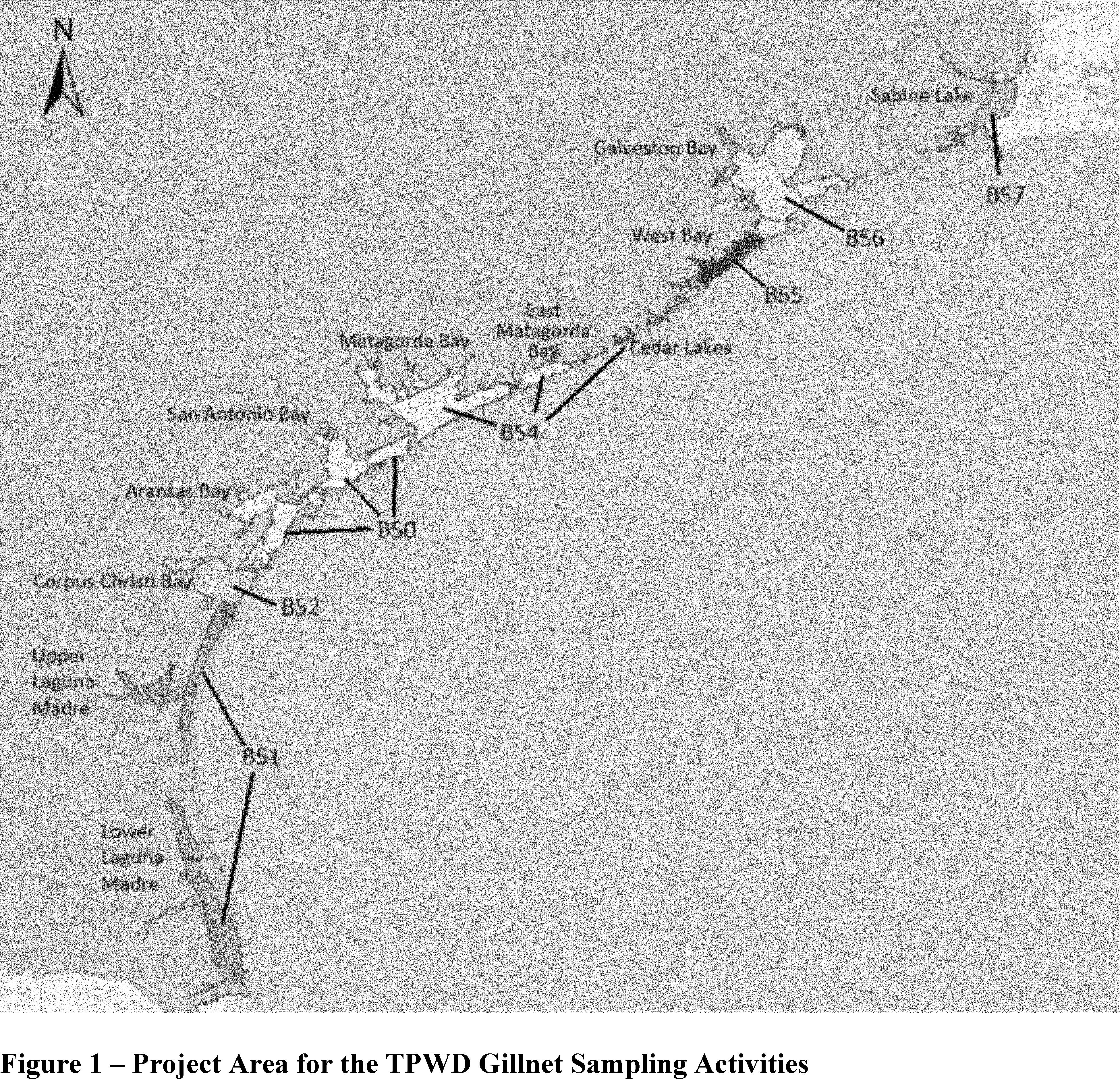
 marinemammalscience.org/science-and-publications/list-marine-mammal-species-subspecies/