Endangered and Threatened Wildlife and Plants; 12-Month Finding for the San Francisco Estuary Distinct Population Segment of White Sturgeon
We, the U.S. Fish and Wildlife Service (Service), announce a 12-month finding on a petition to list the San Francisco Estuary (SFE) distinct population segment (DPS) of white st...
We, the U.S. Fish and Wildlife Service (Service), announce a 12-month finding on a petition to list the San Francisco Estuary (SFE) distinct population segment (DPS) of white sturgeon (
Acipenser transmontanus;
San Francisco Estuary white sturgeon) as a threatened species under the Endangered Species Act of 1973, as amended (Act). After a thorough review of the best available scientific and commercial information, we find that listing the SFE DPS of white sturgeon as an endangered or threatened species is warranted but precluded by higher priority actions to amend the Lists of Endangered and Threatened Wildlife and Plants. We will develop a proposed rule to list the SFE DPS white sturgeon as our priorities allow. However, we ask the public to submit to us any new information relevant to the status of the species or its habitat at any time.
DATES:
The finding in this document was made on July 21, 2026.
ADDRESSES:
A detailed description of the basis for this finding is available on the internet at
www.regulations.gov
under docket number FWS-R8-ES-2026-2477.
Supporting information used to prepare this finding is available for public inspection, by appointment, during normal business hours, by contacting the person specified under
FOR FURTHER INFORMATION CONTACT
. Please submit any new information, materials, comments, or questions concerning this finding to the person specified under
FOR FURTHER INFORMATION CONTACT
.
FOR FURTHER INFORMATION CONTACT:
Heather Swinney, Acting Field Supervisor, San Francisco Bay-Delta Fish and Wildlife Office, telephone: 916-594-3646, email:
CAwhitesturgeon@fws.gov.
Individuals in the United States who are deaf, deafblind, hard of hearing, or have a speech disability may dial 711 (TTY, TDD, or TeleBraille) to access telecommunications relay services. Individuals outside the United States should use the relay services offered within their country to make international calls to the point-of-contact in the United States.
SUPPLEMENTARY INFORMATION:
Background
Under section 4(b)(3)(B) of the Act (16 U.S.C. 15333(b)(3)(B)), we are required to make a finding on whether or not a petitioned action is warranted within 12 months after receiving any petition that we have determined contains substantial scientific or commercial information indicating that the petitioned action may be warranted (“12-month finding”). We must make a finding that the petitioned action is (1) not warranted, (2) warranted, or (3) warranted but precluded. “Warranted but precluded” means that (a) the petitioned action is warranted, but the immediate proposal of a regulation implementing the petitioned action is precluded by other pending proposals to determine whether species are endangered or threatened species, and (b) expeditious progress is being made to add qualified species to the Lists of Endangered and Threatened Wildlife and Plants (Lists) and to remove from the Lists species for which the protections of the Act are no longer necessary. Section 4(b)(3)(C) of the Act requires that, when we find that a petitioned action is warranted but precluded, we treat the petition as though it is resubmitted on the date of such finding, that is, requiring that a subsequent finding be made within 12 months of that date. We must publish these 12-month findings in the
Federal Register
.
Summary of Information Pertaining to the Five Factors
Section 4 of the Act (16 U.S.C. 1533) and the implementing regulations at part 424 of title 50 of the Code of Federal Regulations (50 CFR part 424) set forth procedures for adding species to, removing species from, or reclassifying species on the Lists (found in 50 CFR part 17). The Act defines “endangered species” as any species that is in danger of extinction throughout all or a significant portion of its range (16 U.S.C. 1532(6)) and “threatened species” as any species that is likely to become an endangered species within the foreseeable future throughout all or a significant portion of its range (16 U.S.C. 1532(20)). Under section 4(a)(1) of the Act, a species may be determined to be an endangered
( printed page 45751)
species or a threatened species because of any of the following five factors:
(A) The present or threatened destruction, modification, or curtailment of its habitat or range;
(B) Overutilization for commercial, recreational, scientific, or educational purposes;
(C) Disease or predation;
(D) The inadequacy of existing regulatory mechanisms; or
(E) Other natural or manmade factors affecting its continued existence.
These factors represent broad categories of natural or human-caused actions or conditions that could have an effect on a species' continued existence. In evaluating these actions and conditions, we look for those that may have a negative effect on individuals of the species, as well as other actions or conditions that may ameliorate any negative effects or may have positive effects.
We use the term “threat” to refer in general to actions or conditions that are known to or are reasonably likely to negatively affect individuals of a species. The term “threat” includes actions or conditions that have a direct impact on individuals (direct impacts), as well as those that affect individuals through alteration of their habitat or required resources (stressors). The term “threat” may encompass—either together or separately—the source of the action or condition or the action or condition itself.
However, the mere identification of any threat(s) does not necessarily mean that the species meets the statutory definition of an “endangered species” or a “threatened species.” In determining whether a species meets either definition, we must evaluate all identified threats by considering the expected response by the species, and the effects of the threats—in light of those actions and conditions that will ameliorate the threats—on an individual, population, and species level. We evaluate each threat and its expected effects on the species, then analyze the cumulative effect of all of the threats on the species as a whole. We also consider the cumulative effect of the threats in light of those actions and conditions that will have positive effects on the species, such as any existing regulatory mechanisms or conservation efforts. The Secretary of the Interior determines whether the species meets the definition of an “endangered species” or a “threatened species” only after conducting this cumulative analysis and describing the expected effect on the species.
The Act does not define the term “foreseeable future,” which appears in the statutory definition of “threatened species.” Our implementing regulations at 50 CFR 424.11(d) set forth a framework for evaluating the foreseeable future on a case-by-case basis, which is further described in the 2009 Memorandum Opinion on the foreseeable future from the Department of the Interior, Office of the Solicitor (M-37021, January 16, 2009; “M-Opinion,” available online at
www.doi.gov/sites/doi.opengov.ibmcloud.com/files/uploads/M-37021.pdf). The foreseeable future extends as far into the future as the U.S. Fish and Wildlife Service can make reasonably reliable predictions about the threats to the species and the species' responses to those threats. We need not identify the foreseeable future in terms of a specific period of time. We will describe the foreseeable future on a case-by-case basis, using the best scientific and commercial data available and taking into account considerations such as the species' life-history characteristics, threat projection timeframes, and environmental variability. In other words, the foreseeable future is the period of time over which we can make reasonably reliable predictions. “Reliable” does not mean “certain”; it means sufficient to provide a reasonable degree of confidence in the prediction, in light of the conservation purposes of the Act.
It is not always possible or necessary to define foreseeable future as a particular number of years. Analysis of the foreseeable future uses the best scientific and commercial data available and should consider the timeframes applicable to the relevant threats and to the species' likely responses to those threats in view of its life-history characteristics. Data that are typically relevant to assessing the species' biological response include species-specific factors such as lifespan, reproductive rates or productivity, certain behaviors, and other demographic factors.
In conducting our evaluation of the five factors provided in section 4(a)(1) of the Act to determine whether the SFE white sturgeon meets the definition of an “endangered species” or a “threatened species,” we considered and thoroughly evaluated the best scientific and commercial data available regarding the past, present, and future stressors and threats. We reviewed the petition, information available in our files, and other available published and unpublished information. Our evaluation may include information from recognized experts; Federal, State, and Tribal governments; academic institutions; foreign governments; private entities; and other members of the public.
The species assessment form for the SFE white sturgeon contains more detailed biological information, a thorough analysis of the listing factors. To inform our status review, we completed a species status assessment (SSA) report for the SFE white sturgeon. This SSA report contains a thorough review of the taxonomy, life history, ecology, current status, and projected future status for this species. This supporting information can be found on the internet at
www.regulations.gov
under docket number FWS-R8-ES-2026-2477.
Previous Federal Actions
On December 6, 2023, we received a petition from the San Francisco Baykeeper (Baykeeper), The Bay Institute (BI), Restore the Delta (RD), and California Sportfishing Restoration Alliance (CSRA) requesting that we list the SFE DPS of white sturgeon as a threatened species under the Act. On October 8, 2024, we published a 90-day finding that the petition presented substantial scientific or commercial information indicating that listing the SFE DPS of white sturgeon may be warranted (89 FR 81388). On February 10, 2025, the Baykeeper, BI, RD, and CSRA filed a complaint against the Service for not issuing a finding on the petition within the statutory timeframe and on September 3, 2025, a court order was issued to submit the 12-month finding to the
Federal Register
by June 3, 2026 (
S.F. Baykeeper, et al.
v.
United States Fish & Wildlife Serv., et al.,
No. 25-cv-01360-LJC, ECF 33 (N.D. Cal. Sep. 3, 2025)). On December 23, 2025, the court granted an extension of this deadline to July 16, 2026 (
S.F. Baykeeper, et al.
v.
United States Fish & Wildlife Serv., et al.,
No. 25-cv-01360-LJC, ECF 47 (N.D. Cal. Dec. 23, 2025)).
Distinct Population Segment (DPS) Analysis
Section 3(16) of the Act defines “species” to include “any subspecies of fish or wildlife or plants, and any distinct population segment of any species of vertebrate fish or wildlife which interbreeds when mature” (16 U.S.C. 1532 (16)). To guide the interpretation of the DPS provisions of the Act, we and the National Marine Fisheries Service (National Oceanic and Atmospheric Administration-Fisheries) published the Policy Regarding the Recognition of Distinct Vertebrate Population Segments under the Endangered Species Act (DPS Policy) on February 7, 1996 (61 FR 4722).
( printed page 45752)
Under our DPS Policy, we use two elements to assess whether a population segment under consideration for listing may be recognized as a DPS: (1) The population segment's discreteness from the remainder of the species to which it belongs, and (2) the significance of the population segment to the species to which it belongs. If we determine that a population segment being considered for listing is a DPS, then the population segment's conservation status is evaluated based on the five listing factors established by the Act to determine if listing it as either an endangered species or threatened species is warranted.
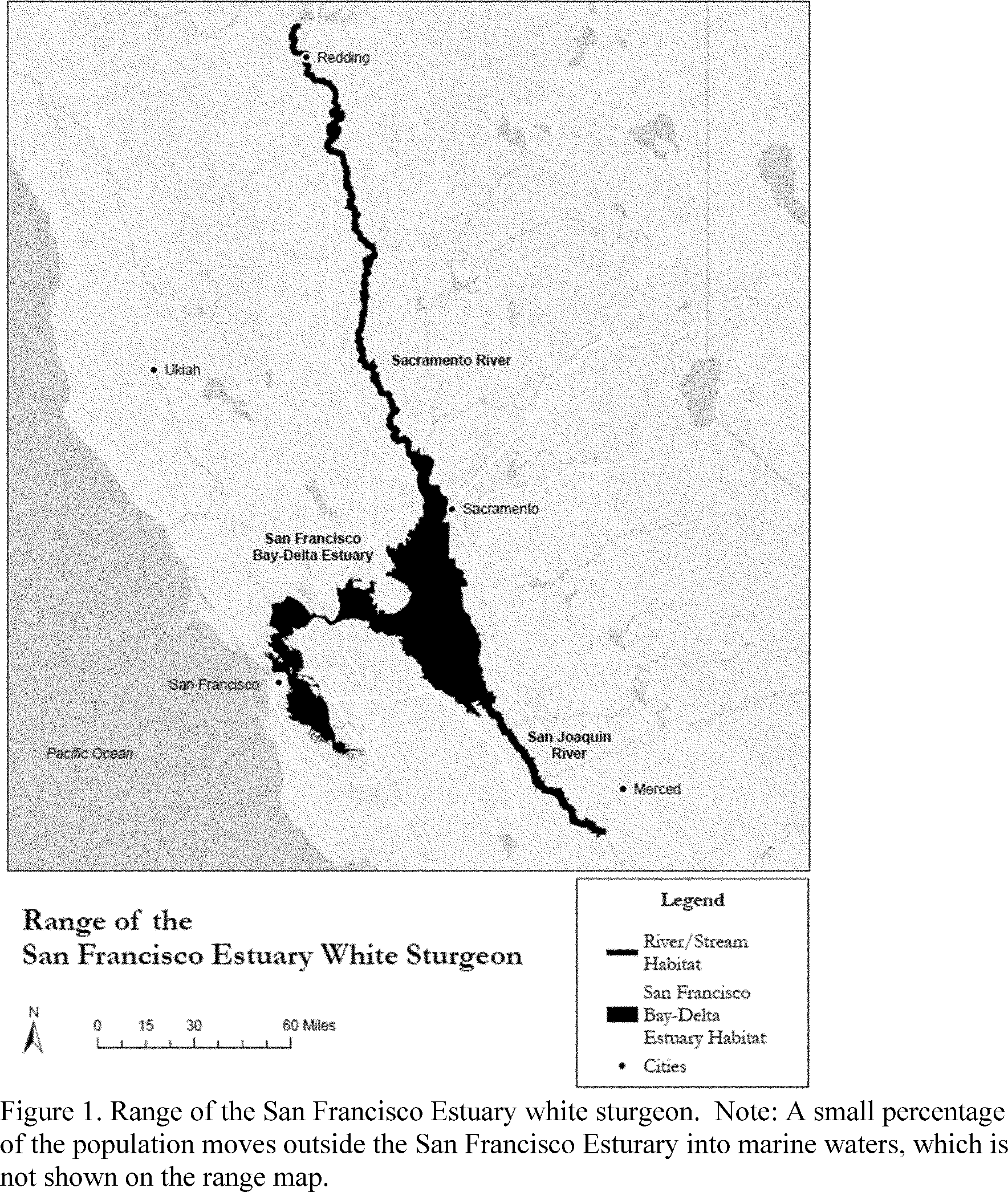
Discreteness is evaluated based on specific criteria provided in the DPS Policy. If a population segment is considered discrete under the DPS Policy, we must then consider whether the discrete segment is “significant” to the taxon to which it belongs. If we determine that a population segment is discrete and significant, we then evaluate it for endangered or threatened status based on the Act's standards. The DPS evaluation in this finding concerns the SFE (including the Sacramento River and San Joaquin River) population of the white sturgeon that we were petitioned to list as a threatened species (Figure 1).
Discreteness Analysis
Under our DPS Policy, a population segment of a vertebrate species may be considered discrete if it satisfies either one of the following conditions: (1) it is markedly separated from other populations of the same taxon as a consequence of physical, physiological, ecological, or behavioral factors (quantitative measures of genetic or morphological discontinuity may provide evidence of this separation); or (2) it is delimited by international governmental boundaries within which differences in control of exploitation, management of habitat, conservation status, or regulatory mechanisms exist that are significant in light of section 4(a)(1)(D) of the Act.
Markedly Separated From Other Populations of the Same Taxon
Historically, white sturgeon have been observed broadly along the west coast of North America from the Aleutian Islands, Alaska to Ensenada, Mexico. Currently, along the West Coast, three spawning populations of white sturgeon have been identified: the Fraser River, the Columbia River, and the southernmost in the Sacramento-San Joaquin river system (Hildebrand et al. 2016, p. 262). Within the Columbia River basin there exist multiple populations, some of which have become landlocked through dam construction or via natural processes such as the federally listed Kootenai Sturgeon (Hildebrand et al. 2016, pp. 264, 278). In the Fraser River basin, which is without significant barriers to movement on the mainstem, white sturgeon appear to have segregated into up to four populations (Hildebrand et al. 2016, pp. 264-265). In contrast, the Sacramento-San Joaquin basin does not appear to possess population structure, suggesting there is only a single population in the basin (SFE white sturgeon) (Schreier et al. 2013, p. 1278).
The SFE white sturgeon is markedly separated from other populations of this species. The nearest breeding population of white sturgeon is over 700 miles (1127 kilometers) away in the Columbia River Estuary. Thus, the distance between the SFE population of white sturgeon and the nearest other extant breeding population represents marked geographical separation. White sturgeon are capable of long-distance movements, and a few SFE white sturgeon individuals have been captured near the Columbia River Estuary. However, the majority of individuals remain in or near their natal estuaries, and genetic exchange between populations is believed to be rare.
In addition, genetic data indicate separation between the SFE population and other white sturgeon spawning populations (Schreier et al. 2013, p. 8; Willis et al. 2022, p. 8). Several investigations have revealed population genetic structuring among the SFE white sturgeon, Columbia, and Fraser River systems. Studies identifed signifcant differences between these river systems in allozyme allele or mitochondrial DNA haplotype frequencies (Bartley et al. 1985, p. 109; Hildebrand et al. 2016, p. 264). The genetic signature of the SFE white sturgeon population is found in the lower Columbia and lower Fraser collections; however, the genetic signatures of the lower Columbia and lower Fraser collections were far less apparent in the SFE white sturgeon collection (Schreier et al. 2013, pp. 1280, 1282). This suggests a low level of gene flow occurs among the three populations (lower Columbia, lower Fraser, and SFE), but the gene flow may be predominantly in a northward direction (
i.e.,
SFE white sturgeon may contribute genes to the lower Columbia or lower Fraser populations), with very little gene flow from other populations entering the SFE white sturgeon population. Researchers have documented movement of some individuals between these three populations (Chadwick 1959, p. 300; DeVore et al. 1999, p. 18; Welch et al. 2006, entire), although the frequency is not well understood and they appear to be relatively rare. Furthermore, we do not consider complete reproductive isolation a necessary prerequisite to recognizing discreteness.
The SFE population of white sturgeon is markedly separate from the other populations of white sturgeon (Columbia River and Fraser River), as evidenced by the distances between breeding populations and quantitative measures of genetic distinctiveness. As a result, we have determined that the SFE population of white sturgeon meets the condition of discreteness under our DPS policy.
Significance Analysis
The DPS Policy states that if a population segment is considered discrete under one or both of the discreteness criteria, its biological and ecological significance will then be considered in light of Congressional guidance that the authority to list DPSs be used “sparingly” while encouraging the conservation of genetic diversity. In carrying out this examination, the Service considers available scientific evidence of the DPS's importance to the taxon to which it belongs. As specified in the DPS Policy, this consideration of the significance may include, but is not limited to, the following: (1) persistence of the discrete population segment in an ecological setting unusual or unique to the taxon; (2) evidence that its loss would result in a significant gap in the range of the taxon; (3) evidence that it is the only surviving natural occurrence of a taxon that may be more abundant elsewhere as an introduced population outside its historical range; or (4) evidence that the discrete population segment differs markedly from other populations of the species in its genetic characteristics. The DPS Policy further states that because precise circumstances are likely to vary considerably from case to case, it is not possible to describe prospectively all the classes of information that might bear on the biological and ecological importance of a discrete population segment. We evaluated the SFE white sturgeon discrete population segment to see if it met the conditions of significance under our DPS policy.
Evidence That Loss of the DPS Would Result in a Significant Gap in the Range of the Taxon
The SFE white sturgeon population makes up between one-third and one-half of the inland waters of the entire range of the white sturgeon. Its loss would sever critical latitudinal
( printed page 45753)
connectivity, eliminate the primary reproductive stronghold in California, and truncate the southern range of the entire taxon by hundreds of miles. The SFE white sturgeon population is a reproducing population with distinct spawning runs and is a core resident population rather than a transient sink. If the SFE white sturgeon population were lost, there are no neighboring river systems in California or Oregon capable of absorbing or replacing this reproductive output, resulting in a permanent ecological vacancy across all of California. Loss of the SFE white sturgeon population would represent a signifcant gap in the species' geographic range, substantially reducing the range of this fsh along the Pacifc Coast.
The DPS Policy requires evaluating the biological and ecological significance of a population segment once it is determined to be discrete, emphasizing that DPS designation should be used sparingly while supporting genetic diversity conservation. Loss of this population would create a significant gap in the species' U.S. range, as the SFE population comprises more than half of that range, and would disrupt northward genetic exchange with Columbia and Fraser River populations.
Conclusion of Distinct Population Segment Review
Our DPS Policy directs us to evaluate whether populations of a species are separate from each other to the degree they qualify as discrete segments and whether those segments are significant to the remainder of the species to which it belongs. Based on an analysis of the best available scientific and commercial data, we conclude that the SFE white sturgeon population is discrete due to it being markedly separated from other populations of the same taxon. Furthermore, we conclude that the SFE white sturgeon population is significant because the loss of the discrete population segment would result in a significant gap in the range of the taxon. Because the SFE white sturgeon population is both discrete and significant, we find that it is a distinct population segment under our DPS Policy and is, therefore, a uniquely listable entity under the Act.
( printed page 45754)
Conservation Status
Based on our DPS Policy (61 FR 4722; February 7, 1996), if a population segment of a vertebrate species is both discrete and significant relative to the taxon as a whole (
i.e.,
it is a distinct population segment), its evaluation for endangered or threatened status will be based on the Act's definition of those terms and a review of the factors enumerated in section 4(a) of the Act. Having found that the SFE white sturgeon population meets the definition of a DPS, we then evaluated the status of the SFE white sturgeon population to determine whether it met the definition of an endangered or threatened species under the Act.
Summary of Finding
The SFE white sturgeon is a long-lived (can exceed 100 years of age), late-maturing (average age of 14 years), iteroparous (
i.e.,
reproducing multiple times throughout their life cycle) species with a life cycle tied tightly to freshwater flow, habitat connectivity, and diverse river-estuary environments. This population depends on access to coarse-substrate riverine spawning grounds in the Sacramento and San Joaquin Rivers, flow-driven cues (March-July outflow exceeds 37,000 cubic feet per second) for spawning migrations, and suitable temperatures (<20 °C (68 °F)) and substrates (gravel or coarser substrate) for egg and larval survival, while juveniles and adults require broad estuarine habitat with tolerable salinity ranges for juveniles (~0-15 parts per thousand), abundant benthic prey (
e.g.,
invertebrates, bivalves, crustaceans, and fish), and seasonally shifting distribution patterns.
We have carefully assessed the best scientific and commercial information
( printed page 45755)
available regarding the past, present, and future threats to the SFE white sturgeon, and we evaluated all relevant factors under the five listing factors, including any regulatory mechanisms and conservation measures addressing these stressors. The primary threats to the SFE white sturgeon's biological status include loss and degradation of habitat from dams, water diversions, contaminants, harmful algal blooms (HABs), and drought (Factor A); poaching and effects from historical harvest (Factor B); and potential increase in water temperature (Factor E). Conservation efforts, such as a State-regulated catch-and-release fishery, are addressing some of the impacts from overharvest, and there are various efforts to improve water quality throughout the range of the SFE white sturgeon. However, these efforts and the existing regulatory mechanisms (Factor D) are not sufficient to mitigate all of the threats. We found no evidence that the SFE white sturgeon is currently impacted by disease or predation (Factor C), nor did we find information to suggest that the species will be impacted by this factor in the future. We also acknowledge that individual SFE white sturgeon are killed from entrainment but we found no evidence to suggest that this mortality has population level effects at this time.
The range of the entire species of the white sturgeon extends from the Aleutian Islands in Alaska south to Ensenada, Mexico (Ruiz-Campos et al. 2011, p. 37; Hildebrand et al. 2016, p. 262). Historically there was connectivity between the SFE white sturgeon population and the rest of the white sturgeon populations throughout the species' range. The SFE white sturgeon population is now separated by approximately 700 miles (1127 kilometers) from the next closest spawning population of white sturgeon in the Columbia River. The range of the SFE white sturgeon has been further limited due to impoundments obstructing access to many of its historical reaches and water diversions creating dry river sections in the San Joaquin River (Jackson et al. 2016, p. 172). Loss of connectivity in fish populations results in reduced movement, lower genetic exchange, and a higher risk of decline or local extinctions. Fragmentation caused by dams, culverts, or other barriers disrupts the natural flow of individuals across a river network, which is essential for healthy population dynamics (Leite et al. 2022, entire).
The viability of the SFE white sturgeon population is shaped by a suite of interacting threats and management responses. Historically, dam construction and levee systems curtailed access to upstream spawning grounds, altered sediment transport, and reduced access to the floodplain. Construction of dams and other impoundments have precluded access to known spawning locations, although due to poor historical records of habitat use the full extent of spawning habitat and range loss is unknown. Flow regulation and large-scale water diversions have flattened the hydrograph (
i.e.,
reduced the peak volume of water flowing at any one time), reducing spring flows that cue spawning and likely affecting coarse substrate availability during egg incubation and larval rearing. Recruitment success is positively associated with March-July outflows, with little to no recruitment occurring during drought years, making the species vulnerable to drought and operational constraints. Contaminant exposure, particularly selenium and mercury, remains a chronic stressor. Selenium concentrations found in adult fish may be reducing survival of offspring in early-life stages, while mercury bioaccumulation is likely impairing reproductive potential and overall health (Gundersen et al. 2017, p. 342). HABs add acute and chronic risks. For example,
Microcystis
blooms exert sublethal effects, while the 2022
Heterosigma akashiwo
bloom caused unprecedented adult SFE sturgeon and green sturgeon mortality. It was estimated that more than half of the adult SFE white sturgeon population resided in the region affected by the 2022 HAB bloom (Walter et al. 2026, p. 10). Additional stressors include entrainment at export facilities, ship strikes, and residual poaching, which affect individual sturgeon and we have concluded that they are likely having cumulative impacts when considered together with ongoing population-level impacts.
The SFE white sturgeon has a long history of exploitation, beginning with heavy commercial harvest that began in the 1860s. The fishery was closed in the early 1900s due to rapidly declining catch rates and low population numbers (Moyle 2002, p. 109). A recreational fishery was opened in 1954 and that fishery remained open (with varying harvest and slot limits over the years), yet population declines persisted due to the species' vulnerability to overharvest stemming from long lifespans, late maturity, and periodic spawning. Harvest above a sustainable rate contributed to truncated age structure, very low survival beyond the slot size (generally meaning fish large enough to spawn), and population growth below replacement, (Blackburn et al. 2019, p. 903). Following a major HAB-related die-off, the fishery became catch-and-release only in 2024, which reduced harvest pressure; however, some mortality and stress—especially for spawning-condition fish—still occur. Despite these protections, poaching remains an ongoing, unquantified threat due to the high value of sturgeon caviar (Israel et al. 2009, p. 22; Hildebrand et al. 2016, pp. 290, 295).
These threats operate synergistically rather than in isolation. Dams and flow regulations have likely limited availability of spawning habitat and potentially exacerbated sedimentation, while contaminants and HABs may compound physiological stress during drought years. Acute mortality events (
e.g.,
HAB-driven fish kills) remove large fecund adults, amplifying demographic vulnerability already heightened by potential entrainment losses and historical harvest. Together, these stressors create a feedback loop of reduced recruitment, high adult mortality, and lowered resilience, pushing the population toward long-term viability risk.
Conservation actions aim to mitigate these pressures through flow and habitat management, regulatory protections, and targeted research. Programs under the Central Valley Project Improvement Act (Pub. L. 102-575, Title 34) and objectives under the California State Water Resources Control Board Revised Water Right Decision 1641 (D-1641) provide environmental flows and monitoring aimed to benefit other at-risk species by providing increased freshwater flow at critical times and life stages and monitoring relative abundances; these increased environmental flows may also benefit white sturgeon and monitoring provides useful population indices. Other projects like the Yolo Bypass Salmonid Habitat Restoration and Fish Passage Project (“Big Notch”) improve passage and floodplain connectivity. The 2024 State Water Project incidental take permit introduced a White Sturgeon Science Program, entrainment protection measures, and compensatory habitat restoration planning. Nutrient management strategies including updated watershed nutrient National Pollutant Discharge Elimination System wastewater permits seek to reduce HAB risk, and new monitoring programs piloted by CDFW (mark—recapture, salvage protocols) enhance population tracking. While these actions represent meaningful progress, their effectiveness depends on sustained implementation
( printed page 45756)
and adaptive management under changing hydrologic and climatic conditions.
Current Condition
The SFE white sturgeon population has generally declined since the 1980s. Recent population growth estimates suggest population growth is below replacement level (<1), and that under current conditions the population would likely continue to decline (Blackburn et al. 2019, entire). In recent decades, the SFE white sturgeon population was overexploited, and at times harvest substantially exceeded what are believed to be sustainable rates (5-10 percent) (Beamesderfer and Farr 1997, p. 411; Blackburn et al. 2019, p. 898). Additionally, the 2022 HAB resulted in significant adult mortality, and reoccurrence of such HABs may continue to be a threat in the near-term. Successful juvenile recruitment appears to be largely limited to wet years (which create ideal outflows for spawning). However, a general pattern of decreasing recruitment in wet years has been observed in recent years. This emerging pattern may be the result of decreased spawning stock resulting from previous overharvest of mature fish or could also be indicative of reduced survival of young-life stages from degraded environmental conditions.
In 2024, the State of California revised their regulations and changed the SFE white sturgeon fishery to catch and release only (T14 CCR § 5.80). Reduced adult mortality from fishing pressure provides some opportunity for the population to rebound.
Redundancy is likely more limited than it was historically, prior to construction of major dams, which limited the species range and reduced available spawning habitat as the SFE white sturgeon can no longer move beyond the Shasta Dam on the Sacramento River or beyond the Friant Dam on the San Joaquin River. It appears most of the spawning occurs in a limited reach of the Sacramento River, which may make the SFE population vulnerable to habitat alterations in this area. Despite confirmed spawning in both the Sacramento and San Joaquin rivers, the SFE population appears to be a single intermixed population without genetic substructure. The population appears to have reasonable genetic diversity, and polyploidy (the heritable condition in which an organism's cells contain more than two complete sets of chromosomes) may aid in preservation of such diversity. However, because the population appears to be a singular genetic unit, overall representation is likely limited.
Future Condition
We analyzed two plausible future scenarios. We projected these scenarios out to 2150, because this timeframe is biologically meaningful to the species and we can predict changes to resiliency, representation, and redundancy from influences on viability. Future projections out to 2150 is a biologically meaningful timeframe because it captures approximately 5 generations and allows us to observe how the modeled variables affect the population over time, while having high confidence in the species' response to the threats. The two future scenarios represented an upper and lower limit that captured the plausible range of future conditions for the SFE white sturgeon. The upper limit plausible scenario predicted a modest increase in abundance over time and a 0 percent probability of quasi-extinction (population decline to such low numbers that it is unlikely to recover, even though some individuals still persist), whereas the lower limit plausible scenario predicted a 60 percent probability of quasi-extinction of the population by the year 2150. There is a high degree of uncertainty associated with both scenarios, and a population decline is still a potential outcome in the upper limit scenario.
Even at upper limit plausible parameter values, which resemble current conditions, the population dynamics were still associated with high uncertainty. Population stability, however, did appear to be the more likely outcome in this scenario. Predicted abundances were relatively more sensitive to HAB parameters, compared to fishing mortality or recruitment success probability, if other conditions were poor.
The population appears to be resilient to any single threat modeled in isolation, but when threats co-occur, resiliency declines. Neither reduced recruitment, high fishing mortality, high HAB mortality, or high HAB frequency alone resulted in quasi-extinction, although population declines were predicted in some of these scenarios. However, when multiple threats affected the population, abundance quickly decreased and the population reached quasi-extinction by year 2150. In the lower limit future scenario, outflow is predicted to decrease between March and July (Knowles et al. 2018, entire; Service 2024, pp. 27, 183), which will likely negatively impact recruitment (Gingras et al. 2014, slide 16). The level of fishing mortality is difficult to project as it is tied to political and management decisions that are also difficult to predict. However, there is public pressure to reopen the fishery to some level of harvest. It is also possible that winter and spring outflow will be further reduced by construction of new water storage and transport systems, thereby negatively impacting juvenile recruitment, and operation of these facilities may increase entrainment mortality. In our model, the population showed low resilience when two or more threats were impacting the population. Though there is variability and uncertainty in how each individual threat will impact the SFE white sturgeon in the future, considering all the future threats together suggest the population likely possesses low resilience to worsening conditions.
Precipitation patterns are anticipated to shift such that more precipitation is expected to occur as rainfall and less as snow. Rain on snow events are also anticipated to increase, ultimately resulting in a hydrograph that peaks earlier in the year and a descending limb that may drop off faster. Historically, peak flow typically occurred between February and March which coincides with peak white sturgeon spawning in March in the Sacramento River (Arroyo-Esquivel et al. 2026, p. 14). We expect the frequency of years in which mean March-July outflow exceeds 37,000 cubic feet per second, which is associated with successful recruitment, to decrease. We anticipate this will negatively affect the number of years in which we observe successful recruitment in the future. Current redundancy of the SFE white sturgeon population has likely declined from historical levels due to the construction of fish barriers in the San Joaquin and Sacramento Rivers, which have reduced access to upstream spawning reaches and consequently narrowed the population's overall distribution. Future redundancy is expected to remain similar because no new on-channel reservoirs are planned and the population will continue to occupy both river systems and the broader San Francisco Estuary, where wide distribution and varied habitat use offer some protection against catastrophic events. While HAB events may become more frequent and represent a relatively novel source of mortality, their impact will depend heavily on the population's abundance at the time; if numbers decline substantially due to other threats or environmental variability, a large-scale mortality event could become significantly more detrimental to the population's long-term redundancy.
The wide distribution and high mobility of white sturgeon in the San
( printed page 45757)
Francisco estuary provides a level of redundancy that allows some protection from potential catastrophic events. SFE white sturgeon are typically present from the lower bays up into the lower portions of the Sacramento and San Joaquin Rivers, and during spawning their distribution extends further upstream in these rivers. Any local catastrophic event, such as a chemical or oil spill, would most likely only affect a portion of the population. However, such events would be more impactful if they occurred in certain locations and at certain times of year. White sturgeon density can be high in the Delta (upstream of the confluence of the Sacramento and San Joaquin Rivers) in the fall and winter, so a catastrophic event in this region could impact a significant proportion of the population. However, the Delta is a large and complex system composed of numerous channels and sloughs, which may provide some protection for individuals not in the immediate vicinity. The high mobility of SFE white sturgeon may likewise allow individuals to reduce exposure or avoid hazardous areas.
A catastrophic event such as a chemical or oil spill in or above spawning habitat on the Sacramento River during spawning season could also be detrimental. During spawning, a proportion of reproductive adults can be present in spawning habitat in the Sacramento River, but due to spawning periodicity not all adults are present. However, the adult population could be substantially harmed if a chemical or oil spill occurred. Adult mortality resulting from such an event would reduce spawning stock and future egg supply, potentially impacting future resiliency. Incubating eggs and larvae present would also likely experience mortality. However, failed recruitment is common in this population so these losses would likely be manageable. While such events would be detrimental to the population and may impact future resiliency, it seems unlikely they would directly lead to rangewide extirpation.
The SFE white sturgeon population is a single genetically intermixed population. Although the population is widely distributed throughout the SFE and is known to spawn in both the Sacramento and San Joaquin Rivers, there does not appear to be any genetic substructure within the population. Because white sturgeon are polyploid, they may be able to retain a greater amount of genetic diversity at lower population numbers compared to other diploid species. There may be an abundance threshold, below which deleterious effects become more prevalent, although the abundance at which this may occur is unknown.
Elevated or pulse flows appear to be a spawning cue for the SFE white sturgeon population (Kohlhorst et al. 1991, p. 289; Schaffter 1997, pp. 12-13; Fish 2010, p. 81; Klimley et al. 2015, p. 13). It is feasible the population could shift more spawning effort to earlier in the year if earlier elevated flows act as an adequate spawning cue. However, there may be other cues used for spawning such as temperature or daylength, which could pose a challenge to the population aligning spawning with peak or elevated flows as they historically have. SFE white sturgeon appear to have a somewhat protracted spawning season of February through June (Heublein et al. 2017, p. 1), suggesting some individuals in the population spawn earlier in the year. The presence of earlier spawning in the system suggests the population may have the adaptive capacity to shift spawning effort earlier to better align with prevailing hydrology. However, ultimately the population's ability to adapt and respond to changing conditions is uncertain.
We also anticipate that there may be an increase the water temperatures, which could impact egg and larval survival. Water temperatures in Sacramento River spawning habitats are predicted to more commonly exceed optimal incubation and rearing temperatures (13.5-16 degrees Celsius (°C); 56.3-60.8 degrees Fahrenheit (F)) and occasionally exceed lethal temperatures (20 °C; 68 °F), particularly in late spring (DWR 2013, pp. 141-142). Shifting spawning earlier in the year may help avoid the negative impacts of warmer late spring water temperatures. As discussed above, some individuals appear to spawn earlier in the year, suggesting the population may have the adaptive capacity to avoid sub-optimal or lethal incubation and rearing temperatures. Jackson et al. (2016, pp. 176-177) collected viable eggs in the San Joaquin River when temperatures exceeded 20 °C and did not note any deformities. Although the eventual fate of these eggs if left undisturbed is unknown, this observation may suggest some tolerance of higher temperatures is present in the population.
The presence of HABs in the bays and cyanobacteria HABs in the Delta may require behavioral adaptations to avoid short-term poor water quality in local or regional areas. Relatively high mobility and evidence of different habitat use patterns between individuals may provide adaptive capacity by allowing white sturgeon to shift habitat use patterns and adapt to changing conditions. However, a large (estimated greater than 50 percent) portion of the population was not capable of escaping poor conditions created by the 2022 HAB. Therefore, whether the SFE white sturgeon can respond or adapt to changing conditions depends on the magnitude and timing of the change. And whether or not they will be able to adapt to the presence of HABs remains uncertain.
SFE white sturgeon may possess the capacity to adapt to future changing conditions. The primary adaptive response will likely require behavioral adaptations to shift habitat use away from degraded areas and to shift reproductive timing to align with more favorable spawning and rearing conditions. To some extent, some individuals exhibit behavior or characteristics that may mitigate some of the predicted negative impacts referenced above.
Conclusion
The SFE white sturgeon Species Status Assessment report provides additional details on the viability of the SFE white sturgeon (Service 2026). On the basis of the best scientific and commercial information available, we find that the petitioned action to list the SFE DPS of white sturgeon under the Act is warranted. We will make a determination on the status of the species as threatened or endangered when we complete a proposed listing determination. When we complete a proposed listing determination, we will examine whether the species may be endangered or threatened throughout all of its range or whether the species may be endangered or threatened in a significant portion of its range. However, an immediate proposal of a regulation implementing this action is precluded by work on higher priority listing actions and final listing determinations. This work includes all the actions listed in the National Listing Workplan (Workplan) discussed below under
Preclusion
and in the tables below under
Expeditious Progress,
as well as other actions at various stages of completion, such as 90-day findings for new petitions.
Preclusion and Expeditious Progress
To make a finding that a particular action is warranted but precluded, the Service must make two determinations. First, that the immediate proposal and timely promulgation of a final regulation is precluded by pending proposals to determine whether any species is endangered or threatened. Secondly, that expeditious progress is being made to add qualified species to
( printed page 45758)
either of the Lists and to remove species from the Lists (16 U.S.C. 1533(b)(3)(B)(iii)).
Preclusion
A listing proposal is precluded if the Service does not have sufficient resources available to complete the proposal, because there are competing demands for those resources, and the relative priority of those competing demands is higher. Thus, in any given fiscal year (FY), multiple factors dictate whether it will be possible to undertake work on a proposed listing regulation or whether promulgation of such a proposal is precluded by higher priority listing actions, including: (1) the amount of resources available for completing the listing function; (2) the estimated cost of completing the proposed listing regulation; and (3) the Service's workload, along with the Service's prioritization of the proposed listing regulation in relation to other actions in its workload.
Available Resources
The resources available for listing actions are determined through the annual Congressional appropriations process. In FY 1998 and for each fiscal year since then, Congress has placed a statutory cap on funds that may be expended for the Listing Program (spending cap). This spending cap was designed to prevent the listing function from depleting funds needed for other functions under the Act (
e.g.,
recovery functions, such as removing species from the Lists) or for other Service programs (see House Report 105-163, 105th Congress, 1st Session, July 1, 1997). The funds within the spending cap are available to support work involving the following listing actions: proposed and final rules to add species to the Lists or to change the status of species from threatened to endangered; 90-day and 12-month findings on petitions to add species to the Lists or to change the status of a species from threatened to endangered; annual “resubmitted” petition findings on prior warranted-but-precluded petition findings as required under section 4(b)(3)(C)(i) of the Act; critical habitat petition findings; proposed rules designating critical habitat or final critical habitat determinations; and litigation-related, administrative, and program-management functions (including preparing and allocating budgets, responding to Congressional and public inquiries, and conducting public outreach regarding listing and critical habitat).
For more than two decades the size and cost of the workload in these categories of actions have far exceeded the amount of funding available to the Service under the spending cap for completing listing and critical habitat actions under the Act. Since we cannot exceed the spending cap without violating the Anti-Deficiency Act (31 U.S.C. 1341(a)(1)(A)), each year we have been compelled to determine that work on at least some actions was precluded by work on higher priority actions. We make our determinations of preclusion on a nationwide basis to ensure that the species most in need of listing will be addressed first, and because we allocate our listing budget on a nationwide basis. Through the spending cap and the amount of funds needed to complete court-mandated actions within the cap, Congress and the courts have in effect determined the amount of money remaining (after completing court-mandated actions) for listing activities nationwide. Therefore, the funds that remain within the listing cap, after paying for work needed to comply with court orders or court-approved settlement agreements, set the framework within which we make our determinations of preclusion and expeditious progress.
For FY 2025, through the Full-Year Continuing Appropriations and Extensions Act, 2025 (Pub. L. 119-4, March 15, 2025), Congress appropriated the Service $22,000,000 under a consolidated cap for all domestic and foreign listing work, including status assessments, listings, domestic critical habitat determinations, and related activities. For FY 2026, through the Commerce, Justice, Science; Energy and Water Development; and Interior and Environment Appropriations Act, 2026 (Pub. L. 119-74, January 23, 2026), Congress appropriated $14,000,000 for all domestic and foreign listing work (a decrease of 36 percent). The amount of funding Congress will appropriate in future years is uncertain.
Costs of Listing Actions
The work involved in preparing various listing documents can be extensive, and may include, but is not limited to: gathering and assessing the best scientific and commercial data available and conducting analyses used as the basis for our decisions; writing and publishing documents; and obtaining, reviewing, and evaluating public comments and peer-review comments on proposed rules and incorporating relevant information from those comments into final rules. The number of listing actions that we can undertake in a given year also is influenced by the complexity of those listing actions; that is, more complex actions generally are more costly. Our practice of proposing to designate critical habitat concurrent with listing species requires additional coordination and an analysis of the economic impacts of the designation and thus adds to the complexity and cost of our work. Since completing all of the work for outstanding listing and critical habitat actions has for so long required more funding than has been available within the spending cap, the Service has developed several ways to determine the relative priorities of the actions within its workload to identify the work it can complete with the funding it has available for listing and critical habitat actions each year.
Prioritizing Listing Actions
The Service's Listing Program workload is broadly composed of four types of actions, which the Service prioritizes as follows: (1) compliance with court orders and court-approved settlement agreements requiring that petition findings or listing or critical habitat determinations be completed by a specific date; (2) essential litigation-related, administrative, and listing program-management functions; (3) section 4 (of the Act) listing and critical habitat actions with absolute statutory deadlines; and (4) section 4 listing actions that do not have absolute statutory deadlines.
In previous years, the Service received many new petitions, including multiple petitions to list numerous species—a single petition sought to list 404 domestic species. The emphasis that petitioners placed on seeking listing for hundreds of species at a time through the petition process significantly increased the number of actions within the third category of our workload, actions that have absolute statutory deadlines for making findings on those petitions. In addition, the necessity of dedicating all of the Listing Program funding towards determining the status of 251 candidate species and complying with other court-ordered requirements between 2011 and 2016 added to the number of petition findings awaiting action. Because we are not able to work on all of these at once, the Service's most recent effort to prioritize its workload focuses on addressing the backlog in petition findings that has resulted from the influx of large multispecies petitions and the 5-year period in which the Service was compelled to suspend making 12-month findings for most of those petitions. The number of petitions that are awaiting status reviews and accompanying 12-month findings illustrates the considerable extent of this backlog. As
( printed page 45759)
a result of the outstanding petitions to list hundreds of species and our efforts to make initial petition findings within 90 days of receiving the petition to the maximum extent practicable, we had 365 12-month petition findings for domestic and foreign species at the beginning of FY 2026 we had yet to initiate or complete.
To determine the relative priorities of the outstanding 12-month petition findings, the Service finalized a prioritization methodology (methodology) (81 FR 49248; July 27, 2016) after providing the public with notice and an opportunity to comment on the draft methodology (81 FR 2229; January 15, 2016). Under the methodology, we assign each 12-month finding to one of five priority bins: (1) the species is critically imperiled, (2) strong data are already available about the status of the species, (3) new science is underway that would inform key uncertainties about the status of the species, (4) conservation efforts are in development or underway and likely to address the status of the species, or (5) the available data on the species are limited. As a general rule, 12-month findings with a lower bin number have a higher priority than, and are scheduled before, 12-month findings with a higher bin number. However, we make some limited exceptions—for example, we may schedule a lower priority finding earlier if batching it with a higher priority finding would generate efficiencies. We may also consider if there are any special circumstances whereby an action should be bumped up (or down) in scheduling. For instance, we may diverge from priority order when the current highest priorities are clustered in a geographic area, such that our scientific expertise at the field office level is fully occupied with their existing workload. We recognize that the geographic distribution of our scientific expertise will in some cases require us to balance workload across geographic areas. Since before Congress first established the spending cap for the Listing Program in 1998, the Listing Program workload has required considerably more resources than the amount of funds Congress has allowed. Therefore, it is important that we be as efficient as possible in our listing process.
In 2025, we assigned the 12-month finding for the SFE white sturgeon to bin 3, given long-term ecological monitoring that was taking place in the same area as the SFE white sturgeon range. We determined that these efforts could likely provide information for key uncertainties related to the species' viability. However, in order to comply with a court order in
S.F. Baykeeper, et al.
v.
United States Fish & Wildlife Serv., et al.,
No. 25-cv-01360-LJC, 2025 U.S. Dist. LEXIS 171897 (N.D. Cal. Sep. 3, 2025), we are completing the 12-month finding for SFE white sturgeon before other higher priority actions in bin 2.
After finalizing the prioritization methodology, we then applied that methodology to develop a multiyear workplan for completing the outstanding status assessments and accompanying 12-month findings. The purpose of the Workplan is to provide transparency and predictability to the public about when we anticipate completing specific 12-month findings for domestic species while allowing for flexibility to update the Workplan when new information changes the priorities. In May 2024, the Service released a Workplan for addressing the Act's domestic listing and critical habitat decisions over the subsequent 5 years.
Tables 1 and 2 under
Expeditious Progress,
below, identify the higher priority listing actions that we completed through FY 2026 (May 31, 2026), as well as those we have been working on in FY 2026 but have not yet completed. In addition to the actions scheduled in the Workplan, the overall Listing Program workload also includes the development and revision of listing regulations, or to address the repercussions of any new court decisions, as well as proposed and final critical habitat designations or revisions for species that have already been listed. These higher priority actions preclude immediate proposal of a regulation implementing the SFE white sturgeon population petitioned action in FY 2026.
Expeditious Progress
As explained above, a determination that listing is warranted but precluded must also demonstrate that expeditious progress is being made to add and remove qualified species to and from the Lists. Please note that, in the CFR, the “Lists” are grouped as one list of endangered and threatened wildlife (50 CFR 17.11(h)) and one list of endangered and threatened plants (50 CFR 17.12(h)). However, the “Lists” referred to in the Act mean one list of endangered species (wildlife and plants) and one list of threatened species (wildlife and plants). Therefore, under the Act, expeditious progress includes actions to reclassify species—either removing them from the list of threatened species and adding them to the list of endangered species or removing them from the list of endangered species and adding them to the list of threatened species.
As with our “precluded” finding, the evaluation of whether expeditious progress is being made is a function of the resources available and the competing demands for those funds. As discussed earlier, the FY 2025 appropriations law included a spending cap of $22,000,000 for listing activities, and the FY 2026 appropriations law included a spending cap of $14,000,000 for listing activities, which was a significant decrease in funding from FY 2025. Though our competing demands for resources has not changed substantially, our resources available have substantially declined. As discussed below, given the limited resources available for listing, the competing demands for those funds, and the completed work cataloged in the tables below, we find that we are making expeditious progress in adding qualified species to the Lists.
The work of the Service's domestic listing program includes all three of the steps necessary for adding species to the Lists: (1) identifying species that
may
warrant listing (90-day petition findings); (2) undertaking an evaluation of the best available scientific data about those species and the threats they face to determine whether or not listing is warranted (a status review and accompanying 12-month finding); and (3) adding qualified species to the Lists (by publishing proposed and final listing rules). We explain in more detail below how we are making expeditious progress in all three of the steps necessary for adding qualified species to the Lists (identifying, evaluating, and adding species). Subsequent to discussing our expeditious progress in adding qualified species to the List, we explain our expeditious progress in removing from the Lists species that no longer require the protections of the Act.
First, we are making expeditious progress in identifying species that may warrant listing. In FY 2025 and FY 2026 (as of September 30, 2025), we completed 90-day findings on petitions to list 36 species.
Second, we are making expeditious progress in evaluating the best scientific and commercial data available about species and threats they face (status reviews) to determine whether or not listing is warranted. Table 1 shows work that we completed and table 2 shows ongoing work at the time of this publication. In FY 2025 and FY 2026 (as of May 31, 2026), we completed 12-month findings for 39 domestic species and 12 foreign species. In addition, we initiated 12-month findings for 50 domestic species and 12 foreign species.
( printed page 45760)
Although we did not complete those actions during FY 2025, we made expeditious progress towards doing so by initiating and making progress on the status reviews to determine whether adding the species to the Lists is warranted.
Third, we are making expeditious progress in adding qualified species to the Lists (table 1). In FY 2025 and FY 2026 (as of May 31, 2026), we published final listing rules for three domestic species and three foreign species, including final critical habitat designations for two of those domestic species and final protective regulations under section 4(d) of the Act for the other. In addition, we published proposed rules to list an additional 18 domestic species and 11 foreign species (including concurrent proposed critical habitat designations for 6 species and concurrent protective regulations under the Act's section 4(d) for 8 domestic species and 5 foreign species).
As required by the Act, we are also making expeditious progress in removing species from the Lists that no longer require the protections of the Act. Specifically, we are making expeditious progress in removing (delisting) domestic species, as well as reclassifying endangered species to threatened species status (downlisting). This work is being completed under the recovery program in light of the resources available for recovery actions, which are funded through the recovery line item in the budget of the Endangered Species Program. Work on recovery actions does count towards our assessment of making expeditious progress because the Act states that expeditious progress includes both adding qualified species to, and removing qualified species from, the Lists of Endangered and Threatened Wildlife and Plants. During FY 2025 and FY 2026, we finalized downlisting rules for 2 domestic species with concurrent final protective regulations under the Act's section 4(d), finalized delisting rules for 6 domestic species, and proposed delisting rules for 18 domestic species.
The tables below catalog the Service's progress in FY 2025 and FY 2026 (as of May 31, 2026) as it pertains to our evaluation of making expeditious progress. Table 1 includes completed and published domestic listing actions. Table 2 includes domestic listing actions funded and initiated in previous fiscal years and in FY 2025 that are not yet complete as of May 31, 2026. Table 3 includes completed and published proposed and final downlisting and delisting actions for domestic species.
Table 1—Published Domestic and Foreign Listing Actions (Proposed and Final Listing, 12-Month Petition Findings, 90-Day Findings, and Uplisting Rules) in FY 2025 and FY 2026
[As of May 31, 2026]
Publication date
Title
Action(s)
FederalRegister
citation
10/1/2024
Threatened Species Status With Section 4(d) Rule for Bethany Beach Firefly
Proposed Listing—Threatened with a Section 4(d) Rule
Endangered Species Status for Puerto Rican Skink, Lesser Virgin Islands Skink, and Virgin Islands Bronze Skink and Designation of Critical Habitat; Threatened Species Status With Section 4(d) Rule for Culebra Skink and Designation of Critical Habitat; Not Warranted Species Status for Mona Skink, Greater Virgin Islands Skink, Greater Saint Croix Skink, and Lesser Saint Croix Skink
Proposed Listing—Endangered; Proposed Listing—Threatened with a Section 4(d) Rule; 12-month Petition Finding
Note:
Batched 12-month findings may include findings regarding listing and delisting petitions. The total number of 12-month findings reported in this assessment of preclusion and expeditious progress pertains to listing petitions only.
Table 2—Domestic and Foreign Listing Actions (Proposed and Final Listings and Uplistings) Initiated in Previous FYs That Were Not Published as of May 31, 2026
Species
Action
Amur sturgeon
Final listing determination.
Beautiful parachute spider
12-month finding.
Big Bar hesperian
12-month finding.
Bi-state sage grouse
Final listing determination.
Blanding's turtle
12-month finding.
Blueridge springfly
12-month finding.
Brawleys Fork crayfish
Final listing determination.
California spotted owl (Coastal-Southern California DPS)
Final listing determination.
California spotted owl (Sierra Nevada DPS)
Final listing determination.
Cascade Caverns salamander
12-month finding.
Cascade torrent salamander
12-month finding.
Chesapeake logperch
12-month finding.
Chisos Mountain crested coral-root
12-month finding.
Ciliate-leaf tickseed
12-month finding.
Coosa creekshell
12-month finding.
Cumberland moccasinshell
Final listing determination.
Delaware County cave crayfish
12-month finding.
Dukes' skipper
12-month finding.
( printed page 45762)
Eastern diamondback rattlesnake
12-month finding.
Ferris's copper
12-month finding.
Flat-tailed tortoise
12-month finding.
Florida Keys mole skink
Final listing determination.
Florida pine snake
12-month finding.
Grand Wash springsnail
12-month finding.
Hardin crayfish
12-month finding.
Kern Canyon slender salamander
Final listing determination.
Key ring-neck snake
Final listing determination.
Kingman springsnail
12-month finding.
Large-flowered Barbara's-buttons
12-month finding.
Lobed roachfly
12-month finding.
Longnose darter
12-month finding.
Long-tailed chinchilla
12-month finding.
Louisiana pigtoe
Final listing determination.
Lowland loosestrife
12-month finding.
Miami cave crayfish
Final listing determination.
Mysore ornamental tarantula
12-month finding.
Navasota false foxglove
Final listing determination.
Northern bog lemming
12-month finding.
Oklahoma cave crayfish
12-month finding.
Palatka skipper (or Klot's skipper)
12-month finding.
Peacock parachute spider
12-month finding.
Peppered shiner
12-month finding.
Persian sturgeon
Final listing determination.
Piebald madtom
12-month finding.
Quitobaquito tryonia
Final listing determination.
Rameshwaram parachute spider
12-month finding.
Redslate ornamental tarantula
12-month finding.
Relictual slender salamander
Final listing determination.
Rim rock crown snake
Final listing determination.
Robust redhorse
12-month finding.
Russian sturgeon
Final listing determination.
Salamander mussel
Final listing determination.
Saltmarsh sparrow
Discretionary proposed listing determination.
Sanibel Island rice rat
12-month finding.
Shasta chaparral
12-month finding.
Shasta hesperian
12-month finding.
Shasta sideband
12-month finding.
Shasta snow-wreath
12-month finding.
Ship sturgeon
Final listing determination.
Short-tailed chinchilla
12-month finding.
Siberian sturgeon
12-month finding.
Silverspot butterfly
Final listing determination.
Southern elktoe
Final listing determination.
Spider tortoise
12-month finding.
Stellate sturgeon
Final listing determination.
Streamside salamander
12-month finding.
Tamaulipan spot-tailed earless lizard
12-month finding.
Tennessee clubshell
Final listing determination.
Tennessee pigtoe
Final listing determination.
Texas heelsplitter
Final listing determination.
Texas kangaroo rat
Final listing determination.
Texas salamander
12-month finding.
Texas trillium
12-month finding.
Tharp's bluestar
12-month finding.
Threecorner milkvetch
12-month finding.
Toothless blindcat
Final listing determination.
Tri-colored bat
Final listing determination.
[Unnamed] brush-pea
12-month finding.
Virginia stone
12-month finding.
Western bumble bee
12-month finding.
Western chicken turtle
12-month finding.
Western ridged mussel
12-month finding.
White Sands pupfish
12-month finding.
Widemouth blindcat
Final listing determination.
Wintu sideband
12-month finding.
Wonderful parachute spider
12-month finding.
Wood turtle
12-month finding.
( printed page 45763)
Table 3—Published Domestic and Foreign Proposed and Final Downlistings and Delistings in FY 2025 and FY 2026
[As of May 31, 2026]
Publication date
Title
Action(s)
FederalRegister
citation
10/25/2024
Reclassification of the Red-Cockaded Woodpecker From Endangered to Threatened With a Section 4(d) Rule
Final Downlisting—Threatened with a Section 4(d) Rule
Removal of Northern and Southern Distinct Population Segments of the Lesser Prairie-Chicken From the list of Endangered and Threatened Wildlife in Compliance With Court Order
When a petitioned action is found to be warranted but precluded, the Service is required by the Act to treat the petition as resubmitted on an annual basis until a proposal or withdrawal is published. If the petitioned species is not already listed under the Act, the species becomes a “candidate” and is reviewed annually in the Candidate Notice of Review. The number of candidate species remaining in FY 2025 is the lowest it has been since 1975.
Another way that we have been expeditious in making progress in adding and removing qualified species to and from the Lists is that we have made our actions as efficient and timely as possible, given the requirements of the Act and regulations and constraints relating to workload and personnel. We are continually seeking ways to streamline processes or achieve economies of scale, such as batching related actions together for publication. Given our severely limited budget for implementing section 4 of the Act, these efforts also contribute toward our expeditious progress in adding and removing qualified species to and from the Lists.
The SFE white sturgeon will be added to the candidate list, and we will continue to evaluate this species as new information becomes available. Continuing review will determine if a change in status is warranted, including the need to make prompt use of emergency listing procedures.
A detailed discussion of the basis for this finding can be found in the SFE white sturgeon species assessment form and other supporting documents at
www.regulations.gov
under docket number FWS-R8-ES-2026-2477 (see
ADDRESSES
, above).
New Information
We intend that any proposed listing rule for the SFE white sturgeon will be as accurate as possible. Therefore, we will continue to accept additional information and comments from all concerned governmental agencies, the scientific community, industry, or any other interested party concerning this finding. We request that you submit any new information concerning the taxonomy of, biology of, ecology of, status of, threats to, or conservation actions for the SFE white sturgeon to the person specified under
FOR FURTHER INFORMATION CONTACT
, whenever it becomes available. New information will help us monitor this species and make appropriate decisions about its conservation and status. We encourage all stakeholders to continue cooperative monitoring and conservation efforts.
References Cited
The list of the references cited in the petition finding is available on the internet at
www.regulations.gov
under docket number FWS-R8-ES-2026-2477 and upon request from the
( printed page 45764)
person specified under
FOR FURTHER INFORMATION CONTACT
.
Authors
The primary authors of this document are the staff members of the Fish and Wildlife Service's Species Assessment Team.
Authority
The authority for this action is section 4 of the Endangered Species Act of 1973, as amended (16 U.S.C. 1531et seq.).
Use this for formal legal and research references to the published document.
91 FR 45750
Web Citation
Suggested Web Citation
Use this when citing the archival web version of the document.
“Endangered and Threatened Wildlife and Plants; 12-Month Finding for the San Francisco Estuary Distinct Population Segment of White Sturgeon,” thefederalregister.org (July 21, 2026), https://thefederalregister.org/documents/2026-14638/endangered-and-threatened-wildlife-and-plants-12-month-finding-for-the-san-francisco-estuary-distinct-population-segment.
 www.regulations.gov
 16 U.S.C. 15333(b)(3)(B)
 part 424 of title 50 of the Code of Federal Regulations
 www.doi.gov/sites/doi.opengov.ibmcloud.com/files/uploads/M-37021.pdf