Airworthiness Directives; The Boeing Company Airplanes
The FAA is superseding Airworthiness Directive (AD) 2024-19- 14, which applied to certain The Boeing Company Model 777-200, 777- 200LR, 777-300ER, and 777F series airplanes. AD ...
[Docket No. FAA-2025-2546; Project Identifier AD-2025-01060-T; Amendment 39-23414; AD 2026-15-02]
RIN 2120-AA64
AGENCY:
Federal Aviation Administration (FAA), DOT.
ACTION:
Final rule.
SUMMARY:
The FAA is superseding Airworthiness Directive (AD) 2024-19-14, which applied to certain The Boeing Company Model 777-200, 777-200LR, 777-300ER, and 777F series airplanes. AD 2024-19-14 required repetitive inspections and bond resistance measurement of the bonding jumpers on the first fuel feed tube installed immediately forward of the wing front spar at the left and right main fuel tank penetrations and applicable corrective actions. This AD was prompted by a determination that additional inspections are required to address the unsafe condition. This AD requires repetitive detailed inspections (DETs), repetitive bond resistance measurement, and applicable on-condition actions. This AD also expands the applicability and requires revising the existing maintenance or inspection program, as applicable, to incorporate a certain airworthiness limitation. The FAA is issuing this AD to address the unsafe condition on these products.
DATES:
This AD is effective September 1, 2026.
The Director of the Federal Register approved the incorporation by reference of certain publications listed in this AD as of September 1, 2026.
ADDRESSES:
AD Docket:
You may examine the AD docket at
regulations.gov
under Docket
( printed page 47130)
No. FAA-2025-2546; or in person at Docket Operations between 9 a.m. and 5 p.m., Monday through Friday, except Federal holidays. The AD docket contains this final rule, any comments received, and other information. The address for Docket Operations is U.S. Department of Transportation, Docket Operations, M-30, West Building Ground Floor, Room W12-140, 1200 New Jersey Avenue SE, Washington, DC 20590.
Material Incorporated by Reference:
For Boeing material identified in this AD, contact Boeing Commercial Airplanes, Attention: Contractual & Data Services (C&DS), 2600 Westminster Blvd., MC 110-SK57, Seal Beach, CA 90740-5600; telephone 562-797-1717; websitemyboeingfleet.com.
You may view this material at the FAA, Airworthiness Products Section, Operational Safety Branch, 2200 South 216th St., Des Moines, WA. For information on the availability of this material at the FAA, call 206-231-3195. It is also available atregulations.gov
under Docket No. FAA-2025-2546.
FOR FURTHER INFORMATION CONTACT:
Samuel Dorsey, Aviation Safety Engineer, FAA, 2200 South 216th St., Des Moines, WA 98198; phone: 206-231-3415; email:
samuel.j.dorsey@faa.gov.
SUPPLEMENTARY INFORMATION:
Background
The FAA issued a notice of proposed rulemaking (NPRM) to amend 14 CFR part 39 to supersede AD 2024-19-14, Amendment 39-22856 (89 FR 80077, October 2, 2024) (AD 2024-19-14). AD 2024-19-14 applied to certain The Boeing Company Model 777-200, 777-200LR, 777-300ER, and 777F series airplanes, with General Electric Company (GE) GE90-76B, GE90-85B, GE90-90B, GE90-94B, GE90-110B1, and GE90-115B model turbofan engines installed. The NPRM was published in the
Federal Register
on September 15, 2025 (90 FR 44340). The NPRM was prompted by a determination that additional inspections are required to address the unsafe condition. In the NPRM, the FAA proposed to require repetitive DETs, repetitive bond resistance measurement, and applicable on-condition actions. The NPRM also proposed to expand the applicability and require revising the existing maintenance or inspection program, as applicable, to incorporate a certain airworthiness limitation. The FAA is issuing this AD to address such latent failures. A lightning strike to an engine nacelle combined with latent failures of the lightning protection features for the engine fuel feed system, if not addressed, could result in the potential for ignition sources inside fuel tanks, which, in combination with flammable fuel vapors, could result in a fuel tank explosion and consequent loss of the airplane.
Discussion of Final Airworthiness Directive
Comments
The FAA received comments from the Air Line Pilots Association, International (ALPA), United Airlines, three individuals, and two anonymous commenters who supported the NPRM without change.
The FAA received additional comments from All Nippon Airways, American Airlines (American), Boeing, the Citizens Rulemaking Alliance, and two individual commenters. The following presents the comments received on the NPRM and the FAA's response to each comment.
Request To Revise the Applicability
Boeing requested that the FAA revise the applicability of the proposed AD by adding a reference to Boeing Alert Requirements Bulletin 777-28A0098 RB, dated August 15, 2025 (Boeing Alert Requirements Bulletin 777-28A0098 RB). Boeing stated Boeing Alert Requirements Bulletin 777-28A0097 RB, dated August 14, 2025 (Boeing Alert Requirements Bulletin 777-28A0097 RB), and Boeing Alert Requirements Bulletin 777-28A0098 RB apply to all Boeing Model 777 series airplanes and therefore should both be referenced.
The FAA notes that the serial numbers listed in the effectivity of Boeing Alert Requirements Bulletin 777-28A0097 RB and Boeing Alert Requirements Bulletin 777-28A0098 RB each identify all Model 777-200, -200LR, -300, -300ER, and 777F series airplanes. Therefore, it is not necessary to reference any service information in the applicability of this AD. Accordingly, the FAA has revised paragraph (c) of this AD to specify the AD is applicable to all Boeing Company Model 777-200, -200LR, -300, -300ER, and 777F series airplanes.
Request To Revise Compliance Time for Certain Airplanes
Boeing requested that the FAA add an exception to paragraph (h) of the proposed AD, for airplanes equipped with GE engines, to allow the compliance time to be calculated from the most recent inspection accomplished using Boeing MOM-MOM-24-0463-01B, dated September 4, 2024 (Boeing MOM-MOM-24-0463-01B), or Boeing Alert Requirements Bulletin 777-28A0097 RB. Boeing stated that Boeing Alert Requirements Bulletin 777-28A0097 RB was approved as equivalent to Boeing MOM-MOM-24-0463-01B under an AMOC to AD 2024-19-14. Boeing noted the applicable compliance times in tables 1 and 2 of the “Compliance” paragraph of Boeing Alert Requirements Bulletin 777-28A0097 RB only allow credit for inspections accomplished per Boeing MOM-MOM-24-0463-01B.
The FAA disagrees that an exception to this AD is necessary. Paragraph (f) of this AD requires accomplishment of the required actions within the specified compliance times, unless previously done. Therefore, if an airplane was inspected using Boeing Alert Requirements Bulletin 777-28A0097 RB as an AMOC to AD 2024-19-14 before the effective date of this AD, that airplane is in compliance with the initial inspection required by this AD. Thereafter, the next inspection must be accomplished in accordance with the requirements of this AD. The FAA has not changed this AD in this regard.
Request To Provide a Grace Period for Certain Airplanes
An individual commenter requested that the FAA consider revising paragraph (h)(1) of the proposed AD to require using the effective date of the proposed AD rather than October 17, 2024, the effective date of AD 2024-19-14. The commenter stated that using the effective date of AD 2024-19-14 would not allow a sufficient grace period for operators to comply with the proposed AD if the inspections specified in Boeing MOM-MOM-24-0463-01B have not been previously accomplished on the affected airplanes.
The FAA disagrees with the request. This AD supersedes AD 2024-19-14, which the FAA issued as an immediately adopted rule due to the urgency and risk associated with the unsafe condition. Accordingly, the FAA has determined that this AD must retain the compliance times for airplanes that were subject to AD 2024-19-14 to ensure an acceptable level of safety. The compliance times in tables 1 and 2 of Boeing Alert Requirements Bulletin 777-28A0097 RB are based on the required intervals for airplanes subject to AD 2024-19-14, specifically those equipped with GE90-series engines. Using the effective date of this AD instead of the effective date of AD 2024-19-14 would grant airplanes that have not yet completed the required inspections an additional 90 days after the effective date of this AD, which does not ensure an acceptable level of safety.
( printed page 47131)
The FAA has not changed this AD in this regard.
Request for Exception to Service Information
All Nippon Airways requested that the FAA add an exception that specifies if the initial and repetitive inspections have already been accomplished on airplanes equipped with GE engines in accordance with Boeing MOM-MOM-24-0463-01B, then the inspections specified in Boeing Alert Requirements Bulletin 777-28A0097 RB are not required. The commenter stated that Boeing Alert Requirements Bulletin 777-28A0097 RB is the subject of an AMOC to AD 2024-19-14, and Boeing advised them that if the inspections were accomplished according to Boeing MOM-MOM-24-0463-01B, then Boeing Alert Requirements Bulletin 777-28A0097 RB is not required.
The FAA disagrees with excluding airplanes equipped with GE engines from the requirement in paragraph (g) of this AD to accomplish the inspections in accordance with Boeing Alert Requirements Bulletin 777-28A0097 RB. Boeing Alert Requirements Bulletin 777-28A0097 RB contains several improvements to inspection processes, part number identification, and the handling of discrepant conditions, which collectively improve the quality of maintenance performed. For these reasons, the FAA has intentionally not allowed Boeing MOM-MOM-24-0463-01B to be used as a method of compliance after the effective date of this AD.
The FAA provides the following clarification regarding the AMOC to AD 2024-19-14. As described previously, operators already receive credit for previous inspections done in accordance with Boeing Alert Requirements Bulletin 777-28A0097 RB via paragraph (f) of this AD. Boeing Alert Requirements Bulletin 777-28A0097 RB also provides credit if inspections were originally accomplished in accordance with Boeing MOM-MOM-24-0463-01B. Therefore, while operators cannot continue to use Boeing MOM-MOM-24-0463-01B for compliance with this AD, there is no adverse impact on operators seeking to comply with this AD who previously used either document. The FAA has not changed this AD in this regard.
Request To Clarify Different Bonding Resistance Limits
American requested that the FAA include a Note 2 to paragraph (g)(1) of the proposed AD or in the preamble to explain the difference in bonding resistance limits for the left and right fuel feed tube to wing structure bonding jumpers. American noted Boeing Alert Requirements Bulletin 777-28A0097 RB lists different resistance limits for Action 1 under several conditions without providing an explanation for the difference; however, the difference is explained in Boeing Alert Service Bulletin 777-28A0097. American asserted since the difference in resistance limits is significant and critical for AD compliance, an explanation should clearly be noted in the AD because it is not explained in Boeing Alert Requirements Bulletin 777-28A0097 RB.
The FAA disagrees that an exception to this AD is necessary. American is correct that the different acceptable bonding resistance limits for the fuel feed tube to wing structure bonding jumpers on the left and right wings are intentional and result from differences in materials and installations, as noted in Boeing Alert Service Bulletin 777-28A0097. The FAA agrees that this information is useful to operators but providing an explanation is not essential for complying with the requirements of the AD. Operators are required to accomplish the actions in Boeing Alert Requirements Bulletin 777-28A0097 RB, as described, including verifying the correct bonding measurements for each wing. Further, as stated in paragraph (g)(1) of this AD, operators may refer to Boeing Alert Service Bulletin 777-28A0097 for additional guidance for accomplishing the actions in Boeing Alert Requirements Bulletin 777-28A0097 RB. Therefore, the FAA has not revised this AD in this regard.
Request To Revise Reference in Airworthiness Limitation (AWL)
Boeing requested that the FAA revise figure 1 to paragraph (i) of the proposed AD to replace the reference to “Service Bulletin 777-28A0098” with Aircraft Maintenance Manual (AMM) 28-22-15/201 Temporary Revision, published between September 16, 2025, and September 17, 2025, or AMM 28-22-15/201 published on or after January 5, 2026, for the encapsulation procedure within the AWL. Boeing noted that standard practice is to reference AMM tasks in the description section of an AWL rather than a service bulletin.
The FAA agrees and has revised figure 1 to paragraph (i) of this AD accordingly.
Request To Address Root Cause of Unsafe Condition
An individual commenter stated that the proposed AD would help increase safety through frequent inspections, but only to a certain extent. The commenter further stated that the repetitive inspections do not address the root cause of the unsafe condition, and instead the affected components should be re-engineered. The commenter noted that the FAA has issued other ADs to address similar issues on other Boeing airplane models.
The FAA acknowledges the commenter's concern. As stated in the proposed AD, the FAA considers this AD to be interim action. The actions required by this AD are intended to mitigate the unsafe condition until a terminating action is identified. Once the manufacturer has developed a modification to address the unsafe condition, the FAA will consider further rulemaking.
Request To Justify Forgoing Notice and Comment or Reopen Comment Period
The Citizens Rulemaking Alliance requested that if the FAA invoked good cause to bypass notice and comment procedures, the FAA either provide its justification for doing so, convert this action to an NPRM, or stay the effective date until 30 days after its publication in the
Federal Register
.
The FAA notes the comment was submitted in response to an NPRM for which the FAA provided a 45-day comment period. This final rule is effective 35 days after its publication in the
Federal Register
. Therefore, no change to this AD is necessary.
Request To Make Incorporation by Reference (IBR) Materials Reasonably Available
The Citizens Rulemaking Alliance requested that the FAA add to the AD docket all materials incorporated by reference and extend the comment period by at least 45 days after adding the material to the docket. The commenter stated that the FAA's current practices for IBR frequently fail to meet the legal and regulatory standards for reasonable availability.
The FAA disagrees with extending the comment period. In the preamble of the NPRM, the FAA notified the public that the IBR material would be available for review at
regulations.gov
under Docket No. FAA-2025-3422. This material was posted to the AD docket on October 1, 2025. Therefore, no change to this AD is necessary.
Request To Comply With the Paperwork Reduction Act (PRA)
The Citizens Rulemaking Alliance requested that the FAA revise the AD to comply with the PRA if reporting is required. If reporting is not required, the
( printed page 47132)
commenter requested the FAA clarify that in the AD.
The FAA notes this AD does not require reporting. If an AD were to require reporting, the preamble of the AD would include a paragraph titled “Paperwork Reduction Act” that would provide the applicable OMB control number, required PRA statements, and the estimated time to collect the required information (burden). Any costs associated with the reporting requirement would be included in the Costs of Compliance section in the preamble of the AD. Therefore, the FAA did not change this AD as a result of this comment.
Request To Consider Impact on Small Entities
The Citizens Rulemaking Alliance requested that the FAA either provide the factual basis for its Regulatory Flexibility Act (RFA) certification that the AD will not have a significant economic impact on a substantial number of small entities, or prepare an initial regulatory flexibility analysis.
The FAA provides the following clarification. The RFA of 1980 (5 U.S.C. 601-612), as amended by the Small Business Regulatory Enforcement Fairness Act of 1996 (Pub. L. 104-121) and the Small Business Jobs Act of 2010 (Pub. L. 111-240), requires Federal agencies to consider the effects of the regulatory action on small business and other small entities and to minimize any significant economic impact. The term “small entities” comprises small businesses and not-for-profit organizations that are independently owned and operated and are not dominant in their fields, and governmental jurisdictions with populations of less than 50,000.
The FAA identified 17 operators and one individual with 290 active airplanes affected by this AD. Based on the Small Business Administration (SBA) size standards shown in the following table, 10 of the operators are small.
Small Business Size Standards: Air Transportation 1
NAICS 2
code
Description
Size standard
423860
Transportation Equipment and Supplies (Except Motor Vehicle) Merchant Wholesalers
175 employees.
481111
Scheduled Passenger Air Transportation
1,500 employees.
481112
Scheduled Freight Air Transportation
1,500 employees.
481211
Nonscheduled Chartered Passenger Air Transportation
1,500 employees.
481212
Nonscheduled Chartered Freight Air Transportation
1,500 employees.
481219
Other Nonscheduled Air Transportation
$25.0 million.
488190
Other Support Activities for Air Transportation
$40.0 million.
492110
Couriers and Express Delivery Services
1,500 employees.
532411
Commercial Air, Rail, and Water Transportation Equipment Rental and Leasing
$45.5 million.
1
Source: SBA (2023).
2
North American Industrial Classification System.
The FAA estimates affected operators will incur a one-time maintenance program revision cost of $7,650, an annual inspection cost for Boeing Alert Requirements Bulletin 777-28A0097 RB of $255, and an inspection cost for Boeing Alert Requirements Bulletin 777-28A0098 RB of $376 approximately every 3 years. Depending on the results of these inspections, operators could also incur costs of $2,211 for all six potential on-condition repairs. Consequently, over a three-year period of analysis, an operator could incur a minimum cost of $8,791 (excluding on-condition repairs) or a maximum cost of $11,002 (including all on-condition repairs). Evaluated at a 7 percent discount rate, the low-case scenario results in a present value of $8,170 and an annualized cost of $3,113, while the high-case scenario results in a present value of $10,236 and an annualized cost of $3,901. The “Cost Impact on Affected Small Entities” table displays the NAICS code for each small operator, their average annual revenue, and the AD's estimated low- and high-case annualized cost burden relative to average annual revenue.
Cost Impact on Affected Small Entities 1
NAICS
Code
Annual
revenue
($)
Low-case
annualized
cost
($)
Percent of
revenue
High-case
annualized
cost
($)
Percent of
revenue
481111
$7,470,000
$3,113
0.0
$3,901
0.1
481112
149,400,000
3,113
0.0
3,901
0.0
481211
3,810,000
3,113
0.1
3,901
0.1
481211
4,800,000
3,113
0.1
3,901
0.1
481212
1,750,000
3,113
0.2
3,901
0.2
488190
320,930
3,113
1.0
3,901
1.2
488190
23,250,000
3,113
0.0
3,901
0.0
532411
6,300,000
3,113
0.0
3,901
0.1
532411
2,110,000
3,113
0.1
3,901
0.2
1
Source: Dun & Bradstreet. D&B Hoovers. Retrieved April 28, 2024.
app.hoovers.dnb.com.
Request To Provide Additional Cost Information
The Citizens Rulemaking Alliance requested that the FAA provide an explicit Unfunded Mandates Reform Act (UMRA) determination and a more complete cost analysis. The commenter stated that, in addition to estimated costs provided in the proposed AD, the FAA should also consider airplane downtime, scheduling disruptions, ferry flight and maintenance positioning, cost of special tools, pricing of scarce parts, engineering and planning time for unique configurations, and the ongoing cost of repetitive inspections.
( printed page 47133)
The FAA recognizes that, in doing the actions required by an AD, operators might incur indirect costs in addition to the direct costs. However, because these costs vary significantly and the FAA lacks specific data on them, they are not included in the analysis. In the Costs of Compliance section of the proposed AD, the FAA disclosed the number of affected airplanes on the U.S. registry, number of estimated work hours, and estimated parts cost. The number of estimated work hours and the cost of parts or special tools, if necessary, are also provided by the manufacturer. Additionally, the FAA considered the impact that this AD will have on affected operators and determined this AD will not trigger any downtime costs because the requirements of this AD can be performed during regularly scheduled maintenance. Since the FAA has assessed and disclosed the total known costs of the AD requirements in the Costs of Compliance section of the proposed AD, and the commenter did not provide additional cost data for the FAA to consider in its cost analysis, it is not necessary to provide additional information in the AD docket. The FAA did not change this AD as a result of this comment.
Conclusion
The FAA reviewed the relevant data, considered any comments received, and determined that air safety requires adopting this AD as proposed. Accordingly, the FAA is issuing this AD to address the unsafe condition on these products. Except for minor editorial changes, this AD is adopted as proposed in the NPRM. None of the changes will increase the economic burden on any operator.
Material Incorporated by Reference Under 1 CFR Part 51
The FAA reviewed Boeing Alert Requirements Bulletin 777-28A0097 RB, dated August 14, 2025. This material specifies procedures for repetitive DETs of the bonding jumpers installed between the engine fuel feel tube and the wing structure immediately forward of the front spar at the left and right main fuel tank penetrations, saddle clamps, and tube clamps for any damage; repetitive DETs for any loose bonding jumper lugs or tube clamps (rotation when rotating with light finger pressure); repetitive DETs for any missing bonding jumpers or tube clamps; and repetitive measurements of the electrical bonding resistance between the wing structure and engine fuel feed tube; and applicable on-condition actions. Damage includes bonding jumpers that have one or more broken strands in wire braid, saddle clamps with split, cracked, broken rubber parts or any contact between saddle clamps' metal with the fuel tube, and tube clamps being cracked, broken or having a screw hole elongated. On-condition actions include removing, cleaning, and re-installing bonding jumpers and related hardware, and replacing damaged and missing saddle clamps, bonding jumpers and tube clamps.
The FAA also reviewed Boeing Alert Requirements Bulletin 777-28A0098 RB, dated August 15, 2025. This material specifies procedures for, depending on configuration, repetitive measurement of electrical bonding resistance between the front spar and the threaded portion of the front spar bulkhead fitting outside the fuel tank at the left and right main fuel tank penetrations; repetitive DETs of the bonding jumper and tube clamps installed between the engine fuel feed tube and the engine nacelle strut for each of the left and right engines for correct installation; repetitive measurement of electrical bonding resistance between the nacelle strut structure and out-tank engine fuel feed tube; and applicable on-condition actions. On-condition actions include:
A DET of the front spar bulkhead fitting and coupling inside the fuel tank for any area without sealant, any damaged (crack or void in sealant, disbonded sealant, or any exposed underlying metallic surface) sealant, and any insufficient sealant.
Removing existing sealant and re-applying sealant inside the fuel tank.
For Group 1 airplanes, a DET of the bonding jumper and tube clamps installed between the first engine fuel feed tube and the structure inside the fuel tank for correct installation, and an electrical bonding resistance measurement between the first engine fuel feed tube and the structure inside the fuel tank.
For Group 2 airplanes, a DET of the bonding jumper and tube clamps that are installed between the first engine fuel feed tube connected to the front spar bulkhead fitting inside the fuel tank and the second AFT in-tank engine fuel feed tube for correct installation, and an electrical bonding resistance measurement between the first engine fuel feed tube connected to the front spar bulkhead fitting inside the fuel tank and the second AFT in-tank engine fuel feed tube.
For Group 2 airplanes, a DET of the bonding jumper and tube clamps installed between the second AFT in-tank engine fuel feed tube and the structure inside the fuel tank for correct installation, and an electrical bonding resistance measurement between the second AFT in-tank engine fuel feed tube and the structure inside the fuel tank.
Removing out-tank (engine nacelle strut) and/or in-tank bonding jumpers and tube clamps, cleaning electrical bond surfaces, and installing new or serviceable bonding jumpers and tube clamps.
This material is reasonably available because the interested parties have access to it through their normal course of business or by the means identified in the
ADDRESSES
section.
Interim Action
The FAA considers this AD to be an interim action. The manufacturer is currently developing a modification that will address the unsafe condition identified in this AD. Once this modification is developed, FAA-approved, and available, the FAA might consider additional rulemaking.
Costs of Compliance
The FAA estimates that this AD affects 316 airplanes of U.S. registry, of which 290 active airplanes are registered to 18 U.S. operators. The FAA estimates the following costs to comply with this AD:
Estimated Costs for Required Actions
Action
Labor cost
Parts
cost
Cost per
product
Cost on U.S.
operators
Inspections and measurements (777-28A0097 RB)
3 work-hours × $85 per hour = $255 per inspection cycle
$0
$255 per inspection cycle
$80,580 per inspection cycle.
Inspections and measurements (777-28A0098 RB)
4 work-hours × 85 per hour = $340 per inspection cycle
36
$376 per inspection cycle
$118,816 per inspection cycle.
( printed page 47134)
The FAA has determined that revising the existing maintenance or inspection program takes an average of 90 work-hours per operator, although the agency recognizes that this number may vary from operator to operator. Since operators incorporate maintenance or inspection program changes for their affected fleet(s), the FAA has determined that a per-operator estimate is more accurate than a per-airplane estimate. Therefore, the FAA estimates the average total cost per operator to be $7,650 (90 work-hours × $85 per work-hour).
Depending on the results of the required inspections, operators could incur costs for on-condition actions. The table below displays the estimated costs to do any necessary on-condition action. Since these actions are based on the state of the aircraft, the FAA cannot determine the number of aircraft that might require these actions.
To account for the uncertainty regarding on-condition repairs, the FAA has established a low-case and high-case cost scenario. The analysis covers a three-year period to account for at least one inspection per Boeing Alert Requirements Bulletin 777-28A0098 RB, which takes place approximately every 3 years.
In both scenarios, all 18 affected operators incur a one-time maintenance program revision cost of $7,650, an annual inspection cost of $255 for Boeing Alert Requirements Bulletin 777-28A0097 RB, and $376 every 3 years for inspection per Boeing Alert Requirements Bulletin 777-28A0098 RB. The high-case scenario builds upon these costs by assuming that every operator will also require on-condition repairs associated with inspection per Boeing Alert Requirements Bulletin 777-28A0098 RB in year 1, adding action cost of $2,211 per operator.
The tables below display the low- and high-case total compliance costs for all 18 operators affected by this AD.
Per OMB Circular A-4, the table below displays the cumulative compliance costs discounted at both 3 percent and 7 percent rates alongside annualized costs.
( printed page 47135)
Summary of Compliance Costs
Undiscounted
7%
3%
7%
3%
Present value (PV)
Annualized
Low-Case
$158,238
$147,062
$142,457
$56,038
$50,363
High-Case
198,036
184,257
178,568
70,211
63,129
Authority for This Rulemaking
Title 49 of the United States Code specifies the FAA's authority to issue rules on aviation safety. Subtitle I, section 106, describes the authority of the FAA Administrator. Subtitle VII: Aviation Programs, describes in more detail the scope of the Agency's authority.
The FAA is issuing this rulemaking under the authority described in Subtitle VII, Part A, Subpart III, Section 44701: General requirements. Under that section, Congress charges the FAA with promoting safe flight of civil aircraft in air commerce by prescribing regulations for practices, methods, and procedures the Administrator finds necessary for safety in air commerce. This regulation is within the scope of that authority because it addresses an unsafe condition that is likely to exist or develop on products identified in this rulemaking action.
Regulatory Findings
This AD will not have federalism implications under Executive Order 13132. This AD will not have a substantial direct effect on the States, on the relationship between the national government and the States, or on the distribution of power and responsibilities among the various levels of government.
For the reasons discussed above, I certify that this AD:
a. Removing Airworthiness Directive (AD) 2024-19-14, Amendment 39-22856 ( 89 FR 80077, October 2, 2024); and
b. Adding the following new AD:
2026-15-02 The Boeing Company:
Amendment 39-23414; Docket No. FAA-2025-2546; Project Identifier AD-2025-01060-T.
(a) Effective Date
This airworthiness directive (AD) is effective September 1, 2026.
(b) Affected ADs
This AD replaces AD 2024-19-14, Amendment 39-22856 (89 FR 80077, October 2, 2024) (AD 2024-19-14).
(c) Applicability
This AD applies to all The Boeing Company Model 777-200, -200LR, -300, -300ER, and 777F series airplanes, certificated in any category.
(d) Subject
Air Transport Association (ATA) of America Code 28, Fuel.
(e) Unsafe Condition
This AD was prompted by a report of potential latent failures of the lightning protection features for the engine fuel feed system. The FAA is issuing this AD to address such latent failures. A lightning strike to an engine nacelle combined with latent failures of the lightning protection features for the engine fuel feed system, if not addressed, could result in the potential for ignition sources inside fuel tanks, which, in combination with flammable fuel vapors, could result in a fuel tank explosion and consequent loss of the airplane.
(f) Compliance
Comply with this AD within the compliance times specified, unless already done.
(g) Required Actions
(1) Except as specified by paragraph (h) of this AD: At the applicable times specified in the “Compliance” paragraph of Boeing Alert Requirements Bulletin 777-28A0097 RB, dated August 14, 2025, do all applicable actions identified in, and in accordance with, the Accomplishment Instructions of Boeing Alert Requirements Bulletin 777-28A0097 RB, dated August 14, 2025.
Note 1 to paragraph (g)(1):
Guidance for accomplishing the actions required by this AD can be found in Boeing Alert Service Bulletin 777-28A0097, dated August 14, 2025, which is referred to in Boeing Alert Requirements Bulletin 777-28A0097 RB, dated August 14, 2025.
(2) Except as specified by paragraph (h) of this AD: At the applicable times specified in the “Compliance” paragraph of Boeing Alert Requirements Bulletin 777-28A0098 RB, dated August 15, 2025, do all applicable actions identified in, and in accordance with, the Accomplishment Instructions of Boeing Alert Requirements Bulletin 777-28A0098 RB, dated August 15, 2025.
Note 2 to paragraph (g)(2):
Guidance for accomplishing the actions required by this AD can be found in Boeing Alert Service Bulletin 777-28A0098, dated August 15, 2025, which is referred to in Boeing Alert Requirements Bulletin 777-28A0098 RB, dated August 15, 2025.
(h) Exceptions to Requirements Bulletin Specifications
(1) Where the Compliance Time columns of Tables 1 and 2 in the “Compliance” paragraph of Boeing Alert Requirements Bulletin 777-28A0097, dated August 14, 2025, refer to the original issue date of Requirements Bulletin 777-28A0097, this AD requires using October 17, 2024 (the effective date of AD 2024-19-14).
(2) Where the Compliance Time columns of Tables 3 and 4 in the “Compliance” paragraph of Boeing Alert Requirements Bulletin 777-28A0097, dated August 14, 2025, refer to the original issue date of Requirements Bulletin 777-28A0097, this AD requires using the effective date of this AD.
(3) Where the Compliance Time columns of the tables in the “Compliance” paragraph of Boeing Alert Requirements Bulletin 777-28A0098, dated August 15, 2025, refer to the original issue date of Requirements Bulletin 777-28A0098, dated August 15, 2025, this AD requires using the effective date of this AD.
( printed page 47136)
(i) Critical Design Configuration Control Limitations (CDCCLs)
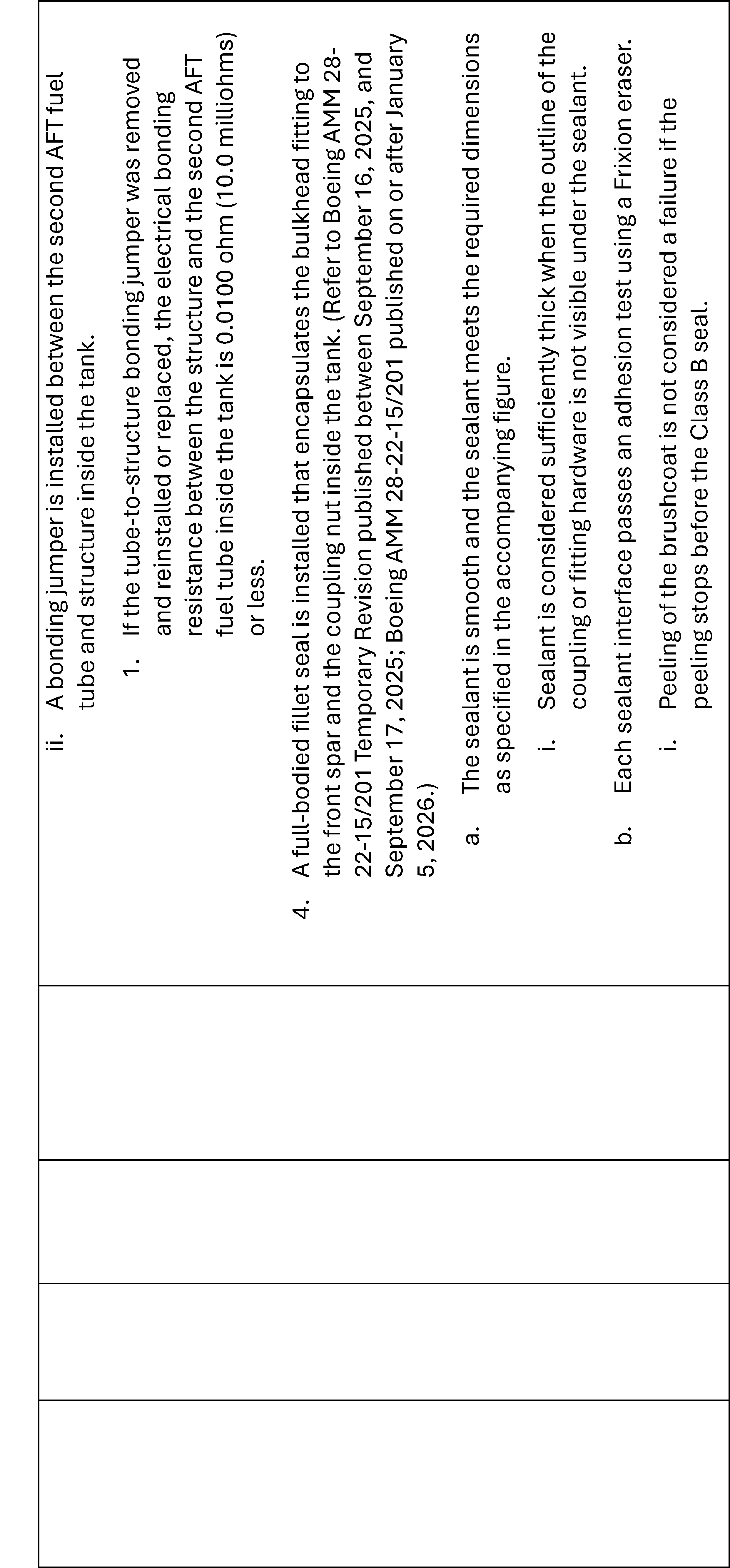
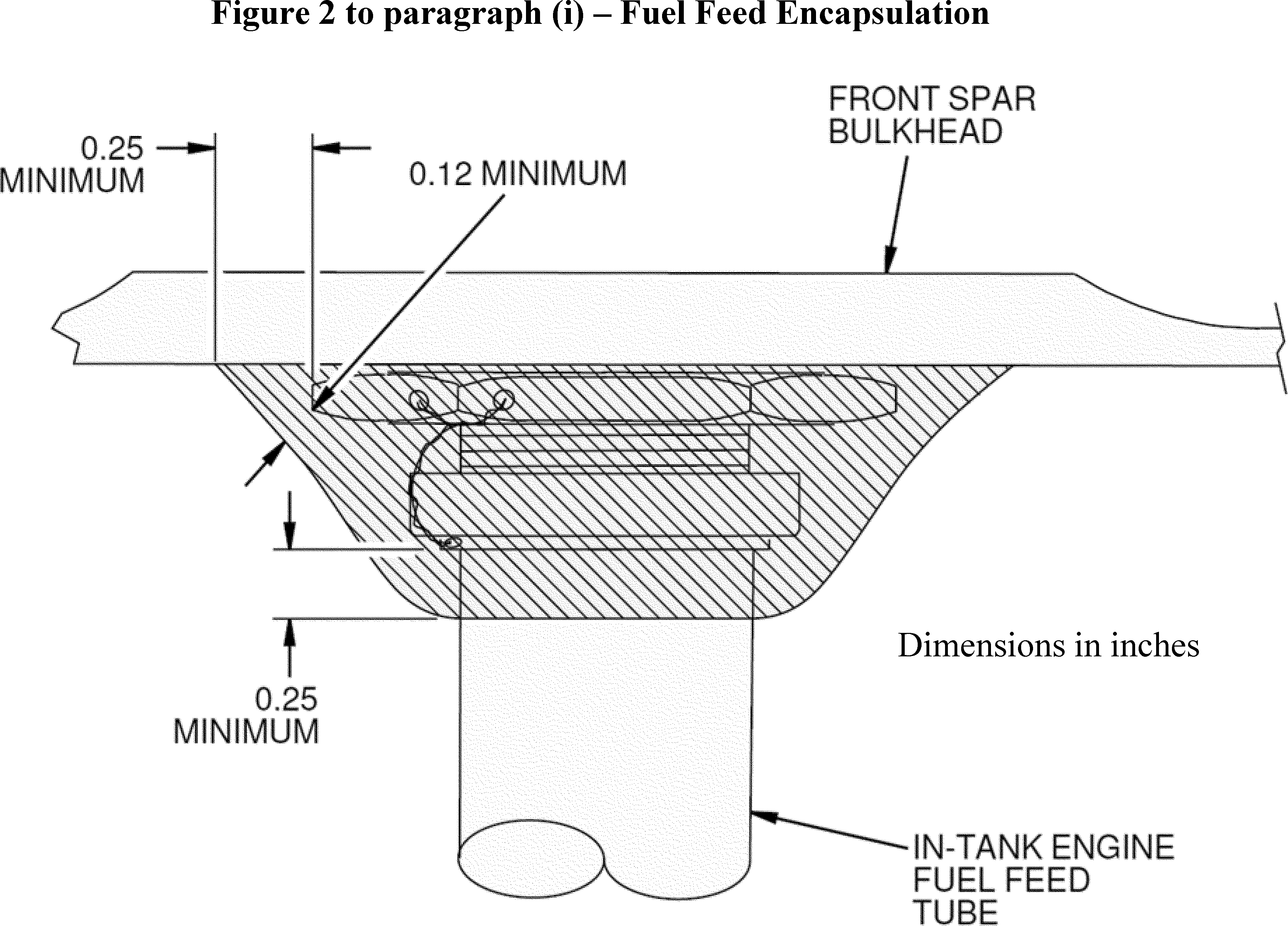
Within 60 days after the effective date of this AD, revise the existing maintenance or inspection program, as applicable, to incorporate the information specified in Figure 1 and Figure 2 to paragraph (i) of this AD.
( printed page 47137)
( printed page 47138)
( printed page 47139)
(j) Alternative Methods of Compliance (AMOCs)
(1) The Manager, AIR-520, Continued Operational Safety Branch, FAA, has the authority to approve AMOCs for this AD, if requested using the procedures found in 14 CFR 39.19. In accordance with 14 CFR 39.19, send your request to your principal inspector or responsible Flight Standards Office, as appropriate. If sending information directly to the manager of the certification office, send it to the attention of the person identified in paragraph (k)(1) of this AD. Information may be emailed to:
AMOC@faa.gov.
Before using any approved AMOC, notify your appropriate principal inspector, or lacking a principal inspector, the manager of the responsible Flight Standards Office.
(2) An AMOC that provides an acceptable level of safety may be used for any repair, modification, or alteration required by this AD if it is approved by The Boeing Company Organization Designation Authorization (ODA) that has been authorized by the Manager, AIR-520, Continued Operational Safety Branch, FAA, to make those findings. To be approved, the repair method, modification deviation, or alteration deviation must meet the certification basis of the airplane, and the approval must specifically refer to this AD.
(3) AMOCs approved for AD 2024-19-14 are not approved as AMOCs for the corresponding provisions of Boeing Alert Requirements Bulletin 777-28A0097, dated August 14, 2025, that are required by paragraph (g) of this AD.
(k) Additional Information
(1) For more information about this AD, contact Samuel Dorsey, Aviation Safety Engineer, FAA, 2200 South 216th St, Des Moines, WA 98198; phone: 206-231-3415; email:
samuel.j.dorsey@faa.gov.
(2) Material identified in this AD that is not incorporated by reference is available at the address specified in paragraph (l)(3) of this AD.
(l) Material Incorporated by Reference
(1) The Director of the Federal Register approved the incorporation by reference of the material listed in this paragraph under 5 U.S.C. 552(a) and 1 CFR part 51.
(2) You must use this material as applicable to do the actions required by this AD, unless the AD specifies otherwise.
(i) Boeing Alert Requirements Bulletin 777-28A0097, dated August 14, 2025.
(ii) Boeing Alert Requirements Bulletin 777-28A0098, dated August 15, 2025.
(3) For Boeing material identified in this AD, contact Boeing Commercial Airplanes, Attention: Contractual & Data Services (C&DS), 2600 Westminster Blvd., MC 110-SK57, Seal Beach, CA 90740-5600; telephone 562-797-1717; website
myboeingfleet.com.
(4) You may view this material at the FAA, Airworthiness Products Section, Operational Safety Branch, 2200 South 216th St., Des Moines, WA. For information on the availability of this material at the FAA, call 206-231-3195.
Use this for formal legal and research references to the published document.
91 FR 47129
Web Citation
Suggested Web Citation
Use this when citing the archival web version of the document.
“Airworthiness Directives; The Boeing Company Airplanes,” thefederalregister.org (July 28, 2026), https://thefederalregister.org/documents/2026-15239/airworthiness-directives-the-boeing-company-airplanes.
 14 CFR part 39
 5 U.S.C. 601-612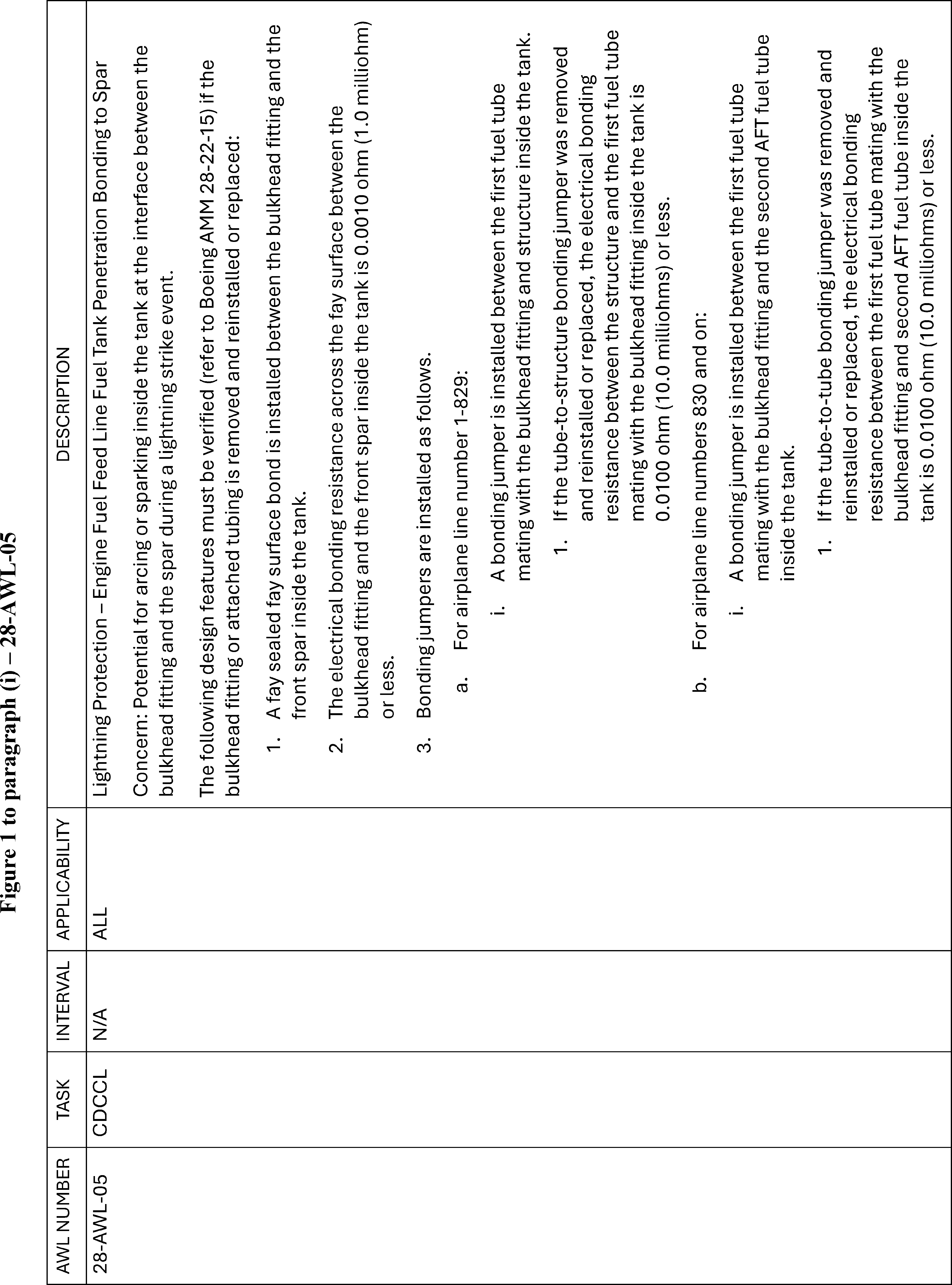
 www.archives.gov/federal-register/cfr/ibr-locations