This NPRM seeks to amend the noise emission regulations to address the unique noise emission characteristics of trains operating at speeds exceeding 160 miles per hour (mph). Sp...
Federal Railroad Administration (FRA), U.S. Department of Transportation (DOT).
ACTION:
Notice of proposed rulemaking (NPRM); request for comments.
( printed page 48824)
SUMMARY:
This NPRM seeks to amend the noise emission regulations to address the unique noise emission characteristics of trains operating at speeds exceeding 160 miles per hour (mph). Specifically, the proposed regulation would provide an alternative standard for noise emissions from train operations exceeding 160 mph, up to 220 mph, and also provide a special approval process for noise emissions from train operations exceeding 220 mph. This alternative noise emission standard and compliance process would effectively remove an existing regulatory barrier to the railroad industry for high-speed rail operations, while continuing to protect public health and welfare. Existing noise emission limits for all train operations at speeds up to 160 mph would continue to apply, and these existing limits would remain available for demonstrating compliance at higher speeds as well.
DATES:
Comments on the proposed rule must be received by October 2, 2026. Comments received after that date will be considered to the extent practicable.
ADDRESSES:
Comments:
Comments related to Docket No. FRA-2025-0786 may be submitted by going to
www.regulations.gov
and following the online instructions for submitting comments.
Instructions:
All submissions must include the agency name, docket number (FRA-2025-0786), and Regulatory Identification Number (RIN) for this rulemaking (2130-AC83). All comments received will be posted without change to
www.regulations.gov;
this includes any personal information. Please see the Privacy Act heading in the
SUPPLEMENTARY INFORMATION
section of this document for Privacy Act information related to any submitted comments or materials.
Docket:
For access to the docket to read background documents or comments received, go to
www.regulations.gov
and follow the online instructions for accessing the docket.
FOR FURTHER INFORMATION CONTACT:
Frederick Mottley, Systems Engineer, Federal Railroad Administration, telephone: 617-494-3160, email:
fred.mottley@dot.gov;
or Samuel Gilbert, Senior Attorney, Federal Railroad Administration, telephone: 202-578-5894, email:
samuel.gilbert@dot.gov.
SUPPLEMENTARY INFORMATION:
Abbreviations and Terms Used in This Document
CFR—Code of Federal Regulations
dB—decibels
dB(A)—A-weighted decibels
DOT—U.S. Department of Transportation
EPA—U.S. Environmental Protection Agency
EU—European Union
FRA—Federal Railroad Administration
ft—feet
HSR—high-speed rail
HVAC—heating, ventilation, and air conditioning
IEC—International Electrotechnical Commission
IIJA— Infrastructure Investment and Jobs Act
IRFA—Initial Regulatory Flexibility Analysis
ISO— International Organization for Standardization
km/h—kilometers per hour
Leq
—equivalent sound level
m—meters
mph—miles per hour
NEPA—National Environmental Policy Act
NOI TSI—Noise Technical Specifications for Interoperability
NPRM—notice of proposed rulemaking
OMB—Office of Management and Budget
SBA—U.S. Small Business Administration
Table of Contents for Supplementary Information
I. Executive Summary
II. Legal Authority
III. Technical Background
IV. Section-by-Section Analysis
V. Regulatory Impact and Notices
A. Executive Order (E.O.) 12866 (Regulatory Planning and Review) and DOT Regulatory Policies and Procedures
B. E.O. 14192 (Unleashing Prosperity Through Deregulation)
In November 2018, FRA issued a final rule to establish equipment safety standards for passenger high-speed rail (HSR) operations up to 220 mph,[1]
complementing a March 2013 final rule addressing track safety standards for train operations at these same speeds.[2]
Because certain levels of aerodynamic noise are impractical or impossible to avoid for train operations that exceed 160 mph, existing rail noise emission regulations would prevent full utilization of such operations in the United States.[3]
Congress recognized the need to address high-speed train noise emissions in the Infrastructure Investment and Jobs Act (IIJA).[4]
Using the authority provided in section 22423 of IIJA, this NPRM seeks to amend noise emission regulations at 49 CFR part 210 (part 210) to alleviate this regulatory obstacle for HSR operations.
The proposed regulation would provide an alternative standard for noise emissions from train operations exceeding 160 mph, up to 220 mph. The alternative standard would be optional; a railroad could continue to demonstrate high-speed train noise emission compliance in accordance with the existing standards in 40 CFR part 201. The proposal would also provide a special approval process for train operations exceeding 220 mph that demonstrate a level of protection consistent with these noise emissions limits. This alternative noise emission standard and compliance process would effectively remove an existing regulatory barrier to the railroad industry for high-speed rail operations. The proposed regulation would also continue to provide for noise emission restrictions that protect public health and welfare and would be consistent with international standards.
The cost of the proposed regulation results from railroads and rail equipment manufacturers testing the high-speed trainsets for compliance with the alternative noise emission limits under this NPRM. Performing noise emission compliance testing will require sound level measuring equipment, calibration of such equipment, and personnel to perform the test and operate the train. In return, HSR operators would save costs by potentially not needing to modify their rail equipment to reduce aerodynamic noise to comply with the existing noise emission standard. FRA assessed that the benefits in terms of cost-savings will significantly exceed the costs. The estimated costs and benefits are summarized in the table below.
( printed page 48825)
Table ES-1—Costs and Benefits Summary Over a 30-Year Period of Analysis
[2024 Dollars]
Impact
Present value 7%
Present value 3%
Annualized 7%
Annualized 3%
Costs
$105,462
$178,230
$8,499
$9,093
Benefits
65,947,718
100,525,866
5,400,150
5,056,374
Net Benefits
65,842,257
100,347,636
5,391,651
5,047,281
II. Legal Authority
U.S. Environmental Protection Agency (EPA) regulations in 40 CFR part 201 limit the noise emissions resulting from operation of the equipment and facilities of surface carriers engaged in interstate commerce by railroad. FRA regulations in 49 CFR part 210 provide for the enforcement of the 40 CFR part 201 limits. EPA and FRA developed this existing regulatory scheme pursuant to the Noise Control Act of 1972 (Noise Control Act),[5]
which found that inadequately controlled noise presented a danger to public health and welfare and that Federal action was essential.[6]
The Noise Control Act provides EPA with regulatory authority and FRA, as delegated by the Secretary of Transportation, with enforcement and inspection authority for noise emissions covered by part 201 (in addition to FRA's general authority under the railroad safety statutes).[7]
On November 15, 2021, IIJA was signed into law. Section 22423 of IIJA amended section 17 of the Noise Control Act [8]
to permit DOT, in consultation with EPA, to prescribe regulations governing railroad-related noise emission standards for trains operating on the general railroad system of transportation at speeds exceeding 160 mph, including noise related to magnetic levitation systems and other new technologies not traditionally associated with railroads.[9]
IIJA suggests three factors that DOT may consider when prescribing new regulations: (1) variances in maximum pass-by noise with respect to the speed of the equipment; (2) current engineering best practices; and (3) encouraging the use of noise mitigation techniques, where reasonable, if the benefits exceed the costs.[10]
IIJA makes clear that EPA's existing railroad-related noise standards prescribed under the Noise Control Act shall continue to govern noise emissions from the operation of trains, including locomotives and rail cars, at speeds not exceeding 160 mph.[11]
Indeed, compliance with these existing standards may continue at speeds up to and exceeding 160 mph. No railroad would be required to avail itself of the alternatives proposed in this NPRM for noise emission compliance. The rulemaking seeks only to make that flexibility available.
III. Technical Background
Currently, no trains operate in the United States at speeds above 160 mph, and the highest-speed trains now operate at a maximum of 150 mph. However, there are plans for HSR operations at speeds above 160 mph in several regions.[12]
The current railroad noise emission standards established under part 201 are based on empirical data from EPA studies of locomotives and railcars operating before 1976.[13]
At the time, the maximum allowable train speed under FRA regulations was 110 mph. EPA observed that locomotive diesel engine noise was dominated by engine exhaust and set noise emission limits at thresholds based upon what was viewed as reasonable and achievable to muffle such noise, specifically 90 dB(A) for locomotives manufactured after Dec. 31, 1979.[14]
EPA also studied railcar noise, finding that the upper range for noise emissions from railcar movement at 60 mph was approximately 93 dB(A).[15]
This was set as the maximum for all operations.[16]
In the decades since these standards were issued, FRA has examined more modern railroad operations and noise impacts, including data on HSR noise emissions.
For a conventional train with a maximum speed of up to approximately 125 mph, propulsion and mechanical noise dominates the total train noise emitted as the train passes by a wayside location along a railroad.[17]
Indeed, for steel-wheeled trains, propulsion and rolling noise combines with limited aerodynamic noise to describe the total noise up to speeds of approximately 160 mph.[18]
However, at speeds exceeding 160 mph, the aerodynamic noise resulting from airflow moving over and around the train begins to become the dominant contributor to the overall noise emitted.[19]
HSR operations are common in numerous countries throughout the world, including Japan, China, and European Union (EU) member countries. FRA commissioned a global survey of railroad noise standards, codes, regulations, and recommended practices, with a focus on countries that have well-established HSR operations.[20]
FRA additionally commissioned DOT's Volpe National Transportation Systems Center to prepare a technical report (Technical Report) that researched the needs and requirements for noise emission standards for high-speed trains, considered international and industry standards, and outlined a recommended approach for noise emission standards based on proven methodologies.[21]
The proposed rule adopts this technical report's recommended noise emission standards, and the report is included in the rulemaking docket (
https://
( printed page 48826)
,www.regulations.gov,
Docket No. FRA-2025-0786).
Of the countries with well-established HSR operations and that regulate train noise, the EU group of countries uses an emission-based approach for rolling stock in which noise thresholds are based on the sound emitted at the source, distinguished by equipment and operating speed. This approach to train noise is consistent with the existing U.S. noise emission standards framework under the Noise Control Act. In contrast, China and Japan use an immission- or receiver-based approach to train noise in which noise thresholds are based on the location where the sound is received.[22]
The immission-based approach is aimed at reducing noise levels measured at the receiving location, rather than limiting noise emitted at the source, and encourages the use of mitigation measures such as noise barriers to achieve compliance.[23]
As noted above, under section 22423 of IIJA, regulations developed for high-speed trains may encourage the use of noise mitigation techniques to the extent reasonable if the benefits exceed the costs.[24]
FRA interprets this authorization as allowing FRA to consider HSR immission or receiver standards in the alternative to emission standards not only in a rulemaking, but also in a special approval process (see proposed part 210, subpart D) or other process pursuant to a rulemaking. While an immission-based approach would allow an HSR operation to choose noise mitigation measures that are locally selected, the cost of planning for and implementing such measures will likely exceed the cost of complying with the alternative noise emission standard proposed in the NPRM.[25]
Nonetheless, FRA does not consider an immission-based approach to be appropriate for general applicability to high-speed train operations in the U.S., especially when an international, emission-based standard exists in the form of the EU regulation, as discussed below. An emission-based approach dovetails with the continued applicability of existing U.S. noise emission requirements and Congress's finding underlying those requirements that Federal action is essential to deal with major noise sources in commerce, the control of which requires national uniformity of treatment.[26]
There are several major benefits to adaptation of the EU regulation, currently EU Regulation No. 1304/2014, the Noise Technical Specifications for Interoperability (NOI TSI),[27]
as the U.S. basis for alternative, high-speed train noise emission standards. In addition to serving as an established noise emission standard, the NOI TSI incorporates significant portions of International Organization for Standardization (ISO) industry standard 3095:2013 (Acoustics—Railway applications—Measurement of noise emitted by railbound vehicles) reflecting international consensus for high-speed train noise emissions. Similar to the 1975 EPA-established rule, and though adjustments are necessary for normalization, EU noise emissions for multiple-unit electric trains at speeds up to 250 kilometers per hour (km/h) (155 mph) are capped at 95 dB(A).[28]
However, circumstances preclude wholesale adoption of the NOI TSI (though FRA invites comment on its adoption under proposed section 210.55). For instance, while the NOI TSI standards are inclusive of all rolling stock, operating conditions, and speeds, IIJA authorizes adoption of noise standards only for train operations above 160 mph.[29]
Another element of the NOI TSI that FRA proposes not to adopt is the requirement to conduct testing on reference track as defined in Section 6.2 of ISO 3095:2013. This requirement is designed to meet an EU objective to be able to compare high-speed train noise across both locations and operations in different member Nations, and to separate noise contributions from the infrastructure versus noise contributions from train equipment. Reference track is specified in terms of two parameters: acoustic rail roughness level, related to micro-defects on the surface of the track; and track vibration decay rate, an indicator of the vibration damping and noise radiation of the track. The parameter limits specified by the ISO Standard ensure that noise due to these effects is minimized. However, measurement of these parameters requires additional testing prior to each noise emission test, placing additional burden on testing entities. In addition, FRA research has indicated that these conditions may be difficult to meet, as there are only three test tracks that meet these requirements in the EU, and these tracks are limited in speed to 200 mph.[30]
Compliance testing implementing the Noise Control Act ensures that measured noise emission levels are representative of normal operating conditions accounting for both typical track infrastructure and train contributions and does not require reference track testing with minimized noise contribution for comparability.
A notable aspect of the NOI TSI proposed to be adopted is the measurement distance specified: 25 feet (ft) (7.5 meters (m)) from the centerline of the track. To measure noise source emission levels, this relatively short distance is preferred to minimize variation due to physical, environmental, and meteorological differences between locations and repeated measurements. For comparison, existing U.S. standards specify a greater distance: 100 ft (30 m) from the centerline of the track. The measurement heights specified by the NOI TSI are 4 ft (1.2 m) and 12 ft (3.5 m) above top of rail. The 4-ft height is consistent with existing U.S. standards and is needed to capture noise sources lower on the body of the vehicle (rolling noise and engine/exhaust noise), which are prevalent in both lower- and higher-speed operations. The 12-ft measurement height is required for high-speed operations to measure noise sources accurately on the upper vehicle body (
e.g.,
pantograph), where direct line of sight to a 4-ft-high microphone may be blocked or shielded by the train body. An illustration of both the microphone heights and distances relative to the train noise source is provided below.
( printed page 48827)
Sound dissipates (attenuates) with increasing distance as it travels. As a result, the sound level measured at 100 ft would be seven to nine dB lower in level than the sound measured at 25 ft. This difference has been taken into account in normalizing U.S. standards with those of the EU.[31]
IV. Section-by-Section Analysis
Comments are sought on all proposals made in this NPRM.
Amendments to 49 CFR Part 210, Railroad Noise Emission Compliance Regulations
Subpart A—General Provisions
Section 210.5 Definitions
FRA proposes to establish a definition for “background noise.” The proposed definition captures more generally the definition implicit in 40 CFR 201.23. FRA further proposes additional definitions for “maximum operating speed” and “pass-by time” to describe key measurements in the determination of equivalent sound level to establish alternative compliance. FRA would also define “mph” for clarity.
Subpart C—High-Speed Train Noise Emission Alternative Compliance
Section 210.41 Scope
This subpart would provide an alternative approach available to HSR train manufacturers and railroads to establish noise emission compliance for train operations exceeding 160 mph, up to 220 mph. As authorized by section 22423 of IIJA, FRA is proposing to amend its noise emission compliance regulations in 49 CFR part 210 to address noise emissions standards for trains operating at speeds exceeding 160 mph. Consequently, in lieu of the requirements of 40 CFR part 201, FRA is proposing that the total sound level emitted by operation of both rail cars and locomotives at speeds exceeding 160 mph may comply with the requirements in this rulemaking. However, no railroad would be required to avail itself of the alternative processes for noise emission compliance proposed in this rulemaking. The alternative processes would be optional. A railroad may continue to demonstrate high-speed train noise emission compliance in accordance with the standards in 40 CFR part 201.
The alternative approach in new subpart C utilizes a compliance testing process under specified test conditions. It includes a requirement to notify FRA before conducting the testing and prepare a detailed report of the test results that documents compliance.
Unlike compliance testing under existing subpart B, subpart C does not contemplate FRA conducting random testing to ensure compliance at train speeds exceeding 160 mph. Aerodynamic noise, dominant at high speeds (as covered under subpart C), should be consistent between trains of the same model series and independent of location. Aerodynamic noise is dependent mainly on design features such as pantograph shrouds or recesses, wheel covers, and train nose shape.[32]
Subpart B will continue to provide for random compliance testing at “any time” or “at any appropriate location” [33]
for train operations at or below 160 mph, even when the alternative in subpart C is selected, as nothing in this rulemaking affects compliance with existing requirements for train operations at such speeds. Rolling noise is also dominant at lower speeds and can vary from train to train and location to location due to factors such as track roughness and stiffness, as well as wheel roughness.
Section 210.43 Alternative Compliance Standard
As adapted and normalized from the NOI TSI, the proposed alternative compliance standard establishes a baseline equivalent sound level of 96 dB(A) for the duration of the train pass-by for a speed of 160 mph. Below this speed, mechanical noise emissions will generally predominate over aerodynamic noise emissions; above 160 mph, aerodynamic noise begins to become the dominant contributor to noise. The equivalent sound level of 96 dB(A), though numerically higher than the prescribed maximum sound level standard in part 201 of 90 dB(A) for locomotives and 93 dB(A) for railcars, reflects measurement from 25 ft rather than the part 201 measurement distance of 100 ft, and differences in the pass-by metric. The baseline equivalent sound level metric represents essentially the average sound level of the high-speed train during its pass-by time at a speed of 160 mph, whereas the current standard uses the maximum sound level during the locomotive or railcar pass-by. To reiterate, sound attenuates with increasing distance, so the measured sound level at 100 ft would be less; factors such as the trainset type, train speed, and terrain all affect the sound level. As noted above, this closer measurement distance and the equivalent sound level noise descriptor are adapted from the NOI TSI, which provides for measurement from a 7.5 m (25 ft) distance from the centerline of the track.
There is the possibility for a high-speed train to expose some locations to noise above the current allowable maximum sound level as speeds exceed 160 mph; however, such exposure is limited by the shorter duration of the high-speed pass-by. A short-duration, high-speed train pass-by nominally exceeding the current maximum sound level standard can be expected to result in lower total noise exposure than a longer duration, conventional-speed train pass-by at the current noise emission standard. This is because prevailing train operating speeds are significantly slower than 160 mph, at times averaging one-half or less of this speed even for passenger trains, resulting in the potential for substantially longer periods of noise exposure at conventional speeds than that of proposed, high-speed
( printed page 48828)
operations.[34]
Further, this proposed rule does not relieve carriers of the requirement to comply with the current noise emission standards during operations taking place at speeds up to 160 mph.
For trains operating at a maximum speed exceeding 160 mph, the measured noise emission is normalized to the 160-mph baseline speed, through a formula, before comparison to the 96 dB(A) limit. This formula is based upon the process set forth in the NOI TSI, and its incorporated provisions of ISO 3095:2013. Under the proposed alternative standard, the allowable noise emission limit increases with increasing speed. At the maximum operating speed under the proposed standard (220 mph), the limit would be approximately 103 dB(A). FRA is not proposing to extend use of the adjustment formula beyond 220 mph to an unlimited speed, and the NOI TSI's speed-adjustment formula is similarly upper-bounded. Instead, FRA is proposing to provide for alternative compliance through a special approval process in subpart D.
Under the existing EPA standard, a short-duration exceedance of the 90 dB(A) maximum sound level standard during emissions testing will result in a test failure, notwithstanding the amount of total noise energy emitted and related noise exposure of the pass-by. As a result, some high-speed operations may result in lower overall noise exposure than operations at slower operating speeds, even though they would not be permitted under current requirements. In effect, the proposed alternative standard would permit high-speed operations at a sound exposure level similar to the current standard at train speeds up to 160 mph when measured over the entire length of the pass-by.
The NOI TSI generally requires additional pass-by testing at multiple lower speeds, in addition to testing at the maximum operating speed. FRA considered requiring a test for both at 160 mph and testing at the maximum operating speed. However, FRA determined the 160-mph test to be unnecessarily duplicative because operations at speeds of 160 mph or less will continue to require verification procedures in compliance with the existing EPA standard. The NOI TSI is designed as a comprehensive test for noise emissions, including noise emissions at operating speeds of 160 mph or less for individual locomotives and cars, stationary noise, and startup noise. By contrast, the authorization granted in IIJA sets the focus on the noise emissions of train operations at speeds exceeding 160 mph. FRA seeks comment on the proposal to limit compliance testing under this alternative standard for operations above 160 mph only to the proposed maximum speed of the operation, rather than also to require baseline testing under this alternative standard at 160 mph.
Section 210.45 Measurement Site Conditions
Current U.S. standards for measurement of noise emissions specify a measurement distance of 100 ft from the centerline of the track, and a height of 4 ft from the ground.[35]
In contrast, NOI TSI Section 4.2.3 (proposed to be adopted here) specifies a measurement distance of 7.5 m (25 ft) at two heights: 1.2 m (4 ft) and 3.5 m (12 ft) from the top of the rail. Sound levels attenuate with distance, even in the absence of sources of sound absorption. A measurement taken from 25 ft would generally measure a source at seven to nine dB higher than a measurement of the same source from 100 ft.[36]
In addition, as explained above, in most cases the shorter distance of 25 ft provides less opportunity for the sound level measurement to vary because of terrain, weather, and other factors at the test site that can cause sound reflection, absorption, or diffusion.
Usage of the top of the rail provides a common reference point to measure noise sources on the body of the vehicle. The 4-ft measurement height is generally consistent with the current standard for capturing noise on the lower segment of the vehicle body, which is the common source of mechanical noise. The 12-ft measurement height is required for accurate measurement of noise sources on the upper vehicle body, such as a pantograph, by providing a line of sight to those sources. The lower, 4-ft measurement cannot be expected to make an accurate measurement of this aerodynamic noise because the train body may partially block the noise being emitted. Other requirements, including the requirements for flat terrain within a triangular area from the microphone to the test site and the requirement for a 75-ft radius free of large, sound-reflecting objects, are based upon the NOI TSI.
Section 210.47 Measurement Criteria and Procedures
This section establishes the measurement criteria, instrumentation requirements, calibration requirements, interference-minimizing equipment requirements, measurement durations, minimum background noise thresholds, and averaging criteria for demonstrating alternative compliance.
Paragraph (a) references the sound level meter response specified in 40 CFR 201.21.
The instrumentation requirements of paragraph (b) are based upon the specifications of ISO 3095:2013, Sections 4.1 and 4.2. These are, in turn, specified in International Electrotechnical Commission (IEC) 61672-1:2002, with the requirement that a sound calibrator meeting the requirements of IEC 60942:2003 be used for calibration before and after each series of measurements. FRA has elected not to incorporate these standards by reference, but instead to reference these standards as a current example of an acceptable industry standard. FRA does not intend to take a position at this time on the sufficiency of any current, future, or competing industry standard for sound level meter or sound calibrator instruments, noting that these example standards have been “current” for two decades. FRA seeks comment on this flexible approach to maintaining accuracy in measurement equipment.
The current regulation prescribes the use of mounting and a windscreen according to the microphone manufacturer's recommendations. ISO 3095:2013 provides that a tripod and windscreen must be used during measurement. This suggests that such requirements have become industry standard and should no longer be left to the recommendation of the manufacturer. In addition, sound measurements taken at maximum operating speed can be expected to be associated with significantly higher aerodynamic activity, making the use of an effective mounting and windscreen necessary for a measurement with minimal interference.
Paragraph (c) establishes the pass-by time as the relevant time period for calculation of Leq
. Note that Leq
is an abbreviation for equivalent sound level and, as defined in 40 CFR 201.1(k), is “the level, in decibels, of the mean-square A-weighted sound pressure during a stated time period, with reference to the square of the standard
( printed page 48829)
reference sound pressure of 20 micropascals.” [37]
Paragraph (d) provides that care shall be taken to ensure that the noise from other sources does not influence the measurements significantly.
Consistent with current regulations, this section provides that background noise immediately before and after the pass-by test shall be measured. Under paragraph (e), to ensure comparability with the Leq
measurement for the test, the sound level measurement shall also be calculated based upon a set time period, which is based upon ISO 3095:2013, Section 6.13. Under these procedures, the sound level meter would generally record for a continuous period between approximately 45 seconds to one minute. Following the test, the measurement duration would be designated based upon the times at which the 10 dB threshold is met before and after train pass-by. A remaining period of at least 20 seconds before and 20 seconds after the measurement duration would constitute the background noise measurement period and would need to remain below the 10 dB threshold throughout the period for the test to be valid.
Paragraph (f) provides for averaging three measurements under each test condition and describes other criteria for determining compliance.
Section 210.49 Operation Standards
This section establishes the operating standards for testing in compliance with this subpart. Compliance shall be demonstrated under pass-by testing at the maximum operating speed for the train. This section allows for variability in the test speed at ±5 mph. The calibration tolerance for any speed measurement device is also set at ±5 mph of the stated measurement. This permits a hypothetical, though unlikely, allowance for actual test speeds to be up to 10 mph above or below the required test speed. Some tolerance for variance must be allowed to account for de minimis errors and a small degree of acceptable variability both within the testing environment and among test devices.
FRA proposes a consistent, 5-mph variability allowance primarily for ease of use. ISO 3095:2013, Section 6.6.2 provides for requirements that are less stringent: a ±5 percent variability in speed, with a maximum permissible measurement error of three percent. At speeds from 160 to 220 mph, the individual allowance for measurement error ranges from slightly smaller to more than 25 percent larger than the proposed 5-mph allowance, while the five percent variability in speed provides for a consistently larger variance from eight to 11 mph. FRA seeks comment on the selection of standards for test speed variability and speed measurement calibration tolerance.
The requirements for minimum tractive effort and operation of passenger heating, ventilation, and air conditioning (HVAC) systems align the test more closely with normal operating conditions. Each requirement is adapted from ISO 3095:2013, Section 6.3. Minimum tractive effort at a given speed will generally reflect the least amount of energy applied to the mechanical components, which is consistent with safe and efficient operation. Though this is expected to produce a lower sound level than operation at a higher tractive effort, it is generally the state in which a high-speed pass-by will operate. HVAC systems contribute to an overall higher sound level and should be included during any test to reflect normal operations.
ISO 3095:2013, Section 6.3 additionally includes wheel tread conditioning standards, to the effect that the wheels used on the test train should have been run at least 1,000 km (~600 miles). The Technical Report found that this standard was likely included for the portion of the testing protocol at lower speeds (80 km/h) as a means of defining normal operating conditions.[38]
Based on this determination, FRA has not included a proposal for wheel tread conditioning standards. It is expected that most tests will likely include wheel sets that have met such criteria. FRA invites comment on the inclusion of such a requirement.
Section 210.51 Track Conditions
This section specifies the conditions for track necessary to conduct a noise emission test in accordance with normal operating conditions. Paragraph (a) is derived from the current standards in 40 CFR 201.24, which provide for taking noise measurements on “reasonably well-maintained tracks.” Though the standards do not specify greater detail with respect to track maintenance, in its 1975 Background Document for Railroad Noise Emission Standards, EPA noted that FRA's standards for track safety allowed for either repair of the track or reduced speeds in certain circumstances to address track conditions.[39]
EPA further noted that noise level from the impact between the train wheels and rail increases arithmetically with velocity.[40]
As poorly maintained track contributes to an increase in the noise level of wheel/rail interactions, and higher velocity tends to exacerbate the noise resulting from such interactions, FRA expects that the proposed noise emission standard will serve as the primary factor for concluding appropriate quality of track maintenance under this section. Track that is maintained in accordance with the applicable FRA Track Safety Standards (49 CFR part 213) should meet this requirement.
A limitation on track curvature is provided for in 40 CFR 201.23, with limits to tie-and-ballast track. Paragraph (b) would maintain limits on these elements, based on the standards set forth in ISO 3095:2013 applicable to HSR operations. ISO 3095:2013 also sets forth a standard for track gradient. FRA notes that a consistent track gradient allows the train to more effectively maintain the tractive effort that is most consistent with normal operations. An incline grade would generally result in excessive tractive effort and increased sound level, while a decline grade would result in less effort and a decreased sound level. Similarly, as an excessively narrow radius of curvature reflects an uncommonly curved segment of track in HSR operations, a limitation on the degree of curvature is necessary to maintain testing under normal operating conditions. FRA has accordingly proposed to adopt the international standard.
FRA recognizes that some HSR operations may adopt a track superstructure other than the standard track with ballast bed. For example, the track superstructure may be specially engineered for the tonnage, speed, and other characteristics of the HSR operation, and be integral to the operational, safety, and noise emission performance of the HSR system. In recognition of this, FRA proposes to permit carriers to substitute a different track superstructure, such as slab track, to demonstrate compliance with the proposed standard. In order to facilitate noise mitigation, the alternative superstructure may include rail or track shielding (
e.g.,
low barriers). However, the different track superstructure and any rail or track shielding must be consistently applied throughout the entire HSR system.
( printed page 48830)
Section 210.53 Test Notification and Compliance Reporting
This section specifies the process for notifying FRA of equipment testing for compliance with this subpart and information to be collected and stored for inspection by FRA. Part 210 authorizes FRA inspectors to examine or inspect railroad equipment for compliance with the noise emission standards, or to request in writing that a railroad carrier do so.[41]
The proposed pass-by testing standards, while affording greater flexibility to HSR operations, may tend to increase the time, cost, and complexity of such testing. To aid in the inspection process while reducing the need for such cumulative testing, FRA proposes to require that carriers maintain a detailed record of testing for distribution to FRA inspectors upon request.
In addition, this section would require that FRA be notified 30 days before conducting the testing, to permit the agency to witness the testing. This notification requirement is consistent with existing FRA requirements to provide the agency sufficient time to arrange for observing the conduct of compliance testing in person, such as for passenger rail equipment that has not previously been used in the United States.[42]
Notification may be submitted electronically. FRA seeks comment on these proposed requirements.
Section 210.55 Previously Tested Operations
This section provides that results from a previously tested operation may be used to demonstrate compliance for a proposed operation at any operating speed between 160 mph and the maximum operating speed for which the previously tested operation demonstrated compliance, up to 220 mph. This section also describes the conditions required for use of the results. FRA invites comment on the specifics of this proposal.
In addition, FRA invites comment on whether the rule should more expressly allow reliance on use of alternate, EU operational testing standards and results. Specifically, FRA invites comment on whether testing that meets the requirements of EU Regulation No. 1304/2014, NOI TSI, may be used for purposes of demonstrating compliance with this subpart, either for a proposed operation or as the record of a previously tested operation, and, if so, whether equipment used in such testing must be listed in the European Register of Authorized Types of Vehicles,[43]
or a comparable list of approved equipment maintained by the European Union Agency for Railways or its successor agency.
Subpart D—Special Approvals
Section 210.61 Scope of Subpart
This section provides a special approval process for train operations exceeding 220 mph to demonstrate a level of noise emission protection consistent with the requirements of subpart C of this part. The process would include publication of the petition for special approval in the
Federal Register
and an opportunity for comment. The special approval process would likely benefit unique high-speed train operations, such as magnetic levitation train systems or systems wholly operating in an enclosed right-of-way, for which noise emission limits of particular, rather than general, application may be necessary or appropriate, or both. In this regard, the special approval process would be able to consider use of noise mitigation techniques, to the extent reasonable if the benefits exceed the costs, to provide protection against train noise emission, as provided under 42 U.S.C. 4916(c)(2)(C). FRA would encourage HSR operators and manufacturers to approach FRA should they have any questions or concerns about demonstrating compliance with the requirements for special approval under this subpart. FRA invites comment on this proposed subpart D.
Section 210.63 Petition for Special Approval
This section describes the special approval process. This section would require a petition to include a detailed description of the proposed noise emission standard, including any alternative testing methodologies or procedures, as well as measurement criteria. This section would also require a petition to include a description of the operating environment and its features, as relevant to the petition. The petition must also include, to the extent practical, all testing and analysis information required by section 210.53 showing that the proposed standard provides a level of protection consistent with the noise emission limits under subpart C of this part. FRA would accept alternate analysis that explains the lack of information required by section 210.53, such as identification of variances with the proposed testing conditions under subpart C. Consistent with special approval petition processes in other FRA regulations, FRA would publish notice of the petition in the
Federal Register
summarizing the information provided in the petition.
Note that, unlike the emission standard proposed in subpart C, a testing method utilizing an immission- or receiver-based approach, including the use of cost-effective noise mitigation techniques, could be proposed as part of a special approval petition under subpart D. FRA would consider whether such a petition demonstrated that the alternative approach provides a level of noise emission protection consistent with the requirements of subpart C.
Section 210.65 Disposition
This section describes the process for determining whether to grant a petition for special approval and related procedures. FRA invites comments on whether an expected timeline for a decision on a petition should be specified in the rule.
V. Regulatory Impact and Notices
A. Executive Order 12866 (Regulatory Planning and Review) and DOT Regulatory Policies and Procedures
E.O. 12866,
Regulatory Planning and Review,[44]
as implemented by DOT Order 2100.6B,
Policies and Procedures for Rulemaking,[45]
requires agencies to regulate in the “most cost-effective manner,” to make a “reasoned determination that the benefits of the intended regulation justify its costs,” and to develop regulations that “impose the least burden on society.” DOT Order 2100.6B specifies that regulations generally should “not be issued unless their benefits are expected to exceed their costs.” In arriving at those conclusions, E.O. 12866 requires that agencies should consider “both quantifiable measures . . . and qualitative measures of costs and benefits that are difficult to quantify” and “maximize net benefits . . . unless a statute requires another regulatory approach.” E.O. 12866 also requires that “agencies should assess all costs and benefits of available regulatory alternatives, including the alternative of not regulating.” DOT Order 2100.6B directs FRA and other Operating Administrations generally to choose the “least costly regulatory alternative that achieves the relevant objectives” unless
( printed page 48831)
required by law or compelling safety need.
E.O. 12866 and DOT Order 2100.6B also require that FRA submit “significant regulatory actions” to the Office of Information and Regulatory Affairs (OIRA) within the Executive Office of the President's Office of Management and Budget (OMB) for review. This rule is a significant regulatory action pursuant to E.O. 12866; however, it has not been designated as a “major rule” as defined by the Congressional Review Act (5 U.S.C. 801,
et seq.).
FRA analyzed the potential costs and benefits of this proposed rule. In this analysis, FRA expects the most likely scenario for HSR operations will be HSR trainset service operating on shared track in urban environments at conventional speeds (up to about 125 mph), and on dedicated track outside of urban areas at high speeds (
i.e.,
over 160 mph). This scenario is consistent with the earlier FRA rulemakings on safety standards for track [46]
and passenger equipment [47]
at operating speeds up to 220 mph. When operating at conventional speeds, HSR trainsets will continue to fall under the existing noise emission standards in 40 CFR part 201. FRA assessed that this proposed rule would result in cost savings for the industry over a 30-year period, while protecting public health and safety. The proposed rulemaking would alleviate a regulatory obstacle to high-speed train operations, making these operations more implementable, while promoting greater harmonization with global markets for high-speed train technology and equipment. Also see the assessment under section F, International Trade Impact Assessment, below.
Costs
FRA estimated the marginal costs and benefits likely to occur over the first 30 years of this proposed rule. Without this NPRM, both conventional-speed and high-speed trains would fall under the existing noise standards in 40 CFR part 201 and incur costs for noise emission testing. Under this NPRM, high-speed trains could instead be tested using an alternative standard. While the sound level measurement equipment and test procedures are generally similar for conducting noise emission testing either under the existing noise standard or under the NPRM, some additional equipment (
i.e.,
another sound level meter) and labor time may be needed for testing high-speed trainsets under the NPRM. For example, it may take additional time to arrange testing of the high-speed trainset, find a suitable test site for high-speed trains, and set up another sound level meter to conduct a test at a 12-ft height (whereas the existing regulation requires a test at only a 4-ft height). In addition, under the NPRM, the economic analysis accounted for purchase of an additional sound level meter, reasoning that a risk-averse entity would not want to delay noise emission testing because of a faulty sound level meter when the high-speed train and testing personnel are gathered and ready at the test site. Because these changes are incremental for noise emission testing under the NPRM, the cost estimates are small in scale. The estimated annualized costs are about $8,500 using a seven percent discount rate. In present value terms, the estimated costs are $105,462 (in 2024 dollars, discounted at seven percent). In terms of public health and safety, FRA expects no increase in noise impacts because of the shorter duration of a high-speed trainset pass-by of a wayside location at 160 mph.
This analysis estimated a range of four to six HSR operations, or an average of five HSR operations would be affected by this rulemaking over a 30-year period. For railroads that follow the proposed rule, noise testing would be required initially and when there are material differences in train equipment that would affect the level of emitted noise (approximately every 15 years).
Benefits
At the present time there are no high-speed rail operations between 160 mph and 220 mph in the U.S. which could have yielded data to estimate benefits. In an attempt to quantify benefits, FRA used as a proxy the final rule on Passenger Equipment Safety Standards; Standards for Alternative Compliance and High-Speed Trainsets [48]
(Tier III rule). Similar to that rulemaking, FRA reasoned high-speed rail equipment in international operation would require modification to comply with the existing baseline noise emission standards—a cost that could then be saved by complying with the alternative standard in the NPRM. FRA “borrowed” these benefits from the Tier III rule as a general estimation method and not a specific benefit estimate of a specific project or projects. FRA estimated annualized benefits (in terms of avoided costs) at about $5 million using a seven percent discount rate, or about $66 million in present value terms (in 2024 dollars, discounted at seven percent).
With low costs, the estimated net benefits are about the same at about $5 million in annualized terms or $66 million in present value terms, both using a seven percent discount rate. The costs and benefits are presented in the table below.
Table V-1—Costs and Benefits Over a 30-Year Period of Analysis
[2024 Dollars]
Cost impact
Present value 7%
Present value 3%
Annualized 7%
Annualized 3%
Equipment (under section 210.47, Measurements and Criteria & Procedures)
$62,091
$98,195
$5,004
$5,010
Factory Calibration (under section 210.47)
5,916
9,356
476
477
Labor (under section 210.43, Alternative Compliance Std., section 210.47, section 210.53, Test Notification and Compliance Reporting)
16,745
26,482
1,350
1,351
Petition for Special Approval (under section 210.63)
20,709
44,196
1,669
2,255
Qualitative Cost, Public Health and Safety: No expected increase in noise impacts because of the shorter duration of a high-speed trainset's pass-by at 160 mph. Also, no contributing impacts associated with warning sounds otherwise emitted for highway-rail grade crossings (not present in HSR operations).
Total NPRM Costs
105,462
178,230
8,499
9,093
Total NPRM Benefits
65,947,718
100,525,866
5,400,150
5,056,374
Disposition of Special Approval, Government Cost (under section 210.65)
de minimis
de minimis
de minimis
de minimis
( printed page 48832)
Net Benefits
65,842,257
100,347,636
5,391,651
5,047,281
* Proxy benefit adapted from November 2018 Tier III rule.
Note:
Figures may not sum due to rounding.
Alternatives
One of the alternatives to a regulatory action is not to regulate at all. As mentioned above, E.O. 12866 directs agencies to consider the costs and benefits of a scenario without the regulation, which in this case would consist of a scenario without the proposed alternative noise emission standards for HSR operations.[49]
Given the existing 1970s-era noise emission standard did not account for the noise emission characteristics of HSR, and there are several potential HSR routes planned, FRA reasons HSR operations would still need an updated noise standard to enable most trainsets to operate at high speed.[50]
Absent this proposed regulation, railroads may operate their trainsets at conventional speeds only (below 160 mph) to comply feasibly with the existing noise standard.
When developing this NPRM, FRA considered two broad approaches to regulating HSR noise emissions: an immission-based approach and an emission-based approach. As described above in the Technical Background section, an immission-based approach is sensitive to noise mitigation where the noise is received, whereas the emission-based approach is sensitive to noise mitigation at the source.
In terms of benefits and costs, the immissions approach offers the possibility of tailoring an HSR trainset and related infrastructure to its local environment, which potentially could offer greater utility. That is, the HSR operation would be site-specific and, in theory, better able to match the needs of the local population in terms of mitigating noise.[51]
The immissions approach would likely encourage noise mitigation measures such as sound barriers, acoustic windows, and larger buffer zones between the trainset and impacted areas. Local land use planning would decide the appropriate mix of mitigations. As the mitigations would vary by site, it is difficult to estimate a precise overall cost for this approach, but FRA expects the mitigation (and associated planning) could be costly and time-consuming. As noted earlier, a study of several types of mitigations applied at the source, along the pathway to the receiver, or at the receiver (of which the two latter categories would represent an immission-based approach) found costs greater than those estimated in this analysis for the emission-based approach.[52]
These costs are per mile or per dwelling; costs would rise depending on the length of the HSR route and affected structures. To highlight one potential mitigation measure, FRA presents the cost of noise barriers. The same study found the most effective noise barriers are those located at the edge of the railroad right-of-way, designed proportional to the length of the train, and constructed at least 6.6 feet high (or 2 meters). The cost to construct such a barrier is about $1.84 million per mile of track, or about $3.7 million per mile for both sides of the track.[53]
Other mitigations may be needed or desired by the local population.
In contrast, the emission-based approach sets a uniform standard for noise emissions. Under this approach, similar trainsets could be used in different locations and still meet the standard. (Any potential intercity corridor considering HSR operations would still assess its noise impact and consider appropriate mitigations through other processes before starting operations.) By using trainsets that all meet the same noise standard, they may be similar in design and operation (given technology at this point in time). The overall national costs for maintenance, repair, and training could be reduced as there would be fewer types of equipment to manage. There also may be economies of scale if multiple HSR corridors order the same or similar equipment. (Unique HSR operations could always file for approval under the proposed Special Approval process.) From a policy perspective, the emissions approach provides for an interoperable system, while the immissions approach would likely not.
As an alternative to testing HSR trainsets in the U.S., FRA is considering allowing compliance tests performed under EU regulations to demonstrate compliance with the NPRM's alternative noise emission standard. (See proposed section 210.55, Previously Tested Operations, and corresponding discussion in the Section-by-Section Analysis.) Thus, if a manufacturer is adapting a trainset from Europe for use in a U.S. HSR operation, the manufacturer may already have similar compliance test results from Europe to draw upon. If the final rule allows EU compliance testing to be used to demonstrate U.S. compliance, that would represent another, less strict alternative, and costs would decrease. However, some of the cost savings would be offset by the administrative cost to prepare data and analysis demonstrating that the EU compliance test offers the same level of protection against noise as the NPRM.
Conclusion
Overall, this is an enabling rule. Under the proposed rule, stakeholders can avoid the costs of meeting the current noise standards. The costs of meeting the current standards will be very high, or even infeasible given the different nature of noise at high speeds, where aerodynamic noise predominates over mechanical and propulsion noises. Stakeholders may need to make significant changes to the equipment under current noise standards.
E.O. 14192,
Unleashing Prosperity Through Deregulation,
requires that for “each new [E.O. 14192 regulatory action] issued, at least ten prior
( printed page 48833)
regulations be identified for elimination.” [54]
Implementation guidance for E.O. 14192 issued by OMB (Memorandum M-25-20, Mar. 26, 2025) defines two different types of E.O. 14192 actions: an E.O. 14192 deregulatory action, and an E.O. 14192 regulatory action.[55]
An E.O. 14192 deregulatory action is defined as “an action that has been finalized and has total costs less than zero.” This proposed rulemaking is expected to have total costs less than zero, and therefore it would be considered an E.O. 14192 deregulatory action upon issuance of a final rule. FRA estimates the alternative standard for noise emissions offered in the NPRM could result in about $5 million in annualized cost savings at a seven percent discount rate over a 30-year time period.
The Regulatory Flexibility Act of 1980 [56]
and E.O. 13272,
Proper Consideration of Small Entities in Agency Rulemaking,[57]
require agency review of proposed and final rules to assess their impacts on small entities. An agency must prepare an Initial Regulatory Flexibility Analysis (IRFA) unless it determines and certifies that a rule, if promulgated, would not have a significant economic impact on a substantial number of small entities. FRA has not determined whether this proposed rule would have a significant economic impact on a substantial number of small entities and has therefore prepared this IRFA. FRA seeks public comment from small entities on the economic impacts of this proposed rule.
1. Reasons for Considering Agency Action
FRA seeks to amend long-standing noise emission regulations to address the needs of HSR train operators while protecting public health and safety and promoting greater harmonization with international practice. Currently, regulations in part 201 and part 210 effectively limit train speeds to 160 mph and act as a regulatory obstacle to HSR implementation. This NPRM proposes both an alternative noise emission standard to help enable trains to operate at speeds exceeding 160 mph, up to 220 mph, and also a special approval process for noise emissions from train operations at speeds greater than 220 mph. FRA expects the proposed regulatory framework to result in similar, total noise exposure to people living along HSR rights-of-way as from the existing noise emission requirements. Were this proposed approach not pursued, the existing requirements would continue to act to prevent the benefits of interoperable HSR service from being fully realized in the United States.
2. A Succinct Statement of the Objectives of, and Legal Basis for, the Proposed Rule
As authorized by section 22423 of IIJA, this proposed rule would amend the noise emission regulations to address the unique noise emission characteristics of trains operating at speeds exceeding 160 mph, up to 220 mph. A special approval process would be required for HSR operations at speeds greater than 220 mph. The NPRM seeks to remove a regulatory barrier to HSR operations and protect public health and safety by limiting noise exposure to levels consistent with current law while promoting greater harmonization with international practice.
3. A Description and, Where Feasible, an Estimate of the Number of Small Entities to Which the Proposed Rule Would Apply
The Regulatory Flexibility Act of 1980 requires a review of proposed and final rules to assess their impact on small entities, unless the Secretary certifies that the rule would not have a significant economic impact on a substantial number of small entities. “Small entity” is defined in 5 U.S.C. 601 as a small business concern that is independently owned and operated and is not dominant in its field of operation. The U.S. Small Business Administration (SBA) has authority to regulate issues related to small businesses and stipulates in its size standards that a “small entity” in the railroad industry includes a for-profit “line-haul railroad” that has fewer than 1,500 employees and a “short line railroad” with fewer than 1,500 employees.[58]
Federal agencies may adopt their own size standards for small entities in consultation with SBA and in conjunction with public comment. Under that authority, FRA has published a final statement of agency policy that formally establishes “small entities” or “small businesses” as railroads, contractors, and hazardous materials shippers that meet the revenue requirements of a Class III railroad as set forth in 49 CFR 1201.1-1, which is $40.4 million or less after applying the revenue deflator to adjust annual revenues for inflation; [59]
and commuter railroads or small governmental jurisdictions that serve populations of 50,000 or less.[60]
FRA is using this definition for the NPRM.
Class III Railroads:
HSR operators that can avail themselves of the NPRM's alternative noise emission standard are likely to operate Tier III [61]
passenger equipment on shared track when in urban areas with high population densities, at speeds not exceeding 125 mph. All trainsets operating on shared track are governed by the maximum operating speed for that segment of track, which ranges from 15 mph to 125 mph for passenger trains on track Classes 1 through 7.[62]
Most Class III railroads own and operate track supporting Class 3 speeds or lower, and the maximum operating speed for passenger trains on Class 3 is 60 mph.[63]
Accordingly, even if a Class III railroad invested in the highest class of track feasible to support shared operations, HSR trainset operations over such track would still be subject to the existing baseline noise emission requirements. Further, under FRA's Tier III standards, HSR trainsets traveling at speeds exceeding 125 mph up to 220 mph would be required to operate in an exclusive right-of-way, most likely in rural areas with low population density. Given Class III railroads do not own and operate track that could support HSR trains operating between 160 mph to 220 mph, no HSR operations would likely be conducted on Class III railroad tracks and Class III railroads would not be impacted by this NPRM.
Small Governmental Jurisdictions:
Likewise, the NPRM's proposed
( printed page 48834)
alternative noise emission standard should result in no more total noise exposure to small governmental jurisdictions with a population of 50,000 or less, on a per train basis, than the existing noise emission standard in 40 CFR part 201.
FRA reviewed potential HSR operations in regions throughout the United States. These potential HSR operations are expected to comply with the NPRM's alternative noise emission standard when providing HSR service to connect large urban areas. Further, while the HSR operators would go through rural areas and small governmental jurisdictions such as cities or towns with a population of 50,000 or less (as well as large urban areas), FRA expects that the overall noise exposure under the proposed standard for operations at high speed would be similar to that experienced under current requirements. In addition, operation through small governmental jurisdictions would be considered in any noise analysis (
e.g.,
under NEPA) to evaluate a specific proposed project's potential effects and apply mitigation as appropriate to avoid negative impacts, when the proposed project is a major Federal action taken by a Federal agency, such as providing financial assistance.[64]
See discussion under Section V.G (National Environmental Policy Act Compliance) below. Therefore, FRA assesses these small governmental jurisdictions would not be negatively impacted by the rule.
Manufacturers:
FRA has identified six HSR trainset manufacturers [65]
that would be positively affected by the proposed rule from the increased demand for specialized high-speed equipment.[66]
All six firms employ more than the 1,500 employees required to exceed the SBA size standards requirements and therefore are not considered small entities. FRA has confirmed there are no small businesses manufacturing HSR trainsets as the prime contractors. FRA expects the impact of the proposed rule would be to benefit passenger railroad operators and HSR trainset manufacturers by providing the opportunity to cost-effectively advance interoperable HSR service.
Either the HSR trainset manufacturers or passenger HSR operators would perform the noise emission test to comply with the alternative noise emission standard under the NPRM. As mentioned, none of the HSR trainset manufacturers are small entities. FRA is also not aware of any small potential passenger HSR operators.
4. A Description of the Projected Reporting, Recordkeeping, and Other Compliance Requirements of the Rule, Including an Estimate of the Class of Small Entities That Will Be Subject to the Requirements and the Type of Professional Skill Necessary for Preparation of the Report or Record
FRA expects all projected reporting, recordkeeping, and other costs of compliance with this NPRM would fall solely on large entities: HSR trainset manufacturers and HSR operators that provide the service. These entities would bear the short-term costs required for demonstrating compliance with the alternative noise emission standard and the long-term costs associated with ensuring such compliance for future HSR equipment design changes. These large entities would bear the cost of certifying the HSR trainset meets the NPRM alternative noise emission standard. See Table V-1 in Section V.A, above. The procedure to measure the noise emitted from the HSR trainset requires equipment to measure the sound level of emitted noise, personnel to perform the measurements, and process the data, and employees to operate the HSR trainset.
HSR trainset manufacturers and/or the railroads that operate the HSR service would be required to perform the noise compliance tests. Tests would be repeated whenever there are material differences in the HSR equipment that would affect the level of emitted noise, such as exterior design changes. FRA estimates such changes occur about every 15 years on average. FRA estimates that long-term costs of the proposed rule would be approximately $8,000, annualized at seven percent discount rate over a 30-year period of analysis, and that about $5 million in annualized benefits would accrue, using the same rate and analysis period. The estimated benefits, in terms of costs savings, are much greater than costs because using the alternative noise emission standard could avoid costly modifications to HSR trainsets. See Table V-1, above and in the regulatory analysis supporting this rulemaking, for more information on the estimated costs and benefits.
Small entities that fall below the SBA size standards, including Class III railroads, equipment manufacturers, and small governmental jurisdictions with a population of 50,000 or less, would not bear any short- or long-term costs.
5. Identification, to the Extent Practicable, of All Relevant Federal Rules That May Duplicate, Overlap, or Conflict With the Proposed Rule
FRA is not aware of any relevant Federal rule that duplicates, overlaps with, or conflicts with the proposed rule, other than the existing noise emission standards, which would continue to apply. The proposed rule provides an alternative, noise emissions framework for HSR operations at speeds exceeding 160 mph.
6. A Description of Significant Alternatives to the Rule
FRA is proposing this rulemaking to relieve a regulatory obstacle for HSR operations by amending current noise emission requirements to help enable HSR trainsets to operate at speeds greater than 160 mph on the U.S. general railroad system of transportation. The proposed rulemaking would maintain public health and safety by continuing to limit overall public noise exposure while facilitating HSR service.
In the absence of this proposed rule, passenger rail operators may not be able to provide cost-effective, interoperable HSR service to compete with other modes of transportation. HSR manufacturers would have limited ability to deploy their technology in the United States. If this proposed rule were not promulgated, the potential benefits of HSR may not be fully realized in the United States.
D. Paperwork Reduction Act
The information collection requirements in this proposed rule are being submitted to OMB for review and approval in accordance with the Paperwork Reduction Act of 1995 (PRA).[67]
The sections that contain the new information and current information collection requirements and the estimated time to fulfill each requirement are as follows:
( printed page 48835)
CFR section
Respondent universe
Total annual responses
Average time
per response
Total
annual burden
hours
Wage rate
(D) 68
Total
cost equivalent
(A)
(B)
(C) = A * B
(E) = C * D
210.11 Waivers:
—Petition to Administrator for waiver of compliance
FRA anticipates zero waivers over the three-year collection period.
210.27 New locomotive certification:
—(a) and (b) Request to manufacturer for certification
6 locomotive manufacturers
5 requests
30 minutes
2.50
$90.19
$225.48
210.31 Operation standards (stationary locomotives at 30 meters):
—(b) Recorded locomotive noise emission test under the “Remarks” section on the reverse side of Form F 6180.49
The estimated paperwork burden for this regulatory requirement is covered under OMB control number 2130-0004. In addition, FRA found the associated burdens related to train equipment inspection and testing were addressed when FRA calculated the economic costs of the regulatory requirements arising from the rulemaking and, therefore, have not been included as burdens under the PRA.
210.53 Test notification compliance:
—Notification to FRA 30 days before pass-by testing and copy of compliance report to be made available to FRA upon request
(New requirement)
6 railroads
0.67 reports
88 hours
59
90.19
5,321.21
210.55 Previously tested operations:
—(d) A report of the previously tested operation to be maintained in compliance with 49 CFR 210.53(New requirement)
The proposed paperwork burden for this requirement is covered under section 210.53.
—(e) Report of previously tested operations to include certification and analysis to demonstrate no material differences
(New requirement)
FRA anticipates zero previously tested reports over the three-year-collection period.
210.63 Petition for special approval:
—Procedures for obtaining special approval for operations exceeding 220 mph
(New requirement)
FRA anticipates zero petitions over the three-year collection period.
Total 69
6 railroads; 6 locomotive manufacturers
6 responses
N/A
62
N/A
5,546.69
All estimates include the time for reviewing instructions; searching existing data sources; gathering or maintaining the needed data; and reviewing the information. Pursuant to 44 U.S.C. 3506(c)(2)(B), FRA solicits comments concerning: whether these information collection requirements are necessary for the proper performance of the functions of FRA, including whether the information has practical utility; the accuracy of FRA's estimates of the burden of the information collection requirements; the quality, utility, and clarity of the information to be collected; and whether the burden of collection of information on those who are to respond, including through the use of automated collection techniques or other forms of information technology, may be minimized. For information on, or a copy of, the paperwork package submitted to OMB, contact Ms. Joanne Swafford, Information Collection Clearance Officer, at 757-897-9908. Organizations and individuals desiring to submit comments on the collection of information requirements should direct them via email to Ms. Swafford at
joanne.swafford@dot.gov.
OMB is required to decide concerning the collection of information requirements contained in this rule between 30 and 60 days after publication of this document in the
Federal Register
. Therefore, a comment to OMB is best assured of having its full effect if OMB receives it within 30 days of publication. FRA is not authorized to impose a penalty on persons for violating information collection requirements that do not display a current OMB control number, if required. FRA intends to use the existing 2130-0527 OMB control number for any new information collection requirements resulting from this rulemaking action prior to the effective date of the final rule.
E. Federalism Implications
E.O. 13132,
Federalism,[70]
requires FRA to develop an accountable process to ensure “meaningful and timely input by State and local officials in the development of regulatory policies that have federalism implications.” “Policies that have federalism implications” are defined in E.O. 13132 to include regulations that have “substantial direct effects on the States, on the relationship between the national government and the States, or on the distribution of
( printed page 48836)
power and responsibilities among the various levels of government.” Under E.O. 13132, the agency may not issue a regulation with federalism implications that imposes substantial direct compliance costs and that is not required by statute, unless the Federal Government provides the funds necessary to pay the direct compliance costs incurred by State and local governments, the agency consults with State and local governments, or the agency consults with State and local government officials early in the process of developing the regulation. Where a regulation has federalism implications and preempts State law, the agency seeks to consult with State and local officials in the process of developing the regulation.
FRA has analyzed this proposed rule in accordance with the principles and criteria contained in E.O. 13132. FRA has determined that this proposed rule has no federalism implications, other than the possible preemption under 49 U.S.C. 20106 of State laws addressing HSR noise emissions. FRA is not aware of any current such State laws, and therefore concludes that this proposed rule will not have a substantial effect on the States, on the relationship between the national government and the States, or on the distribution of power and responsibilities among the various levels of government. Accordingly, the consultation and funding requirements of E.O. 13132 do not apply, and preparation of a federalism summary impact statement for the proposed rule is not required.
F. International Trade Impact Assessment
The Trade Agreements Act of 1979 [71]
prohibits Federal agencies from engaging in any standards or related activities that create unnecessary obstacles to the foreign commerce of the United States. Legitimate domestic objectives, such as the protection of “health or safety,” [72]
are not considered unnecessary obstacles. The statute also requires consideration of international standards and, where appropriate, that they be the basis for U.S. standards.
FRA has assessed the potential effect of this rulemaking on foreign commerce and determined that its proposed requirements are consistent with the Trade Agreements Act. The proposed requirements are standards intended to protect “health or safety,” which, as noted, are not considered unnecessary obstacles to trade. Moreover, FRA has sought, to the extent practicable, to state the proposed requirements in terms of the performance desired, rather than in terms restricted to a particular design or system.
FRA also notes that the NPRM proposal to adapt an international standard—the EU's NOI TSI—is consistent with the Act's encouragement to consider international standards. Indeed, this adaptation may increase trade opportunities for U.S. firms doing business in foreign countries and make it easier for foreign firms doing business in the U.S., by further harmonizing the global market for high-speed train technology and equipment. It would permit any domestic manufacturers to market their HSR trainsets to global markets because they would meet a similar standard. Note that there are not many domestic manufacturers of HSR equipment at this time (most of the domestic market consists of freight equipment). The domestic HSR market consists of international companies that have or will set up plants in the U.S. and partner with U.S. rail operators and suppliers.
G. National Environmental Policy Act Compliance
FRA has evaluated this proposed rule consistent with NEPA and FRA's NEPA implementing regulations.[73]
FRA has determined that this proposed rule is categorically excluded from environmental review and therefore does not require the preparation of an environmental assessment (EA) or environmental impact statement (EIS). Categorical exclusions (CEs) are actions identified in an agency's NEPA implementing regulations that do not normally have a significant impact on the environment and therefore do not require either an EA or EIS.[74]
Specifically, FRA has determined that this proposed rule issued under section 17 of the Noise Control Act, 42 U.S.C. 4916, as amended by section 22423 of IIJA, falls within the description of FRA's categorical exclusion at 23 CFR 771.116(c)(6) and is categorically excluded from detailed environmental review.[75]
The main purpose of this rulemaking is to establish an alternative standard for noise emissions from train operations exceeding 160 mph, up to 220 mph. It would also provide a special approval process for noise emissions from train operations exceeding 220 mph. FRA has concluded that no unusual circumstances exist with respect to this proposed rule that would warrant a more detailed environmental review.[76]
This determination applies only to the proposed rule itself. This determination does not exempt individual HSR projects from the requirements under NEPA to evaluate and disclose the proposed project's potential environmental effects, including the requirement to conduct appropriate noise impact analyses and to consider incorporating appropriate noise mitigation.
Pursuant to section 106 of the National Historic Preservation Act and its implementing regulations, FRA has determined this undertaking has no potential to affect historic properties.[77]
FRA has also determined that this rulemaking does not approve a project resulting in a use of a resource protected by section 4(f).[78]
H. Unfunded Mandates Reform Act of 1995
Under section 201 of the Unfunded Mandates Reform Act of 1995,[79]
each Federal agency “shall, unless otherwise prohibited by law, assess the effects of Federal regulatory actions on State, local, and Tribal governments, and the private sector (other than to the extent that such regulations incorporate requirements specifically set forth in law).” Section 202 of the Act [80]
further requires that “before promulgating any general notice of proposed rulemaking that is likely to result in promulgation of any rule that includes any Federal mandate that may result in the expenditure by State, local, and Tribal governments, in the aggregate, or by the private sector, of $100,000,000 or more (adjusted annually for inflation) in any one year, and before promulgating any final rule for which a general notice of proposed rulemaking was published, the agency shall prepare a written statement” detailing the effect on State, local, and Tribal governments and the private sector. This proposed rule would not result in the expenditure, in the aggregate, of $100,000,000 or more (as adjusted annually for inflation) in any one year, and thus preparation of such a statement is not required.
I. Energy Impact
E.O. 13211,
Actions Concerning Regulations That Significantly Affect Energy Supply, Distribution, or Use,
( printed page 48837)
requires Federal agencies to prepare a Statement of Energy Effects for any “significant energy action.” [81]
FRA evaluated this proposed rule under E.O. 13211 and determined that this regulatory action is not a “significant energy action” within the meaning of E.O. 13211.
J. Tribal Consultation
FRA has evaluated this NPRM in accordance with the principles and criteria contained in E.O. 13175,
Consultation and Coordination with Indian Tribal Governments.[82]
The proposed rule would not have a substantial direct effect on one or more Indian tribes, would not impose substantial direct compliance costs on Indian Tribal Governments, and would not preempt Tribal laws. Therefore, the funding and consultation requirements of E.O. 13175 do not apply, and a Tribal summary impact statement is not required.
K. Privacy Act Statement
In accordance with 5 U.S.C. 553(c), DOT solicits comments from the public to inform better its rulemaking process. DOT posts these comments, without edit, to
www.regulations.gov,
as described in the system of records notice, DOT/ALL-14 FDMS, accessible through
www.dot.gov/privacy.
To facilitate comment tracking and response, we encourage commenters to provide their name, or the name of their organization; however, submission of names is completely optional. Whether or not commenters identify themselves, all timely comments will be fully considered. If you wish to provide comments containing proprietary or confidential information, please contact the agency for alternate submission instructions.
As required by 5 U.S.C. 553(b)(4), a summary of this rule can be found at
regulations.gov,
Docket No. FRA-2025-0786, in the
SUMMARY
section of this proposed rule.
2. Section 210.5 is amended by republishing paragraph (c) introductory text and adding in alphabetical order the definitions of “background noise,” “maximum operating speed,” “mph,” and “pass-by time” in paragraph (c) to read as follows:
Background noise
means the total acoustical and electrical noise, from all sources in a measurement system, that may interfere with the production, transmission, time averaging, measurement, or recording of an acoustical signal.
* * * * *
Maximum operating speed
means the maximum speed at which the train will operate under this rule. It is abbreviated Vmax.
Mph
means miles per hour.
* * * * *
Pass-by time
means the time, in seconds, it takes the entire length of the train (from nose to tail) to pass by the measurement position. It is abbreviated Tp.
* * * * *
3. Add subpart C to read as follows:
Subpart C—High-Speed Train Noise Emission Alternative Compliance
This subpart provides compliance standard and testing criteria for noise emissions from train operations exceeding 160 mph, up to 220 mph, in the alternative to those in the Standards (40 CFR part 201) and subpart B of this part.
In accordance with this subpart C, the total sound emitted by moving rail cars and locomotives for all operations exceeding 160 mph, but not more than 220 mph, may comply with the limits specified in this section.
(a) Leq
during pass-by at the maximum operating speed, when measured in accordance with the criteria specified in this subpart and normalized to 160 mph according to the equation in paragraph (b) of this section, shall not exceed 96 dB(A).
Measurement shall take place 25 feet (ft) from the centerline of the track, at heights of both 4 ft and 12 ft above top of rail. To ensure minimal interference with measurements, a circular area around the microphones having a radius of at least 75 ft shall be free of large reflecting objects like barriers, hills, rocks, bridges, or buildings. The test site shall be such that free sound propagation exists in the triangular area between the track and the microphone extending along the track 50 ft to either side. See Figure 1 to this subpart. To achieve this result:
(a) The level of the ground surface over this area shall be within 0 ft to −10 ft, relative to the top of rail.
(b) This area shall be free of other tracks, of sound-absorbing matter such as snow or tall vegetation, and free of reflective covering such as water, ice, or pavement. No absorptive material shall be added to the area for the purpose of the test.
(c) No person shall be present in this area.
( printed page 48838)
Figure 1 to Subpart C of Part 210—Test Site Conditions
(a) Quantities measured are defined in 40 CFR 201.21.
(b)
(1) A sound level meter or alternate system that meets industry standards, such as the requirements for a class 1 instrument specified in International Electrotechnical Commission (IEC) 61672-1:2002, must be used. Before and after each series of measurements, the measurement system shall be calibrated appropriately. The sound calibrator also must meet industry standards, such as the requirements for a class 1 instrument according to IEC 60942:2003. If the difference between the two consecutive calibrations is more than 0.5 dB, the measurement results in between shall be rejected.
(2) The compliance of the calibrator with industry standards shall have been verified within one year of use for calibration of the instrumentation system used for the measurement. The compliance of the instrumentation system with industry standards shall have been verified within two years of use for the measurement. The date of the last verification of compliance with the relevant standards shall be recorded in the test report.
(3) The manufacturer's instructions pertaining to mounting and orienting the microphone; positioning of the observer; and periodic factory re-calibration shall be followed.
(4) A suitable microphone windscreen shall be used, and there shall be no winds in excess of 12 mph during the test.
(5) A tripod or similar microphone mounting shall be used to minimize interference with the sound being measured.
(c) The measurement duration shall be such that the entirety of the train pass-by is recorded. Specifically, starting when the A-weighted sound pressure level is at least 10 dB lower than found when the front of the train is opposite the microphone position, and ending after the A-weighted sound pressure level is at least 10 dB lower than found when the rear of the train is opposite the microphone position, see Figure 2 to this subpart.
( printed page 48839)
Figure 2 to Subpart C of Part 210—Measurement Duration
(d) Care shall be taken to ensure that the noise from other sources does not influence the measurements significantly.
(e) Leq
for the background noise shall be measured for a time period of at least 20 seconds both before and after each set of measurements. The equivalent sound level of the background noise during this period shall be at least 10 dB below the measured Leq
of the train.
(f) The arithmetic average of three measurements under each test condition shall be used to determine compliance. The spread of the measurement samples at a single speed and measurement height must be less than 3 dB for the measurement to be considered valid. Compliance must be met for each test condition specified at the maximum operating speed pass-by for a microphone height of:
(a) Compliance with this subpart shall be demonstrated under pass-by at the maximum operating speed.
(b) During the test, the speed of the train shall be stabilized to within ±5 mph of the test speed. The speed shall be measured by a device with a maximum permissible measurement error of 5 mph. The speedometer of the train may be used, provided a calibration with a target measurement uncertainty of no more than 5 mph.
(c) During the test, the train shall be operating at a minimum tractive effort to maintain a constant speed. To ensure a steady operating condition, it may be necessary to operate the train for a period of time in advance of the test.
(d) During the test, the HVAC systems conditioning passenger areas and working places shall be operating at settings consistent with customary passenger service.
(a) Measurements shall be taken on reasonably well-maintained tracks.
(b) The track shall have a consistent superstructure over a minimum distance of 50 ft to each side of the measurement location. The level gradient at the track shall be 5:1,000 at the most. The radius of curvature of the track should be greater than 16,400 ft.
(c)
(1) The standard superstructure for the test is a track with ballast bed and shall not include any type of rail or track shielding (
e.g.,
low barriers or berms). The ballast shall be loose,
i.e.,
not bound together by ice or glue and not blocked by debris.
(2) If a different track superstructure than that specified in paragraph (c)(1) of this section is used under normal operating conditions and consistently applied throughout the system, that track superstructure may be used for the test to demonstrate compliance with this subpart. The different track superstructure shall be described in the test report.
(a) FRA shall be notified in writing 30 days before pass-by testing of equipment for compliance with this subpart. The notification shall include the time(s), date(s), and place(s) of such testing to permit FRA observation of the testing and be submitted to FRA's Associate Administrator for Railroad Safety and Chief Safety Officer either by hard copy or electronically.
(b) A report of the pass-by testing required for compliance with this subpart shall—
(1) Be maintained electronically or in paper; be certified or signed by the person who performs the test; be retained by the carrier at a location of its choice; and be made available to FRA for review and copying in a readily usable format upon request; and
(2) Include the train type and description; the date, place, and operating speeds tested; all required sound level measurements (including background noise); wind speed; track superstructure; and sound level meter, microphone, and calibrator and instrumentation calibration dates.
(a) Results from a previously tested operation may be used to demonstrate compliance with this subpart for a
( printed page 48840)
proposed operation at any operating speed between 160 mph and the maximum operating speed for which the previously tested operation demonstrated compliance, up to 220 mph.
(b) A proposed operation using the results from a previously tested operation must be shown to have no material differences affecting noise emission between the equipment used in the proposed operation and the equipment used in the tested operation.
(c) If the previous operation was tested in accordance with 49 CFR 210.51(c)(2), then the track superstructure of the proposed operation must be the same as that described for the previously tested operation.
(d) A report of the previously tested operation will be maintained for the proposed operation in compliance with 49 CFR 210.53.
(e) A report for the proposed operation must additionally include:
(1) A certification that the equipment used in the proposed operation demonstrates no material differences affecting noise emission when compared with the tested equipment and that the proposed operation utilizes the same track superstructure as the previously tested operation.
(2) The basis for the certification in this paragraph (e)(1), including an analysis of any changes to systems, designs, or components that may contribute to additional noise emission.
This subpart prescribes the procedures for obtaining special approval for operations exceeding 220 mph that demonstrate a level of noise emission protection consistent with the requirements of subpart C of this part.
(a) Each petition for special approval shall contain—
(1) The proposed noise emission standard, in detail, including:
(i) Any alternative testing methodologies or procedures and measurement criteria; and
(ii) A description of the operating environment and its features, as relevant to the petition, including the use of any cost-effective noise mitigation techniques;
(2) Appropriate data and analysis establishing that the proposed standard will provide a level of protection consistent with the requirements of subpart C of this part, including to the extent practical all testing information and analysis required by § 210.53; and
(3) The name, title, address, and telephone number of the primary person to be contacted with regard to review of the petition.
(b) FRA will publish a notice in the
Federal Register
concerning each petition for special approval under this section.
(a) If the Administrator finds it necessary or desirable, FRA will conduct a hearing on a petition in accordance with the procedures provided in 49 CFR part 211.
(b) If FRA finds that a petition complies with the requirements of § 210.63 and demonstrates a level of noise emission protection consistent with the requirements of subpart C of this part, the petition will be granted. Otherwise, the petition will be denied. FRA may attach conditions to the approval of the petition.
(c) FRA may reopen consideration of the petition for cause stated.
(d) FRA will provide written notice to the petitioner and other interested parties when the petition is granted, denied, or reopened for consideration.
2.
78 FR 16052 (Mar. 13, 2013). While this proposed rule would also apply to freight train operations exceeding 160 mph, FRA notes that fn. 1 to 49 CFR 213.307 specifies conditions for freight to be transported at passenger train speeds and applies independently of this proposed rule.
12.
Some potential HSR routes are the (1) Amtrak NextGen Acela II service from Washington, DC to NY (the Northeast Corridor), see
amtraknewera.com/nextgen-acela-fleet;
(2) Brightline West service from Rancho Cucamonga, CA to Las Vegas, NV, see
www.brightlinewest.com/;
and (3) Cascadia service between Portland, OR to Seattle, WA to Vancouver, BC, see
wsdot.wa.gov/construction-planning/search-studies/cascadia-high-speed-rail.
This list is non-exhaustive and is intended as examples and not as an endorsement of any project or any guarantee of future Federal funding.
19.
See id.
The precise speed at which this occurs depends upon the design of the trainset as well as the level of rolling noise produced by wheel-rail interaction.
See also
Technical Report, 2.1.
22.
The term “immission” refers to the impact of pollutants on humans and on the ecosystem. Every “emission,” or environmental pollutant emitted by a source, causes an “immission.”
23.
Because noise is generated at the source and perceived by the receiver, the path of the noise is a means to attenuate the noise towards the perception of the receiver.
See
High Speed Rail Noise Standards and Regulations at 15, Figure 4.
25.
S
ee High Speed Rail: Cost of Compliance for Noise Mitigation Procedures,
FRA, at 1-2 (2022). The report is available on FRA's website at
railroads.dot.gov/sites/fra.dot.gov/files/2022-01/HSR%20Noise%20Mitigation%20Procedures.pdf.
The report presents costs for several noise reduction methods. For methods employed at the source, costs range from $50 million per track mile to increase the track curve radii (
i.e.,
reduce the amount of track curvature) to $18,000 per train for pantograph fairings. For methods along the noise path costs range from $50 million per track mile for increasing the distance from the source to the receiver to $133,000 per track mile for adding resilient padding to the track. Finally, for methods at the receiver, costs range from $1.8 million per track mile for barriers at the receiver's property boundary to $500 per dwelling for sealing gaps.
32.
F. Poisson,
Railway Noise Generated by High-Speed Trains,
in 126 Notes on Numerical Fluid Mechanics and Multidisciplinary Design, at 457-80 (Springer, Berlin, Heidelberg, 2015), available in the rulemaking docket (
www.regulations.gov,
Docket No. FRA-2025-0786).
34.
On a per train basis, FRA expects the NPRM alternative noise standards to result in noise exposure similar to that under the existing noise standards in 40 CFR part 201 due to a combination of factors: (a) the shorter HSR by-pass period, (b) the fact that HSR operations will likely incorporate larger distance buffers between communities and rail lines, (c) the use of site-specific noise mitigations as necessary, and (d) the lack of warning sounds otherwise emitted for highway-rail grade crossings (
i.e.,
the train horn), which will not be present in HSR operations that lack grade crossings.
51.
Charles M. Tiebout, “A Pure Theory of Local Expenditures” (Oct. 1956), available at
fbaum.unc.edu/teaching/PLSC541_Fall08/tiebout_1956.pdf.
The concept of HSR operations reflecting the preferences of the local population draws generally on Tiebout's paper.
52.
High Speed Rail: Cost of Compliance for Noise Mitigation Procedures
(2022). See especially Tables 53 to 55. The authors note that the costs are not estimates of the true cost of applying noise mitigation measures to existing or planned HSR operations, but estimate costs for two potential operations at a macro level (p. 77).
54.
Executive Office of the President.
Executive Order 14192 of January 31, 2025. Unleashing Prosperity Through Deregulation.90 FR 9065-9067 (Feb. 6, 2025).
55.
Executive Office of the President. Office of Management and Budget. Guidance Implementing Section 3 of Executive Order 14192, Titled “Unleashing Prosperity Through Deregulation.” Memorandum M-25-20. Mar. 26, 2025.
58.
“Size Eligibility Provisions and Standards,” 13 CFR part 121, subpart A. NAICS Codes 482111 and 482112 indicate “Line Haul” and “Short Line” railroads respectively. Per SBA, any firm under NAICS Code 482112 that employs more than 1,500 employees cannot qualify as a small business.
See
U.S. Small Business Size Standards by NAICS Industry, available at
www.ecfr.gov/current/title-13/chapter-I/part-121#121.201.
61.
Tier III operations are passenger train operations “in a shared right-of-way at speeds not exceeding 125 mph and in an exclusive right-of-way without grade crossings at speeds exceeding 125 mph but not exceeding 220 mph.”
See 49 CFR 238.5.
66.
North American Industry Classification System (NAICS) Code 336510 signifies the Railroad Rolling Stock Manufacturing firms that would be affected by this proposed rule. Per SBA, any firm under NAICS code 336510 that employs more than 1,500 employees cannot qualify as a small business. U.S. SBA,
Table of Small Business Size Standards Matched to North American Industry Classification System Codes
(Jan. 2022). Available:
www.sba.gov/document/support-table-size-standards.
68.
Throughout the table, the dollar equivalent cost is derived from the 2024 STB's Full Year Wage A & B data series using the appropriate employee group to calculate the average hourly rate that includes 75 percent overhead.
 www.regulations.gov
 5 U.S.C. 553(b)(4)
 49 CFR part 210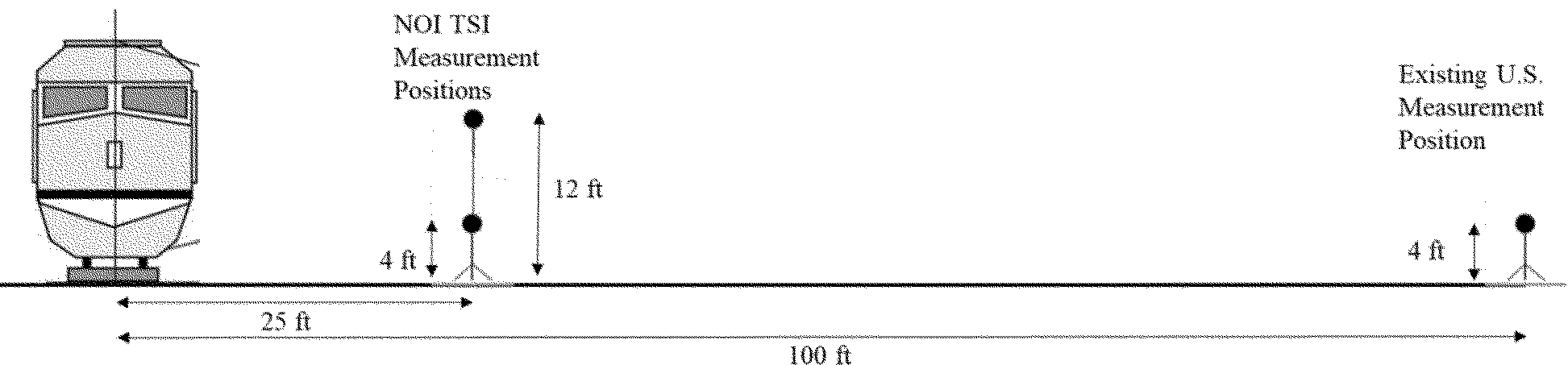
 www.dot.gov/privacy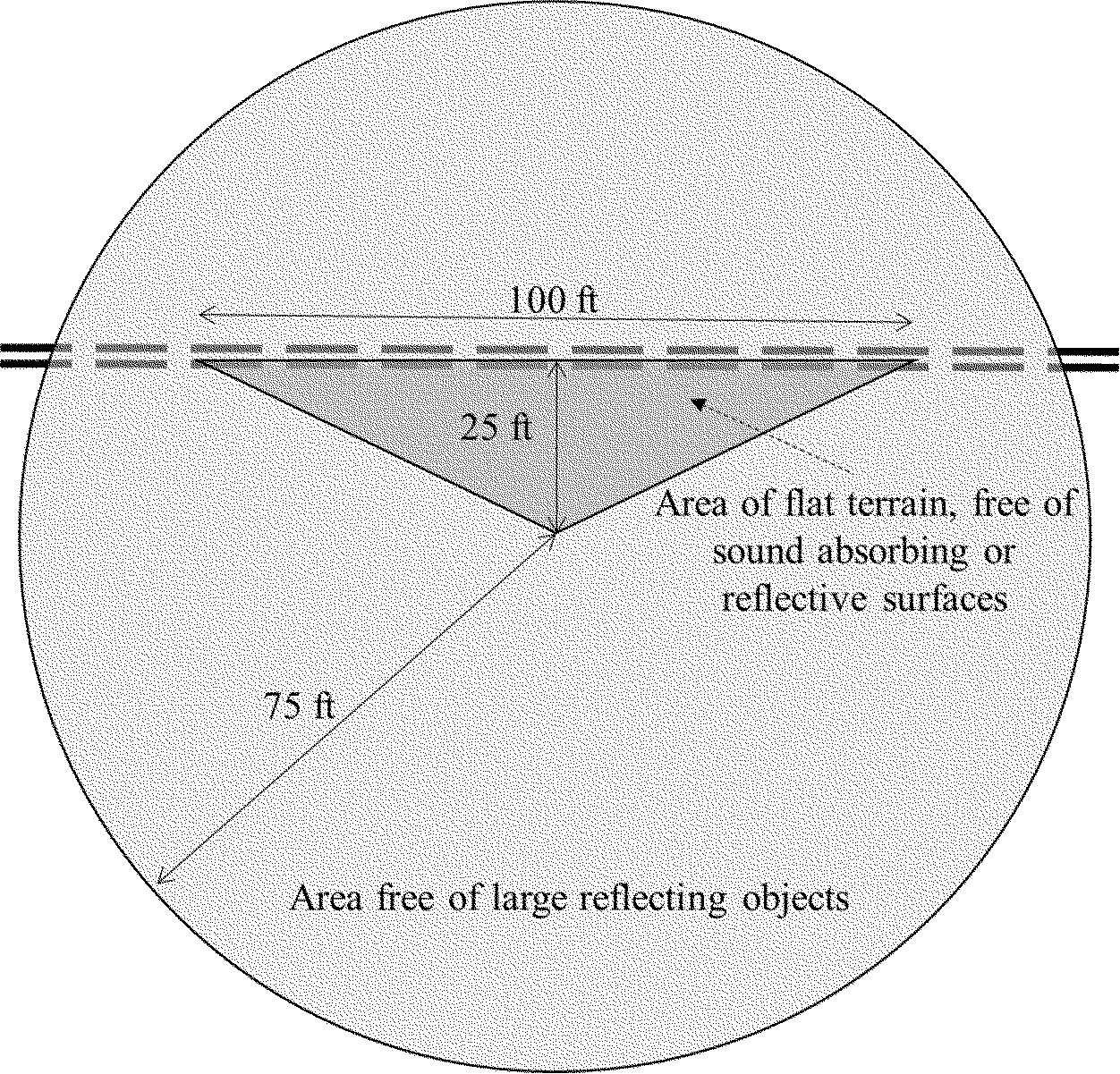
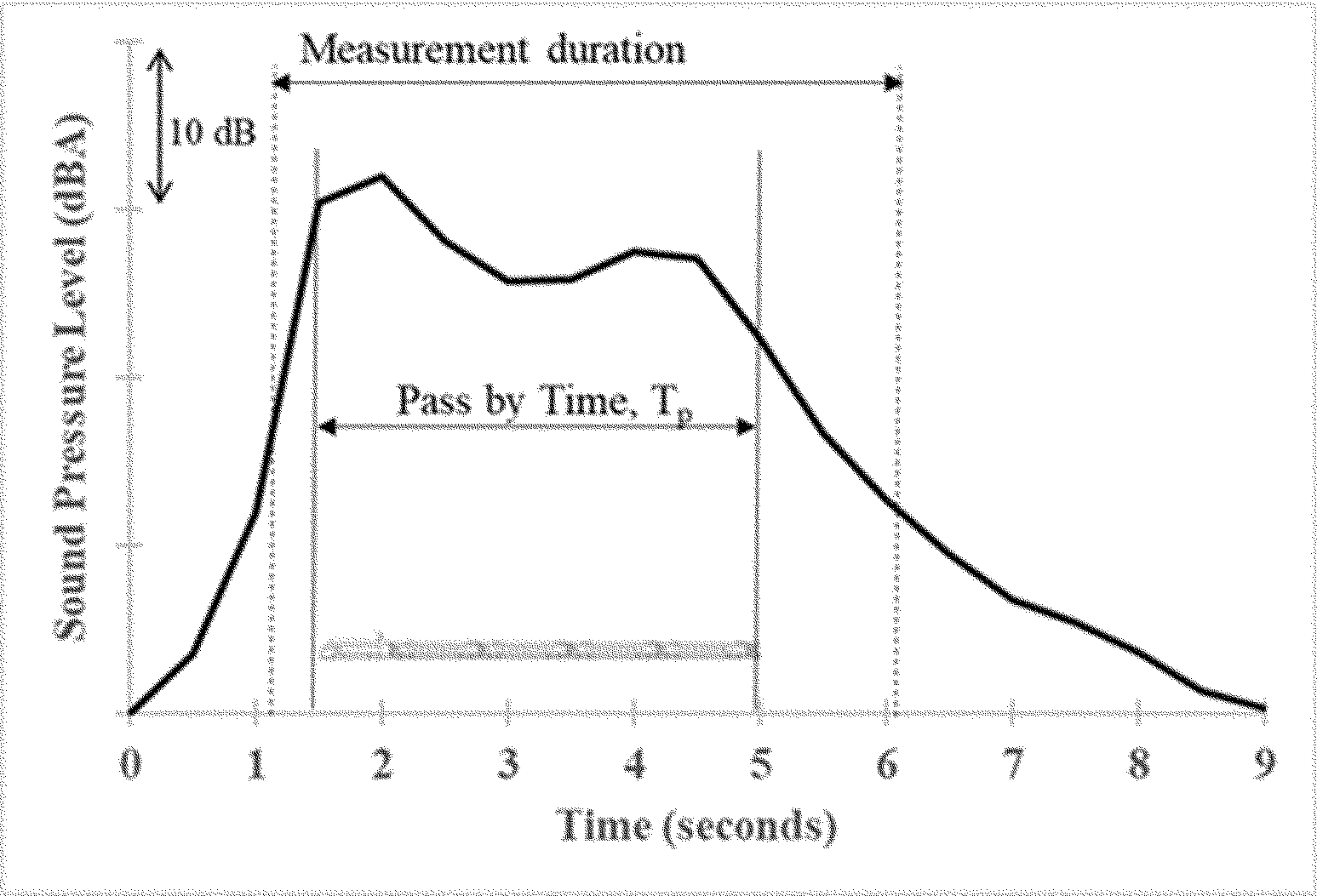
 railroads.dot.gov/elibrary/high-speed-rail-noise-standards-and-regulations
 amtraknewera.com/nextgen-acela-fleet
 www.brightlinewest.com/
 wsdot.wa.gov/construction-planning/search-studies/cascadia-high-speed-rail
 nepis.epa.gov/Exe/ZyPURL.cgi?Dockey=9101KI1M.TXT
 eur-lex.europa.eu/legal-content/EN/TXT/PDF/?uri=CELEX:32014R1304
 www.era.europa.eu/domains/registers/eratv_en
 www.transportation.gov/regulations/dot-order-21006b-rulemaking-and-guidance-procedures
 fbaum.unc.edu/teaching/PLSC541_Fall08/tiebout_1956.pdf
 www.sba.gov/document/support-table-size-standards