Oil and Gas and Sulfur Operations on the Outer Continental Shelf-Revisions to the Requirements for Exploratory Drilling on the Arctic Outer Continental Shelf
The Department of the Interior (DOI or Department), acting through BSEE and BOEM (collectively, "the Bureaus"), is proposing to revise its existing regulations for exploratory d...
Bureau of Safety and Environmental Enforcement (BSEE); Bureau of Ocean Energy Management (BOEM), Interior.
ACTION:
Proposed rule.
SUMMARY:
The Department of the Interior (DOI or Department), acting through BSEE and BOEM (collectively, “the Bureaus”), is proposing to revise its existing regulations for exploratory drilling and related operations on the Arctic Outer Continental Shelf (OCS), to reduce unnecessary burdens on stakeholders while ensuring that energy exploration on the Arctic OCS is safe and environmentally responsible.[1]
This proposed rule would revise certain requirements promulgated through the rule entitled,
Oil and Gas and Sulfur Operations on the Outer Continental Shelf—Requirements for Exploratory Drilling on the Arctic Outer Continental Shelf
(“2016 Arctic Exploratory Drilling Rule”) (
see81 FR 46478). This proposed rule would modify existing Arctic OCS blowout preventer (BOP) real-time monitoring requirements and add new provisions to BSEE's regulations pertaining to requirements for crane operations on artificial islands, suspensions of operations (SOO), and suspensions of production (SOP). This proposed rule would also revise certain parts of the Exploration Plan (EP) and Development and Production Plan (DPP) regulations implemented by BOEM.
DATES:
Submit comments on this proposed rule to BSEE on or before October 5, 2026. The Bureaus may not fully consider comments received after this date. You may submit comments to the Office of Management and Budget (OMB) on the information collection burden in this proposed rule by September 8, 2026. The deadline for comments on the information collection burden does not affect the deadline for the public to comment to the Bureaus on the proposed regulations.
ADDRESSES:
You may submit comments on the proposed rule by any of the following methods. Please use the Regulation Identifier Number (RIN) 1082-AA05 as an identifier in your message. See also Public Availability of Comments under Procedural Matters.
Federal eRulemaking Portal: www.regulations.gov.
In the entry entitled, “Enter Keyword or ID,” enter BSEE-2026-0133, then click search. Follow the instructions to submit public comments and view supporting and related materials available for this rulemaking, including a plain language summary of the proposed rule as required by 5 U.S.C. 553(b)(4). The Bureaus may post all submitted comments.
Mail or hand-carry comments to the DOI, BSEE and BOEM: Attention:
Regulations and Standards Branch, 45600 Woodland Road, VAE-ORP, Sterling VA 20166. Please reference RIN 1082-AA05, “Oil and Gas and Sulfur Operations on the Outer Continental Shelf—Revisions to the Requirements for Exploratory Drilling on the Arctic Outer Continental Shelf,” in your comments, and include your name and return address.
Send comments on the information collection in this rule to:
Interior Desk Officer 1082-AA01, Office of Management and Budget; 202-395-5806 (fax); or via the online portal at
www.reginfo.gov/public/do/PRAMain.
From this main web page, you can find and submit comments on this particular information collection by proceeding to the boldface heading “Currently under Review,” selecting “Department of the Interior” in the “Select Agency” pull down menu, clicking “Submit,” then, checking the box “Only Show ICR for Public Comment” on the next web page, scrolling to this proposed rule, and clicking the “Comment” button at the right margin. Alternatively, you may use the search function on the main web page. Please also send a copy to the Bureaus by one of the means previously described, and reference “
OMB Control Number 1014-[TBD](Revisions to the Requirements for Exploratory Drilling on the Arctic Outer Continental Shelf)
for BSEE-related comments or
OMB Control Number 1010-[TBD](Revisions to the Requirements for Exploratory Drilling on the Arctic Outer Continental Shelf)
for BOEM-related comments, as applicable, in the subject line of your comments.
Public Availability of Comments:
Please be aware that BOEM's and BSEE's practice is to make comments, including the names and addresses of individuals, available for public inspection. Before including your address, phone number, email address, and any personally identifiable information in your comment, please be advised that your entire comment, including your personally identifiable information, may be made publicly available at any time. For the Bureaus to consider withholding from disclosure your personally identifiable information, you must identify, in a cover letter, any information contained in your comments that, if released, would constitute a clearly unwarranted invasion of your personal privacy. You must also briefly describe any possible harmful consequences of the disclosure of information, such as embarrassment, injury, or other harm.
Even if the Bureaus withhold your information in the context of this proposed rule, your submission is subject to the Freedom of Information Act (FOIA). If your submission is requested under the FOIA, your information will only be withheld if BOEM or BSEE determines that one of the FOIA exemptions to disclosure applies. Such a determination will be made in accordance with the Department's FOIA regulations and applicable law.
The Bureaus will make available for public inspection all comments, in their entirety, submitted by organizations and businesses (except as provided material marked and exempted as proprietary information) or by individuals identifying themselves as representatives of organizations or businesses.
FOR FURTHER INFORMATION CONTACT:
For technical questions related to regulatory changes BSEE is proposing in Part 250, contact Bobby Kurtz, BSEE, Acting Alaska OCS Regional Director,
Bobby.Kurtz@bsee.gov,
805-384-6359. For technical questions related to regulatory changes BOEM is proposing in Part 550, contact Joel Immaraj, BOEM, Alaska Regional Office,
joel.immaraj@boem.gov,
(907) 334-5238. For procedural questions contact Bryce Barlan, BSEE, Regulations and Standards Branch,
regs@bsee.gov,
(703) 787-1126.
SUPPLEMENTARY INFORMATION:
Executive Summary
Executive Orders (E.O.) and Secretary's Orders (S.O.) issued in 2017
( printed page 50999)
directed Federal agencies to review existing regulations that potentially burden the development or use of domestically produced energy resources and appropriately begin processes to potentially suspend, revise, or rescind those regulations that are determined to unduly burden the development of domestic energy resources, beyond the degree necessary to protect the public interest or otherwise comply with the law. E.O. 13795,
Implementing an America-First Offshore Energy Strategy
(
see82 FR 20815), which specifically called for a review of the 2016 Arctic Exploratory Drilling Rule, and S.O. 3350,
America-First Offshore Energy Strategy, are discussed in more detail below in
Section I. Background, Subsection B. Executive and Secretary's Orders
.[2]
In response to these orders, the Bureaus undertook a review of the regulations promulgated through the 2016 Arctic Exploratory Drilling Rule and, on December 9, 2020, the Bureaus issued a proposed rule titled
Revisions to the Requirements for Exploratory Drilling on the Arctic Outer Continental Shelf
(“2020 Proposed Revisions to the Arctic Exploratory Drilling Rule”) (
see85 FR 79266). However, on June 29, 2021, the Bureaus withdrew the 2020 Proposed Revisions to the Arctic Exploratory Drilling Rule (
see86 FR 34172) due to a change in administration and policy.
Subsequently, in January 2025, the President signed E.O. 14153,
Unleashing Alaska's Extraordinary Resource Potential
(
see90 FR 8347) and E.O. 14154,
Unleashing American Energy
(
see90 FR 8353), which aimed to expand natural resource development throughout the Nation and in Alaska to promote American energy independence. These E.O.s. also call upon the heads of Federal Agencies, including the Secretary of the Interior (Secretary) to review all existing regulations, orders, guidance documents, policies, and any other similar agency actions, and rescind, revoke, revise, amend, defer, or grant exemptions from those that limit energy development on Federal lands and waters. In response to these E.O.s, the Secretary issued S.O. 3422,
Unleashing Alaska's Extraordinary Resource Potential,
and S.O. 3418,
Unleashing American Energy,
both of which were intended to implement the policies in E.O. 14153 and E.O. 14154.
This proposed rule responds to the 2025 E.O.s and S.O.s and is also consistent with the efforts the Bureaus previously undertook through the 2020 Proposed Revisions to the Arctic Exploratory Drilling Rule. It would create more flexible and less costly compliance options in BSEE's and BOEM's regulations and is designed to ensure the safe, effective, and responsible exploration of Arctic OCS oil and gas resources, while protecting the marine, coastal, and human environments, and preserving Alaska Natives' cultural traditions and their access to subsistence resources. In particular, this proposed rule would revise certain provisions in 30 Code of Federal Regulations (CFR) Part 250, Subparts C, D, and G, 30 CFR part 254, subparts A and E, and 30 CFR part 550, subpart B, that were promulgated through the 2016 Arctic Exploratory Drilling Rule and pertain to:
1. Definition of the “Arctic OCS”;
2 Pollution prevention;
3. Arctic OCS Source Control and Containment Equipment (SCCE);
4. BOP real-time monitoring requirements for the Arctic OCS;
5. Relief rig capabilities for the Arctic OCS;
6. Mudline cellars;
7. Oil spill response plan-holder reviews;
8. Timing and submission requirements related to Integrated Operations Plans (IOP) for proposed Arctic exploratory drilling;
9. What must be included in the IOP; and
10. What data and information must accompany the EP and DPP.
This proposed rule would also revise certain provisions in 30 CFR part 250, subpart A, that are not addressed by the 2016 Arctic Exploratory Drilling Rule, but are relevant to the Arctic OCS or the Alaska OCS region and, therefore, are appropriate to address as part of this proposed rulemaking. These provisions pertain to:
1. The factors that the BSEE Regional Supervisor may evaluate in assessing whether to grant an SOO or grant or direct an SOP to address unique and specific conditions relevant only to exploration and development activities in the Alaska OCS region; and
2. Cranes used for operations on artificial islands.
Table of Contents:
I. Background
A. BSEE and BOEM Statutory and Regulatory Authority and Responsibilities
B. Executive and Secretary's Orders
C. Purpose and Summary of the Rulemaking
D. Procedures for Incorporation by Reference and Availability of Incorporated Documents for Public Viewing
II. Section-by-Section Discussion of Proposed Changes
A. Key Revisions Proposed by BSEE
Title 30, Chapter II, Subchapter B, Part 250
Subpart A—General
Definitions (§ 250.105)
What requirements must I follow for cranes and other material-handling equipment? (§ 250.108)
What requirements must I follow for cranes and other material-handling equipment? (§ 250.108)
How long does a suspension last? (§ 250.170)
How do I request a suspension? (§ 250.171)
When may the Regional Supervisor grant or direct an SOP? (§ 250.174)
When may the Regional Supervisor grant an SOO? (§ 250.175)
Documents Incorporated by Reference. (§ 250.198)
Subpart C—Pollution Prevention and Control
Pollution Prevention. (§ 250.300)
Subpart D—Oil and Gas Drilling Operations
What are the real-time monitoring requirements for Arctic OCS exploratory drilling operations? (§ 250.452)
What additional information must I submit with my APD for Arctic OCS exploratory drilling operations? (§ 250.470)
What are the requirements for Arctic OCS source control and containment? (§ 250.471)
What are the additional well control equipment or relief rig requirements for the Arctic OCS? (§ 250.472)
Subpart G—Well Operations and Equipment
When and how must I secure a well? (§ 250.720)
What are the real-time monitoring requirements? (§ 250.724)
Title 30, Chapter II, Subchapter B, Part 254
Subpart A—General
Definitions. (§ 254.6)
Subpart E—Oil-Spill Response Requirements for Facilities Located on the Arctic OCS
What are the additional requirements for facilities conducting exploratory drilling from a MODU on the Arctic OCS? (§ 254.70)
B. Key Revisions Proposed by BOEM
Title 30, Chapter V, Subchapter B, Part 550
Subpart B—Plans and Information
Definitions. (§ 550.105)
Removal of § 550.204, When must I submit my IOP for proposed Arctic exploratory drilling operations and what must the IOP include?
How do I submit the EP, DPP, or DOCD? (§ 550.206)
What must the EP include? (§ 550.211)
If I propose activities in the Arctic OCS Region, what planning information must accompany the EP? (§ 550.220)
III. Additional Comments Solicited
IV. Procedural Matters
A. Regulatory Planning and Review (E.O. 12866 and 13563)
( printed page 51000)
OCS oil and gas planning areas that include any portion of their geographic extent located north of 66°33′ N latitude
ASME
The American Society of Mechanical Engineers
AWKS
Alternative Well Kill System
BOEM
Bureau of Ocean Energy Management
BOP
Blowout Preventer
Bratslavsky and SolstenXP 2018
Suitability of Source Control and Containment Equipment versus Same Season Relief Well in the Alaska Outer Continental Shelf Region, October 2018
BSEE
Bureau of Safety and Environmental Enforcement
CFR
Code of Federal Regulations
CWA
Clean Water Act
Department
Department of the Interior
DNV GL
Det Norske Veritas and Germanischer Lloyd
DOCD
Development Operations Coordination Document
DOI
Department of the Interior
DPP
Development and Production Plan
EA
Environmental Assessment
EIA
Environmental Impact Analysis
E.O.
Executive Order
EP
Exploration Plan
EPA
Environmental Protection Agency
FACA
Federal Advisory Committee Act
G&G
Geological and geophysical
IC
Information Collection
IOP
Integrated Operations Plan
RIA
Regulatory Impact Analysis
LMRP
Lower Marine Riser Package
MASP
Maximum Anticipated Surface Pressures
MMS
Minerals Management Service
MODU
Mobile Offshore Drilling Unit
NAICS
North American Industry Classification System
NEPA
National Environmental Policy Act of 1969
NPC
National Petroleum Council
NPC 2015 Report
Arctic Potential: Realizing the Promise of U.S. Arctic Oil and Gas Resources
NPC 2019 Report
Supplemental Assessment to the 2015 Report on Arctic Potential: Realizing the Promise of U.S. Arctic Oil and Gas Resources
NPDES
National Pollutant Discharge Elimination System
NTL
Notice to Lessees and Operators
OCS
Outer Continental Shelf
OCSLA
Outer Continental Shelf Lands Act
ODCE
Ocean Discharge Criteria Evaluations
OFR
Office of the Federal Register
OIRA
Office of Information and Regulatory Affairs
OMB
Office of Management and Budget
OSRP
Oil Spill Response Plan
OSPD
Oil Spill Preparedness Division
PRA
Paperwork Reduction Act
RIN
Regulation Identifier Number
ROV
Remotely Operated Vehicle
ROT
Remotely Operated Tool
RP
Recommended Practice
( printed page 51001)
SCCE
Source Control and Containment Equipment
Secretary
Secretary of the Interior
S.O.
Secretary's Orders
SEMS
Safety and Environmental Management Systems
SSID
Subsea Isolation Device
SSRW
Same Season Relief Well
SOO
Suspensions of Operations
SOP
Suspensions of Production
UMRA
Unfunded Mandates Reform Act of 1995
U.S.
United States
USCG
U.S. Coast Guard
WCR
Well Control Rule
WCD
Worst Case Discharge
I. Background
A. BSEE and BOEM Statutory and Regulatory Authority and Responsibilities
The OCSLA, 43 U.S.C. 1331et seq.,
was first enacted in 1953 and substantially amended in 1978. In amending OCSLA, Congress established a national policy of making the OCS “available for expeditious and orderly development, subject to environmental safeguards, in a manner which is consistent with the maintenance of competition and other national needs.” (43 U.S.C. 1332(3)). OCSLA authorizes the Secretary to lease the OCS for mineral development and to regulate oil and gas exploration, development, and production operations on the OCS. As described in case law, “OCSLA allows the Secretary of the Interior to regulate oil and gas leasing on the OCS. Id. § 1334(a). He delegated this power to two subordinate agencies, including [BOEM and BSEE]. Dep't of Interior, Secretarial Order No. 3299 (May 19, 2010). Under OCSLA, the Secretary `may at any time prescribe and amend such rules and regulations as he determines to be necessary and proper in order to provide for the prevention of waste and conservation of the natural resources of the [OCS].' 43 U.S.C. 1334(a). The statute specifies that `[t]he regulations prescribed by the Secretary under this subsection shall include, but not be limited to' [the prompt and efficient exploration and development of a lease area] . . . .” Id. § 1334(a)(1)-(8).”
Gulf
v.
Bureau of Ocean Energy Mgmt., 2026 U.S. Dist. LEXIS 60712, at *2-3 (D.D.C. Mar. 23, 2026).
BOEM's mission is to manage the development of the OCS energy and mineral resources in an environmentally and economically responsible way. BOEM's functions include: leasing; EP administration; DPP and DOCD administration; permitting of G&G activities; environmental analyses in compliance with federal law and regulation; resource evaluation; oil spill WCD determination; economic analysis and fair market value bid/lease evaluations; management of the OCS renewable energy and marine mineral programs; coordination with other entities at the local (
e.g.,
North Slope Borough, Native Villages), State, and Federal levels (
e.g.,
National Oceanic and Atmospheric Administration Fisheries, USCG), as well as consultation with federally recognized ANCSA Tribes and Corporations related to activities within BOEM's activities and areas of responsibility.
BSEE is responsible for safety and environmental enforcement functions, including, but not limited to, permitting activities, inspections, investigations, summoning witnesses and ordering the production of evidence; levying penalties; canceling or suspending activities; [3]
compliance with federal environmental laws and regulations; coordination with other entities at the local (
e.g.,
North Slope Borough, Native Villages), State, and Federal levels (
e.g.,
National Oceanic and Atmospheric Administration Fisheries, USCG), as well as consultation with federally recognized ANCSA Tribes and Corporations; and overseeing safety, oil spill response, and removal preparedness. BSEE's mission is to promote safety, protect the environment, and conserve resources through vigorous regulatory oversight and enforcement. BSEE's functions include evaluating permit applications for post-lease oil and natural gas exploration and development activities on the OCS and conducting inspections to ensure compliance with laws, regulations, lease terms, and approved plans and permits.
BOEM evaluates EPs, and BSEE, thereafter, evaluates APDs and other permits and applications, to determine whether the operator's proposed activities meet OCSLA's standards and each Bureau's regulations governing OCS exploration. Based on the Bureaus' evaluations, they will respectively either approve the operator's EP and APD, require the operator to modify its submissions, or disapprove the EP or APD (§ 250.410,
How do I obtain approval to drill a well?). The review and approval of these activities is outlined below in the following section.
1. BOEM Approval of the EP
As promulgated through the 2016 Arctic Exploratory Drilling Rule, § 550.204,
When must I submit my IOP for proposed Arctic exploratory drilling operations and what must the IOP include?,
requires that a lessee submit an IOP at least 90 days before filing an EP with BOEM, if that EP would involve exploration for oil and gas on the Arctic OCS. While the IOP is not subject to approval, the submission is intended to facilitate the prompt sharing of information among the relevant Federal agencies that may be involved in overseeing exploratory drilling operations conducted from MODUs. The operator may then submit an EP to BOEM for approval. An EP must include information, such as a schedule of anticipated exploration activities, equipment to be used, the general location of each well to be drilled, and any other information deemed pertinent by BOEM (§§ 550.211 through 550.228).
2. BSEE Approval of the APD
Approval of an EP does not, by itself, permit the operator to proceed with exploratory drilling. After BOEM approves the EP, the operator must submit an APD to BSEE. BSEE then determines whether it will approve the
( printed page 51002)
APD. The operator must receive an approval from BSEE before it may drill a well (43 U.S.C. 1340(d); § 250.410). Among other things, the APD must be consistent with the approved EP and include information on the well location, the drilling design and procedures, casing and cementing programs, the diverter and BOP systems, MODU (if one is to be used), and any additional information requested by the BSEE Regional Supervisor.
B. Executive and Secretary's Orders
On April 28, 2017, the President issued E.O. 13795,
Implementing an America-First Offshore Energy Strategy
(
see82 FR 20815), which directed the Secretary to “take all steps necessary to review” the 2016 Arctic Exploratory Drilling Rule and, “if appropriate, [to,] as soon as practicable and consistent with law, publish for notice and comment a proposed rule suspending, revising, or rescinding this rule.” The policy underlying E.O. 13795 is “to encourage energy exploration and production, including on the OCS, in order to maintain the Nation's position as a global energy leader and foster energy security and resilience for the benefit of the American people, while ensuring that any such activity is safe and environmentally responsible.”
To further implement E.O. 13795, on May 1, 2017, the Secretary issued S.O. 3350,
America-First Offshore Energy Strategy,
directing the Bureaus to review the 2016 Arctic Exploratory Drilling Rule “for consistency with the policy set forth in section 2 of E.O. 13795” and to prepare a report “summarizing the review and providing recommendations on whether to suspend, revise, or rescind the rule.”
Consistent with E.O. 13795 and S.O. 3350, the Bureaus reviewed the regulations promulgated through the 2016 Arctic Exploratory Drilling Rule and, on December 9, 2020, issued the 2020 Proposed Revisions to the Arctic Exploratory Drilling Rule to reduce unnecessary burdens on industry while maintaining safety and environmental protection. On June 29, 2021, the Bureaus withdrew the proposed rule (
see86 FR 34172) due to a change in administration and policy, and in response to E.O. 13990,
Protecting Public Health and the Environment and Restoring Science to Tackle the Climate Crisis
(
see86 FR 7037), which revoked E.O. 13795.
In January 2025, the President signed E.O. 14153,
Unleashing Alaska's Extraordinary Resource Potential
(
see90 FR 8347) and E.O. 14154,
Unleashing American Energy
(
see90 FR 8353). E.O. 14153 established new policy for the U.S. to fully avail itself of Alaska's vast lands and resources for the benefit of the Nation and the American citizens who call Alaska home. The E.O. called upon the heads of all executive departments and agencies to rescind, revoke, revise, amend, defer, or grant exemptions from any and all regulations, orders, guidance documents, policies, and any other similar agency actions that are inconsistent with the policy set forth in the E.O. In February 2025, the Secretary issued S.O. 3422,
Unleashing Alaska's Extraordinary Resource Potential,
and S.O. 3418,
Unleashing American Energy,
to implement the policies set forth in E.O. 14153 and E.O. 14154.
E.O. 14154 outlines a broad federal energy policy aimed at expanding domestic energy production and reducing regulatory constraints. The E.O. supports energy exploration and production on Federal lands and waters, including on the OCS, in order to meet the needs of our citizens and solidify the U.S. as a global energy leader long into the future. To that end, it directs all Federal agencies to review all agency actions, including existing regulations, to identify those agency actions that impose an undue burden on the identification, development, or use of domestic energy resources, with particular attention to, among other resources, oil and natural gas, or that are otherwise inconsistent with the policies set forth in the E.O. The Bureaus are proposing the revisions contained in this rulemaking in response to these recent E.O.s and S.O.s.
C. Purpose and Summary of the Rulemaking
Since publication of the 2016 Arctic Exploratory Drilling Rule, the Bureaus have become aware of additional information informing and warranting the bureaus' reconsideration of certain regulatory provisions promulgated through that rule. BSEE commissioned a Technology Assessment Program study (Bratslavsky and SolstenXP 2018) that entailed a historical statistical analysis of a 5-year period on Alaska's Arctic OCS drilling seasons (between 2012 and 2016), in which meteorology and physical oceanographic (“metocean”) and operational conditions would support the safe deployment of SCCE, the drilling of a relief well, or both. The study included a comprehensive review and gap analysis of U.S. and international regulations, standards, RPs, specifications, technical reports, and common industry methods regarding the safe deployment of SCCE, as compared to the effectiveness of drilling a relief well in Arctic conditions.
The Bratslavsky and SolstenXP 2018 study determined that metocean conditions prevalent in the Chukchi Sea and Beaufort Sea (
i.e.,
rough sea states and sea ice conditions, primarily) are key factors that limit the ability to safely deploy SCCE throughout the Arctic OCS. The study determined that, when operating in the presence of sea ice in the Chukchi Sea and the Beaufort Sea, there is a greater probability for safe relief well deployment versus SCCE deployment. When operating in open water conditions (
i.e.,
those prone to rough sea states) in the Chukchi Sea, there is also a greater probability for safe deployment of a relief rig versus SCCE. In the Beaufort Sea, the probability for safely deploying relief rigs and SCCE is the same. This is because the Beaufort Sea has fewer ice-free days than the Chukchi Sea and ice helps maintain calm sea state conditions.
The study also determined that water depth in the Arctic OCS is an additional factor limiting the safe deployment of SCCE. Safe deployment of SCCE is likely to be impaired in water depths shallower than 984 feet because the equipment could potentially encounter a gas boil at the surface caused by a subsea blowing well (Bratslavsky and SolstenXP 2018 at 143). Water depths in the majority of both the Chukchi Sea and Beaufort Sea where exploration has historically occurred are relatively shallow—167 feet or less (
id.
at 7 to 9). This water depth range limits the capabilities of support vessels that could be used for the safe deployment of SCCE.
The NPC [4]
also published its NPC 2019 Report as a supplemental assessment to the NPC 2015 Report. The NPC prepared the NPC 2019 Report in response to an April 2018 request from the Secretary of Energy to provide recommendations for enhancing the Nation's regulatory environment by improving reliability, safety, efficiency, and environmental stewardship of oil and gas activities on the OCS. That report specifically addressed the
( printed page 51003)
regulatory burdens associated with Arctic OCS development.
Key findings from the NPC's 2019 supplemental assessment include that the requirement to drill a SSRW to mitigate the risk of a late season well control event continuing over the winter season is “outdated.” The NPC also concluded that SSID and capping stacks are superior solutions that could stop the flow of oil and allow intervention through the original borehole before a relief well could be completed (NPC 2019Report at 19). Details in the report regarding Russia's 2014 drilling operation that included the use of an SSID in the South Kara Sea also informs this proposed rule. The Kara Sea is a useful model for technical and operational challenges faced in the U.S. Arctic OCS. Both areas have similar cold climates, seasonal sea ice, and are located in isolated geographical regions with limited emergency response capabilities. Equipment used in the Kara Sea—like SSIDs with full well shut-in and winter isolation capabilities—could be applied similarly to proposed operations in the Arctic OCS, given the similar environmental and operational conditions between the two areas.
In this proposed rule, the Bureaus also address other issues in addition to those addressed in the 2016 Arctic Exploratory Drilling Rule, including seasonal weather-related constraints in the Arctic that severely impact an operator's ability to safely perform leaseholding operations or operations to initiate production for a significant portion of the term on a lease. BSEE is also addressing the use of cranes for operations on artificial islands in the Arctic OCS. BSEE's existing crane-related regulations expressly address fixed platforms installed on open waters, which are not the same types of cranes used on artificial islands. Cranes used on artificial islands are similar to those used on land,
i.e.,
mobile cranes, which are not fixed in place (such as on an offshore facility) and may have wheels or tracks so as to lift and transport materials on location. While these issues are in addition to those addressed by the 2016 Arctic Exploratory Drilling Rule, they are unique to the Alaska OCS region and, therefore, are appropriate to address as part of this proposed rulemaking.
This proposed rule would leave most of the regulations promulgated by the 2016 Arctic Exploratory Drilling Rule unaltered, except for certain proposed changes to accommodate technological innovation and encourage energy exploration on the Arctic OCS. Based on the information gathered from the Bratslavsky and SolstenXP 2018 study, and global practical experience gained over the years, as described in the NPC Reports, the Bureaus believe that these proposed revisions reduce unnecessary regulatory burdens on stakeholders and increase the ability to review and apply advancing technological innovations, while ensuring safety and environmental protection.
The following paragraphs briefly summarize the key elements of this proposed rule, which are more fully explained in
Section II. Section-by-Section Discussion of Proposed Changes
of this preamble:
1. Definition of the “Arctic OCS”—The Bureaus propose to modify the definition of the “Arctic OCS” to include all OCS oil and gas planning areas that include any portion of their geographic extent located north of 66°33′ N latitude. Although the 1984 Arctic Research and Policy Act extends the U.S. Arctic boundary to the Aleutian chain, this proposed rule only applies to planning areas north of 66°33′ N that are subject to and distinguished by persistent Arctic oceanographic and meteorological conditions. This would mean that, in addition to the Chukchi Sea and Beaufort Sea planning areas, the new High Arctic Planning Area and existing Hope Basin Planning Area would also be part of the Arctic OCS. In April 2025, as part of its efforts to establish the 11th National OCS Oil and Gas Leasing Program, BOEM revised the OCS planning areas used for agency planning and administrative purposes for oil and gas activities to reflect jurisdictional changes since they were last updated. This included the establishment of a new High Arctic Planning Area.
2. Pollution Prevention (Water-Based Mud and Cuttings)—BSEE proposes to eliminate references to the Regional Supervisor's discretionary authority to require the capture of water-based muds and cuttings in those cases where subsistence values might be impacted by such discharges. While not intended, BSEE understands that this reference has created some uncertainty for the regulated industry, because it appeared to overlap with regulation by the EPA and, if implemented, might result in BSEE issuing requirements that contradict EPA's requirements.
3. Arctic OCS SCCE—BSEE would preserve the requirement for the operator to have access to its SCCE, which includes the capping stack, cap and flow system, and containment dome, when drilling below or working below the surface casing. However, with respect to the capping stack, BSEE proposes to modify the equipment's positioning requirement by providing an opportunity to the operator to adjust the point in time during operations when it must position its capping stack so that it is available to arrive at the well location within 24 hours after a loss of well control. If the operator is able to demonstrate to BSEE, based on documentation it submits as part of its APD, that the operations it plans to conduct below the surface casing would not encounter any abnormally high-pressured zones or other geological hazards before reaching the last casing point prior to penetrating a zone capable of flowing hydrocarbons in measurable quantities, then BSEE will allow the operator to delay its positioning of the capping stack until reaching that casing point. BSEE's proposal to delay the positioning of the capping stack would be based on the documentation that the operator provides as well as any relevant data and information.
The existing regulations also impose a positioning requirement on the cap and flow system, and the containment dome when drilling below or working below the surface casing—slightly different from the capping stack. The cap and flow system and the containment dome must be “positioned to ensure that it will arrive at the well location within 7 days after a loss of well control.” BSEE proposes to eliminate the requirement for the operator to ensure that the containment dome and cap and flow system are positioned so as to arrive at the well location within seven days after a loss of well control. The Bratslavsky and SolstenXP 2018 study evaluated industry methods and standards for deploying SCCE in Arctic OCS conditions, and determined that meteorological conditions (
e.g.,
rough sea state and sea ice conditions) prevalent in the Chukchi Sea and Beaufort Sea are the key factors limiting the time periods when SCCE may be safely deployed throughout the Arctic OCS. This is discussed in further detail below in
Section II. Section-by-Section Discussion of Proposed Changes,
under the subheading
What are the requirements for Arctic OCS source control and containment? (§ 250.471).
It is not practical for the BSEE-administered regulations to prescribe that certain SCCE (containment dome and cap and flow system, in particular) be positioned within proximity to a well location when the conditions for safely deploying this equipment in the Arctic OCS are limiting. BSEE would, however, retain other existing containment dome and cap and flow system requirements in § 250.471, which provide that the operator must:
( printed page 51004)
(i) Demonstrate that it has access to a containment dome and cap and flow system;
(ii) Provide a containment dome and cap and flow system that meets BSEE's operating standards;
(iii) Conduct tests or exercises for all SCCE; and
(iv) Maintain records pertaining to the testing, inspection, maintenance, and use of the SCCE and make these available to BSEE upon request.
These changes would preserve the regulations' requirement that operators have redundant protective measures that are appropriate for Arctic OCS conditions because there is no guarantee that a single measure could control or contain a WCD.
4. BOP Real-time Monitoring Requirements for the Arctic OCS—The Arctic OCS's BOP real-time monitoring requirements are currently inconsistent with the general BOP real-time monitoring requirements that apply throughout the OCS. When the 2016 Arctic Exploratory Drilling Rule was developed, BSEE was still working to establish overarching real-time monitoring requirements in 30 CFR 250 subpart G. Since 2016, these requirements have been revised and fully implemented, making it unnecessary to maintain separate, duplicative requirements for the Arctic. As a result, BSEE proposes to align the Arctic's BOP real-time monitoring with the real-time monitoring requirements applicable in other parts of the OCS.
5. Relief Rig Capabilities for the Arctic OCS—BSEE proposes to revise the relief rig and SSRW requirements by providing the operator with the option of using an SSID or having access to a relief rig as an additional means to secure the well in the event of a loss of well control, if the operator will be conducting exploratory drilling operations from a MODU. In addition, BSEE proposes to provide an opportunity to the operator to adjust the point in time during operations when it must stage its relief rig (if the operator elects to have access to a relief rig) when conducting Arctic OCS exploratory drilling operations. An operator would be able to delay the staging of its relief rig until its operations have reached the “last casing point prior to penetrating a zone capable of flowing hydrocarbons in measurable quantities,” rather than below the “surface casing.” If the operator is able to demonstrate to BSEE, based on documentation it submits as part of its APD, that the operations it plans to conduct below the surface casing would not encounter any abnormally high-pressured zones or other geological hazards before reaching the last casing point prior to penetrating a zone capable of flowing hydrocarbons in measurable quantities, then BSEE will allow the operator to delay its staging of the relief rig until reaching that casing point. BSEE's proposal to permit the delay of the staging of the relief rig will be based on the documentation that operator provides, as well as any other available data and information. In the relief rig and SSRW regulation, BSEE would also eliminate the reference to expected seasonal ice encroachment because the relevant timeframes for operations should be based on the capabilities of the operator's rig and equipment to operate in the applicable ice conditions, rather than an absolute date.
6. Mudline Cellars—BSEE proposes to clarify the requirement that an operator, in areas of ice scour, must use a mudline cellar when drilling that is designed to minimize the risk of damage to the well head and wellbore. The existing regulation could be read to require the operator to use a mudline cellar in all cases, except when the operator can prove that the mudline cellar would present an operational risk, and that was not BSEE's intent. This proposed change would make it clear that the operator has more flexibility to propose to employ alternate procedures or equipment instead of the mudline cellar under appropriate circumstances, as provided by the longstanding provisions of § 250.141,
May I ever use alternate procedures or equipment?;
not just when a mudline cellar would present an operational risk and if the operator is able to demonstrate that the alternate procedure or equipment would provide a level of safety and environmental protection that equals or surpasses the mudline cellar requirement.
7. IOP—BOEM proposes to eliminate the requirement that the operator submit an IOP because it requires submission of information that overlaps with that required in the EP and the IOP's early information sharing is unnecessary in light of BOEM's practice for reviewing and coordinating review of the EP. Consequently, the operator is already aware that it must plan for how it will reduce operational risks and address the challenges associated with operations on the Arctic OCS through its EP. BOEM is proposing to move certain requirements for the IOP to the information required for EPs and delete the remaining requirements that were for the IOP only.
8. Seasonal Conditions SOO—The unique seasonal conditions in the Alaska OCS region make it difficult or physically impossible for operators to explore their leases for a significant portion of each year. To facilitate the proper development of Arctic leases in accordance with OCSLA section 5,[5]
BSEE proposes to add a new provision to its regulations that would provide those operators that are conducting drilling operations, but are prevented from completing those leaseholding operations due to seasonal constraints unique to Alaska, with the opportunity to obtain an SOO. If granted, this type of SOO would suspend the running of the lease term and effectively extend the term of the affected lease by a period equivalent to the period of such suspension. This would provide operators that are otherwise ready and able to conduct drilling operations with additional time to diligently explore their leases, without facing lease expiration due to interference by seasonal constraints unique to Alaska.
9. Initial and Continuing Development Obligations Lease Suspensions—In addition to the proposed SOO, BSEE proposes to add provisions to suspend unitized Alaska OCS leases greater than five years in length when it would allow the lessee the time needed to diligently complete their initial development obligations, or one or more continuing development obligations approved by the BSEE Regional Supervisor. These lease suspensions would exempt unitized Alaska OCS leases from the requirement to provide a commitment to production when requesting a suspension. The maximum 10-year term issued for Alaska OCS leases is inadequate to sufficiently explore and develop the resources on a lease and reach sustained production without the need for one or more lease suspensions. The isolated nature of the region and the tough seasonal conditions of the Alaska OCS make data collection, pre-development planning efforts, and decision-making for the operator difficult to achieve in a timely manner, and if an operator is able to progress to the exploratory drilling stage, they face the challenge of acquiring the drilling rigs or vessels suitable for the area's harsh conditions. These lease suspensions would provide those operators that can demonstrate they are working to diligently complete one or more continuing development
( printed page 51005)
obligations the time needed to properly develop and establish production on their unitized Alaska OCS leases.
10. Cranes Used for Operations on Artificial Islands—As discussed in the next section, BSEE proposes to incorporate by reference into the regulations the ASME B30.5-2021, Mobile and Locomotive Cranes, which addresses the construction, inspection, testing, maintenance, and operation of mobile and locomotive cranes. BSEE's existing crane regulations apply to fixed platforms installed on open waters, which are not the same types of cranes used on artificial islands. Cranes used on artificial islands are like those used on land,
i.e.,
mobile cranes, which are not fixed in place (such as on an offshore facility) and may have wheels or tracks to lift and transport materials on location. Incorporating this technical document into BSEE's regulations would ensure that consistent, industry-based safety requirements for cranes used on artificial islands are established.
D. Procedures for Incorporation by Reference and Availability of Incorporated Documents for Public Viewing
BSEE frequently uses standards (
e.g.,
codes, specifications, and RPs) and other documents developed by standard development organizations as a means of establishing requirements for activities on the OCS. This practice, known as “incorporation by reference,” allows the Department to incorporate the standards from technical documents into the regulations so that the regulations reflect well accepted industry standards without increasing the volume of the CFRs. The legal effect of incorporation by reference is that the incorporated standards become regulatory requirements. This incorporated material, like any other regulation, has the force and effect of law. Operators, lessees, and other regulated parties must comply with the documents incorporated by reference in the regulations.
The OFR regulations at 1 CFR part 51 govern how BSEE and other Federal agencies may incorporate documents by reference. Agencies may incorporate a document by reference by publishing in the
Federal Register
the document title, edition, date, author, publisher, identification number, and other specified information. The preamble of the proposed rule must also discuss the ways that the incorporated materials are reasonably available to interested parties and how those materials can be obtained by interested parties. The Director of the Federal Register will approve each incorporation of a publication by reference in a final rule that meets the criteria of 1 CFR part 51. Incorporation by reference of a document or publication is limited to the edition of the document or publication cited in the regulations. This means that newer editions, amendments, or revisions to documents already incorporated by reference in regulations are not part of BSEE-administered regulations until they are incorporated by reference.
A standard that is proposed for incorporation by reference is frequently referred to as a “1st tier document.” When a 1st tier document references another document, the referenced document is referred to as a “2nd tier document”; these references are either considered “normative” or “informative.” Each has their own definitions of “normative” and “informative.” Generally speaking, compliance with normative references is obligatory to fulfill the provisions of the standard that cites it, while informative references provide additional information that supports the 1st tier document. For example, the API considers compliance with normative references to be necessary for the fulfillment of the provisions of the primary reference. Particularly, the API Document Format and Style Manual (January 2009) and all API standards include the following statement clarifying the importance of normative references: “The following referenced documents are indispensable for the application of this document.” The ASME also considers compliance with normative references as necessary for complying with the primary reference. Standards incorporated from the ASME contain a statement that normative references are indispensable for the application of the primary standard.
When a copyrighted publication is incorporated by reference into BSEE's regulations, the bureau is obligated to observe and protect that copyright. BSEE provides members of the public with website addresses where these standards may be accessed for viewing—sometimes for free and sometimes for a fee. Standards development organizations decide whether to charge a fee. The regulations governing incorporation by reference under 1 CFR part 51 provide that publications are eligible for incorporation by reference if they are “reasonably available to and usable by the class of persons affected.” (See 1 CFR 51.7(a)(3)).
BSEE is proposing to incorporate by reference for the first time into the regulations the requirements found in the
American Society of Mechanical Engineers B30.5-2021, Mobile and Locomotive Cranes—Safety Standard for Cableways, Cranes, Derricks, Hoists, Hooks, Jacks, and Slings; 2021 Edition, December 17, 2021.
This standard contains provisions that address the construction, installation, operation, inspection, testing, maintenance, and use of cranes and other lifting and material-movement-related equipment. It applies to crawler cranes, locomotive cranes, wheel-mounted cranes, and any variations thereof that retain the same fundamental characteristics, and are basically powered by internal combustion engines or electric motors. However, side-boom tractors and cranes designed for railway and automobile wreck clearance, digger derricks, cranes manufactured specifically for, or when used for, energized electrical line service, knuckle boom, trolley boom cranes, and cranes having a maximum rated capacity of 1 ton or less are outside the scope of this standard.
ASME standards can be accessed at
www.asme.org
or by phone: 1-800-843-2763. However, for the convenience of members of the viewing public who may not wish to purchase copies or view the ASME technical document online, the document may be inspected by appointment at BSEE's offices at 45600 Woodland Road, Sterling, Virginia 20166, or 1919 Smith Street, Suite 14042, Houston, Texas 77002. To make an appointment to inspect the material proposed for incorporation at the Houston BSEE office, call 1-844-259-4779. An appointment is required to ensure personnel are available to accommodate the request and to account for competing agency obligations or concerns, including those related to public health and natural disasters.
BSEE is also proposing to add an express reference to
API Recommended Practice (RP) 17H, Remotely Operated Tools and Interfaces on Subsea Production Systems, Second Edition, June 2013; Errata, January 2014,
in proposed § 250.472. This RP provides recommendations for the development and design of remotely operated subsea tools and interfaces on subsea production systems in order to maximize the potential of standardizing equipment and design principles. This document does not cover manned intervention, internal wellbore intervention, internal flowline inspection, tree running, and tree running equipment. However, all the related subsea ROV/ROT interfaces are covered by this standard. It is applicable to the selection, design, and operation of ROTs and ROVs, including ROV tooling.
( printed page 51006)
BSEE has reviewed the requirements in ASME B30.5-2021 and API RP 17H, and proposes to incorporate ASME B30.5-2021 by reference into the regulations for the first time, and add an express reference to API RP 17H in proposed § 250.472 to ensure that industry uses the best available safety technologies on the OCS.
II. Section-by-Section Discussion of Proposed Changes
This section provides explanations of and justifications for each of the specific regulatory changes proposed in this notice. Since this is a joint BSEE and BOEM proposed rulemaking, this Section-by-Section discussion is organized according to the order in which the relevant provisions would appear in the CFR. The BSEE-administered and BOEM-administered regulations are found in the CFR at Title 30—Mineral Resources, Volume 2; BSEE-administered regulations are in Chapter II, and BOEM-administered regulations are in Chapter V.
A. Revisions Proposed by BSEE
Title 30, Chapter II, Subchapter B, Part 250
Oil and Gas and Sulphur Operations in the Outer Continental Shelf
Subpart A—General
Definitions. (§ 250.105)
BSEE proposes to modify the definition of “Arctic OCS” to mean all OCS oil and gas planning areas that include any portion of their geographic extent located north of 66°33′ N latitude. This proposed change would make the new High Arctic Planning Area and existing Hope Basin Planning Area parts of the Arctic OCS, thus, subjecting them to the requirements promulgated by the 2016 Arctic Exploratory Drilling Rule and the changes proposed in this rulemaking, thereby aligning the regulation of exploration activities in those areas with the Beaufort Sea and Chukchi Sea planning areas. The proposed designation of “Arctic OCS” as north of 66°33′ N is merely for functional purposes, to identify the OCS oil and gas planning areas that define the scope of where the requirements of this rulemaking and the 2016 Arctic Exploratory Drilling Rule would apply. The High Arctic and Hope Basin planning areas experience the same type of Arctic weather conditions,
i.e.,
extreme cold, freezing spray, snow, and sea ice, as the Beaufort Sea and Chukchi Sea planning areas. Therefore, BSEE proposes to expand the definition of the “Arctic OCS” to make the development requirements for all four planning areas consistent. As BOEM has acknowledged throughout the planning process for the 11th National OCS Oil and Gas Leasing Draft Proposed Program, BOEM estimates the High Arctic to have negligible resource quantities and Hope Basin to have measured resource potential but negligible development value.
BSEE also proposes to make a modification to the definition of “Arctic OCS conditions.” In the definition, BSEE proposes to replace “on the Arctic OCS” at the end of the first sentence with “throughout the Alaska OCS region.” BSEE would also replace “characteristic of the Arctic region” at the end of the last sentence with “characteristics present throughout the Alaska OCS region.” These proposed changes recognize that extreme cold, freezing spray, snow, extended periods of low light, strong winds, dense fog, sea ice, strong currents, and dangerous sea-state conditions are not only experienced in Arctic waters. They may also occur throughout the Alaska OCS region.
Finally, BSEE proposes to revise the definition of
capping stack
by deleting the phrase “including one that is pre-positioned” from the definition. BSEE included this phrase as part of the 2016 Arctic Exploratory Drilling Rule in response to a suggestion that the definition in the 2015 Arctic Proposed Rule should be expanded to allow pre-positioned capping stacks to be used below subsea BOPs when deemed technically and operationally appropriate. Recognizing that the comment was helpful, BSEE agreed with the suggestion and added the phrase “including one that is pre-positioned” to the capping stack definition (
see81 FR 46492).
As a practical matter, pre-positioned capping stacks are similar, but not the same, as SSIDs. Accordingly, this modification that was included in the 2016 final rule effectively allows the operator to install an SSID below a subsea BOP and would be in compliance with the capping stack requirement in the existing § 250.471,
What are the requirements for Arctic OCS source control and containment?
Section 250.471(a)(1) specifically requires the operator, when drilling below or working below the surface casing, to have access to a capping stack that is positioned to ensure that it will be able to arrive at the well location within 24 hours after a loss of well control. Typically, an operator would comply with this requirement by having one or more support vessels capable of handling and deploying the capping stack down to the subsea wellhead, when needed. Installing an SSID below the subsea BOP allows the operator to comply with § 250.471(a)(1) and forgo the need to provide support vessels and a capping stack on standby at the surface.
However, BSEE is proposing to eliminate this language because a pre-positioned capping stack is a piece of equipment that is similar to and aligns closely with an SSID. Given that BSEE is currently proposing distinct SSID requirements under § 250.472,
What are the additional well control equipment or relief rig requirements for the Arctic OCS?,
the proposed revision to the
capping stack
definition would provide clarity concerning the capping stack requirements under § 250.471. More specifically, installation of an SSID under § 250.472 does not constitute compliance with the capping stack requirements under § 250.471. For purposes of BSEE's proposed regulations, an SSID is not considered to be the same as, or to satisfy the requirement to have, a capping stack.
What requirements must I follow for cranes and other material-handling equipment? (§ 250.108)
Section 250.108 currently requires operators and lessees to comply with crane-specific provisions to ensure the safe design, construction, and testing of all cranes mounted on any fixed platform installed on the OCS. These requirements include, but are not limited to, compliance with the API RP 2D,
Operation and Maintenance of Offshore Cranes
and API RP 2C,
Specification for Offshore Pedestal Mounted Cranes,
which requires cranes to be equipped with a functional anti-two block device, and the management of records related to the operations of those cranes.
BSEE proposes adding a new paragraph (g) to § 250.108 that would require all cranes positioned on artificial islands on the Alaska OCS to meet the requirements of ASME B30.5-2021. BSEE also proposes to modify:
(1) paragraph (b) to apply the requirement for cranes to be equipped with a functional anti-two block device to “OCS artificial islands;” and
(2) paragraph (e) to make the requirement to retain all design and construction records for the life of the crane, all inspection, testing, and maintenance records for at least 4 years, and the qualification records of the crane operator and all rigger personnel for at least 4 years applicable to cranes used on “OCS artificial islands.”
BSEE is proposing these modifications since the regulations
( printed page 51007)
currently do not address cranes used on artificial islands on the OCS. In more recent years, exploration activities on the Arctic OCS have focused primarily on development from these man-made features. These proposed changes would ensure the safe design, construction, and testing of all cranes positioned on OCS artificial islands is being applied consistently, based on best available technologies.
How long does a suspension last? (§ 250.170)
Section 250.170 specifies the length of time BSEE may issue a suspension, which is 5 years per suspension, and describes the effect of a suspension once it is granted, ends, or is terminated. BSEE proposes to add a new provision in a new paragraph (f) to § 250.170 that provides the Alaska OCS Regional Supervisor with the authority to determine the length of an SOP for unitized leases in the Alaska OCS and would not subject these leases to the 5-year suspension timeframe currently described in this section. The length of the suspension would be the amount of time the Regional Supervisor agrees is needed to complete initial development obligations or continuing development obligations justified by the lessee to ensure the maximum economic recovery of unitized OCS lease resources to BSEE's satisfaction. BSEE's determination would be based on the information the operator submits as part of its suspension request, as well as any information about other relevant associated development activities in proximity to the leases covered under the suspension request.
“Continuing development obligations” means a program of development activities or operations an operator conducts that, after the operator completes the initial development obligations defined in a unit agreement or otherwise agreed to by the Regional Supervisor: (1) meets or exceeds the rate of development activities or operations in the vicinity of the unit; and (2) represents an investment proportionate to the size of the area covered by the unit agreement. Initial development obligations are a planned program of exploration activities that, when completed, would allow the operator to estimate the size and shape of the reservoir within the unit area and understand the geologic conditions existing within the reservoir and unit area. Initial development obligations are completed before continuing development obligations.
For example, an initial development obligation could include:
(i) the number of wells to be drilled that an operator anticipates will be necessary to assess the reservoir adequately;
(ii) the primary target for each well, a schedule for starting and completing drilling operations for each well; and
(iii) the time between starting operations on a well to the start of operations on the next well.
Continuing development obligations are activities that would be performed after the operator completes its initial development obligations, which, for example, could include:
(i) drilling, testing, or completing additional wells to the primary target or other unit formations;
(ii) drilling or completing additional wells that establish production of oil and gas;
(iii) recompleting wells or other operations that establish new unit production; or
(iv) drilling existing wells to a deeper target.
As previously mentioned, the isolated nature and tough seasonal conditions of the Alaska OCS region present multiple challenges that make it difficult to initiate production within the current 10-year timeframe of a lease. This proposed provision would allow the Regional Supervisor to determine the appropriate length of a suspension that would be necessary to complete proper development and initiate production on a unitized Alaska OCS lease without having to rely on the limits of the 5-year timeframe specified in this section, which may be more applicable to other OCS regions.
How do I request a suspension? (§ 250.171)
This section specifies the information that must be included in a suspension request, which includes a commitment to production for SOP requests. BSEE proposes adding a provision for unitized Alaska OCS leases that requires the operator to include a commitment to complete the initial development obligations identified in its unit agreement or otherwise approved by the Regional Supervisor. The commitment must include, at minimum, drilling the producible well, as required by 250.171(c), and any additional initial development activities or operations that the Regional Supervisor agrees are necessary to sufficiently explore the lease and justify the lease earning the benefits of unitization. In the case of continuing development obligations, BSEE would require the operator to include a commitment to complete one or more continuing development obligations that the Regional Supervisor agrees are necessary to properly develop the lease. BSEE would also modify existing paragraph (d) to clarify that the commitment to production referenced in this paragraph applies to SOPs for leases that are not unitized Alaska OCS leases.
This provision would allow the operator to request a suspension for their unitized Alaska OCS leases if it is able to provide a commitment to complete its initial development obligations or one or more of its continuing development obligations. BSEE has existing guidance on what constitutes such a commitment, as outlined in NTL 2019-G01. Based on guidance from this NTL, examples of commitment may include: (1) a final investment decision by the operator, (2) evidence that the venture will be economically viable, (3) a written agreement or contract with any third parties (such as pipeline companies or minority lessees) whose resources are required for production to occur, and (4) geologic or reservoir information that BSEE would need for evaluating the economic viability. After the promulgation of this rule, the NTL would be updated to include information relevant to phased development as established under the proposed SOP. BSEE would consider granting a suspension if the operator is able to demonstrate a commitment to continued diligent development to ensure the maximum economic recovery of unitized OCS lease resources, which may be longer than 5 years. This provision could provide the certainty operators may need to commit their resources in an area with extremely high investment risks for success.
When may the Regional Supervisor grant or direct an SOP? (§ 250.174)
This section lists the criteria under which BSEE may grant or direct an SOP when the suspension is in the National interest. BSEE proposes adding a new criterion under proposed paragraph (e) for units on the Alaska OCS whereby the Regional Supervisor may grant a suspension if it allows the operator time to complete its initial development obligations, or one or more continuing development obligations. When an SOP is granted under proposed paragraph (e), only the requirement to produce the undeveloped or underdeveloped lease(s) would be suspended. As proposed, the lessee may continue to produce from the properly developed unitized lease(s) as long as production complies with 250.172(b) and production activities prevent waste, conserve natural resources, and protect correlative rights, including Federal royalty interests, of a
( printed page 51008)
reasonably delineated and productive reservoir.
When may the Regional Supervisor grant an SOO? (§ 250.175)
BSEE proposes to revise § 250.175 by adding a new paragraph (d), which would allow an operator to request an SOO under certain situations that may be present in leases or units throughout the Alaska OCS Region. This proposed revision is consistent with OCSLA's requirement that the Secretary promulgate suspensions regulations that “facilitate proper development of a lease . . . .” [6]
The proposed regulation would list the factors upon which BSEE may rely when determining whether to grant an SOO and include when an operator:
(1) has conducted operations on the lease during the drilling season immediately preceding the period for which the operator is seeking a suspension;
(2) is drilling from:
(i) a MODU,
(ii) an artificial gravel island or a gravity-based structure, or
(iii) an artificial ice island; and
(3) is not able to safely continue its operations due to the presence of seasonal ice, temporary seasonal drilling restrictions in its approved OSRP, or seasonal temperature changes (respectively, for each facility type).
Currently, BOEM issues Alaska OCS leases with the maximum 10-year primary lease term allowed under OCSLA.[7]
However, operators may be precluded from properly developing leases because it is not possible to conduct leaseholding operations for significant portions of those 10-year terms. Offshore drilling locations in the Alaska OCS can be inaccessible for a significant portion of each year, due to seasonal changes that make operating conditions unsafe or otherwise preclude operations. While BOEM cannot award leases with more than the maximum 10-year primary lease term allowed under OCSLA, the Secretary's statutorily delegated authority referenced above at 43 U.S.C. 1334(a)(1) allows for suspensions in certain circumstances that have the effect of extending the lease term by a period equivalent to the period of such suspension. This authority has been redelegated to BSEE, to administer suspensions that can address and mitigate, as appropriate, the effects of Arctic working conditions when they may limit the operator's ability to perform leaseholding activities for much of the year.
See also30 CFR 556.601(f) (How may I maintain my oil and gas lease beyond the primary term?). Paragraph (f) of 30 CFR 556.601 references BSEE-administered suspension regulations at 30 CFR 250.168 through 250.180, in which § 250.169(a) clarifies that a suspension may extend the term of a lease and that the extension is equal to the length of time the suspension is in effect, with respect to operator-requested suspensions. This proposed rule clarifies the factors that can be considered when issuing such suspensions.
MODUs
—Drilling operations performed from a MODU may occur only during the open-water drilling season (generally late June to early November), when sea ice is non-existent or minimal. This practical limitation, without considering other logistical problems unique to the Alaska OCS, could mean that during a consecutive 10-year period, a lease may be unavailable for operations for up to 70 percent of the time.
Artificial Gravel Islands or Gravity-based Structures
—Drilling from artificial gravel islands and gravity-based structures is prohibited during the spring/summer ice break-up and the fall/early winter freeze-up periods due to potential interferences that weather and ice conditions may have on potential oil spill response and cleanup efforts. In particular, response and cleanup techniques for a large spill are not as effective when sea ice is broken and unconsolidated around the drilling location. By contrast, response and cleanup efforts for a large oil spill from an artificial gravel island or a gravity-based structure could be executed effectively during the summer (
i.e.,
in open-water conditions) using existing oil spill response technologies. During the winter (
i.e.,
under solid ice conditions), the ice, and any snow on the ice, could provide an effective platform for oil spill response and cleanup efforts, and help absorb the spill and contain it to an area relatively close to the gravel island or gravity-based structure. Land-based equipment could then be used to collect and transport the oil-covered ice out of the location. For context, a gravity-based structure would include a concrete island drilling structure and one or more steel drilling caissons.
Artificial Ice Islands
—A similar issue would be encountered if drilling were to take place from a man-made ice island. In those cases, the drilling location would be accessible only during the winter season when temperatures are very low, and the area is completely covered by ice stable enough to safely support a drilling rig and associated equipment. As temperatures rise during the spring and summer seasons, the ice breaks or melts away, making the drilling location inaccessible until the next winter season.
The new paragraph (d) of § 250.175 would facilitate the proper development of a lease by addressing those seasonal conditions that limit leaseholding operations and providing an operator ready and able to complete its operations with the opportunity to obtain an SOO. If granted, this SOO would suspend the running of the lease term and effectively extend the term of the affected lease by a period equivalent to the period of such suspension. The SOO would allow a diligent operator to use the full 10 years in a 10-year lease term to explore for hydrocarbons, without the concern for a lease expiring because Arctic seasonal constraints prevented operations.
BSEE is contemplating the option of limiting the period for when the suspension would remain in effect to assure commencement of appropriate lease holding activities. The suspension would remain in effect during the period between one drilling season and the next when the operator is prevented from continuing its drilling or other leaseholding activities due to seasonal conditions.
This option would still provide operators more time to effectively explore their leases without fear of an expiring lease. It could also provide BSEE with a better means of tracking an operator's diligence efforts. This option, however, could result in additional unnecessary burdens, since an operator would have to “reapply” for a new suspension if the operator is unable to return to the location during the next open-water season. BSEE is seeking comment on this regulatory option for the SOO or any other option that could avoid or minimize additional burden, but still assure appropriate operations occur for lease exploration and development.
Documents Incorporated by Reference. (§ 250.198)
BSEE proposes to incorporate by reference
ASME B30.5-2021, Mobile and Locomotive Cranes—Safety
( printed page 51009)
Standard for Cableways, Cranes, Derricks, Hoists, Hooks, Jacks, and Slings; 2021 Edition, December 17, 2021,
for the first time into the regulations as a new paragraph (f)(4) to § 250.198. ASME B30.5-2021 is an industry standard that addresses the construction, installation, operation, inspection, testing, maintenance, and use of cranes and other lifting and material-movement-related equipment operating on artificial islands on the Arctic OCS. In connection with this new incorporation by reference, BSEE would specify in the new paragraph (f)(4) that ASME B30.5-2021 is expressly referenced in proposed § 250.108(g) (“What requirements must I follow for cranes and other material-handling equipment?”).
BSEE also proposes to add, in existing paragraph (e)(2)(i)(HH) of § 250.198, a reference to proposed § 250.472(a). One of the features in BSEE's proposed revisions to the existing relief rig and SSRW requirements in § 250.472, which is discussed in detail later below in the
What are the relief rig or additional well control equipment or relief rig requirements for the Arctic OCS? (§ 250.472)
section-by-section discussion, is a requirement for the SSID to include ROV intervention equipment that has the capabilities to function as the SSID. Under proposed § 250.472(a)(3)(ii), specifically, BSEE would require the ROV to have panels that are compliant with API RP 17H to ensure that the operator's ROV capabilities for the SSID follow BSEE's existing ROV panel requirements for BOP systems. Adding a reference to § 250.472(a) in § 250.198(e)(2)(i)(HH) makes clear as to where API RP 17H would be codified in the BSEE-administered regulations.
Subpart C—Pollution Prevention and Control
Pollution Prevention. (§ 250.300)
BSEE proposes to revise paragraphs (b)(1) and (b)(2) of § 250.300 by eliminating the existing language that states the Regional Supervisor may require the capture of all water-based mud, and associated cuttings, from operations after completion of the hole for the conductor casing to prevent its discharge into the marine environment. While this proposed rule would eliminate the language regarding the Regional Supervisor's discretionary authority to require the capture of water-based muds and cuttings, it would maintain the existing requirement in § 250.300(b)(1) and (b)(2) that operators capture all petroleum-based mud and associated cuttings while operating on the Arctic OCS.
Existing § 250.300(b)(1) and (b)(2) state that the BSEE Regional Supervisor may exercise his or her discretionary authority to restrict discharges of water-based muds and associated cuttings from Arctic OCS exploratory drilling based on various factors, such as: proximity of drilling operations to subsistence hunting and fishing locations; the extent to which discharged water-based mud or cuttings may cause marine mammals to alter their migratory patterns in a manner that impedes subsistence users' access to or use of those resources, or increases the risk of injury to subsistence users; or the extent to which discharged mud or cuttings may adversely affect marine mammals, fish, or their habitat. BSEE promulgated the existing provisions in response to concerns raised by Alaska Native Tribes during preparation of the 2015 Arctic Proposed Rule. These concerns included how water-based muds or cuttings could adversely affect marine species (
e.g.,
whales and fish) and their habitats and compromise the effectiveness of subsistence hunting activities.
BSEE re-examined the language in paragraphs (b)(1) and (b)(2) of this section in light of EPA's authority to address water-based muds and cuttings discharges. The CWA (Section 301(a), 33 U.S.C. 1311(a)) provides EPA with the authority to issue NPDES general permits, which authorize certain discharges, including certain restricted discharges of water-based muds and cuttings, from oil and gas exploratory facilities on the OCS in the Beaufort Sea and the Chukchi Sea. Those general permits additionally prohibit the discharge of oil-based and non-aqueous based muds and cuttings. The EPA must issue an NPDES general permit before an operator may seek coverage under that general permit. Compliance with the CWA, including gaining coverage under an applicable NPDES general permit, is necessary before an operator may discharge pollutants from its exploratory drilling operations.
Before issuing an NPDES permit, EPA must make specific determinations to ensure that issuance of a permit will not lead to unreasonable degradation of the marine environment. EPA's determination is guided by an ODCE. The ODCE requires the agency to consider multiple environmental factors, such as potential impacts on human health through direct and indirect pathways, and the importance of the receiving water area to the surrounding biological community. The most relevant NPDES permits issued for offshore oil and gas exploration activities conducted from a MODU on the Arctic OCS are two 2012 general permits that covered oil and gas exploration facilities conducting operations in Federal waters of the Beaufort Sea and the Chukchi Sea. When considering the multiple environmental factors under the ODCE for the 2012 general permits (
i.e.,
potential impacts on human health through direct and indirect pathways, and the importance of the receiving water area to the surrounding biological community), EPA considered how discharges could impact subsistence activities, marine resources, and coastal areas. The Beaufort Sea permit [8]
does not allow the discharge of water-based muds and cuttings during the fall bowhead whale hunt. However, the Chukchi Sea permit [9]
did not include a similar restriction. According to the ODCE for the Chukchi Sea permit, the restriction was not necessary because the migration of bowhead whales would be over before discharge-related activities would begin.[10]
Under this proposed rule, BSEE would preserve the requirements in § 250.300(b)(1) and (b)(2) that the operator capture all petroleum-based mud and associated cuttings. This requirement is consistent with a longstanding, OCS-wide regulatory authority that existed prior to the promulgation of the 2016 Arctic Exploratory Drilling Rule. BSEE must preserve the petroleum-based muds and cuttings requirement since it is not unusual for petroleum-based muds to contain constituents that are toxic and harmful to the environment. Although water-based muds may not be a feasible option for all drilling operations, such as when drilling through hydrophobic geologic formations that could be damaged by water-based muds, its use is a more environmentally benign approach in comparison to the use of petroleum-based muds. However, BSEE's proposed revisions reflect the Bureau's understanding that the express statements regarding the Regional Supervisor's discretionary authority to require the capture of water-based muds and cuttings in existing § 250.300(b)(1) and (b)(2) are not necessary. In particular, the EPA already addresses the goals of protecting water quality
( printed page 51010)
through the NPDES program, protecting marine species and their habitats, as well as the effectiveness of subsistence hunting activities, through the exercise of that agency's authorities. Thus, BSEE does not expect the Regional Supervisor to need to exercise the discretionary authority under existing § 250.300(b)(1) and (b)(2) in the foreseeable future.
Furthermore, BSEE understands, and did so even while it was preparing the 2016 Arctic Exploratory Drilling rule, that the references to the BSEE Regional Supervisor's authority in existing paragraphs (b)(1) and (b)(2) created some uncertainty for the regulated industry because it appeared to overlap with EPA's jurisdiction and, if implemented, might result in BSEE issuing duplicative or conflicting requirements. BSEE addressed this concern by explaining that the amendments were meant to clarify the Regional Supervisor's authority to impose operational measures that complement EPA's discharge limitations by considering potential impacts to specific components of the Arctic environment, such as subsistence activities, marine resources, and coastal areas (
see81 FR 46505). Given the policy in E.O. 14153 for all Federal agencies to fully avail itself of Alaska's vast lands and resources for the benefit of the Nation and the American citizens who call Alaska home, and the E.O.'s direction to rescind, revoke, revise, amend, defer, or grant exemptions from any and all regulations, orders, guidance documents, policies, and any other similar agency actions that are inconsistent with the policy set forth in the E.O., it is appropriate to propose eliminating the water-based mud, and associated cuttings, provisions in § 250.300(b)(1) and (b)(2).
This proposed regulatory change does not suggest any change in BSEE's recognition that it has a regulatory responsibility to ensure that operators conduct oil and gas exploration and production activities on the OCS in a safe and environmentally responsible manner pursuant to OCSLA. Therefore, the proposed rule would not alter the longstanding regulation at § 250.300(b)(1), under which the District Manager (or Regional Supervisor) retains the ability to restrict the rate of drilling fluid discharges or prescribe alternative discharge methods where warranted. Pursuant to § 250.300(b)(1), BSEE would be able to determine whether there is a need to require operators to capture of water-based muds and cuttings on a case-by-case basis, if the EPA has not done so. In particular, the District Manager would consider and determine whether such a requirement would be appropriate for any facility. The District Manager would make this determination on a case-by-case basis, in conjunction with the EP and APD approval process. This process includes coordinating with BOEM, particularly at the EP stage, when BOEM conducts an environmental review to identify the direct, indirect, and cumulative environmental effects that may be expected as a result of implementing the EP. That environmental review also incorporates input about potential environmental effects that may be obtained through consultations and review by interested parties, Federal agencies (
e.g.,
EPA), State or local agencies, Tribes, or the public. Nothing would change BSEE's position from the 2016 rule to communicate with other agencies responsible for oversight of discharges related to oil and gas exploration drilling in the Arctic. This communication will help ensure that conflicts do not arise (
see81 FR 46504). BSEE expects that such input from EPA would address whether that agency has issued or plans to issue a permit for the same exploratory drilling facilities, and whether that agency believes that capture of water-based muds in a specific case is warranted. Through BSEE's longstanding authority under § 250.300(b)(1), the District Manager could require an operator to restrict the rate of drilling fluid discharges or prescribe alternative discharge methods. Such a restriction on the discharge of water-based muds and cuttings might be appropriate if identified in the EP environmental review process.
In addition to the proposed revisions just described, BSEE proposes a minor modification to the second sentence in existing paragraph (b)(2), which requires the operator to capture all cuttings from operations that “utilize” petroleum-based mud to prevent their discharge into the marine environment. BSEE proposes to replace the word “utilize” with “use” to improve the readability of the regulation.
Subpart D—Oil and Gas Drilling Operations
What are the real-time monitoring requirements for Arctic OCS exploratory drilling operations? (§ 250.452)
BSEE proposes to remove all provisions in § 250.452 and require operators to simply follow the BOP real-time monitoring requirements in § 250.724, which contains the real-time monitoring requirements for subsea BOPs and surface BOPs used in other parts of the OCS. In conjunction with this proposed change, BSEE also proposes to modify paragraph (a) of § 250.724 by adding “all Arctic OCS drilling operations” to the list of environments/cases where BOP real-time monitoring requirements would apply.
The Arctic OCS's BOP real-time monitoring requirements were initially established as part of the 2016 Arctic Exploratory Drilling Rule. The provisions in § 250.452 were tailored to be consistent with the real-time monitoring requirements established by the BOP Systems and WCR promulgated that same year (
see81 FR 25888). However, since 2016, the WCR's real-time monitoring requirements in § 250.724 have been updated, but without a consistency-update to the Arctic OCS's BOP real-time monitoring requirements. It is not necessary to have two separate real-time monitoring requirements for BOPs used on the OCS. Therefore, BSEE proposes to update BOP real-time monitoring requirements for the Arctic OCS to be consistent with the Bureau's overall BOP real-time monitoring requirements in § 250.724.
What additional information must I submit with my APD for Arctic OCS exploratory drilling operations? (§ 250.470)
BSEE proposes to revise paragraph (b) of § 250.470 by adding paragraph (13) to include “Recover the subsea isolation device (SSID), where applicable.” This revision is necessary to address the SSID alternative proposed in § 250.472, and to ensure the operator's permit addresses how it would recover the SSID, if one is used. For operations relying on an SSID, the SSID is a critical piece of equipment. Therefore, BSEE must understand how the operator will handle it, prior to and after drilling operations. We also propose minor, non-substantive edits to paragraphs (b)(11) and (12) to accommodate this addition.
BSEE also proposes to revise paragraph (f)(3) by replacing the “below the surface casing” language in this paragraph with the phrase “below the surface casing, or before the last casing point prior to penetrating a zone capable of flowing hydrocarbons in measurable quantities, as approved by the Regional Supervisor.” This change would make the requirement in paragraph (f)(3) consistent with the substantive changes BSEE is proposing to § 250.471, which establishes the substance of the Arctic OCS SCCE requirements. Paragraph (f)(3) of § 250.470 complements § 250.471, by requiring the operator, in cases where it obtains SCCE capabilities through contracting, to provide proof of contracts or membership agreements with cooperatives, service providers, or
( printed page 51011)
other contractors. This includes information demonstrating the availability of the personnel and/or equipment on a 24-hour per day basis during operations “below the surface casing.” The proposed changes to § 250.471 are discussed in further detail below.
Finally, BSEE proposes to add a new paragraph (h) to complement the proposed revisions to § 250.472, which would provide the operator with the option to use an SSID or have access to a relief rig, as an additional means to secure the well in the event of a loss of well control, if the operator will be conducting exploratory drilling operations from a MODU (that change is discussed in further detail in connection with that provision). Under proposed paragraph (h), if the operator elects to use an SSID, BSEE would require the operator to provide a certification, signed by a registered professional engineer, confirming that its SSID and well design (including casing and cementing program) meet the design requirements in proposed § 250.472(a), and the design is appropriate for the purpose for which it is intended under expected wellbore conditions. BSEE is proposing this new provision to be consistent with existing requirements under existing § 250.420 (a)(7)(i), which require the operator to include with the APD a certification signed by a registered professional engineer that the casing and cementing design is appropriate for the purpose for which it is intended under expected wellbore conditions.
What are the requirements for Arctic OCS source control and containment? (§ 250.471)
Section 250.471(a) currently requires the operator to have access to the SCCE described in subparagraphs (a)(1) to (a)(3), which must be capable of stopping or capturing the flow of an out-of-control well if the operator will be using a MODU when drilling below or working below the surface casing. Subparagraph (a)(1) specifically requires the capping stack to be positioned to ensure that it will be able to arrive at the well location within 24 hours after a loss of well control. Subparagraphs (a)(2) and (a)(3) require the cap and flow system and the containment dome to be positioned to ensure that they will be able to arrive at the well location within 7 days after a loss of well control.
BSEE proposes to revise § 250.471 by:
(i) Adding a new provision to paragraph (a) that would allow the operator to, subject to BSEE's determination, delay access to its SCCE until operations have reached the last casing point prior to penetrating a zone capable of flowing hydrocarbons in measurable quantities provided that the operator submits adequate documentation (such as, but not limited to, risk modeling data, off-set well data, analog data, seismic data), with its APD, demonstrating that they will not encounter any abnormally high-pressured zones or other geologic hazards. This provision would make clear that BSEE will base its determination on any documentation the operator provides, as well as any other available data and information.
(ii) Replacing the language in paragraph (a) stating “capable of
stopping
or
capturing
the flow
of
an out-of-control well” with “capable of
controlling
or
containing
the flow
from
an out-of-control well when drilling below or working below the surface casing;” and
(iii) Removing the phrase “positioned to ensure that it will arrive at the well location within 7 days after a loss of well control” from subparagraphs (a)(2) and (a)(3), which apply to the cap and flow system and containment dome, respectively.
The changes described in item (i) in the previous paragraph could allow the operator to adjust the point in time during operations when it must position its capping stack—from “when drilling or working below the surface casing” to “when drilling or working below the last casing point prior to the zone capable of flowing hydrocarbons in measurable quantities”—if the operator is able to demonstrate that it will not encounter any abnormally high-pressured zones or other geological hazards before that casing point. However, unless otherwise approved by BSEE, the operator must have access to their SCCE as described in subparagraph (a)(1) and proposed subparagraphs (a)(2) and (a)(3), when drilling or working below the surface casing. While BSEE does not propose changes to the capping stack provision in subparagraph (a)(1), changes to paragraph (a) would have a practical effect on the existing capping stack requirements. Changes to the capping stack requirements are discussed in the next subsection, entitled,
Revisions to the Capping Stack Requirements.
BSEE's proposed modifications described in item (ii) above are administrative in nature. BSEE proposes this change so that the language is consistent with the source “control” and “containment” description of this equipment, as well as the title of this section of the regulations (
i.e.,
§ 250.471
What are the requirements for Arctic OCS source control and containment?). It would not change the performance standard that the operator's SCCE must meet.
BSEE's proposed changes described in item (iii) above to remove the phrase “positioned to ensure that it will arrive at the well location within 7 days after a loss of well control” from subparagraphs (a)(2) and (a)(3) would still require the operator to ensure it has access to a cap and flow system or a containment dome. However, the operator would no longer be required to ensure the equipment is positioned to be able to arrive at the well location within 7 days after the loss of well control. The distinction between the positioning requirement and the requirement to have access to the equipment is that “having access” refers to ensuring the operator has identified the equipment that would meet the performance requirements in this section and in other existing BSEE regulations (
i.e.,
§ 250.462,
What are the source control, containment, and collocated equipment requirements?), and is able to deploy the equipment as directed by the Regional Supervisor. Additional information regarding BSEE's proposed revisions to §§ 250.471(a)(2) and 250.471(a)(3) are discussed in the subsection below, entitled,
Revisions to the Cap and Flow System, and Containment Dome Requirements.
• Revisions to the Capping Stack Requirements
BSEE's proposed revisions to the capping stack requirements in paragraph (a) would provide an opportunity to the operator to adjust the point in time during operations when it must position its capping stack, so that it will be available to arrive at the well location within 24 hours after a loss of well control. If the operator is able to demonstrate to BSEE that the operations it plans to conduct below the surface casing would not encounter any abnormally high-pressured zones or other geologic hazards before reaching the last casing point prior to penetrating a zone capable of flowing hydrocarbons in measurable quantities, then BSEE would allow the operator delay its positioning of the capping stack until that point.
The existing capping stack requirements in paragraphs (a) and (a)(1) are intended to ensure that a capping stack is readily available to stop or capture the flow of hydrocarbons in case of a loss of well control when drilling below or working below the surface casing. While BSEE does not propose to eliminate the requirement in paragraph (a)(1) to ensure that the
( printed page 51012)
capping stack will be able to arrive at the well location within 24 hours after a loss of well control, the existing requirement in paragraph (a) to ensure the equipment is accessible when drilling below the surface casing does not fully take into consideration the known geology of an area. The formations below the surface casing, based on the known geology of the area, may have minimal or no potential to flow hydrocarbons in measurable quantities during drilling operations. This obviates the need for ensuring capping stack availability during operations in those zones. Prior to submitting an APD, operators assess the formations they will potentially encounter during drilling operations, including the potential for hydrocarbon flow. Operators base this assessment on existing G&G data that they include in the APD.
In many cases, flowable hydrocarbons are not anticipated or encountered in measurable quantities until the target productive formation is reached. For example, a surface casing shoe setting depth for an Arctic OCS exploration well could be only 1,500 feet, but the hydrocarbon bearing formation may be thousands of feet below that point. The existing regulations require the operator to have access to an available capping stack when drilling or working below the surface casing, even though geologic and engineering risk analyses the operator must submit as part of their APD may show that there is little or no potential for hydrocarbons to escape the formation and flow into the well prior to reaching the targeted productive formation. In such circumstances, the operator could safely drill for thousands of feet below the surface casing, without any identifiable need for a capping stack. This proposed change would, when appropriate, eliminate an unnecessary burden for the operator to maintain a positioned capping stack while drilling into low risk, non-productive sections of the well below the surface casing.
An extensive amount of geophysical data already exists for certain areas of both the Beaufort and Chukchi Sea Planning Areas, and there has been extensive drilling in certain areas of the Beaufort Sea Planning Area. In the known geologic conditions of the U.S. Arctic, operators have a good understanding of the locations of reservoirs that they will encounter, which can be relatively shallow and normally pressured above certain geologic depths. Therefore, it may not be necessary to have access to a capping stack when drilling through zones below the surface casing that do not have abnormally high formation pressures or contain other geological hazards, and do not have the potential to flow hydrocarbons in measurable quantities, as they are penetrated.
However, because geologic conditions are not uniformly normally pressured throughout the Arctic OCS, BSEE is maintaining the existing requirement to have the capping stack positioned, when drilling or working below the surface casing, at a location within proximity to the drilling location so as to be able to arrive within 24 hours of a blowout. At the same time, BSEE does not discount the possibility that future projects would not need to have SCCE (
i.e.,
the capping stack) positioned until reaching the last casing point prior to penetrating a zone capable of flowing hydrocarbons.
The criteria BSEE proposes to rely on to determine whether to grant an exception (
i.e.,
operator demonstrates to BSEE that it will not encounter “abnormally high-pressured zones or other geologic hazards”) accounts for those downhole risks that could lead to a blowout and may require the use of a capping stack. With respect to abnormally high-pressured zones, BSEE is concerned that there could be a case where a kick (an influx, or flow, of formation fluid from the high-pressured zone entering into the wellbore) is not controlled and could lead to a blowout. While there are means of mitigating the risk of a kick, (
i.e.,
overbalanced drilling), the capping stack needs to be readily available if heavier weight drilling muds, the BOP, and SSID, if applicable, fail to control the well.
There could be other geologic hazards, such as fractured or high permeability zones, that may also pose a risk, particularly if those zones contain hydrocarbons. It is possible that normally pressured zones may be highly permeable or contain fractures, in which lost circulation may occur. This could cause a dynamic effect where drilling mud flows into the permeable formation causing the circulating pressure to decrease below the zone's pore pressure resulting in formation fluids flowing into the well bore,
i.e.,
loss of well control. The capping stack must be readily available if heavier weight drilling muds, the BOP, and SSID, if applicable, fail to control the well.
However, if the operator is able to demonstrate that a highly permeable or fractured zone is predicted to only contain water, BSEE would consider allowing the operator to delay positioning of the capping stack. Under this scenario, the operator would be able to use the diverter system in conjunction with the BOP system to maintain safety and environmental protection because it would be unlikely for hydrocarbons to be released into the environment. The diverter system consists of a mechanical device similar to a BOP annular preventer. The diverter system is used to divert gases, fluids, and other materials flowing from the well, away from facilities and personnel. Also, an operator would pump fluid loss materials into the well to bridge the formation to reduce its permeability and allow drilling muds to isolate the formation from the well. To permanently address the incident, the operator could also install a liner or set a new casing point at the interval where that highly permeable or fractured zone is located. BSEE would like to know whether there are more appropriate criteria, other than “abnormally high-pressured zones or other geologic hazards,” that the Bureau should use to determine whether to allow the operator to delay positioning of the capping stack.
BSEE's proposed regulatory language describing the types of documentation it would consider adequate to demonstrate that abnormally high-pressured zones or other geological hazards would not be encountered before reaching the last casing point prior to penetrating a zone capable of flowing hydrocarbons in measurable quantities—“such as, but not limited to, risk modeling data, off-set well data, analog data, seismic data”—is not meant to be an exhaustive list. BSEE would accept any other types of documentation the operator may provide that will help its demonstration. BSEE does not anticipate this submission requirement would lead to a significant information collection burden on the operator because it is normal practice for operators to gather these types of information to develop and design an offshore exploration drilling project on the Arctic OCS. BSEE is requesting comment on what other types of information could be used to demonstrate the absence of abnormally pressured zones or other geologic hazards, and how burden on the operator could change—increase or decrease—if BSEE were to require its submission.
At the APD stage, BSEE would evaluate the operator's documentation along with other accompanying geologic and engineering information/analyses that must be submitted as part of its APD. BSEE would also consider any other available G&G information, such as information gathered from prior drilling operations in the area (
e.g.,
well log and pressure testing information), and any other applicable geophysical (
e.g.,
seismic data) information. BSEE
( printed page 51013)
makes clear in its proposed regulatory language that the Regional Supervisor will base the determination on whether to allow the operator to delay positioning of the capping stack on the documentation that the operator submits, as well as any other available data and information.
• Revisions to the Cap and Flow System, and Containment Dome Requirements
As described at the beginning of this section-by-section discussion, § 250.471, BSEE is also proposing to revise paragraphs (a)(2) and (a)(3) to remove the requirement to have a cap and flow system or a containment dome positioned to ensure the equipment will be available to arrive at the well location within 7 days after the loss of well control, but still preserving the existing requirement to deploy those pieces of equipment as directed by BSEE.
BSEE proposes to allow the operator to adjust the point in time during operations when it must position its capping stack under paragraph (a), from “when drilling or working below the surface casing” to “when drilling below or working below last casing point prior to penetrating a zone capable of flowing hydrocarbons in measurable quantities” if the operator is able to demonstrate that it will not encounter any abnormally high-pressured zones or other geologic hazards before that casing point. Only the 7-day arrival timing related to the “flow” part of the cap and flow system would be altered as a result of BSEE's proposed modification to paragraph (a)(2) of § 250.471.[11]
The changes proposed in paragraphs (a)(2) and (a)(3) to remove the requirement for the cap and flow system and the containment dome to arrive at the well location within 7 days after a loss of well control would not change other existing requirements throughout § 250.471 for the operator to ensure:
(i) access to a containment dome and cap and flow system;
(ii) that the cap and flow system is designed to capture at least the amount of hydrocarbons equivalent to the calculated WCD rate referenced in the operator's BOEM-approved EP;
(iii) that the containment dome has the capacity to pump fluids without relying on buoyancy;
(iv) that tests or exercises are conducted for the SCCE, as directed by the Regional Supervisor;
(v) that records pertaining to the testing, inspection, maintenance, and use of the SCCE are maintained and made available to BSEE upon request;
(vi) that all SCCE identified in § 250.471 are transported to the well upon a loss of well control; and
(vii) that SCCE is deployed as directed by the Regional Supervisor.
Since the promulgation of the 2016 Arctic Exploratory Drilling Rule, the cap and flow system and containment dome have not been needed to respond to a loss of well control event in the Arctic OCS. If Arctic OCS exploration/production activities do increase at the rates described in the RIA, there is potential for an increase in the risk of longer duration oil spills if an event were to occur and this equipment may be needed. Thus, the cost savings and forgone benefits should be considered in that context.
BSEE proposes to remove the cap and flow system and containment dome 7-day arrival timing requirements based on the Bratslavsky and SolstenXP 2018 study, which determined that the time periods when SCCE may be safely deployed throughout the Arctic OCS is limited based on typical Arctic conditions. In the Chukchi Sea, safe SCCE deployment could only occur between August and October in the historically active exploration area. Moving north from the historically active exploration area of the Chukchi Sea, the ability to safely deploy SCCE diminishes significantly (
id.
at 100). The study mentions there are more opportunities for safe deployment of SCCE in other portions of the Chukchi Sea (June through December). However, it is only in the southwestern extent of the Chukchi Sea Planning Area; outside of the historically active exploration area.
In the Beaufort Sea, the study noted that sea ice concentrations tend to be greater year-round as compared to the Chukchi Sea (
id.
at 75). Accordingly, safe SCCE deployment could occur from ice capable vessels between early August and October in the historically active exploration area of the Beaufort Sea (
i.e.,
the southern portion of the Beaufort Sea Planning Area). However, moving north beyond the historically active exploration area, time windows for safe SCCE deployment decrease significantly (
id.
at 104).
In the case of open water operations in both the Chukchi and Beaufort Seas, the study points out that sea state is an important limiting factor for safe SCCE deployment. Rough sea states—high waves and longer wave periods—can affect the safety and operating limits of SCCE deployment. The vessel carrying the SCCE can become very unstable in rough sea states and the heave action on the deck can therefore increase significantly beyond the vessel's tolerance levels for conducting operations, which may negatively affect the ability to safely deploy the SCCE. Rough sea states are most likely to occur when there is less sea ice coverage and larger open water areas to generate large waves, which is more of an issue in the Chukchi Sea, where there are larger open water areas throughout the open water season (
id.
at 11).
When operating in open water conditions, sea states generally dictate that safe SCCE deployment could occur only between late September and October in the historically active exploration area of the Chukchi Sea, and that window diminishes significantly moving north of the historically active exploration area. In the Beaufort Sea, where there is less open water throughout the operating season, sea states would generally permit safe deployment of SCCE between late-August and early- to mid‐October in the historically active exploration area. Beyond that, the probability for safe SCCE deployment decreases rapidly in the historically active exploration area and in the other areas of the Beaufort Sea. (
id.
at 98,102)
Water depth is also an important factor to consider for the safe deployment of SCCE. Deployment is likely to be impaired in water depths shallower than 984 feet because the equipment would potentially be subject to a gas boil at the surface from a subsea blowing well (
id.
at 143). A gas boil is a forceful release of hazardous gases which can present human‐health hazards to workers, fire hazards, and potential stability problems for support vessels and the vessel deploying the SCCE directly above the blowing well. Water depths in the majority of the Chukchi Sea and Beaufort Sea where exploration has historically occurred are relatively shallow—167 feet or less (Table 1-1 and Table 1-2,
id.
at 7 to 9). In April of 2020, the only leases with potential projects that would be subject to the Arctic OCS's SCCE requirements were relinquished.[12]
These leases were located in the Beaufort Sea in water depths less than approximately 170 feet deep. This water depth range limits the capabilities of support vessels that can be used for the safe deployment of SCCE. A possible solution that could enable SCCE deployment in the presence of a gas boil is the use of offset‐deployment technology to
( printed page 51014)
remotely position SCCE over the blowing well in shallow water (
id.
at A-35).
When BSEE proposed its original Arctic OCS SCCE requirements in 2015, the Bureau explained that there is limited ability in the Arctic region to summon additional source control and containment resources. Accordingly, the Bureau required operators to plan for response redundancies and planning complexities not required elsewhere (
see80 FR 9938). BSEE determined that the provisions finalized in 2016 provided for the necessary redundancy and sequencing of the responses, based on the time necessary to deploy, and therefore provided sufficient safety and environmental protection to allow for exploratory drilling on the Arctic OCS. At that time, BSEE believed that the technologies identified in its SCCE requirements represented the optimal approach to well control capabilities available for the Arctic OCS (
see81 FR 46520).
Since publication of the 2016 rule, however, BSEE has sought to better understand the ability to safely deploy SCCE (and relief rigs) in Arctic OCS conditions, through the study it commissioned to Bratslavsky Consulting Engineers, Inc., and SolstenXP, Inc. According to the Bratslavsky and SolstenXP 2018 study, the time periods when SCCE may be safely deployed throughout the Arctic OCS is limited in comparison to relief-well drilling operations, based on typical Arctic conditions. BSEE did not have the benefit of having the Bratslavsky and SolstenXP 2018 study when finalizing the 2016 Arctic Exploratory Drilling Rule. BSEE's proposed changes to § 250.471(a)(2) and (a)(3) for the containment dome and cap and flow system responds to the information it has gathered from the study.
BSEE recognizes that Bratslavsky and SolstenXP 2018 study data are now over a decade old. Since then, there may have been changes in U.S. and international regulations, standards, recommended practices, specifications, technical reports and common industry methods regarding the safe deployment of SCCE versus a relief well in Arctic conditions. Furthermore, data of the Arctic OCS's 2012 to 2016 drilling seasons in the Beaufort and Chukchi Seas, and the resulting operating scenarios, could be updated to provide additional insight to the forecast for the RIA. BSEE will continue to review the Bratslavsky and SolstenXP 2018 study to ensure it remains relevant to the proposed provisions of this rulemaking.
In light of these findings, BSEE proposes the revisions under § 250.471 to the containment dome and cap and flow system deployment requirements in paragraphs (a)(2) and (a)(3) because it is not reasonable to impose such universal, prescriptive requirements for equipment that may not be safely deployed (moved to the location, equipment put into place, and activated) and effectively used under certain Arctic OCS conditions. The deployment and arrival schedules of the cap and flow system and the containment dome will be directed by the BSEE Regional Supervisor on a case-by-case basis.
However, as previously described, BSEE proposes only to adjust, rather than eliminate, the reference to the point in time during operations when the operator must have access to a capping stack that is positioned to be able to arrive at the well location within 24 hours after a loss of well control. In comparison to the containment dome, the capping stack has proven to be a more effective technology when successfully deployed and has a different function compared to a containment dome. The capping stack latches on to a connector or pipe stub located on or in the well to achieve a pressure tight seal to capture or stop all fluids flowing out of the well. A containment dome, which removes oil and gas from the water column, will likely capture only a portion of the hydrocarbon flow due to the non-sealing design. In addition, the use of a containment dome may be constrained by the drilling unit itself. Certain drilling rigs, such as jackups and submersible drilling vessels, are unlikely to provide adequate structural clearance for deployment of a containment dome without moving the rig off the drill site. (
id.
at 33).
Furthermore, containment domes have limited field application to prove their capabilities while, in contrast, capping stacks have been field tested and successfully deployed in multiple practice drills (
id.
at 32 and 34).[13]
With respect to the cap and flow system, the flow portion of the system would require additional vessel support activities on the surface (
e.g.,
support vessels for oil and gas processing, and hydrocarbon storage/transfer) to keep the system working in comparison to what would be needed to deploy a capping stack (
e.g.,
a single vessel that would load the capping stack and deploy to the well when needed). The support activities and the vessel on which the flow system is loaded would be subject to the same challenging metocean conditions previously described, thus limiting their ability to be safely deployed throughout the Arctic drilling season. The capping stack would generally have a better opportunity for deployment because once the capping stack is lowered under the water and attached to the wellhead, weather becomes less of a factor.
BSEE believes it is critical to ensure that operators have redundant protective measures in place, as there is no guarantee that a single measure could control or contain a worst-case discharge (
see81 FR 46487). Because the chances of successfully deploying a capping stack under Arctic OCS conditions may be greater in comparison to the containment dome and cap and flow system, BSEE is revising, and not eliminating, the capping stack positioning requirement. BSEE invites comments on any technological upgrades or methods that exist for SCCE that would meet the objective of being a redundant system that could control or contain a WCD.
Although BSEE is proposing to remove the requirement in existing paragraphs (a)(2) and (a)(3) to ensure that the cap and flow system and containment dome will be available to arrive at the well location within 7 days after a loss of well control, BSEE would maintain the provisions under the same paragraphs that require that the operator identify and have access to a containment dome and cap and flow system capable of deployment as directed by BSEE. BSEE would also maintain the requirement under existing paragraph (g) to initiate transit of all SCCE identified under § 250.471 upon a loss of well control. Collectively, the proposed revisions to paragraphs (a)(2), (a)(3), and existing paragraph (g) would mean that, in the event of a loss of well control, the containment dome and cap and flow system would be in transit while the capping stack is being deployed at the well location. In light of the distinct functions and capabilities of these various elements of SCCE under anticipated Arctic OCS exploratory drilling conditions, BSEE proposes to retain these requirements, as modified, to preserve the regulatory requirement for redundant protective measures, while acknowledging the capability of each SCCE component, as there is no guarantee that a single measure could control or contain a WCD.
Finally, BSEE proposes to revise existing paragraph (b) by eliminating the requirement for the operator to conduct a stump test of a pre-positioned capping stack, if the operator elects to use one, prior to installation on each well. This proposed change would provide
( printed page 51015)
consistency with BSEE's proposed revision to the definition of a capping stack in § 250.105 and the new SSID alternative BSEE is proposing under § 250.472. BSEE's proposed SSID alternative includes specific testing procedures, which is discussed in detail later in this preamble. BSEE's prior references to “pre-positioned capping stacks” were intended to address a comment on the 2015 Arctic Exploratory Drilling Proposed Rule suggesting that the definition of a capping stack be expanded to allow pre-positioned capping stacks to be used below subsea BOPs when deemed technically and operationally appropriate.
What are the additional well control equipment or relief rig requirements for the Arctic OCS? (§ 250.472)
Paragraph (b) of § 250.472 currently requires the operator to have access to a relief rig (different from the primary drilling rig), when drilling or working below the surface casing. In addition, when drilling or working below the surface casing, paragraph (b) requires the operator to stage the relief rig so that it could arrive on site, drill a relief well, kill and permanently plug the out-of-control well, and abandon the relief well prior to expected seasonal ice encroachment at the drill site, and in no event later than 45 days after the loss of well control.
BSEE proposes to revise the existing relief rig and SSRW requirements in § 250.472 by:
(i) Providing the operator with an option to either use an SSID or have access to a relief rig, if the operator will conduct exploratory drilling operations from a MODU;
(ii) Establishing the requirements that the operator must satisfy if the operator elects to use an SSID to comply with § 250.472;
(iii) Establishing the requirements that the operator must satisfy if the operator elects to have access to a relief rig to comply with § 250.472;
(iv) Adding a new provision that would apply if the operator elects to have access to a relief rig, allowing the operator to, subject to BSEE's determination, delay having access to the rig until operations have reached the last casing point prior to penetrating a zone capable of flowing hydrocarbons in measurable quantities provided that the operator submits adequate documentation (such as, but not limited to, risk modeling data, off-set well data, analog data, seismic data), with its APD, demonstrating that they will not encounter any abnormally high-pressured zones or other geologic hazards; and
(v) Eliminating the reference to expected seasonal ice encroachment at the drill site, which applies to relief rig operations.
Proposed paragraph (a) would establish the requirements the operator must follow if the operator elects to use an SSID and proposed paragraph (b) would establish the requirements the operator must follow if the operator elects to maintain access to a relief rig. BSEE would combine the requirements in existing paragraphs (a) and (b) into a single paragraph—proposed paragraph (b)—for organizational purposes, since existing paragraphs (a) and (b) cover relief rigs. Proposed paragraph (b) would also include the relief rig-related revision described in item
(iv)
of the previous paragraph, which could allow the operator to adjust the point in time during operations when it must stage its relief rig— from “when drilling or working below the surface casing” to “when drilling or working below the last casing point prior to the zone capable of flowing hydrocarbons in measurable quantities.” However, unless otherwise approved by BSEE, the operator must stage its relief rig in a location, such that the relief rig would be available to arrive on site, drill a relief well, kill and abandon the original well, and abandon the relief well no later than 45 days after the loss of well control, when drilling or working below the surface casing. Finally, proposed paragraph (b) would include the proposed relief rig-related revision to eliminate the reference to expected seasonal ice encroachment at the drill site, which could potentially extend the open-water drilling season for MODUs. The changes included in proposed paragraphs (a) and (b) are discussed in further detail below, respectively, under the two subheadings entitled,
Proposed Paragraph (a)—Complying with § 250.472 by Using an SSID
and
Proposed Paragraph (b)—Complying with § 250.472 by Having Access to a Relief Rig.
In addition, the general alternative compliance language in existing paragraph (c) would be eliminated because the proposed rule would provide the operator with the alternatives of either using an SSID or having access to a relief rig, and because § 250.141,
May I ever use alternate procedures or equipment?,
already provides an option for an operator to seek approval to use alternate procedures or equipment, potentially including future technologies that have not yet been developed.
When BSEE promulgated the 2016 Arctic Exploratory Drilling Rule, it understood that, based on past loss of well control events (including the
Deepwater Horizon
incident), it was important for the operator to be prepared to drill a relief well to permanently plug a well, in the event of a loss of well control. Arctic OCS exploratory drilling operations conducted from MODUs are complicated by the fact that these operations can take place only during a short period each year, when ice hazards can be physically managed and there is no continuous ice layer over the water. Outside of that window, ice encroachment complicates or prevents drilling, including drilling a relief well, and transit operations. Therefore, BSEE concluded in the 2016 Arctic Exploratory Drilling Rule's proposed rule (
see80 FR 9916) that, for Arctic OCS Conditions, it was necessary to establish a relief rig and SSRW requirements, whereby the rig would be positioned at a location that would enable it to transit to the well site, drill a relief well, kill and permanently plug the out-of-control well, plug the relief well, and demobilize from the site, prior to expected seasonal ice encroachment. (
see80 FR 9940).
Prior to finalizing the 2016 Arctic Exploratory Drilling Rule, BSEE did not identify any alternative technologies that provided a comparable level of results to drilling a relief well and permanently killing an out-of-control well. Drilling a relief well prior to seasonal ice encroachment eliminates the risk of a prolonged uncontrolled flow of hydrocarbons under the ice, throughout the winter season. The SCCE intervention options in BSEE's existing regulations (capping stack, cap and flow system, and containment dome) are intended only to temporarily control a well and not to be left in place over an entire ice season. However, BSEE did provide an option through the 2016 rule for the operator to request that BSEE approve “alternative compliance measures to the relief rig requirement,” as provided in the longstanding regulation at § 250.141,
May I ever use alternate procedures or equipment?
Since the promulgation of the 2016 Arctic Exploratory Drilling Rule, BSEE has received and considered other information regarding the current relief rig and SSRW requirements in § 250.472. BSEE used the following information when developing the proposed requirements of this section:
( printed page 51016)
• Supplemental Assessment to the 2015 Report on Arctic Potential: Realizing the Promise of U.S. Arctic Oil and Gas Resources (NPC 2019 Report)
In April 2018, the Secretary of Energy, in cooperation with DOI, requested that the NPC develop a supplemental assessment to the NPC 2015 Report. In April 2019, the NPC issued a report entitled, “
Supplemental Assessment to the 2015 Report on Arctic Potential: Realizing the Promise of U.S. Arctic Oil and Gas Resources.”
The supplemental assessment evaluated experiences with Arctic exploration and advancements in technology, and it provided findings and recommendations directed toward enhancing the Nation's regulatory environment to improve reliability, safety, efficiency, and environmental stewardship for Arctic oil and gas development. One of the key areas the Secretary of Energy requested that the NPC address was regulatory burdens related to development on the Arctic OCS. (NPC 2019 Report at A-1)
The NPC 2015 Report described various technologies employed by industry as preventative measures, to reduce the risk of a well control incident or to mitigate the impacts of an incident through response and recovery measures. It recommended further examination of source control and containment technologies, including capping stacks and SSIDs, noting that such alternatives “. . . could prevent or significantly reduce the amount of spilled oil compared to a relief well, which could take a month or more to be effective.” (NPC 2015 Report at 4-16). According to the NPC 2015 report, “[a] relief well under good weather conditions may take 30 to 90 days plus rig mobilization, whereas a capping stack could be installed significantly sooner, and a subsea shut-in device could be activated in minutes.” (NPC 2015 Report at 8-17)
The NPC 2019 Report noted that, when ExxonMobil drilled an exploratory well in the Russian waters of the Kara Sea, it used an SSID that was built and tested in Norway. According to the NPC 2019 Report, the SSID used in the Kara Sea used existing capping stack technology, including dual blind shear rams; an upgraded, redundant control system; and side inlets for intervention below the shear rams. (
id.
at C-10). At the same time, the NPC 2019 Report described the SSID as similar to a second BOP that was designed to be left on the wellhead, instead of being removed with the drilling rig, if the rig moves off the well near the end of the drilling season. The SSID, which could be actuated remotely, and the casing design together were capable of safe full well shut-in, diminishing the risk related to a loss of well control event occurring in late season and continuing over the winter season. The NPC 2019 Report observed that this design approach could eliminate the need for an SSRW. (
id.
at C-28). Ultimately, the NPC recommended that the use of an SSID, in conjunction with capping stacks, be accepted in place of the existing requirement for SSRW capability. (
id.
at 2).
The NPC 2019 Report also included additional data regarding the geologic characteristics of the formations targeted during exploratory drilling operations in the Chukchi Sea and Beaufort Sea. The NPC 2019 Report provides an illustrative comparison of the geologic depths encountered in the Arctic OCS and the Gulf of America OCS. (NPC 2019 Report at 11). The shallower targeted geologic formations in the Arctic OCS make drilling less complex and lower risk. This is different from current water depths encountered by operators in the Gulf of America. In the Arctic OCS, exploratory drilling operations conducted from MODUs have taken place in waters less than 200 feet. In the Gulf of America, drilling activities are continually taking place in waters deeper than 9,000 feet.
The Arctic OCS's distinct challenges are driven by the region's extreme environmental conditions, geographic remoteness, and a relative lack of fixed infrastructure and existing operations. In comparison to the Gulf of America, the Arctic OCS lacks extensive operations and infrastructure from which resources could be drawn to respond to a well control incident. In addition, the open water season for drilling from a MODU is limited, allowing operators to perform drilling operations only during the summer and early fall. A late-season well-control event could challenge an operator's ability to perform well intervention operations prior to freeze up.
• Suitability of SCCE Versus SSRW in the Alaska OCS Region (Bratslavsky and SolstenXP 2018 Study)
In addition to the NPC 2019 Report, BSEE also considered information about SSIDs through the Bratslavsky and SolstenXP 2018 study, discussed in the previous section in connection with the proposed changes to the current Arctic OCS source control and containment requirements in § 250.471. As previously mentioned, the Bratslavsky and SolstenXP 2018 study entailed a comprehensive review and gap analysis of U.S. and international regulations, standards, RPs, specifications, technical reports, and common industry methods regarding the safe deployment of SCCE as compared to the effectiveness of drilling an SSRW in Arctic conditions. BSEE notes that the Bratslavsky and SolstenXP 2018 study refers to the SSID as a “subsea intervention device” and considers the device to be SCCE, which is used to mitigate the consequences of a well control event. However, consistent with the findings in the NPC 2019 Report that categorizes SSIDs as preventative measures (instead of a response and recovery measure), BSEE considers SSIDs to be a barrier intended to prevent or minimize the impacts of a well control event. (
id.
at 16).
The Bratslavsky and SolstenXP 2018 study noted that an SSID was installed and field tested on a submersible drilling vessel (
i.e.,
a steel drilling caisson) for a 2005/2006 drilling project in the Canadian Beaufort Sea. However, the system was not completed in time to meet the approval process timelines and shipping deadlines required for timely implementation of the unit. (Bratslavsky & SolstenXP 2018 at A-36). According to the study, the use of a preinstalled SSID could provide a faster and safer additional line of defense for a response to a blowout than an SSRW or deployment of a capping stack or containment dome, resulting in smaller discharges to the environment. The report also mentions that the ability to remotely function the SSID ensures that it can be used in instances where other types of SCCE cannot be deployed due to site hazards that make it unsafe or inaccessible. These instances may include: a blowout with pressurized fluids coming up solely through the wellbore (forming a gas boil on the surface), a rig catching fire or collapsing on top of the well, or an incident in an area where response operations are limited, such as in shallow waters (
id.
at 35). The report also stated that if the well is designed to accommodate a full shut‐in of the last casing string interval, the SSID can temporarily cap and control a well and facilitate its plugging and abandonment. This finding is consistent with the information from the NPC 2019 Report discussed previously. In 2008, Chevron initiated a technology venture with its partners on an R&D project to develop an SSID that would advance the best BOP technologies available at the time and would meet or exceed Canada's SSRW Arctic offshore regulations. The SSID was known as the AWKS, which had two shear rams that were capable of simultaneously shearing and sealing heavier wall, larger diameter tubulars, and casings than was possible
( printed page 51017)
at that time. According to the NPC 2015 Report, Chevron successfully completed its testing of the AWKS in 2014 and is ready for deployment. (NPC 2015 Report at 4-18).
Although the Bratslavsky and SolstenXP 2018 study points out that SSIDs could provide a faster and safer response to a blowout than capping stacks or containment domes, BSEE does not conclude from this observation that SSIDs should also replace the SCCE requirements in existing and proposed § 250.471. As discussed in the 2016 Arctic Exploratory Drilling Rule, in the Arctic, it is critical for the operator to have redundant protective measures in place, as there is no guarantee that a single measure could control or contain a WCD. (
see81 FR 46487). This rulemaking remains consistent with those objectives. The SSID, well design, and BOPs, along with the capping stack positioning requirement (which would be not be eliminated as part of this rulemaking), are those redundant protective measures that serve as controls and barriers, or immediate response mechanisms that prevent or minimize the likelihood of loss of well control.
Other pertinent information from the Bratslavsky and SolstenXP 2018 study includes the statistical analysis of the Arctic OCS's 2012 to 2016 drilling seasons in the Beaufort and Chukchi Seas. The analysis identified the metocean and operational conditions that would support the safe drilling of a relief well. The study noted that the hazards of sea ice to drilling vessels and associated support vessels are primarily determined by the concentration and thickness of the sea ice. A vessel's ice classification, which are determined by various marine classification societies, such as the ABS and DNV GL, indicates the vessel's capabilities. As ice concentrations increase, a vessel's efficiency decreases. (Bratslavsky & SolstenXP 2018 at 23).
The study notes that the open water operating season in the Chukchi Sea ranges from approximately 60 to 90 days in the historically active exploration area. (
id.
at 143). However, the results of the study showed that there is a high probability (90 percent) that drilling can be conducted safely in sea ice conditions in a majority of the historically active exploration area of the Chukchi Sea for 70 to 160 days if an ice class MODU and associated support vessels are used as part of the drilling operation. (
id.
at 108 and 145). Moreover, the NPC 2019 Report notes that “vessels and equipment that are positioned in the theater `just in case' they are needed to minimize environmental impact, can actually impede personnel safety and source control objectives, because they distract operations personnel, add congestion, and can impede surface access to the well location.” (NPC 2019 Report at 19).
In the Beaufort Sea, the open water operating season is limited to approximately 50 to 60 days across the historically active exploration area. (
id.
at 143). The study's analysis showed there is a high probability (90 percent) that drilling can be conducted safely for 70 days, from mid-August through October, in a majority of the historically active exploration area of the Beaufort Sea. (
id.
at 146).
In light of the information from the NPC reports and the Bratslavsky and SolstenXP 2018 study, and BSEE's consideration of that information, BSEE proposes to revise § 250.472 in the following manner:
• Proposed Paragraph (a)—Complying With § 250.472 by Using an SSID
The use of an SSID is not a new concept and was discussed in the 2016 Arctic Exploratory Drilling Rule.[14]
Through the 2016 rulemaking comment process, stakeholders informed the Bureau that use of an SSID could help significantly reduce the risk of a release of hydrocarbons if the BOP system fails. At that time, BSEE focused more on permanent remediation to resolve a WCD event in the Arctic. Nonetheless, the Bureau agreed that an operator could request to use an SSID as an alternate procedure or equipment to the relief rig (
see80 FR 9940). Stopping short of requiring the use of an SSID, BSEE, instead, stated in the 2016 rule that it would consider the use of an SSID as an alternate procedure or equipment, under appropriate circumstances, if proposed for use with a jack-up (when surface BOPs are used). At that time, BSEE determined that, in the case where subsea BOPs are used in conjunction with floating drilling units, SSIDs would only be marginally effective or redundant (
see81 FR 46531). Since the publication of the 2016 rule, BSEE has reevaluated the use of SSIDs and the overall improved technology for similar components (BOPs). In this proposed rule, BSEE would allow operators the option to use an SSID based on BSEE's assessment of improved SSID design and operating requirements, including the ability to shut in a well over the winter ice season with a well cap. Additionally, BSEE would make this revision to potentially minimize environmental damage due to a prolonged ongoing well control event. An SSID is not a permanent solution for well remediation. However, it can provide a significantly quicker response time to address a well control event compared to drilling a relief well.
Drilling a relief well is a complex, time-consuming process. After setting up the drill rig and drilling begins, the process to intercept the original wellbore may take several weeks or more because the operator needs to drill deep enough at great precision to ensure interception of the original well. This delay increases the length of the time oil and other fluids within the original well could be flowing uncontrollably into the marine environment. There is no delay for operational use of an SSID compared to the process of using the relief rig or capping stack.
In this proposed rule, BSEE developed its proposed SSID requirements based on existing BOP equipment/technology whose performance and reliability has been tested, proven in a manner that is repeatable and reproducible, and has improved since promulgation of the 2016 rule. BSEE also proposes to require an SSID used in the Arctic OCS to operate independently from the BOP. This would be accomplished by requiring the SSID to have a redundant control system, independent from the BOP control system, and independent, dedicated subsea accumulators to operate the SSID. By having two independent, redundant components (
i.e.,
the BOP and the SSID) as part of the well control system, the overall reliability and effectiveness of the entire system increases. The following paragraphs describe BSEE's proposed requirements associated with the SSID, including the SSID's redundant control system (
i.e.,
under proposed § 250.472(a)(2)(ii)) and subsea accumulators (
i.e.,
under proposed § 250.472(a)(2)(iii)).
Although the NPC 2019 Report recommended that the use of an SSID and capping stacks replace the requirement for an SSRW capability, BSEE is not proposing to eliminate the relief rig and SSRW requirements. Rather, BSEE is proposing to maintain the relief rig and SSRW requirement as an option for the operator to meet the regulatory requirements of § 250.472. BSEE has determined that its
( printed page 51018)
regulations should provide options and flexibility to the operator (
i.e.,
an SSID or a relief rig) to fit its needs and plans to develop its Arctic OCS leases. There could be cases where the operator's drilling schedule may not align with the availability of an SSID. In such a case, the operator should have the option to elect to proceed by complying with the relief rig and SSRW requirements. If an operator does not complete its exploratory drilling operations during that open water operating season, the operator could come back during a subsequent open water operating season and use an SSID, if one has become available in time.
There could also be cases where two or more operators may plan to perform exploratory drilling operations during the same open water season. In such a case, each operator's drilling rig could serve as the others' relief rig. Under the existing regulations, BSEE would consider this type of a scenario to be in compliance with the relief rig and SSRW requirements. BSEE would not change that interpretation as part of this rulemaking. In a scenario like this, none of the operators would need to install an SSID, so long as there is an agreement among the operators that their drilling rigs will serve as a relief rig, if necessary. While it is not possible to identify every conceivable scenario, BSEE recognizes there could be other scenarios that are reasonably possible. Thus, it is appropriate to provide regulatory flexibility in order to accommodate an operator's drilling program. BSEE also retains its regulatory authority to approve alternate procedures or equipment if the proposed procedures or equipment either meet or exceed the level of safety and environmental protection required.
The term SSID is a broadly used industry term, and there is not a single, all-encompassing definition that establishes the scope and function of an SSID. In some cases, different terms are used to describe the device. For example, as stated earlier, the Bratslavsky and SolstenXP 2018 study refers to the device as a “subsea intervention device,” while some in the industry also refer to the SSID as a “mudline closure device.” Irrespective of these synonymous titles, BSEE uses the term SSID to refer to a fit-for-purpose device that may be used for different types of situations, including for well intervention applications, and can be used in different locations, including outside of the Arctic. However, for the purposes of Arctic OCS exploratory drilling from a MODU, BSEE is proposing to define the minimum acceptable capabilities and functions of an SSID. BSEE notes that, outside of the Arctic OCS, SSIDs have already been approved for use in other parts of the OCS. The NPC 2019 Report notes that the requirement to drill an SSRW to mitigate the risk of a late season well control event continuing over the winter season is “outdated.” The 2019 report concludes that SSIDs and capping stacks are superior solutions that could stop the flow of oil and allow intervention through the original borehole before a relief well could be completed. (NPC 2109 Report at 19). The SSID requirements BSEE is proposing to establish in this proposed rule would not apply to projects outside of the Arctic OCS. The design requirements for those SSIDs would be based on the needs of a particular project and may or may not be similar to what BSEE is proposing in this proposed rule. BSEE requests comments on these SSID requirements as outlined in the proposed rule.
Under proposed paragraph (a) of § 250.472, if the operator elects to satisfy the requirements of this section by using an SSID, BSEE would require the operator to ensure that the SSID and well design (including the casing and cementing program) are designed to achieve a full shut-in, without causing an underground blowout or having reservoir fluids broach to the seafloor.
Currently, BSEE's regulations for SCCE under § 250.462 do not require all wells to be designed to achieve a full shut-in (
e.g.,
partial shut-in is acceptable) as there are methods to control the residual fluid flow into a surface production and storage system when a well is designed for partial shut-in. However, because BSEE is proposing that the SSID be designed to achieve full wellbore shut-in until kill operations are completed, it is important that the well design assures that the well will be able to withstand the associated loads for the entire time the SSID is closed (
e.g.,
prevents gas migration in the shut-in wellbore). If the wellbore is compromised during or after a full shut-in, an underground blowout or broach to the seafloor may occur. BSEE reviewed available incident data on loss of well control events,[15]
and determined that, on average, three loss of well control events occurred each year on the OCS between 2007 and 2023, none of which occurred in the Arctic OCS.
In addition, BSEE's predecessor, MMS, published a paper in July/August of 2007 entitled, “Absence of fatalities in blowouts encouraging in MMS study of OCS incidents 1992-2006.” You may download and view the paper at
drillingcontractor.org/dcpi/dc-julyaug07/DC_July07_MMSBlowouts.pdf.
The paper summarizes MMS's assessment of statistical information about loss of well control events that occurred during drilling operations on the OCS from 1992 through 2006. The paper noted that although relief wells were initiated in 2 of the 39 blowouts that occurred during the study period, both wells were controlled by other means prior to completion of the relief well.
The well design language in proposed paragraph (a) would also require the operator to account for the stresses and loads placed on the well from the equipment that may be required to regain control after a loss of well control event. This includes the SSID, BOP stack, and capping stack. It is imperative that all well components are designed to withstand all potential loads and stresses placed on the well, including those that may be required during well control situations and deployment of SCCE (
i.e.,
the well must be able to support a capping stack in addition to the other equipment required for normal operations).
The need for the operator to account for all potential loads placed on the well also includes consideration of conditions where a well would be shut-in over the ice season. For example, in typical well control operations, a BOP is used to stop the uncontrolled flow and shut-in the well. It remains shut-in for a relatively short period of time while well kill operations are implemented and, if needed, materials and personnel are mobilized to the rig.
For wells that may be shut-in for extended periods, the operator must consider the potential effects of gas expansion within the well. For example, in reservoirs containing gas, which is less dense than the liquids in the wellbore (
e.g.,
drilling mud, completion fluid, brine), the gas will migrate upward in the wellbore until it reaches the closed BOP. This gas exerts a lower hydrostatic pressure than the column of oil or drilling fluids in the wellbore, and more of the reservoir pressure is transmitted to the top of the wellbore as a result. As the hydrostatic pressure acting on the bubbles decreases, the bubbles expand.
As these bubbles continue to migrate and expand over time, the wellbore pressure profile increases. What was once a low pressure at the top of the well, with a hydrostatic pressure gradient below it, will eventually increase to reservoir pressure, increasing the downhole pressure. As the pressures in the wellbore increase,
( printed page 51019)
some of the liquid may bleed into the open formation(s). Eventually, the pressure may exceed the strength of the formation (fracture pressure) in the wellbore, potentially resulting in a fracture of the formation and an underground blowout. Because proposed paragraph (a) of § 250.472 contemplates allowing the operator to leave a well shut-in from one open-water season to the next (
i.e.,
in the case of a late season well control event), wells need to be designed to withstand this potential loading condition.
In a new paragraph (a)(1), BSEE proposes to establish performance-based design requirements for the SSID. BSEE would require the operator to ensure that the SSID is designed to:
(i) Close and seal the wellbore, independent of the BOP;
(ii) Perform under the maximum environmental and operational conditions anticipated to occur at the well;
(iii) Be left on the wellhead in the event the drilling rig is moved off location (
e.g.,
due to storms, ice incursions, or emergency situations);
(iv) Preserve isolation through the winter season without relying on the elastomer elements of the rams (
e.g.,
by using a well cap) and allow re-entry during the following open-water season; and
(v) In the event of a loss of well control, preserve isolation until other methods of well intervention may be completed, including the need to drill a relief well.
BSEE's analysis of loss of well control events data indicates that the most common methods employed to regain control of a well include pumping mud or cement into the uncontrolled well or activating mechanical well control equipment (
e.g.,
BOP).
These SSID design requirements would help ensure the device is capable of shutting in and containing all fluids within the wellbore for an entire ice season (in the case of a loss of well control event too late in the open-water season to provide enough time for the operator to perform well kill or plug and abandonment operations). BSEE is basing the proposed design requirement for the SSID to be capable of preserving isolation through the winter season without relying on the elastomer elements of the rams (
e.g.,
by using a well cap) on information it gained from the Kara Sea project. BSEE understands that the SSID used in the Kara Sea project was capable of preserving isolation over an entire ice season because it was designed to have a metal-to-metal cap installed on top of the SSID, after the BOP is detached and all equipment is moved off of the drill site. BSEE understands that isolation could not be achieved over the ice season if the shut-in relied solely on the elastomer elements of the rams. The design requirements would also ensure the SSID will allow for re-entry to perform well recovery operations during the following open water season.
In a new paragraph (a)(2), BSEE proposes to require that the operator's SSID include the following equipment:
(i) Dual shear rams, including ram locks; one ram must be a blind shear ram;
(ii) A redundant control system, independent from the BOP control system, that includes ROV (remotely operated vehicle) capabilities and a control station on the rig;
(iii) Independent, dedicated subsea accumulators with the capacity to function all components of the SSID; and,
(iv) Two side inlets for intervention, one of which must be located below the lowest ram on the SSID.
The dual shear ram requirement in proposed paragraph (a)(2)(i) would ensure that the SSID is capable of shearing through drill pipe, sealing the wellbore, and containing the fluids before they can escape during a loss of well control event. BSEE notes that the NPC 2019 Report describes the SSID as having shearing/sealing rams. In fact, when describing the SSID used in the Kara Sea Project, the report explains that the device utilized dual blind shear rams. While proposed paragraph (a)(2)(i) would require only one of the rams to be a blind shear ram, BSEE is seeking comment on the advisability of requiring dual blind shear rams on the SSID. As described in the bow-tie diagram of the NPC 2019 Report, the SSID is the last line of prevention to minimize the impacts of an event. (NPC 2019 Report at 14).
The redundant control system requirements in proposed paragraph (a)(2)(ii) would ensure there is reliability in the system and that the SSID will function when needed in an emergency situation. This proposed requirement is intended to align with the existing requirement in existing § 250.734(a)(2), which requires subsea BOPs to have a redundant control system to ensure proper and independent operation of the BOP system. With respect to the requirement that an SSID have a separate control station on the rig that is independent from the BOP control system located on the rig, it is important for the SSID functions to be controlled by personnel directly involved in the drilling process to allow for an appropriate response from a “situationally aware” individual. Therefore, while BSEE is proposing to require the SSID control system to remain independent of the BOP control system, it would not require those systems to be located in separate locations.
BSEE is seeking comment on whether the proposed requirement in paragraph (a)(2)(ii) is appropriate for the SSID or whether there are additional ways to enhance the system's reliability. For example, BSEE is contemplating whether it may be more appropriate to require the SSID's redundant control system capabilities to be separate from the ROV's capabilities. BSEE is also considering, as part of the final rule, requiring the SSID control systems to be consistent with the fully redundant control system requirements described in API Specification (Spec.) 16D (
e.g.,
yellow pod and blue pod). More specifically, BSEE is further considering whether there should be an additional manual method (separate from the redundant control system) to close the SSID's rams with the ROV and whether it may be appropriate to require a standby or tending vessel with an ROV. These measures could address cases where the SSID's control system on the drilling rig is not available (
e.g.,
due to failure or an evacuation of the rig).
The requirement in proposed paragraph (a)(2)(iii) for SSIDs to have independent, dedicated subsea accumulators with capacity to function all components of the SSID would help ensure that, if the BOP system fails, the SSID will have the capabilities to function as needed, independent of the BOP's accumulator system. The requirement in proposed paragraph (a)(2)(iv) for SSIDs to have two side inlets, with one of the inlets located below the lowest ram on the SSID, would allow for re-entry through the SSID to perform well intervention operations. Side inlets allow the operator to pump fluids into the well to kill the well, before opening the blind shear ram to perform additional well intervention operations.
In proposed paragraph (a)(3), BSEE would require the SSID to include ROV intervention equipment and capabilities to function the SSID. BSEE regulations currently include requirements for ROV intervention capabilities in relation to a BOP's functionality. BSEE is proposing similar requirements for the SSID because the SSID functions similarly to a BOP. Under proposed paragraph (a)(3), the ROV equipment and capabilities must:
(i) Be able to close each shear ram under the MASP, as defined for the operation;
( printed page 51020)
(ii) Include an ROV panel that is compliant with API RP 17H (incorporated by reference, see § 250.198);
(iii) Meet the ROV requirements in existing § 250.734(a)(5); and,
(iv) Have the ability to function the SSID in any environment (
e.g.,
when in a mudline cellar).
The requirement in proposed paragraph (a)(3)(i) for the ROV to be able to close each shear ram under the operation's defined MASP would ensure that the operator is able to remotely close (through the ROV) each shear ram on the SSID and seal the well, which are the most critical functions during a well control event. The requirement in proposed paragraph § 250.472 (a)(3)(ii) for the ROV to have panels that are compliant with API RP 17H would ensure that the operator's ROV capabilities for the SSID follow BSEE's existing ROV panel requirements for BOP systems. API RP 17H provides recommendations and overall guidance for the design and operation of ROV tooling used on offshore subsea systems (
e.g.,
provision for high flow Type D hot stabs). This guidance is critical to ensuring safe and reliable ROV operations. In conjunction with the proposal in paragraph (a)(3)(ii) to require the operator's ROV panels to be compliant with API RP 17H, BSEE proposes to add the citation for proposed § 250.472(a)(3) to § 250.198(e)(2)(i)(HH). Section 250.198(e)(2)(i)(HH) documents the locations in the regulations where API RP 17H is incorporated by reference as a regulatory requirement, which would include § 250.472(a)(3) under this proposed rule. Adding the citation for § 250.472(a)(3) to § 250.198(e)(2)(i)(HH) would clarify that API RP 17H is a regulatory requirement when complying with § 250.472 and is subject to BSEE oversight and enforcement in the same manner as other regulatory requirements.
The requirement in proposed paragraph (a)(3)(iii) for the operator to meet the requirements in existing § 250.734(a)(5) would ensure that the operator has a trained ROV crew on each rig unit. The crew must ensure that the ROV is maintained and capable of carrying out the necessary tasks during emergency operations and be trained in operating the ROV, including stabbing into the ROV intervention panel on the SSID. The crew must also have the capability to communicate with designated rig personnel, who are knowledgeable about the SSID's capabilities.
The requirement in proposed paragraph (a)(3)(iv) for the ROV to be capable of functioning the SSID in any environment is meant to address those cases where it may be necessary to place the SSID in an enclosed or restricted environment. For example, if the SSID is used in an area with ice scouring or with deep ice keels, the SSID would be placed in a mudline cellar. If the ROV panels are attached to the SSID, the ROV may not be able to access the panels if there is not enough space in the cellar. The operator must ensure that the ROV has the capabilities to address these types of scenarios. BSEE is aware of current projects that are evaluating positioning the ROV panels away from the SSID. The ROV would function the SSID from the remote panel, which would be hardwired to the SSID. In addition, it is possible for a mudline cellar to be constructed via a dragline. In such a case, the mudline cellar could be constructed wide enough to provide adequate space for the ROV to access the panel if the panel was attached to the SSID. BSEE proposes to make the requirement in proposed paragraph (a)(3)(iv) flexible, recognizing that there are multiple ways an operator could address this type of concern.
In general, however, BSEE is seeking comment on the feasibility of installing an SSID below a subsea BOP in cases where the SSID would also be installed in a mudline cellar. BSEE's current regulations at §§ 250.734(a)(13) and 250.738(h) require placement of subsea BOP systems in mudline cellars when drilling occurs in areas subject to ice-scouring. In addition, proposed § 250.720(c)(2) requires placement of the wellhead in a mudline cellar in areas subject to ice-scouring. BSEE is requesting more information about whether there are any other operational or installation challenges that the operator may encounter when attempting to effectively operate the SSID in this environment. If so, what are those challenges, and how could they be addressed?
BSEE understands that the SSID used in the Kara Sea could be manually activated using acoustic technologies. While such technologies are available to function the SSID from a remote location, BSEE is proposing to require use of an ROV, as described in proposed paragraph (a)(3). BSEE is proposing to require the use of ROVs in conjunction with the application of an SSID because the device functions similarly to a BOP, and the Bureau has extensive experience in applying ROV requirements to BOPs.[16]
A 2014 BSEE-commissioned study [17]
evaluated existing acoustic technologies for subsea well control and found that it's use was for specific remote emergency signaling applications. ROVs are more reliable for overall emergency, complex, or high-uncertainty situations. However, BSEE requests that commenters provide any information that demonstrates the reliability of acoustic (or other) technologies to actuate an SSID from a remote location.
Furthermore, although BSEE is not proposing to require the SSID to have a self-actuating function, the Bureau is contemplating whether one may be necessary for certain emergency situations. BSEE is aware that in the Arctic OCS, it is possible for a drilling vessel to sink and allide with (
i.e.,
strike against) the top of a wellhead during a loss of well control event (Bratslavsky and SolstenXP 2018 at 17). As discussed in the previous section, all exploratory drilling in the Beaufort Sea and the Chukchi Sea has taken place in waters less than 167 feet deep. In April 2020, the only leases with potential projects that would be subject to the Arctic OCS's SSID or SSRW requirements were relinquished. These leases were located in water depths less than approximately 170 feet deep. In these water depths, during an emergency, a vessel could sink before the BOP or SSID can be activated. A self-actuating system incorporated into the SSID could potentially address this problem.
One option BSEE is considering is whether it may be appropriate to establish an autoshear and deadman system requirement for the SSID. The intent would be to address those emergency situations, such as when a sunken MODU allides with the wellhead, where the SSID could no longer be functioned via the ROV (due to lack of access) or a control station on the drill ship. BSEE's regulations already address autoshear and deadman systems for subsea BOPs. Existing § 250.734(a)(6)(i) requires subsea BOPs to have an autoshear system that is designed to automatically shut-in the wellbore in the event of a disconnect of the LMRP. Also, existing § 250.734(a)(6)(ii) requires a deadman system, that is designed to automatically shut-in the wellbore in the event of a
( printed page 51021)
simultaneous absence of hydraulic supply and signal transmission capacity in the subsea control pods, respectively. However, BSEE did not propose this requirement for SSIDs in this rulemaking. The SSID is meant to be a backup to the BOP, and it is not necessary for the SSID to have the same automatic emergency functions as the BOP.
There could potentially be negative consequences if both systems were to automatically function. For example, there could be a situation where the BOP's autoshear or deadman systems function, but they are not able to shut-in the well because a non-shearable drill string is positioned across the rams. If the subsea BOP rams are experiencing this issue, then the SSID may also encounter the same problem, depending on the part of the drill string that is across the rams at that time. In this scenario, it would be more appropriate to assess the situation to determine whether other well intervention operations could be performed to address the position of the drill string, before activating the SSID.
Regardless of these challenges, BSEE is seeking comment on what fail-safe mechanism(s) may be appropriate to address cases where the BOP fails and the SSID is inaccessible by an ROV or a control station. If an autoshear system or a deadman system are appropriate fail-safe mechanisms to add to the SSID, BSEE is seeking input on what criteria should be used to function these systems, to ensure the system does not function at the wrong time or interferes with or impacts the BOP's autoshear and deadman systems.
BSEE is also seeking comment on how to ensure that the SSID will be able to preserve isolation over the winter season in the event of a late-season emergency incident, such as a sunken drillship. As previously mentioned, BSEE understands that prior SSIDs have planned for long-term isolation through installation of a metal-to-metal cap (
i.e.,
a well cap) on the SSID before leaving the device on the seafloor over the winter season. In the case of a late-season emergency situation that prevents access to the SSID to install a metal-to-metal cap, how would isolation be preserved through the winter season?
In addition, BSEE is soliciting comment on whether the regulations should require use of an autoshear or deadman system in cases where these systems are not built into the BOP's system. As previously mentioned, BSEE's autoshear and deadman system requirements currently apply to subsea BOPs. There is no current requirement to use an autoshear or deadman system when surface BOPs are used. BSEE would expect that if an operator uses a surface BOP, the operator would still install the SSID on the seafloor. BSEE seeks comment on whether it would be appropriate in such a case to require use of an autoshear or deadman system on the SSID. If so, what criteria should BSEE apply to the functioning of the autoshear or deadman systems in an environment where a surface BOP is used? Furthermore, BSEE welcomes any other comments, unrelated to autoshear or deadman systems, regarding use of a surface BOP.
With respect to installation of the SSID, BSEE proposes in paragraph (a)(4) to require operators to install the SSID:
(i) Below the BOP;
(ii) At or before the time they install their BOP; and
(iii) In a way that will provide protection from deep ice keels in the event it must remain in place over the winter season (
e.g.,
installed in a mudline cellar).
Installing the SSID below the BOP would allow for quick detachment of the BOP and other equipment above the SSID, which would be critical when moving off of a location for emergency purposes. With respect to timing of the SSID's installation, the operator would be required to install the SSID at or before the time they install the BOP. The proposed requirement for the SSID to be installed in a way that will provide protection from deep ice keels would help ensure that the device is not damaged by ice in areas of ice scour. As previously discussed, this could be accomplished by placing the SSID in a mudline cellar. In complying with this proposed requirement, the operator must also consider situations where the drill site is not located in an ice scour area, but could experience ice floes with keels deep enough to clip and compromise the SSID if left on the seafloor over the winter season.
In a new paragraph (a)(5), BSEE proposes to require the operator to test the SSID according to the BOP testing requirements in § 250.737,
What are the BOP system testing requirements?
The SSID's testing requirements should align with the BOP testing requirements since, as previously mentioned, the SSID functions similarly, and in addition, to a BOP. This testing would aid in predicting future performance of the SSID to ensure that the device will function when needed during an emergency situation. While BSEE proposes to align the SSID testing requirements with the Bureau's existing BOP testing requirements, BSEE welcomes input on whether there are more appropriate and reliable testing methods. For example, what testing procedures have been used in the past to test an SSID when it was deployed? For future operations, what testing procedures are being developed specifically for an SSID? What testing procedures should be applied to SSIDs, and why?
Overall, BSEE intends for the SSID to provide time for the operator to marshal the equipment and materials necessary to permanently address a well control event, without the constraints of seasonal ice coverage, and to prevent the potential environmental impacts that could occur if an out of control well was allowed to flow over the season when the operator would not have access to the site due to ice. The SSID, along with the proper well design, would allow the well to be shut in over the ice season without requiring additional vessels and the situation addressed permanently in the following open water season. It would also allow the operator the time necessary to complete the intervention, without the well flowing, if unforeseen problems are encountered.
Collectively, the SSID's design requirements; equipment specifications; ROV intervention capabilities; installation requirements; and testing requirements; together with the additional well design requirements, would help ensure that the device will function when needed during an emergency situation and will be capable of controlling the well over the ice season, if necessary, until the operator returns to perform well intervention operations during the following open-water season. In connection with that well intervention operation, BSEE may still exercise its existing authority to also require the operator to drill a relief well to permanently plug and abandon the out-of-control well, if needed. BSEE reviewed incident data from 2007 to 2023, which may be accessed on BSEE's website at
www.bsee.gov/stats-facts/offshore-incident-statistics,
to try to identify any past incidents involving the use of a BSEE directed relief well to remedy the loss of well control. Aside from the Macondo well incident in 2010, one incident in 2013 required the drilling of a relief well (see
www.bsee.gov/newsroom/latest-news/statements-and-releases/press-releases/drilling-of-relief-well-begins-at-south). Other loss of well control events during that timeframe were successfully remedied with conventional well control methods. These incidents occurred in the Gulf of America and were controlled by either circulating heavier weighted muds into the well or closing the BOP (or both), to control
( printed page 51022)
pressures within the well. BSEE would evaluate the individual circumstances associated with each case to make this determination. For these reasons, BSEE's proposed changes to § 250.472 would maintain safety and environmental protection, though BSEE invites comment on the technical feasibility of such requirements.
BSEE is seeking comment on whether the use of an SSID, particularly in a case where a subsea BOP is deployed, could present operational or installation challenges. For example, if the well is not located in an ice scour area and the BOP system, including the LMRP, and the SSID are placed on the seafloor, then these pieces of equipment could get as tall as 88 feet when installed (BOP approximately 70 feet + SSID approximately 18 feet). In addition, the bottom of a ship's hull, in the case where a drillship is used, may extend as much as 40 feet into the water from the sea surface. Historically, drilling in the Beaufort Sea and the Chukchi Sea has occurred in waters less than 167 feet deep. With as much as 128 feet of water column taken up by the BOP system, SSID, and ship's hull, very little space remains for operations between the bottom of the ship and the top of the well control system. BSEE seeks comment on what sorts of challenges operators have faced or would anticipate facing in the scenario just described. BSEE would also like to know how operators addressed those challenges in the past or could address them for future operations, taking into account the unique characteristics and extreme conditions of the Arctic OCS.
BSEE is also generally seeking comment on its proposed changes to § 250.472. For example, BSEE is seeking comments on how well design could be better addressed in this rulemaking to enhance overall safety of operations on the Arctic OCS. Is the well design requirement proposed in paragraph (a) adequate to address the situations that may be encountered if a well is shut-in with an SSID over a winter season? As previously described, there could be cases where the wellbore pressure profile may increase to reservoir pressures at the top of the well over the course of a winter season. What other scenarios should BSEE consider that could occur in the well over the ice season that could be addressed in proposed paragraph (a)?
• Proposed Paragraph (b)—Complying With § 250.472 by Having Access to a Relief Rig
As discussed earlier, BSEE proposes to combine existing paragraphs (a) and (b) into a single, new paragraph (b),
Relief Rig,
for organizational purposes because both existing paragraphs cover relief rigs. Combining existing paragraph (a) into proposed paragraph (b) would not be a substantive modification to BSEE's regulations because the specific requirements from existing paragraph (a) would remain unchanged. More specifically, the provision in existing paragraph (a) that requires the operator's relief rig to comply with all other requirements of 30 CFR part 250 that pertain to drill rig characteristics and capabilities, and requires the relief rig to be able to drill a relief well under anticipated Arctic OCS conditions, would be relocated to proposed paragraph (b)(1). The provision in existing paragraph (a) that provides that the Regional Supervisor may direct the operator to drill a relief well in the event of a loss of well control would be relocated to proposed paragraph (b)(2).
○ Last Casing Point Prior To Penetrating a Zone Capable of Flowing Hydrocarbons in Measurable Quantities
Substantively, BSEE proposes to revise the requirements in existing paragraph (b) that prescribe the availability of the relief rig. BSEE would maintain the requirement for the operator to have access to a relief rig, different from its primary drilling rig, when drilling or working below the surface casing. However, BSEE proposes to add a new provision to the newly rearranged proposed paragraph (b) stating “However, the Regional Supervisor will approve delaying access to your relief rig until your operations have reached the last casing point prior to penetrating a zone capable of flowing hydrocarbons in measurable quantities, provided that you submit adequate documentation (such as, but not limited to, risk modeling data, off-set well data, analog data, seismic data), with your APD, demonstrating that you will not encounter any abnormally high-pressured zones or other geological hazards. The Regional Supervisor will base the determination on any documentation you provide as well as any other available data and information.”
BSEE would also add new language at the beginning of existing paragraph (b) that says “
Relief Rig.
If you choose to satisfy this requirement by having access to a relief rig, you must have access to your relief rig at all times when you are drilling below or working below the surface casing during Arctic OCS exploratory drilling operations.” This language would simply clarify that if the operator chooses to use a relief rig to comply with proposed § 250.472, it must have access to its relief rig at all times when drilling below or working below the surface casing . The changes described in this paragraph would be shown as a general requirement in proposed paragraph (b).
BSEE's proposed revisions to paragraph (b) would potentially provide an opportunity for the operator to adjust the point in time during its operations when it must stage its relief rig. If the operator is able to demonstrate to BSEE that the operations it plans to conduct below the surface casing would not encounter any abnormally high-pressured or other geologic hazards before reaching the last casing point prior to penetrating a zone capable of flowing hydrocarbons in measurable quantities, then BSEE would allow the operator to delay staging of its relief rig until reaching that point.
The changes BSEE is proposing would make proposed paragraph (b) of § 250.472 and proposed paragraph (a) of § 250.471 consistent, with respect to providing a potential opportunity to the operator to delay access to its SCCE (as described in § 250.471(a)(1) and proposed § 250.471(a)(2) and (a)(3)) until its operations have reached the last casing point prior to penetrating a zone capable of flowing hydrocarbons in measurable quantities, so long as the operator submits adequate documentation, with its APD, demonstrating that it will not encounter any abnormally high-pressured zones or other geologic hazards before that casing point.
The existing requirement in § 250.472(b) pertaining to the availability of a relief rig does not take into consideration that the operator may demonstrate, based on geologic and engineering analyses, that there could be zones below the surface casing that are not hydrocarbon-bearing or that have minimal or no potential to flow hydrocarbons in measurable quantities during drilling operations. In many cases, operators do not anticipate or encounter flowable hydrocarbons in measurable quantities until the target productive formation is reached. For example, a surface casing shoe setting depth for an Arctic OCS exploration well could be only 1,500 feet deep, but the hydrocarbon bearing formation may be thousands of feet deeper below that point. The existing regulations require the operator to stage its relief rig when drilling or working below the surface casing, even though geologic and engineering risk analyses the operator must submit as part of their APD may indicate that there is little or no potential for hydrocarbons to escape the formation and flow into the well prior
( printed page 51023)
to reaching the targeted productive formation. In such circumstances, the operator could safely drill for thousands of feet below the surface casing without any identifiable need for a relief rig.
This proposed change would, when appropriate, eliminate the need for the operator to stage its relief rig while drilling through low risk, non-productive sections of the well below the surface casing. Arctic regional pore pressure modeling conducted by BOEM for an area in the Beaufort Sea identifies a general uniformity following an average pressure gradient (
i.e.,
normally pressured) up to approximately 7,500 feet to 8,500 feet, subsea. The typical reservoirs targeted for exploration in the Arctic are usually located at less than 8,000 feet. In the GOA, there are many different geological features that can affect the pressure profiles and potentially create abnormal pressures (
e.g.,
salt domes, and shallow water flow areas).
An extensive amount of geophysical data already exists for certain areas of both the Beaufort and Chukchi Sea Planning Areas, and there has been extensive drilling in certain areas of the Beaufort Sea Planning Area. In the known geologic conditions of the U.S. Arctic, operators have a good understanding of the locations of reservoirs that they will encounter, which can be relatively shallow and normally pressured to certain depths. Therefore, it may not be necessary to have a relief rig immediately available when drilling through zones below the surface casing that do not have abnormally high formation pressures or contain other geological hazards, and do not have the potential to flow hydrocarbons in measurable quantities as they are penetrated.
However, because geologic conditions are not uniformly normally pressured throughout the Arctic OCS, BSEE is maintaining the existing requirement to have the relief rig staged when drilling or working below the surface casing. At the same time, BSEE does not want to discount the possibility that future projects would not need to have the relief rig staged until reaching the last casing point prior to penetrating a zone capable of flowing hydrocarbons.
The criteria BSEE proposes to rely on—that the operator can demonstrate to BSEE that it will not encounter “abnormally high-pressured zones or other geologic hazards”—to determine whether to grant an exception accounts for those downhole risks that could lead to a blowout and may require the use of a relief rig. With respect to abnormally high-pressured zones, BSEE is concerned that there could be a case where a kick (an influx, or flow, of formation fluid from the high-pressured zone entering into the wellbore) is not controlled and could lead to a blowout. While there are means of mitigating the risk of a kick, (
i.e.,
overbalanced drilling), the relief rig needs to be readily available if heavier weight drilling muds, the BOP and SSID, if applicable, fail to control the well.
There could be other geologic hazards, such as fractured or high permeability zones, that may also pose a risk, particularly if those zones contain hydrocarbons. A common risk for highly permeable or fractured zones can include the potential for lost circulation. This could cause a dynamic effect where drilling mud flows into the permeable formation and causing the circulating pressure to decrease below the zone's pore pressure resulting in formation fluids flowing into the well bore. This may lead to a loss of well control. The relief rig needs to be readily available if heavier weight drilling muds, the BOP, and the capping stack, fail to control the well.
However, if the operator is able to demonstrate that a highly permeable or fractured zone is predicted to only contain water, BSEE would consider allowing the operator to delay the staging of its relief rig. Under this scenario, the operator would be able to use the diverter system in conjunction with the BOP system to maintain safety and environmental protection because it would be unlikely for hydrocarbons to be released into the environment. The diverter system consists of a mechanical device similar to a BOP annular preventer. The diverter system is used to divert gases, fluids, and other materials flowing from the well, away from facilities and personnel. Also, an operator would pump fluid loss materials into the well to bridge the formation to reduce its permeability and allow drilling muds to isolate the formation from the well. To permanently address the incident, the operator could also install a liner or set a new casing point at the interval where that highly permeable or fractured zone is located. As requested in the section-by-section discussion of § 250.471, BSEE would like to know whether there are more appropriate criteria, other than “abnormally high-pressured zones or other geologic hazards,” the Bureau should use to determine whether to allow the operator to delay its staging of the relief rig.
BSEE's proposed regulatory language describing the types of documentation it would consider adequate to demonstrate that abnormally high-pressured zones or other geologic hazards would not be encountered before reaching the last casing point prior to penetrating a zone capable of flowing hydrocarbons in measurable quantities—“such as, but not limited to, risk modeling data, off-set well data, analog data, seismic data”—is not meant to be an exhaustive list. BSEE would accept any other types of documentation the operator may provide that will help its demonstration. BSEE does not anticipate this submission requirement would lead to a significant IC burden on the operator because it is normal practice for operators to gather these types of information in order to develop and design an offshore exploration drilling project in the Arctic OCS. BSEE is requesting comment on what other types of information could be used to demonstrate the absence of abnormally pressured zones or other geologic hazards, and how burden on the operator could change—increase or decrease—if BSEE were to require its submission.
At the APD stage, BSEE would evaluate the operator's documentation along with other accompanying geologic and engineering information/analyses that must be submitted as part of their APD. BSEE would also take into consideration any other available G&G information, such as information gathered from prior drilling operations in the area (
e.g.,
well log and pressure testing information), and any other applicable geophysical information (
e.g.,
seismic data). BSEE makes clear in its proposed regulatory language that the Regional Supervisor will base the determination for whether to allow the operator to delay staging of its relief rig on the documentation the operator submits as well as any other available data and information.
BSEE is also considering an alternative regulatory approach whereby the Bureau would instead revise existing paragraph (b) by replacing “surface casing” with “last casing point prior to penetrating a zone capable of flowing hydrocarbons in measurable quantities.” This option would adjust the point in time during operations when the operator must stage its relief rig. This alternative regulatory change would, instead, require the operator to stage its relief rig before drilling below or working below the last casing point prior to penetrating a zone capable of flowing hydrocarbons in measurable quantities.
Under this regulatory option, BSEE would evaluate the geologic and engineering information/analysis the operator must submit as part of its APD, while also taking into consideration any other available G&G information the
( printed page 51024)
Bureau may have (
e.g.,
off-set well data, such as well logs and pressure testing information, or geophysical information, such as seismic data). Based on these different sources of information, BSEE would determine whether there may be a need for the operator to position the capping stack at an interval earlier than last casing point prior to penetrating a zone capable of flowing hydrocarbons in measurable quantities.
There may be cases where the operator or BSEE may not have sufficient G&G or analogous well data during the permit review process on a proposed project to provide an adequate level of certainty regarding anticipated formations that may be encountered prior to reaching the targeted productive formation. Therefore, BSEE is also contemplating, as part of this regulatory option, a clarification that the Regional Supervisor may require the operator to stage its relief rig prior to drilling below or working below the last casing point prior to penetrating a zone capable of flowing hydrocarbons in measurable quantities if BSEE determines there is insufficient G&G or analogous well data.
For example, there may be insufficient G&G or analogous well data in cases where there have been a limited number of wells drilled within proximity to the planned well. In most cases, G&G and analogous well data are gathered from multiple sources. However, the same sets and amounts of data and information may not be available for each area, well, or project. There is no single set of criteria for determining the sufficiency of G&G or analogous well data. The more data that are available from sources near to the proposed drilling location, the greater confidence BSEE will have in the G&G interpretations. BSEE wants to ensure the operator has the most accurate data to make determinations about where the zones capable of flowing hydrocarbons in measurable quantities are located.
This alternative regulatory option would maintain the same level of safety and environmental protection in comparison to BSEE's proposed regulatory change. The decision on whether it is appropriate to delay positioning of the capping stack below the surface casing resides with BSEE. BSEE, ultimately, may not allow the operator to delay staging of the relief rig if there are potential risks below the surface casing that may require immediate relief rig deployment. However, the distinction under this regulatory option is that the operator would not need to specifically demonstrate that abnormally high-pressured zones or other geologic hazards would be encountered above last casing point prior to penetrating a zone capable of flowing hydrocarbons in measurable quantities. BSEE would be responsible for making that determination.
BSEE is specifically soliciting comments about its views of the benefits or disadvantages of this regulatory option and the need for the operator to verify on a case-by-case basis which zones are incapable of flowing hydrocarbons in measurable quantities.
○ Expected Seasonal Ice Encroachment at the Drill Site
In the 2015 proposed Arctic Exploratory Drilling Rule, BSEE determined that, because Arctic OCS exploratory drilling operations from a MODU take place only during the open water season (
i.e.,
that period of time in the summer and early fall when ice hazards can be physically managed and there is no continuous ice layer over the water), it was critical to ensure that drilling (including relief well drilling) and other operations affected by sea ice are concluded before ice encroachment. Ice encroachment may complicate or prevent drilling, transit, and oil spill response operations. However, the analysis from the Bratslavsky and SolstenXP 2018 study shows that the sea ice capabilities of an ice class MODU and its support vessels can extend the currently available open-water operating seasons in the Chukchi and Beaufort Seas, depending on the drilling location within each planning area (
id.
at 143). Therefore, BSEE proposes to eliminate the reference to “expected seasonal ice encroachment” at the drill site in existing paragraph (b). BSEE, however, would retain the requirement clarifying that the relief rig must be different than the operator's primary drilling rig and that the relief rig must be staged in a location such that it can arrive on site, drill a relief well, kill and abandon the original well, and abandon the relief well no later than 45 days after the loss of well control. This proposed regulatory change would effectively extend the drilling season in those cases where the operator's MODU and associated support vessels are capable of safely operating beyond the period when seasonal sea ice begins to encroach at a drill site. The operator would no longer need to plan for their well operations to end in time to complete a relief well prior to the date when sea ice is expected to encroach on the drill site. The operator would, instead, have to plan to end its operations with sufficient time to complete its relief well prior to the anticipated date when sea ice conditions at the drill site are approaching the ice classification capability and rating limits of the operator's vessels.
The Bureaus would evaluate the ice classification capabilities and limitations of the operator's MODU and associated support vessels using existing permitting and review processes. For example, through BOEM's EP review process, the operator is required under existing § 550.220(c)(6) to specify when it anticipates completing onsite operations and when it anticipates terminating drilling operations. In addition, § 550.220(c)(1) requires the operator to describe how it will design and conduct its exploratory drilling activities in a manner that accounts for Arctic OCS conditions. Furthermore, in the EP regulations at proposed § 550.220(c)(1), BOEM would require the operator to submit a description of how all vessels and equipment will be designed, built, and/or modified to account for Arctic OCS conditions and how such activities will be managed and overseen as an integrated endeavor. This preamble discusses this proposed regulatory change in more detail later. Collectively, this information provided in an EP would allow BOEM (in conjunction with BSEE) to evaluate the capability of the operator's equipment, including its vessels and procedures to manage and mitigate risks associated with Arctic OCS conditions.
At the APD stage, BSEE would also review the capabilities of the operator's MODU and associated supporting vessels. Existing paragraph (a)(2) of § 250.470,
What additional information must I submit with my APD for Arctic OCS exploratory drilling operations?
requires the operator to describe how it plans to prepare its equipment, materials, and drilling unit for service in the environmental, meteorological, and oceanic conditions it expects to encounter at the well site and how its drilling unit will be in compliance with the requirements of existing § 250.713,
What must I provide if I plan to use a Mobile Offshore Drilling Unit (MODU) for well operations.
Paragraph (d) of § 250.713 requires the operator, when using a MODU for well operations, to provide the current Certificate of Inspection (for U.S.-flag vessels) or Certificate of Compliance (for foreign-flag vessels) from the USCG, as well as a Certificate of Classification. The operator must also provide current documentation of any operational limitations imposed by an appropriate classification society. As discussed earlier in this section, the Bratslavsky and SolstenXP 2018 study notes that a vessel's capabilities are identified by the
( printed page 51025)
ice classification for the vessel, which is provided by marine classification societies such as ABS and DNV GL. BSEE would evaluate the information required under existing §§ 250.470(a)(2) and 250.713(d), together with BOEM's approval of the operator's end-of-season date(s) in the EP, to verify whether the vessels' capabilities and limitations can support extending operations beyond when seasonal ice is expected to arrive at the drill site. However, in no case will BSEE approve a permit that proposes to use a vessel that does not meet the existing requirements of § 250.713, including providing a current certificate of inspection or compliance from the USCG.
Finally, while BSEE is proposing these revisions to § 250.472, BSEE is seeking comment on whether there are other appropriate approaches to well control operations in the Arctic, including alternative equipment/technology or performance standards. For example, although the NPC 2019 Report recommends accepting the use of an SSID in place of the requirement for SSRW capability, it also recommends replacing the relief rig and SSRW requirements with requirements that specify the desired outcome (
i.e.,
to stop the flow of a well and allow the operator to propose equivalent technology and demonstrate its capabilities). (NPC 2019 Report at 30).
Subpart G—Well Operations and Equipment
When and how must I secure a well? (§ 250.720)
BSEE proposes to delete the last sentence in existing paragraph (c)(2) that states “BSEE may approve an equivalent means that will meet or exceed the level of safety and environmental protection provided by a mudline cellar if the operator can show that utilizing a mudline cellar would compromise the stability of the rig, impede access to the well head during a well control event, or otherwise create operational risks.” In its place, BSEE proposes to insert a new sentence that states “You may request, and the Regional Supervisor may approve, an alternate procedure or equipment in accordance with §§ 250.141 and 250.408.” BSEE, however, would preserve the basic requirement in in paragraph (c)(2) for the operator to use a mudline cellar or an equivalent means if there is indication of ice scour. The regulatory change BSEE is proposing in this section would make clear that BSEE could approve the equivalent means of doing so in accordance with §§ 250.141,
May I ever use alternate procedures or equipment?
and 250.408,
May I use alternate procedures or equipment during drilling operations?
The new language that BSEE proposes to insert reiterates longstanding regulatory provisions contained in §§ 250.141 and 250.408 that describe what procedures the operator must follow and standards it must meet to receive BSEE's approval of a request to use alternate procedures or equipment to those required by regulation. Section 250.141 allows the BSEE District Manager or Regional Supervisor to approve the use of any alternate procedures or equipment that the operator may propose if the proposal provides a level of safety and environmental protection that equals or surpasses BSEE's current requirements. It also describes the types of information the operator must submit or present to BSEE when requesting to use alternate procedures or equipment. Section 250.408 requires the operator to identify and discuss their proposed alternate procedures or equipment in their APD.
Since the issuance of the 2016 Arctic Exploratory Drilling Rule, BSEE learned that there is an industry misconception that the last sentence in existing paragraph (c)(2) means that the operator would be required to use a mudline cellar in all cases, except when the operator can prove that the mudline cellar would present an operational risk—effectively narrowing the scope of §§ 250.141 and 250.408 in this context. However, BSEE did not intend that language to constrain the contexts in which operators could seek approval of alternatives to the mudline cellar requirement. Rather, in response to commenters expressing concern that use of a mudline cellar may create operational risks in certain contexts, BSEE introduced that language to make clear that alternate approaches were available in those contexts, while at the same time highlighting the general flexibility available under § 250.141,
May I ever use alternate procedures or equipment?
(
see81 FR 46507 and 46510). The last sentence in existing paragraph (c)(2) was not intended to, and did not, restrict or preclude use of the longstanding options for seeking approval of alternate procedures or equipment under §§ 250.141 and 250.408, which do not necessarily require a demonstration of operational risk. Thus, this proposed change would clarify that the operator has more flexibility to propose alternate solutions to the mudline cellar requirement under a broader range of circumstances than those described in the last sentence of existing § 250.720(c)(2). An operator could still base such a request on the same grounds that BSEE described in the language that we propose to delete (
i.e.,
that installation of a mudline cellar in a specific case would cause operational risks).
What are the real-time monitoring requirements? (§ 250.724)
BSEE proposes to modify paragraph (a) of § 250.724 by adding “all Arctic OCS drilling operations” to the list of environments/cases where this section's BOP real-time monitoring requirements would apply. The intent for this proposed modification is to complement BSEE's proposal to remove all the Arctic OCS's BOP real-time monitoring requirements in § 250.452. The 2016 Arctic Exploratory Drilling Rule established real-time monitoring requirements specific to the Arctic OCS, which were tailored to be consistent with the real-time monitoring requirements established by the 2016 WCR. However, since 2016, the WCR's real-time monitoring requirements in this section have been updated, but without a consistency-update to the Arctic OCS's BOP real-time monitoring requirements § 250.452. It is not necessary to have two separate real-time monitoring requirements for BOPs used on the OCS. Therefore, BSEE is proposing to account for Arctic OCS drilling operations in this section to ensure consistent application of BOP real-time monitoring requirements throughout the OCS.
Title 30, Chapter II, Subchapter B, Part 254
Oil-Spill Response Requirements for Facilities Located Seaward of the Coast Line
Subpart A—General
Definitions. (§ 254.6)
BSEE proposes to revise the definition of “Arctic OCS” in Part 254 to be consistent with the proposed changes to the definition of the same term used in 30 CFR part 250 and 30 CFR part 550. As previously mentioned, the Bureaus are proposing to modify the existing definition of “Arctic OCS” to mean all OCS oil and gas planning areas that include any portion of their geographic extent located north of 66°33′ N latitude. This proposed change would make the oil-spill response requirements in Subpart E of Part 254 applicable to proposed exploration activities in the new High Arctic Planning Area and existing Hope Basin Planning Area, in addition to the Beaufort Sea and Chukchi Sea planning areas. The High Arctic and Hope Basin planning areas experience the same type of Arctic weather conditions,
i.e.,
( printed page 51026)
extreme cold, freezing spray, snow, and sea ice, as the Beaufort Sea and Chukchi Sea planning areas. Therefore, it is appropriate to expand the definition of the “Arctic OCS” to make the development requirements for all four planning areas consistent. As BOEM has acknowledged throughout the planning process for the 11th National OCS Oil and Gas Leasing Draft Proposed Program, BOEM estimates the High Arctic to have negligible resource quantities and Hope Basin to have measured resource potential but negligible development value.
Subpart E—Oil-Spill Response Requirements for Facilities Located on the Arctic OCS
What are the additional requirements for facilities conducting exploratory drilling from a MODU on the Arctic OCS? (§ 254.70)
BSEE proposes to make a minor clarification to paragraph (c) of § 254.70 by replacing the term “Regional Supervisor” with “Chief of the Oil Spill Preparedness Division.” BSEE's OSPD is the office responsible for administering OSRP-holder reviews.
B. Key Revisions Proposed by BOEM
Title 30, Chapter V, Subchapter B, Part 550, Subpart B—Plans and Information Definitions. (§ 550.105)
BOEM is proposing to modify the existing definition of the “Arctic OCS” to mean all OCS oil and gas planning areas that include any portion of their geographic extent located north of 66°33′ N latitude. This proposed change would make the High Arctic Planning Area and existing Hope Basin Planning Area parts of the Arctic OCS, thus, subjecting the requirements promulgated by the 2016 Arctic Exploratory Drilling Rule and the changes proposed in this rulemaking to exploration activities in those areas and the Beaufort Sea and Chukchi Sea planning areas. In April of 2025, as part of its efforts to establish the 11th National OCS Oil and Gas Leasing Program, BOEM revised the OCS planning areas used for agency planning and administrative purposes for oil and gas activities to reflect jurisdictional changes since they were last updated. This included the establishment of a new High Arctic Planning Area. The High Arctic Planning Area is located to the north of the Beaufort Sea Planning Area and Chukchi Sea Planning Area, and the Hope Basin Planning Area is located to the southwest of the Chukchi Sea Planning Area. The High Arctic and Hope Basin planning areas experience the same type of Arctic weather conditions,
i.e.,
extreme cold, freezing spray, snow, and sea ice, as the Beaufort Sea and Chukchi Sea planning areas. Therefore, it is appropriate to expand the definition of the “Arctic OCS” to make the development requirements for all four planning areas consistent.
BOEM is also proposing to modify the definition of the term “Arctic OCS conditions.” In the definition, BOEM would replace “on the Arctic OCS” at the end of the first sentence with “throughout the Alaska OCS region.” BOEM would also replace “characteristic of the Arctic region” at the end of the last sentence with “characteristics present throughout the Alaska OCS region.” These proposed changes recognize that extreme cold, freezing spray, snow, extended periods of low light, strong winds, dense fog, sea ice, strong currents, and dangerous sea-state conditions are not only experienced in Arctic waters. They may also occur throughout the Alaska OCS region. These changes are consistent with BSEE's proposed changes to the same term referenced at § 250.105.
Definitions. (§ 550.200)
BOEM is proposing to eliminate the definition of the term “Integrated Operations Plan,” consistent with the proposal to eliminate the requirement for the operator to submit an IOP for the reasons listed immediately below.
Removal of the IOP Requirement (§ 550.204)
The 2016 Arctic Exploratory Drilling Rule discussed how commenters generally criticized the IOP provision as being duplicative or redundant of existing requirements (
see
81 FR at 46492-46493). In 2016, when the rule was adopted, BOEM disagreed with these commenters and published responses to the commenters in the preamble. In its responses, BOEM discussed how the IOP was distinct from existing regulations, the importance of contractor management as it related to the IOP provisions, and the BOEM Regional Director's ability to waive submission of required information in the EP that was already provided in the IOP. Circumstances have changed since the IOP requirement was originally adopted. The various Federal agencies have improved their coordination to such an extent that BOEM believes there is no need for operators to create and submit a separate IOP for that purpose. Much of the required content of the two documents overlaps, and in the 2016 rulemaking itself, BOEM added requirements that the EP include additional information that make this overlap even greater. BOEM is now proposing to keep two important provisions from the IOP and incorporate them into the requirements for EPs. The first provision would reinforce BOEM's commitment to operational safety, while the second provision would require the operator to provide details of how its operations would conform to the unique circumstances of the Arctic OCS. Taken together, the enhancements to BOEM's regulations made in connection with the 2016 Arctic Exploratory Drilling Rule and the retention of these key provisions from the IOP make the IOP unnecessary and redundant.
For these reasons, BOEM proposes to eliminate the requirement for preparing and submitting the IOP. In doing so, BOEM would delete all of § 550.204, and remove corresponding references to the IOP from §§ 550.200 and 550.206. Currently, BOEM requires the operator to submit an IOP at least 90 days before filing an EP with BOEM. The IOP is not subject to agency approval. BOEM developed the IOP requirement based on the Report to the Secretary of the Interior, Review of Shell's 2012 Alaska Offshore Oil and Gas Exploration Program, prepared by DOI (60-Day Report), March 2013,[18]
which included [19]
the following recommendation:
All phases of an offshore Arctic program—including preparations, drilling, maritime and emergency response operations—must be integrated and subject to strong operator management and government oversight. (60-day report, p. 3).
The information provided in the IOP was intended to facilitate the prompt sharing of information among the relevant Federal agencies (
e.g.,
BOEM, BSEE, U.S. Fish and Wildlife Service, USCG, National Marine Fisheries Service, U.S. Army Corps of Engineers, and EPA). Standing BOEM practice (LP-SOP-06 Standard Operating Procedure for Exploration Plans) in the Anchorage, Alaska OCS Office is to inform other agencies about an operator's EP, well in advance of the completeness review (
i.e.,
the deemed submitted determination) for the EP. BOEM successfully did so prior to the 2016 implementation of the IOP requirement.
The IOP requirement does not supersede or supplant the operator's obligation to comply with all other
( printed page 51027)
applicable Federal agency requirements. As described in the 2016 Arctic Exploratory Drilling Rule, the IOP process does not provide a mechanism for agencies to approve or disapprove the operator's proposed activities. BOEM has no authority under the IOP provision other than to make unenforceable suggestions to the operator. If BOEM or another agency determined that an operator was failing to engage in the needed integrated planning in advance of EP submission, BOEM could only compel an operator to do so through the EP review process.
The 2016 Arctic Exploratory Drilling Rule added informational requirements for EPs to address key concerns that motivated the IOP, as shown in Table 1, “Crosswalk between the IOP provisions proposed for removal and existing EP regulations and review practices.” Because this information is required in the EP, operators should be aware that they must plan for how they will manage contractors to reduce operational risks and address the challenges associated with operations on the Arctic OCS. The EP regulations are clear that the operator must plan to coordinate the work of a number of contractors to ensure that time pressure, or other contractor complications, do not undermine safe and environmentally responsible operations. In particular, proposed § 550.220(c)(1) would require the operator to describe in the EP how it will design and conduct its exploratory drilling activities, and how it will manage and oversee these activities as an integrated endeavor. BOEM does not need, and nothing in OCSLA requires, an operator to inform Federal agencies about its planning on these issues in advance of an EP. The EP, however, will make evident whether the operator has done so, and if the EP does not address the operators' planning on all the required elements, BOEM will return the EP to the operator to include the requisite information in accordance with existing § 550.231(b).
As part of the 2016 Arctic Exploratory Drilling Rule, BOEM expanded the regulatory criteria for EPs to include information important for planning Arctic exploratory drilling. Specifically, BOEM expanded requirements for: emergency plans at existing § 550.220(a), the EP's suitability for Arctic OCS conditions at proposed § 550.220(c)(1), ice and weather management at existing § 550.220(c)(2), SCCE capabilities at existing § 550.220(c)(3), deployment for a relief rig at proposed § 550.220(c)(4), resource-sharing at existing § 550.220(c)(5), and anticipated end of seasonal operation dates at existing § 550.220(c)(6).
BOEM's EP and EIA requirements at existing § 550.202,
What criteria must the Exploration Plan (EP), Development and Production Plan (DPP), or Development Operations Coordination Document (DOCD) meet?,
existing paragraphs (a) and (c) of § 550.211,
What must the EP include?,
existing paragraph (c) of § 550.216,
What biological, physical, and socioeconomic information must accompany the EP?,
existing paragraphs (a) and (b) of § 550.219,
What oil and hazardous substance spills information must accompany the EP?,
existing paragraphs (b), (c)(2), and (c)(5) of § 550.220,
If I propose activities in the Alaska OCS Region, what planning information must accompany the EP?,
proposed paragraph (c)(1) of § 550.220, existing paragraph (a) of § 550.224,
What information on support vessels, offshore vehicles, and aircraft you will use must accompany the EP?,
and existing paragraph (b)(7) of § 550.227,
What environmental impact analysis (EIA) information must accompany the EP?
require the operator to address issues that the operator also needs to consider in preparing the IOP. The following table provides a detailed analysis of how the key operational provisions of the IOP are addressed in BOEM's existing regulations, and why the key safety provisions of the IOP will continue to be fully addressed by other provisions within BOEM's regulations:
( printed page 51028)
( printed page 51029)
( printed page 51030)
( printed page 51031)
( printed page 51032)
The following information that was previously required as part of the IOP submission, but not included in the EP requirements, is proposed to be added to relevant sections of the EP:
( printed page 51033)
To the extent that there is not an exact correlation between the information required in the IOP and that required in the EP, the Bureaus believe that the additional information required in the IOP that is not in the EP is not necessary and certainly not necessary in advance of the EP.
Furthermore, the BOEM Anchorage, Alaska OCS Office meets with other relevant agencies, before an EP is submitted or deemed submitted. Although BOEM previously argued that the IOP would not delay, but in fact, speed development by encouraging earlier review and coordination between regulatory agencies, BOEM no longer believes that is the case. While it is true that the IOP might speed up BOEM's review and approval of an EP, by encouraging earlier review and coordination among agencies, such acceleration would not shorten the overall planning process undertaken by the operator to prepare and submit an EP. The operator should conduct the same degree of planning with or without an IOP, because such planning is necessitated by the EP requirements. The IOP merely shifts some of the agency review to earlier in the process. With or without a prescriptive requirement for an IOP, the operator's thorough advance planning and coordination between BOEM, the operator, and other agencies prior to submission, will result in fewer unexpected issues overall. In practice, the entire planning process from initial concept to actual drilling should be the same, with or without an IOP. What is more important in terms of timeline, is the detailed work the operator would conduct in preparing and submitting a well-crafted EP.
How do I submit the EP, DPP, or DOCD? (§ 550.206)
BOEM proposes to delete all references to the IOP in this section. The substantive provisions of this section that relate to EPs, DPPs, and DOCDs would remain unchanged.
What must the EP include? (§ 550.211)
BOEM proposes to remove existing § 550.204(g) and add a new provision to § 550.211 as a new paragraph (b) that would require the operator to provide a general description of how it will comply with 30 CFR 250.1909-250.1914 to ensure operational safety while working in Arctic OCS conditions. All other provisions of § 550.211 would remain unchanged, with the exception of renumbering the paragraphs after new paragraph (b). The provision BOEM proposes to remove from § 550.204(g) requires a description of the operational safety procedures that the operator has developed specific to conditions relevant on the Arctic OCS (without particular reference to 30 CFR 250.1909-250.1914). These requirements were previously included in the IOP and not specifically enumerated as part of the requirements for an EP, although similar, more general requirements are already part of paragraphs (a), Description, objectives, and schedule, and (c), Drilling unit of this section. Existing paragraph (c) states:
Drilling unit. A description of the drilling unit and associated equipment you will use to conduct your proposed exploration activities, including a brief description of its important safety and pollution prevention features, and a table indicating the type and the estimated maximum quantity of fuels, oil, and lubricants that will be stored on the facility (see definition of “facility” under § 550.105(3)).
Without the current IOP provisions, the applicant would already need to have the information required by paragraph (c) in order to comply with BSEE's regulations that currently require operators to develop, implement, and maintain a SEMS program (Subpart S, §§ 250.1900 to 250.1933), and as a result, removing the requirements from §§ 550.204(g) and adding a new provision to § 550.211 that references existing 30 CFR 250.1909-250.1914 does not add any burden.
Referencing 30 CFR 250.1909-250.1914 as part of the requirements for exploratory drilling on the Arctic OCS ensures BOEM receives important
( printed page 51034)
information about the operator's SEMS program early in the process and ensures consistency with the goals of this rulemaking to better align BOEM's requirements with those of BSEE. The following is a description of the provision that would be removed from § 550.204(g). Existing § 550.204(g) requires a description of how an operator will ensure operational safety while working in Arctic OCS conditions, including but not limited to:
(i) The safety principles that it intends to apply to itself and its contractors;
(ii) The accountability structure within its organization for implementing such principles;
(iii) How it will communicate such principles to its employees and contractors; and
(iv) How it will determine successful implementation of such principles.
The SEMS regulations at §§ 250.1909-250.1914 describe the information that must be included in an operator's SEMS program, including what:
(i) General responsibilities the operator's management has over the SEMS program (§ 250.1909);
(ii) Safety and environmental information is required in the SEMS program (§ 250.1910);
(iii) Hazards analysis criteria the SEMS program must meet (§ 250.1911);
(iv) Criteria for management of change and for operating procedures the SEMS program meet (§§ 250.1912 and 250.1913, respectively); and
(vi) Criteria for safe work practices and contractor selection must be documented in the SEMS program (§ 250.1914).
These BSEE-administered sections address the topics that would be removed from § 550.204(g). As such, this addition to § 550.211 will not impose any new burden on lessees or operators.
BOEM believes that receiving important information regarding safety and environmental protection is a necessary part of ensuring that energy exploration and development activity is safe and environmentally responsible.
If I propose activities in the Alaska OCS Region, what planning information must accompany the EP? (§ 550.220)
BOEM proposes to revise paragraphs (c)(1), (c)(4), and (c)(6)(ii) of § 550.220 to conform to BSEE's proposed changes to § 250.472,
What are the additional well control equipment or relief rig requirements for the Arctic OCS?
Existing paragraph (c)(1) of § 550.220 would be revised to add text to account for the text in existing § 550.204(a), which would be removed. The text of the current § 550.220(c)(1) reads: “(1) Suitability for Arctic OCS conditions. A description of how your exploratory drilling activities will be designed and conducted in a manner that accounts for Arctic OCS conditions and how such activities will be managed and overseen as an integrated endeavor.” The text of the current § 550.204 (a) reads: “A description of how all vessels and equipment will be designed, built, and/or modified to account for Arctic OCS conditions.” With the elimination of § 550.204, BOEM proposes to combine the requirements of these two sections into a revised § 550.220(c)(1) that reads as follows:
(c)(1) A description of how your exploratory drilling will be designed and conducted, (including how all vessels and equipment will be designed, built, and/or modified) to account for Arctic OCS conditions and how such activities will be managed and overseen as an integrated endeavor. In your description of vessel modifications, describe any approvals from the flag state and the vessel classification society, including any allowances or limitations placed upon the vessel by the classification society and/or the United States Coast Guard.
BOEM is proposing to add a new informational requirement for modified vessels. BOEM is seeking to confirm that the operator meets the requirements of other entities with authority over vessels, not to impose requirements on those vessels. Although this revised paragraph would appear to add new requirements, in fact this revision would simply clarify and formalize the existing arrangements between BOEM and these other entities. This provision is proposed in order to avoid any potential confusion that might otherwise arise regarding the incorporation of the existing IOP requirements into the EP and how they may relate to the regulations and jurisdiction of the USCG, or the flag state of the vessel. According to this proposed revision, for vessel modifications, the operator would describe any approvals from the flag state and vessel classification society and include in that description any allowances or limitations placed upon the vessel by the classification society and/or USCG. Vessel modifications may include the suitability of vessels for Arctic conditions. These vessels may have or acquire classification from a “recognized organization” under the USCG's ACP.[20]
This specification provides the operator with guidance on what information the EP should contain to show that its vessels would be able to operate safely in the Arctic OCS. The specification would also show that BOEM is not duplicating regulations from USCG by acknowledging that the flag state, USCG, and/or the classification society have authority for approvals, allowances, and limitations placed upon modified vessels. For these reasons, this change would impose no material additional burden on lessee or operators beyond that which already exists and which has already been accounted for in the IC burden for this section.
To ensure consistency with BSEE's proposed regulatory changes, BOEM is proposing to revise paragraphs (c)(4) and (c)(6)(ii) by requiring the operator to provide a general description of how they will comply with § 250.472, including a description of the termination of their operations. BSEE is proposing to revise § 250.472 to provide the operator with the option to either use an SSID or have access to a relief rig, as an additional means to secure the well in the event of a loss of well control, if the operator will be conducting exploratory drilling operations from a MODU.
III. Additional Comments Solicited
To assist the Bureaus in these revisions, we are requesting public comments on specific issues discussed in the preamble. We will consider these comments while developing final regulations. To provide necessary context, we included the requests for public comments in appropriate locations throughout the preamble. For ease of commenting, we consolidated the requests for comments in this section of the preamble. While the Bureaus are soliciting comment on specific topics associated with the proposed rule, the bureaus welcome the public to submit information or comment on any other topics relevant to this rulemaking that may not necessarily pertain to the bureaus' specific solicitation. At this stage, the bureaus are open to considering any option that would improve the regulatory changes proposed, including maintaining the original requirement as part of the final rule. In all cases, please provide supporting reasons and data for your responses.
(i)
Well Design When Using an SSID (§ 250.472(a))
—BSEE is seeking comments on how well design could be better addressed in this rulemaking to enhance the overall safety of operations on the Arctic OCS. More specifically, BSEE would like to know whether the well design requirement in proposed § 250.472(a) is adequate to address situations the operator may encounter if a well is shut-in with an SSID over an
( printed page 51035)
entire winter season (
e.g.,
six to nine months). These situations could include cases where the wellbore pressure profile may increase to reservoir pressures at the top of the well over the course of the winter season. BSEE would also like to know whether there are other scenarios that may occur in a shut-in well over the ice season.
(ii)
SSID Efficacy Relative to the Relief Rig and SSRW
—BSEE is proposing to revise the relief rig and SSRW requirement with the intent to minimize environmental damage due to a prolonged ongoing well control event. When drilling a relief well, there is a delay in stopping the uncontrolled flow of oil and other fluid into the marine environment while relief well drilling operations are taking place. When properly functioning as designed, there is usually no delay for operational use of an SSID compared to the process of utilizing the relief rig or capping stack. If the SSID does not initially function, the SSID may still be activated through the ROV intervention equipment and capabilities that BSEE is proposing as a SSID design requirement. The SSID would operate independently from the BOP. By having two independent, redundant components, as part of the well control system, the overall reliability and effectiveness of the entire system increases. BSEE would like to know of any cases or data, in addition to what we have already discussed in the preamble, regarding the performance and reliability of the SSID and its effectiveness compared to drilling a relief well.
(iii) NPC Report and Bratslavsky and SolstenXP 2018 Study—The NPC 2019 Report and the Bratslavsky and SolstenXP 2018 study have been valuable tools that were not available when promulgating the 2016 Arctic Exploratory Drilling Rule. Further, new information may be available since the publication of these reports. BSEE requests the public to provide additional information or clarification (including any updated information) related to those portions of these reports that the Bureau relied upon in this rulemaking. BSEE is not aware of any new applicable studies or research, particularly since there have been no developments in the Arctic OCS from MODUs since 2015.
(iv)
SSID Capability to Preserve Isolation Over the Winter Season
(
§ 250.472(a)(1)(iv))
—BSEE proposes to require that the SSID must be capable of preserving isolation through the winter season without solely relying on the elastomer elements of the rams (
e.g.,
by using a well cap) and allow re-entry during the following open-water season. BSEE understands that the operator is able to achieve long-term isolation by installing a well cap (
i.e.,
a metal-to-metal cap) on the SSID before leaving the device on the seafloor over the winter season. BSEE would like to know if there are means by which isolation would be preserved through the winter season in cases where a late-season emergency situation may not provide adequate time or ability to access the SSID to install a well cap.
(v)
SSID Dual Shear Requirement in Proposed § 250.472(a)(2)(i)
—The NPC 2019 Report describes the SSID used in the Kara Sea Project as having dual blind shear rams. BSEE does not propose requiring the SSID to be equipped with dual blind shear rams. However, BSEE is seeking comment on the advantages or disadvantages between dual blind shear rams and using dual shear rams, with ram locks, with one ram being a blind shear ram.
(vi)
SSID Redundant Control System Capabilities (§ 250.472(a)(2)(ii))
—BSEE proposes to require the SSID to use a redundant control system that includes ROV capabilities and a control station on the rig that is independent from the BOP control system. BSEE is contemplating whether it may be more appropriate to require the SSID's redundant control system capabilities to be separate from its ROV's capabilities, and to be consistent with the fully redundant control system requirements described in API Spec. 16D,
Specification for Control Systems for Drilling Well Control Equipment and Control Systems for Diverter Equipment,
Second Edition, July 2004, reaffirmed August 2013; incorporated by reference at § 250.198(e)(2)(i)(FF); (
e.g.,
yellow pod and blue pod). In addition to meeting the ROV requirements in existing § 250.734(a)(5), BSEE is also considering whether there should be an additional manual method (separate from the redundant control system) to close the SSID's rams with the ROV and whether it may be appropriate to require a standby or tending vessel with an ROV. There could be cases where the SSID's control system on the drilling rig is not available (
e.g.,
due to failure or an evacuation of the rig).
(vii)
SSID Testing Requirements (§ 250.472(a)(5))
—BSEE is seeking comment on whether it is appropriate to align the SSID's proposed testing requirements with BSEE's existing BOP testing requirements in § 250.737,
What are the BOP system testing requirements?,
or whether there are more appropriate and reliable testing methods for SSIDs. BSEE would like to receive information on what testing procedures have been used in the past to test an SSID when it was deployed, or what testing procedures are being developed for future projects.
(viii)
Relief Rig Staging and Capping Stack Positioning Requirements
—BSEE proposes to revise the staging and positioning requirement for the relief rig and capping stack, respectively, by providing an opportunity to the operator to adjust the point in time during its operations when it must stage or position these pieces of equipment, from “when drilling below or working below the surface casing” to “when drilling below or working below the last casing point prior to penetrating a zone capable of flowing hydrocarbons in measurable quantities.” If the operator is able to demonstrate to BSEE that the operations it plans to conduct below the surface casing would not encounter any abnormally high-pressured or other geologic hazards before reaching the last casing point prior to penetrating a zone capable of flowing hydrocarbons in measurable quantities, then BSEE would allow the operator to delay staging of its relief rig or positioning of its SCCE until reaching that point. BSEE would like to know whether there are more appropriate criteria, other than “abnormally high-pressured zones or other geologic hazards,” that should be used to determine whether to allow the operator to delay positioning of the capping stack and relief rig. BSEE is also requesting comment on what types of information, other than what is listed in proposed § 250.471(a) and § 250.472 (b)—risk modeling data, off-set well data, analog data, and seismic data, could be used to demonstrate the absence of abnormally pressured zones or other geologic hazards, and how burden on the operator could change—increase or decrease—if BSEE were to require submission of that information in its APD.
(ix)
Alternative Regulatory Approach to the Relief Rig and Capping Stack Positioning Requirements
—BSEE is considering an alternative regulatory approach in which BSEE would revise the staging and positioning requirement for the relief rig and capping stack, respectively, by adjusting the point in time during its operations when it must stage or position these pieces of equipment, from “when drilling below or working below the surface casing” to “when drilling below or working below the last casing point prior to penetrating a zone capable of flowing hydrocarbons in measurable quantities.” However, there could be cases where the operator or BSEE may not have sufficient G&G or analogous well data on a proposed project to confidently identify the location of the first formation that the
( printed page 51036)
operator may encounter that is capable of flowing hydrocarbons in measurable quantities. BSEE is soliciting the public's comments about this regulatory approach. BSEE is also soliciting comment about the need for the operator to verify, on a case-by-case basis, zones not capable of flowing hydrocarbons in measurable quantities.
(x)
Installing and Operating an SSID in a Mudline Cellar
—BSEE is requesting more information about whether there are any operational or installation challenges the operator may encounter in attempting to operate the SSID when it is installed in a mudline cellar. In areas of ice scour, BSEE's current regulations at §§ 250.734(a)(13) and 250.738(h) require placement of subsea BOP systems in mudline cellars. In addition, proposed § 250.720(c)(2) requires placement of the wellhead in a mudline cellar in areas of ice scour. Proposed § 250.472(a)(4)(i) would require installation of the SSID below the BOP.
(xi)
Operating an SSID with a Subsea BOP Installed on the Seafloor
—Historically, drilling in the Beaufort Sea and the Chukchi Sea has occurred in waters less than 167 feet deep. Activity in baseline scenarios reflect potential increases in nearshore drilling going forward. If the operator installs all well control systems on the seafloor (subsea BOP systems and SSIDs), there could be as much as 128 feet of water column taken up by these systems and a ship's hull (if a drillship is used). BSEE would like to know what challenges operators could face in cases where there is little room to operate. BSEE would also like to know how operators addressed those challenges in the past, or how such challenges could be addressed in future operations.
(xii)
Fail-Safe Mechanisms Used on an SSID
—BSEE is seeking comment on what fail-safe mechanisms exist that could be applied to an SSID in cases where a subsea BOP system is used. BSEE is contemplating whether it may be necessary to require mechanisms, such as autoshear or deadman for the SSID, to address emergency situations, such as a sunken MODU, where the subsea BOP system may have failed and the SSID could no longer be functioned via the rig or ROV (due to lack of access). BSEE currently has fail-safe requirements for subsea BOP systems (autoshear and deadman systems), which could be applied to SSIDs. However, there could be unintended consequences from applying these fail-safe systems on an SSID when a subsea BOP system is used. BSEE is seeking comment on what fail-safe mechanisms could be deployed to address cases where the BOP fails and the SSID is inaccessible by an ROV or a MODU control station. If an autoshear system or a deadman system are appropriate fail-safe mechanisms, BSEE is seeking input on what criteria should be used to function these systems, to ensure they do not function at the wrong time or interfere with or impact the subsea BOP's autoshear and deadman systems.
(xiii)
Autoshear and Deadman System Requirements for Surface BOPs
—BSEE is contemplating establishing autoshear and deadman system requirements in cases where operators use a surface BOP. BSEE does not currently require the use of an autoshear or deadman system with surface BOPs. BSEE is seeking comment on what criteria should be established to function the autoshear or deadman systems in connection with a surface BOP. BSEE welcomes any other comments, unrelated to autoshear or deadman systems, which require additional consideration in those cases where a surface BOP is used.
(xiv)
Outcome-based Well Control System Requirements
—BSEE is seeking comment on other appropriate approaches to well-control operations in the Arctic. The NPC 2019 Report recommends accepting the use of an SSID in place of the requirement for SSRW capability. However, it also recommends replacing the relief rig and SSRW requirements with requirements that specify desired outcomes (
i.e.,
to stop the flow of a well and allow the operator to propose equivalent technology and demonstrate its capabilities).
(xv)
SOO
—BSEE is considering the option of limiting the period during which a suspension would remain in effect to the period between one drilling season and the next when the operator is prevented from continuing its drilling or other leaseholding activities due to seasonal conditions. BSEE is seeking comment on this regulatory option for the new SOO provision it is proposing in a new paragraph (d) of § 250.175, or any other option that could avoid or minimize the additional burdens associated with making requests on an annual basis (if the duration of the suspension needs to be longer), but still assure appropriate leaseholding activities occur for lease exploration and development.
(xvi)
Other Solicited Comments
—BSEE is also requesting comments on the specific costs, benefits, cost savings, forgone benefits, transfers, and operational implications of each of the regulatory changes included in this proposed rule. This proposed rule's costs, cost savings, forgone benefits, transfers, and benefits are detailed in the RIA and are briefly summarized in the next section. The Bureaus welcome any comment the public may have on the RIA, in which the document does solicit feedback on specific topics,
e.g.,
the well activity assumptions in the analysis, regulatory alternatives, and assumptions regarding ice conditions and trends in the Arctic's open-water season. Please refer to the RIA for further information.
IV. Procedural Matters
A. Regulatory Planning and Review E.O. 12866 and 13563
Executive Order 12866 provides that the OIRA within OMB will review all significant rules. This proposed action is an economically significant regulatory action under E.O. 12866 section 3(f)(1) that was submitted to OMB for review, as it would have an annual effect on the economy of $100 million or more. The Bureaus developed an RIA to assess the anticipated costs and potential benefits of the proposed rule. BOEM and BSEE are considering two different baseline scenarios for this proposed rule, corresponding to two assumptions about the way Arctic leasing and exploration may occur and the uncertainty surrounding future exploration. The two cases are scenario-based activity baselines used to evaluate the incremental effects of the proposed rule under plausible future Arctic exploration conditions. These scenarios are not intended to be forecasts of what will happen, rather they are two scenarios of how development could occur.
The first baseline scenario, Full Arctic OCS Case, assumes that lease sales in both the Beaufort Sea and Chukchi Sea, currently scheduled in the 11th National OCS Oil and Gas Leasing Proposed Program in 2026-2030, will result in industry interest in both of these planning areas. Furthermore, this interest will translate into leasing activity that will support the development of up to ~70 wells over the 20-year forecast period (2030-2049). It should be noted that both the Hope Basin and High Arctic planning areas are not included in the Full Arctic OCS scenario. As BOEM has acknowledged throughout the planning process for the 11th National OCS Oil and Gas Leasing Draft Proposed Program, BOEM estimates the High Arctic to have negligible resource quantities and Hope Basin to have measured resource potential but negligible development value.
The second baseline scenario, Limited Arctic Case, assumes that lease sales
( printed page 51037)
only draw industry interest to the nearshore area in the Beaufort Sea planning area. This interest, in turn, will translate into leasing activity that will support the development of up to 36 wells over the 20-year forecast period (2030-2049).
The Limited Arctic Case scenario was developed based on the many factors that make the Arctic OCS a challenging environment for operators. Due to a combination of factors, oil and gas companies could be reluctant to pursue exploration activities in the Arctic OCS, given the higher costs and risks associated with Arctic drilling, relatively low oil price forecasts, and competing prospects in other areas of the world that offer less risk and/or a better return on capital investment. Among the most expensive types of crude oil gas extraction, Arctic drilling is among the most expensive types of crude oil gas extraction, so companies could be expected to pursue lower-cost development in other areas first. The Bureaus solicit comment on the appropriateness of these scenario assumptions, including the assumed number wells drilled if future leasing and exploration and development will occur.
Under each scenario, the proposed action would be economically significant as a result of the estimated cost savings of this proposed rule. The Bureaus estimate that the amendments proposed in this rulemaking would provide annualized net benefits of $161 million under the Full Arctic baseline, or $137 million under the Restricted Beaufort baseline, discounted at 7 percent.
Details on the estimated cost savings of this proposed rule can be found in the proposed rule's RIA. The quantified net benefits for this proposed rule are based on cost savings less forgone benefits. For more details, please refer to Section V.
Net Benefits
of the RIA. The cost savings to both government and industry result from removing regulatory redundancies, reduction in paperwork burdens, provision for alternative methods of compliance, and adoption of improved industry technology. Forgone benefits result from slight increases in the risks to subsistence hunters and fishermen and wildlife stemming from an increased probability if an oil spill occurs that it may have a longer duration. The monetized cost savings exceed the monetized forgone benefits, leading to the net benefits summarized in the following paragraphs. While some foregone benefits have not been monetized, they are believed to be small and would not offset the quantified net benefits.
This proposed rule would revise regulatory provisions in 30 CFR part 250, subparts A, C, D, and G, 30 CFR part 254, subparts A and E, and 30 CFR part 550, subpart B. The Bureaus have reassessed a number of the provisions promulgated through the 2016 Arctic Exploratory Drilling Rule and are proposing to revise some provisions to reflect performance-based standards rather than prescriptive requirements. Other revisions remove redundant regulatory oversight provisions and provide regional flexibility in the administration of suspensions and associated lease term extensions, without significantly impacting the current levels of safety and environmental protection. The bureaus sought the best available data and information to analyze the economic impact of these changes. The RIA for this rulemaking can be found in the
www.regulations.gov/
docket (Docket ID: BSEE-2026-ABCD).
The Bureaus are proposing to revise certain regulations promulgated through the 2016 Arctic Exploratory Drilling Rule based on information generated since the 2016 rule was finalized, and to support the goals of the Administration's regulatory reform initiatives, while ensuring safety and environmental protection. This proposed rule would revise certain existing regulations—§§ 250.105; 250.108; 250.170; 250.171; 250.174; 250.175; 250.198; 250.300(b); 250.452; 250.470(b), (f), and (h); 250.471(a) and (b); 250.472(a), (b), and (c); 250.720(c); 250.724; 254.6; 254.70; 550.105; 550.200; 550.204; 550.206; 550.211; and 550.220(c). The bulk of the net benefits (greater than 99%) are derived from cost savings driven by a proposed revision to existing § 250.472(b) and (c), which is discussed below. The analysis suggests forgone benefits are small compared to the cost savings, and the primary forgone benefits are from possible impacts on the environment and subsistence hunting and whaling communities, that could be caused by an oil spill of greater duration and higher discharge volumes in the event the BOP, SSID, and capping stack were to fail in sequence, and a containment dome and flow system would be needed to capture oil flowing from the well while relief-well drilling operations are underway. These, and the other provisions, are discussed in greater detail in Section IV.
Forgone Benefits of the Proposed Rule
within the RIA.
As BOEM has acknowledged throughout the planning process for the 11th National OCS Oil and Gas Leasing Draft Proposed Program, BOEM estimates the High Arctic to have negligible resource quantities and Hope Basin to have measured resource potential but negligible development value. However, the largest contributor to net benefits attributable to the proposed rule is the proposed revision to existing § 250.472 paragraphs (a), (b), and (c). As promulgated under the 2016 Arctic Exploratory Drilling Rule, this provision currently requires the use of a `relief rig' and adoption of a 45-day shoulder season. The relief rig is a secondary drilling vessel that is available and capable of drilling an SSRW in the event of a loss of well control. The 45-day “shoulder season” was the maximum time permitted by the regulations to mobilize the relief rig to an incident, drill a relief well, kill and abandon the original well, and abandon the relief well prior to expected seasonal ice encroachment at the drill site. Because Arctic drilling operations would have to end 45-days before the end of the open water season, this shoulder season compresses the already short Arctic drilling timeframe and also limits the ability of operators to drill and complete a well in one season. The proposed revisions to § 250.472 would provide the operator with the option to either use an SSID or have access to a relief rig, as an additional means to secure the well in the event of a loss of well control, if the operator will be conducting exploratory drilling operations from a MODU. The two features of this flexibility driving the cost savings are the removal of the shoulder season and removal of the requirement for the secondary drilling vessel, if the operator elects to install an SSID to comply with § 250.472. Because of the relative cost effectiveness of procuring, and potential well control advantages of installing an SSID versus mobilizing a relief rig and the necessary support vessels and personnel, BSEE assumes operators will prefer this option when using MODUs. This proposed change would produce an annualized cost savings of $161 million under the Full Arctic OCS Case, or $137 million under the Limited Arctic Case, discounted at 7%.
This proposed rule would reduce the burden imposed on industry, while maintaining safety and environmental protection. The forgone benefits of adopting the proposed rule include possible impacts on the environment, subsistence hunting and whaling communities, and an oil spill of greater duration with higher discharge volumes in the event a BOP and SSID were to fail. As discussed earlier in the
( printed page 51038)
preamble, BSEE proposes to require operators to operate an SSID independently from the BOP. By having two independent, redundant components (
i.e.,
the BOP and the SSID) as part of the well control system, the overall reliability and effectiveness of the entire system would increase. In the event both devices were to fail, the capping stack would still be used as required in the permitted timeframe, consistent with existing regulations. When a capping stack is used to contain a well, the relief well can be drilled without an ongoing active spill event. If the capping stack were to fail, the containment dome and flow system would be used to capture the oil flowing from the well while relief-well drilling operations are underway.
Given that the proposed rule would remove the arrival timing requirement for the containment dome and flow system equipment, there may be a delay in their arrival, in comparison to the existing regulations. The amount of oil flowing from the well during that delayed period, would be the contributing factor to the proposed rule's forgone benefits. However, as discussed in the IRIA, the probability of a catastrophic spill event (as a result of the BOP and SSID systems experiencing total failures) is low. Coupled with a scenario in which a BOP, SSID, and capping stack were all to fail, the probability of realizing these forgone benefits even lower. Nonetheless, the possibility of realizing forgone benefits still exists, and if the BOP were to fail and the SSID were to function as designed, there would be no forgone benefits in comparison to the existing regulations (and there might be a gained benefit, since the SSID would activate immediately). This proposed change would produce an annualized foregone benefit of $0.11 million under the Full Arctic OCS Case, or $0.06 million under the Limited Arctic Case, discounted at 7%.
As part of the final rule, the Bureaus are contemplating the preparation of a sensitivity analysis for the Final RIA and are soliciting comments on ways to make the analysis as accurate as possible. The information we receive through public input on this proposed rule regarding the SSID's performance, reliability, and effectiveness may inform the preparation of a sensitivity analysis.
The timeframe of the present analysis is 24 years beginning in 2026, which is when the Bureaus assume the proposed rule would be finalized, and ending in 2049. The initial 4 years would have no activity followed by 20 years of activities beginning in 2030. The 4-year lag in the start of activities aligns with the considerations under the 11th National OCS Oil and Gas Leasing Program, which currently entails six Arctic lease sales between 2026 to 2031. After new leases are issued, operators will still need time to prepare for any exploration activities. The two tables below summarize BSEE's and BOEM's estimates of the total and annual net cost savings derived from all proposed revisions and additions. Additional information on the time horizon, compliance costs, savings, benefits, and forgone benefits may be found in the RIA published in the rule docket.
( printed page 51039)
This
proposed rule would revise multiple provisions in the current regulations to implement performance-based provisions based upon reasonably obtainable information on safety, technical, economic, and other issues. Redundant or unnecessary reporting requirements are also being eliminated. The Bureaus are providing industry flexibility, when practical, to meet the safety or equipment standards, rather than specifying the compliance method. Based on a consideration of the qualitative and quantitative safety and environmental factors related to the rule, the Bureaus determined that the proposed revisions would be consistent with the policies of the applicable E.O.s and the OCSLA.
Despite the historical headwinds in the Arctic OCS, a number of factors can be seen that point towards future industry interest in exploration activity in the region. As evident from the Draft Proposed Program of the 11th National OCS Oil and Gas Leasing Program, there are six planned lease sales in the Arctic OCS between 2026-2030 giving industry the first opportunity to bid on new leases since 2008. In terms of resource target, the estimated undiscovered reserves in Alaska, led by the Chukchi Sea Planning Area (29.3 billion barrels of technically recoverable oil equivalent), ranks the region first in BOEM's 2026 national assessment of US OCS regions. In addition, renewed interest in Arctic development by upstream oil and gas operators has been evident in recent years by Norwegian firm Equinor's exploration activity at the Johan Castberg Field situated in the Barents Sea, where exploration wells have been drilled regularly since 2020. It is conceivable that the same phenomenon that is driving renewed global interest in deepwater frontier exploration—an estimated 300 billion barrel oil shortfall in global supplies by 2050 and an increased focus on supply diversification and security—may be a key driver for renewed interest in the Arctic OCS as well. Furthermore, improved drilling technology and longer open-water seasons (see discussion in Section II.C of the RIA) are both potential drivers in lowering costs for prospective operators compared to earlier periods making Arctic assets more competitive in E&P operator's capital portfolios. When coupled with the actions taken in this proposed rule to create more flexibility and less costly compliance options, driven by the 2025 E.O.s and S.O.s, there is a plausible case that the industry will have renewed interest in the Arctic OCS moving forward.
Executive Order 13563 reaffirms the principles of E.O. 12866 while calling for improvements in the Nation's regulatory system to promote predictability, to reduce uncertainty, and to use the best, most innovative, and least burdensome tools for achieving regulatory ends. The E.O. directs agencies to consider regulatory approaches that reduce burdens and maintain flexibility and freedom of choice for the public where these approaches are relevant, feasible, and consistent with regulatory objectives. E.O. 13563 emphasizes that regulations must be based on the best available science and that the rulemaking process must allow for public participation and an open exchange of ideas. Furthermore, it promotes retrospective review of existing regulations that may be outmoded, ineffective, insufficient, or excessively burdensome. The Bureaus have reviewed the existing regulations as amended by the 2016 Rule and have developed this proposed rule in a manner consistent with E.O. 13563.
Under E.O. 14192 (90 FR 9065, January 31, 2025), agencies are required, unless prohibited by law, whenever it publicly proposes for notice and comment or otherwise promulgates a new regulation, to identify at least 10 existing regulations to be repealed. This proposed rule is analyzed as a deregulatory action under E.O. 14192. The quantified incremental compliance-cost savings of this proposed rule are described in the tables in the previous section, which are driven primarily by the proposed revisions to § 250.472, with smaller quantified savings from the IOP revisions and unquantified or zero savings from other provisions. These estimates are scenario-based and depend on the level of future Arctic exploratory drilling activity; if no future Arctic exploratory drilling occurs, realized savings would be correspondingly lower or zero. The two tables in the previous section summarize BSEE's and BOEM's estimates of the total and annual net cost savings derived from the proposed rule.
C. Unleashing American Energy and Alaska's Extraordinary Resource Potential (E.O.s 14153 and 14154)
Executive Order 14153, Unleashing Alaska's Extraordinary Resource Potential, established a new policy for the U.S. that calls for fully availing itself of Alaska's vast lands and resources for the benefit of the Nation and the American citizens who call Alaska home, and efficiently and effectively maximizing the development and production of the natural resources located on both Federal and State lands
( printed page 51040)
within Alaska. The E.O. directs the heads of all executive departments and agencies to rescind, revoke, revise, amend, defer, or grant exemptions from any and all regulations, orders, guidance documents, policies, and any other similar agency actions that are inconsistent with the policy set forth in the E.O.
Similarly, E.O. 14154, Unleashing American Energy, established a U.S. policy that calls for encouraging “energy exploration and production on Federal lands and waters, including on the OCS, in order to meet the needs of our citizens and solidify the U.S. as a global energy leader long into the future.” To carry out the policy, the E.O. directs that “the heads of all agencies shall review all existing regulations, orders, guidance documents, policies, settlements, consent orders, and any other agency actions (collectively, agency actions) to identify those agency actions that impose an undue burden on the identification, development, or use of domestic energy resources—with particular attention to oil, natural gas, coal, hydropower, biofuels, critical mineral, and nuclear energy resources—or that are otherwise inconsistent with the policy set forth in section 2 of this order. . . .”
This proposed rule responds to the 2025 E.O.s and S.O.s by creating more flexible and less costly compliance options in BSEE-administered and BOEM-administered regulations, while ensuring the safe, effective, and responsible exploration of Arctic OCS oil and gas resources, protecting the marine, coastal, and human environments.
D. Regulatory Flexibility Act and Small Business Regulatory Enforcement Fairness Act
The Regulatory Flexibility Act (RFA), 5 U.S.C. 601-612, requires agencies to analyze the economic impact of regulations when there is likely to be a significant economic impact on a substantial number of small entities and to consider regulatory alternatives that will achieve the agency's goals while minimizing the burden on small entities. The proposed rule would affect operators and Federal oil and gas lessees that could conduct exploratory drilling on the Arctic OCS. The RFA defines small entities as small businesses, small nonprofits, and small governmental jurisdictions. No small nonprofits or small governmental jurisdictions have been identified that would be impacted by this rule.
Businesses subject to this proposed rule fall under NAICS codes 2111 (Oil and Gas Extraction) and 213111 (Drilling Oil and Gas Wells). For these classifications, a small business is defined as one with fewer than 1,250 employees (NAICS code 2111) and fewer than 1,000 employees (NAICS code 213111), respectively. A small entity is one that is “independently owned and operated and which is not dominant in its field of operation.”
Based on these criteria, none of the entities currently holding a Federal oil and gas lease on the Arctic OCS are considered small. Although BOEM and BSEE do not expect a small entity to conduct exploratory drilling on the Arctic OCS during the 20-year analysis period, a small business could acquire a lease in a future Arctic lease sale and operate on the Arctic OCS.
Small companies currently have a limited history operating in the Arctic OCS with only a single small entity having held acreage on the Arctic OCS—which was relinquished in March 2016. That being said, given the significant risk and additional capital required to target resources in Federal waters vs State nearshore, the involvement of smaller operators is still deemed unlikely. As such, this rule is not expected to have a significant economic impact on a substantial number of small entities. The agency invites comments on this finding.
The Bureaus prepared an Initial Regulatory Flexibility Analysis (IRFA), which can be found in Section VII of the IRIA. Given the challenging environment and associated costs of drilling in the Arctic OCS planning areas, no small entities are expected to operate in these areas for the foreseeable future. Therefore, the Bureaus preliminarily conclude that no small entities would be affected by these proposed amendments, however the agency has prepared an IRFA and is seeking public comment on any small business impacts from the proposed amendments.
This proposed rule would meet the E.O. 12866 criteria for an economically significant rule under section 3(f)(1) because it would likely have an annual effect on the economy of $100 million or more in at least one year of the forecast horizon, and BSEE/BOEM comply with the RFA and the Small Business Regulatory Enforcement Fairness Act by providing a regulatory flexibility analysis. The requirements would apply to all entities operating on the Arctic OCS regardless of company designation as a small business. For more information on the small business impacts, see the RFA section in the RIA. Small businesses may send comments on the actions of Federal employees who enforce, or otherwise determine compliance with, Federal regulations to the Small Business and Agriculture Regulatory Enforcement Ombudsman, and to the Regional Small Business Regulatory Fairness Board. The Ombudsman evaluates these actions annually and rates each agency's responsiveness to small business. If you wish to comment on actions by employees of BSEE or BOEM, call 1-888-REG-FAIR (1-888-734-3247).
E. Unfunded Mandates Reform Act of 1995 (UMRA)
This proposed rule would not impose an unfunded Federal mandate on State, local, or tribal governments and would not have a significant or unique effect on State, local, or tribal governments. The requirements in this proposed rule would apply to oil and gas lessees and operators in the Alaska OCS region, not to State, local, and tribal governments. Thus, the proposed rule would not have disproportionate budgetary effects on these governments. The Bureaus have determined the proposed changes in this rulemaking would result in cost savings annually to regulated entities. Therefore, a written statement under the UMRA (2 U.S.C. 1531et seq.) is not required.
F. Takings Implication Assessment
Under the criteria in E.O. 12630, this proposed rule would not have significant takings implications. The proposed rule is not a governmental action capable of interference with constitutionally protected property rights. A Takings Implication Assessment is not required.
Under the criteria in E.O. 13132, this proposed rule would not have federalism implications. This proposed rule would not substantially and directly affect the relationship between the Federal and State governments. To the extent that State and local governments have a role in OCS activities, this proposed rule would not affect that role. A Federalism Assessment is not required.
This proposed rule complies with the requirements of E.O. 12988. Specifically, this rule:
1. Meets the criteria of § 3(a) requiring that all regulations be reviewed to eliminate errors and ambiguity and be written to minimize litigation; and
2. Meets the criteria of § 3(b)(2) requiring that all regulations be written in clear language and contain clear legal standards.
( printed page 51041)
Executive Order 13175 defines “policies that have Tribal implications” as “regulations, legislative comments or proposed legislation, and other policy statements or actions that have substantial direct effects on one or more Indian tribes, on the relationship between the Federal Government and Indian tribes, or on the distribution of power and responsibilities between the Federal Government and Indian tribes.” The Bureaus comply with E.O. 13175 by following the Department of the Interior Policy on Consultation with Indian Tribes (512 Departmental Manual 4) [23]
and Procedures for Consultation with Indian Tribes (512 Departmental Manual 5).[24]
The Department's procedures require that “Bureaus/Offices must invite Indian Tribes early in the planning process to consult whenever a Departmental plan or action with Tribal Implications arises. Bureaus/Offices should operate under the assumption that all actions with land or resource use or resource impacts may have Tribal implications and should extend consultation invitations accordingly” 512 DM 5.4(A).
The Bureaus fulfill their respective consultation obligations with ANCSA Corporations on the same basis as Indian Tribes under E.O. 13175. The Bureaus comply with E.O. 13175 by following the Department of the Interior Policy on Consultation with ANCSA Corporations (512 Departmental Manual 6) [25]
and Procedures for Consultation with ANCSA Corporations (512 Departmental Manual 7).[26]
The Department's procedures require that “Bureaus and Offices should operate under the assumption that all actions with land or resource use or resource impacts may have ANCSA Corporation implications and should extend consultation invitations accordingly. When ANCSA Corporations indicate that there is substantial and direct effect of the Departmental Action with ANCSA Corporation Implications, the Department must engage in consultation.” 512 DM 7.4(A).
The Bureaus evaluated this proposed rule pursuant to the Department's consultation policies and determined that this rule may have substantial direct effects on Alaska Native Tribes and ANCSA Corporations. The Beaufort and Chukchi seas play a critical role in the cultural traditions and subsistence lifestyles of Alaska Natives in Northern Alaska. Marine species, including bowhead whales, beluga whales, and fish, make up the largest subsistence resources available to these communities. The bowhead whale, in particular, which migrates along the Beaufort and Chukchi sea coasts, provides the largest subsistence resource available to the native villages. Alaska Native villages are remotely located and experience harsh climatic conditions for a majority of the year, making it difficult to cultivate food sources locally or import commercial food sources readily available to individuals in the lower 48 states. These communities hunt and harvest the mammals along the coasts in spring and in fall. The villages have expressed concerns in the past about the potential of offshore oil and gas activities to interfere with whaling subsistence (
e.g.,
vessel presence and noise from oil and gas activities could interfere with the whale's migration routes and, thus, could reduce or eliminate the communities' harvest opportunities that Alaska Natives heavily rely on for nutritional value).
The proposed rule includes SSID provisions that could potentially reduce vessel traffic in areas where oil and gas activities may be planned near whale migration routes and help minimize certain oil spill risks. If an operator elected to utilize the SSID, there would be no need to have a relief rig and its support vessels present and operating in the area. The SSID can also provide an immediate response to a well incident as it is already positioned on the well and can reduce the risks associated with prolonged oil spills.
The Bureaus are committed to regular and meaningful consultation and collaboration with Alaska Native Tribes and ANCSA Corporations on policy decisions that may have Tribal and ANCSA Corporation implications, including, as an initial step, through complete and consistent implementation of E.O. 13175, together with related orders, directives, and guidance.
For example, as demonstrated in the 2020 rulemaking effort, in 2018, the Bureaus began reaching out to leaders from Alaska Native Tribes, ANCSA Corporations, and municipalities to determine which partners were interested in having conversations with the Bureaus about the rulemaking. Consultations entailed meetings in Alaska, at locations and times convenient to the Alaska Native villages, communities, and corporations, to ensure they could have proper representation during the meetings. Accordingly, the timing of these meetings was critical. The Bureaus scheduled the meetings around important traditional subsistence and cultural activities, such as whaling that take place during specific times of the year, particularly in the early fall. Between November 29, 2018 and January 30, 2019, the Bureaus met with a majority of the Alaska Native entities (23 of 25) originally invited to consult.
All Alaska Native input provided during the meetings was subsequently provided to DOI in writing and has been included in the administrative record for this proposed rule. For more details regarding the variety of perspectives the Bureaus heard during their meetings with Alaska Native Tribes and ANCSA Corporations, please refer to
Section IV. Procedural Matters, Subsection G. Consultation With Indian Tribes (E.O. 13175)[27]
of the 2020 Proposed Revisions to the Arctic Exploratory Drilling Rule. The Bureaus are respectful of our responsibilities for consultation and intend to continue consulting with affected Alaska Native Tribes and ANCSA Corporations following publication of this proposed rule.
In accordance with E.O. 13175 and the Department's policies and procedures for consultation with Alaska Native Tribes and ANCSA Corporations, BSEE and BOEM will invite government-to-government consultation with Alaska Native Tribes and invite government-to-corporation consultation with ANCSA Corporations. BSEE plans to invite consultation via letters to Alaska Native Tribes and ANCSA Corporations. It is BSEE's practice to initiate consultation at the request of any Tribe or ANCSA Corporation in accordance with the Department's consultation procedures. BSEE may conduct consultations at any stage of the rulemaking process, without being limited to the public comment period. BSEE intends to continue engagement with Alaska Native Tribes and ANCSA Corporations following publication of this proposed rule, and will carefully consider and incorporate as appropriate the input received into its development of this rulemaking.
( printed page 51042)
J. Paperwork Reduction Act (PRA)
This proposed rule contains existing and new IC requirements for both BSEE-administered and BOEM-administered regulations, and a submission to OMB for review under the PRA of 1995 (44 U.S.C. 3501et seq.) is required. Therefore, each bureau will submit an IC request to OMB for review and approval. We may not conduct, or sponsor, and you are not required to respond to a collection of information unless it displays a currently valid OMB control number. OMB has previously reviewed and approved the existing IC requirements associated with OCS drilling permits, plans, and related IC, which would be altered by this proposed rule. OMB has assigned the following OMB control numbers to the current ICs:
1014-0025 (BSEE),30 CFR part 250, Application for Permit to Drill (APD, Revised APD), Supplemental APD Information Sheet, and all supporting documentation (expires 10/31/2026).
The IC aspects affecting each bureau are discussed separately.
The following table details proposed changes to the annual estimated hour burdens and non-hour costs for both BSEE and BOEM information submission activities described below:
This proposed rule references existing ICs previously approved by OMB and would establish new, remove, and/or revise current IC requirements for BSEE regulations at 30 CFR part 250, subpart A—
General,
Subpart D—
Oil and Gas Drilling Operations,
and Subpart G—
Well Operations and Equipment
that require OMB review and approval under the PRA of 1995 (44 U.S.C. 3501et seq.). Therefore, an IC request for BSEE is being submitted to OMB for review and approval. BSEE may not conduct or sponsor, and you are not required to respond to, a collection of information unless it displays a currently valid OMB control number.
The ICs related to this rulemaking concern the submission of information for safe and environmentally responsible Arctic OCS oil and gas exploration in an APD, SOOs or SOPs in Alaska, crane operations on artificial islands, and real-time monitoring requirements during drilling operations in the Arctic OCS. OMB has reviewed and approved the IC requirements associated with the topics just described under the following assigned OMB control numbers—1014-0018, 1014-0022, 1014-0025, and 1014-0028.
Pertaining to this proposed rulemaking, BSEE would use the information in our efforts to protect life and the environment, conserve natural resources, and prevent waste. This proposed rule would add new and modify existing requirements under regulations at 30 CFR part 250, subparts A, D, and G. BSEE will request four new temporary control numbers from OMB for review and approval. Each temporary number corresponds to an existing OMB-approved control number impacted by the proposed rule. The table below lists BSEE's temporary control numbers, their associated existing control numbers, and the program changes the Bureau is requesting under each temporary control number.
When the 1082-AA05 final rule becomes effective, BSEE will move the requirements and burdens from each temporary control number with an increased burden to their respective permanent collections in either 1014-0022 (
i.e.,
+35 hours and +$4,938 non-hour cost burdens), 1014-0025 (+8 hours), and 1014-0028 (+8 hours). BSEE will also decrease the hour burdens in 1014-0018 (−4 hours). Finally, BSEE will discontinue the use of all temporary control numbers.
As discussed in the Preamble Section-by-Section above, and in the supporting statement available at
RegInfo.gov, BSEE proposes to make changes to certain provisions of Subpart A,
General;
Subpart D—
Oil and Gas Drilling Operations,
and Subpart G—
Well Operations and Equipment
that would result in changes to hour burdens or non-hour costs. These changes are discussed in the following paragraphs. This proposed rule would also modify language in §§ 250.300(b), 250.470(f)(3), and 250.720(c)(2); however, there would be no change in hour burden or non-hour costs associated with these revisions.
Subpart A—General
In § 250.108(e), BSEE would apply the existing crane requirements to retain records related to the design and construction, installation, inspection, testing, maintenance, and personnel qualification of a crane to cranes used on OCS artificial islands (+1 response and 7 hours).
In §§ 250.171, 250.174, and 250.175, BSEE would add provision that allow an operator in the Alaska OCS to request an SOO or SOP in cases where development may not be completed due to unfavorable weather conditions.
( printed page 51044)
Operators must submit information when making requests on such suspensions (+4 responses, 28 hours, and $4,928 non-hour cost burdens).
Subpart D—Oil and Gas Drilling Operations
In § 250.452, BSEE would remove the Arctic OCS real-time monitoring requirements for drilling operations in this section and, instead, require these drilling operations to follow the real-time monitoring requirements in § 250.724, which already applies to other OCS areas outside the Arctic OCS.
In § 250.470(h), BSEE would add a requirement to submit with an APD a certification signed by a registered professional engineer that your SSID and well design (including casing and cementing program) meet the design requirements in § 250.472 (+2 responses and 6 hours for PE Certification).
In §§ 250.471(a) and 250.472(b), BSEE would add a requirement for operators to submit, with an APD, documentation demonstrating that having access to SCCE and the relief rig can be safely delayed until the last casing point prior to penetrating a zone capable of flowing hydrocarbons in measurable quantities. BSEE will grant this approval if the operator adequately demonstrates to the Bureau that it will not encounter any abnormally high-pressured zones or other geological hazards before that casing point (+2 responses and 2 hours per request). Because not all APDs submitted to BSEE would involve Arctic OCS exploration drilling, we are separating the Arctic-specific requirements and burdens from the national APD requirements.
Subpart G—Well Operations and Equipment
In § 250.724, BSEE would apply the existing real-time monitoring requirements in this section to all Arctic OCS drilling operations, which includes transmitting data onshore and developing and implementing a real-time monitoring plan that must be made available to BSEE upon request. (+2 response and 2,165 hours). The burden table below outlines the revised requirements and burdens associated with this proposed rulemaking.
Title of Collection:30 CFR part 250, Revisions to the Requirements for Exploratory Drilling on the Arctic Outer Continental Shelf.
OMB Control Number:
1014-NEW1, 1014- NEW2, 1014- NEW3, 1014- NEW4 (revisions to 1014-0018, 1014-0022, 1014-0025, and 1014-0028)
Form Number:
BSEE-0123, APD
BSEE-0123S, Supplemental APD
Type of Review:
Revision of currently approved collections.
Respondents/Affected Public:
Respondents are Federal oil and gas or sulfur lessees or operators.
1014-NEW3,30 CFR part 250,
Application for Permit to Drill (APD, Revised APD), Supplemental APD Information Sheet, and all supporting documentation
(+4 responses)
1014-NEW3,30 CFR part 250,
Application for Permit to Drill (APD, Revised APD), Supplemental APD Information Sheet, and all supporting documentation
(+8 hours)
Due to a ROCIS system limitation, BSEE is unable to show a negative number for responses and hours in ROCIS; therefore, the table for 1010-NEW1 found on
www.reginfo.gov
shows a place marker of one response and one hour.
Respondent's Obligation:
Most responses are mandatory, while others are required to obtain or retain benefits.
Frequency of Collection:
Generally, on occasion and as required in the regulations
Total Estimated Annual Non-hour Burden Cost:
+$4,938.
1014-NEW3,30 CFR part 250,
Application for Permit to Drill (APD, Revised APD), Supplemental APD Information Sheet, and all supporting documentation
(no change)
The following table provides a breakdown of the paperwork hour and non-hour cost burdens for this proposed rule. For the current requirements retained in the proposed rule, we used OMB's approved estimated hour and non-hour cost burdens.
( printed page 51045)
( printed page 51046)
( printed page 51047)
The IC does not include questions of a sensitive nature. BSEE will protect proprietary information according to the Freedom of Information Act (5 U.S.C. 552) and DOI implementing regulations (43 CFR part 2), 30 CFR 556.104,
Information collection and proprietary information,
and 30 CFR 550.197,
Data and information to be made available to the public or for limited inspection.
In addition, the PRA requires agencies to estimate the total annual reporting and recordkeeping non-hour cost burden resulting from the collection of information, and we solicit your comments on this item. For reporting and recordkeeping only, your response should split the cost estimate into two components: (1) total capital and startup cost component and (2) annual operation, maintenance, and purchase of service component. Your estimates should consider the cost to generate, maintain, and disclose or provide the information. You should describe the methods you use to estimate major cost factors, including system and technology acquisition, expected useful life of capital equipment, discount rate(s), and the period over which you incur costs. Generally, your estimates should not include equipment or services purchased: (1) before October 1, 1995; (2) to comply with requirements not associated with the IC; (3) for reasons other than to provide information or keep records for the Government; or (4) as part of customary and usual business or private practices.
As part of our continuing effort to reduce paperwork and respondent burdens, we invite the public and other Federal agencies to comment on any aspect of this IC, including:
(1) Whether the collection of information is necessary, including whether the information will have practical utility;
(2) The accuracy of our estimate of the burden for this collection of information;
(3) Ways to enhance the quality, utility, and clarity of the information to be collected; an
(4) Ways to minimize the burden of the collection of information on respondents.
Send your comments and suggestions on this IC by the date indicated in the
DATES
section to the Desk Officer for the Department of the Interior at OMB-OIRA at (202) 395-5806 (fax) or via the
RegInfo.gov
portal (online). You may view the IC request(s) at
www.reginfo.gov/public/do/PRAMain.
Please provide a copy of your comments to the BSEE Information Collection Clearance Officer (see the
ADDRESSES
section). You may contact Bryce Barlan, Regulatory Analyst at (703) 787-1126 with any questions. Please reference Revisions to the Requirements for Exploratory Drilling on the Arctic Outer Continental Shelf (OMB Control No. 1014-NEW), in your comments.
This proposed rule references existing ICs previously approved by OMB and would add and remove IC requirements for BOEM-administered regulations that require OMB review and approval under the PRA of 1995 (44 U.S.C. 3501et seq.). Therefore, an IC request for BOEM is being submitted to OMB for review and approval. The ICs related to this rulemaking concern the requirements under 30 CFR parts 550. BOEM may not conduct or sponsor, and you are not required to respond to, a collection of information unless it displays a currently valid OMB control number.
OMB has reviewed and approved the IC requirements associated with EPs and other information before conducting oil and gas exploration drilling activities on the Arctic OCS and assigned OMB Control Number 1010-0151, “30 CFR 550, Subpart B, Plans and Information” (expires October 31, 2027).
Pertaining to this proposed rulemaking, BOEM would collect the information to ensure that planned operations will be safe; will not adversely affect the marine, coastal, or human environments; will respond to the special conditions on the Arctic OCS; and will conserve the resources of the Arctic OCS. BOEM would use the information to ensure, through advanced planning, that operators are capable of safely operating in the unique environmental conditions of the Arctic and to make informed decisions on whether to approve EPs as submitted or whether modifications are necessary.
BOEM proposes to remove the IOP regulations by deleting § 550.204 and removing the corresponding references to the IOP from §§ 550.200 and 550.206. BOEM's existing requirement to submit the IOP at least 90 days before the lessee or operator files an EP would be eliminated. The data and information requested in the IOP is largely unnecessary in light of the information already collected in the EP. The current approval for OMB Control Number 1010-0151 counts the similar burdens associated with IOPs and EPs in both. Therefore, BOEM would remove the burdens attributed to the IOPs, and keep
( printed page 51048)
the burdens attributed to EPs. Removing the IOP provision would decrease the annual burden hours by 1 response and 2,880 hours (- 1 response and 2,880 annual burden hours).
The proposed rule would add a requirement to § 550.211(b) to describe operational safety procedures that the operator has developed specific to conditions relevant on the Arctic OCS in the EP. These requirements were previously included in the IOP requirements that are removed from this rulemaking. Retaining this provision would lessen the 2,880-burden hour decrease by 50 annual burden hours (
i.e.,
by retaining 50 annual burden hours)
BOEM estimates that the proposed revisions would remove 2,880 annual burden hours that correlate to the removal of the existing IOP requirement. These changes would result in a net decrease of 2,830 annual burden hours.
BOEM proposes to revise § 550.220(c)(1) to require a description of how exploratory drilling will be designed and conducted, including how all vessels and equipment will be designed, built, and/or modified, to account for Arctic OCS conditions and how such activities will be managed and overseen as an integrated endeavor, and in the description of vessel modifications, a description of any approvals from the flag state and the vessel classification society, including any allowances or limitations placed upon the vessel by the classification society and/or the USCG. Vessel modifications may include the suitability of vessels for Arctic conditions. These vessels may have or acquire classification from a “recognized organization” under the USCG's ACP.[28]
BOEM is seeking to confirm that the operator meets the requirements of other entities with authority over vessels, not to impose requirements on those vessels. BOEM believes that this change would not impose any material additional burdens on the lessees or operators. BOEM is also proposing to revise § 550.220(c)(4) and (c)(6) by requiring the operator to provide a general description of how they will comply with § 250.472, including a description of the termination of their operations.
Because not all EPs submitted to BOEM would involve Arctic OCS exploration drilling, we are separating the burden associated with the Arctic-specific requirements and burdens from the national EP requirements. The burden table that follows this paragraph outlines the revised requirements and burdens associated with this rulemaking. BOEM has not identified any non-hour cost burdens associated with these proposed requirements.
Type of Review:
Revision of a currently approved collection.
Respondents/Affected Public:
Respondents are Federal oil and gas or sulfur lessees or operators.
Total Estimated Number of Annual Response:
1,290 respondents.
Total Estimated Number of Annual Burden Hours:
283,314 hours.
Respondent's Obligation:
Some responses to the IC are required to obtain or retain a benefit, and some are mandatory.
Frequency of Collection:
The frequency of the response varies, but primarily responses are required only on occasion.
Total Estimated Annual Nonhour Burden Cost:
$3,688,524.
( printed page 51049)
( printed page 51050)
( printed page 51051)
If this proposed rule becomes effective and OMB approves the information, BOEM would revise the existing OMB control number to reflect the changes. The IC does not include questions of a sensitive nature. BOEM will protect proprietary information according to the Freedom of Information Act (5 U.S.C. 552) and DOI implementing regulations (43 CFR part 2), 30 CFR 556.104,
Information collection and proprietary information,
and 30 CFR 550.197,
Data and information to be made available to the public or for limited inspection.
In addition, the PRA requires agencies to estimate the total annual reporting and recordkeeping non-hour cost burden resulting from the collection of information, and we solicit your comments on this item. For reporting and recordkeeping only, your response should split the cost estimate into two components: (1) total capital and startup cost component and (2) annual operation, maintenance, and purchase of service component. Your estimates should consider the cost to generate, maintain, and disclose or provide the information. You should describe the methods you use to estimate major cost factors, including system and technology acquisition, expected useful life of capital equipment, discount rate(s), and the period over which you incur costs. Generally, your estimates should not include equipment or services purchased: (1) before October 1, 1995; (2) to comply with requirements not associated with the IC; (3) for reasons other than to provide information or keep records for the Government; or (4) as part of customary and usual business or private practices.
As part of our continuing effort to reduce paperwork and respondent burdens, we invite the public and other Federal agencies to comment on any aspect of this IC, including:
(1) Whether the collection of information is necessary, including whether the information will have practical utility;
(2) The accuracy of our estimate of the burden for this collection of information;
(3) Ways to enhance the quality, utility, and clarity of the information to be collected; and
(4) Ways to minimize the burden of the collection of information on respondents.
Send your comments and suggestions on this IC by the date indicated in the
DATES
section to the Desk Officer for the Department of the Interior at OMB-OIRA at (202) 395-5806 (fax) or via the portal at
RegInfo.gov
(online). You may view the IC request(s) at
www.reginfo.gov/public/do/PRAMain.
Please provide a copy of your comments to the BOEM Information Collection Clearance Officer (see the
ADDRESSES
section). You may contact Anna Atkinson, BOEM Information Collection Clearance Officer at (703) 787-1025 with any questions. Please reference Revisions to the Requirements for Exploratory Drilling on the Arctic Outer Continental Shelf (OMB Control No. 1010-0151), in your comments.
K. National Environmental Policy Act of 1969 (NEPA)
The Bureaus are analyzing the provisions of the proposed revisions in compliance with the NEPA of 1969 (NEPA) (
42 U.S.C. 4321 et seq.),
the Department of the Interior regulations on Implementation of the National Environmental Policy Act (43 CFR part 46), and the Department of the Interior Manual (516 DM 1)
to determine whether they could have a significant
( printed page 51052)
impact on the quality of the human environment.
The Bureaus consider this rulemaking a major federal action under NEPA. The proposed revisions would expand certain drilling regulations to cover additional planning areas within the Alaska OCS that were not included in the 2016 Final Arctic Rule. Arctic OCS operations can be complex and involve significant challenges and operational risks during the drilling process. The agencies prepared an EA [29]
for the 2020 Proposed Revisions to the Arctic Exploratory Drilling Rule, which will be updated and used to inform the environmental analysis for this rulemaking. Consistent with NEPA, the Bureaus will complete the analysis to ensure any potential environmental effects are considered prior to issuance of a final rule. Accordingly, the Bureaus will not be publishing a draft EA for the proposed rule.
L. Data Quality Act
In developing this proposed rule, we did not conduct or use a study, experiment, or survey requiring peer review under the Data Quality Act (44 U.S.C. 3516 note).
M. Effects on the Nation's Energy Supply (E.O. 13211)
Although this proposed rule is a significant regulatory action under E.O. 12866, it is not a significant energy action under the definition of that term in E.O. 13211 because:
1. It is not likely to have a significant adverse effect on the supply, distribution or use of energy; and
2. It has not been designated as a significant energy action by the Administrator of OIRA.
This proposed rule would not add new regulatory compliance requirements that would lead to adverse effects on the Nation's energy supply, distribution, or use. Rather, the proposed changes would help reduce compliance burdens on the offshore oil and gas industry that may hinder the development or use of domestically produced energy resources. Reduced regulatory burdens would not adversely affect productivity, competition, or prices within the energy sector. Thus, a Statement of Energy Effects is not required.
N. National Technology Transfer and Advancement Act (NTTAA)
BSEE complies with the National Technology Transfer and Advancement Act (NTTAA) (15 U.S.C. 3701et seq.) requirement that “all Federal agencies and departments shall use technical standards that are developed or adopted by voluntary consensus standards bodies, using such technical standards as a means to carry out policy objectives or activities determined by the agencies and departments.” In addition, OMB Circular A-119 directs agencies to use voluntary consensus standards in lieu of government-unique standards except where inconsistent with law or otherwise impractical. This eliminates the cost to the government of developing its own standards and encourages long-term efficiency and economic competition through harmonization of standards. The Bureau also complies with the OFR regulations governing incorporation by reference (
see1 CFR part 51), including the requirements to seek approval by OFR to incorporate a standard by reference in the regulations before promulgating a final rule.
O. Clarity of Regulations
We are required by E.O. 12866, E.O. 12988, and by the Presidential Memorandum of June 1, 1998, to write all rules in plain language. This means that each rule we publish must:
1. Be logically organized;
2. Use the active voice to address readers directly;
3. Use clear language rather than jargon;
4. Be divided into short sections and sentences; and
5. Use lists and tables wherever possible.
If you believe we have not met these requirements, send us comments by one of the methods listed in the
ADDRESSES
section. To better help us revise the rule, your comments should be as specific as possible. For example, you should tell us the numbers of the sections or paragraphs that you find unclear, which sections or sentences are too long, or the sections where you believe lists or tables would be useful.
P. Severability
If a court holds any provisions of this final rule or their applicability to any persons or circumstances invalid, the remainder of the provisions and their applicability to other people or circumstances will not be affected.
Arctic OCS
means the Outer Continental Shelf (OCS) oil and gas planning areas that include any portion of their geographic extent located north of 66°33′ N latitude.
Arctic OCS conditions
means, for the purposes of this part, the conditions operators can reasonably expect during operations throughout the Alaska OCS region. Such conditions, depending on the time of year, include, but are not limited to: Extreme cold, freezing spray, snow, extended periods of low light, strong winds, dense fog, sea ice, strong currents, and dangerous sea states. Remote location, relative lack of infrastructure, and the existence of subsistence hunting and fishing areas are also characteristics present throughout the Alaska OCS region.
* * * * *
( printed page 51053)
Capping stack
means a mechanical device that can be installed on top of a subsea or surface wellhead or blowout preventer to stop the uncontrolled flow of fluids into the environment.
What requirements must I follow for cranes and other material-handling equipment?
* * * * *
(b) All cranes installed on OCS fixed platforms or OCS artificial islands must be equipped with a functional anti-two block device.
* * * * *
(e) You must maintain records specific to a crane or the operation of a crane installed on an OCS fixed platform or OCS artificial island, as follows:
(1) Retain all design and construction records, including installation records for any anti-two block safety devices, for the life of the crane. The records must be kept at the OCS fixed platform or OCS artificial island.
(2) Retain all inspection, testing, and maintenance records of cranes for at least 4 years. The records must be kept at the OCS fixed platform or OCS artificial island.
(3) Retain the qualification records of the crane operator and all rigger personnel for at least 4 years. The records must be kept at the OCS fixed platform or OCS artificial island.
* * * * *
(g) All cranes positioned on artificial islands on the Alaska OCS must meet the requirements of ASME B30.5-2021 (incorporated by reference, see § 250.198).
4. Amend § 250.170 by adding a new paragraph (f) to read as follows:
(f) For unitized leases in the Alaska OCS Region, § 250.170(a) does not apply. The Regional Supervisor determines the length of the suspension needed to complete continuing development obligations justified by the lessee to ensure the maximum economic recovery of unitized OCS lease resources to BSEE's satisfaction.
5. Amend § 250.171 by revising paragraphs (d) and (e) and adding a new paragraph (f) to read as follows:
(d) A commitment to production (SOP only and not applicable to unitized Alaska OCS leases);
(e) The service fee listed in § 250.125 of this subpart; and
(f) For unitized Alaska OCS leases, as applicable:
(1) A commitment to complete the initial development obligations identified in your unit agreement or otherwise approved by the Regional Supervisor, including, at a minimum, the producible well required by paragraph (c) of this section; or
(2) A commitment to complete one or more continuing development obligations which the Regional Supervisor agrees is necessary to properly develop the lease(s).
6. Amend § 250.174 by adding a new paragraph (e) to read as follows:
When may the Regional Supervisor grant or direct an SOP?
* * * * *
(e) For units on the Alaska OCS, if it will allow you time to complete your initial development obligations, or one or more continuing development obligations.
7. Amend § 250.175 by adding a new paragraph (d) to read as follows:
(d) For leases or units on the Alaska OCS, you may request, and the Regional Supervisor may grant, an SOO when you have conducted leaseholding operations during the drilling season immediately preceding the period for which you are seeking a suspension, and you satisfy one of the following conditions:
(1) You are conducting drilling operations from a Mobile Offshore Drilling Unit (MODU), but you are not able to safely continue leaseholding operations due to the presence of seasonal ice;
(2) You are conducting drilling operations from an artificial gravel island or a gravity-based structure, but you are not able to safely continue leaseholding operations due to temporary seasonal restrictions in your approved oil spill response plan; or
(3) You are conducting drilling operations from an artificial ice island, but you are not able to safely continue leaseholding operations due to seasonal temperature changes.
8. Amend § 250.198 by revising paragraph (e)(2)(i)(HH) and adding a new paragraph (f)(4) to read as follows:
(HH) API RP 17H, Remotely Operated Tools and Interfaces on Subsea Production Systems, Second Edition, June 2013; Errata, January 2014; incorporated by reference at §§ 250.472(a)(3) and 250.734(a);
* * * * *
(f) * * *
(4) ASME B30.5-2021, Mobile and Locomotive Cranes—Safety Standard for Cableways, Cranes, Derricks, Hoists, Hooks, Jacks, and Slings; 2021 Edition, December 17, 2021; incorporated by reference at § 250.108(g).
9. Amend § 250.300 by revising paragraphs (b)(1) and (b)(2) to read as follows:
(b)(1) The District Manager may restrict the rate of drilling fluid discharges or prescribe alternative discharge methods. The District Manager may also restrict the use of components that could cause unreasonable degradation to the marine environment. No petroleum-based substances, including diesel fuel, may be added to the drilling mud system without prior approval of the District Manager. For Arctic OCS exploratory drilling, you must capture all petroleum-based mud to prevent its discharge into the marine environment.
(2) You must obtain approval from the District Manager of the method you plan to use to dispose of drill cuttings, sand, and other well solids. For Arctic OCS exploratory drilling, you must capture all cuttings from operations that use petroleum-based mud to prevent their discharge into the marine environment.
What additional information must I submit with my APD for Arctic OCS exploratory drilling operations?
* * * * *
(b) * * *
(11) Pick up the oil spill prevention booms and equipment;
(12) Offload the drilling crew; and
(13) Recover the subsea isolation device (SSID), where applicable.
* * * * *
( printed page 51054)
(f) * * *
(3) Where applicable, proof of contracts or membership agreements with cooperatives, service providers, or other contractors who will provide you with the necessary SCCE or related supplies and services if you do not possess them. The contract or membership agreement must include provisions for ensuring the availability of the personnel and/or equipment on a 24-hour per day basis while you are drilling below or working below the surface casing, or before the last casing point prior to penetrating a zone capable of flowing hydrocarbons in measurable quantities, as approved by the Regional Supervisor;
* * * * *
(h) If you plan to install a subsea isolation device (SSID) on your well in accordance with § 250.472(a), a certification signed by a registered professional engineer that your SSID and well design (including casing and cementing program) meet the design requirements in § 250.472 and the design is appropriate for the purpose for which it is intended under expected wellbore conditions.
12. Amend § 250.471 by revising paragraphs (a), (a)(2), (a)(3), and (b) to read as follows:
What are the requirements for Arctic OCS source control and containment?
* * * * *
(a) If you use a MODU, you must have access to the SCCE as described in paragraphs (a)(1) through (a)(3) of this section capable of controlling and containing the flow from an out-of-control well when drilling below or working below the surface casing. However, the Regional Supervisor will approve delaying access to your SCCE until your operations have reached the last casing point prior to penetrating a zone capable of flowing hydrocarbons in measurable quantities, provided that you submit adequate documentation (such as, but not limited to, risk modeling data, off-set well data, analog data, seismic data), with your APD, demonstrating that you will not encounter any abnormally high-pressured zones or other geologic hazards. The Regional Supervisor will base the determination on any documentation you provide as well as any other available data and information.
* * * * *
(2) A cap and flow system that can be deployed as directed by the Regional Supervisor pursuant to paragraph (h) of this section. The cap and flow system must be designed to capture at least the amount of hydrocarbons equivalent to the calculated worst case discharge rate referenced in your BOEM-approved EP; and
(3) A containment dome that can be deployed as directed by the Regional Supervisor pursuant to paragraph (h) of this section. The containment dome must have the capacity to pump fluids without relying on buoyancy.
(b) You must conduct a monthly stump test of dry-stored capping stacks.
* * * * *
13. Revise § 250.472 and the section heading to read as follows:
What are the additional well control equipment or relief rig requirements for the Arctic OCS?
If you will be conducting exploratory drilling operations from a Mobile Offshore Drilling Unit (MODU), you must either use a Subsea Isolation Device (SSID) or have access to a relief rig as an additional means to secure the well in the event of a loss of well control. If you satisfy this requirement through use of an SSID, you must meet the requirements in paragraph (a) of this section. If you satisfy this requirement through maintaining access to a relief rig, you must meet the requirements in paragraph (b) of this section.
(a)
Subsea Isolation Device (SSID).
If you use an SSID to satisfy this requirement, your SSID and well (including the casing and cementing program) must be designed to achieve a full shut-in, without causing an underground blowout or having reservoir fluids broach to the seafloor. Your SSID must also meet the following requirements:
Table 1 to Paragraph
(a)
Your SSID must:
(1) Be designed to:
(i) Close and seal the wellbore, independent of the BOP;
(ii) Perform under the maximum environmental and operational conditions anticipated to occur at the well;
(iii) Be left on the wellhead in the event the drilling rig is moved off location (
e.g.,
due to storms, ice incursions, or emergency situations);
(iv) Preserve isolation through the winter season without relying on the elastomer elements of the rams (
e.g.,
by using a well cap) and allow re-entry during the following open-water season; and
(v) In the event of a loss of well control, preserve isolation until other methods of well intervention may be completed, including the need to drill a relief well.
(2) Include the following equipment:
(i) Dual shear rams, including ram locks; one ram must be a blind shear ram;
(ii) A redundant control system, independent from the BOP control system, that includes ROV capabilities and a control station on the rig;
(iii) Independent, dedicated subsea accumulators with the capacity to function all components of the SSID; and
(iv) Two side inlets for intervention; one inlet must be located below the lowest ram on the SSID.
(3) Include ROV intervention equipment and capabilities. Your ROV equipment and capabilities must:
(i) Be able to close each shear ram under MASP conditions, as defined for the operation;
(ii) Include an ROV panel that is compliant with API RP 17H (incorporated by reference, see § 250.198);
(iii) Meet the ROV requirements in § 250.734(a)(5); and
(iv) Have the ability to function the SSID in any environment (
e.g.,
when in a mudline cellar).
(4) Be installed:
(i) Below the BOP;
(ii) At or before the time that you first install your BOP; and
(iii) To provide protection from deep ice keels, in the event it must remain in place over the winter season (
e.g.,
installed in a mudline cellar).
(5) Be tested: According to the BOP testing requirements in § 250.737.
(b)
Relief Rig.
If you choose to satisfy this requirement by having access to a relief rig, you must have access to your relief rig at all times when you are drilling below or working below the surface casing during Arctic OCS
( printed page 51055)
exploratory drilling operations. However, the Regional Supervisor will approve delaying access to your relief rig until your operations have reached the last casing point prior to penetrating a zone capable of flowing hydrocarbons in measurable quantities, provided that you submit adequate documentation (such as, but not limited to, risk modeling data, off-set well data, analog data, seismic data), with your APD, demonstrating that you will not encounter any abnormally high-pressured zones or other geologic hazards. The Regional Supervisor will base the determination on any documentation you provide as well as any other available data and information. Your relief rig must be different from your primary drilling rig, staged in a location, such that it would be available to arrive on site, drill a relief well, kill and abandon the original well, and abandon the relief well no later than 45 days after the loss of well control.
(1) Your relief rig must comply with all other requirements of this part pertaining to drill rig characteristics and capabilities, and it must be able to drill a relief well under anticipated Arctic OCS conditions.
(2) In the event of a loss of well control, the Regional Supervisor may direct you to drill a relief well using a relief rig that is able to kill and permanently plug an out-of-control well as described in your APD.
14. Amend § 250.720 by revising paragraph (c)(2) to read as follows:
(2) In areas of ice scour, you must use a well mudline cellar or an equivalent means of minimizing the risk of damage to the well head and wellbore. You may request, and the Regional Supervisor may approve, an alternate procedure or equipment in accordance with §§ 250.141 and 250.408.
* * * * *
15. Amend § 250.724 by revising the introductory text of paragraph (a) to read as follows:
(a) When conducting well operations with a subsea BOP or with a surface BOP on a floating facility, when operating in an high pressure high temperature (HPHT) environment, or when engaged in Arctic OCS drilling operations, you must gather and monitor real-time well data using an independent, automatic, and continuous monitoring system capable of recording, storing, and transmitting data regarding the following:
* * * * *
PART 254—OIL-SPILL RESPONSE REQUIREMENTS FOR FACILITIES LOCATED SEAWARD OF THE COAST LINE
16. The authority citation for 30 CFR part 254 continues to read as follows:
Arctic OCS
means the Outer Continental Shelf (OCS) oil and gas planning areas that include any portion of their geographic extent located north of 66°33′ N latitude.
* * * * *
18. Amend § 254.70 by revising paragraph (c) to read as follows:
What are the additional requirements for facilities conducting exploratory drilling from a MODU on the Arctic OCS?
* * * * *
(c) Undergo plan-holder review prior to handling, storing, or transporting oil in connection with seasonal exploratory drilling activities, and all resulting modifications must be submitted to the Chief of the Oil Spill Preparedness Division (OSPD). If this review does not result in modifications, you must inform the Chief of the OSPD in writing that there are no changes. The requirements of this paragraph (c) are in lieu of the requirements in § 254.30(a).
CHAPTER V—BUREAU OF OCEAN ENERGY MANAGEMENT, DEPARTMENT OF THE INTERIOR
SUBCHAPTER B—OFFSHORE
PART 550—OIL AND GAS AND SULFUR OPERATIONS IN THE OUTER CONTINENTAL SHELF
19. The authority citation for 30 CFR part 550 continues to read as follows:
Arctic OCS
means the Outer Continental Shelf (OCS) oil and gas planning areas that include any portion of their geographic extent located north of 66°33′ N latitude.
Arctic OCS conditions
means, for the purposes of this part, the conditions operators can reasonably expect during operations throughout the Alaska OCS region. Such conditions, depending on the time of year, include, but are not limited to: Extreme cold, freezing spray, snow, extended periods of low light, strong winds, dense fog, sea ice, strong currents, and dangerous sea states. Remote location, relative lack of infrastructure, and the existence of subsistence hunting and fishing areas are also characteristics present throughout the Alaska OCS region.
* * * * *
21. Amend § 550.200 by revising paragraph (a) by removing the acronym “IOP means Integrated Operations Plan.”
(a)
Number of copies.
When you submit an EP, DPP, or DOCD to BOEM, you must provide:
* * * * *
(3) Any additional copies that may be necessary to facilitate review of the EP, DPP, or DOCD by certain affected States and other reviewing entities.
(b)
Electronic submission.
You may submit part or all of your EP, DPP, or DOCD and its accompanying information electronically. If you prefer to submit your EP, DPP, or DOCD electronically, ask the Regional Supervisor for further guidance.
(c)
Withdrawal after submission.
You may withdraw your proposed EP, DPP, or DOCD at any time for any reason. Notify the appropriate BOEM Regional Office that you are withdrawing your proposed EP, DPP, or DOCD.
24. Amend § 550.211 by redesignating existing paragraphs (b), (c), and (d) as (c), (d), and (e), and by adding new paragraph (b) to read as follows:
(b) A general description of how you will comply with §§ 250.1909-1914 of this title to ensure operational safety while working in Arctic OCS conditions.
* * * * *
25. Amend § 550.220 by revising paragraphs (c)(1) and (4), and (c)(6)(ii) to read as follows:
If I propose activities in the Alaska OCS Region, what planning information must accompany the EP?
* * * * *
(c) * * *
(1) A description of how your exploratory drilling will be designed and conducted, (including how all vessels and equipment will be designed, built, and/or modified) to account for Arctic OCS conditions and how such activities will be managed and overseen as an integrated endeavor. In your description of vessel modifications, describe any approvals from the flag state and the vessel classification society, including any allowances or limitations placed upon the vessel by the classification society and/or the United States Coast Guard.
* * * * *
(4) Additional well control equipment requirements for the Arctic OCS. A general description of how you will comply with § 250.472 of this title.
* * * * *
(6) * * *
(ii) The termination of drilling operations consistent with the well control planning requirements under § 250.472 of this title.
3.
Based on the plain language of OCSLA section 5, Congress required the Department to issue regulations concerning suspensions. “The [OCSLA] regulations prescribed by the Secretary under this subsection shall include, but not be limited to, provisions . . . for the suspension or temporary prohibition of any operation or activity, including production, pursuant to any lease or permit (A) at the request of a lessee, in the national interest, to facilitate proper development of a lease or to allow for the construction or negotiation for use of transportation facilities, or (B) if there is a threat of serious, irreparable, or immediate harm or damage to life (including fish and other aquatic life), to property, to any mineral deposits (in areas leased or not leased), or to the marine, coastal, or human environment . . . .” 43 U.S.C. 1334(a)(1).
See also,
Hornbeck Offshore Servs., L.L.C.
v.
Salazar,
696 F. Supp. 2d 627, 638 (E.D. La. 2010). “OCSLA permits suspension of `any operation or activity . . . pursuant to any lease or permit.' ” (Quoting, 43 U.S.C. 1334(a)(1)).
4.
The NPC is a FACA-chartered advisory committee established to provide advice, information, and recommendations to the Secretary of Energy and the entire Executive Branch on matters related to oil and natural gas or the oil and gas industries. The council's membership encompasses all segments of the oil and gas industries, including both large and small companies. Additionally, the NPC includes members whose interests extend beyond oil and gas operations, such as representatives from academic, financial, and research institutions, Native American groups, and public interest organizations.
5.
OCSLA sec. 5 (as amended) provides in pertinent part: “The regulations prescribed by the Secretary . . . shall include . . . provisions . . . for the suspension . . . of any operation or activity . . . at the request of a lessee, in the national interest, [or] to facilitate proper development of a lease . . . and for the extension of any permit or lease affected by [such] suspension . . . by a period equivalent to the period of such suspension . . . .” 43 U.S.C. 1334(a)(1).
7.
OCSLA sec. 8, as amended, states in part: “An oil and gas lease issued pursuant [OCSLA] shall . . . be for an initial period of (A) five years; or (B) not to exceed ten years where the Secretary finds that such longer period is necessary to encourage exploration and development in areas because of unusually deep water or other unusually adverse conditions . . . .” 43 U.S.C. 1337(b). The primary term commences on the effective date of the lease (rather than on a calendar year basis). 30 CFR 556.521. The lease may be maintained beyond the primary term in accordance with 30 CFR 556.601.
12.
There are other leases in the Beaufort Sea located nearer to the shore in shallow waters where exploration and development projects are being pursued (primarily through man-made gravel islands).
14.
See, e.g.,80 FR 9940 (“[BSEE] requests comments on alternative compliance approaches and specifically requests data on the performance of SIDs, including operational issues (such as timeframes needed to activate such alternatives). In particular, BSEE requests comments on appropriate staging requirements for a relief rig assuming that an SID has been installed at the exploration well. Comments are also requested on the need for an operator to have an in- season relief well drilling capability if an SID is used at a location that is not subject to ice scouring.”)
21.
For the SOO provision, offsetting economic transfers could accrue under both the baseline and the proposed rule, but these have not been estimated due to high levels of uncertainty and lack of data. Under the baseline, if a company is not able to fully develop a prospect before the lease expires, it could attempt to acquire a new lease for the same block in order to generate a return on its sunk capital investments; however, OCS leases are offered only by open competition, which could require a bonus bid (an economic transfer) to succeed in acquiring the new lease. Under the proposed rule, companies would effectively have more time to develop the prospect, reducing the risks of lease expiration and no return on sunk capital. However, rental payments (also an economic transfer) would increase since the SOO provision would extend the term of the lease (for the period of the suspension) and the regulations at 30 CFR 1218.154(a) requires rentals to be paid even if BSEE would grant the SOO.
Use this for formal legal and research references to the published document.
91 FR 50998
Web Citation
Suggested Web Citation
Use this when citing the archival web version of the document.
“Oil and Gas and Sulfur Operations on the Outer Continental Shelf-Revisions to the Requirements for Exploratory Drilling on the Arctic Outer Continental Shelf,” thefederalregister.org (August 6, 2026), https://thefederalregister.org/documents/2026-15953/oil-and-gas-and-sulfur-operations-on-the-outer-continental-shelf-revisions-to-the-requirements-for-exploratory-drilling-.
 www.regulations.gov
 5 U.S.C. 553(b)(4)
 www.reginfo.gov/public/do/PRAMain
 30 CFR part 254, subparts A
 www.federalregister.gov/documents/2016/07/15/2016-15699/oil-and-gas-and-sulfur-operations-on-the-outer-continental-shelf-requirements-for-exploratory
 www.asme.org
 drillingcontractor.org/dcpi/dc-julyaug07/DC_July07_MMSBlowouts.pdf
 www.bsee.gov/stats-facts/offshore-incident-statistics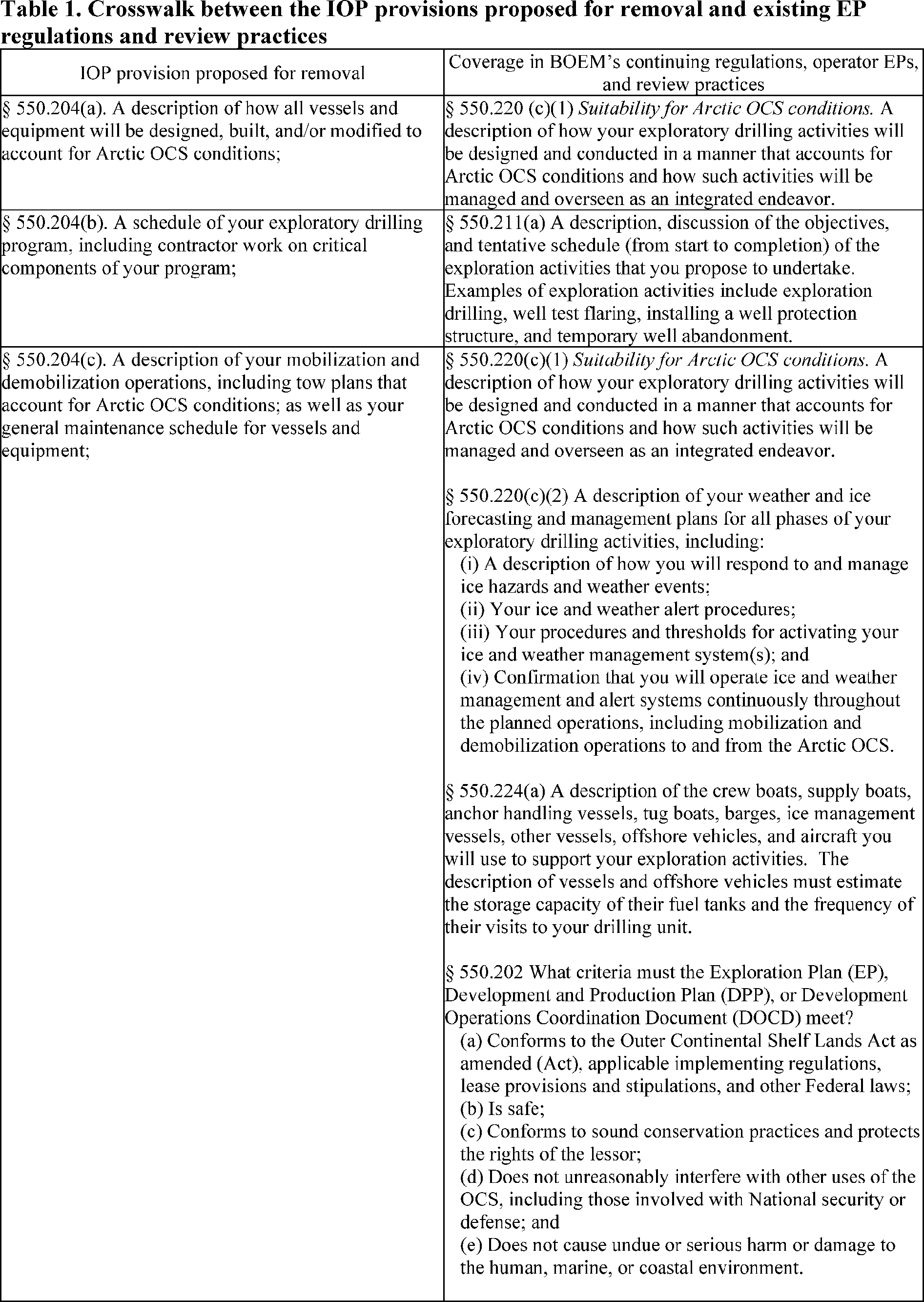
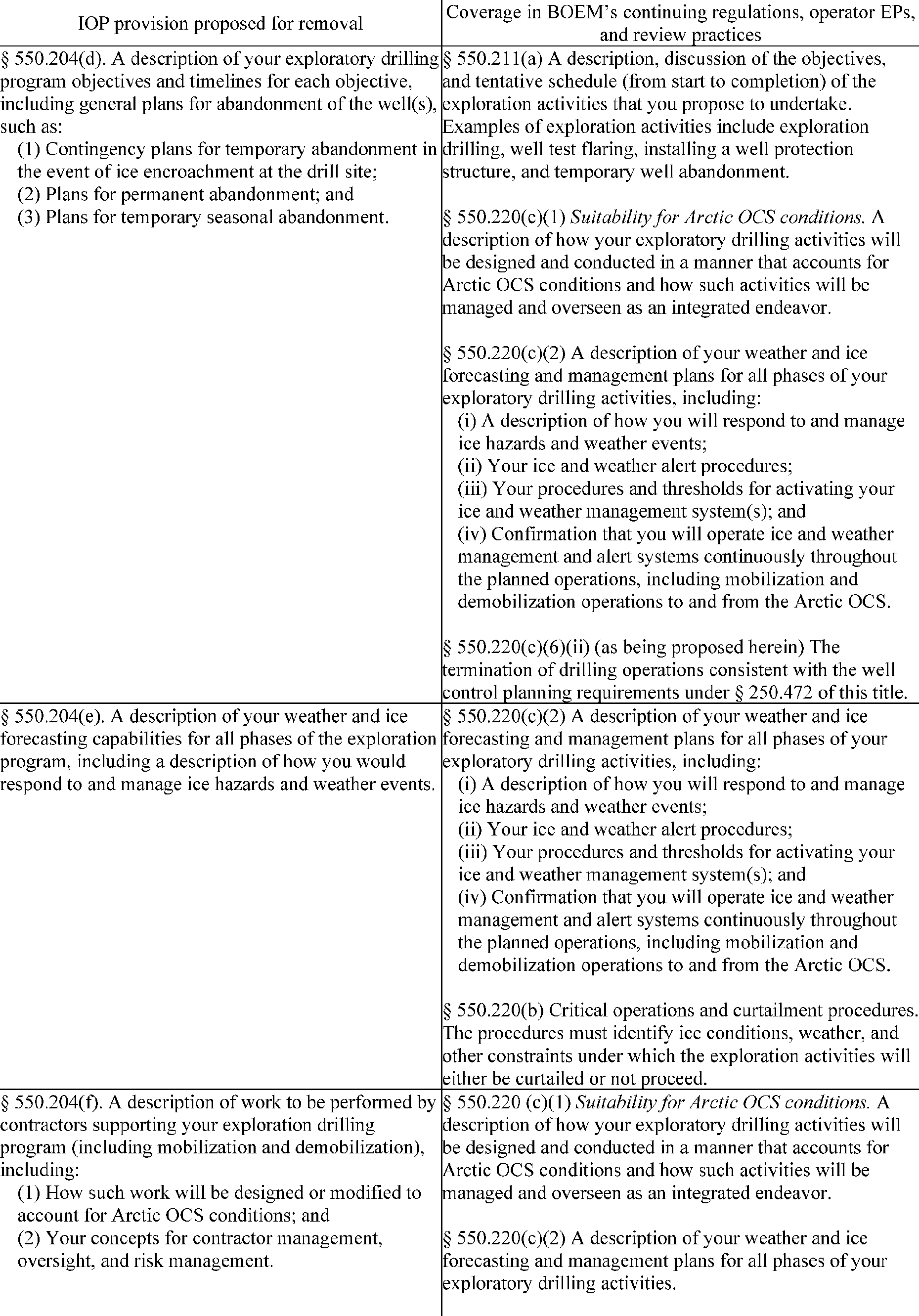
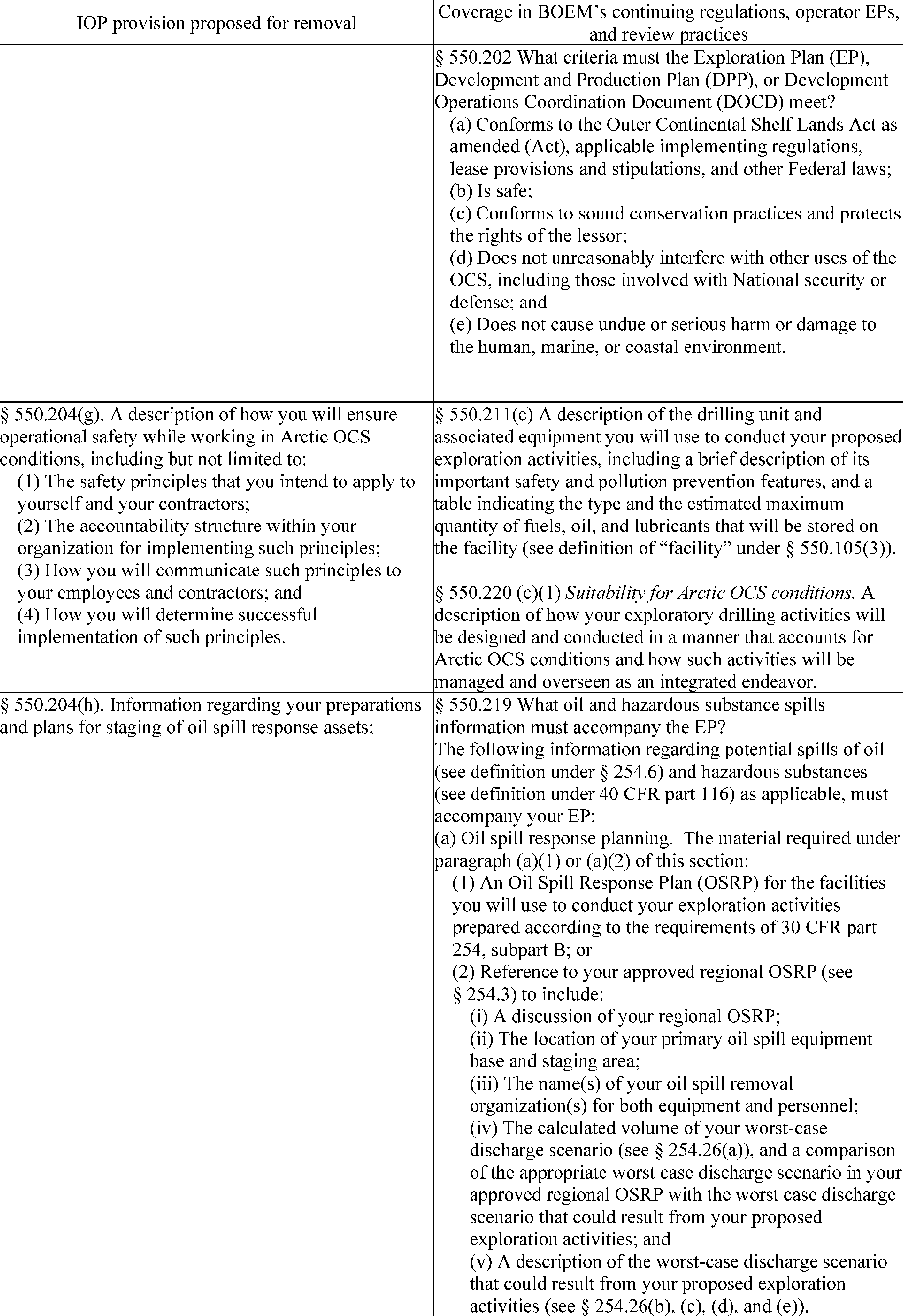
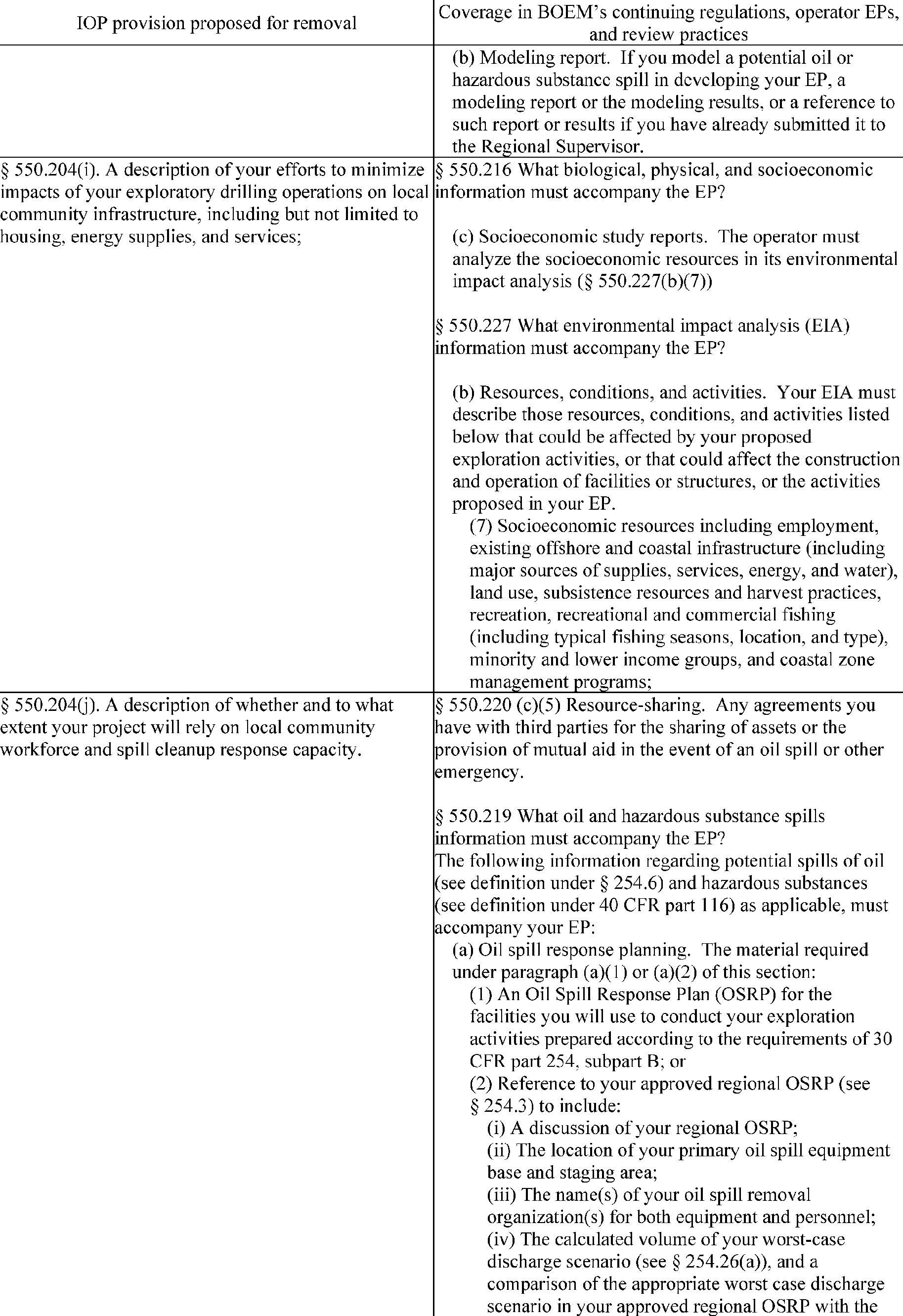
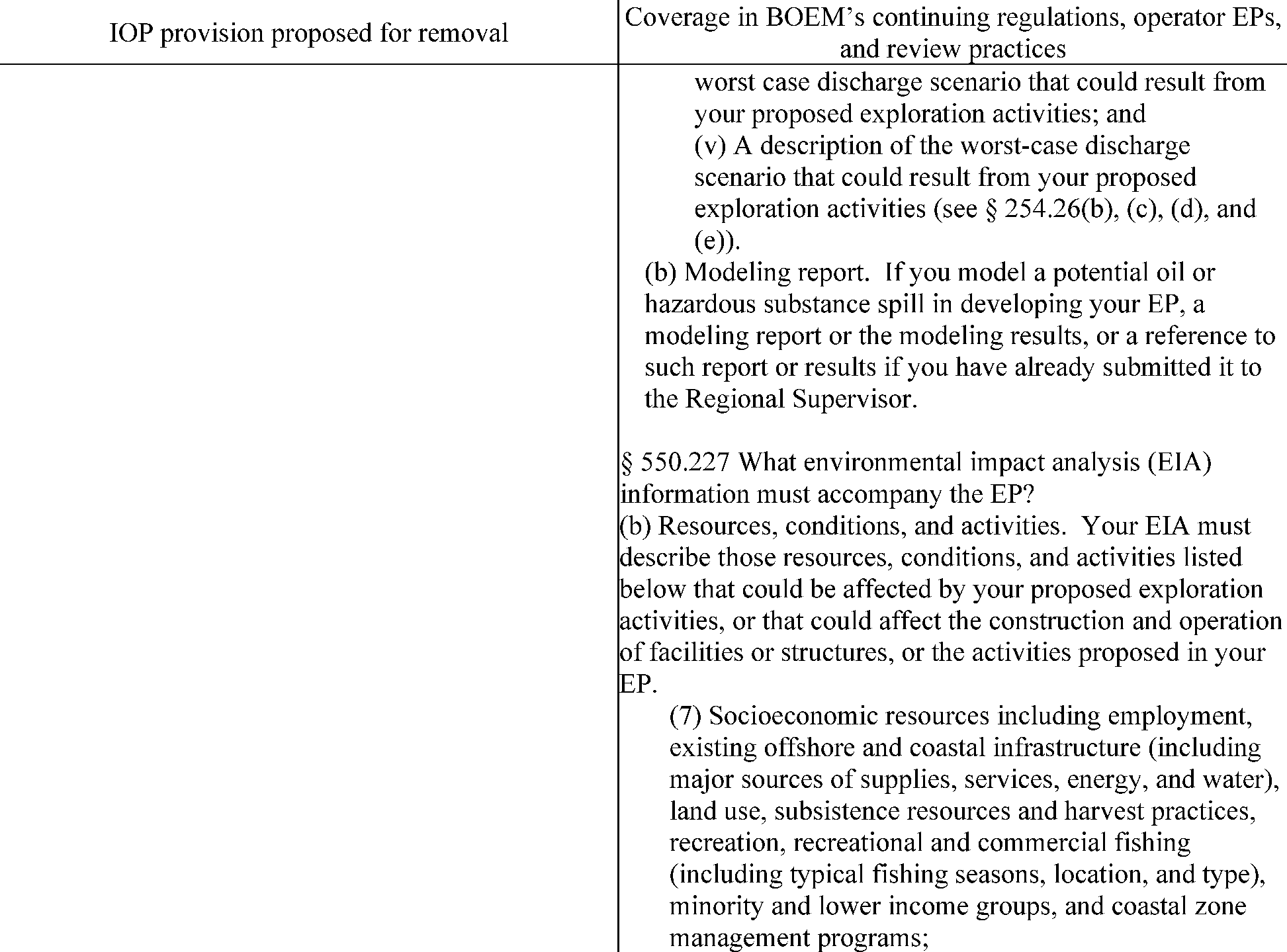
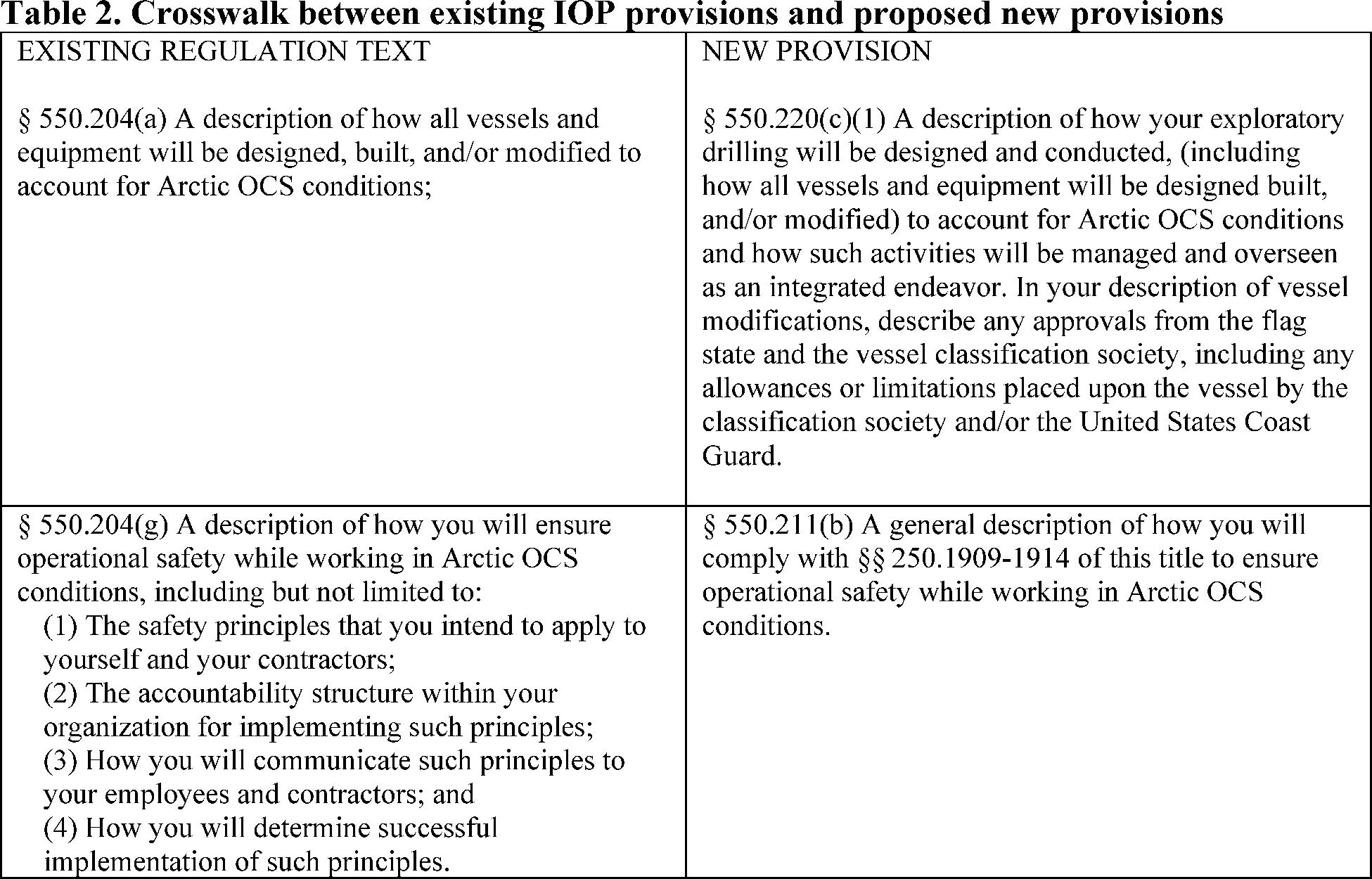
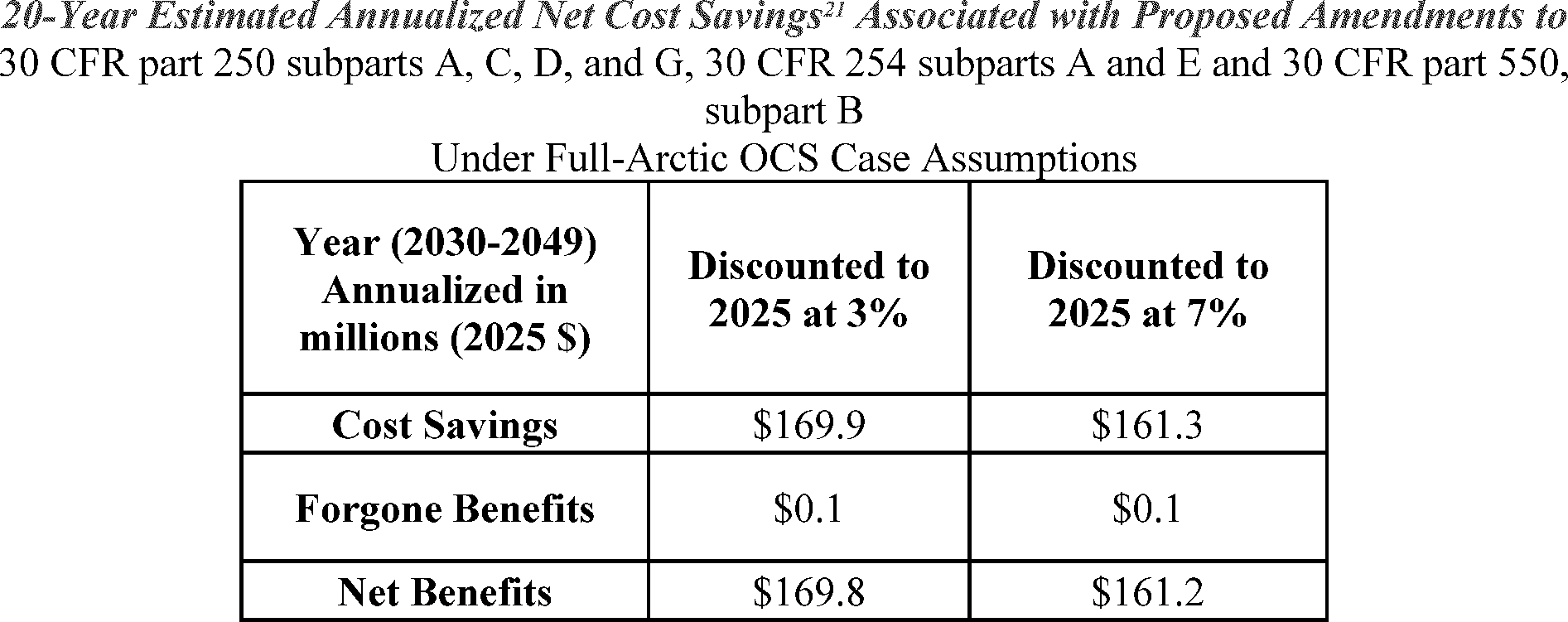
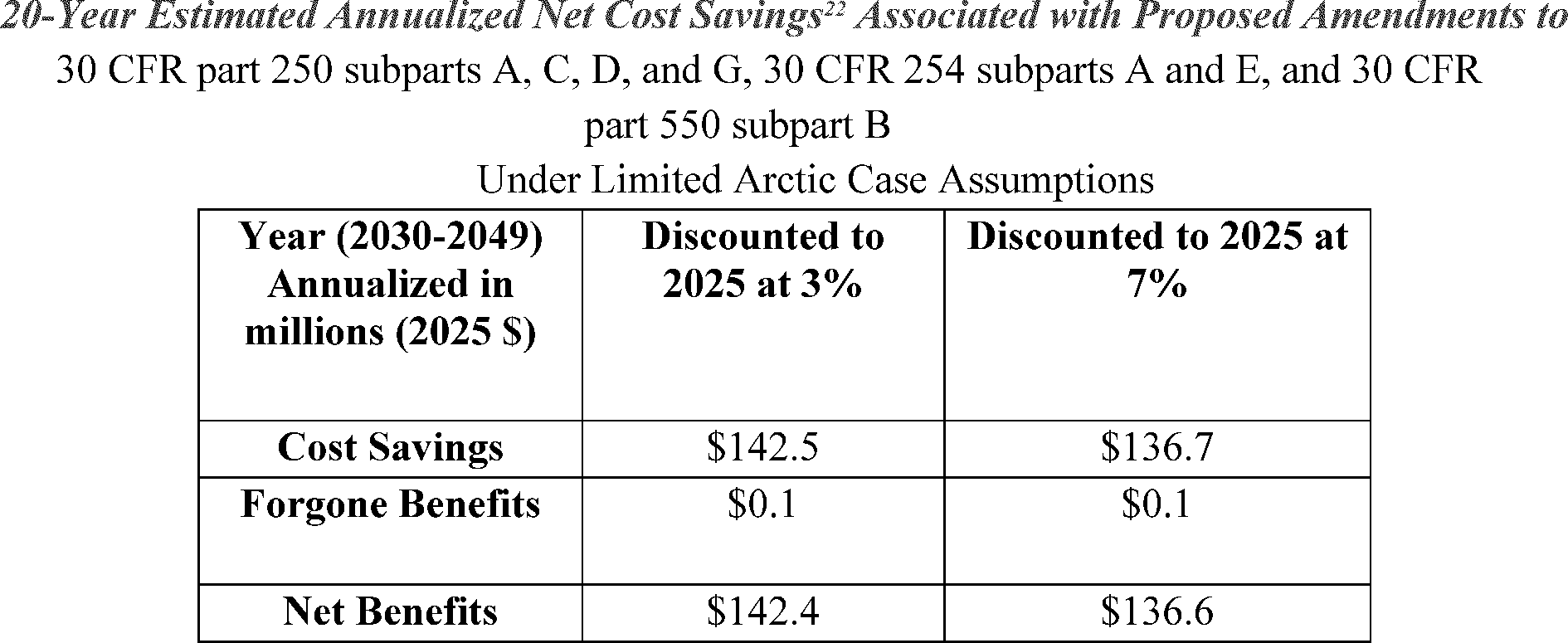
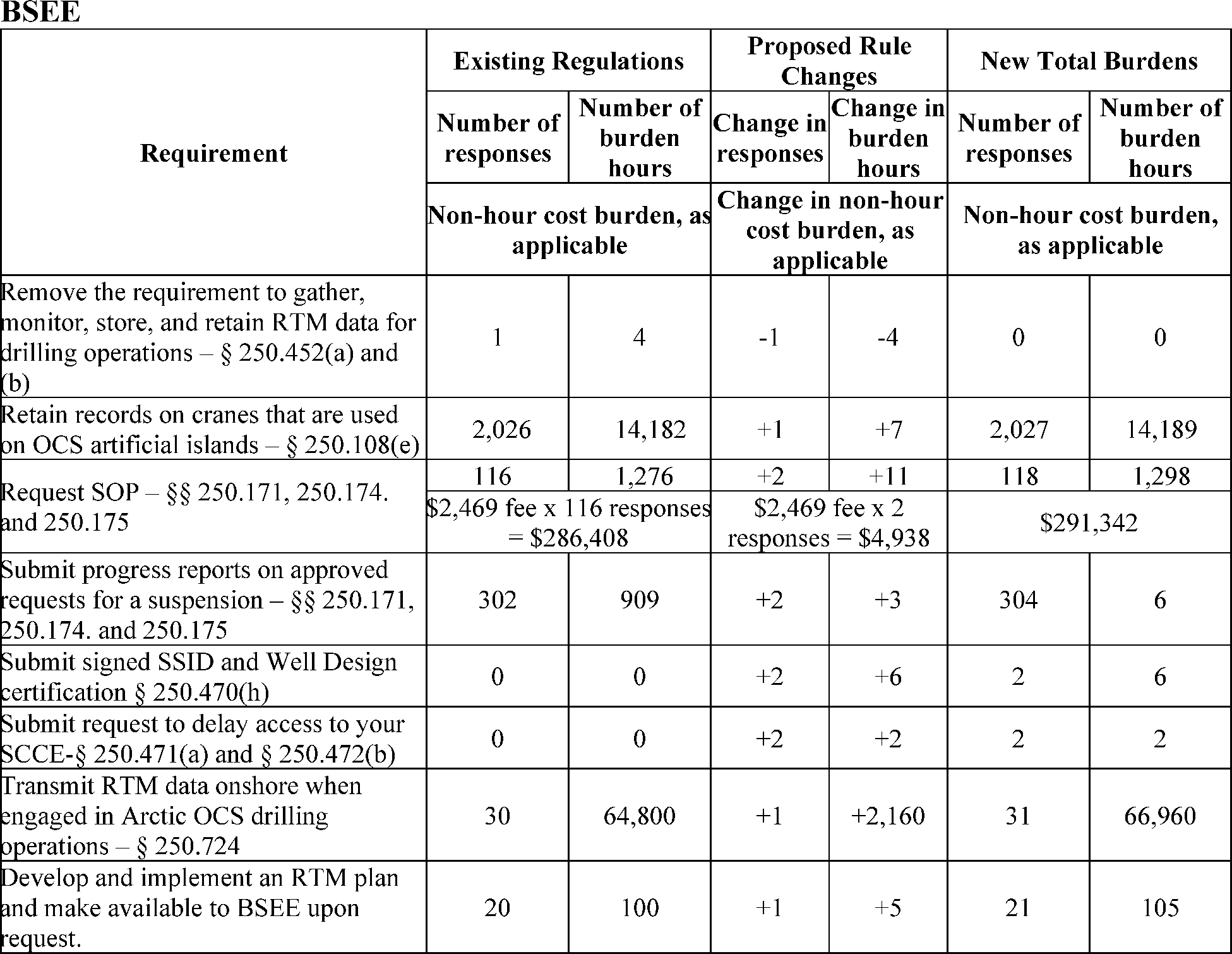
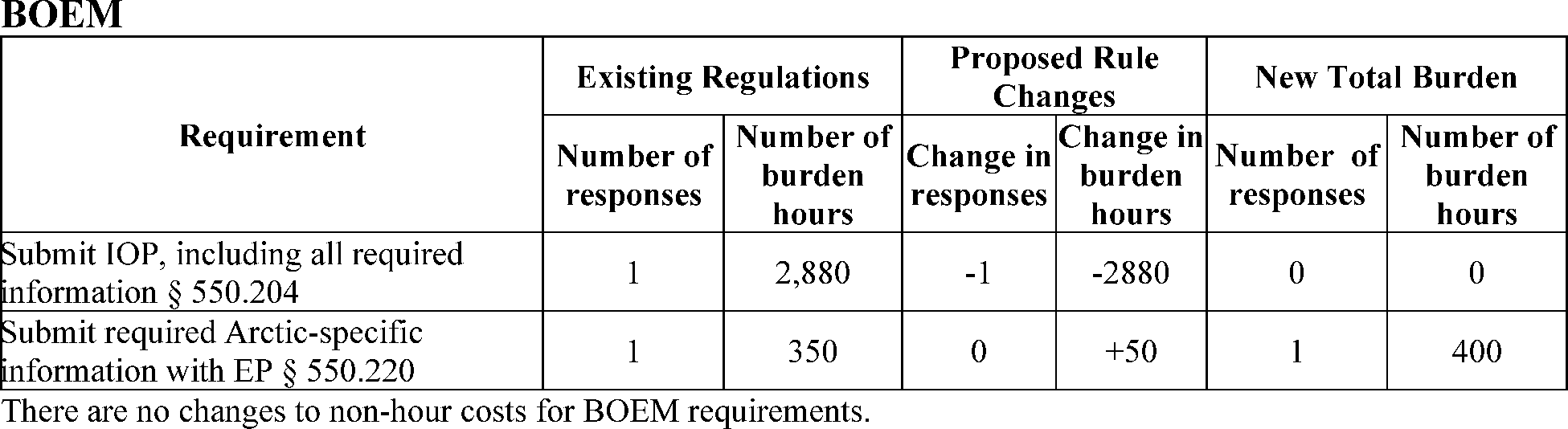
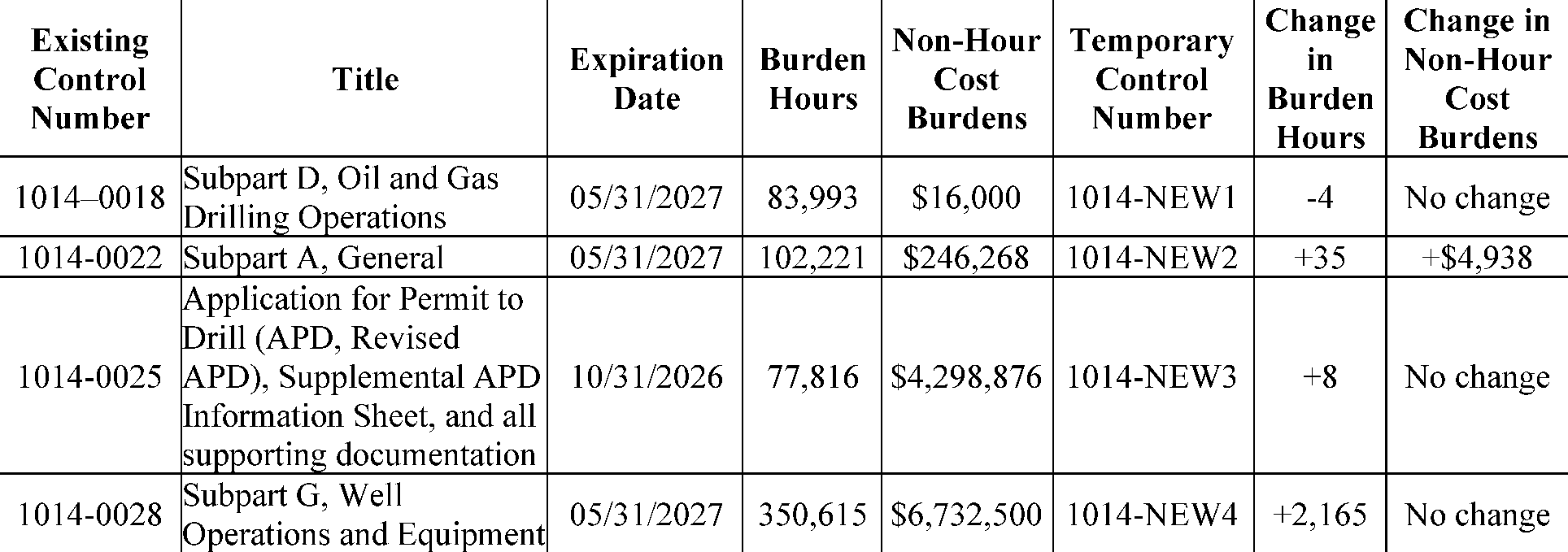
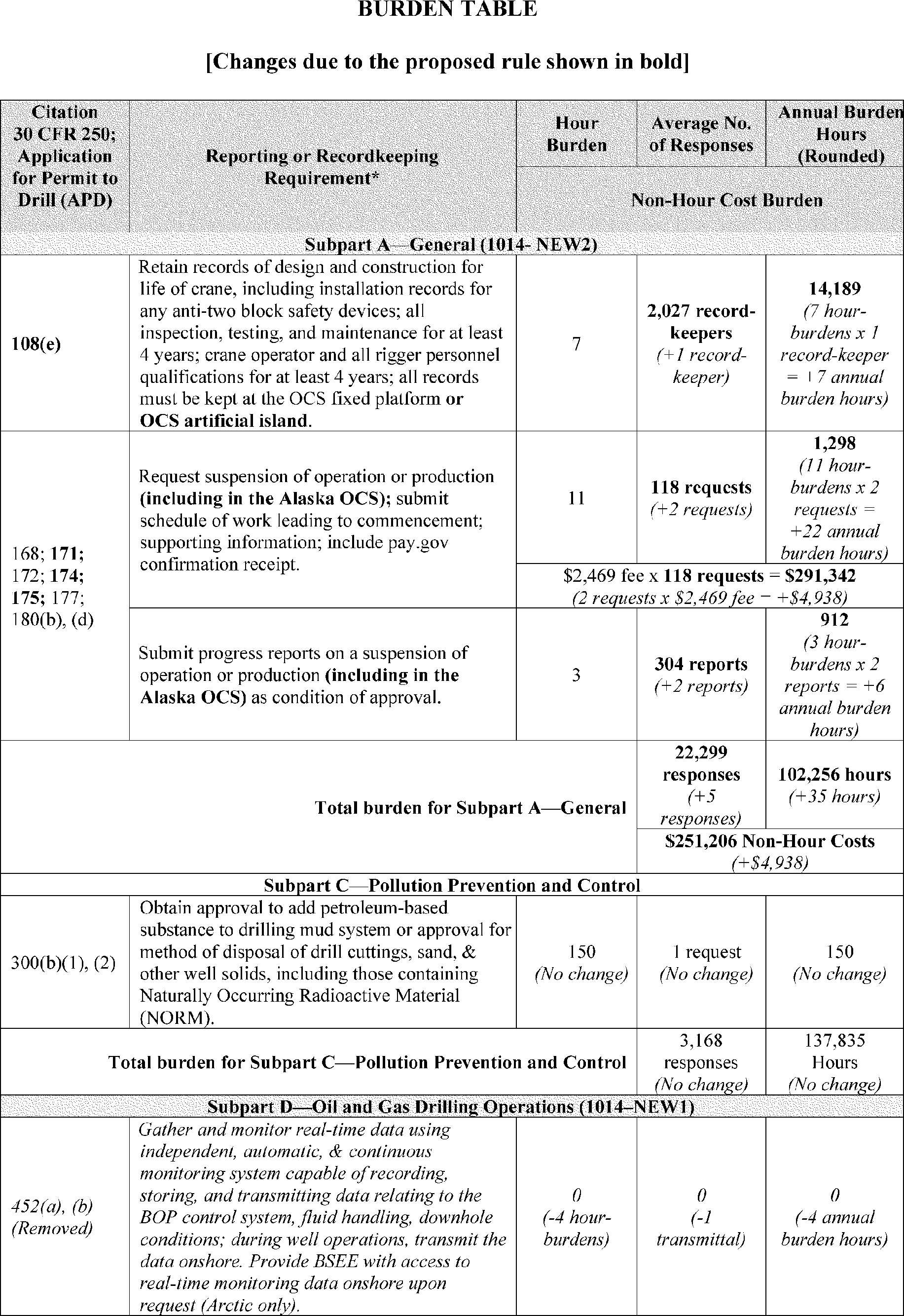
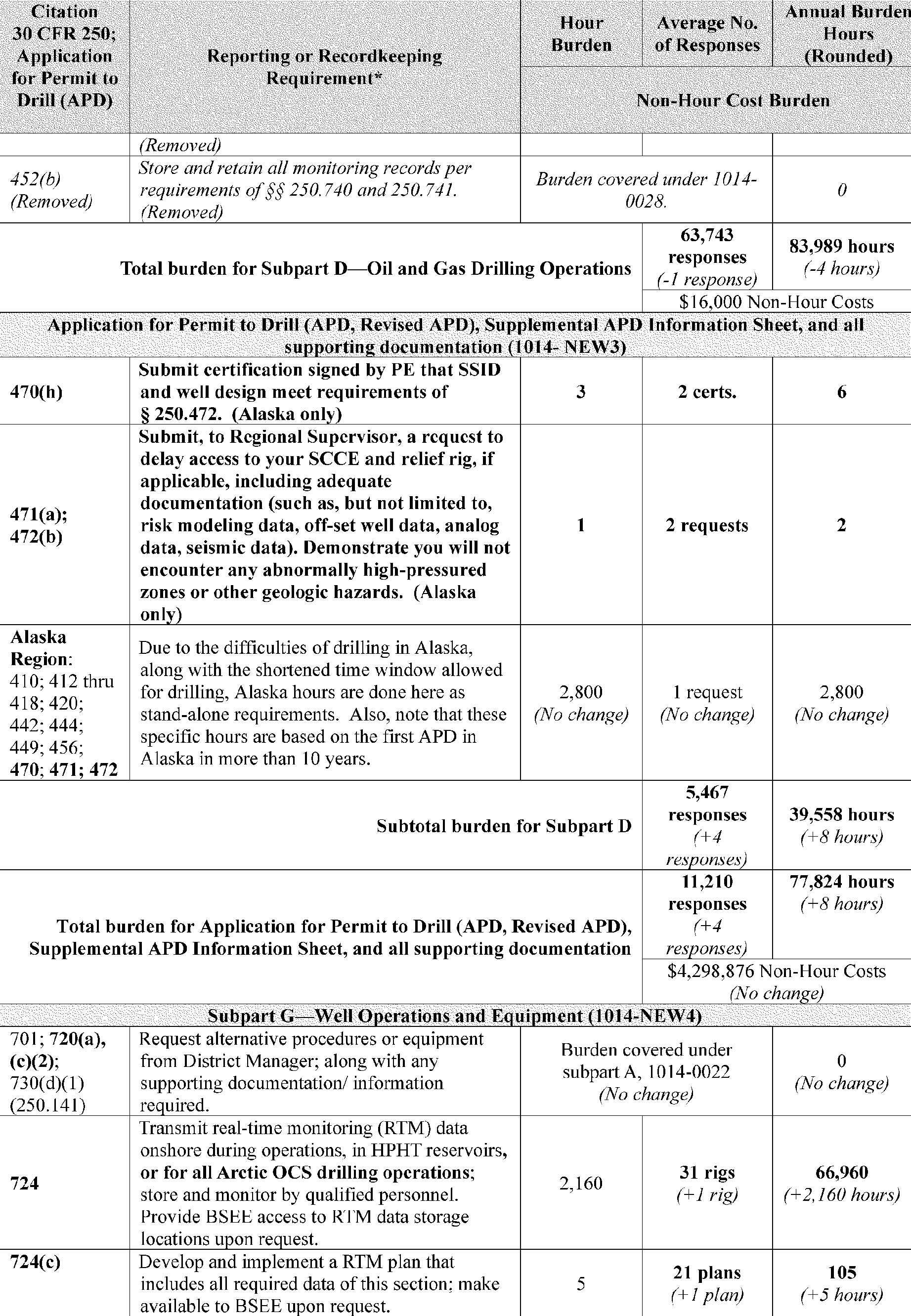
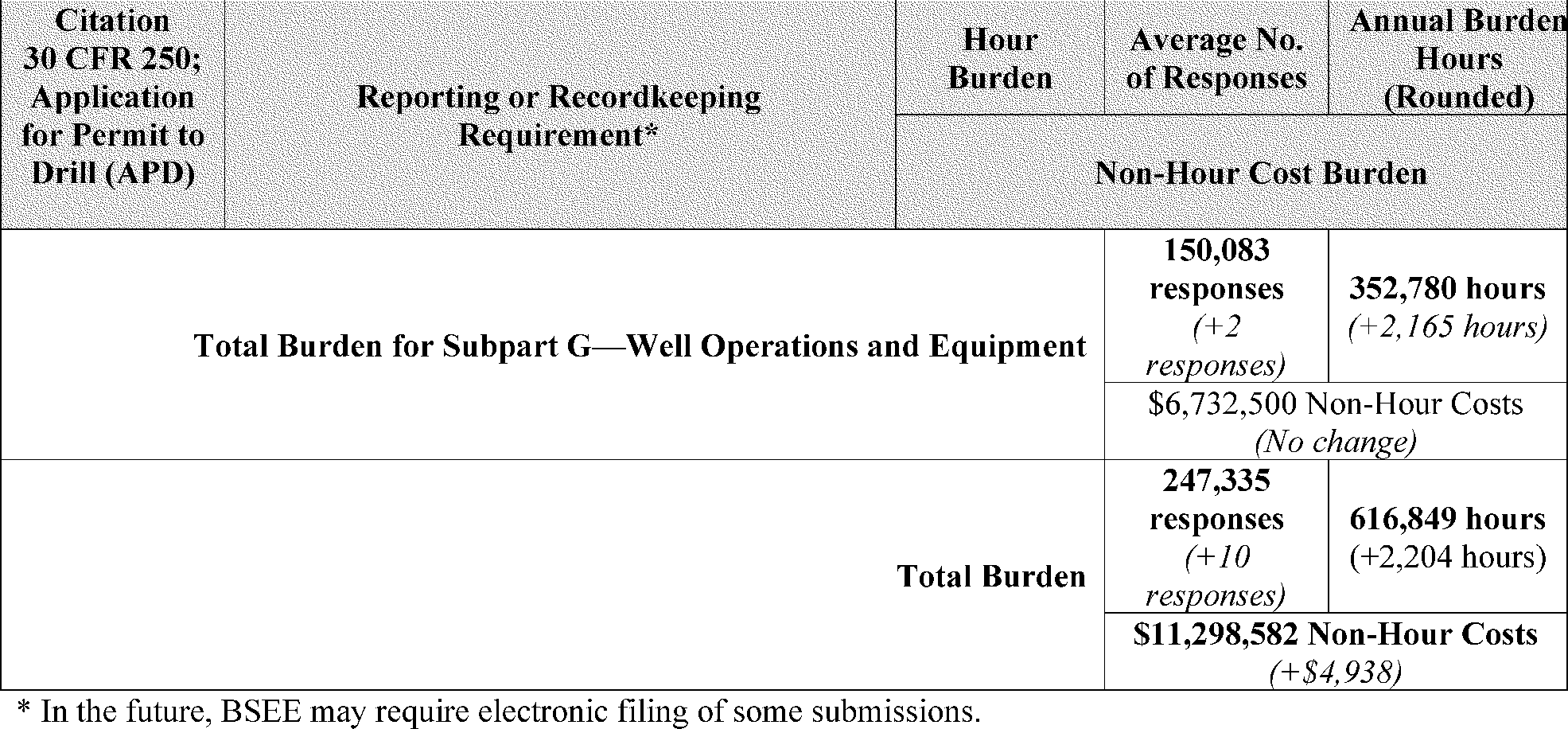
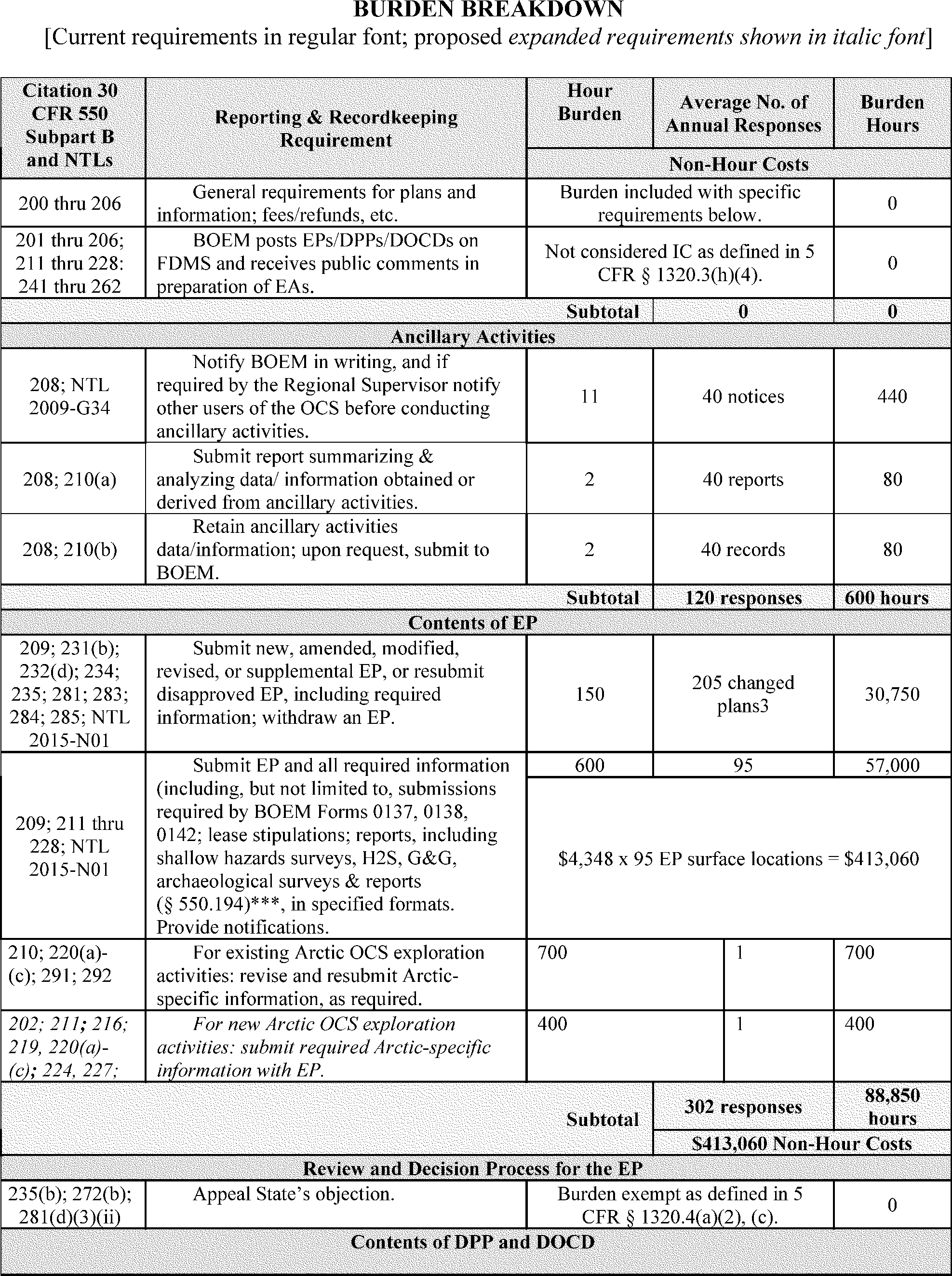
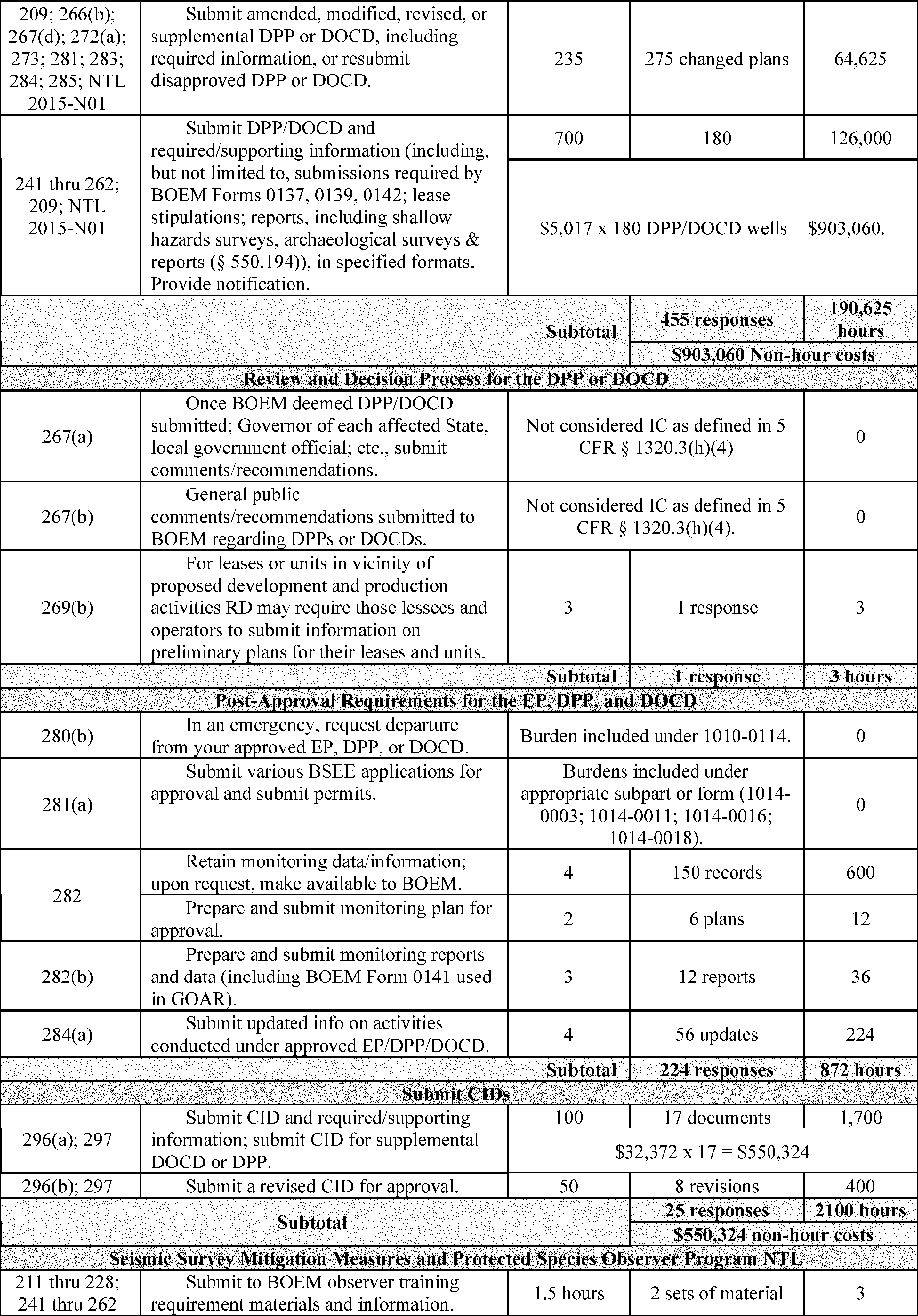
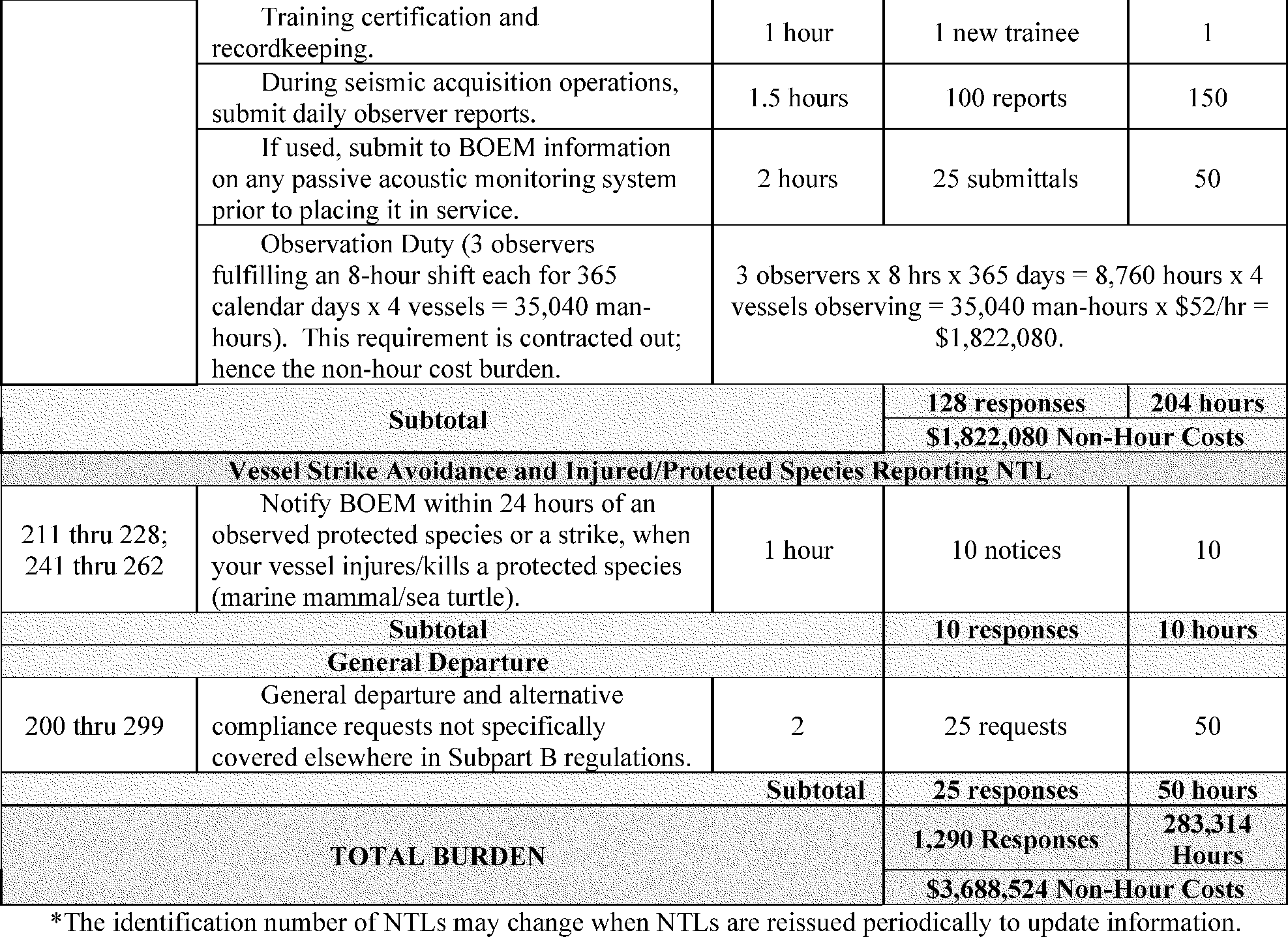
 www.epa.gov/sites/production/files/2017-12/documents/r10-npdes-beaufort-oil-gas-gp-akg282100-final-permit-2012.pdf
 www.doi.gov/sites/doi.gov/files/migrated/news/pressreleases/upload/Shell-report-3-8-13-Final.pdf