This interim final rule (IFR) amends U.S. Department of Homeland Security (DHS) regulations to provide: USCIS may require mandatory electronic filing (e-filing) of certain benef...
Interim final rule (IFR) with request for comments.
SUMMARY:
This interim final rule (IFR) amends U.S. Department of Homeland Security (DHS) regulations to provide: USCIS may require mandatory electronic filing (e-filing) of certain benefit requests; the process USCIS will follow to require a benefit request to be e-filed; and how a waiver of the e-filing requirement for those individuals unable to file electronically may be requested. This rule is intended to increase digital intake and processing to move USCIS and requestors from a mostly paper process to an electronic process and further enhance the integrity of the immigration system and the security of the United States.
DATES:
This IFR is effective August 11, 2026.
Comments must be received on or before October 13, 2026. The electronic Federal Docket Management System will accept comments prior to midnight eastern time at the end of that day.
Comments on the Paperwork Reduction Act section of this interim final rule must be submitted by October 13, 2026.
ADDRESSES:
You may submit comments on the entirety of this interim final rule package, identified by DHS Docket No. USCIS-2026-0232, through the Federal eRulemaking Portal:
www.regulations.gov.
A summary of this rule found above may also be found at
www.regulations.gov.
Follow the website instructions for submitting comments. USCIS cannot accept comments contained on any form of digital media storage devices, such as CDs/DVDs and USB drives. USCIS also is not accepting mailed comments at this time. If you cannot submit your comment by using
www.regulations.gov,
please contact the Regulatory Coordination Division, Office of Policy and Strategy, U.S. Citizenship and Immigration Services, Department of Homeland Security, by telephone at (240) 721-3000 for alternate instructions.
FOR FURTHER INFORMATION CONTACT:
Management Directorate, U.S. Citizenship and Immigration Services (USCIS), DHS, 5900 Capital Gateway Drive, Camp Springs, MD 20746; telephone (240) 721-3000 (this is not a toll-free number). Individuals with hearing or speech impairments may access the telephone number above via TTY by calling the toll-free Federal Information Relay Service at 711.
I. Executive Order 13175 (Consultation and Coordination With Indian Tribal Governments)
J. National Environmental Policy Act (NEPA)
K. Paperwork Reduction Act (PRA)
Table of Abbreviations
ACH—Automated Clearing House
APA—Administrative Procedure Act
BIA—Board of Immigration Appeals
CBP—U.S. Customs and Border Protection
CFR—Code of Federal Regulations
DHS—Department of Homeland Security
DOJ—Department of Justice
DOL—Department of Labor
DOS—Department of State
ECAS—EOIR Courts and Appeals System
ELIS—Electronic Immigration System
EOIR—Executive Office of Immigration Review
E.O.—Executive Order
FCC—Federal Communications Commission
FDNS—Fraud Detection and National Security Directorate
FERC—Federal Energy Regulatory Commission
FY—Fiscal Year
GPEA—Government Paperwork Elimination Act
FOIA—Freedom of Information Act
ICE—Immigration and Customs Enforcement
IFR—Interim Final Rule
INA—Immigration and Nationality Act
INS—Immigration and Naturalization Service
LCA—Labor Condition Application
NEPA—National Environmental Policy Act
NFTS—National File Tracking System
NOID—Notice of Intent to Deny
OCR—Optical Character Recognition
OMB—Office of Management and Budget
PDF—Portable Document Format
PDFi—Portable Document Format Intake
PRA—Paperwork Reduction Act
RFE—Request for Evidence
SBREFA—Small Business Regulatory Enforcement Fairness Act of 1996
Secretary—Secretary of Homeland Security
TPS—Temporary Protected Status
UMRA—Unfunded Mandates Reform Act of 1995
USAC—Universal Service Administrative Company
U.S.C.—United States Code
USCIS—U.S. Citizenship and Immigration Services
VAWA—Violence Against Women Act
I. Public Participation
The U.S. Department of Homeland Security (DHS) invites all interested parties to participate in this rulemaking by submitting written data, views, comments, and arguments on all aspects of this interim final rule. DHS also invites comments relating to the economic, environmental, or federalism effects possibly resulting from this interim final rule. Comments must be submitted in English, or an English translation must be provided. Comments providing the most assistance to U.S. Citizenship and Immigration Services (USCIS) in implementing these changes will reference a specific portion of the interim final rule, explain the reason for any recommended change, and include data, information, or authority that support such recommended change. Comments submitted in a manner other than the one listed above, including emails or letters sent to DHS or USCIS officials, will not be considered comments on the interim final rule and may not receive a response from DHS.
Instructions:
If you submit a comment, you must include the agency name (U.S. Citizenship and Immigration Services) and the DHS Docket No. USCIS-2026-0232 for this interim final rule. Regardless of the method used for submitting comments or material, all submissions will be posted, without change, to the Federal eRulemaking Portal at
www.regulations.gov,
and will include any personal information you provide. Therefore, submitting this information makes it public. You may wish to consider
( printed page 51925)
limiting the amount of personal information you provide in any voluntary public comment submission you make to DHS. DHS may withhold information provided in comments from public viewing it determines may impact the privacy of an individual or is offensive. For additional information, please read the Privacy and Security Notice available at
www.regulations.gov.
Docket:
For access to the docket and to read background documents or comments received, go to
www.regulations.gov,
referencing DHS Docket No. USCIS-2026-0232. You may also sign up for email alerts on the online docket to be notified when comments are posted or additional rulemaking is published.
II. Executive Summary
A. Purpose of the Regulatory Action
DHS issues this rule to implement Executive Order (E.O.) 14247, Modernizing Payments To and From America's Bank Account, which directs the Secretary of Homeland Security to take appropriate action to eliminate the need for the U.S. Department of the Treasury's physical lockbox services and expedite requirements to receive the payment of Federal receipts, including fees, through electronic means. 90 FR 14001 (published Mar. 28, 2025). As long as USCIS intakes paper-based filings, USCIS must rely on physical lockbox services, which USCIS currently receives from Treasury, to intake and process these filings. This rule amends the regulations to provide when USCIS may use its discretion to require the use of electronic filing (e-filing) to submit a benefit request. This change will increase efficiency, promote the integrity of the immigration system, and reduce operational waste attributable to the submission and maintenance of paper benefit requests.[1]
This rule will also speed up USCIS' transition to a fully electronic filing process, realize cost savings, and improve the availability of USCIS data for advanced analytics to reduce fraud, enhance national security, and protect the integrity of the lawful immigration system in support of E.O. 14161, Protecting the United States From Foreign Terrorists and Other National Security and Public Safety Threats. 90 FR 8451 (Jan. 30, 2025).
B. Legal Authority
The authority for the Secretary of Homeland Security (Secretary) to issue this IFR is found in section 103(a) of the Immigration and Nationality Act (INA), 8 U.S.C. 1103(a), which authorizes the Secretary to administer and enforce the immigration and nationality laws and establish such regulations as the Secretary deems necessary for carrying out such authority, and section 101(b)(1)(F) of the Homeland Security Act (HSA), 6 U.S.C. 111(b)(1)(F), which establishes as a primary mission of DHS the duty to “ensure that the overall economic security of the United States is not diminished by efforts, activities, and programs aimed at securing the homeland.” As related to the fee established in 8 CFR 106.2 for requests to waive the e-filing requirement, INA section 286(m), 8 U.S.C. 1356(m) authorizes DHS to charge fees for adjudication and naturalization services at a level to “ensure recovery of the full costs of providing all such services, including the costs of similar services provided without charge to asylum applicants or other immigrants.”
C. Summary of the Regulatory Action
This rule amends DHS regulations to permit USCIS to require e-filing for any benefit request USCIS has made available for e-filing for at least 180 days.[2]
When USCIS decides to mandate e-filing of an eligible benefit request, USCIS will publish notification of the e-filing requirement on its website and provide an additional 60-day grace period for individuals to comply with the e-filing requirement. The e-filing requirement, when mandated, will require individuals to use an online account to submit benefit requests to USCIS, either by completing the form entirely online or uploading a Portable Document Format (PDF) of the completed form through their online account. This rule also establishes a process for certain individuals for whom e-filing creates an undue hardship to seek a waiver of the e-filing requirement.
For purposes of this rule, DHS uses the term “requestor” to refer to anyone submitting any benefit request to USCIS for any purpose. Attorneys and accredited representatives are included in the term “requestor.”
In this rule, DHS is amending:
8 CFR 1.2 to define e-file to include submitting a benefit request, supporting evidence, documents, notices, and communication electronically in any manner made available and approved by USCIS, including by completing the form online, in a web portal, electronic interface, or by uploading a PDF of the completed form through an approved online account.
8 CFR 103.2(a)(1) by adding a new paragraph (a)(1)(i) that clarifies the weight of form instructions.
8 CFR 103.2(a)(1) by adding subparagraph (ii) to permit USCIS to require e-filing any time after a form has been available for e-filing for at least 180 days and to specify USCIS will inform the public of mandatory e-filing requirements on its website.
8 CFR 103.2(a)(1) by adding subparagraph (iii) to establish the process an individual must use to seek a waiver of the e-filing requirement.
8 CFR 106.2 by adding a new paragraph to establish a new form and fee for an individual to apply for a waiver of the e-filing requirement.
8 CFR 106.3 by adding a new paragraph to specify when a fee waiver may be available to a requestor applying for a waiver of the e-filing requirement.
D. Summary of Costs and Benefits
For the 10-year implementation period of the rule (fiscal years (FYs) 2027 through 2036), DHS estimates annual cost savings to requestors will be about $533 million. These savings result from requestors no longer filing paper-based benefit requests, avoiding the need to re-file rejected paper forms, and reducing the time burden associated with paper filing. DHS also estimates requestors will incur about $15 million annually in new costs related to the e-filing waiver form, including the opportunity cost of the time needed to complete the form, e-filing waiver form fee, and mailing expenses. On net, the rule is expected to generate approximately $518 million in annual cost savings to requestors.
In addition to these cost impacts, the rule generates annual transfers between the government and requestors. On an annual basis, DHS estimates an e-filing fee discount will transfer about $140 million from the government to requestors.
Over the FY 2027-2036 implementation period, DHS estimates total undiscounted net cost savings of about $5,181 million and undiscounted transfers of about $1,400 million (from the government to requestors). When discounted at 3 percent, the 10-year net cost savings are approximately $4,420 million and net transfers are approximately $1,194 million. When discounted at 7 percent, the 10-year net cost savings are approximately $3,639 million and net transfers are approximately $983 million. These
( printed page 51926)
totals are equivalent to annualized net cost savings of about $518 million and annualized transfers of about $140 million at both the 3-percent and 7 percent discount rates.
DHS anticipates that some filers may experience unquantifiable costs to switch to electronic filing that are not fully captured in the quantified estimates. Although e-filing is expected to reduce filing time and other burdens on average, individual outcomes will vary based on the filer's circumstances, prior investments in paper-based processes, and familiarity with online systems. Organizations with established paper-based software and workflows may see smaller time savings and incur one-time transition costs to learn the new process, update procedures, train staff, and modify tools. These burdens can include search and evaluation costs, transfer costs, and learning costs; their magnitude will differ across filers. In addition, current e-filing constraints and preferences for paper packages, particularly in complex cases, may increase perceived risk and require extra effort to build confidence in online submissions. Because these costs are heterogeneous and difficult to measure, DHS has not quantified them.
DHS expects mandatory e-filing to generate substantial qualitative cost savings and operational benefits for both requestors and the Federal Government. For requestors, e-filing reduces preventable errors and adjudication delays, lowering the time and indirect costs of waiting to work, travel, or change status and reducing the risk of losing eligibility due to rejected or incomplete paper submissions. DHS believes e-filing will deliver non-monetary benefits by making the process faster, easier to use, more secure, and more transparent. For USCIS, e-filing is expected to significantly streamline operations, reduce the ongoing costs and risks of paper-based processing, and improve data quality, coordination, and security across the immigration system. While DHS will incur some information technology and operational expenses to maintain these systems and support users, these costs are modest relative to the long-term efficiencies and benefits gained.
III. Background and Purpose
A. Mandate for Reform
Historically, benefit requests handled by USCIS and the former Immigration and Naturalization Service (INS) existed in a purely paper world. Requestors mailed or hand-delivered paper forms and submitted supporting evidence by mail or in person. USCIS stored requests in a physical file, known as an Alien File or A-File.[3]
USCIS reviewed and adjudicated benefit requests on paper and physically mailed, receipted, and stored requests, evidence, notices, and other materials.
More recently, both Congress and the Executive Branch have increased the use of internet and technology in government administration and delivery. In 1998, Congress passed the Government Paperwork Elimination Act (GPEA) recognizing the potential of technology and the internet to improve government services, increase efficiency, and encourage the use of technology to achieve these efficiencies. Public Law 105-277, title XVII (Oct. 21, 1998). The December 17, 1999, Presidential memorandum, “Electronic Government,” provides that, by October 2003, transactions with the Federal Government should be available online for online processing of services.[4]
Other guidance called on agencies to provide electronic maintenance, submission, or disclosure of information when practicable as a substitute for paper.[5]
Section 461 of the Homeland Security Act of 2002 [6]
requires DHS to study online filing and establish a system for applicants to track their applications online.[7]
In addition, the E-Government Act of 2002 promotes use of the internet and emerging technologies by government agencies. Public Law 107-347, 116 Stat. 2899 (Dec. 17, 2002).[8]
DHS has facilitated some electronic processing through regulatory change.
See68 FR 23010 (Apr. 29, 2003) (2003 rule); 76 FR 53764 (Aug. 29, 2011) (“Immigration Benefits Business Transformation, Increment I,” or 2011 rule). The 2003 rule permitted e-filing and electronic signatures as a first step toward implementing GPEA.[9] 68 FR 23010 (Apr. 29, 2003).[10]
The 2011 rule added references to electronic processes in several regulations to facilitate the transition to an electronic environment. 76 FR 53764, 53766 (Aug. 29, 2011). However, to date, DHS has not published a rule focused on shifting to a fully e-filed process.[11]
Consistent with GPEA and the E-Government Act, E.O. 13781, Comprehensive Plan for Reorganizing the Executive Branch, instructed the Director of the Office of Management and Budget (OMB) to propose a plan to improve the efficiency, effectiveness, and accountability of the Executive Branch. 82 FR 13959 (Mar. 16, 2017). The OMB Report, “Delivering Government Solutions in the 21st Century,” then recognized the outdated reliance on paper-based processes and prioritized the transition of Federal agencies' business processes to an electronic environment.[12]
The report noted that Federal agencies spend billions of dollars on paper processing, and paper records and highlighted data, accountability, and transparency.[13]
The report cites USCIS as an agency that has already taken critical steps toward electronic records management.[14]
In addition, E.O. 14247, Modernizing Payments To and From America's Bank Account, requires elimination of the Department of the Treasury's physical lockbox services, a goal that will be forwarded by mandatory e-filing. 90 FR 14001 (Mar. 28, 2025). Similarly, the Citizenship and Immigration Services (CIS) Ombudsman's 2025 Annual
( printed page 51927)
Report to Congress recommended DHS issue a regulation requiring e-filing.[15]
Therefore, to promote the objectives of GPEA, the E-Government Act, E.O. 13781, E.O. 14247, and reduce costs and burden on requestors and DHS, DHS is amending its regulations to provide USCIS discretion to mandate e-filing after a form has been available for e-filing at least 180 days.
B. Current USCIS Processes
USCIS plans to eventually receive and adjudicate all immigration benefit requests electronically.
The electronic environment brings many advantages:
Electronic data is easier for employees to access quickly, such as when reviewing cases and judicial decisions.
USCIS can better distribute work, and assign cases based on experience, skills, and qualifications.
Decision-making is enhanced, such as systematically flagging potentially ineligible requests.
Better risk and fraud data analysis is available to inform assessments and decisions.
Facilitation of continuous vetting [16]
and updated background checks are conducted prior to interviews and decisions.
Manual activity is reduced and focus is placed on productive activity.
An electronic benefits case management system allows USCIS to process applicant information in a centralized system that allows USCIS to properly prioritize work and share information across the Government, and maintain consistent and accurate information to ensure the national security of the United States.
1. E-Filing Results FY2019-FY2025
In FY 2025, USCIS received approximately 44 percent of applications through an e-filing method. Table 1 and Figure 1 show a general trend of increasing adoption of e-filing across various forms.
( printed page 51928)
Table 2 shows the volume of filings submitted electronically in FY 2025.
( printed page 51929)
2. Use of Lockbox
USCIS first began to use a Lockbox facility in 2001 to accelerate the collection and deposit of receipts. USCIS Lockboxes receive, open, and sort mail, place the benefit requests into correct order, scan documents, and collect application data.[17]
The Lockbox verifies application and fee transactions for completeness and accuracy; deposits payments to the U.S. Treasury; sends receipt notices, returns rejected applications; and transmits application and payment data to the U.S. Department of the Treasury and USCIS.[18]
In 2007, USCIS began moving all benefit requests to a Lockbox environment and by February 2011, 85 percent of all applications came through the Lockbox.
When the Lockbox receives a benefit request, the package is opened, the form is reviewed for acceptance criteria, the payment is deposited, and the paper file is forwarded to the proper location. The Lockbox determines whether each benefit request meets the requirements to be accepted but it does not make adjudicative decisions. If a benefit request is rejected, the Lockbox returns the entire package to the requestor with a notice explaining the reasons for rejection.[19]
After the application is opened, arranged, and scanned, and the information is transmitted electronically to relevant case management systems, the Lockbox may destroy the original application and supporting evidence after USCIS determines it has complied with the required disposition schedule and any retention requirements outlined by the National Archives and Records Administration, and incorporated into the USCIS Records Policy Manual.
See36 CFR 1236, Subparts D and E. Electronic records are stored in an approved digital repository. If retention of the paper filing is necessary, for instance, to comply with a court order or litigation hold, the Lockbox ships the paper file to the appropriate office or storage facility.[20]
USCIS also returns “hard to replace” originals, such as passports and documents issued by a foreign government, to the requestor or transmits the physical documents to the adjudicating office, when required. For certain forms, USCIS maintains the filing in paper form in a physical file. Most adjudication occurs electronically using electronic versions of scanned documents, as well as paper documents contained in physical files.
3. The Burden of Paper
The burden of paper-based processing has increased in recent years, and USCIS' reliance on paper-based processes reduces its ability to adapt to new collections and supporting documentation to address the need for enhanced vetting and ensuring officers have a complete record to determine a requestor's eligibility for the benefit
( printed page 51930)
sought. For example, USCIS must modify its information collections to collect sufficient data to implement E.O. 14161, Protecting the United States from Foreign Terrorists and Other National Security and Public Safety Threats.
See, e.g.,90 FR 11324 (Mar. 5, 2025) and 90 FR 22750 (May 29, 2025). Table 3 shows the increased volume of pages processed by the USCIS Lockboxes in the last 7 fiscal years.
The
increased volume increases the labor required to process these filings and the costs to USCIS to receive paper-based filings. For instance, in FY 2025, USCIS spent $10,864,781 on postage costs to support the paper-based process.
In addition, Table 4 illustrates the labor costs USCIS incurs to manage and facilitate a paper-based filing process.
( printed page 51931)
E-filing
reduces the most labor-intensive and highest cost workload and processing requirements of paper-based filing by eliminating the need to extract, sort, scan, data enter, and ship paper-based filings. The labor cost savings will occur quickly as USCIS rolls out mandatory e-filing consistent with this rule and DHS expects this rule to substantially decrease costs over time. Table 5 provides the overall costs to operate lockboxes for the last 5 fiscal years, which includes facilities maintenance and technology development. As USCIS reduces paper filing, it will likewise decrease its physical footprint and further the objectives of E.O. 14247.
4. Availability of e-Filing
USCIS has provided e-filing options since the early 2000s. These options have varied over time and initially required USCIS to print out electronically submitted benefit requests and adjudicate them on paper. USCIS developed the USCIS Electronic Immigration System (ELIS) to change the way USCIS interacts with the public using account-based e-filing and electronic processing.
Accompanying the development of ELIS, DHS changed USCIS regulations to provide more flexibility as the agency moved toward an electronic
( printed page 51932)
environment. 76 FR 53764. The 2011 Rule codified new definitions of “benefit request” and “form” to acknowledge electronic alternatives. 8 CFR 1.2. DHS stated that it envisioned transitioning to a fully electronic environment and additional regulatory changes would be required over the next several years as USCIS increases the electronic handling of immigrant benefit requests. 76 FR 53764 (Aug. 29, 2011).
USCIS encourages requestors to e-file benefit requests whenever available and has expanded options for the implementation of electronic services by designing its website to focus on e-filing instead of paper. While technological advances have allowed USCIS to develop accessible, digital alternatives to traditional paper methods for handling benefit requests, USCIS remains bound to the burden of paper submissions. As e-filing functions are developed, USCIS makes them available to the public, providing the option of using either e-filing or paper processes. As of December 16, 2025, USCIS accepts the following forms through guided online filing or PDF Intake (PDFi):
( printed page 51933)
( printed page 51934)
USCIS
also supports online submission for certain ancillary requests, such as: Employment Eligibility Verification (E-Verify); [25]
G-845, Verification Request (SAVE); [26]
G-1041, Genealogy Index Search Request; G-1041A, Genealogy Records Request; [27]
and H-1B Registration.[28]
Though USCIS permits e-filing these forms, USCIS has not required it.[29]
In FY 2025, about 43 percent of individual USCIS requestors voluntarily filed online when it was available, while less than six percent of attorneys and accredited representatives have similarly chosen to file online.[30]
DHS recognizes people adopt new practices at varying rates.[31]
DHS believes that the complexity of the immigration benefit request system exacerbates the tendency toward the status quo.[32]
Those familiar with paper-based processes see no reason to change a method currently working for them. DHS believes the transition from paper to e-filing will languish if it remains entirely optional.[33]
As the breadth and quality of digital solutions increase, preserving the inefficiencies and administrative burdens of a paper system becomes increasingly unjustifiable.
a. Guided Online Filing
USCIS offers guided online filing to requestors who create a USCIS online account at
my.uscis.gov
.[34]
Requestors can complete the form(s) available for guided online filing, pay the required fee(s), and submit the form(s) all within their online account.[35]
When a benefit request is filed via guided online filing, the request is ingested directly into USCIS electronic databases. The guided online filing process can alert a requestor when a filing does not meet requirements for acceptance and prevent the requestor from submitting a filing USCIS would reject.[36]
Once USCIS accepts a filing via the guided online filing process, an electronic receipt notice is provided in the requestor's USCIS online account.[37]
b. PDF Intake (PDFi)
In addition to offering guided online filing, USCIS has developed PDF intake (PDFi) as an innovative electronic process that enables upload of a completed PDF of the form in a USCIS online account, including upload of any supporting documents and electronic fee payment, with ingestion of the uploaded PDF occurring through the Lockbox.[38]
PDFi filings are validated at the Lockbox using the same rules applied to paper filings. The Lockbox determines whether to accept the filing and deposit the fee or reject the filing.[39]
This filing process eliminates the need for the Lockbox to physically open, prepare, scan, and enter data, as is necessary for paper-filed forms. PDFi filing is currently available for nine USCIS forms
( printed page 51935)
with plans for additional forms to be added.[40]
As of December 11, 2025, only 1 percent of requestors are utilizing PDFi to submit a benefit request.
C. Governmental Electronic Filing Requirements
As explained more fully in the examples that follow, across the Federal Government many departments, agencies, and offices have or are currently eliminating paper forms and transitioning to e-filing. Consistent with the E-Government Act, agencies are increasing use of the internet and many require e-filing.[41]
To inform its decision in making the changes in this rule, DHS examined how Federal agencies have successfully instituted e-filing, how long they have been in effect, the affected populations, and the complexity of the filing requirement. Cumulatively, the examples demonstrate government agencies are moving online, and they and their private and public stakeholders appreciate the benefits an e-filing environment provides.
1. USCIS Registration Requirement for Petitioners Seeking To File H-1B Petitions on Behalf of Cap-Subject Aliens
The H-1B petition selection lottery is an online process.
See84 FR 888 (Jan. 31, 2019). Petitioners seeking to file H-1B petitions subject to the regular cap, including those eligible for the advanced degree exemption, must first electronically register with USCIS during a designated registration period. Those whose registrations are selected are eligible to file an H-1B cap-subject petition for the registered beneficiary during the associated filing period. USCIS introduced this electronic registration system on March 1, 2020. 85 FR 1176 (Jan. 9, 2020). Any petitioner filing Form I-129, Petition for Nonimmigrant Worker, for an H-1B employee subject to the regular cap or advanced degree exemption must have first electronically registered. Therefore, since 2020 (for FY 2021 workers), H-1B petitioners have successfully electronically registered with USCIS each year since then.
2. Department of State
The U.S. Department of State (DOS) has required the online filing of visa applications since 2006, with few exceptions.[42]
Applicants submit electronic forms to DOS through its online system, Consular Electronic Application Center.
Recipients of approved USCIS immigration benefits who intend to enter the United States from another country must generally apply for a visa from DOS.[43]
Over half of the lawful permanent residents admitted to the United States each year travel from another country and must, therefore, apply for and obtain an immigrant visa from DOS.[44]
Those with a USCIS-approved immigrant petition file DOS form DS-260, Electronic Application for Immigrant Visa and Alien Registration.[45]
In addition to requiring online filing, applicants in some cases must submit supporting documents in the Consular Electronic Application Center or via email, and include a PDF attachment with supporting documentation.[46]
Aliens with a USCIS-approved nonimmigrant visa petition or application must file the DS-160, Online Nonimmigrant Visa Application, online. 22 CFR 41.103(a)(1). A paper version of this form exists as Form DS-156, Nonimmigrant Visa Application. However, individuals may file Form DS-156 only in limited circumstances, as directed by a consular officer.[47]
3. Department of Labor
Before an employer can file an H-1B [48]
petition with USCIS, it must first file Form ETA-9035, Labor Condition Application for Nonimmigrant Workers (LCA), with the Employment and Training Administration (ETA) of the U.S. Department of Labor (DOL). 8 CFR 214.2(h)(1)(ii)(B). Since January 14, 2002, DOL has allowed employers to submit LCAs online under the H-1B program. 66 FR 63298 (Dec. 5, 2001); 20 CFR 655. Starting in 2006, DOL has required employers, with very few exceptions, to file LCAs electronically. 70 FR 72556 (Dec. 5, 2005); 20 CFR 655.705(c)(1) and 20 CFR 655.720(b). Employers with physical disabilities or lacking internet access may file LCAs by mail under limited circumstances. 20 CFR 655.720(c). Because LCAs are filed with DOL as a prerequisite for filing a petition for an H-1B foreign worker with USCIS, H-1B filers must use the online filing process.
In addition, e-filing is available for several other DOL forms USCIS benefit requestors must file. Before an employer can file an H-2A [49]
nonimmigrant petition with USCIS, the employer must first e-file Form ETA-9142A, H-2A Application for Temporary Employment Certification, with DOL. 20 CFR
( printed page 51936)
655.130(c)(1). In most cases, before an employer can file an H-2B [50]
nonimmigrant petition with USCIS, the employer must file Form ETA-9142B, H-2B Application for Temporary Employment Certification, with DOL. 20 CFR 655.15(c). Lastly, before an employer can petition USCIS to hire a foreign worker to work permanently in the United States in a category requiring DOL labor certification,[51]
the employer must file Form ETA-9089, Application for Permanent Employment Certification, with DOL. 20 CFR 656.17(a). These forms have been available for online filing since 2005. 69 FR 77325 (Dec. 27, 2004). DOL receives hardly any requests for exemption from mandatory electronic submissions in its Foreign Labor Application Gateway system in a typical year.
Before these petitioners file with USCIS, they are already required to e-file forms related to their immigration benefit requests [52]
and have established comfort doing so as evidenced by the lack of requests for exemption.
4. Department of Justice
The Department of Justice's (DOJ's) Executive Office for Immigration Review (EOIR) successfully implemented EOIR Courts & Appeals System (“ECAS”) before the Immigration Courts and the Board, which requires electronic filing for attorneys, accredited representatives, and DHS.[53]
DOJ also recently issued an IFR to implement electronic filing and records applications for all cases before the Office of the Chief Administrative Hearing Officer (“OCAHO”).[54]
Furthermore, on September 23, 2025, EOIR announced expanded capabilities of the EOIR Payment Portal to enable electronic payment of relevant fees for appeals, motions, and applications to EOIR.[55]
5. Internal Revenue Service
The experience of the Internal Revenue Service (IRS) indicates broad acceptance of e-filing by the public. The IRS began offering tax return e-filing (refund-only) in 1986.[56]
In 2025, the IRS received 94 percent of returns electronically,[57]
up from approximately 69 percent in 2010.[58]
Since 2012, income tax preparers who prepare more than 10 tax returns have been required to submit returns electronically. 26 U.S.C. 6011(e)(3); 76 FR 17521 (Mar. 30, 2011). The IRS provides for a hardship waiver but indicates it grants this waiver only in rare cases.[59]
Corporations are required to file tax returns electronically if they file at least 10 returns a year. 26 CFR 301.6011-5.
D. Benefits of e-Filing
1. Effective Use of Resources
a. Intake
USCIS received more than thirteen million benefit requests in FY 2025.[60]
As outlined previously, 8 CFR 103.2(a)(7)(ii) provides that USCIS will not accept a benefit request if it is not properly signed, executed (defined by 8 CFR 1.2 as completed), filed in compliance with the regulations governing the request, and the correct fee. USCIS undertakes this review process at intake. If a benefit request is accepted, information from the request is collected in USCIS systems. After intake, the benefit request is provided to adjudicators to process. For forms filed online, intake is automated: form completeness and filing fee payment are verified before or at the time of submission, form data are entered into USCIS systems, and benefit requests are routed to the appropriate queue for adjudication. After the benefit request and evidence have been digitized, the paper is either destroyed or shipped for long-term storage at a USCIS facility. 36 CFR 1236.56(f).[61]
In contrast, the paper benefit request intake process is manual. USCIS ensures requests are complete and are accompanied by the correct filing fee. Once accepted, the paper is scanned and some form information, particularly significant identity information, is ingested into electronic systems to facilitate the adjudication process. Data is uploaded using optical character recognition (OCR) and transmitted to USCIS after manual inspection for errors. The paper file is then shipped to adjudicators who adjudicate the request on paper.
b. Shipping
To process millions of requests each year, USCIS maintains offices throughout the United States and the world. To accommodate the paper adjudication process, USCIS continually ships forms and files between these facilities. After intake, paper benefit requests must be forwarded to the correct office for adjudication. In FY 2025, USCIS spent $10,864,781 on postage costs to ship received benefit requests to the appropriate location and return rejected benefit requests to the requestor.[62]
In addition to the benefit request itself, USCIS must also ship any related A-Files (with previously filed requests, supporting evidence, and documents) to the adjudicating office, often from another storage location. Once adjudication is complete, these documents and physical files are then shipped for long-term storage and retention. In FY 2025, USCIS transferred files 8.7 million times, averaging 718,331 transfers per 30 days.[63]
In addition to the shipping costs USCIS incurs to move this many files annually, the higher cost of potentially losing an alien's immigration record and preventing DHS from accessing an alien's record to minimize risks from any potential threats surpasses the financial cost of these transfers.
In addition to file transfers, USCIS moves paper files within an office during processing, such as when an office receives an A-File in themail room, matches the A-File with the benefit request, delivers the file to the processing queue, and out-processes the file for storage or next use following adjudication.
( printed page 51937)
c. Storage
Additionally, USCIS must store paper files long-term. At the heart of USCIS operations are 58.6 million active files being reviewed, amended, and stored at 142 different facilities.[64]
A few of these facilities are dedicated to storage. Many locations primarily serve adjudicative or other functions but must also store the files because of their work. When a benefit request is reviewed and adjudicated in a paper A-File, the A-File is kept at the office responsible for the adjudication. When files are not being actively used, USCIS keeps them at a storage-specific facility. USCIS must maintain A-Files until 100 years after the alien's year of birth, at which time they are permanently transferred to the custody of the U.S. National Archives and Records Administration (NARA) for preservation.[65]
However, USCIS does not have sufficient space to continue storing all records until 100 years after an alien's year of birth.
As of December 31, 2022, NARA only accepts records in electronic format, which requires USCIS to digitize paper records not already in an electronic format once they reach the end of their 100-year mandatory retention period.[66]
While NARA has granted USCIS a waiver for immigration records, USCIS is working to digitize its records in accordance with NARA requirements, which provides DHS users, including USCIS, ICE, and CBP with accelerated access to digitized records and permits multiple users to review the same record simultaneously.
To maintain operating space, USCIS sends A-Files belonging to immigrants who have naturalized and A-Files inactive for approximately 7 years to NARA for storage. These files, referred to as retired A-Files, are not old enough to permanently transfer custody to NARA, and, on average, USCIS must keep retired A-Files with NARA for 50 years. Although retired files are so designated because they are less likely to be requested, there were 817,723 file retrievals in FY 2025 from the 58 million retired files.[67]
2. Efficiency Gains
The many benefits of e-filing lie in the increased efficiency it brings to the benefit request process. For example, e-filing minimizes the risk a benefit request will be rejected. When benefit requests are physically mailed to USCIS, they undergo initial evaluation to determine if the request form is properly executed in accordance with the regulations to be accepted into the USCIS system. Deficiencies resulting in rejection include incorrect fee amount, lack of valid signature, or forms not executed or fully completed (missing information). 8 CFR 103.2(a)(7)(ii). In FY 2025, USCIS rejected over 1 million paper benefit requests.[68]
In the case of benefit requests filed via guided online filing, filing deficiencies that may result in rejection are flagged. Users cannot submit a benefit request via guided online filing without first correcting certain flagged deficiencies (for example, a user cannot submit a form without signing).[69]
The ability to flag and correct these errors in real time means both USCIS and the requestor save the resources spent on processing the rejection of the filing and the subsequent correction of the deficiency and resubmission of the benefit request. Additionally, rejection of submissions subject to a filing deadline can negatively impact immigration benefit eligibility, often with serious consequences for individual filers due to missing filing deadlines. Immediate notification of filing deficiencies and the ability to address and correct them in real time can mean certain mistakes no longer have the same potential negative consequences for requestors. For example, USCIS automatically terminates the conditional permanent resident status of any alien that does not file Form I-751 within the 90-day period immediately before the conditional permanent resident status expires making the alien amenable to removal from the United States. INA 216(c)(2), 8 U.S.C. 1186a(c)(2).
DHS believes e-filing may also reduce instances in which USCIS must issue a notice of intent to deny (NOID), request for evidence (RFE), or denial for missing information or evidence. Even though a request is accepted by USCIS, it may be incomplete or need additional information. In such instances, USCIS may deny the request or issue a NOID or RFE to the requestor asking for additional or clarifying information. 8 CFR 103.2(b)(8)(ii)-(iii). After receiving a NOID or RFE, the requestor must compile information, evidence, and a response as needed and submit these to USCIS. USCIS may provide requestors up to 12 weeks to respond to an RFE and 30 days to respond to a NOID. 8 CFR 103.2(b)(8)(iv). Such an exchange not only requires time and resources from both parties but may also considerably extend the adjudication timeline.
Several attributes of e-filing may decrease the need to issue RFEs, NOIDs, and denials for missing information or evidence. For example, filing via online guided filing provides opportunities for USCIS to use parameters to help users provide complete and appropriate answers on forms.[70]
Where certain categories of evidence are required for a benefit type, users are prompted to upload the required initial evidence before submitting their requests electronically. Additionally, form logic can alert users when an answer or information provided does not align with eligibility requirements. This feature may reduce the number of RFEs, NOIDs, and denials and the futile payment of fees due to incomplete, unclear, or misunderstood answers on the part of requestors.
E-filing also increases data integrity and standardization by allowing USCIS to enforce consistent data formats and ingest information provided directly into USCIS systems. In contrast, information submitted on paper must go through intake steps, including scanning and manual entry, for the data to be stored in agency systems. USCIS employees must interpret the information provided and, where unclear or erroneous, reject the filing, correct the data based on other information, or issue an RFE, denial, or other correspondence. Each automated step in the e-filing process decreases the risk of inaccuracy because, as mentioned previously, paper filings sometimes contain errors (
e.g.,
wrong credit card expiration date or bank routing number). Instant ingestion of data also makes it easier to integrate and
( printed page 51938)
exchange information across USCIS and with external agency partners.
Receiving requests electronically improves USCIS' ability to manage workloads. Paper files must be shipped to where they are adjudicated. If an office experiences a surge in workload, shipping files to another office causes delays and administrative burden. Transferring electronic data avoids such delays or burdens, meaning workloads can be redistributed easily and in real-time to respond to office load and workforce availability. Similarly, electronic records allow the simultaneous use of files and case information by employees in different locations; if one office needs to access information in a file, it will not unnecessarily delay the work of another office. Electronic records also greatly decrease the risk of lost and mishandled files, since there are no paper files to physically move among offices and storage facilities.
For benefit requestors, e-filing provides several efficiencies. Through their accounts, users can log in and access their benefit request history at any time.[71]
During the submission of the benefit request, the guided online filing presents an interactive and more intuitive experience for requestors.[72]
Electronic forms make it easier for users to complete forms successfully and remove their reliance on physical mail. The account and online filing process also provides for nearly real-time submissions, correction of filing deficiencies, and case updates.[73]
This provides benefit requestors with time savings as well. For instance, USCIS recently estimated the hour burden per response on Form I-131, Application for Travel Document, as 3.1 hours for respondents filing on paper compared to 2 hours for respondents e-filing. 90 FR 57777, 57778 (Dec. 12, 2025). DHS discusses the time savings across benefit request types in more detail in section V.B.4 of this preamble.
3. Enhanced Security
Increasing the use of e-filing has the potential to further enhance the integrity of immigration benefits and bolster USCIS in its national security responsibilities. E-filing will allow for the development of enhanced digital and automated services, such as fraud detection and national security analysis, increased data integrity, increased speed of data ingestion and dissemination, improved identity management, and enhanced information protection.
The overall inefficiencies of paper have been specifically noted as a roadblock for USCIS' Fraud Detection and National Security (FDNS) Directorate. The CIS Ombudsman 2018 Annual Report highlighted the impact of paper processes on USCIS fraud detection functions.[74]
The report criticized the limited progress in USCIS' effort to convert to electronic case filing and adjudication, and stated that it has restricted the agency's capacity to detect fraud. The report stated that a paper-based system hinders the availability of electronic tools and cross-comparison of applications for flagging boilerplate language and fraud.[75]
The report recommended using technology to measure performance, improve training, and strengthen the agency's anti-fraud operations.[76]
The CIS Ombudsman identified USCIS' reliance on paper as creating security risks, which permits fraud to go undetected and risks national security.[77]
DHS agrees that a digital environment would optimize USCIS FDNS' ability to perform its essential functions. When forms are submitted on paper, only a portion of the information provided is reflected in an electronic system as data. As discussed in Part III, Section D of this preamble, although USCIS adjudicates the paper forms themselves, some form information is ingested into electronic systems to facilitate the adjudication process. The fields captured vary by form, but always include significant identity information, such as name, address, A-Number. Ingestion occurs using OCR scanning followed by a manual inspection for errors. Data received in electronic systems is provided by the requestors directly, ensuring the information is accurate. E-filed benefit requests capture more details about the alien from information submitted, which improves the results of USCIS' data analysis and fraud prevention and detection. Electronic data can be searched, reviewed, retrieved, reported, monitored, and analyzed in a more efficient and thorough manner than information kept in individual paper files.[78]
For example, if USCIS discovers a fraudulent submission, it could electronically search for additional occurrences of the same or similar submissions across benefit product lines and throughout government systems.[79]
The ability to facilitate easier cross-referencing and comparison across all case materials is a significant advantage for ensuring the integrity of benefit requests and the adjudication process. Moreover, this advantage increases as more information is provided and stored in an electronic format and made available for analysis.[80]
The transition to a digital environment is important for the development of electronic fraud detection tools and methods. E-filed forms aid in identifying fraud trends and practices that might go unnoticed in paper filings. With e-filing, USCIS adjudicators, who are trained to identify inconsistencies that may indicate fraud, can more easily use their skills and digital tools to identify fraud. Similarly, e-filing allows for automation of tasks, such as fraud and security check processes. The transition to a more digital ecosystem will result in time savings for USCIS enabling the reallocation of resources to other mission-specific tasks.
A fully digital environment would also enhance the ability to share information about individuals and
( printed page 51939)
potential concerns simultaneously and in real time.[81]
When a security incident occurs necessitating wide-spread information sharing, time and resources must be used to photocopy or digitize paper records for dissemination.[82]
In addition, electronic administrative records can simultaneously support adjudication and litigation activities in different physical locations. Electronic records can be accessed from anywhere, providing for more efficient dissemination of information.[83]
Correspondingly, the protection and management of records and information is vitally important to combat fraud and ensure the integrity of the benefit request process. Both USCIS and requestors have an interest in properly identifying individuals submitting requests and limiting access to information to authorized individuals. E-filing and online accounts enable the use of tools for the authentication and verification of identities.[84]
Online accounts use two-factor authentication with each log in, requiring users to enter their email and password as well as a single-use verification code sent to a user-specified email address or cellphone.[85]
This authentication process helps ensure notices and communications sent by USCIS to requestors may only be accessed by the individual who submitted the request. Paper notices sent via mail are addressed to the requestor and any legal representatives, but after mailing, there are few safeguards to ensure receipt by the intended individual and limit access to others—addresses can be misread or out of date and postal packages can be incorrectly delivered or delivered to an unsecured or communal mailbox.[86]
Online accounts give requestors a personal communication channel and greater control over the accessibility of their notices and communications from USCIS, which may contain personal or sensitive information. This attribute of e-filing could be particularly significant for vulnerable immigrants, including immigrant victims of domestic violence, human trafficking, and other crimes, who have a heightened need for privacy and confidentiality.[87]
IV. Discussion of Changes Made in This Rule
A. Definition of e-Filing
This rule defines e-filing to mean electronically filing or submitting a benefit request, supporting evidence, documents, notices, and communication in a manner made available and approved by USCIS, including by completing the form online, in a web portal, via an electronic interface, or by uploading a PDF of the completed form through an approved online account. Defining and using the term “e-file” will make this rule, as well as future rules, clearer and will simplify USCIS websites, guidance, and communications by avoiding the repetitive use of multiple words to describe the intent.
USCIS currently allows requestors to submit a benefit request through a guided online filing experience or by uploading a PDF of the benefit request online at
my.uscis.gov.
DHS defines e-file to account for the electronic filing methods currently available and to remain flexible enough to account for any future or additional types of e-filing USCIS may develop.
B. Mandatory e-Filing Requirement
1. Required Form Types
This rule provides USCIS authority, in its discretion, to mandate e-filing of immigration benefit requests.
See8 CFR 103.2(a)(1)(ii). The rule provides that a form must be available for e-filing for at least 180 days before USCIS mandates the e-filing of the form. USCIS will provide 60 days of advance notice of the requirement by publishing instruction on the official USCIS website, along with a clearly articulated `effective date' allowing for a grace period.
See8 CFR 103.2(a)(1)(ii). This ensures transparency and allows requestors to stay informed of changes to filing procedures.
Requestors may meet the mandatory e-filing requirement in any manner made available by USCIS, including by completing the form online or by uploading a PDF of the completed form through an online account. Completing the form via guided online filing is the most efficient way to submit the form, particularly since the online account will prevent a requestor from submitting a benefit request if it does not meet defined acceptance criteria. This minimizes the possibility the requestor will submit a benefit request USCIS may ultimately reject. When a requestor submits a benefit request via PDFi, USCIS runs automated checks to determine if the submission meets defined acceptance criteria. The requestor will receive notification in the online system if the benefit request is rejected. Requestors submitting a form through PDFi will receive a mailed notification [88]
once the filing is accepted and the filing fee is transacted.
As of December 16, 2025, USCIS offers 22 forms for e-filing, which have all been available for at least 180 days.[89]
Of those, six are available for both guided online filing and PDFi. This rule does not impose or announce a requirement to e-file any benefit request, but this rule authorizes USCIS to do so and provides the procedures USCIS will follow to impose the requirement. USCIS may announce that some or all of these forms must be e-filed after this rule's publication. USCIS may require mandatory e-filing for particular eligibility categories, classifications requested, or types of requests that may be filed using a form even though all benefit categories that may be requested with the form are not yet available for e-filing.
Before mandating e-filing of a particular form, USCIS will consider the form's association with other forms that may not yet be available to e-file and system development to support e-filing the form. Each time e-filing is required, USCIS will also consider characteristics of the filing population, socioeconomic conditions, the availability of public technology resources, and similar criteria as they apply generally to the specific request. An e-filing mandate is not necessarily irreversible; if a mandate results in a great number of requests for waiver of the e-filing requirement or a sizeable decrease in filings of the request, USCIS may consider why that
( printed page 51940)
is occurring and whether additional actions are needed.
2. Required Fields
USCIS requires certain fields on its forms to be complete before accepting a benefit request. Just as USCIS rejects paper submissions, USCIS may reject a PDFi submission or prevent a form from being submitted online if the attempted submission is not consistent with the form instructions or regulations or if a required data element is incomplete.
Neither the INA nor DHS regulations define the term “reject” or “rejection” for immigration purposes. USCIS, however, has defined these terms through agency practice, using intake rules and procedures to review each submission for compliance with the filing requirements in 8 CFR 103.2(a)(7), compliance with other applicable regulations, including form instructions, and compliance with USCIS policy.[90]
Generally, when a request is rejected, USCIS returns the entire contents of the received packet to the requestor, including the request, all supporting documentary evidence, and the filing fee(s).[91]
USCIS does not conduct a substantive review of the request or supporting evidence when assessing whether the request should be accepted or rejected, only that it meets minimum requirements for acceptance. Typically, a requestor can re-file a rejected request after correcting the filing deficiencies.
Conversely, if a request is accepted, USCIS will issue a receipt notice, deposit the filing fee, and prepare the request for a substantive review (generally called adjudication). The adjudication process may also include additional steps, such as requesting more evidence or interviewing the requestor, and ultimately, issuing a final determination approving or denying the request. In short, a request is rejected when USCIS determines the submission does not comply with all applicable acceptance criteria and returns the request to the requestor, while a request is generally denied only after it is accepted and adjudicated by USCIS.
Eliminating the need for a USCIS employee to physically review a filing for deficiencies as currently required for paper filings results in a much more efficient system for USCIS. Although the guided online filing process is necessarily different from completing a paper form, forms submitted via guided online filing generally collect the same information from requestors and match the rejection criteria utilized for paper submissions. Requestors who continue to use the paper filing option (until e-filing becomes available or by seeking a waiver of the e-filing requirement) only know their filing is rejected after intake, review, and return of the rejected submission. If a requestor attempts to submit a rejectable filing to USCIS through the guided online filing interface, the filing platform will prevent the requestor from submitting the request and identify the data field(s) or data element(s) preventing submission. Requestors who utilize the guided online filing interface know instantaneously if their filing needs additional data or evidence before it can be submitted. Requestors who upload a PDF within their USCIS online account are notified of a rejection after submission intake and processing through existing business rules by an electronic rejection notice posted in their online account and a physical rejection notice issued through the mail.
Consistent with the requirements to follow form instructions regarding signatures and required data elements, DHS is making procedural and technical amendments to 8 CFR 103.2(a)(1)(i) restating in plainer language that requests must be completed as required by form instructions. USCIS ensures that form instructions are consistent with statutory and regulatory criteria. Clarifying the regulatory text in this manner will not change the effect of form instructions or result in fewer or more requests being rejected.
3. Signature
As stated earlier, GPEA generally directs Federal agencies to provide the option to use electronic forms, electronic filing, and electronic submissions to conduct agency business with the public. Public Law 105-277, 112 Stat. 2681-750, sec. 1704. GPEA also establishes the means for the use and acceptance of electronic signatures.
GPEA defines an electronic signature as “a method of signing an electronic message that identifies and authenticates a particular person as the source of the electronic message and indicates such person's approval of the information contained in the electronic message.”
Id
at sec. 1710. It adds that “electronic signatures or other forms of electronic authentication used in accordance with such procedures shall not be denied legal effect, validity, or enforceability because such records are in electronic form.”
Id
at sec. 1707. GPEA therefore generally directs agencies to enable requestors to sign completed forms electronically with the same legal force as a handwritten signature on paper.
The current process for signing a benefit request online occurs through the signer's online account. Once users reach the signature portion of the electronic form, they are presented with the declaration or certification language identical to the paper version of the same form. They are presented with a check box to acknowledge acceptance and understanding of the language, as well as to grant authorization for USCIS to use the data provided in the benefit request, supporting documents, and other USCIS records to determine the requestor's eligibility for the benefit and to administer and enforce U.S. immigration law. After typing their name in the signature box, users represent their intent to file the signed document by clicking a subsequent button presented on the screen. If, prior to submission, a user chooses to go back and change information on the form, they will be required to complete the signature process again before the form can be submitted. At the time the form is submitted, the electronic signature and the account information are combined with a date and time stamp.
A signature on a benefit request may be in an electronic format when the request is filed online, as permitted by the instructions to the form. 8 CFR 103.2(a)(2). USCIS does not permit signatures affixed to a paper form using a signature software program outside of an online account because this form of signature, unlike signatures collected through the USCIS online account, does not authenticate the requestor as the signatory.[92]
Considering the continued efforts to increase the number of forms available for e-filing, and that DHS is moving away from filings by mail, DHS has decided to not expend resources to change its rules regarding signing paper using signature programs.
USCIS only accepts electronic signatures for e-filing because the signatures occur within a secure account verifying the identity of the signer. USCIS e-filing options, including PDF upload, are designed with the goal of ease of access, completion, accuracy, and submission. E-filing options offer multiple advantages compared to being able to sign a paper form using a software program, including the ability to electronically sign and submit a benefit request submitted to USCIS
( printed page 51941)
through a single workflow, signature capture and retention through a legally compliant agency solution, and identity verification managed through the USCIS online account, so USCIS will continue to focus its efforts on reducing paper filings.
4. Supporting Documents
In addition to the properly completed form and filing fees, most benefit requests require the requestor to submit certain supporting documentation with their filing, referred to as required initial evidence. 8 CFR 103.2(b)(8)(ii). The required initial evidence is dependent on the benefit being requested, but may include documentation of citizenship, a copy of a birth certificate, or documentation of a domestic relationship, such as spousal, sibling, or legal guardianship. When filing by mail, requestors generally photocopy supporting evidence and mail all paper copies together with the completed required form. When e-filing, requestors instead submit supporting evidence and documentation in either electronic or digital format and upload to the case using their online account from any device, including tablets and smartphones.[93]
For those with access to a smartphone, this represents a convenience since photos can easily be emailed or transferred. Additionally, some types of supporting evidence may exist in a native digital format, such as school records and household bills. For those without access to a smartphone or with more voluminous supporting paperwork, most machines with photocopying capability can generally scan documents.[94]
For example, an individual who previously had to go to a library to copy a document could potentially scan the document at the library instead. Nearly all libraries assist patrons with using digital platforms and completing government forms.[95]
When uploading a document, users are prompted to categorize the image. Categorizing evidence helps users ensure they have submitted all required initial evidence with their filing by alerting them when certain required evidence appears to be missing. Additionally, categorizing evidence at intake presents more efficient review options during the adjudication process; adjudicators can proceed straight to the document they must review, rather than flipping through a pile of paper or one large digital file of all evidence.
DHS is not changing the requirement that requestors submit an English translation of any supporting document that is not in English, including a certification from the translator that the translation is complete and accurate and that he or she is competent to translate the foreign language into English. 8 CFR 103.2(b)(3). DHS has explored the acceptance of document translations provided by automated translation tools but has determined they do not currently ensure sufficient accuracy and reliability in the translation to meet DHS requirements.
5. Fees
Each request must be filed with all required fees. 8 CFR 103.2(a)(1). When a request is e-filed, USCIS requires any fees associated with the request to be paid online.[96]
The USCIS online system currently interfaces with the U.S. Department of the Treasury, Bureau of the Fiscal Service web-based system,
Pay.gov.97Pay.gov
is used to make secure electronic payments to Federal Government agencies. Required fee totals are automatically computed by USCIS, and individuals can pay in U.S. dollars using a credit card, debit card, bank account withdrawal, or prepaid card from a U.S. bank located in the United States.
While payments made online through
Pay.gov
are tabulated and verified nearly immediately, paper forms require the processing of credit card or automated clearing house (ACH) transaction forms through a time-intensive process requiring USCIS to input, verify, and clear the payment instruments. For requests submitted on paper, requestors are required to tabulate the total fee themselves according to the Form G-1055, Fee Schedule,[98]
and include an ACH or credit card authorization form. Paying a filing fee by credit card for a paper request requires individuals to submit Form G-1450, Authorization for Credit Card Transactions, to provide their credit card information. Paying a filing fee by ACH for a paper request requires requestors to submit Form G-1650, Authorization for ACH Transactions, to provide their bank account information.
In October 2025, USCIS began requiring requestors to pay filing fees through either an Automated Clearing House (ACH) or credit card payment.[99]
By December 27, 2025, over 96 percent of requestors paid their filing fees by electronic means.[100]
However, given the paper-based nature of many USCIS filings, the electronic payment can only be effectuated by having the requestor include USCIS Form G-1450 or Form G-1650 with the benefit request. Lockbox employees must then manually enter the information into the payment system.
This system is inefficient as it requires requestors to transcribe their fee information onto the form or payment instrument and then requires USCIS to manually enter the information into the Department of the Treasury's system for payment. Errors on the form or in a payment being processed could result in the request being rejected. E-filed benefit requests, conversely, do not require a paper-based form to permit an electronic payment. Rather, the requestor can make their payment directly online. USCIS uses the online system to calculate the correct fees for the benefit requests being submitted, which limits rejections for an incorrect fee as the online system pre-determines the correct amount based on the requestor's specific circumstance. Of the one million paper-filed benefit requests USCIS rejected in FY 2025, approximately 25 percent were solely due to a fee issue, including the requestor providing the incorrect fee.[101]
Additionally, paying online with a credit card or bank withdrawal requires entering the payment information one time, reducing the chance of transcription errors. It also provides the user with immediate notification if there is an error with the information provided. A requestor can correct errors in real time and resubmit the information immediately. As more benefit requests are filed online, it will free up USCIS resources currently used for processing payments.
( printed page 51942)
6. Receipts and Completeness
Submitting benefit requests via guided online filing provides users with immediate confirmation their request has been received by USCIS. A requestor cannot submit an electronic benefit request until the requestor completes the electronic form, provides a valid electronic signature, and pays the required fee.[102]
Once submitted, USCIS labels the case accepted and assigns a receipt number in the requestor's account.[103]
Those who properly complete a request are immediately notified that their submission has been received and successfully ingested into USCIS systems. Requestors submitting a form through PDFi will receive a mailed notification [104]
once the filing is accepted and the filing fee is transacted. Once a benefit request is received, USCIS will record the receipt date as the actual date of receipt of the online submission. 8 CFR 103.2(a)(7)(i).
A requestor filing on paper with a USCIS Lockbox facility can include Form G-1145, E-Notification of Application/Petition Acceptance, to request USCIS to send an email or text message once the form is accepted. When a paper filer includes this form, USCIS will identify the receipt number and instruct the requestor how to get updated case status information, typically by checking in the online system.
See
Form G-1145 Instructions. USCIS does not re-send any undeliverable e-notifications and still mails a physical receipt notice to the requestor and his or her attorney or accredited representative within 10 days of the request's acceptance. This process is burdensome on both the requestor and USCIS and does not provide the same immediate notification as the USCIS online system.
7. Accessibility
DHS believes allowing USCIS to mandate e-filing will not restrict the public's access to the programs administered by USCIS to a meaningful extent. As the adoption of technology becomes increasingly widespread, the hurdle of accessibility and digital literacy associated with e-filing shrinks. Measures of internet usage in the United States vary by survey, but the consistent result is that internet usage is pervasive and trends show a steady increase over time. DHS describes its analysis of the effect of an e-filing mandate on the specific sectors of the affected public in the following sections. DHS focused its accessibility analysis on the United States as USCIS filing populations are generally residing in the United States. With limited exceptions, most individuals seeking immigration benefits from outside the United States file with the Department of State and will be minimally impacted by this rule. In FY 2025, USCIS received 0.4 percent of its total receipts from outside the United States.[105]
a. Individuals
The American Community Survey (ACS) indicates that among all households in 2021, 95 percent had at least one type of computer and 90 percent had a broadband internet subscription.[106]
This number has increased over time, from 74 percent subscribed to any type of internet in 2013 to 90 percent in 2021.[107]
Breaking down the most recent data by age of respondent similarly demonstrates the prevalence and progression of household internet use. As Table 7
shows, nearly 90 percent of respondents between the ages of 15 and 64 live in a household where the internet is used.
( printed page 51943)
The increasing prevalence of smartphones, tablets, and other mobile and handheld devices has expanded the reach of the internet in daily life and provided alternative methods for accessing the internet and interacting electronically. Eleven percent of households accessed the internet only through a cellular data plan for a smartphone or other mobile device.[109]
These individuals do not necessarily need an internet subscription from an internet service provider to be able to access the internet personally. In addition to mobile internet service, mobile devices provide additional options for accessing the internet from public spaces. As discussed in later sections, an increasing number of public places offer free Wi-Fi, including nearly all public libraries.
For many, mobile devices have moved beyond internet browsing to become essential tools of daily life, facilitating everything from mobile banking to the operation of household appliances. The USCIS website, including access to forms, and myUSCIS are accessible to users on mobile devices.[110]
Even the most basic mobile devices are multi-functional machines capable of completing tasks, which once required separate tools, such as running digital applications, taking photographs, sending and receiving digital files and messages, screenshotting or copying digital documents, and scanning paper documents. The pervasiveness of these handheld technologies, particularly among working-age adults, becomes even starker when these data are aggregated by age. As shown in Table 8, over 80 percent of individuals between the ages of 15 and 64 reported internet-enabled mobile phone use in 2023.
DHS believes nationwide internet accessibility data indicate that most requestors will be able to comply with the e-filing requirements. DHS does not have internet accessibility data specific to USCIS benefit requestors and understands that particular populations submitting requests may have attributes making compliance with the online submission requirements more or less challenging. DHS acknowledges, despite the prevalence of the internet, there are still requestors who do not use the internet, whether because of expense, interest, availability, or digital literacy. Although DHS expects this population to continue to shrink, DHS recognizes that requestors who do not use the internet will be uniquely impacted by requiring the e-filing of benefit requests. After analyzing and carefully considering these impacts DHS believes the benefits of e-filing, both immediate and long-term, justify the costs this limited population may incur. In addition, as USCIS decides whether to mandate e-filing of a particular benefit request, USCIS may consider the characteristics of the population required to file a given form, which may make it more or less amenable to e-filing. Finally, as discussed in this preamble, DHS is providing a waiver process to mitigate adverse impacts to requestors for whom compliance with the e-filing requirements would be an undue hardship.[111]
b. Legal Representatives
DHS has also determined this rule would not preclude access to USCIS programs due to no internet access when a requestor is legally represented. Requestors who file with the assistance of an attorney or accredited representative must file a Form G-28, Notice of Entry of Appearance as Attorney or Accredited Representative, or Form G-28I, Notice of Entry of Appearance as Attorney in Matters Outside the Geographical Confines of the United States. A review of USCIS records shows legal representatives submit 32 percent of benefit requests.[112]
Both attorneys and accredited representatives have licensing or accreditation requirements they must satisfy before they are able to take on those roles.[113]
The education and income of these individuals, as well as the demands of engaging in business, means they are likely to be familiar with the internet and online functionality. Increasingly, legal representatives are required to use the internet in a variety of situations. As noted previously in this preamble, EOIR already requires immigration attorneys and accredited representatives to register online before representing clients in Immigration Court or before the BIA. Registration requires the legal representative to go online and create an account with a user ID and password.[114]
This population of legal representatives most closely
( printed page 51944)
approximates the population affected by this rule.
Attorneys are increasingly required to file documents online in various areas of the profession, including in Federal and State court systems. The majority of all Federal bankruptcy, district and appellate courts mandate parties file all pleadings associated with their case online in the Case Management/Electronic Case Filing (CM/ECF) system.[115]
In addition, State courts are increasingly requiring attorneys to e-file documents.[116]
Therefore, DHS analysis of the internet access use and capability of immigration practitioners indicates represented parties would not be prejudiced by being required to file a specific USCIS benefit request online.
c. Employers
Many requestors are not individuals but are U.S. businesses or legal entities. Employers may file both immigrant and nonimmigrant petitions on behalf of foreign workers.[117]
Some employers are well-positioned to comply with the e-filing mandate. As noted in previous sections, employers are accustomed to e-filing requirements in a variety of settings. Those applying for H-1B visas, for example, have been required to file an LCA online with DOL since 2006, with few exceptions. 71 FR 37801 (June 30, 2006).
There are increasing avenues in which employers are encouraged, if not required, to use government e-filing. The IRS and Social Security Administration require businesses filing at least 10 information returns to e-file Forms W-2.[118]
Some States similarly require some or all businesses to e-file taxes.[119]
d. Available Assistance
Libraries are important public resources for internet access and digital literacy. In 2020, there were 9,025 public libraries in the United States.[120]
The Digital Inclusion Survey 2014-2015 found that 98 percent of libraries in the United States at that time offered free Wi-Fi and technology training. Further, the proportion of libraries circulating internet hotspots and laptops has increased with 46.9 percent of libraries overall offering hotspots and 24.8 percent circulating laptops as of 2023.[121]
Perhaps more significantly, it reported that in 2015 nearly all libraries offered assistance in completing electronic government forms.[122]
DHS expects individuals who do not have personal access to the internet at home will be able, at a minimum, to create and access their USCIS online accounts at local libraries. Libraries also provide the advantage of knowledgeable librarians who can assist filers confused by any aspects of the technology. Over 95 percent of public libraries also provide at least one type of digital literacy training.[123]
The importance of making digital advances has been recognized on governmental and other levels and has resulted in numerous programs dedicated to improving access for groups that may be less likely to have it. Since 2009, the U.S. Department of Agriculture (USDA) has run a variety of programs providing loans and grants to strengthen access to high-speed broadband for rural parts of the United States. These include Community Connect Grants, Distance Learning and Telemedicine Grants, Rural Broadband Access Loan and Loan Guarantee, and Telecommunications Infrastructure Loans and Loan Guarantees.[124]
In 2017, E.O. 13790 announced the creation of the Interagency Task Force on Agriculture and Rural Prosperity. 82 FR 20237 (Apr. 25, 2017). The report issued on October 21, 2017, pursuant to E.O. 13790, highlighted the importance of connectivity for rural United States, noting that “reliable and affordable high-speed internet connectivity will transform rural America as a key catalyst for prosperity.” [125]
The report recognized digital connectivity is essential and impacts society on a variety of levels, affecting everything from wide-ranging economic development to the preparedness of the workforce to individuals' quality of life.[126]
As a result, it lists “Achieving e-Connectivity for Rural America” as “Call to Action #1.” [127]
The report notes rural areas remain less connected to reliable high-speed internet today than metropolitan areas and have lower usage rates compared with urban areas. DHS notes the data are from 2014, and the USDA Community Connect Grant Program has very likely increased high speed internet access levels significantly since then.
In addition to the USDA programs noted above, the Federal Communications Commission (FCC) operates the universal service schools and libraries program, commonly known as the E-Rate program, which helps ensure schools and libraries can obtain high-speed internet access at affordable rates. The $10 billion
( printed page 51945)
Universal Service Fund is administered by the Universal Service Administrative Company (USAC), a nonprofit designated by the FCC. With the guidance of FCC policy, USAC collects and delivers funding through four programs focused specifically on places where broadband and connectivity needs are acute.[128]
In 2022, universal service disbursements totaled over $7.4 billion.[129]
e. Rehabilitation Act Compliance
The USCIS transition to mandatory e-filing and this rule comply with the requirements of sections 504 and 508 of the Rehabilitation Act of 1973, as amended, as they apply to federally funded programs and activities and access to electronic and information technology used by the Federal Government. Public Law 93-112, 87 Stat. 355 (Sept. 26, 1973) (codified as amended at 29 U.S.C. 794, 798). USCIS' e-filing system complies with the Rehabilitation Act and is accessible to employees and members of the public.
C. Waiver of e-Filing Requirement
This rule provides a process to request a waiver of the e-filing requirement. This waiver ensures DHS complies with the 21st Century IDEA Act, which requires each executive agency to maintain an accessible method of completing digital services through in-person, paper-based, or other means, such that individuals without the ability to use digital services are not deprived of or impeded from access to those digital services. Public Law 115-336, sec. 4(e), 132 Stat. 5025, 5027 (Dec. 20, 2018).
This rule is also consistent with the E-Government Act of 2002, which requires that, “When promulgating policies and implementing programs regarding the provision of Government information and services over the internet, agency heads shall consider the impact on persons without access to the internet, and shall, to the extent practicable—(1) ensure that the availability of Government information and services has not been diminished for individuals who lack access to the internet; and (2) pursue alternate modes of delivery that make Government information and services more accessible to individuals who do not own computers or lack access to the internet.” Public Law 107-347, sec. 202(c), 116 Stat. 2899 (Dec. 17, 2002).
While DHS believes most requestors could comply with an e-filing requirement, it is understood that access to the internet and relevant technology is not yet universal. Therefore, DHS is providing a waiver request process for requestors unable to e-file a benefit request USCIS requires to be e-filed.
1. Qualifying for a Waiver
Requestors may seek a waiver of the e-filing requirement by submitting Form I-936, Request for Waiver of E-Filing Requirement, before submitting a paper filing.
See8 CFR 103.2(a)(1)(iii). USCIS will determine, in its discretion, whether to approve the waiver and allow the requestor to submit his or her benefit request without using the required e-filing method. DHS has decided to implement this process to encourage greater participation in e-filing and provide USCIS with increased visibility into the expected amount of paper filings so USCIS can properly allocate resources and manage the operational burden of paper filings. USCIS may exercise its discretion to waive the e-filing mandate for individual cases if USCIS determines requiring e-filing would cause the requestor undue hardship.
The requestor must demonstrate the reason for the waiver request. In assessing whether a waiver is warranted, USCIS will consider all relevant evidence the requestor provided, such as information concerning geographical location, socioeconomic conditions, and the availability of public technology resources. If the requestor does not have personal access to the internet, the requestor must explain why he or she cannot find other ways to access the internet (for example, through public libraries, community centers, friends, or family). Being unfamiliar with the USCIS e-filing system or not having an online account will generally not be enough to establish a requestor qualifies for a waiver, particularly because as discussed previously in this preamble, public libraries provide patrons access to the internet and often offer digital literacy training.
Any person or entity may submit a waiver request. However, DHS expects certain groups will generally not be eligible for a waiver, such as requestors who have legal representation and requestors who are business entities (as opposed to individuals). As explained earlier in this preamble, access to the internet should not be a problem and expense for parties represented by counsel, or a business entity that must document its ability to pay wages to a foreign national employee.[130]
Nevertheless, USCIS will evaluate each request for a waiver on a case-by-case basis and consider if the circumstances justify a waiver of the e-filing requirement.
An individual who has previously e-filed a benefit request can still submit Form I-936 requesting a waiver of the e-filing requirement for a future benefit request. The individual's ability to e-file in the past would be considered as a factor in determining whether a waiver is warranted. However, DHS recognizes circumstances can change. USCIS will evaluate each waiver request on its own merits.
2. Submitting a Waiver Request
A requestor seeking a waiver of the e-filing requirements must first submit Form I-936, Request for Waiver of E-Filing Requirement, with the appropriate fee. Requestors must provide supporting documentation to demonstrate the reason they are unable to comply with the e-filing requirement.[131]
USCIS makes its forms available on its website.[132]
Information on how to complete and submit the waiver request, including themailing address for submission, are included in the form instructions.[133]
Form I-936 requires waiver requestors to indicate the specific benefit request form they wish to file via paper.[134]
Requestors must provide supporting documentation to demonstrate the reason they are unable to comply with the e-filing requirement.[135]
If USCIS determines a waiver is warranted, it would mail a paper waiver approval notice to the requestor, as well as a paper version of the form the requestor lists on the Form I-936 and the appropriate address to submit the benefit request. A waiver approval notice will be valid for 30 days from its date of issue for new filings.[136]
Thus, USCIS must receive any paper form submitted based on a given waiver approval notice within 33 calendar days from the day USCIS issued the waiver
( printed page 51946)
approval notice.[137]
DHS believes the 30-day validity period will help ensure waivers of the e-filing requirements are used only when truly necessary, while at the same time allowing enough time for those granted waivers to submit paper forms.
An individual may only include one form in a single waiver request form, meaning requestors must submit a separate Form I-936 for each benefit request they are seeking to file by paper. Requestors should generally only submit Form I-936 for the benefit request they intend to submit within 30 days of waiver approval and include a separate Form I-936 for any additional forms they may file concurrently or within the same 30-day period.[138]
If a requestor includes multiple Forms I-936 seeking a waiver of forms that may be filed concurrently and USCIS grants one waiver, USCIS will generally approve a waiver for the additionally submitted Forms I-936. However, there may be instances in which USCIS approves a waiver request for only certain forms. USCIS may not approve all Forms I-936 received together if the requestor could not reasonably and in good faith submit all of the forms for which a Form I-936 is submitted within 30 days of a waiver approval. For example, a requestor concurrently submitting a Form I-936 for Form I-589, Application for Asylum and for Withholding of Removal, and a Form I-936 for Form I-765, Application for Employment Authorization, would likely result in only the Form I-589 waiver request being considered because Form I-765 cannot be filed by the same person until the Form I-589 has been pending at least 150 days. 8 CFR 274a.12(c)(8); 8 CFR 208.7(a)(1).
Additionally, each individual seeking a waiver of the e-filing requirement will be required to obtain his or her own waiver approval notice. DHS considered allowing one Form I-936 to be submitted for more than one requestor if the benefit requests would be filed simultaneously and one is dependent on the other, such as Form I-485, Application to Register Permanent Residence or Adjust Status, of a child filed with Form I-485 of a parent or a Form I-485 filed by a requestor with an underlying Form I-130, Petition for Alien Relative, filed by a petitioning family member. However, this approach is unnecessarily complex and introduces additional challenges into the waiver process. For instance, USCIS would have to associate one person's waiver approval with another person's subsequent filing. USCIS notes the possibility that two different, though sometimes related, adjudications of paper requests may be handled at different USCIS offices. Requiring a waiver request for each filing ensures USCIS can properly allocate resources to the expected volume of filings received through an approved waiver.
Requiring separate waiver requests will further allow USCIS to better track populations encountering difficulty with e-filing and understand why the population is unable or unwilling to adopt e-filing. While allowing dependent filings to be included in the same waiver approval would provide convenience and efficiencies to the requestor at the waiver stage, it may counter the operations or efficiencies of USCIS this rule intends to accomplish in anticipating receipt volume of paper filings and ensuring each filing received on paper includes an associated waiver approval since dependents may not always be required to submit their application at the same time as the principal applicant. For example, a child of a conditional permanent resident may have to file his or her own petition to remove conditions and may have a different filing window than his or her parent.[139]
3. Fee Required To Waive e-Filing Requirement
DHS is establishing a fee for an e-filing waiver request. New 8 CFR 106.2(a)(64). The INA authorizes DHS to set fees for providing adjudication and naturalization services at a level to ensure recovery of the full costs of providing all such services. INA sec. 286(m), 8 U.S.C. 1356(m). Fees collected from individuals and entities filing benefit requests are deposited into the Immigration Examinations Fee Account (IEFA) and used to fund the cost of processing benefit requests. 89 FR 6194, 6195 (Jan. 4, 2023). In addition, DHS complies with the requirements and principles of the Chief Financial Officers Act of 1990, 31 U.S.C. 901-03, (CFO Act), and Office of Management and Budget (OMB) Circular A-25. USCIS reviews form fees deposited into the IEFA biennially and, if necessary, proposes adjustments to ensure it recovers the costs necessary to provide adequate service to requestors, meet national security and public safety requirements, and achieve adjudicative processing requirements. USCIS uses projected volume data and completion rates (the average time for adjudication of an immigration benefit request) to set the fees for specific immigration benefit requests.
In the case of waiver requests, USCIS will need to expend resources to adjudicate and process them, so DHS is setting a $25 fee for the Form I-936, Request for Waiver of E-Filing Requirement. The cost-recovery fee for Form I-936 cannot be determined at this time due to lack of data for a substantially similar process. Therefore, DHS is setting the fee at a small amount. Although it may not recover the full cost of intake and adjudication of the proposed Form I-936, the fee would provide some revenue to reduce the fiscal effects on USCIS. DHS estimates the time burden and estimated number of annual Form I-936 waivers in both the E.O.s 12866 and 13563 and the Paperwork Reduction Act sections of this rule. To recover at least some of the costs of adjudicating Form I-936, avoid other fee payers having to fund the e-filing waiver process entirely, encourage adoption of e-filing, and potentially deter frivolous waiver filings, DHS is establishing a $25 fee for the waiver.
See8 CFR 106.2(a)(64).
USCIS will record data on the volume and adjudication time of e-filing waiver requests after this rule takes effect. Accordingly, once the e-filing waiver request process has been implemented and functional for a sufficient period of time, USCIS will analyze receipt volumes and the complexity of the reviews to determine if the fee is sufficient or needs to be adjusted. DHS may adjust the fee to an amount necessary to recover its relative costs in its next fee rule.
This rule provides that the fee for a Form I-936 may be waived for certain filings identified in 8 CFR 106.3(a)(3)(iii).
See8 CFR 106.3(a)(3)(ii)(H). This includes self-petitioners seeking Violence Against Women Act (VAWA) status, T nonimmigrant status, U nonimmigrant status, status available to certain battered spouses, and Temporary Protected Status (TPS), among others. The limited fee waiver is provided because INA section 245(l)(7), 8 U.S.C. 1255(l)(7) requires DHS to permit aliens to apply for a waiver of any fees associated with filing an application for relief through final adjudication of the adjustment of status for a VAWA self-petitioner and for relief under 8 U.S.C. 1101(a)(15)(T), 1101(a)(15)(U), 1105a, 1229b(b)(2), and 1254a(a)(3) (as in effect on March 31, 1997). DHS considered but
( printed page 51947)
decided to not permit fee waivers for a Form I-936 filed to waive e-filing for forms where the ability to request a fee waiver is not required by law.
4. Waiver Validity Period and Filing Date Preservation
An approved waiver request will be valid for the form type listed in the approval notice for a period of 30 days, unless otherwise specified in the waiver request approval notice. The 30-day validity period applies only to initial filings.
For those requesting immigration benefits, the date a request is receipted by USCIS may be important for a deadline or, in the case of an oversubscribed benefit category, obtaining a priority date. Requesting a waiver from e-filing will not effectively reserve a spot in line for the intending requestor. USCIS considers a benefit request received and will record the receipt date as of the actual date of receipt at the location designated for filing such benefit. 8 CFR 103.2(a)(7). Since the waiver request is not a benefit request, its receipt can provide no such benefit to the requestor. USCIS recognizes requesting a waiver will require additional mailing and processing time and requestors seeking a waiver of the e-filing requirement must consider this timeframe when seeking a waiver.
Importantly, approval of a waiver request does not ensure USCIS will accept the benefit request once received. Any benefit request submitted on paper with an approved waiver must still meet all the requirements for acceptance. USCIS may reject any benefit request not consistent with the form instructions or regulations, such as missing a required data element. 8 CFR 103.2(a)(1), (a)(7)(ii). If a requestor seeks to resubmit a rejected benefit request for which he or she received a waiver approval, USCIS must receive the resubmitted benefit request within the same 30-day window of the waiver approval, or the requestor must submit a new waiver request.
DHS amended its regulations related to the procedures for submitting Freedom of Information Act (FOIA) and Privacy Act of 1974 (PA)/Judicial Redress Act (JRA) requests to clarify requestors must generally submit their FOIA requests and Privacy Act requests electronically. 90 FR 59945 (Dec. 23, 2025). The rule generally requires requestors to submit their FOIA requests and Privacy Act requests electronically through the web portal at
www.dhs.gov/foia
or other acceptable Federal Government or DHS Component websites. USCIS no longer accepts hard copy (mail) or emailed FOIA or Privacy Act requests for USCIS records.[140]
Individuals submitting requests to USCIS must make their request online at
first.uscis.gov
after creating a USCIS account. Upon request, DHS FOIA public liaisons may facilitate, in limited circumstances (
e.g.,
incarceration), an alternative method to submit requests for requestors who are unable to submit electronic requests. 90 FR 59945 (Dec. 23, 2025).
DHS does not include FOIA requests or Privacy Act requests in this mandatory e-filing rule. This rule allows requestors to seek a waiver of the e-filing requirement by filing Form I-936 and obtaining approval before being permitted to file an immigration benefit request on paper. See Section IV.B of this preamble; see also 8 CFR 103.2(a)(1)(iii). This pre-approval is important to allow USCIS to anticipate receipts of paper-based immigration benefit requests, particularly where adjudicative resources may be required to facilitate receipt of those filings. USCIS handles FOIA requests differently than immigration benefit requests. The USCIS Privacy Office receives and manages FOIA and Privacy Act requests to ensure the request is proper and is routed to the appropriate offices for response. Additionally, USCIS must handle a FOIA request within specific timeframes to comply with statutory requirements. 5 U.S.C. 552(a)(6). Because this rule focuses solely on immigration benefit requests handled through USCIS intake channels, DHS does not include FOIA or Privacy Act requests in this rule. Any individual seeking to submit a FOIA or Privacy Act request will continue to follow the instructions provided on the USCIS website.[141]
2. Naturalization Fee Rule
DHS plans to propose a rule to adjust the fees for Form N-400, Application for Naturalization, and Form N-336, Request for a Hearing on a Decision in Naturalization Proceedings Under Section 336, in the USCIS Fee Schedule.[142]
DHS plans to propose fees for Form N-400 and Form N-336 to recover the full costs associated with adjudicating these forms according to the beneficiary-pays principle.
Because this rule will allow USCIS to mandate e-filing for forms available at least 180 days and Form N-400 and Form N-336 have been available for e-filing for at least 180 days, DHS may need to modify the filing procedures contained in the proposed naturalization fee rule after the comment period closes. DHS will not seek additional comments on the proposed naturalization fee rule to modify filing procedures to align with the requirements of this final rule.
E. Severability
DHS intends that this interim final rule be severable to the maximum extent permitted by law. The rule contains several distinct components, including:
The authority (and, separately, the process) for USCIS, in its discretion, to require e-filing for certain forms, as provided in in8 CFR 103.2(a)(1)(ii);
The authority (and, separately, the process) for USCIS, in its discretion, to waive mandatory e-filing on a case-by-case basis upon request, in8 CFR 103.2(a)(1)(iii);
The creation of Form I-936, Request for Waiver of E-Filing Requirement, and, separately, associated fee provisions in8 CFR 106.2(a)(64); and, among other provisions,
These elements are independently useful and are designed to function even if one or more are held invalid or unenforceable. For example, if a court were to set aside the $25 fee for Form I-936 or the associated fee-waiver provisions in 8 CFR part 106, DHS intends that the remaining provisions—including the authority to define “e-file,” the authority to require e-filing in appropriate circumstances, and the authority to waive mandatory e-filing on a case-by-case basis—would remain in effect to the extent permitted by law. Similarly, if a court were to conclude that the waiver process in 8 CFR 103.2(a)(1)(iii) requires modification, DHS intends that such a ruling would not disturb the definition of “e-file” or
( printed page 51948)
the general authority for USCIS to mandate e-filing pursuant to 8 CFR 103.2(a)(1)(ii), unless the court expressly provides otherwise.
DHS also intends that this rulemaking, which establishes the general regulatory framework for e-filing and waivers, be severable from any future, form-specific determinations to require e-filing for a particular benefit type. Under this rule, the decision whether to mandate e-filing for any particular form, category, or benefit type will be made separately by USCIS pursuant to 8 CFR 103.2(a)(1)(ii) and announced in a future notice. Any judicial determination regarding the application of mandatory e-filing to a specific benefit request, or to a specific form or category, would not disturb the validity of this rule's general framework—including the definition of “e-file,” the authority to require e-filing in appropriate circumstances, and the waiver and fee provisions—unless a court expressly provides otherwise.
V. Statutory and Regulatory Requirements
A. Administrative Procedure Act (APA)
The APA requires DHS to provide public notice and seek public comment on substantive regulations.
See5 U.S.C. 553. The APA, however, provides limited exceptions to this requirement for notice and public comment, including for “rules of agency organization, procedure, or practice.” 5 U.S.C. 553(b)(A). This final rule addresses requirements that are procedural in nature and does not alter the substantive rights of individuals. In this IFR, DHS authorizes USCIS to establish requirements for submitting a benefit request and when a request can no longer be submitted in physical, paper form. These changes to USCIS filing procedures do not alter a substantive right because requestors do not possess a substantive right to file a paper form to request immigration benefits. That a requestor must possess, obtain, or find the tools and technology to file online beyond what is required to complete a form by hand and mail it, does not mean the rule is not procedural.
See, e.g., James V. Hurson Associates, Inc.
v.
Glickman,
229 F.3d 277 (D.C. Cir. 2000) (holding that even if the rule did impose a substantial burden, that burden would not convert the rule into a substantive one that triggers the APA's notice-and-comment requirement). Accordingly, this rule relates to agency procedure and practice (5 U.S.C. 553(b)(A)) and advance notice and comment is unnecessary. DHS nevertheless invites comments on this IFR and will consider all timely comments submitted during the public comment period as described in the
ADDRESSES
and I. Public Participation sections of this rule.
The APA also provides that the publication or service of a substantive rule “shall be made not less than 30 days before its effective date, except . . . as otherwise provided by the agency for good cause found and published with the rule.” 5 U.S.C. 553(d)(3). Because this rule is procedural rather than substantive, the requirement for a 30-day delay does not apply. Even if the rule were substantive, DHS would for good cause find that a 30-day delay is unnecessary, in light of the rule's requirement that USCIS observe at least a 60-day delay before requiring e-filing for any form. Regardless of the effective date of the changes to 8 CFR part 103 codified in this rule, the changes will have no practical effect until Form I-936 is approved by OMB and USCIS issues a notice that a form or forms must be e-filed no earlier than 60 days in the future.
B. Executive Orders 12866 (Regulatory Planning and Review), 13563 (Improving Regulation and Regulatory Review), and 14192 (Unleashing Prosperity Through Deregulation)
Executive Orders (E.O.) 12866 (Regulatory Planning and Review) and 13563 (Improving Regulation and Regulatory Review) direct agencies to assess the costs and benefits of available regulatory alternatives and, if regulation is necessary, to select regulatory approaches that maximize net benefits. E.O. 13563 emphasizes the importance of quantifying both costs and benefits, of reducing costs, of harmonizing rules, and of promoting flexibility. E.O. 14192 (Unleashing Prosperity Through Deregulation) directs agencies to significantly reduce the private expenditures required to comply with Federal regulations and provides that “any new incremental costs associated with new regulations shall, to the extent permitted by law, be offset by the elimination of existing costs associated with at least 10 prior regulations.”
The Office of Management and Budget (OMB) has designated this rule a “significant regulatory action” that is economically significant, under section 3(f)(1) of E.O. 12866. Accordingly, the rule has been reviewed by OMB.
This rule is not an E.O. 14192 regulatory action, which does not apply to regulatory actions issued with respect to immigration-related functions of the United States. The primary purpose of this rule is to implement and administer statutory authorities governing the filing and processing of immigration benefit requests and related procedures for aliens. Because the rule pertains to the Federal Government's performance of immigration functions with respect to aliens, it falls within the exemption described in OMB guidance. See OMB Memorandum M-25-20, “Guidance Implementing Section 3 of E.O. 14192, titled `Unleashing Prosperity Through Deregulation'” (Mar. 26, 2025).
1. Summary
This rule amends DHS regulations to permit USCIS to require e-filing for any benefit request USCIS has made available for e-filing for at least 180 days. These changes will increase efficiency, promote the integrity of the immigration system, and reduce operational waste attributable to the submission and maintenance of paper benefit requests. This rule will also speed up USCIS' transition to a fully electronic filing process, realize cost savings, and position USCIS to decrease its reliance on the U.S. Department of the Treasury's physical lockbox services.
For the 10-year implementation period of the rule (FY 2027 through FY 2036), DHS estimates that annual cost savings to immigration benefit requestors will be about $533 million. These savings result from no longer filing paper-based benefit requests, avoiding the need to re-file rejected paper forms, and reducing the time burden associated with paper filing. DHS also estimates that requestors will incur about $15 million annually in new costs related to the waiver of e-filing requirement form, including the opportunity cost of the time needed to complete the form, e-filing waiver form fee, and mailing expenses. On net, the rule is expected to generate approximately $518 million in annual cost savings to requestors.
In addition to these cost impacts, the rule generates annual transfers between the government and requestors. On an annual basis, DHS estimates that an e-filing fee discount will transfer about $140 million from the government to requestors.
Over the FY 2027-2036 implementation period, DHS estimates total undiscounted net cost savings of about $5,181 million and undiscounted net transfers of about $1,400 million (from the government to requestors). With a 3-percent discount rate, the 10-year net cost savings are approximately $4,420 million and net transfers are approximately $1,194 million. With a 7-percent discount rate, the 10-year net cost savings are approximately $3,639
( printed page 51949)
million and transfers are approximately $983 million. These totals are equivalent to annualized net cost savings of about $518 million and annualized transfers of about $140 million at both the 3- and 7-percent discount rates.
DHS anticipates that some filers may experience unquantifiable costs to switch to e-filing that are not fully captured in the quantified estimates. Although e-filing is expected to reduce filing time and other burdens on average, individual outcomes will vary based on the requestor's circumstances, prior investments in paper-based processes, and familiarity with online systems. Organizations with established paper-based software and workflows may see smaller time savings and incur one time transition costs to learn the new process, update procedures, train staff, and modify tools. These burdens can include search and evaluation costs, transfer costs, and learning costs, and that their magnitude differs across filers. In addition, current e-filing constraints and preferences for paper packages, particularly in complex cases, may increase perceived risk and require extra effort to build confidence in online submissions. Because these costs are heterogeneous and difficult to measure, DHS has not quantified them.
DHS expects mandatory e-filing to generate substantial qualitative cost savings and operational benefits for both requestors and the Federal Government. For requestors, e-filing reduces preventable errors and adjudication delays, lowering the time and indirect costs of waiting to work, travel, or change status and reducing the risk of losing eligibility due to rejected or incomplete paper submissions. DHS believes e-filing will deliver non-monetary benefits by making the process faster, easier to use, more secure, and more transparent. For USCIS, e-filing is expected to significantly streamline operations, reduce the ongoing costs and risks of paper-based processing, and improve data quality, coordination, and security across the immigration system. While DHS will incur some information technology and operational expenses to maintain these systems and support users, these costs are modest relative to the long-term efficiencies and benefits gained.
( printed page 51950)
( printed page 51951)
( printed page 51952)
In addition to the impacts summarized in Table 10, and as required by OMB Circular A-4, DHS presents the accounting statement showing the anticipated costs, benefits, and transfers associated with this regulation.[143]
( printed page 51953)
( printed page 51954)
( printed page 51955)
2. Background and Purpose of the Rule
DHS seeks to modernize USCIS operations by shifting from using paper forms to using e-filing for all benefit requests. USCIS currently encourages people to file online but does not require them to do so. For submissions received on paper forms, the agency digitizes the paper benefit requests upon receiving them. This process is duplicative and costly as it requires manual receipting paper forms, as well as scanning and entering information into the digital systems. DHS defines “e-file” as submission of a benefit request, supporting evidence, documents, notices, and communication electronically in any manner made available and approved by USCIS, including by completing the form online, in a web portal, electronic interface, or by uploading a PDF of the completed form through an approved online account.
To reduce the inefficiencies arising from using paper forms and ultimately transition to a fully electronic environment, USCIS wants to develop initiatives allowing it to move away from systems that permit online submission of one form while requiring related or ancillary forms to be filed on paper. Mandating e-filing would allow USCIS to eliminate paper dependent systems, centralize processes, and expand automated functions for all benefit requests. These benefits would reduce labor costs and adjudication times by eliminating inefficient processes. Digital solutions would also enhance security, adjudicative integrity, and applicant services on an agency-wide basis. Moreover, consistent with the requirements to follow form instructions regarding signatures and required data elements, DHS is making procedural and technical amendments to 8 CFR 103.2(a)(1)(i) by restating in plainer language that requests must be completed as required by form instructions. USCIS ensures that form instructions are consistent with statutory and regulatory criteria. Clarifying the regulatory text in this manner will not change the effect of form instructions or result in fewer or more requests being rejected.
For these reasons, moving to a fully electronic environment would enhance the mission, service, and stewardship of USCIS.
The costs and benefits of this rule would focus on requestors applying for benefits using the USCIS forms that would be subject to mandatory e-filing as well as costs and benefits to USCIS. DHS bases the estimation of the number of affected requestors on the number of requestors who filed for benefit requests from FY 2016 to FY 2025 using various USCIS forms.[144]
3. Baseline and Population
This rule would affect requestors applying for immigration benefits using the USCIS forms available for e-filing. The estimated population affected by the rule is based on the total number of forms filed for immigration benefits in FY 2016 to FY 2025. In estimating the impacts of this rule, DHS uses a no-action baseline that reflects the current state of the world under existing regulations and filing practices, in which applicants and petitioners may submit benefit requests either electronically or on paper, depending on form eligibility and filer preference. Absent this rule, DHS would continue to accept and process paper filings, and e-filing would remain voluntary where available. DHS estimates the impacts of the rule as the differences between outcomes under the rule and a no-action baseline, which reflects what would occur in the absence of the rule. This comparison shows how the rule changes costs, benefits, and transfers. Under the baseline, some requestors voluntarily submit electronically while others file on paper; under this rule, USCIS may require requestors to e-file a benefit request, while providing requestors an opportunity to seek a waiver of the e-filing requirement. The analysis measures the incremental effects rather than changes that would occur regardless of regulatory action.
Consistent with the no-action baseline, this analysis uses historical receipt data to reflect observed filing behavior under current regulations. Because e-filing is currently voluntary, past receipt volumes by filing channel provide the best evidence of filer choices absent regulatory change. Table 11 summarizes all USCIS application receipt volumes for the past 10 fiscal years (FY 2016-FY 2025), separated into paper and electronic submissions, and serves as the basis for estimating baseline filing patterns and identifying the population newly affected by the e-filing mandate.
Table 11 shows a clear shift from paper filing to e-filing over the period FY 2016-FY 2025. Paper filings remain the dominant channel but have declined from 91 percent of receipts in FY 2016 to 57 percent in FY 2025, while e-filing rose from 9 percent to 43 percent over the same period. USCIS annual receipts rose from approximately 9 million in FY 2016 to a peak of 15.8 million in FY 2024, with a dip in FY 2020 consistent with pandemic effects. A pronounced
( printed page 51956)
jump between FY 2022 and FY 2023 mostly driven by spikes in receipts for Forms I-134A, I-589, I-765, and I-821.[145]
Use of PDFi emerges only in FY 2024 and FY 2025 and remains well under 1 percent of total receipts. These trends indicate that, under the no action baseline, e-filing adoption is increasing but a substantial majority of requestors still use paper. A mandate would primarily affect this persistent paper-filing population.
DHS uses estimates derived from the historical data in Table 11 for the 10-year period from FY 2016 through FY 2025 to estimate the baseline affected population. In Table 12, DHS estimates the historical 10-year average of total receipts for each benefit request and uses it as the projected annual receipts. We do this for all benefit requests currently available for e-filing, either through guided online filing or PDFi, during this analysis period. DHS uses a 10-year historical average because the most recent three years contain significant, atypical spikes in filing volumes driven by specific, non-recurring policy changes. Relying mostly on those recent years would overestimate future demand for immigration benefits. Using a 10-year period smooths these policy-driven fluctuations and provides a more stable and representative estimate of the affected population.
Once mandatory e-filing takes effect, requestors filing immigration benefit requests will be affected to the extent they are required to submit their requests electronically rather than by submitting papers. To estimate the number of requestors required to switch from paper to e-filing, DHS uses as the no-action baseline the most recent complete fiscal year (FY 2025) percentage of paper filings. Table 12 shows that the estimated affected population of the rule is approximately 6 million petitioners annually. To estimate the economic impacts of this rule, DHS projects the affected population over the 10-year period beginning in FY 2027.
Additionally, there are approximately 1.2 million annual receipts associated with benefit requests that are not yet available for e-filing. These benefit requests would become subject to the e-filing requirement, and the associated waiver and fee provisions established by this rule, only after USCIS makes them available for electronic submission and they have been available for at least 180 days. As of this rulemaking, USCIS has not made public an implementation schedule to extend e-filing capability to these remaining benefit requests. Any associated impacts, including potential costs savings, additional costs, and transfers, on these benefit requests are not included in the quantified benefits and costs presented in this analysis.
This rule provides a process to request a waiver of the e-filing requirement. This waiver process ensures DHS complies with the 21st Century IDEA Act, Public Law 115-336, sec. (4)(e) (Dec. 20, 2018), which requires each executive agency to maintain an accessible method of completing digital services through in-person, paper-based, or other means, such that individuals without the ability to use digital services are not deprived of or impeded in access to those digital services. DHS estimates that, among the total projected annual number of requestors who would be affected by the mandatory e-filing requirements, 4 percent of the requestors would apply for a waiver using new USCIS Form I-936.
In October 2025, USCIS implemented mandatory online payment for filing fees through either an Automated Clearing House (ACH) or credit card payment, approximately 96 percent of filers complied with the requirements by December 2025 and approximately 99 percent by February 2026.[146]
While
( printed page 51957)
electronic payment and e-filing impose different technical requirements, both policies involve transitioning from legacy compliance mechanisms to electronic processing system. Therefore, DHS uses observed initial non-compliance rate (4 percent) from mandatory online payment as a reasonable and conservative proxy for estimating the percentage of requestors who may seek a waiver from mandatory e-filing. DHS uses the 96 percent compliance rate, rather than 99 percent, as a conservative estimate. This implies a higher waiver filing, which is likely to overstate the number of waivers filed and avoids overstating the benefits of the transition to e-filing. Table 12 reflects the percentage of the waiver population, and the estimated affected population is calculated using 96 percent compliance rate. DHS estimates that the annual projected population of requestors who would apply for a waiver would be 248,905 for the forms currently available electronically.[147]
For consistency in the analysis, DHS assumes that, excluding the population that may seek a waiver, the affected population has internet access and is able to e-file forms.
( printed page 51958)
4. Economic Impact
a. Quantifiable Impact
Cost Savings
Compared to the no-action baseline, this rule will result in cost savings to requestors from not filing paper-based benefit requests, not having to re-submit paper forms rejected due to filing deficiencies or missing information, and time burden cost savings to requestors. This rule will result in cost savings from not sending a package containing paper-based benefit request forms via mail couriers to USCIS for processing. DHS estimates that each requestor would save an average of $11.95 in postage costs from not submitting the paper-based package to USCIS.[148]
DHS applies the averagemailing cost per package to the annual affected population of 5,973,727 filings (Table 12) to estimate approximately $71 million in annual cost savings from no longer mailing packages containing paper-based benefit requests.
This rule will also result in cost savings from not having to re-file paper-based forms that are ultimately rejected due to filing deficiencies, such as
( printed page 51959)
submitting an incorrect fee amount, lack of signature, use of outdated benefit request forms, or submission of benefit requests not executed or missing required data elements. DHS estimates that in the current filing system, on average, 1,005,297 paper-based benefit requests are rejected annually.[149]
Paper-based benefit requests would then need to be re-filed after correcting the filing deficiencies. Mandating e-filing via PDFi would not eliminate the need to refile because USCIS still reviews PDFi submissions at intake and may reject them if they do not meet defined acceptance criteria. Therefore, not all the 1,005,297 paper-based benefit requests currently rejected for filing deficiencies would result in cost savings. DHS estimates that, under mandatory e-filing, 996,523 of these rejected requests [150]
would no longer require refiling because filers using the guided online filing interface would be able to correct filing deficiencies immediately before submission, rather than waiting for a rejection notice and refiling their paper-based benefit requests. DHS estimates cost savings from avoided re-filings of paper forms rejected due to filing deficiencies or missing information by multiplying 996,523 avoided re-filings by the averagemailing cost per package ($11.95), resulting in approximately $12 million in savings.
Overall, DHS estimates that e-filing reduces the average time a requestor requires to complete and submit a form compared to paper-based filing. These estimates consider the time savings that guided e-filing can achieve plus other efficiencies such as eliminating printing, assembling, packaging, and mailing activities as well as providing electronic features such as validation checks and automated data entry.
Estimated time burden per response for guided workflow e-filing and for PDFi filing differ. For example, guided workflow e-filing has prompts that result in a more fluid flow through the information collection process and may direct a respondent more quickly through areas of an information collection where questions do not require a response, whereas the PDFi filing requires the PDF version of the same form used for paper filing, which must be completed and submitted as a document upload. This lack of guided workflow limits the ability for PDFi filers to realize the same potential savings as a guided workflow filer.
Table 13 presents estimated time burden difference by filing channel. DHS considers estimated time burden savings per filing as a reduction in opportunity cost to requestors. The total time burden cost savings are calculated as the product of the time saved per filing, the number of filings shifting from paper to electronic, and compensation rate.
( printed page 51960)
To estimate the opportunity cost of additional time burden savings, DHS assumes four distinct types of requestors, differentiated by who files the immigration benefits: individual, HR specialist, in-house attorney, and outsourced attorney. Most forms are filed by individuals, but employment-based immigration requests—such as Forms I-129, I-907, I-140, and I-485J—are filed by employers such as HR specialists. DHS assumes that requests submitted with a Form G-28, Notice of Entry of Appearance as Attorney or Accredited Representative, are prepared by an in-house attorney, or outside attorney, and that requests submitted without a Form G-28 are submitted by individuals or HR specialists. Table 14 shows the hourly total compensation for different types of requestors based on their hourly mean wage rates and applicable benefit-to-wage multipliers.
( printed page 51961)
Table 15 presents the estimated annual cost savings from reduced time burdens for benefit requestors who switch from paper filing to e-filing. Because the value of time differs by requestor type, DHS estimates these savings using different compensation rates depending on whether the benefit request is filed directly by an individual/HR specialist for employer or by an in-house attorney or outsourced attorney acting on the requestor's behalf. By applying the appropriate hourly compensation rates to the reduction in hours required to prepare and submit forms electronically rather than on paper, DHS estimates total annual cost savings of approximately $450 million from reduced time burdens across all estimated affected population.
( printed page 51962)
Table 16 summarizes total estimated annual cost savings to the requestors from mandating e-filing, broken into three components that added up to approximately $533 million.
( printed page 51963)
Costs
This rule allows requestors to request a waiver of the e-filing requirement because of undue hardship. DHS is not defining the factors that would qualify a requestor for a waiver, but such factors would generally include geographical location, socioeconomic conditions, and the availability of public technology resources. Requestors will submit the request for a waiver using the newly created Form I-936. In addition to demonstrating that e-filing would cause undue hardship, requestors seeking a waiver would also incur the additional time and cost associated with completing and submitting Form I-936.
DHS uses the observed waiver rate of 4 percent from the mandatory online payment requirement as a reasonable and conservative proxy for estimating the share of requestors who may qualify for an exemption from mandatory e-filing. Applying this rate to the affected filing population, DHS estimates that 248,905 requestors per year would apply for a waiver for the forms currently available electronically, as discussed in Section V.B.3. Baseline and Population. In this rule, DHS is establishing a $25 filing fee for requestors submitting the Form I-936 to request a waiver of the e-filing requirement. The fee is collected to recover some of the costs of intake and review of the waiver request, which will be discussed separately in section V.B.4.c. of the preamble, Costs, Cost Savings, and Benefits to the Federal Government. DHS estimates that approximately 4 percent of the affected population will submit a waiver request.[151]
Among those requestors, DHS estimates that 6 percent will request a fee waiver using Form I-912, Request for Fee Waiver, and therefore will not pay the $25 fee.[152]
As a result, DHS estimates that 94 percent of waiver filers will remit the fee, producing approximately $6 million in annual fee payments.[153]
This amount represents an annual cost to the requestors seeking a waiver of the e-filing requirement.
The cost to requestors seeking a waiver consists of the opportunity cost of the time burden required to complete Form I-936 and the postage cost to mail the completed form. Using the hourly compensation rate for individuals of $47.36 from Table 14 and estimated time burden of 30 minutes (0.5 hours) to complete Form I-936, DHS estimates an opportunity cost of approximately $6 million per year. DHS further estimates postage costs of about $3 million per year for mailing the waiver requests.[154]
In total, the annual cost to waiver requestors is therefore approximately $15 million.
DHS also quantifies a cost to requestors who would have preferred to continue filing by paper in the absence of this rule. When both paper and e-filing options were available and electronic filers received a $50 discount, some requestors nonetheless chose to file by paper, thereby forgoing the $50 discount. For requestors who were aware of and could access both options at the time of filing, this behavior indicates that the value they place on the familiar paper process and related non-monetary benefits is at least $50 per filing. DHS recognizes that not all requestors had this choice clearly presented or practically available at the time of filing, and their costs may not be fully reflected in this amount. Moreover, DHS cannot reliably estimate which requestors had the e-filing option and discount effectively presented to them and therefore cannot aggregate this cost across the affected population. Under this rule, requestors who would have preferred paper filing and cannot establish eligibility for a waiver of the e-filing requirement will no longer have the option to file a paper benefit request and will be required to file electronically, which will result in the loss. Therefore, DHS treats $50 as a conservative estimate of the per-filing cost imposed by mandatory electronic filing for those with a meaningful choice between paper and electronic filing.
Transfers
DHS currently provides a $50 fee reduction for eligible forms e-filed. Although the amount of the discount reflects the fact that e-filing results in lower agency resource costs, the fee adjustment itself represents a transfer rather than cost savings to society. The reduction decreases the payment made by requestors while correspondingly decreasing fee revenue to USCIS. Because this change reflects a redistribution of payment rather than a change in the total use of economic resources, DHS treats the $50 e-filing fee discount as a transfer from the government to requestors. Table 17 shows the estimated annual transfer of approximately $140 million. Cost savings and benefits to USCIS associated with mandating e-filing are discussed greater in detail in Section V.B.4.c. Costs, Cost Savings, and Benefits to the Federal Government.
( printed page 51964)
b. Unquantifiable Impact
This rule defines “e-file” to mean submission of a benefit request, supporting evidence, documents, notices, and communication electronically in any manner made available and approved by USCIS, including by completing the form online, in a web portal, electronic interface, or by uploading a PDF of the completed form through an approved online account. Defining and using the term “e-file” is not expected to have an economic impact, but it will make this rule, as well as future rules, clearer and will simplify drafting for websites, guidance, and communications by avoiding the repetitive use of multiple words to describe our intent. USCIS currently allows requestors to submit a benefit request through a guided online filing experience or by uploading a PDF of the benefit request online at
my.uscis.gov.
DHS defines e-file to account for the electronic filing methods currently available and to remain flexible enough to account for any future or additional types of e-filing USCIS may develop.
E-filing will reduce the burden on requestors by lowering the likelihood of adjudication delays caused by preventable errors. This, in turn, can reduce the time and indirect costs associated with waiting to work, travel, or change status. In addition, e-filing decreases the risk that requestors will lose eligibility for an immigration benefit because of missed deadlines stemming from rejected or incomplete paper submissions.
E-filing will also provide non-monetary benefits to requestors. Nearly real-time submission, confirmation, and status updates give requestors faster feedback and greater transparency into the progress of their cases. In addition, guided online filing, including prompted evidence categories and real-time error checks, makes it easier for requestors to correctly complete applications on the first attempt.
Improvements in fraud detection and national security also provide non-monetary benefits to requestors and the public. As explained more fully later, digital records support analytics, pattern detection, fraud analysis, and vetting and background checks to strengthen fraud prevention and national security screening. Stronger screening and analytic tools help prevent identity fraud and misuse of requestor personal information, lowering the risk that fraudulent activity of someone else will delay or complicate a legitimate case. More effective detection of fraudulent
( printed page 51965)
filings can reduce overall system backlogs, allowing bona fide applications to be processed more efficiently. These enhancements increase the integrity and fairness of the immigration system, giving requestors greater confidence that their cases are evaluated accurately and that benefits are granted to eligible individuals.
There may be additional costs to some requestors associated with mandatory e-filing that are difficult to quantify. While DHS estimates that e-filing reduces filing time burden and other costs on average, individual experiences may differ depending on their circumstances, filing practices, and familiarity with e-filing. The continued use of paper filing over the past several years suggests that some requestors may perceive costs or disadvantages associated with e-filing that are not readily captured in the quantitative costs. Research on online services indicates that such perceived costs can include uncertainty about how a new channel will perform relative to an established process, and the time and effort required to change established practices and learn a new system.[155]
DHS therefore recognizes that the monetized estimate presented in this analysis may not fully reflect all costs experienced by individual requestors.
One potential source of uncertainty is that the estimated time savings from e-filing represent average effects across the filing population. Although DHS expects e-filing to reduce filing time burden overall, some requestors may not experience the same reduction. For example, organizations that have developed internal software or established workflows for preparing paper filings may realize smaller time savings than estimated, because they have already invested in processes that make paper filing relatively efficient for their specific circumstances. Similarly, individual experiences may vary depending on the complexity of the filing, the extent of prior investments in paper-based procedures, or familiarity with the e-filing system.
Some requestors may also incur one time switching costs associated with adopting e-filing. These costs may include learning a new filing process, updating internal procedures, training staff, or modifying existing software or workflows. These switching costs can include search and evaluation costs associated with understanding new requirements, transfer costs associated with reconfiguring existing processes and tools, and learning costs associated with gaining proficiency with the electronic system. The magnitude of these transition costs is expected to vary substantially across filers and is difficult to quantify. For many requestors, these costs may be temporary and offset over time by the recurring efficiencies associated with e-filing, while for others they may represent a more significant barrier to adoption.
In addition, some requestors have identified practical limitations of the current e-filing system, such as file size restrictions, limitations on submitting related forms together, and a preference for maintaining paper filing packages. Some requestors may also perceive greater confidence or control when assembling and submitting paper filings, particularly for complex cases involving extensive supporting documentation. Research on electronic tax filing adoption indicates that perceived risk and trust in the electronic provider are important determinants of willingness to use online systems, suggesting that some requestors may incur additional, non-monetized effort to gain confidence in the reliability, completeness, and security of electronic submissions.[156]
These factors represent non monetized switching costs associated with transitioning from paper to e-, even with up to eight months implementation period provided before e-filing becomes mandatory. Although USCIS continues to improve its e-filing system, these considerations may affect some requestors' filing preferences and are difficult to monetize.
DHS recognizes that these factors may result in costs for some requestors that are not fully reflected in the quantified estimates presented in this analysis. Because the nature and magnitude of these costs vary across requestors and cannot be reliably measured, DHS has not quantified them. DHS welcomes public comment on the nature, magnitude, and duration of these potential switching costs and other unquantified costs associated with mandatory e-filing.
This rule may also indirectly affect nonprofit organizations, community-based organizations, legal service providers, refugee resettlement agencies, local libraries, and other entities that assist individuals in preparing and submitting immigration benefit requests. These organizations may see increased demand for technical assistance as individuals unfamiliar with electronic filing seek help creating online accounts, navigating the electronic filing system, uploading supporting documentation, and completing electronic submissions. Where such assistance is provided without additional compensation, these entities may face higher staff time or resource demands during the transition to mandatory e-filing. At the same time, e-filing may lessen administrative burdens associated with paper applications, such as printing, copying, mailing, and maintaining physical records, which could improve operational efficiency over time. DHS requests public comments on the potential indirect impacts of mandatory e-filing on these organizations that assist applicants and petitioners in preparing or submitting benefit requests.
c. Costs, Cost Savings, and Benefits to the Federal Government
DHS anticipates that this rule would result in a reduction in paper-based processing and generate cost savings and operational efficiencies for USCIS. As discussed in preamble, the USCIS Lockbox network currently receives, opens, sorts, and scans millions of paper benefit requests and associated payments each year. These activities are labor-intensive and time-consuming. In FY 2025, USCIS incurred $395,991,902 in lockbox costs. These costs include labor, facilities, technology, and postage. Of this total, $253,244,458 represents labor costs associated with lockbox intake operations.[157]
These labor costs are attributable to the manual intake of paper filings (
e.g.,
extracting mail, sorting, scanning, keying data, performing quality control, and preparing shipments). When the rule is in effect, if USCIS can reduce or eliminate these manual steps through e-filing, DHS estimates that USCIS would avoid approximately $220 million per year in labor expenditures currently devoted to paper intake.[158]
Paper-based operations impose substantial postage and shipping costs. In FY2025, USCIS spent $10,864,781 on postage alone to support paper-based processing. DHS estimates that mandatory e-filing would reduce these postage costs by approximately $9.5
( printed page 51966)
million annually.[159]
This is annual cost savings to USCIS from mandating e-filing.
USCIS expects mandatory e-filing to generate cost savings by reducing reliance on paper A-Files and the infrastructure needed to store and manage them. USCIS currently maintains about 58.6 million active files across 142 facilities and 58 million retired A-Files with NARA or commercial vendors, often for 50 years after retirement, and processes over 800,000 retired-file retrievals annually. As more cases are “born” digital, the growth of paper files, retrievals, and associated handling, shipping, leasing, and long-term storage costs will decline. E-filing also avoids future conversion costs triggered by NARA's requirement that, beginning December 31, 2022, all transferred records be electronic; records filed electronically now will not need later digitization at retirement.
E-filing is further expected to reduce costs due to missing or misplaced paper files and by physical file audits. In FY 2025, 86,384 files were reported missing or lost, requiring staff time to locate or recreate them, delaying adjudications, and increasing the risk of decisions made on incomplete records. Physical file audits, conducted to verify the location of files held by USCIS and external partners, also require labor intensive, manual inspection. By limiting the creation and movement of paper files, electronic records reduce the risk and cost of lost files and lessen the need for resource intensive audits, improving overall efficiency and reducing operational expenses.
E-filing will reduce USCIS processing costs by lowering the volume of avoidable rework. Fewer rejections for missing signatures, incorrect form versions, incorrect fee amounts, and incomplete data will decrease the number of filings that must be reviewed and handled more than once. In addition, better-structured electronic forms and real-time validation are expected to reduce the need for Requests for Evidence and Notices of Intent to Deny, cutting the staff time required to draft, issue, and process such notices.
E-filing will also provide operational benefits to USCIS. Direct electronic intake improves data quality and standardization, which supports more consistent, timely, and accurate adjudications. In addition, reducing processing delays caused by avoidable filing errors will help USCIS better manage case backlogs and meet established service goals. Fully electronic records allow USCIS to redistribute work across offices in real time without shipping paper files and to give multiple offices simultaneous access to the same case. This flexibility helps USCIS reduce delays caused by localized surges in workload and improves the agency's ability to manage caseloads with its existing workforce, lowering the operational cost per case.
Improvements in fraud detection and national security are primarily non-monetary benefits to USCIS and DHS. Under a paper-based process, fraud detection and national security vetting are constrained by limited, selectively keyed data. E-filing and fully digital records capture 100 percent of the information as structured data and support cross-case and cross-system text analytics, pattern detection, faster and broader fraud trend analysis, and continuous vetting and automated background checks. These capabilities strengthen fraud prevention and detection, enhance national security screening, and enable more effective use of FDNS staff time.
Enhanced information sharing and litigation support will provide operational benefits to USCIS, other DHS components, the Department of State, and other government partners, with indirect benefits to courts and requestors. Electronic records can be rapidly shared across agencies and used simultaneously for adjudications, security reviews, and litigation, eliminating delays tied to moving paper files. This allows faster responses to security incidents and more timely, efficient production of administrative records in litigation and other oversight processes.
Improvements in data quality and integrity are benefits that accrue to USCIS and partner agencies that rely on USCIS data. Online forms enforce standardized formats and definitions and remove many transcription errors that arise from manual data entry. As a result, USCIS data become more accurate, consistent, and complete, supporting better analytics, reporting, and decision support, and making it easier to interoperate with other systems that consume or share immigration data.
User experience and access to information improvements are benefits for requestors and the public. Centralized myUSCIS accounts provide requestors with consolidated access to their filing history, case status, and notices, as well as real-time updates and communications.
Security and privacy enhancements are benefits primarily for requestors, with risk reduction benefits for USCIS. Online accounts in myUSCIS use two factor authentication and give requestors more controlled and private access to their notices and personal information than physical mail, which may be misdelivered or accessible in shared mailboxes. This stronger protection of sensitive information is especially important for vulnerable populations, such as victims of crime or abuse, whose safety and wellbeing may depend on the confidentiality of their immigration records.
Mandating e-filing requires USCIS to incur information technology related resource costs. These costs arise from the operation and support of systems necessary to receive, store, process, and adjudicate electronic submissions. DHS expects costs associated with ensuring compliance with accessibility standards, system testing, and contingency planning to mitigate potential service disruptions or system downtime. DHS also anticipates increased demand for use assistance related to online account access, document uploads, and system navigation requiring technical support resources. This rule establishes a process for requesting a waiver from the e-filing requirement, which will incur administrative costs to review exemption requests, process associated documentation and adjudicate fee waiver submissions related to the exemption form.
The INA provides for the collection of fees at a level that will ensure recovery of the full costs of providing adjudication and naturalization services by DHS, including administrative costs and services provided without charge to certain applicants and petitioners. INA sec. 286(m), 8 U.S.C. 1356(m). DHS generally establishes USCIS fees according to the estimated cost of adjudication based on its relative adjudication burden and use of USCIS resources.[160]
Fees are established at an amount that is necessary to recover these assigned costs, such as clerical, officer, and managerial salaries and benefits, plus an amount to recover unassigned overhead and immigration benefits provided without a fee charge.
DHS established the current fee for most of its forms in FY 2024 fee rule based on empirical cost estimates. Over time, the operational efficiencies associated with increased e-filing may reduce USCIS adjudication and intake costs. To the extent these savings are sustained, they will be incorporated into
( printed page 51967)
future fee reviews, potentially reducing the agency's overall cost recovery requirement and slowing the growth in the future fee levels relative to a paper-based operation.
Mandating e-filing may generate indirect impacts on local community institutions, particularly public libraries, which often serve as access points for individuals who lack reliable internet service or computing resources. As requestors shift from paper-based to online submission of immigration benefit requests, libraries may experience increased demand for public computers, internet bandwidth, and printing or scanning services, as well as additional staff time devoted to assisting patrons with basic digital navigation and document preparation. These effects represent a shift in resource utilization from immigration benefit requestors to locally funded institutions and may disproportionately affect communities with higher concentrations of digitally underserved or immigrant populations. Although these impacts are difficult to quantify due to data limitations, they are not expected to be substantial.
5. Alternatives Considered
Under this rule, USCIS may require e-filing for any benefit request that has been available for e-filing for at least 180 days. DHS also considered an alternative under which mandatory e-filing would begin only after a form reached a specified threshold of voluntary e-filings. DHS determined that tying a mandate to an e-filing adoption threshold is less appropriate than using a time-based threshold with advance notice. A usage threshold approach would make the effective date of mandatory e-filing unpredictable for requestors because the timing would depend on when overall usage happens to cross a specified percentage. This uncertainty would make it more difficult for USCIS to plan internal resources and internal system changes. It is difficult to determine an appropriate threshold in advance: a threshold that is too low may provide little assurance about usability and access, while a higher threshold could be unrealistic for certain forms or populations. In addition, some forms serving specific populations with more reserved adoption behavior might never reach the specified threshold, effectively locking USCIS into maintaining dual paper and electronic processes indefinitely, even where e-filing is operationally viable and in the public interest.
However, the approach in this rule—allowing USCIS to mandate e-filing only after a form has been available electronically for at least 180 days and providing advance public notice with a 60-day grace period before the effective date—offers USCIS more control over the process. It gives requestors a defined minimum period to adjust to the availability of e-filing while preserving flexibility for USCIS to consider system performance and other operational factors before making e-filing mandatory. The mandate is also reversible should the affected population stop filing the applicable request altogether following the mandate.
DHS considered, but did not adopt, several alternative approaches to the waiver of e-filing requirement, such as allowing requestors to submit a waiver request together with the paper benefit request, allowing waiver requests without a standardized form, or providing waivers without a fee. DHS ultimately determined these alternatives are not superior to the chosen approach of requiring a separate, pre-filed waiver on a standardized newly created form with a fee.
Allowing requestors to submit a waiver request together with the paper benefit request would undermine one of the main purposes of the waiver process to give USCIS advance visibility into paper filing so that it can plan the disruption to electronic intake. If waiver requests arrived bundled with paper benefit requests, USCIS would still need to review the waiver before accepting the filing, which could increase rejection rates and create uncertainty for requestors about whether their filings would be treated as properly received. Mailing large request packages back to the requester would reduce themail savings from this rule. By contrast, requiring a pre-approved waiver before a paper filing is submitted provides clearer expectations for requestors and allows USCIS to more accurately anticipate and manage the volume of paper cases.
Similarly, not using a standardized waiver form would reduce the efficiency and consistency of the process. A dedicated form ensures that USCIS collects the specific information needed to evaluate hardship claims in a uniform manner, supports more consistent adjudication, and facilitates tracking of waiver volumes and outcomes over time for program management and future fee reviews. Informal or unstructured waiver requests would increase adjudication time, make it more difficult to apply standards consistently, and complicate data collection and oversight.
Finally, although DHS considered providing waivers without a fee, a no-fee approach would shift the full cost of processing waiver requests onto other fee-paying requestors and would not discourage frivolous or speculative waiver filings. The $25 fee is designed to recover at least part of the costs associated with intake of waiver requests, consistent with DHS's cost-recovery authority, while still allowing fee waivers for specified categories under existing regulations. DHS concluded that this approach better balances access to a paper-filing option for those who genuinely cannot comply with the e-filing requirement against the need to avoid imposing the full cost of the waiver process on other requestors and to discourage unnecessary waiver submissions.
6. Total Quantified Costs, Benefits, and Transfers
DHS estimates that requestors will experience total quantified cost savings of approximately $533 million. These savings result from no longer filing paper-based benefit requests, avoiding the need to re-file rejected paper forms, and reducing the time burden associated with paper filing. DHS also estimates that requestors will incur about $15 million in new costs related to the waiver of e-filing requirement form, including the opportunity cost of the time needed to complete the form and mailing expenses. On net, based on quantified impacts only, the rule is expected to generate approximately $518 million in cost savings to requestors.
In addition to these cost impacts, the rule generates transfers between the government and requestors. DHS estimates that an e-filing fee discount will transfer about $140 million from the government to requestors. Table 18 summarizes the annual quantified economic impact of the rule.
( printed page 51968)
Over the FY 2027-FY 2036 implementation period, Table 19 shows that DHS estimates total undiscounted net cost savings of about $5,181 million and undiscounted net transfers of about $1,400 million (from the government to requestors). When discounted at a 3-percent rate, the 10-year net cost savings are approximately $4,420 million and transfers are approximately $1,194 million. When discounted at a 7-percent rate, the 10-year net cost savings are approximately $3,639 million, and net transfers are approximately $983 million. These totals are equivalent to annualized net cost savings of about $518 million and annualized transfers of about $140 million at both the 3- and 7-percent discount rates.
C. Regulatory Flexibility Act (Certification)
The Regulatory Flexibility Act of 1980 (RFA), as amended by the Small Business Regulatory Enforcement Fairness Act of 1996, requires Federal agencies to consider the potential impact of regulations on small businesses, small governmental jurisdictions, and small organizations during the development of their rules. The term “small entities” comprises small businesses, not-for-profit organizations that are independently owned and operated and are not dominant in their fields, and governmental jurisdictions with populations of less than 50,000.[161]
An “individual” is not considered a small entity and costs to an individual from a rule are not considered for RFA purposes.
The RFA's regulatory flexibility analysis requirements apply only to those rules for which an agency is required to publish a general notice of
( printed page 51969)
proposed rulemaking pursuant to 5 U.S.C. 553 or any other law.
See5 U.S.C. 604(a). DHS did not issue a notice of proposed rulemaking for this action. Accordingly, DHS is not required to either certify that this IFR would not have a significant economic impact on a substantial number of small entities nor conduct a regulatory flexibility analysis.
D. Unfunded Mandates Reform Act of 1995
The Unfunded Mandates Reform Act of 1995 (UMRA) is intended, among other things, to curb the practice of imposing unfunded Federal mandates on State, local, and Tribal governments.[162]
Title II of UMRA requires each Federal agency to prepare a written statement assessing the effects of any Federal mandate in a final rule that includes any Federal mandate that may result in a $100 million or more expenditure (adjusted annually for inflation) in any one year by State, local, and Tribal governments, in the aggregate, or by the private sector.
See2 U.S.C. 1532(a). The inflation adjusted value of $100 million in 1995 is approximately $206 million in 2024 based on the Consumer Price Index for All Urban Consumers (CPI-U).[163]
The term “Federal mandate” means a Federal intergovernmental mandate or a Federal private sector mandate.
See2 U.S.C. 1502(1), 658(6). The term “Federal intergovernmental mandate” means, in relevant part, a provision that would impose an enforceable duty upon State, local, or Tribal governments (except as a condition of Federal assistance or a duty arising from participation in a voluntary Federal program). 2 U.S.C. 658(5). The term “Federal private sector mandate” means, in relevant part, a provision that would impose an enforceable duty upon the private sector except (except as a condition of Federal assistance or a duty arising from participation in a voluntary Federal program).
See2 U.S.C. 658(7).
This rule does not contain a Federal mandate as the term is defined under UMRA because it does not impose any enforceable duty upon any other level of government or private sector entity. Any downstream effects on such entities would arise solely due to their voluntary choices and would not be a consequence of an enforceable duty. Similarly, any costs or transfer effects on State and local governments would not result from a Federal mandate as that term is defined under UMRA.
See2 U.S.C. 1502(1), 658(6). The requirements of title II of UMRA, therefore, do not apply, and DHS has not prepared a statement under UMRA.
E. Small Business Regulatory Enforcement Fairness Act of 1996 (Congressional Review Act)
The Congressional Review Act (CRA) was included as part of the Small Business Regulatory Enforcement Fairness Act of 1996 (SBREFA) by subtitle E of SBREFA, Public Law 104-121, title II, 110 Stat. 847, 868,
et seq.
(Mar. 29, 1996). This IFR meets the criteria set forth in 5 U.S.C. 804(2) because it is likely to result in an annual effect on the economy of $100 million or more.
See5 U.S.C. 804(2)(A). DHS has complied with the CRA's reporting requirements and has sent this rule to Congress and to the Comptroller General as required by 5 U.S.C. 801(a)(1). As stated in this preamble, DHS has found that there is good cause to make this rule effective immediately upon publication because notice and comment is not required. 5 U.S.C. 808(2).
This IFR would not have substantial direct effects on the States, on the relationship between the National Government and the States, or on the distribution of power and responsibilities among the various levels of government. Therefore, in accordance with section 6 of E.O. 13132, it is determined that this rule does not have sufficient federalism implications to warrant the preparation of a federalism summary impact statement.
This IFR is drafted and reviewed in accordance with E.O. 12988, Civil Justice Reform. This IFR was written to provide a clear legal standard for affected conduct and was reviewed carefully to eliminate drafting errors and ambiguities so as to minimize litigation and undue burden on the Federal Court system. DHS has determined that this rule meets the applicable standards provided in section 3 of E.O. 12988.
H. Family Assessment
DHS has reviewed this rule in line with the requirements of section 654 of the Treasury General Appropriations Act, 1999.
SeePublic Law 105-277, 112 Stat. 2681 (1998). DHS has systematically reviewed the criteria specified in section 654(c)(1), by evaluating whether this regulatory action: (1) impacts the stability or safety of the family, particularly in terms of marital commitment; (2) impacts the authority of parents in the education, nurture, and supervision of their children; (3) helps the family perform its functions; (4) affects disposable income or poverty of families and children; (5) only financially impacts families, if at all, to the extent such impacts are justified; (6) may be carried out by State or local government or by the family; or (7) establishes a policy concerning the relationship between the behavior and personal responsibility of youth and the norms of society. If the agency determines a regulation may negatively affect family well-being, then the agency must provide an adequate rationale for its implementation.
DHS has no data that indicate that this IFR will have any impacts on disposable income or the poverty of certain families and children, including U.S. citizen children. DHS acknowledges that this rule would impose a new, small fee that some families must submit. However, the IFR would provide USCIS and the Federal Government with funds that would be used to administer the affected programs and meet the rule's intent. However, a fee of $25 would have minute effect on the disposable income for the affected families. DHS also determined that this rule would not have any impact on the autonomy or integrity of the family as an institution.
I. Executive Order 13175 (Consultation and Coordination With Indian Tribal Governments)
This IFR does not have Tribal implications under E.O. 13175, Consultation and Coordination with Indian Tribal Governments, because it will not have a substantial direct effect on one or more Indian Tribes, on the relationship between the Federal Government and Indian Tribes, or on the distribution of power and responsibilities between the Federal Government and Indian Tribes.
( printed page 51970)
J. National Environmental Policy Act (NEPA)
DHS and its components analyze proposed regulatory actions to determine whether the National Environmental Policy Act (NEPA), 42 U.S.C. 4321et seq.,
applies and, if so, what degree of analysis is required. DHS Directive 023-01, Revision 01 “Implementing the National Environmental Policy Act” and Instruction Manual 023-01-001-01, Revision 01 (“Instruction Manual”) [164]
establish the policies and procedures that DHS and its components use to comply with NEPA.
NEPA allows Federal agencies to establish, in their NEPA implementing procedures, categories of actions (“categorical exclusions”) that experience has shown do not, individually or cumulatively, have a significant effect on the human environment and, therefore, do not require an environmental assessment or environmental impact statement.
See42 U.S.C. 4336(a)(2) and 4336(e)(1). The Instruction Manual, Appendix A lists the DHS Categorical Exclusions.[165]
Under DHS NEPA implementing procedures, for an action to be categorically excluded, it must satisfy each of the following three conditions: (1) The entire action clearly fits within one or more of the categorical exclusions; (2) the action is not a piece of a larger action; and (3) no extraordinary circumstances exist that create the potential for a significant environmental effect.[166]
This interim final rule is limited to amending the DHS regulations to expand the use of e-filing for USCIS forms. This rule is strictly administrative and procedural. DHS has reviewed this rule and finds that no significant impact on the environment, or any change in environmental effect will result from the amendments in this rule.
Accordingly, DHS finds that the promulgation of this rule's amendments to current regulations clearly fits within categorical exclusion A3 established in DHS's NEPA implementing procedures as an administrative change with no change in environmental effect, is not part of a larger Federal action, and does not present extraordinary circumstances that create the potential for a significant environmental effect. Therefore, the regulatory amendments made in this rule are categorically excluded from further NEPA review.
K. Paperwork Reduction Act (PRA)
Under the Paperwork Reduction Act of 1995, Public Law 104-13 (May 22, 1995), all agencies are required to submit to OMB, for review and approval, any reporting requirements inherent in a rule. This rule contains a proposed new collection of information that will be submitted to OMB upon completion of the comment period and response to comments. While the regulations codified in this rule will be effective as provided in the
DATES
section above, this rule provides that mandating electronic submission of a certain form entails an approved information collection that can be used to request a waiver from e-filing. Accordingly, USCIS will not require that any form be submitted only electronically until USCIS addresses the comments received during the 60-day comment period on the information collection that this rule creates, publishes a 30-day
Federal Register
Notice as required under 5 CFR 1320.12(d), and OMB concludes the collection request as required by the PRA.[167]
DHS and USCIS invite the general public and other Federal agencies to comment on the impact to the proposed collection of information. In accordance with the PRA, publication of this rule in the
Federal Register
satisfies the obligation to obtain comments regarding the new information collection instrument.
Comments are encouraged and will be accepted for 60 days from the publication date of this interim final rule. All submissions received must include the OMB Control Number 1615-NEW in the body of the letter and the agency name. Please follow the instructions as described under the
ADDRESSES
and I. Public Participation sections of this rule to submit comments. Comments on this information collection should address one or more of the following four points:
(1) Evaluate whether the collection of information is necessary for the proper performance of the functions of the agency, including whether the information will have practical utility;
(2) Evaluate the accuracy of the agency's estimate of the burden of the collection of information, including the validity of the methodology and assumptions used;
(3) Enhance the quality, utility, and clarity of the information to be collected; and
(4) Minimize the burden of the collection of information on those who are to respond, including through the use of appropriate automated, electronic, mechanical, or other technological collection techniques or other forms of information technology,
e.g.,
permitting electronic submission of responses.
Overview of information collection:
(1)
Type of Information Collection:
New Collection.
(2)
Title of the Form/Collection:
Request for Waiver of E-Filing Requirement.
(3)
Agency form number, if any, and the applicable component of the DHS sponsoring the collection:
I-936; USCIS.
(4)
Affected public who will be asked or required to respond, as well as a brief abstract: Primary:
Individuals or households.
(5)
An estimate of the total number of respondents and the amount of time estimated for an average respondent to respond:
The estimated total number of respondents for the information collection I-936 is 248,905 and the estimated hour burden per response is .5 hours.
(6)
An estimate of the total public burden (in hours) associated with the collection:
The total estimated annual hour burden associated with this collection of information is 124,453 hours.
(7)
An estimate of the total public burden (in cost) associated with the collection:
The estimated total annual cost burden associated with this collection of information is $4,978,100.
E-filing
means electronically filing or submitting a benefit request, supporting evidence, document, notice, or communication in a manner made available and approved by USCIS for that purpose, including by completing the form online, in a web portal, via an electronic interface, or by uploading a PDF of the completed form through an approved online account.
* * * * *
PART 103—IMMIGRATION BENEFIT REQUESTS; USCIS FILING REQUIREMENTS; BIOMETRIC REQUIREMENTS; AVAILABILITY OF RECORDS
3. The authority citation for part 103 continues to read as follows:
(1)
Preparation and submission.
(i) Every form, benefit request, or other document must be submitted and executed in accordance with this section, other applicable provisions of this chapter, and the form instructions designated by DHS for that request. DHS may prescribe the manner of submission and the format of benefit requests, including through form instructions and related materials, to implement and administer the requirements set forth in this section and other applicable regulations. A benefit request that does not comply with applicable statutes, regulations, or form instructions may be rejected or denied in accordance with this section. In the event of any inconsistency, the governing statute and regulations control, and DHS will construe form instructions in a manner consistent with those authorities.
(ii) A form filed with USCIS, as defined in 8 CFR 1.2, must be filed electronically, unless waived pursuant to paragraph (a)(1)(iii) of this section, where:
(A) The form has been available for e-filing for more than 180 days;
(B) USCIS has, in its discretion, mandated that the form be e-filed (either in general or in specified circumstances); and
(C) USCIS has published 60 days of advance notice on
www.uscis.gov
providing the date that the paper form will no longer be accepted and the request must be e-filed (either in general or in specified circumstances).
(iii) USCIS, in its discretion, may waive mandatory e-filing. Benefit requestors may request a waiver of mandatory e-filing by submitting a Request for Waiver of E-Filing Requirement.
(iv) Each form, benefit request, or other document must be filed with the fee(s) required by regulation. Except as otherwise provided in this chapter, fees must be paid when the request is filed or submitted.
(v) Filing fees generally are non-refundable regardless of the outcome of the benefit request, or how much time the adjudication requires, and any decision to refund a fee is at the discretion of USCIS.
* * * * *
PART 106—USCIS FEE SCHEDULE
5. The authority citation for part 106 continues to read as follows:
(ii) The following form fees may be waived based on the conditions described in paragraphs (a)(3)(ii)(A) through (H) of this section:
* * * * *
(H) Request for Waiver of E-filing Requirement (Form I-936) if the form for which a waiver is requested is subject to paragraph (a)(3)(iii) of this section.
* * * * *
Markwayne Mullin,
Secretary, U.S. Department of Homeland Security.
Footnotes
1.
Benefit request means any application, petition, motion, appeal, or other request relating to an immigration or naturalization benefit. 8 CFR 1.2.
2.
Many of the forms identified in section III.B.3 of this preamble will have been available for e-filing for at least 180 days as of this rule's publication date, meaning USCIS may mandate e-filing of these forms any time after this rule's publication subject to the waiver form being approved for use.
3.
A-Files are individual files identified by an individual's Alien Registration Number (A-Number), a unique eight- or nine-digit number generally assigned to an alien at the time the A-File is created. Immigration and Naturalization Service (INS) opened or consolidated A-Files for every immigrant who arrived after April 1, 1944, or naturalized after April 1, 1956, and for immigration law enforcement matters.
See
USCIS, A-Files Numbered Below 8 Million,
www.uscis.gov/records/genealogy/historical-record-series/a-files-numbered-below-8-million
(last updated Jan. 24, 2025).
7.
Generally, requestors can use the receipt number of their filing to check the status of the filing online.
See
USCIS, Case Status Online,
egov.uscis.gov/
(last visited Dec. 17, 2025).
9.
Government Paperwork Elimination Act (GPEA), Public Law 105-277, title XVII, sec. 1704, 112 Stat. 2681, 2681-749 (Oct. 21, 1998) (codified at 44 U.S.C. 3504 note).
10.
See 8 CFR 103.2(a)(2) (2004) (providing that “an acceptable signature on an application or petition that is being filed with [USCIS] is one that is either handwritten or, for applications or petitions filed electronically as permitted by the instructions to the form, in electronic format.”).
11.
A few tangential changes in rulemakings accommodate e-filings.
See e.g.,81 FR 73292, 73315 (Oct. 24, 2016) (FY 2016/2017 USCIS fee schedule in which DHS clarified the fee refund policy).
16.
Historically, vetting was the term associated with the background review process implemented during the adjudication or processing of a benefit request before an eligibility decision. Under continuous vetting, the Government continues to monitor aliens in the United States for risk indicators, including overstays, criminal conduct, ties to certain groups, unauthorized employment, and social media activity.
See
DHS, DHS/USCIS/PIA-076, Continuous Immigration Vetting (Feb. 14, 2019),
www.dhs.gov/publication/dhsuscispia-076-continuous-immigration-vetting.
17.
USCIS Lockbox staff is supported by a Case Resolution Unit staffed by USCIS employees in place to make decisions about the acceptability of a request where there is a question about whether to accept or reject a filing.
18.
See
U.S. Department of the Treasury, Bureau of the Fiscal Service, General Lockbox Network,
fiscal.treasury.gov/gln/
(last visited Jan. 20, 2026).
19.
“In USCIS parlance, the term “rejected” means that the benefit request and fee payment are returned for failure to comply with all filing requirements without being fully considered, and can be re-filed when properly completed, while “denied” means that the request is fully adjudicated and considered, and the applicant is determined ineligible for the benefit sought.” 76 FR 53764, 53770 (Aug. 29, 2011).
See also
USCIS Policy Manual, Volume 1, General Policies and Procedures, Part B, Submission of Benefit Requests, Chapter 6, Submitting Requests, Section B, Intake Processing,
www.uscis.gov/policy-manual/volume-1-part-b-chapter-6
(current as of Feb. 3, 2026).
20.
USCIS policy is to maintain original source immigration records for all benefit requests for naturalization/citizenship, permanent or conditional resident status, asylum or refugee status, and each of these applications' supplements and supporting documents in the event the original source record may be needed as evidence during litigation.
24.
USCIS, Forms Available to File Online,
www.uscis.gov/file-online/forms-available-to-file-online
(last updated Dec. 16, 2025). Some forms listed here are e-filed and not adjudicated in the same systems queried to create Tables 1 and 2, which results in the discrepancy between Tables 1, 2 and 6.
25.
E-Verify is a voluntary web-based system allowing enrolled employers to confirm the eligibility of their employees to work in the United States and ensure they are complying with 8 CFR 274a.2.
See
USCIS, About E-Verify, What is E-Verify,
www.e-verify.gov/
(last visited Jan. 27, 2026).
26.
The Systematic Alien Verification for Entitlements Program (SAVE) is an online service allowing registered Federal, State, territorial, Tribal, and local benefit-granting agencies to verify a benefit applicant's immigration status or U.S. citizenship.
See
USCIS, SAVE,
www.uscis.gov/save
(last visited Jan. 27, 2026).
27.
The USCIS Genealogy Program allows the public to make requests for an Index Search request (Form G-1041, Genealogy Index Search Request) or to obtain copies (G-1041A, Genealogy Records Request) of USCIS historical records, by filing the appropriate form by mail or online.
See
USCIS, Instructions on Making a Genealogy Request Online,
www.uscis.gov/records/genealogy/requesting-records/instructions-on-making-a-genealogy-request-online
(last updated Apr. 1, 2024).
29.
USCIS requires online payment of the USCIS Immigrant Fee and the filing fee for Form I-131A, Application for Travel Document (Carrier Documentation).
See
USCIS, USCIS Immigrant Fee,
www.uscis.gov/forms/filing-fees/uscis-immigrant-fee
(last updated Apr. 8, 2024);
see also
I-131A, Application for Carrier Documentation, Filing Fee,
www.uscis.gov/i-131a
(last updated May 13, 2025).
30.
USCIS received 68 percent of benefit requests from individuals and 32 percent of benefit requests from attorneys or accredited representatives. DHS, USCIS, Office of Performance and Quality. ELIS, CLAIMS, GLOBAL, C4 queried Jan. 2026, PAER 0020170.
32.
USCIS provides a $50 reduction in fees for benefit requests filed online but that incentive has not meaningfully increased e-filing. 8 CFR 106.1(g).
33.
For example, events and fairs that are intended to encourage applying for citizenship or other benefits, where volunteers assist applicants with advice and form completion, are often geared toward in-person completion and mailing of paper forms.
41.
See, e.g.,68 FR 54981 (Sept. 22, 2003) (Office of the Comptroller of the Currency requiring electronic filing of all reports filed under 15 U.S.C. 78p(a)); 69 FR 59780 (Oct. 6, 2004) (Federal Deposit Insurance Corporation (FDIC) mandate of electronic filing of all beneficial ownership reports on the FDIC their system); 70 FR 11540 (Mar. 9, 2005) (Pension Benefit Guaranty Corporation (PBGC) required e-filing of all annual employer reports through PBGC's website); 71 FR 31077 (June 1, 2006) (PBGC required certain pension plans to submit premium filings electronically); 72 FR 64710 (Nov. 16, 2007) (DOL mandated reports required by the Employee Retirement Income Security Act and the Internal Revenue Code be filed electronically); 73 FR 31548 (June 2, 2008) (Department Of Commerce, Bureau of the Census, required mandatory filing of export information through its Automated Export System when a Shipper's Export Declaration is required).
42.
See
DOS, Visas: Documentation of Nonimmigrants Under the Immigration and Nationality Act, as Amended, 73 FR 23067 (Apr. 29, 2008) (nonimmigrant visa applications);
see also
DOS, Visas: Documentation of Immigrants Under the Immigration and Nationality Act, as Amended, 75 FR 45475 (Aug. 3, 2010) (immigrant visa applications).
44.
For example, of the 1,172,910 people who obtained lawful permanent resident status in 2023, 564,660 were new arrivals who obtained visas from DOS. DHS, Office of Immigration Statistics, 2023 Yearbook of Immigration Statistics, tbl. 6 (2023),
ohss.dhs.gov/topics/immigration/yearbook/2023/table6.
48.
The H-1B nonimmigrant classification allows U.S. employers to temporarily employ foreign workers in the United States to perform services in a specialty occupation, services of an exceptional nature relating to a Department of Defense cooperative research and development project, or services as a fashion model of distinguished merit or ability. INA sec. 101(a)(15)(H), 8 U.S.C. 1101(a)(15)(H).
49.
The H-2A temporary agricultural program allows agricultural employers to, among other requirements, establish there is a shortage of domestic workers to bring nonimmigrant foreign workers to the United States to perform agricultural labor or services of a temporary or seasonal nature. INA sec. 101(a)(15)(H)(ii)(a), 8 U.S.C. 1101(a)(15)(H)(ii)(a).
50.
The H-2B temporary non-agricultural program allows non-agricultural employers to, among other requirements, establish there is a shortage of domestic workers to bring nonimmigrant foreign workers to the United States to perform non-agricultural labor or services of a temporary or seasonal nature. INA sec. 101(a)(15)(H)(ii)(b), 8 U.S.C. 1101(a)(15)(H)(ii)(b).
51.
To hire a foreign worker to permanently work in the United States, employers may file Form I-140, Immigrant Petition for Alien Worker. Form I-140 requires the employer to specify the immigrant category to which the worker belongs.
78.
These functions can be used to examine information on a large, macro scale. Although findings from large-scale analyses might impact an individual adjudication, large-scale assessments are distinct from the individualized case-by-case evaluation of evidence completed during adjudication.
79.
The CIS Ombudsman's Report states, “With text that has undergone OCR, FDNS can utilize automated queries that instantly flag records with data related to fraud or security trends.” Citizenship and Immigration Services Ombudsman, 2025 Annual Reports (Dec. 2, 2025), p. 14.
www.dhs.gov/publication/cis-ombudsman-2025-annual-report.
80.
Chen, et al., Deep Learning in Financial Fraud Detection: Innovations, Challenges, and Applications, “Automation significantly accelerates fraud detection by reducing manual intervention and enabling substantial cost savings.”
www.sciencedirect.com/science/article/pii/S2666764925000372,
Aug. 20, 2025. Catherine Cote, Harvard Business School, 4 Types of Data Analytics to Improve Decision-Making, “Algorithms and machine learning also fall into the data analytics field and can be used to gather, sort, and analyze data at a higher volume and faster pace than humans can.”
online.hbs.edu/blog/post/types-of-data-analysis,
Oct. 19, 2021.
86.
This reality is reflected in current USCIS policies on “safe mailing addresses” in the case of certain humanitarian benefit requests.
See
USCIS, Form I-360, Instructions for Petition for Amerasian, Widow(er), or Special Immigrant, p. 6, OMB No. 1615-0020 (expires Mar. 31, 2027)
www.uscis.gov/sites/default/files/document/forms/i-360instr.pdf.
87.
See
INA sec. 101(a)(15)(T)-(U), 8 U.S.C. 1101 (a)(15)(T)-(U); INA sec. 204(a)(1)(A), 8 U.S.C. 1154(a)(1)(A).
See also
Victims of Trafficking and Violence Protection Act of 2000, Public Law 106-386, 114 Stat. 1464 (codified as amended in various titles of U.S.C.), Violence Against Women Act of 1994, Public Law 103-322, 108 Stat. 1902 (codified as amended in various titles of U.S.C.).
90.
See
USCIS, Policy Manual, Volume 1, General Policies and Procedures, Part B, Submission of Benefit Requests, Chapter 6, Submitting Requests, Section B, Intake Processing,
www.uscis.gov/policy-manual/volume-1-part-b-chapter-6
(current as of Feb. 3, 2026).
91.
USCIS does not refund the filing fee when it rejects an appeal filed by a person or entity not entitled to file an appeal.
See 8 CFR 103.3(a)(2)(v)(A)(
1).
93.
Online accounts currently accept Joint Photographic Experts Group (JPG or JPEG), Portable Document Format (PDF), and Tagged Image File Format (TIF or TIFF) formats.
94.
See
M. David Stone, The Best All-in-One Printers for 2026, PCMag Digital Edition,
www.pcmag.com/picks/the-best-all-in-one-printers
(last updated Dec. 21, 2025) (stating, for home or office multi-function printers, “Printing and copying are a given, and scanning is almost always included as well.”).
108.
Outside home access includes internet use at work, school, coffee shop, public places (such as library, commercial center, community center, and other public places), someone else's home, and other locations not covered here.
113.
See, e.g.,8 CFR 1003.0(e)(3) (providing that EOIR administer a program to recognize organizations and accredit representatives to provide representation before the Immigration Courts, the Board, and DHS, or DHS alone).
117.
See, e.g.,
USCIS, Form I-140, Immigrant Petition for Alien Workers,
www.uscis.gov/i-140
(last updated Jan. 9, 2026);
see also
DHS, USCIS, Form I-129, Petition for a Nonimmigrant Worker,
www.uscis.gov/i-129
(last updated Feb. 10, 2026).
119.
Online filing requirements for businesses vary by state. Some States require all businesses to file online, while others have mandatory online filing once a business reaches an employee or income threshold. States with online filing requirements include Massachusetts (Massachusetts Department of Revenue, DOR E-File Information,
www.mass.gov/guides/dor-e-file-information
(last updated Oct. 25, 2024)
),
Michigan (Michigan Department of Treasury, Is E-File mandatory for Michigan Business Tax (MBT)?,
www.michigan.gov/taxes/0,4676,7-238-43519_46621_47458_69295-337087-,00.html
(last visited Dec. 17, 2025)
),
Missouri (Missouri Department of Revenue, Business Tax Electronic Filing FAQs,
dor.mo.gov/faq/business/telefile.php
(last visited Dec. 17, 2025)
),
New York (New York State Department of Taxation and Finance, Electronic filing mandate for business taxpayers,
www.tax.ny.gov/bus/efile/elf_busn_mandate.htm
(last updated Mar. 23, 2025)
),
and Oregon (Oregon Department of Revenue, iWire,
www.oregon.gov/DOR/programs/businesses/pages/iwire.aspx
(last visited Dec. 17, 2025)
).
136.
Throughout this rule, where the preamble references a request that must be filed online, such characterization excludes those who receive waivers, which are available for all requests that must be filed online.
139.
See, e.g.,8 CFR 216.6(a)(1)(ii) (specifying a spouse and each child of a conditional resident immigrant investor must submit his or her own petition to remove conditions when they are not included on the immigrant investor's petition to remove conditions).
145.
Form I-134A, Online Request to be a Supporter and Declaration of Financial Support. USCIS has paused acceptance of this form since January 2025. Form I-589, Application for Asylum and for Withholding of Removal. Form I-765, Application for Employment Authorization. Form I-821, Application for Temporary Protected Status.
147.
Calculation: 5,973,727 × (100/96) × 0.04 = 248,905. DHS multiplies by 100/96 because 5,973,727 represents 96% of the total affected population. Multiplying by 100/96 converts this 96% value back to the full 100% total population, and then multiplying by 0.04 takes 4% of that total, which equals 248,905.
148.
Most USCIS paper submissions include multiple pages, supporting documents, are larger than standard envelopes, and often weigh over 1 oz. Filers also commonly choose tracking, delivery confirmation, and faster deliver. Priority mail could be a good proxy between first class mail and express mail.
See www.usps.com/ship/priority-mail.htm#flatrate
for the priority mail flat rate (last visited Jan. 29, 2026).
150.
Source: USCIS Office of Intake and Document Production internal database, Total Intake Rejections by PDFi in FY2025 data queried January 2026. Of the 1,005,297 paper-based filings currently rejected for deficiencies, DHS estimates that 8,774 would still be rejected even if filed via PDFi, due to issues that the system or filer does not correct before submission.
151.
DHS notes that when USCIS prohibited payment of filing fees using checks or money orders, about 96 percent of requestors successfully paid using the automated clearing house or credit card payment form. This is the most recent and only empirical estimate reflecting the share of requestors who were unable or unwilling to comply with a prior transition from legacy payment methods to a new system. For mandatory e-filing DHS treats this 4 percent waiver rate as a reasonable, conservative estimate of how many requestors may need exemptions from a future mandatory e-filing requirement. Discussed in section V.B.3.
158.
From Table 12: Percentage of estimated paper filed receipts is ((6,622,296 * (100/96))/10,785,100) * 100 = 64% (rounded). Percentage of ineligible e-filing receipts is (675,593/10,785,100) * 100 = 6% (rounded). Therefore, 64% − 6% = 58% of total receipts can be switched to e-filing. Assuming $253,244,458 is labor cost of 58% of paper receipts then the labor cost of 58% would be $253,244,458 * (58/64) = $229,502,790. Applying 96% compliance rate, the estimated annual labor cost saving is $229,502,790 * 0.96 = $220 million (rounded).
161.
A small business is defined as any independently owned and operated business not dominant in its field of operation that qualifies as a small business per the Small Business Act, 15 U.S.C.632.
163.
See
DOL, BLS, Historical Consumer Price Index for All Urban Consumers (CPI-U): U.S. city average, all items, by month, Historical CPI-U, September 2025 (XLSX) (database),
www.bls.gov/cpi/tables/supplemental-files/home.htm,
(last updated Jan. 13, 2026). Calculation of inflation percentage: (1) Calculate the average monthly CPI-U for the reference year (1995) and the current year (2024); (2) Subtract reference year CPI-U from current year CPI-U; (3) Divide the difference of the reference year CPI-U and current year CPI-U by the reference year CPI-U; (4) Multiply by 100 = [(Average monthly CPI-U for 2024 − Average monthly CPI-U for 1995) ÷ (Average monthly CPI-U for 1995)] × 100 = [(313.689 − 152.383) ÷ 152.383] = (161.306 ÷ 152.383) = 1.059 × 100 = 105.86 percent = 106 percent (rounded).
Calculation of inflation-adjusted value: Convert 111% inflation percentage to an inflation factor = 1 + 106/100 = 2.06. $100 million in 1995 dollars × 2.06 = $206 million in 2024 dollars.
164.
The Instruction Manual contains DHS's procedures for implementing NEPA and was issued on November 6, 2014,
www.dhs.gov/ocrso/eed/epb/nepa
(last updated July 29, 2025).
167.
See 5 CFR 1320.5(a)(2) (providing that an agency shall not conduct or sponsor a collection of information unless, in advance of the adoption or revision of the collection of information OMB has approved the proposed collection of information). However, as previously stated, immediately upon approval of the Form I-936 by OMB, under this rule, USCIS may announce that a request that has been available for e-filing for 180 days must be e-filed in 60 days.
 www.regulations.gov
 8 U.S.C. 1103(a)
 8 CFR 106.2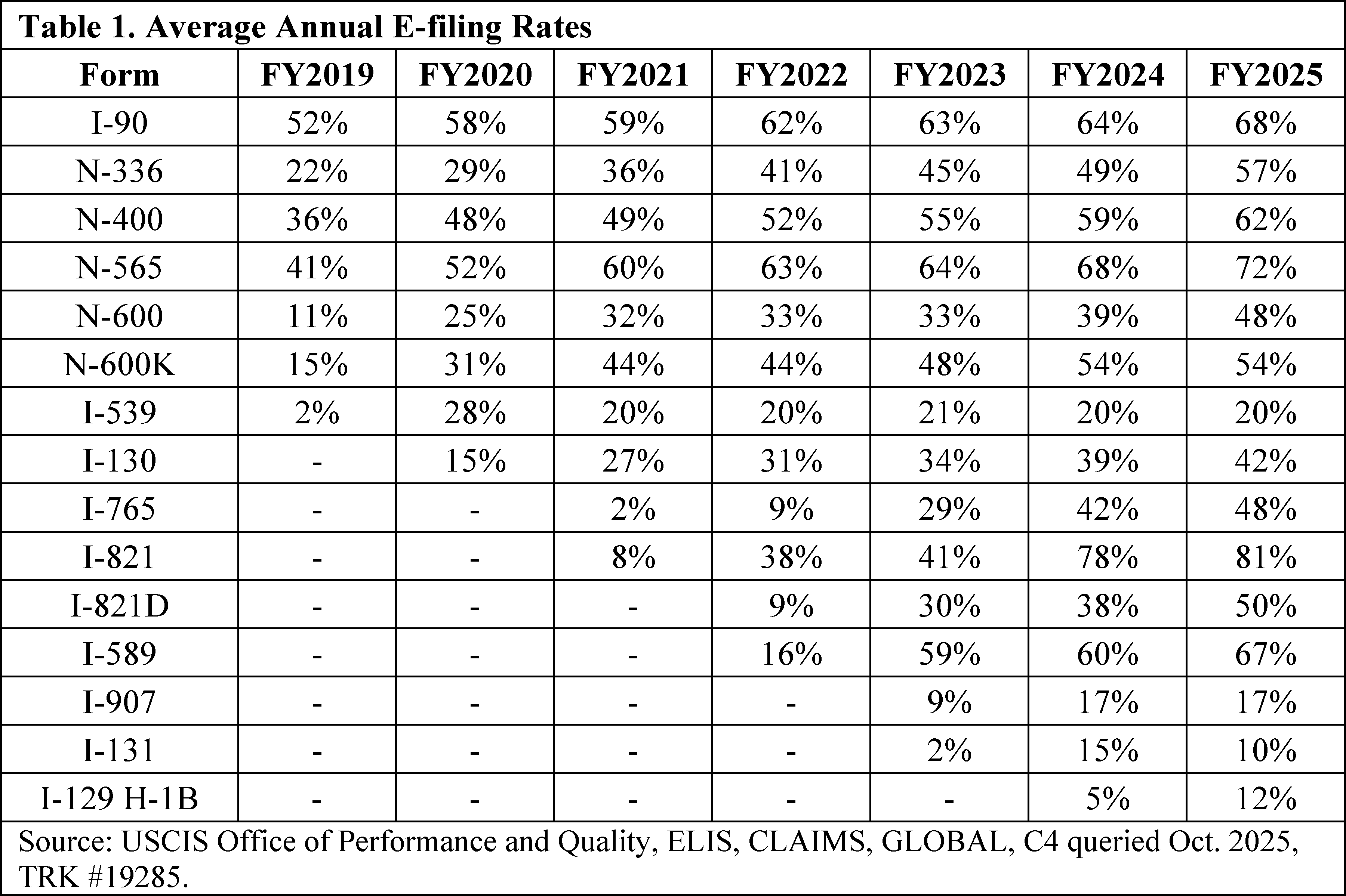
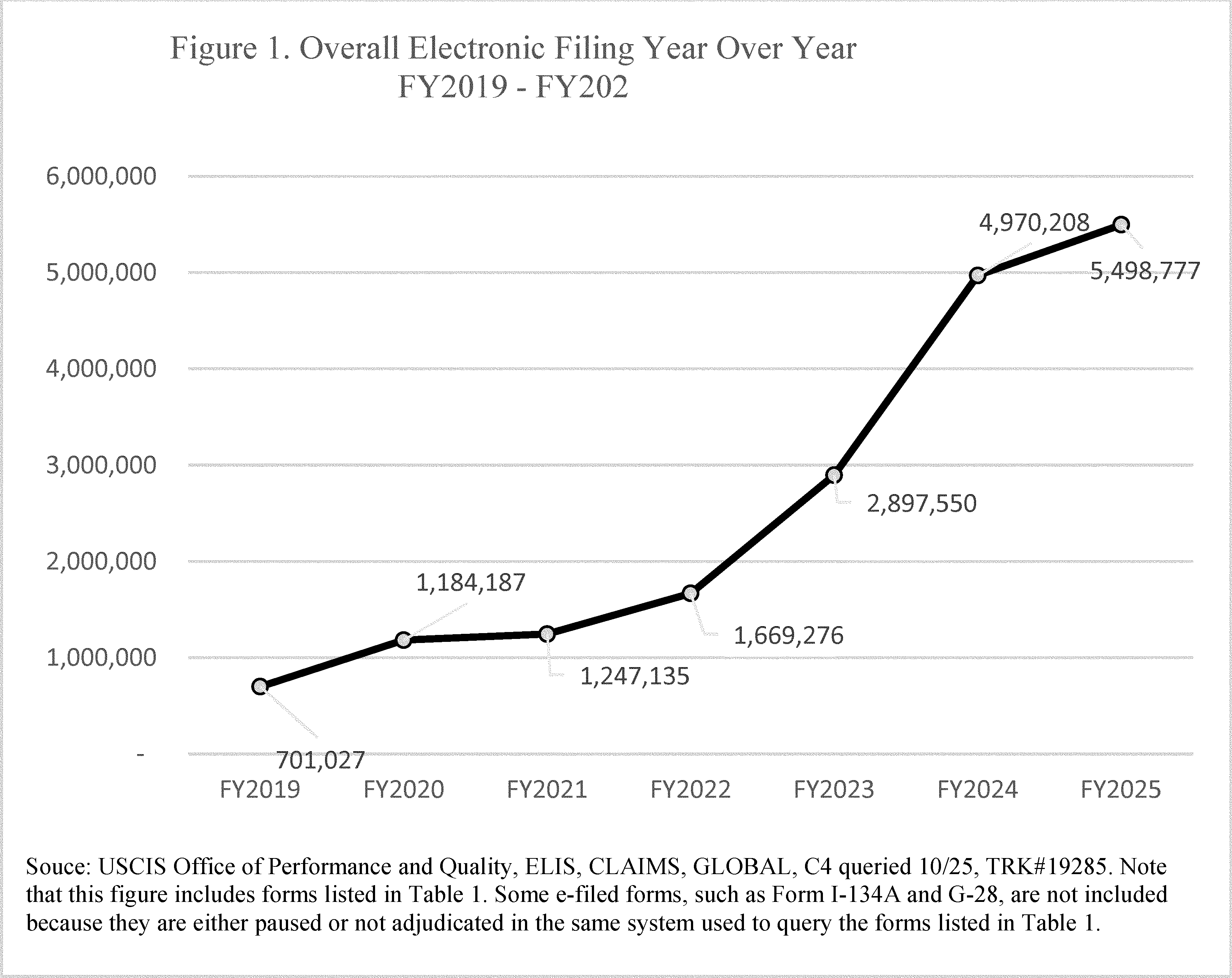
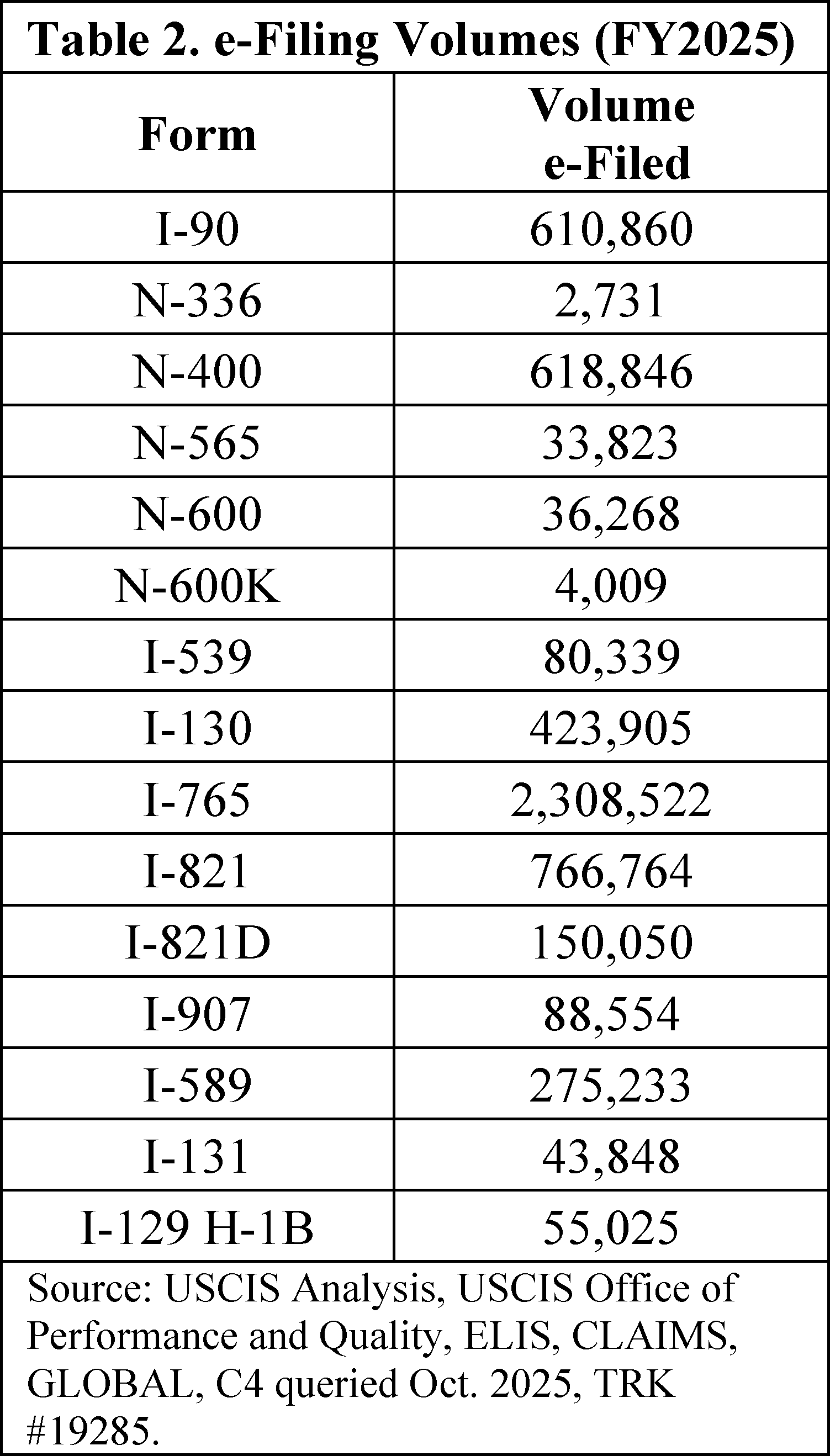
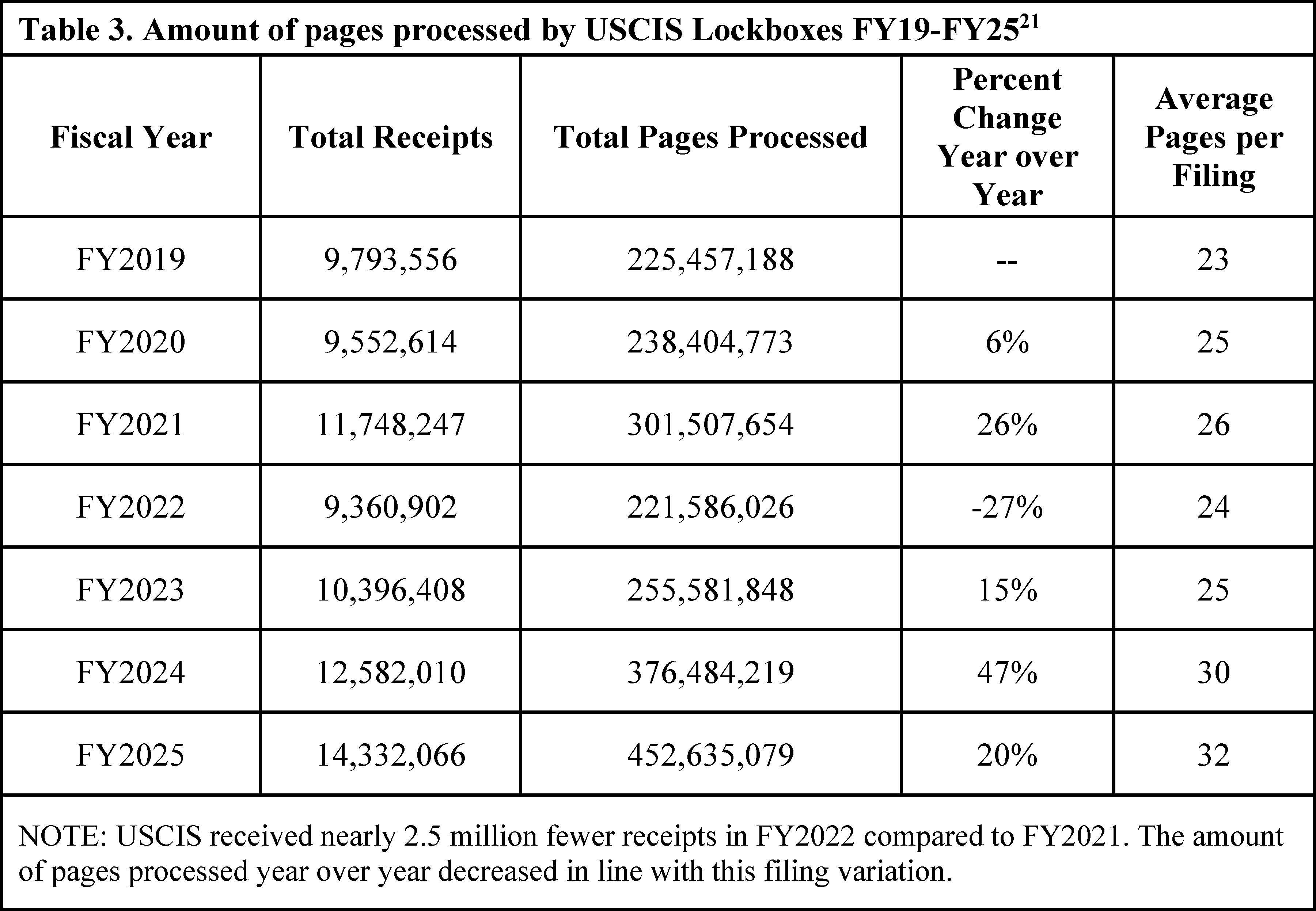
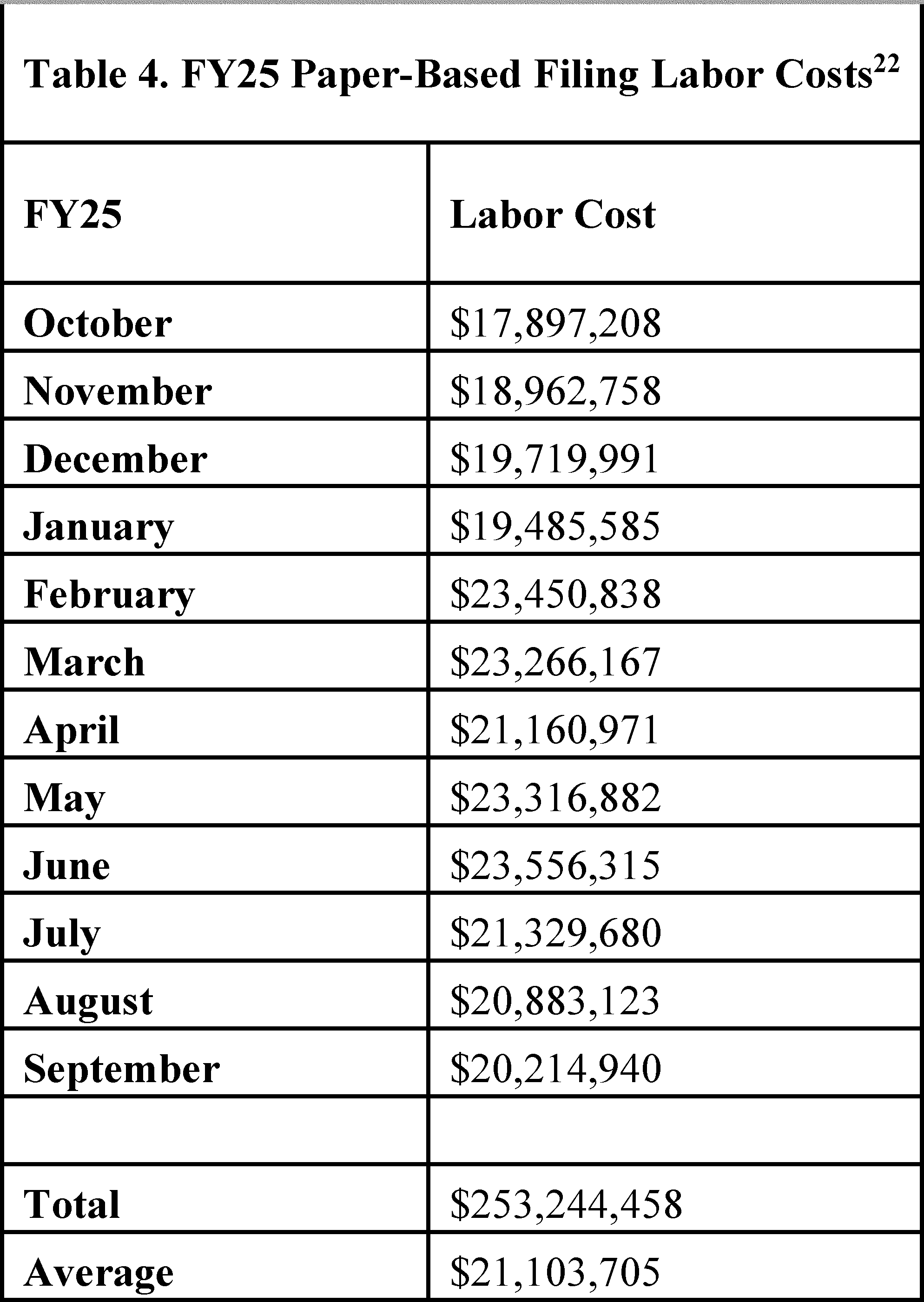
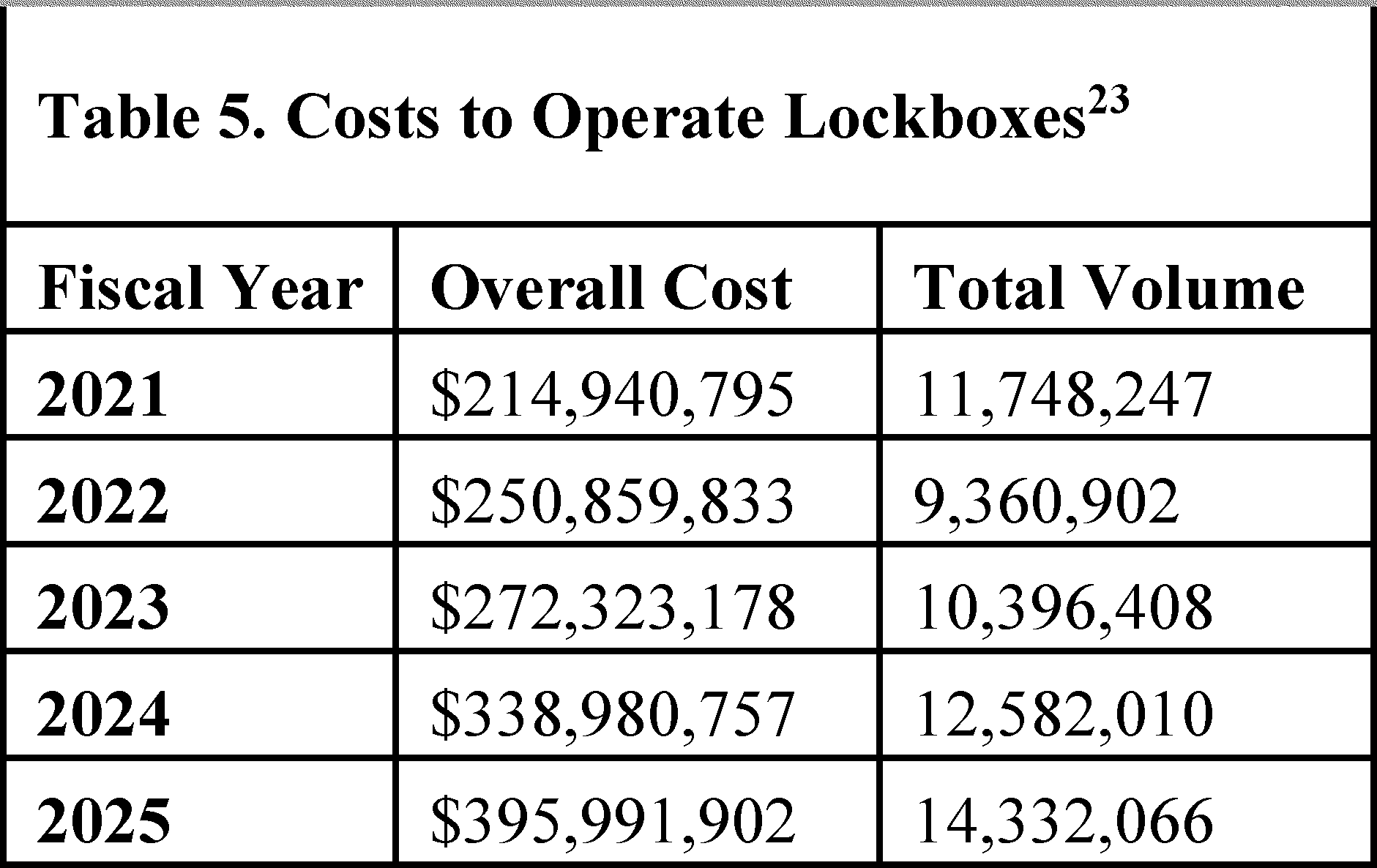
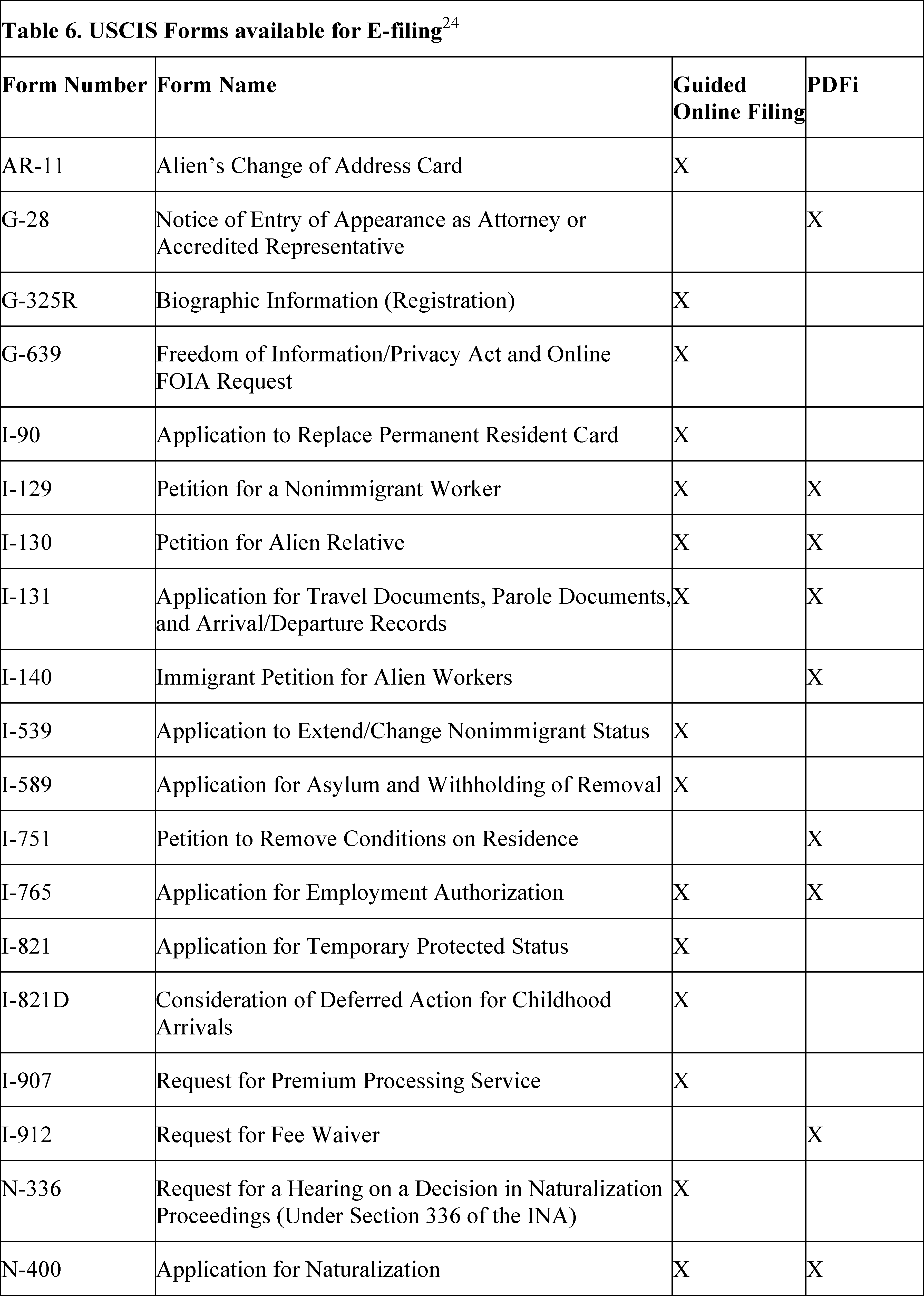
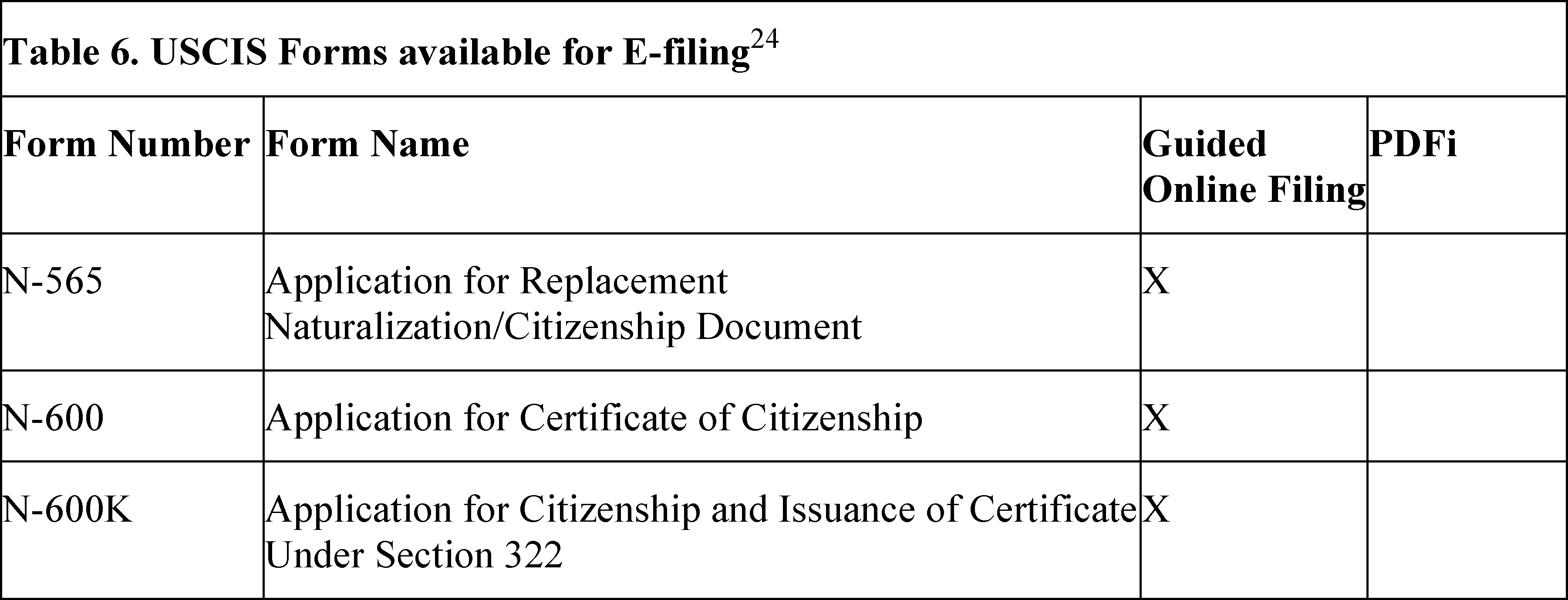
 my.uscis.gov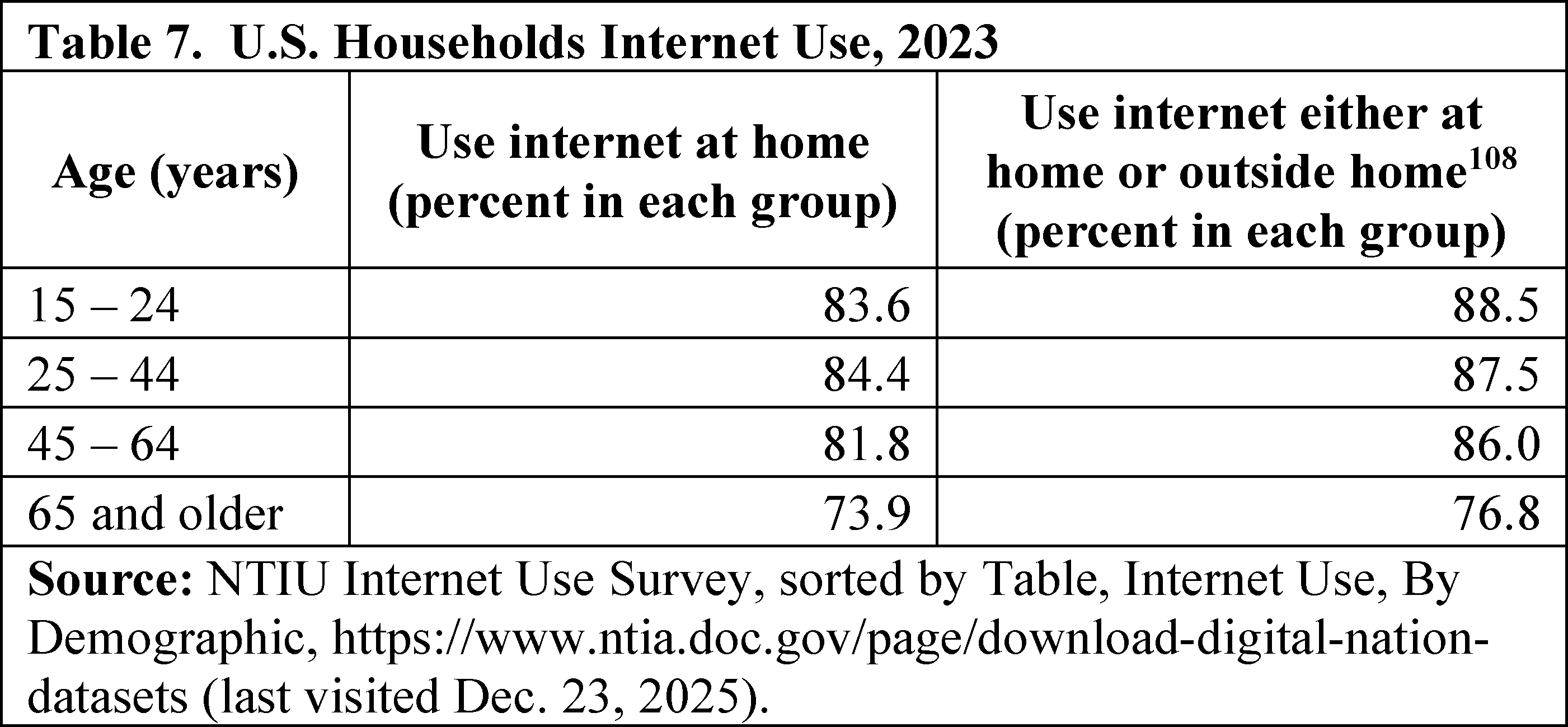
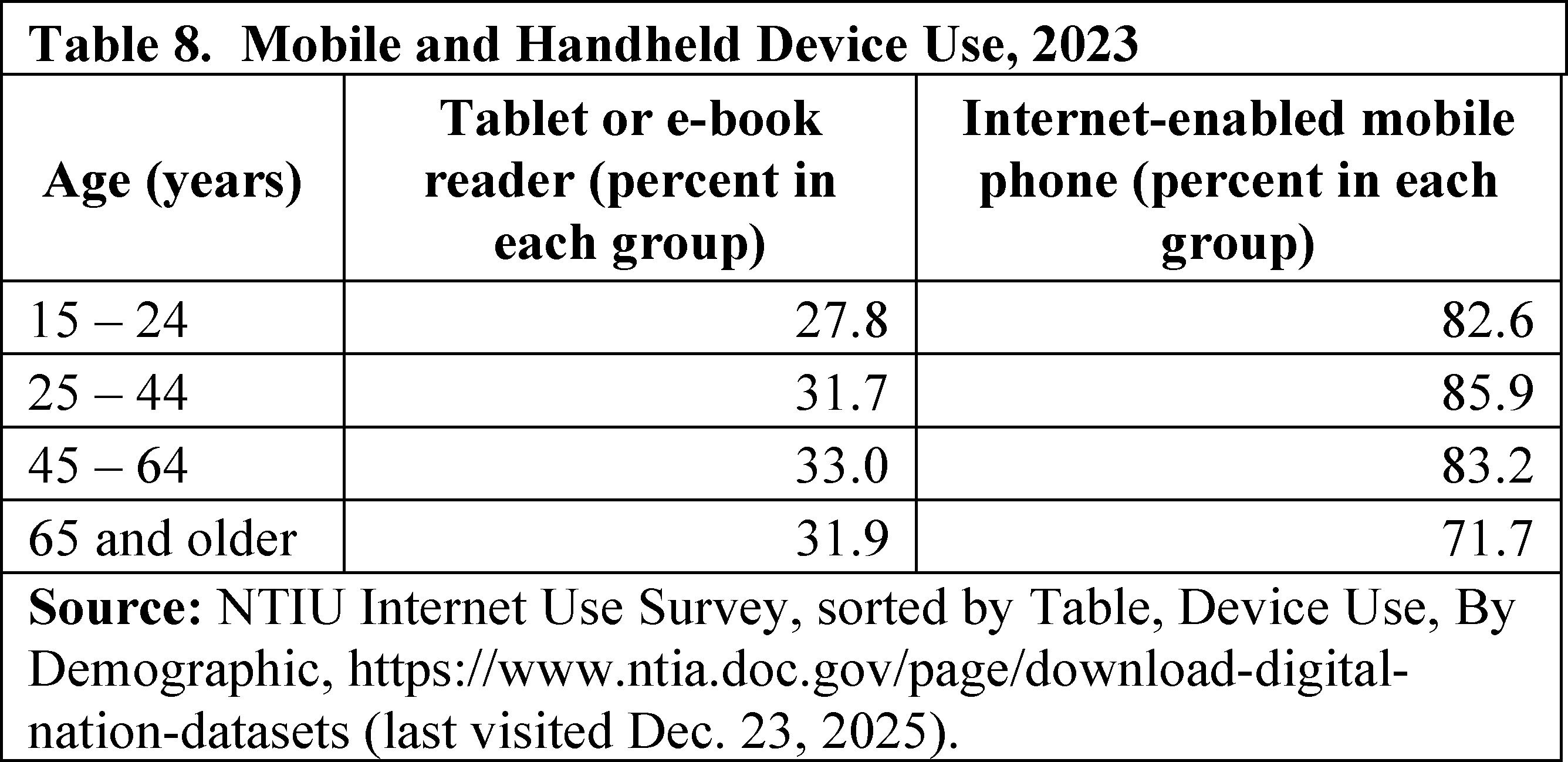
 www.reginfo.gov/public/do/eAgendaMain
 www.dhs.gov/foia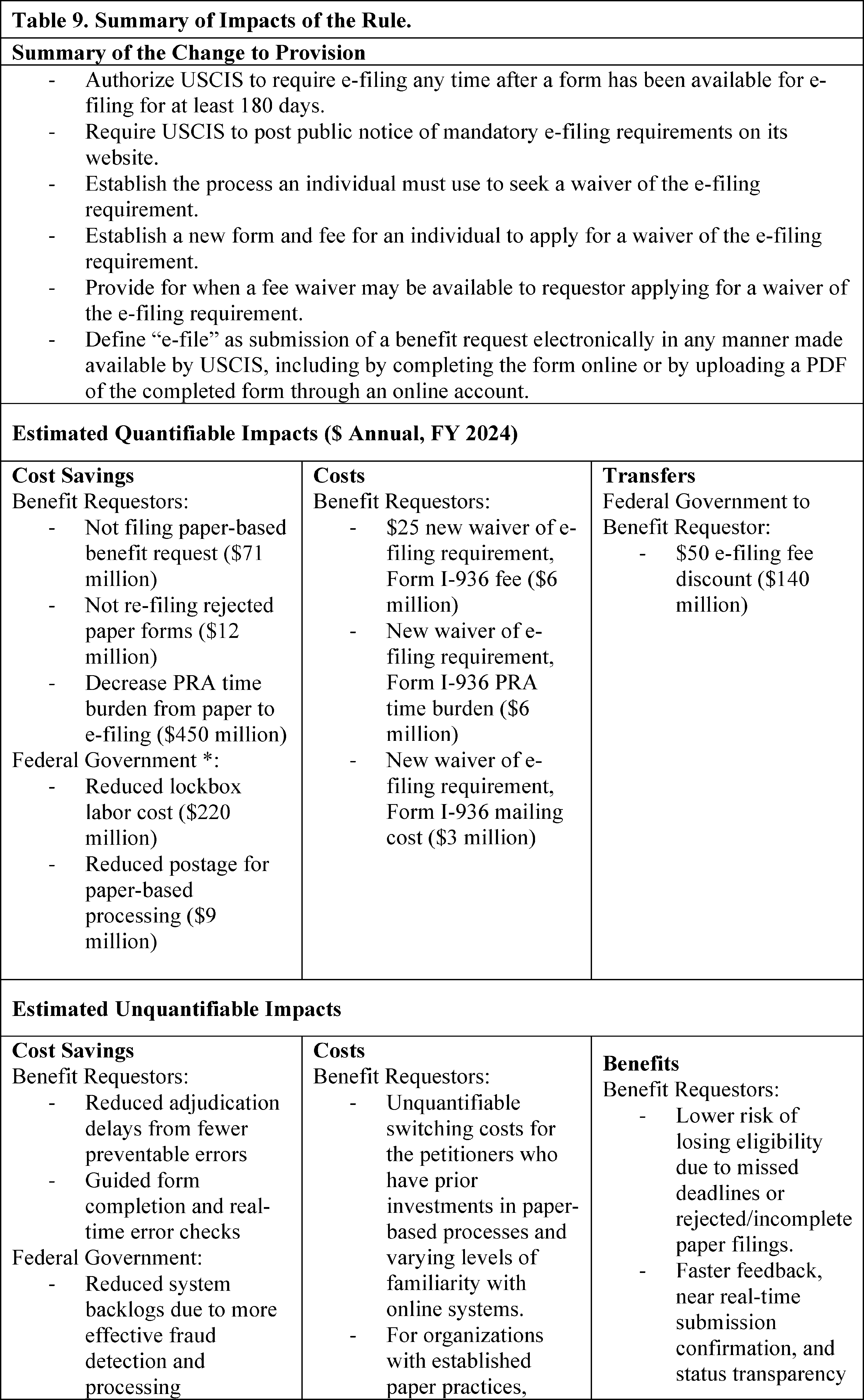
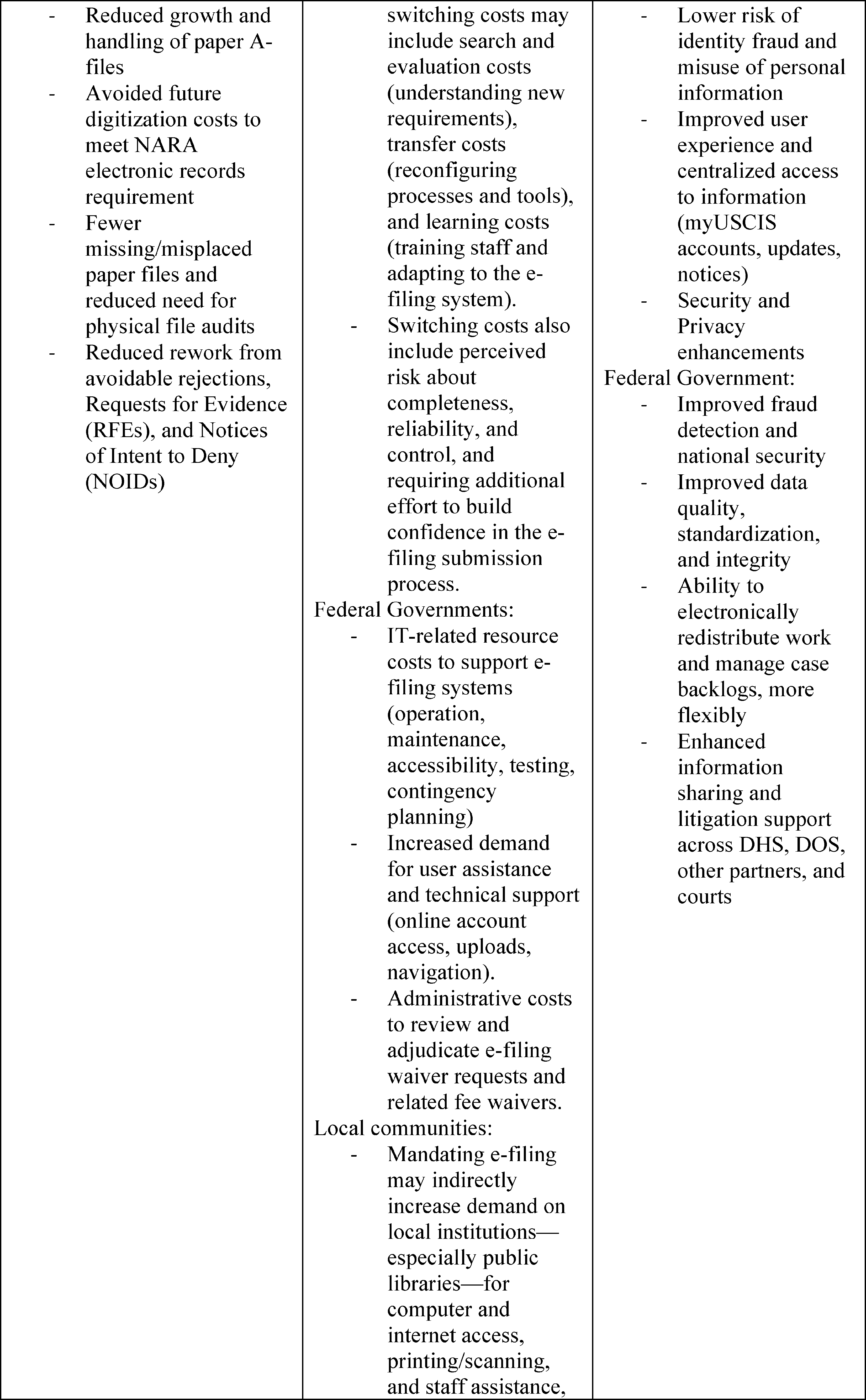
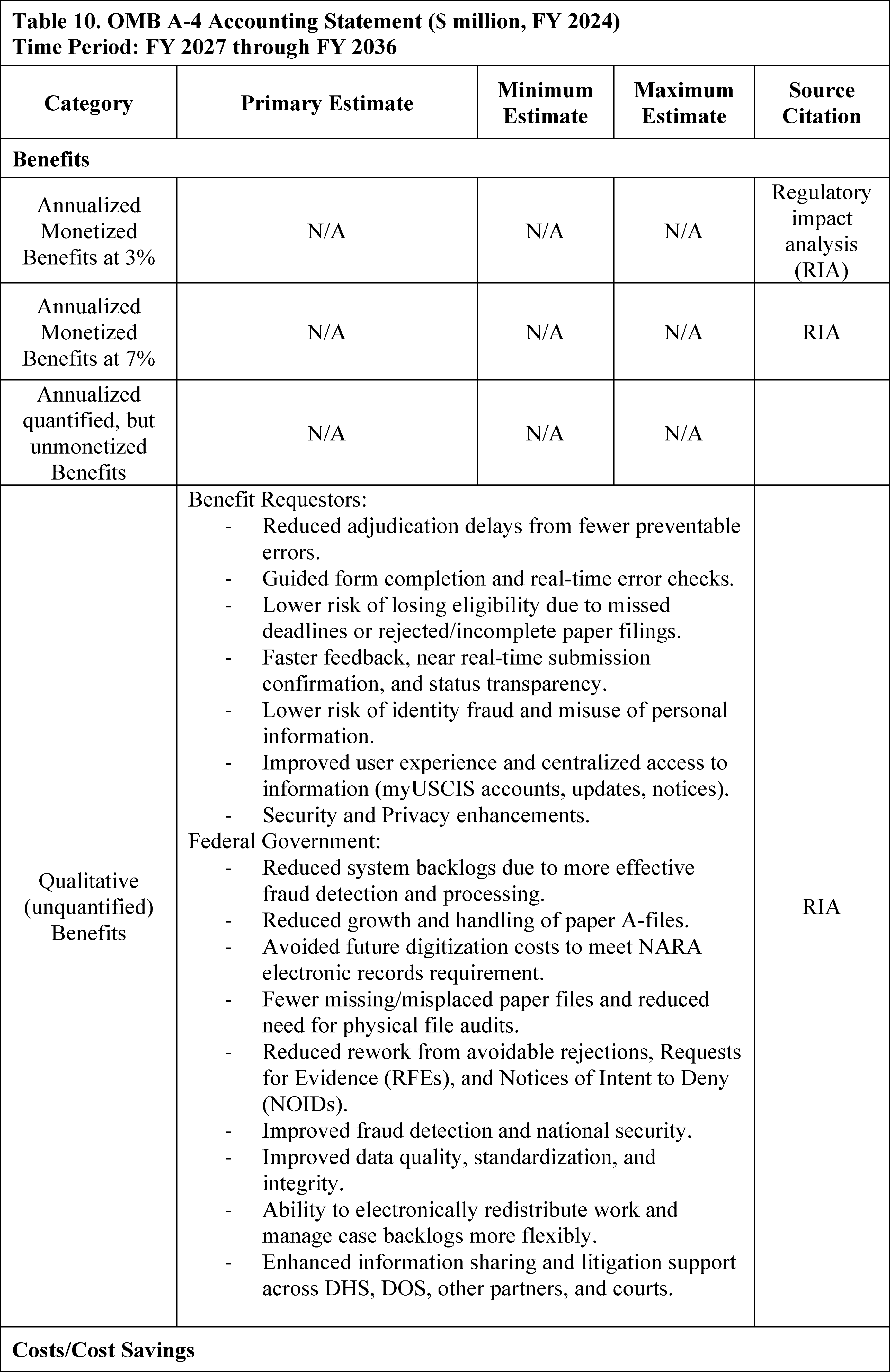
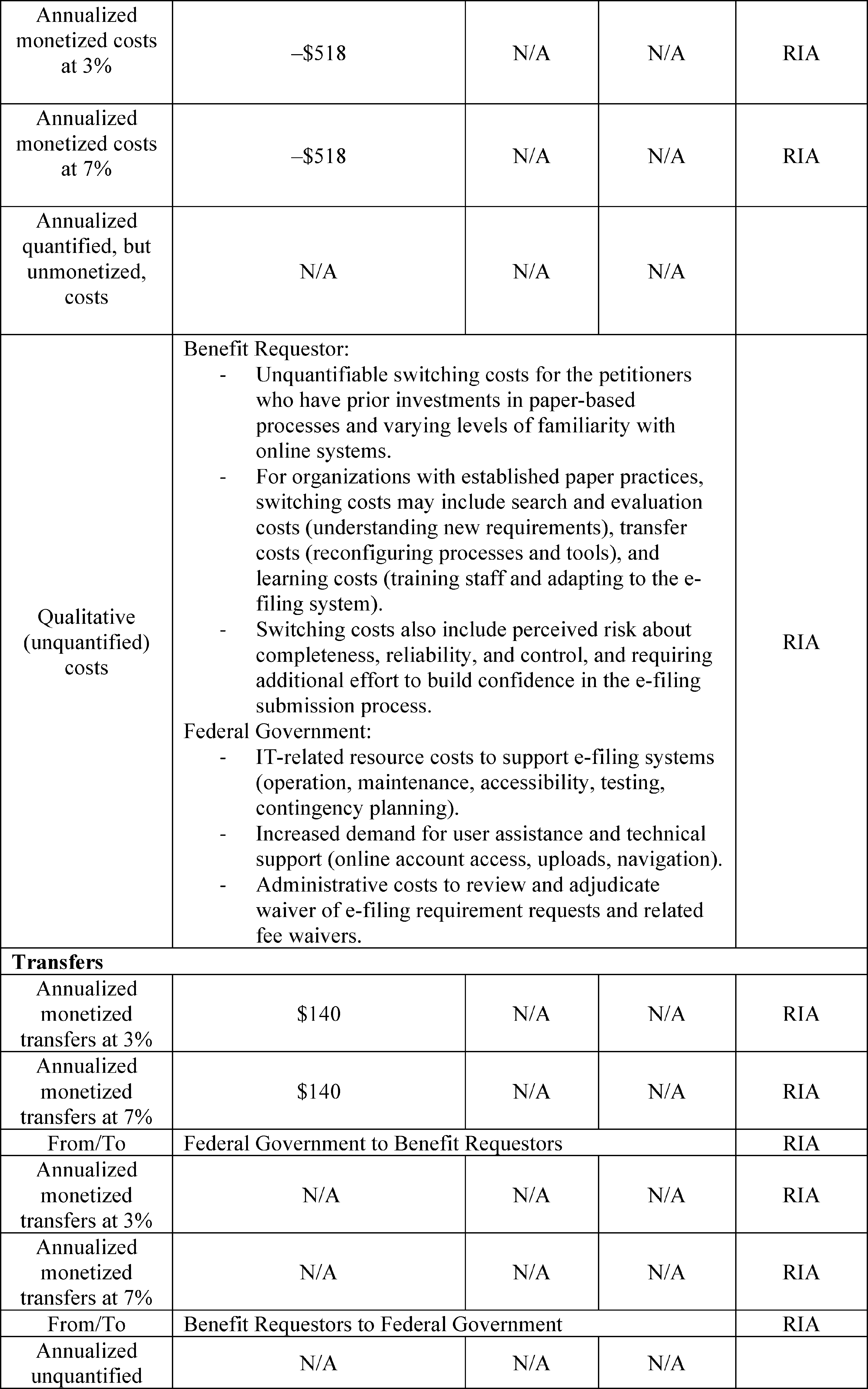
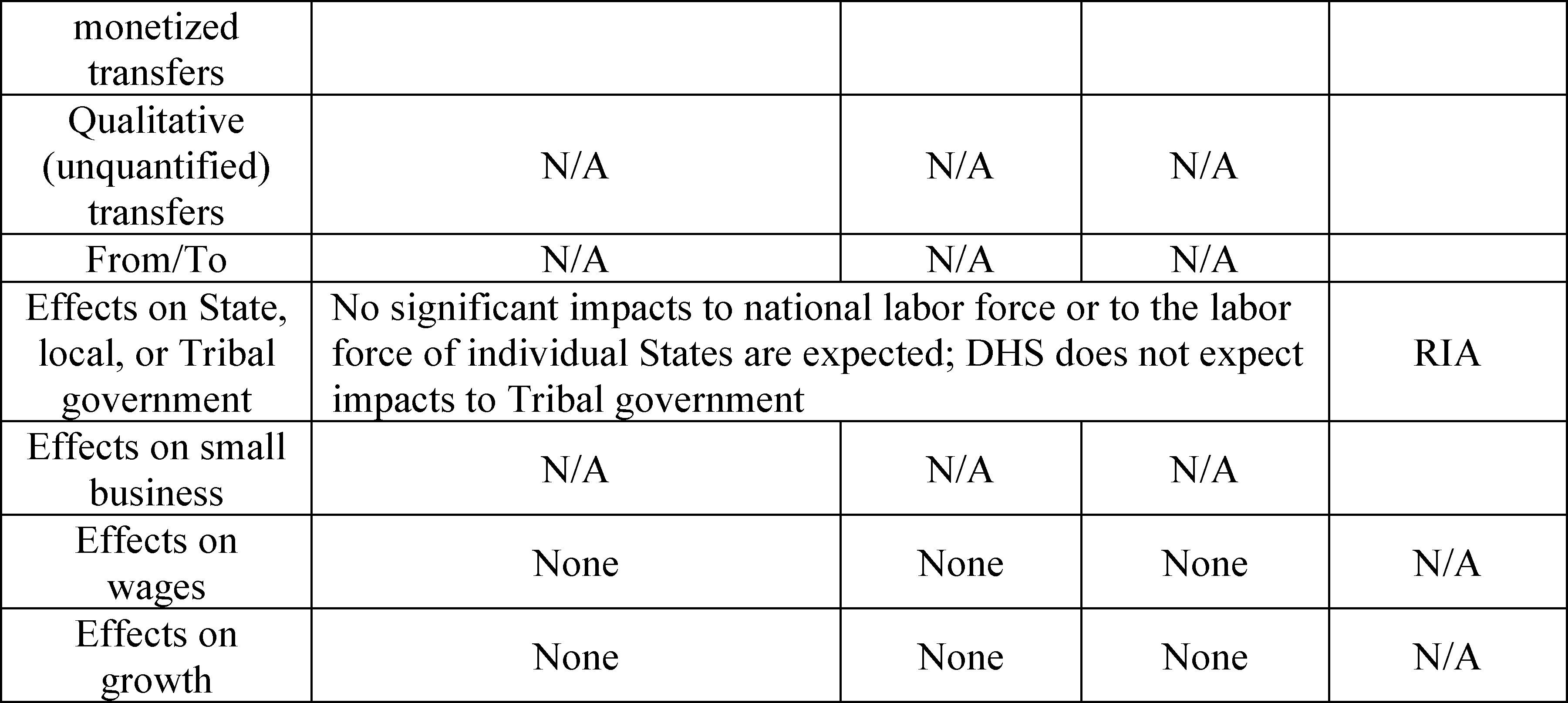
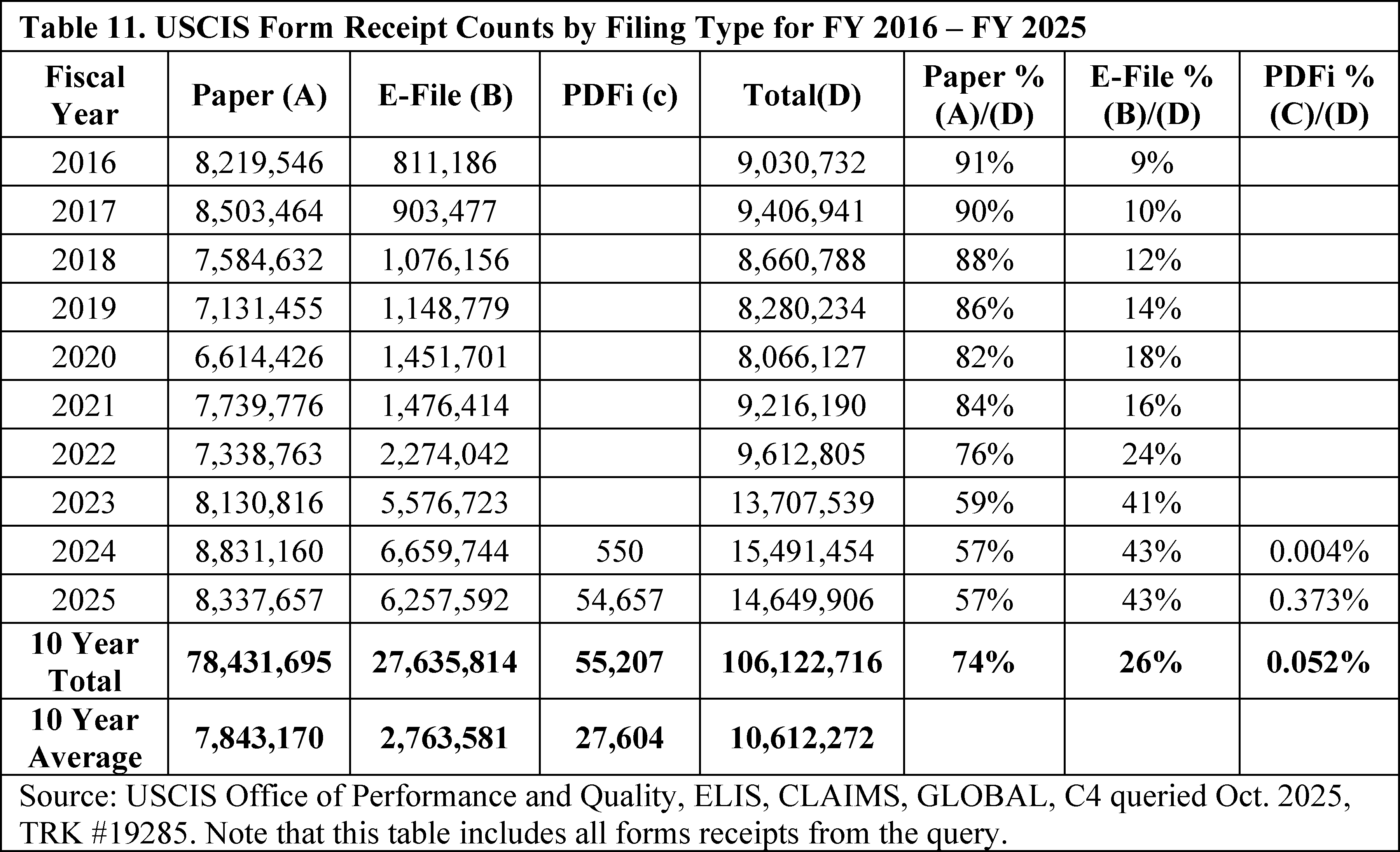
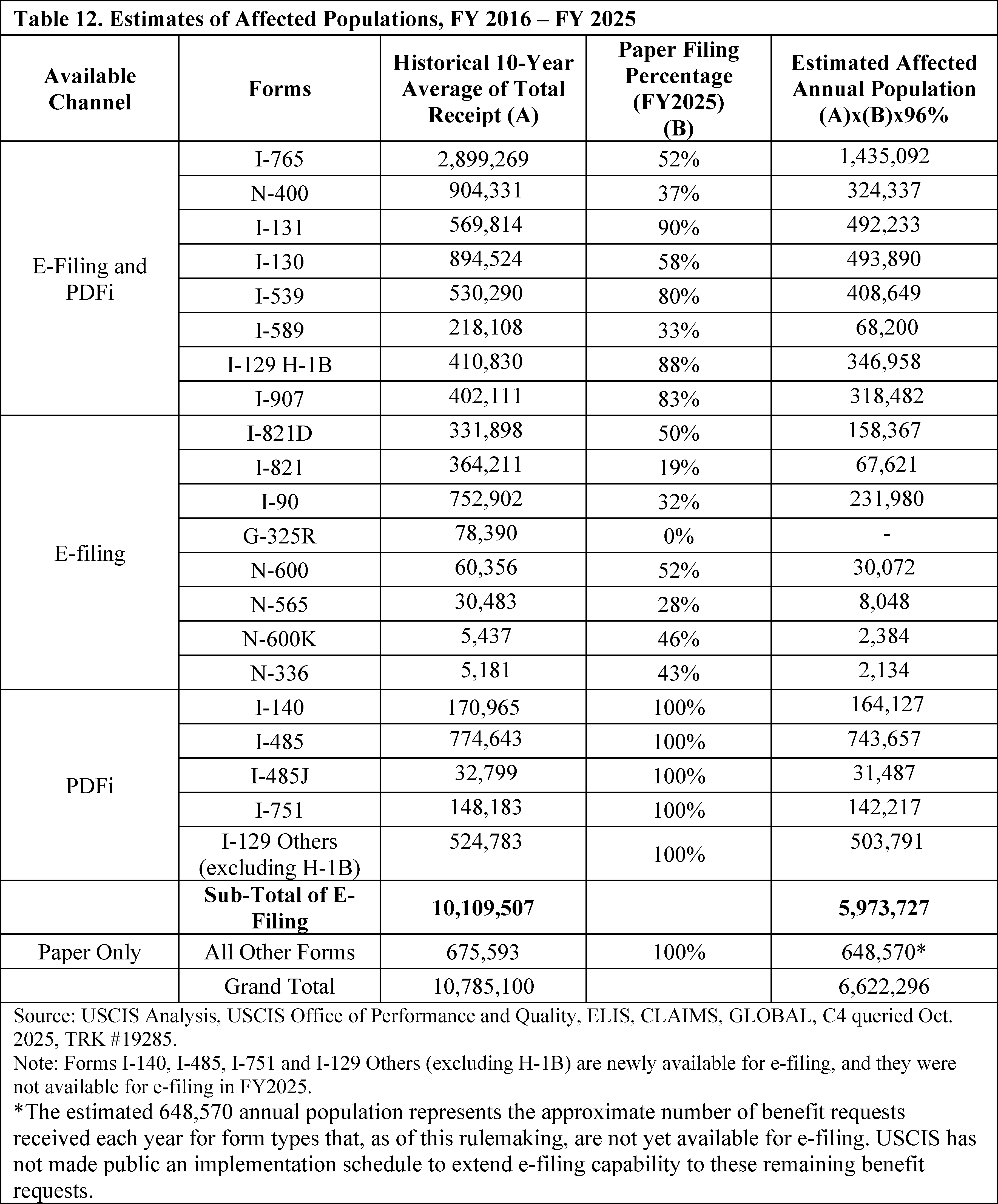
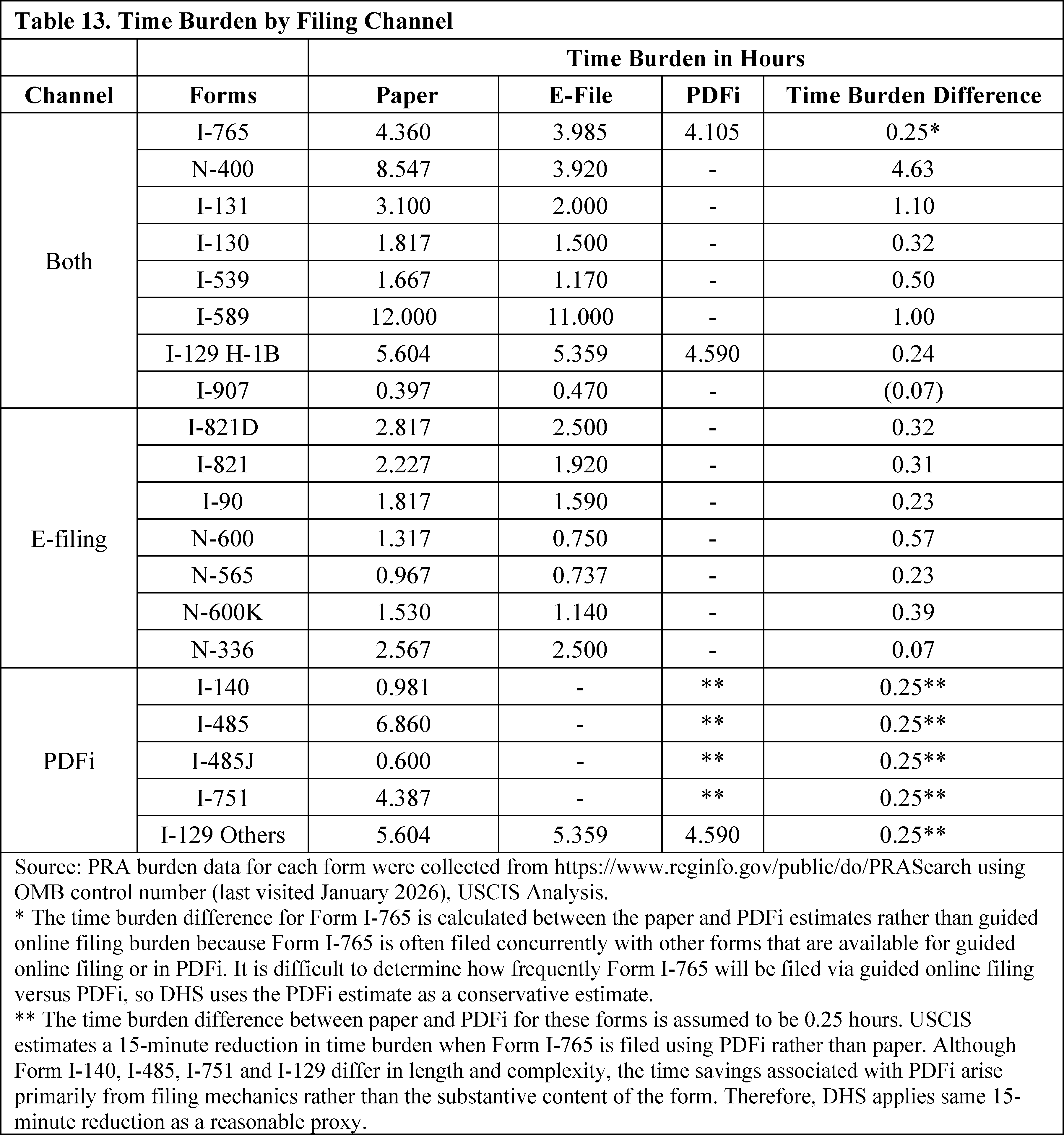
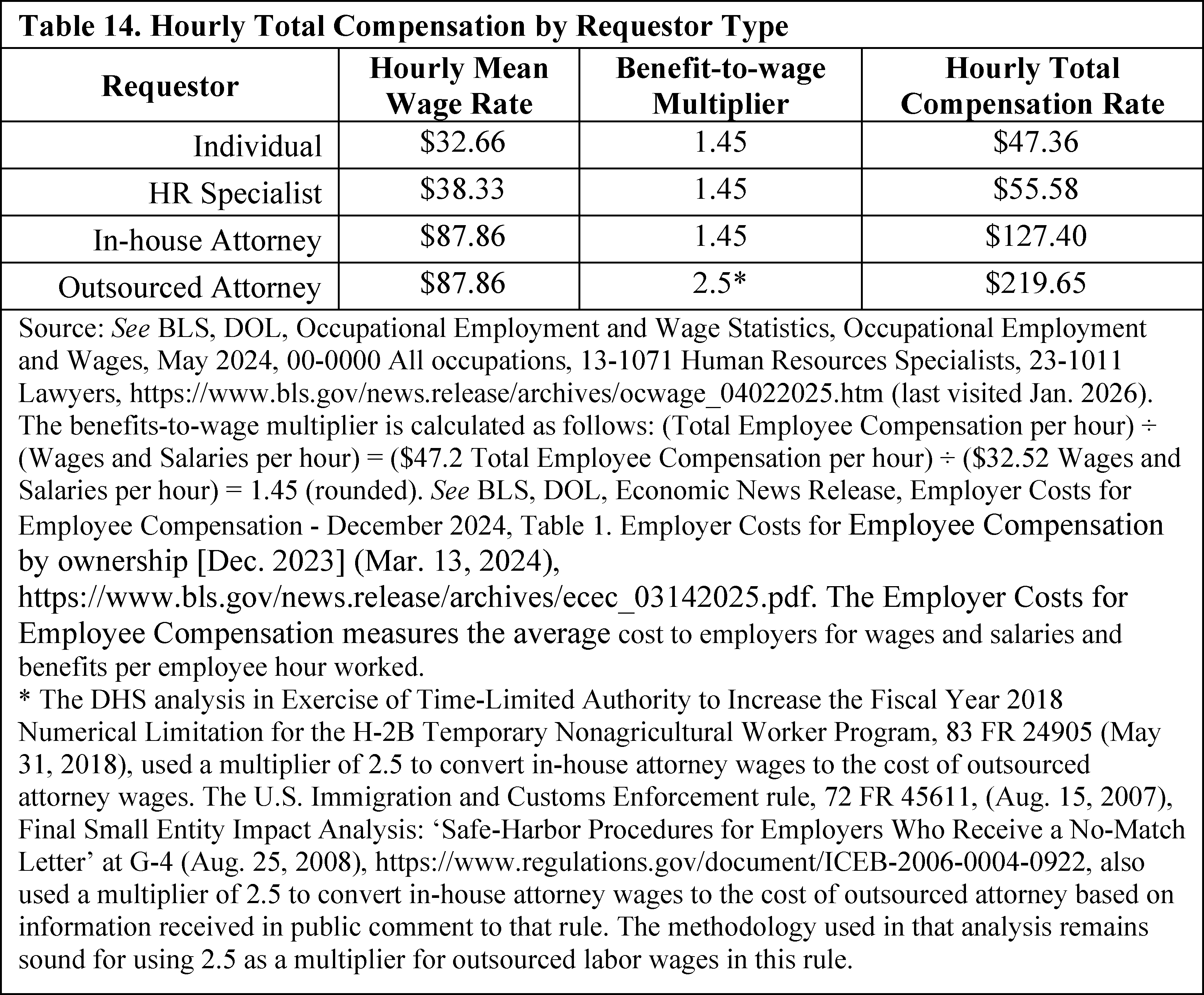
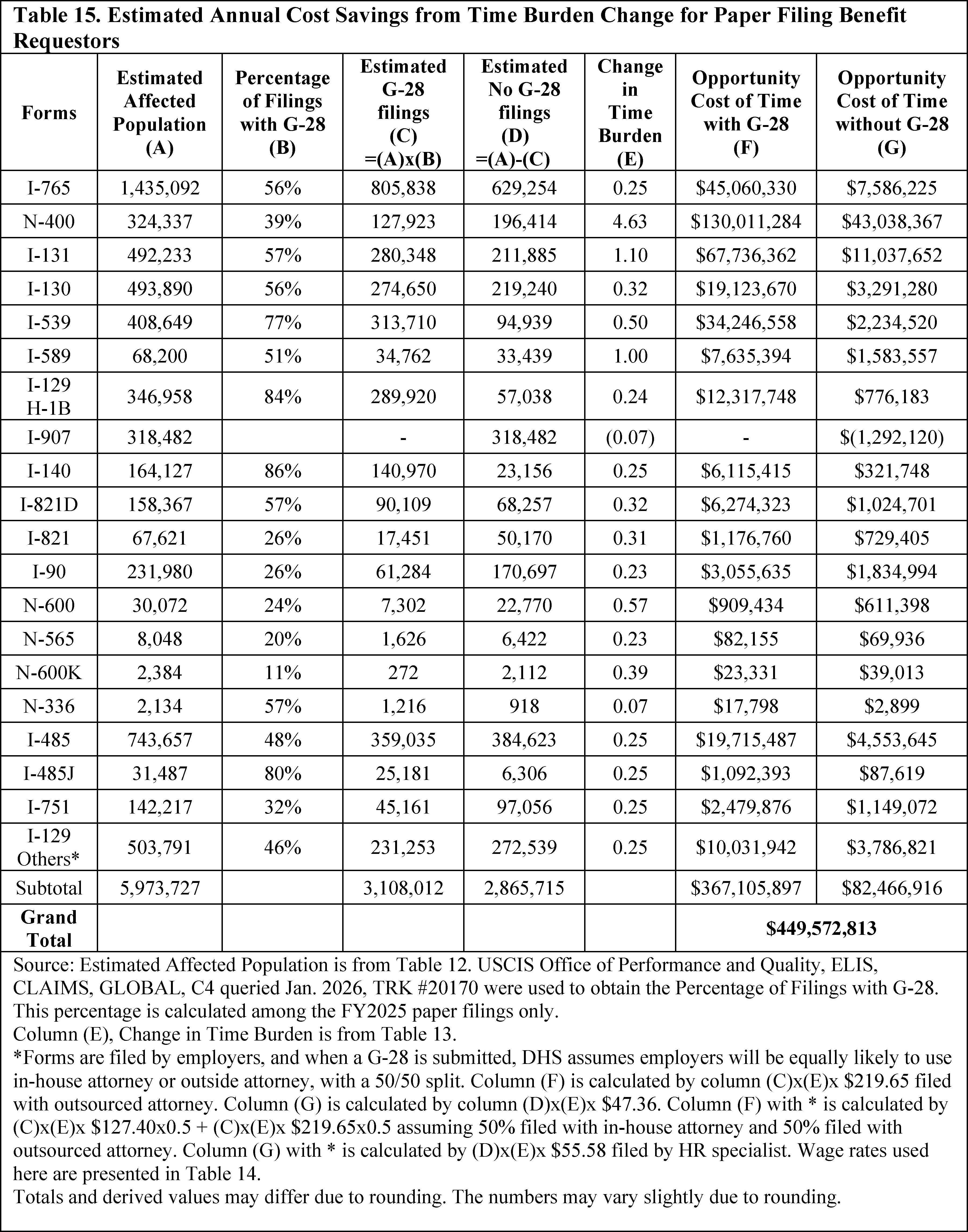
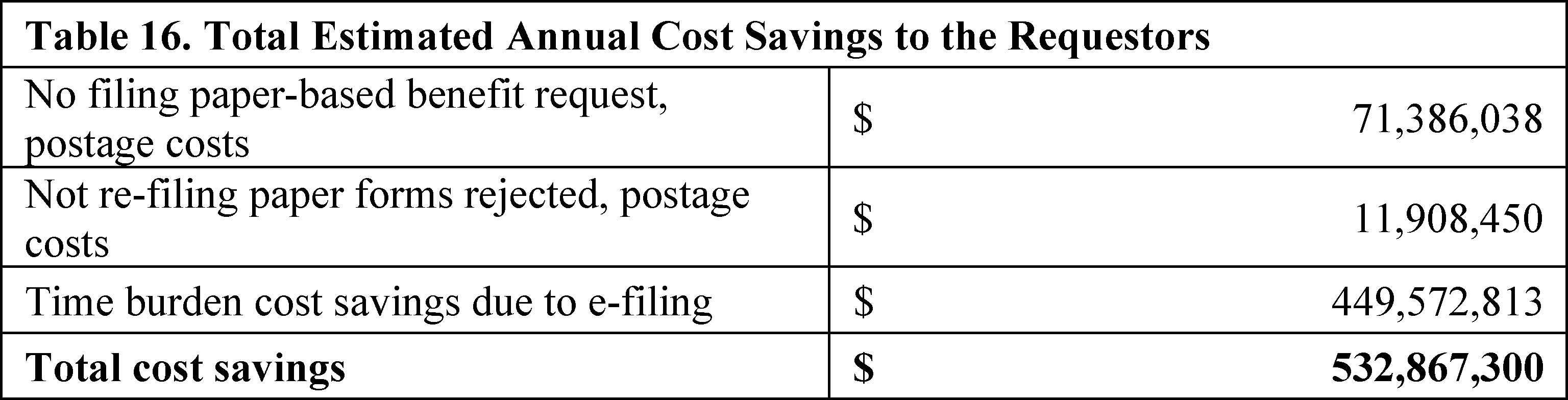
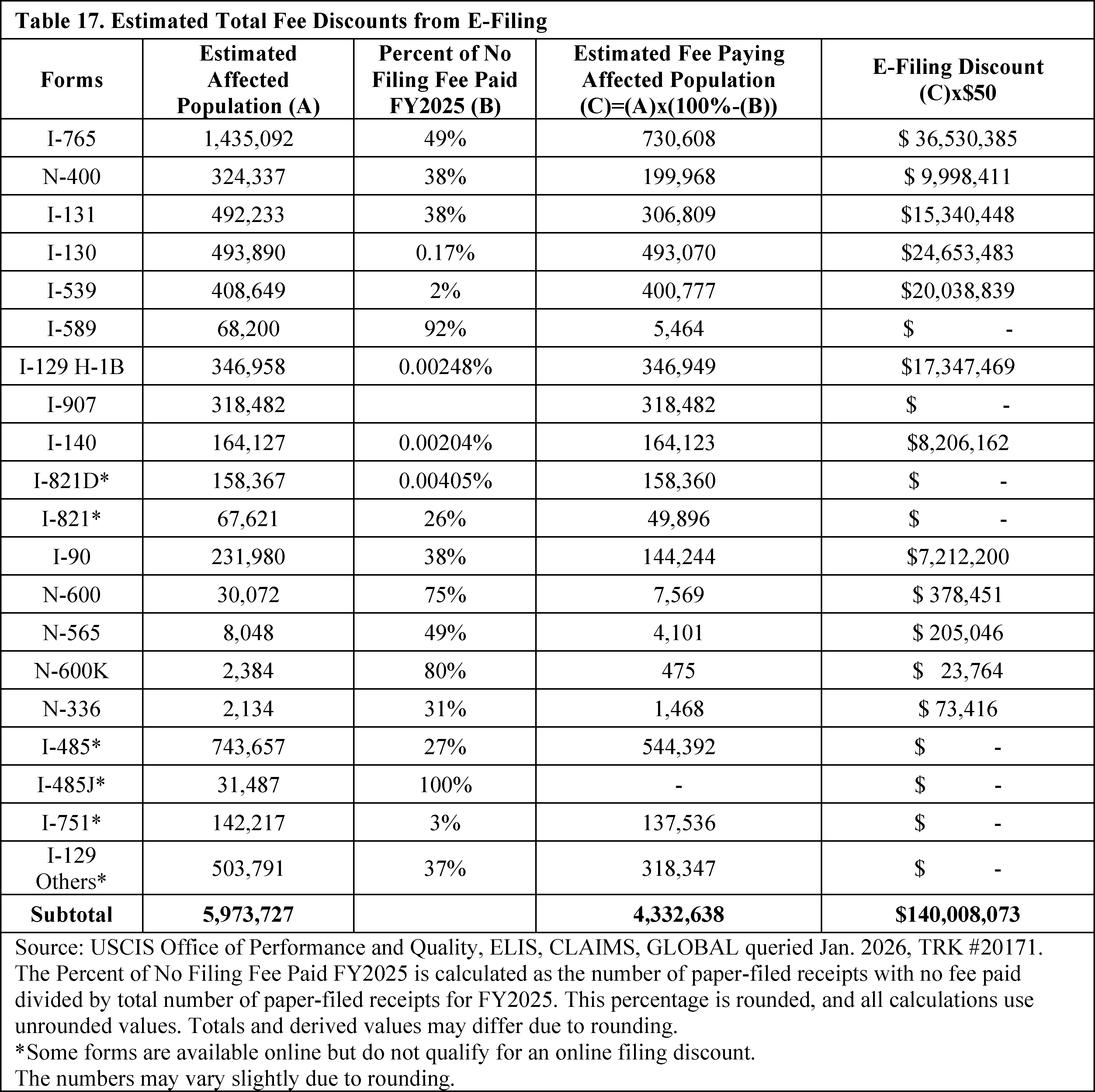
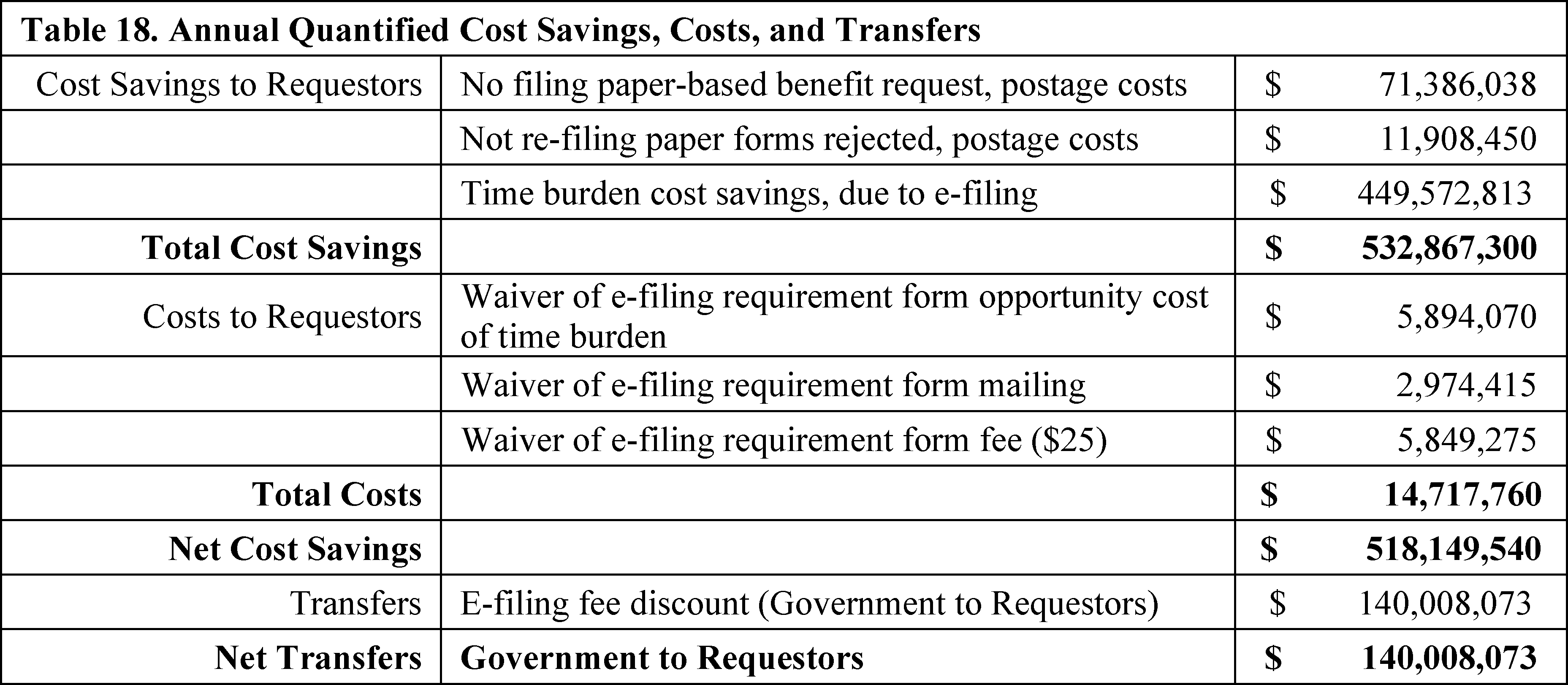
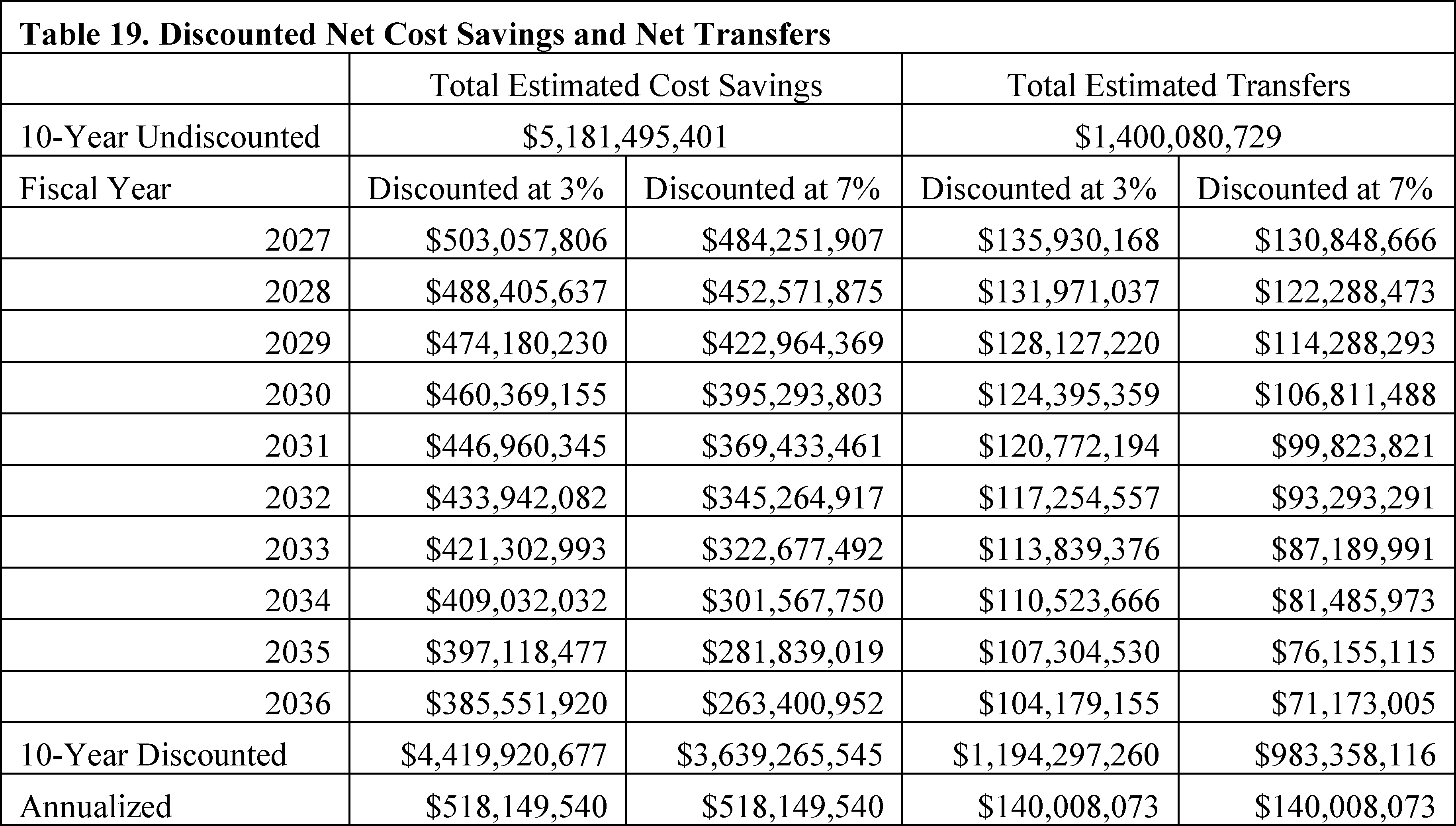
 www.uscis.gov
 www.gpo.gov/fdsys/pkg/PPP-1999-book2/pdf/PPP-1999-book2-doc-pg2317.pdf
 www.whitehouse.gov/wp-content/uploads/2017/11/2000-M-00-10-OMB-Procedures-and-Guidance-on-Implementing-the-Government-Paperwork-Elimination-Act.pdf
 egov.uscis.gov/
 fiscal.treasury.gov/gln/
 www.e-verify.gov/
 www.pewresearch.org/fact-tank/2016/07/12/28-of-americans-are-strong-early-adopters-of-technology/;Charlie
 www.wsj.com/articles/forget-early-adopters-these-people-are-happy-to-be-late/1453827437
 travel.state.gov/content/travel/en/us-visas/immigrate/family-immigration/immigrant-visa-for-spouse.html
 ohss.dhs.gov/topics/immigration/yearbook/2023/table6
 fam.state.gov/FAM/09FAM/09FAM040302.html#M403_2_5_A
 flag.dol.gov
 www.justice.gov/eoir/ecas-attorneys-and-accredited-representatives
 www.irs.gov/pub/irs-news/fs-11-10.pdf
 www.archives.gov/files/records-mgmt/grs/grs04-5.pdf
 www.sciencedirect.com/science/article/pii/S2666764925000372
 online.hbs.edu/blog/post/types-of-data-analysis
 www.mitre.org/sites/default/files/publications/17-0202-person-centric-identity-management.pdf
 signaturely.com/how-electronic-signatures-work/
 www.pcmag.com/picks/the-best-all-in-one-printers
 www.ala.org/news/sites/ala.org.news/files/content/0415_StateAmLib_0.pdf
 www.pay.gov/paygov
 www2.census.gov/library/publications/2024/demo/acs-56.pdf
 www.uscourts.gov/file/78321/download
 pacer.uscourts.gov/file-case/court-cmecf-lookup
 www.alabar.org/news/alafile-registration-is-now-mandatory/
 courts.ca.gov/news/california-supreme-court-adopts-amendments-e-filing-rules
 mdcourts.gov/mdec/faq-attorneys
 www.txcourts.gov/3rdcoa/practice-before-the-court/electronic-filing/attorneys/
 www.wicourts.gov/ecourts/efilecircuit/docs/eFilingrule.pdf
 www.mass.gov/guides/dor-e-file-information
 www.michigan.gov/taxes/0,4676,7-238-43519_46621_47458_69295-337087-,00.html
 dor.mo.gov/faq/business/telefile.php
 www.tax.ny.gov/bus/efile/elf_busn_mandate.htm
 www.oregon.gov/DOR/programs/businesses/pages/iwire.aspx
 nces.ed.gov/programs/digest/d22/tables/dt22_701.60.asp
 www.rd.usda.gov/programs-services/all-programs/telecom-programs
 www.usda.gov/sites/default/files/documents/rural-prosperity-report.pdf
 www.usac.org
 trumpwhitehouse.archives.gov/sites/whitehouse.gov/files/omb/circulars/A4/a-4.pdf
 www.usps.com/ship/priority-mail.htm#flatrate
 www.bls.gov/cpi/tables/supplemental-files/home.htm