Employer Contributions to Trump Accounts and Nondiscrimination Rules for Dependent Care Assistance Programs
This document contains proposed regulations that would provide guidance with respect to employer contributions to Trump accounts, including applicable nondiscrimination rules, a...
Notice of proposed rulemaking and notice of public hearing.
SUMMARY:
This document contains proposed regulations that would provide guidance with respect to employer contributions to Trump accounts, including applicable nondiscrimination rules, and the nondiscrimination rules for dependent care assistance programs. This document also provides a notice of a public hearing on the proposed regulations. The proposed regulations would affect employers maintaining a Trump account contribution program or a dependent care assistance program and employees participating in those programs.
DATES:
Comments: Electronic or written comments must be received by September 25, 2026 Public Hearing: The public hearing is scheduled to be held on October 15, 2026 at 10 a.m. ET. Requests to speak and outlines of topics to be discussed at the public hearing must be received by September 25, 2026. If no requests to speak or outlines are received by September 25, 2026, the public hearing will be cancelled. Requests to attend the public hearing must be received by 5 p.m. ET on October 13, 2026.
ADDRESSES:
Commenters are strongly encouraged to submit public comments electronically. Submit electronic submissions via the Federal eRulemaking Portal at
www.regulations.gov
(indicate IRS and REG-101355-26) by following the online instructions for submitting comments. Requests for the public hearing must be submitted as prescribed in Comments and Public Hearing in Part V of this preamble. Once submitted to the Federal eRulemaking Portal, comments cannot be edited or withdrawn. The Department of the Treasury (Treasury Department) and the IRS will publish for public availability any comments submitted to the IRS's public docket. Send paper submissions to: CC:PA:01:PR (REG-101355-26), Room 5503, Internal Revenue Service, P.O. Box 7604, Ben Franklin Station, Washington, DC 20044.
FOR FURTHER INFORMATION CONTACT:
Concerning the proposed regulations, Jennifer Friedman at (202) 317-5500; concerning submissions of comments and the public hearing, the Publications and Regulations Section at (202) 317-6901 (not toll-free numbers) or by email at
publichearings@irs.gov
(preferred).
SUPPLEMENTARY INFORMATION:
I. Authority
This document contains proposed additions to the Income Tax Regulations (26 CFR part 1) to implement sections 128 and 129 of the Internal Revenue Code (Code).
These proposed regulations are promulgated under section 7805(a) of the Code, which provides that “the Secretary [1]
shall prescribe all needful rules and regulations for the enforcement of [the Code], including all rules and regulations as may be necessary by reason of any alteration of law in relation to internal revenue.”
II. Background
A. In General
1. Section 128 Contributions to Trump Accounts
Section 70204 of Public Law 119-21, 139 Stat. 72 (July 4, 2025), commonly known as the One, Big, Beautiful Bill Act (OBBBA), added section 530A regarding Trump accounts to the Code. Section 70204 of the OBBBA also added section 128 to the Code providing an exclusion from gross income for employer contributions to the Trump account of an employee or of any dependent of an employee pursuant to a Trump account contribution program. The provisions apply to taxable years beginning after December 31, 2025.
A Trump account is a type of traditional individual retirement account (IRA) that is established for the exclusive benefit of an eligible individual and that is designated at its establishment as a Trump account. When a Trump account is opened, the eligible individual is the owner of the Trump account and is referred to as the account beneficiary.
A Trump account is subject to certain special rules inapplicable to other individual retirement arrangements under section 408.[2]
The special rules apply only during the period that begins when the account beneficiary's initial Trump account is established and ends on December 31 of the calendar year in which the account beneficiary attains age 17 (growth period). The special rules that apply only during the growth period include rules regarding contributions, investments, distributions, and reporting. After the growth period, most of these special rules cease to apply and the rules under section 408(a) governing traditional IRAs generally apply.
Section 128(a) provides that an amount paid by an employer as a contribution to the Trump account of an employee or of any dependent of an employee pursuant to a Trump account contribution program is excludable from gross income of the employee. Section 128(b) provides that the amount excludable under section 128(a) with respect to any employee shall not exceed $2,500 (subject to inflation adjustments after 2027).
Section 128(c) provides that the term “Trump account contribution program” means a separate written plan of an employer for the exclusive benefit of its employees to provide contributions to the Trump accounts of such employees or dependents of such employees that meets requirements similar to the requirements of section 129(d)(2), (3), (6), (7), and (8).
2. Section 129 Dependent Care Assistance Programs
Section 129 [3]
provides that amounts paid or incurred by an employer for dependent care assistance provided to an employee are excludable from the employee's gross income if the amounts are furnished pursuant to a dependent care assistance program. A dependent care assistance program is a separate written plan of an employer for the exclusive benefit of its employees that provides dependent care assistance and meets certain other requirements under the Code, including requirements relating to nondiscriminatory benefits, limits on principal shareholders' benefits, and information to be provided to eligible employees.
Dependent care assistance means the payment or provision of services that would be considered employment-related expenses under section 21(b)(2) (relating to expenses for household and dependent care services necessary for gainful employment) if paid for by the employee. Such employment-related expenses include expenses for the care of a qualifying individual. The term “qualifying individual” is defined as (i) a dependent of the taxpayer who has not attained age 13 or (ii) a dependent or spouse of the taxpayer who is physically or mentally incapable of caring for himself or herself and who has the same principal place of abode as the taxpayer
( printed page 51613)
for more than one-half of the taxable year. The amount that may be excluded annually from an employee's gross income under a dependent care assistance program is limited to $7,500 ($3,750 in the case of a married individual filing a separate return).
A dependent care assistance program must satisfy four nondiscrimination rules: (1) the contributions and benefits rule in section 129(d)(2), (2) the eligibility rule in section 129(d)(3), (3) the owner concentration rule in section 129(d)(4), and (4) the average benefits rule in section 129(d)(8). The contributions and benefits rule is satisfied if the contributions and benefits provided under the plan do not discriminate in favor of highly compensated employees (HCEs) within the meaning of section 414(q). The eligibility rule is satisfied if a plan must benefit employees who qualify under a classification set up by the employer and found by the Secretary not to be discriminatory in favor of HCEs or their dependents. The owner concentration rule is satisfied if no more than 25 percent of the amounts paid or incurred by the employer for dependent care assistance during the year are provided for the class of individuals who are shareholders or owners (or their spouses or dependents), each of whom (on any day of the year) owns more than 5 percent of the stock or of the capital or profits interest in the employer. The requirements of the average benefits rule are satisfied if the average benefits provided to employees who are not HCEs under all plans of the employer is at least 55 percent of the average benefits provided to the HCEs under all plans of the employer. A special rule applies with respect to benefits provided through a salary reduction agreement that allows the plan to disregard employees whose compensation is less than $25,000.
In applying the eligibility test and the average benefits test, employees are excluded if they have not attained age 21 and completed one year of service; or if they were not included in a dependent care assistance program and were included in a unit of employees covered by a collective bargaining agreement under which dependent care benefits were the subject of good faith bargaining.
If a dependent care assistance program fails the nondiscrimination rules, the benefits are not excludable from income by HCEs, but the benefits are excludable from income by employees who are not HCEs.
B. Published Guidance
Notice 2025-68, 2025-52 IRB 856, informed taxpayers that the Treasury Department and the IRS intend to propose regulations providing guidance with respect to Trump accounts. The notice described guidance expected to be included in the proposed regulations in the form of answers to specific questions, including questions about employer contributions under a Trump account contribution program.
Notice 2025-68, Q&A I-1 states that section 128 permits an employee to exclude up to $2,500 per calendar year, indexed for inflation after 2027, for employer contributions made under a Trump account contribution program. This limit is applied per employee rather than per dependent, so an employee with multiple children still has only one aggregate $2,500 exclusion. Q&A I-2 of Notice 2025-68 states that when an employer makes a section 128 contribution to a Trump account, it must affirmatively identify the payment to the trustee of the Trump account as a section 128 contribution that is excludable from the employee's income, and the trustee may rely on that employer-provided information unless it has contrary knowledge.[4]
Finally, Q&A I-3 of Notice 2025-68 states that a Trump account contribution program may be offered through salary reduction under a section 125 cafeteria plan only when the contribution is made to the Trump account of the employee's dependent, not to the employee's own Trump account.
Notice 2025-68 included a request for comments. These proposed regulations under sections 128 and 129 are informed by the comments received in response to the notice. The issues raised in the comments are discussed in the Explanation of Provisions in Part III of this preamble.
III. Explanation of Provisions
A. Section 128 Contributions to Trump Accounts
Proposed § 1.128-1(h) would define a section 128 contribution as an amount paid by an employer to a Trump account under a Trump account contribution program.
1. Trump Account Contribution Program
Proposed § 1.128-1(j) would define the term Trump account contribution program to mean a program governed by a separate written plan of an employer for the exclusive benefit of its employees to provide contributions to the Trump accounts of the employees or their dependents that meets the requirements of proposed § 1.128-2(b) through (h), including following the terms of the written plan, satisfying the nondiscrimination requirements (see Part III.B. of this preamble), and providing various notices and certifications. For these purposes, the term Trump account has the meaning set forth in section 530A(b)(1). Generally, an arrangement that fails to satisfy a requirement for a Trump account contribution program would not be a Trump account contribution program and, for this reason, contributions to Trump accounts under such an arrangement would not be excludable from employee income under section 128. However, with respect to the nondiscrimination requirements at proposed § 1.128-3, a failure to satisfy the rules would cause the arrangement to fail to be a Trump account contribution program only with respect to HCEs.
a. Written Plan
Proposed § 1.128-2(b) would provide that a Trump account contribution program must be set forth in a separate written plan. The written plan must specify—(i) the classes of employees eligible to participate; (ii) the rules governing employer contributions, including the amount of contributions and whether contributions may be made via a section 125 cafeteria plan salary reduction arrangement; (iii) the procedures under which an employee must designate the Trump account of the employee or of a dependent of the employee to receive contributions; (iv) the certification, notice, and reporting procedures required under proposed § 1.128-2(d), (f) and (g); (v) the plan year; and (vi) the procedures for correcting administrative failures and for furnishing notices to employees and trustees when amounts previously designated as section 128 contributions are subsequently determined not to be excludable from an employee's gross income under section 128(a). Proposed § 1.128-2(c) would provide that an arrangement is a Trump account contribution program only if the employer follows the terms of the written plan.
b. Reasonable Notification
Under section 128(c), a Trump account contribution program must meet requirements similar to the requirements of section 129(d)(6), which requires reasonable notification of the
( printed page 51614)
availability and terms of the program to be provided to eligible employees. Accordingly, proposed § 1.128-2(f) would provide that all eligible employees must be given reasonable notification of the availability and terms of the Trump account contribution program. This rule is intended to ensure that employees who are eligible to participate are adequately informed by the employer about the existence of the program and the terms governing participation. Providing reasonable notification is also relevant to the operation of the eligibility rules, because employees cannot have a meaningful opportunity to receive benefits under the program unless they are informed by the employer that the program is available and understand its basic terms. Proposed § 1.128-2(f) does not prescribe content requirements or a particular method of furnishing the notice.
c. Written Statement
Under section 128(c), a Trump account contribution program must meet requirements similar to the requirements of section 129(d)(7), which requires a plan to furnish to an employee, on or before January 31, a written statement showing the amounts paid or expenses incurred by the employer in providing dependent care assistance to the employee during the previous calendar year. Accordingly, proposed § 1.128-2(g) would provide that a written statement showing the amount of section 128 contributions made for an employee during the previous calendar year under the employer's Trump account contribution program must be furnished to that employee. This requirement may be satisfied by including the amount of Trump account contributions on the employee's Form W-2,
Wage and Tax Statement,
in the manner specified in the form's instructions for reporting section 128 contributions. The 2026 General Instructions for Forms W-2 and W-3 provide that the employer must report the amount of section 128 contributions made to the Trump account of an employee or dependent of an employee in box 12 of the Form W-2 with code TA.
d. Certification
Proposed § 1.128-2(d)(1) would provide that a Trump account contribution program may make contributions only to a Trump account whose account beneficiary is in his or her growth period, and is an employee or an employee's dependent. Proposed § 1.128-2(d)(2) would provide that the aggregate amount contributed with respect to any employee under a Trump account contribution program may not exceed the permitted annual limit specified in proposed § 1.128-2(d)(5). Proposed § 1.128-2(d)(3) would provide that contributions that are not permitted under proposed § 1.128-2(d)(1) or (d)(2) are not made pursuant to a Trump account contribution program and thus are not excludable from income under proposed § 1.128-2(a).
Proposed § 1.128-2(d)(4) would allow, but not require, an employer to rely on certain employee certifications. The employee certification must be in writing, in paper or electronic form, and must include the following representations: (i) the account beneficiary is the employee or anticipated to be the dependent of the employee for that employee's taxable year during which the contribution is made; (ii) the beneficiary's date of birth, which would allow the employer to determine whether the beneficiary is in his or her growth period for the calendar year in which the contribution is made; and (iii) no facts are known to the employee that would make the account beneficiary ineligible to receive a contribution to his or her Trump account for that calendar year. The employer may rely on this certification unless the employer has actual knowledge that the certification is incorrect.
Proposed § 1.128-2(d)(4) would further provide that an employer may not rely solely on an employee certification to establish that the recipient account is a valid Trump account. The employer must use a method reasonably designed to verify, through information provided by the trustee, payroll processor, or other service provider, that the contribution is made to a valid Trump account. For example, the method may be that the employee provides the employer with a unique identifying number that corresponds to a particular Trump account, which the employer (or service provider) could then use to verify that the account to which the contribution will be transferred is a valid Trump account. The Treasury Department and the IRS are exploring ways in which this information can be validated in a secure, electronic way.
e. Employer Communication
Proposed § 1.128-2(h) would prescribe rules regarding employer communications with a Trump account trustee to which the employer is making contributions. Proposed § 1.128-2(h)(1) would require an employer at the time it makes a contribution to a trustee to advise the trustee that the amount is a section 128 contribution.
If the employer subsequently determines a section 128 contribution not to be a section 128 contribution, in whole or in part, proposed § 1.128-2(h)(4) would require an employer to so notify the trustee and provide the trustee with the affected Trump account information, the calendar year in which the contribution was made, and the amount determined not to be a section 128 contribution. The employer must provide this notice within a reasonable period of time following the date the employer determines that an amount is not a section 128 contribution. Proposed § 1.128-2(h)(4) would deem 21 calendar days after the determination to be a reasonable period of time as a safe harbor.
The Treasury Department and the IRS request comments on whether any additional information is needed for this corrective notice requirement.
Proposed § 1.128-2(h)(2) would require an employer to adopt procedures to ensure that section 128 contributions are properly identified and to notify the trustee when a contribution is a section 128 contribution and when a contribution previously identified as a section 128 contribution is not a section 128 contribution. Proposed § 1.128-2(h)(3) would allow a Trump account trustee to rely on an employer's notice that an amount is a section 128 contribution until such time that the trustee receives a corrective notice or has contrary knowledge.
The Treasury Department and the IRS propose this rule to ensure that contributions intended to qualify as section 128 contributions are specifically identified as section 128 contributions when made and are corrected as necessary, so that the trustee may properly administer the contribution under the applicable rules governing Trump accounts, including properly accounting for whether the account beneficiary has basis in such contributions. The Treasury Department and the IRS recognize that the corrective notice requirement may be operationally challenging. For this reason, comments are requested on what elements in particular will be difficult to effectuate, and alternative ways to ensure that basis in Trump accounts may be properly accounted for where section 128 contributions are recharacterized. For example, the Treasury Department and the IRS ask commenters to consider whether it would be viable for the employer to furnish a notice to the affected employee that could be
( printed page 51615)
submitted to, and relied upon by, the trustee of the affected account.
f. Trustee Selection
Comments received in response to Notice 2025-68 requested guidance on whether an employer may limit the number of trustees of Trump accounts to whom they will send contributions under a Trump account contribution program. Some commenters explained that allowing such limitations could minimize employer burden associated with directing contributions to multiple trustees as Trump accounts are established or rolled over.
Proposed § 1.128-2(d)(6) would provide that an arrangement is not a Trump account contribution program if an employer limits contributions to Trump accounts held by a particular trustee or trustees. Allowing for a Trump account contribution program to restrict the trustee or trustees would frustrate the purposes of section 128 and section 530A because, unlike analogous circumstances involving health savings accounts, only one Trump account may exist for a particular beneficiary. If the employer were permitted to select the trustees into which a section 128 contribution would be made, an employee whose dependent has a Trump account with a different trustee would be precluded from receiving contributions to the dependent's Trump account. In addition, in the case of parents working for different employers, each of whom limits section 128 contributions to particular, but different trustees, at least one parent would be precluded from receiving tax-favored employer contributions to the dependent's Trump account. Section 530A(b)(1)(A)(i), which contemplates the Treasury Department's role in organizing initial Trump accounts, supports the need for a rule that addresses systemic account structure problems that arise because only one Trump account may exist for a beneficiary. Trump accounts are a distinct statutory arrangement, not merely ordinary IRAs by another name, and the Treasury Department's general rulemaking authority under section 7805 supports issuance of administrable rules implementing sections 128 and 530A where the statute leaves operational gaps. Accordingly, the proposed regulations would provide that a Trump account contribution program may not restrict contributions to a particular trustee or trustees.
2. Salary Reduction
Consistent with Notice 2025-68, proposed § 1.128-2(d)(7) would provide that a Trump account contribution program may allow an employee to make a contribution via salary reduction under a section 125 cafeteria plan if the contribution is made to the Trump account of the employee's dependent but not if the contribution is made to the Trump account of the employee. Although a Trump account contribution program would be a qualified benefit under section 125(f)(1), a contribution under the Trump account contribution program to a Trump account of the employee would provide deferred compensation that is prohibited under section 125(d)(2)(A), because the employee would have a vested right to compensation that may be payable to that individual in a later year. In contrast, in the case of a contribution to the Trump account of a dependent, the employee cedes dominion and control over the contributed amount after the contribution is made, retaining no future right to receive or assign later distributions from the account. In the case of a contribution to the account of a dependent, the amount is not a deferral of a right to compensation because there is no such future right.
Comments received in response to Notice 2025-68 that addressed salary reduction through a section 125 cafeteria plan generally described it as an important feature because it would let employees make pre-tax contributions to a dependent's Trump account, something they otherwise could not do. Several commenters treated this as a potentially meaningful path to employer adoption. One commenter asked for clarification regarding whether the elections would be required before the start of the program year or if employees could change or revoke their elections mid-year.
Proposed § 1.128-2(d)(7) would provide that a section 125 cafeteria plan may permit employees to make prospective salary reduction elections, or to change or revoke those elections, at any time during the plan year, provided the election change is effective before the salary becomes currently available. Proposed § 1.128-2(d)(7) would also require that the section 125 cafeteria plan specifically describe the Trump account program contribution benefit and permit participants to prospectively change or revoke elections at least monthly before salary becomes currently available. The Treasury Department and the IRS propose these regulations to facilitate administration of section 128 contributions through section 125 cafeteria plans while ensuring that any election to reduce salary remains prospective in operation. The Treasury Department and the IRS intend to amend Treas. Reg. § 1.125-4 to incorporate these proposed rules concerning election changes with respect to salary reduction for section 128 contributions.
3. Annual Limitation
Proposed § 1.128-2(d)(5) would provide that, with respect to any employee, the total contributions under a Trump account contribution program for a calendar year may not exceed the lesser of the amount specified in section 128(b), as adjusted for inflation under section 128(b)(2), or the amount specified in the terms of the program's written plan.
An individual employee may not exclude employer contributions under section 128 for that individual's taxable year to the extent the aggregate amount of such contributions from all employers exceeds the annual limitation under section 128(b). Specifically, proposed § 1.128-2(d)(5) would provide that the amount which may be excluded by an individual with respect to all Trump account contribution programs for that individual's taxable year may not exceed the amount specified in section 128(b), which is $2,500 for 2026 and 2027 and is adjusted for taxable years after 2027 as provided in section 128(b)(2). An employee's receipt of excess contributions due to participation in Trump account contribution programs sponsored by more than one employer will not cause those programs to fail to be Trump account contribution programs, provided that each program prohibits the payment of contributions under that plan with respect to an employee in excess of the annual limitation.
Several comments received in response to Notice 2025-68 requested that the Treasury Department and the IRS clarify how the annual limit for employer contributions applies in certain scenarios where multiple employers might make contributions to the same Trump account or an employee has multiple children who could receive contributions to their Trump accounts under an employer's Trump account contribution program. In response to these comments, proposed § 1.128-2(d)(5)(ii) would clarify that the annual limit applies with respect to each employee so that if an employee has more than one employer in a year, the maximum that an employee can receive from all employers is the amount specified in section 128(b). Further, as to employment for a single employer, the limit applies to the employee rather than on a dependent-by-dependent basis. If an employee has more than one dependent with a Trump
( printed page 51616)
account, a program may permit the contribution to be allocated among those accounts, provided that the aggregate amount an employer contributes with respect to the employee for the calendar year does not exceed the annual limit. The proposed regulations provide examples clarifying the application of these rules.
A number of major employers have announced their intention to match the government's $1,000 contributions pursuant to the section 6434 Trump accounts contribution pilot program for eligible children born in the years 2025 through 2028. Provided that the arrangement otherwise qualifies as a Trump account contribution program under section 128, these employer contributions would be excludable from employee gross income. Like other section 128 contributions, the match contributions would count toward the program's limit under proposed § 1.128-2(d)(5) and toward the individual employee's aggregate limit under section 128(b) for the taxable year. See Part B.7 of this Explanation of Provisions for a safe harbor for such match contributions under the otherwise applicable nondiscrimination rules that would apply under proposed § 1.128-3.
Proposed § 1.128-2(d)(5)(v) would provide that an employer has no obligation with respect to compliance with the section 530A(c)(2) limit. The Treasury Department and the IRS intend to provide in a separate notice of proposed rulemaking addressing contributions to a Trump account that, to the extent that section 128 contributions and other source contributions (such as from the parent, child, relative, etc. but not including pilot program contributions, qualified general contributions, or qualified rollover contributions) are made to a Trump account and exceed the section 530A(c)(2) annual limit, excess contributions will be considered first to be attributable to the other source contributions before being attributable to section 128 contributions. The Treasury Department and the IRS request comments on specific circumstances in which the section 128 contributions in addition to other contributions to a Trump account may exceed the applicable limit under section 530A and how such situations can best be addressed.
The Treasury Department and the IRS note that an employer may make contributions to a Trump account that are not section 128 contributions because, for example, the contribution exceeds the annual limit for contributions that are excludable from gross income under a Trump account contribution program. Pursuant to section 219(f)(5), amounts paid by an employer on behalf of an employee to a Trump account that are not made under a Trump account contribution program, including by reason of exceeding the annual limit, are not excludable from income by virtue of section 128, and absent some other basis for exclusion, are payments of compensation to the employee that are includible in his or her gross income and wages in the taxable year for which the amounts were contributed and are subject to applicable employment tax reporting and withholding. For example, if an employer contributes an additional amount outside of the Trump account contribution program to a Trump account, it must treat that amount as gross income and wages to the employee rather than as a section 128 contribution. Proposed § 1.128-2(d)(5)(vi)(E) (
Example 5) illustrates this rule.
4. Employer and Employee
For an amount to be excludable from gross income under section 128, it must be contributed by an employer to the Trump account of an employee or an employee's dependent. One comment received in response to Notice 2025-68 asked Treasury and the IRS to address whether section 128 contributions may be made for an “owner-employee,” specifically in the case of partners in a partnership and S corporation shareholders.
To address this comment proposed § 1.128-1(b) would provide that the term employee means an individual who is an employee under the common-law standard described in § 31.3401(c)-1. Therefore, the term employee does not include a self-employed individual within the meaning of section 401(c)(1), such as a partner in a partnership, a sole proprietor, a director solely by reason of service as a director, or a 2-percent shareholder of an S corporation within the meaning of section 1372(b). A self-employed individual is not disqualified from maintaining a Trump account contribution program covering employees of the self-employed individual's trade or business, but the self-employed individual would not be eligible to participate in the program.
This definition is narrower than the definition of employee in section 129 and is based on differences in the statutory structures of the two provisions. Section 128 does not define the term “employee.” Accordingly, in the absence of a contrary statutory indication, that term is interpreted under common-law principles.
See Nationwide Mut. Ins. Co.
v.
Darden,
503 U.S. 318, 322-24 (1992). Section 129 similarly does not provide a general definition of employee and thus would also rely on common law principles. In contrast to section 128, however, section 129(e)(3) states the term employee includes “an individual who is an employee within the meaning of section 401(c)(1) (relating to self-employed individuals).” Section 129(e)(3) is not among the paragraphs of section 129 that are incorporated into section 128. Moreover, section 128 does incorporate three of the four nondiscrimination provisions of section 129(d), omitting only section 129(d)(4), which tests owner concentration, a rule that is generally unnecessary when self-employed individuals, including owners in that capacity, are not eligible for the benefit. Accordingly, the statutory structure indicates that self-employed individuals were intentionally excluded from section 128.
Likewise, consistent with the proposed definition of employee, proposed § 1.128-1(c) would define employer by reference to the common-law standard. The proposed regulations would further provide that all persons treated as a single employer under section 414(b), (c), (m), or (o) are treated as a single employer for purposes of section 128. Although these rules are not referenced expressly in section 128, they are implicitly incorporated into section 128 because the section 129 rules referenced in section 128(c) are subject to them by virtue of section 414(t). As a result, in adopting rules similar to the referenced section 129 rules, as section 128(c) directs, it is appropriate to incorporate the same aggregation rules. Accordingly, the proposed regulations would treat related entities that are members of a controlled group of corporations, trades or businesses under common control, or an affiliated service group, or that otherwise are required to be aggregated under section 414(o), as one employer in applying section 128(c). The rules are intended to function under section 128 in the same manner as they would under section 129, including the application of special rules for separate lines of business under section 414(r).
5. Dependent
Proposed § 1.128-1(a) would define dependent for purposes of section 128 by cross-reference to the definition of dependent in section 152.[5]
Consequently, in the case of divorced or
( printed page 51617)
separated parents, or married taxpayers filing separately, a child cannot qualify as a dependent of both parents and only one of the parents can claim the child as a dependent. See section 152(c)(4) and (e). In the case of a married couple filing jointly, a child may qualify as a dependent of both parents for purposes of the exclusion under section 128.
6. Exclusion From Gross Income
Proposed § 1.128-2(a) would provide that gross income of an employee does not include an amount paid by the employer as a contribution to the Trump account of the employee or of any dependent of the employee pursuant to a Trump account contribution program. Such a contribution may be made via salary reduction, as explained in Part A.2 of this Explanation of Provisions.[6]
Amounts contributed by an employer in excess of the section 128 exclusion, or otherwise not meeting the requirements for exclusion under section 128, would not be excludable from the employee's gross income under section 128.
Several comments received in response to Notice 2025-68 asked for clarification regarding whether employer contributions under a Trump account contribution program are wages subject to the Federal Insurance Contributions Act (FICA), Railroad Retirement Tax Act (RRTA), and Federal Unemployment Tax Act (FUTA), as well as Federal income tax withholding requirements. Although section 128 excludes certain employer contributions from an employee's gross income for Federal income tax purposes, that exclusion does not extend to amounts that are taxed as wages under subtitle C of the Code. Thus, employer contributions that are excludable from gross income under section 128 have no corresponding exclusion from the definitions of wages under section 3121 (FICA) and section 3306 (FUTA), or compensation under section 3231 (RRTA), and are treated as wages or compensation for these purposes unless some other exclusion applies. Although there is also no express exclusion from the definition of wages under section 3401 for section 128 contributions, Federal income tax withholding generally is intended to be commensurate with an employee's income tax liability. Therefore, section 128 contributions that are excludable from an employee's income will not be treated as subject to Federal income tax withholding.
See, e.g.,
Notice 2001-14, 2001-6 IRB 516.
B. Nondiscrimination Rules
As discussed previously, section 128 provides that Trump account contribution programs must, among other things, satisfy “requirements similar to the requirements” of certain of the nondiscrimination rules under section 129. In general, the nondiscrimination rules under proposed §§ 1.128-3 and 1.129-2 are identical. However, these proposed regulations would differ with respect to the nondiscrimination rules in situations in which modifications would better effectuate the purposes of section 128.
Proposed § 1.129-1 would provide certain definitions related to dependent care assistance programs. Proposed §§ 1.128-3 and 1.129-2 would clarify the application of the nondiscrimination rules to Trump account contribution programs and dependent care assistance programs, respectively.
Comments received in response to Notice 2025-68 expressed support for comprehensive section 129 guidance that provides clear and administrable rules. Some commenters requested that safe harbors or other interim relief be provided in order to ensure that uncertainty does not discourage employers from implementing Trump account contribution programs. Commenters also raised unresolved questions about the definition of an HCE, what it means for “benefits or contributions” not to discriminate in favor of HCEs, and how the section 129(d)(3) classification test should work. They also emphasized that the 55-percent average benefits test under section 129(d)(8) has been the subject of confusion for many years and has been challenging for taxpayers to apply. Commenters also requested that the Treasury Department and the IRS provide guidance on opportunities for remediation and self-correction of contributions that would otherwise cause a nondiscrimination failure.
1. Definition of HCEs
For purposes of both sections 128 and 129, HCE is defined by cross-reference to section 414(q). Proposed §§ 1.128-1(f) and 1.129-1(a)(7) would define non-highly compensated employee (NHCE) to mean an employee who is not an HCE. These definitions would provide the basic employee groupings used throughout the proposed nondiscrimination rules under both sections 128 and 129. The Treasury Department and the IRS propose these regulations to provide an administrable framework for applying the statutory requirement that eligibility classifications not discriminate in favor of HCEs, while aligning the analysis under sections 128 and 129 with established nondiscrimination principles used in other employee benefit contexts.
2. Contributions and Benefits
Proposed §§ 1.128-3(a) and 1.129-2(a) would provide parallel rules requiring that contributions and benefits provided under the Trump account contribution program and dependent care assistance plan, respectively, must not discriminate in favor of HCEs or their dependents. These proposed regulations would implement section 129(d)(2) (applied to Trump account contributions via section 128(c)) through qualitative rules governing the terms on which contributions are made available under the program. More specifically, proposed §§ 1.128-3(a) and 1.129-2(a) would provide that a Trump account contribution program or dependent care assistance program does not satisfy the nondiscrimination rule for contributions and benefits if the program provides more favorable terms for HCEs than for other employees. These proposed regulations would further provide that a program satisfies this requirement if it is designed to provide contributions and benefits on the same terms for all employees who are eligible to participate, even if eligible employees receive different amounts of contributions and benefits as a result of differing elections or differing utilization of the contributions and benefits.
3. Eligibility
Proposed §§ 1.128-3(b) and 1.129-2(b) would address the requirement in sections 128(c) and 129(d)(3), respectively, that the program benefit employees who qualify under a classification established by the employer and found by the Secretary not to be discriminatory in favor of HCEs or their dependents. Proposed §§ 1.128-3(b) and 1.129-2(b) would interpret these provisions as requiring both that the employer's eligibility classification be reasonable and that the classification be nondiscriminatory in operation.
Accordingly, proposed §§ 1.128-3(b)(2) and 1.129-2(b)(2) would provide that an eligibility classification must be, based on all facts and circumstances, reasonable and established under objective business criteria that identify the category of employees who are eligible under the program. Proposed §§ 1.128-3(b)(2) and 1.129-2(b)(2) would clarify that reasonable
( printed page 51618)
classifications generally include specified job categories, nature of compensation (salaried or hourly), geographic location, and similar bona fide business criteria, but that an enumeration of employees by name, or by criteria having substantially the same effect, is not a reasonable classification. This is the same standard that is applied under § 1.410(b)-4(b).
Proposed §§ 1.128-3(b)(3) and 1.129-2(b)(3) would further provide rules for determining whether an employer's eligibility classification is nondiscriminatory. Under the proposed regulations, a classification would be nondiscriminatory for a plan year only if the group of employees eligible under the program satisfies either a facts-and-circumstances test or a numerical safe harbor, both of which are similar to the nondiscriminatory classification test for qualified plans described in § 1.410(b)-4.
Proposed §§ 1.128-3(b)(3)(ii) and 1.129-2(b)(3)(ii) would provide a facts-and-circumstances test for determining whether an employer's eligibility classification is nondiscriminatory. Under proposed §§ 1.128-3(b)(3) and 1.129-2(b)(3), a classification would satisfy the eligibility requirement if and only if, based on all the relevant facts and circumstances, the Secretary finds that the classification is nondiscriminatory. Proposed §§ 1.128-3(b)(3)(ii) and 1.129-2(b)(3)(ii) would clarify that no one factor is determinative and would identify relevant considerations including the underlying business reason for the classification, the percentage of the employer's employees who are eligible under the plan, whether the eligible employees under the plan are representative of the employer's workforce across salary ranges, and the extent to which the plan's ratio percentage differs from the employer's safe harbor percentage (as described in the following paragraph). In general, the greater the business justification for the classification, the broader the coverage under the plan, the more representative the classification is across salary ranges, and the smaller the difference between the plan's ratio percentage and the employer's safe harbor percentage, the more likely the classification is to be nondiscriminatory. The Treasury Department and the IRS propose these regulations to provide a flexible but administrable standard for evaluating classifications that do not satisfy the numerical safe harbor while ensuring that the classification does not discriminate in favor of HCEs or their dependents.
Proposed §§ 1.128-3(b)(3)(iii) and 1.129-2(b)(3)(iii) would provide a safe harbor under which the classification would be treated as nondiscriminatory if the plan's ratio percentage is greater than or equal to the safe harbor percentage of the employer. Proposed §§ 1.128-3(b)(3)(iii) and 1.129-2(b)(3)(iii) would define the plan's ratio percentage by comparing the percentage of NHCEs who are eligible under the program to the percentage of HCEs who are eligible under the program. The proposed regulations would define the safe harbor percentage of an employer as 90 percent, reduced by
3/4
of a percentage point for each whole percentage point by which the NHCE concentration percentage exceeds 60 percent. The NHCE concentration percentage is the percentage of all the employer's employees who are NHCEs. Under this approach, a classification that satisfies the safe harbor is treated as nondiscriminatory without the need to establish, based on all the relevant facts and circumstances, that the classification is nondiscriminatory. The Treasury Department and the IRS propose this safe harbor to provide employers with certainty and to align the testing of eligibility classifications with established nondiscrimination concepts used in other employee benefit contexts. See,
e.g.,
§ 1.410(b)-4(c)(2) (safe harbor for nondiscriminatory classification test under section 410(b)).
As discussed in Part B.6 of this Explanation of Provisions, excluded employees are not taken into account under the eligibility rules in proposed §§ 1.128-3(b) and 1.129-2(b).
4. Owner Concentration
Proposed § 1.129-2(c) would provide rules for applying the owner concentration limitation in section 129(d)(4). Under that statutory rule, not more than 25 percent of the amounts paid or incurred by the employer for dependent care assistance during the year may be provided for the class of individuals who are shareholders or owners (or their spouses or dependents) each of whom owns more than 5 percent of the stock or of the capital or profits interest in the employer on any day of the year. Proposed § 1.129-2(c) would restate this statutory requirement, which imposes a separate limitation based on ownership rather than compensation. No similar owner concentration limitation applies under section 128, and accordingly the proposed regulations under section 128 do not include a corresponding rule. However, as discussed in Part A of this Explanation of Provisions, the income exclusion under section 128 is not available to self-employed individuals. Accordingly, self-employed individuals in their capacity as such may not participate in a section 128 Trump account contribution program.
5. Average Benefits
Proposed §§ 1.128-3(c) and 1.129-2(d) would provide rules for applying the average benefits test under sections 128(c) and 129(d)(8), respectively. A program satisfies this statutory test if the average benefits provided to NHCEs under all Trump account contribution programs and dependent care assistance programs of the employer, respectively, are at least 55 percent of the average benefits provided to HCEs.
Proposed §§ 1.128-3(c) and 1.129-2(d) would provide a framework for applying this test. In general, the average contributions and benefits provided to a group of HCEs or NHCEs under all Trump account contribution programs or dependent care assistance programs of the employer, respectively, for a plan year would equal the total dollar amount of such contributions and benefits provided during the plan year to employees in that group, divided by the number of employees in that group to whom such contributions and benefits in a dollar amount greater than zero are provided during the plan year, via salary reduction or otherwise. Proposed §§ 1.128-3(c) and 1.129-2(d) would further clarify that, solely for purposes of this calculation, an employee is taken into account in the denominator only if the employee is provided contributions and benefits under a Trump account contribution program or a dependent care assistance program of the employer, respectively, in an amount greater than zero during the plan year, and that these rules apply only for purposes of determining compliance with the average benefits test. Proposed §§ 1.128-3(c) and 1.129-2(d) would also reflect the statutory rule permitting a program, in the case of contributions and benefits provided through a salary reduction agreement, to disregard employees whose compensation is less than $25,000. Additionally, as discussed in Part B.6 of this Explanation of Provisions, excluded employees are not taken into account in the average benefits test.
Proposed §§ 1.128-3(c)(3) and 1.129-2(d)(3) would provide parallel timing rules for applying the average benefits test. Under proposed §§ 1.128-3(c)(3) and 1.129-2(d)(3), compliance with the average benefits test is determined as of the last day of the plan year, taking into account any individual employed on any day of the plan year who is not an excluded employee and who was
( printed page 51619)
provided section 128 contributions or dependent care assistance program benefits, as applicable, via salary reduction or otherwise, on any day during the plan year. The Treasury Department and the IRS are proposing these rules to provide a uniform testing date and to ensure that the test takes into account all relevant employees, rather than only employees employed or participating at a particular time during the plan year. The Treasury Department and the IRS request comments on whether any additional information would be helpful in applying the average benefits test.
6. Excluded Employees
Proposed §§ 1.128-3(e) and 1.129-2(f) would provide rules identifying employees who are excluded from consideration for purposes of applying specified nondiscrimination requirements. Consistent with section 129(d)(9),[7]
proposed §§ 1.128-3(e) and 1.129-2(f) would provide that, for purposes of the eligibility and average benefits tests, an employer shall exclude employees who have not attained age 21 and completed one year of service, subject to rules similar to the rules of section 410(b)(4). An employer shall also exclude employees not included in the Trump account contribution program or the dependent care assistance program who were covered by a collective bargaining agreement if there is evidence that the relevant benefits were the subject of good faith bargaining between employee representatives and the employer or employers.
The Treasury Department and the IRS are proposing these rules to reflect the statutory exclusions from nondiscrimination testing and to clarify the circumstances in which those employees are disregarded in applying the eligibility and average benefits rules. Proposed §§ 1.128-3(e) and 1.129-2(f) are generally parallel in this respect.
7. Pilot Match Contribution Arrangement Safe Harbor
Employers have expressed concern that their announced intentions to match payments made to Trump accounts of dependents of employees pursuant to the section 6434 Trump accounts contribution pilot program available to account beneficiaries born in calendar years 2025 through 2028 may cause a plan to fail applicable nondiscrimination requirements. To address these concerns, proposed § 1.128-3(d) would provide a safe harbor disregarding these contributions for purposes of the contribution and benefits requirement of proposed § 1.128-3(a), and the average benefits percentage requirement of proposed § 1.128-3(c). The safe harbor does not apply for purposes of proposed § 1.128-3(b).
To be eligible for the safe harbor, an employer must make contributions under a pilot match contribution arrangement designed to provide contributions on behalf of employees with dependents who are eligible to receive section 6434 pilot program contributions to their Trump accounts. These contributions must be made available on the same terms and conditions to all employees who are not excluded employees. An arrangement will not fail to be a pilot match contribution arrangement because the employer adopts reasonable measures to establish eligibility. Thus, for example, an employer might determine eligibility based on the age of a dependent or might alternatively base eligibility on validation of receipt of the pilot program contribution into an employee's dependent's Trump account. In either case, the arrangement uses a reasonable measure to determine eligibility.
If an employer makes pilot match contributions and also makes other section 128 contributions, via salary reduction or otherwise, the other contributions must separately satisfy the contribution and benefits requirement and the average benefits percentage requirement. In determining whether these requirements are separately satisfied, the employer may, but is not required to, disregard the pilot match contributions.
8. Failure and Remediation
Proposed §§ 1.128-3(c)(5) and (g) and 1.129-2(h) and (j) would provide rules addressing the effect of a failure to satisfy the nondiscrimination requirements and the circumstances in which a program may take remedial action. In general, these proposed rules would provide that, if a program would qualify as a Trump account contribution program or dependent care assistance program but for a failure to satisfy one or more of the applicable nondiscrimination requirements, the program would continue to be treated as satisfying those requirements with respect to employees who are NHCEs.
The proposed rules would also provide a remedial rule for failures of the average benefits test and, in the case of dependent care assistance programs, the owner concentration test. Under proposed §§ 1.128-3(c)(5) and 1.129-2(j), if the program fails the average benefits test as of the last day of the plan year, the program may nonetheless be treated as satisfying that requirement if, on or before the deadline for furnishing Form W-2 for the year in which the benefits were provided, the employer includes in the gross income of affected HCEs the amount of excess benefits determined under the proposed regulations. In the case of dependent care assistance programs, proposed § 1.129-2(j)(3) would provide a similar remedial rule for excess ownership concentration.
In general, if all HCEs have benefits in excess of the amount that would satisfy the 55-percent average benefits threshold, the excess benefit amount for each HCE is determined by reference to that threshold. If not all HCEs have benefits in excess of that amount, proposed §§ 1.128-3(c)(5)(ii)(B)(
2) and 1.129-2(j)(2)(ii) would permit the employer to allocate the excess benefit and required reduction among HCEs in any reasonable manner, including methods similar to those used under § 1.401(k)-2(b)(2)(iii).
A similar allocation of an excess ownership concentration is permitted in the case of failures to satisfy the ownership concentration test. In that case, the permitted concentration amount is subtracted from the benefit provided to participating principal shareholders or owners (defined to include their spouses and dependents) to determine the amount to be included in income. The permitted concentration amount is 25 percent of the total dependent care benefits provided by the employer to all participants during the year divided by the number of participating principal shareholders or owners.
The Treasury Department and the IRS are proposing these regulations to provide a practical correction mechanism for failures, while preserving the statutory focus on preventing HCEs from receiving the benefit of discriminatory arrangements. Proposed §§ 1.128-3(c)(5) and 1.129-2(j) are intended to allow employers to correct certain failures through income inclusion, rather than by requiring adjustment of benefits that have already been provided.
The proposed regulations regarding nondiscrimination remediation rules under sections 128 and 129 are generally parallel, but there are certain substantive differences between the two. First, because there is no corresponding ownership concentration test under section 128, no remediation rule for an ownership concentration failure is
( printed page 51620)
needed under section 128. In contrast, proposed § 1.129-2(j) would permit remediation for failures of either the ownership concentration test in section 129(d)(4) or the average benefits test in section 129(d)(8). Second, proposed § 1.128-3(c)(5)(ii)(A), through its cross-reference to § 1.128-2(h)(4), would require that the Trump account contribution program provide a corrective notice to advise the trustee that the contribution is not a section 128 contribution.
C. Applicability Date
These proposed regulations are proposed to apply to plan years beginning on or after the date final regulations are published in the
Federal Register
. Taxpayers may rely on these proposed regulations for plan years beginning before the date final regulations are published in the
Federal Register
.
IV. Special Analyses
Regulatory Planning and Review
Executive Orders 12866 and 13563 direct agencies to assess costs and benefits of available regulatory alternatives and, if regulation is necessary, to select regulatory approaches that maximize net benefits (including potential economic, environmental, public health and safety effects, distributive impacts, and equity). Executive Order 13563 emphasizes the importance of quantifying both costs and benefits, reducing costs, harmonizing rules, and promoting flexibility.
The proposed regulations have been designated by the Office of Management and Budget's (OMB's) Office of Information and Regulatory Affairs (OIRA) as subject to review under Executive Order 12866 pursuant to the Memorandum of Agreement (MOA, July 4, 2025) between the Treasury Department and the OMB regarding review of tax regulations. OIRA has determined that the proposed rulemaking is a significant regulatory action under section 3(f) of Executive Order 12866 and subject to review under Executive Order 12866 and section 1(b) of the MOA. Accordingly, the proposed regulations have been reviewed by OMB. This proposed rule is not expected to be considered a regulatory action under Executive Order 14192 because it does not impose any more than de minimis regulatory costs.
Need for Regulation
The proposed regulations would clarify the rules for employer contributions to Trump accounts under section 128 of the Internal Revenue Code (Code) and the rules for nondiscrimination testing under sections 128 and 129 of the Code.
The Statute and the Proposed Regulations
Public Law 119-21, commonly referred to as the One, Big, Beautiful Bill Act (OBBBA), added new sections 530A, 128, and 6434 to the Code. Section 530A describes Trump accounts, section 128 describes certain employer contributions to Trump accounts, and section 6434 describes the Trump accounts contribution pilot program. The proposed regulations provide guidance on employer contributions to Trump accounts under section 128.
Section 530A defines a Trump account as a traditional individual retirement account (IRA) with some special rules. Most special rules that distinguish Trump accounts from other IRAs apply only during the growth period. The first day of the growth period is the day the account is established, and the final day of the growth period is December 31 of the calendar year in which the account beneficiary attains age 17. The rules for traditional IRAs generally apply after the growth period. A Trump account may be established for the benefit of a child prior to the calendar year in which the child attains age 18 if the child has been issued a social security number.
In general, distributions from Trump accounts are not permitted during the growth period. The entire balance of a Trump account may be rolled over in a direct trustee-to-trustee transfer to a new Trump account of the account beneficiary. The entire balance of a Trump account may be rolled over in a direct trustee-to-trustee transfer to an ABLE account of the account beneficiary in the calendar year the account beneficiary attains age 17.
Investments in a Trump account must track the returns of a broad index of equities in primarily U.S. companies for which regulated futures contracts are traded, avoid the use of leverage, and avoid annual fees and expenses above 0.1 percent. Trump accounts may receive contributions from nonprofits, governments, employers, and individuals. In general, contributions to a Trump account are subject to an annual limit of $5,000, adjusted for inflation.
Governments and nonprofits may make qualified general contributions through the Treasury Department, and such contributions must be allocated in equal amounts to the Trump accounts of every account beneficiary in a qualified class. Qualified general contributions from governments and nonprofits through the Treasury Department do not count towards the $5,000 annual contribution limit.
Section 128 sets rules for certain employer contributions to Trump accounts. Employers may contribute to the Trump account of an employee or an employee's dependent. Section 128 contributions to a Trump account are excluded from the employee's income, up to an annual limit of $2,500, adjusted for inflation. Section 128 contributions count towards the $5,000 annual contribution limit.
Section 6434 describes the Trump accounts contribution pilot program. In the pilot program, the Secretary will pay $1,000 to the Trump accounts of eligible children. A U.S. citizen born in 2025, 2026, 2027, or 2028 who has been issued a social security number and for whom no request for a pilot program contribution has previously been processed is eligible for a pilot program contribution. Pilot program contributions do not count towards the $5,000 annual contribution limit.
All other contributions to a Trump account, including contributions from friends or family members, create investment in the contract and count towards the $5,000 annual contribution limit.
Section 129 describes dependent care assistance programs. Under section 129, an employee may exclude from gross income employer-provided dependent care assistance furnished under a qualifying program. To qualify, the program must satisfy nondiscrimination rules for eligibility and benefits, limit benefits for more-than-5-percent shareholders or owners to no more than 25 percent of total program benefits and provide average benefits to non-highly compensated employees equal to at least 55 percent of those provided to highly compensated employees. The exclusion is generally limited to $7,500, or $3,750 for married individuals filing separately, for taxable years beginning after December 31, 2025.
The proposed regulations are just one piece of the implementation of section 70204 of OBBBA; prior guidance addressed the election to open an initial Trump account and the election to receive a pilot contribution, and future guidance will address other Trump account issues. In addition to addressing issues specific to Trump accounts, the proposed regulations also address nondiscrimination testing in the context of both section 128 Trump account contribution programs and section 129 dependent care assistance programs.
( printed page 51621)
The proposed regulations would define various terms for the purposes of section 128. The proposed regulations would adopt the common law definitions of employee and employer for section 128. An implication of these definitions of employee and employer is that a section 128 contribution cannot be made by a self-employed individual; a section 128 contribution must be made by an employer to the Trump account of an employee or an employee's dependent. The proposed regulations define dependent by cross referencing section 152. Other definitions in the proposed regulations generally adhere closely to definitions from section 128, other statutes, or prior regulations.
The proposed regulations would provide rules for Trump account contribution programs. Trump account contribution programs would be required to notify eligible employees of the terms of the program, report annually to an employee on Form W-2 or other written document the section 128 contributions made for that employee during the prior calendar year, verify that the destination of a section 128 contribution is a Trump account, identify a section 128 contribution as such to the trustee when it is made, and notify the trustee within a reasonable period (generally, within 21 calendar days) if a contribution previously identified as a section 128 contribution is later determined not to be a section 128 contribution. Trump account contribution programs would be permitted to rely on an employee's certification of the age of the account beneficiary and the employee's relationship to the account beneficiary. Trump account contribution programs would not be permitted to limit contributions to accounts held by one or more particular trustees.
The proposed regulations would provide rules for the use of section 125 cafeteria plans by Trump account contribution programs. A Trump account contribution program would be permitted to allow an employee to fund a section 128 contribution to a dependent's Trump account via salary reduction under a section 125 cafeteria plan. A cafeteria plan that includes section 128 contributions would be required to allow an employee to prospectively change or revoke elections at least monthly.
The proposed regulations would clarify the statutory limit on section 128 contributions. Section 128 contributions are generally excludable from the income of the employee and limited to $2,500 per year. The $2,500 section 128 contribution limit would apply to each employee, regardless of how many employers the employee has and regardless of how many dependents the employee has. Employer contributions in excess of $2,500 would not be excludable from the gross income of the employee.
The proposed regulations would define various terms for the purposes of section 129. In contrast to section 128, the definition of employee for section 129 would include both common law employees and self-employed individuals. For both section 128 and section 129, the proposed regulations would adopt the definition of HCE in section 414(q).
The proposed regulations would provide nondiscrimination rules for Trump account contribution programs under section 128 and dependent care assistance programs under section 129. The proposed regulations would require section 128 and section 129 benefits to be made available on terms that do not discriminate in favor of HCEs or their dependents. The proposed regulations would require eligibility classifications to be reasonable, based on objective business criteria, and nondiscriminatory under either a facts-and-circumstances test or a numerical safe harbor. The facts-and-circumstances test would include consideration of the business reason for the classification, the percentage of eligible HCEs, and the percentage of eligible non-HCEs. The numerical safe harbor would be satisfied if the percent of non-HCEs eligible is at least 90 percent as large as the percent of HCEs eligible, and the 90 percent threshold would be reduced by
3/4
of a percentage point for each whole percentage point by which the percent of an employer's employees who are non-HCEs exceeds 60 percent.
The proposed regulations would clarify that the average benefits test, which requires that average benefits of non-HCEs be at least 55 percent as large as average benefits of HCEs, is based exclusively on employees who receive more than zero benefits during the plan year. The proposed regulations would exclude employees under age 21, employees who have not completed one year of service, and certain collectively bargained employees from the eligibility and average benefits tests. The proposed regulations would provide a nondiscrimination testing safe harbor for section 128 contributions tied to section 6434 pilot program contributions, if those section 128 contributions are made available on the same terms and conditions to all non-excluded employees. The proposed regulations would generally preserve favorable treatment for non-HCEs after a nondiscrimination failure and would allow certain average benefits failures, and section 129 owner concentration failures, to be remediated no later than the general deadline for W-2 reporting through income inclusion for affected individuals.
Baseline
The Treasury Department and the IRS have assessed the benefits and costs of the proposed regulations relative to a no-action baseline reflecting anticipated Federal income tax-related behavior in the absence of these proposed regulations.
Affected Entities and Taxpayers
The proposed regulations are expected to affect 73 million children in 44 million families and 3 million employers.
Economic Effects of the Proposed Regulations
The proposed regulations generally minimize compliance burdens on employers, subject to the access requirements of taxpayers, operational requirements of Trump account trustees, and applicable law. Some employers have announced intentions to “match” the $1,000 pilot payments from the U.S. Treasury. The proposed regulations facilitate the prompt implementation of that structure by giving employers a safe harbor from nondiscrimination testing.
In the long run, the most important aspect of section 128 is likely to be the ability of employers to facilitate pre-tax contributions by their employees. The proposed regulations clarify how section 128 contributions can be made via salary reduction through a cafeteria plan. Pre-tax contributions to a Trump account are on par with pre-tax contributions to other traditional IRAs, and they are even competitive with section 529 accounts in the context of family savings for higher education expenses.
Comparisons with other savings vehicles for children are challenging in practice because they involve long time horizons and uncertainty about future income and tax rates. Nevertheless, an apples-to-apples comparison is possible with a clear question and clear assumptions. If a family saves one dollar of after-tax income now, how many after-tax dollars will the child have in 20 years? Table 1 shows the answers when the after-tax dollar is saved in a section 529 account, a Trump account through a pre-tax contribution, and a Trump account through an after-tax contribution, assuming a 10 percent annual nominal rate of return, a 27 percent present marginal tax rate (including a 22 percent federal marginal
( printed page 51622)
tax rate and a 5 percent state marginal tax rate), and a 17 percent future marginal tax rate (including a 12 percent federal marginal tax rate and a 5 percent state marginal tax rate).
These comparisons do not incorporate the “kiddie tax” in section 1(g) of the Code or how financial aid might be impacted by taking distributions while a child is in college. Pre-tax contributions to Trump accounts will not be universally better for families than contributions to section 529 accounts, but they are competitive.
By minimizing compliance burdens for employers, the proposed regulations make widespread adoption of Trump account contribution programs, including programs that permit pre-tax contributions through a cafeteria plan, more likely.
Pilot Program Safe Harbor
The proposed regulations would clarify how to apply the nondiscrimination rules to section 128 contributions. The proposed regulations would provide a safe harbor under which section 128 contributions are disregarded for purposes of the contributions and benefits rule and average benefits test, but not for purposes of the eligibility rule, if the contributions are tied to section 6434 pilot program contributions and made available on the same terms and conditions to all non-excluded employees. An alternative would be to provide no safe harbor, such that employers would be required to do ordinary nondiscrimination testing. The same-terms safe harbor gives employers the legal certainty they need to implement a match for section 6434 pilot contributions and is narrow enough to prevent employers from targeting the benefit to HCEs. Employers will be more likely to match the pilot contribution as a result of the safe harbor, which could benefit up to 15 million children expected to be born in 2025 through 2028. With median historical returns, an additional $100 in contributions made by an employer to a newborn would result in an additional $620 dollars in the account when the child turns 18.
Many employers offer benefits to support families with children. As of March 2025, 13 percent of civilian employees had access to childcare, 46 percent had access to a dependent care flexible spending account, and 85 percent had access to personal leave, sick leave, or paid family leave. Using the same-terms safe harbor makes it more likely that employers will offer broadly available matches for section 6434 pilot contributions through a Trump account contribution program. However, section 128 contributions that are tied to section 6434 pilot contributions will be more costly to employers than section 128 contributions that are structured as a salary reduction through a cafeteria plan. Section 128 contributions structured as salary reductions shift employer costs from one purpose (salaries) to a different purpose (benefits) without increasing total costs. Section 128 contributions structured as a “match” to the pilot contribution do not shift costs from one purpose to another, they simply increase the employer's cost of providing benefits. The extent of adoption will be limited to employers who are willing to bear the incremental marginal cost of a new benefit for employees.
Eligibility Classification Safe Harbor
The proposed regulations would clarify how to apply the eligibility component of the nondiscrimination rules for section 128 and section 129 benefits. The proposed regulations would provide a safe harbor under which benefits satisfy the eligibility test if the percentage of non-highly compensated employees eligible for the benefit is at least 90 percent as large as the percentage of highly compensated employees eligible for the benefit. The 90 percent threshold would be reduced by three-fourths of a percentage point for each whole percentage point by which the percentage of the employer's employees who are non-highly compensated employees exceeds 60 percent. Alternatives would be to provide a safe harbor with a different percentage, use a fixed threshold that does not vary with workforce composition, or provide no safe harbor. The 90 percent threshold is high enough to ensure that eligibility is broadly available to non-highly compensated employees and flexible enough to account for employers with workforces that are heavily composed of non-highly compensated employees. A safe harbor gives employers more certainty in designing section 128 and section 129 benefits and reduces the compliance burden of applying a facts-and-circumstances eligibility test. Facts-and-circumstances tests are generally more costly to comply with because they are more complicated. Evaluating a multi-pronged test is harder than checking a simple numerical threshold.
The eligibility classification safe harbor makes it more likely that employers will offer section 128 and section 129 benefits. However, the safe harbor is narrow enough, starting at a threshold of 90 percent, such that employers meeting the safe harbor would in any case have some confidence of satisfying the facts-and-circumstances test. The eligibility classification safe harbor is more of a relief from compliance burdens than a relaxation of the eligibility component of nondiscrimination testing. The relief from compliance burdens makes it more likely that employers will offer Trump account contribution programs and
( printed page 51623)
dependent care assistance programs and reduces the compliance costs of administering those programs.
Remediation Deadline
The proposed regulations would clarify when employers may correct certain nondiscrimination failures for section 128 and section 129 benefits through income inclusion for affected individuals. The proposed regulations would provide that certain average benefits failures, and section 129 owner concentration failures, may be remediated no later than the general deadline for W-2 reporting. Alternatives would be to require remediation by the end of the plan year, allow remediation through a later amended return process, or provide no remediation deadline. The W-2 reporting deadline is late enough to give employers time to identify nondiscrimination failures after year-end and early enough to ensure that affected amounts are included in income through the regular annual wage reporting system. A clear remediation deadline gives employers certainty, preserves administrability for payroll reporting, and helps ensure that failed benefits are taxed to the affected individuals.
Correction periods in other retirement and tax contexts commonly allow time for orderly correction rather than requiring immediate action. For example, under IRS self-correction rules, many significant retirement plan operational failures may be corrected before the end of the third plan year after the year of the failure. The excise tax rules for prohibited transactions also distinguish between an initial tax of 15 percent of the amount involved and an additional 100 percent tax if the transaction is not corrected within the taxable period. Compared with these correction frameworks, a remediation deadline tied to the deadline for Form W-2 is relatively prompt. However, the remedy of including benefits in the income of affected individuals is also relatively straightforward, so the impact of the remediation deadline is likely small.
Corrective Notice Timing
The proposed regulations would clarify the timing and information reporting obligations for Trump account contribution programs that make section 128 contributions. The proposed regulations would require a program to identify a section 128 contribution as such to the trustee when the contribution is made and to notify the trustee within a reasonable period (within 21 calendar days is deemed a reasonable period) if a contribution previously identified as a section 128 contribution is later determined not to be a section 128 contribution. Alternatives would be to require immediate notice, provide a longer correction period, or provide no specific deadline. The 21-day deadline is long enough to give contribution programs time to identify and process errors and short enough to allow trustees to maintain accurate account records before errors become difficult to correct. A clear 21-day deadline gives trustees timely information, reduces uncertainty about the tax character of contributions, and supports consistent administration of Trump accounts.
As noted in the previous section, correction periods in other retirement and tax contexts commonly allow time for orderly correction rather than requiring immediate action. Compared with other retirement and tax correction frameworks, the 21-day corrective notice requirement is relatively prompt. However, the circumstances leading to a corrective notice are expected to be rare, so the impact of the 21-day corrective notice deadline is expected to be small.
Salary Reduction Election Change Frequency
The proposed regulations would clarify how cafeteria plan election rules apply to section 128 contributions. The proposed regulations would require a cafeteria plan that includes section 128 contributions to allow an employee to prospectively change or revoke elections at least monthly. Alternatives would be to require more frequent election changes, allow less frequent election changes, or provide no specific frequency rule. The monthly frequency is frequent enough to give employees flexibility to adjust section 128 contributions as household budgets and savings needs change and limited enough to avoid imposing excessive administrative burdens on employers and payroll systems. A clear monthly election-change rule gives employers a workable standard for plan administration and gives employees meaningful access to adjust section 128 contributions during the plan year. The impact of requiring a cafeteria plan to allow changes at least monthly is expected to be small. The marginal cost to employers of building the capacity for employees to change elections at least monthly is likely to be a one-time cost. Most cafeteria plans already have this capacity for HSA and section 401(k) contributions because the proposed timing rule is similar to the timing rules for HSA and section 401(k) contributions, and Treasury and the IRS expect most employees to rarely change their contributions within a plan year.
Statement of Contributions by W-2
The proposed regulations would clarify how Trump account contribution programs must notify employees of section 128 contributions made for them during the prior calendar year. The proposed regulations would allow the annual notice requirement to be satisfied on Form W-2 or another written document. Alternatives would be to require a separate stand-alone notice, prescribe a specific Treasury or IRS form, or require reporting only on Form W-2. Allowing Form W-2 reporting is flexible enough to let employers use an existing wage reporting process and specific enough to ensure that employees receive annual information about section 128 contributions in a familiar year-end document. A Form W-2 option reduces compliance costs for employers, limits duplicative reporting, and helps employees identify section 128 contributions when preparing their tax returns. Allowing the statement of contributions requirement to be satisfied by Form W-2 is expected to minimize compliance burdens.
Summary
Based on the available models and data, the Treasury Department and the IRS estimate that the proposed regulations would minimize compliance burdens and make employers more likely to create Trump account contribution programs, including programs that allow employees to fund pre-tax contributions to Trump accounts. The Treasury Department and the IRS invite public comments and additional data on the economic effects that would result from these proposed regulations.
Paperwork Reduction Act
The collection of information contained in this notice of proposed rulemaking will be submitted, under approval number 1545-
NEW,
to the Office of Management and Budget in accordance with the Paperwork Reduction Act of 1995 (44 U.S.C. 3507(d)). Comments on the collection of information should be sent to the Office of Management and Budget, Attn: Desk Officer for the Department of the Treasury, Office of Information and Regulatory Affairs, Washington, DC 20503, with copies to the Internal Revenue Service, Attn: IRS Reports Clearance Officer, C:DC:TS:CAR:MP:T:M:S, Washington, DC 20224. Comments on the collection of information should be received by
( printed page 51624)
October 13, 2026. Comments are specifically requested concerning:
Whether the proposed collection of information is necessary for the proper performance of the functions of the IRS, including whether the information will have practical utility;
The accuracy of the estimated burden associated with the proposed collection of information;
How the quality, utility, and clarity of the information to be collected may be enhanced;
How the burden of complying with the proposed collection of information may be minimized, including through the application of automated collection techniques or other forms of information technology; and
Estimates of capital or start-up costs and costs of operation, maintenance, and purchase of services to provide information.
The collection of information in this proposed regulation is in §§ 1.128-2, 1.128-3, 1.129-1, and 1.129-2. This information is necessary to provide guidance with respect to employer contributions to Trump accounts and the nondiscrimination rules for dependent care assistance programs. The collection of information is required to comply with the provisions of section 70204 of the OBBBA. The likely respondents are employers maintaining a Trump account contribution program or a dependent care assistance program.
The estimated number of respondents is 217,000.
The estimated average annual burden per respondent varies from 2 to 14 hours, depending on individual circumstances, with an estimated average of 8 hours.
The estimated total annual reporting burden is 1,736,000 hours.
The estimated frequency of responses is annually.
An agency may not conduct or sponsor, and a person is not required to respond to a collection of information unless it displays a valid control number assigned by the Office of Management and Budget.
Regulatory Flexibility Act
The Secretary of the Treasury certifies that these proposed regulations will not have a significant economic impact on a substantial number of small entities pursuant to the Regulatory Flexibility Act (5 U.S.C. chapter 6). This certification is based on the fact that these proposed regulations would not impose significant reporting requirements on small entities.
These proposed regulations would apply to employers maintaining a Trump account contribution program under section 128 or a dependent care assistance program under section 129. For purposes of section 128, these proposed regulations would include requirements related to a written plan, employee certifications, section 125 cafeteria plan elections (if applicable), notifications to employees, statements of contributions, employer-to-trustee communications, corrective notices (if applicable), and nondiscrimination requirements. It is estimated that the written plan requirement would take no more than three hours to complete, the nondiscrimination requirements would take no more than two hours to complete, and the other requirements would take no more than one hour to complete. For purposes of section 129, these proposed regulations would not impose any new requirements on small entities but rather provide clarifications to assist employers in satisfying existing requirements under the statute, including requirements for a written plan and nondiscrimination requirements. It is estimated that the written plan requirement would take no more than three hours to complete, if a written plan has not already been adopted, and the nondiscrimination requirements would take no more than two hours to complete and are largely already performed by employers with dependent care assistance programs.
The Treasury Department and the IRS also expect that Trump account contribution programs and dependent care assistance programs are primarily maintained by large employers, given that small employers are less likely to adopt these programs. Small employers that do adopt these programs may be more likely to use third-party administrators to satisfy any reporting requirements.
For these reasons, these proposed regulations are unlikely to impact a substantial number of small entities and any economic impact to small entities is expected to be insignificant. Therefore, a Regulatory Flexibility Act analysis is not required.
Notwithstanding this certification, the Treasury Department and the IRS invite comments on the impacts these proposed regulations may have on small entities.
Section 7805(f)
Pursuant to section 7805(f) of the Code, this notice of proposed rulemaking will be submitted to the Chief Counsel for Advocacy of the Small Business Administration for comment on its impact on small business.
Unfunded Mandates Reform Act
Section 202 of the Unfunded Mandates Reform Act of 1995 (UMRA) requires that agencies assess anticipated costs and benefits and take certain other actions before issuing a final rule that includes any Federal mandate that may result in expenditures in any one year by a State, local, or Tribal government, in the aggregate, or by the private sector, of $100 million (updated annually for inflation). This proposed rule does not include any Federal mandate that may result in expenditures by State, local, or Tribal governments, or by the private sector in excess of that threshold.
Executive Order 13132 (Federalism) prohibits an agency from publishing any rule that has federalism implications if the rule either imposes substantial, direct compliance costs on State and local governments, and is not required by statute, or preempts State law, unless the agency meets the consultation and funding requirements of section 6 of the Executive order. These proposed regulations do not have federalism implications and do not impose substantial direct compliance costs on State and local governments or preempt State law within the meaning of the Executive order.
V. Comments and Public Hearing
Before these proposed amendments to the regulations are adopted as final regulations, consideration will be given to any comments that are submitted timely to the IRS as prescribed in the preamble under the
ADDRESSES
section. The Treasury Department and the IRS request comments on all aspects of the proposed regulations. Any comments submitted will be made available at
www.regulations.gov
or upon request. Once submitted to the Federal eRulemaking Portal, comments cannot be edited or withdrawn.
A public hearing is being held on October 15, 2026, beginning at 10 a.m. ET, in the Auditorium at the Internal Revenue Building, 1111 Constitution Avenue NW, Washington, DC. Due to building security procedures, visitors must enter at the Constitution Avenue entrance. In addition, all visitors must present photo identification to enter the building. Because of access restrictions, visitors will not be admitted beyond the immediate entrance area more than 30 minutes before the hearing starts. Participants may alternatively attend the public hearing by telephone.
The public hearing will be conducted according to the procedures set out in 26 CFR 601.601(a)(2) and (3). Persons
( printed page 51625)
who wish to testify at the hearing must submit written or electronic comments and an outline of the topics to be discussed as well as the time to be devoted to each topic by September 25, 2026. A period of ten minutes will be allocated to each person for making comments. After the deadline for receiving outlines has passed, the IRS will prepare an agenda containing the schedule of speakers. Copies of the agenda will be made available at
www.regulations.gov,
search IRS and REG-101355-26. Copies of the agenda will also be available by emailing a request to
publichearings@irs.gov.
Please put “REG-101355-26 Agenda Request” in the subject line of the email. Copies of the agenda will be available free of charge at the hearing. If no outlines of the topics to be discussed at the hearing are received by September 25, 2026, the public hearing will be cancelled. If the public hearing is cancelled, a notice of cancellation of the hearing will be published in the
Federal Register
.
Individuals who want to testify in person at the public hearing must send an email to
publichearings@irs.gov
to have their name added to the building access list. The subject line of the email must contain the regulation number (REG-101355-26) and the language TESTIFY In Person. For example, the subject line may say: Request to TESTIFY in Person at Hearing for REG-101355-26.
Individuals who want to testify by telephone at the public hearing must send an email to
publichearings@irs.gov
to receive the telephone number and access code for the hearing. The subject line of the email must contain the regulation number REG-101355-26 and the language TESTIFY Telephonically. For example, the subject line may say: Request to TESTIFY Telephonically at Hearing for REG-101355-26.
Individuals who want to attend the public hearing in person without testifying must also send an email to
publichearings@irs.gov
to have the individual's name added to the building access list. The subject line of the email must contain the regulation number REG-101355-26 and the language ATTEND In Person. For example, the subject line may say: Request to ATTEND Hearing In Person for REG-101355-26. Requests to attend the public hearing must be received by 5 p.m. ET on October 13, 2026.
Individuals who want to attend the public hearing by telephone without testifying must also send an email to
publichearings@irs.gov
to receive the telephone number and access code for the hearing. The subject line of the email must contain the regulation number REG-101355-26 and the language ATTEND Telephonically. For example, the subject line may say: Request to ATTEND Hearing Telephonically for REG-101355-26. Requests to attend the public hearing must be received by 5 p.m. ET on October 13, 2026.
Any questions regarding speaking at or attending the public hearing may also be emailed to
publichearings@irs.gov.
Hearings will be made accessible to people with disabilities. To request special assistance during a hearing please contact the Publications and Regulations Section of the Office of Associate Chief Counsel (Procedure and Administration) by sending an email to
publichearings@irs.gov
(preferred) or by telephone at (202) 317-6901 (not a toll-free number) by October 9, 2026.
VI. Statement of Availability of IRS Documents
Guidance cited in this preamble is published in the Internal Revenue Bulletin and is available from the Superintendent of Documents, U.S. Government Publishing Office, Washington, DC 20402, or by visiting the IRS website at
www.irs.gov.
VII. Drafting Information
The principal author of these proposed regulations is the Office of Associate Chief Counsel (Employee Benefits, Exempt Organizations, and Employment Taxes). Personnel from the Treasury Department and the IRS also participated in their development.
Definitions.
For purposes of section 128 and this section and §§ 1.128-2 and 1.128-3—
(a)
Dependent.
The term
dependent
means an individual who, for the calendar year in which the contribution is made, the employee anticipates will be a dependent of the employee under section 152. In the case of a married couple filing a joint return, an individual is treated as the dependent of both individuals filing the joint return.
(b)
Employee
—(1)
In general.
The term
employee
means an individual who is an employee under the common-law standard described in § 31.3401(c)-1 of this chapter.
(2)
Self-employed individuals not treated as employees.
The term
employee
does not include a self-employed individual within the meaning of section 401(c)(1). A self-employed individual may maintain a Trump account contribution program covering the employees of the self-employed individual's trade or business, but the self-employed individual may not participate in the program.
(c)
Employer.
The term
employer
means the person that is the employer of an employee under the common-law standard described in § 31.3401(c)-1 of this chapter. If the employer is a member of a group of employers that are treated as a single employer under the rules of section 414(b), (c), (m), or (o), then all employers in that group will be treated as a single employer for purposes of section 128. The rules of section 414 shall apply with respect to a Trump account contribution program in the same manner as they would with respect to a dependent care assistance program under section 129.
(d)
Growth period.
The term
growth period
means, with respect to an account beneficiary, the period that begins when the initial Trump account is established and ends on December 31 of the calendar year in which the account beneficiary attains age 17. For example, a child born on October 1, 2025, would attain age 17 on October 1, 2042, and the last day of the growth period with respect to the child would be December 31, 2042.
(e)
Highly compensated employee.
The term
highly compensated employee
or
HCE
has the meaning set forth in section 414(q).
(f)
Non-highly compensated employee.
The term
non-highly compensated employee
or
NHCE
means an employee who is not a highly compensated employee.
( printed page 51626)
(g)
Plan year.
The term
plan year
means the 12-month period on the basis of which the Trump account contribution program is administered or, if shorter, the period for which the program is maintained.
(h)
Section 128 contribution.
The term
section 128 contribution
means a contribution made by an employer to a Trump account under a Trump account contribution program.
(i)
Trump account.
The term
Trump account
has the meaning set forth in section 530A(b)(1).
(j)
Trump account contribution program.
The term
Trump account contribution program
means a separate written plan of an employer for the exclusive benefit of its employees to provide contributions to the Trump accounts of the employees or their dependents that meets the requirements of § 1.128-2(b) through (h).
(k)
Applicability date.
This section applies to plan years beginning on or after the date of publication of the final rule in the
Federal Register
.
(a)
Exclusion from gross income for contributions.
Gross income of an employee does not include an amount paid by the employer as a contribution, including by salary reduction to the extent permitted under paragraph (d)(7) of this section, to the Trump account of the employee or of any dependent of the employee pursuant to a Trump account contribution program.
(b)
Requirement of separate written plan.
(1) A Trump account contribution program must be set forth in a separate written plan that includes the items specified in paragraph (b)(2) of this section.
(2) The written plan must specify—
(i) The classes of employees eligible to participate;
(ii) The rules governing employer contributions, including the amount of contributions and whether contributions may be made via a section 125 cafeteria plan salary reduction arrangement;
(iii) The procedures under which an employee must designate the Trump account of the employee or of a dependent of the employee to receive contributions;
(iv) The certification, notice, and reporting procedures required under paragraphs (d), (f), and (g) of this section;
(v) The plan year; and
(vi) The procedures for correcting administrative failures and for furnishing notices to employees and trustees when amounts previously designated as section 128 contributions are subsequently determined not to be excludable from an employee's gross income under section 128(a) (for example, due to the nondiscrimination requirements of paragraph (e) of this section).
(c)
Operational compliance.
The employer must follow the terms of the Trump account contribution program's written plan.
(d)
Permitted contributions
—(1)
Permitted recipients.
A Trump account contribution program may make contributions only to a Trump account whose account beneficiary—
(i) Is in his or her growth period; and
(ii) Is an employee or an employee's dependent.
(2)
Permitted amounts.
The aggregate amount contributed with respect to any employee under a Trump account contribution program may not exceed the annual limit specified in paragraph (d)(5) of this section.
(3)
Treatment of impermissible amounts.
Amounts contributed by an employer that are not permitted under paragraph (d)(1) or (d)(2) of this section are not made pursuant to a Trump account contribution program (and thus are not section 128 contributions and are not excludable from income under paragraph (a) of this section).
(4)
Certification and employer reliance
—(i)
In general.
Except as provided in paragraph (d)(4)(iii) of this section, an employer may rely on an employee certification meeting the requirements of paragraph (d)(4)(ii) of this section for purposes of determining whether a contribution satisfies the requirements of paragraph (d)(1) of this section, unless the employer has actual knowledge that the certification is incorrect.
(ii)
Content of employee certification.
An employee certification relied on under paragraph (d)(4)(i) of this section must be made in writing, in paper or electronic form, and must include the following representations:
(A) The beneficiary of the account designated for the employer contribution is the employee or anticipated to be the dependent of the employee for the employee's taxable year in which the contribution is to be made;
(B) Such account beneficiary's date of birth; and
(C) No facts known to the employee would make such account beneficiary ineligible to receive a contribution to his or her Trump account for that calendar year.
(iii)
No reliance on an employee certification that a Trump account is valid.
An employer may not rely solely on an employee certification to establish that the recipient account is a valid Trump account. The employer must use a method reasonably designed to verify, through information provided by the trustee, payroll processor, or other service provider, that the contribution is made to a valid Trump account.
(5)
Annual limits
—(i)
In general.
With respect to an employee, total contributions under a Trump account contribution program for a calendar year may not exceed the lesser of—
(A) The amount specified in section 128(b), as adjusted for inflation under section 128(b)(2); or
(B) The amount specified under the terms of the Trump account contribution program's written plan.
(ii)
Limit by employee.
The annual limit applies with respect to the employee as an individual, taking into account section 128 contributions made with respect to the employee by all employers for the employee's taxable year. The excess of any section 128 contributions received by an individual over the amount specified in section 128(b), as adjusted for inflation under section 128(b)(2) for the taxable year, (for example, due to contributions being received from Trump account contribution programs of two employers of an employee), may not be excluded from the individual's gross income under section 128(a). Thus, an individual's section 128 contributions in excess of the section 128(b) limit must be included in gross income for the employee's taxable year. See paragraph (d)(5)(iii) of this section for the effect of such contributions in excess of the limit under section 128(b) on the Trump account contribution program.
(iii)
Effect on plan.
Notwithstanding the provisions of paragraph (d)(5)(ii) of this section, an arrangement does not fail to be a Trump account contribution program by reason of an individual being in receipt of excess contributions for the taxable year, provided that the plan prohibits contributions under that plan with respect to an employee in excess of the amount specified in paragraph (d)(5)(i) of this section.
(iv)
Allocation.
A program may permit the contribution to be allocated (either by the terms of the program or by election by the employee) among the Trump account of the employee and the Trump account of one or more dependents of the employee, provided that the aggregate amount an employer contributes with respect to an employee for the calendar year does not exceed the limit specified in this paragraph (d)(5).
( printed page 51627)
(v)
Section 530A(c)(2) limit.
The employer does not have any obligation with respect to compliance with the section 530A(c)(2) limit.
(vi)
Examples.
The rules of this paragraph (d)(5) are illustrated by the following examples. The examples assume that the Trump account contribution program written plan allows for contributions up to $2,500, via salary reduction or otherwise; that there are no nondiscrimination failures; that there are no other contributions to the Trump account(s) for the year; and that the Trump account contribution program has a calendar year plan year.
(A)
Example 1.
For 2027, Employee has two dependents and works for an employer that offers a Trump account contribution program under which the employer provides a section 128 contribution in the amount of $2,500 with respect to each employee. The program allows Employee to allocate the section 128 contribution among the Trump accounts of the two dependents, but the total amount allocated by Employee may not exceed $2,500 for 2027. The program complies with the annual limit requirement of this paragraph (d)(5). The conclusion would not change if the section 128 contributions were made via salary reduction.
(B)
Example 2.
For 2027, Employee and Employee's spouse, who are married and file jointly, have one dependent. The employers of Employee and Employee's spouse each offer Trump account contribution programs under which each employer provides a section 128 contribution in the amount of $2,500 with respect to each employee. Employee and Employee's spouse each allocate the $2,500 section 128 contribution to the Trump account of their dependent through their respective Trump account contribution programs. The programs comply with the annual limit requirement of this paragraph (d)(5). The conclusion would not change if the section 128 contributions were made via salary reduction.
(C)
Example 3.
The facts are the same as in paragraph (d)(5)(vi)(B) of this section (
Example 2), except Employee and Employee's spouse both work for the same employer. Employee and Employee's spouse each allocate the $2,500 section 128 contribution to the Trump account of their dependent through the employer's Trump account contribution program. The program complies with the annual limit requirement of this paragraph (d)(5). The conclusion would not change if the section 128 contributions were made via salary reduction.
(D)
Example 4.
For 2027, Individual has one dependent. Individual is employed by two unrelated employers, each of which offers a Trump account contribution program under which the employer provides a section 128 contribution in the amount of $2,500 with respect to each employee. Each plan prohibits contributions under that plan with respect to an employee in excess of the amount specified in section 128(b), as adjusted for inflation under section 128(b)(2). Individual allocates the $2,500 section 128 contribution under each program with respect to a Trump account for Individual's dependent. The programs comply with the annual limit requirement of this paragraph (d)(5). Neither employer is required to provide a corrective notice described in paragraph (h)(4) of this section solely because of the other employer's contribution. However, Individual must include the excess contribution of $2,500 in Individual's gross income on Individual's Federal income tax return for that taxable year. The conclusion would not change if the section 128 contributions were made via salary reduction.
(E)
Example 5.
For 2027, Employee has one dependent and works for Employer, which offers a Trump account contribution program under which Employer provides a section 128 contribution in the amount of $2,500 with respect to each employee. Employee allocates the $2,500 section 128 contribution to the Trump account of Employee's dependent through Employer's Trump account contribution program. In addition to the section 128 contribution made under the Trump account contribution program, Employer contributes an additional $1,000 to the Trump account that is not a section 128 contribution made under the Trump account contribution program to Employee's dependent's Trump account. No other exclusion from gross income or wages applies to the $1,000 contribution. In accordance with the requirements of paragraph (h)(1) of this section, Employer identifies the $2,500 to the trustee as a section 128 contribution and does not identify the $1,000 as a section 128 contribution. On Employee's Form W-2, Employer reports the $2,500 to Employee as a section 128 contribution, and the $1,000 to Employee as gross income and wages. The program complies with the annual limit requirement of this paragraph (d)(5).
(6)
Selection of trustee.
An arrangement is not a Trump account contribution program if an employer limits contributions to Trump accounts held by a particular trustee or trustees.
(7)
Section 125 salary reduction arrangements
—(i)
In general.
A Trump account contribution program may be offered via salary reduction under a section 125 cafeteria plan but only if the contribution is made to a Trump account of the dependent of an employee. A contribution to a Trump account of an employee may not be offered via salary reduction under a section 125 cafeteria plan.
(ii)
Elections.
A section 125 cafeteria plan providing for section 128 contributions through salary reduction may permit employees to make a prospective salary reduction election or change or revoke a salary reduction election for section 128 contributions (for example, to increase or decrease a salary reduction election) at any time during the plan year, provided that the election is effective only as to salary that is not yet currently available. The section 125 cafeteria plan must specifically describe the Trump account contribution benefit and permit participants to prospectively change or revoke elections at least monthly, before salary becomes currently available.
(e)
No discrimination in favor of HCEs.
A Trump account contribution program must satisfy the nondiscrimination requirements of § 1.128-3(a) through (c). An arrangement that fails to satisfy such requirements will not be considered a Trump account contribution program with respect to HCEs participating in the program, but will not affect the program's status as a Trump account contribution program with respect to the NHCE participants.
(f)
Notification to eligible employees.
Reasonable notification of the availability and terms of the Trump account contribution program must be provided to all eligible employees.
(g)
Statement of contributions.
A written statement showing the amount of section 128 contributions that were made for an employee during the previous calendar year under the employer's Trump account contribution program must be furnished to that employee. This requirement is satisfied by including the amount of Trump account contributions on the employee's Form W-2,
Wage and Tax Statement,
in the manner specified in the form's instructions for reporting of section 128 contributions.
(h)
Employer communications
—(1)
Affirmative statement.
With respect to an amount contributed under a Trump account contribution program, the employer must, at the time the amount is transmitted to the trustee,
( printed page 51628)
affirmatively identify the amount as a section 128 contribution in writing to the trustee.
(2)
Procedures.
The employer must adopt procedures to ensure that section 128 contributions are properly identified and to notify the trustee when a contribution is a section 128 contribution and when a contribution previously identified as a section 128 contribution is not a section 128 contribution.
(3)
Reliance by the trustee.
The trustee of a Trump account receiving a contribution may rely on the identification of a contribution as a section 128 contribution for purposes of section 530A until such time that the trustee receives a corrective notice pursuant to paragraph (h)(4) of this section or has contrary knowledge.
(4)
Corrective notice
—(i)
In general.
If an amount previously identified under paragraph (h)(1) of this section as a section 128 contribution is subsequently determined not to be a section 128 contribution, in whole or in part, the employer must provide notice in writing to the trustee identifying the affected account, the calendar year in which the contribution was made, and the amount determined not to be a section 128 contribution.
(ii)
Timing.
The notice described in paragraph (h)(4)(i) of this section must be furnished within a reasonable period of time following the date the employer determines that an amount is not a section 128 contribution. For purposes of this section, 21 calendar days following the date the employer makes this determination is deemed to be a reasonable period of time.
(i)
Applicability date.
This section applies to plan years beginning on or after the date of publication of the final rule in the
Federal Register
.
(a)
Contributions and benefits.
The contributions or benefits provided under the Trump account contribution program must not discriminate in favor of HCEs or their dependents. A Trump account contribution program that provides benefits on the same terms for all eligible employees satisfies this requirement. For example, a term that allows all NHCEs to reduce salary in the same amount as HCEs does not discriminate as to contributions or benefits.
(b)
Eligibility
—(1)
In general.
The program must benefit employees who qualify under an eligibility classification established by the employer that is reasonably based on objective business criteria in satisfaction of paragraph (b)(2) of this section and not found by the Secretary to be discriminatory in favor of HCEs or their dependents in satisfaction of paragraph (b)(3) of this section. For these purposes, an employee is eligible under the program only if the employee had a meaningful opportunity to receive benefits, via salary reduction or otherwise, regardless of whether any benefits were actually received.
(2)
Reasonable eligibility classification established by the employer.
An eligibility classification must be, based on all facts and circumstances, reasonable and established under objective business criteria that identify the category or categories of employees who are eligible under the plan. Reasonable classifications generally include specified job categories, nature of compensation (that is, salaried or hourly), geographic location, and similar bona fide business criteria. An enumeration of employees by name or other specific criteria having substantially the same effect as an enumeration by name is not considered a reasonable classification.
(3)
Nondiscriminatory classification
—(i)
In general.
An eligibility classification must be found by the Secretary not to be discriminatory in favor of HCEs or their dependents. A classification is nondiscriminatory for a plan year if and only if the group of employees included in the classification eligible under the plan satisfies the requirements of either paragraph (b)(3)(ii) or (iii) of this section for the plan year.
(ii)
Facts and circumstances.
A plan satisfies the requirements of this paragraph (b)(3)(ii) if and only if, based on all the relevant facts and circumstances, the Secretary finds that the classification is nondiscriminatory. No one particular fact is determinative. Included among the facts and circumstances relevant in determining whether a classification is nondiscriminatory are the following—
(A) The underlying business reason for the classification. The greater the business reason for the classification, the more likely the classification is to be nondiscriminatory.
(B) The percentage of the employer's employees eligible under the plan. The higher the percentage, the more likely the classification is to be nondiscriminatory.
(C) Whether the number of employees eligible under the plan in each salary range is representative of the number of employees in each salary range of the employer's workforce. In general, the more representative the percentages of employees eligible under the plan in each salary range, the more likely the classification is to be nondiscriminatory.
(D) The difference between the plan's ratio percentage (within the meaning of paragraph (b)(3)(iii)(A) of this section) and the employer's safe harbor percentage (within the meaning of paragraph (b)(3)(iii)(B) of this section). The smaller the difference, the more likely the classification is to be nondiscriminatory.
(iii)
Safe harbor.
A plan satisfies the requirements of this paragraph (b)(3)(iii) for a plan year if and only if the plan's ratio percentage (as defined in paragraph (b)(3)(iii)(A) of this section) is greater than or equal to the employer's safe harbor percentage (as defined in paragraph (b)(3)(iii)(B) of this section).
(A)
Ratio percentage.
For purposes of this paragraph (b)(3)(iii), with respect to a plan for a plan year, the plan's
ratio percentage
means the ratio expressed as a percentage (rounded to the nearest hundredth of a percentage point) determined by dividing the eligibility percentage of NHCEs by the eligibility percentage of HCEs, as such eligibility percentages are defined in paragraph (b)(3)(iii)(C) of this section.
(B)
Safe harbor percentage.
The safe harbor percentage of an employer is 90 percent, reduced by
3/4
of a percentage point for each whole percentage point by which the NHCE concentration percentage exceeds 60 percent.
(C)
Eligibility percentage.
The
eligibility percentage of NHCEs
is determined by dividing the number of NHCEs who are eligible under the plan by the total number of NHCEs of the employer. The
eligibility percentage of HCEs
is determined by dividing the number of HCEs who are eligible under the plan by the total number of HCEs of the employer. In determining these eligibility percentages, employees described in paragraph (e) of this section are excluded.
(D)
NHCE concentration percentage.
The
NHCE concentration percentage
of an employer is the percentage of all the employees of the employer who are NHCEs.
(c)
Average benefits test
—(1)
In general.
A plan satisfies the requirements of this paragraph (c)(1) if the average benefits provided to employees who are NHCEs under all Trump account contribution programs of the employer is at least 55 percent of the average benefits provided to HCEs under all Trump account contribution programs of the employer.
(2)
Average benefits provided
—(i)
General rule.
For purposes of paragraph (c)(1) of this section, the average benefits provided to a group of HCEs or
( printed page 51629)
NHCEs for a plan year equals the total dollar amount of contributions provided under all Trump account contribution programs of the employer during the plan year to employees in that group, divided by the number of employees in that group to whom any such contributions are provided during the plan year, via salary reduction or otherwise.
(ii)
Employees taken into account.
For purposes of applying the calculation in paragraph (c)(2)(i) of this section, any individual employed by the employer on any day of the plan year is taken into account in the denominator if:
(A) The employer makes a section 128 contribution to a Trump account as to which the employee or the employee's dependent is the beneficiary during the plan year, via salary reduction or otherwise; and
(B) The employee is not described in paragraph (e) of this section.
(3)
Time to perform nondiscrimination test.
The requirements of this paragraph (c) must be satisfied as of the last day of the plan year.
(4)
Salary reduction agreements.
For purposes of this paragraph (c), in the case of any benefits provided through a salary reduction agreement, a plan may disregard any employee whose compensation is less than $25,000. For purposes of this paragraph (c)(4), the term “compensation” has the meaning given such term by section 414(q)(4).
(5)
Correction of nondiscrimination failures
—(i)
In general.
If a plan fails the requirements of the average benefits test of this paragraph (c) as of the last day of the plan year, the plan may nonetheless be treated as satisfying the requirements with respect to HCEs and their dependents if the plan takes remedial action as described in paragraph (c)(5)(ii) of this section.
(ii)
Remedial measures
—(A)
Correction.
If a Trump account contribution program fails to satisfy the requirements of this paragraph (c) as of the last day of the plan year, the plan may be treated as satisfying those requirements by including in income any excess benefit amounts received by HCEs. For this purpose, an excess benefit amount is included in income if the amount is treated by the employer as gross income and, to the extent applicable, wages within the meaning of sections 3401, 3121, and 3306, and compensation within the meaning of section 3231, and reported as such with respect to the year being tested by the deadline prescribed in § 31.6051-1(d)(1)(i) of this chapter for furnishing statements on Form W-2,
Wage and Tax Statement,
for the year in which the excess benefits were received. In addition, because the excess benefit amounts are not provided under a Trump account contribution program, the plan must provide a corrective notice as provided in § 1.128-2(h)(4).
(B)
Allocation of excess benefits.
(
1) If all HCEs have section 128 contributions in excess of the quotient of the amount of the average section 128 contribution for all NHCEs divided by 0.55, the amount of excess benefits to be included in income of each HCE is the excess of the amount of that HCE's section 128 contribution over that quotient.
(
2) If not all HCEs have section 128 contributions in excess of the quotient of the amount of the average section 128 contribution for all NHCEs divided by 0.55, the plan may allocate the reduction of section 128 contributions among HCEs in any reasonable manner, including methods for apportioning distributions of excess amounts similar to those used in § 1.401(k)-2(b)(2)(iii).
(d)
Safe harbor for contributions made with respect to pilot program amounts
—(1)
In general.
Contributions under a pilot match contribution arrangement described in paragraph (d)(2) of this section are disregarded for the purposes of paragraphs (a) and (c) of this section.
(2)
Pilot match contribution arrangements.
A pilot match contribution arrangement must—
(i) Be designed to provide contributions to Trump accounts because the account beneficiary is:
(A) A dependent of an employee; and
(B) An eligible child within the meaning of section 6434(c); and
(ii) Make contributions under the arrangement available on the same terms and conditions to all employees not described in paragraph (e) of this section.
(3)
Establishment of eligibility.
An arrangement will not fail to be a pilot match contribution arrangement because the arrangement relies on reasonable measures to establish that an employee's dependent is an eligible child within the meaning of section 6434(c). For this purpose, employee certification of a dependent's date of birth is a reasonable measure to ensure eligibility.
(4)
Additional section 128 contributions.
If an employer makes contributions under a pilot match contribution arrangement described in paragraph (d)(2) of this section and also makes section 128 contributions that are not under such an arrangement, via salary reduction or otherwise, such contributions that are not pilot match contributions must separately satisfy paragraphs (a) and (c) of this section. In determining whether paragraphs (a) and (c) of this section are so separately satisfied, the pilot match contributions may be disregarded.
(e)
Excluded employees.
For purposes of paragraphs (b) and (c) of this section, there shall be excluded from consideration—
(1) Subject to rules similar to the rules of section 410(b)(4), employees who have not attained the age of 21 and completed one year of service (as defined in section 410(a)(3)); and
(2) Employees not included in a Trump account contribution program who are included in a unit of employees covered by an agreement that the Secretary finds to be a collective bargaining agreement between employee representatives and one or more employers, if there is evidence that the Trump account contribution program was the subject of good faith bargaining between such employee representatives and such employer or employers.
(f)
Contributions taken into account.
For purposes of paragraphs (a), (b), and (c) of this section, an employer's contributions to the Trump account of an employee or an employee's dependent outside any Trump account contribution program (such as taxable contributions in excess of the § 1.128-2(d)(5) annual limit) are not taken into account.
(g)
Effect of failure.
Except as otherwise provided in paragraph (c)(5) of this section, if a plan would qualify as a Trump account contribution program but for a failure to satisfy one or more of the requirements of this section, then the plan is not a Trump account contribution program with respect to HCEs. Notwithstanding such failure, the plan is treated as a Trump account contribution program with respect to employees who are NHCEs.
(h)
Examples.
The following examples illustrate the rules in this section.
(1)
Example 1.
For 2026, an employer has 15 HCEs and 15 NHCEs. The employer maintains a Trump account contribution program funded solely via salary reduction elections made by employees under the employer's section 125 cafeteria plan. All 30 employees are eligible to make salary reduction elections under the plan on the same terms. Eleven of the HCEs elect benefits under the plan of $2,500 each, and four of the NHCEs elect benefits under the plan of $2,500 each. The remaining employees elect no benefits under the plan. The average benefits provided to the HCEs is $2,500 ($27,500/11) and the average benefits provided to the NHCEs is also $2,500 ($10,000/4). Accordingly, the average benefits provided to the NHCEs is 100 percent of the average benefits provided to the HCEs, and the
( printed page 51630)
required threshold of 55 percent under paragraph (c)(1) of this section is satisfied.
(2)
Example 2.
For 2026, an employer has 15 HCEs and 15 NHCEs. The employer maintains a Trump account contribution program funded solely via salary reduction elections made by employees under the employer's section 125 cafeteria plan. All 30 employees are eligible to make salary reduction elections under the plan on the same terms. Eleven of the HCEs elect benefits under the plan of $2,500 each; one of the NHCEs elects benefits of $2,500; three of the NHCEs elect benefits of $1,500; one of the NHCEs elects benefits of $1,000; and two of the NHCEs elect benefits of $500, for a collective $9,000 in benefits provided to seven NHCEs, and an average benefits provided to NHCEs of $1,285.71 ($9,000/7). The average benefits provided to the HCEs is $2,500 ($27,500/11). Accordingly, the average benefits provided to the NHCEs is 51.4 percent of the average benefits provided to the HCEs ($1,285.71/$2,500), and the required threshold of 55 percent under paragraph (c)(1) of this section is not satisfied.
(3)
Example 3.
The facts are the same as in paragraph (h)(2) of this section (
Example 2) except that the following four NHCEs are excluded employees within the meaning of paragraph (e) of this section: two of the NHCEs who elected benefits under the plan of $1,500; and the two NHCEs who elected benefits of $500. With the exclusion of these employees, a collective $5,000 in benefits are provided to three NHCEs, and the average benefits provided to NHCEs is $1,666.67 ($5,000/3). Accordingly, the average benefits provided to the NHCEs is 66.7 percent of the average benefits provided to the HCEs ($1,666.67/$2,500), and the required threshold of 55 percent under paragraph (c)(1) of this section is satisfied.
(4)
Example 4.
The facts are the same as in paragraph (h)(2) of this section (
Example 2) except that on or before the furnishing deadline for the Form W-2 for the year in which the benefits were provided, the employer treats $500 of the benefits elected by each of the HCEs as gross income and wages for the year in which the benefits were provided, reducing the benefits provided to the HCEs to a collective $22,000 in benefits provided to 11 HCEs, reducing the average benefit to HCEs to $2,000 ($22,000/11). Accordingly, the average benefits provided to the NHCEs is 64.29 percent of the average benefits provided to the HCEs ($1,285.71/$2,000), and the required threshold of 55 percent under paragraph (c)(1) of this section is satisfied.
(5)
Example 5.
The facts are the same as in paragraph (h)(3) of this section (
Example 3) except the employer also makes a contribution of $1,000 that is not excludable from income under section 128 (a non-section 128 contribution) to each of the employees who elected benefits under the plan. The taxable employer contributions are not considered when calculating the average benefits. Accordingly, the conclusion is the same as in paragraph (h)(3) of this section (
Example 3).
(6)
Example 6.
The facts are the same as in paragraph (h)(1) of this section (
Example 1) except that the 11 NHCEs to whom benefits are not provided are not eligible to elect benefits under the terms of the plan. The 11 excluded NHCEs are not excluded employees within the meaning of paragraph (e) of this section. The plan has discriminated in favor of HCEs as to eligibility and thus does not satisfy the requirements of paragraph (b) of this section. Thus, the plan is not a Trump account contribution program with respect to HCEs and the benefits provided to HCEs are included in their income and wages within the meaning of sections 3401, 3121 (or compensation within the meaning of section 3231), and 3306. Because the benefits are not provided under a Trump account contribution program, the plan must provide a corrective notice as provided in § 1.128-2(h)(4).
(i)
Applicability date.
This section applies to plan years beginning on or after the date of publication of the final rule in the
Federal Register
.
(a)
Definitions.
For purposes of section 129, this section and § 1.129-2—
(1)
Dependent care assistance.
The term
dependent care assistance
has the meaning set forth in section 129(e)(1).
(2)
Dependent care assistance program.
The term
dependent care assistance program
means a separate written plan of an employer for the exclusive benefit of its employees to provide such employees with dependent care assistance that satisfies the requirements of section 129(d) and this section.
(3)
Dependent care assistance provided to an employee.
The term d
ependent care assistance provided to an employee
means amounts paid or incurred by the employer to provide dependent care assistance to the employee that are excludable under section 129, including amounts provided through a salary reduction agreement under a section 125 cafeteria plan.
(4)
Employee.
The term
employee
means an individual who is an employee under the common-law standard described in § 31.3401(c)-1 of this chapter, and a self-employed individual within the meaning of section 401(c)(1).
(5)
Employer.
The term
employer
means the person that is the employer of an employee under the common-law standard described in § 31.3401(c)-1 of this chapter. All persons treated as a single employer under section 414(b), (c), (m), or (o) are treated as a single employer for purposes of section 129.
(6)
Highly compensated employee or HCE.
The term
highly compensated employee
has the meaning set forth in section 414(q).
(7)
Non-highly compensated employee or NHCE.
The term
non-highly compensated employee
means an employee who is not a highly compensated employee.
(8)
Principal shareholder or owner.
The term
principal shareholder or owner
means an individual, or such individual's spouse or dependent, who (on any day of the taxable year) owns more than 5 percent of the stock or of the capital or profits interest in the employer.
(9)
Plan year.
The term
plan year
means the 12-month period on the basis of which the dependent care assistance program is administered (or, if shorter, the period for which the program is maintained).
(b)
Applicability date.
This section applies to plan years beginning on or after the date of publication of the final rule in the
Federal Register
.
(a)
Contributions and benefits.
The contributions or benefits provided under a plan that provides dependent care assistance must not discriminate in favor of HCEs or their dependents. A plan that provides benefits on the same terms for all eligible employees satisfies this requirement. For example, a term that allows all NHCEs to reduce salary in the same amount as HCEs does not discriminate as to contributions or benefits.
(b)
Eligibility
—(1)
In general.
The dependent care assistance program must benefit employees who qualify under an eligibility classification established by the employer that is reasonably based on objective business criteria in satisfaction of paragraph (b)(2) of this section and not found by the Secretary to be discriminatory in favor of HCEs or their dependents in satisfaction of paragraph (b)(3) of this section. For
( printed page 51631)
these purposes, an employee is eligible under the dependent care assistance program only if the employee had a meaningful opportunity to receive benefits, via salary reduction or otherwise, regardless of whether any benefits were actually received.
(2)
Reasonable eligibility classification established by the employer.
An eligibility classification must be, based on all facts and circumstances, reasonable and established under objective business criteria that identify the category or categories of employees who are eligible under the plan. Reasonable classifications generally include specified job categories, nature of compensation (that is, salaried or hourly), geographic location, and similar bona fide business criteria. An enumeration of employees by name or other specific criteria having substantially the same effect as an enumeration by name is not considered a reasonable classification.
(3)
Nondiscriminatory classification
—(i)
In general.
An eligibility classification must be found by the Secretary not to be discriminatory in favor of HCEs or their dependents. A classification is nondiscriminatory for a plan year if and only if the group of employees included in the classification eligible under the plan satisfies the requirements of either paragraph (b)(3)(ii) or (iii) of this section for the plan year.
(ii)
Facts and circumstances.
A plan satisfies the requirements of this paragraph (b)(3)(ii) if and only if, based on all the relevant facts and circumstances, the Secretary finds that the classification is nondiscriminatory. No one particular fact is determinative. Included among the facts and circumstances relevant in determining whether a classification is nondiscriminatory are the following—
(A) The underlying business reason for the classification. The greater the business reason for the classification, the more likely the classification is to be nondiscriminatory.
(B) The percentage of the employer's employees eligible under the plan. The higher the percentage, the more likely the classification is to be nondiscriminatory.
(C) Whether the number of employees eligible under the plan in each salary range is representative of the number of employees in each salary range of the employer's workforce. In general, the more representative the percentages of employees eligible under the plan in each salary range, the more likely the classification is to be nondiscriminatory.
(D) The difference between the plan's ratio percentage (within the meaning of paragraph (b)(3)(iii)(A) of this section) and the employer's safe harbor percentage (within the meaning of paragraph (b)(3)(iii)(B) of this section). The smaller the difference, the more likely the classification is to be nondiscriminatory.
(iii)
Safe harbor.
A plan satisfies the requirements of this paragraph (b)(3)(iii) for a plan year if and only if the plan's ratio percentage (as defined in paragraph (b)(3)(iii)(A) of this section) is greater than or equal to the employer's safe harbor percentage (as defined in paragraph (b)(3)(iii)(B) of this section).
(A)
Ratio percentage.
For purposes of this paragraph (b)(3)(iii), with respect to a plan for a plan year, the plan's
ratio percentage
means the ratio expressed as a percentage (rounded to the nearest hundredth of a percentage point) determined by dividing the eligibility percentage of NHCEs by the eligibility percentage of HCEs, as such eligibility percentages are defined in paragraph (b)(3)(iii)(C) of this section.
(B)
Safe harbor percentage.
The safe harbor percentage of an employer is 90 percent, reduced by
3/4
of a percentage point for each whole percentage point by which the NHCE concentration percentage exceeds 60 percent.
(C)
Eligibility percentage.
The
eligibility percentage of NHCEs
is determined by dividing the number of NHCEs who are eligible under the plan by the total number of NHCEs of the employer. The
eligibility percentage of HCEs
is determined by dividing the number of HCEs who are eligible under the plan by the total number of HCEs of the employer. In determining these eligibility percentages, employees described in paragraph (f) of this section are excluded.
(D)
NHCE concentration percentage.
The
NHCE concentration percentage
of an employer is the percentage of all the employees of the employer who are NHCEs.
(c)
Principal shareholders or owners.
Not more than 25 percent of the amounts paid or incurred by the employer for dependent care assistance during the year may be provided for the class of individuals who are principal shareholders or owners.
(d)
Average benefits test
—(1)
In general.
A plan satisfies the requirements of this paragraph (d) if the average benefits provided to employees who are NHCEs under all dependent care assistance programs of the employer is at least 55 percent of the average benefits provided to HCEs under all dependent care assistance programs of the employer.
(2)
Average benefits provided
—(i)
General rule.
For purposes of paragraph (d)(1) of this section, the “average benefits provided” to a group of HCEs or NHCEs for a plan year equals the total dollar amount of dependent care assistance provided under all dependent care assistance programs of the employer during the plan year to employees in that group, divided by the number of employees in that group to whom any dependent care assistance is provided during the plan year, via salary reduction or otherwise.
(ii)
Employees taken into account.
For purposes of applying the calculation in paragraph (d)(2)(i) of this section, any individual employed by the employer on any day of the plan year is taken into account in the denominator if:
(A) The employer provides any amount of dependent care assistance to that employee during the plan year, via salary reduction or otherwise; and
(B) The employee is not described in paragraph (f) of this section.
(3)
Time to perform nondiscrimination test.
The requirements of this paragraph (d) must be satisfied as of the last day of the plan year.
(4)
Salary reduction agreements.
For purposes of this paragraph (d), in the case of any benefits provided through a salary reduction agreement, a plan may disregard any employee whose compensation is less than $25,000. For purposes of this paragraph (d)(4), the term “compensation” has the meaning given such term by section 414(q)(4).
(e)
Utilization rates.
Notwithstanding paragraph (d)(2)(ii) of this section, utilization rates are taken into account to the extent provided in section 129(e)(6) in determining whether a plan satisfies section 129(d)(4) and (8).
(f)
Excluded employees.
For purposes of paragraphs (b) and (d) of this section, there shall be excluded from consideration—
(1) Subject to rules similar to the rules of section 410(b)(4), employees who have not attained the age of 21 and completed one year of service (as defined in section 410(a)(3)); and
(2) Employees not included in a dependent care assistance program who are included in a unit of employees covered by an agreement that the Secretary finds to be a collective bargaining agreement between employee representatives and one or more employers, if there is evidence that dependent care benefits were the subject of good faith bargaining between such employee representatives and such employer or employers.
(g)
Contributions taken into account.
For purposes of paragraphs (a) through
( printed page 51632)
(d) of this section, an employer's payment or reimbursement for an employee's dependent care outside any dependent care assistance program is not taken into account.
(h)
Effect of failure.
Except as otherwise provided in paragraph (j) of this section, if a plan would qualify as a dependent care assistance program but for a failure to satisfy one or more of the requirements of section 129(d) and this section, then the plan is not a dependent care assistance program with respect to HCEs. Notwithstanding such failure, the plan is treated as a dependent care assistance program with respect to employees who are NHCEs.
(i) [Reserved]
(j)
Correction of nondiscrimination failures
—(1)
In general.
If a plan fails the requirements of the nondiscrimination tests of paragraphs (c) or (d) of this section as of the last day of the plan year, the plan may nonetheless be treated as satisfying the requirements if the plan takes remedial action as described in paragraph (j)(2) (with respect to HCEs) or (j)(3) (with respect to principal shareholders and owners) of this section.
(2)
Remedial measures to correct average benefits testing failures
—(i)
Correction.
If a plan fails to satisfy the requirements of paragraph (d) of this section as of the last day of the plan year, the plan may be treated as satisfying those requirements by including in income any excess benefit amounts received by HCEs. For this purpose, an excess benefit amount is included in income if the amount is treated by the employer as gross income and, to the extent applicable, wages within the meaning of sections 3401, 3121, and 3306, and compensation within the meaning of section 3231, and reported as such with respect to the year being tested by the deadline prescribed in § 31.6051-1(d)(1)(i) of this chapter for furnishing statements on Form W-2,
Wage and Tax Statement,
for the year in which the excess benefits were received.
(ii)
Allocation of excess benefits.
(A) If all HCEs have dependent care benefits in excess of the quotient of the amount of the average dependent care benefits of all NHCEs divided by 0.55, the amount of excess benefits to be included in income of each HCE is the excess of the amount of that HCE's dependent care benefit over that quotient.
(B) If not all HCEs have dependent care benefits in excess of the quotient of the amount of the average dependent care benefits of all NHCEs divided by 0.55, the plan may allocate the reduction of dependent care benefits among HCEs in any reasonable manner, including methods for apportioning distributions of excess amounts similar to those used in § 1.401(k)-2(b)(2)(iii).
(3)
Remedial measures to correct principal shareholders and owners concentration failures
—(i)
Correction.
If a plan fails to satisfy the requirements of paragraph (c) of this section as of the last day of the plan year, the plan may be treated as satisfying those requirements by including in income any excess ownership concentration as defined in paragraph (j)(3)(ii) of this section. For this purpose, an excess ownership concentration is included in income if the amount is treated by the employer as gross income and, to the extent applicable, wages within the meaning of sections 3401, 3121, and 3306, and compensation within the meaning of section 3231, and reported as such with respect to the year being tested by the deadline prescribed in § 31.6051-1(d)(1)(i) of this chapter for furnishing statements on Form W-2,
Wage and Tax Statement,
for the year in which the excess ownership concentration was received.
(ii)
Allocation of excess ownership concentration.
(A) If each of the principal shareholders or owners has dependent care benefits in excess of the permitted concentration amount, the excess ownership concentration for each such individual is the dependent care benefits received by that individual less the permitted concentration amount. For this purpose, the permitted concentration amount is 25 percent of the total dependent care benefits provided by the employer to all participants during the year divided by the number of such individuals to whom benefits were provided.
(B) If not all principal shareholders or owners have dependent care benefits in excess of the permitted concentration amount, the plan may allocate the reduction of dependent care benefits among such individuals in any reasonable manner, including methods for apportioning distributions of excess amounts similar to those used in § 1.401(k)-2(b)(2)(iii).
(k)
Examples.
The following examples illustrate the rules of this section.
(1)
Example 1.
For 2026, an employer has 15 HCEs and 15 NHCEs. The employer maintains a dependent care assistance program funded solely via salary reduction elections made by employees under the employer's section 125 cafeteria plan. All 30 employees are eligible to make salary reduction elections under the plan on the same terms. Eleven of the HCEs elect benefits under the plan of $7,500 each, and four of the NHCEs elect benefits under the plan of $7,500 each. The remaining employees elect no benefits under the plan. The average benefits provided to the HCEs is $7,500 ($82,500/11) and the average benefits provided to the NHCEs is also $7,500 ($30,000/4). Accordingly, the average benefits provided to the NHCEs is 100 percent of the average benefits provided to the HCEs, and the required threshold of 55 percent under section 129(d)(8) and paragraph (d)(1) of this section is satisfied.
(2)
Example 2.
An employer has 15 HCEs and 15 NHCEs. The employer maintains a dependent care assistance program funded solely via salary reduction elections made by employees under the employer's section 125 cafeteria plan. All 30 employees are eligible to make salary reduction elections under the plan on the same terms. Eleven of the HCEs elect benefits under the plan of $7,500 each for a collective $82,500 in benefits provided to eleven HCEs, and an average benefits provided to HCEs of $7,500 ($82,500/11); one of the NHCEs elects benefits of $7,500; three of the NHCEs elect benefits of $5,000; one of the NHCEs elects benefits of $2,500; and two of the NHCEs elect benefits of $1,000, for a collective $27,000 in benefits provided to seven NHCEs, and an average benefits provided to NHCEs of $3,857.14 ($27,000/7). Accordingly, the average benefits provided to the NHCEs is 51.4 percent of the average benefits provided to the HCEs ($3,857.14/$7,500), and the required threshold of 55 percent under section 129(d)(8) and paragraph (d)(1) of this section is not satisfied.
(3)
Example 3.
The facts are the same as in paragraph (k)(2) of this section (
Example 2) except that the following four NHCEs are excluded employees within the meaning of paragraph (f) of this section: two of the NHCEs who elected benefits under the plan of $5,000; and the two NHCEs who elected benefits of $1,000. With the exclusion of these employees, a collective $15,000 in benefits are provided to three NHCEs, and the average benefits provided to NHCEs is $5,000 ($15,000/3). The average benefits provided to the HCEs is $7,500 ($82,500/11). Accordingly, the average benefits provided to the NHCEs is 66.7 percent of the average benefits provided to the HCEs ($5,000/$7,500), and the required threshold of 55 percent under section 129(d)(8) and paragraph (d)(1) of this section is satisfied.
(4)
Example 4.
The facts are the same as in paragraph (k)(2) of this section (
Example 2) except that on or before the furnishing deadline for the Form W-2 for the year in which the benefits were provided, the employer treats $500 of the benefits elected by each of the HCEs
( printed page 51633)
as gross income and wages for the year in which the benefits were provided, reducing the benefits provided to the HCEs to a collective $77,000 in benefits provided to 11 HCEs, reducing the average benefit to HCEs to $7,000 ($77,000/11). Accordingly, the average benefits provided to the NHCEs is 55.1 percent of the average benefits provided to the HCEs ($3,857.14/$7,000), and the required threshold of 55 percent under section 129(d)(8) and paragraph (d)(1) of this section is satisfied.
(5)
Example 5.
The facts are the same as in paragraph (k)(1) of this section (
Example 1) except that the 11 NHCEs to whom benefits are not provided are not eligible to elect benefits under the terms of the plan. The 11 excluded NHCEs are not excluded employees within the meaning of section 129(d)(9) and paragraph (f) of this section. The plan has discriminated in favor of HCEs as to eligibility and thus does not satisfy the requirements of section 129(d)(3) and paragraph (b) of this section.
(l)
Applicability date.
This section applies to plan years beginning on or after the date of publication of the final rule in the
Federal Register
.
Frank J. Bisignano,
Chief Executive Officer.
Footnotes
1.
Section 7701(a)(11)(B) provides that the term “Secretary” means the Secretary of the Treasury or his delegate. Section 7701(a)(12)(A)(i) defines delegate to include any agency of the Treasury Department, which includes the IRS.
2.
Individual retirement arrangements are individual retirement accounts under section 408(a) or individual retirement annuities under section 408(b). The term “individual retirement arrangements” refers to both individual retirement accounts and individual retirement annuities, while the term “IRAs” refers only to individual retirement accounts under section 408(a).
4.
Note that section 408(h) provides, “For purposes of this title, in the case of a custodial account treated as a trust by reason of the preceding sentence, the custodian of such account shall be treated as the trustee thereof.”
5.
As provided in section 152(a), the definition of dependent in section 152 applies for purposes of subtitle A of the Code, which includes section 128.
6.
The Treasury Department and the IRS note that employers may not provide section 128 contributions directly to the employee or employee's dependent; rather, the contributions must be made to Trump accounts.
Use this for formal legal and research references to the published document.
91 FR 51611
Web Citation
Suggested Web Citation
Use this when citing the archival web version of the document.
“Employer Contributions to Trump Accounts and Nondiscrimination Rules for Dependent Care Assistance Programs,” thefederalregister.org (August 11, 2026), https://thefederalregister.org/documents/2026-16314/employer-contributions-to-trump-accounts-and-nondiscrimination-rules-for-dependent-care-assistance-programs.
 www.regulations.gov
 26 CFR part 1
 Public Law 119-21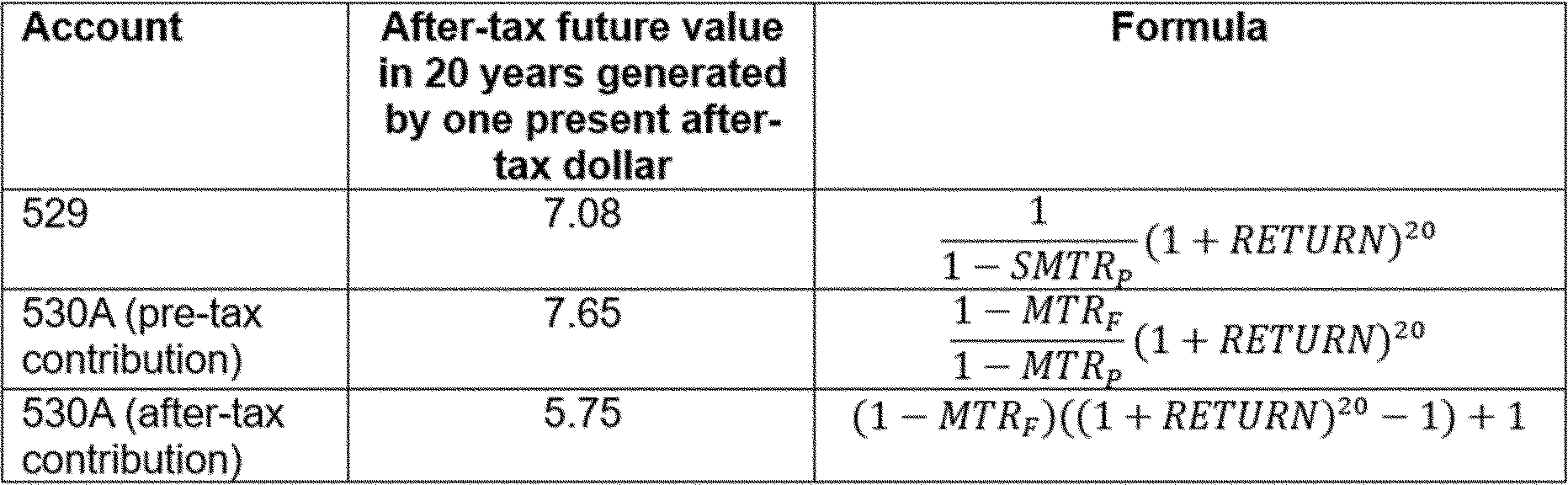
 www.irs.gov