Medicare Program; Regulatory Alignment for Predictable and Immediate Device (RAPID) Coverage Pathway
This notice with comment period provides information to the public on the process CMS will use to provide accelerated Medicare coverage through the Regulatory Alignment for Pred...
Centers for Medicare & Medicaid Services (CMS), Department of Health and Human Services (HHS).
ACTION:
Notice with comment period.
SUMMARY:
This notice with comment period provides information to the public on the process CMS will use to provide accelerated Medicare coverage through the Regulatory Alignment for Predictable and Immediate Device (RAPID) coverage pathway for new innovative technologies. The RAPID coverage pathway leverages existing processes to provide expedited national Medicare coverage for eligible technologies. This notice with comment period solicits public comment on the proposed RAPID coverage pathway.
DATES:
To be assured consideration, comments must be received at one of the addresses provided below, by October 13, 2026.
ADDRESSES:
In commenting, refer to file code CMS-3487-NC.
Comments, including mass comment submissions, must be submitted in one of the following three ways (please choose only one of the ways listed):
2.
By regular mail.
You may mail written comments to the following address ONLY: Centers for Medicare & Medicaid Services, Department of Health and Human Services, Attention: CMS-3487-NC, P.O. Box 8010, Baltimore, MD 21244-8010.
Please allow sufficient time for mailed comments to be received before the close of the comment period.
3.
By express or overnight mail.
You may send written comments to the following address ONLY: Centers for Medicare & Medicaid Services, Department of Health and Human Services, Attention: CMS-3487-NC, Mail Stop C4-26-05, 7500 Security Boulevard, Baltimore, MD 21244-1850.
For information on viewing public comments, see the beginning of the
SUPPLEMENTARY INFORMATION
section.
FOR FURTHER INFORMATION CONTACT:
Lori Ashby, (410) 786-6322.
SUPPLEMENTARY INFORMATION:
Inspection of Public Comments:
All comments received before the close of the comment period are available for viewing by the public, including any personally identifiable or confidential business information that is included in a comment. We post all comments received before the close of the comment period on the following website as soon as possible after they have been received:
www.regulations.gov.
Follow the search instructions on that website to view public comments. CMS will not post on
Regulations.gov
public comments that make threats to individuals or institutions or suggest that the individual will take actions to harm the individual. CMS continues to encourage individuals not to submit duplicative comments. We will post acceptable comments from multiple unique commenters even if the content is identical or nearly identical to other comments.
I. Background
This notice with comment period describes the process we will use to provide national coverage for eligible technologies under the Regulatory Alignment for Predictable and Immediate Device (RAPID) coverage pathway. The RAPID coverage pathway will provide accelerated Medicare beneficiary access to certain eligible Class II and Class III U.S. Food and Drug Administration (FDA) Breakthrough-designated Devices. CMS will work with FDA to leverage current processes to provide predictable and timely coverage for devices that demonstrate positive clinical health outcomes for the Medicare population in the premarket phase. For these devices, a proposed National Coverage Determination (NCD) will be released on the same day as FDA market authorization. The timing of the release of the proposed NCD will coincide with both FDA market authorization and public availability of the relevant FDA Decision Summary or Summary of Safety and Effectiveness Data (SSED). A final NCD will be issued approximately 60 days later for Class II devices and 90 days later for Class III devices.
The RAPID coverage pathway is designed to align with existing programs and coverage frameworks. Specifically, the RAPID coverage pathway leverages FDA's existing process to assess clinical outcomes (direct measures of how a patient feels, functions or survives) in proposed investigational device exemption (IDE) studies to facilitate a more efficient and streamlined process for manufacturers seeking Medicare coverage post-FDA market authorization.
In developing the RAPID coverage pathway, we reflected on the feedback received from interested parties including beneficiaries, advocacy organizations, medical professionals and societies, medical device manufacturers, Federal partners, and others involved in developing innovative medical devices. The RAPID coverage pathway reflects feedback that CMS sought after the November 15, 2021 repeal of the January 2021 Medicare Coverage of Innovative Technology (MCIT) final rule (86 FR 62944).[1]
The RAPID coverage pathway also reflects feedback gathered during the MCIT rulemaking process and during the establishment of the Transitional Coverage for Emerging Technologies (TCET) pathway on August 12, 2024 (89 FR 65724).[2]
The Medicare program serves nearly 70 million beneficiaries and is the largest single health care purchaser in the U.S. As of 2025, approximately 51 percent of the total Medicare beneficiary population, or 34 million Medicare beneficiaries, receive coverage through Original Medicare.[3]
More than 1.1 billion Original Medicare claims were processed in fiscal year (FY) 2023, comprised of approximately 192 million Part A claims (such as inpatient care in hospitals, skilled nursing facility care, hospice care, and home health care) and 950 million Part B claims (such as doctor and other health care services and outpatient care, durable medical equipment, and some preventive services), providing approximately $431.5 billion in Original Medicare benefits.[4]
Medicare covers a wide range of items and services. To qualify for Medicare coverage, an item or service generally must fall within a Medicare benefit category and meet one of the standards specified in section 1862(a)(1)(A) through (P) of the Social Security Act (Act). CMS uses several coverage pathways, such as national coverage determinations (NCDs), to determine whether these standards are met and to facilitate timely beneficiary access to eligible items and services. Many NCDs are made under section 1862(a)(1)(A) of
( printed page 51711)
the Act, which states that an item covered under this standard must be reasonable and necessary for the diagnosis or treatment of illness or injury or to improve the functioning of a malformed body member.
Over the last several years, interested parties have expressed support for coverage process improvements and an accelerated pathway that is more flexible, transparent, predictable, and collaborative. Additionally, we have heard concerns from interested parties that medical device coverage lags behind that of drugs and biologics and that devices are in need of an accelerated Medicare coverage pathway like RAPID.
A. Current Medicare Coverage Mechanisms
Items and services, including medical devices, are currently covered in Medicare in one of three ways, presented here for context. We note that the RAPID coverage pathway will not alter the existing standards for these coverage mechanisms.
1. Claim-by-Claim Adjudication
In the absence of an NCD or a local coverage determination (LCD), Medicare Administrative Contractors (MACs) make coverage decisions under section 1862(a)(1)(A) of the Act on a claim-by-claim basis. The MAC reviews the claim to determine if the item or service is reasonable and necessary for the individual patient. The majority of all Medicare Parts A and B claims have coverage determined through the claim-by-claim adjudication process.
2. Local Coverage Determinations (LCDs)
In accordance with section 1869(f)(2)(B) of the Act, LCDs are MAC determinations regarding whether or not a particular item or service is covered on a contractor-wide basis in accordance with the “reasonable and necessary” standard in section 1862(a)(1)(A) of the Act. LCDs govern only the issuing MAC's claims adjudication and are not binding controlling authorities for qualified independent contractors or administrative law judges in the claims adjudication process.
The MACs follow specific instructions and guidance for developing LCDs for Medicare coverage as outlined in section 1862(l)(5)(D) of the Act and in the CMS Program Integrity Manual (PIM), Chapter 13. MACs usually finalize proposed LCDs no more than a year after publishing the proposed LCD, per Chapter 13, Section 13.5.1 of the PIM.[5]
3. National Coverage Determinations (NCDs)
The term “national coverage determination” is defined in sections 1862(l)(6)(A) and 1869(f)(1)(B) of the Act and means a determination by the Secretary of the Department of Health and Human Services (the Secretary) as to whether or not a particular item or service is covered nationally under Title XVIII of the Act. NCDs serve as generally applicable rules to ensure that similar claims for items or services are covered in the same manner. Often an NCD is written in terms of defined clinical characteristics that identify a population that may or may not receive Medicare coverage for a particular item or service. Traditionally, CMS relies heavily on health outcomes data to make NCDs. The NCD process, which has statutorily prescribed timeframes, generally takes 9 to 12 months to complete.[6]
In general, NCDs have involved determinations under section 1862(a)(1)(A) of the Act. However, NCDs can be made based on other provisions of the Act such as section 1862(a)(1)(E) of the Act, which is the statutory authority that supports the “Coverage with Evidence Development” (CED) pathway. Under the CED pathway, Medicare provides coverage for certain promising technologies that have limited supporting evidence. This can occur if CMS determines coverage is reasonable and necessary to carry out research conducted in collaboration with the Agency for Healthcare Research and Quality (AHRQ) pursuant to section 1142 of the Act.[7]
CMS has used section 1862(a)(1)(E) of the Act to support CED policy since July 12, 2006, and the most recent CED policy is described in our August 7, 2024 guidance document.[8]
In general, the CED pathway provides Medicare coverage while providers and suppliers perform high-quality studies that are expected to produce additional evidence that may lead to positive NCDs under section 1862(a)(1)(A) of the Act.
Consistent with section 1142 of the Act, the Agency for Healthcare Research and Quality (AHRQ) reviews all CED NCDs established under section 1862(a)(1)(E) of the Act, and collaborates with CMS to define general standards for clinical research studies that address the CED questions and support and endorse the general standards for CED.
NCDs also include a determination regarding whether the item or service is not excluded from coverage by statute or our regulations at 42 CFR part 411, subpart A and whether the item or service under consideration fits within a Medicare benefit category under Part A or Part B,[9]
such as inpatient hospital services, physician services, durable medical equipment, or others. All items and services coverable by Medicare must fall within the scope of a statutory benefit category and many of these specific terms are defined under section 1861 of the Act and in implementing regulations.
In addition to these coverage pathways, CMS established the Parallel Review program. In the September 17, 2010
Federal Register
(75 FR 57045), FDA and CMS announced their intention to initiate a Parallel Review pilot program in an effort to increase quality of patient health care by facilitating earlier access to innovative medical technologies for Medicare beneficiaries. In the October 24, 2016
Federal Register
(81 FR 73113), FDA and CMS published a joint notice that announced and described the processes for the fully implemented Program for Parallel Review of Medical Devices.
Parallel Review is a mechanism for FDA and CMS to simultaneously review the clinical data submitted by a manufacturer about a medical device to decrease the time between FDA's approval of an original or supplemental premarket approval (PMA) application or granting of a de novo classification request (De Novo request) and the subsequent CMS proposed NCD. Parallel Review has two stages: (1) FDA and CMS meet with the manufacturer to provide feedback on the proposed pivotal clinical trial; and (2) FDA and CMS concurrently review (“in parallel”) the clinical trial results submitted in the PMA application, or De Novo request. FDA and CMS independently review
( printed page 51712)
the data to determine whether it meets their respective Agency's standards and communicate with the manufacturer during their respective reviews. This program relies upon the technology under review having a quality evidence base to support the clinical analysis for the NCD.
Lastly, in the August 12, 2024,
Federal Register
(89 FR 65724), CMS published a final procedural notice establishing the Transitional Coverage for Emerging Technologies (TCET) pathway to achieve more timely and predictable access to new medical technologies for Medicare beneficiaries. The TCET pathway was designed to use current NCD and CED processes to expedite Medicare coverage determinations of certain Breakthrough Devices that are innovative technologies with limited or developing evidence for Medicare coverage purposes. TCET is voluntary and aims to reduce uncertainty about coverage options through a pre-market evaluation of potential harms and benefits of technologies while identifying any important evidence gaps. Additionally, the TCET pathway includes an extensive evidence development framework that provides manufacturers with opportunities for increased pre-market engagement with CMS, and helps to coordinate benefit category determination, coding, and payment reviews.
B. Differences Between FDA and CMS Review
While FDA and CMS have a well-established history of collaboration in the review of evidence for emerging medical technologies, FDA and CMS must consider different legal authorities and apply different statutory standards when making marketing authorization and coverage decisions, respectively, for devices. Generally, FDA makes marketing authorization decisions based on whether the relevant statutory standard for safety and effectiveness is met, while CMS generally makes coverage determinations based on whether an item or service is reasonable and necessary for the diagnosis or treatment of an illness or injury for individuals in the Medicare population under section 1862(a)(1)(A) of the Act. These two reviews have historically been separate and are conducted independently by the two agencies. The FDA review of devices does not require a focus specifically on the Medicare population.
Among other objectives, FDA conducts a premarket review of certain devices to evaluate their safety and effectiveness and determine if they meet the applicable standard to be marketed in the United States. FDA market authorization alone does not entitle that technology to Medicare coverage. While FDA reviews devices to ensure they meet applicable safety and effectiveness standards, there may be varying amounts of evidence regarding whether the device is clinically beneficial for Medicare patients. Of note, individuals representative of the Medicare population may not be sufficiently represented in studies used to generate the evidence reviewed by FDA. This is an important consideration for manufacturers and other interested parties seeking the most appropriate coverage pathway under Medicare. When there is limited evidence as to the health outcomes for individuals in the Medicare population, there may be insufficient evidence to support a full coverage NCD under section 1862(a)(1)(A) of the Act.
In general, as discussed, under section 1862(a)(1)(A) of the Act, Congress requires CMS to determine whether items and services are reasonable and necessary to diagnose or treat an illness or injury or to improve the functioning of a malformed body member for an individual with Medicare. For CMS, the evidence base underlying FDA's decision to approve or clear a device for particular indications for use has often been crucial for determining Medicare coverage through the NCD process. CMS reviews evidence as to the Medicare population, data on improvement in health outcomes, and the durability of those outcomes. If there is no data on those elements in the Medicare population, it is difficult for CMS to make an evidence-based decision on whether the device is reasonable and necessary.
CMS considers whether the evidence shows that the item or service will improve the health of Medicare beneficiaries, recognizing that Medicare beneficiaries are often older and have multiple comorbidities.[10]
Consequently, they are underrepresented or not represented in many clinical studies. According to two recent studies,[11 12]
approximately 50 percent of Medicare patients have two or more diseases. Clinical studies that are conducted to gain FDA market authorization are not necessarily required to include participants with similar demographics and characteristics of the Medicare population. To demonstrate the safety and effectiveness of a device as clearly as possible, studies may have exclusion criteria that disqualify individuals with characteristics that may make it harder to ascertain a device's effects on populations with multiple comorbidities, such as Medicare beneficiaries. Consequently, a device's potential benefits and harms for older beneficiaries with multiple comorbidities may not be well understood at the time of FDA market authorization.
C. FDA Breakthrough Devices Program
Under the RAPID coverage pathway, CMS will coordinate with FDA and manufacturers of certain Class II and Class III Breakthrough Devices as those devices move through the FDA premarket review processes to ensure accelerated Medicare coverage decisions following any FDA market authorization, as described in detail later in this section. The FDA Breakthrough Devices Program is an evolution of the Expedited Access Pathway Program and the Priority Review Program. See section 515B of the Federal Food, Drug, and Cosmetic (FD&C) Act, 21 U.S.C. 360e-3; see also final guidance for industry entitled, “Breakthrough Devices Program.” [13]
FDA's Breakthrough Devices Program is not for all new medical devices; rather, it is only for those that FDA determines meet the standards for Breakthrough Device designation. In accordance with section 515B of the FD&C Act (21 U.S.C. 360e-3), the Breakthrough Devices Program is for medical devices and device-led combination products [14]
that meet two criteria. The first criterion is that the device provides for more effective treatment or diagnosis of life-threatening or irreversibly debilitating
( printed page 51713)
human disease or conditions. The second criterion is that the device must satisfy one of the following elements: It represents a breakthrough technology; no approved or cleared alternatives exist; it offers significant advantages over existing approved or cleared alternatives, including the potential, compared to existing approved alternatives, to reduce or eliminate the need for hospitalization, improve patient quality of life, facilitate patients' ability to manage their own care (such as through self-directed personal assistance), or establish long-term clinical efficiencies; or device availability is in the best interest of patients (see 21 U.S.C. 360e-3(b)(2)). These criteria make Breakthrough designated devices unique.
FDA has explained in guidance that because decisions on requests for Breakthrough designation will be made prior to marketing authorization, FDA considers whether there is a “reasonable expectation that a device could provide for more effective treatment or diagnosis relative to the current standard of care (SOC) in the U.S.” for purposes of the designation. This reasonable expectation can be supported by sources including “literature or preliminary data (bench, animal, or clinical)”.[15]
D. FDA Total Product Life Cycle Advisory Program (TAP)
FDA launched TAP to help spur more rapid development of high-quality, safe, effective, and innovative medical devices that are critical to public health. TAP's primary goal is to expedite patient access to innovative medical devices by providing developers of such devices early, frequent, and strategic communications with FDA via TAP advisors and FDA review teams and by facilitating engagement with other key parties. The relevant enrollment criteria for TAP requires that a device has been granted a Breakthrough Device designation. In this context, devices coming through the RAPID coverage pathway will be facilitated by their FDA review team and TAP advisers.
E. Investigational Device Exemptions (IDEs)
An investigational device exemption (IDE) allows the investigational device to be distributed and used in a clinical study to collect safety and effectiveness data. Medicare may provide coverage for certain items and services in FDA-approved IDE studies [16]
if certain requirements are met (see section 1862(m) of the Act, and 42 CFR Subpart B). CMS introduced the centralized IDE process in 2015 to permit coverage in Category A (Experimental) and Category B (Nonexperimental/investigational) IDE studies that have been approved by FDA. While coverage for Category A IDE studies is limited to routine care items and services furnished in the study, CMS approval of a Category B IDE study also allows premarket coverage for the Category B device. CMS reviews each study to ensure the Medicare IDE coverage criteria (42 CFR 405.212) have been satisfied, which includes the assessment of Medicare health outcomes in the study. Additional information on CMS' IDE process is available at
www.cms.gov/medicare/coverage/investigational-device-exemption-ide-studies.
II. Provisions of the Notice With Comment Period
This notice with comment period proposes to establish the RAPID coverage pathway, which, as described further in this notice, establishes a voluntary, accelerated NCD process for certain Class II FDA designated Breakthrough Devices enrolled in FDA's TAP and Class III FDA designated Breakthrough Devices, regardless of whether they are participating in TAP, that intend to engage in clinical studies under an IDE that enrolls Medicare beneficiaries and studies clinical health outcomes agreed upon by the FDA and CMS. We describe the procedures for how interested parties and the public at large may engage with CMS to facilitate the RAPID coverage pathway. The topics addressed in the notice with comment period include the following: (1) RAPID coverage pathway general principles; (2) appropriate candidates for the RAPID coverage pathway; (3) procedures FDA and CMS intend to follow for the RAPID coverage pathway; and (4) general roles and responsibilities of the manufacturer, FDA, CMS, and AHRQ.
A. RAPID Coverage Pathway—An Opportunity To Accelerate Patient Access to Beneficial Medical Products
Over the past few years, innovative technologies have come on the market earlier in the technology development lifecycle and reached the market with limited or developing evidence for Medicare coverage purposes. CMS has received inquiries for coverage of new technologies that are early in the product lifecycle, the point at which manufacturers are beginning to develop clinical evidence supporting the product's safety and effectiveness. In general, CMS relies heavily on health outcomes data, especially as it relates to the Medicare population, when determining whether to issue an NCD for a particular item or service.
If there is health outcome evidence for a new technology, it may not be generalizable to the Medicare population if Medicare beneficiaries are insufficiently represented in pivotal clinical studies.[17]
When there is limited evidence, CMS may not have sufficient information to assess a device's potential benefits and harms to make a NCD due to gaps in research about health outcomes specific to the Medicare population.
We recognize that many emerging technologies are likely to have limited or developing bodies of clinical evidence that may not have sufficiently included the Medicare population (that is, individuals over age 65, people with disabilities, and those with end-stage renal disease). Many Medicare beneficiaries have comorbid medical conditions, and those factors may have limited their participation in certain clinical trials.
We believe that the RAPID coverage pathway can address that gap by providing manufacturers with information on the specific health outcomes needed to support Medicare NCDs much earlier in the process.
A manufacturer seeking coverage for a device that meets the eligibility requirements under the RAPID coverage pathway will need to test, as part of an IDE study, whether the device improves health outcomes for Medicare beneficiaries that FDA determines are appropriate for the device and that CMS confirms would qualify as health outcomes relevant to Medicare beneficiaries.
Though including an assessment of health outcomes for Medicare beneficiaries in an IDE study is not always a requirement for FDA market authorization, these are the assessments needed for CMS to determine if the device is reasonable and necessary for the diagnosis or treatment of illness and injury and if the device is therefore eligible for coverage under Part A or Part B pursuant to section 1862(a)(1)(A) of the Act. Under the RAPID coverage
( printed page 51714)
pathway, CMS and FDA will work together, along with manufacturers, earlier in the technology development lifecycle so that evidence generated for FDA review can also support Medicare coverage decisions. By aligning regulatory and coverage expectations in advance, the RAPID coverage pathway is designed to significantly reduce delays that have historically occurred between FDA market authorization and Medicare national coverage determinations. Under the RAPID coverage pathway, if the results of the IDE study demonstrate an improvement in health outcomes in the Medicare population, a proposed NCD will be issued on the same day as FDA market authorization and finalized as early as 60 days later. Interested parties have communicated that a short delay (60 to 90 days) between FDA market authorization and a final NCD is advantageous as it allows manufacturers to prepare for device distribution into the marketplace.
B. RAPID Coverage Pathway General Principles
CMS is committed to ensuring Medicare beneficiaries have accelerated access to new technologies that meet the statutory requirements for coverage. Under the RAPID coverage pathway, if a device under the pathway receives FDA marketing authorization and if CMS and FDA determine there is sufficient clinical evidence demonstrating the device meets the health outcomes for Medicare beneficiaries identified by FDA and CMS, CMS will post a proposed NCD on the day of FDA market authorization with the goal of finalizing the NCD as soon as 60 days later for Class II devices and 90 days later for Class III devices. To accomplish these accelerated timelines, the RAPID coverage pathway leverages the existing IDE process and streamlines aspects of the NCD process. The following principles are intended to create a common understanding among manufacturers, FDA, and CMS about the goals and parameters of the RAPID coverage pathway:
Participation in the RAPID coverage pathway is voluntary.
Devices eligible for the RAPID coverage pathway are limited to certain Class II FDA designated Breakthrough Devices enrolled in FDA's TAP and Class III FDA designated Breakthrough Devices planning to submit a PMA application regardless of whether they are participating in TAP. The device must also be at the IDE presubmission stage and be the subject of an IDE study that enrolls Medicare beneficiaries and studies clinical health outcomes that FDA and CMS have agreed are appropriate to assess the health benefits to the Medicare beneficiary population. Additional information regarding appropriate candidates for the RAPID coverage pathway can be found in section II.C., “Appropriate Candidates” of this notice with comment period.
FDA and CMS will provide information to manufacturers on appropriate clinical health outcomes applicable to Medicare beneficiaries to include in the IDE protocol.
After completion of all applicable IDE studies, if the clinical evidence demonstrates sufficient evidence that the device meets the applicable health outcomes, CMS will issue a proposed NCD upon FDA market authorization.
The improvement in health outcomes and the relative risk of the device will determine if further evidence development (that is, CED) will be part of the NCD. Lower risk devices are more likely to have generated sufficient evidence at the time of FDA market authorization to demonstrate they are reasonable and necessary under 1862(a)(1)(A) of the Act, while higher risk devices are more likely to have remaining evidence gaps, need additional evidence generation and qualify for coverage under 1862(a)(1)(E) of the Act. If CED is expected, CMS will engage with FDA and manufacturers prior to FDA market authorization to align potential CED requirements with any FDA-required post-approval studies. (A more detailed description of this engagement process can be found at II.D.3.d. of this notice with comment period).
Manufacturers may withdraw from the RAPID coverage pathway, up until CMS issues a proposed NCD, for various reasons. For example, withdrawal may be appropriate if there is incomplete or insufficient data. As another example, the manufacturer could decide that pursuing coverage at the local level (LCD or claim by claim) may be more advantageous. Additionally, FDA and CMS may make a determination that the RAPID coverage pathway is not appropriate for a specific manufacturer in instances where a manufacturer is not providing the requested information needed to satisfy pathway requirements or is found to be falsifying or omitting pertinent information.
C. Appropriate Candidates
Only devices that meet all the following requirements are eligible for entry into the RAPID coverage pathway:
Presumptive Class II FDA Breakthrough-designated Devices participating in TAP planning to submit a De Novo request to FDA; [18]
or Class III FDA Breakthrough-designated Devices planning to submit a PMA application regardless of whether they are participating in TAP;
Devices in the IDE pre-submission stage, and the manufacturer plans to conduct an IDE study that enrolls Medicare beneficiaries and evaluates clinical outcomes that FDA determines are appropriate for the device and that CMS confirms evidence showing that the device achieves those outcomes in the Medicare beneficiary population would demonstrate that the device improves health outcomes for Medicare beneficiaries;
Based on the information available, there is no evidence that immediately makes clear that the device will not fall under a Medicare benefit category; [19]
Not already the subject of a controlling Medicare NCD;
Separately payable devices that can, if approved, be billed to Medicare; and
Not otherwise excluded from coverage through law or regulation.[20]
In section 201(h)(1) of the Federal Food, Drug, and Cosmetic Act (21 U.S.C. 321(h)(1)), the definition of device includes in vitro diagnostic (IVD) products, such as diagnostic laboratory tests. (See also 21 CFR 809.3). IVDs, including diagnostic laboratory tests, are a highly specific area of coverage policy development, and CMS has historically delegated the review of many of these products to specialized MACs. We believe that the majority of coverage determinations for IVDs which have been granted Breakthrough Device designation should continue to be determined by the MACs through existing pathways. Therefore, IVD products will not be accepted into the RAPID coverage pathway. In the rare case where manufacturers and CMS agree that an NCD is appropriate for an IVD product, manufacturers may submit an NCD request as outlined in 78 FR 48164.
Devices that are beyond the IDE presubmission stage (such as those that are market authorized or already being studied under an IDE) are not
( printed page 51715)
appropriate for the RAPID coverage pathway. Under the RAPID coverage pathway, CMS and FDA will leverage early coordination during IDE presubmission and the existing IDE and NCD processes to provide predictable and timely coverage upon FDA market authorization for eligible devices that demonstrate positive clinical health outcomes in the Medicare population during the premarket phase. Devices that are FDA market authorized or those already the subject of an IDE are more appropriate for an NCD outside the RAPID coverage pathway or coverage at the local level through an LCD or claim by claim adjudication.
We solicit public comments on this approach. In addition, we are also interested in feedback on whether we should establish a temporary process under which devices that have progressed beyond the IDE presubmission stage and are currently being studied under an IDE could become eligible for the RAPID coverage pathway. As part of this eligibility determination, CMS and FDA would assess whether ongoing IDE studies evaluate the clinical health outcomes that FDA and CMS have agreed are appropriate to assess the health benefits to the Medicare beneficiary population or whether modifications to those studies would be needed to support such assessment. The purpose of this process would be to enable manufacturers of otherwise eligible devices that had already initiated IDE studies, but that otherwise would have elected to participate in the RAPID coverage pathway, to remain eligible for participation. We solicit comment on whether such process should be established, and if so, the appropriate duration of such process.
D. Procedures for the RAPID Coverage Pathway
The RAPID coverage pathway has three stages: (1) IDE Presubmission; (2) Formal IDE Submission to FDA and CMS; and (3) Transition from IDE to Coverage. (A graphic providing a high-level overview of the RAPID coverage pathway can be found in II.D.3.f. of this notice with comment period.)
1. IDE Presubmission
a. Entry Into the RAPID Coverage Pathway
The RAPID coverage pathway is voluntary. If interested in the RAPID coverage pathway, manufacturers will express their interest in the pathway (after receiving Breakthrough Device designation and being accepted into TAP, as applicable) to FDA by sending an email to
TPLC-Advisory-Program@fda.hhs.gov
in advance of an IDE presubmission. An FDA TAP Advisor will provide the relevant information to manufacturers to facilitate entry into the RAPID coverage pathway.
b. Consideration of Candidates
FDA will assess each candidate expressing interest in the RAPID coverage pathway to determine if the device may be appropriate for the pathway based on the criteria outlined in Section II.C. of this notice with comment period. If a device is determined by FDA to meet initial eligibility for the RAPID coverage pathway, FDA will share the relevant information and consult CMS.
FDA will confirm with CMS that, based on the information available, the information does not immediately make clear that the device will not fall under a benefit category (further discussed in section II.D.1.c. of this notice with comment period), that the device will not be excluded from coverage by statute or our regulations at 42 CFR part 411, Subpart A, and that the device is not subject to a controlling NCD.
FDA and CMS will communicate this determination to the manufacturer, informing them of any potential exclusions that would prevent them from pursuing the RAPID coverage pathway. If the manufacturer wishes to continue, FDA will work with the manufacturer to develop a clinical study synopsis for discussion at a RAPID kick-off meeting, which will include FDA, the manufacturer, and CMS. During this meeting, the manufacturer will walk through their study synopsis explaining how they intend to address FDA and CMS regulatory requirements. CMS and/or FDA may provide real-time comments to help the manufacturer develop the complete IDE study protocol.
If the manufacturer continues to pursue the RAPID coverage pathway, the manufacturer will submit a request for written feedback [21]
to FDA for CMS and FDA to review the IDE study protocol.
During the review, FDA will consult with CMS to discuss the protocol and any concerns. CMS will provide FDA with written feedback regarding whether the health outcomes to be evaluated in the study are sufficient to support an NCD, satisfy the CMS IDE criteria and any other feedback CMS would require to be addressed. FDA will provide feedback to the manufacturer via FDA's normal process that includes written comments from FDA and CMS regarding any feedback relevant to their respective statutory authorities. CMS and FDA will also provide feedback regarding potential evidence gaps that manufacturers can choose to address in their planned pivotal IDE study or can begin planning to address in potential postmarket studies, including FDA post-approval studies (if applicable).
The manufacturer must agree that information will be shared between FDA and CMS. As noted in the Memorandum of Understanding [22]
between FDA and CMS, the Agencies recognize that the following types of information transmitted between them in any medium and from any source must be protected from unauthorized disclosure: (1) trade secret and other confidential commercial information that would be protected from public disclosure pursuant to Exemption 4 of the Freedom of Information Act (FOIA); (2) personal privacy information, such as the information that would be protected from public disclosure pursuant to Exemption 6 or 7(c) of the FOIA; or (3) information that is otherwise protected from public disclosure by Federal statutes and their implementing regulations (for example, the Trade Secrets Act (18 U.S.C. 1905), the Privacy Act (5 U.S.C. 552a), the Freedom of Information Act (5 U.S.C. 552), the Federal Food, Drug, and Cosmetic Act (21 U.S.C. 301et seq.), and the Health Insurance Portability and Accountability Act (HIPAA), Pub. L. 104-191).
c. Medicare Benefit Category Review
Prior to the RAPID kickoff meeting, CMS will initiate a preliminary benefit category assessment if all other pathway criteria have been met. Under this analysis, CMS will evaluate whether information exists that immediately makes clear that the device will not fall under a benefit category. If, based on the available information CMS has, it does not appear that the device cannot fit within a Medicare benefit category, the device may be accepted into the RAPID coverage pathway. This is an interim step that is subject to change upon FDA's decision regarding market authorization of the device. Participation in the RAPID coverage pathway should not be viewed as a final benefit category determination.
( printed page 51716)
2. Formal IDE Submission to FDA and CMS
a. FDA Review
The manufacturer will submit the IDE application to FDA if applicable. FDA will review the IDE application per the normal IDE review process. FDA's IDE decision letter will inform the manufacturer about any study design considerations (SDCs). In order to continue to participate in the voluntary RAPID coverage pathway, the manufacturer will be expected to satisfactorily address any SDCs necessary to enable the study to support a future marketing application to FDA.
b. CMS Review
At the time FDA's IDE decision letter is issued to the manufacturer, FDA will also share the decision letter, including the SDCs, with CMS. CMS will communicate directly with the manufacturer regarding the SDCs that must be addressed to continue participation in the RAPID coverage pathway. This is a key step in the process that provides an opportunity for the manufacturer to address CMS concerns during the premarket phase. Once the manufacturer addresses any SDCs, and FDA has approved a revised protocol if needed, manufacturers will then submit their IDE protocol to CMS for approval using the existing CMS IDE review process. If all CMS IDE requirements and RAPID eligibility criteria have been met, CMS will provide the manufacturer with an approval letter including the intent to issue a proposed NCD concurrently with FDA market authorization. We note that approved IDE studies are listed on the CMS website at
www.cms.gov/medicare/coverage/investigational-device-exemption-ide-studies/approved.
As stated in section II.I. of this notice with comment period, CMS intends to indicate which approved IDEs are also RAPID participants. If a manufacturer wishes to make any changes to the IDE study protocol after CMS approval, these changes must be reviewed and agreed upon by FDA and CMS to continue participation in the RAPID coverage pathway.
3. Transition From IDE to Coverage
a. IDE Completion and Manufacturer Next Steps
After completion of the IDE study, if the manufacturer continues to want to participate in the RAPID coverage pathway, FDA will share the IDE final report with CMS.
When the manufacturer submits the marketing submission to FDA, and FDA accepts it for review, CMS will be notified and provided with the clinical study report and any other relevant information needed for CMS to confirm if the device has demonstrated an improvement in the clinical outcomes that FDA has determined are appropriate for the device and which CMS has confirmed is a qualifying health outcome for purposes of Medicare coverage. At this time, if the manufacturer decides to pursue national coverage through the RAPID coverage pathway, the manufacturer will submit a formal NCD request cover letter expressing the manufacturer's desire for CMS to open a RAPID NCD analysis.
Most, if not all, of the clinical evidence needed to conduct the RAPID NCD analysis would be included in the IDE final report and other information FDA shares with CMS. However, CMS invites the manufacturer to submit any additional materials along with the NCD request cover letter they believe would support the RAPID NCD request, noting that CMS must use publicly available information to inform the NCD. The manufacturer may alternatively request that their device be withdrawn from the RAPID coverage pathway, in which case CMS would not proceed with the NCD analysis described in this section.
b. CMS NCD Analysis and Timing
The process for Medicare coverage under the RAPID coverage pathway will generally follow the NCD statutory timeframes in section 1862(l) of the Act. If a device continuing in the RAPID coverage pathway submits an NCD request cover letter, receives FDA market authorization, and has satisfactorily demonstrated improvement in a clinical outcome that FDA has determined is appropriate for the device and that CMS has confirmed would qualify as a health outcome, CMS will initiate the NCD process by posting a tracking sheet and proposed NCD on the CMS website on the same day as FDA market authorization.
We note the timing of the proposed NCD is contingent upon the relevant FDA Decision Summary or SSED being made publicly available on the day of FDA market authorization. CMS will include the link to the relevant FDA Decision Summary or SSED on the NCD tracking sheet. RAPID national coverage will be limited to the FDA authorized indication(s) for use of the device. There will be a 30-day public comment period on the proposed NCD. CMS' goal is to release the final NCD approximately 60 days after FDA market authorization for Class II devices and 90 days after for Class III devices. More information on the NCD process is set forth in the August 7, 2013,
Federal Register
notice (78 FR 48164) (hereafter referred to as the August 2013 notice).
c. RAPID NCD Format
To provide accelerated Medicare coverage upon FDA market authorization, RAPID NCDs may be more streamlined than conventional NCDs. Because the RAPID coverage pathway leverages FDA's and CMS' existing IDE processes to provide information on important clinical outcomes much earlier in the process, and manufacturers will need to satisfactorily show an improvement in a clinical outcome that FDA has determined is appropriate for the device and CMS has confirmed would qualify as a health outcome, we anticipate that RAPID NCDs may include more concise evidence summaries than have typically been included in conventional NCDs. New evidence to inform these NCDs will come from the results of the pivotal IDE studies that FDA makes publicly available in the Decision Summary for Class II devices or the SSED for Class III devices.
d. Evidence Development for RAPID NCDs
Participation in the RAPID coverage pathway is voluntary, and we believe that any new coverage pathway for emerging technologies should facilitate evidence development when evidence gaps exist for coverage purposes to ensure that Medicare beneficiaries have access to new technologies that will improve health outcomes. If there is insufficient evidence to support Medicare coverage under section 1862(a)(1)(A) of the Act, CMS may issue a proposed NCD under the CED framework.
Manufacturers are strongly encouraged to remain engaged with their FDA TAP advisor and CMS point of contact throughout their IDE study to ensure that CMS can discuss any evidence gaps while the manufacturer is designing any applicable FDA-required post-approval or other postmarket study. We note that post-approval studies are not always required. CMS will collaborate with FDA and manufacturers during the development of these studies to ensure that CMS evidence development requirements pose minimal burden and do not duplicate or conflict with any FDA postmarket requirements for the device.
The RAPID coverage pathway will not alter the existing standards for the NCD process or CED (for example, CMS' process for clinical study protocol review and approval) and the established processes and procedures for these coverage mechanisms will be
( printed page 51717)
followed to provide coverage under the RAPID coverage pathway. Coverage of services related to the NCD can begin once a CED study is approved. For NCDs with CED requirements, approved CED studies will appear on CMS' CED web page upon CMS approval.[23]
e. Duration of Coverage Under the RAPID Coverage Pathway
RAPID NCDs will remain in effect until they are reconsidered (see August 2013 notice). As it may pertain to RAPID NCDs issued under the CED framework, we emphasize that CED NCDs are not meant to last indefinitely. The 2024 CED guidance document states that coverage under CED should be time-limited to facilitate the timely generation of sufficient evidence to inform patient and clinician decision making and to support a Medicare coverage determination under section 1862(a)(1)(A) of the Act. A CED cycle is considered completed when CMS completes a reconsideration of the CED coverage decision and removes the requirement for study participation as a condition of coverage. As with any NCD, any member of the public may request to reopen the NCD that requires CED.
f. RAPID Coverage Pathway Overview
The steps described in section II.D. of this notice with comment period for the RAPID process and for obtaining a CMS coverage determination are illustrated in Figure 1.
E. Roles
CMS has outlined the general roles of each participant in the RAPID coverage pathway.
1. Manufacturer
If interested in the RAPID coverage pathway, manufacturers need to express their interest in the pathway (after receiving Breakthrough Device designation and being accepted into TAP, as applicable) prior to their IDE presubmission to FDA. The manufacturer will be expected to be collaborative throughout the RAPID coverage pathway process, and comply with all existing FDA and CMS requirements related to the IDE and NCD processes, including any CED study requirements when applicable.
2. CMS
CMS will collaborate with FDA to identify eligible candidates for the RAPID coverage pathway and will provide timely feedback to manufacturers to ensure that the clinical outcomes (direct measures of how a patient feels, functions, or survives) that FDA has agreed are appropriate for the device would qualify as health outcomes for CMS. The requirement to evaluate whether the device improves such health outcomes must be included in the IDE protocol to facilitate Medicare coverage following FDA market authorization. Additionally, CMS will work with manufacturers to leverage FDA-required postmarket studies, if any, to address specific evidence gaps for Medicare beneficiaries. Throughout all stages of the RAPID coverage pathway, CMS will maintain open communication channels with FDA, AHRQ, and manufacturers and fulfill all statutory and regulatory obligations concerning the IDE and NCD processes.
3. FDA
FDA will assess each candidate expressing interest in the RAPID coverage pathway to determine if the device is appropriate for the pathway. FDA will keep open lines of communication with CMS regarding the Breakthrough Devices seeking to participate in the RAPID coverage pathway and will provide relevant information and expertise during the premarket phase to facilitate timely
( printed page 51718)
Medicare coverage upon FDA market authorization. Participation in the RAPID coverage pathway does not change the review standards for FDA market authorization of a device, which are separate and distinct from the standards governing a CMS NCD.
4. AHRQ
Currently, AHRQ reviews all CED NCDs established under section 1862(a)(1)(E) of the Act. Consistent with section 1142 of the Act, AHRQ collaborates with CMS to define standards for clinical research studies to address the CED questions and meet the general standards for CED studies (
www.cms.gov/medicare/coverage/evidence). Since we anticipate that a subset of NCDs conducted under the RAPID coverage pathway could result in CED decisions, AHRQ will continue to review all CED NCDs consistent with current practice.
F. RAPID Coverage Pathway and Parallel Review
While the RAPID coverage pathway will be limited to Breakthrough Devices, other potential expedited coverage mechanisms, such as Parallel Review, remain available. Eligibility for the Parallel Review program is broader than for the RAPID pathway and could facilitate expedited CMS review of non-Breakthrough Devices. To achieve greater efficiency and to simplify the coverage process generally, CMS intends to work with FDA to consider updates to the Parallel Review program and other initiatives to align procedures, as appropriate.
G. RAPID Coverage Pathway and TCET
The TCET pathway will be paused for new candidates upon publication of this notice with comment period as CMS focuses on the successful implementation of the RAPID coverage pathway. Upon the announcement of the RAPID coverage pathway on April 23, 2026, FDA and CMS began engaging with manufacturers of devices potentially eligible for the RAPID coverage pathway so these manufacturers can be positioned to benefit from the efficiencies that RAPID is intended to provide. For manufacturers who are past the point of initiating their IDE study and believe there is sufficient evidence to support national coverage of their device, we recommend that they contact CMS to discuss available coverage mechanisms, including a potential NCD request submission as outlined in 78 FR 48164. CMS will apply lessons learned across coverage pathways to strengthen and improve Medicare coverage processes over time.
H. RAPID Coverage Pathway Prioritization
Due to CMS' commitment to issue proposed NCDs for devices in the RAPID coverage pathway on the same day as FDA market authorization, CMS proposes to prioritize the opening of RAPID NCDs over non-RAPID NCDs from the NCD Wait List if we are unable to address the total volume of NCDs within our available resources at any given time.
When we consider opening or reconsidering non-RAPID NCDs, we will continue to apply the circumstances described in the August 2013 notice as we prioritize topics. The circumstances described in the August 2013 notice are relevant to how we prioritize internally generated and externally requested NCDs. We consider when, practitioners, patients, or other members of the public have raised significant questions about the health outcomes attributable to the use of the items or services for the Medicare beneficiary population; new evidence or reasonable reinterpretation of previously available evidence indicates that a national coverage review may be warranted; local coverage policies on a particular item or service may vary in language or implementation; the health technology represents a substantial clinical advance and is likely to result in a significant improvement in patient health outcomes or positive impact on the Medicare program; rapid diffusion of an item or service is anticipated, if the evidence may inadequately address questions regarding impact on the Medicare population, target subgroup populations, practitioner or facility qualifications, etc., or on beneficiary health outcomes; or any combination thereto.
Also, given that we currently have topics on the NCD Wait List, we reiterate from the August 2013 notice that “[i]n the event that we have a large volume of NCD requests for simultaneous review, we prioritize these requests based on the magnitude of the potential impact on the Medicare program and its beneficiaries and staffing resources.”
I. RAPID Coverage Pathway Transparency
We believe it is important to provide maximum transparency regarding the devices accepted into the RAPID coverage pathway. CMS proposes to make the identity of specific manufacturers and devices in the RAPID coverage pathway publicly available. Examples of where this information could be made publicly available include the respective device's listing on the CMS Approved IDE Studies web page and the NCD Dashboard.[24]
III. Collection of Information Requirements
This notice with comment period refers to previously approved collections of information. These collections of information are subject to review by the Office of Management and Budget (OMB) under the Paperwork Reduction Act of 1995 (44 U.S.C. 3501-3521). Applicable collections of information include: (1) Medicare Coverage of Items and Services in FDA Investigational Device Exemption Clinical Studies (OMB 0938-1250); (2) Medicare Program Revised Procedures for Making National Coverage Determinations (OMB 0938-0776); (3) Medicare Coverage of Items and Services for Coverage with Evidence Development (CMS-OMB 0938-1387); and (4) Q-Submissions and Early Payor Feedback Request Programs and Medical Device Development Tools (FDA-OMB 0910-0756).
IV. Response to Comments
Because of the large number of public comments we normally receive on
Federal Register
documents, we are not able to acknowledge or respond to them individually. We will consider all comments we receive by the date and time specified in the
DATES
section of this preamble, and, when we proceed with a subsequent document, we will respond to the comments in the preamble to that document.
Mehmet Oz, Administrator of the Centers for Medicare & Medicaid Services, approved this document on August 7, 2026.
Robert F. Kennedy, Jr.,
Secretary, Department of Health and Human Services.
7.
Section 1142 of the Act describes the authority of AHRQ to conduct and support research on outcomes, effectiveness, and appropriateness of services and procedures to identify the most effective and appropriate means to prevent, diagnose, treat, and manage disorders and other health conditions. That section includes a requirement that the Secretary assure that AHRQ research priorities under Section 1142 appropriately reflect the needs and priorities of the Medicare program. See the August 2024 CED guidance document:
www.cms.gov/Medicare/Coverage/Coverage-with-Evidence-Development.
11.
Tan, Y.Y., Papez, V., Chang, W.H., Mueller, S.H., Denaxas, S., & Lai, A.G. (2022). Comparing clinical trial population representativeness to real-world populations: an external validity analysis encompassing 43, 895 trials and 5, 685, 738 individuals across 989 unique drugs and 286 conditions in England. The Lancet Healthy Longevity, 3(10), e674-e689.
12.
Varma T, Mello M, Ross JS, et al Metrics, baseline scores, and a tool to improve sponsor performance on clinical trial diversity: retrospective cross-sectional study BMJ Medicine 2023;2:e000395. doi: 10.1136/bmjmed-2022-000395.
18.
Includes 510(k) cleared devices where the primary predicate was authorized via the De Novo classification pathway no earlier than 18 months prior to acceptance into the RAPID coverage pathway.
21.
The request for written feedback would be via a TAP Amendment or Sprint Discussion as applicable. Manufacturers are encouraged to contact their TAP advisor for more information on the applicable process and timelines.
 www.regulations.gov/docket/CMS-2026-2674
 42 CFR part 411, subpart A
 21 U.S.C. 360e-3
 www.cms.gov/medicare/coverage/investigational-device-exemption-ide-studies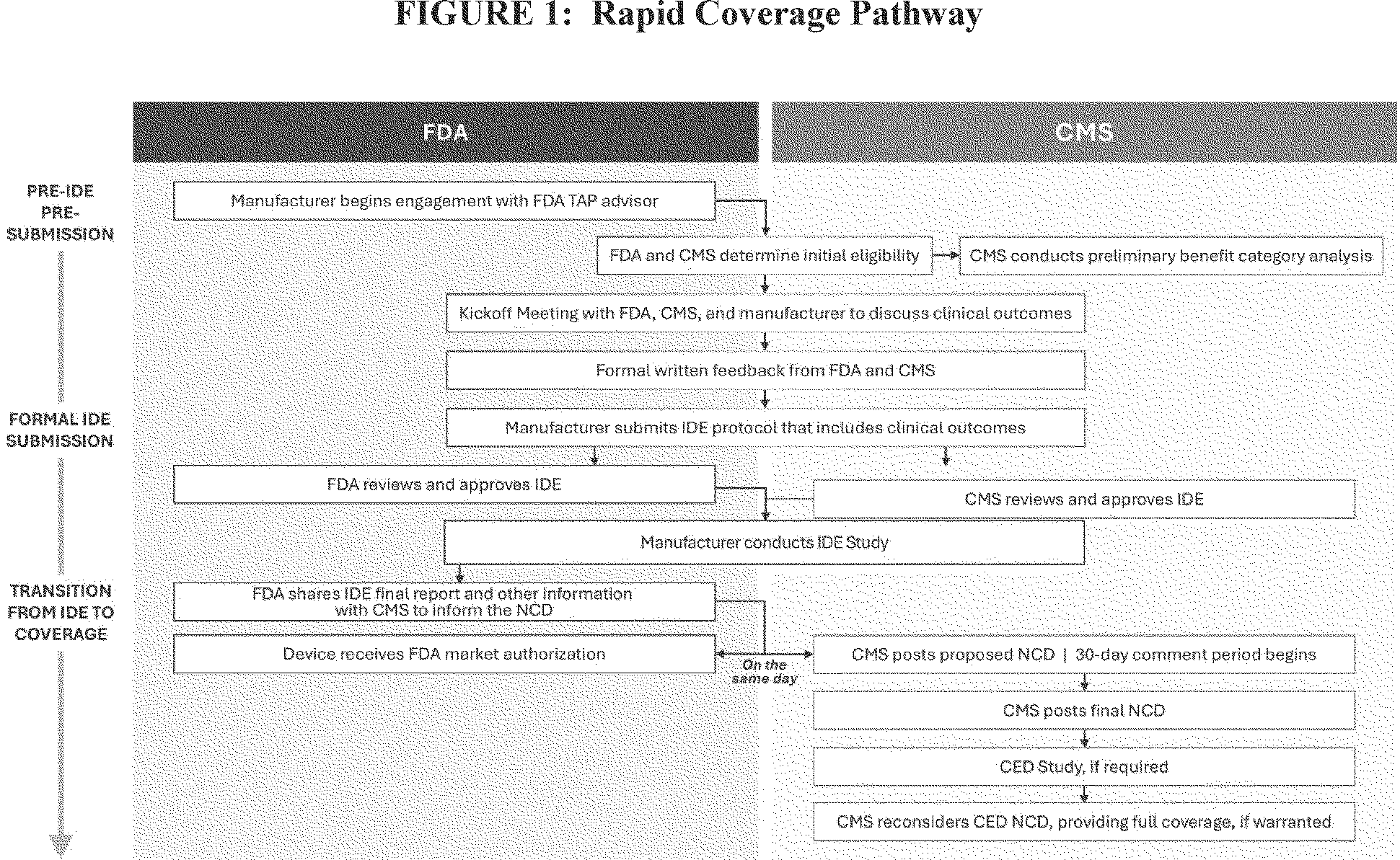
 www.federalregister.gov/documents/2021/11/15/2021-24916/medicare-program-medicare-coverage-of-innovative-technology-mcit-and-definition-of-reasonable-and
 data.cms.gov/sites/default/files/2026-04/CMSFastFacts2026_508.pdf
 doi.org/10.1093/gerona/gly110
 www.fda.gov/regulatory-information/search-fda-guidance-documents/breakthrough-devices-program