New Car Assessment Program (NCAP); Removal of Dynamic Rollover Resistance Test and Side Air Bag Out-of-Position Testing; Updates to NCAP's 10-Year Roadmap
The National Highway Traffic Safety Administration (NHTSA) is requesting public comment on a proposal to remove two legacy test procedures from its signature consumer informatio...
National Highway Traffic Safety Administration (NHTSA), Department of Transportation (DOT).
ACTION:
Request for comments (RFC).
SUMMARY:
The National Highway Traffic Safety Administration (NHTSA) is requesting public comment on a proposal to remove two legacy test procedures from its signature consumer information program, the New Car Assessment Program (NCAP): the Dynamic Rollover Resistance Test (specifically, the “Fishhook” maneuver) and the Side Air Bag Out-of-Position (SAB-OOP) testing protocols. The Agency believes these program elements have achieved their original safety goals. This notice also proposes updates to both the mid- and long-term components of the 10-year roadmap established for future NCAP upgrades. These proposed changes are intended to modernize NCAP, focus resources on crash scenarios and technologies with the greatest potential for injury reduction, and ensure the program continues to provide the most impactful safety information to the public.
DATES:
Comments should be submitted no later than October 16, 2026.
ADDRESSES:
You may submit comments to the docket number identified in the heading of this document by one of the following methods:
Electronic submissions:
Go to the Federal eRulemaking Portal at
www.regulations.gov.
Follow the online instructions for submitting comments.
Fax:
(202) 493-2251.
Mail or Hand Delivery:
Docket Management, U.S. Department of Transportation, 1200 New Jersey Avenue SE, West Building, Suite W58-213, Washington, DC 20590, between 9 a.m. and 5 p.m., Monday through Friday, except on Federal holidays. To be sure someone is there to help you, please call (202) 366-9826 or (202) 366-9317 before coming.
Instructions:
All submissions must include the agency name and docket number for this notice. Note that all comments received will be posted without change to
www.regulations.gov,
including any personal information provided. Please see the Privacy Act heading below.
Privacy Act:
Anyone is able to search the electronic form of all comments received into any of our dockets by the name of the individual submitting the comment (or signing the comment, if submitted on behalf of an association, business, labor union, etc.). You may review DOT's complete Privacy Act Statement in the
Federal Register
published on April 11, 2000 (65 FR 19477-78) or you may visit
www.transportation.gov/privacy.
Docket:
For access to the docket to read background documents or comments received, go to
www.regulations.gov
or the street address listed above. Follow the online instructions for accessing the dockets via internet.
FOR FURTHER INFORMATION CONTACT:
For technical issues, you may contact Taryn Rockwell, Office of Crashworthiness Standards by email at
taryn.rockwell@dot.gov,
or by phone at 202-366-1810. Address: National Highway Traffic Safety Administration, 1200 New Jersey Avenue SE, West Building, Washington, DC 20590.
SUPPLEMENTARY INFORMATION:
Table of Contents
I. Background
A. Legislative and Administrative History
II. Proposed Removals From NCAP
A. Dynamic Rollover Testing
B. SAB-OOP Testing
III. Proposed Updates to NCAP's 10-Year Roadmap
IV. Conclusion
V. Public Participation
I. Background
NCAP was established in 1978 to provide consumers with comparative information on the safety performance of new vehicles, thereby incentivizing safety improvements that extend beyond the established Federal Motor Vehicle Safety Standards (FMVSS). The program uses a 5-Star Safety Rating System to communicate vehicle safety performance in three key areas: frontal crash protection, side crash protection, and rollover resistance. Separately, the program also conducts testing to assess the performance of advanced driver assistance systems (ADAS), pedestrian protection, the protection afforded by side air bags to out of position occupants, and child seat usability.
To maintain NCAP's effectiveness as a driver of safety innovation and consumer awareness, NHTSA periodically reviews its test procedures to ensure they accurately reflect the current vehicle fleet and provide data that assists consumers in their
( printed page 53340)
purchasing decisions. This request for comments (RFC) notice focuses on streamlining NCAP by proposing to remove tests (dynamic rollover resistance and the SAB-OOP tests) that are redundant with existing regulations and thus no longer effectively incentivize safety improvements.
On December 3, 2024, NHTSA published a 10-year roadmap [1]
setting forth NHTSA's plans to upgrade NCAP, with mid-term plans spanning 2024 through 2028 and long-term plans spanning 2024 through 2033. NHTSA noted that it plans to update the roadmap every 2 to 4 years.[2]
Accordingly, this RFC proposes updates to the program's mid- and long-term components of the NCAP roadmap to align with NHTSA's current research and priorities.
A. Legislative and Administrative History
The inclusion of the specific programs and tests discussed in this notice—Dynamic Rollover and SAB-OOP—stems from a combination of Congressional mandates and Agency-led safety initiatives authorized under the Motor Vehicle Information and Cost Savings Act of 1972 (15 U.S.C. 1942et seq.).
1. Dynamic Rollover Testing
NCAP's current rollover rating system was established in response to Section 12 of the Transportation Recall Enhancement, Accountability, and Documentation (TREAD) Act of 2000 (Pub. L. 106-414). Congress directed the Secretary of Transportation to “develop a dynamic test on rollovers by motor vehicles for the purposes of a consumer information program, and carry out a program for conducting such tests” and to “conduct a rulemaking to determine how best to disseminate these test results to the public.” Applicability was limited to those passenger cars, multipurpose passenger vehicles, and trucks having a gross vehicle weight rating (GVWR) of 4,536 kilograms (10,000 pounds) or less (referred as light vehicles in this notice). This mandate, codified at 49 U.S.C. 30117, led to the adoption of the dynamic Fishhook maneuver test in NCAP in 2003,[3]
which supplemented the Static Stability Factor (SSF) assessment adopted for the program in 2001.[4]
The rollover risk for a vehicle, accounting for the vehicle's SSF and its performance in the Fishhook maneuver test, has been provided on NHTSA's website since 2004.
The Safe, Accountable, Flexible, Efficient Transportation Equity Act: A Legacy for Users (SAFETEA-LU) Act of 2005 (Pub. L. 109-59) further reinforced this testing regimen. Section 10307 required that automobile [5]
manufacturers present rollover resistance ratings on the side window sticker at the point-of-sale, and Section 10309 [6]
expanded the applicability of NCAP rollover assessments to include 15-passenger vans due to the unique safety risks and high fatality rates associated with rollovers in this vehicle class when fully loaded.[7]
In response to SAFETEA-LU, NHTSA has included a rollover risk rating in terms of stars on the Monroney label (vehicle window sticker) since 2007.[8]
NHTSA also tests 12- and 15-passenger vans with GVWR less than or equal to 4,536 kilograms (light vehicles) for rollover propensity using the Fishhook maneuver.
2. SAB-OOP Testing
Unlike the dynamic rollover test, SAB-OOP testing was not a direct Congressional mandate but rather an Agency-adopted protocol to monitor a voluntary industry commitment. In the late 1990s and early 2000s, the rapid introduction of side air bags raised concerns regarding the potential risk of injury to out-of-position [9]
children and small adults from deploying side air bags. In response, the Side Airbag Out-of-Position Technical Working Group (TWG)—a consortium of automotive manufacturers and safety organizations [10]
—developed the “Recommended Procedures for Evaluating Occupant Injury Risk from Deploying Side Airbags.” [11]
NHTSA subsequently incorporated these procedures into NCAP in 2003 [12]
to verify that vehicles with side air bags met these voluntary safety guidelines and thus would not pose unreasonable risks to children and small adults.
3. NCAP 10-Year Roadmap
NHTSA published its first 10-year roadmap for upgrading NCAP on December 3, 2024 [13]
in response to Section 24213(c) of the Infrastructure, Investment, and Jobs Act of 2021 (IIJA) (Pub. L. 117-58), codified at 49 U.S.C. 32310. The provision directed the Secretary of Transportation to establish a roadmap for implementing NCAP that spans a term of ten years, with a five-year mid-term component and a five-year long-term component. The IIJA provision further specifies that the roadmap be updated at least once every four years to reflect new Agency interests and diverse stakeholder input. As mandated, the December 2024 10-year roadmap includes phased upgrades to NCAP and, where possible and appropriate, takes steps to harmonize these upgrades with existing consumer information rating programs.
II. Proposed Removals From NCAP
A. Dynamic Rollover Testing
The current NCAP rollover resistance rating is derived from a statistical combination of a vehicle's SSF and its performance in the dynamic rollover test.
The SSF, which measures a vehicle's propensity to roll over based on its geometry, is designed to represent tripped rollovers (
e.g.,
those caused by curbs, soft soil, potholes, guard rails, or by wheel rims digging into the pavement). Tripped rollovers constitute the majority of rollover crashes. The SSF for a vehicle is calculated as a ratio of one half its track width divided by the height of its center of gravity above ground. Generally, trucks and sports utility vehicles have lower SSF values than passenger cars because of their higher center of gravity. While the SSF addresses tripped rollover events, a dynamic rollover test is utilized to address untripped rollover events (
e.g.,
those caused by high-speed turning or cornering, or by jerking the steering wheel to swerve to avoid a braking vehicle ahead or a hazard in the roadway).
Historically, NCAP utilized a dynamic rollover test, termed the Fishhook Maneuver, which evaluates a vehicle's
( printed page 53341)
susceptibility to on-road, untripped rollovers during an aggressive, evasive steering maneuver. However, the Agency mandated the use of the more-aggressive Sine-with-Dwell maneuver as part of FMVSS No. 126, “Electronic stability control systems for light vehicles,” as a dynamic assessment of a vehicle's lateral stability and rollover resistance for all light vehicles manufactured on or after September 1, 2011.[14]
Untripped rollovers represent less than five percent of all rollover events. In untripped rollovers, the tire/road interface friction is the only external force acting on the vehicle to cause the rollover. The Fishhook maneuver approximates the steering a driver acting in panic might use in an effort to regain lane position after swerving to avoid an obstacle in the road. The rapid steering input followed by an over-correction is representative of a general loss of control situation. Performance in the dynamic test is determined by whether a vehicle's inside wheels simultaneously lift two or more inches from the test surface during the maneuver. Vehicles exhibiting a simultaneous wheel lift of two or more inches are said to have “tipped-up.”
The Agency utilizes two distinct logistic regression equations to calculate the risk of rollover, with each using SSF as a covariate. The equation selected for risk determination is based on whether the vehicle “tips up” during the dynamic maneuver:

Figure 1 presents the risk of vehicle rollover as a function of vehicle SSF for the two conditions (1) no tip-up and (2) tip-up in the Fishhook maneuver test using Equations 1 and 2, respectively. The difference in the risk of rollover for a given SSF for a vehicle that has a tip-up compared to a vehicle that does not tip-up in the dynamic test varies from 1.6 percent for vehicles with high SSF values to 4.8 percent for vehicles with low SSF values.
( printed page 53342)
NHTSA proposes transitioning away from the NCAP Fishhook maneuver because the rigorous requirements of FMVSS No. 126 already provide the necessary safeguards to ensure dynamic stability to prevent untripped rollovers and therefore additional NCAP testing is unnecessary. When the dynamic rollover test using the Fishhook maneuver was introduced in NCAP, electronic stability control (ESC) was an emerging technology, and the test was effective in identifying vehicles with poor dynamic stability. However, with the full implementation of FMVSS No. 126 since 2012, virtually all light vehicles in the U.S. fleet are now equipped with robust ESC systems.
Unlike the Fishhook maneuver utilized in NCAP that evaluates on-road untripped rollover susceptibility, the Sine-with-Dwell maneuver, utilized in FMVSS No. 126, incites yaw motion and evaluates the responsiveness of ESC systems to mitigate oversteer and maintain lateral stability. The ESC systems meeting FMVSS No. 126 requirements assist the driver in keeping the vehicle on the road during impending loss-of control situations and thereby mitigate exposure of vehicles to off-road tripping mechanisms, in addition to ESC's primary function of preventing untripped rollovers.
Electronic stability control, as the name implies, is designed to improve vehicle stability when the system detects a loss of traction or steering control. In such situations, the system is designed to apply the brakes to wheels automatically and individually, such as to the outer front wheel to counter oversteering or the inner rear wheel to counter understeering, to help regain control and steer the vehicle where the driver intends to go.
Agency data indicates that modern ESC systems are highly effective at preventing the loss of control situations and wheel lift occurrences [15]
the Fishhook maneuver was designed to provoke; all ESC-equipped vehicles tested by NCAP have passed the “no tip-up” criteria. Consequently, the Fishhook maneuver test has ceased to be a discerning metric. The test no longer distinguishes between superior and inferior performers, as the vast majority of the fleet performs identically under these specific test conditions.
Furthermore, the NCAP dynamic rollover test no longer serves its original purpose of incentivizing ESC adoption. This is true even for 12- and 15-passenger vans, which have historically presented a higher rollover risk compared to other light vehicle types. All 12- and 15-passenger vans tested by NCAP since 2015 were equipped with not only ESC but oftentimes roll stability control (RSC) as well.[16]
Accordingly, NHTSA observed no tip-ups for these vehicles during NCAP's dynamic rollover testing. NHTSA notes that 12- and 15-passenger vans with a GVWR greater than 4,536 kilograms are not required to have ESC and are not subject to dynamic rollover testing using the sine-with-dwell or the Fishhook maneuvers, as they exceed the weight threshold established for the program by the TREAD Act (codified at 49 U.S.C. 30117(c)).[17]
The Agency is aware of only one 2026 model, the Ford Transit 15-passenger T-350 HD with dual rear wheel configuration, that has a minimum GVWR that exceeds 4,536 kilograms. Therefore, all other 12- and 15-passenger vans would be required to have ESC as standard equipment, and based on past NHTSA testing, would be expected not to tip-up during NCAP's dynamic rollover assessment.
Regarding the 2026 Ford Transit 15-passenger T-350 HD with dual rear wheel configuration, NCAP has not conducted a dynamic rollover test for this vehicle model because it exceeds the established weight threshold (as explained above). However, NHTSA has no reason to believe this model would tip-up during such an assessment since it is equipped with both ESC (though not required) and RSC, and its dual rear wheels contribute to a wider track width and lower center of gravity. The addition of RSC and dual rear wheels to this higher weight configuration suggests manufacturers are exercising due diligence to ensure adequate safety is afforded for all passenger van configurations irrespective of requirements imposed by Federal standards. Therefore, NHTSA does not believe removal of the dynamic rollover test from NCAP will generate a safety gap for consumers or organizations choosing to purchase 12- or 15-passenger vans, regardless of whether the associated GVWR for the procured models falls below or exceeds 4,536 kilograms.
The fact that no tip-ups have been observed during NCAP testing since ESC's full adoption in the vehicle fleet demonstrates that the SSF has been the primary differentiator for rollover risk since 2012. This should not be viewed as a detriment to safety, however; as a geometric measurement, the SSF provides a repeatable and reliable indicator of a vehicle's fundamental rollover susceptibility and has proven to correlate highly with actual crash statistics. Though ESC improves lateral stability and resistance to untripped rollovers, ESC may not provide the needed stability and prevent rollover after a vehicle has driven off the road. In such conditions, the SSF of a vehicle is correlated to the propensity of vehicle rollover. Since most real-world vehicle rollovers are tripped rollover events, rollover risk of a vehicle, determined by the equations 1 and 2 and presented in Figure 1, is mainly influenced by the vehicle's SSF. Therefore, the Agency believes that removing the dynamic rollover test while continuing to evaluate SSF measurements in NCAP should sufficiently ensure real-world rollover risk remains low. The Agency continues to fulfill its dynamic rollover testing mandate through the Sine-with-Dwell maneuver as required in FMVSS No. 126.
Regarding the mandate in 49 U.S.C. 30117(c)(1) requiring NHTSA to “develop a dynamic test on rollovers by motor vehicles for the purposes of a consumer information program” and to “carry out a program for conducting such tests[,]” NHTSA has developed both the Fishhook maneuver and the Sine-with-Dwell maneuver tests. While this RFC proposes to discontinue conducting the Fishhook maneuver test in NCAP, the Agency is not abandoning dynamic rollover testing. Rather, NHTSA will continue to conduct regular compliance testing of light vehicle models using the Sine-with-Dwell maneuver to ensure adherence to FMVSS No. 126, thereby maintaining a dynamic assessment program that satisfies the requirements of 49 U.S.C. 30117. Because a non-compliance carries significant consequences, vehicle manufacturers ensure their light vehicles comply with FMVSS No. 126. All light vehicles subject to FMVSS No. 126 would not tip-up in the Fishhook
( printed page 53343)
maneuver tests, as evidenced by no tip-ups in the NCAP tests in the past 15 years.
To fulfill the mandate in 49 U.S.C. 30117(c)(2) to “disseminate the dynamic rollover test results to the public[,]” NHTSA will continue to provide rollover rating of light vehicles based on SSF (Equation 1) for the no tip-up condition on its website and on the Monroney label.
Streamlining the program by removing the redundant Fishhook maneuver will allow NHTSA to redirect significant resources (
e.g.,
funding and staff) toward developing and incorporating more contemporary safety assessments, such as enhanced crashworthiness and ADAS evaluations.
In light of the aforementioned considerations, the Agency tentatively believes it is appropriate to remove the Fishhook maneuver from NCAP at this time, relying instead on the Sine-with-Dwell maneuver requirements of FMVSS No. 126 starting with model year 2027 vehicles.
Questions
Do commenters agree with the Agency's assessment that the Dynamic Rollover Test (Fishhook maneuver) no longer provides relevant consumer information due to the prevalence of FMVSS No. 126-compliant ESC systems, and that the Sine-with-Dwell maneuver serves as a sufficient replacement?
Do commenters agree with the Agency's assessment that the Dynamic Rollover Test is no longer needed in NCAP for 12- and 15-passenger vans since these vehicles are equipped with FMVSS No. 126-compliant ESC systems?
B. SAB-OOP Testing
NCAP's SAB-OOP testing was implemented in 2003 to assess the potential injury risk to occupants, particularly smaller adults and children, who are in an abnormal, out-of-position posture relative to a deploying side air bag. As mentioned, this testing was adopted preemptively to ensure that early-generation side air bags did not induce injuries due to aggressive deployment.
Under the TWG procedures, a 5th percentile female side impact test dummy (SID-IIs), a Hybrid III (HIII) three-year-old child test dummy, and a HIII six-year-old child test dummy are placed in several positions close to a vehicle's side air bag systems. Any side air bags that deploy from vehicle seat backs (seat-mounted), from the door or rear quarter panel, typically just below the windowsill (side-mounted), or from the roof rail above the door (roof-mounted) can be assessed. After the dummy is positioned as specified in the procedures, the air bag is deployed statically, and the dummy injury measures stemming from the deployment of the air bag are recorded. The measured forces are compared to established Injury Assessment Reference Values (IARVs), which are very similar to those in FMVSS No. 208, “Occupant crash protection,” for out-of-position testing of frontal air bags. Unlike FMVSS No. 208 out-of-position testing, however, the SAB-OOP does not include objective test procedures that yield reliable results.
NHTSA is proposing to remove the SAB-OOP tests from NCAP because the specific, extreme out-of-position scenarios included in the TWG test protocol have not demonstrated a correlation with real-world injury data. A critical responsibility of any regulatory agency is to perform retrospective analysis of its programs to ensure that they further their intended goals. While the Agency generally observes approximately two SAB-OOP test failures per year during its testing of the vehicle fleet, to date, not a single failure could be related to real-world incidents for those specific vehicle models. Conversely, NHTSA identified a real-world crash where an occupant sustained injuries resulting from side air bag deployment in a vehicle model that passed all the TWG SAB-OOP tests.
NHTSA has also found that even minor deviations in dummy positioning have shown vastly different injury readings, thus challenging the objectivity of the TWG test procedures. Furthermore, because the TWG test procedures allow for adjustments to test positions on a case-by-case basis to ascertain the “worst-case” scenario, the Agency has found it difficult to repeat and reproduce test results. Therefore, NHTSA has been unable to issue recall proceedings for any failures observed during testing. These difficulties also raise questions as to whether the testing itself provides meaningful, actionable information to consumers and manufacturers or merely diverts testing resources away from true safety-enhancing activities and provides consumers with a false sense of security.
In addition, conducting TWG SAB-OOP tests in NCAP is burdensome for both vehicle manufacturers and NHTSA. For NCAP's TWG SAB-OOP procedure, manufacturers are asked to submit data for up to 30 test positions per vehicle,[18]
and NCAP staff spot-checks performance for approximately 30 to 40 percent of crash-tested models. NHTSA tentatively concludes that discontinuing SAB-OOP testing in NCAP will eliminate this burden and allow the program's emphasis to shift toward evaluating new technologies and crash scenarios that present the most significant current safety risk for real-world occupants.
Questions
Do commenters agree with the Agency's assessment that it is now appropriate to remove the SAB-OOP assessments from NCAP?
What specific data, if any, is available regarding the residual real-world safety benefit of NCAP SAB-OOP testing in vehicles equipped with current-generation side air bag systems?
III. Proposed Updates to NCAP's 10-Year Roadmap
In December 2024, NHTSA established a 10-year roadmap for NCAP to modernize the program and provide a clear, long-term vision for vehicle safety in the U.S.[19]
By outlining plans a decade in advance, NHTSA provides manufacturers and suppliers the lead time necessary for research, development, and product planning, ensuring that safety innovations reach the market faster.
The published roadmap was divided into mid-term (2024-2028) and long-term (2029-2033) initiatives focused on four core areas: Crashworthiness, Crash Avoidance, Vulnerable Road User (VRU) safety, and Vehicle Safety Ratings. Included items were evaluated and selected based on four prerequisites: (1) the update to the program would address a safety need, (2) there are, or may soon be, system designs that can mitigate the safety problem, (3) existing or new system designs have the potential to improve safety, and (4) a performance-based objective test procedure exists that can assess system performance.
The mid-term updates in the roadmap included actions that met the four prerequisites and for which the Agency could reasonably anticipate start and completion times. For the crash avoidance program, these included: the adoption of enhanced automatic emergency braking (AEB), lane keeping
( printed page 53344)
assistance (LKA), blind spot warning (BSW), and blind spot intervention (BSI), as well as the addition of rear automatic braking (RAB). For the crashworthiness program, mid-term roadmap items included: adding a new frontal oblique crash test in NCAP; using advanced 50th percentile male dummies (THOR-50M in frontal impact crash tests and the WorldSID-50M in side impact tests); testing with the 5th percentile female dummy, HIII-05F, in the driver seating position; and adding chest deflection measurements to the 5th percentile female side impact dummy, SID-IIs. The VRU safety program included the addition of pedestrian automatic emergency braking (PAEB), bicyclist and motorcyclist AEB, crashworthiness pedestrian protection, and unattended child alert system using direct sensing technologies. The mid-term component of the roadmap also included updating the crashworthiness rating system and adding crash avoidance and VRU safety rating systems, along with updates of the Monroney label.
The long-term updates comprised a variety of new technologies having safety potential, but which are not sufficiently mature, such that additional research, test procedure development, and product development, is necessary. For the crash avoidance program, these included: advanced lighting systems, intersection AEB, enhanced LKA, higher-speed AEB with additional scenarios, driver monitoring systems, and intelligent speed assist. For the crashworthiness program, roadmap items included: addition of the 5th percentile small female THOR dummy (THOR-05F) in front and rear seats of frontal crash tests, and adoption of the 5th percentile female WorldSID dummy (WorldSID-05F) in side impact crash tests. Finally, for the VRU safety program, adopted initiatives included: intersection AEB for bicyclists and motorcyclists; BSW and BSI technologies for motorcyclist and bicyclist protection; adoption of the advanced pedestrian legform, aPLI, for crashworthiness pedestrian protection; enhanced PAEB; and driver visibility.
NHTSA is proposing updates to the December 2024 mid-term and long-term components of NCAP's 10-year roadmap to align with the availability of resources, progress in research activities, and a better understanding of the state of technology. On September 22, 2025, NHTSA published a notice [20]
announcing a delay in the implementation of the NCAP crashworthiness pedestrian protection program finalized in the November 25, 2024 final decision notice [21]
and the upgrades to the crash avoidance program discussed in the December 3, 2024 final decision notice.[22]
Items in the December 2024 roadmap that have already been implemented into NCAP have been removed in the proposed updated NCAP roadmap.[23]
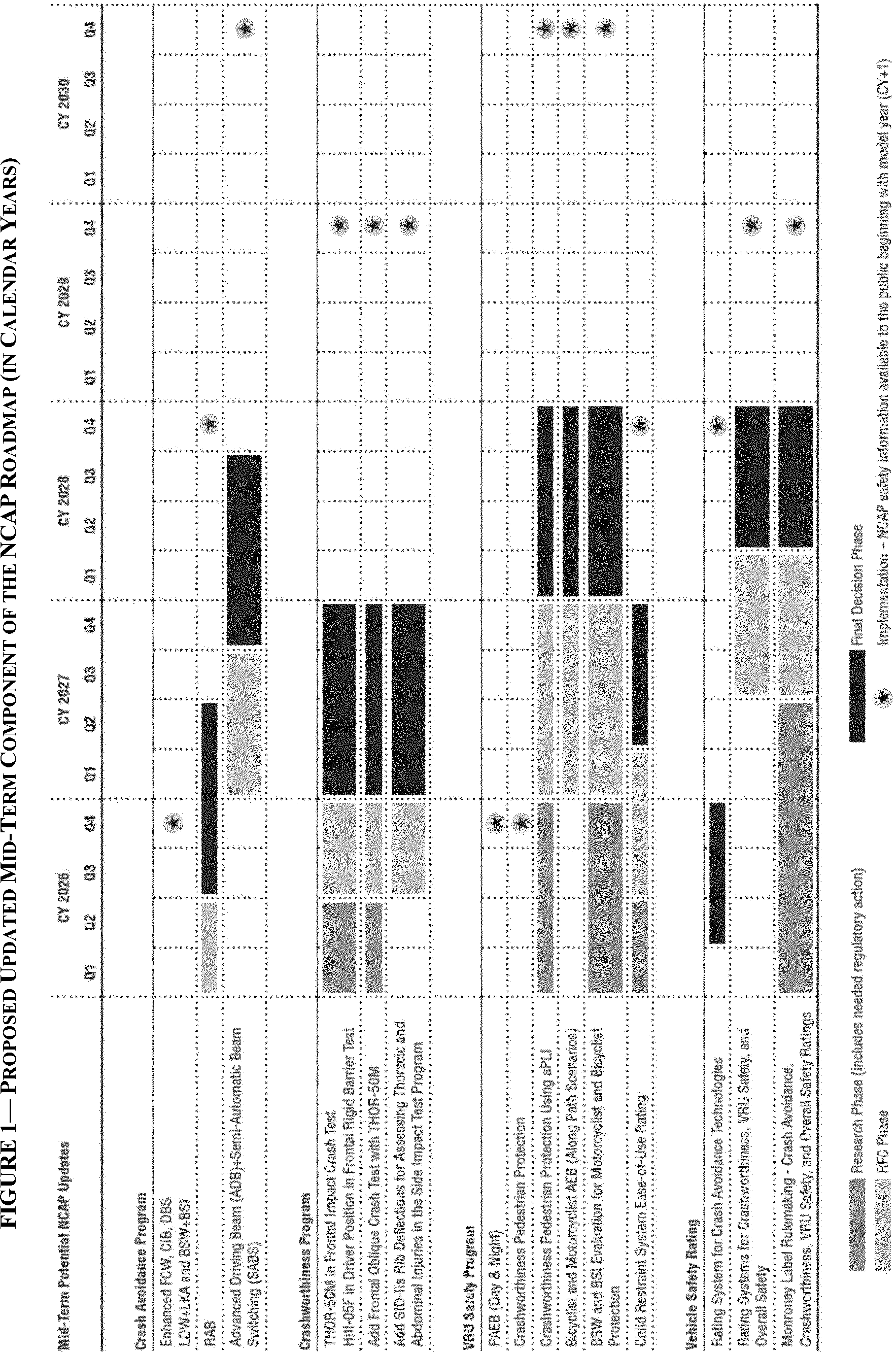
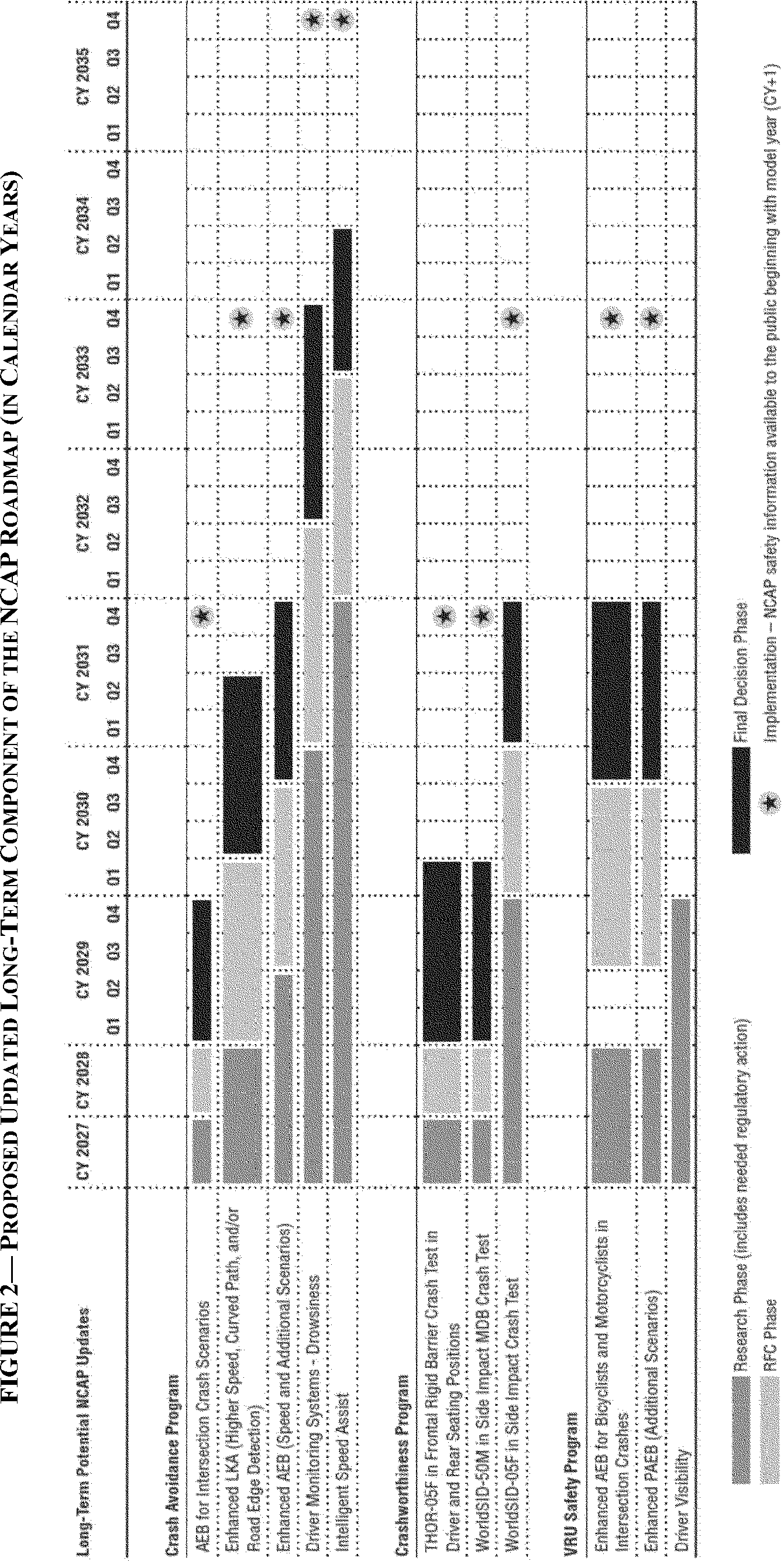
The proposed updated NCAP roadmap spans the years 2026 to 2035, with the mid-term portion spanning 2026 to 2030 and the long-term portion spanning 2031 to 2035. The NCAP roadmap includes four phases for each NCAP initiative, along with a completion milestone for each phase. The four phases are: (1) Research phase, if applicable, (2) Request for comment (RFC) phase, (3) Final decision phase, and (4) Implementation phase. The planned updates to the NCAP roadmap are in the following three safety programs: crashworthiness, crash avoidance, and vulnerable road user safety. Updates are also planned for the vehicle safety rating category. A summary of the mid-term and long-term actions for the updated 10-year roadmap is presented in Tables 1 and 2, respectively. The timeframe shown for the research, RFC, and final decision phases is presented in calendar years. Figures 1 and 2 present the details of the proposed updated mid-term and long-term components of the 10-year roadmap, respectively.
Some of the items in the long-term component of the December 2024 NCAP roadmap have been moved to the mid-term component because the needed research has been completed. For example, NHTSA plans to initiate work on a request for comment notice on adaptive driving beam (ADB) and semi-automatic beam switching (SABS) in 2027. Other items moved from the long-term to the mid-term component are (1) use of aPLI [24]
to evaluate pedestrian lower limb injuries and (2) BSW and BSI for motorcyclist and bicyclist protection.
Because the rulemaking process to standardize NHTSA's most advanced dummies, the THOR-50M and WorldSID-50M, is ongoing and because the Agency continues to conduct research to complete enhancements to its frontal and side test procedures to accommodate these dummies, incorporation of the THOR-50M and the frontal oblique crash test has been delayed by two years, and the incorporation of the WorldSID-50M into NCAP's side impact test has been moved to the long-term component. However, NHTSA plans to include in the mid-term component SID-IIs chest and abdominal deflection to assess overall injury potential in the side impact test program (both the moving deformable barrier (MDB) test and the side pole impact test).[25]
Because of resource constraints, the proposed updates of the mid-term component also include a one-year delay in the implementation of a rating system for crash avoidance technologies and a two-year delay in an updated rating system for crashworthiness, VRU safety, and overall safety as well as a revised Monroney label.
NHTSA is adding a new item to the proposed mid-term component of the roadmap that was not included in the December 2024 NCAP roadmap. Specifically, the Agency is updating its Child Restraint System (CRS) Ease-of-Use rating program with proposed implementation in the fourth quarter of 2028. NHTSA established the CRS Ease-of-Use (EOU) program to help caregivers more easily select and properly use child restraints. Recognizing that correct use is critical to the safety performance of a CRS, the CRS EOU program evaluates and rates the clarity of instructions, labeling, and the usability of installation features. The CRS EOU program is being updated to improve objectivity of assessments and to align better with current CRS designs, features, and labeling.
The proposed long-term component of the roadmap has also been updated to reflect the state of research supporting upgrades to NCAP. The crash avoidance program upgrades in the long-term component of the roadmap are as follows:
Enhanced LKA (Higher Speed, Curved Road and/or Road Edge Detection Scenarios): While substantial research on enhanced LKA has been completed,[26]
further research may be needed due to complexity of the test conditions. As a result, the Agency is
( printed page 53345)
postponing initiating the request for comment process for enhanced LKA by two years.
Driver Monitoring System for Drowsiness: NHTSA's driver monitoring system (DMS) research for drowsiness is underway with data collection planned to begin after NHTSA obtains approval under the Paperwork Reduction Act (PRA). The test procedure for confirmation of performance for DMS for drowsiness detection will be affected by challenges of assuring reliable results given the necessary involvement of humans or human surrogates in the test procedure. Because of these challenges, and to allow sufficient time to gather needed information to support inclusion of DMS for drowsiness in NCAP, this item's implementation into NCAP is now anticipated to start with model year 2036.
Driver Monitoring System for Distraction: NHTSA's ongoing driver distraction research includes a multi-year research effort examining DMS for driver distraction mitigation that begins in 2026. Similar to drowsiness DMS, this effort will also be affected by substantial challenges in assuring reliable results given the necessary involvement of humans or human surrogates in the test procedure. Due to these challenges, and to allow sufficient time for PRA approval, the topic is not included in this proposed roadmap while NHTSA gathers needed information to support inclusion of DMS for driver distraction mitigation in NCAP.
Intelligent Speed Assist: NHTSA's multi-year research on intelligent speed assist (ISA) began in 2024 and consists of three separate studies. The first study examines ISA enabling technologies (e.g.,
camera perception, digital maps) and implementation approaches (
e.g.,
speed limit information function, warnings, speed management). The second study examines ISA user acceptance and effectiveness. The third study examines ISA system accuracy and test protocols. To permit sufficient time to complete all studies, including PRA approval, the Agency is proposing to revise the timeline for the completion of planned research to 2031 and implementation into NCAP in 2035.
NHTSA continues to prioritize activities related to the development of the advanced 5th percentile female frontal crash test dummy, THOR-05F. While NHTSA has already completed substantial required research,[27]
this advanced dummy still needs to be standardized and included in regulation, and research on injury criteria applicable to this dummy needs to be completed. Therefore, expected implementation of this component remains unchanged from the December 2024 NCAP roadmap.
NHTSA's research on enhanced AEB for bicyclists and motorcyclists and enhanced PAEB with additional crash scenarios is ongoing and expected to be completed by the end of 2028. The Agency plans to implement enhanced AEB for bicyclists, motorcyclists, and pedestrians starting with model year 2034. NHTSA plans to complete test procedure development for assessing driver visibility in 2029. In 2030, NHTSA will conduct analysis to evaluate whether driver visibility meets the four prerequisites for inclusion in NCAP.
Table 1—Proposed Updated Mid-Term Component of the NCAP Roadmap
[In calendar years]
Potential updates to NCAP evaluations
Research phase
RFC phase
Final
decision phase
Implementation
phase start in
4th quarter
Crash Avoidance Program
Enhanced FCW, CIB, DBS
Completed
Completed
Completed
2026
LDW+LKA and BSW+BSI
Completed
Completed
Completed
2026
Rear Automatic Braking
Completed
2026
2027
2028
Adaptive Driving Beam and Semi-Automatic Beam Switching
Completed
2027
2028
2030
Crashworthiness Program
THOR-50M in Frontal Crash Tests and HIII-05F in Driver Position in Frontal Rigid Barrier Crash Test
2026
2026
2027
2029
Frontal Oblique Crash Test with THOR-50M
2026
2026
2027
2029
Adding SID-IIs Rib Deflections for Injury Risk Assessment
2026
2027
2029
Vulnerable Road User (VRU) Safety Program
PAEB (day- and night-time)
Completed
Completed
Completed
2026
Crashworthiness Pedestrian Protection
Completed
Completed
Completed
2026
Adding a PLI to Crashworthiness Pedestrian Protection
2026
2027
2028
2030
Bicyclist and Motorcyclist AEB (along path scenarios)
Completed
2027
2028
2030
BSW and BSI for Bicyclist and Motorcyclist Protection
2026
2027
2028
2030
Update of Child Restraint Ease-of-Use Rating System
2026
2026
2027
2028
Vehicle Safety Rating
Rating System for Crash Avoidance Technologies
2026
2028
Rating Systems for Crashworthiness, VRU Safety, and Overall Safety
THOR-05F in Frontal Rigid Barrier Crash Test in Driver and Rear Seating Positions
2027
2028
2029
2031
WorldSID-50M in Side Impact Tests
2027
2028
2029
2031
WorldSID-05F * in Side Impact Crash Tests
2027-2029
2030
2031
2033
VRU Safety Program
Enhanced AEB for Bicyclists and Motorcyclists in Intersection Crashes
2027-2028
2029-2030
2030-2031
2033
Enhanced PAEB (Additional Scenarios)
2027-2028
2029-2030
2030-2031
2033
Driver Visibility
2027-2029
* WorldSID-05F is an advanced 5th percentile female side impact crash test dummy.
( printed page 53347)
( printed page 53348)
( printed page 53349)
IV. Conclusion
NHTSA is committed to maintaining NCAP as a relevant and forward-looking consumer information program. The proposed removal of dynamic rollover and SAB-OOP testing is a strategic effort to reallocate resources toward more critical safety initiatives, such as the development of the statutorily mandated ADAS rating system, a requirement under Section 24322 of the Fixing America's Surface Transportation (FAST) Act of 2015 (Pub. L. 114-94) and Section 24213 of IIJA. In addition, the updates to NCAP's 10-year roadmap are intended to assist vehicle manufacturers in planning for future vehicle design improvements.
V. Public Participation
Interested parties are strongly encouraged to submit thorough and detailed comments relating to each of the relevant areas discussed in this notice. Please see Appendix A for a summarized list of specific questions that have been posed in this notice. Comments submitted will help NHTSA make informed decisions as it strives to advance NCAP by encouraging continuous safety improvements for new vehicles and enhancing consumer information.
How do I prepare and submit comments?
Your comments must be written in English. To ensure that your comments are correctly filed in the Docket, please include the docket number indicated in this document in your comments.
Your comments must not be more than 15 pages long (49 CFR 553.21). NHTSA established this limit to encourage you to write your primary comments in a concise fashion. However, you may attach necessary additional documents to your comments. There is no limit on the length of the attachments.
If you are submitting comments electronically as a PDF (Adobe) file, NHTSA asks that the documents submitted be scanned using an Optical Character Recognition (OCR) process, thus allowing NHTSA to search and copy certain portions of your submissions.
Please note that pursuant to the Data Quality Act, in order for substantive data to be relied upon and used by the Agency, it must meet the information quality standards set forth in the OMB and DOT Data Quality Act guidelines. Accordingly, we encourage you to consult the guidelines in preparing your comments. OMB's guidelines may be accessed at
www.transportation.gov/regulations/dot-information-dissemination-quality-guidelines.
How do I submit confidential business information?
You should submit a redacted “public version” of your comment (including redacted versions of any additional documents or attachments) to the docket using any of the methods identified under
ADDRESSES
. This “public version” of your comment should contain only the portions for which no claim of confidential treatment is made and from which those portions for which confidential treatment is claimed has been redacted. See below for further instructions on how to do this.
You also need to submit a request for confidential treatment directly to the Office of Chief Counsel. Requests for confidential treatment are governed by 49 CFR part 512. Your request must set forth the information specified in Part 512. This includes the materials for which confidentiality is being requested (as explained in more detail below); supporting information, pursuant to § 512.8; and a certificate, pursuant to § 512.4(b) and part 512, Appendix A.
You are required to submit to the Office of Chief Counsel one unredacted “confidential version” of the information for which you are seeking confidential treatment. Pursuant to § 512.6, the words “ENTIRE PAGE CONFIDENTIAL BUSINESS INFORMATION” or “CONFIDENTIAL BUSINESS INFORMATION CONTAINED WITHIN BRACKETS” (as applicable) must appear at the top of each page containing information claimed to be confidential. In the latter situation, where not all information on the page is claimed to be confidential, identify each item of information for which confidentiality is requested within brackets: “[ ].”
You are also required to submit to the Office of Chief Counsel one redacted “public version” of the information for which you are seeking confidential treatment. Pursuant to § 512.5(a)(2), the redacted “public version” should include redactions of any information for which you are seeking confidential treatment (
i.e.,
the only information that should be unredacted is information for which you are not seeking confidential treatment).
NHTSA is currently treating electronic submission as an acceptable method for submitting confidential business information to the Agency under Part 512. Please do not send a hard copy of a request for confidential treatment to NHTSA's headquarters. The request should be sent to Dan Rabinovitz in the Office of the Chief Counsel at
Daniel.Rabinovitz@dot.gov,
or you may contact him for a secure file transfer link. Manufacturers or any companies that already have a Confidential Business Information (CBI) Portal account or an Enterprise Account with NHTSA should use the CBI Portal for their submission. If you submit a CBI request, please also email a courtesy copy of the request to Taryn Rockwell at
taryn.rockwell@dot.gov.
Will the Agency consider late comments?
We will consider all comments received before the close of business on the comment closing date indicated above under
DATES
. To the extent possible, we will also consider comments that the docket receives after that date. If the docket receives a comment too late for us to consider in developing a final decision (assuming that one is issued), we will consider that comment as an informal suggestion for future NCAP updates.
5.
The Automobile Information Disclosure Act (15 U.S.C. 1231) defines the term “automobile” to include any passenger car or station wagon. NHTSA interpreted this to mean all passenger vehicles with a GVWR of 4,536 kilograms (10,000 pounds) or less.
7.
15-passenger vans were defined as vehicles that seat 10 to 14 passengers, not including the driver. SAFETEA-LU's expanded applicability of NCAP rollover assessments to include 15-passenger vans is subject to the weight limit in 49 U.S.C. 30117(c)(3) of a GVWR of 4,536 kilograms (10,000 pounds) or less.
9.
“Out-of-Position” refers to a situation where a passenger or driver is not seated in the standard, upright posture that safety restraint systems such as seat belts and air bags are designed to protect.
10.
Namely, the Alliance of Automobile Manufacturers (Alliance), the Association of International Automobile Manufacturers (AIAM), the Automotive Occupant Restraints Council (AORC), and the Insurance Institute for Highway Safety (IIHS).
14.
The requirements for electronic stability control systems in light vehicles were phased in over a three-year period starting on September 1, 2008. A manufacturer's light vehicle production in a specified period required to comply with FMVSS No. 126 was as follows: September 1, 2008 to August 31, 2009—55 percent; September 1, 2010 to August 31, 2010—75 percent; September 1, 2010 to August 31, 2011—95 percent.
15.
ESC systems meeting the FMVSS No. 126 sine-with dwell test requirements not only address on-road untripped rollovers as assessed by the Fishhook maneuver test, but also address loss of control events. This added feature of FMVSS No. 126 compliant ESC systems results in a large reduction in single vehicle crashes, untripped vehicle rollovers, and tripped vehicle rollovers by keeping the vehicle on the road. ESC is 50 percent effective in reducing single vehicle fatal crashes and about 70 percent effective in reducing first-event rollover crashes involving passenger cars and light trucks and vans; DOT HS 811 486 and DOT HS 812 391.
16.
RSC systems utilize a specialized roll rate sensor and driving situation specific control algorithms, in addition to the sensors and control strategy used by conventional ESC systems, to predict and respond more accurately to a potential rollover during sharp turns or emergency maneuvers.
17.
The Fishhook and sine-with-dwell test procedures were specifically developed for vehicles with a GVWR 4,536 kilograms or less in accordance with 49 U.S.C § 30117. Therefore, the Fishhook maneuver test is conducted on 12- and 15-passenger vans with a GVWR 4,536 kilograms or less.
18.
Starting with model year 2026 vehicles and later, NHTSA only requires that manufacturers attest to passing/failing performance and provide the test report number(s) associated with their internal SAB-OOP testing. For any vehicles exhibiting a test failure during NHTSA testing, the Agency has the option to request that the manufacturer provide a copy of the associated test report so that the Agency may review the related test data.
23.
Starting with model year 2026 vehicles, NHTSA provides information on vehicle models with an unattended child alert system that uses direct sensing technologies in the Safety Features section of the ratings web page.
24.
aPLI is the advanced pedestrian legform impactor. It assesses pedestrian injuries to the knee, upper leg, and lower leg in impacts with the front of vehicles.
25.
This is an interim upgrade to side impact protection for small-sized occupants until the advanced 5th percentile female side impact test dummy, WorldSID-05F, is included in NCAP (currently in the long-term component of the roadmap).
Use this for formal legal and research references to the published document.
91 FR 53339
Web Citation
Suggested Web Citation
Use this when citing the archival web version of the document.
“New Car Assessment Program (NCAP); Removal of Dynamic Rollover Resistance Test and Side Air Bag Out-of-Position Testing; Updates to NCAP's 10-Year Roadmap,” thefederalregister.org (August 17, 2026), https://thefederalregister.org/documents/2026-16735/new-car-assessment-program-ncap-removal-of-dynamic-rollover-resistance-test-and-side-air-bag-out-of-position-testing-upd.
 www.regulations.gov
 www.transportation.gov/privacy
 15 U.S.C. 1942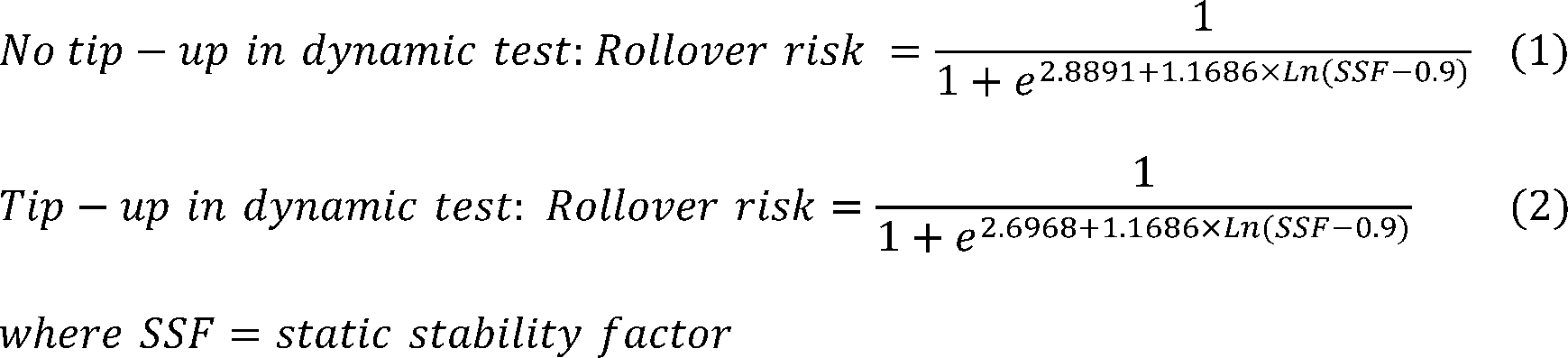
 49 CFR 553.21
 www.nhtsa.gov/sites/nhtsa.gov/files/2024-11/NCAP-Roadmap-11182024-web.pdf
 www.iihs.org/media/020f855e-79e2-4f5c-b560-3ccc991bdfb2/0tCvYA/Ratings/Protocols/current/twg_final_procedures.pdf