Takes of Marine Mammals Incidental to Specified Activities; Taking Marine Mammals Incidental to Marine Structure Maintenance and Pile Replacement Program in Puget Sound, Washington
NMFS has received a request from the United States Navy (Navy) for authorization to take marine mammals incidental to the 2026 Marine Structure Maintenance and Pile Replacement ...
National Marine Fisheries Service (NMFS), National Oceanic and Atmospheric Administration (NOAA), Commerce.
ACTION:
Notice; proposed incidental harassment authorization; request for comments on proposed authorization and possible renewal.
SUMMARY:
NMFS has received a request from the United States Navy (Navy) for authorization to take marine mammals incidental to the 2026 Marine Structure Maintenance and Pile Replacement project in Puget Sound, Washington. Pursuant to the Marine Mammal Protection Act (MMPA), NMFS is requesting comments on its proposal to issue an incidental harassment authorization (IHA) to incidentally take marine mammals during the specified activities. NMFS is also requesting comments on a possible one-time, 1-year renewal that could be issued under certain circumstances and if all requirements are met, as described in Request for Public Comments at the end of this notice. NMFS will consider public comments prior to making any final decision on the issuance of the requested MMPA authorization and agency responses will be summarized in the final notice of our decision.
DATES:
Comments and information must be received no later than September 17, 2026.
ADDRESSES:
Comments should be addressed to Permits and Conservation Division, Office of Protected Resources, National Marine Fisheries Service and should be submitted via email to
ITP.fleming@noaa.gov.
Electronic copies of the application and supporting documents, as well as a list of the references cited in this document, may be obtained online at:
www.fisheries.noaa.gov/national/marine-mammal-protection/incidental-take-authorizations-construction-activities.
In case of problems accessing these documents, please call the contact listed below.
Instructions:
NMFS is not responsible for comments sent by any other method, to any other address or individual, or received after the end of the comment period. Comments, including all attachments, must not exceed a 25-megabyte file size. All comments received are a part of the public record and will generally be posted online at
www.fisheries.noaa.gov/permit/incidental-take-authorizations-under-marine-mammal-protection-act
without change. All personal identifying information (
e.g.,
name, address) voluntarily submitted by the commenter may be publicly accessible. Do not submit confidential business information or otherwise sensitive or protected information.
FOR FURTHER INFORMATION CONTACT:
Kate Fleming, Office of Protected Resources, NMFS, (301) 427-8401.
SUPPLEMENTARY INFORMATION:
Background
The MMPA prohibits the “take” of marine mammals, with certain exceptions. Section 101(a)(5)(A) and (D) of the MMPA (16 U.S.C. 1361et seq.) directs the Secretary of Commerce (as delegated to NMFS) to allow, upon request, the incidental, but not intentional, taking of small numbers of marine mammals by U.S. citizens who engage in a specified activity (other than commercial fishing) within a specified geographical region if certain findings are made and either regulations are proposed or, if the taking is limited to harassment, a notice of a proposed IHA is provided to the public for review.
Authorization for incidental takings shall be granted if NMFS finds that the taking will have a negligible impact on the species or stock(s) and will not have an unmitigable adverse impact on the availability of the species or stock(s) for taking for subsistence uses (where relevant). Further, NMFS must prescribe the permissible methods of taking; other “means of effecting the least practicable adverse impact” on the affected species or stocks and their habitat, paying particular attention to rookeries, mating grounds, and areas of similar significance, and on the availability of the species or stocks for taking for certain subsistence uses (referred to as “mitigation”); and requirements pertaining to the monitoring and reporting of the takings. The definitions of all applicable MMPA statutory terms used above are included in the relevant sections below (see also 16 U.S.C. 1362; 50 CFR 216.3, 216.103).
National Environmental Policy Act
To comply with the National Environmental Policy Act of 1969 (NEPA; 42 U.S.C. 4321et seq.) and NOAA Administrative Order (NAO) 216-6A, NMFS must review our proposed action (
i.e.,
the issuance of an IHA) with respect to potential impacts on the human environment.
This action is consistent with categories of activities identified in Categorical Exclusion B4 (IHAs with no anticipated serious injury or mortality) of the Companion Manual for NAO 216-6A, which do not individually or cumulatively have the potential for significant impacts on the quality of the human environment and for which we have not identified any extraordinary circumstances that would preclude this categorical exclusion. Accordingly, NMFS has preliminarily determined that the issuance of the proposed IHA qualifies to be categorically excluded from further NEPA review.
Summary of Request
On February 26, 2026, NMFS received a request from the Navy for an IHA to take marine mammals incidental to construction associated with the Navy's 2026 Marine Structure Maintenance and Pile Replacement project in Puget Sound, Washington. Following NMFS' review of the application, and subsequent discussions between NMFS and the Navy, the application was deemed adequate and complete on June 4, 2026. Following the adequate and complete determination, the Navy submitted a revised application reflecting the previous discussions on June 26, 2026. We received another revision on August 6, 2026 and a final revision on August 12, 2026. The Navy's request is for take of 10 species of marine mammals, by Level B harassment and, for a subset of these species, Level A harassment. Neither the Navy nor NMFS expect serious injury or mortality to result from this activity and, therefore, an IHA is appropriate.
NMFS previously issued two consecutive IHAs to the Navy for related and similar work (89 FR 47539, June 3, 2024), the first of which was reissued (90 FR 17419, April 25, 2025) because no work was completed under the initial Year 1 IHA). Preceding these two consecutive IHAs, NMFS issued a rule to the Navy for related and similar work (84 FR 15963, April 17, 2019). The Navy complied with all the requirements (
e.g.,
mitigation, monitoring, and reporting) of the previous IHAs, and information regarding their monitoring results may be found in the Effects of the Specified Activity on Marine Mammals and their Habitat.
( printed page 53487)
Description of Proposed Activity
Overview
Maintaining existing wharves and piers is vital to sustaining the Navy's mission and ensuring readiness. To ensure continuance of necessary missions at its installations, the Navy must conduct annual maintenance and repair activities at existing marine waterfront structures, including removal and replacement of piles of various types and sizes. The Navy refers to this program as the Marine Structure Maintenance and Pile Replacement (MPR) Program.
Under the MPR program, the Navy is planning to conduct repairs and maintenance of existing marine structures and replacement of degraded piles at three Navy installations within Puget Sound, Washington. The activities that have the potential to take marine mammals include the impact and vibratory installation and removal of concrete and steel piles, and steel casings.
Dates and Duration
The proposed IHA would be valid for the statutory maximum of 1 year from the date of effectiveness. It will become effective upon written notification from the applicant to NMFS, but not beginning later than 1 year from the date of issuance or extending beyond 2 years from the date of issuance. The specified activities could occur at any time during each project year, subject to existing time of year restrictions (in-water work windows) designed to protect fish species listed under the U.S. Endangered Species Act (ESA). For Naval Base Kitsap (NBK) Bangor (located in Hood Canal), in-water work would occur from July 16 through January 15. At the remaining two facilities (located in Puget Sound), in-water work would occur from July 16 through February 15. Pile driving would occur during daylight hours only. During marbled murrelet (
Brachyramphus marmoratus) nesting season (April 15-Sept 23), impact pile driving will start 2 hours after sunrise and end 2 hours before sunset.
Construction is planned for up to a total of 227 days, with 22 days planned at NBK Bangor, 77 days planned at Naval Station (NS) Everett, and 128 days planned at NBK Manchester, up to 7 days per week, during daylight hours only. However, project delays may occur due to a number of factors, including project funding, permitting requirements, availability of equipment and/or materials, weather-related delays, equipment maintenance and/or repair, and other contingencies.
Specific Geographic Region
The three installations are located within inland waters of Washington State. One facility is located along Hood Canal (NBK Bangor), while the other two are located along the southwestern (NBK Manchester) and southeastern (NS Everett) shorelines of Puget Sound. See figure 1 for a regional map and application figures 1-2, 1-3, and 1-4 for maps of each installation.
( printed page 53488)
NBK Bangor is located north of the community of Silverdale in Kitsap County on the Hood Canal. NBK Bangor serves as the Pacific homeport for the Navy's TRIDENT submarine squadron and other ships home-ported or moored at the installation and to maintain and operate administrative and personnel support facilities including security,
( printed page 53489)
berthing, messing, and recreational services. It is located on Hood Canal, a long, narrow, fjord-like basin of western Puget Sound (see figure 1-2 of the Navy's application). Oriented northeast to southwest, the portion of the canal from Admiralty Inlet to a large bend, called the Great Bend, at Skokomish, Washington, is 84 kilometers (km) (52 miles (mi)) long. East of the Great Bend, the canal extends an additional 24 km (15 mi) to Belfair. Throughout its 108-km (67 mi) length, the width of the canal varies from 1.6 to 3.2 km (1 to 2 mi) and exhibits strong depth/elevation gradients. Hood Canal is characterized by relatively steep sides and irregular seafloor topography. In northern Hood Canal, water depths in the center of the waterway near Admiralty Inlet vary between 91 and 128 meters (m) (300 and 420 feet (ft)). As the canal extends southwestward toward the Olympic Mountain Range and Thorndyke Bay, water depth decreases to approximately 49 m (160 ft) over a moraine deposit. This deposit forms a sill across the canal in the vicinity of Thorndyke Bay, which limits seawater exchange with the rest of Puget Sound. The NBK Bangor waterfront occupies approximately 8 km (5 mi) of the shoreline within northern Hood Canal (1.7 percent of the entire Hood Canal coastline) and lies just south of the sill feature.
NS Everett provides homeport ship berthing, industrial support, and a Navy administrative center. It is located on Port Gardner Bay in Puget Sound's Whidbey Basin (see figure 1-3 of the Navy's application). To the west of the installation is the channelized mouth of the Snohomish River bounded by Jetty Island, which is composed of sediment from maintenance dredging and acts as a breakwater for the northwest area along the installation's waterfront. Jetty Island separates Port Gardner Bay and Possession Sound from the Snohomish River channel. The mouth of the Snohomish River channel is a historically industrialized area of highly modified shorelines and dredged waterways that forms a protected harbor within Port Gardner Bay. East of Jetty Island lies the Snohomish River estuary, consisting of a series of interconnected sloughs that flow through the lowlands east and north of the river's main channel. Water depths in Possession Sound range from about 9 m (30 ft) near the industrialized shoreline in Port Gardner to 180 m (600 ft) in mid-channel.
NBK Manchester provides bulk fuel and lubricant support to area Navy afloat and shore activities. It is located on Orchard Point, approximately 6.4 km (4 mi) due east of Bremerton (see figure 1-4 of the Navy's application). The installation is bounded by Clam Bay to the northwest, Rich Passage to the northeast, and Puget Sound to the east. NBK Manchester piers are located on the north side of Orchard Point and in a small embayment open on the south side of Orchard Point. In Clam Bay, the bathymetry is gently sloping with depths in the outer portions of the bay of approximately 5.5 m (18 ft) below mean lower low water (MLLW). Depths off Orchard Point drop off dramatically to 18 m (60 ft) below MLLW approximately 150 m (500 ft) from shore and 90 m (300 ft) below MLLW 1.6 km (1 m) offshore. Rich Passage is a shallow sill, less than 21 m (70 ft) deep.
Detailed Description of the Specified Activity
Through its 2026 MPR project, the Navy plans to conduct maintenance and repair activities at marine waterfront structures at NS Everett, NBK Manchester, and NBK Bangor within Puget Sound. Repairs would include replacing up to 234 structurally unsound concrete or steel piles with 233 concrete or steel piles over a 1-year period using impact and vibratory pile driving and removal. A bubble curtain would be used during all impact driving of steel piles.
Piles may be removed by vibratory extraction, cutting/chipping, clamshell removal, or direct pull depending on site and pile conditions, and piles may be installed via vibratory and impact driving with the aid of water jetting or auger drilling. However, noise levels produced through mechanical extraction activities, water jetting, and auger drilling are not expected to exceed baseline levels produced by other routine activities and operations at the three facilities, and any elevated noise levels produced through these activities are expected to be intermittent and of short duration.
Likewise, the MPR program involves the repair of pile-supported structures that include replacement of elements such as pile caps and cross bracing, replacement or repair of decking, and replacement of wave break panels. Fender system components such as camels (protective float system) may be replaced. Also, various metal components exposed to the marine environment are subject to corrosion and will require periodic maintenance, such as coating, or replacement. All the associated repair activities either occur over water or involve only minor in-water work and are not expected to have the potential to result in incidental take of marine mammals. Therefore, only impact and vibratory pile driving and vibratory removal, are carried forward for further analysis.
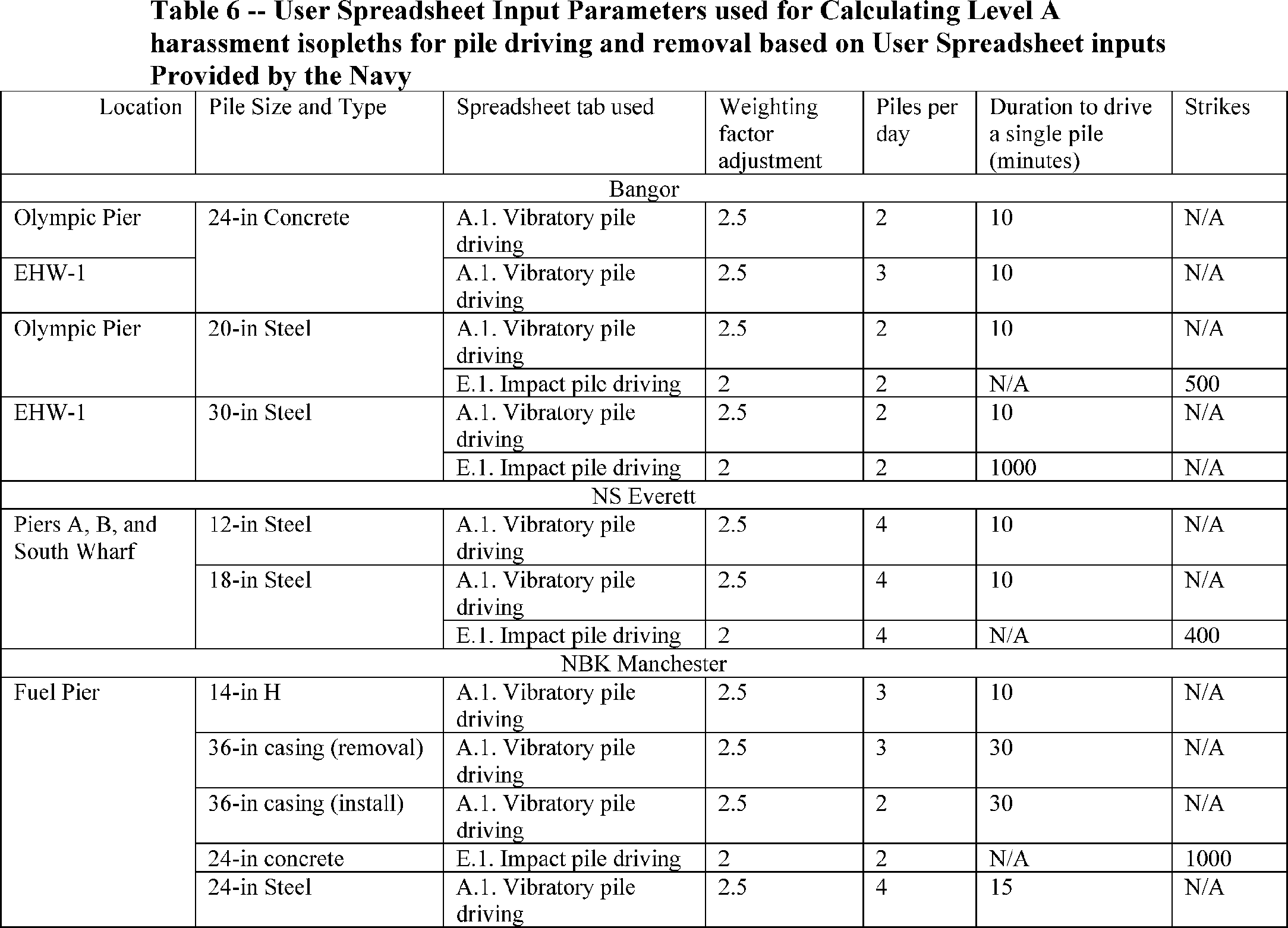
Between July 2026 and July 2027, the following activities are planned: At NBK Bangor, approximately 15 24-in concrete piles would be vibratory removed at Olympic Pier and EHW-1; approximately 4 20-in (0.5 m) steel fender piles would be installed with a vibratory hammer and if necessary, followed by impact proofing at Olympic Pier; and up to 12 30-in (0.8 m) steel piles would be installed with a vibratory hammer followed by impact proofing at EHW-1 (with a bubble curtain).
At NS Everett, approximately 144 12-in (0.3 m) steel piles would be vibratory removed at Piers A, B, and South Wharf; and approximately 144 18-in (0.5 m) steel fender piles would be installed with a vibratory hammer and if necessary, impact proofing (with a bubble curtain).
At NBK Manchester, approximately 74 14-in (0.4 m) steel H-piles would be vibratory removed at the Fuel Pier; approximately 30 24-in concrete piles would be impact installed in cases where no bedrock is present. To support the installation of 24-in concrete piles, up to 74 36-in steel casings would be vibratory installed and removed. Also, approximately 52 temporary 24-in steel piles would be installed and removed via vibratory hammer at this location.
Table 1 provides a summary of pile types, sizes, and maximum numbers of piles at each installation to be removed or installed over the 1-year MPR Program period from July 2026 to July 2027. This estimate assumes all piles would be removed and replaced with new piles. However, existing piles may be repaired in place with no new piles installed and if replacement piles are larger than existing piles, typically fewer piles are needed. Therefore, estimates of replaced piles for each installation are a conservative overestimate.
( printed page 53490)
Proposed mitigation, monitoring, and reporting measures are described in detail later in this document (please see
( printed page 53491)
Proposed Mitigation and Proposed Monitoring and Reporting).
Description of Marine Mammals in the Area of Specified Activities
Sections 3 and 4 of the application summarize available information regarding status and trends, distribution and habitat preferences, and behavior and life history of the potentially affected species. NMFS fully considered all of this information, and we refer the reader to these descriptions, instead of reprinting the information. Additional information regarding population trends and threats may be found in NMFS' Stock Assessment Reports (SARs;
www.fisheries.noaa.gov/national/marine-mammal-protection/marine-mammal-stock-assessments) and more general information about these species (
e.g.,
physical and behavioral descriptions) may be found on NMFS' website (
www.fisheries.noaa.gov/find-species).
Table 2 lists all species or stocks for which take is expected and proposed to be authorized for this activity and summarizes information related to the population or stock, including regulatory status under the MMPA and ESA and potential biological removal (PBR), where known. PBR is defined by the MMPA as the maximum number of animals, not including natural mortalities, that may be removed from a marine mammal stock while allowing that stock to reach or maintain its optimum sustainable population (as described in NMFS' SARs). While no serious injury or mortality is anticipated or proposed to be authorized here, PBR and annual mortality and serious injury (M/SI) from anthropogenic sources are included here as gross indicators of the status of the species or stocks and other threats.
Marine mammal abundance estimates presented in this document represent the total number of individuals that make up a given stock or the total number estimated within a particular study or survey area. NMFS' stock abundance estimates for most species represent the total estimate of individuals within the geographic area, if known, that comprises that stock. For some species, this geographic area may extend beyond U.S. waters. All managed stocks in this region are assessed in NMFS' U.S. Alaska and Pacific SARs. All values presented in table 2 are the most recent available at the time of publication (including from the 2024 SARs) and are available online at:
www.fisheries.noaa.gov/national/marine-mammal-protection/marine-mammal-stock-assessments.
( printed page 53492)
( printed page 53493)
As indicated above, all 10 species (with 15 managed stocks) in table 2 temporally and spatially co-occur with the activity to the degree that take is reasonably likely to occur.
In addition to what is included in sections 3 and 4 of the IHA application, and NMFS' website (
www.fisheries.noaa.gov/find-species), further detail informing the regional occurrence for select species of particularly or unique vulnerability (
i.e.,
information regarding ESA listed or MMPA depleted species, information regarding current Unusual Mortality Events (UMEs) and known important habitat areas such as Biologically Important Areas (BIAs) (Calambokidis
et al.,
2024) and critical habitat is provided below.
Humpback Whale
Generally, humpback whales are considered common in the Puget Sound, though the greatest density sightings are off the south end of Vancouver Island in the Strait of Juan de Fuca (Olsen
et al.,
2024). Marine mammal monitoring data collected by Protected Species Observers (PSOs) and local research groups contribute to our understanding of local occurrence of humpback whales near the three naval installations included in this project. At NBK Bangor, PSOs were on site observing marine mammals during Navy construction projects associated with four monitoring periods: 15 days between August 10, 2023 and September 26, 2023 (Callaghan
et al.,
2024); 32 days between October 19, 2021 and January 14, 2022 (DoN, 2022); 14 days between August 4, 2021 and October 11, 2021 (Hamer Environmental, 2021); and 95 days between July 16, 2020 and January 13, 2021 (DoN, 2021); No humpback whales were observed. Additionally, PSOs were on site at NBK Manchester observing marine mammals during a Navy construction project on 11 days between September 28, 2021 and December 10, 2021. No humpback whales were observed (Sandoval and Johnson, 2022). The Navy has not conducted PSO monitoring at NS Everett. However, the Washington State Department of Transportation employed PSOs during construction associated with a multi-year Mukilteo Multimodal Construction Project, located 6 km to the south of NS Everett (90 FR 31965; July 16, 2025). PSOs were located at Mukilteo, on the Mukilteo-Clinton ferry, and at additional locations on Whidbey Island, Camano Island, and north of NS Everett, and monitored for 169 days 2015 and 2021, between the months of August and February (90 FR 31965; July 16, 2025). A single humpback whale was observed by PSOs on two occasions. Additionally, in February 2026, the Navy provided the NMFS Office of Protected Resources (OPR) with marine mammal observation data collected by The Whale Museum from Blake Island (approximately 3 km from NBK Manchester between August 2022 and July 2024). These data are consistent with the understanding that humpback whales in Puget Sound are most often observed alone, and less frequently in groups of 2 or 3.
The number of humpback whales potentially present near any of the three naval installations over the project time period is expected to be low in any month.
Within the project area, three humpback whale stocks may occur: The Central America/Southern Mexico—CA-OR-WA stock, which corresponds with the Central America DPS (found all along the west coast, but most common off California and Oregon; the Central America DPS is listed as endangered under the ESA); the Mainland Mexico—CA-OR-WA stock, which corresponds with the Mexico DPS (found all along the west coast; the Mexico DPS is listed as threatened under the ESA), and the Hawaii stock, which corresponds with the Hawaii DPS (found predominately off Washington and southern British Columbia; the Hawaii DPS is not listed under the ESA). According to Curtis
et al.
(2025), the probability that whales encountered in the Salish Sea are as follows: Central America DPS (Central America/Southern Mexico stock) (4.3 percent); Mexico DPS (Mainland Mexico—Oregon/California/Oregon stock) (45.7 percent); Hawaii DPS (Hawai'i stock) (50 percent).
Gray Whale
During migration from Mexico to the Arctic, a subpopulation of the Eastern North Pacific stock of gray whales, commonly referred to as the Pacific Coast Feeding Group (PCFG), stops and feeds along the coasts of Oregon and Washington including the Northern Puget Sound (Calambokidis
et al.,
2024). A subgroup of the PCFG that feed in the Puget Sound, recently termed as “Sounders” gray whales occurs in highest concentrations on the Southern ends of Whidbey and Camano Islands in the North Puget Sound (Calambokidis
et al.,
2024). This area corresponds to a BIA for feeding gray whales (Calambokidis
et al.,
2024). This area is adjacent to NS Everett, but the timeframe that the BIA is active (February to June) only minimally overlaps with the planned project period at NS Everett (July 15-February 15).
In October 2020, PSOs reported four sightings of a single gray whale near NBK Bangor during construction associated with the Pier Extension Project (DoN, 2021; DoN, 2022). Gray whales were not observed during monitoring efforts associated with other projects occurring at relevant Navy installations in Puget Sound (Callaghan
et al.,
2024; Hamer Environmental,
( printed page 53494)
2021; Sandoval and Johnson, 2022). However, a single gray whale was observed on two occasions by PSOs employed by the Washington Department of Transportation (WSDOT) during the Mukilteo Multimodal Project, 6 km to the south of NS Everett (90 FR 31965; July 16, 2025). Additionally, WSDOT has preliminarily reported that at least three gray whales were spotted during monitoring efforts completed at this location in February 2026 (A. Stutes, WSDOT, personal communication, 2026). Finally, all gray whale sightings reported by The Whale Museum between August 2022 and July 2024 from Blake Island (data provided by the Navy), were of solitary animals.
Between 2019 and 2023, there was a UME for gray whales occurring along the West Coast from Mexico through Alaska. While most of the strandings associated with this UME were documented along Washington's Pacific coast, 14 gray whale strandings were reported in inland waters between February and July, 2 of which were reported in Possession Sount near NS Everett (May 2019 and April 2020) and 2 to the north of NS Everett to the east and west of Camano Island (April 2021 and March 2022); other observations of single stranded gray whales were reported at the mouth of Hood Canal (May 2019), south of Whidby Island (May 2019), near Bainbridge Island (May 2020), in Sinclair Inlet (March 2021), and near Seattle (April 2019). There were also four gray whale strandings reported in the southern portion of Puget Sound to the southwest of Tacoma Narrows Bridge.
While no gray whale UMEs are currently active, Cascadia Research is actively monitoring high numbers of stranded gray whales along the Washington Coast and in Puget Sound this year (2026). As of July 21, 2026, 30 stranded gray whales have been reported in these waters, with malnutrition commonly documented. At least ten whales also had blunt force trauma consistent with vessel collision and one had recent evidence of entanglement (Cascadia Research Collective,
cascadiaresearch.org/working-list-of-gray-whale-strandings-in-2026/,
retrieved July 21, 2026).
Gray whales are expected to occur in the waters surrounding all three installations primarily from February through June when most in-water construction will not occur.
Minke Whale
Minke whales are reported in Washington inland waters year-round, although few are reported in the winter (Calambokidis and Baird, 1994), and are relatively rare in Puget Sound. Minke whales were not observed during monitoring efforts associated with projects occurring at relevant Navy installations in Puget Sound (Callaghan
et al.,
2024; Hamer Environmental, 2021; Sandoval and Johnson, 2022; DoN, 2022; DoN, 2021). Additionally, no minke whales were observed by PSOs during WSDOT's Mukilteo Multimodal Project (90 FR 31965; July 16, 2025). However, a minke whale was reported near the project area by the Pacific Whale Watching Foundation in 2022 (Gless and Krieger, 2023). Additionally, based on the marine mammal observation data collected by The Whale Museum between August 2022 and July 2024 from Blake Island (provided by the Navy), a total of 2 sightings of single minke whales were reported over this 2-year period.
Killer Whale
Transient Killer Whale
West coast transient killer whales are documented intermittently year-round in Washington inland waters. While no transient killer whales were observed by PSOs monitoring during the Navy's construction at NBK Bangor in 2023, one group of five was observed by PSOs in 2022 (DoN 2022) and four groups of six or seven individuals were observed by PSOs in 2021 (DoN, 2021). PSOs monitoring during other Navy construction projects at relevant installations did not report observations of transient killer whales (Sandoval and Johnson, 2022). Transient killer whales are occasionally observed transiting through Rich Passage near NBK Manchester and in Possession Sound near NS Everett (Orca Network, 2026). In 2022, transient killer whales were observed in Possession Sound near NS Everett. Additionally, PSOs monitoring during WSDOT's Mukilteo multi-modal project reported 11 sightings of killer whales across 169 monitoring days between 2015 and 2021 (90 FR 31965, July 16, 2025). The mean pod size was four and the maximum pod size reported by PSOs was eight. The Whale Museum's data (provided by the Navy) indicate an average pod size of four as well.
Southern Resident Killer Whale
The southern resident killer whale (SRKW) stock contains three pods (J, K, and L pods), with pod sizes ranging from approximately 15 (in K pod) to 34 (in L pod) individuals (Orca Network, 2026). SRKWs are documented intermittently year-round in Washington inland waters (Olsen
et al.,
2018, Olsen
et al.,
2024), but their occurrence depends on prey abundance.
In 2006, NMFS designated critical habitat under the ESA for the SRKWs in inland waters of Washington State (71 FR 69054; November 29, 2006). The designated critical habitat consists of three areas: (1) summer core area in Haro Strait and waters around the San Juan Islands; (2) Puget Sound; and (3) Strait of Juan de Fuca. The essential features for conservation of the habitat are: (1) water quality to support growth and development; (2) prey species of sufficient quantity, quality, and availability to support individual growth, reproduction, and development, as well as overall population growth; and (3) passage conditions to allow for migration, resting, and foraging. On August 2, 2021 (86 FR 41668), NOAA Fisheries published a final rule to revise the critical habitat designation for SRKWs, maintaining the previously designated critical habitat in inland waters of Washington and expanding it to include certain coastal waters off Washington, Oregon, and California.
SRKWs are expected to occur occasionally in the waters surrounding all of the installations relevant to this project except those in Hood Canal (NBK Bangor), where they have not been reported since 1995 (NMFS, 2006). This corresponds to the Puget Sound segment of the designated critical habitat for SRKW, which is defined as the area south of the Deception Pass Bridge, west of the entrance to Admiralty Inlet, and north of the Hood Canal Bridge. It also corresponds to a BIA for the species, which was developed based on the aforementioned critical habitat boundaries (Calambokidis
et al.,
2024). Although NS Everett and NBK Manchester fall within this area, these naval installations are excluded from the Puget Sound segment of the designated Critical Habitat. These areas do contain the aforementioned essential features, but we note that water quality and habitat for prey species is generally degraded in the vicinity of these industrial environments relative to other areas containing the essential features that may be less impacted (see Potential Effects of Specified Activities on Marine Mammals and their Habitat section).
SRKWs were not observed by PSOs monitoring during previous construction activities at NBK Manchester (Sandoval and Johnson, 2021) or NBK Bangor (Callaghan
et al.,
2024; DoN, 2021; DoN, 2022; Hamer Environmental, 2021). However, during the WSDOT's Multimodal Construction Project, PSOs located at the project site, on the Mukilteo-Clinton ferry, and at additional locations on Whidbey Island,
( printed page 53495)
Camano Island, and north of NS Everett, reported a total of 28 SRKWs in 6 groups (average group size of 5), across 169 days between 2015 and 2021, all within the same project year (90 FR 31965; July 16, 2025). Additionally, the Whale Museum's data, provided by the Navy, reported 2 observations of SRKWs in groups of 10 each.
Dall's Porpoise
Within the inland waters of Washington and British Columbia, this species is most abundant in the Strait of Juan de Fuca east to the San Juan Islands (Nyswander
et al.,
2005). Dall's porpoises may be most abundant in Puget Sound during the winter (Nysewander
et al.,
2005; Washington Department of Fish and Wildlife (WDFW) 2007). While sightings appear to be decreasing (Evenson
et al.,
2016), Dall's porpoises may occur in all areas of inland Washington at all times of year, but with different distributions throughout Puget Sound from winter to summer.
Dall's porpoises were not observed during monitoring efforts associated with projects occurring at relevant Navy installations in Puget Sound (Callaghan
et al.,
2024; Hamer Environmental, 2021; Sandoval and Johnson, 2022; DoN, 2022, DoN, 2021). A total of two Dall's porpoises were observed by PSOs during the WSDOT's Mukilteo Multimodal Project from the Mukilteo—Clinton Ferry monitoring location (90 FR 31965, July 16, 2025).
Harbor Porpoise
Harbor porpoises are known to occur year-round in the inland trans-boundary waters of Washington and British Columbia, Canada and along the Oregon/Washington coast (Barlow
et al.,
1988). There was a significant decline in harbor porpoise sightings within southern Puget Sound between the 1940s and 1990s but sightings have increased seasonally more recently (Carretta
et al.,
2019). Annual winter aerial surveys conducted by the WDFW from 1995 to 2015 revealed an increasing trend in harbor porpoise in Washington inland waters, including the return of harbor porpoises to Puget Sound. The data suggest that harbor porpoises were already present in Juan de Fuca, Georgia Straits, and the San Juan Islands from the mid-1990s to mid-2000s, and then expanded into Puget Sound and Hood Canal from the mid-2000s to 2015, areas they had used historically but abandoned (Evenson
et al.,
2016).
At NBK Bangor, PSOs associated with a service pier extension project observed harbor porpoise each month during the 2020-2021 monitoring period, with peak numbers recorded in August (DoN, 2021). During this time, a total of 420 harbor porpoise sightings were reported, with a mean group size of 3.3 (DoN, 2021). A total of 12 groups of harbor porpoises were also observed during year 2 of this project, with a mean group size of 3.4 (DoN, 2022); Finally, four groups of two to four harbor porpoise were reported during monitoring for construction at EHW-1 in 2023 (Callaghan
et al.,
2024). No harbor porpoise sightings were reported during monitoring conducted during construction at EHW-1 in 2021 (Hamer, 2021).
At NBK Manchester, a total of six groups of one to six harbor porpoises were detected by PSOs, with a mean group size of 2.7 (Sandoval and Johnson, 2022).
Between 194 and 214 harbor porpoises were observed by PSOs during WSDOT's Mukilteo Multimodal Project, for an average daily occurrence of 1.3 harbor porpoises and average group size of 2 (90 FR 31965; July 16, 2025).
California Sea Lion
Only male California sea lions migrate into Pacific Northwest waters, with females remaining in waters near their breeding rookeries off the coast of California and Mexico. They use haul-out sites along the outer coast, Strait of Juan de Fuca, and in Puget Sound. Haul-out sites are located on jetties, offshore rocks and islands, log booms, marina docks, and navigation buoys. This species also may be frequently seen resting in the water, rafted together in groups in Puget Sound.
In Washington inland waters, California sea lions are typically present most of the year though occurrence is low in mid-June through August, as most California sea lions would be returning to rookeries in California waters (Navy, 2025). As described below, surveys at the naval installations indicate that a few individuals remain year-round (Navy, 2025).
The Navy conducts surveys at its installations in Puget Sound that have sea lion haulouts. Specifically, of the project relevant to naval installations, California sea lion haulouts occur at NBK Bangor and NS Everett (though California sea lions may haul out opportunistically at any location).
California sea lions have been documented during shore-based surveys at NBK Bangor in Hood Canal since 2008 in all months, with as many as 320 individuals observed at one time (October 2018) hauled out on submarines at Delta Pier and on Port Security Barrier (PSB) floats (Navy, 2025). Since 2020, during these surveys, the monthly average daily occurrence of California sea lions reported at Bangor during the project period months (July-January) is 35 animals (Navy, 2025). Additionally, California sea lions were observed by PSOs consistently at NBK Bangor during Navy construction projects: 2 California sea lions were observed across 15 days between August and September 2023 (Callaghan
et al.,
2024); 557 California Sea Lions were observed across 95 days between July 2020 and January 2021 (DoN, 2021); 57 were observed across 32 days between October 2021 and January 2022 (DoN, 2022); 44 California Sea Lions were observed across 14 days between August 2021 and October 2021 (Hamer Environmental, 2021). The nearest haulout from Olympic Pier is 150 m and the nearest haul-out from EHW-1 is approximately 500 m.
California sea lions have been documented during the Navy's shore-based surveys at NS Everett from 2014 to 2025 in all survey months, with as many as 267 individuals hauled out at one time (April 2020) on PSB floats (Navy, 2025). In 2020, the Navy's survey effort increased to include pinniped counts within the entire East Waterway. Since 2020, during these surveys, the monthly average daily occurrence of California sea lions reported at Everett during the project period months (July-February) is 35 animals and the maximum count documented at one time was 225 individuals (Navy, 2025).
At NBK Manchester, a float that had been regularly used as a main haulout area for California or Steller sea lions was removed in 2018, leading to a large decrease in sea lion numbers in the vicinity of Manchester Fuel Depot. Other floats have periodically been introduced and utilized by California sea lions since then (including the large main float that was reinstalled in 2021), making the number of California sea lions observed in the vicinity of NBK Manchester highly variable. As of May 2023 (approximate date of a float removal), there have been no available floats nearby for California sea lions to haul out on, though one buoy remains that can support a maximum of four California sea lions at a time. Since 2023, during these surveys, the monthly average daily occurrence of California sea lions reported at Manchester during the project period months (July-February) is 6 animals and the maximum count at one time was 92 (Navy, 2025).
California sea lions were observed consistently at NBK Manchester during Navy construction projects. A total of
( printed page 53496)
276 individuals were reported across 137 sightings, with a mean of 2 individuals per group (group sizes ranged from 1 to 12 animals).
Steller Sea Lion
Steller sea lions use haul-out locations in Puget Sound, and may occur at the same haulouts as California sea lions. Steller sea lions have been seasonally documented (September through April) in shore-based surveys at NBK Bangor in Hood Canal since 2008 (Navy, 2025). Since 2020, during these surveys, the monthly average daily occurrence of Steller sea lions reported at Bangor during project period months (July-January) was two animals and the mean monthly maximum documented at one time was four animals. Steller sea lions were not observed at NBK Bangor during construction occurring on 14 days between August and October 2021 (Hamer Environmental, 2021), or on 32 construction days between October and January (DoN, 2022). However, 13 Steller sea lions were observed by PSOs across 15 days in August and September 2023 (Callaghan
et al.,
2024), and 87 Steller sea lions were observed across 95 days between July and January 2021 (DoN, 2021).
At NS Everett, Steller sea lions have rarely been detected during the Navy's shore-based surveys conducted since July 2012. However, occasional observations have been reported from the PSB or in the Notch Basin, generally one at a time (Navy, 2025). Other than these detections on the installation's PSBs, the nearest known Steller sea lion haulout is 14 mi (23 km) away. The average daily occurrence of Steller sea lions observed by PSOs during WSDOT's Mukilteo Multimodal Project (169 days of monitoring between 2015 and 2021), was 0.25, suggesting an occasional occurrence of this species in the vicinity of the project site (90 FR 31965; July 16, 2025).
As discussed above, in 2018, a float was removed that was regularly used as the main haulout area for sea lions, leading to a large decrease in the sea lions' numbers reported in the vicinity of NBK Manchester. As of May 2023, there have been no available floats for sea lions to haul out on, though one buoy remains, primarily used by California sea lions. Since 2023, during these surveys, the monthly average daily occurrence of Steller sea lions reported at Manchester during the project period months (July-February) is four animals and the maximum count at one time was seven (Navy, 2025).
Additionally, Steller sea lions were observed consistently at NBK Manchester during Navy construction projects. A total of three individuals were reported across three sightings, for a mean of one individual per sighting.
Harbor Seal
Harbor seals are the most common pinniped that breed and remain in the inland marine waters of Washington year-round (Calambokidis and Baird 1994a). Harbor seals haul out on rocks, reefs and beaches, and feed in marine, estuarine and occasionally fresh waters. Harbor seals display strong fidelity for haul-out sites (Pitcher and McAllister, 1981).
Harbor seals are expected to occur year-round at all installations with the greatest numbers expected at installations with nearby haulout sites. In Hood Canal, where NBK Bangor is located, known haulouts occur on the west side of Hood Canal at the mouth of the Dosewallips River and on the western and northern shorelines in Dabob Bay located approximately 8.1 mi (13 km) and 2.3 mi (3.7 km) away from the Navy's installation, respectively. Telemetry data from harbor seals tagged by the Navy and the WDFW show most animals occurring in this area, with a smaller proportion of animals moving in and out of the NBK Bangor project area (P. Thorson, Navy, personal communication, 2026). Small numbers of harbor seals have been documented hauling out opportunistically at NBK Bangor (
e.g.,
on manmade floating structures at Marginal Wharf, EHW-2, and on Carderock Pier (Navy, 2025). Between 2020 and 2025, a daily average of 7 harbor seals were observed during months corresponding to the project period (July-January), while the largest number of harbor seals observed in a single survey was 43 individuals (in September 2024) (Navy, 2025). Harbor seals were routinely seen during marine mammal monitoring for the Navy's recent construction projects at this site, primarily in groups of one or two, with daily average individuals observed ranging from two to 18 depending on the project (Callaghan
et al.,
2024; DoN, 2021; DoN, 2022; Hamer Environmental, 2021). Mother and pup pairs are occasionally observed throughout the pupping season each year, which spans from August to October (Navy, 2025).
Harbor seals occupy the waters and haulout sites near NS Everett year-round. According to the Navy, mother-pup pairs have been observed at NS Everett each summer since 2018. Navy shore-based surveys were conducted regularly at this site between 2012 and 2016, and again beginning in 2019, at which point surveys were expanded to include the entire East Waterway. However, log rafts were removed from the East Waterway in the spring of 2022. Since then, the largest number of harbor seals observed at NS Everett was 788 in October 2023. The Navy documented an average of 213 harbor seals hauled out at NS Everett in 2024 (Navy, 2025). Additionally, PSOs monitoring for marine mammals during the WSDOT Mukilteo Multimodal Project reported a daily average of 21 harbor seals (90 FR 31965; July 16, 2025).
No haulouts have been identified at NBK Manchester. Single harbor seals have been observed swimming in these areas or hauled out on nearby rocks or on floats. The nearest documented haulout to NBK Manchester is Orchard Rocks Conservation Area in Rich Passage, approximately 1.0 mi (1.8 km) away. The Navy began surveying this area in June 2020, which has led to a dramatic increase in the number of harbor seals observed in proximity to NBK Manchester Fuel Depot. Since 2020, during these surveys, the monthly average daily occurrence of harbor seals reported at Manchester during the project period months (July-February) is 13 animals and the maximum count at one time was 138 (Navy, 2025). PSOs also observed a total of 103 harbor seals with a mean group size of 1.3 (groups ranging from 1 to 13 individuals) across 11 monitoring days between September and December 2021 at this installation (Sandoval and Johnson, 2021).
Northern Elephant Seal
The occurrence of elephant seals in Puget Sound is unpredictable. No regular haulouts exist in Puget Sound with the exception of individual elephant seals occasionally hauling out for 2 to 4 weeks to molt, usually during the spring and summer and typically on sandy beaches (Calambokidis and Baird, 1994). These animals are usually yearlings or subadults and their haul-out locations are unpredictable. However, a female elephant seal has been reported hauled out in Mutiny Bay on Whidbey Island periodically since 2010. She was observed alone for her first three visits to the area, but in March 2015, she was seen with a pup. Since then, she has produced three more pups between 2018 and 2021 (Orca Network, 2025). Northern elephant seals generally give birth in January but this individual has repeatedly given birth in March. She typically returns to Mutiny Bay (not included in the ensonified area) in April and May to molt (when project activities are not planned). Her pups have also repeatedly returned to haul out on nearby beaches and one has also had a pup (Orca Network 2025).
( printed page 53497)
A northern elephant seal was observed north of NBK Bangor in Hood Canal, from Kitsap Memorial Park in August 2020 (DoN, 2021). Additionally, across 169 monitoring days between 2015 and 2021, one to two northern elephant seals were observed by PSOs during the WSDOT Mukilteo Multimodal Project from the New Mukilteo Ferry Terminal monitoring location (90 FR 31965; July 16, 2025). Northern elephant seals were not observed by PSOs during the Navy's other construction activities occurring at NBK Bangor (Hamer Environmental, 2021; DoN, 2022) or NBK Manchester (Sandoval and Johnson, 2021).
Marine Mammal Hearing
Hearing is the most important sensory modality for marine mammals underwater, and exposure to anthropogenic sound can have deleterious effects. To appropriately assess the potential effects of exposure to sound, it is necessary to understand the frequency ranges marine mammals are able to hear. Not all marine mammal species have equal hearing capabilities or hear over the same frequency range (
e.g.,
Richardson
et al.,
1995; Wartzok and Ketten, 1999; Au and Hastings, 2008). To reflect this, Southall
et al.
(2007, 2019) recommended that marine mammals be divided into hearing groups based on directly measured (behavioral or auditory evoked potential techniques) or estimated hearing ranges (behavioral response data, anatomical modeling,
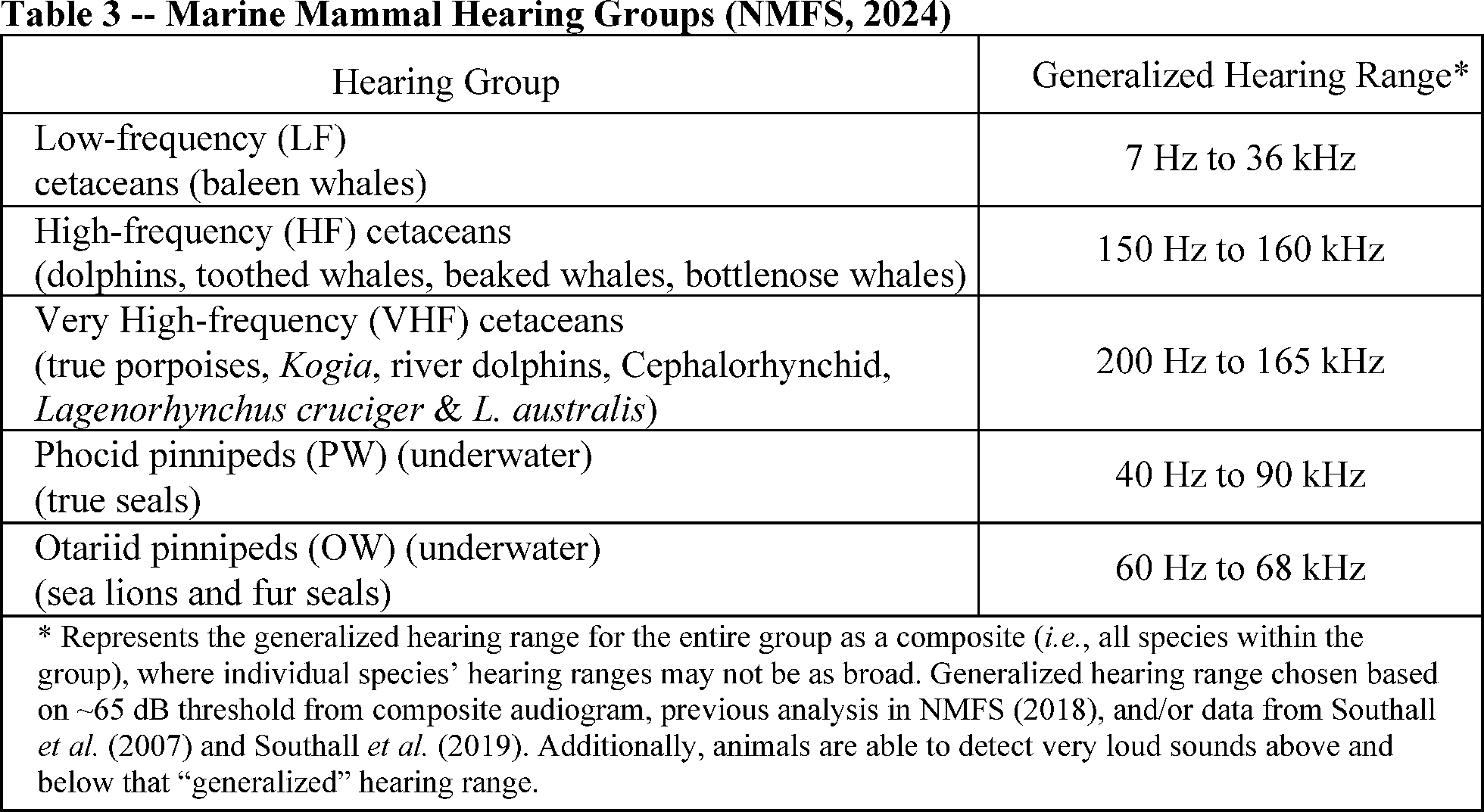
etc.). Subsequently, NMFS (2018, 2024) described generalized hearing ranges for these marine mammal hearing groups (table 3). Generalized hearing ranges were chosen based on the approximately 65 decibel (dB) threshold from composite audiograms, previous analyses in NMFS (2018), and/or data from Southall
et al.
(2007) and Southall
et al.
(2019).
For more details concerning these groups and associated generalized hearing ranges, please see NMFS (2024) for a review of available information.
Potential Effects of Specified Activities on Marine Mammals and Their Habitat
This section discusses how components of the specified activity may impact marine mammals and their habitat. The Estimated Take of Marine Mammals section later in this document includes a quantitative analysis of the number of individuals that are expected to be taken by the specified activities. The Negligible Impact Analysis and Determination section considers the content of this section, the Estimated Take of Marine Mammals section, and the Proposed Mitigation section, to draw conclusions regarding the likely impacts of these activities on the reproductive success or survivorship of individuals and whether those impacts are reasonably expected to, or reasonably likely to, adversely affect the species or stock through effects on annual rates of recruitment or survival.
Acoustic effects on marine mammals during the specified activities could occur from vibratory pile installation and removal, and impact pile driving. The effects of underwater noise from the Navy's proposed activities have the potential to result in Level B harassment of marine mammals in the project area and, for some species as a result of impact pile driving at two installations, Level A harassment.
Across three locations in Puget Sound, Washington, the proposed activities would result in the removal of approximately 234 steel or concrete piles with diameters of 12, 14, and 24-in, and installation of approximately 233 concrete or steel piles with diameters of 18, 20, 24, and 30-in. There are a variety of types and degrees of effects on marine mammals and their habitat (including prey) that could occur as a result of the specified activities. Below we provide a brief description of the types of sound generated by specified activities, the general impacts on marine mammals and their habitat from these types of activities, and a related project-specific analysis with consideration of the proposed mitigation measures.
Description of Sound Sources for the Specified Activities
Activities associated with the project that have the potential to incidentally take marine mammals through exposure to sound would include vibratory pile
( printed page 53498)
driving and removal and impact pile driving during marine structure maintenance and pile replacement.
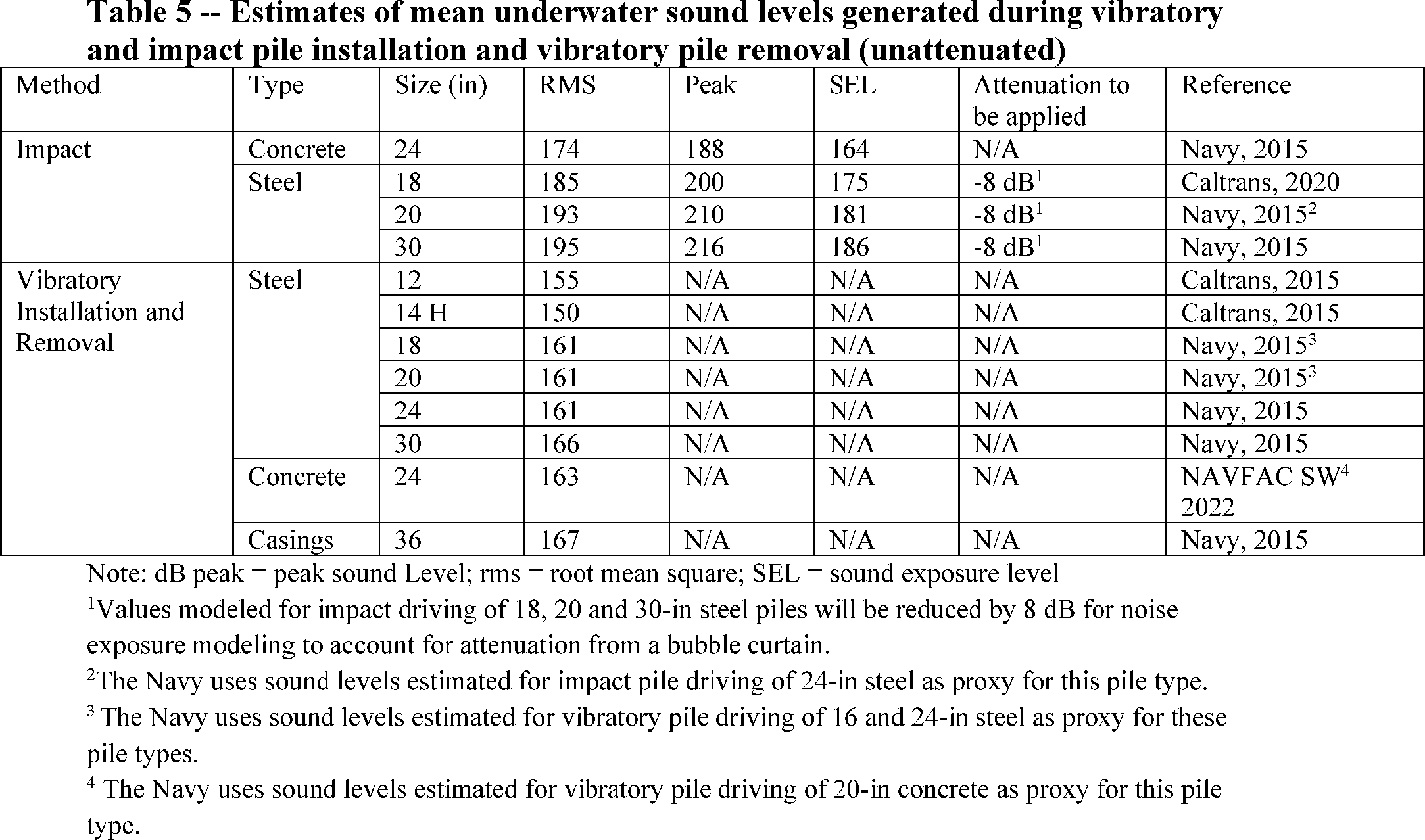
Impact hammers typically operate by repeatedly dropping and/or pushing a heavy piston onto a pile to drive the pile into the substrate. Sound generated by impact hammers is impulsive, characterized by rapid rise times and high peak sound pressure levels, a potentially injurious combination (Hastings and Popper, 2005). Vibratory hammers install piles by vibrating them and allowing the weight of the hammer to push them into the substrate, and extract piles by using vibration to break the sediment friction and allow a crane to pull the piles out. Vibratory hammers typically produce less sound (
i.e.,
lower sound pressure levels) than impact hammers. Peak sound pressure levels (SPLs) may be 180 dB or greater, but are generally 10 to 20 dB lower than SPLs generated during impact pile driving of the same-sized pile (Oestman
et al.,
2009; California Department of Transportation (CALTRANS), 2015, 2020). Sounds produced by vibratory hammers are non-impulsive; compared to sounds produced by impact hammers, they have a slower rise time, reducing the probability and severity of injury, and the sound energy is distributed over a greater amount of time (Nedwell and Edwards, 2002; Carlson
et al.,
2005).
The likely or possible impacts of the Navy's proposed activities on marine mammals could involve both non-acoustic and acoustic stressors. Potential non-acoustic stressors could result from the physical presence of the equipment and personnel; should any animals occur near the project site(s) close enough to be harassed due to the presence of equipment or personnel, we expect they would have already traveled through the Level B and/or Level A harassment zones for the specified in-water activities and, thus, would already be considered taken by acoustic impacts. Therefore, any impacts to marine mammals are expected to be primarily acoustic in nature.
Potential Effects of Underwater Sound on Marine Mammals
The introduction of anthropogenic noise into the aquatic environment from pile driving and removal is the primary means by which marine mammals may be harassed from the Navy's specified activity. Anthropogenic sounds span a broad range of frequencies and sound levels and can have a range of highly variable impacts on marine life from none or minor to potentially severe responses depending on received levels, duration of exposure, behavioral context, and various other factors. Broadly, underwater sound from active acoustic sources, such as those in the Project, can potentially result in one or more of the following: temporary or permanent hearing impairment, non-auditory physical or physiological effects, behavioral disturbance, stress, and masking (Richardson
et al.,
1995; Gordon
et al.,
2003; Nowacek
et al.,
2007; Southall
et al.,
2007; Götz
et al.,
2009).
We describe the more severe effects of certain non-auditory physical or physiological effects only briefly as we do not expect that use of impact and vibratory pile driving and removal are reasonably likely to result in such effects (see below for further discussion). Potential effects from impulsive sound sources can range in severity from effects such as behavioral disturbance or tactile perception to physical discomfort, slight injury of the internal organs and the auditory system, or mortality (Yelverton
et al.,
1973). Non-auditory physiological effects or injuries that theoretically might occur in marine mammals exposed to high level underwater sound or as a secondary effect of extreme behavioral reactions (
e.g.,
change in dive profile as a result of an avoidance reaction) caused by exposure to sound include neurological effects, bubble formation, resonance effects, and other types of organ or tissue damage (Cox
et al.,
2006; Southall
et al.,
2007; Zimmer and Tyack, 2007; Tal
et al.,
2015). The Project activities considered here do not involve the use of devices such as explosives or mid-frequency tactical sonar that are associated with these types of effects.
The degree of effect of an acoustic exposure on marine mammals is dependent on several factors, including, but not limited to, sound type (
e.g.,
impulsive vs. non-impulsive), signal characteristics, the species, age, and sex class (
e.g.,
adult male vs. mom with calf), duration of exposure, the distance between the noise source and the animal, received levels, behavioral state at time of exposure, and previous history with exposure (Wartzok
et al.,
2004; Southall
et al.,
2007). In general, sudden, high-intensity sounds can cause hearing loss as can longer exposures to lower-intensity sounds. Moreover, any temporary or permanent loss of hearing, if it occurs at all, will occur almost exclusively for noise within an animal's hearing range. We describe below the specific manifestations of acoustic effects that may occur based on the activities proposed by the Navy.
Richardson
et al.
(1995) described zones of increasing intensity of effect that might be expected to occur in relation to distance from a source and assuming that the signal is within an animal's hearing range. First (at the greatest distance) is the area within which the acoustic signal would be audible (potentially perceived) to the animal but not strong enough to elicit any overt behavioral or physiological response. The next zone (closer to the receiving animal) corresponds with the area where the signal is audible to the animal and of sufficient intensity to elicit behavioral or physiological responsiveness. The third is a zone within which, for signals of high intensity, the received level is sufficient to potentially cause discomfort or tissue damage to auditory or other systems. Overlaying these zones to a certain extent is the area within which masking (
i.e.,
when a sound interferes with or masks the ability of an animal to detect a signal of interest that is above the absolute hearing threshold) may occur; the masking zone may be highly variable in size.
Below, we provide additional details regarding potential impacts on marine mammals and their habitat from noise in general, starting with hearing impairment, as well as from the specific activities the Navy plans to conduct, to the degree it is available.
Hearing Threshold Shifts.
NMFS defines a noise-induced threshold shift (TS) as a change, usually an increase, in the threshold of audibility at a specified frequency or portion of an individual's hearing range above a previously established reference level (NMFS, 2018, 2024). The amount of threshold shift is customarily expressed in dB. A TS can be permanent or temporary. As described in NMFS (2018, 2024) there are numerous factors to consider when examining the consequence of TS, including, but not limited to, the signal temporal pattern (
e.g.,
impulsive or non-impulsive), likelihood an individual would be exposed for a long enough duration or to a high enough level to induce a TS, the magnitude of the TS, time to recovery (seconds to minutes or hours to days), the frequency range of the exposure (
i.e.,
spectral content), the hearing frequency range of the exposed species relative to the signal's frequency spectrum (
i.e.,
how animal uses sound within the frequency band of the signal;
e.g.,
Kastelein
et al.,
2014), and the overlap between the animal and the source (
e.g.,
spatial, temporal, and spectral).
Auditory Injury (AUD INJ)
—NMFS (2024) defines AUD INJ as damage to the inner ear that can result in destruction of tissue, such as the loss of cochlear neuron synapses or auditory neuropathy (Houser, 2021). AUD INJ may or may
( printed page 53499)
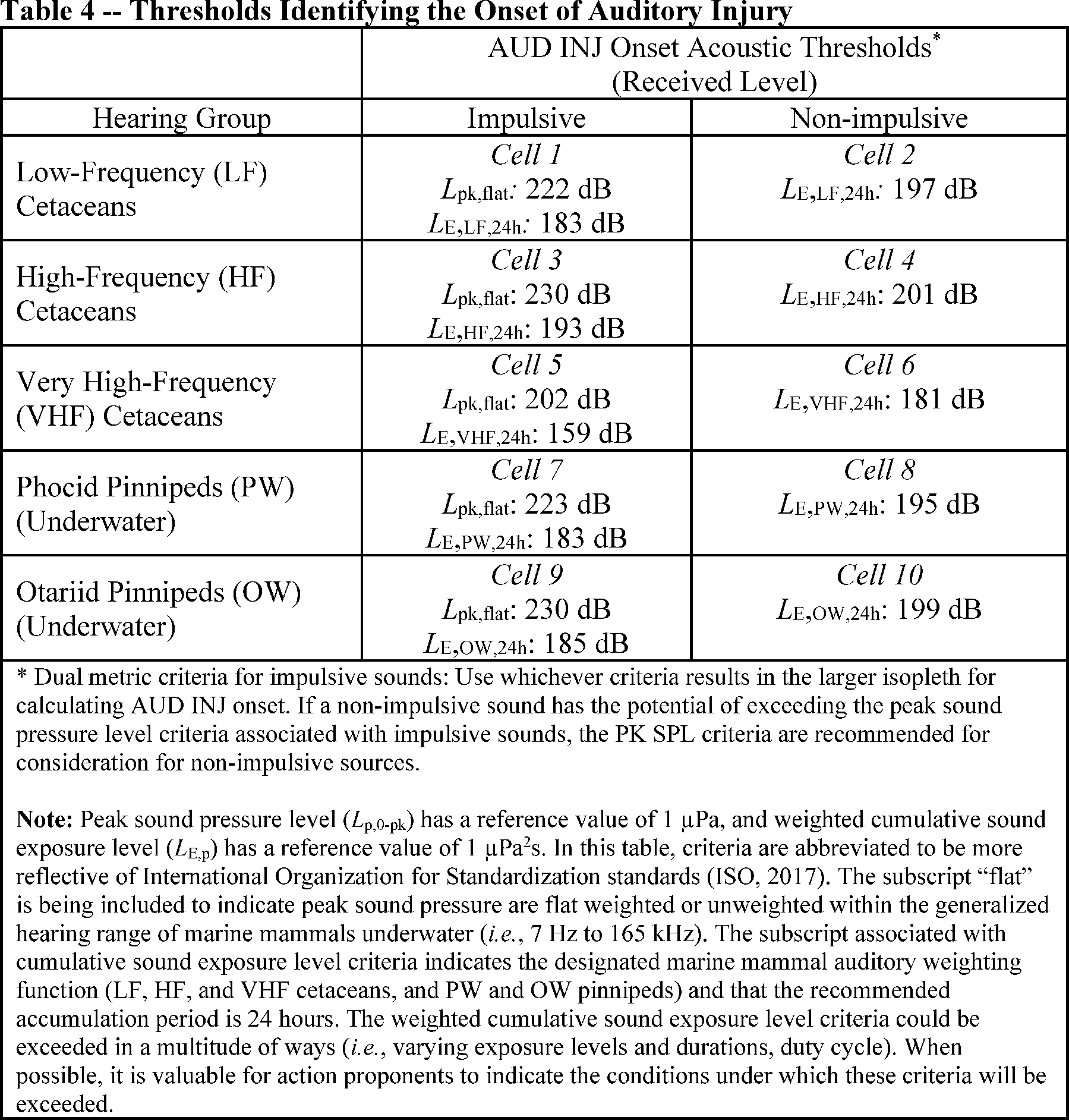
not result in a permanent threshold shift (PTS). PTS is subsequently defined as a permanent, irreversible increase in the threshold of audibility at a specified frequency or portion of an individual's hearing range above a previously established reference level (NMFS, 2024). PTS does not generally affect more than a limited frequency range, and an animal that has incurred PTS has some level of hearing loss at the relevant frequencies; typically, animals with PTS or other AUD INJ are not functionally deaf (Au and Hastings, 2008; Finneran, 2016). Available data from humans and other terrestrial mammals indicate that a 40-dB threshold shift approximates AUD INJ onset (see Ward
et al.,
1958, 1959; Ward, 1960; Kryter
et al.,
1966; Miller, 1974; Ahroon
et al.,
1996; Henderson
et al.,
2008). AUD INJ levels for marine mammals are estimates, as with the exception of a single study unintentionally inducing PTS in a harbor seal (
Phoca vitulina) (Kastak
et al.,
2008), there are no empirical data measuring AUD INJ in marine mammals largely due to the fact that, for various ethical reasons, experiments involving anthropogenic noise exposure at levels inducing AUD INJ are not typically pursued or authorized (NMFS, 2024).
Temporary Threshold Shift (TTS)
—TTS is a temporary, reversible increase in the threshold of audibility at a specified frequency or portion of an individual's hearing range above a previously established reference level (NMFS, 2024), and is not considered an AUD INJ. Based on data from marine mammal TTS measurements (see Southall
et al.,
2007, 2019), a TTS of 6 dB is considered the minimum threshold shift clearly larger than any day-to-day or session-to-session variation in a subject's normal hearing ability (Finneran
et al.,
2000, 2002; Schlundt
et al.,
2000). As described in Finneran (2015), marine mammal studies have shown the amount of TTS increases with the 24-hour cumulative sound exposure level (SEL24) in an accelerating fashion: at low exposures with lower SEL24, the amount of TTS is typically small and the growth curves have shallow slopes. At exposures with higher SEL24, the growth curves become steeper and approach linear relationships with the sound exposure level (SEL).
Depending on the degree (elevation of threshold in dB), duration (
i.e.,
recovery time), and frequency range of TTS, and the context in which it is experienced, TTS can have effects on marine mammals ranging from discountable to more impactful (similar to those discussed in auditory masking, below). For example, a marine mammal may be able to readily compensate for a brief, relatively small amount of TTS in a non-critical frequency range that takes place during a time when the animal is traveling through the open ocean, where ambient noise is lower and there are not as many competing sounds present. Alternatively, a larger amount and longer duration of TTS sustained during time when communication is critical for successful mother/calf interactions could have more severe impacts. We note that reduced hearing sensitivity as a simple function of aging has been observed in marine mammals, as well as humans and other taxa (Southall
et al.,
2007), so we can infer that strategies exist for coping with this condition to some degree, though likely not without cost.
Many studies have examined noise-induced hearing loss in marine mammals (see Finneran (2015) and Southall
et al.
(2019) for summaries). TTS is the mildest form of hearing impairment that can occur during exposure to sound (Kryter, 2013). While experiencing TTS, the hearing threshold rises, and a sound must be at a higher level in order to be heard. In terrestrial and marine mammals, TTS can last from minutes or hours to days (in cases of strong TTS) (Finneran, 2015). In many cases, hearing sensitivity recovers rapidly after exposure to the sound ends. For cetaceans, published data on the onset of TTS are limited to captive bottlenose dolphin (
Tursiops truncatus), beluga whale (
Delphinapterus leucas), harbor porpoise (
Phocoena phocoena), and Yangtze finless porpoise (
Neophocoena asiaeorientalis) (Southall
et al.,
2019). For pinnipeds in water, measurements of TTS are limited to harbor seals, northern elephant seals, bearded seals (
Erignathus barbatus) and California sea lions (Kastak
et al.,
1999, 2007; Kastelein
et al.,
2019b, 2019c, 2021, 2022a, 2022b; Reichmuth
et al.,
2019; Sills
et al.,
2020). TTS was not observed in spotted (
Phoca largha) and ringed (
Pusa hispida) seals exposed to single airgun impulse sounds at levels matching previous predictions of TTS onset (Reichmuth
et al.,
2016). These studies examine hearing thresholds measured in marine mammals before and after exposure to intense or long-duration sound exposures. The difference between the pre-exposure and post-exposure thresholds can be used to determine the amount of threshold shift at various post-exposure times.
The amount and onset of TTS depends on the exposure frequency. Sounds below the region of best sensitivity for a species or hearing group are less hazardous than those near the region of best sensitivity (Finneran and Schlundt, 2013). At low frequencies, onset-TTS exposure levels are higher compared to those in the region of best sensitivity (
i.e.,
a low frequency noise would need to be louder to cause TTS onset when TTS exposure level is higher), as shown for harbor porpoises and harbor seals (Kastelein
et al.,
2019a, 2019c). Note that in general, harbor seals and harbor porpoises have a lower TTS onset than other measured pinniped or cetacean species (Finneran, 2015). In addition, TTS can accumulate across multiple exposures, but the resulting TTS will be less than the TTS from a single, continuous exposure with the same SEL (Mooney
et al.,
2009; Finneran
et al.,
2010; Kastelein
et al.,
2014, 2015). This means that TTS predictions based on the total SEL24
will overestimate the amount of TTS from intermittent exposures, such as sonars and impulsive sources. Nachtigall
et al.
(2018) describe measurements of hearing sensitivity of multiple odontocete species (bottlenose dolphin, harbor porpoise, beluga, and false killer whale (
Pseudorca crassidens)) when a relatively loud sound was preceded by a warning sound. These captive animals were shown to reduce hearing sensitivity when warned of an impending intense sound. Based on these experimental observations of captive animals, the authors suggest that wild animals may dampen their hearing during prolonged exposures or if conditioned to anticipate intense sounds. Another study showed that echolocating animals (including odontocetes) might have anatomical specializations that might allow for conditioned hearing reduction and filtering of low-frequency ambient noise, including increased stiffness and control of middle-ear structures and placement of inner-ear structures (Ketten
et al.,
2021). Data available on noise-induced hearing loss for mysticetes are currently lacking (NMFS, 2024). Additionally, the existing marine mammal TTS data come from a limited number of individuals within these species.
Relationships between TTS and AUD INJ thresholds have not been studied in marine mammals, and there are no measured PTS data for cetaceans, but such relationships are assumed to be similar to those in humans and other terrestrial mammals. AUD INJ typically occurs at exposure levels at least several dB above that inducing mild TTS (
e.g.,
a 40-dB threshold shift approximates AUD INJ onset (Kryter
et al.,
1966; Miller, 1974), while a 6-dB threshold shift approximates TTS onset (Southall
( printed page 53500)
et al.,
2007, 2019). Based on data from terrestrial mammals, a precautionary assumption is that the AUD INJ thresholds for impulsive sounds (such as impact pile driving pulses as received close to the source) are at least 6 dB higher than the TTS threshold on a peak-pressure basis and AUD INJ cumulative sound exposure level thresholds are 15 to 20 dB higher than TTS cumulative sound exposure level thresholds (Southall
et al.,
2007, 2019). Given the higher level of sound or longer exposure duration necessary to cause AUD INJ as compared with TTS, it is considerably less likely that AUD INJ could occur.
Behavioral Effects.
Exposure to noise also has the potential to behaviorally disturb marine mammals to a level that rises to the definition of harassment under the MMPA. Generally speaking, NMFS considers a behavioral disturbance that rises to the level of harassment under the MMPA a non-minor response—in other words, not every response qualifies as behavioral disturbance, and for responses that do, those of a higher level, or accrued across a longer duration, have the potential to affect foraging, reproduction, or survival. Behavioral disturbance may include a variety of effects, including subtle changes in behavior (
e.g.,
minor or brief avoidance of an area or changes in vocalizations), more conspicuous changes in similar behavioral activities, and more sustained and/or potentially severe reactions, such as displacement from or abandonment of high-quality habitat. Behavioral responses may include changing durations of surfacing and dives, changing direction and/or speed; reducing/increasing vocal activities; changing/cessation of certain behavioral activities (such as socializing or feeding); eliciting a visible startle response or aggressive behavior (such as tail/fin slapping or jaw clapping); and avoidance of areas where sound sources are located. In addition, pinnipeds may increase their haulout time, possibly to avoid in-water disturbance (Thorson and Reyff, 2006).
Behavioral responses to sound are highly variable and context-specific and any reactions depend on numerous intrinsic and extrinsic factors (
e.g.,
species, state of maturity, experience, current activity, reproductive state, auditory sensitivity, time of day), as well as the interplay between factors (
e.g.,
Richardson
et al.,
1995; Wartzok
et al.,
2004; Southall
et al.,
2007, 2019; Weilgart, 2007; Archer
et al.,
2010). Behavioral reactions can vary not only among individuals but also within an individual, depending on previous experience with a sound source, context, and numerous other factors (Ellison
et al.,
2012), and can vary depending on characteristics associated with the sound source (
e.g.,
whether it is moving or stationary, number of sources, distance from the source). In general, pinnipeds seem more tolerant of, or at least habituate more quickly to, potentially disturbing underwater sound than do cetaceans, and generally seem to be less responsive to exposure to industrial sound than most cetaceans. Please see Appendices B and C of Southall
et al.
(2007) and Gomez
et al.
(2016) for reviews of studies involving marine mammal behavioral responses to sound.
Habituation can occur when an animal's response to a stimulus wanes with repeated exposure, usually in the absence of unpleasant associated events (Wartzok
et al.,
2004). Animals are most likely to habituate to sounds that are predictable and unvarying. It is important to note that habituation is appropriately considered a “progressive reduction in response to stimuli that are perceived as neither aversive nor beneficial,” rather than a general moderation in response to human disturbance (Bejder
et al.,
2009). The opposite process is sensitization, when an unpleasant experience leads an animal to subsequently respond, at a lower level of exposure, often in the form of avoidance.
As noted above, behavioral state may affect the type of response. For example, animals that are resting may show greater behavioral change in response to disturbing sound levels than animals that are highly motivated to remain in an area for feeding (Richardson
et al.,
1995; Wartzok
et al.,
2004; National Research Council (NRC), 2005). Controlled experiments with captive marine mammals have shown pronounced behavioral reactions, including avoidance of loud sound sources (Ridgway
et al.,
1997; Finneran
et al.,
2003). Observed responses of wild marine mammals to loud pulsed sound sources (
e.g.,
seismic airguns) have been varied but often consist of avoidance behavior or other behavioral changes (Richardson
et al.,
1995; Morton and Symonds, 2002; Nowacek
et al.,
2007).
Available studies show wide variation in response to underwater sound; therefore, it is difficult to predict specifically how any given sound in a particular instance might affect marine mammals perceiving the signal (
e.g.,
Erbe
et al.,
2019). If a marine mammal does react briefly to an underwater sound by changing its behavior or moving a small distance, the impacts of the change are unlikely to be significant to the individual, let alone the stock or population. If a sound source displaces marine mammals from an important feeding or breeding area for a prolonged period, impacts on individuals and populations could be significant (
e.g.,
Lusseau and Bejder, 2007; Weilgart, 2007; NRC, 2005). However, there are broad categories of potential response, which we describe in greater detail here, that include alteration of dive behavior, alteration of foraging behavior, effects to breathing, interference with or alteration of vocalization, avoidance, and flight.
Avoidance and displacement.
Changes in dive behavior can vary widely and may consist of increased or decreased dive times and surface intervals as well as changes in the rates of ascent and descent during a dive (
e.g.,
Frankel and Clark, 2000; Costa
et al.,
2003; Ng and Leung, 2003; Nowacek
et al.,
2004; Goldbogen
et al.,
2013a, 2013b; Blair
et al.,
2016). Variations in dive behavior may reflect interruptions in biologically significant activities (
e.g.,
foraging) or they may be of little biological significance. The impact of an alteration to dive behavior resulting from an acoustic exposure depends on what the animal is doing at the time of the exposure and the type and magnitude of the response.
Disruption of feeding behavior can be difficult to correlate with anthropogenic sound exposure, so it is usually inferred by observed displacement from known foraging areas, the appearance of secondary indicators (
e.g.,
bubble nets or sediment plumes), or changes in dive behavior. Acoustic and movement bio-logging tools also have been used in some cases to infer responses to anthropogenic noise. For example, Blair
et al.
(2015) reported significant effects on humpback whale foraging behavior in Stellwagen Bank in response to ship noise including slower descent rates, and fewer side-rolling events per dive with increasing ship nose. In addition, Wisniewska
et al.
(2018) reported that tagged harbor porpoises demonstrated fewer prey capture attempts when encountering occasional high-noise levels resulting from vessel noise as well as more vigorous fluking, interrupted foraging, and cessation of echolocation signals observed in response to some high-noise vessel passes. As for other types of behavioral response, the frequency, duration, and temporal pattern of signal presentation, as well as differences in species sensitivity, are likely contributing factors to differences in response in any given circumstance (
e.g.,
Croll
et al.,
2001; Nowacek
et al.,
2004; Madsen
et al.,
2006; Yazvenko
et al.,
2007). A determination of whether foraging disruptions incur fitness consequences
( printed page 53501)
would require information on or estimates of the energetic requirements of the affected individuals and the relationship between prey availability, foraging effort and success, and the life history stage of the animal.
Respiration rates vary naturally with different behaviors and alterations to breathing rate as a function of acoustic exposure can be expected to co-occur with other behavioral reactions, such as a flight response or an alteration in diving. However, respiration rates in and of themselves may be representative of annoyance or an acute stress response. Various studies have shown that respiration rates may either be unaffected or could increase, depending on the species and signal characteristics, again highlighting the importance in understanding species differences in the tolerance of underwater noise when determining the potential for impacts resulting from anthropogenic sound exposure (
e.g.,
Kastelein
et al.,
2001; 2005; 2006; Gailey
et al.,
2007). For example, harbor porpoise respiration rates increased in response to pile driving sounds at and above a received broadband SPL of 136 dB (zero-peak SPL: 151 dB re 1 μPa; SEL of a single strike (SELss
): 127 dB re 1 μPa2
-s) (Kastelein
et al.,
2013).
Avoidance is the displacement of an individual from an area or migration path as a result of the presence of a sound or other stressors, and is one of the most obvious manifestations of disturbance in marine mammals (Richardson
et al.,
1995). For example, gray whales are known to change direction—deflecting from customary migratory paths—in order to avoid noise from seismic surveys (Malme
et al.,
1984). Harbor porpoises, Atlantic white-sided dolphins (
Lagenorhynchus actusus), and minke whales have demonstrated avoidance in response to vessels during line transect surveys (Palka and Hammond, 2001). In addition, beluga whales in the St. Lawrence Estuary in Canada have been reported to increase levels of avoidance with increased boat presence by way of increased dive durations and swim speeds, decreased surfacing intervals, and by bunching together into groups (Blane and Jaakson, 1994). Avoidance may be short-term, with animals returning to the area once the noise has ceased (
e.g.,
Bowles
et al.,
1994; Goold, 1996; Stone
et al.,
2000; Morton and Symonds, 2002; Gailey
et al.,
2007). Longer-term displacement is possible, however, which may lead to changes in abundance or distribution patterns of the affected species in the affected region if habituation to the presence of the sound does not occur (
e.g.,
Blackwell
et al.,
2004; Bejder
et al.,
2006; Teilmann
et al.,
2006).
A flight response is a dramatic change in normal movement to a directed and rapid movement away from the perceived location of a sound source. The flight response differs from other avoidance responses in the intensity of the response (
e.g.,
directed movement, rate of travel). Relatively little information on flight responses of marine mammals to anthropogenic signals exist, although observations of flight responses to the presence of predators have occurred (Connor and Heithaus, 1996; Bowers
et al.,
2018). The result of a flight response could range from brief, temporary exertion and displacement from the area where the signal provokes flight to, in extreme cases, marine mammal strandings (England
et al.,
2001). However, it should be noted that response to a perceived predator does not necessarily invoke flight (Ford and Reeves, 2008), and whether individuals are solitary or in groups may influence the response.
Behavioral disturbance can also impact marine mammals in more subtle ways. Increased vigilance may result in costs related to diversion of focus and attention (
i.e.,
when a response consists of increased vigilance, it may come at the cost of decreased attention to other critical behaviors such as foraging or resting). These effects have generally not been demonstrated for marine mammals, but studies involving fishes and terrestrial animals have shown that increased vigilance may substantially reduce feeding rates (
e.g.,
Beauchamp and Livoreil, 1997; Fritz
et al.,
2002; Purser and Radford, 2011). In addition, chronic disturbance can cause population declines through reduction of fitness (
e.g.,
decline in body condition) and subsequent reduction in reproductive success, survival, or both (
e.g.,
Harrington and Veitch, 1992; Daan
et al.,
1996; Bradshaw
et al.,
1998). However, Ridgway
et al.
(2006) reported that increased vigilance in bottlenose dolphins exposed to sound over a 5-day period did not cause any sleep deprivation or stress effects.
Many animals perform vital functions, such as feeding, resting, traveling, and socializing, on a diel cycle (24-hour cycle). Disruption of such functions resulting from reactions to stressors such as sound exposure are more likely to be significant if they last more than one diel cycle or recur on subsequent days (Southall
et al.,
2007). Consequently, a behavioral response lasting less than 1 day and not recurring on subsequent days is not considered particularly severe unless it could directly affect reproduction or survival (Southall
et al.,
2007). Note that there is a difference between multi-day substantive (
i.e.,
meaningful) behavioral reactions and multi-day anthropogenic activities. For example, just because an activity lasts for multiple days does not necessarily mean that individual animals are either exposed to activity-related stressors for multiple days or, further, exposed in a manner resulting in sustained multi-day substantive behavioral responses.
During the Navy's previous pile driving activities at NBK Bangor (Callaghan et al., 2024; Hamer 2021; DON 2022; DON 2021) and NBK Manchester (Sandoval and Johnson, 2022), harbor seals were most commonly observed traveling, swimming, or diving, though some behaviors recorded during pile driving activities indicated that harbor seals were aware of the construction, such as less foraging reported and looking at the construction site or startling. Likewise, California sea lions were observed traveling and swimming during pile driving activities, but occasionally were observed porpoising or breaching. Harbor porpoises were observed traveling, milling, and/or porpoising.
Physiological stress responses.
An animal's perception of a threat may be sufficient to trigger stress responses consisting of some combination of behavioral responses, autonomic nervous system responses, neuroendocrine responses, or immune responses (
e.g.,
Selye, 1950; Moberg, 2000). In many cases, an animal's first and sometimes most economical (in terms of energetic costs) response is behavioral avoidance of the potential stressor. Autonomic nervous system responses to stress typically involve changes in heart rate, blood pressure, and gastrointestinal activity. These responses have a relatively short duration and may or may not have a significant long-term effect on an animal's fitness.
Neuroendocrine stress responses often involve the hypothalamus-pituitary-adrenal system. Virtually all neuroendocrine functions that are affected by stress—including immune competence, reproduction, metabolism, and behavior—are regulated by pituitary hormones. Stress-induced changes in the secretion of pituitary hormones have been implicated in failed reproduction, altered metabolism, reduced immune competence, and behavioral disturbance (
e.g.,
Moberg, 1987; Blecha, 2000). Increases in the circulation of glucocorticoids are also equated with stress (Romano
et al.,
2004).
The primary distinction between stress (which is adaptive and does not
( printed page 53502)
normally place an animal at risk) and “distress” is the cost of the response. During a stress response, an animal uses glycogen stores that can be quickly replenished once the stress is alleviated. In such circumstances, the cost of the stress response would not pose serious fitness consequences. However, when an animal does not have sufficient energy reserves to satisfy the energetic costs of a stress response, energy resources must be diverted from other functions. This state of distress will last until the animal replenishes its energetic reserves sufficient to restore normal function.
Relationships between these physiological mechanisms, animal behavior, and the costs of stress responses are well-studied through controlled experiments and for both laboratory and free-ranging animals (
e.g.,
Holberton
et al.,
1996; Hood
et al.,
1998; Jessop
et al.,
2003; Krausman
et al.,
2004; Lankford
et al.,
2005; Ayres
et al.,
2012; Yang
et al.,
2022). Stress responses due to exposure to anthropogenic sounds or other stressors and their effects on marine mammals have also been reviewed (Fair and Becker, 2000; Romano
et al.,
2002b) and, more rarely, studied in wild populations (
e.g.,
Romano
et al.,
2002a). For example, Rolland
et al.
(2012) found that noise reduction from reduced ship traffic in the Bay of Fundy was associated with decreased stress in North Atlantic right whales. In addition, Lemos
et al.
(2022) observed a correlation between higher levels of fecal glucocorticoid metabolite concentrations (indicative of a stress response) and vessel traffic in gray whales. Yang
et al.
(2022) studied behavioral and physiological responses in captive bottlenose dolphins exposed to playbacks of “pile-driving-like” impulsive sounds, finding significant changes in cortisol and other physiological indicators but only minor behavioral changes. These and other studies lead to a reasonable expectation that some marine mammals will experience physiological stress responses upon exposure to acoustic stressors and that it is possible that some of these would be classified as “distress.” In addition, any animal experiencing TTS would likely also experience stress responses (NRC, 2005), however distress is an unlikely result of this project based on observations of marine mammals during previous, similar construction projects.
Vocalizations and Auditory Masking.
Since many marine mammals rely on sound to find prey, moderate social interactions, and facilitate mating (Tyack, 2008), noise from anthropogenic sound sources can interfere with these functions, but only if the noise spectrum overlaps with the hearing sensitivity of the receiving marine mammal (Southall
et al.,
2007; Clark
et al.,
2009; Hatch
et al.,
2012). Chronic exposure to excessive, though not high-intensity, noise could cause masking at particular frequencies for marine mammals that utilize sound for vital biological functions (Clark
et al.,
2009). Acoustic masking is when other noises such as from human sources interfere with an animal's ability to detect, recognize, or discriminate between acoustic signals of interest (
e.g.,
those used for intraspecific communication and social interactions, prey detection, predator avoidance, navigation) (Richardson
et al.,
1995; Erbe
et al.,
2016). Therefore, under certain circumstances, marine mammals whose acoustical sensors or environment are being severely masked could also be impaired from maximizing their performance fitness in survival and reproduction. The ability of a noise source to mask biologically important sounds depends on the characteristics of both the noise source and the signal of interest (
e.g.,
signal-to-noise ratio, temporal variability, direction), in relation to each other and to an animal's hearing abilities (
e.g.,
sensitivity, frequency range, critical ratios, frequency discrimination, directional discrimination, age or TTS hearing loss), and existing ambient noise and propagation conditions (Hotchkin and Parks, 2013).
Marine mammals vocalize for different purposes and across multiple modes, such as whistling, echolocation click production, calling, and singing. Changes in vocalization behavior in response to anthropogenic noise can occur for any of these modes and may result from a need to compete with an increase in background noise or may reflect increased vigilance or a startle response. For example, in the presence of potentially masking signals, humpback whales and killer whales have been observed to increase the length of their songs (Miller
et al.,
2000; Fristrup
et al.,
2003) or vocalizations (Foote
et al.,
2004), respectively, while North Atlantic right whales (
Eubalaena glacialis) have been observed to shift the frequency content of their calls upward while reducing the rate of calling in areas of increased anthropogenic noise (Parks
et al.,
2007). Fin whales (
Balaenoptera physalus) have also been documented lowering the bandwidth, peak frequency, and center frequency of their vocalizations under increased levels of background noise from large vessels (Castellote
et al.,
2012). Other alterations to communication signals have also been observed. For example, gray whales, in response to playback experiments exposing them to vessel noise, have been observed increasing their vocalization rate and producing louder signals at times of increased outboard engine noise (Dahlheim and Castellote, 2016). Alternatively, in some cases, animals may cease sound production during production of aversive signals (Bowles
et al.,
1994; Wisniewska
et al.,
2018).
Under certain circumstances, marine mammals experiencing significant masking could also be impaired from maximizing their performance fitness in survival and reproduction. Therefore, when the coincident (masking) sound is human-made, it may be considered harassment when disrupting or altering critical behaviors. It is important to distinguish TTS and PTS, which persist after the sound exposure, from masking, which occurs during the sound exposure. Because masking (without resulting in TS) is not associated with abnormal physiological function, it is not considered a physiological effect, but rather a potential behavioral effect (though not necessarily one that would be associated with harassment).
The frequency range of the potentially masking sound is important in determining any potential behavioral impacts. For example, low-frequency signals may have less effect on high-frequency echolocation sounds produced by odontocetes but are more likely to affect detection of mysticete communication calls and other potentially important natural sounds such as those produced by surf and some prey species. The masking of communication signals by anthropogenic noise may be considered as a reduction in the communication space of animals (
e.g.,
Clark
et al.,
2009) and may result in energetic or other costs as animals change their vocalization behavior (
e.g.,
Miller
et al.,
2000; Foote
et al.,
2004; Parks
et al.,
2007; Di Iorio and Clark, 2010; Holt
et al.,
2009). Masking can be reduced in situations where the signal and noise come from different directions (Richardson
et al.,
1995), through amplitude modulation of the signal, or through other compensatory behaviors, including modifications of the acoustic properties of the signal or the signaling behavior (Hotchkin and Parks, 2013). Masking can be tested directly in captive species (
e.g.,
Erbe, 2008), but in wild populations it must be either modeled or inferred from evidence of masking compensation. There are few studies addressing real-world masking sounds likely to be experienced by
( printed page 53503)
marine mammals in the wild (
e.g.,
Branstetter
et al.,
2013).
Masking occurs in the frequency band that the animals utilize, and is more likely to occur in the presence of broadband, relatively continuous noise sources such as vibratory pile driving. Energy distribution of vibratory pile driving sound spans a broad frequency spectrum, and is anticipated to be within the audible range of marine mammals present in the proposed action area. Since noises generated from the proposed construction activities are mostly concentrated at low frequencies (<2 kHz), these activities likely have less effect on mid-frequency echolocation sounds produced by odontocetes (toothed whales). However, lower frequency noises are more likely to affect detection of communication calls and other potentially important natural sounds such as surf and prey noise. Low-frequency noise may also affect communication signals when they occur near the frequency band for noise and thus reduce the communication space of animals (
e.g.,
Clark
et al.,
2009) and cause increased stress levels (
e.g.,
Holt
et al.,
2009). Unlike TS, masking, which can occur over large temporal and spatial scales, can potentially affect the species at population, community, or even ecosystem levels, in addition to individual levels. Masking affects both senders and receivers of the signals, and at higher levels for longer durations, could have long-term chronic effects on marine mammal species and populations. However, the noise generated by the Navy's proposed activities will only occur intermittently, across an estimated 227 days (and no more than 128 days at a single location) during the authorization period in a relatively small area focused around the proposed construction site. Thus, while the Navy's proposed activities may mask some acoustic signals that are relevant to the daily behavior of marine mammals, the short-term duration and limited areas affected make it very unlikely that the fitness of individual marine mammals would be impacted.
Airborne Acoustic Effects
Pinnipeds that occur near the project site could be exposed to airborne sounds associated with construction activities that have the potential to cause behavioral harassment, depending on their distance from these activities. Airborne noise would primarily be an issue for pinnipeds that are swimming or hauled out near the project site within the range of noise levels elevated above airborne acoustic harassment criteria. Cetaceans are not expected to be exposed to airborne sounds that would result in harassment as defined under the MMPA. Airborne noise would primarily be an issue for pinnipeds that are swimming or hauled out near the project site within the range of noise levels elevated above the acoustic criteria. We recognize that pinnipeds in the water could be exposed to airborne sound that may result in behavioral harassment when looking with their heads above water. Most likely, airborne sound would cause behavioral responses similar to those discussed above in relation to underwater sound. For instance, anthropogenic sound could cause hauled out pinnipeds to exhibit changes in their normal behavior, such as reduction in vocalizations, or cause them to temporarily abandon the area and move further from the source. However, these animals would likely previously have been `taken' because of exposure to underwater sound above the behavioral harassment thresholds, which are generally larger than those associated with airborne sound. Thus, the behavioral harassment of these animals is already accounted for in these estimates of potential take. Therefore, we do not believe that authorization of additional incidental take resulting from airborne sound for pinnipeds is warranted, and airborne sound is not discussed further.
Potential Effects on Marine Mammal Habitat
The Navy's proposed activities could have localized, temporary impacts on marine mammal habitat, including prey, by increasing in-water SPLs. Increased noise levels may affect acoustic habitat and adversely affect marine mammal prey in the vicinity of the project areas (see discussion below). Elevated levels of underwater noise would ensonify the project areas where both fishes and mammals occur and could affect foraging success. Additionally, marine mammals may avoid the area during the proposed construction activities; however, any displacement due to noise is expected to be temporary and is not expected to result in long-term effects to the individuals or populations.
The total area likely impacted by the Navy's activities is relatively small compared to the available habitat in Puget Sound. Avoidance by potential prey (
i.e.,
fish) of the immediate area due to increased noise is possible. The duration of fish and marine mammal avoidance of this area after [activity
e.g.,
tugging] stops is unknown, but a rapid return to normal recruitment, distribution, and behavior is anticipated. Any behavioral avoidance by fish or marine mammals of the disturbed area would still leave significantly large areas of fish and marine mammal foraging habitat in the nearby vicinity.
The proposed project would occur within the same footprint as existing marine infrastructure. The nearshore and intertidal habitat where the proposed project would occur is an area of relatively high marine vessel traffic. Most marine mammals do not generally use the area within the footprint of the project area. Temporary, intermittent, and short-term habitat alteration may result from increased noise levels during the proposed construction activities. Effects on marine mammal habitat would be limited to temporary pile installation and removal noise, and effects on prey species would be similarly limited in time and space.
Water quality.
Temporary and localized reduction in water quality would occur as a result of in-water construction activities. Most of this effect would occur during the installation and removal of piles when bottom sediments are disturbed. The installation and removal of piles would disturb bottom sediments and may cause a temporary increase in suspended sediment in the project area. During pile extraction, sediment attached to the pile moves vertically through the water column until gravitational forces cause it to slough off under its own weight. The small resulting sediment plume is expected to settle out of the water column within a few hours. Studies of the effects of turbid water on fish (marine mammal prey) suggest that concentrations of suspended sediment can reach thousands of milligrams per liter before an acute toxic reaction is expected (Burton, 1993).
Effects to turbidity and sedimentation are expected to be short-term, minor, and localized. Since the currents are so strong in the area, following the completion of sediment-disturbing activities, suspended sediments in the water column should dissipate and quickly return to background levels in all construction scenarios. Turbidity within the water column has the potential to reduce the level of oxygen in the water and irritate the gills of prey fish species in the proposed project area. However, turbidity plumes associated with the project would be temporary and localized, and fish in the proposed project area would be able to move away from and avoid the areas where plumes may occur. Therefore, it is expected that the impacts on prey fish species from turbidity, and therefore on marine mammals, would be minimal and temporary. In general, the area
( printed page 53504)
likely impacted by the proposed construction activities is relatively small compared to the available marine mammal habitat in Puget Sound.
Potential Effects on Prey.
Sound may affect marine mammals through impacts on the abundance, behavior, or distribution of prey species (
e.g.,
crustaceans, cephalopods, fishes, zooplankton). Marine mammal prey varies by species, season, and location and, for some, is not well documented. Studies regarding the effects of noise on known marine mammal prey are described here.
Fishes utilize the soundscape and components of sound in their environment to perform important functions such as foraging, predator avoidance, mating, and spawning (
e.g.,
Zelick
et al.,
1999; Fay, 2009). Depending on their hearing anatomy and peripheral sensory structures, which vary among species, fishes hear sounds using pressure and particle motion sensitivity capabilities and detect the motion of surrounding water (Fay
et al.,
2008). The potential effects of noise on fishes depends on the overlapping frequency range, distance from the sound source, water depth of exposure, and species-specific hearing sensitivity, anatomy, and physiology. Key impacts to fishes may include behavioral responses, hearing damage, barotrauma (pressure-related injuries), and mortality.
Fish react to sounds that are especially strong and/or intermittent low-frequency sounds, and behavioral responses such as flight or avoidance are the most likely effects. Short duration, sharp sounds can cause overt or subtle changes in fish behavior and local distribution. The reaction of fish to noise depends on the physiological state of the fish, past exposures, motivation (
e.g.,
feeding, spawning, migration), and other environmental factors. Hastings and Popper (2005) identified several studies that suggest fish may relocate to avoid certain areas of sound energy. Additional studies have documented effects of pile driving on fishes (
e.g.,
Scholik and Yan, 2001, 2002; Popper and Hastings, 2009). Several studies have demonstrated that impulse sounds might affect the distribution and behavior of some fishes, potentially impacting foraging opportunities or increasing energetic costs (
e.g.,
Fewtrell and McCauley, 2012; Pearson
et al.,
1992; Skalski
et al.,
1992; Santulli
et al.,
1999; Paxton
et al.,
2017). However, some studies have shown no or slight reaction to impulse sounds (
e.g.,
Peña
et al.,
2013; Wardle
et al.,
2001; Jorgenson and Gyselman, 2009; Cott
et al.,
2012). More commonly, though, the impacts of noise on fishes are temporary.
SPLs of sufficient strength have been known to cause injury to fishes and fish mortality (summarized in Popper
et al.,
2014). However, in most fish species, hair cells in the ear continuously regenerate and loss of auditory function likely is restored when damaged cells are replaced with new cells. Halvorsen
et al.
(2012b) showed that a TTS of 4 to 6 dB was recoverable within 24 hours for one species. Impacts would be most severe when the individual fish is close to the source and when the duration of exposure is long. Injury caused by barotrauma can range from slight to severe and can cause death, and is most likely for fish with swim bladders. Barotrauma injuries have been documented during controlled exposure to impact pile driving (Halvorsen
et al.,
2012a; Casper
et al.,
2013, 2017).
Fish populations in the proposed project area that serve as marine mammal prey could be temporarily affected by noise from pile installation and removal. The frequency range in which fishes generally perceive underwater sounds is 50 to 2,000 Hz, with peak sensitivities below 800 Hz (Popper and Hastings, 2009). Fish behavior or distribution may change, especially with strong and/or intermittent sounds that could harm fishes. High underwater SPLs have been documented to alter behavior, cause hearing loss, and injure or kill individual fish by causing serious internal injury (Hastings and Popper, 2005).
Zooplankton is a food source for several marine mammal species, as well as a food source for fish that are then preyed upon by marine mammals. Population effects on zooplankton could have indirect effects on marine mammals. Data are limited on the effects of underwater sound on zooplankton species, particularly sound from construction (Erbe
et al.,
2019). Popper and Hastings (2009) reviewed information on the effects of human-generated sound and concluded that no substantive data are available on whether the sound levels from pile driving, seismic activity, or any human-made sound would have physiological effects on invertebrates. Any such effects would be limited to the area very near (1 to 5 m) the sound source and would result in no population effects because of the relatively small area affected at any one time and the reproductive strategy of most zooplankton species (short generation, high fecundity, and very high natural mortality). No adverse impact on zooplankton populations is expected to occur from the specified activity due, in part, to large reproductive capacities and naturally high levels of predation and mortality of these populations. Any mortalities or impacts that might occur would be negligible.
The greatest potential impact to marine mammal prey during construction would occur during impact pile driving. However, the duration of impact pile driving would mostly be limited to the final stage of installation (“proofing”) after the pile has been driven as close as practicable to the design depth with a vibratory driver. In-water construction activities would only occur during daylight hours, allowing fish to forage and transit the project area in the evening. Impact pile driving and vibratory pile driving and removal would possibly elicit behavioral reactions from fishes such as temporary avoidance of the area but is unlikely to cause injuries to fishes or have persistent effects on local fish populations. Additionally, the proposed construction activity would avoid the spawning season of ESA-listed salmon species. Construction also would have minimal permanent and temporary impacts on benthic invertebrate species, a marine mammal prey source. In addition, it should be noted that the area in question is lower-quality habitat since it is already highly developed and experiences a high level of anthropogenic noise from normal operations and other vessel traffic.
Potential Effects on Foraging Habitat
The Navy's MPR program is not expected to result in any habitat-related effects that could cause significant or long-term negative consequences for individual marine mammals or their populations, since installation and removal of in-water piles would be temporary and intermittent. The total seafloor area affected by pile installation and removal is a very small area compared to the vast foraging area available to marine mammals outside this project area. Although Puget Sound in its entirety is listed as a BIA and critical habitat for SRKWs (71 FR 69054; November 29, 2006; Calambokidis
et al.,
2024), the Navy facilities are excluded from designated critical habitat by national security exemption. However, none of the area near the proposed project area, including the excluded areas, contains high-value habitat; habitat for prey species is generally degraded in the vicinity of these industrial environments relative to other areas containing the essential features that may be less impacted. Additionally, although the area surrounding the NS Everett installation is designated as a
( printed page 53505)
BIA for foraging gray whales (Calambokidis
et al.,
2024), there is minimal temporal overlap with the project period and the time when the BIA is active (a couple weeks in February). At best, the areas impacted provide marginal foraging habitat for marine mammals and fishes. Furthermore, pile driving at the project locations would not obstruct movements or migration of marine mammals. The area impacted by the project is relatively small compared to the available habitat just outside the project area, and there are no areas of particular importance that would be impacted by this project. Any behavioral avoidance by fish of the disturbed area would still leave significantly large areas of fish and marine mammal foraging habitat in the nearby vicinity. As described in the preceding, the potential for the Navy's construction to affect the availability of prey to marine mammals or to meaningfully impact the quality of physical or acoustic habitat is considered to be insignificant. Therefore, impacts of the project are not likely to have adverse effects on marine mammal foraging habitat in the proposed project area.
In summary, given the relatively small areas being affected, as well as the temporary and mostly transitory nature of the proposed construction activities, any adverse effects from the Navy's activities on prey habitat or prey populations are expected to be minor and temporary. The most likely impact to fishes at the project site would be temporary avoidance of the area. Any behavioral avoidance by fish of the disturbed area would still leave significantly large areas of fish and marine mammal foraging habitat in the nearby vicinity. Thus, we preliminarily conclude that impacts of the specified activities are not likely to have more than short-term adverse effects on any prey habitat or populations of prey species. Further, any impacts to marine mammal habitat are not expected to result in significant or long-term consequences for individual marine mammals, or to contribute to adverse impacts on their populations.
Estimated Take of Marine Mammals
This section provides an estimate of the number of incidental takes proposed for authorization through the IHA, which will inform NMFS' consideration of “small numbers,” the negligible impact determinations, and impacts on subsistence uses.
Harassment is the only type of take expected to result from these activities. Except with respect to certain activities not pertinent here, section 3(18) of the MMPA defines “harassment” as any act of pursuit, torment, or annoyance, which (i) has the potential to injure a marine mammal or marine mammal stock in the wild (Level A harassment); or (ii) has the potential to disturb a marine mammal or marine mammal stock in the wild by causing disruption of behavioral patterns, including, but not limited to, migration, breathing, nursing, breeding, feeding, or sheltering (Level B harassment).
Authorized takes would primarily be by Level B harassment, as use of the acoustic sources (
i.e.,
vibratory pile driving and removal, impact pile driving) has the potential to result in disruption of behavioral patterns for individual marine mammals. There is also some potential for auditory injury (AUD INJ) (Level A harassment) to result, primarily for very high frequency species, phocids, and otariids, because predicted AUD INJ zones are larger in comparison to the observability for some species. AUD INJ is unlikely to occur for mysticetes and high-frequency species. The proposed mitigation and monitoring measures are expected to minimize the severity of the taking to the extent practicable.
As described previously, no serious injury or mortality is anticipated or proposed to be authorized for this activity. Below we describe how the proposed take numbers are estimated.
For acoustic impacts, generally speaking, we estimate take by considering: (1) acoustic criteria above which NMFS believes there is some reasonable potential for marine mammals to be behaviorally harassed or incur some degree of AUD INJ; (2) the area or volume of water that will be ensonified above these levels in a day; (3) the density or occurrence of marine mammals within these ensonified areas; and, (4) the number of days of activities. We note that while these factors can contribute to a basic calculation to provide an initial prediction of potential takes, additional information that can qualitatively inform take estimates is also sometimes available (
e.g.,
previous monitoring results or average group size). Below, we describe the factors considered here in more detail and present the proposed take estimates.
Acoustic Criteria
NMFS recommends the use of acoustic criteria that identify the received level of underwater sound above which exposed marine mammals would be reasonably expected to be behaviorally harassed (equated to Level B harassment) or to incur AUD INJ of some degree (equated to Level A harassment).
Level B Harassment
—Though significantly driven by received level, the onset of behavioral disturbance from anthropogenic noise exposure is also informed to varying degrees by other factors related to the source or exposure context (
e.g.,
frequency, predictability, duty cycle, duration of the exposure, signal-to-noise ratio, distance to the source), the environment (
e.g.,
bathymetry, other noises in the area, predators in the area), and the receiving animals (hearing, motivation, experience, demography, life stage, depth) and can be difficult to predict (
e.g.,
Southall
et al.,
2007; Southall
et al.,
2021; Ellison
et al.,
2012). Based on what the available science indicates and the practical need to use a threshold based on a metric that is both predictable and measurable for most activities, NMFS typically uses a generalized acoustic threshold based on received level to estimate the onset of behavioral harassment. NMFS generally predicts that marine mammals are likely to be behaviorally harassed in a manner considered to be Level B harassment when exposed to underwater anthropogenic noise above root-mean-squared sound pressure levels (RMS SPL) of 120 dB (referenced to 1 micropascal (re 1 μPa)) for continuous (
e.g.,
vibratory pile driving, drilling) and above RMS SPL 160 dB re 1 μPa for non-explosive impulsive (
e.g.,
seismic airguns) or intermittent (
e.g.,
scientific sonar) sources. Generally speaking, estimates of take by Level B harassment based on these behavioral harassment thresholds are expected to include any likely takes by TTS as, in most cases, the likelihood of TTS occurs at distances from the source less than those at which behavioral harassment is likely. TTS of a sufficient degree can manifest as behavioral harassment, as reduced hearing sensitivity and the potential reduced opportunities to detect important signals (conspecific communication, predators, prey) may result in changes in behavior patterns that would not otherwise occur.
The Navy's proposed 2026 MPR project includes the use of continuous (vibratory pile driving and removal) and impulsive (impact pile driving) sources, and therefore the RMS SPL thresholds of 120 and 160 dB re 1 μPa are applicable.
Level A harassment
—NMFS' Updated Technical Guidance for Assessing the Effects of Anthropogenic Sound on Marine Mammal Hearing (Version 3.0) (Updated Technical Guidance, 2024) identifies dual criteria to assess AUD INJ (Level A harassment) to five
( printed page 53506)
different underwater marine mammal groups (based on hearing sensitivity) as a result of exposure to noise from two different types of sources (impulsive or non-impulsive). The Navy's proposed 2026 MPR project includes the use of impulsive (impact pile driving) and non-impulsive (vibratory pile driving and removal) sources.
Here, we describe operational and environmental parameters of the activity that are used in estimating the area ensonified above the acoustic thresholds, including source levels and transmission loss coefficient.
The sound field in the project area is the existing background noise plus additional construction noise from the proposed project. Marine mammals are expected to be affected via sound generated by the primary components of the project (
i.e.,
vibratory pile driving and removal, and impact pile driving).
Source levels for these activities are based on reviews of measurements of the same or similar pile types and dimensions of piles available in literature. Source levels used for each pile size and activity are presented in table 5. Source levels for vibratory installation and removal of piles of the same diameter are assumed to be the same.
The Navy proposed to use bubble curtains when impact driving steel piles. For the reasons described in the next paragraph, we assume here that use of the bubble curtain would result in a reduction of 8 dB from the assumed SPL (rms), SPL (peak) and SEL source levels
( printed page 53507)
for these pile sizes, and reduce the applied source levels accordingly.
During the 2023 study at NBK Bremerton, the Navy conducted comparative measurements of source levels when impact driving steel piles with and without a bubble curtain. Underwater sound levels were measured at two locations during the installation of one 24-in diameter steel pile and four 36-in steel piles. The bubble curtain used during the measurements reduced median peak sound levels by between 8 and 12 dB, median RMS sound levels by 10 and 12 dB, and median single strike SEL sound levels by 7 and 8 dB. The analysis included in a proposed rule for regulations (83 FR 9366, March 5, 2018) preceding two consecutive IHAs (89 FR 47593, June 3, 2026) that preceded this project as well as results from the NBK Bangor Trident Support Facilities Explosive Handling Wharf study (Crowser, 2013), are consistent with these findings. While proper set-up and operation of the system is critical, and variability in performance should be expected, we believe that in the circumstances evaluated here an effective attenuation performance of 8 dB is a reasonable assumption.
TL
is the decrease in acoustic intensity as an acoustic pressure wave propagates out from a source.
TL
parameters vary with frequency, temperature, sea conditions, current, source and receiver depth, water depth, water chemistry, and bottom composition and topography. The general formula for underwater
TL
is:
TL
=
B
× Log10 (
R1
/
R2)
Where:
TL
= transmission loss in dB
B
= transmission loss coefficient
R1
= the distance of the modeled SPL from the driven pile, and
R2
= the distance from the driven pile of the initial measurement
Absent site-specific acoustical monitoring with differing measured
TL,
a practical spreading value of 15 is used as the
TL
coefficient in the above formula. Site-specific
TL
data for the Puget Sound and Hood Canal are not available; therefore, the default coefficient of 15 is used to determine the distances to the Level A harassment and Level B harassment thresholds.
The ensonified area associated with Level A harassment is more technically challenging to predict due to the need to account for a duration component. Therefore, NMFS developed an optional User Spreadsheet tool to accompany the 2024 Updated Technical Guidance that can be used to relatively simply predict an isopleth distance for use in conjunction with marine mammal density or occurrence to help predict potential takes. We note that because of some of the assumptions included in the methods underlying this optional tool, we anticipate that the resulting isopleth estimates are typically going to be overestimates of some degree, which may result in an overestimate of potential take by Level A harassment. However, this optional tool offers a practical, alternative way to estimate isopleth distances when more sophisticated modeling methods are not available or practical. For stationary sources such as pile driving, the optional User Spreadsheet tool predicts the distance at which, if a marine mammal remained at that distance for the duration of the activity, it would be expected to incur AUD INJ. Inputs used in the optional User Spreadsheet tool (table 6), and the resulting estimated isopleths (table 7), are reported below.
( printed page 53508)
( printed page 53509)
Marine Mammal Occurrence
In this section we provide information about the occurrence of marine mammals, including density or other relevant information which will inform the take calculations.
Available information regarding marine mammal occurrence in the vicinity of the project area includes site-specific and nearby survey information from the Navy and WSDOT. Specifically, data sources consulted included (1) the Navy's “Summary of Weekly Marine Mammal Surveys at Navy Northwest Region Installations: 2008-2025”, and (2) PSO monitoring completed across (a) 156 monitoring days associated with four projects completed by the Navy at Bangor; (b) 11 monitoring days associated with one project completed by the Navy at Manchester, and (c) 169 monitoring days between 2015 and 2021, between the months of August and February, associated with the multi-year WSDOT Multimodal Construction Project completed by WSDOT, which was located near NS Everett. Species-specific data summaries of the above are included in the Description of Marine Mammals in the Area of Specified Activities section.
For large whales (humpback whales, minke whales, and gray whales), killer whales (transient and resident), Dall's porpoise, and elephant seals, NMFS considered the data sources identified above, as well as (1) data collected by The Whale Museum between August 2022 and July 2024 from Blake Island (approximately 3 km from NBK Manchester) provided by the Navy and, (2) The Orca Network archived sightings.
Take Estimation
Here we describe how the information provided above is synthesized to produce a quantitative estimate of the take that is reasonably likely to occur and proposed for authorization.
Exposure Estimates
For species with rare or infrequent occurrence at a given installation during the in-water work window, the likelihood of occurrence was reviewed on the basis of past records of occurrence (described in Description of Marine Mammals in the Area of Specified Activities) and the potential maximum duration of work days at each installation, as well as total work days for all installations. In most cases, the occurrence of the species in this category (
i.e.,
large whales, killer whales, Dall's porpoise, and elephant seals (all installations)), would not be anticipated to extend for multiple days.
( printed page 53510)
Except for gray whales, where increased strandings reports suggest individuals may occur in an area for a longer period of time, the probable duration of all rare, unpredictably occurring species is assumed to be 2 days, roughly equivalent to one transit in and out of a project site (across all installations). The equation used to estimate take for species with rare or infrequent occurrence is:
Exposure estimate = Probable abundance during construction × probable duration
Where:
Probable abundance = expected group size or number based on data sources referenced above
Probable duration = probable duration of the animal(s) presence at construction sites during the entire in-water pile driving period.
For the remaining species, the Navy utilized density estimates or site-specific survey data to estimate the likelihood of occurrence. Specifically, the Navy proposed to use density estimates of harbor porpoise from the Navy's Marine Mammal Species Density Database (Navy, 2019) to estimate the likelihood of occurrence. However, NMFS finds it more appropriate to use local monitoring data to estimate the likelihood of occurrence for harbor porpoise. As such, for harbor porpoise and the other remaining species (California sea lion, Steller sea lion, and harbor seal), the Navy and NMFS predicted a daily occurrence, and estimated take by multiplying the estimated daily occurrence for each species by the number of in-water construction days, generally using the following equation;
Take by Level B harassment = marine mammal occurrence × days of pile driving activities.
Although certain species are not expected to occur at all at some facilities—for example, resident killer whales are not expected to occur in Hood Canal—an overall take estimate for these species has been developed across the entire project.
The Navy proposes to implement a shutdown of pile driving activity if any large whale or killer whale is observed within or approaching any defined harassment zone (see Proposed Mitigation section). Additionally, the Navy plans at least daily coordination with the Orca Network to maintain situational awareness of large whales in the vicinity of the project sites and shut down should they be reported or observed by PSOs near the project site. As a result of this proposed mitigation, we do not believe that Level A harassment is a likely outcome upon occurrence of any large whale or killer whale. Likewise, the Navy has not requested take by Level A harassment of large whales or killer whales, nor has NMFS proposed for authorization take by Level A harassment of these species.
In most cases where proposed shutdown zones are greater than or equal to the calculated Level A harassment zones, take by Level A harassment is not proposed for authorization. However, there are scenarios for some pinniped species and installations (
i.e.,
California sea lions at NBK Bangor and NS Everett and harbor seals at NS Everett) where take by Level A harassment is proposed to be authorized to account for the possibility that individuals could enter the shutdown zone and stay long enough to incur AUD INJ before PSOs are able to detect them and enact a shutdown.
Additionally, in cases where the Level A harassment zones are larger than the proposed shutdown zones (
i.e.,
impact proofing of 30-inch steel for VHF and harbor seals at NBK Bangor), take by Level A harassment is proposed for authorization. The same general equation is used for take by Level A harassment that is used for take by Level B harassment: marine mammal occurrence multiplied by days of pile driving activities. In cases where the predicted Level A harassment zones exceed the shutdown zones for species that are occasionally or rarely expected to occur in the project area (
e.g.,
Dall's porpoise), it is assumed that takes could be by either Level A or Level B harassment.
We acknowledge that the number of estimated exposures above higher threshold criteria (
e.g.,
sound exposures exceeding Level A harassment criteria) also encompass the potential for less impactful effects (
e.g.,
Level B harassment). An individual within the estimated Level A harassment isopleth may not incur auditory injury due to limited exposure duration; however, the individual may have experienced Level B harassment. This outcome is accounted for in our authorization of potential higher-level takes and in our analysis. Specifically, due to this approach for calculating Level A harassment and Level B harassment for Dall's porpoise, the number of takes by Level A harassment proposed for authorization may be applied to observations of Level B harassment. However, the total number of takes may not exceed the sum of the takes proposed by Level A and Level B harassment (table 8).
The Navy plans to shut down in-water pile driving upon observation of any large whale or killer whale approaching or within any estimated harassment zone. While the Navy plans to coordinate with the Orca Network to maintain situational awareness of the presence of large whales or killer whales near all three project areas, the Level B harassment zone is larger than is practicably observable by PSOs during most activities. As such, some take by Level B harassment is proposed for authorization for these species.
Humpback Whale
The Navy requests and NMFS concurs that one group of two humpback whales may occur in the Level B harassment zone during active pile driving on a total of 2 days over the course of the construction season. Therefore, NMFS proposes to authorize four takes by Level B harassment of humpback whales.
No takes by Level A harassment of humpback whales are anticipated and none are proposed for authorization.
Gray Whale
The Navy initially assumed that one group of two gray whales may occur in the Level B harassment zone during active pile driving on a total of 2 days over the course of the construction season. However, given the recent reports of stranded gray whales in Puget Sound, the Navy requests and NMFS concurs that up to eight gray whales may be taken by Level B harassment during the project period. Therefore, NMFS proposes to authorize eight takes by Level B harassment of gray whales.
No takes by Level A harassment of gray whales are anticipated and none are proposed for authorization.
Minke Whale
The Navy requests and NMFS concurs that one group of two minke whales may occur in a Level B harassment zone during active pile driving on a total of 2 days over the course of the construction season for a total of four takes by Level B harassment. Therefore, NMFS proposes to authorize four takes by Level B harassment of minke whales.
No takes by Level A harassment of minke whales are anticipated and none are proposed for authorization.
Transient Killer Whale
The Navy requests and NMFS concurs that one group of six transient killer whales may occur in a Level B harassment zone during active pile driving on a total of two days over the course of the constructions season for a total of 12 takes by Level B harassment. Therefore, NMFS proposes to authorize
( printed page 53511)
12 takes by Level B harassment of transient killer whales.
No takes by Level A harassment of transient killer whales are anticipated and none are proposed for authorization.
Southern Resident Killer Whale
The Navy requests and NMFS concurs that 1 group of 10 SRKW may occur in the Level B harassment zone during active pile driving on a total of 2 days over the course of the construction season for a total of 20 takes by Level B harassment. Therefore, NMFS proposes to authorize 20 takes by Level B harassment of SRKWs.
No takes by Level A harassment of SRKW are anticipated and none are proposed for authorization.
Dall's Porpoise
The Navy requests and NMFS concurs that one group of two Dall's porpoise could occur within the project area during active pile driving on a total of 2 days over the course of the construction season for a total of four. Because exposure estimates are low and the Level A harassment zones are larger than are likely observable during impact pile driving, NMFS proposes to authorize these four takes as Level A harassment, acknowledging that instead the takes could be by the less severe Level B harassment.
Harbor Porpoise
NBK Bangor—The Navy requests and NMFS concurs that 12 harbor porpoises could occur within the Level B harassment zone each construction day. This results in 264 takes by Level B harassment of harbor porpoises across the 22 construction days at this project site.
The calculated Level A harassment zone expected to occur during the 6 days of impact proofing of 30-in steel piles at EHW-1 is 1,135 m, and the Navy plans to maintain a shutdown zone of 350 m (table 9). NMFS estimates that 12 harbor porpoises per day could occur within the calculated Level A harassment zone and remain for a sufficient period to accumulate enough energy to result in AUD INJ. As such, we propose to authorize 72 takes by Level A harassment of harbor porpoises at this project site.
NMFS modified the calculated takes by Level B harassment to deduct the estimated amount of take by Level A harassment (
i.e.,
264 takes by Level B harassment − 72 takes by Level A harassment = 192 takes by Level B harassment). Therefore, for harbor porpoises, NMFS proposes to authorize 192 takes by Level B harassment and 72 takes by Level A harassment for a total of 264 takes across the 22 days of construction planned at this site.
NS Everett—The Navy requests and NMFS concurs that two harbor porpoises could occur within the Level B harassment zone each construction day. This results in 154 takes by Level B harassment of harbor porpoises across the 77 construction days at this project site.
No takes by Level A harassment of harbor porpoises are anticipated at this project site and none are proposed for authorization.
NBK Manchester—that the Navy requests and NMFS concurs that two harbor porpoises could occur within the Level B harassment zone each construction day. This results in 256 takes by Level B harassment of harbor porpoises across 128 construction days at this project site.
No takes by Level A harassment of harbor porpoises are anticipated at this project site and none are proposed for authorization.
Across all installations, NMFS proposes to authorize 602 takes by Level B harassment of and 72 takes by Level A harassment of harbor porpoises for a total of 674 takes.
Phocids and Otariids
California Sea lion
NBK Bangor—The Navy requests and NMFS concurs that 35 California sea lions could occur within the Level B harassment zone each construction day. This results in 770 takes by Level B harassment of California sea lions across the 22 construction days at this project site.
The Navy plans to shut down at distances slightly larger than the Level A harassment zones associated with this project site (see table 9). However, given the proximity of hauled out California sea lions to the project site, and the fact that on 6 construction days the calculated Level A harassment zone is 243 m (during impact proofing of 30-inch steel at EHW-1), NMFS predicts that it is possible that up to two California sea lions could go unobserved and remain within the calculated Level A harassment zone for a sufficient period to accumulate enough energy to result in AUD INJ. This results in two takes by Level A harassment of California sea lions at this project site.
Takes by Level B harassment were modified to deduct the proposed amount of take by Level A harassment estimated (
i.e.,
770 takes by Level B harassment − 2 takes by Level A harassment = 768 takes by Level B harassment). This results in 768 takes by Level B harassment and 2 takes by Level A harassment for a total of 770 takes across the 22 days of construction planned at this site.
NS Everett—The Navy requests and NMFS concurs that 35 California sea lions could occur within the Level B harassment zone each construction day. This results in 2,695 takes by Level B harassment across the 77 construction days at this project site.
The Navy plans to shut down at distances slightly larger than the Level A harassment zones associated with this project site (see table 9). However, given the proximity of hauled out California sea lions to the project site (the PSB at this location directly connects to the southwest end of Pier B and runs about 60 m along the southern end of both Piers A and B, and approximately 160 m along the southeastern extent of Pier A), and the fact that on 5 construction days the calculated Level A harassment zone is 38 m (during impact proofing of 18-inch steel fender piles at Piers A, B, and South Wharf), NMFS predicts that it is possible that up to one California sea lion per day could go unobserved and remain within the calculated Level A harassment zone for a sufficient period to accumulate enough energy to result in AUD INJ. This results in five takes by Level A harassment of California sea lions at this project site.
Takes by Level B harassment were modified to deduct the proposed amount of take by Level A harassment estimated (
i.e.,
2,695 takes by Level B harassment − 5 takes by Level A harassment = 2,690 takes by Level B harassment). This results in 2,690 takes by Level B harassment and 5 takes by Level A harassment for a total of 2,695 takes across the 77 days of construction planned at this site.
NBK Manchester—The Navy requests and NMFS concurs that six California sea lions could occur within the Level B harassment zone each construction day. This results in 768 takes by Level B harassment of California sea lions across 128 construction days at this project site.
No takes by Level A harassment of California sea lions are anticipated at this project site and none are proposed for authorization.
Across all installations, we propose to authorize 4,226 takes by Level B harassment and 7 takes by Level A harassment of California sea lions for a total of 4,233 takes.
Steller Sea Lion
NBK Bangor—The Navy requests and NMFS concurs that four Steller sea lions could occur within the Level B harassment zone each construction day.
( printed page 53512)
This results in 88 takes by Level B harassment of Steller sea lions across the 22 construction days at this project site.
No takes by Level A harassment of Steller sea lions are anticipated at this project site and none are proposed for authorization.
NS Everett—The Navy requests and NMFS concurs that 0.25 Steller sea lions could occur within the Level B harassment zone every construction day, or one Steller sea lion could occur within the Level B harassment zone every 4 construction days. This results in 19 takes by Level B harassment of Steller sea lions across the 77 days at this project site.
No takes by Level A harassment of Steller sea lions are anticipated at this project site and none are proposed for authorization.
Manchester—The Navy requests and NMFS concurs that four Steller sea lions could occur within the Level B harassment zone each construction day. This results in 512 takes by Level B harassment across the 128 construction days at this project site.
No takes by Level A harassment of Steller sea lions are anticipated at this project site and none are proposed for authorization.
Across all installations, we propose to authorize 619 takes by Level B harassment of Steller sea lions. No takes by Level A harassment of Steller sea lions are requested and none are proposed for authorization.
Harbor Seal
NBK Bangor—The Navy requests and NMFS concurs that 16 harbor seals could occur within the Level B harassment zone each construction day. This results in 352 takes by Level B harassment across the 22 construction days at this project site.
The calculated Level A harassment zone expected to occur during 6 days of impact proofing of 30-inch steel piles at EHW-1 is 651 m. The calculated Level A harassment zone expected to occur during impact proofing of 20-inch steel fender piles at Olympic Pier is 190 m (planned on 2 construction days). The Navy plans to maintain a shutdown zone of 200 m (table 9) at this site during all impact pile driving activities. NMFS predicts that three harbor seals could be present in the project area during each of the 6 construction days where the calculated Level A harassment zone exceeds the planned shutdown zone. Additionally, given the regular occurrence of harbor seals at the project site, NMFS predicts that up to three harbor seals per day could go unobserved and remain within the calculated Level A harassment zone for a sufficient period to accumulate enough energy to result in AUD INJ during the 2 construction days where shutdown zone exceeds the calculated Level A harassment zone, but the Level A harassment zone is relatively large and more challenging for PSOs to effectively monitor. As such, we propose to authorize 24 takes by Level A harassment of harbor seals at this project site.
Takes by Level B harassment were modified to deduct the proposed amount of take by Level A harassment estimated (
i.e.,
352 takes by Level B harassment−24 takes by Level A harassment = 328 takes by Level B harassment). This results in 328 takes by Level B harassment and 24 takes by Level A harassment of harbor seals for a total of 352 takes across the 22 days of construction planned at this site.
NS Everett -The Navy requests and NMFS concurs that 54 harbor seals could occur within the Level B harassment zone each construction day. Fifty-four represents 25 percent of the harbor seals documented during the Navy's pinniped monitoring, because surveys were recently expanded to include the entire East Waterway. This results in 4,158 takes by Level B harassment across the 77 construction days planned at this site.
The Navy plans to shut down at distances slightly larger than the Level A harassment zones associated with this project site (see table 9). However, given the regular occurrence of harbor seals at the project site, and the fact that on 5 construction days the calculated Level A harassment zone is 104 m (during impact proofing of 18-inch steel fender piles at Piers A, B, and South Wharf), NMFS predicts that it is possible that up to one harbor seal per day could go unobserved and remain within the calculated Level A harassment zone for a sufficient period to accumulate enough energy to result in AUD INJ. As such, we propose to authorize five takes by Level A harassment of harbor seals at this project site.
Takes by Level B harassment were modified to deduct the proposed amount of take by Level A harassment estimated (
i.e.,
4,158 takes by Level B harassment − 5 takes by Level A harassment = 4,153 takes by Level B harassment). This results in 4,153 takes by Level B harassment and 5 takes by Level A harassment for a total of 4,153 takes across the 77 days of construction planned at this site.
Manchester—The Navy requests and NMFS concurs that 13 harbor seals could occur within the Level B harassment zone each construction day. This results in 1,664 takes by Level B harassment across the 128 construction days planned at this project site.
No takes by Level A harassment of California sea lions are requested at this project site and none are proposed for authorization.
Across all installations, we propose to authorize 6,145 takes by Level B harassment of and 29 takes by Level A harassment of harbor seals for a total of 6,174 takes.
Northern Elephant Seal
Because the occurrence of northern elephant seals in Puget Sound is unpredictable and this species is known to linger, NMFS predicts that one northern elephant seal could occur within the project area on up to 4 days during the project period. This results in four takes by Level B harassment.
No takes by Level A harassment of northern elephant seals are anticipated and none are proposed for authorization.
( printed page 53513)
( printed page 53514)
Proposed Mitigation
In order to issue an IHA under section 101(a)(5)(D) of the MMPA, NMFS must set forth the permissible methods of taking pursuant to the activity, and other means of effecting the least practicable impact on the species or stock and its habitat, paying particular attention to rookeries, mating grounds, and areas of similar significance, and on the availability of the species or stock for taking for certain subsistence uses (latter not applicable for this action). NMFS regulations require applicants for incidental take authorizations to include information about the availability and feasibility (economic and technological) of equipment, methods, and manner of conducting the activity or other means of effecting the least practicable adverse impact upon the affected species or stocks, and their habitat (50 CFR 216.104(a)(11)).
In evaluating how mitigation may or may not be appropriate to ensure the least practicable adverse impact on species or stocks and their habitat, as well as subsistence uses where applicable, NMFS considers two primary factors:
(1) The manner in which, and the degree to which, the successful implementation of the measure(s) is expected to reduce impacts to marine mammals, marine mammal species or stocks, and their habitat. This considers the nature of the potential adverse impact being mitigated (likelihood, scope, range). It further considers the likelihood that the measure will be effective if implemented (probability of accomplishing the mitigating result if implemented as planned), the likelihood of effective implementation (probability implemented as planned); and
(2) The practicability of the measures for applicant implementation, which may consider such things as cost, and impact on operations.
The mitigation requirements described in the following were proposed by the Navy in its adequate and complete application or are the result of subsequent coordination between NMFS and the Navy. The Navy has agreed that all of the mitigation measures are practicable. NMFS has fully reviewed the specified activities and the mitigation measures to determine if the mitigation measures would result in the least practicable adverse impact on marine mammals and their habitat, as required by the MMPA, and has determined the proposed measures are appropriate. NMFS describes these below as proposed mitigation requirements, and has included them in the proposed IHA.
Shutdown and Clearance Zones
NMFS requires the establishment of both clearance and, where technically feasible, shutdown zones during project activities that have the potential to result in harassment of marine mammals. The purpose of “clearance” of a particular zone is to minimize potential instances of harassment and/or minimize the intensity of a harassment event by delaying the commencement of an activity if marine mammals are observed within the defined area. The purpose of a shutdown zone is to prevent or minimize a specific acute impact and/or minimize the intensity or duration of a harassment event by halting the activity that is already underway if a marine mammal is observed within the defined area (or in anticipation of an animal entering the defined area). For very high frequency cetaceans, phocids, and otariids, the clearance zone at all sites for all activities is equivalent to the shutdown zone and are not differentiated. For low frequency cetaceans and killer whales, a minimum clearance zone that is based on the distance that can be reliably observed by PSOs is established in addition to a shutdown zone.
For all large cetaceans and killer whales, the Navy proposes to shut down at distances based on the largest estimated harassment zone for each activity. At Bangor, the largest shutdown zone for these hearing groups is 11.7 km, which corresponds to the maximum Level B harassment distance during a vibratory pile driving activity. At Everett, the largest shutdown zone for these hearing groups is 5.4 km, which corresponds to the maximum Level B harassment distance during a vibratory pile driving activity. At Manchester, the largest shutdown zone for these hearing groups is 13.6 km, which corresponds to the maximum Level B harassment distance during a vibratory pile driving activity. If a large whale or killer whale is observed approaching the Level B harassment zone (
i.e.,
the shutdown zone) the Navy would implement shutdown measures.
Recognizing that the entirety of the Level B harassment zone cannot practicably be monitored by PSOs, the Orca Network would be consulted prior to commencing pile driving each day, and Navy biologists and lead PSOs will have access to text updates (See Proposed Monitoring and Reporting section for more details). If any large cetacean or killer whale is documented near or approaching the shutdown zone (equivalent to the Level B harassment zone during most activities), pile driving would be delayed or stopped until the whale or whales have moved away.
For all other hearing groups and activities, the proposed shutdown zones are primarily based on the estimated Level A harassment isopleths. However, in cases where it would be challenging to detect marine mammals at the Level A harassment isopleth, (
i.e.,
very high-frequency cetaceans and phocids during impact pile driving of 30-in steel piles at NBK Bangor), smaller shutdown zones have been proposed (table 9).
( printed page 53515)
Pre-Clearance Monitoring Through Post-Activity Monitoring
Prior to the start of daily in-water construction activities (
i.e.,
pile driving), or whenever a break in pile driving of 30 minutes or longer occurs, PSOs would observe the clearance zones (at minimum) (LF and HF) and shutdown zones and beyond to the extent that PSOs can see for a period of 30 minutes. Pre-start clearance monitoring must be conducted during periods of visibility sufficient for the lead PSO to determine that the clearance zones (at minimum) (LF and HF) and shutdown zones are clear of marine mammals.
Pile driving may commence following 30 minutes of observation when the determination is made that the clearance zones (at minimum) (LF and HF) and shutdown zones are clear of marine mammals. Monitoring of the clearance zone, shutdown zone, and beyond to the extent that PSOs can see, would continue for the duration of pile driving through 30 minutes post completion of pile driving activity. Monitoring beyond the shutdown zones
( printed page 53516)
enables observers to be aware of and communicate the presence of marine mammals in the project areas outside the shutdown zones and thus prepare for a potential delay or cessation of activity should the animal enter the zone.
If any marine mammal is observed entering or within the shutdown zones, pile driving activity must be delayed or halted. If pile driving is delayed or halted due to the presence of a marine mammal, the activity may not commence or resume until either the animal has voluntarily exited and been visually confirmed beyond the relevant zone, (at minimum), or 15 minutes have passed without re-detection of the animal. If work ceases for more than 30 minutes, the pre-activity monitoring of the clearance zone (at minimum) (LF and HF) and shutdown zones, and beyond to the extent that PSOs can see, would commence.
Construction supervisors and crews, PSOs, and relevant Navy staff must avoid direct physical interaction with marine mammals during all construction activities. If a marine mammal comes within 10 m of such activity, operations must cease and vessels must reduce speed to the minimum level required to maintain steerage and safe working conditions, as necessary to avoid direct physical interaction.
PSOs
The number and placement of PSOs (described in the Proposed Monitoring and Reporting section) would ensure that the clearance zone (at minimum) (LF and HF) and shutdown zones are visible, such that PSOs are confident of their ability to observe marine mammals at relevant distances. For very high frequency cetaceans, phocids, and otariids, the clearance zones are equivalent to the shutdown zones and are not differentiated. For low frequency and high frequency cetaceans, the clearance zones are based on the distances that can be reliably observed by PSOs. However, PSOs would conduct monitoring beyond the clearance zones to the extent that they can see.
Soft Start
The use of soft-start procedures is believed to provide additional protection to marine mammals by providing warning and/or giving marine mammals a chance to leave the area prior to the hammer operating at full capacity. For impact pile driving, contractors would be required to provide an initial set of three strikes from the hammer at reduced energy, with each strike followed by a 30-second waiting period. This procedure would be conducted a total of three times before impact pile driving begins. Soft start would be implemented at the start of each day's impact pile driving and at any time following cessation of impact pile driving for a period of 30 minutes or longer. Soft start is not required during vibratory pile driving activities.
Bubble Curtain
A bubble curtain would be employed during impact installation or proofing of steel piles. Bubble curtains would not be required during vibratory pile driving. If a bubble curtain is used, it would distribute air bubbles around 100 percent of the piling perimeter for the full depth of the water column. The lowest bubble ring would be in contact with the mudline for the full circumference of the ring. The weights attached to the bottom ring would ensure 100 percent mudline contact. No parts of the ring or other objects would prevent full mudline contact.
NMFS conducted an independent evaluation of the proposed measures, and has preliminarily determined that the proposed mitigation measures provide the means of effecting the least practicable impact on the affected species or stocks and their habitat, paying particular attention to rookeries, mating grounds, and areas of similar significance.
Proposed Monitoring and Reporting
In order to issue an IHA for an activity, section 101(a)(5)(D) of the MMPA states that NMFS must set forth requirements pertaining to the monitoring and reporting of such taking. The MMPA implementing regulations at 50 CFR 216.104(a)(13) indicate that requests for authorizations must include the suggested means of accomplishing the necessary monitoring and reporting that will result in increased knowledge of the species and of the level of taking or impacts on populations of marine mammals that are expected to be present while conducting the activities. Effective reporting is critical both to compliance as well as ensuring that the most value is obtained from the required monitoring.
Monitoring and reporting requirements prescribed by NMFS should contribute to improved understanding of one or more of the following:
Occurrence of marine mammal species or stocks in the area in which take is anticipated (e.g.,
presence, abundance, distribution, density);
Nature, scope, or context of likely marine mammal exposure to potential stressors/impacts (individual or cumulative, acute or chronic), through better understanding of: (1) action or environment (e.g.,
source characterization, propagation, ambient noise); (2) affected species (
e.g.,
life history, dive patterns); (3) co-occurrence of marine mammal species with the activity; or (4) biological or behavioral context of exposure (
e.g.,
age, calving or feeding areas);
Individual marine mammal responses (behavioral or physiological) to acoustic stressors (acute, chronic, or cumulative), other stressors, or cumulative impacts from multiple stressors;
How anticipated responses to stressors impact either: (1) long-term fitness and survival of individual marine mammals; or (2) populations, species, or stocks;
Effects on marine mammal habitat (e.g.,
marine mammal prey species, acoustic habitat, or other important physical components of marine mammal habitat); and
Mitigation and monitoring effectiveness.
The monitoring and reporting requirements described in the following were proposed by the Navy in its adequate and complete application and/or are the result of subsequent coordination between NMFS and the Navy. The Navy has agreed to the requirements. NMFS describes these below as requirements and has included them in the proposed IHA.
Visual Monitoring
Visual monitoring would be conducted by trained PSOs positioned at suitable vantage points to be able to observe the entirety of the clearance zones (at minimum) (LF and HF), the shutdown zones, and the surrounding area to the maximum extent possible based on the required number of PSOs, required monitoring locations, and environmental conditions.
During all pile driving activities at all installations the Navy intends to employ three PSOs per location (for a total of nine PSOs on days with work at all three locations), to monitor the clearance zones (at minimum)(LF and HF), the shutdown zones, and the surrounding area. At least one PSO would be placed near the pile driving site during all pile driving and removal activities.
Monitoring would be conducted 30 minutes before, during, and 30 minutes after all in-water construction activities. In addition, PSOs would record all incidents of marine mammal
( printed page 53517)
occurrence, regardless of distance from activity, and would document any behavioral reactions in concert with distance from piles being driven or removed. Pile driving activities include the time to install or remove a single pile or series of piles, as long as the time elapsed between uses of the pile driving equipment is no more than 30 minutes.
Coordination With Local Marine Mammal Research Network
The Orca Network receives sighting information from citizen scientists, vessel captains, and researchers throughout the Puget Sound area. Navy biologists and the lead PSO will have access to the Orca Network notification texts, and they can call into the notification system. Prior to pile driving each day, the lead PSO would contact the Orca Network and monitor social media to review updated sighting locations of large whales, including ESA-listed SRKWs and humpback whales. If any large whale or killer whale species are reported approaching, or within the shutdown zone, pile driving would be delayed until the whale or whales have moved away.
Acoustic Monitoring
The Navy may implement hydroacoustic monitoring during impact pile driving of sheet piles with a bubble curtain to verify the sound source levels associated with the use of this attenuation device with this pile type. If hydroacoustic monitoring is planned, Navy would submit a hydroacoustic monitoring plan to NMFS for review and approval no less than 90 days prior to implementation of sound source verification activities. The Navy would conduct its activities consistent with the NMFS-approved plan.
Reporting
The Navy would submit a draft marine mammal monitoring report within 90 calendar days after the completion of pile driving activities, or 60 days prior to a requested date of issuance of any future IHAs for projects at the same location, whichever comes first. The report would include an overall description of the construction work completed, a narrative regarding marine mammal sightings, and associated PSO data sheets (in a queryable electronic format). Specifically, the report would include:
Dates and times (begin and end) of all marine mammal monitoring;
Construction activities occurring during each daily observation period, including: (1) number of and type of piles that were driven and the method (e.g.,
impact or vibratory); and (2) Total duration of driving time for each pile (vibratory driving) and number of strikes for each pile (impact driving);
PSO locations during marine mammal monitoring;
Environmental conditions during monitoring periods (at beginning and end of PSO shift and whenever conditions change significantly), including Beaufort sea state and other relevant weather conditions including cloud cover, fog, sun glare, and overall visibility to the horizon, and estimated observable distance;
Upon observation of a marine mammal, the following information: (1) name of PSO who sighted the animal(s) and PSO location and activity at time of sighting; (2) time of sighting; (3) identification of the animal(s) (e.g.,
genus/species, lowest possible taxonomic level, or unidentified), PSO confidence in identification, and the composition of the group if there is a mix of species; (4) distance from activities to marine mammals and distance from the marine mammals to the observation point; (5) estimated number of animals (min/max/best estimate); (6) estimated number of animals by cohort (adults, juveniles, neonates, group composition,
etc.); (7) animal's closest point of approach and estimated time spent within the estimated harassment zone; (8) description of any marine mammal behavioral observations (
e.g.,
observed behaviors such as feeding or traveling), including an assessment of behavioral responses thought to have resulted from the activity (
e.g.,
no response or changes in behavioral state such as ceasing feeding, changing direction, flushing, or breaching);
Number of marine mammals detected within the estimated harassment zones, by species; and,
Detailed information about implementation of any mitigation (e.g.,
shutdowns and delays), a description of specific actions that ensued, and resulting changes in behavior of the animal(s), if any.
Should acoustic monitoring be conducted, an acoustic monitoring report(s) must be submitted, at minimum, on the same schedule as visual monitoring reports (
i.e.,
within 90 days following the completion of activity). The estimated harassment and clearance/shutdown zones may be modified with NMFS' approval following NMFS' acceptance of an acoustic monitoring report. The acoustic monitoring report(s) would need to be submitted to NMFS for review and approval prior to any adjustments to the harassment zones. The acoustic monitoring report must contain the informational elements described in the acoustic monitoring plan.
A final report must be prepared and submitted within 30 calendar days following receipt of any NMFS comments on the draft report. If no comments are received from NMFS within 30 calendar days of receipt of the draft report, the report will be considered final. All PSO data would be submitted electronically in a format that can be queried such as a spreadsheet or database and would be submitted with the draft marine mammal report.
In the event that personnel involved in the construction activities discover an injured or dead marine mammal, the USACE must report the incident to the NMFS OPR (
PR.ITP.MonitoringReports@noaa.gov
and
itp.fleming@noaa.gov) and the West Coast Regional Stranding Coordinator as soon as possible. If the death or injury was clearly caused by the specified activity, the USACE must immediately cease the activities until NMFS OPR is able to review the circumstances of the incident and determine what, if any, additional measures are appropriate to ensure compliance with the terms of the LOA. USACE must not resume their activities until notified by NMFS. The report must include the following information:
time, date, and location (latitude/longitude) of the first discovery (and updated location information if known and applicable);
species identification (if known) or description of the animal(s) involved;
condition of the animal(s) (including carcass condition if the animal is dead);
observed behaviors of the animals(s), if alive;
photographs or video footage of the animal(s), if available; and
the general circumstances under which the animal was discovered.
Negligible Impact Analysis and Determination
NMFS has defined negligible impact as an impact resulting from the specified activity that cannot be reasonably expected to, and is not reasonably likely to, adversely affect the species or stock through effects on annual rates of recruitment or survival (50 CFR 216.103). A negligible impact finding is based on the lack of likely adverse effects on annual rates of recruitment or survival (
i.e.,
population-level effects). An estimate of the number of takes alone is not enough information on which to base an impact determination. In addition to considering estimates of the number of marine mammals that might be “taken” through harassment, NMFS considers
( printed page 53518)
other factors, such as the likely nature of any impacts or responses (
e.g.,
intensity, duration), the context of any impacts or responses (
e.g.,
critical reproductive time or location, foraging impacts affecting energetics), as well as effects on habitat, and the likely effectiveness of the mitigation. We also assess the number, intensity, and context of estimated takes by evaluating this information relative to population status. Consistent with the 1989 preamble for NMFS' implementing regulations (54 FR 40338, September 29, 1989), the impacts from other past and ongoing anthropogenic activities are incorporated into this analysis via their impacts on the baseline (
e.g.,
as reflected in the regulatory status of the species, population size and growth rate where known, ongoing sources of human-caused mortality, or ambient noise levels).
To avoid repetition, the majority of our analysis applies to all the species listed in table 2, given that many of the anticipated effects of this project on different marine mammal stocks are expected to be relatively similar in nature. Where there are meaningful differences between species or stocks, or groups of species, in anticipated individual responses to activities, impact of expected take on the population due to differences in population status, or impacts on habitat, they are described independently in the analysis below.
Pile driving and removal associated with this project, as outlined previously, have the potential to disturb or displace marine mammals. Specifically, the specified activities may result in take, in the form of Level B harassment and, for Dall's porpoise, harbor porpoise, California sea lions and harbor seals, Level A harassment, from underwater sounds generated by pile installation and removal. Potential takes could occur if individuals are present in the ensonified zone when these activities are underway.
No serious injury or mortality is expected, even in the absence of required mitigation measures, given the nature of the activities. Further, for six species of marine mammals (all low frequency and high frequency cetaceans, Steller sea lions, and northern elephant seals), no take by Level A harassment is anticipated, due to the rarity of these species in the project areas (Steller sea lions and northern elephant seals), or due to the relatively small Level A harassment zones (low and high frequency cetaceans). The likelihood of take by Level A harassment occurring is further reduced by Navy's plans to implement mitigation measures such as shutdown zones that encompass all or a portion of the Level A harassment zones (see Proposed Mitigation section).
Level A harassment is proposed for very high-frequency cetaceans (Dall's porpoise and harbor porpoise) and the pinniped species that commonly occur in the project areas (California sea lions, and two out of three stocks of harbor seals). Any take by Level A harassment is expected to arise from, at most, a small degree of AUD INJ (
i.e.,
minor degradation of hearing capabilities within regions of hearing that align most completely with the energy produced by impact pile driving such as the low-frequency region below 2 kHz), not severe hearing impairment or impairment within the ranges of greatest hearing sensitivity. Animals would need to be exposed to higher levels and/or longer duration than are expected to occur here in order to incur any more than a small degree of AUD INJ.
Additionally, the amount of take by Level A harassment of these 4 species proposed for authorization is very low. NMFS expects no more than 4 takes by Level A harassment for Dall's porpoise, 72 takes by Level A harassment for harbor porpoise, 7 takes by Level A harassment for California sea lions, and 29 takes by Level A harassment for harbor seals (across 2 out of 3 stocks). For all hearing groups, if hearing impairment occurs, it is most likely that the affected animal would lose only a few dB in its hearing sensitivity. Due to the small degree anticipated, any AUD INJ potentially incurred would not be expected to affect the reproductive success or survival of any individuals, much less result in adverse impacts on the species or stock.
Additionally, some subset of the individuals that are behaviorally harassed could also simultaneously incur some small degree of TTS for a short duration of time. However, since the hearing sensitivity of individuals that incur TTS is expected to recover completely within minutes to hours, it is unlikely that the brief hearing impairment would affect the individual's long-term ability to forage and communicate with conspecifics, and would therefore not likely impact reproduction or survival of any individual marine mammal, let alone adversely affect rates of recruitment or survival of the species or stock.
Effects on individuals that are taken by Level B harassment in the form of behavioral disruption, on the basis of reports in the literature as well as monitoring from other similar activities, would likely be limited to reactions such as avoidance, increased swimming speeds, increased surfacing time, or decreased foraging (if such activity were occurring) (
e.g.,
Thorson and Reyff, 2006). The Navy has conducted multi-year activities potentially affecting marine mammals at some of the installations considered herein (NBK Bangor and NBK Manchester). Reporting from these activities has similarly reported no apparently consequential behavioral reactions or long-term effects on marine mammal populations (Callaghan
et al.,
2024; Hamer Environmental, 2021; Sandoval and Johnson, 2022; DoN, 2022; DoN, 2021). Most likely, individuals would simply move away from the sound source and temporarily avoid the area where pile driving is occurring.
If sound produced by project activities is sufficiently disturbing, animals are likely to simply avoid the area while the activities are occurring. We expect that any avoidance of the project areas by marine mammals would be temporary in nature and that any marine mammals that avoid the project areas during construction would not be permanently displaced. Short-term avoidance of the project areas and energetic impacts of interrupted foraging or other important behaviors is unlikely to affect the reproduction or survival of individual marine mammals, and the effects of behavioral disturbance on individuals is not likely to accrue in a manner that would affect the rates of recruitment or survival of any affected stock.
Some individual marine mammals in the project areas, such as California sea lions, harbor seals or harbor porpoises, may be present and be subject to repeated exposure to sound from pile driving activities on multiple days. Repeated exposures of individuals to relatively low levels of sound outside of preferred habitat areas are unlikely to significantly disrupt critical behaviors. Thus, even repeated Level B harassment of some small subset of an overall stock is unlikely to result in any effects on rates of reproduction and survival of the stock.
Additionally, pile driving and extraction would not likely occur on every day at each installation, and these individuals would likely return to normal behavior during gaps in pile driving activity within each day of construction and in between work days. As discussed above, individuals could temporarily relocate during construction activities to reduce exposure to elevated sound levels from the project. While vibratory driving associated with some project components may produce sound at distances of many kms from the pile driving site, thus intruding on higher-quality habitat, the project sites
( printed page 53519)
themselves and the majority of sound fields produced by the specified activities are within industrialized areas. Therefore, we expect that animals displaced by project sound would simply avoid the area.
The project is also not expected to have significant adverse effects on affected marine mammals' habitats. The project activities would not modify existing marine mammal habitat for a significant amount of time. The activities may cause a low level of turbidity in the water column and some fish may leave the area of disturbance, thus temporarily impacting marine mammals' foraging opportunities in a limited portion of the foraging range; but, because of the short duration of the activities and the relatively small area of the habitat that may be affected (with the exception of gray whales and SRKWs, there are no habitats of known particular importance to marine mammals), the impacts to marine mammal habitat are not expected to cause significant or long-term negative consequences.
There is a BIA for feeding gray whales that intersects with the project area associated with NS Everett, but it is active between February and May (Calambokidis
et al.,
2024), which does not intersect with the majority of the time period when the project activities are planned (mid-July through mid-February at NS Everett). This suggests that impacts from the project would have minimal to no impact on foraging gray whales and would therefore be unlikely to affect reproduction and survival.
ESA critical habitat for SRKW occurs in Puget Sound (see the Description of Marine Mammals in the Area of Specified Activities section of this notice) but excludes the areas around military installations which would be most impacted by pile driving sound. NMFS did not identify in-water sound levels as a separate essential feature of critical habitat, though anthropogenic sound is recognized as one of the primary threats to SRKW (NMFS, 2019). The exposure of SRKW to sound from the proposed activities would be minimized by the required proposed mitigation measures (
e.g.,
shutdown zones equivalent to the Level B harassment zones). The effects of the activities on SRKW habitat generally, such as sedimentation and impacts to availability of prey species, are expected to be limited both spatially and temporally, constrained to the immediate area around the pile driver(s) at each pier and returning to baseline levels quickly. Additionally, the timing of the in-water work window for the projects is intended to limit impacts to ESA-listed fishes, which would accordingly reduce potential impacts to SRKW prey.
As described above, increased sightings of gray whale strandings have been reported in Puget Sound. We do not expect authorized takes to exacerbate or compound upon these increased strandings. As discussed above, no injury, serious injury or mortality is expected or proposed, and the impact of Level B harassment takes of these species will be minimized through the incorporation of mitigation measures. The strandings do not provide cause for concern regarding population-level impacts. Despite the strandings, the Eastern North Pacific population of gray whales remains healthy.
Finally, it is unlikely that minor noise effects in a small, localized area of habitat would have any effect on the reproduction or survival of any individuals, much less these stocks' annual rates of recruitment or survival. In combination, we believe that these factors, as well as the available body of evidence from other similar activities, demonstrate that the potential effects of the specified activities would have only minor, short-term effects on individuals. The specified activities are not expected to impact rates of recruitment or survival and would therefore not result in population-level impacts.
In summary and as described above, the following factors primarily support our preliminary determination that the impacts resulting from this activity are not expected to adversely affect any of the species or stocks through effects on annual rates of recruitment or survival:
No serious injury or mortality is anticipated or proposed for authorization;
Any Level A harassment is anticipated to cause only slight auditory injury, including PTS of a few decibels within the lower frequencies associated with impact pile driving of 18-in steel at Everett and 30-in steel at Bangor, and not encompassing a species' full hearing range.
At worst, the anticipated incidents of Level B harassment would result in temporary behavior modifications or a small degree of TTS that would resume to baseline at the cessation of activities or as animals move away from the source;
The project areas at all three installations are industrialized; therefore, individuals taken are likely habituated to anthropogenic activities and behavioral reactions are expected to be minor and temporary;
The project areas at all three installations are small relative to the overall habitat range of each species, and overlap with known habitats of particular importance is minimal;
Effects on marine mammal prey species from the activities are primarily expected to be short-term, and any associated impacts on marine mammal feeding are not expected to result in significant or long-term consequences for individuals, or to accrue to adverse impacts on their populations;
The proposed mitigation measures are expected to minimize the severity of the effects of the specified activity.
Based on the analysis contained herein of the likely effects of the specified activity on marine mammals and their habitat, and taking into consideration the implementation of the proposed monitoring and mitigation measures, NMFS preliminarily finds that the total marine mammal take from the proposed activity will have a negligible impact on all affected marine mammal species or stocks.
Small Numbers
As noted previously, only take of small numbers of marine mammals may be authorized under section 101(a)(5)(A) and (D) of the MMPA for specified activities other than military readiness activities. The MMPA does not define small numbers and so, in practice, where estimated numbers are available, NMFS compares the number of individuals taken to the most appropriate estimation of abundance of the relevant species or stock in our determination of whether an authorization is limited to small numbers of marine mammals. When the predicted number of individuals to be taken is fewer than one-third of the species or stock abundance, the take is considered to be of small numbers (see 86 FR 5322, January 19, 2021). Additionally, other qualitative factors may be considered in the analysis, such as the temporal or spatial scale of the activities.
We propose to authorize incidental take of 15 marine mammal stocks (table 8). The total amount of taking proposed for authorization is less than 33.3 percent for 14 stocks, which meets the definition stated above.
Though the most recent SAR includes an unreliable population estimate for the Washington Inland Southern Puget Sound stock of harbor seal because it is more than 8 years old, Pearson
et al.
(2024) reports that the peak population estimate for this stock is 2,832. The total number of authorized takes for the Washington Inland Southern Puget Sound stock of harbor seals, if assumed
( printed page 53520)
to accrue solely to new individuals, is 66 percent of the total stock abundance. However, these numbers represent the estimated incidents of take, not the number of individuals taken. Harbor seals in the Puget Sound region are known to exhibit site fidelity and generally remain close to their primary haulout location; those that move further from their primary haulout tend to stay at a new location for several weeks (Peterson
et al.,
2012). Given the relatively short duration of the proposed projects at each site, NMFS believes that it is highly unlikely that each exposure would affect a new individual. Rather, NMFS predicts that a relatively small subset of this population will be harassed by project activities.
Given that the specified activity will be stationary within an area not recognized as being of any special significance that would serve to attract or harbor seals, we therefore believe that the estimated numbers of takes, were they to occur, likely represent repeated exposures of a much smaller number of individual harbor seals and that these estimated incidents of take represent small numbers of harbor seals.
Based on the analysis contained herein of the proposed activity (including the proposed mitigation and monitoring measures) and the anticipated take of marine mammals, NMFS preliminarily finds that small numbers of marine mammals would be taken relative to the population size of the affected species or stocks.
Unmitigable Adverse Impact Analysis and Determination
There are no relevant subsistence uses of the affected marine mammal stocks or species implicated by this action. Therefore, NMFS has determined that the total taking of affected species or stocks would not have an unmitigable adverse impact on the availability of such species or stocks for taking for subsistence purposes.
Endangered Species Act
Section 7(a)(2) of the ESA of 1973 (16 U.S.C. 1531et seq.) requires that each Federal agency ensures that any action it authorizes, funds, or carries out is not likely to jeopardize the continued existence of any endangered or threatened species or result in the destruction or adverse modification of designated critical habitat. To ensure ESA compliance for the issuance of incidental take authorizations, NMFS consults internally whenever we propose to authorize take for ESA-listed species, in this case the West Coast Regional Office.
NMFS is proposing to authorize take of SRKW, as well as one stock of humpback whale (Mainland Mexico—CA-OR-WA), which are listed under the ESA.
The Permits and Conservation Division has requested initiation of section 7 consultation with the West Coast Regional Office for the issuance of this IHA. NMFS will conclude the ESA consultation prior to reaching a determination regarding the proposed issuance of the authorization. Due to the inability of PSOs to determine stock in the field, our consultation also includes information relevant to the ESA-listed Central America/Southern Mexico—CA-OR-WA stock of humpback whales although no take of this stock is expected nor is it proposed for authorization.
We request comment on our analyses, the proposed authorization, and any other aspect of this notice of proposed IHA for the proposed construction project. We also request comment on the potential renewal of this proposed IHA as described in the paragraph below. Please include with your comments any supporting data or literature citations to help inform decisions on the request for this IHA or a subsequent renewal IHA.
On a case-by-case basis, NMFS may issue a one-time, 1-year renewal IHA following notice to the public providing an additional 15 days for public comments when (1) up to another year of identical or nearly identical activities as described in the Description of Proposed Activity section of this notice is planned or (2) the activities as described in the Description of Proposed Activity section of this notice would not be completed by the time the IHA expires and a renewal would allow for completion of the activities beyond that described in the
Dates and Duration
section of this notice, provided all of the following conditions are met:
A request for renewal is received no later than 60 days prior to the needed renewal IHA effective date (recognizing that the renewal IHA expiration date cannot extend beyond 1 year from expiration of the initial IHA).
The request for renewal must include the following:
1. An explanation that the activities to be conducted under the requested renewal IHA are identical to the activities analyzed under the initial IHA, are a subset of the activities, or include changes so minor (
e.g.,
reduction in pile size) that the changes do not affect the previous analyses, mitigation and monitoring requirements, or take estimates (with the exception of reducing the type or amount of take).
2. A preliminary monitoring report showing the results of the required monitoring to date and an explanation showing that the monitoring results do not indicate impacts of a scale or nature not previously analyzed or authorized.
Upon review of the request for renewal, the status of the affected species or stocks, and any other pertinent information, NMFS determines that there are no more than minor changes in the activities, the mitigation and monitoring measures will remain the same and appropriate, and the findings in the initial IHA remain valid.
Dated: August 13, 2026.
Kimberly Damon-Randall,
Director, Office of Protected Resources, National Marine Fisheries Service.
Use this for formal legal and research references to the published document.
91 FR 53486
Web Citation
Suggested Web Citation
Use this when citing the archival web version of the document.
“Takes of Marine Mammals Incidental to Specified Activities; Taking Marine Mammals Incidental to Marine Structure Maintenance and Pile Replacement Program in Puget Sound, Washington,” thefederalregister.org (August 18, 2026), https://thefederalregister.org/documents/2026-16817/takes-of-marine-mammals-incidental-to-specified-activities-taking-marine-mammals-incidental-to-marine-structure-maintena.
 www.fisheries.noaa.gov/national/marine-mammal-protection/incidental-take-authorizations-construction-activities
 16 U.S.C. 1361
 50 CFR 216.3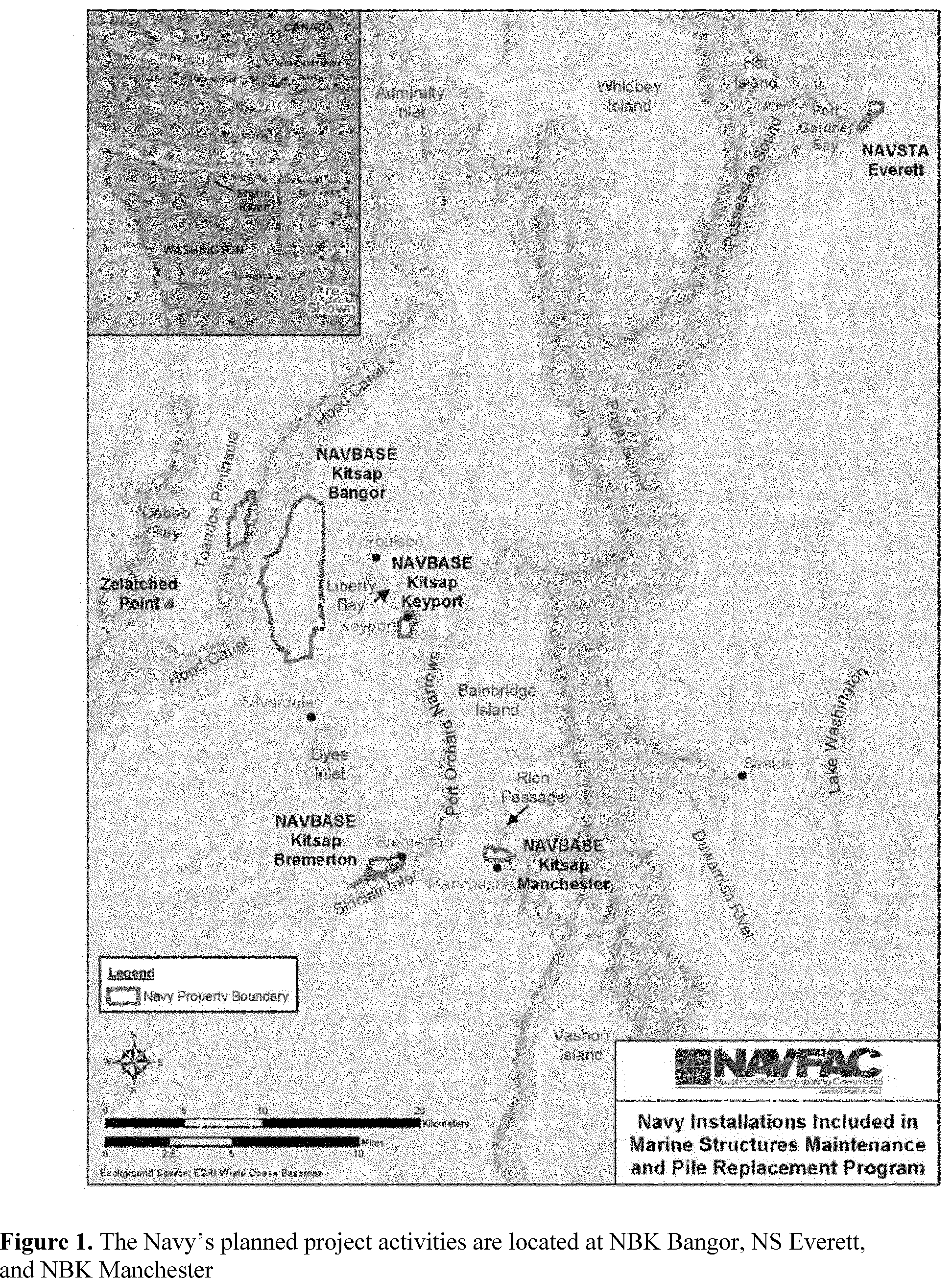
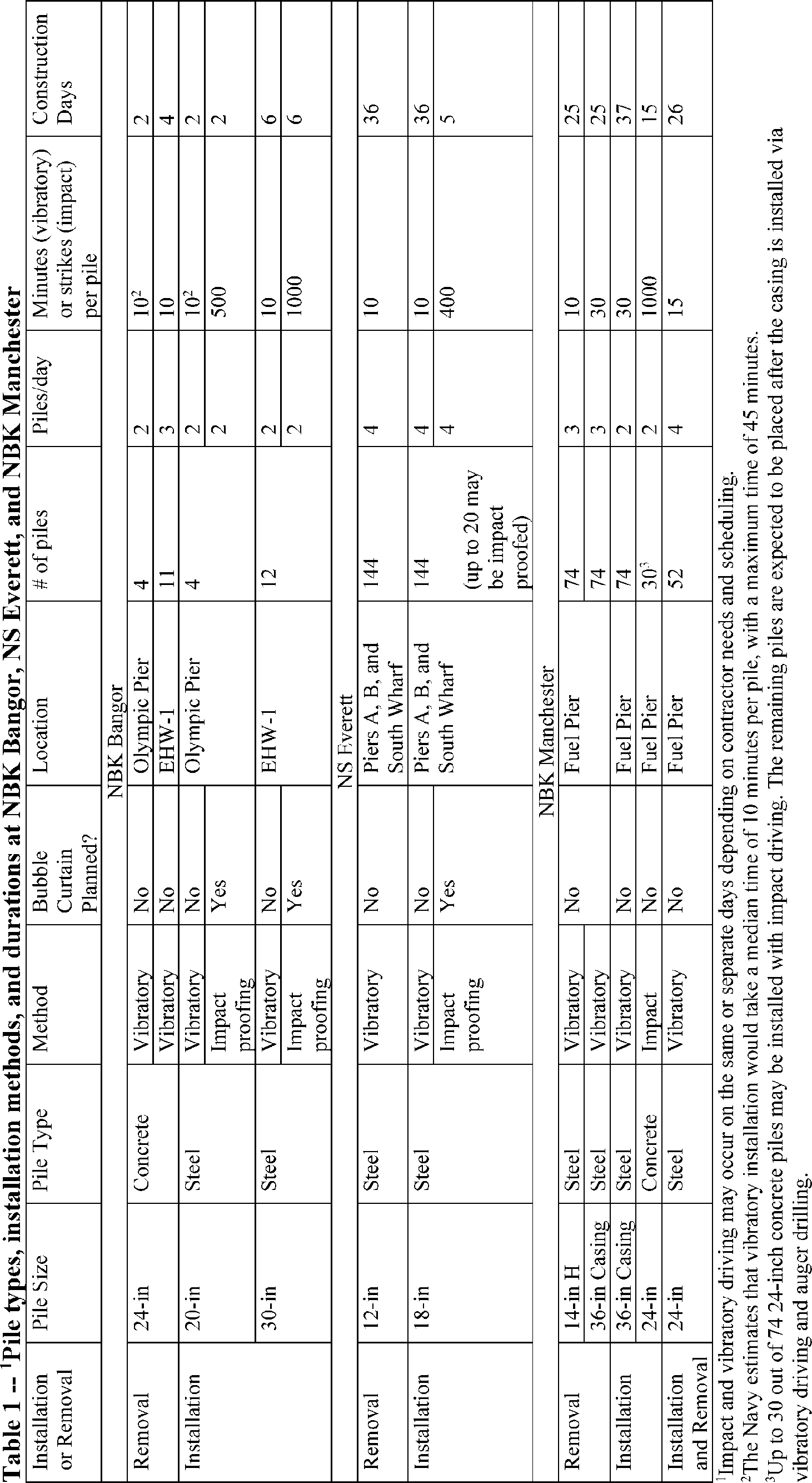
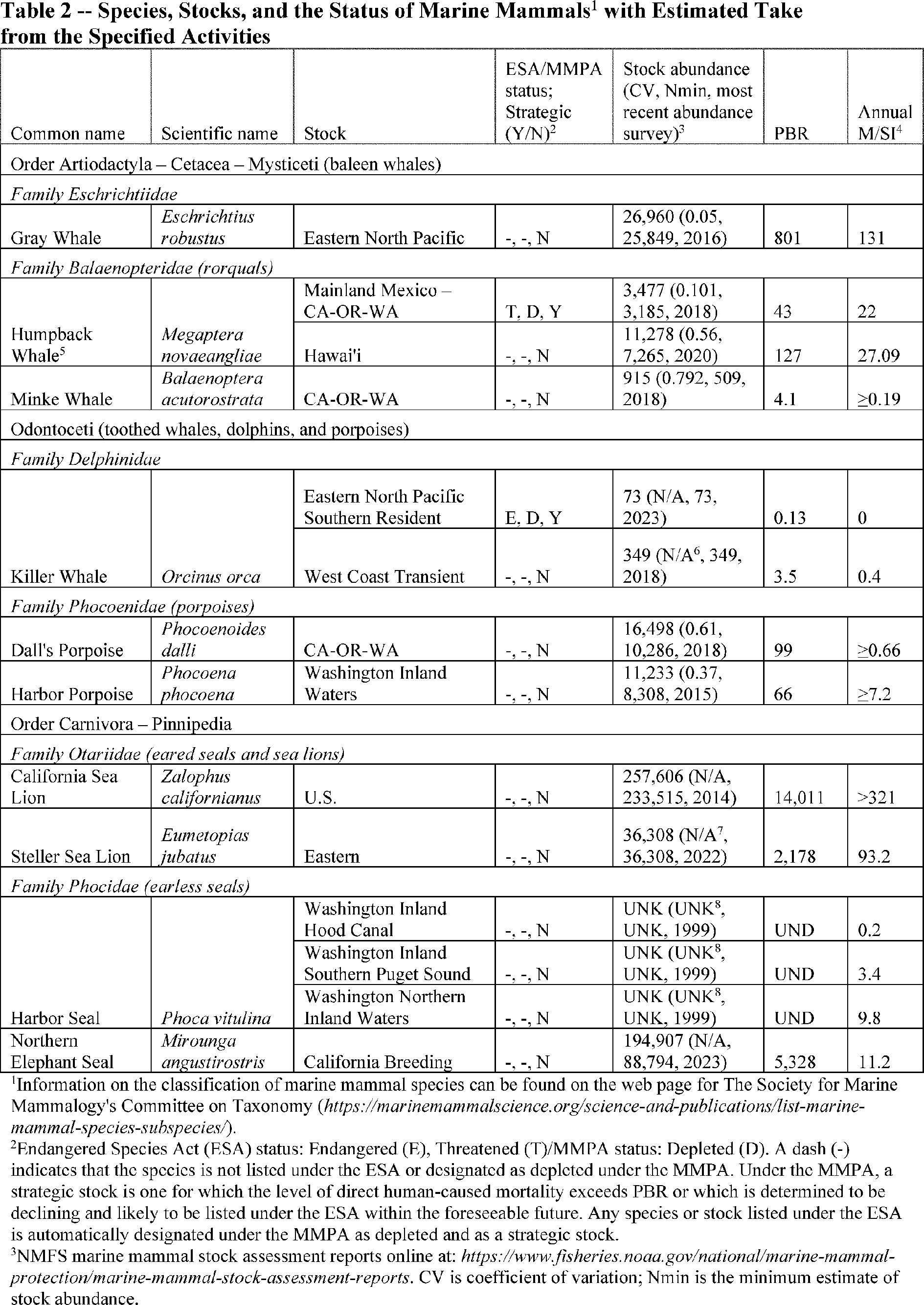
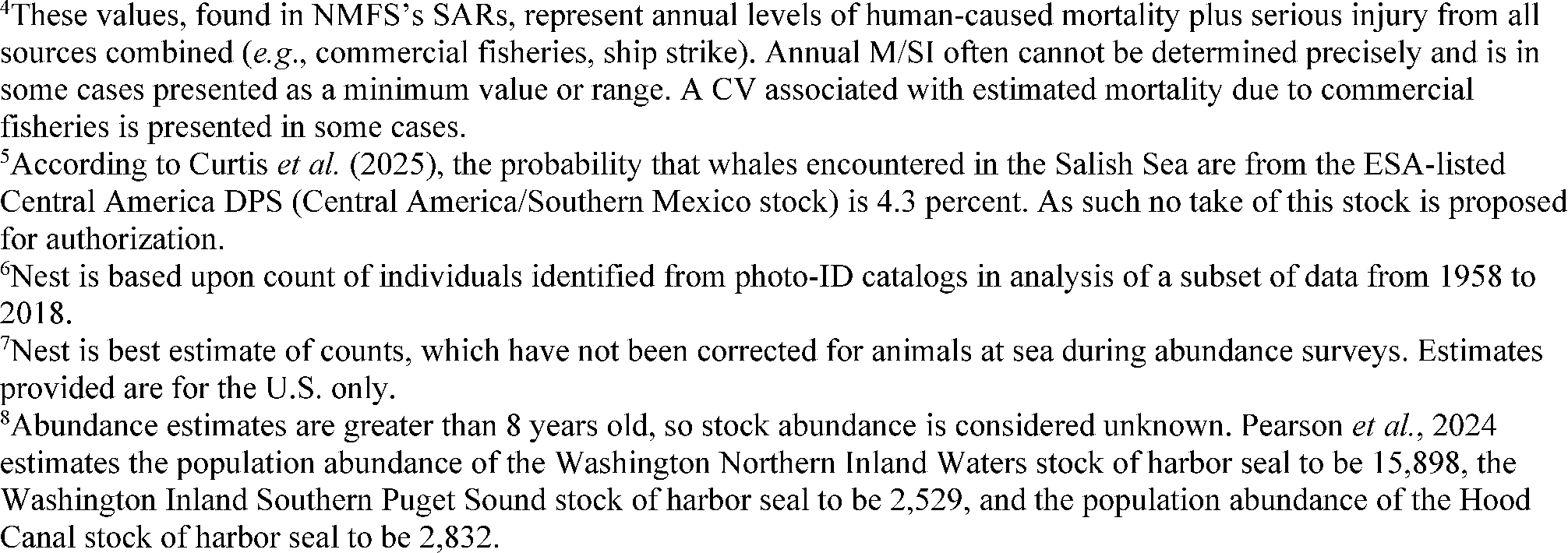
 cascadiaresearch.org/working-list-of-gray-whale-strandings-in-2026/