Revision of Operations Notice for the Expansion of the Moving to Work Demonstration Program
This Notice provides revisions to the Notice entitled Operations Notice for the Expansion of the Moving to Work Demonstration Program published in the Federal Register on August...
This Notice provides revisions to the Notice entitled Operations Notice for the Expansion of the Moving to Work Demonstration Program published in the
Federal Register
on August 28, 2020, with technical revisions published in the
Federal Register
on March 20, 2025.
DATES:
Comment due date:
November 2, 2026.
ADDRESSES:
Interested persons are invited to submit comments regarding this Notice. All submissions must refer to the above docket number and title. There are two methods for submitting public comments. To receive consideration as public comments, comments must be submitted through one of the two methods specified below:
1. Electronic Submission of Comments.
Interested persons may submit comments electronically through the Federal eRulemaking Portal at
www.regulations.gov.
HUD strongly encourages commenters to submit comments electronically. Electronic submission of comments allows the commenter maximum time to prepare and submit a comment, ensures timely receipt by HUD, and enables HUD to make them immediately available to the public. Comments submitted electronically through the
www.regulations.gov
website can be viewed by other commenters and interested members of the public. Commenters should follow the instructions provided on that site to submit comments electronically.
2. Submission of Comments by Mail.
Comments may be submitted by mail to the Regulations Division, Office of General Counsel, U.S. Department of Housing and Urban Development, 451 7th Street SW, Room 10276, Washington, DC 20410-0500.
No Facsimile Comments.
Facsimile (Fax) comments will not be accepted or considered.
Public Inspection of Public Comments.
HUD will make all properly submitted comments and communications available for public inspection and copying during regular business hours at the above address. Due to security measures at the HUD Headquarters building, you must schedule an appointment in advance to review the public comments by calling the Regulations Division at 202-708-3055 (this is not a toll-free number). HUD welcomes and is prepared to receive calls from individuals who are deaf or hard of hearing, as well as individuals with speech or communication disabilities. To learn more about how to make an accessible telephone call, please visit
www.fcc.gov/consumers/guides/telecommunications-relay-service-trs.
FOR FURTHER INFORMATION CONTACT:
Pravin Krishnan, Director, Moving to Work Demonstration Program, Department of Housing and Urban Development, 451 7th Street SW, Washington, DC 20410; email address:
mtw-info@hud.gov,
telephone number 202-402-3965 (this is not a toll-free number). HUD welcomes and is prepared to receive calls from individuals who are deaf or hard of hearing, as well as from individuals with speech or communication disabilities. To learn more about how to make an accessible telephone call, please visit:
www.fcc.gov/consumers/guides/telecommunications-relay-service-trs.
SUPPLEMENTARY INFORMATION:
I. Background
The Moving to Work (MTW) demonstration program was established under Section 204 of Title II of section 101(e) of the Omnibus Consolidated Rescissions and Appropriations Act of 1996, Public Law 104-134 (approved April 26, 1996). The MTW demonstration was significantly expanded under Section 239 of Division L, Title II of the Consolidated Appropriations Act, 2016, Public Law 114-113 (approved December 18, 2015) (2016 MTW Expansion Statute). The 2016 MTW Expansion Statute authorized HUD to expand the MTW demonstration program from 39 PHAs by an additional 100 PHAs over a period of seven years.
On January 23, 2017, HUD published a notice seeking public comment in the
Federal Register
(82 FR 8056), entitled “Operations Notice for the Expansion of the Moving to Work Demonstration
( printed page 56164)
Program Solicitation of Comment.” On May 4, 2017, the notice was republished with three technical revisions and an extension of the comment period (82 FR 20912). HUD considered all relevant comments received. On October 5 and 11, 2018, HUD republished the notice (83 FR 50387 and 83 FR 51474) with revisions based on public comments and policy determinations and provided an additional comment period. On August 28, 2020, HUD published the last version of the notice (85 FR 53444) after the addition of information in the “Additional activities and waivers” section and was effective immediately. On March 20, 2025, HUD published technical revisions to the notice that made no material changes that were effective immediately (90 FR 13189).
This notice makes additional revisions as described in more detail below. A future update of the “Operations Notice for the Expansion of the Moving to Work Demonstration Program” will provide updates with regard to HOTMA. Before that publication, public housing agencies should follow other applicable Departmental guidance on the interaction of HOTMA and the Moving to Work Program.
II. Revisions to Operations Notice for the Expansion of the Moving to Work Program
A. Updates were made throughout the notice to change references from the “MTW Supplement” to the “MTW Plan-Expansion.”
B. Technical updates were made throughout the notice to enhance clarity and to update information.
C.
Changes to Section 2—Background:
In Section (b) 2016 Expansion of the MTW Demonstration and Section (c) Eligibility and Selection for the Expansion of the MTW Demonstration, the deadline to designate MTW agencies was corrected from 2022 to 2028 to coincide with seven years from when the first MTW agencies were designated under the 2016 MTW Expansion Statute.
D.
Changes to Section 5—MTW Funding Flexibility:
(1) In Section (b) Calculation of Funding, (iii) Housing Choice Voucher Funding, (c) Housing Assistance Payment Renewal Sources of Funds, edits were made to clarify sources of funds that may be used towards renewal.
(2) In Section (b) Calculation of Funding, (iii) Housing Choice Voucher Funding, (j) Local, Non-Traditional Activities, edits were made to eliminate the requirement that Local Non-Traditional activities not exceed 10% of Housing Assistance Payment budget.
E.
Changes to Section 7—Program Administration and Oversight:
Throughout Section (a) Planning and Reporting, edits were made to reflect decoupling the “MTW Plan-Expansion” (formerly the “MTW Supplement”) from the PHA Plan.
F.
Changes to Section 9—Applying MTW Flexibilities to Special Purpose Vouchers (SPVs)
was revised to reflect renewal process.
G.
Changes to Section 13—Administrative and Contact Information:
The contact information in Section 13.b was revised to reflect Pravin Krishnan, the current MTW Director.
H.
Changes to Appendix I—MTW Waivers:
(1) For waiver and associated activities 1.c and 1.d on Stepped Rent, Safe Harbor (viii) was edited to no longer require the stepped rent to be tied to unit size.
(2) For waiver and associated activities 1.p and 1.q on Imputed Income, Safe Harbor (i) was edited to increase the maximum hours per individual to 40 hours per week. The Safe Harbor (ii) for maximum hours per household was deleted.
(3) For waiver and associated activities 1.v and 1.w on Alternative Income Inclusions/Exclusions, Safe Harbor (i) was edited to allow the policy to apply to elderly and/or disabled individuals when there is no detrimental effect.
(4) For waiver and associated activities 7.a and 7.b on Term-Limited Assistance, Safe Harbor (i) was edited to decrease the minimum term of assistance to two years.
(5) For waiver and associated activity 11 on MTW Self-Sufficiency Programs, language regarding the consideration of disparate impact was deleted.
(6) For waiver and associated activities 12.a and 12.b on Work Requirements, Safe Harbor (i) was edited to increase the maximum hours per individual to 40 hours per week. The Safe Harbor (ii) for maximum hours per household was deleted. The Safe Harbor (iii) was edited to decrease the required notice to three months.
(7) For waiver and associated activities 17.a, 17.b and 17.c on Local Non-Traditional Programs, the Safe Harbors restricting Local Non-Traditional activities to 10% of Housing Assistance Payment budget were deleted.
I.
Changes to Appendix II—Requirements for Safe Harbors—Impact Analysis:
(1) The element to consider disparate impact in impact analyses was deleted.
III. Solicitation of Public Comments
HUD has engaged in extensive public engagement in formulating this notice, including six prior
Federal Register
publications with opportunity for public comment. HUD is providing additional opportunity to comment on the revisions detailed above. HUD will consider any additional comments submitted on these revisions going forward and will notify the public if there are any changes to the notice as a result. HUD will allow 60 days for public comment on the revisions, followed by an additional 30-day public comment period.
IV. Environmental Impact
A Finding of No Significant Impact (FONSI) with respect to the environment has been made in accordance with HUD regulations in 24 CFR part 50 that implement section 102(2)(C) of the National Environmental Policy Act of 1969 (42 U.S.C. 4332(2)(C)). The FONSI is available for public inspection on
www.regulations.gov.
V. MTW Operations Notice
Table of Contents
1. Purpose and Applicability
2. Background
a. MTW Demonstration Program
b. 2016 Expansion of the MTW Demonstration Program
c. Eligibility and Selection for Expansion of MTW Demonstration
d. MTW Research Advisory Committee
3. Term of Participation
4. Waivers
a. MTW Waivers
b. Safe Harbor Waivers
c. Agency-Specific Waivers
d. Cohort-Specific Waivers
e. Requirements Outside of the Scope of MTW Waiver Authority
f. Discontinuation of MTW Activity
5. MTW Funding Flexibility and Financial Reporting
a. MTW Funding Flexibility
b. Calculation of Funding
c. Financial Reporting and Auditing
6. Evaluation
a. Program-Wide Evaluation
b. Cohort-Specific Evaluation
c. Ad Hoc Evaluation
7. Program Administration and Oversight
a. Planning and Reporting
b. Performance Assessment
c. Monitoring and Oversight
8. Rental Assistance Demonstration Program
9. Applying MTW Flexibilities to Special Purpose Vouchers (SPVs)
a. HUD-Veterans Affairs Supportive Housing Vouchers
b. Family Unification Program Vouchers
c. Melania Trump Foster Youth to Independence Vouchers
( printed page 56165)
d. Non-Elderly Persons With Disabilities
e. Mainstream Vouchers
f. Enhanced and Tenant Protection Vouchers
10. Applicability of Other Federal, State, and Local Requirements
11. MTW Agencies Admitted Prior to 2016 MTW Expansion Statute
12. Sanctions, Terminations, and Default
13. Administrative and Contact Information
a. Paperwork Reduction Act
b. Contact Information
Appendix I—MTW Waivers
Appendix II—Requirements for Safe Harbors
a. Impact Analysis
b. Hardship Policy
Appendix III—Substantially the Same Requirement
1. Purpose and Applicability
This Moving to Work (MTW) Operations Notice (MTW Operations Notice) establishes requirements for the implementation and continued operation of the expansion of the MTW demonstration program pursuant to Section 239 of the Fiscal Year 2016 Appropriations Act, Public Law 114-113 (2016 MTW Expansion Statute). The MTW Operations Notice applies to all public housing agencies (PHAs) designated as MTW pursuant to the 2016 MTW Expansion Statute and to any previously-designated MTW agency that elects to operate under the terms of this notice, collectively referred to in this MTW Operations Notice as an “MTW agency.”
The MTW demonstration program allows PHAs to design and test innovative, locally-designed housing and self-sufficiency strategies for low-income families by permitting PHAs to use assistance received under sections 8 and 9 of the United States Housing Act of 1937 (42 U.S.C. 1437f and 1437g) (1937 Act) more flexibly and, as approved by HUD, with certain exemptions from existing public housing and HCV program requirements.
Through the MTW Amendment to the Annual Contributions Contract(s) (ACC),[1]
an MTW agency agrees to comply with the program requirements and terms and conditions detailed in the MTW Operations Notice for the term of the MTW agency's participation in the MTW demonstration. Unless otherwise explicitly provided in the MTW Operations Notice, an MTW agency's MTW program applies to all of the MTW agency's public housing units (including MTW agency-owned properties and units comprising a part of mixed-income, mixed finance communities), tenant-based HCV assistance, project-based HCV assistance under Section 8(o) of the 1937 Act, and homeownership units developed using Section 8(y) HCV assistance of the 1937 Act.
This MTW Operations Notice
does not
apply to HCV assistance that is required: (1) to make payments to other PHAs under HCV portability billing procedures; (2) to meet particular purposes for which HUD has expressly committed the assistance to the MTW agency; [2]
or (3) to meet existing contractual obligations of the MTW agency to a third party (such as Housing Assistance Payment (HAP) contracts with owners under the MTW agency's HCV program), unless a third party agrees to Project-Based Voucher (PBV) activities implemented under the MTW program with the MTW agency.
Any significant updates,[3]
as determined by HUD, to the MTW Operations Notice will be preceded by a public comment period. However, HUD may supplement the MTW Operations Notice with Office of Public and Indian Housing (PIH) Notices without public comment if it determines a need to provide more detailed guidance, including with respect to implementing future appropriations act provisions and revisions to financial policies and procedures. Further, HUD will develop informational materials to address various program elements, which HUD will post on the MTW website.
2. Background
a. MTW Demonstration Program
The MTW demonstration program was first established under Section 204 of Title II of section 101(e) of the Omnibus Consolidated Rescissions and Appropriations Act of 1996, Public Law 104-134, 110 Stat. 1321-281; 42 U.S.C. 1437f note (1996 MTW Statute) [4]
to provide certain statutory and regulatory flexibility [5]
to participating PHAs to further the following three statutory objectives:
Reduce cost and achieve greater cost effectiveness in federal expenditures;
Give incentives to families with children where the head of household is working, seeking work, or is preparing for work by participating in job training, educational programs, or programs that assist people to obtain employment and become economically self-sufficient; and
Increase housing choices for eligible low-income families.
To achieve these objectives, PHAs selected for participation in the MTW demonstration are given exemptions from some existing public housing and HCV rules and are offered more flexibility with how they use their federal funds. MTW agencies use this opportunity presented by the MTW demonstration to better address local housing needs and encourage self-sufficiency among those families receiving HUD-assisted housing. HUD considers the experience of MTW agencies when developing new housing policy recommendations that can positively impact assisted housing delivery for PHAs and incentivize low-income families to gain self-sufficiency across the nation.
In addition to statutory and regulatory relief,[6]
MTW agencies have the flexibility to apply fungibility among three core funding programs' funding streams—public housing Operating Funds, public housing Capital Funds, and HCV assistance (to include both HAP and Administrative Fees)—hereinafter referred to as “MTW Funding.” [7]
Throughout participation in the MTW demonstration program, MTW agencies must continue to meet five statutory requirements established by the 1996 MTW Statute, which are described further in section VI.7.c.i of this MTW Operations Notice.
As of December 15, 2015, the date the 2016 MTW Expansion Statute was signed into law, there were 39 agencies
8
( printed page 56166)
participating in the MTW demonstration program. The administrative structure for these 39 agencies is outlined in the Standard MTW Agreement, an agreement between each existing MTW agency and HUD. The 2016 MTW Expansion Statute extended the term of the Standard MTW Agreement through each of the existing MTW agencies' 2028 fiscal year. In Section 241 of Title II of the Consolidated Appropriations Act, 2024, Public Law 118-42 (approved March 9, 2024) the term of the Standard MTW Agreement was extended further through each of the existing MTW agencies' 2038 fiscal year.
b. 2016 Expansion of the MTW Demonstration Program
Through the demonstration expansion authorized by the 2016 MTW Expansion Statute, HUD will extend MTW flexibility to a broader range of PHAs regarding diversity of size and geographic location, balancing the flexibility inherent in MTW with the need for measurement, evaluation, and prudent oversight. Overall, in expanding the MTW demonstration, HUD intends to build on the successes and lessons learned from the demonstration thus far to improve the delivery of Federally assisted housing and promote self-sufficiency among assisted low-income families across the nation.
As the 2016 MTW Expansion Statute directs, HUD is authorized to expand the MTW demonstration program from the current level of 39 agencies by adding an additional 100 agencies over a period of seven years, ending in 2028. The 2016 MTW Expansion Statute requires that the 100 new MTW agencies be high-performing at the time of application to the demonstration in either HUD's Public Housing Assessment System (PHAS) or its Section Eight Management Assessment Program (SEMAP), and MTW agencies must represent geographic diversity across the country.[9]
Further, the 2016 MTW Expansion Statute imposes strict size limitations [10]
on these 100 PHAs and requires that five of the 100 PHAs be agencies with portfolio-wide awards under the Rental Assistance Demonstration (RAD).[11]
c. Eligibility and Selection for the Expansion of the MTW Demonstration
As required by the 2016 MTW Expansion Statute, HUD designated 100 new agencies for the expansion of the MTW designation in cohorts over a period of seven years, ending in 2028. If applicable, HUD may backfill any vacant MTW designation pursuant to the 2016 MTW Expansion Statute through 2028. For each cohort of MTW agencies selected, the 2016 MTW Expansion Statute requires HUD to direct one specific policy change to be implemented by the MTW agencies, which HUD will evaluate rigorously. MTW agencies may implement additional policy changes, as long as those policy changes do not conflict or interfere with the cohort study. As required by the 2016 MTW Expansion Statute, the HUD-appointed MTW Research Advisory Committee (the Committee), described further below, advised HUD on the policy changes to be tested through the new cohorts of MTW agencies and the methods of research and evaluation.
HUD is planning to issue separate PIH Notices for each cohort to solicit applications from eligible PHAs for participation in the MTW demonstration. These notices will outline the specific application submission requirements, evaluation criteria, and process HUD will use when selecting PHAs for MTW designation.
d. MTW Research Advisory Committee
The 2016 MTW Expansion Statute required HUD to form and consult with the Committee, which was established in May 2016.[12]
The purpose of the Committee is to provide independent advice to HUD with respect to the policies and methods of research in the evaluation of the MTW expansion. The Committee is specifically charged with advising HUD on the following:
Policy proposals and evaluation methods for the MTW demonstration to inform the one specific policy change required for each cohort of agencies;
Rigorous research methodologies to measure the impact of policy changes studied;
Policy changes adopted by MTW agencies that have proven successful and can be applied more broadly to all PHAs; and
Statutory or regulatory changes (specific waivers and associated activities, and program and policy flexibility) necessary to implement policy changes for all PHAs.
The Committee has no role in reviewing or selecting the 100 PHAs to participate in the expansion of the MTW demonstration.
Based on the advice of the Committee, HUD will study, by cohort of MTW agencies, the following four policies (which are in no particular order except for the first two cohorts): Impact of MTW Flexibility on small sized PHAs; [13]
Rent Reform; Work Requirements; and Landlord Incentives. HUD may determine that additional policies be studied through the MTW expansion and will consider the advice of the Committee.
3. Term of Participation
The term of each MTW agency's MTW designation will be twenty years (PHA fiscal years) starting from the time of its designation as an MTW agency. All waivers and associated activities provided through the MTW Operations Notice expire at the end of the MTW agency's term of participation, unless otherwise discontinued in accordance with section VI.4.f of this notice. However, if HUD determines that additional time beyond the end of the MTW agency's MTW term is needed to evaluate a cohort-specific policy change, or if the MTW agency requests to extend a particular waiver, HUD may, if allowed by applicable law, approve an extension of any specific waiver(s).
Once an MTW agency has implemented an activity pursuant to the authority of the MTW Operations
( printed page 56167)
Notice, the MTW agency may continue to implement that activity throughout the term of its participation in the demonstration, subject to the terms of this notice regarding discontinuation of MTW activities, or, any amendments to this notice, or any successor notice. The MTW agency must end all activities requiring MTW-authorized waivers upon expiration of its MTW participation since HUD cannot guarantee that it will be able to extend any waivers and associated activities beyond that point. For this reason, when entering into contracts with third parties that draw upon MTW flexibility, the MTW agency must disclose that such flexibility is only available during the term of the MTW agency's participation in the MTW demonstration as permitted in this notice. An exception is third-party contracts that relate to the cohort-specific policy change and associated waiver(s).
4. Waivers
Pursuant to the 1996 MTW Statute and 2016 MTW Expansion Statute, Appendix I of this notice provides waivers of certain provisions of the 1937 Act as well as the implementing regulations. These waivers and associated activities afford MTW agencies the opportunity to use their MTW authority to pursue locally driven policies, procedures, and programs in order to further the goals of the demonstration. In addition, the MTW agency may request, and be granted, Safe Harbor Waivers and Agency-Specific Waivers, described further below, to implement innovative MTW activities unique to its community. MTW agencies may update their leases to reflect the MTW flexibilities used through these waivers. When implementing MTW waivers through MTW activities, MTW agencies must ensure assisted families are made aware of the impacts the activity(s) may have on their tenancy.
The following are the categories of waivers that MTW agencies may pursue:
☐ MTW Waivers—MTW agencies may conduct any permissible activity in the MTW Waivers category within the defined range of flexibility, characterized in this notice as a “safe harbor.” Safe harbors contain the additional requirements (beyond those specified in the activity description) the agency must follow in order to implement the activity once it is included in an approved MTW Plan-Expansion.[14]
Prior to implementation, the MTW Waivers must be included in an approved MTW Plan-Expansion (see section VI.7.a). MTW Waivers are detailed in Appendix I.
☐ Safe Harbor Waivers—MTW agencies may request to implement activities in a manner inconsistent with the safe harbors of an MTW Waiver's activity through the submission of a Safe Harbor Waiver request.
☐ Agency-Specific Waivers—MTW agencies may seek an Agency-Specific Waiver in order to implement additional activities not contained in the MTW Waivers and to request to waive a statutory or regulatory requirement not included in Appendix I.
☐ Cohort-Specific Waivers—MTW agencies may be provided with Cohort-Specific Waivers if additional waivers not included in Appendix I are necessary to allow for the implementation of the required cohort study. Cohort-Specific Waivers will be detailed in the applicable Selection Notice for that cohort study.
a. MTW Waivers
Appendix I, MTW Waivers, is a simplified guide for MTW agencies seeking to adopt MTW initiatives that have been implemented by existing MTW agencies; it is not intended to be the complete listing of what an MTW agency can and cannot do (see Safe Harbor Waivers and Agency-Specific Waivers). MTW agencies may implement any activity contained in Appendix I without further activity-specific HUD review and approval as long as it is included in the MTW Plan-Expansion (described in section VI.7.a of this notice) and implemented within the associated safe harbor(s). MTW agencies may combine activities together at the PHA level in order to create more comprehensive initiatives.
Appendix I includes the waiver name, waiver description, statutes and regulations waived, permissible activities, and safe harbors associated with each of the MTW Waivers. The waiver description defines the authorization provided to the MTW agency, subject to the terms of this notice. The list of statutes and regulations waived details the citations of the 1937 Act requirements that may be waived by an MTW agency in order to implement an activity. The list of waivers and list of activities are organized by program type (
i.e.,
public housing and/or HCV program). The safe harbors section contains the additional requirements (beyond those specified in the activity description) that the MTW agency must follow in implementing activities without further HUD approval.
b. Safe Harbor Waivers
Since the safe harbors, as written in Appendix I, may not align with local priorities or market conditions at some MTW agencies, MTW agencies may request to expand an activity that is in Appendix I outside of the listed safe harbor(s).[15]
Elements that are required to be provided in the request to waive Appendix I safe harbors will be identified in the MTW Plan-Expansion form.
MTW agencies must work closely with their residents and stakeholders when developing the Safe Harbor Waivers; therefore, when submitting a Safe Harbor Waiver, the MTW agency must, in addition to following the PHA Plan public process requirements, also hold a meeting to specifically discuss the Safe Harbor Waivers. The MTW agency must consider, in consultation with the Resident Advisory Board (RAB) and tenant association, as applicable, all of the comments received at the public hearing. The comments received by the public, RABs, and tenant associations must be submitted by the MTW agency, along with the MTW agency's description of how the comments were considered, as a required attachment to the MTW Plan-Expansion. This public comment and review period affords the residents and community stakeholders the opportunity to provide input on the proposed Safe Harbor Waivers prior to its submission to HUD.
Following approval of the MTW Plan-Expansion, an MTW agency must update its Administrative Plan and Admissions and Continued Occupancy Policy (ACOP), as applicable, prior to implementing the Safe Harbor Waiver. Disapproval of Safe Harbor Waivers will be communicated via the approval letter of the MTW Plan-Expansion. The MTW agency must follow the instructions provided by HUD in the letter regarding updating the MTW Plan-Expansion. Any such disapproval would only apply to a specific Safe Harbor Waiver, as noted in the approval letter, and would not apply to the entire MTW Plan-Expansion. Where additional review time may be needed by HUD, the approval letter of the MTW Plan-Expansion will state that the waiver decision is pending and the MTW agency must await further instructions from HUD prior to implementing the Safe Harbor Waiver.
( printed page 56168)
Reasons that HUD may object to a Safe Harbor Waiver include, but are not limited to, the following:
☐ The information required in the MTW Plan-Expansion, or equivalent form as approved by OMB, is not provided or is deemed insufficient;
☐ The MTW agency's proposed Safe Harbor Waiver is inconsistent with requirements outside of the 1937 Housing Act or is otherwise not permissible under MTW authority;
☐ There are other good cause factors for objection, such as material misrepresentation, in the submission;
☐ The Safe Harbor Waiver conflicts with any of the five statutory MTW requirements, as determined by HUD; or
☐ The Safe Harbor Waiver is determined to have potential significant negative impacts on families or the MTW agency's operation of its assisted housing programs using Section 8 and 9 funds, as determined by HUD.
c. Agency-Specific Waivers
The MTW demonstration program is intended to foster innovation and HUD encourages MTW agencies, in consultation with their residents and stakeholders, to be creative in their approach to solving affordable housing issues facing their local communities. For this reason, flexibilities beyond those provided for in Appendix I may be needed. Agency-Specific Waivers may be requested if an MTW agency wishes to implement additional activities, waive a statutory or regulatory requirement not included in Appendix I.[16]
In order to pursue an Agency-Specific Waiver, an MTW agency must include the Agency-Specific Waiver request in the MTW Plan-Expansion, for HUD review and approval. In order to pursue an Agency-Specific Waiver, an MTW agency must include an Agency-Specific Waiver request, an impact analysis, and a hardship policy (if the activity poses a potential risk to the continued tenancy of households), in the MTW Plan-Expansion. Other required elements to be provided in the request will be identified in the MTW Plan-Expansion form.
Specific requirements for conducting impact analyses and creating hardship policies are provided in Appendix II. When developing Agency-Specific Waiver requests, an agency must determine whether to implement additional hardship criteria beyond the criteria contained in Appendix II. Any additional hardship criteria must be included in the waiver request.
MTW agencies must work closely with their residents and stakeholders when developing the Agency-Specific Waivers; therefore, similar to submitting Safe Harbor Waivers, when submitting an Agency-Specific Waiver, the MTW agency must not only follow the PHA Plan public process requirements, but it must also have an additional public meeting to specifically discuss the Agency-Specific Waivers.[17]
The MTW agency must consider, in consultation with the RAB and tenant association, as applicable, all of the comments received at the public hearing. The comments received by the public, RABs, and tenant associations must be submitted by the MTW agency, along with the MTW agency's description of how the comments were considered, as a required attachment to the MTW Plan-Expansion. This public comment and review period provides the residents and community stakeholders the opportunity to provide input on the proposed Agency-Specific Waiver prior to its submission to HUD.
Following approval of the MTW Plan-Expansion, an MTW agency must update its Administrative Plan and ACOP, as applicable, prior to implementing the Agency-Specific Waiver. Disapproval of Agency-Specific Waivers will be communicated via the approval letter of the MTW Plan-Expansion; the MTW agency must follow the instructions provided by HUD in the letter regarding updating the MTW Plan-Expansion. HUD may object to an Agency-Specific Waiver for the same reasons it may object to a Safe Harbor Waiver. Any disapproval would only apply to a discrete Agency-Specific Waiver, as noted in the approval letter, and would not apply to the entire MTW Plan-Expansion. In rare instances where additional review time may be needed, the approval letter of the MTW Plan-Expansion will state that the waiver decision is pending and the MTW agency must await further instructions from HUD prior to implementing the Agency-Specific Waiver.
Statutory or regulatory waiver(s) derived from the 1937 Act or its implementing regulations that are outside those listed in Appendix I cannot be granted by the MTW Office alone; therefore, the MTW Office will coordinate the approval of those waivers with the appropriate signatory (
e.g.,
Assistant Secretary, General Deputy Assistant Secretary, etc.). HUD is committed to providing a timely review of Agency-Specific Waivers.
d. Cohort-Specific Waivers
Cohort-Specific Waivers include statutory or regulatory waivers and associated activities, outside of those included in Appendix I, that are unique to a specific cohort to allow them to complete their required cohort evaluation. Depending upon the evaluation design, HUD may restrict certain activities within the MTW Waivers or provide additional Cohort-Specific Waivers that are not included in Appendix I, and this would be articulated in the Selection Notice for the applicable cohort. Any restriction would only be in place during the evaluation period, as specified in the Selection Notice, and once the evaluation is concluded, the MTW agency would have access to all of the MTW Waivers. Specific policy changes to be tested through a given cohort may not require any Cohort-Specific Waivers. Any MTW activities that would impact or conflict with the cohort-specific policy change will be identified in the respective Selection Notice so that the MTW agency is aware of this potential restriction on its use of waivers before it enters the MTW demonstration program. Cohort-Specific Waivers and the associated MTW activities may only be used to the extent allowed under the applicable evaluative framework provided by HUD in the applicable Selection Notice.
e. Requirements Outside of the Scope of MTW Waiver Authority
The MTW demonstration program may only waive certain provisions of the 1937 Act and its implementing regulations. The MTW demonstration program does not permit waivers of statutes outside of the 1937 Act or regulations and requirements promulgated under authority outside of the 1937 Act. Accordingly, HUD and the MTW agencies may not waive or otherwise deviate from compliance with Fair Housing and Civil Rights laws and regulations, discrimination laws, labor standards, or environmental statutes and executive orders, or any other applicable statutes and regulations. Other subject matter prohibited from waivers or restricted with respect to waivers is discussed in section VI.10 of this notice. All applicable federal, state, and local requirements shall continue to apply even in the event of a conflict between such a requirement and a waiver or activity granted by this notice.
Additionally, the five statutory requirements established under the 1996 MTW Statute, hereinafter referred to as the “five statutory MTW requirements,” cannot be waived. The
( printed page 56169)
following are the five statutory MTW requirements (discussed in more detail later in this Notice): very low-income requirement, reasonable rent policy, substantially the same requirement, comparable mix requirement, and housing quality standards. In implementing MTW activities, MTW agencies remain subject to all other terms, conditions, and obligations under this notice, and all other federal requirements applicable to the public housing program, the HCV program, federal funds, and PHAs.
f. Discontinuation of MTW Activity
To the extent any MTW activity conflicts with any of the five statutory MTW requirements or other applicable requirements, as determined by HUD, HUD reserves the right to require the MTW agency to discontinue the activity or to revise the activity to comply with such applicable contemporary requirements.
HUD also reserves the right to require an MTW agency to discontinue any activity derived from a waiver should it have significant negative impacts on families or the MTW agency's operation of its assisted housing programs using Section 8 and 9 funds, as determined by HUD. The factors that may be considered when determining whether an activity should be discontinued include, but are not limited to, the following: rate of port-outs, attrition rates, occupancy and/or utilization levels, voucher leasing success rates, rent burdens, local market conditions, impact analyses, and number of hardship requests. Prior to requiring a discontinuation of an activity, HUD may take intermediary steps to work with the MTW agency and its residents to provide technical assistance, discuss the activity, and determine whether a discontinuation is in fact necessary.
In the event the MTW Operations Notice is updated to remove a specific Appendix I waiver, the MTW agency may continue to implement any activity that has been implemented related to that waiver through the term of the PHA's MTW designation, so long as it does not conflict with any of the five statutory MTW requirements (see section VI.7.c.i) or other applicable current requirements or have significant negative impacts on families or the MTW PHA's operation of its assisted housing programs using funds provided under Section 8 and 9 of the 1937 Act, as determined by HUD, as described in the preceding paragraph.
5. MTW Funding Flexibility and Financial Reporting
During the term of the demonstration, subject to changes in future years' appropriations, HUD will provide an MTW agency with public housing Operating Fund Program (OFP) grants, public housing Capital Fund Program (CFP) grants, and/or HCV HAP and Administrative Fee assistance as detailed in this notice. CFP grants may include Formula grants; Demolition or Disposition Transitional Funding (DDTF), which are included in regular Formula grants; and/or funds from older Replacement Housing Factor (RHF) grants (a program later superseded by DDTF). The HCV funding amount for MTW agencies may be increased by additional allocations of vouchers that the MTW agency is awarded over the term of its participation in the MTW demonstration. MTW Funding provided to an MTW agency, including public housing OFP grants, public housing CFP grants, and HCV HAP and Administrative Fee assistance, is subject to any laws promulgated in future years, which include without limitation: statutes, appropriations acts, notices implementing appropriations acts, regulations, and executive orders.
a. MTW Funding Flexibility
MTW agencies will have the flexibility to apply fungibility among public housing Operating Fund, public housing Capital Fund, and HCV HAP and Administrative Fee assistance. These flexibilities expand the eligible uses of each covered funding stream, but do not negate the need for both the PHA and HUD to be able to account for the funding from its original source to the date of its ultimate eligible use [18]
by the PHA, comply with federal grant and financial management requirements, and use funds effectively and efficiently for their eligible purposes. As HUD continues to implement program-specific financial management policies in its core housing programs, MTW agencies will be subject to the same requirements and procedures as non-MTW agencies. Therefore, the requirements and procedures described in this notice may change as new financial management policies are implemented over time. HUD will update existing guidance and issue new reporting requirements, as appropriate, to allow HUD to meet its monitoring and oversight responsibilities while ensuring MTW agencies fully utilize and benefit from the flexibilities established by Congress for these funds pursuant to the MTW demonstration and the 2016 MTW expansion. HUD will also update existing guidance and issue new reporting requirements, as appropriate, to ensure compliance with 2 CFR part 200, Uniform Administrative Requirements, Cost Principles, and Audit Requirements for Federal Awards, including with respect to Federal financial management.
An MTW agency participating in the MTW demonstration program may flexibly use public housing Operating and Capital Funds provided under Sections 9(d) and 9(e) of the 1937 Act and HCV HAP and Administrative Fee program funds provided under Section 8 of the 1937 Act, referred to collectively as MTW Funding. Certain provisions of Sections 8 and 9 of the 1937 Act and implementing requirements are waived as necessary to implement this flexibility. Once the MTW agency receives its MTW designation through the execution of the MTW ACC Amendment, this flexibility in the use of MTW Funding does not require prior HUD approval.
The MTW agency may use MTW Funding covered by MTW flexibility for any eligible activity under Sections 9(d)(1), 9(e)(1) and Section 8(o) of the 1937 Act and for the local, non-traditional activities specified in Appendix I of this notice. All MTW agency expenditures must be consistent with the MTW agency's charter, approved 5-Year and Annual PHA Plans, and the approved MTW Plan-Expansion.
Under appropriations law, any reserves the MTW agency has accumulated prior to signing an MTW ACC Amendment (including public housing Operating and Capital Reserves and HCV HAP and Administrative Fee Reserves) must be used for their originally appropriated purposes and shall not be used flexibly except for when Congress provides an exception to this requirement. Subject to HUD's annual appropriations act, Congress provides temporary relief from this requirement, by allowing an MTW agency to use any reserves accumulated prior to the MTW designation flexibly. This additional flexibility will expire at the end of each Federal fiscal year (for example in Federal Fiscal Year 2026, September 30, 2026) unless Congress includes it again in subsequent appropriations acts. MTW agencies should be aware that this relief is not permanent and may not continue into the future. MTW agencies are responsible for being aware of each year's appropriations act and shall
( printed page 56170)
maintain careful recordkeeping to ensure they remain in compliance with the requirement. HUD will monitor the status of this flexibility closely.
b. Calculation of Funding
i. Public Housing Operating Grants
(a)
Funding Calculation.
The calculation of an MTW agency's Operating Fund subsidy grant eligibility will continue in accordance with operating subsidy formula law, regulations, and appropriations act requirements, as they may be amended.
(b)
Eligible Uses.
The MTW agency may use these funds for any eligible activity permissible under Section 9(e)(1) of the 1937 Act or, if the agency proposes to use the funding under its MTW flexibility, it may also use these funds for any eligible activity permissible under Section 8(o), Section 9(d)(1), and for the local, non-traditional activities specified in Appendix I of this notice.
(c)
Central Office Cost Center (COCC).
For an MTW agency's COCC, which collects fees for administrative services, an MTW agency may freely use the earned fees for any eligible activity but cannot move non fee-based funds into the COCC.
ii. Public Housing Capital Fund Formula and Grants
(a)
Funding Calculation.
The MTW agency's public housing Capital Fund formula characteristics and grant amounts, including DDTF and RHF, will continue to be calculated in accordance with public housing law, regulations, and appropriations act requirements, as they may be amended.
(b)
Financial Management Requirements Apply.
MTW agencies must continue to follow the immediate need requirements applicable to all Capital funds and may not accelerate their drawdown of Capital funds for the purpose of funding reserves or for any other purpose.[19]
All Capital funds, including funds in Budget Line Item (BLI) 1410 (Administrative Costs) and BLI 1492 (MTW), must be drawn down only when funds are due and payable.
(c)
Eligible Uses.
The MTW agency may use these funds for any eligible activity permissible under Section 9(d)(1) of the 1937 Act or, if the MTW agency proposes to use the funding under its MTW flexibility, it may also use these funds for any eligible activity permissible under Section 8(o), Section 9(e)(1), and for the local, non-traditional activities specified in Appendix I of this notice. CFP funds used for activities under Section 9(d)(1) are subject to all requirements relevant to non-MTW agency CFP funding, including eligible activities and cost limits.
(d)
Requisitioning Funds.
In requisitioning Capital Fund grant funds, the MTW agency will request funds using traditional Capital Fund BLIs for funds to be used for activities under section 9(d) and using the available MTW Budget Line (BLI 1492) items for activities under section 9(e), section 8(o), or local, non-traditional activities. MTW agencies shall not use the Transfer to Operations Budget Line (BLI 1406) since funds for all non-Section 9(d) activities shall be included in the MTW Budget Line (BLI 1492). The MTW agency will provide to HUD information on all capital activities funded by the MTW Funding as necessary to ensure compliance with requirements outside the scope of MTW, including environmental review requirements and Energy and Performance Information Center (EPIC) reporting requirements.
(e)
Obligation and Expenditure Requirements.
The MTW agency remains subject to the requirements of Section 9(j) of the 1937 Act with respect to Capital Fund grants. Section 9(d) funds remain subject to the obligation and expenditure deadlines and requirements provided in Section 9(j) despite the fact that they may be used flexibly. Capital Funds awarded to MTW agencies must be obligated within two years and expended within four years of award. Funds not obligated or expended within those timeframes will be subject to recapture. As with all agencies, an MTW agency may requisition CFP funds from HUD only when such funds are due and payable, unless HUD approves another payment schedule.
iii. Housing Choice Voucher Funding
(a)
Funding Calculation.
As is the case for non-MTW PHAs under current appropriations law, HAP renewal funding eligibility for MTW agencies will be calculated based on each MTW agency's actual expenses for the previous calendar year (known as the re-benchmark year). Unique to MTW agencies, however, the MTW agency's actual expenses are: (1) the previous Calendar Year's HAP expenses reported in the Voucher Management System (VMS), and (2) the previous CY's eligible non-HAP MTW expenses reported in VMS.[20]
For both HAP and non-HAP MTW expenses, the reported expenses must have been paid from an eligible source of funds as described in paragraph (c) below to be included in the HAP renewal funding formula. In addition, MTW HAP renewal funding is subject to an MTW Renewal Eligibility Cap derived from the number of units authorized under the MTW agency's ACC, as described in paragraph (d) below. The lower of the total combined HAP and non-HAP expenses or the MTW Renewal Eligibility Cap will then be adjusted by the Renewal Funding Inflation Factor (RFIF) and any national proration that applies to the HCV renewal appropriation to determine the MTW agency's actual CY HAP renewal funding.
Example:
An MTW agency executes its MTW ACC Amendment in September 2020. In CY 2020, the MTW agency expended $3,600,000 on HAP and $400,000 on eligible non-HAP MTW expenses. The MTW agency's HCV HAP renewal funding for CY 2021 will be $4 million (assuming the HAP Renewal Eligibility Cap is greater than $4 million), adjusted by the RFIF and any applicable national proration.
(b)
Eligible Uses.
The MTW agency may use HCV renewal funds for any eligible activity permissible under Section 8(o) of the 1937 Act or, if the MTW agency proposes to use the funding under its MTW flexibility, it may also use these funds for any eligible activity permissible under Section 9(e)(1), Section 9(d)(1), and for the local, non-traditional activities specified in Appendix I of this notice.
(c)
HAP Renewal Sources of Funds.
Only HAP and non-HAP MTW expenses that are paid for with funds from one of the following sources will be included in the MTW HAP renewal formula:
(i)
HCV budget authority (first made available to the PHA for the re-benchmark year),
(ii)
HUD-held HAP reserves (undisbursed budget authority from prior years),
(iii)
PHA-held HAP reserves (
i.e.,
Restricted Net Position (RNP)),
(iv)
Any funds received via the HAP Set-aside (after PHA application and HUD approval),
(v) Other sources of funds that HUD explicitly authorizes, in a separate HCV funding or other notice, to be included in the MTW HAP renewal formula, and
( printed page 56171)
(vi) For HAP expenses only:
Administrative fee reserves (
i.e.,
Unrestricted Net Position). Expenditures of administrative fee reserves are eligible to be included in the MTW agency's MTW HAP renewal calculation, but only if the administrative fee reserve funds are used for HAP expenses. MTW PHAs must report the use of HCV Unrestricted Net Position (UNP) for HAP and for non-HAP expenses in Expense 1-5 fields in VMS. Non-HAP MTW expenses paid from the administrative fee reserve are not eligible for renewal funding. Furthermore, when determining HAP renewal eligibility, the use of the administrative fee reserves is always first attributed to the MTW agency's non-HAP MTW expenses incurred during the calendar year before it is considered to be the source of funds for HAP expenses. If total HAP and non-HAP MTW expenses paid out of administrative fee reserves is greater than the total amount of non-HAP MTW expenses, then the difference is assumed to have been spent on HAP and is considered in the HAP renewal calculation. Note that there is no restriction against using administrative fee reserves for non-HAP MTW expenses, just that those non-HAP MTW expenses are not eligible to be renewed under the MTW HAP renewal formula. Expansion MTW PHAs may not bring in outside sources of funds to cover administrative costs in order to increase their expenditure of HCV Administrative Fee Reserves to cover HAP costs.
HAP expenses or non-HAP MTW expenses that were paid for with any other funding source (for example, public housing Operating Funds and Capital Funds, and current year HCV Administrative Fee funds) will not be included in the MTW agency's HCV renewal funding calculation, unless HUD explicitly authorizes such inclusion in a separate funding or other notice.
(d)
HAP Renewal Eligibility Cap.
The MTW agency's renewal eligibility for all MTW Years will be limited by the HAP Renewal Eligibility Cap. The calculation multiplies (1) the MTW agency's total number of ACC authorized units in the re-benchmark year (the CY immediately preceding the CY for which the MTW agency's renewal eligibility is being calculated) [21]
by (2) the MTW agency's pre-MTW monthly per-unit cost (PUC) inflated to the re-benchmark year.
(i)
The number of ACC authorized units is measured in unit months available (UMAs).[22]
(ii)
The inflated pre-MTW PUC is projected using, as a base, the monthly PUC for the CY in which the MTW agency signed its MTW ACC Amendment. HUD applies the RFIF to this base PUC to estimate what the MTW agency's HCV PUC would be, had the MTW agency not joined the MTW program, as of the re-benchmark year.
After the calculation of the HAP Renewal Eligibility Cap, it is compared with the MTW agency's actual total combined HAP and non-HAP MTW expenses. The lower of these two amounts—(1) the HAP Renewal Eligibility Cap or (2) the MTW agency's actual total combined HAP and non-HAP MTW expenses adjusted by the RFIF and any national proration factor—is then used to determine the MTW agency's CY renewal funding. If HAP expenses alone exceed the HAP Renewal Eligibility Cap, any HAP expenses over the cap will also be included in the MTW agency's renewal eligibility.
(iii) Example:
If an MTW agency signs its MTW ACC Amendment in September 2020, CY 2021 will be the MTW agency's first full Calendar Year in the MTW demonstration. In calculating the MTW agency's HCV renewal funding for CY 2021, the following information applies:
☐ The MTW PHA's average monthly PUC for CY 2019 was $700.
☐ The CY 2020 inflation rate is two percent.
☐ The number of ACC authorized units during CY 2020 is 800 units. (In this example all units were under ACC as of 1/1/2020, so the number of UMAs is simply 800 units multiplied by twelve months, or 9,600 UMAs).
☐ The HAP Renewal Eligibility Cap for CY 2021 is calculated by first determining the estimated PUC for CY 2020, which is $714 (the monthly PUC for CY 2019 inflated for CY 2020, or $700 × 1.02). The estimated PUC for CY 2020 is then multiplied by the MTW agency's CY 2020 ACC authorized UMAs [23]
($714 × 9,600 UMAs) to determine the HAP Renewal Eligibility Cap, which is $6,854,400.
☐ The HAP Renewal Eligibility Cap ($6,854,400) is then compared to the MTW agency's total combined HAP and non-HAP MTW expenses for the re-benchmark year that originated from the eligible funding sources described earlier in this notice. If the total combined HAP and non-HAP MTW expenses do not exceed $6,854,400, the MTW agency's CY 2021 renewal funding will be the total combined HAP and non-HAP MTW expenses adjusted by the RFIF and any national proration. If the total combined HAP and non-HAP MTW expenses exceed $6,854,400, the MTW agency's CY 2021 renewal funding will be $6,854,400 plus an adjustment for HAP expenses if HAP expenses alone exceeded $6,854,400, adjusted by the RFIF and any national proration.
(e)
Financial Management Requirements Apply.
The same financial management requirements that apply to non-MTW agencies also apply to MTW agencies (
e.g.,
Cash Management Requirements for the HCV Program with Notice PIH 2017-06 and successor notices).
(f)
Administrative Fees.
The Administrative Fee rates used to calculate fee eligibility for MTW agencies shall be established according to the same methodology used to establish Administrative Fee rates for all agencies, including non-MTW agencies. Under current appropriations law, as is the case for all agencies, administrative fees will be calculated on the basis of units leased as of the first day of each month; this data will be extracted from VMS at the close of each reporting cycle. Administrative fees for MTW agencies are also subject to the national proration factor and any other appropriations act requirements.
(g)
Adjustments for the First-Time Renewal of Certain Vouchers.
If the MTW agency receives incremental HCV vouchers and funding (including tenant protection vouchers), other than SPVs, renewal funding for those vouchers will be included in the MTW HCV renewal funding eligibility calculation for the following year. (See section VI.9 of this notice for further discussion of tenant protection and other SPVs). The renewal amount for the following year is based on HAP costs reported for these increments in VMS in the prior year, which will be adjusted by the RFIF. Should the initial increment(s) be funded for less than twelve months due to lack of appropriations, HUD will adjust for the missing months upon renewal, by selecting the funded PUC for the initial increment times the
( printed page 56172)
number of units,[24]
then adjusted by the RFIF. The aggregate renewal eligibility is always subject to the national proration factor.
(h)
Applicable Inflation Factor and Proration.
The same applicable RFIFs that apply to non-MTW agencies will be applied each CY to determine the MTW agency's HAP funding renewal eligibility. Likewise, the MTW agency's HAP funding renewal eligibility is subject to the same national proration as non-MTW agencies' renewal eligibility.
(i)
Reserves.
Reserves are subject to offsets as part of future Congressional appropriations acts.
(j)
Local, Non-Traditional Activities.
The MTW agency may spend its HCV HAP funding on local, non-traditional activities, as described in Appendix I, without prior HUD approval. HUD has the authority to request information and complete risk-based monitoring of the MTW agency's implementation of local, non-traditional activities for compliance with applicable statutory requirements, this Notice, and other program requirements. If HUD determines a use of local, non-traditional flexibility is inconsistent with these requirements, HUD may require the MTW agency to modify or discontinue the activity and take other corrective action.
(k)
Rental Assistance Demonstration (RAD).
Any vouchers received as part of a RAD Component I conversion shall be added to the ACC for the remainder of the CY in which they are awarded. HUD will issue a new increment of voucher funding in support of those vouchers for the first full CY following a RAD Component I conversion. In subsequent years, voucher funding for RAD-converted units will be renewed under the MTW HCV renewal funding calculation, adjusted by the renewal funding inflation factor and the applicable proration factor. Tenant protection vouchers provided for RAD Component II conversions are renewed in accordance with section VI.5.b.iii.g of this notice, Adjustment for the first-time renewal of certain vouchers, above. Administrative fees for RAD vouchers will be calculated based on the same methodology used to establish administrative fees for non-MTW agencies. Fees for RAD vouchers will be prorated at the same level that applies to all non-MTW agencies.
(l)
Voucher Programs Not Included in MTW Renewal Funding Calculation.
The only SPV programs that are not included in the MTW renewal funding calculation are Emergency Housing Vouchers (EHVs) and the Section 8 Moderate Rehabilitation Program. Mainstream Vouchers were excluded prior to 2026, but starting in CY 2026 Mainstream Vouchers will be renewed as part of the calculation of renewal funding for the HCV program overall. Congress instituted this change in the renewal funding provisions for Tenant-Based Rental Assistance in the Consolidated Appropriations Act, 2026. SPVs are discussed in more detail in section VI.9 of this MTW Operations Notice. MTW funding flexibility is not permitted in the Section 8 Moderate Rehabilitation Program, and these funds may not be used for MTW activities.
c. Financial Reporting and Auditing
MTW agencies must submit year-end unaudited financial information to the Department no later than two months after their fiscal year end using the Financial Data Schedule (FDS) contained in the Real Estate Assessment Center's (REAC) Financial Assessment Subsystem (FASS-PH), or its successor system. Current financial reporting requirements for MTW agencies are posted on the REAC website. These requirements may be updated in the future.
MTW agencies are also required to electronically submit their audited financial information, if applicable, to HUD no later than nine months after their fiscal year end. MTW agencies must include public housing project level financial information in the FDS and must follow the Asset Management guidelines established in PIH Notice 2007-9 Supplement to Financial Management Handbook PIH Revised April 2007, and any subsequent updates to this Handbook or PIH Notice. MTW agencies will conform to the cost requirements of 2 CFR part 200 and any HUD implementation thereof.
MTW agencies must procure an Independent Public Accountant (IPA) to perform an annual audit pursuant to federal requirements at 2 CFR part 200 and 24 CFR 990.190, or successor, as well as any audit compliance supplements developed specifically for use with the MTW demonstration.
Completed IPA audits must be submitted to HUD in accordance with current HUD regulations. HUD will review the IPA audits of MTW agencies to determine appropriate action relative to any findings, prepare recommendations for audit finding resolution, and follow up with MTW agencies to ensure finding closure. If there are audit findings related to the MTW program itself, HUD will monitor the resolution of all audit findings.
6. Evaluation
As a condition of participating in the MTW demonstration, MTW agencies agree to cooperate fully with HUD and its contractors in the monitoring and evaluation of the MTW demonstration. MTW agencies shall keep records and submit reports and other information as required by HUD. This includes any data collection required for the use of waivers and associated activities, for the uses of MTW funds within and across funding streams, and any evaluation efforts that HUD undertakes. Any additional information requests will follow the Paperwork Reduction Act requirements. HUD envisions three types of evaluation: program-wide evaluation, cohort-specific evaluation, and ad hoc evaluation.
a. Program-Wide Evaluation
An MTW demonstration-wide evaluation would seek to assess whether or not, and to what extent, MTW agencies achieve the statutory objectives of the MTW demonstration by using federal dollars more efficiently, helping residents find employment and become self-sufficient, and/or increasing housing choices for low-income families. Program-wide evaluation would also seek to determine any effects, positive or negative, of MTW waivers and funding flexibilities on residents. HUD intends to develop a method for program-wide evaluation that is based, to the extent possible, on information already being collected through existing HUD administrative data systems, although additional reporting may be necessary to effectively evaluate MTW.
b. Cohort-Specific Evaluation
The specific evaluation methods and requirements for participating MTW agencies will vary in each cohort based on the policy changes to be tested in that cohort.[25]
The cohort-specific policy change and evaluation methods will be described in the applicable Selection Notice such that the MTW agency is aware, in advance of application to the MTW demonstration program, of the policy it will be required to implement and the evaluation requirements. The MTW agency is required to participate in the evaluation for the full timeframe designated by HUD. HUD's Office of Policy Development and Research will take the lead on evaluating cohort-specific policy changes, and separate
( printed page 56173)
funds are appropriated by Congress for these evaluations. In all cases, the purpose of the evaluation will be to measure the outcomes associated with the specific policy change(s) in order to offer policy recommendations for implementing the policy change(s) across all PHAs.
c. Ad Hoc Evaluation
HUD reserves the right to request, and the MTW agency shall provide upon request, any additional information required by law or required for the sound administration or evaluation of the MTW agency.
7. Program Administration and Oversight
In general, MTW agencies will be subject to the same planning and reporting protocols as non-MTW agencies, including the PHA Plan (5-Year Plan and Annual PHA Plan) and Capital Fund planning. MTW agencies must also report data into HUD data systems, as required.
New protocols and instruments will be developed for assessing an MTW agency's performance and will be incorporated into PHAS and SEMAP, or successor assessment systems, or an alternative assessment system developed by HUD, explained further in section VI.7.b of this MTW Operations Notice. In addition, HUD will employ standard program compliance and monitoring approaches including assessment of relative risk and on-site monitoring conducted by HUD or by entities contracted by HUD.
a. Planning and Reporting
i. The Annual PHA Plan
MTW agencies must adhere to Annual PHA Plan regulations at 24 CFR part 903, any implementing HUD Notices and guidance, as well as any succeeding regulations. The Annual PHA Plan consists of the 5-Year Plan that a PHA must submit to HUD once every five PHA fiscal years and the Annual PHA Plan that the PHA must submit to HUD for each PHA fiscal year. Annual and 5-Year Plans must be submitted in a format prescribed by HUD. Currently, submission format requirements are outlined in Notice PIH 2015-18, issued October 23, 2015, which is effective until amended, superseded or rescinded.
Any HUD assistance that the MTW agency is authorized to use under the MTW demonstration must be used in accordance with the Annual PHA Plan, as applicable.
ii. MTW Plan-Expansion (Under Development)
All MTW agencies will submit an MTW Plan-Expansion on an annual basis.[26]
The MTW Plan-Expansion form has not been finalized at the time of the publication of this MTW Operations Notice; it will be made available for public review and comment, per Paperwork Reduction Act requirements.[27]
MTW agencies must submit to HUD the MTW Plan-Expansion no later than 75 days prior to the start of the agency's fiscal year. HUD will notify the MTW agency in writing if any edits to provisions or additional information is required in the MTW Plan-Expansion. Absent unforeseen circumstances, when the MTW agency submits its MTW Plan-Expansion 75 days in advance of its fiscal year, HUD will respond to the MTW agency within 75 days or the MTW Plan-Expansion, with the exception of any Agency-Specific Waivers or Safe Harbor Waivers, is automatically approved.
Prior to submitting to HUD, the MTW Plan-Expansion must go through a public process. The MTW agency may elect to put the MTW Plan-Expansion through public process along with the Annual PHA Plan. This will allow the MTW agency to inform the community of any programmatic changes and give the public an opportunity to comment. The MTW agency must have at least a 45-day public review period of its MTW Plan-Expansion, after publishing a notice informing the public of its availability and conducting reasonable outreach to encourage participation in the process, followed by a public hearing. MTW agencies must consider, in consultation with the RABs and tenant associations, as applicable, all of the comments received at the public hearing. The comments received by the public and RABs and tenant associations must be submitted by the agency as a required attachment to the MTW Plan-Expansion. MTW agencies must also include a narrative describing their analysis of the recommendations and any decisions made based on these recommendations.
iii. Admissions and Continued Occupancy Policy and Administrative Plan
The MTW agency must update its ACOP and/or Administrative Plan, as applicable, to be consistent with the MTW activities and related waivers that it implements. The MTW agency may not implement an MTW activity or waiver until the relevant sections of the ACOP and/or Administrative Plan are updated. MTW agencies must provide HUD with electronic versions of the ACOP and/or Administrative Plan upon request. If the MTW agency implements an activity using the local, non-traditional uses of funds waiver, the MTW agency must create and update an implementing document specifically for such activity. Additionally, the MTW agency must update its ACOP and/or Administrative Plan upon terminating an MTW activity.
iv. Capital Planning and Reporting
MTW agencies must adhere to CFP regulations at 24 CFR part 905, any implementing HUD Notices and guidance, as well as any successor regulations. As noted previously, MTW agencies are funded in accordance with CFP regulations and formula funds are calculated and distributed in the same manner as non-MTW agencies.
MTW agencies have the authority and flexibility to utilize their CFP funds for expanded uses as part of their MTW funding flexibility. HUD will award Capital Fund grants to MTW agencies in keeping with the standard process for all PHAs. The Department will spread budget line items in eLOCCS in accordance with Annual Statements/Budgets submitted in EPIC for Capital Fund grants awarded. As with all PHAs, an MTW agency may draw down Capital Funds from HUD only when such funds are due and payable, unless HUD approves another payment schedule.[28]
To the extent that the MTW agency plans to use CFP funding for other MTW-eligible (non-CFP) activities, the agency must create a separate work activity (or activities) in the EPIC system that select the “MTW (1492)” work category. CFP funds entered on BLI 1492 would not need to be broken out and itemized in the part II supporting pages of the HUD-50075.1. However, regardless of the BLI utilized, funds may not be drawn down until the PHA has an immediate need for the funds. An MTW agency may not accelerate drawdowns of funds in order to fund reserves or to otherwise increase locally held amounts, as discussed in section 5.a. of this notice.
An MTW agency is not required to use all or any portion of its CFP grant
( printed page 56174)
for non-CFP activities. To the extent that the MTW agency wishes to dedicate all or a portion of its CFP grant to specific capital improvements, the agency shall record CFP funding in work activities in EPIC as in the standard program.
v. Inventory Management System/PIH Information Center Reporting
Data from HUD's Inventory Management System/PIH Information Center (IMS/PIC), or successor systems, is critical to all aspects of program administration, including HUD monitoring and tracking of MTW agency progress in meeting the MTW statutory objectives. IMS/PIC data is used to establish funding eligibility levels for both Operating Subsidy Fund and Capital Fund grants. Further, HUD relies on IMS/PIC data to provide a thorough and comprehensive view of PHA program performance and compliance.
MTW agencies are required to submit the following information to HUD via IMS/PIC (or its successor system):
☐ Family data to IMS/PIC using Form HUD-50058 MTW Expansion (or successor forms) or Form HUD-50058 for SPV purposes, and in compliance with HUD's standard 50058 submission requirements for MTW agencies. MTW agencies must report information on all families receiving some form of tenant-based or project-based housing assistance, either directly or indirectly, as well as all public housing families, to be current to at least a 95 percent level.
☐ Current building and unit information in the development module of IMS/PIC (or successor system).
☐ Basic data about the PHA (address, phone number, email address, etc.).
HUD will monitor MTW agency reporting to IMS/PIC (or successor system) to ensure compliance and provide technical assistance to MTW agencies as needed. In order to participate in the MTW expansion, PHAs must have the information technology capability to upgrade their IMS/PIC software to accommodate MTW flexibilities. PHAs that currently use HUD Family Reporting Software (FRS) must upgrade their software to an approved system that supports the submission of MTW IMS/PIC data. HUD does not anticipate modifying the FRS to accommodate the submission of MTW data.
vi. Voucher Management System Reporting
MTW agencies are required to report voucher utilization in VMS, or its successor system. There are several areas in which VMS reporting is different for MTW agencies. These areas are highlighted in the VMS User's Manual, which details the VMS reporting requirements.[29]
HUD will monitor each MTW agency's VMS reporting to ensure compliance and provide technical assistance to MTW agencies as needed.
vii. General Reporting Requirement
In addition to the reporting requirements outlined in this MTW Operations Notice, MTW agencies are required to comply with any and all HUD reporting requirements not specifically waived by HUD for participation in the MTW demonstration program.
b. Performance Assessment
Assessing the performance of PHAs (both MTW and non-MTW) helps with the delivery of services in the public housing and voucher programs and enhances trust among PHAs, assisted households, HUD, and the general public. To facilitate this effort, HUD will provide management tools for effectively and fairly assessing the performance of a PHA in essential housing operations and program administration.
Currently, HUD uses PHAS and SEMAP to assess risk and identify underperforming PHAs in the traditional public housing and voucher programs. However, since some of the MTW flexibilities make it difficult to accurately assess the performance of MTW agencies under the existing systems, HUD will develop an alternative, MTW-specific assessment system, which may be incorporated into PHAS and SEMAP (or successor assessment system(s)). MTW agencies may not opt out of the MTW-specific successor system(s). Until the successor system is implemented, HUD will monitor MTW agency performance through PHAS sub-scores. Additionally, HUD may consider data provided through other HUD systems in its assessment of an MTW agency's activities.
i. Public Housing Assessment System
MTW agencies will not be scored in PHAS unless and until such time as HUD develops an MTW-specific system that is incorporated into PHAS, or successor system, but they can elect to be scored if they choose to opt in. MTW agencies continue to receive PHAS sub-scores even if they do not receive the overall score. An MTW agency will maintain its PHAS performance designation (
i.e.,
high performer, standard performer, substandard performer, troubled, Capital Fund-troubled) at the time of MTW designation, up until a successor system is established. If an MTW agency elects to receive its overall PHAS score, the agency must continue to be scored for the duration of the demonstration, or until the agency is assessed under the alternative, MTW-specific assessment system(s), whichever comes first. Once developed, all MTW agencies, including MTW agencies that elect not to receive an overall PHAS score, must be assessed under the MTW-specific assessment system(s).
Pursuant to the 1996 MTW Statute, when providing public housing, the MTW agency must ensure that the housing is safe, decent, sanitary, and in good repair, according to the physical inspection protocols established and approved by HUD. Thus, MTW agencies continue to be subject to HUD physical inspections. To the extent that HUD physical inspections reveal deficiencies, the MTW agency must continue to address these deficiencies in accordance with existing physical inspection requirements. If an MTW agency does not maintain public housing adequately, as evidenced by the physical inspection performed by HUD, and is determined to be troubled in this area, HUD will determine appropriate remedial actions.
ii. Section 8 Management Assessment Program
MTW agencies will not be scored in SEMAP unless and until such time as HUD develops an MTW-specific system that is consistent with SEMAP, or successor system, but they can elect to be scored if they choose to opt in. An MTW agency will maintain its SEMAP performance designation (
i.e.,
high performer, standard performer, troubled) at the time of MTW designation, up until a successor system is established. If an MTW agency elects to receive its overall SEMAP score, the agency must continue to be scored for the duration of the demonstration, or until the agency is assessed under the MTW-specific assessment system, whichever comes first. Once developed, all MTW agencies, including MTW agencies that opt out of SEMAP, must be assessed under the MTW-specific assessment system(s).
c. Monitoring and Oversight
MTW agencies remain subject to the full range of HUD monitoring and oversight efforts including, but not limited to, annual risk assessments, on-site monitoring reviews, monitoring reviews relating to VMS reporting and rent reasonableness, review of the accuracy of data reported into HUD data
( printed page 56175)
systems, and use of HUD data systems to assess agency program performance, among other activities.
i. Five Statutory MTW Requirements
Throughout participation in the MTW demonstration program, all MTW agencies must continue to meet five statutory MTW requirements established under the 1996 MTW Statute. Specific enforcement processes of the five statutory MTW requirements will be included in the MTW ACC Amendment (see also, section VI.12 of this notice). HUD will monitor and determine MTW agencies' compliance with these five statutory MTW requirements as follows:
(a)
Very Low-Income Requirement.
MTW agencies must ensure that at least 75 percent of the families assisted are very low-income families, in each fiscal year, as defined in Section 3(b)(2) of the 1937 Act.
HUD Verification Approach:
Initial household certification data recorded in IMS/PIC will be used for both the public housing and HCV programs for compliance monitoring purposes. The initial certification is comprised only of new admissions in the MTW agency's given fiscal year. Initial household certification data for families housed through local, non-traditional activities will be provided in a manner specified by the Department. An MTW agency's portfolio will then be weighted with respect to the number of households being served by each housing program type (
i.e.,
public housing, HCV, and local, non-traditional). While the verification approach for this statutory requirement will be conducted based on initial certification in the MTW agency's given fiscal year, MTW agencies must continue to assist low-income families, which MTW agencies must monitor through the reexamination process, as may be amended per Appendix I.
(b)
Reasonable Rent Policy.
MTW agencies must establish a reasonable rent policy which shall be designed to encourage employment and self-sufficiency by participating families, consistent with the purpose of this demonstration, such as by excluding some or all of a family's earned income for purposes of determining rent.
HUD Verification Approach:
HUD defines rent reform as any change in the regulations on how rent is calculated for a household. Upon designation into the MTW demonstration, MTW agencies are to submit their planned policy to implement a reasonable rent policy in the MTW Plan-Expansion. All activities falling under any of the activities in the Tenant Rent Policies waiver or the Alternate Reexamination Schedule waiver, as detailed in Appendix I, meet the definition of a reasonable rent policy because these activities constitute a change from regulations on how rent is calculated for a household. In addition, implementation of any voluntary alternative rent calculation that is available for all PHAs would count towards meeting this statutory requirement. Finally, an MTW agency may propose, for HUD's approval, an Agency-Specific Waiver to establish a rent policy that is different from those listed in Appendix I. If approved, this alternative rent policy approved through an Agency-Specific Waiver would also meet this statutory requirement. An MTW agency must implement one or multiple reasonable rent policies during the term of its MTW designation.[30]
(c)
Substantially the Same Requirement.
MTW agencies must continue to assist substantially the same total number of eligible low-income families as would have been served absent the MTW demonstration.
HUD Verification Approach:
Appendix III details the requirements for the Substantially the Same (STS) methodology which: ensures substantially the same number of families are housed; allows for local flexibility; is responsive to changing budgetary climates; is feasible for HUD to administer; is easy for MTW agencies to predict compliance; is straightforward to understand; is calculated each year; and has publicly available results. Please refer to Appendix III for the specific requirements.
(d)
Comparable Mix Requirement.
MTW agencies must maintain a comparable mix of families (by family size) as would have been provided had the amounts not been used under the demonstration.
HUD Verification Approach:
In order to establish a comparable mix baseline, HUD will pull data, by family size, for occupied public housing units and leased vouchers at the time of entry into the demonstration. HUD will rely upon MTW agency-reported data into HUD systems (
i.e.,
IMS/PIC, VMS). This information will be used to establish baseline percentages, by family size, to which the agency is measured by for the remainder of participation. Following entry into the demonstration, agencies will provide comparable mix data and, if applicable, associated justifications in the MTW Plan-Expansion. HUD deems an acceptable level of variation to be no more than 10 percent from the baseline. Justifications or explanations for fluctuations greater than 10 percent are required and subject to HUD's review.
(e)
Housing Quality Standards (HQS).
MTW agencies must ensure that housing assisted under the demonstration meets HQS established or approved by the Secretary.
HUD Verification Approach:
In order to demonstrate that the MTW agency meets housing quality standards, HUD will verify compliance for each housing program type as follows: (1) HCV—Program regulations at 24 CFR part 982 set forth basic HQS for housing assisted under the HCV program. These housing quality standards, or successor regulations, are the standards used to determine if the MTW agency is fulfilling its responsibilities to ensure owners are maintaining the units in accordance with HQS in the evaluation of an agency. MTW agencies with an HCV program must certify in the MTW Plan-Expansion that they have fulfilled their responsibilities to comply with and ensure enforcement of HQS under this requirement in accordance with the HQS regulations in 24 CFR part 982, as modified where applicable through the implementation of the discrete MTW Waivers approved by HUD provided in Appendix 1 or through an Agency-Specific Waiver. (2) Public Housing—HUD will verify this requirement through its review of public housing physical inspection scores. Overall scores falling below 60 percent will be identified as non-compliant with the statutory requirement.
(3) Local, Non-Traditional—In the MTW Plan-Expansion, MTW agencies must certify that local, non-traditional units meet HQS performance requirements (as provided in 24 CFR 982.401) as required in PIH Notice 2011-45, or successor notice.
ii. Income Integrity and Enterprise Income Verification System (EIV) Reviews
MTW agencies are required to comply with the final rule regarding EIV issued December 29, 2009, or successor, and utilize EIV for all income and employment verifications. EIV has been modified for MTW agencies so that family information submitted in IMS/PIC will not expire for 40 months in order to accommodate agencies choosing to extend recertification periods for up to three years.
MTW agencies are subject to HUD review to ensure compliance with EIV requirements as well as monitor the accuracy and integrity of the MTW agencies' income and rent determination policies, procedures, and outcomes.
( printed page 56176)
iii. MTW Site Visit
HUD will periodically conduct site visits to monitor the implementation of MTW flexibilities provided under the MTW Operations Notice, provide guidance, discuss the MTW agency's activities, and offer any needed technical assistance regarding its program. The purpose of a site visit will be to monitor agency-reported MTW activities, to review the status and effectiveness of the MTW agency's strategies, to provide technical assistance, to problem-solve regarding any local barriers the agency is facing, and to identify and resolve outstanding MTW related issues.
The MTW agency shall give HUD access, at reasonable times and places, to all requested sources of information including access to files, access to units, and an opportunity to interview agency staff and assisted participants.
Where travel funding or staff resources are not available to facilitate in-person site visits, HUD may exercise the option to conduct remote site visits via telephone, videoconference, or webinar. To the extent possible, HUD will coordinate the MTW site visit with other site visits to be conducted by HUD.
iv. Housing Choice Voucher Utilization
HUD will monitor HCV utilization at MTW agencies and will ensure that HCV funds are utilized in accordance with section VI.5.b.iii and Appendix III of this notice. At its discretion, HUD may take any appropriate actions to direct an MTW agency to increase HCV leasing and utilization.
v. Public Housing Occupancy
HUD will monitor public housing occupancy rates for MTW agencies. In instances where the MTW agency's public housing occupancy rate falls below 96 percent, HUD may require, at its discretion, that the MTW agency enter into an Occupancy Action Plan to address the occupancy issues. The Occupancy Action Plan will include the cause of the occupancy issue, the intended solution, and reasonable timeframes to address the cause of the occupancy issue.
vi. Additional Monitoring and Oversight
HUD may, based on the MTW agency's risks and at HUD's discretion, conduct management, programmatic, financial, or other reviews of the MTW agency. The MTW agency shall respond to any findings with appropriate corrective action(s).
In addition, HUD will make use of all HUD data systems and available information to conduct ongoing remote monitoring and oversight actions for MTW agencies, consistent with the results of the PIH risk assessment.
8. Rental Assistance Demonstration Program
MTW agencies converting public housing program units to Section 8 assistance under the RAD program are able to retain MTW regulatory and statutory flexibilities in the management of those units, subject to RAD requirements, if the conversion is to Section 8 PBV assistance. MTW agencies converting projects under RAD to PBV may continue to undertake flexibilities except to the extent limited by RAD, as described in the RAD Notice, Notice PIH 2012-32, REV-4 or its successor notice.[31]
9. Applying MTW Flexibilities to SPVs
SPVs are specifically provided for by Congress in line item appropriations. Except for enhanced vouchers and tenant-protection vouchers (described below), SPVs are not part of the MTW demonstration and are not part of the MTW agency's total available flexible MTW Funding. Funding (both the initial increment and renewal funding) for SPVs may only be used for eligible SPV purposes.[32]
MTW agencies may use non-HAP sources to cover shortfalls, following the procedures outlined in Notice PIH 2013-28, or successor.[33]
MTW agencies are also permitted to use HAP reserve funds, including HAP originated reserves subject to fungibility provisions, to address SPV funding shortfalls. This flexibility extends to addressing shortfalls in PHAs' Mainstream Vouchers, which starting in 2026 are being renewed under HCV program contract renewal appropriations.[34]
Approved MTW flexibilities may be applied towards SPVs according to HUD's current guidance.[35]
However, MTW agencies may use SPV funding (including HUD VASH, FUP, and Mainstream Vouchers) only for the intended SPV purposes and SPV is not subject to MTW agencies funding flexibilities.
a. HUD-Veterans Affairs Supportive Housing (VASH) Vouchers
HUD-VASH vouchers have separate operating requirements and must be administered in accordance with the requirements found in the HUD-VASH Operating Requirements. The operating requirements waive and alter many of the standard HCV statutes and regulations at 24 CFR part 982. Unless stated in the HUD-VASH operating requirements, however, the regulatory requirements at 24 CFR part 982 and all other HUD directives for the HCV program are applicable to HUD-VASH vouchers. MTW agencies may submit a request to HUD to operate HUD-VASH vouchers in accordance with MTW administrative flexibilities.
b. Family Unification Program (FUP) Vouchers
The FUP NOFO language allows vouchers to be administered in accordance with MTW flexibilities unless MTW provisions are inconsistent with the appropriations act or requirements of the FUP NOFA. In the event of a conflict between the MTW Operations Notice and the appropriations act or FUP NOFA language, the act and NOFA govern.
c. Melania Trump Foster Youth to Independence Initiative (Melania Trump FYI) Vouchers
The Melania Trump FYI NOFA language allows vouchers to be administered in accordance with MTW flexibilities unless MTW provisions are inconsistent with the appropriations act or requirements of the Melania Trump FYI NOFA. In the event of a conflict between the MTW Operations Notice and the appropriations act or Melania Trump FYI NOFA language, the act and NOFA govern.
d. Non-Elderly Persons With Disabilities (NED) Vouchers
The NED NOFA language allows vouchers to be administered in accordance with MTW operations unless MTW provisions are inconsistent with the appropriations act or requirements of the NED NOFA. In the event of a conflict between the MTW Operations Notice and the appropriations act or NED NOFA language, the act and NOFA govern.
e. Mainstream Vouchers
The Mainstream NOFA language allows vouchers to be administered in accordance with MTW flexibilities unless MTW provisions are inconsistent with the appropriations act or requirements of the Mainstream NOFA. In the event of a conflict between the
( printed page 56177)
MTW Operations Notice and the appropriations act or Mainstream NOFA language, the act and NOFA govern.
f. Enhanced Vouchers and Tenant Protection Vouchers
MTW agencies may apply any MTW flexibilities as authorized by this notice to replacement TPVs to the extent that the MTW flexibilities used do not infringe upon the protections applied to those families.[36]
However, funding fungibility may only be applied to replacement TPV funds once the initial funding increment is renewed. No MTW flexibilities may be applied to relocation TPVs. MTW agencies should review PIH Notice 2020-04 and any future successor notices for more information on re-issuance of TPVs.
The statutory enhanced voucher requirements under Section 8(t) of the 1937 Act (
e.g.,
the HAP calculation) apply to an enhanced voucher family until the family either moves from the project or leaves the HCV tenant-based program for any reason. MTW agencies must follow the procedures described in Notice PIH 2013-27, or its successor notice, for a recipient of an enhanced voucher to voluntarily agree to relinquish their tenant-based assistance in exchange for PBV assistance. When an enhanced voucher family moves from the project, either after initially receiving the voucher or anytime thereafter, the Section 8(t) enhanced voucher requirements no longer apply. The voucher is then administered in accordance with the regular HCV program requirements, as modified by the agency's individual MTW waivers and MTW policies for its tenant-based HCV program.
10. Applicability of Other Federal, State, and Local Requirements
Notwithstanding the waivers and associated activities provided in this MTW Operations Notice, the following provisions of the 1937 Act continue to apply to MTW agencies and the assistance received pursuant to the 1937 Act:
☐ The terms “low-income families” and “very low-income families” shall continue to be defined by reference to Section 3(b)(2) of the 1937 Act (42 U.S.C. 1437a(b)(2));
☐ Section 12 of the 1937 Act (42 U.S.C. 1437j), as amended, shall apply to housing assisted under the demonstration, governing labor standards and community service requirements, other than housing assisted solely due to occupancy by families receiving tenant-based assistance;
☐ Section 18 of the 1937 Act (42 U.S.C. l437p, as amended by Section 1002(d) of Public Law 104-19, Section 201(b)(1) of Public Law 104-134, and Section 201(b) of Public Law 104-202), governing demolition and disposition, shall continue to apply to public housing notwithstanding any use of the housing under MTW; and
☐ Section 8(r)(1) of the 1937 Act on HCV portability shall continue to apply unless provided as a cohort-specific waiver and associated activity(s) in an evaluative cohort as necessary to implement comprehensive rent reform and occupancy policies. Such a cohort-specific waiver and associated activity(s) would contain, at a minimum, exceptions for requests to port due to employment, education, health and safety and reasonable accommodation.
Notwithstanding anything contained in this notice, federal, state and local requirements applicable to public housing or HCV assistance other than those provisions of the 1937 Act or its implementing requirements that are specifically waived pursuant to the MTW Operations Notice will apply. MTW authority may also be limited by any laws promulgated in future years, which include without limitation: statutes, appropriations acts, notices implementing appropriations acts, regulations, and executive orders.
The MTW ACC Amendment will place in HUD the authority and discretion to determine whether any future law conflicts with any MTW-related agreement or notice. If a future law conflicts, the future law shall be implemented. Additionally, no money damages are contemplated for action by HUD with respect to the MTW demonstration program.
If any requirement applicable to PHAs, public housing, or HCV assistance other than those provisions of the 1937 Act or its implementing requirements that may be waived pursuant to MTW authority and that are specifically waived pursuant to the MTW Operations Notice, contains a provision that conflicts or is inconsistent with any MTW Waiver, Safe Harbor Waiver, and/or Agency-Specific Waiver granted by HUD, the MTW agency remains subject to the terms of that requirement. Such requirements include, but are not limited to:
☐
Requirements for Federal Funds:
Notwithstanding the flexibilities described in this notice, the public housing and voucher funding provided to MTW agencies remain federal funds and are subject to any and all other federal requirements outside of the 1937 Act (
e.g.,
including but not limited to competitive HUD NOFAs under which the MTW agency has received an award, state and local laws, federal statutes other than the 1937 Act (including appropriations acts), and OMB Circulars and requirements), as modified from time to time. The MTW agency's expenditures must comply with 2 CFR part 200 and other applicable federal requirements, which provide basic guidelines for the use of federal funds, including the requirements of this notice.
☐
National Environmental Policy Act (NEPA):
MTW agencies must comply with NEPA, 24 CFR part 50 or part 58, as applicable, and other related federal laws and authorities identified in 24 CFR part 50 or part 58, as applicable. Information and guidance on the environmental review process and requirements is provided in PIH Notice 2016-22, or successor notice.
☐
Fair Housing and Equal Opportunity:
As with the administration of all HUD programs and all HUD-assisted activities, fair housing, and civil rights issues apply to the administration of MTW demonstration programs. This includes actions that discriminate on the basis of race, color, sex, national origin, religion, disability, or familial status (see 24 CFR part 1 and part 100, subpart G) or that may impede, obstruct, prevent, or undermine efforts to affirmatively further fair housing. Annual PHA Plans must include a civil rights certification required by Section 5A of the 1937 Act and implemented by regulation at 24 CFR 903.7(o) and 903.15.
All PHAs, including MTW agencies, are obligated to comply with non-discrimination and equal opportunity laws and implementing regulation, including those in 24 CFR 5.105. Specific laws and regulations must be viewed in their entirety for full compliance, as this MTW Operations Notice does not incorporate a complete discussion of all legal authorities. For example, PHAs, including MTW agencies, are required to comply with the Fair Housing Act, Title VI of the Civil Rights Act of 1964, Section 504 of the Rehabilitation Act of 1973, Title II of the Americans with Disabilities Act of 1990, Architectural Barriers Act of 1968, Executive Order 11063: Equal Opportunity in Housing, Executive Order 13166: Improving Access to Services for Persons with Limited English Proficiency, HUD's Equal Access Rule (24 CFR 5.105(a)(2)), Age Discrimination Act of 1975, and Title IX
( printed page 56178)
of the Education Amendments Act of 1972, as well as HUD and government-wide regulations implementing these authorities. MTW agencies should review PIH Notice 2011-31, or its successor, for more details.
☐
Court Orders and Voluntary Compliance Agreements:
MTW agencies must comply with the terms of any applicable court orders or Voluntary Compliance Agreements that are in existence or may come into existence during the term of the MTW ACC Amendment. The MTW agency must cooperate fully with any investigation by the HUD Office of Inspector General or any other investigative and law enforcement agencies of the U.S. Government.
11. MTW Agencies Admitted Prior to 2016 MTW Expansion Statute
The 39 MTW agencies that entered the MTW demonstration prior to the 2016 MTW Expansion Statute adhere to an administrative structure outlined in the Standard MTW Agreement, an agreement between each current agency and HUD. The 2016 MTW Expansion Statute extended the term of the Standard MTW Agreement for these existing MTW agencies through each agency's 2028 fiscal year.
Some agencies that entered the MTW demonstration prior to the 2016 MTW Expansion Statute may wish to opt out of their Standard MTW Agreement and administer their MTW program pursuant to the MTW Expansion and the requirements in this MTW Operations Notice. HUD will support an existing MTW agency's request to join the MTW Expansion provided that the agency:
☐ makes the change at the end of its fiscal year, so that it does not have part of a fiscal year under the Standard Agreement and part under the MTW Operations Notice;
☐ follows the same public comment and Board resolution process as would be required for amending the Standard MTW Agreement;
☐ executes its MTW ACC Amendment to authorize participation in the MTW demonstration consistent with the MTW Operations Notice; and
☐ executes the MTW ACC Amendment and terminates its Standard MTW Agreement, thereby becoming subject to all the terms and conditions that apply to MTW agencies admitted pursuant to the 2016 MTW Expansion Statute, including all of the provisions of this Operations Notice and the accompanying MTW ACC Amendment.
Should an existing MTW agency elect to administer its MTW program pursuant to the framework described in this MTW Operations Notice, it will not be required to implement the cohort-specific policy change associated with any of the MTW cohorts and it will not be required to participate in the evaluation of that specific policy change. All other requirements in this MTW Operations Notice will apply.
12. Sanctions, Terminations, and Default
If the MTW agency violates any of the requirements outlined in this notice, HUD is authorized to take any corrective or remedial action permitted by law. Sanctions, terminations, and default are covered in the agency's MTW ACC Amendment.
13. Administrative and Contact Information
a. Paperwork Reduction Act
The information collection requirements contained in this document are approved by the Office of Management and Budget (OMB) under the Paperwork Reduction Act of 1995 (44 U.S.C. 3501-3520). The OMB control number is 2577-0216. In accordance with the Paperwork Reduction Act, HUD may not conduct or sponsor, and a person is not required to respond to, a collection of information unless the collection displays a currently valid OMB control number.
b. Contact Information
For further information, contact: Pravin Krishnan, Director, Moving to Work Demonstration Program; email:
mtw-info@hud.gov; telephone number 202-402-3965, (this is not a toll-free number), or visit the MTW demonstration program website at
www.hud.gov/mtw. HUD welcomes and is prepared to receive calls from individuals who are deaf or hard of hearing, as well as individuals with speech or communication disabilities. To learn more about how to make an accessible telephone call, please visit:
www.fcc.gov/consumers/guides/telecommunications-relay-service-trs.
Benjamin Hobbs,
Assistant Secretary for Public and Indian Housing.
Appendix I
Appendix I, MTW Waivers, is a simplified guide for MTW agencies seeking to develop MTW initiatives that have already been executed by existing MTW agencies. MTW agencies may implement any activity contained in Appendix I without further HUD approval as long as it is included in the MTW Plan-Expansion (described in section VI.7 of this Notice) and implemented within the associated safe harbor(s). MTW activities are listed by specific waiver name in Appendix I; however, MTW agencies may use the MTW Plan-Expansion to combine activities together in order to create more comprehensive initiatives.
This appendix contains the MTW Waivers and their associated activities. The appendix includes the waiver name, waiver description, statutes and regulations waived, permissible activities, and safe harbors. The waiver description defines the authorization provided to the MTW agency, subject to the terms of this notice. The statutory and regulatory citations that may be waived by an MTW agency in order to implement an activity are included below the activity. The list of waivers and list of activities are organized by program type. The safe harbors contain the additional requirements (beyond those specified in the activity description) the agency must follow in order to implement the activity without additional HUD approval once it is included in an approved MTW Plan-Expansion. Consistent with applicable federal, state, and local lease requirements, MTW agencies should update their leases as necessary to adopt MTW flexibilities authorized by these MTW Waivers.
Appendix I is an exclusive list of activities an MTW agency can implement without further HUD approval once it is included in an approved MTW Plan-Expansion; however, is not intended to be the complete listing of what an MTW agency can and cannot do. If an MTW agency wishes to request the ability to implement an activity in a manner inconsistent with the safe harbor(s) of an MTW activity in this appendix, the MTW agency must go through the Safe Harbor Waiver request process explained in section VI.4 of the MTW Operations Notice. If an MTW agency wishes to implement activities or request waivers not included in this appendix, it must go through the Agency-Specific Waiver process explained in section VI.4 of the MTW Operations Notice. As described in Appendix II, the MTW agency shall submit an impact analysis for all Safe Harbor Waiver requests, and the MTW agency shall describe any hardship policy, as applicable.
Safe harbors marked with an asterisk (*) cannot be waived through either the Safe Harbor Waiver process or the Agency-Specific Waiver process.
Table of Contents
1. Tenant Rent Policies
a. Tiered Rent (Public Housing [PH])
b. Tiered Rent (Housing Choice Vouchers [HCV])
c. Stepped Rent (PH)
d. Stepped Rent (HCV)
e. Minimum Rent (PH)
f. Minimum Rent (HCV)
g. Tenant Payment as a Modified Percentage of Income (PH)
h. Tenant Payment as a Modified Percentage of Income (HCV)
i. Alternative Utility Allowance (PH)
j. Alternative Utility Allowance (HCV)
k. Fixed Rents (PH)
l. Fixed Subsidy (HCV)
m. Utility Reimbursements (PH)
n. Utility Reimbursements (HCV)
( printed page 56179)
o. Initial Rent Burden (HCV)
p. Imputed Income (PH)
q. Imputed Income (HCV)
r. Elimination of Deduction(s) (PH)
s. Elimination of Deduction(s) (HCV)
t. Standard Deductions (PH)
u. Standard Deductions (HCV)
v. Alternative Income Inclusions/Exclusions (PH)
w. Alternative Income Inclusions/Exclusions (HCV)
2. Payment Standards and Rent Reasonableness
a. Payment Standards—Small Area Fair Market Rents (HCV)
b. Payment Standards—Fair Market Rents (HCV)
c. Rent Reasonableness—Process (HCV)
d. Rent Reasonableness—Third-Party Requirement (HCV)
3. Reexaminations
a. Alternative Reexamination Schedule for Households (PH)
b. Alternative Reexamination Schedule for Households (HCV)
c. Self-Certification of Assets (PH)
d. Self-Certification of Assets (HCV)
4. Landlord Leasing Incentives
a. Vacancy Loss (HCV—Tenant-Based Assistance)
b. Damage Claims (HCV—Tenant-Based Assistance)
c. Other Landlord Incentives (HCV—Tenant-Based Assistance)
5. Housing Quality Standards (HQS)
a. Pre-Qualifying Unit Inspections (HCV)
b. Reasonable Penalty Payments for Landlords (HCV)
c. Third-Party Requirement (HCV)
d. Alternative Inspection Schedules (HCV)
6. Short-Term Assistance
a. Short-Term Assistance (PH)
b. Short-Term Assistance (HCV)
7. Term-Limited Assistance
a. Term-Limited Assistance (PH)
b. Term-Limited Assistance (HCV)
8. Increase Elderly Age (PH & HCV)
9. Project-Based Voucher Program Flexibilities
a. Increase PBV Program Cap (HCV)
b. Increase PBV Project Cap (HCV)
c. Elimination of PBV Selection Process for PHA-owned Projects Without Improvement, Development, or Replacement (HCV)
d. Alternative PBV Selection Process (HCV)
e. Alternative PBV Unit Types (Shared Housing and Manufactured Housing) (HCV)
f. Increase PBV Housing Assistance Payment (HAP) Contract Length (HCV)
g. Increase PBV Rent to Owner (HCV)
h. Limit Choice Mobility for PBV Units (HCV)
10. Family Self-Sufficiency Program with MTW Flexibility
a. Waive Operating a Required FSS Program (PH & HCV)
b. Alternative Structure for Establishing Program Coordinating Committee (PH & HCV)
c. Alternative Family Selection Procedures (PH & HCV)
d. Modify or Eliminate the Contract of Participation (PH & HCV)
e. Policies for Addressing Increases in Family Income (PH & HCV)
11. MTW Self-Sufficiency Program
a. Alternative Family Selection Procedures (PH & HCV)
b. Policies for Addressing Increases in Family Income (PH & HCV)
12. Work Requirement
a. Work Requirement (PH)
b. Work Requirement (HCV)
13. Public Housing as an Incentive for Economic Progress (PH)
14. Moving On Policy
a. Waive Initial HQS Inspection Requirement (HCV)
b. Allow Income Calculations from Partner Agencies (PH & HCV)
c. Aligning Tenant Rents and Utility Payments between Partner Agencies (PH & HCV)
15. Acquisition without Prior HUD Approval (PH)
16. Deconcentration of Poverty in Public Housing Policy (PH)
17. Local, Non-Traditional Activities
a. Rental Subsidy Programs
b. Service Provision
c. Housing Development Programs
( printed page 56180)
( printed page 56181)
( printed page 56182)
( printed page 56183)
( printed page 56184)
( printed page 56185)
( printed page 56186)
( printed page 56187)
( printed page 56188)
( printed page 56189)
( printed page 56190)
( printed page 56191)
( printed page 56192)
( printed page 56193)
( printed page 56194)
( printed page 56195)
( printed page 56196)
( printed page 56197)
( printed page 56198)
( printed page 56199)
( printed page 56200)
( printed page 56201)
Appendix II
Specific requirements on safe harbors related to impact analyses and hardship policies are provided in this Appendix.
Impact Analysis
The MTW agency must complete a written analysis of the various impacts of the MTW activity. The MTW agency must prepare this analysis: (1) prior to implementation of the MTW activity, if required as a safe harbor; (2) for certain activities (Work Requirements, Term-Limited Assistance, and Stepped Rent) on an annual basis during the implementation of the MTW activity; (3) prior to any Safe Harbor Waiver or Agency-Specific Waiver requests; and (4) at the time the MTW activity is closed out, if an impact analysis was previously required.
This analysis must consider the following factors, as applicable:
1. Impact on the agency's finances (
e.g.,
how much will the activity cost, any change in the agency's per family contribution);
2. Impact on affordability of housing costs for affected families (
e.g.,
any change in how much affected families will pay towards their housing costs);
3. Impact on the agency's waitlist(s) (
e.g.,
any change in the amount of time families are on the waitlist);
4. Impact on the agency's termination rate of families (
e.g.,
any change in the rate at which families non-voluntarily lose assistance from the agency);
5. Impact on the agency's current occupancy level in public housing and utilization rate in the HCV program;
6. Impact on meeting the MTW statutory objectives of cost effectiveness, self-sufficiency, and/or housing choice;
7. Impact on the agency's ability to meet the MTW statutory requirements; and
8. Impact on the rate of hardship requests and the number granted and denied as a result of this activity.
The MTW agency must have the initial impact analysis, which analyzes potential impacts of the MTW activity, attached to the MTW Plan-Expansion during the applicable public review period prior to implementation of the MTW activity. For certain activities (Work Requirements, Term-Limited Assistance, and Stepped Rent), an updated impact analysis must be provided in each subsequent year. While MTW activities are listed by waiver and specific activity name in Appendix I, MTW agencies may combine activities together at the PHA level in order to create more comprehensive initiatives. For such comprehensive initiatives an MTW agency may submit a single impact analysis. Should a larger initiative undergo a substantial change, such as adding an activity, the MTW agency must reevaluate its impact with a new impact analysis. This information must be retained by the agency for the duration of the agency's participation in the MTW demonstration program and available for public review and inspection at the agency's principal office during normal business hours.
Hardship Policy
The MTW agency must adopt a written policy for determining when a requirement or provision of an MTW activity constitutes a financial or other hardship for the family. The agency must include this policy as an attachment to its MTW Plan-Expansion. The agency may use a single hardship policy, as applicable, for multiple MTW waivers or develop different hardship policies for different MTW waivers as it finds appropriate. The agency must review its hardship policy(s) with residents during its intake and recertification processes. The agency must consider if a resident qualifies for a hardship exemption at the time of a potential termination of assistance that is due to an MTW activity.
When a resident requests a hardship exemption from a required MTW activity, the agency must suspend the activity for the household, beginning the next month after the request, until the MTW agency has determined if the request is warranted. The agency shall make the determination of whether a financial or other hardship exists within a reasonable time after the family's request. If the agency determines that a financial or other hardship exists, the MTW agency must continue to provide an exemption from the MTW activity at a reasonable level and duration, according to the agency's written policy. If an agency determines that the request did not meet its hardship standards, they must resume the MTW activity and collect any retroactive rent, if applicable, through a reasonable repayment agreement.
The agency's written policy(s) for determining what constitutes financial hardship must include the following situations:
☐ The family has experienced a decrease in income because of changed circumstances, including loss or reduction of employment, death in the family, or reduction in or loss of earnings or other assistance;
☐ The family has experienced an increase in expenses, because of changed circumstances, for medical costs, childcare, transportation, education, or similar items; and
☐ Such other situations and factors determined by the agency to be appropriate.
The agency's written policies shall include a grievance procedure that a family may request for second level review of denied hardship requests.
The agency shall keep records of all hardship requests received and the results of these requests and supply them at HUD's request. This information must be retained by the agency for the duration of the agency's participation in the MTW demonstration program and available for public review and inspection at the agency's principal office during normal business hours.
Appendix III
The statutory requirement that MTW agencies continue to “serve substantially the same number of families” throughout participation in the MTW demonstration program (STS Requirement) will be monitored for MTW agencies in the MTW Expansion through the following methodology, which adheres to the main themes and principles described in the MTW Operations Notice. Since the funding calculation for public housing (including Operating and Capital Funds) is significantly different than the funding calculation in the Housing Choice Voucher (HCV) program, the methodology for calculating the STS Requirement for the public housing and HCV programs will differ.
Public Housing
As described in Section 7.c.i of the MTW Operations Notice, HUD will monitor public housing occupancy rates for MTW agencies. The public housing occupancy rate will be determined by dividing the total number of “occupied” units by the total number of “standing” units:
TOTAL OCCUPIED UNITS ÷ TOTAL STANDING = MTW AGENCY OCCUPANCY RATE
The table below shows what public housing unit categories [39]
are currently included in the numerator and what public housing unit categories are currently included in the denominator: [40]
( printed page 56202)
Public housing unit category/sub-category
Total occupied units
(numerator)
Total standing units
(denominator)
Occupied—Assisted Tenant
X
X
Occupied—Employee
X
X
Occupied—Non-Assisted Tenant Over Income
X
X
Occupied—Police Officer
X
X
Occupied—Unauthorized
X
Vacant—Undergoing Modernization
X
Vacant—Court Litigation
X
Vacant—Natural Disaster
X
Vacant—Casualty Loss
X
Vacant—Market Conditions
X
Non-Dwelling—Anti-Drug Crime
X
X
Non-Dwelling—Self-Sufficiency Activities
X
X
Non-Dwelling—Other Resident Activities
X
X
Non-Dwelling—Moving to Work
X
X
Non-Dwelling—Administrative
X
Non-Dwelling—Resident Amenities
X
Non-Dwelling—Authorized
X
Demo-Dispo (Approved and Vacant)
X
Vacant—Vacant
X
Annual Public Housing STS Compliance
To be compliant with the public housing portion of the STS Requirement, the MTW agency's public housing occupancy rate must be at or above 96%, unless otherwise approved by HUD. HUD may consider the MTW agency's efforts to reposition its public housing as an allowable reason to temporarily dip below 96% occupancy. Any allowable dips must be time-limited and described and approved by HUD.
Each year, HUD will advise the MTW agency of its compliance under the STS Requirement in the public housing program for the prior calendar year. This information will also be made available on HUD's website. In instances where the MTW agency's public housing occupancy rate falls below 96%, HUD may require, at its discretion, that the MTW agency enter into an Occupancy Action Plan to address the occupancy issues. The Occupancy Action Plan will include at a minimum: the cause of the occupancy issue, the intended solution, and reasonable timeframes to address the cause of the occupancy issue.
The exception to the above is for MTW agencies that are below 96% public housing occupancy when they receive MTW designation. MTW agencies that are below 96% occupied when they are designated have two years, or more as determined by HUD, to come into compliance before they are required to enter into and adhere to an Occupancy Action Plan as described above.
Failure to adhere to the Occupancy Action Plan may result in enforcement processes detailed in the MTW amendment to the MTW agency's Annual Contributions Contract (ACC Amendment).
Housing Choice Voucher Program
To be compliant with the STS Requirement in the HCV program, the MTW agency will be required to house at least 90% of the families it would be able to house based on the HCV Housing Assistance Payment (HAP) dollars it receives each year.
Establishing the Annual HCV STS Target
In the first full calendar year that the agency is an MTW agency, the Annual HCV Capacity of the MTW agency will be calculated based on the total Budget Authority of HCV HAP funds (including Special Purpose Vouchers) in that year and the per unit cost (PUC) from the calendar year prior to the agency's entry into the MTW Demonstration Program, adjusted for inflation.
First Full Calendar Year in MTW—Step 1
HCV PUC FROM CALENDAR YEAR PRIOR TO MTW × ANNUAL INFLATION FACTOR(S) = “ADJUSTED BASELINE YEAR PUC”
First Full Calendar Year in MTW—Step 2
TOTAL BUDGET AUTHORITY OF HCV HAP FUNDS ÷ ADJUSTED BASELINE YEAR PUC = “ANNUAL HCV CAPACITY”
For all subsequent MTW years, the PUC established from the calendar year prior to MTW designation will continue to be inflated annually to determine each MTW year's Annual Adjusted PUC. The Annual HCV Capacity of the MTW agency will be calculated based on the total Budget Authority of HCV HAP funds in that year and the Annual Adjusted PUC from the prior calendar year, adjusted for inflation.
Subsequent Calendar Year in MTW—Step 1
“ADJUSTED BASELINE YEAR PUC” (from prior year) × ANNUAL INFLATION FACTOR = “ANNUAL ADJUSTED BASELINE YEAR PUC” (new for current year)
Subsequent Calendar Year in MTW—Step 2
TOTAL BUDGET AUTHORITY OF HCV HAP FUNDS IN CALENDAR YEAR ÷ ANNUAL ADJUSTED BASELINE YEAR PUC” (new for current year) = “ANNUAL HCV CAPACITY” (new for current year)
Because MTW agencies must serve at least 90% of the current year Annual HCV Capacity to be compliant with the HCV portion of the STS Requirement, the Annual HCV STS Target will then be established.
Establishing the Number of Families Housed in the HCV Program
To determine the number of families that count towards the STS Requirement in the HCV program each year, HUD will consider families housed through both the HCV program and any local, non-traditional program.
The calculation for determining total families housed in the HCV program is the total unit months leased divided by twelve.
The calculation for determining total families housed in the local, non-traditional housing program includes two types of housing as provided in the waivers appendix of the MTW Operations Notice. These are also discussed in detail in PIH Notice 2011-45 (or its successor) titled “Parameters for Local, Non-Traditional Activities under the Moving to Work Demonstration Program.”
☐ The first type of housing is a local, non-traditional rental subsidy program. Here, the total unit months of housing provided over the calendar year will be utilized and divided by twelve. Families that receive services only will not be included.
☐ The second type of housing is a local, non-traditional housing development program. Here, HUD will first take the total investment of MTW funds in developing these types of units. This total dollar amount will be divided by the applicable HUD-published Total Development Cost (TDC). The resulting number of units will then count as families housed each year from when a certificate of occupancy is issued through the term of the affordability restrictions. Families that receive services only will not be included.
( printed page 56203)
Annual HCV STS Compliance
Consistent with the statutory language of serving “substantially” the same number of families, the MTW agency will be considered compliant with the STS Requirement in the HCV program if it houses families through the HCV and local, non-traditional program at or above the Annual HCV STS Target. Again, the Annual HCV STS Target is 90% of the Annual HCV Capacity.
The MTW agency may dip below the Annual HCV STS Target for certain circumstances, as approved by HUD. Any allowable dips must be time-limited and described and approved by HUD.
Each year, HUD will advise the MTW agency of its compliance under the STS Requirement in the HCV program for the prior calendar year. This information will also be made available on HUD's website.
In the event an MTW agency does not meet the Annual HCV STS Target, the MTW agency will have two years from the date it is notified to come into compliance. If, two years after notification of the deficiency the MTW agency still does not meet the Annual HCV STS Target, then the MTW agency will be required to expend all HAP dollars only on HAP. Once the MTW agency achieves 93% expenditures of Budget Authority on HAP, the MTW agency will be able to again use its HCV HAP funds flexibly. Failure to adhere to this may result in enforcement processes detailed in the MTW amendment to the MTW agency's Annual Contributions Contract (ACC Amendment).
Adjustments to the HCV Annual Capacity
If the MTW agency believes that its Annual Adjusted Baseline Year PUC is no longer accurate, it may request an adjustment to this figure. Such a request may not be made more than once every three calendar years. The MTW agency must submit such a request to HUD along with a justification for the adjustment (for example, rising costs, special market conditions, public housing repositioning). HUD will then review the request and either approve or deny it. If approved, HUD will change the PUC appropriate to the circumstances of the MTW agency (as determined by HUD). This new PUC will then be adjusted by the inflation factor every year and used to determine compliance with the HCV portion of the STS Requirement going forward.
2.
Mainstream Vouchers, HUD-Veterans Affairs Supportive Housing (HUD-VASH) Vouchers, Non-Elderly Disabled (NED) Vouchers, Mobility Demonstration Vouchers, Family Unification Program (FUP) Vouchers, and Melania Trump Foster Youth to Independence Vouchers are not part of the MTW demonstration program, however certain MTW flexibilities may be applied to these voucher types, as further described in section VI.9 of this MTW Operations Notice.
4.
“PHAs currently operating an MTW demonstration program” are PHAs with an active MTW Agreement as of December 15, 2015. “PHAs currently operating an MTW program” does not include PHAs that previously participated in the MTW demonstration and later left the demonstration.
6.
For more information about the MTW demonstration program and the specific activities of existing MTW agencies, please refer to the MTW website at
www.hud.gov/mtw.
7.
Funds awarded under Sections 8(o), 9(d), and 9(e) of the 1937 Act are eligible for expanded uses pursuant to MTW fungibility, with the exception of funds provided for specific non-MTW HCV sub-programs. Other funds a PHA may receive (
i.e.,
grant funds under another obligating document) are likewise not covered by MTW flexibilities and must be tracked and reported under the applicable rules and requirements.
8.
The 39 agencies are: Alaska Housing Finance Corporation; Atlanta Housing; Housing Authority of the City of Baltimore; Boulder Housing Partners; Cambridge Housing Authority; Housing Authority
of Champaign County; Charlotte Housing Authority (INLIVIAN); Chicago Housing Authority; Housing Authority of Columbus, Georgia; District of Columbia Housing Authority; Delaware State Housing Authority; Fairfax County Redevelopment and Housing Authority; Holyoke Housing Authority; Keene Housing; King County Housing Authority; Lawrence-Douglas County Housing Authority; Lexington-Fayette Urban County Housing Authority; Lincoln Housing Authority; Louisville Metropolitan Housing Authority; Massachusetts Department of Housing and Community Development; Minneapolis Public Housing Authority; Elm City Communities/Housing Authority of the City of New Haven; Oakland Housing Authority; Orlando Housing Authority; Philadelphia Housing Authority; Housing Authority of the City of Pittsburgh; Portage Metropolitan Housing Authority; Home Forward (Portland, OR); Reno Housing Authority; San Antonio Housing Authority; Housing Authority of the County of San Bernardino; San Diego Housing Commission; Housing Authority of the County of San Mateo; Housing Authority of the County of Santa Clara/City of San Jose; Seattle Housing Authority; Tacoma Housing Authority; Housing Authority of Tulare County; and Vancouver Housing Authority.
9.
Geographic diversity will be considered based on both MTW agencies designated pursuant to the 2016 MTW Expansion Statute and the existing 39 MTW agencies.
10.
No less than 50 with 1,000 or fewer aggregate housing voucher and public housing units; no less than 47 with 1,001-6,000 aggregate units; no more than 3 with 6,001-27,000 aggregate units; no PHA shall be granted MTW designation if it administers more than 27,000 aggregate units.
11.
A portfolio award is defined for these purposes as a conversion of a PHA's entire public housing inventory to RAD. All RAD conversions must be closed and the former public housing units removed from IMS/PIC in order to satisfy the portfolio-wide requirement.
12.
The Committee is governed by the Federal Advisory Committee Act (5 U.S.C. Appendix 2), which sets forth standards for the formation and use of advisory committees.
14.
MTW PHAs designated prior to December 15, 2015 (see footnote 8) submit an MTW Plan and MTW Report annually. MTW PHAs designated pursuant to the MTW Expansion statute submit an MTW Plan-Expansion only.
18.
The date of the “ultimate eligible use” means the date of disbursement by the PHA for an eligible purpose, which would remove the funding from the PHA's account and the PHA's control.
19.
HUD will publish a rule that will govern the establishment and maintenance of a Capital Reserve pursuant to Section 109 of HOTMA that may give PHAs authorization to draw down funds in advance of need in certain limited circumstances.
20.
MTW funds awarded to an MTW agency under Sections 8, 9(d), and 9(e) of the 1937 Act can be utilized per statute and regulation on the eligible activities listed at Sections 9(d)(1), 9(e)(1), and 8(o) of the 1937 Act and for local, non-traditional activities.
22.
Authorized units in the HCV program context are measured in terms of unit months available. For example, if an authorized unit is under ACC as of January 1, the authorized unit equals twelve unit months available for that CY. On the other hand, if the authorized unit was added to the ACC under a new funding increment effective March 1, the authorized unit is equal to ten unit months available for that CY.
23.
As noted earlier, these are the MTW agency's CY 2019 UMAs that are subject to the MTW renewal formula. UMAs attributable to SPVs such as HUD-VASH and FUP are included in this count.
24.
The MTW PUC is equal to MTW HAP expenses divided by the number of MTW units leased. (Non-HAP MTW expenses are not included in the MTW PUC calculation).
25.
For example, some cohorts of MTW agencies may be required to participate in randomized control trials, while others may be required to participate in detailed process studies or ethnographic research.
26.
MTW agencies designated pursuant to the 2016 Expansion Statute are not required to submit the Annual MTW Plan or Annual MTW Report They instead submit only the MTW Plan-Expansion (OMB Control No.: 2577-0216).
28.
HUD will publish a rule that will govern the establishment and maintenance of a Capital Reserve pursuant to Section 109 of HOTMA that may give PHAs authorization to draw down funds in advance of need in certain limited circumstances.
32.
Expansion MTW PHAs' Renewal Enclosures do not separate out renewal SPV funding. Expansion MTW PHAs should maintain internal accounting records regarding SPV fund balances.
33.
A shortfall is defined as a situation where PHAs would terminate participating families from the HCV program due to insufficient funds despite taking reasonable cost reduction measures.
40.
Current monitoring of public housing occupancy rates for all agencies is conducted
according to the current HUD Agency Priority Goal (APG) reporting categories. Should this change, MTW agencies would be subject to the same monitoring of public housing occupancy rates as all non-MTW agencies.
Use this for formal legal and research references to the published document.
91 FR 56163
Web Citation
Suggested Web Citation
Use this when citing the archival web version of the document.
“Revision of Operations Notice for the Expansion of the Moving to Work Demonstration Program,” thefederalregister.org (September 1, 2026), https://thefederalregister.org/documents/2026-17777/revision-of-operations-notice-for-the-expansion-of-the-moving-to-work-demonstration-program.
 www.regulations.gov
 www.fcc.gov/consumers/guides/telecommunications-relay-service-trs
 Public Law 104-134
 24 CFR part 50
 www.hud.gov/mtw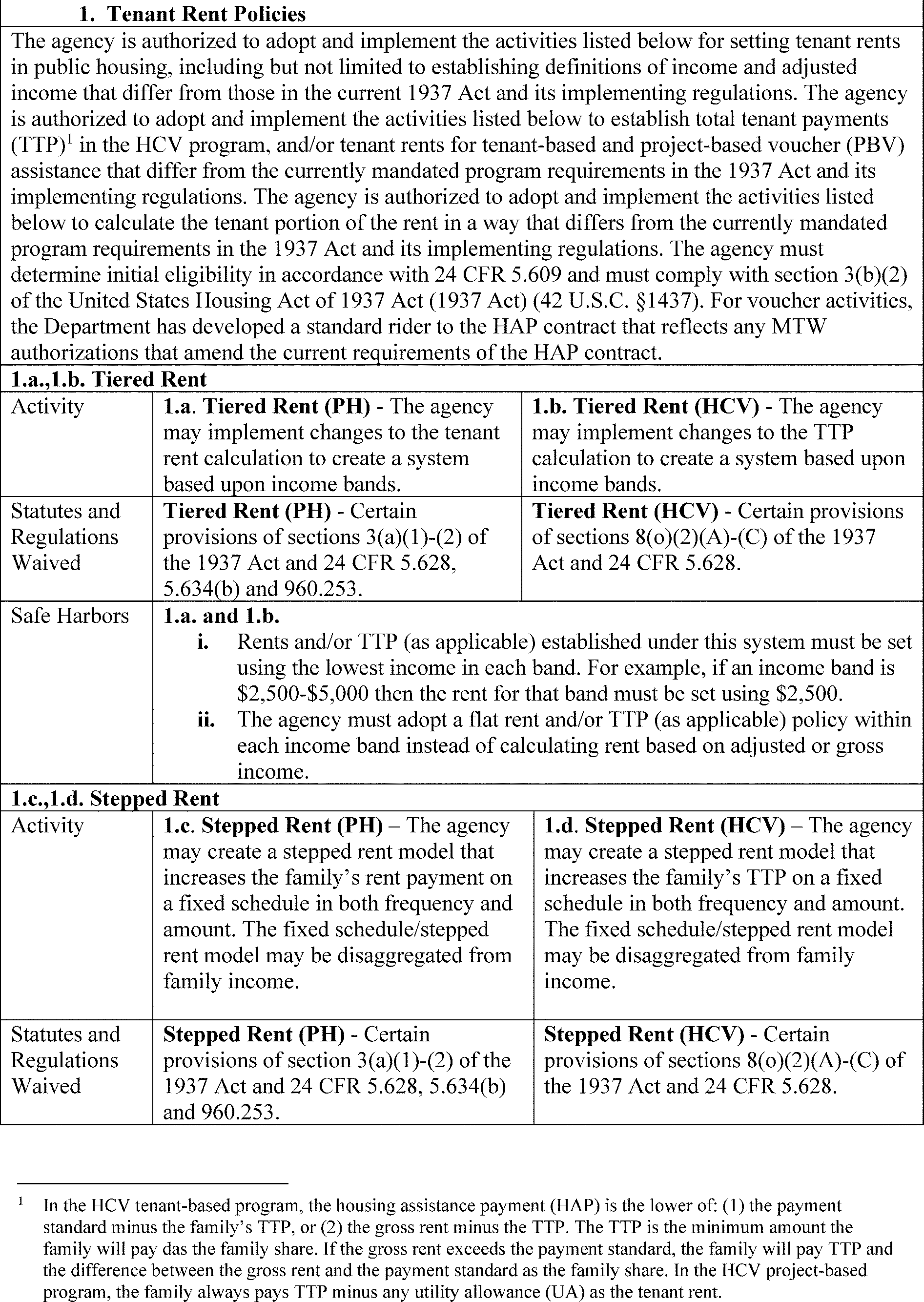
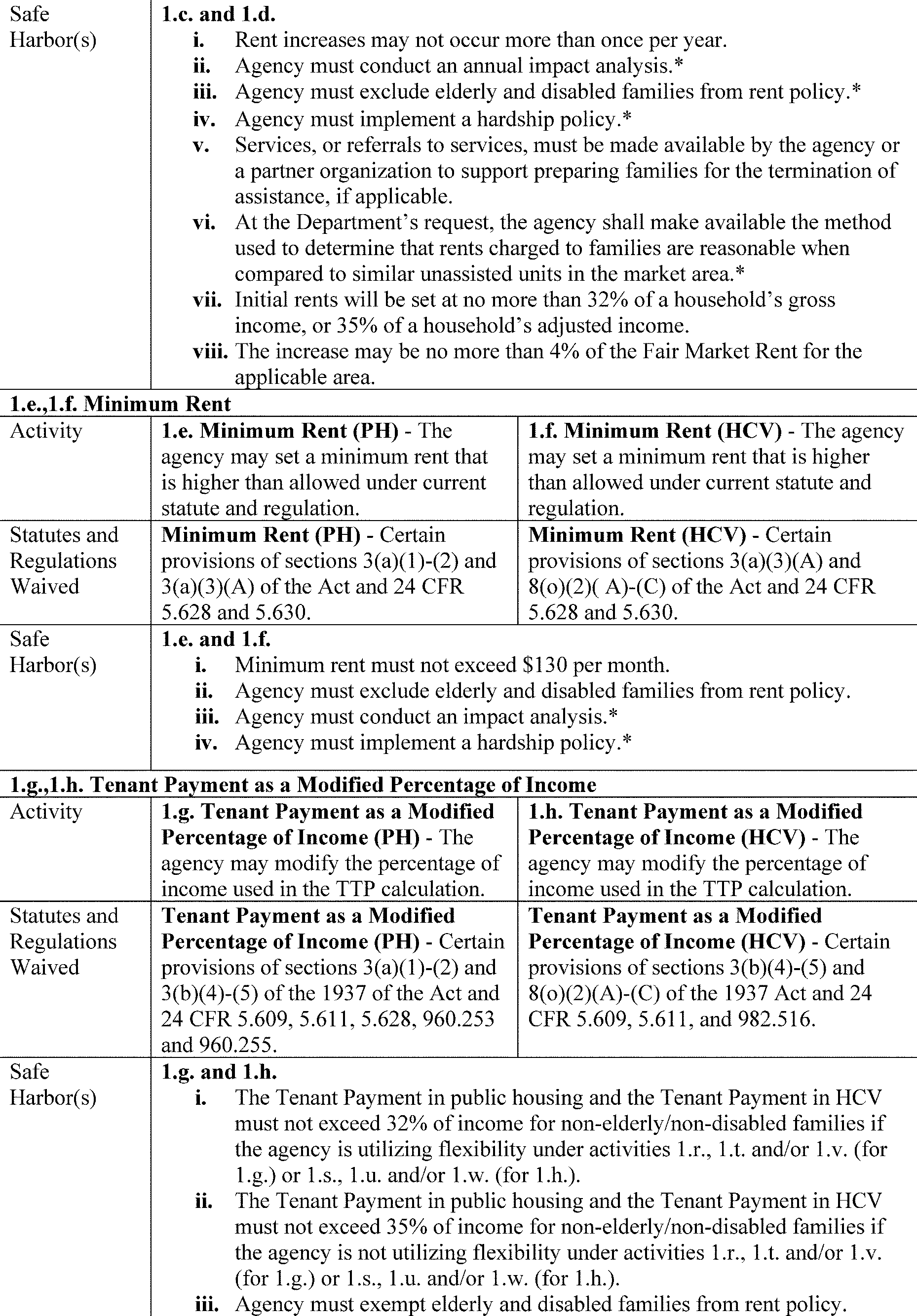
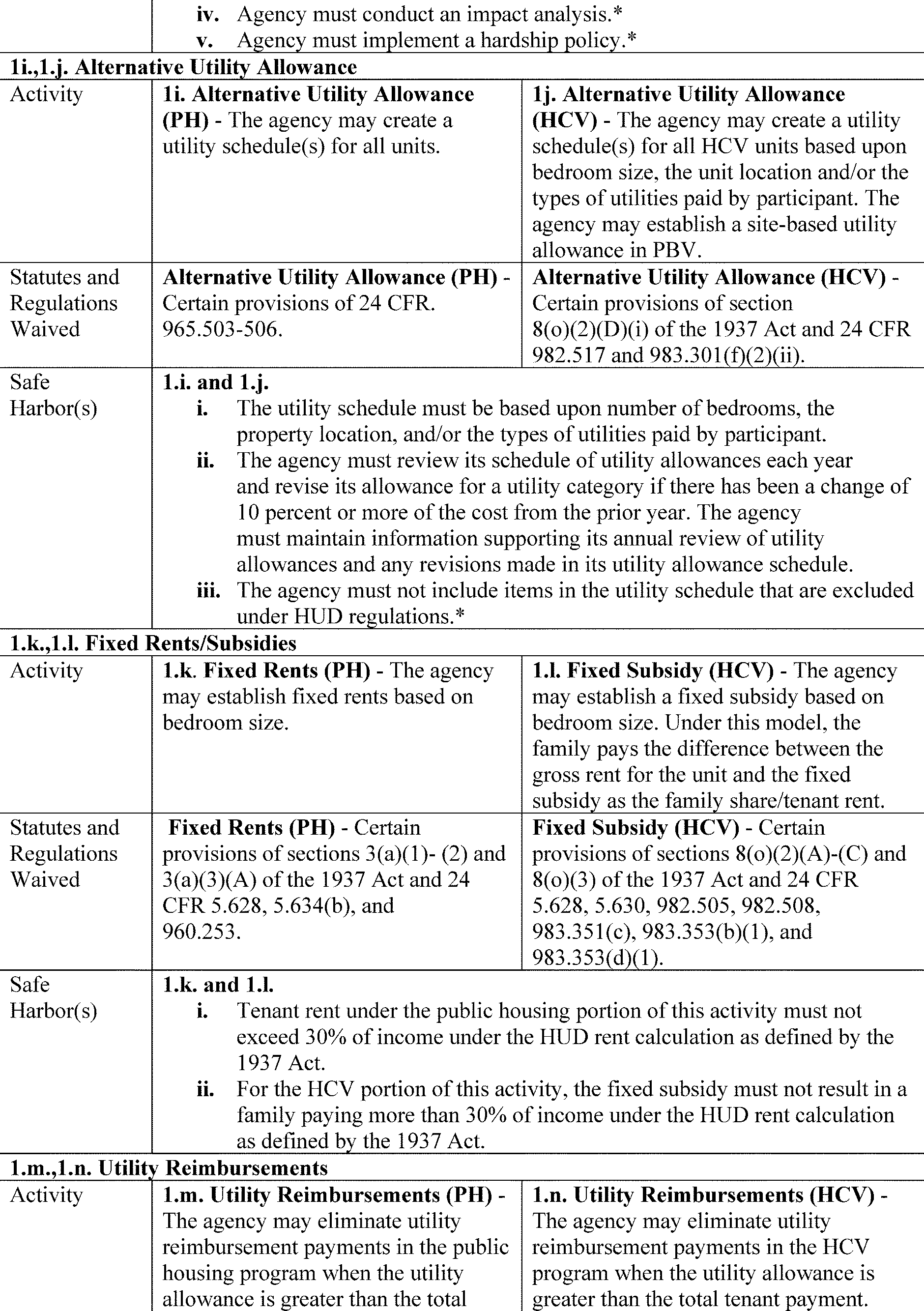
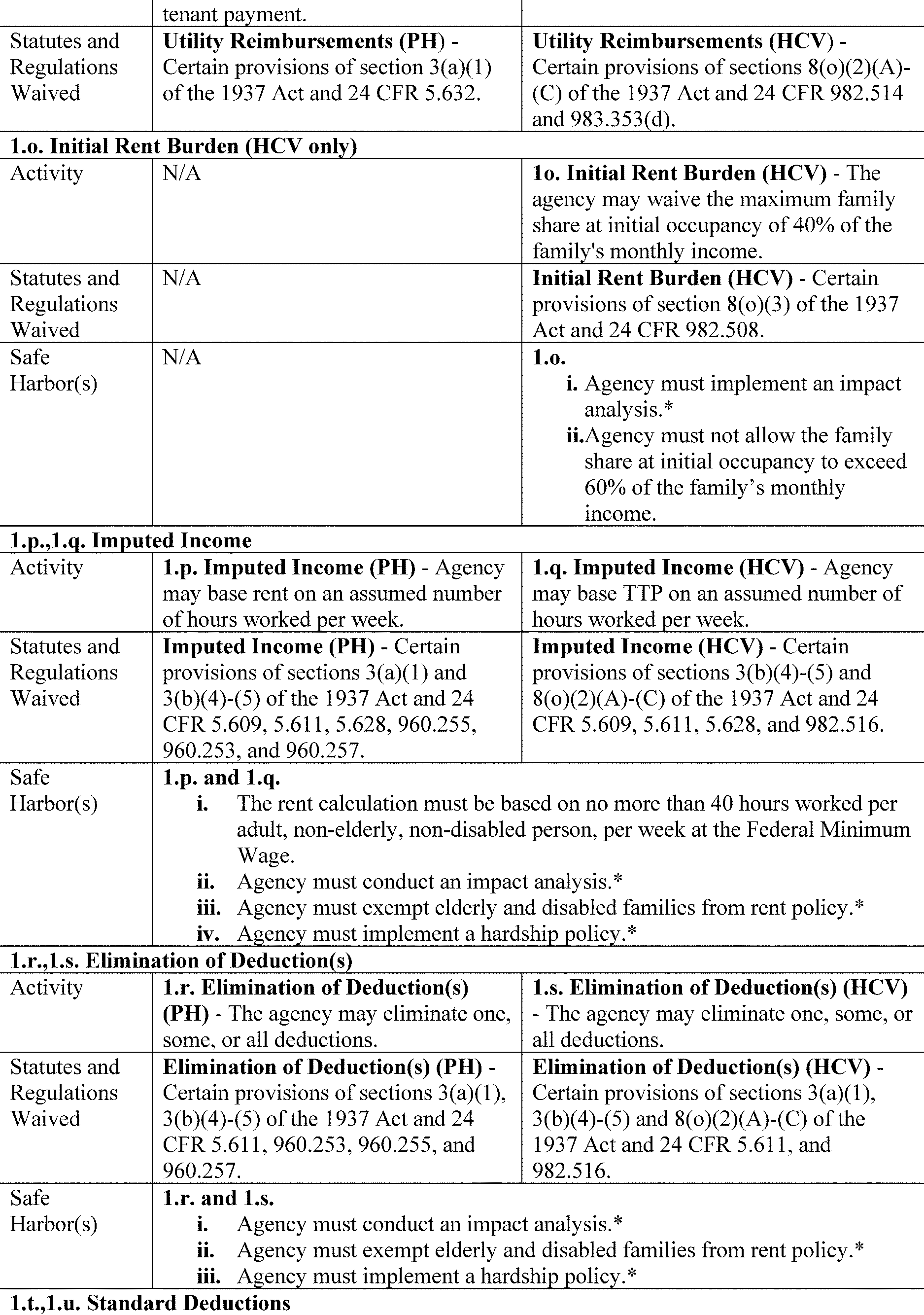
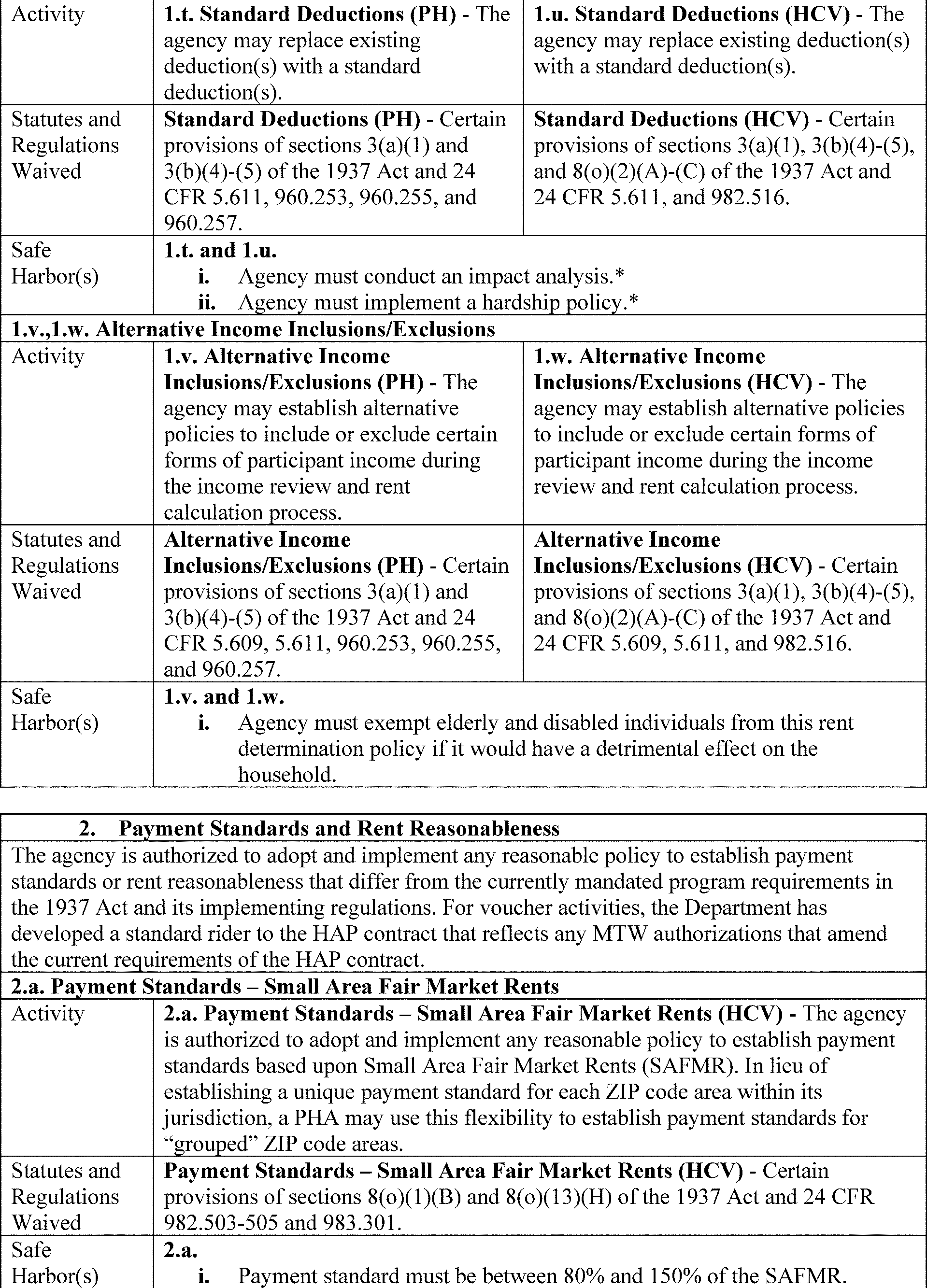
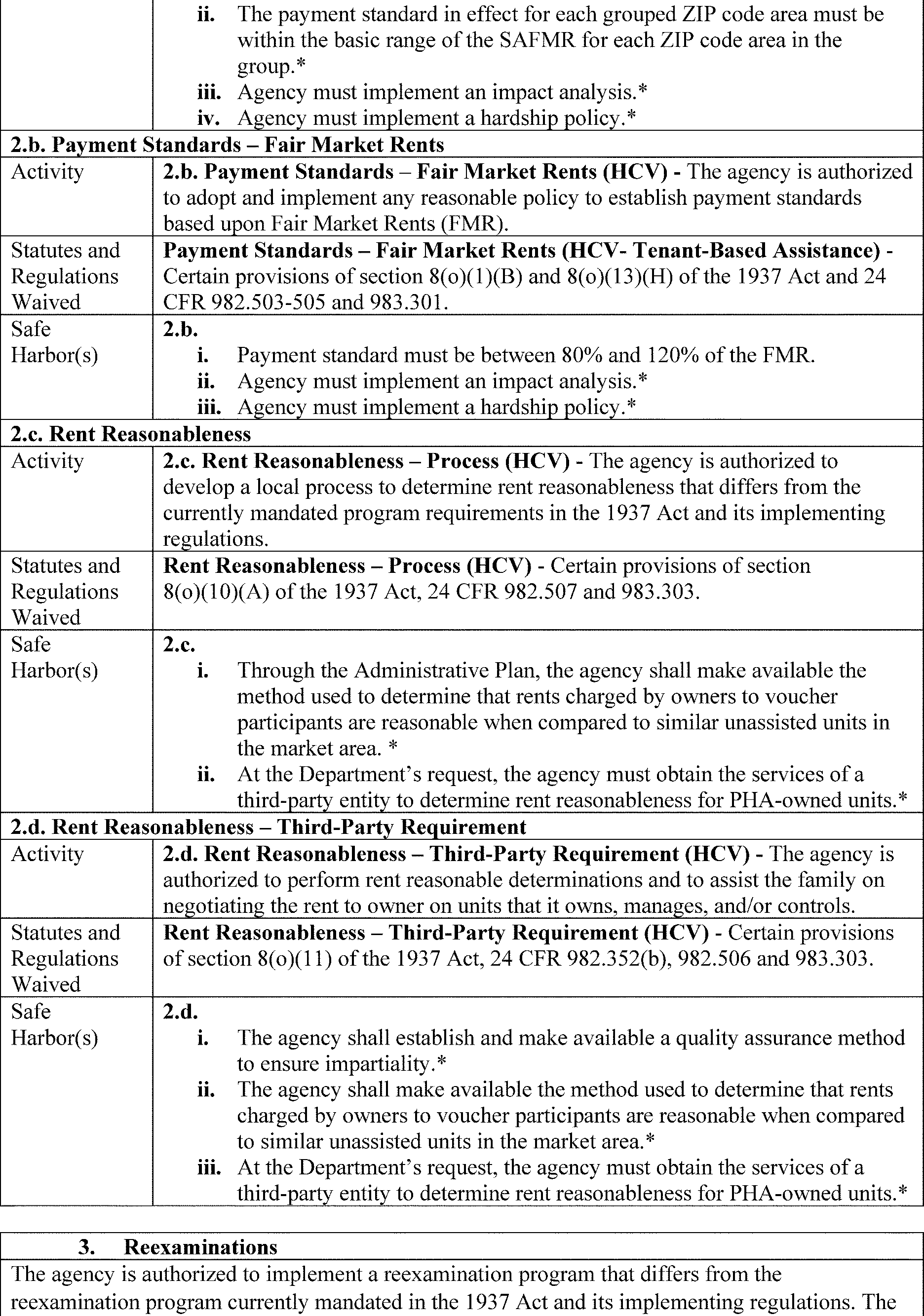
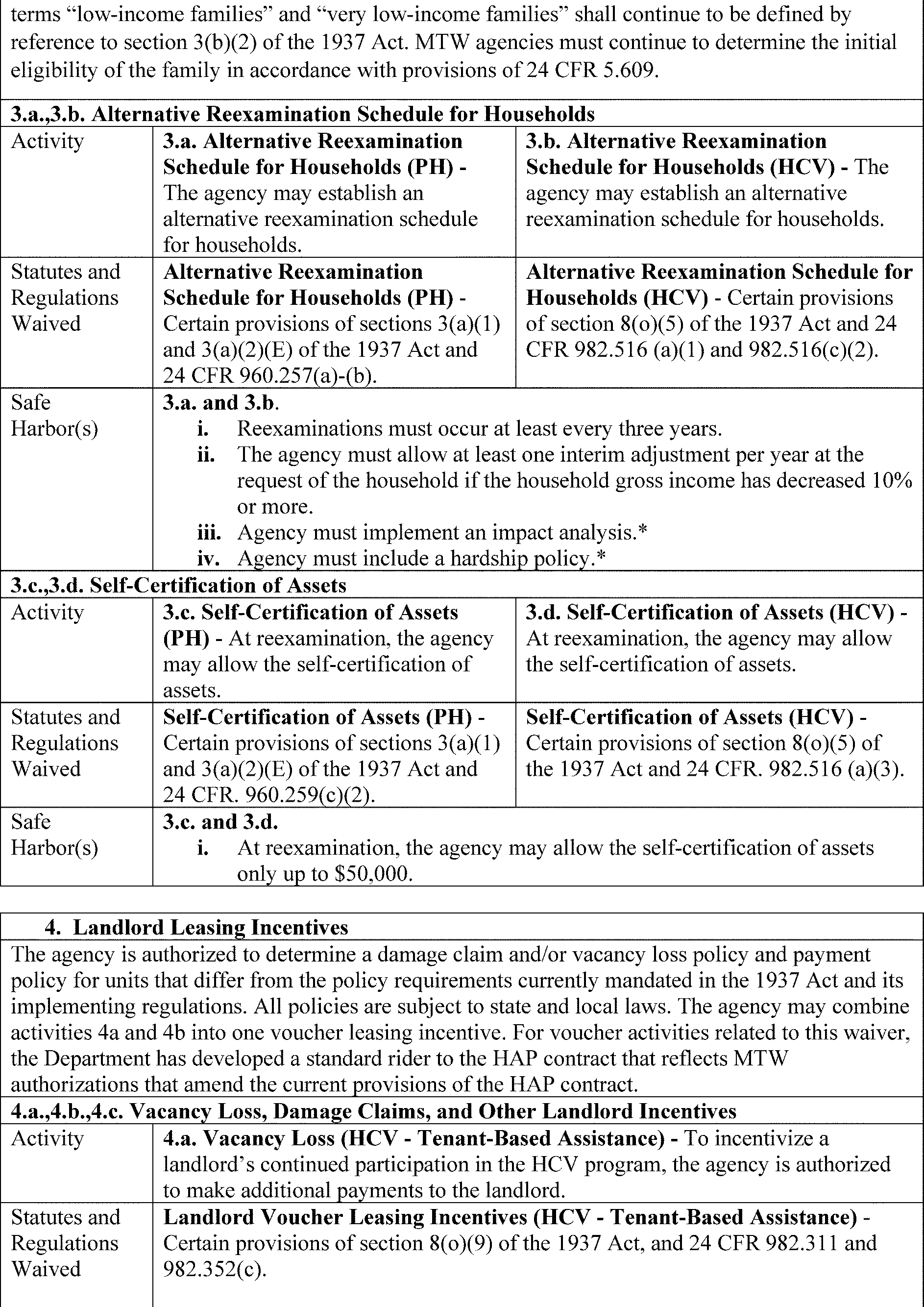
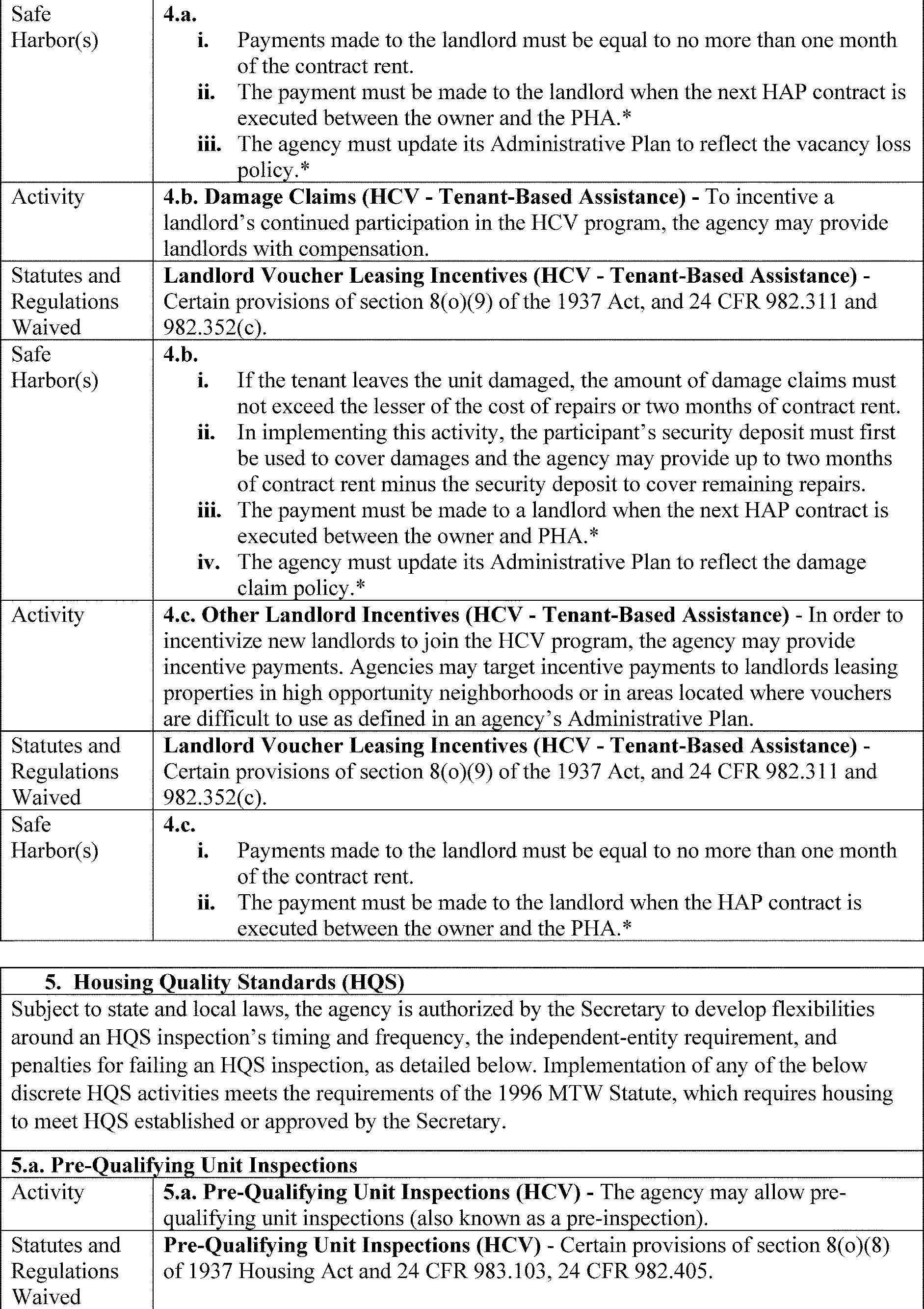
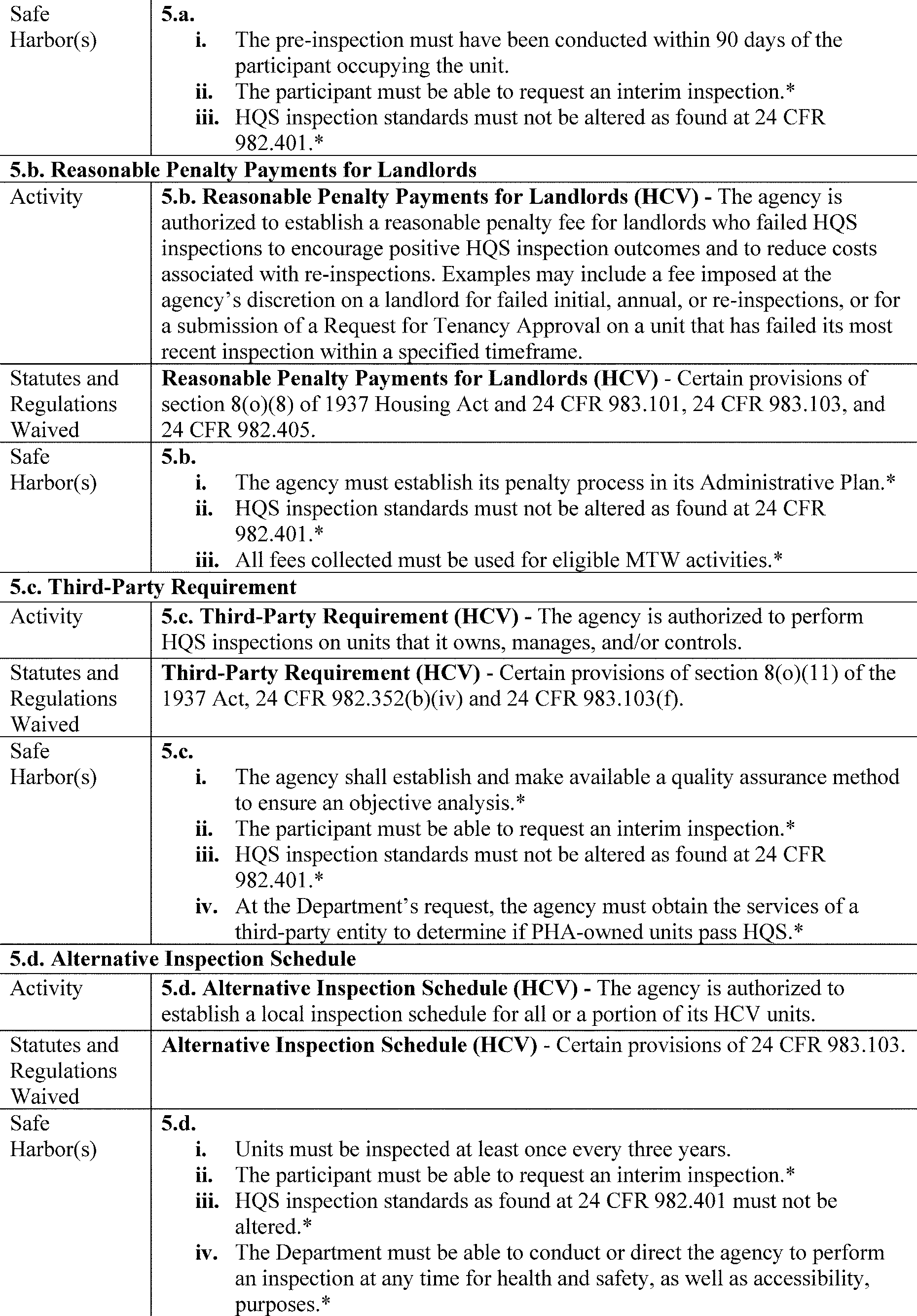
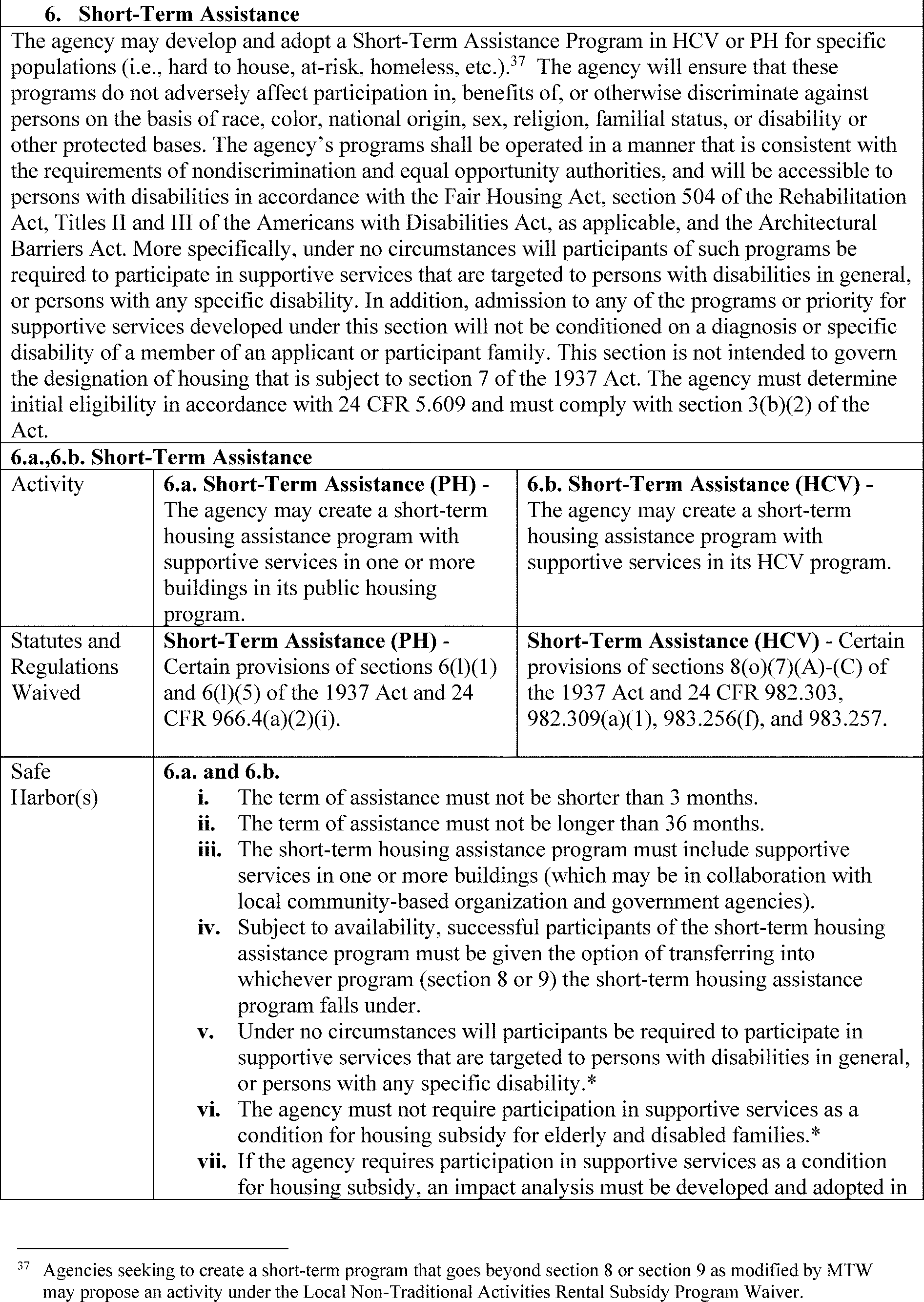
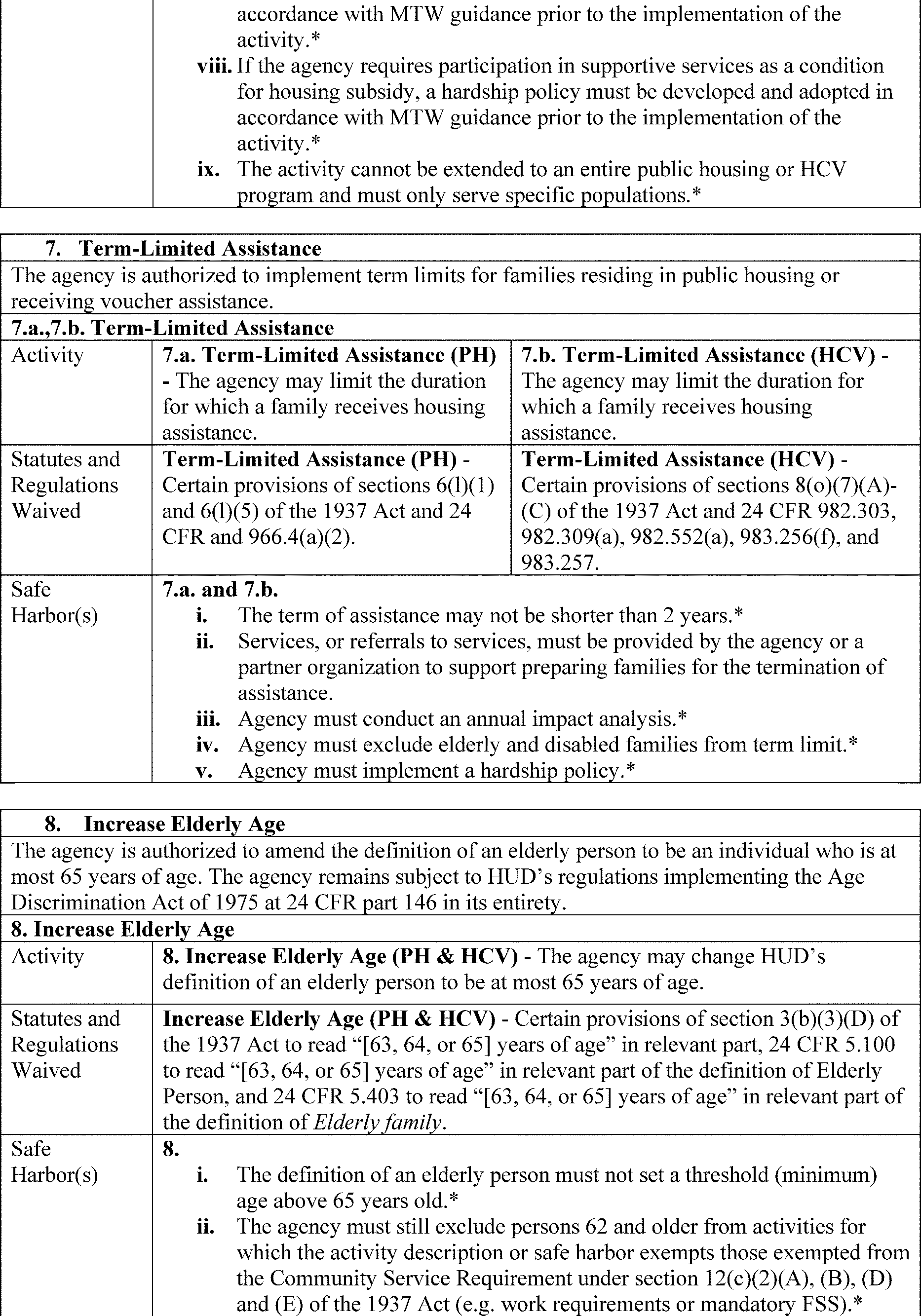
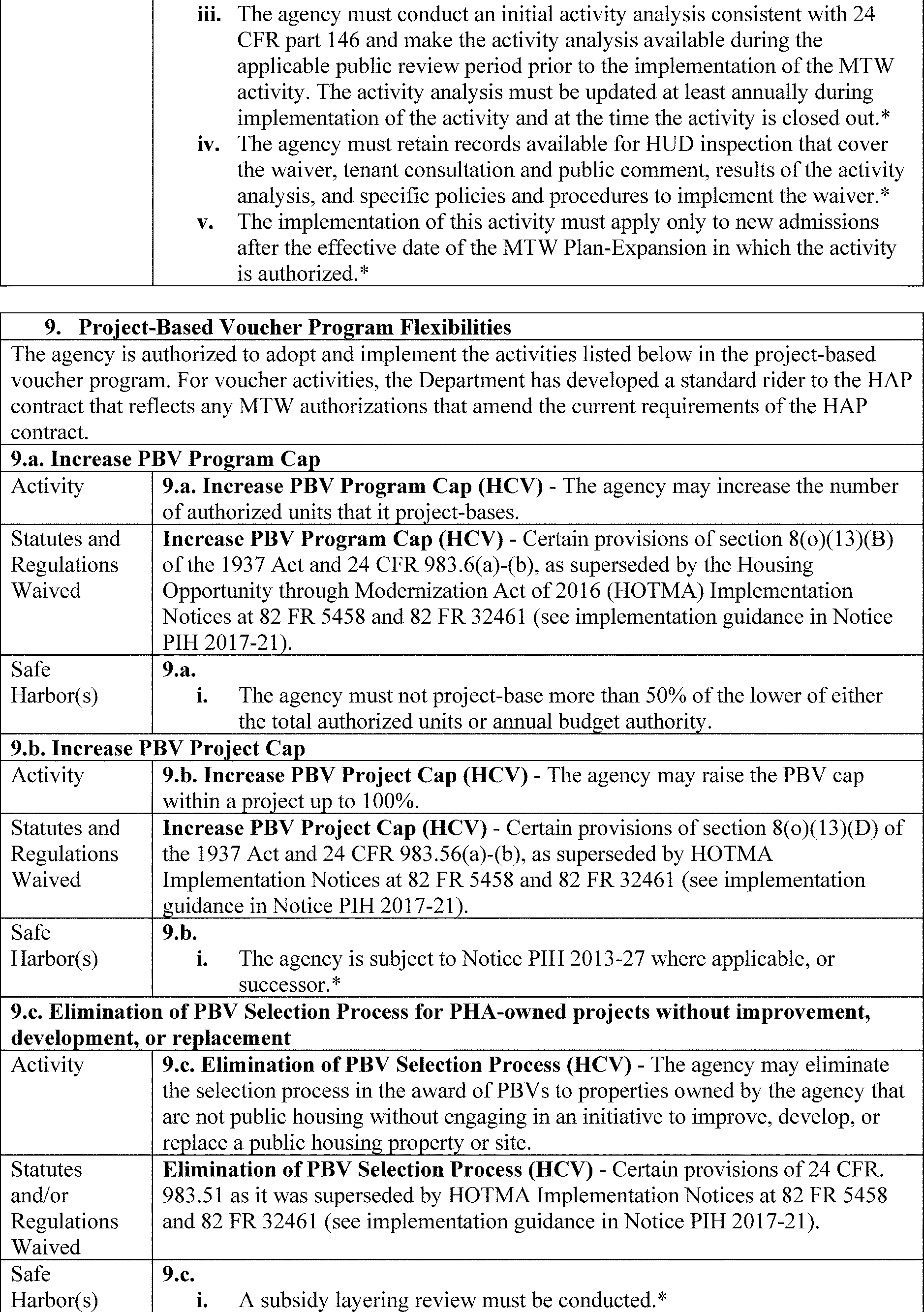
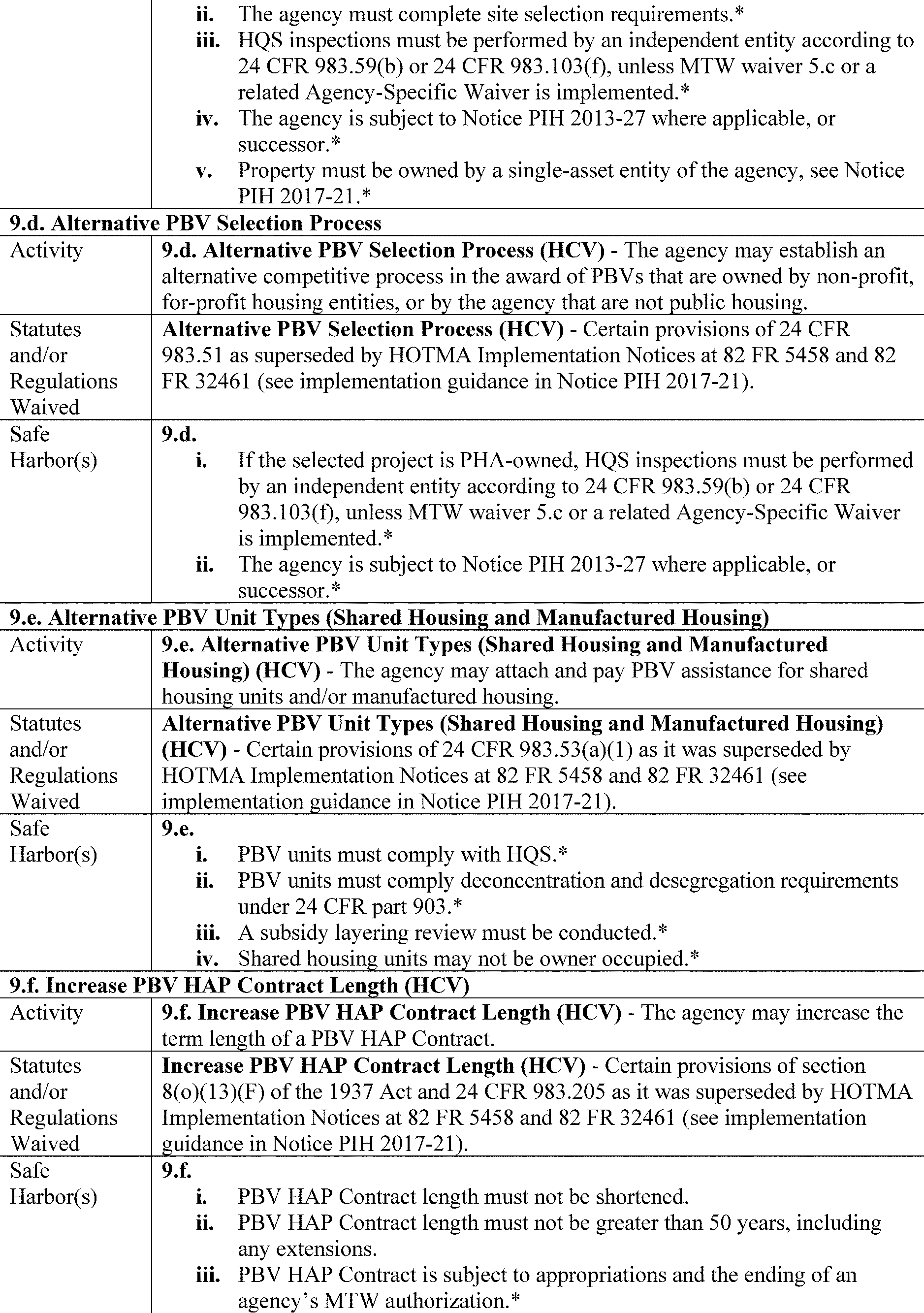
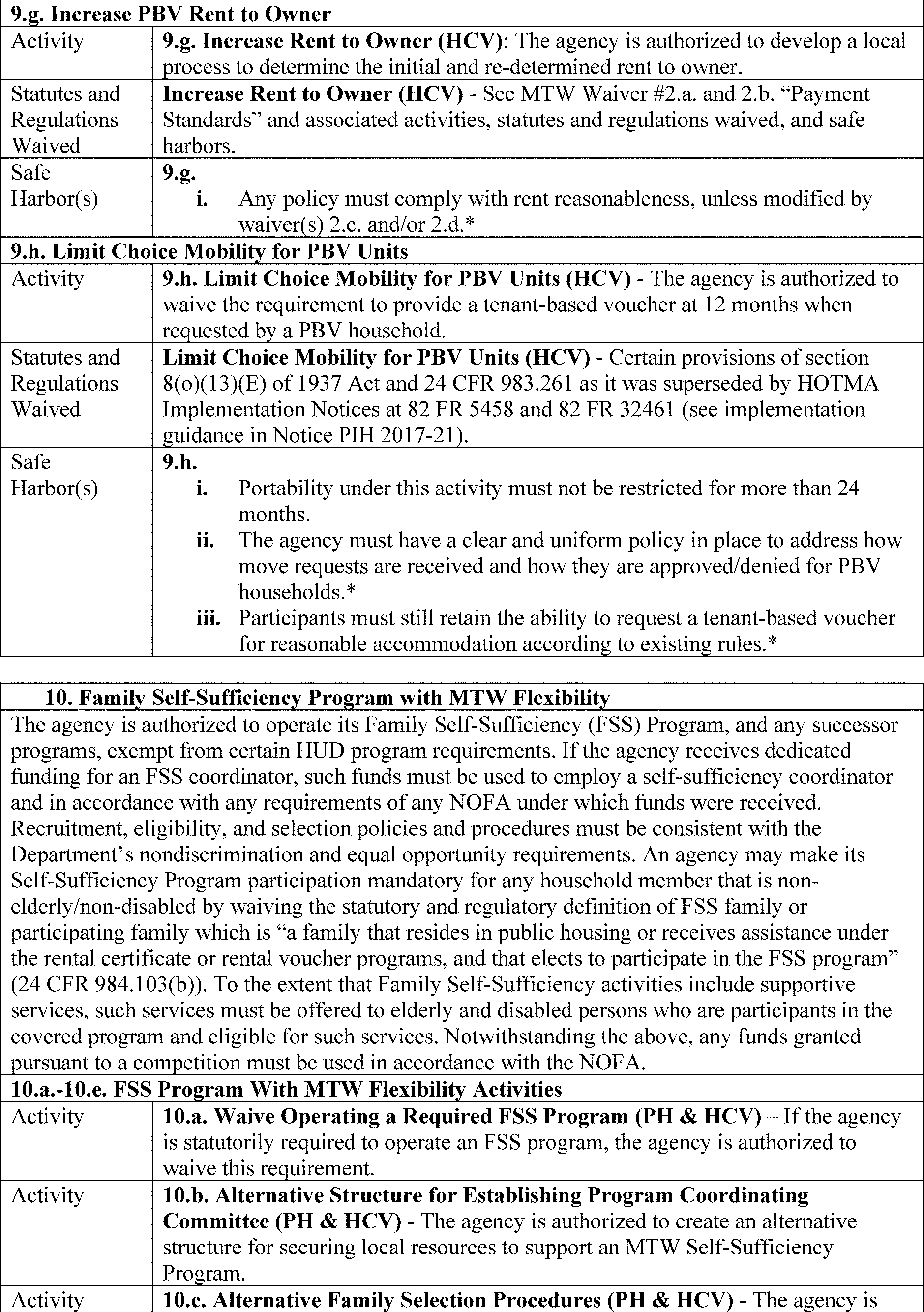
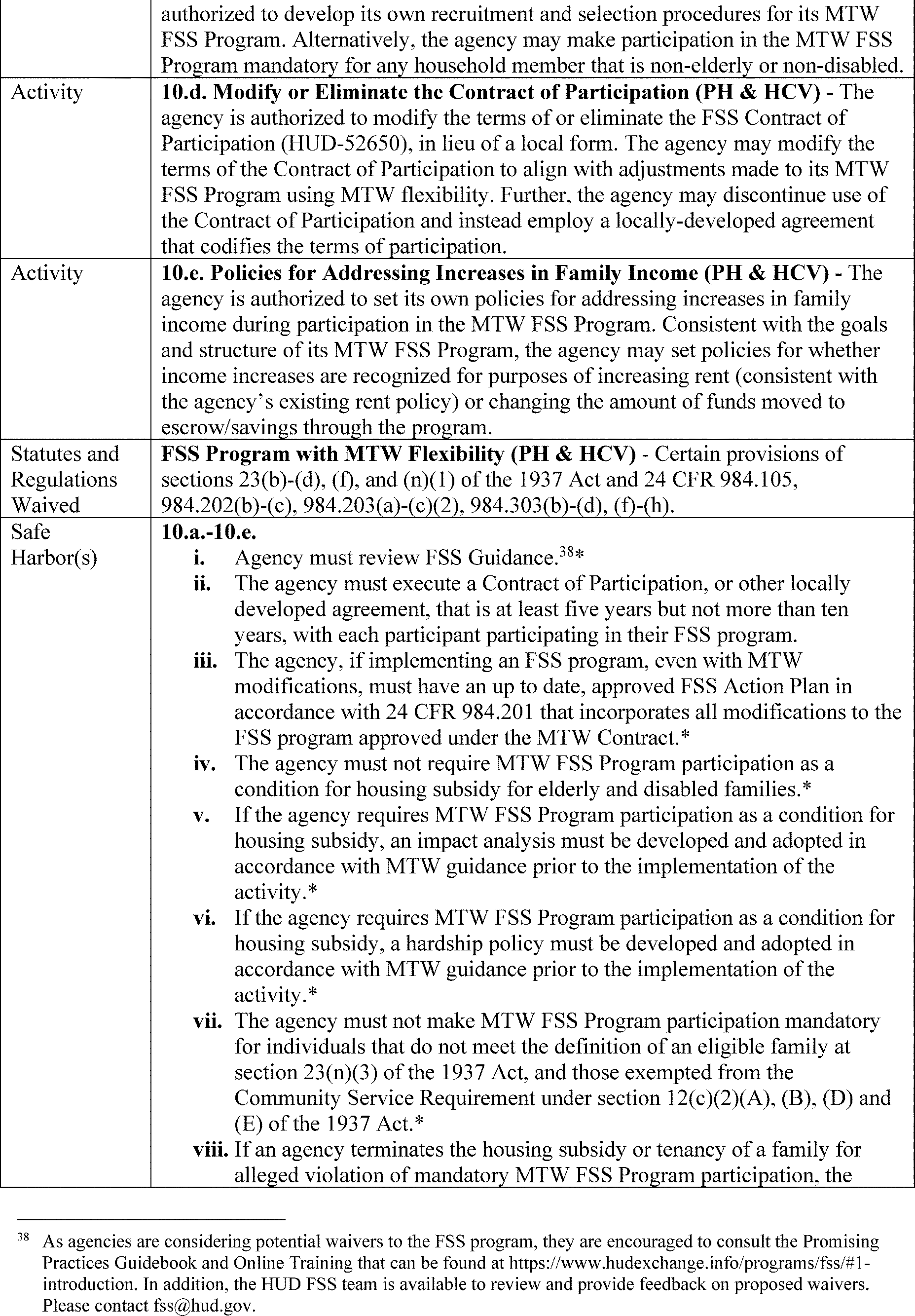
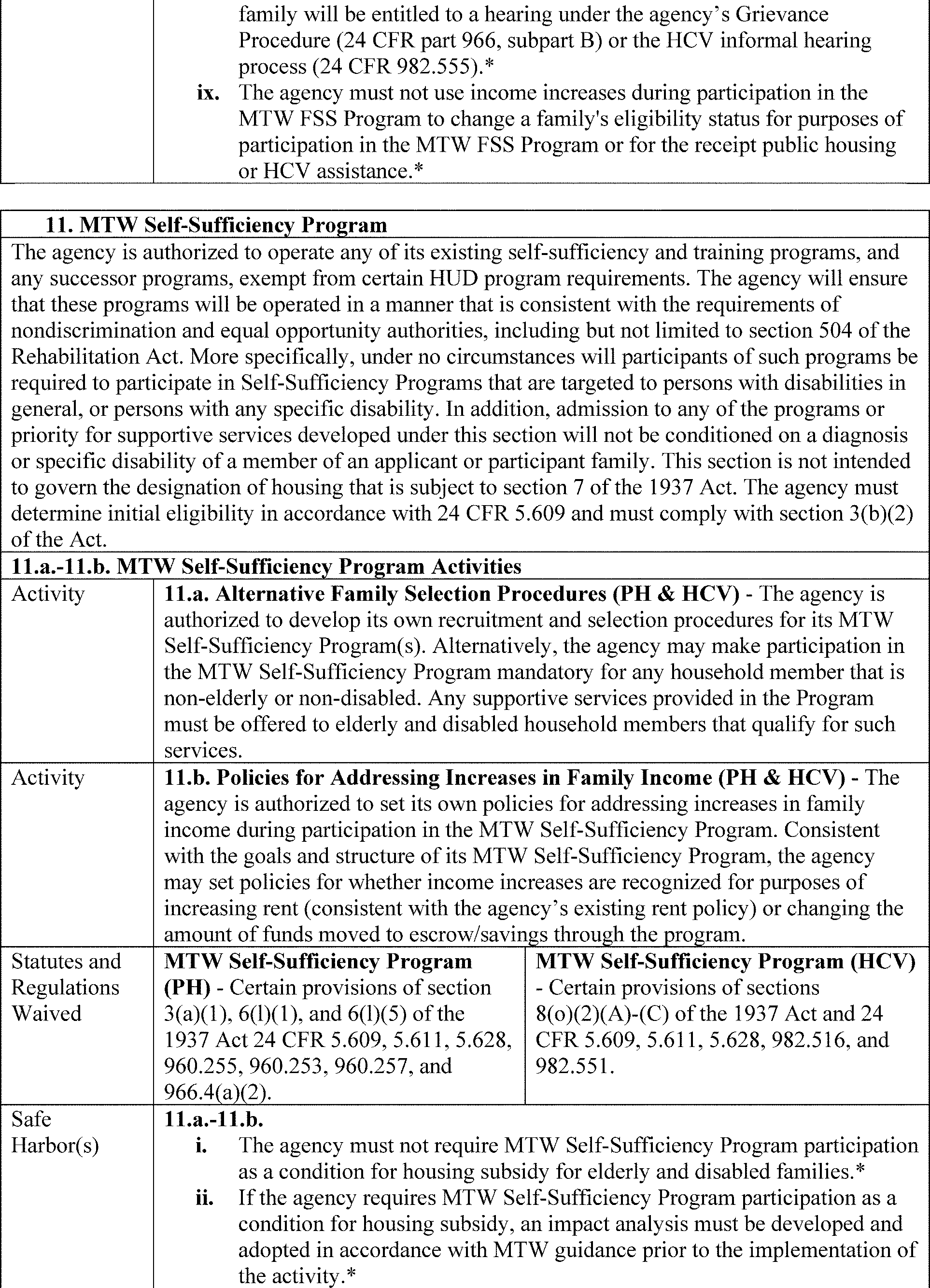
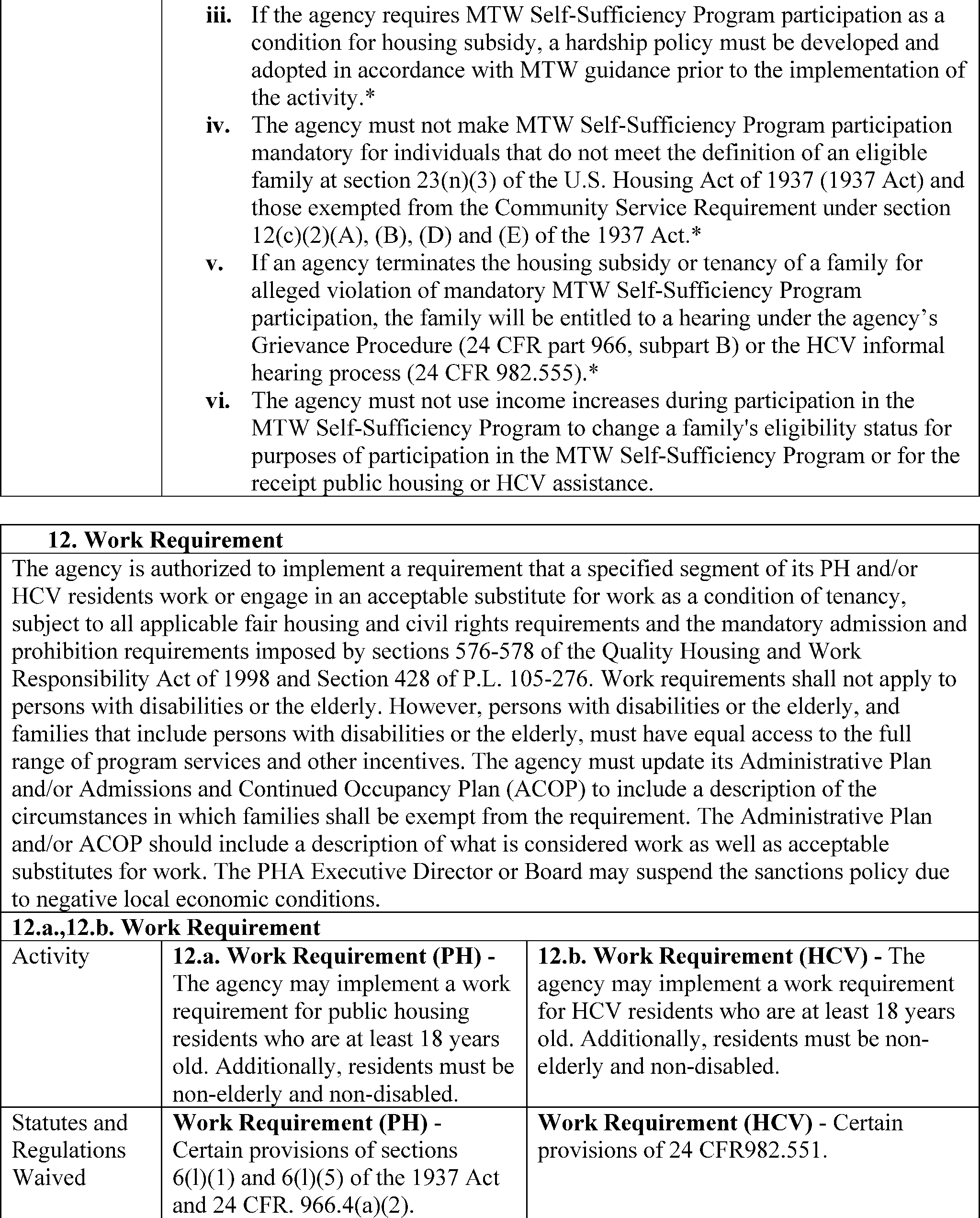
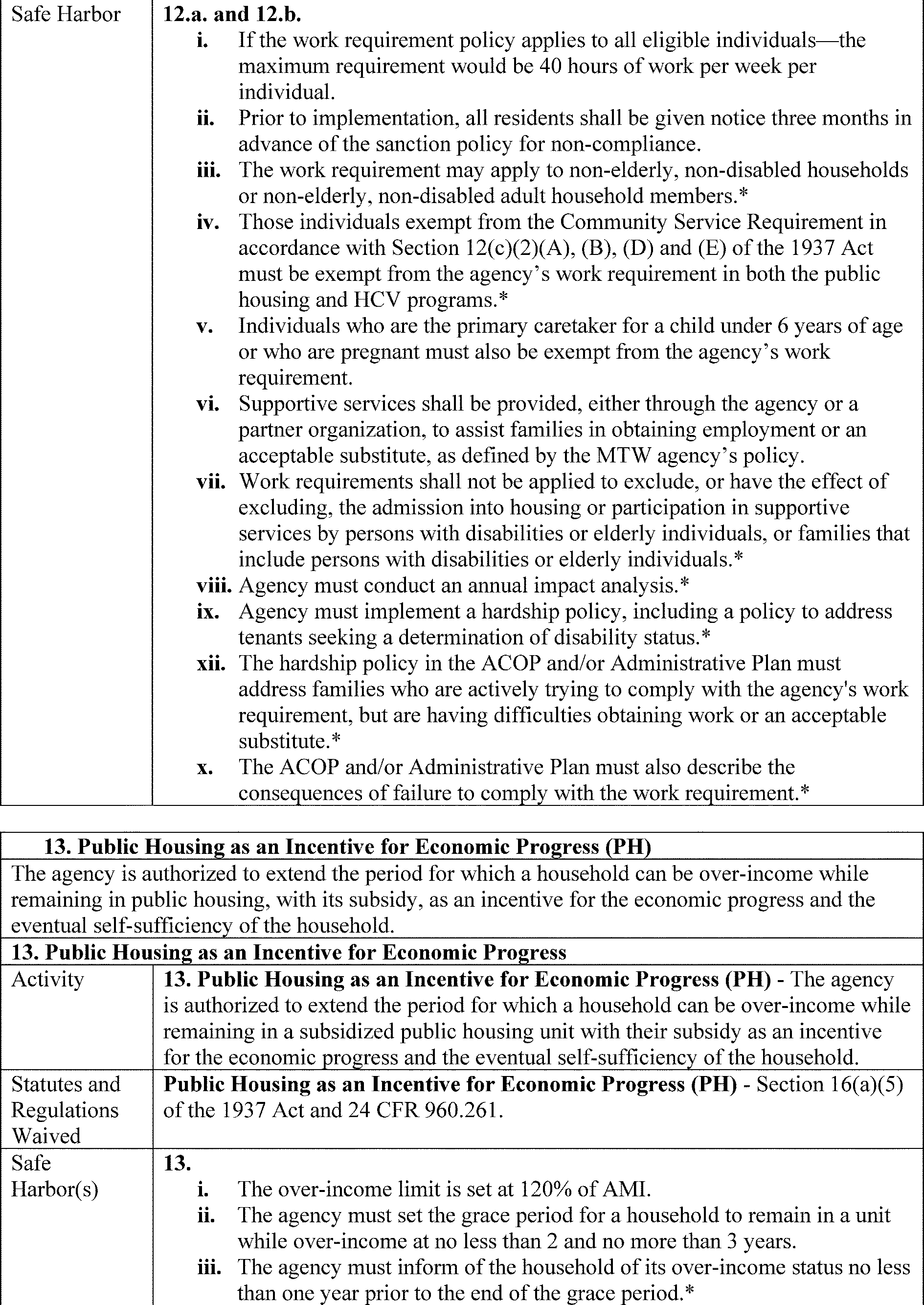
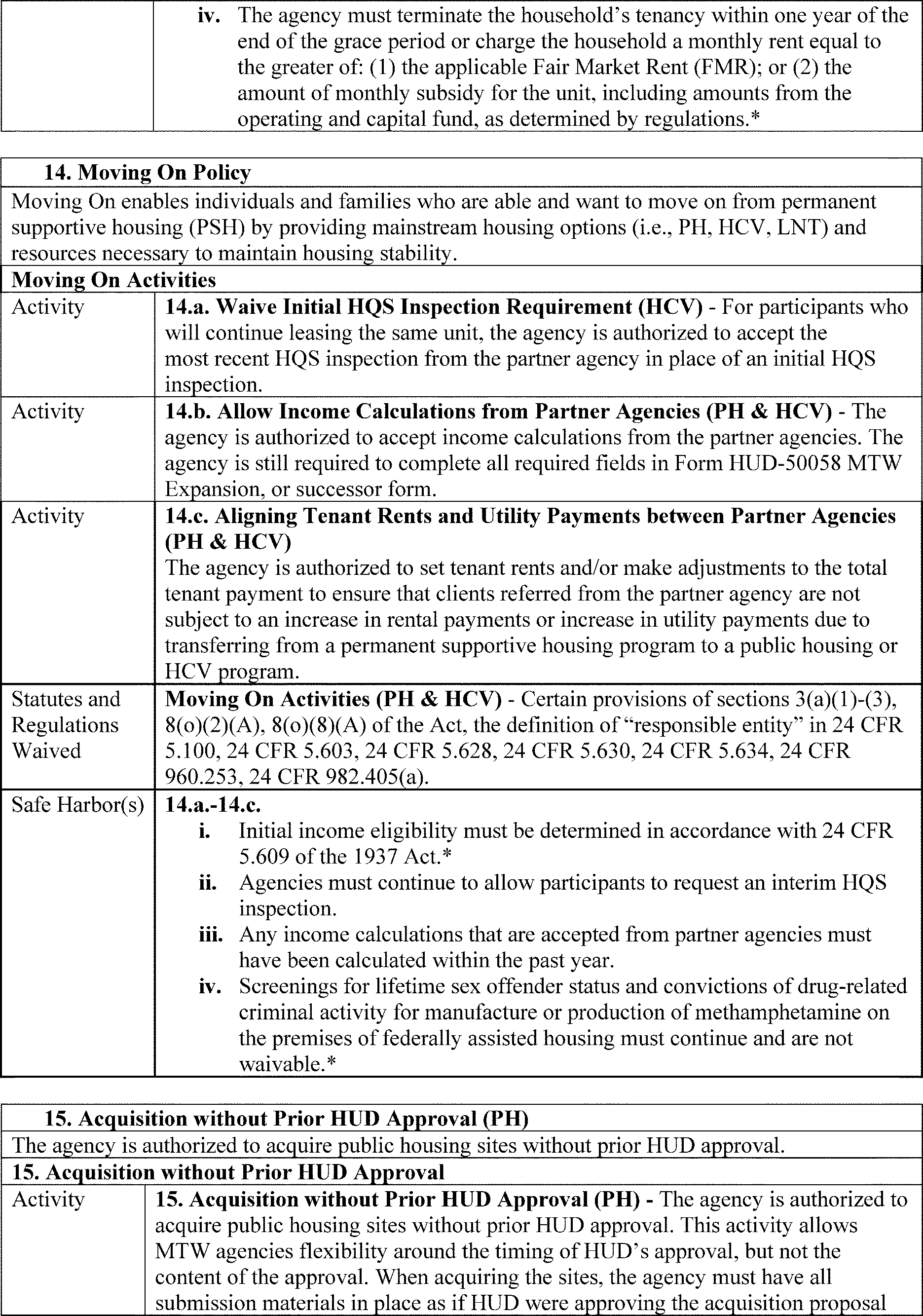
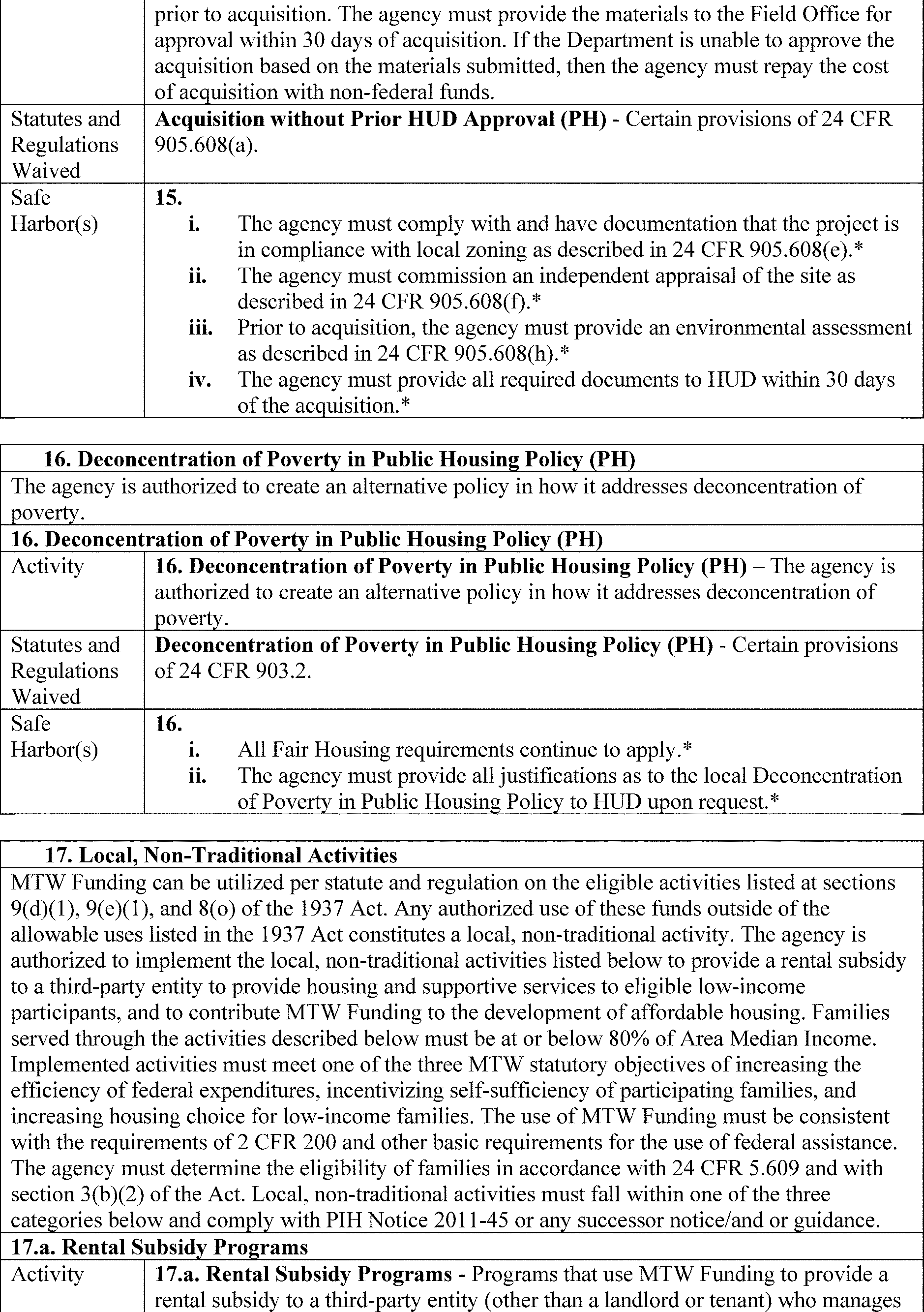
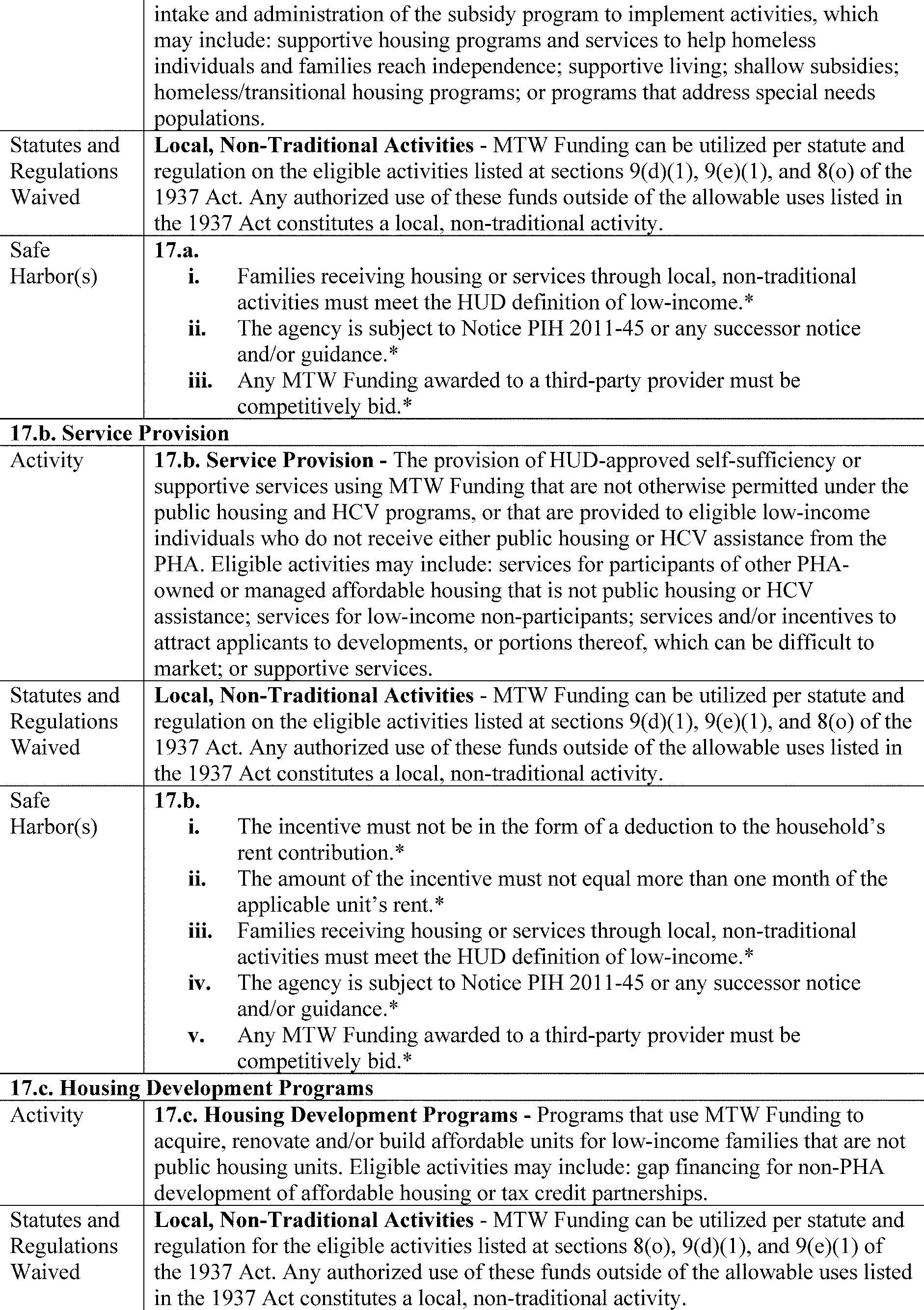
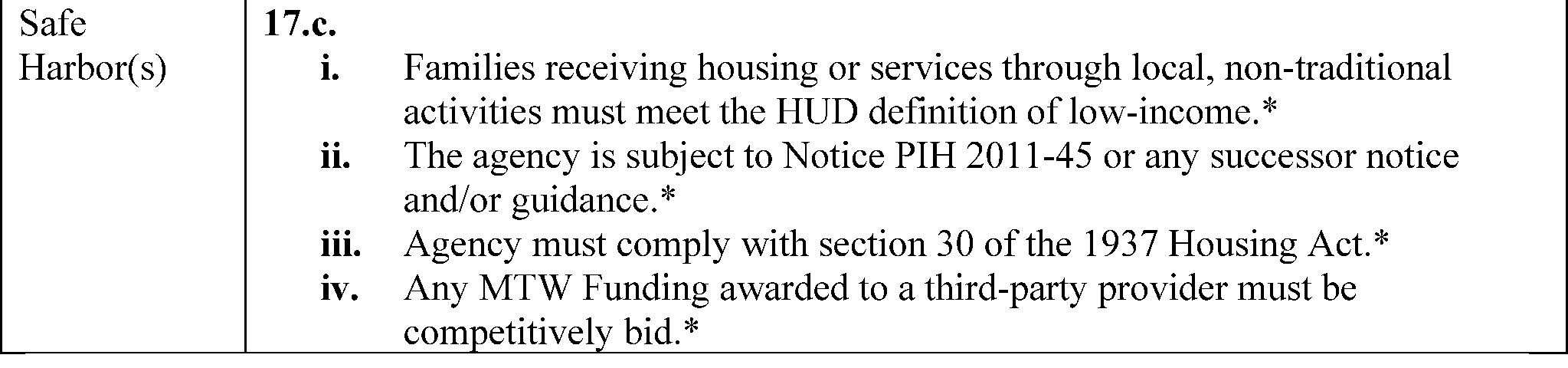
 portal.hud.gov/hudportal/documents/huddoc?id=instructions.pdf