Unleashing American Energy and Economic Prosperity; Rural Energy for America Program (REAP)
The Rural Business-Cooperative Service (RBCS or the Agency), an agency of the Rural Development (RD) mission area within the U.S. Department of Agriculture (USDA) is issuing a f...
The Rural Business-Cooperative Service (RBCS or the Agency), an agency of the Rural Development (RD) mission area within the U.S. Department of Agriculture (USDA) is issuing a final rule with comment period. Implementation of this action will simplify and streamline requirements and processes in the Rural Energy for America Program (REAP). Under the new REAP structure, projects must already be fully built and operational before the applicant ever applies. Applicants then apply, submitting actual energy production or savings data for the prior 12 months, alongside 12 months of pre-installation data. The Agency evaluates applications for completeness, eligibility, risk, and merit and will award grants subject to the availability of funds and criteria provided in an annual notice. This new approach changes the program to a post completion, performance validated model. All RES and EEI awards will now be based on
actual
documented output, energy savings, costs, and system performance. Bottlenecks leading to application processing backlogs such as the technical merit review clearance process have been removed from the Agency's purview. Multilocation projects and specific application of certain technologies are now ineligible, and the program proposes to eliminate state level competitions in favor of a single national scoring and selection process. The result is a streamlined but significantly different process intended to reduce risk to the program, simplify administration, and prioritize projects delivering verifiable results. The result of these changes, combined with the release of a planned online application portal, will significantly decrease burden for applicants by shortening application length and review times across the program.
DATES:
Effective date:
This final rule is effective October 16, 2026.
Comment date:
Comments must be submitted on or before November 2, 2026.
ADDRESSES:
Comments may be submitted by going to the Federal eRulemaking Portal at
www.regulations.gov
/and in the “Search Documents” box, enter the Docket Number or the Regulatory Information Number (RIN) provided above in the headings to the final rule, and click the “Search” button. To submit a comment, choose the “Comment” button associated with the rule. Information on using
Regulations.gov, including instructions for accessing documents, submitting comments, and viewing the docket after the close of the comment period, is available under the “FAQ” tab at the bottom of the Home page.
All submissions received must include the Agency name and docket number or RIN for this rulemaking. All comments received will be posted without change to
www.regulations.gov,
including any personal information provided.
Other Information:
Additional information about Rural Development and its programs is available at
www.rd.usda.gov/.
FOR FURTHER INFORMATION CONTACT:
Natalie Melton, Program Management Division, U.S. Department of Agriculture, 1400 Independence Avenue SW, Washington, DC 20250-3201; telephone (202) 690-1371; email:
natalie.melton@usda.gov.
SUPPLEMENTARY INFORMATION:
The information presented in this preamble is organized as follows:
I. Authority
II. Background
III. Stakeholder Engagement
IV. Summary of Changes
A. Subpart B—Rural Energy for America Program—Grants for Renewable Energy Systems and Energy Efficiency Improvements
B. Subpart C—Rural Energy for America Program: Grants for Energy Audits and Renewable Energy Development Assistance
V. Executive Orders/Acts
I. Authority
The REAP program is authorized by 7 U.S.C. 8107. Procedurally, this rule is not required to undergo notice-and-comment rulemaking because of the exception in 5 U.S.C. 553(a)(2) for matters relating to grants. RBCS also believes a final rule is optimal in this instance to quickly implement the new regulations and accept applications. Still, RBCS welcomes input from the public and has provided a comment period with this final rule, which may help RBCS in considering any future guidance or rulemaking on REAP.
II. Background
The 7 CFR 4280 Subpart B governs REAP and provides grants to Agricultural Producers and Rural Small Businesses for the purpose of purchasing and installing Renewable Energy Systems or to make Energy Efficiency Improvements. The program also provides grants to conduct Energy Audits and provide recommendations and information on Renewable Energy Development Assistance. Subpart B was last updated April 27, 2021 and confirmed on February 28, 2022 primarily to remove the provisions relating to guaranteed only loans promulgated through the OneRD initiative, now in 7 CFR 5001.
This program reduces energy costs and consumption and helps meet the Nation's critical energy needs; however, based on feedback received from applicants and stakeholders during the normal course of business, the current regulation is perceived as complicated and burdensome for the average person or business to understand and often causes Applicants to hire grant writers and contractors to apply and administer funding further reducing their opportunities for economic prosperity. The Agency is revising the program requirements and processes to address these concerns and to support Executive Orders 14154, “Unleashing American Energy” and 14156, “Declaring a National Energy Emergency,” through reducing high energy costs and providing a diversified and affordable supply of energy to drive our Nation's economic prosperity by promoting efficiencies and reducing compliance costs. Consistent with the May 2025 USDA Farmers First Policy (
www.usda.gov/sites/default/files/documents/farmers-first-small-family-farms-policy-agenda.pdfwww.usda.gov/sites/default/files/documents/farmers-first-small-family-farms-policy-agenda.pdf) and the National Farm Security Action Plan (
www.usda.gov/sites/default/files/documents/farm-security-nat-sec.pdf), which direct USDA to safeguard Cropland, elevate farmer interests, and disincentivize solar development on farmland, USDA updated the REAP program based on strong feedback from farmers, ranchers, rural businesses, and state partners, which was received through the normal course of business in person or through phone calls and emails. Many stakeholders raised concerns that some large ground mount solar projects were contributing to artificially inflated land
( printed page 62601)
prices, displacing productive Cropland, or exceeding a business's actual energy needs. They voiced further concerns regarding components manufactured in foreign adversary nations that might detract from the goals of supporting American manufacturing. The updated rule focuses REAP support on appropriately scaled, on farm renewable energy systems, not large or utility scale solar developments, and excludes projects that involve prohibited components from foreign adversary nations, as defined by 15 CFR 791.4. By limiting oversized ground mount installations, protecting Cropland, and ensuring systems match genuine energy use, USDA is safeguarding farmland, preventing market distortions, and ensuring REAP funds directly benefit rural producers and small businesses while maintaining program fairness and integrity.
This revision streamlines, simplifies, and reduces burden for the application process. The Agency will publish a Notice of Funding Opportunity providing additional details on application procedures, funding priorities, and how applications will compete. REAP is a competitive grant program. Projects compete based on score, and funding to support all eligible applications is not guaranteed. Applicants whose projects are not funded must re-evaluate program eligibility and, if their project still meets the program criteria, may submit a new application in the following application cycle.
IV. Summary of Changes to the Rule
This section presents the changes to the existing grant regulation which includes revising subpart B into a more sequential order of events as they occur during the application, award, and post-award processes. Subpart B regulates grants for Renewable Energy Systems and Energy Efficiency Improvements. This subpart has been revised to prohibit the installation of solar and wind renewable energy systems on Cropland, prohibit a solar photovoltaic system or wind turbine consisting of any component made in a country named as a foreign adversary, limit applicant eligibility to the Highest-Level Owner, ensure alignment of the definition of Small Business with the definition used by the Small Business Administration, and shift the end date of the Project Period to 12 to 24 months prior to application. Subpart C regulates grants for Energy Audits and Renewable Energy Development Assistance. To promote clarity and reader comprehension defined terms have been capitalized throughout the preamble and regulatory text. Additional context and examples are outlined in the specific preamble sections that follow.
§ 4280.101 Purpose
This section was updated to move grants for Energy Audits and Renewable Energy Development Assistance out of subpart B and into subpart C because this portion of the program operates as a separate technical assistance program targeting a different pool of eligible applicants that compete in a separate competitive funding competition. The information regarding the use of up to 10 percent of the award amount for broadband infrastructure was moved to § 4280.125 because it is related to the use of funds.
§ 4280.102 Organization of Subpart
This section was revised to reflect the reorganization of the content to reflect the sequence of events as they occur during the application, award, and post-award processes.
§ 4280.103 Acronyms
This section was changed from “Definitions” to “Acronyms.” This section was added to make it easier for readers to quickly identify frequently used acronyms.
§ 4280.104 Definitions (Formerly § 4280.103)
This section was changed to remove language on exception authority as it is not authorized by the program's authorizing statute. Definitions were moved to this section to allow for the addition of the new Acronyms section located at § 4280.103. This section was revised to be consistent with the definitions for 2 CFR part 200 at 2 CFR 200.1. Language was also added to this section to clarify that additional defined terms can be found in applicable regulations. The following terms are removed, revised, or added.
Administrator
was removed because the term is no longer used in the regulation.
Agricultural commodity
was added because it supports the revised definition for Agricultural Producer.
Agricultural producer
was revised to more closely align with the definition used in 7 CFR part 4284 subpart J and subpart K. We have also included a section of the definition that specifically applies to wholly-owned Tribal entities to allow these entities to continue to be eligible for the program in a way that accommodates the way these entities are organized.
Ancillary infrastructure
was added to clarify how this term is used in the context of this regulation.
Annual energy production
was added to clarify how the annual output of energy produced by a Renewable Energy System should be reported.
Battery energy storage system
was added to support the clarification of project eligibility in § 4280.122.
Biofuel
was removed because it is no longer used in the regulation.
Biogas
was revised to include examples of acceptable Renewable Energy Biogas projects.
Commercially available
was revised to remove ambiguity and to remove the alternative to use a domestic or foreign system that has been certified by a recognized industry organization whose certification standards are acceptable to the Agency.
Complete application
was removed because it is not needed. The concept of a complete application and its significance to the application process is explained in §§ 4280.131 and .140(a).
Costs incurred
was removed because the term is no longer used in the regulation.
Cost sharing
was added to be consistent with 2 CFR part 200.
Council
was relocated to the newly added § 4280.204 because it is only applicable to the Energy Audit and Renewable Energy Development Assistance Grants.
Cropland
was added to be consistent with 7 CFR 718.2.
Departmental regulations
was removed because it is now addressed in § 4280.108(c).
Design/build method
was removed because the term is no longer used in the regulation.
Distribution components
was added to clarify how the term is used in the context of this regulation.
Eligible project costs
was removed because uses of funds and allowable and unallowable costs are addressed in § 4280.125.
End user
was added to support the revised section on conflict of interest in § 4280.106.
Energy assessment
was revised to move the requirement for when the Energy Assessment needs to be submitted to § 4280.131(b)(2).
Energy audit
was revised to limit the person who can conduct the Energy Audit to an Energy Auditor and to identify acceptable standards.
Energy efficiency improvement
was revised to clarify that the Energy Efficiency Improvements must be for the Applicant's operations.
( printed page 62602)
Equipment
was added to be consistent with 2 CFR part 200.
Existing business
was revised to clarify what is considered an Existing Business. The definition no longer treats a new business and Existing Business applying as co-Applicants as an existing business.
Farm or Ranch
was added to support the revised definition of Agricultural Producers.
Feasibility study
was revised to clarify that the individual conducting the report must have relevant knowledge, expertise, and experience and to further clarify that the findings must be related to the feasibility of the proposed Project or operation located at a specific site.
Federal award
was added to be consistent with 2 CFR part 200.
Financial assistance agreement
was revised to clarify what is included and which form is used.
Financial feasibility
was removed because the term is no longer used in the regulation.
For-profit organization
was added to be consistent with 2 CFR part 200.
Geothermal source
was added to support the Geothermal Direct Generation System and Geothermal Electric Generation System definitions.
Highest-level owner
was added to support the revised section on Applicant eligibility in § 4280.120. Below are examples of what the Agency considers to be Highest-Level Owners:
(1) One example is a sole proprietorship. This company is owned by one individual and could apply as an Agricultural Producer if they are engaged in farming or ranching as their business. Alternatively, the company could apply as a Rural Small Business if it meets the definition of a Small Business and is located in a Rural area.
(2) Another example is an entity owned by a group of people, such as a family-owned LLC. This entity is owned by multiple individuals, not by one or more entities, and would be eligible to apply if it meets the definition of an Agricultural Producer or a Rural Small Business.
(3) A third example is an entity that owns two subsidiaries—ABC Corp. While the entity that owns the subsidiaries is eligible to apply as a Highest-Level Owner if it meets the definition of either Agricultural Producer or Rural Small Business, neither of the subsidiaries is eligible to apply as a Highest-Level Owner because they are owned by another entity—ABC Corp.
Hybrid
is updated to the term Hybrid System.
Hydroelectric source
is updated to Hydroelectric System.
Hydrogen project
is updated to Hydrogen System.
Immediate family
was revised to be consistent with the use of the term in 7 CFR part 4284.
Institution of Higher Education
was relocated to the newly added § 4280.204 because it is only applicable to the Energy Audit and Renewable Energy Development Assistance Grants.
Instrumentality
was relocated to the newly added § 4280.204 because it is only applicable to the Energy Audit and Renewable Energy Development Assistance Grants.
Interconnection agreement
was revised to clarify the definition.
Key service providers
was added to clarify Project eligibility requirements in § 4280.122.
Kilowatt
was added to support the definition of Rated System Size.
Kilowatt
-
hour
was added to support the definition of Simple Payback.
Letter of conditions
was added to support the award notification process described at § 4280.151.
Local government
was added to support the updated conflict of interest policy located at § 4280.106.
Matching funds
was removed to be consistent with 2 CFR part 200. The term Cost Sharing is now used to be consistent with 2 CFR part 200.
Megawatt
was added to support the definition of Rated System Size.
Megawatt-hour
was added to support the definition of Annual Energy Production.
Metering agreement
was added to provide examples of the most common types of agreements. Examples of the most common metering agreements are described below.
(1)
Conventional Net Metering.
The entity sends excess electricity to the grid and receives a bill credit equivalent to the full retail price of power; in other words, the energy rate is credited on a 1:1 basis.
(2)
Net Billing.
The entity sends excess electricity to the grid and receives a bill credit equivalent to less than the full retail price of power; in other words, the energy rate is credited on a less than 1:1 basis. For example, the energy rate credited is the wholesale rate of the energy.
(3)
Aggregate Net Metering.
The entity sends excess energy to the grid, and that energy is used to offset the usage of other meters owned by the entity on same property.
(4)
Virtual Net Metering.
The entity sends excess energy to the grid, and that energy is used to offset the usage of other meters owned by the entity on one or more different properties.
Off-grid system
was added to support the definition of Simple Payback.
Passive investor
was removed because the term is no longer used in the regulation.
Person
was removed because it was confusing and used inconsistently.
Power purchase agreement
was revised to include the requirements for a Power Purchase Agreement.
( printed page 62603)
Principals
was added to support the Agency's compliance with screening for excluded parties as well as checking for duplicate applications submitted by entities owned by the same individuals.
Project
was added to clarify what is meant when the Agency uses that term.
Project cost
was added to be consistent with 2 CFR part 200.
Project period
was added to reflect the timeframe during which allowable Project Costs are incurred.
Public power entity
was relocated to the newly added § 4280.204 because it is only applicable to the Energy Audit and Renewable Energy Development Assistance Grants.
Qualified consultant
was removed because the term is no longer used in the regulation. We are replacing this term with the phrase “independent professional” which is used in the same manner. The Agency continues to expect that the work is completed by an individual who possesses the necessary qualifications to do the work and that the individual has no conflict of interest as described in section .106 of this subpart.
Ranch
was added to support the definition of Agricultural Producer.
Rated power
was removed because the term is no longer used in the regulation.
Rated system size
was added to allow the Agency to identify the eligibility system size restrictions for Hydroelectric System Projects and to obtain more consistent information about RES sizes as part of the application.
Real property
was added to be consistent with 2 CFR part 200
Recipient
was added to be consistent with 2 CFR part 200.
Refurbished
was revised to clarify the definition.
Renewable Energy development assistance (REDA)
was relocated to the newly added § 4280.204 because it is only applicable to the Energy Audit and Renewable Energy Development Assistance Grants.
Renewable Energy site assessment
was relocated to the newly added § 4280.204 because it is only applicable to the Energy Audit and Renewable Energy Development Assistance Grants.
Renewable energy technical assistance
was removed because the term is no longer used in the regulation.
Resource assessment
was added to clarify the requirements for the Resource Assessment report.
Retrofitting
was revised to clarify the definition and add examples.
Rural or Rural area
was revised to simplify the definition.
Rural small business
was revised to clarify the definition.
Simple payback
was revised to re-order RES to be first because it is the more common application type, to adjust the calculation details to include actual values instead of projected, and to remove the paragraph related to new facilities for RES because those are no longer allowable. An example to further explain that the EEI project must have the same input and output conditions is, the calculation must include grain drying of 50,000 bushels for the 12 months prior to installation and grain drying of 50,000 bushels for 12 months after installation.
Small business
was revised to simplify the definition by incorporating certain definitions and standards provided by the Small Business Administration.
Solar electric
was added to clarify the requirement for the Resource Assessment.
Solar thermal
was added to clarify the requirement for the Resource Assessment.
Steady state operating level
was removed because the term is no longer used in the regulation.
Total eligible project costs
was removed because the term is no longer used in the regulation.
Total project costs
was removed and replaced with the term Project Costs.
Underserved communities
was removed because the term is no longer used in the regulation.
Useful life
was revised to clarify that it applies to the RES or EEI.
Veteran
was removed because the term is no longer used in the regulation.
Wind energy
was added to clarify the requirement for the Resource Assessment.
§ 4280.105 [Reserved]
This section is now reserved. The information on review or appeal rights is now located in § 4280.152, Notification of unsuccessful Applicants.
§ 4280.10 Conflict of Interest
This section is updated to strengthen and clarify the relationships and transactions that are subject to the conflict of interest policy and to include requirements identified in 2 CFR parts 200 and 400. Examples of relationships and transactions that can involve a COI include, but are not limited, to the following.
(1)
Relationships.
For purposes of this subpart, relationships among the following entities can involve a COI:
(i) Applicant, their parent, affiliate, or subsidiary companies, and their employees, consultants, and contractors;
(ii) End Users and their employees, consultants, and contractors;
(iii) System installers;
(iv) Developers; and
(v) All service providers, including Key Service Providers (for example Energy Auditors, Energy Assessors).
(2)
Transactions.
For the purposes of this subpart, all transactions must be arm's length transactions. An arm's length transaction is a transaction in which the involved parties act independently and have no relationship to each other. The concept of an arm's length transaction allows the market to ensure that both parties are acting in their own self-interest and are not subject to any pressure or duress from the other party. The following transactions can involve a COI:
(i) Advances or reimbursements of Federal Award funds;
(ii) Cost Sharing;
(iii) Procurement contracts;
(iv) Offtake agreement (
i.e.
agreement between the Applicant and whatever entity is taking the energy generated,
e.g.
End User);
(v) Site lease agreements, with the exception of agreements between the Highest-Level Owner and its wholly-owned subsidiary for the purpose of carrying out the RES or EEI;
(vi) Financing, with the exception of financing obtained through another entity wholly-owned owned by the Applicant;
(vii) Feasibility studies; and
(viii) Grant writing.
(3)
Examples.
Below are examples of relationships or transactions that the Agency considers to be conflicts of interest.
(i) An affiliated entity of the Applicant wants to install the system while taking profit.
(ii) The ownership of Applicant and the End User include one or more of the same individuals.
(iii) The RES developer conducts the Feasibility Study.
(iv) The RES developer writes the application.
(v) The RES developer provides financing, even through another entity owned by the developer.
(vi) The RES developer installs the system.
(vii) The RES developer purchases the tax credits.
(viii) The RES developer is an End User or an owner of the End User of the power.
§ 4280.108 Compliance With Other Laws and Regulations
This section is renamed and updated to clarify all levels of regulations that are applicable to this program, including Federal, Departmental, and Agency levels. The reference to 7 CFR
( printed page 62604)
1901.204 was removed because that regulation is no longer available.
§ 4280.109 [Reserved]
This section is now reserved. The Applicant eligibility information formerly located in this section is moved under § 4280.120.
§ 4280.110 [Reserved]
This section is now reserved. The satisfactory performance information formerly located in this section is moved to § 4280.140. Information on application submission is moved to § 4280.133. Information on application limits is moved to § 4280.122. Information on application modification is removed because it is no longer permitted. Information on incomplete applications is moved to § 4280.140. Information on application withdrawal is now located under § 4280.141. Information on the technical report is removed. Information on the time limit for the use of award funds is moved to § 4280.122. Information on extensions is removed and is covered in the Financial Assistance Agreement. Information on return of funds to the Agency is removed and is covered in the Financial Assistance Agreement.
§ 4280.111 [Reserved]
This section is now reserved. Information on eligibility notification for eligible applications is removed. The Agency will no longer notify Applicants at the eligibility determination stage of application processing due to resource limitations. Information on eligibility notification for ineligible Applicants and applications is now located under § 4280.152. Information about notification of funding determinations is moved to §§ 4280.151-.152.
§ 4280.112 [Reserved]
This section is now reserved. Information on Applicant eligibility is now located under § 4280.120.
§ 4280.113 [Reserved]
This section is now reserved. Information on project eligibility is now located under § 4280.122.
§ 4280.114 [Reserved]
This section is now reserved. Information on ineligible projects is now located under § 4280.122.
§ 4280.115 [Reserved]
This section is now reserved. Information on minimum and maximum awards is moved to § 4280.122. Information on maximum grant assistance is removed. Applicants are restricted to submitting one application per funding cycle. Information on matching funds (now called cost sharing) is now located under § 4280.122. Information on eligible project costs (now called allowable use of funds) is moved to § 4280.125. Information on ineligible project costs (now called unallowable use of funds) is now located under § 4280.125. Information on award amount considerations is removed because it is duplicative. The Agency's application and award processes are moved to §§ 4280.140 and .150.
§ 4280.116 [Reserved]
This section is now reserved. Information on application submission is now located at § 4280.133. Information on application content is moved to § 4280.131. Information on evaluation of applications is now located at § 4280.140.
§ 4280.117 [Reserved]
This section is now reserved. Information on technical merit is incorporated into project eligibility under § 4280.122 and application processing under § 4280.140.
§ 4280.118 [Reserved]
This section is now reserved. Information on application requirements for applications with Project Cost of $200,000 or greater is now located under § 4280.131.
§ 4280.119 [Reserved]
This section is now reserved. Information on application requirements for applications with a Project Cost of more than $80,000 and less than $200,000 is moved to § 4280.131.
§ 4280.120 Applicant Eligibility
This section is changed from “Grant applications for RES and EEI projects with total project costs of $80,000 or less” to “Applicant Eligibility.” Information on application requirements for applications with a Project Cost of $80,000 or less is located under § 4280.131. Notable changes include:
i. The Agency clarified the requirement for which entities are eligible to apply for funds. Agricultural Producers and Rural Small Businesses remain eligible to apply, but they must be considered Highest Level Owners, meaning no other entity owns or controls the Applicant entity. This clarification was made to ensure that certain entities do not obtain a disproportionate share of available funds and to streamline the Agency's eligibility determination process.
ii. Rural Small Business Applicants must be considered small businesses by the Small Business Administration (SBA). Relying on SBA's process and expertise ensures consistent and accurate implementation and reduces the Agency's burden when determining whether Applicants applying as Rural Small Businesses are eligible.
iii. All Applicants must be an Existing Business at the time of application. This allows the Agency to perform a risk evaluation on all Applicants as required by 2 CFR 200.206. A ratio of current assets to current liabilities of at least 1:1 is required for the Applicant to be eligible.
iv. Applicants are only eligible for one award per Federal Fiscal Year. This ensures that entities do not obtain a disproportionate share of available funds and streamlines the Agency's eligibility determination process. For example, if John Smith and Jane Doe own ABC Corporation, the Agency will only make one award to ABC Corporation. No additional awards to ABC Corporation or to entities owned by John Smith and Jane Doe, including sole proprietorships, will be approved in a given FFY.
v. Applicants with any foreign investment or ownership will be evaluated by the Agency pursuant to applicable law. This aligns with Executive Order 14315, dated July 7, 2025, on “Ending Market Distorting Subsidies for Unreliable, Foreign Controlled Energy Sources”.
vi. Applicants deriving any income from gambling activities are no longer eligible to apply. State authorized lottery proceeds and net revenues generated from gaming by a Tribe pursuant to Tribal law or the Indian Gaming Regulatory Act, 25 U.S.C. 2107et seq.,
conducted in part for the purpose of raising funds for the approved Project continue to be excluded from this restriction after Agency review.
§ 4280.121 [Reserved]
This section is now reserved. Information on scoring applications is moved to § 4280.140.
§ 4280.122 Project Eligibility
This section is changed from “Selecting RES and EEI grant applications for award” to “Project Eligibility.” Information on selecting applications for an award is located under § 4280.150. This section now includes the former “Technical Merit” requirements identified in former § 4280.117 as well as Appendices A, B, and C. These requirements were treated as eligibility requirements by the
( printed page 62605)
Agency, so adding them to this section clarifies the Agency's consideration of this information. Notable changes include:
i. The project must be completed between 12 to 24 months prior to the date of application. With the exception that for the first application window following the release of the updated regulation the Project Period end date may be between 12 and 36 months prior to submission of the application.
ii. The Applicant must also provide 12 months of actual energy production or energy savings as part of the application. This change is being implemented for several reasons:
a. Based on how the program has been implemented and utilized in the past, the Agency is aware that many applicants felt the need to begin their Projects as soon as they received notice that a complete application had been received by the Agency. But they were often confused about what charges were allowable to charge to the award, and this confusion resulted in a significant disallowance of costs and unexpected expenses to the applicants. By shifting the Project Period, applicants can now complete their Projects at a time that is best for their business and have a better- defined Project Period for determining cost allowability.
b. The Agency also determined that many previous applications were proposing Projects for systems that were significantly oversized for their business due to the financial incentive of receiving a grant. By shifting the Project Period to occur prior to application, the Agency is incentivizing right-sized systems that meet the needs of the applicant's business, while allowing for some growth, and are viable and sustainable both from a financial perspective and from an energy generation or energy savings perspective. We recognize that there is some uncertainty about whether an applicant will receive an award, but we expect that uncertainty to be a factor in the applicant's decision-making process about purchasing an RES or completing EEI. Because of the increase in focus on viability and sustainability, we expect any awards will contribute significantly to the health of the businesses that receive them and allow better future cash flow and expansion.
c. This change also ensures that the Agency receives actual data regarding the energy produced and/or saved for the Project. This actual data allows us to more accurately evaluate the merit of the Projects and to demonstrate program performance.
d. The Agency understands that there may be concerns from applicants about how to finance their Projects when the grant funding is expected after the Project is completed. To address those concerns, the Agency is making it clear that the REAP Guaranteed Loan Program, as implemented through 7 CFR 5001, is available to support potential applicants with up-front costs of the RES or EEI.
e. The Agency also understands the concerns expressed by recent applicants to the REAP RES EEI Program after a Stakeholder Announcement was issued on March 31, 2026 that discontinued processing pending applications. Structuring the program so that the Project Period occurs prior to the application date allows any applicants with pending applications to be able to resubmit applications, provided they meet the requirements of the program.
iii. The site must be owned or controlled via lease at least 12 months prior to the Project period. The regulation outlines items required in lease agreements. This change is made to align with the above requirement for when the Project must be completed.
iv. Wind and solar systems on Cropland cannot be retrofitted using REAP funds. This change is made as part of Executive Order 14315, “Ending Market Distorting Subsidies for Unreliable, Foreign Controlled Energy Sources.”
v. The provision to allow Energy Efficiency Improvements for new building construction was removed to streamline program administration.
vi. The language on Key Service Provider qualifications and conflict of interest was clarified.
vii. Combined heat and power projects (CHP) using steam instead of Renewable Biomass must apply as an EEI project. This change was made to clarify how CHP Projects must apply.
viii. The minimum award amount for both RES and EEI is now $1,500, versus two thresholds for RES and EEI grant applications. This change was made to ensure consistency between RES and EEI applications.
ix. Rural area eligibility was amended so the project must be located in a rural area. This change was made to ensure funds are directed to rural areas.
x. Reference to environmental requirements were updated to refer to updated USDA regulations at 7 CFR 1b.
xi. The provision allowing shared meters with residences was removed. This change streamlines application processing and helps ensure that energy is not used for residential purposes.
xii. The provisions regarding eligible and noneligible residential use was clarified. Only community solar subscription programs, nursing homes and assisted living facilities, and for-profit hotels that meet the requirements noted in the regulation are eligible.
xiii. To facilitate the best use of government dollars, Simple Payback must be equal or less than the Useful Life of the project assets in order for the project to be eligible.
xiv. Energy storage systems including Battery Energy Storage Systems are limited to a capacity of 120% of the average energy use of the Applicant for the 12 months prior to the installation of the RES with energy storage system or completion of the EEI. This change was made to encourage installation of right-size systems.
xv. To streamline project completion and to ensure that each application represents one singular project, applications to install a RES or an EEI at more than one location are no longer eligible. The rationale is that it is more efficient in terms of application burden for both applicants and the agency. This efficiency can be seen in the way project eligibility must be demonstrated and assessed. An applicant with a multi-location project would have to provide eligibility information for each location and then the Agency would have to assess the eligibility for each location. One example is that the applicant must provide 12 months pre-installation and 12 months post-installation of utility bills for all locations. By restricting to one location, we remove the burden for the applicant and the agency in reviewing multiple locations worth of 2 years of utility bills. Another example is that a project with multiple locations would have to wait until the RES or EEI is installed at all locations prior to applying. Different locations may have different timelines and that could impact the overall eligibility for the program.
xvi. To carry out the Secretary's Small Family Farms Agenda and in response to feedback obtained during the normal course of business from applicants and stakeholders, (1) ground mount solar photovoltaic and wind turbines installed on certified Cropland, as defined by the Farm Service Agency in 7 CFR 718.2, are not eligible; (2) solar photovoltaic and wind systems that cannot document commensurate historical energy usage are not eligible; and (3) solar photovoltaic and wind systems, both ground mount and roof mount, consisting of any component made in a country named as a foreign adversary are not eligible. Note that the Agency has identified an exception for Projects completed prior to the publication of the regulation to allow for potential applicants to transition to
( printed page 62606)
components made in countries not named as foreign adversaries.
xvii. To streamline program administration, flexible fuel pumps, electric vehicles, electric vehicle chargers and charging stations are identified as not eligible.
xviii. To preserve grant funds for projects that best fit the statutory purposes of REAP, the following projects are not eligible for REAP grant funds: (1) projects that include only moving Renewable Energy from one point to another, for example Biogas pipelines; (2) Retrofitting of an existing Renewable Energy System to add an energy storage system; (3) stand-alone energy storage system projects.
xix. Regarding the eligibility of mobile systems, EEI projects to a vehicle and RES projects that are not directly mounted on a vehicle used to carry the Applicant's business operations are ineligible for assistance. Examples of mobile systems that are not eligible are solar panels and battery storage systems mounted on a trailer. This change was made to clarify the eligibility of Projects involving mobile systems. Examples of eligible mobile systems include, but are not limited to, installing a solar panel on a food truck used by the applicant to conduct business operations—such as powering the truck's refrigeration system—or in alignment with Executive Order 14276, improving the energy efficiency of a reverse osmosis system on a fisherman's boat.
xx. The prohibition against systems that include a mechanism for dispending energy at retail was moved from the definition section to the section discussing eligibility to make the information easier to find. Examples of dispensing energy at retail that are not eligible includes electric vehicle chargers or charging stations and flexible fuel pumps.
xxi. The regulation clarifies that distribution-only Projects are ineligible. This information was previously discussed in the definitions section regarding Renewable Energy Systems and was moved to make the information easier to find. Examples of distribution-only projects that are not eligible include Biogas pipelines.
§ 4280.123 Reserved Funds Eligibility
This section is changed from “Awarding and administering RES and EEI grants” to “Reserved funds eligibility.” Information on award notification is located under § 4280.151.
§ 4280.124 Reserved
Information on servicing (now called monitoring) awards that is specific to the Agency is now located under § 4280.161. Other information is located in 2 CFR part 200. Information on reporting requirements is moved to § 4280.160.
§ 4280.125 Use of Funds (Formerly § .115(c) and (d))
This section is changed from “Construction planning and performing development” to “Use of funds.” Information on maximum open and free competition is now located under § 4280.122. Information on compliance with the Equal Employment Opportunity Act is now located under § 4280.122. Information on surety requirements is removed because it is no longer needed. Information on grantees accomplishing work is removed because it is no longer allowable based on the revised conflict of interest policy in § 4280.106. Information on forms used is removed because it is no longer needed. Information on technical services is located under § 4280.122. Information on design policies is located under § 4280.122. This section now includes allowable and unallowable uses of funds. This section clarifies and expands the identification of allowable and unallowable uses of funds.
This section streamlines the requirements for an application. The statute requires three tiers of applications based on the cost of the activity funded by this subpart, and all application requirements are now located in this section. The Agency clarified the requirements and categorized them by the type of eligibility requirement (
i.e.
applicant or project) that the applicant must address. The requirements have also been updated to reflect the current eligibility for the program and to address the shift in project completion date. Formerly, information was requested based on project estimates and expectations. Now, information is requested based on actual project performance. Notable changes include:
i. The technical merit provisions of the regulation, including the appendices, have been streamlined given application volume. Specific technical questions will be incorporated into the application process. Projects will also be completed and operational prior to application filing, thus reducing the risk that the Project might not be completed and the Agency will have dedicated funding to a Project that is never operational. The Agency will also require certifications described in this section prior to payout.
ii. Former section 4280.125 Construction planning and performing development has been removed from the regulation given that projects will be complete prior to applying to the Agency. Applicants will be advised to follow provisions noted in 2 CFR 200 regarding procurement contracts, etc.
The applicant should consult with all applicable local, Tribal, state and/or Federal agencies to understand its legal, regulatory, and permitting obligations and liabilities. This includes consulting with applicable entities to ensure compliance with requirements for threatened and endangered species and cultural resources.
i. A change to application requirements that all Applicants must provide business level financial statements. Project with total projects costs of $200,000 or greater must also include two years of pro-forma financial data.
ii. Added requirement for Applicants to identify the name and percentage of foreign ownership to ensure the Agency can properly evaluate Applicants.
iii. Added requirement to identify country of origin for solar photovoltaic and wind turbine projects. This requirement applies to all system components. For example, if the system is a solar photovoltaic, the system components include the panel manufacturer, inverter manufacturer, racking manufacturer, and monitoring software.
This section provides specific information on the submission period, the submission address, submission format, and number of applications. This information was previously supplied in an annual notice because the former section in the regulation was vague. The Agency will publish annual application windows. REAP restricts applicants to one application per federal fiscal year. For example, if John Smith and Jane Doe own ABC Corporation, the Agency will only accept one application from ABC Corporation. No additional applications from ABC Corporation or from entities owned by John Smith or Jane Doe would be accepted, including sole proprietorships. The program previously restricted applicants to one RES application and one EEI application per federal fiscal year. This restriction is implemented to ensure better distribution of funding due to the historical oversubscription of the program.
( printed page 62607)
§ 4280.137 [Reserved]
The combined loan and grant and guaranteed loan funding requirements formerly included in this section are no longer needed. An applicant may separately apply for and separately receive a REAP guaranteed loan under 7 CFR 5001 and a REAP grant under this subpart for the same project. The 75% maximum REAP grant and guaranteed loan funding limit is noted in § 4280.122(b). REAP guaranteed loans will follow provisions outlined in 7 CFR 5001.
§ 4280.140 Application Processing (Formerly §§ 4280.116(c) and .121)
This section combines all of the application evaluation information in one section. It also adds eligibility evaluation and the agency's risk evaluation process, which is required by 2 CFR 200.206. The merit evaluation criteria, also called scoring criteria, have been revised to better reflect the goals of the program, to remove duplication, and to streamline the evaluation process. An example of standard rounding practices used for scoring includes, if points are to be rounded to the nearest hundredth, 57.567 will be rounded to 57.57; if points are rounded to the nearest tenth, 91.44 will be rounded to 91.4; if points are rounded to the nearest integer, 7.6 will be rounded to 8.
§ 4280.141 Application Withdrawal
This is a new section that explains how an Applicant can withdraw an application from consideration. The language is consistent with other Agency programs.
§ 4280.149 [Reserved]
The Applicant eligibility information formerly included in this section has moved to 7 CFR part 4280 Subpart C.
§ 4280.150 Award Selection. (Formerly § 4280.122)
The Project eligibility information formerly included in this section is moved to 7 CFR4280 Subpart C. This section now includes information on how the Agency will select applications for an award. We have streamlined the process to simplify it and reduce burden. There are no longer multiple State and national competitions. There is one competition for applications of $20,000 or less and one national competition that includes unsuccessful applications for the $20,000 or less reserved funds and all other applications. To accommodate the lack of State competitions, the Agency will select the top two highest scoring applications in each State, provided those applications meet or exceed the minimum score established, and then fund applications in rank order until funds are expended or the minimum score is reached.
§ 4280.151 Notification of Successful Applicants (Formerly § 4280.123)
The ineligible projects information formerly included in this section is moved to 7 CFR 4280 Subpart C. This section now includes information on how Applicants will be notified if their application is selected for an award. This information has been streamlined and reduces burden. The insurance coverage in former section 4280.123(b) is no longer required. The matching funds information required in former section 4280.123(d) is now part of the application process under the new section 4280.131(a)(2)(O). The SAM registration information in former section 4280.123(e) is now under the new section 4280.131(a)(1)(C). The Power Purchase Agreement required under former section 4280.123(h) is now under the new section 4280.131(2)(C).
§ 4280.152 Notification of Unsuccessful Applicants (Formerly § 4280.111(b))
The grant funding for Energy Audit and information formerly included in this section is moved to 7 CFR part 4280 Subpart C. This section now includes only information on how unsuccessful Applicants will be notified.
§ 4280.153 Award Approval (Formerly § 4280.123(f) and (g))
The information formerly included in this section is moved to 7 CFR 4280 Subpart C. This section now includes information only on how an award is approved. This section clarifies that an award is approved only upon a fully executed Form RD 4280-2 and explains that the Agency will continue processing existing applications with a 1940-1 agreement signed by the Applicant and the Agency before the effective date of this regulation.
This section streamlines and updates the financial and performance reporting requirements. Semi-annual reports, a final Project development report, and Form RD 4280-3D “Annual Outcome Project Performance Certification” are no longer required because the Project must be completed at the time of application. Twelve (12) months of actual energy generation or energy savings data will be provided at time of application versus the two or three years of annual outcome reports currently required. An Equipment report is added to the section to clarify the requirements for Equipment reporting.
This section updates the description of how awards will be monitored. The language in this section has been streamlined because topics such as inspections, programmatic changes, prior approvals, disposition of property, financial management, audits, payment, monitoring, and close-out are addressed in 2 CFR 200 and supplemented by the Financial Assistance Agreement. Including more detailed language in this section would be duplicative.
§ 4280.162 Transfer of Obligations (Formerly § 4280.124(c))
This new section addresses transfers of obligations, which was previously covered in § 4280.124(c). The previous version of the regulation allowed an award or an obligation, to be transferred to a new entity, provided certain conditions were met. However, because the Projects must already be complete at the time of application, there is no reason for a transfer of obligation under this revision.
Appendix A to Subpart B of Part 4280—Technical Reports for Energy Efficiency Improvement (EEI) Projects
This appendix has been removed as specific technical questions will be incorporated into § 4280.131. Also, Projects must be complete and operational prior to application filing thus reducing technical risk.
Appendix B to Subpart B of Part 4280—Technical Reports for Renewable Energy System (RES) Projects With Total Project Costs of Less Than $200,000, But More Than $80,000
This appendix has been removed as specific technical questions will be incorporated into § 4280.131. Also, Projects must be complete and operational prior to application filing thus reducing technical risk.
Appendix C to Subpart B of Part 4280—Technical Reports for Renewable Energy System (RES) Projects With Total Project Costs of $200,000 and Greater
This appendix has been removed as specific technical questions will be incorporated into § 4280.131. Also, Projects must be complete and operational prior to application filing thus reducing technical risk.
( printed page 62608)
Appendix D to Subpart B of Part 4280—Contents of Feasibility Study
This appendix has been removed and §§ 4280.131(b) Project Eligibility, technical sustainability, has been updated to reflect in detail the items required in a Feasibility study.
B. Subpart C—Energy Audit and Renewable Energy Development Assistance Grants
This subpart was created for the purpose of separating the program requirements for the Energy Audit and Renewable Energy Development Assistance Grants from the program requirements for the Renewable Energy Systems and Energy Efficiency Improvement Grants. Those requirements were formerly identified in §§ 4280.149-.159 and are now located in the following sections. Applicant eligibility (formerly § 4280.149) is located in section 4280.220. Project Eligibility and Ineligible Projects (formerly §§ 4280.150 and .151) are located in section 4280.222. The maximum grant amount (formerly § 4280.152(a) is located in section 4280.220. Eligible and ineligible Project Costs (formerly § 4280.152(b) and (c)) are located in section 4280.225. Application requirements (formerly § 4280.153) are located in section 4280.231. Evaluation and scoring of applications (formerly §§ 4280.154 and .155) are located in section 4280.240. Award selection (formerly § 4280.156) is located in 4280.250. Notification of successful Applicants and monitoring (formerly §§ 4280.158 and .159) are located in sections 4280.251, 4280.253, and 4280.261.
§ 4280.201 Purpose
This section was added to clearly state the purpose of the Energy Audit and Renewable Energy Development Assistance program.
§ 4280.202 Organization of Subpart
This section was added to reflect the content in the sequence in which it occurs during the application, award, and post-award processes.
§ 4280.203 Acronyms
This section was added to make it easier for readers to quickly identify frequently used acronyms.
§ 4280.204 Definitions
This section was added to be consistent with the way 2 CFR part 200 defines terms. See also the definitions from 7 CFR 4280.104 to streamline this subpart and to ensure consistency with the Renewable Energy Systems and Energy Efficiency Improvements Grant Program.
Council
was removed from 7 CFR 4280.104 because it is not being used in subpart B of this part. The definition was also and revised to be consistent with 16 U.S.C. 3451.
Institution of Higher Education (IHE)
was removed from 7 CFR 4280.104 and revised to be consistent with 2 CFR 200.1.
Key personnel
was added to support the section on conflict of interest in § 4280.206 and to clarify Project eligibility requirements in § 4280.222.
Nonprofit organization
was added to be consistent with 2 CFR part 200.
Renewable Energy development assistance
was removed from 7 CFR 4280.104 and revised to clarify the types of assistance to be funded by the program, including site-specific Feasibility Studies.
Renewable Energy site assessment
was removed from 7 CFR 4280.104 and revised to ensure inclusion of key areas to be assessed.
Ultimate beneficiary
was added to support the section on conflict of interest in § 4280.206 and to clarify Ultimate Beneficiary eligibility requirements in § 4280.221.
§§ 4280.205 [Reserved]
§ 4280.206 Conflict of interest (Formerly § 4280.106)
This section is updated to clarify with program related examples which relationships and transactions are subject to the conflict of interest policy as well as to include requirements identified in 2 CFR parts 200 and 400. Examples of relationships and transactions that can involve a COI include, but are not limited, to the following.
(1)
Relationships.
For the purposes of this subpart, relationships among the following entities can involve a COI.
(i)
Applicant.
Applicant and its parent companies, affiliates, subsidiaries, employees, consultants, contractors, and Immediate Family members of any individual owners of the preceding entities;
(ii)
Recipient.
Recipient and its parent companies, affiliates, subsidiaries, employees, consultants, contractors, and Immediate Family members of any individual owners of the preceding entities;
(iii)
Ultimate Beneficiary.
Ultimate Beneficiary and its parent companies, affiliates, subsidiaries, employees, consultants, contractors, and Immediate Family members of any individual owners of the preceding entities;
(iv)
End Users.
End Users and their parent companies, affiliates, subsidiaries, employees, consultants, contractors, and Immediate Family members of any individual owners of the preceding entities;
(v)
System installers.
System installers and their parent companies, affiliates, subsidiaries, employees, consultants, contractors, and Immediate Family members of any individual owners of the preceding entities;
(vi)
Service providers.
Service providers, and their parent companies, affiliates, subsidiaries, employees, consultants, contractors, and Immediate Family members of any individual owners of the preceding entities;
(2)
Transactions.
For the purposes of this subpart, all transactions must be a transaction in which the involved parties act independently and have no relationship to each other such that the transaction allows the market to ensure both parties in the deal are acting in their own self-interest and are not subject to any pressure or duress from the other party. Transactions that can involve a COI include, but are not limited to:
(i) Advances and reimbursements of Federal Award funds;
(ii) Cost Sharing;
(iii) Procurement contracts;
(iv) Agreements between the Ultimate Beneficiary and another entity, including, but not limited to, Power Purchase Agreements, off-take agreements, and lease agreements;
(v) Financing and other Project investments;
(vi) Feasibility Studies; and
(vii) Grant writing.
§ 4280.207 [Reserved]
§ 4280.208 Compliance With Other Laws and Regulations.
This section is added to clarify all levels of regulations that are applicable to this program, including Federal, Departmental, and Agency levels.
This section is updated to alert Applicants with any percentage of foreign investment or ownership that the Agency will evaluate the entity's eligibility based on applicable law. This change was implemented in alignment with Executive Order 14315, dated July 7, 2025, on “Ending Market Distorting Subsidies For Unreliable, Foreign Controlled Energy Sources”. We also revised the number of awards for which
( printed page 62609)
an Applicant is only eligible from one for EA and one for REDA to one award per Federal Fiscal Year. This change allows funds to be distributed among more entities.
§ 4280.221 Ultimate Beneficiary Eligibility
This section is added to clarify the eligibility requirements for Ultimate beneficiaries.
This section updates the Project eligibility information by providing clarity on Project eligibility. The Agency clarifies that unrecovered indirect costs cannot be used for Cost Sharing and conducting Feasibility Studies that are statewide or not site-specific is not an eligible Project. It also clarifies the Agency's policy on how it will handle unallowable costs in the proposed budget.
§§ 4280.223-.224 [Reserved]
§ 4280.225 Use of Funds (Formerly § 4280.152)
This section is revised to use the terms allowable and unallowable use of funds instead of eligible and ineligible Project Costs, to be consistent with terms used in 2 CFR 200. This section clarifies and expands the identification of allowable and unallowable uses of funds to address questions and concerns that have been identified in previous funding cycles. Unallowable uses include: promotional items, raffles, and more than 10 percent of Project Costs for outreach and marketing.
§§ Section 4280.226-.229 [Reserved]
§ 4280.230 Notifications
This section is added to clarify the process that the Agency will use to notify the public about the amount of funding available, future requirements not addressed by the regulation, and other requirements that may be subject to change, based on the language in that section.
This section is updated to present the requirements in two distinct categories: Applicant eligibility and Project eligibility. Added requirements to explain how the Applicant meets one of the eligible entity types. Added requirement for written commitments from ultimate beneficiaries to support scoring edits. Provided greater detail regarding items to include in the budget. Requires submission of documents to evaluate quality of EA or REDA work products performed by Applicants for both eligibility and scoring purposes. Revised the number of applications that can be submitted to one application for either EA or REDA.
This section provides specific information on the submission period, the submission address, submission format and number of applications. This information was previously supplied in an annual notice because the former section in the regulation was vague. Additionally, all applications must be submitted via
grants.gov.
§§ 4280.234-.239 [Reserved]
§ 4280.240 Application Processing (Formerly §§ 4280.154 and .155)
This section combines all of the application evaluation information in one section. It also adds completeness, eligibility evaluation and the Agency's risk evaluation process, which is required by 2 CFR 200.206.
The risk evaluation process will evaluate financial and performance risk. The Applicant must have current ratio of at least 1:1 and must not have more than 2 performance deficiencies in order to be eligible.
The merit evaluation criteria, also called scoring criteria, have been revised to better reflect the goals of the program, to remove duplication, and to streamline the evaluation process. The criteria are amended to focus on the quality of work products provided by Applicants and to provide clarity on how points will be awarded within each criteria. The Agency also removed points for award recognition because they did not add value to the merit evaluation process. An example of how the agency will round the percentage of cost share when scoring includes, 10.45 percent will be rounded to 10.5 percent, whereas 25.44 percent will be rounded to 25.4 percent.
§ 4280.241 Application Withdrawal
This section was added to explain how an Applicant can withdraw an application from consideration. The language is consistent with other Agency programs.
§§ 4280.242-.249 [Reserved]
§ 4280.250 Award Selection (Formerly § 4280.156)
This section includes information on how the Agency will select applications for an award. We have streamlined the process to simplify it and reduce burden while preserving geographic distribution of awards. The Agency will select the top two highest scoring applications in each State, provided those applications meet or exceed the minimum score established in this section, and then fund applications in rank order until funds are expended or the minimum score is reached.
§ 4280.251 Notification of Successful Applicants
This section clarifies how Applicants will be notified if their application is selected for an award.
§ 4280.252 Notification of Unsuccessful Applicants (Formerly § 4280.156(d))
This section clarifies how unsuccessful Applicants will be notified.
§ 4280.253 Award Approval (Formerly §§ 4280.123, .158, .159)
This section clarifies the award approval process.
This section includes information on required financial status and performance reports. The outcome Project performance report has been removed and replaced with a requirement for Recipients to submit all written work products to the Agency. The information on disbursements has been removed and will be incorporated into the Financial Assistance Agreement.
This section clarifies who will monitor the awards and identifies potential reasons for suspension or termination of an award.
§§ 4280.262-.298 [Reserved]
§ 4280.299 OMB Control Number
This section identifies the information collection approved to collect the reporting and recordkeeping requirements in this subpart, in accordance with the Paperwork Act of 1995.
These grants are not subject to the provisions of Executive Order 12372. The projects will be installed prior to application and therefore consultation is not required.
This rule has been determined to be significant under section 3(f) of
( printed page 62610)
Executive Order 12866 (Regulatory Planning and Review) and was reviewed by the Office of Management and Budget. Executive Order 13563 emphasizes the importance of quantifying both costs and benefits, reducing costs, harmonizing rules, and promoting flexibility. In accordance with Executive Order 12866, an Economic Impact Analysis was completed, outlining the costs and benefits of implementing this program in rural America. The complete analysis is available from
Regulations.gov
by searching for the Docket number.
Executive Order 14192, titled “Unleashing Prosperity Through Deregulation,” requires that an agency, unless prohibited by law, identify at least ten existing regulations to be repealed when the agency publicly proposes for notice and comment or otherwise promulgates a new regulation with total costs greater than zero. Executive Order 14192 further requires that new incremental costs associated with new regulations shall, to the extent permitted by law, be offset by the elimination of existing costs associated with at least ten prior regulations. This final rule is considered a deregulatory action under Executive Order 14192.
This rule has been reviewed under Executive Order 12988. In accordance with this rule: (1) unless otherwise specifically provided, all State and local laws that conflict with this rule will be preempted; (2) no retroactive effect will be given to this rule except as specifically prescribed in the rule; and (3) administrative proceedings of the National Appeals Division of the Department of Agriculture (7 CFR part 11) must be exhausted before bringing suit in court that challenges action taken under this rule.
The policies contained in this rule do not have any substantial direct effect on States, on the relationship between the National Government and the States, or on the distribution of power and responsibilities among the various levels of government. Nor does this rule impose substantial direct compliance costs on State and Local Governments. Therefore, consultation with the States is not required.
This interim rule has been reviewed in accordance with the requirements of Executive Order 13175, Consultation and Coordination with Indian Tribal Governments. Executive Order 13175 requires Federal agencies to consult and coordinate with Tribes on a government-to-government basis on policies that have Tribal implications, including regulations, legislative comments or proposed legislation, and other policy statements or actions that have substantial direct effects on one or more Indian Tribes, on the relationship between the Federal government and Indian Tribes or on the distribution of power and responsibilities between the Federal government and Indian Tribes. Consultation is also required for any regulation that preempts Tribal law or that imposes substantial direct compliance costs on Indian Tribal governments and that is not required by statute.
The Agency has determined that this rule does not, to our knowledge, have Tribal implications that require Tribal consultation under Executive Order 13175. If a Tribe requests consultation, RBCS will work with the Office of Tribal Relations to ensure meaningful consultation is provided to help inform where changes, additions and modifications could be incorporated if they are not expressly mandated by Congress.
Assistance Listing Number (Formally Known as the Catalog of Federal Domestic Assistance)
The Assistance Listing Number assigned to the Rural Energy for America Program is 10.868. The Assistance Listings are available at
sam.gov/.
Civil Rights Impact Analysis
Rural Development has reviewed this rule in accordance with USDA Regulation 4300-4, Civil Rights Impact Analysis, to identify any major civil rights impacts the rule might have on program participants on the basis of age, race, color, national origin, sex, disability, marital or familial status. Based on the review and analysis of the rule and all available data, issuance of this Interim Rule is not likely to negatively impact low and moderate-income populations, minority populations, women, Indian Tribes or persons with disability, by virtue of their age, race, color, national origin, sex, disability, or marital or familial status. No major civil rights impact is likely to result from this interim rule.
Congressional Review Act
Pursuant to the Congressional Review Act (5 U.S.C. 801et seq.), the Office of Information and Regulatory Affairs designated this final rule as not a major rule, as defined by 5 U.S.C. 804(2).
E-Government Act Compliance
Rural Development is committed to the E-Government Act, which requires Government agencies in general to provide the public the option of submitting information or transacting business electronically to the maximum extent possible and to promote the use of the internet and other information technologies to provide increased opportunities for citizen access to Government information and services, and for other purposes.
National Environmental Policy Act
In accordance with the National Environmental Policy Act of 1969, Public Law 91-190, this final rule has been reviewed in accordance with 7 CFR part 1b (“National Environmental Policy Act”). The Agency has determined that i) this action meets the criteria established in 7 CFR 1b.4(c)(31) and ii) no extraordinary circumstances exist. Therefore, the Agency has determined that the action does not have a significant effect on the human environment, and therefore neither an Environmental Assessment nor an Environmental Impact Statement is required.
Paperwork Reduction Act
In accordance with the Paperwork Reduction Act of 1995 the Rural Business-Cooperative Service (RBCS or Agency), an agency within the United States Department of Agriculture (USDA), Rural Development (RD), announces its intention to request a revision to a currently approved information collection package for Rural Energy for America (REAP) program. The Agency invites comments on this information collection for which it intends to request approval from the Office of Management and Budget (OMB).
DATES:
Comments on this notice must be received by November 30, 2026 to be assured of consideration.
FOR FURTHER INFORMATION CONTACT:
Lauren Cusick, RD Innovation Center—Regulations Management Division, U.S. Department of Agriculture, 1400 Independence Avenue SW, Washington, DC 20250, Telephone: 202-720-1414, email:
Lauren.Cusick@usda.gov.
( printed page 62611)
SUPPLEMENTARY INFORMATION:
The OMB regulation (5 CFR part 1320) implementing provisions of the Paperwork Reduction Act of 1995 (Pub. L. 104-13) requires that interested members of the public and affected agencies have an opportunity to comment on information collection and recordkeeping activities (see 5 CFR 1320.8(d)). This notice identifies an information collection that the Agency is submitting to OMB for extension.
Comments are invited on (a) Whether the proposed collection of information is necessary for the proper performance of the functions of the Agency, including whether the information will have practical utility; (b) the accuracy of the Agency's estimate of the burden of the proposed collection of information including the validity of the methodology and assumptions used; (c) ways to enhance the quality, utility and clarity of the information to be collected; and (d) ways to minimize the burden of the collection of information on those who are to respond, including through the use of appropriate automated, electronic, mechanical, or other technological collection techniques or other forms of information technology.
Comments may be submitted electronically by the Federal eRulemaking Portal,
www.regulations.gov/.
In the “Search for dockets and documents on agency actions” box enter the Docket No. RBS-26-Business-0529 and click the “Search” button. From the search results, click on or locate the document title: “Notice of Extension of a Currently Approved Information Collection” and select the “Comment” button. Before inputting comments, commenters may review the “Commenter's Checklist” (optional). To submit a comment: Insert comments under the “Comment” title, click “Browse” to attach files (if available), input email address, select box to opt to receive email confirmation of submission and tracking (optional), select the box “I'm not a robot,” and then select “Submit Comment.” Information on using
Regulations.gov, including instructions for accessing documents, submitting comments, and viewing the docket after the close of the comment period, is available through the site's “FAQ” link. All comments will be available for public inspection online at the Federal eRulemaking Portal (
www.regulations.gov).
A federal agency may not conduct or sponsor, and a person is not required to respond to, nor shall a person be subject to a penalty for failure to comply with a collection of information subject to the requirements of the Paperwork Reduction Act unless that collection of information displays a currently valid OMB Control Number. Data furnished by the applicants will be used to determine eligibility for program benefits. Furnishing the data is voluntary; however, failure to provide data could result in program benefits being withheld or denied.
Title:
Rural Energy for America (REAP) program.
OMB Control Number:
0570-0067.
Type of Request:
Revision of a currently approved information collection.
Abstract:
The primary purpose of REAP is to provide guaranteed loan financing and grant funding to agricultural producers and rural small businesses for renewable energy systems (RES) or to make energy efficiency improvements (EEI). RES and EEI projects will be scored and awarded in accordance with 7 CFR 4280.140. The REAP program also offers grant funding to assist agricultural producers and rural small businesses to conduct energy audits (EA) and provide recommendations and information on renewable energy development assistance (REDA). EA and REDA projects will be scored and awarded in accordance with 7 CFR 4280.240.
Estimate of Burden:
Public reporting burden for this collection of information is estimated to average 1.34 hours per response.
Respondents:
Nonprofit corporations and institutions of higher education.
Estimated Number of Respondents:
2,977.
Estimated Number of Responses per Respondent:
37.64.
Estimated Number of Responses:
112,073.
Estimated Total Annual Burden on Respondents:
150,883 hours.
Copies of this information collection can be obtained from Kimble Brown, RD Innovation Center—Regulations Management Division, Telephone: 202-720-6780, email:
Kimble.Brown@usda.gov.
All responses to this notice will be summarized and included in the request for OMB approval. All comments will also become a matter of public record.
Regulatory Flexibility Act
The Regulatory Flexibility Act (5 U.S.C. 601-602) (RFA) generally requires an agency to prepare a regulatory flexibility analysis of any rule subject to notice and comment rulemaking requirements under the Administrative Procedure Act (“APA”) or any other statute. The Administrative Procedures Act exempts from notice and comment requirements rules “relating to agency management or personnel or to public property, loans, grants, benefits, or contracts” (5 U.S.C. 553(a)(2)), so therefore an analysis has not been prepared for this rule.
Severability
It is USDA's intention that the provisions of this rule shall operate independently of each other. In the event that this rule or any portion of this rule is ultimately declared invalid or stayed as to a particular provision, it is USDA's intent that the rule nonetheless be severable and remain valid with respect to those provisions not affected by a declaration of invalidity or stayed. USDA concludes it would separately adopt all of the provisions contained in this final rule.
USDA Non-Discrimination Statement
In accordance with Federal civil rights laws and USDA civil rights regulations and policies, the USDA, its Mission Areas, agencies, staff offices, employees, and institutions participating in or administering USDA programs are prohibited from discriminating based on race, color, national origin, religion, sex, disability, age, marital status, family/parental status, income derived from a public assistance program, political beliefs, or reprisal or retaliation for prior civil rights activity, in any program or activity conducted or funded by USDA (not all bases apply to all programs). Remedies and complaint filing deadlines vary by program or incident.
Persons with disabilities who require alternative means of communication to obtain program information (
e.g.,
Braille, large print, audiotape, American Sign Language, etc.) should contact the State or local Agency that administers the program or contact USDA through the Telecommunications Relay Service at 711 (voice and TTY). Program information may be made available in languages other than English.
To file a program discrimination complaint, a complainant should complete a Form AD-3027,
USDA Program Discrimination Complaint Form,
which can be obtained online at
www.usda.gov/sites/default/files/documents/ad-3027.pdf
and at any USDA office or write a letter addressed to USDA and provide in the letter all of the information requested in the form. To request a copy of the complaint form, call (866) 632-9992. Submit your completed form or letter to USDA by:
a.
Mail:
U.S. Department of Agriculture, Office of the Assistant Secretary for Civil Rights, 1400 Independence Avenue SW, Mail Stop 9410, Washington, DC 20250-9410; or
( printed page 62612)
This subpart contains the procedures and requirements for providing financial assistance under the Rural Energy for America Program (REAP) through grants to purchase and install a Renewable Energy System (RES) or make Energy Efficiency Improvements (EEI).
The information in this subpart is organized into six main topics.
(a)
General information.
Sections 4280.101 through 4280.119 discuss the purpose of the program, definitions, conflict of interest, and compliance with other laws and regulations.
(b)
Eligibility information.
Sections 4280.120 through 4280.129 discuss the eligibility requirements for the program. These sections include information on Applicant eligibility, Project eligibility, and the use of funds. See § 4280.122 for information about award amounts, Project Period, and Cost Sharing requirements.
(c)
Application requirements information.
Sections 4280.131 through 4280.139 discuss the requirements for submitting an application. These sections include information on what forms and other information are required for a complete application as well as the format of the application, the application submission deadline, and how to submit the application.
(d)
Application processing information.
Sections 4280.140 through 4280.149 discuss how the Agency processes applications. These sections include information on how applications are reviewed for eligibility, how applications are evaluated for merit, and how an Applicant can withdraw an application from consideration.
(e)
Award information.
Sections 4280.150 through 4280.159 discuss how the Agency makes awards. These sections include information about how applications are selected for funding, how Applicants are notified whether their applications have been selected for funding, how Applicants can resolve disputes regarding funding selections, and the requirements for an Applicant to accept an award and be approved as a Recipient of an award.
(f)
Post-award information.
Sections 4280.160 through 4280.161 discuss the reporting requirements for Recipients as well as monitoring procedures that the Agency will use.
(g)
Other.
(1) Sections 4280.162 through 4280.198 are reserved.
(2) Section 4280.199 includes the Office of Management and Budget (OMB) control number for reporting and recordkeeping requirements under this subpart.
These are the definitions for terms used in this subpart. All defined terms used in this subpart are capitalized.
Agency
means the Rural Business-Cooperative Service, an agency of the United States Department of Agriculture, or a successor agency.
Agricultural commodity
means an unprocessed product of Farms, Ranches, nurseries forests, and natural and man-made bodies of water that the Agricultural Producer has cultivated, raised, or harvested with legal access rights. Agricultural Commodities include plant and animal products and their by-products, such as crops, forestry products, hydroponics, nursery stock, aquaculture, meat, on-Farm generated manure, and fish and seafood products. Agricultural Commodities do not include animals raised or sold as pets, such as cats, dogs, and ferrets.
Agricultural producer
means a For-Profit Organization that produces or has the legal right to harvest an Agricultural Commodity and meets one of the following ownership structures:
(1)
A tribal corporation or other business entity wholly owned by an Indian Tribe.
The tribal corporation or business is wholly owned by an Indian Tribe. The tribal corporation or business must participate in or oversee the day-to-day labor and/or management and field operations, whereby 50 percent or greater of their gross income is derived from the agricultural operations based on the most recent complete calendar year.
( printed page 62613)
(2)
100 percent ownership by an individual or an individual and their Immediate Family.
The organization is 100 percent owned and operated by an individual or by an individual and their Immediate Family. All owners must participate in the day-to-day labor, management, and/or field operations of the organization. The majority-owner of the organization must derive at least 50 percent of their income from the agricultural operations. The income is based on the most recent complete calendar year. In the case of ownership by an individual and their spouse, the individual and their spouse are considered as one owner for the purpose of determining majority ownership.
Anaerobic digester
means a Renewable Energy System that uses animal waste or other Renewable Biomass and may include other organic substrates to produce digestate and Biogas that may be sold in a gaseous or compressed liquid state or used to produce thermal or electrical energy.
Ancillary infrastructure
means the supplementary components and systems that support a Renewable Energy System, such as energy storage that does not generate or save energy.
Annual energy production
means the measured annual output of energy produced by a Renewable Energy System as measured by a meter at the common point of electrical coupling (
e.g.,
an inverter). It is typically reported using kWh or MWH as units of energy measurement. For example, 21,900 kWh/year will be produced by the solar photovoltaic system.
Applicant
means the legal entity submitting an application to participate in the competition for program funding.
Battery energy storage system (BESS)
means a device that uses rechargeable batteries to store electrical energy for later use.
Bioenergy project
means a Renewable Energy System that produces fuel, Biogas, thermal energy, or electric power from a Renewable Biomass source only.
Biogas
means gaseous fuel (including landfill and sewage waste treatment gas) derived from the degradation and decomposition of Renewable Biomass. Feedstock segregation is not a requirement given the Biogas is derived only from the degradation and decomposition of Renewable Biomass. Examples of acceptable Renewable Energy Biogas Projects may include: production of Biogas for conversion to electricity or heat; production of Biogas to pipeline quality renewable natural gas; production of Biogas to compressed natural gas used as a non-retail transportation or other fuel; or an upstream system that distributes existing Biogas to its initial point of sale.
Byproduct
means an incidental or secondary product, regardless of whether it has a readily identifiable commercial use or value, generated under normal operations of the proposed Project that can be reasonably measured and monitored.
Commercially available
means a domestic or foreign Renewable Energy System or Energy Efficiency Improvement, and their components, that meets all the following requirements:
(1) Has both a proven and reliable operating history and proven performance data for at least one year specific to the operation and use, including the specific feedstock used and specific process used to create or save energy. The history and data must be obtained from another source than the Applicant's use of the RES or EEI for the Project.
(2) Is based on established design and installation procedures and practices and is replicable.
(3) Has professional service providers, trades, large construction Equipment providers, and laborers who are familiar with installation procedures and practices.
(4) Has proprietary and balance of system Equipment and spare parts that are readily available.
(5) Has service that is readily available to properly maintain and operate the system.
(6) Has an existing established warranty that is valid in the United States for major parts and labor.
Cost sharing
has the meaning located at 2 CFR 200.1.
Distribution components
mean the physical and operational infrastructure necessary to convey the following:
(1) Energy produced by a Renewable Energy System from its point of generation to the initial point of sale; or
(2) Inputs or feedstocks to a Renewable Energy System. This includes Equipment and systems that utilize Renewable Energy for upstream applications, regardless of ownership by an entity other than the original energy producer.
End user
means a consumer that uses or purchases the proposed energy to be generated or saved.
Energy assessment
means a report conducted and signed by an Energy Auditor or Energy Assessor that assesses energy use, cost, and efficiency by analyzing energy bills and surveying the target building and/or Equipment.
Energy assessor
means an independent professional who has at least three years of experience and completed at least five Energy Assessments or Energy Audits on similar type Projects and who adheres to generally recognized engineering principles and practices.
Energy audit (EA)
means a comprehensive report prepared and signed by an Energy Auditor. It documents current energy usage; recommended potential improvements (typically called energy conservation measures) and their costs; energy savings from these improvements; dollars saved per year; and Simple Payback. The methodology of the Energy Audit must meet professional and industry standards such as the standards set forth in the American Society of Heating, Refrigeration and Air-Conditioning Engineers (ASHREA) Level II Energy Survey; American National Standards Institute (ANSI); or American Society of Agricultural and Biological Engineers (ASABE) S162 Standard for performing on-Farm Energy Audits.
Energy auditor
means an independent professional that meets one of the following criteria:
(1) An Energy Auditor certified by the Association of Energy Engineers;
(2) An energy manager certified by the Association of Energy Engineers;
(3) A licensed professional engineer in the State in which the audit is conducted who has at least one year of experience and who has completed at least two similar Energy Audits; or
(4) An individual with a four-year engineering or architectural degree who has at least three years of experience and who has completed at least five similar Energy Audits.
Energy efficiency improvement (EEI)
means improvements to an existing building or systems and/or improvements or replacement of Equipment, owned by the Applicant, that reduces energy consumption on an annual basis for the Agricultural Producer's or Rural Small Business' operations.
Existing business
means a business that has been producing and delivering goods or providing services for at least one full year. The following will be treated as Existing Business provided there is not a significant change in operations of the Existing Business: Mergers by an Existing Business with a new or Existing Business, a change in business name.
Farm or Ranch
means any place from which $1,000 or more of Agricultural
( printed page 62614)
Commodities were raised and sold or would have been raised and sold during the previous year, but for an event beyond the control of the farmer or rancher. It does not include “hobby farms,” where less than 50 percent of the gross income of the majority owner is derived from its operation. In the case of ownership by an individual and their spouse, the individual and their spouse are considered as one owner for the purpose of determining majority ownership.
Feasibility study
means a report, conducted by an independent professional possessing relevant knowledge, expertise, and experience, that includes an opinion or finding evaluating the economic, market, technical, financial, and management feasibility of a proposed Project or operation located at a specific site in terms of its expectation for success.
Federal award
has the meaning located at 2 CFR 200.1.
Federal fiscal year
means the 12-month period beginning October 1 of each year and ending on September 30 of the following year; it is designated by the calendar year in which it ends.
Financial assistance agreement (FAA)
means an agreement between the Agency and the Recipient setting forth the terms and conditions under which the Federal Award will be administered. The FAA is executed using Form RD 4280-2.
For-profit organization
has the meaning located at 2 CFR 200.1.
Geothermal direct generation system
means a Renewable Energy System that uses thermal energy directly from Geothermal Sources.
Geothermal electric generation system
means a Renewable Energy System that uses thermal energy from a Geothermal Source to produce electricity.
Geothermal source
means the earth's natural underground heat reservoir.
Highest-level owner
means the entity applying does not have any other entity that owns or controls it.
Hybrid system
means a combination of two or more Renewable Energy technologies that are incorporated into a unified system to support a single Project.
Hydroelectric system
means a Renewable Energy System producing electricity using various sources of moving water including, but not limited to, diverted run-of-river water, in-stream run-of-river water, and in-conduit water.
Hydrogen system
means a Renewable Energy System that produces hydrogen derived from a Renewable Biomass or water using wind, solar, ocean (including tidal, wave, current, and thermal), geothermal, or hydroelectric sources as an energy transport medium in the production of mechanical or electric power or thermal energy.
Immediate family
means individuals who are closely related by blood, marriage, or adoption, or live within the same household, such as a spouse, domestic partner, parent, child, sibling, aunt, uncle, grandparent, grandchild, niece, or nephew.
Inspector
means an independent professional who has at least three years of experience and has completed at least five inspections on similar type Projects.
Interconnection agreement
means a contract containing the terms and conditions governing the interconnection and parallel operation of the electric generation Equipment and the End User or the Biogas production system and gas pipeline.
Key service providers
means developers, general contractors, project managers, subcontractors, electricians, plumbers, foundation and framing crews, HVAC technicians, professional engineers, consultants, Energy Auditors, or any other qualified professional who provides services to the Project. They must be licensed to do work in the State of Project, if licensing is applicable.
Kilowatt (kW)
means a metric unit of power that measures the rate of energy consumption. It is equal to 1,000 watts, which is equivalent to 1.34 horsepower.
Kilowatt-hour (kWh)
means a measure of energy used to quantify how much electricity is consumed or produced within a one-hour period. It is equivalent to one Kilowatt of power used continually for one hour.
Letter of conditions (LOC)
means the letter that the Agency issues to an entity whose application is selected for funding. The letter outlines all the conditions of the award that must be met before the award can be approved.
Local Government
means a legally established governing body that manages public administration and services within a defined local area, including but not limited to a county, municipality, city, town, township, local public authority, school district, special district, intrastate district, council of governments, or any agency or Instrumentality of such entities.
Megawatt (MW)
means a unit of power equal to 1,000,000 watts. It is commonly used to measure the power output of large power plants, wind turbines, solar farms, and other large-scale power generation Equipment.
Megawatt-hour (MWh)
means a measure of energy used to quantify how much electricity is consumed or produced within a one-hour period. One Megawatt-hour is equivalent to one Megawatt of power used continually for one hour.
Metering agreement
means the agreement between an entity and the utility company regarding how energy will be valued or credited to the entity
Ocean energy
means energy created by use of various types of moving water in the ocean and other large bodies of water (
e.g.,
Great Lakes) including, but not limited to, tidal, wave, current, and thermal changes.
Off-grid system
means a self-sustaining energy system that operates independently of private or publicly-managed utilities.
Period of performance
has the meaning located at 2 CFR 200.1.
Project period means
the timeframe during which allowable Project costs are incurred. It is based on the development, design, and installation of the RES or EEI and must be no more than 24 months. The Project Period ends no later than 30 days after the RES or EEI is installed and the end date must be between 12 and 24 months prior to the submission of an application. With the exception that for the first application window following the release of the updated regulation the Project Period end date may be between 12 and 36 months prior to submission of the application.
Power purchase agreement
means the terms and conditions governing the sale and transportation of power produced by the Applicant to a third party. It must include energy quantity, connection point, and revenue to be paid by buyer to seller.
Principals
means the following:
(1) Individuals or Indian Tribe who own the Applicant;
(2) Individuals who are responsible for handling Federal funds associated with the Project; and
(3) Individuals who are responsible for overseeing the Project (for example, the Executive Director, or individual who has signature authority for the Applicant).
Project
means all of the allowable activities to be funded by the Federal Award and Cost Share.
Project cost
has the meaning located at 2 CFR 200.1.
Ranch
has the meaning located under Farm in this section.
Rated system size
means the maximum output of power, usually in Kilowatts or Megawatts as units of energy measurement, that a generator or energy resource is designed to produce under specific conditions as specified by the manufacturer of the Renewable Energy System. For example, a 10 kW
( printed page 62615)
solar photovoltaic system has a rated size of 10 kW.
Real property
has the meaning located at 2 CFR 200.1.
Refurbished
means a piece of Equipment or RES that has been brought into a commercial facility, has been thoroughly inspected, had worn parts replaced, and has a warranty that is approved by the Agency.
Renewable biomass
means:
(1) Materials, pre-commercial thinnings, or invasive species from National Forest System land or public lands (as defined in section 104 of the Federal Land Policy and Management Act of 1976 (43 U.S.C. 1702)) that:
(i) Are Byproducts of preventive treatments that are removed to reduce hazardous fuels; to reduce or contain disease or insect infestation; or to restore ecosystem health;
(ii) Would not otherwise be used for higher-value products; and
(iii) Are harvested in accordance with applicable law and land management plans and the requirements for old-growth maintenance, restoration, and management direction of paragraphs (2), (3), and (4) of subsection (e) of section 102 of the Healthy Forests Restoration Act of 2003 (16 U.S.C. 6512) and large-tree retention of subsection (f) of section 102; or
(2) Any organic matter that is available on a renewable or recurring basis from non-Federal land or land belonging to an Indian or Indian Tribe that is held in trust by the United States or subject to a restriction against alienation imposed by the United States, including the following items:
(i) Renewable plant material (including feed grains; other agricultural commodities; other plants and trees; and algae); and
(ii) Waste material including crop residue; other vegetative waste material (including wood waste and wood residues); animal waste and Byproducts (including fats, oils, greases, and manure); and food waste and yard waste.
Renewable energy
means energy derived from—
(1) A wind, solar, Renewable Biomass, ocean (including tidal, wave, current, and thermal), geothermal or hydroelectric source; or
(2) Hydrogen derived from Renewable Biomass or water using an energy source described in paragraph (1) in this definition.
Renewable energy system (RES)
means a system that produces usable energy from a Renewable Energy source and:
(1) May include Distribution Components necessary to move energy produced by such a system to initial point of sale; and
(2) May include other components and Ancillary Infrastructure of such system, such as a storage system.
(3) Does not include a mechanism for dispensing energy at retail.
(4) Is divided into four subcategories under this subpart:
(i) Energy replacement systems are those that replace 120 percent or less of the annual energy use prior to installation of the RES, where annual energy use is calculated using the 12 months prior to installation.
(ii) Energy generation systems are those that produce energy in excess of 120 percent of annual energy use prior to installation of the RES, where annual energy use is calculated using the 12 months prior to installation.
(iii) Retrofitting an existing RES.
(iv) Distribution Components and Ancillary Infrastructure as part of an RES.
Resource assessment
means a report that describes the quality and availability of the renewable resource and the amount of Renewable Energy generated through the deployment of the proposed system.
Retrofitting
means adding Equipment or processes to or altering or enhancing an existing Renewable Energy System to improve production, efficiency, or financial viability or for the replacement of existing components with components that improve the original design. Activities that are considered operations and maintenance of existing assets to ensure they function properly and safely are not Retrofitting. Examples of Retrofitting include, but are not limited to:
(1) Installing a feedstock pre-treater on an existing biodiesel production plant;
(2) Installing a steam turbine at an ethanol plant; or
(3) Taking an existing wind turbine and installing newly designed blades to enhance energy production;
Rural or Rural area
means any area of a State not in a city or town that has a population of more than 50,000 inhabitants, not in the urbanized area contiguous and adjacent to a city or town that has a population of more than 50,000 inhabitants, and excluding certain populations pursuant to 7 U.S.C. 1991(a)(13)(H) and (I). For information on “string exclusions” and “rural in character” determinations, please consult the Agency website.
Rural small business.
A Small Business that is located in a Rural area.
Simple payback
means a calculation assessing the financial feasibility of the RES or EEI. See below for how to calculate it based on Project type.
(1) RES Simple Payback = (Project Cost) ÷ (dollar value of energy units replaced, credited, sold, or used and fair market value of Byproducts as applicable in a typical year).
(i) The value of energy replaced will be calculated based on the Applicant's historical energy consumption with actual average price paid for the energy replaced, as documented by 12 consecutive months of utility bills prior to the installation of the system. For the average price paid, the following charges must be excluded: fixed meter charge, demand charges, subsidy charges, and sales tax. In the case of Off-Grid Systems, the historical energy consumption must be documented through a written statement from the utility company that services the Project location that identifies the average price per kW hour for the 12-month period prior to installation.
(ii) The value of energy credited or sold will be calculated based on the amount of energy units to be credited or sold at the actual rate per unit, as documented in utility net metering or crediting policies and/or a Power Purchase Agreement.
(iii) The value of Byproducts produced by and used in the project or related enterprises must be documented at the fair market value to be received for the Byproducts in a typical year.
(iv) The calculation does not include any one-time benefits such as, but not limited to, construction and investment-related benefits, nor credits which do not provide annual income to the project, such as tax credits.
(2) EEI Simple Payback = (Project Cost) ÷ (dollar value of energy saved).
(i) Energy saved will be determined by subtracting the actual energy consumed from the historical energy consumed and converting the result to a monetary value using a constant value or price of energy.
(A) Actual energy used in the original building and/or Equipment, as applicable, prior to the EEI Project, must be based on the actual average annual total energy used in British thermal units (BTU) over the most recent 12, 24, 36, 48, or 60 consecutive months of operation, as documented in utility bills and summarized in the Energy Audit or Energy Assessment.
(B) Actual energy use after the EEI project has been in place for the original building and/or Equipment, as applicable, for 12 months post-installation of the EEI Project, to include the same input and output conditions.
( printed page 62616)
(C) Value or price of energy must be the actual average price paid over the same time period used to calculate the actual energy used. When calculating the actual average price of energy, only include energy charges directly reduced by the unit of energy being replaced or saved. For the average price paid, the following charges must be excluded: fixed meter charge, demand charges, subsidy charges, and sales tax.
(ii) The EEI projects Simple Payback calculation does not allow Applicants to monetize EEI benefits other than the dollar amount of the energy savings the Agricultural Producer or Rural Small Business realizes as a result of the improvement.
Small business
means a business entity organized for profit that is independently owned and operated and that meets the definition of “business concern” located at 13 CFR 121.105 and meets the criteria located at 13 CFR 121.301(b) and (f) and meets the size threshold established by 13 CFR 121.201.
Solar electric
means the conversion of energy from sunlight into electricity either directly using photovoltaics (PV) or indirectly using concentrated solar power (CSP).
Solar thermal
means converting sunlight into heat for use in industry.
State
means any of the 50 States of the United States, the Commonwealth of Puerto Rico, the District of Columbia, the U.S. Virgin Islands, Guam, American Samoa, the Commonwealth of the Northern Mariana Islands, the Republic of Palau, the Federated States of Micronesia, and the Republic of the Marshall Islands.
Used Equipment
means any Equipment that has been used and is provided in an “as is” condition.
Useful life
means estimated durations of utility placed on the RES or EEI. Useful life estimations terminate at the point when assets are expected to become obsolete, require major repairs, or cease to deliver economical results. The Agency determines the useful life of the RES or EEI based on the technology type and system components.
Wind energy
means a Renewable Energy System that harnesses the power of the wind to generate electricity.
(a)
Description.
A conflict of interest (COI) occurs when an individual or entity has a competing personal, professional, or financial interest that may make it difficult for the individual or entity to act impartially
(b)
Recipient conflicts of interest.
Recipients must comply with 2 CFR 400.2, regarding written disclosure, employee and organizational conflicts of interest, and internal controls.
(c)
Assistance to employees, relatives, and associates.
The Agency will process any requests for financial assistance under this subpart in accordance with 7 CFR part 1900, subpart D.
(d)
Member/delegate clause.
No member of or delegate to Congress shall receive any share or part of the financial assistance awarded through this subpart or any benefit that may arise therefrom; provided, however, that this provision shall not be construed to bar, as a contractor under the Federal Award, a publicly held corporation whose ownership might include a member of Congress.
Applicants must meet the following requirements to be eligible for financial assistance through this program.
(a)
Eligible entities.
Entities are eligible for assistance through this program if all the following requirements are met:
(1)
System for Award Management (SAM) registration and Unique Entity Identifier (UEI).
Applicants and Recipients must be registered in SAM. This registration must remain current, accurate, and complete at the time of application, while the application is under consideration for funding, and while a Recipient has an active Federal Award. This registration includes obtaining a UEI, or its successor, and completing the process for “All Awards” through
SAM.gov. When registering in
SAM.gov, all Applicants must select the All Awards option.
(2)
Small Business Administration (SBA) profile.
An Applicant applying as a Rural Small Business must establish and maintain an active SBA profile within
SAM.gov
and be identified as a Small Business through the Small Business Search feature, or its successor.
(3)
Legal authority.
Each Applicant must have the legal authority necessary to apply for and carry out the purpose of the Federal Award.
(4)
Entity type.
The Applicant must be organized or incorporated under State. Tribal, or Federal law and must meet the definition of an Agricultural Producer or Rural Small Business at the time of application.
(5)
Existing Business.
The Applicant must be an Existing Business at least 12 months prior to the start of the Project Period.
(6)
Ownership and control.
The Applicant must be the Highest-Level Owner or wholly owned by an Indian Tribe. All Applicants must own the RES or EEI that is the subject of the Project and own or control the site for the Project. This ownership must be in place at least 12 months prior to the Project Period for the Project through the time of application and continue until the final payment is disbursed for the Project.
(7)
Financial capability.
The Applicant is financially sustainable and can maintain the Project into the future.
(i)
Current ratio.
The balance sheet from the Applicant's most recent fiscal year must show a current ratio of at least 1:1, which means that its current liabilities do not exceed its current assets.
(ii)
Cash flow.
The cash flow statement for the Applicant's most recent fiscal year must show a positive cash flow.
(iii)
Revenue.
The Applicant must have available at the time of application satisfactory sources of revenue in an amount sufficient to provide for the operation, management, maintenance, and any debt service of the Project for the Useful Life of the Project. In addition, the Applicant must control the revenues and expenses of the Project, including revenues and expenses related to operation and maintenance.
(8)
Number of awards.
No more than one award from each Highest-Level Owner and entities owned by its individual owners or each corporation/business wholly owned by an Indian Tribe will be approved each Federal Fiscal Year. Notwithstanding corporations/businesses wholly owned by Indian tribes, the Highest Level Owners individually are eligible for only one award per FFY and may not apply to the program using a different entity owned in whole or in part.
(b)
Ineligible entities.
Entities are ineligible for assistance from all programs listed in this subpart if any of the following occurs:
(1)
Outstanding judgment.
An outstanding judgment has been obtained against the entity by the United States in a Federal Court (other than in the United States Tax Court). The entity is ineligible for assistance until the judgment is paid in full or otherwise satisfied. Funds from this program may not be used to satisfy the judgment.
( printed page 62617)
(2)
Federal income tax delinquency.
The entity is delinquent on the payment of Federal income taxes.
(3)
Federal debt delinquency.
The entity is delinquent on Federal debt.
(4)
Debarment or suspension.
The entity is debarred or suspended or is otherwise excluded from or ineligible for participation in Federal assistance programs.
(5)
Felony criminal violation.
The entity has been convicted of a felony criminal violation under any Federal law within the past 24 months.
(6)
Unpaid Federal tax liability.
The entity has any unpaid Federal tax liability that has been assessed, for which all judicial and administrative remedies have been exhausted or have lapsed, and that is not being paid in a timely manner pursuant to an agreement with the authority responsible for collecting the tax liability, unless a Federal agency has considered suspension or debarment of the organization and has made a determination that this further action is not necessary to protect the interests of the Government.
(7)
Individual.
The entity is an individual.
(8)
Active Federal Award.
The entity has an active award through this program for which the Project Period is not scheduled to end until after September 30 of the year in which the application is submitted.
(9)
Foreign ownership.
If the entity has foreign investment or ownership, the Agency will evaluate the entity's ability to participate in the Rural Energy for America Program consistent with applicable law. Entities that are headquartered in countries determined to be foreign adversaries as defined by 15 CFR 791.4, are not eligible to participate in the program.
(10)
Business operations.
Entities that derive income from one or more of the following activities:
(i)
Gambling activity.
Business operations deriving income from gambling activity. Gambling activities include any lease income from space or machines used for gambling activities. State or authorized lottery proceeds and net revenues generated from gaming by a Tribe pursuant to Tribal law or the Indian Gaming Regulatory Act, 25 U.S.C. 2107et seq.,
conducted in part for the purpose of raising funds for the approved Project are excluded.
(ii)
Sexual activities.
Business operations deriving income from activities of a sexual nature.
(iii)
Racing activities.
Business operations deriving income from racetracks or facilities for conducting either professional or amateur races of animals, or by professional or amateur drivers or jockeys, or any other type of racing.
(iv)
Illegal activities.
Business operations deriving income from activities prohibited by local, state, Tribal, or federal law.
Projects must meet the following requirements to be eligible for financial assistance through this subpart.
(a)
Eligible Projects.
Eligible Projects must meet all of the following requirements. Failure to meet one or more of these requirements means the application is not eligible for funding.
(1)
Project purpose.
The Project must be for an RES or an EEI that has been completed between 12 and 24 months prior to the date of application.
(i)
RES Projects.
All RES Projects must be for one of the following purposes:
(A) The purchase of a new RES;
(B) The purchase of a Refurbished RES; or
(C) The Retrofitting of an existing RES.
(ii)
EEI Projects.
All EEI Projects must use less energy on an annual basis than the original building or equipment being improved or replaced as demonstrated in an Energy Assessment or Energy Audit, as applicable. Combined heat and power Projects using steam instead of Renewable Biomass must apply as an EEI Project. The purpose of the Project must include one of the following:
(A)
Energy Efficiency Improvements.
The Project completed EEI to existing buildings or Equipment.
(B)
Efficiency improvements.
The Project completed EEI to an existing RES.
(C)
Replacement of previously funded Project.
The EEI Project replaced the same specific EEI Equipment that previously received funds under this subpart at or after the end of the Useful Life, as specified in the FAA, provided the EEI is more energy efficient than the previously funded improvement.
(2)
Amount requested.
Both RES and EEI Projects have minimum and maximum amounts for the Federal Award that can be requested and approved.
(i)
Minimum request.
The minimum request for a grant application is $1,500. If an application includes unallowable expenses that when removed, reduce the amount that can be awarded below the minimum amount, the Project is not eligible for funding.
(ii)
Maximum request.
The maximum request for a RES grant application is $500,000 and the maximum request for an EEI grant application is $250,000.
(3)
Cost Sharing.
Cost Sharing is required for at least 75 percent of the Project Cost. For example, if the Project Cost is $1,000,000, Cost Sharing must be at least $750,000. Cost Sharing funds must be available for use during the Project Period, and they must be for allowable expenses.
(4)
Rural area.
The Project must be located in a Rural area, including those areas determined as “string exclusions” or “rural in character.”
(5)
Allowable use of funds.
All Project Costs, regardless of source, must be used for allowable purposes. See § 4280.125 for additional information.
(6)
Project Period.
The Project Period begins when the first allowable Project Cost is incurred for the Project. It is based on the development, design, and installation of the RES or EEI and must be no more than 24 months. The Project Period ends no later than 30 days after the RES or EEI is installed and the end date must be between 12 and 24 months prior to the submission of an application. With the exception that for the first application window following the release of the updated regulation the Project Period end date may be between 12 and 36 months prior to submission of the application. For EEI Projects, the Project Period would typically start with the development of the Energy Assessment or Energy Audit. For RES Projects, the Project Period would typically start with the development of the Resource Assessment but could also start with the installation of the RES for smaller-scale systems.
(7)
Commercially Available technology.
The Project must utilize Commercially Available technology.
(8)
Technical sustainability.
The Project must demonstrate that it is technically feasible and sustainable based on the information provided in the application. The Agency will assess resource availability, feedstock agreements, off-take agreements, operations and maintenance agreements, third-party certifications for the next year after application. The RES or EEI system must operate and perform over the project's Useful Life in a reliable, safe, and cost-effective manner. EEI Projects must demonstrate this information through an Energy Audit or an Energy Assessment, as appropriate. RES Projects must demonstrate this information through a Resource Assessment or a Feasibility Study, as described in paragraphs (a)(8)(i) and (ii) of this section.
(i)
Resource Assessment.
A Resource Assessment is a report that describes the quality and availability of the renewable resource and the amount of Renewable Energy generated through the
( printed page 62618)
deployment of the proposed system. All of the following must be described in the report for each source of Renewable Energy:
(A)
Source of energy.
The report must identify the source of Renewable Energy to be used for the Project.
(B)
Type of technology.
The report must identify the type of technology that will be used for the RES Project: Biomass, Bioenergy, Geothermal Direct Generation, Geothermal Electric Generation, Hydrogen, Hydroelectric, Ocean Energy, Solar, or Wind Energy. The Applicant must also identify whether there are storage components in the system.
(C)
Energy output.
The report must identify the type of energy output that the system produces (for example, liquid transportation fuel-ethanol, biodiesel, renewable diesel, Biogas, renewable natural gas, Biogas to electricity, wood pellets, wood briquettes).
(D)
Byproducts.
The report must indicate whether or not the system produces Byproducts. If it does, the Applicant must identify the Byproduct(s) and the amount produced during the 12 months immediately following installation of the RES.
(E)
Storage system.
The report must identify whether or not a storage system is included in the Project, and if it is, what type (
e.g.,
BESS). The Applicant must clearly state the use cases for the battery (
e.g.,
peak shaving, load shifting, resilience) and how this use benefits the Applicant and/or off taker. The Applicant must provide the dispatch curves for the storage system for the 12 months immediately following installation. Curves must support use case of the RES with energy storage.
(F)
Use of energy.
The report must identify how the energy is used in the Project.
(
1)
Interconnection.
Indicate whether the RES is interconnected.
(
2)
End User.
Indicate who the End User is. Does the Project include Distribution Components and/or Ancillary Infrastructure? Is the energy produced dispensed at retail?
(3) Metering Agreement.
Indicate if there is a Metering Agreement, and what type (
e.g.
conventional net metering, net billing, aggregate net metering, virtual net metering).
(G)
Sale of energy.
The report must provide the following information about how the energy produced or saved was used.
(
1)
Percentage.
Indicate the percentage of energy that was sold.
(
2)
Quantity.
Indicate the quantity of energy that was sold for energy output and/or Byproducts and whether there are credits that are applicable, such as LCFS/RIN. If yes, what is the amount?
(
3)
Price.
Indicate the price per unit of energy output and/or Byproducts that was paid. Are there LCRS/RIN credits that are applicable? If yes, what is the amount?
(
4)
Buyer.
Indicate the name of the entity buying the energy.
(
5)
Type of agreement.
Indicate the type of agreement for the sale of energy (
e.g.
Power Purchase Agreement, energy sales agreement, energy service agreement, off-take agreement, and/or delivery agreement)? The report must provide the following information:
(
i)
Purchasing energy output.
Indicate whether there is an agreement for purchasing energy output. If yes, what is the name of the counter party (
i.e.
purchaser)?
(
ii)
Byproducts.
Indicate if there Byproducts. If yes, is there an agreement to purchase the Byproduct? If yes, what is the name of the counter party (
i.e.
purchaser)?
(H)
Additional information.
The Resource Assessment must include the additional information described below based on energy source and technology.
(
1)
Wind.
The Resource Assessment must provide the following information for Wind Energy Projects:
(
i)
Source.
Indicate the source of the wind data.
(
ii)
Conditions and assumptions.
Describe the conditions of the wind monitoring when collected at the site or the assumptions made when applying nearby wind data to the site.
(
2)
Solar.
The Resource Assessment must provide the following information for Solar Projects:
(
i)
Source.
Indicate the source of the solar data.
(
ii)
Type of system.
Indicate whether the system is Solar Electric or Solar Thermal.
(
iii)
Assumptions.
Describe the assumptions made.
(
3)
Bioenergy/Biomass Project.
The Resource Assessment must provide the following information for Bioenergy and Biomass Projects:
(
i)
Renewable Biomass resource.
Indicate the type, quantity, quality, and seasonality of the Renewable Biomass resource, including harvest and storage, where applicable.
(
ii)
Shipping and receiving.
Where applicable, indicate shipping or receiving method and required infrastructure for shipping.
(
iii)
Process method.
Indicate the process method: dry-mill, wet-mill, screw-press, chemical, or other.
(
iv)
Woody biomass.
Document that any and all woody biomass feedstock from National Forest System land or public lands was not be used as a higher value wood-based product.
(
v)
Feedstock.
Provide the following information for the feedstock for the RES: the substrates used as digester inputs, including animal wastes or other Renewable Biomass in terms of type, quantity, seasonality, and frequency of collection; any special handling of feedstock that may be necessary; the process for determining the feedstock resource; the annual feedstock requirement of the system in pounds, tons, metric tons, cords of wood, or other; any seasonality considerations for the feedstock; the annual amount of feedstock required by the system will be secured; the term of the feedstock agreement; the renewal options for the feedstock agreement; and who controls the option to renew the feedstock agreement.
(
4)
Geothermal Electric Generation.
The Resource Assessment must provide the following information for Geothermal Electric Generation Systems:
(
i)
Ground-source.
Indicate whether the system is a ground-source heat pump.
(
ii)
Quality of the resource.
Indicate the quality of the geothermal resource, including temperature, flow, and sustainability and what conversion system is to be installed.
(
iii)
Special handling.
Describe any special handling of cooled geothermal waters that may be necessary.
(
iv)
Resource determination.
Describe the process for determining the geothermal resource, including measurement setup for the collection of the geothermal resource data.
(
5)
Geothermal Direct Generation.
The Resource Assessment must provide the following information for Geothermal Direct Generation Systems:
(
i)
Quality of resource.
Indicate the quality of the geothermal resource, including temperature, flow, and sustainability and what direct use system is to be installed.
(
ii)
Special handling.
Describe any special handling of cooled geothermal waters that may be necessary.
(
iii)
Resource determination.
Describe the process for determining the geothermal resource, including measurement setup for the collection of the geothermal resource data.
(
6)
Biogas.
The Resource Assessment must include the following information for Biogas Projects:
(
i)
Capture and treatment.
Identify the method of gas capture and treatment: landfill, food waste, sewage waste treatment, or other.
(
ii)
Feedstock information.
Provide the following information for the
( printed page 62619)
feedstock for the RES: the substrates used as digester inputs, including animal wastes or other Renewable Biomass in terms of type, quantity, seasonality, and frequency of collection; any special handling of feedstock that may be necessary; the process for determining the feedstock resource; the annual feedstock requirement of the system in pounds, tons, metric tons, cords of wood, or other; any seasonality considerations for the feedstock; how the annual amount of feedstock required by the system will be secured; the term of the feedstock agreement; the renewal options for the feedstock agreement; and who controls the option to renew the feedstock agreement.
(
7)
Anaerobic Digester.
The Resource Assessment must include the following information for Anaerobic Digester Projects:
(
i)
Type of system.
Indicate whether the system is one of following: complete mix, plug-flow, attached film, covered lagoon, or other.
(
ii)
Feedstock information.
Provide the following information for the feedstock for the RES: the substrates used as digester inputs, including animal wastes or other Renewable Biomass in terms of type, quantity, seasonality, and frequency of collection; any special handling of feedstock that may be necessary; the process for determining the feedstock resource; the annual feedstock requirement of the system in pounds, tons, metric tons, cords of wood, or other; any seasonality considerations for the feedstock; how the annual amount of feedstock required by the system will be secured; the term of the feedstock agreement; the renewal options for the feedstock agreement; and who controls the option to renew the feedstock agreement.
(
iii)
Gas production estimates.
Provide either tabular values or laboratory analysis of representative samples that include biodegradability studies to produce gas production estimates for the project on daily, monthly, and seasonal basis.
(
iv)
Type of operation.
Identify the type of operation (
e.g.,
dairy, swine, layer, etc.), along with breed, herd population size and demographics.
(
v)
Waste collection.
Identify the method and the frequency of waste collection.
(
vi)
System developer.
Identify the system developer.
(
vii)
Digester design assumptions.
Describe the digester design assumptions such as the number and type of animals, the bedding type and estimated annual quantity used, the manure and wastewater volumes.
(
viii)
Treatment of digester effluent.
Describe the treatment of digester effluent (
e.g.,
none, solids separation by screening, etc. with details including use or method of disposal).
(
8)
Hydrogen Project.
The Resource Assessment must include the following information for Hydrogen Systems.
(
i)
Resource information.
Indicate the type, quantity, quality, and seasonality of the Renewable Biomass resource.
(
ii)
Renewable resource.
For solar, wind, or Geothermal Sources of energy used to generate hydrogen, indicate the renewable resource where the Hydrogen System was installed. Local resource maps may be used as an acceptable preliminary source of renewable resource data.
(
9)
Hydroelectric/Ocean Energy Projects.
The Resource Assessment must include the following information for Hydroelectric System and Ocean Energy Projects.
(
i)
Quality of the resource.
Indicate the quality of the resource, including temperature (if applicable), flow, and sustainability of the resource.
(
ii)
Resource evaluation.
Describe the resource evaluation process, including the date and duration of the evaluation process.
(
iii)
Measurement setup.
Describe the specifications of the measurement setup.
(
iv)
Proximity.
Describe the proximity of the resource to the proposed site.
(
10)
Storage components.
For Projects that include storage components, the Resource Assessment must provide the following information related to the type of technology, as described in paragraphs (a)(8)(i)(A)(
1) through (
9) of this section.
(
i)
Storage system specifications.
Describe the storage system specifications.
(
ii)
Integration of the system.
Describe how the storage system is integrated with the RES, including application, size, lifetime, response time, capital and maintenance costs associated with the operation.
(
iii)
Distribution of the stored resource(s).
Describe the distribution of the stored resource(s).
(ii)
Feasibility Study.
A Feasibility Study is a report, conducted by an independent professional possessing relevant knowledge, expertise, and experience, that includes an opinion or finding evaluating the economic, market, technical, financial, and management feasibility of a proposed Project or operation located at a specific site in terms of its expectation for success. It must include the following content:
(A)
Economic analysis.
The economic analysis is a cost-benefit analysis. It includes all of the following information:
(
1) Minimum amount of inputs (
e.g.
labor, infrastructure, utilities, renewable resources, and feedstocks) to operate successfully;
(
2) Contracts in place and contracts to be negotiated, including terms and renewals;
(
3) Environmental risks;
(4)
Cost of Project relative to the increase in revenues or benefits provided; and
(
5) Overall economic impact of Project, including new markets created and economic development.
(B)
Market analysis.
The market analysis is an analysis of the current and future market potential, competition, sales or service estimations, including current and prospective buyers and End Users. The market analysis includes all of the following information:
(
1) Competition;
(
2) Type of Project: service, product, or commodity based;
(
3) Target market, including new versus established;
(
4) End User analysis, including captive versus competitive;
(
5) By-product revenue streams; and
(
6) Industry risk.
(C)
Technical analysis.
The technical analysis is an analysis of the reliability of the technology to be used and/or the analysis of the delivery of goods or services, including transportation, business location, and the need for technology, materials, and labor. It includes all of the following information:
(
1) Commercial availability;
(
2) Product and process success record and duplication of results;
(
3) Experience of the service providers;
(
4) Infrastructure, including roads, rail, and airports;
(
5) Need for local transportation;
(
6) Labor market;
(
7) Availability of materials;
(
8) Use, age, and reliability of technology; and
(
9) Construction risk.
(D)
Financial analysis.
The financial analysis is an analysis of the operation to achieve sufficient income, credit, and cashflow to financially sustain the Project over the long term and meet all debt obligations. It includes all of the following information:
(
1) Commercial or Project underwriting;
(
2) Management's assumptions;
(
3) Accounting policies;
(
4) Source of repayment;
(
5) Dependency on other entities;
( printed page 62620)
(
6) Equity contribution;
(
7) Market demand forecast;
(
8) Peer industry comparison;
(
9) Cost-accounting system;
(
10) Availability of short-term credit;
(
11) Adequacy of raw materials and supplies; and
(
12) Sensitivity analysis.
(E)
Management analysis.
The management analysis is an analysis of the legal structure of the business or operation and the ownership, governance, and management. It includes all of the following information:
(
1) History of the business or organization;
(
2) Professional and educational background;
(
3) Experience;
(
4) Skills; and
(
5) Qualifications necessary to implement the Project.
(F)
Recommendation.
The recommendation of the independent professional(s) conducting the Feasibility Study must be included.
(G)
Qualifications.
The qualifications of the consultant(s) conducting the Feasibility Study must be included.
(9)
Qualified Key Service Providers.
All Key Service Providers must be qualified. In particular, the entity installing the RES or EEI must be licensed in the State where installation will occur and have previously installed at least three RES or EEI similar to what is proposed in the application. Individuals or entities who have a conflict of interest are not considered qualified Key Service Providers. (See § 4280.106 for more information on conflict of interest.)
(10)
Key Service Provider selection.
All Key Service Providers must be selected using procurement procedures that comply with 2 CFR 200.318 through 200.327.
(11)
Completion certificate.
The Applicant must certify that the design, engineering, testing, and monitoring is sufficient for the Project's intended purpose. For larger-scale Projects, more complex Projects, or with a Project Cost of $200,000 or more, the Agency requires a completion certificate completed by a professional engineer licensed in the State where the Project was completed as a condition of an award.
(12)
Environmental requirements.
Environmental review documentation must comply with the requirements in 7 CFR part 1b.
(13)
Architectural barriers.
All facilities intended for or accessible to the public or in which physically handicapped individuals may be employed must comply with the Architectural Barriers Act of 1968 (42 U.S.C. 4151et seq.) as implemented by 41 CFR 101-196, section 504 of the Rehabilitation Act of 1973 (42 U.S.C. 1474et seq.) as implemented by 7 CFR parts 15 and 15b, and Titles II and III of the Americans with Disabilities Act of 1990 (42 U.S.C. 12101et seq.).
(14)
Seismic safety.
All new structures, fully or partially enclosed, used or intended for sheltering individuals or property will be designed with appropriate seismic safety provisions in compliance with applicable local, state, Tribal, and federal law, such as the Earthquake Hazards Reduction Act of 1977 (42 U.S.C. 7701et seq.) and Executive Order 13717, “Establishing a Federal Earthquake Risk Management Standard.”
(15)
Bioenergy.
For Bioenergy Projects, woody biomass feedstock from National Forest System land or public lands cannot be used as a higher value wood-based product.
(16)
Dedicated metering.
The Project must have a dedicated meter(s). For example, if an Applicant has one meter that covers its Rural Small Business and its residence, the Applicant must install a separate meter that is dedicated to the Rural Small Business to allow the energy generated to be measured.
(17)
Residential use exceptions.
Only the following uses of energy related to residential use are eligible for the program.
(i) Providing energy through a community solar subscription program where the End Users do not own the assets;
(ii) Providing energy for nursing homes and assisted living facilities that provide full-time 24 hours a day, seven days a week, licensed medical care for residents; and
(iii) Providing energy for for-profit hotels that provide short-term housing (30 days or less).
(18)
Simple Payback Period.
The Simple Payback Period must be equal to or less than the Agency approved Useful Life of the RES or EEI.
(19)
Energy Storage Systems including BESS. For RES Projects with an associated energy storage system, the total Annual Energy Production of the RES is limited to a capacity of 120 percent of the annual energy consumption of the Applicant for the 12 months prior to project installation or the maximum production allowable by the interconnected utility, which shall not exceed 120 percent of annual energy consumption. The size of the energy storage system must not exceed 100 percent of the size of the RES with which it is paired.
(20)
Permits and codes.
The completed Project comply with all applicable local, State, Tribal, and Federal codes and all required permits must be obtained.
(b)
Ineligible projects.
Projects that include one or more of the following are ineligible for assistance under this subpart:
(1)
Amount requested.
The application requests less than the minimum or more than the maximum award amount.
(2)
Research and development.
The Project includes research and development, as defined in 2 CFR 200.1, or trials, demonstration units, and pilot projects.
(3)
Technology.
The Project involves technology (including the system, improvements, process, and components) that is not Commercially Available.
(4)
Residential.
The Project includes residential RES or EEI, including, but not limited to, primary residences, such as apartments, single-family homes, and residences attached to businesses, in-home businesses, farm labor housing, apartment complexes, bed and breakfasts, and vacation rentals by owner (
e.g.
VRBOs, Airbnbs), regardless of whether the owner lives on-site or not.
(5)
Use of energy.
The energy is used for residential purposes, except for the following uses:
(i) Providing energy through a community solar subscription program where the End Users do not own the assets;
(ii) Providing energy for nursing homes and assisted living facilities that provide full-time 24 hours a day, seven days a week, licensed medical care for residents; and
(iii) Providing energy for for-profit hotels that provide short-term housing (30 days or less).
(6)
Co-firing with non-Renewable Energy sources.
RES Projects that use dual fuel sources where at least one source is not renewable. Non-Renewable Energy sources include, but are not limited to the following: fossil fuels, natural gas, petroleum-based products, materials such as coal, and other non-renewable fuels, oils, and chemicals, tires and plastic.
(7)
RES Retrofitting Projects.
The Project retrofits an existing ground mount solar or wind RES or any solar or wind RES on Cropland.
(8)
EEI replacement Projects.
The Project replaces the same specific EEI Equipment that had previously received funds under this subpart prior to the end of the Useful Life, as specified in the FAA, even if it is more energy
( printed page 62621)
efficient than the previously funded improvement.
(9)
Multiple technologies.
The Project utilizes two or more different types of RES technologies that are not incorporated into a Hybrid System.
(10)
Multiple locations.
The Project installs an RES or an EEI at more than one location.
(11)
Cropland installation.
The Project involves a ground mount solar photovoltaic system or wind turbine installed on Cropland.
(12)
Rated System Size.
The Project involves the installation or retrofit of a Hydroelectric System Project with a Rated System Size of greater than 30 MW.
(13)
Historical Energy Usage Documentation.
The Project involves ground mount solar photovoltaic or ground mount wind systems that cannot document commensurate historical energy usage.
(14)
Mobile system.
The Project involves an RES not directly mounted on a vehicle that is used to carry out the Applicant's full-time business operations, or the Project involves EEI to any vehicle.
(15)
Dispensing energy at retail.
The Project includes a mechanism for dispensing energy at retail are not eligible.
(16)
Labor only Projects.
The Project includes only labor costs and no Equipment and materials costs for the RES or EEI.
(17)
Distribution only Projects.
The Project includes only moving Renewable Energy from one point to another.
(18)
Storage systems.
The Project involves the following activities related to storage systems:
(i)
Retrofitting an existing RES to add an energy storage system.
Includes Battery Energy Storage Systems as well as other energy storage systems.
(ii)
Stand-alone energy storage systems.
Includes Battery Energy Storage Systems as well as other energy storage systems.
(19)
Foreign components.
The Project includes a solar photovoltaic system or wind turbine consisting of any component made in a country named as a foreign adversary as listed in 15 CFR 791.4, with the exception that Projects that were installed prior to the publication date of this regulation are exempt. All other completeness and eligibility requirements identified in this subpart must be met.
(20)
REAP funding limitation.
The Project includes a REAP funding request where the total amount of REAP funding (grant and guaranteed loan) would represent more than 75% of the Project Cost.
(21)
Unallowable costs.
The Project budget includes more than 25 percent of costs as unallowable costs. Projects that include 25 percent or less of unallowable costs will have the unallowable costs removed prior to considering other eligibility factors. Unallowable costs are identified in § 4280.125(b).
(22)
Conflict of interest.
The Project includes any conflict of interest. See § 4280.106 for more information on conflict of interest.
Allowable and unallowable uses of funds are described as follows:
(a)
Allowable uses of funds.
The following types of activities and expenses are allowable, provided that they are directly related to the approved RES or EEI Project, incurred as part of the installation of the RES or EEI, and integral to the operation of the RES or EEI. Additional information on allowability of costs can be found at 2 CFR part 200, subpart E, for all entity types.
(1) Purchase and installation of new or Refurbished Equipment related to the installation and/or operation of the RES or EEI, provided that the Project budget includes both Equipment and installation of the system or improvements as a whole;
(2) Construction related to the installation of the RES or EEI, Retrofitting, replacement, and improvements;
(3) Energy Assessment or Energy Audit, unless the cost was charged in whole or in part to another Federal Award;
(4) Resource Assessment, unless the cost was charged in whole or in part to another Federal Award;
(5) Fees for construction permits and licenses and fees required by an Interconnection Agreement;
(6) Architectural fees;
(7) Engineering fees;
(8) Installation of a dedicated meter for an RES Project;
(9) Up to 25 percent of Project Costs for Distribution Components and Ancillary Infrastructure for RES Projects that include Distribution Components and Ancillary Infrastructure; and
(10) Up to 10 percent of the award amount to construct, improve, or acquire broadband infrastructure related to the project financed, subject to the requirements of 7 CFR part 1980, subpart M;
(b)
Unallowable uses of funds.
Activities and expenses related to any of the following are unallowable:
(1) Real Property;
(2) Agricultural, lawn, and garden Equipment and power tools, including, but not limited to: tractors, bailers, lawn mowers, weed whipper/eaters, cultivators, skid steers, bulldozers, chain saws, and wood splitters;
(3) Used Equipment;
(4) Equipment not wholly owned by the Recipient, for example, utility-owned substation upgrades, overhead lines, and poles;
(5) Vehicles, including motorized, unmotorized, and electric vehicles, and modifications that are used to improve a vehicle's ability to propel itself (
e.g.,
modifying an existing vehicle's engine to run on renewable fuels or replacing an older vehicle with a new, more efficient vehicle);
(6) Lease payments, including lease to own or capitalized leases;
(7) Feasibility studies;
(8) Monthly meter fees;
(9) Insurance;
(10) Operations and maintenance;
(11) Extended warranties;
(12) Perimeter fencing;
(13) Costs for labor completed by any individual who owns the Applicant entity;
(14) Goods or services from an individual or entity who has a conflict of interest with the Recipient (see § 4280.106);
(15) Funds used for political or lobbying activities;
(16) Funds used to repay any Federal direct or guaranteed loans or other Federal debt or judgment;
(17) Costs for the preparation of the grant application;
(18) Expenses not directly related to the funded Project, including construction or Equipment (
e.g.,
the foundation for a building where an RES is installed, storage-only grain bins connected to drying systems, or the roof of a building where solar panels are attached);
(19) Expenses paid for by another Federal Award;
(20) Activities that are considered unallowable by the applicable cost principles, most of which are included in 2 CFR part 200, subpart E; and
This section identifies the items required for a complete application. All
( printed page 62622)
applications must include the following items, with the exception of the information in paragraph (a)(14) of this section, which is optional.
(a)
Applicant eligibility.
The following requirements support Applicant eligibility.
(1)
Applicant's legal name.
The Applicant must provide its legal name. This name must match what is entered in
SAM.gov
and what is on the Certificate of Good Standing.
(2)
Applicant's address.
The Applicant must provide its primary address. This address must match what is entered in
SAM.gov.
(3)
Identification numbers.
The Applicant must provide its Unique Entity Identifier from its
SAM.gov
registration and Social Security number (SSN) or Taxpayer Identification Number (TIN) in order for the Agency to assess eligibility.
(4)
Incorporation date.
The Applicant must provide the date it was incorporated.
(5)
Certificate of Good Standing.
The Applicant must provide a current Certificate of Good Standing from the State in which the Applicant is incorporated or registered, or from the Bureau of Indian Affairs or Tribe, as applicable
(6)
Entity bylaws.
The Applicant must provide its bylaws or operating agreements that show its legal authority to apply for and carry out the Project.
(7)
Principals.
The Applicant must provide the names and SSN or TIN of the Principals for this Federal Award. The identification numbers will be used to assess eligibility for the Federal Award.
(8)
Applicant entity type.
The Applicant must indicate whether it is applying as an Agricultural Producer or a Rural Small Business.
(i)
Agricultural Producer.
If the Applicant is applying as an Agricultural Producer, it must provide all of the following information:
(A)
Owner names.
The Applicant must provide the exact legal name(s) of all owners in the organization.
(B)
Percentage of ownership.
The Applicant must provide the percentage of ownership for each owner.
(C)
Participation in operations.
The Applicant must indicate whether the owners participate in the day-to-day labor, management, and/or field operations of the Applicant.
(D)
Agricultural Commodity.
The Applicant must identify the primary Agricultural Commodity produced or that the Applicant has the legal right to harvest.
(E)
Annual income.
The Applicant must indicate the total annual income of the majority-owner and the amount of annual income derived by that majority-owner from the Applicant's operations from the most recent tax year.
(ii)
Rural Small Business.
If the Applicant is applying as a Rural Small Business, it must indicate whether the Applicant has been designated by the Small Business Administration as a Small Business in
SAM.gov.
Additionally, it must provide all of the following information:
(A)
Owner names.
The Applicant must provide the exact legal name(s) of all owners in the organization.
(B)
Percentage of ownership.
The Applicant must provide the percentage of ownership for each owner.
(9)
Financial statements.
Applicants must provide financial statements as described below.
(i)
All applications.
The Applicant must provide the following business-level financial statements: an income statement, balance sheet, and statement of cash flows, including all revenue streams from the Project, debt-service of the Project, annual operations and maintenance, investments, and incentives from the Applicant's most recent completed fiscal year prior to the date of application. Project-level financial statements will not be accepted.
(ii)
Project Cost $200,000 and greater.
In addition to the financial statements required in the paragraph above, the Applicants with Projects that have Project Cost of $200,000 or greater must provide two years of pro forma financial statements for the Project, including income statements, balance sheets, statements of cash flows, and assumptions.
(10)
Summary of REAP awards.
The Applicant must describe any current or previous awards received through the REAP program, including both grants and guaranteed loans. The description must include the Project Period, the amount, and a summary of the Project.
(11)
Business operations.
The Applicant must describe its business, including the time period that it has been in operation and earning revenue, the type of products or services provided, the number of employees, who the customers are, and the sources of revenue from its business operations, including if the operations include gambling, sexual activities, professional or amateur racing of animals, or illegal activities. Note that each employee is counted as one, regardless of their status as full-time, part-time, temporary, or seasonal. To calculate the number for the application, use the average number of employees over the most recent 12 consecutive months.
(12)
Foreign ownership.
The Applicant must identify any foreign ownership, including the name(s) of the foreign owners and the percentage of ownership.
(13)
Conflict of interest.
The Applicant must identify whether or not the Applicant or its individual owners has a known relationship or association with an Agency or Rural Development employee. If there is a known relationship, the Applicant must identify each Agency or Rural Development employee with whom the Applicant has a known relationship. The Applicant must also certify that there is no conflict of interest, as defined in § 4280.106.
(b)
Project eligibility.
The following requirements support Project eligibility.
(1)
Project description.
The Applicant must provide a brief description of the Project.
(2)
Type of Project.
The Applicant must indicate whether the Project is an RES or an EEI Project and the purpose under § 4280.122(a)(1). If the Project is an RES, the Applicant must indicate whether it is considered to be an energy replacement or energy generation Project (see the definition of Renewable Energy System in this subpart for more information).
(3)
Technical sustainability.
For EEI Projects, the Applicant must provide an Energy Assessment if the Project Cost is $80,000 or less; otherwise it must provide an Energy Audit. For RES Projects, the Applicant must provide a Resource Assessment, or the Applicant can provide a Feasibility Study in lieu of a Resource Assessment. In addition, the Applicant must provide the information from the Energy Assessment, Energy Audit, Resource Assessment, or Feasibility Study, as applicable, to allow the Agency to assess the technical sustainability of the Project.
(4)
Agreements.
For Projects with a Project Cost of more than $80,000, the Applicant must submit copies of all agreements related to the Project, including, but not limited to, Power Purchase Agreements, Interconnection Agreements, lease agreements, feedstock agreements, off-take agreements, End User agreements, financing agreements, and operations and maintenance agreements.
(5)
Country of origin.
For solar and Wind Energy Projects, the Applicant must identify the country of origin for all system components.
(6)
Commercially Available technology.
The Applicant must describe how the Project meets the definition of Commercially Available technology, as provided below.
( printed page 62623)
(i)
Operating history.
The Applicant must describe the operating history of the RES or EEI to demonstrate that the RES or EEI is proven and reliable. The operating history must include names or examples of other RES or EEI installed using the same type of RES or EEI technology used in the Applicant's Project, including feedstock(s) and integrated processes, rather than the specific operating history for the Applicant's RES or EEI.
(ii)
Performance data.
The Applicant must provide performance data for at least one year that is specific to the operation and use of the RES or EEI. This data must be from a system other than the Applicant's.
(iii)
Feedstock.
If applicable, the Applicant must identify the specific feedstock used.
(iv)
Process to produce or save energy.
The Applicant must describe the specific process used to produce or save energy.
(v)
Design and installation procedures.
The Applicant must describe how the RES or EEI is based on established design and installation procedures.
(vi)
Replicability.
The Applicant must describe how the RES or EEI is replicable.
(vii)
Service providers.
The Applicant must describe how the RES or EEI has professional service providers, trades, large construction Equipment providers, and laborers who are familiar with installation procedures and practices.
(viii)
Equipment availability.
The Applicant must describe how the RES or EEI has proprietary and balance of system Equipment and spare parts that are readily available.
(ix)
Service availability.
The Applicant must describe how the RES or EEI has service that is readily available to properly maintain and operate the system.
(x)
Warranty.
The Applicant must describe the warranty for major parts and labor for the RES or EEI that is valid in the United States.
(7)
Key Service Providers.
The Applicant must provide the following information for all Key Service Providers.
(i) Name;
(ii) Type of service provided (for example, installation);
(iii) License type and number for the State in which the installation occurred;
(iv) Description of qualifications, including how many similar systems have been installed;
(v) Description of how the Key Service Provider was selected (for example, how many bids were received and how was the decision made to select the Key Service Provider); and
(vi) A certification that there is no conflict of interest between the Key Service Provider and the Applicant and between the Key Service Provider and any other Key Service Provider working on the Project.
(8)
Procurement contracts.
The Applicant must provide a description for each procurement contract utilized for the Project. The description must include—
(i) The name of contractor;
(ii) The amount of contract;
(iii) A description of work performed under the contract; and
(iv) A description of how the contractor was selected.
(9)
Dedicated meter.
The Applicant must certify that the Project uses a dedicated meter.
(10)
Completion certificate.
The Applicant must certify that the design, engineering, testing, and monitoring is sufficient for the Project's intended purpose. For Projects with a Project Cost of $200,000 or more, the Agency requires a completion certificate completed by a professional engineer licensed in the State where the Project was completed.
(11)
Project location.
The Applicant must provide the address for the Project location.
(12)
Cropland usage.
The Applicant must indicate if Cropland was used for the Project, and if so, how many acres.
(13)
Size of RES.
The Applicant must provide the Rated System Size and Annual Energy Production of the RES.
(14)
Project Period.
The Applicant must provide the dates when costs were incurred for the Project,
i.e.
the Project Period. As a reminder, the Project Period must end between 12 and 24 months prior to the date of application. With the exception that for the first application window following the release of the updated regulation the Project Period end date may be between 12 and 36 months prior to submission of the application. For example, if the application is submitted on August 31, 2027, then the Project Period must end no later than August 31, 2026. With an ending date of August 31, 2026, the Project Period must start no earlier than September 1, 2024.
(15)
Budget.
The Applicant must provide an itemized budget that includes all Cost Sharing provided, Program Income, Project Cost, and itemized Project expenses. The budget must include a listing of each cost, with a description, expense category, amount, date incurred, date paid, and whether the expense was paid with Cost Sharing or Federal funds.
(16)
Cost Sharing verification.
The Applicant must provide verification of Cost Sharing if the Cost Share was provided by a third party. The Applicant must submit a commitment letter signed by an authorized official of the third party. The letter must be specific to the project, identify the dollar amount, and identify any applicable rates and terms.
(17)
Simple Payback.
The Applicant must provide the information for the Simple Payback calculation, including the following data:
(i)
Energy amount.
For RES projects, the Applicant must provide the historical energy use in terms of quantity and unit of measurement for the 12 consecutive months pre-installation and 12 months of energy produced post-installation of the RES. For EEI projects, the Applicant must submit the pre-installation energy consumption of the existing building or system and the post-installation energy consumption of the improved building or system as documented in the Energy Assessment or Energy Audit.
(ii)
Energy value.
For RES Projects, the Applicant must submit the dollar value of the energy produced on a per unit basis for the 12 months pre-installation and for the 12 months post-installation. For the average dollar value, the following charges should be excluded: fixed meter charge, demand charges, subsidy charges, and sales tax. For EEI Projects, the Applicant must submit the dollar value of the energy saved based on the Energy Audit, as updated 12 months post-installation. For both RES and EEI Project Off-Grid Systems (regardless of historical energy source), the Applicant must provide a written statement from the utility company that services the Project location that identifies the average price per kW hour for the 12 month period prior to installation.
(18)
Ownership of the RES or EEI.
The Applicant must confirm that it owns the RES or EEI that is the subject of the application at the time of application. The Applicant must confirm that it intends to maintain the ownership of the RES or EEI until the final disbursement for the Federal Award is made. Note that the Applicant will be required to provide copies of all invoices and payments if an award is made, and these documents must all demonstrate that the Applicant owns the RES or EEI.
(19)
Ownership of the Project site.
The Applicant must confirm that it owns or controls (through a lease or in the case of tribal trust land through beneficial interest)) the site where the RES or EEI is installed for at least 12 months prior
( printed page 62624)
to the Project Period for the Project through the time of application. The Applicant must also confirm that it intends to maintain the ownership or control until the final disbursement for the Federal Award is made. If the site is owned by the Applicant, the Applicant must provide a copy of the deed or tax assessment for the Project site. If the site is controlled through a lease agreement or tribal trust land through beneficial interest, a copy of the executed lease or deed must be provided at the time of application. In particular, the lease agreement must include the following information:
(i) Parties to the lease, where one party is the Applicant;
(ii) Start and end dates of the lease term; and
(iii) Legal description of the Project location that matches the site footprint of the RES or EEI.
(20)
Architectural barriers.
The Applicant must certify that all facilities intended for or accessible to the public or in which physically handicapped individuals may be employed are in compliance with the Architectural Barriers Act of 1968 (42 U.S.C. 4151et seq.) as implemented by 41 CFR 101-196, section 504 of the Rehabilitation Act of 1973 (42 U.S.C. 1474et seq.) as implemented by 7 CFR parts 15 and 15b, and Titles II and III of the Americans with Disabilities Act of 1990 (42 U.S.C. 12101et seq.).
(21)
Seismic safety.
The Applicant must certify that all new structures, fully or partially enclosed, used or intended for sheltering individuals or property were designed with appropriate seismic safety provisions in compliance with the Earthquake Hazards Reduction Act of 1977 (42 U.S.C. 7701et seq.), and Executive Order 13717, Establishing a Federal Earthquake Risk Management Standard.
(22)
Applicable laws, regulations, agreements, permits, codes, and standards.
The Applicant must certify that the Project was completed in accordance with applicable laws, regulations, agreements, permits, codes, and standards.
The following information identifies when applications can be submitted, where applications must be submitted, and the format of applications.
(a)
Submission period.
The Agency will publish the dates for the application period on its website.
(1)
Applications requesting $20,000 or less.
Applicants requesting a grant of $20,000 or less can submit their applications during the published application period to be considered for reserved funding. Applications are due by 5:00 p.m. Eastern time on the published deadline. Applications received after the deadline will not be considered for funding in this competition. Applications not funded as a result of this competition will be considered as part of the “All other applications” competition in paragraph (a)(2) of this section unless the application is withdrawn by the Applicant in accordance with § 4280.141.
(2)
All other applications.
All other applications must be submitted during the published application period. Applications are due by 5:00 p.m. Eastern time on the published deadline. Applications received after the deadline will not be considered for funding.
(b)
Submission process.
All items required for the application must be submitted in a single application. No attachments other than the required items will be considered. Incomplete applications will be rejected by the Agency during its completeness evaluation (see § 4280.140 for more information). An annual notification for the program will provide instructions on how and where to submit completed applications for REAP funding.
(c)
Number of applications.
No more than one application from each Highest-Level Owner and entities owned by its individual owners or each corporation/business wholly owned by an Indian Tribe will be accepted each Federal Fiscal Year. An application for a specific Project can only be submitted one time per FFY.
The following information describes the way the Agency will process applications. Applications will be evaluated for completeness, eligibility, risk, and merit.
(a)
Completeness evaluation.
The Agency will review all submitted applications for completeness. Applications must include all information needed to assess eligibility, risk, and merit, including all of the requirements identified in § 4280.131, in order to be further processed for eligibility, risk, and merit evaluations. The Agency will notify Applicants who submitted incomplete applications in accordance with § 4280.152.
(b)
Eligibility evaluation.
The Agency will review all complete applications to determine if they are eligible for assistance based on the requirements in this subpart and other applicable laws and regulations. As part of this process, the Agency will check the OMB-designated repository of government information, and Applicants that are excluded from Federal funding will be determined ineligible (see 2 CFR 200.206 for more information). Applications that do not meet one or more eligibility requirements will not be further processed for risk and merit evaluations. The Agency will notify Applicants who submitted ineligible applications in accordance with § 4280.152.
(c)
Risk evaluation.
The Agency will review all eligible applications for risk based on the financial and performance factors described in § 4280.140(c)(1) and (2). Principals for the Applicant and Project will be evaluated for risk based on paragraph (c)(3) of this section.
(1)
Financial risk evaluation.
The Agency will review the Applicant's most recent independent audit (if available) and financial statements. The Applicant's financial solvency, internal controls, and any audit findings will be assessed. Applicants whose ratio of current assets to current liabilities is not at least 1:1 will be considered to be too high of a risk to fund and will be notified that their application cannot be funded and the Agency will issue a written notification in accordance with § 4280.152. Other types of deficiencies or risks will be assessed on a case-by-case basis. The Agency will consider reasonable options to mitigate identified risks. However, for deficiencies and risks that are significant or cannot be reasonably mitigated, the Agency will determine that the application cannot be funded and will issue a written notification in accordance with § 4280.152.
(2)
Performance risk evaluation.
The Agency will review any Federal Awards the Applicant, its affiliates, or its individual owners received during the five years prior to the application deadline through SAM (or its successor system), the Do Not Pay system (or its successor system), other Federal or Departmental level award or performance systems adopted by the Agency, and the Agency's internal financial record-keeping systems and files. The Applicant's ability to submit required reports and documents, complete approved tasks on time, meet approved budget requirements, and use Project funds properly will be evaluated. Applicants, their affiliates, and their individual owners with more than a total of two Federal Awards with performance deficiencies will be considered too high of a risk to be funded and will be notified in accordance with § 4280.152. Other types
( printed page 62625)
of deficiencies or risks will be assessed on a case-by-case basis. The Agency may consider reasonable options to mitigate identified risks. However, for deficiencies and risks that are significant or cannot be reasonably mitigated, the Agency will determine that the application cannot be funded and will issue a written notification in accordance with § 4280.152.
(3)
Principals.
The Agency will review any available records in SAM, DNP, other Federal or Departmental systems, and the Agency's systems for financial risks and performance deficiencies on Federal Awards. If the Agency determines that a Principal is an excluded party or poses a significant risk to the performance under the proposed Project, it will determine that the application cannot be funded and will issue a written notification in accordance with § 4280.152.
(d)
Merit evaluation.
The Agency will conduct a merit evaluation for those applications that are determined eligible for the program, unless a risk evaluation determines that the application cannot be funded (see § 4280.140(c)). The merit evaluation will be conducted by USDA employees, who will score the application based on the criteria below. The total points available are 90. An additional 10 points are possible through the priority points described in paragraph (e) of this section. Note that in cases where points and percentages must be rounded, the standard rounding process will be applied.
(1)
Impact (0-10 points).
The Agency will award points as described in paragraphs (d)(1)(i) and (ii) of this section.
(i)
Number of employees (0 or 5 points).
The Agency will award 5 points for Applicants that employ at least three employees, other than the individuals who own the Applicant entity. The Agency will award zero points for Applicants that employ less than three people.
(ii)
Critical community impact (0 or 5 points).
The Agency will award 5 points for Applicants that are businesses that provide critical community services, such as grocery stores, laundry facilities, veterinary clinics, and medical offices. The Agency will award zero points for Applicants that do not fit into this category.
(2)
Quantity of energy to be saved or produced per award dollar requested (0-25 points).
The Agency will award points as described in paragraphs (d)(2)(i) and (ii) of this section:
(i)
EEI.
The Agency will award points based on annual energy saved per award dollar requested. The quantity of energy saved per award dollar requested will be determined by dividing the total annual energy saved (as converted to BTUs) by the award dollars requested. Points will be awarded based on the annual amount of energy saved based on the calculation in this paragraph (d)(2)(i). The points will be rounded to the nearest hundredth and are capped at 25.
Equation 1 to Paragraph (d)(2)(i)
BTUs of energy saved per award dollar requested ÷ 100 = points
(ii)
RES.
The Agency will award points based on annual energy produced by the RES Project per award dollar requested. The quantity of energy produced per award dollar requested will be determined by dividing the total annual energy generated (as converted to BTUs) by the award dollars requested. Points will be awarded based on the annual amount of energy produced based on the calculation in this paragraph (d)(2)(ii). The points will be rounded to the nearest hundredth and are capped at 25.
Equation 2 to Paragraph (d)(2)(ii)
BTUs of energy generated per award dollar requested ÷ 100 = points
(3) Percentage of energy saved or replaced (0-20 points)—(i)
EEI.
The Agency will award points based on the amount of energy saved by the Project compared to the amount of energy consumed by the Applicant at the Project location over a 12-month period. The calculation will be based on the Applicant's consumption of energy for the 12 months prior to making the improvements and compared to the 12 months after making the improvements.
Table 1 to Paragraph (
d
)(3)(
i
)
Percent of energy saved
Points awarded
9.4% or less
0
9.5%-19.4%
5
19.5%-34.4%
10
34.5%-49.4%
15
49.5% and above
20
(ii)
RES.
The Agency will award points based on the amount of energy replaced by the Project compared to the amount of energy consumed by the Applicant at the Project location over a 12-month period. The calculation will be based on the Applicant's consumption of energy for the 12 months prior to installing or Retrofitting the RES and compared to the 12 months after installing or Retrofitting the system.
Table 2 to Paragraph (
d
)(3)(
ii
)
Percent of energy replaced
Points awarded
9.4% or less
0
9.5%-24.4%
5
24.5%-49.4%
10
49.5%-74.4%
15
74.5%-109.4%
20
109.5% and above
0
(4)
Environmental benefits (0-5 points).
The Agency will award points based on the environmental benefits directly attributable to the proposed Project as assessed at the Project level based on the description in this paragraph (d)(4).
(i)
EEI.
The Agency will award points to EEI Projects as described in this paragraph (d)(4)(i).
(A)
Greenhouse gases (0 or 3 points).
Projects that do not produce greenhouse gases receive 3 points. All other Projects receive 0 points.
(B)
Forest conservation (0 or 1 point).
Projects that take into consideration fire hazards on forest lands receive 1 point if the consideration is effectively discussed in the application. All other Projects receive 0 points.
(C)
Water conservation (0 or 1 point).
Projects that use water as part of the EEI that demonstrate a reduced use of water receive 1 point. All other Projects receive 0 points. Examples of Projects that could receive points are converting gravity to subsurface drip irrigation, using less water than industry standard, cleaning up existing surface or ground water, and stewardship practices going above environmental regulation minimums.
(ii)
RES.
The Agency will award points to RES Projects as described in this paragraph (d)(4)(ii):
(A)
Greenhouse gases (0 or 3 points).
Projects that do not produce greenhouse gases receive 3 points. All other Projects receive 0 points.
(B)
Forest conservation (0 or 1 point).
Projects that take into consideration fire hazards on forest lands receive 1 point if the consideration is effectively discussed in the application. All other Projects receive 0 points.
(C)
Renewable fuel standard (0 or 1 point).
Projects that comply with EPA's renewable fuel standards receive 1 point. All other Projects receive 0 points.
(5)
Prior awards (0-15 points).
The Agency will award points to both EEI and RES Projects based on whether the Applicant has been approved for a Federal Award under this subpart.
(i)
Prior award within two years (0 points).
The Applicant has been approved for a Federal Award under
( printed page 62626)
this subpart within the two previous Federal Fiscal Years.
(ii)
No prior awards within two years (5 points).
The Applicant has not been approved for a Federal Award under this subpart within the two previous Federal Fiscal Years.
(iii)
No prior awards (15 points).
The Applicant has never been approved for a Federal Award under this subpart.
(6)
Simple payback (0-15 points).
The Agency will award points as described in this paragraph (d)(6).
(i)
EEI.
The Agency will award points based on the Simple Payback of the EEI.
Equation 3 to Paragraph (d)(6)(i)
Simple Payback = (Project Cost) ÷ (dollar value of energy saved).
Table 3 to Paragraph (
d
)(6)(
i
)
Simple payback
Points awarded
More than 12
0
At least 8 and up to 12
5
At least 4 and up to 7
10
Less than 4
15
(ii)
RES.
The Agency will award points based on the Simple Payback of the RES as described in this paragraph (d)(6)(ii).
Equation 4 to Paragraph (d)(6)(ii)
Simple Payback = (Project Cost) ÷ (dollar value of energy units replaced, credited, sold, or used and fair market value of Byproducts as applicable in a typical year).
Table 4 to Paragraph (
d
)(6)(
ii
)
Simple payback
Points awarded
More than 25 years
0
At least 15 and up to 25
5
At least 10 and up to 14
10
Less than 10
15
(e)
Priority points (0-10 points).
RBCS may select priorities that are applicable to the program. These priorities will be provided on the program website.
During the period between the submission of an application and award approval, the Applicant must notify the Agency in writing if the Project is no longer viable or the Applicant no longer is requesting financial assistance for the Project. When the Applicant notifies the Agency, the selection will be withdrawn from consideration for funding.
Applications that have been fully processed and are determined to be complete, eligible for funding, and are not removed from consideration due to high risk will be evaluated based on the merit evaluation criteria and priority criteria (see § 4280.140). A grant award is not automatically guaranteed, and an applicant may not receive any funding. The points awarded for merit evaluation and priority criteria will be added for each application. Applications will then be ranked solely based on the points awarded. The Agency will select applications for funding based on the following procedures.
(a)
Applications requesting $20,000 or less.
Applications requesting $20,000 or less and submitted by the deadline identified in § 4280.133(a)(1) will be funded in rank order until the available reserve has been expended or a minimum score of 40 points is reached. No application is guaranteed funding.
(b)
All other applications.
For applications not competing for the reserved funds for applications requesting $20,000 or less, the Agency will first select the highest-scoring application from each State (where Puerto Rico, the Virgin Islands, and the Western Pacific are each considered a State) in rank order and available funds permitting, provided that no application scores lower than 40 points. If more than $100 million is available, the Agency will first select the top two highest-scoring applications from each State (where Puerto Rico, the Virgin Islands, and the Western Pacific are each considered a State) in rank order and available funds permitting, provided that no application scores lower than 40 points. Then applications will be funded in rank order until available funds have been expended or a minimum score of 40 points is reached. No application is guaranteed funding.
The following process will be used to notify Applicants whose applications are selected for funding.
(a)
Notification.
The Agency will notify the Applicants whose applications can be funded using available funds with an LOC. The LOC will provide the conditions under which an award can be approved as well as a copy of the terms of the award.
(b)
Meeting the conditions of the Federal Award.
An Applicant receiving an LOC will have 60 calendar days to meet the conditions of the Federal Award, unless otherwise specified in the LOC. If the Applicant does not meet the conditions within the specified time frame, the Agency will discontinue processing the application.
(c)
Standard award terms and conditions.
The standard award terms and conditions are available on the program website.
Applicants whose applications are not eligible for financial assistance through this program, who are removed from funding consideration due to a high level of risk, or whose applications did not score high enough to be funded will be notified as soon as practicable. No further processing of the application will occur.
This section applies to all awards made before or after October 1, 2026. Once the Applicant has met all the conditions specified in the LOC, the Agency will review the Federal Award for approval. The approval will be conveyed through the execution of Form RD 4280-2, which is the FAA, and provides all the terms of the Federal Award. Costs must be allowable and be incurred during the approved Project Period. Applications with a Form 1940-1 “Request for Obligation of Funds” signed by the Applicant and the Agency prior to the effective date of this regulation will continue to be processed, provided that their project remains in line with applicable terms and conditions. Each person or entity is subject to maximum amount of grant assistance per Federal fiscal year. Entities that share common management or ownership, regardless of percent owned, either directly or indirectly through another entity or person, are considered one entity for which aggregate funding cannot exceed the applicable dollar limit.
Recipients are required to submit reports on financial status, performance, and Equipment, as described below.
(a)
Financial report.
A final financial report is due 120 calendar days after award approval. The report must include the submission of the SF-425, “Federal Financial Report,” and any additional information specified in Form RD 4280-2, “Financial Assistance Agreement.”
(b)
Performance report.
A final performance report is due 120 calendar days after award approval. The report must include the information specified in Form RD 4280-2, “Financial Assistance Agreement.”
(c)
Equipment report.
Equipment reporting procedures must be in compliance with 2 CFR 200.313 and are
( printed page 62627)
identified in Form RD 4280-2, “Financial Assistance Agreement.”
Awards will be monitored by the Agency in accordance with applicable laws, regulations, and policies. The Agency may terminate or suspend the award for lack of adequate or timely progress, reporting, documentation, or for failure to comply with Agency or award requirements.
The reporting and recordkeeping requirements contained in this subpart have been approved by OMB and have been assigned OMB control number 0570-0067 in accordance with the Paperwork Reduction Act of 1995.
3. Add subpart C, consisting of §§ 4280.201 through 4280.299, to read as follows:
Subpart C—Rural Energy for America Program: Grants for Energy Audits and Renewable Energy Development Assistance
This subpart contains the procedures and requirements for providing financial assistance under the Rural Energy for America Program (REAP) through grants to eligible entities to assist Agricultural Producers and Rural Small Businesses to become more energy efficient and to use Renewable Energy technologies and resources.
The information in this subpart is organized into six main topics.
(a)
General information.
Sections 4280.201 through 4280.219 discuss the purpose of the program, definitions, exception authority, conflict of interest, and compliance with other laws and regulations.
(b)
Eligibility information.
Sections 4280.220 through 4280.229 discuss the eligibility requirements for the program. These sections include information on Applicant eligibility, project eligibility, and the use of funds. See § 4280.222 for information about award amounts, Period of Performance, and Cost Sharing requirements.
(c)
Application requirements information.
Sections 4280.230 through 4280.239 discuss the requirements for submitting an application. These sections include information on what forms and other information are required for a complete application as well as the format of the application, the application submission deadline, and how to submit the application.
(d)
Application processing information.
Sections 4280.240 through 4280.249 discuss how the Agency will process applications. These sections include information on how applications will be reviewed for eligibility, how applications will be evaluated for merit, and how an Applicant can withdraw an application from consideration.
(e)
Award information.
Sections 4280.250 through 4280.259 discuss how the Agency will make awards. These sections include information about how applications will be selected for funding, how Applicants will be notified whether their applications have been selected for funding, how Applicants can resolve disputes regarding funding selections, and the requirements for an Applicant to accept an award and be approved as a Recipient of an award.
(f)
Post-award information.
Sections 4280.260 through 4280.261 discuss the reporting requirements for Recipients after an award is approved as well as monitoring procedures that the Agency will use.
(g)
Other.
(1) Sections 4280.262 through 4280.298 are reserved.
(2) Section 4280.299 includes the Office of Management and Budget (OMB) control number for reporting and recordkeeping requirements under this subpart.
These are the definitions for terms used in this subpart. See also the defined terms located at 7 CFR 4280.104. All defined terms used in this subpart are capitalized.
Council
has the meaning located under the Resource Conservation and Development Program, at 16 U.S.C. 3451.
Institution of Higher Education (IHE)
has the meaning given the term in section 1002(a) of Title 20.
Instrumentality
means an organization recognized, established, and controlled by a State, Indian Tribal, or Local Government, for a public purpose or to carry out a special purpose.
Key personnel
means the owners, employees, new hires, consultants, and/or contractors who will be overseeing and/or completing the tasks in the work plan.
Nonprofit organization
has the meaning located at 2 CFR 200.1.
Period of performance
has the meaning located at 2 CFR 200.1.
Renewable Energy site assessment
means a structured and methodical evaluation process designed to determine the feasibility and potential of Renewable Energy resources within a defined scope, particularly with respect to sustainability. This assessment examines resource availability, technological maturity, economic viability, and environmental implications. It is site specific and considers historical energy consumption of the Agricultural Producer or Rural Small Business. It investigates how a
( printed page 62628)
Renewable Energy System could replace the historical energy use or how the RES could generate an increase in revenue to support the sustainability of the operation.
Renewable energy development assistance (REDA)
means technical assistance provided to Agricultural Producers and Rural Small Businesses on how to use Renewable Energy technologies and resources in their operations through conducting a Renewable Energy Site Assessment, Resource Assessment, and Feasibility Studies.
Ultimate beneficiary
means an entity that on whose behalf the Energy Audit or Renewable Energy Development Assistance is conducted.
(a)
Description.
A conflict of interest (COI) occurs when an individual or entity has a competing personal, professional, or financial interest that makes it difficult for the individual or entity to act impartially
(b)
Recipient conflicts of interest.
Recipients must comply with 2 CFR 400.2, regarding written disclosure, employee and organizational conflicts of interest, and internal controls.
(c)
Assistance to employees, relatives, and associates.
The Agency will process any requests for financial assistance under this subpart in accordance with 7 CFR part 1900, subpart D.
(d)
Member/delegate clause.
No member of or delegate to Congress shall receive any share or part of the financial assistance awarded through this subpart or any benefit that may arise therefrom; provided, however, that this provision shall not be construed to bar, as a contractor under the Federal Award, a publicly held corporation whose ownership might include a member of Congress.
Applicants must meet the following requirements to be eligible for financial assistance through this program.
(a)
Eligible entities.
Entities are eligible for financial assistance through this program if all the following requirements are met.
(1)
System for Award Management (SAM) registration and Unique Entity Identifier (UEI).
An Applicant and a Recipient must have an active registration in SAM. This registration must remain current, accurate, and complete at the time of application, while the application is under consideration for funding, and while the Recipient has an active Federal Award. This registration includes obtaining a UEI, or its successor, and completing the process for Federal Assistance registration through
SAM.gov.
(2)
Legal authority.
An Applicant must have the legal authority necessary to apply for and carry out the purpose of the Federal Award.
(3)
Entity type.
An Applicant must be one of the following entity types:
(i) A unit of State government, Indian Tribal government, or Local Government;
(ii) An Institution of Higher Education; including land grant colleges and universities;
(iii) A Rural electric cooperative;
(iv) A Public Power Entity;
(v) An Instrumentality; or
(vi) A Council.
(4)
Number of Awards.
An Applicant is only eligible for one award per Federal Fiscal Year.
(b)
Ineligible entities.
Entities are ineligible for financial assistance through this program if any of the following occurs:
(1)
Outstanding judgment.
An outstanding judgement has been obtained against the entity by the United States in a Federal Court (other than in the United States Tax Court). The entity is ineligible for assistance until the judgment is paid in full or otherwise satisfied. Funds from this program may not be used to satisfy the judgment.
(2)
Federal income tax delinquency.
The entity is delinquent on the payment of Federal income taxes.
(3)
Federal debt delinquency.
The entity is delinquent on a Federal debt.
(4)
Debarment or suspension.
The entity is debarred or suspended or is otherwise excluded from or ineligible for participation in Federal assistance programs under Executive Order 12549, “Debarment and Suspension.” (See 2 CFR part 417.)
(5)
Felony criminal violation.
The entity has been convicted of a felony criminal violation under any Federal law within the past 24 months.
(6)
Unpaid Federal tax liability.
The entity has any unpaid Federal tax liability that has been assessed, for which all judicial and administrative remedies have been exhausted or lapsed, and that is not being paid in a timely manner pursuant to an agreement with the authority responsible for collecting the tax liability, unless a Federal agency has considered suspension or debarment of the organization and has made a determination that this further action is not necessary to protect the interests of the Government.
(7)
Active REAP EA/REDA or REAP TAG Award.
The entity has an award through the REAP EA/REDA program in this subpart or the REAP Technical Assistance Grant (TAG) program for which the Period of Performance is scheduled to end after September 30 of the Federal Fiscal Year in which the application is submitted.
(8)
Nonprofit Organization.
The entity is a Nonprofit Organization of a type not listed in § 4280.220(a)(3).
(9)
Individual.
The entity is an individual.
(10)
Foreign ownership.
If the entity has foreign investment or ownership, the Agency will evaluate the entity's ability to participate in the Rural Energy for America Program consistent with applicable law. Entities that are headquartered in countries determined to be foreign adversaries as defined by 15 CFR 791.4, are not eligible to participate in the program.
Projects must meet the following requirements to be considered for financial assistance through this program.
(a)
Eligible Projects.
Eligible Projects must meet all of the following requirements. Failure to meet one or more of these requirements means the application is not eligible for funding.
(1)
Project purpose.
The purpose of the Project must be to assist Agricultural Producers or Rural Small Businesses by conducting Energy Audits, Renewable Energy Site Assessments, Resource Assessments, and Feasibility Studies.
(2)
Project location.
The project location is required to be in a Rural area, as defined in 7 CFR 4280.104, within a State.
( printed page 62629)
(3)
Amount requested.
The maximum amount that can be requested is $100,000.
(4)
Cost Sharing.
No Cost Sharing is required from the Recipient, although the contribution of Cost Sharing is part of the merit evaluation process. See § 4280.240(d) for more information on the merit evaluation process. See § 4280.221(c) for the requirement for Ultimate Beneficiaries. The Cost Sharing obtained under § 4280.221(c) shall be retained by the Recipient to cover part of the cost of the Energy Audit. It is considered program income and must be used to further the objectives of the Project during the Period of Performance. If it cannot be used in this manner, it must be applied to the Federal Award under this subpart in accordance with 2 CFR 200.307(b)(1). Unrecovered indirect costs are not allowed as Cost Sharing.
(5)
Allowable use of funds.
The Project must use award funds and Cost Sharing for allowable purposes. See § 4280.225 for additional information.
(6)
Period of Performance.
The Period of Performance is one year.
(b)
Ineligible Projects.
The following types of projects are not eligible for financial assistance through this program.
(1)
Amount requested.
Requests more than the maximum grant amount;
(2)
Research and development.
Projects including theoretical and/or applied research;
(3)
Feasibility Studies.
Projects involving state-wide or non-site-specific Feasibility Studies.
(4)
Ineligible Entities.
Projects providing assistance to entities other than Agricultural Producers or Rural Small Businesses.
(5)
Computer software.
Projects including developing computer software or programs.
(6)
Residential.
Projects providing EA or REDA for residential purposes.
(7)
Unallowable costs.
Projects including unallowable costs exceeding 10 percent of the Federal Award Amount requested. If 10 percent or less of the Project budget includes unallowable costs, the unallowable costs will be removed. If the Agency cannot identify what percentage of costs are unallowable, the application will be considered ineligible for funding.
(8)
Conflict of interest.
Projects including a conflict of interest. See § 4280.206 for more information on conflict of interest.
See the Cost Principles located at 2 CFR part 200, subpart E. Additional information about allowable and unallowable uses of funds are described as follows.
(a)
Allowable uses of funds.
The following categories of expense are allowable, provided that they are incurred after a Federal Award has been approved under this subpart.
(1) Salaries;
(2) Fringe benefits;
(3) Travel expenses;
(4) Office supplies;
(5) Contractual expenses for qualified contractors to perform EA and REDA; and
(6) Indirect costs up to five percent of the Federal Award made under this subpart. Note that this limitation is statutory and is in effect regardless of whether the Applicant has a Negotiated Indirect Cost Rate Agreement with the Federal government.
(b)
Unallowable uses of funds.
The following categories of expense are not allowable.
(1) Real Property purchase or improvements;
(2) Building or facility planning, developing, repair, rehabilitation, or acquisition;
(3) Equipment purchase, lease, or installation, that is not part of the RES or EEI;
(4) Vehicle purchase or repair;
(5) Construction and construction-related activities;
(6) Cost of preparing the application for financial assistance under this subpart;
(7) Any expenses not directly related to the funded Project;
(8) Payment or waiver of student tuition, including for graduate students;
(9) Costs associated with training individuals to become qualified to conduct EA or REDA;
(10) Promotional items including, but not limited to, pens, cups, apparel, magnets, and decorations.
(11) Raffles;
(12) More than 10 percent of Project Costs for outreach and marketing of the Recipient's available services under the proposed work plan;
(13) More than 5 percent of the Federal Award amount requested for indirect costs;
(14) Goods and services provided by an individual or entity that has a conflict of interest, as described in § 4280.206;
(15) Payment of any judgment or debt owed to the United States;
(16) Political or lobbying activities, consistent with 31 U.S.C. 1352 (g)(1); and
(17) Activities considered unallowable by the applicable cost principles, mostly of which are included in 2 CFR part 200, subpart E.
This section identifies the items required for a complete application. Each Applicant can only submit one application for EA or for REDA.
(a)
Applicant Eligibility.
The following requirements must be submitted to support Applicant eligibility:
(1)
Form SF-424.
The Applicant must submit the Form SF-424, “Application for Federal Assistance.”
(2)
Entity Type.
Applicant must demonstrate how they qualify as one of the following entity types:
(i) A unit of State government, Indian Tribal government, or Local Government;
(ii) An Institution of Higher Education; including land grant colleges and universities;
(iii) A Rural electric cooperative;
(iv) A Public Power Entity;
(v) An Instrumentality; or
(vi) A Council.
(3)
Conflict of interest.
The Applicant must identify whether or not the Applicant or its individual owners has a known relationship or association with an Agency or Rural Development employee. If there is a known relationship, the Applicant must identify each Agency or Rural Development employee with whom the Applicant has a known relationship. The Applicant must also certify that there is no conflict of interest, as described in § 4280.206.
(4)
Summary of REAP awards.
The Applicant must describe any current or previous awards received through the REAP EA REDA and REAP TAG programs. The description must include the Period of Performance, the amount, and a summary of the Project.
(b)
Project Eligibility.
The following requirements must be submitted to support Project eligibility.
(1)
Work plan.
A proposed work plan for the proposed Project, including the following items:
(i)
Project title.
Provide a title for the proposed Project.
(ii)
Project description.
The Project description must include a brief summary of the type of service(s) to be provided, the service area, and the type and number of Ultimate Beneficiaries to be served.
(iii)
Goals.
Provide a description of the goals of the Project.
(iv)
Service area.
Provide the following information about the proposed service area:
(A) Description of the service area, including the State(s) served, the total number of counties in the State(s), as
( printed page 62630)
well as the number of counties served in each State;
(B) The reason(s) the service area was selected; and
(C) The needs of the service area.
(v)
Ultimate Beneficiaries.
Provide the following information about the Ultimate Beneficiaries:
(A) If selected at the time of application, a list of Agricultural Producers and Rural Small Businesses to be served, including which type of Ultimate Beneficiary they are and the names and locations (city, state) of the Ultimate Beneficiaries;
(B) The methodology used or that will be used to select the Ultimate Beneficiaries; and
(C) Written commitments from Ultimate Beneficiaries, if selected at the time of application.
(vi)
Services.
Provide the following information for each proposed service.
(A) A description of the service;
(B) The time period during which the service is expected to be accomplished;
(C) The Key Personnel who will be responsible for completing the service; and
(D) The potential environmental benefits from the proposed services.
(vii)
Outreach plan.
Provide an outreach plan that describes the actions the Applicant plans to take to ensure that the proposed services are marketed to Agricultural Producers and/or Rural Small Businesses in the service area. This must include the marketing and outreach strategies and goals. The Applicant must provide data that supports these strategies and goals. If the Ultimate Beneficiaries are already selected, describe how the services were marketed to select those entities.
(viii)
Applicant experience.
Provide the following information regarding the Applicant's experience.
(A)
Past services.
Provide a description of similar services completed in the past, including the following:
(
1) The number of commercial EA or REDA provided directly to Agricultural Producers and/or Rural Small Businesses in the past;
(
2) A description of the energy savings or energy generation resulting from previous EA or REDA activities with Agricultural Producers and/or Rural Small Businesses. The energy savings or energy generation must be quantified in units of the appropriate energy measurement;
(
3) The time period that the Applicant performed the similar services.
(B)
Example of past service.
Provide a copy of at least one EA, Renewable Energy Site Assessment, Resource Assessment, or Feasibility Studies that the Applicant has completed within the last year. If the example provided does not meet one of the definitions identified in the previous sentence, the application will be considered incomplete and not eligible for funding. See § 4280.240 for how these examples will be used for the merit evaluation.
(ix)
Budget.
The Applicant must provide a detailed breakdown of all estimated Project Costs including the Federal Award and Cost Sharing, including the following:
(A) The names of Key Personnel and each individual's salaries and fringe benefits, including hourly rate/annual salary and what is included in fringe benefits;
(B) Descriptions of trips to be taken, including who is traveling, the purpose of the travel, and the cost of each trip;
(C) An itemized list of office supplies to be purchased and their purpose; and
(D) An itemized list of contracts, including vendor, purpose, and amount.
(2)
Cost Sharing.
Cost Sharing is not required for the program, but it is considered as part of the merit evaluation process (see § 4280.240(d) for more information). Cost Sharing must be in cash from the Applicant or from a third-party and must be committed in writing to the Project at the time of application. The commitment must demonstrate that funds will be available during the proposed Period of Performance, can be used for allowable costs identified in the proposed scope of work, and be signed by an authorized representative of the source of the funding.
(3)
Financial statements.
The Applicant must provide the following business-level financial statements: income statement, balance sheet, and statement of cash flows, from the Applicant's most recent completed fiscal year prior to the date of application.
The following information identifies when applications can be submitted, where applications must be submitted, and the format of the applications.
(a)
Submission period.
The application period will be published by the agency and will close at 5:00 p.m. Eastern time on the published deadline. Applications received prior to the opening date or after the closing date will not be considered for funding.
(b)
Submission address.
Applications must be submitted electronically through
Grants.gov, unless otherwise stated in the annual Notice.
(c)
Submission format.
All items required for the application must be submitted in a single application. No attachments other than the required items will be considered.
(d)
Number of applications.
No more than one application from each Applicant will be accepted.
The following information describes the way the Agency will process applications. Applications will be evaluated for completeness, eligibility, risk, and merit.
(a)
Completeness evaluation.
The Agency will review all submitted applications for completeness. Applications must include all information needed to assess eligibility, risk, and merit, including all of the requirements identified in § 4280.231, to be further processed for eligibility, risk, and merit evaluations. The Agency will notify Applicants who submitted incomplete applications in accordance with § 4280.252.
(b)
Eligibility evaluation.
The Agency will review all complete applications to determine if they are eligible for assistance based on the requirements in this subpart and other applicable laws and regulations. As part of this process, the Agency will check the OMB-designated repository of government information, and Applicants that are excluded from Federal financial assistance will be determined ineligible (see 2 CFR 200.206 for more information). Applications that do not meet one or more eligibility requirements will not be further processed for risk and merit evaluations. The Agency will notify Applicants who submitted ineligible applications in accordance with § 4280.252.
(c)
Risk evaluation.
The Agency will review all eligible applications for risk based on the financial and performance factors described in paragraphs (c)(1) and (2) of this section. Principals for the Applicant and Project will be evaluated for risk based on paragraph (c)(3) of this section.
(1)
Financial risk.
The Agency will review the Applicant's most recent independent audit (if available) and financial statements. The Applicant's financial solvency, internal controls, and any audit findings will be assessed. Applicants whose, ratio of current assets to current liabilities, is not at least 1:1 will be considered too high of a risk to fund and will be notified that the application cannot be funded and will issue a written notification in accordance with § 4280.252. Other types of deficiencies or risks will be assessed on a case-by-case basis. The Agency will
( printed page 62631)
consider reasonable options to mitigate identified risks, such as payment by reimbursement and more frequent reporting requirements. However, for deficiencies and risks that are significant or cannot be reasonably mitigated, the Agency will determine that the application cannot be funded and will issue a written notification in accordance with § 4280.252.
(2)
Performance risk evaluation.
The Agency will review any Federal Awards received during the five years prior to the application deadline through SAM (or its successor system), the Do Not Pay system (or its successor system), any other available Federal or Departmental level award or performance systems, and the Agency's internal financial record-keeping systems and files. The Applicant's ability to submit required reports and documents, complete approved tasks on time, meet approved budget requirements, and proper use of Project funds will be evaluated.
(i)
Performance deficiencies.
Applicants with more than two Federal Awards with performance deficiencies will be considered too high of a risk to be funded and will be notified in accordance with § 4280.252. Examples of performance deficiencies include, but are not limited to, reports that are more than 60 days overdue, failure to execute the approved work plan and budget by the end of an approved Period of Performance, deliverables that do not meet Agency definitions and standards, and submission of more than 10 percent of the approved budget for unallowable costs. Other types of deficiencies or risks will be assessed on a case-by-case basis.
(ii)
Mitigation of risk.
The Agency will consider reasonable options to mitigate identified risks, such as payment by reimbursement and more frequent reporting requirements. However, for deficiencies and risks that are significant or cannot be reasonably mitigated, the Agency will determine that the application cannot be funded and will issue a written notification in accordance with § 4280.252.
(3)
Principals.
The Agency will review any available records in SAM, DNP, other Federal or Departmental systems, and the Agency's systems for financial risks and performance deficiencies on Federal Awards. If the Agency determines that a Principal is an excluded party or poses a significant risk to the performance under the proposed Project, it will determine that the application cannot be funded and will issue a written notification in accordance with § 4280.252.
(d)
Merit evaluation.
The Agency will conduct a merit evaluation for those applications that are determined eligible for the program, unless a risk evaluation determines that the application cannot be funded (see § 4280.240(c)). The merit evaluation will be conducted by USDA employees, who will score the application based on the criteria below. The total points available are 100. The application must score at least 40 points to be eligible for funding.
(1)
Applicant experience (0-15 points).
The Agency will use the information provided in the application under § 4280.231(b)(1)(viii)(B) to evaluate this criterion. The Agency will award points based on the quality of the EA or REDA work products that are submitted. A quality work product is one that meets the definition of EA, Renewable Energy Site Assessment, Resource Assessment, or Feasibility Study. If the Applicant is applying for an EA award, the work product submitted must be one or more EAs. If the Applicant is applying for a REDA award, the work product submitted must be one or more Renewable Energy Site Assessments, Resource Assessments, or Feasibility Studies.
(i)
One quality work product (0 points).
The Agency will award zero points if the Applicant submits only one EA or REDA quality work product in providing the proposed services because this is the baseline for eligibility for the program.
(ii)
Two quality work products (5 points).
The Agency will award five points if the Applicant submits two quality work products that meet the definition of either an EA, Renewable Energy Site Assessment, Resource Assessment, or Feasibility Study, as applicable.
(iii)
Three quality work products (10 points).
The Agency will award 10 points if the Applicant submits three quality work products that meet the definition of either an EA, Renewable Energy Site Assessment, Resource Assessment, or Feasibility Study, as applicable.
(iv)
Four quality work products (15 points).
The Agency will award 15 points if Applicant submits four quality work products that meet the definition of either an EA, Renewable Energy Site Assessment, Resource Assessment, or Feasibility Study, as applicable.
(2)
Service area (0-25 points).
The Agency will use the information provided in the application under § 4280.231(b)(1)(iv) to evaluate this criterion. The Agency will award points based on the identified need of the Ultimate Beneficiaries and the area of the State covered as follows:
(i)
Identified need (0-5 points).
The Agency will award 0—5 points, with more points for those applications that describe how the service area was determined, based on the identified need(s) of the Ultimate Beneficiaries.
(ii)
Fewer than 10 percent of counties (0 points).
The Agency will award 0 points for Projects with a proposed service area that includes less than 10 percent of the counties in a single State.
(iii)
10-24 percent of counties (5 points).
The Agency will award 5 points for Projects with a proposed service area that includes more than 10 percent, but less than 25 percent, of the counties in a single State.
(iv)
25-49 percent of counties (10 points).
The Agency will award 10 points for Projects with a proposed service area that includes at least 25 percent, but less than 50 percent, of the counties in a single State.
(v)
50-74 percent of counties (15 points).
The Agency will award 15 points for Projects with a proposed service area that includes at least 50 percent, but less than 75 percent, of the counties in a single State.
(vi)
75-100 percent of counties or multi-state (20 points).
The Agency will award 20 points for Projects with a proposed service area that includes at least 75 percent of the counties in a single State or when in more than one State, includes at least 50 percent of counties in each State.
(3)
Number of Ultimate Beneficiaries to be served (0-10 points).
The Agency will use the information provided in the application under § 4280.231(b)(1)(v) to evaluate this criterion. The Agency will award points as follows:
(i)
Less than 5 Ultimate Beneficiaries (0 points).
The Agency will award zero points for applications that propose to assist less than five Ultimate Beneficiaries.
(ii)
5-9 Ultimate Beneficiaries (2 points).
The Agency will award two points for applications that propose to assist less than 10 Ultimate Beneficiaries.
(iii)
10-25 Ultimate Beneficiaries (5 points).
The Agency will award five points for Projects that propose to assist at least 10 and no more than 25 Ultimate Beneficiaries.
(iv)
More than 25 Ultimate Beneficiaries (10 points).
The Agency will award 10 points for Projects that propose to assist more than 25 Ultimate Beneficiaries.
(4)
Commitment of Ultimate Beneficiaries (0-10 points).
The Agency will use the information provided in the application under § 4280.231(b)(1)(v)(C) to evaluate this criterion. The Agency will award points as follows:
(i)
Less than 5 commitments (0 points).
The Agency will award zero
( printed page 62632)
points for applications that provide written commitments from less than five of the Ultimate Beneficiaries that are identified in the proposed work plan.
(ii)
5-10 commitments (2 points).
The Agency will award two points for applications that provide written commitments from five to ten of the Ultimate Beneficiaries that are identified in the proposed work plan.
(iii)
11-15 commitments (5 points).
The Agency will award five points for applications that provide written commitments from 11 to 15 of the Ultimate Beneficiaries that are identified in the proposed work plan.
(iv)
16-20 commitments (8 points).
The Agency will award eight points for applications that provide written commitments from 16 to 20 of the Ultimate Beneficiaries that are identified in the proposed work plan.
(v)
21 or more commitments (10 points).
The Agency will award 10 points for applications that provide written commitments from 21 or more of the Ultimate Beneficiaries that are identified in the proposed work plan.
(5)
Potential of project to produce energy savings or generation and environmental benefits (0-10 points).
The Agency will use the information provided in the application under § 4280.231(b)(1)(viii)(B) to evaluate this criterion. The Agency will award points based on the potential of the proposed Project to produce energy savings and environmental benefits as follows:
(i)
Energy savings or energy generation (0-5 points).
The Agency will award zero to five points for Projects that demonstrate a clear potential for energy savings or energy generation based on services provided. Zero points will be awarded if the application does not include energy information on energy savings for the proposed services.
(A) EA.
(
1) 0 points will be awarded if the application does not address § 4280.231(b)(1)(viii)(A)(
2) or properly meet the definition of EA.
(
2) Up to 5 points will be awarded if the Applicant's work product meets the definition of EA.
(B) REDA.
(
1) 0 points will be awarded if the application does not address § 4280.231(b)(1)(viii)(A)(
2) or properly meet the definition of Feasibility Study, Renewable Energy Site Assessment or Resource Assessment as applicable.
(
2) Up to 5 points will be awarded if the Applicant's work product meets the definition of Feasibility Study, Renewable Energy Site Assessment or Resource Assessment as applicable.
(ii)
Environmental benefits (0-5 points).
The Agency will award zero to five points for Projects that demonstrate potential for environmental benefits based on the proposed services. Examples of environmental benefits are conserving Cropland, forests, and water; improving air and water quality; and meeting renewable fuel standards. Zero points will be awarded if the application does not include information on environmental benefits for the proposed services. One to two points will be awarded if the application includes general information about the potential environmental benefits for the proposed services. Three to four points will be awarded if the application includes quantitative measures for the potential environmental benefits for less than 75 percent of the proposed services. Five points will be awarded if the application includes quantitative measures for the potential environmental benefits for at least 75 percent of the proposed services.
(6)
Outreach and information (0-10 points).
The Agency will use the information provided in the application under § 4280.231(b)(1)(vii) to evaluate this criterion. The Agency will award points based on the plan of the Applicant for performing outreach and providing information and assistance to Agricultural Producers and Rural Small Businesses on the benefits of energy efficiency and Renewable Energy development. Points will be awarded as follows:
(i)
Strategies (0-5 points).
The Agency will award zero to five points for the strategies that the Applicant proposes to use to perform outreach and provide information and assistance. Strategies that are more comprehensive and better targeted to eligible Ultimate Beneficiaries in the service area will receive more points. Strategies include methods and frequency of communication, technology, locations, and timing. Zero points will be awarded if the application does not include at least one strategy. One or two points will be awarded if the application has at least one strategy identified. Three or four points will be awarded if the application identifies at least two strategies that are well-targeted to the service area and intended Ultimate Beneficiaries. Five points will be awarded if the application identifies at least three strategies that are well-targeted to the service area and the intended Ultimate Beneficiaries.
(ii)
Goals (0-5 points).
The Agency will award zero to five points for the goals the Applicant proposes to use for its outreach. Goals that are clear and include a way to measure the success of the outreach plan in a quantitative way, including a baseline and target for the measurement will receive more points. Zero points will be awarded if the application does not include at least one goal, performance measurement, baseline of the metric, and target for the metric. One or two points will be awarded if the application has at least one goal, one metric, the baseline of the metric, and a target for the metric. Three or four points will be awarded to applications that exceed this threshold. Five points will be awarded to applications that exceed the threshold and have exceptional goals, metrics, baselines, and targets.
(7)
Cost sharing (0-20 points).
The Agency will use the information provided in the application under § 4280.231(b)(2) to evaluate this criterion. The Agency will award points based on the ability of the Applicant to leverage other sources of funding as Cost Sharing for the Project. To be awarded points for this criterion, Cost Sharing must be in cash from the Applicant or from a Third-Party and must be committed in writing to the Project at the time of application. Unrecovered indirect costs cannot be used as Cost Sharing. The commitment must demonstrate that funds will be available during the proposed Period of Performance, can be used for allowable costs identified in the proposed scope of work, and be signed by an authorized representative of the source of the funding. Note that Cost Sharing provided by an Ultimate Beneficiary for the purpose of an Energy Audit is not considered for this criterion because it is required by statute. Points will be awarded as follows. Note that the Agency will use normal rounding procedures, where 4 and below is rounded down and 5 and above is rounded up.
During the period between the submission of an application and award approval, the Applicant must notify the Agency in writing if the Project is no longer viable or the Applicant no longer is requesting financial assistance for the Project. When the Applicant notifies the
( printed page 62633)
Agency, the application will be withdrawn from consideration for funding.
Applications that have been fully processed and are determined to be complete, eligible for funding, and are not removed from consideration due to high risk will be evaluated based on the merit evaluation criteria and priority criteria (see § 4280.240). The points awarded for merit evaluation and priority criteria will be added for each application. Applications will then be ranked solely based on the points awarded. The Agency will first select the top two highest-scoring applications from each State (where Puerto Rico, the Virgin Islands, and the Western Pacific are each considered a State), as long as the top two highest-scoring applications score at least 40 points. Applications that score below 40 points will not be selected for funding, regardless of their ranking. Then the Agency will select applications for funding based on rank order until available funds have been expended or a minimum score of 40 points is reached. If funding still remains the Agency may select the next highest scoring applications from the field.
The following process will be used to notify Applicants whose applications are selected for funding.
(a)
Notification.
The Agency will notify the Applicants whose applications can be funded using available funds with a Letter of Conditions (LOC). The LOC will provide the conditions under which an award can be approved as well as a copy of the terms of the award.
(b)
Meeting the conditions of the Federal Award.
An Applicant receiving an LOC will have 60 calendar days to meet the conditions of the Federal Award, unless otherwise specified in the LOC. If the Applicant does not meet the conditions within the specified time frame, the Agency will discontinue processing the application.
(c)
Standard award terms and conditions.
The standard award terms and conditions are available on the program website.
Applicants whose applications are not eligible for financial assistance through this program, who are removed from funding consideration due to a high level of risk, or whose applications did not score high enough to be funded will be notified as soon as it is practicable. No further processing of the application will occur.
The Agency will approve a Federal Award once the Applicant has met all the conditions specified in the LOC. The approval will be conveyed through the execution of a Form RD 4280-2, which is the FAA, and provides all the terms of the Federal Award. Once the Federal Award has been approved, the Recipient must begin work on the Project and incur costs as described in the approved work plan and budget, which are attached to Form RD 4280-2. Costs must be allowable and be incurred during the approved Period of Performance.
Recipients are required to submit reports on financial status and performance, as described below.
(a)
Financial reports.
Financial reports must be submitted using Form SF-425 and any additional information specified in the Financial Assistance Agreement (FAA).
(1)
Semi-annual.
Semi-annual financial reports are due 30 calendar days after the reporting period ends, or as directed by 2 CFR 200.328(c). The reporting periods are October 1-March 31 and April 1-September 30.
(2)
Final.
A final financial report is due 120 calendar days after the Period of Performance ends, or the Project is completed, whichever occurs sooner, or as directed by 2 CFR 200.328(c).
(b)
Performance report.
Performance reports must include the information specified in the FAA. Typically, performance reports are required to include a description of the objective(s) for the reporting period; whether the objective(s) were met and if not, what action is being taken to ensure the objective(s) is met during the next reporting period; and all written work product(s) such as copies of Energy Audits, Renewable Energy Site Assessments, Resource Assessments, and Feasibility Studies to demonstrate that the objective was carried out.
(1)
Semi-annual.
Semi-annual performance reports are due 30 calendar days after the reporting period ends, or as directed by 2 CFR 200.329(c). The reporting periods are October 1-March 31 and April 1-September 30.
(2)
Final.
A final performance report is due 120 calendar days after the Period of Performance ends, or the Project is completed, whichever occurs sooner, or as directed by 2 CFR 200.329(c).
Awards will be monitored by Agency personnel in accordance with applicable laws, regulations, and policies. The Agency may terminate or suspend the award for lack of adequate or timely progress, reporting, documentation, or for failure to comply with Agency or award requirements.
The reporting and recordkeeping requirements contained in this subpart have been approved by OMB and have been assigned OMB control number 0570-0067 in accordance with the Paperwork Reduction Act of 1995.
Gimmie Jansonius,
Administrator, Rural Business Cooperative Service.
Use this for formal legal and research references to the published document.
91 FR 62600
Web Citation
Suggested Web Citation
Use this when citing the archival web version of the document.
“Unleashing American Energy and Economic Prosperity; Rural Energy for America Program (REAP),” thefederalregister.org (October 1, 2026), https://thefederalregister.org/documents/2026-20178/unleashing-american-energy-and-economic-prosperity-rural-energy-for-america-program-reap.
 www.regulations.gov
 www.rd.usda.gov/
 7 U.S.C. 8107
 7 CFR 4280 Subpart B
 www.usda.gov/sites/default/files/documents/farmers-first-small-family-farms-policy-agenda.pdfwww.usda.gov/sites/default/files/documents/farmers-first-small-family-farms-policy-agenda.pdf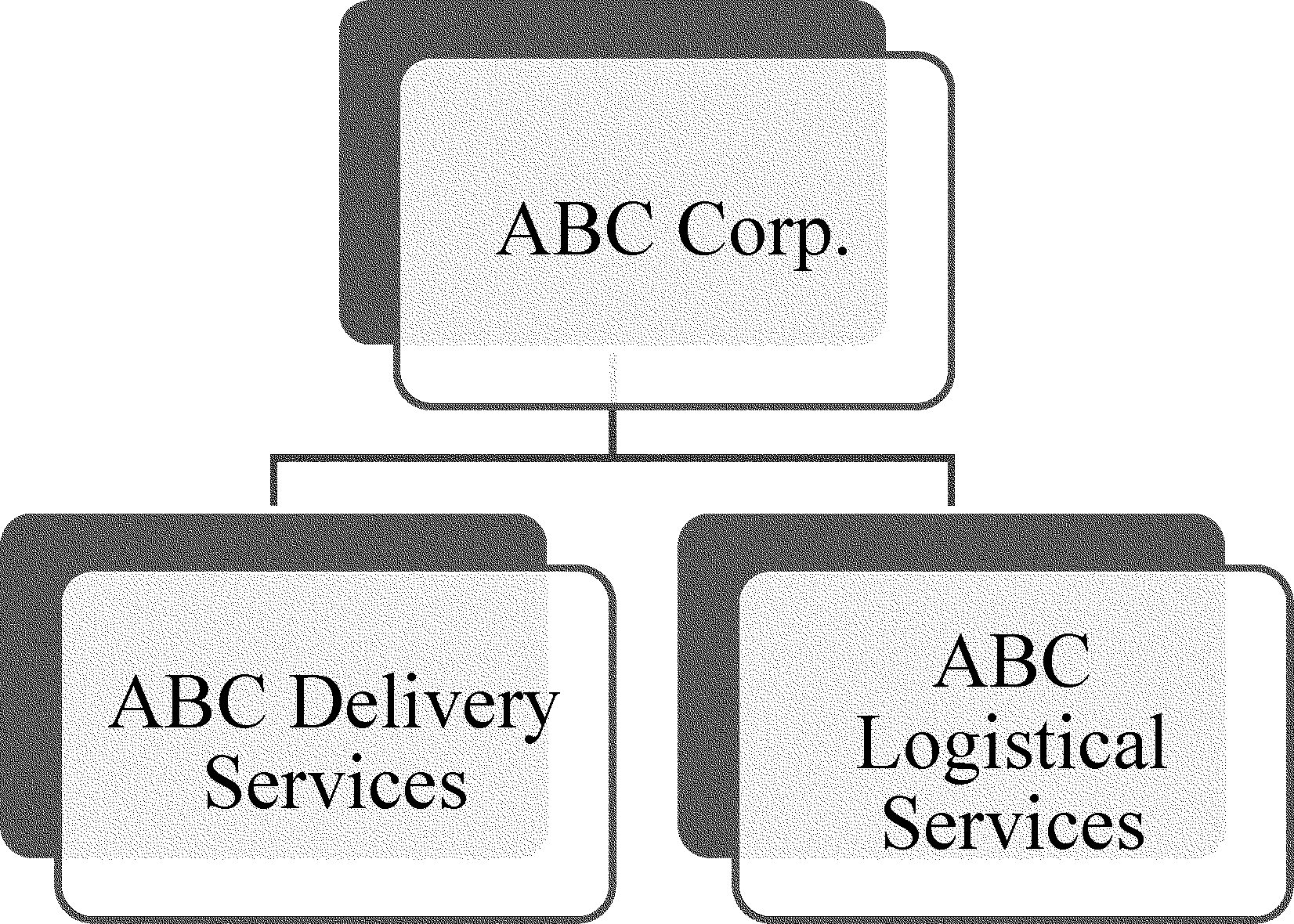
 sam.gov/