Securities and Exchange Commission
- 17 CFR Parts 239, 249, 270, and 274
- [Release No. 33-11444; 34-106534; IC-36351; File No. S7-2026-34]
- RIN 3235-AN83
AGENCY:
Securities and Exchange Commission.
ACTION:
Proposed rule.
SUMMARY:
The Securities and Exchange Commission (the “Commission”) is proposing to amend the rule under the Investment Company Act of 1940 that allows registered closed-end management investment companies and business development companies (collectively, “regulated closed-end funds”) to make repurchase offers to shareholders at net asset value (“NAV”) at periodic intervals pursuant to a fundamental policy (“interval funds”). The proposed amendments would increase flexibility in the rule's repurchase offer framework and modify the rule's liquidity management requirements. The proposal is designed to modernize the framework applicable to these funds by allowing them to better match the liquidity profile of the assets in which they invest, while continuing to provide the operational infrastructure and investor protection of the Investment Company Act of 1940. We also propose amending certain rules that would permit regulated closed-end funds to issue multiple share classes, consistent with routine exemptive relief provided to these funds, and to require certain related disclosure in funds' prospectuses. We further propose to require disclosures in all regulated closed-end fund shareholder reports, a legend in their prospectuses, and an increase in the dollar amount used for the prospectus expense example, to provide investors with information about fund expenses similar to that provided by registered open-end funds. As a result of these amendments for interval funds and multiple share class regulated closed-end funds, we propose to rescind existing related exemptive orders.
DATES:
This r was published in the Federal Register on October 5, 2026. Comments should be received on or before December 4, 2026.
ADDRESSES:
Comments may be submitted by any of the following methods:
Electronic Comments
- Use the Commission's internet comment form (www.sec.gov/comments/s7-2026-34/interval-fund-modernization-expansion-multiple-share-class-registered-closed-end-management); or
- Send an email torule-comments@sec.gov. Please include File Number S7-2026-34 on the subject line.
 www.sec.gov/comments/s7-2026-34/interval-fund-modernization-expansion-multiple-share-class-registered-closed-end-management
Paper Comments
- Send paper comments to Vanessa A. Countryman, Secretary, Securities and Exchange Commission, 100 F Street NE, Washington, DC 20549-1090.
All submissions should refer to File Number S7-2026-34. This file number should be included on the subject line if email is used. To help the Commission process and review your comments more efficiently, please use only one method of submission. The Commission will post all comments on the Commission's website ( www.sec.gov/rules-regulations/public-comments/s7-2026-34). Do not include personally identifiable information in submissions; you should submit only information that you wish to make available publicly. The Commission may redact in part or withhold entirely from publication submitted material that is obscene or subject to copyright protection.
Studies, memoranda, or other substantive items may be added by the Commission or staff to the comment file during this rulemaking. A notification of the inclusion in the comment file of any such materials will be made available on the Commission's website. To ensure direct electronic receipt of such notifications, sign up through the “Stay Connected” option at www.sec.gov to receive notifications by email.
A summary of the proposal of not more than 100 words is posted on the Commission's website ( www.sec.gov/rules-regulations/2026/09/s7-2026-34).
FOR FURTHER INFORMATION CONTACT:
Susan Ali, Claudia Rios, and Greg Scopino, Senior Counsels; Blair Burnett, Branch Chief; Brian McLaughlin Johnson, Assistant Director, at (202) 551-6792, Investment Company Regulation Office, Division of Investment Management, Securities and Exchange Commission, 100 F Street NE, Washington, DC 20549-8549.
SUPPLEMENTARY INFORMATION:
The Commission is proposing for public comment amendments to 17 CFR 270.23c-3 (“rule 23c-3”), 17 CFR 270.18f-3 (“rule 18f-3”), and 17 CFR 270.17d-3 (“rule 17d-3”) and Form N-23c-3 [referenced in 17 CFR 274.221], Form N-2 [referenced in 17 CFR 239.14 and 274.11a-1] and Form N-CEN [referenced in 17 CFR 249.330 and 274.101] under the Investment Company Act of 1940 (the “Investment Company Act”).[1]
 17 CFR 270.23c-3
Table of Contents
I. Introduction and Background
A. Overview of the Interval Fund Framework
1. History of Rule 23c-3
2. Requirements Under Rule 23c-3
3. Need for Updated Regulatory Framework
B. Multiple Share Class Funds
C. Overview of the Proposal
II. Discussion
A. Enhancing Flexibility in the Interval Fund Repurchase Offer Requirements
1. Deferral of the First Repurchase Offer
2. Monthly Periodic Intervals
3. More Frequent Discretionary Repurchases
4. Repurchase Pricing Date
5. Amount of Securities Repurchased
6. Deferred Sales Loads
B. Modification to the Interval Fund Liquidity Requirement During the Repurchase Offer Period
C. Other Proposed Amendments to the Interval Fund Framework
1. Grandparent Clause
2. Form N-23c-3
D. Expansion of Multiple Share Class Offerings to Regulated Closed-End Funds
1. Rule 18f-3
2. Rule 17d-3
3. Disclosures and Reporting
E. Proposed Rescission of Exemptive Orders
F. Effective and Compliance Dates
III. Economic Analysis
A. Introduction
B. Economic Baseline
1. Regulatory Baseline
2. Affected Parties
3. Market Practices
C. Benefits and Costs
1. Enhancing Flexibility in the Repurchase Requirements
2. Modification to the Interval Fund Liquidity Requirement During the Repurchase Offer Period
3. Other Proposed Amendments
4. Expansion of Multiple Share Class Offerings to Regulated Closed-End Funds
5. Aggregate Monetized Benefits and Costs ( printed page 63389)
D. Effects on Efficiency, Competition, and Capital Formation
E. Reasonable Alternatives
1. Longer Interval-Scaled Deferral of First Repurchase Offer
2. Lower Repurchase Offer Minimums for Monthly Interval Funds
3. Permit Multiple Share Classes for All Regulated Closed-End Funds
4. Targeted Liquidity Management Carve-Outs
F. Request for Comment
IV. Paperwork Reduction Act Analysis
A. Summary of the Collections of Information
B. Summary of the Proposed Amendments' Estimated Effects on the Collections of Information
C. Incremental and Aggregate Burden and Cost Estimates
D. Request for Comments
V. Initial Regulatory Flexibility Analysis
A. Reasons for and Objectives of the Proposed Actions
B. Legal Basis
C. Small Entities Subject to Proposed Rule Amendments
D. Projected Reporting, Recordkeeping, and Other Compliance Requirements
E. Duplicative, Overlapping, or Conflicting Federal Rules
F. Significant Alternatives
G. Request for Comment
VI. Congressional Review Act
VII. Other Matters
Statutory Authority
I. Introduction and Background
The asset management industry has expanded and diversified as investors seek opportunities across both public and private markets. As the variety of investment products and their delivery channels has grown, both institutional and individual investors have increasingly sought to access alternative investment assets and to construct more diversified investment portfolios than in the past. The Commission is committed to identifying ways to reduce unnecessary regulatory obstacles to investment product innovation, allowing for the broadening of investor choice available in today's asset management industry while appropriately addressing risks associated with increasingly diverse portfolio compositions and operations.
As part of this initiative, the Commission is proposing amendments to rule 23c-3, the rule that governs interval funds. These changes aim to provide interval funds with increased flexibility, including by permitting extended deferral of initial repurchase offers and providing less prescriptive portfolio liquidity requirements. As investors increasingly look for access to private markets, interval funds can offer a way to deliver that exposure while maintaining a level of investor liquidity. Their structure enables asset managers to invest in less-liquid holdings while still offering investors predictable, rules-based liquidity at set intervals. The proposed changes may allow broader adoption of this structure by fund managers seeking to offer retail investors exposure to private markets.
Rule 23c-3 under the Investment Company Act permits regulated closed-end funds to make periodic repurchase offers to shareholders at NAV at predetermined intervals, subject to certain conditions. These regulated closed-end funds are commonly referred to as “interval funds.” Rule 23c-3 also permits both interval funds and other closed-end funds or business development companies (“BDCs”) that do not make periodic repurchase offers the option to offer discretionary repurchases, subject to certain conditions. We generally refer to “interval funds” when discussing amendments to rule 23c-3 even though certain of the amendments may also apply to closed-end funds and BDCs that are not interval funds (“non-interval funds”) if they elect to make a discretionary repurchase offer. These discretionary repurchase offers by non-interval funds are subject to some, but not all, of the provisions of rule 23c-3.[2]
The Commission established the interval fund framework through the adoption of rule 23c-3 in 1993.[3] Interval funds occupy a distinct position in the registered investment company landscape, blending aspects of registered open-end management investment companies (“registered open-end funds”) and regulated closed-end funds. Registered open-end funds are required to redeem their securities on demand from shareholders at a price approximating their proportionate share of the fund's NAV, next calculated by the fund after receipt of such redemption request, which restricts their ability to allocate a significant portion of their portfolio to illiquid assets.[4] Regulated closed-end funds, in contrast, do not offer redeemable securities, which permits them to offer meaningful exposure to less-liquid assets, including private market assets offered in transactions exempt from registration under the Securities Act of 1933 (“Securities Act”). Further, while regulated closed-end funds can employ strategies that involve less liquid assets as compared to registered open-end management companies, they can also offer benefits that private funds cannot, such as the protections provided by being registered under or regulated by the Investment Company Act, the potential to being open to an unlimited number of non-accredited investors, and eligibility for tax treatment under Subchapter M of the Internal Revenue Code of 1986, as amended, if the conditions of that regulation are satisfied.[5] However, investors in regulated closed-end funds that are not interval funds typically have limited options to sell their shares. Investors can generally either sell their shares back to the fund through issuer tender offers that the fund has elected to make, or, if the fund is listed on a securities exchange, sell to the market, often at a discount to NAV.[6]
Interval funds can address these limitations of both structures. They can invest in less liquid assets because the interval fund structure does not require daily redemptions. Rather, investors are provided with opportunities to sell their shares to the fund on a predetermined periodic basis. In addition to providing exposure to less liquid assets, in contrast to other regulated closed-end fund structures, interval funds offer the predictability of a mandatory, limited, rules-based liquidity framework by requiring interval funds to adopt a fundamental policy to make periodic repurchases of their shares at a price based on NAV. This provides a stable, continuous-offering alternative to discretionary repurchase programs that afford both advisers and investors greater certainty regarding the potential for periodic liquidity at or near NAV.
The interval fund framework has remained largely unchanged since it was first adopted. As discussed in more detail below,[7] over time, certain of rule 23c-3's provisions have become outdated, operationally burdensome, or less responsive to the evolving realities of modern interval fund operations. For example, the Commission has granted exemptive orders from certain provisions of the rule to allow certain ( printed page 63390) interval funds to provide liquidity to their investors on a more frequent basis than currently permitted under the rule, specifically allowing liquidity to be offered on a monthly basis.[8] While interval funds have experienced some growth in recent years,[9] greater flexibility in the rule could facilitate larger adoption rates by fund managers seeking to provide a retail registered fund investment that provides access to private markets. To further expand retail exposure to private market assets through products that provide this level of liquidity in a closed-end fund structure, a comprehensive update to the interval fund rule is needed to reflect current market realities and support continued innovation in the sector. Accordingly, we are proposing amendments to rule 23c-3 that would modernize, enhance, and simplify the interval fund framework while maintaining appropriate investor protections and safeguards.
In addition, the proposal would codify what has become routine exemptive relief for regulated closed-end funds, allowing regulated closed-end funds to issue multiple share classes subject to certain conditions, without first obtaining this relief via an exemptive order. Rule 18f-3 has allowed registered open-end funds to issue multiple classes of shares since 1995. In 2025, the Commission began granting exemptive orders to mutual funds to offer ETF share classes within the same portfolio, with a significant number being issued so far.[10] The Commission is proposing to broaden the scope of these rules to permit regulated closed-end funds to issue multiple share classes as well. These amendments would streamline the offering process for regulated closed-end funds and reduce the burdens and costs associated with the exemptive application process for these funds and the Commission.
In connection with multiple share class structures, we are proposing to make amendments to relevant disclosure forms. We are proposing amendments to Form N-2 to require disclosures detailing multiple share class structures for investors and to provide enhanced expense disclosures regarding all regulated closed-end funds. We are also proposing to extend the existing open-end fund reporting on Form N-CEN regarding multiple share class information to registered closed-end management companies.
A. Overview of the Interval Fund Framework
1. History of Rule 23c-3
Closed-end funds became prominent during the 1920s, prior to the enactment of the Investment Company Act, with new offerings commonly being sold at large premiums to NAV. Following the stock market crash of 1929, however, these funds began trading at persistent discounts. Affiliated persons of such funds (including managers and insiders) with access to portfolio information frequently repurchased shares at depressed prices, exploiting the information asymmetry at the expense of selling shareholders who lacked sufficient visibility into the value of the funds' holdings.[11]
To address these abuses, Congress included section 23 in the initial text of the Investment Company Act. Section 23 supplements the disclosure and reporting requirements imposed by the Securities Act and the Securities Exchange Act of 1934 (the “Exchange Act”), and prescribes the conditions under which regulated closed-end funds may repurchase their own securities. Specifically, section 23(c) generally prohibits a regulated closed-end fund from purchasing its own securities except: (1) on a national securities exchange or other market designated by the Commission (after adequate notice to all shareholders); (2) pursuant to tenders open to all security holders; or (3) in such other circumstances as the Commission permits by rule or order.
The significance of section 23 of the Investment Company Act is best understood with reference to the classification framework established in section 5(a) of the Investment Company Act, which divides management investment companies into two categories:
- registered open-end companies, defined as management companies that offer or have outstanding any redeemable security, and
- closed-end companies, defined as any management company that is not an open-end company.
A redeemable security is any security, other than short-term paper, under the terms of which the holder, upon presentation to the issuer, is entitled to receive a proportionate share of the issuer's current net assets or the cash equivalent thereof.[12] This right of redemption is the defining structural feature of registered open-end funds ( e.g., mutual funds). Because regulated closed-end fund shares are not redeemable securities, shareholders of a regulated closed-end fund have no statutory right to demand redemption. Section 23 of the Investment Company Act prescribes the exclusive conditions under which regulated closed-end funds may offer shareholders liquidity through the repurchase of shares.
Prior to the Commission proposing rule 23c-3 in 1992, the Division of Investment Management issued a report that identified significant structural limitations in the existing open-end/closed-end binary classification framework and recommended that the Commission consider rulemaking to accommodate funds with overlapping features.[13] Staff drew particular attention to a class of funds that emerged in the late 1980s commonly referred to as “prime rate funds,” which invested primarily in bank loans and other less-liquid credit assets. Although these funds registered as closed-end companies, they operated in many respects like registered open-end funds, offering shares on a continuous basis and relying on periodic tender offers conducted pursuant to section 23(c)(2) as the sole source of liquidity for their shareholders. Staff observed, however, that the issuer tender offer framework was governed by the Exchange Act and the rules thereunder, which rendered
( printed page 63391)this approach operationally cumbersome and costly.[14] For instance, the tender offer framework pursuant to the Exchange Act requires regulated closed-end funds to disclose information about the fund, such as the identity and background of the issuer, the source of proceeds, comprehensive financial statements, and significant corporate events, among other disclosures.[15] Although informative for shareholders, these Exchange Act disclosure obligations were designed for operating companies tendering shares on a non-regular basis, not registered investment companies that are making regular and frequent repurchase offers.[16]
Accordingly, staff recommended that the Commission develop a new regulatory framework to permit regulated closed-end funds to offer periodic repurchases to shareholders at NAV in a manner that was less burdensome than the Exchange Act tender offer regime and that provided investors with more predictable and reliable access to liquidity. The staff's recommendation and the asset management industry's general interest in offering more flexible fund vehicles that could invest in less-liquid assets, while offering periodic liquidity to shareholders, led the Commission to adopt rule 23c-3 in 1993.[17] The establishment of the interval fund framework reflected the Commission's efforts to balance investor protection with the need for innovative investment products.
2. Requirements Under Rule 23c-3
Under rule 23c-3, the shares of an interval fund are subject to periodic repurchase offers by the fund at NAV in accordance with the fund's fundamental policy.[18] An interval fund makes repurchase offers to its shareholders, every three, six, or twelve months, at a “periodic interval” disclosed in the fund's prospectus and annual report.[19] A fund must begin making repurchase offers with a repurchase request deadline no later than two periodic intervals after the effective date of the fund's registration statement or after a shareholder vote adopting the fundamental policy that specifies the fund's periodic interval.[20] When a fund initiates a repurchase offer pursuant to its fundamental policy, the repurchase offer amount cannot be less than five percent or more than 25 percent of the common stock outstanding on a repurchase request deadline.[21] The repurchase offer amount is determined by the interval fund's board of directors and is communicated in the offer notification to shareholders prior to each repurchase.[22]
Subject to limited exceptions as defined in the rule, the fund must accept repurchases up to the repurchase offer amount.[23] A fund cannot, for example, offer a repurchase amount of 10 percent of NAV, receive repurchase requests from shareholders of 10 percent of NAV, and then elect to only offer to repurchase five percent of NAV. However, if shareholders request more than the repurchase offer amount, the fund can repurchase an additional amount of stock not to exceed two percent of the common stock outstanding.[24]
In addition to the periodic repurchase offers subject to a fundamental policy, the rule permits any regulated closed-end fund (including a fund that is not an interval fund) to repurchase its common stock no more frequently than once every two years pursuant to a repurchase offer that is not made pursuant to a fundamental policy.[25] These discretionary repurchase offers must be made to all holders and are subject to some, but not all, of the provisions of rule 23c-3.[26]
Under rule 23c-3, interval funds are required to send a notification to shareholders detailing the repurchase offer between twenty-one and forty-two days before the repurchase request deadline, ensuring that shareholders have a reasonable opportunity to participate in any repurchase offer.[27] Subsequently, the fund must determine the NAV of the shares by the repurchase pricing date, which must be within fourteen days following the repurchase request deadline.[28] Shareholders must then receive payment within seven days of the repurchase pricing date.[29] The diagram below illustrates this process:
( printed page 63392)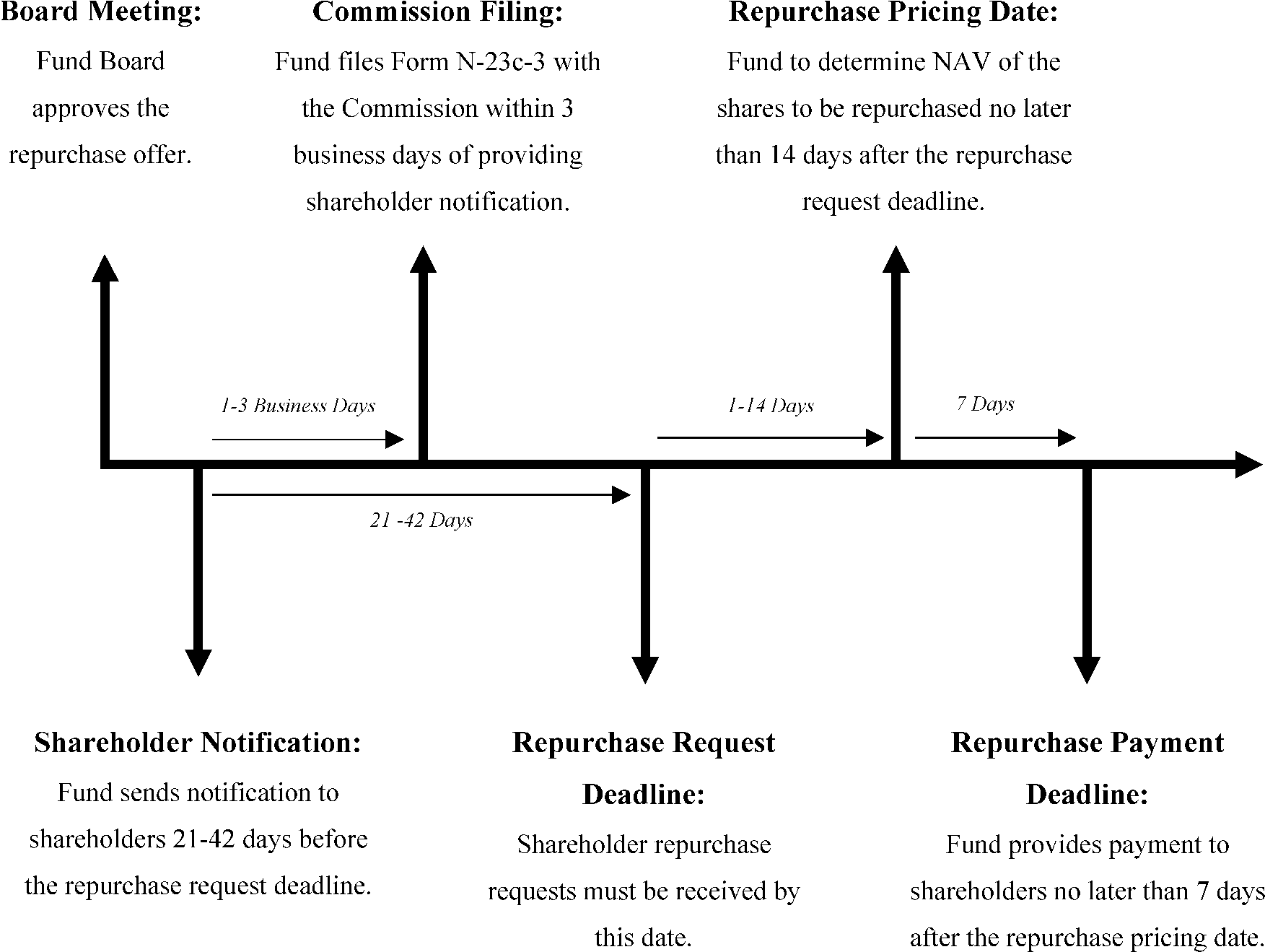
The interval fund framework also mandates certain liquidity requirements. From the point at which an interval fund notifies shareholders regarding a repurchase offer until the designated repurchase pricing date, the fund is obligated to maintain no less than 100 percent of the repurchase offer amount in assets that can be sold or disposed of in the ordinary course of business, at approximately the price at which the company has valued the investment, within a period equal to the period between a repurchase request deadline and the repurchase payment deadline.[30] An interval fund is also required to maintain policies and procedures to ensure that the fund's assets are sufficiently liquid so that the fund can comply with its fundamental policy on repurchases.[31]
3. Need for Updated Regulatory Framework
Recent years have witnessed significant growth in private market assets, driven by evolving investor demands and the availability of a broader range of investment opportunities across public and private markets. Exempt offerings, such as private fund offerings, have become more popular vehicles for raising new capital relative to registered offerings.[32] As a result, the benefits of portfolio diversification are becoming increasingly limited for investors unable to obtain meaningful exposure to these private market assets and strategies, which include real estate, private equity, private credit, hedge, and various other alternative asset classes and strategies. For most investors, the ability to obtain exposure to private market assets through a pooled investment vehicle generally is limited to exposure through registered investment companies and BDCs. Interval funds provide asset managers the flexibility to build diversified portfolios, while preserving investors' ability to tender shares for repurchase at NAV.
We recognize that the interval fund structure offers an inherent tradeoff: the fund offers investors the ability to obtain exposure to illiquid or less liquid assets with access to a certain amount of liquidity, but investors generally can tender their shares only periodically and in amounts offered by the fund. Recent market events have drawn attention to this structural characteristic. In early 2026, multiple non-traded BDCs and registered closed-end funds, including several interval funds, experienced increased investor demand to repurchase shares. In several cases, investors sought to tender more shares than the fund had originally offered to repurchase. Our rules require funds to disclose these structural features and this tradeoff—and to manage liquidity to meet periodic promised repurchase offers—so that investors can determine if these funds are an investment that meets their portfolio objectives, risk tolerances, and liquidity needs. If investors are well-informed about the liquidity limitations and repurchase schedule of interval funds, the interval fund structure can be an effective way to gain exposure to less liquid assets.
Although the interval fund framework has been available since the Commission adopted rule 23c-3 in 1993, the structure was not used much in its early years. That trajectory has changed significantly in recent years, however. The number of interval funds has grown from 58 in 2020 to 139 in 2025 and the aggregate net assets have increased from $38 billion to $101 ( printed page 63393) billion during that same period.[33] The growth of the interval fund market has been driven in large part by demand for registered vehicles that provide access to private market assets, including private credit, private equity, and other alternative asset classes that have traditionally been available only through private funds. Credit strategies constitute the largest segment of the interval fund market, representing approximately 55 percent of aggregate net assets.
In October 2017, the U.S. Department of Treasury prepared a report that included, among other items, recommendations that the Commission review its rules regarding interval funds to determine whether more flexible provisions might encourage the creation of registered closed-end funds that invest in offerings of smaller public companies and private companies whose shares have limited or no liquidity.[34] In 2019, the Commission issued a concept release that requested public comment on ways to simplify, harmonize, and improve the exempt offering framework to expand investment opportunities while maintaining appropriate investor protections and to promote capital formation.[35] The Concept Release sought input on whether changes should be made to improve the consistency, accessibility, and effectiveness of the Commission's exemptions for both companies and investors, including identifying potential overlap or gaps within the framework. It considered, among other things, whether retail investors should be allowed greater exposure to growth-stage companies through pooled investment vehicles such as interval funds and other regulated closed-end funds.
Despite the significant growth in interval fund assets and the evolution of the market over time, rule 23c-3 has remained largely unchanged since its adoption in 1993. Since that time, industry and Commission staff have identified a number of challenges regarding the application of the rule. For instance, market participants have expressed the view that the interval fund structure is a useful vehicle for investors seeking exposure to private market investments; however, they have also expressed concerns that the rule's rigidity related to certain repurchase mechanics and liquidity requirements hinders broader adoption of the interval fund framework.[36]
We agree that, although the interval fund structure holds promise, the current rule's requirements may hinder broader adoption. In particular, the framework may lack the flexibility needed for certain investment strategies that could support more frequent repurchase opportunities. The current interval fund framework restricts funds that have strategies where the asset base would permit more frequent repurchases from adopting a monthly interval. Instead, those funds currently seek exemptive relief to offer repurchases on a monthly frequency. To address this, as discussed below, we propose to amend the rule to expressly permit interval funds to establish monthly repurchase intervals. Conversely, for interval funds that may benefit from aligning the start of the repurchasing process with the longer-term nature of their underlying assets, such as those funds following a private equity or venture capital approach, the current structure does not provide a way to defer the repurchase process beyond the two periodic interval timeframe. For these funds, we propose, as discussed below, more ability to match the repurchase rights to a timeline approximating anticipated realizations of underlying assets.
Currently, from the time an interval fund notifies investors of a repurchase offer until the repurchase offer is priced, a percentage of an interval fund's assets equal to at least 100 percent of the amount offered to be repurchased must consist of assets that can be sold or disposed of in the ordinary course of business at approximately the price at which the interval fund has valued the investment.[37] We propose, as discussed in more detail below, to replace this requirement with a more principles-based approach that would instead require interval funds to manage their portfolio's liquidity so that the interval fund can satisfy repurchase requests without requiring a sale or disposition of investments at a price that deviates significantly from the value of those investments.
The interval fund structure represented a significant advancement when it was first introduced, and our regulatory framework should adapt to changing regulatory and market conditions to remain effective. Accordingly, the proposed amendments are designed to provide increased flexibility to the interval fund framework, which would enable both established and emerging interval funds to operate more efficiently while maintaining the critical safeguards that protect investors. This in turn may foster increased growth among interval funds, increasing investor choice and opportunities to obtain exposure to alternative asset classes while retaining the investor protections of the Investment Company Act and the liquidity and other investor protective features required by rule 23c-3. In addition, reducing the rigidity of the rule would eliminate unnecessary obstacles and allow funds to design liquidity policies that are specifically tailored to the unique risks and investment strategies of their funds.
B. Multiple Share Class Funds
Multiple share class structures are an important feature of the registered investment company landscape, offering meaningful benefits to both funds and investors. By permitting a single fund to offer shares through multiple classes with different fee structures, sales loads, or distribution arrangements, multi-class structures provide investors with the flexibility to select the purchasing method most suited to their individual circumstances, allowing investors to consider factors such as size of their investment, anticipated holding period, and the distribution channels through which they access the fund. At the same time, multi-class structures allow sponsors of registered investment companies to distribute fund shares across a broader range of investor markets and distribution channels without the cost and administrative burden of organizing separate funds for each investor segment. Because fixed costs are spread across a larger asset base, investors in funds that issue multiple share classes may benefit from economies of scale that would otherwise be unavailable, including the potential for lower advisory fees. The alternative of sponsoring multiple “clone” funds with duplicative administrative infrastructure would impose costs on shareholders and fund sponsors alike that a multi-class structure is specifically designed to avoid. ( printed page 63394)
Section 18 of the Investment Company Act limits the ability of registered investment companies to issue multiple share classes with different voting rights or expense structures and permits registered closed-end funds to issue one class of senior security representing indebtedness and one class of senior security which is a stock.[38] The Commission, however, has long recognized the benefits of multiple share class structures. In 1985, the Commission began granting exemptive relief under the Investment Company Act to registered open-end funds seeking to issue multiple share classes representing interests in the same portfolio. Over the course of the following decade, the Commission issued approximately 200 such orders, and the practice of offering shares through multiple distribution share classes became common among registered open-end funds. In 1995, the Commission adopted rule 18f-3 under the Investment Company Act, which permits registered open-end funds to issue multiple classes of shares without obtaining individual exemptive orders, provided that certain conditions designed to protect investors are satisfied.[39] Rule 18f-3 thus supplanted the exemptive order process for registered open-end funds, establishing a standardized framework that eliminated the cost and delay associated with individual applications while reserving the investor protection conditions the Commission had developed through its exemptive practice. More recently, the Commission has been issuing exemptive orders to regulated open-end funds that permit such funds to offer one class of exchange-traded shares that operate as an ETF and one or more classes of shares that are not exchange-traded.[40]
Rule 18f-3, as adopted in 1995, was designed to address the distribution practices of registered open-end funds. The Commission did not propose to apply the rule or provide similar relief to regulated closed-end funds, and, at the time, the regulated closed-end fund market consisted primarily of exchange-listed funds for which multi-class distribution arrangements were not a concern. In the years since, however, the market for unlisted regulated closed-end funds, including interval funds, has grown substantially, and these vehicles have increasingly sought to offer shares through multiple classes with differentiated fee and distribution structures.[41]
Further, multiple share class regulated closed-end funds may seek to engage in asset-based distribution and service fees or charge investors a fee payable to the distributor for leaving their investment early. While the Investment Company Act and Commission rules do not set as many restrictions on regulated closed-end fund distribution arrangements as they do for registered open-end funds, some restrictions may apply particularly in a multiple share class structure. Section 17(d) of the Investment Company Act prohibits affiliated persons, principal underwriters, and any affiliated person of such person or underwriter, of a registered investment company from effecting any transaction in which such registered investment company or a company controlled by such registered investment company is a joint or a joint and several participant with the affiliated person or underwriter in contravention of Commission rules (a “joint transaction”). This restriction is designed to prevent these affiliates from managing the fund for their own benefit.[42] 17 CFR 270.17d-1 (“rule 17d-1”) generally requires an application to, and an order issued by, the Commission with respect to joint enterprises or other joint arrangements or profit-sharing plans involving, among others, regulated closed-end funds.[43] These provisions can serve to prevent asset-based distribution or service fees to the extent such fees involve joint transactions. Further, rule 23c-3 prohibits interval funds from deducting fees from repurchase proceeds other than a two percent repurchase fee reasonably intended to compensate the interval fund for expenses directly related to a repurchase,[44] likewise limiting the ability to charge fees payable to the distributor.
In response to these limitations, the Commission has issued approximately 230 exemptive orders permitting unlisted continuously offered regulated closed-end funds to maintain multi-class structures since 2007, generally imposing conditions modeled on those set forth in rule 18f-3 as adapted to the regulated closed-end fund context and disclosure consistent with that provided by multiple share class registered open-end funds.[45] These orders also permit regulated closed-end funds and their affiliates to participate in asset-based distribution and service arrangements to the extent necessary to permit them to impose asset-based distribution and/or service fees. They also permit regulated closed-end funds to charge fees to compensate distributors when investors submit repurchase requests in a short period of time from purchase, all subject to certain conditions. In light of the Commission's extensive experience with multi-class structures across both registered open-end funds and regulated closed-end funds, however, the costs and administrative burdens on regulated closed-end funds and their advisers associated with the process to obtain individual exemptive orders seem difficult to justify.
C. Overview of the Proposal
We are proposing amendments to rule 23c-3 designed to modernize the interval fund framework by providing enhanced flexibility while maintaining appropriate investor protections. We are also proposing to codify the multiple share class exemptive orders so that all regulated closed-end funds can utilize that structure without obtaining an exemptive order.[46]
- Enhanced Flexibility in Interval Fund Repurchase Offer Requirements. The proposal would provide greater flexibility to interval funds, in part to permit both deferred initial and more frequent recurring liquidity opportunities depending on the needs of an interval fund's strategy, by permitting deferral of the first repurchase offer, allowing monthly periodic intervals, allowing more frequent discretionary repurchases, allowing the deduction of deferred sales loads from repurchase proceeds, and simplifying and clarifying the process of determining the repurchase pricing date and treatment of oversubscribed repurchase offers. ( printed page 63395)
- Enhanced Flexibility in Interval Fund Liquidity Requirements. The proposal would amend the requirements of rule 23c-3 that specify that an interval fund must hold a certain amount of liquidity and replace it with a principles-based liquidity approach.
- Codification of Multiple Share Class Exemptive Orders. The proposal would amend rule 18f-3 to permit regulated closed-end funds to have multiple share class structures, subject to requirements modified to account for regulated closed-end funds. The proposal would also amend rule 17d-3 to permit regulated closed-end funds and their affiliates to enter into arrangements for the payment of asset-based distribution and service fees.
- Form Updates. The proposal would update Form N-2 to provide for disclosures that account for multiple share class and master-feeder structures, and update Form N-CEN to enhance multiple share class reporting by registered closed-end management companies. The amendments to Form N-2 would also include enhanced shareholder report disclosure regarding fees and expenses for all filers of that form.
- Other Updates. The proposal would also update other relevant rules and forms, for example, by removing outdated language from Form N-23c-3. We are also proposing to rescind all but one of the relevant exemptive orders.
II. Discussion
A. Enhancing Flexibility in the Interval Fund Repurchase Offer Requirements
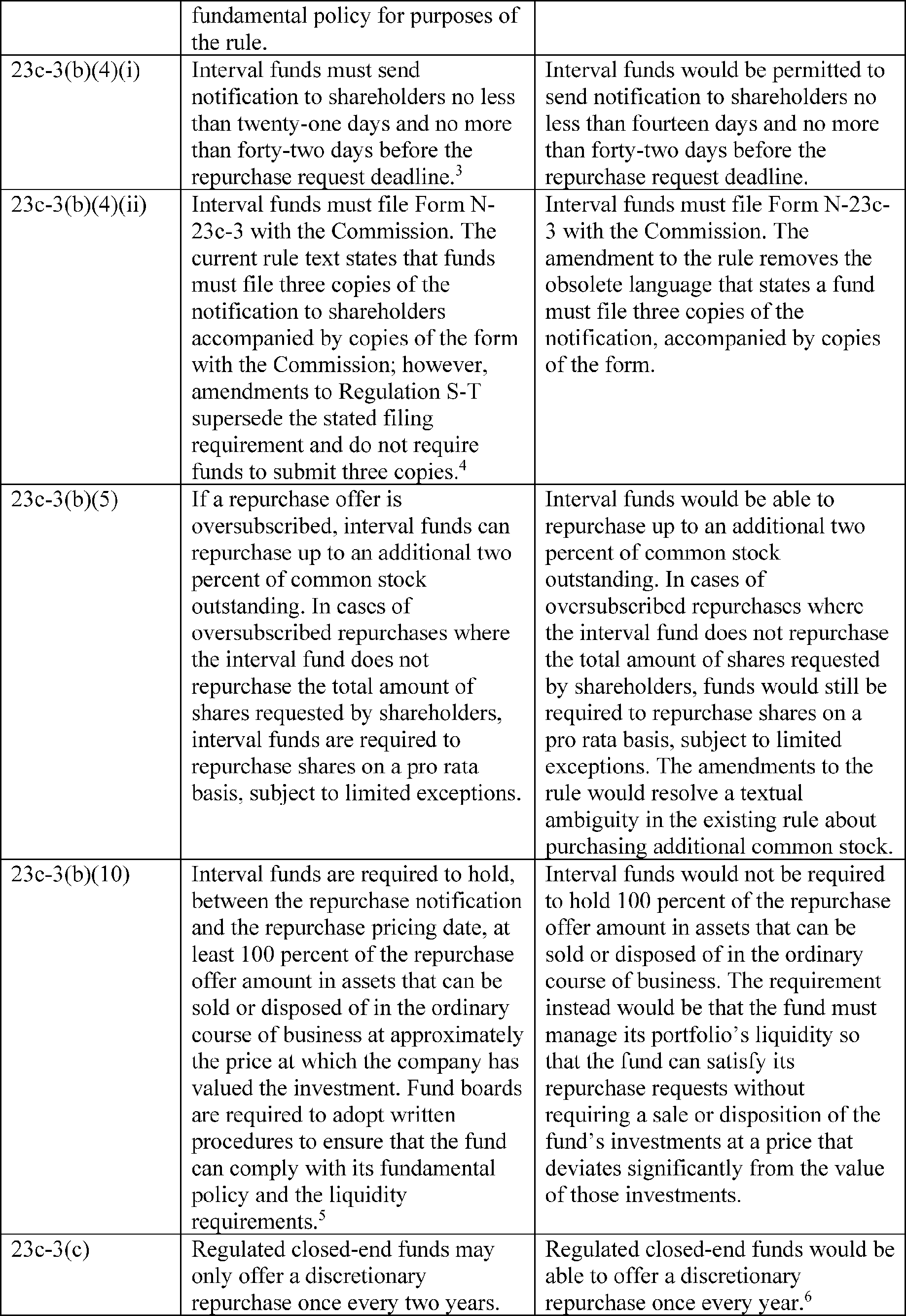
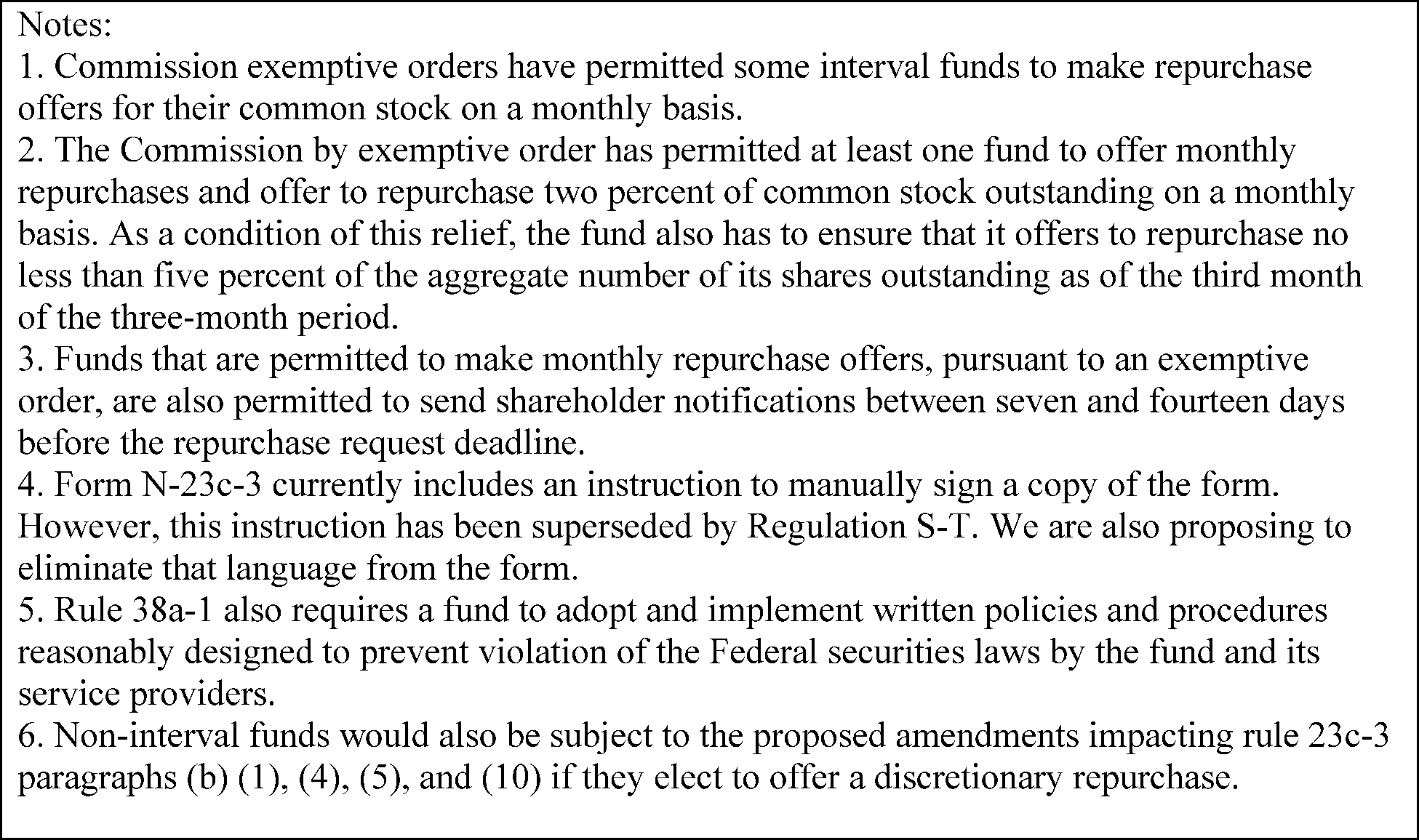
We are proposing to amend rule 23c-3 to enhance flexibility for interval funds by extending the deferral of the first repurchase offer, permitting monthly repurchase intervals, enabling more frequent discretionary repurchases, allowing deferred sales loads to be deducted from repurchase proceeds, providing for a principles-based liquidity framework, and simplifying other parts of the rule. Specifically, we propose:
( printed page 63396)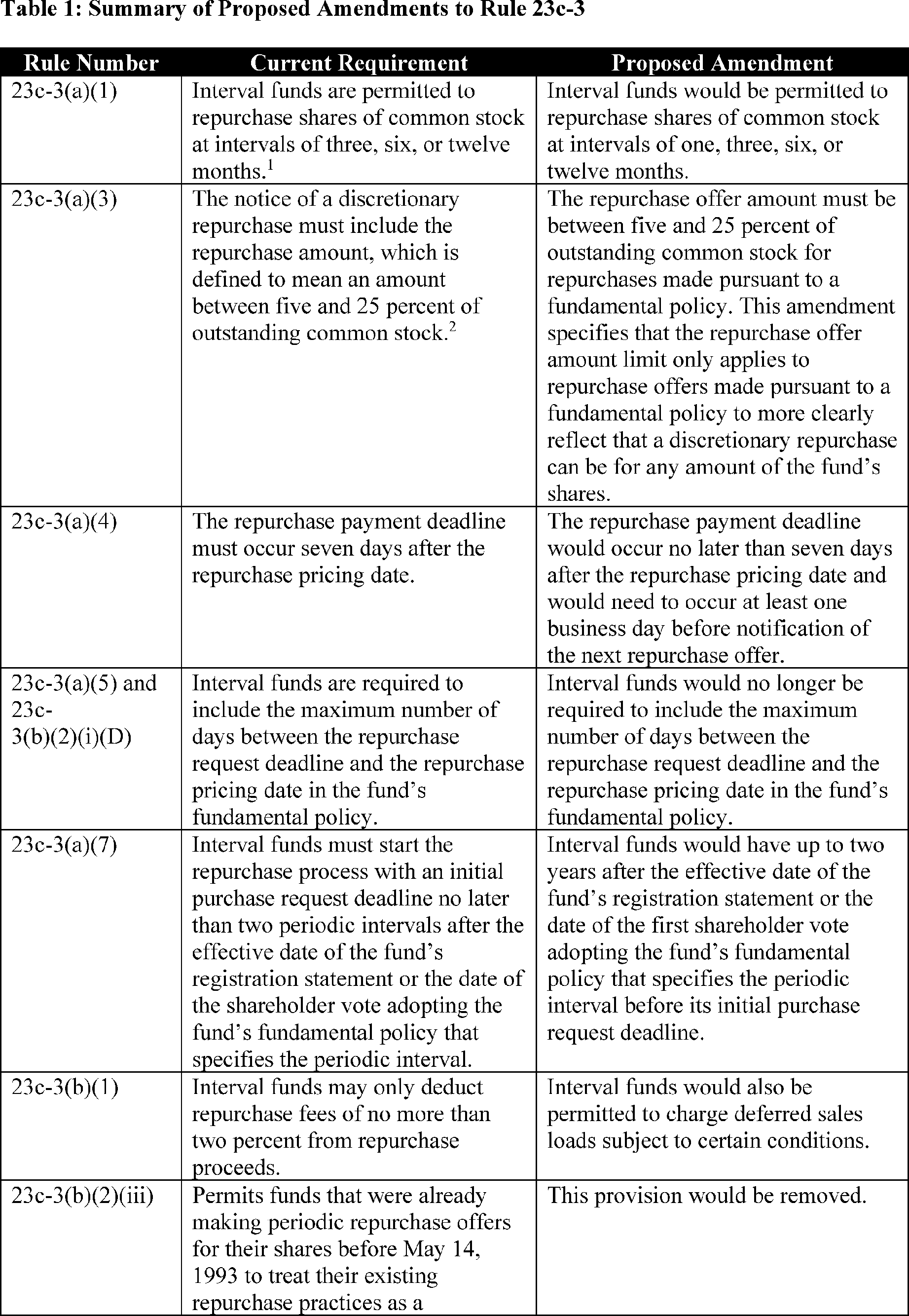
1. Deferral of the First Repurchase Offer
Currently, an interval fund's initial repurchase request deadline must occur no later than two periodic intervals after the effective date of the fund's registration statement or the date of the shareholder vote adopting the fundamental policy prescribing the fund's intervals, whichever is later.[47] For example, a new interval fund with a three-month interval could schedule its initial repurchase request deadline as far as, but no later than, six months after the effective date of the registration statement. Investors in such fund therefore would not be able to tender their shares for repurchase for six months, unless the fund chose to make a repurchase offer earlier than required under the rule. We propose to extend the amount of time an interval fund may defer its initial repurchase offer from two periodic intervals to two years, regardless of the length of a fund's periodic interval thereafter.[48] Funds would retain the option to initiate repurchase offers before the end of this period.
The deferral of the fund's first repurchase offer under the rule is designed to provide an interval fund with additional time to more effectively “ramp up” and develop the long-term investment portfolio and align the fund's liquidity terms with the underlying asset classes targeted by its investment strategy before being required to offer repurchases to its shareholders. This “ramp up” period allows an interval fund to structure its portfolio to have expected liquidity characteristics necessary to support periodic repurchase obligations in a manner consistent with the interests of the fund and its shareholders. Illiquid strategies typically generate sources of liquidity over time, such as scheduled loan repayments, principal amortization, refinancings, and asset sales. These sources of liquidity are largely absent in a portfolio's early stages but become increasingly reliable as the portfolio seasons. Moreover, an interval fund that has deployed capital over an extended period will benefit from vintage diversification, whereby investments at different stages of their respective lifecycles should provide a laddering effect, ensuring that some portion of the portfolio is approaching a liquidity event at any given time and generally can be used to fund repurchase requests without resorting to forced asset sales or credit facility draws. For instance, an interval fund pursuing a private credit strategy could use the ramp up period to acquire loans across multiple origination vintages with staggered maturity dates, creating a repayment ladder that provides recurring principal cash flows to fund repurchase requests following the end of the ramp up period. Similarly, an interval fund pursuing a private equity strategy could acquire primary investments or secondaries in funds across multiple vintage years, but the liquidity events that generate distributable proceeds, such as portfolio company exits, IPOs, and fund wind-downs, would typically require time to materialize.
Certain investment strategies employed by interval funds may benefit more from a longer ramp up period. For instance, given the longer-term nature of certain private equity and venture capital strategies, it may be more difficult for an interval fund investing directly or indirectly in such strategies to manage liquidity during the current ramp up period without a corresponding impact to the fund's longer-term investment strategy and return potential.[49] We understand that without sufficient time prior to commencing repurchases, interval funds, regardless of strategy, but ( printed page 63399) impacting certain strategies more than others, may have to exit certain investments earlier than desired or avoid making certain investments altogether.
Providing an interval fund with more time before it is first required to offer to repurchase its shares could benefit funds in their early stages. The additional time would allow interval funds to better match the maturation profile of their underlying portfolio with the structure of the fund's repurchase obligations. In addition, a longer ramp up period would allow funds to better organize and manage critical operational tasks such as facilitating the timely and accurate distribution of shareholder notifications.
Under the proposed amendments, most new interval funds would be provided with additional time to ramp up operations and season their portfolio before starting the repurchase process. Under the current rule, funds with a three-month periodic interval would have up to six months before starting the repurchase process, but would have up to two years (an additional year and a half) under the proposed amendment. Funds with a six-month periodic interval would have up to one year under the current rule, but up to two years (an additional year) under the proposed amendment. Funds with a periodic interval of twelve months would have the same amount of time under the current and proposed rule of up to two years. Interval funds with a one-month interval, as discussed below, would also have up to two years before starting the repurchase process. In other words, an interval fund can currently have up to two years before providing liquidity to shareholders under the current two interval deferral period, but only if the fund offers to repurchase investors' shares just once per year, which may not meet investor preferences. Conversely, interval funds with shorter intervals are currently required to begin the repurchase process much sooner. The proposed amendment, in contrast, would provide greater flexibility for any interval fund to build its portfolio following the fund's launch for up to two years without limiting the fund's ability to offer investors more frequent liquidity after the fund completes its ramp up period.
It is possible that some newly formed interval funds would hold their initial repurchase offer before the proposed end of the two-year ramp up, but we expect that some interval funds would utilize the proposed amendments to extend the ramp up period to two years following the fund's registration, as it may provide the ability for certain funds to structure their portfolios to have expected liquidity characteristics necessary to match the structural liquidity of the funds ( i.e., the periodic repurchase obligations). This approach could also apply to existing closed-end funds that adopt a fundamental policy. The two-year ramp up period would apply after a shareholder vote first adopting a fundamental policy specifying the fund's periodic interval. Funds that subsequently update their periodic interval would not be granted an additional ramp up period to avoid the possibility that a fund could excessively delay providing investors liquidity.
In response to the 2019 Concept Release, commenters stated that a two period interval delay does not provide sufficient time for interval funds to effectively establish operations and can cause funds to incur unnecessary costs ( e.g., costs to liquidate assets to meet the current liquidity requirement as well as costs of operational resources to prepare, distribute, and file repurchase offers in a short time from launching the fund) to offer liquidity that is in little or no demand by investors that early in the funds' operations.[50] One commenter suggested that a two year “lock up” period strikes an appropriate balance that would reduce fund expenses at the start-up phase of an interval fund's life and would benefit investors in the longer-term.[51] Commenters raised particular concerns about the length of the current ramp up period for funds that may be considering investment strategies that would benefit from more time such as investments in private equity.[52]
Investors, in particular those seeking exposure to certain types of investment strategies and asset classes, may recognize that it may take time for a portfolio to season or ramp up and, as a result, would accept limited liquidity in the initial stages of the fund. On the other hand, investors who have this understanding still may not desire their capital to be locked up for longer periods such as the three- to five-year period that is customary in some private funds. The proposed two-year ramp up period aims to allow newly organized interval funds adequate time to deploy capital and build a diversified portfolio with anticipated portfolio liquidity before periodic repurchase obligations attach, while also providing funds the flexibility to invest in less liquid assets without the liquidity management constraints that ongoing repurchase obligations would otherwise impose.
We anticipate that a longer ramp up period would help to protect shareholders by allowing the fund more time to develop portfolio liquidity to handle repurchase requests and help to avoid the chance that a fund may have to sell assets at less than favorable prices to meet repurchase requests, potentially harming the remaining shareholders. A longer ramp up period also could benefit shareholders by allowing interval funds to reduce the “cash drag” that would result if the fund had to hold additional cash and cash equivalents during the fund's ramp up period in order to satisfy repurchase requests. Extending the ramp up period may enable an interval fund to pursue investment strategies that it otherwise may not have pursued under the current ramp up period and could also encourage the creation of new interval funds, expanding investor choice and offering a broader range of opportunities in the market.
When assessing investment opportunities, investors often weigh both the potential returns and the anticipated timeframe for liquidity. In contrast to other types of investment opportunities, such as private funds that can delay offering liquidity for extended periods, interval funds may be structured to achieve a balance. Interval funds provide detailed disclosures regarding the expected duration of their ramp up period on the outside front cover of the prospectus as part of their identification of the funds' type and their investment objectives and in disclosing the funds' fundamental policies.[53] These disclosures have typically indicated that funds may begin offering repurchases after two periodic intervals, within a timeframe shorter than two intervals, or by a specific date. Interval funds relying on the proposed two-year ramp up period similarly would disclose the duration of their ramp up period in response to these requirements.
Investors seeking potentially higher returns may opt to invest in interval funds that employ strategies that invest in less liquid assets to capture an ( printed page 63400) illiquidity premium, accepting a longer initial wait for liquidity. Alternatively, investors prioritizing access to liquidity may choose to invest in interval funds that employ strategies focused on more liquid assets, recognizing this may come with a lower return potential. The flexibility of the interval fund structure empowers investors to select the strategy that best aligns with their investment goals and liquidity preferences. While under the current rule, it is possible for an interval fund to have a two-year ramp up period which may benefit strategies that invest in less liquid assets, those funds are currently restricted to offering liquidity only once per year, which may not appeal to investors who are willing to wait for initial liquidity but would prefer more frequent access than once a year following the ramp up period. Under the proposed rule, all newly organized interval funds would have the option of a two-year ramp up period, but without the limitation of offering liquidity only once per year. Before investing in a new interval fund, prospective investors would need to consider whether they are comfortable with the possibility of waiting up to two years before being able to submit repurchase requests to access their liquidity.
We request comment on the proposed changes to the provision for deferral of the first repurchase offer, including:
1. Should we extend the amount of time an interval fund may defer its initial repurchase offer to two years as proposed? How would an extended ramp up period benefit or harm interval funds and shareholders? What operational or strategic adjustments would funds make with this additional time? Should existing interval funds be granted a two-year ramp up period if they modify their periodic interval?
2. Should the proposal provide interval funds with additional time, beyond two years, before commencing repurchase offers? If so, what period of time is best and why? For example, should we consider allowing interval funds a period of three to five years? Would funds with an annual periodic interval benefit from a longer ramp up period? Should the ramp up period be based on a multiple of the fund's selected periodic interval rather than a set period of time as proposed, consistent with the construction of the current rule? For instance, should we provide that interval funds may defer their initial repurchase offer no later than three or four periodic intervals following registration or the adoption of a fundamental policy?
3. Are there other mechanisms aside from additional time that could provide operational benefits to interval funds during the ramp up period?
4. What reporting and oversight measures are implemented during the ramp up period to ensure that the fund is adequately prepared to support the repurchase offer process? If specific milestones are met, would a fund choose to offer repurchase offers early?
5. Would a longer ramp up period, as proposed, detract investors from investing in interval funds that take advantage of the flexibility? If so, why? What other conditions, if any, would investors consider when thinking about the ramp up period?
6. Delayed access to liquidity can be a significant drawback for investors who value flexibility, making it essential that investors understand an interval fund's repurchase process, including the expected length of the ramp up period. Should we require more specific disclosure about the timing of the first repurchase offer? If so, what should this disclosure look like?
7. If we were to further extend or introduce greater flexibility to the initial ramp up period, what mechanisms could be implemented to effectively balance investors' need for liquidity? For instance, should we consider permitting funds the option to make ad hoc repurchase offers during the initial ramp up period? Should we also consider specifically allowing funds to provide limited liquidity during this period, perhaps even below the standard five percent minimum requirement?
2. Monthly Periodic Intervals
Under rule 23c-3, interval funds are permitted to repurchase shares of common stock at intervals of three, six, or twelve months. The selected interval is documented in the fund's fundamental policy, changeable only by a majority vote of the outstanding voting securities of the company. The Commission has granted exemptive orders allowing interval funds to make repurchase offers on a monthly basis.[54] Exemptive orders permit some funds to repurchase shares on a monthly basis so long as the fund provides notification to shareholders between seven and fourteen days prior to the repurchase request deadline and provides payment for shares repurchased in the prior month's repurchase offer at least five business days before sending notification of the next repurchase offer. At least one fund with this relief has also been permitted to offer repurchase amounts of no less than two percent provided the fund offers to repurchase no less than five percent of the aggregate percentage of common shares at the end of every three month period.[55] Aside from these conditions, funds are otherwise required to comply with the provisions of rule 23c-3.
We are proposing rule amendments that would allow all interval funds the option of making repurchase offers on a monthly basis. Certain aspects of these proposed amendments differ from the terms and conditions provided in the exemptive relief. The proposed amendments are designed to provide interval funds with more repurchase offer flexibility and shareholders of interval funds the potential for more frequent liquidity opportunities. The option of a one-month periodic interval could also make the interval fund structure more appealing to a broader range of investors, including those who may be accustomed to the redemption opportunities of registered open-end funds since there would be more frequent opportunities for investors to access liquidity. From the interval fund's perspective, monthly intervals could help smooth repurchase requests, reducing the risk of large, concentrated outflows that might occur with less frequent repurchase offers since funds may be better able to anticipate and respond to more frequent repurchases.
When the Commission originally proposed rule 23c-3 in 1992, the Commission requested comment on whether the rule should permit other intervals, including repurchase opportunities at shorter intervals.[56] Commenters addressing that part of that proposal suggested that the rule should permit other intervals such as one or two months, or generally any interval so ( printed page 63401) long as it is in monthly increments ( i.e., nine or fifteen months). The Commission declined to implement those suggestions, stating that shorter intervals ( e.g., one or two months) were not compatible with the notification requirement because a fund would need to send out a notification for a repurchase offer before it had completed the previous offer. At the time, interval funds represented a new type of regulatory structure. Market participants had limited experience operating this type of fund structure and investors had limited experience investing in or requesting repurchases from this type of fund. The industry and investors now have over thirty years of operational and practical experience with interval funds. Over that time, the Commission's views on monthly intervals have evolved as demonstrated by the Commission having approved exemptive relief permitting interval funds to offer monthly periodic intervals, subject to certain terms and conditions.
As a part of the 2019 Concept Release, the Commission requested public comment on whether the Commission should modify the periodic intervals in rule 23c-3.[57] In response, some commenters stated that, consistent with exemptive orders already granted to several funds, the Commission should amend rule 23c-3 to permit interval funds to have the option to select a monthly periodic interval.[58] Based on the Commission's current experience with interval funds offering monthly repurchases under exemptive orders, and to provide investors the benefits of additional liquidity opportunities, we are proposing to permit interval funds to offer repurchases on a monthly basis without the expense and delay of obtaining an exemptive order from the Commission under the Investment Company Act. This change would, like the proposed deferral of the first repurchase offer, enhance the flexibility of the interval fund structure. Interval funds that pursue strategies that permit more frequent liquidity could use this proposed flexibility to attract investors who seek more frequent liquidity opportunities than rule 23c-3 currently permits. As a result, this change could make interval funds more attractive to managers utilizing strategies conducive to monthly repurchases.
We are proposing amendments to multiple parts of rule 23c-3 to accommodate a monthly periodic interval option. First, we propose to amend the definition of “periodic interval” to include the option of a one-month interval.[59] The frequency of the periodic interval, including a monthly interval under the proposal, would remain subject to the fundamental policy requirements under the rule. If an existing interval fund changes its periodic interval from, for example, every three months to a monthly interval, the fund would be required to obtain majority shareholder approval because this would be an update to the fund's fundamental policy. The same process would be required under the current rule if the fund changed its periodic interval from, for example, every six months to every three months.
We are also proposing amendments to revise the timing requirements for notification to security holders to accommodate monthly repurchase intervals.[60] Currently under the rule, funds are required to send to security holders certain information no less than twenty-one and no more than forty-two days before each repurchase request deadline.[61] Funds that elect to have monthly repurchase intervals would need the flexibility to send out notification of a repurchase offer to shareholders closer to the repurchase request deadline than the rule currently allows to avoid overlap between payment for a repurchase and notification of the next month's repurchase offer. If a fund with a monthly repurchase interval has to wait until twenty-one days before the repurchase request deadline, at the latest, to send notification to shareholders, there would be very little time to complete the repurchase process ( i.e., determine NAV and provide payment to shareholders) before the cycle must begin again for the next month. Similarly, interval funds that currently have monthly repurchase intervals under the exemptive orders make notifications no less than seven but no more than fourteen days before the repurchase request deadline.[62] While this timing may be appropriate for shorter intervals, it may be abrupt for longer intervals where the liquidity opportunities are less frequent.
Weighing these considerations, we are proposing to set the range that an interval fund, regardless of interval length, can send the notification to no less than fourteen and no more than forty-two days before the repurchase request deadline. The minimum notification requirement is designed to ensure that shareholders receive meaningful, rather than merely formal, notice of a repurchase offer by affording sufficient time to evaluate the offer and make an informed decision about the repurchase. Shareholders need sufficient time to assess whether or not to submit a repurchase request, including but not limited to considering the current and future performance of the fund's portfolio, market conditions, and their own personal financial situation. A minimum of fourteen days should be a sufficient amount of time for shareholders to evaluate a repurchase offer regardless of the frequency of those offers. This would also be generally consistent with a recent exemptive order for tender offers of equity securities that applies to, among other entities, tender offer funds.[63] Separately, we are also proposing to update a cross reference to another part of the rule in this provision to reflect other proposed amendments.[64]
We also are proposing to amend the definition of “repurchase payment deadline” to require the repurchase payment deadline to occur at least one business day before notification of the next repurchase offer that is made pursuant to a fundamental policy is sent to security holders to ensure that the timing of monthly repurchases does not overlap.[65] The purpose of this amendment is to ensure interval funds follow an orderly repurchase process that does not lead to shareholder confusion. Under the proposed rule amendments, an interval fund would need to complete the repurchase process fully ( i.e., distribution of the repurchase notification to the repurchase payment deadline) before it starts the repurchase process of the next repurchase offer that is made pursuant to a fundamental policy. For example, a fund with a ( printed page 63402) monthly repurchase interval would not be permitted to notify shareholders of a repurchase offer for February until after the fund completes the repurchase process for January, including providing payment to shareholders for January repurchases. This approach helps ensure that shareholders who submitted a repurchase request for January have all the necessary information about their investment before deciding whether to submit requests for February. If a shareholder's repurchase request for January was fully satisfied, the shareholder may elect not to submit a request for February. Conversely, if the January request was only partially fulfilled, the shareholder may wish to submit an additional request for February.
This amendment would only affect funds offering monthly repurchases as there are typically several days, if not weeks or months, between repurchase cycles for interval funds that do not offer monthly periodic intervals. For a fund that offers monthly repurchases, the timing in between repurchase requests can be close depending on the exact days of a fund's repurchase process, though we anticipate that after a few rounds of monthly repurchase requests, both fund managers and shareholders would have a better understanding of the cadence and of the notification process. Like interval funds that select any periodic interval in the current rule, interval funds with a monthly periodic interval making a repurchase offer pursuant to a fundamental policy would be required to offer at least five percent and no more than 25 percent of the common stock outstanding on a repurchase request deadline.[66]
We are also proposing to amend the definition of “repurchase payment deadline” to require the repurchase payment deadline to occur no later than seven days after the repurchase pricing date applicable to such tender. This amendment would apply to all funds, not only funds with a monthly interval. Currently, the rule states that the repurchase payment deadline must occur seven days after the repurchase pricing date. The Commission has historically interpreted this provision to mean that the repurchase payment deadline must occur within seven days.[67] This amendment would align with that interpretation and provide interval funds with incrementally more flexibility to the extent that funds were waiting until the seventh day.
We request comment on the proposed changes to include a monthly periodic interval, including:
8. Should we, as proposed, permit funds to have a monthly periodic interval?
9. Would the introduction of a monthly interval structure provide benefits to current and prospective investors?
10. From the perspective of fund management, what strategic or operational rationale would support the adoption of a monthly repurchase schedule? What are the potential benefits and/or drawbacks for funds in establishing a monthly repurchase schedule from an operational or strategic perspective?
11. The rule currently requires that fund boards determine the amount of shares being repurchased in any given repurchase offer, and we are not proposing to change this requirement.[68] Given that many fund boards meet on a quarterly basis, how would interval fund boards make this determination on a monthly basis? How do interval fund boards that currently offer monthly repurchases pursuant to exemptive orders make this determination? Are such determinations made by a majority of directors who are not interested persons of the fund? Should the rule be amended to require that? Should we consider alternatives such as obtaining approval by written consent or permitting fund boards to determine the repurchase offer amounts for multiple intervals at once, rather than deciding before each repurchase cycle?
12. Should we consider different minimum and/or maximum repurchase offer amounts for monthly intervals? For example, should we lower the minimum repurchase offer amount for funds that offer monthly intervals to two percent, consistent with some exemptive orders? If so, consistent with those orders, should an adjustment be required such that the aggregate percentage of common shares subject to repurchase in any three-month period would not be less than five percent of the fund's common shares outstanding as of the third month's repurchase request deadline? Alternatively, should we increase the maximum repurchase offer for funds that offer monthly intervals to, for example, 30 or 40 percent?
13. Should we, as proposed, extend the range that a fund can send a notification of repurchase offer to no less than fourteen and no more than forty-two days before the repurchase request deadline? Does this provide sufficient time for funds to perform the necessary operational tasks? Does this provide sufficient time for investors to determine whether to request a repurchase of their shares? In particular, would a fourteen-day notice provide sufficient time for investors to determine whether to request a repurchase of their shares under an annual frequency? Are there alternative strategies or methodologies regarding notification timing and processes that we should consider?
14. If we further extend a range that a fund can send a notification of repurchase offer to no less than seven and no more than forty-two days before the repurchase request deadline to more closely align with the terms and conditions from the exemptive orders, what concerns (if any) would funds, shareholders, and potential investors have? Does this provide sufficient time for funds to perform the necessary operational tasks? Does this provide sufficient time for investors to receive offers and determine whether to sell their shares to the fund? In particular, would a seven-day notice provide sufficient time for investors to receive an offer and determine whether to sell their shares to the fund under an annual frequency? Should we consider only allowing funds with a monthly interval to send a notification of repurchase offer no less than seven days before the repurchase request deadline?
15. Is requiring at least one day before the repurchase payment deadline of the prior repurchase offer period and the start of the next repurchase offer period sufficient time to meet the operational needs of both funds and investors? What mechanisms should be implemented to minimize potential confusion for investors during this process?
16. Should we permit an interval fund to make repurchase offers at any interval chosen and disclosed by the fund, rather than limit a fund to offer repurchases at only the intervals specified in the rule? If so, should there be a maximum permitted periodic interval? Are there alternative structures or guidelines for determining period intervals that we should consider?
17. What other modifications to the repurchase process should we consider? What additional modifications to the process should be considered to further enhance operational efficiency and the overall investor experience of interval funds? Would evaluating alternative ( printed page 63403) interval frameworks, such as variable or event-driven periods, provide benefit to funds and investors?
18. Should the proposed amendment to the notification requirement apply to non-interval funds making discretionary repurchase offers under paragraph (c) as proposed? Are there particular aspects of the proposed amendment that should be modified to address circumstances associated with non-interval funds?
3. More Frequent Discretionary Repurchases
Rule 23c-3(c) permits regulated closed-end funds that are interval funds to make discretionary repurchase offers, that is, offers not made pursuant to a fundamental policy and made to all holders of common stock, once every two years measured from the date of the last discretionary repurchase offer. Regulated closed-end funds that are not interval funds are also permitted to offer discretionary repurchases under rule 23c-3(c). If a non-interval fund chooses to make a discretionary repurchase offer pursuant to this rule, it must comply with certain other provisions of rule 23c-3 that also apply to interval funds.[69] Interval funds making discretionary repurchases are also required to follow these same provisions, which are largely the same provisions they must follow when making periodic repurchase offers. We propose to permit these discretionary repurchases every year rather than every two years. The proposed rule is designed to provide interval funds with additional flexibility to offer repurchases more frequently outside of the periodic repurchase offers described in the fund's fundamental policy to accommodate, for example, event-driven liquidity events. Non-interval funds also would be provided with additional flexibility to offer to repurchase investors' shares more frequently using the discretionary repurchase provision.
The limitation of no more than one discretionary repurchase offer every two years in the current rule was intended, in part, to ensure that interval funds do not make discretionary offers as a means of circumventing the fund's fundamental policy. The limitation also aimed to address a concern that non-interval funds could effectively operate as interval funds without formally adopting fundamental policies. We do not view allowing interval funds to provide investors additional liquidity once a year, rather than once every two years, as circumventing a fund's fundamental policy, in large part, because at least half of a fund's repurchase offers would continue to be made pursuant to the fund's fundamental policy. Even in the case of an interval fund with an annual repurchase interval (most interval funds typically offer repurchases on a quarterly basis), the potential for more frequent repurchases would complement, rather than circumvent, the fund's fundamental policy. An interval fund's fundamental policy is intended to provide shareholders with a degree of predictability regarding periodic repurchase offers. The ability to offer discretionary repurchases, while at the fund's discretion, expands the toolkit available to the fund to address market events or unique circumstances. Together, these approaches support shareholders' access to liquidity.
Furthermore, we are not concerned that permitting non-interval funds the ability to offer discretionary repurchases once a year could allow these funds to effectively operate as interval funds without formally adopting fundamental policies. Non-interval regulated closed-end funds can currently repurchase via tender offers at intervals that match those permitted of interval funds without formally adopting fundamental policies.[70] The important distinction is whether the fund repurchase is required or discretionary. Shareholders who value mandatory periodic liquidity can invest in interval funds that have adopted fundamental policies to repurchase shares at certain intervals. This distinction, however, should not prevent all regulated closed-end funds from offering more frequent liquidity to their shareholders as providing increased flexibility regarding discretionary repurchases would benefit both interval funds and non-interval funds as well as shareholders. The added flexibility could allow fund managers to respond more effectively to unique market conditions and investor needs and support a more dynamic approach to liquidity management. Shareholders could benefit from the fund's ability to make strategic decisions regarding discretionary repurchases.
While we understand that these discretionary repurchases are infrequently used by interval funds or other regulated closed-end funds, in response to the 2019 Concept Release, commenters requested that the Commission provide additional flexibility for discretionary repurchases.[71] One commenter recommended that the Commission shorten the discretionary repurchase offer period to once every 367 days to allow managers more flexibility to align repurchase offers and management of the fund's assets. The commenter stated that limiting the discretionary repurchase offer to this frequency would accomplish the Commission's original goal of ensuring that interval funds adhere to their fundamental policies while also providing for additional flexibility to conduct discretionary repurchases.[72]
Providing interval funds incrementally more flexibility to offer investors liquidity would benefit investors seeking more liquidity than is available through the fund's periodic repurchase offers. In particular, affording interval funds a more timely mechanism for responding to idiosyncratic liquidity events, such as significant investor repurchase pressure or unanticipated changes in portfolio liquidity, on a timeline consistent with the nature of the event rather than the fund's fixed repurchase schedule would benefit shareholders by reducing the potential for mismatch between an interval fund's capacity to conduct repurchases and the potential exigent liquidity needs of shareholders. As discussed above, the additional flexibility would also benefit non-interval funds as they would similarly have more flexibility to offer investors liquidity through the provisions of this rule.
Shareholder repurchase requests can fluctuate considerably, driven by evolving market conditions, shifting investor sentiment, and changing liquidity needs. The enhanced flexibility introduced by the proposed amendment would allow interval funds and non-interval funds to offer liquidity more frequently, giving funds more opportunity to respond to shareholder ( printed page 63404) needs without the concern of being limited by the current two-year waiting period.
We considered whether to limit this proposed amendment to interval funds, retaining the current requirement that a non-interval fund can make a discretionary repurchase offer under the rule only once every two years. If non-interval funds could make annual discretionary repurchase offers, as proposed, there could be a risk that investors would confuse such a fund with an interval fund that offers an annual periodic interval and would not appreciate that such a fund may, but is not required to, make annual repurchase offers. This risk appears remote, however, because such a fund would disclose that it will offer to repurchase investors' shares only at the discretion of the board of directors. Therefore, on balance, we believe the benefits to investors of the potential for greater liquidity opportunities justifies any potential risk that investors might confuse non-interval funds using the discretionary repurchase provision with interval funds.
In our view, permitting discretionary repurchases once every twelve months strikes the appropriate balance of offering sufficient flexibility for funds to manage liquidity and shareholder expectations, while maintaining safeguards that protect the interests of shareholders.
In addition, as discussed in the 1993 Adopting Release, the Commission interprets rule 23c-3 to give interval funds and non-interval funds the flexibility to offer a repurchase amount for discretionary repurchases that are not restricted to the same repurchase limits imposed on periodic repurchases.[73] In practice, this allows interval funds and non-interval funds to make a repurchase offer for more than 25 percent of their common stock in a discretionary repurchase offer. When making a discretionary repurchase offer, however, funds are required to comply with the rule's notification requirements which specify that the notification must include “the repurchase offer amount.” The rule defines that term to mean the amount of common stock that is the subject of the repurchase offer, but the definition also provides the repurchase amount shall not be less than five nor more than 25 percent of the fund's outstanding common stock.[74] This creates ambiguity regarding whether discretionary repurchases are subject to the same repurchase offer amount limitations as periodic repurchases, despite the Commission's clear interpretation of the rule to permit discretionary repurchases to offer amounts not subject to those limitations.
We are providing conforming amendments to the definition of repurchase offer amount to specify in the rule that discretionary repurchase offers are not subject to the requirement that offers be between five percent and 25 percent of the fund's common stock outstanding.[75] Similarly, we are proposing amendments to the definition of repurchase payment deadline to specify that discretionary repurchase offers are not subject to the requirement that a repurchase pricing deadline occur at least one business day before notification of the next repurchase offer is sent to shareholders.[76] This proposed amendment is designed to allow interval funds with monthly periodic intervals to be able to make discretionary repurchase offers to shareholders without violating the parameters that apply to the timing of a repurchase payment deadline.
Funds that choose to conduct discretionary repurchases under rule 23c-3, including non-interval funds, are required to comply with certain conditions of the rule when engaging in such repurchases. Rule 23c-3(c) currently includes a list of interval fund repurchase provisions that apply to discretionary repurchases, including discretionary repurchases by non-interval funds.[77] We are proposing edits to consolidate the cross references to paragraph (b)(10)(i) and (b)(10)(ii) into a single cross reference to paragraph (b)(10) to reflect the amendments being proposed to that paragraph.[78] As discussed in other sections of this release, we also are proposing amendments to certain of these other requirements, and these proposed amendments would therefore apply to interval funds and also to non-interval funds making discretionary repurchase offers under rule 23c-3.[79]
We request comment on the proposed changes to the frequency of discretionary repurchases, including:
19. Should we, as proposed, allow discretionary repurchase offers every twelve months? Is there a different frequency that would be more suitable for funds or shareholders? Should we differentiate between interval funds and other regulated closed-end funds for purposes of this amendment? For example, should we permit interval funds to make this repurchase every twelve months but limit repurchases by non-interval funds under this provision to the current every two years?
20. We understand that it is rare for interval funds or non-interval funds to make discretionary repurchases under this provision. To what extent is this provision being considered by managers of regulated closed-end funds currently? What benefits does it offer over a fund making an issuer tender offer? Should we consider removing the provision that permits discretionary repurchases under rule 23c-3 altogether?
21. Could permitting non-interval funds to offer a discretionary repurchase once every twelve months lead to confusion, with investors mistakenly believing these funds are operating as interval funds that offer annual periodic repurchases? If so, should we consider limiting the ability to make a discretionary repurchase offer no more often than once every twelve months to interval funds (which would mean that non-interval funds would need to make issuer tender offers instead if they seek to repurchase more often than every two years)?
22. Non-interval funds making discretionary repurchases under rule 23c-3(c) are required to comply with certain requirements that also apply to interval funds. We are proposing amendments in this release that would revise certain of those requirements. Should the proposed amendments to those requirements apply to non-interval funds or are there specific provisions that may require further ( printed page 63405) consideration? Are there particular aspects of the proposed amendments that should be modified to address circumstances associated with non-interval funds?
23. Describe the circumstances under which a fund may conduct a discretionary repurchase offer. What processes are involved in deciding whether to make a discretionary repurchase offer and how much to offer to repurchase? Do funds have policies and procedures documenting the process?
24. Should we include a minimum and/or maximum repurchase offer amount on discretionary repurchase offers? For example, should we consider allowing funds to offer only an amount that is in the same range as the repurchase offer amount for periodic repurchases? Are there any conditions that we should consider including from a regulatory standpoint when a fund makes a discretionary repurchase offer?
25. Are there mechanisms we should consider including to ensure that shareholders can distinguish between periodic repurchases and discretionary repurchases? For instance, should we require disclosure designed to clearly differentiate between a periodic and discretionary repurchase in the notice sent to shareholders?
4. Repurchase Pricing Date
The “repurchase pricing date” is defined as the date on which an interval fund determines the NAV applicable to a repurchase of securities. We are proposing amendments designed to simplify the definition of repurchase pricing date and to remove the requirement in current rule 23c-3(b)(2)(i)(D) to include the maximum number of days between the repurchase request deadline and the repurchase pricing date in the fund's fundamental policy.[80]
The current rule requires that there be no more than fourteen days (or the next business day if the fourteenth day is not a business day) between the repurchase request deadline and the repurchase pricing date and that the maximum number of days between the repurchase request deadline and the repurchase pricing date be included in the fund's fundamental policy. The rule separately requires interval funds to notify shareholders of the repurchase request deadline and repurchase pricing date in the notification that is sent to all shareholders for each repurchase offer.[81] In addition, this notification must include information about the risk of fluctuation in NAV between the repurchase request deadline and the repurchase pricing date, and the possibility that the company may use an earlier repurchase pricing date pursuant to the rule.[82] This content notification requirement is sufficient to provide shareholders with adequate information about the repurchase pricing date and risks related to timing of the repurchase pricing date. Accordingly, we do not see the need or benefit to shareholders or the fund to require the maximum number of days between the repurchase request deadline and the next repurchase pricing date in the fund's fundamental policy.[83] As a result, a new interval fund, or existing fund that held a shareholder vote to remove this limitation from its fundamental policy, could change this timing for subsequent repurchase offers without the expense of a shareholder vote each time.[84]
The proposed amendment to remove the requirement that the maximum number of days be included in the interval fund's fundamental policy would not change the requirement that interval funds have a maximum of fourteen days between the repurchase request deadline and the repurchase pricing date. The proposed amendments to the repurchase pricing date definition would remove the reference to that requirement and otherwise contain editorial updates to enhance readability of the definition. We do not anticipate that these amendments would affect interval fund operations or the substance of information provided to shareholders in connection with repurchase notifications.
We request comment on the proposed changes to the repurchase pricing date, including:
26. Should we, as proposed, remove the requirement to include the maximum number of days between the repurchase request deadline and the repurchase pricing date in the fund's fundamental policy? Does this requirement currently provide benefit to funds or investors?
27. Should we make any other modifications as to which elements of an interval fund's repurchase policy should be included in a fundamental policy adopted under the rule? For example, are there elements of an interval fund's fundamental repurchase policy that could be determined by a majority of the board or a majority of the non-interested directors without adverse impact on investors in those funds?
28. The repurchase pricing date must be no later than fourteen days after the repurchase request deadline. Given that funds are also required to calculate the NAV of the fund's common stock daily during the five business days preceding the repurchase request deadline, is the fourteen day timeframe necessary or appropriate? Would a shorter period such as three, five, or seven days after the repurchase request deadline be more efficient, or are there considerations that warrant maintaining the current period?
29. Given advances in technology since 1993, and consistent with representations made in some requests for exemptive orders to permit monthly repurchases, should we instead require pricing of repurchases on the same day as investors must submit their repurchase requests, based on the values as of the market close that day? Do interval fund underlying investments permit this timing in all cases? If the deadline to determine the repurchase pricing date is shortened or eliminated, should rule 23c-3 be amended to provide a longer period to pay repurchase offer proceeds to account for the liquidity characteristics of underlying investments?
5. Amount of Securities Repurchased
When an interval fund initiates a repurchase offer, the notification to shareholders must specify the repurchase offer amount, the percentage of outstanding shares eligible for repurchase as determined by the board of directors of the fund.[85] Similarly, a fund making a discretionary repurchase offer must also include in its notification to shareholders the repurchase offer amount of the discretionary repurchase offer. When a fund is initiating an offer pursuant to its fundamental policy, the repurchase offer amount cannot be less than five percent or more than 25 percent of the common stock outstanding on the repurchase request deadline. If shareholders request to repurchase more shares than the repurchase offer amount (“oversubscribed repurchase”) for either periodic repurchase offers or discretionary repurchase offers, funds have the option to repurchase an additional amount of stock not to exceed two percent of common stock.[86] In cases of oversubscribed repurchases where the fund repurchases less than ( printed page 63406) the amount requested by shareholders ( i.e., the amount of shares that shareholders requested is greater than the sum of the repurchase offer amount and the amount of any additional shares that a fund elects to repurchase, up to two percent of shares outstanding), the rule requires funds to repurchase shares on a pro rata basis, subject to limited exceptions.[87] The repurchase process for funds is designed to ensure transparency and fairness for all shareholders and this pro rata requirement is intended to prevent preferential treatment of any individual shareholder and to ensure that all shareholders have an equal opportunity to participate in the repurchase process.
We are proposing amendments to the oversubscribed repurchase provision to clarify this requirement.[88] A plain reading of the oversubscribed repurchase provision could lead to ambiguity or interpretive questions in circumstances where a fund is oversubscribed but shareholder tenders of common stock do not reach two percent over the repurchase offer amount ( e.g., an interval fund provides a repurchase offer amount of 10 percent of common stock and shareholders tender 11 percent). Specifically, the current rule states, “[i]f the company determines not to repurchase more than the repurchase offer amount, or if security holders tender stock in an amount exceeding the repurchase offer amount plus two percent of the common stock outstanding on the repurchase request deadline, the company shall repurchase the shares tendered on a pro rata basis . . . .” For an oversubscribed repurchase, this provision requires pro rata repurchases when (1) the fund decides not to repurchase more than the repurchase offer amount ( i.e., when the fund determines not to fulfill any of the oversubscribed repurchase amount), and (2) shareholder tenders exceed the repurchase amount plus two percent of common stock. The current rule does not address when a fund repurchases additional shares in an amount that is less than two percent of common stock outstanding.[89]
The proposed amendments would provide that when a fund repurchases less than 100 percent of the amount tendered by shareholders, the fund must repurchase the shares tendered on a pro rata basis in an amount equal to at least the repurchase offer amount, but not exceeding the repurchase offer amount plus up to two percent of the outstanding common stock as of the repurchase request deadline. The repurchase offer amount is the minimum amount that a fund must repurchase and the maximum amount that a fund can repurchase is the repurchase offer amount plus two percent of common stock outstanding. If a fund, for example, offers to repurchase five percent of outstanding common stock and shareholders request six percent, the fund could repurchase an additional one percent of common stock. If the fund elects to do so, the fund would be able to repurchase 100 percent of the amount tendered by shareholders; all shareholder requests would be satisfied and shares would not have to be distributed on a pro rata basis. The proposed amendments do not reflect a change in the Commission's interpretation of the oversubscribed repurchase process or impose any new substantive requirements. Rather, the amendments are intended to resolve a textual ambiguity in the existing rule provision that, while not a source of practical uncertainty, could, on a plain reading, support an interpretation inconsistent with the rule's established operation of the oversubscribed repurchase process.
We request comment on the proposed changes to the provision governing the amount of securities that may be repurchased, including:
30. What are the considerations and decision-making criteria that funds evaluate when determining whether to repurchase additional shares of common stock?
31. What are the perspectives of both funds and investors regarding the provision permitting funds to repurchase an additional two percent of common stock? Does this increased repurchase capacity provide meaningful benefits in terms of liquidity management, operational flexibility, and responsiveness to repurchase requests from investors? Should we adjust the amount of common stock that a fund can repurchase or remove the option altogether? Should we allow for additional repurchases beyond the two percent excess repurchase amount and discretionary repurchases provided for currently? For example, should we allow a fund to repurchase an additional five percent? Should we specify circumstances under which a fund can repurchase additional repurchases beyond two percent? For example, should we permit funds to have the ability to repurchase an excess amount of common stock beyond two percent so long as the amounts are set forth in the fund's fundamental policy? How would these types of approaches affect a fund's liquidity management?
32. Should we amend or eliminate the minimum and/or maximum repurchase offer amount as it relates to periodic repurchase offers? Should we lower the minimum repurchase offer to, for example, two percent? Should we raise the maximum repurchase offer to, for example, 30 percent? What would be the benefits and risks of amending or removing the minimum and/or maximum repurchase offer amounts? What additional factors should we consider? Should we consider exemptions or different approaches to the repurchase offer amount altogether? For instance, should we grant funds the ability to select any repurchase offer amount as long as it is set in their fundamental policy?
33. Should we consider amendments that would establish minimum and maximum repurchase offer amounts based on a fund's designated periodic interval that would generally be lower for more frequent periodic intervals ( e.g., monthly) and higher for less frequent periodic intervals ( e.g., annual)? If so, what should the minimum and maximum repurchase offer amount be for each periodic interval? For example, in the case of a fund with an annual repurchase interval, would it be prudent to require that such a fund offer to repurchase no less than 10 to 20 percent and no more than 40 to 50 percent of its outstanding common stock during each interval? In the case of a fund with a six month repurchase interval, would it be prudent to require that such a fund offer to repurchase no less than five to 10 percent and no more than 35 to 40 percent of its outstanding common stock during each interval? In the case of a fund with a three-month repurchase interval, would it be prudent to require that such a fund offer to repurchase no less than five to 10 percent and no more than 25 to 30 percent of its outstanding common stock during each interval? In the case of a fund with a one month repurchase interval, would it be prudent to require that such a fund offer to repurchase no less than two to five percent and no more than 15 to 20 percent of its outstanding common stock during each interval? How would this type of approach affect a fund's liquidity management? ( printed page 63407)
34. In early 2026, several interval funds saw a significant increase in investor requests to repurchase shares. In situations where the fund is fulfilling its stated obligations, but investor demand far surpasses the repurchase offer amount, what actions, if any, should be considered to be permissible in these scenarios that may not be under the proposed rule? For example, should we allow for exemptions to the maximum repurchase offer if the shareholder request is above a particular threshold? Should we allow funds to make ad hoc modifications to the repurchase offer amount during the repurchase process similar to how funds can make discretionary repurchases? To what extent would the proposed amendments permitting interval funds to conduct a discretionary purchase once a year, rather than once every two years, provide funds sufficient flexibility to address heighted investor demand for liquidity when the interval fund determines it is appropriate to do so? From an investor perspective, what are the advantages and disadvantages in allowing funds flexibility in this area? What conditions or amendments would be beneficial? Do investors understand the limits on mandated liquidity provided by interval funds? Should we require interval funds to provide additional disclosures on their liquidity features?
35. What additional processes should be explored to further promote fairness and equity throughout the repurchase process?
36. Rule 23c-3(b)(5)(i) allows a fund to repurchase all stock of a shareholder who owns an aggregate of less than one hundred shares and who tenders all of the shareholder's stock before prorating stock tendered by others. Has this exception been requested by shareholders or utilized by funds in practice, and if so, under what circumstances or operational contexts has its application occurred? Is the current odd-lot threshold still appropriate? Are there alternative approaches preferable to a fixed odd lot exemption?
37. Rule 23c-3(b)(5)(ii) allows a fund to permit shareholders who tender their entire position to elect, in cases where a repurchase offer is oversubscribed and pro rata allocation would otherwise apply, that the fund either repurchase all of their tendered shares or none of them. This provision was designed to ensure that electing shareholders would not be compelled to retain a residual position in a fund contrary to their repurchase intent. Has this exception been requested by shareholders or utilized by funds in practice, and if so, under what circumstances or operational contexts has its application occurred? Does this provide any meaningful advantages to interval funds or shareholders? Are there any potential concerns or drawbacks associated with eliminating this exception?
38. Are there other exceptions we should consider including or removing that relate to oversubscribed repurchases?
39. Should the proposed amendments to the oversubscribed repurchase requirements apply to non-interval funds? Are there particular aspects of the proposed amendments that should be modified to address circumstances associated with non-interval funds?
6. Deferred Sales Loads
We are proposing to permit interval funds [90] to deduct deferred sales loads from repurchase proceeds, provided the deferred sales load is effected in compliance with the provisions of 17 CFR 270.6c-10 (“rule 6c-10”), 270.11a-3 (“rule 11a-3”), and, to the extent the deferred sales load is waived, varied, or eliminated, 270.22d-1 (“rule 22d-1”). This change would put interval funds on the same footing as registered open-end funds, which may impose deferred sales loads subject to these same conditions, and permit broader distribution financing approaches for interval funds. This proposal also is generally consistent with exemptive relief routinely provided to multiple share class interval funds, except that we are proposing to allow all interval funds, and not just multiple share class interval funds, to deduct deferred sales loads.[91] The proposed conditions to deduct any deferred sales load—compliance with rules 6c-10, 11a-3, and 22d-1—are designed to promote transparency, fairness, and prevent excessive or unpredictable fees that may disadvantage shareholders.
Interval funds, unlike listed regulated closed-end funds, are continuously offered, and therefore seek exemptive relief to impose deferred sales loads to help finance the distribution of their shares. Interval funds require this relief to impose deferred sales charges because rule 23c-3 currently provides that the only amounts that may be deducted from repurchase proceeds are repurchase fees, up to two percent of the proceeds, that are payable to the interval fund and reasonably intended to compensate the fund for expenses directly related to the repurchase.[92]
Consistent with the multiple share class orders, the proposal would permit the deduction of deferred sales charges from repurchase proceeds subject to the condition that they meet the requirements registered open-end funds are subject to when they charge deferred sales loads. To charge a deferred sales load, an open-end fund must comply with rules 6c-10, 11a-3, and 22d-1. Rule 6c-10 permits registered open-end funds to impose deferred sales loads provided that (1) the amount of the deferred sales load does not exceed a specified percentage of the NAV or offering price at the time of purchase, (2) the terms of the deferred sales load are covered by FINRA rule 2341,[93] and (3) the same deferred sales load is generally imposed on all shareholders.[94] In some instances, interval funds may wish to make offers to securities holders to exchange one security for another wherein the interval fund may cause those securities holders to be charged a sales load on the acquired security, a repurchase fee,[95] or some combination of those fees. For registered open-end funds, rule 11a-3 sets forth conditions on how those fees may be charged, including a prohibition on the imposition of deferred sales loads on the exchanged security at the time of exchange. Rule 22d-1 permits the scheduled variations in or eliminations of sales loads by registered open-end funds, subject to certain conditions. The deferred sales load imposed by an interval fund would, under the proposal, need to meet the conditions of the particular applicable rule as if it ( printed page 63408) were a registered open-end fund.[96] These open-end fund deferred sales loads rules are designed to address the conflicts of interest relative to the imposition of deferred sales loads and how to address the imposition of those loads when certain activities, such as exchange offers, occur. Because these conflicts would be present if interval funds were able to charge deferred sales loads, conditioning deferred sales loads on compliance with these rules would be appropriate.
When rule 23c-3 was first adopted, some commenters had suggested that interval funds should be able to impose deferred sales loads as some funds at the time that conducted repurchase offers periodically imposed such charges. Commenters further suggested that, if permitted to do so, interval funds should be permitted to waive or reduce such charges consistent with rule 22d-1. However, at that time, the Commission had proposed, but not yet adopted, rule 6c-10, which provided an exemption for registered open-end funds to impose deferred sales loads. The Commission stated that permitting interval funds to impose deferred sales loads might be appropriate after the Commission considered whether to adopt that rule.[97] In the interim, the Commission has both since adopted rule 6c-10 and provided exemptive orders to a number of multiple share class interval funds that permit the charging of deferred sales loads subject to certain conditions. We have not observed any developments in the way that funds charge these loads that would suggest that interval funds should not be permitted to charge these fees.
We request comment on the proposed amendment to permit interval funds to deduct deferred sales loads from repurchase proceeds.
40. Are there other requirements we should impose on deferred sales loads? Are there any considerations unique to interval funds that should influence our consideration of this issue?
41. Are there other fees that interval funds are not permitted to charge that would help modernize their structure? If so, what rule changes would be necessary to permit them?
42. Should we permit non-interval funds to deduct deferred sales loads from proceeds of discretionary repurchase offers, as proposed? Are there particular aspects of the proposed amendments that should be modified to address circumstances associated with such offers by non-interval funds?
B. Modification to the Interval Fund Liquidity Requirement During the Repurchase Offer Period
The rule currently requires an interval fund to hold, between the repurchase notification and the repurchase pricing date, at least 100 percent of the repurchase offer amount in assets that can be sold or disposed of in the ordinary course of business, at approximately the price at which the fund has valued the investment, within a period equal to the period between a repurchase request deadline and the repurchase payment deadline, or of assets that mature by the next repurchase payment deadline.[98] The rule also requires an interval fund's board to adopt written procedures reasonably designed to ensure that the fund's portfolio assets are sufficiently liquid so that the fund can comply with its fundamental policy on repurchases.[99] If an interval fund fails to comply with the liquidity requirement, the rule requires the board of directors to take actions as appropriate to ensure compliance.[100] We are proposing to amend the rule's liquidity provision by removing the requirement that a fund hold at least 100 percent of the repurchase offer amount in sufficiently liquid assets and replacing it with a more principles-based liquidity management provision that would require a fund to manage its portfolio's liquidity so that the fund can satisfy repurchase requests without requiring a sale or disposition of the fund's portfolio investments at a price that deviates significantly from the value of those investments.[101]
Requiring interval funds to maintain sufficient liquidity to satisfy shareholder repurchase requests is essential. Providing interval funds greater flexibility in managing their liquidity, however, would allow funds to optimize asset allocation, mitigate cash drag or a similar decrement in fund performance while still providing shareholders with reliable access to liquidity. The rule's current requirement that interval funds maintain liquid assets equal to the repurchase offer amount between the repurchase notification and the repurchase pricing date at times can present operational challenges as it obligates funds to hold a specified amount of liquid assets for a set period of time. The prescriptive nature of the current requirement compels funds to prioritize holding a greater portion of liquid assets than may be necessary. These assets could otherwise be allocated to potentially higher-yielding investments depending on the fund's investment strategy. Industry participants have noted that the requirement to hold this liquidity for the set period of time creates significant cash drag issues and focuses solely on the nature of the liquidity of the portfolio assets without taking into account the ability of a fund to create a multi-layered liquidity approach that includes not only a liquidity sleeve but the use of portfolio design that seeks to generate structured liquidity with committed credit facilities as a back-up. As a result, the current rigid requirements that do not allow for a multi-layered approach are cited by industry participants as a reason the interval fund structure is viewed as unworkable for certain strategies, as maintaining a mandated level of liquid assets can constrain the efficient deployment of capital in executing strategies that focus on less liquid assets.[102]
Furthermore, although the current rule specifies that the required liquidity amount of at least 100 percent of the repurchase offer amount need only be maintained during the repurchase offering period, interval funds report that, as a practical matter, they hold such liquidity on a continuous basis.[103] This dynamic may prevent interval funds from fully implementing their intended investment strategies as funds may over-allocate to and continuously hold more liquid assets than they would otherwise in executing a fund's intended investment strategy because of the requirement. This could subsequently have corresponding adverse effects on portfolio performance and investor returns by dampening the illiquidity premium investors are seeking by limiting exposure to higher yielding investments. One commenter noted that the liquidity requirement has ( printed page 63409) been a significant factor in deterring the formation of interval funds.[104]
We are proposing to remove the requirement that an interval fund hold, between the repurchase notification and the repurchase pricing date, at least 100 percent of the repurchase offer amount in assets that can be sold or disposed of in the ordinary course of business and replace it with a principles-based liquidity management provision that would require a fund to manage its portfolio's liquidity so that the fund can satisfy repurchase requests without requiring a sale or disposition of the fund's portfolio investments at a price that deviates significantly from the value of those investments.[105] Rule 38a-1 under the Investment Company Act requires a fund to adopt and implement, and the fund's board of directors to approve, written policies and procedures reasonably designed to prevent violation of the Federal securities laws by the fund.[106] Should we adopt the proposed amendments, regulated closed-end funds would need to follow the updated requirements of rule 23c-3 in order to avoid potential violations of the Federal securities laws when engaging in share repurchases.[107] Therefore, if this proposed amendment were adopted as proposed, an interval fund's policies and procedures adopted under rule 38a-1 would need to include policies and procedures reasonably designed to ensure that a fund seeking to rely on rule 23c-3 manages its portfolio's liquidity so that the fund can satisfy repurchase requests without requiring a sale or disposition of the fund's portfolio investments at a price that deviates significantly from the value of those investments in breach of this rule.
The principles-based framework under the proposed amendments would provide interval funds with the flexibility to tailor their liquidity management strategies to their unique circumstances and investment strategies. For instance, instead of maintaining a static pool of liquid assets sufficient to cover the entire repurchase offer amount, a fund could satisfy repurchases through a combination of liquidity sources, including investor inflows, portfolio cash flows from maturing loans and scheduled amortization, or targeted asset dispositions, backed up with a strategically paired bank facility if needed to bridge any remaining cash flow gaps ( e.g., where a fund has a committed bank line and reasonably anticipates distributions from portfolio securities or subscriptions can be used to repay the borrowing). As another example, an interval fund could maintain liquid assets equal to a given percentage of the repurchase offer amount at the time the fund notifies shareholders of an upcoming repurchase, and then determine whether to sell portfolio assets or use other sources of liquidity as needed such as distributions from portfolio securities or subscriptions after the fund knows the amount of shares investors ultimately have determined to tender for repurchase. The proposed amendments would better reflect the multi-layered liquidity management practices employed by portfolio managers and would allow funds to tailor their liquidity frameworks to the unique characteristics of their underlying strategies and implement policies and procedures to manage their liquidity sufficiently to meet repurchase obligations.
Demand for liquidity can fluctuate over time, with periods of heightened repurchase activity, in particular, in response to market events or uncertainty. It is important that an interval fund be able to manage its liquidity in order to meet its obligation to timely repurchase tendered shares without requiring a sale or disposition of the fund's portfolio investments at a price that deviates significantly from the value of those investments. The proposed amendments aim to preserve this function while allowing interval funds and their boards the flexibility to determine a suitable approach based on each fund's circumstances, rather than imposing rigid, prescriptive mandates that have the potential to negatively impact interval funds that pursue certain investment strategies and their investors.
In order for a fund's compliance policies and procedures to be reasonably designed to prevent non-compliance with the proposed amendments, they would need to be reasonably designed to ensure that the fund manages its portfolio's liquidity so that the fund can satisfy its repurchase requests without requiring a sale or disposition of the fund's portfolio investments at a price that deviates significantly from the value of those investments. To do so, the fund generally would need to consider, in addition to anticipated obligations to repurchase investor shares, other obligations the fund may have, such as obligations on any outstanding senior securities. Each fund operates under its own unique circumstances which also should be considered when developing its policies and procedures. For example, funds executing strategies with significant exposure to less liquid private market assets would need to include policies and procedures that anticipate and address issues inherent with those asset classes. Such policies and procedures might include, as relevant, monitoring and managing private equity portfolio company investments, valuation of illiquid and hard-to-value securities (including the use of third-party valuation agents and fair value methodologies), the management of liquidity risk and cash flow forecasting, the timing and process for calling and deploying capital commitments in underlying private funds, the handling of in-kind distributions or other non-cash proceeds received from portfolio investments, and the management of key-person events or other material developments affecting underlying portfolio companies or fund managers.
Inadequate liquidity management, along with insufficient policies and procedures, can increase the risk that a fund may need to sell less liquid assets that are not easily converted to cash at significantly reduced prices. “Fire sales” can lead to substantial losses for the fund and its investors, further destabilizing the fund's portfolio and harming remaining shareholders. Because we are proposing to restructure the current liquidity requirement provision, we are also proposing to remove the requirement in the rule that states if the fund fails to comply with that requirement, the board of directors shall cause the company to take such action as it deems appropriate to ensure compliance.[108] However, while the proposal would remove the direct requirement of board oversight from rule 23c-3(b)(10), the board of directors would continue to exercise oversight under rule 38a-1.
We request comment on the proposed changes to the interval fund liquidity framework, including:
43. Should we, as proposed, remove the requirement that funds hold at least 100 percent of the repurchase offer amount in assets that can be sold or ( printed page 63410) disposed of in the ordinary course of business, at approximately the price at which the fund has valued the investment until the repurchase pricing date and replace it with a requirement that a fund must manage its portfolio's liquidity so that the fund can satisfy repurchase requests without requiring a sale or disposition of the company's portfolio investments at a price that deviates significantly from the value of those investments? Would this increased flexibility in liquidity management allow funds to reduce cash drag or a similar decrement in fund performance while still ensuring that interval funds provide shareholders reliable access to liquidity? Would this increased flexibility in liquidity management improve the ability of funds to optimize asset allocation?
44. To what extent could funds benefit from the enhanced flexibility and adaptability offered by the proposed principles-based framework for liquidity management? How might such an approach allow funds to more effectively respond to evolving market conditions and unique operational challenges, compared to the current more prescriptive liquidity requirement? What are the drawbacks to the proposed principles-based framework for liquidity management for interval funds? What are the benefits and drawbacks to investors?
45. To what extent does the current liquidity framework impede the establishment of new interval funds and create challenges for existing interval funds? Does the current liquidity framework act as a barrier to the creation of new interval funds, as suggested by commenters in 2019, or has the growth since then mitigated the need for this change in some way?
46. What challenges or issues currently facing funds could be improved or resolved by implementing the proposed principles-based framework?
47. What potential concerns might shareholders or potential investors have about the elimination of an express, prescriptive liquidity requirement, and what strategies or mechanisms could be implemented to effectively address or mitigate those concerns?
48. What mechanisms or strategies could a fund include in its policies and procedures to ensure its ability to meet repurchase offers under the proposed amendments?
49. Should the proposed liquidity amendments apply to non-interval funds making a discretionary repurchase under paragraph (c)? Are there particular aspects of the proposed amendments that should be modified to address circumstances associated with non-interval funds?
C. Other Proposed Amendments to the Interval Fund Framework
1. Grandparent Clause
When the Commission adopted rule 23c-3 in 1993, certain regulated closed-end funds were already making periodic repurchase offers to their shareholders.[109] Accordingly, the rule included a “grandparent clause” to accommodate these funds.[110] The provision permits funds that were already making periodic repurchase offers for their shares before May 14, 1993 to treat their existing repurchase practices as a fundamental policy for purposes of the rule. The 1993 Adopting Release reasoned that since shareholders were already aware of a fund's repurchase practices, there was no need to require a shareholder vote, provided the fund's board adopts a resolution stating its repurchase policies, including specifying its intervals, which conform to the frequency of the fund's prior repurchase offers. We are proposing to remove the grandparent clause in rule 23c-3(b)(2)(iii). Given the significant amount of time that has elapsed since the provision's adoption, we believe it is highly unlikely that any fund continues to rely on, or has a continuing need to rely on, this provision. Accordingly, to the extent that no existing fund continues to rely on this provision, retaining the grandparent clause in the rule would serve no meaningful regulatory purpose. We do not expect the removal of this provision to have a practical impact on interval funds. Rather the provision's removal would be appropriate and consistent with our broader objective of maintaining a clear, streamlined, and modernized regulatory framework for interval funds.
We request comment on the proposed removal of the grandparent clause, including:
50. Are there any funds that continue to rely on this provision?
51. What potential concerns should we consider if we proceed with finalizing this amendment as proposed?
2. Form N-23c-3
Reports on Form N-23c-3 are required to be submitted by registered closed-end investment companies or BDCs that make repurchase offers pursuant to Rule 23c-3. These reports must be filed with the Commission within three business days after sending notification to shareholders of a repurchase offer.[111] We are proposing amendments to eliminate certain outdated requirements in rule 23c-3 regarding the specific procedures a fund must follow when submitting Form N-23c-3 and are proposing amendments to Form N-23c-3.
Rule 23c-3 currently requires an interval fund (and a non-interval fund making discretionary repurchases) to file Form N-23c-3 along with three copies of the repurchase offer notification with the Commission within three business days of sending the notification to shareholders, and, as written, requires compliance with the requirements for registration statements and reports under 17 CFR 270.8b-12 (“rule 8b-12”).[112] Part 232 of Title 17 of the Code of Federal Regulations (“Regulation S-T”) governs the electronic submission of documents filed or otherwise submitted to the Commission and controls for an electronic format document in the manner and respects provided in the regulation.[113] In 2022, the Commission amended 17 CFR 232.101 to provide that, among other filings, documents filed with the Commission under section 23(c) of the Investment Company Act must be made on the Electronic Data Gathering, Analysis, and Retrieval system (“EDGAR”) as required by the EDGAR Filer Manual, as defined in 17 CFR 232.11, and that, notwithstanding 17 CFR 232.104, the documents will be considered as officially filed with or furnished to, as applicable, the Commission.[114] These provisions supersede the stated filing requirements in rule 23c-3 and the proposed amendments to rule 23c-3 are intended to remove those redundant and/or outdated provisions.[115] We are also proposing to remove the language in Form N-23c-3 that states that the form shall be filed in triplicate with the Commission.
For similar reasons relating to outdated provisions, we are also proposing to remove from Form N-23c-3 the language that states that at least one copy of the form must be manually signed. Instruction 2 of Form N-23c-3 ( printed page 63411) currently states that one of the three copies shall be manually signed while the other copies may have facsimile or typed signatures. In 2020, the Commission adopted amendments to 17 CFR 232.302 and the EDGAR Filer Manual to permit the use of electronic signatures in signature authentication documents required under Regulation S-T in connection with electronic filings on EDGAR that are required to be signed.[116] The signature provisions of Regulation S-T supersede the language of Form N-23c-3, and the proposed amendment is intended to remove the outdated manual signature requirement.
We request comment on the proposed changes, including:
52. Should we finalize these amendments as proposed?
53. Should we consider any additional updates or revisions to Form N-23c-3?
54. Should the proposed amendments to these requirements apply to non-interval funds as proposed? Are there particular aspects of the proposed amendments that should be modified to address circumstances associated with non-interval funds?
D. Expansion of Multiple Share Class Offerings to Regulated Closed-End Funds
We are proposing to amend exemptive rules 18f-3 and 17d-3 under the Investment Company Act to permit regulated closed-end funds to issue multiple classes of shares under conditions similar to those available to registered open-end funds. Currently, many regulated closed-end funds issue multiple classes of shares under Commission exemptive orders. Based on the Commission's experience with these exemptive orders, multi-class structures have demonstrated value by providing enhanced flexibility to structure and finance the distribution of these funds. Multi-class structures provide investors with the flexibility to select the purchasing method most suited to their individual circumstance and allow sponsors of registered investment companies to attract larger asset bases. This asset growth permits the fund to spread fixed costs over more shares, allows investors to qualify for breakpoint discounts in advisory fees, and otherwise enables the fund to experience economies of scale, potentially resulting in lower fees and expenses for investors. We are proposing to extend these benefits to all closed-end funds rather than requiring funds to seek individualized exemptive orders. Further, we are proposing amendments to Form N-2 to require disclosures about multiple share class offerings.
Allowing regulated closed-end funds to issue multiple classes of shares would establish a standardized framework that would eliminate the cost and delay associated with individual exemptive applications. The exemptive conditions in the proposed rule amendments are based on the investor protection conditions the Commission has developed through its exemptive practice with multi-class structures over decades. The proposed disclosures help to inform investors of the complexity of these structures and the differences in costs. Accordingly, the proposed amendments would simplify and modernize the regulatory framework related to regulated closed-end fund multi-class issuance, while maintaining appropriate investor protections and safeguards.
Most investment companies today are sold through multiple distribution channels, including both direct sales by the funds and sales through intermediaries, such as investment advisers and broker-dealers. The multi-class structure has become common for investment companies because it allows them to offer share classes with distribution and servicing fee structures to match each of these channels. These structures may benefit both shareholders and fund sponsors. For example, they may increase investor choice, result in efficiencies in the distribution of regulated closed-end fund shares, and allow fund sponsors to tailor products more closely to different investor markets. They may also enable funds to attract larger asset bases, permitting them to spread fixed costs over more shares, qualify for discounts in advisory fees, avoid the need to set up more costly structures, and otherwise experience economies of scale, lowering fees and expenses. The Commission has long allowed regulated closed-end funds to issue multiple classes of shares, subject to certain conditions, pursuant to individual exemptive orders. Indeed, shortly after the Commission promulgated rule 18f-3 in 1995 to allow registered open-end funds to issue multiple classes of shares representing interests in the same portfolio, continuously offered regulated closed-end funds began to apply for and receive exemptive orders to issue multiple classes of shares. The Commission has continued to issue such exemptive orders and has recognized the flexibility multi-class structures have provided in distributing regulated closed-end funds. This proposal is an effort to expand the benefits of multi-class structures and achieve efficiency for registrants and Commission staff by codifying into rule and Form N-2 the conditions implemented during years of now routine Commission exemptive orders in this area.
The issuance of multiple classes of shares by a regulated closed-end fund is restricted under section 18 of the Investment Company Act. Most significantly, offering shares through classes with different fee structures and distribution arrangements may result in the issuance of a “senior security” in violation of section 18(a)(2) of the Investment Company Act. If a regulated closed-end fund were to issue more than one class of such senior security, the arrangement would also violate section 18(c) of the Investment Company Act, which prohibits a regulated closed-end fund from issuing more than one class of senior security that is a stock. In addition, the differential voting rights that commonly accompany multi-class structures, such as class-specific votes on distribution plans, may conflict with section 18(i) of the Investment Company Act, which requires that each share of a registered investment company carry equal voting rights. These section 18 prohibitions are made applicable to BDCs by section 61(a) of the Investment Company Act. Separately, to the extent that a multi-class structure involves arrangements under which a regulated closed-end fund pays distribution costs out of fund assets to an affiliate, such arrangements may implicate section 17(d) of the Investment Company Act, which restricts joint enterprises between a fund and its affiliated persons (or their affiliated persons), and rule 17d-1 thereunder, which requires Commission approval for such arrangements absent an applicable exemption.
The proposed amendments would extend to regulated closed-end funds the same multi-class relief currently available to registered open-end funds, subject to conditions adapted to reflect the structural characteristics of regulated closed-end funds and consistent with the relief the Commission has provided regulated closed-end funds via individual exemptive orders.
1. Rule 18f-3
Rule 18f-3 permits registered open-end funds to issue multiple classes of voting stock representing interests in the same portfolio provided that certain conditions are satisfied. The amendments to rule 18f-3 would require any regulated closed-end fund ( printed page 63412) relying on the amended rule to meet the current requirements in the rule for registered open-end funds. Specifically, such regulated closed-end funds would be required to adopt a written plan approved by the board of directors, including a majority of directors who are not interested persons of the fund, setting forth the separate arrangements and expense allocations applicable to each class, including any differences in distribution arrangements, shareholder services, or fee structures. The written plan could be amended only upon board approval, and the board would be required to find that any material amendment to the written plan is in the best interests of each class of shareholders and the company as a whole. These board approval and oversight requirements are designed to address potential conflicts of interest among classes.[117]
As with registered open-end funds under the current rule, the proposed amendments also would impose conditions governing the allocation of expenses across share classes and the mechanics of any conversion or exchange features of shares of regulated closed-end funds. With respect to expense allocation, each class would be required to bear only those expenses directly attributable to that class, while all other fund-wide expenses,[118] including advisory fees and other portfolio-level costs, would be allocated among classes on the basis of relative net assets or another reasonable and equitable basis.[119] No class would be permitted to bear the distribution or service fees attributable to another class.[120] This proposed requirement is designed to prevent cross-subsidization among classes at the expense of shareholders who do not benefit from the relevant distribution or servicing arrangements. Moreover, matters that affect a particular class, such as approval of a class-specific distribution plan, would need to be submitted for approval solely by shareholders of that class,[121] while matters affecting the fund generally would be voted on by all shareholders voting together.[122]
In addition to applying these existing requirements for registered open-end funds, we are proposing a number of conditions specific to regulated closed-end funds that are generally consistent with the conditions of the exemptive orders currently issued to such funds and the terms and conditions in the associated applications. First, the regulated closed-end fund's common stock would be required to be offered on a continuous basis.[123] Rule 18f-3 is designed, in part, to give funds flexibility in tailoring many aspects of their multiple class structures, particularly their distribution arrangements.[124] If a closed-end fund is not continuously offering its shares, however, then the fund is not engaged in the distribution activities rule 18f-3 seeks to facilitate. Accordingly, the exception provided by the rule would be limited to those funds for which it is necessary. This requirement is also consistent with the types of regulated closed-end funds that have received exemptive orders to date.
Second, if the regulated closed-end fund offers to sell its common stock at a price other than the current NAV of such stock, the same offer would be required to be made to all classes of common stock.[125] Section 23(b) of the Investment Company Act generally prohibits regulated closed-end funds from selling their common stock at a price below the current net asset value, exclusive of any distribution commissions or discounts, but does permit such sales under certain circumstances.[126] However, Congress did not anticipate that regulated closed-end multi-class structures would make such sales even as permitted under section 23(b) as these structures are not permissible under the statute. Our routine exemptive orders also do not contemplate below-NAV offers, as the orders find that repurchase offers will not discriminate against any holders of classes of securities. If a regulated closed-end fund were to make a below-NAV offer to specific classes of common stock, it would result in dilution for those classes that were not given the offer. Similarly, our routine exemptive orders do not contemplate offers to sell common stock above NAV, as such purchases would result in dilution to new shareholders purchasing above NAV. Therefore, such offers should be made to all classes.
If a regulated closed-end fund imposes an asset-based distribution or service fee, that fee would be required to be charged under a written plan which, along with any agreements with any person relating to the plan's implementation, must comply with 17 CFR 270.12b-1 (“rule 12b-1”) as if the fund were a registered open-end fund.[127] This requirement is designed to help ensure that any distribution or service fee arrangement associated with a multiple share class structure is fair to all classes and reflects similar requirements that apply to registered open-end funds currently relying on rule 18f-3. The proposed amendments would permit the incorporation of this rule 12b-1 plan into the plan approved by the board pursuant to rule 18f-3(d).[128]
Rule 12b-1, adopted by the Commission in 1980, was designed to address concerns that registered open-end funds were financing distribution costs through fund assets without adequate board oversight.[129] The rule permits a registered open-end fund to use its assets to finance distribution activities, but only pursuant to a written plan approved by the fund's board, including its independent directors. Rule 12b-1 prescribes the substantive requirements of such plans, including provisions governing the duration and continuity of the plan, reporting obligations to the board, the circumstances under which the plan must be terminated, and record-keeping requirements.[130] Applying these requirements to regulated closed-end funds that impose asset-based distribution fees is appropriate because the investor protection concerns that animated the adoption of rule 12b-1, principally the potential for conflicts of interest and inadequate oversight when a fund finances its own distribution, are ( printed page 63413) equally present when a regulated closed-end fund employs a similar fee structure. Requiring regulated closed-end funds offering multiple share classes to comply with rule 12b-1 would also give closed-end fund shareholders the same protections that apply to registered open-end fund shareholders paying distribution fees under existing 12b-1 plans.[131]
The proposal would also require that the registered closed-end fund's common stock not be listed, offered, or traded on a secondary market.[132] The exemptive orders have excluded regulated closed-end funds that have share classes continuously offered directly to investors if they also have share classes that are listed on an exchange or otherwise traded on a secondary market. Such additional classes may raise novel issues, such as, for example, shareholders of the different classes being provided different pricing and liquidity opportunities that could in turn raise questions as to the relative fairness of the structure that would need further consideration. To the extent a regulated closed-end fund seeks to offer such a multiple share class arrangement, such fund could request this relief though our exemptive application process, and the Commission would assess all relevant policy considerations in the context of the facts and circumstances of each particular applicant.
The proposed amendments also would require any offer to repurchase common stock to be equally made to holders of all classes of common stock.[133] For example, a regulated closed-end fund offering to repurchase five percent of its outstanding shares could not limit that offer to any particular common class or classes or limit the ability to which any common class participates in the offer. Similarly, an offer of repurchases in kind to one common class and repurchases in cash to another would not be considered to be made equally to all common classes given the difference in the nature of the form of payment to shareholders. Our exemptive orders do not contemplate any such differences, as the orders find that proposed repurchases will not unfairly discriminate against any holders of the class or classes of securities to be purchased. Accordingly, the proposed amendments would require that repurchase offers must be made equally to all classes of common stock.
In addition, the percentage taken up and paid for in any repurchase offer would be required to be allocated on a fund, not class, basis.[134] In particular, for purposes of determining whether the shareholders have tendered more than the repurchase offer amount, and for performing pro rata calculations with respect to any oversubscribed redemption offer, a fund must make calculations on a fund, not class, basis.[135] For example, should a regulated closed-end fund offer to repurchase five percent of outstanding shares, the percentage calculation would be based on the fund's total outstanding shares rather than the outstanding shares of a particular class. This helps to ensure that repurchase offers made by the fund are equitable to all classes. It would be unfair, for example, to allow a closed-end fund selectively to repurchase only certain classes of common stock, particularly given that the fund's assets as a whole would be used to pay for the repurchased shares.
The last proposed condition for regulated closed-end funds that plan to rely on rule 18f-3 is that any exchange offer involving a class of a regulated closed-end fund's common stock would be required to be made in a manner that complies with rule 11a-3 as if the fund were a registered open-end fund.[136] Further, if it is an interval fund, shares of the interval fund that are exchanged for shares of other companies would be required to be included as part of the “repurchase offer amount” for purposes of rule 23c-3.[137] This provision is designed to prevent the inducement of fund shareholders to exchange their shares for those of a different fund solely for the purpose of exacting additional sales charges by placing conditions on any sales load, repurchase fee, administrative fee, or combinations of those fees, charged in connection with the exchange.[138] For example, rule 11a-3 requires the uniform application of any administrative or redemption fee,[139] including any waivers of those fees, and that any sales load charged with respect to the security being acquired is generally a percentage that is no greater than the excess, if any, of the rate of the sales load applicable to that security in the absence of an exchange over the sum of the rates of all sales loads previously paid on the exchanged security. As discussed above,[140] rule 11a-3 is designed to regulate the charging of sales loads in connection with exchange offers in an equitable manner and currently applies to registered open-end funds. Requiring closed-end funds to comply with the rule in connection with exchanges as a condition of reliance on rule 18f-3 would extend these protections to investors in the closed-end funds. For interval funds, inclusion of the shares of the company to be exchanged as part of the repurchase offer amount would ensure that when an exchange offer involves the repurchase of interval fund shares, the amount repurchased does not exceed the limitations on the amount repurchased ( e.g., five percent) under rule 23c-3(a)(3).
We are not proposing to require a regulated closed-end fund's sales and service charges to comply with certain FINRA distribution fee rules as a condition to relying on rule 18f-3 because the question of whether a regulated closed-end fund's distribution expenses are excessive is a concern that is not limited to multiple share class funds. Currently, the exemptive orders that permit multiple share class regulated closed-end funds are based on applicants' representations that any sales and service charges will comply with either FINRA rule 2341 (in the case of registered closed-end funds) or FINRA rule 2310 (in the case of BDCs, with the conditions requiring that BDCs that privately offer their shares apply that rule as if the fund were conducting a public offering). These rules, among other things, set caps on the fees and charges that distribution participants can charge to investors. These rules, by their terms, apply only to the activities of FINRA members in connection with securities of interval funds (rule 2341) and BDCs engaged in public offerings (rule 2310). Rule 18f-3 is designed to ( printed page 63414) ensure that a fund's expenses are borne equitably across a fund's classes. The expense allocation and whether it is in the best interest of each class individually and the company as a whole must be considered by boards prior to approving multiple share class plans under rule 18f-3(d). Consistent limitations on distribution fees charged by funds more generally go beyond the scope of the proposal and are covered by other regulations, including FINRA rules.
We request comment on the proposed expansion of rule 18f-3 to permit regulated closed-end funds with multiple share class structures.
55. The proposal would subject regulated closed-end funds seeking a multiple share class structure to, among other things, the existing requirements of rule 18f-3, which were designed for registered open-end funds. Are there any changes that should be made to those existing provisions as they would apply to regulated closed-end funds?
56. Are there other regulated closed-end fund requirements that we should consider in permitting multiple share class structures?
57. Should we permit multiple share class structures for regulated closed-end funds that are not offered on a continuous basis? Under what circumstances might such a regulated closed-end fund seek to issue multiple classes?
58. Are there any provisions in the current exemptive orders we are seeking to codify that pose practical limitations we should be aware of?
59. Recently, the Commission provided exemptive relief that would permit, under certain conditions, a multiple-class regulated closed-end fund to list classes of its common stock on an exchange and trade on a secondary market using distributed ledger technology.[141] Consistent with previous individual exemptive orders, we are proposing that, for a regulated closed-end fund to issue multiple classes of shares under the proposed rule, its common stock must not be listed, offered, or traded on a secondary market because such an arrangement may raise novel issues that may be more appropriately considered as part our exemptive application process as discussed above. We request comment, however, on whether there are conditions we should consider that would permit regulated closed-end funds to issue a class of common shares that is traded on a secondary market in a manner that avoids unfair treatment among the fund's shareholders. Are such issues ripe for broad-based consideration as part of a rule or should we explore them in the exemptive application process before wide-spread adoption?
60. How would regulated closed-end funds that have a multiple share class structure close a class or fund? In the staff's experience, regulated closed-end funds rarely liquidate classes, and when open-end funds liquidate classes, they generally do so by share class conversions or mergers that would not be prohibited by the conditions in rule 18f-3. Are there, however, any provisions in the proposal that would impede the orderly wind-down of a multiple share class regulated closed-end fund or a class of the fund? For example, would the requirement that any offer to repurchase common stock be made equally to all common classes and the percentage taken up and paid for be allocated on a company basis interfere with the liquidation of a class of a regulated closed-end fund? Do commenters anticipate that a regulated closed-end fund may seek to liquidate a class via a repurchase offer to shareholders of that class and, if so, should we revise the proposed amendment to permit this?
61. The proposed requirement for repurchase amounts to include fund shares exchanged for other companies would apply only to interval funds. Rule 23c-3(c) permits all regulated closed-end funds to engage in discretionary repurchase offers. Should the proposed requirement also apply to non-interval funds making exchange offers as part of a discretionary repurchase offer under rule 23c-3(c)?
2. Rule 17d-3
We also are proposing to amend rule 17d-3 to extend the rule, which currently only applies to registered open-end funds, to multiple share class regulated closed-end funds, permitting greater flexibility in distribution agreements by those funds. The proposed amendments would permit an affiliated person of, or principal underwriter for, the fund, or an affiliated person of the affiliate or principal underwriter, to enter into a written agreement to permit the fund to make payments in connection with the distribution of its shares.[142]
Rule 12b-1 allows a registered open-end fund to finance distribution with fund assets subject to conditions enumerated in the rule, many of which are intended to address the conflicts of interest between the fund and its investment adviser when a fund bears its own distribution expenses. Rule 17d-3, adopted in conjunction with rule 12b-1, provides an exemption from section 17(d) and rule 17d-1 to permit certain affiliates of open-end funds to enter into rule 12b-1 distribution arrangements with the funds.[143] Rule 17d-3 currently applies only to affiliates of open-end funds. Currently, the exemptive orders that permit multiple share class regulated closed-end funds that impose asset-based distribution and service fees in a manner analogous to rule 12b-1 fees effectively extend relief like that provided in rule 17d-3 to permit such distribution arrangements. They do so by providing an exemption from section 17(d) and rule 17d-1 to permit asset-based distribution and service fees to the extent such fees would be a joint transaction in violation of those provisions. This exemption is conditioned on the regulated arrangement meeting certain conditions, including complying with rule 17d-3 (including its requirement that the distribution agreement complies with rule 12b-1) as if the fund were a registered open-end fund. Rule 17d-3 works in tandem with rule 12b-1 to the extent rule 12b-1 plans implicate a joint transaction and, as we are proposing to require compliance with rule 12b-1 as a condition of the exemption for multiple share class regulated closed-end funds in the proposed amendments to rule 18f-3, we are proposing to also extend rule 17d-3 to these arrangements to the extent such relief is needed.[144]
We are proposing to extend the existing requirements of rule 17d-3 that apply to such arrangements with registered open-end funds to similar arrangements with multiple share class regulated closed-end funds. This would require multiple share class regulated closed-end funds relying on rule 17d-3 to adopt an agreement that (1) is made in compliance with rule 12b-1 and (2) does not permit joint sharing of distribution costs with other registered ( printed page 63415) management investment companies that are affiliates (or affiliates of affiliates) of the fund.[145] Further, we propose to extend this prohibition on joint sharing of distribution costs to arrangements with BDCs given that they would also rely on the rule. These requirements draw upon our past experience and are designed to address potential conflicts of interest attendant to joint transactions.
We request comment on the extension of rule 17d-3 to arrangements with multiple share class regulated closed-end funds.
62. To what extent do multiple share class regulated closed-end funds seek to impose asset-based distribution and service fees?
63. Are there other requirements specific to multiple share class regulated closed-end funds that we should consider?
64. Rule 12b-1 does not apply to closed-end funds, and thus rule 17d-3 does not apply to closed-end funds. Nevertheless, is there a reason to limit this relief (as proposed) to multiple share class closed-end funds, consistent with the routine exemptive orders? Should we allow any closed-end fund to rely on the rule, provided it complies with the rule's conditions (which conditions include compliance with rule 12b-1)? Do distribution payments made by a single class closed-end fund differ from those made by a multiple share class closed-end fund for purposes of section 17(d) and rule 17d-1?
3. Disclosures and Reporting
We are proposing to amend Form N-2 to require enhanced disclosures regarding multiple share class structures similar to those currently required for registered open-end funds, as well as other enhancements, such as expense disclosure in shareholder reports. In particular, we are proposing to require detailed disclosures regarding multiple share class structures in the plan of distribution section of Form N-2 and instructions on how to present multiple share class information in a way that would be easier to follow. The proposed disclosure requirements would help ensure that information presented to prospective investors in multiple class closed-end funds is comparable across multiple class closed-end funds and consistent with corollary disclosure required of multiple class open-end funds. We are also proposing to extend the existing open-end fund reporting on Form N-CEN regarding multiple share class information to regulated closed-end funds to the extent applicable. These changes would help investors better understand the multiple share class and fee structures that would be permitted under the proposal.
Form N-2 is the form used by regulated closed-end funds to file registration statements with the Commission pursuant to the Investment Company Act, the Securities Act, or both. Currently, Form N-2 does not meaningfully provide for the disclosure of multiple share class structures.[146] Conversely, Form N-1A, which is used by registered open-end funds, requires significant disclosure relating to multiple share class structures, including instructions on how to present those classes in disclosure items. Currently, the exemptive orders that permit multiple share class regulated closed-end funds require such funds to provide disclosure similar to that provided in Form N-1A in their registration statements and shareholder reports. The proposal would standardize this disclosure by requiring certain disclosures in Form N-2 registration statements for multiple share class regulated closed-end funds. These specific additions and changes to Form N-2 would require enhanced disclosure about these structures that would help investors to better understand the multiple share class fee structures. The proposal would also add an expense example in the shareholder reports of all regulated closed-end funds that file Form N-2 that would help investors understand the fees charged by these funds in light of the expanded fee types that would be permitted under the proposal. Table 2 highlights the proposed changes to Form N-2:
( printed page 63416)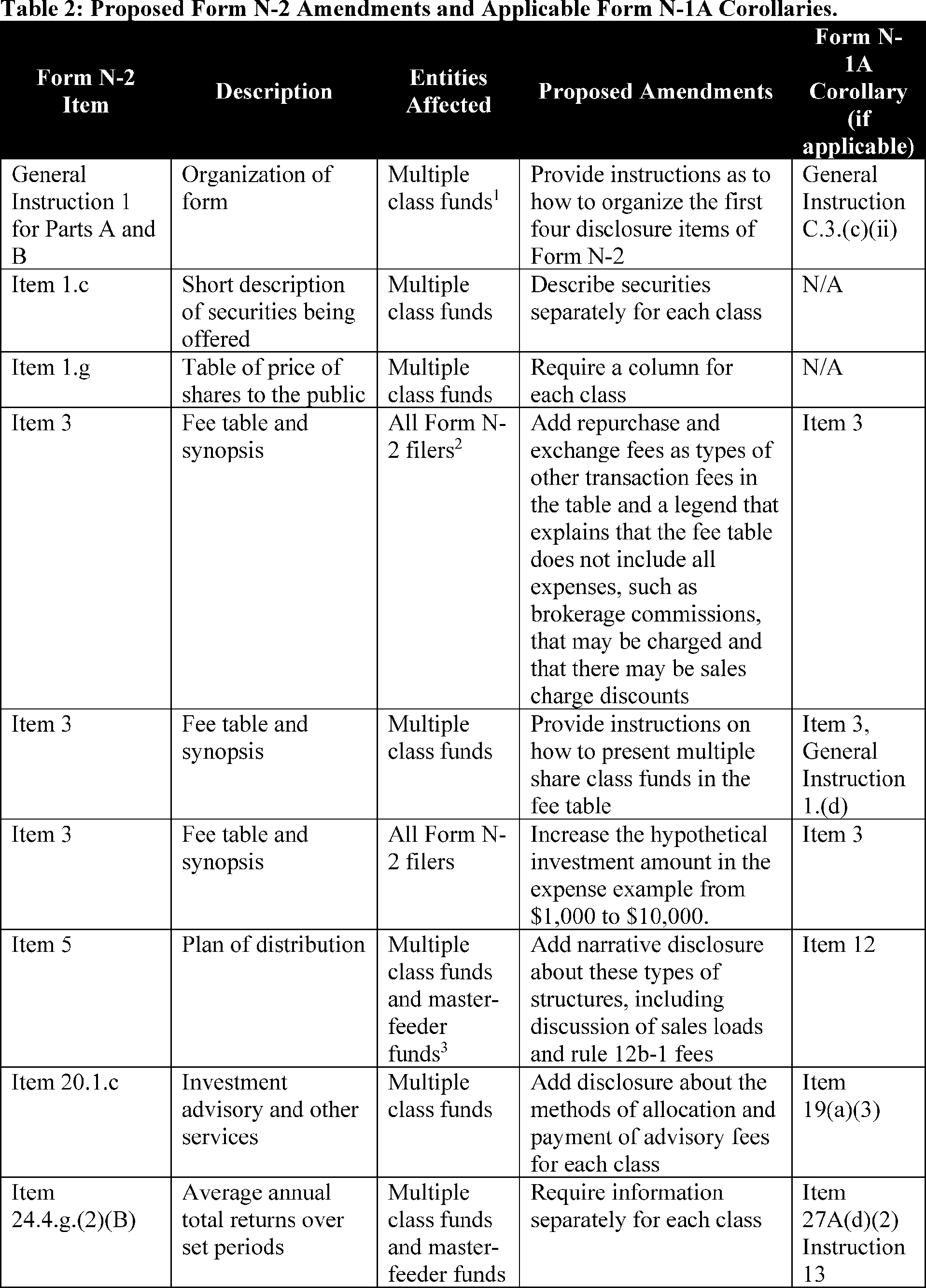
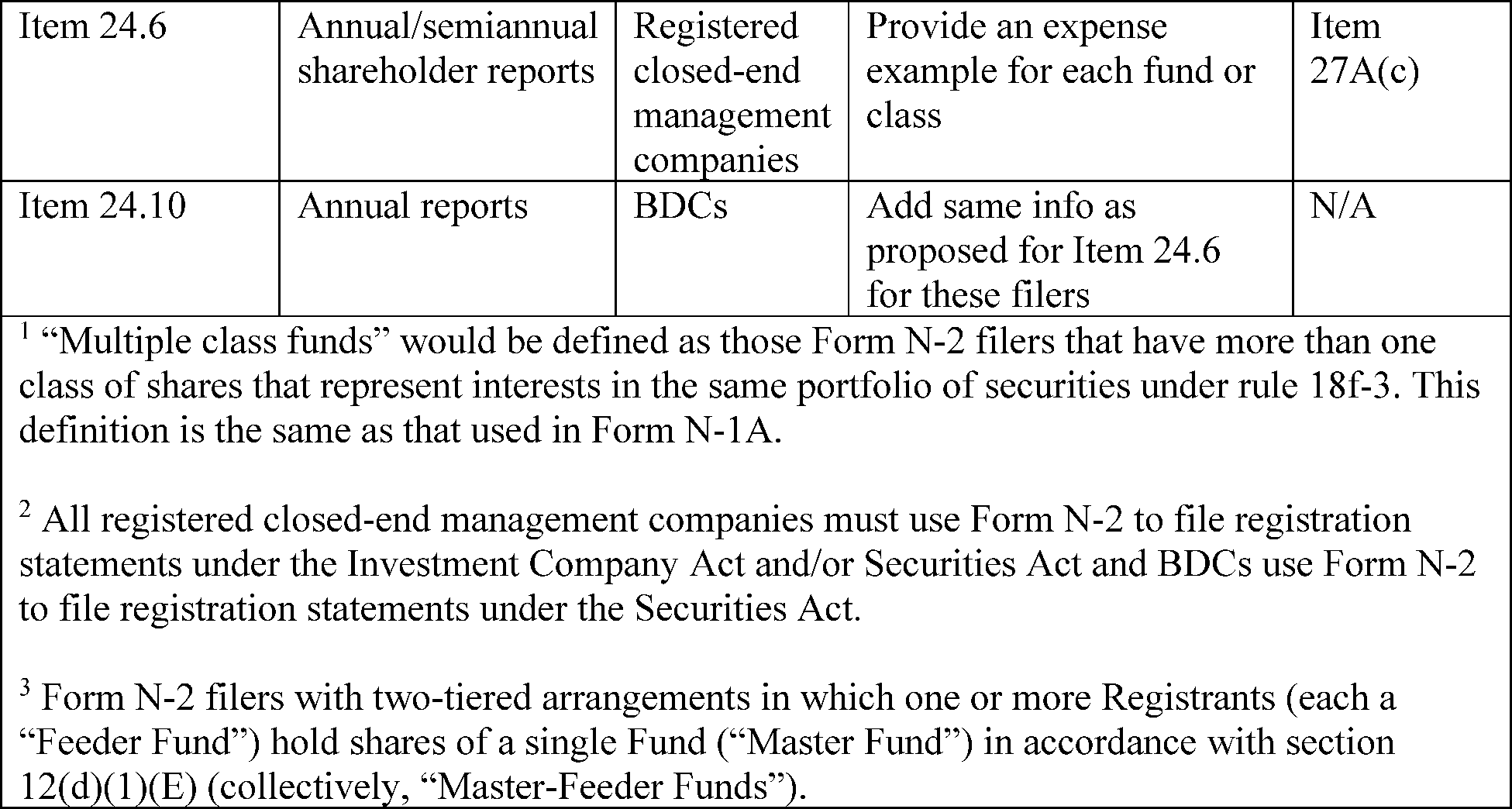
(a) General Instructions for Parts A and B
We are proposing to amend General Instruction 1 to Parts A and B regarding presentation of information generally. The amended instruction would define a “multiple class fund” for purposes of the form as a registrant that has more than one class of shares that represent interests in the same portfolio of securities under rule 18f-3. The instruction would permit funds to present the information called for by Items 1 through 4 of the form separately by class or integrate the information for multiple classes, provided that the order of information is as required in the form. The fund would be required to identify clearly the relevant classes at the beginning of this information. Items 1 through 4 require disclosure of key information about the closed-end fund that may vary by share class, including the fund's fee table. These instructions are consistent with those in Form N-1A.[147]
(b) Outside Front Cover (Item 1)
We are proposing to amend Item 1 of Form N-2, the outside front cover, in two ways. First, we propose to include an instruction that would, if the registrant is a multiple class fund, require a description of each class of securities offered and inclusion of a cross-reference to Item 5, plan of distribution, where the share classes are discussed in more detail and indicating as such. Further, we propose to include an instruction, in Item 1.g., the requirement to provide, in tabular form, the price to the public, sales load, and proceeds to the registrant or other persons of the securities being registered to be offered for cash. This instruction would state that for multiple class funds the table must include a column for each class of securities and provide information in each row for each class.[148]
(c) Fee Table and Synopsis (Item 3)
We are proposing to amend Item 3, the fee table and synopsis, of Form N-2 in four primary ways. First, for all filers, we propose to require a legend stating that there may be additional fees not accounted for in the fee table and potential fee discounts and that there is more information about the discounts that is provided elsewhere in the prospectus.[149] This disclosure would be helpful for investors in all regulated closed-end funds and therefore we propose requiring it in the registration statements of all such funds.
Second, we are further proposing to amend Item 3 to provide an instruction, Instruction 3A, on how to present information in the fee table and synopsis for closed-end multiple class funds when multiple classes are offered in the same prospectus. These disclosures are intended to inform investors about the differences between the investment options offered in the prospectus. This instruction would require that if a prospectus includes multiple classes of funds, the prospectus must have separate responses for each class. This instruction would further require additional captions as appropriate to describe how fees operate in the classes offered consistent with related requirements in Form N-1A. The purpose of this requirement is to ensure that disclosures being made that are specific to a multiple share class closed-end fund but are not typically disclosed by regulated closed-end funds are disclosed in the same way as open-end funds to enhance comparability. For example, regulated closed-end funds that have not received multi-class exemptive relief do not normally disclose rule 12b-1 fees as a line item in Item 3 as they are not typically subject to that rule. However, under the proposal, multiple share class closed-end funds would be required to comply with rule 12b-1 as if they were registered open-end management companies. Thus, this instruction would ( printed page 63418) require multiple share class closed-end funds to disclose all distribution or other expenses incurred during the most recent fiscal year under a rule 12b-1 plan, under the caption “Distribution [and/or Service] (12b-1) Fees,” and include, under an additional appropriate caption or a subcaption of “Other Expenses,” disclosure of the amount of any distribution or similar expenses deducted from the fund's assets other than pursuant to a rule 12b-1 plan, as is required in Form N-1A.[150] This requirement would also apply to fee waivers, expense reimbursements, and any other additional captions appropriate to describe each class's fees.[151] This disclosure is consistent with disclosures provided by regulated closed-end funds as a condition of their multiple share class exemptive relief.
Proposed Instruction 3A of Item 3 also would include language to more closely conform to the corresponding instructions in Form N-1A regarding the treatment of master-feeder funds. Specifically, the proposed instruction would require a feeder fund to reflect the aggregate expenses of the feeder fund and the master fund in a single fee table using the captions provided in Form N-2 and, as appropriate, any additional captions consistent with related requirements of Form N-1A.[152] The fund would also be required to include a footnote to the fee table disclosing that the fee table and expense example reflect the aggregate expenses of both the feeder fund and the master fund. In connection with this amendment, we propose to remove current Instruction 10.h of Item 3 of Form N-2, which directs a feeder fund to reflect the aggregate expenses of the feeder fund and the master fund under the “acquired fund fees and expenses” caption of the fee table. Removal of Instruction 10.h, along with proposed instruction 3A, are designed to be consistent with funds' current practices and with the analogous requirements in Form N-1A for open-end funds. In addition, the proposed revisions would help avoid the potential misimpression that can result from the current language in Form N-2 that all of a master-feeder funds' expenses—rather than only the acquired fund fees and expenses—should be aggregated under the acquired fund fees and expenses caption in the fee table.
Third, the instructions to the fee table in Item 3 of Form N-2 currently provide that transaction fees other than those expressly called for on the form should be added with a separate caption and list the maximum amount or the basis of the fee.[153] We are proposing that Instruction 5 includes, as an example of such transaction fees, any repurchase fees charged for the repurchase of the registrant's shares or exchange fees charged for any exchange or transfer of interest because the proposed amendments to rules 23c-3 and 18f-3 would allow greater flexibility to charge these fees that often arise in multiple share class structures.[154] We propose to require this of all Form N-2 filers in the event that these fees come up in other types of fund structures as they are important for investors to understand.
Lastly, the proposal would amend the expense example in Item 3 of Form N-2. The expense example currently illustrates the cumulative amount of fund expenses over one, three, five, and ten years, based on a hypothetical $1,000 investment and an assumed annual return of 5%. In 1998, the Commission amended Form N-1A to revise this hypothetical investment amount from $1,000 to $10,000.[155] We are proposing corresponding amendments to the expense example in Form N-2 to similarly increase the hypothetical investment amount from $1,000 to $10,000, consistent with the analogous disclosure in Form N-1A and the expense example we are proposing to require in closed-end funds' shareholder reports and BDCs' annual reports. The Commission made this change to Form N-1A in recognition that the typical fund investment was increasing in size. A $10,000 investment amount similarly may provide a more representative example than the $1,000 investment amount currently used for the expense example in Item 3 of Form N-2.
(d) Plan of Distribution (Item 5)
Item 5 of Form N-2, plan of distribution, would be amended to require narrative disclosures describing multiple share class and master-feeder structures.[156] This and certain other proposed disclosure requirements would address both closed-end multi-class funds and closed-end master-feeder funds because both arrangements involve shareholders with direct or indirect interest in the same underlying portfolio bearing different distribution costs.[157] These disclosures would mirror those required by Item 12(c) of Form N-1A, and are designed to help investors understand the details of a multiple share class or master-feeder structure, and, in particular, the sales loads and 12b-1 fees being charged and how they differ between the classes offered, given the confusion investors have historically had about these issues.[158] Specifically, such funds would be required to describe the main features of their structures. They would also be required to provide information about sales loads for each class. Specifically, this information must include:
- A description of any sales loads, including deferred sales loads,[159] as well as a table illustrating front-end loads (including any breakpoints) as a percentage of both the offering price and the net amount invested.[160] This description must state that the term “offering price” includes any front-end sales load [161] and include, if applicable, disclosure that sales loads are imposed on shares or amounts representing shares, that are purchased with reinvested dividends or other distributions,[162] and a discussion of how deferred sales loads are imposed and calculated.[163]
- A brief description of any arrangements that result in breakpoints in, or elimination of, sales loads, including identifying each class of individuals or transactions to which the arrangements apply [164] and a summary of shareholder eligibility requirements.[165] This description must also state each different breakpoint as a percentage of both the offering price and the net amount invested and point to any additional information in the ( printed page 63419) statement of additional information about sales load breakpoints.[166]
- A description of applicable methods used to value accounts to determine if sales load breakpoints are met, including methods such as historical cost, net amount invested, and offering price.[167]
- A statement, if applicable, that it may be necessary for the shareholder to inform the registrant or financial intermediaries at the time of purchase of other accounts with holdings eligible to be aggregated to meet sales load breakpoints with a description of the information from the shareholder that would be required. This would require a description of any information or records necessary for shareholders to provide in order to verify eligibility.[168] This would also require a statement that a shareholder should retain any records necessary to substantiate historical costs if that is the method by which breakpoints will be determined.[169]
- A statement of whether this sales load information is available free on the registrant's website at a specified address, including links to this information.[170]
The Item 5 amendments also would require that, if a multiple class fund has adopted a rule 12b-1 plan, the fund state the amount of distribution fee payable by each class under the plan and provide disclosure to the effect that (1) the registrant has adopted a rule 12b-1 plan that allows the registrant to pay distribution fees for the sale and distribution of its shares and (2) because those fees are paid out of the registrant's assets on an ongoing basis, over time these fees will increase the cost of the shareholder's investment and could cost more than other sales charges.[171] If the multiple class fund offers in the prospectus shares that provide for mandatory or automatic conversions or exchanges from one class to another, the Item 5 amendments would require the fund to provide the sales load and rule 12b-1 disclosure required in this Item for both the shares being offered and the class into which the shares may be converted or exchanged.[172] Finally, the amendments to Item 5 would require a feeder fund that has the ability to change the master fund in which it invests to describe briefly the circumstances under which this could happen.[173]
(e) Investment Advisory and Other Services (Item 20)
Item 20 of Form N-2 calls for disclosures relating to investment advisory and other services, including disclosures relating to the method of computing the advisory fee payable by the registrant. We propose to amend this item to require multiple class regulated closed-end funds to describe the methods of allocation and payment of advisory fees for each class.[174] This would help investors understand how these fees would be borne by the class they are investing in, and mirrors disclosures required in Item 19(a)(3) of Form N-1A.
(f) Shareholder Reports (Item 24)
Consistent with the exemptive orders, we also are proposing to require disclosures in regulated closed-end fund shareholder reports. Currently, registered closed-end management companies must include a table in the management's discussion of fund performance section of their annual reports that show the fund's average annual total returns for the one, five, and ten year periods as of the end of the last day of the most recent fiscal year.[175] We propose to add an instruction that would require this information for each class separately if the report covers more than one class of a multiple class fund or for each feeder fund if the report covers more than one feeder fund that invests in the same master fund.[176]
For all regulated closed-end funds that file registration statements on Form N-2, we would require a table in shareholder reports outlining the expenses of an ongoing $10,000 investment in the fund during the reporting period.[177] For registered closed-end management companies this would be required both in their semi-annual and annual reports, and for BDCs this would be required in their annual reports only. While this disclosure currently is required under multiple share class exemptive orders, we are proposing to require all regulated closed-end funds to provide additional information about closed-end fund expenses. Expanding this requirement would prevent disparities in the level of expense disclosure between multiple class and single class closed-end funds, which would otherwise be unclear to investors. This disclosure would also be consistent with the requirement for registered open-end funds to provide this disclosure regardless of whether the fund has multiple classes.[178] Moreover, the disclosure would provide investors in listed regulated closed-end funds, who currently do not receive any expense disclosures outside of the initial prospectus, better information about the costs of their investment.[179]
Consistent with registered open-end fund shareholder reports,[180] this table would require registrants to identify the fund or class, expenses paid on a $10,000 investment, and the expenses as a percentage of a $10,000 investment during the reporting period (that is, the expense ratio).[181] For multiple class funds, each class would be required to be on a different line. The instructions for the presentation and computation of these items, such as how to address extraordinary expenses, would be the same as that currently required of registered open-end funds.[182]
(g) Form N-CEN
Lastly, we are proposing a change to Form N-CEN, the annual report for registered investment companies, to provide for multiple share class registered closed-end management companies. Specifically, we are proposing to amend Item C.2 by removing “open-end” from the form, which calls for information about the number of share classes a fund has issued, how many new classes were issued during the reporting period, how many classes were terminated during the reporting period, and other identification information including the full name of the class.[183] Currently, this ( printed page 63420) information is only required of registered open-end funds. This information would help the Commission and staff better understand the utilization of multiple share classes by registered closed-end funds and how they change over time.
(h) Request for Comment Regarding Disclosures
We request comment on the proposed amendments to Forms N-2 and N-CEN to provide for multiple share class disclosures and other enhancements.
65. Should we tailor these disclosures in any way further to account for regulated closed-end fund structures?
66. Should more information be provided on any of these items? For example, should we include line items in the Item 3 fee table specifically for repurchase fees and exchange fees as shareholder transaction expenses, rather than identifying those as other transaction fees?
67. Should we, as proposed, increase the Item 3 fee table example hypothetical investment amount from $1,000 to $10,000, consistent with the corresponding disclosure for open-end funds in Form N-1A?
68. Should we, as proposed, remove Instruction 10.h of Item 3 in Form N-2? Would the removal of this instruction, in conjunction with the other proposed amendments to Item 3 instructions, better reflect current practices of fee and expense disclosure for master-feeder fund structures?
69. Should we require the proposed $10,000 sample expense example in shareholder reports? Can investors effectively understand regulated closed-end fund fees by virtue of the expense example already provided in Item 3 of the prospectus? Should we, for example, only require the shareholder report expense example in the case of regulated closed-end funds that are not offered on a continuous basis? Should we require the shareholder report example at the same cadence for all regulated closed-end funds, or permit BDCs to report this information annually only as proposed?
70. Are there other disclosures or reporting items that would be helpful to investors in consideration of the multiple class structures that would be permitted under the proposal?
E. Proposed Rescission of Exemptive Orders
The Commission has authority under the Investment Company Act to amend or rescind our orders when necessary or appropriate to the exercise of the powers conferred elsewhere in the Investment Company Act.[184] The Commission has granted exemptive relief in two distinct areas addressed in this release, specifically (1) permitting interval funds to offer monthly repurchases under rule 23c-3 and (2) permitting regulated closed-end funds to issue multiple share classes. We are proposing to rescind all but one of the exemptive orders that cover these areas as the proposed amendments, if adopted, would render those orders moot, superseded, and inconsistent with the proposed amendments.[185] We are not proposing to rescind one recent exemptive order relating to regulated closed-end funds issuing multiple share classes, as discussed in more detail below.
The relief provided by the orders permitting interval funds to make repurchase offers on a monthly basis is generally consistent with the proposed amendments to permit interval funds to offer monthly intervals, with certain differences relating to shareholder notification and the repurchase offer amount. Further, as discussed above,[186] the exemptive orders providing for multiple share class structures also grant an exemption for interval funds from current rule 23c-3 to charge deferred sales loads subject to certain conditions. While the proposed amendments to rule 23c-3 would permit monthly repurchases and deferred sales charges, the proposed amendments would differ in some ways from these orders.
In particular, at least one fund with a monthly repurchase interval has been permitted to make a repurchase offer for an amount of two percent on a monthly basis.[187] As a condition of this relief, the fund also had to ensure that it offers to repurchase no less than five percent of the aggregate number of its common shares outstanding as of the third month's repurchase request deadline. Under the proposed amendments, interval funds would be required to make a repurchase offer in an amount of no less than five percent and no more than 25 percent. Therefore interval funds with a monthly interval that currently offers a minimum of two percent a month would have to start offering at minimum five percent a month under the proposed amendments.
We believe that it would be appropriate to rescind these orders notwithstanding this difference as this would result in a more consistent interval fund framework. We request comment above as to whether a two percent minimum would be appropriate in the final rule.
The proposed amendments would be less restrictive than the monthly exemptive orders in other ways. For example, the current exemptive orders for monthly repurchases allow funds to notify investors at least seven days and no more than fourteen days before the repurchase request deadline.[188] Under our proposal, funds would be required to provide notification no less than fourteen days and no more than forty-two days prior to the deadline. These funds may have to send notification earlier, but this amendment would, in some cases, provide investors in these funds more time to decide whether to submit a repurchase request. For funds that currently send notifications on the earliest permitted day under the order, fourteen days in advance, there may be no change to investors if the fund elects to submit at the latest possible time of fourteen days in advance under the proposal. Other investors in funds with a monthly interval would benefit from additional time under the proposal. Additionally, some funds' orders were conditioned on a requirement that the payment for repurchased common shares occur at least five business days before notification of the next repurchase offer is sent to shareholders, but under the proposal such payment would be required no later than one business day before notification of the ( printed page 63421) next repurchase offer. This could result in monthly interval funds having more time to make the payment for repurchased shares than under the current exemptive orders. This, in turn, could provide funds more time to obtain the cash needed to make those payments, providing more flexibility to those funds. For both of these changes, the proposal is designed to establish a generally consistent framework that could be applied across interval funds. As discussed in section II.A.2 above, the notification provisions in the proposed rule are designed to provide shareholders sufficient time to assess a repurchase offer while also providing notification timing requirements that are suitable for monthly, quarterly, semi-annual, and annual intervals. Certain conditions in the exemptive orders permitting monthly intervals, such as the minimum notification timing contained in the exemptive relief, would likely not be suitable for investors of interval funds with a longer periodic interval such as annual. We have requested comment on whether we should consider including or amending those conditions.
Further, as discussed above,[189] the Commission has issued numerous exemptive orders that permit regulated closed-end funds to have multiple share classes notwithstanding the provisions of sections 18, 17(d), and 61(a) of the Investment Company Act, as well as rule 17d-1. When requesting an exemption, applicants represent how their share classes will be structured and the legal requirements with which the applicants will comply under the requested exemptive order. The proposed amendments would contain many of these representations, such as compliance with rules 18f-3 and 12b-1, but would exclude the requirement to comply with FINRA rules regarding sales fees. Although the conditions in the proposal differ in certain respects from the exemptive orders, they are designed to address the statutory concerns underlying the provisions from which the proposed rule would grant exemptions necessary for regulated funds to issue multiple classes of shares. In particular, as discussed above, the question of whether a regulated closed-end fund's distribution expenses are excessive is a concern that is not limited to multiple share class funds, and consistent limitations on distribution fees charged by funds more generally go beyond the scope of the proposal and are covered by other regulations, including those FINRA rules.[190] As a result, we propose to rescind these orders regardless of this inconsistency.
The proposal also contains requirements that (1) the fund offer its common stock on a continuous basis, (2) any offer made other than at NAV be made to all classes of common stock, (3) the fund's common stock not be listed, offered, or traded on a secondary market, and (4) any offer to repurchase common stock be made to all classes and the percentage taken up and paid for in any repurchase offer be allocated on a fund, not class, basis. Because the exemptive orders provide that any offer to repurchase be made in a manner that does not discriminate against any holder of the class or classes of securities to be purchased, these activities would violate the terms of the exemptive orders. Accordingly, these proposed restrictions are consistent with the terms of the exemptive orders.
We recently issued an order that would permit multiple share class structures that include classes that trade on a securities exchange and in tokenized format using distributed ledger technology.[191] We do not plan to rescind this order upon any future adoption of this proposal even if the proposed amendments were adopted as there are no other funds with multiple share class orders that trade on an exchange and in a tokenized format. Therefore, it may be appropriate for regulated closed-end funds seeking to utilize unique structures such as this to continue to request relief from the Commission through our exemptive application process, and for the Commission to continue to make facts-and-circumstances-based determinations regarding whether such relief is appropriate for any particular applicant.
We request comment on our proposal to rescind existing exemptive relief, including:
71. Should we, as proposed, rescind these exemptive orders? Should we allow funds that have been granted relief to continue operating under the conditions specified in the orders if the conditions differ from the rule? If commenters would urge the Commission to leave any of the exemptive orders in place, please identify the order and explain why the order would continue to be necessary or appropriate and otherwise consistent with the standards underlying the exemptions it provides after the Commission has adopted rules of general applicability.
72. What conditions from the exemptive orders should we consider including, including in amended form, or excluding in the final rules? For instance, should we allow interval funds that make monthly repurchase offers to have a repurchase offer amount not less than two percent of the common shares outstanding? What, if any, additional conditions should we consider including if funds elect to operate under a monthly periodic interval?
73. Section 11(d)(1) of the Exchange Act generally prohibits certain broker-dealers from extending or maintaining credit (or arranging such) to or for a customer on certain securities that are new issues if the broker-dealer participated as member of the selling syndicate or group within 30 days prior to the transaction.[192] Should the Commission provide these broker-dealers an exemption from these restrictions regarding interval fund securities, consistent with the Commission's approach to other types of continuously offered securities in the past? [193] If the Commission were to grant such exemptions, what conditions, if any, should the Commission consider as part of granting the relief? For example, should the Commission grant such exemptions subject to the same conditions as those provided in prior continuously offered securities exemptions? Should the Commission include other conditions in any such relief?
F. Effective and Compliance Dates
We propose to provide a compliance period after the effective date of the proposed amendments. Specifically, we are proposing a one-year compliance period after the effective date of the amendments to give affected funds sufficient time to comply with the proposed changes and associated disclosure and reporting requirements, ( printed page 63422) if adopted. Should an affected fund choose to utilize the proposed amendments after their effectiveness but before the end of the compliance period, as discussed in more detail below such fund would be required to comply with all applicable rule requirements.
Following the one-year compliance period, funds would be required to comply with the new disclosure and reporting requirements in Form N-2, Form N-CEN, and Form N-23c-3 as needed. For example, any initial registration statements or post-effective amendments filed on Form N-2 on or after the first day after the end of that compliance period would be required to comply with the amendments to that form. Also, to the extent that we ultimately rescind the exemptive orders relating to the proposed amendments, we also propose a one-year period after the effective date, that is, the compliance date of these amendments, if adopted, before we rescind that exemptive relief to give the parties to those orders time to bring their operations into conformity with the proposed requirements.
After the effective date, a fund may choose to voluntarily comply with the rules in advance of the compliance date. However, consistent with prior practice, if a fund chooses to comply early, the fund would be required to fully adhere to all applicable requirements of the proposed amendments, in particular the disclosures proposed to be required when relying on amended rule 18f-3.[194] Thus, a fund seeking to rely on the rule 18f-3 amendments to issue multiple classes of common stock must also provide the disclosures that would be required in Form N-2.
We request comment on the proposed compliance and effective dates, including the following:
74. Is the proposed one year compliance period appropriate? Is a longer or shorter period necessary to allow funds to comply with one or more of these particular amendments? If so, which proposed amendments, and what would be an appropriate compliance date?
75. Should we provide a longer compliance period for smaller funds? If so, what should this be? For example, should we provide smaller entities with a compliance period of 18 or 24 months? Is a longer or shorter period necessary to allow smaller funds to comply with one or more of these particular amendments? If so, which proposed amendments, and what would be an appropriate compliance date? How should we define a “smaller fund” for this purpose? For example, should a smaller fund be defined as a registered fund that, together with other investment companies in the same family of investment companies, have net assets of less than $10 billion as of the end of the most recent fiscal year? [195] Should we consider a different threshold amount such as $1 billion?
76. Should we permit interval funds that are still in the ramp up period as of the effective date of these amendments the option to use the extended ramp up period? If so, should we consider starting the two-year period at the effective date of the fund's registration statement or the date of the shareholder vote adopting the fundamental policy prescribing the fund's intervals, or should we consider other alternatives such as two years from the effective date of these amendments? How would an extended ramp up period impact shareholders of these funds?
77. Should we, as proposed, rescind the relevant exemptive orders as of the compliance date of these amendments? Should we consider providing a longer transition time for funds relying on exemptive orders? For example, should we provide those funds a compliance period of 18 months?
III. Economic Analysis
A. Introduction
The Commission is mindful of the economic effects, including the costs and benefits, of the proposed amendments. Section 2(c) of the Investment Company Act provides that, when the Commission is engaging in rulemaking under the Act and is required to consider or determine whether an action is consistent with the public interest, the Commission shall also consider whether the action will promote efficiency, competition, and capital formation, in addition to the protection of investors.[196] The analysis below addresses the likely economic effects of the proposed amendments, including the anticipated and estimated benefits and costs of the amendments and their likely effects on efficiency, competition, and capital formation.[197] The Commission also discusses the potential economic effects of certain alternatives to the approaches taken in this proposal.
The Commission is proposing amendments that would:
1. Provide interval funds with greater flexibility regarding the timing of their repurchases, including by permitting a fund to defer its first repurchase offer for up to two years following registration or after a shareholder vote first adopting a fundamental policy that specifies the periodic intervals, adding a one-month periodic interval to the existing options (along with a corresponding amendment to the timing requirements for notifying security holders to accommodate this option), and permitting discretionary repurchases once every twelve months rather than once every two years; [198]
2. Simplify the definition of repurchase pricing date and remove the requirement to include the maximum number of days between the repurchase request deadline and the repurchase pricing date in the fund's fundamental policy; [199]
3. Address ambiguity regarding interval funds' obligations when repurchase offers are oversubscribed [200] and amend the repurchase offer amount definition to specify that the range of permissible amounts applies to periodic repurchases; [201]
4. Permit interval funds (and other regulated closed-end funds making discretionary repurchase offers) to deduct deferred sales loads from repurchase proceeds subject to certain conditions; [202]
5. Remove the requirement that an interval fund must hold 100 percent of its repurchase offer amount in liquid assets for the duration of the repurchase offer period and instead require that the fund manage its portfolio liquidity so that the fund can satisfy repurchase requests without requiring a sale or ( printed page 63423) disposition of investments at prices that deviate significantly from the value of those investments; [203]
6. Extend the exemptive rule allowing open-end funds to issue multiple classes of shares to regulated closed-end funds; [204]
7. Require enhanced disclosures and reporting regarding multiple share class and master-feeder structures similar to those currently required for registered open-end funds; require an expense example in the shareholder reports of all regulated closed-end funds that file Form N-2; add a fees-and-expenses legend to the Form N-2 fee table for all regulated closed-end funds that file Form N-2; and extend related existing open-end fund reporting on Form N-CEN regarding multiple share classes to registered closed-end funds; [205] and
8. Modify certain minor, inconsistent, outdated, or unused provisions of rule 23c-3, including the grandparent clause and superseded Form N-23c-3 filing procedures.[206]
The Commission is proposing these amendments to modernize a regulatory framework whose requirements were originally calibrated to market conditions that have since changed and that contains elements that, based on our experience with interval funds since, inefficiently constrain the operations of interval funds to the detriment of investors. Rule 23c-3 originated as a tailored response to a specific market need. In the late 1980s and early 1990s, a class of continuously offered regulated closed-end funds known as “prime rate funds” invested primarily in bank loans and other credit assets.[207] These funds relied on periodic tender offers conducted under the Exchange Act as the sole source of shareholder liquidity.[208] Because that tender offer framework was operationally cumbersome and costly for funds making regular, frequent repurchases at NAV, the Commission adopted rule 23c-3 to provide a less burdensome and more predictable mechanism for offering periodic liquidity while maintaining core investor protections.[209]
The interval fund vehicle is now used at scale for a substantially broader and less liquid range of private-market strategies, such as direct lending, private equity secondaries, and infrastructure.[210] The number and net assets of interval funds have grown by approximately 407 percent and 545 percent, respectively, since 2016.[211] In its modern application, the economic value of the vehicle results from the combination of exposure to less liquid assets and the periodic liquidity it provides to its investors.[212] Specifically, by committing capital for longer, investors can potentially obtain higher returns via an illiquidity premium. At the same time, the interval structure provides intermittent, predetermined opportunities for investors to access a portion of their invested capital, positioning interval funds between daily-redeemable open-end funds and more restrictive vehicles such as tender offer funds or private equity funds. Interval fund investors thus accept a longer and less frequent liquidity schedule in exchange for the return potential of illiquid strategies, and the interval fund's utility depends on aligning the timing and amount of promised liquidity with the horizon over which the fund's underlying assets generate cash.
The economic case for modernizing rule 23c-3 rests on two distinct rationales. First, certain of the rule's requirements are inefficient in design, independent of the fund's strategies. In particular, rule 23c-3 requires that an interval fund hold 100 percent of the amount of its repurchase offers in liquid assets for the duration of the repurchase offer period, regardless of how many shares are ultimately tendered by shareholders. This requirement generates cash drag that lowers fund returns by constraining the allocation of assets to potentially higher-yielding investments during the repurchase offer period. The proposed replacement of this prescriptive requirement with the principles-based liquidity management framework would remove this inefficiency while preserving the objective the requirement was intended to serve.[213] In doing so, the proposed amendments would not eliminate the objective served by the current liquidity requirement ( i.e., that a fund be able to meet its repurchase obligations without disadvantaging remaining shareholders) but instead would pursue that objective through the proposed principles-based standard requiring the fund to manage its portfolio's liquidity so the fund can satisfy repurchase requests without requiring a sale or disposition of investments at prices that deviate significantly from the value of those investments. The economic analysis below considers both the benefits of this recalibration and the costs and risks that may arise if the proposed principles-based standard provides less predictable investor protection than the current prescriptive requirement in some circumstances, such as during periods of deteriorating market conditions and elevated repurchase demand.
Second, several of the rule's constraints have impeded efficient interval fund operation as market practices have changed. Both the limited time that a fund can defer its first repurchase offer and the quarterly minimum repurchase interval did not meaningfully constrain the funds that relied on rule 23c-3 when it was first adopted, as continuously offered closed-end funds investing in long-dated private assets were uncommon and there was no known market demand for shorter intervals. Under current market practices, however, this framework constrains the ability of new interval funds to “ramp up” operations and season their portfolio before starting the repurchase process. This framework also constrains the ability of these funds to meet investor demand for a periodic interval shorter than quarterly without individualized exemptive relief. Consistent with the Commission's view that its regulatory framework should adapt to changing regulatory and market conditions to remain effective,[214] the proposed amendments that would permit a deferral period of up to two years and permit monthly repurchases are directed at addressing these operational inefficiencies.[215]
The proposed amendments to rule 18f-3 reflect a similar calibration. When rule 18f-3 was adopted in 1995, multiple share class structures were ( printed page 63424) principally an open-end fund practice, and the rule provided exemptive relief that was routinely given to open-end funds at the time.[216] As a result, rule 18f-3 is available only to registered open-end funds. A regulated closed-end fund that seeks to offer multiple share classes must apply for and obtain individualized exemptive relief from the Commission. Today, unlisted regulated closed-end funds that continuously offer their shares are common: the Commission has issued approximately 230 substantially similar exemptive orders permitting these funds to offer multiple share classes,[217] representing substantial inefficiencies for these funds. The current framework presents a hurdle for regulated closed-end funds that is not present for their open-end counterparts to benefit from the efficiencies that a multi-share class fund can gain; namely, a single fund can distribute its shares across a broader range of investor markets and distribution channels without incurring unnecessary fixed costs for each segment, allowing the fund to better achieve economies of scale.[218]
Lastly, the proposed disclosure and reporting amendments are designed to reinforce investor protections and to help investors understand the multiple share class structures that the proposal would permit.[219] Because Form N-2 does not currently provide meaningfully for the disclosure of multiple share class structures, the proposal would add instructions and require narrative disclosure similar to corresponding requirements of Form N-1A used by registered open-end funds. The proposal would also require enhanced disclosures regarding master-feeder structures that function similarly to multiple share class structures. It would further require funds to provide investors with enhanced disclosures regarding the expenses of all regulated closed-end funds. The proposal would also extend existing Form N-CEN reporting regarding the number and other identification information of a fund's share classes to registered closed-end funds, among other changes.[220] Standardizing this information across funds and classes would lower search and comparison costs for investors as well as improve the ability of the Commission and its staff to effectively monitor for compliance.
Many of the benefits and costs discussed below are difficult to quantify. In some cases, data needed to quantify these economic effects are not currently available and the Commission does not have information or data that would allow such quantification. For example, the Commission is unable to quantify the growth in the number of interval funds that may result from the proposed amendments. While the Commission has attempted to quantify economic effects where possible, much of the discussion of economic effects is qualitative in nature. Accordingly, the Commission seeks comment on all aspects of the economic analysis, especially any data or information that would enable a quantification of the proposal's economic effects.[221]
B. Economic Baseline
The baseline against which the benefits, costs, and the effects on efficiency, competition, and capital formation of the proposed amendments are measured consists of the current state of the market, market participants' current practices, and the current regulatory framework.[222]
1. Regulatory Baseline
Interval Funds. Interval funds are closed-end funds that offer investors liquidity via periodic repurchase offers at NAV as permitted by rule 23c-3 under the Investment Company Act. These periodic repurchases occur every three, six, or twelve months [223] pursuant to a fund's fundamental policy, which may be modified only by shareholder vote.[224] Certain interval funds have obtained exemptive relief from the Commission to offer monthly liquidity to shareholders.[225] These repurchases must follow a prescribed timeline under rule 23c-3, with notifications disclosing basic terms of the repurchase offer provided at least twenty-one but no more than forty-two days before the shareholder repurchase request deadline.[226] The repurchase pricing date, on which the fund determines the NAV applicable to the repurchase, must occur no later than fourteen days following this deadline.[227] The fund's elected maximum window following the repurchase request deadline is also a matter of its fundamental policy and may be less than fourteen days.[228] The repurchase payment deadline is seven days after the repurchase pricing date applicable to such tender.[229] Interval funds must start the repurchase process with an initial repurchase request deadline no later than two periodic intervals after the effective date of the fund's registration statement or the date of the shareholder vote adopting the fund's fundamental policy.[230]
Repurchase offers may be for any amount ranging from five to 25 percent of outstanding fund shares as of the repurchase request deadline.[231] The repurchase offer amount is determined by the fund's directors prior to each repurchase offer.[232] If repurchase requests exceed the amount of the repurchase offer, the fund may repurchase up to an additional two percent of its outstanding shares as of the repurchase request deadline. If the fund opts not to repurchase any additional common stock or if the amount of the requests exceeds the offer amount by more than two percent of the outstanding shares, the fund must ( printed page 63425) conduct its repurchases on a prorated basis,[233] with narrow exceptions.[234]
An interval fund makes periodic repurchase offers at the intervals stated in its fundamental policy. However, an interval fund may defer its initial repurchase request deadline up to (but no later than) two intervals following the effective date of its registration statement ( e.g., six months for a three-month interval fund). Thereafter, an interval fund may suspend or postpone a repurchase offer only in exceptional circumstances and only pursuant to a vote of a majority of the directors, including a majority of the directors who are not interested persons of the company.[235] Aside from its periodic repurchase offers, an interval fund may conduct repurchases on a discretionary basis, which may be made for up to 100 percent of the fund's common stock, at most once every two years.[236]
Interval funds are required to file Form N-23c-3 in connection with their periodic repurchase offers, and regulated closed-end funds that conduct discretionary repurchases pursuant to rule 23c-3(c) must file Form N-23c-3 in connection with such discretionary repurchases.[237] In particular, rule 23c-3(b)(4)(ii) requires an interval fund to file Form N-23c-3 along with three copies of its repurchase offer notification with the Commission within three business days of sending the notification to its shareholders. As written, it also requires compliance with the formatting requirements for registration statements and reports under rule 8b-12. Each of these requirements is superseded by the amendments to rule 101 of Regulation S-T that were adopted in 2022.[238] The amendments to rule 101 provide that, among other filings, documents filed with the Commission under section 23(c) of the Investment Company Act must be made on EDGAR and that the documents will be considered as officially filed with or furnished to, as applicable, the Commission.[239] Additionally, amendments to Regulation S-T adopted in 2020 supersede the requirement in Instruction 2 of Form N-23c-3, which states that one of the three copies of the repurchase offer notification should be manually signed while the other copies may have facsimile or typed signatures.[240] The amendments permit the use of electronic signatures in signature authentication documents required under Regulation S-T in connection with electronic filings on EDGAR that are required to be signed.[241]
While interval funds are not subject to portfolio liquidity requirements in general, they must hold sufficiently liquid portfolios during repurchase windows to satisfy investor repurchase requests. Specifically, from the time of the fund's repurchase offer until the repurchase pricing date, the interval fund must have at least 100 percent of the repurchase offer amount held in assets that can be sold or disposed of in the ordinary course of business, at approximately the price at which the fund has valued the investment, within the period between a repurchase request deadline and the repurchase payment deadline, or in assets that mature before the next repurchase payment deadline.[242] The fund's board is responsible for ensuring that this liquidity requirement is met.[243]
Separately, interval funds are not permitted to charge deferred sales loads absent an exemptive order because rule 23c-3(b)(1) permits only deductions from repurchase proceeds that are intended to compensate for expenses directly related to the repurchase.[244] This language rules out deferred sales loads in interval funds, as such fees are charged in relation to the distribution and promotion of the fund's shares and do not relate directly to repurchases. The Commission has granted exemptive relief for several interval funds to charge deferred sales loads.[245] These exemptive orders are typically conditioned on the fund's compliance with rules 6c-10,[246] 11a-1, 11a-3, and 22d-1, which govern deferred sales loads for registered open-end funds.[247]
Regulated Closed-End Fund Share Classes. Under the current regulatory framework, there is no exemptive rule permitting regulated closed-end funds to issue multiple classes of shares. Specifically, Section 18 of the Investment Company Act restricts the ability of investment companies to issue any class of senior security,[248] which includes any stock of a class having priority over any other class as to the distribution of assets or payment of dividends.[249] Rule 18f-3, which allows open-end funds to issue multiple security classes notwithstanding this restriction, was adopted in 1995 to offer formal exemptive relief that was routinely provided to open-end funds at the time. Open-end funds relying on rule 18f-3 are also subject to rule 12b-1, which permits open-end funds to finance distribution from fund assets pursuant to a written plan approved by the fund's board containing specific provisions.[250] However, rules 12b-1 and 18f-3 do not apply to regulated closed-end funds. As a result, regulated closed-end funds that seek to issue multiple share classes must currently submit applications for exemptive relief to the Commission.[251] In most cases, the ( printed page 63426) conditions for exemptive relief have been broadly similar, generally requiring that a regulated closed-end fund adhere to the conditions of rule 18f-3 and certain disclosure requirements of Form N-1A as if it were an open-end fund.
Joint Enterprises. Section 17(d) and rule 17d-1 of the Investment Company Act prohibit joint enterprises between a registered investment company and its affiliated persons absent an exemptive order from the Commission. Rule 17d-3 exempts affiliated persons of open-end funds from this prohibition to the extent necessary to permit distribution financing arrangements complying with rule 12b-1.[252] However, regulated closed-end funds cannot rely on rule 17d-3 and thus must apply for exemptive relief to enter into distribution arrangements with affiliated persons. Such exemptive relief is usually conditioned on the regulated closed-end fund adhering to rule 17d-3 as if it were applicable to regulated closed-end funds.[253]
Closed-End Fund Disclosures. Form N-2 is the registration statement form used by regulated closed-end funds. Specifically:
- Item 1 requires a description of the title, amount, and brief description of the securities offering, along with a table presenting its price, sales load and proceeds to the registrant.
- Item 3 requires a fee table and synopsis.
- Item 5 requires disclosure about a fund's plan of distribution.
- Item 20 requires disclosure relating to investment advisory and other services including the method of computing the advisory fee.
- Item 24 prescribes disclosures in shareholder reports. Regulated closed-end funds are currently required to include a table in the management's discussion of fund performance section of Form N-2 that shows average annual total returns for the one-, five-, and ten-year periods as of the end of the most recent fiscal year.
Form N-CEN. Form N-CEN is the annual report for registered investment companies (other than face amount certificate companies). Specifically, Item C.2 calls for information from open-end funds about the number of share classes a fund has authorized, how many new classes were added during the reporting period, how many classes were terminated during the reporting period, and other identification information including the full name of the class.
2. Affected Parties
The proposed amendments would amend various rules that apply to regulated closed-end funds, including traditional (exchange-listed) closed-end funds, interval and tender offer funds, and BDCs. Investors in these funds, as well as the funds' advisers, would also be affected.
Interval Funds. The proposed amendments to rule 23c-3 would primarily affect interval funds and their investors, advisers, and boards of directors. As of December 2025, there were 139 interval funds registered with the Commission reporting $101 billion in net assets under management.[254] Interval funds have seen consistent growth in recent years, with net assets under management increasing by over $80 billion (405 percent) since 2016. Over the same period, the number of interval funds increased by 111 funds (396 percent).[255] As of December 2025, 76 interval funds operated under exemptive relief orders permitting them to charge deferred sales loads.[256] These orders also include relief for these interval funds to offer multiple share classes conditional on adhering to rules 12b-1 and 11a-3 as if they were open-end funds.
Regulated Closed-End Funds. The proposed amendments to Investment Company Act rules 18f-3 and 17d-3 would affect regulated closed-end funds that seek to issue multiple share classes. These amendments would apply to all regulated closed-end funds, including traditional closed-end funds, BDCs, interval funds, and tender offer funds. The proposed amendments to rule 23c-3 would also affect regulated closed-end funds to the extent they rely on its discretionary repurchase provision.[257] As of year-end 2025, there were 884 regulated closed-end funds (706 registered closed-end funds and 178 BDCs) with net assets of $710 billion ($430 billion + $280 billion, respectively). In aggregate, regulated closed-end funds have been growing steadily since 2016, with net assets increasing by $403 billion (30 percent) and the number of funds increasing by 276 (45 percent).[258] Of these regulated closed-end funds, 76 interval funds, 59 tender offer funds, and 33 BDCs operate under exemptive orders that permit them to issue multiple share classes as of the December 2025. Table 3 provides further detail on counts and net assets of registered closed-end funds by type.
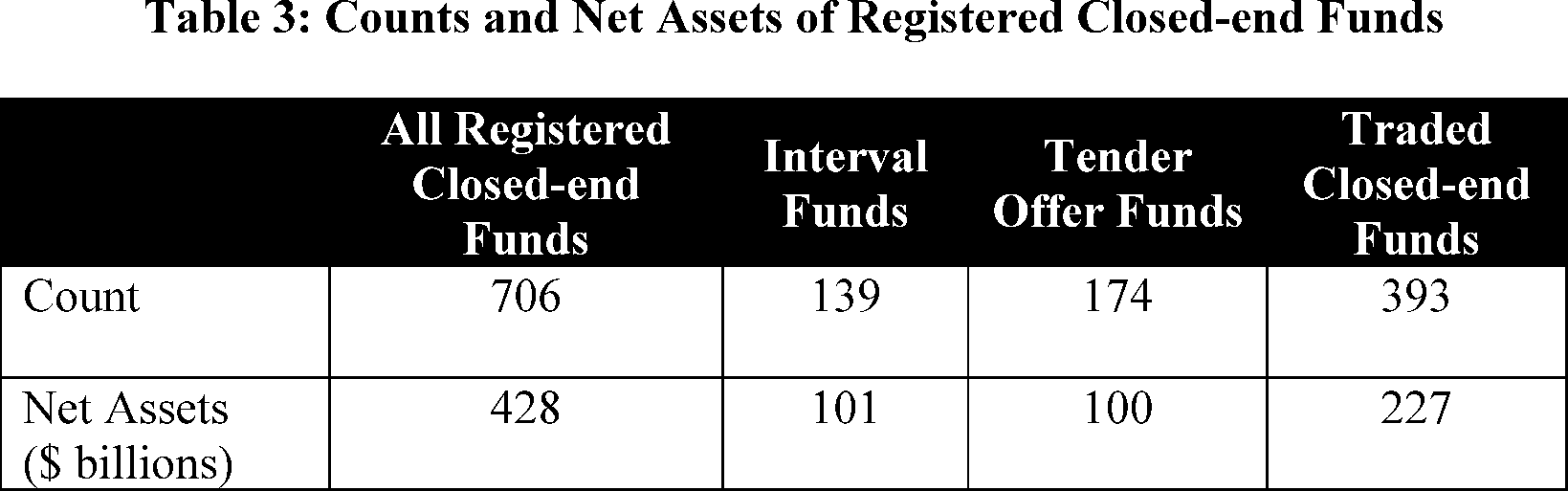
The proposed amendments would also modify several items on Form N-2 for regulated closed-end funds to provide disclosures regarding their multi-share class and master-feeder structures. Table 4 provides details on counts and net assets for registered closed-end feeder funds in master-feeder structures.
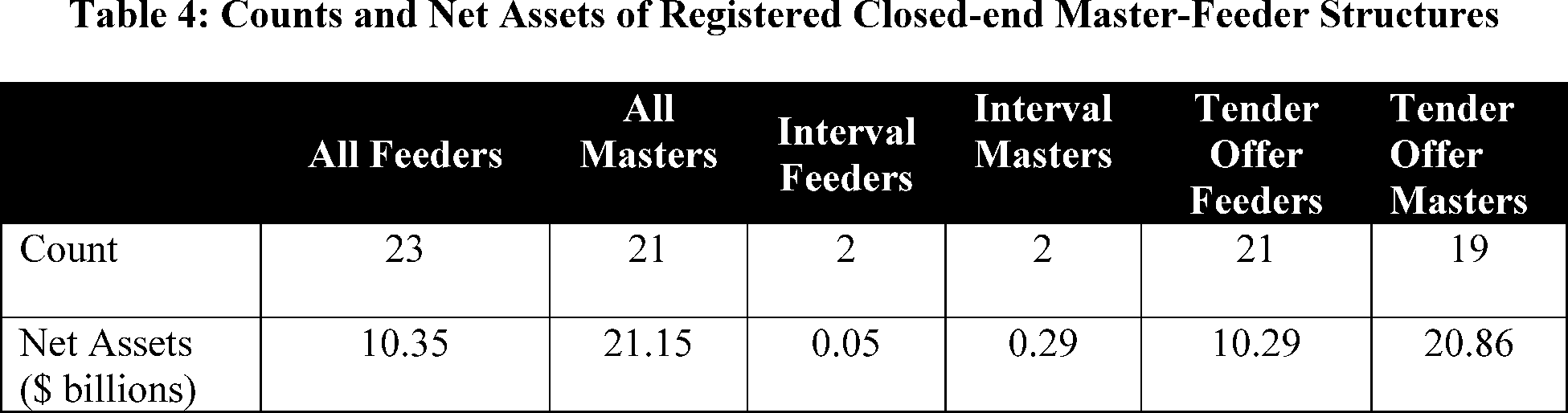
Advisers to Regulated Closed-End Funds. The proposed amendments would affect registered investment advisers to regulated closed-end funds. As of December 2025, there were 224 advisers advising registered closed-end funds, with the median closed-end fund adviser advising $0.7 billion in closed-end fund assets.[259] There were 132 advisers advising BDCs as of the same date. For registered investment advisers that advise at least one closed-end fund (BDC), the median percentage of regulatory assets under management attributable to closed-end funds (BDCs) is 14 (67) percent. Across all registered advisers, closed-end fund net (total) assets account for 0.3 (0.4) percent of regulatory assets under management.[260]
Investors in Regulated Closed-End Funds. The proposed amendments would indirectly affect regulated closed-end funds' investors. In 2025, there were approximately 4.4 million U.S. households that owned regulated closed-end funds.[261]
Principal Underwriters and Other Affiliates. The proposed amendments to Rule 17d-3 would affect affiliated persons and principal underwriters for closed-end funds with multiple classes of shares, as well as affiliated persons of such persons or underwriters.
3. Market Practices
Interval Funds. Most interval funds offer quarterly repurchases. As of December 2025, 89 percent of interval funds representing 94 percent of interval fund net assets under management were quarterly interval funds. Table 5 presents the counts and net assets of interval funds by repurchase frequency.[262]
( printed page 63428)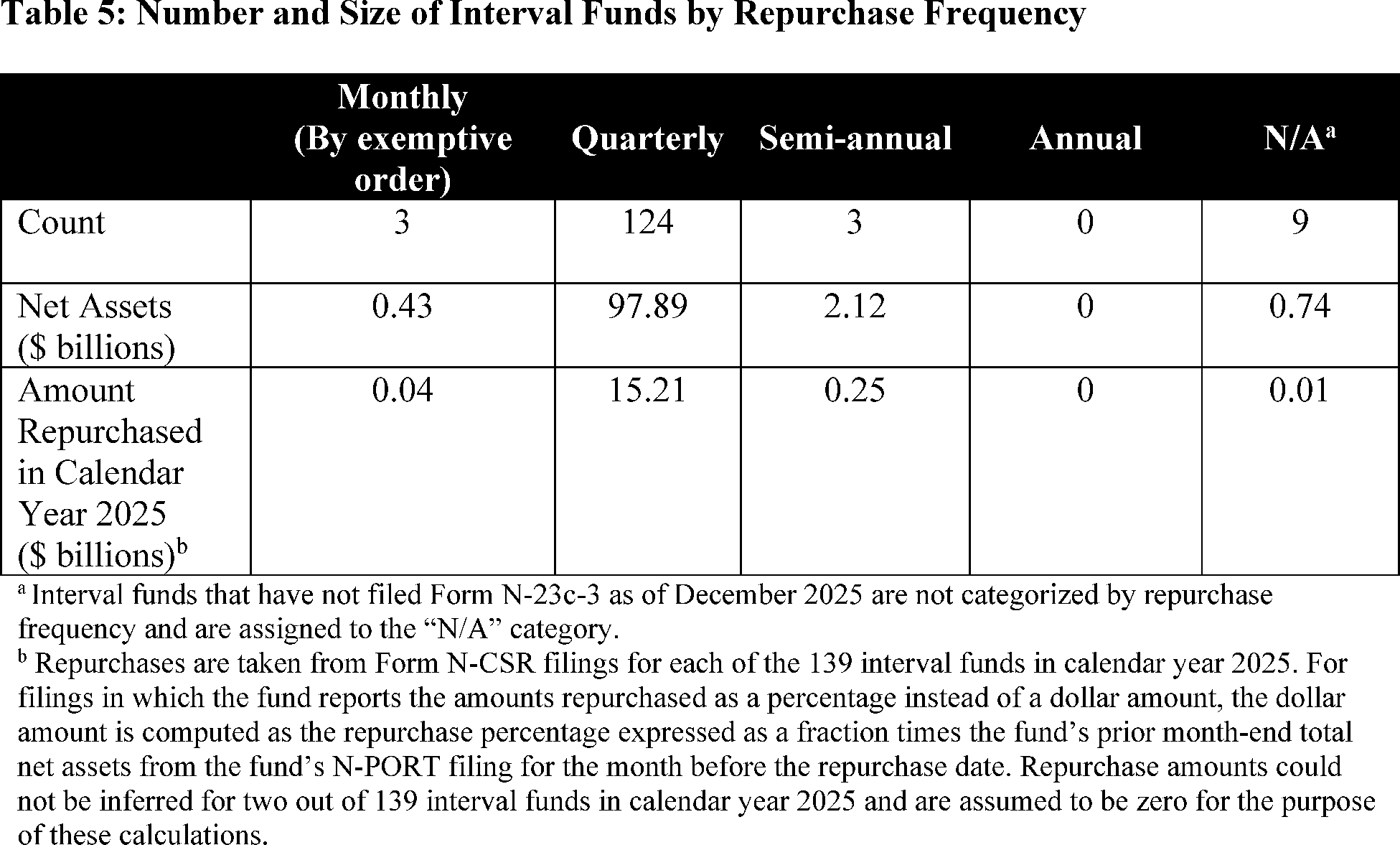
Interval funds have limited flexibility to modify from their periodic repurchase timing and supplement their repurchase obligations by deferring their first repurchase or offering a discretionary repurchase,[263] respectively. Similarly, they may purchase up to two percent of outstanding common stock in addition to the repurchase offer amount to meet excess investor repurchase requests. Table 6 presents estimates of the percentage and number of interval funds by repurchase frequency that have deferred their first repurchase offer.
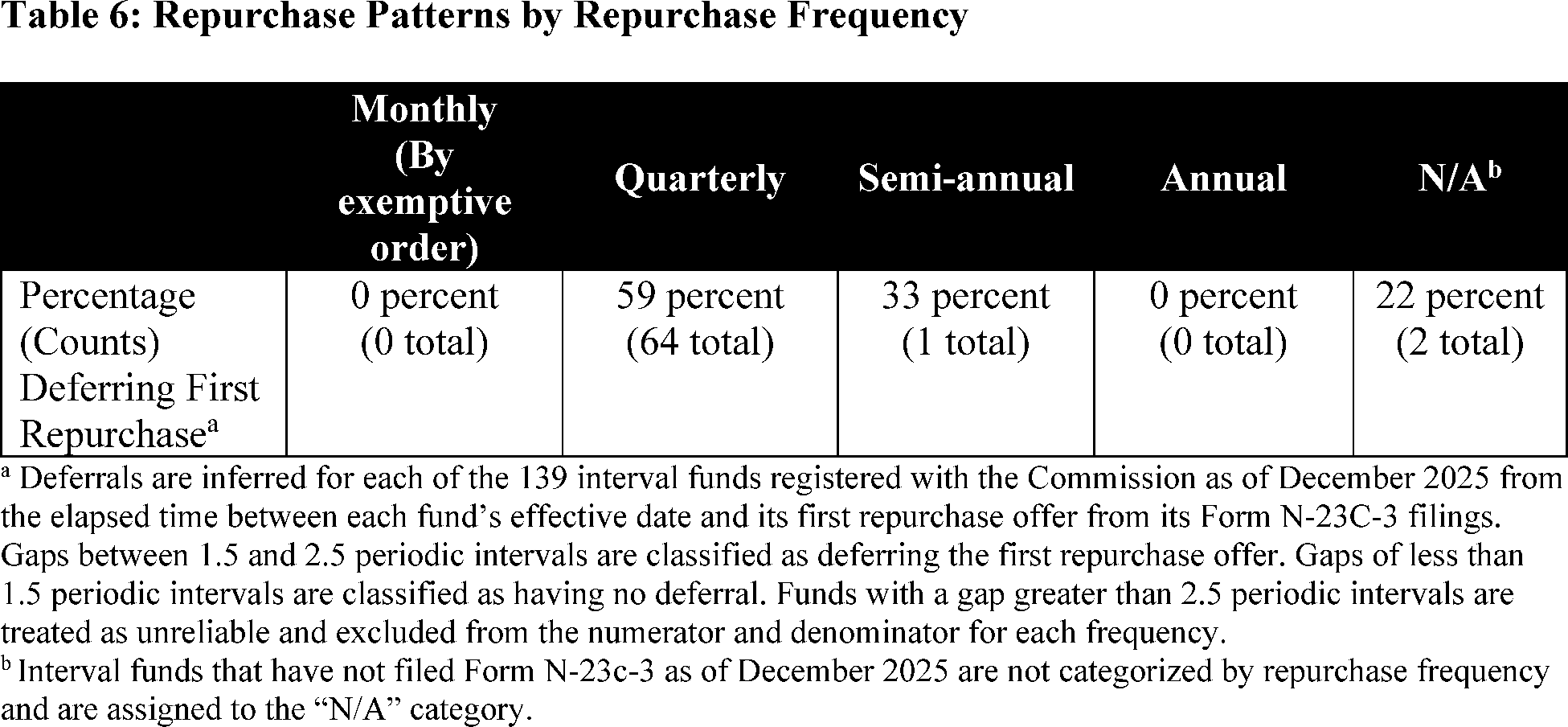
Rule 23c-3(b)(10) requires interval funds to hold 100 percent of the repurchase offer amount in liquid assets throughout the duration of the repurchase offer period.[264] In practice, most interval funds maintain relatively constant liquidity buffers.[265] Table 7 presents statistics for the fraction of net assets held in liquid assets (cash and
( printed page 63429)short-term investments such as money market funds and other cash management vehicles) for quarterly interval funds throughout periodic interval.266 The median liquidity buffer varies between five and six percent of fund net assets as measured during each fund's three month-end non-public Form N-PORT filings, which exceeds the median offer amount of five percent of net assets. The mean liquidity buffer is similarly stable at around five percent. The second row of the table demonstrates that the gap between an interval fund's offer amount and the amount of liquid assets is relatively stable. We note that these statistics are calculated over a period in which approximately 87 percent of fund-quarters resulted in net subscriptions rather than net repurchases.
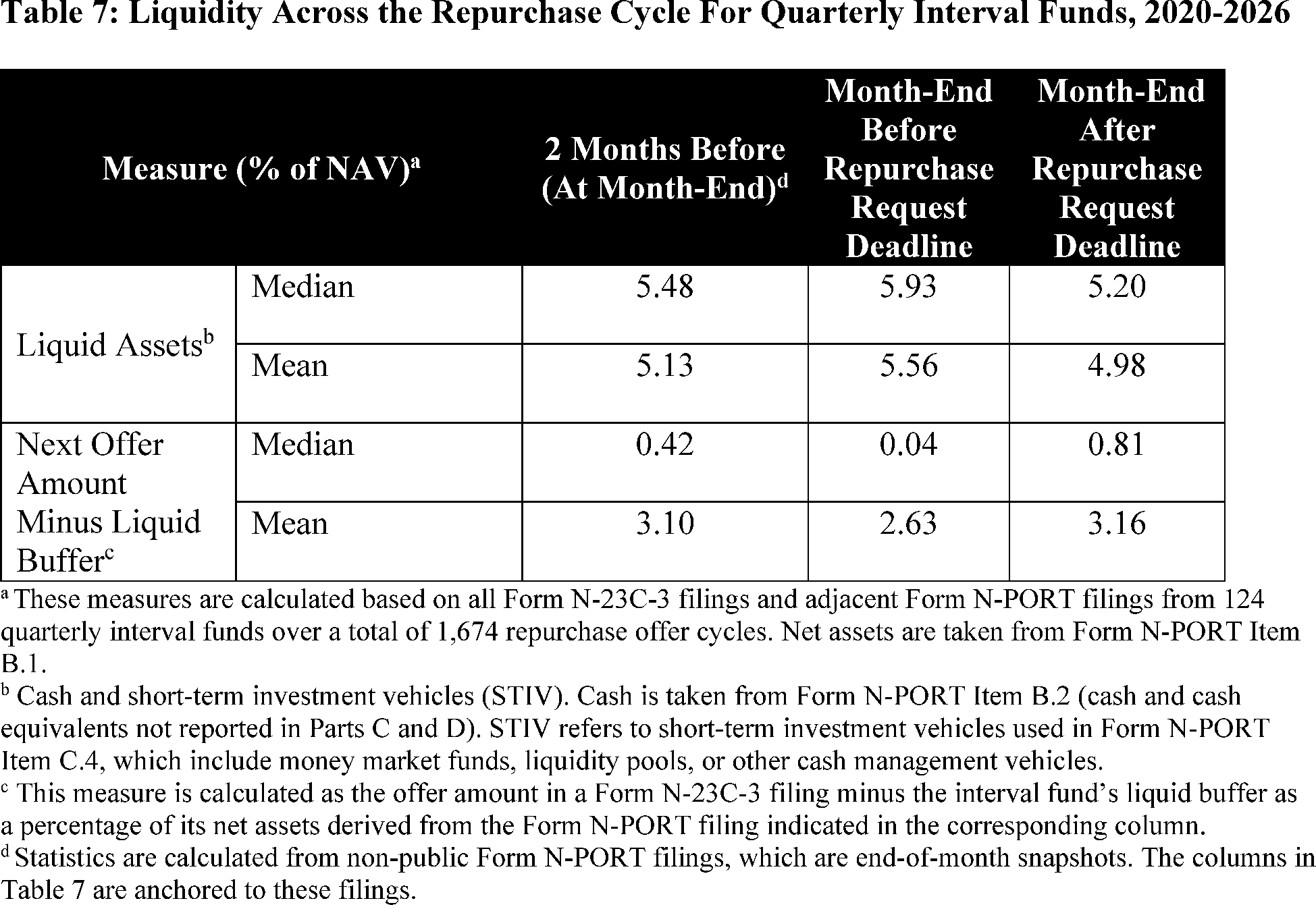
Multi-class Distribution. Multi-class structures are commonly used by both open-end and regulated closed-end funds to distribute their shares across a broader range of investor markets and distribution channels while taking advantage of economies of scale that accompany centralized administrative costs spread across a larger pool of investor capital. These structures enable investor access to a shared portfolio via available channels (such as an advisory platform or an employer-sponsored defined contribution retirement plan). They also provide investors with options regarding their payment of promotional and distribution fees. For instance, open-end and closed-end registered management investment companies offer share classes with front-end sales loads (often reduced at particular investment level breakpoints), back-end loads imposed upon repurchase (which may decline with the length of the investment), ongoing distribution or service fees, or combinations of these fees.[267] Funds may also offer classes of shares that are accessed via advisory platforms in which distribution expenses are covered by a fee the investor pays to the platform. However, closed-end funds are not permitted to issue multiple classes of shares without obtaining exemptive relief from the Commission.[268] As traditional closed-end funds raise capital only once in an IPO and are exchange-traded thereafter, this relief has not proven necessary for these funds. However, interval funds, tender offer funds, and unlisted BDCs have sought exemptive relief to issue multiple share classes corresponding to their ongoing distribution channels. Over five years ending July 2026, there have been 152 exemptive orders permitting regulated closed-end funds ( printed page 63430) to offer multiple share classes.[269] The number of regulated closed-end funds with multi-class exemptive relief has steadily grown in recent years, as shown in Table 8.
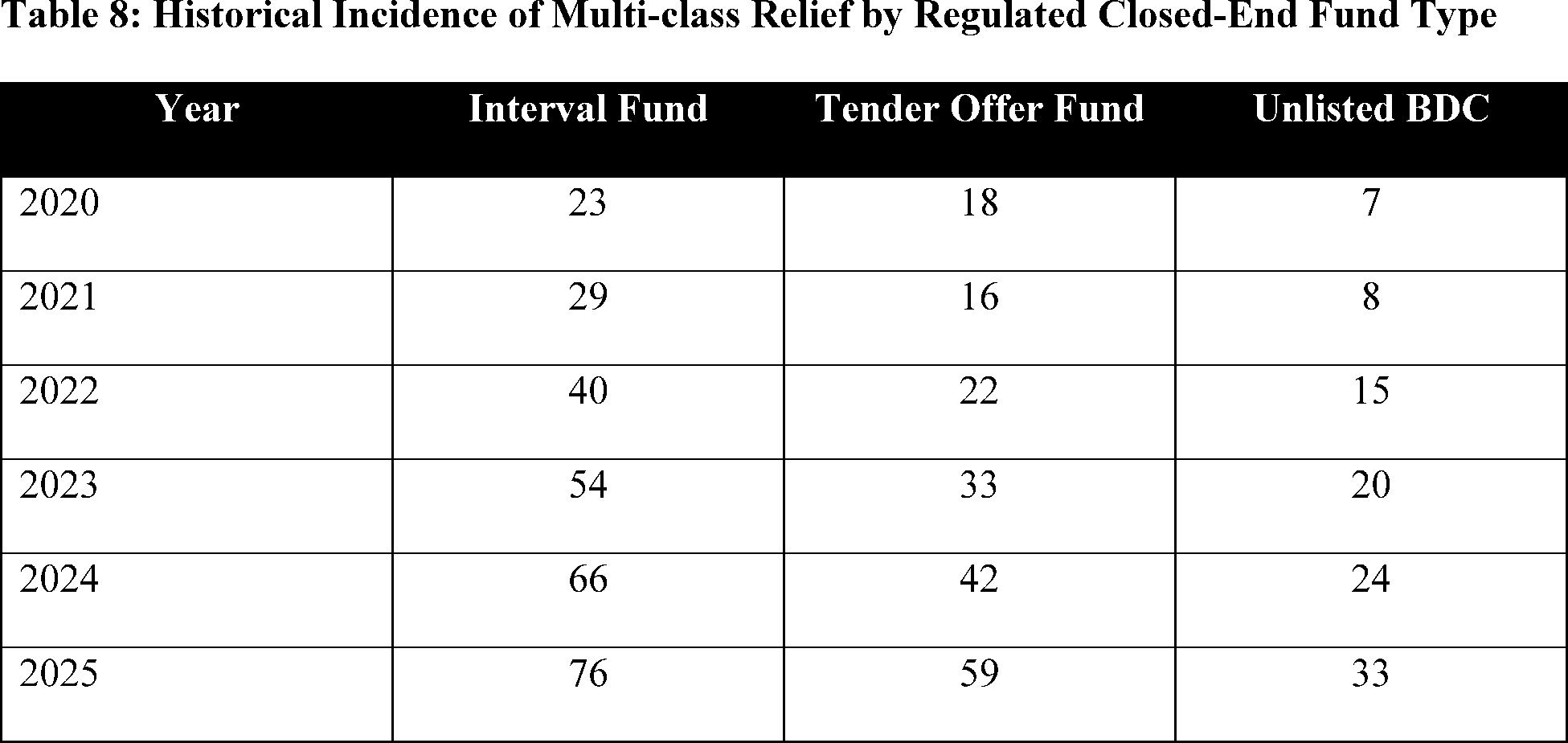
Recent Repurchase Pressure. In early 2026, multiple non-traded BDCs and registered closed-end funds, including several interval funds, experienced increased investor demand to repurchase shares.[270] However, this repurchase pressure has largely affected non-traded BDCs. For the five non-traded BDCs that capped and prorated repurchase requests in the first quarter of 2026, there were approximately $6.9 billion in honored repurchase requests (about half the requested amount) versus approximately $4.9 billion in capital inflows.[271] By contrast, interval funds experienced net inflows during the same period, with aggregate net assets up 2.2 percent from the prior quarter.[272] BDCs that do not offer periodic repurchases pursuant to rule 23c-3(b) often have greater flexibility than interval funds regarding their repurchases,[273] for instance by purchasing excess shares tendered by investors or by suspending repurchases. Several BDCs exercised the flexibility to purchase excess shares to meet investor repurchase requests beyond the initially offered amounts.[274]
( printed page 63431)C. Benefits and Costs
1. Enhancing Flexibility in the Repurchase Requirements
The proposed amendments include several modifications to rule 23c-3 to provide interval funds with greater flexibility regarding the timing of their repurchases. These modifications would: (1) allow an interval fund to defer its first repurchase offer for up to two years following the effective date of the fund's initial registration or after a shareholder vote first adopting a fundamental policy specifying the fund's periodic interval, whichever is later; (2) allow interval funds to have monthly repurchase intervals and implement changes regarding share repurchase notification timing and the span between successive intervals to accommodate monthly frequency; (3) permit annual discretionary repurchases; [275] (4) remove the requirement for interval funds to include in their fundamental policy the maximum number of days between the repurchase request deadline and the repurchase pricing date; [276] and (5) amend the repurchase offer amount definition to specify that the limitation on the permissible amounts ranging from five to 25 percent of common stock outstanding applies only to purchases made pursuant to a fundamental policy.[277] In addition, the proposed amendments would streamline the rule governing oversubscribed repurchase requests.[278] Lastly, the proposed amendments would allow interval funds to deduct deferred sales loads from repurchase proceeds subject to certain conditions.[279]
(a) Deferral of the First Repurchase Offer
Benefits. Allowing interval funds to defer their first repurchase offer for up to two years would provide more flexibility for interval funds to deploy investor capital. As the current rules allow for the first repurchase offer to be deferred following the interval fund's launch for up to two periodic intervals, the effective ramp up period is six months for funds with quarterly intervals, one year for funds with six-month intervals, and two years for funds with annual intervals. The proposed amendments would therefore offer three-month interval funds an additional 18 months, six-month interval funds an additional 12 months, and 12-month interval funds no additional time to defer their initial repurchase. A new interval fund with a monthly interval would receive an additional 22 months.[280]
With a longer ramp up period, fund advisers would have additional flexibility to select investments before offering liquidity to investors. In particular, advisers would have additional time to structure fund portfolios to have expected liquidity characteristics that align with a fund's eventual liquidity needs. For instance, an interval fund could make or purchase loans with staggered repayments of interest or principal at a frequency corresponding to the fund's repurchase offer frequency. In this way, interval funds would be better prepared to ensure that portfolio liquidity events are matched with repurchase offers, limiting the chances that they would have to resort to forced asset sales at unfavorable prices or credit facility draws to meet repurchase requests.[281] More generally, the additional time that would be permitted by the proposed amendments would benefit fund investors to the extent it allows fund advisers to better select the fund's initial portfolio investments. Advisers may use the additional time this amendment would provide to select positions with investors' initial capital more deliberately. For instance, advisers may be better able to take advantage of market dislocations to enter into portfolio positions at more favorable prices.
Additionally, the ability to further delay offering liquidity to investors would allow initial investments to benefit from any illiquidity premium that could result from committing investor capital for longer periods. For instance, a fund that makes or invests in loans to businesses may achieve higher yields on loans with longer terms than those with shorter terms, potentially layering successive loans so that repayments coincide with investor repurchase periods. The proposed amendments may also allow sufficient incubation time for strategies such as direct private equity or venture capital investments that may otherwise be infeasible.[282] For instance, a monthly, quarterly or semi-annual interval fund may be able to stagger positions over the proposed two-year repurchase deferral period so that investments have up to two years to realize cash flows to meet investor repurchases.[283] This benefit would be mitigated to the extent that such strategies are more difficult to implement in funds with repurchase intervals that are shorter than one year. Additionally, trends in private equity and venture capital markets have lengthened the time it takes to exit such investments.[284] These trends could also limit the feasibility of direct private equity or venture capital investments by interval funds, even under the proposed extension to the deferral period.
Finally, allowing interval funds additional time before they must make initial repurchase offers could better enable fund sponsors to match investors' preferences for initial liquidity following fund launch. While some investors may prefer to have the option to submit share repurchase requests soon after an interval fund's launch, others may be willing to accept a longer initial wait time. The additional flexibility afforded by this amendment could better match investors that are willing to forgo initial liquidity in exchange for higher expected returns with interval funds with investment strategies requiring longer incubation periods. The proposed amendments would better allow interval fund sponsors to accommodate the demand of investors that are willing to defer initial liquidity to capture higher fund yields via new fund launches. ( printed page 63432)
Costs. There may be costs to interval fund investors that invest in a fund prior to the first repurchase offer period to the degree they unexpectedly desire liquidity from the fund prior to its initial repurchase offer. Investor liquidity needs may change over extended periods such as the two-year initial deferral period that would be permitted by the proposed amendments, and the likelihood of such liquidity needs is higher over a two-year deferral period relative to the two-month, six-month, or one-year deferral periods presently permitted for interval funds.[285] There may also be costs to interval fund investors if they are unable to make repurchase requests as quickly as they anticipated when initially purchasing fund shares. For instance, changing circumstances at the fund following its initial disclosures (and subsequent purchase of its shares by investors) could lead an interval fund to defer its first repurchase offer more than anticipated.[286] In this circumstance, a maximum two-year deferral period presents a greater risk that investors would need to wait longer than they expected to submit repurchase requests. However, closed-end funds, including interval funds, disclose to investors, among other things, that investment in the fund may not be suitable for investors who may need the money they invest in a specified timeframe on the front cover page of the prospectus. They also must disclose the principal risk factors associated with investment in their fund.[287] Thus, we expect minimal risk that investors in closed-end funds would be unaware that their investments in these funds are illiquid in nature.
We do not anticipate that the proposed amendment modifying the maximum length of time that an interval fund's first repurchase offer can be deferred would result in direct costs to funds or their advisers. This is because the proposed amendment would provide optionality to funds rather than mandate a longer ramp up period. Fund advisers that prefer to start repurchase offers after one interval without further delay would continue to have that option. They would similarly be permitted to delay an interval fund's initial offering by a period of time that is longer than two period intervals (except in the case of annual interval funds) but not longer than two years. To the extent that interval funds would increase their direct or indirect investments in private equity or other illiquid assets, it may be more difficult for them to exit positions as needed or otherwise access liquidity to meet investor repurchase requests. This risk could be higher due to the proposed amendments that would replace the prescriptive liquidity requirements during periodic repurchase offers with the proposed principles-based framework,[288] particularly to the extent that interval funds satisfy the current requirements by holding a permanent liquidity buffer outside of repurchase offer windows for operational convenience. Specifically, if funds deploy additional investor capital in illiquid assets during the proposed extended deferral period that would otherwise have been held back to cover eventual repurchase offers to satisfy the current liquidity requirements, some funds may find that their anticipated liquidity sources are thinner than expected when investors make repurchase requests. However, this risk would likely be low during ordinary market conditions because an interval fund would be required to ensure that its portfolio assets are sufficiently liquid to satisfy repurchase requests without requiring a sale or disposition of the fund's portfolio investments at a price that deviates significantly from the value of those investments.[289] Fund advisers also have incentives to meet investor repurchase requests without negatively affecting the fund's value, which would further mitigate this risk.[290]
(b) Monthly Repurchase Intervals
Benefits. The proposed amendments would add monthly intervals to the set of permissible repurchase frequencies for interval funds. Investors and fund advisers would benefit from this proposed amendment to the extent that reducing the regulatory frictions to launch monthly interval funds would result in additional monthly interval funds. Specifically, investors would benefit by having a broader array of semi-liquid funds offering more frequent repurchases to choose from. A monthly interval may be preferable to longer intervals for investors who are accustomed to daily liquidity offered by mutual funds or ETFs. Additionally, monthly liquidity may offer fund advisers advantages in planning for investor repurchase requests because more frequent intervals could allow for individual investor repurchase requests to occur closer to their liquidity needs, reducing the risk that investors concentrate their repurchase requests into a single, longer interval. In this way, monthly intervals could better enable funds to smooth investor repurchases.
Managing an interval fund that offers monthly liquidity events to investors may require a different mix of portfolio assets relative to a fund that offers quarterly, semi-annual, or annual liquidity. Specifically, such funds may demand shorter-term debt or investments that include monthly cash flows, such as shares of certain bond funds or investments tied to rental income or a monthly amortization schedule. To the extent that the proposed amendments would increase the number of monthly interval funds, demand for such underlying investments by monthly interval funds could increase, which in turn may make it easier for those issuers to raise capital.[291]
Moreover, interval funds currently may only make monthly repurchases if they have applied for and obtained exemptive relief. New monthly interval funds would thus benefit from reduced regulatory frictions associated with launching a monthly interval fund. In particular, by making monthly intervals available by rule, new monthly interval funds and their advisers would save the legal and compliance costs associated with applying for exemptive relief.[292] Investors in new monthly interval funds would also benefit to the extent these cost savings are reflected in lower fund fees, though any such savings are one-time in nature and small relative to the size of a typical interval fund.[293] While we are unable to assess how many funds would opt to be monthly interval funds under the proposed amendments, there ( printed page 63433) exists some degree of investor demand for monthly interval funds.
Two modifications to interval timing would accommodate the proposed addition of monthly intervals to rule 23c-3. First, the amendments would decrease from twenty-one to fourteen days the minimum required notice period for interval funds to inform investors ahead of an upcoming repurchase request deadline.[294] This change would facilitate monthly interval funds' completion of their repurchase cycle within one month.[295] While the current rule's timing requirements associated with each periodic repurchase can be satisfied within each calendar month, shortening the minimum required shareholder notification period by seven days would benefit funds by enabling a less restrictive timeline for the NAV calculation and the repurchase payment. In addition to easing operational challenges that could otherwise result from an abbreviated NAV calculation and repayment schedule, shortening the minimum required shareholder notification period would allow for more time between the repurchase payment deadline and the shareholder notification ahead of the subsequent interval. This would benefit fund investors by reducing the chance of investor confusion that may occur from notifications sent closely following the end of the prior interval.
Second, the proposed amendments would modify the timing requirements in the “repurchase payment deadline” definition. Specifically, the revised definition would require the repurchase payment deadline to occur (1) no later than seven days after the repurchase pricing date applicable to such tender, and (2) at least one business day before notification of the next repurchase offer that is made pursuant to fundamental policy is sent to security holders.[296] Adding “no later than” to this definition would specify that payment to shareholders must occur at most seven days following the applicable repurchase pricing date rather than on the seventh day.[297] To the extent that some interval funds make these payments exactly seven days following repurchase pricing dates under the current language, but would pay shareholders more quickly under the proposed amendments, shareholders would benefit.[298] The second change would ensure that the timing of monthly repurchases does not overlap, which would in turn help reduce confusion to investors. For instance, if a monthly interval fund were to notify its shareholders forty-two days ahead of a repurchase request deadline, determine its NAV fourteen days later, and pay its shareholders seven days later, the period from notification to repurchase payment would exceed two times the length of the interval. In this case, notification for a repurchase request deadline would be sent before the prior interval's repurchase request deadline had passed. Beyond preventing confusion to investors that could result from overlapping intervals, this amendment would ensure that investors in monthly interval funds can observe the outcome of one repurchase cycle before they begin to evaluate the next. For instance, investors in monthly interval funds could determine whether their prior repurchase request was met in full or met pro-rata.
Lastly, relative to some of the existing exemptive orders permitting monthly repurchase offers, the proposed rule would require higher minimum monthly repurchase offers and a longer minimum period between when investors would first receive notification of an upcoming repurchase offer and the repurchase request deadline. Specifically, at least one interval fund has been granted exemptive relief to make monthly repurchase offers of at least two percent,[299] while the proposed amendments would require repurchase offers made pursuant to a fundamental policy to be a minimum of five percent for all interval funds.[300] The proposed amendments would benefit investors in such monthly interval funds to the extent these investors value the possibility of liquidating more of their shares over a shorter period. Additionally, existing exemptive relief for monthly interval funds permits notification to investors at least seven days and no more than fourteen days prior to the repurchase request deadline,[301] while the proposed amendments would require such notification be made no less than fourteen and no more than forty-two days prior to the repurchase request deadline.[302] Here, the proposed amendments would benefit investors in monthly interval funds to the extent funds currently give less than the minimum fourteen days notice.
Costs. Existing interval funds with exemptive relief to conduct monthly repurchases would face costs associated with coming into compliance with rule 23c-3 as proposed to the extent that the terms and conditions of their exemptive orders differ from those in the proposed amendments. There is at least one fund whose exemptive relief to offer monthly repurchases allows such offers to be at least two percent on a monthly basis.[303] As the proposed amendments would require interval funds to make a repurchase offer in an amount of no less than five percent,[304] an interval fund that currently offers less than five percent a month would need to increase their repurchase offer amount. Doing so may require changes to these funds' liquidity management to the extent necessary to satisfy potentially higher repurchase requests without needing to sell or dispose of fund investments at prices that would deviate significantly from the value of those investments.[305] Additionally, interval funds that have obtained exemptive relief to make monthly repurchase offers currently are permitted to notify shareholders no less than seven days and no more than fourteen days prior to each share repurchase request deadline.[306] These funds would bear the costs associated with modifying their notification schedules so that notifications occur no less than fourteen days and no more than forty-two days prior to each repurchase request deadline.[307] Such costs could include, for example, rescheduling board meetings approving periodic repurchase offers earlier to accommodate this longer notification window. Moreover, some monthly interval funds may find it necessary to shorten the windows between repurchase request deadlines and repurchase pricing dates or between repurchase pricing dates and repurchase payment deadlines to maintain a buffer in between intervals. Such funds would bear any administrative costs associated ( printed page 63434) with these changes, including the costs of striking the NAV and remitting payment to shareholders under a tighter deadline. All costs could affect interval fund shareholders to the extent these costs are paid by the funds rather than the adviser.
The proposed amendments would also revise the definition of the repurchase payment deadline to require this deadline to occur (1) no later than seven days after the repurchase pricing date applicable to such tender, and (2) at least one business day before notification of the next repurchase offer that is made pursuant to fundamental policy is sent to security holders.[308] The first requirement could result in costs to interval funds to the extent that some interval funds make these payments exactly seven days following repurchase pricing dates under the current language, but would pay shareholders more quickly under the proposed amendments. In this case, these funds could bear administrative costs associated with the quicker repayment. The second requirement that payment occur at least one business day before the repurchase offer notification for the next repurchase offer is sent to shareholders could also result in costs for interval funds. While this requirement would apply to interval funds of any repurchase frequency, it would be most relevant to monthly interval funds as the required length of time between repurchase offer notification and repurchase payment deadline is the largest in proportion to the length of their period interval. This would effectively constrain the length of the windows between shareholder notification, the repurchase request deadline, the repurchase pricing date, and the repurchase payment deadline to collectively account for at most one month minus one business day. However, interval funds likely would ensure their intervals did not overlap even in the absence of this proposed requirement to prevent possible confusion to shareholders if the notice ahead of an upcoming interval were to arrive before proceeds from the prior interval were paid.
Lastly, certain costs from the proposed amendments would result from changes in the total number of monthly interval funds. For instance, existing funds that do not currently have exemptive relief for a monthly interval frequency that choose to switch to monthly intervals would bear the costs associated with this choice, including the costs of holding a vote to obtain shareholder approval to modify the periodic intervals in their fundamental policy.[309] Additionally, if the number of monthly interval funds were to increase substantially, there may be greater scope for a mismatch between available investor liquidity and portfolio liquidity relative to funds with longer intervals. For instance, in periods when investor interest in interval funds is growing, fund managers may have limited incentive to preserve portfolio liquidity and may compete for investor capital by reaching for yield in less liquid investments. If investor interest were to reverse and portfolio liquidity were insufficient to meet repurchase requests, sustained pressure from unmet repurchase requests could accumulate more quickly in monthly interval funds than in funds offering less frequent liquidity to investors [310] because the length of the repurchase period relative to the length of the interval is highest in these funds, which may make these periods and their outcomes more noticeable to investors.[311] More frequent and successive periods with unmet repurchases may in turn prompt investors to submit larger repurchase requests than they otherwise would in anticipation of their requests being met pro-rata.
However, as registered management investment companies, interval funds are required to report their monthly portfolio holdings to the Commission quarterly on Form N-PORT, with the most recent month's holdings each quarter being made publicly available.[312] To the extent that these disclosures reassure investors that the fund's portfolio is well-positioned to handle pressure from sustained repurchases, it may mitigate this concern. While BDCs (which may also make periodic repurchase offers subject to rule 23c-3) do not report on Form N-PORT, they must report a schedule of investments quarterly on their 10-Q reports.[313] To the extent that these quarterly reports similarly help to reassure BDC investors that a fund's portfolio is positioned to meet sustained repurchases, it would mitigate the risk that investors strategically submit large repurchase requests.
(c) More Frequent Discretionary Repurchases
Benefits. The proposed amendments would allow funds to make discretionary repurchases yearly rather than every two years as is currently permitted. This could benefit investors upon the occurrence of unanticipated liquidity events affecting the fund's portfolio to the extent the fund elects to offer a discretionary repurchase.[314] For instance, a fund may choose to make a discretionary repurchase offer in conjunction with rebalancing its portfolio in between intervals. To the degree a fund has sufficient liquidity, a discretionary repurchase offer could also serve as a safety valve if a fund experiences unusually large repurchase pressure that the fund chooses to address in between its intervallic repurchases. Such instances could benefit investors by increasing their confidence that their funds' portfolios have sufficient liquidity to navigate fluctuations in investor liquidity demand or other extraneous circumstances. As a result, investors may have reduced incentive to strategically request a larger repurchase than they require in anticipation of the fund pro-rating repurchases. Advisers may in turn benefit if this increased confidence results in increased ability to raise additional investor capital at later dates.
In addition, the Commission is proposing amendments to the definition of repurchase offer amount to specify in the rule that discretionary repurchase offers are not subject to the requirement that offers be between five percent and 25 percent of the fund's common stock outstanding.[315] Currently, rule 23c-3 defines repurchase offer amount to be the amount of common stock that is the subject of the repurchase offer, while also stating that the repurchase offer ( printed page 63435) amount shall not be less than five or more than 25 percent of the fund's outstanding common stock.[316] However, the Commission interprets rule 23c-3 to give interval funds and non-interval funds the flexibility to offer a repurchase amount for discretionary repurchases that is not restricted by the same repurchase limits imposed on periodic repurchases.[317] Thus, under the baseline, there is ambiguity regarding whether discretionary repurchases are subject to this range. [318] The proposed amendments to rule 23c-3 would resolve that ambiguity, which would allow both interval funds and regulated closed-end funds that are not interval funds the flexibility to make discretionary repurchase offers for any amount at the proposed annual frequency. In practice, the benefits of this change would likely be limited to relatively small cost savings for funds.[319]
Costs. The costs of permitting funds to make discretionary repurchase offers every year rather than every two years would likely be modest. For interval funds, this amendment could result in a fund offering more frequent liquidity than required by its fundamental policy. For instance, an interval fund that offers regular semi-annual repurchases that elects to make an annual discretionary repurchase as well would in effect offer liquidity three times per year.[320] In this scenario, there may be fund investors that anticipated higher fund returns in exchange for less frequent liquidity. Such investors may have invested less (or not at all) in this fund if they believed it would offer more frequent liquidity to investors. However, funds may be unlikely to routinely offer investors liquidity beyond the frequency specified in their fundamental policies, as this could result in longer term investors reallocating their capital to competing funds offering less frequent liquidity. Instead, we anticipate that interval funds would generally offer discretionary repurchases in conjunction with one-time, infrequent events, such as significant investor repurchase pressure or unanticipated changes in portfolio liquidity.[321]
One potential concern is that more frequent discretionary repurchases that are made in times of heightened repurchase pressure could harm investors that do not tender their shares in such opportunities. For instance, the manager of an interval fund that experiences multiple periods of repurchase requests exceeding the repurchase offer amount may have an incentive to offer a large discretionary repurchase to satisfy unmet repurchase requests. While offering discretionary liquidity at NAV may reassure fund investors and stem their desire to sell their shares, it may also reduce liquidity or increase leverage of the remaining fund portfolio, depending on whether cash buffers or credit lines are used to secure liquidity for repurchases. It could also dilute the NAV per share of the remaining shareholders if, in order to meet repurchase requests, fund assets are liquidated at a haircut to the value used to calculate the NAV. This in turn may increase pressure on the fund to meet repurchase requests. However, this concern would be mitigated by the proposed requirement that the fund manage its portfolio's liquidity so that it can satisfy repurchase requests without requiring a sale or disposition of its portfolio investments at a price that deviates significantly from the value of those investments.[322] The oversight role of the fund's board of directors may also serve to balance competing interests of investors that tender their shares and those that do not in such circumstances.
(d) Repurchase Pricing Date
Benefits. The proposed amendments would simplify the definition of repurchase pricing date and remove the requirement that an interval fund's fundamental policy include the maximum number of days between the repurchase request deadline and the repurchase pricing date. As any change in a registered investment company's fundamental policy requires a shareholder vote,[323] the proposed amendment could in principle offer new interval funds more flexibility to use a different maximum length of time between repurchase pricing dates and repurchase request deadlines. However, in practice, interval funds have not opted to restrict this length of time in their fundamental policies and have instead selected the maximum of fourteen days allowed by the rule.[324] Moreover, the maximum length included in an interval fund's fundamental policy does not prevent the fund from setting an earlier repurchase pricing date in connection with a periodic repurchase offer if it appears that the use of an earlier repurchase pricing date is not likely to result in significant dilution of the fund's NAV for either tendered or untendered stock.[325] However, it is possible that in the absence of a rule requiring that the maximum length between the repurchase request deadline and the repurchase pricing date be committed to interval funds' fundamental policies, new interval funds would opt to set a shorter period of time as a matter of internal practice, separate from their fundamental policies. To the extent this would occur, interval fund investors would benefit by receiving the proceeds from their repurchased shares more quickly following their repurchase requests, as this payment must occur within seven days of the repurchase pricing date. In this case, interval fund investors would also benefit via reduced uncertainty regarding changes in the fund's NAV that may occur between the repurchase request deadline and the repurchase pricing date. While we anticipate that a new interval fund would not specify in its fundamental policy a maximum length between its repurchase request deadline and repurchase pricing date, a currently registered interval fund would likely not remove this language as doing so would require a shareholder vote. Thus, any benefits that would result from the proposed simplification of the repurchase pricing date definition would likely accrue to new interval funds and their shareholders.
Costs. Removing the requirement that interval funds state in their fundamental policies the maximum number of days between the repurchase request deadline and the repurchase pricing date would likely result in negligible costs to advisers and no costs to fund investors. While an interval fund in principle can select a maximum number of days that is less than the maximum of fourteen days permitted by the current rule, in practice interval funds have not opted to select a shorter period in their fundamental policy. ( printed page 63436) Additionally, an interval fund's repurchase pricing date is permitted to be earlier than fourteen days after the repurchase request deadline if the use of an earlier date is not likely to result in NAV dilution [326] Therefore, this proposed amendment would be unlikely to change interval fund practices regarding the length of this window. As noted above, new interval funds would not include language regarding this maximum length of time in their fundamental policies, but existing funds would most likely opt to leave this language unchanged. To the extent existing interval funds remove this maximum length from their fundamental policies, they would bear the costs of doing so, including the cost of holding a shareholder vote.[327] Additionally, the required language that would be removed is less informative than the notifications sent to shareholders ahead of repurchase request deadlines. Interval funds would continue to be required to notify shareholders of the repurchase request deadline and repurchase pricing date in the shareholder notifications distributed ahead of the repurchase offer period.[328] Thus, there would be no costs to investors from removing this required language from funds' fundamental policies.
(e) Amount of Securities Repurchased
Benefits. The proposed amendments would modify the text of rule 23c-3(b)(5) to better align with longstanding industry interpretation that any oversubscribed purchases must be conducted on a pro rata basis. Currently, the rule allows up to two percent of outstanding fund shares to be repurchased in excess of the repurchase offer amount, and requires pro rata repurchases if shares tendered are more than two percent in excess of the repurchase offer amount or if the fund determines not to repurchase more than the repurchase offer amount.[329] Instead, the amendments would explicitly require that if the company repurchases less than 100 percent of that amount tendered by security holders, the company shall repurchase the shares tendered on a pro rata basis in an amount equal to at least the repurchase offer amount, but not exceeding the repurchase offer amount plus up to two percent of outstanding common stock.[330] While the Commission understands that interval funds have not interpreted the rule as permitting repurchases privileging some requests over others, the rule does not explicitly require that oversubscriptions of no more than two percent that are repurchased by the fund be met pro-rata. As market practice regarding repurchases has uniformly aligned with the proposed amendment, we do not anticipate benefits would result beyond possibly reducing confusion that may arise over the current language.
Costs. We do not anticipate the proposed amendments to the rule governing the allocation of oversubscribed repurchase requests would result in costs because the amended rule would align with interval funds' current interpretation of the requirements. The Commission is not aware of instances in which interval funds have allocated oversubscribed repurchase requests in a manner that is not pro-rata. Thus, we do not anticipate that the proposed amendment would meaningfully limit interval funds' options regarding oversubscriptions or necessitate a change to any interval fund's policies and procedures.
(f) Deferred Sales Loads
Benefits. A proposed amendment to rule 23a-3 would permit interval funds to charge deferred sales loads. Under the current rule, the only amounts that may be deducted from repurchase proceeds are repurchase fees of up to two percent that are reasonably intended to compensate the fund for expenses directly related to the repurchase. This restriction prevents interval funds from using deferred sales loads as a distribution financing tool, regardless of whether doing so would be appropriate given the fund's structure and investor base. Unlike front-end sales loads, which reduce the amount of investor capital immediately available for investment, deferred sales loads are charged at the time of repurchase and typically on a declining schedule that naturally favors longer holding periods. This structure may be well-suited to interval funds, whose investors are expected to maintain their investments for extended periods given the fund's periodic liquidity structure. In particular, investors with longer anticipated holding periods who prefer not to pay an upfront sales charge may find a deferred load class preferable, as the declining schedule means that investors who hold their shares for sufficient time may face a reduced or zero deferred load. However, classes with deferred sales loads typically include higher ongoing 12b-1 fees instead of a front-end load, which can lead to the total additional amount paid in sales charges equaling or exceeding the cost of a front-end load.[331]
Permitting interval funds to charge deferred sales loads would also broaden the distribution financing options available to interval fund sponsors. Certain broker-dealer platforms and distribution channels may prefer products with deferred load structures over those with front-end loads, particularly for longer-horizon investment products marketed to investors who benefit from back-end compensation structures. By permitting interval funds to offer share classes with deferred loads and to make payments for distribution in compliance with rule 12b-1, the proposed amendment could allow interval fund sponsors to access distribution channels that are currently closed to them under the existing rule. This expanded distribution reach could increase fund assets under management, which could result in economies of scale that reduce per-unit fixed costs, benefiting all shareholders to the degree these cost savings are passed through to them.
Notwithstanding the current rule's effective prohibition of deferred sales loads for interval funds, many interval funds charge deferred sales loads pursuant to individualized exemptive relief.[332] As these exemptive orders are generally subject to adherence to rules 6a-10, 11a-3, and 22d-1, as would be required under the proposed amendments, a practical benefit for interval funds that intend to impose a deferred sales load would be reduced compliance costs resulting from their ability to rely on a rule rather than needing to apply for exemptive relief. Because deferred sales loads often support the financing of a particular class of fund shares, applications for exemptive relief from rule 23a-3 (restricting deferred sales loads for interval funds) and from the restrictions on the issuance of senior securities by registered funds in section 18 are typically made simultaneously. [333] ( printed page 63437) However, to the extent an interval fund with a single class of shares would seek to impose a deferred sales load, the fund could similarly rely on this amended provision of rule 23a-3 instead of applying for exemptive relief and thus would benefit via lower compliance costs as well. In tandem with the amendments to rule 18f-3,[334] lowering compliance costs could potentially result in more interval funds offering a share class with a deferred sales load because some interval funds may find it worthwhile to offer a deferred sales load share class if doing so does not require applying for exemptive relief. However, the prevalence of exemptive orders permitting interval funds to offer share classes with deferred sales loads suggests that the process of applying for and obtaining exemptive relief to charge deferred sales loads is not serving as a major deterrent to interval funds, 335 which would limit the extent of the benefits discussed above.
Costs. An interval fund that chooses to implement a deferred sales load would face the compliance costs associated with opting into this regulatory framework.[336] Specifically, if an interval fund deducts a deferred sales load from the proceeds of a periodic repurchase offer, the load would need to be effected in compliance with rule 6a-10,[337] as well as with rules 11a-3 and 22d-1, as applicable.[338] However, since this condition would be substantially identical to those applicable to interval funds that charge deferred sales loads under exemptive relief granted by the Commission or that would charge deferred sales loads after seeking such exemptive relief, we anticipate that there would be no meaningful incremental economic costs for interval funds that would charge deferred sales loads under the proposed amendments to rule 23a-3 compared to the baseline.[339]
We do not anticipate that allowing interval funds to charge deferred sales loads would result in new costs to investors because deferred sales loads are one of many ways that intermediaries are compensated for promoting and selling fund shares.[340] Moreover, interval funds charging deferred sales loads under the proposed amendments to rule 23a-3 would be subject to the same regulatory framework applicable to registered open-end funds to help ensure that investors are protected against potential abuses involving this form of distribution financing. In particular, any deferred sales loads would need to comply with rule 6a-10,[341] which caps the size of the deferred sales load,[342] subjects the terms of the deferred sales load to FINRA rule 2341,[343] and generally requires that the same deferred sales load apply to all shareholders.[344] Where sales loads (including deferred sales loads) vary across investors (such as with a waiver or deduction based on the length of the investment), any such variation must be uniformly applied and adequately disclosed.[345] Interval funds with deferred sales loads would also be subject to rule 11a-3,[346] which mandates strict fee and disclosure conditions governing sales loads with respect to exchanges within a fund family. Additionally, they would, as applicable, be subject to the provisions of rule 22d-1,[347] which exempts registered investment companies from section 22(d) to the extent necessary to permit scheduled variations in or elimination of the sales load on fund securities for particular classes of investors or transactions, provided certain conditions are met.[348] Conditioning interval funds' ability to impose deferred sales loads on this regulatory framework should mitigate or eliminate the risks that these charges are applied in a manner that is misleading or otherwise disadvantages investors.
To the extent the proposed amendments result in a larger volume of interval fund share purchases occurring in classes with a deferred sales load, purchasing shareholders may be inclined to defer tendering their shares in order to minimize or lower their fee burden. This may result in costs to shareholders to the extent they have unanticipated liquidity needs or if the fund's performance does not meet shareholder expectations. In this case, shareholders in these classes would either need to bear the deferred sales load to exit the fund or incur the implicit costs of remaining. However, the prevalence of exemptive orders permitting interval funds to offer share classes with deferred sales loads suggests that the process of applying for and obtaining exemptive relief to charge deferred sales loads does not pose an insurmountable barrier to interval funds. This makes it less likely that the proposed amendments would substantially increase the volume of interval fund shares sold that carry deferred sales loads, which would lower any such costs that interval fund investors would bear.
2. Modification to the Interval Fund Liquidity Requirement During the Repurchase Offer Period
The proposed amendments would eliminate the requirement that an interval fund hold 100 percent of the repurchase offer amount in liquid assets during the repurchase offer period.[349] Instead, the rule would require that the interval fund manage its portfolio's liquidity so it can satisfy repurchase requests without requiring a sale or disposition of the company's portfolio investments at a price that deviates significantly from the value of those investments.[350]
Benefits. The proposed amendment to interval funds' liquidity requirements during the repurchase offer period ( printed page 63438) would provide funds with additional flexibility to manage liquidity in connection with their periodic repurchase offers. Replacing the current prescriptive requirements with the proposed principles-based framework could decrease cash drag in interval funds, which could potentially increase portfolio returns. Industry participants have indicated that this aspect of the current rule is overly restrictive and contributes to non-negligible cash drag which reduces the yield of fund portfolios.[351] While the current rule does not require a minimum percentage of an interval fund's portfolio be held in liquid securities at all times, the requirement that the repurchase offer amount be backed by liquid securities during the repurchase offer period can effectively limit the fund's investments as illiquid securities obtained outside of the repurchase offer period cannot necessarily be sold to meet liquidity requirements during the prescribed period.[352] By contrast, the proposed principles-based framework could allow funds to obtain liquidity to meet repurchase requests in a less restrictive manner, for instance by drawing on credit against anticipated cash flows generated by illiquid investments. Relaxing this prescriptive requirement would better allow interval funds to invest in less liquid assets and reduce cash drag in their portfolios.
The flexibility that would be afforded by this proposed amendment would likely benefit some interval funds more than others. In particular, we anticipate that funds with longer intervals would be more likely to hold a higher percentage of net assets in less liquid investments as they would make less frequent repurchase offers to their investors. By contrast, funds with shorter intervals would more frequently need to offer liquidity to their investors, which may limit the degree to which these funds could benefit from the added flexibility in liquidity management the proposed amendments would permit.[353]
The proposed replacement of the prescriptive liquidity requirement in rule 23c-3(b)(10) with a principles-based standard would eliminate the associated procedures-drafting and annual-review requirements.[354] However, rule 38a-1 requires each fund to adopt and implement written policies and procedures reasonably designed to prevent violation of the federal securities laws. We therefore anticipate that the removal of the procedures and review-related requirements in rule 23c-3(b)(1) would not reduce costs for affected funds.
Costs. The proposed amendment from a prescriptive rule to a principles-based approach to portfolio liquidity management during repurchase periods would allow funds to meet repurchase requests without necessarily holding a matching amount in liquid assets. This could result in instances in which a fund's liquid securities are not sufficient to cover the total amount the fund is obligated to pay in connection with the repurchase.[355] For instance, a fund may anticipate a cash flow ahead of its repurchase payment deadline which does not materialize in full. While small or temporary mismatches may be managed with a fund's available credit, larger or persistent mismatches could potentially be costly to long-term shareholders. For instance, an interval fund that faces large and persistent repurchase requests that it is unprepared to meet may need to borrow (thus increasing fund leverage), sell off less liquid assets at a discount to fair value (thus diluting the value of outstanding shares), or both. However, a fund with reasonably designed liquidity policies and procedures is significantly more likely to be adequately prepared to meet repurchase requests in compliance with its fundamental policy. Moreover, fund advisers face incentives to satisfy their repurchase offers without diluting shareholders in order to attract and retain investor capital. As such, we anticipate the cost of eliminating this prescriptive liquidity requirement would typically be small.
Adviser incentives may be less effective during periods of sustained repurchase pressure. In such instances, it may be more difficult to balance the interests of shareholders making repurchase requests and shareholders that do not do so. Specifically, persistent shareholder demand for liquidity may require interval funds to borrow or to sell portfolio assets that they would not otherwise sell to the extent necessary to meet their minimum repurchase amounts. However, while funds with standing liquidity buffers would have an additional line of defense against unanticipated repurchase requests, their buffers would likely be quickly depleted by sustained repurchase requests. Thus, even under stressed market conditions, the current prescriptive liquidity requirements in rule 23c-3 would provide only incrementally more protection against unanticipated repurchase requests relative to the proposed principles-based approach.
The proposed amendments could also increase costs associated with both the management and oversight of an interval fund. Under the current rule, a fund's compliance with rule 23c-3(b)(10) can be readily verified by confirming that 100 percent of the repurchase offer amount is held in liquid assets between the repurchase notification and the repurchase pricing date. By contrast, interval funds seeking to take advantage of the proposed flexibility may require more intricate policies and procedures that require more oversight due to their principles-based nature. For instance, portfolio managers would need to assess the fund's likely cash needs ahead of repurchase offers and may need to adjust the fund's portfolio if repurchase requests are larger than anticipated. To the extent a fund expects to use a line of credit in such instances, it would need to establish an arrangement with a lender. However, the proposed amendments would not preclude interval funds from continuing to have policies and procedures that require 100% of the repurchase offer amount to be held in liquid assets during the repurchase offer period. Rather, the proposed amendments would provide funds with optionality to manage liquidity in these circumstances so that they can satisfy repurchase requests without requiring a sale or disposition of their portfolio investments at a price that deviates significantly from the value of those investments. Thus, these increased oversight costs would only materialize to the extent funds would implement the more principles-based policies and procedures that would be permitted by the proposed amendments. ( printed page 63439)
3. Other Proposed Amendments
The proposed amendments would remove a grandparent clause adopted in 1993 that initially served to allow existing funds making periodic repurchase offers to adopt a resolution stating its repurchase policies instead of requiring a shareholder vote to approve their fundamental policy.[356] We understand that no funds currently rely on that provision, so we expect neither costs nor benefits would result from its proposed removal beyond the clerical benefit associated with streamlining the rule text.
Additionally, we are proposing to amend rule 23c-3 to remove certain prescriptive requirements regarding the specific procedures funds must follow when submitting Form N-23c-3 with the Commission, as these requirements have been superseded by recent amendments to rule 101 of Regulation S-T.[357] This amendment would lower compliance costs that may arise due to the current inclusion of these superseded provisions in rule 23c-3. In particular, the provisions require three copies of the repurchase offer notification, along with copies of Form N-23c-3, be filed with the Commission within three business days of sending the notification to shareholders.[358] While the amendments to rule 101 supersede this requirement, the presence of two conflicting filing requirements for Form N-23c-3 may cause regulatory uncertainty and thus compliance costs for interval funds. We are also proposing to remove the language in Form N-23c-3 that states that the form shall be filed in triplicate with the Commission and language that states that at least one copy of the form must be manually signed. Instruction 2 of Form N-23c-3 currently states that one of the three copies shall be manually signed while the other copies may have facsimile or typed signatures. The signature provisions of Regulation S-T supersede the language of Form N-23c-3, and the proposed amendment is intended to remove the outdated manual signature requirement. We do not anticipate costs would arise from eliminating these redundant provisions.
4. Expansion of Multiple Share Class Offerings to Regulated Closed-End Funds
The proposed amendments would expand exemptive rule 18f-3 to allow regulated closed-end funds to issue multiple share classes, subject to certain conditions. In particular, the amendments add exemptions in rule 18f-3 from sections 18(a)(2) and 18(c), which restrict closed-end funds' issuance of senior securities, and from section 61(a), which makes these section 18 prohibitions applicable to BDCs. In connection with this change, rule 18f-3 would also be amended to include several conditions specific to a regulated closed-end fund's issuance of multiple share classes: (1) the fund's common stock must be offered on a continuous basis; (2) if it is offered at a price other than its current NAV, the same offer must be made to all classes of common stock; (3) any asset-based distribution or service fee must be charged under a written plan which (along with any agreements related to its implementation) must comply with rule 12b-1; [359] (4) fund shares must not be listed, offered, or traded on a secondary market; (5) offers to repurchase common stock must be equally made to holders of all classes of common stock, and the percentage taken up and paid must be allocated on a company basis; and (6) any exchange offer involving a class of the fund's common stock must comply with rule 11a-3, and if the fund is an interval fund pursuant to rule 23c-3, its shares that are exchanged for shares of other companies must be included in the interval fund's repurchase offer amount.
The proposed amendments would also modify rule 17d-3 to exempt multi-class regulated closed-end funds from the prohibition on participating in joint transactions or profit-sharing plans (absent SEC approval) in section 17(d) of the Investment Company Act and rule 17d-1 thereunder to permit certain affiliates of a multiple share class regulated closed-end fund to enter into distribution arrangements under rule 12b-1 with the funds.[360] The proposed amendments would also include BDCs that are affiliates of either the registered management investment company or affiliates of that company's affiliated persons in rule 17d-3(b)'s prohibition on multiple affiliated funds being party to the same agreement.
Lastly, the proposed amendments would modify several items on Form N-2 for regulated closed-end funds to provide disclosures regarding their multi-share class structures and master-feeder funds. General Instruction 1 for Parts A and B would be amended to describe how multi-class closed-end funds should organize Items 1 through 4. Item 1.c would be amended to require a description of securities for each class. The proposed amendment to Item 1.g would require the table of fund share prices to include a column for each class of securities. Item 3 would add a fees and expenses legend for all Form N-2 filers to the fee table and synopsis, along with instructions on how to present multi-class funds in this table. It also would add repurchase and exchange fees as types of “other” transaction fees in the fee table and synopsis for all filers. Amendments to Item 5 (plan of distribution) would require narrative disclosure about multi-class and master-feeder funds, including discussion of sales loads and rule 12b-1 fees. The proposed amendments to Item 20.1.c of Form N-2 would add disclosure about methods of allocation and payment of advisory fees by class. Item 24.4.g.(2).(B), which provides for average annual total returns over set periods, would require such information separately for each class or feeder fund. Lastly, Items 24.6 and 24.10 would instruct registered closed-end management companies and BDCs, respectively, to provide an expense example for each fund or class.
(a) Rule 18f-3
Benefits. The proposed amendments would permit regulated closed-end funds to rely on rule 18f-3 to offer multiple classes of their shares. As a result, shares in regulated closed-end funds could more readily be distributed via additional channels, allowing investors more options for investment in these funds to better match their preferences and expected investment horizon. For instance, investors with shorter expected investment horizons or that expect frequent reallocations may prefer a class with a lower upfront sales load or an ongoing service or distribution fee. Permitting regulated closed-end funds to offer multiple classes of shares would allow these funds to offer these options without incurring the costs of establishing duplicative fund infrastructure for each distribution channel.[361] We anticipate that the proposed amendments could result in broader adoption of regulated closed-end funds to the extent they become available in multiple share classes. These benefits may be mitigated to the extent that closed-end fund ( printed page 63440) investors invest through intermediaries in share classes that do not carry sales loads, as has increasingly been the case with open-end fund investors.[362]
Currently, closed-end funds that intend to offer multiple share classes must obtain exemptive relief to do so. Providing an exemptive rule for regulated closed-end funds to issue multiple classes of shares would obviate this need and result in cost savings for new multi-class closed-end funds and their advisers. While exemptive relief is frequently granted to these funds, there can be substantial administrative overhead associated with obtaining it, which delays the launch of additional share classes and increases costs. Specifically, industry commenters have noted that applications for exemptive relief frequently entail significant processing time, including multiple iterations with SEC staff.[363] Providing a regulatory framework for regulated closed-end funds to issue multiple share classes would eliminate the costs associated with these applications for these funds and their advisers. While amendments to rule 0-5 adopted in 2020 streamlined the process for approving applications for exemptive relief under the Investment Company Act, we anticipate that eliminating this additional hurdle would result in meaningful cost savings for prospective multi-class regulated closed-end funds. We approximate that a typical multi-class exemptive application costs $15,480.[364] To the extent these cost savings are passed through to fund investors in the form of fee reductions, investors would benefit from the proposed exemptive rule as well. Additionally, to the extent that the costs associated with obtaining exemptive relief for multi-class regulated closed-end funds act as a significant barrier to their formation, the proposed amendments could result in new regulated closed-end funds with multiple classes of shares, which would lead to the benefits discussed above.
Costs. A regulated closed-end fund that chooses to rely on the proposed amendments to rule 18f-3 would incur compliance costs. Specifically, such regulated closed-end funds would be required to adopt a written plan approved by the board of directors, including a majority of directors who are not interested persons of the fund, setting forth the separate arrangements and expense allocations applicable to each class, including any differences in distribution arrangements, shareholder services, or fee structures.[365] However, because the exemptive relief the Commission has granted for regulated closed-end funds to offer multiple share classes has only been granted when the fund represented that it would comply with rule 18f-3, we anticipate that there would be no incremental economic costs to comply with rule 18f-3 for such funds.[366]
Similarly, a regulated closed-end fund that chooses to rely on the proposed amendments to rule 18f-3 would also be subject to substantive compliance obligations under rule 12b-1 that carry costs for funds and their boards to the extent they impose an asset-based distribution or service fee. Specifically, such funds would be required to adopt a written distribution plan approved by the board of directors, including a majority of directors who are not interested persons of the fund, among other requirements.[367] While each of these functions involves recurring compliance costs, as with rule 18f-3, no exemption has been granted for regulated closed-end funds to offer multiple share classes where the fund did not represent that it would comply with rule 12b-1. We therefore anticipate that there would be no incremental economic costs for multi-class regulated closed-end funds that impose asset-based distribution or service fees.[368]
A regulated closed-end fund that chooses to rely on the proposed amendments to rule 18f-3 that makes exchange offers involving a class of the fund's common stock would also be subject to rule 11a-3.[369] Such funds would bear the costs associated with compliance with rule 11a-3, including recordkeeping and notice requirements, as applicable.[370] The Commission has not granted an exemption to permit regulated closed-end funds to offer multiple share classes that did not include a representation that the fund would comply with rule 11a-3, so we anticipate that there would be no incremental economic costs for multi-class regulated closed-end funds that make exchange offers involving their common stock.[371]
The proposed amendments to permit regulated closed-end funds to offer multiple share classes would not carry direct costs for investors in these funds because the conditions in rule 18f-3 should adequately address the risks to shareholders associated with multi-class structures. In particular, the requirements that regulated closed-end funds adopt a written plan approved by the board of directors (including a majority of disinterested directors) setting forth separate arrangements and expense allocations applicable to each ( printed page 63441) class should help address potential conflicts of interest between different share classes. Additionally, the prohibition against a class bearing distribution fees or service fees attributable to another class should help limit cross-subsidization. The requirement that class-specific matters be submitted for approval solely by shareholders of that class should prevent a class from exercising control over another class at the latter's expense. The proposed amendments also include provisions specific to regulated closed-end funds, such as the requirement that a regulated closed-end fund offering to sell its common stock at a price other than the current NAV of such stock must make the same offer to all classes of common stock, ensuring that regulated closed-end fund shareholders are not diluted by such offerings without having the opportunity to participate.
To the extent that regulated closed-end funds issuing multiple share classes rely on distribution arrangements in which intermediary compensation is paid directly by investors to intermediaries rather than through fund-level charges, investors in such classes could face higher total costs. In particular, while fund-level sales charges and ongoing distribution or service fees are subject to FINRA rule 2341 (for interval funds) and FINRA rule 2310 (for non-traded BDCs), which impose limits on the aggregate compensation that distribution participants may receive, compensation arrangements negotiated directly between investors and their intermediaries are not counted toward the fund-level aggregate distribution-compensation caps of FINRA rules 2341 or 2310,[372] nor are they captured in the fund's prospectus fee table or expense ratio. As a result, an investor purchasing shares in a class designed for fee-based advisory platforms (such as advisory wrap or account-level fees in a fee-based program) or broker intermediaries may incur total costs, inclusive of the fees paid directly to the intermediary, that exceed the all-in costs of a class bearing fund-level sales loads or 12b-1 fees, without that differential being apparent from the fund's required disclosures. The existence of such directly negotiated fees are instead disclosed to the investor at the intermediary level.[373]
Separately, in contrast with the terms and conditions of existing exemptive orders, the proposed amendments would not require a regulated closed-end fund's sales and service charges to comply with FINRA rule 2341 (in the case of registered closed-end funds) or FINRA rule 2310 (in the case of BDCs). These rules, by their terms, apply only to the activities of FINRA members in connection with securities of interval funds (rule 2341) and BDCs engaged in public offerings (rule 2310). Thus, while the sales charges of these funds would continue to be subject to these FINRA rules, registered closed-end funds that are not interval funds or privately-offered BDCs would not need to comply with these rules as a condition of offering multiple share classes. Investors in such funds currently offering multiple share classes under an exemptive order would therefore no longer benefit from the limits on fees included in these rules.
(b) Rule 17d-3
Benefits. The proposed amendments to rule 17d-3 would permit multi-class regulated closed-end funds and their affiliated persons to enter into written arrangements for payments of distribution costs by the funds subject to conditions designed to address the conflicts of interest inherent in such arrangements. The primary benefit of this relief would be to enable them to compensate affiliated distributors through asset-based distribution and service fees structured under a rule 12b-1 plan rather than requiring the fund to rely solely on unaffiliated distributors or on distribution financing structures that do not involve payments from fund assets. In particular, while compliance with rule 12b-1 would be necessary for a multi-class regulated closed-end fund that would rely on proposed rule 18f-3(g) if the fund were to impose asset-based distribution fees, such funds are still prohibited under section 17(d) and rule 17d-1 from paying asset-based distribution fees to an affiliated distributor absent exemptive relief. By permitting these arrangements, the proposed amendments would allow regulated closed-end funds to leverage existing affiliate relationships to promote shares to new investors without necessitating the use of unaffiliated distributors or of distribution financing structures that do not involve payments from fund assets.
As regulated closed-end funds frequently apply for and are granted exemptive orders,[374] a practical benefit of the proposed amendments would be to lower compliance costs for regulated closed-end funds that seek to enter into arrangements with affiliated persons or underwriters to distribute fund shares. Specifically, the proposed amendments would exempt multi-class regulated closed-end funds, subject to certain protective conditions, from the restrictions on joint transactions in section 17(d) of the Investment Company Act and rule 17d-1 thereunder to the extent necessary to permit written agreements between a regulated closed-end fund and its affiliated persons or underwriters to make payments in connection with distributing its shares.[375] Allowing for these agreements without requiring an application to and approval from the Commission for exemptive relief would remove administrative frictions that result in substantial compliance costs for multi-class regulated closed-end funds. While Investment Company Act rule 0-5 mitigates these frictions by limiting the processing time for applications with recent precedent, they remain additive to regulated closed-end funds' registration process, requiring compliance resources and potentially delaying the funds' operations. Thus, we anticipate that eliminating this additional hurdle would result in meaningful cost savings for multi-class regulated closed-end funds seeking to enter distribution arrangements with affiliated persons or underwriters.[376]
Costs. We do not anticipate that the proposed amendments to rule 17d-3 would result in new costs for funds or their advisers. The proposed amendments would create a narrow ( printed page 63442) exemption allowing regulated closed-end funds offering multiple classes of shares in reliance on rule 18f-3 to compensate affiliates in connection with the distribution of fund shares in reliance on rule 17d-3, conditioned on compliance with rule 12b-1 and the prohibition on joint sharing of distribution costs among affiliated registered management investment companies and BDCs. As the multi-class relief in proposed rule 18f-3(g) would be conditioned on compliance with rule 12b-1 as if the fund were a registered open-end management company, the proposed condition that multi-class regulated closed-end funds relying on rule 17d-3 comply with rule 12b-1 would not impose any additional cost on these funds. Additionally, the proposed condition restricting the joint sharing of distribution costs among affiliated registered management investment companies and BDCs defines the limits of the proposed relief that would be provided under 17d-3 as amended rather than imposing an affirmative obligation. Accordingly, the proposed amendments to rule 17d-3 would not generate incremental compliance burdens for regulated closed-end funds.
We also do not anticipate the proposed amendments would carry separate costs for regulated closed-end fund investors. The requirements in rule 17d-3 that funds' agreements with affiliates to make payments in connection with the distribution of their shares be made in compliance with rule 12b-1 and that each fund must have its own agreement should limit the risks that such agreements benefit funds' affiliates at the expense of their investors.[377]
(c) Disclosures and Reporting
Benefits. The proposed disclosure requirements for regulated closed-end funds with multiple share classes would help investors better understand the multiple share class and fee structures that would be permitted under the proposal and help ensure that the information presented to prospective investors in multiple-class regulated closed-end funds is comparable across multiple class closed-end funds and consistent with corollary disclosure required of multiple class open-end funds. Most of the proposed amendments to Form N-2 would provide instruction on how to adapt existing Form N-2 disclosure items to multi-class or master-feeder structures.[378] While existing exemptive orders have required such funds to provide disclosure similar to that provided in Form N-1A in their registration statements and shareholder reports, the requirements for presenting information about a fund's classes in the proposed Form N-2 amendments would provide specificity and would be standardized across registrants. For instance, Instruction 3A of Item 3 would specify how the fee table should be adapted for multi-class structures and would require that descriptive information on fee operations be provided as a separate response for each class.[379] The proposal would thus make it easier to compare material across both classes and funds.
Apart from specifying the application of regulated closed-end fund disclosures to multi-class and master-feeder fund structures, the proposed amendments to Form N-2 would include an enhanced disclosure requirement specific to multi-class or master-feeder funds. Specifically, the proposal would amend an instruction in Item 3 to require a feeder fund to reflect the aggregate expenses of the feeder fund and the master fund in a single fee table, more closely conforming to the corresponding instructions in Form N-1A regarding the treatment of master-feeder funds. In addition, Item 5 would be amended to require from these funds a detailed narrative disclosure, including information about sales loads and 12b-1 fees. This information would help prospective fund investors understand the available methods for purchasing fund shares and the implications of each option. For instance, this item requires disclosure of the procedure an investor may need to follow, as well as the necessary records she may need to maintain, in order to obtain a breakpoint discount on a sales load.
Additionally, certain proposed amendments to Form N-2 would apply to all regulated closed-end funds that file the form. All Form N-2 filers would be required to include a standardized legend in the fee table and synopsis of their prospectus indicating that investors may pay other fees in addition to those fund expenses presented in the table.[380] This disclosure, which also is required in registered open-end fund prospectuses,[381] would also include language highlighting the existence of discounts and breakpoints for sales loads, helping to ensure regulated closed-end fund investors are aware of options that may be beneficial to them.[382] All Form N-2 filers also would be required to use a $10,000, rather than $1,000, investment amount for purposes of the expense example in the prospectus. A $10,000 investment amount may provide a more representative example than the $1,000 investment amount currently used for the expense example. The proposed amendments would also require an expense example, by fund or class (as applicable), in the semi-annual and annual reports of registered closed-end funds and BDCs, as applicable.[383] The expense example would provide, in percentage terms and in dollars assuming a $10,000 initial investment, the expenses of the fund over the prior six months or year, as applicable. This information would benefit regulated closed-end fund investors by helping them understand the fees charged by these funds in light of the expanded fee types that would be permitted under the proposal.[384] Taken together, these proposed disclosures would benefit investors in regulated closed-end funds by helping to ensure they have access to the same depth and detail of information about the regulated closed-end funds they are comparing as do investors in registered open-end funds.
Lastly, we are proposing a change to Item C.2 of Form N-CEN, the annual report for registered investment companies, to require new information about registered closed-end funds with multiple share classes. Specifically, we are proposing to amend Item C.2 by removing “open-end” from the form. Item C.2 currently asks for information about the number of share classes a fund has authorized, how many new classes were issued during the reporting period, how many classes were terminated during the reporting period, and other ( printed page 63443) identification information including the full name of the class. The proposed amendment would extend these reporting requirements to registered closed-end management companies. Currently this information is only required of registered open-end funds. This information would help the Commission and staff better understand the use of multiple share classes by registered closed-end funds and how they change over time, thereby reducing the information asymmetry between registered multiclass closed-end funds and open-end funds. The proposed amendments to Form N-CEN would also enhance the Commission's ability to monitor regulated closed-end funds for compliance with the securities laws, including the proposed amendments to rule 18f-3. Specifically, the requirement that registered closed-end management companies report the number of share classes authorized, the number of classes added or terminated during the reporting period, and identifying information for each class with shares outstanding, would enable Commission staff better to identify funds that may be operating outside the conditions of rule 18f-3.
Costs. Regulated closed-end funds would face ongoing costs to comply with these amendments. All costs could affect interval fund shareholders to the extent these costs are paid by the funds rather than the adviser. We estimate an increase in compliance costs of $6,168 annually per filer for all Form N-2 filers, reflecting the enhanced expense disclosure requirements applicable to all regulated closed-end funds.[385] We also estimate an additional increase in compliance costs of $6,168 annually per filer for the approximately 191 filings related to multiple share class or master-feeder fund registrants, reflecting the additional class-specific disclosure requirements applicable to those filers.[386]
Additionally, we estimate that the proposed amendments to Form N-CEN would increase the number of internal hours by one hour per filing for a monetized ongoing annual cost of $605 per filing.[387] This cost should be interpreted as an average across all registered closed-end management investment companies filing Form N-CEN, not just those with multiple share classes. However, we anticipate the reporting burden for single-class funds would be substantially lower as they would only need to report one class without additions or terminations. Conversely, for funds with multiple classes that have additions or terminations during the reporting period, the burden would be higher than the one-hour average, as such funds would need to compile and report identifying information for each class affected by a change.
5. Aggregate Monetized Benefits and Costs
Throughout this economic analysis, we have estimated monetized benefits and costs per affected entity/filing. In this section, we present aggregate measures of these monetized effects across entities and time. These aggregates include only benefits and costs that are monetized in the economic analysis and thus do not encompass all of the proposed amendments' benefits and costs. In particular, we are unable to quantify the benefits that would be associated with the proposed amendments to interval fund liquidity requirements during repurchase offer periods, more frequent discretionary repurchases, and longer initial deferral periods. In addition, actual benefits or costs may vary across entities depending on their existing practices and whether those practices continue after the proposed amendments. As noted above, these costs largely do not reflect new costs resulting from the proposed amendments because they capture costs already borne by affected funds in order to comply with their exemptive orders. Additionally, we were not able to quantify the extent to which interval fund returns may increase as a result of the proposed modifications to the interval fund liquidity requirement during the repurchase offer period.[388]
(a) Initial and Annual Aggregate Monetized Benefits and Costs
Tables 9 and 10 report the cost savings ( i.e., benefits) and costs, respectively, that are monetized in this economic analysis, aggregated across all affected entities and instances of compliance/filing/etc. each year. To aggregate these monetized effects we use estimates of the number of affected parties/filings [389] and burdens under the Paperwork Reduction Act in Section (“PRA”) as well as staff estimates of cost savings due to fund complexes no longer seeking exemptive relief.
We estimate that the proposed amendments would yield aggregate annual cost savings ( i.e., benefits) of approximately $495,360 annually, as shown in Table 9.
( printed page 63444)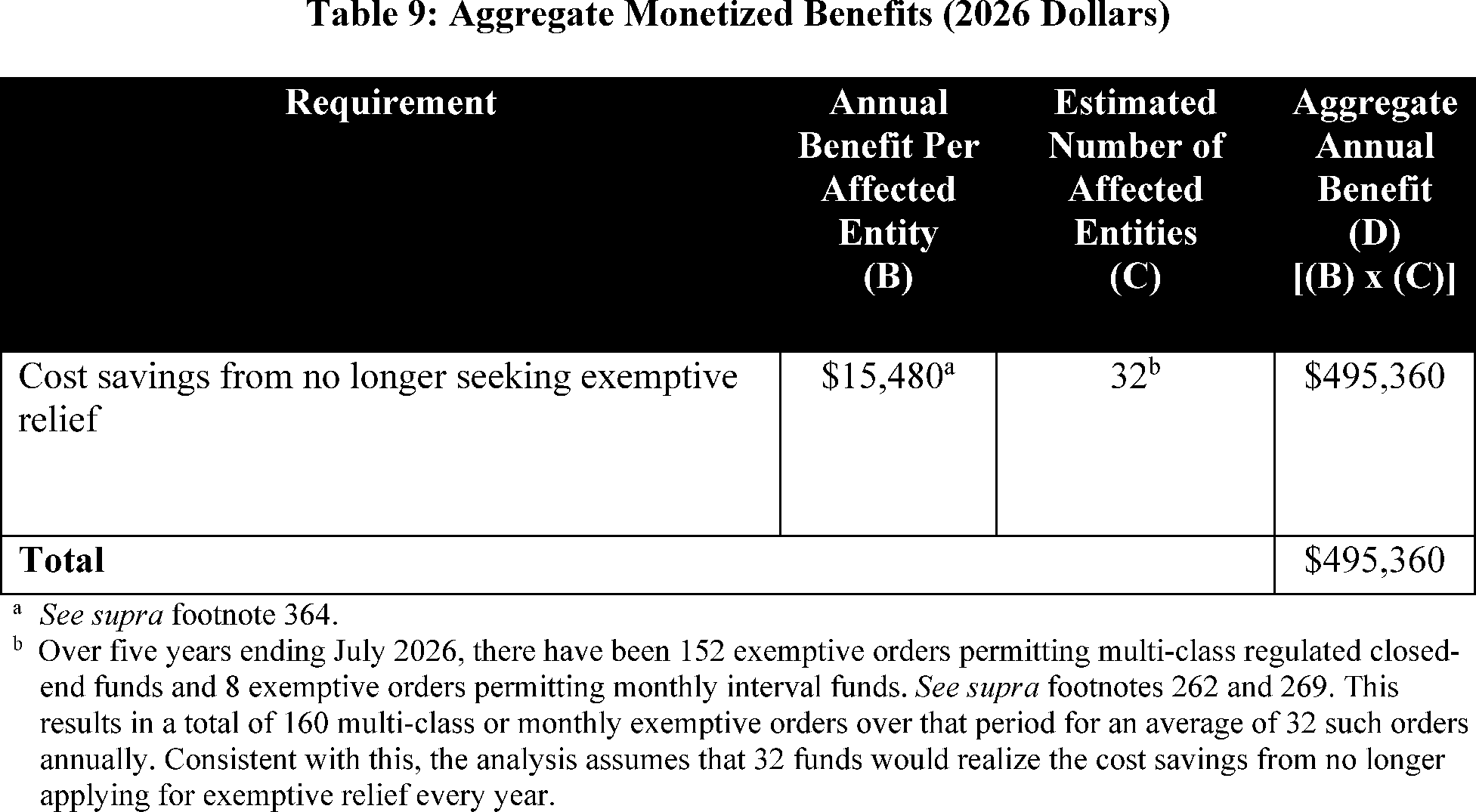
We estimate that the proposed amendments would yield aggregate costs of approximately $5,474,969 annually, as shown in Table 10.
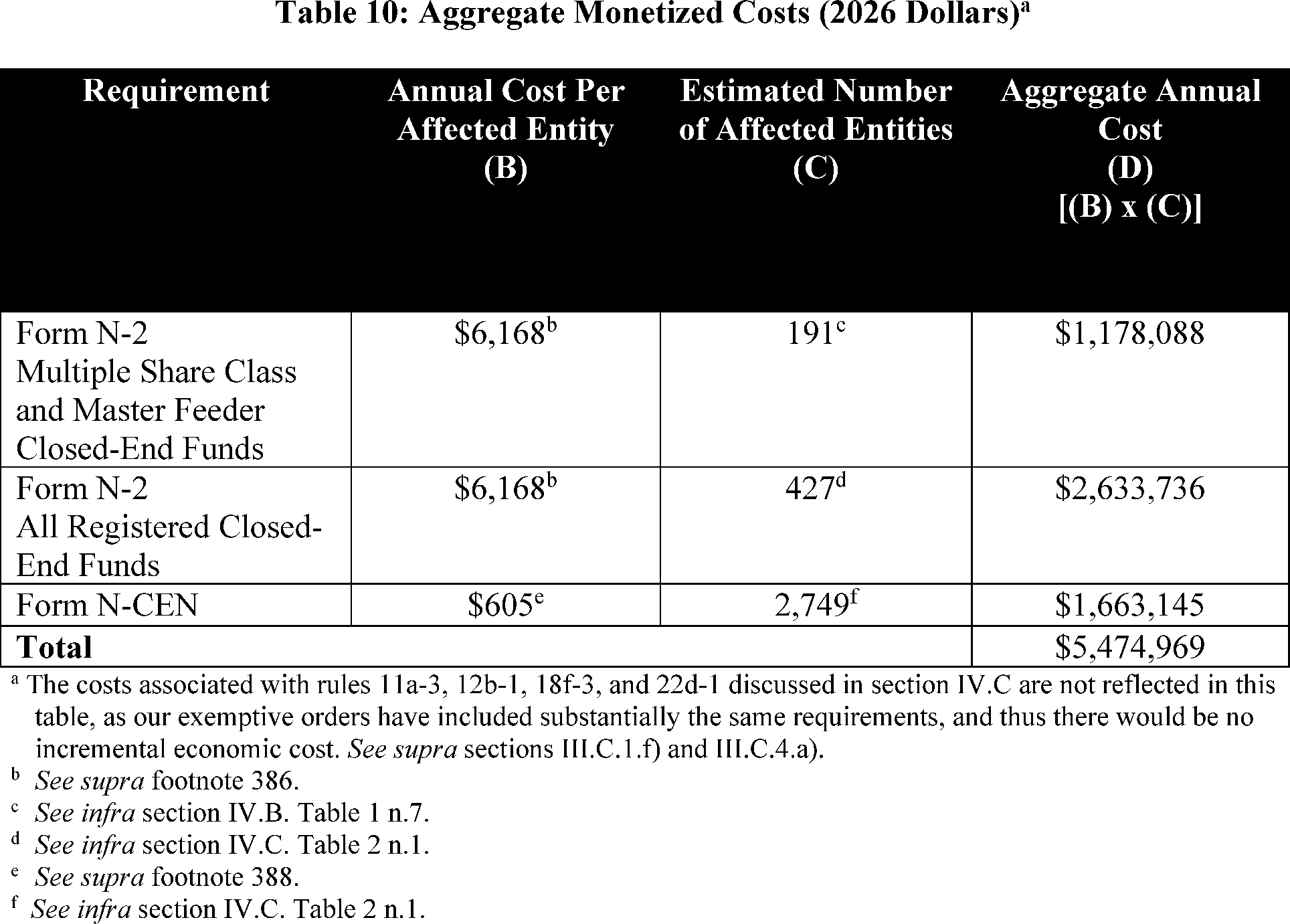
(b) Present Values and Annualized Values of Aggregate Monetized Benefits and Costs
Consistent with the requirements of Executive Order 12866, the Commission reports estimated total monetized benefits and costs for all affected entities in two additional ways specified in OMB Circular A-4.[390] These two presentations address the fact that the benefits and costs may accrue at different points in time, and that benefits and costs realized sooner are generally more valuable than those realized later.[391]
We report (1) the present values of expected benefits and costs that are monetized in our economic analysis, aggregated across all affected entities over a 10-year time horizon starting in 2026, and (2) the annualized values over the same time horizon, derived from the present values. This time horizon represents the period over which the principal benefits and costs that are monetized in the Economic Analysis are expected to accrue.[392] The present values and annualized values account for the timing of benefits and costs through discounting, which is a procedure that accounts for the time value of money.[393]
Table 11 reports the present values of the aggregate monetized benefits and costs from Tables 9 and 10, combining monetized benefits and costs. The analysis uses annual real discount rates of three percent and seven percent over a 10-year time horizon, starting in 2026.[394] As shown in Table 11, we estimate that the present value of total monetized benefits is about $4,288,436 using a three percent discount rate and about $3,598,914 using a seven percent discount rate. We estimate that the present value of total monetized costs is about $47,397,958 using a three percent discount rate and about $39,777,014 using a seven percent discount rate.
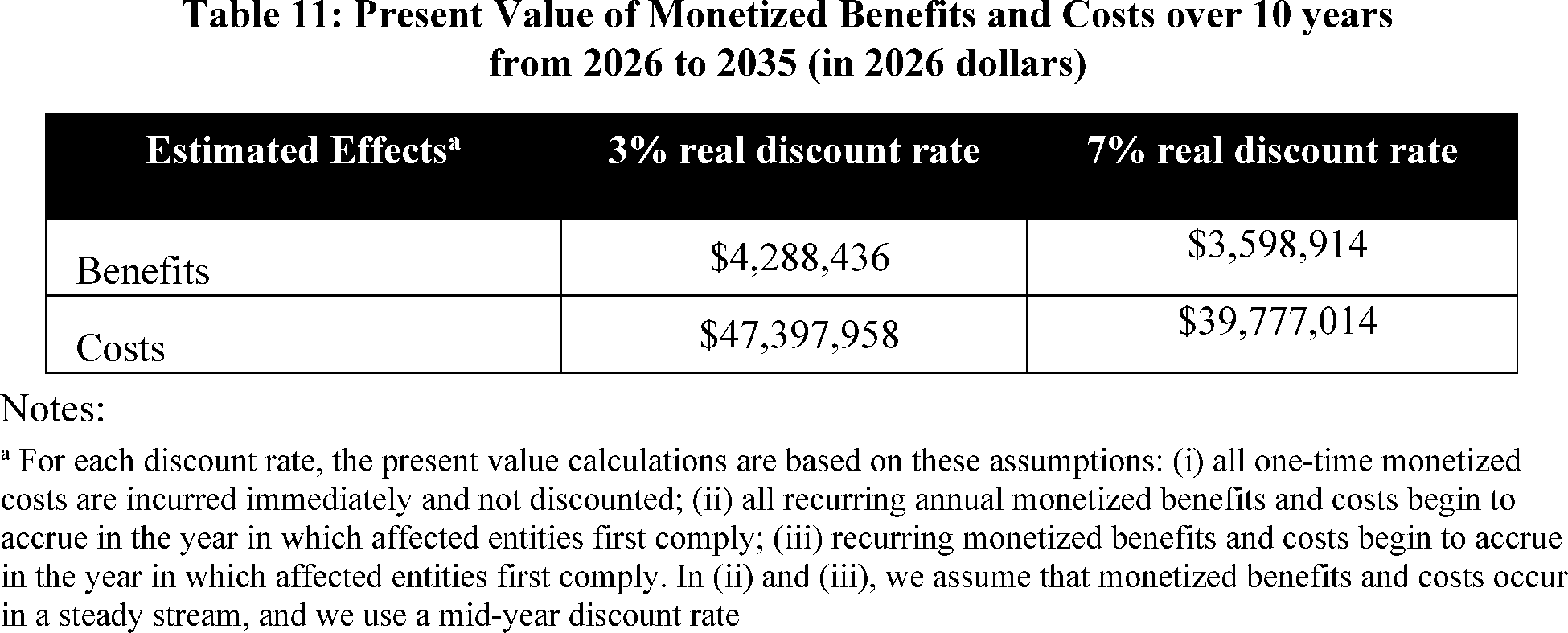
Table 12 reports annualized aggregate monetized benefits and costs using real discount rates of 3 percent and 7 percent over a 10-year horizon.[395] The lump sum present values of aggregate monetized benefits and costs reported in Table 11 are converted in Table 12 into a constant stream of annualized benefits and costs over a 10-year time horizon, starting in 2026.[396] Annualized benefits and costs may differ from an aggregation of the recurring monetized annual benefits and costs discussed earlier in the Economic Analysis because they incorporate the timing of benefits and costs through discounting, and combine one-time and recurring benefits and
( printed page 63446)costs.397 As shown in Table 12, we estimate that annualized total monetized benefits are about $495,360 per year and that annualized total monetized costs are about $5,474,969 per year. The annualized total monetized benefits and costs do not change with the discount rate because the benefits and costs that are monetized in this economic analysis are realized in constant annual amounts.
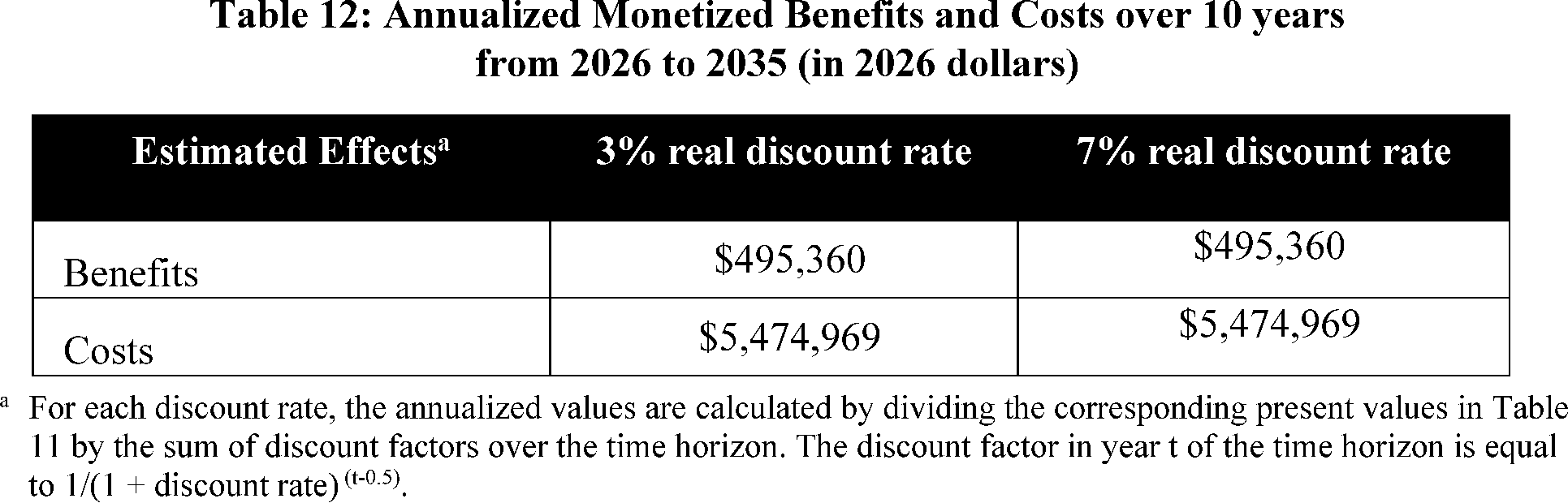
D. Effects on Efficiency, Competition, and Capital Formation
Efficiency: The proposed amendments would likely lead to efficiency improvements for regulated closed-end funds. Replacing the prescriptive requirement that interval funds hold liquid assets equal to 100 percent of the repurchase offer amount during each offer window with the proposed principles-based liquidity standard could reduce cash drag and permit more investor capital to be deployed to its highest expected-return use. Under the proposal, funds would be required to manage portfolio liquidity so they can satisfy repurchase requests without selling assets at prices that deviate significantly from value, allowing advisers to rely on multi-layered liquidity management rather than maintaining excess low-yield liquidity. This recalibration, in tandem with operational flexibilities such as a two-year deferral of the initial repurchase offer and optional monthly or more frequent discretionary repurchases, could improve productive efficiency by better matching liquidity obligations to the timing of portfolio cash generation.
Other efficiency gains would be allocative in nature, with the potential to better align varied investor preferences with the characteristics of available investment vehicles. For instance, some investors may be willing to tolerate longer periods of illiquidity in exchange for higher expected returns. The proposed amendments extending the amount of time that most interval funds would be able to defer their first repurchase offer could lead to the launch of new interval funds that offer such investors a better match for their investment horizon. Additionally, codifying routine exemptive relief for monthly interval funds could allow additional semi-liquid investment options for investors that may require some liquidity more frequently than quarterly. Separately, the proposed multi-share class amendments could increase the number of sales charge structures (such as front-end sales loads) available to investors in regulated closed-end funds, which would allow investors to purchase shares in these vehicles via the structure that best aligns with their specific investment criteria, including the expected amount and time horizon of the investment.[398]
Lastly, the proposed amendments would enhance informational efficiencies for investors in regulated closed-end funds. By amending Form N-2 to require an expense example in regulated closed-end funds' shareholder reports,[399] a fees-and-expenses legend to the Form N-2 fee table,[400] enhanced disclosures and reporting about multiple share classes and master-feeder structures,[401] and class-level Form N-CEN reporting,[402] the proposal would lower investor search costs by making total cost-of-ownership more salient and directly comparable across interval funds and multi-class regulated closed-end funds. Reduced search costs would in turn make it easier for investors to identify the lowest-cost share classes.
Competition: Broadly, the amendments would allow interval funds to organize and operate with additional flexibility. We anticipate competitive effects would result from this flexibility. For instance, the proposed change from a prescriptive liquidity requirement for interval funds during repurchase offer periods to a principles-based approach would more effectively allow fund advisers to deploy investor capital, which would in turn promote competition among interval funds on yield or on principal stability. Additionally, the proposed amendments would also allow the interval fund vehicle to be more competitive with other semi-liquid vehicles such as BDCs and tender offer funds which are generally less constrained in their liquidity requirements and repurchase timing. In particular, the additional portfolio flexibility afforded by the principles-based liquidity standard, the extended deferral of the first repurchase for most interval funds, and the more frequent discretionary repurchase option would better enable interval funds to compete with BDCs and tender offer funds along these dimensions.
We anticipate that permitting regulated closed-end funds to offer multiple share classes would increase competition among these funds, both for inclusion within various distribution channels and for asset flows within them. By permitting regulated closed-end funds to offer share classes with differentiated distribution financing structures, the proposed amendments would remove a structural barrier that, absent exemptive relief, limits which funds are compatible with a given distribution channel. For example, a regulated closed-end fund able to offer a class without an ongoing distribution ( printed page 63447) fee could compete more directly with other products on platforms in which intermediaries are directly compensated by investors rather than via the assets of the funds that they recommend. Because a single-class fund can generally structure its shares to be compatible with only a subset of distribution channels, the proposed amendments would allow a given regulated closed-end fund to compete simultaneously in channels that it would otherwise need to forgo absent exemptive relief to offer a multi-class structure. This would broaden the range of products competing for investor capital within each channel and expand investor choice among funds pursuing strategies that may not otherwise be offered through a particular channel.
However, the benefits of this increased distribution flexibility may not be realized uniformly across regulated closed-end fund sponsors. Because the fixed costs of establishing and administering a multi-class structure can be spread across a larger asset base,[403] sponsors with greater scale, a broader fund complex, or more extensive distribution relationships may be better positioned to launch and support multiple share classes at lower marginal cost than smaller or newer sponsors. As a result, larger fund complexes may be more likely than smaller sponsors to introduce new multi-class regulated closed-end funds or convert existing single-class funds into multi-class structures, potentially reinforcing existing scale-related advantages among regulated closed-end fund sponsors even as the proposed amendments lower the absolute cost, relative to the current exemptive order process, of establishing a multi-class structure for funds of any size.
Capital Formation: We anticipate the amendments would encourage capital formation among companies that are funded by regulated closed-end funds. To the extent the proposed amendments result in more semi-liquid funds that better align with investors' preferences, the supply of investor capital to such companies would increase. Certain proposed amendments could have varying effects across funds. For instance, we anticipate that interval funds with longer periodic intervals would experience greater benefits from the proposed principles-based liquidity framework than would funds with shorter intervals, as funds with longer intervals may have more scope to hold a higher percentage of net assets in less liquid investments without compromising their ability to meet their periodic repurchase obligations. To the extent this is the case, the proposed liquidity amendment may facilitate capital formation for companies and strategies that rely on longer-duration financing arrangements with interval funds. By contrast, the proposed addition of monthly intervals to the set of permissible intervals under rule 23c-3 could increase capital formation for issuers that generate monthly cash flows, such as companies that generate rental income or residential mortgage-backed securities.[404] Other elements of the proposed amendments, such as codifying multi-class relief in regulated closed-end funds, could broadly increase the supply of investor capital by encouraging the creation of share classes with distribution and fee structures that are compatible with more investors' preferences.
More generally, we anticipate that the proposed amendments could lead to the creation of more semi-liquid vehicles, which would likely facilitate intermediation between investors and companies that require funding and would likely lower the cost of capital for those companies. The resulting capital formation may be stronger for private companies that rely on direct lending, private credit, and private equity secondary strategies, which are the strategies for which interval funds are now more commonly used.[405] To the extent the proposed amendments allow more capital to flow into these strategies through interval funds, companies that borrow from or are owned by these funds would have access to a broader and more competitively priced capital base.
These capital formation benefits, however, are not without downside risk. Replacing the current prescriptive liquidity requirement with the proposed principles-based standard could, in some circumstances, result in a fund holding less liquid assets than it otherwise would to meet repurchase requests, particularly during periods of market stress when asset values are declining and repurchase demand is elevated.[406] If a fund's liquidity policies and procedures do not adequately anticipate such conditions, the fund could be compelled to sell portfolio assets at a discount to meet repurchase obligations. Such sales could depress the market value of the affected assets more broadly, which in turn could increase borrowing costs and reduce the availability of credit for the companies whose securities or loans are held by the fund. This risk would be mitigated by the requirement that a fund's board adopt and oversee liquidity risk management policies and procedures under rule 38a-1, as well as by fund advisers' own incentives to avoid dilutive asset sales in order to preserve returns and retain investor capital, although these mitigants may be less effective during periods of severe or sustained market stress affecting many funds simultaneously.[407]
E. Reasonable Alternatives
1. Longer Interval-Scaled Deferral of First Repurchase Offer
The proposed amendments would permit an interval fund of any repurchase frequency to defer its first repurchase offer by two years.[408] Alternatively, the Commission could have proposed that interval funds be permitted to defer their first repurchase by a proportional amount that is larger than the two-times repurchase frequency length that is currently permitted. For instance, the Commission could have proposed to permit interval funds to defer their first repurchase for as long as four times their repurchase frequency. Under this alternative, a newly registered monthly interval fund could wait up to four months to make its first repurchase offer, while a newly registered interval fund with a yearly repurchase frequency would have up to four years. Relative to the proposed amendments, this alternative would offer greater flexibility to interval funds with less frequent repurchase offers than to those with more frequent repurchase offers. Any annual interval funds in particular would benefit from an extended “ramp up” period which may allow them sufficient time to establish portfolios that more closely resemble those in private equity or venture capital funds.[409] In doing so, this alternative would encourage the formation of funds accessible to investors that are not accredited investors but that are willing to bear liquidity risk in exchange for a higher expected return. This risk involves the possibility that investors lock up their capital for longer periods and cannot access it if they face unexpected liquidity needs. The risk of unexpected liquidity needs coinciding ( printed page 63448) with an extended deferral period would be heightened if the fund's repurchase offer amount is low or if many other investors make repurchase requests following the first repurchase offer.
Relatedly, this alternative would make it more likely that interval funds would construct portfolios with durations scaling with the time between each repurchase offer. Under the proposed fixed two-year period, monthly or quarterly interval funds may be able to stagger longer-term portfolio investments during the “ramp up” period so that the investments are expected to return cash during successive repurchase offers.[410] By contrast, this alternative would permit deferrals of up to 4 months, 1 year, 2 years, and 4 years for monthly, quarterly, semi-annual and annual interval funds, respectively. Monthly and quarterly interval funds' portfolios would have less time to produce cash flows prior to the start of their periodic repurchase offers under this alternative relative to the proposed fixed two-year deferral period. As a result, relative to the proposal, this alternative would likely result in higher-frequency interval funds offering more liquid portfolios and lower-frequency interval funds offering less-liquid portfolios. Relative to the proposal, this outcome could decrease the risk that repurchase requests persistently run ahead of available portfolio liquidity, but it would not accommodate interval funds with liquidity profiles that some investors may prefer.
2. Lower Repurchase Offer Minimums for Monthly Interval Funds
Rule 23c-3(a)(3) permits repurchase offer amounts between five percent and 25 percent of an interval fund's shares outstanding regardless of the length of the fund's interval. As an alternative, the Commission could propose allowing monthly interval funds to make repurchase offers for lower percentages of outstanding fund shares. For instance, permitting a monthly interval fund to repurchase as little as two percent of its outstanding shares would allow the fund to frequently offer limited liquidity while keeping the annual percentage repurchased roughly comparable to a quarterly interval fund repurchasing five percent of its outstanding shares each quarter. In doing so, the monthly fund could offer more frequent liquidity to investors without experiencing cash drag that results from a higher portion of its portfolio needing to be liquid in a given year. Investors would also benefit to the extent monthly funds would have higher returns given reduced cash drag. However, permitting smaller monthly repurchase offers could exacerbate periods where investor repurchase requests are persistently higher than repurchase offers.[411]
3. Permit Multiple Share Classes for All Regulated Closed-End Funds
As proposed, amended rule 18f-3 would be available to only regulated closed-end funds whose common stock is not listed, offered, or traded on a secondary market. The Commission could instead extend the multiple share class exemption to exchange-listed regulated closed-end funds, subject to additional conditions designed to address structural issues that may arise when a fund simultaneously maintains exchange-traded share classes and continuously offered share classes representing interests in the same portfolio. Under this alternative, an exchange-listed regulated closed-end fund would be permitted to offer one or more continuously distributed share classes (possibly carrying sales loads or ongoing 12b-1 distribution fees) alongside its exchange-traded shares, which would trade at market-determined prices on a national securities exchange. This structure would be broadly analogous to arrangements that have emerged in the registered open-end fund context, where certain funds offer both exchange-traded share classes and traditionally distributed share classes representing interests in the same portfolio.[412] Extending the multiple share class exemption to exchange-listed regulated closed-end funds would also extend the distribution flexibility of the proposed rule to a segment of the regulated closed-end fund market that has historically lacked access to multi-class distribution structures.
Relative to the proposed rule, one benefit of this alternative would be its potential to offer investors with varying liquidity preferences and risk tolerance alternate wrappers to the same underlying portfolio. For instance, investors that prefer the opportunity to periodically access partial liquidity at NAV may prefer to purchase interests in a class of shares with periodic repurchase offers pursuant to rule 23c-3. Other investors that prefer more immediate secondary market liquidity and can tolerate price volatility may instead buy listed shares representing the same underlying portfolio at a market price. Where listed shares trade at a discount to the underlying portfolio's NAV, there may also be opportunities for the fund to take actions that benefit all shareholders. If the fund buys back listed shares at a price between NAV and the traded price, shareholders in both the listed and unlisted classes would benefit from portfolio accretion while holders of listed shares would experience additional upside if they bought their shares at a discount to the offered price. More generally, this alternative could offer additional inflows to regulated closed-end fund portfolios, which would have the potential to meaningfully expand a fund's investor base. After the initial offering of their shares, exchange-listed closed-end funds are currently accessed solely through the secondary market and do not benefit from the intermediary distribution networks through which unlisted interval funds and tender offer funds reach investors. Permitting exchange-listed funds to offer continuously distributed share classes alongside their exchange-traded shares would allow these funds to reach investors who access investment products through broker-dealer platforms, registered investment adviser managed accounts, or employer-sponsored retirement plans, and who may not have ready access to exchange-traded securities through those channels. This could meaningfully expand the investor base for exchange-listed closed-end funds, which would facilitate economies of scale that can benefit all shareholders by spreading fixed costs over a larger asset base.
This alternative would present novel investor protection challenges. Most significantly, a fund with both exchange-traded and continuously offered share classes would provide shareholders of different classes with fundamentally different pricing and liquidity experiences. Exchange-traded shareholders would buy and sell shares at market-determined prices that may reflect a discount or premium to NAV, while continuously offered shareholders would purchase shares at NAV plus any applicable sales load and, if the fund is an interval fund, would access liquidity through periodic repurchase offers at NAV. As a result, the shareholders in the listed classes may have different and potentially conflicting interests with shareholders in continuously offered classes. For instance, while a portfolio's liquidity supports repurchase offers (either periodic or one-time) for holders of continuously offered fund shares, ( printed page 63449) holders of listed shares could experience lower returns due to cash drag while not experiencing the same liquidity benefits a more liquid portfolio can provide. More generally, unlike continuously offered fund shares, listed closed-end fund shares generally do not provide a fund with additional capital following their initial public offering. If interests were to diverge across these share classes, fund advisers may have greater incentives to favor the interests of the continuously offered share classes.
4. Targeted Liquidity Management Carve-Outs
Rather than replacing the 100 percent liquid assets requirement with a fully principles-based standard, the Commission could have proposed targeted carve-outs recognizing specific liquidity management techniques as satisfying the prescriptive requirement. For example, the amended rule could provide that a fund satisfies the liquidity requirement if it holds liquid assets equal to a specified percentage of the repurchase offer amount ( e.g., 50 percent) and maintains a committed credit facility sufficient to cover the remaining amount, or if the fund's portfolio generates scheduled cash flows (from loan amortization, interest payments, or asset maturities) exceeding the repurchase offer amount within the repurchase payment deadline.
This alternative would preserve a prescriptive backstop for funds that do not use multi-layered liquidity management while removing the over-inclusive constraint for funds that do. The Commission considered but did not propose this alternative because the diversity of interval fund strategies and portfolio structures makes it difficult to define a set of specific techniques that would be appropriate across all funds. A prescriptive carve-out framework would likely require frequent amendment as new liquidity management techniques develop and would provide less flexibility than the principles-based standard to tailor liquidity management to each fund's specific strategy.
F. Request for Comment
77. What additional qualitative or quantitative information should the Commission consider in establishing the baseline for its economic analysis of the proposal?
78. What additional considerations should the Commission consider in estimating the costs and benefits of the proposal?
79. Has the Commission considered all relevant aspects of the proposal? Have we accurately described the costs and benefits of the proposal? Why or why not? Please identify any other benefits associated with the proposal that we have not identified. Please identify any other costs associated with the proposal that we have not identified. If possible, please provide quantification or data that would support quantification of such effects.
80. What are the economic effects of the reasonable alternatives discussed above? Are there any additional reasonable alternatives that the Commission should consider? If so, please identify such alternatives and any economic effects associated with such alternatives. If possible, please provide quantification or data that would support quantification of such effects.
81. Under the proposed amendments to rule 23c-3, a fund with more frequent periodic repurchases would experience a larger increase in its permitted initial repurchase deferral period relative to a fund with less frequent periodic repurchases. Would interval funds with shorter intervals be able to effectively stagger less liquid investments to benefit from a longer ramp up period while still ensuring that they can provide investors with more frequent liquidity?
82. What is the cost burden of applying for exemptive relief from: (A) rule 23c-3's limitations on permissible repurchase intervals; (B) the Investment Company Act rules restricting regulated closed-end funds from issuing multiple classes of shares; and (C) section 17(d) of the Investment Company Act and rule 17d-1 thereunder, which restrict joint enterprises? What frictions remain following the 2020 amendments to rule 0-5 that streamlined exemptive relief applications under the Investment Company Act, and how would the proposed amendments decrease those frictions?
83. Would the proposed amendment replacing the current requirements on an interval fund's liquid assets during repurchase offer periods with a principles-based requirement interact with the proposed amendment in the Performance-Based Compensation Modernization Proposal that would permit advisers to charge performance fees on unrealized capital gains? If so, please explain how. Is the Commission correct in asserting that interval fund advisers would generally be able to manage fund liquidity without restricting the size of repurchase offers to fund investors? [413]
IV. Paperwork Reduction Act Analysis
A. Summary of the Collections of Information
Certain provisions of our proposal contain “collections of information” requirements within the meaning of the PRA. We are submitting the proposed amendments to the Office of Management and Budget (“OMB”) for review and approval in accordance with the PRA and its implementing regulations.[414] The hours and costs associated with preparing and filing the forms and responses required under the applicable rules constitute paperwork burdens imposed by each collection of information. An agency may not conduct or sponsor, and a person is not required to comply with, a collection of information requirement unless it displays a currently valid OMB control number. Compliance with the information collections is mandatory or mandatory to receive benefits. Responses to the information collections are not kept confidential, and there is no mandatory retention period for the information disclosed. The titles for the existing collections of information are:
- “Rule 11a-3 under the Investment Company Act of 1940—Offers of Exchange by Open-End Investment Companies Other Than Separate Accounts” (OMB Control No. 3235-0358);
- “Rule 12b-1 [17 CFR 270.12b-1] under the Investment Company Act of 1940: Distribution of Shares by Registered Open-end Management Investment Company” (OMB Control No. 3235-0212);
- “Rule 18f-3 under the Investment Company Act of 1940” (OMB Control No. 3235-0211); [415]
- “Rule 22d-1 under the Investment Company Act of 1940—Exemption from section 22(d) to permit sales of redeemable securities at prices which reflect sales loads set pursuant to a schedule” (OMB Control No. 3235-0310);
- “Repurchase Offers by Closed-End Companies, Rule 23c-3 and Form N-23c-3” (OMB Control No. 3235-0422);
- “Form N-2 under the Investment Company Act of 1940 and the Securities Act of 1933, Registration Statement of Closed-End Management Companies” (OMB Control No. 3235-0026); and ( printed page 63450)
- “Form N-CEN” (OMB Control No. 3235-0729).
The forms and rules listed above were adopted under the Securities Act, the Exchange Act, and/or the Investment Company Act. A description of the proposed amendments, including the need for the information and its proposed use, as well as a description of the likely respondents and a discussion of the potential economic effects of the proposed amendments can be found in sections II and III above.
B. Summary of the Proposed Amendments' Estimated Effects on the Collections of Information
The following PRA Table 1 summarizes the estimated effects of the proposed amendments on the paperwork burdens associated with the affected forms and rules.
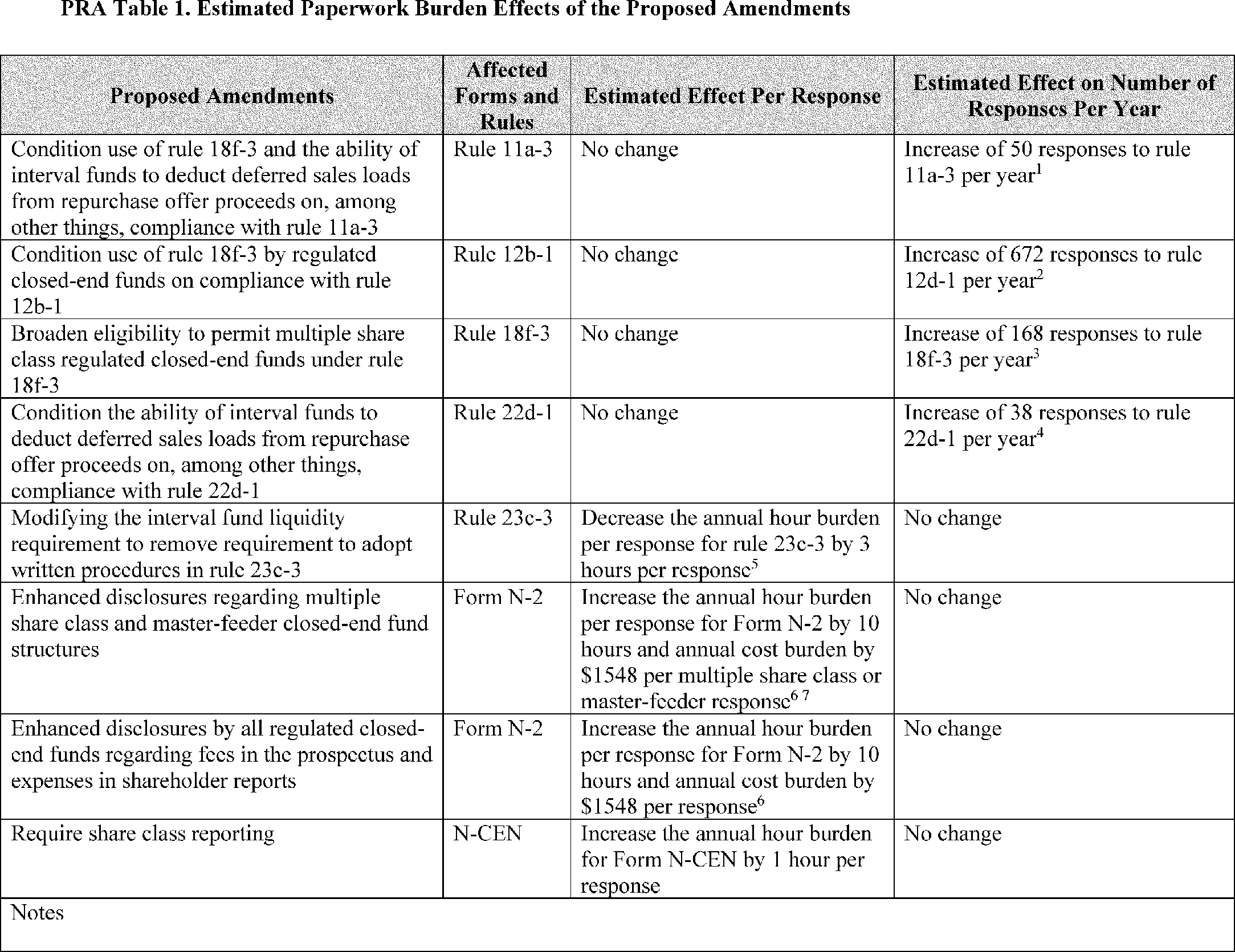
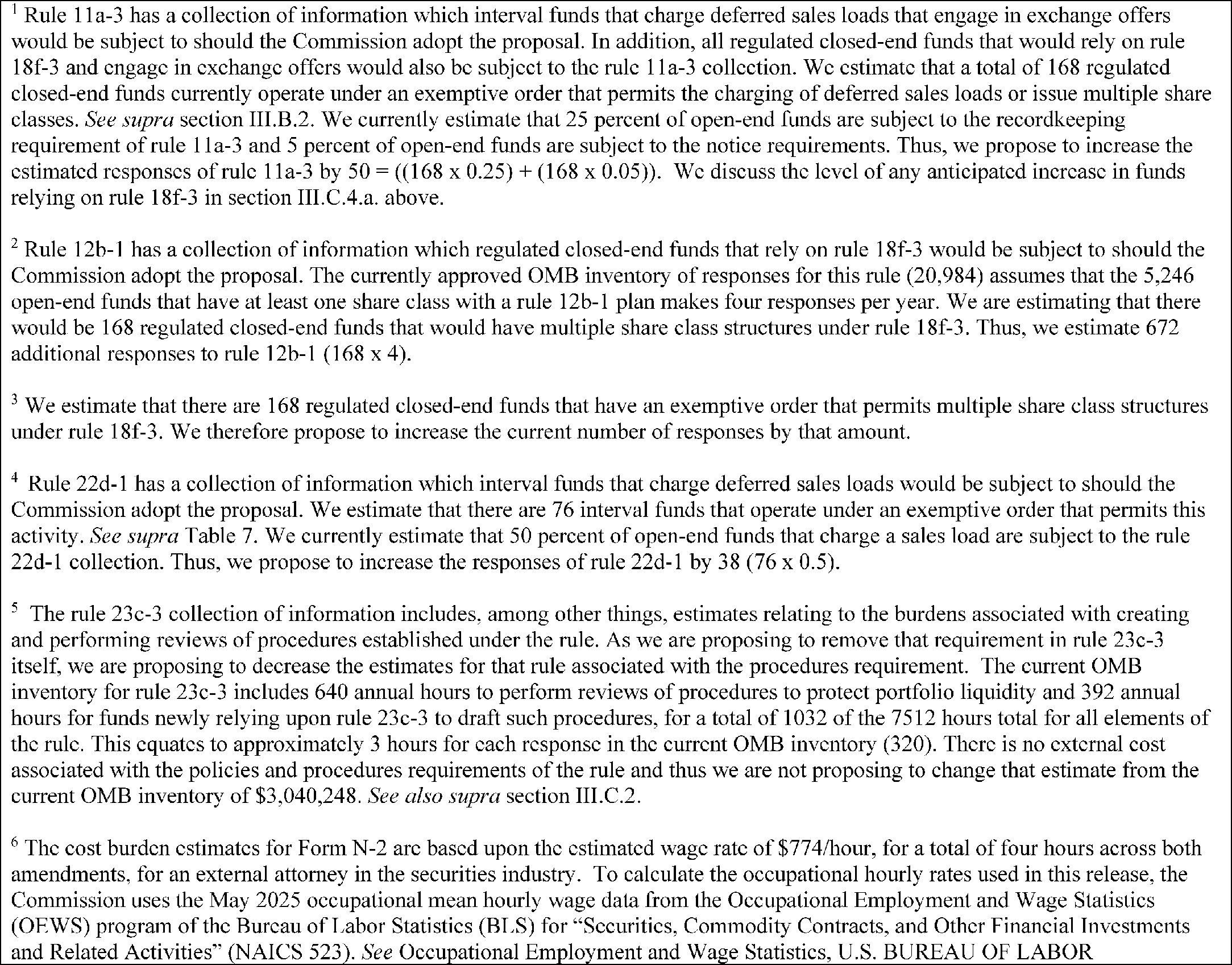
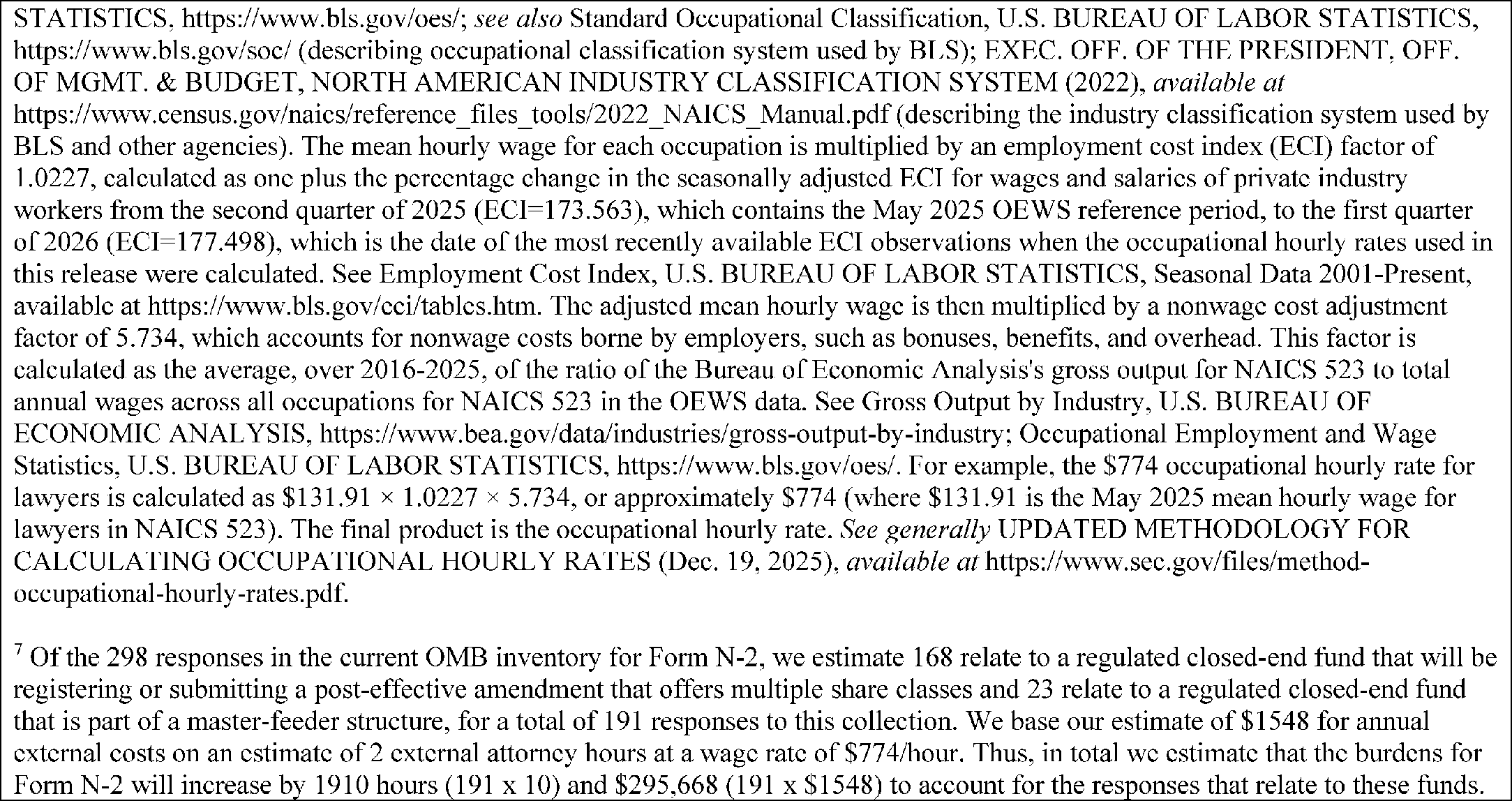
C. Incremental and Aggregate Burden and Cost Estimates
We estimate below the incremental and aggregate change in paperwork burden as a result of the proposed amendments. These estimates represent the average burden for all issuers, both large and small. In deriving our estimates, we recognize that the burdens will likely vary among individual respondents based on a number of factors, including the size and complexity of their business. These estimates include the time and the cost of preparing and reviewing disclosure and filing documents. We believe that some issuers would experience costs in excess of this average and some issuers would experience less than the average costs. Our methodologies for deriving these estimates are discussed in section IV.B above.
For purposes of this PRA analysis, the burden is generally allocated between burden hours and costs. The cost burden generally reflects the portion of the burden carried by outside professionals, while the burden hours generally reflect the portion of the burden carried by the respondent internally. The following PRA Table 2 summarizes the estimated total annual number of responses, the average burden hours per response, and the average cost burden per response for each information collection affected by the proposed amendments and, using those amounts, calculates the estimated total annual burden hours and total annual cost burden associated with each affected collection of information under the proposed amendments. The total annual burden hours and cost burdens are rounded to the nearest whole number, and the burden hours per response and cost burden per response are rounded to the second decimal point.
( printed page 63453)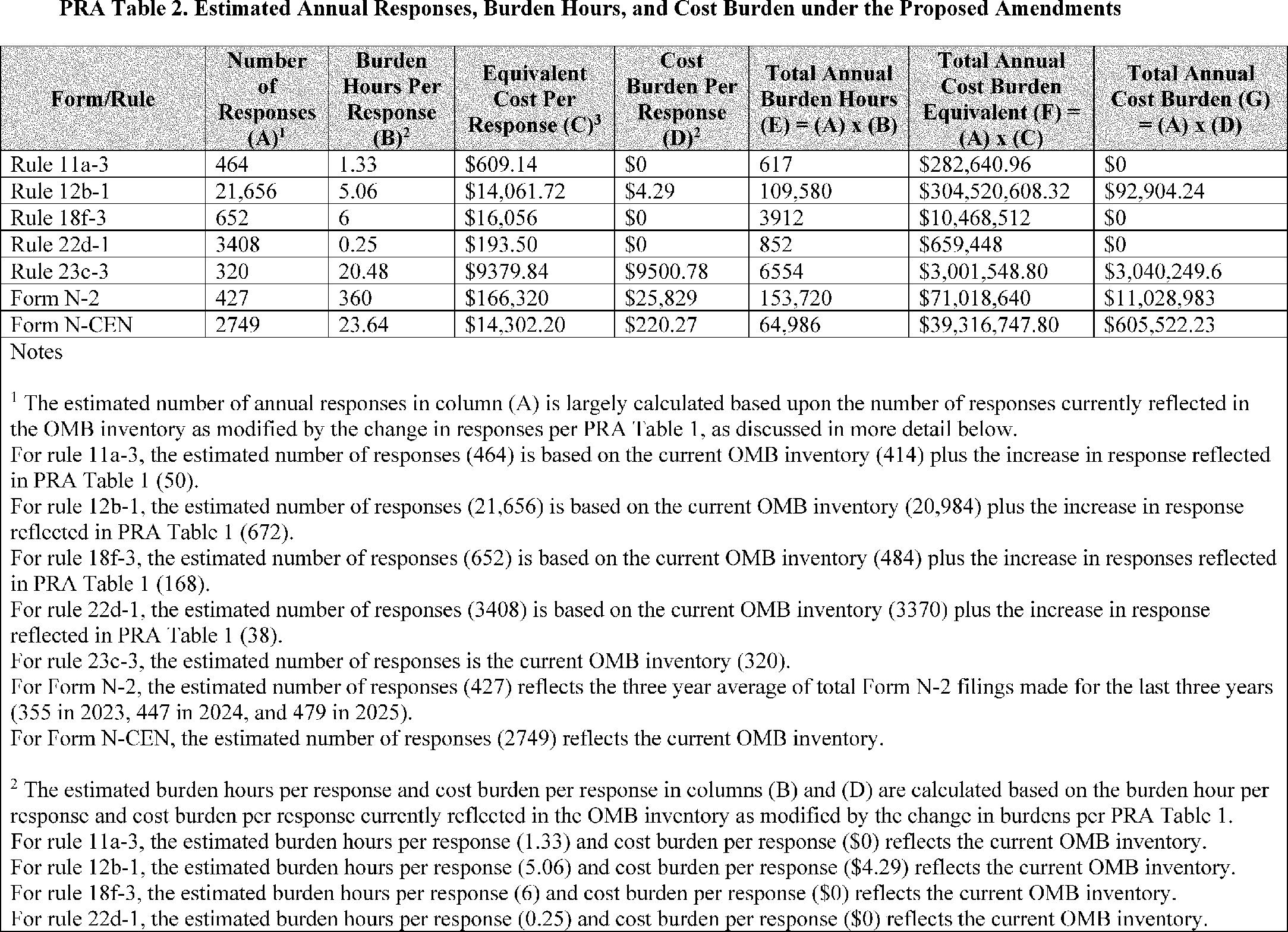
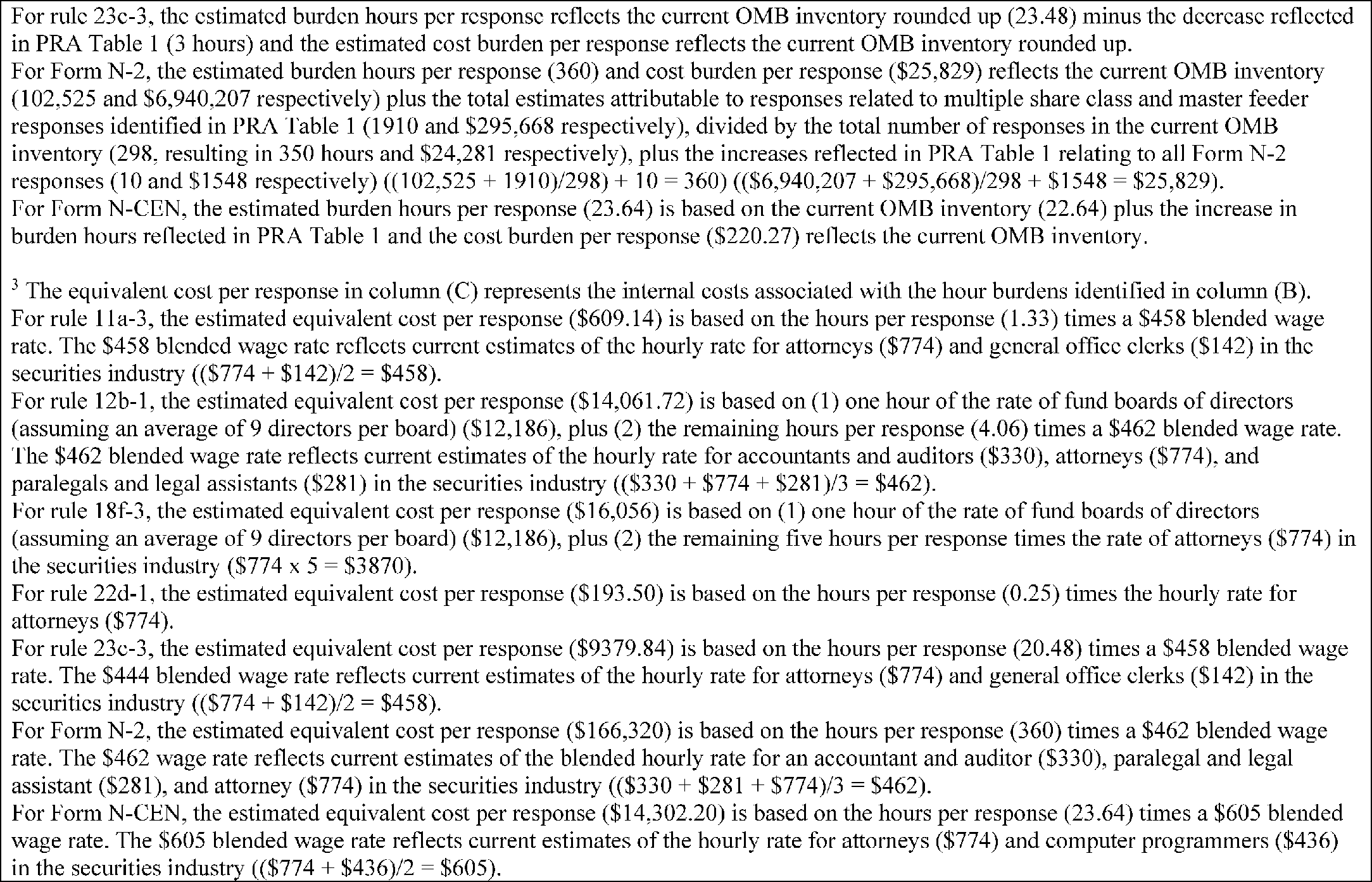
The following PRA Table 3 summarizes the current and requested paperwork burdens and calculates the changes to affected information collections' estimated responses and total burdens under the proposed amendments.
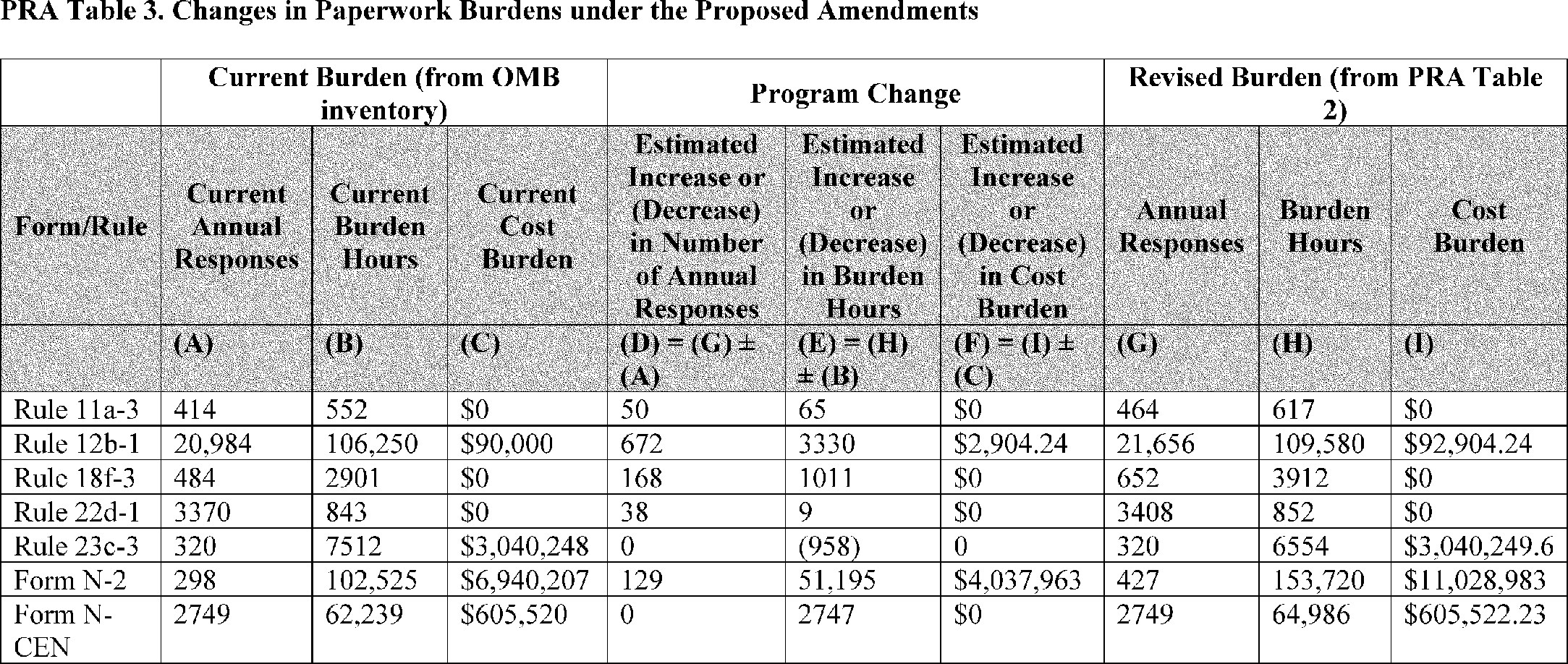
D. Request for Comments
Pursuant to 44 U.S.C. 3506(c)(2)(B), we request comment in order to:
 44 U.S.C. 3506(c)(2)(B)
- Evaluate whether the proposed changes to the collections of information are necessary for the proper performance of the functions of the Commission, including whether the information will have practical utility;
- Evaluate the accuracy of our estimates of the changes in burden hours and cost burden that would result from adoption of the proposed amendments;
- Determine whether there are ways to enhance the quality, utility, and clarity of the information to be collected;
- Evaluate whether there are ways to minimize the burden of the collections of information on those who respond, including through the use of automated collection techniques or other forms of information technology; and
- Evaluate whether the proposed amendments would have any effects on any other collection of information not previously identified in this section.
Any member of the public may direct to us any comments concerning the accuracy of these burden estimates and any suggestions for reducing these burdens. Persons submitting comments on the collection of information requirements should direct their comments to the OMB Desk Officer for the Securities and Exchange Commission, MBX.OMB.OIRA.SEC_desk_officer@omb.eop.gov, and should send a copy to Vanessa A. Countryman, Secretary, Securities and Exchange Commission, using any of the methods in the ADDRESSES section, with reference to File No. S7-2026-34. Requests for materials submitted to OMB by the Commission with regard to the collection of information should be in writing, refer to File No. S7-2026-34 and be submitted to the Securities and Exchange Commission, Office of FOIA Services, 100 F Street NE, Washington, DC 20549-2736. OMB is required to make a decision concerning the collections of information between 30 and 60 days after publication of this release. Consequently, a comment to OMB is best assured of having its full effect if OMB receives it within 30 days of publication.
V. Initial Regulatory Flexibility Analysis
The Commission has prepared the following Initial Regulatory Flexibility Analysis (“IRFA”) in accordance with section 3(a) of the Regulatory Flexibility Act (“RFA”).[416] It relates to proposed amendments to rules 23c-3, 18f-3, and 17d-3, as well as to Form N-2, Form N-CEN, and Form N-23c-3 (collectively, “proposed amendments”).
A. Reasons for and Objectives of the Proposed Actions
The Commission is proposing amendments to rule 23c-3 and Form N-23c-3 to increase flexibility in the rule's repurchase and interval framework and modify the rule's liquidity management requirements. Because of their ability to provide a degree of periodic liquidity to investors while investing in private assets, the interval fund structure can be an option for asset managers to deliver exposure to private market assets to investors. These changes are designed to modernize the interval fund framework given that the rules that govern those products have not been substantially updated since the 1990s. They are also designed to enhance the efficiency of interval funds in order to promote larger adoption rates by fund managers seeking to provide a retail product that provides access to private markets while retaining investor protections. The Commission is also proposing to amend rules 18f-3 and 17d-3 to codify existing exemptive orders that permit multiple share class structures in regulated closed-end funds. Based on the Commission's experience with these exemptive orders, multi-class structures have demonstrated value by providing enhanced flexibility to both investors and sponsors of registered investment companies. Under proposed amendments codifying the exemptive orders, new regulated closed-end funds could have multiple share classes without needing to bear the expense of applying for exemptive relief. This could have the benefit of making these structures less costly and therefore also provide more options to investors. Further, the Commission is proposing amendments to provide enhanced disclosures to investors and reporting so they can better understand these complex structures and, for all regulated closed-end funds, expenses attendant to the fund.
Each of these objectives is discussed in detail in section II above.
B. Legal Basis
The Commission is proposing the amendments contained in this document under the authority set forth in the Investment Company Act, particularly sections 6, 8, 17, 18, 23, 24, 30, 31, 38, 57, 59, 61, 63, and 64 thereof [15 U.S.C. 80a-6, 80a-8, 80a-17, 80a-18, 80a-23, 80a-24, 80a-29 80a-30, 80a-37, 80a-56, 80a-58, 80a-60, 80a-62, and 80a-63], the Securities Act of 1933, particularly sections 5, 7, 10, 19(a), and 28 thereof [15 U.S.C. 77e; 77g; 77j; 77s(a); and 77z-3], and the Securities Exchange Act of 1934, particularly sections 12, 13, 14, 15, 23(a), 35A, and 36 thereof [15 U.S.C. 78 l; 78m; 78n, 78o, 78w(a); 78 ll; and 78mm].
C. Small Entities Subject to Proposed Rule Amendments
For purposes of Commission rulemaking in connection with the RFA, an investment company is a small entity if, together with other investment companies in the same group of related investment companies, it has net assets of $50 million or less as of the end of its most recent fiscal year (a “small fund”).[417] Commission staff estimates that, as of December 31, 2025, approximately 34 registered closed-end funds and 5 BDCs (collectively, 39 funds) are small entities.
D. Projected Reporting, Recordkeeping, and Other Compliance Requirements
The amendments to rule 23c-3 and Form N-23c-3 are intended to provide enhanced flexibility for interval funds by permitting more flexible repurchases, allowing the deduction of deferred sales loads from repurchase proceeds, and simplifying and clarifying the process of determining applicable requirements of the rule. It also would remove the requirement that a fund hold at least 100 percent of the repurchase offer amount in sufficiently liquid assets and replace it with a more principles-based liquidity management approach. In this way, the proposal seeks to lessen the current reporting, recordkeeping, and other compliance requirements of rule 23c-3 and Form N-23c-3. We estimate that 11 of the 39 small entities are interval funds that would be affected by these changes.
The amendments to rules 18f-3 and 17d-3 are designed to lessen burdens on regulated closed-end funds by eliminating the need to first obtain an exemptive order before creating multiple share classes. Based on the Commission's experience with these exemptive orders, multi-class structures have demonstrated value by providing ( printed page 63456) enhanced flexibility to structure and finance the distribution of these funds. Extending these benefits to all closed-end funds would reduce the costs of the exemptive order application process. However, even relative to the current exemptive orders, these two amendments should lessen current reporting, recordkeeping, and other compliance requirements in that they are not including some of the requirements from those orders. We estimate that 4 of the 39 small entities have multiple share classes.
Regulated closed-end funds would be required to provide enhanced disclosure on Form N-2 and reporting on Form N-CEN should the Commission adopt the proposal. In particular, the proposal would add disclosure and reporting requirements regarding the presentation of multiple share class or master-feeder structures on the form. It would also add, for all filers, including all 39 small entities, disclosure regarding fees and expenses in the prospectus and shareholder reports. Nonetheless, we believe that the proposed amendments will lessen the overall reporting, recordkeeping, and other compliance requirements on small entities affected by them.
E. Duplicative, Overlapping, or Conflicting Federal Rules
We do not believe that the proposed amendments would duplicate, overlap, or conflict with other existing Federal rules.
F. Significant Alternatives
The RFA directs the Commission to consider significant alternatives that would accomplish our stated objective, while minimizing any significant impact on small entities. We considered the following alternatives for small entities in relation to our proposal: (1) exempting funds that are small entities from the proposed reporting, recordkeeping, and other compliance requirements, to account for resources available to small entities; (2) establishing different reporting, recordkeeping, and other compliance requirements or frequency, to account for resources available to small entities; and (3) clarifying, consolidating, or simplifying the compliance requirements under the proposal for small entities; and (4) using performance rather than design standards.
We do not believe that exempting small entities from the proposed amendments would enable us to meet our objectives, which is to increase the efficiency with which funds can use the interval fund structure and therefore could deliver exposure to private market assets to investors, and with which regulated closed-end funds could use multiple share class structures. Similarly, we do not believe that establishing different reporting, recordkeeping, and other compliance requirements or frequency, to account for resources available to small entities would enable us to meet our investor protection objectives under the Investment Company Act. Additionally, we also do not believe that clarifying, consolidating, or simplifying the compliance requirements under the proposal for small entities, beyond what we propose for all regulated closed-end funds, would permit us to achieve our stated objectives because this would raise investor protection concerns for investors in small funds. Lastly, with respect to the use of performance rather than design standards, the proposed amendments and new rules generally use performance standards that provide small entities with a greater degree of flexibility than exists under current Commission rules. Further, the Commission is proposing to adopt a new performance standard, the standard for interval fund liquidity during the pendency of a repurchase offer, in place of an existing design standard. This flexibility would be available to all interval funds regardless of size.
G. Request for Comment
The Commission requests comments regarding this analysis. We request comment on the number of small entities that would be subject to our proposal and whether our proposal would have any effects that have not been discussed. We request that commenters describe the nature of any effects on small entities subject to our proposal and provide empirical data to support the nature and extent of such effects. We also request comment on the estimated compliance burdens of our proposal and how they would affect small entities.
VI. Congressional Review Act
For purposes of Subtitle E of the Small Business Regulatory Enforcement Fairness Act of 1996 (also known as the Congressional Review Act),[418] the Commission must seek OMB's determination as to whether a final regulation constitutes a “major rule.” Under the Congressional Review Act, a rule is considered “major” where, if adopted, it results in or is likely to result in:
- An annual effect on the economy of $100 million or more;
- A major increase in costs or prices for consumers or individual industries; or
- Significant adverse effects on competition, investment, or innovation.[419]
To help inform OMB's determination as to whether any final rule that results from the proposal would be a “major rule,” the Commission solicits comment and data on:
- The potential effect on the U.S. economy on an annual basis;
- Any potential increase in costs or prices for consumers or individual industries; and
- Any potential effect on competition, investment, or innovation.
Commenters are requested to provide empirical data and other factual support for their views to the extent possible, to inform OMB's determination regarding whether any final rule following this proposal is likely to be a “major rule” for the purposes of the Congressional Review Act.
VII. Other Matters
The Office of Management and Budget has determined that this action is not a significant regulatory action under Executive Order 12866, and therefore it was not subject to Executive Order 12866 review.
Statutory Authority
The Commission is proposing the amendments to rules 17d-3, 18f-3, and 23c-3 and Form N-23c-3 under the authority set forth in the Investment Company Act, particularly sections 6(c), 17, 18, 23, 31, 38, 57, 59, 61, and 63 thereof [15 U.S.C. 80a-6(c), 80a-17, 80a-18, 80a-23, 80a-30, 80a-37, 80a-56, 80a-58, 80a-60, and 80a-62]. The Commission is proposing amendments to Form N-2 and N-CEN under the authority set forth in the Securities Act of 1933, particularly sections 5, 7, 10, 19(a), and 28 thereof [15 U.S.C. 77e; 77g; 77j; 77s; and 77z-3], the Securities Exchange Act of 1934, particularly sections 12, 13, 14, 15, 23(a), 35A, and 36 thereof [15 U.S.C. 78 l; 78m; 78n, 78o, 78w(a); 78 ll; and 78mm], and the Investment Company Act, particularly sections 6, 8, 23, 24, 30, 31, 38, and 64 thereof [15 U.S.C. 80a-6; 80a-8, 80a-23, 80a-24, 80a-29, 80a-30, 80a-37, and 80a-63].
List of Subjects in 17 CFR Parts 239, 249, 270, and 274
- Investment companies
- Reporting and recordkeeping requirements
- Securities
Text of Rule and Form Amendments
For the reasons set out in the preamble, the Commission proposes to amend title 17, chapter II of the Code of Federal Regulations as follows:
PART 239—FORMS PRESCRIBED UNDER THE SECURITIES ACT OF 1933
1. The general authority citation for part 239 continues to read as follows:
Authority: 15 U.S.C. 77c, 77f, 77g, 77h, 77j, 77s, 77z-2, 77z-3, 77sss, 78c, 78l, 78m, 78n, 78o(d), 78o-7 note, 78u-5, 78w(a), 78ll, 78mm, 80a-2(a), 80a-3, 80a-8, 80a-9, 80a-10, 80a-13, 80a24, 80a-26, 80a-29, 80a-30, 80a-37; and sec. 71003 and sec. 84001, Pub. L. 114-94, 129 Stat. 1321, unless otherwise noted.
2. Revise Form N-2 (referenced in §§ 239.14 and 274.11a-1) by:
a. Revising General Instruction 1 for Parts A and B;
b. Revising Item 1;
c. Revising Item 3.1;
d. Revising Instructions 3 and 5 of Item 3.1;
e. Removing Instruction 10.h of Item 3.1;
f. Redesignating current Instruction 10.i of Item 3.1 as Instruction 10.h;
g. Adding Item 5.11;
h. Revising Item 20; and
i. Revising Item 24.
Note: Form N-2 is attached as Appendix A to this document. Form N-2 does not appear in the Code of Federal Regulations.
PART 249—FORMS, SECURITIES EXCHANGE ACT OF 1934
3. The authority citation for part 249 continues to read as follows:
Authority: 15 U.S.C. 78a et seq. and 7201 et seq.;12 U.S.C. 5461 et seq.;18 U.S.C. 1350; Sec. 953(b) Pub. L. 111-203, 124 Stat. 1904; Sec. 102(a)(3) Pub. L. 112-106, 126 Stat. 309 (2012), Sec. 107 Pub. L. 112-106, 126 Stat. 313 (2012), Sec. 72001 Pub. L. 114-94, 129 Stat. 1312 (2015), and secs. 2 and 3 Pub. L. 116-222, 134 Stat. 1063 (2020), unless otherwise noted.
Section 249.330 is also issued under 15 U.S.C. 80a-29(a).
4. Revise Form N-CEN (referenced in 17 CFR 249.330 and 274.101) by:
a. Revising Item C.2.
Note: Form N-CEN is attached as Appendix B to this document. Form N-CEN does not appear in the Code of Federal Regulations.
PART 270—RULES AND REGULATIONS, INVESTMENT COMPANY ACT OF 1940
5. The authority for part 270 continues to read, in part, as follows:
Authority: 15 U.S.C. 80a-1 et seq., 80a-34(d), 80a-37, 80a-39, 1681w(a)(1), 6801-6809, 6825, and Pub. L. 111-203, sec. 939A, 124 Stat. 1376 (2010), unless otherwise noted.
6. Amend § 270.17d-3 by revising to read as follows:
An affiliated person of, or principal underwriter for, a registered open-end management investment company, or a registered closed-end management investment company or business development company offering multiple classes of common stock in reliance on § 270.18f-3 of this part, and an affiliated person of such a person or principal underwriter shall be exempt from section 17(d) of the Act [15 U.S.C. 80a-17(d)] and § 270.17d-1 of this part, to the extent necessary to permit any such person or principal underwriter to enter into a written agreement with such company whereby the company will make payments in connection with the distribution of its shares, provided that:
(a) Such agreement is made in compliance with the provisions of § 270.12b-1 of this part; and
(b) No other registered management investment company or business development company which is either an affiliated person of such company or an affiliated person of such a person is a party to such agreement.
7. Amend § 270.18f-3 by revising the introductory text and adding paragraph (g) as follows:
Notwithstanding sections 18(a)(2), 18(c), 18(f)(1),18(i), and 61(a) of the Act [15 U.S.C. 80a-18(a)(2), 80a-18(c), 80a-18(f)(1), 80a-18(i) and 80a-60(a)], a registered management investment company, business development company, or series or class thereof established in accordance with section 18(c) or 18(f)(2) of the Act [15 U.S.C. 80a-18(c) or 80a-18(f)(2)] whose shares are registered on Form N-1A or Form N-2 under the Act, or Form 10 under the Securities Exchange Act of 1934 (“company”) may issue more than one class of voting common stock, provided that:
(g) If the company is a registered closed-end management investment company or business development company:
(1) The company offers its common stock on a continuous basis;
(2) If the company offers to sell its common stock at a price other than the current net asset value of such stock, the same offer must be made to all classes of common stock;
(3) If the company imposes an asset-based distribution or service fee, such fees must be charged under a written plan, which may be incorporated into the plan approved pursuant to paragraph (d), and this plan and any agreements with any person relating to its implementation must comply with the provisions of § 270.12b-1 of this part as if the company were a registered open-end management company;
(4) The company's common stock must not be listed, offered, or traded on a secondary market;
(5) Any offer to repurchase common stock must be equally made to holders of all classes of common stock, and the percentage taken up and paid for in any repurchase offer must be allocated on a company, not class, basis; and
(6) Notwithstanding paragraph (f)(1), any exchange offer involving a class of the company's common stock will be made in a manner that complies with § 11a-3 of this part as if the company were a registered open-end management company and treat any repurchase or repurchase fee as if it were a redemption or redemption fee under that section, and, if the company has a fundamental policy to make repurchases at periodic intervals pursuant to § 270.23c-3 of this part (“interval fund”), shares of such company that are exchanged for shares of other companies will be included as part of the repurchase offer amount of the interval fund as defined in paragraph (a)(3) of that section.
8. Amend § 270.23c-3 by revising to read as follows:
(a) Definitions. For purposes of this section:
(1) Periodic interval shall mean an interval of one, three, six, or twelve months.
(2) Repurchase offer shall mean an offer pursuant to this section by an investment company to repurchase common stock of which it is the issuer.
(3) Repurchase offer amount shall mean the amount of common stock that is the subject of a repurchase offer, expressed as a percentage of such stock outstanding on the repurchase request deadline, that an investment company offers to repurchase in a repurchase offer. Any repurchase offer amount that is made pursuant to a fundamental policy shall not be less than five percent nor more than twenty-five percent of the common stock outstanding on a repurchase request deadline. Before each repurchase offer, the repurchase ( printed page 63458) offer amount for that repurchase offer shall be determined by the directors of the company.
(4) Repurchase payment deadline with respect to a tender of common stock shall mean the date by which an investment company must pay securities holders for any stock repurchased. A repurchase payment deadline shall occur:
(i) No later than seven days after the repurchase pricing date applicable to such tender; and
(ii) At least one business day before notification of the next repurchase offer that is made pursuant to a fundamental policy is sent to security holders of the company.
(5) Repurchase pricing date with respect to a tender of common stock shall mean the date on which an investment company determines the net asset value applicable to the repurchase of the securities. A repurchase pricing date shall occur no later than the fourteenth day after a repurchase request deadline, or the next business day if the fourteenth day is not a business day. In no event shall an investment company determine the net asset value applicable to the repurchase of the stock before the close of business on the repurchase request deadline. The repurchase pricing date shall be the date the company discloses to security holders in the notification pursuant to paragraph (b)(4) of this section with respect to such offer; provided that a repurchase pricing date may be a date earlier if it appears that the use of an earlier repurchase pricing date is not likely to result in significant dilution of the net asset value of either stock that is tendered for repurchase or stock that is not tendered.
(6) Repurchase request shall mean the tender of common stock in response to a repurchase offer.
(7) Repurchase request deadline with respect to a repurchase offer shall mean the date by which an investment company must receive repurchase requests submitted by security holders in response to that offer or withdrawals or modifications of previously submitted repurchase requests. The first repurchase request deadline after the effective date of the registration statement for the common stock that is the subject of a repurchase offer, or after a shareholder vote first adopting a fundamental policy specifying a company's periodic interval, whichever is later, shall occur no later than two years thereafter.
(b) Periodic repurchase offers. A registered closed-end company or a business development company may repurchase common stock of which it is the issuer from the holders of the stock at periodic intervals, pursuant to repurchase offers made to all holders of the stock, provided that:
(1) The company shall repurchase the stock for cash at the net asset value determined on the repurchase pricing date and shall pay the holders of the stock by the repurchase payment deadline except as provided in paragraph (b)(3) of this section. A company may not condition a repurchase offer upon the tender of any minimum amount of shares. The company may deduct from the repurchase proceeds only:
(i) A repurchase fee, not to exceed two percent of the proceeds, that is paid to the company and is reasonably intended to compensate the company for expenses directly related to the repurchase; and
(ii) A deferred sales load, if the deferred sales load is effected in compliance with the provisions of the following sections as if the company were an open-end management company:
(A) § 270.6c-10 of this part;
(B) § 270.11a-3 of this part to the extent that the company is making an offer to exchange securities, as defined in the Act and rule 11a-1 thereunder, and charges a sales load on the security being acquired and the company treats any repurchase or repurchase fee as if it were a redemption or redemption fee under that rule, and;
(C) § 270.22d-1 of this part to the extent the deferred sales load is waived, varied, or eliminated.
(2)
(i) The company shall repurchase the security pursuant to a fundamental policy, changeable only by a majority vote of the outstanding voting securities of the company, stating:
(A) That the company will make repurchase offers at periodic intervals pursuant to this section, as this section may be amended from time to time;
(B) The periodic intervals between repurchase request deadlines; and
(C) The dates of repurchase request deadlines or the means of determining the repurchase request deadlines.
(ii) The company shall include a statement in its annual report to shareholders of the following:
(A) Its policy under paragraph (b)(2)(i) of this section; and
(B) With respect to repurchase offers by the company during the period covered by the annual report, the number of repurchase offers, the repurchase offer amount and the amount tendered in each repurchase offer, and the extent to which in any repurchase offer the company repurchased stock pursuant to the procedures in paragraph (b)(5) of this section.
(3)
(i) The company shall not suspend or postpone a repurchase offer except pursuant to a vote of a majority of the directors, including a majority of the directors who are not interested persons of the company, and only:
(A) If the repurchase would cause the company to lose its status as a regulated investment company under Subchapter M of the Internal Revenue Code [26 U.S.C. 851-860];
(B) If the repurchase would cause the stock that is the subject of the offer that is either listed on a national securities exchange or quoted in an inter-dealer quotation system of a national securities association to be neither listed on any national securities exchange nor quoted on any inter-dealer quotation system of a national securities association;
(C) For any period during which the New York Stock Exchange or any other market in which the securities owned by the company are principally traded is closed, other than customary week-end and holiday closings, or during which trading in such market is restricted;
(D) For any period during which an emergency exists as a result of which disposal by the company of securities owned by it is not reasonably practicable, or during which it is not reasonably practicable for the company fairly to determine the value of its net assets; or
(E) For such other periods as the Commission may by order permit for the protection of security holders of the company.
(ii) If a repurchase offer is suspended or postponed, the company shall provide notice to security holders of such suspension or postponement. If the company renews the repurchase offer, the company shall send a new notification to security holders satisfying the requirements of paragraph (b)(4) of this section.
(4)
(i) No less than fourteen and no more than forty-two days before each repurchase request deadline, the company shall send to each holder of record and to each beneficial owner of the stock that is the subject of the repurchase offer a notification providing the following information:
(A) A statement that the company is offering to repurchase its securities from security holders at net asset value;
(B) Any fees applicable to such repurchase;
(C) The repurchase offer amount; ( printed page 63459)
(D) The dates of the repurchase request deadline, repurchase pricing date, and repurchase payment deadline, the risk of fluctuation in net asset value between the repurchase request deadline and the repurchase pricing date, and the possibility that the company may use an earlier repurchase pricing date pursuant to paragraph (a)(5) of this section;
(E) The procedures for security holders to tender their shares and the right of the security holders to withdraw or modify their tenders until the repurchase request deadline;
(F) The procedures under which the company may repurchase such shares on a pro rata basis pursuant to paragraph (b)(5) of this section;
(G) The circumstances in which the company may suspend or postpone a repurchase offer pursuant to paragraph (b)(3) of this section;
(H) The net asset value of the common stock computed no more than seven days before the date of the notification and the means by which security holders may ascertain the net asset value thereafter; and
(I) The market price, if any, of the common stock on the date on which such net asset value was computed, and the means by which security holders may ascertain the market price thereafter.
(ii) The company must file with the Commission Form N-23c-3 (§ 274.221 of this chapter) within three business days after sending the notification to security holders.
(iii) For purposes of sending a notification to a beneficial owner pursuant to paragraph (b)(4)(i) of this section, where the company knows that shares of common stock that is the subject of a repurchase offer are held of record by a broker, dealer, voting trustee, bank, association or other entity that exercises fiduciary powers in nominee name or otherwise, the company shall follow the procedures for transmitting materials to beneficial owners of securities that are set forth in § 240.14a-13 of this chapter.
(5) If security holders tender more than the repurchase offer amount, the company may repurchase an additional amount of stock not to exceed two percent of the common stock outstanding on the repurchase request deadline. If the company repurchases less than 100 percent of the amount tendered by security holders, the company shall repurchase the shares tendered on a pro rata basis in an amount equal to at least the repurchase offer amount, but not exceeding the repurchase offer amount plus any such additional amount; provided, however, that this provision shall not prohibit the company from:
(i) Accepting all stock tendered by persons who own, beneficially or of record, an aggregate of not more than a specified number which is less than one hundred shares and who tender all of their stock, before prorating stock tendered by others; or
(ii) Accepting by lot stock tendered by security holders who tender all stock held by them and who, when tendering their stock, elect to have either all or none or at least a minimum amount or none accepted, if the company first accepts all stock tendered by security holders who do not so elect.
(6) The company shall permit tenders of stock for repurchase to be withdrawn or modified at any time until the repurchase request deadline but shall not permit tenders to be withdrawn or modified thereafter.
(7)
(i) The current net asset value of the company's common stock shall be computed no less frequently than weekly on such day and at such specific time or times during the day that the board of directors of the company shall set.
(ii) The current net asset value of the company's common stock shall be computed daily on the five business days preceding a repurchase request deadline at such specific time or times during the day that the board of directors of the company shall set.
(iii) For purposes of section 23(b) [15 U.S.C. 80a-23(b)], the current net asset value applicable to a sale of common stock by the company shall be the net asset value next determined after receipt of an order to purchase such stock. During any period when the company is offering its common stock, the current net asset value of the common stock shall be computed no less frequently than once daily, Monday through Friday, at the specific time or times during the day that the board of directors of the company shall set, except on:
(A) Days on which changes in the value of the company's portfolio securities will not materially affect the current net asset value of the common stock;
(B) Days during which no order to purchase its common stock is received, other than days when the net asset value would otherwise be computed pursuant to paragraph (b)(7)(i) of this section; or
(C) Customary national, local, and regional business holidays described or listed in the prospectus.
(8) The board of directors of the investment company satisfies the fund governance standards defined in § 270.0-1(a)(7).
(9) Any senior security issued by the company or other indebtedness contracted by the company either shall mature by the next repurchase pricing date or shall provide for the redemption or call of such security or the repayment of such indebtedness by the company by the next repurchase pricing date, either in whole or in part, without penalty or premium, as necessary to permit the company to repurchase securities in such repurchase offer amount as the directors of the company shall determine in compliance with the asset coverage requirements of section 18 [15 U.S.C. 80a-18] or 61 [15 U.S.C. 80a-60], as applicable.
(10) The company must manage its portfolio's liquidity so that the company can satisfy repurchase requests without requiring a sale or disposition of the company's portfolio investments at a price that deviates significantly from the value of those investments.
(11) The company, or any underwriter for the company, shall comply, as if the company were an open-end company, with the provisions of section 24(b) [15 U.S.C. 80a-24(b)] and rules issued thereunder with respect to any advertisement, pamphlet, circular, form letter, or other sales literature addressed to or intended for distribution to prospective investors.
(c) Discretionary repurchase offers. A registered closed-end company or a business development company may repurchase common stock of which it is the issuer from the holders of the stock pursuant to a repurchase offer that is not made pursuant to a fundamental policy and that is made to all holders of the stock not earlier than one year after another offer pursuant to this paragraph (c) if the company complies with the requirements of paragraphs (b) (1), (3), (4), (5), (6), (7)(ii), (8), and (10) of this section.
(d) Exemption from the definition of redeemable security. A company that makes repurchase offers pursuant to paragraph (b) or (c) of this section shall not be deemed thereby to be an issuer of redeemable securities within section 2(a)(32) [15 U.S.C. 80a-2(a)(32)].
(e) Registration of an indefinite amount of securities. A company that makes repurchase offers pursuant to paragraph (b) of this section shall be deemed to have registered an indefinite amount of securities pursuant to Section 24(f) of the Act (15 U.S.C. 80a-24(f)) upon the effective date of its registration statement.
PART 274—FORMS PRESCRIBED UNDER THE INVESTMENT COMPANY ACT OF 1940
9. The authority citation for part 274 continues to read as follows:
Authority: 15 U.S.C. 77f, 77g, 77h, 77j, 77s, 78c(b), 78l, 78m, 78n, 78n-1, 78o(d), 80a-8, 80a-24, 80a-26, 80a-29, and sec. 939A, Pub. L. 111-203, 124 Stat. 1376, unless otherwise noted.
10. Revise Form N-23c-3 (referenced in 17 CFR 274.221) by:
a. Revising instruction 2.
Note:
Form N-23c-3 is attached as Appendix C to this document. Form N-23c-3 does not appear in the Code of Federal Regulations.
By the Commission.
Dated: September 30, 2026.
Vanessa A. Countryman,
Secretary.
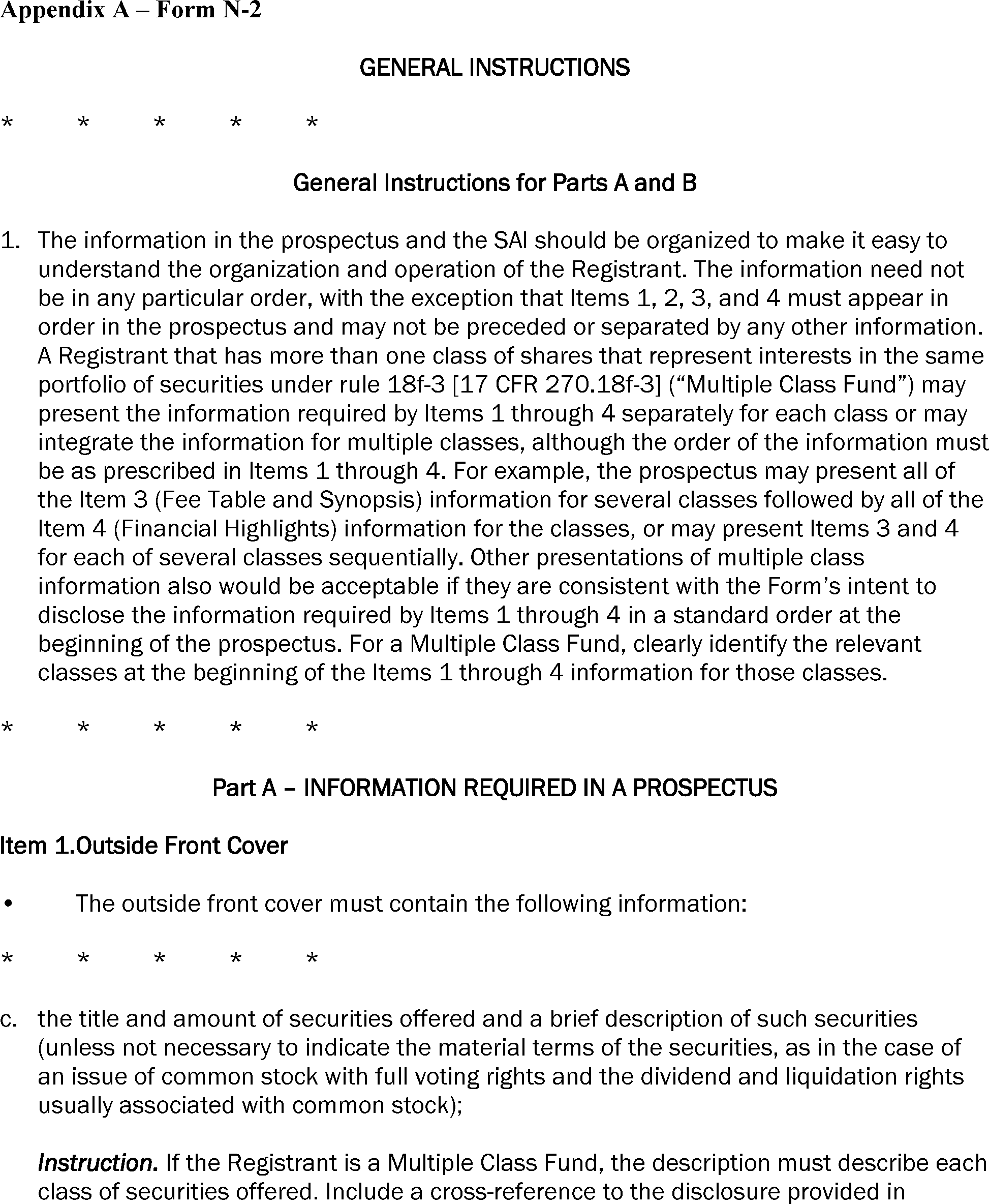
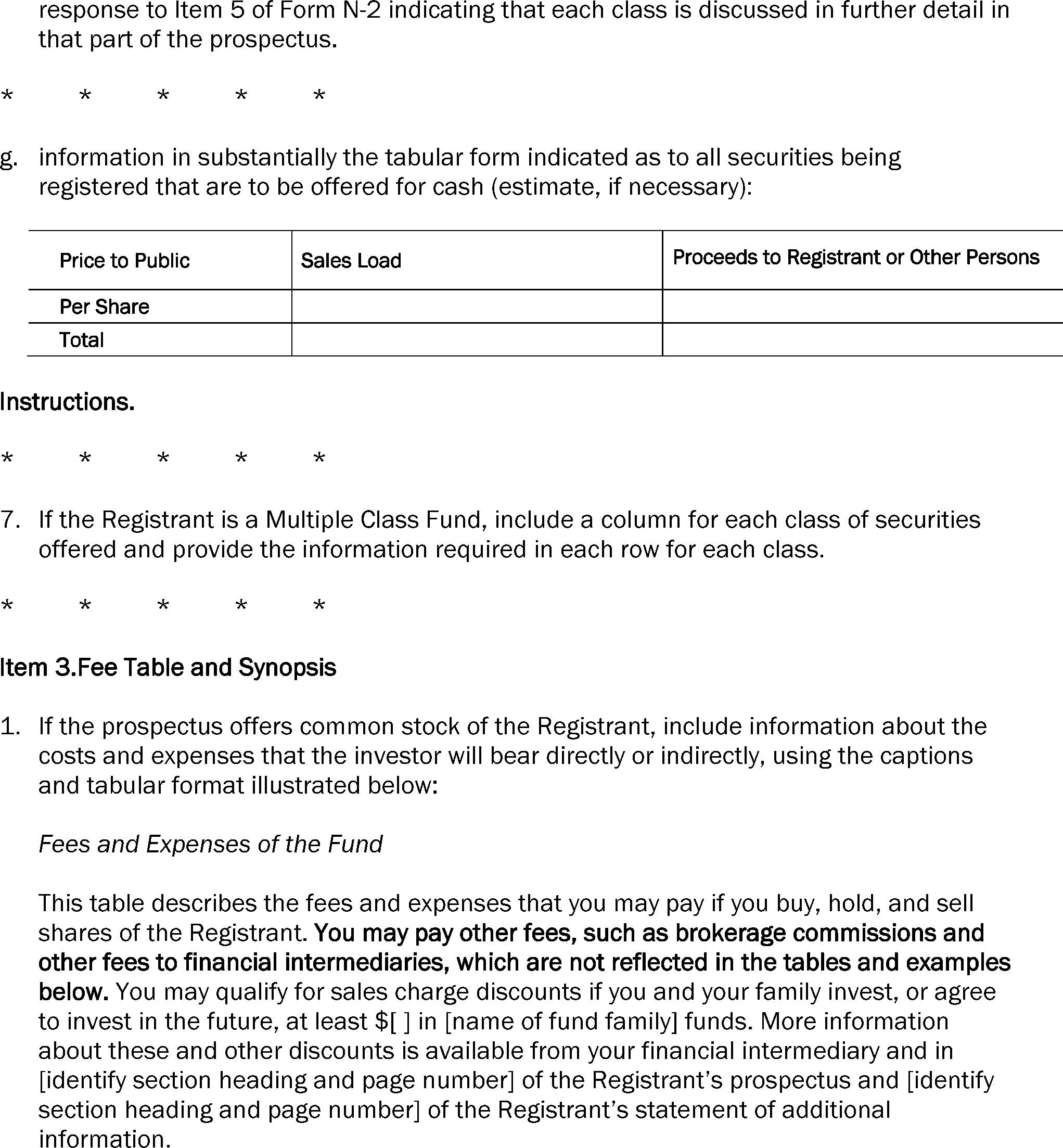
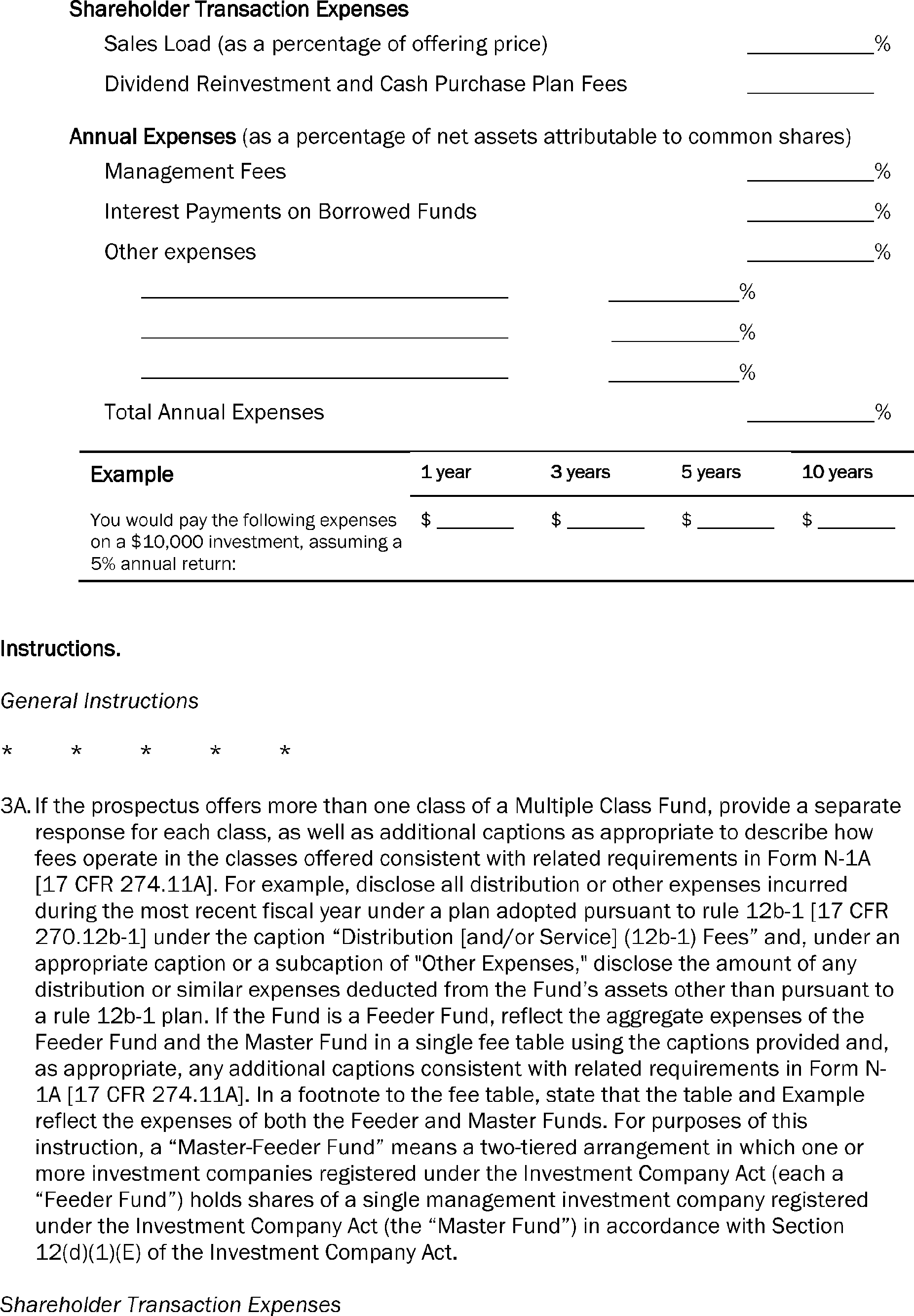
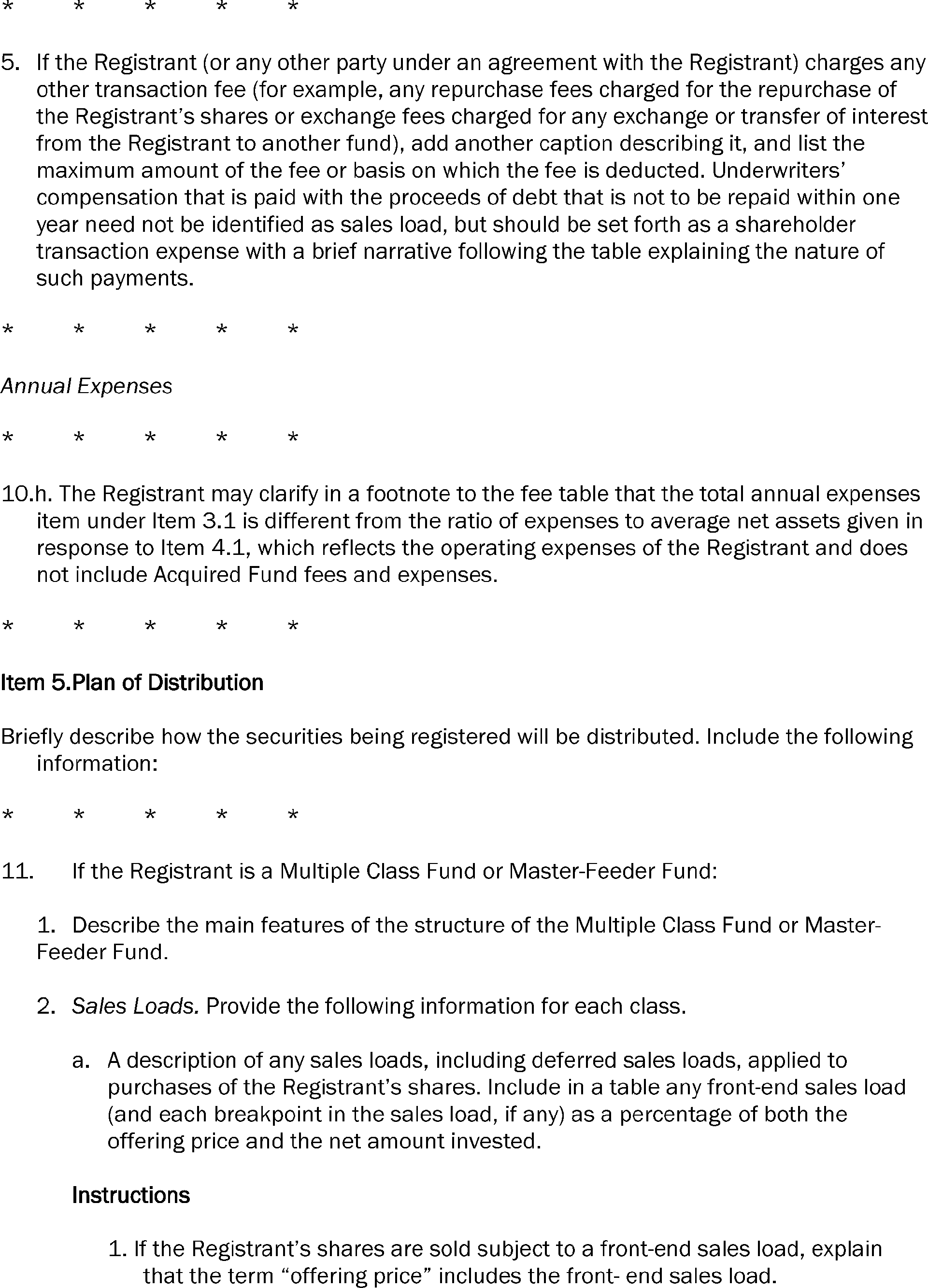
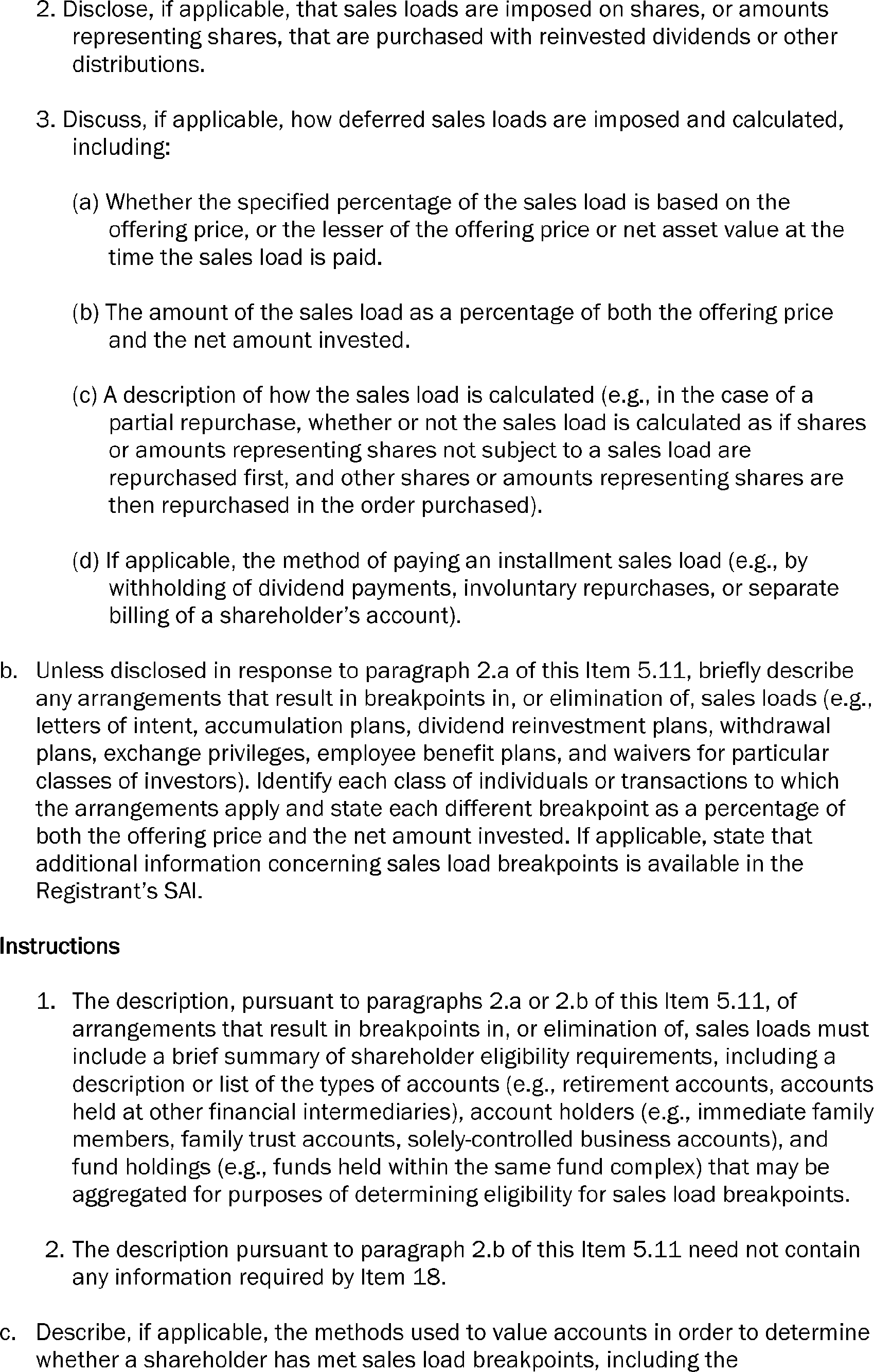
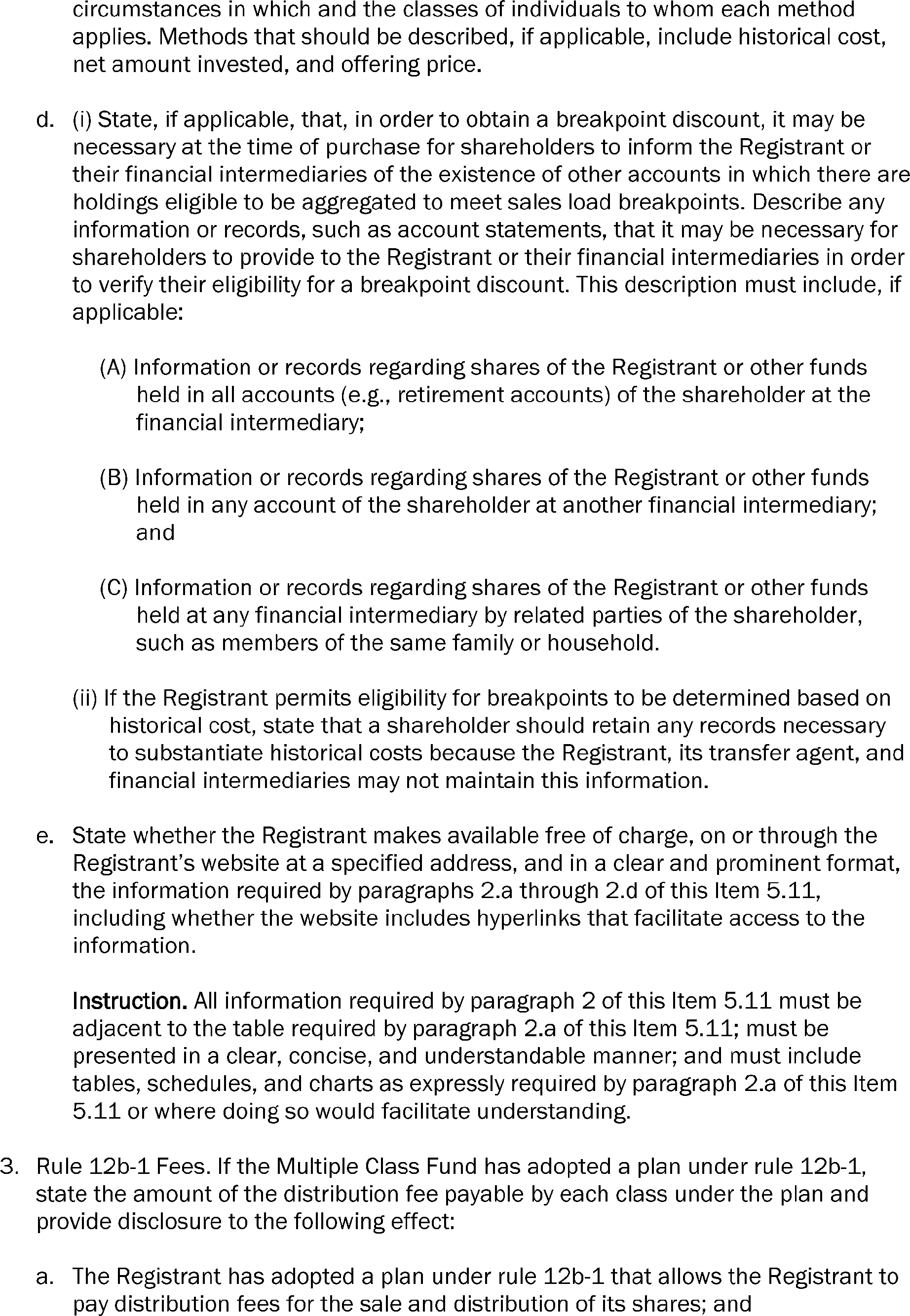
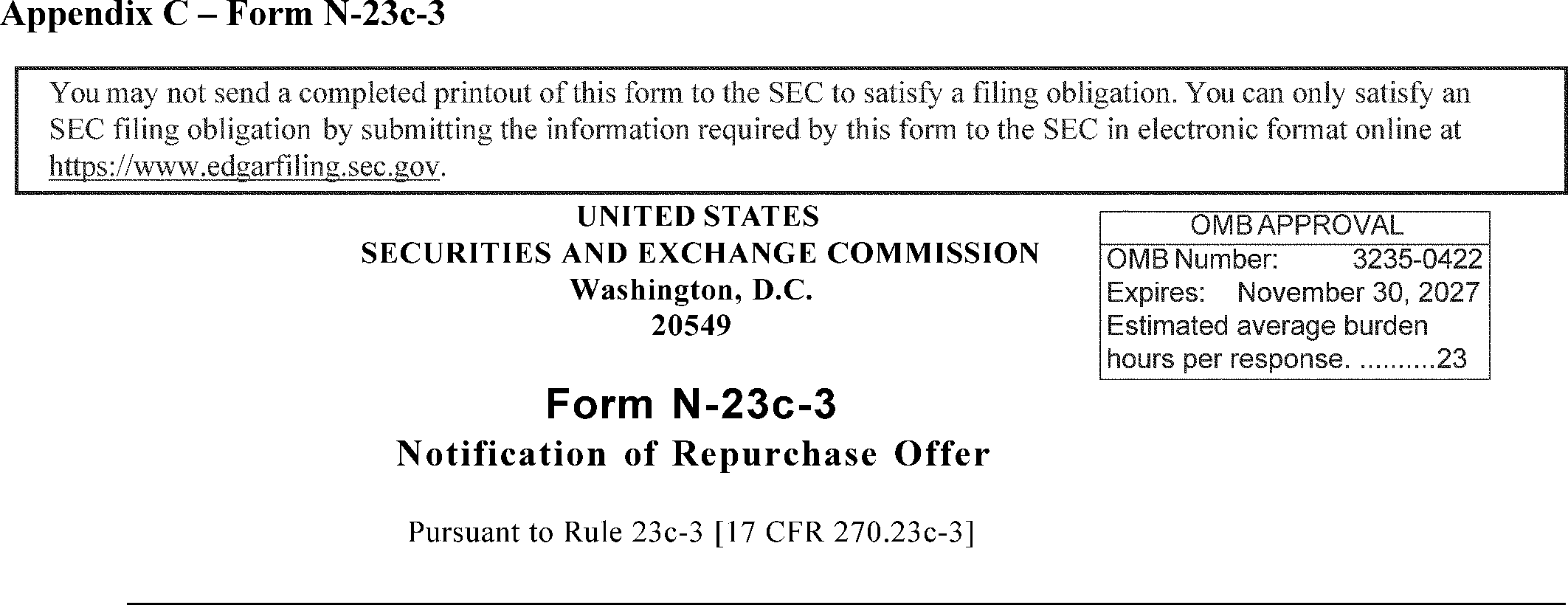
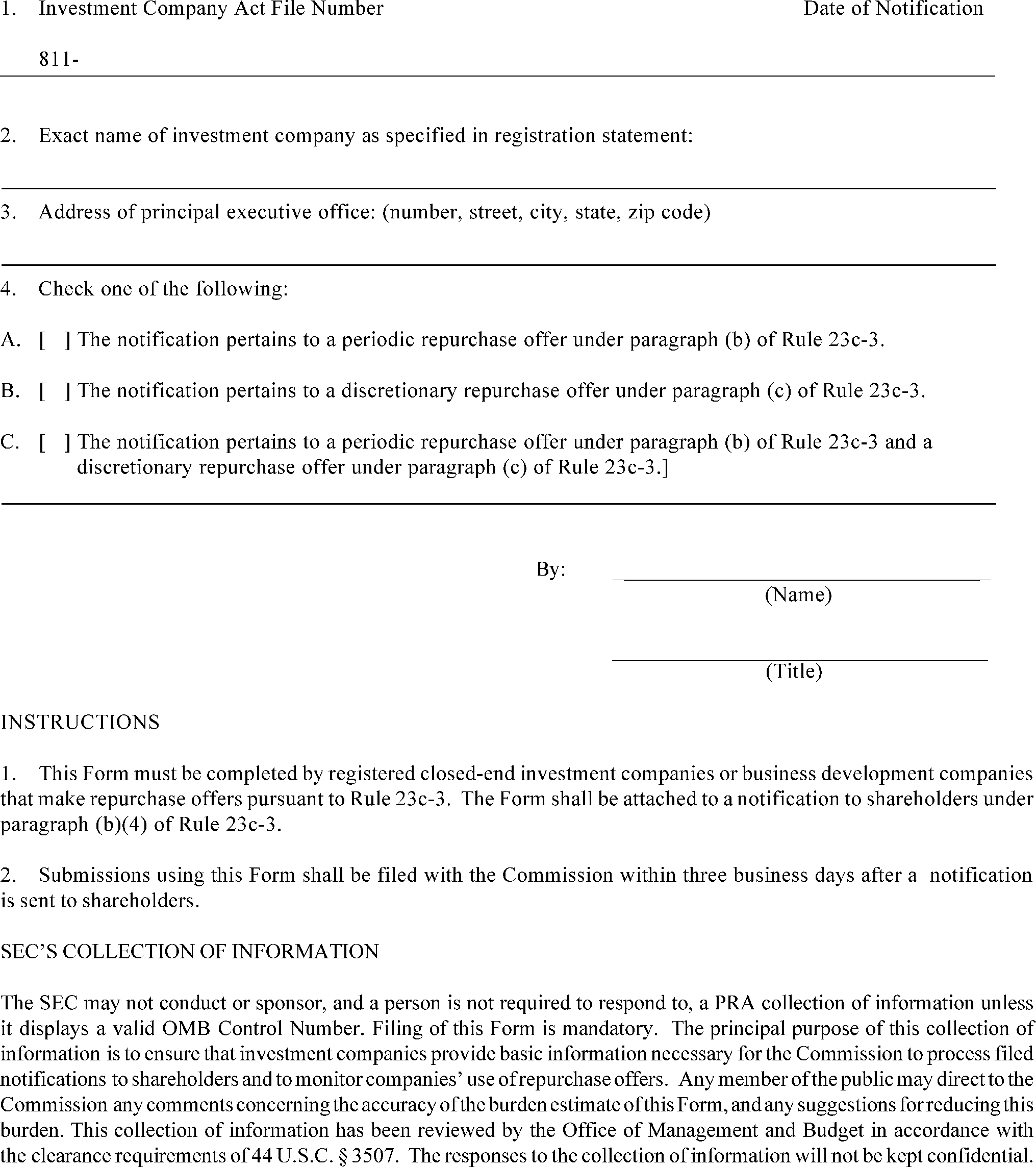
Footnotes
1. 15 U.S.C. 80a et seq.
Back to Citation2. See infra footnote 84 and accompanying text.
Back to Citation3. Repurchase Offers By Closed-End Management Investment Companies, Investment Company Act Release No. 19399 (Apr. 7, 1993) [58 FR 19330 (Apr. 14, 1993)] (“1993 Adopting Release”).
Back to Citation4. See 15 U.S.C. 80a-22; 17 CFR 270.22c-1 (describing requirements related to the pricing of redeemable securities for distribution, redemption and repurchase). See also15 U.S.C. 80a-22(e) (requiring payment of redemption proceeds within seven days) and 17 CFR 270.22e-4 (prohibiting registered open-end funds from investing more than 15% of the portfolio in “illiquid securities”).
Back to Citation5. See, e.g., Concept Release on Harmonization of Securities Offering Exemptions, Securities Act Release No. 10649 (June 18, 2019) [84 FR 30460 (June 26, 2019)] (“2019 Concept Release”) at section IV.A.1.
Back to Citation6. See, e.g., id.
Back to Citation7. See infra section I.A.3.
Back to Citation8. See, e.g., In the Matter of Lord Abbett Opportunities Fund, Investment Company Act Release No. 35663 (July 1, 2025) (Notice) and Investment Company Act Release No. 35699 (Jul. 29, 2025) (Order); In the Matter of Optimize Growth Equity Fund, Optimize Premium Yield Fund and Optimize Wealth Management Inc., Investment Company Act Release No. 35533 (Apr. 10, 2025) (Notice) and Investment Company Act Release No. 35576 (May 7, 2025) (Order); In the Matter of Nuveen Enhanced Floating Rate Income Fund, Nuveen Fund Advisors, LLC, Nuveen Securities, LLC, and Nuveen Asset Management, LLC, Investment Company Act Release No. 35081 (Notice) and Investment Company Act Release No. 35091 (Jan. 17, 2024) (Order).
Back to Citation9. Information reported to the Commission on Form N-CEN as of Dec. 2025 suggests growth from 58 interval funds with $38 billion in assets in 2020 to 139 interval funds holding $101 billion in assets in 2025.
Back to Citation10. See, e.g., In the Matter of DFA Investment Dimensions Group Inc. et al., Investment Company Act Release No. 35770 (Sep. 29, 2025) (Notice) and Investment Company Act Release No. 35786 (Nov. 17, 2025) (Order); In the Matter of SPDR Series Trust et al., Investment Company Act Release No. 35834 (Dec. 17, 2025) (Notice) and Investment Company Act Release No. 35891 (Jan. 13, 2026) (Order).
Back to Citation11. See Investment Company Act of 1940 and Investment Advisers Act of 1940, S. Rep. No. 1775, 76th Cong., 3d Sess. (1940) (stating “[t]he DISTRIBUTION and repurchase of the securities issued by investment companies have on occasion resulted in discrimination in favor of the management or other `insiders' who have been able to acquire the securities and to have the companies repurchase them on a basis more favorable than that accorded public stockholders.”).
Back to Citation13. See Division of Investment Management, SEC, Protecting Investors: A Half Century of Investment Company Regulation (May 1992) (“Protecting Investors Report”) at 424-425, available at www.sec.gov/divisions/investment/guidance/icreg50-92.pdf.
Back to Citation14. See id. at 440-441 (also noting that the Commission staff had taken the position that committing in advance to conduct periodic tender offers could expose registered fund directors to fiduciary concerns, leaving fund prospectuses in the position of representing only that the board would consider making tender offers at certain intervals without providing assurances that such offers would occur).
Back to Citation15. See Schedule TO (17 CFR 240.14d-100), Tender Offer Statement under Section 14(d)(1) or 13(e)(1) of the Securities Exchange Act of 1934.
Back to Citation16. See Protecting Investors Report at 444-445 (stating that “the experiences of closed-end companies that have conducted repurchases in accordance with the [Exchange Act] tender offer rules suggest that some provisions of those rules were intended to apply to different transactions and do not achieve their objectives when applied to closed-end companies conducting repurchases at a price based on net asset value”).
Back to Citation17. See 1993 Adopting Release at 19330-19331 (stating that the adoption of rule 23c-3 implements part of the recommendations made in the Protecting Investors Report and that the provisions for periodic repurchase offers are intended to offer investors a limited ability to resell their shares in a manner that traditionally had been available only to open-end company shareholders).
Back to Citation18. See rule 23c-3(b).
Back to Citation19. See rule 23c-3(a)(1). The Commission has also issued exemptive orders to certain interval funds permitting the fund to conduct repurchase offers on a monthly basis, subject to certain conditions. See infra footnote 57.
Back to Citation20. See rule 23c-3(a)(7).
Back to Citation21. See rule 23c-3(a)(3) (definition of repurchase offer amount) and rule 23c-3(a)(7) (definition of repurchase request deadline).
Back to Citation22. See rule 23c-3(a)(3) (requiring that the directors of the company determine the repurchase offer amount) and rule 23c-3(b)(4)(i) (detailing the requirements of shareholder notification).
Back to Citation23. See rule 23c-3(b)(3).
Back to Citation24. See rule 23c-3(b)(5) (detailing the process for oversubscribed repurchase offers).
Back to Citation25. See rule 23c-3(c).
Back to Citation26. Id. (stating that funds making discretionary repurchases under this rule must comply with the requirements of paragraph (b)(1), (3), (4), (5), (6), (7)(ii), (8), (10)(i), and (10)(ii) of this section).
Back to Citation27. See rule 23c-3(b)(4).
Back to Citation28. See rule 23c-3(a)(5).
Back to Citation29. See rule 23c-3(a)(4).
Back to Citation30. See rule 23c-3(b)(10).
Back to Citation31. See rule 23c-3(b)(10)(iii).
Back to Citation32. The Commission estimated that approximately $3.7 trillion of new capital was raised through exempt offerings in 2022, which is 270% more than the $1.0 trillion raised in registered offerings over the same period. See Review of the “Accredited Investor” Definition under the Dodd-Frank Act (Dec. 2023), available at www.sec.gov/files/review-definition-accredited-investor-2023.pdf.
Back to Citation33. The figures in this paragraph utilize information reported to the Commission on Form N-CEN as of Dec. 2025.
Back to Citation34. See A Financial System That Creates Economic Opportunities Capital Markets, U.S. Dept. of the Treasury (Oct. 2017) (“2017 Treasury Report”), available at home.treasury.gov/system/files/136/A-Financial-System-Capital-Markets-FINAL-FINAL.pdf.
Back to Citation home.treasury.gov/system/files/136/A-Financial-System-Capital-Markets-FINAL-FINAL.pdf
35. See 2019 Concept Release. The comment letters regarding the Concept Release (File No. S7-08-19) are available at www.sec.gov/comments/s7-08-19/s70819.htm. All references to comment letters in this release are to letters from this comment file.
Back to Citation36. See, e.g., Comment Letter of the Investment Company Institute (Sep. 24, 2019) (“ICI Comment Letter”), Comment Letter of the American Investment Council (Sep. 24, 2019) (“AIC Comment Letter”).
Back to Citation37. Current rule 23c-3(b)(10)(i).
Back to Citation38. See infra section II.D.1.
Back to Citation39. See Exemption for Open-End Management Investment Companies Issuing Multiple Classes of Shares; Disclosure by Multiple Class and Master-Feeder Funds; Class Voting on Distribution Plans, Investment Company Act Release No. 20915 (Feb. 23, 1995) [60 FR 11876 (Mar. 2, 1995)].
Back to Citation40. See supra footnote 12.
Back to Citation41. See supra section I.A.3.
Back to Citation42. See, e.g., Transactions of Investment Companies With Portfolio and Subadviser Affiliates, Investment Company Act Release No. 25888 (Jan. 14, 2003) [68 FR 3142 (Jan. 22, 2003)].
Back to Citation43. BDCs are subject to rule 17d-1 and to similar requirements as those included in section 17(d). See section 57 of the Investment Company Act.
Back to Citation44. Rule 23c-3(b)(1).
Back to Citation45. See, e.g., American Beacon Sound Point Enhanced Income Fund, et al., Investment Company Act Release No. 33393 (Oct. 26, 2017) (Notice) and Investment Company Act Release No. 33439 (Nov. 21, 2017) (Order); OFI Carlyle Private Credit Fund, et al., LLC, Investment Company Act Release No. 33168 (July 24, 2018) (Notice) and Investment Company Act Release No. 33204 (Aug. 20, 2018) (Order); Pioneer ILS Interval Fund, et al., Investment Company Act Release No. 33108 (May 24, 2018) (Notice) and Investment Company Act Release No. 33127 (June 19, 2018) (Order).
Back to Citation46. For the reasons discussed below, we find that this relief would be necessary or appropriate in the public interest and consistent with the protection of investors and the purposes fairly intended by the policy and provisions of the Investment Company Act. See 15 U.S.C. 80a-6(c).
Back to Citation47. See current rule 23c-3(a)(7).
Back to Citation48. Proposed rule 23c-3(a)(7).
Back to Citation49. Private funds that pursue private equity strategies typically start returning capital to investors within the first year and half to three and half years with harvesting of the portfolio starting after the investment period ends. See Basics of Cash Flow Management, Private Fund Cash Flow Series, Pitchbook, Sep. 4, 2020, pitchbook.brightspotcdn.com/24/61/0245c7339b2a0024611029f942fc/pitchbook-basics-of-cash-flow-management.pdf (“About half of all funds, for example, will make their first distribution by the 1.5-year mark; however, about 25% of funds will go nearly 2.5 years before their first distribution, and 10% will go 3.5 years.”).
Back to Citation pitchbook.brightspotcdn.com/24/61/0245c7339b2a0024611029f942fc/pitchbook-basics-of-cash-flow-management.pdf
50. See, e.g., Comment Letter of Dechert LLP (Sep, 24, 2019) (“Dechert Comment Letter”) (stating that an interval fund should be permitted to defer its first repurchase request deadline for up to two years); AIC Comment Letter (stating that certain interval funds should be provided with more flexibility such as five to seven years before starting to offer repurchases); Comment Letter of Ropes & Gray (Sep. 24, 2019) (“Ropes & Gray Comment Letter”) (stating that the rule should provide for additional flexibility for funds to commence repurchase offers after the completion of the fund's initial ramp up period of investment operations).
Back to Citation51. See Dechert Comment Letter.
Back to Citation52. See, e.g., AIC Comment Letter; Ropes & Gray Comment Letter.
Back to Citation53. See, e.g., Items 1.1.b and 8.2.c of Form N-2.
Back to Citation54. See, e.g., In the Matter of Lord Abbett Opportunities Fund, Investment Company Act Release No. 35663 (July 1, 2025) (Notice) and Investment Company Act Release No. 35699 (Jul. 29, 2025) (Order); In the Matter of Optimize Growth Equity Fund, Optimize Premium Yield Fund and Optimize Wealth Management Inc., Investment Company Act Release No. 35533 (Apr. 10, 2025) (Notice) and Investment Company Act Release No. 35576 (May 7, 2025) (Order); In the Matter of Nuveen Enhanced Floating Rate Income Fund, Nuveen Fund Advisors, LLC, Nuveen Securities, LLC, and Nuveen Asset Management, LLC, Investment Company Act Release No. 35081 (Notice) and Investment Company Act Release No. 35091 (Jan. 17, 2024) (Order).
Back to Citation55. See, e.g., In the Matter of Lord Abbett Opportunities Fund, Investment Company Act Release No. 35663 (July 1, 2025) (Notice) and Investment Company Act Release No. 35699 (Jul. 29, 2025) (Order).
Back to Citation56. See Periodic Repurchases by Closed-End Management Investment Companies; Redemptions by Open-End Management Investment Companies and Registered Separate Accounts at Periodic Intervals or With Extended Payment, Investment Company Act Release No. 18869 (Jul. 28, 1992) [57 FR 34701 (Aug. 6, 1992)].
Back to Citation57. See 2019 Concept Release, supra note 5 at section IV.D (request for comment 116).
Back to Citation58. See, e.g., ICI Comment Letter; AIC Comment Letter; Comment Letter of the Institute for Portfolio Alternatives (Sep. 24, 2019) (“IPA Comment Letter”); Comment Letter of AngelList Advisors, LLC (Sep. 25, 2019) “AngelList Comment Letter”); Comment Letter of Blackrock, Inc. (Sep. 24, 2019) (“Blackrock Comment Letter”).
Back to Citation59. See proposed rule 23c-3(a)(1).
Back to Citation60. See proposed rule 23c-3(b)(4)(i). The proposed amendments to this provision and paragraph (b)(4) generally also would apply to a non-interval fund making a discretionary offer under rule 23c-3(c). See infra section II.A.3.
Back to Citation61. See rule 23c-3(b)(4)(i).
Back to Citation62. See, e.g., In the Matter of Lord Abbett Opportunities Fund, Investment Company Act Release No. 35663 (July 1, 2025) (Notice) and Investment Company Act Release No. 35699 (Jul. 29, 2025) (Order).
Back to Citation63. See Exemptive Order for Tender Offers for Equity Securities (Apr. 16, 2026) (available at www.sec.gov/files/rules/exorders/2026/exemptive-order-tender-offers-equity-securities-041626.pdf) (permitting a tender offer for any class of equity security to remain open for a minimum offering period of ten business days subject to certain conditions).
Back to Citation64. See proposed rule 23c-3(b)(4)(i)(D). See infra section II.A.3.
Back to Citation65. See proposed rule 23c-3(a)(4).
Back to Citation66. See current rule 23c-3(a)(3).
Back to Citation67. See 1993 Adopting Release at text preceding n.39 (stating that “[a] fund relying on rule 23c-3 must pay repurchase proceeds to shareholders within seven days after the repurchase occurs; the definition of repurchase payment deadline in paragraph (a)(4) of the final rule requires that payment occur within seven days after the repurchase pricing date.”).
Back to Citation68. Current rule 23c-3(a)(3).
Back to Citation69. See rule 23c-3(c). This provision states that a regulated closed-end fund, interval or non-interval, making a discretionary repurchase must comply with the requirements of paragraphs: (b)(1) (requiring a fund to repurchase stock at NAV), (b)(3) (providing that a fund cannot suspend or postpone a repurchase except under certain conditions), (b)(4) (providing notification requirements), (b)(5) (providing requirements for handling oversubscribed repurchases), (b)(6) (allowing for the withdrawing or modification of tenders at any time until the repurchase request deadline), (b)(7)(ii) (providing instructions for computation of NAV), (b)(8) (requiring the fund board to satisfy the fund governance standards), (b)(10)(i) (requiring funds to hold 100 percent of the repurchase offer amount in liquid assets), and (b)(10)(ii) (requiring the board to take appropriate action if the fund's assets fails to comply with the requirements of (b)(10)(i)).
Back to Citation70. Even though non-interval regulated closed-end funds are not required to repurchase shares on a predetermined schedule, these funds could still offer to repurchase shares on a similar frequency as interval funds.
Back to Citation71. See, e.g., AIC Comment Letter; AngelList Comment Letter; ICI Comment Letter.
Back to Citation72. See ICI Comment Letter.
Back to Citation73. 1993 Adopting Release, supra note 3 at text following n. 26 (stating “[t]o the extent that a fund determines it is appropriate to make an offer to repurchase a higher amount, it may do so through a discretionary repurchase offer pursuant to paragraph (c). . . for up to 100 percent of a fund's common stock. . . .”).
Back to Citation74. See current rule 23c-3(a)(3).
Back to Citation75. See proposed rule 23c-3(a)(3).
Back to Citation76. See proposed rule 23c-3(a)(4).
Back to Citation77. See current rule 23c-3(c) (stating that a fund conducting a discretionary repurchase offer must comply “with the requirements of paragraphs (b)(1), (3), (4), (5), (6), (7)(ii), (8), (10)(i), and (10)(ii) of [rule 23c-3]”).
Back to Citation78. See proposed rule 23c-3(c) ((stating that a fund conducting a discretionary repurchase offer must comply “with the requirements of paragraphs (b)(1), (3), (4), (5), (6), (7)(ii), (8), and (10) of [rule 23c-3]”).
Back to Citation79. See infra section II.A.6 (discussing proposed amendments to paragraph (b)(1) of rule 23c-3 that would provide that a regulated fund cannot condition a repurchase offer upon the tender of any minimum amount of shares and to provide that, in addition to a repurchase fee, a regulated fund may deduct from the repurchase proceeds a deferred sales load, subject to conditions); supra section II.A.2 (discussing proposed amendments to paragraph (b)(4) of rule 23c-3 that would provide that a regulated fund must send a notice of a repurchase offer no less than fourteen, and no more than forty-two, days before a repurchase request deadline); infra section II.A.5 (discussing proposed amendments to clarify the oversubscribed repurchase requirement); infra section II.B (discussing proposed amendments to paragraph (b)(10) of rule 23c-3 that would provide a principles-based approach to the regulated fund's liquidity management).
Back to Citation80. See proposed rule 23c-3(a)(5).
Back to Citation81. See rule 23c-3(b)(4)(i)(D).
Back to Citation82. See id.
Back to Citation83. In response to the 2019 Concept Release, commenters supported making an interval fund's fundamental policy simpler. See ICI Comment Letter (asserting that the only items that should be included as a part of the fund's fundamental policy should be the fact that the fund will make repurchase offers, the minimum amount of repurchase amounts, and the interval periods).
Back to Citation84. See sections 8(b)(3) and 13(a) of the Investment Company Act.
Back to Citation85. See rule 23c-3(b)(4)(i)(C).
Back to Citation86. See rule 23c-3(b)(5).
Back to Citation87. See rule 23c-3(b)(5)(i) (allowing an interval fund to first accept all shares tendered by small holders owning fewer than 100 shares in the aggregate before applying any proration to other tendering shareholders) and rule 23c-3(b)(5)(ii) (allowing an interval fund to permit shareholders who tender their entire position to elect, in cases where a repurchase offer is oversubscribed and pro rata allocation would otherwise apply, that the fund either repurchase all of their tendered shares or none of them).
Back to Citation88. See proposed rule 23c-3(b)(5). The proposed amendments to this provision also would apply to a non-interval fund making a discretionary offer under rule 23c-3(c). See supra section II.A.3.
Back to Citation89. See rule 23c-3(b)(5).
Back to Citation90. The proposed amendments to this provision generally also would apply to a non-interval fund making a discretionary offer under rule 23c-3(c). See supra section II.A.3.
Back to Citation91. See, e.g., ARK Venture Fund, et al., Investment Company Act Release No. 35744 (Sep. 9, 2025) (Notice) and Investment Company Act Release No. 35787 (Nov. 17, 2025) (Order). Applicants may refer to early withdrawal charges, which are charges comparable to contingent deferred sales loads, rather than deferred sales charges directly. Early withdrawal charges are a form of a deferred sales load and thus could be charged under the proposed amendments.
Back to Citation92. Rule 23c-3(b)(1). The proposed amendments to this provision also would apply to a non-interval fund making a discretionary offer under rule 23c-3(c). See supra section II.A.3.
Back to Citation93. Rule 6c-10(a)(2) includes an outdated reference to NASD rule 2830 which was replaced by FINRA rule 2341.
Back to Citation94. Rule 6c-10(a)(3) permits scheduled variations or eliminations of deferred sales loads to particular classes of shareholders or transactions, subject to the requirements of rule 22d-1. It also permits new variations that would waive or reduce the amount of a deferred sales load not yet paid.
Back to Citation95. Rule 11a-3 governs, among other things, the imposition of redemption fees in the context of an offer to exchange securities. However, shares of regulated closed-end funds, including interval funds, are not redeemable and thus these funds do not charge redemption fees, though they may charge repurchase fees. The proposal would require that interval funds treat repurchases and repurchase fees as redemptions and redemption fees in complying with rule 11a-3.
Back to Citation96. See proposed rule 22c-3(b)(1)(ii). As rules 6c-10, 11a-3, and 22d-1 provide exemptions from provisions that interval funds are not generally subject to, we are not proposing to amend those rules to include interval funds. Rather, we are proposing to establish these requirements as a condition of relying on rule 23c-3.
Back to Citation97. See 1993 Adopting Release, supra note 3 paragraph accompanying n.68.
Back to Citation98. Rule 23c-3(b)(10)(i).
Back to Citation99. Rule 23c-3(b)(10)(iii).
Back to Citation100. Rule 23c-3(b)(10(ii).
Back to Citation101. See Proposed Rule 23c-3(b)(10). The proposed amendments to this provision also would apply to a non-interval fund making a discretionary offer under rule 23c-3(c). See supra section II.A.3.
Back to Citation102. See Dechert Comment Letter; Comment Letter from the American Bar Association (“ABA Comment Letter”).
Back to Citation103. See ABA Comment Letter (stating that “as a practical matter, many closed-end funds that seek to invest all or substantially all of their assets in illiquid securities cannot rely on Rule 23c-3 unless a portion of their assets remains invested in liquid securities, which affects these funds' ability to meet their investment objectives.”).
Back to Citation104. See ABA Comment Letter (noting that tender offer funds are not subject to the rule's portfolio liquidity requirements, making the tender offer fund structure the preferred regulated closed-end fund vehicle for strategies investing in less liquid assets, such as private equity, notwithstanding that many fund sponsors indicate they would otherwise prefer the interval fund framework for certain other investor protection and regulatory benefits).
Back to Citation105. See proposed rule 23c-3(b)(10).
Back to Citation106. See rule 38a-1.
Back to Citation107. For example, if it is not relying on rule 23c-3, a fund's repurchase offers would be issuer tender offers subject to the tender offer rules under the Exchange Act, such as 17 CFR 240.13e-4 (“Exchange Act rule 13e-4”) and 240.14e-1. See 1993 Adopting Release, supra note 3, at section I.
Back to Citation108. See rule 23c-3(b)(10)(ii).
Back to Citation109. See supra section I.A and paragraph accompanying footnote 15.
Back to Citation110. Rule 23c-3(b)(2)(iii).
Back to Citation111. Rule 23c-3(b)(4)(ii)
Back to Citation112. Rule 8b-12 dictates the requirements for paper, printing, and language for investment company registration statements and reports.
Back to Citation114. Electronic Submission of Applications for Orders under the Advisers Act and the Investment Company Act, Confidential Treatment Requests for Filings on Form 13F, and Form ADV-NR; Amendments to Form 13F, Investment Company Act Release No. 34635 (Jun. 23, 2022) [87 FR 38943 (Jun. 30, 2022)], www.sec.gov/files/rules/final/2022/34-95148.pdf.
Back to Citation115. See proposed rule 23c-3(b)(4)(ii).
Back to Citation116. Electronic Signatures in Regulation S-T Rule 302, Investment Company Act Release No. 34096 (Nov. 17, 2020) [85 FR 78224 (Dec. 4, 2020)].
Back to Citation117. See Exemption for Open-End Management Investment Companies Issuing Multiple Classes of Shares; Disclosure by Multiple Class and Master-Feeder Funds, Investment Company Act Release No. 19955 (Dec. 15, 1993) [58 FR 68074 (Dec. 23, 1993)]. Consistent with the current rule, a regulated closed-end fund's board would be required to meet the fund governance standards of 17 CFR 270. 0-1.
Back to Citation118. Fundwide expenses are defined as those expenses of the company not allocated to a particular class under rule 18f-3(a)(1). See rule 18f-3(c)(2)(ii).
Back to Citation119. See rule 18f-3(c)(2)(iii)-(iv).
Back to Citation120. See rule 18f-3(a)(1)(i)-(iii).
Back to Citation121. See rule 18f-3(a)(2)-(3).
Back to Citation122. See rule 18f-3(a)(4).
Back to Citation123. See proposed rule 18f-3(g)(1).
Back to Citation124. See Exemption for Open-End Management Investment Companies Issuing Multiple Classes of Shares; Disclosure by Multiple Class and Master-Feeder Funds; Class Voting on Distribution Plans, Investment Company Act Release No. 20915 (Feb. 23, 1995) [60 FR 11876 (Mar. 2, 1995)] (“Rule 18f-3 Adopting Release”).
Back to Citation125. See proposed rule 18f-3(g)(2).
Back to Citation126. Specifically, the Investment Company Act permits the sale by a fund below NAV (1) in connection with an offering to the holders of one or more classes of its capital stock; (2) with the consent of a majority of its common stockholders; (3) upon conversion of a convertible security in accordance with its terms; (4) upon the exercise of certain warrants; or (5) under such other circumstances as the Commission may permit by rules and regulations or orders for the protection of investors. See 15 U.S.C. 80a-23(b).
Back to Citation127. See proposed rule 18f-3(g)(3).
Back to Citation128. See id.
Back to Citation129. Bearing of Distribution Expenses by Mutual Funds, Investment Company Act Release No. 11414 (Oct. 28, 1980); [45 FR 73898 (Nov. 7, 1980)] (“Rule 12b-1 Adopting Release”).
Back to Citation130. Rule 12b-1(b) and (f).
Back to Citation131. Regulated closed-end funds are not otherwise subject to section 12(b) of the Investment Company Act.
Back to Citation132. See proposed rule 18f-3(g)(4).
Back to Citation133. See proposed rule 18f-3(g)(5).
Back to Citation134. See id.
Back to Citation135. See also rule 23c-3(b)(5) and Exchange Act rule 13e-4(f)(3).
Back to Citation136. See proposed rule 18f-3(g)(6).
Back to Citation137. See id.
Back to Citation138. Specifically, rule 11a-3 governs sales loads and other charges that may be imposed on an exchange between funds within the same fund group, and is intended to help ensure that shareholders receive credit for all sales charges incurred on a particular purchase of fund shares and are protected from the sales practice abuse of switching, i.e., the practice of inducing shareholders of one fund to exchange their shares for those of a different fund solely for the purpose of exacting additional sales charges. See Offers of Exchange Involving Registered Open-End Investment Companies, Investment Company Act Release No. 17097 (Aug. 3, 1989) [54 FR 35182 (Aug. 24, 1989)] (“Rule 11a-3 Adopting Release”).
Back to Citation139. Consistent with the approach to interval funds charging deferred sales loads, the proposal would require that regulated closed-end funds treat repurchases and repurchase fees in exchange offers as if they were redemptions and redemption fees under rule 11a-3(b)(2)(i). See supra footnote 95.
Back to Citation140. See supra section II.A.6.
Back to Citation141. See In the Matter of ARK Venture Fund and ARK Investment Management LLC, Investment Company Act Release No. 36308 (Aug. 24, 2026) (Notice) and Investment Company Act Release No. 36333 (Sep. 21, 2026) (Order).
Back to Citation142. See proposed rule 17d-3.
Back to Citation143. Bearing of Distribution Expenses by Mutual Funds, Investment Company Act Release No. 10862 (Sep. 7, 1979) [44 FR 54014 (Sep. 17, 1979)]; see also Rule 12b-1 Adopting Release. Rule 17d-3 permits an affiliated person of, or a principal underwriter for, an open-end fund and an affiliated person of such a person or principal underwriter to enter into distribution agreements and make payments thereunder notwithstanding section 17(d) and rule 17d-1, subject to the conditions in the rule. This rule prevents such distribution arrangements from otherwise constituting a violative joint transaction.
Back to Citation144. See Bearing of Distribution Expenses by Mutual Funds, Investment Company Act Release No. 10862 (Sep. 7, 1979) [44 FR 54014 (Sep. 17, 1979)].
Back to Citation145. See also 12b-1 Adopting Release.
Back to Citation146. The only multiple share class-specific disclosure currently in Form N-2 is an instruction that the registrant can select which class to include in the line graph comparing initial and subsequent account values at the end of each of the most recently completed fiscal years of the fund required in the registrant's annual report. See Item 24.4.g.(2)(A)2. of Form N-2. We are not proposing to amend this item.
Back to Citation147. See General Instruction C.3(c)(ii) of Form N-1A.
Back to Citation148. See proposed Instruction 7 to Item 1.g of Form N-2.
Back to Citation149. Specifically, the legend would state:
Fees and Expenses of the Fund.
This table describes the fees and expenses that you may pay if you buy, hold, and sell shares of the Registrant. You may pay other fees, such as brokerage commissions and other fees to financial intermediaries, which are not reflected in the tables and examples below. You may qualify for sales charge discounts if you and your family invest, or agree to invest in the future, at least $ [ ] in [name of fund family] funds. More information about these and other discounts is available from your financial intermediary and in [identify section heading and page number] of the Registrant's prospectus and [identify section heading and page number] of the Registrant's statement of additional information.
Back to Citation150. See Instruction 3(b) of Item 3 of Form N-1A.
Back to Citation151. See, e.g., Instruction 3(e) of Item 3 of Form N-1A.
Back to Citation152. See proposed Instruction 3A of Item 3 of Form N-2; cf. Instruction 1(d)(i) of Item 3 of Form N-1A. Proposed Instruction 3A includes the definitions of the terms “Master-Feeder Fund,” “Feeder Fund,” and “Master Fund” from current Instruction 10.h.
Back to Citation153. See Instruction 5 to Item 3 of Form N-2.
Back to Citation154. See proposed Instruction 5 to Item 3 of Form N-2; see also supra section II.D.2.
Back to Citation155. See Registration Form Used by Open-End Management Investment Companies, Investment Company Act Release No. 23064 (Mar. 13, 1998) [63 FR 13916 (Mar. 23, 1998)].
Back to Citation156. See proposed Item 5.11 of Form N-2.
Back to Citation157. See Rule 18f-3 Adopting Release (stating that master-feeder funds are functionally similar to multiple share class funds).
Back to Citation158. See id.
Back to Citation159. Consistent with the discussion above, “deferred sales loads” for purposes of Form N-2 would include any early withdrawal charge paid to the distributor by shareholders. See supra footnote 96.
Back to Citation160. See proposed Item 5.11.2.a of Form N-2.
Back to Citation161. See proposed Instruction 1 to Item 5.11.2.a of Form N-2.
Back to Citation162. See proposed Instruction 2 to Item 5.11.2.a of Form N-2.
Back to Citation163. See proposed Instruction 3 to Item 5.11.2.a of Form N-2.
Back to Citation164. See proposed Item 5.11.2.b of Form N-2.
Back to Citation165. See proposed Instruction 1 to Item 5.11.2.b of Form N-2.
Back to Citation166. See proposed Item 5.11.2.b of Form N-2.
Back to Citation167. See proposed Item 5.11.2.c of Form N-2.
Back to Citation168. See proposed Item 5.11.2.d.(i) of Form N-2.
Back to Citation169. See proposed Item 5.11.2.d.(ii) of Form N-2.
Back to Citation170. See proposed Item 5.11.2.e of Form N-2.
Back to Citation171. See proposed Item 5.11.3 of Form N-2. If the registrant pays service fees under its rule 12b-1 plan, it would be required to modify this disclosure to reflect the payment of those fees. “Service fees” would have the same meaning as that term is defined in FINRA rule 2341(b)(9). See proposed Instruction to Item 5.11.3 of Form N-2.
Back to Citation172. See proposed Item 5.11.4 of Form N-2.
Back to Citation173. See proposed Item 5.11.5 of Form N-2.
Back to Citation174. See proposed Item 20.1.c.4 of Form N-2.
Back to Citation175. Item 24.4.g.(2)(B) of Form N-2.
Back to Citation176. See proposed Item 24.4.g.(2)(B) of Form N-2.
Back to Citation177. See proposed Item 24.6.g of Form N-2.
Back to Citation178. See Item 27A(c) of Form N-1A.
Back to Citation179. Typically listed regulated closed-end funds only sell shares when they first launch, in contrast to unlisted regulated closed-end funds that engage in continuous distributions. Thus listed regulated closed-end funds do not need to keep a registration statement continuously effective.
Back to Citation180. See Item 27A(c) of Form N-1A.
Back to Citation181. See proposed Item 24.6.g of Form N-2.
Back to Citation182. See proposed Instructions 1-2 to Item 24.6.g of Form N-2.
Back to Citation183. See proposed Item C.2 of Form N-CEN. We are not proposing to require registered closed-end funds to obtain a class identification number and therefore are not proposing to require that they report that element of Item C.2. A class identification number appears particularly helpful in identifying relevant disclosure for open-end funds, which can operate as series trusts (where a single trust offers multiple series, each its own fund) and where each series, in turn, may issue multiple classes of shares. Regulated closed-end funds are not permitted to operate as series trusts and class identification numbers do not seem necessary for investors efficiently to find relevant disclosure.
Back to Citation184. See section 38(a) of the Investment Company Act; see also Exchange-Traded Funds, Investment Company Act Release No. 33646 (Sep. 25, 2019) [84 FR 57162 (Oct. 24, 2019)].
Back to Citation185. A number of these exemptive orders contain a condition stating that the relief would expire on the effective date of any Commission rule that provides the same relief as the order. See, e.g., In the Matter of Ares Core Infrastructure Fund, et al., Investment Company Act Release No. 35494 (Mar. 12, 2025) (Notice) and Investment Company Act Release No. 35523 (Apr. 8, 2025) (Order) (conditioning BDC multiple share class relief on it expiring on the effective date of any Commission rule under the Investment Company Act that provides relief permitting BDCs to offer multiple classes of the type described in the application).
Back to Citation186. See supra sections I.B and II.A.6.
Back to Citation187. See, e.g., In the Matter of Lord Abbett Opportunities Fund, Investment Company Act Release No. 35663 (July 1, 2025) (Notice) and Investment Company Act Release No. 35699 (Jul. 29, 2025) (Order) (permitted fund to offer to repurchase two percent of common stock outstanding under a monthly periodic interval).
Back to Citation188. See, e.g., In the Matter of Optimize Growth Equity Fund, Optimize Premium Yield Fund and Optimize Wealth Management Inc., Investment Company Act Release No. 35533 (Apr. 10, 2025) (Notice) and Investment Company Act Release No. 35576 (May 7, 2025) (Order); In the Matter of Nuveen Enhanced Floating Rate Income Fund, Nuveen Fund Advisors, LLC, Nuveen Securities, LLC, and Nuveen Asset Management, LLC, Investment Company Act Release No. 35081 (Notice) and Investment Company Act Release No. 35091 (Jan. 17, 2024) (Order) (permitted funds to send notification to shareholders no less than seven days and no more than fourteen days before the repurchase request deadline).
Back to Citation189. See supra sections I.B and II.D.
Back to Citation190. See supra section II.D.1.
Back to Citation191. See In the Matter of ARK Venture Fund and ARK Investment Management LLC, Investment Company Act Release No. 36308 (Aug. 24, 2026) (Notice) and Investment Company Act Release No. 36333 (Sep. 21, 2026) (Order).
Back to Citation192. See 15 U.S.C. 78k(d)(1).
Back to Citation193. For example, the Commission has granted conditional exemptions from Exchange Act Section 11(d)(1) to broker-dealers transacting in securities issued by registered open-end investment companies or unit investment trusts, exchange traded funds (“ETFs”), and multi-share class ETFs. See Exchange Act Rule 11d1-2; Order Granting a Conditional Exemption from Exchange Act Section 11(d)(1) and Exchange Act Rules 10b-10, 15c1-5, 15c1-6, and 14e-5 for Certain Exchange Traded Funds, Exchange Act Release No. 87110 (Sep. 25, 2019); Order Under Section 36 of the Securities Exchange Act of 1934 (the “Exchange Act”) Granting Conditional Exemptive Relief from Rules 10b-10, 14e-5, and Section 11(d)(1) of the Exchange Act for Multi-Class ETFs, Exchange Act Release No. 105028 (Mar. 17, 2026).
Back to Citation194. See, e.g., Good Faith Determinations of Fair Value, Investment Company Act Release No. 34128 (Dec. 3, 2020) [86 FR 748 (Jan. 6, 2021)] at section II.G.
Back to Citation195. The Commission has proposed using a $10 billion threshold to identify investment companies that are “small entities.” See Amendments to the “Small Business” and “Small Organization” Definitions for Investment Companies and Investment Advisers for Purposes of the Regulatory Flexibility Act, Investment Company Act Release No. 35864 (Jan. 7, 2026) [91 FR 1107 (Jan. 12, 2026)].
Back to Citation197. In a separate release, the Commission is proposing amendments to the qualified client definition in rule 205-3 under the Investment Advisers Act of 1940. Investment Adviser Performance-Based Compensation Modernization, Investment Advisers Act Release No. 7022 (Sep. 30, 2026) (“Performance-Based Compensation Modernization Proposal”). Among other changes, the proposed amendments would expand the ability of investment advisers to charge performance-based compensation to registered investment companies and BDCs, subject to certain conditions. We anticipate that the costs of any interacting effects between these proposals would be minimal, if adopted. See also infra footnote 355.
Back to Citation198. See supra sections II.A.1-3.
Back to Citation199. See supra section II.A.4.
Back to Citation200. See supra section II.A.5.
Back to Citation201. See supra section II.A.3.
Back to Citation202. See supra section II.A.6.
Back to Citation203. See supra section II.B.
Back to Citation204. See supra sections II.D.1 and II.D.2.
Back to Citation205. See supra section II.D.3.
Back to Citation206. See supra section II.C. Specifically, the Commission is proposing to remove the language in Form N-23c-3 that states that the form shall be filed in triplicate with the Commission, along with the instruction stating that one of the three copies shall be manually signed while the other copies may have facsimile or typed signatures.
Back to Citation207. See supra section I.A.1.
Back to Citation208. Id.
Back to Citation209. Id.
Back to Citation210. See Ken Burdon et al., A Close Look at the Evolving Interval Fund Space, Law360 (Dec. 2, 2025), available at www.law360.com/articles/2415008/a-close-look-at-the-evolving-interval-fund-space.
Back to Citation www.law360.com/articles/2415008/a-close-look-at-the-evolving-interval-fund-space
211. Credit-oriented strategies constitute the largest segment of the interval fund market, representing approximately 55% of aggregate interval fund net assets. See supra section I.A.3.
Back to Citation212. Interval funds make periodic repurchase offers which may range from 5% to 25% of shares outstanding. See rule 23c-3(a)(3). Repurchase requests that exceed the repurchase offer (plus up to an additional 2% that the fund is permitted to offer) are repurchased on a pro-rated basis. See rule 23c-3(b)(5).
Back to Citation213. See infra section III.C.2.
Back to Citation214. See supra section I.A.3.
Back to Citation215. The proposed amendments permitting monthly periodic intervals and deferred sales loads in interval funds share this second economic rationale, as do the proposed amendments to rules 18f-3 and 17d-3 for regulated closed-end funds whose shares are offered on a continuous basis and are not exchange-listed.
Back to Citation216. See supra section I.B.
Back to Citation217. Id.
Back to Citation218. See infra section III.C.4.a.
Back to Citation219. The proposed amendments would also require additional disclosure regarding master-feeder structures. See infra section III.C.4.c.
Back to Citation220. See supra section II.D.3.
Back to Citation221. See infra section III.F.
Back to Citation222. See, e.g., Nasdaq v. SEC, 34 F.4th 1105, 1111-14 (D.C. Cir. 2022). This approach also follows SEC staff guidance on economic analysis for rulemaking. See SEC Staff, Current Guidance on Economic Analysis in SEC Rulemaking (Mar. 16, 2012), available at www.sec.gov/divisions/riskfin/rsfi_guidance_econ_analy_secrulemaking.pdf (“The economic consequences of proposed rules (potential costs and benefits including effects on efficiency, competition, and capital formation) should be measured against a baseline, which is the best assessment of how the world would look in the absence of the proposed action.”); id. at 7 (“The baseline includes both the economic attributes of the relevant market and the existing regulatory structure.”).
Back to Citation223. Rule 23c-3(a)(1).
Back to Citation224. Rule 23c-3(b)(2)(iii) includes a grandparent clause permitting funds that were already making periodic repurchase offers for their shares before May 14, 1993, to treat their existing repurchase practices as a fundamental policy for purposes of the rule. We do not believe that any interval fund continues to rely on this provision. See supra section II.C.1.
Back to Citation225. See infra section III.B.3.
Back to Citation226. The terms that must be disclosed in the repurchase offer notification include: the existence of the repurchase offer; any repurchase fees; the repurchase offer amount; the dates of the repurchase request deadline, repurchase pricing date, and repurchase payment deadline, and the possibility of use of an earlier repurchase pricing date; the risk of fluctuation in NAV between the repurchase request deadline and the repurchase pricing date; the procedures for requesting repurchase and the right to withdraw or modify repurchase requests until the repurchase request deadline; the procedures for pro rata repurchases; the circumstances in which a fund might suspend or postpone a repurchase offer; NAV within the preceding seven days and information about means for shareholders to learn NAV thereafter; and market price information, if the fund's shares are traded in a secondary market. See rule 23c-3(b)(4)(i)(A)-(I).
Back to Citation227. See rule 23c-3(a)(5).
Back to Citation228. See rule 23c-3(b)(2)(i)(D). In practice, interval funds generally state the maximum allowable window of fourteen days in their fundamental policies.
Back to Citation229. See rule 23c-3(a)(4).
Back to Citation230. Rule 23c-3(a)(7).
Back to Citation231. See rule 23c-3(a)(3). As discussed above, the 1993 Adopting Release characterizes this range as applying to periodic repurchase offers and not to discretionary repurchase offers. See supra footnote 73 and accompanying text.
Back to Citation232. See rule 23c-3(a)(3).
Back to Citation233. See rule 23c-3(b)(5). While as written, this rule does not require that funds opting to repurchase more than 0% but no greater than 2% of its outstanding shares in excess of the purchase offer amount repurchase these shares pro rata, industry practice has been to execute any repurchases that exceed the offer amount pro rata.
Back to Citation234. See rule 23c-3(b)(5)(i)-(ii). The Commission understands that the exception in paragraph (b)(5)(ii) of the rule is not used by interval funds.
Back to Citation235. See rule 23c-3(b)(3)(i).
Back to Citation236. See rule 23c-3(c).
Back to Citation237. A regulated closed-end fund that conducts these discretionary repurchase offers must comply with several of the requirements that apply to periodic repurchase offers, including the requirement in paragraph (b)(4) that the fund notify shareholders ahead of each repurchase request deadline. See supra footnote 69.
Back to Citation238. Electronic Submission of Applications for Orders Under the Advisers Act and the Investment Company Act, Confidential Treatment Requests for Filings on Form 13F, and Form ADV-NR; Amendments to Form 13F, Investment Company Act Release No. 34635 (Jun. 23, 2022) [87 FR 38943 (Jun. 30, 2022)].
Back to Citation239. Id.
Back to Citation240. Electronic Signatures in Regulation S-T Rule 302, Investment Company Act Release No. 34096 (Nov. 17, 2020) [85 FR 78224 (Dec. 4, 2020)].
Back to Citation241. Id.
Back to Citation242. See rule 23c-3(b)(10)(i).
Back to Citation243. See rule 23c-3(b)(10)(ii)-(iii).
Back to Citation244. In 2020, the Commission adopted amendments to rule 0-5 putting in place a system to review routine exemptive applications more quickly. Under the amended rule, if applications for exemptive relief are substantially identical to at least two other applications that have been approved in the prior three years, a notice of application will be issued within 45 days from the date of filing. See Amendments to Procedures with Respect to Applications Under the Investment Company Act of 1940, Investment Company Act Release No. 33921 (July 6, 2020) [85 FR 57089 (Sep. 15, 2020)].
Back to Citation245. This exemptive relief has been granted in tandem with relief for closed-end funds to issue multiple classes of shares. See supra footnote 91 and accompanying text. For the purposes of this economic analysis, we assume that the Commission would continue to grant these exemptive orders with substantially identical terms and conditions as it has in the past if the proposed amendments were not adopted.
Back to Citation246. Rule 6c-10 currently contains an outdated reference to NASD rule 2830 rather than to its successor rule, FINRA rule 2341. See rule 6c-10(a)(2).
Back to Citation247. See supra section II.A.6.
Back to Citation248. See 15 U.S.C. 80a-18(f) and 15 U.S.C. 80a-18(a), prohibiting senior security issuance for open-end and closed-end registered investment companies, respectively. See also supra section II.D.
Back to Citation250. These provisions address the amounts and purposes of the distribution charges, along with procedures for the board's ongoing review of the plan's continued appropriateness. See supra section II.D.1
Back to Citation251. Additionally, as regulated closed-end funds are not subject to rule 12b-1, they are not generally restricted from financing distributions from fund assets absent an exemptive order requiring adherence to 12b-1 as a condition. See supra footnote 131 and accompanying text.
Back to Citation253. See supra section II.D. Regulated closed-end funds frequently request exemptive relief from the affiliated distributor prohibition and the multi-class prohibitions simultaneously.
Back to Citation254. Calculations for 2025 are derived from Form N-CEN filings to the Commission. See Form N-CEN Item C.3.
Back to Citation255. For interval fund statistics for 2016 see Interval Fund Market Keeps Setting New Records, Interval Fund Tracker (Feb. 14, 2023), available at intervalfundtracker.com/2023/02/14/interval-fund-market-keeps-setting-new-records/.
Back to Citation intervalfundtracker.com/2023/02/14/interval-fund-market-keeps-setting-new-records/
256. This calculation is based on N-CEN filings, Item B.15. See infra section III.B.3 Table 8 for growth in exemptive relief orders over time by closed-end fund type.
Back to Citation257. Proposed rule 23c-3(c).
Back to Citation258. These percent changes are calculated relative to 2016 net asset levels of $311 billion ($262 billion in registered closed-end funds plus $49 billion in BDCs) across 608 regulated closed-end funds (530 registered closed-end funds plus 78 BDCs).
Back to Citation259. Number of advisers is calculated from Form N-CEN filings as of Dec. 2025. Total asset values are taken from Form N-PORT filings, and include only advisers that were reported on both Form N-CEN and Form ADV.
Back to Citation260. Calculated as of Dec. 2025 from Form ADV filings.
Back to Citation261. Inv. Co. Inst., 2025 ICI Factbook, Figure 7.1, available at www.ici.org/system/files/2026-04/2026-factbook.pdf. ICI's definition of closed-end funds includes traditional (listed) closed-end funds, interval funds, tender offer funds, and BDCs.
Back to Citation www.ici.org/system/files/2026-04/2026-factbook.pdf
262. Since 2000, there have been 12 exemptive orders permitting interval funds to offer monthly repurchases, including 8 such exemptive orders over the five years ending July 2026. This figure is obtained by counting Investment Company Act notices and orders with category “Interval Fund” and type “Investment Company Act Order” whose order indicates relief to offer monthly repurchases was granted. See Investment Company Act Notices and Orders, SEC, available at www.sec.gov/rules-regulations/investment-company-act-notices-orders. Over that same period, we have identified 7 interval funds that have made monthly repurchase offers as evidenced by Form N-23c-3 filings.
Back to Citation263. We understand that discretionary repurchase offers made pursuant to rule 23c-3(c) are infrequently used by interval funds or other regulated closed-end funds.
Back to Citation264. See supra section III.B.1.
Back to Citation265. See ABA Comment Letter.
Back to Citation266. This measure of liquidity is likely more restrictive than the standard used in rule 23c-3(b)(10), which includes assets that can be sold or disposed of in the ordinary course of business, at approximately the price at which the company has valued the investment, within a period equal to the period between a repurchase request deadline and the repurchase payment deadline, or of assets that mature by the next repurchase payment deadline. However, we analyze cash and short-term investments as they can be measured more consistently across interval funds using Form N-PORT data and are likely to overlap with a significant fraction of the assets that interval funds hold during repurchase offer periods to satisfy their rule 23c-3(b)(10) obligations.
Back to Citation267. Sales loads and 12b-1 fees have become less common in recent decades in registered open-end funds as intermediaries are increasingly compensated through asset-based fees paid directly to intermediaries by investors. In 2025, 92% of total gross long-term mutual fund sales were in funds or classes with no sales load or 12b-1 fees, up from 46% in 2000. See Inv. Co. Inst., Trends in the Expenses and Fees of Funds 2025 at 5, available at www.ici.org/system/files/2026-03/per32-01.pdf.
Back to Citation268. See supra sections II.D and III.B.1.
Back to Citation269. This figure is obtained by counting Investment Company Act notices and orders with category “Multi-Class” and type “Investment Company Act Order.” See Investment Company Act Notices and Orders, SEC, available at www.sec.gov/rules-regulations/investment-company-act-notices-orders.
Back to Citation270. See, e.g., AnnaMaria Andriotis & Peter Rudegeair The Wealthy Investors That Powered Private Credit Are Rushing for the Exits, Wall St. J., (Apr. 2, 2026), available at www.wsj.com/finance/investing/the-wealthy-investors-that-powered-private-credit-are-rushing-for-the-exits-7a3db81e; Eric Platt, Investors Sought to Pull $20bn From Private Credit Funds in First Quarter, Fin. Times (Apr. 9, 2026), available at www.ft.com/content/3513f9df-18dd-4ea4-ae20-3523988c106c?syn-25a6b1a6=1 (“Executives across the industry have taken different strategies as redemption requests have swelled. Some, including Blackstone and Oaktree, have honored withdrawals even when they have surpassed a 5 per cent threshold that would allow them to restrict outflows. Others, such as BlackRock's HPS Investment Partners, Apollo, Ares, Blue Owl and Morgan Stanley, have limited redemptions, arguing that the caps protect investors choosing to remain in the funds and prevent any fire sale of assets.”); Non-Listed Closed-End Fund Market Reaches $261 Billion as Private Equity and Venture Capital Strategies Lead Performance, Robert A. Stanger Inv. Banking (July 16, 2026), available at www.rastanger.com/news/non-listed-closed-end-fund-market-reaches-261-billion-as-private-equity-and-venture-capital-strategies-lead-performance (noting that across the 25 largest credit interval funds by aggregate NAV, net redemptions equaled approximately 5% of the corresponding NAV basis for the most recently reported quarters).
Back to Citation www.wsj.com/finance/investing/the-wealthy-investors-that-powered-private-credit-are-rushing-for-the-exits-7a3db81e
 www.ft.com/content/3513f9df-18dd-4ea4-ae20-3523988c106c?syn-25a6b1a6=1
 www.rastanger.com/news/non-listed-closed-end-fund-market-reaches-261-billion-as-private-equity-and-venture-capital-strategies-lead-performance
271. See Quarterly Redemptions Exceed Fundraising for the First Time in Non-Listed BDC Market, Robert A. Stanger Inv. Banking (May 14, 2026), www.rastanger.com/news/quarterly-redemptions-exceed-fundraising-for-the-first-time-in-non-listed-bdc-market.
Back to Citation272. See Non-Listed Closed-End Fund Market Reaches $261 Billion as Private Equity and Venture Capital Strategies Lead Performance, Robert A. Stanger Inv. Banking (July 16, 2026), available at www.rastanger.com/news/non-listed-closed-end-fund-market-reaches-261-billion-as-private-equity-and-venture-capital-strategies-lead-performance.
Back to Citation273. Issuer tender offers made pursuant to rule 13e-4 may be amended to increase or decrease the number of shares sought subject to specific notice and timing conditions. See rule 13e-4(b) and 14e-1(b).
Back to Citation274. See, e.g., Eric Platt, Investors Sought to Pull $20bn From Private Credit Funds in First Quarter, Fin. Times (Apr. 9, 2026), available at www.ft.com/content/3513f9df-18dd-4ea4-ae20-3523988c106c?syn-25a6b1a6=1 (noting some sponsors have honored investor requests to tender shares beyond what was offered by their funds, while others have opted to limit repurchases). Additionally, one non-traded BDC permanently suspended quarterly repurchases, opting instead to return investors' capital in episodic payments. See Antoine Gara & Eric Platt, Blue Owl Permanently Halts Redemptions at Private Credit Fund Aimed at Retail Investors, Fin. Times (Feb. 18, 2026), available at www.ft.com/content/b2f299f6-2a82-4a43-bcbf-86cac3937550?syn-25a6b1a6=1.
Back to Citation275. In addition to this substantive change, we are proposing ministerial updates to rule 23c-3(c) that would rephrase, in the affirmative, that an interval fund making a discretionary repurchase offer is required to comply with all provisions of rule 23c-3(b) aside from paragraphs (b)(2), (9), and (11). See supra section II.A.3. As we are not proposing substantive amendments to this list of provisions, we anticipate the benefits would be limited to improving the clarity of the rule text. We do not anticipate any costs would result from this ministerial update.
Back to Citation276. See supra section II.A.4.
Back to Citation277. See supra section II.A.3.
Back to Citation278. See supra section II.A.5.
Back to Citation279. Interval funds charging deferred sales loads would need to comply with rules 6c-10, 11a-1, 11a-3, and (as applicable) 22d-1. See supra section II.A.6.
Back to Citation280. The proposed amendments would also allow for monthly repurchases. See supra section II.A.2. Under current rule 23c-3(a)(7), an interval fund's first repurchase request deadline must occur no later than two periodic intervals after the effective date of the registration statement for its common stock or after a shareholder vote adopting the fundamental policy specifying its periodic interval, whichever is later. Thus, the additional deferral time that would be afforded by the proposed amendments is two years minus two times the length of the periodic interval. Existing interval funds that have already made their initial repurchase offer to shareholders would not be affected by the proposed two-year initial repurchase deferral.
Back to Citation281. See supra section II.A.1.
Back to Citation282. Private equity and venture capital funds typically have a longer investment period ( e.g., three to five years) before returning capital to investors. See supra section II.A.1.
Back to Citation283. Relative to the current rule, the proposed amendments do not offer annual interval funds additional time to defer their initial repurchases. There currently are no interval funds that make repurchase offers annually. See supra section III.B.2.
Back to Citation284. See, e.g., Maria Armental, The PE Paradox: Volatility Fuels New Deals as Old Assets Sit Frozen in Portfolios, Wall St. J. (May 13, 2026), available at www.wsj.com/pro/private-equity/the-pe-paradox-volatility-fuels-new-deals-as-old-assets-sit-frozen-in-portfolios-f6b408c1?mod=article_inline.
Back to Citation285. These lengths are two times the monthly, quarterly, and semi-annual intervals. While annual interval funds would receive no additional deferral time under the proposed amendments, there are currently no annual interval funds. See supra section III.B.3.
Back to Citation286. While a fund would likely need to file a post-effective prospectus amendment in this case, the updated disclosures would inform investors planning to purchase new or additional shares in the interval fund and would not mitigate any illiquidity that was not anticipated by investors that purchased fund shares prior to the prospectus amendments.
Back to Citation287. See Item 8.3.a of Form N-2.
Back to Citation288. See infra section III.C.2.
Back to Citation289. See proposed rule 23c-3(b)(10).
Back to Citation290. As discussed infra section III.C.2, these adviser incentives may be less effective during periods of sustained repurchase pressure when it may be more difficult to balance the interests of shareholders making repurchase requests and those that do not do so.
Back to Citation291. See also infra section III.D.
Back to Citation292. As discussed in infra section III.C.4.a), we estimate an application for exemptive relief typically costs approximately $15,480. See infra footnote 365.
Back to Citation293. As of December 2025, 139 interval funds collectively held net assets of $101 billion, implying an average interval fund held approximately $727 million in net assets. See supra section III.B.2.
Back to Citation294. See rule 23c-3(b)(4)(i), which requires funds to send shareholder notifications twenty-one to forty-two days before the repurchase deadline.
Back to Citation295. This range of permissible notice lengths would apply uniformly to interval funds. While interval funds with quarterly, semi-annual or annual intervals may also offer notification fourteen days ahead of their repurchase request deadlines, this option's operational advantage would likely apply primarily to monthly interval funds.
Back to Citation296. See proposed rule 23c-3(a)(4).
Back to Citation297. Repurchase payment deadline is defined as the date by which an investment company must pay securities holders for any stock repurchased and is specified to occur seven days following the applicable pricing date for a tender. See rule 23c-3(a)(4).
Back to Citation298. Certain interval funds indicate in their marketing documents that repurchases occur in fewer than seven days following their repurchase pricing dates, while others indicate the regulatory deadline.
Back to Citation299. See supra footnote 187.
Back to Citation300. See proposed rule 23c-3(a)(3).
Back to Citation301. See supra section II.E.
Back to Citation302. See proposed rule 23c-3(b)(4)(i).
Back to Citation303. See supra footnote 187.
Back to Citation304. See rule 23c-3(a)(3).
Back to Citation305. See supra section II.B.
Back to Citation306. See supra section II.E.
Back to Citation307. See supra footnote 309.
Back to Citation308. See proposed rule 23c-3(a)(4).
Back to Citation309. See rule 23c-3(b)(2).
Back to Citation310. When fund shares are more liquid than underlying assets, adverse performance and persistent outflows are associated with funds disproportionately selling off less-liquid holdings, amplifying price pressure and fire-sale risk. Mechanisms that temporarily restrict redemptions or repurchases may mitigate these dynamics by reducing investors' first-mover advantage and by slowing liquidation. See Qi Chen et al., Payoff Complementarities and Financial Fragility: Evidence from Mutual Fund Outflows, 97 J. Fin. Econ. 239 (2010); Yiming Ma et al., Mutual Fund Liquidity Transformation and Reverse Flight to Liquidity, 35 Rev. Fin. Stud. 4674 (2022).
Back to Citation311. For instance, an investor whose request was prorated may receive her payment as little as one business day before she receives notification of the next periodic repurchase offer and make a subsequent request for any liquidity that was unmet from the prior periodic repurchase period.
Back to Citation312. See rule 30b1-9.
Back to Citation313. See 17 CFR 210.6-10.
Back to Citation314. Rule 23c-3(c) permits all registered closed-end funds and BDCs, not solely interval funds, to make discretionary repurchase offers subject to complying with certain other provisions of rule 23c-3 that also apply to interval funds. See supra section II.A.3. The benefits and costs discussed in this sub-section apply in principle to all registered closed-end funds that make such offers unless stated otherwise. We understand that these discretionary repurchases are infrequently used by interval funds or other regulated closed-end funds. See supra section III.B.3.
Back to Citation315. See proposed rule 23c-3(a)(3).
Back to Citation316. See rule 23c-3(a)(3).
Back to Citation317. 1993 Adopting Release, supra note 3, at text following n.26 (stating “[t]o the extent that a fund determines it is appropriate to make an offer to repurchase a higher amount, it may do so through a discretionary repurchase offer pursuant to paragraph (c). The potential for discretionary repurchase offers pursuant to paragraph (c) for up to 100 percent of a fund's common stock . . .”).
Back to Citation318. See supra section III.B.1.
Back to Citation319. For instance, some funds could in principle incur legal costs to better understand whether current rule 23c-3 limits the size of discretionary repurchases. The Commission is not aware of instances in which industry members have contacted the Commission with this question. We also understand that discretionary repurchases are infrequently used by interval funds or other regulated closed-end funds.
Back to Citation320. The 1993 rule 23c-3 release cited this concern to justify limiting the frequency of discretionary repurchases. 1993 Adopting Release, supra note 3.
Back to Citation321. See supra section II.A.3.
Back to Citation322. See proposed rule 23c-3(b)(10).
Back to Citation323. See 15 U.S.C. 80a-8(b)(3) and 80a-13(a).
Back to Citation324. An interval fund's repurchase pricing date must be no later than the fourteenth day after the repurchase request deadline, or the next business day if the fourteenth day is not a business day. See rule 23c-3(a)(5). This requirement would not be modified by the proposed amendment.
Back to Citation325. Rule 23c-3(a)(5)(iii).
Back to Citation326. Id.
Back to Citation327. See supra footnote 323.
Back to Citation328. See rule 23c-3(b)(4)(i)(D).
Back to Citation329. See rule 23c-3(b)(5). As an example of how this rule as written differs from the SEC's intent and industry interpretation, if a fund's shareholders request 1% more shares outstanding than the fund's repurchase offer amount, the rule does not currently require the excess, if accommodated by the fund, be met pro rata.
Back to Citation330. See proposed rule 23c-3(b)(5).
Back to Citation331. See SEC, Updated Investor Bulletin: Mutual Fund Classes (Feb. 24, 2021), available at www.investor.gov/introduction-investing/general-resources/news-alerts/alerts-bulletins/investor-bulletins-61 (describing Commission staff's observations that the relatively higher 12b-1 fee in Class C shares, which carry a contingent deferred sales load, can result in investors paying more if they hold this class of shares for longer periods).
Back to Citation www.investor.gov/introduction-investing/general-resources/news-alerts/alerts-bulletins/investor-bulletins-61
332. There are approximately 76 such interval funds as of Dec. 2025. See supra section III.B.2.
Back to Citation333. See supra section I.B.
Back to Citation334. See infra section III.C.4.a.
Back to Citation335. As discussed in infra section III.C.4.A), we estimate an application for exemptive relief typically costs approximately $15,480. See infra footnote 365.
Back to Citation336. See infra section IV.C.
Back to Citation337. Proposed rule 23a-3(b)(1)(ii)(A).
Back to Citation338. Proposed rule 23a-3(b)(1)(ii)(B) would require a deferred sales load to be effected in compliance with rule 11a-3 to the extent the interval fund is making an exchange offer and charges a sales load on the securities being acquired. Proposed rule 23a-3(b)(1)(ii)(C) would require a deferred sales load to be effected in compliance with rule 22d-1 to the extent the deferred sales load is waived, varied, or eliminated.
Back to Citation339. This conclusion also applies to any new funds that would seek exemptive relief in the future, as we would expect these terms and conditions as well as this practice to persist absent the proposed rules. See supra footnote 245. While the compliance costs associated with an interval fund deducting a deferred sales load from the proceeds of period repurchase offers would not represent incremental economic costs, we nevertheless provide an estimate of certain of the compliance costs that funds would continue to incur. Specifically, we anticipate that 38 interval funds would continue to incur ongoing costs of $194 per year to estimate a deferred sales load in compliance with rule 22d-1 to the extent the deferred sales load is waived, varied, or eliminated. This recurring estimate is based on the following calculations: 0.25 hours for a lawyer at $774 per hour ≉ $194. Occupational rates are calculated as described in infra, PRA Table 1 n.6. For additional details on estimates of burden hours and occupations involved, see infra sections IV.B and IV.C. The compliance costs associated with rule 11a-3 for regulated closed-end funds relying on proposed rule 18f-3 are accounted for in the 18f-3 compliance cost discussion infra section III.C.4.a and are not separately counted here.
Back to Citation340. In addition to traditional front-end loads and ongoing 12b-1 fees, intermediaries are increasingly compensated with direct client charges. See supra section III.B.3.
Back to Citation341. See proposed rule 23a-3(b)(1)(ii)(A).
Back to Citation342. Rule 6a-10(a)(1).
Back to Citation343. Rule 6a-10(a)(2) includes an outdated reference to NASD rule 2830 which was replaced by FINRA rule 2341.
Back to Citation344. Rule 6a-10(a)(3) permits scheduled variations or eliminations of deferred sales loads to particular classes of shareholders or transactions, subject to the requirements of rule 22d-1. It also permits new scheduled variations that would waive or reduce the amount of a deferred sales load not yet paid.
Back to Citation345. Rule 6a-10(a)(3).
Back to Citation346. Proposed rule 23a-3(b)(1)(ii)(B).
Back to Citation347. See proposed rule 23a-3(b)(1)(ii)(C).
Back to Citation348. Rule 22d-1(a)-(d).
Back to Citation349. See current rule 23a-3(b)(10)(i).
Back to Citation350. See proposed rule 23a-3(b)(10).
Back to Citation351. See Dechert Comment Letter.
Back to Citation352. See ABA Comment Letter.
Back to Citation353. See infra request for comment #81.
Back to Citation354. See rule 23c-3(b)(10)(iii).
Back to Citation355. The Commission is also proposing amendments to Advisers Act rule 205-3 that would, among other things, permit a registered investment adviser to be compensated based on capital gains (both realized and unrealized) of the assets of a registered investment company it advises, subject to certain protective conditions. See Performance-Based Compensation Modernization Proposal at section III.C.1.a. As noted in that proposal, the payment of performance fees assessed on unrealized capital gains may reduce a fund's liquid assets in the absence of offsetting cash flows. As a result, we anticipate that funds would need to jointly manage liquidity demands from repurchases and any performance fees assessed on unrealized capital gains. Managing these joint liquidity demands could be more complex under the proposed amendments to rule 23c-3(b)(10), as interval funds would no longer be subject to prescriptive liquidity requirements (which may in some cases act as a buffer against competing liquidity demands). However, we anticipate that interval fund advisers would generally be able to manage liquidity without restricting investor repurchases, including in the presence of any performance fees on unrealized capital gains. Therefore, we anticipate that the costs of any interacting effects between these proposals would be minimal.
Back to Citation356. Rule 23c-3(b)(2)(iii).
Back to Citation357. See rule 23c-3(b)(4)(ii). See also Electronic Submission of Applications for Orders Under the Advisers Act and the Investment Company Act, Confidential Treatment Requests for Filings on Form 13F, and Form ADV-NR; Amendments to Form 13F, Investment Company Act Release No. 34635 (Jun. 23, 2022) [87 FR 38943 (Jun. 30, 2022)].
Back to Citation358. The provisions require the copies comply with the requirements for registration statements and reports under section 270.8b-12.
Back to Citation359. This plan may be incorporated into the plan approved pursuant to rule 18f-3(d).
Back to Citation360. See proposed rule 17d-3(a).
Back to Citation361. See supra section I.B.
Back to Citation362. Intermediaries are increasingly compensated through asset-based fees paid directly to intermediaries by investors. See supra footnote 267.
Back to Citation363. See Dechert Letter, stating that the six most recent closed-end fund multiple class exemptive applications (as of September 2019) had a median processing time (from initial filing to receipt of SEC order) of nine months, and required a median of two amendments, and that these costs are often absorbed by fund sponsors.
Back to Citation364. This estimate assumes that a typical application for multi-class exemptive relief requires approximately 20 hours of drafting and review by a lawyer in the securities industry at a cost of $774 per hour. The actual cost may be higher or lower.
Back to Citation365. See supra section II.D.1, see also infra section IV.C.
Back to Citation366. This conclusion also applies to any new funds that would seek exemptive relief in the future, as we would expect these terms and conditions as well as this practice to persist absent the proposed rules. See supra footnote 245. While the compliance costs associated with rule 18f-3 would not represent incremental economic costs, we nevertheless provide an estimate of the compliance costs that funds would continue to incur. Specifically, we anticipate that 168 regulated closed-end funds would continue to incur ongoing costs of $16,056 per year. The $16,056 recurring estimate is based on the following calculations: fund boards of directors at $12,186 for 1 hour + attorneys at $774 for 5 hours ≉ $16,056. Occupational rates are calculated as described in infra, PRA Table 1 n.6. For additional details on estimates of burden hours and occupations involved, see infra sections IV.B and IV.C.
Back to Citation367. See infra section IV.C.
Back to Citation368. Again, this conclusion also applies to future funds seeking exemptive relief because we expect these terms and conditions as well as this practice to persist absent the proposed rules. See supra footnote 245. While the compliance costs associated with rule 12b-1 would not represent incremental economic costs, we nevertheless provide an estimate of the compliance costs that funds would continue to incur. Specifically, we anticipate that 168 regulated closed-end funds would continue to incur ongoing costs of $56,264 per year, obtained as an approximately $14,066 quarterly compliance cost multiplied by 4. The $14,066 recurring estimate is based on the following calculations: $14,062 (fund boards of directors at $12,186 for 1 hour + $462 for 4.06 hours) + $4 (costs for external services of $4) = $14,066. Occupational rates are calculated as described in infra PRA Table 1 n.6. For additional details on estimates of burden hours and occupations involved, see infra sections IV.B and IV.C.
Back to Citation369. See supra section II.D.1.
Back to Citation370. Rule 11a-3(a)(2)(i) requires that a fund maintain and preserve records of any determination of the costs incurred in connection with exchanges, while rule 11a-3(b)(8) requires that shareholders be given notice whenever an exchange offer is to be terminated or its terms are to be amended materially. See also infra section IV.B Table 1 note 1.
Back to Citation371. This conclusion likewise applies to funds seeking exemptive relief in the future, as we assume these terms and conditions as well as this practice would remain the same. See supra footnote 245. While the compliance costs associated with rule 11a-3 would not represent incremental economic costs, we nevertheless provide an estimate of the compliance costs that funds would continue to incur. Specifically, we anticipate that 50 regulated closed-end funds would continue to incur ongoing costs of $609 per year. This $609 recurring estimate is based on the following calculations: a $458 blended wage rate for attorneys and general office clerks in the securities industry for 1.33 hours ≉ $609. Occupational rates are calculated as described in infra, PRA Table 1 n.6. For additional details on estimates of burden hours and occupations involved, see infra sections IV.B and IV.C.
Back to Citation372. See FINRA rules 2341(b)(8) and 2310(b)(4)(B).
Back to Citation373. When making a recommendation of any securities transaction or investment strategy involving securities to a retail customer, a broker-dealer must disclose, among other things, the material fees and costs applicable to the customer's accounts under the Regulation Best Interest disclosure obligation (Exchange Act rule 15l-1(a)(2)(i)(A)). Broker-dealers must also disclose their principal fees and costs that retail investors will incur, along with other fees and costs that the retail investor will pay directly or indirectly in its Form CRS. A broker-dealer also has an obligation to provide a confirmation under Exchange Act Rule 10b-10(a)(2)(i)(B), which requires a broker to disclose “the amount of any remuneration received or to be received by the broker from such customer in connection with the transaction unless remuneration paid by such customer is determined pursuant to written agreement with such customer, otherwise than on a transaction basis,” and under 10b-10(a)(2)(i)(D), which requires a broker, at or before completion of a customer transaction, to disclose “[t]he source and amount of any other remuneration received or to be received by the broker in connection with the transaction: Provided however, that if, in the case of a purchase, the broker was not participating in a distribution, or in the case of a sale, was not participating in a tender offer, the written notification may state whether any other remuneration has been or will be received and the fact that the source and amount of such other remuneration will be furnished upon written request of such customer.” An investment adviser must disclose its advisory and wrap-program fees in its Form ADV Part 2A brochure (Item 5, and Appendix 1 for wrap-fee programs) and Form CRS (Advisers Act Rules 204-3 and 204-5).
Back to Citation374. See supra section III.D.2.
Back to Citation375. See proposed rule 17d-3.
Back to Citation376. See infra request for comment #82.
Back to Citation377. Affiliated distribution arrangements can create conflicts of interest because an affiliated distributor has a direct economic stake in higher fees. Compliance with rule 12b-1 addresses this conflict by requiring independent board approval, ongoing oversight, and limits on the purpose and amount of fees. See supra section II.D.2.
Back to Citation378. As with funds offering multiple classes of shares, many master-feeder structures offer separate vehicles with identical exposure to the same single underlying portfolio. See supra section II.D.3. The only proposed disclosure requirement of this sort relating to master-feeder structures is the proposed instruction regarding the average annual total returns chart in shareholder reports pursuant to Item 24.4.g.(2)(B) of Form N-2. See supra section II.D.3.f.
Back to Citation379. The other Form N-2 provisions that we are proposing to amend to adapt existing disclosures to multi-class structures are General Instruction 1 for Parts A and B, Item 1.c, Item 1.g, Item 20.1.c, and Item 24.4.g.(2)(B).
Back to Citation380. See proposed Item 3 of Form N-2.
Back to Citation381. See Item 3 of Form N-1A.
Back to Citation382. See supra footnote 149.
Back to Citation383. Item 24.6 of Form N-2 would require this information to be provided by all registered closed-end funds in their semi-annual reports. Item 24.10 would require the same information (over the prior year) to be provided by all BDCs in their annual reports.
Back to Citation384. See supra sections II.A.6 and II.D.1.
Back to Citation385. The $6,168 recurring estimate is based on the following calculations: $4,620 (blended wage rate of $462 per hour for an accountant and auditor, paralegal and legal assistant, and attorney for 10 hours) + $1,548 ($774 per hour for an attorney for 2 hours) = $6,168. Occupational rates are calculated as described in infra, PRA Table 1 n.6. For additional details on estimates of burden hours and occupations involved, see infra sections IV.B Table 2 and IV.C.
Back to Citation386. Id.
Back to Citation387. The $605 recurring estimate is based on the following calculations: $605 (blended wage rate of $605 per hour for attorneys and computer programmers for 1 hour). Occupational rates are calculated as described in infra, PRA Table 1 n.6. For additional details on estimates of burden hours and occupations involved, see infra sections IV.B Table 2 and IV.C.
Back to Citation388. See supra section III.C.2.
Back to Citation389. See supra section III.B.2.
Back to Citation390. See E.O. No. 12866 (Sep. 30, 1993), 58 FR 51735, 51741 (Oct. 4, 1993) (requiring agencies to provide an analysis of benefits, costs, and regulatory alternatives to OIRA for significant regulatory actions); OMB, Circular A-4, at 31-34, 45 (Sep. 17, 2003) (providing guidance to agencies regarding compliance with E.O. 12866); see alsoE.O. No. 14215 (Feb. 18, 2025), 90 FR 10447, 10448 (Feb. 24, 2025) (requiring all Federal agencies, including the Securities and Exchange Commission, to comply with E.O. No. 12866). In addition, E.O. 14192 requires agencies to provide their best approximation of the total costs or savings associated with each new regulation or repealed regulation consistent with the analyses required by E.O. 12866. See E.O. No. 14192 (Jan. 31, 2025), 90 FR 9065, 9066 (Feb. 6, 2025). Although Circular A-4 applies to only significant regulatory actions under section 3(f) of E.O. 12866 and OIRA has determined this rulemaking is not significant, we are providing these additional analyses in this release to promote transparency and comparability of aggregate monetized benefits and costs across our rulemakings. See infra section VII. For purposes of approximating the total cost savings and costs under E.O. 14192, the Commission uses the annualized monetized benefits and costs using a real discount rate of 7 percent. See Table 12 and accompanying discussion.
Back to Citation391. See Circular A-4, at 32.
Back to Citation392. See id. at 31 (stating that “[t]he ending point should be far enough in the future to encompass all the significant benefits and costs likely to result from the rule”). For the purposes of this analysis, we assume the effective date of the proposal, as well as the start year for the analysis's time horizon, is the present year. The analysis uses calendar years and accounts for the compliance periods included in the release ( see note a in Table 11).
Back to Citation393. See id. at 32 (“The Rationale for Discounting”) and 45 (“Treatment of Benefits and Costs over Time”); see also OIRA, Regulatory Impact Analysis: A Primer, at 11 (Aug. 15, 2011), available at www.reginfo.gov/public/jsp/Utilities/circular-a-4_regulatory-impact-analysis-a-primer.pdf (“To provide an accurate assessment of benefits and costs that occur at different points in time or over different time horizons, an agency should use discounting. Agencies should provide benefit and cost estimates using both 3 percent and 7 percent annual discount rates expressed as a present value as well as annualized.”); Harvey S. Rosen & Ted Gayer, Public Finance 151 (8th ed. 2008) (defining present value as “the value today of a given amount of money to be paid or received in the future”).
Back to Citation www.reginfo.gov/public/jsp/Utilities/circular-a-4_regulatory-impact-analysis-a-primer.pdf
394. This approach is consistent with OMB Circular A-4. See CIRCULAR A-4, at 31-34 (stating that, “[f]or regulatory analysis, [agencies] should provide estimates of net benefits using both 3 percent and 7 percent” discount rates and discussing why those rates are reasonable default rates). Also, we use a mid-year discount rate. See OMB, CIRCULAR A-94, at 21-22 (Oct. 19, 1992) (stating that, “When costs and benefits occur in a steady stream, applying mid-year discount factors is more appropriate.”).
Back to Citation395. This approach is consistent with the recommended treatment of benefits and costs over time in Circular A-4. See id. at 45 (“You should present annualized benefits and costs using real discount rates of 3 and 7 percent”).
Back to Citation396. For each discount rate, the annualized monetized benefits (costs, respectively) in Table 11 represent the constant annual stream of benefits (costs, respectively) whose present value over the time horizon equates the corresponding present value in Table 10. See note a, Table 11 for additional calculation details.
Back to Citation397. The annualized benefits and costs present these values over the 10-year time horizon, starting in the present year.
Back to Citation398. See supra section II.D.
Back to Citation399. See proposed Item 24.6.g of Form N-2.
Back to Citation400. See proposed amendment to Item 3 of Form N-2.
Back to Citation401. Id.
Back to Citation402. See proposed amendment to Item C.2 of Form N-CEN.
Back to Citation403. These costs may include the costs of designing and documenting a rule 18f-3 plan, negotiating platform-level operational and recordkeeping arrangements for each new class, and ongoing board oversight of class-specific arrangements.
Back to Citation404. See supra section III.C.1.b).
Back to Citation405. See Burdon, supra note 210.
Back to Citation406. See supra section III.C.2.
Back to Citation407. Id.
Back to Citation408. See supra section II.A.1.
Back to Citation409. While there may be interval funds with annual repurchase frequency in the future, there are currently no such interval funds in operation. See Table 5.
Back to Citation410. See request for comment #81.
Back to Citation411. See supra section III.C.1.b.
Back to Citation412. See, e.g., Inv. Co. Inst., Greater Flexibility for Investors via Multiple Fund Share Classes, available at www.ici.org/system/files/2025-04/25-etf-share-class.pdf.
Back to Citation413. See supra footnote 356.
Back to Citation414. 44 U.S.C. 3507(d) and 5 CFR 1320.11.
Back to Citation415. We propose to change the title of this collection from “Rule 18f-3 under the Investment Company Act of 1940, Multiple Class Plan for Mutual Funds” to “Rule 18f-3 under the Investment Company Act of 1940” given that, should the Commission adopt the proposal, regulated closed-end funds would also be subject to the collection.
Back to Citation417. The Commission has a pending proposing addressing the definition under the Investment Company Act of small organization and small business for purposes of the Regulatory Flexibility Act. The Commission encourages commenters to review the proposal to determine whether it might affect their comments on this IRFA. See Amendments to the “Small Business” and “Small Organization” Definitions for Investment Companies and Investment Advisers for Purposes of the Regulatory Flexibility Act, Investment Company Act Release No. 35864 (Jan. 6, 2026) [91 FR 1107] (Jan. 12, 2026)].
Back to Citation418. See 5 U.S.C. chapter 8.
Back to Citation419. See 5 U.S.C. 804(2) (defining “major rule”).
Back to Citation