The FAA proposes to adopt a new airworthiness directive (AD) for all helicopters equipped with a radio (also known as radar) altimeter. This proposed AD was prompted by the dete...
The FAA proposes to adopt a new airworthiness directive (AD) for all helicopters equipped with a radio (also known as radar) altimeter. This proposed AD was prompted by the determination that radio altimeters cannot be relied upon to perform their intended function if they experience interference from wireless broadband operations in the 3.7 to 3.98 GHz frequency band (5G Lower C-Band) while operating in Canadian airspace. This proposed AD would require revising the existing rotorcraft flight manual (RFM) for the helicopter to incorporate limitations prohibiting certain operations requiring radio altimeter data when operating within Canadian airspace. The FAA is proposing this AD to address the unsafe condition on these products.
DATES:
The FAA must receive comments on this proposed AD by November 23, 2026.
ADDRESSES:
You may send comments, using the procedures found in 14 CFR 11.43 and 11.45, by any of the following methods:
Federal eRulemaking Portal:
Go to regulations.gov. Follow the instructions for submitting comments.
Fax:
202-493-2251.
Mail:
U.S. Department of Transportation, Docket Operations, M-30, West Building Ground Floor, Room W12-140, 1200 New Jersey Avenue SE, Washington, DC 20590.
Hand Delivery:
Deliver to Mail address above between 9 a.m. and 5 p.m., Monday through Friday, except Federal holidays.
AD Docket:
You may examine the AD docket at
regulations.gov
under Docket No. FAA-2026-11799; or in person at Docket Operations between 9 a.m. and 5 p.m., Monday through Friday, except Federal holidays. The AD docket contains this NPRM, the mandatory continuing airworthiness information (MCAI), any comments received, and other information. The street address for Docket Operations is listed above.
FOR FURTHER INFORMATION CONTACT:
Ken Fairhurst, Continued Operational Safety Technical Advisor, FAA, 2200 South 216th St., Des Moines, WA 98198; phone: 817-222-5390; email:
operationalsafety@faa.gov.
SUPPLEMENTARY INFORMATION:
Comments Invited
The FAA invites you to send any written relevant data, views, or arguments about this proposal. Send your comments using a method listed under the
ADDRESSES
section. Include “Docket No. FAA-2026-11799; Project Identifier MCAI-2026-00594-R” at the beginning of your comments. The most helpful comments reference a specific portion of the proposal, explain the reason for any recommended change, and include supporting data. The FAA will consider all comments received by the closing date and may amend the proposal because of those comments.
Except for Confidential Business Information (CBI) as described in the following paragraph, and other information as described in 14 CFR 11.35, the FAA will post all comments received, without change, to
regulations.gov, including any personal information you provide. The agency will also post a report summarizing each substantive verbal contact received about this NPRM.
Confidential Business Information
CBI is commercial or financial information that is both customarily and actually treated as private by its owner. Under the Freedom of Information Act (FOIA) (5 U.S.C. 552), CBI is exempt from public disclosure. If your comments responsive to this NPRM contain commercial or financial information that is customarily treated as private, that you actually treat as private, and that is relevant or responsive to this NPRM, it is important that you clearly designate the submitted comments as CBI. Please mark each page of your submission containing CBI as “PROPIN.” The FAA will treat such marked submissions as confidential under the FOIA, and they will not be placed in the public docket of this NPRM. Submissions containing CBI should be sent to Ken Fairhurst, Continued Operational Safety Technical Advisor, FAA, 2200 South 216th St., Des Moines, WA 98198; phone: 817-222-5390; email:
operationalsafety@faa.gov.
Any commentary that the FAA receives which is not specifically designated as CBI will be placed in the public docket for this rulemaking.
Background
The FAA issued AD 2021-23-13, Amendment 39-21811 (86 FR 69992, December 9, 2021), (AD 2021-23-13), for all helicopters equipped with a radio altimeter. AD 2021-23-13 was prompted by a determination that radio altimeters cannot be relied upon to perform their intended function if they experience interference from wireless broadband operations in the 3.7-3.98 GHz frequency band (5G Lower C-Band). AD 2021-23-13 required revising the limitations section of the existing RFM to incorporate limitations prohibiting certain operations requiring radio altimeter data when in the presence of 5G Lower C-Band interference as identified by Notices to Air Missions (NOTAMs). The agency issued AD 2021-23-13 because radio altimeter anomalies that are undetected by the automation or pilot, particularly close to the ground, could lead to loss of continued safe flight and landing.
After the FAA issued AD 2021-23-13, the agency determined that additional limitations were needed due to the continued deployment of new 5G Lower C-Band base stations whose signals were expected to cover most of the contiguous United States at transmission frequencies between 3.7-3.98 GHz. Additionally, the FAA found that radio altimeter anomalies could lead to increased pilot workload and pilot desensitization to warnings. Therefore, the FAA issued AD 2023-11-07, Amendment 39-22453 (88 FR 40685, June 22, 2023) (AD 2023-11-07), to supersede AD 2021-23-13. For rotorcraft that are not radio altimeter tolerant rotorcraft, AD 2023-11-07 maintains the RFM limitations imposed by AD 2021-23-13 in areas identified by NOTAMs until June 30, 2023. After June 30, 2023, for rotorcraft that are not radio altimeter tolerant rotorcraft, AD 2023-11-07 requires revising the RFM to incorporate the same limitations but with expanded coverage for operations in the entire contiguous U.S. airspace instead of only in areas identified by NOTAMs. AD 2023-11-07 also provides an option to modify the rotorcraft to become a radio altimeter tolerant rotorcraft in order to terminate the RFM limitations.
Actions Since AD 2023-11-07 Was Issued
Since the FAA issued AD 2023-11-07, Transport Canada, which is the aviation authority for Canada, issued Transport Canada AD CF-2024-15, dated May 15, 2024 (the MCAI), to correct an unsafe condition for all helicopters equipped with a radio altimeter. The MCAI states that in July 2023, Innovation, Science and Economic Development Canada (ISED), Canada's spectrum regulator, published Standard Radio System Plans (SRSP)-520 Issue 3,[1]
and Radio Standard Specifications (RSS)-192 Issue 5,[2]
which define the spectrum environment for the 3.45-3.90 GHz frequency band in
( printed page 64311)
Canada. The MCAI further states that spectrum auctions for the 3.45-3.65 GHz and the 3.65-3.9 GHz band were completed in 2021 and 2023, respectively.
In July 2023, ISED implemented measures to mitigate Lower C-band interference to radio altimeters, which provide the Canadian airspace greater protection from 5G Lower C-band interference to radio altimeters as compared to the Lower C-band environment in the contiguous U.S. airspace. These measures include exclusion and protection zones and airport effective isotropic radiated power (EIRP) elevation mask (a restriction that requires nearby cell tower signals to be angled downward so they do not interfere with aircraft altimeters) at certain airport runways covering the majority of air traffic in Canada, as well as nationwide reduced fundamental power emissions based on the degree of antenna uptilt above the horizon to minimize emissions from 5G base stations toward aircraft.
In late March 2026, Transport Canada notified the FAA that, beginning July 1, 2026, changes in the 5G Lower C-band protection mitigations established by ISED in 2023 would result in a more severe 5G interference environment in the Canadian airspace. Exclusion and protection zones at airports will no longer exist and updates to the airport EIRP elevation mask, nationwide tilt restriction, emitter height limitation, and reduced spurious emissions will only protect rotorcraft that are radio altimeter tolerant. The change in mitigations will result in an unsafe condition in the Canadian 5G interference environment.
Transport Canada determined that radio altimeters cannot be relied upon to perform their intended function if they experience interference from wireless broadband operations in the 3.45-3.98 GHz frequency band. Transport Canada based its determination on the same unsafe condition found by the FAA in AD 2023-11-07. As a result, the MCAI requires revising the limitations section of the existing RFM to incorporate limitations prohibiting certain operations requiring radio altimeter data, due to the presence of 5G Lower C-Band interference, while operating in Canadian airspace.
As terminating action for the operating limitations, the MCAI provides that operators may modify their radio altimeters to demonstrate the tolerances for emissions as specified in the MCAI and AD 2023-11-07. You may examine the MCAI in the AD docket at
regulations.gov
under Docket No. FAA-2026-11799.
The FAA is proposing this AD because radio altimeter anomalies that are undetected by the automation or pilot, particularly close to the ground, could lead to loss of continued safe flight and landing.
FAA's Determination
The FAA is issuing this NPRM because the agency has determined the unsafe condition described previously is likely to exist or develop in other products of the same type design.
Proposed AD Requirements in This NPRM
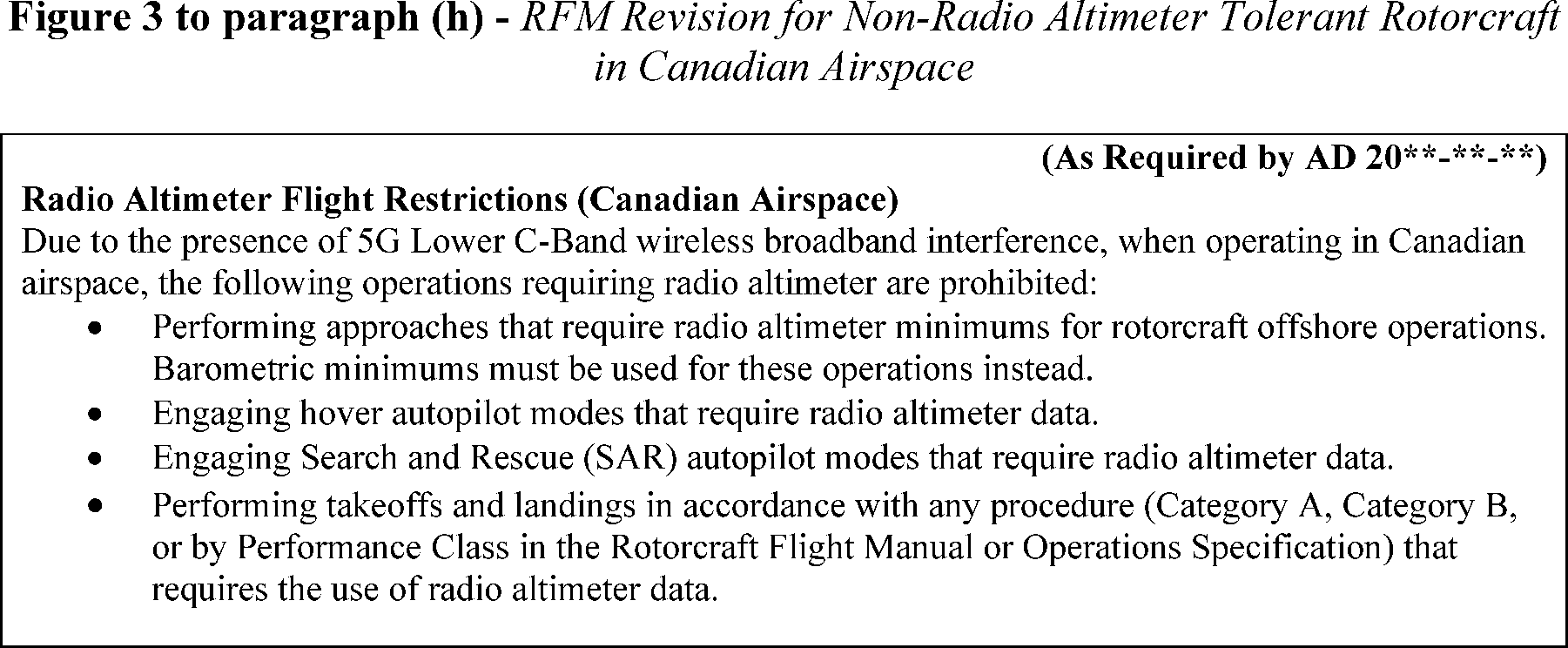
For non-radio altimeter tolerant rotorcraft: Before further flight in Canadian airspace, this proposed AD would require revising the existing RFM for the helicopter to incorporate limitations prohibiting the following when operating in Canadian airspace.
Performing approaches that require radio altimeter minimums for rotorcraft offshore operations. Barometric minimums must be used for these operations instead.
Engaging hover autopilot modes that require radio altimeter data.
Engaging Search and Rescue (SAR) autopilot modes that require radio altimeter data.
Performing takeoffs and landings in accordance with any procedure (Category A, Category B, or by Performance Class in the Rotorcraft Flight Manual or Operations Specification) that requires the use of radio altimeter data.
This proposed AD provides that modifying the rotorcraft from a non-radio altimeter tolerant rotorcraft to a radio altimeter tolerant rotorcraft terminates the RFM operating limitations.
A rotorcraft that is a radio altimeter tolerant rotorcraft using a method approved by the FAA for AD 2023-11-07 is also a radio altimeter tolerant rotorcraft for the purposes of paragraph (g)(1) of this proposed AD.
Differences Between This Proposed AD and the MCAI
The MCAI specifies the fundamental emissions are in the 3.45-3.98 GHz frequency band, while this proposed AD specifies the 3.7-3.98 GHz frequency band. AD 2023-11-07 identified an unsafe condition from wireless broadband transmissions in the 3.7-3.98 GHz frequency band and this proposed AD is based on that same determination. In addition, rotorcraft determined to be a radio altimeter tolerant rotorcraft for the purposes of AD 2023-11-07, which has demonstrated the performance tolerances for fundamental emissions within the 3.7-3.98 GHz frequency band, would also be a radio altimeter tolerant rotorcraft for purposes of this proposed AD. Frequencies less than 3.7 GHz are further away from the frequency bands used by radio altimeters (4.2 to 4.4 GHz), so rotorcraft determined to be tolerant in the range of 3.7-3.98 GHz are also tolerant to emissions less than 3.7 GHz.
Interim Action
The FAA considers this proposed AD to be an interim action. The FAA may consider further rulemaking if the Canadian 5G C-band interference environment changes or if Canada issues an operational rule to address 5G C-band interference with radio altimeters.
Costs of Compliance
The FAA notes that since operators must comply with this proposed AD before a rotorcraft's first flight in Canadian airspace, rotorcraft that do not operate in Canada will not have to comply and therefore will have no costs under this proposed AD.
The FAA estimates that there are approximately 5,500 helicopters of U.S. registry that are likely to have a radio altimeter installed. The FAA also estimates that 1,128 of the 5,500 helicopters of U.S. registry are equipped to be able to perform the operations prohibited by this proposed AD for non-radio altimeter rotorcraft. While the FAA expects that some of the affected rotorcraft have been modified (either by replacing the radio altimeter or adding radio altimeter filters), the FAA does not have definitive data on how many rotorcraft have been become radio altimeter tolerant rotorcraft since July 2023, and therefore this proposed AD retains the estimates from AD 2023-11-07. The FAA estimates the following costs to comply with this proposed AD:
( printed page 64312)
Estimated Costs
Action
Labor cost
Parts cost
Cost per
product
Cost on U.S. operators
RFM revision for non-radio altimeter tolerant rotorcraft
1 work-hour × $85 per hour = $85
$0
$85
$467,500
The FAA estimates the following costs for operators who elect to modify their helicopter to be radio altimeter tolerant:
Estimated Costs for Modification
Action
Labor cost
Parts cost
Cost per product
Modification (replacement)
Up to $60,000 per helicopter (includes labor and parts).
Modification (filter)
Up to 24 work-hours × $85 per hour = $2,040
Up to $12,000
Up to $14,040 per filter.
Authority for This Rulemaking
Title 49 of the United States Code specifies the FAA's authority to issue rules on aviation safety. Subtitle I, section 106, describes the authority of the FAA Administrator. Subtitle VII: Aviation Programs, describes in more detail the scope of the Agency's authority.
The FAA is issuing this rulemaking under the authority described in Subtitle VII, Part A, Subpart III, Section 44701: General requirements. Under that section, Congress charges the FAA with promoting safe flight of civil aircraft in air commerce by prescribing regulations for practices, methods, and procedures the Administrator finds necessary for safety in air commerce. This regulation is within the scope of that authority because it addresses an unsafe condition that is likely to exist or develop on products identified in this rulemaking action.
Regulatory Findings
The FAA determined that this proposed AD would not have federalism implications under Executive Order 13132. This proposed AD would not have a substantial direct effect on the States, on the relationship between the national government and the States, or on the distribution of power and responsibilities among the various levels of government.
For the reasons discussed above, I certify this proposed regulation:
(2) Would not affect intrastate aviation in Alaska, and
(3) Would not have a significant economic impact, positive or negative, on a substantial number of small entities under the criteria of the Regulatory Flexibility Act.
2. The FAA amends § 39.13 by adding the following new airworthiness directive:
Various Helicopters:
Docket No. FAA-2026-11799; Project Identifier MCAI-2026-00594-R.
(a) Comments Due Date
The FAA must receive comments on this airworthiness directive (AD) by November 23, 2026.
(b) Affected ADs
None.
(c) Applicability
This AD applies to all helicopters, certificated in any category, equipped with a radio (also known as radar) altimeter. These radio altimeters are installed on various helicopter models including, but not limited to, the helicopters for which the design approval holder is identified in paragraphs (c)(1) through (20) of this AD.
Air Transport Association (ATA) of America Code 3444, Ground Proximity System.
(e) Unsafe Condition
This AD was prompted by the determination that radio altimeters cannot be relied upon to perform their intended function if they experience interference from wireless broadband operations in the 3.7 to 3.98 GHz frequency band (5G Lower C-Band) while operating in Canadian airspace. The FAA is issuing this AD because radio altimeter anomalies that are undetected by the automation or pilot, particularly while close to the ground, could lead to loss of continued safe flight and landing.
(f) Compliance
Comply with this AD within the compliance times specified, unless already done.
(g) Definitions
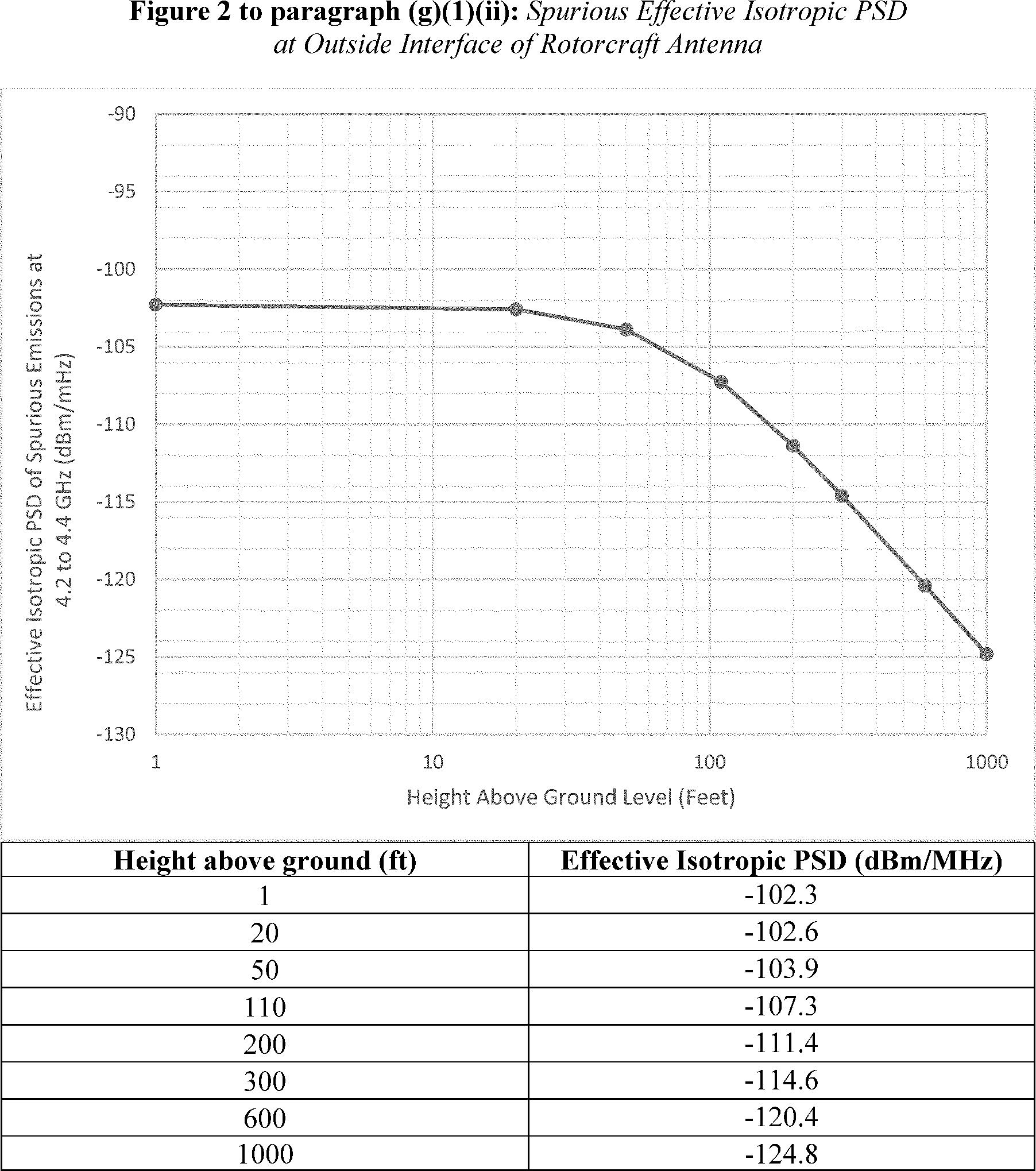
(1) For purposes of this AD, a “radio altimeter tolerant rotorcraft” is one for which the radio altimeter, as installed, demonstrates the tolerances specified in paragraphs (g)(1)(i) and (ii) of this AD, using a method approved by the FAA. No actions are required by this AD for radio altimeter tolerant rotorcraft.
(i) Tolerance to radio altimeter interference, for the fundamental emissions (3.7-3.98 GHz), at or above the power spectral density (PSD) curve threshold
( printed page 64313)
specified in figure 1 to paragraph (g)(1)(i) of this AD.
(ii) Tolerance to radio altimeter interference, for the spurious emissions (4.2-4.4 GHz), at or above the PSD curve threshold specified in figure 2 to paragraph (g)(1)(ii) of this AD.
( printed page 64314)
(2) For purposes of this AD, a “non-radio altimeter tolerant rotorcraft” is one for which the radio altimeter, as installed, does not demonstrate the tolerances specified in paragraphs (g)(1)(i) and (ii) of this AD.
(h) Rotorcraft Flight Manual (RFM) Revision
For non-radio altimeter tolerant rotorcraft: Before further flight in Canadian airspace, revise the Limitations Section of the existing RFM for the helicopter by including the information specified in figure 3 to paragraph (h) of this AD. This may be done by inserting a copy of figure 3 to paragraph (h) of this AD into the existing RFM for the helicopter. The action required by this paragraph may be performed by the owner/operator (pilot) holding at least a private pilot certificate and must be entered into the aircraft records showing compliance with this AD in accordance with 14 CFR 43.9(a)(1) through (4) and 14 CFR 91.417(a)(2)(v). The record must be maintained as required by 14 CFR 91.417 or 14 CFR 135.439.
( printed page 64315)
(i) Terminating Action for RFM Limitations
(1) Modifying the rotorcraft from a non-radio altimeter tolerant rotorcraft to a radio altimeter tolerant rotorcraft terminates the limitations in paragraph (h) of this AD for that rotorcraft.
(2) After modifying the rotorcraft to a radio altimeter tolerant rotorcraft, the limitations specified by paragraph (h) of this AD may be removed from the RFM.
(j) Alternative Methods of Compliance (AMOCs):
(1) The Manager, Operational Safety Branch, FAA, has the authority to approve AMOCs for this AD, if requested using the procedures found in 14 CFR 39.19. In accordance with 14 CFR 39.19, send your request to your principal inspector or responsible Flight Standards Office, as appropriate. If sending information directly to the manager of the Operational Safety Branch, send it to the attention of the person identified in paragraph (k) of this AD. Information may be emailed to:
AMOC@faa.gov.
(2) Before using any approved AMOC, notify your appropriate principal inspector, or lacking a principal inspector, the manager of the responsible Flight Standards Office.
(k) Additional Information
For more information about this AD, contact Ken Fairhurst, Continued Operational Safety Technical Advisor, FAA, 2200 South 216th St., Des Moines, WA 98198; phone: 817-222-5390; email:
operationalsafety@faa.gov.
 14 CFR 11.43
 5 U.S.C. 552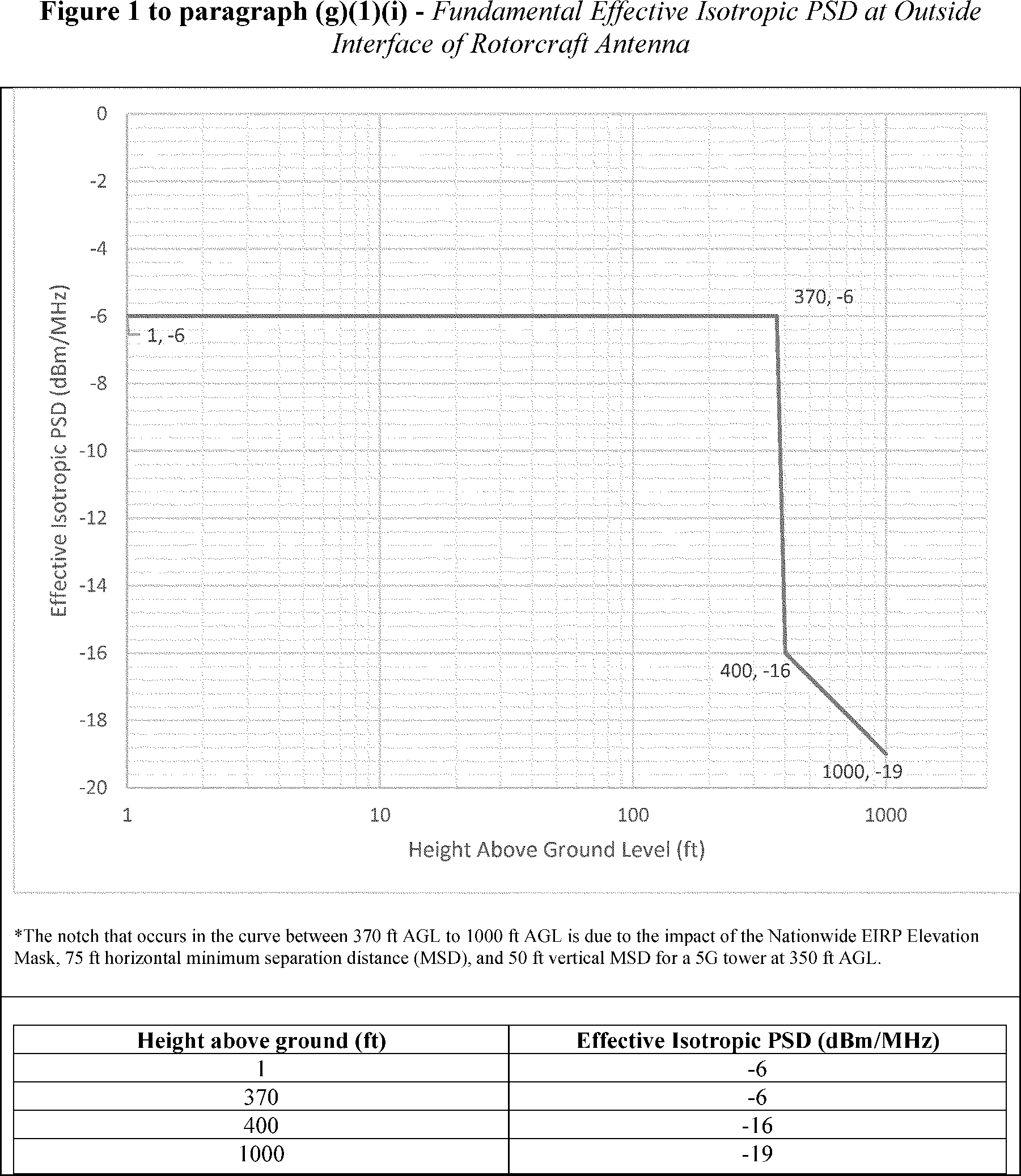
 ised-isde.canada.ca/site/spectrum-management-telecommunications/en/devices-and-equipment/standard-radio-system-plans/srsp-520-technical-requirements-fixed-andor-mobile-systems-including-flexible-use-broadband-systems