Takes of Marine Mammals Incidental to Specified Activities; Taking Marine Mammals Incidental To Research, Monitoring, and Management Activities on the South Farallon Islands, Farallon Islands National Wildlife Refuge, California
NMFS has received a request from the U.S. Fish and Wildlife Service, Farallon Islands National Wildlife Refuge (USFWS Refuge) for authorization to take marine mammals incidental...
National Marine Fisheries Service (NMFS), National Oceanic and Atmospheric Administration (NOAA), Commerce.
ACTION:
Notice; proposed incidental harassment authorization; request for comments on proposed authorization and possible renewal.
SUMMARY:
NMFS has received a request from the U.S. Fish and Wildlife Service, Farallon Islands National Wildlife Refuge (USFWS Refuge) for authorization to take marine mammals incidental to research, monitoring, and management activities on the South Farallon Islands, Farallon Islands National Wildlife Refuge, California (CA). Pursuant to the Marine Mammal Protection Act (MMPA), NMFS is requesting comments on its proposal to issue an incidental harassment authorization (IHA) to incidentally take marine mammals during the specified activities. NMFS is also requesting
( printed page 27284)
comments on a possible one-time, 1-year renewal that could be issued under certain circumstances and if all requirements are met, as described in Request for Public Comments at the end of this notice. NMFS will consider public comments prior to making any final decision on the issuance of the requested MMPA authorization, and agency responses will be summarized in the final notice of our decision.
DATES:
Comments and information must be received no later than June 15, 2026.
Instructions:
NMFS is not responsible for comments sent by any other method, to any other address or individual, or received after the end of the comment period. Comments, including all attachments, must not exceed a 25-megabyte file size. All comments received are a part of the public record and will generally be posted online at
https://www.fisheries.noaa.gov/national/marine-mammal-protection/incidental-take-authorizations-research-and-other-activities
without change. All personal identifying information (
e.g.,
name, address) voluntarily submitted by the commenter may be publicly accessible. Do not submit confidential business information or otherwise sensitive or protected information.
FOR FURTHER INFORMATION CONTACT:
Krista Graham, Office of Protected Resources, NMFS, (301) 427-8401.
SUPPLEMENTARY INFORMATION:
Background
The MMPA prohibits the “take” of marine mammals, with certain exceptions. Section 101(a)(5)(A) and (D) of the MMPA (16 U.S.C. 1361et seq.) directs the Secretary of Commerce (as delegated to NMFS) to allow, upon request, the incidental, but not intentional, taking of small numbers of marine mammals by U.S. citizens who engage in a specified activity (other than commercial fishing) within a specified geographical region if certain findings are made and either regulations are proposed or, if the taking is limited to harassment, a notice of a proposed IHA is provided to the public for review.
Authorization for incidental takings shall be granted if NMFS finds that the taking will have a negligible impact on the species or stock(s) and will not have an unmitigable adverse impact on the availability of the species or stock(s) for taking for subsistence uses (where relevant). Further, NMFS must prescribe the permissible methods of taking; other “means of effecting the least practicable adverse impact” on the affected species or stocks and their habitat, paying particular attention to rookeries, mating grounds, and areas of similar significance, and on the availability of the species or stocks for taking for certain subsistence uses (referred to as “mitigation”); and requirements pertaining to the monitoring and reporting of the takings. The definitions of all applicable MMPA statutory terms used above are included in the relevant sections below (see also 16 U.S.C. 1362; 50 CFR 216.3, 216.103).
National Environmental Policy Act
To comply with the National Environmental Policy Act of 1969 (NEPA; 42 U.S.C. 4321et seq.) and NOAA Administrative Order (NAO) 216-6A, NMFS must review our proposed action (
i.e.,
the issuance of an IHA) with respect to potential impacts on the human environment.
This action is consistent with categories of activities identified in Categorical Exclusion B4 (IHAs with no anticipated serious injury or mortality) of the Companion Manual for NAO 216-6A, which do not individually or cumulatively have the potential for significant impacts on the quality of the human environment and for which we have not identified any extraordinary circumstances that would preclude this categorical exclusion. Accordingly, NMFS has preliminarily determined that the issuance of the proposed IHA qualifies to be categorically excluded from further NEPA review.
Summary of Request
On March 14, 2026, NMFS received a request from the USFWS Refuge for an IHA to take marine mammals incidental to research, monitoring, and management activities on the South Farallon Islands, Farallon Islands National Wildlife Refuge off San Francisco, CA. Following NMFS' review of the application, the USFWS Refuge submitted a revised, adequate and complete version on April 9, 2026. The USFWS Refuge's request is for authorization of the take of five species of marine mammals by Level B harassment only. Neither the USFWS Refuge nor NMFS expect serious injury or mortality to result from this activity, and, therefore, an IHA is appropriate.
NMFS previously issued an IHA to the USFWS Refuge for similar work from September 10, 2025, through September 9, 2026 (90 FR 42750). To date, the USFWS Refuge has complied with all requirements (
e.g.,
mitigation, monitoring, and reporting) of the previous IHA, and information on the monitoring results can be found in the Estimated Take section.
Description of Proposed Activities
Overview
The Farallon National Wildlife Refuge consists of several islands designated into four groups: the North Farallons, the Middle Farallons, the South Farallon Islands (the largest group, consisting of Southeast Farallon Island and West End Island), and Noonday Rock. The North Farallons, Middle Farallons, and Noonday Rock were originally designated as the Farallon Refuge by President Theodore Roosevelt in 1909 (Executive Order 1043). In 1969, the South Farallon Islands were given Refuge status. Congress further designated all these islands, except for the Southeast Farallon Island, as the Farallon Wilderness Area in 1974 (Pub. L. 93-550). More information on the history and management of the Refuge can be found in the Farallon National Wildlife Refuge Comprehensive Conservation Plan (USFWS, 2009) and on its website (
https://www.fws.gov/refuge/farallon-islands/what-we-do).
The Farallon National Wildlife Refuge, managed by the USFWS, is encompassed within the Greater Farallones National Marine Sanctuary (GFNMS or Sanctuary), which is managed separately by NOAA's National Ocean Service. The GFNMS encompasses 3,295 square miles (mi2
) (8,534 square kilometers (km2
)) of open ocean and nearshore waters off the California coast, surrounding the Farallon Islands. Originally designated as the Gulf of the Farallones National Marine Sanctuary in 1981 by the Department of Commerce, its boundaries were significantly expanded in 2015 to include waters further north and offshore (80 FR 13077, March 12, 2015).
The proposed activities on the South Farallon Islands are intrinsically linked to the management of the Refuge and the Sanctuary. Since the USFWS Refuge would be the IHA Holder, the research, monitoring, and management activities covered under this proposed IHA would predominantly be carried out by
( printed page 27285)
USFWS Refuge staff. Similar but separate research and monitoring activities would be carried out by Sanctuary staff. For the proposed take estimation discussed later, we distinguish the proposed activities for the GFNMS from those for the USFWS Refuge.
Broadly, activities include several management actions (
i.e.,
island access and transit to and from via small motorboat, sailboat, and helicopter; habitat restoration, facilities upkeep including maintenance, repair, removal, and construction; and cultural resource upkeep) and research and monitoring actions (
i.e.,
rocky intertidal habitat surveys and sampling, oil spill monitoring). Field personnel and boat/helicopter use may occasionally cause incidental take via behavioral disturbance (Level B harassment) of pinniped species that reside year-round and haul out on the South Farallon Islands.
Dates and Duration
Management and research activities, some of which are commonly performed by Point Blue Conservation Science (Point Blue), typically occur year-round. However, given a recent shift in resource allocation, staff from the USFWS Refuge and GFNMS are assisting Point Blue in some specific research, monitoring, and management activities, while also performing work mandated under their respective laws (
i.e.,
the National Wildlife Refuge System Improvement Act of 1997 (Pub. L. 105-57, 111 Stat. 1252; 16 U.S.C. 668ddet seq.) and Title III of the Marine Protection, Research, and Sanctuaries Act of 1972 (16 U.S.C. 1431et seq.
and 15 CFR part 922, subpart H)). The USFWS Refuge and GFNMS are planning activities primarily for the fall/winter of 2026 to 2027 (September through mid-March).
Specified activities, discussed below, will vary in duration. Island access and resupply efforts, which could be conducted by motorboat or sailboat, are expected to occur about 2 days per month and typically last 1 to 3 hours. Maintenance efforts, necessary for crevice-nesting seabirds and to serve as a disturbance barrier for seabirds, typically occur every few years and are conducted in the winter when California sea lion (
Zalophus californianus) numbers are lower. These efforts may require removing excess materials (
e.g.,
old plumbing, electrical conduit, lumber), which are expected to take 1 to 3 days and would require a helicopter or boat. The maintenance, repair, removal, and construction of onshore facilities are expected to take 1 to 2 months of effort, although the effort may be spread over a continuous or non-consecutive period, as this work depends heavily on the contractor and weather. Plant surveys would be conducted over approximately 7 days, sometime between mid-March and early April, and intertidal research and sampling, planned between November 1 and March 15, are expected to last 4 to 5 hours at the survey sites.
Helicopters and small motorized boats/sailboats would be used to transport personnel and supplies on and off the island. Helicopter use would only be from September 1 through March 15 to avoid the breeding season for most of the seabirds and pinnipeds located on the island. Currently, any helicopter use that may be required is planned for October to March to avoid a late-summer surge in California sea lion presence. Boat use is planned when it is safe to do so (less likely in the fall and winter seasons, as storms make boat landings dangerous), which is more likely in the spring/summertime, but some use in the fall/winter may be needed.
The proposed IHA would be valid for the statutory maximum of 1 year from the date of effectiveness, and would become effective upon written notification from the applicant to NMFS, but not beginning later than 1 year from the date of issuance or extending beyond 2 years from the date of issuance. As noted above, the specified activity is expected to occur from September 10, 2026, through September 9, 2027.
Specific Geographic Region
The Farallon National Wildlife Refuge consists of 211 acres (0.33 mi2
) located near the edge of the continental shelf. The proposed project would occur within the South Farallon Islands, which are located approximately 28 miles (mi; 45 kilometers (km)) offshore of San Francisco, CA, and contain an approximate land area of 120 acres (0.19 mi2
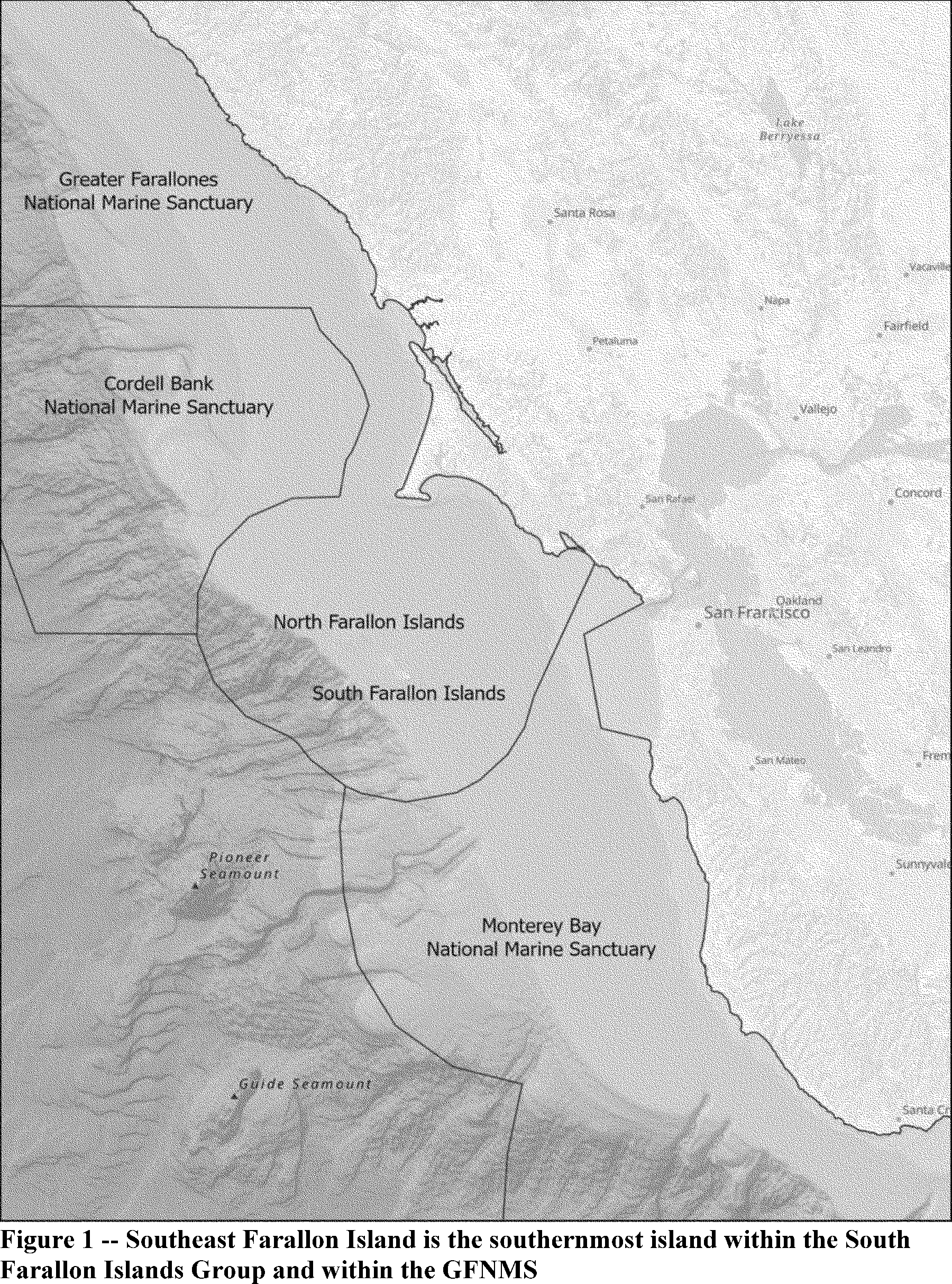
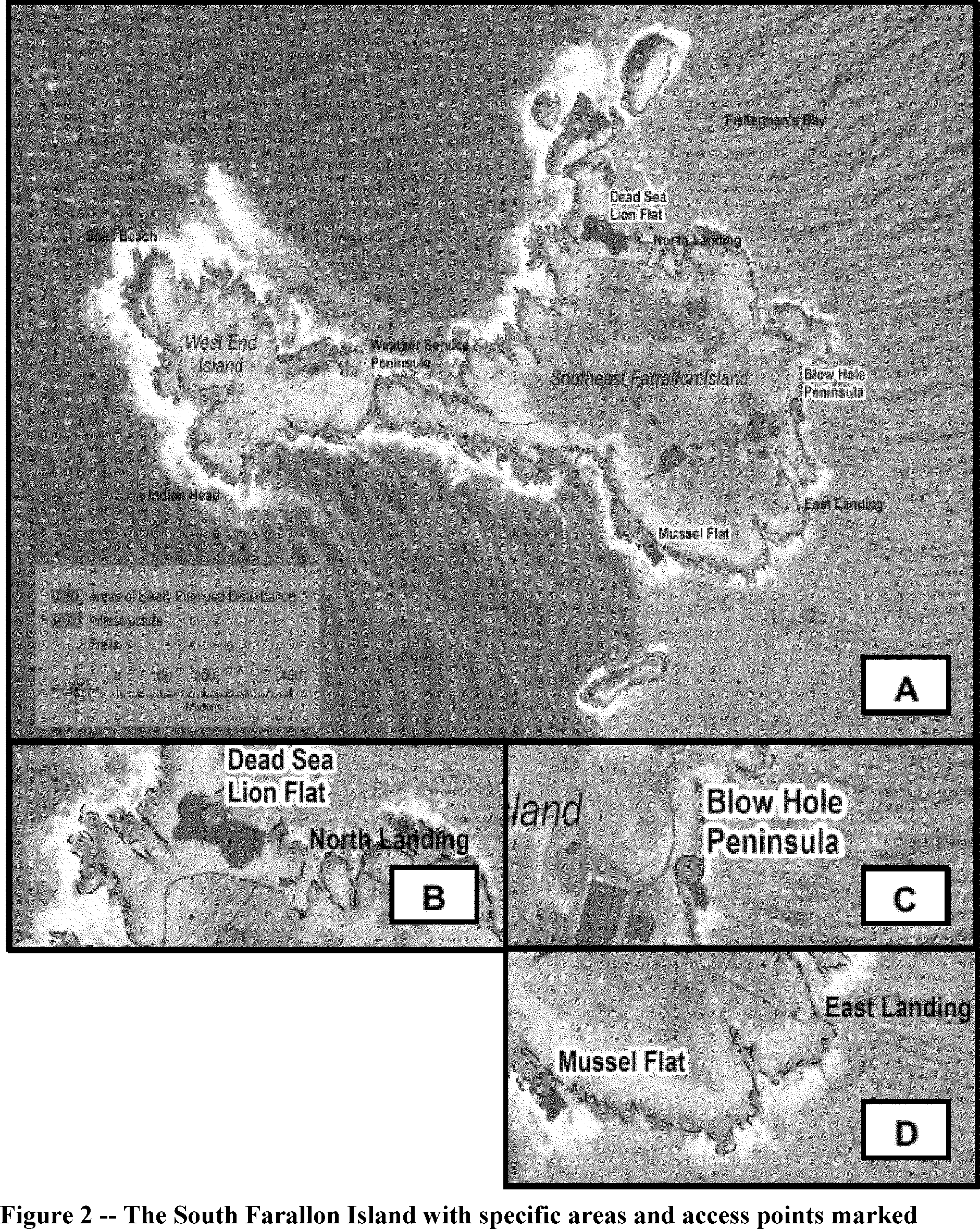
) across two islands (Southeast Farallon Island and West End Island) and several smaller islets (see figures 1 and 2). Of all the islands that make up the Refuge, only the Southeast Farallon Island is inhabited and contains infrastructure, as nearly all the proposed activities occur on this island. Southeast Farallon Island has two landings, North Landing and East Landing, where pinnipeds are known to haul out and reside year-round. All specified activities, as described herein, will occur on land (with the exceptions of transit via motorboat and/or helicopter, when needed).
( printed page 27286)
( printed page 27287)
Detailed Description of the Specified Activities
The proposed activities at the South Farallon Islands are directly associated with Refuge and Sanctuary management as well as natural resource research and monitoring. Each is described below.
Management Activities—Island Access
To access the main island of Southeast Farallon Island, small motorboats/sailboats and helicopters are needed. Typically, personnel and cargo/supplies travel to and from the Southeast Farallon Island by motorboat/sailboat, where they are then transferred to smaller 14-to-20-foot (ft (4.3 to 6.1 meters (m))) motorboats, which are hoisted by a derrick to one of two boat landings (
i.e.,
East Landing and North Landing). Boat landings occur approximately 2 days per month for supplies and personnel, and typically take between 1 and 3 hours. Each boat landing consists of launching the boat with a single operator and two to four
( printed page 27288)
other personnel assisting from land. Loading activities at North Landing would occur at the water level during the intertidal phase, and activities at the East Landing (the primary landing site) would occur using a loading platform raised 30 ft (9.1 m) over the water.
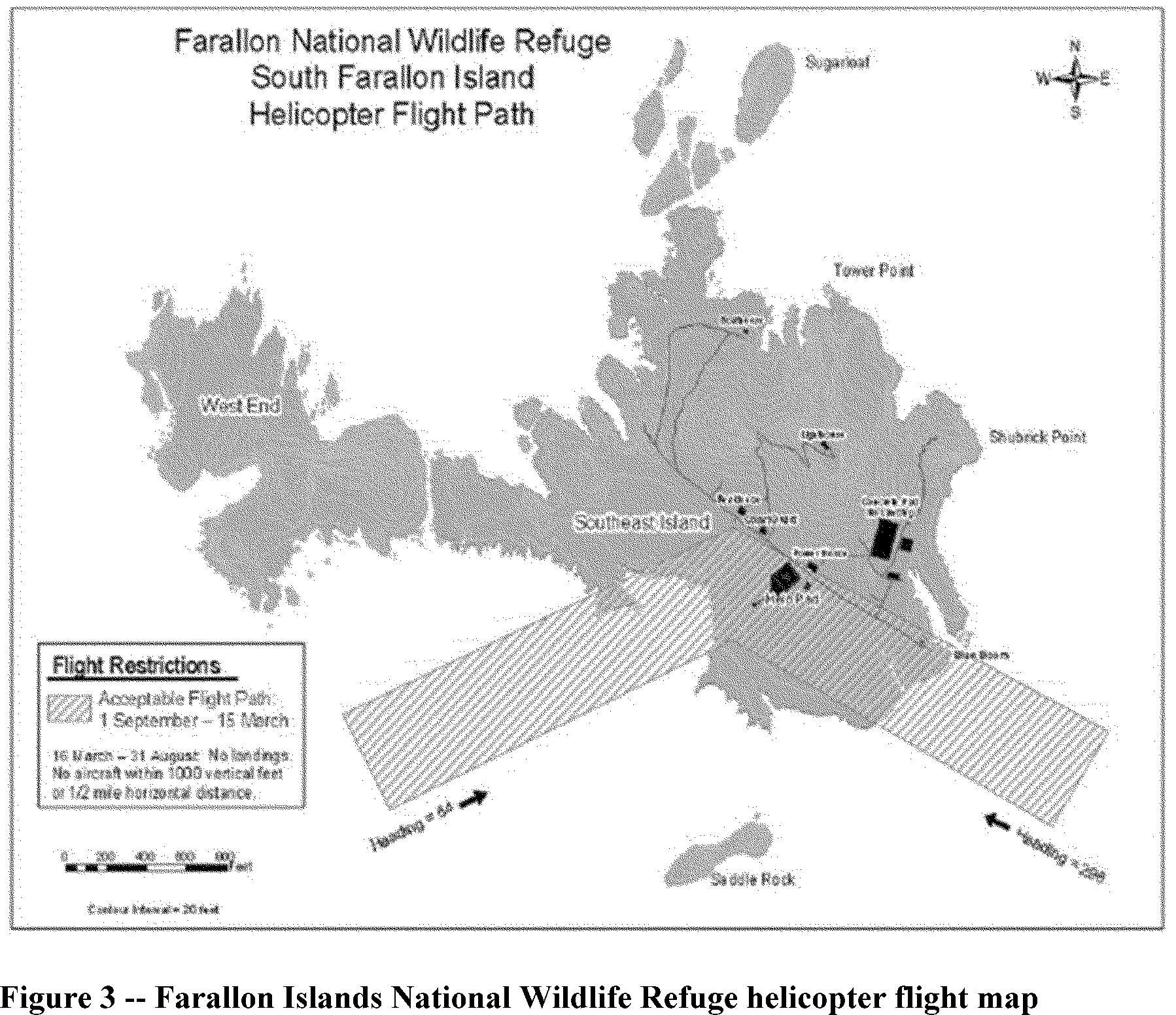
Given resource allocation constraints, the Southeast Farallon Island, which is normally inhabited year-round (and has been for several decades), will likely be vacant for most of the fall and winter period, starting in the fall of 2026. Because of this (as well as stormy weather during the fall/wintertime), boat landings become more difficult and dangerous for field personnel. When the island's support staff is not present, helicopters are the primary means of transporting staff and supplies/cargo on and off Southeast Farallon Island. On Southeast Farallon Island, helicopters are allowed to land at the helipad only from September 1 through March 15 annually, upon receiving appropriate authorization from the USFWS Refuge. For the rest of the year, there is a closure prohibiting helicopter usage. This is to protect sensitive wildlife during their breeding seasons.
To reduce impacts on marine mammals, the USFWS Refuge has developed a flight plan for the helicopter during landings and departures to minimize impacts on wildlife and maximize aircraft and crew safety. Generally, most of the pinniped habitat is located away from the flight path, except for Mussel Flat, which lies near the southwestern flight path and cannot be avoided by USFWS Refuge staff (see figure 3).
Harassment of marine mammals is likely to occur given the presence of people and the use of boats and helicopters (including their presence and noise). Additionally, some California sea lions have been observed hauling out near and on the helipad and may require hazing to safely relocate them. Hazing would occur according to section 109(h) of the MMPA, which exempts the taking of marine mammals by government officials as part of official duties, including for the protection or welfare of marine mammals, as in this case, from the MMPA's prohibition on unauthorized take of marine mammals. Takes of marine mammals resulting from hazing activities are not included in the incidental take proposed for authorization here, and hazing is not discussed further.
Management Activities—Habitat Restoration
Habitat restoration activities would include controlling non-native and invasive vegetation, which is detrimental to nesting seabirds and native vegetation. This invasive vegetation blocks access to existing and potential seabird burrow breeding sites and competes with native species and resources, such as
Lasthenia maritima,
used by surface-nesting seabirds for nesting materials. Other activities
( printed page 27289)
include maintaining artificial habitats specifically constructed for seabirds. Two of these structures provide habitat for seabirds that nest in crevices, while another provides a barrier against disturbance. Two of these artificial habitat structures are located adjacent to the haulout locations for California sea lions and Steller sea lions (
Eumetopias jubatus). Maintenance for these structures is minimal and only required every few years.
Other restoration activities may include the use or removal of excess materials, such as older plumbing, electrical conduits, lumber, and other infrastructure materials, located throughout Southeast Farallon Island (primarily on the east and south sides of the island). If materials were reused, they would be used to create an artificial seabird nesting habitat in the upland areas away from pinniped haulout areas and habitat. If materials are removed, they would be transported by boat or helicopter (for more bulky/larger materials), which may necessitate hovering for a short period while the cargo is loaded or unloaded.
For all these activities, marine mammals would likely be harassed behaviorally from the presence of humans when collecting and transferring the materials, performing the activities, and from the use of boats/helicopters to remove the materials. USFWS Refuge estimates that approximately 1 to 3 days would be needed to remove excess material by either boat or helicopter.
Management Activities—Facilities Maintenance, Repair, Removal, and Construction
On Southeast Farallon Island, many aging structures from the 19th and mid-20th centuries still exist and may require work to remove, maintain, repair, or construct. The USFWS Refuge has developed a plan to downsize the infrastructure footprint on the Southeast Farallon Island, which involves removing potentially hazardous structures. Specifically, this would consist of a large demolition and construction project starting in September, during which a large water storage cistern on the east side of Southeast Farallon Island would be dismantled and a new water catchment tank installed. Other major activities include replacing the roof and siding at the North Landing Boathouse and making necessary modifications to the houses--Powerhouse and North Landing Boathouse--to protect against vandalism and storms. This larger project is expected to take approximately 1 to 2 months and may occur either continuously or intermittently in non-consecutive phases. The work needed and the schedule are highly dependent on both the contractor's ability to mobilize and the weather. Additionally, other repairs and activities would occur, including maintenance and repairs to the roofs of houses, the East and North Landing derricks, the photovoltaic system at the Powerhouse, and the septic system. All major work would be expected to occur between September 1 and March 15 to minimize any disturbances to sensitive wildlife, including breeding seabirds and pupping pinnipeds.
Crews and supplies would arrive at the island mainly by helicopter, with some boat support when safe to do so. Any cargo brought over would be delivered to the worksites via wheelbarrows and carts along pre-designated paths. Details on the helicopter and boat transport can be reviewed in the section above.
Marine mammals are expected to be behaviorally harassed by the presence of humans, boats, and helicopters, as well as by the noise of their rotors and motors. The presence of cargo and construction noise (
i.e.,
not greater than mechanical tools, hammering,
etc.) may also cause behavioral harassment.
Management Activities—Cultural Resources
Proposed activities for the preservation and evaluation of cultural resources may be undertaken by USFWS Refuge staff or by assisting archaeologists. While the Refuge policy specifically prohibits the removal or destruction of any evaluated historical elements, some elements may need to be repaired or modified. For these activities, staff would need to continue evaluating, removing, or reusing remnants of abandoned infrastructure (most of which was removed after 1969). Generally, these elements are in the more upland areas of Southeast Farallon Island, away from the intertidal and pinniped haulout/pupping areas. However, behavioral harassment of marine mammals may still occur due to human presence around hauled out pinnipeds.
Research and Monitoring Activities—Wildlife and Plant Research
A familiar activity on Southeast Farallon Island, wildlife research and monitoring has been conducted for decades to examine and understand the life histories, populations, diet, productivity, and other ecological aspects of wildlife in the Farallon National Wildlife Refuge. To date, most of the work has been performed by Point Blue. However, as previously mentioned, Point Blue may reduce its presence on Southeast Farallon Island during the fall and winter, and the USFWS Refuge would take over some of these responsibilities. For example, plant monitoring would be conducted in various plots across the island's uplands, with one to three personnel traveling to different plots. These activities are expected to occur primarily between mid-March and early April over 7 days.
If oiled wildlife is discovered on the islands, visits to the shoreline where marine mammals occur may be necessary to obtain proper documentation. This includes searching for oil along the shoreline, searching for and counting oiled wildlife, collecting oiled wildlife, and collecting oil samples.
Lastly, GFNMS staff would continue carrying out their rocky intertidal monitoring on Southeast Farallon Island to document the density, biodiversity, and condition of the Sanctuary's natural resources. This will continue to build upon over 30 years of long-term monitoring. The sampling at the three sites (
i.e.,
Blow Hole Peninsula, Dead Sea Lion Flat, and Mussel Flat) requires approximately 4-5 hours. Pinnipeds would be flushed into the water as the tide drops. Each rocky intertidal monitoring plot and transect would be sampled once a year, with each site accessed up to three times by GFNMS staff from November 1, 2026, through March 15, 2027.
For these research and monitoring actions, pinnipeds would likely be behaviorally harassed by the presence of field personnel.
The proposed mitigation, monitoring, and reporting measures for these aforementioned activities are described in detail later in this document (please see Proposed Mitigation and Proposed Monitoring and Reporting).
Description of Marine Mammals in the Area of Specified Activities
Sections 3 and 4 of the application summarize available information regarding the status and trends, distribution and habitat preferences, and the behavior and life history of the potentially affected species. NMFS fully considered all this information, and we refer the reader to these descriptions, instead of reprinting the information. Additional information regarding population trends and threats may be found in NMFS' Stock Assessment Reports (SARs;
https://www.fisheries.noaa.gov/national/marine-mammal-protection/marine-mammal-stock-assessments), and more
( printed page 27290)
general information about these species (
e.g.,
physical and behavioral descriptions) may be found on NMFS' website (
https://www.fisheries.noaa.gov/find-species).
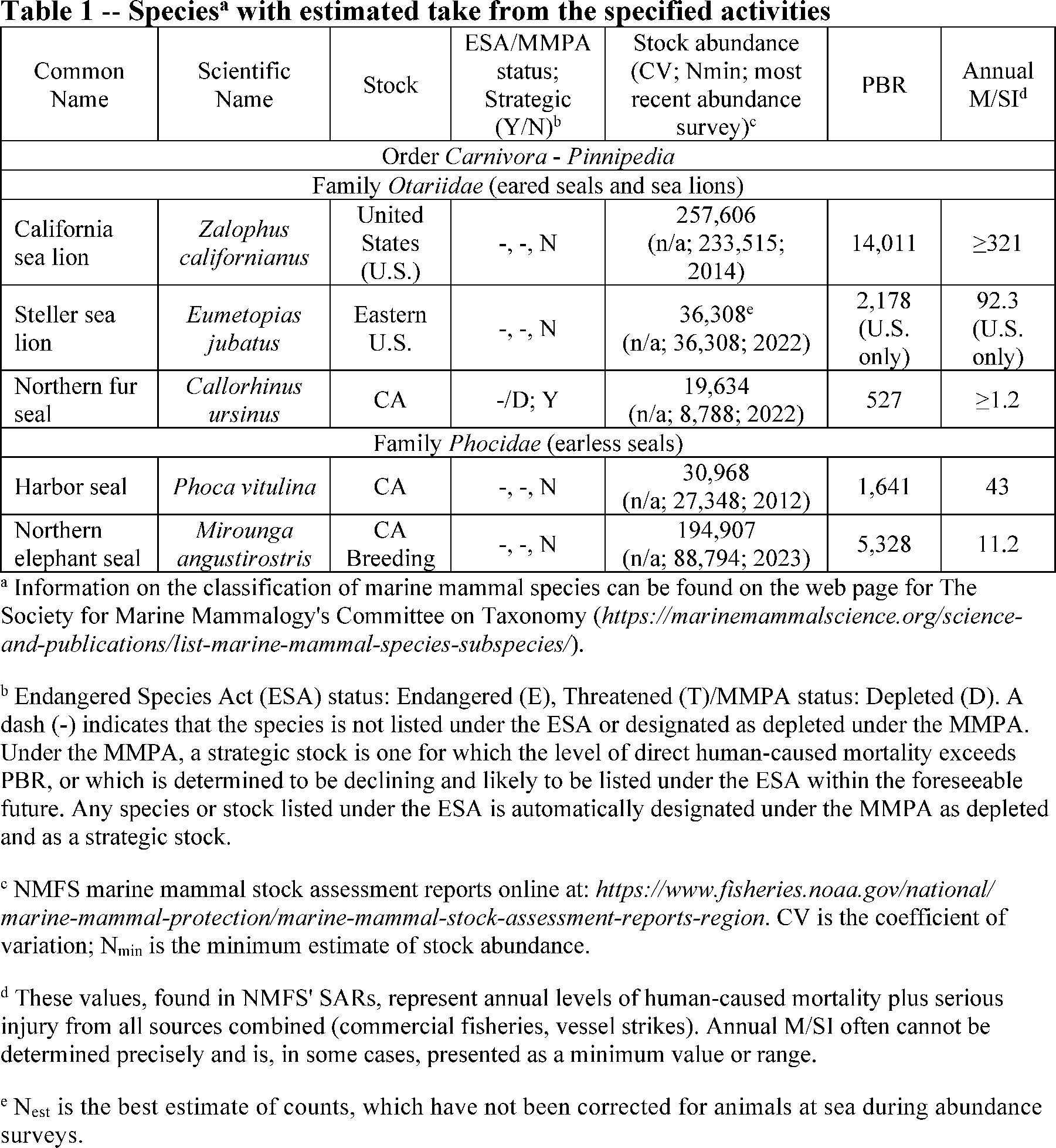
Table 1 lists all species or stocks for which take is expected and proposed to be authorized for this activity and summarizes information related to the population or stock, including regulatory status under the MMPA and Endangered Species Act (ESA) and potential biological removal (PBR), where known. PBR is defined by the MMPA as the maximum number of animals, not including natural mortalities, that may be removed from a marine mammal stock while allowing that stock to reach or maintain its optimum sustainable population (as described in NMFS' SARs). While no mortality or serious injury (M/SI) is anticipated or proposed to be authorized here, PBR and annual M/SI from anthropogenic sources are included here as gross indicators of the status of the species or stocks and other threats.
Marine mammal abundance estimates presented in this document represent the total number of individuals that make up a given stock or the total number estimated within a particular study or survey area. NMFS' stock abundance estimates for most species represent the total estimate of individuals within the geographic area, if known, that comprises that stock. For some species, this geographic area may extend beyond U.S. waters. All managed stocks in this region are assessed in NMFS' Pacific and Alaska SARs. All values presented in table 1 are the most recent available at the time of publication and are available online at:
https://www.fisheries.noaa.gov/national/marine-mammal-protection/marine-mammal-stock-assessments.
( printed page 27291)
As indicated above, all five species (with five managed stocks) in table 1 temporally and spatially co-occur with the activities to the degree that take is likely to occur. While Guadalupe fur seals (
Arctocephalus townsendi) have been reported in the area, their occurrence is considered extremely rare, as the temporal and/or spatial occurrence of these species is such that take is not expected to occur, and they are not discussed further beyond the explanation provided here. Additionally, California (southern) sea otters (
Enhydra lutris nereis) may be found in the GFNMS (see
https://farallones.org/sanctuary-wildlife/marine-mammals/) and possibly nearshore to the South Farallon Island. However, this species is managed by the U.S. Fish and Wildlife Service (see
https://www.fws.gov/species/southern-sea-otter-enhydra-lutris-nereis) and therefore not discussed further in this document.
For more details on the species that are likely to occur near the project area and may be taken by the proposed activities, see the IHA application, the SARs, and NMFS' website.
California Sea Lions
California sea lion breeding areas are on islands located in southern CA, in western Baja California, Mexico, and the Gulf of California. Rookery sites in southern CA are limited to the San Miguel Islands and the southerly Channel Islands of San Nicolas, Santa Barbara, and San Clemente (Carretta
et al.,
2017). Males establish breeding territories from May through July, both on land and in the water. Females come ashore in mid-May and June, where they give birth to a single pup approximately 4 to 5 days after arrival and will nurse pups for about a week before going on their first feeding trip. Postpartum females will alternate feeding trips with nursing bouts until the pup is weaned, between 4 and 10 months of age (Melin
et al.,
2000).
Adult and juvenile males will migrate as far north as British Columbia, Canada, while females and pups remain in southern CA waters in the non-breeding season. In warm water (El Niño) years, some females are found as far north as Washington and Oregon, presumably following prey. On the Farallon Islands, California sea lions haul out in many intertidal areas year-round, with numbers fluctuating from several hundred to several thousand.
Elevated numbers of strandings of California sea lion pups occurred in southern CA beginning in January 2013, and NMFS declared an Unusual Mortality Event (UME). Per the NMFS website, “the UME was attributed to malnutrition in juvenile sea lions due to ecological factors causing prey shifts. Unusual oceanographic conditions most likely drove these prey shifts at the time due to the `Warm Water Blob' and El Niño.” The UME was closed in 2016. For more information, see
https://www.fisheries.noaa.gov/national/marine-life-distress/2013-2017-california-sea-lion-unusual-mortality-event-california.
Harbor Seals
Pacific harbor seals inhabit nearshore coastal and estuarine areas from Baja California, Mexico, to the Pribilof Islands in Alaska. They are divided into two subspecies:
P.
v.
stejnegeri
in the western North Pacific, near Japan, and
P.
v.
richardii
in the northeast Pacific Ocean. The latter subspecies occurs along the California coast. The CA stock of harbor seals ranges from Mexico to the Oregon-California border. In California, 400 to 600 harbor seal haulout sites are widely distributed along the mainland and offshore islands, and include rocky shores, beaches, and intertidal sandbars (Hanan, 1996; Lowry
et al.,
2008; Carretta
et al.,
2024).
Harbor seals mate at sea, and females give birth during the spring and summer, although the pupping season varies with latitude. Pups are nursed for an average of 24 days and are ready to swim minutes after being born. Harbor seal pupping takes place at many locations, and rookery size varies from a few pups to many hundreds of pups. Pupping generally occurs between March and June, and molting occurs between May and July.
On the Farallon Islands, approximately 40 to 120 Pacific harbor seals haul out in the intertidal areas (Point Blue, unpublished data).
Northern Elephant Seals
Northern elephant seals range in the eastern and central North Pacific Ocean, from as far north as Alaska to as far south as Mexico. Northern elephant seals spend much of the year, generally about 9 months, in the ocean. They are usually underwater, diving to depths of about 1,000 to 2,500 ft (330 to 800 m) for 20- to 30-minute intervals with only short breaks at the surface. They are rarely seen out at sea for this reason. While on land, they prefer sandy beaches.
The northern elephant seal breeding population is distributed from central Baja California, Mexico, to the Point Reyes Peninsula in northern CA. Along this coastline, there are 13 major breeding colonies. Northern elephant seals breed and give birth primarily on offshore islands (Stewart
et al.,
1994), from December to March (Stewart and Huber, 1993). Males feed near the eastern Aleutian Islands and in the Gulf of Alaska, and females feed farther south, south of 45° N lat. (Stewart and Huber, 1993; Le Boeuf
et al.,
1993).
In mid-December, adult males begin arriving at rookeries, closely followed by pregnant females on the verge of giving birth. Females give birth to a single pup, generally in late December or January (Le Boeuf and Laws, 1994), and nurse their pups for approximately 4 weeks (Reiter
et al.,
1991). Upon pup weaning, females mate with an adult male and then depart the islands. The last adult breeders depart the islands in mid-March. The spring peak of elephant seals on the rookery occurs in April, when females and immature seals (approximately 1 to 4 years old) arrive at the colony to molt (a one-month process) (USFWS, 2013). The year's new pups remain on the island throughout both peaks, generally leaving by the end of April (USFWS, 2013). The lowest numbers of elephant seals present at rookeries occur during June, July, and August, when sub-adult and adult males molt. Another peak in the number of young seals returns to the rookery for a haulout period in October, and at that time, some individuals undergo partial molt (Le Boeuf and Laws, 1994).
Northern elephant seals are present on the islands and in the waters surrounding the South Farallones year-round for either breeding or molting; however, they are more abundant during breeding and peak molting seasons (Le Boeuf and Laws, 1994; Sydeman and Allen, 1999). Northern elephant seals began recolonizing the South Farallon Islands in the early 1970s (Stewart
et al.,
1994), and the colony grew rapidly thereafter. Point Blue's average monthly counts of elephant seals at the South Farallon Islands from 2000 to 2009 ranged from 20 individuals in July to nearly 500 individuals in November (USFWS, 2013).
Steller Sea Lions
Steller sea lions comprise two distinct population segments (DPSs): the western and eastern DPSs, separated by 144° W longitude (Cape Suckling, Alaska). The western segment of Steller sea lions inhabits the central and western Gulf of Alaska, the Aleutian Islands, and coastal waters, and breeds in Asia (
e.g.,
Japan and Russia) (Young
et al.,
2024). The eastern DPS includes animals born east of Cape Suckling, AK (144° W long.), and includes sea lions living in southeast Alaska, British
( printed page 27292)
Columbia, Washington, Oregon, and California (Young
et al.,
2024).
Despite the wide-ranging movements of juveniles and adult males in particular, exchange between rookeries by breeding adult females and males (other than between adjoining rookeries) appears low, although males have a higher tendency to disperse than females (National Marine Mammal Laboratory, 1995; Trujillo
et al.,
2004; Hoffman
et al.,
2006). While historically breeding at rookeries located in Southeast Alaska, British Columbia (Canada), Oregon, and CA, a new rookery has been established on the outer Washington coast at the Carroll Island and Sea Lion Rock complex (Stocking and Wiles, 2021). This northward shift in the overall breeding distribution has occurred, with a contraction of the range in southern CA and the establishment of new rookeries in southeastern Alaska (Hastings
et al.,
2017).
An estimated 50 to 150 Steller sea lions are located along the Farallon Islands (Point Blue, unpublished data). Overall, counts of non-pups at trend sites in California and Oregon have been relatively stable or increasing slowly since the 1980s (Muto
et al.,
2017). The South Farallon Island is one of two breeding colonies at the southern end of the Steller sea lion's range.
Northern Fur Seals
The northern fur seal is endemic to the North Pacific Ocean and the Bering Sea. Breeding rookeries extend from the Sakhalin Island in the Sea of Okhotsk, the Commander Islands, the Pribilof Islands, and the Aleutian Islands in the Bering Sea, and the Farallon and San Miguel Islands off CA (Gelatt and Gentry, 2018). Two stocks under the MMPA are recognized in U.S. waters: the Eastern North Pacific and the CA stocks. The Eastern North Pacific stock ranges from southern CA during winter to the Pribilof Islands and Bogoslof Island in the Bering Sea during summer (Muto
et al.,
2018). The CA stock originated with immigrants from the Pribilof Islands and Russian populations that recolonized San Miguel Island during the late 1950s or early 1960s after northern fur seals were extirpated from California in the 1700s and 1800s (NMFS, 2025). Most northern fur seals at Point Blue research sites are expected to be from the CA stock, although some may be from the Eastern North Pacific stock, as adult females and pups from the Pribilof Islands move through the Aleutian Islands into waters off Oregon and California (Muto
et al.,
2019).
The northern fur seal spends a significant amount of its time at sea, typically in areas of upwelling along the continental slopes, in sea valleys and submarine canyons, and over seamounts where it undertakes opportunistic foraging activities (Kajimura, 1981). The remainder of its life is spent on or near rookery islands or haulouts. While at sea, northern fur seals usually occur singly or in pairs, although larger groups can form in waters rich with prey (Antonelis and Fiscus, 1980; Kajimura, 1981). Northern fur seals dive to relatively shallow depths to feed: 100 to 200 m (328.1 to 656.2 ft) for females, and <400 m (<1,313.34 ft) for males (Geobel, 1991; Sterling and Ream, 2004). Tagged adult female fur seals were shown to remain within 200 km (124.3 mi) of the shelf break (Pelland
et al.,
2014).
Northern fur seals likely numbered more than 100,000 animals at the Farallon Islands before being locally extirpated by sealers in the 1800s (Pyle
et al.,
2001). After more than a 150-year absence, northern fur seals recolonized the Farallon Islands in the 1970s, and the first confirmed pup was born in 1996 (Pyle
et al.,
2001). The Farallon Islands continue to be a breeding site for northern fur seals, with over 1,000 pups born each season (Point Blue, unpublished data). Fur seals in the Farallon Islands typically begin pupping in mid-July, with peak population and pup production in late August to early September. A study by Lee
et al.
(2018) found that three colonies of northern fur seals (
i.e.,
South Farallon, San Miguel, and Bogoslof) are all experiencing population growth at levels of 34 percent, 45 percent, and 59 percent, respectively, but were also all growing at rates determined to be the fastest for fur seals worldwide.
Potential Effects of the Specified Activities on Marine Mammals and Their Habitat
This section discusses how components of the specified activities may impact marine mammals and their habitat. The Estimated Take section later in this document includes a quantitative analysis of the number of individuals that are expected to be taken by these activities. The Negligible Impact Analysis and Determination section considers the content of this section, the Estimated Take section, and the Proposed Mitigation section, to draw conclusions regarding the likely impacts of these activities on the reproductive success or survivorship of individuals and whether those impacts are reasonably expected to, or reasonably likely to, adversely affect the species or stock through effects on annual rates of recruitment or survival.
Presence of Humans
Visual and acoustic stimuli generated by the appearance of field personnel and by motorboat/helicopter operations may cause Level B harassment of pinnipeds hauled out on the South Farallon Islands. This section includes a summary and discussion of the ways that the types of stressors associated with the specified activities (
e.g.,
personnel presence and motorboats/helicopters) have been observed to impact marine mammals. This discussion also includes reactions we consider may rise to the level of take and those we do not. This section provides background information on the potential effects of these activities. For a discussion of how the mitigation measures will be implemented and how they will shape the anticipated impacts from these specific activities, see the Proposed Mitigation section below.
Reactions to human presence, if any, depend on species, state of maturity, experience, current activity, reproductive state, time of day, and many other factors (Richardson
et al.,
1995; Southall
et al.,
2007; Weilgart, 2007). These behavioral reactions from marine mammals are often shown as: changing durations of surfacing and dives, number of blows per surfacing, or moving direction and/or speed; reduced/increased vocal activities; changing/cessation of certain behavioral activities (such as socializing or feeding); visible startle responses or aggressive behavior; avoidance of areas; and/or flight responses (
e.g.,
pinnipeds flushing into the water from haulouts or rookeries). If a marine mammal briefly reacts to human presence by changing its behavior or moving a short distance, the impact is unlikely to be significant to the individual, let alone the stock or population. However, if visual stimuli from human presence displaces marine mammals from an important feeding or breeding area for a prolonged period, impacts on individuals and populations could be significant (
e.g.,
Lusseau and Bejder, 2007; Weilgart, 2007). For example, numerous studies have shown that human activity can flush harbor seals off haulout sites (Allen
et al.,
1985; Suryan and Harvey, 1999; Ruiz-Mar
et al.,
2022; Bankhead
et al.,
2023). The Hawaiian monk seal (
Neomonachus schauinslandi) has also been shown to avoid beaches frequently disturbed by humans (Kenyon, 1972; Gerrodette and Gilmartin, 1990). In one case, human disturbance appeared to cause Steller sea lions to desert a breeding area at Northeast Point on St. Paul Island, Alaska (Kenyon, 1962), a behavior
( printed page 27293)
demonstrated at other locations as well (Kucey, 2005; Chayahara
et al.,
2024).
The presence of field personnel may cause Level B harassment of any pinnipeds hauled out at research sites. Disturbance may result in reactions ranging from an animal simply becoming alert to the presence of field personnel (
e.g.,
turning its head, assuming a more upright posture) to flushing from the haulout site into the water. NMFS does not consider lesser reactions to constitute behavioral harassment, or Level B harassment takes, but rather assumes that pinnipeds that flee some distance or change the speed or direction of their movement in response to the presence of field personnel are behaviorally harassed, and thus subject to the taking by Level B harassment. Animals that respond to the presence of field personnel by becoming alert, but do not move or change the nature of locomotion as described, are not considered to have been subject to behavioral harassment.
Use of Motorboats and Helicopters
The proposed activities may require small waterborne vessels (
e.g.,
motorboats and sailboats) to deliver personnel and supplies to and from the South Farallon Islands. Previous studies have shown that pinnipeds generally return to their haulout sites and do not permanently abandon them after exposure to motorboats (discussed further below; Henry and Hammil (2001) and Johnson and Acevedo-Gutierrez (2007)).
In 1997, Henry and Hammil (2001) conducted a study to measure the impacts of small boats (
i.e.,
kayaks, canoes, motorboats, and sailboats) on harbor seal haulout behavior in Metis Bay, Quebec, Canada. During that study, the authors noted that the most frequent disturbances (n = 73) were caused by lower-speed kayaks and canoes (33.3 percent) rather than motorboats (27.8 percent) conducting high-speed passes. The seals' flight reactions could be linked to a surprise factor by kayaks and canoes, which approach slowly, quietly, and low on the water, making them look like predators. However, the authors note that once the animals were disturbed, there was no significant lingering effect on the recovery of numbers to pre-disturbance levels. In conclusion, the study showed that boat traffic at current levels had only a temporary effect on harbor seal haulout behavior in the Metis Bay area.
Acevedo-Gutierrez and Johnson (2007) evaluated the efficacy of buffer zones for watercraft around harbor seal haulout sites on Yellow Island, Washington. The authors estimated the minimum distance between vessels and haulout sites, categorized vessel types, and evaluated seal responses to disturbances. During the 7-weekend study, the authors recorded 14 human-related disturbances that were associated with stopped powerboats and kayaks. During these events, hauled-out seals became noticeably active and moved into the water. The flushing occurred when stopped kayaks and powerboats were at distances of up to 453 ft (138 m) and 1,217 ft (371 m), respectively. The authors note that the seals were unaffected by passing powerboats, even those approaching as close as 128 ft (39 m), possibly indicating that the animals had become tolerant of the brief presence of the vessels and ignored them. The authors reported that, on average, seals recovered quickly from disturbances and returned to the haulout site within 60 minutes. In less than a quarter of cases, seal numbers did not return to pre-disturbance levels within 180 minutes of the disturbance. The study concluded that the return of seal numbers to pre-disturbance levels, coupled with the relatively regular seasonal cycle in abundance throughout the area, counters the idea that disturbances from powerboats may result in site abandonment (Johnson and Acevedo-Gutierrez, 2007).
The potential for striking marine mammals is a concern with vessel traffic. Typically, the reasons for vessel strikes are high transit speeds, limited maneuverability, or the boat's size, making it hard to see the animal. Field personnel will access areas at slow transit speeds in small, easily maneuverable boats, minimizing the risk of accidental strikes.
Regarding helicopters, Efoymson
et al.
(2001) noted that the key stressor for low-altitude overflights of military aircraft is primarily sound; however, visual and physical stimuli (
i.e.,
the aircraft itself) could also act as stressors. Animals (including pinnipeds) have previously demonstrated mixed reactions, likely driven by habitat and site use, habitation, and proximity to the helicopter/aircraft (either due to visual or acoustic stimuli) (Anderson, 2007). At Phoca Reef on San Nicolas Island, CA, harbor seals displayed no behavioral reaction to the presence of a helicopter within audible range (U.S. Navy, 2020). Richardson
et al.
(1995) documented several behavioral reactions of marine mammals to aircraft (see section 9.2). Generally, the findings indicate that aircraft overflights at low altitudes can elicit behavioral responses (
i.e.,
alert, startle, rapid movement) in hauled-out harbor seals, prompting them to escape to the water. Similar behaviors have been noted for ringed seals (
Phoca hispida) and bearded seals (
Erignathus barbatus) (although with somewhat mixed responses, where not all animals went into the water), northern sea lions, and northern fur seals (Richardson
et al.,
1995; Born
et al.,
1998). Northern elephant seals and California sea lions on San Miguel Island, CA, were found to be less responsive than harbor seals. Highly dependent on the helicopter's hovering altitude, behaviors ranging from alert reactions to head raising to flushing to the water were elicited from northern elephant seals and California sea lions (Richardson
et al.,
1995). These sudden movements and panicked responses have been known to lead to death/injury by trampling or separation of pups from mothers. In Richardson
et al.
(1995), helicopters are acknowledged as causing more disturbance than fixed-wing aircraft, likely due to their lower operating altitudes and the sound emitted by their rotors.
Avoidance
Avoidance is the displacement of an individual from an area or migration path due to the presence of a sound or other stressors, and is one of the most obvious manifestations of disturbance in marine mammals (Richardson
et al.,
1995). Avoidance is qualitatively different from the flight response but also differs in the magnitude of the response (
i.e.,
directed movement, rate of travel,
etc.). Often, avoidance is temporary, and animals return to the area once the noise has ceased. Acute avoidance responses have been observed in captive porpoises and pinnipeds exposed to several different sound sources (Kastelein
et al.,
2001; Finneran
et al.,
2003; Kastelein
et al.,
2006a; Kastelein
et al.,
2006b; Kastelein
et al.,
2015a; Kastelein
et al.,
2015b; Kastelein
et al.,
2018). Short-term avoidance of seismic surveys, low-frequency emissions, and acoustic deterrents has also been noted in wild populations of odontocetes (Bowles
et al.,
1994; Goold, 1996; Goold and Fish, 1998; Morton and Symonds, 2002; Hiley
et al.,
2021) and to some extent in mysticetes (Malme
et al.,
1984; McCauley
et al.,
2000; Gailey
et al.,
2007). Longer-term displacement is possible, however, which may lead to changes in the abundance or distribution patterns of the affected species in the affected region if habituation to the sound does not occur (
e.g.,
Blackwell
et al.,
2004; Bejder
et al.,
2006; Teilmann
et al.,
2006). While NMFS acknowledges that most research and literature cited here are related to
( printed page 27294)
cetaceans, which are not expected to be harassed or taken by the proposed activities, we include these to provide context as pinnipeds behaviorally react in a similar manner when expected to an external stimulus (
e.g.,
human presence, noise,
etc.) when onshore or in the water.
While NMFS expects that hauled out pinnipeds may avoid field personnel and/or motorboats/helicopters, we do not expect these effects to be more than temporary. The pinnipeds on the South Farallon Islands exhibit high site fidelity; any external stimuli would be fleeting and easily avoided. This means that, if performing avoidance behaviors during activities, pinnipeds would be able to resume their original behaviors once the stimulus has ended.
Flight Response
A flight response is a dramatic change in normal movement to a directed and rapid movement away from the perceived location of a sound source. The flight response differs from other avoidance responses in the intensity of the response (
e.g.,
the directedness of movement and the rate of travel). Relatively little information exists on the flight responses of marine mammals to anthropogenic signals, although observations of flight responses to the presence of predators have been reported (Connor and Heithaus, 1996). The result of a flight response could range from brief, temporary exertion and displacement from the area where the signal provokes flight, to, in extreme cases, marine mammal strandings (Evans and England, 2001). There is limited data on flight response for marine mammals in water; however, there are examples of this response in species on land. For instance, the probability of flight responses in Dall's sheep (
Ovis dalli dalli)
(Frid, 2003), hauled out ringed seals (Born
et al.,
1999), Pacific brant (
Branta bernicla nigricans), and Canada geese (
B. canadensis) increased as a helicopter or fixed-wing aircraft more directly approached groups of these animals (Ward
et al.,
1999). However, it should be noted that response to a perceived predator does not necessarily invoke flight (Ford and Reeves, 2008), and whether individuals are solitary or in groups may influence the response.
Behavioral disturbance can also impact marine mammals in more subtle ways. Increased vigilance may result in costs related to the diversion of focus and attention (
i.e.,
when a response involves increased vigilance, it may come at the cost of decreased attention to other critical behaviors, such as foraging or resting). These effects have generally not been observed in marine mammals, but studies involving fish and terrestrial animals have shown that increased vigilance may substantially reduce feeding rates and efficiency (
e.g.,
Beauchamp and Livoreil, 1997; Fritz
et al.,
2002; Purser and Radford, 2011). In addition, chronic disturbance can cause population declines by reducing fitness (
e.g.,
body condition) and, in turn, reproductive success, survival, or both (
e.g.,
Harrington and Veitch, 1992; Daan
et al.,
1996; Bradshaw
et al.,
1998).
Many animals perform vital functions, such as feeding, resting, traveling, and socializing, on a diel cycle (24-hour cycle). Disruption of such functions resulting from reactions to stressors, such as sound exposure, is more likely to be significant if it lasts more than one diel cycle or recurs on subsequent days (Southall
et al.,
2007). Consequently, a behavioral response lasting less than one day and not recurring on subsequent days is not considered particularly severe unless it could directly affect reproduction or survival (Southall
et al.,
2007). Note that there is a difference between multi-day substantive behavioral reactions and multi-day anthropogenic activities. For example, just because an activity lasts for multiple days does not necessarily mean that individual animals are exposed to activity-related stressors for multiple days or, further, that exposure results in sustained, multi-day, substantive behavioral responses.
There are other ways in which disturbance, as described previously, could result in more than Level B harassment of marine mammals. They are most likely consequences of stampeding (typically a response to startle and/or avoidance), a potentially dangerous occurrence in which large numbers of animals succumb to mass panic and rush away from a stimulus. These situations are: (1) pinnipeds falling when entering the water at high-relief locations; (2) extended separation of mothers and pups; and (3) crushing of pups by larger animals during a stampede. However, NMFS does not expect any of these scenarios to occur at the South Farallon Islands. As stated, there is the risk of injury if animals stampede towards shorelines with precipitous relief (
e.g.,
cliffs); however, field personnel will take precautions, such as moving slowly and staying close to the ground, to ensure that any flushes do not result in a stampede of pinnipeds heading to the sea. As per previous actions with Point Blue, another organization that conducts research on the South Farallon Islands, stampedes have been extremely rare at their survey locations, and no mortality from stampedes has been documented. Given the extreme rarity of stampedes, which can be avoided through mitigation, we do not expect any mortality to occur from the proposed activities for this current IHA. Furthermore, no research activities would occur at or near pinniped rookeries. Additionally, breeding animals are concentrated in areas where field personnel do not visit, so NMFS does not expect mother-pup separation or crushing of pups during flushing. If pups should be present at any of the research sites, field personnel would avoid visiting that site.
Habituation
Habituation can occur when an animal's response to a stimulus wanes with repeated exposure, usually in the absence of unpleasant associated events (Wartzok
et al.,
2003). Animals are most likely to habituate to predictable, unvarying sounds. It is important to note that habituation is appropriately considered as a “progressive reduction in response to stimuli that are perceived as neither aversive nor beneficial,” rather than as, more generally, moderation in response to human disturbance (Bejder
et al.,
2009). The opposite process is sensitization, in which an unpleasant experience leads to subsequent responses, often in the form of avoidance at lower levels of exposure. As noted, behavioral state may affect the type of response. For example, animals that are resting may show greater behavioral change in response to disturbing sound levels than animals that are highly motivated to remain in an area for feeding (Richardson
et al.,
1995; NRC, 2003; Wartzok
et al.,
2003). Controlled experiments with captive marine mammals have shown pronounced behavioral reactions, including avoidance of loud sound sources (Ridgway
et al.,
1997; Finneran
et al.,
2003). Observed responses of wild marine mammals to loud impulsive sound sources (typically seismic airguns or acoustic harassment devices) have been varied but often consist of avoidance behavior or other behavioral changes suggesting discomfort (Morton and Symonds, 2002; see also Richardson
et al.,
1995; Nowacek
et al.,
2007).
Stress Response
An animal's perception of a threat may be sufficient to trigger stress responses comprising a combination of behavioral, autonomic nervous system, neuroendocrine, and immune responses (
e.g.,
Selye, 1950; Moberg, 2000). In many cases, an animal's first and sometimes most economical (in terms of energetic costs) response is behavioral
( printed page 27295)
avoidance of the potential stressor. Autonomic nervous system responses to stress typically involve changes in heart rate, blood pressure, and gastrointestinal activity. These responses have a relatively short duration and may or may not have a significant long-term effect on an animal's fitness.
Neuroendocrine stress responses often involve the hypothalamus-pituitary-adrenal system. Virtually all neuroendocrine functions that are affected by stress, including immune competence, reproduction, metabolism, and behavior, are regulated by pituitary hormones. Stress-induced changes in pituitary hormone secretion have been implicated in reproductive failure, altered metabolism, reduced immune competence, and behavioral disturbances (
e.g.,
Moberg, 1987; Blecha, 2000). Increased glucocorticoid levels are also associated with stress (Romano
et al.,
2004).
The primary distinction between stress (which is adaptive and does not normally place an animal at risk) and “distress” is the cost of the response. During a stress response, an animal uses glycogen stores, which can be quickly replenished once the stress is alleviated. In such circumstances, the cost of the stress response would not pose serious fitness consequences. However, when an animal does not have sufficient energy reserves to satisfy the energetic costs of a stress response, energy resources must be diverted from other functions. This state of distress would last until the animal replenished its energetic reserves to a level sufficient to restore normal function.
Relationships between these physiological mechanisms, animal behavior, and the costs of stress responses are well studied through controlled experiments and for both laboratory and free-ranging animals (
e.g.,
Holberton
et al.,
1996; Hood
et al.,
1998; Jessop
et al.,
2003; Krausman
et al.,
2004; Lankford
et al.,
2005). Stress responses to exposure to anthropogenic sounds or other stressors, and their effects on marine mammals, have also been reviewed (Fair and Becker, 2000; Romano
et al.,
2002b), and, more rarely, studied in wild populations (
e.g.,
Romano
et al.,
2002a). For example, Rolland
et al.
(2012) found that noise reduction from reduced ship traffic in the Bay of Fundy was associated with decreased stress in North Atlantic right whales (
Eubalaena glacialis). These and other studies lead to a reasonable expectation that some marine mammals will experience physiological stress responses upon exposure to acoustic stressors, and that some of these responses may be classified as “distress.” However, distress is unlikely to result from these projects, based on observations of marine mammals from previous, similar research and monitoring projects.
Marine Mammal Habitat Effects
There are no habitat modifications associated with the proposed activities other than the presence of field personnel to perform the proposed activities and monitor animals. No substantial construction is anticipated for this proposed project; only activities that rise to the level of maintenance, removal, and installation are expected, with a small footprint relative to the entire available habitat on the South Farallon Islands. While field personnel may be somewhat residential in some areas during the work required for the proposed activities, they will travel to different research sites, indicating that their presence in any one specific area is most likely temporary. Thus, NMFS does not expect the proposed activities to affect marine mammal habitat, and NMFS expects there will be no long- or short-term physical impacts on pinniped habitat on the South Farallon Islands.
Proposed Activities on Potential Foraging Habitat
Marine mammal prey (
e.g.,
fish) varies by species, season, and location. However, as all the proposed activities would occur onshore and the prey species for pinnipeds are in the ocean, NMFS does not expect the proposed activities to affect the habitat, availability, or presence of prey for pinnipeds.
Estimated Take of Marine Mammals
This section provides an estimate of the number of incidental takes proposed for authorization through the IHA, which will inform NMFS' consideration of “small numbers,” the negligible impact determinations, and impacts on subsistence uses.
Harassment is the only type of take expected to result from these activities. Except with respect to certain activities not pertinent here, section 3(18) of the MMPA defines “harassment” as any act of pursuit, torment, or annoyance, which (i) has the potential to injure a marine mammal or marine mammal stock in the wild (Level A harassment); or (ii) has the potential to disturb a marine mammal or marine mammal stock in the wild by causing disruption of behavioral patterns, including, but not limited to, migration, breathing, nursing, breeding, feeding, or sheltering (Level B harassment).
Takes proposed for authorization would be by Level B harassment only, in the form of behavioral reactions by individual marine mammals resulting from exposure to field personnel and the operation of their equipment and associated noise. Based on the nature of the activity, Level A harassment is neither anticipated nor proposed to be authorized. As described previously, no serious injury or mortality is anticipated or proposed to be authorized for this activity. Below, we describe how the proposed take numbers are estimated.
Marine Mammal Occurrence and Take Estimation
In this section, we provide information on the occurrence of marine mammals to inform the take calculations. Then, we describe how the information provided above is synthesized to produce a quantitative estimate of the take that is reasonably likely to occur and proposed for authorization.
Occurrence data for each pinniped species is based on the unique expertise of field staff working and managing resources in the project area, as well as based on local, collaborative work with other partners (Point Blue) who work in the Farallon Islands and conduct weekly counts of species (Point Blue Conservation Science, unpubl. data; G. McChesney, USFWS, pers. obs). NMFS further reviewed other nearby and recent actions when considering the proposed take numbers (
i.e.,
Point Blue's seabird research activities in central California (80 FR 10066, February 25, 2015; 81 FR 34978, June 1, 2016; 82 FR 31759, July 10, 2017; 83 FR 31372, July 5, 2018; 85 FR 9740, February 20, 2020; and 86 FR 27991, May 25, 2021). All research, monitoring, and management activities for this proposed IHA are expected to affect any ages and sexes of pinnipeds, except very young pups, because field personnel will not enter or approach breeding areas close enough to disturb young pups or their mothers.
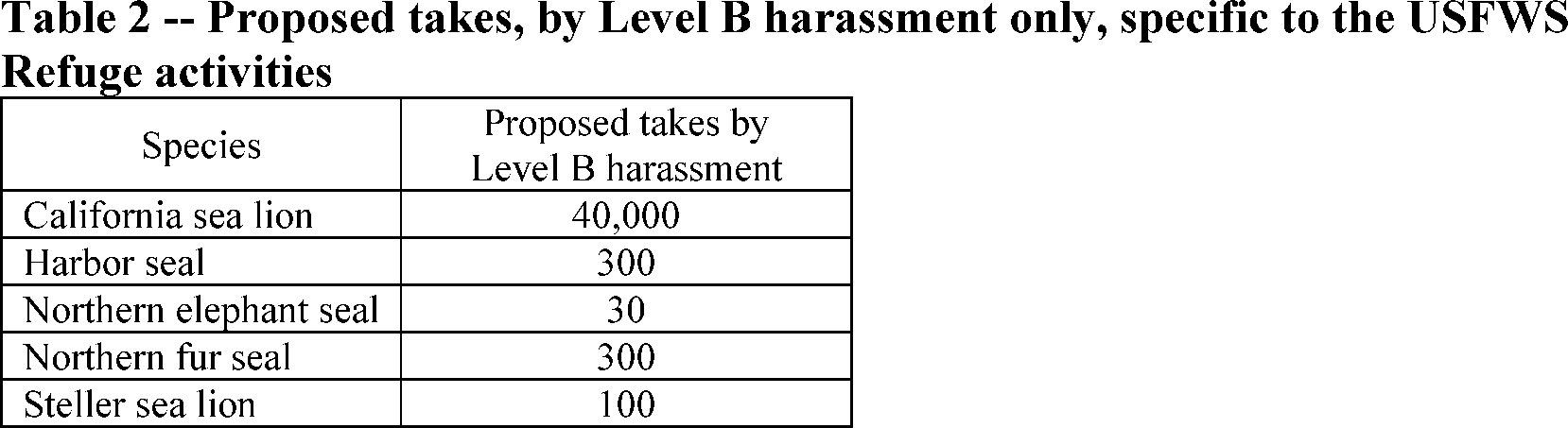
For the activities specific to the USFWS Refuge, the USFWS Refuge has requested, and we have proposed, to authorize the same amount of Level B harassment take under this 2026-2027 proposed IHA as was authorized for their activities in the last IHA (90 FR 42750, September 4, 2025) (table 2). The previously requested take numbers were calculated based on the number of species of marine mammals generally present on the islands (particularly near haulouts, work areas, helicopter flight paths, and boat landings) and the frequency of the planned activities.
( printed page 27296)
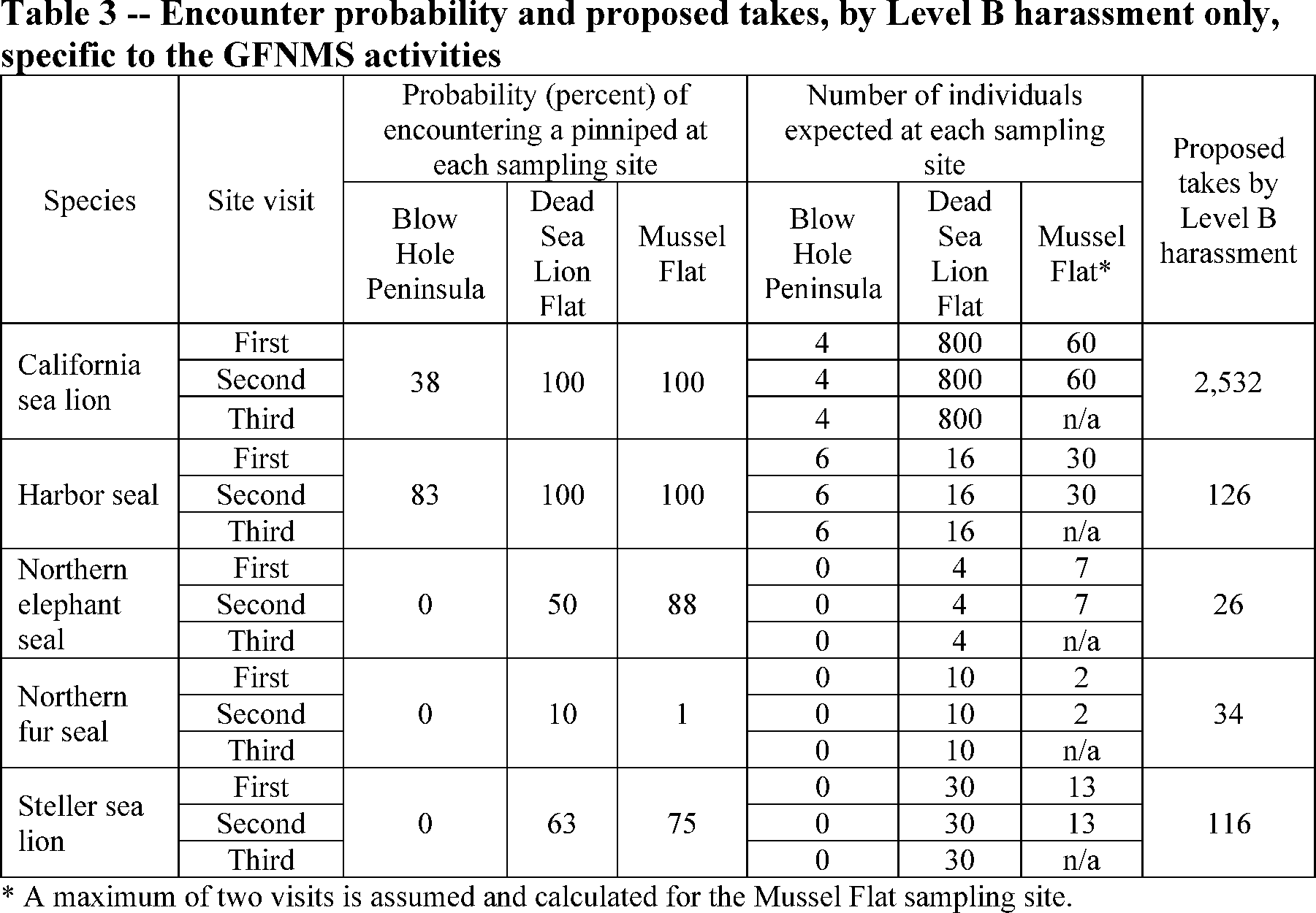
For the activities specific to the GFNMS, we propose to authorize takes by Level B harassment only. The requested take considers the probability of encountering pinnipeds at the three sampling sites (Blow Hole Peninsula, Dead Sea Lion Flat, and Mussel Flat), according to weekly data from Point Blue and GFNMS staff from 2018 to 2024 (Warzybok, 2024), and as shown in table 3. The calculation assumes that a maximum of two visits would occur at Mussel Flat, and a maximum of three visits would be needed at Blow Hole Peninsula and Dead Sea Lion Flat between November 1, 2026, and March 15, 2027.
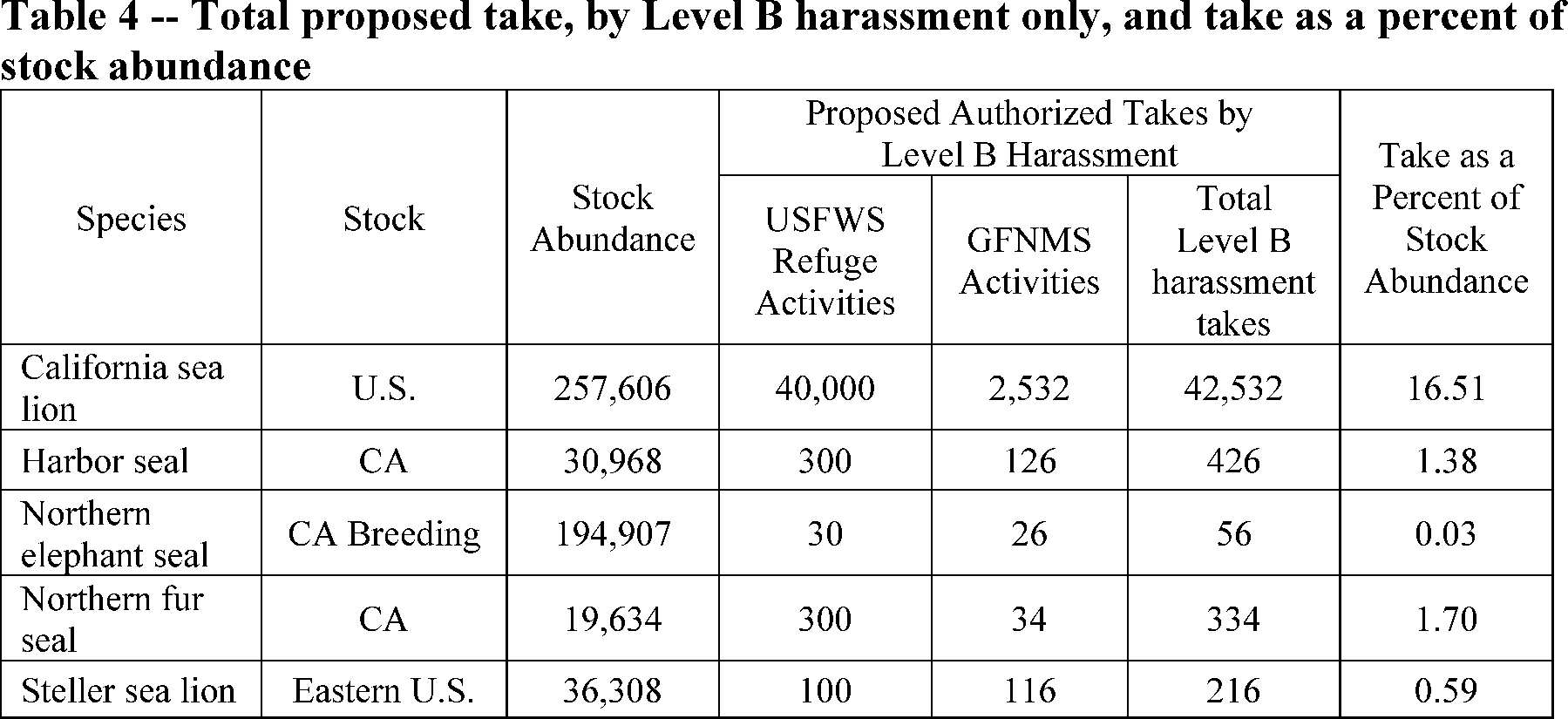
Table 4 presents the total Level B harassment takes that the USFWS Refuge has requested for authorization. NMFS concurs with these estimates and proposes to authorize them.
( printed page 27297)
Proposed Mitigation
In order to issue an IHA under section 101(a)(5)(D) of the MMPA, NMFS must set forth the permissible methods of taking pursuant to the activity, and other means of effecting the least practicable adverse impact on the species or stock and its habitat, paying particular attention to rookeries, mating grounds, and areas of similar significance, and on the availability of the species or stock for taking for certain subsistence uses (latter not applicable for this action). NMFS regulations require applicants for incidental take authorizations to include information about the availability and feasibility (economic and technological) of equipment, methods, and the manner of conducting the activity or other means of effecting the least practicable adverse impact upon the affected species or stocks, and their habitat (50 CFR 216.104(a)(11)).
In evaluating how mitigation may or may not be appropriate to ensure the least practicable adverse impact on species or stocks and their habitat, as well as subsistence uses where applicable, NMFS considers two primary factors:
(1) The manner in which, and the degree to which, the successful implementation of the measure(s) is expected to reduce impacts to marine mammals, marine mammal species or stocks, and their habitat. This considers the nature of the potential adverse impact being mitigated (likelihood, scope, range). It further considers the likelihood that the measure will be effective if implemented (probability of accomplishing the mitigating result if implemented as planned), the likelihood of effective implementation (probability implemented as planned); and
(2) The practicability of the measures for applicant implementation, which may consider such things as cost and impact on operations.
The mitigation requirements described in the following were proposed by the USFWS Refuge in its adequate and complete application or are the result of subsequent coordination between NMFS and the USFWS Refuge. The USFWS Refuge has agreed that all the mitigation measures are practicable. NMFS has fully reviewed the specified activities and the mitigation measures to determine if the mitigation measures would result in the least practicable adverse impact on marine mammals and their habitat, as required by the MMPA, and has determined that the proposed measures are appropriate. NMFS describes these below as proposed mitigation requirements and has included them in the proposed IHA.
In addition to the measures described later in this section, the USFWS Refuge would follow these general mitigation measures:
Takes proposed for authorization, by Level B harassment only, would be limited to the species and numbers listed in table 4.
All activities would be required to be halted upon observation of either a species for which incidental take was not authorized or for a species for which incidental take has been authorized but the number of takes has been met, if the IHA is issued;
The taking by Level A harassment, serious injury, or death of any of the species listed in table 4 or any taking of any other species of marine mammal would be prohibited and would result in the modification, suspension, or revocation of the IHA, if issued. Any take exceeding the authorized amounts listed in table 4 would be prohibited and would result in the modification, suspension, or revocation of the IHA, if issued; and
Ensure that all relevant staff are trained prior to the start of any research, monitoring, and management activities, so that responsibilities, communication procedures, marine mammal monitoring protocols, and operational procedures are clearly understood. New personnel joining during the project must be trained prior to commencing work.
In addition to the general mitigation measures described above, the USFWS Refuge would follow these mitigation measures:
When safety permits, field personnel must slowly approach shore for boat landings to avoid causing a stampede, to provide animals with the opportunity to enter the water, and to avoid vessel strikes;
Field personnel must observe a site from a distance, using binoculars if necessary, to detect any marine mammals prior to approach to determine if mitigation is required (i.e.,
activities must not be conducted if pinnipeds are present to the extent possible; if other pinnipeds are present, field personnel must approach with caution, walking slowly, quietly, and close to the ground to avoid surprising any hauled out individuals and to reduce flushing/stampeding of individuals);
Field personnel must maintain a safe distance from marine mammals and not approach any marine mammals while conducting the specified activities, unless it is absolutely necessary to flush or cause a marine mammal to move to continue conducting activities (i.e.,
if a site
( printed page 27298)
cannot be accessed or sampled due to the presence of a pinniped);
All persons must monitor for offshore predators and must not approach hauled out pinnipeds if great white sharks (Carcharodon carcharias) or killer whales (
Orcinus orca) are observed. If pinniped predators are seen in the area, field personnel must not disturb the pinnipeds until the area is free of predators;
Field personnel must avoid visits to sites where pups are present at a site, if the number of takes that have been granted for a species is met, or when a species for which authorization has not been granted is observed or is present;
Field personnel must coordinate research visits to intertidal areas of the Southeast Farallon Island to reduce potential take and coordinate research activities to minimize the number of trips to the island;
Beach landings on Southeast Farallon Island must only occur after pinnipeds that might be present on the landing beach have entered the water;
Helicopter transits must be designed and performed in a manner that reduces disturbance to pinnipeds and avoids disturbance during breeding/pupping periods, where feasible (i.e.,
haul outs near Mussel Flats); and
Helicopter transits are only permitted from September through March 15.
NMFS conducted an independent evaluation of the proposed measures and has preliminarily determined that the proposed mitigation measures provide the means of effecting the least practicable impact on the affected species or stocks and their habitat, paying particular attention to rookeries, mating grounds, and areas of similar significance.
Proposed Monitoring and Reporting
In order to issue an IHA for an activity, section 101(a)(5)(D) of the MMPA states that NMFS must set forth requirements pertaining to the monitoring and reporting of such taking. The MMPA implementing regulations at 50 CFR 216.104(a)(13) indicate that requests for authorizations must include the suggested means of accomplishing the necessary monitoring and reporting that will result in increased knowledge of the species and of the level of taking or impacts on populations of marine mammals that are expected to be present while conducting the activities. Effective reporting is critical both to compliance as well as ensuring that the most value is obtained from the required monitoring.
Monitoring and reporting requirements prescribed by NMFS should contribute to improved understanding of one or more of the following:
Occurrence of marine mammal species or stocks in the area in which take is anticipated (e.g.,
presence, abundance, distribution, density);
Nature, scope, or context of likely marine mammal exposure to potential stressors/impacts (individual or cumulative, acute or chronic), through better understanding of: (1) action or environment (e.g.,
source characterization, propagation, ambient noise); (2) affected species (
e.g.,
life history, dive patterns); (3) co-occurrence of marine mammal species with the activity; or (4) biological or behavioral context of exposure (
e.g.,
age, calving or feeding areas);
Individual marine mammal responses (behavioral or physiological) to acoustic stressors (acute, chronic, or cumulative), other stressors, or cumulative impacts from multiple stressors;
How anticipated responses to stressors impact either: (1) long-term fitness and survival of individual marine mammals; or (2) populations, species, or stocks;
Effects on marine mammal habitat (e.g.,
marine mammal prey species, acoustic habitat, or other important physical components of marine mammal habitat); and
Mitigation and monitoring effectiveness.
The monitoring and reporting requirements described in the following were proposed by the USFWS Refuge in their adequate and complete application and/or are the result of subsequent coordination between NMFS and the Refuge. The Refuge has agreed to the requirements. NMFS describes these below as requirements and has included them in the proposed IHA.
The proposed research and monitoring activities will contribute to the knowledge of pinnipeds on the South Farallon Island by noting observations of: (1) unusual behaviors, numbers, or distributions of pinnipeds, such that any potential follow-up research can be conducted by the appropriate personnel; (2) tag-bearing carcasses of pinnipeds, allowing transmittal of the information to appropriate agencies and personnel; and (3) rare or unusual species of marine mammals for agency follow-up.
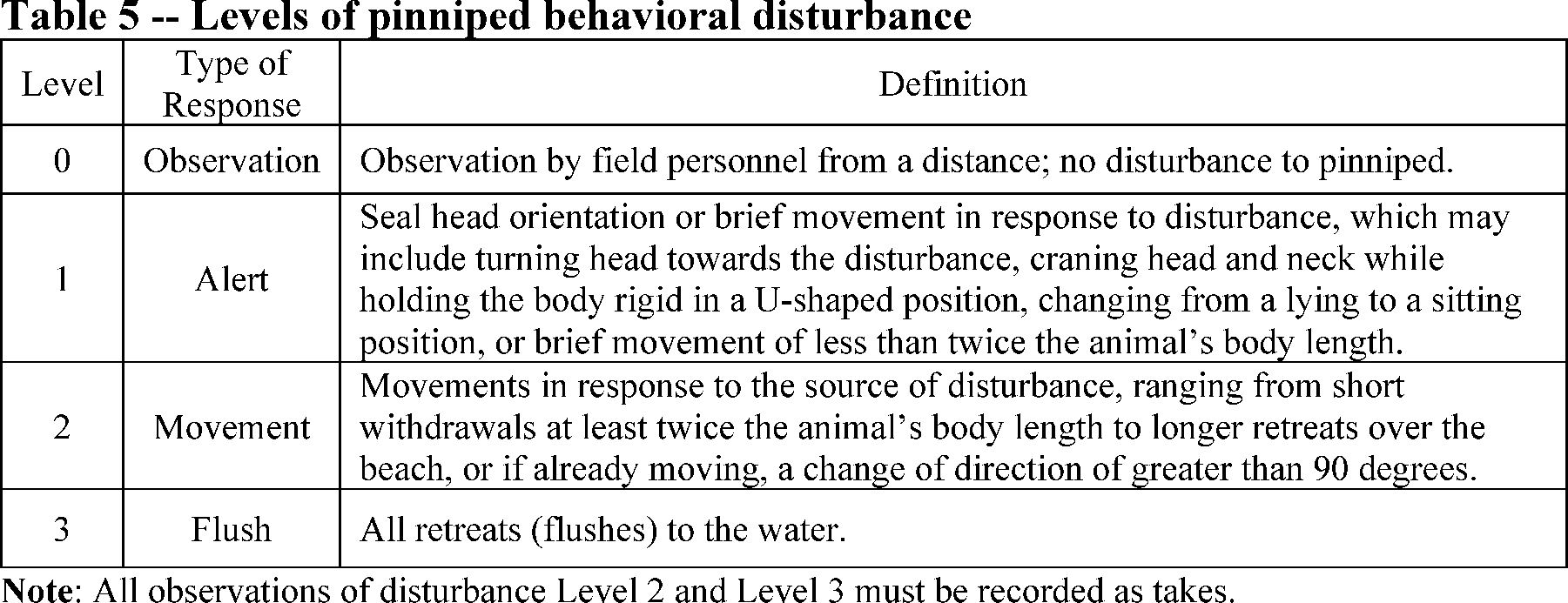
Proposed monitoring requirements for the research activities will include observations by Refuge and Sanctuary staff. Information recorded will include species counts (with numbers of pups/juveniles) of animals present before approaching, numbers of observed disturbances (based on the scale below), and descriptions of the disturbance behaviors during the project activities, including location, date, and time of the event. For consistency, any reactions by pinnipeds to field personnel will be recorded according to a three-point scale, as shown in table 5. We specifically note that only observations of disturbance levels 2 and 3 would be recorded as takings. The lead biologist/project lead in the field will serve as an observer to record the incidental take.
( printed page 27299)
Furthermore, the following monitoring protocols for the USFWS Refuge are proposed:
(1) Record of date, time, and location (or closest point of ingress) of each visit to the research site;
(2) Composition of the marine mammals sighted, such as species, gender, and life history stage (
e.g.,
adult, sub-adult, pup);
(3) Information on the numbers (by species) of marine mammals observed during the activities;
(4) Estimated number of marine mammals (by species) that may have been harassed during the activities;
(5) Behavioral responses or modifications of behaviors that may be attributed to the specific activities and a description of the specific activities occurring during that time (
e.g.,
human approach, vessel approach, helicopter take-off/landing/flyover); and
(6) Information on the weather, including the tidal state and horizontal visibility.
In addition, observations regarding the number and species of any marine mammals observed (either in the water or hauled out at, or adjacent to, a research site) are recorded as part of field observations during research activities. Information regarding physical and biological conditions pertaining to a site, as well as the date and time that research was conducted, will also be recorded. This information will be incorporated into a monitoring report (along with other information, as required below in the
Reporting
section) for NMFS, and all raw data will be provided.
Reporting
The USFWS Refuge would be required to submit an annual draft summary report on all research activities and marine mammal monitoring results to NMFS within 90 days following the end of the project activities or 60 calendar days prior to the requested issuance of any subsequent IHA for similar activities at the same location, whichever comes first. The draft summary report would include an overall description of the research activities completed, a narrative regarding marine mammal sightings, and associated raw Protected Species Observer data sheets (in electronic spreadsheet format). Specifically, the report must include:
Dates and times (beginning and end) of all marine mammal monitoring;
Observer locations during marine mammal monitoring; and
Environmental conditions during monitoring periods (at the beginning and end of observer shift and whenever conditions change significantly), including Beaufort sea state and any other relevant weather conditions, including cloud cover, fog, sun glare, and overall visibility to the horizon, and estimated observable distance.
Upon observation of a marine mammal, the following information must be reported:
Name of the observer who sighted the animal(s) and observer location and activity at the time of the sighting;
Time of the sighting;
Identification of the animal(s) (e.g.,
genus/species, lowest possible taxonomic level, or unidentified), observer confidence in identification, and the composition of the group if there is a mix of species;
Estimated number of animals (min/max/best estimate);
Estimated number of animals by cohort (e.g.,
adults, juveniles, neonates, group composition,
etc.);
Animal's closest point of approach;
Description of any marine mammal behavioral observations (e.g.,
observed behaviors such as feeding or traveling), including an assessment of behavioral responses thought to have resulted from the activity (
e.g.,
no response or changes in behavioral state such as ceasing feeding, changing direction, flushing,
etc.);
Number of marine mammals detected, by species; and
Detailed information about the implementation of any mitigation, a description of the specified actions that ensued, and resulting changes in the behavior of the animal(s), if any.
If no comments are received from NMFS within 30 days after the submission of the draft summary report, the draft report would constitute the final report. If the USFWS Refuge receive comments from NMFS, a final summary report addressing NMFS' comments must be submitted within 30 days after receipt of comments.
Additionally, the USFWS would be required to undertake situational reporting to the NMFS West Coast Regional Office (562-980-3230) for marked or tag-bearing pinnipeds or carcasses, or for any unusual behaviors, distributions, or numbers of pinnipeds.
Reporting Injured or Dead Marine Mammals
If, at any time, the specified activities clearly cause the take of a marine mammal in a prohibited manner such as an injury (
i.e.,
Level A harassment), serious injury, or mortality, the USFWS Refuge would immediately cease the specified activities and report the incident to the NMFS Office of Protected Resources (
PR.ITP.MonitoringReports@noaa.gov
and
ITP.Graham@noaa.gov) and the NMFS West Coast Regional Stranding Coordinator (562-980-3230). The report must include the following information:
(1) Time and date of the incident;
(2) Description of the incident;
(3) Environmental conditions (
e.g.,
wind speed and direction, Beaufort sea state, cloud cover, and visibility);
( printed page 27300)
(4) Description of all marine mammal observations in the last 24 hours preceding the incident;
(5) Species identification or description of the animal(s) involved;
(6) Fate of the animal(s); and
(7) Photographs or video footage of the animal(s) (if the equipment is available).
Activities would not resume until NMFS could review the circumstances of the prohibited take. NMFS will work with the USFWS to determine the measures necessary to minimize the likelihood of further prohibited take and to ensure MMPA compliance. The USFWS may not resume the activities until notified by the NMFS Office of Protected Resources.
In the event that field personnel discover an injured or dead marine mammal and determine that the cause of the injury or death is unknown and the death is relatively recent (
e.g.,
in less than a moderate state of decomposition), the USFWS Refuge would immediately report the incident to the NMFS Office of Protected Resources (
PR.ITP.MonitoringReports@noaa.gov
and
ITP.
G
raham@noaa.gov) and the NMFS West Coast Regional Stranding Coordinator (562-980-3230). The report must include the same information identified in the paragraph above. Activities may continue while NMFS reviews the circumstances of the incident. NMFS will work with the USFWS to determine whether additional mitigation measures or modifications to the activities are appropriate.
In the event that an injured or dead marine mammal is discovered and it is determined that the injury or death is not associated with or related to the activities authorized in any issued IHA (
e.g.,
previously wounded animal, carcass with moderate to advanced decomposition, or scavenger damage), the USFWS would report the incident to the NMFS Office of Protected Resources (
PR.ITP.MonitoringReports@noaa.gov
and
ITP.
G
raham@noaa.gov) and the NMFS West Coast Regional Stranding Coordinator (562-980-3230) within 24 hours of the discovery. The USFWS would provide photographs, video footage (if available), or other documentation of the stranded animal sighting to NMFS and the Marine Mammal Stranding Network. Activities may continue while NMFS reviews the circumstances of the incident.
Negligible Impact Analysis and Determination
NMFS has defined negligible impact as an impact resulting from the specified activities that cannot be reasonably expected to, and is not reasonably likely to, adversely affect the species or stock through effects on annual rates of recruitment or survival (50 CFR 216.103). A negligible impact finding is based on the lack of likely adverse effects on annual rates of recruitment or survival (
i.e.,
population-level effects). An estimate of the number of takes alone is not enough information upon which to base an impact determination. In addition to considering estimates of the number of marine mammals that might be “taken” through harassment, NMFS considers other factors, such as the likely nature of any impacts or responses (
e.g.,
intensity, duration), the context of any impacts or responses (
e.g.,
critical reproductive time or location, foraging impacts affecting energetics), as well as effects on habitat, and the likely effectiveness of the mitigation. We also assess the number, intensity, and context of estimated takes by evaluating this information relative to population status. Consistent with the 1989 preamble for NMFS' implementing regulations (54 FR 40338, September 29, 1989), the impacts from other past and ongoing anthropogenic activities are incorporated into this analysis via their impacts on the baseline (
e.g.,
as reflected in the regulatory status of the species, population size and growth rate where known, ongoing sources of human-caused mortality, or ambient noise levels).
To avoid repetition, the discussion of our analysis applies to all the species listed in table 1, given that the anticipated effects of these activities on these different marine mammals are expected to be similar. There is little information about the nature or severity of the impacts, or the size, status, or structure of any of these species or stocks that would lead to a different analysis for this activity.
For reasons stated previously in this document (see the Potential Effects of Specified Activities section) and based on the following factors, NMFS does not expect the proposed activities to cause long-term behavioral disturbance that would be expected to negatively impact an individual animal's fitness, or result in injury, serious injury, or mortality. Although the proposed activities may disturb marine mammals, NMFS expects impacts to occur to localized groups of animals at or near the activity sites. Regarding research activities, behavioral disturbance is expected to be limited to short-term startle responses and localized behavioral changes, given the brief duration of these activities (at most 4-5 hours from November 1 through March 15). All construction work (specific to facilities maintenance, repair, removal, and minor construction activities) would be limited to September 1 through March 15 to avoid disturbances to wildlife. Boat landings are expected to last approximately 1 to 3 hours and would be localized to one of two specific landing areas (
i.e.,
East Landing and North Landing). During seasons when the weather is less than optimal and safe for boat landings (much of the fall and winter period, September 1 through March 15), helicopters would be used to transport equipment and personnel, with a prohibition on helicopter use the rest of the year to avoid disturbance to sensitive wildlife and breeding/pupping activities. Minor and brief responses, including short-duration startle reactions, are not likely to constitute a disruption of behavioral patterns, such as migration, nursing, breeding, feeding, or sheltering. These short-duration disturbances (in many cases, animals are expected to return within a short period) will generally allow marine mammals to reoccupy haulouts relatively quickly; therefore, these disturbances are not expected to result in long-term disruption of important behaviors. No surveys will occur at or near rookeries, as field personnel will have limited access to the South Farallon Islands during the pupping season and will not approach sites if pups are observed. Furthermore, breeding animals tend to be concentrated in areas that field personnel are not scheduled to visit. Therefore, NMFS does not expect mother-pup separation or crushing of pups during potential stampedes into the water.
Regarding effects on animals on the South Farallon Islands, field personnel will, where possible, delay their ingress into the landing areas until after pinnipeds enter the water, and will cautiously operate vessels at slow speeds. For helicopters, while some limited effects have been documented in the literature (see the Potential Effects of the Specified Activities section), any behavioral effects are expected to be temporary and fleeting, given that helicopters would primarily be transiting, landing, or taking off. To reduce effects, helicopter operations are permitted only between September 1 and March 15; at all other times of the year, helicopter use would be prohibited, thereby avoiding the breeding season for marine mammals on the South Farallon Islands. Only limited access would be permitted to pinniped pupping areas, so mother-pup separation is not expected. Lastly, the
( printed page 27301)
helicopter flight path has been developed to minimize disturbance to wildlife, as most pinniped haulouts (except Mussel Flat) are located away from the flight path.
In summary and as described above, the following factors primarily support our preliminary determination that the impacts resulting from these activities are not expected to adversely affect any of the species or stocks through effects on annual rates of recruitment or survival:
No serious injury or mortality is anticipated or authorized;
No take by Level A harassment is expected, nor is it proposed for authorization;
The intensity of anticipated takes by Level B harassment is relatively low for all pinniped stocks. Level B harassment would be in the form of behavioral disturbance, resulting in temporary avoidance of the project areas where field personnel would be working;
Given pinnipeds are carnivores, no prey species (i.e.,
fish) would be impacted by the proposed activities or would only be temporarily impacted for a short duration during in-water activities (
i.e.,
small motorboat and sailboat use). Therefore, any associated impacts on marine mammal foraging are not expected to result in significant or long-term consequences for individuals or their populations;
No impacts to pinniped habitat are anticipated; and
Only limited behavioral disturbance in the form of short-duration startle reactions is expected, and mitigation requirements employed by field personnel (e.g.,
moving slowly, using hushed voices) should further decrease disturbance levels.
Based on the analysis contained herein of the likely effects of the specified activities on marine mammals and their habitat, and taking into consideration the implementation of the proposed monitoring and mitigation measures, NMFS preliminarily finds that the total marine mammal take from the proposed activities will have a negligible impact on all affected marine mammal species or stocks.
Small Numbers
As noted previously, only take of small numbers of marine mammals may be authorized under sections 101(a)(5)(A) and (D) of the MMPA for specified activities other than military readiness activities. The MMPA does not define small numbers, and so, in practice, where estimated numbers are available, NMFS compares the number of individuals taken to the most appropriate abundance estimate for the relevant species or stock in determining whether an authorization is limited to small numbers of marine mammals. When the predicted number of individuals to be taken is fewer than one-third of the species or stock abundance, the take is considered to be of small numbers (see 86 FR 5322, January 19, 2021). Additionally, other qualitative factors may be considered in the analysis, such as the temporal or spatial scale of the activities.
Table 4 indicates the total number of animals that could be exposed to human disturbance and that could cause Level B harassment during the proposed activities. Our analysis shows that less than one-third of each affected stock could be taken by Level B harassment. The number of animals proposed for authorization that could be taken from these stocks would be considered small relative to the relevant stocks' abundance, even if each estimated take occurred to a new individual. While there is a potential for some individuals to be taken multiple times per day, field personnel would count them as separate takes if they cannot be individually identified.
Based on the analysis contained herein of the proposed activities (including the proposed mitigation and monitoring measures) and the anticipated take of marine mammals, NMFS preliminarily finds that small numbers of marine mammals would be taken relative to the population size of the affected species or stocks.
Unmitigable Adverse Impact Analysis and Determination
There are no relevant subsistence uses of the affected marine mammal species or stocks implicated by this action. Therefore, NMFS has determined that the total taking of affected species or stocks would not have an unmitigable adverse impact on the availability of such species or stocks of taking for subsistence purposes.
Endangered Species Act
Section 7(a)(2) of the ESA of 1973 (16 U.S.C. 1531et seq.) requires that each Federal agency ensure that any action it authorizes, funds, or carries out is not likely to jeopardize the continued existence of any endangered or threatened species or result in the destruction or adverse modification of designated critical habitat. To ensure ESA compliance in issuing incidental take authorizations, NMFS consults internally whenever we propose to authorize take for ESA-listed species.
No incidental take of ESA-listed species is proposed for authorization or expected to result from these activities. Therefore, NMFS has determined that formal consultation under section 7 of the ESA is not required for this action.
Proposed Authorization
As a result of these preliminary determinations, NMFS proposes to issue an IHA to the USFWS Refuge for conducting research, monitoring, and management activities in the South Farallon Islands at the Farallon Islands National Wildlife Refuge off San Francisco, CA, provided the previously mentioned mitigation, monitoring, and reporting requirements are incorporated. A draft of the proposed IHA can be found at:
https://www.fisheries.noaa.gov/national/marine-mammal-protection/incidental-take-authorizations-research-and-other-activities.
Request for Public Comments
We request comment on our analyses, the proposed authorization, and any other aspect of this notice of proposed IHA for the proposed research, monitoring, and management activities. We also request comments on the potential renewal of this proposed IHA as described in the paragraph below. Please include with your comments any supporting data or literature citations to help inform decisions on the request for this IHA or a subsequent renewal IHA.
On a case-by-case basis, NMFS may issue a one-time, 1-year renewal IHA following notice to the public providing an additional 15 days for public comments when (1) up to another year of identical or nearly identical activities as described in the Description of Proposed Activities section of this notice is planned or (2) the activities as described in the Description of Proposed Activities section of this notice would not be completed by the time the IHA expires and a renewal would allow for completion of the activities beyond that described in the
Dates and Duration
section of this notice, provided all of the following conditions are met:
A request for renewal is received no later than 60 days prior to the needed renewal IHA effective date (recognizing that the renewal IHA expiration date cannot extend beyond 1 year from expiration of the initial IHA).
The request for renewal must include the following:
1. An explanation that the activities to be conducted under the requested renewal IHA are identical to the activities analyzed under the initial IHA, are a subset of the activities, or include changes so minor (
e.g.,
a reduction in the number of research
( printed page 27302)
sites) that the changes do not affect the previous analyses, mitigation and monitoring requirements, or take estimates (with the exception of reducing the type or amount of take).
2. A preliminary monitoring report showing the results of the required monitoring to date and an explanation showing that the monitoring results do not indicate impacts of a scale or nature not previously analyzed or authorized.
Upon review of the request for renewal, the status of the affected species or stocks, and any other pertinent information, NMFS determines that there are no more than minor changes in the activities, the mitigation and monitoring measures will remain the same and appropriate, and the findings in the initial IHA remain valid.
Dated: May 12, 2026.
Kimberly Damon-Randall,
Director, Office of Protected Resources, National Marine Fisheries Service.
Use this for formal legal and research references to the published document.
91 FR 27283
Web Citation
Suggested Web Citation
Use this when citing the archival web version of the document.
“Takes of Marine Mammals Incidental to Specified Activities; Taking Marine Mammals Incidental To Research, Monitoring, and Management Activities on the South Farallon Islands, Farallon Islands National Wildlife Refuge, California,” thefederalregister.org (May 14, 2026), https://thefederalregister.org/documents/2026-09694/takes-of-marine-mammals-incidental-to-specified-activities-taking-marine-mammals-incidental-to-research-monitoring-and-m.