Endangered and Threatened Wildlife and Plants; Reclassification of the Hawaiian Stilt (Kukuluae'o or Ae'o) From Endangered to Threatened With a Section 4(d) Rule
We, the U.S. Fish and Wildlife Service (Service), are reclassifying the Hawaiian stilt (kukuluae[revaps]o or ae[revaps]o, Himantopus mexicanus knudseni; a subspecies of the blac...
We, the U.S. Fish and Wildlife Service (Service), are reclassifying the Hawaiian stilt (kukuluae'o or ae'o,
Himantopus mexicanus knudseni;
a subspecies of the black-necked stilt (
Himantopus mexicanus)) from endangered to threatened (downlist) under the Endangered Species Act of 1973, as amended (Act). This action is based on our evaluation of the best scientific and commercial data available, which indicates that the subspecies' status has improved such that it is not in danger of extinction throughout all or a significant portion of its range, but that it is still likely to become so within the foreseeable future. We also finalize protective regulations under the authority of section 4(d) of the Act that are necessary and advisable to provide for the conservation of the Hawaiian stilt. We recognize the Hawaiian names kukuluae'o and ae'o as additional common names.
DATES:
This rule is effective August 19, 2026.
ADDRESSES:
This final rule is available on the internet at
www.regulations.gov.
Comments and materials we received are available for public inspection at
www.regulations.gov
at Docket No. FWS-R1-ES-2020-0079.
Availability of supporting materials:
Supporting materials we used in preparing this rule, including the 5-year review and the recovery plan, are available at
www.regulations.gov
at Docket No. FWS-R1-ES-2020-0079.
FOR FURTHER INFORMATION CONTACT:
Direct all questions or requests for additional information to: Aaron Nadig, Deputy Field Supervisor, U.S. Fish and Wildlife Service, Pacific Islands Fish and Wildlife Office; telephone 808-792-9400,
aaron_nadig@fws.gov.
Individuals in the United States who are deaf, deafblind, hard of hearing, or have a speech disability may dial 711 (TTY, TDD, or TeleBraille) to access telecommunications relay services. Individuals outside the United States should use the relay services offered within their country to make international calls to the point-of-contact in the United States.
SUPPLEMENTARY INFORMATION:
Executive Summary
Why we need to publish a rule.
Under the Act, a species warrants reclassification from endangered to threatened if it no longer meets the definition of an endangered species (in danger of extinction throughout all or a significant portion of its range). The Hawaiian stilt is listed as endangered, and we are reclassifying (downlisting) the Hawaiian stilt as threatened. We have determined that the Hawaiian stilt does not meet the Act's definition of an endangered species, but it does meet the definition of a threatened species (likely to become an endangered species throughout all or a significant portion of its range within the foreseeable future). Reclassifying a species as a threatened species can be completed only by issuing a rule through the Administrative Procedure Act rulemaking process (5 U.S.C. 551et seq.).
What this document does.
This rule reclassifies the Hawaiian stilt from endangered to threatened with a rule issued under section 4(d) of the Act, based on the subspecies' current status. Additionally, this rule formally recognizes the Hawaiian names for the Hawaiian stilt as additional common names: “kukuluae'o” or “ae'o” for short.
The basis for our action.
Under the Act, we may determine that a species is an endangered species or threatened species because of any of five factors: (A) The present or threatened destruction, modification, or curtailment of its habitat or range; (B) overutilization for commercial, recreational, scientific, or educational purposes; (C) disease or predation; (D) the inadequacy of existing regulatory mechanisms; or (E) other natural or manmade factors affecting its continued existence. We may reclassify a species if the best scientific and commercial data available indicate the species no longer meets the applicable definition in the Act. Based on the status review, the current threats analysis, and evaluation of conservation measures discussed in this rule, we conclude that the Hawaiian stilt no longer meets the Act's definition of an endangered species and should be reclassified to a threatened species. The Hawaiian stilt is no longer in danger of extinction throughout all or a significant portion of its range but is likely to become so within the foreseeable future.
We have determined that the Hawaiian stilt is a threatened species due to the following threats: predation, overgrowth of nonnative plants, inappropriate water levels (
i.e.,
too high or too low) that do not support Hawaiian stilt nesting, disease (primarily botulism), urban development, water extraction and diversion, and environmental contaminants. Sea level rise resulting from climate change is an emerging threat and is projected to impact the Hawaiian stilt's population within the foreseeable future.
Previous Federal Actions
On March 25, 2021, we published a proposed rule to reclassify the Hawaiian stilt from endangered to threatened (86 FR 15855). The proposed rule opened a 60-day public comment period, ending May 24, 2021. During that open comment period, we received a request for a public hearing, and on June 23, 2021, we reopened the public comment period for an additional month and announced a public informational meeting and a public hearing to allow the public an additional opportunity to provide comments (86 FR 32857). We held a virtual public hearing on July 7, 2021. Please refer to the proposed rule to reclassify the Hawaiian stilt (86 FR 15855) for a description of Federal actions related to this subspecies that occurred prior to the proposed rule's publication.
Peer Review
In accordance with our joint policy with the National Marine Fisheries Service on peer review that published in the
Federal Register
on July 1, 1994 (59 FR 34270), and our August 22, 2016, memorandum updating and clarifying the role of peer review of listing and recovery actions under the Act (
www.fws.gov/sites/default/files/documents/peer-review-policy-directors-memo-2016-08-22.pdf), we solicited independent scientific review of the scientific data and interpretation contained in our proposed rule. We sent the proposed rule to five independent peer reviewers and received four responses. The peer reviews can be found at
www.regulations.gov
at Docket No. FWS-R1-ES-2020-0079. In preparing this final rule, we incorporated the results of these reviews, as appropriate. A summary of the peer review comments and our responses can be found in the Summary of Comments and Recommendations below.
( printed page 45481)
Summary of Changes From the Proposed Rule
We made several changes in this final rule in response to public comments we received on the March 25, 2021, proposed rule (86 FR 15855). In incorporating the primary changes resulting from public input, we:
Completed minor editorial changes and reorganized various sections of the rule to increase readability.
Updated the following sections to incorporate the most recent data from peer review publications and species expert comments on the proposed rule:Range, Abundance, and Population Trends; Criterion 3 for Downlisting; Criterion 4 for Downlisting;
and
Current Voluntary and Regulatory Conservation Efforts.
Updated figures and text to reflect newly received survey data and associated analyses, including updated (with the inclusion of 2016-2023 census data) population trend analyses (Gorresen et al. 2024, entire).
Updated the following discussions under Summary of Biological Status and Threats:Predation, Sea Level Rise, Tropical Cyclone Intensity and Frequency, Ground and Surface Water Alterations Resulting from Urban Development,
and
Environmental Contaminants
to incorporate the most current peer reviewed research and information received through peer review and species expert comments on the proposed rule.
Added kukuluae'o as an official Hawaiian common name for the subspecies, as well as retaining the corrected short form of this name, ae'o, as outlined in the proposed rule.
Changed the foreseeable future timeframe from present-to-2040, to present-to-2080, based primarily on increased confidence in regional sea level rise projections, and on the newly published, updated, and peer-reviewed population viability analysis (PVA) which projects Hawaiian stilt viability through 2080.
Revised table 1 to provide more details (where available) regarding the types of management implemented at each of the core wetlands, the year the core wetland received protection, and details regarding methods of each type of management.
Added an exception for take under the 4(d) rule that was accidentally overlooked in our proposed downlisting rule. This take exception under50 CFR 17.31(b) allows any employee or agent of the Service, any other Federal land management agency, the National Marine Fisheries Service, a State conservation agency, or a federally recognized Tribe, who is designated by their agency or Tribe for such purposes, when acting in the course of their official duties, to take Hawaiian stilt without a permit if such action is necessary to aid a sick, injured, or orphaned Hawaiian stilt, dispose of a dead Hawaiian stilt, or salvage a dead Hawaiian stilt specimen that may be useful for scientific study. In addition, any employee or agent of the Service, of the National Marine Fisheries Service, or of a State conservation agency that is operating a conservation program pursuant to the terms of an approved cooperative agreement with the Service that covers the Hawaiian stilt in accordance with section 6(c) of the Act, who is designated by their agency for such purposes, may, when acting in the course of their official duties, also take Hawaiian stilt.
Removed proposed take exception (3) of the 4(d) rule that specifically applied to State and local government law enforcement for the take of Hawaiian stilts for the purposes of aiding or euthanizing sick, injured, or orphaned Hawaiian stilts, because any person who finds a sick, injured, or orphaned endangered migratory bird may, without a permit, take and possess the bird in order to immediately transport it to a permitted rehabilitator, according to50 CFR 17.21(c)(7).
Made minor edits to the final 4(d) regulatory text for clarity, which did not result in any changes to its substance or intent.
The information we received during the comment period for the proposed rule did not change our previous analysis of the magnitude or severity of threats facing the subspecies or our determination that the Hawaiian stilt is no longer an endangered species but meets the Act's definition of a threatened species.
Summary of Comments and Recommendations
In the proposed rule published on March 25, 2021 (86 FR 15855), we requested that all interested parties submit written comments on the proposal by May 24, 2021. We also contacted appropriate Federal and State agencies, scientific experts and organizations, and other interested parties and invited them to comment on the proposal. Newspaper notices inviting general public comment were published in the Honolulu Star Advertiser. We received a request for a public hearing, held a virtual public hearing on July 7, 2021, and reopened the public comment period from June 23, 2021, to July 23, 2021 (86 FR 32857). We reviewed all comments provided during the comment periods and the public hearing to identify substantive information. All substantive information has either been incorporated directly into this final determination or is addressed below.
Peer Reviewer Comments
As discussed in Peer Review above, we received comments on the proposed rule (86 FR 15855, March 25, 2021) from four peer reviewers. We reviewed all comments we received from the peer reviewers for substantive issues and new information. Peer reviewer comments are addressed in the following summary and were incorporated into this final rule as appropriate. The changes we made as a result of peer review consisted of adding new peer-reviewed data published since the proposed rule regarding reproductive success, management efficacy, and threats (predation and sea level rise); clarifications and corrections, including typographical edits; revising descriptions of our analysis; and expanding some risk information related to predation, sea level rise, tropical cyclone intensity and frequency. The reviewers' comments did not result in changes to our resiliency analysis or conclusions.
(1) Comment:
All four peer reviewers reiterated that the Hawaiian stilt is mangement dependent in that it relies on human intervention to mitigate threats (particularly predation by nonnative mammals, birds, and reptiles; overgrowth of nonnative plants; inappropriate water levels; avian botulism; and sea level rise).
Our Response:
We agree that management is essential for long-term viability of the Hawaiian stilt. Our goal is to work with partners to maintain our current adaptive management efforts while simultaneously increasing our understanding and application of effective management tools, particularly in response to sea level rise.
(2) Comment:
Two peer reviewers commented that the reclassification of the Hawaiian stilt may be premature and could result in decreased public interest, protection, and conservation efforts for the subspecies, ultimately resulting in an increase in threats and subsequently a decline in population viability.
Our Response:
We are aware of the perception that conservation benefits afforded to the Hawaiian stilt would be reduced as a result of this final reclassification to threatened with an associated 4(d) rule. However, the determination to downlist a species from endangered to threatened status must be based solely on the best
( printed page 45482)
scientific and commercial data, which for the Hawaiian stilt indicates that the subspecies is not currently in danger of extinction (endangered) but is likely to become endangered within the foreseeable future (threatened).
In addition, the combined purpose of these rules is to provide the Hawaiian stilt continued protections, while also facilitating conservation of Hawaiian stilt and furthering its recovery by giving our conservation partners management flexibility to more efficiently implement predator control and habitat management intended to benefit the subspecies via the 4(d) rule. Upon the effective date of this final reclassification and associated 4(d) rule, Hawaiian stilts will still receive protection under the Act. Section 4(d) rules do not change the consultation requirements under section 7 of the Act. Section 7(a)(2) of the Act requires Federal agencies, including the Service, to ensure that any action they authorize, fund, or carry out is not likely to jeopardize the continued existence of any endangered species or threatened species or result in the destruction or adverse modification of designated critical habitat of such species. These requirements are the same for a threatened species regardless of what is included in its 4(d) rule.
Although this final 4(d) rule allows for select exceptions to prohibitions, as outlined under Protective Regulations Under Section 4(d) of the Act, this rule only addresses requirements under the Act, and does not change the Hawaii Endangered Species Law. Current State of Hawaii law (Hawaii Revised Statutes (HRS) section 195D-4) requires the issuance of a temporary license for the take of endangered and threatened animal species, if the activity otherwise prohibited is for scientific or conservation purposes or incidental to an otherwise lawful activity. As a result, upon the effective date of this final 4(d) rule, certain activities excepted under the Act remain subject to State law prohibitions and so State authorization will continue to be required. Please see Final Rule Issued Under Section 4(d) of the Act for more details on State law and associated requirements (
e.g.,
license, permit, Safe Harbor Agreement, Habitat Conservation Plan).
(3) Comment:
Two peer reviewers commented that downlisting the Hawaiian stilt may be premature as the subspecies will require an increase in conservation planning and actions to mitigate for habitat loss and degradation resulting from sea level rise. Both peer reviewers cited a recent scientific paper (Harmon et al. 2021a, entire) published since publication of the proposed rule that indicates that a 3.3 feet (ft) (1 meter (m)) rise in sea level by 2100 will result in a 27 percent (4,564 acre (ac) (1,847 hectare (ha))) loss of potential waterbird nesting habitat due to marine inundation, and a 2 percent (336 ac (136 ha)) loss of potential nesting habitat due to groundwater inundation, for a total of 29 percent loss of potential waterbird nesting habitat across the Hawaiian Islands. Further, all core wetlands on Kauai, Oahu, Maui Nui, and Hawaii outlined in the recovery plan are projected to be fully or partially inundated due to sea level rise by 2100 (Harmon et al. 2021a, entire).
Our Response:
We have revised our discussion on sea level rise under Summary of Biological Status and Threats to reflect recently published reports (
e.g.,
Harmon et al. 2021a, entire; Intergovernmental Panel on Climate Change (IPCC) 2022, entire; National Oceanic and Atmospheric Administration (NOAA) 2022, entire). The Hawaiian stilt demonstrates plasticity with a high tolerance to salinity, a broad range of foraging habitat, relatively substantial movement between islands, a current population range that includes all of the main Hawaiian Islands (except Kahoolawe), and a relatively stable population since 2005. Further, we do not expect the estimated current vital rates reported in the updated PVA to change considerably within the foreseeable future (present through 2080). Therefore, we conclude that with ongoing management in collaboration with Federal and State partners, and some private partners, the Hawaiian stilt is not currently at risk of extinction but is at risk of extinction within the foreseeable future due to ongoing threats and future threats associated with sea level rise.
(4) Comment:
One peer reviewer commented that a full assessment of the risks of climate change has not been carried out for the Hawaiian stilt; in particular, the likely effects of salinification in wetlands due to climate change is a risk factor that was not assessed in the downlisting proposal.
Our Response:
In this final rule, we revised our discussions on
Sea Level Rise
and
Tropical Cyclone Intensity and Frequency
under Summary of Biological Status and Threats to incorporate recently published scientific findings relevant to the Hawaiian stilt and its habitat from climate change, and to provide additional information requested by peer reviewers.
Regarding salinification, Hawaiian stilts use a wide range of water salinity ranging from 0 to 200 parts per thousand (ppt) (
e.g.,
Hono'uli'uli Unit at Pearl Harbor National Wildlife Refuge (NWR)) (Coleman 1981, p. 48; Reed et al. 2011a, p. 4; Nadig 2017, pers. comm.). Because of its tolerance for a wide range of salinities, salinification of wetlands due to sea level rise is unlikely to occur to such a great extent and at such a rapid rate in the near-term future to put Hawaiian stilt populations at risk. Therefore, while the impact of salinification on Hawaiian stilt viability in the longer-term future is more difficult to project, we do not anticipate salinity to be a substantial factor influencing the near-term extinction risk for the Hawaiian stilt.
(5) Comment:
One peer reviewer commented that our discussion on tropical cyclone intensity and frequency in the proposed rule did not provide any information about the effects of hurricanes on the stilt population size, even though population data exist. The reviewer notes that whether there is an effect on stilt numbers is ultimately what matters and, thus, is more important than any habitat effects.
Our Response:
We revised Tropical Cyclone Intensity and Frequency under Summary of Biological Status and Threats to incorporate a more thorough discussion on the history of hurricanes and tropical storms in Hawaii and the Hawaiian stilt population index values following hurricane and tropical storm events since 1986 (the year the Hawaii Department of Land and Natural Resources, Division of Forestry and Wildlife (DOFAW) Annual Waterbird Survey became standardized).
(6) Comment:
Two peer reviewers commented that recovery criterion 1, which states that all core wetlands be protected and managed for threats to the subspecies, has not been met and recommended that the Service postpone the reclassification of the Hawaiian stilt until this criterion has been fully met. One of these peer reviewers cited the lack of protection and management of core wetlands in accordance with management practices outlined in the recovery plan. Examples given included all wetlands on Niihau (lack of protection and management), Kakahai'a NWR on Molokai (lack of management), and Kawai'ele Waterbird Sanctuary on Kauai (not all recovery plan management practices being implemented). Further, both peer reviewers cited new data that show all core wetlands on Kauai, Oahu, Maui Nui, and Hawaii outlined in the recovery plan are projected to be fully or partially inundated due to sea level rise by 2100 (Harmon et al. 2021a, entire).
Our Response:
Recovery plans provide roadmaps to species recovery
( printed page 45483)
but are not required in order to achieve recovery of a species or to evaluate it for delisting. In addition, recovery plans are also nonbinding documents that rely on voluntary participation from landowners, land managers, and other recovery partners. A determination of whether a valid, extant species should be delisted is made solely on the question of whether it meets the Act's definitions of an “endangered species” or a “threatened species.” We have determined that Hawaiian stilt meets the definition of a threatened species.
(7) Comment:
Two peer reviewers commented that we should provide more details regarding the progress cited for recovery criterion 1 (all core wetlands are protected and managed). One of these peer reviewers specifically requested that the Service include more information regarding the methods used for predator control and habitat management activities at each of the core wetlands, as well as provide an overview of the data on efficacy of each method and the year such actions were initiated at each of the core wetlands.
Our Response:
We have updated table 1 to distinguish between vegetation control and water level control management at each of the core wetlands. We do not have a comprehensive dataset on all predator control methods and habitat management methods implemented in all managed core wetlands, nor do we have the temporal data for the year that individual methods were initiated or their subsequent frequency of implementation across core wetlands. In summary, predator control is most effective if implemented during the nesting season, and the control of rats, cats, and mongooses has increased nest success at multiple sites (Underwood et al. 2013, entire; Underwood et al. 2014, entire). Kauai and Oahu support the largest amount of wetland habitat and receive the most wetland management, followed by Maui, Molokai, and Hawaii, respectively. We are unaware of predator control and habitat management activities on Niihau. Wetland management addresses three key threats (predator control, overgrowth of vegetation, and water levels), as well as botulism outbreaks when they arise. However, not all of these actions are implemented at all of the core wetlands that receive management, nor are they implemented all of the time.
The recovery plan outlines the total area of core wetlands on each island as well as the total area of managed core wetlands. Although we did not have available all the information required to conduct an analysis as suggested, Hawaiian stilts are resilient and rebound after a stochastic disturbance (Reed et al. 1998a, p. 43). For example, Keālia NWR is one of the most important core wetlands for Hawaiian stilt nesting habitat. Since management efforts to eliminate nonnative feral pigs and axis deer, both of which began heavily degrading nesting habitat and threatening eggs during the nesting season, were initiated in 2018, Keālia has supported a large number of Hawaiian stilts. This example demonstrates how Hawaiian stilts are highly plastic and respond positively to management. Lastly, Hawaiian stilts are believed to have reached a population equilibrium with respect to the available area of nesting habitat (van Rees et al. 2020, p. 217; Paxton et al. 2021, p. 434). As such, in order to increase the population size, we must first increase the available area of protected and managed nesting habitat, which we intend to facilitate with this downlisting's accompanying 4(d) rule that allows for increased flexibility for management strategies that benefit Hawaiian stilts.
(8) Comment:
Two peer reviewers commented that recovery criterion 2, which states that at least 50 percent of supporting wetlands should be protected and managed in accordance with management practices outlined in the recovery plan, has not been met, and that 11 supporting wetlands are projected to be fully or partially inundated by sea level rise (Harmon et al. 2021a, entire).
Our Response:
We acknowledge that criterion 2 from the recovery plan has not yet been achieved. Recovery plans provide guidelines for possible pathways toward recovery, but meeting recovery criteria and accomplishing recovery actions are not required in order to achieve recovery of a species, or to evaluate it for downlisting or delisting. While supporting wetlands are important because they provide habitat for smaller Hawaiian stilt populations, or are seasonally important, the Hawaiian stilt has demonstrated flexibility regarding requirements for foraging habitat (Kawasaki et al. 2020, entire), moves freely between islands, and has maintained a stable population under ongoing management of core wetlands (Paxton et al. 2021, p. 432; DOFAW 2022, unpaginated). Despite the protection and management goals defined in criterion 2 being only partially achieved, landowners are increasingly engaging in conservation (Goodale 2021, pers. comm.), and we are constantly seeking new conservation partnerships with private and government (State and Federal) landowners and offer several competitive funding sources for such landowners to carry out beneficial management actions for both core and supporting wetlands. We and our conservation partners are actively working toward solutions to maintain and expand Hawaiian stilt nesting habitat in the face of sea level rise, as well as the other threats outlined in this final rule (see
Current Voluntary and Regulatory Conservation Efforts).
Further, we are aware that 29 percent of potential waterbird nesting habitat may be partially or fully inundated by marine and groundwater inundation by 2100 (Harmon et al. 2021a, entire). While sea level rise may cause some wetlands to expand, and new wetlands may be formed as a result of marine and groundwater inundation, urban development and uncertainty regarding landowner interest and willingness to implement management for waterbirds in areas into which wetlands may migrate may obstruct the management of newly formed wetland areas. However, because the greatest impacts to the Hawaiian stilt associated with sea level rise are a decade or more away, we do not consider them immediate threats to the subspecies. We therefore conclude that reclassification of the Hawaiian stilt from endangered (at risk of extinction) to threatened status (at risk of becoming endangered within the foreseeable future) is warranted, and accounts for the future impacts of sea level rise to habitat.
(9) Comment:
Two peer reviewers commented that the PVA does not adequately demonstrate that the Hawaiian stilt population has achieved long-term viability, and that the subspecies has not met the population threshold for reclassification that was identified in the recovery plan.
Our Response:
The PVA included a sensitivity analysis to the vital rates used in the PVA. The sensitivity analysis showed that the most important predictors of extinction were adult mortality, juvenile mortality, percent of adult females breeding, and nest failure. These analyses showed rapid change in the probability of extinction if these parameters changed even a small amount. The PVA is an optimistic best-case scenario, and we focused on the qualitative nature of the results (meaning the relative proximity of differential vital rates to thresholds of population decline or extinction) (van Rees and Reed 2021, in litt.). This highlights a somewhat fragile aspect of the Hawaiian stilt's long-term viability. While we recognize this fragility and the conservation reliance of the Hawaiian
( printed page 45484)
stilt and the nature of future threats associated with sea level rise and climate change, the population has remained relatively stable since approximately 2005 (after increasing previously) and is unlikely to change in the immediate future as current management continues. Because of the threats we have outlined in this final rule, we conclude that the Hawaiian stilt meets the definition of a threatened species and not that of an endangered species. Long-term Hawaiian stilt viability will require continued management, which will include the implementation of management techniques to address future threats associated with sea level rise.
Further, the PVA found that the Hawaiian stilt has reached a population equilibrium constrained by available managed wetland habitat across the main Hawaiian Islands and that, in order for the Hawaiian stilt population to increase and sustain a population of 2,000 birds or greater, we must increase the amount of managed wetland habitat for the Hawaiian stilt. Both the Service and DOFAW are actively working to expand management in core wetland habitat across the main Hawaiian Islands (
e.g.,
James Campbell NWR and Mānā Plains Wildlife Sanctuary).
(10) Comment:
Two peer reviewers commented that the preliminary results from the PVA cited in the proposed rule concluded that the Hawaiian stilt population is currently not at risk of extinction, and that to be at risk of extinction, mortality rates would have to be at or above 20 percent for adults and 40 percent for juveniles, and nest failure rates would have to be at or above 50 percent. They disagree that the Hawaiian stilt is not at risk of extinction, pointing out that the probability of extinction reaches 1 (100 percent likelihood of extinction) when these rates reach or exceed 34 percent, 79 percent, and 75 percent, respectively.
Our Response:
The PVA quantified Hawaiian stilt viability by employing Hawaiian stilt vital rates from managed wetlands (van Rees et al. 2022, p. 11) and concluded that Hawaiian stilt viability is sensitive to changes in estimated vital rates, meaning that changes in these vital rates could increase the model's outcomes on probability of extinction by 2100 (van Rees et al. 2022, p. 9). We acknowledge that several of the key vital rates (as derived from best-case-scenario estimates on managed populations) are close to levels that could result in simulated extinction (van Rees and Reed 2021, in litt.), and that vital rates can vary widely among nesting sites and nesting years.
However, most successful breeding attempts occur in managed wetlands, and the PVA indicates that the likelihood of extinction is very low for the Hawaiian stilt based on vital rates from managed wetlands. Managed wetland habitat has enabled the Hawaiian stilt population to remain relatively stable since 2005, and we do not expect a significant change in the estimated current vital rates in the near future given ongoing management. However, we recognize that current vital rates could change in the foreseeable future in response to the threats affecting the subspecies, but the subspecies' threatened status accounts for potentially reduced viability in the foreseeable future.
(11) Comment:
One peer reviewer commented that the initial (Reed et al. 1998a, entire) and 2019 (Reed and van Rees 2019, entire) PVAs used a juvenile mortality rate that was a 2-year mean of juvenile mortality measured from the point at which chicks were banded to the point at which they reached 2 years of age (which is a time period with comparatively higher survival than the period prior to banding). The reviewer therefore states that the juvenile mortality input values included in the PVA do not account for mortality that occurs before the chicks are large enough to band (which is a time period during which chicks appear to experience very high mortality).
Our Response:
Hawaiian stilt, like many other avian species, experience high mortality prior to reaching banding age (approximately 10 days old for Hawaiian stilt) (Goodale 2021, pers. comm.). However, mortality prior to banding age was built into the van Rees et al. (2022) updated PVA model, which starts with brood size data in the stochastic reproductive modeling step rather than with clutch size. Thus, the loss of eggs due to hatching failures and loss of chicks prior to banding age are implicit in the model (van Rees and Reed 2021, in litt.). We also note that despite high rates of chick mortality in the first 10 days of life, the Hawaiian stilt has maintained a relatively stable population since 2005.
(12) Comment:
Two peer reviewers commented that stochastic events, such as botulism outbreaks or hurricanes, were not built into the PVA. The reviewer stated that botulism is an ongoing source of adult mortality in Hawaiian stilt, though it is highly variable among sites.
Our Response:
According to the authors of the PVA, catastrophic events, such as disease outbreaks or hurricanes, are unlikely to be as influential as sea level rise (van Rees and Reed 2018, entire; Reed and van Rees 2019, entire) on the Hawaiian stilt's viability. While botulism and hurricanes occur in Hawaii and may result in loss of individual birds, particularly chicks, data suggest that neither of these have a catastrophic effect on the Hawaiian stilt population (van Rees et al. 2022, p. 10; Uyehara 2018, in litt.). The PVA model is stochastic, individual-based, and has environmental stochasticity explicitly built into its simulations (van Rees and Reed 2021, in litt.; van Rees et al. 2022, p. 4). However, quantitative outputs of the study warrant caution and should be taken only as a best-case scenario, and reduced management actions would result in less favorable vital rates and therefore a greater extinction risk (van Rees and Reed 2021, in litt.). The sensitivity analysis in the updated PVA shows that a small change in vital rates would increase the probability of extinction. However, with ongoing management, and substantial impacts associated with sea level rise still a decade or more away, we conclude that such a change in vital rates is not likely to occur in the near future, as the subspecies has maintained a relatively stable population since 2005 under current management.
(13) Comment:
Two peer reviewers commented that recovery criterion 4 has not been met and that reclassification should not occur until the subspecies has multiple self-sustaining breeding populations on the island group of Kauai and Niihau; the island of Oahu; the island group of Maui, Molokai, and Lanai; and the island of Hawaii. The reviewers state that the population of the Hawaiian stilt is not self-sustaining or thriving and that the lack of change in overall reproductive success over time, the stabilization of the population at roughly between 1,600 and 2,000 individuals over the last 15 years, and the results of the 2019 updated PVA all suggest that the population may be limited by habitat availability and limitations to reproductive output as a result of predation.
Our Response:
The recovery plan defines a self-sustaining breeding population as a population that is large enough to make extirpation from stochastic forces unlikely and that is able to remain stable or grow with little human intervention except for predator control and vegetation management (Service 2011, p. 121). There are relatively larger, self-sustaining (albeit conservation-reliant) breeding populations of Hawaiian stilt on Kauai, Oahu, and Maui, with smaller, self-sustaining populations on the islands of Lanai, Molokai, and Hawaii (see
Range, Abundance, and Population Trends). In
( printed page 45485)
addition, the broad distribution of Hawaiian stilts across multiple islands provides the subspecies with the resiliency and redundancy necessary to withstand stochastic (
e.g.,
single wetland) or catastrophic (
e.g.,
islandwide) events, respectively, which was the overall intent of criterion 4 of the recovery plan. The Hawaiian stilt population has remained relatively stable since 2005 under current management, with population growth primarily limited by available managed wetland habitat. The Hawaiian stilt is density-independent below a population threshold of approximately 900 to 1,000 birds but reaches a State-wide equilibrium population below the recommended target of 2,000 birds listed in the recovery plan. Therefore, in order to increase the Hawaiian stilt population size, we must increase management within managed wetlands and initiate management at currently unmanaged wetlands.
(14) Comment:
Two peer reviewers commented that new preliminary research indicates that even with improvement in predator control and vegetation management techniques since the 1970s, overall reproductive success has not changed over time on Oahu (Idle 2023, p. 16). One reviewer also stated that this fact, when coupled with the stabilization of the adult population reported by the DOFAW annual counts, indicates that reproductive success may be a limiting factor toward population growth.
Our Response:
We agree that reproductive success may be a limiting factor toward population growth. Recent data indicate that the Hawaiian stilt has reached a population equilibrium with the current amount of available managed wetlands (Reed and van Rees 2019, entire; van Rees et al. 2020, p. 217; van Rees et al. 2022, p. 11; Paxton et al. 2021, p. 434). Hawaiian stilts are territorial during their nesting season and, as a result, the population becomes density-dependent as it exceeds approximately 1,000 birds, and reaches a population equilibrium under 2,000 birds, within the currently available managed habitat. As such, if reproductive success were to improve by means of nest success, chick survival, or recruitment (or any combination thereof), the Hawaiian stilt population would still face limited nesting habitat and may not increase in size until the amount of managed nesting habitat is expanded.
The 4(d) rule component of this final rule is intended to make implementing predator control and habitat management for the Hawaiian stilt more streamlined for our conservation partners, so that together we can continue to improve the status of the Hawaiian stilt and further its recovery.
(15) Comment:
One peer reviewer commented that the winter counts in the DOFAW Waterbird Population Index Database in 2018 and 2019 have fallen below 1,500 Hawaiian stilts and that most recent data show a consistent downward trend in numbers, which should be grounds to delay the downlisting of this subspecies until the downward trend is shown to have reversed for several years.
Our Response:
An early release of data from DOFAW's Annual Waterbird Survey data for the 2018 and 2019 surveys was missing important count data from several NWRs due to government shutdowns in January 2018 and January 2019. The survey data have since been updated and are provided in figure 1. Depending on the winter or summer survey, the raw count data for these years are either right around or below 1,500 individuals. However, we do not yet have the state-space modeling results available for the raw count data, which is therefore not corrected for imperfect detectability. As such, these raw data represent a minimum population count. The recent model represents the best available information regarding the Hawaiian stilt population size and supports our conclusion that the Hawaiian stilt population is currently just under 2,000 individuals (Paxton et al. 2021, p. 434).
(16) Comment:
One reviewer commented that based on annual waterbird counts, the updated PVA, and the protection status of core and supporting wetlands in Hawaii, the conditions for the Hawaiian stilt population are the same as when the 2011 recovery plan was created (
i.e.,
the population is in the same state as it was in 2011). The reviewer claims that the criteria established within the 2011 recovery plan are still relevant and warrant actions to meet those criteria in order to recover this population, and that none of the 2011 recovery plan criteria have been met completely.
Our Response:
Part of our rationale for downlisting the Hawaiian stilt is the observed stability of the population since 2005 (figure 1). In 2011 when the recovery plan was finalized, long-term stability of the population had not yet been confirmed. Further, since 2011, a PVA (van Rees et al. 2022; van Rees and Reed 2021, in litt.) and other analyses described in this rule, such as those related to carrying capacity (van Rees et al. 2020, entire), have further refined our understanding of Hawaiian stilt recovery needs. The Hawaiian stilt appears to have reached a population equilibrium under current available managed habitat conditions, and we and our partners are actively working to restore wetland habitat to expand the population and further the recovery of the subspecies (see
Current Voluntary and Regulatory Conservation Efforts).
(17) Comment:
Two peer reviewers commented that the number of feral cats on the landscape has increased. They further state that weak laws and/or lack of enforcement allow for the feeding of feral cat colonies, often near core and supporting wetlands, and that many endangered waterbirds are lost to predation by feral cats annually. They state that at the Hanalei NWR, in a 4-year period from 2014 to 2018, over 250 native waterbirds were killed by feral cats. They state that if not mediated, feral cats will continue to have a direct and negative impact on stilt populations.
Our Response:
We agree that feral cats will continue to have direct and negative impacts on Hawaiian stilts in wetlands lacking mammalian predator-proof exclosures. The Service and DOFAW are actively working to address predation of the Hawaiian stilt. For example, mammalian predator-proof fences at the Hono'uli'uli Unit of Pearl Harbor NWR, the Ki'i Unit of James Campbell NWR, the Kanahā Wildlife Sanctuary (Maui), and Pouhala Marsh (Oahu) will help reduce predation on Hawaiian stilts from feral cats and other mammals. In addition, the threat to the subspecies from predation was factored into our status determination.
(18) Comment:
One peer reviewer commented that the cumulative threats to the Hawaiian stilt should be included in the decision-making process.
Our Response:
We agree with the commenter and have considered in our status determination the cumulative nature of the threats to the Hawaiian stilt, as discussed under
Cumulative Effects.
State Agency Comments
(19) Comment:
The Office of Hawaiian Affairs (OHA) stated that the proposed downlisting does not include an assessment of the impacts of climate-associated environmental changes such as sea level rise, reduced rainfall trends, and more frequent extreme weather events on the Hawaiian stilt or its habitat, or recent management challenges such as the adoption and promotion of trap-neuter-release as the sole means of feral cat control despite the threat to Hawaiian stilt from feral cat predation.
Our Response:
We recognize that there will be management challenges to maintain safe nesting habitat to support
( printed page 45486)
a viable Hawaiian stilt population in light of sea level rise and that ongoing and future threats, such as an increase in hurricane frequency and intensity, compound the threats to the Hawaiian stilt. The Service is actively working with multiple partners to identify the best conservation decisions to help native habitats and species adapt to these threats and to manage predation, including that from feral cats. We have incorporated new scientific data acquired since the publication of the proposed rule into this final rule related to threats to the Hawaiian stilt and its habitat, including an updated analysis on sea level rise and other effects of climate change (see Summary of Biological Status and Threats).
(20) Comment:
The OHA shared that the Hawaiian stilt has a unique cultural significance to Native Hawaiians (OHA 2021, in litt.) and suggested that the Service consider its historical and cultural significance in our decision-making process and consult and collaborate with Native Hawaiian and local communities with regard to the proposed 4(d) rule. They also stated that restoring Hawaiian wetland agro-systems (lo'i) could help compensate for projected losses of wetland habitat due to sea level rise and potentially aid in the recovery of the Hawaiian stilt. They requested that we include an exception in the final 4(d) rule for take related to Native Hawaiian resource management techniques.
Our Response:
The Service appreciates the cultural significance of the Hawaiian stilt and values Native Hawaiian resource management techniques, and it is our goal to include demonstrated traditional ecological knowledge in our decision-making processes. We met with several Hawaiian traditional agroecology practitioners who view the presence of Hawaiian stilts in their farms as a symbol of ecosystem health, and these practitioners shared no interest in such a take exception out of concern for the stilt.
(21) Comment:
OHA suggested that the Service consider recognizing the Hawaiian stilt by its full name in the Hawaiian language, the kukuluae'o, as opposed to the shortened version of this word, ae'o.
Our Response:
While the name “ae'o” has been used consistently in most of our past documents, as well as in State and other partner documents regarding this subspecies, we note that both “ae'o” and “kukuluae'o” are found in the Hawaiian Dictionary (Pukui and Elbert 1986, pp. 4, 178) as Hawaiian names for the bird. To avoid any confusion that may arise from changing the widely recognized Hawaiian name (ae'o) for the bird, including its use in the recovery plans for the subspecies, upon the finalization of this rule, both “kukuluae'o” and “ae'o” will be entered as the official Hawaiian names for the subspecies on the Federal List of Endangered and Threatened Wildlife (50 CFR 17.11).
(22) Comment:
The DOFAW commented that recovery criterion 3 states that an updated PVA should be conducted to demonstrate a stable or increasing population of Hawaiian stilts above 2,000 birds. They stated that the proposed rule references an unpublished updated PVA, but that they did not have an opportunity to review it and therefore could not comment on the population stability or extinction risk of the Hawaiian stilt based on the current analysis. Additionally, they commented that the Service has not yet defined the population size deemed necessary for long-term survival of the subspecies and that although State-wide trends over the past 31 years show an increasing population trend, the data are not sufficiently robust to define a trend for the past 11 years with any confidence (Paxton et al. 2021, entire). They also stated that while populations on Kauai and Molokai (representing 30 percent of the population) are increasing, the population trend of the other 70 percent of the population occurring on other islands is either unknown or decreasing. They stated that although State-wide populations appear to be close to 2,000 individuals, the apparent downward trends on some islands, including Oahu, are concerning.
Our Response:
With respect to earlier access to the updated PVA, all references cited in the proposed rule, including the 2019 PVA, are posted to
www.regulations.gov
under the docket number provided in the proposed rule (FWS-R1-ES-2020-0079). With regard to a minimum viable population (MVP) size and analysis of short-term and long-term population trends for the Hawaiian stilt, please see revised discussions under
Criterion 3 for Downlisting, Criterion 4 for Downlisting,
and
Range, Abundance, and Population Trends.
While the 2019 PVA did not explicitly state an MVP, 1,000 individuals is the recommended MVP size perceived to be adequate to allow for retaining evolutionary potential for fitness in perpetuity (Frankham et al. 2014, entire), and we have concluded that it is reasonable to apply this MVP for the Hawaiian stilt. Further, the updated PVA (van Rees et al. 2022, entire) determined that the carrying capacity for the Hawaiian stilt is likely closer to 1,500 individuals, and that the 2,000-individual recovery target is likely unattainable given current habitat availability (van Rees et al. 2022, table 2, p. 11). While population trends have generally been increasing over time, they appear to have plateaued, indicating that the Hawaiian stilt may have reached its carrying capacity in existing wetlands. Further, the suggestion that the Hawaiian stilt population may have reached population equilibrium is in alignment with the recent density dependent analysis (van Rees et al. 2020, entire). We acknowledge that the short-term population trend is slightly declining, but the long-term trend is still increasing. Though short-term trends have fluctuated, the population has remained relatively stable since approximately 2005 (Gorresen et al. 2024, table 3, figure 4).
(23) Comment:
The Hawaii DOFAW commented that populations of the Hawaiian stilt may have reached the carrying capacity of existing available and adequately managed habitat, and therefore, additional acres of habitat in protected wetlands will need to be restored and managed to increase Hawaiian stilt populations and achieve long-term recovery.
Our Response:
We agree that there is more conservation work to do to advance recovery of the subspecies. This final reclassification and the associated 4(d) rule are expected to provide our conservation partners increased flexibility to implement predator control and habitat management aimed at furthering the recovery of the Hawaiian stilt.
Public Comments
(24) Comment:
Multiple commenters stated that our sea level rise analysis in the proposed rule was incomplete, that sea level rise is a substantial threat, and that anticipated habitat loss should warrant keeping the subspecies listed as endangered versus threatened. Several commenters stated that an increase in the frequency and intensity of hurricanes and tropical depressions will threaten the viability of the Hawaiian stilt and that there will be more breaches that inundate Hawaiian stilt habitat. They stated that Hawaiian waterbird habitat is limited, questioned whether there would be space for new wetlands to form through natural or human-induced processes (Harmon et al. 2021a, entire), and asked whether or not there are plans in place to acquire suitable lands to mitigate this loss.
Our Response:
A thorough analysis of wetland loss and gain across the main Hawaiian Islands resulting from sea level rise has not been conducted.
( printed page 45487)
However, we updated our discussion under
Sea Level Rise
to include the most recent findings and our interpretation of how this threat will impact Hawaiian stilt viability. Climate data predict an increase in intensity and frequency of hurricanes (tropical cyclones) and tropical storms that will result in high surf that breaches sand berms around the lower elevation wetlands within the foreseeable future. To date, while hurricanes and tropical storms can result in nest failure and chick mortality, we are unaware of data that show that hurricanes or tropical storms currently influence the population trend for the Hawaiian stilt. Please see
Sea Level Rise
for more information, and for mitigation efforts in response to sea level rise, please see
Current Voluntary and Regulatory Conservation Efforts.
While we acknowledge that sea level rise may result in decreased viability for the Hawaiian stilt in the foreseeable future, sea level rise is not currently a threat to the viability of the subspecies. Therefore, we determined in this final rule that there will likely be negative impacts to Hawaiian stilt viability due to sea level rise impacts in the foreseeable future, which supports our determination that the Hawaiian stilt is threatened (likely to become endangered within the foreseeable future) rather than endangered (at risk of extinction).
(25) Comment:
Several commenters noted the shortcomings of the DOFAW Annual Waterbird Survey. They noted several problems with the count data, specifically that the data is not a true census but instead representative of population trends, and that the quality of the count data and how it affects the sensitivity of the PVA models should be considered. Another commenter stated that the DOFAW Annual Waterbird Survey lacks the level of accuracy needed to downlist the subspecies. Commenters cited Camp et al. (2014, entire) and stated that there are other methods that are used for seabird and shorebird counts that balance statistical precision with limitations in available survey effort.
Our Response:
We agree that the DOFAW Annual Waterbird Survey is valuable as an index of the population trend but should not be considered a true estimate of population size. We discuss this, as well as the value of a new model (Paxton et al. 2021, entire) that accounts for error and bias associated with count data (Camp et al. 2014, entire) to develop a more accurate estimate, under
Range, Abundance, and Population Trends.
Despite its limitations, the survey data, especially when coupled with a modeling approach that compensates for some of its inadequacies, represents the most useful and best scientific and commercial data available at this time for determining approximate minimum population size and general short-term and long-term population trends, and indicates that the Hawaiian stilt population is stable at just under 2,000 individuals.
(26) Comment:
One commenter stated that in the section of the proposed rule titled
Range, Abundance, and Population Trends,
we describe population trends but do not describe trends in reproductive success. They state that reproductive success is an indicator of the health of the population and that it should be considered in our decision to downlist the Hawaiian stilt.
Our response:
The updated PVA included reproductive data collected primarily in protected and managed core wetlands and can be found in the cited publications (Reed et al. 1998a, entire; Reed and van Rees 2019, entire; van Rees et al. 2022, entire). Additionally, we have incorporated recent research and information (Christensen et al. 2021, entire; Goodale 2021, pers. comm.; Harmon et al. 2021b, entire; Idle 2023, entire) into our discussions regarding Hawaiian stilt reproductive success under
Predation
and throughout the document as appropriate.
(27) Comment:
One commenter stated that Hawaiian stilt reproduction had been monitored at Keālia Pond NWR from at least 1995 to 2013 and that nesting attempts at this site have been declining since 2008.
Our Response:
We have reports regarding Hawaiian stilt reproduction at Keālia Pond NWR through 2014, and these data were included in our analyses, as well as the updated 2019 PVA. The PVA incorporated numerous Refuge reports, as well as all other available sources on reproductive data for the Hawaiian stilt (
e.g.,
Pittman-Robertson reports) (Reed et al. 1998b, entire; Reed and van Rees 2019, entire; van Rees et al. 2022, entire).
(28) Comment:
Two commenters stated that additional details about the type and intensity of management occurring at each managed wetland (
e.g.,
staffing levels at refuges, acreages within each wetland being managed with each management type) should be added to the rule and that management is not consistent across the entirety of each, or among the various, managed wetland site(s).
Our Response:
Not all of the information that the commenters requested is currently available. However, we updated table 1 with available data regarding management type and methods. Further, we are aware that not all managed wetlands are managed for all Hawaiian stilt threats with the same intensity at all times. However, as this variation in management efforts has existed in the past and will likely continue to exist into the foreseeable future, it does not change our assessment regarding the status of the Hawaiian stilt as threatened or endangered under the Act.
(29) Comment:
A commenter perceived there were errors in the 2019 PVA (Reed and van Rees 2019, entire) related to details provided by the authors about Hawaiian stilts at Keālia Pond NWR, such as locations of nesting sites, and a large chick mortality event that the commenter claims did not occur at Keālia Pond NWR.
Our Response:
The updated PVA (van Rees et al. 2022, entire) has now been peer reviewed and published and is referred to in this final rule as such. The PVA represents some of the best scientific and commercial data available regarding Hawaiian stilt population viability. However, we do not base our decision to reclassify the Hawaiian stilt from endangered to threatened solely on the PVA. We also base our decision on the DOFAW Annual Waterbird Survey, the recent modeling by Paxton et al. (2021, entire), and our confidence in continued management of core wetland habitat. Further, we investigated the chick mortality error that the commenter referenced and found that the 50 dead Hawaiian stilt chicks were documented at Pearl Harbor NWR (not Keālia Pond NWR) and were a result of high nesting density (Nadig 2021, pers. comm.).
(30) Comment:
One commenter stated that the proposed rule implies that the quality and quantity of managed wetlands has been maximized and that any additional management implemented at this point would not have any additional effect on the Hawaiian stilt. They requested we clarify why we claim that Hawaii's wetland habitats have reached carrying capacity for the Hawaiian stilt while also stating that the population may be slightly increasing. They also asked that we address whether or not Hawaiian stilt numbers will decline if wetlands, which are already at carrying capacity, are flooded by sea level rise. Other commenters also stated that there are data suggesting that current population levels are not stable but declining, demonstrating the need for more conservation management measures and protections instead of fewer.
Our Response:
The best available scientific and commercial data indicate that the Hawaiian stilt population has
( printed page 45488)
currently reached a population equilibrium under the current amount of available habitat. The State-wide Hawaiian stilt population is stable at just above 1,500 individuals and likely won't increase to 2,000 individuals without an increase in the availability of managed habitat. As such, the best way to increase the population size is to increase the amount of managed wetland habitat. Further, this final downlisting rule is aimed at encouraging and facilitating additional management efforts by maximizing the ease at which management actions beneficial to the Hawaiian stilt can be carried out via the 4(d) rule associated with this downlisting. In regard to the population's response to sea level rise, we acknowledge in our discussion under
Sea Level Rise
that there is uncertainty surrounding how this threat will impact Hawaiian stilt viability and that it does not currently appear to be impacting Hawaiian stilt viability. However, we also state that we expect that sea level rise could lead to population-level impacts resulting from habitat loss for the Hawaiian stilt in the foreseeable future and therefore contributes to its threatened status.
(31) Comment:
Several commenters stated that the PVA considered populations and reproductive success but is missing critical analyses such as impacts from botulism, sea level rise, and other variables associated with climate change.
Our Response:
The updated PVA employs the best available information and is based on a best-case scenario that depends upon the Hawaiian stilt population maintaining current vital rates (Reed and van Rees 2019, entire; van Rees and Reed 2021, in litt.; van Rees et al. 2022, p. 9). The population has remained relatively stable with current vital rates since approximately 2005 under current management (Paxton et al. 2021, p. 432; DOFAW 2022, unpaginated). Sea level rise was intentionally left out of the updated PVA (van Rees et al. 2022, entire) for reasons outlined in our revised discussion under
Sea Level Rise.
In short, there were multiple reasons sea level rise was not incorporated into the PVA, in part related to the uncertainty about how sea level rise will affect overall wetland habitat availability (gain and loss) in the future, and in part related to how sea level rise will impact the Hawaiian stilt given the subspecies' frequent movement among wetlands, habitat plasticity, and tolerance to salinity. The authors of the PVA reasoned that to make a more accurate statement of extinction risk, a more in-depth analysis that was spatially explicit would be necessary, including site-specific vital rates for different types of habitats (
e.g.,
refuges, taro lo'i, unmanaged areas); average estimates of annual movement rates between those habitats, especially movement related to breeding; and an accurate, defensible, and mechanistically modeled estimate of the changes in breeding habitat availability and quality given future sea level rise (van Rees and Reed 2021, in litt.). Much of these data are not available, to our knowledge. However, a recent PVA on the Hawaiian common gallinule (
Gallinula galeata sandvicensis), a more vulnerable species with less plasticity than the Hawaiian stilt, included habitat loss associated with sea level rise and found that this more vulnerable species is not likely to be extirpated due to habitat loss associated with sea level rise even by 2160 (van Rees and Reed 2018, entire). Although we do not anticipate that the estimated current Hawaiian stilt vital rates for managed habitats employed in the PVA will change in the near future, the threatened determination for the Hawaiian stilt accounts for potential impacts to habitat from sea level rise in the foreseeable future.
(32) Comment:
Several commenters stated that nonnative plants are a threat to Hawaiian stilt nesting habitat and that more nonnative plant management is needed to improve habitat conditions for the subspecies.
Our Response:
We agree that invasive plants are a threat to Hawaiian stilts and that an increase in vegetation control across wetlands in Hawaii is needed to improve habitat conditions for this subspecies. We are actively working with partners to restore wetlands, which includes vegetation management. Further, the intent of the 4(d) rule associated with this downlisting is to facilitate and, thereby, increase management activities that promote Hawaiian stilt viability.
(33) Comment:
Several commenters stated that an increase in the intensity and duration of drought may threaten the Hawaiian stilt by negatively altering core and supporting wetland habitat.
Our Response:
While Hawaii has been experiencing severe drought conditions, especially since the turn of the century (Eischeid et al. 2022, p. 3997), the Hawaiian stilt population has remained relatively stable during that period despite those conditions (Paxton et al. 2021, p. 432). To date, drought has not been mentioned frequently in the body of literature, nor during meetings with species and subject matter experts, as one of the viability-altering threats to the Hawaiian stilt. Because the incidence and duration of drought may increase in the foreseeable future due to climate change, we consider drought a threat that may impact the Hawaiian stilt in the foreseeable future, which supports our finding that the Hawaiian stilt is a threatened species (
i.e.,
at risk of becoming endangered within the foreseeable future).
(34) Comment:
A few commenters expressed concern that the proposed downlisting will impact funding of current and future site management.
Our Response:
We have no reason to believe that there will be a decrease in funding for wetland habitat management as a result of this final rule to downlist the Hawaiian stilt. The threatened status affords the Hawaiian stilt all of the same protections (
e.g.,
under section 7) as that of an endangered status, but in addition, the 4(d) rule that accompanies the threatened status includes exceptions for take associated with predator control and habitat management that have a net benefit to the subspecies. As such, upon finalization of this reclassification and 4(d) rule, our conservation partners will have greater flexibility to implement essential habitat management and predator control, and therefore, we expect an increase in conservation management efforts for the Hawaiian stilt. Because the downlisting of the Hawaiian stilt does not dramatically decrease protections, and implementation of predator and habitat management practices will become more streamlined and likely increase with the 4(d) rule, we have no reason to expect a decrease in funding or management for the subspecies.
(35) Comment:
Many commenters stated that downlisting the Hawaiian stilt is premature because none of the four recovery criteria have been fully met. Some of these commenters requested that the final rule to downlist the Hawaiian stilt be delayed.
Our Response:
Please see our revised discussion of our progress related to the criteria outlined in the recovery plan under Recovery Criteria. As outlined in the proposed rule and this final rule, recovery criteria are guides to recovery and represent conditions that would likely accompany the recovery of the species, as best we can determine at the time of creating the recovery plan. Regarding the perceived disparity between the recovery criteria and the definition of endangered, a decision to revise the status of a species is ultimately based on an analysis of the best scientific and commercial data available to determine whether a species is no longer an endangered species or a threatened species, regardless of what guidelines are outlined in the recovery
( printed page 45489)
plan. Recovery may be achieved without all of the criteria in a recovery plan being fully met. For example, one or more criteria may be exceeded while other criteria may not yet be accomplished, or new information received since the creation of the recovery plan may indicate that some targets originally outlined in the plan are not as appropriate as other targets to demonstrate recovery. Data show that Hawaiian stilt has maintained a relatively stable population since 2005 under current management (Paxton et al. 2021, p. 432; DOFAW 2022, unpaginated), and we do not anticipate the estimated current vital rates used in the PVA within managed habitats to change in the near future. Our conclusion that the data show the status of the Hawaiian stilt has improved so that it no longer meets the definition of an endangered species, but rather that of a threatened species, does not mean that we think the species has fully recovered and no longer warrants protection or management, only that the species is no longer at risk of extinction presently, although it remains at risk of extinction (
i.e.,
becoming endangered) in the foreseeable future. In addition, through the 4(d) rule finalized here, we have made all of the protections available to endangered species applicable to the Hawaiian stilt as a threatened species, with exceptions for take only for those activities that support important conservation efforts for the benefit of the subspecies.
(36) Comment:
One commenter requested that we designate critical habitat for the subspecies and improve habitat quality prior to downlisting.
Our Response:
Critical habitat is outside the scope of this rulemaking, and though we are not designating critical habitat at this time, we may do so in the future. This final rule will provide immediate benefits to the Hawaiian stilt by giving our conservation partners the flexibility they need to more efficiently implement beneficial predator control and habitat management actions directed at protecting the subspecies. This flexibility is achieved through the section 4(d) rule that applies to threatened species but not to endangered species. The final downlisting with a 4(d) rule is intended to make management practices that are essential to the recovery of this management-dependent subspecies easier to implement and conservation outcomes more readily achieved (
e.g.,
by facilitating the development and protection of additional habitat for the Hawaiian stilt).
Final Reclassification Determination
Background
Only those topics directly related to downlisting the Hawaiian stilt are discussed in this rule, and, as a result, our citations do not represent the entire body of literature pertaining to the subspecies. Our comprehensive review of the biological information on the Hawaiian stilt including taxonomy, life history, ecology, and conservation activities, as well as threats facing the subspecies or its habitat, is presented in our recent Hawaiian stilt 5-year status review (Service 2020, entire) and the Recovery Plan for Hawaiian Waterbirds (Service 2011, entire), which are available at
www.regulations.gov
under Docket No. FWS-R1-ES-2020-0079. We prefer to, and will, include Hawaiian language spellings, including diacritical marks, to the degree possible and appropriate in the preambles of our
Federal Register
documents. For the text to be codified in the Code of Federal Regulations (CFR), however, we will omit diacritical marks to ensure that no errors are inadvertently incorporated during the codification process. Further, for consistency, we will use Hawaiian stilt throughout the preamble of this final rule due to the use of Hawaiian stilt as the common name used in the preamble of the proposed rule.
Taxonomy and Species Description
The Hawaiian stilt (kukuluae'o or ae'o,
Himantopus mexicanus knudseni) is a waterbird endemic to the Hawaiian Islands (Stejneger 1887, entire). The Hawaiian stilt is widely recognized as a subspecies of the black-necked stilt (
Himantopus mexicanus)
(American Ornithology Union 1998). The Hawaiian stilt is black and white with long, pink legs (Bryan 1901, p. 26; Shallenberger 1977, p. 24), slender in appearance, and grows to about 16 inches (in) (40 centimeters (cm)) in height. Plumage is black on the back and white on the front and underside of the bird. Juveniles have a brownish back and more extensive white on the cheeks and forehead than adults. Chicks are well camouflaged in a downy plumage that is tan with black speckling (Coleman 1981, pp. 33, 35, 86-87). The Hawaiian stilt is a long-lived vertebrate, as the life span can reach at least 30 years (Reed et al. 2014, p. 4).
Range, Abundance, and Population Trends
Hawaiian stilts were historically known from the main Hawaiian Islands (
i.e.,
Niihau, Kauai, Oahu, Maui, Molokai, and Hawaii) except Lanai (until recently) and Kahoolawe. Hawaiian stilts move between islands, resulting in sudden large increases in numbers at certain sites (from several hundred to a thousand or more) and concurrent decreases at other sites (Engilis and Pratt 1993, pp. 142, 156, 148; Banko 1988, p. 6). Hawaiian stilts began colonizing the island of Lanai in the 1980s, following construction of a water treatment plant that provided foraging and breeding habitat (Engilis and Pratt 1993, p. 147; Pyle and Pyle 2017, unpaginated). The subspecies currently consists of one single population dispersed across the main Hawaiian Islands (except Kahoolawe), and individuals move freely between wetlands and islands (Munro 1944, pp. 59-60; Telfer and Burr 1979, p. 8; Coleman 1981, pp. 7-8; Reed et al. 1998a, pp. 36, 38; Reed et al. 1998b, pp. 791-796; Battista 2008, p. 2; Nishimoto 2014, p. 3; Paxton and Kawasaki 2015, in litt.; Dibben-Young 2017, in litt.). Hawaiian stilts disperse readily, exploit seasonally flooded wetlands, and readily colonize newly restored or created habitats (van Rees et al. 2020, p. 3). The population naturally fluctuates according to climatic and hydrologic conditions (Banko 1988, pp. 2-7; Engilis and Pratt 1993, pp. 145, 147; Reed et al. 1998b, pp. 791-797). Because the subspecies consists of one large population, any discussion regarding the subspecies' needs (below) also addresses the population's needs.
The Hawaii DOFAW, conducts a biannual waterbird population index (count), and those data offer the best available information to assess population trends and relative abundance for the Hawaiian stilt (DOFAW 2022, unpaginated). Count data from these surveys can indicate presence and relative abundance of the subspecies but importantly cannot be used to produce a true population estimate (Paxton et al. 2021, pp. 434-435). Data from this ongoing survey effort were available from 1986 through 2016 for our analysis in the proposed rule. Since the publication of the proposed rule, data for the 2017 through 2023 survey years have also been analyzed (Gorresen et al. 2024, entire).
Winter and summer surveys for Hawaiian stilt show a fluctuating population, which generally increased from 1987 to 2005, and since then has been roughly stable at 1,500 to 2,000 individuals (Paxton et al. 2021, p. 432; Gorresen et al. 2024, figure 4). Years where counts surpassed 2,000 individuals have been followed in the subsequent year by a decrease of 300 to 700 birds (DOFAW 2022, unpaginated). In the proposed downlisting rule, we
( printed page 45490)
reported long-term (1986 through 2016) and short-term (2006 through 2016) population trend analyses (Paxton et al. 2021, entire) that indicate that the 5-year minimum average population estimate for Hawaiian stilts was 1,932 birds [1,552-2,385] from 1986 to 2016 (Paxton et al. 2021, p. 430). This analysis has since been updated with data from 2016 to 2023 and indicates that while the short-term (2013-2023) trend shows a modest decline, the long-term trend is still increasing (figure 1; Gorresen 2024 et al., table 3 and figure 4), with the 5-year minimum average abundance estimate at 1,511 birds (Gorresen 2024 et al., table 1 and figure 2).
This model supports our conclusion that the Hawaiian stilt population is stable between 1,500 and 2,000 birds. Further, the Hawaiian stilt population is unlikely to increase over 2,000 birds until there is an expansion of managed wetland habitat because the subspecies has likely reached a population equilibrium (
i.e.,
the population size that the landscape can currently support) within existing managed wetland habitat (van Rees et al. 2022, p. 11; Paxton et al. 2021, p. 434). Under current management efforts on core and supporting wetlands, the updated PVA suggests that the State-wide carrying capacity for the Hawaiian stilt is below 2,000 individuals and likely closer to 1,500 individuals (van Rees et al. 2022, table 2).
With regard to future trend projections, the updated PVA indicates that if current management practices continue and environmental conditions are relatively stable over the course of the projection, and if all other model assumptions and parameter estimates are correct, the Hawaiian stilt has almost no chance of extinction, and the mean population size will be just under 1,600 individuals by 2100 (van Rees et al. 2022, p. 7). However, the authors of the 2019 PVA performed a sensitivity analysis for the vital rates used in the PVA, and their analysis showed a rapid change in the probability of extinction if these parameters changed a small amount (van Rees et al. 2022, p. 10). As such, the 2019 PVA authors note that the current vital rates are very close to the thresholds of population decline or extinction, which highlights the fragile nature of the Hawaiian stilt's long-term viability (van Rees and Reed 2021, in litt.).
Habitat and Life History Requirements
The Hawaiian stilt primarily occurs from sea level up to 656 feet (ft) (200 meters (m)) in elevation, in natural and human-made lowland coastal wetlands (Perkins 1903, p. 452; Shallenberger 1977, pp. 23-25; Coleman 1981, pp. 8-18; Griffin et al. 1989, p. 1169; Engilis and Pratt 1993, pp. 155-156; Evans et al. 1994, p. 6; Service 2005, p. 31; Service 2011, pp. 50-60). However, Hawaiian stilts are not restricted to lowland coastal wetlands, as they have been observed at slightly higher elevations and outside of coastal wetlands, such as foothill impoundments, reservoirs, and other wetlands (Service 2005, pp. 28-29; Kawasaki et al. 2020, p. 431). Hawaiian stilts use areas of sparse, low-growing (up to 18 in (46 cm) tall) perennial vegetation or exposed tidal flats for nesting and breeding, and sometimes foraging (Smith and Polhemus 2003, p. 61; United States Department of Agriculture—Natural Resources Conservation Service (USDA-NRCS) 2009, p. 5 and Appendix B; Gee 2007, pp. 70-71). The most common foraging depth for adults appears to be 5 in (13 cm) or less below the surface of the water (Ohashi and Burr 1977, p. 3; Smith and Polhemus 2003, pp. 60-61; Gee 2007, p. 62; Reed et al. 2011a, pp. 3-4). Shallow water (approximately 2-3 in (7.6 cm)) and wet mudflats are particularly important for foraging chicks (Morin 1998, p. 11; USDA-NRCS 2009, p. 4; Reed et al. 2011a, p. 4; Reed 2017, in litt.).
Hawaiian stilts use a wide range of water salinity ranging from zero to 200 ppt (
e.g.,
Waiawa Unit at Pearl Harbor NWR (Coleman 1981, p. 48; Reed et al. 2011a, p. 4; Nadig 2017, pers. comm.)). While adults have a tolerance to salinity, young Hawaiian stilt chicks that are unable to fly require a nearby
( printed page 45491)
freshwater source (Nadig 2022, in litt.). There are many freshwater springs scattered along the coastlines of the main Hawaiian Islands, particularly on the island of Oahu, which are adjacent to or within wetlands, that provide chicks with fresh water (Nadig 2022, in litt.).
Hawaiian stilts typically begin breeding at age 2 (Reed et al. 1998a, p. 36). Nests are simple scrapes on the ground (Coleman 1981, p. 53; Smith and Polhemus 2003, p. 61; Gee 2007, p. 98). Pairs usually lay three to four eggs that are incubated for approximately 24 days (Coleman 1981, p. 56; Chang 1990, p. 43). Chicks are precocial, leaving the nest within 24 hours of hatching. Within a few hours after the last chick hatches, parents lead their brood to shallow feeding areas (Coleman 1981, p. 77). Foraging areas may be directly adjacent to the nest site or a distance away (Coleman 1981, p. 77; Engilis and Pratt 1993, pp. 155-156; Reed and Oring 1993, p. 57), depending in part on food availability (Reed and Oring 1993, p. 57). Adults with 3-day-old chicks have been observed foraging 0.3 mile (0.5 kilometer) from the nest site (Reed and Oring 1993, p. 57). Chicks fledge (can fly) approximately 28 days post-hatching (Reed et al. 1999, p. 478), but young may remain with both parents for several months after hatching (Coleman 1981, pp. 83-84).
Hawaiian stilts are opportunistic feeders that eat a wide variety of invertebrates and other aquatic organisms found in shallow water and mudflats (Perkins 1903, p. 452; Shallenberger 1977, pp. 23-25; Robinson et al. 1999, pp. 8-9; Service 2011, p. 58). Managed wetlands with desirable water depth are common foraging sites (Underwood et al. 2013, p. 6). They also sometimes forage in grasslands adjacent to wetlands. Hawaiian stilts move intra-island and inter-island as they exploit food resources (Engilis and Pratt 1993, pp. 155-156).
The specific breeding and rearing conditions described above are necessary to both individuals and to the subspecies as a whole. The Hawaiian stilt is a conservation-reliant subspecies (Reed et al. 2012, p. 888; Underwood et al. 2013, p. 1), meaning that it will require active management into perpetuity because of our inability to eliminate the dominant threats, which include introduced predators and invasive vegetation (Scott et al. 2005, pp. 383-389; Scott et al. 2010, pp. 92-93; Goble et al. 2012, pp. 869-872). It is also considered conservation-reliant because it relies almost solely upon managed wetlands for successful nesting and breeding (Reed et al. 2012, p. 888; Underwood et al. 2013, p. 1). The accepted management regime for creating and maintaining optimal Hawaiian stilt breeding and rearing habitat has three major components: control of predators; control of invasive introduced plant species; and manipulation of water levels to mimic natural hydrological processes and meet life-history needs (Service 2011, pp. 163-169; Underwood et al. 2014, p. 32 and supporting references). More information on the subspecies' management dependency is presented in the Summary of Biological Status and Threats, below.
Recovery Criteria
Section 4(f) of the Act directs us to develop and implement recovery plans for the conservation and survival of endangered and threatened species unless we determine that such a plan will not promote the conservation of the species. Under section 4(f)(1)(B)(ii), recovery plans must, to the maximum extent practicable, include objective, measurable criteria which, when met, would result in a determination, in accordance with the provisions of section 4 of the Act, that the species be removed from the Lists of Endangered and Threatened Wildlife and Plants.
Recovery plans provide a roadmap for us and our partners on methods of enhancing conservation and minimizing threats to listed species, as well as measurable criteria against which to evaluate progress towards recovery and assess the species' likely future condition. However, they are not regulatory documents and do not substitute for the determinations and promulgation of regulations required under section 4(a)(1) of the Act. A decision to revise the status of a species, or to delist a species, is ultimately based on an analysis of the best scientific and commercial data available to determine whether a species is no longer an endangered species or a threatened species, regardless of whether that information differs from the recovery plan.
There are many paths to accomplishing recovery of a species, and recovery may be achieved without all of the criteria in a recovery plan being fully met. For example, one or more criteria may be exceeded while other criteria may not yet be accomplished. In that instance, we may determine that the threats are minimized sufficiently and that the species' viability is such that it no longer meets the definition of an endangered species or a threatened species. In other cases, we may discover new recovery opportunities after having finalized the recovery plan. Parties seeking to conserve the species may use these opportunities instead of methods identified in the recovery plan. Likewise, we may learn new information about the species after we finalize the recovery plan that may change the extent to which existing criteria are appropriate for identifying recovery of the species. The recovery of a species is a dynamic process requiring adaptive management that may, or may not, follow all of the guidance provided in a recovery plan.
For the purposes of this discussion, we assess the progress of Hawaiian stilt recovery relative to recovery targets in the second revision of the Recovery Plan for Hawaiian Waterbirds (Service 2011, entire). The 2011 revision included specific recovery recommendations for the Hawaiian stilt and modified population target levels. In developing recovery criteria for the Hawaiian stilt, we used a 1998 PVA for the subspecies (Reed et al. 1998a, entire) as the basis for population target levels. For Hawaiian stilt recovery criteria, we also assessed and categorized wetlands on each island into core and supporting wetlands. Core wetlands provide habitat essential for the larger populations of Hawaiian waterbirds that comprise the bulk of the numbers recommended for recovery. Supporting wetlands are additional areas that provide habitat important for smaller populations or provide habitat needed seasonally by segments of the population during part of their life cycle. Wetlands identified as “protected” (whether core, supporting, or neither) are those considered secure from development. In general, protected wetlands are NWRs, State-owned wildlife sanctuaries, or mitigation wetlands, where the primary purpose of management is wildlife conservation or does not conflict with the goal of wildlife conservation. The core and supporting wetlands identified in the 2011 recovery plan are the sites on each island that provide the greatest potential for recovery of the Hawaiian stilt (Service 2011, p. 114; Service 2020 pp. 2-3).
The overall goal for recovery of the Hawaiian stilt is to restore and maintain multiple self-sustaining breeding populations within the subspecies' historical range (Service 2011, p. 120). The plan provides four criteria for reclassifying the Hawaiian stilt from endangered to threatened status and two additional criteria for delisting the subspecies. We describe and assess the recovery criteria as they relate to evaluating the status of the Hawaiian stilt below.
( printed page 45492)
Criterion 1 for Downlisting
Criterion 1 states that all core wetlands on the island groups of Kauai-Niihau, Oahu, Maui-Molokai, and Hawaii are protected and managed in accordance with the management practices outlined in the recovery plan (Service 2011, pp. 124, 126, 163-165). The plan states that it is crucial for wetlands at these sites to be secure from conversion to non-wetland conditions and to have sufficient enduring management to recover waterbirds in Hawaii.
Currently, of the recovery plan's 17 identified core wetlands, 14 are protected from development and have some predator and habitat management activities in place. Three core wetlands lack protection from development and predator and habitat management (table 1).
Table 1—Status and Characteristics of Core Wetlands Identified for the Recovery of the Hawaiian Stilt
Wetland name/
location
Island
Hectares
(acres)
Protected 1
Managed
Water
management
infrastructure 2
Responsibility 3
Year protected/management
initiated
(if known)
Kaloko-Honokōhau, National Historic Park
Hawaii
22 (55)
X
predators and habitat
partial
NPS
1978.
Loko Waka Ponds
Hawaii
10 (24.5)
partial
Private
Hanalei NWR
Kauai
371 (917)
X
predators and habitat
yes
Service
1979 (hau control, water infrastructure, but not managed wetlands); 1989 (opportunistic predator control in response to sightings and bird kills).
Hulē'ia NWR
Kauai
98 (241)
X
predators and habitat
partial
Service
2006 (began to open up units for managed wetlands; some predator control).
1
Protected refers to wetland areas that are secure from development.
2
Water level control capacity varies between core wetlands. In some core wetlands, control of water output (withdrawal) and flood (input) can be implemented with water control structures like impoundments, but these may or may not have the capacity for water input. Some core wetlands have access to pull water from wells, some have access to pull from rivers, while some rely solely on surface waters. For example, at James Campbell NWR, the Punamanō Unit is combined with the Ki'i Unit. However, Ki'i has full water management capabilities (withdrawal and input), while the Punamanō Unit does not. Both Hāmākua (U.S. Army Corps of Engineers ponds) and Keālia NWR (fish ponds) have full management in smaller impoundments, but the larger main ponds do not.
3
Responsibility: DOFAW = Hawaii Division of Forestry and Wildlife; MCBH = Marine Corps Base Hawaii; NPS = National Park Service; Service = U.S. Fish and Wildlife Service; County = County Government; State = State Government entity; Private = private landowner(s).
For example, the Playa Lakes (Lake Hālālai'i and Lake Halulu) on the island of Niihau make up the largest of the core wetlands (table 1) and is one of the three core wetland sites that lack protections. These wetlands, dependent upon rainfall, are considered ephemeral and are inaccessible for monitoring and management even though pigs, sheep, cattle, and other exotic animals reportedly roam the island (Niihau Cultural Heritage Foundation 2022, entire). As such, while the Playa Lakes are thought to have a substantial role in the viability of the Hawaiian stilt, their current conservation value to the subspecies is unknown due to inaccessibility.
Although Criterion 1 has not been fully achieved as originally defined in the recovery plan, we have made substantial progress in protecting and managing core wetland areas. The ongoing management on core wetlands has contributed toward the stabilization of the Hawaiian stilt population and helped to further the recovery of the subspecies, as evidenced by its total population range-wide remaining stable at between 1,500 and 2,000 birds over the past 20 or more years (Paxton et al. 2021, p. 432; DOFAW 2022, unpaginated).
( printed page 45493)
Criterion 2 for Downlisting
Criterion 2 states that at least 50 percent of the supporting wetlands on the islands of Kauai, Oahu, Maui-Molokai-Lanai, and Hawaii are protected and managed in accordance with the management practices outlined in the recovery plan. The plan states that protection and management of these wetlands is required to recover waterbirds in Hawaii, but there is more flexibility regarding which sites must be managed, as it is possible that other sites may fulfill the same needs as those identified.
The recovery plan identified 34 sites as supporting wetlands throughout the State; of these, 15 are protected, 11 have predator or habitat management or both (4 of which are not protected), and 7 of the 34 supporting wetlands are in protective status with some form of management (table 2). Therefore, this criterion has been partially met.
Table 2—Supporting Wetlands and Characteristics Identified for Recovery of the Hawaiian Stilt
Wetland name/location
Island
Hectares
(acres)
Protected 1
Managed
Responsibility 2
Kealakehe (Kona) Sewage Treatment Plant
Hawaii
12 (30)
predators
County.
Ke'anae Pond (Kea'au/Shipman)
Hawaii
2.9 (7.2)
X
Private.
Keanakolu Road Stock Ponds (1-5) (Part of Kohala-Mauna Kea Ponds and Streams)
Hawaii
18+ (45+)
Private/State.
'Ōpae'ula Pond
Hawaii
3 (7.5)
Private.
Waiākea Pond
Hawaii
16 (39.5)
State/County.
Waimanu Valley
Hawaii
( * )
County.
Waipi'o Valley
Hawaii
( * )
X
County.
Hanalei Trader Taro Fields (Hanalei River and Taro fields that are not part of Hanalei NWR)
Kauai
40.4 (100)
Private/State.
Hanapepe Salt Ponds
Kauai
20 (50)
Private/DOFAW.
Mānā Base Pond and Wetlands (Part of Mānā Plain)
Kauai
81 (200)
X
predators and habitat
Private/State.
'Ōpaeka'a Marsh
Kauai
20 (50)
Private/DOFAW.
Smith's Tropical Paradise
Kauai
1.9 (4.7)
X
Private/State.
Wailua River Bottoms
Kauai
20 (50)
Private/State.
Waimea River System
Kauai
64 (158)
Private/State.
Wainiha Valley River and Taro Fields
Kauai
44 (109)
Private/County.
Waitā Reservoir
Kauai
151 (373)
Private.
Lāna'i Sewage Treatment Ponds
Lanai
3 (7.4)
predators
Private/County.
Ke'anae Point
Maui
1.5 (3.7)
X
State.
Waihe'e Coastal Dunes and Wetlands (Waihe'e Refuge)
Maui
101 (250)
X
predators and habitat
Private.
Kaunakakai Wastewater Reclamation Facility Ponds
Molokai
1.5 (3.7)
X
predators
County.
Kualapu'u Reservoir
Molokai
30 (74)
X
State.
Paialoa Fish Ponds
Molokai
2 (5)
Private.
Hale'iwa Lotus and Taro Fields
Oahu
4.2 (10.6)
Private/County.
Hale'iwa Waialua Lotus Fields
Oahu
30 (75)
Private.
He'eia Marsh
Oahu
162 (400)
X
predators and habitat
DOFAW.
Ka'elepulu Mitigation Pond (Enchanted Lake)
Oahu
2.2 (5.6)
X
predators and habitat
Private.
Kahuku Prawn Farm (Includes Amoriant and Kahuku Aquaculture Farms)
Oahu
41 (100)
Private.
Lā'ie Wetlands
Oahu
81 (200)
X
Private.
Lualualei RTF, Niuli'i Ponds
Oahu
16 (40)
X
predators and habitat
USN.
Paikō Lagoon Wildlife Sanctuary
Oahu
13 (33)
X
predators and habitat
DOFAW.
Punaho'olapa Marsh
Oahu
41 (100)
X
Private.
Turtle Bay, Kuilima Wastewater Treatment Plant
Oahu
5 (12.4)
X
Private.
'Uko'a Marsh
Oahu
122 (300)
predators and habitat
Private.
Waihe'e Marsh
Oahu
10 (25)
predators and habitat
Private.
Legend:
1
Protected refers to wetland areas that are secure from development.
2
Responsibility: DOFAW = Hawaii Division of Forestry and Wildlife; USN = U.S. Navy; County = County Government; State = State Government entity; Private = Private Landowner(s).
* Large area of intermixed wetlands, agricultural lands, and/or upland habitat, where habitat area extent cannot be determined.
Criterion 3 for Downlisting
Criterion 3 states that a PVA should be conducted to update the findings of Reed et al. (1998a, entire) and determine the population size necessary for long-term viability of the Hawaiian stilt, and that the State-wide surveyed number of the Hawaiian stilts indicates a stable or increasing trend and has not declined below 2,000 birds (or an alternative target based on the updated PVA) for at least 5 consecutive years.
The Hawaiian stilt PVA was updated in 2019 (van Rees et al. 2022, entire) using multiple modeling techniques to analyze data collected since 1998 and by incorporating additional peer-reviewed data on adult survival rates, variances in adult and juvenile survival rates (Reed et al. 2014, entire), and individual movement patterns (Reed et al. 1998b, entire). While the 2019 PVA did not explicitly establish a MVP for the Hawaiian stilt, it did conclude that the 2,000-individual target identified in the recovery plan (Service 1978, entire; Service 2011, entire) is inappropriate, as there is a very low (approximately 3 percent) probability that the 2,000-individual target could be attained given the amount of suitable habitat currently available (van Rees et al. 2022, table 2). The 2019 PVA estimated that the carrying capacity (or population equilibrium size) for the Hawaiian stilt is fewer than 2,000 individuals and may be closer to 1,500-1,600 individuals (van Rees et al. 2022, tables 1 and 2).
In general, 1,000 individuals is a commonly recommended MVP, as it is perceived to be the smallest number of individuals required to retain evolutionary potential for fitness in perpetuity, though the MVP may vary by species (Frankham et al. 2014, entire). Genetic diversity is an important factor to consider when determining MVP: when low, the MVP is likely to be greater than 1,000 individuals, but if genetic diversity is moderate or high, 1,000 is likely adequate (Frankham et al. 2014, entire). While there are no genetic studies for the Hawaiian stilt, genetic studies have been conducted on the Hawaiian coot ('alae ke'oke'o,
Fulica americana alai), which is another endemic waterbird in Hawaii that has experienced simultaneous population
( printed page 45494)
declines over 100 or more years, and thus may serve as a surrogate for the Hawaiian stilt. The Hawaiian coot exhibits low levels of structure at microsatellite loci but high gene flow among islands (Sonsthagen et al. 2018, p. 863). If we use the Hawaiian coot as a surrogate species for the Hawaiian stilt, as both the Hawaiian stilt and Hawaiian coot have similar abundance (just under 2,000 individuals) and move between islands (Riggs 2016, entire), we can reasonably assume that the Hawaiian stilt is not at increased risk of the loss of genetic diversity. We conclude that an MVP size of 1,000 individuals (Frankham et al. 2014, entire) is an appropriate MVP for the Hawaiian stilt given adequate genetic diversity within the subspecies. Further, density-dependent population dynamics on managed wetlands affects Hawaiian stilt population growth beginning at approximately 1,000 individuals (Reed and van Rees 2019, entire; van Rees et al. 2020, entire).
The Hawaiian stilt population was increasing from 1986 to 2004 but appears to have plateaued since 2005, indicating that the subspecies has reached carrying capacity within managed wetland habitat (Paxton et al. 2021, pp. 432, 434; Gorresen et al. 2024, figure 4). The 5-year estimated average abundance reported as the minimum size of the Hawaiian stilt population in 2016 was 1,932 birds (Paxton et al. 2021, pp. 430), and that estimate for the 2019-2023 time period was 1,511 birds (Gorresen et al. 2024, table 1).
We therefore conclude that Criterion 3 (
i.e.,
to update the PVA, reassess the population size needed for long-term viability, and show that stable State-wide survey trends do not decline below an appropriate target based on the updated PVA for 5 consecutive years) has been met. As described in the recovery criterion, a new PVA has been produced that indicates that the carrying capacity for the subspecies is fewer than 2,000 individuals and likely closer to 1,500-1,600 individuals. The Hawaiian stilt population has been roughly stable at a minimum of 1,500 individuals since 2004 (Paxton et al. 2021, p. 432; Gorresen et al. 2024, figure 4), and we've determined that an appropriate MVP for the subspecies is closer to 1,000 individuals than 2,000 (and that the subspecies is currently in population equilibrium).
Criterion 4 for Downlisting
Criterion 4 states that there should be multiple self-sustaining breeding populations on at least the following: the island group of Kauai and Niihau; the island of Oahu; the island group of Maui, Molokai, and Lanai; and the island of Hawaii. Because the Hawaiian stilt exists in one intermixed population, we refer to breeding populations solely to distinguish groups of Hawaiian stilts that breed at a specific wetland on a specific island at any given time.
The recovery plan defines a self-sustaining breeding population as a population that is large enough to make extirpation from stochastic forces unlikely, and that is able to remain stable or grow with little human intervention except for predator control and vegetation management (Service 2011, p. 121). The recovery strategy further strengthens this concept by incorporating the need to satisfy two widely recognized and scientifically accepted goals for promoting viable self-sustaining breeding populations: (1) By increasing the population size and distribution across the islands, a single or series of catastrophic events will not result in the extinction of the subspecies; and (2) increasing the population size throughout its range to a level where the threats of genetic, demographic (population dynamics), and normal environmental uncertainties are diminished (Service 2011, p. 112).
As previously summarized, the State-wide population was stable or slightly increasing through approximately 2004 and has remained relatively stable since 2005 (Service 2011, pp. 48-49; Service 2020, pp. 5, 18; van Rees et al. 2020, p. 3; DOFAW 2022, unpaginated; Paxton et al. 2021, p. 432). Hawaiian stilt breeding population sizes fluctuate, and some wetlands are favored over others during different years; therefore, monitoring such trends is important to understanding the conservation needs of the subspecies. Hawaiian stilt populations trends on each of the islands that support at least one breeding population fluctuate in the short-term, but the long-term (1986 to 2016) population trends are increasing on all islands except for Oahu (where the long-term trend is indeterminate) (table 3). In addition, the State-wide population is also increasing in the long-term trend (Paxton et al. 2021, p. 430).
Table 3—Summary of Island-Specific Hawaiian Stilt Population Short-Term and Long-Term Index Trends
[Paxton et al. 2021, p. 431]
Island
Short-term (2006-2016) trend
Long-term (1986-2016) trend
Kauai
Increasing
Increasing.
Oahu
Decreasing
Indeterminant.
Lanai
Decreasing
Increasing.
Molokai
Increasing
Increasing.
Maui
Indeterminant
Increasing.
Hawaii
Decreasing
Increasing.
The establishment, protection, and active management of wetlands for waterbirds is likely the largest contributor to the marked increase in abundance in Hawaiian stilt and the other listed waterbirds species since the late 1980s; however, these increases appear to have plateaued or may even be reversing recently, which may indicate that the population has reached its carrying capacity within existing managed wetlands (Paxton et al. 2021, p. 434; Rounds 2020, in litt.).
Present distribution of the Hawaiian stilt encompasses all islands where they were historically known (Niihau/Kauai, Oahu, Maui, Molokai, and Hawaii), as well as the island of Lanai due to the expansion in range that occurred in the mid-1980s from the development of the Lanai wastewater treatment facility. There are multiple breeding populations on each of the islands/island groups outlined in the recovery plan (Oahu, Hawaii, Kauai/Niihau, and Maui/Molokai/Lanai), and long-term population trends are increasing in each of these areas except for Oahu (where the trend is indeterminate) (Paxton et al. 2021, p. 431). Even though we lack data demonstrating that breeding populations in each of these areas are stable (
i.e.,
“self-sustaining”) as specifically targeted in the recovery plan, the State-wide population was
( printed page 45495)
stable or slightly increasing through approximately 2005 and has remained relatively stable since (Service 2011, pp. 48-49; Service 2020, pp. 5, 18; van Rees et al. 2020, p. 3; DOFAW 2022, unpaginated, Paxton et al. 2021, p. 432). The wide distribution of the Hawaiian stilt population, spread out across the multiple islands, provides the subspecies with the resiliency and redundancy necessary to withstand a stochastic (
e.g.,
single wetland) or catastrophic (
e.g.,
islandwide) event, respectively, which was the intent of this recovery criterion. As such, we conclude that the specific targets outlined in the recovery plan for this criterion have been at least partially satisfied, and that the overall intent of this recovery criterion has been achieved.
Discussion/Summary of Downlisting Criteria Assessment
The downlisting criteria in the recovery plan (Service 2011, entire) represented our best assessment at the time of conditions that would result in a determination that the Hawaiian stilt could be considered for reclassification under the Act as threatened rather than endangered. While achieving each of the downlisting criteria in a recovery plan is not required for downlisting, we have made substantial progress on those recovery criteria: (1) Ongoing management is occurring at most core wetlands (Criterion 1); (2) protection has been secured for about 40 percent of supporting wetlands, and about 33 percent of the supporting wetlands are being managed (Criterion 2); (3) an updated PVA was performed and reassessed population targets are being met (Criterion 3) (van Rees et al. 2022, entire); and (4) the range-wide population has been stable to increasing from 1986 through 2019, with relatively large and stable breeding populations on most of the historically-occupied islands, indicating adequate resiliency and redundancy to withstand stochastic and catastrophic events (Criterion 4). However, it appears that the population has likely reached equilibrium (van Rees et al. 2020, entire; van Rees et al. 2022, p. 11; Paxton et al. 2021, p. 434), and other factors may be contributing toward a plateau in population trend (Christensen et al. 2021, entire; Harmon et al. 2021b, entire; Paxton et al. 2021, p. 434). Additionally, we recognize the need to continue recovery actions to further improve the status of the Hawaiian stilt across its range.
Delisting Criteria
We provided two delisting criteria in our recovery plan. The first delisting criterion aims for protection and management in accordance with the management practices outlined in the recovery plan be in place for at least 85 percent of the supporting wetlands on the islands of Kauai, Oahu, Maui-Molokai-Lanai, and Hawaii. The second delisting criterion is defined as the State-wide surveyed number of Hawaiian stilts having a stable or increasing trend and not having declined below 2,000 birds (or some alternative target based on an updated PVA) for at least 10 consecutive years. The information presented above for the downlisting criteria indicates that the criteria for delisting have not yet been fully met, and we provide a summary of information relating to the delisting criteria below.
With regard to Criterion 1, the Service finds that progress towards securing management actions on supporting wetlands has been made and is showing success, but the criterion has not been fully realized to date. For supporting wetland sites, producing long-term and sustained Hawaiian stilt habitat management is complicated by the following factors. First, many supporting wetlands are owned or managed by multiple entities, which complicates coordination and intensity of management efforts. Additionally, the primary purpose of many of these sites is not waterbird conservation, but instead purposed for water reclamation facilities, wastewater retention, taro production, and flood control, and, therefore, management for conditions conducive to Hawaiian stilt breeding is secondary. Finally, long-term management efforts on many of these sites are more tenuous than at core and supporting sites owned by Federal and/or State conservation agencies; this is due to a general lack of secured and dedicated funding sources and lack of internal operational capacity. Partnerships at supporting wetland sites have contributed to recovery progress for the Hawaiian stilt and other waterbirds (see
Current Voluntary and Regulatory Conservation Efforts). Progress toward achieving this criterion is ongoing but not yet at a level of permanency or extent that would achieve the greatest conservation outcomes targeted by this criterion.
With regard to delisting Criterion 2, winter and summer surveys for the Hawaiian stilt show a fluctuating population, which generally increased from 1986 to 2004 and has been roughly stable at 1,500 to 2,000 individuals since 2005 (see
Range, Abundance, and Population Trends). An updated PVA indicates that the carrying capacity (and therefore an appropriate abundance target) for the Hawaiian stilt is fewer than 2,000 individuals and likely closer to 1,500 individuals (van Rees et al. 2022, table 2). Because the Hawaiian stilt population has been essentially stable at or above 1,500 individuals since 2005, delisting Criterion 2 has been fulfilled.
As previously described, recovery of a species may be achieved without all of the criteria in a recovery plan being fully met. We may learn new information about the species after a recovery plan is finalized, and the new information may change the extent to which the originally defined recovery criteria are appropriate for identifying recovery of the species. Therefore, we use the regulatory definitions of the Act when determining the appropriate classification of a species listed under the Act.
Regulatory and Analytical Framework
Regulatory Framework
Section 4 of the Act (16 U.S.C. 1533) and the implementing regulations in title 50 of the CFR set forth the procedures for determining whether a species is an endangered species or a threatened species, issuing protective regulations for threatened species, and designating critical habitat for threatened and endangered species. On April 5, 2024, jointly with the National Marine Fisheries Service, we issued a final rule that revised the regulations in 50 CFR part 424 regarding how we add, remove, and reclassify endangered and threatened species and what criteria we apply when designating listed species' critical habitat (89 FR 24300). On the same day, we published a final rule revising our protections for endangered species and threatened species at 50 CFR part 17 (89 FR 23919, April 5, 2024). These final rules are now in effect and are incorporated into the current regulations. Our analysis for this final decision applied our current regulations. Given that we proposed downlisting this species under our prior regulations (revised in 2019), we have also undertaken an analysis of whether our decision would be different if we had continued to apply the 2019 regulations; we concluded that the decision would be the same. The document comparing the analyses under the regulations currently in effect and the 2019 regulations are available on
www.regulations.gov
at Docket No. FWS-R1-ES-2020-0079.
The Act defines an “endangered species” as a species that is in danger of extinction throughout all or a significant portion of its range and a “threatened species” as a species that is
( printed page 45496)
likely to become an endangered species within the foreseeable future throughout all or a significant portion of its range. The Act requires that we determine whether any species is an endangered species or a threatened species because of any of the following factors:
(A) The present or threatened destruction, modification, or curtailment of its habitat or range;
(B) Overutilization for commercial, recreational, scientific, or educational purposes;
(C) Disease or predation;
(D) The inadequacy of existing regulatory mechanisms; or
(E) Other natural or manmade factors affecting its continued existence.
These factors represent broad categories of natural or human-caused actions or conditions that could have an effect on a species' continued existence. In evaluating these actions and conditions, we look for those that may have a negative effect on individuals of the species, as well as other actions or conditions that may ameliorate any negative effects or may have positive effects. We consider these same five factors in downlisting a species from endangered to threatened.
We use the term “threat” to refer in general to actions or conditions that are known to or are reasonably likely to negatively affect individuals of a species. The term “threat” includes actions or conditions that have a direct impact on individuals (direct impacts), as well as those that affect individuals through alteration of their habitat or required resources (stressors). The term “threat” may encompass—either together or separately—the source of the action or condition or the action or condition itself.
However, the mere identification of any threat(s) does not necessarily mean that the species meets the statutory definition of an “endangered species” or a “threatened species.” In determining whether a species meets either definition, we must evaluate all identified threats by considering the species' expected response and the effects of the threats—in light of those actions and conditions that will ameliorate the threats—on an individual, population, and species level. We evaluate each threat and its expected effects on the species, then analyze the cumulative effect of all of the threats on the species as a whole. We also consider the cumulative effect of the threats in light of those actions and conditions that will have positive effects on the species, such as any existing regulatory mechanisms or conservation efforts. The Secretary determines whether the species meets the definition of an “endangered species” or a “threatened species” only after conducting this cumulative analysis and describing the expected effect on the species.
The Act does not define the term “foreseeable future,” which appears in the statutory definition of “threatened species.” Our implementing regulations at 50 CFR 424.11(d) set forth a framework for evaluating the foreseeable future on a case-by-case basis, which is further described in the 2009 Memorandum Opinion on the foreseeable future from the Department of the Interior, Office of the Solicitor (M-37021, January 16, 2009; “M-Opinion,” available online at
www.doi.gov/sites/doi.opengov.ibmcloud.com/files/uploads/M-37021.pdf). The foreseeable future extends as far into the future as the Service can make reasonably reliable predictions about the threats to the species and the species' responses to those threats. We need not identify the foreseeable future in terms of a specific period of time. We will describe the foreseeable future on a case-by-case basis, using the best scientific and commercial data available and taking into account considerations such as the species' life-history characteristics, threat-projection timeframes, and environmental variability. In other words, the foreseeable future is the period of time over which we can make reasonably reliable predictions. “Reliable” does not mean “certain”; it means sufficient to provide a reasonable degree of confidence in the prediction, in light of the conservation purposes of the Act.
Analytical Framework
To assess Hawaiian stilt viability, we used the three conservation biology principles of resiliency, redundancy, and representation (Shaffer and Stein 2000, pp. 306-310). Briefly, resiliency is the ability of the species to withstand environmental and demographic stochasticity (for example, wet or dry, warm or cold years), redundancy is the ability of the species to withstand catastrophic events (for example, droughts, large pollution events), and representation is the ability of the species to adapt to both near-term and long-term changes in its physical and biological environment (for example, climate conditions, pathogens). In general, species viability will increase with increases in resiliency, redundancy, and representation (Smith et al. 2018, p. 306). Using these principles, we identified the species' ecological requirements for survival and reproduction at the individual, population, and species levels, and described the beneficial and risk factors influencing the species' viability.
Summary of Biological Status and Threats
In this discussion, we review the biological conditions of the Hawaiian stilt and its resources, and the threats that influence the subspecies' current and future condition, in order to assess the subspecies' overall viability and the risks to that viability. In addition, the 5-year review (Service 2020, entire) documents our comprehensive biological status review for the subspecies, including an assessment of the potential threats to the subspecies.
The sources cited in this final rule represent the best scientific and commercial data available concerning the current status of the subspecies, including the past, present, and future threats. We used this information to evaluate the current and future resiliency, redundancy, representation, and viability of the Hawaiian stilt. (See Regulatory and Analytical Framework.) The effects of conservation actions were also assessed as part of the current condition of the subspecies. We note that overutilization for commercial, recreational, scientific, or educational purposes (Factor B) was not identified as a threat at the time of listing, and we have no additional information to suggest it is currently, or will become, a threat in the foreseeable future; hunting of the subspecies has been prohibited since the 1940s. Furthermore, in this final rule, we consider regulatory mechanisms (Factor D) with respect to how both regulatory and volunteer conservation measures might reduce or ameliorate threats to the subspecies, rather than in the context of a potential stand-alone threat. Threats to the subspecies are reduced by voluntary and regulatory actions initiated by the Service, Federal agencies, DOFAW, and voluntary actions by a large network of organizations interested in wetland and waterbird conservation range wide. A summary of these efforts is found in
Current Voluntary and Regulatory Conservation Efforts.
We assessed the impact of threats on the Hawaiian stilt into the foreseeable future. The foreseeable future is the extent into the future for which we can make reasonably reliable predictions about the threats to the Hawaiian stilt and its response to those threats. In the proposed rule, we considered the foreseeable future timeframe to extend out to 2040 primarily due to uncertainty related to physical processes (
e.g.,
changes in Greenland and Antarctic ice sheets) and future societal actions
( printed page 45497)
employed to reduce greenhouse gas emissions (global warming), and because climate models in earlier IPCC reports begin to diverge considerably around this year depending on the greenhouse gas emission scenario (IPCC 2014, pp. 9, 11). However, since the drafting of the proposed rule, the IPCC has published updated reports using the most current climate data, and subsequently, NOAA published revised sea level rise scenarios with increased confidence in regional projections (IPCC 2021 SPM-15, entire; NOAA 2022, entire). Both the updated IPCC and NOAA reports show increased confidence in climate and sea level rise projections through the near-term (2050) and long-term (2100).
Though we now have increased confidence in sea level rise projections out to 2100, we have less confidence in the subspecies' response to the climate-related threats to their habitat that far out into the future. Hawaiian stilt resiliency currently relies greatly on habitat management activities, and it will continue to rely on habitat management especially under future sea level rise scenarios. Our confidence in the continuation of habitat management activities into the future is more limited than our confidence in sea level rise projections into the future. However, we are reasonably confident that we can project Hawaiian stilt resiliency further out into the future than 2040, to approximately 2080, based on: the most recently published sea level rise data (NOAA 2022, p. 60) which lends higher confidence to both shorter- and longer-term sea level rise projections in Hawaii; the most recently published, updated, peer-reviewed PVA (van Rees et al. 2022, entire) which projects the probability of extinction of the Hawaiian stilt through 2100; and the more limited reliability of the continuation of ongoing management practices that support Hawaiian stilt resiliency and the typical lifespan and generation time of the Hawaiian stilt.
The primary threats to the Hawaiian stilt are habitat loss and degradation (due to urban development, ground and surface water alterations that affect core and supporting wetlands, nonnative plants, and foreseeable changes in habitat quality and quantity due to sea level rise (such as groundwater flooding and inundation and coastal flooding and inundation)) (Factor A); nonnative predators (Factor C); avian disease (Factor C); environmental contaminants (Factor E); and increased tropical cyclone intensity and frequency resulting from increasing temperatures (Factor E).
These threats are considered in the context of the life history and biological characteristics of the Hawaiian stilt, a stable and resilient subspecies indicated from surveys over the past several decades, and peer-reviewed studies including past (Reed et al. 1998a, entire) and most recent (van Rees et al. 2022, entire) PVA analyses, and radio telemetry studies (Kawasaki et al. 2020, p. 431). Below we discuss these threats and their relationship to the Hawaiian stilt current and future condition.
Habitat Loss and Degradation Due to Urban Development
Some of the largest core wetlands have been lost over the past century. On Oahu, wetlands at Waikīkī, Pearl Harbor, Ka'elepulu (now Enchanted Lake), and Salt Lake were lost to development, each with only remnants left behind, some of which, like Waikīkī, are no longer able to support the Hawaiian stilt. A small preserve (Ka'elepulu Wetland Preserve, 3 ac (1.2 ha)) was set aside in 1955, a remnant of the once expansive Ka'elepulu wetland. Pearl Harbor wetlands have also been greatly degraded and diminished by means of filling, urban development, nonnative plant overgrowth, and water pollution. The Mānā Plains on Kauai, once the largest wetland in Hawaii at over 1,600 ac (650 ha) (circa 1910) was reduced to only 200 ac (80 ha) by 2006, primarily due to water diversions for sugar cane (Munro 1944, p. 59; Shallenberger 1977, p. 218; Erickson and Puttock 2006, p. 40). Within these last 200 ac (80 ha), 35 ac (14 ha) are designated as the Mānā Plains Forest Reserve (formerly the Kawaiele Waterbird Sanctuary). Although magnitudes smaller in size, it is still considered a core wetland (Service 2011, pp. 207, 214). The greater Mānā Plain area is also an important supporting wetland habitat for the Hawaiian stilt due to remaining scattered ephemeral (temporary) wetlands (Nadig 2017, pers. comm.). The adjacent Navy wastewater treatment facility at the Pacific Missile Range Facility also serves to support the subspecies as a supporting (albeit human-made) wetland. Most wetland losses in Hawaii have been human induced, ranging from water diversions, discharging fill, damming, channelizing, pumping, grubbing (the removal of trees, shrubs, stumps, and rubbish from a site), grading, deep ripping, and other agricultural or military land use practices (Erickson and Puttock 2006, p. 40). Wetland habitat loss since human settlement has been estimated at 15 percent across the islands, 44 percent in coastal areas, and as high as 65 percent on some islands (van Rees and Reed 2014, p. 335).
Many of Hawaii's wetlands, including core and supporting wetlands occupied by Hawaiian stilts, occur in coastal areas that are highly valued for development and are becoming increasingly urbanized. Although the rate of permanent losses of coastal wetlands has significantly slowed due to wetland protection laws, suitable Hawaiian stilt breeding wetland sites continue to be subject to degradation effects from adjacent urbanization and other incompatible land uses, water extraction, and diversion (Paxton et al. 2021, p. 426). This continuous encroachment raises concerns regarding human disturbance, urban runoff impacts on water quality, and an increased incidence of domestic cats and dogs in wildlife areas (Stone 1989, pp. 129-130, 134; Wright et al. 2006, pp. 13-60). Further, ongoing urbanization could limit or prohibit the inland movement of coastal wetlands, as areas are inundated with groundwater and marine water resulting from sea level rise, because there are generally more impermeable surfaces in urbanized areas (Clausen and Clausen 2014, p. 177).
Ground and Surface Water Alterations Resulting From Urban Development
Ground and surface water alterations, such as flood control and channelization, often make wetland habitat less suitable or unusable for Hawaiian stilts by altering both water depth and timing of water level fluctuations. Nearly all surface-water features (
e.g.,
streams, lakes, reservoirs, wetlands, and estuaries) interact with groundwater (United States Geological Survey (USGS) 1998, p. III). As a result, withdrawal of water from streams can deplete groundwater. Similarly, pumping of groundwater can deplete water in streams, lakes, and wetlands (USGS 1998, p. III). Hawaiian stilts are not always able to adjust their breeding behavior to accommodate such modifications, which results in decreased reproductive success and therefore decreased resiliency. Alternatively, water released after prolonged diversion can negatively impact habitat for the Hawaiian stilt (Morin 1998, p. 27; Underwood 2017, pers. comm.; Conlon 2021, pers. comm; Nishimoto 2021, in litt.).
For example, in 2014, water disputes on west Maui resulted in less upstream water diversion for agriculture, and subsequently a higher flow into Keālia Pond NWR. The increase in water input decreases the amount of Hawaiian stilt habitat (
i.e.,
by flooding mudflats and
( printed page 45498)
shallow water areas) and occasionally requires release of water into the ocean, which has resulted in the flooding of Hawaiian stilt nests close to the outflow channel (Conlon 2021, pers. comm.; Underwood 2017, pers. comm.; Nishimoto 2021, in litt.). Prior to this surface water alteration, Keālia Pond was a common breeding site for the Hawaiian stilt (sometimes supporting over 1,000 individuals) (Nishimoto 2006, p. 40; Nishimoto 2014, p. 1; Underwood 2017, pers. comm.; Nishimoto 2021, in litt.). The shift to deeper, year-round water has resulted in a reduction of Hawaiian stilt numbers at Keālia Pond (Underwood 2017, pers. comm.; Nishimoto 2021, in litt.). The natural cycle of seasonal inundation and evaporation of fresh or brackish water mudflats has been altered, resulting in a decrease in quality of habitat. More recently, Keālia has increased the use of water management practices focused on supporting Hawaiian stilt viability and is starting to see more stilts on the NWR again, although in low numbers (Conlon 2021, pers. comm.). The Keālia Pond NWR continues to face uncertainty regarding the amount of upstream water that flows into the wetland, and water management at Keālia remains a multi-faceted resource management challenge.
The depletion of freshwater aquifers also causes saltwater intrusion into coastal groundwater, resulting in changes to salinity levels in associated wetlands. Changes in salinity may alter the composition of the vegetation and invertebrate communities, which subsequently may affect food availability at such sites for Hawaiian stilts (Chang 1990, pp. 65, 71, 73; Morin 1998, p. 27; Wirwa 2007, pp. 86, 91; Silbernagle 2008, pers. comm. cited in Service 2011, p. 80). Further, invertebrate die-offs from salinity changes could trigger a botulism outbreak (see
Avian Disease,
below) (Morin 1998, p. 27). Records of salinity in Hawaii's wetlands range from 0 ppt up to 200 ppt (Ueoka et al. 1979, p. 6; Coleman 1981, pp. 12, 15, 18; Wirwa 2007, p. 91; Nadig 2017, pers. comm.). For example, over the last few decades, the Kona side of the island of Hawaii has experienced a large increase in urban development. There has been a concentration of urban development upslope from the Kaloko-Honokōhau NHP, which has resulted in an increase in water diversion from groundwater sources leading to increasing salinity levels within the already brackish water in 'Aimakapā pond (Oki et al. 1999, entire; Oki 2021, entire; Beavers and Zimpfer 2022, pers. comm.). While adult Hawaiian stilts have a tolerance to a range of water salinities, Hawaiian stilt chicks require a nearby freshwater source (Beavers and Zimpfer 2022, pers. comm.; Nadig 2022, in litt.). In summary, the Hawaiian stilt is generally tolerant to changes in salinity at the scale most likey to occur due to sea level rise in the near-term future, but longer-term future salinity changes could be more significant and may have the potential to negatively impact Hawaiian stilt habitat and viability.
Habitat Loss and Degradation by Nonnative Plants
Hawaii experiences a year-round growing season; therefore, management of invasive wetland plants, and sometimes native plants, must be constant to provide good habitat for the Hawaiian stilt (Underwood et al. 2013, p. 1; Nadig 2017, pers. comm.). Invasive plant species such as California grass, pickleweed, water hyacinth
(Eichhornia crassipes), Indian fleabane (
Pluchea indica), and mangrove (
Rhizophora mangle) present serious problems in most Hawaiian wetlands by outcompeting native species and eliminating open water, mudflats, and shallow water areas (Shallenberger 1977, pp. 154, 184, 238; Griffin 1989, p. 1171; Henry 2006, p. 26). At least one native plant, 'ae'ae (
Bacopa monnieri), may also need management as it too has the potential to smother wetland habitat (Nadig 2017, pers. comm.). The alteration of wetland plant communities due to extensive, blanketing overgrowth of invasive plants can greatly reduce the usefulness of wetland areas for native waterbirds, including the Hawaiian stilt (Shallenberger 1977, pp. 154, 184, 238; Griffin 1989, p. 1171; Morin 1994, p. 69; Morin 1998, p. 21; Pacific Rim Conservation 2012, p. 6; Jenkins 2016, in litt.). The establishment of nonnative red mangrove may facilitate the use of wetlands by introduced cattle egrets (
Bubulcus ibis) and the indigenous black-crowned night-heron or 'auku'u (
Nycticorax nycticorax), thereby increasing the threat of predation on Hawaiian stilts (Rauzon and Drigot 2002, p. 240). Efforts to remove such invasive plant species are expensive and require ongoing vegetation management as well as periodic sweeps for removing seedlings. Nonnative plant control is a key problem facing wetland managers in the State of Hawaii (Service 2011, p. 80).
Sea Level Rise
Global mean sea level (GMSL) is rising and is expected to continue to rise for centuries due to thermal expansion, even if all nations ceased production of greenhouse gasses today (Meehl et al. 2012, p. 576; Golledge et al. 2015, pp. 421, 424; DeConto and Pollard 2016, p. 591; IPCC 2021, p. SPM-28). This expected rise in GMSL is because of the warming that has already occurred. Additionally, GMSL may rise even more due to warming that is yet to occur caused by the still uncertain level of future greenhouse gas emissions (NOAA 2017, p. 1; IPCC 2021, p. SPM-28-SPM-29; NOAA 2022, entire). The IPCC's recent report states that the global surface temperature will continue to increase until at least mid-century under all emission scenarios considered, and that global warming (ambient global temperature increase) of 1.5 degrees Celsius (°C) (2.7 degrees Fahrenheit (°F)) and 2 °C (3.6 °F) will be exceeded during the 21st century unless deep reductions in greenhouse gasses occur (IPCC 2021, pp. SMP-15, SMP-17).
The current projection for GMSL rise is 1 ft (0.3 m) by 2050, with more uncertainty toward the turn of the century (2100), ranging from 1.3 to 2.3 ft (0.4 to 0.7 m) under the scenario of a global mean temperature increase of 2.0 °C (3.6 °F) above 1850-1900 levels (NOAA 2022, p. 20). Depending on the emission scenario, the NOAA projections for sea level rise in 2100 range from low (1 ft (0.3 m)), intermediate-low (1.6 ft (0.5 m)), intermediate (3.3 ft (1.0 m)), intermediate-high (5 ft (1.5 m)) and high (6.6 ft (2 m)) (NOAA 2022, p. 10). Sea level rise in Hawaii is projected to be 2 to 4 in (5 to 10 cm) lower than the GMSL rise (NOAA 2022, p. 60).
Marine flooding and inundation resulting from sea level rise is anticipated to result in some coastal flooding in Hawaii by as early as 2040 (Kane and Fletcher 2013, pp. 1-33, and Appendix). Marine flooding and inundation is expected to occur through a combination of storm surge (rising sea level associated with a storm), marine overwash (waves overtopping sand dunes), and tidal waves (periodic tidal fluctuations caused by gravitational pull), intensified by sea level rise and increases in tropical storm frequency and intensity (see Tropical Cyclone Intensity and Frequency) (Fletcher et al. 1995, p. 193). These forces can change coastal geomorphology, increasing the risks of flooding on the coastal floodplain (Theuerkauf et al. 2014, p. 5146) and low-island overwash (Hoeke et al. 2013, p. 137). Especially in coastal wetlands with no significant barrier from the ocean, marine inundation is expected to impact Hawaiian stilt habitat (Kane and Fletcher 2013, p. 16; Jenkins 2016, in litt.) and poses a substantial threat to Hawaiian stilt reproduction. Flooding from marine
( printed page 45499)
overwash during the breeding season (February through September) can destroy nests with eggs (Coleman 1981, p. 57; Kane et al. 2015, entire; Anderson et al. 2018, entire; Price 2021, in litt.), although Hawaiian stilts may re-nest if nest failure occurs early in the breeding season (Coleman 1981, p. 59; Uyehara 2018, in litt.). If nest overwash without re-nesting were to occur over many years at wetlands on Kauai, Oahu, and Maui, the resiliency and redundancy of the Hawaiin stilt could decrease due to lack of natural recruitment (Reed et al. 2007, p. 616).
Marine flooding and inundation also will cause an increase in salinity levels, changing the composition of vegetation in coastal wetlands (Kane et al. 2014, p. 1685). This could impact shallow foraging and nesting mudflat areas by allowing invasive, salt-tolerant, emergent vegetation to become established, which could in turn reduce nesting habitat for the Hawaiian stilt. However, Hawaiian stilts currently occupy core wetlands that are hypersaline (
e.g.,
the Waiawa unit of Pearl Harbor NWR), as springs are often scattered across the islands and provide a nearby freshwater source even in ocean tidal zones.
Sea level rise is of particular concern for conservation of the Hawaiian stilt because most of Hawaii's wetlands are located just inland of a narrow coastal strand and are dependent upon natural or pumped groundwater sources to maintain pond water levels (Kane 2014, p. 7 and references therein). Some of the most vulnerable wetlands in Hawaii are on the south shore of Molokai. Pālā'au and Kahanui wetlands—both Hawaiian stilt supporting wetlands—may be inundated at 1 ft (0.3 m) and 2 to 3 ft (0.6 to 0.9 m) of sea level rise, respectively, and Ohiapilo may similarly be inundated at 2 ft (0.6 m) of sea level rise (Jenkins 2016, in litt.). Sea level rise impacts will rapidly accelerate after a particular increase of sea level occurs, and this is defined as a critical elevation point. At Kanahā State Wildlife Sanctuary on Maui, the critical elevation point is 0.7 ft (0.2 m), and it is predicted to be exceeded by 2028 [+25 years] (Kane and Fletcher 2013, p. 18). The critical elevation point at Keālia Pond NWR (Maui) and James Campbell NWR (Oahu) is 2 ft (0.6 m) and is predicted to be exceeded by 2066 [+16 years] (Kane and Fletcher 2013, p. 18).
Sea level rise is already beginning to impact some wetlands in Hawaii (Kane et al. 2015, p. 353; Htun et al. 2016, pp. 50-51; van Rees and Reed 2018, pp. 2-3; Reed and van Rees 2019, p. 4; van Rees and Reed 2020, in litt.; Harmon et al. 2021a, entire). The Service has collaborated with multiple Federal agencies to implement appropriate responses to a wide variety of impacts associated with sea level rise and other climate change phenomena. Such responses include wetland restoration projects, which are also implemented by Hawaii DOFAW on State lands (see
Current Voluntary and Regulatory Conservation Efforts). The combination of ongoing adaptive management, the formation of new wetland habitat, and wetland accretion at existing wetlands may help ameliorate the threat of sea level rise to the Hawaiian stilt.
Sea level rise was intentionally left out of the updated PVA (van Rees et al. 2022, entire). The authors of the PVA reasoned that to make a more accurate statement of extinction risk, a more in-depth analysis that was spatially explicit would be necessary, including site-specific vital rates for different types of habitats; average estimates of annual movement rates between those habitats, especially movement related to breeding; and finally, an accurate, defensible, and mechanistically modeled estimate of the changes in breeding habitat availability and quality given future sea level rise (van Rees and Reed 2021, in litt.). Much of this data is not available, to our knowledge. While sea level rise was incorporated into a recent Hawaiian gallinule ('alae 'ula) PVA (van Rees and Reed 2018, entire), the relationship between Hawaiian stilt viability and storm surge, salinity, sea level, and habitat quality and quantity is not as straightforward as it is for the gallinule. For example, whereas any area inundated or encroached upon by saltwater represents an effective loss of habitat for the gallinule, we cannot make the same assumption for Hawaiian stilts because they have a tolerance for salinity and do not rely on specific vegetation types for nesting. Unquestionably, there will be Hawaiian stilt habitat loss that results from sea level rise in the future, but it is unclear how much until physical modeling of the environment (sediment dynamics, freshwater lens, storm surge, vegetation dynamics) is done, and where there may be gains or losses.
Regardless, even at the lowest estimates projected by NOAA and the IPCC, a substantial amount of Hawaiian stilt habitat may be lost or degraded by the turn of the century. The most recent analysis of sea level rise impacts on listed waterbird habitat in Hawaii reports a 29 percent loss (27 percent from marine inundation and 2 percent from groundwater inundation) in potential waterbird nesting habitat across the main Hawaiian Islands by 2100 under a 3.3 ft (1 m) sea level rise scenario (Harmon et al. 2021a, entire). Therefore, while it is not currently a population-level threat to the subspecies, sea level rise is likely to lead to population-level impacts for the Hawaiian stilt in the foreseeable future and contributes to its threatened status.
Tropical Cyclone Intensity and Frequency
Tropical cyclone frequency and intensity are projected to change as a result of increasing temperature and changing circulation associated with climate change (Vecchi and Soden 2007, pp. 1068-1069, figures 2 and 3; Emanuel et al. 2008, p. 360, figure 8; Yu et al. 2010, p. 1371, figure 14). A projected shift in the path of the subtropical jet stream northward, away from Hawaii, will increase the number of storms reaching the Hawaiian Islands from an easterly direction, similar to Hurricane Iselle in 2014 (Murakami et al. 2013, p. 751). This shift may result in extreme rainfall events and associated flooding impacts to core and supporting wetland sites located on the northern and eastern shores of the affected islands.
The earliest documentation of a major hurricane resulting in widespread damage in Hawaii comes from 1871. This hurricane, conservatively classified as a category-3 storm, resulted in substantial damage on the islands of Hawaii and Maui (Businger et al. 2018, entire). Between 1950 and 1997, 22 hurricanes passed near or over the Hawaiian Islands; five of these, most notably Category 4 Iniki (1992), caused serious damage to the islands, including stilt habitat (Businger 1998, in litt.; Nugent et al. 2020, p. E955). To this day, Hurricane Iniki is the strongest storm in recorded history to make landfall in Hawaii. In the last decade, Hawaii has experienced 11 close encounters with tropical cyclones (NOAA 2021, unpaginated). Most of these storms either dissipated or bypassed the islands with minimal to no impacts or were substantially downgraded, resulting in only minor environmental damage. However, several hurricanes have resulted in damage to the islands. Recently, Hurricane Douglas (2020) passed just north of the Hawaiian Islands, resulting in heavy rainfall and gusty winds across the State. It is widely recognized among subspecies experts that flooding resulting from hurricanes can destroy Hawaiian stilt eggs (
i.e.,
nest failure) and chicks. However, when considering the more reliable summer Hawaiian stilt count data recorded in DOFAW's Annual Waterbird Survey (figure 1), the Hawaiian stilt population
( printed page 45500)
index trend does not appear to decrease in the subsequent years following hurricane events dating back to 1986. Hawaii's hurricane season is June through November, while the Hawaiian stilt nesting season is February through September, overlapping during the months of June through September. However, most Hawaiian stilt nesting occurs in March with most chicks being fully fledged (able to fly) by the end of August; most of the hurricanes to make a direct or indirect impact in Hawaii occurred during the months of July through September. Damaging heavy rains are not always affiliated with a tropical cyclone. For example, the record-breaking severe flood event on Kauai in April 2018 resulted in flooding of nests, which caused nest failure and chick mortality (Uyehara 2018, in litt.). Because Hawaiian stilts can have multiple nest attempts each nesting season, such events may not correlate with declines in the population index. However, early nesters are the most successful (Harmon et al. 2021b, entire). It is unknown if the cumulative impacts from hurricanes and heavy rain episodes during 2018 influenced the Hawaiian stilt population trends, as the survey data for subsequent years are either incomplete and inconclusive or have not yet been processed. We recognize that impacts from tropical cyclones can degrade and destroy habitat as well as cause direct mortality of eggs and chicks in various ways such as flooding of nests with eggs, directly killing chicks, separation of chicks from parents which can result in death, and depletion of natural food sources during periods of high flood frequencies (
e.g.,
shearing of the benthic layer and invertebrates), resulting in a decrease in nutrition for successful waterbird reproduction (Uyehara 2018, in litt.).
Groundwater Inundation and Flooding
As sea level rises, the water table will rise simultaneously, eventually rising above the land surface, creating new wetlands and expanding others (Rotzoll and Fletcher 2012, p. 477). This will subsequently change surface drainage, saturate the soil, and inundate land in lower lying areas (Rotzoll and Fletcher 2012, p. 447). The rising groundwater table will change certain aspects of spatial configuration and vegetative zonation in some wetlands, and the freshwater resources will degrade in quality due to the underlying saltwater intrusion (Polhemus 2015, p. 21 and references therein). While ecogeopmorphic (interactions between organisms and the development of landforms) feedbacks will allow some coastal wetlands to adapt to the lower estimates of sea level rise, more rapid and higher estimates of sea level rise will likely submerge many wetlands by the year 2100 (Kirwan et al. 2010, pp. 1-5; Langley et al. 2009, p. 6182).
Effects of groundwater flooding may already be occurring at Keālia Pond NWR and in wetlands with similar characteristics (Kane 2014, p. 13), but the net effect, or expected rate of change, of groundwater flooding on the narrow band of habitat suitable for the Hawaiian stilt has not been specifically analyzed and remains unclear. Some actively managed wetlands, such as NWR units in Hawaii, will have some management flexibility to maintain both foraging and breeding habitat for the Hawaiian stilt at least during the early stages of groundwater inundation. However, as marine flooding and inundation exacerbates this threat, NWR units may run out of land area to meet the needs of the Hawaiian stilt. Other core and supporting wetland managers may not be able to manage for adaptation as readily due to lack of funding or support, or they may find there is no land left for which to manage.
Although the upslope expansion or creation of new wetlands from groundwater and marine flooding and inundation (ecogeomorphic feedback) could help to counteract at least some habitat losses from sea level rise, many of these sites would be outside of current landownership as well as predator control programs on current core or supporting wetlands. To take advantage of these changes, State and Federal agencies would need to commit and potentially increase funding to adjust predator control programs at newly created or expanded core and supporting wetlands and perhaps acquire new lands; historically, predator control funding has not always been consistent (Nadig 2018, pers. comm.). Additionally, urban development directly adjacent to coastal wetlands, or surrounding wetlands as is the situation at Kanahā Pond State Wildlife Sanctuary, will limit or prohibit such wetlands from a natural landward migration or ecogeomorphic shift (Kane 2014, p. 29).
Because Hawaiian stilts compete for nesting ground and brood territories in mudflats and shallow water, reduction of this habitat may have negative impacts on the population, specifically reduced resiliency, redundancy, representation, and therefore reduced viability. Hawaiian stilts that are forced to use nest sites and brood-rearing habitat outside predator control areas are likely to suffer higher mortality (Price 2020, p. 10).
Predation
Predation by nonnative animals is one of the greatest threats influencing the overall viability of the Hawaiian stilt (Service 2011, p. v; Underwood et al. 2013, pp. 1-2; Underwood et al. 2014, pp. 32-38; Price 2020, p. 1; Harmon 2020, in litt.; Christensen et al. 2021, entire; Harmon et al. 2021b, entire). Introduced predators have negatively influenced the overall viability of the Hawaiian stilt since the mid-1800s (Griffin et al. 1989, pp. 1165-1174). Birds in the Hawaiian Islands evolved in the absence of mammalian predators and are consequently highly vulnerable to these introduced animals. Predators of the Hawaiian stilt include both introduced and native animals, including mongooses (
Herpestes javanicus), black rats (
Rattus rattus), feral cats (
Felis catus), feral dogs (
Canis lupus familiaris), black-crowned night herons (
Nycticorax nycticorax), cattle egrets (
Bubulcus ibis), Hawaiian short-eared owl or pueo (
Asio flammeus sandwichensis), barn owls (
Tyto alba), common mynas (
Acridotheres tristis), and bullfrogs (
Rana catesbeiana) (Coleman 1981, pp. 70-73; Robinson et al. 1999, p. 13; Eijzenga 2009, entire; Service 2011, p. 58).
Mongooses were first introduced to the island of Hawaii in 1883 and subsequently to Oahu, Maui, and Molokai. They do not seem to have established on Kauai, although sightings continue to be reported (Phillips and Lucey 2016, pp. 1-23). Mongoose are a serious threat to the Hawaiian stilt where they occur, taking eggs, young birds, and nesting adults. Feral cats became established in Hawaii shortly after European contact and were common in Oahu forests as early as 1892 (Tomich 1986, pp. 101-102). Feral cats range from sea level to at least 2,900 m (9,500 ft) on the island of Hawaii (Hu et al. 2001, p. 236) and 3,055 m (10,000 ft) on Maui (Hodges and Nagata 2001, pp. 308, 312). The proliferation of feral cat feeding stations near parks and other areas that support Hawaiian stilts contributes toward predation. Cats have been observed taking adult Hawaiian stilts and are presumed to take chicks as well (Dibben-Young 2017, in litt.). Since 2020, Humane Societies across the Hawaiian Islands have stopped accepting feral cats, which has led to an increase in the number of stray cats on the landscape (Raine 2021, in litt.). Weak laws and lack of enforcement allow for the feeding of feral cat colonies, often near core and supporting wetlands (Raine 2021, in litt.). Many endangered waterbirds are being lost to predation annually; for example, in a 4-
( printed page 45501)
year period from 2014 to 2018 at the Hanalei NWR, over 250 native waterbirds were killed by feral cats (Raine 2021, in litt.). If not mediated, feral cats will continue to have a direct and negative impact on Hawaiian stilt populations.
Rats prey on eggs and young Hawaiian stilts (Underwood et al. 2014, pp. 32, 37). Other introduced species, such as the cattle egret, bullfrog, and barn owl, prey on Hawaiian waterbirds. The introduced bullfrog is considered a voracious predator of all small animals (Berger 1981, p. 86; Adams and Pearl 2007, p. 680; Robinson et al. 1999, p. 13; Eijzenga 2009, entire). Underwood and Letchworth (2016, pp. 380-383) hypothesize that improving bullfrog trapping will result in the improved survival of waterbird chicks. Cattle egrets play an unquantified role as a predator of nestling birds. Nonnative cats, rats, mongooses, dogs, and, to a lesser extent, pigs, barn owls, cattle egrets, predatory fish, and bullfrogs all directly prey on either eggs, young, or adult Hawaiian waterbirds (Underwood et al. 2013, p. 1).
The implementation of adaptive management predator control practices, including installation of mammalian predator-proof fencing, over the last decade at multiple core wetland sites has demonstrated that the response of the subspecies to predator control is positive, with higher productivity and overall improvements in population densities of the Hawaiian stilt compared with unmanaged sites (Underwood et al. 2014, p. 35; Price 2020, p. 10; Christensen et al. 2021, entire). For example, the recent installation of a mammalian predator-proof exclosure around the Hono'uli'uli Unit of the Pearl Harbor NWR, a core wetland, has resulted in an increased number of Hawaiian stilt eggs per nest and hatch rate (number of eggs hatched per nest), and such fencing has been subsequently employed for other core wetlands and wetlands adjacent to urban areas to increase Hawaiian stilt nest success (Christensen et al. 2021, entire; Raine 2021, in litt.). Managed wetlands using mammal exclusion fences result overall in a greater number of chicks hatched than managed wetlands that rely solely on mammalian trapping methods (Price 2020, p. 7; Christensen 2020, in litt. in Harmon 2020, in litt.; Christensen et al. 2021, entire). However, new trapping technologies (
e.g.,
automatic self-resetting traps) that are less labor-intensive to implement allow for increased effective trapping areas and the subsequent reduction of predator populations over broader areas.
The effect of predation on reproductive success is a known point of vulnerability for the viability of Hawaiian stilt breeding populations and, if unmanaged, could result in range-wide population declines. Nest abandonment is also a common cause of nest failure and is often related to predation when it results from the presence of or harassment by predators (Price 2020, p. 19). Without active predator control, Hawaiian stilt survival is expected to be lower, particularly in hatch-year individuals (Reed et al. 2014, p. 183). Further, some predation of hatch-year individuals continues to occur even where extensive predator control programs are in effect (Coleman 1981, p. 89). For example, hatching success (number of nests that hatched at least one chick per number of total nests) averaged between 40 and 60 percent across wetlands, with predation being the cause of 65 percent of all nest failures on managed wetlands with predator removal programs (Harmon 2020, in litt.; Harmon et al. 2021b, entire). Similarly, even with improvement in predator control and vegetation management techniques since the 1970s, overall reproductive success has not changed over time on Oahu (Idle 2023, p. 16). Despite the installation of a ground predator-proof fence, reproductive success can still be low, especially when the main predators are not excluded by fencing. For example, avian predators and bullfrogs are not excluded by fencing, and other control methods for avian predators may not be ideal because they can also negatively impact the Hawaiian stilt (Goodale 2021, pers. comm.). However, in general, predation is expected to be higher in areas without predator control, and the reproductive success resulting in part from predator control has been sufficient to support a stable population trend since 2005.
The PVA indicates that the successful reproduction and survival of stilts occurs almost exclusively at protected and managed wetlands, and consequently, a reduction in management efforts would increase the probability of extinction and therefore decrease the subspecies' viability (van Rees et al. 2022, p. 9). Predator control programs continue to be implemented in most core wetland areas (See Recovery Criteria and table 1), and the resulting reproductive success has been sufficient to support stable to increasing population indices from 1986 through approximately 2004 and relatively stable trends since 2005. Improvements in predator control continue to be implemented, and for core and supporting wetlands under Federal or State control, we expect predator control efforts to continue. Effective management has resulted in a stable Hawaiian stilt population to the point at which the population is approaching equilibrium (See Recovery Criteria discussion above).
The insights from the PVA justify the need for long-term conservation actions such as managing habitat conditions and controlling predation. The stability of Hawaiian stilt populations on core managed wetlands and the efficacy of management efforts focused on producing conditions that result in the survival of nests, chicks, and adults, are well established. For example, although the Service's NWR units contain only 15 percent of the total coastal plan wetland acreage in the State, they supported between 37 and 47 percent of the total Hawaiian stilt State-wide population according to data from 1986 through 2007 (Underwood et al. 2013, p. 6). Effective and sustained habitat and predator management significantly mitigates risk to the subspecies and improves its resiliency into the foreseeable future. Continuation and expansion of predator control and habitat management will further the stability (and expansion) of the conservation-reliant Hawaiian stilt population and its ability to withstand stochastic (
i.e.,
resiliency) and catastrophic (
i.e.,
redundancy) events, as well as maintain its widespread distribution on multiple islands (
i.e.,
representation) and therefore its long-term viability. Long-term commitment towards conservation management actions is essential to continued progress towards Hawaiian stilt recovery.
Avian Disease
Avian botulism is the most prevalent disease affecting waterbirds in Hawaii, including Hawaiian stilts, and has been documented at two dozen or more wetlands (including many core and supporting wetlands) across the State (Dibben-Young 2016, p. 4; Service 2016, in litt.). Avian botulism is caused by a toxin produced by the anaerobic bacteria
Clostridium botulinum
type C in stagnant water. The disease may reappear annually and can affect all native and migratory waterbirds, causing paralysis evidenced by staggering and the eventual loss of use of legs. Mortality is often caused by respiratory failure or drowning from the inability to hold their head above water.
Some wetlands have more recurrence of avian botulism than others (
e.g.,
Kauai: Hanalei NWR; Oahu: James Campbell NWR, Ka'elepulu Pond,
( printed page 45502)
Kawainui Marsh; Maui: Kanahā Pond State Wildlife Sanctuary, Keālia Pond NWR; Molokai: 'Ōhi'apilo Pond) (Dibben-Young 2016, p. 4). Since December 2011, Hanalei NWR has experienced year-round avian botulism type C and has reported deaths of Hawaiian stilts from this disease (Service 2016, in litt.). Additionally, the Navy recently stated that oxidation ponds at the wastewater treatment facility located at the Pacific Missile Range Facility produce overflow that presents botulism risk.
Botulism is an ongoing issue for mortality risk, and we have no specific data or information suggesting the degree of threat will change in the future. Procedures have been developed for response to botulism outbreaks through Hawaii's State Wildlife Action Plan, in coordination with the DOFAW, wildlife centers, and veterinarians. For example, the Service is increasing efforts to detect and mitigate botulism outbreaks using conservation dogs (scent-detecting dogs) (Browning 2022, in litt.). Improvements in response to outbreaks may benefit in reducing mortality rates, as quick carcass disposal is essential to contain the disease's spread. This threat remains persistent and range-wide.
Highly pathogenic avian influenza, also known as bird flu, was confirmed from a backyard flock of domestic birds in Oahu in November 2024, and from wastewater treatment plants on the islands of Hawaii and Kauai shortly after, and represents the first confirmed detection of bird flu in Hawaii. This virus strain was found to be of a different genotype than that which has recently infected birds and livestock on the U.S. mainland (Hawaii Department of Health 2025, unpaginated). Shorebirds and other waterbirds are known reservoirs of bird flu, which can also cause disease and mortality in these species, with outbreaks being most common among gregarious waterbird species (Marchowski et al. 2024, p 23). Bird flu is not currently a threat to the Hawaiian stilt but could potentially become a threat in the foreseeable future.
Environmental Contaminants
Many wetlands in Hawaii are adjacent to urban development (Kane 2014, p. 29). This proximity results in potential for the Hawaiian stilt to be exposed to contaminants from storm drains and roadside ditches that empty into streams, wetlands, and the ocean (Stone 1989, p. 132; Wright et al. 2006, pp. 13-60). Some wetlands used as flood control basins, such as Kawai Nui marsh, are expected to accumulate contaminants from urban runoff. Non-point source pollution from septic wastewater, agricultural runoff, roads, and contaminated storm water can overwhelm the filtering capacity of wetlands, including wetlands in Hawaii, impacting downstream coastal waters (DeCarlo and Anthony 2002, p. 490; Zhang and Zhang 2011, entire; DOFAW 2015, in litt.; Einoder et al. 2018, p. 102; van Rees 2018, p. 38; Beavers and Zimpfer 2022, pers. comm.). For example, over the last few decades, the Kona side of the island of Hawaii has experienced a large increase in urban development. Urban development upslope from the Kaloko-Honokōhau NHP, and the associated increase in septic tanks, has resulted in contaminated groundwater that flows into the park waters (Beavers and Zimpfer 2022, pers. comm.). Consequently, the core wetlands at this site, in effect, act as a tertiary wastewater treatment (Beavers and Zimpfer 2022, pers. comm.).
Several core wetlands are on or adjacent to military installations and airports, which further increases the risk of contaminants (Fry 2020, in litt.). Contaminants in wetlands can enter the diet of waterbirds, resulting in accumulation of toxins (Ratner 2000, entire; Einoder et al. 2018, p. 103). In Switzerland, polychlorinated biphenyls have been detected in waterbirds at levels within the range that could result in reproductive impairment (Zimmerman et al. 1997, p. 1379). Due to ocean current patterns and Hawaii's location in the Pacific Ocean, Hawaii receives an enormous amount of plastic marine debris each year. This debris not only impacts Hawaii's beaches but also pollutes Hawaii's coastal wetlands. At this time, we are not aware of any contaminant surveys being conducted in Hawaii wetlands or specific information about contaminant effects on the Hawaiian stilt; however, because Hawaiian stilts eat fish and aquatic invertebrates, they are particularly at risk from elevated concentrations of contaminants that accumulate in streams around Hawaii, many of which are tributaries to Hawaii's coastal wetlands (Brasher and Wolff 2007, p. 284).
Cumulative Effects
The Hawaiian stilt is threatened by ongoing predation, combined with loss or degradation of habitat resulting from urban development, ground and surface water alterations associated with urban development, nonnative plants, and flooding and inundation of habitat resulting from sea level rise. Threats such as botulism, flooding of nests resulting from heavy rain, and environmental contaminants are also range-wide and persistent. Torrential rains associated with increases in hurricane frequency and intensity will increase urban runoff of oil, heavy metals, and other undesirable chemicals into Hawaii's lowland coastal wetlands, as well as result in nest failure and chick mortality. Similarly, torrential rain will increase sedimentation which, among other factors (increased temperature, pH, and salinity), is linked to increased botulism outbreak events (Rocke and Samual 1999, pp. 1250, 1255-1256). The impacts associated with climate change, particularly sea level rise, may not be revealed for decades or more to come but may exacerbate other negative influences on the subspecies such as flooding of habitat and associated botulism risk, invasive plant proliferation, contaminant runoff, and hurricane and other storm-related impacts. However, Hawaiian stilts have demonstrated strong resilience and plasticity, as long as active management of predators, vegetation, and water levels provide safe and suitable habitat to meet their needs for breeding, foraging, and sheltering. More wetlands are being fenced to exclude mammalian predators, and most core wetlands are managed with predator control, vegetation control, and some capacity of water level control to assist in the recovery of the Hawaiian stilt (see table 1 and Recovery Criteria).
Management helps mitigate all of the aforementioned threats by attenuating the burden of predation, habitat loss and modification, and disease. Continuing the current level of habitat management and predation control efforts has resulted in a relatively stable population to a point at which the subspecies may have reached an equilibrium population size (the maximum number of birds the existing habitat can support) (See Recovery Criteria discussion above). Expansion of management on additional acreage and at additional locations should create enhanced stability (and expansion) of the Hawaiian stilt population range wide. Further, expansion and continuation of these essential actions will better equip the subspecies to withstand stochastic (
i.e.,
resiliency) and catastrophic (
i.e.,
redundancy) events by providing essential habitat that can support large, healthy breeding populations across its range. Similarly, maintaining and expanding core wetlands across the main Hawaiian Islands also gives the subspecies some environmental diversity and possibly even genetic diversity (as demonstrated in
( printed page 45503)
Sonsthagen et al. 2018, entire) (
i.e.,
representation). Reproductively successful breeding populations (resiliency) at multiple wetlands (redundancy) across the main Hawaiian Islands (representation—where range across multiple islands is a surrogate for environmental and genetic diversity, as both may factor into the representation for the subspecies) increases its long-term viability. Additionally, as outlined under voluntary and regulatory conservation efforts, below, the Service is actively strategizing and planning to address impacts associated with climate change to promote the maintenance of Hawaiian stilt viability into the future.
Current Voluntary and Regulatory Conservation Efforts
The State of Hawaii and the DOD have been important partners in the Service's efforts to protect, manage, conserve, and restore the significant wetland habitats that have supported the Hawaiian stilt population over the last 30 years. The State is currently expanding their wetland restoration efforts. In addition to the ongoing management of multiple State-owned core wetlands (table 1) and several State-owned supporting wetlands (table 2), the State has plans to expand wetland restoration into sections of existing wetlands that are not currently as intensively managed to enhance restoration within existing managed areas (Hawaii Office of Planning (HOP) 1996, p. III-231; HOP 2010, p. 163; DOFAW 2011, entire; U.S. Army Corps of Engineers 2012, entire; Szuster and Ghen 2014, entire; HOP 2016, entire; U.S. Army Corps of Engineers 2021, entire; Smith 2021, pers. comm.; DOFAW 2022, in litt.). Planned State wetland restoration projects include: (1) expanding management into areas adjacent to current management areas (Kawaiele Waterbird Sanctuary) in the Mānā Plain Wetlands on Kauai; (2) installation of a mammalian predator-proof fence around Kanahā Wildlife Sanctuary on Maui; (3) expanding management into areas adjacent to current management areas within Pouhala Marsh on Oahu, and installation of a mammalian predator-proof fence; and (4) expanding management into areas adjacent to current management areas within Kawainui Marsh on Oahu.
For decades, U.S. Marine Corps Base Hawaii (MCBH) has worked to maintain Hawaiian stilt habitat on its properties and facilitated events that promote Hawaiian stilt conservation, involving both the public and military personnel (U.S. Army Corps of Engineers 2009, entire; MCBH 2017, entire; MCBH 2020, entire). Their overall goal is to contribute to regional recovery efforts of the Hawaiian stilt by building regional partnerships and strengthening the Hawaiian stilt population outside of the core habitat on the Marine Corps Base. In 2021, the Marine Corps Base phased out the use of the amphibious vehicles that were traditionally used to create mudflats for Hawaiian stilts. Whether or not this change in operations at the Base will result in fewer habitat resources available to the Hawaiian stilt remains unknown.
The Navy's Pacific Missile Range Facility on Kauai has committed to habitat restoration and management actions in important nearby wetland habitat in proximity to actions involving military readiness associated with implementation of their INRMP and associated section 7 biological opinions. Also, in accordance with section 7 and implementation of their INRMP, the Joint Base Pearl Harbor-Hickam (Navy) manages wetland habitat on Oahu regularly used by Hawaiian stilts, where they implement predator control, invasive species removal, and native out-planting. Title 16 of the United States Code (U.S.C.) section 670, commonly referred to as the “Sikes Act,” is a law requiring the DOD to develop and implement INRMPs for military installations across the United States, when appropriate. Several wastewater treatment facilities across the islands conduct predator control to protect nesting Hawaiian stilts and adults with chicks (see table 2). Local and county governments also contribute to conservation actions.
In addition to the Act, the Hawaiian stilt is protected under a variety of other laws, including the Migratory Bird Treaty Act (MBTA). The MBTA (16 U.S.C. 703-712), is a domestic law that implements the U.S. commitment to four international conventions (with Canada, Japan, Mexico, and Russia) for the protection of shared migratory bird resources; see 50 CFR 10.13 for the list of migratory birds addressed by the MBTA. The MBTA prohibits the take (including killing, capturing, selling, trading, and transport) of protected migratory bird species without prior authorization by the Service.
The Hawaii Endangered Species law (HRS 195D) prohibits take, possession, sale, transport, or commerce in designated species. This State law also recognizes as endangered or threatened those species determined to be endangered or threatened pursuant to the Act. This Hawaii law states that a threatened species (under the Act) or an indigenous species may be determined to be an endangered species under State law. Protection of these species is under the authority of Hawaii's Department of Land and Natural Resources, and under administrative rule (Hawaii Administrative Rules (HAR) 13-124-11). Incidental take of threatened and endangered species may be authorized through the issuance of a temporary license as part of a safe harbor agreement (SHA) or habitat conservation plan (HCP) (HRS 195D-21, HCPs; 195D-22, SHAs). Although this State law can address threats such as habitat modification, collisions, and other human-caused mortality through HCPs that address the effects of individual projects or programs on Hawaiian stilt, it does not address the pervasive threats to the Hawaiian stilt posed by introduced mammalian predators.
The Federal Clean Water Act (CWA; 33 U.S.C. 1251et seq.) was designed, in part, to protect surface waters of the United States from unregulated pollution from point sources. The CWA also provides some benefit to the Hawaiian stilt through the regulation of discharge of dredged or fill material into surface waters through a permitting process. The CWA has significantly slowed the permanent loss of wetlands throughout Hawaii.
The Service also facilitates recovery implementation through interagency consultation, HCPs, and cooperative agreements. For example, the Service worked with the Chevron Refinery on Oahu from 1993 to 2004 to establish a cooperative agreement that implemented terms to manage Rowland's Pond to maintain it as nesting habitat for the Hawaiian stilt. These efforts included predator control and vegetation management at Rowland's Pond, the impounding basin, and oxidation ponds. From 2004 through 2016, Chevron Refinery continued to manage the refinery grounds for the benefit of the Hawaiian stilt and 'alae ke'oke'o under a SHA. As a result of this agreement, at least 419 Hawaiian stilt chicks fledged at Chevron Refinery during this period.
In addition to the Federal and State regulatory programs discussed above, a variety of voluntary conservation partnerships have been formed to protect and manage waterbird habitat, including Hawaiian stilt habitat. Examples of such partnership opportunities include the Service's Partners for Fish and Wildlife Program, Coastal Program (
e.g.,
Molokai wetland restoration project with Pacific Birds Habitat Joint Venture (PBHJV)), and SHAs; the multiagency Coastal America program; restoration plans for hazardous materials spills that target waterbird habitat; and the Natural Resources
( printed page 45504)
Conservation Service's wetland restoration programs. Partnerships aim to encourage landowners and private citizens to protect and preserve waterbirds and their habitats through cooperative agreements and funding for habitat restoration and creation.
Numerous conservation organizations and academic researchers voluntarily contribute to the recovery of Hawaii's endangered waterbirds, including the Hawaiian stilt. The Nature Conservancy (TNC) manages several ecological preserves in the State, including assisting toward the restoration and management of He'eia (TNC 2022, entire). 'Ahahui Mālama I Ka Lōkahi and Kawai Nui Heritage Foundation are watchdog organizations that oversee the future of Kawainui Marsh on Oahu, providing additional confidence that management of this important wetland will continue into the foreseeable future. They also sponsor and lead educational tours and coordinate plant restoration projects at Nā Pōhaku o Hauwahine. The PBHJV has wetland restoration projects ongoing at varying stages across the main Hawaiian Islands (PBHJV 2021, p. 10). The Nature Center, The Wildlife Society, and researchers at the University of Hawaii all work on waterbird recovery issues, ranging from aiding injured or sick birds to conducting research on waterbird life history, threats, and habitat. Private landowners that also contribute to waterbird recovery include Kamehameha Schools, Midler Family Trust, Arleone Dibben-Young (Nene O Molokai), and Ka'elepulu Wetland Preserve. Additionally, Ducks Unlimited, a nonprofit wetlands conservation organization, works cooperatively with State and Federal agencies as well as with private landowners and local corporations on wetlands conservation and habitat restoration and protection efforts (Ducks Unlimited 2022, entire). Multiple academic researchers produce data that help guide Hawaiian stilt management actions and inform related policy, and are now fostering a growing number of new academic researchers who also focus on the ecology and conservation of the Hawaiian stilt and wetland conservation in Hawaii (
e.g.,
Price and Harmon 2019, entire; Kawasaki et al. 2020, entire; Harmon et al. 2021b, entire; Opie 2022, entire; van Rees et al. 2022, entire). This growing interest in Hawaiian stilts and wetland conservation raises awareness of stilt conservation challenges and will help inform adaptive management for the subspecies in the future.
The Service has worked with a variety of partners implementing management techniques that benefit the Hawaiian stilt throughout its range. Habitat management activities for the conservation of the Hawaiian stilt include activities that maintain suitable habitat conditions (
e.g.,
DOFAW 2011, entire; Underwood et al. 2013, entire; Underwood et al. 2014, entire; Service 2020, entire; Christensen et al. 2021, entire). These include vegetation management activities (for example, weeding, mowing, herbicide application, out-planting of native plants, mud-flat creation), activities that maintain water levels suitable for breeding or that maintain water quality (for example, irrigating wetland habitat for conservation purposes), activities for minimizing disease outbreaks (for example, monitoring for and addressing dead or decaying animals, emergency botulism outbreak responses), and large-scale restoration of native habitat (
e.g.,
removing feral ungulates, rats, cats, bullfrogs, and mongooses; and fencing).
Most recently, the Service's Coastal Program has helped fund and is collaborating with the PBHJV to restore wetland habitat on Kauai (Makauwahi Cave wetland habitat), Oahu (a small wetland on the North Shore), and Molokai (a multi-organizational partnership that is in the initial phase of a landscape-scale wetland restoration project which focuses on miles of coastal wetland habitat along the southern shore of the island). The many organizations that are contributing toward this effort make up the recently formed Molokai Wetland Partnership. The goal of this collaboration is to create a mosaic of restored wetland habitat that provides managed nesting habitat for the Hawaiian stilt and other listed waterbirds adjacent to restored lo'i kalo (traditional agroecology practice of wetland taro farming), while also providing flood control to mitigate flooding associated with sea level rise and a healthy wetland ecosystem that serves as a carbon sink. Further, the Service's Fish Habitat Program contributed funds toward He'eia wetland restoration efforts. The Service also has a Science Support Partnership grant with USGS for the following project: “Vegetation and climate reconstructions from central Pacific Island refuges to inform essential restoration of lowland plant communities and assist in climate-smart planning.” This project involves taking sediment cores from James Campbell NWR and Kakahai'a NWR (and Palmyra and Laysan Atolls) to gain an understanding of what the vegetation was like before humans settled, how it has changed over thousands of years, and how this information can help us better plan for the future to mitigate climate change and storm surge impacts to these refuges (Goodale 2021, pers. comm.).
The Service is working with Honolulu City and Honolulu County to remove 21 ac (8.5 ha) of mangroves adjacent to the Hono'uli'uli Unit of Pearl Harbor NWR, which will expand waterbird habitat in the area (Service 2022, in litt.). A strong predator control program will be implemented in this newly cleared area. At James Campbell NWR, the Punamano Unit (133 ac (54 ha)) will be restored and managed for predator control, and the inland side of James Campbell NWR will expand outward by 193 ac (78 ha), as the recently purchased shrimp ponds will be restored to nesting and foraging habitat for the Hawaiian stilt and other listed waterbirds. This expansion at James Campbell NWR, like that at the State's Kawainui wetland (discussed above), are particularly important as expansion of wetland habitat allows important space to accommodate sea level rise (at least under the projections through 2100) (see Sea Level Rise under Summary of Biological Status and Threats) (NOAA 2022; Service 2022, in litt.). The expansion of wetland habitat, as well as effective predator and vegetation control methods (
e.g.,
mammalian exclusion fencing, trapping methods, and vegetation control) into more core and supporting wetlands, may increase the carrying capacity or equilibrium population size for the subspecies and further improve the status of the Hawaiian stilt into the foreseeable future.
In collaboration with multiple other Federal agencies, the Service has adopted the resist-accept-direct framework to identify the best conservation decisions to help native habitats and species adapt to climate change (Morton 2019, entire; Schuurman et al. 2020, entire; Lynch et al. 2021, entire). “Resist” refers to making management decisions based on historical or acceptable current conditions; “accept” means to allow ecosystems to function or change autonomously without intervening; and “direct” refers to attempts to actively shape change in ecosystems toward preferred new conditions. Through the 4(d) rule associated with this reclassification, we are providing partners with greater flexibility to implement predator control and habitat management into existing and additional areas for the Hawaiian stilt.
Voluntary and regulatory conservation actions over the last 30 years have contributed toward the protected status of most of the core
( printed page 45505)
wetlands and a portion of the supporting wetlands. Most management efforts are directed at the widely accepted, proven management triad of predator control, vegetation control, and water level control (Underwood et al. 2013, entire; Underwood et al. 2014, entire). Wetland habitat management and predator control strategies have become increasingly sophisticated as wetland managers embrace new science and technology (
e.g.,
field cameras that detect motion which helps identify predators). Management plans have been developed for some wetlands sites; however, many of these plans are currently either outdated or their updated versions are currently in draft form. Our recent analysis of the current status of the Hawaiian stilt placed moderate weight on the ongoing management of core wetlands in Hawaii, as the management triad has been implemented for decades across the State and is anticipated to continue at a similar scope and intensity into the foreseeable future. Our analysis did not rely upon planned or future conservation actions that are not yet occurring and might occur in the future because the current status of the Hawaiian stilt is considered relatively stable under current management efforts that are expected to continue.
Determination of Hawaiian Stilt Status
Section 4 of the Act (16 U.S.C. 1533) and its implementing regulations (50 CFR part 424) set forth the procedures for determining whether a species meets the definition of an endangered species or a threatened species. The Act defines an “endangered species” as a species in danger of extinction throughout all or a significant portion of its range and a “threatened species” as a species likely to become an endangered species within the foreseeable future throughout all or a significant portion of its range. The Act requires that we determine whether a species meets the definition of endangered species or a threatened species because of any of the following factors: (A) The present or threatened destruction, modification, or curtailment of its habitat or range; (B) Overutilization for commercial, recreational, scientific, or educational purposes; (C) Disease or predation; (D) The inadequacy of existing regulatory mechanisms; or (E) Other natural or manmade factors affecting its continued existence.
Status Throughout All of Its Range
We have carefully assessed the best scientific and commercial data available regarding the past, present, and future threats to the Hawaiian stilt and its habitat. After evaluating threats to the subspecies and assessing the cumulative effect of the threats under the section 4(a)(1) factors, we conclude that threats identified in the earlier 5-year status review (Service 2010, entire) and the recovery plan (Service 2011, entire) are ongoing at similar to increasing levels (Service 2020, p. 20). The main threats to the Hawaiian stilt continue to be the loss and degradation of habitat, including urban development, alteration in ground and surface water associated with urban development, invasion of habitat by nonnative plants, and sea level rise (Factor A); predation by a variety of introduced mammals, birds, bullfrogs, and the native black-crowned night heron (Factor C); botulism (Factor C); and environmental contaminants (Factor E). Tropical cyclones (hurricanes) flood habitat, which can subsequently result in nest failure and chick fatalities. However, historical tropical cyclone events over the past 30 years do not appear to have played a role in the overall trajectory of the Hawaiian stilt population. This trend may change, as Hawaii is anticipated to experience an increase in frequency and intensity of tropical cyclones in the foreseeable future due to climate change (Factor A). A variety of voluntary and regulatory conservation measures have helped to limit or reduce the impact of these threats on the subspecies and are anticipated to continue into the foreseeable future. A summary of these efforts is outlined in
Current Voluntary and Regulatory Conservation Efforts,
above. The best available information does not suggest that collection of the Hawaiian stilt is a current or future concern (Factor B).
The three key aspects of successful management of Hawaiian stilt breeding populations are predator control, vegetation management to provide more open nesting and loafing areas, and water-level controls. These actions are in place for the vast majority of the core wetlands (see Recovery Criteria and table 1). Further, 15 of the 34 supporting wetlands are in protected status, and 11 have some form of either habitat or predator management (see Recovery Criteria and table 2).
Based on predictions of groundwater and coastal flooding and inundation in Hawaiian coastal wetlands, sea level rise is likely to continue to progressively affect Hawaiian stilt habitat (Factor A), as by 2040, wetlands that exist at elevations near sea level without dune barriers may be most affected (Kane and Fletcher 2013, p. 10). The resulting groundwater and marine flooding and inundation can change the amount of available Hawaiian stilt foraging and breeding habitat. Expansion of current wetlands and newly created wetlands from rising groundwater will create some new shallow water and mudflat areas for foraging and breeding; however, currently existing shallow water and mudflat areas will also be flooded (Rotzoll and Fletcher 2012, p. 477). Coastal plain wetlands are also at risk of marine flooding and inundation by storm surges, marine overwash, and high tides due to coastal erosion from rising sea levels that elevate normal tides (Fletcher et al. 1995, p. 203; Theuerkauf et al. 2014, p. 5146), and inundation can cause mortality to eggs and chicks (Coleman 1981, p. 57; Kane et al. 2015, p. 353). Creation of new or expansion of existing wetlands due to marine flooding and inundation may also change the salinity in wetlands, which may encourage the expansion of salt-tolerant nonnative plants on mudflats. Increased vegetation on mudflats can reduce available Hawaiian stilt nesting habitat. Marine inundation and groundwater inundation will modify wetland habitat, but whether there will be a net gain or loss of habitat is unknown (Polhemus 2015, p. 25). Increases in foraging and breeding habitat from expanding or newly created wetlands could offset losses from sea level rise; however, this may occur outside of the area of current predator control programs (Factor C). State and Federal land managers may need to adjust existing programs and/or acquire lands in order to effectively support Hawaiian stilt habitat in the new areas.
Avian botulism (Factor C) continues to be documented at wetlands State-wide as a cause of mortality events in Hawaiian stilt and other waterbird and waterfowl species (Dibben-Young 2016, pp. 4-5). Environmental contaminants (Factor E) may also be a threat to the Hawaiian stilt using wetland habitats near urban areas.
As previously stated, the Hawaiian stilt is a conservation-reliant subspecies (Reed et al. 2012, p. 888; Underwood et al. 2013, p. 1), which means that it will require active management in perpetuity (Scott et al. 2005, pp. 383-389; Scott et al. 2010, pp. 92-93; Goble et al. 2012, pp. 869-872). Management actions aimed at reducing or eliminating predators and control of both vegetation and water levels occur in the majority of the core wetlands. Sea level rise due to climate change adds a high degree of uncertainty to the net gain or loss of foraging and breeding habitat, which will likely challenge current management strategies.
Despite these ongoing threats, the Hawaiian stilt population demonstrated a stable to increasing population trend
( printed page 45506)
from 1986 through 2004 and a relatively stable population trend from 2005 through 2023 (Reed et al. 2011b, pp. 475-476, 478-479; Service 2011, p. iv; DOFAW 2022, unpaginated, Paxton et al. 2021, p. 432; Gorresen et al. 2024, figure 4). We conclude that the Hawaiian stilt population has maintained resiliency, redundancy, and representation over the past few decades. Having multiple breeding populations spread out across the main Hawaiian Islands affords the subspecies some protection from both stochastic and catastrophic events. Additionally, the subspecies will continue to be monitored in the biannual waterbird count, as well as at numerous NWRs across the State, to detect any changes that reflect a change in the current status of the subspecies. The current status of the subspecies has improved from the time of listing.
After evaluating threats to the species and assessing the cumulative effect of the threats under the Act's section 4(a)(1) factors, including the stability of the population demonstrated over decades, the new data presented in the updated 2019 PVA, and the demonstrated adaptability and resiliency of the subspecies, in combination with the expectation that existing conservation actions at their present scope and intensity will continue into the foreseeable future, we conclude that the Hawaiian stilt is not in danger of extinction throughout all of its range.
We therefore proceed with determining whether the Hawaiian stilt is likely to become endangered within the foreseeable future throughout all of its range.
To determine if a species is considered a threatened species under the Act, we look to future threats facing the species and how the species will likely respond to those threats. The foreseeable future considers population status, trends, and threats for the species. Collective management efforts aimed at the subspecies for the conservation of the Hawaiian stilt have been sufficient to maintain a stable population, and it appears that the subspecies is at or near carrying capacity—limited primarily by the amount of managed wetland habitat as this is a conservation-reliant subspecies. Hawaiian stilts continue to face significant ongoing threats, as discussed under Summary of Biological Status and Threats. The threat of predation of Hawaiian stilt eggs, chicks, and adults is ongoing, despite implementation of predator control at most core wetlands and many supporting wetlands (tables 1 and 2). Impacts of sea level rise are expected to progressively increase, resulting in moderate impacts on coastal habitat as early as 2040. Alteration of ground and surface water continues with ongoing urban development. Although the results from the PVA predict a 0 percent chance of extinction by 2100 as long as current management practices continue, it also notes that the population is sensitive to changes in vital rates (van Rees et al. 2022, p. 10). The PVA has several limitations and is only one tool used in our consideration of reclassification. Foremost is that the PVA does not account for changes in quality or availability of currently managed habitat due to the effects of sea level rise.
The Hawaiian stilt remains vulnerable to the continuing threats of predation and habitat loss and degradation by several means, and maintaining current population levels (and viability) is contingent upon ongoing commitment to management of wetland habitat and predators at their present scope and intensity. In particular, the demographic data used to provide working assumptions of the results of the 2019 PVA derives from studies at sites with active habitat and predator management, so reducing management efforts would render its conclusions less applicable; risk of extinction appears particularly sensitive to increases in adult mortality (van Rees et al. 2022, p. 9). Sustained management commitments are necessary to keep these vital rates at manageable levels (
e.g.,
below 34 percent annual adult mortality). Expansion of existing efforts on current core and supporting wetlands and expansion of habitat and predator management onto new sites (other core, other supporting wetlands, or other suitable locations) would greatly enhance the recovery potential of this subspecies.
The threat of sea level rise will increase over time and can be expected to alter the spatial distribution and quality of wetland habitats and require adaptive changes in which sites will be the focus of management. The most current data project the global mean sea level rise to be 1 ft (0.3 m) by 2050, and Hawaii is projected to be 2 to 4 in (5 to 10 cm) below the global mean (NOAA 2022, pp. 10, 60). Toward 2100, projections become less certain and largely depend on the emission scenario. Additional uncertainties come from the lack of understanding of the Greenland and Antarctic ice sheet melt processes (NOAA 2022, pp. 10-11). The demonstrated plasticity of the Hawaiian stilt, including the adult Hawaiian stilt's tolerance to a broad range of water salinity, frequent interisland movement, and broad foraging habitat, in conjunction with ongoing management in most core wetlands (table 1) and some supporting wetlands (table 2), indicates that the Hawaiian stilt population has some adaptive capacity regarding changes in wetland spatial distribution (
e.g.,
wetlands gains and losses) anticipated within the foreseeable future. Thus, after assessing the best scientific and commercial data available, we conclude that the Hawaiian stilt is not in danger of extinction (endangered) but is likely to become in danger of extinction within the foreseeable future throughout all of its range.
Status Throughout a Significant Portion of Its Range
Under the Act and our implementing regulations, a species may warrant listing if it is in danger of extinction or likely to become so within the foreseeable future throughout all or a significant portion of its range. The court in
Center for Biological Diversity
v.
Everson,
435 F.Supp.3d 69 (D.D.C. 2020) (
Everson) vacated the provision of the Services' Final Policy on Interpretation of the Phrase “Significant Portion of its Range” in the Endangered Species Act's Definitions of “Endangered Species” and “Threatened Species” (hereafter “Final Policy”; 79 FR 37578, July 1, 2014) that provided that if the Service determines that a species is threatened throughout all of its range, the Service will not analyze whether the species is endangered in a significant portion of its range.
Therefore, we proceed to evaluating whether the species is endangered throughout a significant portion of its range—that is, whether there is any portion of the species' range for which both (1) the portion is “significant”; and (2) the species is in danger of extinction in that portion. We can choose to address either question first. Regardless of which question we address first, if we reach a negative answer with respect to the first question that we address, we do not need to evaluate the other question for that portion of the species' range.
Following the court's holding in
Everson,
we now consider whether there are any significant portions of the subspecies' range where the subspecies is in danger of extinction (
i.e.,
endangered). In undertaking this analysis for the Hawaiian stilt, we choose to address the status question first.
We evaluated the range of the Hawaiian stilt to determine if the species is in danger of extinction throughout any portion of its range. Based upon the best scientific and
( printed page 45507)
commercia data available, Hawaiian stilts disperse frequently between the main Hawaiian Islands, and they readily colonize newly restored or created habitats, suggesting that Hawaiian stilts in Hawaii constitute one single population (van Rees et al. 2020, p. 209, with supporting literature). Therefore, the subspecies range-wide functions as a single undifferentiated population where individuals move between and among breeding populations and islands, both inter- and intra-annually. The fluid nature of the Hawaiian stilt population across its range means that even if certain breeding population sites or geographical areas experience an increase in exposure to a certain threat at a given time and location, the movement of individuals among breeding sites and islands throughout the range would prevent any one group of individuals from being disproportionately affected. Thus, there is no biologically meaningful way to break this subspecies' range into portions, and the threats that the subspecies faces affect the subspecies throughout its entire range. As a result, there are no portions of the subspecies' range where the subspecies has a different biological status from its range-wide biological status. Therefore, we conclude that there are no portions of the subspecies' range that warrant further consideration, and the subspecies is not in danger of extinction in any significant portion of its range. Furthermore, we determine that the subspecies is likely to become in danger of extinction within the foreseeable future throughout all of its range. This does not conflict with the courts' holdings in
Desert Survivors
v.
Department of the Interior,
321 F. Supp. 3d 1011, 1070-74 (N.D. Cal. 2018), and
Center for Biological Diversity
v.
Jewell,
248 F. Supp. 3d 946, 959 (D. Ariz. 2017) because, in reaching this conclusion, we did not apply the aspects of the Final Policy, including the definition of “significant” that those court decisions held were invalid.
Determination of Status
Based on the best scientific and commercial data available, we determine that the Hawaiian stilt no longer meets the Act's definition of an endangered species but does meet the Act's definition of a threatened species because it is likely to become in danger of extinction within the foreseeable future throughout all of its range. Therefore, we are reclassifying the Hawaiian stilt from an endangered species to a threatened species in accordance with sections 3(20) and 4(a)(1) of the Act.
Available Conservation Measures
The primary purpose of the Act is the conservation of endangered and threatened species and the ecosystems upon which they depend. The ultimate goal of such conservation efforts is the recovery of these listed species, so that they no longer need the protective measures of the Act. Once we have downlisted the Hawaiian stilt, conservation measures will continue to be provided to species listed as threatened species under the Act including recognition as a listed species, planning and implementation of recovery actions, requirements for Federal protection, and prohibitions against certain practices. As discussed above, the overall goal for recovery of the Hawaiian stilt is to restore and maintain multiple self-sustaining breeding populations within the subspecies' historical range by way of habitat and predator management. In addition, section 7(a)(1) and 7(a)(2) responsibilities of Federal agencies remain.
Section 7 of the Act is titled, “Interagency Cooperation,” and it mandates all Federal action agencies to use their existing authorities to further the conservation purposes of the Act and to ensure that their actions are not likely to jeopardize the continued existence of listed species or adversely modify critical habitat. Regulations implementing section 7 are codified at 50 CFR part 402.
Section 7(a)(2) states that each Federal action agency shall, in consultation with the Secretary, ensure that any action they authorize, fund, or carry out is not likely to jeopardize the continued existence of a listed species or result in the destruction or adverse modification of designated critical habitat. Each Federal agency shall review its action at the earliest possible time to determine whether it may affect listed species or critical habitat. If a determination is made that the action may affect listed species or critical habitat, formal consultation is required (50 CFR 402.14(a)), unless the Service concurs in writing that the action is not likely to adversely affect listed species or critical habitat. At the end of a formal consultation, the Service issues a biological opinion, containing its determination of whether the federal action is likely to result in jeopardy or adverse modification.
Examples of discretionary actions for the Hawaiian stilt that may be subject to consultation procedures under section 7 are management of Federal lands administered by the DOD or the NPS, for example, as well as actions that require a Federal permit (such as a permit from the U.S. Army Corps of Engineers under section 404 of the CWA (33 U.S.C. 1251et seq.)) or actions funded by Federal agencies such as the Federal Highway Administration, Federal Aviation Administration, or the Federal Emergency Management Agency. Federal actions not affecting listed species or critical habitat—and actions on State, Tribal, local, or private lands that are not federally funded, authorized, or carried out by a Federal agency—do not require section 7 consultation. Federal agencies should coordinate with the local Service Field Office (see
FOR FURTHER INFORMATION CONTACT
) with any specific questions on Section 7 consultation and conference requirements.
Please let us know if you are interested in participating in recovery efforts for the Hawaiian stilt. Additionally, we invite you to submit any new information on this species whenever it becomes available and any information you may have for recovery implementation purposes (see
FOR FURTHER INFORMATION CONTACT
).
Section 9 of the Act provides a specific list of prohibitions for endangered species but does not provide these same prohibitions for threatened species. Instead, pursuant to section 4(d) of the Act, for any species listed as a threatened species, the Secretary must issue protective regulations that are “necessary and advisable to provide for the conservation of such species” (these are referred to as “4(d) rules”). Additional measures for the Hawaiian stilt are described below (see Protective Regulations Under Section 4(d) of the Act, below).
We may issue permits to carry out otherwise prohibited activities involving threatened wildlife under certain circumstances. Regulations governing permits for threatened wildlife are codified at 50 CFR 17.32, and general Service permitting regulations are codified at 50 CFR part 13. With regard to threatened wildlife, a permit may be issued for: scientific purposes, enhancing the propagation or survival of the species, or take incidental to otherwise lawful activities. The statute also contains certain exemptions from the prohibitions, which are found in sections 9 and 10 of the Act.
It is the policy of the Service, as published in the
Federal Register
on July 1, 1994 (59 FR 34272), to identify to the extent known at the time a species is listed, specific activities that will not be considered likely to result in violation of section 9 of the Act. To the
( printed page 45508)
extent possible, activities that will be considered likely to result in violation will also be identified in as specific a manner as possible. The intent of this policy is to increase public awareness of the effect of a listing on proposed and ongoing activities within the range of the species. Although most of the prohibitions in section 9 of the Act apply to endangered species, sections 9(a)(1)(G) and 9(a)(2)(E) of the Act prohibit the violation of any regulation under section 4(d) pertaining to any threatened species of fish or wildlife, or threatened species of plant, respectively. Section 4(d) of the Act directs the Secretary to promulgate protective regulations that are necessary and advisable for the conservation of threatened species. As a result, when we list a species as a threatened species, to the extent possible, we identify activities that will or will not be considered likely to result in violation of the protective regulations under section 4(d) for that species.
At this time, we are unable to identify specific activities that will or will not be considered likely to result in violation of section 9 of the Act beyond what is already clear from the descriptions of prohibitions and exceptions established by protective regulation under section 4(d) of the Act.
Questions regarding whether specific activities would constitute violation of section 9 of the Act should be directed to the Pacific Islands Ecological Services Field Office (see
FOR FURTHER INFORMATION CONTACT
).
Protective Regulations Under Section 4(d) of the Act
Background
As discussed in Available Conservation Measures, section 9 of the Act provides a specific list of prohibitions for endangered species but does not provide these same prohibitions for threatened species. Instead, pursuant to section 4(d) of the Act, for any species listed as a threatened species, the Secretary must issue protective regulations that are “necessary and advisable to provide for the conservation of such species” (these are referred to as “4(d) rules”). Section 4(d) of the Act contains two sentences. The first sentence states: “[the] Secretary shall issue such regulations as they deem necessary and advisable to provide for the conservation” of species listed as threatened. Conservation is defined in the Act to mean the use of all methods and procedures which are necessary to bring any endangered species or threatened species to the point at which the measures provided pursuant to the Act are no longer necessary. Additionally, the second sentence of section 4(d) of the Act states that the Secretary may by regulation prohibit with respect to any threatened species any act prohibited under section 9(a)(1), in the case of fish or wildlife, or section 9(a)(2), in the case of plants. With these two sentences in section 4(d), Congress delegated broad authority to the Secretary to determine what protections would be necessary and advisable to provide for the conservation of threatened species, and an even broader authority to put in place any of the section 9 prohibitions, for a given species.
Courts have recognized the extent of the Secretary's discretion under section 4(d) to develop regulations that are appropriate for the conservation of threatened species. For example, courts have upheld, as a valid exercise of agency authority, rules developed under section 4(d) that included limited prohibitions against takings (see
Alsea Valley Alliance
v.
Lautenbacher,
2007 WL 2344927 (D. Or. 2007);
Washington Environmental Council
v.
National Marine Fisheries Service,
2002 WL 511479 (W.D. Wash. 2002)). Courts have also upheld 4(d) rules that do not address all of the threats a species faces (see
State of Louisiana
v.
Verity,
853 F.2d 322 (5th Cir. 1988)). As noted in the legislative history when the Act was initially enacted, “once an animal is on the threatened list, the Secretary has an almost infinite number of options available to [them] with regard to the permitted activities for those species. [They] may, for example, permit taking, but not importation of such species, or [they] may choose to forbid both taking and importation but allow the transportation of such species” (H.R. Rep. No. 412, 93rd Cong., 1st Sess. 1973).
Under our section 4(d) authorities, we put in place protections intended to both prevent a threatened species from becoming an endangered species and to promote its recovery. Section 4(d) rules explain what is prohibited for a threatened species, thus making the activity unlawful without a permit or authorization under the Act for the prohibited activity unless otherwise excepted in the 4(d) rule and may also include affirmative requirements. Section 4(d) rules are therefore directly related to what actions may require permits in the future. As discussed in Available Conservation Measures, permits may be issued for purposes described in our threatened species permitting regulations at 50 CFR 17.32, including for recovery actions, conservation benefit agreements (previously referred to as candidate conservation agreements with assurances and SHAs), or HCPs. We may also except otherwise prohibited activities through a 4(d) rule itself, in which case threatened species permits would not be required for those activities. For example, there are two categories of exceptions that we frequently include in 4(d) rules, and these are for otherwise prohibited acts or forms or amounts of “take” that are: (1) unavoidable while conducting beneficial actions for the species, or (2) considered inconsequential (de minimis) to the conservation of the species. For otherwise prohibited take or activities that require permits under section 10 of the Act, programmatic approaches—such as general conservation plans and template habitat conservation plans—may be available as another way for project proponents to comply with take prohibitions or requirements applicable to one or more species while reducing the time that would otherwise be associated with developing individual permit applications. In addition, the Service and project proponents can reduce the need for such permits by developing standardized conservation measures that avoid the risk of “take.”
The provisions of this subspecies' protective regulations under section 4(d) of the Act are one of many tools that we will use to promote the conservation of the Hawaiian stilt. Section 4(d) rules do not change in any way the recovery planning provisions of section 4(f) of the Act or the consultation requirements under section 7 of the Act. As mentioned previously in Available Conservation Measures, Section 7(a)(2) of the Act requires Federal agencies, including the Service, to ensure that any action they authorize, fund, or carry out is not likely to jeopardize the continued existence of any endangered species or threatened species or result in the destruction or adverse modification of designated critical habitat of such species. These requirements are the same for a threatened species regardless of what is included in a 4(d) rule.
Section 4(d) rules do not alter section 7 obligations, including the criteria for informal or formal consultations or the analytical process used for biological opinions or concurrence letters. Section 7 consultation is required for Federal actions that “may affect” a listed species regardless of whether take caused by the activity is prohibited or excepted by a 4(d) rule. For example, as with an endangered species, if a Federal agency determines that an action is “not likely to adversely affect” a threatened species, this will require the Service's
( printed page 45509)
written concurrence (50 CFR 402.13(c)). Similarly, if a Federal agency determines that an action is “likely to adversely affect” a threatened species, the action will require formal consultation with the Service and the formulation of a biological opinion (50 CFR 402.14(a)). Because consultation obligations and processes are unaffected by 4(d) rules, we may consider developing tools to streamline future intra-Service and inter-Agency consultations for actions that result in forms of take that are not prohibited by the 4(d) rule (but that still require consultation). These tools may include consultation guidance, online consultation processes via the Service's digital project planning tool (Information for Planning and Consultation;
ipac.ecosphere.fws.gov/), template language for biological opinions, or programmatic consultations.
Provisions of the 4(d) Rule
Exercising the Secretary's authority under section 4(d) of the Act, we have developed a rule that is designed to address the Hawaiian stilt's conservation needs. As discussed under Summary of Biological Status and Threats, we have concluded that the Hawaiian stilt is likely to become in danger of extinction within the foreseeable future primarily due to predation by nonnative animals (
i.e.,
mongooses, rats, cats, dogs, carnivorous birds, and bullfrogs); habitat loss and degradation by urban development, altered ground and surface water for urban expansion, overgrowth of nonnative plants, and sea level rise associated with climate change (both coastal and groundwater flooding and inundation); disease, primarily botulism caused by the bacterium
Clostridium botulinum
(type C); and environmental contaminants. Additionally, Hawaiian stilt habitat is anticipated to be negatively impacted in the near future by an increase in frequency and intensity of hurricanes associated with climate change, which may also directly harm individuals, eggs, or nesting success through flooding. Section 4(d) requires the Secretary to issue such regulations as they deem necessary and advisable to provide for the conservation of each threatened species and authorizes the Secretary to include among those protective regulations any of the prohibitions that section 9(a)(1) of the Act prescribes for endangered species (
In re: Polar Bear Endangered Species Act Listing and 4(d) Rule Litigation,
818 F. Supp. 2d 214, 228 (D.D.C. 2011) (citing
Sweet Home Chapter of Cmtys. for a Great Or.
v.
Babbitt,
1 F.3d 1, 8 (D.C. Cir. 1993),
rev'd on other grounds,
515 U.S. 687 (1995))). Our necessary and advisable determination includes consideration of conservation and economic impacts (
Kansas Natural Resources Coalition, et al.
v.
USFWS, et al.
780 F. Supp. 3d 650 (W.D. Tex. 2025). We explain below why we find that the prohibitions and exceptions in this rule as a whole satisfy the requirement in section 4(d) of the Act to issue regulations deemed necessary and advisable to provide for the conservation of the Hawaiian stilt.
The protective regulations for Hawaiian stilt incorporate prohibitions from section 9(a)(1) to address threats to the species. We include the following prohibitions of section 9(a)(1) of the Act, and implementing regulations codified at 50 CFR 17.21, which make it illegal for any person subject to the jurisdiction of the United States to commit, to solicit another to commit, or cause to be committed, any of the following acts with regard to any endangered wildlife: (1) import into, or export from, the United States; (2) take (which includes harass, harm, pursue, hunt, shoot, wound, kill, trap, capture, or collect, or to attempt to engage in any such conduct) within the United States, within the territorial sea of the United States, or on the high seas; (3) possess, sell, deliver, carry, transport, or ship, by any means whatsoever, any such wildlife that has been taken illegally; (4) deliver, receive, carry, transport, or ship in interstate or foreign commerce, by any means whatsoever and in the course of commercial activity; or (5) sell or offer for sale in interstate or foreign commerce. This protective regulation includes these prohibitions because the Hawaiian stilt is at risk of extinction within the foreseeable future, and putting these prohibitions in place is intended to decrease synergistic, negative effects from ongoing and future threats.
As discussed above under Summary of Biological Status and Threats, we have concluded that the Hawaiian stilt is likely to become in danger of extinction in the foreseeable future primarily due to habitat loss and degradation (associated with urban development, ground and surface water alterations, nonnative plants, and changes in habitat quality and quantity due to sea level rise), nonnative predators, avian disease, environmental contaminants, and increased tropical cyclone intensity and frequency resulting from increasing temperatures. Therefore, regulating activities associated with impacts to the Hawaiian stilt from these threats is essential for their conservation. In addition, although collection and commercial trade of the Hawaiian stilt is not currently a threat to the Hawaiian stilt, the section 9 prohibitions related to trade and commerce through our application of 50 CFR 17.21(b), (e), and (f) will help limit any loss of individuals and assist in maintaining population dynamics for the subspecies.
Under the Act, “take” means to harass, harm, pursue, hunt, shoot, wound, kill, trap, capture, or collect, or to attempt to engage in any such conduct. Some of these provisions have been further defined in regulation at 50 CFR 17.3. Take can result knowingly or otherwise, by direct and indirect impacts, intentionally or incidentally. Regulating take will help preserve the Hawaiian stilt population and decrease synergistic, negative effects from other threats. Therefore, we are prohibiting take of the Hawaiian stilt, except for take resulting from those actions and activities specifically excepted by the 4(d) rule.
We include the prohibition of import, export, interstate and foreign commerce, and sale or offering for sale in such commerce of the Hawaiian stilt in this final rule to complement and support the prohibition of take. Because the Hawaiian stilt is not known to be held in captivity for commercial, recreational, scientific, or educational purposes, any such exchange of the subspecies would require removing one or more individuals (including eggs), resulting in take. Additionally, because the Hawaiian stilt is a conservation-reliant subspecies and likely to become in danger of extinction within the foreseeable future due to the threats discussed above and under Summary of Biological Status and Threats, any major reduction in population size by intentional removal of individuals would negatively impact the viability of the subspecies. Therefore, regulating the possible future import, export, and interstate and foreign commerce of Hawaiian stilt will help to preserve their population.
Although the Hawaiian stilt population is currently stable, it is considered a conservation-reliant subspecies and requires active management to maintain this stability. The Hawaiian stilt is not thriving to the degree that its population is considered capable of sustaining unrestricted capture or collection from the wild without the likelihood of negative impacts to the long-term viability of the subspecies. Because capture and collection of the Hawaiian stilt remains prohibited as discussed above, maintaining the complementary prohibition on possession and other acts
( printed page 45510)
with illegally taken Hawaiian stilts will further discourage such illegal take. Thus, this rule prohibits the possession, sale, offering for sale, delivery, receiving, carrying, transporting, or shipping of illegally taken Hawaiian stilts intrastate (within State), interstate (between States), and internationally in order to maintain the viability of the Hawaiian stilt population. Regulating these human activities will contribute to the preservation of the subspecies.
The activities and forms of take described above are currently regulated for the Hawaiian stilt, and permits are currently available for these otherwise prohibited activities according to section 10 of the Act and regulations for endangered wildlife at 50 CFR 17.22. Should anyone wish to engage in these activities going forward, the permitting requirements at 50 CFR 17.32 are less than those currently required, and we therefore anticipate reduced regulatory costs associated with these prohibitions.
The 4(d) rule provides for the conservation of the species by allowing exceptions that are intended to incentivize conservation actions or actions that are not expected to rise to the level that would have a negative impact (
i.e.,
would have only de minimis impacts) on the species' conservation. Exceptions to the prohibitions include the exceptions to the prohibition for endangered wildlife, as set forth in 50 CFR 17.21(c)(2)-(4), (c)(6), (c)(7), (d)(2)-(4) and exceptions for threatened wildlife at 50 CFR 17.31(c). This includes allowing for any person to take Hawaiian stilt in defense of their own life or the lives of others and for law enforcement to possess and conduct other acts with illegally taken Hawaiian stilt. This also includes several exceptions for aiding migratory birds (
e.g.,
any person acting under a valid migratory bird rehabilitation permit may take Hawaiian stilt without a permit if such action is necessary to aid a sick, injured, or orphaned individual, provided the permittee is adhering to the conditions of the migratory bird rehabilitation permit; any person who finds a sick, injured, or orphaned Hawaiian stilt may, without a permit, take and possess the bird in order to immediately transport it to a permitted rehabilitator).
To further the conservation of the species, any employee or agent of the Service, any other Federal land management agency, the National Marine Fisheries Service, a State conservation agency, or a federally recognized Tribe, who is designated by their agency or Tribe for such purposes, may, when acting in the course of their official duties, take threatened wildlife without a permit if such action is necessary to: (i) Aid a sick, injured, or orphaned specimen; (ii) dispose of a dead specimen; (iii) salvage a dead specimen that may be useful for scientific study; or (iv) remove specimens that constitute a demonstrable but nonimmediate threat to human safety, provided that the taking is done in a humane manner. Such taking may involve killing or injuring only if it has not been reasonably possible to eliminate such threat by live capturing and releasing the specimen unharmed, in an appropriate area. Any taking must be reported in writing to the Office of Law Enforcement, via contact methods listed at
www.fws.gov,
within 5 calendar days. The specimen may only be retained, disposed of, or salvaged under directions from the Office of Law Enforcement.
We recognize the special and unique relationship that we have with our State natural resource agency partners in contributing to conservation of listed species. State agencies often possess scientific data and valuable expertise on the status and distribution of endangered, threatened, and candidate species of wildlife and plants. State agencies, because of their authorities and their close working relationships with local governments and landowners, are in a unique position to assist us in implementing all aspects of the Act. In this regard, section 6 of the Act provides that we must cooperate to the maximum extent practicable with the States in carrying out programs authorized by the Act. Therefore, any qualified employee or agent of a State conservation agency that is a party to a cooperative agreement with the Service in accordance with section 6(c) of the Act, who is designated by their agency for such purposes, would be able to conduct activities designed to conserve Hawaiian stilt that may result in otherwise prohibited take without additional authorization.
In addition, any employee or agent of the Service or of the National Marine Fisheries Service, who is designated by their agency for such purposes, may, when acting in the course of their official duties, take those species.
We also include several additional exceptions that are intended to incentivize conservation actions or that, while they may have some minimal level of take of the Hawaiian stilt, are not expected to rise to the level that would have a negative impact (
i.e.,
would have only de minimis impacts) on the species' conservation. By allowing take under these circumstances, the rule provides needed protection to the subspecies while allowing management flexibility to benefit the subspecies' long-term conservation. The following take exceptions described below apply to any qualified biologist (as defined in the rule) or personnel working under their direct supervision, or any other person who procures and implements technical assistance from a qualified biologist on nonnative predator control or habitat management methods and protocols prior to and during the application of these methods, while carrying out these activities for Hawaiian stilt conservation purposes, provided that reasonable care is practiced to minimize negative effects to the Hawaiian stilt.
Take Exceptions
1. Take that is incidental to conducting lawful nonnative predator control; and
2. Take that is incidental to conducting lawful habitat management activities (from a Service- and DOFAW-approved list of predator control and habitat management activities) for the conservation benefit of Hawaiian stilt or other native waterbirds.
Rationale:
Control of introduced predators and habitat management are identified as primary recovery actions for the Hawaiian stilt (Service 2011, p. 10). Predation is the greatest threat to the Hawaiian stilt, followed by habitat loss and degradation or modification. This rule includes a take exception for the incidental take of stilts during control of predators (
e.g.,
mongoose, dogs (feral and domestic), feral pigs, cats (feral and domestic), rats, bullfrogs, cattle egrets, and barn owls) designed to protect stilts (or other native waterbirds) or habitat management activities designed to protect stilts (or other native waterbirds). These exceptions to the prohibition of take will help to reduce or eliminate the depredation of Hawaiian stilt during all life stages, provide sufficient nesting habitat to support the reproductive needs of the population, and provide our conservation partners the flexibility to practice adaptive management to meet the needs of the subspecies. The Service and DOFAW will maintain a list of acceptable habitat conservation management activities and predator management activities; for the current lists, contact the Service (see
FOR FURTHER INFORMATION CONTACT
) or DOFAW. These exceptions to take will apply year-round.
Predators are managed using a variety of methods, including fencing, trapping, shooting, and toxicants. All methods must be used in compliance with State and Federal regulations. In addition to
( printed page 45511)
the application of the above tools, predator control as defined includes activities related to predator control, such as performing efficacy surveys, trap checks, and maintenance duties. Nesting success is higher for Hawaiian stilts that nest earlier in the season; therefore, implementing predator control during this time may be most beneficial to the subspecies (Price 2020, p. 1).
During lawful predator control, or lawful habitat management activities from the Service- and DOFAW-approved lists, incidental take of Hawaiian stilts (eggs, chicks, fledglings, or adults) may occur in the form of temporary displacement due to human presence, unintentional injury, or death (
e.g.,
accidental ingestion of chemical approved for predator control, collision or crushing by means of mechanical machinery). Reasonable care must be practiced to minimize the effects of such taking and should include, but is not limited to, compliance with all applicable regulations and principles of integrated pest management and habitat management, and judicious use of methods and tool adaptations to reduce hazards to Hawaiian stilts (
e.g.,
harm from ingesting bait, injury or death from an interaction with mechanical devices).
Finally, we may under certain circumstances issue permits to carry out one or more otherwise prohibited activities, including those described above. The regulations that govern permits for threatened wildlife state that the Director may issue a permit authorizing any activity otherwise prohibited with regard to threatened species. These include permits issued for the following purposes: for scientific purposes, to enhance propagation or survival, for economic hardship, for zoological exhibition, for educational purposes, for incidental taking, or for special purposes consistent with the purposes of the Act (50 CFR 17.32). As mentioned above, the permitting requirements for threatened species are less than those for endangered species. The statute also contains certain exemptions from the prohibitions, which are found in sections 9 and 10 of the Act.
The 4(d) rule provides for the conservation of the Hawaiian stilt because it will regulate activities that pose a threat to the species or that may become a threat in the future. The Hawaiian stilt is currently an endangered species, and all section 9(a)(1) prohibitions currently apply with limited exceptions (50 CFR 17.21). While these prohibitions will continue to apply, the 4(d) rule provides increased flexibilities in management for the Hawaiian stilt through additional exceptions (
e.g.,
at 50 CFR 17.31(b) and several other exceptions). The 4(d) rule also provides for reduced permitting requirements for otherwise prohibited activities through permitting regulations at 50 CFR 17.32 instead of 50 CFR 17.22 (current permitting as an endangered species). Please see our “Consideration of Economic Impacts for the 4(d) Rule for the Hawaiian Stilt” on
www.regulations.gov
for our consideration of economic impacts. The 4(d) rule's increased flexibilities and reduced permitting requirements result in an overall reduction in any potential economic impact due to these reduced regulatory requirements. Where there is a Federal nexus, the 4(d) rule does not change any obligations under section 7 of the Act. Therefore, after considering the conservation needs of the species and the economic impacts of the 4(d) rule, we have determined that the 4(d) rule is necessary and advisable to provide for the conservation of the species.
Under the Regulatory Flexibility Act (RFA; 5 U.S.C. 601et seq.), as amended by the Small Business Regulatory Enforcement Fairness Act of 1996 (SBREFA; title II of Pub. L. 104-121, March 29, 1996), whenever an agency is required to publish a notice of rulemaking for any proposed or final rule, it must prepare and make available for public comment a regulatory flexibility analysis that describes the effects of the rule on small entities (
i.e.,
small businesses, small organizations, and small government jurisdictions). However, no regulatory flexibility analysis is required if the head of the agency certifies the rule will not have a significant economic impact on a substantial number of small entities. The SBREFA amended the RFA to require Federal agencies to provide a certification statement of the factual basis for certifying that the rule will not have a significant economic impact on a substantial number of small entities.
While we do not conduct RFA analyses on our classification determinations under the Act, in accordance with recent case law (
Kansas Natural Resources Coalition, et al.
v.
USFWS, et al.,
780 F. Supp. 3d 650 (W.D. Tex. 2025)) we comply with RFA through consideration of conservation and economic impacts when promulgating 4(d) rules. Under the RFA, as amended, and as understood in light of recent court decisions, Federal agencies are required to evaluate the potential incremental impacts of rulemaking on those entities directly regulated by the rulemaking itself; in other words, the RFA does not require agencies to evaluate the potential impacts to indirectly regulated entities.
Some of the actions regulated by the 4(d) rule are likely to involve Federal action agencies. 4(d) rules do not alter any obligations for Federal agencies under section 7 of the Act. Federal agencies, in consultation with the Service, are required to ensure that any action authorized, funded, or carried out by the agency is not likely to destroy or adversely modify critical habitat. Therefore, under section 7, only Federal action agencies are directly subject to the specific regulatory requirements. Consequently, it is our position that only Federal action agencies would be directly regulated during section 7 consultations (regardless of what is prohibited in 4(d) rules). The RFA does not require evaluation of the potential impacts to entities not directly regulated. Moreover, Federal agencies are not small entities.
During the development of this final rule, we reviewed and evaluated all information submitted during the comment period on the proposed rule (86 FR 15855, March 25, 2021) that may pertain to our consideration of the probable impacts of the 4(d) rule. As discussed above, there are no new regulatory requirements due to the 4(d) rule. The Hawaiian stilt is currently an endangered species, and all section 9(a)(1) prohibitions currently apply with limited exceptions. This 4(d) rule will provide increased flexibilities in management and reduced permitting requirements for the Hawaiian stilt. Please see our “Consideration of Economic Impacts for the 4(d) Rule for the Hawaiian Stilt” on
www.regulations.gov
for our consideration of economic impacts. We have examined this proposed rule's potential effects on small entities as required by the RFA. For the above reasons and based on currently available information, we certify that the 4(d) rule will not have a significant economic impact on a substantial number of small entities. Therefore, a regulatory flexibility analysis is not required.
National Environmental Policy Act (42 U.S.C. 4321et seq.)
Regulations adopted pursuant to section 4(a) of the Act are exempt from the National Environmental Policy Act (NEPA; 42 U.S.C. 4321et seq.) and do not require an environmental analysis under NEPA. We published a notice outlining our reasons for this
( printed page 45512)
determination in the
Federal Register
on October 25, 1983 (48 FR 49244). This includes listing, delisting, and reclassification rules, as well as critical habitat designations and species-specific protective regulations promulgated concurrently with a decision to list or reclassify a species as threatened. The courts have upheld this position (
e.g., Douglas County
v.
Babbitt,
48 F.3d 1495 (9th Cir. 1995) (critical habitat);
Center for Biological Diversity
v.
U.S. Fish and Wildlife Service.,
2005 WL 2000928 (N.D. Cal. Aug. 19, 2005) (concurrent 4(d) rule)).
Government-to-Government Relationship With Tribes
In accordance with the President's memorandum of April 29, 1994 (“Government-to-Government Relations with Native American Tribal Governments”; 59 FR 22951, May 4, 1994), E.O. 13175 (Consultation and Coordination with Indian Tribal Governments), the President's memorandum of November 30, 2022 (“Uniform Standards for Tribal Consultation”; 87 FR 74479, December 5, 2022), and the Department of the Interior's manual at 512 DM 2, we readily acknowledge our responsibility to communicate meaningfully with federally recognized Tribes and Alaska Native Corporations on a government-to-government basis. In accordance with S.O. 3206 of June 5, 1997 (“American Indian Tribal Rights, Federal-Tribal Trust Responsibilities, and the Endangered Species Act”), we readily acknowledge our responsibilities to work directly with Tribes in developing programs for healthy ecosystems, to acknowledge that Tribal lands are not subject to the same controls as Federal public lands, to remain sensitive to Indian culture, and to make information available to Tribes.
There are no federally recognized Native American Tribal Governments in Hawaii. However, consistent with joint Secretary Order 3403 (November 15, 2021), the Service acknowledges that the Native Hawaiian Community has a government-to-sovereign relationship and uses Native Hawaiian organizations as its informal representatives. Based upon these relationships, Indian Tribes and Native Hawaiian organizations can engage directly with the Department of the Interior to address matters of mutual interest in the management of Federal lands. Native Hawaiian organizations can engage directly with the Service to address matters of mutual interest in the management of Service-managed lands such as the NWRs, as the Service implements this rule.
References Cited
A complete list of references cited in this rulemaking is available on the internet at
www.regulations.gov
and upon request from the Pacific Islands Fish and Wildlife Office (see
FOR FURTHER INFORMATION CONTACT
).
PART 17—ENDANGERED AND THREATENED WILDLIFE AND PLANTS
1. The authority citation for part 17 continues to read as follows:
Authority:16 U.S.C. 1361-1407; 1531-1544; and 4201-4245, unless otherwise noted.
2. Amend § 17.11 in paragraph (h), the List of Endangered and Threatened Wildlife, by removing the entry for “Stilt, Hawaiian” under Birds and adding the entry “Stilt, Hawaiian (kukuluaeo, aeo)” in its place to read as follows:
(j) Hawaiian stilt (
Himantopus mexicanus knudseni) (kukuluaeo, aeo). (1)
Definition.
For the purposes of this paragraph (j), “qualified biologist” means an individual with a combination of academic training in the area of wildlife biology or related discipline and demonstrated field experience in the identification and life history of the Hawaiian stilt.
(2)
Prohibitions.
The following prohibitions that apply to endangered wildlife also apply to the Hawaiian stilt. Except as provided under paragraph (j)(3) of this section and §§ 17.4 through 17.6, it is unlawful for any person subject to the jurisdiction of the United States to commit, to attempt to commit, to solicit another to commit, or cause to be committed, any of the following acts in regard to this subspecies:
(i) Import or export, as set forth at § 17.21(b) for endangered wildlife.
(ii) Take, as set forth at § 17.21(c)(1) for endangered wildlife.
(iii) Possession and other acts with unlawfully taken specimens, as set forth at § 17.21(d)(1) for endangered wildlife.
(iv) Interstate or foreign commerce in the course of commercial activity, as set forth at § 17.21(e) for endangered wildlife.
(v) Sale or offer for sale, as set forth at § 17.21(f) for endangered wildlife.
(3)
Exception
s
from prohibitions.
In regard to this subspecies, you may:
(i) Conduct activities as authorized by a permit under § 17.32.
(ii) Take, as set forth at § 17.21(c)(2) through (4) for endangered wildlife and
( printed page 45513)
(c)(6) and (7) for endangered migratory birds.
(iii) Take as set forth at § 17.31(b).
(iv) Possess and engage in other acts with unlawfully taken specimens, as set forth at § 17.21(d)(2) through (4) for endangered migratory birds.
(v) Take Hawaiian stilt incidental to an otherwise lawful activity caused by nonnative predator control or habitat management activities for Hawaiian stilt or other native waterbird conservation purposes. A qualified biologist or personnel working under their direct supervision, or any other person who procures and implements technical assistance from a qualified biologist on predator control or habitat management methods and protocols prior to and during the application of these methods, may incidentally take Hawaiian stilt in the course of carrying out these activities for Hawaiian stilt conservation purposes if reasonable care is practiced to minimize negative effects to the Hawaiian stilt as follows:
(A) Nonnative predator control activities for the conservation of the Hawaiian stilt, or other native Hawaiian waterbirds, which may include the use of fencing, trapping, shooting, and toxicants to control predators, and related activities such as performing efficacy surveys, trap checks, and maintenance duties. Reasonable care for predator control activities should include, but is not limited to, compliance with all State and Federal regulations and guidelines for application of predator control methods, and judicious use of methods and tool adaptations to reduce the likelihood of Hawaiian stilts ingesting bait or being injured or dying from interaction with mechanical devices. A list of currently acceptable methods for predator control activities is available by contacting the Service or State of Hawaii Department of Land and Natural Resources, Division of Forestry and Wildlife.
(B) Habitat management activities for the conservation of the Hawaiian stilt, or other native waterbirds, as long as the activities benefit the Hawaiian stilt, which may include: weeding, mowing, fertilizing, herbicide application, water level maintenance, water quality monitoring and maintenance, sedimentation and dead or decaying animal monitoring and maintenance, out-planting native plants, creating mudflats, and irrigating wetland habitat for conservation purposes (if mechanical mowing of pastures adjacent to wetlands for conservation management purposes is not feasible, alternate methods of keeping grass short may be used, such as grazing); emergency botulism outbreak responses; and large-scale restoration of native habitat (
e.g.,
feral ungulate control, fencing). Reasonable care for habitat management should include, but is not limited to, documented best efforts to minimize Hawaiian stilt exposure to hazards (
e.g.,
predation, crushing by vehicle or machinery). A list of currently acceptable methods for habitat management activities is available by contacting the Service or State of Hawaii Department of Land and Natural Resources, Division of Forestry and Wildlife.
(4)
Reporting and disposal requirements.
Any injury or mortality of a Hawaiian stilt associated with the actions listed under paragraphs (j)(3)(v) of this section must be reported to the Service and authorized State wildlife officials within 48 hours, and specimens may be disposed of only in accordance with directions from the Service. Reports should be made to the Service's Office of Law Enforcement (contact information is at 50 CFR 10.22) or the Service's Pacific Islands Fish and Wildlife Office (contact information for the Service regional offices is at 50 CFR 2.2). Alternatively, the State of Hawaii Department of Land and Natural Resources, Division of Forestry and Wildlife, may be contacted.
Use this for formal legal and research references to the published document.
91 FR 45480
Web Citation
Suggested Web Citation
Use this when citing the archival web version of the document.
“Endangered and Threatened Wildlife and Plants; Reclassification of the Hawaiian Stilt (Kukuluae'o or Ae'o) From Endangered to Threatened With a Section 4(d) Rule,” thefederalregister.org (July 20, 2026), https://thefederalregister.org/documents/2026-14550/endangered-and-threatened-wildlife-and-plants-reclassification-of-the-hawaiian-stilt-kukuluae-o-or-ae-o-from-endangered-.
 www.regulations.gov
 5 U.S.C. 551
 www.fws.gov/sites/default/files/documents/peer-review-policy-directors-memo-2016-08-22.pdf
 50 CFR 17.31(b)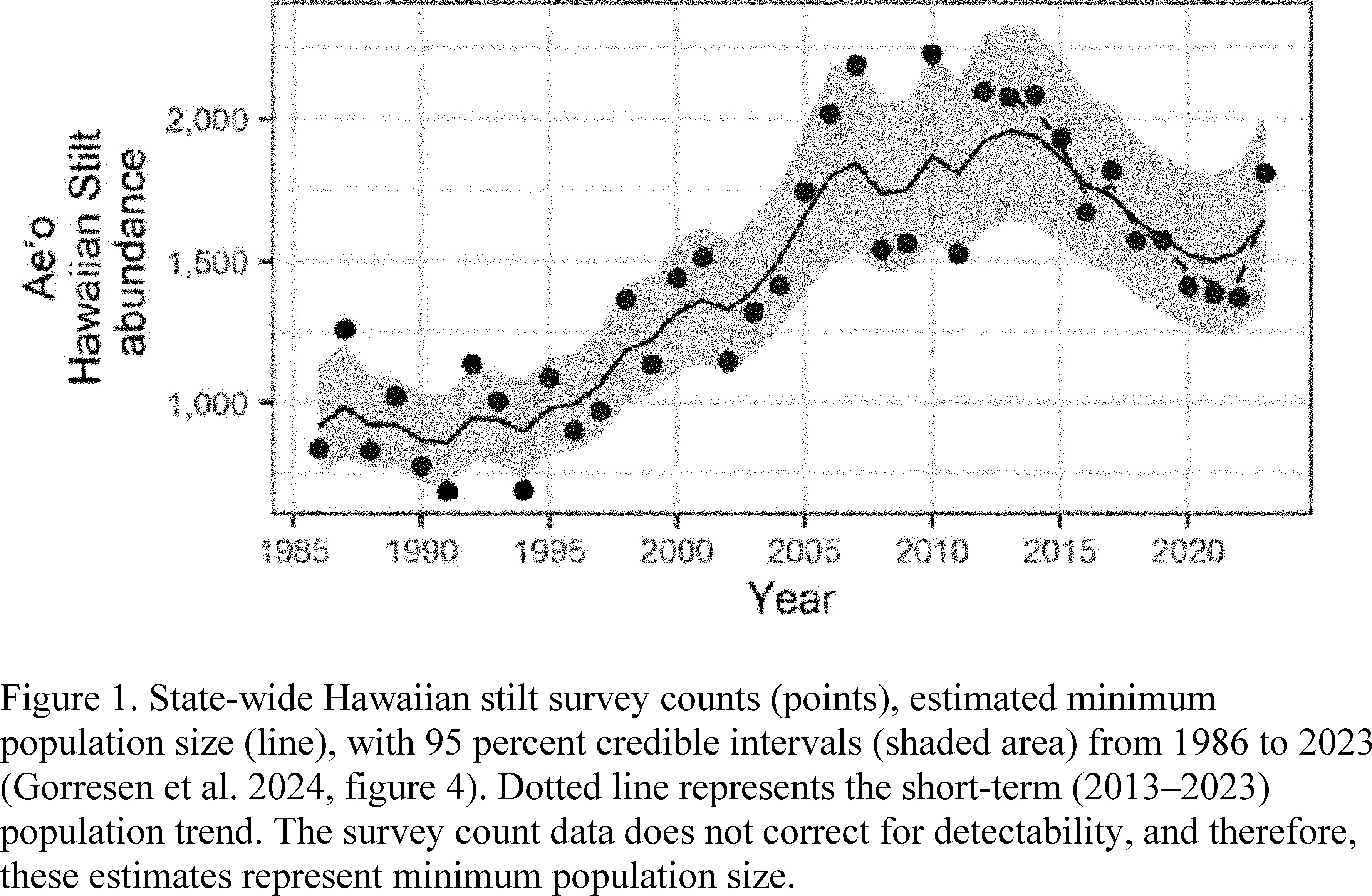
 www.doi.gov/sites/doi.opengov.ibmcloud.com/files/uploads/M-37021.pdf
 ipac.ecosphere.fws.gov/