This final rule updates the prospective payment rates, the outlier threshold, and the wage index for Medicare inpatient hospital services provided by Inpatient Psychiatric Facil...
Centers for Medicare & Medicaid Services (CMS), Department of Health and Human Services (HHS).
ACTION:
Final rule.
SUMMARY:
This final rule updates the prospective payment rates, the outlier threshold, and the wage index for Medicare inpatient hospital services provided by Inpatient Psychiatric Facilities (IPFs), which include psychiatric hospitals and excluded psychiatric units of an acute care hospital or critical access hospital. This final rule also refines the Inpatient Psychiatric Facilities Prospective Payment System (IPF PPS) outlier policy. These changes will be effective for IPF discharges occurring during the fiscal year beginning October 1, 2026, through September 30, 2027. We are also finalizing the implementation of a standardized IPF patient assessment instrument, and removing two measures used in the Inpatient Psychiatric Facilities Quality Reporting Program.
Nick Brock, (410) 786-5148, for information regarding the inpatient psychiatric facilities prospective payment system (IPF PPS) and regulatory impact analysis.
Availability of Certain Tables Exclusively Through the Internet on the CMS Website
Addendum A to this final rule summarizes the fiscal year (FY) 2027 IPF PPS payment rates, outlier threshold, cost of living adjustment factors (COLA) for Alaska and Hawaii, national and upper limit cost-to-charge ratios, and adjustment factors. In addition, Addendum B to this final rule shows the complete listing of ICD-10 Clinical Modification (CM) and Procedure Coding System (PCS) codes, the FY 2027 IPF PPS comorbidity adjustment, and electroconvulsive therapy (ECT) procedure codes. Addenda A and B to this final rule are available on the CMS website at
www.cms.gov/medicare/payment/prospective-payment-systems/inpatient-psychiatric-facility-pps/tools-and-worksheets.
This final rule updates the prospective payment rates, the outlier threshold, and the wage index for Medicare inpatient hospital services provided by Inpatient Psychiatric Facilities (IPFs) for discharges occurring during fiscal year (FY) 2027 (beginning October 1, 2026, through September 30, 2027). This rule also limits an IPF's outlier payments to no more than 20 percent of its total IPF PPS payments in a year, effective October 1, 2027, and provides for an exemption to that limit for IPFs with fewer than 50 stays per year. Lastly, this final rule implements a standardized IPF patient assessment instrument and removes two quality measures.
B. Summary of the Major Provisions
1. Inpatient Psychiatric Facilities Prospective Payment System (IPF PPS)
For the IPF PPS, we are finalizing our proposals to:
Establish a 20 percent cap on outlier payments under the IPF PPS. As discussed in section IV.E.c. of this final rule, we are modifying the effective date of this policy and limiting it to IPFs with 50 or more stays per year.
Make technical rate setting updates: The IPF PPS payment rates will be adjusted annually for input price inflation, as well as statutory and other policy factors.
This rule updates:
++ The IPF PPS Federal per diem base rate from $892.87 to $912.40.
++ The IPF PPS Federal per diem base rate for providers who failed to report quality data to $894.56.
++ The electroconvulsive therapy (ECT) payment per treatment from $673.85 to $688.59.
++ The ECT payment per treatment for providers who failed to report quality data to $675.13.
++ The labor-related share from 79.0 percent to 78.9 percent.
++ The wage index budget neutrality factor to 0.9989.
++ The fixed dollar loss threshold amount from $39,360 to $40,750, to maintain estimated outlier payments at 2 percent of total estimated aggregate IPF PPS payments.
2. Inpatient Psychiatric Facilities Quality Reporting Program
For the IPF Quality Reporting Program, we are implementing a standardized IPF patient assessment instrument (IPF-PAI), as mandated by section 4125(b)(1) of the Consolidated Appropriations Act of 2023 (CAA, 2023) (Pub. L. 117-328), and removing two measures from the program: Alcohol Use Brief Intervention Provided or Offered and Alcohol Use Brief Intervention (SUB-2/2a) and Tobacco Use Treatment Provided or Offered at Discharge (TOB-3/3a).
C. Summary of Impacts
( printed page 48515)
II. Background
A. Overview of the Legislative Requirements of the IPF PPS
Section 124 of the Medicare, Medicaid, and State Children's Health Insurance Program Balanced Budget Refinement Act of 1999 (BBRA) (Pub. L. 106-113) required the establishment and implementation of an IPF PPS in a budget neutral manner. Specifically, section 124 of the BBRA mandated that the Secretary of Health and Human Services (the Secretary) develop a per diem prospective payment system for inpatient hospital services furnished in psychiatric hospitals and excluded psychiatric units including an adequate patient classification system that reflects the differences in patient resource use and costs among psychiatric hospitals and excluded psychiatric units. “Excluded psychiatric unit” means a psychiatric unit of an acute care hospital or of a Critical Access Hospital (CAH), which is excluded from payment under the Inpatient Prospective Payment System (IPPS) or CAH payment system, respectively. These excluded psychiatric units will be paid under the IPF PPS.
Section 405(g)(2) of the Medicare Prescription Drug, Improvement, and Modernization Act of 2003 (MMA) (Pub. L. 108-173) extended the IPF PPS to psychiatric distinct part units of CAHs.
Sections 3401(f) and 10322 of the Patient Protection and Affordable Care Act (Pub. L. 111-148) as amended by section 10319(e) of that Act and by section 1105(d) of the Health Care and Education Reconciliation Act of 2010 (Pub. L. 111-152) (hereafter referred to jointly as “the Affordable Care Act”) added subsection (s) to section 1886 of the Social Security Act (the Act).
Section 1886(s)(1) of the Act titled “Reference to Establishment and Implementation of System,” refers to section 124 of the BBRA, which relates to the establishment of the IPF PPS.
Section 1886(s)(2)(A)(i) of the Act requires the application of the productivity adjustment described in section 1886(b)(3)(B)(xi)(II) of the Act to the IPF PPS for the rate year (RY) beginning in 2012 (that is, a RY that coincides with a FY) and each subsequent RY.
Section 1886(s)(2)(A)(ii) of the Act required the application of an “other adjustment” that reduced any update to an IPF PPS base rate by a percentage point amount specified in section 1886(s)(3) of the Act for the RY beginning in 2010 through the RY beginning in 2019. As noted in the FY 2020 IPF PPS final rule (84 FR 38424), for the RY beginning in 2019, section 1886(s)(3)(E) of the Act required that the other adjustment reduction be equal to 0.75 percentage point; that was the final year the statute required the application of this adjustment. Because FY 2021 was a RY beginning in 2020, FY 2021 was the first year that section 1886(s)(2)(A)(ii) of the Act did not apply since its enactment.
Sections 1886(s)(4)(A) through (D) of the Act require that for RY 2014 and each subsequent RY, IPFs that fail to report required quality data with respect to such a RY will have their annual update to a standard Federal rate for discharges reduced by 2.0 percentage points. This may result in an annual update being less than 0.0 for a RY, and may result in payment rates for the upcoming RY being less than such payment rates for the preceding RY. Any reduction for failure to report required quality data will apply only to the RY involved, and the Secretary will not consider such reduction in computing the payment amount for a subsequent RY. Additional information about the specifics of the current IPF Quality Reporting Program is available in the FY 2020 IPF PPS final rule (84 FR 38459 through 38468).
Section 4125 of the Consolidated Appropriations Act, 2023 (CAA, 2023) (Pub. L. 117-328), which amended section 1886(s) of the Act, requires CMS to revise the Medicare prospective payment system for psychiatric hospitals and psychiatric units. Specifically, section 4125(a) of the CAA, 2023 added section 1886(s)(5)(A) of the Act to require the Secretary to collect data and information, as the Secretary determines appropriate, to revise payments under the IPF PPS. CMS discussed this data collection in the FY 2024 IPF PPS final rule (88 FR 51054), as CMS was required to begin collecting this data and information not later than October 1, 2023. As discussed in that rule, the agency has already been collecting data and information consistent with the types set forth in the CAA, 2023 as part of our extensive and years-long analyses and consideration of potential payment system refinements. We refer readers to the FY 2024 IPF PPS final rule (88 FR 51095 through 51098) where we discussed existing data collection and requested information to inform future IPF PPS revisions.
In addition, section 1886(s)(5)(D) of the Act, as added by section 4125(a) of the CAA, 2023 required that the Secretary implement revisions to the methodology for determining the payment rates under the IPF PPS for psychiatric hospitals and psychiatric units, effective for RY 2025 (FY 2025). Section 1886(s)(5)(D) of the Act provided that these revisions may be based on a review of the data and information collected under section 1886(s)(5)(A) of the Act. For a detailed discussion on the revisions implemented for FY 2025, we refer readers to the FY 2025 IPF PPS final rule (89 FR 64590 through 64636).
Section 4125(b) of the CAA, 2023 amended section 1886(s)(4) of the Act by inserting a new subparagraph (E) and redesignating the existing subparagraph (E) as subparagraph (F) which requires IPFs participating in the IPF Quality Reporting Program to collect and submit to the Secretary standardized patient assessment data, using a standardized patient assessment instrument, for RY 2028 (FY 2028) and each subsequent rate year. IPFs must submit such data with respect to at least the admission and discharge of an individual, or more frequently as the Secretary determines appropriate. For IPFs to meet this new data collection and reporting requirement for RY 2028 and each subsequent rate year, the Secretary must implement a standardized patient assessment instrument that collects data with respect to the following categories: functional status; cognitive function and mental status; special services, treatments, and interventions; medical conditions and comorbidities; impairments; and other categories as determined appropriate by the Secretary. This patient assessment instrument must enable comparison of such patient assessment data that IPFs submit across all such IPFs to which such data are applicable.
Section 4125(b) of the CAA, 2023 further amended section 1886(s) of the Act by adding a new subparagraph (6) that requires the Secretary to implement revisions to the methodology for determining the payment rates for psychiatric hospitals and psychiatric units (that is, payment rates under the IPF PPS), effective for RY 2031 (FY 2031), as the Secretary determines to be appropriate, to take into account the patient assessment data described in paragraph (4)(E)(ii).
We issued the rate year (RY) 2005 IPF PPS final rule that appeared in the
( printed page 48516)
November 15, 2004
Federal Register
(69 FR 66922). The RY 2005 IPF PPS final rule established the IPF PPS, as required by section 124 of the BBRA and codified at 42 CFR part 412, subpart N. The RY 2005 IPF PPS final rule set forth the Federal per diem base rate for the implementation year (the 18-month period from January 1, 2005, through June 30, 2006) and provided payment for the inpatient operating and capital costs to IPFs for covered psychiatric services they furnish (that is, routine, ancillary, and capital costs, but not costs of approved educational activities, bad debts, and other services or items that are outside the scope of the IPF PPS). Covered psychiatric services include services for which benefits are provided under the fee-for-service Part A (Hospital Insurance Program) of the Medicare program.
The IPF PPS established the Federal per diem base rate for each patient day in an IPF derived from the national average daily routine operating, ancillary, and capital costs in IPFs in FY 2002. The average per diem cost was updated to the midpoint of the first year under the IPF PPS, standardized to account for the overall positive effects of the IPF PPS payment adjustments, and adjusted for budget neutrality.
The Federal per diem payment under the IPF PPS is comprised of the Federal per diem base rate described previously and certain patient- and facility-level payment adjustments for characteristics that were found in the regression analysis to be associated with statistically significant per diem cost differences, with statistical significance defined as
p
less than 0.05. A complete discussion of the regression analysis that established the IPF PPS adjustment factors can be found in the RY 2005 IPF PPS final rule (69 FR 66933 through 66936).
The patient-level adjustments include age, Diagnosis-Related Group (DRG) assignment, and comorbidities, as well as adjustments to reflect higher per diem costs at the beginning of a patient's IPF stay and lower costs for later days of the stay. Facility-level adjustments include adjustments for the IPF's wage index, rural location, teaching status, a cost-of-living adjustment for IPFs located in Alaska and Hawaii, and an adjustment for the presence of a qualifying emergency department (ED).
The IPF PPS provides additional payment policies for outlier cases, interrupted stays, and a per-treatment payment for patients who undergo ECT. During the IPF PPS mandatory 3-year transition period, stop-loss payments were also provided; however, since the transition ended as of January 1, 2008, these payments are no longer available.
C. Annual Requirements for Updating the IPF PPS
Section 124 of the BBRA did not specify an annual rate update strategy for the IPF PPS and was broadly written to give the Secretary discretion in establishing an update methodology. Therefore, in the RY 2005 IPF PPS final rule, we implemented the IPF PPS using the following update strategy:
Calculate the final Federal per diem base rate to be budget neutral for the 18-month period of January 1, 2005, through June 30, 2006.
Use a July 1 through June 30 annual update cycle.
Allow the IPF PPS first update to be effective for discharges on or after July 1, 2006, through June 30, 2007.
The RY 2005 final rule (69 FR 66922) implemented the IPF PPS. In developing the IPF PPS, and to ensure that the IPF PPS can account adequately for each IPF's case-mix, we performed an extensive regression analysis of the relationship between the per diem costs and certain patient and facility characteristics to determine those characteristics associated with statistically significant cost differences on a per diem basis. That regression analysis is described in detail in our RY 2004 IPF proposed rule (68 FR 66923; 66928 through 66933) and our RY 2005 IPF final rule (69 FR 66933 through 66960). For characteristics with statistically significant cost differences, we used the regression coefficients of those variables to determine the size of the corresponding payment adjustments.
In the RY 2005 IPF final rule, we explained the reasons for delaying an update to the adjustment factors, derived from the regression analysis, including waiting until we have IPF PPS data that yields as much information as possible regarding the patient-level characteristics of the population that each IPF serves. We indicated that we did not intend to update the regression analysis and the patient-level and facility-level adjustments until we complete that analysis. Until that analysis is complete, we stated our intention to publish a notice in the
Federal Register
each spring to update the IPF PPS (69 FR 66966).
We issued a final rule which appeared in the May 6, 2011
Federal Register
titled, “Inpatient Psychiatric Facilities Prospective Payment System—Update for Rate Year Beginning July 1, 2011 (RY 2012)” (76 FR 26432), which changed the payment rate update period to a RY that coincides with a FY update. Therefore, final rules are now published in the
Federal Register
in the summer to be effective on October 1st of each year. When proposing changes in IPF payment policy, a proposed rule is issued in the spring, and the final rule in the summer to be effective on October 1st. For a detailed list of updates to the IPF PPS, we refer readers to our regulations at 42 CFR 412.428. Beginning October 1, 2012, we finalized that we would refer to the 12-month period from October 1 through September 30 as a “fiscal year” (FY) rather than a RY (76 FR 26435). Therefore, in this final rule we refer to rules that took effect after RY 2012 by the FY, rather than the RY, in which they took effect.
The most recent IPF PPS annual update, the FY 2026 IPF PPS final rule (90 FR 37628), appeared in the
Federal Register
on August 5, 2025. The FY 2026 IPF PPS final rule revised the payment adjustment factors for teaching status and for IPFs located in rural areas in accordance with section 1886(s)(5)(D)(i) of the Act. That final rule also updated the IPF PPS Federal per diem base rates that were published in the FY 2025 IPF PPS final rule (89 FR 64582). In revising the IPF PPS adjustment factors, we performed an extensive regression analysis of the relationship between the per diem costs and facility characteristics to determine those characteristics associated with statistically significant cost differences on a per diem basis. That regression analysis is described in detail in our FY 2026 IPF PPS proposed rule (90 FR 18503 through 18507) and our FY 2026 IPF PPS final rule (90 FR 37639 through 37644).
As required by section 1886(s)(5)(D)(iii) of the Act, we finalized a refinement standardization factor for the FY 2026 IPF PPS payment rates to maintain budget neutrality for FY 2026. The application of the FY 2026 standardization factor is described in detail in our FY 2026 IPF PPS proposed rule (90 FR 18513 and18514) and our FY 2026 IPF PPS final rule (90 FR 37652 and 37653). For FY 2027, we did not propose a refinement standardization factor.
III. Analysis of and Responses to the Public Comments
We received 176 public comments that pertain to proposed IPF PPS payment policies, requests for information, and the proposed updates to the IPFQR Program. Comments were from inpatient psychiatric facilities, health systems, national and state level providers and patient advocacy organizations, health information
( printed page 48517)
technology providers, and individuals. We reviewed each comment and grouped related comments, after which we placed them in categories based on subject matter or section(s) of the regulation affected. Summaries of the public comments received and our responses to those comments are provided in the appropriate sections in the preamble of this final rule.
In addition, we received a few comments that were out of the scope of the FY 2027 IPF PPS proposed rule. We appreciate these comments but note that, because they fall outside the scope of this rulemaking, we do not address them in this rule. We may consider these comments as we continue to develop policies for future rulemaking, as applicable.
IV. Provisions of the FY 2027 IPF PPS Final Rule and Responses to Comments
A. FY 2027 Market Basket Increase and Productivity Adjustment for the IPF PPS
1. Background
Originally, the input price index used to develop the IPF PPS was the Excluded Hospital with Capital market basket. This market basket was based on 1997 Medicare cost reports for Medicare-participating inpatient rehabilitation facilities (IRFs), IPFs, long-term care hospitals (LTCHs), cancer hospitals, and children's hospitals. Although “market basket” technically describes the mix of goods and services used in providing health care at a given point in time, this term is also commonly used to denote the input price index (that is, cost category weights and price proxies) derived from that market basket. Accordingly, the term “market basket,” as used in this document, refers to an input price index.
Since the IPF PPS inception, the market basket used to update IPF PPS payments has been rebased and revised to reflect more recent data on IPF cost structures. We last rebased and revised the IPF market basket in the FY 2024 IPF PPS rule, where we adopted a 2021-based IPF market basket, using Medicare cost report data for both Medicare-participating freestanding psychiatric hospitals and psychiatric units. We refer readers to the FY 2024 IPF PPS final rule for a detailed discussion of the 2021-based IPF market basket and its development (88 FR 51057 through 51081). Prior to the 2021-based IPF market basket, we used the 2016-based IPF market basket that was adopted in the FY 2020 IPF PPS final rule (84 FR 38426 through 38447). References to the historical market baskets used to update IPF PPS payments prior to the FY 2020 IPF PPS rule are listed in the FY 2016 IPF PPS final rule (80 FR 46656).
2. FY 2027 IPF Market Basket Update
For FY 2027 (beginning October 1, 2026, and ending September 30, 2027), we are updating the IPF PPS payments by a market basket increase factor, with a productivity adjustment as required by section 1886(s)(2)(A)(i) of the Act. Consistent with historical practice, we proposed to estimate the market basket update for the IPF PPS based on the most recent forecast available at the time of rulemaking. For the proposed rule, based on IHS Global Inc.'s (IGI) fourth quarter 2025 forecast with historical data through the third quarter of 2025, the proposed 2021-based IPF market basket increase factor for FY 2027 was 3.1 percent. IGI is a nationally recognized economic and financial forecasting firm with which CMS currently contracts to forecast the components of the market baskets and productivity adjustment.[1]
Section 1886(s)(2)(A)(i) of the Act requires that, after establishing the increase factor for a FY, the Secretary shall reduce such increase factor for FY 2012 and each subsequent FY by the productivity adjustment described in section 1886(b)(3)(B)(xi)(II) of the Act. Section 1886(b)(3)(B)(xi)(II) of the Act sets forth the definition of this productivity adjustment. The statute defines the productivity adjustment to be equal to the 10-year moving average of changes in annual economy-wide, private nonfarm business multifactor productivity (as projected by the Secretary for the 10-year period ending with the applicable FY, year, cost reporting period, or other annual period) (the “productivity adjustment”). The United States Department of Labor's Bureau of Labor Statistics (BLS) publishes the official measures of productivity for the U.S. economy. The productivity measure referenced in section 1886(b)(3)(B)(xi)(II) of the Act is published by BLS as private nonfarm business total factor productivity ((TFP) previously referred to as multifactor productivity).[2]
We refer readers to
www.bls.gov/productivity
for the BLS historical published TFP data. A complete description of IGI's TFP projection methodology is available on the CMS website at
www.cms.gov/data-research/statistics-trends-and-reports/medicare-program-rates-statistics/market-basket-research-and-information.
Section 1886(s)(2)(A)(i) of the Act requires the application of the productivity adjustment described in section 1886(b)(3)(B)(xi)(II) of the Act to the IPF PPS for the RY beginning in 2012 (a RY that coincides with a FY) and each subsequent RY. For the FY 2027 IPF PPS proposed rule, based on IGI's fourth quarter 2025 forecast, the proposed productivity adjustment for FY 2027 (the 10-year moving average change of TFP for the period ending FY 2027) was projected to be 0.8 percentage point. Accordingly, we proposed to reduce the proposed 3.1 percent IPF market basket increase by the proposed 0.8 percentage point productivity adjustment, as mandated by the Act. This resulted in a proposed FY 2027 IPF PPS payment rate update of 2.3 percent (3.1 percent−0.8 percentage point = 2.3 percent). We also proposed that if more recent data became available, we would use such data, if appropriate, to determine the FY 2027 IPF market basket increase and productivity adjustment for the final rule.
We solicited comments on the proposed IPF market basket increase and productivity adjustment for FY 2027. The following is a summary of the comments we received and our responses.
Comment:
Several commenters expressed appreciation for the FY 2027 IPF payment update; however, many commenters stated that the proposed payment update is inadequate to address the current cost pressures IPFs are facing, and is below current inflation data (as measured by the Consumer Price Index (CPI)). Commenters noted that IPFs continue to face significant and sustained cost pressures, including rising labor costs driven by behavioral health workforce shortages, increased reliance on contract staffing, escalating pharmaceutical and supply costs, and growing administrative burdens associated with prior authorization. A commenter cited American Hospital Association data showing total hospital expenses, drug costs, and supply costs increased by more than the proposed update. Multiple commenters noted that MedPAC had reported negative Medicare margins for IPFs over the 2016 through 2021 time period.
Commenters urged CMS to use the most current available data when finalizing the FY 2027 market basket update and to consider all available policy options to ensure the final update more accurately reflects the cost of furnishing inpatient psychiatric care.
Response:
We appreciate the commenters' concerns regarding cost pressures facing IPFs and the proposed FY 2027 market basket update.
( printed page 48518)
As stated in the FY 2024 IPF final rule (88 FR 541057), FY 2025 IPF final rule (89 FR 64586), and the FY 2026 IPF final rule (90 FR 37632), the 2021-based IPF market basket is a fixed-weight, Laspeyres-type index that measures price changes over time. Any changes in the quantity or mix of goods and services (that is, intensity) purchased over time relative to the base period are not measured. Since the inception of the IPF PPS, the IPF payment rates (with the exception of statutorily-mandated updates) have been updated by a projection of the market basket's percentage increase, consistent with other CMS PPS updates (including IPPS, SNF, and HHA). Additionally, the market basket updates appropriately differ from other payment updates (such as the projected increase in the average per capita payments to Medicare Advantage organizations) that are not consistent in concept with the statutory requirement as they would reflect anticipated volume and intensity of services.[3]
Likewise, the market basket updates may differ from other overall inflation indexes (such as the CPI) as it measures different mixes of products and services.
As is our general practice, we proposed in the FY 2027 IPF proposed rule that if more recent data became available, we would use such data, if appropriate, to derive the final FY 2027 IPF market basket update for the final rule. The projection of the 2021-based IPF market basket is based on the most recent forecast from IHS Global Inc., a nationally recognized economic and financial forecasting firm with which CMS contracts to forecast the price proxies of the market baskets. We also note that when developing its forecast for labor prices, IHS Global Inc. considers overall labor market conditions (including rise in contract labor employment due to tight labor market conditions) as well as trends in contract labor wages, which both have an impact on wage pressures for workers employed directly by the hospital. For this final rule, based on IHS Global Inc.'s second quarter 2026 forecast with historical data through the first quarter of 2026, the projected 2021-based IPF market basket increase factor for FY 2027 is 3.2 percent, which is 0.1 percentage point higher than the projected FY 2027 market basket increase factor in the proposed rule.
Comment:
Several commenters conveyed concerns regarding the ongoing application of the productivity adjustment to IPFs. Several commenters stated that they believe the productivity adjustment to be inappropriate and unrealistic when applied to inpatient psychiatric providers. Commenters stated that the productivity adjustment is based on economy-wide private nonfarm business total factor productivity (TFP), which does not reflect the operational realities of IPFs. They explain that inpatient psychiatric care is highly labor-intensive, relies on direct human interaction, and is subject to strict staffing, safety, and regulatory requirements that leave little opportunity to achieve productivity gains comparable to those in the broader economy. A couple of commenters further noted that CMS's Office of the Actuary (OACT) has found that hospital sector productivity growth ranges from 0.2 percent to 0.5 percent annually, roughly half the rate used in the proposed adjustment, making the 0.8 percentage point offset inconsistent with CMS's own analytical findings.[4]
A few other commenters specifically urged CMS to invoke its “special exceptions and adjustments” authority to waive or reduce the productivity adjustment for FY 2027 and called on CMS to work with the Congress to modify the statutory framework to base the productivity adjustment on hospital sector productivity rather than private non-farm business productivity.
A commenter also stated that they find it especially troubling that the productivity adjustment appears to be applied only when it reduces Medicare payments.
Response:
Section 1886(s)(2)(A)(i) of the Act requires the application of the productivity adjustment described in section 1886(b)(3)(B)(xi)(II) of the Act to the IPF PPS for the rate year (RY) beginning in 2012 (that is, a RY that coincides with a FY) and each subsequent RY. Therefore, as required by statute, the FY 2027 productivity adjustment is derived based on the 10-year moving average growth in economy-wide private nonfarm business total factor productivity for the period ending FY 2027. We recognize the concerns of the commenters regarding the appropriateness of the productivity adjustment; however, section 1886(s)(2)(A)(i) of the Act requires us to apply the specific productivity adjustment described here.
We have always made available on the CMS website the general method for calculating the productivity adjustment. This includes providing a link to the most recent BLS historical TFP data, which allows interested parties to obtain historical TFP annual index levels for 1987 through 2025. We also provide the IGI projection model (
www.cms.gov/research-statistics-data-and-systems/statistics-trends-and-reports/medicareprogramratesstats/downloads/tfp_methodology.pdf), which is used to derive annual TFP growth rates for 2026 and 2027. The annual index level derived from this method is then interpolated to quarterly levels, and the FY 2027 productivity adjustment is equal to the percent change in the 40-quarter moving average projected level for the period ending September 30, 2027, relative to the 40-quarter moving average projected level for the period ending September 30, 2026. We believe our methodology for the productivity adjustment is consistent with section 1886(b)(3)(B)(xi)(II) of the Act which states that the productivity adjustment is equal to the 10-year moving average of changes in annual economy-wide private nonfarm business multi-factor productivity (as projected by the Secretary for the 10-year period ending with the applicable fiscal year, year, cost reporting period, or other annual period).
At the time of this final rule, the 2027 productivity adjustment reflects BLS historical TFP data through 2025 (released on March 19, 2026) and IGI's forecasted TFP growth for 2026 and 2027. The average annual growth rate of historical TFP published by BLS for 2018 through 2025 is currently 1.0 percent and IGI is projecting average TFP growth of about 0.7 percent for 2026 and 2027 based on IGI's second-quarter 2026 forecast. Combining the historical and projected TFP data over the entire 10-year time period and interpolating into quarterly index levels results in a 10-year moving average growth rate of TFP of 0.9 percent for FY 2027. The productivity adjustment (based on the 10-year period ending with FY 2027) for the FY 2027 final rule is 0.1 percentage point higher than the FY 2027 IPF proposed rule mainly due to the incorporation of updated BLS historical data.
In response to commenters' concerns about the productivity adjustment only being applied if it reduces the payment update, and as noted in the FY 2026 IPF final rule (90 FR 37628), we note that the productivity adjustment was established under the Affordable Care Act with a specific policy intent to encourage efficiency improvements in healthcare delivery by linking Medicare
( printed page 48519)
payment updates to economy-wide productivity gains. The statutory language in section 1886(b)(3)(B)(xi)(II) of the Act requires that the Secretary reduce (not increase) the market basket percentage increase by changes in economy-wide productivity; therefore, only positive productivity adjustments are applied.
Comment:
Several commenters have noted concerns about CMS's estimation of the IPF market basket updates since the COVID-19 pandemic, stating that it has resulted in several consecutive years of underpayments to IPF health care providers since the COVID-19 pandemic. A few commenters cited CMS Office of the Actuary data showing that market basket forecasts used in the final rules for FY 2021 through FY 2024 understated actual IPF inflation by a cumulative 4.2 percentage points. They argue that these understatements are now permanently embedded in the IPF PPS base rate and continue to compound year over year, widening the gap between Medicare payment rates and the actual cost of care. Several commenters urged CMS to adopt a one-time forecast error adjustment to correct for this cumulative underestimation, and for it to be added to the to the currently proposed 2.3 percent increase for FY 2027. A couple of commenters noted that CMS's reliance on lagged cost data has caused payment updates to persistently trail actual cost growth, and urged CMS to use the most current available data, and to work with the Congress where necessary, to ensure the FY 2027 update more accurately reflects the inflationary environment IPFs are operating in.
Response:
The IPF market basket updates are set prospectively, which means that the update relies on a mix of both historical data for part of the period for which the update is calculated and forecasted data for the remainder. For instance, the FY 2027 market basket update in this final rule reflects historical data through the first quarter of CY 2026 and forecasted data for the second quarter of CY 2026 through the third quarter of CY 2027. While there is no precedent to adjust for market basket forecast error in the IPF payment update, a forecast error can be calculated by comparing the actual market basket increase for a given year less the forecasted market basket increase. Due to the uncertainty regarding future price trends, forecast errors can be both positive and negative. The forecast error has been both positive and negative during past years, and over longer periods of time the cumulative forecast hasn't deviated significantly from the historical measures. Only considering the forecast error for years when the IPF market basket update was lower than the actual market basket update does not consider the full experience and impact of the cumulative forecast error.
Final Decision:
After consideration of the comments received, we are finalizing our proposal to update IPF PPS payment rates using the latest available productivity-adjusted market basket increase factor. Based on IGI's second quarter 2026 forecast, the 2021-based IPF market basket percentage increase for FY 2027 is 3.2 percent and the projected FY 2027 productivity adjustment is 0.9 percentage point. Therefore, the final FY 2027 IPF market basket update is equal to 2.3 percent (3.2 percent market basket percentage increase reduced by the 0.9 percentage point productivity adjustment).
3. FY 2027 IPF Labor-Related Share
Due to variations in geographic wage levels and other labor-related costs, we believe that payment rates under the IPF PPS should continue to be adjusted by a geographic wage index, which will apply to the labor-related portion of the Federal per diem base rate (hereafter referred to as the “labor-related share”). The labor-related share is determined by identifying the national average proportion of total costs that are related to, influenced by, or vary with the local labor market. We proposed to continue to classify a cost category as labor-related if the costs are labor-intensive and vary with the local labor market.
Based on our definition of the labor-related share and the cost categories in the 2021-based IPF market basket, we proposed to continue to include in the labor-related share the sum of the relative importance of Wages and Salaries; Employee Benefits; Professional Fees: Labor-Related; Administrative and Facilities Support Services; Installation, Maintenance, and Repair Services; All Other: Labor-Related Services; and a portion of the Capital-Related relative importance from the 2021-based IPF market basket. For more details regarding the methodology for determining specific cost categories for inclusion in the labor-related share based on the 2021-based IPF market basket, we refer readers to the FY 2024 IPF PPS final rule (88 FR 51078 through 51081).
The relative importance reflects the different rates of price change for these cost categories between the base year (FY 2021) and FY 2027. Based on IGI's fourth quarter 2025 forecast of the 2021-based IPF market basket, the sum of the FY 2027 relative importance moving average of Wages and Salaries; Employee Benefits; Professional Fees: Labor-Related; Administrative and Facilities Support Services; Installation, Maintenance, and Repair Services; All Other: Labor-Related Services is 76.0 percent. We proposed, consistent with prior rulemaking, that the portion of Capital-Related costs that are influenced by the local labor market is 46 percent. Since the relative importance for Capital-Related costs is 6.7 percent of the 2021-based IPF market basket for FY 2027, we proposed to take 46 percent of 6.7 percent to determine a labor-related share of Capital-Related costs for FY 2027 of 3.1 percent. Therefore, we proposed a total labor-related share for FY 2027 of 79.1 percent (the sum of 76.0 percent for the labor-related share of operating costs and 3.1 percent for the labor-related share of Capital-Related costs). We also proposed that if more recent data became available, we would use such data, if appropriate, to determine the FY 2027 labor-related share for the final rule. For more information on the labor-related share and its calculation, we refer readers to the FY 2024 IPF PPS final rule (88 FR 51078 through 51081.
We solicited comments on the proposed labor-related share for FY 2027. The following is a summary of the comments we received and our responses.
Comment:
A few commenters expressed support for the increase in the labor-related share from 79.0 percent to 79.1 percent for FY 2027, noting that while CMS estimates a labor-related share of approximately 79 percent for IPFs, they continue to face workforce challenges including shortages of psychiatrists, behavioral health nurses, and support personnel that the labor-related share does not adequately reflect.
Response:
We appreciate the commenters' support for the FY 2027 IPF labor-related share. As described above, we define the labor-related share as those expenses that are labor-intensive and vary with, or are influenced by, the local labor market. Each year, we calculate a revised labor-related share based on the relative importance of labor-related cost categories in the input price index. For the 2021-based IPF market basket, those cost categories are: (1) Wages and Salaries (including allocated contract labor costs); (2) Employee Benefits (including allocated contract labor costs); (3) Professional Fees: Labor-Related; (4) Administrative and Facilities Support Services; (5) Installation, Maintenance, and Repair Services; (6) All Other: Labor-Related Services; and (7) a proportion of capital-
( printed page 48520)
related expenses. The full methodology for determining the labor-related share of the 2021-based IPF market basket is detailed in the FY 2024 IPF PPS Final Rule (88 FR 51078).
We proposed to use the FY 2027 relative importance values for the labor-related cost categories from the 2021-based IPF market basket because it accounts for more recent data regarding price pressures and cost structure of IPFs. This methodology is consistent with the determination of the labor-related share since the implementation of the IPF PPS. As stated in the FY 2027 IPF proposed rule, we also proposed that if more recent data became available, we would use such data, if appropriate, to determine the FY 2027 labor-related share for the final rule. Based on IHS Global Inc.'s second quarter 2026 forecast with historical data through the first quarter of 2026, the FY 2027 labor-related share for the final rule is 78.9 percent.
Final Decision:
After consideration of the comments, we are finalizing a FY 2027 labor-related share based on the latest available data. Based on IGI's second quarter 2026 forecast of the 2021-based IPF market basket, the sum of the FY 2027 relative importance moving average of Wages and Salaries; Employee Benefits; Professional Fees: Labor-Related; Administrative and Facilities Support Services; Installation, Maintenance, and Repair Services; All Other: Labor-Related Services is 75.8 percent. Since the relative importance for Capital-Related costs is 6.7 percent of the 2021-based IPF market basket for FY 2027, we take 46 percent of 6.7 percent to determine a labor-related share of Capital-Related costs for FY 2027 of 3.1 percent. Therefore, the total labor-related share for FY 2027 is 78.9 percent (the sum of 75.8 percent for the labor-related share of operating costs and 3.1 percent for the labor-related share of Capital-Related costs).
Table 1 shows the final FY 2027 labor-related share and the final FY 2026 labor-related share using the 2021-based IPF market basket relative importance.
B. Updates to the IPF PPS Rates for FY Beginning October 1, 2026
The IPF PPS is based on a standardized Federal per diem base rate calculated from the IPF average per diem costs and adjusted for budget neutrality in the implementation year. The Federal per diem base rate is used as the standard payment per day under the IPF PPS and is adjusted by the patient-level and facility-level adjustments that are applicable to the IPF stay. A detailed explanation of how we calculated the average per diem cost appears in the RY 2005 IPF PPS final rule (69 FR 66926).
1. Determining the Standardized Budget Neutral Federal per Diem Base Rate
Section 124(a)(1) and (c) of the BBRA requires that we implement the IPF PPS in a budget neutral manner. In other words, the amount of total payments under the IPF PPS, including any payment adjustments, must be projected to be equal to the amount of total payments that would have been made if the IPF PPS were not implemented. Therefore, we calculated the budget neutrality factor by setting the total estimated IPF PPS payments to be equal to the total estimated payments that would have been made under the Tax Equity and Fiscal Responsibility Act of 1982 (TEFRA) (Pub. L. 97-248) methodology had the IPF PPS not been implemented. A step-by-step description of the methodology used to estimate payments under the TEFRA payment system appears in the RY 2005 IPF PPS final rule (69 FR 66926).
Under the IPF PPS methodology, we calculated the final Federal per diem base rate to be budget neutral during the IPF PPS implementation period (that is, the 18-month period from January 1, 2005, through June 30, 2006) using a July 1 update cycle. We updated the average cost per day to the midpoint of the IPF PPS implementation period (October 1, 2005), and this amount was used in the payment model to establish the budget neutrality adjustment.
Next, we standardized the IPF PPS Federal per diem base rate to account for the overall positive effects of the IPF PPS payment adjustment factors by
( printed page 48521)
dividing total estimated payments under the TEFRA payment system by estimated payments under the IPF PPS. The information concerning this standardization can be found in the RY 2005 IPF PPS final rule (69 FR 66932) and the RY 2006 IPF PPS final rule (71 FR 27045). We then reduced the standardized Federal per diem base rate to account for the outlier policy, the stop loss provision, and anticipated behavioral changes. A complete discussion of how we calculated each component of the budget neutrality adjustment appears in the RY 2005 IPF PPS final rule (69 FR 66932 and 66933) and in the RY 2007 IPF PPS final rule (71 FR 27044 through 27046). The final standardized budget neutral Federal per diem base rate established for cost reporting periods beginning on or after January 1, 2005 was calculated to be $575.95.
The Federal per diem base rate has been updated in accordance with applicable statutory requirements and 42 CFR 412.428 through publication of annual notices or proposed and final rules. A detailed discussion on the standardized budget neutral Federal per diem base rate and the ECT payment per treatment appears in the FY 2014 IPF PPS update notice (78 FR 46738 through 46740). These documents are available on the CMS website at
www.cms.gov/medicare/payment/prospective-payment-systems/inpatient-psychiatric-facility.
2. Determining the Electroconvulsive Therapy (ECT) Payment per Treatment
In the RY 2005 IPF PPS final rule (69 FR 66951), we analyzed the costs of IPF stays that included ECT treatment using the FY 2002 Medicare Provider and Analysis Review (MedPAR) data based on comments we received on the RY 2005 IPF PPS proposed rule. Consistent with the comments we received about ECT, our analysis and review indicated that cases with ECT treatment are substantially more costly than cases without ECT treatment. Based on this analysis, in that final rule we finalized an additional payment for each ECT treatment furnished during the IPF stay. This ECT payment per treatment is made in addition to the per diem and outlier payments under the IPF PPS. To receive the payment per ECT treatment, IPFs must indicate on their claims the revenue code and procedure code for ECT (Rev Code 901; procedure code 90870) and the number of units of ECT, that is, the number of ECT treatments the patient received during the IPF stay.
To establish the ECT per treatment payment, we used the pre-scaled and pre-adjusted median cost for procedure code 90870 developed for the Hospital Outpatient Prospective Payment System (OPPS), based on hospital claims data. We explained in the RY 2005 IPF PPS final rule that we used OPPS data because after careful review and analysis of IPF claims, we were unable to separate out the cost of a single ECT treatment (69 FR 66922). We used the unadjusted hospital claims data under the OPPS because we did not want the ECT payment under the IPF PPS to be affected by factors that are relevant to OPPS, but not specifically applicable to IPFs. The median cost was then standardized and adjusted for budget neutrality. We also adjusted the ECT rate for wage differences in the same manner that we adjust the per diem rate.
Most recently, as we explained in the FY 2025 IPF PPS proposed rule (89 FR 23146), we analyzed recent data from both the IPF PPS and the OPPS. Findings revealed that costs for IPF stays involving ECT were significantly more costly than stays without ECT, with cost driven primarily by longer stays and higher ancillary expenses. To address this, we finalized a new ECT payment calculation based on the pre-scaled and pre-adjusted CY 2024 OPPS geometric mean cost, adjusted by the market basket update and wage index budget neutrality factor. A complete discussion of the final FY 2025 ECT payment per treatment can be found in the FY 2025 IPF PPS final rule (89 FR 64591 through 64593).
Since the ECT payment rate was established in the RY 2005 IPF PPS rule, it has been updated annually by application of each year's market basket, productivity adjustment, and wage index budget neutrality factor to the previous year's ECT payment rate (referred to as our “standard methodology” in this section).
3. Update of the Federal per Diem Base Rate and Electroconvulsive Therapy Payment per Treatment
The current (FY 2026) Federal per diem base rate is $892.87 and the ECT payment per treatment is $673.85. For the final FY 2027 Federal per diem base rate, we applied the final IPF market basket update of 2.3 percent (that is, the 2021-based IPF market basket percentage increase for FY 2027 of 3.2 percent reduced by the productivity adjustment of 0.9 percentage point), and the final wage index budget neutrality factor of 0.9989 (as discussed in section IV.D.1.c. of this final rule) to the final FY 2026 Federal per diem base rate of $892.87, yielding a final Federal per diem base rate of $912.40 for FY 2027. We applied the final IPF market basket update of 2.3 percent and the wage index budget neutrality factor of 0.9989 to the final FY 2026 ECT payment per treatment of $673.85, yielding a final ECT payment per treatment of $688.59 for FY 2027.
Section 1886(s)(4)(A)(i) of the Act requires that for RY 2014 and each subsequent RY, in the case of an IPF that fails to report required quality data with respect to such RY, the Secretary will reduce any annual update to a standard Federal rate for discharges during the RY by 2.0 percentage points. Therefore, we applied a 2.0 percentage point reduction to the final annual update to the Federal per diem base rate and the final ECT payment per treatment as follows:
For IPFs that fail to report required data under the IPF Quality Reporting Program, we will apply a 0.3 percent payment rate update—that is, the final IPF market basket increase for FY 2027 of 3.2 percent reduced by the final productivity adjustment of 0.9 percentage point for an update of 2.3 percent, and further reduced by 2.0 percentage points in accordance with section 1886(s)(4)(A)(i) of the Act. We also applied the wage index budget neutrality factor of 0.9989 to the FY 2026 Federal per diem base rate of $892.87, yielding a Federal per diem base rate of $894.56 for FY 2027.
For IPFs that fail to report required data under the IPF Quality Reporting Program, we will apply the 0.3 percent payment rate update and the 0.9989 wage index budget neutrality factor to the FY 2026 ECT payment per treatment of $673.85, yielding an ECT payment per treatment of $675.13 for FY 2027.
C. Updates to the IPF PPS Patient-Level Adjustment Factors
1. Overview of the IPF PPS Adjustment Factors
The IPF PPS payment adjustment factors were originally derived from a regression analysis of 100 percent of the FY 2002 MedPAR data file, which contained 483,038 cases. For a more detailed description of the data file used for this regression analysis, we refer readers to the RY 2005 IPF PPS final rule (69 FR 66935 and 66936).
In FY 2025, we implemented revisions to the methodology for determining payment rates under the IPF PPS, as required by section 1886(s)(5)(D) of the Act. We developed the FY 2025 adjustment factors based on a regression analysis of IPF cost and claims data. The primary sources of this analysis were CY 2019 through 2021 MedPAR files and Medicare cost report data (CMS Form 2552-10, OMB No. 0938-0050) from the FY 2019 through
( printed page 48522)
2021 Hospital Cost Report Information System (HCRIS). For a more detailed description of the data files used for this regression analysis, we refer readers to the FY 2025 IPF PPS final rule (89 FR 64593 through 64601).
For FY 2027, we proposed to use the existing regression-derived patient-level adjustment factors established for FY 2025. We did not propose any changes to the patient-level adjustment factors for FY 2027; however, we used more recent claims data to simulate payments, to finalize the outlier fixed dollar loss threshold amount, and to assess the impact of the IPF PPS updates.
2. IPF PPS Patient-Level Adjustments
The IPF PPS includes payment adjustments for the following patient-level characteristics: Medicare Severity Diagnosis Related Groups (MS-DRGs) assignment of the patient's principal diagnosis, selected comorbidities, patient age, and the variable per diem adjustments.
a. Update to MS-DRG Assignment
We believe it is important to maintain for IPFs the same diagnostic coding and DRG classification used under the IPPS for providing psychiatric care. For this reason, when the IPF PPS was implemented for cost reporting periods beginning on or after January 1, 2005, we adopted the same diagnostic code set (ICD-9 Clinical Modification (CM)) and DRG patient classification system (MS-DRGs) that were utilized at the time under the IPPS. In the RY 2009 IPF PPS notice (73 FR 25709), we discussed CMS's effort to better recognize resource use and the severity of illness among patients. CMS adopted the new MS-DRGs for the IPPS in the FY 2008 IPPS final rule with comment period (72 FR 47130). In the RY 2009 IPF PPS notice (73 FR 25716), we provided a crosswalk to reflect changes that were made under the IPF PPS to adopt the new MS-DRGs. For a detailed description of the mapping changes from the original DRG adjustment categories to the current MS-DRG adjustment categories, we refer readers to the RY 2009 IPF PPS notice (73 FR 25714).
The IPF PPS includes payment adjustments for designated psychiatric DRGs assigned to the claim based on the patient's principal diagnosis. The DRG adjustment factors were expressed relative to the most frequently reported psychiatric DRG in FY 2002, that is, DRG 430 (psychoses). The coefficient values and adjustment factors were derived from the regression analysis discussed in detail in the RY 2004 IPF proposed rule (68 FR 66923; 66928 through 66933) and the RY 2005 IPF final rule (69 FR 66933 through 66960). Mapping the DRGs to the MS-DRGs resulted in 17 IPF MS-DRGs, instead of the original 15 DRGs, for which the IPF PPS provides an adjustment.
In the FY 2015 IPF PPS final rule (79 FR 45945 through 45947), we finalized conversions of the ICD-9-CM-based MS-DRGs to ICD-10-CM/Procedure Coding System (PCS)-based MS-DRGs, which were implemented on October 1, 2015. Further information on the ICD-10-CM/PCS MS-DRG conversion project can be found on the CMS ICD-10-CM website at
www.cms.gov/medicare/coding-billing/icd-10-codes/icd-10-ms-drg-conversion-project.
In the FY 2025 IPF PPS final rule (89 FR 64602 through 64606), we revised the payment adjustments for designated psychiatric DRGs assigned to the claim based on the patient's principal diagnosis, following our longstanding policy of using the ICD-10-CM/PCS-based MS-DRG system. In that final rule, we identified 19 DRGs for which the IPF PPS adjusts payment. In addition, we implemented a sub-regulatory process to adopt routine coding updates that incorporate new or revised codes with an April 1 effective date (89 FR 64602 and 64603).
For FY 2027, we proposed to continue making the existing payment adjustments for psychiatric diagnoses that group to one of the existing 19 IPF MS-DRGs listed in Addendum A. We did not receive any comments on this proposal, and we are finalizing it as proposed. Addendum A to this final rule is available on our website at
www.cms.gov/medicare/payment/prospective-payment-systems/inpatient-psychiatric-facility-pps/tools-and-worksheets.
Psychiatric principal diagnoses that do not group to one of the 19 designated MS-DRGs would still receive the Federal per diem base rate and all other applicable adjustments, but the payment would not include an MS-DRG adjustment.
The diagnoses for each IPF MS-DRG will be updated as of October 1, 2026, using the final IPPS FY 2027 ICD-10-CM/PCS code sets. The FY 2027 IPPS/LTCH PPS final rule will include tables of the changes to the ICD-10-CM/PCS code sets that underlie the final FY 2027 IPF MS-DRGs. Both the FY 2027 IPPS/LTCH PPS final rule and the tables of final changes to the ICD-10-CM/PCS code sets, which underlie the FY 2027 MS-DRGs, will be available on the CMS IPPS website at
www.cms.gov/medicare/payment/prospective-payment-systems/acute-inpatient-pps.
Additionally, as discussed in the ICD-10-CM Official Guidelines for Coding and Reporting, certain conditions have both an underlying etiology and multiple body system manifestations due to the underlying etiology. For such conditions, the ICD-10-CM has a coding convention that requires the underlying condition be sequenced first, followed by the manifestation. Wherever such a combination exists, there is a “use additional code” note at the etiology code, and a “code first” note at the manifestation code. These instructional notes indicate the proper sequencing order of the codes (etiology followed by manifestation). In accordance with the ICD-10-CM Official Guidelines for Coding and Reporting, when a primary (psychiatric) diagnosis code has a code first note, the provider will follow the instructions in the ICD-10-CM Tabular List. The submitted claim goes through the ICD-10 MS-DRG GROUPER Software, which will identify the principal diagnosis code as non-psychiatric and search the secondary codes for a psychiatric code to assign a DRG code for adjustment. The software will continue to search the secondary codes for those that are appropriate for comorbidity adjustment. For more information on the code first policy, we refer readers to the RY 2005 IPF PPS final rule (69 FR 66945). We also refer readers to sections I.A.13 and I.B.7 of the FY 2020 ICD-10-CM Coding Guidelines, which is available at
www.cdc.gov/nchs/data/icd/10cmguidelines-FY2020_final.pdf.
In the FY 2015 IPF PPS final rule, we provided a code first table for reference that highlights the same or similar manifestation codes where the code first instructions apply in ICD-10-CM that were present in ICD-10-CM (79 FR 46009).
As discussed in the FY 2025 IPF PPS final rule (89 FR 64602 and 64603), we adopted a sub-regulatory approach to handle the coding updates, rather than discussing coding updates in the
Federal Register
during regulatory updates prior to implementation. This approach mirrors the approach taken by the IPPS, allows for flexibility in the ICD-10 code update process for the IPF PPS, and reduces the lead time for making routine coding updates to the IPF PPS code first list, comorbidities, and ECT coding categories. The final FY 2027 Code First table is shown in Addendum B on the CMS website at
www.cms.gov/medicare/payment/prospective-payment-systems/inpatient-psychiatric-facility-pps/tools-and-worksheets.
b. Payment for Comorbid Conditions
The intent of the comorbidity adjustments is to recognize the
( printed page 48523)
increased costs associated with active comorbid conditions by providing additional payments for certain existing medical or psychiatric conditions that are expensive to treat.
Comorbidities are specific patient conditions that are secondary to the patient's principal diagnosis and that require active treatment during the stay. Diagnoses that relate to an earlier episode of care and have no bearing on the current hospital stay are excluded and must not be reported on IPF claims. Comorbid conditions must exist at the time of admission or develop subsequently, and affect the treatment received, length of stay (LOS), or both treatment and LOS.
For each claim, an IPF may receive only one comorbidity adjustment within a comorbidity category, but it may receive an adjustment for more than one comorbidity category. Current billing instructions for discharge claims, on or after October 1, 2015, require IPFs to enter the complete ICD-10-CM codes for up to 24 additional diagnoses if they co-exist at the time of admission, or develop subsequently and impact the treatment provided.
The IPF PPS comorbidity adjustments were originally determined based on the regression analysis using the diagnoses reported by IPFs in FY 2002. The principal diagnoses were used to establish the DRG adjustments and were not accounted for in establishing the comorbidity category adjustments, except where ICD-9-CM code first instructions applied. In a code first situation, the submitted claim goes through the CMS processing system, which identifies the principal diagnosis code as non-psychiatric and searches the secondary codes for a psychiatric code to assign an MS-DRG code for adjustment. The system continues to search the secondary codes for those that are appropriate for a comorbidity adjustment.
In FY 2025, we revised the comorbidity adjustment factors based on the results of the 2019 through 2021 regression analysis described in the FY 2025 IPF PPS final rule (89 FR 64606 through 64612). In addition, we made additions and changes to the comorbidity categories for which we adjust payment based on our analysis of ICD-10-CM codes currently included in each category as well as public comments received in response to the FY 2022 and FY 2023 IPF PPS proposed rules. A detailed discussion of the revised comorbidity adjustment factors is described in the FY 2025 IPF PPS final rule (89 FR 64606 through 64612).
As noted previously, it is our policy to maintain the same diagnostic coding set for IPFs that is used under the IPPS for providing the same psychiatric care. In the FY 2015 IPF PPS final rule (79 FR 45947 through 45955), the comorbidity categories formerly defined using ICD-9-CM codes were converted to ICD-10-CM/PCS. The goal for converting the comorbidity categories is referred to as replication, meaning that the payment adjustment for a given patient encounter is the same after ICD-10-CM implementation as it would be if the same record had been coded in ICD-9-CM and submitted prior to ICD-10-CM/PCS implementation on October 1, 2015. All conversion efforts were made with the intent of achieving this goal.
As discussed in section IV.C.2.a. of this final rule, in the FY 2025 IPF PPS final rule (89 FR 64602 and 64603) we adopted an April 1 implementation date for ICD-10-CM diagnosis and ICD-10-PCS procedure code updates, in addition to the annual October 1 update, beginning with April 1, 2025 for the IPF PPS. Coding updates related to the IPF PPS comorbidity categories are adopted following a sub-regulatory process as finalized in the FY 2025 IPF PPS final rule (89 FR 64602 and 64603). For April 1, 2026, we added three ICD-10-PCS procedure codes to the Oncology Treatment Procedures list and two ICD-10-PCS procedure codes to the Chronic Obstructive Pulmonary Disease & Sleep Apnea Procedures list. We did not receive any comments on the April 1, 2026, coding changes.
For this FY 2027 IPF PPS final rule, we are adding 10 ICD-10-CM diagnosis codes to the Poisoning code list, nine ICD-10-CM diagnosis codes to the Cardiac Conditions list, three ICD-10-CM diagnosis codes to the Oncology Treatment Diagnoses list, and six ICD-10-CM diagnosis codes to the Severe Musculoskeletal and Connective Tissue Diseases list. In addition, we are removing eight ICD-10-CM diagnosis codes from the Severe Musculoskeletal and Connective Tissue Diseases list, and 12 ICD-10-CM diagnosis codes from the Code First list. The final FY 2027 comorbidity codes are shown in Addenda B, available on the CMS website at
www.cms.gov/medicare/payment/prospective-payment-systems/inpatient-psychiatric-facility-pps/tools-and-worksheets.
c. Patient Age Adjustments
As explained in the RY 2005 IPF PPS final rule (69 FR 66922), we analyzed the impact of age on per diem cost by examining the age variable (range of ages) for payment adjustments. In general, we found that the cost per day increases with age. The older age groups are costlier than the under 45 age group, the differences in per diem cost increase for each successive age group, and the differences are statistically significant. In FY 2025, we adopted revised patient age adjustments derived from the regression model using a blended set of 2019 through 2021 data (89 FR 64612 and 64613). We did not propose any changes to the patient age adjustment factors, and we are retaining the existing patient age adjustment factors for FY 2027, as shown in Addendum A of this final rule (see
www.cms.gov/medicare/payment/prospective-payment-systems/inpatient-psychiatric-facility-pps/tools-and-worksheets).
d. Variable per Diem Adjustments
We explained in the RY 2005 IPF PPS final rule (69 FR 66946) that the regression analysis indicated that per diem cost declines as the LOS increases. The variable per diem adjustments to the Federal per diem base rate account for ancillary and administrative costs that occur disproportionately in the first days after admission to an IPF. As discussed in the RY 2005 IPF PPS final rule, where a complete discussion of the variable per diem adjustments can be found, we used a regression analysis to estimate the average differences in per diem cost among stays of different lengths (69 FR 66947 through 66950). As a result of this analysis, we established variable per diem adjustments that begin on day 1 and decline gradually over the course of the patient's stay. In addition, the adjustment applied to day 1 depends upon whether the IPF has a qualifying ED. If an IPF has a qualifying ED, it receives a higher adjustment factor for day 1 of each stay than it would receive if it did not have a qualifying ED. The ED adjustment is explained in more detail in section IV.D.5. of this final rule.
D. Updates to the IPF PPS Facility-Level Adjustments
The IPF PPS includes facility-level adjustments for the wage index, IPFs located in rural areas, teaching IPFs, cost of living adjustments for IPFs located in Alaska and Hawaii, and IPFs with a qualifying ED. The IPF PPS facility-level adjustment factors for rural location and teaching status were originally derived from regression analysis of 100 percent of the FY 2002 MedPAR data file. For a more detailed description of the data file used for this regression analysis, we refer readers to the RY 2005 IPF PPS final rule (69 FR 66935 and 66936).
In FY 2026, in a continuation of the FY 2025 implementation of revisions to the methodology for determining payment rates under the IPF PPS as required by section 1886(s)(5)(D) of the Act, we revised the facility-level adjustment factors for rural location and teaching status based on a regression analysis of cost and claims data for IPF stays from FY 2020 to FY 2022 (90 FR 37639 through 37649). As discussed in the following sections, we proposed annual updates to the FY 2027 IPF PPS wage index and to the cost of living adjustments for IPFs located in Alaska and Hawaii. For FY 2027, we proposed to use the facility-level adjustment factors for rural location, teaching status, and IPFs with a qualifying ED currently in effect for FY 2026, as shown in Addendum A to this final rule.
1. Wage Index Adjustment
a. Background
As discussed in the RY 2007 IPF PPS final rule (71 FR 27061), and the RY 2009 IPF PPS (73 FR 25719) and RY 2010 IPF PPS notices (74 FR 20373), to provide an adjustment for geographic wage levels, the labor-related portion of an IPF's payment is adjusted using an appropriate wage index. Currently, an IPF's geographic wage index value is determined based on the actual location of the IPF in an urban or rural area, as defined in § 412.64(b)(1)(ii)(A) and (C).
Due to the variation in costs and because of the differences in geographic wage levels, in the RY 2005 IPF PPS final rule, we required that payment rates under the IPF PPS be adjusted by a geographic wage index. We proposed and finalized a policy to use the unadjusted, pre-floor, pre-reclassified IPPS hospital wage index to account for geographic differences in IPF labor costs. We implemented use of the pre-floor, pre-reclassified IPPS hospital wage data to compute the IPF wage index since there was not an IPF-specific wage index available. We believe that IPFs generally compete in the same labor market as IPPS hospitals, and therefore, the pre-floor, pre-reclassified IPPS hospital wage data should be reflective of labor costs of IPFs. We believe this pre-floor, pre-reclassified IPPS hospital wage index to be the best available data to use as proxy for an IPF-specific wage index. As discussed in the RY 2007 IPF PPS final rule (71 FR 27061 through 27067), under the IPF PPS, the wage index is calculated using the IPPS wage index for the labor market area in which the IPF is located, without considering geographic reclassifications, floors, and other adjustments made to the wage index under the IPPS. For a complete description of these IPPS wage index adjustments, we refer readers to the FY 2019 IPPS/LTCH PPS final rule (83 FR 41362 through 41390). Our wage index policy at § 412.424(a)(2) provides that we use the best Medicare data available to estimate costs per day, including an appropriate wage index to adjust for wage differences.
When the IPF PPS was implemented in the RY 2005 IPF PPS final rule, with an effective date of January 1, 2005, the pre-floor, pre-reclassified IPPS hospital wage index that was available at the time was the FY 2005 pre-floor, pre-reclassified IPPS hospital wage index. Historically, the IPF wage index for a given RY has used the pre-floor, pre-reclassified IPPS hospital wage index from the prior FY as its basis. This has been due in part to the pre-floor, pre-reclassified IPPS hospital wage index data that were available during the IPF rulemaking cycle, where an annual IPF notice or IPF final rule was usually published in early May. This publication timeframe was relatively early compared to other Medicare payment rules because the IPF PPS follows a RY, which was defined in the implementation of the IPF PPS as the 12-month period from July 1 to June 30 (69 FR 66927). Therefore, the best available data at the time the IPF PPS was implemented was the pre-floor, pre-reclassified IPPS hospital wage index from the prior FY (for example, the RY 2006 IPF wage index was based on the FY 2005 pre-floor, pre-reclassified IPPS hospital wage index).
In the RY 2012 IPF PPS final rule, we changed the reporting year timeframe for IPFs from a RY to FY, which begins October 1 and ends September 30 (76 FR 26434 and 26435). In that FY 2012 IPF PPS final rule, we continued our established policy of using the pre-floor, pre-reclassified IPPS hospital wage index from the prior year (that is, from FY 2011) as the basis for the FY 2012 IPF wage index. This policy of basing a wage index on the prior year's pre-floor, pre-reclassified IPPS hospital wage index has been followed by other Medicare payment systems, such as hospice and inpatient rehabilitation facilities. By continuing with our established policy, we remained consistent with other Medicare payment systems.
In FY 2020, we finalized the IPF wage index methodology to align the IPF PPS wage index with the same wage data timeframe used by the IPPS for FY 2020 and subsequent years. Specifically, we finalized the use of the pre-floor, pre-reclassified IPPS hospital wage index from the FY concurrent with the IPF FY as the basis for the IPF wage index. For example, the FY 2020 IPF wage index was based on the FY 2020 pre-floor, pre-reclassified IPPS hospital wage index rather than on the FY 2019 pre-floor, pre-reclassified IPPS hospital wage index.
We explained in the FY 2020 proposed rule (84 FR 16973), that using the concurrent pre-floor, pre-reclassified IPPS hospital wage index will result in the most up-to-date wage data being the basis for the IPF wage index. We noted that it would also result in more consistency and parity in the wage index methodology used by other Medicare payment systems. We indicated that the Medicare skilled nursing facility (SNF) PPS already used the concurrent IPPS hospital wage index data as the basis for the SNF PPS wage index. We proposed and finalized similar policies to use the concurrent pre-floor, pre-reclassified IPPS hospital wage index data in other Medicare payment systems, such as hospice and inpatient rehabilitation facilities. Thus, the wage adjusted Medicare payments of various provider types are based upon wage index data from the same timeframe.
In the FY 2023 IPF PPS final rule (87 FR 46856 through 46859), we finalized a permanent 5-percent cap on any decrease to a provider's wage index from its wage index in the prior year, and we stated that we will apply this cap in a budget neutral manner. In addition, we finalized a policy that a new IPF will be paid the wage index for the area in which it is geographically located for its first full or partial FY with no cap applied because a new IPF will not have a wage index in the prior FY. We amended the IPF PPS
( printed page 48525)
regulations at § 412.424(d)(1)(i) to reflect this permanent cap on wage index decreases. We refer readers to the FY 2023 IPF PPS final rule for a more detailed discussion about this policy.
For FY 2027, we proposed to apply the IPF wage index adjustment to the labor-related share of the national IPF PPS base rate and ECT payment per treatment. As discussed in section IV.A.3. of this final rule, the labor-related share of the IPF PPS national base rate and ECT payment per treatment is 78.9 percent in FY 2027. This percentage reflects the labor-related share relative importance of the 2021-based IPF market basket for FY 2027 and is 0.1 percentage point lower than the FY 2026 labor-related share.
For FY 2027, we proposed to continue to use the concurrent pre-floor, pre-reclassified IPPS hospital wage index as the basis for the IPF wage index. We explained that we continue to consider this an appropriate source of wage index data to estimate costs per day, in accordance with our longstanding wage index policy at § 412.424(a)(2)(ii).
The following is a summary of the comments we received on the proposed wage index adjustment.
Comment:
Several commenters expressed support for the proposed use of the concurrent pre-floor, pre-reclassified IPPS hospital wage index as the basis for the IPF wage index pre-floor for FY 2027. Commenters agreed with CMS that IPFs compete in the same labor market as hospitals. Other commenters stated that IPFs compete within a distinct labor market that includes community-based behavioral health providers, outpatient treatment programs, and correctional settings.
Response:
We appreciate these comments. We did not propose any changes to our longstanding IPF PPS wage index policy, which is based on the concurrent pre-floor, pre-reclassified IPPS hospital wage index. As we have previously stated, we believe that IPFs generally compete in the same labor market as IPPS hospitals. As discussed later in this final rule, we are considering whether alternative data sources could enhance the accuracy of the IPF wage index in future years, including the extent to which IPFs compete with other non-hospital settings for labor.
Comment:
Some commenters encouraged CMS to closely align the IPF wage index with various policies applied to the IPPS wage index, including reclassifications, application of the rural floor, and the use of a lower labor-related share for IPFs in low-wage areas.
Response:
We appreciate the commenters' recommendations. We did not propose the specific policies suggested by commenters, but we will take these recommendations into consideration to potentially inform future rulemaking. As we have previously discussed in the RY 2007 final rule (71 FR 27066), we believe that the actual location of an IPF (as opposed to the location of affiliated providers) is most appropriate for determining the wage adjustment because the prevailing wages in the area in which the IPF is located influence the cost of a case. In that same RY 2007 final rule (71 FR 27066), we also stated that we believe the “rural floor” is required only for the acute care hospital payment system because section 4410 of the Balanced Budget Act of 1997 (Pub. L. 105-33) applies specifically to acute care hospitals and not excluded hospitals and excluded units. As we have previously discussed, the IPF wage index is intended to be a relative measure of the value of labor in prescribed labor market areas (87 FR 46857). In addition, there are a variety of reasons why our longstanding IPF wage index policy has not applied floors or reclassifications, which, as we previously noted, are not applied to the IPF wage index by statute. For example, applying floors and reclassifications to the IPF wage index would significantly increase administrative burden, both for IPFs and for CMS, associated with IPFs reclassifying from one CBSA to another, and it would significantly increase the complexity of the methodology. Furthermore, because floors and reclassifications would be applied budget-neutrally under the wage index, these policies would increase the wage index for some IPFs while reducing IPF PPS payments for all other IPFs, which would upset the long-settled expectations with which IPFs across the country have been operating. For these reasons, we believe using the pre-floor, pre-reclassified IPPS hospital wage index is the most appropriate data to use as a proxy for an IPF wage index. We appreciate the commenter's suggestion to apply an out-migration adjustment to IPFs to account for employment of hospital staff who commute to work in counties with a higher wage index. However, we note that the out-migration adjustment is applied to the IPPS hospital wage index under section 1886(d)(13) of the Act, which is a statutory provision that specifically applies to subsection (d) hospitals paid under the IPPS. As discussed in the prior paragraph, we do not believe it is appropriate for the IPF PPS to apply an out-migration adjustment that is not statutorily required, because such a policy would increase administrative burden and have distributional impacts on IPFs.
Comment:
A commenter recommended CMS apply the wage index 5-percent cap in a non-budget neutral manner.
Response:
We did not propose any new policies this year pertaining to the 5-percent cap, and accordingly, we are not finalizing any new policies in this final rule. In accordance with our longstanding policy under the IPF PPS, we updated the wage index in such a way that total estimated payments to IPFs for FY 2027 are the same with or without the changes (that is, in a budget-neutral manner) by applying a budget neutrality factor to the IPF PPS rates. We applied the wage index cap in a budget-neutral manner in accordance with this overall budget neutrality policy for the IPF PPS wage index so that wage index changes do not increase aggregate Medicare spending. In the FY 2023 IPF PPS proposed rule (87 FR 19423 through 19425), we noted that applying a 5-percent cap on all wage index decreases would have a very small effect on the wage index budget neutrality factor for FY 2023. We explained that we anticipate that in the absence of proposed policy changes, most providers will not experience year-to-year wage index declines greater than 5 percent in any given year and that we expect the impact to the wage index budget neutrality factor in future years will continue to be minimal.
Final Decision:
After consideration of the comments received, we are finalizing our proposal for FY 2027 to continue to use the concurrent pre-floor, pre-reclassified IPPS hospital wage index as the basis for the IPF wage index. We will apply the IPF wage index adjustment to the labor-related share of the national rate and ECT payment per treatment. The labor-related share of the national rate and ECT payment per treatment will change from 79.0 percent in FY 2026 to 78.9 percent in FY 2027. This percentage reflects the labor-related share of the 2021-based IPF market basket for FY 2027 (see section IV.A.3. of this final rule).
Lastly, we explained in the proposed rule that we routinely assess whether more recent or alternative data sources may further enhance the accuracy and representativeness of our estimates. We noted that other payment systems have explored and are exploring alternative wage index methodologies under their specific programmatic and statutory circumstances. For example, CMS
( printed page 48526)
finalized changes to the ESRD PPS wage index using Bureau of Labor Statistics (BLS) occupation-level wage data in the CY 2025 ESRD PPS final rule (89 FR 89116). We acknowledged that this approach was developed under the specific programmatic and statutory circumstances of the ESRD PPS and may not be directly transferable to the IPF PPS, but we stated that CMS is interested in exploring whether similar methodologies using publicly available wage data could be adapted to better reflect the geographic variation in labor costs for inpatient psychiatric facilities.
We also noted that in its 2023 Report to Congress,[5]
MedPAC discussed various conceptual approaches to Medicare wage indexes, including the use of county-level wage data from BLS with an occupational mix to construct wage indexes that are more specific to the payment setting. We explained that MedPAC has previously written about using all-employer, occupation-level wage data to establish different weights for setting-specific occupational labor mixes as one approach to geographic adjustments.
We solicited comments on whether we should consider using alternative data sources to construct an IPF-specific wage index for potential use in future years. CMS sought feedback to understand the potential advantages and limitations of using alternative data sources, such as BLS data and IPF cost reports, as well as other methodologies that interested parties believe could appropriately reflect the geographic variation in labor costs for psychiatric facilities. In addition, as discussed elsewhere in the
Federal Register
, we noted that we are also considering the potential use of alternative data sources in other payment systems including the Inpatient Rehabilitation Facilities PPS, Skilled Nursing Facilities PPS, and Hospice payment system. We sought feedback on the unique considerations applicable to IPFs that should inform how CMS could consider the potential use of alternative data sources.
We received numerous comments in response to this comment solicitation. Commenters offered a wide variety of considerations related to the potential development of an IPF-specific wage index. These comments addressed specific aspects of the wage index methodology including information about the extent to which IPFs typically compete with other healthcare settings for labor, thoughts about potential sources of wage data, and considerations related to geographical categorization of IPFs. We thank the commenters for these suggestions, and we will take them into consideration as we consider potential future changes to the IPF PPS wage index.
b. Office of Management and Budget (OMB) Bulletins
The wage index used for the IPF PPS is calculated using the unadjusted, pre-reclassified and pre-floor IPPS wage index data and is assigned to the IPF based on the labor market area in which the IPF is geographically located. IPF labor market areas are delineated based on the Core-Based Statistical Area (CBSAs) established by the OMB.
Generally, OMB issues major revisions to statistical areas every 10 years, based on the results of the decennial census. However, OMB occasionally issues minor updates and revisions to statistical areas in the years between the decennial censuses through OMB Bulletins. These bulletins contain information regarding CBSA changes, including changes to CBSA numbers and titles. In accordance with our established methodology, the IPF PPS has historically adopted any CBSA changes that are published in the OMB bulletin that corresponds with the IPPS hospital wage index used to determine the IPF wage index and, when necessary and appropriate, has proposed and finalized transition policies for these changes.
In the RY 2007 IPF PPS final rule (71 FR 27061 through 27067), we adopted the changes discussed in OMB Bulletin No. 03-04 (June 6, 2003), which announced revised definitions for Metropolitan Statistical Areas (MSAs), and the creation of Micropolitan Statistical Areas and Combined Statistical Areas. We refer readers to the FY 2007 IPF PPS final rule (71 FR 27064 and 27065) for a complete discussion regarding treating Micropolitan Areas as rural. In adopting the OMB CBSA geographic designations in RY 2007, we did not provide a separate transition for the CBSA-based wage index since the IPF PPS was already in a transition period from TEFRA payments to PPS payments.
In the RY 2009 IPF PPS notice, we incorporated the CBSA nomenclature changes published in the most recent OMB bulletin that applied to the IPPS hospital wage index used to determine the current IPF wage index and stated that we expected to continue to do the same for all the OMB CBSA nomenclature changes in future IPF PPS rules and notices, as necessary (73 FR 25721).
Subsequently, CMS adopted the changes that were published in past OMB bulletins in the FY 2016 IPF PPS final rule (80 FR 46682 through 46689), the FY 2018 IPF PPS rate update (82 FR 36778 and 36779), the FY 2020 IPF PPS final rule (84 FR 38453 and 38454), and the FY 2021 IPF PPS final rule (85 FR 47051 through 47059). We direct readers to each of these rules for more information about the changes that were adopted and any associated transition policies.
As discussed in the FY 2023 IPF PPS final rule, we did not adopt OMB Bulletin 20-01, which was issued March 6, 2020, because we determined this bulletin had no material impact on the IPF PPS wage index. This bulletin creates only one Micropolitan statistical area, and Micropolitan areas are considered rural for the IPF PPS wage index. That is, the constituent county of the new Micropolitan area was considered rural effective as of FY 2021 and would continue to be considered rural if we adopted OMB Bulletin 20-01.
In the FY 2025 IPF PPS final rule (89 FR 64614 through 64633), we adopted the updates set forth in OMB Bulletin No. 23-01 effective July 21, 2023, beginning with the FY 2025 IPF PPS wage index. These updates included adoption of material changes to the OMB statistical area delineations, which resulted in our determination that 53 urban counties became rural, 54 rural counties became urban, and 88 counties moved to a new or modified CBSA. These updates also included replacing the 8 counties in Connecticut with 9 new “Planning Regions.” Planning regions now serve as county-equivalents within the CBSA system. OMB Bulletin No. 23-01 may be accessed online at
www.whitehouse.gov/wp-content/uploads/2023/07/OMB-Bulletin-23-01.pdf.
Given the scope of changes involved in adopting the CBSA delineations for FY 2025, we finalized a budget neutral 3-year phase out policy for IPFs transitioning from rural to urban based on our adoption of CBSA revisions, as discussed further in section IV.D.2.b. of this final rule. We also applied the permanent 5-percent cap on wage index decreases described at § 412.424(d)(1)(i).
c. Wage Index Budget Neutrality Adjustment
In accordance with § 412.424(c)(5), changes to the wage index are made in a budget neutral manner so that updates do not increase expenditures. Therefore, for FY 2027, we proposed to continue to apply a budget neutrality adjustment in accordance with our existing budget neutrality policy. This policy requires us to update the wage index in such a
( printed page 48527)
way that total estimated payments to IPFs for FY 2027 are the same with or without the changes (that is, in a budget neutral manner) by applying a budget neutrality factor to the IPF PPS rates. We proposed to use the following steps to ensure that the rates reflect the FY 2027 update to the wage indexes (based on FY 2023 hospital cost report data) and the labor-related share in a budget-neutral manner:
Step 1:
Simulate estimated IPF PPS payments, using the FY 2026 IPF wage index values (available on the CMS website) and labor-related share (as published in the FY 2026 IPF PPS final rule (90 FR 37635)).
Step 2:
Simulate estimated IPF PPS payments using the FY 2027 IPF wage index values (available on the CMS website), and the FY 2027 labor-related share (based on the latest available data as discussed previously).
Step 3:
Divide the amount calculated in step 1 by the amount calculated in step 2. The resulting quotient is the FY 2027 budget neutral wage adjustment factor of 0.9989.
Step 4:
Apply the FY 2027 budget neutral wage adjustment factor from step 3 to the FY 2026 IPF PPS Federal per diem base rate after the application of the IPF market basket increase reduced by the productivity adjustment described in section IV.A.2. of this final rule to determine the final FY 2027 IPF PPS Federal per diem base rate.
2. Adjustment for Rural Location
a. Payment for Rural Location
In the RY 2005 IPF PPS final rule (69 FR 66954), we provided a 17-percent payment adjustment for IPFs located in a rural area. This adjustment was based on the regression analysis, which indicated that the per diem cost of rural facilities was 17 percent higher than that of urban facilities after accounting for the influence of the other variables included in the regression. This 17-percent adjustment has been part of the IPF PPS each year since the inception of the IPF PPS. In the FY 2025 IPF PPS final rule, we revised the patient-level adjustment factors and adopted the new CBSA delineations. To minimize the scope of changes that would impact providers in any single year, we maintained the existing regression-derived adjustment factor, which was established in RY 2005, for IPFs located in a rural area for FY 2025. Our analysis of more cost and claims data from FY 2020 through 2022 for the FY 2026 final rule indicated that an increase in the payment adjustment for IPFs in rural areas would be appropriate. Based on this analysis, we revised the adjustment for rural location to 18 percent for FY 2026 to more accurately represent the difference in costs between urban and rural IPFs (90 FR 37647). See the FY 2026 IPF PPS final rule for the full explanation of the regression analysis that yielded the revised 18 percent adjustment for rural location (90 FR 37639 through 37644) and the RY 2005 IPF PPS final rule (69 FR 66954) for a complete discussion of the adjustment for rural locations.
We did not propose any changes to the 18 percent adjustment factor for IPFs located in a rural area.
b. End of Rural Transition
The adoption of OMB Bulletin No. 23-01 in the FY 2025 IPF PPS final rule (89 FR 64632) in accordance with our established methodology determines whether a facility is classified as urban or rural for purposes of the rural payment adjustment in the IPF PPS. Adoption of the updated OMB delineations results in the rural payment adjustment being applied where it is appropriate to adjust for higher costs incurred by IPFs in rural locations; however, these changes have distributional effects among IPF providers. Some providers lost eligibility for the rural payment adjustment in FY 2025 as a result of these changes. Therefore, we provided a transition period to adopt the updated OMB delineations (89 FR 64633).
In the FY 2025 IPF PPS final rule, we phased out the rural adjustment for facilities located in a county that transitioned from rural to urban due to the changes outlined in OMB Bulletin 23-01. We implemented a 3-year budget neutral phase-out of the rural adjustment for IPFs located in the 54 rural counties that would become urban under our adoption of the new OMB delineations, given the potentially significant payment impacts for these IPFs (89 FR 64632 and 64633), consistent with the transition policy we adopted for IPFs in FY 2016 (80 FR 46682 through 46689). Under this 3-year phase-out, for FY 2026, IPFs that became urban due to our adoption of these OMB delineation changes received one-third of the rural adjustment that was applicable in FY 2024. For FY 2027, these IPFs will not receive a rural adjustment.
3. Teaching Adjustment
In the RY 2005 IPF PPS final rule, we implemented regulations at § 412.424(d)(1)(iii) to establish a facility-level adjustment for IPFs that are, or are part of, teaching hospitals (69 FR 66954 through 66957). The teaching adjustment accounts for the higher indirect operating costs experienced by hospitals that participate in graduate medical education (GME) programs. As detailed further in the following paragraphs, the payment adjustments are made based on the ratio of the number of fulltime equivalent (FTE) interns and residents training in the IPF to the IPF's average daily census.
Medicare makes direct GME payments (for direct costs such as resident and teaching physician salaries, and other direct teaching costs) to all teaching hospitals, including those paid under a PPS and those paid under the TEFRA rate-of-increase limits. These direct GME payments are made separately from payments for hospital operating costs and are not part of the IPF PPS. The direct GME payments do not address the estimated higher indirect operating costs teaching hospitals may face.
The results of the regression analysis of FY 2002 IPF data established the basis for the payment adjustments included in the RY 2005 IPF PPS final rule. The results showed that the indirect teaching cost variable is significant in explaining the higher costs of IPFs that have teaching programs. We calculated the teaching adjustment based on the IPF's “teaching variable,” which is (1 + [the number of FTE residents training in the IPFs divided by the IPF's average daily census]). The teaching variable was then raised to the 0.5150 power, resulting in the IPF PPS teaching adjustment. This formula is subject to limitations on the number of FTE residents, which are discussed in greater detail in the following paragraph.
We established the teaching adjustment in a manner that limited the incentives for IPFs to add FTE residents for the purpose of increasing their teaching adjustment. We imposed a cap on the number of FTE residents that may be counted for purposes of calculating the teaching adjustment. The cap limits the number of FTE residents that teaching IPFs may count for the purpose of calculating the IPF PPS teaching adjustment, not the number of residents teaching institutions can hire or train. We calculated the number of FTE residents that trained in the IPF during a “base year” and used that FTE resident number as the cap. An IPF's FTE resident cap is ultimately determined based on the final settlement of the IPF's most recent cost report filed before November 15, 2004 (69 FR 66955). A complete discussion of the temporary adjustment to the FTE cap to reflect residents due to hospital closure or residency program closure appears in the RY 2012 IPF PPS
( printed page 48528)
proposed rule (76 FR 5018 through 5020) and the RY 2012 IPF PPS final rule (76 FR 26453 through 26456). As discussed in section IV.D.6.c. of the FY 2026 IPF PPS final rule (90 FR 37649 through 37651), we made conforming changes to the IPF resident cap policy beginning in FY 2026 to recognize permanent cap increases awarded under section 4122 of the CAA, 2023.
In the regression analysis that informed the RY 2004 IPF PPS final rule, the logarithm of the teaching variable had a coefficient value of 0.5150. We converted this cost effect into a teaching payment adjustment by treating the regression coefficient as an exponent and raising the teaching variable to a power equal to the coefficient value. We note that the coefficient value of 0.5150 was based on the regression analysis holding all other components of the payment system constant. A complete discussion of how the teaching adjustment was calculated appears in the RY 2005 IPF PPS final rule (69 FR 66954 through 66957) and the RY 2009 IPF PPS notice (73 FR 25721).
In the FY 2025 IPF PPS proposed rule, we included an RFI regarding a potential revision to the payment adjustment for teaching status (89 FR 23194 and 23195); we refer readers to section IV.A. of the FY 2025 IPF PPS final rule (89 FR 64641) for summaries of the comments we received and our responses. We took the comments received into consideration when we developed our proposal for the FY 2026 revision of the payment adjustment for teaching status.
In the FY 2026 IPF PPS final rule, we increased the teaching adjustment to 0.7957 based on the results of our latest regression model (90 FR 37648 and 37649). This cost effect is converted to a teaching payment adjustment by treating the regression coefficient as an exponent and raising the teaching variable to a power equal to the coefficient value. We implemented this revision to the teaching adjustment budget-neutrally.
For FY 2027, we did not propose any changes to the teaching adjustment.
4. Cost of Living Adjustment for IPFs Located in Alaska and Hawaii
The IPF PPS includes a payment adjustment for IPFs located in Alaska and Hawaii based upon the area in which the IPF is located. As we explained in the RY 2005 IPF PPS final rule, the FY 2002 data demonstrated that IPFs in Alaska and Hawaii had per diem costs that were disproportionately higher than other IPFs. As a result of this analysis, we provided a COLA in the RY 2005 IPF PPS final rule. We refer readers to the FY 2024 IPF PPS final rule for a complete discussion of the currently applicable COLA factors (88 FR 51088 and 51089).
In the FY 2013 IPPS/LTCH final rule (77 FR 53700 and 53701), we established a new methodology to update the COLA factors for Alaska and Hawaii and adopted this methodology for the IPF PPS in the FY 2015 IPF PPS final rule (79 FR 45958 through 45960). We also specified that the COLA updates will be determined every 4 years, in alignment with the IPPS market basket labor-related share update (79 FR 45958 through 45960). Because the labor-related share of the IPPS market basket was updated for FY 2022, the COLA factors were updated in FY 2022 IPPS/LTCH rulemaking (86 FR 45547) reflecting CPI data through 2020. As such, we also finalized an update to the IPF PPS COLA factors in the FY 2022 IPF PPS final rule to reflect the updated COLA factors finalized in the FY 2022 IPPS/LTCH rulemaking effective for FY 2022 through FY 2025 (86 FR 42621 and 42622).
In the FY 2026 IPF PPS final rule, we stated that we believe it is appropriate to have a consistent policy approach with that of other hospitals in Alaska and Hawaii (90 FR 37651 and 37652). We used the FY 2025 COLA factors to adjust the non-labor-related portion of the standardized amount for IPFs located in Alaska and Hawaii for FY 2026. For a complete discussion of the FY 2026 COLA factors, we refer readers to the FY 2026 IPPS/LTCH final rule (90 FR 37229 and 37230).
Effective for FY 2027, to continue our consistent policy approach with that of other hospitals in Alaska and Hawaii, we proposed to adjust non-labor related costs for IPFs located in Alaska and Hawaii using the Overseas Cost-of-Living Allowance (OCOLA) data [6]
published by the Department of War (DOW). We believe the DOW OCOLAs are an appropriate data source to capture the cost differences of hospital non-labor-related inputs purchased in the areas in Hawaii and Alaska compared to the continental U.S. Additionally, we proposed to no longer cap the COLA factors for Alaska and Hawaii at 25 percent. We also solicited any additional information with regard to these results.
For this FY 2027 IPF PPS final rule, we are finalizing our proposed methodology to derive the COLA factors for IPFs located in Alaska and Hawaii using the DOW OCOLAs. In addition, we are finalizing our proposal to no longer cap the COLA factors for Alaska and Hawaii at 25 percent. Based on comments received under the IPPS, we are finalizing a “hold harmless” policy in FY 2027 for any area that would experience a reduction to their COLA factor under the OCOLA methodology. For a complete discussion of the FY 2027 COLA factors, we refer readers to the FY 2027 IPPS/LTCH proposed rule (91 FR 19813 and 19814) and the FY 2027 IPPS/LTCH final rule, published elsewhere in the
Federal Register
. The FY 2027 IPF PPS COLA factors for Alaska and Hawaii are shown in Table 2.
The IPF PPS includes a facility-level adjustment for IPFs with qualifying EDs. As defined in § 412.402, qualifying emergency department means an emergency department that is staffed and equipped to furnish a comprehensive array of emergency services and meets the requirements of § 489.24(b) and § 413.65.
We provide an adjustment to the Federal per diem base rate to account for the costs associated with maintaining a full-service ED. The adjustment is intended to account for ED costs incurred by a psychiatric hospital with a qualifying ED, or an excluded psychiatric unit of an IPPS hospital or a critical access hospital (CAH), and the overhead cost of maintaining the ED. This payment applies to all IPF admissions (with one exception which we describe in this section), regardless of whether the patient was admitted through the ED. The ED adjustment is made on every qualifying claim except as described in this section. As specified at § 412.424(d)(1)(v)(B), the ED adjustment is not made when a patient is discharged from an IPPS hospital or CAH and admitted to the same IPPS hospital's or CAH's excluded psychiatric unit. We clarified in the RY 2005 IPF PPS final rule (69 FR 66960) that an ED adjustment is not made in this case because the costs associated with ED services are reflected in the DRG payment to the IPPS hospital or through the reasonable cost payment made to the CAH.
In the FY 2025 IPF PPS final rule, we updated the adjustment factor from 1.31 to 1.54 for IPFs with qualifying EDs using the same methodology used to determine ED adjustments in prior years (89 FR 64636). Beginning in FY 2025, IPFs with a qualifying ED receive an adjustment factor of 1.54 as the variable per diem adjustment for day 1 of each patient stay. If an IPF does not have a qualifying ED, it receives an adjustment factor of 1.27 as the variable per diem adjustment for day 1 of each patient stay. A complete discussion of the steps involved in the most recent calculation of the ED adjustment factor can be found in the FY 2025 IPF PPS final rule (89 FR 64636).
For FY 2027, we did not propose any changes to the adjustment factor for IPFs with qualifying EDs.
E. Other Payment Adjustments and Policies
1. Outlier Payment Overview
a. Background on the Current IPF PPS Outlier Payment Policy
The IPF PPS includes an outlier adjustment to promote access to IPF care for those patients who require expensive care and to limit the financial risk of IPFs treating unusually costly patients. In the RY 2005 IPF PPS final rule, we implemented regulations at § 412.424(d)(3)(i) to provide a per case payment for IPF stays that are extraordinarily costly. Providing an outlier adjustment to IPFs for extremely costly cases strongly improves the accuracy of the IPF PPS in determining resource costs at the patient- and facility-level. These upward payment adjustments reduce the financial losses that would otherwise be incurred in treating patients who require costlier care, and therefore, reduce the incentives for IPFs to under-serve these patients. We make payments under the outlier adjustment for discharges where an IPF's estimated total cost for a case exceeds a fixed dollar loss threshold amount (multiplied by the IPF's facility-level adjustments) plus the Federal per diem payment amount for the case.
In instances when the case qualifies for an outlier payment adjustment, we pay 80 percent of the difference between the estimated cost for the case and the adjusted threshold amount for days 1 through 9 of the stay (consistent with the median LOS for IPFs in FY 2002), and 60 percent of the difference for day 10 and thereafter. The adjusted threshold amount is equal to the outlier threshold amount adjusted for wage area, teaching status, rural area, and the COLA factor (if applicable), plus the amount of the Medicare IPF payment for the case. We established the 80 percent and 60 percent loss sharing ratios because we were concerned that a single ratio established at 80 percent (like other Medicare PPSs) might provide an incentive under the IPF per diem
( printed page 48530)
payment system to increase LOS to receive additional payments.
After establishing the loss sharing ratios, we determined the current fixed dollar loss threshold amount through payment simulations designed to compute a dollar loss beyond which payments are estimated to meet the 2 percent outlier spending target. Each year when we update the IPF PPS, we simulate payments using the latest available data to compute the fixed dollar loss threshold so that outlier payments represent 2 percent of total estimated IPF PPS payments.
b. Analysis of Recent Outlier Payments Under the Current Methodology
In the proposed rule, we explained that we conducted an analysis of the latest available data (the December 2025 update of FY 2025 IPF claims) and rate increases, following our longstanding methodology. We stated that based on an analysis of these updated data, we believe it is necessary to update the fixed dollar loss threshold amount to maintain an outlier percentage that equals 2 percent of total estimated IPF PPS payments. We estimated that IPF outlier payments as a percentage of total estimated payments would be 2.2 percent in FY 2026. Therefore, we proposed to update the outlier threshold amount to $42,720 to maintain estimated outlier payments at 2 percent of total estimated aggregate IPF payments for FY 2027. We noted that this update would be an increase from the FY 2026 threshold of $39,360.
For the FY 2027 proposed rule, we analyzed the distribution of IPF PPS outlier payments. Comparison of outlier payments in RY 2005 and FY 2027 demonstrated that IPF outlier payments are now concentrated among a smaller number of stays with significantly higher average costs and among a smaller number of IPFs. In FY 2025, the 20 IPFs that had the highest amounts of total outlier payments accounted for more than 50 percent of total outlier payments.
We also analyzed clinical characteristics from IPF PPS claims to determine the extent to which such differences could be driving outlier payments. Outlier stays tended to be significantly longer than non-outlier stays (approximately 46 days versus 12 days) and tended to have significantly higher daily routine charges. Although we noted that there were certain case-mix differences between providers with a high share of outliers and those with a lower share or with no outliers, our analysis indicated that these differences alone did not fully explain the substantial difference in per diem routine charges. We explained in the proposed rule that our analyses of clinical characteristics of outlier stays suggested that a substantial share of outlier payments may be driven by higher facility-level costs rather than by patient complexity. We refer readers to the FY 2027 IPF PPS proposed rule (91 FR 17732 and 17733) for a detailed account of our analysis and findings.
As discussed in the following sections, we proposed changes to our outlier policy and the methodology for determining the outlier fixed dollar loss threshold amount for FY 2027.
c. Changes to the Outlier Payment Policy and Update to the Outlier Fixed Dollar Loss Threshold Amount
In accordance with the update methodology described in § 412.428(d)(3)(i)(D), we proposed to update the fixed dollar loss threshold amount used under the IPF PPS outlier policy. Based on the regression analysis and payment simulations used to develop the IPF PPS, we established a 2 percent outlier policy, which strikes an appropriate balance between protecting IPFs from extraordinarily costly cases while ensuring the adequacy of the Federal per diem base rate for all other cases that are not outlier cases. We proposed to maintain the established 2 percent outlier policy for FY 2027.
Our longstanding methodology for updating the outlier fixed dollar loss threshold involves using the best available data, which is typically the most recent available data. We note that for FY 2022 and FY 2023 only, we made certain methodological changes to our modeling of outlier payments, and we discussed the specific circumstances that led to those changes for those years (86 FR 42623 and 42624; 87 FR 46862 through 46864). We direct readers to the FY 2022 and FY 2023 IPF PPS proposed and final rules for a more complete discussion.
We proposed to update the IPF outlier threshold amount for FY 2027 using FY 2025 claims data in accordance with the methodology that we have used to set the initial outlier threshold amount each year beginning with the RY 2007 IPF PPS final rule (71 FR 27072 and 27073). That is, we proposed to determine the FY 2027 fixed dollar loss threshold amount through payment simulations designed to compute a dollar loss beyond which payments are estimated to meet the 2 percent outlier spending target. However, we proposed to change the outlier policy for FY 2027 to minimize the impact of a small number of high-cost IPFs on the outlier fixed dollar loss threshold amount. Accordingly, we proposed to modify our methodology for simulating payments to determine the outlier fixed dollar loss threshold amount for FY 2027. As we discuss in the following paragraphs, we estimated that this proposed change to the outlier policy would have a meaningful impact on the outlier fixed dollar loss threshold amount in FY 2027.
In summary, we proposed to modify the IPF PPS outlier payment policy beginning in FY 2027 to better align outlier payments with their intended purpose of promoting access to care for patients requiring unusually costly treatment while ensuring an appropriate distribution of outlier payments across all IPFs. We note that the authorizing language for the IPF PPS, Section 124 of the BBRA, requires that the IPF PPS include an adequate patient classification system that reflects the differences in patient resource use and costs among IPFs. The IPF PPS has a longstanding policy of making appropriate adjustments for other factors that drive resource use and costs among IPFs, and of doing so in a way that limits incentives for inappropriate utilization. The IPF PPS facility-level adjustments strengthen the accuracy of the IPF PPS in adjusting payment to align with resource costs that are associated with rural status, geographical location, the presence of a full-service ED, and the higher indirect operating costs experienced by hospitals that participate in GME programs. As discussed in section IV.D.3. of this final rule, we established the teaching adjustment in a manner that limited the incentives for IPFs to add FTE residents for the purpose of increasing their teaching adjustment by imposing a cap on the number of FTE residents that may be counted for purposes of calculating the teaching adjustment.
In addition, section 1886(s)(5)(D) of the Act authorizes the Secretary to implement revisions to the methodology for determining the payment rates under the IPF PPS, for FY 2025 and subsequent years. We explained in the proposed rule that given the emphasis on patient- and facility-level cost differences in Section 124 of the BBRA, and under the authority of section 1886(s)(5)(D) of the Act to consider and implement revisions to our payment methodology, it is appropriate to ensure that IPF outlier payments recognize patient-level cost differences across a broad range of services and facilities. We considered the precedent of the IPF PPS teaching cap policy as a potential tool to strengthen the accuracy of the IPF PPS by limiting potential incentives for IPFs to inappropriately increase their
( printed page 48531)
costs and charges for IPF services. We explained that our analysis of recent claims data revealed that outlier payments have become increasingly concentrated among a small subset of facilities with exceptionally high reported costs. According to our simulations, each of these providers' outlier payments would account for more than 20 percent of its total IPF PPS payments. For additional information about the characteristics of providers included in our payment simulations for this FY 2027 IPF PPS final rule, see the FY 2027 IPF PPS Final Rate Setting Impact File, available on the CMS web page for the FY 2027 IPF PPS final rule at
www.cms.gov/medicare/payment/prospective-payment-systems/inpatient-psychiatric-facility/ipf-pps-regulations-and-notices.
As we discussed in the proposed rule, we observed that these facilities' high overall costs are primarily driven by elevated routine costs, which can include costs such as labor, real estate, or overhead expenses. We noted that routine costs are fixed at the provider level and do not vary based on individual patient characteristics or treatment intensity. We explained that outlier stays tend to be significantly longer than non-outlier stays; however, since the IPF PPS is a per diem payment system in which a longer length of stay results in higher payment, this difference only drives outlier payments when daily costs are also high. We also stated that outlier stays, as well as providers with a large share of outlier payments, tend to have higher daily routine charges, which drive higher costs. We noted that we did not observe case-mix differences that would explain the significantly higher routine costs for facilities with a high share of outlier payments.
Under the current outlier methodology, these high-cost facilities have necessitated substantial increases to the outlier threshold to maintain outlier payments at the 2 percent target. In the proposed rule, we explained that the significant increase to the outlier fixed dollar loss threshold under our current policy would make it more difficult for the majority of IPFs to receive outlier payments for treating Medicare beneficiaries whose care is exceptionally costly. We stated that we believe that establishing a policy to limit the impact to the outlier fixed dollar loss threshold amount from the small number of high-cost IPFs that we have identified in our analysis would better align with the outlier policy's core objective of protecting facilities from the financial risk of treating unusually expensive patients. We also stated our belief that the current concentration of outlier payments does not best serve the intended purpose of this policy and may inadvertently limit access to care for high-cost patients at facilities that cannot reach the higher threshold.
In the proposed rule, we explained that we considered changes to limit the impact to the outlier fixed dollar loss threshold amount from high-cost IPFs for which outlier payments comprise an unusually large share of their total IPF PPS payments. We stated in the proposed rule that our analysis found that 47.8 percent of all simulated outlier payments were attributable to approximately 37 IPFs with more than 20 percent outlier payments to total IPF PPS payments. We estimated that if we applied a 20-percent facility-level cap (that is, outlier payments for an IPF are less than or equal to 20 percent of the IPF's total IPF PPS payments, including outliers), the FY 2027 outlier fixed dollar loss threshold amount would be approximately $37,820, lower than what it would be under our current outlier policy and much closer to the FY 2026 outlier fixed dollar loss threshold amount of $39,360. We estimated that 40 more providers would receive payments under the outlier adjustment than under our current policy (increasing from 379 providers to 419 providers), due to the lower outlier fixed dollar loss threshold that we proposed. Additionally, we estimated that approximately 1.9 percent of IPF stays would qualify for outlier payments, with an average outlier payment amount of approximately $1,012. We noted in the proposed rule that in comparison to the current outlier policy, applying a 20-percent facility-level cap on outlier payments would reduce the outlier fixed dollar loss threshold, resulting in outlier payments that would be expanded to a larger number of stays and providers. We stated that we also considered the potential impact of a facility-level cap on total outlier payments. We stated that we believe it would be appropriate to set a facility-level outlier cap at a percentage that protects the outlier fixed dollar loss threshold amount while limiting the number of IPFs that would be subject to the cap. Looking retrospectively at FY 2025 billing patterns, we estimated that around 3.6 percent of providers would be affected by a facility-level outlier cap at 20 percent. We estimated that a larger share of between 5 and 10 percent of IPFs would be impacted in a typical year by a 10 or 15 percent cap; however, a lower cap would also result in a lower outlier fixed dollar loss threshold. Conversely, we estimated that a smaller share of IPFs would be affected in a given year by a 25 or 30 percent cap (between 1 and 3 percent of IPFs), but this policy would require a higher outlier fixed dollar threshold amount. We refer readers to Table 3 in the FY 2027 IPF PPS proposed rule for a summary of the share of providers impacted at outlier cap levels from 10 to 30 percent (91 FR 17734).
We stated in the proposed rule that we believe that a 20-percent facility-level outlier cap would strike an appropriate balance between protecting the outlier fixed dollar loss threshold amount and limiting the impact of the cap to only those IPFs with an unusually high share of outlier payments. Therefore, we proposed to establish a facility-level cap on outlier payments beginning in FY 2027. Specifically, we proposed to limit total outlier payments to no more than 20 percent of a facility's total IPF PPS payments. Under this proposal, if an IPF exceeded the 20 percent facility-level cap, it would no longer receive an outlier payment for high-outlier cases but would receive the IPF PPS per diem payment. We solicited comments on the proposed cap policy as well as comments about setting the cap at 20 percent versus an alternative percentage.
We proposed to codify this policy for the IPF PPS at § 412.424(d)(3)(i)(D) for discharges occurring in cost reporting periods beginning on or after October 1, 2026. We proposed to calculate and apply this cap on an interim basis on IPF PPS claims beginning in FY 2027. Because outlier payments are finalized at cost report settlement, we proposed to apply this cap on an annual basis by calculating a facility's outlier percentage using a methodology that we detailed in the FY 2027 IPF PPS proposed rule (91 FR 17734 and 17735). We sought comment on the proposed implementation approach for interim payments as well as at cost report settlement.
We also discussed in the proposed rule the possibility of exempting IPFs from this cap policy if they do not exceed a minimum threshold of annual stays. We stated that applying the cap only to facilities with more than 25 stays per year would result in a slightly higher outlier threshold of $37,880 (compared to $37,820 if the cap applies to all facilities) but would reduce the number of facilities subject to the cap (from approximately 2.7 percent of all IPFs to approximately 1.8 percent) and potential payment adjustments. We sought comment on whether such a
( printed page 48532)
minimum stay threshold would be appropriate and, if so, what the appropriate threshold should be.
Under our proposed policy, we estimated that the outlier threshold for FY 2027 would be $37,820, which we previously noted would be lower than it would have been under our current outlier policy and much closer to the FY 2026 outlier fixed dollar loss threshold amount of $39,360. By moderating the threshold increase, we stated that we believed this proposal would make outlier payments accessible to a broader range of facilities treating high-cost patients, which we believe better aligns with the purpose of the IPF PPS outlier policy.
Finally, in conjunction with this proposal, we solicited comments on the factors that contribute to higher costs at facilities that routinely receive an unusually high share of outlier payments. We stated that we were interested in understanding whether there are other factors for which the IPF PPS does not already adjust payment that could explain differences in patient resource use and costs among these IPFs, in accordance with Section 124 of the BBRA. We stated that we were particularly interested in understanding the following:
What specific patient characteristics, clinical complexities, or treatment modalities drive higher costs at these facilities?
To what extent do geographic factors, local labor market conditions, or real estate costs contribute to elevated routine costs?
Do these facilities provide specialized services or treat patient populations that are not adequately reflected in the current IPF PPS payment adjustments?
Are there structural changes to the IPF PPS facility adjustments or case-mix system that would more appropriately account for the notable cost differences across facilities?
Are facilities incentivized to provide longer lengths of stay to receive outlier payments, particularly if there is bed capacity? If so, what is the impact for beneficiaries who are subject to a 190-day lifetime limit on IPF services? Could the proposed changes to the outlier policy, or potential further changes, reduce incentives for unnecessarily long lengths of stay?
Do beneficiaries perceive differences in quality, outcomes, or value between higher-cost and lower-cost facilities?
The following is a summary of the comments we received on the proposed 20 percent facility-level outlier cap and our responses.
Comment:
Several commenters supported the proposed outlier cap, stating that it is a good solution to the concentration of outlier payments among a small number of facilities. One of these commenters stated that this policy would increase the number of IPFs that qualify for outlier payments and noted that the purpose of the outlier policy should be to be a safety valve for unusually costly stays rather than a recurring financing mechanism for a limited number of providers. A commenter stated that the outlier cap strikes a good balance between preserving access and maintaining accountability and strengthens the IPF PPS by advancing payment accuracy, program integrity, and sustainability. This commenter appreciated that our proposal additionally projected how the outlier cap would affect the outlier threshold. In response to the comment solicitation regarding the factors that contribute to higher costs at facilities that routinely receive an unusually high share of outlier payments, commenters offered insights about costs related to adequate staffing, as well as challenges in post-discharge placement including shortages in community behavioral health capacity, supportive housing, substance use treatment services, and post-acute behavioral health resources.
Response:
We thank the commenters for their support and insights regarding the drivers of unusually high costs at IPFs. We agree about the importance of striking the appropriate balance between protecting access for unusually costly stays while ensuring the outlier threshold is set at a reasonable level that makes outlier payments available for more beneficiaries receiving care at IPFs across the country. As discussed in the following paragraphs, we are finalizing certain modifications to our proposed outlier cap in response to comments. We anticipate that these modifications will strike the appropriate balance between the goals we articulated in the proposed rule and the concerns that several commenters raised.
In addition, we intend to perform additional analyses of the cost drivers and challenges that commenters highlighted, and we will take these comments into consideration to potentially inform future rulemaking.
Comment:
Some commenters requested that CMS monitor the potential effect of the cap on access to care and to evaluate whether certain tailored exemptions to the policy would be appropriate. Some commenters also requested that CMS consider whether the proposed 20 percent cap best addresses the concentration of outlier payments among a few facilities or whether another cap level would be appropriate. Other commenters who opposed the 20 percent cap stated that the process for developing this policy appeared to be arbitrary and requested that CMS do more analysis before finalizing it. Additionally, some commenters stated that their analysis found variation in the providers that would have reached the 20 percent cap from year to year, indicating the providers whose outlier payment would be capped would not be the same group of providers every year. Commenters stated that this instability in the pool of providers hitting the cap indicates that the proposed cap policy would not target providers with structurally higher costs.
Response:
We appreciate these comments regarding the basis for the 20 percent cap. As we explained in the proposed rule, we analyzed the impact of different levels of caps on the percent of IPFs affected and on the outlier fixed dollar loss threshold. We found that a 20-percent facility-level outlier cap would strike an appropriate balance between protecting the outlier fixed dollar loss threshold amount and limiting the impact of the cap to only those IPFs with an unusually high share of outlier payments. Specifically, we noted that the proposed 20 percent cap would result in an outlier fixed dollar loss threshold for FY 2027 that was much closer to the current FY 2026 outlier fixed dollar loss threshold, while only 3.9 percent of providers would be affected by the cap. As we discussed in the proposed rule, we also evaluated higher cap levels, including cap levels above 20 percent. While higher cap levels would reduce the number of providers affected by the policy, payment simulations indicated that they would have a correspondingly smaller effect on moderating growth in the fixed-dollar loss threshold amount. We explained in the proposed rule that we believe a 20-percent cap appropriately balances the objective of preserving access to outlier payments across a broader range of providers while limiting the policy's impact to a relatively small number of facilities with unusually high concentrations of outlier payments (91 FR 17734).
We also appreciate the comments about the consistency of the pool of providers hitting the outlier cap over multiple years. We further analyzed IPF outlier payments by provider from FY 2023 through FY 2025 to better understand whether or not providers would consistently exceed the proposed 20 percent outlier cap. We note that the proposed cap policy, which did not provide for any exclusions, would have
( printed page 48533)
applied to all providers regardless of the number of annual IPF PPS stays. We found that providers with fewer stays would exceed the proposed 20 percent cap less consistently than providers with more stays. For example, 13 providers had greater than 20 percent outlier payments in FY 2025 and had 25 stays or fewer in that year; we found that only three of these providers would have exceeded 20 percent outliers in FY 2023 and FY 2024 as well. Similarly, among the nine providers that had greater than 20 percent outlier payments and between 25 and 50 stays in FY 2025, only three would have exceeded 20 percent outliers in FY 2023 and FY 2024. There were 19 providers with greater than 20 percent outlier payments and 50 or more stays in FY 2025, and we found that seven of these providers would have exceeded 20 percent outliers in all three years.
In response to the public comments, we are modifying our proposed outlier cap policy to apply to only providers with 50 or more stays per year. We find that applying the 20 percent cap to providers with 50 or more stays per year would impact 0.8 percent of providers in a typical year, as compared to 3.6 percent of providers under our proposed policy. At the same time, we estimate that if this policy were applied for FY 2027, the outlier fixed dollar loss threshold would be approximately $39,390, which is lower than what it would be in the absence of a cap, resulting in 157 more providers receiving outlier payments. Approximately 1.7 percent of IPF PPS stays would qualify for outlier payments with the average outlier payment being $19,054 per stay. As discussed in the following paragraphs, we are modifying the effective date of the proposed outlier cap policy to begin in FY 2028. We will continue monitoring claims and cost report data and take commenters' suggestions into consideration for future potential rulemaking.
Comment:
A few commenters who disagreed with the proposed outlier cap stated that more analysis is needed to determine why outlier payments are concentrated among a small number of providers. These commenters analyzed IPF claims data and concluded that their statistical modeling only explained a limited share of variation in outlier payment patterns. They found that facilities whose outlier payments would reach the 20 percent cap were more likely to treat patients with a comorbidity and were more likely to offer ECT, which they concluded indicated that these were facilities that were better equipped for more intensive treatments for patients with more complex needs. They also found that these facilities were more likely to be urban and to be teaching facilities and that variables like whether an IPF is a freestanding hospital or a unit and the IPF's wage index contributed more to variations in costs than patient characteristics did.
Some commenters expressed concern that a 20 percent cap on outlier payments could impact IPFs' willingness to treat patients requiring longer stays and more resource-intensive treatment, limiting access to care. A commenter stated that an outlier cap, by reducing reimbursement for very costly cases, could result in shorter lengths of stay for Medicare beneficiaries and a reluctance on the part of IPFs to treat patients who need ECT treatment. A commenter stated that our impact analysis showed that facilities impacted by the cap tend to serve a higher percentage of patients who are disabled, are dually eligible for Medicare and Medicaid, whose primary diagnosis is schizophrenia or schizoaffective disorder, and whose stays are longer, and concluded that these facilities are safety-net providers, and that their high costs are not likely driven by high routine costs like labor, real estate, and overhead. Instead, this commenter and others stated that the long lengths of stay often leading to outlier payments are due to the unavailability of appropriate discharge options.
Several commenters expressed concern that the effect of an outlier cap could incentivize IPFs whose outlier payments have been capped to turn away patients with high-cost needs or discharge patients prematurely, shifting costs for these patients' care to emergency rooms and increasing overall Medicare payments. One of these commenters recommended that we consider a higher cap of 25 to 30 percent to protect the outlier pool while preserving access at safety-net facilities, a minimum stay threshold to exempt low-volume facilities; add payment for various discharge pathways; and exempt facilities meeting certain safety-net criteria from the cap.
Another commenter also suggested modifications or exemptions for providers treating disproportionate numbers of high acuity or safety-net populations. Another suggested that CMS add modifications to the outlier cap policy to account for patient acuity, length-of-stay drivers outside provider control, and concentration of high-cost cases within certain facilities. Another commenter also stated that patients' stays may be extended while waiting for a bed to become available at an appropriate facility for discharge (like a state facility or a skilled nursing facility), and pointed out that a facility may therefore have more outlier payments not as a result of their own costs, but because of insufficient capacity at long-term care facilities in the area. A commenter who disagreed with the cap stated that the policy would create a disincentive for IPFs to treat high-acuity patients, impacting emergency rooms, law enforcement, families, and community crisis centers. This commenter requested CMS withdraw the proposal, phase in, or delay implementation of the cap and conduct ongoing monitoring, reporting, and impact analysis on a variety of facility and patient-level characteristics. They also requested that CMS implement an exceptions process that would evaluate whether a facility's outlier payments reflect patient complexity or inappropriate billing or utilization.
Response:
We appreciate the commenters' concerns regarding the effect of any policy changes on access to care for Medicare beneficiaries. Protecting access to care for Medicare beneficiaries has been central to our development of this reform of the outlier policy. In response to these concerns, we are modifying the effective date of the final outlier cap policy. We believe it is appropriate to delay the implementation of this policy until FY 2028 (that is, October 1, 2027) to allow for IPFs that receive a high share of outlier payments to make appropriate adjustments to their cost structures and business practices to ensure that access to care is not disrupted because of changes in outlier policy. In addition, we intend to conduct additional analysis of the potential drivers of cost that commenters noted in their responses. While we are sensitive to concerns that a cap on outlier payments would affect certain high-cost facilities, the concentration of outlier payments among a few facilities and a declining share of stays accompanied by an increasing fixed-dollar loss threshold has a corresponding impact on access to care at IPFs nationwide. Accordingly, as we discuss later in this final rule, we are finalizing our proposal to cap outlier payments at the provider level in order to increase access to care at IPFs nationwide.
We further note that commenters' concern about length of stay alone driving high outlier payments is not supported by the data. As we explained in the FY 2027 IPF PPS proposed rule (91 FR 17734) and earlier in this final rule, outlier stays tend to have higher daily routine charges, which drive
( printed page 48534)
higher costs. Overall, these providers charge nearly twice as much per day as compared to the average ($6,000 vs. $2,600). We also note that as a per diem payment system, the IPF PPS inherently accounts for the cost impact of longer lengths of stay through higher IPF PPS payments.
We appreciate the comments regarding patient acuity and commenters advocating for modifications or exemptions for providers treating disproportionate numbers of high acuity patients. However, we remind readers that the IPF PPS payment framework currently accounts for patient acuity as a driver of cost. The IPF PPS provides for payment adjustments for a variety of patient and facility-level characteristics that broadly recognize the impact of these factors on resource use for a stay. These include adjustments for age, DRG, comorbid conditions, and an additional payment per unit of ECT. We further note that in FY 2025, we increased the ECT payment per treatment from $385.58 to $661.52 based on more recent cost information. Although commenters stated that IPFs receiving high outlier payments are more likely to offer ECT, we do not find that IPF PPS outlier payments are associated with the provision of ECT.
We likewise considered the comments pertaining to safety net populations. We considered establishing a provider-specific exceptions process. However, we believe that such an approach would increase administrative burden for both providers and the agency, require individualized determinations that may vary from year to year, and reduce predictability in payment policy. We believe that a uniform policy applied according to objective criteria provides greater transparency and administrative simplicity while maintaining consistency across providers.
We further note that our prior analyses have identified a relationship between per diem IPF costs and various measures of safety net status. At the inception of the IPF PPS, we explored the application of the disproportionate share hospital (DSH) variable used in other Medicare prospective payment systems (that is, the sum of the proportion of Medicare days of care provided to recipients of Supplemental Security Income and the proportion of the total days of care provided to Medicaid beneficiaries) for the IPF PPS. In the RY 2005 IPF PPS final rule (69 FR 66958 through 66959), we explained that the DSH variable was highly significant in our cost regressions; however, we found that facilities with higher DSH had lower per diem costs. We noted that a study for the American Psychiatric Association also found the same results. We explained that the relationship of high DSH with lower costs could not be attributed to downward bias in the Medicaid proportion due to the IMD exclusion. We stated that this was because public psychiatric hospitals had lower costs on average than other types of IPFs. Therefore, we explained in the RY 2005 IPF PPS final rule that if we had proposed a DSH adjustment based on the regression analysis, IPFs with high DSH shares would have been paid lower per diem rates (69 FR 66958).
More recently, in the FY 2025 IPF PPS proposed rule, we discussed and solicited comments about our analysis of the relationship between IPF per diem cost and our construction of a Medicare Safety Net Index (MSNI) for our IPF provider population (89 FR 23196 through 23198). Subsequently, in the FY 2025 IPF PPS final rule (89 FR 64641 through 64642), we noted that the majority of commenters who responded to the RFI about a payment adjustment for MSNI opposed the addition of this adjustment factor under the construction presented in the proposed rule, either because of insufficient data to support the adjustment, because of the substantial decrease to the base rate, or because of the redistribution of resources away from IPFs with a low MSNI. We also stated that MedPAC recommended CMS conduct certain alternate analyses of the components of the MSNI.
As we discussed in the FY 2027 IPF PPS proposed rule, we identified that providers with a high share of outliers tend to have patients who are more often disabled (66.3 percent vs. 57.1 percent) or dual-eligible (68.1 percent vs. 60.8 percent). We intend to further study the relationship between safety net status and IPF costs, including outlier payments, and may consider proposing changes to the IPF PPS in the future, if appropriate.
With respect to the comments regarding challenges finding post-discharge placement, we note that the November 15, 2004 Inpatient Psychiatric Facility Prospective Payment System final rule (69 FR 66952) explains that the IPF PPS does not have an administrative necessary days policy and does not provide payment for days that do not meet an active level of treatment. Only a physician can determine the need for continued hospitalization and or discharge. If the physician determines continued inpatient hospitalization is medically necessary, it is conveyed through a physician recertification. When a patient falls below an active level of care, the provider identifies the day as such on the claim, and it is not paid under the Inpatient Psychiatric Facility Prospective Payment System. Instead, the provider can bill, if applicable, Medicare Part B services.
We also appreciate the comments regarding facility-level factors such as urbanicity, wage index, teaching status, and whether an IPF is unit-based or freestanding of cost as drivers of outlier payments. We note that aside from facility type (unit-based or freestanding), each of these facility-level factors is already accounted for in the IPF PPS and, accordingly, in the outlier policy. As we discuss earlier in this final rule, we are evaluating whether additional sources of data could potentially improve the accuracy of the IPF wage index in the future. We also intend to explore whether certain drivers of cost that commenters identified, such as staffing intensity, could help explain structural cost differences between unit-based and freestanding IPFs.
We continue to analyze claims and cost report data to identify additional revisions to the IPF PPS that may improve the accuracy of the payment system in ways that are responsive to these commenters' concerns. As we have previously stated, the purpose of the outlier payment is to promote access to IPF care for those patients who require expensive care and to limit the financial risk of IPFs treating unusually costly patients.
Comment:
A commenter supported efforts to reduce the outlier threshold for all providers but was concerned that a 20 percent cap would cut legitimate outlier payments. They requested that in place of a cap; CMS instruct the Medicare Administrative Contractors to assess claims with high outlier payments to target providers with high outlier payments on a case-by-case basis. Another commenter who disagreed with the outlier cap also discussed program integrity regarding outlier payments and stated that in place of a facility-level cap, CMS should pursue remedies targeted toward post-payment reviews and documentation requirements of providers with high outlier payments.
Response:
We appreciate the comments regarding actions that CMS could take to ensure program integrity for IPF PPS outlier payments. While targeted audits, medical review, or other program integrity activities may be appropriate to address potential billing or documentation issues in individual cases, CMS does not believe they would address the broader payment policy concern identified in this rulemaking.
( printed page 48535)
Specifically, the increasing concentration of outlier payments among a small number of providers contributes to growth in the fixed-dollar loss threshold amount, which affects access to outlier payments across the IPF PPS. Audits alone would not address this threshold-setting dynamic because they do not modify the methodology used to determine outlier payments prospectively. Our analysis indicates that the concentration of outlier payments among a small number of facilities is due to high fixed costs. In addition to the existing outlier reconciliation process, CMS continues to monitor IPFs and other providers for potential indicators of fraud, waste, and abuse and take appropriate action where necessary. In addition, we may consider changes to our instructions to the MACs in the future, if appropriate.
Comment:
A commenter requested that CMS adopt a forecasting error adjustment for the outlier threshold to ensure total payments meet projected targets.
Response:
We recognize that there can be differences between projected growth and actual growth of total payments. The IPF fixed dollar loss threshold is set prospectively, which means that the update relies on a mix of both historical data for part of the period for which the update is calculated and forecasted data for the remainder. Due to the uncertainty regarding future trends, forecast errors can be both positive and negative. For example, the forecast error for the IPF market basket has been both positive and negative during past years, and over longer periods of time the cumulative forecast has not deviated significantly from the historical measures. As we have previously stated, our longstanding methodology for updating the outlier fixed-loss threshold continues to rely on using the best available data to maintain outlier payments at 2 percent of total IPF PPS payments, and any deviations from this established approach are carefully considered based on specific data quality concerns rather than as standard practice. We will continue to monitor the IPF PPS outlier policy and propose the application of appropriate statistical methods when necessary to ensure the integrity of the outlier policy while maintaining the balance between protecting facilities from extraordinarily costly cases and ensuring adequacy of the Federal per diem base rate for non-outlier cases.
Comment:
Several commenters requested that CMS not implement the proposed outlier cap but maintain the FY 2026 outlier threshold of $39,360 for FY 2027 while conducting further analysis to determine the drivers of outlier payments.
Response:
In response to the suggestion that CMS hold the outlier threshold at $39,360 for FY 2027, we remind readers that our longstanding outlier policy uses the latest available data to target outlier payments at 2 percent. Our modeling based on the latest available FY 2025 claims and cost information indicates that the current outlier threshold would result in 2.1 percent outlier payments in FY 2027. Therefore, our analysis indicates that maintaining the current outlier threshold of $39,360 for FY 2027 would not be appropriate because it would not target outlier payments at 2 percent of total payments in FY 2027.
Final Decision:
After consideration of the public comments we received, we are finalizing our proposal, with modification, to implement a provider-level outlier cap. Specifically, we are finalizing our proposal to limit outlier payments to 20 percent of a facility's total IPF PPS payments. However, we are deferring the effective date of this policy until October 1, 2027 (FY 2028). Additionally, we are applying an exception to the outlier cap policy for facilities with fewer than 50 stays during the cost reporting year. We are codifying this policy for the IPF PPS at § 412.424(d)(3)(i)(D) for discharges occurring in cost reporting periods beginning on or after October 1, 2027.
Under this policy, if an IPF exceeds the 20 percent facility-level cap, it will no longer receive an outlier payment for high-outlier cases. We will calculate and apply this cap on an interim basis on IPF PPS claims beginning in FY 2028. Because outlier payments are finalized at cost report settlement, we will apply this cap on an annual basis using the following methodology:
Step 1:
Determine whether the number of IPF PPS stays during the facility's cost reporting period is greater than or equal to 50.
Step 2:
Calculate the facility's total non-outlier payments (that is, IPF PPS payments excluding outlier payments) for all discharges occurring during the cost reporting year.
Step 3:
Divide the facility's total non-outlier payments by 80 percent (0.8) to determine the maximum allowable total IPF PPS payment amount (including outlier payments and non-outlier payments).
Step 4:
Subtract the provider's maximum allowable total IPF PPS payment from its actual total IPF PPS payment amount. If the result of this calculation is greater than 0, then the facility's total outlier payments exceed 20 percent of its total IPF PPS payments.
Step 5:
If the facility's total outlier payments exceed the 20 percent cap, reduce the outlier payment by the result of the calculation in Step 4.
For example, if a facility has $10 million in total IPF PPS payments (excluding outliers) and would otherwise receive $3 million in outlier payments, the facility would have an actual total IPF PPS payment amount of $13 million. Following the formula in Step 3, the provider's maximum allowable total IPF PPS payment amount would be $10 million/0.8 = $12.5 million. The facility's outlier payments would therefore be capped at $2.5 million (20 percent of $12.5 million).
In addition, for FY 2027, we are finalizing our proposal to update the fixed dollar loss threshold amount used under the IPF PPS outlier policy. For this FY 2027 IPF PPS rulemaking, consistent with our longstanding practice, based on an analysis of the latest available data (the March 2026 update of FY 2025 IPF claims) and rate increases, we believe it is necessary to update the fixed dollar loss threshold amount to maintain an outlier percentage that equals 2 percent of total estimated IPF PPS payments. Based on an analysis of these updated data, we estimate that IPF outlier payments as a percentage of total estimated payments are approximately 2.0 percent in FY 2026. Therefore, we are finalizing an update to the outlier threshold amount to $40,750 to maintain estimated outlier payments at 2 percent of total estimated aggregate IPF payments for FY 2027.
2. Update to IPF Cost-to-Charge Ratio Ceilings
Under the IPF PPS, an outlier payment is made if an IPF's cost for a stay exceeds a fixed dollar loss threshold amount plus the IPF PPS amount. To establish an IPF's cost for a particular case, we multiply the IPF's reported charges on the discharge bill by its overall cost-to-charge ratio (CCR). This approach to determining an IPF's cost is consistent with the approach used under the IPPS and other PPSs. In the RY 2004 IPPS final rule (68 FR 34494), we implemented changes to the IPPS policy used to determine CCRs for IPPS hospitals, because we became aware that payment vulnerabilities resulted in inappropriate outlier payments. Under the IPPS, we established a statistical measure of accuracy for CCRs to ensure that aberrant CCR data did not result in inappropriate outlier payments.
As indicated in the RY 2005 IPF PPS final rule (69 FR 66961), we believe that the IPF outlier policy is susceptible to
( printed page 48536)
the same payment vulnerabilities as the IPPS; therefore, we adopted a method to ensure the statistical accuracy of CCRs under the IPF PPS. Specifically, we adopted the following procedure in the RY 2005 IPF PPS final rule:
Calculated two national ceilings, one for IPFs located in rural areas and one for IPFs located in urban areas.
Computed the ceilings by first calculating the national average and the standard deviation of the CCR for both urban and rural IPFs using the most recent CCRs entered in the most recent Provider Specific File (PSF) available.
For FY 2027, we proposed to continue following this methodology. To determine the final rural and urban ceilings, we multiplied each of the standard deviations by 3 and added the result to the appropriate national CCR average (either rural or urban). The final upper threshold CCR for IPFs in FY 2027 is 2.4179 for rural IPFs and 1.8699 for urban IPFs, based on current CBSA-based geographic designations. If an IPF's CCR is above the applicable ceiling, the ratio is considered statistically inaccurate, and we assign the appropriate national (either rural or urban) median CCR to the IPF.
We apply the national median CCRs to the following situations:
New IPFs that have not yet submitted their first Medicare cost report. We continue to use these national median CCRs until the facility's actual CCR can be computed using the first tentatively or final settled cost report.
IPFs whose overall CCR is in excess of three standard deviations above the corresponding national geometric mean (that is, above the ceiling).
Other IPFs for which the Medicare Administrative Contractor (MAC) obtains inaccurate or incomplete data with which to calculate a CCR.
We proposed to update the FY 2027 national median and ceiling CCRs for urban and rural IPFs based on the CCRs entered in the latest available IPF PPS PSF. We did not receive any comments on this proposal, and we are finalizing it as proposed.
Specifically, for FY 2027, to be used in each of the three situations listed previously, using the most recent CCRs entered in the CY 2025 PSF, we provide an estimated national median CCR of 0.5720 for rural IPFs and a national median CCR of 0.4200 for urban IPFs. These calculations are based on the IPF's location (either urban or rural) using the current CBSA-based geographic designations. A complete discussion regarding the national median CCRs appears in the RY 2005 IPF PPS final rule (69 FR 66961 through 66964).
V. Inpatient Psychiatric Facility Quality Reporting Program
A. Background and Statutory Authority
The IPF Quality Reporting Program is authorized by section 1886(s)(4) of the Act, and it applies to psychiatric hospitals and psychiatric units paid by Medicare under the IPF PPS (see section II.A. of this final rule for a detailed discussion of entities covered under the IPF PPS). We refer readers to the FY 2019 IPF PPS final rule (83 FR 38589) for a discussion of the background and statutory authority of the IPF Quality Reporting Program. We have codified procedural requirements and reconsideration and appeals procedures for IPF Quality Reporting Program decisions in our regulations at 42 CFR 412.433 and 412.434. Consistent with previous IPF Quality Reporting Program regulations, we refer to both inpatient psychiatric hospitals and psychiatric units as “inpatient psychiatric facilities” (at times, simply “facilities” where the context is clear) or “IPFs.” This usage follows the terminology in our IPF PPS regulations at § 412.402.
Section 4125(b)(1) of the Consolidated Appropriations Act of 2023 (CAA, 2023) amended section 1886(s)(4)(E) of the Act, which requires IPFs participating in the IPF Quality Reporting Program to collect and submit to the Secretary certain standardized patient assessment data, using a standardized patient assessment instrument (PAI) developed by the Secretary, for RY 2028 (FY 2028) and each subsequent rate year. We discuss policies related to the implementation of the IPF-PAI in section IV.C. of this final rule.
B. Quality Measures in the IPF Quality Reporting Program
1. Removal of the Alcohol Use Brief Intervention Provided or Offered and Alcohol Use Brief Intervention (SUB-2/2a) Measure
In the FY 2027 IPF PPS proposed rule, we proposed to remove the Alcohol Use Brief Intervention Provided or Offered (SUB-2) and subset Alcohol Use Brief Intervention (SUB-2a) measure from the IPF Quality Reporting Program beginning with the calendar year (CY) 2026 reporting period/FY 2028 payment determination and subsequent years under measure removal factor 8—that is, that the costs associated with a measure outweigh the benefit of its continued use in the program—and measure removal factor 3—that is, that the measure can be replaced by a more broadly applicable measure. In the proposed rule, we described how the IPF Quality Reporting Program measure set currently includes two measures that address alcohol use disorders: SUB-2/2a, described above, and Alcohol and Other Drug Use Disorder Treatment Provided or Offered at Discharge (SUB-3) and the subset Alcohol and Other Drug Use Disorder Treatment at Discharge (SUB-3a). SUB-2/2a assesses whether patients who screened positive for unhealthy alcohol use received or refused a brief alcohol use intervention during their IPF stay (80 FR 46699 through 46701). SUB-3/3a assesses whether patients who are identified as having an alcohol or drug use disorder are offered a referral or prescription for treatment at discharge. SUB-2/2a was adopted into the IPF Quality Reporting Program beginning with the CY 2016 reporting period (80 FR 46699 through 46701), and SUB-3/3a was adopted in the program beginning with the CY 2017 reporting period (81 FR 57239 through 57241). Both measures require facilities to submit chart-abstracted measure data for a sample of IPF patient records, in accordance with established sampling policies (80 FR 46717 through 46719).
The IPF Quality Reporting Program strives to maintain a balanced set of meaningful quality measures with minimal burden. To meet that goal, we evaluated both SUB-2/2a and SUB-3/3a to ensure that the IPF Quality Reporting Program measure set is responsive to our objectives for improving quality of care and minimizing burden for facilities. We conducted an internal analysis of performance data for SUB-2 and SUB-3 to determine performance gaps and greater potential for improvement. Mean and median scores for the most recent three years of performance for both measures show room for improvement—median scores on SUB-2 and SUB-3 ranged from 0.73 to 0.79 between 2023 and 2025 [7]
—but we observed no substantial difference in performance between the two measures.
While SUB-2 and SUB-3 are similar measures, with similar performance rates, SUB-3/3a captures a broader patient population than SUB-2/2a—specifically, it includes patients who have screened positive for either alcohol use disorder or substance use disorder while SUB-2/2a only includes patients who have screened positive for alcohol use disorder. Therefore, we proposed to remove the SUB-2/2a measure to reduce reporting burden associated with the IPF Quality Reporting Program. We estimated that this would reduce the collection of information burden for IPFs by $13,110,832 per year and
( printed page 48537)
eliminate CMS program costs for oversight of the measure. We stated that the costs of keeping the SUB-2/2a measure in the IPF Quality Reporting Program exceed the benefits of retaining the measure. The SUB-2/2a measure was also recently retired from The Joint Commission's ORYX® requirements effective CY 2026.
We proposed to remove the SUB-2/2 measure from the IPF Quality Reporting measure to reduce burden on facilities for collecting and reporting these data and because the measure can be replaced by SUB-3/3a, a more broadly applicable measure. However, we stated that we continue to believe that brief alcohol use interventions are valuable and encourage IPFs to continue to offer this intervention to patients for whom it is appropriate, should we finalize the removal of the SUB-2/2a measure from the program. We also recognize that the goals and priorities of an IPF stay vary among patients based on their clinical needs as well as personal preferences. By proposing to remove this measure, we intended for IPF clinicians to collaborate with patients to prioritize the types of activities and areas of focus that best support individual patient treatment goals while reducing the burden associated with the current collection of measures related to substance use treatment. While both SUB-2/2a and SUB-3/3a address alcohol use and show similar performance trends, the retention of SUB-3/3a in the program addresses both alcohol and substance use disorder treatment in the IPF setting while reducing the burden of having two measures addressing the same condition.
We received public comments on this proposal.
Comment:
Many commenters supported removing SUB-2/2a, agreeing with CMS' rationale that it is duplicative of SUB-3/3a and other reporting expectations, and stated that its burden outweighs its usefulness in the program. Commenters stated that removal would streamline reporting and stated that reducing administrative burden would allow facilities to redirect time and resources to increase focus on patient care activities.
Response:
We thank the commenters for their support and agree that the removal of this measure will alleviate reporting burden for facilities and may allow facilities to spend more time on patient care or quality improvement. We appreciate that they agree with our rationale for measure removal, that the costs associated with a measure outweigh the benefit of its continued use in the program, and that the measure can be replaced by a more broadly applicable measure, SUB-3/3a.
Comment:
Several commenters supported the removal of the measure, stating that performance has plateaued, topped out, or remained stagnant over three years, showing the measure is no longer driving meaningful improvement. A few commenters stated that SUB-2/2a has limited clinical usefulness, is not necessary for the IPF Quality Reporting Program, does not provide meaningful insight into IPF quality of care, and no longer provides sufficient clinical value. Some commenters stated that these concerns also apply to the SUB-3/3a measure.
Response:
We thank the commenters for their support for removing SUB-2/2a and acknowledge that the consistent performance of this measure suggests it is no longer driving clinical quality improvement. We disagree with commenters that the same concerns regarding measure performance and clinical usefulness equally apply to the SUB-3/3a because we believe that it is still important and clinically meaningful for IPFs to address both alcohol use and substance use in the IPF setting. We are removing the SUB-2/2a measure from the IPF Quality Reporting Program because retaining SUB-3/3a in the program addresses both alcohol and substance use disorder treatment in the IPF setting while reducing the burden of having two measures addressing alcohol use.
Comment:
A commenter supported removal stating that many state hospitals treat patients whose length of stay excludes them from SUB-2/2a patient population, making the measure's burden exceed its benefit for these facilities.
Response:
We thank the commenter for their support and acknowledge that IPFs treating patients with stays greater than 120 days may find this measure less beneficial because it does not apply to much of their patient population.
Comment:
Many commenters supported removing SUB-2/2a, stating that SUB-3/3a covers a broader patient population, preserves substance use disorder treatment reporting at discharge, or is duplicative of SUB-2/2a.
Response:
We thank the commenters for their support and agree that SUB-3/3a covers a broader patient population and preserves the focus on treatment for substance use disorder.
Comment:
Several commenters recommended removing SUB-3/3a stating that performance has plateaued, The Joint Commission announced it will stop maintaining related specifications after 2026, and there is burden associated with reporting it.
Response:
Because substance use disorder has negative effects on treatment outcomes and patient wellbeing it remains appropriate to retain a measure related to treatment of substance use disorder in the IPF Quality Reporting Program. We recognize that performance on SUB-3/3a has plateaued but are retaining the measure to ensure the IPF Quality Reporting Program continues to focus on this important condition. We acknowledge that The Joint Commission has announced it will no longer include SUB-3/3a as a requirement for data submission to ORYX; we understand this to be a part of The Joint Commission's overall transition away from chart-abstracted measures and will ensure that the specifications remain appropriate for reporting. We understand commenters' concerns regarding the burden of reporting this measure and continue to evaluate potential lower burden options to collect data regarding substance use treatment in the IPF setting.
Comment:
Some commenters expressed concern about removal of measures from the IPF Quality Reporting Program, including the removal of SUB-2/2a, stating that quality measures have multiple benefits, including driving quality improvement and providing information to the public. Some commenters stated that alcohol use, substance use, tobacco use, and related interventions are directly tied to behavioral health outcomes, physical and mental health, comprehensive patient care, and treatment quality in psychiatric settings.
Response:
We agree that alcohol use, substance use, tobacco use, and related interventions are important components of behavioral health care and overall treatment quality. IPFs are responsible for providing clinically appropriate care regardless of whether treatment for these conditions is measured in the IPF Quality Reporting Program. We proposed removal of SUB-2/2a to maintain a balanced measure set with minimal burden and note that SUB-3/3a captures a broader patient population to continue supporting the program's objectives.
Comment:
A commenter stated that the SUB-2/2a performance should not justify removal because 21 to 27 percent of patients who screened positive still did not receive or refuse a brief intervention, and the plateau supports intensified focus and technical assistance rather than removing the measure and eliminating accountability. This commenter cited evidence
( printed page 48538)
supporting the effectiveness of hospital-based Screening, Brief Intervention, Referral to Treatment (SBIRT) approach.
Response:
We appreciate this feedback. We note that SUB-2/2a and SUB-3/3a performance showed similar room for improvement. By retaining SUB-3/3a we expect that we will retain a focus on treatment for substance use disorders, including alcohol use disorder, while reducing data collection and reporting burden. While providing technical assistance to improve measure performance is outside the scope of the IPF Quality Reporting Program, we agree with commenters regarding the effectiveness of SBIRT interventions and note that the Substance Abuse and Mental Health Services Administration (SAMHSA) has information regarding systems-level implementation of SBIRT which provides resources to support health systems in addressing substance use disorder including through referrals.[8]
Comment:
A few commenters who opposed removal stated that SUB-3/3a may not provide equivalent alcohol-specific coverage, stated that offering intervention during treatment is different from offering help at or after discharge, and that patients may be less likely to receive brief interventions through referral at discharge.
Response:
Clinicians should use their clinical judgment to determine what intervention or referral is most appropriate for each patient, based on the patient's clinical needs and preferences, both during the stay and at discharge. For that reason, and to reduce burden, we are removing SUB-2/2a while retaining SUB-3/3a, which captures a broader patient population and continues to support substance use disorder treatment at discharge.
Comment:
Some commenters stated that co-occurring substance use disorders are common among patients with inpatient psychiatric stays, alcohol use disorder is highly prevalent, and alcohol or tobacco use is associated with readmissions, treatment resistance, mortality, long-term recovery concerns, and missed treatment opportunities. Some commenters stated that screening, brief intervention, motivational interviewing, and personalized referral to treatment can improve insight, post-discharge engagement, overall wellness, and rehospitalization or readmission outcomes.
Response:
We agree that co-occurring substance use disorders are common in the IPF population and that there are many available evidence-based treatments that can support recovery and other outcomes. Removing SUB-2/2a does not change the responsibility of IPFs to deliver high-quality care, and we encourage IPFs to continue to use clinical judgment and shared decision-making to determine which interventions are appropriate for each patient. We are removing the measure to reduce burden while retaining SUB-3/3a, which continues to address substance use disorder treatment at discharge and captures a broader patient population.
Comment:
A few commenters acknowledged burden, duplication, limitations, or accountability concerns with the current measures, but recommended that CMS provide clear justification or alternative accountability methods, and reconsider or delay removal until improved replacement measures, technical assistance, or adequate accountability measures are operational.
Response:
We appreciate the concern and recognize commenters' interest in preserving accountability while addressing burden. At this time, removing SUB-2/2a is appropriate as the measure's costs outweigh its benefits and SUB-3/3a remains in the program to continue publicly reporting substance use-related interventions. We continuously review the IPF Quality Reporting Program measure set to maintain a balanced set of meaningful quality measures with minimal burden, and we may consider future IPF-PAI or measure additions on topics related to substance use and treatment as program needs and priorities evolve.
Comment:
A commenter opposed removal, stating concerns that removal could introduce or reinforce diagnostic upcoding and make patients who need substance use related counseling less likely to receive proper care.
Response:
The removal of SUB-2/2a will not impact an IPF's obligation to code accurately or to provide medically necessary, high-quality care consistent with the patient's clinical needs and Medicare requirements. We encourage IPFs to continue to use appropriate clinical judgment and shared decision-making in determining whether substance use related counseling or other interventions are warranted.
Comment:
A commenter recommended that CMS consider alcohol use assessment for all new admissions because of safety risks, including potential contraband access during transport or admission, and stated that future safety-related measures or IPF-PAI assessments should acknowledge the importance of early detection of alcohol use.
Response:
We thank the commenter for this recommendation and will consider it as we continue to evaluate measures for the IPF Quality Reporting Program.
Final Decision:
After consideration of the comments received, we are finalizing the removal of the SUB-2/2a measure as proposed.
2. Removal of the Tobacco Use Treatment Provided or Offered at Discharge (TOB-3/3a) Measure
We proposed to remove the Tobacco Use Treatment Provided or Offered at Discharge (TOB-3) and subset Tobacco Use Treatment at Discharge (TOB-3a) measure from the IPF Quality Reporting Program beginning with the CY 2026 reporting period/FY 2028 payment determination and subsequent years under measure removal factor 8, the costs associated with a measure outweigh the benefit of its continued use in the program. TOB-3 assesses whether patients were offered evidence-based outpatient counseling and offered a prescription for FDA-approved cessation medication upon discharge. TOB-3a identifies the subset of those IPF patients who received a referral and received a prescription for FDA-approved cessation medication upon discharge. This measure began to be used in the IPF Quality Reporting Program with the CY 2016 reporting period (80 FR 46696 through 46699), and requires facilities to submit chart-abstracted measure data on a sample of IPF patient records, in accordance with established sampling policies (80 FR 46717 through 46719). Our internal analysis of performance data for TOB-3 found median scores on TOB-3 from 0.58 to 0.63 between 2023 and 2025, remaining stable over time, with no indication of improvement. This suggests that this measure is no longer driving facilities to increase their offerings of these interventions.
We stated in the proposed rule that the IPF Quality Reporting Program strives to maintain a balanced set of meaningful quality measures with minimal burden. Removal of this measure would reduce collection of information burden for IPFs by $13,110,832 [9]
per year and eliminate CMS program costs for oversight of the measure. We stated we recognize that smoking and other forms of tobacco use are common among IPF
patients 10 11
and
( printed page 48539)
it would remain appropriate for IPFs to offer evidence-based tobacco cessation counseling and FDA-approved cessation medication to patients for whom it is clinically indicated even if we finalized the proposal to remove the TOB-3/3a measure from the program. We noted the TOB-3/3a measure was also recently retired from The Joint Commission's ORYX® requirements effective CY 2026.[12]
Given the burden, we believe the costs of keeping the measure in the IPF Quality Reporting Program now exceed the benefits of retaining the measure.
We received public comments on this proposal.
Comment:
Many commenters supported removing TOB-3/3a, with some stating that the measure creates administrative burden without providing sufficient clinical value; the cost outweighs the benefit; the measure no longer drives meaningful improvement as demonstrated by consistent measure performance; and that reducing duplicative or low-value reporting would allow IPFs to focus more time and resources on higher-value activities such as direct patient care and clinically meaningful quality improvement.
Response:
We thank the commenters for their support and agree that removing the TOB-3/3a measure will reduce administrative burden which will allow focus on patient care and other quality improvement efforts.
Comment:
A few commenters supported removal and stated that IPF stays are short and focused on mental health concerns or acute psychiatric stabilization. These commenters stated that acute mental health crises are often not the most appropriate time to address tobacco use and that more routine or stable care settings may be more appropriate intervention points.
Response:
We thank the commenters for their support and appreciate their perspective on the scope of the inpatient psychiatric stay. However, we encourage IPFs to continue to deliver clinically appropriate, patient-centered care, which may include lifestyle interventions, including tobacco and nicotine cessation, when those are appropriate for the individual patient.
Comment:
A few commenters supported the removal of the measure and stated that discharging patients with nicotine replacement therapy may entail clinical risks when cessation programs are inaccessible, community follow-up support is limited, IPF staff cannot ensure continued tobacco cessation support, and patients may return to tobacco use after discharge.
Response:
We acknowledge the commenters' feedback. The Department of Health and Human Services has long recognized tobacco use as a leading preventable cause of disease, disability, and death in the United States and has supported evidence-based efforts to reduce tobacco use across health care settings. Evidence demonstrates that tobacco cessation interventions, including counseling and FDA-approved cessation medications, are safe and effective and can improve health outcomes, including among individuals with behavioral health conditions.[13 14]
We acknowledge the commenters' concern about the risks of using nicotine replacement therapy while resuming tobacco or other nicotine use, but we disagree that the risks outweigh the potential benefits to patients of reducing or eliminating tobacco use. We encourage IPFs to continue to provide clinically appropriate tobacco cessation counseling or medication when indicated and when aligned with the patient's goals for treatment.
Comment:
A few commenters expressed support for removing the TOB-3/3a measure, stating that it does not adequately address the current patient population, other nicotine delivery systems, expanded access to medications, patient interest in tobacco cessation at discharge, or the need to measure tobacco use and treatment received at the facility rather than discharge practices. A few commenters noted limitations in the current measure, including the inability to track patient refusal, the prevalence of workarounds for hospitals, lack of data for improvement, and that the measure tracks facility processes instead of patient outcomes. A few commenters recommended alternative ways to measure tobacco use and treatment received at the facility or other pathways for reducing nicotine use. A commenter recommended that the measure could be reconsidered and updated in the future.
Response:
We thank the commenters for identifying their concerns with TOB-3/3a and for their suggestions regarding other dimensions of tobacco and nicotine use and cessation treatment that could be appropriate for quality measures. We will continue to evaluate ways to address tobacco and nicotine use in future IPF-PAI or measure development.
Comment:
A few commenters supported the removal of the measure but stated that IPFs should continue evidence-based tobacco cessation counseling, education about available resources, care coordination, smoking cessation counseling, cessation medications, and other appropriate interventions when clinically indicated or aligned with patient-centered treatment planning.
Response:
We thank the commenters for the support and agree that IPFs should continue to provide appropriate interventions around tobacco and nicotine cessation when clinically indicated.
Comment:
Several commenters opposed the removal of this measure, stating that alcohol use, substance use, and tobacco use are closely tied to outcomes, and that appropriate screenings and cessation interventions are part of comprehensive patient care, improving behavioral health outcomes. Several commenters stated that tobacco use, alcohol use, and co-occurring substance use disorders are common among patients in IPFs, that tobacco and alcohol use are linked to mortality and worse outcomes, and that tobacco use can complicate psychiatric treatment, affect psychiatric medications, and worsen behavioral health symptoms or recovery. Several commenters cited evidence supporting alcohol and tobacco interventions and treatment during hospitalization or at discharge; they stated these interventions can improve outcomes, reduce readmissions or costs, improve quit rates, support recovery, or improve mood and quality of life.
Response:
We agree that these are important issues in the care of IPF patients. However, removing TOB-3/3a does not change an IPFs' ability to
( printed page 48540)
provide clinically appropriate tobacco, alcohol, or substance use interventions when indicated, and we encourage IPFs to continue to use clinical judgment in developing care plans that address each patient's individual needs.
Comment:
Many commenters opposed removal stating that quality measures support accountability, transparency, visibility into patient outcomes and facility performance, data on interventions offered or received, and incentives for health care professionals or facilities to address tobacco dependence, tobacco cessation, and substance use treatment.
Response:
We note that we proposed to remove the TOB-3/3a measure because the costs associated with reporting measure data outweighs the measure's benefits in the IPF Quality Reporting Program, and we are removing the measure to reduce reporting burden on IPFs. The TOB-3/3a measure requires facilities to submit chart-abstracted measure data on a sample of IPF patient records. Because chart-abstracted is a resource intensive process the TOB-3/3a burden is costly to maintain in the program. We continue to recognize the value of accountability and transparency and encourage IPFs to provide clinically appropriate tobacco cessation counseling and medication when indicated, even in the absence of a publicly reported measure.
Comment:
Several commenters recommended that CMS reconsider removal, clearly justify removal, consider alternative metrics or approaches, or delay removal until adequate replacement or improved measures are operational.
Response:
In deciding to propose to remove the TOB-3/3a measure, we carefully evaluated the IPF Quality Reporting Program's measure to ensure that we maintain a balanced set of meaningful quality measures with minimal burden. As part of this evaluation, we determined that the costs associated with the TOB-3/3a measure outweigh the benefits of continuing to maintain the measure in the IPF Quality Reporting Program. That is, that the costs associated with annual reporting on this chart-abstracted measure were not proportional to the benefits of keeping the measure in the program. We will continue to evaluate ways to address tobacco and nicotine use in future IPF-PAI or measure development. We thank the commenters for their recommendations related to potential replacements for the TOB-3/3a measure.
Comment:
A few commenters stated that plateaued or low performance does not justify removal. They expressed concern that TOB-3/3a performance remains low and recommended that stable performance should lead CMS to intensify focus, maintain incentives, or improve performance rather than remove the measure. A commenter recommended that CMS consider performance improvement rather than removal, including targeted technical assistance, provider education, or modified measure specifications to move performance above the plateau before eliminating accountability entirely.
Response:
Although TOB-3/3a performance showed room for improvement we note that annual reporting of this measure, which is accomplished through chart abstraction of a sample of patients, is time-consuming for IPFs and that, as other commenters described, it does not fully address current tobacco use patterns. We refer readers to section VI.C.3 of this final rule for details on the estimated decrease in information collection burden for IPFs by removing this measure. We note that the SBIRT approach (described in more detail in response to comments on the removal of the SUB-2/2a measure in section V.B.1. of this final rule) can be used for addressing nicotine use.[15]
We continue to encourage IPFs to provide clinically appropriate interventions for patients who use nicotine. Removing this measure reduces burden now while allowing us to consider alternatives in future rulemaking if a more effective or less burdensome measure can better address this topic.
Comment:
A few commenters acknowledged administrative burden, duplication, or limitations in current measures, but stated that removal without an improved measure could reduce clinician attention to tobacco use or lose useful accountability while failing to address patient refusal, patient progress, and the realities of inpatient treatment. A commenter expressed concern that removing TOB-3/3a could reduce the number of clinicians asking about tobacco use and recommended that CMS develop a better measure or revise the current measure to provide better data. A few commenters recommended replacing TOB-3/3a with the Tobacco Use Screening and Cessation Intervention measure and stated that it would support tobacco use treatment reporting, encourage IPFs to offer cessation interventions, and improve outcomes for people with behavioral health conditions. A commenter stated that CMS should not remove TOB-3/3a before a replacement or bridge is operational, and that the proposed IPF-PAI does not currently include tobacco use assessment items and would not be fully implemented for several years, creating a gap in addressing tobacco use.
Response:
We appreciate these comments. We are removing TOB-3/3a to reduce burden in the IPF Quality Reporting Program, while encouraging IPFs to continue to address tobacco use when clinically appropriate. Although it is reasonable to expect that the IPF Quality Reporting Program influences clinical quality and care—by, for example, emphasizing certain care processes or outcomes—clinical judgment and shared decision-making with patients inform treatment planning. We also remain open to potential future IPF-PAI items or better, less burdensome measures on the topic of tobacco and nicotine use.
Comment:
A commenter opposed removal stating that removing TOB-3/3a could introduce or reinforce diagnostic upcoding and make patients needing substance abuse counseling less likely to receive proper care.
Response:
The removal of TOB-3/3a does not impact IPFs' obligation to code accurately and to provide medically appropriate, high-quality care consistent with the patient's clinical needs and Medicare requirements. We encourage IPFs to continue to use appropriate clinical judgment and shared decision-making in determining whether tobacco cessation counseling or other interventions are warranted, regardless of whether this specific measure remains in the program.
In addition, as discussed above, we recognize the prevalence of nicotine use among patients treated in IPFs, and the importance of interventions and treatment. Therefore, we also solicited comment on alternative ways to address this topic, potentially through the proposed standardized patient assessment, the IPF Patient Assessment Instrument (IPF-PAI), described in Section IV.C. of this final rule. We invited comments on how to assess nicotine use (for example, mode of delivery, frequency of use, level of dependence) as well as treatments and interventions for nicotine use (for example, type of treatment or intervention, timing of delivery).
We received public comments.
Comment:
A commenter recommended aligning tobacco use tracking with Draft United States Core Data for Interoperability (USCDI) v7 to
( printed page 48541)
support consistency and data sharing across healthcare settings, and advocated for well-vetted, standardized tools that are accessible to EHR developers. A commenter recommended that future tobacco use treatment measures include digital and web-based tobacco cessation interventions so IPFs can be reimbursed when referring patients to these programs at discharge. A commenter stated that pay-for-performance could provide a stronger incentive than pay-for-reporting for improving tobacco-related metrics, and encouraged us to support community programs that help reduce tobacco use after IPF patients are discharged. A commenter recommended that CMS not add assessment items on nicotine use to the IPF-PAI.
Response:
We thank the commenters for these recommendations and will consider these in future rulemaking.
Final Decision:
After consideration of the comments received, we are finalizing the removal of the TOB-3/3a measure as proposed.
3. Summary of IPF Quality Reporting Program Measures for Future Years
Table 3 sets forth the measures in the FY 2028 IPF Quality Reporting Program and reflects the measures being removed in this final rule.
( printed page 48542)
Table 4 sets forth the measures in the FY 2029 IPF Quality Reporting Program.
C. Implementation of the Inpatient Psychiatric Facilities Patient Assessment Instrument (IPF-PAI)
1. Background
As required by section 1886(s)(4)(E) of the Act, IPFs must submit such data with respect to admissions and discharges of an individual from the IPF, and more frequently as the Secretary determines appropriate. For IPFs to meet this new data collection and reporting requirement for FY 2028 and each subsequent year, the Secretary must implement a standardized PAI that collects data with respect to the following categories: functional status; cognitive function and mental status; special services, treatments, and interventions for psychiatric conditions; medical conditions and comorbidities; impairments; and other categories as determined appropriate by the Secretary.[16]
To enable meaningful comparison of the patient assessment data across all IPFs submitting data, the IPF-PAI must be standardized. Each IPF must administer the same assessment instrument with identical questions, response options, standards and definitions.[17]
In the FY 2025 IPF PPS proposed rule, we solicited comments for consideration in the development of a standardized assessment instrument (89 FR 23200 through 23204). Specifically, we solicited comment on the following considerations: a set of principles for selecting standardized patient assessment data elements [18]
(to include overall clinical relevance; interoperable exchange to facilitate care coordination during transitions in care; ability to describe medical complexity and risk factors that can inform both payment and quality; and scientific reliability and validity, including general consensus agreement for its usability); any patient assessments recommended for use in the IPF-PAI on clinical topics related to the data categories required by statute; implementation considerations; and the relationship between the IPF-PAI and the IPF Quality Reporting Program, such as use of IPF-PAI data in program measures. In the FY 2026 IPF PPS proposed rule, we further solicited comments for consideration with respect to potential interoperable exchange of IPF-PAI data using the HL7® Fast Healthcare Interoperability Resources® (FHIR®) [19]
standards (90 FR 18520 through 18523).
( printed page 48543)
2. Considerations in Selecting Assessment Items and Related Data Elements for the IPF-PAI
Between 2023 and 2025, CMS and its contractors engaged in a multi-stage process to conceptualize and scope a new, statutorily mandated PAI for the IPF setting that included: identifying key clinical topic areas within the broad CAA, 2023 data categories, identifying and evaluating candidate assessment items within those topic areas, and conducting formative (alpha) and field (beta) testing on those candidate assessment items. This process also included engagement with subject matter experts, clinicians and administrators at IPFs, and individuals who have experience as patients in an IPF setting, as well as guidance from interoperability experts on how to structure assessment items and their related data elements so that the patient-level data that are collected by the IPF-PAI would be interoperable and aligned with current health IT standards.
We first identified key topics and candidate assessment items that aligned with the data categories identified in section 1886(s)(4)(E)(ii) of the Act by reviewing clinical practice guidelines; papers and reports from academic journals, government agencies, and other organizations; clinical assessments related to inpatient psychiatric care; and existing standardized patient assessment data elements used in other provider settings. We reviewed the United States Core Data for Interoperability (USCDI) [20]
and United States Core Data for Interoperability (USCDI)+ Behavioral Health [21]
data elements to understand the interoperable data landscape for inpatient acute care as well as outpatient and ambulatory behavioral health care. We also considered comments submitted in response to the requests for information in the FY 2025 IPF PPS final rule (89 FR 64645 through 89 FR 64650) described above. Candidate assessment items were reviewed for relevance and feasibility for the IPF setting, as well as the potential to reflect resource use or quality of care. An initial list of candidate assessment items selected from our review was advanced to subsequent phases of testing and expert input. Formative (alpha) testing was conducted to evaluate the feasibility and face validity of candidate assessment items in the IPF setting. Field (beta) testing was conducted to assess inter-rater reliability (IRR),[22]
estimate burden, and to confirm content validity and feasibility in the IPF setting. More information about the design and results of the testing is available in the IPF-PAI Testing Report, available under IPF-PAI Development and Testing resources at
qualitynet.cms.gov/ipf/PAI.
In addition, a technical expert panel (TEP) was convened by the IPF-PAI development contractor to give input on the extent to which topics of assessment items were clinically relevant to patient care in IPFs, likely to inform CMS' understanding of resource use or costs of care, and considered feasible and relatively low burden to collect. The TEP included clinicians and administrators at IPFs, behavioral health clinicians, academic researchers, health information technology specialists, and individuals who have experience as patients in an IPF setting. More information on the two meetings of the TEP held during IPF-PAI development is available under IPF-PAI Development and Testing resources at
qualitynet.cms.gov/ipf/PAI.
3. Implementation of the Inpatient Psychiatric Facilities Patient Assessment Instrument (IPF-PAI) in the IPF Quality Reporting Program
a. IPF-PAI
In the FY 2027 IPF PPS proposed rule, we proposed to implement the IPF-PAI as the assessment instrument for the submission of standardized patient assessment data as required by section 1886(s)(4)(E)(ii) of the Act for all patients aged 18 and older. This initial version of the IPF-PAI is intended to meet our statutory obligation to collect standardized patient assessment data on each of the statutorily-delineated data categories while being mindful of reporting burden on IPFs; we purposefully selected a minimal set of assessment items to propose. We reiterate that the IPF Quality Reporting Program strives to maintain a minimal set of requirements while meeting statutory requirements and encouraging quality through transparency and public reporting. To that end, the IPF-PAI proposed in the FY 2027 IPF PPS proposed rule was also intended to establish a structure and processes for data collection and submission that we could modify or expand through future rulemaking, to stay responsive to priorities of IPF quality and payment. We stated that future enhancements may include the addition, removal, or changes of assessment items, but also that we anticipated using results and feedback from the proposed IPF-PAI to propose revisions or improvements to policies that will increase utility or reduce burden of the IPF-PAI for patients and IPFs.
We proposed that IPFs paid under the IPF PPS be required to complete the IPF-PAI for all patients aged 18 and older. Assessment items would be administered at admission and discharge, except where specified in the proposals. Later in this section, we discuss the standardized patient assessment items and related data elements that were proposed for the initial version of the IPF-PAI. We refer readers to section V.C.4. of this final rule for more information on the method and schedule for data submission, as well as compliance thresholds for annual payment determination under the IPF Quality Reporting Program.
We acknowledged that this new requirement of the IPF Quality Reporting Program may impact workflow and increase administrative burden, especially early in the implementation of the IPF-PAI as IPFs learn about and become familiar with the assessment and work to integrate it into their workflows. We proposed that the assessment items discussed in section IV.C.3.b of the FY 2027 IPF PPS proposed rule would be collected at admission and discharge. In the proposed rule, we estimated that completing both assessments for a patient would take 14.7 minutes, and that most administrative and clinical data on the IPF-PAI would be available in the patient's medical record as part of routine medical record keeping practices. We refer readers to section VI.C.3. of this final rule for discussion of our revised estimated costs associated with the collection of the IPF-PAI based on this final rule.
We proposed to codify the IPF-PAI as part of the IPF Quality Reporting Program at § 412.433(a) and (d) by adding “standardized patient assessment data” in the description of the statutory authority and as a type of data that IPFs that participate in the IPF Quality Reporting Program must submit to CMS.
We received public comments on this proposal.
Comment:
Many commenters supported the proposal to adopt the IPF-PAI into the IPF Quality Reporting Program based on its potential to provide comparable data across IPFs, support care coordination, and facilitate more consistent data collection to improve patient care as well as to
( printed page 48544)
inform future quality measurement and policy development.
Response:
We thank the commenters for their support and agree that collecting standardized patient assessment data across IPFs will support the IPF PPS and the IPF Quality Reporting Program and will create infrastructure that has the potential to improve interoperable data exchange.
Comment:
Several commenters stated that the IPF-PAI, as proposed, is focused on administrative data rather than clinical assessment, does not fully capture clinically meaningful information or outcomes and is not aligned with inpatient psychiatric practice. A commenter further stated that the proposed IPF-PAI is not clinically meaningful, and would add burden without improving treatment planning, psychiatric hospital quality, or mental health outcome measurement. A few commenters expressed concern that requiring a standardized assessment for all patients may oversimplify complex mental health conditions, with the practical effect of constraining independent clinical judgment and undermining the inherently individualized psychiatric evaluation process.
Response:
We do not agree that the IPF-PAI is primarily administrative nor misaligned with inpatient psychiatric practice. While the IPF-PAI does include administrative items, these are limited to the items necessary for record matching and database management. The instrument was designed as an initial set of standardized items that includes statutorily-mandated and clinically relevant information about patient complexity and resource use, and is not intended to replace clinical assessment, intake, or treatment planning. We note that we are implementing the IPF-PAI to meet the CAA, 2023 requirement to collect standardized patient assessment data on each of the statutorily-delineated data categories. While there are many more types of clinical information we considered for the IPF-PAI, and will continue to consider for future rulemaking, for the initial rollout of the IPF-PAI we strove to minimize reporting burden on IPFs. As to the assessment items we ultimately proposed, the TEP, which included behavioral health clinicians and staff from IPFs, endorsed assessment items in the statutorily mandated categories as clinically meaningful and appropriate for admission, discharge, or both. Quantitative and qualitative evidence from the 16 IPFs and 51 IPF staff included in the field (beta) testing supports that these assessment items are clinically meaningful, feasible to complete in routine admission and discharge workflows, and useful for understanding patient complexity, resource use, and care planning. We agree with commenters that the IPF-PAI should not constrain individualized psychiatric evaluation or function as a diagnostic instrument. We expect that clinicians will continue to exercise judgment in determining diagnosis, treatment, and the level of care needed for individual patients.
Comment:
Many commenters stated that the IPF-PAI, as proposed, does not meet the clinical or methodological standards necessary to fulfill the statutory mandate of the CAA, 2023. For example, some commenters stated that the data collection for the IPF-PAI would not be sufficiently detailed or valid to be used in determining payment rates for the IPF PPS. A few commenters stated that the IPF-PAI as proposed fails to meet CMS' stated objectives in developing a patient assessment instrument regarding clinical relevance, validity, feasibility, and ability to inform resource intensity.
Response:
We maintain that the IPF-PAI could support future payment policy and enable comparison of IPF data across IPFs. We discuss each of the assessment items in more detail in section V.C.3.b. We note that the proposed instrument was developed through a multi-stage process which included a review of clinical practice guidelines, an environmental scan of existing standardized assessment items in behavioral health settings or in CMS quality reporting programs, an RFI in the FY 2025 IPF PPS proposed rule (89 FR 23200 through 23204), and continual engagement with IPFs, clinicians, vendors, health IT experts, and individuals with experience as patients in the IPF setting. We evaluated candidate items for relevance and feasibility in the IPF settings, as well as the potential to reflect resource use, which corresponds to the purposes described in the CAA, 2023 requiring assessment data which enable comparison of assessment data across all IPFs and which could be taken into account for potential future revisions to the IPF PPS methodology for determining payment rates. We evaluated the candidate assessment items through formative (alpha) testing to evaluate the feasibility and face validity of each item. Following formative (alpha) testing, feedback was gathered through two meetings of the TEP, which was comprised of clinicians and administrators at IPFs, behavioral health clinicians, academic researchers, health IT specialists, and individuals who have experience as patients in an IPF setting. Narrative input and voting during meetings of the TEP also support that candidate items selected for the IPF-PAI were viewed as clinically useful and appropriate for admission, discharge, or both, with alignment to the statutory categories, and relatively low-burden collection. In the Fall 2025 meetings of the TEP, at least two-thirds of TEP members responded “Strongly Agree” or “Agree” to including each of the proposed assessment items on the IPF-PAI. Quantitative and qualitative evidence from the 16 IPFs and 51 IPF staff included in the field (beta) testing supports that these assessment items are clinically meaningful and thus relevant, feasible to complete in routine admission and discharge workflows, and sufficiently detailed to be useful for understanding patient complexity, resource use, and care planning. We also intend to use results and feedback based on implementation of the IPF-PAI to propose revisions or improvements to policies that will increase utility or reduce burden of the IPF-PAI (91 FR 17739).
Comment:
Several commenters stated that implementation of the IPF-PAI would impose administrative, operational, financial, and workflow burdens, including additional staff time and diversion of resources away from patient care. Several commenters also stated that the substantial costs and burden associated with the proposal would not be matched by proportional benefit.
Response:
We recognize that the IPF-PAI will require staff time and workflow changes, especially early in implementation, which is why the IPF-PAI was developed to minimize reporting burden on IPFs by leveraging data already assessed in existing workflows and available in the patient's treatment record while IPFs gain experience collecting and reporting IPF-PAI data. As stated at the end of this section, we are finalizing several modifications to the IPF-PAI reporting requirements to further reduce burden, as discussed in sections V.C.3. and V.C.4. of this final rule, and have revised our burden estimate as discussed in section VI.C. of this final rule. We will also provide guidance and training resources intended to support the initial implementation (91 FR 17739).
Comment:
Several commenters stated that the proposed IPF-PAI duplicates information already collected through existing assessments, reporting requirements, or accreditation activities. Many commenters requested that CMS streamline the instrument and eliminate
( printed page 48545)
assessment items that duplicate or overlap with other CMS reporting requirements.
Response:
We acknowledge that the IPF-PAI was developed to leverage data already assessed in existing workflows and available in the patient's treatment record to the greatest extent feasible to minimize the need for IPFs to collect new data. We acknowledge that some information may overlap with accreditation requirements or current measures for some patient populations (for example, Medicare patients), but we maintain that collecting this information for all patients aged 18 and older through the IPF-PAI will provide more accurate information regarding resource use and may support the development of future quality measures. We will consider the recommendation to streamline the instrument and reduce or eliminate overlap in data collection in future rulemaking.
Comment:
A few commenters stated that IPFs may face significant implementation challenges related to EHR modifications, HL7® FHIR® integration, vendor readiness, training, and workflow redesign, in the proposed timeframe, especially IPFs with fewer resources. A few commenters stated that workflow and system changes would require sufficient lead time for facilities to operationalize the IPF-PAI consistently and reliably, including modifying systems, training staff, testing workflows, validating data, and resolving vendor or technical issues before payment impacts begin. A commenter stated that implementation challenges would be heightened by behavioral healthcare facilities' lower EHR adoption rates and limited interoperable EHR capability. A few commenters recommended additional support to address operational readiness and infrastructure limitations related to health IT.
Response:
We appreciate these comments and recognize that implementation will require time, training, and workflow changes which will vary across IPFs, including for IPFs with fewer resources and IPFs without EHRs. We are committed to supporting IPF-PAI implementation through the provision of technical guidance, implementation guides, webinars, listserv updates, and a help desk. We note that IPFs may submit IPF-PAI data to CMS using a free, CMS-developed web application called the Patient Assessment Reporting Interoperability Tool (PARIT). This method for data submission, described more in section V.C.4. of this final rule, provides an option for IPFs to submit IPF-PAI data other than the FHIR® APIs.
Comment:
Many commenters recommended that CMS delay implementation of the IPF-PAI, return the instrument to development and testing, and allow additional time before mandatory reporting or payment impacts begin. Many commenters recommended that CMS engage clinicians, researchers, interested parties, and policymakers in further development of the IPF-PAI. A commenter recommended that interested parties throughout engagement should include frontline staff who complete documentation. A few commenters further recommended that CMS delay payment-related impacts. Several commenters requested non-punitive transition periods, voluntary reporting periods, or other implementation flexibilities while IPFs and vendors prepare to operationalize the assessment.
Response:
Based on the comments, in an effort to provide more time for IPFs and their EHR vendors to integrate the requirements for the IPF-PAI into their workflows and technical resources, we are modifying the timelines for mandatory reporting, including adding a voluntary reporting period, and modifying data completeness thresholds that would impact payment determination under the IPF Quality Reporting Program, as further discussed in section V.C.4. of this final rule. Regarding engagement with experts and interested parties, as we described in the proposal rule, we developed the IPF-PAI through a multi-stage, multi-interested party process that included engagement with subject matter experts, researchers, clinicians and administrators at IPFs, individuals with experience as patients in an IPF setting, interoperability experts, and a technical expert panel, and we also solicited public comment through FY 2025 and FY 2026 rulemaking to inform development of the instrument. The alpha (formative) and beta (field) testing both occurred with IPF staff, with the beta test including 51 IPF staff who would be responsible for collecting PAI data after finalization. We plan to continue to engage interested parties, including IPF clinicians and staff, to support the implementation of the IPF-PAI and potential changes that would occur through future rulemaking.
Comment:
A few commenters recommended that CMS or interested parties work with the Congress to change the requirements of the CAA, 2023, to better align them with the inpatient psychiatric setting.
Response:
We thank the commenters for their recommendations. We maintain that the assessment items proposed for the IPF-PAI, which meet the categories required by the CAA, 2023, are relevant to the psychiatric inpatient setting and contribute to an understanding of resource intensity. We will continue to incorporate feedback from interested parties to support possible refinements to the IPF-PAI that would occur through future rulemaking.
Comment:
A commenter recommended that CMS conduct a formal impact assessment, including an evaluation of effects on rural and resource-limited IPFs.
Response:
We recognize that the IPF-PAI requirement will have impacts for rural and resource-limited IPFs. We plan to provide implementation support in the form of trainings, webinars, listserv announcements, and a help desk that will be available to all IPFs. In addition, we will provide a free web application (91 FR 17745) that allows IPFs to submit IPF-PAI data without an EHR, a vendor, or changes to their health IT. We intend this resource to mitigate the impact of this new requirement on IPFs with fewer resources. We refer readers to section V.C.4. of this final rule for more information on the PARIT, the free web application.
Comment:
A few commenters recommended limiting the IPF-PAI to Medicare patients at first, with a commenter recommending that CMS begin with Medicare Fee-for-Service (FFS) and later add Medicare Advantage beneficiaries, to minimize burden and phase implementation.
Response:
We appreciate these comments and the need to phase implementation to minimize burden, which is why we are finalizing several modifications to reduce reporting burden. With these modifications, we think the benefits outweigh the burden of collecting data on all adult IPF patients regardless of payer types. We note that standardized data collection will allow us to gain useful information on resource use and quality. Therefore, we are requiring mandatory collection of the IPF-PAI for IPF patients aged 18 and older beginning July 1, 2028; in section V.C.4. of this final rule, we address modifications to the timelines for mandatory reporting and payment impacts.
Comment:
Many commenters expressed concern that CMS discussed potential refinement or modification to the IPF-PAI that would be done in future rulemaking, stating that changing program requirements are challenging for IPFs.
Response:
Similar to our approach to the IPF Quality Reporting Program measure set, we intend to monitor IPF-
( printed page 48546)
PAI data and feedback from interested parties and may propose revisions to the instrument as needs and priorities evolve. We intend to provide adequate time and implementation guidance for any IPF Quality Reporting Program changes, including the IPF-PAI.
Comment:
A commenter recommended that CMS meet the statutory requirement for data collection with a patient assessment instrument not through the proposed IPF-PAI, but by using existing data that are collected through quality measures in the IPF Quality Reporting Program. Another commenter stated that while CMS must comply with the statute, CMS retains substantial discretion over the content of the instrument, the form and manner of submission, the compliance threshold, and the payment penalty tied to data reporting through the IPF Quality Reporting Program.
Response:
While we agree that we have substantial discretion over the instrument and the form, manner, and timing of data collection, existing data collections do not cover the full range of categories required by the CAA, 2023. In section V.C.4. of this final rule, we address modifications to the timelines for mandatory reporting, compliance thresholds, and payment impacts.
Comment:
A commenter stated that the CAA, 2023 does not specify that the IPF-PAI must be completed for all patients.
Response:
We maintain that collecting this information for all patients aged 18 and older through the IPF-PAI will provide more accurate information regarding resource use which can be used to inform payment rates for IPFs, consistent with the statutorily defined purposes for data collection under CAA, 2023. Accordingly, at this time, we are finalizing policies to require mandatory collection of the IPF-PAI for all patients aged 18 and older beginning July 1, 2028, and that—as discussed in section V.C.4.b. of this final rule—IPFs will need to complete 100 percent of the required IPF-PAI assessment items (that is, completeness requirement) on 50 percent of the IPF-PAIs submitted to meet the IPF Quality Reporting Program's IPF-PAI requirement (that is, compliance threshold) for the applicable annual payment determination. Beginning with the CY 2030 reporting period impacting the FY 2032 payment determination, the compliance threshold will increase to 70 percent. See section V.C.4. of this final rule, for additional information on modifications to the timelines for mandatory reporting and compliance thresholds.
Comment:
A commenter stated that CMS has not provided sufficient clarity regarding how IPF-PAI data will be used in future payment and quality measurement programs and recommended that CMS provide this information as well as time and flexibility around implementation to support successful adoption, while minimizing unintended disruptions to patient care.
Response:
We have developed the IPF-PAI to meet the uses described in the statute, that is, to enable comparison of the assessment data across IPFs, and to be taken into consideration when implementing revisions to the IPF PPS payment methodology. In section V.C.4. of this final rule, we address modifications to the timelines for mandatory reporting and payment impacts.
Comment:
A commenter stated support for the direction of the proposal because of statements CMS made about the IPF-PAI supporting interoperability.
Response:
We thank the commenter for their support and agree that there is value in promoting interoperability in healthcare.
Final Decision:
After consideration of the comments received, we are finalizing the proposal to adopt the IPF-PAI into the IPF Quality Reporting Program.
Additionally, we solicited comment on the proposed age requirement for the IPF-PAI of 18 years and older, specifically the potential inclusion of adolescents in the population for the IPF-PAI. We were interested in feedback on any specific guardrails or sensitivities CMS should consider with the potential inclusion of adolescents, or specific assessment items that would not be appropriate for this population.
We received public comments on this proposal.
Comment:
A few commenters supported the proposal to require the IPF-PAI be submitted for patients aged 18 years and older. One of these commenters stated that requiring the IPF-PAI for adolescents would negatively impact their admission experience by diverting staff attention. Another commenter supported the proposed aged 18 and older, but encouraged CMS to consider differences in care, treatment, and outcomes across adult age groups by analyzing stratified data.
Response:
We appreciate the commenters' support for this proposal, and acknowledge the recommendation to explore differences between adult age groups when IPF-PAI are received.
Comment:
A commenter recommended that CMS require the IPF-PAI also be submitted for adolescents to ensure quality care for that population. A commenter recommended that CMS develop a comparable instrument for pediatric populations enrolled in Medicare. This commenter stated that it is important because many of the pediatric or adolescent patients enrolled in Medicare qualify due to end-stage renal disease, which can pose additional care needs.
Response:
We thank the commenters for their recommendations. During the development of the IPF-PAI, we received feedback from the TEP that CMS should develop policies around the assessment that are responsive to the unique needs of distinct patient groups, including adolescents. In feedback on assessment items, however, the TEP discussed how the tools and assessments that are appropriate for adolescents sometimes differ from those for adults. Because of these concerns, this initial version of the IPF-PAI was developed with assessment items that are appropriate for use in adult patients—that is, we did not include adolescent-specific items or test general items in the adolescent population.
b. Assessment Items for the IPF-PAI
In the FY 2027 IPF PPS proposed rule, we proposed that the IPF-PAI would collect data related to the five statutory data categories specified in section 1886(s)(4)(E)(ii) of the Act and fulfill the requirements of section 4125(b) of the CAA, 2023 for a standardized assessment instrument (see Table 5). In the FY 2025 IPF PPS proposed rule (89 FR 23200 through 23204) we issued a Request for Information (RFI) to solicit public input to inform the development of the IPF-PAI. In this RFI, we noted that goals for the IPF-PAI include improving the quality of care in IPFs and improving the accuracy of the IPF PPS. As provided by section 1886(s)(6) of the Act, added by section 4125(b) of the CAA, 2023, data collected through the IPF-PAI may be considered in future revisions to the methodology for determining the IPF PPS payment.
In the proposed rule, we explained that standardized assessment items generally take the form of a question or instructional text that is followed by a set of response options. For example, the assessment item
Speech Clarity
would contain instructional text “Select best description of speech pattern,” and three response options: 0. Clear speech—distinct intelligible words; 1. Unclear speech—slurred or mumbled words; 2. No speech—absence of spoken words. Responses to assessment items can also take the form of structured numeric or text input, such as the responses given to Admission Date or
( printed page 48547)
Patient Last Name. The proposed assessment items are standardized in the sense that all IPFs will be assessing patients using the same assessment items—that is, the same question or instructions and response options. In the proposals of assessment items to include in the IPF-PAI, we referred to the name of the assessment item. The complete assessment items, including instructional text and response options, are shown together on the IPF-PAI Item Set, available under IPF-PAI Resources at
qualitynet.cms.gov/ipf/PAI.
The IPF-PAI Item Set is a PDF document that shows the proposed assessment items displayed like a questionnaire. In order to support consistency in the administration of the IPF-PAI, as we have done for assessment instruments used in post-acute care settings, we stated that we will provide IPFs with a detailed reference manual that will provide additional guidance. A draft of the IPF-PAI Guidance Manual is available under IPF-PAI Resources at
qualitynet.cms.gov/ipf/PAI.
We proposed to include items for each of the five data categories required by statute in the IPF-PAI assessment. In addition, we proposed an additional category of administrative items. The proposed administrative items were determined appropriate by the Secretary and are necessary for record matching and database management. Table 5 lists the proposed IPF-PAI assessment items by category. We referred readers to the Admission and Discharge forms that contained the proposed assessment items of the IPF-PAI are available under IPF-PAI Resources at
qualitynet.cms.gov/ipf/PAI.
For additional information on the testing process and the testing results in further details, we referred readers to the IPF-PAI Testing Report, available under IPF-PAI Development and Testing resources at
qualitynet.cms.gov/ipf/PAI.
Evidence from field (beta) testing and engagement with experts and interested parties support these proposed assessment items as meeting our goals for the IPF-PAI, as stated in prior rulemaking (89 FR 23200 through 23204): clinically relevant to patients in IPFs; standardized and interoperable; capturing medical complexity and risk factors that can inform payment and quality; and reliable and valid, with consensus agreement for usability (89 FR 23200 through 23204). To determine the clinical relevance to patients in IPFs and the ability of assessment items to assess medical complexity and risk factors that would inform payment and quality, we sought and summarized input through the RFI in the FY 2025 IPF PPS proposed and final rules (89 FR 64642 through 64649). Building on that feedback we reviewed potential assessment items with CMS Medical Officers and engaged with clinicians through a TEP. To ensure that the assessment items allowed data to be recorded in a standardized format we evaluated the inter-rater-reliability (IRR) of each of the items as part of our field (beta) testing. High IRR scores show that the data are likely to be standardized across different raters at different IPFs. We also evaluated each assessment item in the field (beta) test for feasibility. Information about the TEP's input on each assessment item is included in the following subsections. Information about field (beta) test results for IRR and feasibility is included in Table 6.
In the FY 2027 IPF PPS proposed rule, we noted that the IPF-PAI was developed and would be implemented in a way to support interoperable exchange of data. The standardized assessment items and response options are intended to yield comparable data across IPFs. The assessment items would be managed centrally in CMS' Data Element Library (DEL),[23]
enabling consistency in usage across versions or updates. Each assessment item is represented as a machine-readable data element with a stable identifier and metadata, such as definition, datatype, and permissible values. The DEL would assign LOINC [24]
and SNOMED [25]
codes to questions and response options, where possible; LOINC and SNOMED are widely-used terminology standards for clinical data that support consistent meaning across systems.
i. IPF-PAI Functional Status Category
Section 1886(s)(4)(E)(i)(I) of the Act requires the inclusion of patient assessment data with respect to functional status, such as mobility and self-care. In the FY 2027 IPF PPS proposed rule, we proposed the assessment item Mobility: Chair/Bed-to-Chair Transfer for the Functional Status category of the IPF-PAI. This assessment item evaluates the patient's physical ability to move around, one of the basic activities of daily living. Specifically, the proposed assessment
( printed page 48548)
item assesses the patient's ability to transfer to and from a bed to a chair (or wheelchair). For patients who do not complete this activity independently, the level of assistance required would need to be recorded. This information would be recorded by selecting the patient's functional status from the options provided. The instructional text and response options are included in the IPF-PAI Item Set, available under IPF-PAI Resources at
qualitynet.cms.gov/ipf/PAI.
Additionally, detailed instructions for administration would be provided through training and the IPF-PAI Guidance Manual, the draft of which is available under IPF-PAI Resources at
qualitynet.cms.gov/ipf/PAI.
For results of inter-rater reliability (IRR) and feasibility from field (beta) testing, see Table 6. Most TEP members (78 percent) responded Strongly Agree or Agree to including the Mobility assessment item on the IPF-PAI.
ii. IPF-PAI Cognitive Function and Mental Status Category
Section 1886(s)(4)(E)(i)(II) of the Act requires the inclusion of patient assessment data with respect to cognitive function, such as the ability to express ideas and to understand, and mental status, such as depression and dementia. In the FY 2027 IPF PPS proposed rule, we proposed the assessment item Suicide Screening for the Cognitive Function and Mental Status category of the IPF-PAI. We note that we do not consider suicide-related thoughts and behaviors to be related to cognitive impairment. Rather, we understand mental status to encompass a wide range of cognition, orientation, mood, and decision-making capacities, including thought content. In our review of IPFs' core clinical assessment practice, the mental status exam, we identified screening for suicidal thoughts and behaviors to be an important clinical topic with relevance to quality of care and resource use.
The assessment item evaluates whether and with what method a patient was screened for suicide risk. This information would be recorded by indicating that a patient was screened with a standardized tool, screened through clinical assessment, or not screened, in the case that the patient declined or was unable to respond. This assessment item, including instructional text and response options, is shown on the IPF-PAI Item Set, available under IPF-PAI Resources at
qualitynet.cms.gov/ipf/PAI.
Additionally, detailed instructions for administration would be provided through training and the IPF-PAI Guidance Manual, the draft of which is available under IPF-PAI Development and Testing resources at
qualitynet.cms.gov/ipf/PAI.
For results of IRR and feasibility from field (beta) testing, see Table 6. All TEP members (100 percent) responded Strongly Agree or Agree to including a Suicide Screening assessment item on the proposed IPF-PAI. After the field (beta) test and receiving TEP input, we revised this assessment item based on further input from individuals who have experience as patients in an IPF, clinical subject matter experts, and assessment item developers. We believe the proposed assessment item included in the IPF-PAI is more feasible to implement than the version used in testing.
iii. IPF-PAI Special Services, Treatments, and Interventions for Psychiatric Conditions Category
Section 1886(s)(4)(E)(i)(III) of the Act requires the inclusion of patient assessment data with respect to special services, treatments, and interventions for psychiatric conditions. In the FY 2027 IPF PPS proposed rule, we proposed the assessment item Special Services, Treatments, and Interventions in the Inpatient Psychiatric Setting for the Special Services, Treatments, and Interventions category of the IPF-PAI. This assessment item requires the assessor to indicate which psychiatric treatments, or restrictive interventions may have been used during the IPF stay.
Psychiatric Treatments and Restrictive Interventions allow the assessor to check off all that apply from the list. Psychiatric Treatments include medications, brain stimulation, and non-pharmacological treatments other than brain stimulation. Restrictive Interventions include the use of seclusion, restraints, or other restrictive interventions. This assessment item, including instructional text and response options, is shown on the IPF-PAI Item Set, available under IPF-PAI Resources at
qualitynet.cms.gov/ipf/PAI.
Additionally, detailed instructions for administration would be provided through training and the IPF-PAI Guidance Manual, the draft of which is available under IPF-PAI Development and Testing resources at
qualitynet.cms.gov/ipf/PAI.
For results of IRR and feasibility from field (beta) testing, see Table 6. When asked about their agreement for including the six treatment or intervention types, most TEP members replied Strongly Agree or Agree (100 percent for Medications; 89 percent for Brain Stimulation, Non-pharmacological Treatment, Seclusion, and Restraints; and 67 percent for Other Restrictive Interventions).
In the FY 2027 IPF PPS proposed rule, we noted that the IRR for some assessment items in this category were low. In our investigation of the low reliability statistics for the treatment or intervention
Non-pharmacological Treatment,
which included reviewing the testing data, comparing discrepancies in coding responses, and reviewing the hypothetical case studies and guidance manuals, we determined that the structure and definitions in some of the assessment items related to this treatment/intervention type were not well understood. We did not find this to be unexpected considering the complexity of the assessment item (that is, a multi-part, branch item), and that IPF staff were unfamiliar with administering this assessment. Non-pharmacological treatments, including but not limited to psychotherapy and psychosocial interventions, are recommended by clinical practice guidelines,[26 27]
and have been shown to be beneficial to patients.[28 29]
For these reasons, we considered it important to retain an assessment item on this topic. As noted, 89 percent of TEP members responded Strongly Agree or Agree with the inclusion of
Non-pharmacological Treatment
in the IPF-PAI. We stated that we believed that low reliability indicates a need for targeted support, by means of revising the guidance manual to provide distinct definitions for each component of this assessment item, examples of coding to emphasize the multi-part nature of the item, provider training, and focused Frequently Asked Questions documents to help select the appropriate response, which we stated we will develop and provide if this proposal is finalized.
iv. IPF-PAI Medical Conditions and Comorbidities Category
Section 1886(s)(4)(E)(i)(IV) of the Act requires the inclusion of patient assessment data with respect to medical
( printed page 48549)
conditions and comorbidities, such as diabetes, congestive heart failure, and pressure ulcers. In the FY 2027 IPF PPS proposed rule, we proposed the assessment item Primary Medical Condition for the Medical Conditions and Comorbidities category of the proposed IPF-PAI. This assessment item assesses the category of the primary diagnosis associated with the IPF stay; assessors would select their response from the list of common diagnostic categories (for example, anxiety disorders, mood disorders, schizophrenia and other psychotic disorders). This assessment item, including instructional text and response options, is shown on the IPF-PAI Item Set, available under IPF-PAI Resources at
qualitynet.cms.gov/ipf/PAI.
Additionally, we stated that detailed instructions for administration would be provided through training and the IPF-PAI Guidance Manual, the draft of which is available under IPF-PAI Development and Testing resources at
qualitynet.cms.gov/ipf/PAI.
For results of IRR and feasibility from field (beta) testing, see Table 6. Most TEP members (89 percent) responded Strongly Agree or Agree to including the Primary Medical Condition data element on the IPF-PAI. In future potential versions of the IPF-PAI, we could consider the addition of comorbidities.
v. IPF-PAI Impairments Category
Section 1886(s)(4)(E)(i)(V) of the Act requires the inclusion of patient assessment data with respect to impairments, such as incontinence and an impaired ability to hear, see, or swallow. In the FY 2027 IPF PPS proposed rule, we proposed the Hearing, Speech Clarity, and Vision assessment items for the Impairments category of the IPF-PAI. For these assessment items, the assessor records a patient's ability to hear, a description of their speech pattern, and their ability to see in adequate light by selecting the level of impairment from a set of response options within each assessment item. These assessment items, including instructional text and response options, are shown on the IPF-PAI Item Set, available under IPF-PAI Resources at
qualitynet.cms.gov/ipf/PAI.
Additionally, we stated that detailed instructions for administration would be provided through training and the IPF-PAI Guidance Manual, the draft of which is available under IPF-PAI Development and Testing resources at
qualitynet.cms.gov/ipf/PAI.
We proposed that the Hearing, Speech Clarity, and Vision assessment item be evaluated at admission only, in recognition that they are unlikely to change during the IPF stay, which is typically brief (about 7 days, on average). For results of IRR and feasibility from field (beta) testing, see Table 6. When asked about their agreement for including these assessment items in the proposed IPF-PAI, most TEP members replied Strongly Agree or Agree (89 percent for Hearing; 78 percent for Speech Clarity; 67 percent for Vision).
( printed page 48550)
vi. Administrative Data Category
Section 1886(s)(4)(E)(ii)(VI) of the Act authorizes other categories of assessment items as determined appropriate by the Secretary. In the FY 2027 IPF PPS proposed rule, in addition to the assessment items discussed above, we proposed including an Administrative data category to collect certain administrative information to enable database management and record matching. We stated that collecting data in this category would support accurate linkage of assessment records within CMS' Internet Quality Improvement and Evaluation System (iQIES), or a successor system, and facilitate analyses by CMS, including linking assessment data with other CMS data sources (for example, payment and claims data). We noted that these data could also enable stratification of outcomes by patient and stay characteristics, which would support accurate comparisons between facilities and patient populations. These proposed data elements included: Legal Name of Patient, Birth Date, Sex, Social Security [SSN] and Medicare Numbers, Facility Provider Numbers (National Provider Identifier, CMS Certification Number (CCN)), Admission/Discharge Date, Payer Information Primary Payer, Type of Record, Assessment Reference Date, Reason for Assessment, Type of Admission/Type of Discharge, and IPF-PAI Completion Date. These assessment items, including instructional text and response options, are shown on the IPF-PAI Item Set, available under IPF-PAI Resources at
qualitynet.cms.gov/ipf/PAI.
Additionally, we stated that detailed instructions for administration would be provided through training and the IPF-PAI Guidance Manual, the draft of which is available under IPF-PAI Development and Testing resources at
qualitynet.cms.gov/ipf/PAI.
We proposed that assessment items for the Administrative category be collected at both admission and discharge.
We received public comments on these proposals.
Comment:
A commenter stated that admission assessments should be used to foster meaningful patient-provider conversations and patient engagement, noting that when patient-reported outcome measures are discussed and incorporated into care planning, they can build trust, support collaborative goal setting, and improve retention in treatment rather than serving as merely administrative data collection.
Response:
We acknowledge the commenter's view that admission assessments, including patient-reported
( printed page 48551)
outcome measures, can foster patient-provider conversations, patient engagement, trust, collaborative goal setting, retention in treatment, and care planning. We wish to clarify that the IPF-PAI is not intended to fully replace the intake assessment or discharge planning process, to replace the clinical conversation, or to function merely as administrative data collection without other uses. Rather, we designed the instrument to minimize burden while meeting the statutory requirement for standardized assessment data that will enable comparison of assessment data across IPFs and inform our understanding of resource use. We agree on the importance of patient-reported outcomes to understanding quality—the IPF Quality Reporting Program currently uses the Psychiatric Inpatient Experience (PIX) measure of patient experience—but note that because the IPF-PAI is completed by clinicians rather than patients it is not the appropriate tool for collecting patient-reported outcomes as currently designed.
Comment:
Many commenters stated that the IPF-PAI, as proposed, is misaligned with the needs and realities of the inpatient psychiatric setting, and rather, that it is based on a post-acute care model. A few commenters stated that needs, treatments, outcomes, and overall case mix are very different between post-acute care providers and IPFs and therefore the existing post-acute care PAIs are not a good source for IPF-PAI development.
Response:
We agree that the IPF-PAI should reflect the inpatient psychiatric setting and not simply import a post-acute care model for a patient assessment instrument. Existing post-acute care patient assessments were only one of the many sources that we reviewed in developing the IPF-PAI; the clinical and setting specific expertise provided by the TEP was fundamental in selecting the most appropriate assessment items. As discussed in section V.C.2. of this final rule, the item-selection process included review of clinical practice guidelines, prior public comment, alpha and beta testing, and input from behavioral health clinicians, IPF administrators, and individuals with IPF patient experience. Although IPFs serve patients with distinct clinical needs, we recognize the importance of IPFs documenting a full range of patient characteristics in a standardized way, including functional status, mobility, and impairments, because these factors are relevant to care planning, safety, and discharge planning as well as an IPF's resource use.
Comment:
Several commenters expressed concern that misalignment between the content of the IPF-PAI and core constructs of the inpatient psychiatric setting will produce data that are prone to misinterpretation. A few commenters stated that data quality matters because once data are captured, they are used for benchmarking, comparisons, and policy evaluation.
Response:
The initial assessment items were selected for the IPF setting to meet the statutory categories. We seek to ensure consistent collection of information by including standardized assessment items and response options, with clear guidance available for clinicians documenting the assessment. Detailed instructions for administration will be provided through training for all applicable IPF staff and the IPF-PAI Guidance Manual. We will monitor the data and make refinements as needed, through future rulemaking, to ensure IPF-PAI data are suitable for its intended use.
Comment:
Many commenters stated that the IPF-PAI is not clinically relevant to the IPF setting, does not assess what matters most in psychiatric treatment, and is not useful for treatment planning. Several commenters gave examples of topics that they consider to be most important to inpatient psychiatric treatment that are not represented or represented adequately in the IPF-PAI, including illness presentation, symptom severity, suicide risk, co-occurring behavioral or medical conditions, treatment response, behavioral functioning, psychiatric outcomes, and clinical progress. Several commenters stated that because of these missing topics and what they stated is misalignment with the care setting, the IPF-PAI is not able to inform future payment or to produce data useful to CMS or the public for understanding the care that IPFs deliver.
Response:
The IPF-PAI was designed to be integrated with existing admission and discharge processes and is not intended to be a comprehensive treatment planning record. We appreciate commenters' input on additional topics that are relevant to the IPF setting. The initial IPF-PAI includes a minimal set of assessment items which were selected to address each statutorily required category while minimizing implementation burden associated with a new instrument. These assessment items include clinically relevant topics on suicide screening, primary medical conditions, and special services, treatments, and interventions. However, it does not include all topics that are clinically relevant to the IPF patient population because including all such topics would expand the initial instrument and increase burden for IPFs.
Comment:
A commenter stated that the IPF-PAI does not assess clinical factors that would indicate evidence-based practice, and that the items are based on chart abstraction not assessment, and will not supply meaningful data to IPFs or CMS. A few commenters expressed concern that the IPF-PAI requirements do not adequately reflect the unique clinical and operational realities of inpatient psychiatric care, which is largely focused on stabilizing individuals in crisis and supporting recovery. These commenters stated that because psychiatric progress fluctuates across the course of the stay assessment is a continuous clinical process which depends on real-time observations. A few commenters stated that the items that have relevance to psychiatric treatment are process measures and not quality or outcome-related items. A commenter stated that it is unclear how the proposed assessment items provide useful information to facilities and patients, and how these items would lead to improved quality of care. The commenter recommended that CMS consider whether the items finalized for the IPF-PAI assessment will help facilities improve care and help guide individuals and families in choosing facilities based on quality. A few commenters stated that, because the assessment is not clinically relevant and does not reflect quality or outcomes of psychiatric treatment, it would introduce significant workflow, staffing, and resource burdens without clear benefit to patients, potentially shifting focus from direct clinical care. A few commenters stated that if the IPF-PAI does not inform treatment planning, it will be treated as compliance work, rather than be integrated into the clinical workflow.
Response:
The instrument was developed through TEP review and alpha and beta testing, which showed that the items were viewed as clinically useful for IPF assessment, care planning, and discharge planning, while being feasible to collect in routine workflows. We wish to clarify that that IPF-PAI does not contain any quality measures, only assessment items that are meant to collect data about patient characteristics and treatment processes in a standardized way. The IPF-PAI is intended to collect standardized information that can enable comparison across all IPFs, as described by the CAA, 2023; it is not intended to replace clinical assessment, limit the clinical phases at which assessment occurs, or
( printed page 48552)
serve as a comprehensive treatment planning tool.
Comment:
Several comments stated that the IPF-PAI includes items that are unlikely to change or be improved during the IPF stay because they are not clinically relevant to the visit and not addressed clinically in IPFs. A commenter stated that it is unlikely that the IPF-PAI will lower costs as the metrics are not relevant to outcomes that can be improved in a short inpatient stay.
Response:
We agree that some IPF-PAI items may be unlikely to change during an IPF stay or may not be the primary focus of psychiatric treatment. This initial version of the IPF-PAI is not focused on items expected to improve during the stay. Section 1886(s)(4)(E) of the Act requires standardized patient assessment data across specified categories, and some items describe patient status, patient complexity, or stay characteristics at the relevant assessment time point. We did not propose the IPF-PAI as a cost-reduction intervention. It is being implemented to collect standardized patient assessment data, and section 1886(s)(6) of the Act provides that IPF-PAI data may be considered in future revisions to the IPF PPS payment methodology. After reviewing these comments and comments received regarding specific assessment items (described later in this section), we are finalizing policies that IPFs that collect and submit Hearing, Speech Clarity, Vision, and Mobility: Chair/Bed-to-Chair Transfer with respect to admission will be deemed to have collected and submitted these items with respect to both admission and discharge because it unlikely that the assessment of those items at admission would differ from assessment of the same item at discharge during the typical IPF stay. Refer to section V.4.b. of this final rule for a complete discussion of assessment timing.
Comment:
A commenter stated that if the IPF-PAI identified a change or deficit, IPFs may need to establish workflows that include a process to provide additional resources for patients where a need is identified, which may require additional staffing on units. The commenter gave the example of patients with mobility issues that put them at greater risk of falls potentially needing 1:1 staffing to ensure safety.
Response:
We acknowledge the commenter's concern that identifying a need, change, or deficit through the IPF-PAI may affect workflows, resources, or staffing. The IPF-PAI collects standardized patient assessment data; it does not itself specify a required staffing model or intervention. We note that IPFs are responsible for identifying and providing clinically appropriate interventions and staffing.
Comment:
A few commenters stated that the IPF-PAI does not function as a true patient assessment instrument but is a hybrid documentation form containing process checkboxes, administrative items, and only a few screening questions, that capture whether a process occurred but not that patient's status. A commenter stated that the IPF-PAI is not well-matched to the workflows of IPFs, and that rather than being informed by real-time clinical evaluations, the IPF-PAI would likely be completed by reviewing medical records and copying information on the standard form, creating burden without providing actionable information to the care team. A commenter expressed concern that many IPF patients will not be able to complete these assessment items and that refusals will be the response entered for most of the assessment.
Response:
We note that Section 1886(s)(4)(E) of the Act requires a standardized patient assessment instrument that collects data across specified categories and any other category determined appropriate by the Secretary. Administrative items are necessary to support admission and discharge record matching and database management; other items collect standardized patient assessment data across the statutory categories. We understand the commenters' reference to a “true” patient assessment instrument to mean that the commenters do not believe it is a comprehensive clinical assessment. Standardized patient assessment data may include patient status, patient characteristics, services and interventions during the stay, and administrative information needed to link records accurately. The IPF-PAI was designed to complement and rely on existing admission and discharge assessment processes which remain clinically valuable and appropriate. We note that the IPF-PAI is not designed to be completed by patients themselves. The IPF-PAI was developed to be completed based on assessments conducted during the three days following admission or on the day of discharge using information available in patients' records. As discussed in the FY 2027 IPF PPS proposed rule (91 FR 17739), feedback and evidence gathered from our TEP and through field testing indicates that most administrative and clinical data will be available in the medical record as part of routine recordkeeping, which may reduce duplicative collection.
The available testing results do not indicate that refusals would be entered for most of the assessment. Field (beta) testing found the candidate assessment items generally feasible. An assessment item was considered feasible if data could be collected from more than 90 percent of assessed patients (that is, less than 10 percent missing data). The IPF-PAI Testing Report also found generally low missingness across most items. CMS will provide detailed administration instructions through the IPF-PAI Guidance Manual and training.
Comment:
Several commenters stated the IRR of assessment items was low, which may affect comparison of data across IPFs. Several commenters stated that CMS should revise and retest the IPF-PAI to demonstrate higher reliability before mandatory reporting begins. A few commenters expressed concern that expanding the guidance manual and training would not address reliability concerns.
Response:
In developing the initial version of the IPF-PAI, we considered reliability together with validity, feasibility, TEP input, the statutorily mandated data categories, and burden. Field (beta) testing assessed IRR using percent agreement and Cohen's Kappa and showed that reliability varied by item (FR 91 17742), with the lowest performance on both measures of reliability (that is, percent agreement and Cohen's Kappa) observed for
Psychiatric Treatments: Non-pharmacological treatment other than brain stimulation, Restrictive Interventions: Other restrictive interventions,
and relatively low but fair reliability for
Vision.
For the 3 of 13 assessment items which had the lowest or lower reliability results, we analyzed the reasons for lower agreement or consistency among testers and will address these issues as appropriate (for example, through additional guidance and training) prior to the beginning of data collection for the IPF-PAI. Specifically, we noted low IRR in areas that require staff to assess whether “other” interventions occurred (such as for
Non-pharmacological Treatment
within the Special Services, Treatments, and Interventions Category). Nonetheless, these assessment items were supported by the TEP, determined to be valid and feasible, low in burden, and aligned with one or more statutorily mandated data categories. We note that we received comments recommending that CMS clarify what types of treatments and interventions should be coded with these “other” response options, which supports our interpretation that low IRR was in part
( printed page 48553)
due to lack of clear guidance during field (beta) testing.
Regarding the
Vision
assessment item, after analyzing the results of the field (beta) testing, we determined that one vignette depicted a clinical presentation which would require additional guidance. Based on this analysis, we have made revisions to the Guidance Manual to clarify the use of assistive devices for the Vision and Hearing assessment items. We wish to clarify that completing the Vision assessment item does not require administering a comprehensive vision exam. Rather, any IPF staff person who has completed training on the IPF-PAI and reviewed the Guidance Manual will be able to complete the assessment item using information from typical interaction with the patient, the medical record, patient self-report, or reports from caregivers. We trust that, with appropriate familiarizing and training, IPF staff will also be able to use this assessment item reliably. We also expect that IPFs will provide a level of assessment and accommodations appropriate for the patient, as required by the Conditions of Participation.
To improve consistency of data collection among IPFs, we will continue to expand our guidance manual to provide more detailed information about what types of “other” non-pharmacological treatments and restrictive interventions should be included, and detailed training and guidance on how to complete the Vision assessment. In addition, we will continue to use feedback from IPFs in refining guidance and note that a clinical help desk will be available to answer specific questions on coding. This expanded guidance, training, and help desk resources will provide more clarity to IPF staff and improve consistent data collection.
Comment:
Many commenters expressed concern that results from the field test may not be applicable to some of the proposed assessment items because these items were added or modified after testing.
Response:
The version of the assessment used in field (beta) testing contained more assessment items than we proposed as the initial version of the IPF-PAI. Of the individual items proposed for the IPF-PAI, only the Suicide Screening assessment item was modified in response to TEP and tester feedback after field (beta) testing had ended. Specifically, we revised the item to collect standardized information on whether suicide screening occurred and the method of assessment, rather than require the use of a specific standardized suicide risk assessment tool. TEP members gave feedback that IPFs use a variety of established screening and assessment approaches and expressed preferences for different screening tools. The revised approach supports comparability across facilities while preserving the flexibility to use the screening or assessment approach that best fits the IPF's clinical practice and the patient's needs. Because of the importance of the suicide screening topic, and the version of the assessment item used during field (beta) testing was otherwise deemed to be valid, feasible, supported by the TEP, low burden, and fulfilled one of the statutorily mandated data categories, we did not want to delay inclusion of this assessment item in the IPF-PAI. We provide more information about the changes to the Suicide Screening item later in this section.
Comment:
A few commenters expressed concern that the development and testing processes were insufficient to implement the IPF-PAI in the IPF Quality Reporting Program. A few commenters stated that CMS selected items for inclusion in the IPF-PAI without due consideration of the testing results. A commenter expressed concern that there was insufficient discussion during the TEP meeting. Another commenter expressed concern that psychiatrists were underrepresented in the development and testing processes.
Response:
We used a multi-stage, multi-stakeholder process to identify, evaluate, and test candidate assessment items. This process included identifying applicable clinical topic areas within the statutorily mandated categories, reviewing clinical practice guidelines and standardized assessment items used in behavioral health settings or CMS quality reporting programs, considering prior public comments (89 FR 23200 through 23204), conducting alpha and beta testing, and obtaining input from the TEP through several meetings and written feedback. The TEP members were selected by the IPF-PAI development contractor following a request for interested participants from the general public communicated through our existing IPF Quality Reporting Program list-serves and communication channels. The 16 TEP members (10 of whom were IPF clinicians) included a psychiatrist, a psychiatric nurse practitioner, psychologists, nurses, and social workers, IPF executives and administrators, individuals with experience as patients in IPFs, and an interoperability expert.[30]
Through this process we selected the IPF-PAI assessment items from an initial set of dozens of candidate assessment items based on the item's relevance, feasibility, validity, extent to which it meets the statutorily mandated requirements, and whether it was supported. We then used results from alpha and beta testing, and input from the TEP, to select the final set of items to propose. We may consider additional domains or items through future rulemaking.
Comment:
A few commenters expressed concern that the field test was limited to approximately 1 percent of IPFs which may not be a representative sample.
Response:
We note that while recruitment for the field test used convenience sampling, the IPFs that participated in the field test represented a heterogeneous mix with respect to facility type, size, ownership, geographic region, patient case mix, and urban and rural facilities to improve the validity of the results and applicability to a national program.
Comment:
A commenter expressed concern that testing results may be improved by using actual assessment of real IPF patients instead of relying on hypothetical case data.
Response:
Field (beta) testing used both hypothetical case studies and an observational field test with real patients in participating IPFs. The hypothetical case studies assessed inter-rater reliability, while the observational field test confirmed feasibility and validity in a real-world setting. Both testing modes were used to collect data on time-to-complete.
Comment:
A few commenters stated that the IPF-PAI uses different numeric codes for the same response options, such as Yes and No, across assessment items which may increase the risk of coding errors or increase training burden.
Response:
The CMS Data Element Library assigns numbers to the response options on our standardized patient assessment instruments. These numbers serve as identifiers to support data management and long-term comparability across systems. These numbers are not intended to imply rank, order, or severity. Instead, each number simply points to a predefined category used for data management and long-term comparability across systems. The meaning of each response option is conveyed entirely by the text label, and users should rely on those labels rather
( printed page 48554)
than the numeric codes when selecting a response option.
Comment:
A few commenters recommended that CMS provide clear coding guidance to increase the feasibility and consistency of implementation, with some commenters specifically recommending guidance with respect to “Other” response categories. A commenter recommended ensuring the Guidance Manual is concise so that it can be used effectively for implementation and training.
Response:
We note that the revised IPF-PAI Guidance Manual, posted with the publication of this final rule, incorporates additional guidance based on comments received in response to our proposals. The IPF-PAI Guidance Manual describes the intent for each assessment item, the steps for assessment, coding instructions, coding tips, and examples. For assessment items with “Other” response options, the appropriate use of this response, coding tips, and examples are included in the guidance manual. To support systematic collection of IPF-PAI data and improve clarity, we will continue to work with IPF staff, clinicians, and other interested parties, to provide training and improve guidance materials in advance of implementation. We will monitor questions received by the help desk and the IPF-PAI data that is submitted to CMS to identify areas for additional guidance or training.
Comment:
A commenter stated that many inpatient psychiatric patients are unable to appropriately answer assessment questions, and that the proposed IPF-PAI does not have exclusions for patients who are unwilling or unable to answer questions.
Response:
Although we did not propose a patient-level exclusion to the IPF-PAI as a whole due to patient refusal or inability to respond, IPFs are able to indicate nonresponse as a valid response option for certain applicable assessment items (for example, Suicide Screening).
Comment:
A commenter recommended that CMS provide guidance regarding which staff are appropriate to complete the IPF-PAI.
Response:
We recognize that treatment team composition and staff roles vary across IPFs, and therefore, we provide IPFs the flexibility to implement the IPF-PAI into their existing assessment workflows as appropriate. IPFs are responsible for ensuring that staff members participating in the assessment process, and completing the section(s) of the IPF-PAI, have the requisite knowledge and are qualified to complete an accurate assessment per facility, state, and federal policy and requirements. For purposes of estimating information collection burden, we assumed that the IPF-PAI would most often be completed by a variety of clinical or other IPF staff, including Medical Records Specialists, Registered Nurses, Licensed Practical or Licensed Vocational Nurses, and Mental Health and Substance Abuse Social Workers.
Comment:
Many commenters stated that significant mobility limitations are typically identified during existing screening and intake processes to ensure the facility can safely meet a patient's medical needs. Many commenters stated that some IPFs do not provide physical therapy or occupation therapy and may not admit patients who require these services. A few commenters stated that IPFs typically admit only ambulatory patients, based on not having the capacity to care for patients with significant physical health needs, such as those that impact mobility or those that are not able to transfer from chair to bed independently.
Response:
We appreciate this feedback. We maintain that patient functional status provides important information to CMS on resource intensity.
Comment:
Many commenters stated the Mobility: Chair/Bed-to-Chair Transfer item reflects other care settings (such as post-acute settings) rather than the acute psychiatric setting. Many commenters stated that most IPF admissions are not related to mobility rehabilitation. A few commenters stated that while function is important in inpatient psychiatric treatment, it is not the focus of psychiatric treatment and therefore that Chair/Bed-to-Chair Transfer is not a meaningful dimension of behavioral health. A commenter recommended that we exclude mobility from bonus payment calculations if the IPF-PAI is used for payment and consider it only for cost adjustment if evidence shows reduced mobility increases IPF clinical needs or costs.
Response:
We acknowledge that mobility is generally not related to the patient's primary reason for being admitted to an IPF and that a patient at an IPF likely will not receive services during their IPF stay related to improving mobility if they have mobility limitations, whereas mobility may be more closely tied to a patient's reason for admission and treatment plan in post-acute care settings. We note that we did not propose Mobility: Chair/Bed-to-Chair Transfer in the IPF-PAI because we believe that IPFs are providing or should be providing specialized services related to mobility treatment and rehabilitation. Rather, we proposed this assessment item because a majority of TEP members supported its inclusion on the IPF-PAI, noting that this information is routinely collected as it informs service delivery during the inpatient stay and discharge planning. In addition, this assessment item meets the statutorily required category of Functional Status, specifically the mobility example set forth in the CAA, 2023. A patient's ability to transfer to and from a bed to a chair or wheelchair, including the level of assistance required when the patient does not complete activities independently, reflects added resource intensity and this information could therefore be used to adjust payments to IPFs. For example, patients that require assistance to transfer from a bed to a chair may also require assistance to transfer to a dining chair to participate in meals. We acknowledge the commenter's recommendation to only consider this assessment item for payment adjustment if we find that mobility is related to IPF resource use. We note that the IPF Quality Reporting Program is a pay-for-reporting program; an IPF's performance on any of the assessment items in the IPF-PAI will not impact payments. Rather, the only impact on payments would be if an IPF does not comply with reporting requirements or meet the compliance threshold (see section V.C.4.b. of this final rule).
Comment:
Several commenters stated that mobility or other items related to functional status, impairments, medical conditions, or comorbidities are unlikely to change meaningfully during shorter IPF stays. These commenters stated that assessing this topic at admission and discharge was duplicative and would not produce meaningful information. Several commenters stated that, because IPFs generally cannot improve mobility during a typical stay, the assessment item may not produce meaningful quality information. A few commenters recommended assessing mobility only at admission.
Response:
We note that although we proposed requiring this item on both admission and discharge assessments, we did not propose that this item would be used to assess change in functional status between admission and discharge. However, in response to comments and in recognition that meaningful change in mobility is not expected for an IPF stay, we are finalizing to require the Mobility: Chair/Bed-to-Chair Transfer assessment item at the admission only. Under this finalized policy, IPFs that collect and submit the Mobility: Chair/Bed-to-Chair
( printed page 48555)
Transfer item with respect to admission will be deemed to have collected and submitted it with respect to both admission and discharge. In our convenience sample of IPF patients in the field (beta) test, around 10 percent of patients were assessed as having functional limitations (mobility) at admission. Although the sample is small and not nationally representative, the findings indicate that some patients in IPFs require assistance that may impact resource use. We maintain that assessing this information in a standardized way will enable comparison across IPFs and will provide useful information to CMS for understanding the resource needs of IPFs.
Comment:
A few commenters recommended assessing mobility through patient self-report rather than through structured observation.
Response:
We acknowledge the importance of patient self-report when assessing mobility and note that the Guidance Manual states that the steps for assessing the Mobility: Chair/bed-to-chair transfer assessment item includes the option of incorporating patient-self report combined with direct observation. Specifically, the Guidance Manual states that assessors should “assess the patient's mobility performance based on direct observation, incorporating patient self-report and reports from qualified clinicians, care staff, or family documented in the patient's medical record during the assessment period.”
Comment:
A few commenters recommended different functional status items for the statutorily mandated Functional Status data category, including self-care, medication management, activities for daily living (ADLs), need for walking assistance, need for modifications and accommodations, and fall risk.
Response:
We thank commenters for these recommendations. During the development of the IPF-PAI, including in alpha and beta testing, and in meetings with the TEP, we considered a broader range of functional status topics, including self-care, mobility (other than bed-to-chair transfer), medication management, use of assistive devices, and other ADL-related items. To select appropriate assessment items for the IPF-PAI we took into account testing results, reported clinical usefulness, and perceived challenges or workflow issues identified by the TEP and in field (beta) testing. This approach helps minimize burden while capturing core functional status information, as required by statute. We may consider whether additional or different functional status assessment items should be included in future versions of the IPF-PAI through future rulemaking.
Comment:
A few commenters supported including the suicide screening assessment item at admission and discharge.
Response:
We thank the commenters for their support for the inclusion of Suicide Screening on the IPF-PAI at admission and discharge.
Comment:
A few commenters stated that reporting on suicide screening may not produce valuable information because suicide screening is a routine activity that is already required under accreditation requirements. Many commenters stated the suicide screening item records whether screening occurred and by what assessment method, rather than information such as assessed risk level, ideation, whether the individual was actively suicidal or homicidal, violent tendencies, safety plan, protective factors, clinical response, treatment planning needs, or change over time. These commenters stated that these limitations decrease the usefulness of the item for patient care, quality measurement, outcomes, and cross-facility comparison. A few commenters also recommended that the item show whether risk was identified and addressed.
Response:
As discussed in section V.C.3.b.ii. of this final rule, we identified screening for suicidal thoughts and behaviors as an important clinical topic with relevance to quality of care and resource use. We note that all TEP members responded Strongly Agree or Agree to including a Suicide Screening assessment item on the IPF-PAI. We chose not to require use of a specific standardized suicide risk assessment tool which could provide more detailed information—for example, on the patient's risk level and treatment plans—in the initial version of the IPF-PAI because TEP members noted that IPFs use a variety of established screening and assessment approaches, and expressed preferences for different screening tools. Instead, we designed the item to collect standardized information on whether suicide screening occurred and the method of assessment, which supports comparability across facilities while preserving the flexibility to use the screening or assessment approach that best fits their clinical practice and the patient's needs. We recognize that the additional types of information commenters suggested we include are important for clinicians in IPFs, and CMS may consider collecting this information through future rulemaking; however, we maintain that collecting whether and how patients were screened for suicide risk will provide CMS with standardized information across IPFs on an important topic.
Comment:
A few commenters stated that suicide risk changes during an IPF stay and should be assessed at clinically appropriate points, including admission or intake, during the stay, and discharge. A commenter stated the
Suicide Screening
item is a process measure and raised concerns about the assessment window and stated discharge-related suicide screening should occur within 24 hours of discharge, not any time after the first three days.
Response:
We proposed that the Suicide Screening assessment item be collected at admission and discharge, however IPFs may assess for suicide risk throughout the stay, as clinically appropriate. As with other aspects of the IPF-PAI, in this initial version we strived to collect the most important information while minimizing burden to facilities. This includes burden that may be introduced if the IPF-PAI is unnecessarily restrictive, for example, by requiring a specific screening tool or clinical care process, such as screening for suicide risk within 24 hours of discharge, when a less restrictive data collection was likely to yield the information we need at this time. We wish to clarify that we did not propose
Suicide Screening
as a quality measure. Its inclusion on the IPF-PAI is intended to collect standardized data across IPFs that could inform payment and aspects of the IPF Quality Reporting Program. This assessment item collects information that is not currently available to CMS. For this initial version of the IPF-PAI, we sought to meet the statutorily mandated categories while minimizing data collection burden, and we may consider this recommendation as we evaluate potential future refinements to the IPF-PAI through future rulemaking.
Comment:
A few commenters stated that converting the suicide assessment into a process item may render prior testing conclusions inapplicable to the new assessment item. A few commenters recommended additional testing or monitoring to ensure that the assessment item is relevant and valid.
Response:
We interpret these comments as referring to changes that were made to the Suicide Screening item between alpha and beta testing, and subsequent to beta testing. We maintain that the changes between beta testing and the initial version of the IPF-PAI do not undermine evidence of face validity and feasibility drawn from the testing and TEP input. We note that
( printed page 48556)
all members of the TEP (100 percent) responded Strongly Agree or Agree to inclusion of a
Suicide Screening
item on the IPF-PAI indicating that the assessment item is relevant. Descriptive statistics in the field (beta) test supported face validity for a question that asks whether the patient has been screened for suicide risk.[31]
To clarify, we included Columbia Suicide Severity Rating Scale (C-SSRS) in alpha testing, and in beta testing, as an optional assessment item, if the assessor first indicated that the patient was screened using this tool. For the
Suicide Screening
assessment item on the initial version of the IPF-PAI, we do not include the C-SSRS. During developing of the IPF-PAI, we received feedback from alpha test participants as well as the TEP that while the C-SSRS was in widespread use, there are other suicide risk screening tools used in IPFs. The TEP encouraged CMS to allow flexibility to IPFs, and to not require the use of a standardized screening that they would not otherwise use. Although the C-SSRS was included in the field (beta) test, requiring it to be collected for all patients could have been burdensome and duplicative of other standardized suicide screening tools. In addition, the inclusion of the C-SSRS as an optional screening—to be used if the IPF did not indicate they screened with another tool—would have produced incomplete data for IPF patients, limiting its usefulness. Because of broad support for this topic being on the IPF-PAI, and based on the information about workflow and processes, we proposed an item that would collect the information that is important to CMS at this time, meets the statutory requirement, and is applicable across IPFs.
Comment:
A few commenters recommended separating “patient declined” from “unable to respond.”
Response:
In response to these comments, we are updating the response options for this assessment item. The final version of the IPF-PAI will include separate response options for “patient declined” and “unable to respond” for the
Suicide Screening
assessment item.
Comment:
Several commenters recognized the importance of suicide screening but stated that it does not measure cognitive function or broader mental status. The commenters recommended addition of assessment items on functional cognition, fluctuations in cognitive function, and other dimensions of mental status.
Response:
We do not consider suicide-related thoughts and behaviors to be indicative of cognitive impairment. Rather, we understand mental status to encompass a wide range of cognition, orientation, mood, and decision-making capacities, including thought content. Of the candidate assessment items considered for the IPF-PAI in this category, results of our development and testing activities consistently identified Suicide Screening as the most important, broadly applicable, and feasible topic to use to meet this statutorily mandated category. We acknowledge commenters' recommendations to add functional cognition or other aspects of mental status, and we may consider these recommendations as we evaluate potential future refinements to the IPF-PAI through future rulemaking.
Comment:
A few commenters include broader mental status and symptom-improvement measures in the domain of Cognitive Function and Mental Status, such as Patient Health Questionnaire-9 (PHQ-9), Generalized Anxiety Disorder 7-item scale (GAD-7), or Positive and Negative Syndrome Scale (PANSS).
Response:
We also acknowledge commenters' recommendation to include broader mental status and symptom-improvement measures, such as PHQ-9, GAD-7, or PANSS. In the development of the IPF-PAI, we did consider screening tools for depression and anxiety, such as the PHQ-9 and the GAD-7, even including the PHQ-9 in the alpha test. However, we received feedback in the alpha test that the PHQ-9 was not in widespread use in IPFs, and participants believed it was a tool designed for use in primary care or outpatient behavior health settings, rather than for individuals facing acute psychiatric symptoms who are being treated in an IPF. In addition, IPF staff described a preference to use the assessment tools appropriate for their patient population, for example, a depression assessment tailored for geriatric patients. With regard to symptom improvement, while we acknowledge the importance of the IPF stay in moderating severe symptoms, we also understand that improvement for many symptoms often happens over weeks or months.
The initial version of the IPF-PAI is intended to meet the statutorily mandated requirement to collect standardized patient assessment data across the required categories while being mindful of reporting burden on IPFs. For that reason, we proposed a minimal set of assessment items for the initial IPF-PAI. Adding additional symptom-improvement would expand the initial IPF-PAI beyond the assessment items proposed for this rulemaking. We may reconsider these recommendations in the future.
Comment:
A commenter was supportive of the Primary Medical Condition Category assessment item.
Response:
We thank the commenter for supporting the Primary Medical Condition Category assessment item. Most TEP members responded Strongly Agree or Agree to including this item on the IPF-PAI. Field (beta) testing also supported the feasibility and reliability of this item, with no feasibility challenges identified and good IRR.
Comment:
Several commenters expressed concern that the Medical Condition category assessment item may increase burden because the response options are not aligned with ICD-10 diagnostic codes which are used on claims. A commenter stated that this assessment item duplicates information that CMS already gets through claims.
Response:
We note that these categories are aligned with the categories on which IPFs report annually as part of the IPF Quality Reporting Program, not with ICD-10 diagnostic codes, with the exception of the Eating Disorders response option, which was added at the recommendation of the TEP. To support assessors in correctly classifying primary diagnosis category, we will provide crosswalk tables of ICD-10-CM codes with the primary diagnosis categories on the IPF Quality Reporting Program page on QualityNet.
This item is intended to collect a structured primary diagnosis category that supports comparability across IPFs. We note that diagnosis information submitted through claims is limited to Medicare patients only, and data collection for the IPF-PAI is applicable to all IPF patients aged 18 years and older.
Comment:
A few commenters expressed concerns about inconsistent coding, stating that it is difficult to code primary diagnosis appropriately because the reasons for admission are not present or are represented in multiple diagnostic categories. A commenter recommended that CMS revise this assessment item to allow free text completion.
Response:
In our development and testing activities, we found that the Primary Medical Condition Category had no feasibility challenges and good IRR. Detailed instructions for administration, including guidance for situations in which a patient's reason for admission could relate to more than
( printed page 48557)
one diagnostic category, will be provided through training and the IPF-PAI Guidance Manual. We are requiring structured data instead of free text to comply with the CAA, 2023 by enabling comparison of data across IPFs.
Comment:
A commenter recommended that CMS collect this information once per stay, stating that primary diagnosis is unlikely to change meaningfully between admission and discharge, making repeated collection unnecessary and burdensome.
Response:
Input from IPF clinicians during development and testing affirmed that many patients are admitted with a provisional diagnosis that may be updated during the IPF stay. Therefore, we will retain the requirement to assess Primary Medical Condition Category at admission and discharge.
Comment:
Several commenters stated that some conditions listed in the response options for the Primary Medical Condition Category assessment item, including delirium, dementia, amnestic disorders, and substance use disorder are not eligible primary diagnoses for IPF stays.
Response:
The response options to the Primary Medical Condition Category assessment item are based on the categories on which IPFs report annually to CMS at the facility level, as part of the IPF Quality Reporting Program (79 FR 45973). For reference, a 2024 report showed approximately 15.5 percent of Medicare beneficiaries treated in an IPF had a primary diagnosis of Alzheimer's Disease and Related Dementias and approximately 6.3 percent had a primary diagnosis of alcohol or drug abuse or dependence.[32]
We note that the IPF-PAI is intended to collect comparable data for all IPF patients regardless of payer, and that not all payers have the same eligibility policies.
Comment:
A few commenters stated that the data generated from the Primary Medical Condition Category assessment item would not be meaningful or useful to the public, because they are too broad to understand facility expertise in treating specific conditions and do not provide data on patient outcomes.
Response:
We are not publicly reporting data from the IPF-PAI at this time. We proposed this assessment item to fulfill the statutorily mandated category of Medical Conditions and Co-Morbidities to collect information that can, for example inform resource intensity, or be used to stratify patient data, not as a metric of the quality or effectiveness of treatment.
Comment:
A few commenters recommended that CMS include secondary diagnoses and comorbidities as indicators of medical complexity, stating that comorbidities are common in this patient population and can require additional resources. A few commenters stated that the IPF-PAI does not assess illness presentation, acuity, co-occurring behavioral health or medical conditions, or trauma history and adverse childhood experiences, that would impact costs of care and could be used to adjust payments. A commenter recommended that CMS include an assessment item, “Consultation from a non-psychiatric medical specialist was required” to better address the resources required in caring for patients with significant medical comorbidities.
Response:
We thank commenters for their suggestions regarding additional assessment items related to Medical Conditions or Co-Morbidities that they believe could help inform resource use across IPFs. For this initial version, we sought to meet the statutory categories while minimizing data collection burden. We may consider additional assessment items to collect information on medical complexity, including information about secondary diagnoses or comorbidities in future rulemaking.
Comment:
A commenter supported the IPF-PAI assessment items for impairments related to hearing, speech clarity, and vision at admission.
Response:
We thank the commenter for this support.
Comment:
Many commenters stated that hearing, speech clarity, and vision assessments do not support psychiatric treatment planning because these items are rarely aligned with the reason for psychiatric treatment. These commenters stated that these assessments appeared to be drawn from non-psychiatric settings. Many commenters stated that IPF staff are not experienced in administering hearing, speech clarity, and vision assessments and therefore including these items would require staff training. A few commenters also stated that reporting hearing, speech clarity, and vision would not provide useful clinical, quality, or outcomes information.
Response:
As described earlier in this section of this final rule, we undertook a multi-step process to identify appropriate assessment items for each statutorily mandated category. One step of that process was to review standardized assessment items used in other settings for clinical relevance and the ability to reflect resource use. As part of that review, we determined that the hearing, speech clarity, and vision assessment items are clinically relevant to IPF patients, in that comprehensive assessment is a basic component of good inpatient care, and information such as whether a patient can hear, see, and speak clearly is important for communication, safety, and care planning. In testing and TEP review, these assessment items were described as clinically useful and already part of routine IPF assessment practices, supporting their inclusion in the IPF-PAI. We will provide training and guidance on how IPF staff can assess a patient's hearing, vision, and speech clarity. We wish to clarify that completing these assessment items requires only usual interaction with the patient or review of the medical record, and does not require a comprehensive hearing or vision exam, or evaluation of speaking ability. Data collected on these assessment items could reflect resource intensity. We note that these are standardized assessment items, not quality measures, and their inclusion on the IPF-PAI is not to provide information on quality or outcomes. The IPF-PAI is intended to collect standardized patient assessment data across IPFs using the same assessment items, response options, standards, and definitions.
Comment:
Many commenters stated that hearing, speech clarity, and vision assessments may be difficult or inappropriate for patients experiencing acute psychiatric symptoms. A few commenters stated that medication side effects or psychiatric symptoms such as hallucinations may affect these assessments. A few commenters recommended an option for patient refusal or clinician inability to assess. A few commenters stated that hearing, vision, and speech clarity are typically identified prior to admission to ensure that the facility can meet the patient's needs.
Response:
We note that these are not patient interview items, but rather assessments of level of impairment completed by IPF staff based on information in the medical record and interactions with the patient. The IPF-PAI Guidance Manual includes information including “Coding Tips” to help IPF staff complete these assessment items for patients who may be unable to respond to standard assessments including due to acute psychiatric
( printed page 48558)
symptoms.[33]
The causes of any impairments, such as an impairment resulting from the side effects of a psychiatric medication side effects, are not relevant to the completion of the assessment items. Furthermore, assessors have until day 3 of the IPF stay to assess the patient's hearing, speech clarity, and vision, which provides time for IPF staff to interact with and observe patients in ways that can inform their completion of the assessment items. We intend the policy we are finalizing in Section V.C.4.B. of this final rule, which lowers the compliance threshold from that which we proposed, to provide flexibility for IPFs when they encounter challenges with completing the IPF-PAI during initial implementation.
Comment:
A few commenters recommended changes to the impairment items, including assessing speech clarity at both admission and discharge, collecting static impairment-related items only once during the IPF stay, modifying hearing, speech clarity, and vision to yes/no questions, combining mobility and sensory impairments into one item, and adding assessment items for urinary incontinence, bowel incontinence, and dysphagia.
Response:
We proposed Hearing, Speech Clarity, and Vision for admission-only collection based on testing and clinician input and to reflect the fact that these items are unlikely to change during the IPF stay. As a result, IPFs that collect and submit Hearing, Speech Clarity, and Vision with respect to admission will be deemed to have collected and submitted these items with respect to both admission and discharge. For the purpose of reflecting resource intensity, the multi-level response options will provide more granular information than a binary yes/no option. We may consider refinements or additional impairment items through future rulemaking.
Comment:
A few commenters supported the data elements for the Special Services, Treatments, and Interventions Category, specifically the Other Restrictive Interventions item (which includes unit restrictions, one-to-one observation, and line-of-sight supervision) and the non-pharmacological therapies. Commenters stated that these assessment items will provide information that is important for the IPF setting.
Response:
We thank commenters for their support for these assessment items within the Special Services, Treatments, and Interventions Category and agree that these items are important for the IPF setting. We note that we have revised the name of the Other Restrictive Interventions response option to be Other Interventions as it is a response option to the Restrictive Interventions section of the Special Services, Treatments, and Interventions in the Inpatient Psychiatric Setting assessment item.
Comment:
Several commenters stated that guidance was limited or unclear for components of the Special Services, Treatments, and Interventions in the Inpatient Psychiatric Setting item. Commenters specifically recommended clarifying the Medications item, the Non-Pharmacological Treatment item, Unit Restrictions, One-to-One Observations, and “Other” response options. Several commenters stated that nearly all patients receive interventions in the psychiatric treatments item and recommended additional response options (for example, categories of medication type) to improve the value of the data.
Response:
We appreciate these recommendations. The revised IPF-PAI Guidance Manual, posted with the publication of this final rule, will incorporate additional guidance based on comments received in response to our proposals. In addition, to support collection of accurate standardized IPF-PAI data, we will offer training in advance of implementation, as well as a help desk for ongoing support, and continue to improve guidance materials as challenges are identified. We will monitor data submitted for the initial IPF-PAI to determine if additional assessment items or response options would increase the value of these data.
Comment:
Several commenters stated that CMS underestimated the burden of reporting data on Special Services, Treatments, and Interventions. Several commenters stated that information on special services and restrictive interventions is not readily available in structured EHR fields so data collection would require burdensome mapping between the EHR and the IPF-PAI.
Response:
We understand commenters' concerns about our estimate of collection of information burden for the Special Services, Treatments, and Interventions Category. As discussed in the FY 2027 IPF PPS proposed rule (91 FR 17749), our estimates for completing each assessment item part of 0.30 minutes per assessment item part is similar to estimates used in other CMS PAI data collections, and was supported by field (beta) testing, in which we calculated that median time to complete was 0.15 minutes per assessment item part (see section VI.C.2. of this final rule for more information). We also acknowledge that reporting data directly from the EHR may require updates to existing documentation processes and workflows. To provide IPFs more time to make these and other updates and in response to concerns raised by commenters, we are providing three quarters of voluntary reporting prior to mandatory reporting of the IPF-PAI in Q3 of 2028. To further reduce burden and because these data are specific to the IPF stay, we are making a modification to require data for the Special Services, Treatments, and Interventions Category to be collected at Discharge only, with a lookback period of the entire IPF stay. This extended lookback period will ensure that the data is submitted with respect to the entirety of the IPF stay, including admission and discharge.
Comment:
A commenter expressed concern that documenting Special Services, Treatments, and Interventions at discharge for patients with longer stays would be burdensome because patients may have received many different special services, treatments, and interventions throughout their stay, and identifying those would require review of the patient's entire medical record.
Response:
The data reported in response to the Special Services, Treatments, and Interventions Category collects important elements of IPF treatment for all patients for whom the IPF-PAI is completed. We note that the discharge assessment captures whether the patient received each listed service, treatment, or intervention at least once during the inpatient stay. Facilities are not expected to determine the number of occurrences or dates on which services were provided. We encourage IPFs that routinely treat patients with longer stays to identify strategies, such as incorporating ongoing tracking of these services through developing logs for these items, rather than relying on retrospective review of patient medical records at discharge.
Comment:
Several commenters recommended that CMS not include the Seclusion and Restraint sections of this assessment item because of duplication with the Hours of Physical Restraint Use (HBIPS-2) and Hours of Seclusion Use (HBIPS-3) quality measures in the IPF Quality Reporting Program or the Conditions of Participation reporting requirements. A commenter stated that CMS had previously proposed removing
( printed page 48559)
the HBIPS-2 and HBIPS-3 measures because of high and unvarying performance and that collecting data on similar data elements will not provide meaningful information to compare IPFs. A few commenters recommended modified or additional response options (such as distinguishing between manual and mechanical restraint) to collect more meaningful data.
Response:
We recognize that IPFs currently collect and report similar information related to seclusion and restraint use to CMS. Because IPFs routinely collect and maintain records of the use of seclusion and restraint in compliance with the Conditions of Participation, we believe reporting whether a patient received these interventions during the applicable assessment period represents a limited additional burden. We also believe there is value in collecting patient-level information on the use of seclusion and restraint during an individual's inpatient psychiatric stay, in addition to the facility-level rates of restraint and seclusion hours per 1,000 patient hours captured by the HBIPS-2 and HBIPS-3 quality measures. We also note that the IPF-PAI will collect more granular data than existing requirements, including type of restraint (chemical or physical), and use of other interventions such as unit restrictions, line of sight supervision, and 1:1 observation. We appreciate commenters' suggestions to add additional response options to add more granularity, such as manual versus mechanical restraint, and will consider these recommendations as we evaluate potential future refinements to the IPF-PAI through future rulemaking. Regarding the comment that we previously proposed removing HBIPS-2 and HBIPS-3 because these measures had high and unvarying performance, we note that we did not finalize that proposal because we agreed with many commenters who stated that these measures continued to provide meaningful information despite their performance (83 FR 38603), and we believe that collecting complimentary information through the IPF-PAI will also provide meaningful information.
Comment:
A few commenters expressed concern about including information regarding ECT utilization because of the sensitive nature of ECT data and potential uses of publicly available data sets. A commenter stated that CMS already receives data regarding ECT use as part of IPF claims.
Response:
We note that under the Special Services, Treatments, and Interventions Category we require IPFs to report data on Brain Stimulation treatments received by the patient. While we do receive some information regarding ECT on claims for Medicare patients, data on the use of brain stimulation, including ECT, Transcranial Magnetic Stimulation, and other types of brain stimulation, would provide valuable information about resource use in the IPF setting. We note that we do not currently have any policies under which we would publicly report data collected under the IPF-PAI.
Comment:
A few commenters recommended additional assessment items for the Special Services, Treatments, and Interventions Category, specifically “high-cost technology, treatments, and interventions” and “Involuntary Commitment/Treatment Over Objection.” A commenter recommended including detailed information about the timing and use of recreational therapy in the IPF setting.
Response:
We thank the commenters for these recommendations. We may consider refinements or additional items related to Special Services, Treatments, and Interventions through future rulemaking. We note that we included an item for voluntary/involuntary admission in the administrative data required for submission of the IPF-PAI.
Comment:
A commenter supported aligning administrative data elements between the IPF-PAI and existing patient assessment instruments.
Response:
We thank the commenter for their support.
Comment:
A commenter requested clarification regarding whether patient name, birth date, and sex are required if other identifiers like Medicare number and SSN are submitted.
Response:
As discussed in the FY 2027 IPF PPS proposed rule (91 FR 17742), assessment items in the Administrative category, will support accurate linkage of assessment records within iQIES. Because some individuals share names and birth dates, iQIES' matching algorithm uses multiple pieces of information for each patient to ensure that the correct records are matched; internal analysis has found that having multiple pieces of information about a patient increases the likelihood of correct matching. Patient name, birth date, and sex are therefore essential for record matching. As discussed later in this section, we are not finalizing the inclusion of SSN for this initial version of the IPF-PAI, and we will require Medicare Number only for patients for whom Medicare is the primary payer.
Comment:
Several commenters stated that SSN may be unavailable because some facilities do not routinely collect this information or because SSN is unknown. Several commenters stated that collecting detailed identification information, including SSN, would likely not be approved by patient advocacy committees and may impact patient trust, engagement, and willingness to disclose sensitive information throughout the course of their stay. Several commenters expressed concerns that collection of SSN poses a privacy risk. A commenter stated that CMS has neither demonstrated the necessity of requiring SSNs for all patients, regardless of payer, nor that there are not less burdensome options available to operate the IPF Quality Reporting Program and recommended that CMS designate SSN as optional.
Response:
We appreciate these comments. We proposed collecting SSN because it improves our ability to uniquely identify patient records and to match assessment data for the same patient longitudinally. After consideration of public comments regarding the collection of SSN, we are removing SSN from the initial version of the IPF-PAI.
Comment:
A commenter expressed concerns that the items in the Administrative Data category are covered under HIPAA and raise concerns about breach-risk and associated penalties. A few commenters recommended providing additional information about the necessity of data collection, the intended uses of these data, and the planned data protections because of the sensitive nature of psychiatric inpatient admission and the importance of maintaining patient privacy.
Response:
We appreciate these comments. We are collecting certain identifiable data in the Administrative Data category to support patient identification, record matching, and database management functions associated with standardized assessment data. We are collecting these data on all patients aged 18 and older because the IPF-PAI is to be collected for all such patients in an IPF. In the FY 2027 IPF PPS proposed rule (91 FR 17745), we stated that submission of IPF-PAI data to CMS through the web app, PARIT, would follow standard HIPAA-compliant encryption protocols. For IPFs who work with vendors to develop custom HL7® FHIR® submission pathways—for example, to extract data directly from the EHR-we expect IPFs to operate in compliance with applicable privacy and security requirements for transmitting health care data. After IPF-PAI data are received by CMS, they will be stored in iQIES, a CMS system that operates under federal security requirements and
( printed page 48560)
is compliant with the Federal Information Security Management Act of 2014 (FISMA).[34]
In practice, this level of security means that users must verify their identity, use multi-factor authentication, and have approved access roles, and that the system is subject to ongoing security and privacy reviews and monitoring.
Comment:
A few commenters asked CMS to provide guidance on how facilities should respond to assessment items where a patient refuses to provide information on their Sex, and if CMS will consider an assessment incomplete if a patient declines to provide this information.
Response:
We thank the commenter for these questions. Sex remains a required administrative data element, as proposed, to support record matching and database management. If a patient declines to self-report sex during their intake process, we defer to the IPF's policy on medical recordkeeping for how to complete this information.
Comment:
A commenter recommended that CMS replace the term “sex” with “sex at birth.”
Response:
We thank the commenter for the feedback. It is the policy of HHS to use the term “sex” when referring to person's biological classification as male or female.[35]
We intend for IPFs to populate this field with the corresponding information, even if it is labeled differently in the IPF's medical recording keeping system.
Comment:
A commenter stated that Payer information may be burdensome to collect, as this information is often stored separately from the patient's record of treatment.
Response:
We appreciate this feedback. We maintain that payer information will be useful to CMS for stratifying patients in analyses and understanding differences in case mix and resource use across payer type. Although it may require some additional effort to collect, it provides important standardized information for CMS and can usually be obtained from administrative records.
Comment:
Several commenters expressed concern about the proposed use of multiple administrative assessment items for patient matching, stating that routine variations or errors in data entry in these fields could result in mismatched assessment data and financial consequences for IPFs. A commenter stated that CMS has acknowledged that minor discrepancies can trigger financial penalties.
Response:
We thank the commenters for their feedback. We wish to clarify that the matching process described in section V.C.3.b.vi. of this final rule supports CMS in associating admission assessments with discharge assessments in our databases. We wish to clarify that data matching is not required to meet the compliance threshold, and therefore, variations or errors in data entry in the administrative fields will not have financial consequences for IPFs.
Comment:
A commenter expressed concerns about manual entry requirements for NPI, CCN, and assessment reference dates and recommended that these be automated.
Response:
We appreciate this feedback and recognize that automating some administrative assessment items would reduce burden and data entry errors. IPFs that use the FHIR® APIs for data submission have flexibility in how the tool is integrated into their EHR. That is, some IPFs may purchase or develop solutions that reduce burden by auto-populating administrative data or other information. For the initial version of PARIT, the free web app, we are not able to offer this functionality. We will consider this functionality for future versions of the web app.
Comment:
A few commenters stated that additional patient-level information would provide useful information about resource needs. These commenters specifically recommended language and cultural factors, social determinants of health, and information about social isolation. A few commenters also recommended including items regarding the need for patients and providers to attend legal hearings and the need for staff to collaborate with outside entities.
Response:
For this initial version of the IPF-PAI, we sought to meet the statutorily mandated categories while minimizing data collection burden. We may consider refinements or additional items related to Special Services, Treatments, and Interventions through future rulemaking.
Final Decision:
After consideration of the comments received, we are finalizing these assessment items for the IPF-PAI, to fulfill the categories named in the CAA, 2023, and to establish a new category of Administrative Data, with modifications. We will require the assessment item Mobility: Chair/Bed-to-Chair Transfer to be collected at admission only. IPFs that collect and submit Mobility: Chair/Bed-to-Chair Transfer with respect to admission will be deemed to have collected and submitted it with respect to both admission and discharge. We will require that the assessment item Special Services, Treatments, and Interventions in the Inpatient Psychiatric Setting be collected at Discharge only, with an extended lookback period of the entire IPF stay, from admission through discharge. In the Administrative Data category, we are not finalizing inclusion of SSN for the IPF-PAI, and the Medicare Number will only be required for patients for whom Medicare is the primary payer (see section V.C.4.b. of this final rule).
4. Form, Manner, and Timing of Data Collection and Submission of the IPF-PAI
a. Reporting Periods and Data Submission Deadlines for the IPF-PAI
In the FY 2027 IPF PPS proposed rule, we proposed mandatory reporting of the IPF-PAI beginning with a reporting period of October 1, 2027, through December 31, 2027, impacting the FY 2029 payment determination. That is, IPFs would be required to collect and submit IPF-PAI admission and discharge assessments for all patients aged 18 years and older, regardless of payer, beginning October 1, 2027; admission and discharge assessments conducted October 1, 2027, through December 31, 2027, would impact the FY 2029 payment determination.
We proposed that beginning with the FY 2030 payment determination and for subsequent years, IPF would be required to report data with respect to admissions and discharges for all patients age 18 years and older that occur during the calendar year from January 1 through December 31, that is, the calendar year two years preceding the FY payment determination year (for example, January 1, 2028 through December 31, 2028 for the FY 2030 payment determination, January 1, 2029 through December 31, 2029 for the FY 2031 payment determination, and so on). We proposed that for each calendar year reporting period, the IPF-PAI data must be submitted as quarterly reporting periods by a submission deadline of the 15th day of the second month after the end of the calendar quarter, as outlined in Table 7. See Table 7 for proposed submission deadlines through the FY 2031 payment determination. We stated that we would also publish upcoming submission deadlines on the CMS QualityNet website at
qualitynet.cms.gov/.
Specifically for the purpose of determining which applicable reporting quarter the admission or discharge falls within, we proposed to use the Assessment Reference Date (ARD) associated with each admission and
( printed page 48561)
discharge. The Admission ARD would be not later than 3 days after the admission and the Discharge ARD would be the day of discharge. We proposed to require that an IPF submits an admission assessment by the 15th day of the second month after the end of the calendar quarter in which the ARD for the admission assessment occurred. We likewise proposed that an IPF submits a discharge assessment by the 15th day of the second month following the calendar quarter in which the ARD for the discharge occurred. The submission deadlines and associated payment determination years that we proposed for the first nine quarters of IPF-PAI data collection are shown in Table 7. We noted that when the submission deadline falls on a Friday, Saturday, Sunday, or Federal holiday, we would move the data submission deadline to the next business day.
We noted that notwithstanding the quarterly submission deadlines for IPF-PAI data described in this section, based on best practices learned from our long-standing experience with standardized patient assessment instruments for post-acute care providers, we recommended rolling submissions of IPF-PAI records to CMS throughout the data collection period as patients are admitted and discharged for more timely, accurate, and efficiently collected assessment data. The data submission methods we proposed are described in section V.C.4.c. of this final rule. We noted that ongoing submission of IPF-PAI records allows an IPF to monitor their compliance rates through on-demand provider reports available through internet Quality Improvement and Evaluation System (iQIES). We stated that we would issue technical sub-regulatory guidance for the IPF-PAI assessment items and data collection, including recommended frequency of submissions via the IPF-PAI Guidance Manual (draft available under IPF-PAI Resources at
qualitynet.cms.gov/ipf/PAI).
We received public comment on these proposals.
Comment:
A commenter expressed support for the consistency of IPF-PAI reporting periods and data submission deadlines with existing Inpatient Rehabilitation Facility -Patient Assessment Instrument (IRF-PAI) processes.
Response:
We thank the commenter for their support. We agree that alignment across standardized patient assessment instruments can be helpful.
Comment:
Many commenters recommended that CMS delay implementation until additional instrument development and interested parties engagement take place. Several commenters recommended less burdensome reporting structures, including completing the PAI only at admission, using one PAI rather than separate admission and discharge PAIs, avoiding an initial one-quarter partial-year reporting period, delaying reporting until January 1, 2028, or avoiding payment impacts during initial implementation.
Respon
se: We are finalizing our proposal to require separate IPF-PAI submissions for admission and discharge, but based on commenters' feedback, we are modifying the requirements to no longer require some items to be collected at both time points. As described in section V.C.3. of this final rule, we will require the Mobility assessment item at Admission only—rather than at Admission and Discharge, as proposed. IPFs that collect and submit the Mobility assessment item with respect to admission will be deemed to have collected and submitted it with respect to both admission and discharge. We will require the Special Services, Treatments, and Interventions in the Inpatient Psychiatric Setting assessment item at Discharge only—rather than at both Admission and Discharge—with an extended lookback period to ensure that the data is collected with respect to the entirety of the IPF stay, from admission through discharge. These modifications reduce the reporting burden at each time point.
Additionally, based on commenters' feedback we are modifying the proposed beginning date for mandatory reporting. As described in section V.C.4.b. of this final rule, we are finalizing a policy in which IPFs may begin voluntary reporting of the IPF-PAI beginning October 1, 2027. Mandatory reporting of the IPF-PAI then begins on July 1, 2028 for Q3 CY 2028. Successful submission of IPF-PAI data for Q3 2028 and Q4 2028 will impact the FY 2030 payment determination under the IPF Quality Reporting Program. We interpret commenters' concern regarding partial year reporting periods to be based on the potential for small data sets reported through an unfamiliar reporting structure to impact IPF payments. Because we are providing three quarters of voluntary data submission during which IPFs can become familiar with IPF-PAI data collection and reporting, and increasing the partial year reporting
( printed page 48562)
period from one quarter to two quarters this concern is mitigated by our modified policies.
Comment:
Several commenters recommended aligning with IPF Quality Reporting Program data submission requirements by requiring annual reporting rather than aligning with quarterly patient assessment reporting in other settings.
Response:
We understand commenters' concerns that quarterly submission deadlines for the IPF-PAI will increase the number of reporting deadlines that IPFs are required to meet. However, as described in the FY 2027 IPF PPS proposed rule (91 FR 17744), based on best practices learned from our experience with standardized patient assessment instruments for post-acute care providers, we recommended rolling submissions of IPF-PAI records to CMS throughout the data collection period as patients are admitted and discharged for more timely, accurate, and efficiently collected assessment data. We note that we define timeframes for data collection for both Admission and Discharge: the Admission ARD of 3 days and the Discharge ARD of the day of discharge. We expect an IPF to complete the IPF-PAI during those timeframes, rather than attempting to complete the IPF-PAI retrospectively at the time of the data submission requirement. In addition, to support accuracy, ongoing submission of IPF-PAI records allows IPFs to monitor their compliance rate through the provider reports available through iQIES.
Comment:
A few commenters raised burden concerns, including significant workflow changes and labor resource needs, difficulty recruiting and maintaining staff for the work, the risk that smaller facilities may struggle with quarterly submission deadlines, and clinical concerns with assessing patients during the first two days of psychiatric admission when they may be in acute crisis, medically unstable, or unable to meaningfully participate in assessment.
Response:
As described in section V.C.4.b. of this final rule, based on commenters' feedback we are finalizing a policy in which IPFs will have three voluntary quarters of data submission beginning October 1, 2027, to become familiar with the IPF-PAI and adapt their workflows as needed, before mandatory submission. We are also finalizing a lower compliance threshold than the proposed 80 percent, beginning at 50 percent for when the quarterly reporting periods become mandatory, then increasing to 70 percent beginning with the CY 2030 reporting period, which starts January 1, 2030 (see section V.C.4.b.). Additionally, our finalized policy reduces the number of assessment items collected at each time point, as described in this section. These several modifications to reduce reporting burden, provide a longer implementation timeline for IPFs, and provide additional flexibilities including the voluntary reporting period help address the anticipated challenges described by commenters including for smaller facilities in order to facilitate successful implementation. We understand the commenters' concern that patients may be in acute crisis or medically unstable during the first days of their stay. We note that the ARD for the admission assessment is 3 days from the date of admission, not two as indicated by the commenter. We acknowledge there may be situations in which IPFs may report data as “not applicable” if they are unable to assess patients due to acute crisis or medical instability. We refer readers to the IPF PAI Manual for additional information on use of the “not applicable” code.[36]
As discussed in response to other comments in this section and described in the FY 2027 IPF PPS proposed rule (91 FR 17744), we maintain that there are benefits to the quarterly submission deadlines for IPF-PAI data that will support IPFs in submitting accurate data on an ongoing basis, and allowing them to monitor their compliance rates throughout the year, providing early feedback on compliance issues, should they occur.
Comment:
A commenter stated that Special Services, Treatments, and Interventions reporting would be more feasible using the first three days of admission, a seven-day lookback before discharge, or prospective tracking of physician-ordered special treatments, rather than requiring long lookbacks across hybrid records and multiple reporting systems.
Response:
We acknowledge the commenter's concerns about challenges related to completing the Special Services, Treatments, and Interventions in the Inpatient Psychiatric Setting assessment item. We note that, as described in section V.C.3. of this final rule, based on commenters' feedback, we are finalizing a modified policy to require the Special Services, Treatments, and Interventions (SSTI) assessment item at Discharge only—rather than at both Admission and Discharge. Because the first three days will no longer be captured under the Admission assessment for this assessment item, we are also changing the lookback period for it to the entire stay. That is, the modified assessment item will be collected only at the Discharge time point, but assessors will populate this item with treatments and interventions administered during the first three days of the stay (the Admission period), as well as during the remainder of the stay. We intend for this change to reduce some reporting burden for this item, while still providing information on SSTI in the Inpatient Psychiatric Setting from across the entire stay, from admission to discharge. This information is valuable for CMS to understand resource intensity and the types of treatments and interventions used in IPFs.
Final Decision:
After consideration of the public comments received, we are finalizing the reporting periods and data submission policies and deadlines with modifications. Because of concerns expressed by commenters regarding the burden and complexity associated with requiring both admission and discharge assessments for patients with stays of less than 3 calendar days we are finalizing a policy under which IPFs will not be required to complete a separate discharge assessment for patients whose length of stay is less than 3 calendar days. Instead, for these patients, IPFs will be required to collect limited items from the discharge assessment item set as part of the admission assessment.[37]
This modification reduces burden and simplifies processes while still collecting the important patient assessment information. In addition, we are finalizing that, for the purpose of determining which applicable reporting quarter the admission or discharge falls within, the IPF should use the admission or the discharge date, rather than the Admission ARD and the Discharge ARD, as we had proposed.
Table 8. shows data submission deadlines through the FY 2031 payment determination using the finalized reporting period and data submission deadline policies, updated to reflect the voluntary reporting period and starting reporting quarter for mandatory reporting, as described in section V.C.4.b. of this final rule.
( printed page 48563)
b. Compliance Threshold for the IPF-PAI To Receive the Applicable Annual Payment Update Beginning With the FY 2029 Payment Determination
In the FY 2027 IPF PPS proposed rule, we proposed that an IPF would need to complete 100 percent of the IPF-PAI assessment items on 80 percent of the IPF-PAIs submitted to satisfy the IPF Quality Reporting Program data reporting requirements for the applicable annual payment determination. We proposed that an IPF that fails to submit 100 percent of the assessment items on at least 80 percent of the IPF-PAIs submitted to CMS would be deemed non-compliant with the IPF Quality Reporting Program reporting requirements and, as a result, would be subject to a 2-percentage point reduction to its annual payment update as required by section 1886(s)(4)(A) of the Act.
We proposed this 80 percent compliance threshold as a starting point (rather than proposing a 100 percent threshold), understanding that it will take time for IPFs to become familiar with the data collection and submission workflows of this new program requirement. We stated that we will monitor data completion rates and provide training and other implementation resources to help IPFs be successful in meeting or exceeding the 80 percent compliance threshold. We stated that over time, in future rulemaking, we plan to incrementally increase the compliance rate that an IPF would need to achieve in order to be considered compliant with the IPF Quality Reporting Program IPF-PAI requirement. We noted that we adopted a similar approach of incrementally increasing the compliance threshold over time with the standardized patient assessment instruments used by post-acute care providers.
We proposed that for the FY 2029 payment determination, the compliance rate for each IPF would be calculated for the Q4 2027 reporting quarter, and that for the FY 2030 payment determination and subsequent years, the compliance rate for each IPF would be calculated based on the entire CY 2028 reporting period (that is, four CY reporting quarters of IPF-PAI data).
We proposed to codify the data completion requirement of 100 percent of required assessment items for at least 80 percent of submitted assessments for the IPF-PAI at the proposed new § 412.433(h).
We received public comments on this proposal.
Comment:
A commenter expressed support for the alignment of IPF-PAI compliance thresholds with IRF-PAI compliance thresholds.
Response:
We thank the commenter for their support.
Comment:
Several commenters expressed concern that the 80 percent compliance threshold for complete assessments is too high for initial implementation. These commenters described implementation challenges and stated that it will take time for the IPF-PAI to be integrated into workflows in a way that IPFs will be able to achieve such a high completion rate. A few commenters expressed concern regarding the effects of a 2-percentage point payment reduction and recommended reducing the compliance threshold, postponing payment reductions, or both. A commenter recommended a three-year phased implementation transitioning from 60 percent in year 1 to 80 percent by year 3. A commenter suggested that CMS could consider adjustments to the threshold based on facility size, stating that smaller facilities are often under resourced and understaffed, especially rural facilities.
Response:
We appreciate the commenters' concerns. Based on commenters' feedback we are finalizing a compliance policy with a lower compliance threshold than proposed Specifically for the initial mandatory reporting period of Q3 and Q4 CY 2028, impacting the 2030 payment determination, the compliance threshold will be 100 percent of the required data elements on 50 percent of the IPF-PAIs submitted. The compliance threshold will increase to 100 percent of the required data elements on 70 percent of the IPF-PAIs submitted beginning with the CY 2029 reporting period. We intend that this modification will give IPFs, including under-resourced facilities, additional flexibility during implementation of the IPF-PAI. We refer readers to Table 9 at the end of this section for more information on these updated requirements. We note that in section V.C.3.b of this final rule we are also establishing policies under which some data elements will not be required or will only be required at admission or discharge, not both. Table 10, which is included at the end of this section, summarizes which data elements are required to meet the 100 percent completion requirement.
Comment:
A commenter stated that IPFs may falsely report items to meet the compliance threshold, given what the commenter stated was the IPF-PAI's lack of clinical relevance, inappropriateness for patients with acute mental health needs, burden on staff, and financial risk for non-completion.
( printed page 48564)
Response:
We expect IPFs to submit accurate and complete data in accordance with the reporting requirements. We refer readers to section V.C.2 of this final rule in which we describe the multi-stage process we undertook to identify assessment items that would be responsive to the statutory mandate and clinically appropriate for patients in the IPF setting. To reduce burden on staff we are also finalizing policies to provide more flexibilities to IPFs as they become familiar with the IPF-PAI and adjust their workflows as needed. These flexibilities include three quarters of voluntary submission before mandatory submission, a lower compliance threshold than proposed, and a reduction in the number of assessment items collected at each time point (see section V.C.3.b. of this final rule).
Comment:
Several commenters stated that the admission and discharge assessment windows may overlap, especially for patients who are discharged on Day 2 or Day 3, creating duplicative documentation or uncertainty about whether both assessments would be required. They asked CMS to provide guidance on how to complete the IPF-PAI when the assessment windows overlap and recommended that CMS allow for a combined or single IPF-PAI to meet the requirement for assessment at admission and discharge.
Response:
We understand commenters' concerns regarding the overlap in assessment windows. In response to this concern we are establishing a modified policy under which IPFs will not be required to complete a separate discharge assessment for patients whose length of stay is less than 3 calendar days. Instead, for these patients, IPFs will be required to collect limited items from the discharge assessment item set as part of the admission assessment thus eliminating duplicative documentation. In addition, for the purposes of calculating the compliance threshold, when an IPF completes an IPF-PAI on a patient whose length of stay is less than 3 calendar days, that IPF-PAI will be counted as both an admission and a discharge assessment in the IPF-PAI compliance calculation. At this time, we do not plan to change any requirements for patients with longer lengths of stay, but we intend to monitor data submissions and help desk questions associated with such patients.
Comment:
Several commenters stated that the IPF-PAI Guidance Manual was unclear on how blank assessment items due to missing data or patient refusals are included in the compliance calculation.
Response:
As described in section V.C.3.b of this final rule, we are finalizing a policy where Medicare Number will be required only for patients for whom Medicare is the primary payer. In addition, IPFs are able to indicate nonresponse or inability to assess as a valid response option for certain applicable assessment items (for example, Suicide Screening, Mobility: Chair/Bed-to-Chair Transfer). We will provide additional guidance and training on data completeness with respect to the compliance threshold as the IPF-PAI is implemented. We note that the updated Guidance Manual, which is available on the QualityNet website (
qualitynet.cms.gov/ipf/PAI#tab2) includes guidance on indicating when items are unable to be assessed.
Comment:
A commenter expressed concern about an 80 percent match and described a data match requirement in other payment programs. This commenter discussed the possibility of mismatched data due to spelling or keystroke errors.
Response:
For clarification, the proposed 80 percent completion requirement was referring to the percent of IPF-PAIs submitted to CMS that must be complete for the IPF to meet the IPF Quality Reporting Program IPF-PAI requirement and not to any matching. In the proposed rule we described the need to collect certain administrative information to enable database management and record matching, but these database management and record matching capabilities are not related to the compliance thresholds.
Final Decision:
After consideration of the public comments received, we are finalizing, with modification, the compliance threshold for the IPF-PAI. We are making four modifications from the policy which was proposed:
We are finalizing three quarters of voluntary reporting beginning October 1, 2027, with mandatory reporting of the IPF-PAI beginning July 1, 2028.
We are finalizing a policy in which the compliance threshold—that is, the required percent of IPF-PAIs submitted by an IPF that are 100 percent complete in order to meet the IPF Quality Reporting Program IPF-PAI requirement for the applicable annual payment determination—will begin at 50 percent for the Q3 and Q4 CY 2028 and CY 2029 reporting periods, and increase to 70 percent for CY 2030 and subsequent reporting periods. In other words, to comply with IPF Quality Reporting Program requirements for the IPF-PAI, at least 50 percent of IPF-PAIs submitted by an IPF must be contain responses for all required items for Q3 and Q4 CY 2028 and CY 2029 reporting periods, and at least 70 percent of IPF-PAIs submitted by an IPF must be fully complete for CY 2030 and subsequent reporting periods. For the FY 2030 payment determination, the compliance rate for each IPF would be calculated using the 2028 Q3 and Q4 reporting period, and for the FY 2031 payment determination and subsequent years, the compliance rate for each IPF would be calculated based on the entire CY reporting period (that is, four CY reporting quarters of IPF-PAI data). An IPF that does not submit 100 percent of the assessment items on at least the required percent of the IPF-PAIs submitted to CMS, as determined by the reporting period, would not meet the IPF Quality Reporting Program IPF-PAI requirement. As a result, the IPF would be subject to a 2 percentage-point reduction to its annual payment update, as required by section 1886(s)(4)(A) of the Act. We are codifying these data completion thresholds for the IPF-PAI at § 412.433(h).
We are finalizing that Medicare Number will be required only for patients for whom Medicare is the primary payer.
We are also finalizing that an IPF-PAI submitted for patients whose length of stay is less than 3 calendar days, will be counted as both an admission and a discharge assessment determining whether the IPF meets the compliance threshold. Specifically, although there will not be a separate discharge IPF-PAI for these patients, the admission assessment with some select discharge items will be counted as two assessments for purposes of determining whether the IPF meets the compliance threshold. That is, if all required items are completed, it will be counted as two complete assessments, while if some required items are not complete, it will count as two incomplete assessments for purposes of determining whether the IPF meets the compliance threshold.
( printed page 48565)
( printed page 48566)
c. Methods of Data Submission for the IPF-PAI
i. Background
In the FY 2026 IPF PPS proposed rule (90 FR 18520 through 18523), we requested comments on the potential use of the HL7® FHIR® standard for IPF-PAI data submission because we believe that the collection and submission of data through health information technology (IT), including digital capture and transfer of program data through FHIR®, could reduce administrative burden on IPFs submitting the IPF-PAI in the long-term. In response to this request for comment, commenters expressed support for CMS' intent to transition to the FHIR®-based standard in the IPF Quality Reporting Program, particularly for the IPF-PAI, noting the opportunity for a FHIR®-based standard to improve care coordination, enable actionable insights, and integrate structured data into electronic health records (EHRs) (90 FR 37665 through 37666). A few commenters responding to the request for comment highlighted the potential for FHIR® to modernize behavioral health data reporting, enhance discharge planning, and enable meaningful performance measurement. In the FY 2027 IPF PPS proposed rule (91 FR 17744), we acknowledged that, as IPFs have not yet used FHIR® for program data submission, technological, monetary, and staffing barriers may present challenges to adoption and use in some facilities. Therefore, we proposed that for the submission of IPF-PAI data, we would offer facilities two tools to integrate into their existing systems and workflows:
Web application (web app)
FHIR® application programming interfaces (APIs)
We describe these submission methods in detail in the following sections.
In the proposed rule, we noted that both methods of data submission would require user or system authentication using CMS' Health Care Quality Information Systems (HCQIS) Access Roles and Profile (HARP), or a successor or equivalent CMS-designated identity management system, consistent with CMS security and access control requirements. We stated that this is the same identity management system that IPFs and their vendors currently use to submit other IPF Quality Reporting Program data to the CMS Hospital Quality Reporting system, and that both proposed methods of IPF-PAI data submission would transmit IPF-PAI data securely to CMS, using data security standards required for any CMS system, where it would be received and reside in the iQIES environment. iQIES is CMS' long-standing system for patient assessment data; post-acute care providers have been reporting assessment data electronically to iQIES since 2019. We clarified that data transfer to CMS via either method—the FHIR® API or web app—would follow standard HIPAA-compliant encryption protocols. Since the proposed rule, we named the web app the Patient Assessment Reporting Interoperability Tool, or PARIT.
We stated that, if finalized, the IPF Quality Reporting Program would be the first CMS statutory quality reporting program to use the FHIR® standard to support patient assessment data submission, as both data submission methods—the free web app (that is, PARIT) and the FHIR® API—are reliant on underlying FHIR® resources.[38]
Additionally, we stated that introducing the FHIR® standard to the IPF Quality Reporting Program's IPF-PAI requirement involves establishing related policies and requirements, such as submission methods, data standards and formats, and other program-specific requirements.
ii. Web App Method of Data Submission for IPF-PAI Data
In the FY 2027 IPF PPS proposed rule, we proposed a CMS-developed web app, PARIT, as a method for collecting and submitting IPF-PAI data to the iQIES system via the internet. We proposed that we would provide and maintain this web app for IPFs to use, free of charge, to enter and submit the IPF-PAI admission and discharge assessments for individual patients. We proposed that an IPF would be able to review, correct, and change these data until the close of each submission deadline using the web app. An IPF could use a third party vendor to submit IPF-PAI data via the web app on the IPF's behalf. We stated that the open-source web app would be accessible in one of two ways: (1) directly through a web browser, or (2) configured for launch from an EHR using Substitutable Medical Applications and Reusable Technologies (SMART) on FHIR®. In accordance with the Source code Harmonization And Reuse in Information Technology Act (SHARE IT Act; Pub. L. 118-187), we stated that we would ensure that the source code, documentation, configuration scripts, as appropriate, revision history, and other files are located in a software storage location (that, a public repository) to which access is open to the public.
We stated that we plan to make this web app available in spring or summer 2027, prior to the start of the proposed reporting period that would begin October 1, 2027, to allow time for IPFs to gain familiarity with the web app and for CMS to provide training.
We received public comments on this proposal.
Comment:
A commenter recognized the flexibility of offering multiple forms of submission but expressed concern that the web application would not be available for testing until spring or summer of 2027. Another commenter recommended that the web app be released at least six months before implementation to allow IPFs time to become familiar with the tool. A commenter stated that it is important that CMS is planning to provide training on the application and recommended that CMS also consider usability testing and technical assistance, such as short video tutorials, for users after training.
Response:
We appreciate the commenters' concerns about needing time for IPFs to train their staff and become familiar with the PARIT web app. We plan to provide training on the IPF-PAI, which will support staff in becoming familiar with the assessment items and coding guidance. Training on the PARIT web app—as one of the available tools for data submission—will begin at least six months before the web app becomes available for IPF-PAI data submission, with the web app itself going “live” for IPF-PAI data submission no later than October 1, 2027 when the first voluntary reporting quarter begins. As described in section V.C.4.b. of this final rule, we are finalizing a policy in which IPFs may begin voluntary reporting of the IPF-PAI beginning October 1, 2027. Mandatory reporting of the IPF-PAI then begins on July 1, 2028 for Q3 CY 2028, at which time the PARIT web app will have been available for use by IPFs and their vendors for approximately nine months. Assessments submitted for Q3 2028 and Q4 2028 will impact the FY 2030 payment determination. We expect that the voluntary period will provide an opportunity to address any significant challenges encountered during the data submission process.
Final Decision:
After consideration of the comments received, we are finalizing the web app—PARIT, or a successor tool—as a method of data
( printed page 48567)
submission for the IPF-PAI data as proposed.
iii. HL7® FHIR® API Method of Data Submission for IPF-PAI Data
In the FY 2027 IPF PPS proposed rule, we proposed the use of two APIs built from the HL7® FHIR® specification, based on FHIR® v4.0.1, as another method for submitting IPF-PAI data to iQIES via the internet. An API is a documented set of rules and specifications that lets one computer program or system request and receive information or data from another; specifically, it defines how one software component or system can request and use the functions or data of another software component or system through a defined interface, without requiring knowledge of its internal implementation. For healthcare data exchange using an API, the FHIR® standard defines how such data are structured and exchanged. It organizes the data into discrete clinical and administrative units called resources, such as Patient, Observation, Condition, Medication, and Encounter. This method would be suitable for IPFs that use health IT that can be modified to support these APIs or that engage with third party vendors to implement a custom tool or a custom SMART on FHIR® application using the APIs we have developed to collect and submit IPF-PAI data to CMS. Under the proposed submission method, we described how an IPF could integrate IPF-PAI data collection and submission within their EHR workflow using one API to retrieve the applicable IPF-PAI assessment items from the EHR, and another API to submit IPF-PAI data to CMS. We stated that an IPF could also use a third party vendor to submit IPF-PAI data via the FHIR® API on the IPF's behalf.
For the proposed implementation of the IPF-PAI, we stated that the Data Element Library (DEL) FHIR® API and associated DEL FHIR® Implementation Guide would support the retrieval of the assessment items, and the iQIES FHIR® API and associated iQIES FHIR® Receiving System Implementation Guide would support the assessment data submission to CMS. We made draft versions of the DEL FHIR® Implementation Guide and the iQIES FHIR® Receiving System Implementation Guide available at
qualitynet.cms.gov/ipf/PAI.
We noted that these implementation guides will be updated as needed on an annual basis for technical updates and published at the same location. We proposed that annual updates will be limited to technical, non-substantive updates. Substantive changes to the IPF-PAI will be implemented through notice and comment rulemaking. IPFs and their vendors will need to use the most recently published implementation guides for the applicable IPF-PAI reporting period, which we will publish at least six months before the beginning of the applicable reporting period. We stated that additional technical resources for IPFs and health IT vendors will be made available at
qualitynet.cms.gov/ipf/PAI
to support FHIR® API implementation. We noted that we will also engage with software developers and vendors through various interested party engagement efforts, during which we will respond to questions, comments, and suggestions about technical requirements.
We recognized that IPFs and the health IT vendors supporting IPFs will require time to develop and implement data collection and submission tools for the IPF-PAI. Therefore, we proposed that, if an IPF does not submit IPF-PAI data via the FHIR® API method described in section V.C.4.d.ii. of this final rule, the IPF would be required to use the web app for IPF-PAI data submission. Likewise, we proposed that if an IPF does not submit IPF-PAI data using the web app, the IPF would not meet the IPF-PAI data submission requirement unless the IPF submits the data via the FHIR® API method described in section V.C.4.d.iii. of this final rule.
We received public comments on this proposal.
Comment:
Several commenters supported or recognized the value of offering both a web application and FHIR®-based submission pathway, stating that multiple pathways could reduce long-term burden, support interoperability, or accommodate varying facility readiness. Several commenters also stated that the web application, FHIR® APIs, implementation guides, specifications, sandbox environments, and training should be available early enough for facilities and vendors to evaluate, test, train, and implement workflows before mandatory reporting.
Response:
We appreciate the commenters' support for multiple submission methods, and the recommendation that we provide sufficient time for IPFs and vendors to implement and test data submission solutions. We are updating the DEL FHIR® Implementation Guide and the iQIES FHIR® Receiving System Implementation Guide based on the modified policies in this final rule as soon as feasible, between six to twelve months in advance of the voluntary reporting period that begins October 1, 2027. In addition, we plan to make available testing and validation tools, so that vendors and IPFs will be able to verify that files are being transmitted in the proper format to be received by CMS systems. We also note that, as described in section V.C.4.b. of this final rule, we are finalizing a policy in which IPFs may begin voluntary reporting of the IPF-PAI beginning October 1, 2027. Mandatory reporting of the IPF-PAI then begins on July 1, 2028 for Q3 CY 2028. Assessments submitted in Q3 and Q4 2028 will be considered for the FY 2030 payment determination. We expect that the voluntary period will provide an opportunity to address any significant challenges encountered during the data submission process.
Comment:
Many commenters stated concerns that IPFs and behavioral health lag behind other healthcare settings with regard to EHR adoption and interoperability readiness. Several commenters attribute this to IPFs being left out of federal EHR incentive programs. The commenters said that required FHIR®-based reporting beginning October 1, 2027 may be premature for the IPF setting and would require time for specification development, EHR development, training, workflow testing, submission validation, and identification of problems. Many commenters recommended delaying, phasing, or extending implementation.
Response:
By offering PARIT, the free web app, an IPF can meet the IPF-PAI submission requirements regardless of its existing EHR capabilities. That is, PARIT uses the same FHIR® APIs specified in this rule that EHR vendors or third-party intermediaries would use to submit IPF-PAI data to CMS. By providing a web-based user interface to these APIs, PARIT enables an IPF to submit IPF-PAI data without needing an EHR, EHR development, or its own implementation of the FHIR® specifications or a FHIR®-based reporting system. However, whether an IPF chooses to utilize the PARIT web application or FHIR API integration, we recommend training of relevant staff, testing, and submission validation. We note that, as described in section V.C.4.b. of this final rule, we are finalizing a policy in which IPFs may begin voluntary reporting of the IPF-PAI beginning October 1, 2027, with mandatory reporting beginning July 1, 2028, which is a phased implementation responsive to commenters' recommendations. While not all provider types were eligible for EHR meaningful use incentives payments
( printed page 48568)
under the Health Information Technology for Economic and Clinical Health (HITECH) Act and this may partly explain the slower start for many IPFs, survey data from 2024 found that approximately 78 percent of psychiatric hospitals and 86 percent of separate psychiatric units of general hospitals use EHRs.[39]
This indicates that although EHR adoption among IPFs is lower relative to other hospital provider types and often occurs alongside paper-based documentation, many IPFs have implemented EHRs.
Comment:
Several commenters stated that IPF-PAI data may be difficult to retrieve from their facilities' EHR, as currently configured, and that the manual entry, manual aggregation, or temporary web app processes that would be required may necessitate additional staffing. A few commenters recommended that we consider technological solutions or data-extraction mechanisms that use assessment data already documented in EHRs, automate extraction as much as possible, work with existing EHR infrastructure, and avoid additional implementation costs for IPFs.
Response:
We acknowledge the systems and data extraction challenges that facilities may face in their initial implementation of the IPF-PAI. We took these challenges into account in our decision to develop FHIR APIs to support the collection and reporting of the IPF-PAI. We understand that the transition to automated data reporting via the FHIR APIs will take time, and that IPFs may need to integrate IPF-PAI assessment items in their EHRs and in their clinical workflows in a way that will avoid an ongoing need for manual data extraction. We note that we are providing PARIT, the free web app for data submission, as an interim solution for IPFs that are not yet ready to adopt EHR-integrated technical solutions for data collection and reporting. We intend to provide robust training, technical documentation, and technical help desk support to help IPFs and health IT vendors, and staff understand and operationalize the extraction of EHR data and submission required by the IPF-PAI.
Comment:
A few commenters recommended implementation guides, sample data, regular feedback channels, technical collaboration with EHR vendors and implementers, production-like testing, consistent iQIES-connected authentication and endpoint conventions, and bulk or batch submission capability. A few commenters also expressed concern about submission accuracy, payment penalties, workflow disruption, compliance risk, or data integrity if implementation was rushed or guidance was unclear. A few commenters stated that the new data collection and submission process would create administrative burden, particularly for facilities submitting through FHIR® for the first time, meeting a high data threshold, or managing accuracy, payment penalty, compliance, and data integrity concerns.
Response:
We agree that technical resources and communication mechanisms are important for the successful implementation of the IPF-PAI. In addition to the DEL FHIR® Implementation Guide and the iQIES FHIR® Receiving System Implementation Guide, we will provide comprehensive documentation, engagement opportunities, and access to a technical help desk to help resolve issues with submitting FHIR® data to CMS systems. Regarding authentication and endpoint conventions, there are two endpoints, one for the DEL, to support retrieval of the assessment items, and one for iQIES, to support the assessment data submission. The DEL endpoint does not require authentication, as it provides the assessment items only and does not handle any user-specific or patient information. The iQIES endpoint requires HARP authentication to associate the user with the IPF or its authorized vendor(s) and endorse authorization controls regarding what users can see, edit, and submit. For the initial version of the IPF-PAI, CMS' FHIR® receiving system will not be able to support batch submission, but we will actively evaluate this functionality. We will provide more information on validation tools and other resources after the publication of this final rule.
We recognize commenters' concerns regarding submission accuracy, workflow impacts, compliance risk, data integrity, and potential payment implications. We believe that the advance availability of the IPF-PAI implementation guides, together with the release of training and educational materials at least 6 months before voluntary reporting begins, will provide stakeholders with sufficient opportunity to prepare for implementation and support accurate and timely data submission. We are allowing for three quarters of voluntary data reporting prior to the first mandatory reporting, which will be in the third quarter of 2028. Additionally, CMS also anticipates using implementation support resources, such as the Patient Information Quality Improvement (PIQI) Framework,[40]
to help providers and vendors identify and address issues related to data accuracy, completeness, structure, and conformance before production submission. We will continue to engage with stakeholders and consider operational feedback throughout the implementation process. We note we are finalizing a policy to begin mandatory reporting with a 50 percent compliance threshold, increasing to 70 percent beginning with the CY 2030 reporting period (for the FY 2032 payment determination), which should alleviate commenters' concerns about an immediate burden to meet a high level of completion before the IPF has had time to adjust.
Final Decision:
After consideration of the comments received, we are finalizing the FHIR® API method of data submission for IPF-PAI data as proposed. As discussed in section V.C.4., we are implementing the IPF-PAI on October 1, 2027 with three quarters of voluntary data submission. Mandatory reporting will begin on July 1, 2028. We intend that the voluntary data submission period will provide IPFs and their health IT vendors with sufficient time to develop and implement data submission processes.
Additionally, in the FY 2027 IPF PPS proposed rule (91 FR 17746), we invited public comment on ways that CMS could reduce burden in implementing the IPF-PAI. For example, we asked if any of the requirements currently proposed for the IPF-PAI are duplicative of any other CMS reporting and recordkeeping requirements.
We received public comments on this issue which we addressed in the sections of this final rule to which they most directly applied.
5. Maintenance of Technical Specifications for the IPF-PAI
a. Background
In the FY 2013 IPPS/LTCH PPS final rule, we adopted a policy to use subregulatory process to make non-substantive updates to measures used in the IPF Quality Reporting Program, to make the determination of what constitutes a substantive versus a non-substantive change on a case-by-case basis, and to continue to use rulemaking to adopt substantive updates (77 FR 53653). In addition, in the FY 2014 IPPS/LTCH PPS final rule, we established a policy under which we provide and maintain information to
( printed page 48569)
support collection of measures used in the program (78 FR 50896). As part of this policy, we provide a user manual with links to measure specifications, data abstraction information, data submission information, and other information necessary for IPFs to participate in the IPF Quality Reporting Program. We maintain this manual at the IPF Quality Reporting Program Quality Net website at
qualitynet.cms.gov/ipf/specifications-manuals.
In addition, we update technical specifications in this manual periodically, notify program participants of changes, and strive to provide sufficient time to allow users to respond to changes.
b. Policy for Maintenance of Technical Specifications for the IPF-PAI
In alignment with our policy for maintaining the IPF Quality Reporting Program specifications manual for quality measures, and as described in section IV.C.5.a of the FY 2027 IPF PPS proposed rule (91 FR 17746), we proposed that non-substantive updates to the technical specifications for the IPF-PAI would be made through subregulatory mechanisms such as website postings and listserv messaging. Non-substantive updates could include minor changes to data collection or submission specifications which might be required to align with updates to HL7® FHIR® or other health IT standards, and will be determined on a case-by-case basis. We stated that we will provide notification of any future changes to the CMS designated system and the required format for IPF-PAI data submission designated by CMS to IPFs and vendors using subregulatory mechanisms including updates of technical specifications in the Guidance Manual and Implementation Guides as well as through our regular program communication channels such as website postings, listserv messaging, and webinars. We clarified that substantive changes to the IPF-PAI, such as the addition or removal of data categories or assessment items, or changes in the data collection deadlines, will be done through rulemaking.
We received public comments on this proposal.
Comment:
Several commenters expressed concerns about CMS' statement that the IPF-PAI may be modified in future rulemaking. The commenters stated that modifications would create burden related to system updates, retraining, workflow redesign, and reconfiguration.
Response:
We acknowledge that future changes to the requirements for IPF-PAI data may result in burden for IPFs. We strive to collect meaningful data about inpatient psychiatric stays while minimizing burden. We note that if we make subregulatory technical updates they will be changes required to align with updates to FHIR® or other health IT standards. In the case of modifications through future rulemaking, we will carefully evaluate the impact of these changes with respect to IPF burden.
Comment:
A few commenters recommended limiting or stabilizing future technical changes, including keeping IPF-PAI changes minor for at least three years, limiting FHIR® changes, and standardizing FHIR® technology across vendors and data recipients. A commenter also recommended expanding communication methods to keep IPFs and vendors informed, avoiding sub-regulatory processes for large or impactful changes, and preserving adequate testing and implementation timelines.
Response:
We appreciate these comments. We understand that IPFs and vendors need clear guidance and time to incorporate the IPF-PAI. We will continue to provide guidance manuals, implementation materials, webinars, listserv updates, and other technical support. We also intend to make substantive changes through future notice-and-comment rulemaking, while keeping technical updates as limited and targeted as possible so the IPF-PAI can be implemented in a stable manner.
Comment:
A commenter recommended detailed implementation guidance on FHIR® API privacy and security features, stating that IPFs must be able to evaluate the privacy and security architecture before integrating technology that may retrieve and transmit sensitive behavioral health information.
Response:
We appreciate this comment and recognize the importance of privacy and security. CMS will provide technical documentation and a technical help desk so that IPFs and vendors can understand the submission architecture and assess readiness before implementation. We also expect that IPFs and vendors will ensure that FHIR®-based submission operates with applicable privacy and security requirements for IPFs. We will continue to refine operational guidance as necessary through future technical updates and rulemaking.
Final Decision:
After consideration of the comments received, we are finalizing our policy for maintenance of technical specifications for the IPF-PAI as proposed.
VI. Collection of Information Requirements
Under the Paperwork Reduction Act of 1995 (PRA), 44 U.S.C. 3501-3520, we are required to provide notice in the
Federal Register
and solicit public comment before a collection of information requirement is submitted to the Office of Management and Budget (OMB) for review and approval. To fairly evaluate whether an information collection should be approved by OMB, 44 U.S.C. 3506(c)(2)(A) requires that we solicit comment on the following issues:
The need for the information collection and its usefulness in carrying out the proper functions of our agency.
The accuracy of our estimate of the information collection burden.
The quality, utility, and clarity of the information to be collected.
Recommendations to minimize the information collection burden on the affected public, including automated collection techniques.
The following changes will be submitted to OMB for review under control number 0938-1171 (CMS-10432). In addition, we are submitting a Paperwork Reduction Act package for the IPF Patient Assessment Instrument (IPF-PAI) required by section 4125(b)(1) of the Consolidated Appropriations Act of 2023, to OMB for review under a new control number.
In section VI.C.1. of this final rule, we restate our currently approved burden estimates. In section VI.C.2. of this final rule, we estimate the changes in burden associated with the update to more recent wage rates. In section VI.C.3. of this final rule, we discuss the policies in this final rule that will impact information collection burden.
A. Wage Estimates
In the FY 2026 IPF PPS final rule, we utilized the median hourly wage rate of $27.69 for Medical Records Specialists, in accordance with the Bureau of Labor Statistics (BLS), to calculate our burden estimates for the IPF Quality Reporting Program (90 FR 37667). In the FY 2027 IPF PPS proposed rule, using the most recent data from the BLS for medical records specialists (SOC 29-2072), entitled, the May 2024 Occupational Employment and Wage Estimates, we used the median hourly wage for medical records specialists for the industry, “general medical and surgical hospitals,” (Industry# 622100) which is $27.53.[41]
We stated the industry of
( printed page 48570)
“general medical and surgical hospitals” is more specific to the IPF setting for use in our calculations compared to other industries under medical records specialists, such as “office of physicians” or “nursing care facilities.” We calculated the cost of overhead, including fringe benefits, at 100 percent of the median hourly wage, consistent with previous years. This is necessarily a rough adjustment, both because fringe benefits and overhead costs vary significantly by employer and methods of estimating these costs vary widely in the literature. Nonetheless, we believe that doubling the hourly wage rate ($27.53 × 2 = $55.06) to estimate total cost is a reasonably accurate estimation method. Unless otherwise specified, we will calculate cost burden to hospitals using a wage plus benefits estimate of $55.06 per hour throughout the discussion in this section of this final rule. As noted in the FY 2027 IPF PPS proposed rule, although BLS released updated wage rates after the proposed rule appeared in the
Federal Register
and before this final rule will appear in the
Federal Register
, we are maintaining the wage rates used in the proposed rule (91 FR 17746).
Some of the activities previously finalized for the IPF Quality Reporting Program require patients' time and attention, such as responding to survey questions. In the FY 2026 IPF PPS final rule, we estimated the hourly wage rate for these activities to be $25.63/hr (90 FR 37667). We are updating that estimate to a post-tax wage of $25.89/hr. The Valuing Time in U.S. Department of Health and Human Services Regulatory Impact Analyses: Conceptual Framework and Best Practices identifies the approach for valuing time when individuals undertake activities on their own time. In the FY 2027 IPF PPS proposed rule, we derived the costs for patients using the usual weekly earnings of wage and salary workers of $1,204, divided by 40 hours to calculate an hourly pre-tax wage rate of $30.10/hr. We adjusted this rate downwards by an estimate of the effective tax rate for median income households of about 14 percent calculated by comparing pre and post-tax income, resulting in the post-tax hourly wage rate of $25.89/hr. Unlike state and private sector wage adjustments, we are not adjusting beneficiary wages for fringe benefits and other indirect costs since the individuals' activities, if any, would occur outside the scope of their employment.
B. Estimates of the Number of Respondents
In the FY 2026 IPF PPS final rule, we based estimates of information collection burden on the assumption that 1,596 IPFs would report data for 1,261 discharges, on average per facility, for the IPF Quality Reporting Program in CY 2026 and subsequent years. For this final rule, based on data from the FY 2027 payment determination, we are updating our assumption and estimate that 1,564 IPFs will report data for an average of 1,342 discharges annually per facility for the IPF Quality Reporting Program in CY 2027 and subsequent years.
C. Information Collection Requirements for the IPF Quality Reporting Program
1. Previously Finalized IPF Quality Reporting Program Estimates
For the purposes of calculating burden, we attribute the costs to the year in which the costs begin. Under our previously finalized policies, data submission for the measures that affect the FY 2029 payment determination occurs during CY 2028 and generally reflects care provided during CY 2027. Our currently approved burden for CY 2027 is set forth in Table 11.
( printed page 48571)
( printed page 48572)
2. Updates Due to More Recent Information
In section VI.A. of this final rule, we describe our updated wage rates which decrease from $55.38/hr to $55.06/hr (a decrease of $0.32/hr) for activities performed by Medical Records Specialists and increase from $25.63/hr to $25.89/hr (an increase of $0.26/hr) for activities performed by individuals. The effects of these updates are set forth in Table 12.
( printed page 48573)
In section VI.B. of this final rule, we describe our updated assumptions of the number of responses which decrease from 1,596 facilities to 1,564 (a decrease of 32) and an increase in the number of annual discharges per IPF from 1,261 to 1,342 (an increase of 81). The effects of these updates are set forth in Table 13.
The total net impact of updates due to more recent information is an increase of 10,308 hours and $601,464 annually.
3. Updates Due to Policies Finalized in This Rule
In section V.B.1. of this final rule, we are removing the Alcohol Use Brief Intervention Provided or Offered (SUB-2) and subset Alcohol Use Brief Intervention (SUB-2a) measure from the IPF Quality Reporting Program beginning with the FY 2028 payment determination and subsequent years. This measure and the associated information collection burden were previously finalized in the FY 2016 IPF PPS final rule and are approved under OMB control number 0938-1171 (expiration date February 29, 2028) (80 FR 46699 through 46701 and 46720 through 46721). Using the currently approved burden estimate under OMB control number 0938-1171 of 15 minutes (0.25 hours) per case per IPF, we estimate this policy will result in a decrease in burden of 238,119 hours (0.25 hours × 609 cases × 1,564 IPFs) at a savings of $13,110,832 (238,119 × $55.06/hour) across all 1,564 IPFs.
In section V.B.2. of this final rule, we are removing the Tobacco Use Treatment Provided or Offered at Discharge (TOB-3) and subset Tobacco Use Treatment at Discharge (TOB-3a) measure from the IPF Quality Reporting Program beginning with the FY 2028 payment determination and subsequent years. This measure and the associated information collection burden were previously finalized in the FY 2016 IPF PPS final rule and are approved under OMB control number 0938-1171 (expiration date February 29, 2028) (80 FR 46696 through 46701 and 46720 through 46721). Using the currently approved burden estimate under OMB control number 0938-1171 of 15 minutes (0.25 hours) per case per IPF, we estimate this policy will result in a decrease in burden of 238,119 hours
( printed page 48574)
(0.25 hours × 609 cases × 1,564 IPFs) at a savings of $13,110,832 (238,119 × $55.06/hour) across all 1,564 IPFs.
In section V.C. of this final rule, we are modifying our proposal to implement the IPF-PAI beginning with Quarter 4 of the CY 2027 reporting period/FY 2029 payment determination, and instead are finalizing voluntary data submission beginning October 1, 2027, followed by mandatory data submission beginning July 1, 2028. The IPF-PAI consists of two assessments, one administered at the time of patient admission and the other administered at discharge. As proposed in the FY 2027 IPF PPS proposed rule, the IPF-PAI consisted of 26 and 23 assessment item parts at admission and discharge, respectively (91 FR 17740 through 17743). In Section V.C.3., we finalized a modification of the proposal of assessment items for the IPF-PAI that reduces the number of assessment items: we will require the Mobility assessment item at Admission only—rather than at Admission and Discharge, as proposed; we will require the SSTI assessment item at Discharge only—rather than at both Admission and Discharge; and we are not finalizing the inclusion of SSN on this initial version of the IPF-PAI. These modifications reduce the number of assessment item parts by 9 (1 assessment item part for Mobility, 6 assessment item parts for SSTI, and 2 assessment item parts for SSN [at Admission and Discharge]). As finalized, the IPF-PAI consists of 19 assessment item parts at Admission and 21 assessment item parts at Discharge. For the purpose of estimating collection of information burden, we estimate that each assessment item part in the IPF-PAI will require approximately 0.3 minutes (18 seconds) to complete. Our estimate of 0.3 minutes is similar to estimates used in other CMS PAI data collections and is supported by the IPF-PAI field (beta) test. In field testing, which used volunteer assessors and a convenience sample of patients, assessors completed the beta test assessments, which contained 86 assessment item parts at Admission and 85 assessment parts at Discharge, in a median time of 13 minutes, or approximately 0.15 minutes per assessment item part; time per assessment item part was slightly higher for admission assessments (median time to complete of 16 minutes, or 0.19 minutes per assessment item part) than for discharges (median time to complete of 11 minutes, or 0.13 minutes). We proposed using 0.3 minutes for each assessment item part and estimated that the IPF-PAI would require 14.7 minutes (0.3 minutes × 49 assessment item parts) or 0.245 hours per patient. In Section V.C.3., we finalized a modification of the proposal of assessment items for the IPF-PAI that reduces the number of assessment item parts in the IPF-PAI to 40 for admission and discharge combined. Under finalized policies, using 0.3 minutes for each assessment item part, we estimate that the IPF-PAI will require 12 minutes (0.3 minutes × 40 assessment item parts) or 0.2 hours per patient.
We also assumed the IPF-PAI will be completed by a variety of clinical or support staff. We estimated that approximately 50 percent of data collected associated with the IPF-PAI will be completed by Medical Records Specialists with the remaining 50 percent being split equally by Registered Nurses (RNs), Licensed Practical/Licensed Vocational Nurses (LP/LVNs), and Mental Health and Substance Abuse Social Workers. Similar to our calculation of the wage rate for Medical Records Specialists discussed in section VI.A. of this final rule, we utilize the BLS median hourly wage rates of $46.74/hour, $28.09/hour, and $37.49/hour for RNs (SOC 29-1141), LP/LVNs (SOC 29-2061), and Mental Health and Substance Abuse Social Workers (SOC 21-1023) for the industry, “general medical and surgical hospitals” (Industry #622100) and calculated the cost of overhead, including fringe benefits, at 100 percent of the median hourly wage.[42]
As a result, we calculate a weighted average labor rate of $65.04/hour [($55.06/hour × 50 percent) + ($46.74/hour × 2 × 16.7 percent) + ($28.09/hour × 2 × 16.7 percent) + ($37.49/hour × 2 × 16.7 percent)]. To calculate the number of patients for which the IPF-PAI will be administered, we multiply the number of IPFs by the average discharges per IPF, for a total of 2,098,888 patients (1,564 IPFs × 1,342 discharges/IPF). We estimate this policy will result in an increase in burden of 419,778 hours annually (0.2 hours × 2,098,888 patients) at a cost of $27,302,361 (419,778 × $65.04/hour), beginning with the CY 2029 reporting period which is the first full reporting period that the IPF-PAI will be implemented with mandatory data submission. For voluntary data submission in Quarter 4 of the CY 2027 reporting period and Quarters 1 and 2 of the CY 2028 reporting period, we assume 50 percent of IPFs will administer the IPF-PAI to 25 percent of patients on average, resulting in a total number of 65,590 patients ((50 percent × 1,564 IPFs) × (25 percent × ((1,342 discharges/IPF ÷ 4 quarters) × 1 quarter))) and 131,181 patients ((50 percent × 1,564 IPFs) × (25 percent × ((1,342 discharges/IPF ÷ 4 quarters) × 2 quarters))) in the CY 2027 and CY 2028 reporting periods, respectively. For the CY 2027 reporting period, we estimate this policy will result in an increase in burden of 13,118 hours (0.2 hours × 65,590 patients) at a cost of $853,195 (13,118 hours × $65.04/hour). For mandatory data submission in Quarters 3 and 4 of the CY 2028 reporting period, we estimate the number of patients for which the IPF-PAI will be administered to be 50 percent of the annual total of 2,098,888 patients, or 1,049,444 patients (2,098,888 patients × 50 percent). We note that 50 percent is because it is mandatory for half of the year. As a result, for the CY 2028 reporting period, we estimate this policy will result in an increase in burden of 236,125 hours (0.2 hours × (1,049,444 + 131,181 patients)) at a cost of $15,357,570 (236,125 hours × $65.04/hour). Because IPF-PAI data will be submitted using the same web application or FHIR® API used to enter assessment item responses into the assessment, the time to transmit data to CMS is negligible, and therefore we assume no additional burden for IPFs to submit IPF-PAI data. We note that our burden estimate assumes manual entry of patient assessment data (that is, entry using the web application) for all IPFs and therefore represents the most conservative estimate. We expect that some IPFs will utilize the FHIR® API and related guidance to partially or fully automate their data collection and submission process, thereby reducing the collection of information burden.
4. Summary of Information Collection Requirements and Associated Burden
In this final rule, we are finalizing as proposed removal of the Alcohol Use Brief Intervention Provided or Offered (SUB-2) and subset Alcohol Use Brief Intervention (SUB-2a) measure, as well as the Tobacco Use Treatment Provided or Offered at Discharge (TOB-3) and subset Tobacco Use Treatment at Discharge (TOB-3a) measure beginning with the CY 2026 reporting period/FY 2028 payment determination. In the FY 2027 IPF PPS proposed rule, we proposed to implement the IPF-PAI beginning with Quarter 4 of the CY 2027 reporting period/FY 2029 payment determination and assumed the 26 item admission assessment and 23 item discharge assessment would require a
( printed page 48575)
total of 14.7 minutes per patient to complete. As discussed in this final rule, we are removing a total of 9 assessment items and decreasing burden per patient to 12 minutes, while also finalizing implementation of the IPF-PAI with voluntary data submission beginning October 1, 2027, followed by mandatory data submission beginning July 1, 2028.
As a result of policies finalized in this rule, beginning with the CY 2029 reporting period/FY 2031 payment determination when all finalized policies will be mandatory for a full CY, the net information collection burden associated with the IPF Quality Reporting Program is estimated to decrease by 56,460 hours and increase $1,080,697 in costs associated with these policies.
We will submit a revised PRA package for OMB control number 0938-1171 reflecting the information collection burden decrease of 476,238 hours at a cost of $26,221,664 associated with removal of the SUB-2/2a and TOB-3/3a measures. We will also submit a new PRA package under a new OMB control number reflecting the information collection burden of 419,778 hours at a cost of $27,302,361 associated with implementation of the IPF-PAI.
( printed page 48576)
We received comments on this proposal.
Comment:
A commenter stated that the burden estimate was generally appropriate once the proposed web app and FHIR® interfaces were available.
Response:
We thank the commenter for this feedback. Our burden estimation process was based on field (beta) test data, and we intend it to reflect typical clinical practice. We will monitor and update burden estimates associated with the new PRA package for the IPF-PAI as needed as IPFs gain more experience reporting IPF-PAI data.
Comment:
Several commenters stated that field (beta) test results could not be applied to the final instrument and that the 14.7-minute estimate understated complexity.
Response:
With respect to time-to-complete estimates, the field (beta) test informed the burden estimate by providing total times for data collection across the entire test instrument, which we used to calculate the average per-assessment item part estimate. We maintain that our time estimate for each assessment item part is valid; we used only the portions of the field (beta) test in which IPF staff were assessing real patients.
Comment:
Many commenters stated that CMS' burden estimate focused too narrowly on item completion time and understated the real-world effort needed for EHR reconfiguration, vendor work, staff training, workflow redesign, data correction, internal validation, quality assurance, FHIR® or iQIES submission, reporting steps, interoperability needs, and ongoing compliance monitoring. Several commenters stated that treating the IPF-PAI like a single IPF Quality Reporting Program measure understated the number of assessments.
Response:
We recognize that there will be costs associated with implementing the IPF-PAI that are not accounted for in these estimates of collection of information. Consistent with PRA requirements, our collection of information estimates are limited to recurring data collection costs. These estimates were calculated using data collected during the field (beta) test in which IPF clinicians assessed real patients. These estimates do not extend to workforce training and other start-up costs, nor to any data monitoring activities that IPFs may choose to conduct. We note that the option of automated or semi-automated reporting using FHIR® APIs, for IPFs that have or develop that capability, is likely to reduce actual collection of information burden. We acknowledge the systems and data extraction challenges that facilities may face in their initial implementation of the IPF-PAI. We took these challenges into account in our decision to develop FHIR APIs to support the collection and reporting of the IPF-PAI. We understand that the transition to automated data reporting via the FHIR APIs will take time, and that IPFs may need to integrate IPF-PAI assessment items in their EHRs and in their clinical workflows in a way that will avoid an ongoing need for manual data extraction. We note that we are providing PARIT, the free web app for data submission, as an interim solution for IPFs that are not yet ready to adopt EHR-integrated technical solutions for data collection and reporting. We intend to provide robust training, technical documentation, and technical help desk support to help IPFs and health IT vendors, and staff understand and operationalize the extraction of EHR data and submission required by the IPF-PAI. In addition, we are finalizing a delay in mandatory reporting, to July 1, 2028, and allowing IPFs three quarters of voluntary data submission beginning October 1, 2027. We intend for this period to allow IPFs more flexibility on when and how they integrate the IPF-PAI into their workflows and systems in a way that minimizes burden.
( printed page 48577)
VII. Regulatory Impact Analysis
A. Statement of Need
This rule updates the prospective payment rates for Medicare inpatient hospital services provided by IPFs for discharges occurring during FY 2027 (October 1, 2026, through September 30, 2027). We applied the 2021-based IPF market basket increase for FY 2027 of 3.2 percent, reduced by the productivity adjustment of 0.9 percentage point as required by section 1886(s)(2)(A)(i) of the Act for a total FY 2027 payment rate update of 2.3 percent. In this final rule, we updated the outlier fixed dollar loss threshold amount, updated the IPF labor-related share, and updated the IPF wage index to reflect the FY 2027 hospital inpatient wage index. Section 1886(s)(4) of the Act requires IPFs to report data in accordance with the requirements of the IPF Quality Reporting Program for purposes of measuring and making publicly available information on health care quality; and links the quality data submission to the annual applicable percentage increase.
B. Overall Impact
We have examined the impacts of this rule as required by Executive Order 12866, “Regulatory Planning and Review”; Executive Order 13132, “Federalism”; Executive Order 13563, “Improving Regulation and Regulatory Review”; Executive Order 14192, “Unleashing Prosperity Through Deregulation”; the Regulatory Flexibility Act (RFA) (Pub. L. 96-354); section 1102(b) of the Social Security Act; and section 202 of the Unfunded Mandates Reform Act of 1995 (Pub. L. 104-4); and the Congressional Review Act (5 U.S.C. 801-808).
Executive Orders 12866 and 13563 direct agencies to assess all costs and benefits of available regulatory alternatives and, if regulation is necessary, to select those regulatory approaches that maximize net benefits (including potential economic, environmental, public health and safety, and other advantages; distributive impacts; and equity). Section 3(f) of Executive Order 12866 defines a “significant regulatory action” as any regulatory action that is likely to result in a rule that may: (1) have an annual effect on the economy of $100 million or more or adversely affect in a material way the economy, a sector of the economy, productivity, competition, jobs, the environment, public health or safety, or State, local, or tribal governments or communities; (2) create a serious inconsistency or otherwise interfere with an action taken or planned by another agency; (3) materially alter the budgetary impact of entitlements, grants, user fees, or loan programs or the rights and obligations of recipients thereof; or (4) raise novel legal or policy issues arising out of legal mandates, or the President's priorities.
A regulatory impact analysis (RIA) must be prepared for a regulatory action that is significant under section 3(f)(1) of E.O. 12866. We estimate that the total impact of these changes for FY 2027 payments compared to FY 2026 payments will be an increase of approximately $60 million. This reflects a $60 million increase from the update to the payment rates (+$80 million from the 2021-based IPF market basket increase of 3.2 percent, and −$20 million for the productivity adjustment of 0.9 percentage point). Outlier payments are estimated to remain at 2.0 percent of total estimated IPF payments in FY 2027.
Based on our estimates, OMB's Office of Information and Regulatory Affairs has determined that this rulemaking is “significant” under section 3(f) of Executive Order 12866, though not significant under section 3(f)(1). Nevertheless, because of the potentially substantial impact to IPF providers, we have prepared an RIA that to the best of our ability presents the costs and benefits of the rulemaking. OMB has reviewed these final regulations, and the Departments have provided the following assessment of their impact.
C. Detailed Economic Analysis
In this section, we discuss the historical background of the IPF PPS and the impact of the final rule on the Federal Medicare budget and on IPFs.
1. Budgetary Impact
As discussed in the RY 2005 and RY 2007 IPF PPS final rules, we applied a budget neutrality factor to the Federal per diem base rate and ECT payment per treatment to ensure that total estimated payments under the IPF PPS in the implementation period would equal the amount that would have been paid if the IPF PPS had not been implemented. This budget neutrality factor included the following components: outlier adjustment, stop-loss adjustment, and the behavioral offset. As discussed in the RY 2009 IPF PPS notice (73 FR 25711), the stop-loss adjustment is no longer applicable under the IPF PPS.
As discussed in section IV.D.1.c. of this final rule, we updated the wage index and labor-related share in a budget neutral manner by applying a wage index budget neutrality factor to the Federal per diem base rate and ECT payment per treatment. Therefore, the budgetary impact to the Medicare program of this final rule is due to the market basket increase for FY 2027 of 3.2 percent (see section IV.A.2. of this final rule) reduced by the productivity adjustment of 0.9 percentage point required by section 1886(s)(2)(A)(i) of the Act and the update to the outlier fixed dollar loss threshold amount.
We estimate that the impact of the FY 2027 IPF PPS final rule would be a net increase of $60 million in payments to IPF providers. This reflects an estimated $60 million increase from the update to the payment rates. There is no impact as a result of the update to the outlier threshold amount as noted earlier. This estimate does not include the implementation of the required 2.0 percentage point reduction of the market basket update factor for any IPF that fails to meet the IPF Quality Reporting requirements (as discussed in section V.B.3. of this final rule).
2. Impact on Providers
To show the impact on providers of the changes to the IPF PPS discussed in this final rule, we compared estimated payments under the final IPF PPS rates and factors for FY 2027 versus those under FY 2026. We determined the percent change in the estimated FY 2027 IPF PPS payments compared to the estimated FY 2026 IPF PPS payments for each category of IPFs. In addition, for each category of IPFs, we have included the estimated percent change in payments resulting from the update to the outlier fixed dollar loss threshold amount; the updated wage index data and labor-related share; and the market basket increase for FY 2027, as reduced by the productivity adjustment according to section 1886(s)(2)(A)(i) of the Act.
To illustrate the impacts of the FY 2027 changes to the IPF PPS discussed in this final rule, our analysis begins with FY 2025 IPF PPS claims (based on the 2025 MedPAR claims, December 2025 update). We estimated FY 2026 IPF PPS payments using these 2025 claims, the finalized FY 2026 IPF PPS Federal per diem base rate and ECT per treatment amount, and the finalized FY 2026 IPF PPS patient- and facility-level adjustment factors (as published in the FY 2026 IPF PPS final rule (90 FR 37628)). We then estimated the FY 2026 outlier payments based on these simulated FY 2026 IPF PPS payments using the same methodology as finalized in the FY 2026 IPF PPS final rule (90 FR 37653 and 37654) where total outlier payments are maintained at 2 percent of total estimated FY 2026 IPF PPS payments.
( printed page 48578)
Each of the following changes is added incrementally to this baseline model in order to isolate the effects of each change:
The update to the outlier fixed dollar loss threshold amount.
The FY 2027 IPF wage index and the FY 2027 labor-related share.
The IPF market basket increase for FY 2027 of 3.2 percent reduced by the productivity adjustment of 0.9 percentage point in accordance with section 1886(s)(2)(A)(i) of the Act for a FY 2027 payment rate update of 2.3 percent.
Our column comparison in Table 16 illustrates the percent change in payments from FY 2026 (that is, October 1, 2025, to September 30, 2026) to FY 2027 (that is, October 1, 2026, to September 30, 2027) including all the final payment policy changes.
( printed page 48579)
( printed page 48580)
3. Impact Results
Table 16 displays the results of our analysis. The table groups IPFs into the categories listed here based on characteristics provided in the Provider of Services file, the IPF PSF, and cost report data from the Healthcare Cost Report Information System:
Facility Type.
Location.
Teaching Status Adjustment.
Census Region.
Size.
The top row of Table 16 shows the overall impact on the 1,336 IPFs included in the analysis. In column 2, we present the number of facilities of each type that had information available in the PSF and had claims in the MedPAR dataset for FY 2025.
In column 3, we present the effects of the update to the outlier fixed dollar loss threshold amount. We estimate that IPF outlier payments as a percentage of total IPF payments are 2.0 percent in FY 2026. However, as discussed in section IV.E.c. of this final rule, we are adjusting the outlier threshold amount to maintain total estimated outlier payments equal to 2.0 percent of total payments in FY 2027, which results in no change in aggregate IPF PPS payments.
In column 4, we present the effects of the budget-neutral update to the IPF wage index, the labor-related share, and the final COLA changes. In addition, this column includes the application of the 5-percent cap on any decrease to a provider's wage index from its wage index in the prior year as finalized in the FY 2023 IPF PPS final rule (87 FR 46856 through 46859). The change in this column represents the effect of using the concurrent hospital wage data as discussed in section IV.D.1.c. of this final rule. That is, the impact represented in this column reflects the update from the FY 2026 IPF wage index to the FY 2027 IPF wage index, which includes basing the FY 2027 IPF wage index on the FY 2027 pre-floor, pre-reclassified IPPS hospital wage index data, applying a 5-percent cap on any decrease to a provider's wage index from its wage index in the prior year, and updating the labor-related share from 79.0 percent in FY 2026 to 78.9 percent in FY 2027. We note that there is no projected change in aggregate payments to IPFs, as indicated in the first row of column 4; however, there would be distributional effects among different categories of IPFs. For example, we estimate the largest increase in payments to be 1.6 percent for non-profit IPF hospitals located in rural areas, and the largest decrease in payments to be 1.1 percent for IPF hospitals with 25-49 beds.
( printed page 48581)
Overall, IPFs are estimated to experience a net increase in payments of 2.3 percent as a result of the updates in this final rule. IPF payments are therefore estimated to increase by 2.2 percent in urban areas and 2.7 percent in rural areas. The largest payment increase is estimated at 4.0 percent for non-profit IPF hospitals located in rural areas.
4. Effect on Beneficiaries
Under the FY 2027 IPF PPS, IPFs will continue to receive payment based on the average resources consumed by patients for each day. Our longstanding payment methodology reflects the differences in patient resource use and costs among IPFs, as required under section 124 of the BBRA. We expect that updating IPF PPS rates in this rule will improve or maintain beneficiary access to high-quality care by ensuring that payment rates reflect the best available data on the resources involved in inpatient psychiatric care and the costs of these resources. We continue to expect that paying prospectively for IPF services under the FY 2027 IPF PPS will enhance the efficiency of the Medicare program.
5. Effects of the Updates to the IPF Quality Reporting Program
In section V.B. of this final rule, we finalized the removal of two measures from the IPF Quality Reporting Program beginning with the FY 2028 payment determination: Alcohol Use Brief Intervention Provided or Offered and Alcohol Use Brief Intervention (SUB-2/2a) and Tobacco Use Treatment Provided or Offered at Discharge (TOB-3/3a). Because these measures require IPFs to abstract data from a sample of patients' medical records, we estimate the removal of these measures to reduce 476,238 hours of annual information collection burden on IPFs, valued at $26,221,664, in CY 2027.
In section V.C. of this final rule, we finalized the implementation of the IPF Patient Assessment Instrument (IPF-PAI), required by section 4125(b)(1) of the Consolidated Appropriations Act of 2023, beginning with voluntary reporting starting October 1, 2027—that is, Quarter 4 of CY 2027—and mandatory reporting beginning July 1, 2028—that is, Quarter 3 of CY 2028. Quarters 3 and 4 of CY 2028 will impact the FY 2030 payment determination. IPFs will have the option of two methods for submission of IPF-PAI data to CMS: web application and FHIR® API. As IPFs have not yet used FHIR® for program data submission, we acknowledge that technological, financial, and staffing barriers may present challenges to adoption and use in some facilities. We also recognize that IPFs and the health IT vendors that support IPFs will require time to develop and implement data collection and submission tools for the proposed IPF-PAI. Because each IPF and health IT vendor is unique and we lack sufficient insight into the individual workflows and decisions for each, the extent of these costs is difficult to quantify. However, in Section VII.C.3. of this final rule, we estimate the adoption of the IPF-PAI to increase collection of information burden by 419,778 hours annually, valued at $27,302,361, when fully implemented.
In accordance with section 1886(s)(4)(A) of the Act, we will apply a 2-percentage point reduction to the FY 2027 market basket update for IPFs that have failed to comply with the IPF Quality Reporting Program requirements for the FY 2027 payment determination, including reporting on the mandatory measures. Historically, approximately 70 IPFs, or about 5 percent of IPFs that participate in the IPF Quality Reporting Program do not receive the full annual percentage increase in any fiscal year due to the failure to meet all requirements of the program. We anticipate that the number of IPFs not receiving the full annual percentage increase will be approximately the same as in past years based on review of previous performance. We intend to closely monitor the effects of the IPF Quality Reporting Program on IPFs and help facilitate successful reporting outcomes through ongoing education, national trainings, and a technical help desk.
6. Regulatory Review Costs
If regulations impose administrative costs on private entities, such as the time needed to read and interpret this final rule, we should estimate the cost associated with the regulatory review. Due to the uncertainty involved with accurately quantifying the number of entities that will review this final rule, we assume that the total number of unique commenters on the most recent IPF PPS proposed rule will be the number of reviewers of this final rule. For this FY 2027 IPF PPS final rule, the most recent IPF proposed rule was the FY 2027 IPF PPS proposed rule, and we received 176 unique comments on the proposed rule. We acknowledge that this assumption may understate or overstate the costs of reviewing this rule. It is possible that not all commenters reviewed the FY 2027 IPF proposed rule in detail, and it is also possible that some reviewers chose not to comment on the proposed rule. For these reasons we thought that the number of commenters would be a fair estimate of the number of reviewers of this rule. We welcomed public comments on the approach in estimating the number of entities that would review the proposed rule. We did not receive any public comments specific to our solicitation.
We also recognize that different types of entities are in many cases affected by mutually exclusive sections of the proposed rule, and therefore for the purposes of our estimate, we assume that each reviewer reads approximately 50 percent of the rule. We sought public comments on this assumption. We did not receive any public comments specific to our solicitation.
Using the May, 2025 mean (average) wage information from the Bureau of Labor Statistics (BLS) for medical and health service managers (Code 11-9111), we estimate that the cost of reviewing this final rule is $135.54 per hour, including overhead and fringe benefits (
data.bls.gov/oes/#/area/0000000/2025). Assuming an average reading speed of 250 words per minute, we estimate that it would take approximately 2.24 hours for the staff to review half of this final rule which contains a total of approximately 67,300 words. For each entity that reviews the rule, the estimated cost is $303.61 (2.24 hours × $135.54). Therefore, we estimate that the total cost of reviewing this regulation is $53,435.29 ($303.61 × 176 reviewers).
D. Alternatives Considered
The statute gives the Secretary discretion in establishing an update methodology to the IPF PPS. We continued to believe it is appropriate to routinely update the IPF PPS so that it reflects the best available data about differences in patient resource use and costs among IPFs, as required by the statute. Therefore, we are updating to the IPF PPS using the methodology published in the RY 2005 IPF PPS final rule (our “standard methodology”), with the pre-floor, pre-reclassified IPPS hospital wage index as its basis. Additionally, we apply a 5-percent cap on any decrease to a provider's wage index from its wage index in the prior year.
As discussed in section IV.E.1. of this final rule, we considered multiple alternative policy approaches, including maintaining the current methodology, adjusting the fixed-dollar loss threshold alone, implementing targeted audits, and establishing alternative cap levels. We considered implementing the proposed changes to the outlier cap policy effective for FY 2027, however,
( printed page 48582)
we intend to conduct additional analysis of the potential drivers of cost. Based on the available claims and cost report data, CMS concludes that the finalized policy most effectively advances the statutory objective of appropriately accounting for differences in patient resource use while preserving access to care and maintaining payment accuracy.
Lastly, as discussed in section IV.D.4. of this final rule, we are adjusting non-labor related costs for IPFs located in Alaska and Hawaii using the Overseas Cost-of-Living Allowance (OCOLA) data published by the DOW for FY 2027 consistent with payments for other hospitals located in Alaska and Hawaii. We considered, but did not propose, updating the COLA factors for IPFs based on the results of our existing methodology.
E. Accounting Statement
Consistent with OMB Circular A-4 (available at
www.whitehouse.gov/wp-content/uploads/2025/08/CircularA-4.pdf), in Table 17, we have prepared an accounting statement showing the classification of the expenditures associated with the updates to the IPF wage index and payment rates in this final rule. Table 17 provides our best estimate of the increase in Medicare payments under the IPF PPS as a result of the changes presented in this final rule and based on 1,336 IPFs that had data available in the PSF and claims in our FY 2025 MedPAR claims dataset. Lastly, Table 17 also includes our best estimate of the costs of reviewing and understanding this final rule.
F. Regulatory Flexibility Act (RFA)
The RFA requires agencies to analyze options for regulatory relief of small entities if a rule has a significant impact on a substantial number of small entities. For purposes of the RFA, small entities include small businesses, nonprofit organizations, and small governmental jurisdictions.
1. The Need for, Objectives of, and Legal Basis for the Rule
Section 124 of the Medicare, Medicaid, and State Children's Health Insurance Program Balanced Budget Refinement Act of 1999 (BBRA) (Pub. L. 106-113) required the establishment and implementation of an IPF PPS in a budget neutral manner. Specifically, section 124 of the BBRA mandated that the Secretary of Health and Human Services (the Secretary) develop a per diem prospective payment system (PPS) for inpatient hospital services furnished in psychiatric hospitals and excluded psychiatric units including an adequate patient classification system that reflects the differences in patient resource use and costs among psychiatric hospitals and excluded psychiatric units.
Sections 3401(f) and 10322 of the Patient Protection and Affordable Care Act (Pub. L. 111-148) as amended by section 10319(e) of that Act and by section 1105(d) of the Health Care and Education Reconciliation Act of 2010 (Pub. L. 111-152) (“the Affordable Care Act”) added subsection (s) to section 1886 of the Act.
Section 1886(s)(1) of the Act titled “Reference to Establishment and Implementation of System,” refers to section 124 of the BBRA, which relates to the establishment of the IPF PPS.
2. Identify the Impacted Small Entities
According to the SBA's website at
www.sba.gov/content/small-business-size-standards,
IPFs fall into the North American Industrial Classification System (NAICS) code 622210, Psychiatric and Substance Abuse hospitals. The SBA defines small Psychiatric and Substance Abuse hospitals as businesses having less than $47 million in total annual revenue. SUSB data shows there are 190 firms below this threshold.
( printed page 48583)
According to Table 18, 190 psychiatric and substance abuse hospitals, at the firm level, can be considered small according to the SBA. As we stated earlier, the SBA defines small Psychiatric and Substance Abuse hospitals (firms) as businesses having less than $47 million in total annual revenue. According to the U.S. Census, a firm is a legal entity or parent company that owns and operates the business, or hospital, in this case. Therefore, Table 17 only reflects data at the firm level and not at the establishment level, where multiple establishments could be owned by a firm.
3. Define “Significant Impact” and “Substantial Number” Thresholds
As its measure of significant economic impact on small entities, HHS uses a change in revenue of more than 3 to 5 percent. The agency considers the rule to have a significant impact on a substantial number of small businesses when more than 5 percent of impacted small entities meet the significant economic impact threshold defined above.
( printed page 48584)
4. The Estimated Impact to Small Businesses
As discussed in sections VII.C.5 and VII.C.6, costs imposed by this final rule include the regulatory review costs which we estimate at $303.61 per IPF (there were 176 IPFs that reviewed the rule); and the implementation of the Inpatient Psychiatric Facilities-Patient Assessment Instrument (IPF-PAI), which we estimate at $17,456.75 per IPF ($27,302,361.00/1,564) (based on the estimate of 1,564 IPFs described in section VI.B. of this final rule). However, as discussed in sections V.B.1. and V.B.2. of this final rule, the removal of the Alcohol Use Brief Intervention Provided or Offered (SUB-2) and subset Alcohol Use Brief Intervention (SUB-2a) measure and the Tobacco Use Treatment Provided or Offered at Discharge (TOB-3) and subset Tobacco Use Treatment at Discharge (TOB-3a) measure from the IPF Quality Reporting Program would result in an estimated decrease in cost of $8,382.88 per IPF ($13,110,832.00/1,564) for each measure removal, totaling a decrease in cost of $16,765.77 per IPF ($8,382.88 * 2). As a result, there are increased costs of $994.59 per IPF (($303.61 + $17,456.75) − $16,765.77) imposed as a result of this final rule.
As shown in Table 19, 100 percent of these small Psychiatric and Substance Abuse hospitals will incur costs as a result of this final rule.
5. Does the impact on small entities meet the two-part threshold?
According to Table 19, this final rule will have almost no impact (0.01 percent impact) on small Psychiatric and Substance Abuse hospitals. Costs for small Psychiatric and Substance Abuse hospitals are estimated to increase by $994.59 per IPF ($690.98 as a result of the IPF Quality Reporting Program requirements ($17,456.75 − $16,765.77), and $303.61 as a result of the regulatory review costs.) As its measure of significant economic impact on a substantial number of small entities, HHS uses a change in revenue of more than 3 to 5 percent. Moreover, given that the annual revenue for the 5th percentile firm is $462,500 and 3 percent of this revenue gives a significant impact threshold of $13,875, then any cost estimates smaller than this estimate will not have a significant impact on a substantial number of small entities.
Assuming the firm size distribution provided in Table 19, we expect the annualized costs estimated as a result of this final rule to fall below this significant impact threshold. We also believe this estimate to be an upper-
( printed page 48585)
bound since the cost increase from the implementation of the IPF-PAI will scale based on the number of patients treated. As such, we anticipate that small Psychiatric and Substance Abuse hospitals will likely have a lower burden due to having fewer patient stays; and therefore, fewer IPF-PAI assessments to be completed on an annual basis. We believe that the threshold for significant economic impact on a substantial number of small entities will not be reached by the requirements in this final rule.
6. Steps Taken To Minimize Impact on Small Entities
Section 603(c) mandates that agencies shall contain a description of any significant alternatives to the final rule which accomplish the stated objectives of applicable statutes and which minimize any significant economic impact of the final rule on small entities. As discussed in section V.C. of this final rule, we are implementing the IPF-PAI in the IPF Quality Reporting Program to comply with section 1886(s)(4)(E) of the Act, which requires each IPF participating in the IPF Quality Reporting Program to collect and submit to the Secretary certain standardized patient assessment data, using a standardized patient assessment instrument (PAI) implemented by the Secretary. We are finalizing several modifications to the IPF-PAI timelines for mandatory reporting and compliance thresholds to reduce burden. The revised burden estimate is discussed in section VII.C. of this final rule. At this time, we have not identified any viable alternative that would accomplish the stated objectives of section 1886(s)(4)(E) of the Act while further reducing the economic impact of the final rule on small entities.
In addition, section 1102(b) of the Act requires us to prepare a regulatory impact analysis if a rule may have a significant impact on the operations of a substantial number of small rural hospitals. This analysis must conform to the provisions of section 604 of the RFA. For the purposes of section 1102(b) of the Act, we define a small rural hospital as a hospital that is located outside of a metropolitan statistical area and has fewer than 100 beds.
As discussed in section VI.C.2. of this final rule, the rates and policies set forth in this final rule will not have an adverse impact on the rural hospitals based on the data of the 167 rural excluded psychiatric units and 64 rural psychiatric hospitals in our database of 1,336 IPFs for which data were available. Therefore, the Secretary has certified that this final rule will not have a significant impact on the operations of a substantial number of small rural hospitals.
G. Unfunded Mandate Reform Act (UMRA)
Section 202 of the Unfunded Mandates Reform Act of 1995 (UMRA) also requires that agencies assess anticipated costs and benefits before issuing any rule whose mandates require spending in any 1 year of $100 million in 1995 dollars, updated annually for inflation. In 2026, that threshold is approximately $193 million. This final rule does not mandate any requirements for State, local, or tribal governments, or for the private sector. This final rule will not impose a mandate that will result in the expenditure by State, local, and tribal governments, in the aggregate, or by the private sector, of more than $193 million in 1 year.
H. Federalism
Executive Order 13132 establishes certain requirements that an agency must meet when it promulgates a proposed rule (and subsequent final rule) that imposes substantial direct requirement costs on State and local governments, preempts State law, or otherwise has Federalism implications. This final rule does not impose substantial direct costs on state or local governments or preempt State law.
I. E.O. 14192, “Unleashing Prosperity Through Deregulation”
Executive Order 14192, entitled “Unleashing Prosperity Through Deregulation” was issued on January 31, 2025, and requires that “any new incremental costs associated with new regulations shall, to the extent permitted by law, be offset by the elimination of existing costs associated with at least 10 prior regulations.” This final rule is expected to be considered an Executive Order 14192 regulatory action. We estimate that this final rule will generate $2.59 million in annualized cost at a 7 percent discount rate, over a perpetual time horizon.
This final regulation is subject to the Congressional Review Act provisions of the Small Business Regulatory Enforcement Fairness Act of 1996 (5 U.S.C. 801et seq.) and has been transmitted to the Congress and the Comptroller General for review.
Mehmet Oz, Administrator of the Centers for Medicare & Medicaid Services, approved this document.
>Methodology for calculating the Federal per diem payment amount.
* * * * *
(d) * * *
(3) * * *
(i) * * *
(D) For discharges occurring in cost reporting periods beginning on or after October 1, 2027, an IPF's total outlier payments are limited to no more than 20 percent of its total IPF PPS payments. If an IPF has fewer than 50 IPF PPS discharges in the cost reporting period, then the 20 percent cap on outlier payments shall not apply.
(a)
Statutory authority.
Section 1886(s)(4) of the Act requires the Secretary to implement a quality reporting program for inpatient psychiatric hospitals and psychiatric units. Under section 1886(s)(4) of the Act, for an IPF paid under the IPF PPS that fails to submit data required for the quality measures and standardized patient assessment data selected by the Secretary in a form and manner and at a time specified by the Secretary, we reduce the otherwise applicable annual update to the standard Federal rate by 2.0 percentage points with respect to the applicable fiscal year.
* * * * *
(d)
Submission of IPFQR Program data.
In general, except as provided in paragraph (f) of this section, IPFs that participate in the IPFQR Program must submit to CMS data on measures selected under section 1886(s)(4)(D) of
( printed page 48586)
the Act and specified non-measure data, including standardized patient assessment data under section 1886(4)(E) of the Act, in a form and manner, and at a time specified by CMS. With respect to data collection for the standardized patient assessment instrument, mandatory data collection will begin with the third quarter 2028 reporting period. Data submitted prior to this will not affect payment.
* * * * *
((h)
Compliance threshold for the IPF Patient Assessment Instrument (IPF-PAI).
IPFs must meet or exceed a compliance threshold for standardized patient assessment data collected using the IPF-PAI to avoid receiving a 2 percentage point reduction to their annual payment update for a given fiscal year as set forth in paragraph (a) of this section. We define the compliance threshold as the required percent of assessments IPFs submit through the CMS designated data submission system that are 100 percent complete—that is, that contain all required IPF-PAI standardized patient assessment items. For the FY 2030 and FY 2031 IPF Quality Reporting Program payment updates, the compliance threshold is set as at least 50 percent. For the FY 2032 and all subsequent payment updates, the compliance threshold is set at 70 percent.
Robert F. Kennedy, Jr.,
Secretary, Department of Health and Human Services.
4.
Paul Spitalnic, Stephen Heffler, Bridget Dickensheets and Mollie Knight, “Hospital Multifactor Productivity: An Update Presentation of Two Methodologies Using Data through 2019.”
10.
Kagabo, R., Gordon, A. J., & Okuyemi, K. (2020). Smoking cessation in inpatient psychiatry
treatment facilities: A review.
Addictive Behaviors Reports, 11,
100255.
doi.org/10.1016/j.abrep.2020.100255.
11.
Fornaro, M., Carvalho, A. F., De Prisco, M., Mondin, A. M., Billeci, M., Selby, P., Iasevoli, F., Berk, M., Castle, D. J., & De Bartolomeis, A. (2021). The prevalence, odds, predictors, and management of tobacco use disorder or nicotine dependence among people with severe mental illness: Systematic review and meta-analysis. Neuroscience & Biobehavioral Reviews, 132, 289-303.
doi.org/10.1016/j.neubiorev.2021.11.039.
13.
Rigotti NA, Kruse GR, Livingstone-Banks J, Hartmann-Boyce J. Treatment of Tobacco Smoking: A Review. JAMA. 2022;327(6):566-577. doi:10.1001/jama.2022.0395.
14.
Anthenelli RM, Benowitz NL, West R, St. Aubin L, McRae T, Lawrence D, Ascher J, Russ C, Krishen A, & Evins AE (2016). Neuropsychiatric safety and efficacy of varenicline, bupropion, and nicotine patch in smokers with and without psychiatric disorders (EAGLES): A double-blind, randomised, placebo-controlled clinical trial.
The Lancet, 387
(10037), 2507-2520.
doi.org/10.1016/S0140-6736(16)30272-0.
17.
We note that while the data elements of the IPF-PAI would be standardized—that is, identical question and identical sets of response options—standardization does not extend to the order of the data elements within the instrument.
18.
While this RFI discussed “data elements,” we note that we have transitioned to using the term “assessment items” to refer to the components of the standardized patient assessment.
22.
Interrater reliability is the extent of agreement among data collectors. See: McHugh, M.L., 2012. Interrater reliability: the kappa statistic.
Biochemia medica, 22
(3), pp. 276-282.
27.
VA/DoD Clinical Practice Guideline for the Management of Major Depressive Disorder Version 4.0—2022. VA/DoD Clinical Practice Guideline. (2022). The Management of Major Depressive Disorder Work Group. Washington, DC: U.S. Government Printing Office.
www.healthquality.va.gov/guidelines/MH/mdd/.
28.
McGuire, Alan B., et al. “Recovery-oriented inpatient mental health care and readmission.” Psychiatric
Rehabilitation Journal
45.4 (2022): 331.
29.
Kinney, Adam R., et al. “Association of inpatient occupational therapy utilization with reduced risk for psychiatric readmission among Veterans.”
Psychiatric Services
75.11 (2024): 1084-1091.
30.
More information on the two meetings of the TEP held during IPF-PAI development is available under IPF-PAI Development and Testing resources at
qualitynet.cms.gov/ipf/PAI.
37.
The assessment items from the Discharge assessment required for patients with stays of less than 3 days will be specified in the Guidance Manual and represented as skip patterns in the FHIR® Implementation Guides. For the implementation of the IPF-PAI on October 1, 2027, those items are Discharge Date, Discharge Type, and Special Services, Treatments, and Interventions in the Inpatient Psychiatric Setting.
38.
Either method of IPF-PAI data submission includes an opportunity to use the Substitutable Medical Applications and Reusable Technologies (SMART) on FHIR® framework to either configure an EHR-launched workflow that securely authenticates and launches the web app, or to implement a custom SMART on FHIR® application, developed by an IPF or a third-party vendor, that integrates with the publicly available CMS FHIR® APIs.
41.
U.S. Bureau of Labor Statistics. Occupational Employment and Wage Statistics: General Medical and Surgical Hospitals, Medical Records Specialists. Accessed December 29, 2025. Available at
data.bls.gov/oes/#/home.
42.
U.S. Bureau of Labor Statistics. Occupational Employment and Wage Statistics: General Medical and Surgical Hospitals, Medical Records Specialists. Accessed December 29, 2025. Available at:
data.bls.gov/oes/#/home.
 www.cms.gov/medicare/payment/prospective-payment-systems/inpatient-psychiatric-facility-pps/tools-and-worksheets
 Pub. L. 117-328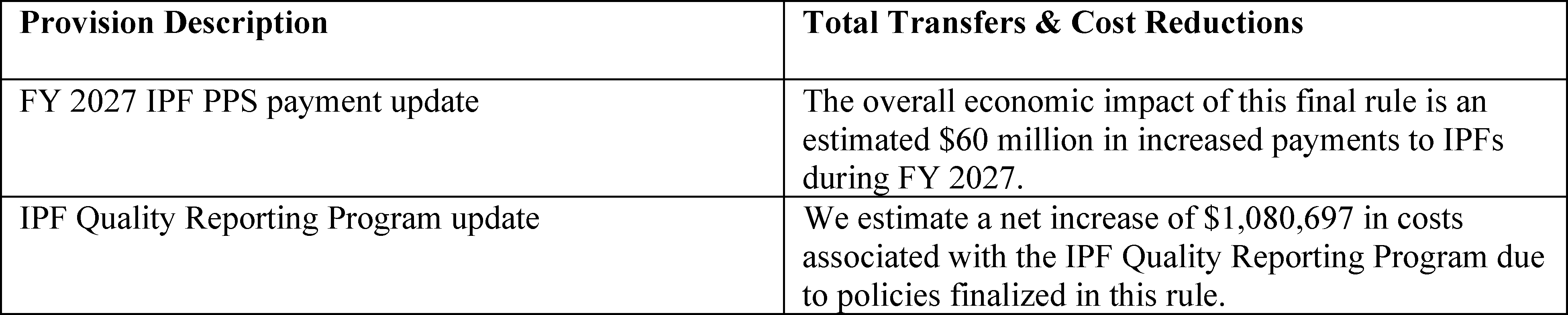
 42 CFR part 412, subpart N
 www.bls.gov/productivity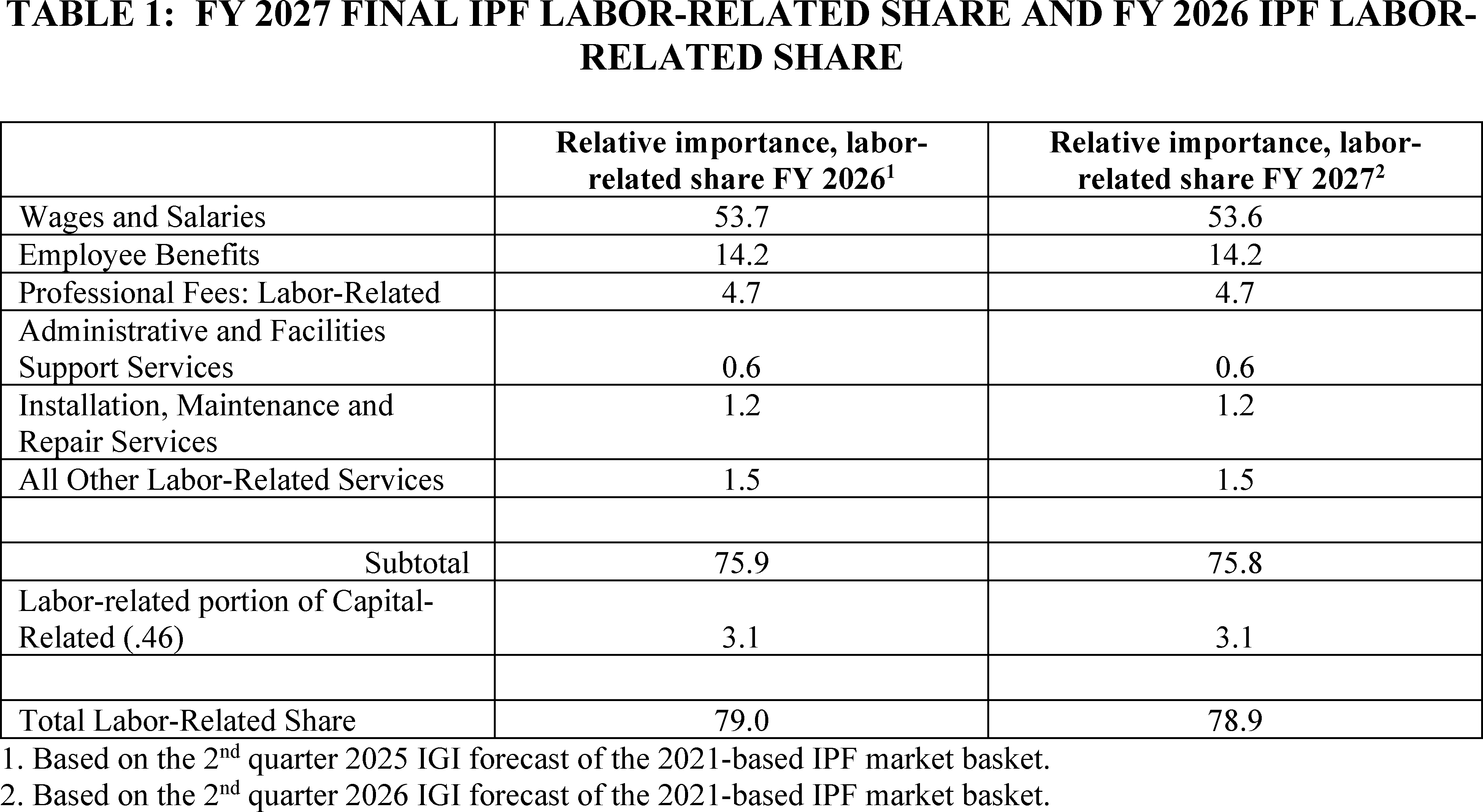
 www.cdc.gov/nchs/data/icd/10cmguidelines-FY2020_final.pdf
 www.whitehouse.gov/wp-content/uploads/2023/07/OMB-Bulletin-23-01.pdf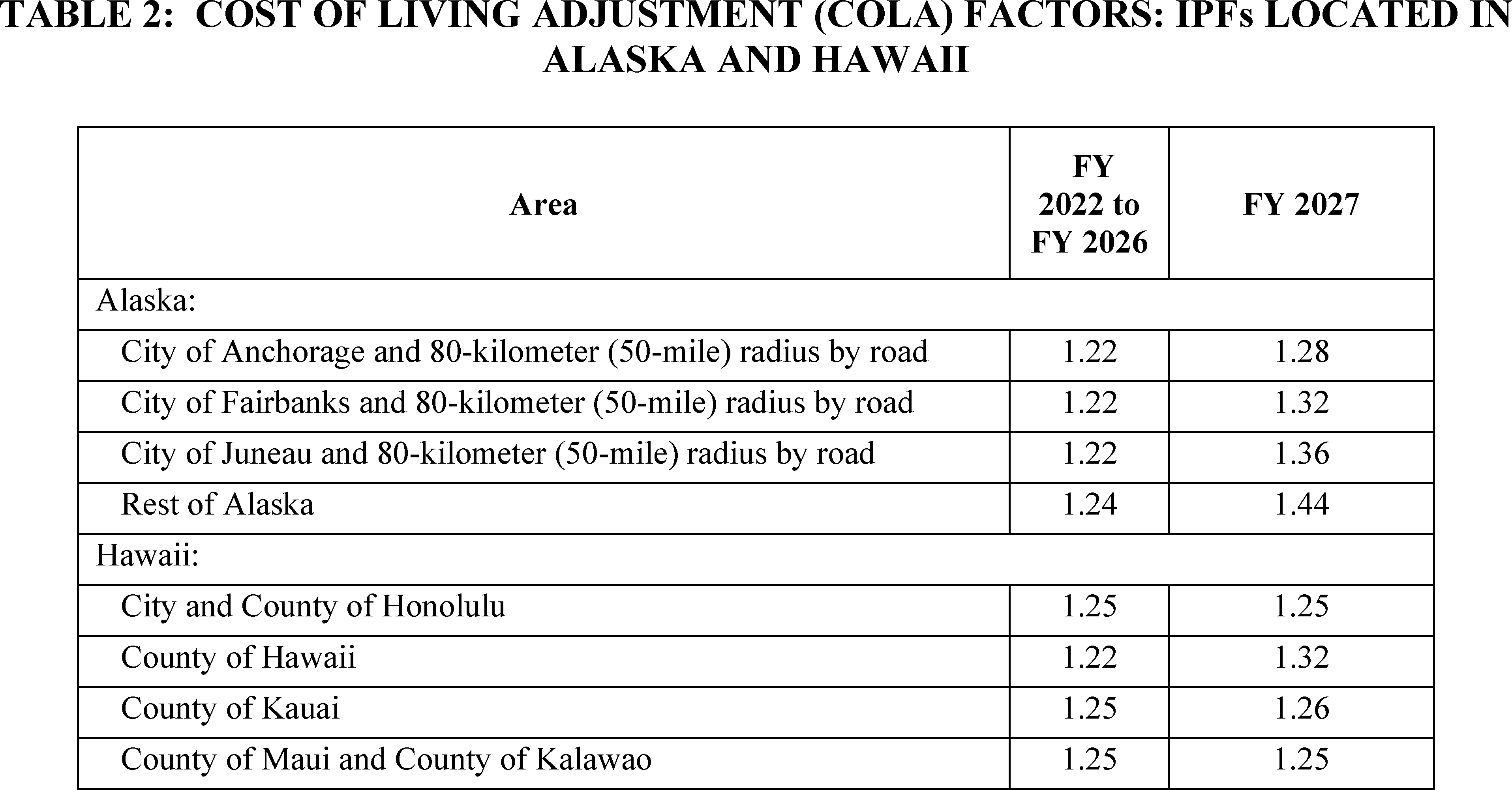
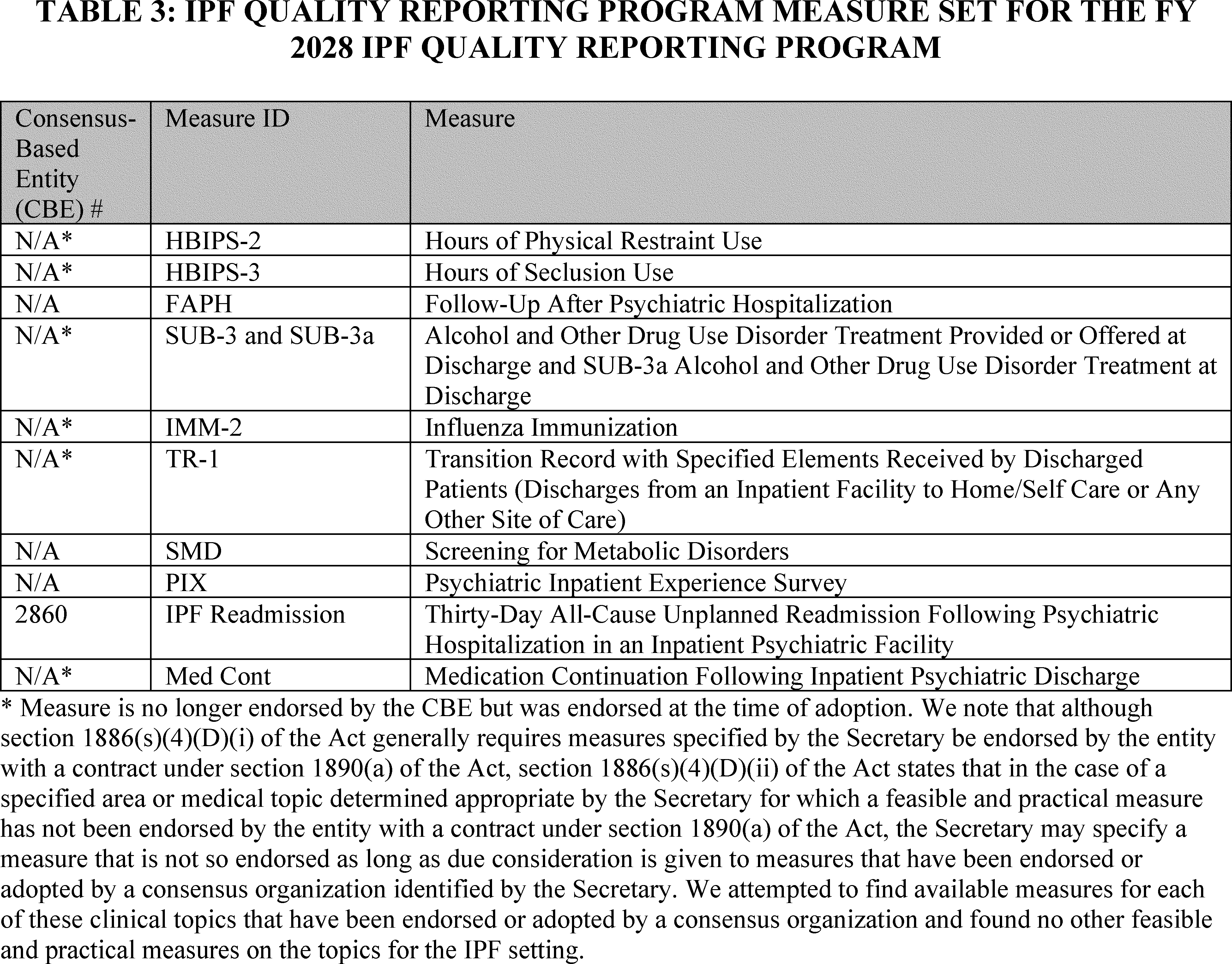
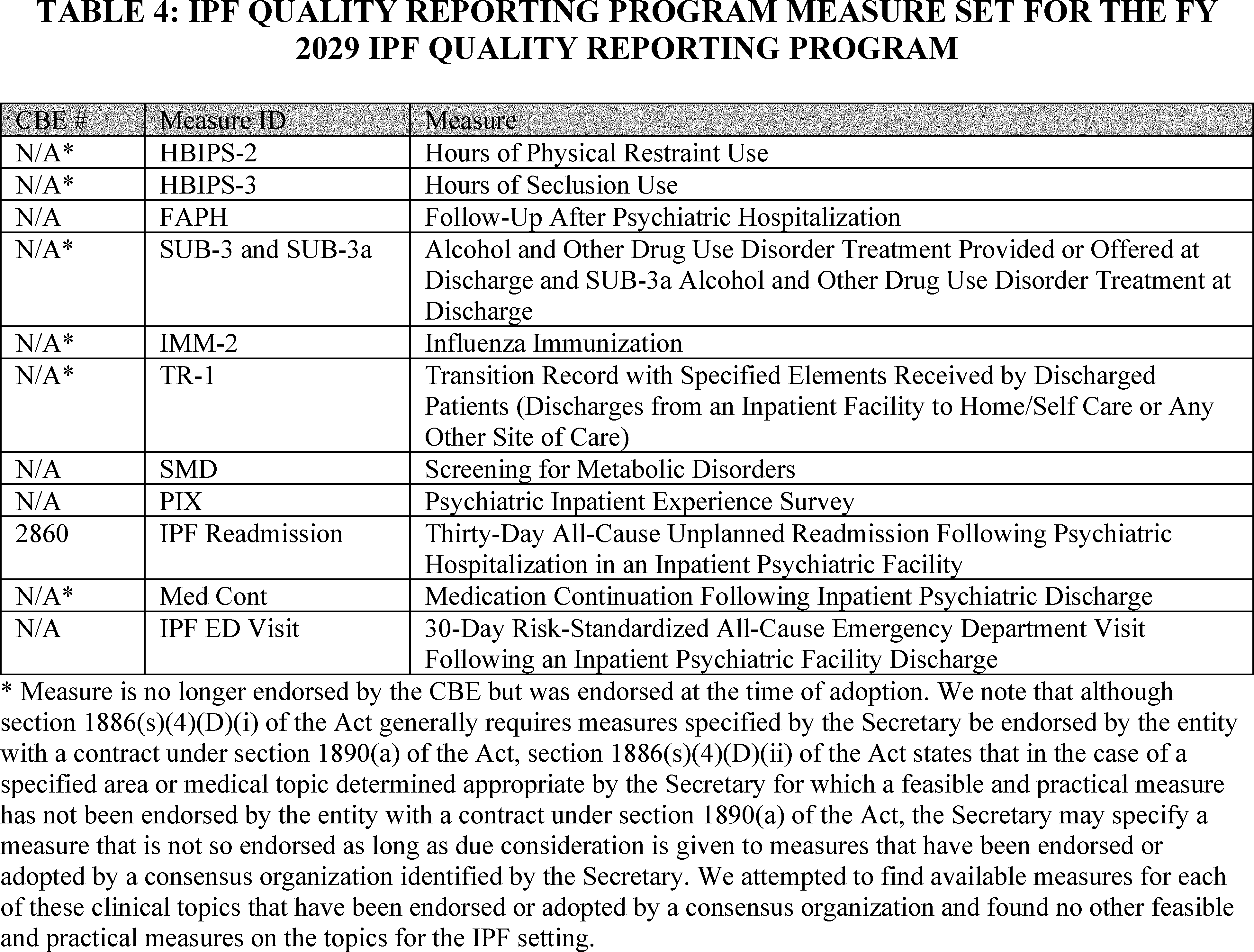
 qualitynet.cms.gov/ipf/PAI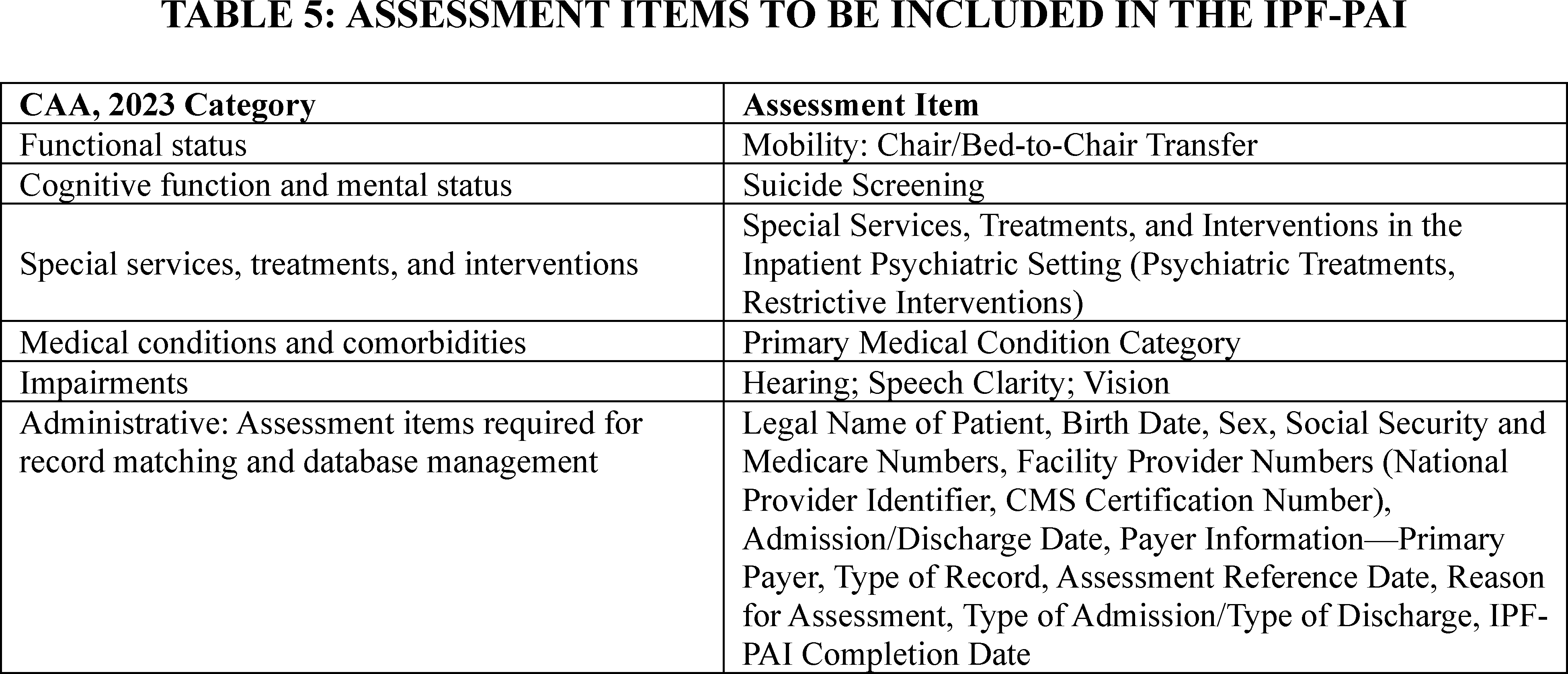
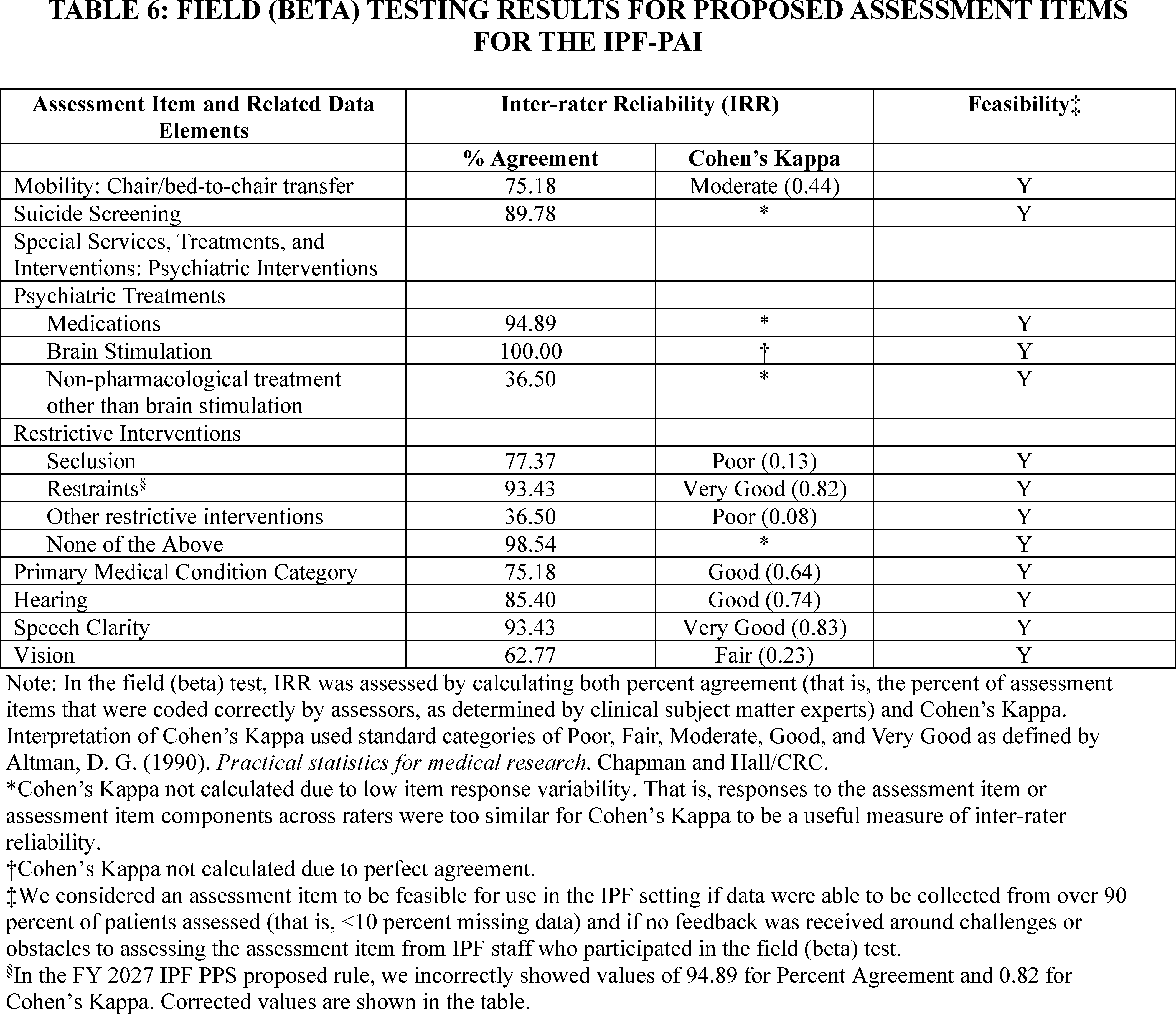
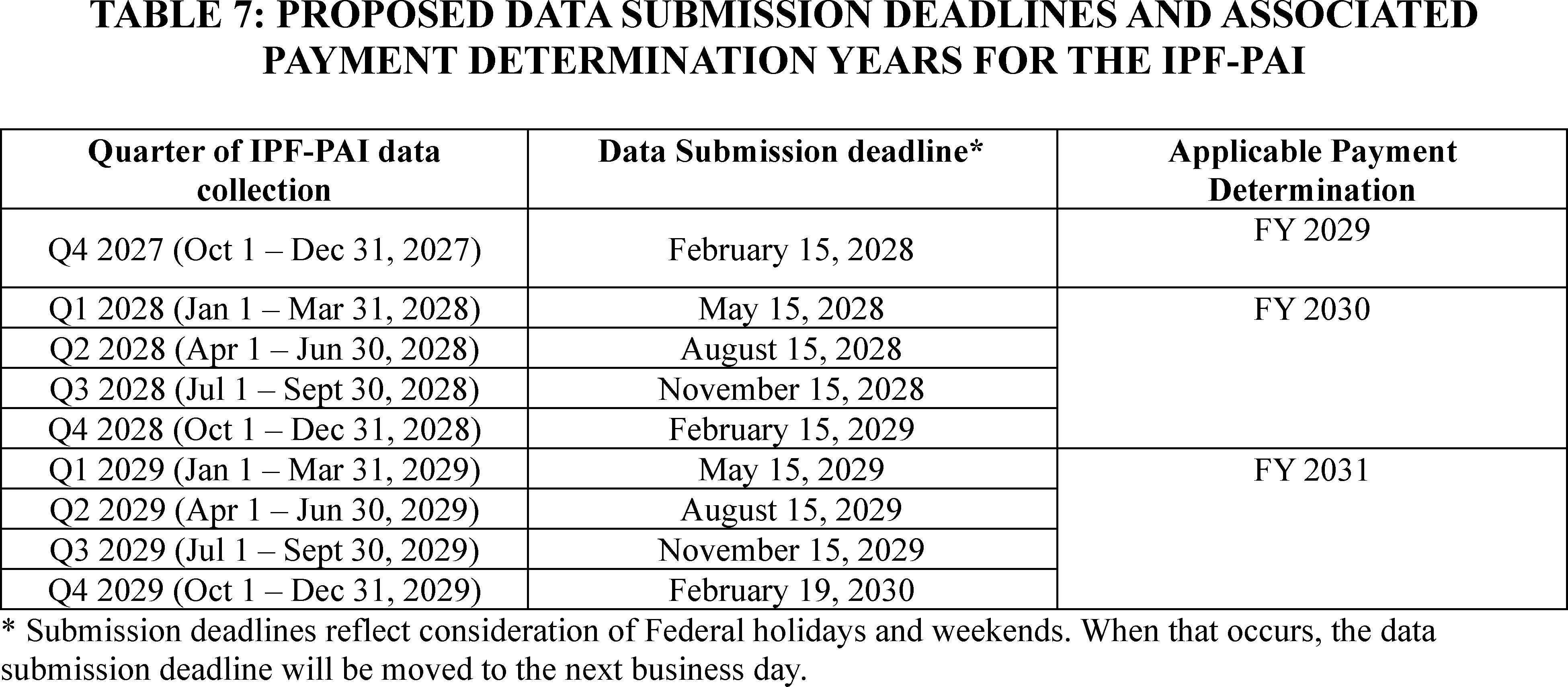
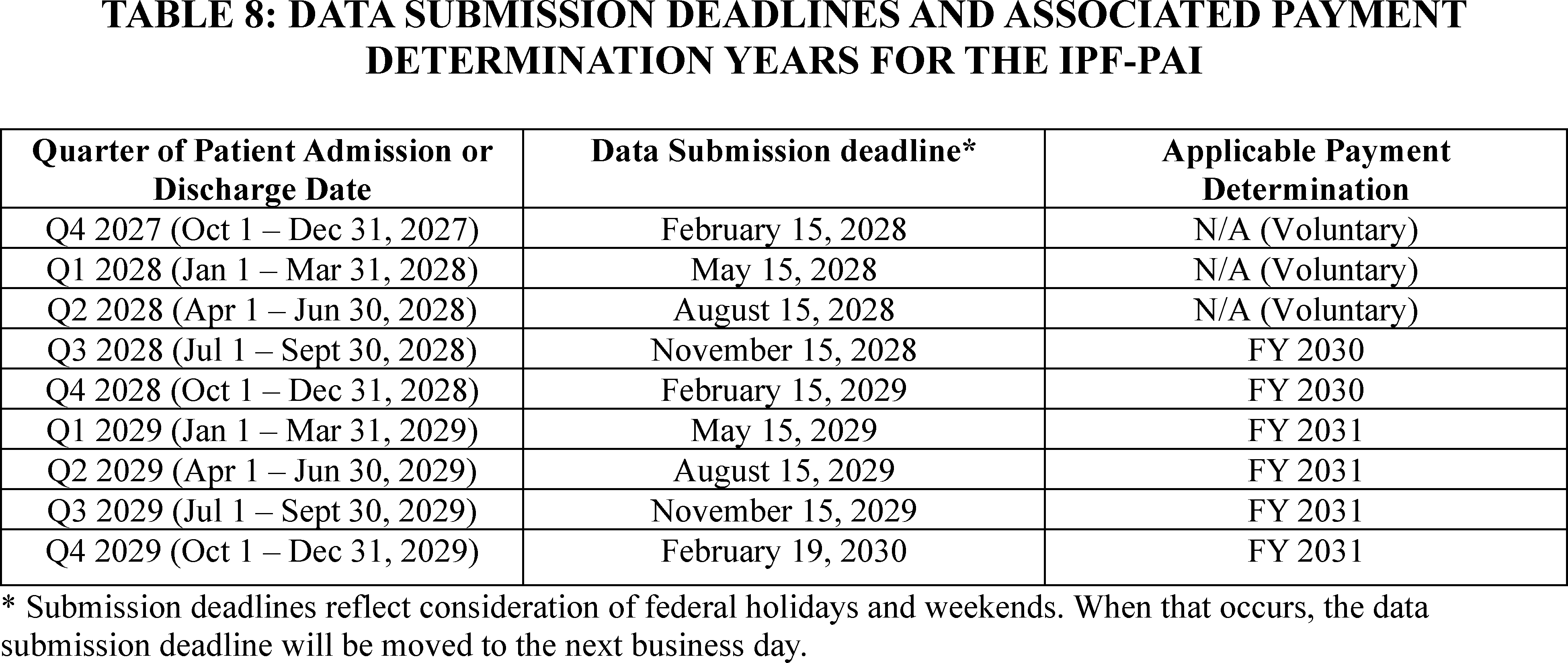
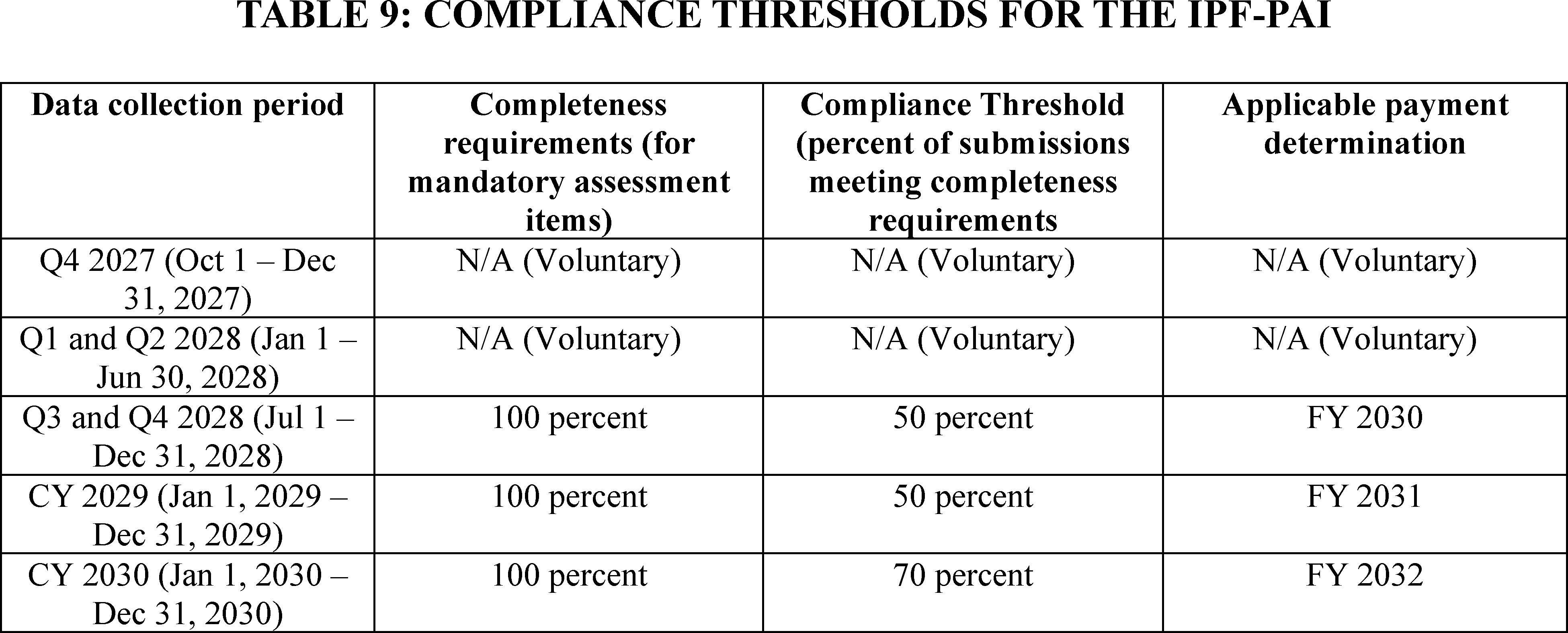
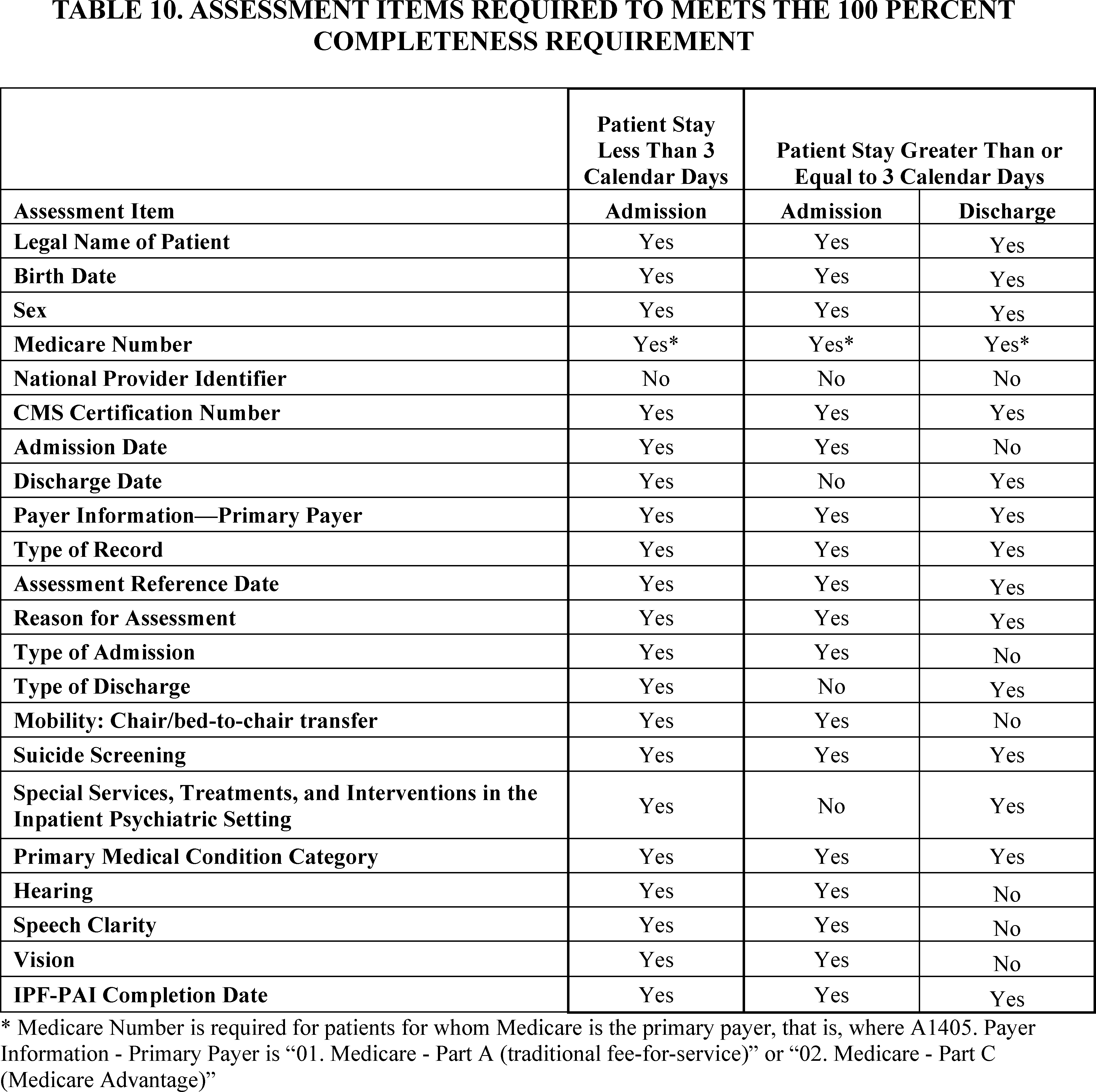
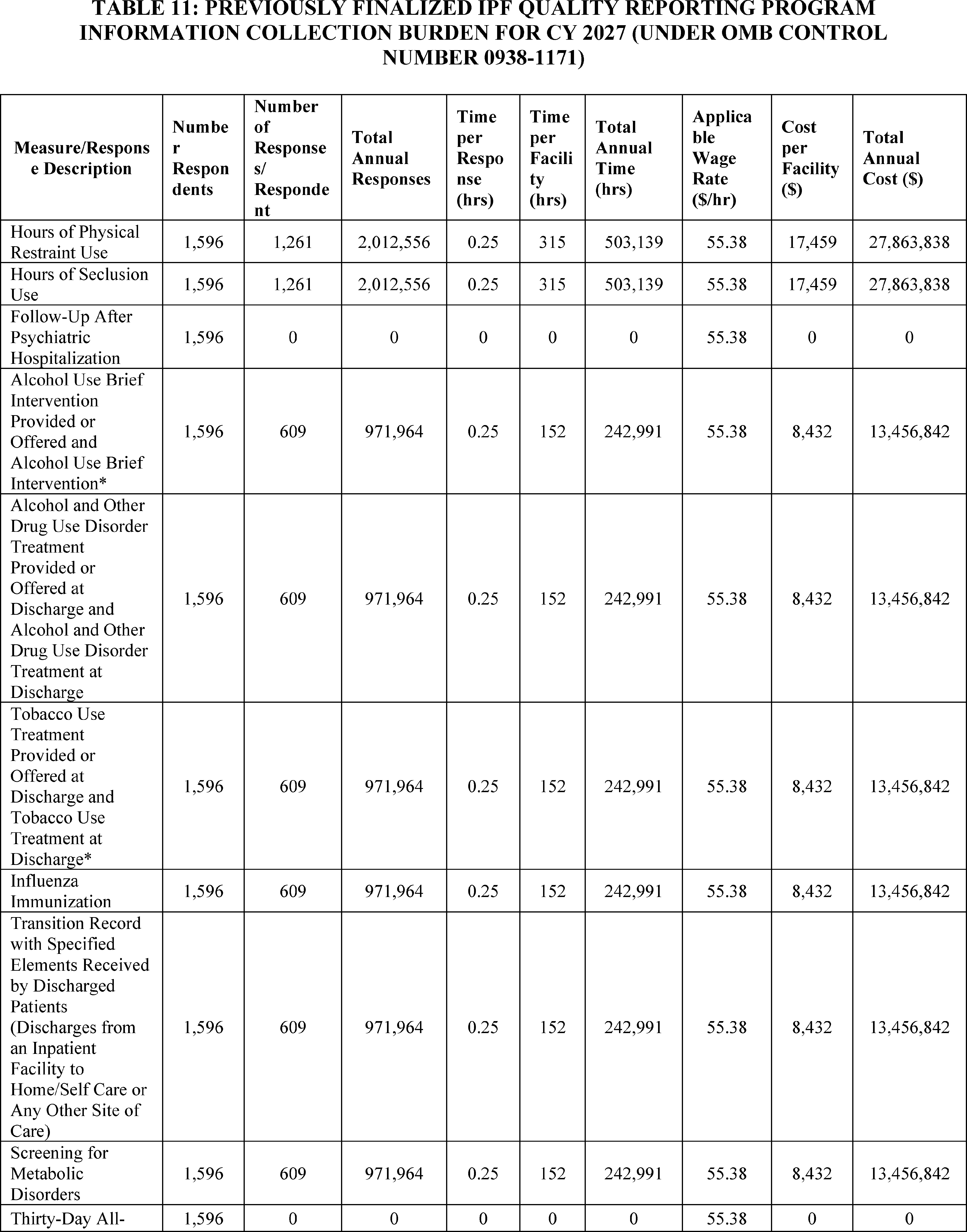
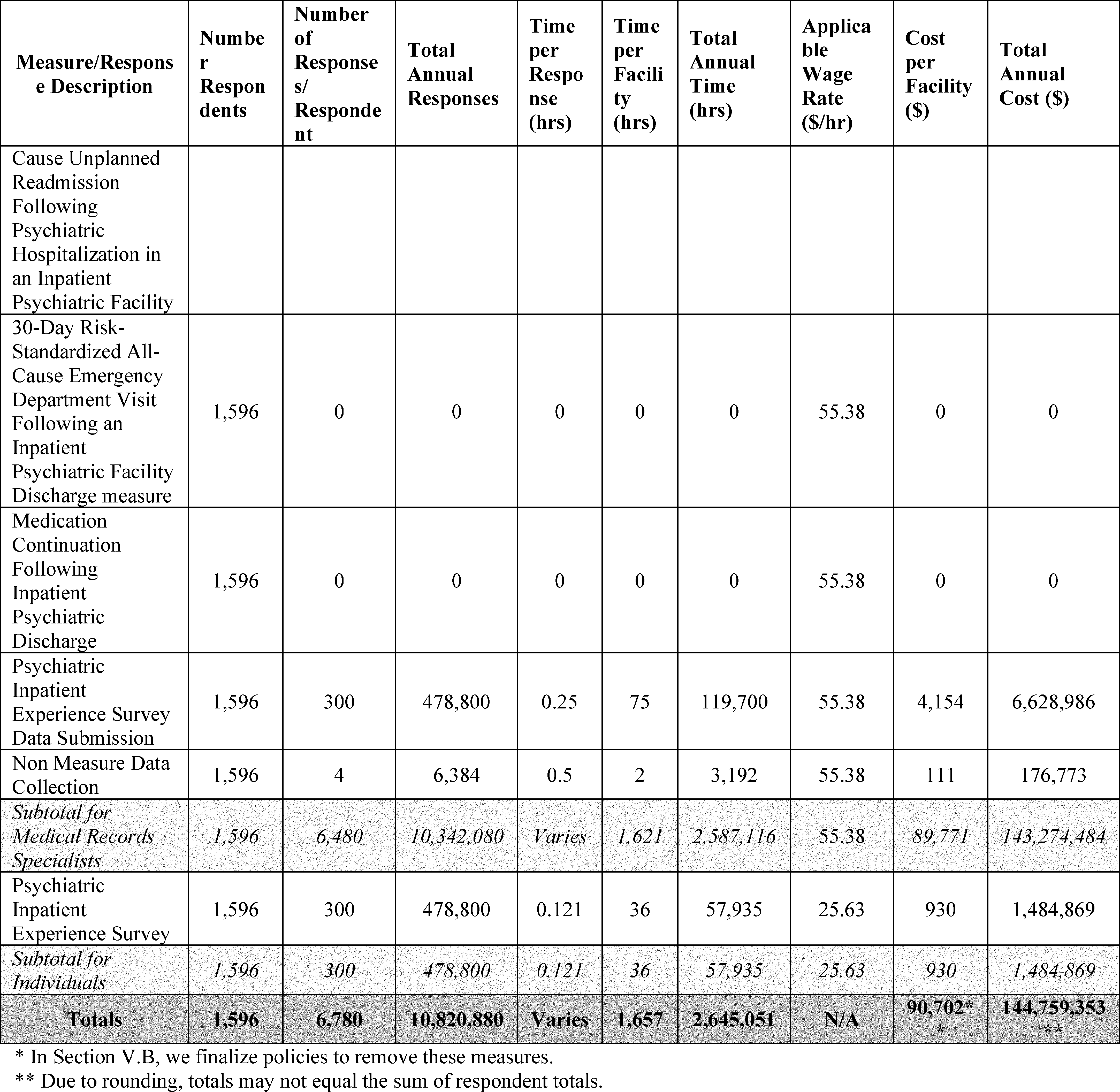
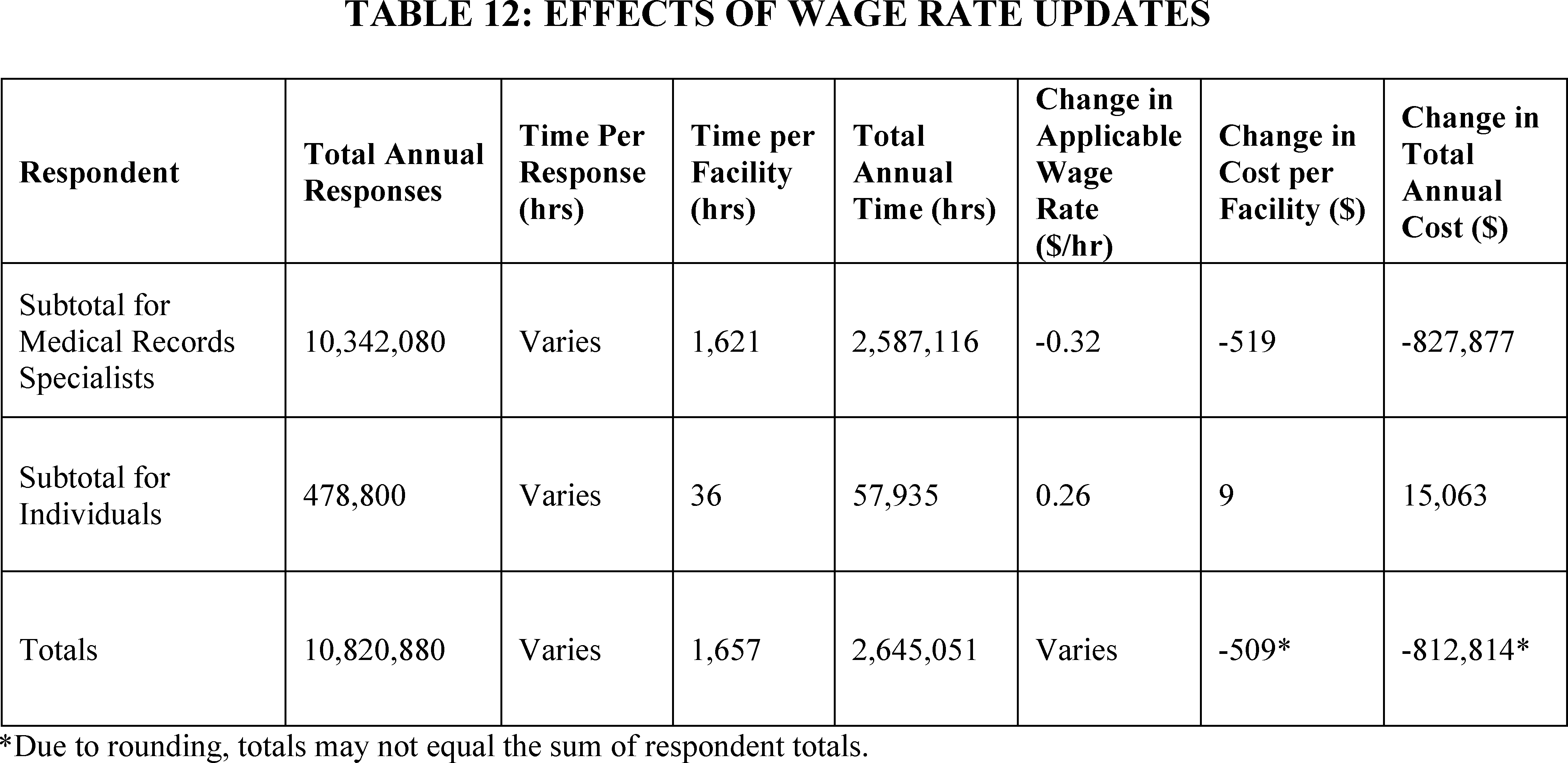
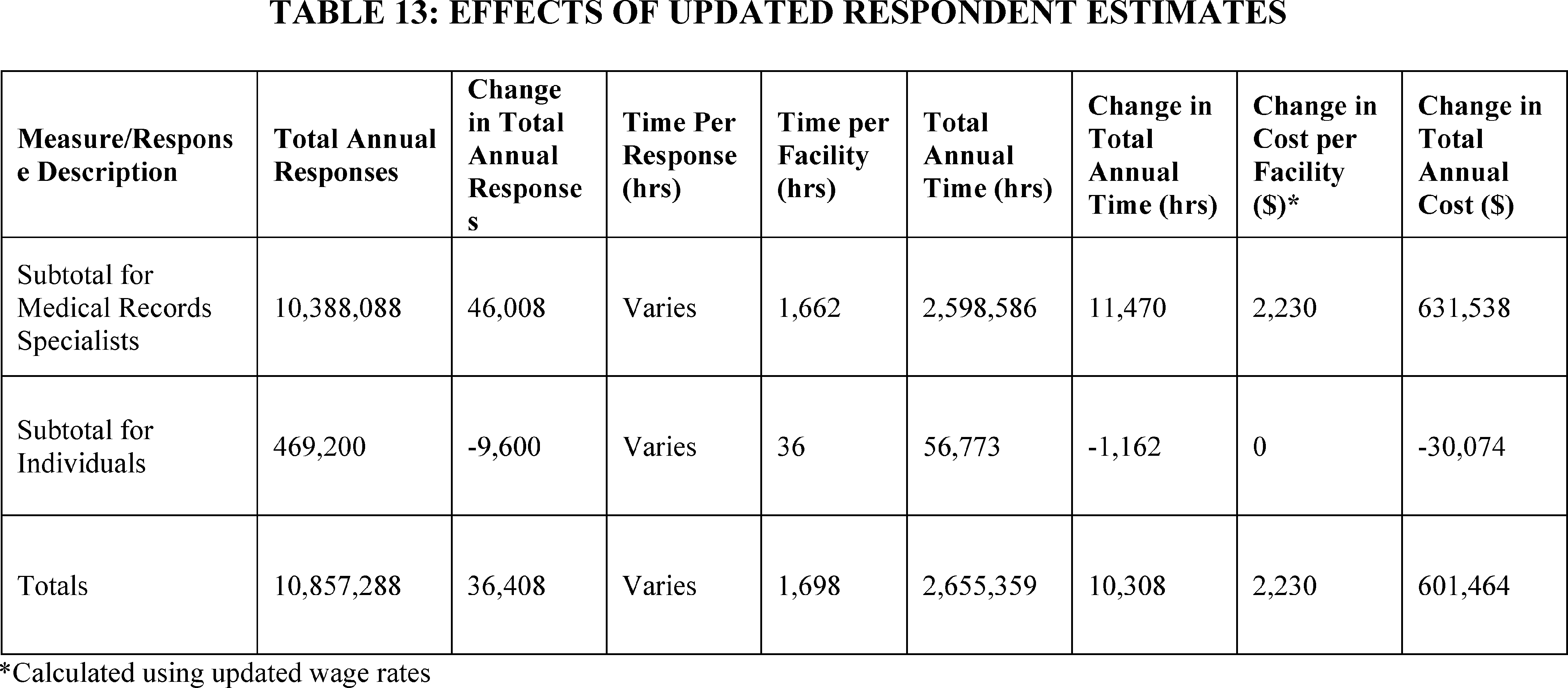
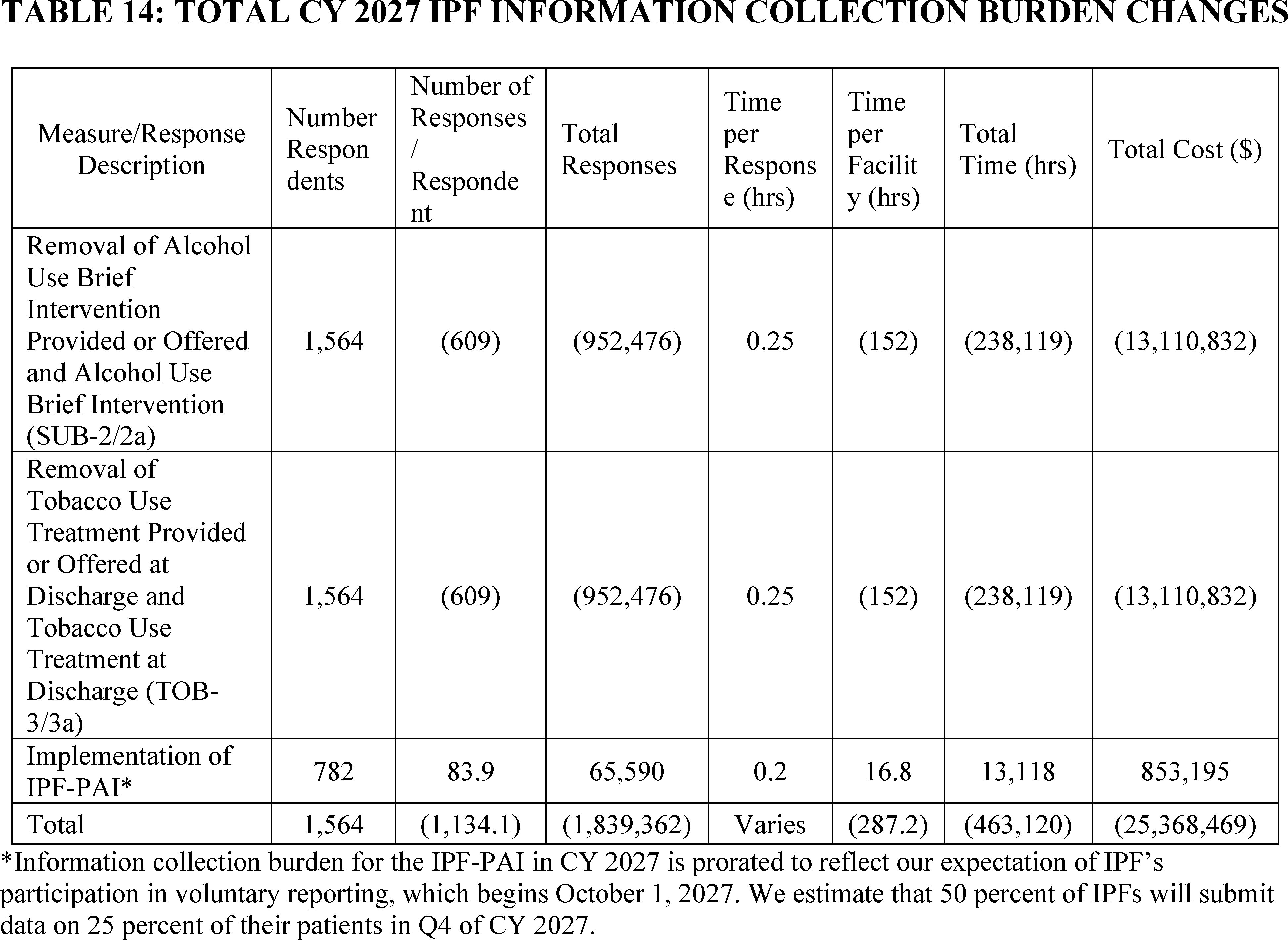
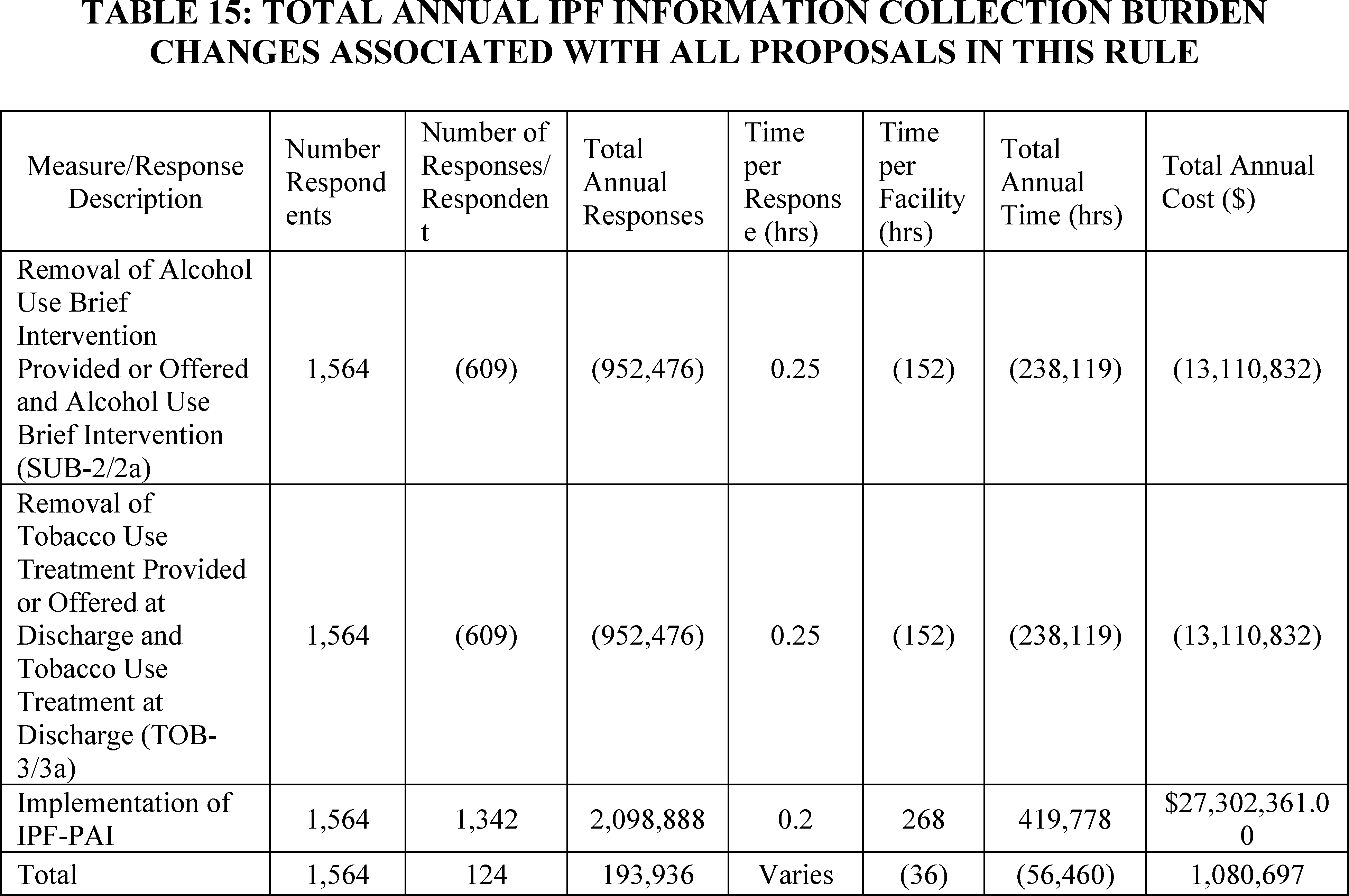
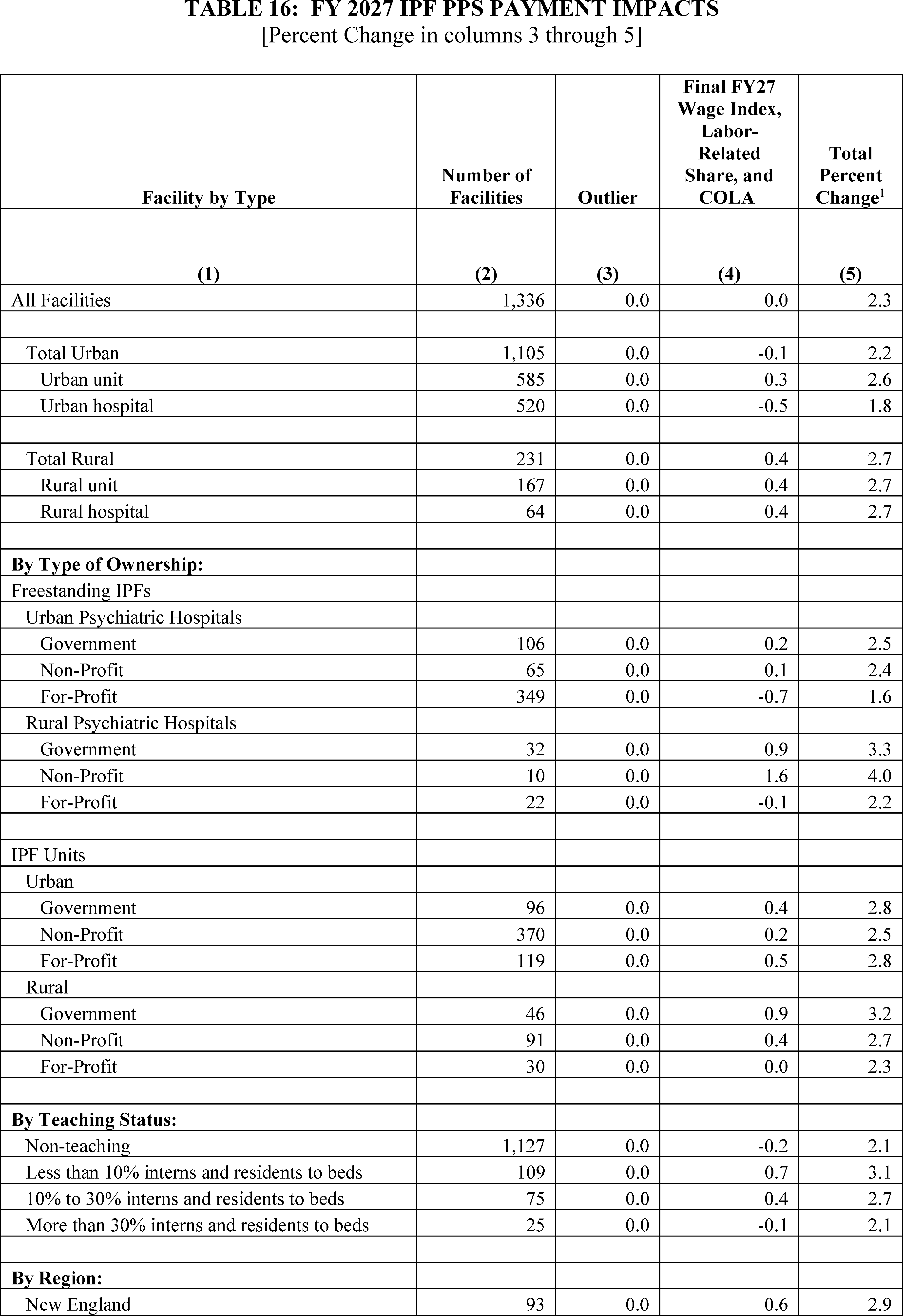
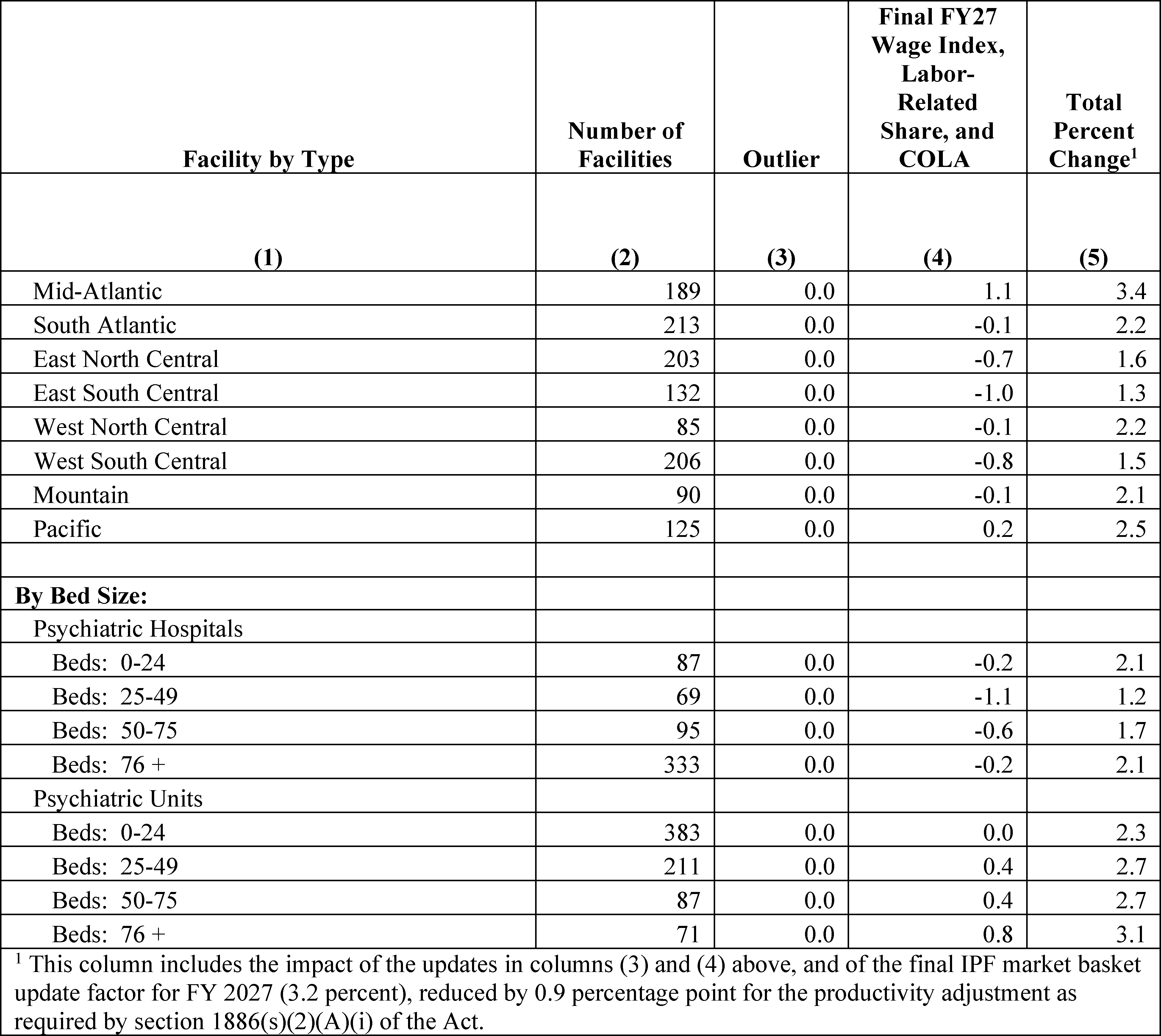
 data.bls.gov/oes/#/area/0000000/2025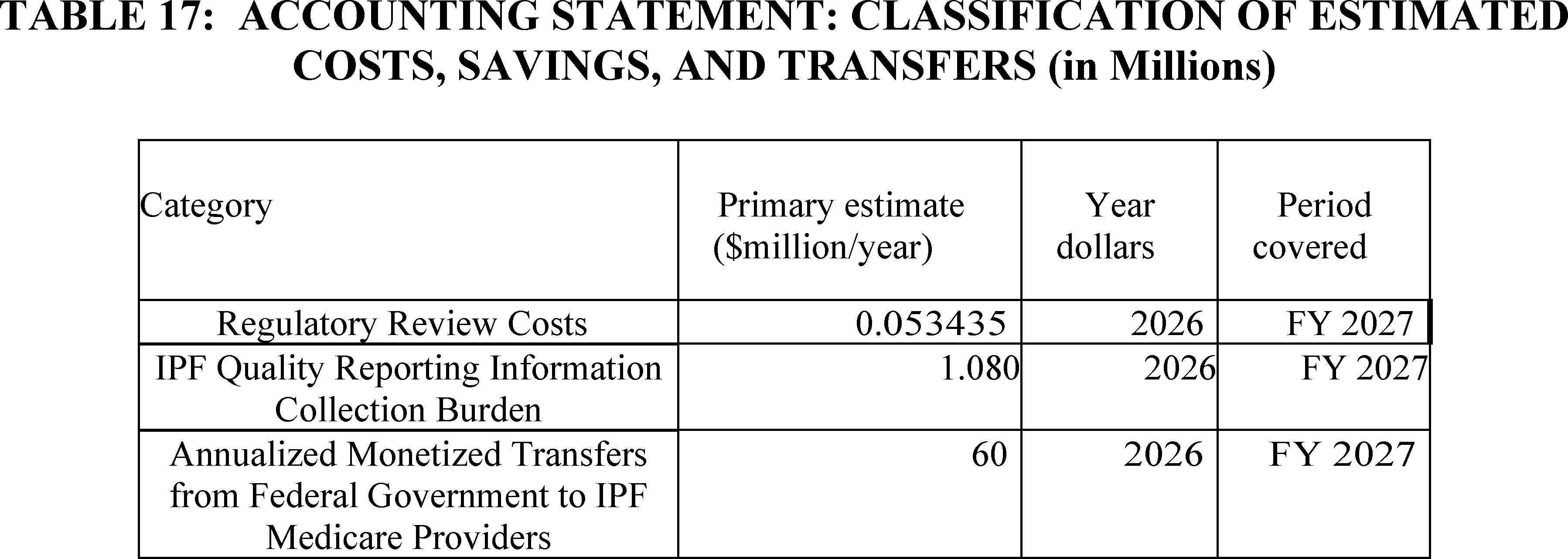
 www.sba.gov/content/small-business-size-standards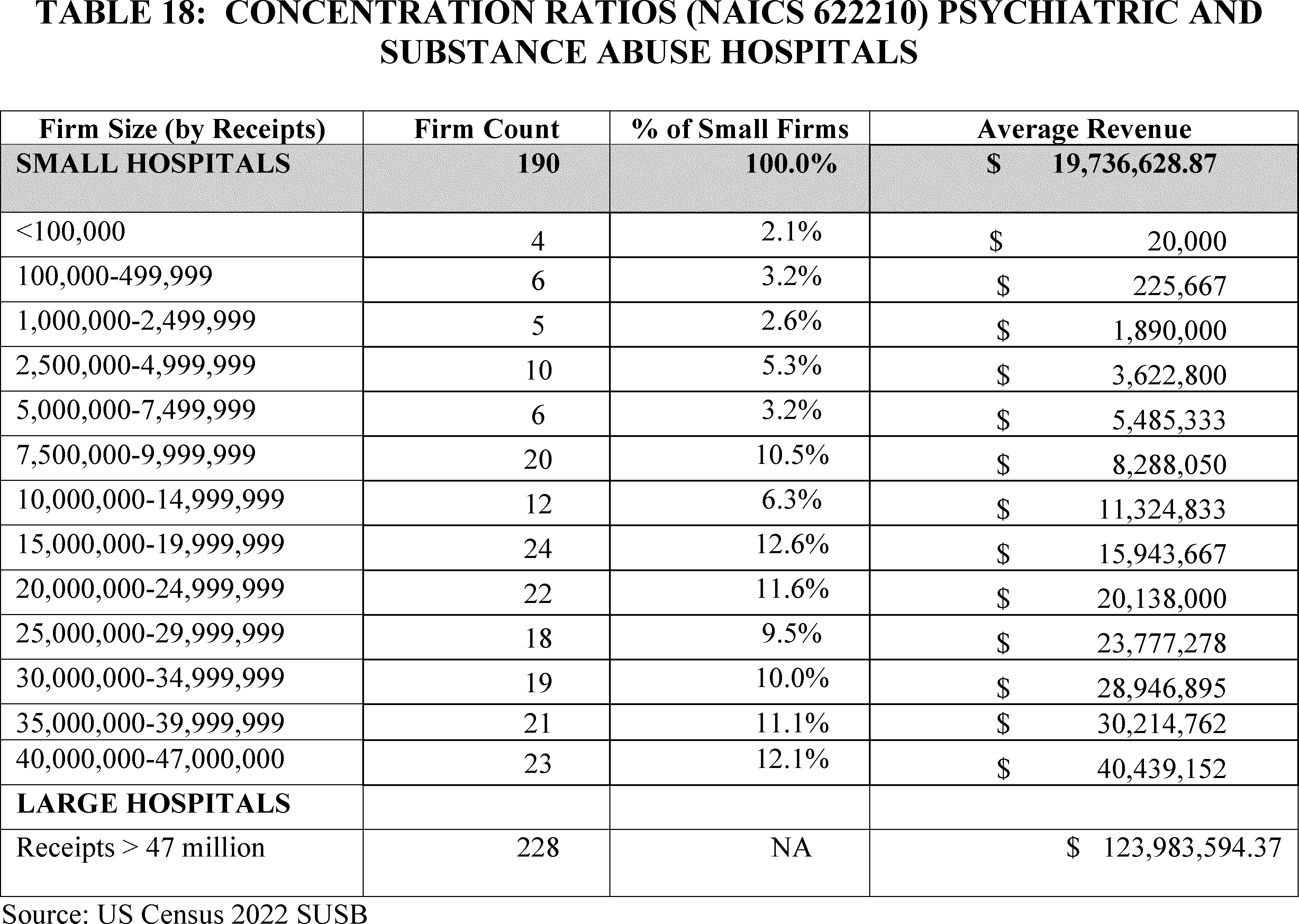
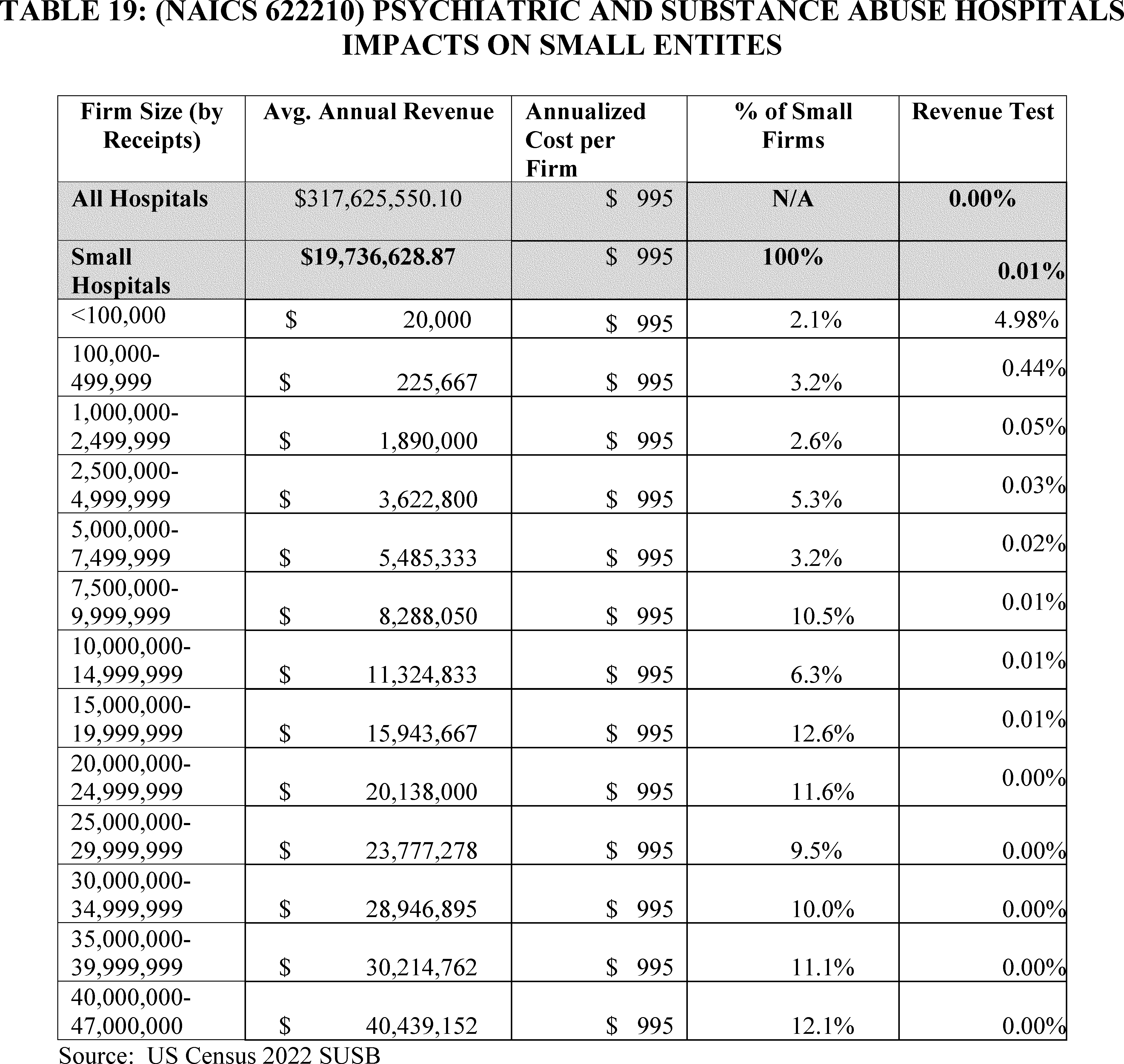
 www.spglobal.com/en
 www.medpac.gov/wp-content/uploads/2022/07/Wage-index-March-2023-SEC.pdf
 www.travel.dod.mil/Allowances/Overseas-Cost-of-Living-Allowance/
 library.samhsa.gov/sites/default/files/sma13-4741.pdf
 doi.org/10.1016/j.abrep.2020.100255
 jointcommission-ddsp.atlassian.net/wiki/spaces/DCS/pages/1030619137/2026+ORYX+Performance+Measurement+Reporting+Requirements
 www.healthit.gov/isp/united-states-core-data-interoperability-uscdi
 del.cms.gov/DELWeb/pubHome
 loinc.org/
 www.snomed.org/
 psychiatryonline.org/doi/book/10.1176/appi.books.9780890424841
 www.healthquality.va.gov/guidelines/MH/mdd/
 aspe.hhs.gov/sites/default/files/documents/6056d67f812cb75290d9d9fc3bb31715/ipf-use-medicare-beneficiary-dementia.pdf
 womenshealth.gov/article/sex-based-definitions
 datatools.samhsa.gov/das/n-sumhss/2024/n-sumhss-2024-ds0001/crosstab?row=EHR1A&column=FACILITYTYPE
 build.fhir.org/ig/HL7/piqi/en/