The Securities and Exchange Commission ("Commission") is proposing amendments to modernize certain rules related to proxy solicitations. The proposed amendments would, among oth...
The Securities and Exchange Commission (“Commission”) is proposing amendments to modernize certain rules related to proxy solicitations. The proposed amendments would, among other things, eliminate the requirement that registrants deliver an annual report to security holders, eliminate the delivery deadline when documents are incorporated by reference into a proxy statement, eliminate the requirement to file soliciting material regarding certain exempt solicitations, and shorten the minimum broker search period for proxy solicitations. The proposed amendments are intended to update our rules to account for developments since their adoption or last amendment and to simplify compliance for registrants.
DATES:
This release was published in the
Federal Register
on September 21, 2026. Comments should be submitted on or before November 20, 2026.
ADDRESSES:
Comments may be submitted by any of the following methods:
Send an email torule-comments@sec.gov.
Please include File Number S7-2026-33 on the subject line.
Paper Comments
Send paper comments to Vanessa A. Countryman, Secretary, Securities and Exchange Commission, 100 F Street NE, Washington, DC 20549-1090.
All submissions should refer to File Number S7-2026-33. This file number should be included on the subject line if email is used. To help the Commission process and review your comments more efficiently, please use only one method of submission. The Commission will post all submitted comments on the Commission's website (
www.sec.gov/rules-regulations/public-comments/s7-2026-33). Do not include personally identifiable information in submissions; you should submit only information that you wish to make available publicly. The Commission may redact in part or withhold entirely from publication submitted material that is obscene or subject to copyright protection.
Studies, memoranda, or other substantive items may be added by the Commission or staff to the comment file during this rulemaking. A notification of the inclusion in the comment file of any such materials will be made available on the Commission's website. To ensure direct electronic receipt of such notifications, sign up through the “Stay Connected” option at
www.sec.gov
to receive notifications by email.
David M. Plattner, Special Counsel, or Blake M. Grady, Special Counsel, Office of Mergers and Acquisitions, Division of Corporation Finance, at (202) 551-3440, U.S. Securities and Exchange Commission, 100 F Street NE, Washington, DC 20549.
SUPPLEMENTARY INFORMATION:
The Commission is proposing to amend the following rules and forms:
( printed page 59853)
Table of Contents
I. Introduction
II. Discussion of Proposed Amendments
A. Elimination of Requirement To Deliver Annual Report to Security Holders
1. Background
2. Proposed Amendments
B. Elimination of Delivery Deadline When Documents Are Incorporated by Reference Into the Proxy Statement
1. Background
2. Proposed Amendments
C. Elimination of Requirement To Submit Notice of Exempt Solicitation
1. Background
2. Proposed Amendments
D. Shortening the Minimum Broker Search Period
1. Background
2. Proposed Amendments
E. Requiring Contact Information on Proxy Statement and Information Statement Cover Pages and Other Technical Proposed Amendments
F. General Request for Comment
III. Other Matters
IV. Economic Analysis
A. Economic Baseline
1. Regulatory Baseline
2. Affected Entities
B. Economic Effects of Individual Provisions
1. Benefits and Costs of the Proposed Elimination of Requirement To Deliver Annual Report to Security Holders
2. Benefits and Costs of the Proposed Elimination of the Delivery Deadline
( printed page 59854)
When Documents Are Incorporated by Reference Into the Proxy Statement
3. Benefits and Costs of Proposed Elimination of Requirement To Submit Notice of Exempt Solicitation
4. Benefits and Costs of Proposed Shortening of Minimum Broker Search Period
5. Benefits and Costs of the Proposal To Require Contact Information on Proxy Statement and Information Statement Cover Pages
6. Other Commission Proposals
7. Aggregate Monetized Benefits and Costs
C. Effects on Efficiency, Competition, and Capital Formation
1. Effects on Efficiency
2. Effects on Competition
3. Effects on Capital Formation
D. Reasonable Alternatives
1. Reduce Rather Than Eliminate the Minimum Period for Proxy Statements Incorporating Documents by Reference
2. Disallow Only Voluntary Filing of Notices of Exempt Solicitation
3. Treat Notices of Exempt Solicitation Similarly to Insider Filings
4. Shorten the Broker Search Period to a Different Number of Days
5. Shorten the Rule 14b-1 and Rule 14b-2 Response Periods in Addition to the Proposed Amendments, and Consider Treating Investment Companies Differently
E. Request for Comment
V. Paperwork Reduction Act
A. Summary of the Collections of Information
B. Summary of the Proposed Amendments' Estimated Effects on the Collections of Information
C. Incremental and Aggregate Burden and Cost Estimates
D. Request for Comment
VI. Congressional Review Act
VII. Initial Regulatory Flexibility Act Analysis
A. Initial Regulatory Flexibility Act Analysis
1. Reasons for, and Objectives of, the Proposed Action
2. Legal Basis
3. Small Entities Subject to the Proposed Amendments
4. Projected Reporting, Recordkeeping, and Other Compliance Requirements
5. Duplicate, Overlapping, or Conflicting Rules
6. Significant Alternatives
B. Request for Comment
Statutory Authority
I. Introduction
We are proposing amendments to modernize rules related to aspects of the proxy solicitation process. The proposed amendments are intended to, among other things, account for developments since the rules' adoption or last amendment, reduce compliance burdens for registrants, and reduce investor confusion.
Our proposed amendments would:
Eliminate the requirement that registrants deliver an annual report to security holders; [4]
Eliminate the requirement to send the proxy statement at least 20 business days before the meeting date if it incorporates information by reference; [5]
Eliminate the requirement [6]
to submit a notice [7]
regarding exempt solicitations; [8]
Reduce the minimum broker search period in connection with proxy solicitations from 20 business days to five business days; [9]
Require the inclusion of contact information on proxy statement and information statement cover pages; and
Revise various rules and forms to reflect such amendments, as well as to correct errors that are technical in nature.
II. Discussion of Proposed Amendments
A. Elimination of Requirement To Deliver Annual Report to Security Holders
1. Background
Under 17 CFR 240.14a-3(b) (“Rule 14a-3(b)”), if a proxy solicitation relates to an annual meeting of shareholders, a special meeting in lieu of an annual meeting, or written consent in lieu of such meeting, at which directors are to be elected, the proxy statement must be accompanied or preceded by an annual report to security holders.[10]
The annual report to security holders must include, among other items, financial statements, management's discussion and analysis of financial condition and results of operations, business and segment information, information about directors and officers, and information about the market price of and dividends on the registrant's common equity.[11]
In adopting the requirement to deliver financial information to shareholders prior to their voting in the annual election of directors, the Commission stated that the information was important to enable investors “to appraise the financial position and results of operations of the issuer.” [12]
The Commission has also stated that the annual reports to security holders “are readable because they generally avoid legalistic and technical terminology and present information in an understandable, and often innovative, form,” and has encouraged registrants to deliver to shareholders an annual report to security holders, rather than a Form 10-K.[13]
More recently, however, because nearly all the disclosure required by Rule 14a-3(b) is also required by Form 10-K, many registrants have adopted the practice of sending shareholders a Form 10-K or a Form 10-K with limited additional disclosure (colloquially referred to as a “Form 10-K wrap”),[14]
thereby greatly reducing any benefits associated with readability. Information required in the Rule 14a-3(b) annual report but not in the Form 10-K includes: (i) the stock performance graph required by 17 CFR 229.201(e) (“Item 201(e) of Regulation S-K”), which many registrants voluntarily include in the Form 10-K; and (ii) disclosure required by 17 CFR 229.304(a) (“Item 304(a) of Regulation S-K”) regarding a change in a registrant's certifying accountant, which registrants disclose pursuant to Item 4.01 of Form 8-K.[15]
( printed page 59855)
2. Proposed Amendments
We are proposing to amend Rule 14a-3 to eliminate the current delivery requirement for annual reports to security holders and, for registrants that have a Form 10-K already on file for their most recent fiscal year, to eliminate altogether the need to comply with the separate annual report disclosure requirements in Rule 14a-3. Instead, proposed amended Rule 14a-3 would require that a proxy statement relating to a shareholder meeting at which directors will be elected be preceded by either (i) the filing of the registrant's Form 10-K for the registrant's most recent fiscal year on the Commission's Electronic Data Gathering, Analysis, and Retrieval system (“EDGAR”) in satisfaction of its Form 10-K filing requirement, or (ii) the furnishing of an annual report to security holders on EDGAR that meets the requirements set out in the rule.[16]
The proposed content, formatting, and submission requirements [17]
would be largely the same as the current requirements.[18]
However, we propose to remove certain requirements to eliminate disclosure in the annual report to security holders that goes beyond what is required in the Form 10-K [19]
or that would be available in a different registrant filing.[20]
We anticipate that the vast majority of registrants will rely on a previously filed Form 10-K to satisfy their Rule 14a-3(b) obligation, as proposed, given that nearly all registrants will have a Form 10-K on file for the most recent fiscal year when sending a proxy statement for their annual meeting of shareholders.[21]
In addition, we are proposing to remove, for all registrants other than investment companies, the applicability of Item 201(e) of Regulation S-K, which contains the requirements for the stock performance graph that most [22]
registrants must currently include in annual reports to security holders pursuant to 17 CFR 240.14a-3(b)(9) (“Rule 14a-3(b)(9)”). The graph compares the yearly percentage change in the registrant's cumulative total shareholder return on a class of common stock registered under section 12 of the Exchange Act with: (i) the cumulative total return of a relevant broad equity market index (such as the S&P 500, which must be used if the registrant is a company within the S&P 500); and (ii) the cumulative total return of a published industry or line-of-business index or, if the registrant discloses the basis for its selection, an index of peer companies determined by the registrant. When the Commission adopted the requirement in 1992, it stated that the purpose of the graph is to provide “a general depiction of one measure of corporate performance to be used by shareholders in evaluating the quality of decisions made by directors standing for re-election.” [23]
Given technological advancements since the rule's adoption, in particular the ease with which investors can access stock performance information on the internet, we believe that the requirement to provide a stock performance graph is outdated and no longer necessary for these registrants.[24]
Comments received in response to Chairman Paul S. Atkins' Statement on Reforming Regulation S-K that specifically referred to Item 201(e) have nearly universally agreed.[25]
With respect to investment companies, business development companies (“BDCs”) and face-amount certificate companies are subject to Rule 14a-3(b) and therefore currently disclose the stock performance graph required in Item 201(e) of Regulation S-K.[26]
While we are proposing to remove the applicability of that item for other registrants, we are proposing to retain it for investment companies.[27]
We
( printed page 59856)
propose to do so in order to maintain parity with other regulated funds, which are subject to similar performance graph requirements.[28]
Because BDCs and registered investment companies share similar characteristics, we believe it is beneficial to investors to maintain the existing parity in performance graph disclosure requirements. This would also be consistent with the Commission's recent proposal relating to the simplification of filer status for reporting companies, where the Commission proposed to retain this reporting item for investment companies.[29]
Our proposed amendments are intended to eliminate the redundancy created by requiring registrants to comply with the separate annual report disclosure requirements in Rule 14a-3 and Form 10-K, given that, as discussed above, annual reports to security holders are required to contain substantially the same information as is already required to be included in Forms 10-K. Eliminating this redundancy would reduce costs for registrants and remove duplicative filings that may cause investor confusion. In addition, nothing in the proposed rules, if adopted, would prevent registrants from voluntarily sending Rule 14a-3 annual reports to security holders in connection with shareholder meetings, provided that they also submit such reports on EDGAR, and such reports would continue to fall outside the scope of section 18 liability under the Exchange Act, since they will remain furnished, not filed.[30]
Request for Comment
1. The proposed amendments would remove the current requirement that registrants deliver an annual report to security holders, although registrants may choose to send shareholders an annual report to security holders (
e.g.,
a “glossy” annual report) voluntarily. Would the removal of this delivery requirement raise investor protection concerns? If so, how might the Commission address those concerns?
2. The proposed amendments would require a registrant, prior to furnishing a proxy statement to shareholders, either to have filed its Form 10-K or have submitted an annual report to security holders on EDGAR. Should we instead only require that a Form 10-K has been filed prior to furnishing a proxy statement to shareholders and remove the alternative of an annual report to security holders having been submitted on EDGAR? What are the potential advantages and disadvantages of removing the alternative of an annual report to security holders having been submitted on EDGAR?
3. In practice, in what circumstances would registrants satisfy their Rule 14a-3(b) obligation, as proposed, by submitting an annual report to security holders on EDGAR rather than filing a Form 10-K? Please provide detailed examples if possible.
4. The proposed amendments would remove the alternative of an annual report to security holders being prepared on an integrated basis pursuant to 17 CFR 240.14a-3(d) and General Instruction H to Form 10-K, whereby issuers may use their Form 10-K, without a “wrap,” to satisfy their annual report requirements.[31]
We believe registrants would not have a need to prepare an integrated report under the proposed amendments. Should we, however, retain this alternative? If yes, why?
5. The proposed amendments would eliminate, for all registrants other than investment companies, the stock performance graph currently required by Rule 14a-3(b)(9) and Item 201(e) of Regulation S-K. Should we retain the requirement to disclose the stock performance graph for investment companies? Why or why not? How do investors view the stock performance graph in the context of an investment in an investment company as opposed to other registrants? Alternatively, should we instead retain the requirement for all registrants? If so, should we require that this disclosure be provided in registrants' Forms 10-K or in a different filing?
B. Elimination of Delivery Deadline When Documents Are Incorporated by Reference Into the Proxy Statement
1. Background
Note D.3 to Schedule 14A requires registrants to send their proxy statements to shareholders no later than 20 business days prior to the date on which the meeting of such shareholders is held if a document or portion of a document, other than an annual report to security holders, is incorporated by reference into the proxy statement in the manner permitted by Items 13(b) or 14(e)(1) of Schedule 14A. Alternatively, if no meeting is held, proxy statements that incorporate information in such a manner must be sent at least 20 business days prior to the date that the votes, consents or authorizations may be used to effect the corporate action. In proposing the 20-business-day requirement, the Commission stated that the requirement “is designed to address the need for documents incorporated by reference . . . to be delivered to security holders on a timely basis.” [32]
In addition, Form S-4 and Form F-4 contain a similar minimum 20-business-day period requirement when sending a prospectus to security holders prior to a security holder meeting if a registrant incorporates by reference into the form information about the registrant or the company being acquired.[33]
When adopting Form S-4, the Commission stated that the “time period is designed to address the need for documents incorporated by reference to be delivered to security holders on a timely basis.” [34]
2. Proposed Amendments
We are proposing to amend Schedule 14A to remove Note D.3 to Schedule 14A.[35]
We are also proposing to amend Form S-4 and Form F-4 to eliminate the minimum 20-business-day period requirements in those two forms.
The requirements in Note D.3 of Schedule 14A and similar requirements in Form S-4 and Form F-4 were adopted before the establishment of EDGAR and the mandatory filing of nearly all disclosure documents on EDGAR. The filings that are permitted to be incorporated by reference into Schedule 14A, Form S-4, and Form F-4 are now available to the investing public without charge on EDGAR,
[36]
greatly reducing the need for investors
( printed page 59857)
to request paper copies of the filings from registrants. Furthermore, since the adoption of the current requirements, the Commission has taken numerous steps to facilitate the electronic delivery of filings to shareholders.[37]
To the extent that investors do request copies of the filings incorporated by reference, registrants today have the means to send such filings electronically. Notably, many investors appear to not only increasingly expect, but also prefer, that regulatory documents and reports under the Federal securities laws be delivered electronically.[38]
These changes, along with technological developments, have facilitated widespread access to the filings incorporated by reference into Schedule 14A, Form S-4, and Form F-4, obviating the need for the current 20-business-day requirement.
Request for Comment
6. As an alternative to eliminating Note D.3 to Schedule 14A, as well as eliminating General Instruction A.2 to Form S-4 and General Instruction A.2 to Form F-4, should we reduce the 20-business-day requirement in each to a shorter period? If yes, what period of time should be required and why?
C. Elimination of Requirement To Submit Notice of Exempt Solicitation
1. Background
Certain types of solicitations are exempt from most of the Federal proxy rules. Under 17 CFR 240.14a-2(b)(1) (“Rule 14a-2(b)(1)”), a solicitation by any person who does not directly or indirectly seek authority to act as proxy and does not furnish or request a form of revocation, abstention, consent, or authorization is exempt from the filing and informational requirements of the Federal proxy rules. Such exempt solicitations remain subject to Rule 14a-9, the antifraud provision of the Federal proxy rules.
17 CFR 240.14a-6(g) (“Rule 14a-6(g)”) sets forth a notice requirement for an exempt solicitation conducted under Rule 14a-2(b)(1) if it is (i) conducted by a person who beneficially owns more than $5 million of a registrant's securities at the commencement of a solicitation (a “large shareholder”), (ii) in writing, and (iii) not already publicly available. Specifically, 17 CFR 240.14a-6(g)(1) requires the soliciting person to furnish to the Commission a Notice of Exempt Solicitation containing the information specified in 17 CFR 240.14a-103, which includes as an exhibit all written soliciting materials sent to any security holder.
The Commission adopted Rule 14a-2(b)(1) in response to concerns that shareholders could be “deterred from discussing management and corporate performance by the prospect of being found after the fact to have engaged in a proxy solicitation.” [39]
In adopting the notice requirement in Rule 14a-6(g), the Commission sought to ensure that the greater flexibility in shareholder communications permitted by Rule 14a-2(b)(1) was accompanied by disclosure of significant exempt solicitations that might otherwise remain unseen under the more relaxed shareholder communication regime.[40]
2. Proposed Amendments
We are proposing to rescind Rule 14a-6(g) and the Notice of Exempt Solicitation. As discussed above, the original purpose of the notice was to provide registrants and other market participants with visibility into otherwise non-public exempt solicitations by large shareholders.[41]
We believe that Rule 14a-6(g) no longer plays a meaningful role in alerting shareholders and registrants to relevant exempt written solicitations conducted by large shareholders because (i) the submissions have been predominantly made, in recent years, by shareholders who do not beneficially own securities with a market value of more than $5 million and therefore are filing on a voluntary basis,[42]
(ii) such shareholders have alternative means to communicate to other shareholders, and (iii) registrants often are alerted to these solicitations through other means.
The vast majority of Notices of Exempt Solicitation submitted on EDGAR in recent years appear to have been voluntary submissions—either submissions made by shareholders who do not exceed the $5 million threshold or submissions about information that is already publicly available, such as press releases—and thus do not serve the original purpose of the notice.[43]
In addition, the voluntary submission of Notices of Exempt Solicitation permits submitting shareholders, whose views do not necessarily represent the views of other shareholders, to disseminate their views inexpensively and prominently on EDGAR, which was not the intended purpose of Rule 14a-6(g). Instead, as discussed above, the intended purpose of the rule was to alert registrants and investors to non-public exempt solicitations by large shareholders, about which registrants and investors therefore would not otherwise be aware.[44]
Such voluntary notices also can be confusing to shareholders because they appear on a registrant's EDGAR page but are not submitted by the registrant, and they appear alongside filings required to be made under our rules.[45]
Further, shareholders often submit multiple Notices of Exempt Solicitation regarding
( printed page 59858)
a single annual meeting, which may make it harder to locate the registrant's required filings, as well as mandatory filings by third parties, among the voluntary submissions on the registrant's dedicated EDGAR page.
While we acknowledge that there may be some benefit to shareholders being able to access the communications of other shareholders in a centralized manner on the registrant's dedicated EDGAR page, permitting the registrant's EDGAR page to serve as a repository for the substantial number of such communications obscures mandatory reports, statements and other disclosures on the registrant's EDGAR page.[46]
By eliminating these submissions altogether, the proposed amendments are intended to reduce potential investor confusion [47]
and improve the accessibility of information for investors on registrants' EDGAR pages (and in the broader digital environment generally) by eliminating a substantial number of voluntary filings and making the filings that remain easier to find on the registrant's EDGAR page. The proposed amendments would also reduce compliance burdens for large shareholders engaging in exempt solicitations pursuant to Rule 14a-2(b)(1), because such shareholders would no longer be required to submit their exempt written soliciting material on EDGAR. Such large shareholders also would no longer need to determine whether they beneficially own securities with a market value over $5 million or whether their exempt solicitations are already public.
Further, following the elimination of Notices of Exempt Solicitation, shareholders would still be able to notify other shareholders of their exempt solicitations. In January 2026, the Division of Corporation Finance updated its guidance to state that the Commission staff will object to voluntary submissions of Notices of Exempt Solicitation.[48]
In response, market participants have created third-party websites that list and provide access to exempt solicitations.[49]
Furthermore, shareholders often broadcast the content of their exempt solicitations by press release or other public announcement. Registrants may be alerted to exempt solicitations by such public announcements, reducing the role of Rule 14a-6(g) in alerting registrants to relevant exempt written solicitations conducted by large shareholders.
Given that most Notices of Exempt Solicitation do not serve the original purpose of Rule 14a-6(g) and the fact that shareholders have alternative means to publish such notices, we propose to rescind the rule.
Request for Comment
7. Does Rule 14a-6(g) continue to serve its original purpose such that we should retain the rule? If so, please explain how the rule does so, considering that written solicitations by large shareholders currently are generally also made public through means unrelated to the submission of a Notice of Exempt Solicitation on EDGAR.
8. As mentioned above, in January 2026, the Division of Corporation Finance updated its guidance to state that the staff will object to voluntary submissions of Notices of Exempt Solicitation, which has led to a decline in their frequency, potentially addressing some of the concerns discussed above. Accordingly, instead of rescinding the rule, should we amend the rule to prohibit the submission of voluntary Notices of Exempt Solicitation? For example, should shareholders submitting Notices of Exempt Solicitation be required to certify that they own the requisite amount of securities, with the appropriate liability for such a certification, before they are permitted to submit the Notice of Exempt Solicitation on EDGAR?
9. As an alternative to rescinding the Notice of Exempt Solicitation submission requirement, should we consider adjusting the $5 million ownership threshold that triggers the requirement? If so, what ownership threshold should we adopt and why?
10. As an alternative to rescinding the Notice of Exempt Solicitation submission requirement, should we instead create a filter for Notices of Exempt Solicitation on the registrant's EDGAR page such that the page by default would not display Notices of Exempt Solicitation, but the page would provide an option for users to remove the filter? As an alternative to an optional filter on the registrant's EDGAR page, should we omit the notices from the list of filings on the registrant's EDGAR page and instead add a selection for Notices of Exempt Solicitation on the
SEC.gov
EDGAR Full-Text Search page such that users could search specifically for such notices?
11. If the rule is rescinded, as proposed, should a shareholder that engages in an exempt solicitation be required to provide the shareholder's written soliciting material directly to the registrant, to ensure that the registrant is aware of such solicitation? Why or why not? Should such a notice requirement apply to all shareholders, or only to shareholders who meet a certain ownership threshold, such as the current $5 million threshold? Should there be specific requirements regarding how such notices should be delivered?
D. Shortening the Minimum Broker Search Period
1. Background
Rule 14a-13 sets forth the requirements for registrants' dissemination of proxy materials to beneficial owners, including a requirement to supply proxy materials to record holders for distribution to beneficial owners.[50]
Registrants are required, pursuant to current Rule 14a-
( printed page 59859)
13, to inquire of their record holders by means of a search card or otherwise (commonly referred to as a “broker search”) the number of proxy materials needed by the record holders to forward to customers of the record holders who are beneficial owners of the registrant. Currently, the rule requires registrants to request this information at least 20 business days prior to the record date for the annual or special meeting.[51]
In 1974, the Commission adopted then-titled Rule 14a-3(d), which contained a broker search requirement but did not contain a deadline before which the search must be conducted.[52]
In 1977, the Commission adopted amendments that required a registrant to conduct the broker search at least 10 calendar days before the record date for the registrant's shareholder meeting, citing the need to ensure that subsequent steps in the proxy transmittal process are carried out in a timely manner.[53]
In 1983, the Commission increased the minimum broker search period to 20 calendar days (the “1983 Amendments”).[54]
These amendments were intended to address delays, at that time, in dissemination of proxy materials to beneficial owners, which were attributed in part to “the number of steps that must be taken prior to the actual delivery of proxy material” to intermediaries and then to beneficial owners.[55]
In 1986, the Commission further lengthened the broker search period to 20 business days (the “1986 Amendments”) to address delays associated with “piggybacking” of bank accounts, in which one bank is record holder on behalf of other banks, which themselves hold securities on behalf of multiple beneficial owners and other respondent banks.[56]
2. Proposed Amendments
Given technological advancements, in particular widespread adoption of the internet and related digital communication tools, which have led to significantly more efficient coordination among the intermediaries involved in the broker search process, the issues and concerns addressed by the Commission in the 1983 Amendments and 1986 Amendments appear no longer to be applicable. In this respect, we understand that the broker search can now often be completed in as few as three days.[57]
Accordingly, we are proposing to amend Rule 14a-13 to shorten the minimum broker search period from 20 business days to five business days.
The proposed amendment would shorten the broker search period in a manner that better reflects market participants' current technological capabilities, while reducing unnecessary delays, costs, and uncertainty caused by the current broker search period. For many transactions requiring shareholder approval, the 20-business-day broker search period can increase the length of time necessary to consummate a transaction because the record date may not be set earlier than 20 business days after the broker search.[58]
Such delays may increase costs for registrants and their counterparties and introduce uncertainty, given the additional time for external issues to arise that could impact the potential transaction (
e.g.,
market volatility or regulatory changes). Similar issues may also arise in the context of contested director elections or other proxy contests.[59]
By shortening the broker search period, the proposed amendments are intended to mitigate these issues and allow registrants to make better use of current technology.
Shortening the broker search period may negatively impact market participants that learn of the record date for a shareholder meeting via the broker search process before the registrant publicly discloses the record date, which is typically not disclosed until the registrant files its definitive proxy statement. For example, the proposed amendments may reduce the amount of time for dissidents to acquire shares of the registrant or coordinate with other investors in advance of a record date, if the registrant elects to conduct the broker search in fewer than the 20 business days required under current Rule 14a-13. In addition, the proposed amendments may reduce the amount of time for shareholders, including financial institutions, to recall shares on loan, potentially increasing the risk that such institutions face challenges in voting the shares in cases where the registrant elects to conduct the broker search in the minimum period required.[60]
We believe, however, that these potential negative impacts are mitigated by the benefits that the proposed rule amendments would create for registrants and their counterparties by reducing transaction delays, costs, and uncertainty caused by the current broker search period, as well as similar benefits in the context of contested director elections or other proxy contests.[61]
Furthermore, registrants may voluntarily disclose to investors a record date that has not yet passed, allowing for additional time to recall or purchase shares.
Request for Comment
12. Is five business days, as proposed, the appropriate minimum period for conducting the broker search? Why or why not? Would 10 business days be a
( printed page 59860)
more appropriate minimum period for conducting the broker search? Are there specific circumstances that may require a longer period? Should the proposed five-business-day minimum period (or any shortened minimum period) be conditioned on a requirement that the registrant reasonably believes that its proxy materials will be timely disseminated to beneficial owners within the time period the registrant chooses?
13. Should we instead adopt a principles-based rule that does not specify the minimum number of days but instead only requires that the time period chosen by the registrant provide sufficient time for proxy materials to be disseminated to beneficial owners? What are the potential advantages and disadvantages of a principles-based rule for broker searches?
14. Would financial institutions have sufficient time to recall loaned shares in cases where the registrant elects to conduct the broker search in five business days under proposed amended Rule 14a-13? If not, how much time would be needed?
15. Are the potential benefits to dissident shareholders in terms of visibility into the record date reason either not to shorten the broker search period or to shorten the search period by fewer days than we have proposed?
16. Alternatively, is the absence of public transparency regarding the broker search process and the setting of a record date, and the fact that dissident shareholders often appear to benefit from non-public information, further justification for shortening the period?
17. Rule 14b-1 sets forth the obligations of registered brokers and dealers, and Rule 14b-2 sets forth similar obligations of banks, associations, and certain other entities, in connection with the prompt forwarding of certain registrant communications to beneficial owners. Under 17 CFR 240.14b-1(b)(1), brokers and dealers must respond to the registrant no later than seven business days after the date they receive a broker search inquiry with the approximate number of customers of the broker-dealer who are beneficial owners of the registrant's securities. Under 17 CFR 240.14b-2(b), banks must respond to the registrant within one business day with the names and addresses of all respondent banks and must respond within seven business days with the approximate number of customers of the bank who are beneficial owners of the registrant's securities. Should these time periods, or any other time periods in Rule 14b-1 or Rule 14b-2, also be shortened in connection with the proposed amendment? If so, what specific revisions to the time periods would be appropriate and why? What would be the associated costs and benefits of such revisions?
18. Are there considerations unique to investment companies presented in these amendments we should consider? For example, investment companies often have large, diffuse, and retail-oriented shareholder bases,[62]
and are often organized in multiple classes and series. In addition, many investment companies (including open-end funds and unlisted closed-end funds) do not hold shareholder meetings annually. Would the proposed changes to the minimum broker search period have any particularized impact upon regulated fund solicitations given this context? Would brokers be able to complete searches in the context of investment companies in the proposed five days? If not, should we have a different period for investment companies, and if so, how long?
E. Requiring Contact Information on Proxy Statement and Information Statement Cover Pages and Other Technical Proposed Amendments
We are proposing to revise the cover pages of Schedule 14A and Schedule 14C to require the inclusion of contact information—a name, address, and telephone number—for a representative who can respond to questions or comments regarding the filing. The address included may be an electronic mail address.[63]
Such contact information is already required in many filings made with the Commission, including registration statements and tender offer statements.[64]
We believe that requiring contact information will facilitate more timely communication between the Commission staff and filers, which will benefit filers, as it will facilitate communication with the Commission staff member reviewing the filings.
We are also proposing certain amendments that are technical in nature, including removal of obsolete references to the mailing of sets of materials to the staff of the Commission and correction of certain typographical errors, that are not necessarily related to our other proposed amendments.[65]
The table below describes each of our conforming amendments to rules and forms in response to the proposed amendments discussed herein.[66]
( printed page 59861)
( printed page 59862)
The
table below describes each of the non-substantive, technical amendments proposed in connection with the proposed amendments.
( printed page 59863)
Request for Comment
19. Should we make these conforming and technical amendments as proposed?
F. General Request for Comment
We request and encourage any interested person to submit comments on any aspect of the proposed amendments, other matters that might have an impact on the proposed amendments, and any suggestions for additional changes. With respect to any comments, we note that they are of greatest assistance if accompanied by supporting data and analysis of the issues addressed in those comments and by alternatives to our proposals where appropriate.
III. Other Matters
This action is a significant regulatory action under section 3(f) of Executive Order 12866 and has been reviewed by the Office of Management and Budget, consistent with Executive Order 14215. This action, if finalized as proposed, is expected to be an Executive Order 14192 deregulatory action.
IV. Economic Analysis
We are mindful of the costs imposed by, and the benefits obtained from, our rules. Securities Act section 2(b) [68]
and Exchange Act section 3(f) [69]
require us, when engaging in rulemaking that requires us to consider or determine whether an action is necessary or appropriate in the public interest, to consider, in addition to the protection of investors, whether the action would promote efficiency, competition, and capital formation. In addition, Exchange Act section 23(a)(2) requires the Commission to consider the effects on competition of any rules that the Commission adopts under the Exchange Act and prohibits the Commission from adopting any rule that would impose a burden on competition not necessary or appropriate in furtherance of the purposes of the Exchange Act.[70]
The proposed amendments are intended to modernize certain rules related to proxy solicitations by updating requirements whose original rationale has been substantially displaced by technological developments, such as the establishment of EDGAR and the widespread adoption of the internet and electronic communications. As discussed in section II, multiple rules we propose to amend were adopted decades ago to address specific informational and coordination problems arising from the paper-based delivery system then in use. Since the adoption of these requirements, the Commission established EDGAR, which makes virtually all disclosure documents publicly available without charge, and electronic delivery has become the predominant means by which registrants communicate with shareholders. These developments have changed the informational environment in which the existing requirements operate. In some instances, technological developments have rendered these requirements redundant while they continue to impose compliance costs on registrants; in others, the requirements have come to be used in ways that diverge from their original purpose and generate unintended consequences.
In this context, the proposed amendments respond to four identifiable inefficiencies in the current
( printed page 59864)
regulatory framework. First, as discussed in section II.A, Rule 14a-3(b) was adopted to provide shareholders with financial information about the registrant prior to their voting in a director election. The annual report required by the rule now substantially overlaps with the Form 10-K, which registrants also must file on EDGAR. That overlap has increased as many registrants currently elect to deliver an integrated report (
i.e.,
a Form 10-K prepared on an integrated basis and delivered to shareholders in fulfillment of the annual report requirement) or a Form 10-K wrap in lieu of a traditional “glossy” annual report. The only substantive disclosures currently required in the annual report but not in the Form 10-K are the stock performance graph required by Item 201(e) of Regulation S-K—which provides information about stock performance that is widely and freely available through online sources—and disclosures concerning changes in certifying accountants required by Item 304(a) of Regulation S-K, which are also required on Form 8-K. The proposed amendment would eliminate this duplication by removing the requirement to deliver an annual report to security holders and allowing a registrant to satisfy Rule 14a-3(b) obligations through a previously filed Form 10-K, while retaining the option to furnish a separate annual report to security holders on EDGAR.
Second, as discussed in section II.B, Note D.3 to Schedule 14A and parallel requirements in Form S-4 and Form F-4 were adopted to give shareholders sufficient time to obtain and review documents incorporated by reference before a meeting or vote. These documents are now publicly available on EDGAR and accessible through hyperlinks in the incorporating filing. The original delivery concern has therefore been substantially mitigated, while the 20-business-day requirement continues to impose delays, costs, and uncertainty on registrants and transaction counterparties.
Third, as discussed in section II.C, Rule 14a-6(g) was adopted to provide public visibility into written, non-public exempt solicitations by large shareholders (
i.e.,
those beneficially owning more than $5 million of securities). In recent years, however, most Notices of Exempt Solicitation appear to have been submitted voluntarily, either by shareholders below the ownership threshold or to reproduce information already publicly available, such as press releases. These voluntary submissions allow shareholders to disseminate their views prominently and at a low cost through EDGAR, even though EDGAR was not designed for that purpose and Rule 14a-6(g) was not intended to create a general communications platform. Registrants also may learn of exempt solicitations through public announcements and press releases rather than through EDGAR filings, which may reduce the incremental role of Rule 14a-6(g) in alerting registrants to relevant exempt written solicitations.
Fourth, as discussed in section II.D, Rule 14a-13's 20-business-day minimum broker search period was adopted to accommodate delays in the paper-based, multi-step process for distributing proxy materials to beneficial owners. Technological advancements have substantially shortened that process, and the Commission understands that broker searches can now often be completed in as few as three days. The existing minimum period may therefore create unnecessary delay and uncertainty for registrants and their counterparties without remaining necessary to ensure timely delivery of proxy materials. The minimum period also determines how long information about an upcoming record date circulates among intermediaries and before public disclosure in the registrant's definitive proxy statement. Shortening that interval may reduce the opportunity for certain market participants, including dissident shareholders and certain broker-clients, to obtain and act on record-date information before public disclosure. It may also reduce the time available for institutions that learn of the record date through the broker search process to recall loaned shares in order to vote.
In each case, the proposed amendments would update the regulatory framework to reflect current technology and market practices and reduce compliance costs associated with requirements whose original rationale has been substantially displaced by technological developments. We consider below the potential benefits and costs of the proposed rules and their likely effects on efficiency, competition, and capital formation. Many of the benefits and costs are difficult to quantify or estimate with any degree of certainty. Where we are unable to quantify the economic effects of the proposal, we provide a qualitative assessment of the potential effects and encourage commenters to provide data and information that would help quantify the benefits and costs of the proposed rules, and the potential impacts of the proposed rules on efficiency, competition, and capital formation.
A. Economic Baseline
The baseline against which we measure the benefits, costs, and effects on efficiency, competition, and capital formation of the proposed amendments consists of the current regulatory framework and the current practices for proxy solicitations.[71]
1. Regulatory Baseline
a. Current Regulatory Framework
Rule 14a-3(b) requires that, if a proxy solicitation relates to an annual meeting of shareholders, a special meeting in lieu of an annual meeting, or written consent in lieu of such meeting, at which directors are to be elected, the proxy statement be accompanied or preceded by an annual report to security holders.[72]
The annual report is intended to provide information for evaluating the registrant's operations and financial condition in a readable narrative and generally avoids legalistic and technical terminology. The annual report to security holders includes information about, among other matters, financial statements, management's discussion and analysis of financial condition and results of operations, business and segment information, information about directors and officers, and information about the market price of and dividends on the registrant's common equity.[73]
Most of this information is also required in the Form 10-K. The principal disclosures required in the Rule 14a-3(b) annual report but not in the Form 10-K include: (i) the stock performance graph required by Item 201(e) of Regulation S-K, which many registrants voluntarily include in the Form 10-K; and (ii) disclosure required by Item 304(a) of Regulation S-K regarding a change in a registrant's certifying accountant, which registrants disclose pursuant to Item 4.01 of Form 8-K.[74]
( printed page 59865)
Note D.3 to Schedule 14A requires registrants to send their proxy statements to shareholders no later than 20 business days prior to the shareholder meeting when documents are incorporated by reference. Forms S-4 and F-4 impose a similar 20-business-day minimum when a prospectus incorporating by reference information about the registrant or the company being acquired is sent to shareholders prior to a shareholder meeting.[75]
Rule 14a-2(b)(1) exempts from most Federal proxy regulations “[a]ny solicitation by or on behalf of any person who does not, at any time during such solicitation, seek directly or indirectly, either on its own or another's behalf, the power to act as proxy for a security holder and does not furnish or otherwise request, or act on behalf of a person who furnishes or requests, a form of revocation, abstention, consent or authorization.” [76]
Rule 14a-6(g) sets forth a notice requirement for an exempt solicitation conducted under Rule 14a-2(b)(1) if it is (i) conducted by a large shareholder, (ii) in writing, and (iii) not already publicly available.
This framework allows shareholders to communicate their views without the requirement to comply with many of the preparation, filing, and delivery requirements that apply to other solicitations. In practice, shareholders have used exempt solicitations as a relatively quick and lower-cost means of publicizing their views. One study shows that exempt solicitations may be used by shareholders to support shareholder proposals.[77]
Notices of Exempt Solicitation submitted through EDGAR may also inform registrants about shareholder concerns and assist them in responding. The Commission lacks data on the extent to which registrants rely on these submissions, rather than on other channels, to learn of exempt solicitations.
Rule 14a-13 requires registrants to ask record holders how many copies of proxy materials they will need to forward to beneficial owners.[78]
Since the 1986 Amendments, registrants have been required to make that inquiry at least 20 business days prior to the record date.[79]
This requirement was intended to accommodate the multiple steps then necessary to transmit paper proxy materials through intermediaries to beneficial owners.[80]
Electronic record keeping and communications have substantially accelerated this process. Widespread adoption of the internet and related digital communication tools have led to significantly more efficient coordination among the intermediaries involved in the broker search process.[81]
Under Rule 14b-1(b)(1), a broker or dealer must respond within seven business days with the approximate number of customers that beneficially own the registrant's securities. Under Rule 14b-2(b), a bank or other intermediary must respond within one business day with the names and addresses of any respondent banks and within seven business days with the approximate number of beneficial-owner customers. If securities are held through multiple respondent banks, the registrant's inquiry may proceed through successive intermediaries, each subject to its own response period. Rules 14b-1 and 14b-2 also require intermediaries to forward proxy materials to beneficial owners after receiving them from the registrant. Under the current 20-business-day minimum, these responses are generally due before the record date. The Commission understands that the broker search can now often be completed in as few as three days.[82]
b. Other Proposed Commission Rulemakings
Concurrently with the proposed amendments outlined in this release, the Commission is separately proposing to rescind Rule 14a-8 under the Exchange Act, which governs when a company must include a proposal submitted by a shareholder in the company's proxy materials for the purposes of voting at shareholder meetings.[83]
In the same proposal, the Commission is proposing to amend Rule 14a-4(c) under the Exchange Act, which addresses a proxy holder's discretionary authority to vote on behalf of a shareholder with respect to a matter that is not included in the proxy materials.[84]
If adopted as proposed, (i) rescinding Rule 14a-8 would leave determinations about the role of shareholder proposals to State law and company governing documents and (ii) amending Rule 14a-4(c) would provide companies with greater flexibility, and shareholders with greater control, regarding companies' use of discretionary voting authority for proposals that companies receive outside the Rule 14a-8 process.[85]
2. Affected Entities
The proposed amendments could affect all registrants subject to the Federal proxy rules. These include registrants with a class of equity securities registered under section 12 of the Exchange Act [86]
and certain non-section 12 registered companies that voluntarily file proxy materials. Additionally, 17 CFR 270.20a-1 (“Rule 20a-1”) conditions the solicitation of any proxy, consent, or authorization with respect to the securities of a registered investment company upon compliance with the Federal proxy rules that would be applicable to that solicitation if it were made in respect to a security registered pursuant to section 12.[87]
As of December 31, 2025, we estimate that 5,357 companies had a class of securities registered under section 12, including 142 BDCs.[88]
Of the 5,357
( printed page 59866)
potentially affected companies, 4,527, or 85 percent, filed proxy materials with the Commission during calendar year 2025.[89]
An additional 74 companies filed proxy materials voluntarily in calendar year 2025.[90]
As of December 31, 2025, 2,720 registered investment companies were subject to the Federal proxy rules. These registered investment companies were associated with the following funds: (i) 12,710 open-end funds, out of which 4,194 were exchange-traded funds (“ETFs”) registered as open-end funds or open-end funds that had an ETF share class; (ii) 707 closed-end funds; (iii) 15 variable annuity separate accounts registered as management investment companies; (iv) 414 variable annuity separate accounts registered as unit investment trusts; (v) 239 variable insurance contracts registered as unit investment trusts; (vi) 40 other unit investment trusts; and (vii) two face-amount certificate companies.[91]
Out of the 2,720 potentially registered investment companies mentioned above, 816 (30 percent) filed proxy materials with the Commission during calendar year 2025.
The proposed rescission of Rule 14a-6(g) would also affect shareholders that submit Notices of Exempt Solicitation. From 1997 to 2025, 311 unique filers submitted 3,376 notices of exempt solicitation under submission type PX14A6G concerning 751 unique registrants. One study of PX14A6G submissions from 1997 through 2019 found that approximately 75 percent were made within 30 days prior to the meeting date.[92]
Most of the filings were made by one of three categories of shareholders: public pension funds (38.1 percent), union funds (24.9 percent), and hedge funds and institutional investors (22.5 percent).[93]
The proposed amendments to Rule 14a-13 could also affect participants in securities lending markets—including short sellers, lenders of shares, and broker-dealers that facilitate share lending and borrowing transactions—by shortening the minimum broker search period. Short sellers generally transact through introducing broker-dealers. We estimate that there were 614 introducing broker-dealers that originated short-sale trades in equities in 2025.[94]
Additionally, introducing broker-dealers usually rely on a clearing/carrying broker-dealer to do the borrowing of shares. There were 201 clearing/carrying broker-dealers in 2025.[95]
In 2025, there were 9,989 unique tickers of U.S. common stocks that were subject to stock lending.[96]
B. Economic Effects of Individual Provisions
The proposed amendments would generate economic effects for registrants and investors. We analyze below the likely benefits and costs of the individual provisions of the proposed rules for investors and registrants.
1. Benefits and Costs of the Proposed Elimination of Requirement To Deliver Annual Report to Security Holders
As described in section II.A, the proposed amendments to Rule 14a-3 would eliminate the current delivery requirement for annual reports to security holders and, for registrants that have a Form 10-K already on file for their most recent fiscal year, would eliminate altogether the need to comply with the separate annual report disclosure requirements in Rule 14a-3. Registrants that do not have a Form 10-K on file would satisfy their Rule 14a-3(b) obligation by furnishing an annual report to security holders on EDGAR, without the need to deliver such report to security holders.
Based on staff analysis, in calendar year 2025, registrants submitted 3,157 annual reports to security holders. We estimate that 90 percent of registrants filing proxy statements on Schedule 14A and information statements on Schedule 14C would rely on a previously filed Form 10-K.[97]
Under that assumption, 2,841 respondents would avoid a total of approximately $3.5 million in aggregate compliance costs.[98]
The estimated aggregate cost reduction would differ proportionally if a different share of registrants elects this option. For example, if only 70 percent of registrants elected to rely on a previously filed Form 10-K, approximately 2,210 respondents would avoid compliance costs, resulting in an estimated aggregate cost reduction of
( printed page 59867)
approximately $2.7 million.[99]
Conversely, if 100 percent of eligible registrants elected this option, all 3,157 respondents would avoid such costs, yielding an estimated aggregate cost reduction of approximately $3.9 million.[100]
For registrants opting to satisfy the requirements of Rule 14a-3(b) by the submission of an annual report to security holders on EDGAR, the proposed amendment would also eliminate the cost of delivering such report to shareholders.[101]
The extent to which these delivery costs are significant would vary across registrants depending on their size, shareholder base, and current delivery practices.[102]
While we expect there to be little marginal cost to delivering the annual report, the Commission lacks comprehensive data on current delivery costs for these registrants and invites commenters to provide data on their magnitude.[103]
The proposed amendments would separately eliminate the stock performance graph required by Item 201(e) of Regulation S-K for all registrants other than investment companies,[104]
regardless of whether such registrants rely on a previously filed Form 10-K or an annual report furnished on EDGAR. As discussed in section II.A, the stock performance graph compares the registrant's cumulative total shareholder return with relevant indices over a five-year period. Since the requirement was adopted in 1992, comparable stock performance information has become readily accessible to investors through online sources, reducing the incremental value of the mandatory graph.[105]
We estimate that eliminating the requirement would reduce the aggregate compliance costs by $3.9 million.[106]
The proposed amendments would preserve the stock performance graph requirement only for investment companies (specifically, BDCs and face-amount certificate companies) and require these investment companies to place the graph in a Form 10-K rather than an annual report to security holders. We estimate the cost associated with this change for investment companies to be approximately $64,000.[107]
While the proposed amendments would reduce compliance costs for registrants, they may also impose costs on investors, including retail investors, through three channels discussed below. First, the proposed amendment, together with conforming amendments to Rule 14a-16, could change how investors obtain the information contained in the annual report to security holders. The annual report would no longer be required to be delivered to security holders; the registrant's proxy materials would no longer be required to explain how a security holder may request a copy of the annual report; the annual report would no longer be among the paper or electronic materials that registrants must provide to record holders and respondent banks upon request; and the annual report would no longer be part of the full set of proxy materials delivered to security holders under Rule 14a-16(n). Investors would instead obtain the registrant's Form 10-K, or an annual report furnished on EDGAR, directly from EDGAR.[108]
As a result, the proposed amendments may increase search costs; however, we expect these to be modest for most investors. EDGAR filings are available without charge and contain search tools such that filings can be located by company name and/or submission type.[109]
Registrant financial information is also widely available through financial-data providers, investor-relations websites, and brokerage platforms. The effect may be greater for security holders who currently rely on paper copies of proxy materials because the annual report would no longer be among the documents registrants are required to furnish. The Commission acknowledges uncertainty about the extent to which some investors are familiar with EDGAR and able to navigate it effectively, and on how many security holders request paper copies, and how much they rely on the annual report. We invite commenters to provide data on this question.
Second, investors may lose direct access through the annual report to certain information not required in the Form 10-K. Information about a change in a registrant's certifying accountant would remain available through disclosure under Item 4.01 of Form 8-K filed on EDGAR. Investors seeking the information currently presented in the Item 201(e) stock performance graph would instead need to rely on alternative sources, such as financial-data providers or registrant websites. In addition, annual reports may also include CEO shareholder letters, which can contain valuable information that may provide investors with additional perspective on the registrant's performance, strategy, or outlook. One
( printed page 59868)
study suggests that the information contained in CEO shareholder letters is used by investors to assess the quality of earnings and is associated with firm performance measures including sales growth, return on equity, and dividend changes.[110]
The magnitude of the cost of losing direct access to information would depend on the extent to which registrants continue to prepare and disseminate voluntary content, the availability, accessibility, and cost of alternative resources, which we expect to be modest given the ease of access to these materials through EDGAR and other public sources. We invite commenters to provide data or analysis on the prevalence of unique content in current annual reports, the extent to which registrants are likely to continue producing it voluntarily, and its value to investors.
Third, the Form 10-K may be less readable for some investors than a well-prepared annual report. As noted in section II.A, the Commission has historically encouraged registrants to deliver annual reports to security holders rather than Forms 10-K to disclose financial information in advance of annual meetings, in part because annual reports to security holders may present financial and operational information in a more accessible format and with less technical language.
The magnitude of the costs and benefits discussed above for each registrant and its shareholders would likely be greater for registrants that currently satisfy the requirements of Rule 14a-3 by sending a separate annual report to security holders and lower for registrants who send a Form 10-K wrap or Form 10-K.[111]
2. Benefits and Costs of the Proposed Elimination of the Delivery Deadline When Documents Are Incorporated by Reference Into the Proxy Statement
As described in section II.B, the proposed amendments would eliminate Note D.3 to Schedule 14A and the corresponding minimum 20-business-day period requirements in Forms S-4 and F-4, which were adopted to ensure timely delivery of incorporated documents to security holders prior to a meeting or vote. Since the adoption of these requirements, however, EDGAR has been established and nearly all disclosure documents are now required to be filed on EDGAR, making them publicly available without charge.[112]
The proposed amendments would generate potential benefits for registrants and their counterparties across all three affected documents. Removing the minimum 20-business-day period for sending proxy materials and prospectuses would reduce delays that may result from the current waiting period, during which external issues (
e.g.,
market volatility or regulatory changes) may arise and increase the costs or risks associated with delays. Mitigating such delays could lower costs for registrants and their counterparties and decrease uncertainty surrounding the timing and execution of a pending transaction or other corporate action. For example, for Form S-4 and Form F-4, where the minimum period most commonly applies in the context of a shareholder meeting to vote on a business combination transaction, a shorter minimum period could reduce the likelihood of market movement that affects the offer price or of a new bidder emerging during such period, thus lessening any uncertainty surrounding whether and when the transaction will be completed.[113]
Benefits from eliminating the Note D.3 requirement would also arise in the context of routine annual meeting proxy statements and other corporate actions in which documents are incorporated by reference, though the magnitude of those benefits may be smaller than in the transaction context. The Commission lacks data with which to quantify these benefits, which would depend on the frequency and nature of transactions and other corporate actions subject to the current requirements, the magnitude of delays and associated costs attributable to the current minimum period, the extent to which investors use the full 20-business-day period to request, receive, and review incorporated documents before voting, and the extent to which affected registrants currently manage timing risk through other means.
The proposed amendments may impose costs on investors through three channels. First, eliminating the minimum 20-business-day period would permit registrants to shorten the period shareholders may request, receive, and review a copy of documents incorporated by reference into the proxy statement. A shorter period could reduce the quality of voting decisions if investors have insufficient time to locate (or request and receive from the registrant), review, and understand the incorporated information.[114]
This cost may be greater for retail investors, who may require more time to evaluate the information than institutional investors. The extent to which this cost is significant would depend on the extent to which investors use the full 20-business-day period to review incorporated documents before voting. To the extent that EDGAR availability and electronic delivery serve as functional substitutes for the delivery that the 20-business-day period was designed to facilitate, the investor protection cost of eliminating the minimum period requirement is mitigated.
( printed page 59869)
Second, the proposed amendments may increase search costs for some retail investors, because they would need to locate information incorporated by reference in the registrant's proxy statement on EDGAR, unless they request a copy of the incorporated information from the registrant.[115]
This cost would fall primarily on investors who currently rely on the delivery process to obtain incorporated documents, rather than accessing them independently, and who may be less familiar with navigating EDGAR. Factors that may limit the magnitude of these search costs include the public availability of incorporated documents on EDGAR without charge, the inclusion of active hyperlinks to incorporated documents in the submission, the ability of registrants to provide incorporated documents electronically upon request, and technological developments that have facilitated widespread access to issuer information.[116]
Because EDGAR has been in place for over 30 years and nearly all disclosure documents are now required to be filed on EDGAR, EDGAR availability and electronic delivery now serve as functional substitutes.
Third, the proposed amendments may impose costs for shareholders in the merger and business combination context. Shareholders voting on a merger or business combination registered on a Form S-4 or Form F-4 registration statement may have less time to review financial statements and other information about the registrant and the company being acquired that is incorporated by reference into the form. The magnitude of this cost would depend on the extent to which shareholders are able to access incorporated documents on EDGAR, or request and receive incorporated documents from the registrant, promptly and the complexity of the information incorporated by reference in a given transaction.
3. Benefits and Costs of Proposed Elimination of Requirement To Submit Notice of Exempt Solicitation
As described in section II.C, the proposed amendments would rescind Rule 14a-6(g), eliminating the requirement for large shareholders to submit Notices of Exempt Solicitation on EDGAR.
The proposed amendments would create benefits for large shareholders by reducing compliance burdens. Such large shareholders would no longer need to submit their exempt written soliciting material on EDGAR. Large shareholders would also no longer need to determine whether they beneficially own securities with a market value over $5 million or whether their exempt solicitations are already public. Based on the most recent number of Notices of Exempt Solicitation submissions, we assume that the average number of submissions that would be made on an annual basis under Rule 14a-6(g) absent the proposed amendments is 286.[117]
This number includes both mandatory and voluntary submissions, and we include both in our estimate of aggregate compliance cost savings. As discussed in section II.C and the introductory part of section IV, the vast majority of Notice of Exempt Solicitation submissions appear to have been voluntary.[118]
While voluntary filers choose to incur compliance costs because they believe the benefits of submitting justify those costs, they nonetheless incur a cost.
We estimate that the aggregate annual compliance cost savings from eliminating the requirement to submit Notices of Exempt Solicitation is approximately $280,000.[119]
Given the vast majority of current submissions appear to have been voluntary, and because the Division of Corporation Finance updated its guidance in January 2026 to state that staff will object to voluntary submissions of Notices of Exempt Solicitation,[120]
the actual cost savings attributable to the proposed rescission may be lower than this estimate. To the extent that the total number of Notices of Exempt Solicitation submissions is lower than the assumed 286, the aggregate annual compliance cost savings from eliminating the requirement could be correspondingly lower than this estimate.
The proposed amendments would also reduce costs for registrants to the extent that registrants currently expend resources responding to exempt solicitations and informing shareholders of their views on issues raised in those solicitations.[121]
However, to the extent that shareholders conducting exempt solicitations continue to broadcast their solicitation information outside EDGAR following the rescission of Rule 14a-6(g), this benefit would be largely offset, as registrants would continue to bear the cost of responding to publicly available solicitation information regardless of its source.
The proposed rulemaking may also generate some benefits for non-soliciting investors. The removal of Notices of Exempt Solicitations from registrants' EDGAR pages may simplify these pages and make it easier for investors to identify and access registrants' required filings and mandatory filings by third parties. The magnitude of this benefit would depend on the extent to which the current volume of Notice of Exempt Solicitation submissions impedes investors' ability to navigate registrants' EDGAR pages efficiently and the extent to which investors use EDGAR search functions to navigate to registrants' required filings and mandatory filings by third parties.[122]
We expect that the proposed elimination of the requirement for large shareholders to submit a Notice of Exempt Solicitation would generate certain costs for both shareholders and registrants. Regarding shareholders, it would remove a cost-efficient vehicle for large shareholders to inform other shareholders about their exempt solicitations on issues up for a vote or other areas of concern they have related to the registrant. This cost is most directly applicable to large shareholders who beneficially own more than $5 million of a registrant's securities and who conduct non-public written exempt solicitations—the population of filers for whom Rule 14a-6(g) was originally designed.[123]
The rescission of Rule 14a-
( printed page 59870)
6(g) would eliminate a convenient and low-cost communication channel on EDGAR, though such filers would retain access to alternative channels including third-party websites, press releases, direct outreach to other shareholders and management, and independent proxy solicitations.[124]
In addition, to the extent that the information provided in the form is credible and useful to shareholders' voting and investment decisions, eliminating the form would have some cost to investors. For example, one study [125]
finds a positive average stock price reaction upon PX14A6G submission when this communication is first made public, which is consistent with investors obtaining value-relevant information from the submissions. The study also finds that most PX14A6G submissions are viewed by investment banks and a leading financial information platform,[126]
and that the number of downloads of PX14A6G submissions is comparable to the number of downloads of proxy statements, suggesting that the submissions are used by a range of market participants.[127]
Registrants may bear costs as a result of the proposed rulemaking because they may lose access to useful information on exempt solicitations. If the filings of exempt written soliciting materials on EDGAR offer valuable information and provide a cost-effective means for management to gather perspectives of multiple shareholders on various decisions and, based on this information, formulate responses to such views, the elimination of these filings would impede management's ability to timely access such information. The magnitude of this cost depends on the degree to which EDGAR submissions provide registrants with information that would not otherwise be available through alternative channels. As noted in section IV.A.1, the Commission lacks data on the extent to which registrants currently rely on EDGAR submissions, rather than on other channels such as press releases and public announcements, to learn of exempt solicitations.
4. Benefits and Costs of Proposed Shortening of Minimum Broker Search Period
As described in section II.D, the proposed amendment would shorten the minimum broker search period under Rule 14a-13 from 20 business days to five business days.
The shortening of the minimum period would create certain benefits for registrants and their counterparties. It would reduce the risk of external issues (such as market volatility or regulatory changes) arising during the search period that could be costly to the registrant and its counterparties. For example, in votes on mergers, negative market movement could depress the offer price or a new bidder could emerge during the broker search period, thereby increasing uncertainty surrounding whether and when the transaction will be completed. Similar issues may also arise in the context of contested director elections or other proxy contests. By shortening the broker search period, the proposed amendment could mitigate such costs.[128]
In the case of broker search periods for special meetings, Rule 14a-13 provides: “If such inquiry is impracticable 20 business days prior to the record date of a special meeting, as many days before the record date of such meeting as is practicable.” [129]
To the extent that matters susceptible to heightened external risk are voted on at special meetings, and to the extent that registrants currently rely on this provision to shorten the number of days between the broker search and the meeting, the associated baseline costs discussed above are already mitigated under the existing rule framework. Consequently, the proposed amendment would generate limited incremental benefits in this context.[130]
In addition, the proposed shortening of the broker search period could generate benefits for various investors by reducing the window during which non-public information about an upcoming shareholder meeting record date may be obtained and traded upon by certain market participants. Academic research provides evidence of informational leakages from brokers to certain clients, enabling those clients to obtain advance access to information ahead of public disclosure.[131]
By shortening the broker search period, the proposed amendment would reduce the period during which such leakage can occur. To the extent that such informational advantages erode investor confidence in the fairness of the market,[132]
reducing the window for information leakage could improve perceptions of market fairness, with potential benefits for market participation and liquidity. Given, however, that registrants may voluntarily disclose record dates in advance of the broker search period, though the staff's experience suggests this is rarely done in practice, the window during which non-public information may be obtained and traded upon could be extended, partially offsetting this benefit. The potential effects on capital formation are discussed further in section IV.C.3. The Commission lacks data with which to quantify the benefits described in this paragraph and the preceding paragraph. The magnitude of these benefits would depend on the frequency and nature of transactions and other corporate actions subject to the current minimum period, the magnitude of transaction delays and associated costs attributable to the current 20-business-day period, the extent to which registrants voluntarily disclose record dates in advance of broker search, and the extent to which information leakage currently occurs during the broker search period.
The proposed amendment may also reduce opportunities for “empty
( printed page 59871)
voting.” Under the current framework, the 20-business-day broker search period creates a window during which some market participants may learn of an upcoming record date and borrow shares before that date, thereby acquiring voting rights while bearing little or no economic exposure to the registrant. This decoupling of voting rights from economic ownership may cause voting outcomes to reflect the preferences of parties without a substantial economic interest in the registrant.[133]
One study suggests that voting rights are actively traded around record dates, and that such trading can affect corporate governance outcomes.[134]
Reducing the minimum broker search period from 20 to five business days would shorten the interval during which market participants may learn of a record date before public disclosure. This could reduce opportunities to borrow shares strategically to acquire voting rights and improve the alignment between voting outcomes and the preferences of shareholders with a substantive economic interest in the registrant. However, the magnitude of this benefit is uncertain. Empirical evidence on the prevalence and economic significance of empty voting is mixed, and some studies suggest that, although institutional investors have the ability to engage in the practice, they may not do so frequently.[135]
Given the mixed empirical evidence, we view reduced empty voting as a potential benefit of the proposed amendment, though its magnitude is uncertain.
Reducing the minimum broker search period from 20 to five business days could also impose costs on share lenders that seek to recall loaned shares in order to vote.[136]
One study suggests that institutional lenders, including pension funds and mutual funds,[137]
value voting rights and may restrict lending or recall shares around important record dates.[138]
Under the current rule, a lender that learns of a record date through the broker search process may have up to 20 business days to initiate and complete a recall. Reducing the minimum period to five business days would provide less time,[139]
limiting the lender's flexibility and increasing the possibility that the shares are not returned before the record date.
Borrowers could also face higher costs because they would have less time to obtain replacement financing or purchase shares to satisfy a recall. These costs may be limited because the current T+1 settlement cycle generally provides time to complete a recall before the record date, and borrowers would likely still have ample time to borrow or purchase the shares without substantial market impact. The costs to share lenders and borrowers may also be mitigated when registrants publicly disclose record dates before beginning the broker search or voluntarily conduct the broker search more than five business days before the record date. We cannot estimate the magnitude of these effects, which would depend on registrants' disclosure and broker search practices, the frequency of share recalls, and the time borrowers require to obtain replacement shares.
The proposed rulemaking may also impose costs on shareholders seeking to accumulate shares or voting support before a shareholder meeting. By shortening the period between the broker search and the record date, the amendment could leave shareholders who learn of the record date through that process less time to accumulate shares, recall loaned shares, or coordinate with other investors.[140]
This could increase the cost of shareholder campaigns and, at the margin, reduce the frequency or likelihood of success. These constraints could also affect other investors to the extent shareholder campaigns affect firm value or governance outcomes that are relevant to them.[141]
However, as discussed in section II.D, the current broker search process is non-public and dissident shareholders that learn of a record date through that process may have an informational advantage over other investors. Shortening the period during which they can act on that information could therefore reduce informational asymmetry, so a cost to dissident shareholders may also represent a benefit to other market participants. The Commission lacks data to quantify these effects or related costs to share lenders and borrowers discussed above. Their magnitude would depend on the time borrowers need to purchase or borrow shares to satisfy recalls without materially increasing transaction costs and the extent to which dissident shareholders currently rely on advance knowledge of record dates to accumulate shares or coordinate their activities.
We do not expect the proposed amendment to impose additional costs on registrants by leaving insufficient time to complete the broker search. As discussed in section II.D and section IV.A, technological advancements, in particular the widespread adoption of the internet and related digital
( printed page 59872)
communication tools and the common use of proxy-service providers to conduct broker searches electronically, have substantially accelerated the broker search process. The Commission understands that the broker searches can now often be completed within three days, which is shorter than the proposed five-business-day minimum.[142]
5. Benefits and Costs of the Proposal To Require Contact Information on Proxy Statement and Information Statement Cover Pages
As described in section II.E, the proposed amendment would require the cover pages of Schedule 14A and Schedule 14C to identify a representative who can respond to questions or comments regarding the filing and provide that representative's name, address, and telephone number. Unlike most of the other proposed amendments discussed in section IV.B, this proposed amendment would impose a new compliance requirement on registrants.
The proposed requirement would generate two categories of benefit. First, it could facilitate communication between Commission staff and filers and allow staff inquiries to be resolved more quickly. Currently, the cover pages of Schedule 14A and Schedule 14C do not require the identification of a specific contact representative, which may require staff to identify appropriate contacts through other means. To the extent delays in resolving staff inquiries impose costs on registrants, including by potentially delaying the staff's review and comment process for a filing or the scheduling of a shareholder meeting, the proposed requirement could reduce those costs.
Second, publicly identifying an appropriate contact could also make it easier for shareholders to direct questions to the filer. The magnitude of this benefit would depend on how readily shareholders can already obtain suitable information from other sources, including the contact information already required in registration statements and tender offer statements filed with the Commission.[143]
To the extent that contact information for registrants is already widely available through investor-relations websites and other sources, the incremental benefit to shareholders from the proposed requirement may be modest.
We estimate that adding a representative's contact information on the cover page of Schedule 14A and Schedule 14C would generate a compliance cost of approximately $63 per filing for approximately 6,111 Schedule 14A and Schedule 14C filings annually,[144]
resulting in aggregate annual costs of approximately $380,000.[145]
Public disclosure of a representative's name, address, and telephone number on the cover page of Schedule 14A and Schedule 14C may generate ancillary costs for some registrants, including the cost of responding to unsolicited communications. These costs would likely vary with the registrant's size and the volume of communications received. The Commission invites commenters to provide data on these ancillary costs.
6. Other Commission Proposals
In the Rule 14a-8 Proposal, the Commission has proposed to rescind Rule 14a-8 in its entirety and to amend Rule 14a-4(c). If adopted as proposed, the Federal proxy rules would (i) no longer require companies to include in their proxy materials shareholder proposals that satisfy certain procedural and substantive requirements established under Federal law, (ii) companies would be provided with greater flexibility to seek discretionary voting authority from shareholders, and shareholders would be provided with greater control over when the company may exercise that authority with respect to their individual shares. The Rule 14a-8 Proposal, if adopted as proposed, could result in an increase or a decrease in the number of exempt solicitations and thus an increase or decrease to the benefits and costs discussed in connection with the proposed amendments to Rule 14a-6.
The proposed rescission of Rule 14a-8 in conjunction with the proposed amendments to Rule 14a-4(c) could reduce the number of shareholder proposals that companies include in their proxy materials. On one hand, exempt solicitations would remain available as an alternative to the Rule 14a-8 submission process, and thus shareholders may elect to use exempt solicitations for shareholder engagement.[146]
To the extent that shareholders would use exempt solicitations as an alternative to Rule 14a-8 submissions, rescinding Rule 14a-8 in conjunction with the proposed amendments to Rule 14a-4(c) may increase the number of Notices of Exempt Solicitation submitted, thereby increasing the benefits and costs discussed in connection with the proposed amendments to Rule 14a-6(g).[147]
On the other hand, some Notices of Exempt Solicitation are submitted in conjunction with the submission of shareholder proposals.[148]
To the extent that the proposed rescission of Rule 14a-8 in conjunction with the proposed amendments to Rule 14a-4(c) could reduce the number of shareholder proposals that are submitted, the Rule 14a-8 Proposal would reduce the number of Notices of Exempt Solicitation submitted, thereby diminishing the costs and benefits stemming from the proposed amendments to Rule 14a-6(g).[149]
The net effect of the proposed rescission of Rule 14a-8 in conjunction with the proposed amendments to Rule 14a-4(c) on the volume of Notices of Exempt Solicitation activity is therefore uncertain and depends on the relative magnitudes of these substitution and complementarity effects, which the available data do not allow us to quantify with confidence.
In addition, as discussed in section IV.B.4, shortening the broker search period could leave shareholders who learn of the record date through that process less time to accumulate shares, recall loaned shares, or coordinate with other investors. This could increase the cost of shareholder campaigns and, at the margin, reduce the frequency or likelihood of success. To the extent that the proposed amendments to Rule 14a-4(c) independently reduce the expected probability of success of proposals submitted outside of Rule 14a-8, the proposed amendment to Rule 14a-13 could compound that effect, further reducing the frequency or likelihood of success of shareholder campaigns. These constraints could also affect other investors to the extent shareholder
( printed page 59873)
campaigns affect firm value or governance outcomes that are relevant to them.
7. Aggregate Monetized Benefits and Costs
Throughout this economic analysis, we have estimated monetized benefits and costs per filing and submission. In this section, we present aggregate measures of these monetized effects. These totals include only benefits and costs that are monetized in the economic analysis and thus do not encompass all of the proposed amendments' benefits and costs.
a. Annual Monetized Benefits and Costs
Economic Analysis Tables 1 and 2 report the benefits and costs, respectively, that are monetized in this economic analysis, aggregated across all affected entities and instances of filing and submission each year. We are only able to quantify the direct benefits and costs of the rule that are due to the compliance cost savings and increases, respectively. To aggregate these monetized effects we use estimates of the number of affected filings and burdens under the Paperwork Reduction Act of 1995 [150]
(the “PRA”) in section V. As a caveat, these are averages, and individual registrants' costs and benefits may differ, depending on their current status and relief already available to them, the extent to which they elect to avail themselves of the proposed compliance accommodation, and their existing compliance and reporting practices and service providers and costs associated with them.
We estimate that the total aggregate annual monetized benefit is approximately $7.7 million and the total aggregate annual monetized cost is approximately $450,000. We discuss these estimates further in sections IV.B.1, IV.B.3, and IV.B.5.
( printed page 59874)
( printed page 59875)
( printed page 59876)
b. Present Values and Annualized Values of Monetized Benefits and Costs
Consistent with the requirements of Executive Order 12866, the Commission reports estimated total monetized benefits and costs for all affected entities in two additional ways specified in OMB Circular A-4.[151]
The two presentations are intended to address the fact that the various benefits and costs of the proposed amendments would not accrue at the same point in time; rather, benefits and costs that accrue sooner are generally more valuable than those that occur later in time.[152]
We report (1) the present values of expected benefits and costs that are monetized in our Economic Analysis, aggregated across all affected entities, over a 10-year time horizon, starting in 2026, as well as (2) the annualized values over the same time horizon that are derived from the present values. This time horizon represents the period over which the principal benefits and costs that are monetized in the Economic Analysis are expected to accrue.[153]
The present values and annualized values account for the timing of benefits and costs through discounting, which is a procedure that accounts for the time value of money.[154]
Economic Analysis Table 3 reports the present values of the aggregate monetized benefits and costs from Economic Analysis Tables 1 and 2, respectively. The analysis uses annual real discount rates of three percent and seven percent over a 10-year time horizon, starting in 2026.[155]
We estimate that the present value of total monetized benefits is approximately $67.1 million using a three percent discount rate and $56.3 million using a seven percent discount rate. We estimate that the present value of total monetized cost is approximately $3.9 million using a three percent discount rate and $3.2 million using a seven percent discount rate.
Economic Analysis Table 3 reports annualized aggregate monetized benefits and costs using real discount rates of three percent and seven percent over a 10-year horizon.[156]
The lump sum present values of aggregate monetized benefits and costs reported in Economic Analysis Table 3 are converted in Economic Analysis Table 4 into a constant stream of annualized benefits and costs over a 10-year time horizon, starting in 2026.[157]
Because the annual aggregated monetized benefits and costs reported in Economic Analysis Tables 1 and 2, respectively, are identical in every year of the 10-year time horizon and because there are no initial benefits or costs at Time 0, the annualized
( printed page 59877)
aggregate monetized benefits and costs in Economic Analysis Table 4 are the same as the annual aggregate monetized benefits and costs in Economic Analysis Tables 1 and 2, respectively.[158]
We estimate that annualized total monetized benefits are approximately $7.7 million per year using both a three percent discount rate and a seven percent discount rate. We estimate that annualized total monetized costs are approximately $445,000 per year using both a three percent discount rate and a seven percent discount rate.
C. Effects on Efficiency, Competition, and Capital Formation
1. Effects on Efficiency
The proposed amendments could affect efficiency through several channels. Several of the proposed amendments address requirements that have remained unchanged while the need for them has evolved as a result of technological developments. To the extent that eliminating or shortening these requirements removes regulatory burden that is no longer justified by the investor protection rationale that originally motivated it, the proposed amendments would improve regulatory efficiency. For instance, registrants relying on a previously filed Form 10-K under amended Rule 14a-3 would no longer also need to comply with separate requirements in Rule 14a-3(b) regarding disclosure required in an annual report to security holders. Registrants would also no longer need to observe minimum periods under Rule 14a-13, Note D.3 to Schedule 14A, and the corresponding provisions of Forms S-4 and F-4 that may exceed the time now required to complete the relevant processes. To the extent investors would continue to receive substantially the same information, these amendments would allow disclosure to be produced and disseminated using fewer resources, improving productive efficiency.
The proposed rescission of Rule 14a-6(g) presents a different case. It would reduce the resources expended by shareholders preparing Notices of Exempt Solicitation and, in some cases, by registrants responding to them, but it would also eliminate a channel through which information is disseminated to other shareholders. Its effect on efficiency would therefore depend on the value of the information no longer made available through EDGAR relative to the resources saved.
The rescission of Rule 14a-6(g) could also improve informational efficiency if removing voluntary Notices of Exempt Solicitation makes decision-useful information on registrants' EDGAR pages easier to identify.[159]
However, it could simultaneously reduce informational efficiency by making it more difficult for shareholders and registrants to learn how large shareholders view and intend to vote on significant matters, to the extent that information is not disseminated through other channels. Exempt solicitations may also provide a relatively low-cost means for shareholders to influence boards or attract third-party bids when a proxy contest or shareholder exit is impractical.[160]
If the Rule 14a-6(g) rescission causes shareholders to rely on more costly alternatives, such as proxy contests, some efforts to influence management at underperforming registrants may no longer occur, potentially reducing allocative efficiency.[161]
The proposed requirement to include contact information on the cover pages of Schedule 14A and Schedule 14C would impose a small incremental compliance cost on registrants, partially offsetting these productive efficiency gains.[162]
To the extent that the contact information requirement reduces the time and resources required to resolve staff inquiries, it could also generate modest efficiency gains for the Commission and for registrants that benefit from more timely resolution of those inquiries.
Shortening the minimum broker search period could also affect informational efficiency through the securities-lending market. Stock lenders may have less time to recall shares before a record date, increasing the costs or reducing the flexibility associated
( printed page 59878)
with lending. Because securities lending and short selling contribute to price discovery,[163]
a sufficiently large reduction in lending or short selling activity could reduce price efficiency,[164]
particularly for securities of registrants expected to hold special meetings. As discussed in section IV.B.4, these costs may be small as long as borrowers still have sufficient time to manage their transaction costs when they purchase or borrow shares to satisfy the recall. Any such costs could also be mitigated to the extent that registrants voluntarily disclose record dates in advance of the broker search or elect to conduct the broker search more than five business days before the record date.
Shortening or eliminating the minimum periods under Note D.3 to Schedule 14A and Forms S-4 and F-4 could reduce the window available for a competing bidder to emerge, conduct diligence, and submit a superior offer before the transaction closes. To the extent a longer window would have allowed a higher-valuing acquirer to emerge or increased consideration to target shareholders, narrowing it could result in an efficiency cost. We cannot quantify this effect, which would depend on the frequency of competing bids during the minimum period and market participants' ability to pursue competing transactions on a shorter timeline.
2. Effects on Competition
The Commission does not expect the proposed amendments to have a substantial impact on competition overall, though it discusses below certain marginal effects of these proposed amendments.
The elimination of the Notice of Exempt Solicitation requirement could modestly affect the relative ability of different shareholders to publicize their views to other shareholders at low cost. According to a study,[165]
historically, filers of Notices of Exempt Solicitation have been predominantly public pension funds, union funds, and hedge funds or other institutional investors. Following rescission, filers that currently rely on this low-cost channel would need to use direct engagement, independent proxy solicitations, or other communication channels, which may require greater resources than some of these filers currently have available, while entities with greater existing resources and established communication channels would be less affected. The magnitude of this effect is uncertain and would depend, in part, on the extent to which affected shareholders shift to alternative communication channels and the relative effectiveness of those channels following the rescission, as discussed in section IV.B.3.
Shortening the broker search period could affect the relative positions of incumbent management and shareholders seeking to influence a registrant's governance. As discussed in section IV.B.4, the amendment would reduce the time available for a shareholder that learns of a record date through the broker search process to accumulate shares or coordinate with other shareholders, while imposing no comparable constraint on the registrant conducting the search. However, the non-public nature of the current broker search process means that dissident shareholders who learn of the record date through the broker search currently possess an informational advantage that is not shared by other investors. To the extent that the proposed amendment reduces this informational asymmetry, what appears as a competitive cost to dissident shareholders may simultaneously represent a competitive benefit to other market participants.
The proposed amendments to Rule 14a-3, Note D.3 to Schedule 14A, and the contact information requirement are not expected to generate significant effects on competition among the registrants in the same product market.[166]
These amendments reduce compliance burdens for registrants and update procedural requirements whose original rationale has been substantially displaced by technological developments. In addition, smaller reporting companies would receive no benefit from rescission of the stock-performance-graph requirement because they are not currently subject to it, while savings from eliminating annual-report delivery would depend on the size of the registrant's shareholder base and its current delivery practices. The compliance-cost reductions discussed in sections IV.B.1 and IV.B.2 would vary across registrants. To the extent that compliance cost savings from these amendments vary across registrants by size or shareholder base composition, they could have modest effects on competition among registrants in the product market, but we expect such effects to be small.
3. Effects on Capital Formation
The Commission does not expect the proposed amendments to have a substantial impact on capital formation overall, though it discusses below certain marginal effects of these proposed amendments.
Shortening the minimum broker search period could impact capital formation through several channels. It could reduce the period during which intervening events create uncertainty for pending transactions and reduce the opportunity for record-date information to be disclosed selectively before public announcement. These effects could improve perceptions of market fairness and support capital formation.[167]
Conversely, if the shorter period increases the costs or reduces the flexibility of securities lending and short selling, it could weaken price efficiency and adversely affect capital formation. As discussed in sections IV.B.4 and IV.C.1, the magnitude of this effect would depend on the extent to which share lenders rely on the broker search process to learn of upcoming record dates, the flexibility available to borrowers to obtain replacement financing within the shortened period, and the overall significance of reduced lending and short selling activity for price discovery in the affected securities.
Similarly, the proposed elimination of the minimum 20-business-day period in Forms S-4 and F-4 could affect capital formation through its effects on transaction timing and cost. These forms register securities issued in business combinations, and the current
( printed page 59879)
requirement establishes a minimum period between when the prospectus is sent and the shareholder vote. To the extent that this period delays completion of a transaction, eliminating it could reduce the time and cost associated with registering securities in business combinations. As discussed in section IV.B.2, we cannot quantify this effect, which would depend on factors including, but not limited to, the frequency and nature of transactions and other corporate actions subject to the current requirements, the magnitude of delays and associated costs attributable to the current minimum period, the extent to which investors use the full 20-business-day period to request, receive, and review incorporated documents before voting, and the extent to which affected registrants currently manage timing risk through other means.
The proposed amendments may also affect capital formation positively or negatively by changing the costs of maintaining reporting-company status and the information available to investors. Reductions in recurring proxy-compliance costs (including compliance cost reductions from eliminating the annual report delivery requirement, the stock performance graph requirement, and the Notice of Exempt Solicitation requirement) [168]
could marginally lower the cost of becoming or remaining a reporting company, supporting capital formation. At the same time, if the amendments to Rule 14a-3 and Note D.3 to Schedule 14A reduce the information investors receive or increase the cost of obtaining or evaluating it enough, investors may require higher returns, which could increase registrants' cost of capital on the margin. With respect to Rule 14a-3, as discussed in section IV.B.1, some retail investors may find the Form 10-K less readable than the annual report to security holders, which could affect the quality of their investment and voting decisions. With respect to Note D.3, as discussed in section IV.B.2, shareholders could have less time to review incorporated documents before a vote, which could affect their assessment of the transaction or corporate action being voted upon. These effects would likely be marginal and their magnitude would depend, among other things, on whether registrants choose to continue voluntarily preparing annual reports to security holders in the absence of a delivery requirement, the extent to which investors rely on those reports rather than the Form 10-K and other filings, and the extent to which incorporated documents are accessible to investors through EDGAR and active hyperlinks in the incorporating submission.
The proposed rescission of Rule 14a-6(g) could similarly affect capital formation on the margin. The rescission could reduce the frequency of efforts by large shareholders to influence management at underperforming registrants, which could affect the quality of capital allocation decisions at registrants where shareholder monitoring is currently an important governance mechanism. We are unable to quantify these effects because they depend on behavioral responses (
e.g.,
changes in investor information-gathering practices, short-selling activity, shareholder engagement, and transaction timing decisions) that cannot be reliably estimated with available data. We invite commenters to provide data on these effects.
The proposed contact information requirement is not expected to generate significant capital formation effects. The compliance cost of the requirement is modest, and any benefits from improved communication efficiency between Commission staff and registrants are unlikely to affect registrants' cost of capital in a material way.
D. Reasonable Alternatives
1. Reduce Rather Than Eliminate the Minimum Period for Proxy Statements Incorporating Documents by Reference
The proposed amendments would eliminate Note D.3 to Schedule 14A and the corresponding minimum-period requirements in General Instruction A.2 to Forms S-4 and F-4. As an alternative, the Commission could retain a shorter minimum period, such as ten business days.
This alternative would preserve a minimum period for security holders to request, receive, and review documents incorporated by reference into proxy statements or prospectuses before voting, while reducing the potential delay, cost, and uncertainty associated with the current 20-business-day period. A shorter fixed period would also provide registrants and their counterparties with certainty about the applicable requirement.
The economic effects of this alternative would depend on how the registrant furnishes its proxy materials. Registrants delivering a full set of proxy materials under Rule 14a-16(n) are not subject to Rule 14a-16(a)'s timing requirement and thus Note D.3 may factor into their timing considerations. The difference between this alternative and the proposal would thus be relevant to registrants that deliver full sets of proxy materials and incorporate documents by reference, and among transactions using Forms S-4 and F-4.
Compared to the proposed amendments, shortening (as opposed to eliminating) the 20-business-day period would lead to smaller reductions in the time and uncertainty associated with completing transactions requiring shareholder approval,[169]
since some minimum waiting period would remain. However, this approach would preserve more time for security holders to request, receive, and review documents incorporated by reference into proxy materials before voting.
2. Disallow Only Voluntary Filing of Notices of Exempt Solicitation
The proposed amendments would rescind Rule 14a-6(g), thus eliminating the requirement for large shareholders to submit Notices of Exempt Solicitation. As an alternative, we could amend the existing rule to prevent voluntary filings of Notices of Exempt Solicitation by shareholders that do not meet the requirements of the large shareholder definition. Such an alternative would allow the continued use of a cost-efficient vehicle for some shareholders to inform other shareholders about their exempt solicitations. Also, it could be beneficial to registrants as it would allow them access to potentially useful information on exempt solicitations. Like the proposed amendments, such an alternative would also increase costs for shareholders who now file such notices voluntarily because they would otherwise be limited to other ways to communicate with other shareholders. It would also increase costs for large shareholders who would have to determine whether they do indeed meet the requirements of the large shareholder definition. If such costs are large enough, large shareholders may disclose exempt solicitations via other channels (
e.g.,
press releases).
3. Treat Notices of Exempt Solicitation Similarly to Insider Filings
Another alternative regarding the rescission of Rule 14a-6(g) would be to modify the registrant's EDGAR page such that Notices of Exempt Solicitation are displayed similarly to insider filings such as Form 3, Form 4, and Form 5, thereby preventing the registrant's EDGAR page from serving as a repository for a substantial number of
( printed page 59880)
voluntary communications that obscure mandatory reports, statements, and other disclosures. Under that alternative, a Notice of Exempt Solicitation would not show up, by default, in a registrant's EDGAR filings but would show up in the EDGAR filings of the shareholder providing the notice. Under such an alternative, other shareholders and investors that are interested in the information provided by such notices would have to search for them under the filing shareholder's EDGAR filings. The EDGAR Full-Text Search [170]
tool allows searches by registrant and date range, as well as for specified categories of filings, including but not limited to all annual, quarterly, and current reports; beneficial ownership reports; exempt offerings; registration statements and prospectuses. Such an alternative would allow the continued use of a cost-efficient vehicle for some shareholders to inform other shareholders about their exempt solicitations. Also, it would benefit registrants by allowing them access to potentially useful information on exempt solicitations. Such an alternative could also marginally increase costs for shareholders that are interested in the information as they now would have to search for such notices in the EDGAR filings of multiple filers, instead of the EDGAR filings of a single registrant.
4. Shorten the Broker Search Period to a Different Number of Days
The proposed amendments to Rule 14a-13 would shorten the minimum broker search period from 20 business days to five business days. The Commission could alternatively shorten the broker search period to a different number of days. The magnitude of these economic effects relative to the proposal depends on how much time is enough to mitigate the costs while achieving the benefits.
Relative to the proposal, a broker search period longer than five days but shorter than 20 days would have lower benefits than the proposal. For example, the alternative would result in an increased risk of external issues arising before the meeting, an increased risk of trading on non-public information about the meeting, and increased opportunities for empty voting. At the same time, such an alternative could reduce the potential costs on share lenders and share borrowers and could reduce the costs faced by dissident shareholders, which could improve the likelihood of success in their campaigns. If these costs of the proposal were to prove to be significant relative to an alternative of a longer broker search period, registrants could always voluntarily provide more than five days for the broker search.
Relative to the proposal, a broker search period shorter than five days could have greater benefits than the proposal. The costs, however, could also be greater. In particular, securities lenders would have even less flexibility on timing their loan recalls and dissidents would have even less time to build support for shareholder campaigns, increasing the costs of shareholder campaigns and reducing the likelihood of their success.
5. Shorten the Rule 14b-1 and Rule 14b-2 Response Periods in Addition to the Proposed Amendments, and Consider Treating Investment Companies Differently
The proposed amendment to Rule 14a-13 would shorten the minimum broker search period from 20 business days to five business days. As a related alternative, the Commission could also shorten the response periods established under Rules 14b-1 and 14b-2, which govern the obligations of brokers, dealers, banks, and other intermediaries to respond to broker search inquiries and forward proxy materials to beneficial owners.
Under current Rule 14b-1(b)(1), a registered broker or dealer must respond to a registrant's broker search inquiry no later than seven business days after receipt of the inquiry with the approximate number of customers who are beneficial owners of the registrant's securities. Under current Rule 14b-2(b), a bank or other intermediary must respond within one business day with the names and addresses of any respondent banks, and within seven business days with the approximate number of beneficial-owner customers.
Under the proposed five-business-day minimum broker search period, the existing seven-business-day response period for brokers and dealers under Rule 14b-1(b)(1) and the seven-business-day response period for banks under Rule 14b-2(b) would exceed the proposed minimum broker search period itself. If intermediaries were to respond within the maximum time currently permitted under Rules 14b-1 and 14b-2, registrants would not receive responses before the record date when conducting a broker search at the proposed five-business-day minimum. This potential misalignment could limit the practical utility of the shortened broker search period for registrants and their counterparties.
To address this potential misalignment, the Commission could shorten the response periods under Rules 14b-1 and 14b-2 in conjunction with the proposed amendment to Rule 14a-13. For example, the Commission could shorten the seven-business-day response period for brokers and dealers under Rule 14b-1(b)(1) and the corresponding seven-business-day response period for banks under Rule 14b-2(b) to a period consistent with the proposed five-business-day minimum broker search period, such as three business days. The one-business-day response period for banks to provide the names and addresses of respondent banks under Rule 14b-2(b) could be retained, as it already falls within the proposed minimum broker search period.
This alternative would generate benefits by ensuring that the shortened broker search period under Rule 14a-13 operates effectively in practice and that intermediaries' response obligations are consistent with the shortened timeframe. To the extent that the current seven-business-day response periods under Rules 14b-1 and 14b-2 would otherwise constrain registrants' ability to complete the broker search process within the proposed five-business-day minimum period, shortening those response periods would amplify the benefits of the proposed Rule 14a-13 amendment, including reductions in transaction delay, costs, and uncertainty, and a narrower window for information leakage regarding upcoming record dates.
This alternative could also impose costs on brokers, dealers, and banks. Shorter response periods would require intermediaries to complete their internal processes for identifying beneficial owners and compiling responses more quickly. Intermediaries that currently rely on the full seven-business-day response period might have to invest in operational infrastructure, personnel, or automated systems. These costs may vary across intermediaries depending on their size, technological capabilities, and the complexity of their beneficial-owner records.[171]
The Commission lacks data with which to estimate the magnitude of these costs and invites commenters to provide information on this question.
The Commission also recognizes that investment companies may present distinct considerations in this context. As discussed in section II.D, investment companies often have large, diffuse, and retail-oriented shareholder bases and are
( printed page 59881)
frequently organized in multiple classes and series. Many investment companies, including open-end funds and unlisted closed-end funds, do not hold shareholder meetings annually, and their beneficial-owner records may be more complex than those of operating companies. These characteristics could make it more challenging for brokers, dealers, and banks holding investment company securities to compile and transmit accurate beneficial-owner information within a shortened response period. Accordingly, were the Commission to shorten the response periods under Rules 14b-1 and 14b-2, the Commission could consider retaining longer response periods for investment company solicitations. The Commission could also consider adopting a different minimum broker search period for investment companies under Rule 14a-13, as to which we requested comment in section II.D. Introducing a different minimum broker search period under Rule 14a-13 for investment companies, or different response periods for investment companies under Rules 14b-1 and 14b-2, could create complexity. The appropriate periods, if different, would depend on the time required for intermediaries to accurately identify and report beneficial owners of investment company securities, which may differ from the time required for operating companies. We request comment and supporting data on whether investment companies warrant different treatment under Rules 14a-13, 14b-1, and 14b-2, and if so, what specific periods would be appropriate.
E. Request for Comment
We request comments on all aspects of our economic analysis, including the potential costs and benefits of the proposed amendments and alternatives, and whether the proposed amendments, if adopted, would promote efficiency, competition, and capital formation. Commenters are requested to provide empirical data, estimation methodologies, and other factual support for their views, in particular, on the estimates of costs and benefits. In addition, we request comments on the following:
20. Have we correctly characterized the baseline for the Proposed Amendments? If not, what other baseline information is relevant to the Proposed Amendments?
21. Have we correctly characterized the benefits and costs to affected parties in the above analysis? Are there other effects that should be considered? Please provide supportive data to the extent available.
22. What would be the costs and benefits for a registrant of the proposed elimination of the requirement to submit Notices of Exempt Solicitation? For instance, to what extent do registrants currently rely on Notices of Exempt Solicitation submitted on EDGAR, rather than on other channels such as press releases and public announcements, to learn of exempt solicitations conducted by large shareholders? Please provide estimates where possible.
23. What would be the costs and benefits for investors of the proposed elimination of the requirement to submit Notices of Exempt Solicitation? Please provide estimates where possible.
24. What would be the costs and benefits for a registrant of the proposed elimination of the requirement to send the proxy statement at least 20 business days before the meeting date if it incorporates information by reference? For instance, how frequently do investors use the full 20-business-day period to request, receive, and review incorporated documents before voting? Please provide estimates where possible.
25. What would be the costs and benefits for investors of the shortening of the minimum broker search period? Please provide estimates where possible.
26. What would be the costs and benefits for securities lenders of the shortening of the minimum broker search period? Please provide estimates where possible.
27. What would be the costs and benefits for short sellers of the shortening of the minimum broker search period? Please provide estimates where possible.
28. What would be the costs and benefits for a registrant of the proposed elimination of the requirement to furnish annual reports to security holders? In particular, what are the current costs to registrants of delivering annual reports to security holders, and how do those costs vary depending on registrant size, shareholder base, the proportion of shareholders who have opted into electronic delivery, and the number of shareholders requesting paper copies? Please provide estimates where possible.
29. What would be the costs and benefits for investors of the proposed elimination of the requirement to furnish annual report to security holders? Please provide estimates where possible.
30. What would be the costs and benefits for a registrant of the proposed elimination of the delivery deadline when documents are incorporated by reference into the proxy statement? Please provide estimates where possible.
31. What would be the costs and benefits for investors of the proposed elimination of the delivery deadline when documents are incorporated by reference into the proxy statement? Please provide estimates where possible.
32. What would be the costs and benefits for a registrant of the proposal to require contact information on proxy statement and information statement cover pages? Please provide estimates where possible.
33. What would be the costs and benefits for investors of the proposal to require contact information on proxy statement and information statement cover pages? Please provide estimates where possible.
34. Have we correctly characterized the effects on efficiency, competition, and capital formation from the proposed rescission and related amendments? Are there any other effects that should be considered? Please provide supportive data to the extent available.
35. Do the reasonable alternatives accurately assess the economic effects of the alternatives relative to the proposals? Please explain. Are there any other reasonable alternatives that we should have considered? If so, what are the economic effects of those alternatives relative to the proposal?
V. Paperwork Reduction Act
A. Summary of the Collections of Information
Certain provisions of our rules, schedules, and forms that would be affected by the proposed amendments contain “collection of information” requirements within the meaning of the PRA. We are submitting the proposed amendments to the Office of Management and Budget (“OMB”) for review and approval in accordance with the PRA and its implementing regulations.[172]
The hours and costs associated with preparing and filing the schedules, forms and responses required under the applicable rules constitute paperwork burdens imposed by each collection of information.[173]
An agency may not conduct or sponsor, and a person is not required to comply with, a collection of information requirement
( printed page 59882)
unless it displays a currently valid OMB control number. Compliance with the information collections is mandatory. Responses to the information collections are not kept confidential, and there is no mandatory retention period for the information disclosed. The titles for the affected collections of information are:
Schedule 14A (OMB Control No. 3235-0059);
Schedule 14C (OMB Control No. 3235-0057); and
Form 10-K (OMB Control No. 3235-0063).
The schedules and form listed above were adopted under the Exchange Act. A description of the proposed amendments, including the need for the information and its proposed use, as well as a description of the likely respondents and a discussion of the potential economic effects of the proposed amendments can be found in sections II and IV above.
B. Summary of the Proposed Amendments' Estimated Effects on the Collections of Information
The following PRA Table 1 summarizes the estimated effects of the proposed amendments on the paperwork burdens associated with the affected schedules and form.
( printed page 59883)
( printed page 59884)
( printed page 59885)
( printed page 59886)
( printed page 59887)
C. Incremental and Aggregate Burden and Cost Estimates
We estimate below the incremental and aggregate change in paperwork burden as a result of the proposed amendments. These estimates represent the average burden for all respondents, both large and small. In deriving our estimates, we recognize that the burdens will likely vary among individual respondents based on a number of factors, including the size and complexity of their business. These estimates include the time and the cost of preparing and reviewing disclosure, filing documents, and retaining records. We believe that some respondents would experience costs in excess of this average and some respondents would experience less than the average costs. Our methodologies for deriving these estimates are discussed in section V.B above.
For purposes of this PRA analysis, the burden is generally allocated between burden hours and costs. The cost burden generally reflects the portion of the burden carried by outside professionals, while the burden hours generally reflect the portion of the burden carried by the respondent internally. The following PRA Table 2 summarizes the estimated total annual number of responses, the average burden hours per response, and the average cost burden per response for each information collection affected by the proposed amendments and, using those amounts, calculates the estimated total annual burden hours and total annual cost burden associated with each affected collection of information under the proposed amendments. The total annual burden hours and cost burdens are rounded to the nearest whole number, and the burden hours per response and cost burden per response are rounded to the second decimal point.
( printed page 59888)
The following PRA Table 3 summarizes the current and requested paperwork burdens and calculates the changes to affected information collections' estimated responses and
( printed page 59889)
total burdens under the proposed amendments.
Evaluate whether the proposed changes to the collections of information are necessary for the proper performance of the functions of the Commission, including whether the information will have practical utility;
Evaluate the accuracy of our estimates of the changes in burden hours and cost burden that would result from adoption of the proposed amendments;
Determine whether there are ways to enhance the quality, utility, and clarity of the information to be collected;
Evaluate whether there are ways to minimize the burden of the collections of information on those who respond, including through the use of automated collection techniques or other forms of information technology; and
Evaluate whether the proposed amendments would have any effects on any other collection of information not previously identified in this section.
Any member of the public may direct to us any comments concerning the accuracy of these burden estimates and any suggestions for reducing these burdens. Persons submitting comments on the collection of information requirements should direct them to the OMB Desk Officer for the Securities and Exchange Commission,
MBX.OMB.OIRA.SEC_desk_officer@omb.eop.gov,
and send a copy to Vanessa A. Countryman, Secretary, Securities and Exchange Commission, using any of the methods in the
ADDRESSES
section, with reference to File No. S7-2026-33. Requests for materials submitted to OMB by the Commission with regard to the collection of information should be in writing, refer to File No. S7-2026-33 and be submitted to the Securities and Exchange Commission, Office of FOIA Services, 100 F Street NE, Washington, DC 20549-2736. OMB is required to make a decision concerning the collections of information between 30 and 60 days after publication of this release. Consequently, a comment to OMB is best assured of having its full effect if OMB receives it within 30 days of publication.
VI. Congressional Review Act
For purposes of Subtitle E of the Small Business Regulatory Enforcement Fairness Act of 1996 (also known as the Congressional Review Act),[181]
the Commission must seek OMB's determination as to whether a final regulation constitutes a “major rule.” Under the Congressional Review Act, a rule is considered “major” where, if adopted, it results in or is likely to result in:
An annual effect on the U.S. economy of $100 million or more;
A major increase in costs or prices for consumers or individual industries; or
Significant adverse effects on competition, investment, or innovation.[182]
To help inform OMB's determination as to whether any final rule that results from the proposal would be a “major rule,” the Commission solicits comment and data on:
The potential effect on the U.S. economy on an annual basis;
Any potential increase in costs or prices for consumers or individual industries; and
Any potential effect on competition, investment, or innovation.
Commenters are requested to provide empirical data and other factual support for their views, to the extent possible, to inform OMB's determination regarding whether any final rule following this proposal is likely to be a “major rule” for the purposes of the Congressional Review Act.
VII. Initial Regulatory Flexibility Act Analysis
When an agency issues a rulemaking proposal, the Regulatory Flexibility Act (“RFA”) [183]
requires the agency to prepare and make available for public comment an Initial Regulatory Flexibility Analysis (“IRFA”) that will describe the impact of the proposed amendments on small entities, unless the Commission certifies that the rule, if adopted, would not have a significant economic impact on a substantial number of small entities. In section VII.A, we have prepared, and made available for public comment, the following IRFA, in accordance with the RFA. This IRFA relates to proposed amendments described in section II above.
A. Initial Regulatory Flexibility Act Analysis
1. Reasons for, and Objectives of, the Proposed Action
The proposed amendments are intended to, among other things, account for developments since the rules' adoption or last amendment, reduce compliance burdens for registrants, and reduce investor confusion.
The proposed amendments would:
Eliminate the requirement that registrants deliver an annual report to security holders;
Eliminate the requirement to send the proxy statement at least 20 business days before the meeting date if it incorporates information by reference;
Eliminate the requirement to submit a notice regarding certain exempt solicitations;
Reduce the minimum broker search period in connection with proxy solicitations from 20 business days to five business days;
Require the inclusion of contact information on proxy statement and information statement cover pages; and
Revise various rules and forms to reflect such amendments, as well as to correct errors that are technical in nature.
The reasons for, and objectives of, the proposed amendments are discussed in more detail in section II above.
2. Legal Basis
The amendments contained in this release are being proposed under the authority set forth in the Securities Act, particularly sections 6, 7, 10, 19(a), and 28 thereof, the Exchange Act, particularly sections 3, 12, 13, 14, 15, 23(a), 35A, and 36 thereof, the Investment Company Act, particularly sections 6, 8, 20, 23, 24, 30, 31, 37, and 38 thereof; and the Trust Indenture Act, particularly section 319(a) thereof.
3. Small Entities Subject to the Proposed Amendments
The proposed amendments would affect some issuers that are small entities. The RFA defines “small entity” to mean “small business,” “small organization,” or “small governmental jurisdiction.” [184]
For purposes of the RFA, under 17 CFR 230.157 an issuer, other than an investment company, is a “small business” or “small organization” if it had total assets of $5 million or less on the last day of its most recent fiscal year and is engaged or proposing to engage in an offering of securities not exceeding $5 million.[185]
We estimate that there are 506 issuers that file with the Commission, other
( printed page 59891)
than investment companies, that may be considered small entities and are potentially affected by the proposed amendments.[186]
An investment company, including a business development company, is considered to be a “small business” if it, together with other investment companies in the same group of related investment companies, has net assets of $50 million or less as of the end of its most recent fiscal year. There are approximately 5 BDCs and 62 registered investment companies subject to the Federal proxy rules that may be considered small entities.[187]
4. Projected Reporting, Recordkeeping, and Other Compliance Requirements
If adopted, the proposed amendments would, among other things:
Eliminate the requirement that registrants deliver an annual report to security holders;
Eliminate the requirement to send the proxy statement at least 20 business days before the meeting date if it incorporates information by reference;
Eliminate the requirement to submit a notice regarding certain exempt solicitations;
Reduce the minimum broker search period in connection with proxy solicitations from 20 business days to five business days;
Require the inclusion of contact information on proxy statement and information statement cover pages; and
Revise various rules and forms to reflect such amendments, as well as to correct errors that are technical in nature.
The proposed amendments should reduce compliance costs for small entities and other issuers. In this respect, the proposed amendments would apply to small entities to the same extent as other entities, regardless of size. We refer to the discussion of the proposed amendments' economic effects on all affected parties, including small entities, in section IV above.
5. Duplicate, Overlapping, or Conflicting Rules
We do not believe the proposed amendments would duplicate, overlap, or conflict with other existing Federal rules.
6. Significant Alternatives
The RFA directs us to consider alternatives that would accomplish our stated objectives, while minimizing any significant adverse impact on small entities. In connection with the proposed amendments, we considered the following alternatives:
Establishing different compliance or reporting requirements or timetables that take into account the resources available to small entities;
Clarifying, consolidating, or simplifying compliance and reporting requirements under the rules for small entities;
Using performance rather than design standards; and
Exempting small entities from all or part of the requirements.
The proposed amendments are intended to, among other things, account for developments since the rules' adoption or last amendment, reduce compliance burdens for registrants, and reduce investor confusion. We believe the proposed amendments should reduce compliance costs for smaller and other entities and are equally appropriate for issuers of all sizes that would be affected. As a result, we do not believe it appropriate to propose different compliance or reporting requirements or timetables for small entities; clarify, consolidate, or simplify compliance and reporting requirements for small entities; or exempt small entities from the proposed amendments. We have used design rather than performance standards in connection with the proposed amendments to promote clarity and comparability.
B. Request for Comment
We encourage the submission of comments with respect to any aspect of this IRFA. In particular, we request comments regarding:
The number of small entities that may be affected by the proposed amendments;
The existence or nature of the potential impact of the proposed amendments on small entities discussed in the analysis;
How the proposed amendments could further lower the burden on small entities; and
How to quantify the impact of the proposed amendments.
Comments will be considered in the preparation of the Final Regulatory Flexibility Analysis, if the proposed amendments are adopted, and will be placed in the same public file as comments on the proposed amendments themselves.
Statutory Authority
We are proposing the rule and form amendments contained in this document under the authority set forth in sections 6, 7, 10, 19(a), and 28 of the Securities Act, as amended; sections 3, 12, 13, 14, 15, 23(a), 35A, and 36 of the Exchange Act, as amended; sections 6, 8, 20, 23, 24, 30, 31, 37, and 38 of the Investment Company Act; and section 319(a) of the Trust Indenture Act.
Delegation of authority to Director of Division of Corporation Finance.
* * * * *
(f) * * *
(18) * * *
(ii) Is unable to comply with the requirements of Rule 14a-3(b) or Rule 14c-3(a) under the Act for audited
( printed page 59892)
financial statements to be included in the annual report on Form 10-K or annual report to security holders preceding the proxy statement to be furnished to security holders in connection with the security holder meeting required to be held as a result of the security holder demand under state law;
* * * * *
PART 229—STANDARD INSTRUCTIONS FOR FILING FORMS UNDER SECURITIES ACT OF 1933, SECURITIES EXCHANGE ACT OF 1934 AND ENERGY POLICY AND CONSERVATION ACT OF 1975—REGULATION S-K
3. The authority citation for part 229 continues to read as follows:
Market price of and dividends on the registrant's common equity and related stockholder matters.
* * * * *
(e)
Performance graph.
(1) For a registrant that is an investment company, provide a line graph comparing the yearly percentage change in the registrant's cumulative total shareholder return on a class of common stock registered under section 12 of the Exchange Act (as measured by dividing the sum of the cumulative amount of dividends for the measurement period, assuming dividend reinvestment, and the difference between the registrant's share price at the end and the beginning of the measurement period; by the share price at the beginning of the measurement period) with:
* * * * *
Instructions to Item 201(e):
* * * * *
7. The information required by paragraph (e) of this Item shall not be deemed to be “soliciting material” or to be “filed” with the Commission or subject to Regulation 14A or 14C ( 17 CFR 240.14a-1 through 240.14b-2 or 240.14c-1 through 240.14c-101), other than as provided in this Item, or to the liabilities of section 18 of the Exchange Act (15 U.S.C. 78r), except to the extent that the registrant specifically requests that such information be treated as soliciting material or specifically incorporates it by reference into a filing under the Securities Act or the Exchange Act. Such information will not be deemed to be incorporated by reference into any filing under the Securities Act or the Exchange Act, except to the extent that the registrant specifically incorporates it by reference.
* * * * *
5. Amend § 229.304 by revising Instruction 3 to read as follows:
Changes in and disagreements with accountants on accounting and financial disclosure.
* * * * *
Instructions to Item 304:
* * * * *
3. The information required by Item 304(a) need not be provided for a company being acquired by the registrant that is not subject to the filing requirements of either section 13(a) or 15(d) of the Exchange Act, or, because of section 12(i) of the Exchange Act, has not submitted to the Commission an annual report to security holders pursuant to Rule 14a-3 or Rule 14c-3 for its latest fiscal year.
* * * * *
PART 230--GENERAL RULES AND REGULATIONS, SECURITIES ACT OF 1933
6. The authority citation for part 230 continues to read, in part, as follows:
Definitions of certain terms in the last paragraph of section 11(a).
(a) * * *
(2) * * *
(i) On Form 10-K, Form 10-Q, Form 8-K (§ 249.308 of this chapter), or in an annual report to security holders pursuant to Rule 14a-3 under the Securities Exchange Act of 1934 (§ 240.14a-3 of this chapter); or
* * * * *
(b) * * *
(2) Has filed its report or reports on Form 10-K, Form 10-Q, Form 8-K, Form 20-F, Form 40-F, or Form 6-K, or has submitted to the Commission in electronic format, in accordance with the EDGAR Filer Manual, an annual report to security holders pursuant to Rule 14a-3(b)(2) (§ 240.14a-3(b)(2) of this chapter) containing such information. A registrant may use other methods to make an earning statement “generally available to its security holders” for purposes of the last paragraph of section 11(a).
* * * * *
8. Amend § 230.175 by revising paragraphs (b)(1) introductory text and (b)(2) introductory text to read as follows:
(1) A forward-looking statement (as defined in paragraph (c) of this section) made in a document filed with the Commission, in Part I of a quarterly report on Form 10-Q (§ 249.308a of this chapter), or in an annual report to security holders meeting the requirements of Rule 14a-3(b)(2) or 14c-3(a)(2) under the Securities Exchange Act of 1934 (§ 240.14a-3(b)(2) or 240.14c-3(a)(2) of this chapter), a statement reaffirming such forward-looking statement after the date the document was filed or the annual report was made publicly available, or a forward-looking statement made before the date the document was filed or the date the annual report was publicly available if such statement is reaffirmed in a filed document, in Part I of a quarterly report on Form 10-Q, or in an annual report made publicly available within a reasonable time after the making of such forward-looking statement; Provided, that
* * * * *
(2) Information that is disclosed in a document filed with the Commission, in Part I of a quarterly report on Form 10-Q (§ 249.308a of this chapter) or in an annual report to security holders meeting the requirements of Rules 14a-3(b)(2) or 14c-3(a)(2) under the Securities Exchange Act of 1934 (§§ 240.14a-3(b)(2) or 240.14c-3(a)(2) of this chapter) and that relates to:
* * * * *
9. Amend § 230.428 by revising paragraph (b)(2)(i) to read as follows:
Documents constituting a section 10(a) prospectus for Form S-8 registration statement; requirements relating to offerings of securities registered on Form S-8.
* * * * *
(b) * * *
(2) * * *
(i) The registrant's annual report to security holders pursuant to Rule 14a-3(b)(2) (§ 240.14a-3(b)(2) of this chapter) under the Securities Exchange Act of 1934 (
Exchange Act) for its latest fiscal year;
* * * * *
10. Amend § 230.502 by revising paragraph (b)(2)(ii)(A) to read as follows:
(A) The issuer's annual report to security holders, for the most recent fiscal year, if any, if such annual report meets the requirements of Rules 14a-3(b)(2) or 14c-3(a)(2) under the Exchange Act (§ 240.14a-3(b)(2) or § 240.14c-3(a)(2) of this chapter), the definitive proxy statement filed in connection with the most recent annual meeting (or special meeting in lieu of the annual meeting) of security holders, or written consent in lieu of such meeting, at which directors are to be elected, and if requested by the purchaser in writing, a copy of the issuer's most recent Form 10-K (§ 249.310 of this chapter) under the Exchange Act.
* * * * *
PART 232—REGULATION S-T—GENERAL RULES AND REGULATIONS FOR ELECTRONIC FILINGS
11. The authority citation for part 232 continues to read, in part, as follows:
(iii) Statements, reports, and schedules filed with the Commission pursuant to sections 13, 14, 14A(d), 15(d), or 16(a) of the Exchange Act (15 U.S.C. 78m, 78n, 78n-1(d), 78o(d), and 78p(a));
Note 1 to paragraph (a)(1)(iii).
* * *
Note 2 to paragraph (a)(1)(iii).
* * *
* * * * *
(xxiv) Annual reports to security holders furnished under § 240.14a-3(b)(2)(xiii) of this chapter or § 240.14c-3(b) of this chapter, under the requirements of Form 10-K (§ 249.310 of this chapter) filed by registrants under Exchange Act Section 15(d) (15 U.S.C. 78o(d)), or by foreign private issuers filed on Form 6-K (§ 249.306 of this chapter) under § 240.13a-16 of this chapter or § 240.15d-16 of this chapter;
(xxv) Notices of exempt preliminary roll-up communications furnished for the information of the Commission pursuant to § 240.14a-6(n) of this chapter (Rule 14a-6(n));
* * * * *
13. Amend § 232.304 by revising paragraphs (d) and (e) to read as follows:
(d) For electronically filed ASCII documents, the performance graph required by Item 201(e) of Regulation S-K (§ 229.201(e) of this chapter), and the line graph that is to appear in registrant annual reports to security holders, as required by paragraph (b)(7)(ii) of Item 27 of Form N-1A (§ 274.11A of this chapter), must be furnished to the Commission by presenting the data in tabular or chart form within the electronic ASCII document, in compliance with paragraph (a) of this section and the formatting requirements of the EDGAR Filer Manual.
(e) Notwithstanding the provisions of paragraphs (a) through (d) of this section, electronically filed HTML documents must present the following information in an HTML graphic or image file within the electronic submission in compliance with the formatting requirements of the EDGAR Filer Manual: The performance graph required by Item 201(e) of Regulation S-K (§ 229.201(e) of this chapter), and the line graph that is to appear in registrant annual reports to security holders, as required by paragraph (b)(7)(ii) of Item 27 of Form N-1A (§ 274.11A of this chapter); and any other graphic material required by rule or form to be filed with the Commission. Filers may, but are not required to, submit any other graphic material in an HTML document by presenting the data in an HTML graphic or image file within the electronic filing, in compliance with the formatting requirements of the EDGAR Filer Manual. However, filers may not present in a graphic or image file information such as text or tables that users must be able to search and/or download into spreadsheet form (
e.g.,
financial statements); filers must present such material as text in an ASCII document or as text or an HTML table in an HTML document.
* * * * *
PART 239—FORMS PRESCRIBED UNDER THE SECURITIES ACT OF 1933
14. The authority citation for part 239 continues to read, in part, as follows:
15. Amend Form S-3 (referenced in § 239.13) by revising Item 11(a) to read as follows: “Describe any and all material changes in the registrant's affairs which have occurred since the end of the latest fiscal year for which certified financial statements were included in the registrant's latest annual report on Form 10-K and which have not been described in a report on Form 10-Q (§ 249.308a of this chapter) or Form 8-K (§ 249.308 of this chapter) filed under the Exchange Act.”
Note:
The text of Form S-3 does not, and this amendment will not, appear in the Code of Federal Regulations.
16. Amend Form S-4 (referenced in § 239.25) by:
a. Removing and reserving General Instruction A.2;
b. Revising the title of General Instruction G;
c. Revising General Instruction G.2.f;
d. Revising Item 10(a);
e. Revising Items 12(b)(2) introductory text, 12(c) introductory text, and 12(c)(3); and
f. Revising Items 17(b) introductory text and 17(b)(7).
The amendments read as shown in Appendix A to this document.
Note:
The text of Form S-4 does not, and these amendments will not, appear in the Code of Federal Regulations.
17. Amend Form F-4 (referenced in § 239.34) by removing and reserving General Instruction A.2.
Note:
The text of Form F-4 does not, and these amendments will not, appear in the Code of Federal Regulations.
PART 240—GENERAL RULES AND REGULATIONS, SECURITIES EXCHANGE ACT OF 1934
18. The authority citation for part 240 continues to read, in part, as follows:
(1) A forward-looking statement (as defined in paragraph (c) of this section) made in a document filed with the Commission, in Part I of a quarterly report on Form 10-Q, § 249.308a of this chapter, or in an annual report to security holders meeting the requirements of Rules 14a-3(b)(2) or 14c-3(a)(2) (§ 240.14a-3(b)(2) or § 240.14c-3(a)(2)), a statement reaffirming such forward-looking statement after the date the document was filed or the annual report was made publicly available, or a forward-looking statement made before the date the document was filed or the date the annual report was made publicly available if such statement is reaffirmed in a filed document, in Part I of a quarterly report on Form 10-Q, or in an annual report made publicly available within a reasonable time after the making of such forward-looking statement;
Provided,
that:
* * * * *
(2) Information that is disclosed in a document filed with the Commission in Part I of a quarterly report on Form 10-Q (§ 249.308a of this chapter) or in an annual report to security holders meeting the requirements of Rules 14a-3(b)(2) or 14c-3(a)(2) under the Act (§ 240.14a-3(b)(2) or § 240.14c-3(a)(2) of this chapter) and that relates to:
* * * * *
20. Amend § 240.14a-2 by, in paragraph (b) introductory text, removing the text “(other than § 240.14a-6(g) and (p))”.
(b) If the solicitation is made on behalf of the registrant, other than an investment company registered under the Investment Company Act of 1940, and relates to an annual (or special meeting in lieu of the annual) meeting of security holders, or written consent in lieu of such meeting, at which directors are to be elected, each proxy statement furnished pursuant to paragraph (a) of this section must be preceded by either:
(1) The filing of the registrant's annual report on Form 10-K for the registrant's most recent fiscal year pursuant to Section 13(a) or 15(d) of the Act that contains financial statements for the registrant's most recent fiscal year; or
(2) The furnishing of an annual report to security holders in accordance with the following requirements:
(i) The report must include, for the registrant and its subsidiaries, consolidated and audited balance sheets as of the end of the two most recent fiscal years and audited statements of income and cash flows for each of the three most recent fiscal years prepared in accordance with Regulation S-X (part 210 of this chapter), except that the provisions of Article 3 (other than §§ 210.3-03(e), 210.3-04 and 210.3-20) and Article 11 shall not apply. Any financial statement schedules or exhibits or separate financial statements which may otherwise be required in filings with the Commission may be omitted. If the financial statements of the registrant and its subsidiaries consolidated in the annual report filed or to be filed with the Commission are not required to be audited, the financial statements required by this paragraph may be unaudited. A smaller reporting company may provide the information in Article 8 of Regulation S-X (§ 210.8 of this chapter) in lieu of the financial information required by this paragraph 9(b)(1).
Note 1 to paragraph (b)(2)(i):
If the financial statements for a period prior to the most recently completed fiscal year have been examined by a predecessor accountant, the separate report of the predecessor accountant may be omitted in the report to security holders, provided the registrant has obtained from the predecessor accountant a reissued report covering the prior period presented and the successor accountant clearly indicates in the scope paragraph of his or her report (a) that the financial statements of the prior period were examined by other accountants, (b) the date of their report, (c) the type of opinion expressed by the predecessor accountant and (d) the substantive reasons therefore, if it was other than unqualified. It should be noted, however, that the separate report of any predecessor accountant is required in filings with the Commission. If, for instance, the financial statements in the annual report to security holders are incorporated by reference in a Form 10-K, the separate report of a predecessor accountant shall be filed in Part II or in Part IV as a financial statement schedule.
Note 2 to paragraph (b)(2)(i):
For purposes of complying with § 240.14a-3, if the registrant has changed its fiscal closing date, financial statements covering two years and one period of 9 to 12 months shall be deemed to satisfy the requirements for statements of income and cash flows for the three most recent fiscal years.
(ii) Financial statements and notes thereto must be presented in roman type at least as large and as legible as 10-point modern type. If necessary for convenient presentation, the financial statements may be in roman type as large and as legible as 8-point modern type. All type must be leaded at least 2 points. Any presentation of financial information must be consistent with the data in the financial statements contained in the report and, if appropriate, should refer to relevant portions of the financial statements and notes thereto.
(iii) Where the annual report to security holders is delivered through an electronic medium, registrants may satisfy legibility requirements applicable to printed documents, such as type size and font, by presenting all required information in a format readily communicated to investors.
(iv) The report must contain the supplementary financial information required by Item 302 of Regulation S-K (§ 229.302 of this chapter).
(v) The report must contain information concerning changes in and disagreements with accountants on accounting and financial disclosure required by Item 304(b) of Regulation S-K (§ 229.304(b) of this chapter).
(vi) The report must contain management's discussion and analysis of financial condition and results of operations required by Item 303 of Regulation S-K (§ 229.303 of this chapter).
(vii) The report must contain the quantitative and qualitative disclosures about market risk required by Item 305 of Regulation S-K (§ 229.305 of this chapter).
(viii) The report must contain a brief description of the business done by the registrant and its subsidiaries during the most recent fiscal year which will, in the opinion of management, indicate the general nature and scope of the business of the registrant and its subsidiaries.
(ix) The report must contain information relating to the registrant's
( printed page 59895)
industry segments, classes of similar products or services, foreign and domestic operations and exports sales required by paragraphs (b), (c)(1)(i) and (d) of Item 101 of Regulation S-K (§ 229.101 of this chapter).
(x) The report must contain the market price of and dividends on the registrant's common equity and related security holder matters required by Items 201(a), (b) and (c) of Regulation S-K (§ 229.201(a), (b) and (c) of this chapter).
(xi) Subject to the foregoing requirements, the report may be in any form deemed suitable by management and the information required by paragraphs (b)(2)(i) to (x) of this section may be presented in an appendix or other separate section of the report, provided that the attention of security holders is called to such presentation.
(xii) Paragraph (b) of this section shall not apply, however, to solicitations made on behalf of the registrant before the financial statements are available if a solicitation is being made at the same time in opposition to the registrant and if the registrant's proxy statement includes an undertaking in bold face type to furnish such annual report on Form 10-K or annual report to security holders to all persons being solicited at least 20 calendar days before the date of the meeting or, if the solicitation refers to a written consent or authorization in lieu of a meeting, at least 20 calendar days prior to the earliest date on which it may be used to effect corporate action.
(c) Any annual report to security holders, whether furnished to security holders pursuant to paragraph (b)(2) of this section or otherwise, must be submitted in electronic format, in accordance with the EDGAR Filer Manual, to the Commission not later than the date on which such report is made available to security holders or a proxy statement furnished pursuant to paragraph (a) is first sent or given to security holders, whichever date is later. The report is not deemed to be “soliciting material” or to be “filed” with the Commission or subject to this regulation otherwise than as provided in this Rule, or to the liabilities of section 18 of the Act, except to the extent that the registrant specifically requests that it be treated as a part of the proxy soliciting material or incorporates it in the proxy statement or other filed report by reference.
(d) [Reserved]
(e)
(1)
(i) A registrant will be considered to have delivered a proxy statement or Notice of internet Availability of Proxy Materials, as described in § 240.14a-16, to all security holders of record who share an address if:
(A) The registrant delivers one proxy statement or Notice of internet Availability of Proxy Materials, as applicable, to the shared address;
(B) The registrant addresses the proxy statement or Notice of internet Availability of Proxy Materials, as applicable, to the security holders as a group (for example, “ABC Fund [or Corporation] Security Holders,” “Jane Doe and Household,” “The Smith Family”), to each of the security holders individually (for example, “John Doe and Richard Jones”) or to the security holders in a form to which each of the security holders has consented in writing;
Note to paragraph (e)(1)(i)(B):
Unless the registrant addresses the proxy statement or Notice of internet Availability of Proxy Materials to the security holders as a group or to each of the security holders individually, it must obtain, from each security holder to be included in the household group, a separate affirmative written consent to the specific form of address the registrant will use.
(C) The security holders consent, in accordance with paragraph (e)(1)(ii) of this section, to delivery of one proxy statement;
(D) With respect to delivery of the proxy statement or Notice of internet Availability of Proxy Materials, the registrant delivers, together with or subsequent to delivery of the proxy statement, a separate proxy card for each security holder at the shared address; and
(E) The registrant includes an undertaking in the proxy statement to deliver promptly upon written or oral request a separate copy of the proxy statement or Notice of internet Availability of Proxy Materials, as applicable, to a security holder at a shared address to which a single copy of the document was delivered.
(ii)
Consent
—
(A)
Affirmative written consent.
Each security holder must affirmatively consent, in writing, to delivery of one proxy statement. A security holder's affirmative written consent will be considered valid only if the security holder has been informed of:
(
1) The duration of the consent;
(
2) The specific types of documents to which the consent will apply;
(
3) The procedures the security holder must follow to revoke consent; and
(
4) The registrant's obligation to begin sending individual copies to a security holder within thirty days after the security holder revokes consent.
(B)
Implied consent.
The registrant need not obtain affirmative written consent from a security holder for purposes of paragraph (e)(1)(ii)(A) of this section if all of the following conditions are met:
(
1) The security holder has the same last name as the other security holders at the shared address or the registrant reasonably believes that the security holders are members of the same family;
(
2) The registrant has sent the security holder a notice at least 60 days before the registrant begins to rely on this section concerning delivery of proxy statements or Notices of internet Availability of Proxy Materials to that security holder. The notice must:
(
i) Be a separate written document;
(
ii) State that only one proxy statement or Notice of internet Availability of Proxy Materials, as applicable, will be delivered to the shared address unless the registrant receives contrary instructions;
(
iii) Include a toll-free telephone number, or be accompanied by a reply form that is pre-addressed with postage provided, that the security holder can use to notify the registrant that the security holder wishes to receive a separate proxy statement or Notice of internet Availability of Proxy Materials;
(
iv) State the duration of the consent;
(
v) Explain how a security holder can revoke consent;
(
vi) State that the registrant will begin sending individual copies to a security holder within thirty days after the security holder revokes consent; and
(
vii) Contain the following prominent statement, or similar clear and understandable statement, in bold-face type: “Important Notice Regarding Delivery of Security Holder Documents.” This statement also must appear on the envelope in which the notice is delivered. Alternatively, if the notice is delivered separately from other communications to security holders, this statement may appear either on the notice or on the envelope in which the notice is delivered.
Note to paragraph (e)(1)(ii)(B)(2):
The notice should be written in plain English. See § 230.421(d)(2) of this chapter for a discussion of plain English principles.
(
3) The registrant has not received the reply form or other notification indicating that the security holder wishes to continue to receive an individual copy of the proxy statement or Notice of internet Availability of Proxy Materials, as applicable, within 60 days after the registrant sent the notice required by paragraph (e)(1)(ii)(B)(2) of this section; and
(
4) The registrant delivers the document to a post office box or residential street address.
( printed page 59896)
Note to paragraph (e)(1)(ii)(B)(4):
The registrant can assume that a street address is residential unless the registrant has information that indicates the street address is a business.
(iii)
Revocation of consent.
If a security holder, orally or in writing, revokes consent to delivery of one proxy statement or Notice of internet Availability of Proxy Materials to a shared address, the registrant must begin sending individual copies to that security holder within 30 days after the registrant receives revocation of the security holder's consent.
(iv)
Definition of address.
Unless otherwise indicated, for purposes of this section, address means a street
address,
a post office box number, an electronic mail address, a facsimile telephone number or other similar destination to which paper or electronic documents are delivered, unless otherwise provided in this section. If the registrant has reason to believe that the address is a street address of a multi-unit building, the address must include the unit number.
Note to paragraph (e)(1):
A person other than the registrant making a proxy solicitation may deliver a single proxy statement to security holders of record or beneficial owners who have separate accounts and share an address if: (a) the registrant or intermediary has followed the procedures in this section; and (b) the registrant or intermediary makes available the shared address information to the person in accordance with § 240.14a-7(a)(2)(i) and (ii).
(2) Notwithstanding paragraphs (a) and (b) of this section,
(i) Unless state law requires otherwise, a registrant's obligation to send a proxy statement or Notice of internet Availability of Proxy Materials to a security holder is suspended if:
(A) A proxy statement or a Notice of internet Availability of Proxy Materials for two consecutive annual meetings has been mailed to such security holder's address and has been returned as undeliverable; or
(B) All, and at least two, payments (if sent by first class mail) of dividends or interest on securities, or dividend reinvestment confirmations, during a twelve month period, have been mailed to such security holder's address and have been returned as undeliverable.
(ii) If any such security holder delivers or causes to be delivered to the registrant written notice setting forth such security holder's then current address for security holder communications purposes, the registrant's obligation to send a proxy statement or a Notice of internet Availability of Proxy Materials under this section is reinstated.
22. Amend § 240.14a-6 by:
a. Revising paragraphs (a) introductory text, (b), and (c);
(a)
Preliminary proxy statement.
A preliminary copy of the proxy statement and form of proxy shall be filed with the Commission at least 10 calendar days prior to the date definitive copies of such material are first sent or given to security holders, or such shorter period prior to that date as the Commission may authorize upon a showing of good cause thereunder. A registrant, however, shall not file with the Commission a preliminary proxy statement, form of proxy or other soliciting material to be furnished to security holders concurrently therewith if the solicitation relates to an annual (or special meeting in lieu of the annual) meeting, or for an investment company registered under the Investment Company Act of 1940 (15 U.S.C. 80a-1et seq.) or a business development company, if the solicitation relates to any meeting of security holders at which the only matters to be acted upon are:
* * * * *
(b)
Definitive proxy statement and other soliciting material.
Definitive copies of the proxy statement, form of proxy and all other soliciting materials, in the same form as the materials sent to security holders, must be filed with the Commission no later than the date they are first sent or given to security holders.
(c)
Personal solicitation materials.
If part or all of the solicitation involves personal solicitation, then a copy of all written instructions or other materials that discuss, review or comment on the merits of any matter to be acted on, that are furnished to persons making the actual solicitation for their use directly or indirectly in connection with the solicitation, must be filed with the Commission no later than the date the materials are first sent or given to these persons.
* * * * *
(g) [Reserved]
(h)
Revised material.
Where any proxy statement, form of proxy or other material filed pursuant to this section is amended or revised, such amended or revised material filed pursuant to this section shall be marked to indicate clearly and precisely the changes effected therein. If the amendment or revision alters the text of the material the changes in such text shall be indicated by means of underscoring or in some other appropriate manner.
(i) * * *
(2) For all other proxy submissions, no fee shall be required.
* * * * *
(n) * * *
(2) At the commencement of that solicitation both owns five percent (5%) or more of the outstanding securities of a class that is the subject of the proposed roll-up transaction, and engages in the business of buying and selling limited partnership interests in the secondary market, shall furnish to the Commission, not later than three days after the date an oral or written solicitation by that person is first made, sent or provided to any security holder, a statement containing the information specified in the Notice of Exempt Preliminary Roll-up Communication (§ 240.14a-104). Any amendment to such statement shall be furnished to the Commission not later than three days after a communication containing revised material is first made, sent or provided to any security holder.
* * * * *
23. Amend § 240.14a-9 by, in paragraph (c), removing the words “the Federal proxy rules,”.
24. Amend § 240.14a-12 by:
a. In paragraph (b), removing the words “Three copies” and adding, in their place, the words “A copy”;
b. In paragraph (c)(1), removing the text “provisions of § 240.14a-3 (b) and (c)” and adding, in its place, the text “provisions of § 240.14a-3(b)”;
c. Removing Instruction 1 to § 240.14a-12;
d. Redesignating Instruction 2 to § 240.14a-12 as Instruction 1 to § 240.14a-12; and
e. Redesignating Instruction 3 to § 240.14a-12 as Instruction 2 to § 240.14a-12.
25. Amend § 240.14a-13 by:
a. Removing and reserving paragraph (a)(1)(i)(B);
b. Removing paragraph (a)(1)(ii)(A);
c. Redesignating paragraph (a)(1)(ii)(B) as paragraph (a)(1)(ii)(A);
d. Redesignating paragraph (a)(1)(ii)(C) as paragraph (a)(1)(ii)(B);
e. In each of paragraphs (a)(3) introductory text, (a)(3)(i) and (a)(3)(ii), removing the number “20” and adding, in its place, the word “five”;
f. In paragraph (a)(4), removing the words “copies of the proxy, other proxy soliciting material, and/or the annual report to security holders” and adding, in their place, the words “copies of the proxy and other proxy soliciting material”;
( printed page 59897)
g. In paragraph (a)(5), removing the words “and/or annual reports to security holders”;
h. In Note 2 to paragraph (a), removing the text “(a)” and “and (b) annual reports to security holders to beneficial owners on whose behalf it holds securities,”;
i. In Note 3 to paragraph (a), adding the word “and” before the words “proxy soliciting material”, and removing the words “and annual reports to security holders”;
j. Removing and reserving paragraph (c); and
k. In paragraph (d), removing the text “voting instructions), proxy soliciting material and annual reports to security holders” and adding, in its place, the text “voting instructions) and proxy soliciting material”.
26. Amend § 240.14a-16 by:
a. In paragraph (a)(1), removing the text “, or an annual report to security holders pursuant to § 240.14a-3(b),”;
b. In paragraph (d)(8), removing the words “, annual report to security holders,”;
c. In paragraph (d)(10), removing the words “and, if required by § 240.14a-3(b), the annual report to security holders”;
d. In paragraph (h)(2), removing the text “and any annual report to security holders that is required by § 240.14a-3(b)”;
e. In each of paragraphs (j)(1) and (j)(2), removing the words “annual report to security holders,”;
f. In paragraph (n)(1)(i), adding the word “and” after the semicolon;
g. Removing paragraph (n)(1)(ii); and
h. Redesignating paragraph (n)(1)(iii) as paragraph (n)(1)(ii).
27. Amend § 240.14a-101 by:
a. On the cover of the schedule, adding, on successive lines, a blank space, a line, and the text “(Name, address, and telephone number of person authorized to receive communications on behalf of filing persons)” directly under the text “(Name of Person(s) Filing Proxy Statement, if other than the Registrant)”;
b. On the cover of the schedule, removing the text “required by Item 25(b)” and adding, in its place, the text “required by Item 25(c)” directly under the text “[ ] Fee Paid previously with preliminary materials”;
c. Removing and reserving Note D.3;
d. Adding a Note F;
e. In the Instruction to Item 7, removing the text “Item7will” and adding, in its place, “Item 7 will”;
Schedule 14A. Information required in proxy statement.
Schedule 14A Information
Proxy Statement Pursuant to Section 14(a) of the Securities Exchange Act of 1934
(Amendment No.)
Filed by the Registrant [ ]
Filed by a party other than the Registrant [ ]
Check the appropriate box:
[ ] Preliminary Proxy Statement
[ ] Confidential, for Use of the Commission Only (as permitted by Rule 14a-6(e)(2))
[ ] Definitive Proxy Statement
[ ] Definitive Additional Materials
[ ] Soliciting Material under § 240.14a-12
(Name of Registrant as Specified In Its Charter)
(Name of Person(s) Filing Proxy Statement, if other than the Registrant)
(Name, address, and telephone number of person authorized to receive communications on behalf of filing persons)
Payment of Filing Fee (Check all boxes that apply):
[ ] No fee required
[ ] Fee paid previously with preliminary materials
[ ] Fee computed on table in exhibit required by Item 25(c) per Exchange Act Rules 14a-6(i)(1) and 0-11
Notes
* * * * *
D. * * *
3. [Reserved]
* * * * *
F. Include an undertaking to provide, without charge, to each person to whom a proxy statement is delivered, upon written or oral request of such person and by first class mail or other equally prompt means within one business day of receipt of such request, a copy of the registrant's annual report on Form 10-K (§ 249.310 of this chapter), including the financial statements and the financial statement schedules, required to be filed with the Commission pursuant to Rule 13a-1 (§ 240.13a-1 of this chapter) under the Act for the registrant's most recent fiscal year, and the address (including title or department) and telephone numbers to which such a request is to be directed. In the discretion of management, a registrant need not undertake to furnish without charge copies of all exhibits to its Form 10-K, provided that the copy of the annual report on Form 10-K furnished without charge to requesting security holders is accompanied by a list briefly describing all the exhibits not contained therein and indicating that the registrant will furnish any exhibit upon the payment of a specified reasonable fee, which fee shall be limited to the registrant's reasonable expenses in furnishing such exhibit. A registrant shall furnish a copy of its annual report on Form 10-K (§ 249.310 of this chapter) to a beneficial owner of its securities upon receipt of a written request from such person that sets forth a good faith representation that, as of the record date for the solicitation requiring the furnishing of the proxy statement, the person making the request was a beneficial owner of securities entitled to vote. With respect to investment companies registered under the Investment Company Act of 1940, refer to Item 22(a)(3)(iii) of this Schedule in lieu of this Note.
* * * * *
Item 7. Directors and executive officers.
* * *
Instruction to Item 7. The information disclosed pursuant to paragraph (d) of this Item 7 will not be deemed incorporated by reference into any filing under the Securities Act of 1933 (15 U.S.C. 77aet seq.), the Securities Exchange Act of 1934 (15 U.S.C. 78aet seq.), or the Investment Company Act of 1940 (15 U.S.C. 80a-1et seq.), except to the extent that the registrant specifically incorporates that information by reference.
* * * * *
Item 10. Compensation Plans.
* * *
Instructions
* * * * *
3. If the plan to be acted upon is set forth in a written document, a copy shall be filed with the Commission at the time copies of the proxy statement and form of proxy are first filed pursuant to paragraph (a) or (b) of § 240.14a-6 as an appendix to the proxy statement. It need not be provided to security holders unless it is a part of the proxy statement.
* * * * *
Item 23. Delivery of documents to security holders sharing an address.
If one proxy statement or Notice of internet Availability of Proxy Materials is being delivered to two or more security holders who share an address in accordance with § 240.14a-3(e)(1), furnish the following information:
(a) State that only one proxy statement or Notice of internet Availability of Proxy Materials, as applicable, is being delivered to
( printed page 59898)
multiple security holders sharing an address unless the registrant has received contrary instructions from one or more of the security holders;
(b) Undertake to deliver promptly upon written or oral request a separate copy of the proxy statement or Notice of internet Availability of Proxy Materials, as applicable, to a security holder at a shared address to which a single copy of the documents was delivered and provide instructions as to how a security holder can notify the registrant that the security holder wishes to receive a separate copy of a proxy statement or Notice of internet Availability of Proxy Materials, as applicable;
(c) Provide the phone number and address to which a security holder can direct a notification to the registrant that the security holder wishes to receive a separate proxy statement, or Notice of internet Availability of Proxy Materials, as applicable, in the future; and
(d) Provide instructions how security holders sharing an address can request delivery of a single copy of proxy statements or Notices of internet Availability of Proxy Materials if they are receiving multiple copies of proxy statements or Notices of internet Availability of Proxy Materials.
* * * * *
28. Remove and reserve § 240.14a-103.
29. Amend § 240.14b-1 by:
a. Revising paragraphs (b)(1) introductory text, (b)(1)(ii) and (b)(2);
b. Revising Note to paragraph (b)(2);
c. Revising paragraphs (c)(1)(i), (c)(2), and (c)(3); and
d. Revising paragraphs (d)(5) introductory text, (d)(5)(i)(A), and (d)(5)(i)(B).
Obligation of registered brokers and dealers in connection with the prompt forwarding of certain communications to beneficial owners.
* * * * *
(b) * * *
(1) The broker or dealer shall respond, by first class mail or other equally prompt means, directly to the registrant no later than seven business days after the date it receives an inquiry made in accordance with § 240.14a-13(a) or § 240.14c-7(a) by indicating, by means of a search card or otherwise:
(i) * * *
(ii) The number of customers of the broker or dealer who are beneficial owners of the registrant's securities who have objected to disclosure of their names, addresses, and securities positions; and
* * * * *
(2) The broker or dealer shall, upon receipt of the proxy, other proxy soliciting material, and/or information statement from the registrant or other soliciting person, forward such materials to its customers who are beneficial owners of the registrant's securities no later than five business days after receipt of the proxy material or information statement.
Note to paragraph (b)(2):
At the request of a registrant, or on its own initiative so long as the registrant does not object, a broker or dealer may, but is not required to, deliver one proxy statement, information statement, or Notice of internet Availability of Proxy Materials to more than one beneficial owner sharing an address if the requirements set forth in § 240.14a-3(e)(1) (with respect to proxy statements and Notices of internet Availability of Proxy Materials) and § 240.14c-3(c) (with respect to information statements and Notices of internet Availability of Proxy Materials) applicable to registrants, with the exception of § 240.14a-3(e)(1)(i)(E), are satisfied instead by the broker or dealer.
* * * * *
(c) * * *
(1) * * *
(i) Not include information in its response pursuant to paragraph (b)(1) of this section or forward proxies (or in lieu thereof requests for voting instructions), proxy soliciting material, or information statements pursuant to paragraph (b)(2) of this section to such beneficial owners; and
(ii) * * *
(2) A broker or dealer need not satisfy its obligations under paragraphs (b)(2), (b)(3) and (d) of this section if the registrant or other soliciting person, as applicable, does not provide assurance of reimbursement of the broker's or dealer's reasonable expenses, both direct and indirect, incurred in connection with performing the obligations imposed by paragraphs (b)(2), (b)(3) and (d) of this section.
(3) In its response pursuant to paragraph (b)(1) of this section, a broker or dealer shall not include information about proxy statements or information statements that will not be delivered to security holders sharing an address because of the broker or dealer's reliance on the procedures referred to in the Note to paragraph (b)(2) of this section.
(d) * * *
(5) Notwithstanding any other provisions in this paragraph (d), if the broker or dealer receives copies of the proxy statement from the soliciting person with instructions to forward such materials to beneficial owners, the broker or dealer:
(i) Shall either:
(A) Prepare a Notice of internet Availability of Proxy Materials and forward it with the proxy statement; or
(B) Incorporate any information required in the Notice of internet Availability of Proxy Materials that does not appear in the proxy statement into the broker or dealer's request for voting instructions to be sent with the proxy statement;
* * * * *
30. Amend § 240.14b-2 by:
a. Revising Note 2 to paragraph (a)(2);
b. Revising paragraphs (b)(1)(ii)(B) introductory text and (b)(3) introductory text;
c. Revising Note to paragraph (b)(3); and
d. Revising paragraphs (c)(1)(i), (c)(2), (c)(4), (d)(5) introductory text, (d)(5)(i)(A), and (d)(5)(i)(B).
Obligation of banks, associations and other entities that exercise fiduciary powers in connection with the prompt forwarding of certain communications to beneficial owners.
(a) * * *
(2) * * *
Note 2:
If more than one person shares voting power or if the instrument creating that voting power provides that such power shall be exercised by different persons depending on the nature of the corporate action involved, all persons entitled to exercise such power shall be deemed beneficial owners; Provided, however, that only one such beneficial owner need be designated among the beneficial owners to receive proxies or requests for voting instructions, other proxy soliciting material and/or information statements, if the person so designated assumes the obligation to disseminate, in a timely manner, such materials to the other beneficial owners.
(b) * * *
(1) * * *
(ii) * * *
(B) The following:
* * * * *
(3) Upon receipt of the proxy, other proxy soliciting material and/or information statement from the registrant or other soliciting person, the bank shall forward such materials to each beneficial owner on whose behalf it holds securities, no later than five business days after the date it receives such material and, where a proxy is solicited, the bank shall forward, with the other proxy soliciting material, either:
* * * * *
Note to paragraph (b)(3):
At the request of a registrant, or on its own initiative so long as the registrant does not object, a bank may, but is not required to, deliver one proxy statement, information statement, or Notice of internet Availability of Proxy Materials to
( printed page 59899)
more than one beneficial owner sharing an address if the requirements set forth in § 240.14a-3(e)(1) (with respect to proxy statements and Notices of internet Availability of Proxy Materials) and § 240.14c-3(c) (with respect to information statements and Notices of internet Availability of Proxy Materials) applicable to registrants, with the exception of § 240.14a-3(e)(1)(i)(E), are satisfied instead by the bank.
* * * * *
(c) * * *
(1) * * *
(i) Include information in its response pursuant to paragraph (b)(1) of this section; or forward proxies (or in lieu thereof requests for voting instructions), proxy soliciting material or information statements pursuant to paragraph (b)(3) of this section to such beneficial owners; or
(ii) * * *
(2) The bank need not satisfy its obligations under paragraphs (b)(2), (b)(3), (b)(4) and (d) of this section if the registrant or other soliciting person, as applicable, does not provide assurance of reimbursement of its reasonable expenses, both direct and indirect, incurred in connection with performing the obligations imposed by paragraphs (b)(2), (b)(3), (b)(4) and (d) of this section.
(3) * * *
(4) In its response pursuant to paragraph (b)(1)(ii)(A) of this section, a bank shall not include information about proxy statements or information statements that will not be delivered to security holders sharing an address because of the bank's reliance on the procedures referred to in the Note to paragraph (b)(3) of this section.
(d) * * *
(5) Notwithstanding any other provisions in this paragraph (d), if the bank receives copies of the proxy statement from the soliciting person with instructions to forward such materials to beneficial owners, the bank:
(i) Shall either:
(A) Prepare a Notice of internet Availability of Proxy Materials and forward it with the proxy statement; or
(B) Incorporate any information required in the Notice of internet Availability of Proxy Materials that does not appear in the proxy statement into the bank's request for voting instructions to be sent with the proxy statement;
* * * * *
31. Amend § 240.14c-2 by, in paragraph (a)(2)(ii), removing the words “an annual report to security holders or”.
32. Amend § 240.14c-3 by revising it to read as follows:
(a) If the information statement relates to an annual (or special meeting in lieu of the annual) meeting, or written consent in lieu of such meeting, of security holders at which directors of the registrant, other than an investment company registered under the Investment Company Act of 1940, are to be elected, it must be preceded by either:
(1) The filing of the registrant's annual report on Form 10-K for the registrant's most recent fiscal year pursuant to Section 13(a) or 15(d) of the Act that contains financial statements for the registrant's most recent fiscal year; or
(2) The submission of an annual report to security holders in accordance with the requirements in paragraphs (b)(2)(i) through (xi) of § 240.14a-3.
(b) An annual report to security holders pursuant to paragraph (a)(2) must be submitted in electronic format, in accordance with the EDGAR Filer Manual, to the Commission not later than the date on which such report is made available to security holders or an information statement pursuant to § 240.14c-2(a) is first sent or given to security holders, whichever date is later. The report is not deemed to be “filed” with the Commission or subject to this regulation otherwise than as provided in this rule, or to the liabilities of section 18 of the Act, except to the extent that the registrant specifically requests that it be treated as a part of the information statement or incorporates it in the information statement or other filed report by reference.
(c) A registrant will be considered to have delivered a Notice of internet Availability of Proxy Materials or information statement to security holders of record who share an address if the requirements set forth in § 240.14a-3(e)(1) are satisfied with respect to the Notice of internet Availability of Proxy Materials or information statement, as applicable.
33. Amend § 240.14c-7 by:
a. Removing and reserving paragraphs (a)(1)(i)(B) and (a)(1)(ii)(A);
b. In each of paragraphs (a)(3)(i) and (a)(3)(ii), removing the number “20” and adding, in its place, the word “five”;
c. In paragraph (a)(4), removing the words “and/or the annual report to security holders”;
d. In paragraph (a)(5), removing the words “Proxy Materials, information statements and/or annual reports to security holders” and adding, in their place, the words “Proxy Materials and/or information statements”;
e. In Note 2 to paragraph (a), removing the text “therein, (a) information statements to beneficial owners on whose behalf it holds securities, and (b) annual reports to security holders to beneficial owners on whose behalf it holds securities” and adding, in its place, the text “therein, information statements to beneficial owners on whose behalf it holds securities”;
f. In Note 3 to paragraph (a), removing the words “and annual reports to security holders”;
g. In paragraph (b)(2), removing the word “registant's” and adding, in its place, the word “registrant's”;
h. Removing and reserving paragraph (c); and
i. In paragraph (d), removing the words “and annual reports to security holders”.
34. Amend § 240.14c-101 by:
a. On the cover of the schedule, adding, on successive lines, a blank space, a line, and the text “(Name, address, and telephone number of person authorized to receive communications on behalf of Registrant)” directly under the text “(Name of Registrant As Specified In Its Charter)”;
b. On the cover of the schedule, removing the text “required by Item 25(b) and adding, in its place, the text “required by Item 25(c)” directly under the text “[ ] Fee Paid previously with preliminary materials”; and
Schedule 14C. Information required in information statement.
Schedule 14C Information
Information Statement Pursuant to Section 14(c) of the Securities Exchange Act of 1934
(Amendment No.)
Check the appropriate box:
[ ] Preliminary Information Statement
[ ] Confidential, for Use of the Commission Only (as permitted by Rule 14c-5(d)(2))
[ ] Definitive Information Statement
(Name of Registrant As Specified In Its Charter)
(Name, address, and telephone number of person authorized to receive communications on behalf of Registrant)
Payment of Filing Fee (Check all boxes that apply):
[ ] No fee required
[ ] Fee paid previously with preliminary materials
[ ] Fee computed on table in exhibit required by Item 25(c) of Schedule 14A (17 CFR 240.14a-101) per Item 1 of this
( printed page 59900)
Schedule and Exchange Act Rules 14c-5(g) and 0-11
Note
* * * * *
Item 5. Delivery of documents to security holders sharing an address.
If one information statement or Notice of internet Availability of Proxy Materials is being delivered to two or more security holders who share an address, furnish the following information in accordance with § 240.14a-3(e)(1):
(a) State that only one information statement or Notice of internet Availability of Proxy Materials, as applicable, is being delivered to multiple security holders sharing an address unless the registrant has received contrary instructions from one or more of the security holders;
(b) Undertake to deliver promptly upon written or oral request a separate copy of the information statement or Notice of internet Availability of Proxy Materials, as applicable, to a security holder at a shared address to which a single copy of the documents was delivered and provide instructions as to how a security holder can notify the registrant that the security holder wishes to receive a separate copy of an information statement or Notice of internet Availability of Proxy Materials, as applicable;
(c) Provide the phone number and address to which a security holder can direct a notification to the registrant that the security holder wishes to receive a separate information statement or Notice of internet Availability of Proxy Materials, as applicable, in the future; and
(d) Provide instructions how security holders sharing an address can request delivery of a single copy of information statements or Notices of internet Availability of Proxy Materials if they are receiving multiple copies of information statements or Notices of internet Availability of Proxy Materials.
35. Amend § 240.14d-5 by, in paragraph (g)(2)(i), removing the words “annual report to shareholders” and adding, in their place, the words “proxy statement or information statement that relates to an annual (or special meeting in lieu of the annual) meeting of security holders, or written consent in lieu of such meeting, at which directors are to be elected”.
PART 249—FORMS, SECURITIES EXCHANGE ACT OF 1934
36. The authority citation for part 249 continues to read, in part, as follows:
a. Revising General Instruction G(2) to read as follows:
“The information called for by Parts I and II of this Form (Items l through 9A or any portion thereof) may, at the registrant's option, be incorporated by reference from the registrant's annual report to security holders furnished pursuant to Rule 14a-3(b)(2) or Rule 14c-3(a)(2), provided such annual report contains the information required by Rule 14a-3(b).
Note 1.
In order to fulfill the requirements of Part I of Form 10-K, the incorporated portion of the annual report to security holders must contain the information required by Items 1-3 of Form 10-K; to the extent applicable.
Note 2.
If any information required by Part I or Part II is incorporated by reference into an electronic format document from the annual report to security holders as provided in General Instruction G, any portion of the annual report to security holders incorporated by reference shall be filed as an exhibit in electronic format, as required by Item 601(b)(13) of Regulation S-K.”;
b. Removing and reserving General Instruction H;
c. In Item 8(a), removing the text “Rule 14a-3(b)” and adding, in its place, the text “Rule 14a-3(b)(2)”; and
d. In Item 15(c) introductory text, removing the text “Rule 14a-3(b)” and adding, in its place, the text “Rule 14a-3(b)(2)”.
Note:
The text of Form 10-K does not, and this amendment will not, appear in the Code of Federal Regulations.
PART 260—GENERAL RULES AND REGULATIONS, TRUST INDENTURE ACT OF 1939
38. The authority citation for part 260 continues to read as follows:
(1) A forward-looking statement (as defined in paragraph (c) of this section) made in a document filed with the Commission, in Part I of a quarterly report on Form 10-Q, § 249.308a of this chapter, or in an annual report to security holders meeting the requirements of Rules 14a-3(b)(2) or 14c-3(a)(2) under the Securities Exchange Act of 1934 (§ 240.14a-3(b)(2) or § 240.14c-3(a)(2) of this chapter), a statement reaffirming such forward-looking statement after the date the document was filed or the annual report was made publicly available, or a forward-looking statement made before the date the document was filed or the date the annual report was made publicly available if such statement is reaffirmed in a filed document, in Part I of a quarterly report on Form 10-Q, or in an annual report made publicly available within a reasonable time after the making of such forward-looking statement;
Provided, that:
* * * * *
(2) Information relating to the effects of changing prices on the business enterprise presented voluntarily or pursuant to Item 303 of Regulation S-K (§ 229.303 of this chapter), Item 5 of Form 20-F (§ 249.220f of this chapter), “Operating and Financial Review and Prospects,” Item 302 of Regulation S-K (§ 229.302 of this chapter), “Supplementary Financial Information,” or Rule 3-20(c) of Regulation S-X (§ 210.3-20(c) of this chapter), and disclosed in a document filed with the Commission, in Part I of a quarterly report on Form 10-Q, or in an annual report to security holders meeting the requirements of Rules 14a-3(b)(2) or 14c-3(a)(2) (§ 240.14a-3(b)(2) or § 240.14c-3(a)(2)) under the Securities Exchange Act of 1934.
* * * * *
By the Commission.
Dated: September 16, 2026.
Vanessa A. Countryman,
Secretary.
Note:
The following appendices will not appear in the Code of Federal Regulations.
Appendix A—Form S-4
FORM S-4
* * * * *
General Instructions
A. Rule as To Use of Form S-4
* * * * *
2. [Reserved]
* * * * *
G. Filing and Effectiveness of Registration Statement Involving Formation of Holding Companies; Requests for Confidential Treatment; Number of Copies
* * * * *
( printed page 59901)
2. * * *
f. there has been no material adverse change in the financial condition of the company being acquired since the latest fiscal year end included in the registrant's latest Form 10-K filed pursuant to Sections 13(a) or 15(d) of the Exchange Act and/or latest annual report to security holders.
* * * * *
Item 10. Information with Respect to S-3 Registrants.
* * * * *
(a) Describe any and all material changes in the registrant's affairs that have occurred since the end of the latest fiscal year for which audited financial statements were included in the registrant's latest annual report on Form 10-K and that have not been described in a report on Form 10-Q (§ 249.308a of this chapter) or Form 8-K (§ 249.308 of this chapter) filed under the Exchange Act.
* * * * *
Item 12. Information with Respect to S-3 Registrants.
* * * * *
(b) * * *
(2) Include financial statements and information as required by Rule 14a-3(b)(2)(i) (240.14a-3(b)(2)(i) of this chapter) to be included in an annual report to security holders. In addition, provide:
* * * * *
(c) The registrant shall furnish the information required by paragraph (b) of this Item if:
* * * * *
(3) such restatement of financial statements or disposition of assets was not reflected in the registrant's latest Form 10-K filed pursuant to Sections 13(a) or 15(d) of the Exchange Act and/or its latest annual report to security holders.
* * * * *
Item 17. Information with Respect to Companies Other Than S-3 Companies.
* * * * *
(b) If the company being acquired is not subject to the reporting requirements of either Section 13(a) or 15(d) of the Exchange Act; or, because of Section 12(i) of the Exchange Act, has not filed an annual report on Form 10-K or furnished an annual report to security holders pursuant to Rule 14a-3 (§ 240.14a-3 of this chapter) or Rule 14c-3 (§ 240.14c-3 of this chapter) for its latest fiscal year; furnish the information that would be required by the following if securities of such company were being registered:
* * * * *
(7) Financial statements that would be required in an annual report sent to security holders under Rule 14a-3(b)(2)(i) (§ 240.14a-3(b)(2)(i) of this chapter), if an annual report was required. In a de-SPAC transaction, see § 210.15-01 (Rule 15-01 of Regulation S-X). If the registrant's security holders are not voting, the transaction is not a roll-up transaction (as described by Item 901 of Regulation S-K (§ 229.901 of this chapter)), and:
10.
The Rule 14a-3(b)-required annual report is different than the annual report on Form 10-K, which is required to be filed with the Commission but is not required to be mailed to shareholders.
See 17 CFR 240.13a-1 (requiring registrants with a class of securities registered under section 12 of the Exchange Act to file an annual report); 17 CFR 240.15d-1 (requiring registrants that have filed a registration statement under the Securities Act of 1933 to file an annual report). Currently, registrants satisfy the Rule 14a-3(b) requirement to deliver an annual report to security holders by delivering (i) a “glossy” annual report, (ii) a “Form 10-K wrap,” discussed below (
see infra
note 14 and related text), or (iii) where the Rule 14a-3(b)-required annual report is prepared on an integrated basis, as permitted under 17 CFR 240.14a-3(d) and General Instruction H to Form 10-K, the Form 10-K. A “glossy” annual report is often printed on high-gloss paper, in a format similar to that of a magazine, and is typically used as a tool to communicate with shareholders and inform their voting decisions.
14.
In addition, 17 CFR 240.14a-3(c) and 17 CFR 240.14c-3(b) currently require registrants subject to these rules to electronically submit their annual reports on EDGAR.
15.
In addition, 17 CFR 240.14a-3(b)(8) requires that registrants disclose in the annual report to security holders the identity of “each of the registrant's directors and executive officers, and . . . the principal occupation or employment of each such person and the name and principal business of any organization by which such person is employed.” Similar disclosure is also required by Item 10 of Form 10-K, pursuant to 17 CFR 229.401(a) and (b) (Item 401(a) and (b) of Regulation S-K). However, registrants often do not provide
such disclosure directly in their Forms 10-K. In this respect, General Instruction G.(3) to Form 10-K permits registrants to incorporate by reference the disclosure from the registrant's definitive proxy statement (filed or required to be filed pursuant to Regulation 14A) or definitive information statement (filed or to be filed pursuant to Regulation 14C), which involves the election of directors, if such definitive proxy statement or information statement is filed with the Commission not later than 120 days after the end of the fiscal year covered by the Form 10-K.
16.
See
proposed Rule 14a-3(b). In addition, 17 CFR 240.14c-3(a)(1) (“Rule 14c-3(a)(1)”) contains requirements for information statements sent to shareholders from whom proxy authorization or consent is not solicited. Rule 14c-3(a)(1) refers to the requirements in Rule 14a-3(b). Accordingly, the proposed amendments would also apply to such information statements.
20.
See 17 CFR 240.14a-3(b)(4) and (b)(8). We are also proposing related, incidental amendments to other rules, for example to remove references to the annual report to security holders being a document that must be delivered to shareholders.
22.
Smaller reporting companies, as defined by 17 CFR 229.10(f)(1), are not required to include the stock performance graph in their annual reports to security holders.
See
Instruction 6 to Item 201(e) of Regulation S-K.
24.
The Commission has previously proposed to rescind Item 201(e).
See Executive Compensation and Related Party Disclosure,
Release No. 33-8655 (Jan. 27, 2006) [71 FR 6542, 6547 (Feb. 8, 2006)] (stating that “given the widespread availability of stock performance information about companies, industries and indexes through business-related websites or similar sources, we believe that the requirement for the Performance Graph is outdated”). The Commission ultimately retained the performance graph requirement in response to public comment, although the Commission limited disclosure of the graph to the annual report to security holders.
See Executive Compensation and Related Person Disclosure,
Release No. 33-8732A (Aug. 29, 2006) [71 FR 53158, 53168-69 (Sep. 8, 2006)].
25.
See, e.g.,
letters in response to
Statement on Reforming Regulation S-K, CLL-15
(Jan. 13, 2026) from the American Bar Association (May 1, 2026) (“In view of advances in technology and the seamless integration of the internet into everyday commerce and communication as well as its widespread availability, we believe the `easy access' of a standardized source to compare a registrant's corporate performance against the market and its peers is unnecessary.”), Cravath, Swaine & Moore LLP (April 13, 2026) (“Information produced as part of market information, holders, and performance graph disclosures is outdated by the time the report is publicly filed. Existing tools outside of public filings already provide superior real-time data.”), Nasdaq, Inc. (April 13, 2026) (recommending eliminating Item 201(e) because “better sources of information for informing investors about stock performance exist via widely accessible tools on the internet”), and the City of New York Comptroller (April 13, 2026) (“The five-year cumulative total return chart is a candidate for elimination. Because this information is widely available through third-party platforms, its removal would not impair the structural integrity of the disclosure system.”). The comment letters submitted in response to Chairman Atkins' Statement on Reforming Regulation S-K are available at
www.sec.gov/rules-regulations/public-comments/cll-15.
26.
BDCs are a type of closed-end investment company that is not registered under the Investment Company Act of 1940 (the “Investment Company Act”). Face-amount certificate companies are a type of registered investment company that are engaged or propose to engage in the business of issuing face-amount certificates of the installment type, or that have been engaged in such business and have any such certificate outstanding. In general, other regulated funds are subject to separate reporting requirements under the Investment Company Act and are not affected by the proposed Regulation S-K amendments.
27.
We are proposing to remove current Instruction 7 to Item 201(e) of Regulation S-K, which will have the effect of requiring that the stock performance graph for BDCs and face-amount certificate companies be disclosed directly in the Form 10-K. We are also proposing to revise Instruction 8 to Item 201(e) by adding the last sentence of current Instruction 7 to the end of current Instruction 8. In addition, we propose to correct a citation reference in current Instruction 8 and to renumber current Instruction 8 as Instruction 7. The proposed amendments would maintain the current rule that the stock performance graph is not deemed to be incorporated by reference into any filing under the Securities Act or the Exchange Act, except to the extent that the registrant specifically incorporates it by reference.
29.
See Enhancement of Emerging Growth Company Accommodations and Simplification of Filer Status for Reporting Companies,
Release No. 33-11419 (May 19, 2026) [91 FR 30086, 30105 n.185 (May 21, 2026)].
35.
Because Item 1 of Schedule 14C states that Note D to Schedule 14A is also applicable to Schedule 14C, our proposed amendment would affect information statements in the same manner as proxy statements.
36.
In 1993, the Commission began mandating electronic filings on EDGAR on a phased-in basis.
See Rulemaking for EDGAR System,
Release No. 33-6977 (Feb. 23, 1993) [58 FR 14628 (Mar. 18, 1993)] (“1993 EDGAR Adopting Release”). This phase-in culminated in all corporate issuers becoming subject to electronic filing requirements in 1996.
See Rulemaking for EDGAR System,
Release No. 33-7122 (Dec. 19, 1994) [59 FR 67752 (Dec. 30, 1994)].
37.
See, e.g., Use of Electronic Media for Delivery Purposes,
No. 33-7233 (Oct. 6, 1995) [60 FR 53458, 53459 (Oct. 13, 1995)] (“1995 Guidance”) (stating that the Commission believes that the use of electronic media should be at least an equal alternative to the use of paper-based media, and accordingly, issuer or third-party information that can be delivered in paper under the Federal securities laws may be delivered in electronic format);
Use of Electronic Media by Broker-Dealers, Transfer Agents, and Investment Advisers for Delivery of Information,
Release No. 33-7288 (May 9, 1996) [61 FR 24644 (May 15, 1996)] (“1996 Guidance”);
Use of Electronic Media,
Release No. 33-7856 (Apr. 28, 2000) [65 FR 25843 (May 4, 2000)] (“2000 Guidance”) (1995 Guidance, 1996 Guidance, and 2000 Guidance, collectively “E-Delivery Guidance”);
Electronic Delivery of Information Under the Federal Securities Laws,
Release No. 33-11430 (July 16, 2026) [91 FR 45884 (July 21, 2026)].
38.
See
Holden, Schrass, Seligman, and Bogdan,
Americans' Views on E-Delivery of Financial Documents
(2025) Washington, DC: Investment Company Institute
available at www.ici.org/system/files/2025-09/25-ici-paper-edelivery.pdf
(survey designed by Investment Company Institute staff and administered by NORC at the University of Chicago of 1,132 U.S. individuals, including 400 mutual fund or ETF investors); FINRA Investor Education Foundation,
Investors in the United States—A Report of the National Financial Capability Study
(4th Ed. Dec. 2025)
available at www.finrafoundation.org/sites/finrafoundation/files/2025-11/NFCS_Investor_Survey_Report_White_Paper.pdf
(also finding that comfort with electronic delivery as the default was high regardless of age, education level, income level, and the amount of assets held).
42.
The number of Notices of Exempt Solicitation in which the filer disclosed that the submission was voluntary, because the filer beneficially owned $5 million or less of the class of subject securities, increased from approximately 67 (out of 169), or 40%, in 2018 to approximately 228 (out of 286), or 80%, in 2025.
45.
This issue is compounded because shareholders can subscribe to automated notification services, such as those delivered directly through RSS feeds on EDGAR or through a registrant's investor relations website, which often notifies shareholders when filings are made on the registrant's EDGAR page. In addition, many registrants use third-party services that automatically post EDGAR filings, including voluntary Notices of Exempt Solicitation, on the registrants' investor relations websites. Accordingly, the voluntary notices are distributed automatically through multiple channels and therefore often appear not only on registrants' EDGAR pages, but also on registrants' websites, in electronic alerts received by shareholders, and on other digital platforms that automatically pull information from EDGAR.
46.
EDGAR “provides free public access to corporate information, allowing [investors] to quickly research a company's financial information and operations by reviewing registration statements, prospectuses and periodic reports filed on Forms 10-K and 10-Q.”
See EDGAR, available atwww.investor.gov/introduction-investing/investing-basics/glossary/edgar;see
1993 EDGAR Adopting Release at 14658 (noting “the value to security holders and to the market of readily accessible information relating to public registrants”).
48.
See Proxy Rules and Schedules 14A/14C Corporation Finance Interpretation 126.06 (Jan. 23, 2026), available atwww.sec.gov/rules-regulations/staff-guidance/corporation-finance-interpretations/proxy-rules-schedules-14a14c.
The staff position discussed here, and any other staff guidance, statements, or positions referenced in this release, represent the views of Commission staff and are not a rule, regulation, or statement of the Commission. The Commission has neither approved nor disapproved the views reflected in these staff positions or the content of these staff statements and, like all staff positions or statements, they have no legal force or effect, do not alter or amend applicable law, and create no new or additional obligations for any person.
51.
See 17 CFR 240.14a-13(a)(3). The request, which is sent via a “search card,” must inquire regarding: (i) the number of beneficial owners; (ii) the number of copies of the proxy and other soliciting material and the annual report needed for forwarding by the intermediaries to their beneficial owner customers; and (iii) the name and address of any agent appointed by the intermediaries to process a request for a list of beneficial owners.
See 17 CFR 240.14a-13(a). If making the inquiry 20 business days prior to the record date of a special meeting is impracticable, then the search must be completed as many days before the record date of the special meeting as is practicable.
See 17 CFR 240.14a-13(a)(3)(i).
52.
See
the 1974 Release.
See also Stockholder Information Statements,
Release No. 34-7774 (Dec. 30, 1965) [31 FR 262 (Jan. 8, 1966)] (adopting Regulation 14C, which included a broker search requirement for information statements).
53.
See Requirements for Dissemination of Proxy Information to Beneficial Owners by Issuers and Intermediary Broker-Dealers,
Release No. 34-13719 (July 5, 1977) [42 FR 35953, 35954 (July 13, 1977)], (referring to Rule 14a-3(d), the precursor to Rule 14a-13).
56.
See Shareholder Communications Facilitation,
Release No. 34-23847 (Nov. 25, 1986) [51 FR 44267, 44268-70 (Dec. 9, 1986)]. A respondent bank is a bank that holds securities through another bank that is the record holder of those securities.
See Facilitating Shareholder Communications,
Release No. 34-23276 (May 29, 1986) [51 FR 20504, 20506 (June 5, 1986)].
58.
See, e.g.,
Freshfields,
SEC Adds Flexibility to M&A, Proxy, and Tender Offer Rules with New Interpretations—Not All of the Implications of Which Are Apparent on Their Face
(Feb. 23, 2026),
available at www.freshfields.com/en/our-thinking/blogs/a-fresh-take/sec-adds-flexibility-to-ma-proxy-and-tender-offer-rules-with-new-interpretatio-102mk2q
(“The requirement to commence a broker search at least 20 business days prior to the record date for a shareholder meeting had, in certain situations, increased the time required to hold a public company shareholder meeting. Companies seeking to approve a business combination, or seeking urgent approvals required because of company distress, have often found that the 20-business day requirement caused delay for the matters for which they sought approval.”).
59.
During a proxy contest, a registrant generally prefers to mail its proxy statement to shareholders as quickly as possible, and in advance of when the contesting shareholder mails its own proxy statement. The lengthy broker search period, which impacts the registrant but not the contesting shareholder, may delay the registrant from mailing its proxy statement, even after the Commission staff has completed its review of the proxy statement.
63.
In line with this proposed amendment, we are proposing to amend Item 23(c) of Schedule 14A, regarding householding, pursuant to which a registrant currently must disclose “the phone number and mailing address to which a security holder can direct a notification to the registrant that the security holder wishes to receive a separate annual report to security holders, proxy statement, or Notice of internet Availability of Proxy Materials, as applicable, in the future.” We are proposing to change “mailing address” to “address,” to reflect that the registrant may disclose an electronic mail address. We are also proposing a parallel amendment to Item 5(c) of Schedule 14C.
65.
The Commission recently proposed and is concurrently proposing amendments to certain proxy rules in other Commission proposing releases.
See Electronic Delivery of Information Under the Federal Securities Laws,
Release No. 33-11430 (July 16, 2026) [91 FR 45884 (July 21, 2026)];
Rescission of Rule 14a-8's Federal Regulation of Shareholder Proposals and Amendments to Rule 14a-4,
Release No. 34-106383 (September 16, 2026) [[•] FR [•] ([•], 2026)] (“Rule 14a-8 Proposal”). The discussion in section II of the amendments we are proposing in this release does not reflect the amendments to certain proxy rules proposed in other Commission releases because they have not been adopted. Similarly, the text of proposed amendments set forth in this release does not reflect the amendments to certain proxy rules proposed in other Commission releases because they have not been adopted.
66.
Amendments recently proposed in other Commission proposing releases, such as
Registered Offering Reform,
Release No. 33-11418 (May 19, 2026) [91 FR 31022 (May 26, 2026)], if adopted, may render moot proposed amendments in this table and the following table.
67.
We propose to exempt registered investment companies from this requirement as those registrants are not subject to Rule 14a-3(b)(10).
See
Item 22(a)(3)(iii) of Schedule 14A.
71.
See, e.g., Nasdaq Stock Mkt. LLC
v.
SEC,
34 F.4th 1105, 1111-14 (D.C. Cir. 2022). This approach also follows SEC staff guidance on economic analysis for rulemaking.
See
SEC Staff,
Current Guidance on Economic Analysis in SEC Rulemakings
(Mar. 16, 2012), available at
www.sec.gov/divisions/riskfin/rsfi_guidance_econ_analy_secrulemaking.pdf
(“The economic consequences of proposed rules (potential costs and benefits including effects on efficiency, competition, and capital formation) should be measured against a baseline, which is the best assessment of how the world would look in the absence of the proposed action.”);
id.
at 7 (“The baseline includes both the economic attributes of the relevant market and the existing regulatory structure”).
77.
Dipesh Bhattarai et al.,
Is There Power Outside the Proxy? Evidence From Exempt Solicitations,
unpublished working paper (2026),
available at papers.ssrn.com/sol3/papers.cfm?abstract_id=4239979
(“Bhattarai study”) (indicating that approximately 50% of exempt solicitations are related to shareholder proposals).
79.
If making the inquiry 20 business days prior to the record date of a special meeting is impracticable, then the search must be completed as many days before the record date of the special meeting as is practicable.
See 17 CFR 240.14a-13(a)(3)(i).
81.
We understand that registrants commonly use proxy-service providers to conduct broker searches electronically, and to support the digital distribution, and tracking of proxy materials.
See e.g., Concept Release on the U.S. Proxy System,
Release No. 34-62495 (July 14, 2010) [75 FR 42982, 42986-89 (July 22, 2010)] (describing the role of intermediaries, including proxy service providers, in the distribution and processing of proxy materials to beneficial owners).
86.
We are not aware of any asset-backed issuers that have a class of equity securities registered under section 12 of the Exchange Act. Most asset-backed issuers are registered under section 15(d) of the Exchange Act and thus are not subject to the Federal proxy rules with respect to solicitations of their own security holders. 20 asset-backed issuers had a class of debt securities registered under section 12 of the Exchange Act as of December 2025. Because such securities are non-voting, they are not subject to the Federal proxy rules. Foreign private issuers are not subject to the Federal proxy rules with respect to solicitations of their own security holders pursuant to 17 CFR 240.3a12-3(b).
87.
Rule 20a-1 under the Investment Company Act requires registered investment companies to comply with regulations adopted pursuant to section 14(a) of the Exchange Act (15 U.S.C. 78n(a)) that would be applicable to a proxy solicitation if it were made in respect of a security registered pursuant to section 12 of the Exchange Act.
88.
This figure is an upper-bound estimate because some of these companies may not file proxy materials. We estimate the number of companies other than asset-backed securities issuers and registered investment companies with a class of securities registered under section 12 of the Exchange Act by reviewing all filers, by unique
Central Index Key (CIK), of Forms 10-K and amendments thereto filed during calendar year 2025. BDCs are a category of closed-end investment companies that are not registered under the Investment Company Act. 15 U.S.C. 80a-2(a)(48).
89.
The proxy materials we consider in our analysis are materials filed via EDGAR under submission types DEF 14A, DEF 14C, DEFA14A, DEFC14A, DEFM14A, DEFM14C, DEFR14A, DEFR14C, DFAN14A, PRE 14A, PRE 14C, PREC14A, PREM14A, PREM14C, PRER14A, PRER14C, N-14, S-4, and F-4. Forms N-14, S-4, and F-4 can be a registration statement and/or proxy statement. For purposes of this economic analysis, we have reviewed all Forms N-14, S-4, and F-4 filed during calendar year 2025 with the Commission and excluded from our estimates above Forms N-14, S-4, and F-4 that are exclusively registration statements.
90.
We identify companies that voluntarily file proxy materials as companies reporting pursuant to section 15(d) of the Exchange Act but not registered under section 12(b) or section 12(g) of the Exchange Act, and foreign private issuers that filed any proxy materials during calendar year 2025 with the Commission.
91.
We estimated the number of unique registered investment companies by reviewing all Forms N-CEN data for the reporting period ending December 2025 with filings received through March 31, 2026. Open-end funds are series of trusts registered on Form N-1A. Closed-end funds are registered on Form N-2. Variable annuity separate accounts registered as management companies are trusts registered on Form N-3. Variable annuity separate accounts registered as unit investment trusts are registered on Form N-4. Variable insurance contracts registered as unit investment trusts are registered on Form N-6. All other unit investment trusts in this time frame are registered on Form N-8B-2. Face-amount certificates were found on Form 10-K by manually reviewing non-BDC investment companies.
92.
See
Bhattarai study
supra
note 77. According to this study, approximately 36.3% of the exempt solicitation filings solicited against management-sponsored directors, 29.3% solicited for shareholder board-related proposals, such as separating the role of CEO and Chair of the board, and 9.8% solicited for shareholder-sponsored compensation proposals.
94.
This is the number of unique broker-dealers that originated a short-sale order that ultimately executed in a non-OTC or OTC equity market during 2025, according to Consolidated Audit Trail (“CAT”) data. From all top-of-lifecycle CAT records for short sales, we retain those orders that ultimately executed and count the number of unique broker-dealers associated with those original orders.
95.
Using data in Forms X-17A-5 (also known as “FOCUS reports”), we calculate this by counting the number of broker-dealers that answered yes to either “Respondent carries its own public customer accounts” or “Respondent clears its public customer and/or proprietary accounts” on the year-end 2025 FOCUS report.
96.
Using security lending data from DataLend, we count the number of unique tickers of common shares lent out from January 1, 2025, to December 31, 2025.
97.
This estimate is based on the current prevalence of Form 10-K and Form 10-K wrap filings among registrants that currently submit annual reports to security holders, as discussed in section II.A, which suggests that the vast majority of registrants already treat the Form 10-K as the primary vehicle for satisfying their Rule 14a-3(b) requirements.
See supra
section II.A.2 for information about how registrants satisfy the requirements of Rule 14a-3(b).
98.
We estimate the average cost savings per unit of annual report to security holders submission to be approximately $1,237.50. We estimate the aggregate cost savings to be $3,479,850 for 2,812 annual reports to security holders related to proxy statements on Schedule 14A and $35,887 for 29 annual reports to security holders related to information statements on Schedule 14C.
See infra
section IV.B.7, Aggregate Monetized Benefits and Costs;
infra
note 175;
infra
Economic Analysis Table 1 for information about the calculation of aggregate monetized benefits. These estimates represent averages that reflect the variety of ways registrants currently satisfy the requirements of Rule 14a-3, whether by sending a Form 10-K, a Form 10-K wrap, or a separately produced annual report to security holders. Accordingly, we estimate the aggregate cost savings for all 2,841 (2,812 + 29) annual reports to security holders to be $3,515,737 ($3,479,850 + $35,887). When divided by the 2,841 annual reports to security holders, this would result in an average cost savings of approximately $1,237.50 per unit.
99.
We estimate this cost by multiplying the number of expected submissions, 2,210 (0.7 × 3,157), by the average cost savings per submission, $1,237.50.
102.
Delivery costs under the current rule include printing, mailing, and related logistics costs for registrants that deliver annual reports in paper form, as well as costs associated with electronic delivery for registrants that have transitioned to electronic distribution. Recently, the Commission proposed Regulation E-Delivery, which if adopted as proposed, would permit covered entities to use electronic delivery as the default method of delivery to covered recipients, subject to certain conditions, while preserving the ability of covered recipients to receive paper copies of covered information, free of charge, upon request.
See Electronic Delivery of Information Under the Federal Securities Laws,
Release No. 33-11430 (July 16, 2026) [91 FR 45884 (July 21, 2026)]. If adopted as proposed, Regulation E-Delivery would generally supersede the Commission's existing electronic delivery framework, including the E-Delivery Guidance.
See supra
note 37.
103.
Delivery costs would depend on the proportion of a registrant's shareholders who have opted into electronic delivery, the number of shareholders requesting paper copies, and the per-unit cost of physical mailing and distribution, all of which are likely to vary with the size and composition of the registrant's shareholder base.
See infra
note 175. To the extent Regulation E-Delivery is adopted as proposed and registrants choose to rely on it to electronically deliver annual reports to shareholders under Rule 14a-3(b), the cost savings from printing and mailing anticipated under this proposal may be diminished for those registrants with respect to annual reports.
See id.
104.
See supra
section II.A.2 for information about requirements for investment companies to disclose the stock performance graph required in Item 201(e) of Regulation S-K.
105.
Several online platforms provide free, interactive tools that allow investors to chart and compare a company's total shareholder return against selected market indices, peer groups, or custom benchmarks over variable time horizons, offering greater flexibility than the static five-year comparison required by Item 201(e) of Regulation S-K. In addition, many brokerage platforms offer similar comparative charting tools to their account holders.
See, e.g.,
Yahoo Finance,
finance.yahoo.com;
Total Real Returns,
totalrealreturns.com;
Morningstar,
www.morningstar.com;
and Nasdaq,
www.nasdaq.com.
106.
See infra
section IV.B.7. We estimate that approximately 3,157 respondents will no longer disclose the stock performance graph in an annual report to security holders.
See infra
notes 177 and 178;
infra
Economic Analysis Table 1 for information about aggregate monetized benefits of eliminating the requirement to disclose the stock performance graph for Schedule 14A and Schedule 14C respondents.
107.
Based on staff analysis, we estimate that 51 BDCs and no face-amount certificate companies would disclose a stock performance graph in a Form 10-K instead of an annual report to security holders. The staff understands that the cost estimation does not present an additional cost to BDCs because they currently but would no longer incur the same cost by disclosing a stock performance graph in an annual report to security holders. The proposed amendments would shift this cost from being incurred when preparing an annual report to security holders to when preparing a Form 10-K.
See infra
note 179.
108.
Many registrants also make their Form 10-K and annual report to security holders available directly on their investor relations websites, providing investors with an additional avenue of access.
111.
We estimate that approximately 12% of filings are likely to represent separately produced annual reports, 77% are likely to represent Form 10-K or Form 10-K wraps, and approximately 11% of filings are unspecified. This estimate should be interpreted as indicative rather than precise, given the reliance on rule-based phrase matching in textual analysis, which may not fully capture the range of language variations or contextual nuances present across individual filings. We derived this estimate by reviewing DEF 14A proxy statements filed in EDGAR in 2025, restricting the sample to filings containing the phrase “annual report” (case-insensitive). We then applied a set of regular-expression-based phrase matches to classify each filing's disclosure language regarding whether the annual report was prepared as a document separate from the Form 10-K, or “wrapped” with (
i.e.,
incorporated into) the Form 10-K. Based on the phrase matching results, we categorized registrants into those who furnish a separately produced annual report, or those who use Form 10-K, Form 10-K wrap and those unspecified. We classified as separate-annual-report if the analysis found phrases such as “separate annual report,” “annual report is enclosed,” “mailed annual report,” “printed annual report,” “annual report will be sent,” “annual report furnished,” “annual report provided separately,” and “copy of the annual report.” We classified as Form 10-K or Form 10-K wrap if the analysis found phrases such as “annual report on Form 10-K,” “included in [this/the] Form 10-K,” “part of our Form 10-K,” “we do not produce a separate annual report,” and “annual report contained in.” We separately obtained CIK numbers for ARS (Annual Report to Security Holders) submissions from EDGAR and matched them against the CIKs identified in our proxy statement analysis, yielding 2,690 matched CIKs. The number of matched CIKs is smaller than the total population of CIKs associated with filed ARS forms, as our matching procedure was limited to CIKs identified through the proxy statement text analysis; consequently, our estimates may not be fully representative of all ARS filers.
112.
See supra
section II.B.2 for more information about the 20-business-day requirement and EDGAR availability of documents incorporated by reference in Forms S-4 and F-4.
113.
Any realized effects would also be transaction-specific factors and could depend on factors such as the extent of pre-signing market checks or go-shop provisions, the likelihood of a competing bid, and the size and characteristics of the target.
114.
The Commission acknowledges that the proposed amendments could increase the risk that proxy statements are delivered closer to the shareholder meeting date. However, because the timing of proxy statement delivery is likely to be driven primarily by other factors, including state law requirements and considerations, transaction-specific timelines, and the time needed to solicit sufficient support for any proposals, the Commission does not expect this risk to be a meaningful concern in practice.
115.
See supra
section II.B.2 for more information about different channels through which investors may access a copy of incorporated information from the registrant.
116.
See supra
section II.B.2 for a discussion about how technological developments have facilitated widespread access to issuer information.
See also supra
note 37.
118.
Approximately 80% of these submissions in 2025 were made voluntarily by filers who disclosed that they beneficially owned $5 million or less of the class of subject securities and therefore were not subject to the mandatory submission requirement under Rule 14a-6(g).
See supra
note 42.
119.
See infra
section IV.B.7 for information about the aggregate monetized benefits of the proposed elimination of requirements to submit Notices of Exempt Solicitation.
120.
See supra
note 48;
supra
section II.C.2 for a discussion about the Division of Corporation Finance updated guidance related to Notice of Exempt Solicitations. Approximately five voluntary notices have been submitted after the issuance of the guidance.
121.
Registrants are not obligated to respond to exempt solicitations, but may choose to do so for various reasons, including to rebut perceived misinformation, shape the narrative on contentious issues, influence shareholder voting outcomes, and demonstrate proactive shareholder engagement.
123.
As discussed in section II.C and the introductory part of section IV, the vast majority of current Notice of Exempt Solicitation submissions appear to have been voluntary—either made by shareholders who do not meet the $5 million threshold or who are submitting information that is already publicly available. However, since the Division of Corporation Finance updated its guidance in January 2026 to state that staff will object to voluntary submissions of Notices of
Exempt Solicitation, the cost of removing a cost-efficient vehicle for generating publicity would be mainly applicable to large shareholders.
See supra
note 48.
124.
Following the elimination of Notices of Exempt Solicitation, shareholders may choose to notify other shareholders of their exempt solicitations through third-party websites that list and provide access to such materials.
See supra
note 49 for information about third-party websites through which shareholders can submit exempt solicitations.
See, e.g.,
As You Sow,
Proxy Open Exchange, proxyopenexchange.org
(showing that from April 21, 2026, to May 27, 2026, a total of 126 exempt solicitations were submitted by 33 filers);
see supra
section IV.A.2 for information about statistics of Notice of Exempt Solicitation submissions on EDGAR.
126.
Id.
The study shows that, between 2003 and 2016, exempt solicitation submissions received an average of 580.28 views within the first five trading days of the exempt solicitation submission date, 76.2% of which are viewed by investment banks or Bloomberg.
127.
See id.
(showing that between 2012 and 2016 the average Exempt Solicitation downloads increased to 858);
see also
Peter Iliev et al.,
Investors' Attention to Corporate Governance,
34 Rev. Fin. Stud. 5581 (2021),
available at academic.oup.com/rfs/article/34/12/5581/6124373?guestAccessKey=
(showing that on average, a firm's proxy statement is viewed 659 times).
128.
As noted in section IV.A.1.a, and discussed further section IV.D.5, the existing seven-business-day response periods for brokers, dealers, and banks under Rules 14b-1 and 14b-2 exceed the proposed five-business-day minimum broker search period. If intermediaries were to respond within the maximum time currently permitted, registrants would not receive responses before the record date when conducting a broker search at the proposed five-business-day minimum, which could limit the practical utility of the shortened period for some registrants and their counterparties.
130.
See supra
note 51 for a discussion about the practice if the inquiry 20 business-days prior to the record date of a special meeting is impracticable.
131.
See
Marco Di Maggio et al.,
The Relevance of Broker Networks for Information Diffusion in the Stock Market,
134 J. Fin. Econ. 419 (2019) (finding that the “best clients” of the broker used by a filer,
i.e.,
those generating a large share of the broker's business, buy more of the target stock than other institutional investors in the 10 days prior to a Schedule 13D filing).
133.
See, e.g.,
Henry T. C. Hu and Bernard Black,
The New Vote Buying: Empty Voting and Hidden (Morphable) Ownership,
79 S. Cal. L. Rev. 811 (2006); Henry T. C. Hu and Bernard Black,
Hedge Funds, Insiders, and the Decoupling of Economic and Voting Ownership: Empty Voting and Hidden (Morphable) Ownership,
13 J. Corp. Fin. 343 (2007); Alon Brav and Richmond D. Matthews,
Empty Voting and the Efficiency of Corporate Governance,
99 J. Fin. Econ. 289 (2011).
134.
See
Susan E.K. Christoffersen et. al.,
Vote Trading and Information Aggregation,
62 J. Fin. 2897 (2007) (documenting that voting rights are actively traded around record dates, with share lending markets serving as a mechanism through which voting rights can be separated from economic ownership).
135.
Reena Aggarwal, Pedro A. C. Saffi and Jason Sturgess,
The Role of Institutional Investors in Voting: Evidence from the Securities Lending Market,
70 J. Fin. 2309 (2015) (“Aggarwal study”) (finding that while institutional investors in the securities lending market have the capacity to engage in empty voting, most institutional lenders prefer to recall lent shares around record dates to reclaim voting rights rather than maintain lending income, suggesting that empty voting may not be pervasive in practice).
137.
For mutual funds, this behavior may reflect fiduciary and regulatory obligations to vote client proxies, rather than an independent preference for exercising voting rights.
See, e.g.,17 CFR 275.206(4)-6 (requiring registered investment advisers, including mutual fund advisers, to adopt and implement policies and procedures reasonably designed to ensure that client securities are voted in the best interests of clients) and 17 CFR 270.30b1-4 (requiring registered investment companies to file their complete proxy voting record annually on Form N-PX).
138.
In addition, the study finds that lenders of shares place a higher value on their vote than borrowers of shares, which suggests that they would try to recall shares for important meetings.
See
Aggarwal study
supra
note 135.
139.
The Aggarwal study shows that the average and median durations that loans remain outstanding are 16 days and one day, respectively. Most loans have no fixed maturity and are simply renewed each day on an open-ended basis.
See id.
141.
See, e.g.,
Alon Brav et al.,
Governance by Persuasion: Hedge Fund Activism and Market-Based Shareholder Influence,
Oxf. Rsch. Encyc. Econ. & Fin. (2022); Rui Albuquerque et al.,
Value Creation in Shareholder Activism,
145 J. Fin. Econ. 153 (2022); Robin Greenwood and Michael Schor,
Investor Activism and Takeovers,
92 J. Fin. Econ. 362 (2009); Nicole Boyson et al.,
Activism Mergers,
126 J. Fin. Econ. 54 (2017); Edward Swanson et al.,
Are All Activists Created Equal? The Effect of Interventions by Hedge Funds and Other Private Activists on Long-Term Shareholder Value,
72 J. Corp. Fin. 102144 (2022); Nicole M. Boyson and Robert M. Mooradian,
Corporate Governance and Hedge Fund Activism,
14 Rev. Derivatives Rsch. (2011); Alon Brav et al.,
The Real Effects of Hedge Fund Activism: Productivity, Asset Allocation, and Labor Outcomes,
28 Rev. Fin. Stud. 2723 (2015); Nickolay Gantchev et al.,
Activism and Empire Building,
138 J. Fin. Econ. 526 (2020).
143.
We estimate that complying with the proposed requirement to provide contact information on the cover page of every proxy and information statement would increase the compliance cost by $62.50 per filing.
See infra
section IV.B.7 for information about monetized compliance cost of adding contact information of a representative on cover pages of proxy statement and information statement.
144.
The 6,111 filings comprise 5,757 Schedule 14A filings and 354 Schedule 14C filings, as reported in Economic Analysis Table 2. The $62.50 per filing figure comes from section V) specifically from PRA Table 1 (0.10 burden hours increase per response) and the supporting calculations in PRA Table 2, using a $625 per hour figure as the blended hourly rate.
151.
See E.O. 12866 (Sept. 30, 1993), 58 FR 51735, 51741 (Oct. 4, 1993) (requiring agencies to provide an analysis of benefits, costs, and regulatory alternatives to OIRA for significant regulatory actions); OMB, Circular A-4, at 31-34, 45 (Sept. 17, 2003) (providing guidance to agencies regarding compliance with E.O. 12866);
see alsoE.O. 14215 (Feb. 18, 2025), 90 FR 10447, 10448 (Feb. 24, 2025) (requiring all Federal agencies, including the Securities and Exchange Commission, to comply with E.O. 12866). In addition, E.O. 14192 requires agencies to provide their best approximation of the total costs or savings associated with each new regulation or repealed regulation consistent with the analyses required by E.O. 12866.
See E.O. 14192 (Jan. 31, 2025), 90 FR 9065, 9066 (Feb. 6, 2025).
153.
See id.
at 31 (stating that “[t]he ending point should be far enough in the future to encompass all the significant benefits and costs likely to result from the rule”). For the purposes of this analysis, we assume the effective date of the proposed amendments, as well as the start year for the analysis's time horizon, is the present year.
154.
See id.
at 32 (“The Rationale for Discounting”) and 45 (“Treatment of Benefits and Costs over Time”);
see also
OIRA, Regulatory Impact Analysis: A Primer, at 11 (Aug. 15, 2011),
available at www.reginfo.gov/public/jsp/Utilities/circular-a-4_regulatory-impact-analysis-a-primer.pdf
(“To provide an accurate assessment of benefits and costs that occur at different points in time or over different time horizons, an agency should use discounting. Agencies should provide benefit and cost estimates using both 3% and 7% annual discount rates expressed as a present value as well as annualized.”); Harvey S. Rosen and Ted Gayer, Public Finance 151 (8th ed. 2008) (defining present value as “the value today of a given amount of money to be paid or received in the future”).
155.
This approach is consistent with OMB Circular A-4.
See
Circular A-4, at 31-34 (stating that, “[f]or regulatory analysis, [agencies] should provide estimates of net benefits using both 3% and 7%” discount rates and discussing why those rates are reasonable default rates). Also, we use a mid-year discount rate.
See
OMB, Circular A-94, at 21-22 (Oct. 19, 1992) (stating that, “When costs and benefits occur in a steady stream, applying mid-year discount factors is more appropriate.”).
156.
This approach is consistent with the recommended treatment of benefits and costs over time in Circular A-4.
See
Circular A-4 at 45 (“You should present annualized benefits and costs using real discount rates of 3 and 7%”).
157.
For each discount rate, the annualized monetized benefits (costs, respectively) in Economic Analysis Table 4 represent the constant annual stream of benefits (costs, respectively) whose present value over the time horizon equates the corresponding present value in Economic Analysis Table 3.
See infra
note b, Economic Analysis Table 4 for additional calculation details.
164.
Economic literature shows that short selling improves price efficiency by allowing informed traders to trade on negative information and incorporate it into prices.
See, e.g.,
Jonathan M. Karpoff and Xiaoxia Lou,
Short Sellers and Financial Misconduct,
65 J. of Fin. 1879 (2010); Ekkehart Boehmer, Charles M. Jones and Xiaoyan Zhang,
Which Shorts Are Informed?,
63 J. of Fin. 491 (2008); Lauren Cohen, Karl B. Diether and Christopher J. Malloy,
Supply and Demand Shifts in the Shorting Market,
62 J. of Fin. 2061 (2007). The evidence on the effect of constraints on short selling on price efficiency, however, is mixed. Some studies suggest that constraints on short selling impede price efficiency by slowing or preventing the incorporation of negative information into prices.
See, e.g.,
Ekkehart Boehmer, Charles M. Jones and Xiaoyan Zhang,
Shackling the Short Sellers: The 2008 Shorting Ban,
26 Rev. of Fin. Studies 1363 (2013); Pedro A.C. Saffi and Kari Sigurdsson,
Price Efficiency and Short Selling,
24 Rev. of Fin. Studies 821 (2011). Other studies, however, suggest that constraints need not result in overpricing, as rational investors anticipate and incorporate such constraints into prices.
See e.g.,
Douglas W. Diamond and Robert E. Verrecchia,
Constraints on Short-Selling and Asset Price Adjustment to Private Information,
18 J. of Fin. Econ. 277 (1987).
See supra
section IV.B.4.
166.
Some registrants compete with other registrants in product markets, where they offer similar goods or services and compete for customers through strategies such as pricing, quality, or other product differentiation.
173.
The paperwork burdens for Regulation S-K, Regulation S-T, and certain rules in Regulation C are imposed through the forms, schedules, and reports that are subject to the requirements in these regulations and are reflected in the analysis of those documents.
185.
The Commission has proposed amendments to the definitions of “small business” and “small organization” in 17 CFR 230.157 and 17 CFR 240.0-10(a). See
Enhancement of Emerging Growth Company Accommodations and Simplification of Filer Status for Reporting Companies,
Release No. 33-11419 (May 19, 2026) [91 FR 30086, 30124 (May 21, 2026)]. We encourage commenters to review that proposal to determine whether it might affect their comments on this IRFA.
186.
We estimate the number of small entity companies other than asset-backed securities, registered investment companies, and BDC's with a class of securities registered under section 12 of the Exchange Act by reviewing all filers with total assets less than or equal to $5 million, by unique Central Index Key (CIK), of Forms 10-K and amendments thereto filed during calendar year 2025.
187.
Based on Commission staff approximation that as of December 2025, approximately 27 open-end funds (including 7 exchange-traded funds), 34 closed-end funds, 1 unit investment trust and 5 business development companies are small entities.
 www.sec.gov/comments/s7-2026-33/proxy-solicitation-modernization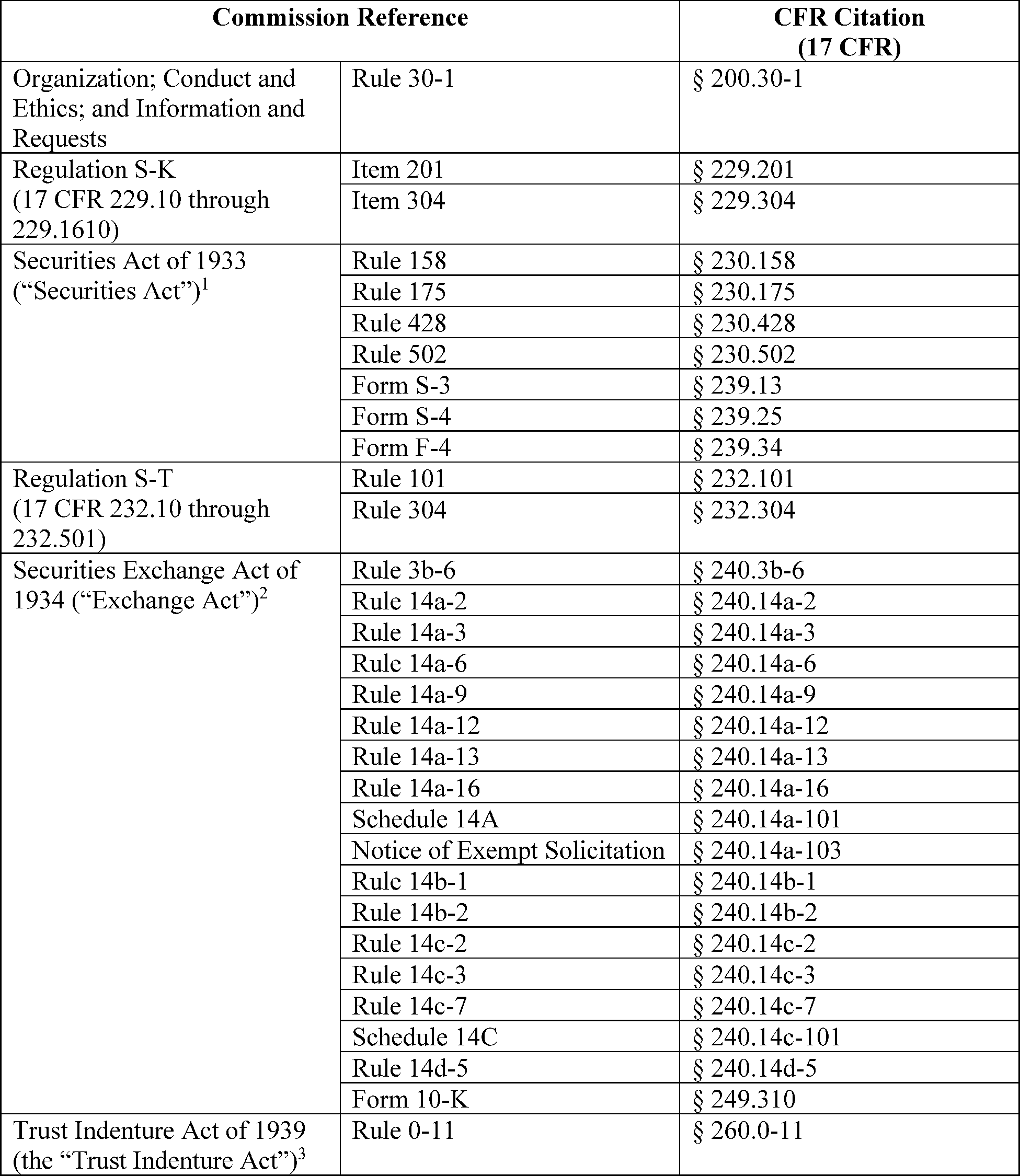
 17 CFR 240.14a-3(b)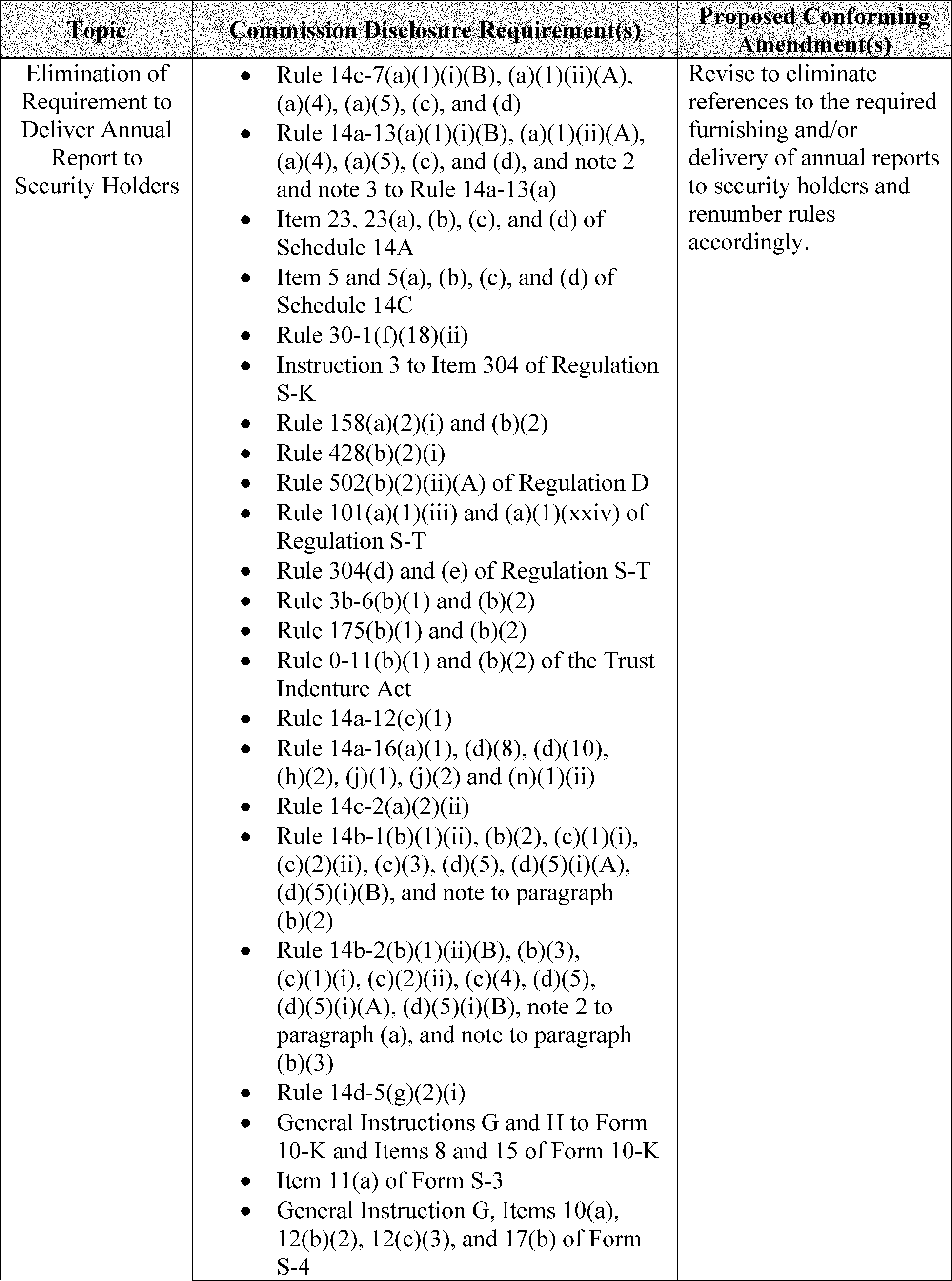
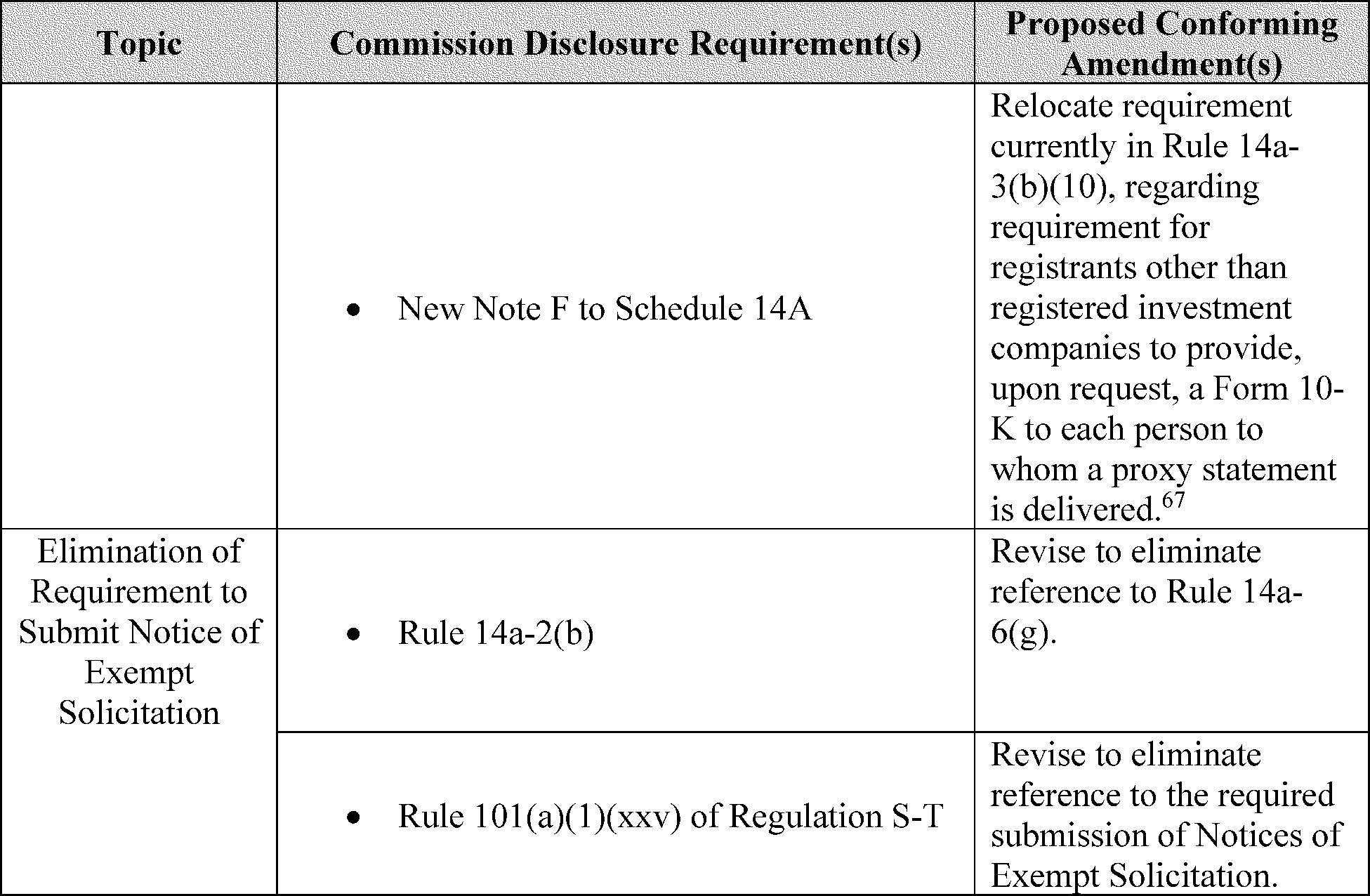
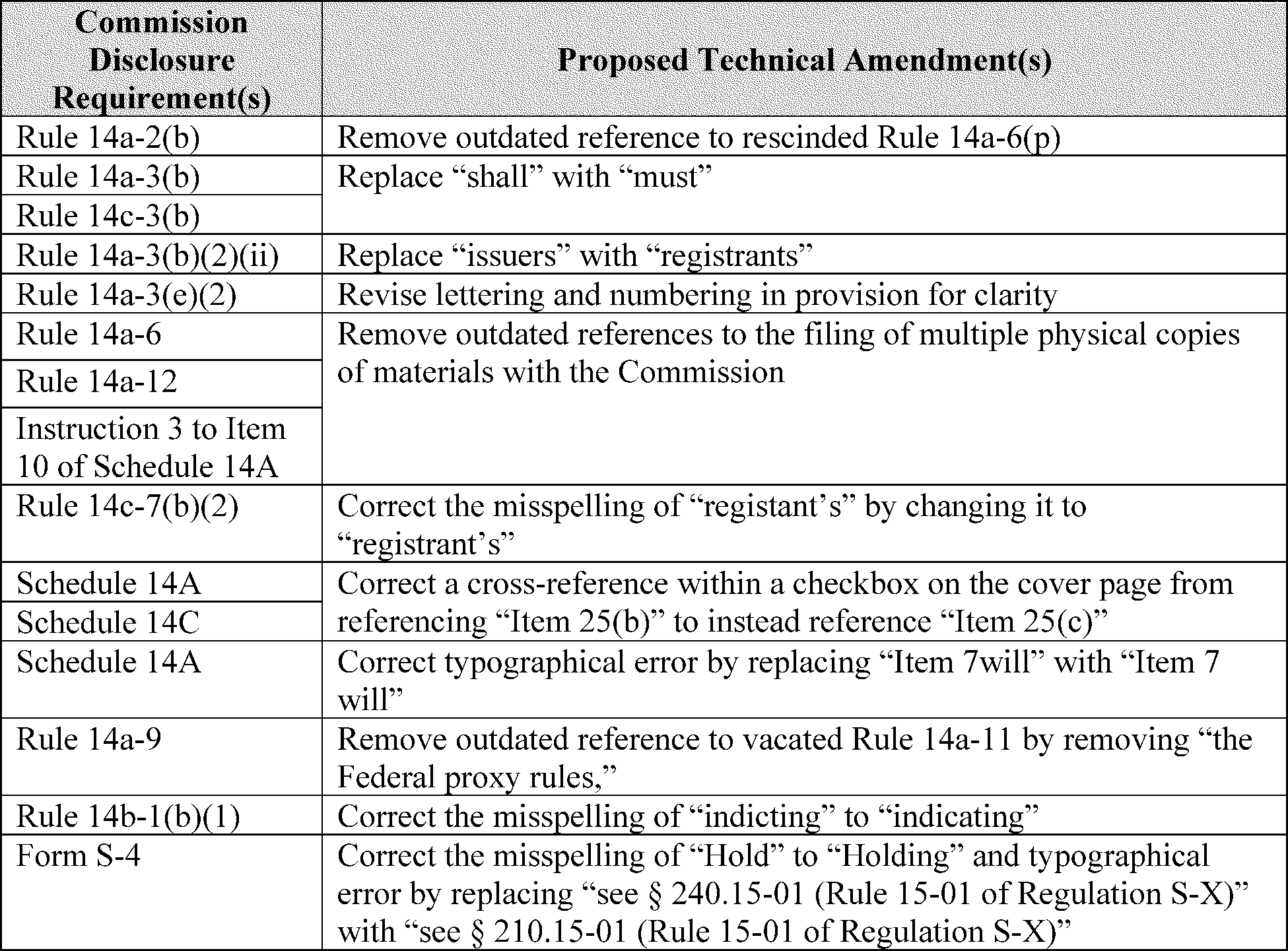
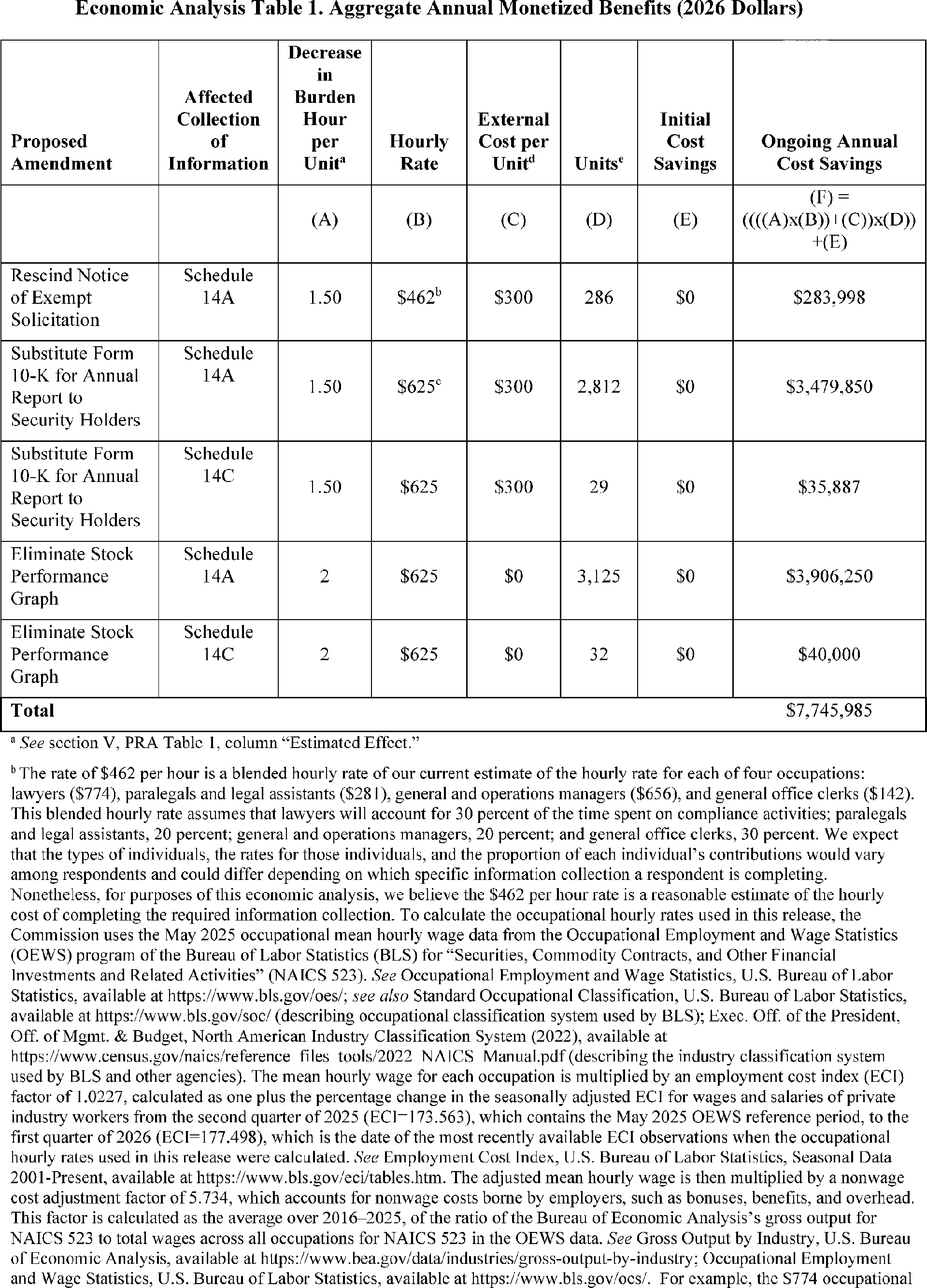
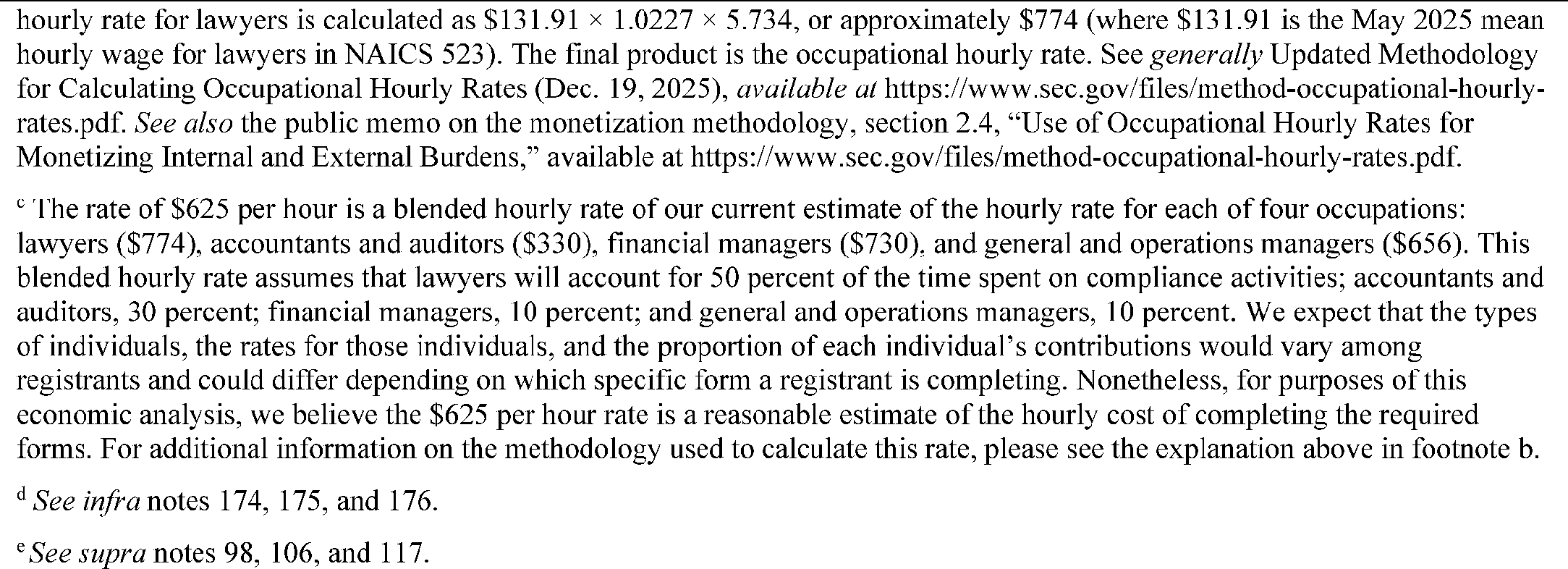
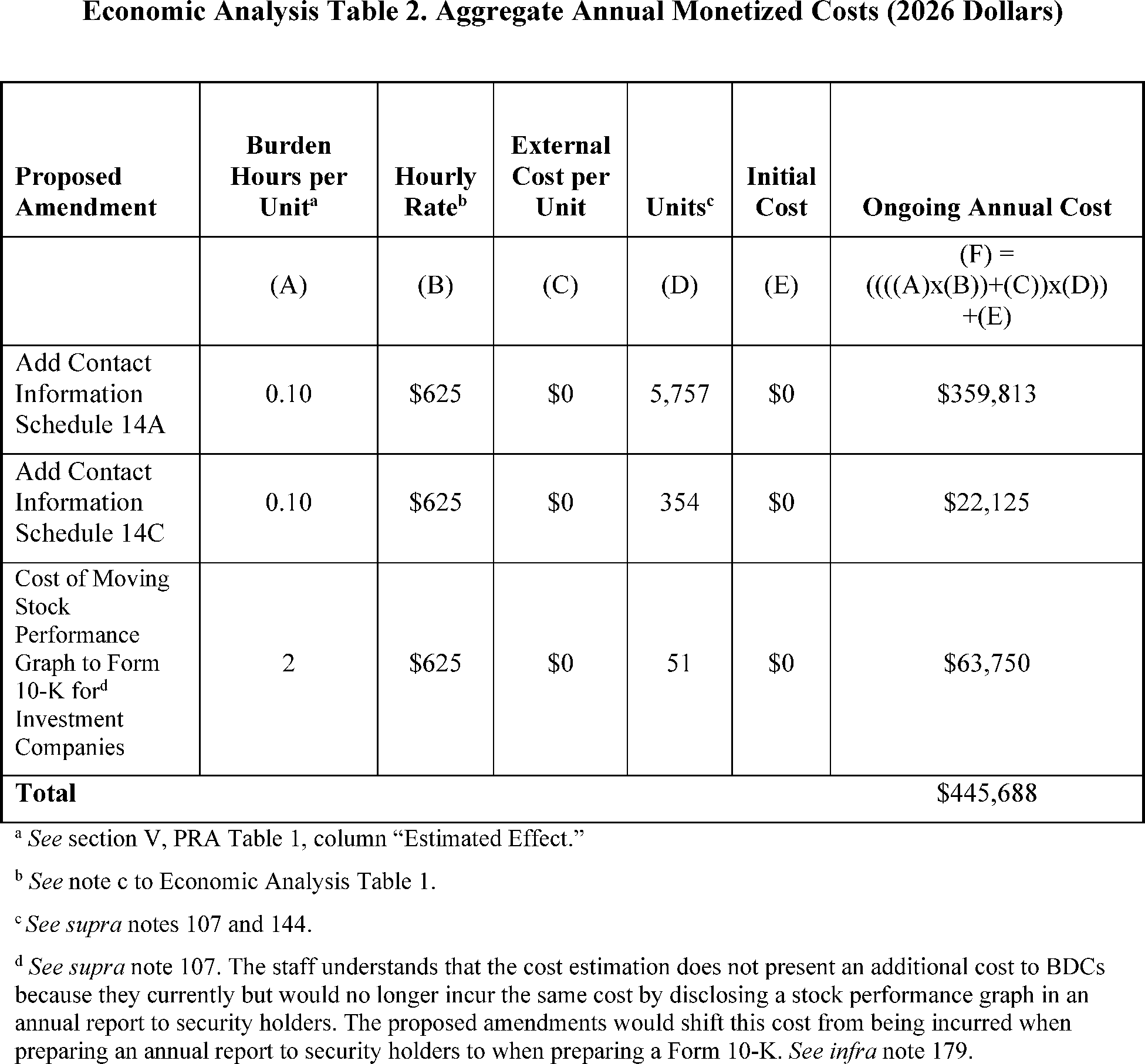
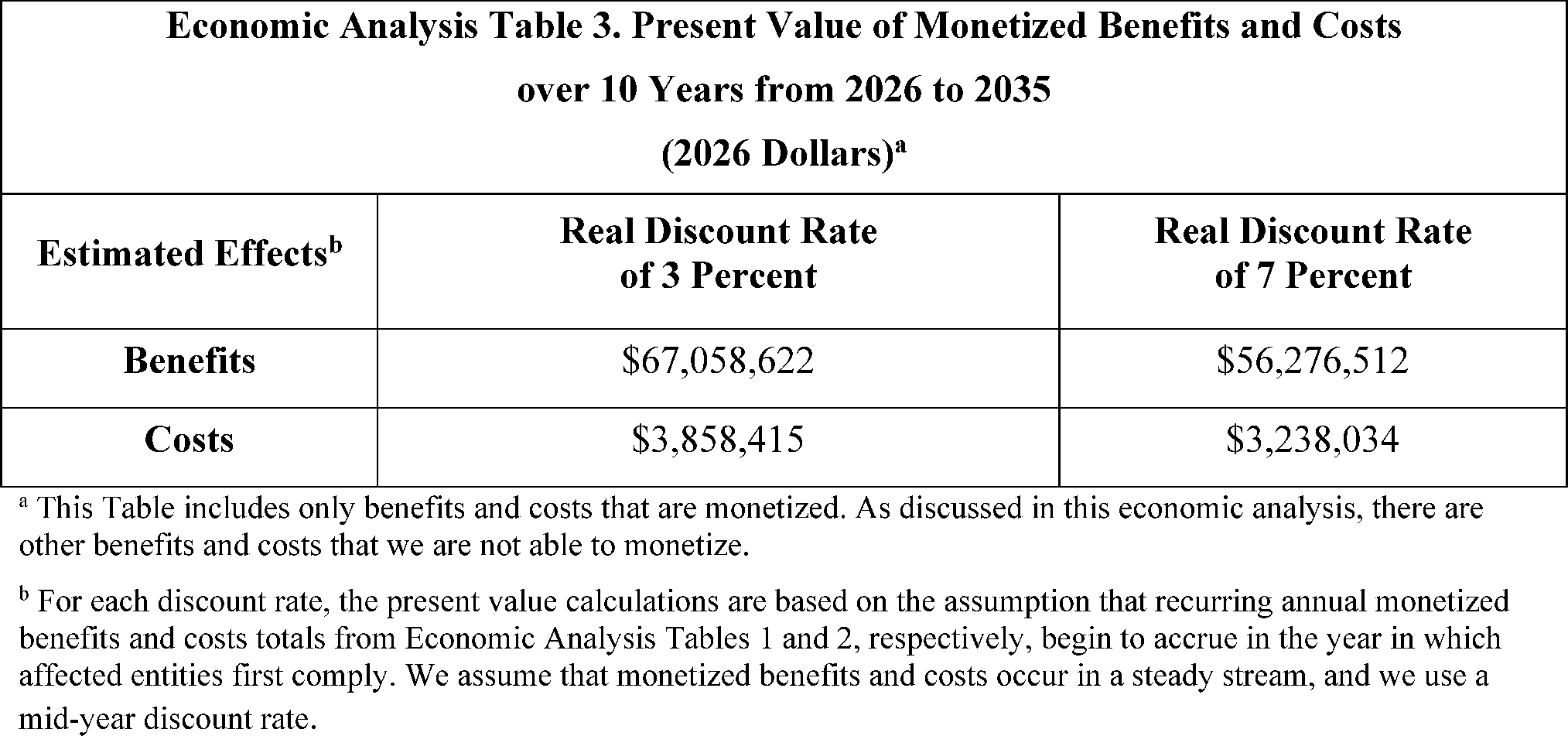
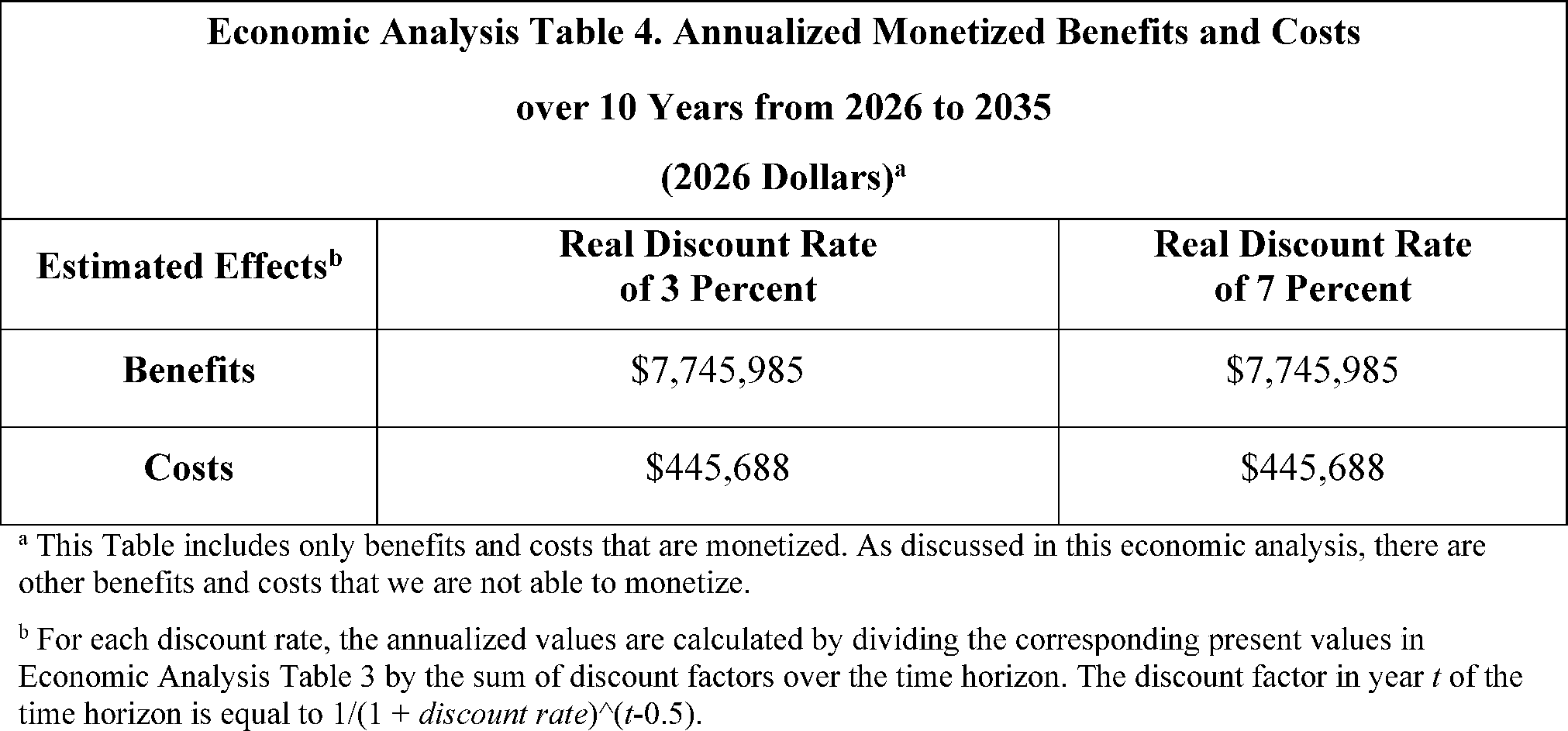
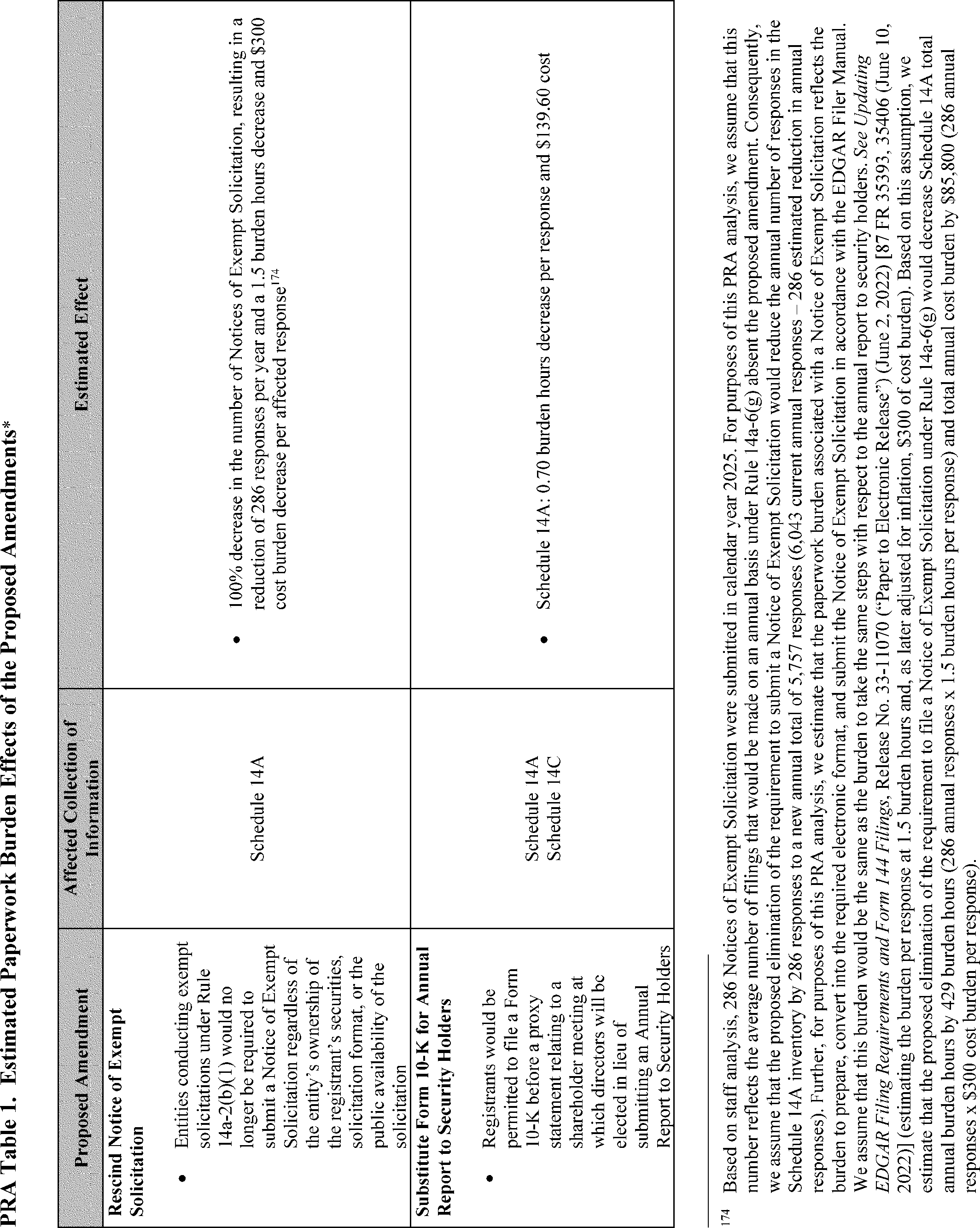
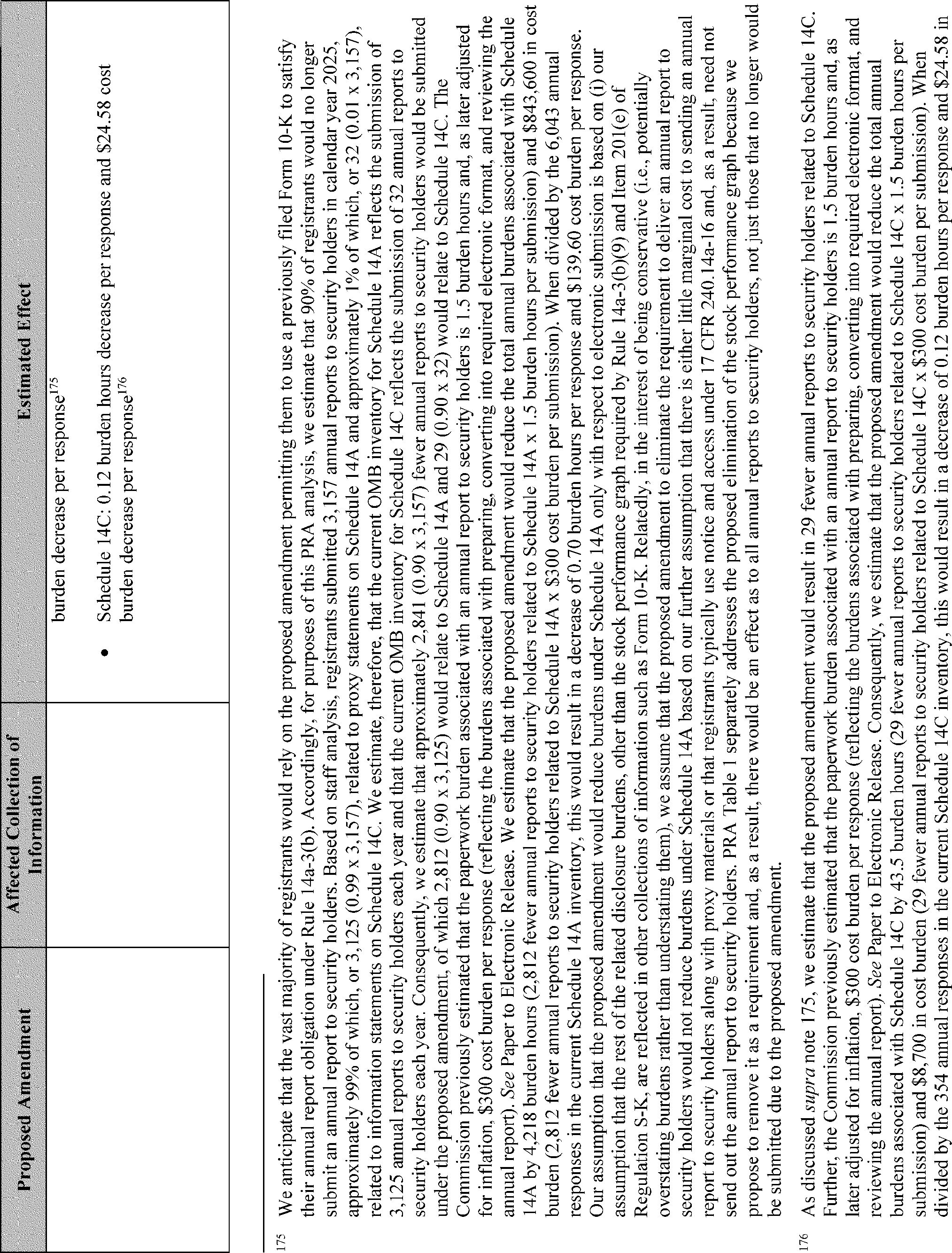
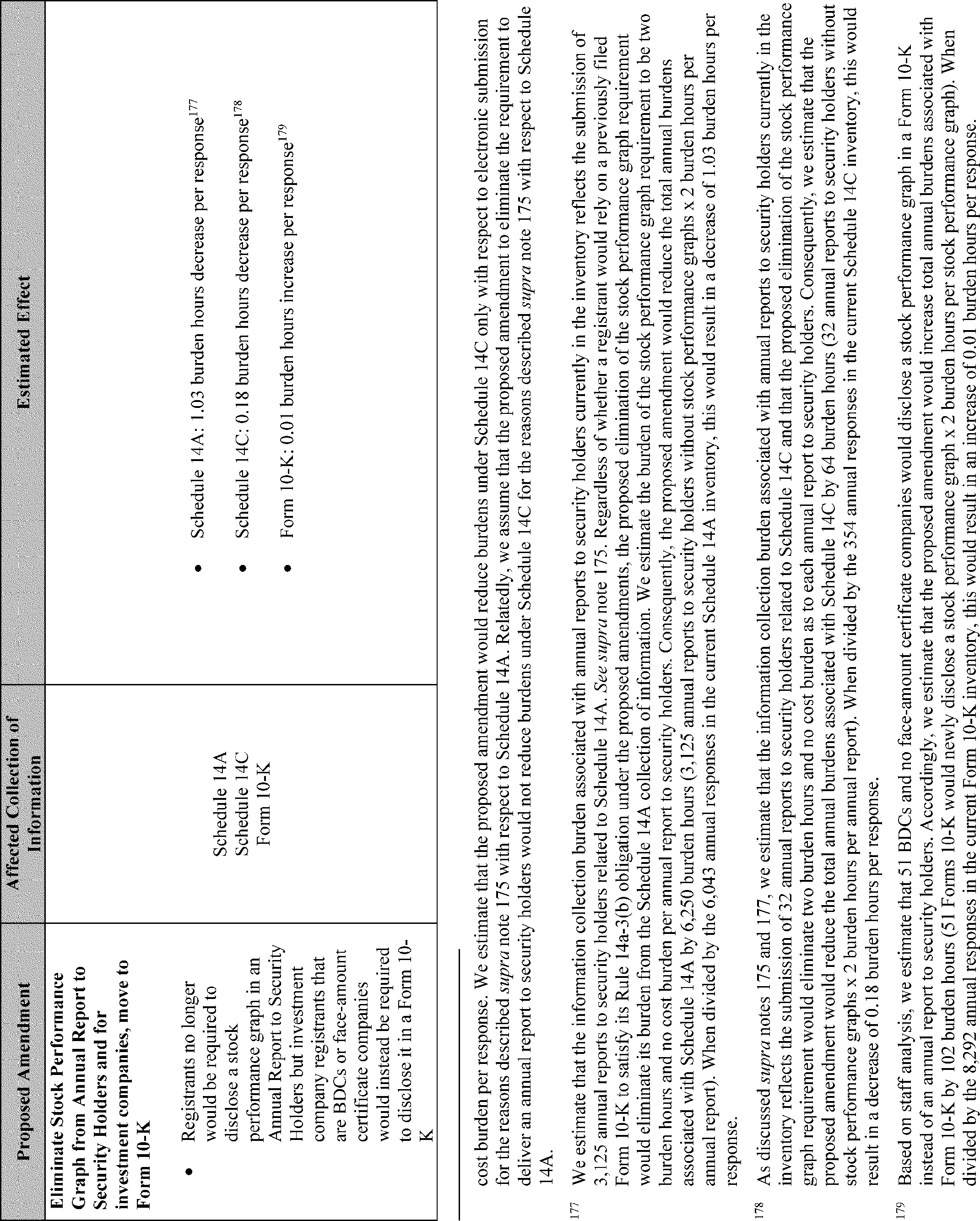
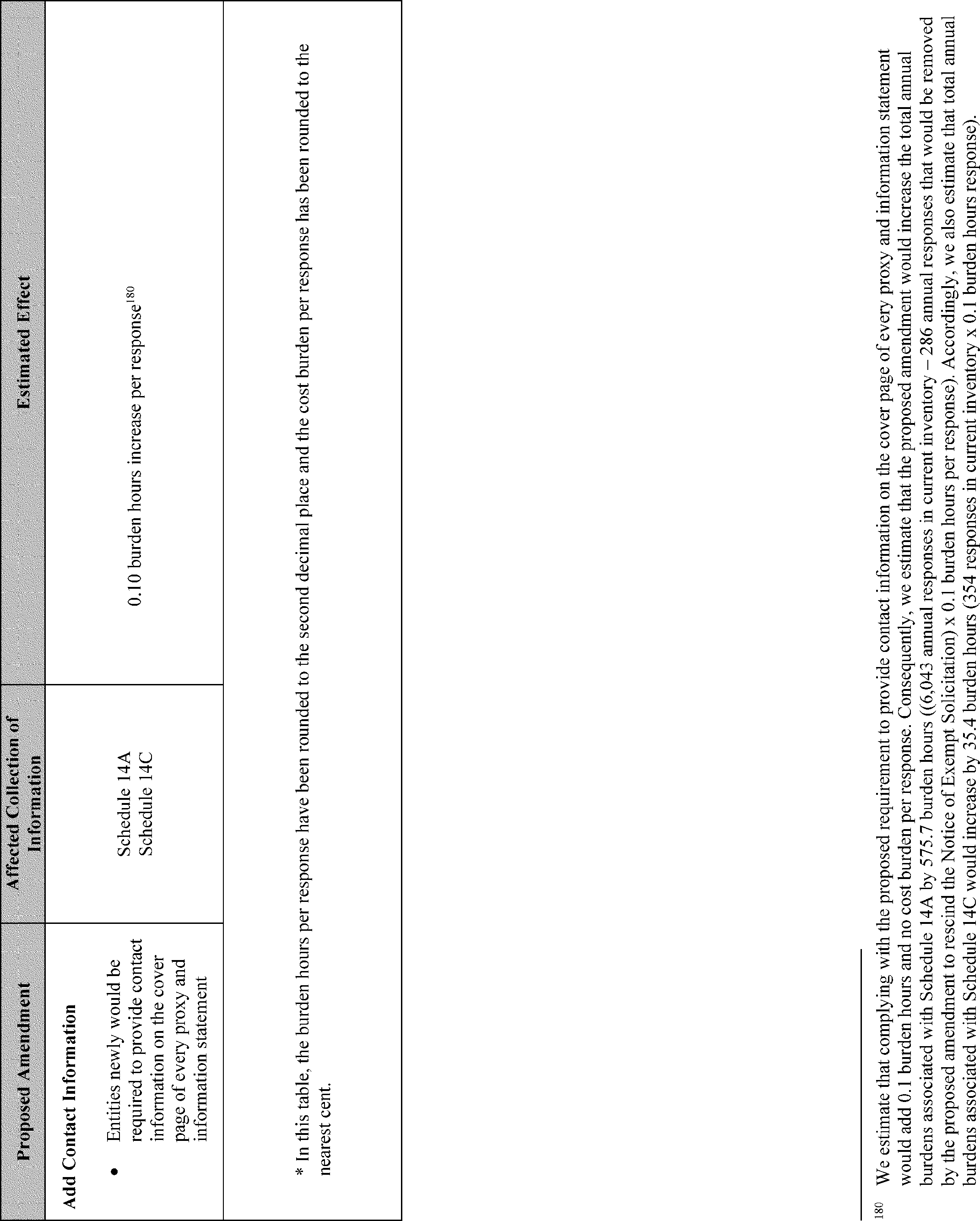
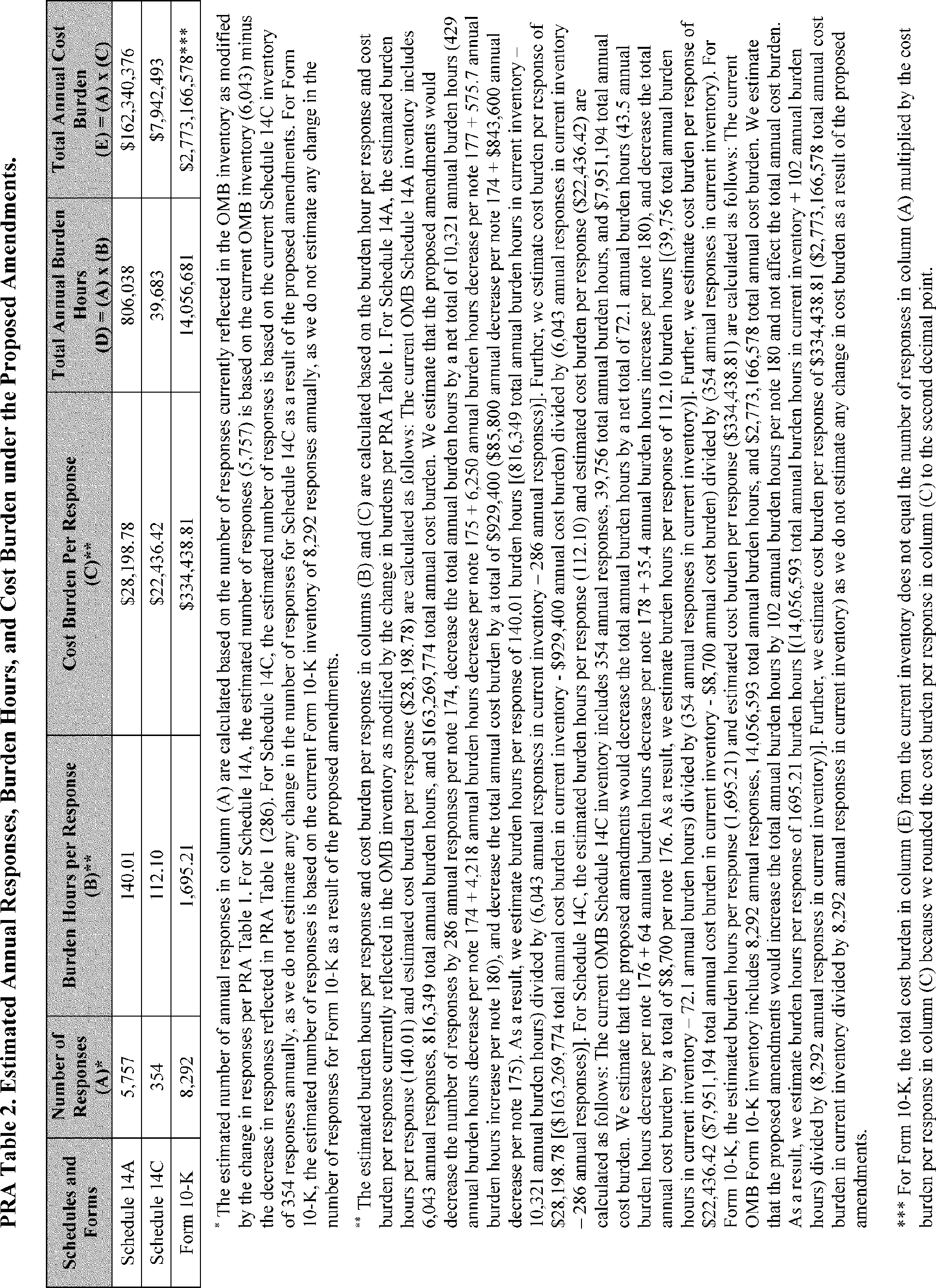
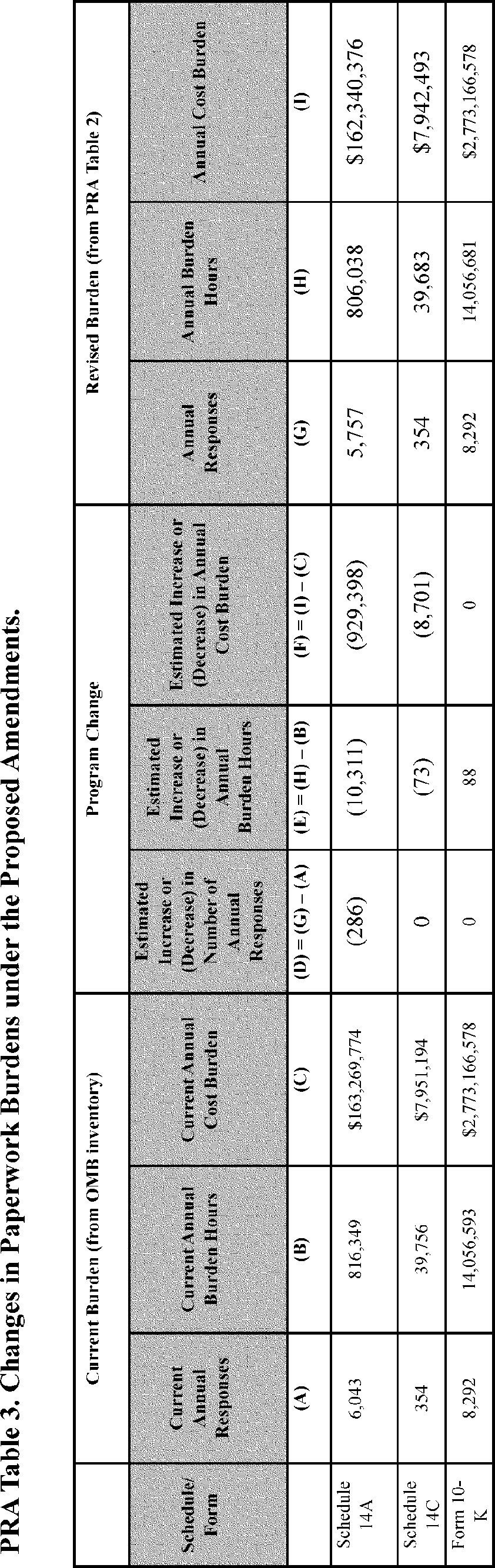
 44 U.S.C. 3506(c)(2)(B)
 businessjournalism.org/wp-content/uploads/2024/09/Business-Beats-Basics-The-Full-Guide-83mb.pdf
 www.broadridge.com/_assets/pdf/edgarfilingcal_2026.pdf
 www.ici.org/system/files/2025-09/25-ici-paper-edelivery.pdf
 www.finrafoundation.org/sites/finrafoundation/files/2025-11/NFCS_Investor_Survey_Report_White_Paper.pdf
 www.investor.gov/introduction-investing/investing-basics/glossary/edgar
 higherlogicdownload.s3.amazonaws.com/GOVERNANCEPROFESSIONALS/a8892c7c-6297-4149-b9fc-378577d0b150/UploadedImages/Advocacy/Society_January_30_Letter_to_SEC_Acting_Chair.pdf
 proxyopenexchange.org/about
 www.asyousow.org/press-releases/2026/4/24/shareholders-launch-proxy-open-exchange-poe-in-response-to-sec-restrictions-on-edgar-exempt-solicitation-postingsnbsp
 www.iccr.org/vote-your-proxies-see-2026s-proxy-memos-and-exempt-solicitations/
 www.davispolk.com/insights/client-update/proxy-season-alert-broker-search-shortened-20-business-days-10-calendar-days
 www.freshfields.com/en/our-thinking/blogs/a-fresh-take/sec-adds-flexibility-to-ma-proxy-and-tender-offer-rules-with-new-interpretatio-102mk2q
 papers.ssrn.com/sol3/papers.cfm?abstract_id=4239979
 finance.yahoo.com
 totalrealreturns.com
 www.morningstar.com
 www.nasdaq.com
 research.ebsco.com/c/4jkwrc/search/details/gdswbongmf/details?db=eoh&limiters=None&q=information+content+presidents+letter&searchMode=all
 academic.oup.com/rfs/article/34/12/5581/6124373?guestAccessKey=
 onlinelibrary.wiley.com/doi/10.1111/corg.12576
 www.cii.org/files/publications/governance_basics/Primer_Securities_Lending_JUL2011.pdf
 www.reginfo.gov/public/jsp/Utilities/circular-a-4_regulatory-impact-analysis-a-primer.pdf