National Emission Standards for Hazardous Air Pollutants for Gasoline Distribution Facilities and Standards of Performance for Bulk Gasoline Terminals Reconsideration
On May 8, 2024, the U.S. Environmental Protection Agency (EPA) published the National Emission Standards for Hazardous Air Pollutants (NESHAP): Gasoline Distribution Technology ...
On May 8, 2024, the U.S. Environmental Protection Agency (EPA) published the National Emission Standards for Hazardous Air Pollutants (NESHAP): Gasoline Distribution Technology Reviews and New Source Performance Standards (NSPS) Review for Bulk Gasoline Terminals final rule (“2024 Final Rule”). The EPA is reconsidering various provisions of the 2024 Final Rule in this proposed rule, including the operating limits and continuous compliance requirements for air emission control devices, and the vapor tightness requirements for gasoline cargo tanks. The EPA is also reconsidering the modification criteria in the NSPS and proposing other technical corrections and clarifications. The EPA does not anticipate that this proposed action will impact volatile organic compound (VOC) or hazardous air pollutant (HAP) emissions generated by gasoline distribution facilities because the proposed amendments do not impact the stringency of the emission standards set by the 2024 Final Rule. As such, the EPA expects the proposed amendments will have no impact on air quality or overall human health. The EPA is not reopening any other aspect of the 2024 Final Rule and does not intend to respond to comments addressing any other issues or provisions not specifically addressed in this proposed rulemaking.
DATES:
Comments must be received on or before November 12, 2026. Comments on the information collection provisions of the proposed rule under the Paperwork Reduction Act (PRA) must be received by the Office of Management and Budget's Office of Information and Regulatory Affairs (OMB-OIRA) on or before October 28, 2026. Please refer to the PRA section under “Statutory and Executive Order Reviews” in this preamble for specific instructions.
Public hearing:
If anyone contacts us requesting a public hearing on or before October 5, 2026, we will hold a virtual public hearing. See
SUPPLEMENTARY INFORMATION
for information on requesting and registering for a public hearing.
ADDRESSES:
You may send comments, identified by Docket ID No. EPA-HQ-OAR-2025-0302, by any of the following methods:
Federal eRulemaking Portal:www.regulations.gov
(our preferred method). Follow the online instructions for submitting comments.
Email:a-and-r-docket@epa.gov.
Include Docket ID No. EPA-HQ-OAR-2025-0302 in the subject line of the message.
Mail:
U.S. Environmental Protection Agency, EPA Docket Center, Docket ID No. EPA-HQ-OAR-2025-0302, Mail Code 28221T, 1200 Pennsylvania Avenue NW, Washington, DC 20460.
Hand/Courier Delivery:
EPA Docket Center, WJC West Building, Room 3334, 1301 Constitution Avenue NW, Washington, DC 20004. The Docket Center's hours of operation are 8:30 a.m. to 4:30 p.m. Eastern Time (ET), Monday through Friday (except Federal holidays).
Instructions:
All submissions received must include the Docket ID No. for this rulemaking. Comments received may be posted without change to
www.regulations.gov,
including any personal information provided. For detailed instructions on sending comments and additional information on the rulemaking process, see the
SUPPLEMENTARY INFORMATION
section of this preamble.
FOR FURTHER INFORMATION CONTACT:
For information about this proposed rule, contact U.S. EPA, Attn: Rudolf Abdelmessih, Industrial Processing and Power Division (E143-01), 109 T.W. Alexander Drive, P.O. Box 12055, Research Triangle Park, North Carolina 27711; telephone number: (919) 541-2928; and email address:
abdelmessih.rudolf@epa.gov.
SUPPLEMENTARY INFORMATION:
Participation in virtual public hearing.
To request a virtual public hearing, contact the public hearing team at (888) 372-8699 or by email at
IPPDpublichearing@epa.gov.
If the EPA receives a request for a public hearing,
( printed page 61176)
the Agency will hold a hearing via virtual platform on October 13, 2026.
Each commenter will have four minutes to provide oral testimony. The EPA may ask clarifying questions during the oral presentations but will not respond to the presentations at that time. The EPA encourages commenters to submit the text of your oral testimony as written comments to the rulemaking docket. The EPA will consider written statements and supporting information submitted during the comment period with the same weight as oral testimony and supporting information presented at the public hearing.
The EPA will make every effort to follow the schedule as closely as possible on the day of the hearing; however, the Agency may close a session 15 minutes after the last pre-registered speaker has testified if there are no additional speakers. Please plan for the hearings to run either ahead of schedule or behind schedule.
If you require special accommodation, such as audio description, please pre-register for the hearing with the public hearing team and describe your needs by October 5, 2026. The EPA may not be able to arrange accommodation without advance notice.
Docket.
The EPA has established a docket for this action under Docket ID No. EPA-HQ-OAR-2025-0302. All documents in the docket are listed at
www.regulations.gov.
Although listed, some information is not publicly available,
e.g.,
Confidential Business Information (CBI) or other information whose disclosure is restricted by statute. The EPA does not place certain other material, such as copyrighted material, on the internet; this material is publicly available only as portable document format (PDF) versions accessible only on EPA computers in the docket office reading room. The public cannot download certain databases and physical items from the docket but may request these items by contacting the docket office at (202) 566-1744. The docket office has 10 business days to respond to such requests. With the exception of such material, publicly available docket materials are available electronically at
www.regulations.gov
or on EPA computers in the docket office reading room at the EPA Docket Center, WJC West Building, Room Number 3334, 1301 Constitution Ave. NW, Washington, DC. The Public Reading Room hours of operation are 8:30 a.m. to 4:30 p.m. ET, Monday through Friday (except for Federal holidays). The telephone number for the Public Reading Room is (202) 566-1744, and the telephone number for the EPA Docket Center is (202) 566-1742.
Written Comments.
Direct your comments to Docket ID No. EPA-HQ-OAR-2025-0302. The EPA's policy is that the public docket will contain all comments received without change and made available online at
www.regulations.gov,
including any personal information provided, unless the comment includes information claimed to be CBI or other information for which a statute restricts disclosure. Do not submit electronically to
www.regulations.gov
any information that you consider to be CBI or other information for which a statute restricts disclosure. You should submit this type of information as described in the Submitting CBI section of this preamble.
The EPA may publish any comment received to its public docket. A written comment must accompany multimedia submissions (audio, video, etc.). The EPA considers the written comment to be the official comment, and it should include discussion of all points you wish to make. The EPA will generally not consider comments or comment contents located outside of the primary submission (
i.e.,
on the Web, cloud, or other file sharing system). For additional submission methods, the full EPA public comment policy, information about CBI or multimedia submissions, and general guidance on making effective comments, please visit
www.epa.gov/dockets/commenting-epa-dockets.
The
www.regulations.gov
website allows you to submit your comment anonymously, which means the EPA will not know your identity or contact information unless you provide it in the body of your comment. If you send an email comment directly to the EPA without going through
www.regulations.gov,
your email address will be automatically captured and included as part of the comment that the EPA places in the public docket and made available on the internet. If you submit an electronic comment, the EPA recommends that you include your name and other contact information in the body of your comment and with any digital storage media you submit. If the EPA cannot read your comment due to technical difficulties and cannot contact you for clarification, the Agency may not be able to consider your comment. Electronic files should not include special characters or any form of encryption and should be free of any defects or viruses. For additional information about the EPA's public docket, visit the EPA Docket Center homepage at
www.epa.gov/dockets.
The EPA is soliciting comment on numerous aspects of this proposed rule. The EPA has indexed each comment solicitation with an identifier (
e.g.,
“C-1, C-2, . . .”) to provide a consistent framework for effective and efficient provision of comments. Accordingly, the EPA asks that commenters include the corresponding identifier when providing comments relevant to that comment solicitation. The EPA asks that commenters include the identifier either in a heading or within the text of each comment (
e.g.,
“In response to C-1, . . .”) to make clear which comment solicitation they are addressing. The EPA emphasizes that the Agency is not limiting comment to these identified areas and encourages commenters to provide any other comments relevant to this proposal.
Submitting CBI.
Do not submit information containing CBI to the EPA through
www.regulations.gov.
Clearly mark the part or all the information that you claim to be CBI. For CBI information on any digital storage media that you mail to the EPA, note the docket ID, mark the outside of the digital storage media as CBI, and identify electronically within the digital storage media the specific information that is claimed as CBI. In addition to
( printed page 61177)
one complete version of the comments that includes information claimed as CBI, you must submit a copy of the comments that does not contain the information claimed as CBI directly to the public docket through the procedures outlined in the
Written Comments
section of this preamble. If you submit any digital storage media that does not contain CBI, mark the outside of the digital storage media clearly that it does not contain CBI and note the docket ID. Information not marked as CBI will be included in the public docket and the EPA's electronic public docket without prior notice. Information marked as CBI will not be disclosed except in accordance with procedures set forth in 40 Code of Federal Regulations (CFR) part 2.
Our preferred method to receive CBI is for it to be transmitted electronically using email attachments, File Transfer Protocol (FTP), or other online file sharing services (
e.g.,
Dropbox, OneDrive, Google Drive). Electronic submissions must be transmitted directly to the Office of Clean Air Programs (OCAP) at the email address:
ocapcbi@epa.gov
and, as described earlier in this preamble, should include clear CBI markings and note the docket ID. If assistance is needed with submitting large electronic files that exceed the file size limit for email attachments, and if you do not have your own file sharing service, please contact the person listed in the
FOR FURTHER INFORMATION CONTACT
section of this preamble to receive instructions.
Preamble acronyms and abbreviations.
Throughout this preamble the use of “we,” “us,” or “our” refers to the EPA. The EPA uses multiple acronyms and terms in this preamble. While this list may not be exhaustive, to ease the reading of this preamble and for reference purposes, the EPA defines the following terms and acronyms here:
AFPM American Fuel & Petrochemical Manufacturers
API American Petroleum Institute
AVO audio, visual, or olfactory
BSER best system of emission reduction
Btu British thermal unit
CAA Clean Air Act
CAAA Clean Air Act Amendments of 1977
CBI Confidential Business Information
CEDRI Compliance and Emissions Data Reporting Interface
CEMS continuous emission monitoring system
CFR Code of Federal Regulations
EAV equivalent annualized value
EIA Economic Impact Analysis
EPA Environmental Protection Agency
FR Federal Register
ft2
square foot
GACT generally available control technologies or management practices
HAP hazardous air pollutant
ICR Information Collection Request
ILTA International Liquid Terminals Association
LDAR leak detection and repair
MACT maximum achievable control technology
mg/L milligram per liter
NAICS North American Industry Classification System
NESHAP national emission standards for hazardous air pollutants
NHV net heating value
NHVcz
combustion zone net heating value
NHVdil
net heating value dilution
NSPS new source performance standards
NTTAA National Technology Transfer and Advancement Act
OCAP Office of Clean Air Programs
OGI optical gas imaging
OMB Office of Management and Budget
ppmv part per million by volume
PRA Paperwork Reduction Act
RFA Regulatory Flexibility Act
RIN Regulatory Information Number
scf standard cubic foot
scfm standard cubic foot per minute
TOC total organic compounds
tpy ton per year
UMRA Unfunded Mandates Reform Act
U.S.C. United States Code
VCS voluntary consensus standards
VOC volatile organic compound
Table of Contents
I. General Information
A. Executive Summary
B. Does this action apply to me?
C. What is the statutory authority for the reconsideration action?
D. Where can I get a copy of this document and other related information?
II. Background
A. What petitions for reconsideration did the EPA receive?
B. What is the scope of this reconsideration proposal?
III. Reconsideration and Other Issues, Proposed Changes, and Rationale
A. What are the results and proposed decisions based on our reconsideration, and what is the rationale for those decisions?
B. What other amendments are we proposing, and what is the rationale for those amendments?
C. What compliance dates are we proposing, and what is the rationale for the proposed compliance dates?
G. Executive Order 13175: Consultation and Coordination With Indian Tribal Governments
H. Executive Order 13045: Protection of Children From Environmental Health Risks and Safety Risks
I. Executive Order 13211: Actions Concerning Regulations That Significantly Affect Energy Supply, Distribution, or Use
J. National Technology Transfer and Advancement Act (NTTAA)
I. General Information
A. Executive Summary
On May 8, 2024, the EPA published the 2024 Final Rule.[1]
This final action included revisions to two existing NESHAP rules (40 CFR part 63, subparts R and BBBBBB) (“NESHAP subpart R” and “NESHAP subpart BBBBBB,” respectively) and a new NSPS (40 CFR part 60, subpart XXa) (“NSPS subpart XXa”). Following the promulgation of the 2024 Final Rule, the EPA received three petitions for reconsideration. On February 28, 2025, the EPA granted reconsideration of the 2024 Final Rule as a matter of voluntary discretion. After reviewing the 2024 Final Rule and issues raised in the petitions for reconsideration, the EPA proposes to clarify the modification criteria associated with equipment leak detection and repair (LDAR) requirements under NSPS subpart XXa. In addition, the EPA proposes changes to address equipment leak compliance provisions, thermal oxidation systems compliance provisions, and vapor recovery system compliance provisions under the NESHAP and NSPS rules. Furthermore, the EPA proposes changes to address vapor tightness requirements for gasoline cargo tanks under the NESHAP and NSPS rules. Finally, the EPA is proposing minor editorial and technical revisions. Clean Air Act (CAA) sections 111 and 112, as amended, provide the statutory authority for this action.[2]
The proposed revisions to the modification criteria include: (1) adding a capital expenditure threshold to help determine if certain process improvement changes to a facility qualify as modifications, and (2) adding a definition to clarify the meaning of “process improvement.”
The proposed revisions to equipment leak compliance provisions include: (1) requiring affected facilities under NSPS
( printed page 61178)
subpart XXa to conduct the first instrument monitoring survey within 180 calendar days of becoming subject to the monitoring requirements; (2) clarifying that affected facilities must conduct monitoring inspections when actively loading gasoline into a gasoline cargo tank; (3) enumerating the connector leak monitoring exceptions within NSPS subpart XXa instead of cross-referencing 40 CFR part 60, subpart VVa (“NSPS subpart VVa”); (4) clarifying that the detection of fugitive emissions during pre-performance test screening does not in itself constitute a violation of the standards, provided that the affected facility subsequently meets the applicable repair requirements; and (5) clarifying that equipment leak compliance provisions require facilities to monitor backup or secondary control devices only when actively using these devices to process gasoline or gasoline vapors.
The proposed revisions to the thermal oxidation system compliance provisions include: (1) simplifying the recordkeeping requirements for affected facilities that—as an operational practice—control displaced vapors during liquid product loading, assuming all loading operations involve gasoline cargo tanks; (2) revising the definition of diameter in the net heating value dilution (NHVdil) parameter equation to account for the differences in air mixing patterns when using multi-burner thermal oxidation systems; (3) revising the requirements for the temperature operating limit, by co-proposing two compliance options for the operating limit: Option 1 based on revised requirements for the performance test, and Option 2 based on a fixed minimum mid-stack temperature operating limit of 400 degrees Fahrenheit; (4) requiring affected facilities to set the maximum air assist rate at the rate used during the performance test, if using air-assisted thermal oxidation systems, and to set the maximum air assist rate at the minimum needed to maintain smokeless operations at high gasoline loading rates, if using air-assisted flares; and (5) revising the 14-day sampling period—used for determining the minimum net heating value (NHV) content of gas streams—to allow facilities that comply with the flare monitoring alternative to conduct sampling over a shorter period.
The proposed revisions to the vapor recovery system compliance provisions include: (1) increasing the averaging period for the concentration emission limits from a 3-hour rolling average to a 6-hour rolling average, and (2) revising the limited alternative monitoring plan requirements—during continuous emission monitoring system (CEMS) downtime—to require the development and submittal of a site-specific monitoring plan, rather than requiring affected facilities to rely on the parameters of the 10 previous operational cycles.
The EPA anticipates that this proposed action, specifically the proposed amendments to the monitoring requirements for thermal oxidation systems, would result in cost savings for area source gasoline distribution facilities subject to NESHAP subpart BBBBBB if finalized as proposed. The EPA estimates that these proposed amendments would result in total average annual compliance cost savings of $713,400 or $565,800 (in 2024 dollars), depending on the finalized monitoring option. The EPA does not anticipate this proposed action to have a net cost impact on major source gasoline distribution facilities subject to NESHAP subpart R.
In addition, the EPA does not anticipate that this proposed action will impact VOC or HAP emissions generated by gasoline distribution facilities because the proposed amendments do not impact the stringency of the emission standards set by the 2024 Final Rule. The EPA expects that the proposed amendments to the compliance provisions will assist affected sources to achieve compliance with the relevant emission limits. As such, the EPA expects the proposed amendments will have no impact on air quality and no impact on overall human health.
B. Does this action apply to me?
Regulated entities.
This proposal addresses the Gasoline Distribution source categories regulated under NESHAP subparts R and BBBBBB and the Petroleum Transportation and Marketing source category regulated under NSPS subpart XXa. Table 1 of this preamble lists the categories and entities potentially regulated by this proposed rule.
Table 1—Industrial Source Categories Affected by This Proposed Action
Source categories
NAICS a
code
Petroleum Refineries
324110
Petroleum Bulk Stations and Terminals
424710
Pipeline Transportation of Refined Petroleum Products
486910
Other Warehousing and Storage
493190
a
North American Industry Classification System (NAICS).
The EPA provides table 1 of this preamble as a guide, not as an exhaustive list of entities that this proposed action is likely to affect. To determine whether this action affects your facility, examine the applicability criteria in the appropriate NESHAP and NSPS rules. If you have any questions regarding the applicability of any aspect of these NESHAP and NSPS rules, contact the appropriate person listed in the
FOR FURTHER INFORMATION CONTACT
section of this preamble.
Once promulgated, the proposed standards will apply directly to the affected sources. This proposed action would not affect Federal, State, local, or Tribal government entities.
As defined in the
Initial List of Categories of Sources Under Section 112(c)(1) of the Clean Air Act Amendments of 1990[3]
and
Documentation for Developing the Initial Source Category List, Final Report,[4]
the Gasoline Distribution (Stage 1) source category relates to “the storage and transfer facilities associated with the movement of gasoline. This category includes, but is not limited to, the gasoline vapor emissions associated with the loading of transport trucks or rail cars, storage tank emissions, and equipment leaks from leaking pumps, valves, and connections at bulk terminals, bulk plants, and pipeline facilities.” On July 19, 1999, the EPA added this category to the list of area source categories for regulation under a
Federal Register
publication for the Integrated Urban Air Toxics Strategy.[5 6]
( printed page 61179)
The EPA included Petroleum Transportation and Marketing on its Priority List as a source category requiring standards of performance under CAA section 111.[7]
The NSPS for this source category applies to the total of all the loading racks at a bulk gasoline terminal that deliver liquid product into gasoline cargo tanks. The EPA defines a bulk gasoline terminal as any gasoline facility that receives gasoline by pipeline, ship, barge, or cargo tank and has a gasoline throughput greater than 75,700 liters per day.
C. What is the statutory authority for the reconsideration action?
The statutory authority for this action is provided by both CAA section 112, as amended,[8]
and section 111, as amended.[9]
1. NESHAP
Section 112 of the CAA establishes a multi-stage regulatory process to develop standards for emissions of hazardous air pollutants (HAP) from stationary sources. Generally, the first stage involves establishing technology-based standards that reflect the maximum achievable control technology (MACT) or appropriate alternative.[10]
The second stage involves evaluating those standards within eight years under CAA section 112(f)(2) to determine whether additional standards are needed to address any remaining risk associated with HAP emissions.[11]
This second stage is commonly referred to as the “residual risk review.” In addition to the residual risk review, CAA section 112(d)(6) also requires the EPA to review the standards every eight years and to “revise as necessary,” taking into account any “developments in practices, processes, and control technologies.” [12]
This review is commonly referred to as the “technology review.”
In the first stage of the CAA section 112 standard-setting process, the EPA promulgates technology-based standards under CAA section 112(d) for categories of sources identified as emitting one or more of the HAP listed in CAA section 112(b). Sources of HAP emissions are either major sources or area sources, and CAA section 112 establishes different requirements for major source standards and area source standards. “Major sources” are those that emit or have the potential to emit 10 tons per year (tpy) or more of a single HAP or 25 tpy or more of any combination of HAP.[13]
All other sources are “area sources.” For major sources, CAA section 112(d)(2) provides that the technology-based NESHAP must reflect the maximum degree of reduction in emissions of HAP achievable (after considering cost, energy requirements, and non-air quality health and environmental impacts). These standards are commonly referred to as maximum achievable control technology (MACT) standards. In developing MACT standards, CAA section 112(d)(2) directs the EPA to consider the application of measures, processes, methods, systems, or techniques, including, but not limited to, those that reduce the volume of or eliminate HAP emissions through process changes, substitution of materials, or other modifications; enclose systems or processes to eliminate emissions; collect, capture, or treat HAP when released from a process, stack, storage, or fugitive emissions point; are design, equipment, work practice, or operational standards; or any combination of the above.
Section 112(d)(3) of the CAA establishes a minimum control level for MACT standards, known as the MACT “floor,” based on emission controls achieved in practice by the best performing sources. The EPA also considers control options that are more stringent than the floor. Standards more stringent than the floor are commonly referred to as “beyond-the-floor” standards. For new sources, the MACT floor cannot be less stringent than the emission control achieved in practice by the best-controlled similar source. For existing sources, the MACT standards can be less stringent than floors for new sources, but the standards cannot be less stringent than the average emission limitation achieved by the best-performing 12 percent of existing sources in the category or subcategory (or the best-performing five sources for categories or subcategories with fewer than 30 sources).[14]
In certain instances, as provided in CAA section 112(h), the EPA may set work practice standards in lieu of numerical emission standards. The EPA must also consider control options that are more stringent than the floor and may establish standards more stringent than the floor taking into consideration the cost of achieving the emission reductions, and any non-air quality health and environmental impacts and energy requirements.[15]
In the second stage of the regulatory process, for categories of major sources and any area source categories subject to MACT standards, CAA section 112 requires the EPA to address any remaining (
i.e.,
“residual”) risk within eight years pursuant to CAA section (f)(2) and to conduct a technology review pursuant to CAA section 112(d)(6). This latter provision requires the EPA to review the technology-based standards and revise them “as necessary (taking into account developments in practices, processes, and control technologies)” no less frequently than every eight years. In conducting this review, which we call the “technology review,” the EPA is not required to recalculate the MACT floors that were established in earlier rulemakings.[16]
The EPA may consider cost in deciding whether to revise the standards pursuant to CAA section 112(d)(6).[17]
Finally, the EPA reviews available data to determine if there are certain unregulated emissions of HAP within the major source category and evaluates these data for use in developing new emission standards.[18]
Under the residual risk review conducted pursuant to CAA section 112(f), the EPA must within eight years of promulgating the technology-based standards for a source category evaluate the risk to public health remaining after the application of the technology-based standards and revise the standards, if necessary, to provide an ample margin of safety to protect public health or to prevent an adverse environmental effect, taking into consideration costs, energy, safety, and other relevant factors. For categories of area sources subject to generally available control technologies or management practices (GACT) standards, there is no requirement to address residual risk. However, all standards established under CAA section 112(d) require a technology review, including GACT standards that apply to area sources.[19]
( printed page 61180)
Several additional CAA sections specifically address regulation of HAP emissions from area sources. Collectively, CAA sections 112(k)(3), (c)(3), and (d)(5) are the basis of the Area Source Program under the Urban Air Toxics Strategy, which provides the framework for regulation of area sources under CAA section 112.
Section 112(k)(3)(B) of the CAA requires the EPA to identify at least 30 HAP that pose the greatest potential health threat in urban areas with a primary goal of achieving a 75 percent reduction in cancer incidence attributable to HAP emitted from stationary sources. As discussed in the Integrated Urban Air Toxics Strategy, the EPA identified 30 HAP emitted from area sources that pose the greatest potential health threat in urban areas, and these HAP are commonly referred to as the “30 urban HAP.” [20]
Section 112(c)(3) of the CAA requires the EPA to list sufficient categories or subcategories of area sources to ensure that area sources representing 90 percent of the emissions of the 30 urban HAP are subject to regulation. The EPA implemented these requirements through the Integrated Urban Air Toxics Strategy by identifying and setting standards for categories of area sources including the Gasoline Distribution source category that is addressed in this action.
Section 112(d)(5) of the CAA provides that the EPA may promulgate standards or requirements for area sources “which provide for the use of generally available control technology or management practices [GACT] by such sources to reduce emissions of hazardous air pollutants” in lieu of setting MACT standards (which are generally required for major source categories). In developing GACT standards, the EPA evaluates the control technologies and management practices for reducing HAP emissions that are generally available for each area source category. Consistent with the legislative history, the EPA can consider costs and economic impacts in determining what constitutes GACT.[21]
The EPA set GACT standards for the Gasoline Distribution area source category in 2008.[22]
The EPA set MACT standards for the Gasoline Distribution major source category in 1994 and completed the residual risk review and initial technology review for the major source category in 2006.[23 24]
The 2024 Final Rule promulgated the required CAA section 112(d)(6) technology reviews for the standards for major and area sources in that source category.
2. NSPS
Section 111(b)(1)(A) of the CAA requires the EPA Administrator to promulgate a list of categories of stationary sources that the Administrator, “in his judgment,” finds “causes, or contributes significantly to, air pollution which may reasonably be anticipated to endanger public health or welfare.” The EPA has the authority under this section to define the scope of the source categories; to determine, consistent with the statutory requirements, the pollutants for which standards should be developed; and to distinguish among classes, types, and sizes within categories in establishing the standards.[25]
Once the EPA lists a source category that contributes significantly to dangerous air pollution, the EPA must, under CAA section 111(b)(1)(B), establish “standards of performance” for “new sources” in the source category. These standards are referred to as new source performance standards, or NSPS. The NSPS are national requirements that apply directly to the sources subject to them.
Under CAA section 111(a)(1), a “standard of performance” is defined as “a standard for emissions of air pollutants” that is determined in a specified manner. When the EPA establishes or revises a performance standard, CAA section 111(a)(1) provides that such standard must “reflect[ ] the degree of emission limitation achievable through the application of the best system of emission reduction which (taking into account the cost of achieving such reduction and any nonair quality health and environmental impact and energy requirements) the Administrator determines has been adequately demonstrated.” Thus, the term “standard of performance” as used in CAA section 111 makes clear that the EPA must determine both the “best system of emission reduction . . . adequately demonstrated” (BSER) for emissions of the relevant air pollutants by regulated sources in the source category and the “degree of emission limitation achievable through the application of the [BSER].” [26]
As explained further below, to determine the BSER, the EPA first identifies the “system[s] of emission reduction” that are “adequately demonstrated,” and then determines the “best” of those adequately demonstrated systems, “taking into account” factors including “cost,” “nonair quality health and environmental impact,” and “energy requirements.” The EPA then derives from that system an “achievable” “degree of emission limitation.” The EPA must then, under CAA section 111(b)(1)(B), promulgate “standard[s] for emissions”—the NSPS—that reflect that level of stringency. The EPA may determine that different sets of sources have different characteristics relevant for determining the BSER for emissions of the relevant air pollutants and may subcategorize sources accordingly.[27]
CAA section 111(b)(5) generally precludes the EPA from prescribing a particular technological system that must be used to comply with a standard of performance. Rather, sources can select any measure or combination of measures that will achieve the standard.
Pursuant to the definition of new source in CAA section 111(a)(2), standards of performance apply to facilities that begin construction, modification, or reconstruction after the date of publication of the proposed standards in the
Federal Register
. Under CAA section 111(a)(4), “modification” means any physical change in, or change in the method of operation of, a stationary source which increases the amount of any air pollutant emitted by such source or which results in the emission of any air pollutant not previously emitted. Changes to an existing facility that do not result in an increase in emissions are not considered modifications. Under the provisions in 40 CFR 60.15, reconstruction means the replacement of components of an existing facility such that: (1) the fixed capital cost of the new components exceeds 50 percent of the fixed capital cost that would be required to construct a comparable entirely new facility; and (2) it is technologically and economically feasible to meet the applicable standards. Pursuant to CAA section 111(b)(1)(B), the standards of performance or revisions thereof shall become effective upon promulgation.
Key Elements of Determining a Standard of Performance
Congress first defined the term “standard of performance” when enacting CAA section 111 in the 1970 Clean Air Act, amended the definition in the Clean Air Act Amendments
( printed page 61181)
(CAAA) of 1977, and then amended the definition again in the 1990 CAAA to largely restore the definition as it read in the 1970 CAA. The D.C. Circuit has reviewed CAA section 111 rulemakings on numerous occasions since 1973 and has developed a body of caselaw that interprets the term.[28]
The basis for standards of performance is the “degree of emission limitation” that is “achievable” by sources in the source category by application of the “best system of emission reduction” that the EPA determines is “adequately demonstrated” (BSER). As explained further below in this section, the D.C. Circuit has explained that systems are not “adequately demonstrated” if they are “purely theoretical or experimental.” [29]
The D.C. Circuit has stated that in determining the “best” adequately demonstrated system for the pollutants at issue, the EPA must also take into account “the amount of air pollution” reduced.[30]
The D.C. Circuit has also stated that the EPA may weigh the various factors identified in the statute and caselaw to determine the “best” system and has emphasized that the EPA has significant discretion in weighing the factors.[31]
After determining the BSER, the EPA sets an achievable emission limit based on application of the BSER.[32]
For a CAA section 111(b) rule, the EPA determines the standard of performance that reflects the achievable emission limit. To qualify for selection as the BSER, the system of emission reduction must be “adequately demonstrated” as “the Administrator determines.” The plain text of CAA section 111(a)(1), and in particular the terms “adequately” and “the Administrator determines,” confer discretion to the EPA in identifying the appropriate system, including making scientific and technological determinations and considering a broad range of policy considerations.[33]
However, the terms “adequately” and “demonstrated,” as well as applicable caselaw, make clear that the EPA may not determine that a “purely theoretical or experimental” system is “adequately demonstrated.” [34]
In addition, CAA section 111(a)(1) requires the EPA to account for “the cost of achieving [the emission] reduction” in determining the adequately demonstrated BSER. Although the CAA does not describe how the EPA is to account for costs to affected sources, the D.C. Circuit has formulated the cost standard in various ways, including stating that the EPA may not adopt a standard the cost of which would be “excessive” or “unreasonable.” [35]
The EPA has considerable discretion in considering cost under CAA section 111(a), both in determining the appropriate level of costs and in balancing costs with other BSER factors.[36]
The D.C. Circuit has repeatedly upheld the EPA's consideration of cost in reviewing standards of performance.[37]
Under CAA section 111(a)(1), the EPA is required to take into account “any nonair quality health and environmental impact and energy requirements” in determining the BSER. Non-air quality health and environmental impacts may include the impacts of the disposal of byproducts of the air emission controls, or requirements of the air pollution control equipment for water.[38]
Energy requirements may include the impact, if any, of the air emission controls on the source's own energy needs.[39]
In addition, based on the D.C. Circuit's interpretations of CAA section 111, energy requirements may also include the impact, if any, of the air emission controls on the energy supply for a particular area or nationwide.[40]
In addition, the EPA has considered under this statutory factor whether possible controls would create risks to the reliability of the electric system.
After the EPA evaluates the statutory factors with respect to adequately demonstrated control technologies, the EPA compares the various systems of emission reductions and determines which system is “best,” and therefore represents the BSER. The D.C. Circuit has also held that the term “best” authorizes the EPA to consider factors in addition to the ones enumerated in CAA section 111(a)(1) that further the purpose of the statute. In particular, consistent with the plain language and the purpose of CAA section 111(a)(1), which requires the EPA to determine the “best system of emission reduction” (emphasis added), the EPA must consider the quantity of emissions at issue.[41]
In determining which adequately demonstrated system of emission reduction is the “best,” the EPA has broad discretion. In
Sierra Club
v.
Costle,
657 F.2d 298 (D.C. Cir. 1981), the D.C. Circuit explained that “section 111(a) explicitly instructs the EPA to balance multiple concerns when promulgating a NSPS” [42]
and emphasized that “[t]he text gives the EPA broad discretion to weigh different factors in setting the standard,” including the amount of emission reductions, the cost of the controls, and the non-air quality environmental impacts and energy requirements.[43]
The EPA then establishes a standard of performance that reflects the degree of emission limitation achievable through the implementation of the BSER. A standard of performance is “achievable” if a technology can reasonably be projected to be available to an individual source at the time it is constructed so as to allow it to meet the standard.[44]
For purposes of evaluating the source category and determining BSER, the EPA can determine whether
( printed page 61182)
subcategorization is appropriate based on classes, types, and sizes of sources, and may identify a different BSER and establish different performance standards for each subcategory. The result of the analysis and BSER determination leads to standards of performance that apply to facilities that begin construction, reconstruction, or modification after the date of publication of the proposed standards in the
Federal Register
. Because the NSPS reflects the BSER under conditions of proper operation and maintenance, in doing its review, the EPA also evaluates and determines the proper testing, monitoring, recordkeeping and reporting requirements needed to ensure compliance with the emission standards.
The EPA promulgated the NSPS for Bulk Gasoline Terminals in 1983 and promulgated the required NSPS review for that source category in the 2024 Final Rule.[45]
3. Reconsideration
The EPA received three petitions for reconsideration of the 2024 Final Rule. The International Liquid Terminals Association (ILTA) submitted two petitions: one on June 28, 2024, and one on July 8, 2024. The American Fuel & Petrochemical Manufacturers (AFPM) and the American Petroleum Institute (API) submitted a joint petition on July 8, 2024. On February 28, 2025, the EPA granted reconsideration on one specific issue of the 2024 Final Rule—namely, the modification criteria associated with equipment leak detection and repair (LDAR) requirements under NSPS subpart XXa—as a matter of voluntary discretion, while continuing review of other issues for which parties requested reconsideration.[46]
In this action, the EPA is proposing amendments to certain provisions in the 2024 Final Rule after reviewing the 2024 Final Rule and the petitions for reconsideration. These provisions pertain to operating limits and continuous compliance requirements for control devices used during gasoline loading operations in the NESHAP and NSPS rules. The provisions under reconsideration also pertain to modification criteria for the “collection of equipment at a bulk gasoline terminal affected facility” in the NSPS. Furthermore, in this proposed rule, the EPA addresses concerns with the feasibility of revised vapor tightness requirements for gasoline cargo tanks that the Agency amended in the 2024 Final Rule.
D. Where can I get a copy of this document and other related information?
In addition to being available in the docket, an electronic copy of this action is available on the internet. In accordance with 5 U.S.C. 553(b)(4), the EPA provides a brief summary of this rule at
www.regulations.gov,
Docket ID No. EPA-HQ-OAR-2025-0302. Following signature by the EPA Administrator, the EPA will post a copy of this proposed action at
www.epa.gov/stationary-sources-air-pollution/gasoline-distribution-mact-and-gact-national-emission-standards.
Following publication in the
Federal Register
, the EPA will post the
Federal Register
version of the proposal and key technical documents at this same website.
The EPA has placed in the docket (Docket ID No. EPA-HQ-OAR-2025-0302) a memorandum showing the rule edits that would be necessary to incorporate the changes to 40 CFR part 63, subparts R and BBBBBB and 40 CFR part 60, subpart XXa proposed in this action.
II. Background
On June 10, 2022, the EPA proposed amendments to NESHAP subparts R and BBBBBB (“2022 Proposal”) and proposed new NSPS subpart XXa.[47]
On May 8, 2024, after considering public comments on the proposed rule, the EPA published the 2024 Final Rule that included final amendments to NESHAP subparts R and BBBBBB for gasoline distribution facilities and final standards for bulk gasoline terminals in NSPS subpart XXa.[48]
A. What petitions for reconsideration did the EPA receive?
Following promulgation of the 2024 Final Rule, the EPA received three petitions for reconsideration. ILTA submitted two petitions: one on June 28, 2024, and one on July 8, 2024. AFPM and API submitted a joint petition on July 8, 2024. The June 28, 2024, ILTA petition focused on the modification provisions for the “collection of equipment at a bulk gasoline terminal affected facility” in NSPS subpart XXa. ILTA requested that the EPA include a minimum capital expenditure to trigger a modification, similar to that provided in the equipment leak NSPS for the Synthetic Organic Chemicals Manufacturing Industry.[49]
The July 8, 2024, ILTA petition raised issues regarding the monitoring requirements for emission control devices, including a request to assume the previous load of a cargo tank is the same as its current load. In addition, this petition raised issues related to the equipment leak provisions, including a request for skip monitoring periods and a correction to the cross-references to connector monitoring requirements in NSPS subpart VVa (which the EPA later removed from that other rule). The July 8, 2024, AFPM and API petition raised issues regarding equipment leak provisions and monitoring requirements for emission control devices similar to those raised in ILTA's July petition. Additionally, AFPM and API requested that the EPA clarify and harmonize equipment leak provisions with other equipment leak NSPS rules.
B. What is the scope of this reconsideration proposal?
On February 28, 2025, the EPA sent a letter to petitioners that granted reconsideration of the modification provisions in subpart XXa as a matter of voluntary discretion.[50]
In that letter, the EPA addressed the modification provisions for “each collection of equipment at a bulk gasoline terminal affected facility,” and the associated need for a capital expenditure threshold similar to other equipment leak NSPS rules.[51]
The EPA also stated that the Agency would continue to review all issues raised in the petitions. The EPA will not respond to comments addressing any other issues or any other provisions of the final rule that the Agency does not specifically address in this proposed rulemaking.
The EPA identified the following additional reconsideration issues that the Agency is addressing in this proposal: (1) equipment leak compliance provisions—including compliance timing, connector monitoring provisions, and “no detectable emissions” provisions; (2) thermal oxidation systems compliance provisions—including NHVdil
for enclosed thermal combustors and
( printed page 61183)
operating limits for thermal oxidation systems; and (3) vapor recovery systems compliance provisions—including alternative monitoring provisions during CEMS downtime and averaging periods for concentration emission limits. The EPA also identified the vapor tightness requirements for gasoline cargo tanks as a reconsideration issue that was not included in the petitions for reconsideration.
III. Reconsideration and Other Issues, Proposed Changes, and Rationale
A. What are the results and proposed decisions based on our reconsideration, and what is the rationale for those decisions?
On February 28, 2025, the EPA sent a letter to petitioners that granted reconsideration of the modification provisions in subpart XXa as a matter of voluntary discretion.[52]
Based on the EPA's reconsideration of these provision, the Agency is proposing to add a provision in 40 CFR 60.500a(e)(3) that includes a capital expenditure threshold for modification, specific to the “collection of equipment at a bulk gasoline terminal affected facility.” In addition, the EPA is proposing to add a definition for “process improvement” projects. Those revisions will allow facilities to complete small projects without triggering the applicability of NSPS subpart XXa.
The petitioners noted that most equipment leak provisions—such as those in the equipment leak NSPS rules at 40 CFR part 60, subparts VV, VVa, and VVb—include a capital expenditure threshold for modification. According to the petitioners, minimal changes to a facility, such as adding a crossover line to improve operational flexibility and safety, would constitute a modification of the “collection of equipment at a bulk gasoline terminal affected facility” without a capital expenditure threshold, because this modification would slightly increase the total number of equipment pieces at the facility, which consequently “increases the amount of any air pollutant (to which a standard applies) emitted into the atmosphere by that facility” through potential equipment leaks.[53]
According to the petitioners, facilities can generally accomplish these small projects without permit modification. However, triggering NSPS subpart XXa applicability would require permit modification and cause extensive delays for these small projects. Accordingly, the petitioners requested that the EPA include a capital expenditure threshold for modification so that facilities can complete small projects, such as those to improve operational flexibility and safety, without triggering the applicability of NSPS subpart XXa.
The EPA reviewed the current capital expenditure thresholds in NSPS subparts VV, VVa, and VVb. The EPA agrees with petitioners that a capital expenditure threshold for equipment leaks has been available in these rules, and that small process improvement projects should be able to proceed without triggering the applicability of NSPS subpart XXa. Therefore, the EPA is proposing to add a provision in 40 CFR 60.500a(e)(3), in parallel with the equipment leak NSPS subpart VVb. The proposed provision includes a capital expenditure threshold (equation) for modification, specific to the “collection of equipment at a bulk gasoline terminal affected facility.” Equation 1 of this preamble shows the proposed capital expenditure equation.
Equation 1—Capital Expenditure Equation
Where:
P = Maximum allowed price of repair allowance ($).
R = Replacement cost, which is the capital needed to purchase all the depreciable components in the collection of equipment at a bulk gasoline terminal affected facility ($).
Y = Consumer Price Index (CPI) ratio = CPI of date of construction/most recently available CPI of date of project. You must use the “CPI-U, U.S. city average, all items” for each CPI value.
B = Basic annual asset guideline repair allowance. You must use B = 8.0.
In this equation, the EPA is proposing that the value of the basic annual asset guideline repair allowance, B, is 8.0 for this industry sector.[54]
Accordingly, if the cost of a process improvement project does not exceed 8 percent of the product of the replacement cost of all the depreciable components in the “collection of equipment at a bulk gasoline terminal affected facility” and the CPI ratio (as defined in the capital expenditure equation), then the project does not constitute a modification and will not trigger the applicability of the modification provisions in NSPS subpart XXa. In addition, the EPA is proposing to add the following definition of “process improvement”: “
Process improvement
means routine changes made for safety and occupational health requirements, for energy savings, for better utility, for ease of maintenance and operation, for correction of design deficiencies, for bottleneck removal, for changing product requirements, or for environmental control.” The EPA solicits comment on the proposal to add a capital expenditure threshold, which would prevent small process improvement projects from triggering modification of the “collection of equipment at a bulk gasoline terminal affected facility” under NSPS subpart XXa (C-1). As part of this C-1 request for comment, the EPA also solicits comment on the proposal to add a definition of “process improvement,” and whether the proposed definition is appropriate.
B. What other amendments are we proposing, and what is the rationale for those amendments?
1. Equipment Leak Compliance Provisions
a. Timing of the First Instrument Monitoring Survey for Equipment Leaks
The EPA is proposing to require affected facilities under NSPS subpart XXa to conduct the first instrument monitoring survey for equipment leaks within 180 calendar days of becoming subject to the equipment leak monitoring requirements.
In the preamble to the 2024 Final Rule, the EPA stated, “The effective date of the final rule requirements in NSPS subpart XXa, will be July 8, 2024. Affected sources that commence construction, reconstruction, or modification after June 10, 2022, must comply with all requirements of NSPS subpart XXa, no later than the effective date of the final rule or upon startup, whichever is later.” The petitioners noted that this timing provided only 60 days for facilities that may have modified the “collection of equipment at a bulk gasoline terminal affected facility” to comply with the rule, a timeframe that petitioners viewed as inadequate. The petitioners argued that facilities needed more time to determine if they had modified the “collection of equipment” between June 10, 2022, and May 8, 2024, and subsequently, to implement an LDAR program that complies with the monitoring provisions in NSPS subpart XXa. The petitioners requested an extension of the compliance deadline for the “collection of equipment at a bulk gasoline terminal affected facility” for modified sources,
( printed page 61184)
particularly for sources modified between proposal (June 10, 2022) and promulgation (May 8, 2024).
The EPA reviewed the compliance times provided in other equipment leak NSPS rules and found compliance requirements within 180 days of initial startup.[55]
In addition, per the General Provisions of 40 CFR part 60, a modified affected facility generally has 180 days after completion of any physical or operational changes to achieve compliance with all applicable standards.[56]
For consistency with similar standards, the EPA is proposing to revise 40 CFR 60.502a(j)(1) to require bulk gasoline terminal affected facilities to conduct the first LDAR monitoring survey under NSPS subpart XXa within 180 calendar days of becoming subject to the equipment leak monitoring requirements. The EPA solicits comment on the proposal to require owners and operators of the “collection of equipment at a bulk gasoline terminal affected facility” to conduct the first instrument monitoring survey for equipment leaks no later than 180 days after becoming subject to NSPS subpart XXa (C-2).
Gasoline distribution NESHAP subparts R and BBBBBB cross-reference the equipment leak provisions in NSPS subpart XXa, but the NESHAP rules provide existing sources up to three years to comply with the cross-referenced provisions. As such, an additional 180 days to complete the first instrument monitoring survey for equipment leaks when cross-referencing NSPS subpart XXa is not warranted. Therefore, the EPA is proposing to add a clarification in 40 CFR 60.502a(j)(1) that affected facilities must conduct the first required instrument monitoring survey for equipment leaks—when these provisions are cross-referenced by another subpart—by the compliance date of the cross-referencing subpart that specifies these provisions as a monitoring requirement. The EPA solicits comment on the proposal to specify that facilities required by a cross-referencing subpart to comply with the equipment leak provisions in NSPS subpart XXa must conduct the first instrument monitoring survey for equipment leaks no later than the compliance date of the cross-referencing subpart that specifies these provisions as a monitoring requirement, without an additional 180 days (C-3).
b. Timing of Instrument Monitoring Surveys for Equipment Leaks Concurrently With Active Gasoline Loading
The EPA is proposing to clarify the equipment leak monitoring provisions so that they clearly state that the affected facility must conduct instrument monitoring inspections when actively loading gasoline into a gasoline cargo tank.
For either EPA Method 21 of 40 CFR part 60, appendix A-7 [57]
(“EPA Method 21”) or optical gas imaging [58]
(OGI) to effectively detect leaks from vapor collection systems or control devices, the systems and devices must be processing gasoline vapors at the time of the inspection. The pre-performance test monitoring requirements in 40 CFR 60.503a(a)(2) specify that affected facilities must conduct instrument monitoring surveys for equipment leaks when actively loading gasoline into a gasoline cargo tank, but the equipment leak provisions in 40 CFR 60.502a(j)(1) do not include this specification.
Therefore, the EPA is proposing to clarify that affected facilities must conduct instrument monitoring surveys for equipment leaks required under 40 CFR 60.502a(j)(1) while actively loading gasoline into a gasoline cargo tank. The EPA solicits comment on the proposal to specify that facilities must conduct instrument monitoring surveys for equipment leaks during the active loading of gasoline into a gasoline cargo tank (C-4).
c. Connector Monitoring Requirements
The EPA is proposing to enumerate the connector leak monitoring exceptions within NSPS subpart XXa instead of cross-referencing NSPS subpart VVa.
NSPS subpart XXa cross-referenced the connector monitoring provisions in NSPS subpart VVa that listed exceptions to the connector monitoring requirements. However, on May 14, 2024, the EPA promulgated revisions to NSPS subpart VVa that removed the connector monitoring provisions because the Agency had finalized them without proper proposal and opportunity for comment. ILTA requested that the EPA remove cross-references to the connector monitoring provisions from NSPS subpart XXa, which the Agency had removed from NSPS subpart VVa. The EPA agrees that the monitoring requirements for connectors in NSPS subpart XXa need revision based on the removal of the section in NSPS subpart VVa that the monitoring requirements in NSPS subpart XXa currently cross-reference. Therefore, the EPA is proposing to enumerate the connector monitoring exceptions within NSPS subpart XXa at 40 CFR 60.502a(j)(1)(ii)(C) and (D). Additionally, the EPA is proposing to reference the pumps and valves paragraphs (in addition to the connectors paragraph) to clarify that these provisions apply to all component types. The unsafe-to-monitor or inaccessible provisions already apply to pumps and valves based on the cross-referenced sections in NSPS subpart VVa; referencing only the connectors paragraph in the unsafe-to-monitor or inaccessible provisions could incorrectly suggest they do not apply to pumps and valves. The proposed revisions to 40 CFR 60.502a(j)(1)(ii)(C) and (D) are substantively equivalent to the provisions that the Agency had proposed and finalized prior to revising NSPS subpart VVa.[59]
These revisions simply clarify the connector monitoring exceptions that the EPA intended to provide in the 2024 Final Rule. The EPA solicits comment on the proposal to remove the NSPS subpart VVa cross-references and to enumerate the monitoring requirements for all component types (
i.e.,
connectors, pumps, and valves) in NSPS subpart XXa (C-5).
d. Repair Provisions for Pre-Performance Test Leak Monitoring
The EPA is proposing to clarify that detecting fugitive emissions above an EPA Method 21 instrument reading of 500 parts per million by volume (ppmv) during the pre-performance test screening for equipment leaks does not in itself constitute a violation of the standards, provided that the affected facility subsequently meets the applicable repair requirements.
In the 2024 Final Rule, the EPA included LDAR provisions in NSPS subpart XXa requiring the monitoring and repair of leaks in the terminal's vapor collection system prior to conducting the performance test.[60] 40 CFR part 60, subpart XX (“NSPS subpart XX”) includes similar provisions requiring the repair of detected leaks, with a leak defined as an instrument reading of 10,000 ppmv or greater. However, the EPA revised these provisions in NSPS subpart XXa to require no detectable emissions, with a leak defined as an instrument reading of
( printed page 61185)
500 ppmv or greater above background, using EPA Method 21. Additionally, the EPA included periodic LDAR requirements in NSPS subpart XXa that define a leak as an instrument reading of 10,000 ppmv or greater.[61]
Petitioners (AFPM and API) requested that the EPA clarify that identifying fugitive emissions above an instrument reading of 500 ppmv is not a violation of the equipment leak standards. According to the petitioners, equipment leak standards are work practice standards, and identifying a leak should only trigger corrective action for repair. The petitioners requested that the EPA clearly state in the rule that detection of fugitive emissions from equipment subject to LDAR requirements do not constitute a violation of the standards.
The EPA considers the current provisions to clearly indicate that identified equipment leaks trigger repair requirements. The EPA notes that the pre-performance test screening requirements use the term “no detectable emissions” and a leak definition of 500 ppmv, but these requirements also contain provisions stating that facilities must repair leaks identified during the instrument monitoring survey prior to conducting the performance test.[62]
Nonetheless, the EPA agrees that the term “no detectable emissions” could suggest an operating limit that affected facilities must meet at all times, even though that was not EPA's intent in adopting that phrase. Therefore, the EPA is proposing to remove the phrase “. . . is operated with no detectable emissions . . .” and replace it with “. . . has no leaks at or above an instrument reading of 500 ppmv.” The EPA clarifies in this preamble that the pre-performance test monitoring requirement is simply an LDAR inspection to ensure that the vapor collection system conveys all gasoline vapors displaced from cargo tanks to the control device and that the performance test accurately assesses the effectiveness of the control device. Any leaks identified during this inspection only trigger the applicable repair requirements. The EPA expects that the proposed replacement of the phrase “no detectable emissions” with the term “leak” provides adequate clarification that the 500 ppmv value is a work practice standard rather than an operating limit that affected facilities must meet at all times.
Additionally, though the final sentence in 40 CFR 60.503a(a)(2) clearly indicates that affected facilities must repair all leaks identified during the pre-performance test instrument monitoring survey prior to conducting the performance test, the EPA is concerned that affected sources may incorrectly read the reference to the timeframe in 40 CFR 60.502a(j)(7) to allow delay of repair of some of these leaks. Therefore, the EPA is also proposing to clarify that the “delay of repair” provisions do not apply for leaks identified during the pre-performance test instrument monitoring survey.
Because NESHAP subparts R and BBBBBB cross-reference the pre-performance test requirements in NSPS subpart XXa, the EPA does not need to revise those standards to address this issue.
With these proposed minor edits to 40 CFR 60.503a(a)(2), the EPA considers the provisions to clearly indicate that leaks identified during the pre-performance test equipment monitoring and regular periodic equipment monitoring always trigger the repair requirements. In addition, leaks identified during either of these surveys are not considered violations of the equipment leak work practice standards. However, not repairing leaks identified during the pre-performance test equipment monitoring prior to conducting the performance test would be a violation of the provisions in 40 CFR 60.503a(a)(2), just as not repairing leaks identified according to the provisions in 40 CFR 60.502a(j) would be a violation of the equipment leak work practice standards.
The EPA solicits comment on whether the proposed revisions to 40 CFR 60.503a(a)(2) adequately clarify that the pre-performance test instrument monitoring survey is a work practice standard—not an operating limit—and that identifying leaks during this survey simply triggers the requirement to repair all identified leaks prior to conducting the performance test (C-6).
e. Requirements for Leak Monitoring of Backup Control Systems
The EPA is proposing to revise the definition of “in gasoline service” to clarify that a facility must monitor backup or secondary control systems for leaks only when actively using these systems to process gasoline or gasoline vapors.
The EPA notes that equipment leak monitoring requirements, including periodic instrument monitoring, are specific to equipment “in gasoline service.” Backup systems that are closed off from gasoline or gasoline vapors would not have VOC emissions or identifiable “leaks” during instrument monitoring. Therefore, periodic monitoring of equipment that is not “in gasoline service” is unnecessary. Backup control systems are subject to leak detection using audio, visual, or olfactory (AVO) methods while used during normal duties. In addition, backup control systems are subject to instrument monitoring requirements if a facility uses the backup control systems during a regularly scheduled instrument monitoring survey. However, a facility is not required to conduct an additional instrument monitoring survey to specifically test for equipment leaks while using the backup control system. The EPA understands that the current definition of “in gasoline service” could suggest that facilities must periodically monitor backup control systems because these systems occasionally transfer gasoline or gasoline vapors. To clarify that a piece of equipment is only “in gasoline service” when contacting or containing gasoline or gasoline vapors, the EPA is proposing to amend the definition of “in gasoline service” in NESHAP subparts R and BBBBBB and NSPS subpart XXa, replacing the phrase “. . . is used in a system that transfers . . .” gasoline or gasoline vapors with the phrase “. . . contains or contacts . . .” gasoline or gasoline vapors. The EPA solicits comment on the proposed revision to the definition of “in gasoline service” to clarify equipment monitoring requirements for backup or secondary control systems (C-7).
f. Requirements for Leak Monitoring at Bulk Gasoline Plants and Pipeline Pumping Stations
The EPA is not proposing to revise the equipment leak monitoring requirements for bulk gasoline plants and pipeline pumping stations.
In their petition, ILTA requested that the EPA reconsider the annual instrument monitoring and repair requirements for equipment leaks at bulk gasoline plants and pipeline pumping stations in NESHAP subpart BBBBBB. According to the petitioner, the EPA understated the costs of the final equipment leak monitoring requirements. In their petition, ILTA included a table comparing EPA's cost estimates with those from two vendor quotes—included as petition exhibits (Proposals 1 and 2)—to support ILTA's argument that the Agency understated the costs for the equipment leak monitoring requirements. According to the petitioner, the higher costs, as provided by the vendor quotes, indicate that the annual instrument monitoring requirement is not cost-effective for HAP emission reductions.
The EPA interprets ILTA's table comparison of EPA Method 21 startup costs with the vendor quotes as a
( printed page 61186)
misunderstanding of the costs that the Agency included in EPA Method 21 startup costs. EPA Method 21 startup costs only include initial identification and labeling of equipment components that the facility must monitor. EPA Method 21 startup costs do not include the costs for conducting the initial monitoring event. Essentially, EPA Method 21 startup costs are the difference between the costs of conducting the initial monitoring event and the costs to conduct subsequent monitoring events. Only the full “Proposal 2” vendor quote differentiated these costs, not the table in the petition or Proposal 1. EPA Method 21 startup costs in Proposal 2 are $1,970 per facility. While this is higher than the EPA's estimate of $508 to $540 for EPA Method 21 startup costs, it is much more comparable than the values presented in the petitioner's table.
In addition, the values for the ongoing monitoring costs presented in the petitioner's table based on the vendor quotes appear to be higher than the EPA had estimated. The EPA recognizes that different vendors can provide different quotes depending on the experience of the vendor, the location of vendor relative to the monitored facility, and other similar factors. Based on the EPA's review of the provided vendor quotes, monitoring costs for some facilities, particularly remotely located facilities, could be higher than the average costs per facility that the Agency projected.
The key issue with the Proposal 1 vendor quote is that the vendor requires a minimum of two days to cover travel and monitoring. The EPA estimated that monitoring all components using EPA Method 21 would take approximately four hours at a bulk gasoline plant or pipeline pumping station based on the number of equipment components at these smaller facilities and the average component monitoring rate via Method 21 based on information collected from monitoring vendors. The EPA included additional costs for traveling to the facility, but the Agency projected that typical bulk gasoline plants and pipeline pumping stations require only one day (excluding overnight) to travel and monitor for leaks. The daily rate included in the Proposal 1 vendor quote was $2,150. The EPA expects that other vendors are available that do not apply this two-day minimum charge or that the facility could negotiate the daily rate for subsequent monitoring events depending on the location of the facility relative to the vendor's location. The EPA understands that some facilities may have remote locations and require an overnight stay. However, based on information collected from monitoring vendors used to develop EPA's cost estimates,[63]
the Agency expects that the one-day fee in this quote is likely more representative of the costs incurred by typical small gasoline distribution facilities.
Costs in the Proposal 2 quote provides the costs for monitoring two facilities (“terminals located at multiple facilities,” noted in the first sentence of the Scope of Work section of the proposal). In addition, while the proposal refers to the facilities as “terminals”, this quote appears to cover a bulk gasoline plant or pipeline pumping station based on the number of component tags indicated in the vendor quote. The costs for ongoing (subsequent) monitoring for individual facilities ranged from $3,125 to $3,455 if using EPA Method 21, and $2,680 to $4,180 if using OGI. Although the vendor's quotes for per-facility ongoing monitoring costs are higher than the EPA's cost estimates, the costs are not four or five times higher, as the petitioner suggested.
Industry stakeholders indicated in subsequent conversations that their primary concern is pipeline pumping stations, as these facilities are usually remote and have higher projected monitoring costs due to the required travel time. The EPA understands that remote facilities may require longer travel times and therefore have higher than average monitoring costs. Nonetheless, based on the EPA's review of the ILTA petition and the provided vendor quotes, the Agency disagrees with the petitioner's conclusion that actual costs for typical bulk plants or pipeline pumping stations are at least four times higher than EPA projected such that instrument monitoring is not cost-effective for bulk plants and pipeline pumping stations. Therefore, the EPA is not proposing to revise the requirement to conduct annual instrument monitoring using either EPA Method 21 or OGI for bulk gasoline plants and pipeline pumping stations, as finalized in the 2024 Final Rule. The EPA maintains that annual instrument monitoring and leak repair requirements, including repair of leaks identified by AVO methods during normal operating duties, achieve greater emission reductions at reasonable costs in comparison to the historical monthly AVO inspections that NESHAP subpart BBBBBB previously required before the promulgation of the 2024 Final Rule. In the 2024 Final Rule, the EPA estimated that the annual instrument monitoring requirements—compared to historical monthly AVO inspections—would achieve HAP emission reductions of approximately 60 tons per year (tpy) and VOC emission reductions of approximately 600 tpy across 1,800 pipeline pumping stations. The EPA understands that some remote facilities may have higher than average costs, but the Agency concludes that the cost of achieving the projected emission reductions is reasonable considering the average nationwide costs for bulk plants and pipeline pumping stations.
The EPA solicits comment on its determination to not propose to revise the annual instrument monitoring requirements for bulk gasoline plants and pipeline pumping stations in NESHAP subpart BBBBBB (C-8). As part of this C-8 request for comment, the EPA also solicits comment and supporting information on alternative options to revising pipeline pumping station monitoring requirements. Specifically, monitoring alternatives could include allowing instrument monitoring once every two years based on performance (
i.e.,
a skip period) or reverting to monthly AVO monitoring inspections. Additionally, the EPA solicits comment on restricting the less stringent equipment leak monitoring requirements to “small” pipeline pumping stations, or alternatively to “remote” pipeline pumping stations. The EPA solicits comment on how to clearly define a “small” facility (
e.g.,
based on a certain number of pumps), or alternatively how to clearly and effectively define a “remote” facility (
e.g.,
located more than a certain distance from the boundary of the nearest metropolitan statistical area). Furthermore, for pipeline pumping stations that qualify for “remote” status, the EPA solicits comment on how often these facilities must re-evaluate whether they continue to meet the definition of a “remote” facility.
2. Thermal Oxidation System Compliance Provisions
a. Previous Load Assumption
The EPA is not proposing to revise the definition of “gasoline cargo tank” or the requirement that a cargo tank be considered a gasoline cargo tank when the content of the immediate previous load is not known. However, the EPA is proposing to clarify certain associated recordkeeping requirements.
Since 1980, NSPS subpart XX has defined a “gasoline tank truck” as “a delivery tank truck used at bulk gasoline terminals which is loading gasoline, or
( printed page 61187)
which has loaded gasoline on the immediately previous load.” [64]
Industry representatives have long indicated that they control vapors displaced from gasoline cargo tanks during all product loading operations, regardless of the immediate previous load of the gasoline cargo tank. NSPS subpart XXa expands the term “gasoline cargo tank” by adding railcars to the historical definition in NSPS subpart XX. Specifically, NSPS subpart XXa states that “
Gasoline cargo tank
means a delivery tank truck or railcar which is loading gasoline, or which has loaded gasoline on the immediately previous load.” [65]
Based on comments that the EPA received on the 2022 Proposal regarding the proposed definition of “3-hour rolling average,” the Agency clarified in the 2024 Final Rule which time periods qualify to provide “valid operating data,” based on control device type and monitored parameter. Specifically, for thermal oxidation systems using the combustion zone temperature operating parameter, the EPA noted that “[v]alid operating data must exclude periods when there is no liquid product being loaded. If previous contents of the cargo tanks are known, you may also exclude periods when liquid product is loaded but no gasoline cargo tanks are being loaded provided that you excluded these periods in the determination of the combustion zone temperature operating limit according to the provisions in § 60.503a(c)(8)(ii).” [66]
The provision in 40 CFR 60.503a(c)(8)(ii) states “[u]sing only the 5-minute periods in which liquid product is loaded into gasoline cargo tanks, determine the 1-hour average temperature for each hour of the performance test. If you do not know the previous contents of the cargo tank, you must assume liquid product loading is performed in gasoline cargo tanks such that you use all 5-minute periods in which liquid product is loaded into gasoline cargo tanks when determining the 1-hour average temperature for each hour of the performance test.” Similarly, for flares and thermal oxidation systems for which the flare operating limits are selected, the EPA required that “[f]or the purpose of this subpart, `regulated materials' refers to `vapors displaced from gasoline cargo tanks during product loading'. If you do not know the previous contents of the cargo tank, you must assume that cargo tank is a gasoline cargo tank.” [67]
Consistent with these provisions, 40 CFR 60.502a(g) requires that the “[l]oading of liquid product into gasoline cargo tanks at a gasoline loading rack affected facility shall only be conducted when the terminal's and the cargo tank's vapor collection systems are connected. If you do not know the previous contents of a cargo tank, you must assume that cargo tank is a gasoline cargo tank.”
The petitioners requested that the EPA revise these provisions to allow terminals to assume that—unless there is information to the contrary—the immediate previous content of the cargo tank is the same as the liquid being loaded. ILTA went further to request revision of the definition of “gasoline cargo tank” to invoke the same assumption. All petitioners indicated that reliable information on the previous load of a cargo tank is difficult to obtain. In addition, petitioners suggested that “switch loading” is uncommon, so in most instances it is likely that the previous content of the cargo tank is the same as the product being loaded. The petitioners indicated that the requirement to consider a cargo tank with unknown previous load as a gasoline cargo tank would require the use of auxiliary fuel to maintain vapor combustion unit operating temperatures when loading only non-gasoline fuel (
e.g.,
diesel). In addition, some industry representatives expressed concern over the recordkeeping requirements in 40 CFR 60.505a(a)(2)(viii) and (8). Industry suggested that affected sources could construe these provisions to require operators to obtain knowledge of the previous cargo tank loads, and industry recommended revising or deleting these recordkeeping requirements.
The “previous load” requirement has been part of the gasoline loading control requirements for more than 40 years. If the previous content of a cargo tank is gasoline, and switch loading does occur, significant quantities of gasoline vapors could be released into the atmosphere uncontrolled (if there is a revision to the “gasoline cargo tank” definition) or poorly controlled (if the operating limits do not apply during these periods). Furthermore, the control of these cargo tanks whose previous load was gasoline is a bedrock assumption for HAP control as part of the NESHAP for gasoline dispensing facilities.[68]
The petitioners' suggestion that facilities should assume that the immediate previous content of the cargo tank is the same as the liquid being loaded, unless there is information to the contrary, is not sufficiently protective as petitioners stated that operators generally do not know the previous contents of cargo tanks. Including that language would likely disincentivize terminal operators from attempting to “know” the previous contents in order to avoid any compliance requirements. The EPA is not proposing to revise the requirement that if the previous content of a cargo tank is not known, the cargo tank must be considered a gasoline cargo tank, or the requirement that the operating limits apply during all periods when liquid product is loaded into a gasoline cargo tank.
Although the petitioners suggested that they do not have reliable information on a tank's previous load, they indicated in meetings with the EPA that cargo tank dispatchers can provide information regarding previous loads on a targeted basis. Therefore, if switch loading is infrequent, and dispatchers have information on the previous load, terminals should be able to demand either that operators do not dispatch cargo tanks that entail switch loading, or, at a minimum, that operators notify the terminal when dispatching for non-gasoline loading a cargo tank whose previous load was gasoline. Additionally, the EPA is not proposing to revise the provisions that allow affected facilities to use knowledge of the previous load when establishing the operating limits and when calculating the 3-hour rolling average for compliance with the established operating limit. These provisions will help minimize the need for auxiliary fuel use when loading only non-gasoline fuel given that the previous content of the cargo tank is known not to have been gasoline. In addition, the EPA is proposing alternative provisions for establishing the temperature operating limit for thermal oxidation systems that the Agency expects will reduce the need for auxiliary fuel use.[69]
The EPA solicits comment on its proposal to not revise the definition of “gasoline cargo tank” or the requirement that a cargo tank must be considered a gasoline cargo tank when the contents of the immediate previous load are not known (C-9).
While the EPA is proposing to not revise the current definition of “gasoline cargo tank,” the Agency is proposing to clarify the recordkeeping requirements in 40 CFR 60.505a(a)(2)(viii) and (8). The proposed revisions would simplify the recordkeeping requirements for affected facilities that as an operational practice control displaced vapors during liquid product loading using the assumption that all loading operations
( printed page 61188)
involve gasoline cargo tanks. These facilities must keep records only of liquid product loading periods, as for facilities using that assumption, this is the information needed to identify periods when the emission limits apply.
Additionally, the recordkeeping requirements in 40 CFR 60.505a(a)(2)(viii)—for flares and thermal oxidation systems that elect to comply with the flare monitoring alternative—are largely duplicative of the general recordkeeping requirements in 40 CFR 60.505a(a)(8). Therefore, the EPA is proposing to exclude sources subject to the recordkeeping requirements in 40 CFR 60.505a(a)(2) from the recordkeeping requirements in 40 CFR 60.505a(a)(8). Furthermore, the EPA is proposing to revise the recordkeeping requirements for the flare monitoring alternative to clearly indicate that the “time periods” for the associated requirements in 40 CFR 60.505a(a)(2)(viii) are 15-minute block periods. The EPA notes that only flares or thermal oxidation systems electing to set minimum gasoline loading rates and minimum gasoline to total liquid product loading rates must comply with the 5-minute period recordkeeping requirements in 40 CFR 60.505a(a)(2)(v). The EPA solicits comment on its proposal to revise the recordkeeping requirements in 40 CFR 60.505a(a)(2)(viii) and (8) to clarify these requirements and eliminate duplicative requirements (C-10).
b. NHVdil
for Thermal Oxidation Systems
The EPA is proposing to retain NHVdil
as an operating limit for air-assisted flares and thermal oxidation systems. However, the EPA is proposing to revise the definition of diameter (“Diam”) in the NHVdil
equation to account for the differences in air mixing patterns when using multi-burner thermal oxidation systems.
In the 2022 Proposal, for NESHAP subpart R and NSPS subpart XXa, the EPA proposed requiring combustion zone temperature as the operating limit for all thermal oxidation systems. However, in NESHAP subpart BBBBBB, the EPA proposed that operators subject to the 35 milligrams per liter (mg/L) gasoline loaded emission limit could elect either to use combustion zone temperature as the operating limit or alternatively to comply with the flare monitoring requirements.[70]
This alternative requires a minimum combustion zone net heating value (NHVcz) of 270 British thermal units per standard cubic foot (Btu/scf); for air-assisted flares, it also requires a minimum NHVdil
of 22 Btu per square foot (Btu/ft2
). In response to public comments, the EPA expanded the use of this flare monitoring alternative to NESHAP subpart R and NSPS subpart XXa for sources subject to the 10 mg/L gasoline loaded emission limit.
In their comments on the 2022 Proposal, ILTA suggested that the NHVdil
operating limit should not apply to enclosed thermal oxidation systems but did not provide data to support that position. After publication of the 2024 Final Rule, ILTA funded a study at the Zeeco Global Technology Center testing facility in Broken Arrow, Oklahoma.[71]
The study was conducted on the Zeeco Zephyr #8 portable enclosed combustion unit using mixtures of propane and air to evaluate whether NHVdil
is an appropriate operating limit for thermal oxidation systems complying with the flare monitoring requirements. Petitioners submitted the results along with a summary of findings from the study.[72]
According to the petitioners, the data indicated that there was no reduction in performance with lower NHVdil
values.
The EPA reviewed the data that petitioners submitted. The data raised many questions as it showed substandard performance (
i.e.,
less than 98 percent destruction efficiency) at times when the combustion unit met the flare operating limits (
i.e.,
the NHVcz
and NHVdil
operating limits) and indicated excellent performance at times when the unit did not meet the flare operating limits. In their summaries, the petitioners excluded runs with what they considered to be excessively high air assist rates, indicating that the blower on the tested unit is larger than those commonly installed in the industry. The test runs in the culled data set had destruction efficiencies of 90 percent or greater. In addition, the data excluded from the culled data set included four test runs where destruction efficiencies dropped to near zero. For two of these runs, both the NHVcz
and the NHVdil
parameters indicated poor performance. For the other two test runs, only the NHVdil
parameter indicated poor performance. Nonetheless, the test data indicated that any significant drop in performance occurred at much lower NHVdil
values than expected (
i.e.,
well below 22 Btu/ft2
). The EPA expects that this is because the enclosed flare has a multi-burner design, and there are significant differences in how the assist air is mixed at the burner tips as compared to assist air added around the perimeter of larger single-burner flare stacks.
Because the NHVdil
parameter was the only flare operating parameter indicating the significant performance drop for two of the test runs, the EPA is proposing to retain NHVdil
as an operating limit for air-assisted thermal oxidation systems.
In addition, the EPA evaluated ILTA's data to determine if the Agency should provide a lower NHVdil
value for enclosed thermal oxidation systems. However, with only one unit tested, the EPA is uncertain how well the data represent the performance of other thermal oxidation system designs. Because the study used a system with two burner tips, the EPA evaluated the impact of revising the definition of the effective diameter of the flare tip when calculating NHVdil
as the effective diameter of the multi-burner system. Using the effective diameter of the multi-burner system yielded calculations of NHVdil
values below the 22 Btu/ft2
operating limit in only a few cases where performance was high (
i.e.,
destruction efficiencies of 98 percent or more) but continued to identify the poor performance of all four runs where the destruction efficiency dropped to near zero.
While the EPA will require additional data to effectively evaluate the performance of other enclosed combustor designs, for thermal oxidation systems that have multiple burner tips, the Agency is proposing to add at 40 CFR 60.502a(c)(3) an additional subparagraph (x) to allow those systems to use the “distance from the outer edge of one burner tip to the outer edge of the furthest burner tip, ft” for the definition of the “Diam” term in the NHVdil
calculation rather than the “effective diameter of the unobstructed flare tip for flare gas flow, ft.” The EPA expects this proposed revision to account for the differences in air mixing patterns when using thermal oxidation systems that have multiple burner tips while retaining the NHVdil
operating limit. The EPA maintains that retaining the NHVdil
operating limit is critical for identifying significant degradation in control efficiencies.
The EPA solicits comment on the need to retain the NHVdil
operating limit for air-assisted thermal oxidation systems and the proposed revision to the definition of the diameter term used in calculating NHVdil
for thermal oxidation systems with multiple burner
( printed page 61189)
tips (C-11). To the extent available, the EPA requests commenters to provide additional operating and test data that evaluate the performance of different air-assisted thermal oxidation system designs while processing gasoline vapors—rather than propane—to support their position.
c. Temperature Operating Limit for Thermal Oxidation Systems
The EPA is co-proposing two options for the monitoring requirements applicable to thermal oxidation systems complying with the temperature operating limit. The EPA based Option 1 on revised requirements for conducting the performance test for sources subject to the 1 mg/L, 10 mg/L, and 35 mg/L emission limits, and based Option 2 on a fixed minimum mid-stack temperature operating limit of 400 degrees Fahrenheit (°F) for sources subject to either the 10 mg/L or 35 mg/L emission limit.
In their assessment of the data from the Zeeco Zephyr #8 portable enclosed combustion unit, ILTA suggested that the data support an operating limit of 400 °F for thermal oxidation systems.[73]
ILTA argued that the operating limit determined based on the current performance test requirements will be artificially high due to the minimum gasoline loading quantity required for the performance test. ILTA suggested that the test data from the Zeeco facility indicated that the vapor combustion unit obtained high destruction efficiencies at mid-stack temperatures of 400 °F or higher. Hence, ILTA requested that the EPA set a fixed minimum temperature operating limit of 400 °F for sources subject to either the 10 mg/L or 35 mg/L emission limit. Additionally, ILTA suggested a shorter evaluation period of the fixed temperature operating limit (
i.e.,
each 5-minute period) when loading liquid product into gasoline cargo tanks as a way to ensure that the unit is always at the minimum operating temperature.[74]
The EPA reviewed the data that ILTA submitted. The performance data, including for runs with air assist rates over 4,500 standard cubic feet per minute (scfm), raised concerns for EPA due to several runs having destruction efficiencies under 90 percent, even with mid-stack temperatures exceeding 400 °F. In addition, the EPA is concerned about using test data from a single thermal oxidation system to set a fixed temperature operating limit for all thermal oxidation systems. These systems can have different burner designs, locations for temperature measurements, louver designs, air flow characteristics, and stack lengths than the tested unit, potentially impacting the combustion properties and the zone of combustion, which consequently would impact the temperature operating limit necessary to achieve the required destruction efficiency. Furthermore, the petitioner conducted the study using mixtures of air and propane, not gasoline. Unlike propane, which is a homogenous substance with a uniform composition, gasoline is a complex mixture of hydrocarbons with physical properties that are different than those of propane (
e.g.,
vapor pressure, heat content, flash point,
etc.). Therefore, these data may not be adequately representative of temperatures and destruction efficiencies when burning gasoline vapors. The EPA finds that establishing a unit-specific operating limit, based on a representative performance test of the thermal oxidation system while loading gasoline cargo tanks, is more reliable.
The EPA recognizes that the current testing requirements require a minimum gasoline loading volume so that the temperature operating limit can represent conditions of high gasoline loading rates. In addition, the EPA agrees with the petitioners that at lower gasoline loading rates or during mixed product loading (
e.g.,
at facilities where some racks are loading gasoline and other racks are loading diesel fuel) the temperature in the combustion zone will likely be lower. The question is whether the unit meets the 10 mg/L or 35 mg/L operating limit, as applicable, at these lower gasoline loading rates and under mixed product loading scenarios. Because loading a mixture of products is common practice in the industry and will likely yield lower combustion zone temperatures (due to lower NHV in the vapors routed to the thermal oxidation system), the EPA is considering an option for operators to demonstrate compliance at these lower gasoline loading rates and under mixed product loading scenarios as an alternative to the petitioner's suggested option. Upon considering these points, the EPA is co-proposing two options as described below.
Co-proposed Option 1 is to revise the testing requirements to provide operators with testing flexibility over a broader range of gasoline loading rates and to encourage testing under mixed product loading scenarios. This will help to develop a temperature operating limit representative of normal operating conditions—instead of conditions of high gasoline loading rates—while demonstrating compliance with the emission limit under these scenarios. Under this option, the EPA would retain the 3-hour rolling average temperature operating limit. The EPA anticipates that this revision would yield lower 3-hour rolling average temperature limits while still ensuring that adequate combustion consistently occurs. Specifically, under Option 1, the EPA is proposing to revise the testing provisions in 40 CFR 60.503a(c)(1) to require that the performance test be a minimum of three hours long—instead of six—and include a minimum of thirty-six 5-minute testing intervals of either loading gasoline or loading liquid product into cargo tanks that facilities know contained gasoline on their previous load (“known” gasoline cargo tanks). Facilities could test for longer than the minimum of three hours to evaluate performance over a broader range of operating conditions. The EPA is proposing that facilities conduct testing under conditions representative of normal operations. Facilities may use any ratio of gasoline to other products being loaded as long as the ratio is representative of the site's operation and the per loading-rack loading rate is representative of typical loading-rack loading rates used at the facility. Furthermore, the EPA is proposing revisions to the testing requirements in 40 CFR 63.503a(c)(8) to specify that the 3-hour rolling average temperature operating limit only includes the 5-minute intervals of either active gasoline loading or loading of other liquid products into “known” gasoline cargo tanks. Under Option 1, the revised testing requirements would apply to all bulk gasoline terminals, regardless of whether the source is new, modified, reconstructed, or subject to the requirements due to cross-referencing. Under Option 1, the EPA is not proposing revisions to 40 CFR 60.502a(b)(1)(ii) or (c)(1)(ii). The proposed revisions to the operating limit calculation allow facilities to calculate numerous 3-hour rolling averages—if the test is extended for several minutes or an hour—and to select the lowest 3-hour rolling average determined during a compliant performance test. The proposed revisions to the calculation procedure improve alignment with the calculations that facilities use in determining compliance with the operating limit.
Industry representatives have indicated reluctance to revise the performance test requirements for thermal oxidation systems, suggesting
( printed page 61190)
that: (1) coordination of certain loading configurations on a single test day is impractical due to customer-driven loading schedules, (2) regulatory inconsistencies with test requirements may necessitate permit modification or require dual testing when subject to both NESHAP subpart BBBBBB and NSPS subpart XX, and (3) mixed loading scenarios are likely to make meeting the mass emission limit—which is based only on gallons of gasoline loaded—more challenging.
With respect to the concern that more loading configuration logistics may be associated with the proposed revisions to the performance test requirements compared to the current 6-hour performance test, the EPA anticipates that the proposed revisions will provide affected facilities greater flexibility in conducting performance tests. First, the proposed revisions do not require a minimum gasoline loading quantity. Under the current testing requirements, operators tend to configure loading of primarily—if not only—gasoline over the 6-hour testing period because of the minimum amount of gasoline operators must load during the performance test. Second, the proposed revisions do not specify certain loading configurations; rather, they require testing under conditions that are representative of normal operations. Therefore, the proposed revisions should allow affected facilities to easily conduct testing with minimal or no changes to the daily operation of the site. Although operators may test using loading configurations that optimize the combustion zone temperature operating limit, there is no requirement to change the operating conditions at the site for the purpose of conducting the performance test. Third, the proposed duration of the performance test is shorter than the current requirement, so a facility choosing to operate at a targeted loading configuration will be required to do so for less time. Additionally, the EPA expects facilities would continue to ensure that no non-gasoline fuel is loaded into a cargo tank whose previous load was gasoline under the proposed testing requirements. In conclusion, the EPA finds that the proposed testing requirement entails less loading configuration planning than the current 6-hour performance test requirement.
With respect to the concern that revisions to the testing requirements in NSPS subpart XXa, which NESHAP subparts R and BBBBBB cross-reference, may require a permit modification, the EPA expects very limited impacts, if any. Most permits do not specify testing requirements; rather, most permits reference the applicable rules and require compliance with those provisions. Additionally, if a facility is subject to both a NESHAP (subpart R or BBBBBB) and NSPS subpart XX, the EPA disagrees that such a facility would need to conduct dual tests to meet both testing requirements; NSPS subpart XX only has initial testing requirements, and affected facilities have already conducted all initial performance tests under NSPS subpart XX.[75]
Even though 40 CFR 60.8 states “or at such other times specified by this part. . .”, and the procedures for conducting the periodic performance testing required under NESHAP subparts R and BBBBBB are specified in NSPS subpart XXa, the language in the General Provisions of 40 CFR part 60 taken with the periodic testing requirement of 40 CFR part 63 do not together require periodic testing under NSPS subpart XX, as NSPS subpart XX does not prescribe periodic performance testing or have any timeframes for conducting periodic performance testing. Because the NSPS subpart XX does not require conduction of periodic performance tests, the testing procedures prescribed in NSPS subpart XX do not apply to these periodic performance tests. Therefore, only the periodic performance test procedures of the applicable NESHAP apply to facilities subject to both NESHAP (subpart R or BBBBBB) and NSPS subpart XX.
With respect to concerns about the form of the emission limit, which is based only on the volume of gasoline loading, the EPA notes that the vapor pressure of diesel fuel—the liquid product of which the sector loads the second-largest volume after gasoline—is less than one one-thousandth that of gasoline, and the vapor pressure of kerosene is roughly one one-hundredth that of gasoline. As such, the EPA does not expect the loading of non-gasoline liquid products to significantly impact the quantity of the total organic compounds (TOC) displaced from these cargo tanks. The EPA has always based the form of the emission standards on the TOC emissions per volume of gasoline loaded for this reason. The EPA expects that industry is more concerned about the reduced flammability of gasoline vapors under mixed product loading scenarios, which could reduce the destruction efficiency of thermal oxidation systems. The EPA finds that this concern highlights the need to test under mixed loading scenarios.
Co-proposed Option 2 is to revise the temperature operating limit that facilities use to demonstrate continuous compliance with the applicable mass emission limit. Currently, the combustion zone temperature operating limit is based on the average temperature that the thermal oxidation system achieves during the performance test. Under Option 2, based on ILTA's test data, the EPA is proposing to revise the temperature operating limit provision at 40 CFR 60.502a(c)(1)(ii) to require thermal oxidation systems at facilities—subject to either the 10 mg/L or 35 mg/L mass emission limit—to maintain a mid-stack temperature at or above 400 °F for each 5-minute period during active loading of liquid product into gasoline cargo tanks. These facilities must demonstrate compliance with the applicable emission standard when using the mid-stack temperature operating limit of 400 °F or higher during the performance test. Under Option 2, affected facilities would not be able to set the temperature operating limit below 400 °F, because the EPA is proposing that sources using this alternative must maintain each 5-minute lower mid-stack temperature at or above 400 °F during the performance test. In addition, the EPA is proposing revisions to the operating temperature calculation requirements for new sources subject to the 1.0 mg/L mass emission limit. As proposed, new sources would set their 3-hour average combustion zone temperature operating limit based on the minimum 3-hour rolling average combustion zone temperature during the performance test—considering only 5-minute periods during either active gasoline loading or during liquid product loading into “known” gasoline cargo tanks—and would maintain the temperature at or above that limit as required in 40 CFR 60.502a(b)(1)(ii).
As part of Option 2, the EPA proposes to define “mid-stack temperature” as the temperature taken at a location that is at least 19 feet above the top of the thermal oxidation system burners or as the temperature 3 feet from the top of a stack that is less than 22 feet above the top of the burners. The EPA is basing this specification on the location of the temperature measurement in the petitioner's submitted test data. The EPA solicits comment on whether this definition of mid-stack temperature is appropriate, or if not, what alternative definition would be appropriate and why.
Under the CAA, finalized changes become effective on the date of the promulgation of the final rule. Therefore, for sources that conducted performance tests earlier (
i.e.,
before the compliance deadline of the 2024 Final Rule), the EPA is proposing provisions that allow facilities to maintain those
( printed page 61191)
recently established operating limits until the next required performance test. Although facilities may elect to conduct performance tests under the testing or operational limit requirements in the proposed rule (if finalized as proposed), the EPA is not proposing to require facilities to re-test their thermal oxidizers before the next required performance test.
The EPA solicits comment and supporting data on the two co-proposed options to establish an effective temperature operating limit that ensures continuous compliance with the applicable mass emission limit while accounting for the differences in gasoline loading rates (C-12). As part of this request for comment, the EPA also solicits information and supporting data for other options to ensure continuous compliance with the applicable mass emission limit for thermal oxidation systems. Specific questions to consider under this request for comment include:
Should the EPA be more prescriptive regarding the requirements for testing conditions (e.g.,
require performance testing to include both high and low gasoline loading rate scenarios)?
Are there thermal oxidation system designs or operational scenarios for which a default minimum mid-stack temperature of 400 °F would not ensure continuous compliance with the mass emission limit?
Are there available data to either support or refute that a mid-stack temperature limit of 400 °F demonstrates continuous compliance with the emission standards or that indicate that the temperature does or does not vary based on different design configurations (e.g.,
burner design, louver design, thermal oxidation system size, stack height)?
Is the proposed definition for the location of mid-stack temperature appropriate, or is another definition more appropriate (e.g.,
defining mid-stack as the true mid-point of the stack height versus some height from the top of the thermal oxidation system burners)?
Should the EPA consider other options to ensure that thermal oxidation systems continuously meet the mass emission limit (e.g.,
through the monitoring of other parameters)?
Are the proposed provisions to transition to the proposed testing requirements or operating limits (if finalized as proposed) clear and reasonable?
d. Maximum Air Assist Rate Requirements for Flares and Thermal Oxidation Systems
The EPA is proposing to add a requirement for affected facilities to set the maximum air assist rate at the rate that was used during the performance test, if using air-assisted thermal oxidation systems, and to set the maximum air assist rate at the minimum rate needed to maintain smokeless operations at high gasoline loading rates, if using air-assisted flares.
As noted in the discussion of the enclosed combustor study funded by ILTA in sections III.B.2.b and c of this preamble, test runs with high air assist rates showed poor performance. In addition, the petitioner excluded runs when the air assist rate exceeded 4,500 scfm in developing their recommendations regarding both the NHVdil
requirement and setting a minimum combustion zone temperature operating limit of 400 °F. According to the petitioner, the portable test unit had a larger air blower than typical thermal oxidations systems, and facilities would not normally operate their thermal oxidation systems at those blower settings. In addition, the petitioner indicated that tuning the air assist rates is common practice when first installing the thermal oxidation unit (and not adjusting the air blowers thereafter). The petitioners suggested that the EPA could require air assist rate tuning to the minimum rate that ensures smokeless operation of the combustion device during periods of high gasoline loadings and require conducting daily inspections of the blower and dampers to ensure the air assist rate remains constant for thermal oxidation systems electing to comply with the NHV operating limit. Based on the EPA's assessment of ILTA's test data, air-assisted thermal oxidation systems meeting the 400 °F temperature operating limit would require similar provisions due to the exclusion of runs with air assist rates exceeding 4,500 scfm in developing that operating limit.
Considering the petitioners' recommendations and the EPA's independent review of the submitted test data, the Agency is proposing to require that all air-assisted flares and air-assisted thermal oxidation systems set a maximum air assist rate and conduct daily (each operating day) inspections of the blower settings and damper positions to prevent exceedances of the maximum established air assist rates. For air-assisted thermal oxidation systems, the EPA is proposing that affected facilities set the maximum air assist rate at the rate used during the performance test. For air-assisted flares, the EPA is proposing that: (1) affected facilities conduct an initial air assist tuning to the minimum rate needed for maintaining smokeless operations at high gasoline loading rates, and (2) the established air assist rate from this initial tuning is the maximum air assist rate for that flare. In addition, the EPA is proposing that affected facilities evaluate the maximum air assist rate based on the blower setting and damper position. Moreover, the EPA is proposing to require daily inspections (each operating day) of the blower setting and damper position to ensure that the air assist rate does not exceed the established maximum rate. Furthermore, in NESHAP subparts R and BBBBBB, and NSPS subpart XXa, the EPA is proposing to add (1) recordkeeping requirements for the established maximum air assist rate and daily inspections, and (2) reporting requirements for exceedances of the maximum air assist rate based on observed blower setting and damper position. Based on the EPA's review of the submitted test data for runs with high air assist rates, the Agency determined that these proposed requirements are necessary to ensure that air-assisted flares and thermal oxidation systems meet the required mass emission limits at all times.
The EPA solicits comment on its proposal to establish a maximum air assist rate for air-assisted flares and thermal oxidation systems and to add the associated monitoring, recordkeeping, and reporting requirements (C-13).
e. Minimum NHV Determination
The EPA is proposing to revise the flare requirements referenced at 40 CFR 60.502a(c)(3)(vii)(C). Specifically, the EPA is proposing to revise the 14-day sampling period for determining the minimum NHV content of gas streams that have a consistent composition or fixed minimum NHV. The proposed revision reduces the required time interval between the collection of the grab samples, allowing the affected facilities to conduct sampling over a shorter period.
The 2022 Proposal and the 2024 Final Rule both included cross-references to the flare provisions in the Refinery NESHAP subpart CC.[76]
In the 2024 Final Rule, the EPA included additional details for using the 14-day sampling demonstration to determine minimum gasoline loading rates and minimum ratio of gasoline to total liquid loading rates that would ensure sufficient NHV
( printed page 61192)
to comply with the flare monitoring provisions—facilities that comply with the 10 or 35 mg/L emission limit can elect to comply with the flare monitoring provision for their thermal oxidation systems. Petitioners suggested that the 14-day sampling period is arbitrary and unnecessary to demonstrate the NHV at a given gasoline loading rate or ratio of gasoline to total liquid loading rates. According to the petitioners, the NHV for gasoline will be consistent, and the contribution of other product loading will be minimal, so the impacts of dilution on NHV will also be consistent. As such, the petitioners suggested a single test should be sufficient to determine the minimum NHV associated with a minimum gasoline loading rate and minimum ratio of gasoline to other product loading rates.
The EPA disagrees that the 14-day sampling period is arbitrary; the EPA based this period on the Refinery NESHAP provisions. The EPA expects that the NHV will vary slightly more than the petitioners suggest because the amount of displaced gasoline vapors during loading will depend on the ambient temperature, and could vary based on the type of loaded gasoline (
e.g.,
regular versus premium) and the current fill level of the gasoline cargo tank. All these variables will impact the NHV of the vapors that are directed to the control device. Additionally, the loading of non-gasoline fuel into a gasoline cargo tank (
i.e.,
a cargo tank containing gasoline on its immediate previous load) will contribute significant NHV and displace gasoline vapors. The intent of the requirement to obtain 14 samples is to assess the variability of NHV during similar loading scenarios and account for these factors.
However, the EPA agrees that affected facilities can conduct the sampling over shorter time intervals without compromising the purpose of this minimum NHV sampling demonstration. The EPA understands a typical cargo tank may take 15 to 20 minutes to load. If facilities conduct sampling at intervals of no less than 20 minutes, then facilities could collect 14 grab samples within approximately 4.5 hours. This sample collection period would still account for variations in NHV due to changes in temperature, gasoline products loaded, and liquid level in the cargo tank. The EPA considers the collection of 14 grab samples necessary because this number of samples—as opposed to fewer—ensures representative testing, where the majority of sampling does not occur during infrequent switch loading events (
i.e.,
the loading of non-gasoline fuel into a gasoline cargo tank). Therefore, the EPA is proposing to revise the provisions at 40 CFR 60.502a(c)(3)(vii)(C) to allow the collection of 14 grab samples over a shorter period, given that there are at least 20 minutes between the collection of each grab sample. This provision will reduce the burden of the minimum NHV sampling demonstration while still accounting for changes in NHV due to temperature and other process conditions.
The EPA solicits comment on the proposed revisions to reduce the required time interval between the collection of grab samples when conducting the minimum NHV sampling demonstration (C-14).
3. Vapor Recovery System Compliance Provisions
a. Emission Limit Averaging Time
The EPA is proposing to revise the compliance provisions for vapor recovery systems to allow affected facilities to evaluate the applicable operating limit on a 6-hour, rather than 3-hour, rolling average basis.
The petitioners requested that the EPA restore the historical 6-hour averaging time for the vapor recovery operating limit. The petitioners noted that historically performance tests for vapor recovery units were six hours long, and the EPA therefore determined operating limits for these units based on a 6-hour averaging period. According to the petitioners, facilities sized their vapor recovery units based on a 6-hour averaging period, which allows balance between high and low gasoline loading rates. ILTA conducted an informal survey of member companies that suggested five of 15 vapor recovery units would have to either upgrade or curtail gasoline loading because of the change in the averaging period. ILTA recommended revising NESHAP subpart BBBBBB to allow a 6-hour averaging period for vapor recovery units; API and AFPM suggested that the EPA should allow all previously installed vapor recovery units (
i.e.,
those installed prior to the effective date of the 2024 Final Rule) to use a 6-hour averaging period.
The EPA reviewed the information that petitioners provided and the data that the Agency used to assess the new source standards in NSPS subpart XXa. The EPA acknowledges that all the historical data the Agency used to establish these operating standards are based on 6-hour averaging periods. The concentration emission limit for vapor recovery units is calculated directly from the mass emission limit (mg/L gasoline loaded), and the EPA agrees that compliance with this standard has been historically evaluated on a 6-hour average basis. Therefore, to provide consistency between the concentration emission limits and the test data used to establish the performance standards, the EPA is proposing to revise the standards in NESHAP subparts R and BBBBBB and in NSPS subpart XXa to evaluate the concentration emission limits on a 6-hour rolling average basis. The EPA is proposing to add a definition of “6-hour rolling average” in NSPS subpart XXa that applies to vapor recovery units and is structurally analogous to the definition of “3-hour rolling average,”
i.e.,
the 6-hour rolling average consists of seventy-two 5-minute periods rather than thirty-six 5-minute periods. In addition, the EPA is proposing minor edits to the recordkeeping and reporting requirements in NESHAP subparts R and BBBBBB and NSPS subpart XXa to refer to the vapor recovery system concentration limit as a 6-hour rolling average rather than a 3-hour rolling average.
The EPA solicits comment on the proposed revisions to increase the averaging period for the concentration emission limits for vapor recovery systems from a 3-hour rolling average to a 6-hour rolling average (C-15).
b. Periods When Vapor Recovery Emission Limit Applies
The EPA is not proposing revisions to the requirement that affected facilities must meet the applicable concentration emission limit at all times while operating a vapor recovery system, including during periods of carbon bed regeneration and purging cycles, when there is no active loading of liquid products.
ILTA suggested revising or clarifying the language regarding the application of the concentration operating limit. ILTA suggested that the concentration limit should apply only “when the vapor recovery unit is available as the active vapor collection system for the loading rack.” In the suggested paradigm, the operating limit would not apply during periods without active liquid product loading because during those periods the loading rack would be isolated from the vapor recovery unit. The petitioner indicated that this “clarification” is especially important given the 2024 Final Rule's 3-hour rolling average concentration limit.
The EPA disagrees with this suggestion because the vapor recovery system still processes gasoline vapors even when there is no active loading. While there may be no flow directly from the loading racks to the “adsorbing
( printed page 61193)
bed,” the “desorbing bed” will be releasing gasoline vapors. The gasoline vapors that are not knocked out and captured in the recovery system will be diverted to the adsorbing bed. Thus, there are still emissions from the stack even when there is no active product loading. The EPA considers the language in 40 CFR 60.502a(b)(2)(i) and (ii) to be clear that affected facilities must operate the vapor recovery system when “liquid product is being loaded, during carbon bed regeneration, and when preparing the beds for reuse” (the latter including a purging cycle). The EPA considers the requirement to operate the carbon bed adsorption system during carbon bed regeneration and when preparing the beds for reuse to apply whether or not liquid product loading is occuring during these times. As such, the EPA maintains that facilities must include these periods in the rolling average concentration limit.
In addition, the EPA finds that including these periods is consistent with operations during the performance test. There may be 5-minute periods during the performance test without the loading of liquid product due to switching vehicles, but the TOC emitted during the performance test still includes emissions from these periods. Furthermore, based on the phrasing of the petitioner's request, the EPA expects that reverting to a 6-hour rolling average for vapor recovery units—as described in section III.B.3.a of this preamble—effectively renders this issue moot. Regardless, the EPA maintains that the emission limit applies while the vapor recovery system is “operating” during all periods as specified in 40 CFR 60.502a(b)(2)(i) or (c)(2)(i), even though some period may not include active loading of liquid product. Therefore, the EPA is not proposing additional revisions to the periods that facilities must include in the proposed 6-hour rolling average concentration limit for vapor recovery units.
In reviewing the recordkeeping requirements in 40 CFR 60.505a(a)(8) as described in section III.B.2.a of this preamble, the EPA realized that this paragraph does not specify the requirement to maintain records of each 5-minute period while the vapor recovery system is operating. This information is necessary for calculating the 6-hour rolling average TOC concentration to compare with the applicable TOC concentration emission limit, so operators would already need records of this information. To directly require these records, the EPA is proposing to revise 40 CFR 60.505a(a)(8) to clarify that records for vapor recovery systems must include each 5-minute period while the vapor recovery system is operating.
The EPA solicits comment on the proposal to not revise the requirement to meet the applicable concentration emission limit at all times that the vapor recovery system is operating, which includes periods of carbon bed regeneration and purging cycles, when there is no active loading of liquid products, and to clarify that operators must maintain records of each 5-minute period while the vapor recovery system is operating (C-16).
c. Limited Alternative Provisions for Vapor Recovery Systems
The EPA is proposing to revise the limited alternative monitoring plan requirements for vapor recovery systems during CEMS downtime. The revisions will allow affected facilities to develop and submit a site-specific monitoring plan instead of relying on the 10 previous operational cycles.
The petitioners indicated that the limited alternative monitoring plan provisions for vapor recovery units during CEMS downtime are impractical and could be unworkable in cases when there is limited or no gasoline loaded during the previous 10 adsorption cycles. According to the petitioners, having to evaluate and set different operating parameters for different CEMS outage periods is burdensome and difficult to implement immediately when there is a CEMS outage. Additionally, the previous 10 cycles could include periods of low product loading, and this would, according to the petitioners, needlessly restrict loading rates or cycle times during higher product loading times. ILTA noted that operators do not commonly know the purge gas quantities but only know when the valves cycle open or closed. The petitioners requested that the EPA allow facilities to develop a limited alternative operating plan consistent with the design of the vapor recovery system so that operators have a clear and consistent set of operating limits to maintain during any given CEMS outage period.
In the 2024 Final Rule, the EPA required that facilities base the operating limits of the limited alternative plan for vapor recovery systems on the 10 previous operational cycles because of the reduced adsorption capacity of used carbon beds over time. By using “recent” cycle information, the EPA expected the established operating limits would be more directly tied to the adsorption capacity of the carbon beds. The EPA met with the petitioners to better understand why they would initiate regeneration cycles during periods of low product loading. According to the petitioners, many facilities use fixed cycling times and do not extend these cycles during periods of low product loading. The EPA considered adding fixed cycle times as an alternative, while maintaining the 10 previous cycle evaluation for facilities that do not use timed cycles. However, the EPA acknowledges that it is difficult for operators to assess the information and establish downtime-specific operating limits, given that the typical cycle time is approximately 30 minutes. In addition, this option does not address facilities that do not have a means to measure purge gas quantities.
Based on the EPA's evaluation of this issue, the Agency is proposing to base the limited alternative monitoring plan requirements for vapor recovery systems during CEMS downtime on a site-specific monitoring plan. The EPA is proposing that facilities must develop and submit the “limited alternative monitoring plan” to the Agency through the EPA's Compliance and Emissions Data Reporting Interface (CEDRI) as a record. The EPA is proposing minimum requirements for the monitoring plan, using timed cycles or operating limits similar to those used in the current “10-cycle” assessment. The EPA is proposing to allow the determination of the duration of the purge cycle based on valve sequencing and timing. The EPA expects that the proposed limited alternative monitoring plan requirements will provide adequate assurance that the vapor recovery system is operating efficiently for the short periods that affected facilities are allowed to use this plan.
These proposed revisions also impact the recordkeeping and reporting requirements in NESHAP subparts R and BBBBBB and in NSPS subpart XXa regarding periods when affected facilities use the limited alternative monitoring plan. Therefore, the EPA is proposing to include new requirements to retain records of the most recently approved limited alternative monitoring plan. In addition, the EPA is proposing to require a record of the start and end dates (including times) for each use of the plan. The latter requirement is necessary for demonstrating compliance with the 240-hour per calendar year time limit for using the limited alternative monitoring plan. Other proposed revisions to the recordkeeping and reporting requirements are primarily wording changes to reference the operating limits in the monitoring plan, rather than the 10 previous cycles, and to include “and plans” to the
( printed page 61194)
CEDRI report submittal requirements in 40 CFR 60.605a(e).
The EPA solicits comment on the proposal to require facilities to develop and comply with a site-specific monitoring plan during CEMS downtime. In addition, the EPA solicits comment on the sufficiency of the specific monitoring elements required in the plan (C-17).
4. Vapor Tightness Requirements for Gasoline Cargo Tanks
The EPA is proposing to revise the vapor tightness requirements for gasoline cargo tanks. The proposed revisions would allow owners and operators of all gasoline cargo tanks that load liquid product at a gasoline loading rack affected facility to meet the annual certification test requirements by complying with the maximum allowable pressure or vacuum change that NESHAP subpart R required prior to the promulgation of the 2024 Final Rule.
The EPA was notified of concerns from cargo tank fleet operators regarding the frequency of cargo tanks failing the 0.5 inches of water column pressure drop threshold for certifying that a cargo tank is vapor-tight. According to the operators, this threshold requires unrealistic temperature equilibration to achieve that level of precision and may falsely trigger replacement of equipment or unnecessary re-tests. As the EPA began evaluating the concerns, the Agency examined the precision of the test method and found that EPA Method 27 of 40 CFR part 60, appendix A-8 (“EPA Method 27”), which operators must use to conduct the “pressure vacuum test” on gasoline cargo tanks, has a reported precision of ± 0.5 inches of water column and that operators must repeat the test until two consecutive runs agree within 0.5 inches of water column.[77 78]
Given that the current vapor pressure limits are set at a value equal to the precision level of the test method, the EPA expects that false indications of failures of the test may result in situations where the cargo tank is actually vapor-tight. Using the ideal gas law, a temperature change of only 1 °F could cause a pressure change of over 0.5 inches of water. The EPA recognizes that one State (California) implemented the graduated limits from 0.5 to 1.25 inches of water column; however, the Agency does not have data demonstrating that a pressure drop limit of 0.5 inches of water column can be accurately and universally demonstrated in practice using EPA Method 27, especially in other States that have less temperate climates.[79]
The EPA re-evaluated the assumed failure rate of testing and other assumptions the Agency made in assessing the impacts of the vapor tightness requirements during the rulemaking for the 2024 Final Rule. The EPA found the original NESHAP subpart R requirements for vapor tightness (graduated limits from 1.0 to 2.5 inches of water column depending on the size of the cargo tank compartment) were cost-effective compared to a limit of 3.0 inches of water column (as in NSPS subpart XX and the original NESHAP subpart BBBBBB) under all alternative assumptions the Agency evaluated. However, the incremental cost-effectiveness of going from the original NESHAP subpart R requirements to the more stringent standards in the 2024 Final Rule (graduated limits from 0.5 to 1.25 inches of water column) highly depended upon the modeling assumptions and was often not cost-effective based on reasonable alternative assumptions.[80]
Based on the EPA's evaluation of EPA Method 27 precision limits and the additional analyses for assessing the uncertainty in the Agency's original impact assessment, the Agency concludes that the more stringent standards in the 2024 Final Rule are not achievable in practice nationwide and are likely not cost-effective.[81]
Therefore, the EPA is proposing that it was not “necessary” under CAA section 112(d)(6) to revise the standards in the 2024 Final Rule. Accordingly, the EPA is proposing to revise the vapor tightness standards in all gasoline distribution rules to the graduated limits from 1.0 to 2.5 inches of water column, as originally provided in NESHAP subpart R prior to the promulgation of the 2024 Final Rule. The EPA solicits comment on the proposed revisions to the vapor tightness requirements and solicits comment and supporting information related to: (1) the precision of EPA Method 27; (2) the lower limit of pressure or vacuum change that can be accurately assessed in practice, particularly in climates with extreme low or high temperatures; and (3) potential alternative vapor tightness standards (C-18).
5. Editorial Revisions
The EPA is proposing the following editorial revisions:
Replace all references to “parts per million” (or “ppm”) to “parts per million by volume” (or “ppmv”). Most of these edits are specific to leak thresholds for the equipment leak provisions and more accurately reflect the units of these measurements. These proposed revisions appear in NESHAP subparts R and BBBBBB and in NSPS subpart XXa.
Add “, as applicable for the parameter(s) for which there was a deviation during this event” to the deviation reporting requirements at the end of the first sentence at each of40 CFR 60.505a(c)(2)(i)(C), 63.428(m)(2)(i)(C), and 63.11095(d)(2)(i)(C). The EPA intends this proposed revision to clarify that, for a given deviation event, only the operating values for the parameter(s) that had a deviation during that event require reporting. For example, facilities may be subject to both the temperature operating limit and the maximum loading pressure operating limit. If there is a deviation of only the temperature operating limit, facilities must only report the operating temperatures during that deviation and are not required to report the operating pressures during that deviation.
Revise the definition of “vapor-tight gasoline cargo tank” in NESHAP subpart BBBBBB to refer to40 CFR 63.11092(g) rather than 63.11092(f) to correct a cross-reference error.
The EPA solicits comment on the proposed editorial revisions and other potential revisions to correct cross-references or add clarity to the requirements in the gasoline distribution rules (C-19).
C. What compliance dates are we proposing, and what is the rationale for the proposed compliance dates?
The EPA is not proposing new emission limits in this proposal. As such, the EPA is not proposing changes to the compliance dates as set by the 2024 Final Rule. All revisions will become effective as of the date of the promulgation of the final rule.[82]
However, in this proposal, the EPA is clarifying that facilities must conduct the first instrument monitoring survey for equipment leaks, for new, modified, or reconstructed sources, no later than
( printed page 61195)
180 days of becoming a “collection of equipment at a bulk gasoline terminal affected facility” subject to NSPS subpart XXa. Additionally, the EPA is clarifying that existing sources subject to NESHAP subpart R or BBBBBB must conduct the first instrument monitoring survey for equipment leaks by the compliance date specified in those rules (
i.e.,
May 8, 2027). Regarding the proposed options for thermal oxidation systems, the EPA expects that, if finalized, either the proposed changes to the testing requirements or the proposed changes involving the operating limits will become effective on the date of the promulgation of the final rule, and the Agency is proposing to allow retention of operating limits established under recent tests until the next required performance test. The EPA also notes that while the Agency is not proposing changes to the compliance date, industry representatives have requested a compliance date extension in order to provide sufficient time to meet the amended requirements of the rule. The EPA solicits comment on the sufficiency and clarity of the proposed compliance dates (C-20).
IV. Summary of Environmental and Economic Impacts
A. What are the affected facilities?
There are approximately 9,500 facilities subject to the Gasoline Distribution NESHAP rules and the Bulk Gasoline Terminals NSPS. An estimated 210 facilities are classified as major sources and 9,260 are area sources. The EPA estimated that there will be five new facilities and 15 modified/reconstructed facilities subject to NSPS subpart XXa in the next five years.
B. What are the air quality impacts?
This proposed action will have no impact on VOC or HAP emissions from gasoline distribution facilities. The amendments proposed in this action do not impact the stringency of the 2024 Final Rule emission standards. The EPA expects that the proposed amendments to the compliance provisions will assist affected sources achieve compliance with the relevant emission limits. In addition, the EPA does not expect the changes to the cargo tank vapor tightness standards to impact air quality because the Agency has determined the previous standards to be practically infeasible. As such, the EPA expects the proposed amendments will have no impact on air quality and no impact on overall human health.
C. What are the costs?
The EPA expects this proposed action, if finalized as proposed, to result in compliance cost savings to gasoline distribution facilities from the proposed amendments to testing and monitoring requirements for thermal oxidation systems and flares controlling VOC and HAP emissions from the loading racks at these facilities. These proposed amendments result in estimated total average annual compliance cost savings of $713,400 (in 2024 dollars) for area sources subject to NESHAP subpart BBBBBB under proposed Option 1 (revising the performance test duration and requirements). For proposed Option 2 (fixed temperature operating limit), the estimated total average annual compliance cost savings for area sources subject to NESHAP subpart BBBBBB is $565,800 (in 2024 dollars). The EPA has calculated average annual costs by dividing costs over five years by five.
Major source gasoline distribution facilities generally use vapor recovery systems, so the proposed revisions to the testing and monitoring requirements for thermal oxidation systems and flares do not impact those facilities. The EPA expects gasoline distribution facilities that use vapor recovery units (both major and area sources) to have no net cost impacts regarding the proposed revisions to the limited alternative for vapor recovery systems. All major sources would incur initial costs to develop the limited alternative monitoring plan, but the sources would have lower costs when implementing the plan as compared to evaluating the 10 previous cycles each time a CEMS outage occurs. Over the first one to three years (depending on the number of CEMS outages that occur each year), the EPA expects these costs to offset, so the Agency is not projecting any costs for major source gasoline distribution facilities as a result of the proposed revisions to the limited alternative for vapor recovery systems. In subsequent years, the EPA expects the proposed use of the limited alternative monitoring plan to result in slight annual cost savings.
The changes to the cargo tank vapor tightness standards are not expected to result in compliance cost changes. The 2024 Final Rule projected cost savings associated with the more stringent standards (
i.e.,
the graduated pressure/vacuum loss limits from 0.5 to 1.25 inches of water column) due to the value of the recovered product. However, those cost savings are not realizable, as the EPA has determined in this reconsideration proposal rulemaking that the previous standards are practically infeasible. Therefore, reverting to the originally provided standards in NESHAP subpart R prior to the promulgation of the 2024 Final Rule, will not incur cost (
i.e.,
loss of cost savings) on the affected sources.
D. What are the benefits?
The EPA does not expect the proposed action to impact VOC or HAP emissions from gasoline distribution facilities. The amendments proposed in this action do not impact the stringency of the 2024 Final Rule emission standards. The EPA expects that the proposed amendments to the compliance provisions will assist affected sources achieve compliance with the relevant emission limits. Therefore, the EPA does not anticipate public health benefits or disbenefits from the proposed action.
E. What are the economic impacts?
The EPA prepared an Economic Impact Analysis (EIA), titled
Economic Impact Analysis for the National Emission Standards for Hazardous Air Pollutants: Gasoline Distribution Technology Review and Standards of Performance for Bulk Gasoline Terminals Review: Reconsideration Proposal,
which is available in the docket for this proposed rule. The EIA analyzes the potential cost and benefit impacts of the proposed action, and the EPA presents potential impacts for the 2027 to 2041 timeframe. The EIA analyzes the potential impacts of the proposed action to better inform the public about its potential effects.
The EPA estimates that the proposed rulemaking will result in social cost savings discounted to 2025 of $9.1 million in present value (PV) ($0.81 million equivalent annualized value (EAV)) using a 3 percent social discount rate and $6.9 million in present value ($0.87 million EAV) using a 7 percent social discount rate from 2027 to 2041. The EAV are calculated to represent constant cost saving flows occurring in each period from 2027 to 2041 that, when discounted to 2025, are equal in PV to the original stream of cost savings. Details on the estimated social cost savings of the proposed rulemaking are in the EIA.
V. Request for Comments
The EPA solicits comment on this proposed action. In addition to general comments on this proposed action, the EPA is also interested in additional data that may improve the analyses. Please refer to the relevant sections for more detail on the specific points on which the EPA seeks comment.
( printed page 61196)
C-1:
Should the EPA include a capital expenditure threshold for the modification provisions for the “collection of equipment at a bulk gasoline terminal affected facility” under NSPS subpart XXa?
C-2:
Should the EPA clarify that affected facilities must conduct the first instrument monitoring survey for equipment leaks under NSPS subpart XXa within 180 days of becoming a “collection of equipment at a bulk gasoline terminal affected facility”?
C-3:
Should the EPA clarify in NSPS subpart XXa that affected facilities must conduct the first instrument monitoring survey for equipment leaks under NESHAP R or BBBBBB (
i.e.,
cross-referencing subparts) by the compliance date of the applicable provisions in NESHAP R or BBBBBB?
C-4:
Should the EPA clarify that affected facilities must conduct instrument monitoring surveys for equipment leaks during periods of gasoline loading into gasoline cargo tanks?
C-5:
Should the EPA specify the connector monitoring requirements and directly enumerate monitoring exceptions for all component types (
i.e.,
connectors, valves, and pumps) in NSPS subpart XXa?
C-6:
Do the proposed revisions to 40 CFR 60.503a(a)(2) adequately clarify that the pre-performance test instrument monitoring survey for equipment leaks is a work practice standard, not an operating limit, and that affected facilities must repair leaks identified during this survey prior to conducting the performance test?
C-7:
Does the proposed revision to the definition of “in gasoline service” adequately clarify equipment monitoring requirements for backup or secondary control systems?
C-8:
Should the EPA retain the annual instrument monitoring requirements for bulk gasoline plants and pipeline pumping stations? Or should the EPA provide reduced monitoring requirements for pipeline pumping stations or “remote” facilities?
C-9:
Should the EPA retain the historical definition of “gasoline cargo tank” and the requirement that facilities must consider a cargo tank as a gasoline cargo tank when the immediate previous load is not known?
C-10:
Do the revisions to the reporting requirements in 40 CFR 60.506a(a)(2)(viii) and (8) adequately clarify these requirements and eliminate duplicative recordkeeping requirements?
C-11:
Is the proposed revision to the definition of diameter in the NHVdil
calculation for thermal oxidation systems with multiple burner tips appropriate? Does the revision adequately address differences in performance of enclosed combustors based on the petitioners' data? Are there additional operating and test data available for different air-assisted thermal oxidation system designs that can inform revisions to NHVdil
requirements?
C-12:
Should the EPA revise the performance testing requirements to allow a broader range of loading scenarios in order to establish an effective combustion zone temperature operating limit that ensures continuous compliance with the applicable mass emission limit while accounting for the differences in gasoline loading rates? Or should the EPA establish a default minimum mid-stack temperature operating limit of 400 °F or other default value?
C-13:
Should the EPA establish a maximum air assist rate for air-assisted flares and thermal oxidation systems and add associated monitoring, recordkeeping, and reporting requirements?
C-14:
Is the proposed 20-minute interval between grab samples sufficient to assess variability in minimum NHV sampling demonstration?
C-15:
Should the EPA increase the averaging period for the concentration emission limits for vapor recovery systems from a 3-hour rolling average to a 6-hour rolling average?
C-16:
Should the EPA maintain the requirements to meet the applicable concentration emission limit at all times while operating the vapor recovery system and clarify the recordkeeping requirements for vapor recovery system operating time periods?
C-17:
Are the EPA's proposed revisions for the limited alternative requirements for vapor recovery systems sufficient and workable for demonstrating continuous compliance during CEMS downtime?
C-18:
Should the EPA revise the vapor tightness requirements to graduated limits, ranging from 1.0 to 2.5 inches of water column, or alternative limits based on the accuracy and precision of EPA Method 27 and considering the uncertainty in the impacts of revised vapor tightness requirements?
C-19:
Does the EPA need additional editorial revisions to correct cross-references or add clarity to the rule requirements?
C-20:
Are the compliance dates for the amendments clear and appropriate?
This action is expected to be an Executive Order 14192 deregulatory action. Details on the estimated cost savings of this proposed rule can be found in EPA's analysis of the potential costs and benefits associated with this action.
C. Paperwork Reduction Act (PRA)
1. NESHAP Subpart R
The proposed amendments are not expected to alter the burden associated with NESHAP subpart R because all facilities subject to NESHAP subpart R are expected to use vapor recovery systems. The proposed revisions to the averaging period for the concentration emission limits applicable to facilities using vapor recovery systems may eliminate the need for some facilities to have to upgrade their control system, according to the petitioners. However, in the 2024 Final Rule, the EPA previously assumed no upgrades to the control equipment would be needed to meet the concentration limit. Thus, the impacts of shifting to a 6-hour rolling average helps ensure that the impacts previously estimated for NESHAP subpart R are accurate and do not need to be revised. Similarly, the EPA does not expect the proposed revisions to the limited alternative monitoring provisions to alter the average burden associated with the alternative monitoring provision as included in the Information Collection Request (ICR) for the 2024 Final Rule. Therefore, we are not submitting an ICR document for approval to the OMB under the PRA for NESHAP subpart R.
Respondents/affected entities:
Owners or operators of gasoline distribution facilities.
Estimated number of respondents:
210 (assumes no new respondents over next three years).
( printed page 61197)
Frequency of response:
Initially, semiannually, and annually.
Total estimated burden:
0 hours (per year) to comply with the proposed amendments (incremental to the 2024 Final Rule promulgated amendments) in the NESHAP. Burden is defined at 5 CFR 1320.3(b).
Total estimated cost:
$ 0 (per year), including no annualized capital or operation and maintenance costs, to comply with the proposed amendments in the NESHAP.
An agency may not conduct or sponsor, and a person is not required to respond to, a collection of information unless it displays a currently valid OMB control number. The OMB control numbers for the EPA's regulations in 40 CFR are listed in 40 CFR part 9.
Submit your comments on the Agency's need for this information, the accuracy of the provided burden estimates and any suggested methods for minimizing respondent burden to the EPA using the docket identified at the beginning of this proposed rule. The EPA will respond to any ICR-related comments in the final rule.
2. NESHAP Subpart BBBBBB
The information collection activities in this proposed rule have been submitted for approval to the OMB under the PRA. The ICR document that the EPA prepared has been assigned EPA ICR number 2237.09. You can find a copy of the ICR in the docket for this proposed rule, and the EPA briefly summarizes the ICR here.
The EPA is proposing amendments to revise provisions related to the compliance requirements for thermal oxidation systems and for flares that will impact burden associated with large bulk gasoline terminals subject to NESHAP BBBBBB. These revisions include options for either altering the performance test requirements or establishing a set minimum temperature operating limit, reducing the time interval between samples when conducting the determination of a consistent or minimum NHV for the vent gas, and addition of maximum air assist rate requirements. The EPA is also proposing amendments to the compliance requirements for vapor recovery systems at large bulk gasoline terminals, but these proposed revisions are not expected to alter the compliance burden relative to the 2024 Final Rule as discussed in section VI.C.1 of this preamble. This information will be collected to assure compliance with NESHAP subpart BBBBBB.
Respondents/affected entities:
Owners or operators of gasoline distribution facilities.
Respondent's obligation to respond:
Mandatory (NESHAP subpart BBBBBB).
Estimated number of respondents:
9,263 (assumes no new respondents over the next three years); only 178 respondents are projected to have revised burden.
Frequency of response:
Initially, semiannually, and annually.
Total estimated burden:
Under Option 1, 1,135 hours (per year) to comply with the proposed amendments in the NESHAP relative to the 2024 Final Rule. Under Option 2, 1,198 hours (per year) to comply with the proposed amendments in the NESHAP relative to the 2024 Final Rule. Burden is defined at 5 CFR 1320.3(b).
Total estimated cost:
Under Option 1, net cost savings of $713,373 per year (in 2024 dollars), including savings for reduced operation and maintenance costs, to comply with the proposed amendments in the NESHAP. Under Option 2, net cost savings of $565,753 per year (in 2024 dollars), including savings for reduced operation and maintenance costs, to comply with the proposed amendments in the NESHAP.
An agency may not conduct or sponsor, and a person is not required to respond to, a collection of information unless it displays a currently valid OMB control number. The OMB control numbers for the EPA's regulations in 40 CFR are listed in 40 CFR part 9. Submit your comments on the Agency's need for this information, the accuracy of the provided burden estimates and any suggested methods for minimizing respondent burden to the EPA using the docket identified at the beginning of this rulemaking. The EPA will respond to any ICR-related comments in the final rule. You may also send your ICR-related comments to OMB's Office of Information and Regulatory Affairs using the interface at
www.reginfo.gov/public/do/PRAMain.
Find this particular information collection by selecting “Currently under Review—Open for Public Comments” or by using the search function. OMB must receive comments no later than October 28, 2026.
3. NSPS Subpart XXa
The EPA does not expect the proposed amendments to alter the burden associated with NSPS subpart XXa because the EPA expects most facilities subject to NSPS subpart XXa to use vapor recovery systems as discussed in section VI.C.1 of this preamble. The EPA expects that the proposed clarification to the modification provision for the equipment leak requirements for a “collection of equipment at a bulk gasoline terminal affected facility” will limit the number of facilities that become subject to NSPS subpart XXa. However, in the 2024 Final Rule, the EPA assumed only four new sources would become subject to these provisions each year. The proposed revisions to the equipment leak modification provisions simply aligns the burden associated with these provisions with the burden previously assumed for NSPS subpart XXa. Therefore, we are not expecting the proposed revisions to alter the current ICR, and we are not submitting an ICR revision document for approval to the OMB under the PRA.
Respondents/affected entities:
Owners or operators of bulk gasoline terminals.
Respondent's obligation to respond:
Mandatory (NSPS subpart XXa).
Estimated number of respondents:
12 (assumes four new respondents each year over the next three years).
Frequency of response:
Initially, semiannually, and annually.
Total estimated burden:
0 hours (per year) to comply with the proposed amendments (incremental to NSPS subpart XXa in the 2024 Final Rule). Burden is defined at 5 CFR 1320.3(b).
Total estimated cost:
$ 0 (per year), including no annualized capital or operation and maintenance costs, to comply with the proposed amendments (incremental to NSPS subpart XXa in the 2024 Final Rule).
An agency may not conduct or sponsor, and a person is not required to respond to, a collection of information unless it displays a currently valid OMB control number. The OMB control numbers for the EPA's regulations in 40 CFR are listed in 40 CFR part 9.
Submit your comments on the Agency's need for this information, the accuracy of the provided burden estimates and any suggested methods for minimizing respondent burden to the EPA using the docket identified at the beginning of this rule. The EPA will respond to any ICR-related comments in the final rule.
( printed page 61198)
D. Regulatory Flexibility Act (RFA)
The EPA certifies that this action will not have a significant economic impact on a substantial number of small entities under the RFA. In making this determination, the EPA concludes that the impact of concern for this rule is any significant adverse economic impact on small entities and the Agency is certifying that this rule will not have a significant economic impact on a substantial number of small entities because the rule relieves regulatory burden on the small entities subject to the rule. The EPA estimates that this proposed action would result in estimated total average annual compliance cost savings of $713,400 or $565,800 (in 2024 dollars)—depending on the monitoring option for thermal oxidation systems the Agency ultimately finalizes—for area sources subject to NESHAP subpart BBBBBB, including small entities. In total, the EPA estimates that this proposed rulemaking will result in social cost savings, discounted to 2025, of $0.81 and $0.87 million in EAV using 3 and 7 percent social discount rates, respectively, from 2027 to 2041. For a more detailed analysis, please see the document titled
Economic Impact Analysis for the National Emission Standards for Hazardous Air Pollutants: Gasoline Distribution Technology Review and Standards of Performance for Bulk Gasoline Terminals Review: Reconsideration Proposal
available in the docket for this proposed rule. The EPA has therefore concluded that this action will relieve regulatory burden for all directly regulated small entities.
E. Unfunded Mandates Reform Act (UMRA)
This action does not contain an unfunded mandate of $100 million or more (adjusted for inflation) as described in UMRA, 2 U.S.C. 1531-1538, and does not significantly or uniquely affect small governments. While this action creates an enforceable duty on the private sector, the costs involved in this action are estimated not to exceed $100 million or more (adjusted for inflation) in any one year.
This action does not have federalism implications. It will not have substantial direct effects on the States, on the relationship between the National government and the States, or on the distribution of power and responsibilities among the various levels of government.
G. Executive Order 13175: Consultation and Coordination With Indian Tribal Governments
This action does not have Tribal implications as specified in Executive Order 13175. The EPA estimates there are approximately 210 major source and 9,260 area source gasoline distribution facilities; however, the EPA had location information for only 117 of the major source facilities and 1,229 of the area source facilities. The EPA has not identified any facilities affected by this action as owned or operated by Tribal governments or located within Tribal lands. Thus, Executive Order 13175 does not apply to this action. However, consistent with the
EPA Policy on Consultation and Coordination with Indian Tribes,
the EPA will offer government-to-government consultation with Tribes upon request.
H. Executive Order 13045: Protection of Children From Environmental Health Risks and Safety Risks
Executive Order 13045 directs Federal agencies to include an evaluation of the health and safety effects of the planned regulation on children in Federal health and safety standards and to explain why the regulation is preferable to potentially effective and reasonably feasible alternatives. This action is not subject to Executive Order 13045 because it is not a significant regulatory action under section 3(f)(1) of Executive Order 12866, and because the EPA does not believe the environmental health or safety risks addressed by this action present a disproportionate risk to children. The proposed revisions do not impact VOC or HAP emissions generated by gasoline distribution facilities and are projected to have no impact on overall health, including that of children.
I. Executive Order 13211: Actions Concerning Regulations That Significantly Affect Energy Supply, Distribution, or Use
J. National Technology Transfer and Advancement Act (NTTAA)
The NTTAA requires the EPA to use voluntary consensus standards (VCS) in addition to Agency methods in regulatory activities unless doing so would be inconsistent with applicable law or otherwise impracticable. VCS are technical documents, such as test methods, that are developed or adopted by VCS bodies using procedures that ensure that the standards development process is open to all interested parties. VCS bodies are generally private sector, not-for-profit entities such as the American Society for Testing and Materials.
The EPA searched the Enhanced National Standards System Network Database managed by the American National Standards Institute for VCS that could be used in the Reconsideration of National Emission Standards for Hazardous Air Pollutants: Gasoline Distribution Technology Reviews and New Source Performance Standards Review for Bulk Gasoline Terminals. The EPA also contacted VCS organizations and accessed and searched their databases. While the EPA has made a reasonable effort to identify and evaluate potentially practical VCS, the Agency's findings do not necessarily represent all potential alternative standards which may exist.
According to 40 CFR 63.7(f) and 63.8(f) of subpart A—General Provisions, a source may apply to the EPA to use alternative test methods or alternative monitoring requirements in place of any required testing methods, performance specifications or procedures in the final rule or subsequent amendments.
The EPA welcomes comments on this aspect of the proposed rulemaking and specifically invites the public to identify potentially applicable VCS and to explain why such standards should be used in this regulation.
1. NESHAP Subpart R
The EPA searched for acceptable alternatives for EPA Methods 21 and 22 of 40 CFR part 60, appendix A-7; EPA Method 27 of 40 CFR part 60, appendix A-8; and “Determination of Volatile Organic Compound and Greenhouse Gas Leaks Using Optical Gas Imaging” of 40 CFR part 60, appendix K. The EPA found no VCS are acceptable alternatives for EPA Methods 21, 22, and 27. The EPA found no VCS are an acceptable alternative for “Determination of Volatile Organic Compound and Greenhouse Gas Leaks Using Optical Gas Imaging” of 40 CFR part 60, appendix K.
2. NESHAP Subpart BBBBBB
The EPA searched for acceptable alternatives for EPA Methods 21 and 22 of 40 CFR part 60, appendix A-7; EPA Method 27 of 40 CFR part 60, appendix A-8; and “Determination of Volatile Organic Compound and Greenhouse Gas Leaks Using Optical Gas Imaging” of 40 CFR part 60, appendix K. The EPA found no VCS are acceptable alternatives for EPA Methods 21, 22, and 27. The EPA found no VCS are an
( printed page 61199)
acceptable alternative for “Determination of Volatile Organic Compound and Greenhouse Gas Leaks Using Optical Gas Imaging” of 40 CFR part 60, appendix K.
3. NSPS Subpart XXa
The EPA searched for acceptable alternatives for EPA Method 2B of 40 CFR part 60, appendix A-1; EPA Method 18 of 40 CFR part 60, appendix A-6; EPA Methods 21, 22, 25, 25A, and 25B of 40 CFR part 60, appendix A-7; EPA Method 27 of 40 CFR part 60, appendix A-8; EPA Performance Specifications 2, 8, 8A, and 9 of 40 CFR part 60, appendix B; “Determination of Volatile Organic Compound and Greenhouse Gas Leaks Using Optical Gas Imaging” of 40 CFR part 60, appendix K; and EPA Method 320 of 40 CFR part 63, appendix A. The EPA found no VCS are acceptable alternatives for EPA Methods 2B, 18, 21, 22, 25, 25A, 25B, and 27. The EPA found no VCS are acceptable alternatives for EPA Performance Specifications 2, 8, 8A, and 9. The EPA found no VCS are an acceptable alternative for “Determination of Volatile Organic Compound and Greenhouse Gas Leaks Using Optical Gas Imaging” of 40 CFR part 60, appendix K.
The EPA found one VCS that is an acceptable alternative standard for the purposes of this rule. ASTM D6348-03 (2010), ASTM D6348-12el, and ASTM D6348-12 (R2020), “Determination of Gaseous Compounds by Extractive Direct Interface Fourier Transform (FTIR) Spectroscopy,” are acceptable alternatives to EPA Method 320, with caveats. When using ASTM D6348-03 (2010), ASTM D6348-12el, or ASTM D6348-12 (R2020), the following conditions must be met:
(1) The test plan preparation and implementation in the Annexes to ASTM D 6348-03, sections A1 through A8 are mandatory; and
(2) In ASTM D6348-03 Annex A5 (Analyte Spiking Technique), the percent (%) R must be determined for each target analyte (Equation A5.5). In order for the test data to be acceptable for a compound, %R must be 70% ≥ R ≤ 130%. If the %R value does not meet this criterion for a target compound, the test data is not acceptable for that compound and the test must be repeated for that analyte (
i.e.,
the sampling and/or analytical procedure should be adjusted before a retest). The %R value for each compound must be reported in the test report, and all field measurements must be corrected with the calculated %R value for that compound by using the following equation:
Reported Results = (Measured Concentration in Stack)/(%R) × 100.
6.
In addition to those identified emissions points, the listed Gasoline Distribution (Stage 1) source category includes storage tank filling operations—regulated under 40 CFR part 63, subpart CCCCCC
(“NESHAP subpart CCCCCC”)—that occur at public and private gasoline dispensing facilities (
e.g.,
service stations and convenience stores). The EPA did not review NESHAP subpart CCCCCC during the rulemaking process of the 2024 Final Rule, and NESHAP subpart CCCCCC is not part of this proposed rule.
19.
For categories of area sources subject to GACT standards, CAA sections 112(d)(5) and (f)(5) provide that the EPA is not required to conduct a residual risk review under CAA section 112(f)(2). However, the EPA is required to conduct periodic technology
reviews for such sources under CAA section 112(d)(6).
28.
Portland Cement Ass'n
v.
Ruckelshaus,
486 F.2d 375 (D.C. Cir. 1973);
Essex Chemical Corp.
v.
Ruckelshaus,
486 F.2d 427 (D.C. Cir. 1973);
Sierra Club
v.
Costle,
657 F.2d 298 (D.C. Cir. 1981);
Lignite Energy Council
v.
EPA,
198 F.3d 930 (D.C. Cir. 1999);
Portland Cement Ass'n
v.
EPA,
665 F.3d 177 (D.C. Cir. 2011);
American Lung Ass'n
v. EPA, 985 F.3d 914 (D.C. Cir. 2021), rev'd in part,
West Virginia
v.
EPA,
597 U.S. 697 (2022).
See also Delaware
v.
EPA,
785 F.3d 1 (D.C. Cir. 2015).
30.
See Sierra Club
v.
Costle,
657 F.2d 298, 326 (D.C. Cir. 1981). The D.C. Circuit has stated that EPA must also take into account “technological innovation.”
See id.
at 347.
31.
See Lignite Energy Council,
198 F.3d at 933 (“Because section 111 does not set forth the weight that should be assigned to each of these factors, we have granted the agency a great degree of discretion in balancing them.”).
32.
See, e.g.,
Oil and Natural Gas Sector: New Source Performance Standards and National Emission Standards for Hazardous Air pollutants Reviews (77 FR 49494 (August 16, 2012)) (describing the three-step analysis in setting a standard of performance).
34.
Essex Chem. Corp.,
486 F.2d at 433-34;
see Portland Cement Assn.
v.
Ruckelshaus,
486 F.2d 375, 391-92 (D.C. Cir. 1973) (EPA may not base an “adequately demonstrated” determination on a “ ‘crystal ball' inquiry”) (citation omitted).
35.
Sierra Club
v.
Costle,
657 F.2d 298, 343 (D.C. Cir. 1981).
See 79 FR 1430, 1464 (January 8, 2014);
Lignite Energy Council,
198 F.3d at 933 (costs may not be “exorbitant”);
Portland Cement Ass'n
v.
EPA,
513 F.2d 506, 508 (D.C. Cir. 1975) (costs may not be “greater than the industry could bear and survive”).
40.
See Sierra Club
v.
Costle,
657 F.2d at 327-28 (quoting 44 FR 33583-84; June 11, 1979); 79 FR 1430, 1465 (January 8, 2014) (citing
Sierra Club
v.
Costle,
657 F.2d at 351).
41.
Sierra Club
v.
Costle,
657 F.2d 298, 326 (D.C. Cir. 1981). The D.C. Circuit has also held that Congress intended for CAA section 111 to create incentives for new technology and therefore that the EPA is required to consider technological innovation as one of the factors in determining the “best system of emission reduction.”
See id.
at 346-47.
46.
The EPA granted voluntary, discretionary reconsideration of the provisions in NSPS subpart XXa in the 2024 Final Rule related to the modification of each collection of equipment at a bulk gasoline terminal affected facility and the associated need for a capital expenditure test similar to other equipment leak new source performance standards, and the Agency stated that it was continuing to review other issues raised in the petitions.
50.
A copy of the letter to petitioners is available in the docket for the 2024 Final Rule (Docket ID No. EPA-HQ-OAR-2020-0371). See the document titled
Response Letter to William Wehrum and Leakhena Swett
(Document ID No: EPA-HQ-OAR-2020-0371-0158).
52.
A copy of the letter to petitioners is available in the docket for the 2024 Final Rule (Docket ID No. EPA-HQ-OAR-2020-0371). See the document titled
Response Letter to William Wehrum and Leakhena Swett
(Document ID No: EPA-HQ-OAR-2020-0371-0158).
63.
For more detail on the EPA's cost analysis, see the memorandum titled
Updated Control Options for Equipment Leaks at Gasoline Distribution Facilities
available in the docket for the 2024 Final Rule (Docket ID No. EPA-HQ-OAR-2020-0371).
71.
A copy of the test plan, test report, and data analysis submitted by ILTA are available in the docket for this proposed rule (Docket ID No. EPA-HQ-OAR-2025-0302).
74.
This commenter also wanted to re-define “gasoline cargo tank” to eliminate consideration of the immediate previous load;
see
discussion in section III.B.2.a of this preamble.
77.
40 CFR part 60, appendix A-8. Method 27—Determination of Vapor Tightness of Gasoline Delivery Tank Using Pressure Vacuum Test; sections 13.1 and 8.2.2.5, respectively.
78.
An alternative test method is available only for railcar gasoline cargo tanks, provided the railcar tank meets certain requirements.
See 40 CFR 60.503a(f)(3).
80.
For more detail on the analysis conducted, see the memorandum titled
Sensitivity and Uncertainty of Cargo Tank Vapor Tightness Requirements,
included in Docket ID No. EPA-HQ-OAR-2025-0302.
Use this for formal legal and research references to the published document.
91 FR 61175
Web Citation
Suggested Web Citation
Use this when citing the archival web version of the document.
“National Emission Standards for Hazardous Air Pollutants for Gasoline Distribution Facilities and Standards of Performance for Bulk Gasoline Terminals Reconsideration,” thefederalregister.org (September 28, 2026), https://thefederalregister.org/documents/2026-19774/national-emission-standards-for-hazardous-air-pollutants-for-gasoline-distribution-facilities-and-standards-of-performan.
 www.regulations.gov
 www.epa.gov/stationary-sources-air-pollution/gasoline-distribution-mact-and-gact-national-emission-standards
 40 CFR part 63, subparts R
 5 U.S.C. 553(b)(4)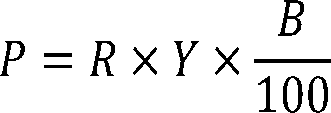
 www.reginfo.gov/public/do/PRAMain