The Food and Drug Administration (FDA or we) is proposing to require the submission of generally recognized as safe (GRAS) notices for the use of a human or animal food substanc...
The Food and Drug Administration (FDA or we) is proposing to require the submission of generally recognized as safe (GRAS) notices for the use of a human or animal food substance purported to be GRAS under the conditions of its intended use under the Federal Food, Drug, and Cosmetic Act (FD&C Act).
DATES:
Either electronic or written comments on the proposed rule must be submitted by December 9, 2026. Submit comments (including recommendations) on the collection of information under the Paperwork Reduction Act of 1995 by December 9, 2026.
ADDRESSES:
You may submit comments as follows. Please note that late, untimely filed comments will not be considered. The
www.regulations.gov
electronic filing system will accept comments until 11:59 p.m. Eastern Time at the end of December 9, 2026. Comments received by mail/hand delivery/courier (for written/paper submissions) will be considered timely if they are received on or before that date.
Electronic Submissions
Submit electronic comments in the following way:
Federal eRulemaking Portal:www.regulations.gov. Follow the instructions for submitting comments. Comments submitted electronically, including attachments, to
www.regulations.gov
will be posted to the docket unchanged. Because your comment will be made public, you are solely responsible for ensuring that your comment does not include any confidential information that you or a third party may not wish to be posted, such as medical information, your or anyone else's Social Security number, or confidential business information, such as a manufacturing process. Please note that if you include your name, contact information, or other information that identifies you in the body of your comments, that information will be posted on
www.regulations.gov.
If you want to submit a comment with confidential information that you do not wish to be made available to the public, submit the comment as a written/paper submission and in the manner detailed (see “Written/Paper Submissions” and “Instructions”).
For written/paper comments submitted to the Dockets Management Staff, FDA will post your comment, as well as any attachments, except for information submitted, marked, and identified, as confidential, if submitted as detailed in “Instructions.”
Instructions:
All submissions received must include the Docket No. FDA-2025-N-3262 for “Substances Generally Recognized as Safe.” Received comments, those filed in a timely manner (see
ADDRESSES
), will be placed in the docket and, except for those submitted as “Confidential Submissions,” publicly viewable at
www.regulations.gov
or at the Dockets Management Staff between 9 a.m. and 4 p.m., Monday through Friday, 240-402-7500.
Confidential Submissions—To submit a comment with confidential information that you do not wish to be made publicly available, submit your comments only as a written/paper submission. You should submit two copies total. One copy will include the information you claim to be confidential with a heading or cover note that states “THIS DOCUMENT CONTAINS CONFIDENTIAL INFORMATION.” We will review this copy, including the claimed confidential information, in our consideration of comments. The second copy, which will have the claimed confidential information redacted/blacked out, will be available for public viewing and posted onwww.regulations.gov.
Submit both copies to the Dockets Management Staff. If you do not wish your name and contact information to be made publicly available, you can provide this information on the cover sheet and not in the body of your comments and you must identify this information as “confidential.” Any information marked as “confidential” will not be disclosed except in accordance with 21 CFR 10.20 and other applicable disclosure law. For more information about FDA's posting of comments to public dockets, see 80 FR 56469, September 18, 2015, or access the information at:
www.govinfo.gov/content/pkg/FR-2015-09-18/pdf/2015-23389.pdf.
Docket:
For access to the docket to read background documents, the plain language summary of the proposed rule of not more than 100 words as required by the “Providing Accountability Through Transparency Act,” or the electronic and written/paper comments received, go to
www.regulations.gov
and insert the docket number, found in brackets in the heading of this document, into the “Search” box and follow the prompts and/or go to the Dockets Management Staff, 5630 Fishers Lane, Rm. 1061, Rockville, MD 20852, 240-402-7500.
Under the Paperwork Reduction Act (PRA), comments on the information collection provisions are best assured of consideration if your comments are received by December 9, 2026. Submit your comments on FDA's need for this information, the accuracy of the provided burden estimates, and any suggested methods for minimizing respondent burden to FDA using the docket identified at the beginning of this rulemaking. FDA will respond to any information collection-related comments in the final rule. You may also send your information collection-related comments to OMB's Office of Information and Regulatory Affairs using the interface at
www.reginfo.gov/public/do/PRAMain.
Find this particular information collection by selecting “Currently Under Review—Open for Public Comments” or by using the search function. The title of this proposed collection is “Substances Generally Recognized as Safe: Notification Procedure.”
FOR FURTHER INFORMATION CONTACT:
With regard to substances that would be used in human food:
Paulette Gaynor or Christopher Kampmeyer, Office of Pre-Market Additive Safety, Human Foods Program, Food and Drug Administration, 5001 Campus Dr., College Park, MD 20740, 240-402-1200; Carrol Bascus or Alexandra Beliveau, Office of Policy and International Engagement, Human Foods Program, Food and Drug Administration, 5001 Campus Dr., College Park, MD 20740, 240-402-2378.
With regard to substances that would be used in animal food:
Charlotte Conway, Tonia Bair, or Marla Keller, Office of Surveillance and Compliance, Center for Veterinary Medicine, Food and Drug Administration, 5001 Campus Dr., College Park, MD 20740, 240-402-6768.
( printed page 51835)
With regard to the information collection:
Michael Ellison, Office of Operations, Food and Drug Administration, Three White Flint North, 10A-12M, 11601 Landsdown St., North Bethesda, MD 20852, 240-402-2093,
PRAStaff@fda.hhs.gov.
SUPPLEMENTARY INFORMATION:
Table of Contents
I. Executive Summary
A. Purpose and Coverage of the Proposed Rule
B. Summary of the Major Provisions of the Proposed Rule
C. Legal Authority
D. Costs and Benefits
II. Table of Abbreviations/Commonly Used Acronyms in This Document
III. Background
A. Statutory and Regulatory History
B. The Need To Mandate GRAS Notifications
IV. Legal Authority
A. Statutory Framework
B. Legal Basis for the Proposal
V. Description of the Proposed Rule
A. Proposed Revisions to § 170.3—Definitions
B. Proposed Revisions to § 170.30—Eligibility for Classification as GRAS
C. Proposed Revisions to § 170.38—Determination of Food Additive Status
D. Proposed Revisions to § 170.39—Threshold of Regulation (TOR) for Substances Used in Food or as a Food Contact Substance
E. Proposed Revisions to § 170.203—Definitions Pertaining to GRAS Notices
F. Proposed § 170.205—Creation of a Mandatory GRAS Notification Program
G. Proposed Revisions to § 170.210—Mandatory Electronic Submission of GRAS Notices to FDA
H. Proposed Revisions to § 170.220—Requirement To Submit English Translations of Material Included in a GRAS Notice
I. Proposed Revisions to § 170.250—Identification of Data and Information Exempt From Disclosure Under the Freedom of Information Act
J. Proposed Revisions to § 170.265—Circumstance Where FDA Would Not Consider the Mandatory GRAS Notice Notification Requirement To Be Met
K. Proposed Revisions to § 170.275—Public Disclosure of a GRAS Notice
L. Proposed Revocation of § 170.285—Disposition of GRAS Affirmation Petitions
M. Proposed Addition of Subpart F—Establishment of Definitions and Pathway for Submission of Certain Information During Time-Limited Option for Substances Introduced Into Interstate Commerce Under the GRAS Provision of Section 201(s) of the FD&C Act Before the Effective Date of A Final Rule
N. Proposed Revision to the Header of Part 170
O. Non-Substantive Edits to Part 170
P. Table Summarizing the Proposed Changes to Part 170
Q. Proposed Revisions to Part 570 for Food Substances Used in Animal Food and Incorporation by Reference
VI. Request for Comments on Alternatives
VII. Proposed Effective/Compliance Dates
VIII. Preliminary Economic Analysis of Impacts
IX. Analysis of Environmental Impact
X. Paperwork Reduction Act of 1995
XI. Federalism
XII. Consultation and Coordination With Indian Tribal Governments
XIII. References
I. Executive Summary
A. Purpose and Coverage of the Proposed Rule
The proposed rule, if finalized, would amend our regulations at parts 170 and 570 (21 CFR parts 170 and 570) to require the submission of GRAS notices for the use of a human or animal food substance that is purported to be GRAS under the conditions of its intended use under section 201(s) of the FD&C Act (21 U.S.C. 321(s)).
Food substances include both ingredients and substances added indirectly, such as from food packaging. The proposed rule would require any person introducing a substance into interstate commerce under the GRAS provision of section 201(s) of the FD&C Act to notify FDA of the basis for their conclusion that the substance is GRAS under the conditions of its intended use unless an exception to the requirement to submit a GRAS notice applies. This change would provide greater transparency about substances that are added to food (including substances already in the food supply and those being introduced into interstate commerce for use in food for the first time), so that FDA can more efficiently determine if the use of a substance constitutes a food additive use that is subject to FDA review and approval under the FD&C Act. This change is expected to provide FDA with information to help identify the use of potentially unsafe substances in food, thereby enabling FDA to take action as appropriate and regulate the safety of food substances more effectively.
B. Summary of the Major Provisions of the Proposed Rule
The proposed rule, if finalized, would:
Convert the voluntary GRAS notification program to a mandatory GRAS notification program and explain that if the notification requirement is not met for a substance's conditions of intended use, FDA would consider such noncompliance as a factor in its prioritization of food substances for post-market review;
Establish certain exceptions to the requirement to submit a GRAS notice, including a time-limited option to make a streamlined submission to FDA for certain intended uses of substances already in interstate commerce instead of initially submitting a GRAS notice; and
Revise our procedural regulations for a threshold of regulation (TOR) exemption for human food to reflect updated scientific guidance and to include uses of substances in food and as a food contact substance (FCS).
C. Legal Authority
We are issuing this proposed rule consistent with our authority in sections 201, 402, 409, and 701 of the FD&C Act (21 U.S.C. 321, 342, 348, 371).
D. Costs and Benefits
This proposed rule would revise the procedures by which a person introducing a human or animal food substance into interstate commerce notifies FDA of a conclusion that the use of such substance is GRAS. Specifically, the proposed rule would require the submission of GRAS notices to FDA for certain uses of food substances. A substance that is GRAS under the conditions of its intended use is not subject to FDA premarket review and approval as a food additive for that particular use (see sections 201(s) and 409 of the FD&C Act). Under our current regulations, a person who concludes that the use of a substance is GRAS under the conditions of its intended use may, but is not required to, notify FDA of this conclusion. The submission of a GRAS notice is therefore currently voluntary. If the proposed rule is finalized, GRAS notices will be required for certain uses of substances in human and animal food.
The primary benefits of the proposed rule, if finalized, would come from increased information being made available to FDA and the public regarding substances used in human and animal foods. This information would enable us to more effectively determine if the use of a substance constitutes a food additive use that is subject to premarket review and approval under the FD&C Act. This information is also expected to provide FDA with information to help identify the use of potentially unsafe substances in food, thereby enabling FDA to take action as appropriate and regulate the safety of food substances more effectively. A mandatory GRAS notification program would allow FDA to ensure that GRAS conclusions have a scientific basis and that appropriate documentation supporting those conclusions exists. The proposed rule, if finalized, is in part intended to help
( printed page 51836)
strengthen public confidence in FDA's ability to oversee the safety of the U.S. food supply. One-time costs of the proposed rule to persons who introduce a substance into interstate commerce under the GRAS provision of section 201(s) of the FD&C Act include reading the rule and revising standard operating procedures regarding GRAS notices. Other one-time per manufacturer costs of the proposed rule are preparing and submitting streamlined submissions related to uses of substances introduced into interstate commerce under the GRAS provision of section 201(s) of the FD&C Act before the effective date of a final rule, for firms that choose to submit this information during the window of availability for this time-limited option for such submissions. Costs associated with these activities may include translation costs for manufacturers in non-English speaking countries. Recurring costs to affected manufacturers would include preparing and submitting GRAS notices for new uses of substances introduced into interstate commerce under the GRAS provision of section 201(s) of the FD&C Act after the effective date of a final rule that would otherwise have been the subject of an independent conclusion of GRAS status (
i.e.,
a GRAS conclusion has been reached without submitting a GRAS notice) (see sections III and VII of this document for further discussion of independent conclusion of GRAS status and effective and compliance dates, respectively).
Costs to FDA would include one-time costs of reviewing streamlined submissions related to uses of substances introduced into interstate commerce under the GRAS provision of section 201(s) of the FD&C Act before the effective date of a final rule during the time-limited period for such submissions, and annual costs of evaluating ongoing submissions of GRAS notices regarding uses of substances that would otherwise have been the subject of an independent conclusion of GRAS status.
Other effects of the proposed rule may include transfers of market share and revenue between manufacturers of products with similar ingredients. For example, the submission of a GRAS notice may lead to a determination by FDA that there is an insufficient basis for concluding that a substance that happens to be used in only certain of the products was GRAS. We acknowledge the potential for such transfers if the rule is finalized. We do not estimate the magnitude of such effects because we cannot identify which substances may be the subject of an insufficient basis letter, which products they are in, or the market share of such products.
We estimate that the present value of the costs of the proposed rule would be approximately $89.6 million, with a lower bound of $34.9 million and an upper bound of $210.0 million, discounted at 3 percent at 10 years in 2024 dollars. At a 7 percent discount rate, the present value of costs would be approximately $82.3 million, with a lower bound of $31.5 million and an upper bound of $195.9 million. We estimate that the annualized costs of the proposed rule would be approximately $10.5 million, with a lower bound of $4.1 million and an upper bound of $24.6 million, discounted at 3 percent over 10 years. At a 7 percent discount rate, annualized costs would be approximately $11.7 million, with a lower bound of $4.5 million and an upper bound of $27.9 million.
( printed page 51837)
III. Background
On March 10, 2025, the Secretary of Health and Human Services, Robert F. Kennedy Jr., directed FDA to explore rulemaking to eliminate the pathway for firms to introduce purported GRAS uses of substances into the market without notifying FDA of the basis for their GRAS conclusions (Ref. 1). Secretary Kennedy's call for a reformed GRAS notification process aligns with the Administration's Make America Healthy Again initiative by providing increased transparency about the substances being added to the nation's food supply (Ref. 2). A mandatory GRAS notification program would require any person introducing a substance into interstate commerce under the GRAS provision of section 201(s) of the FD&C Act to notify FDA of the basis for their conclusion that the substance is GRAS under the conditions of its intended use. A mandatory program would enable FDA to more effectively ensure the safety of the U.S. food supply—one that has grown far more complex in recent years—by providing us with information needed to help identify the use of potentially unsafe substances in food or additives that require FDA's review and approval to be lawfully marketed, so we can take action as appropriate. A mandatory GRAS notification program would therefore address growing concerns about the increasingly complex U.S. food supply. For example, firms are introducing substances into food without publicly disclosing the underlying safety information about the use of such ingredients and FDA sometimes becomes aware of the need to take action regarding unsafe substances in food only after adverse public health events occur. Further, a mandatory program that includes the continued public disclosure of information about GRAS uses of substances would substantially increase the public's access to information concerning the substances being added to human and animal food.
In 1958, Congress enacted the Food Additives Amendment to the FD&C Act (the 1958 amendment) (Pub. L. 85-929, 72 Stat. 1784), which expanded FDA's broad authority under the FD&C Act to ensure the safety of the U.S. food supply. Among other things, the 1958 amendment created a new framework for FDA's oversight of substances being added to food. The 1958 amendment defined the term “food additive” and established a premarket review and approval framework for these food substances (sections 201(s) and 409 of the FD&C Act). Notably, in defining what constitutes a food additive subject to premarket review and approval, the 1958 amendment excluded substances that are GRAS under the conditions of their intended use (section 201(s) of the FD&C Act). Congress therefore exempted substances that are GRAS under the conditions of their intended use from the premarket review and approval requirements for food additives under the FD&C Act. However, as discussed elsewhere in this document, Congress struck a balance: although it exempted substances that are GRAS under the conditions of their intended use from premarket review and approval, Congress granted FDA the authority to review food substances on the market, including new and existing substances introduced into food that are purported to be GRAS under the conditions of their intended use, to assess whether these substances meet the definition of a food additive that requires premarket authorization (sections 409(a) and (d) of the FD&C Act).
In the over 60 years since the enactment of the 1958 amendment, FDA has regulated GRAS uses of substances in food through various mechanisms, including by: listing certain substances as GRAS under the conditions of their intended use in our regulations; conducting a comprehensive study of purported GRAS uses of substances to determine whether certain uses of substances required FDA's review and approval as food additive uses; and establishing a GRAS affirmation process, through which interested parties could petition us to affirm the GRAS status of a particular use of a substance.
Our current GRAS notification program was first proposed in 1997, and under this program, parties can voluntarily notify us of a conclusion that a substance is GRAS under the conditions of its intended use. Through a GRAS notice, parties can share with us the underlying data and other scientific information used to support their conclusion that the use of a substance is GRAS under the conditions of its intended use. A GRAS conclusion constitutes an assertion on the part of the notifier (
i.e.,
the person responsible for the GRAS notice; see § 170.203 (21 CFR 170.203) and § 570.203 (21 CFR 570.203)) that the intended use of a substance is not a food additive use that is subject to the premarket review and approval requirements of section 409 of the FD&C Act. Importantly, a person's conclusion that a substance is GRAS under the conditions of its intended use (or similar claims by a person that they have independently “certified” the use of a substance as GRAS) does not necessarily mean that such a use is GRAS or that the use is not an unapproved food additive use. For example, FDA may determine, based on an assessment of evidence, that the use of a substance is not GRAS or that it is otherwise an unapproved food additive.
As part of our voluntary GRAS notification program, once we file a GRAS notice, we conduct an evaluation to determine whether the data and information presented, and other information available to FDA, provide a sufficient basis for a conclusion that the substance is GRAS under the conditions of its intended use. In general, FDA will respond to a GRAS notice in one of three ways: (1) by indicating that we do not question the basis for the GRAS conclusion contained in the notice (“no questions” letter); (2) by indicating that we have concluded that the notice does not provide a sufficient basis for a GRAS conclusion (
e.g.,
because the notice does not include appropriate data and information or because key data and information are not publicly available); or (3) by stating that we have granted a request by the notifier for us to cease our evaluation of the GRAS notice. There is no requirement that a notifier must wait to receive a response from FDA regarding their GRAS conclusion before introducing the substance into interstate commerce. We provide information about GRAS notices and our responses on our website (Refs. 3 and 4).
While the current GRAS notification program has been informative and beneficial to our administration of the FD&C Act, our nearly 30 years of experience with the program, and particularly our experience administering the program since it was finalized in 2016, has highlighted several challenges.
The voluntary nature of the GRAS notification program has meant that information gaps persist for both FDA and the public about substances being added to food, an issue covered extensively in a 2010 U.S. Government Accountability Office (GAO) report (see section III.B.1.c of this document for further discussion) (Ref. 5). Our lack of complete information about what substances are being added to food has, at times, prevented early engagement with industry about new uses of substances in food and frustrated our ability to carry out our public health and safety responsibilities under the FD&C Act (see section III.B of this document for further discussion). At the same time, recent changes in our country's food supply, such as evolving consumer demand for different types of
( printed page 51838)
products and ongoing innovation in food manufacturing and ingredient development, have resulted in a more diverse food supply. It was estimated that, as of January 2011, more than 10,000 additives were being used in food, including an estimated 1,000 human food substances for which firms had claimed independent conclusions of GRAS status (
i.e.,
they had reached a GRAS conclusion without submitting a GRAS notice) (Refs. 6 and 7).
In light of the issues we have identified with the voluntary GRAS notification program, and the challenges we face due to ongoing food innovation and evolving consumer demands, we find ourselves in a situation much like the years before the 1958 amendment's enactment. At that time, numerous substances with unknown safety profiles were being added to or used in connection with food without sufficient FDA oversight. Today, an unknown number of substances are being introduced into the market under the GRAS provision of section 201(s) of the FD&C Act. The proposed rule would address our current circumstances by requiring the submission of GRAS notices. Mandatory submission of GRAS notices would increase knowledge and improve the transparency about substances in the U.S. food supply that are purported to be GRAS under the conditions of their intended use. It would give FDA, state regulators, consumers, industry, and consumer advocacy groups more information about substances being used in human and animal food. Once filed, information about all purported GRAS uses of substances is expected to enable FDA to more efficiently determine whether the use of a substance meets the definition of a food additive use under the FD&C Act, and therefore whether the use of the substance requires FDA's review and approval to be lawfully marketed. Further, mandatory submission of GRAS notices would help FDA ensure that GRAS conclusions have a scientific basis and are appropriately documented and maintained. It would also provide an earlier opportunity for us to engage with industry if questions arise regarding a conclusion that a substance is GRAS under the conditions of its intended use. Mandatory submission of GRAS notices would enable FDA to administer and enforce the FD&C Act more effectively and efficiently.
A. Statutory and Regulatory History
1. The Food Additives Amendment of 1958
In 1950, to address emerging health concerns about the use of new chemicals in food, the U.S. House of Representatives established a committee chaired by Representative James Delaney of New York (the Delaney Committee) to investigate the substances being added to or used in connection with the nation's changing food supply. The Delaney Committee issued a report in June 1952 summarizing its findings (Ref. 8). The report found, among other things, that food substances were being used “without adequate and sufficient testing of their possible long-range injurious effects” (id. at 27). The report further concluded that the public was “entitled to greater protection with respect to the foods it must necessarily consume[,]” and that “such protection [was] not afforded by existing legislation, under which the Government may take no action until after the food has been placed upon the market and injury may have occurred” (id. at 27). The Delaney Committee therefore recommended that the FD&C Act be amended to require premarket safety reviews for “chemicals employed in or on foods” (id. at 27).
In 1958, based in part on the Delaney Committee's report, as referenced in the corresponding House Report (Ref. 9), Congress enacted the Food Additives Amendment to the FD&C Act to strengthen government oversight of substances being added to or used in connection with food. “Food” includes articles used for food or drink for humans or other animals and articles used for components of such food (see section 201(f) of the FD&C Act); therefore, the 1958 amendment covered additives in both human and animal foods. Echoing the Delaney Committee's call for premarket oversight of food substances, Congress's stated purpose in passing the 1958 amendment was “[t]o protect the public health by amending the [FD&C Act] to prohibit the use in food of additives which have not been adequately tested to establish their safety” (Pub. L. 85-929, 72 Stat. 1784).
Specifically, the 1958 amendment requires that, before certain substances may be added to food, FDA must authorize their use through a premarket review and approval process (sections 409(b) through (e) of the FD&C Act). Among other things, the 1958 amendment:
defines what constitutes a “food additive” subject to premarket review and approval (now codified at section 201(s) of the FD&C Act);
creates a detailed premarket authorization process for food additives that can result in a food additive regulation establishing the safety of a food additive for a particular use (sections 409(a) through (e) of the FD&C Act);
enables any person to submit a food additive petition to propose the issuance of a food additive regulation (section 409(b) of the FD&C Act);
empowers the Secretary of the U.S. Department of Health and Human Services (the Secretary) to at any time, on their own initiative, propose the issuance of a food additive regulation (section 409(d) of the FD&C Act); and
deems adulterated any food that is, or bears or contains, a “food additive that is unsafe within the meaning of section 409 [of the FD&C Act]” (now section 402(a)(2)(C)(i) of the FD&C Act).
With some exceptions, section 409(a) of the FD&C Act provides that food additives are deemed “unsafe” for purposes of the adulteration provision of section 402(a)(2)(C)(i) of the FD&C Act unless their use conforms with a food additive regulation issued pursuant to the premarket review and approval process of section 409 of the FD&C Act. Congress later added to this premarket authorization framework by establishing a mandatory food contact notification program for human foods (see section 409(h) of the FD&C Act) and certain requirements specific to food additives intended for use in animal food (see section 409(k) of the FD&C Act).
2. Statutory Approach to Substances Generally Recognized as Safe (GRAS)
In enacting the 1958 amendment, Congress recognized that many substances added to food would not need to go through formal premarket review and approval to assure their safety, either because their safety had been established by a long history of use in food or by virtue of the nature of the substance, its customary or projected conditions of use, and the information generally available to scientists about the substance. Therefore, Congress adopted a two-step definition of “food additive” (see section 201(s) of the FD&C Act). The first step broadly includes any substance, the intended use of which results or may reasonably be expected to result, directly or indirectly, in its becoming a component or otherwise affecting the characteristics of food. This includes substances added to food directly (
i.e.,
ingredients) and indirectly (
i.e.,
substances used in contact with food). As such, substances that migrate or may reasonably be expected to migrate into food from their intended use in contact with food (
e.g.,
( printed page 51839)
from conveyor belts, containers for shipping, packaging for food) would be regulated as food additives unless such use is GRAS or otherwise excepted from the definition of a food additive. Further information about food contact substances is available on our website (see Ref. 10). The second step excludes from the definition of a “food additive” substances that are generally recognized, among experts qualified by scientific training and experience to evaluate their safety, as having been adequately shown through scientific procedures (or, in the case of substances used in food before January 1, 1958, through either scientific procedures or through experience based on common use in food) to be safe under the conditions of their intended use. Under section 201(s) of the FD&C Act, the conditions of intended use of a substance, rather than the substance itself, are eligible for GRAS status. Similarly, food additives are deemed unsafe when their conditions of use do not conform with a food additive regulation (see section 409(a) of the FD&C Act).
The 1958 amendment created two distinct processes for the proposal and creation of food additive regulations. First, under section 409(b) of the FD&C Act, any person may propose the issuance of a food additive regulation by filing a petition with the Secretary. Under section 409(c) of the FD&C Act, in response to a food additive petition, the Secretary, and by delegation, FDA, will, by order, either: (1) deny the petition; or (2) establish a food additive regulation prescribing the conditions under which the food additive may be safely used. Second, under section 409(d) of the FD&C Act, Congress specifically authorized the Secretary, and by delegation, FDA, to at any time, upon the Secretary's own initiative, propose the issuance of a food additive regulation prescribing the conditions under which a particular food additive may be safely used. After 30 days, the Secretary, and by delegation, FDA, may issue an order establishing a food additive regulation based upon the proposal (section 409(d) of the FD&C Act).
Section 409(d) of the FD&C Act thus authorizes us to propose food additive regulations of our own accord. As discussed further in section IV of this document, by granting FDA authority to propose food additive regulations upon our own initiative and at any time, Congress intended for FDA to play a critical role in determining whether a food substance being introduced into interstate commerce, including one already being added to food, meets the definition of a food additive and requires a food additive regulation to be lawfully marketed.
3. FDA's Regulatory Approach to the GRAS Provision of Section 201(s) of the FD&C Act
We have periodically revised our regulations to adapt our approach to the GRAS provision of section 201(s) of the FD&C Act to the nation's changing food supply and to address issues we identified after years of experience under prior regulatory schemes. The revisions were intended to help us better understand what substances are being added to or used in connection with food under the GRAS provision of section 201(s) of the FD&C Act. The goal of these regulations was to give us, and the public, safety information about these substances and to enable us to take appropriate actions to assure the safe use of these substances in food. Shortly after Congress amended the FD&C Act in 1958, we clarified the regulatory status of many substances that were added to food before 1958, and we ultimately amended our regulations to include a list of food substances that, when used for the purposes indicated and in accordance with good manufacturing practices, are GRAS. The list, historically referred to as “the GRAS list,” can be found at part 182 (21 CFR part 182) for human food and part 582 (21 CFR part 582) for animal food.
When creating the GRAS list, we acknowledged that it would be impracticable for us to list all substances that are GRAS for their intended use in our regulations (§ 121.101(a) (later renumbered as § 182.1(a) (21 CFR 182.1(a)) and § 582.1(a) (21 CFR 582.1(a))). Consequently, we did not include many substances considered GRAS under the conditions of their intended use by the food industry in the GRAS list. Despite the fact that a substance that is GRAS under the conditions of its intended use is not subject to FDA premarket review and approval as a food additive for that particular use (see sections 201(s) and 409 of the FD&C Act), firms who concluded on their own initiative that a use of a substance qualified for GRAS status frequently sought our opinion on whether their conclusion was justified. Many firms requested an “opinion letter,” in which FDA would render an informal opinion on the GRAS status of the conditions of use of a substance. Although convenient and expedient, these informal opinion letters were often available only to the requestor and were not binding on us even at the time they were issued.
FDA updated the GRAS list over time. For example, in the
Federal Register
of October 21, 1969 (34 FR 17063), we deleted from the GRAS list various cyclamate salts, a family of nonnutritive sweeteners that had been added to food under the GRAS provision of section 201(s) of the FD&C Act, because they were implicated in the formation of bladder tumors in rats (Ref. 11). Later, in response to concerns raised by the new information on cyclamates, then-President Nixon directed FDA to reexamine the safety of all substances included on the GRAS list (Ref. 12). We subsequently announced that we were conducting a comprehensive study of these substances (35 FR 18623, December 8, 1970). The purpose of the study was to evaluate the available safety information for substances on the GRAS list. For substances determined safe under their conditions of use, we would then repromulgate each substance in a new (
i.e.,
affirmed) GRAS list, a food additive regulation, or an interim food additive regulation pending completion of additional studies. In conjunction with this comprehensive study, we revoked informal GRAS opinion letters issued before April 9, 1970, in part because many letters no longer resided in FDA's files; thus, in the absence of information concerning the names and uses of the substances in the letters, the safety of all such substances and uses could not be reexamined (35 FR 5810, April 9, 1970) (see § 170.6 (21 CFR 170.6) and § 570.6 (21 CFR 570.6)).
In the notice announcing the comprehensive review of substances included on the original GRAS list, we proposed criteria that could be used to establish whether the use of these substances should be included on a new GRAS list, become the subject of a food additive regulation, or be listed in an interim food additive regulation pending completion of additional studies (35 FR 18623). We incorporated these criteria into our regulations as § 121.3 (21 CFR 121.3) (36 FR 12093, June 25, 1971) (renumbered as § 170.30 (21 CFR 170.30) for human food and § 570.30 (21 CFR 570.30) for animal food; see 41 FR 38618, September 10, 1976, and 42 FR 14302, March 15, 1977). We later announced that we were conducting a study of certain GRAS substances (36 FR 20546, October 23, 1971) and subsequently instituted a rulemaking to establish procedures that we could use, on our own initiative, to affirm the GRAS status of substances that were the subject of that review and were found to satisfy the criteria established in § 121.3 (proposed rule, 37
( printed page 51840)
FR 6207, March 25, 1972; final rule, 37 FR 25705, December 2, 1972). We recodified these procedures at § 170.35(a) and (b) (21 CFR 170.35(a) and (b)) for human food (42 FR 14302) and § 570.35(a) and (b) (21 CFR 570.35(a) and (b)) for animal food (41 FR 38618). Because the GRAS review did not cover all GRAS substances (
e.g.,
substances that were marketed based on a firm's conclusion of GRAS status), the 1972 rulemaking included a mechanism (the GRAS affirmation petition process) whereby an individual could petition us to review the GRAS status of substances not being considered as part of our GRAS review. If we agreed that the substance was GRAS under the conditions of its intended use, we could affirm the use of the substance as GRAS in our regulations. Our affirmations of GRAS status are currently codified in parts 184 and 186 (21 CFR parts 184 and 186) for human food and part 584 (21 CFR part 584) for animal food.
Petitions submitted as part of the GRAS affirmation process informed us, the domestic and international food industry, and the public of conclusions of GRAS status. However, this framework proved to be resource-intensive (
e.g.,
FDA issued a rule proposing to affirm a substance as GRAS under the conditions of its intended use and affirmed the GRAS status in a final rule). Therefore, in the
Federal Register
of April 17, 1997 (62 FR 18938), we proposed to: (1) clarify the criteria for eligibility for classification as GRAS; and (2) replace the voluntary GRAS affirmation petition process with a voluntary GRAS notification procedure. In the
Federal Register
of August 17, 2016 (81 FR 54960) (the 2016 GRAS final rule), we finalized the voluntary GRAS notification regulation in Subpart E of part 170 (21 CFR part 170) for human food and Subpart E of part 570 (21 CFR part 570) for animal food. The regulations provide that any person may notify FDA of a view that a substance is not subject to the premarket review and approval requirements of section 409 of the FD&C Act based on that person's conclusion that the substance is GRAS under the conditions of its intended use (see § 170.205 (21 CFR 170.205) and § 570.205 (21 CFR 570.205)). We explained that we would evaluate whether the data, information, and narrative in a GRAS notice support that conclusion (81 FR 54960 at 55035; see also § 170.265(b) (21 CFR 170.265(b)) and § 570.265(b) (21 CFR 570.265(b))).
B. The Need To Mandate GRAS Notifications
The voluntary GRAS notification program has improved our efficient administration of the FD&C Act by providing us with more data and information about uses of substances in food. GRAS notices have informed us about new food substances entering the market, including some substances into which we might not otherwise have insight. GRAS notices have therefore provided us with information that improved our understanding of the U.S. food supply and enhanced our ability to protect public health by helping to identify the use of potentially unsafe substances in food or additives that require FDA review and approval to be lawfully marketed, so we can take action as appropriate.
As part of an interim pilot program created with the 1997 proposed rule, parties began notifying us about their conclusions of GRAS status (62 FR 18938 at 18954). FDA's former Center for Food Safety and Applied Nutrition (now called the Human Foods Program (HFP)) filed its first GRAS notice in 1998 under the interim pilot program. As of March 25, 2025, HFP has filed over 1,200 GRAS notices (Ref. 3). FDA's Center for Veterinary Medicine (CVM) established its interim pilot program more recently (75 FR 31800, June 4, 2010) and filed its first GRAS notice in December 2010. As of March 28, 2025, CVM has filed 75 GRAS notices (Ref. 4).
In addition to providing us with more information about uses of substances in food, the voluntary GRAS notification program has improved our administration of the FD&C Act in other ways. For example, the voluntary GRAS notification program created new opportunities for us to engage with industry to learn more about the U.S. markets for human and animal food. Under the voluntary GRAS notification program, FDA routinely engages with industry through pre-submission meetings and related consultations. We also work with industry to improve GRAS notice submissions and recommend the necessary data and other information to facilitate a successful evaluation of a GRAS notice. These opportunities to engage with stakeholders provide us with more information about human and animal food substances, and they enable us to better achieve our ultimate goal of helping to identify the use of potentially unsafe substances in food or additives that require FDA review and approval to be lawfully marketed, so we can take action as appropriate.
Despite the benefits of our GRAS notification program, we have identified challenges with our current voluntary approach to GRAS notifications. These challenges, which we describe in the sections that follow, have created obstacles to fulfilling our statutory responsibility to determine if the use of a substance constitutes a food additive use that is subject to the premarket review and approval requirements of section 409 of the FD&C Act. We are, therefore, proposing a mandatory approach to GRAS notifications to better serve these purposes.
1. Issues Identified Over the Course of the Voluntary GRAS Notification Program
After nearly 30 years of receiving and evaluating GRAS notices, and after filing more than 1,200 GRAS notices, FDA has identified several issues with the current voluntary approach to GRAS notifications. We describe some issues we have identified with a voluntary approach to GRAS notifications in greater detail in the following sections.
a. Issue #1: Inadequate analyses to support independent conclusions of GRAS status can result in unapproved food additive uses.
Due to the voluntary nature of the GRAS notification program, we have periodically learned about the continued use of substances in food that we have publicly indicated constitute unapproved food additive uses. It may be unclear whether such substances are being used based on a new independent conclusion of GRAS status and, if so, what data and information a firm may be relying on to substantiate that conclusion.
The continued use of stevia leaves and crude extracts of stevia leaves provide one such example. We first issued an import alert in 1991 for crude extracts of stevia leaves and foods containing stevia leaves or stevia extracts to prevent the importation of unsafe stevia products into the United States. We have updated the import alert to add firms subject to the import alert and to account for uses of purified extracts for which FDA does not have questions following the review of a GRAS notice. The most recent update issued in 2025 continues to recommend detention without physical examination of stevia leaves, crude extracts of stevia leaves, or foods containing these substances (Ref. 13). The import alert states that, when used in conventional foods, stevia leaf, or its crude extract, is not an approved food additive and is not considered GRAS due to inadequate toxicological information necessary to demonstrate safety. In contrast, the safety of high purity (greater than or equal to 95 percent pure) steviol glycosides, the sweetening molecules found in stevia leaves, is well-established, and FDA has evaluated and issued “no questions” letters in response to multiple GRAS notices
( printed page 51841)
regarding highly purified forms of steviol glycosides. Notwithstanding these developments regarding high purity steviol glycosides, FDA's position on stevia leaves and their crude extracts has remained clear and consistent since the 1991 import alert—their use is not considered GRAS and constitutes an unapproved food additive use. Despite our unambiguous position regarding stevia leaves and stevia leaf crude extracts since 1991, we continue to find products containing these substances. In 2022, for instance, FDA issued a warning letter about the use of an unapproved food additive—stevia leaf—in several green tea products (Ref. 14).
Our experience under the voluntary GRAS notification program has further demonstrated that some firms may not be conducting sufficient analyses of whether their use of a substance in food is GRAS. FDA advises firms that preserving the applicable data and information that forms the basis of an independent conclusion of GRAS status represents prudent practice for those who assert that the statutory premarket review and approval requirements for food additives do not apply to the use of a substance in food (81 FR 54960 at 55028; see also 62 FR 18938 at 18947). We encourage firms to maintain the data and information that support the independent conclusion of GRAS status in the form of a GRAS notice (81 FR 54960 at 55027; see also Ref. 14). We also recommend that a firm make public the basis for its independent conclusion of GRAS status, as that aligns with FDA's practice to make GRAS notices publicly available (Ref. 15) and our goal of increasing transparency.
Notwithstanding these recommendations, we have learned that some firms may not conduct an evaluation that is sufficient to establish that a substance is GRAS under the conditions of its intended use. Firms also may not have the data and information that adequately support the basis for an independent conclusion of GRAS status. These observations are troubling given that firms are responsible for the safe manufacture of food being introduced into interstate commerce, including assuring the safety of substances used in making a food product.
Several examples illustrate the real-life consequences of these trends. In 2009, we received a letter from 18 Attorneys General and one city attorney expressing concerns about caffeinated alcoholic beverages (Ref. 16). FDA advised manufacturers that we were considering whether caffeine could lawfully be added to alcoholic beverages (Ref. 17). We informed these firms that there are no food additive regulations authorizing the use of added caffeine in alcoholic beverages, that such use was not prior sanctioned, and that we had not determined the use to be GRAS (id.). We gave them 30 days to submit their rationale, supporting data, and information for their conclusion that the use of caffeine in alcoholic beverages was GRAS or prior sanctioned. One firm said that it would prepare and submit a GRAS notice to us (Ref. 18), but it took more than 7 months for us to receive their GRAS notice. We identified several questions for the submitted notice, and in the end, we granted the firm's request to cease to evaluate the GRAS notice (Ref. 19).
During our evaluation of the GRAS notice, we issued four warning letters to firms marketing caffeinated alcoholic beverage products, including the firm that submitted the GRAS notice (Ref. 20). We stated in the letters that, based on the publicly available literature, a number of qualified experts have concerns about the safety of caffeinated alcoholic beverages. We further stated that FDA is not aware of data or other information to establish the safety of caffeine as used in these products. We informed firms marketing these caffeinated alcoholic beverages that caffeine, as used in the firms' products, is an unsafe food additive, and that the products are thus adulterated under section 402(a)(2)(C) of the FD&C Act. The firms subsequently ceased distribution of these products. This experience yielded a valuable insight into our GRAS notification program—had the firms marketing caffeinated alcoholic beverages been required to submit GRAS notices, we could have reviewed the information provided and informed firms much earlier that this use of caffeine rendered the substance a food additive requiring premarket review and approval.
We have drawn similar insight from our more recent experience involving human food products containing Delta-8 tetrahydrocannabinol (THC). In 2024, we sent warning letters to several firms for selling human food products that were represented as containing Delta-8 THC (Ref. 21). We stated that no food additive regulation authorizes the use of Delta-8 THC and that the use of the substance was not prior sanctioned. The warning letters went on to explain that available data raise serious concerns about the potential harm from Delta 8-THC, including adverse effects on the central nervous and cardiopulmonary systems and that some studies in animals suggested gestational exposure can interfere with neurodevelopment. The warning letters also cited adverse event reports related to ingestion by children and adults of edible products containing Delta-8 THC. The letters concluded that, based on FDA's review, the use of Delta-8 THC in conventional foods did not meet the criteria for GRAS status in FDA's regulations and that these products contained an unsafe food additive rendering them adulterated under section 402(a)(2)(C)(i) of the FD&C Act.
When we are not aware of an independent conclusion of GRAS status, we do not know what data and other information a firm uses to support their GRAS conclusion. Thus, there may be independent GRAS conclusions for currently marketed uses of substances for which we would typically have questions about their GRAS status. Without data and information, we cannot follow up on these questions as we would if we received a deficient voluntary GRAS notice. Moreover, in the case of independent conclusions of GRAS status, we may not become aware of a firm's poorly supported GRAS conclusion until after a product becomes available to consumers and, in some cases, only after an adverse event occurs.
For example, in 2022, a firm that used tara flour as an ingredient in a human food product initiated a voluntary recall of that product after it was associated with roughly 400 adverse event reports that detailed, among other things, gastrointestinal distress, hepatotoxicity, and hospitalization (Ref. 22). The firm conducted its own root cause analysis and identified tara flour as a possible contributor to the illnesses. We requested, but the firm did not share with FDA any records or other indication that demonstrated that they had reached a GRAS conclusion regarding the use of tara flour in human food. FDA evaluated the regulatory status of tara flour, which had not been the subject of any prior GRAS notice or a GRAS pre-submission meeting. We determined that there are not enough data on the use of tara flour in food, or a history of its safe use in food before 1958, to consider it GRAS, and there is also no food additive regulation authorizing the use of tara flour in food (id.). We posted our assessment of tara flour to FDA's “Post-market Determinations that the Use of a Substance is Not GRAS” website (Ref. 23). If we had received information from the firm through a GRAS notice earlier, we could have advised them of the need for information and studies to establish safety.
In addition to posting “not GRAS” memos to our website, we also issue import alerts or warning letters in
( printed page 51842)
situations where we have first evaluated the regulatory status of an ingredient, such as following inspection activities. For example, in 2023 FDA placed ashwagandha, an evergreen shrub whose extracts were identified in some human food products, on Import Alert 99-45 after FDA inspectors raised questions about its regulatory status and deemed it to be an unsafe food additive (Ref. 24). As a result, FDA may detain, without physical examination, shipments of certain identified food products containing ashwagandha from firms on the Red List of Import Alert 99-45. Ashwagandha has not been the subject of a voluntary GRAS notice.
These examples demonstrate that, under the current voluntary GRAS notification program, firms sometimes lack a sufficient basis for GRAS conclusions, resulting in the use of unapproved food additives in our food supply. In some cases, we become aware of the need to take action regarding unsafe additives in food only after learning of adverse public health events. Mandating the submission of GRAS notifications would enable us to better address concerns regarding the potential use of unapproved food additives in foods by providing us with information about independent conclusions of GRAS status. It would also further improve our administration of the FD&C Act by providing more opportunities for us to engage with industry to understand the basis for these GRAS conclusions.
b. Issue #2: Substances introduced into the marketplace after we cease to evaluate a GRAS notice at a notifier's request.
The voluntary GRAS notification program provides that notifiers may request that FDA cease to evaluate a GRAS notice (see § 170.260(b) (21 CFR 170.260(b)) and § 570.260(b) (21 CFR 570.260(b))). We noted in the 2016 GRAS final rule that a cease to evaluate letter signals that a GRAS notice does not provide an adequate basis for a conclusion that the notified substance is GRAS under the conditions of its intended use, even though we do not issue an insufficient basis letter regarding the notified substance (81 FR 54960 at 55010).
In current practice, notifiers request that we cease to evaluate a GRAS notice for a variety of reasons. For example, if we have questions about a GRAS notice that cannot be addressed by a timely amendment, a notifier may ask us to cease evaluating their GRAS notice so that they can later submit a new GRAS notice that addresses our questions. During our evaluation of a GRAS notice, we also may raise issues regarding the data and information used to support the GRAS conclusion. If our questions about the underlying support for a GRAS conclusion cannot be easily resolved, notifiers may request that we cease reviewing the notice while they develop or compile additional data to address the issues raised. For GRAS notices pertaining to substances used in animal food, notifiers have sometimes sent us cease to evaluate requests after we have raised questions about proposed contaminant limits in their GRAS notices.
In some cases, a notifier who received a cease to evaluate letter submits a new GRAS notice for the use of the notified substance after addressing our questions, and we respond to the new GRAS notice with a no questions letter. Alternately, after receiving a cease to evaluate letter from FDA, some notifiers may decide not to submit a new GRAS notice and instead to make an independent conclusion of GRAS status and market the substance or food containing the substance. If a notifier does not submit a new GRAS notice to FDA after receiving a cease to evaluate letter, we have no information about whether the previously notified substance later entered the market based on an independent conclusion of GRAS status. We also do not have insight into whether any questions we raised about the notified substance were adequately addressed. In such cases, this could cause confusion about whether the use of a substance meets the definition of a food additive use under the FD&C Act, and therefore whether the use of the substance requires FDA review and approval to be lawfully marketed. Our existing voluntary GRAS notification program creates the opportunity for a notifier to introduce a substance about which we had safety questions into the market without providing transparency to FDA and the public regarding the basis of their GRAS conclusion.
c. Issue #3: Insufficient information hinders FDA's efficient administration of the FD&C Act.
Due to the voluntary nature of our current GRAS notification program, a firm can market a substance that it has concluded is GRAS under the conditions of its intended use without submitting a notice to FDA. This prevents us and the public from having knowledge about, and insight into, these purported GRAS uses of substances. Our lack of a complete understanding of what substances are being used in the food supply impedes our ability to efficiently carry out our role under the FD&C Act to prohibit the use of unsafe additives in food and protect public health.
In GAO's 2010 report entitled “Food Safety: FDA Should Strengthen Its Oversight of Food Ingredients Determined to be Generally Recognized as Safe (GRAS),” GAO noted that FDA generally has no information about GRAS determinations that are not submitted to the voluntary notification program (Ref. 5 at page 12). (We use the terms “GRAS conclusion” or “conclusion of GRAS status” instead of “GRAS determination”; see 81 FR 54960 at 54969.) The GAO report included one example of a firm indicating that it “makes about 5 GRAS determinations each year without notifying FDA” (Ref. 5 at page 12). These GRAS determinations usually pertained to “new uses of substances that have been deemed GRAS for other uses” (id. at page 12). The GAO report further stated that FDA is less informed about the U.S. food supply and consumers' cumulative dietary exposure to GRAS substances because we do not oversee all GRAS determinations (id. at page 13). GAO recommended that we develop a strategy to require any firm that conducts a GRAS determination to provide FDA with basic information about the identity and use of the substance (id. at page 34).
As discussed in our response to the GAO Report, we share the transparency goal underlying GAO's recommendation to require the submission of basic information about GRAS uses of substances (Ref. 5). In the 2016 GRAS final rule, we said that a voluntary approach to GRAS notifications would mitigate many issues GAO raised in its report. For instance, we noted that a voluntary GRAS notification program would enable us to evaluate more, and higher priority, substances (81 FR 54960 at 54961). We also discussed the increasing use of the voluntary GRAS notification program throughout the interim pilot program (id. at 54980). However, after nearly a decade of additional experience administering the voluntary GRAS notification program, and in light of the ongoing changes to the nation's food supply discussed in greater detail below, the risks of not requiring GRAS notifications have become more evident.
As of January 2011, some sources estimate that there were 1,000 substances in use in human food for which firms had claimed independent conclusions of GRAS status (Refs. 6 and 7). However, given that the current GRAS notification program is voluntary, we have little, if any, information on independent conclusions of GRAS status, including the identity of the substance and its intended use(s).
Regarding food contact substances, specifically, we operate two programs (the infant formula notification program and the food contact substance
( printed page 51843)
formulation review program) where food packaging producers submit their packaging product formulations to us to verify compliance with FDA regulations. These programs provide FDA with limited opportunities to obtain information on independent conclusions of GRAS status. Through these programs, FDA has reviewed submissions where the inclusion of certain food contact product components is based on claims that the component is GRAS under the conditions of its intended use. While these programs provide us with some insight into independent GRAS conclusions made about those components, we lack a complete understanding of the number of substances currently on the market based on an independent conclusion of GRAS status.
In addition, our lack of a complete understanding of the substances added to food prevents us from efficiently sharing knowledge and providing transparency to others, such as state regulators, food manufacturers, and consumers, about substances in interstate commerce that are purported to be GRAS under the conditions of their intended use. For example, both HFP and CVM receive questions from state regulators, the regulated industry, and consumers about the regulatory status of such substances in human and animal food. Responding to these inquiries can often be challenging, as the lack of information we have on many substances impedes FDA's ability to effectively provide oversight in partnership with state regulators.
We are also aware that confidence in the federal government's ability to ensure the safety of the U.S. food supply, generally, has declined. The percentage of U.S. adults who say they have a “great deal” or “fair amount” of confidence in the government to keep the food supply safe fell from 68 percent in 2019 to 57 percent in 2024 (Ref. 25). Consumers indicate they would have more confidence in the safety of the U.S. food supply if they better understood how the federal government and industry work together to ensure food safety or if the federal government's regulations on food safety were stricter (Ref. 26). This general lack of consumer confidence speaks to an overarching need for the federal government to work to strengthen public confidence in the safety of the U.S. food supply—this proposed rule would be one example of a way to strengthen public confidence through increased transparency about the substances being added to the nation's food supply.
Unless a voluntary GRAS notice has been filed, we may not have insight into whether a given substance is GRAS under the conditions of its intended use without expending significant FDA resources to identify whether publicly available data supports the safe use of the substance. Aside from our GRAS notice inventory, which does not cover independent conclusions of GRAS status, no publicly available list exists where we or interested parties can verify the use in interstate commerce of all substances purported to be GRAS under the conditions of their intended use. Our inability to proactively share knowledge and provide transparency regarding all such substances may undermine public confidence regarding FDA's ability to protect public health. It also impedes our ability to effectively and efficiently regulate the U.S. food supply.
2. The Changing Food Supply in the United States
The country's continually evolving food supply also presents new challenges to our efficient administration of the FD&C Act. As referenced elsewhere in this document, some sources estimate that, as of January 2011, there were more than 10,000 additives in use in food, including an estimated 1,000 human food substances for which firms had claimed independent conclusions of GRAS status (Refs. 6 and 7). Although we cannot verify the accuracy of these estimates, these figures, and the statistics from our voluntary GRAS notification programs for both human and animal food, describe a food supply that is markedly different from the one FDA regulated when it first began to implement the 1958 amendment.
The Delaney Committee, for instance, stated in its 1952 report that FDA representatives testified during a 1950 hearing that there were in total “704 chemicals employed in food use” at that time (Ref. 8), of which “428 [were] definitely known to be safe” (id.). In contrast, HFP and CVM combined have filed over 670 GRAS notices since January 2016 and more than 1,200 GRAS notices in total since 1998 when FDA began filing GRAS notices under the interim pilot program. (We note that multiple GRAS notices may pertain to the same substance (
i.e.,
they describe different conditions of intended use).) Information from GRAS notices we have filed also highlights the increasingly complex and globalized nature of our food supply. Of the more than 1,200 filed GRAS notices, 617 were submitted by foreign firms, and 503 of these were submitted by foreign firms located in countries where English is not the primary language.
An additional challenge is that, for certain nutrients, dietary exposure estimates are approaching the tolerable upper intake level (UL) established by the Institute of Medicine (IOM) (now the National Academies of Sciences, Engineering, and Medicine). A nutrient's UL is the highest level of daily intake that is likely to pose no risk of adverse health effects (Ref. 27). A UL may differ for individuals at different life stages (
e.g.,
children ages 9 through 13 years, adults over 70 years) and is determined using a risk assessment approach developed specifically for nutrients (id.). Notably, whether a substance in food is contributing to dietary exposure approaching a nutrient's UL is information that is critical to our assessment of both whether a given use of a substance renders it a food additive use, and whether the use of a food additive is safe.
A case study of calcium demonstrates the importance of such information. Calcium is an essential nutrient necessary for numerous physiological processes, including formation/metabolism of bone, and intracellular signaling related to muscular function, vascular contraction/dilation, nerve transmission, and hormonal secretion (Ref. 28). Maintenance of calcium balance is essential for the body's normal function (Id.). The IOM established ULs between 2,000 and 3,000 milligrams per day for different life stage groups among the population aged 4 years and older (Ref. 29). However, excessive supplemental calcium intake can lead to certain health complications, such as an increased risk for kidney stones (Refs. 29 and 30).
To assess the safety of calcium, which we would do when we are evaluating a submission for a calcium salt, such as a food additive petition, color additive petition, or GRAS notice, we consider the IOM ULs relative to the cumulative dietary exposure estimates. Since 2017, our evaluations regarding uses of calcium salts for human foods have shown that cumulative dietary exposure estimates to calcium have been increasing (see 82 FR 51554, November 7, 2017; and 87 FR 58445, September 27, 2022). In 2024, we noted that the dietary exposure estimate for calcium at the 90th percentile was approaching the IOM's upper limit for calcium of 2000 mg for population groups 51-70 and 71 years and older (Ref. 31). We also noted that the National Cancer Institute (NCI) developed a validated model to estimate the usual dietary intakes of episodically consumed foods and dietary
( printed page 51844)
supplements (NCI usual dietary intakes method) (id.).
In a recent final order listing calcium phosphate (a calcium salt) as a color additive in ready-to-eat chicken products, white candy melts, doughnut sugar, and sugar for coated candies, we stated our literature search identified no new publications relevant to the safe use of calcium in food, and therefore, the current state of the science supports the continued use of the IOM UL for calcium as a dietary reference value to support public health (90 FR 20097, May 12, 2025). During our review, and in consultation with us, the petitioner amended the intended uses of calcium phosphate to remove the use in icing and reduce the use level in sugar for coated candies to reduce overall dietary exposure to calcium (id. at 20098). Using 2015-2020 National Health and Nutrition Examination Survey food consumption data combined with the NCI usual dietary intakes method, we estimated the cumulative dietary exposure to calcium from the background dietary sources, including dietary supplements and drugs, and the petitioned uses to be 1,195 mg/p/d at the mean and 1,789 mg/p/d at the 90th percentile for the U.S. population ages 2 years and older (id.). If the petitioner had not amended the intended uses of calcium phosphate, then overall dietary exposure to calcium would have exceeded the UL for certain life stage groups.
We anticipate continuing to see nutrients approaching, and potentially exceeding, the UL, which, in certain cases, would present questions about the safe use of such ingredients and raise health concerns that we would want to address. Ongoing consumption of substances that are purported to be GRAS under the conditions of their intended use, as well as consumption of new substances that are purported to be GRAS under the conditions of their intended use, may be contributing to these trends. Without a mandatory GRAS notification requirement, FDA will not always be aware of what uses of substances are contributing to nutrient consumption approaching the UL, nor will FDA always be provided with sufficient information to engage with firms to address questions and concerns about such issues.
Another facet of the changes we are seeing to the nation's food supply is the increase in individually packaged single-serving foods along with the growing awareness both by food manufacturers and consumers about the environmental impact of disposable food packaging (Ref. 32). This has resulted in initiatives to substitute certain food packaging materials, in particular plastics made from petroleum sources, with alternative packaging materials thought to have lower environmental impacts (id.). Many of these alternative packaging materials are bio-based (
i.e.,
derived from raw materials such as plants), which may be perceived as less toxic than petroleum-based plastics (Ref. 33). In some cases, users of these alternative materials may consider them to be GRAS under the conditions of their intended use and may choose not to go through FDA's review programs prior to bringing their products to market. As stated elsewhere in this document, due to the voluntary nature of our current GRAS notification program, a firm can market a substance that it has concluded is GRAS under the conditions of its intended use without submitting a notice to FDA. The Food and Drug Administration Modernization Act amended section 409 of the FD&C Act to establish the food contact notification program for food contact substances that are food additives, as an alternative to food additive petitions. Food contact notifications (FCNs) or food additive petitions are not required for food contact substances that are GRAS. Therefore, companies use the GRAS provision of the statute to conclude that a food contact substance is GRAS and that a food contact notification or a food additive petition is not required. This prevents us and the public from having knowledge about, and insight into, these purported GRAS uses of substances. This proposed rule would provide flexibility to companies to submit an FCN instead of a GRAS notice for food contact substances if they prefer to use the FCN process. Note, in contrast to GRAS notices, food contact notifications and the intended use are specific to the listed manufacturer or supplier for the effective FCN.
Our lack of a complete understanding of what substances are being used in the food supply impedes or delays our ability to efficiently carry out our role under the FD&C Act to prohibit the use of unsafe additives in food and protect public health.
For example, we recently evaluated, on our own initiative, dinnerware (
i.e.,
bowls, plates, cups, cutlery) manufactured from the sheath of leaves from the
Areca catechu
(
A. catechu) plant (Ref. 34) after inquiries from industry as to whether this use would require premarket authorization. Our research shows that naturally occurring toxins in these products migrate into food at levels that may pose a potential safety concern to consumers (Ref. 35). Therefore, the use of the sheath of
A. catechu
palm leaves in food contact articles such as dinnerware does not meet the statutory criteria for GRAS, and no authorizations exist for its use in food (Ref. 34). We issued a letter informing retailers, distributors, and importers of dinnerware manufactured from the sheath of leaves from the
A. catechu
plant that such dinnerware may not be lawfully offered for sale in the U.S. (Ref. 36), and we added palm leaf dinnerware to Import Alert 23-15 (Ref. 37).
3. How a Mandatory GRAS Notification Program Would Address These Issues and Challenges
A mandatory GRAS notification program would provide FDA with information, in the form of a GRAS notice, on the uses of substances that would otherwise be marketed under an independent conclusion of GRAS status. The proposed amendments to convert our current voluntary GRAS notification program to a mandatory program would increase the level of knowledge and transparency about substances in the U.S. food supply that are purported to be GRAS under the conditions of their intended use. This would provide FDA, state regulators, consumers, and industry with more information about substances being added to human and animal food and enable FDA to establish a more comprehensive catalog of what substances are being added to food. These proposed changes would help ensure that GRAS conclusions have a scientific basis and that sufficient documentation supporting those conclusions is developed and shared with FDA. This information would be accessible to the public within a few weeks of filing through FDA's GRAS Notice Inventory, which is available on our website and where we currently maintain this information (Refs. 3 and 4), thereby increasing transparency about purported GRAS uses of substances (see section V.K of this document for further discussion). These proposed changes would also enhance our ability to efficiently carry out our role under the FD&C Act to prohibit the use of unsafe additives in food and protect public health. Therefore, the proposed rule, if finalized, is in part intended to help strengthen public confidence in FDA's ability to oversee the safety of the U.S. food supply.
A mandatory GRAS notification program would also help ensure that human food safety, as well as target animal safety in the case of animal food GRAS notices, is fully assessed as part of a notifier's GRAS conclusion. This information would help us to more efficiently determine whether the use of
( printed page 51845)
a substance meets the definition of a food additive use under the FD&C Act, and therefore whether the use of the substance requires FDA review and approval to be lawfully marketed. A mandatory GRAS notification program would also respond to GAO's recommendation to develop a strategy to require any firm that conducts a GRAS determination to provide FDA with basic information about the identity and use of the substance.
In addition, a mandatory GRAS notification program would provide us with insight into any current uses of substances that were the subject of a cease to evaluate letter. Only some notified substances that were the subject of a cease to evaluate letter were later the subject of a new GRAS notice for the same intended use. While our existing voluntary GRAS notification program does not prohibit a notifier from making an independent conclusion of GRAS status and entering the market with a use of a substance that was the subject of a cease to evaluate letter, this, in practice, leads to the same lack of knowledge that we have when it comes to other independent conclusions of GRAS status. Unless we receive a voluntary GRAS notice or there is a public health concern prompting us to evaluate the use of an ingredient, we do not always know how such substances are being used. Making GRAS notice submissions mandatory would eliminate much of the confusion over whether a substance is GRAS under the conditions of its intended use, because these GRAS conclusions and their underlying data would be publicly available along with our response letters.
Information about levels of added nutrients, such as calcium, would help FDA evaluate the uses of nutrients across the food supply to accurately evaluate dietary exposure. Mandatory GRAS notices would provide more transparency about the ingredients, such as calcium salts, being used in the food supply, including how they are being used and at what levels. Such information would give us greater insight into whether these ingredients pose safety concerns under certain conditions of use, which might render them food additives subject to premarket review and approval for those uses.
Ultimately, the proposed rule would help us better carry out our statutory responsibility to prohibit the use of unsafe additives in food. The proposed rule, if finalized, would create a framework whereby firms would still be able to render their own GRAS conclusions, but they would be required to submit these GRAS conclusions to FDA in accordance with subpart E of parts 170 and 570. Mandatory GRAS notices would provide us with safety information about substances that are purportedly GRAS under the conditions of their intended use, helping us to carry out our statutorily-defined role under sections 409(a) and (d) of the FD&C Act of determining whether uses of substances introduced into interstate commerce constitute food additive uses that are subject to premarket review and approval. The proposed rule would, therefore, aid in our effective and efficient administration of the FD&C Act.
IV. Legal Authority
We are proposing to amend parts 170 and 570 to require submission of GRAS notices for certain substances added to or used in connection with human or animal food under our authority in sections 201, 402, 409, and 701 of the FD&C Act. Specifically, the proposed rule would require any person introducing a substance into interstate commerce under the GRAS provision of section 201(s) of the FD&C Act, for which the conditions of intended use of such substance are not covered by one of several exceptions listed in the rule, to notify FDA of the basis for a conclusion that the conditions of intended use of the substance are GRAS.
A. Statutory Framework
As discussed in section III.A.1 of this document, in 1958 Congress amended the FD&C Act to address growing concerns about the increasing number of chemicals being added to the nation's food supply. As amended, the FD&C Act requires that all food additives (as defined by section 201(s) of the FD&C Act) be approved by FDA before they are marketed or used in food (sections 402(a)(2)(C)(i) and 409 of the FD&C Act). Sections 409(a) through (h), and also (k) for animal food, of the FD&C Act authorize FDA to approve a food additive by issuing an order establishing a regulation regarding the food additive's safety for a particular use. In particular, sections 409(b) and (d) of the FD&C Act set out in detail the two types of processes that may result in orders establishing food additive regulations: (1) under section 409(b) of the FD&C Act, any person may file with the Secretary a petition proposing the issuance of a food additive regulation; and (2) under section 409(d) of the FD&C Act, the Secretary (or his delegate) may propose the issuance of a food additive regulation at any time, upon his own initiative. In addition, section 409(h) of the FD&C Act provides for a process through which the intended use of a food additive that is an FCS becomes authorized through a notification submitted by the manufacturer or supplier. With some exceptions, food additives are deemed unsafe food additives under section 409(a) of the FD&C Act unless their use conforms with a food additive regulation. Foods that are, or bear or contain, unsafe food additives are deemed adulterated under section 402(a)(2)(C)(i) of the FD&C Act, rendering them potential targets for enforcement actions under the FD&C Act (
e.g.,
sections 302 and 304 of the FD&C Act).
Section 201(s) of the FD&C Act excludes from the definition of a food additive a substance generally recognized, among experts qualified by scientific training and experience to evaluate its safety, as having been adequately shown through scientific procedures (or, in the case of a substance used in food before January 1, 1958, through either scientific procedures or experience based on common use in food) to be safe under the conditions of its intended use. Thus, substances that are GRAS under the conditions of their intended use are not subject to the food additive premarket review and approval requirements of section 409 of the FD&C Act.
B. Legal Basis for the Proposal
The proposed rule would provide FDA with information about substances being introduced into interstate commerce under the GRAS provision of section 201(s) of the FD&C Act. Specifically, the proposed rule would require the submission of information about the intended use of such substances and the data and information supporting the conclusion that the substance is GRAS under the conditions of its intended use. Because the conditions of intended use of these substances, together with available safety data, may render them food additives subject to premarket review and approval, requiring the submission of information about these substances and their intended uses would help FDA efficiently carry out its responsibilities under sections 409(a) and (d) of the FD&C Act to propose and establish food additive regulations.
When read together, sections 409(a) and (d) of the FD&C Act task the Secretary, and by delegation, FDA, with identifying food substances that have not been the subject of a food additive petition or an FCN and with initiating review of the safety of such substances for particular uses.
See Se. Minerals, Inc.
v.
Harris,
622 F.2d 758, 767 (5th
( printed page 51846)
Cir. 1980) (citing, inter alia, section 409(d) of the FD&C Act and
Weinberger
v.
Hynson, Westcott & Dunning, Inc.,
412 U.S. 609, 624 (1973)) (“The FDA has the authority to determine whether a particular product requires an approved food additive regulation in order to be marketed in interstate commerce.”). Thus, sections 409(a) and (d) of the FD&C Act authorize FDA to review substances on the market, including new and existing substances introduced into food that are purportedly GRAS under the conditions of their intended use, to assess whether these uses constitute food additive uses that require a food additive regulation to be lawfully marketed. The proposed rule, which would require persons introducing certain substances into interstate commerce under the GRAS provision of section 201(s) of the FD&C Act to notify FDA of the basis for their conclusion that the use of a substance is GRAS, would help FDA to efficiently carry out these statutory responsibilities.
Specifically, requiring the submission of GRAS notifications would better enable us to monitor what substances are being added to or used in connection with food by alerting us to substances on the market that we might not otherwise know exist. This includes uses of substances in food that were the subject of independent conclusions of GRAS status, and thus uses of substances that FDA otherwise may learn about only after public health concerns are raised. Further, requiring the submission of GRAS notices would provide us with safety information about substances that are purportedly GRAS under the conditions of their intended use, which would help us to determine whether such uses of substances actually constitute food additive uses that are subject to the premarket review and approval requirements of the FD&C Act.
See, e.g., Se. Minerals, Inc.,
622 F.2d at 767 (“FDA, as the administrative agency created by Congress to administer the [FD&C Act], cannot intelligently and rationally perform its regulatory duties unless it determines what products are `food additives' . . . and what products, because of their GRAS status, are exempt from regulation.”). This information would also support FDA's compliance and enforcement activities related to the use of unapproved food additives, such as the issuance of warning letters and seizure of adulterated foods. A mandatory GRAS notification program would therefore help us to fulfill the underlying purpose of sections 409(a) and (d) and related provisions of the FD&C Act by providing us with information that better enables us “[t]o prohibit the use in food of additives which have not been adequately tested to establish their safety.”
See
Public Law 85-929, 72 Stat. 1784 (1958).
The proposed rule, if finalized, would thus facilitate FDA's efficient administration and enforcement of sections 409(a) and (d) of the FD&C Act. Section 701(a) of the FD&C Act authorizes the Secretary to issue regulations for the efficient enforcement of the FD&C Act; under section 1003(d) of the FD&C Act (21 U.S.C. 393(d)), the Secretary is responsible for executing the FD&C Act, including section 701(a) of the FD&C Act, through the Commissioner of Food and Drugs.
V. Description of the Proposed Rule
As discussed in section III.B.1 of this document, in light of the issues we have identified with the voluntary GRAS notification program, and the challenges posed by the changing U.S. food supply, we are proposing to require the submission of GRAS notices for the use of a human or animal food substance that is purported to be GRAS under the conditions of its intended use. Food substances include both ingredients (
i.e.,
substances added directly to food) and food contact substances (
i.e.,
substances added indirectly to food, such as migration from food packaging). In proposing these changes, FDA is (1) converting the current GRAS notification program from voluntary to mandatory; (2) identifying certain categories of exceptions from the requirement to submit a GRAS notice, including a time-limited option to make a streamlined submission to FDA for certain substances already in use in interstate commerce; and (3) identifying uses of substances that are not eligible to be the subject of a GRAS notice.
We are also proposing to make conforming edits throughout part 170 to reflect the change to a mandatory program; changes to our procedural regulations for a TOR exemption to reflect updated scientific guidance and to expand the scope of this exemption to cover uses of substances in food and FCSs generally, in addition to FCSs used in food contact articles; and other changes to make non-substantive edits. Several of these changes would support the Administration's goal of modernizing Federal regulations to eliminate outdated or unnecessary requirements and ensure there is flexibility to, for example, leverage new technology in the future to more efficiently fulfill regulatory requirements. In addition, we are proposing new definitions to help in the administration of a mandatory GRAS notification program and updating other definitions for clarity.
A. Proposed Revisions to § 170.3—Definitions
Our regulations, at § 170.3 (21 CFR 170.3), define certain terms for use throughout part 170. Specifically, § 170.3(m) defines food as including human food, substances migrating to food from food-contact articles, pet food, and animal feed. Proposed § 170.3(m) would revise the definition of food to include human food, substances migrating to food from food-contact articles, and animal food. The term “animal food” would update “pet food, and animal feed” and would align with the use of the term “animal food” within our regulations in part 507 (21 CFR part 507) (see § 507.3) and proposed changes to part 570 (see section V.Q of this document).
Proposed § 170.3(p) would define “We, our, us, and FDA” to mean the Food and Drug Administration. While our regulations, at § 170.203, define “We, our, and us” as the “United States Food and Drug Administration” for use in Subpart E—Generally Recognized as Safe (GRAS) Notice, these terms are not defined in § 170.3 to apply more generally to part 170. We propose adding “FDA” to the list of terms that would mean the Food and Drug Administration. This change would establish these terms for use throughout part 170.
B. Proposed Revisions to § 170.30—Eligibility for Classification as GRAS
Our regulations, at § 170.30, describe the criteria for determining if a substance is eligible to be classified as GRAS. Specifically, § 170.30(a) outlines the general criteria for GRAS status, in accordance with section 201(s) of the FD&C Act, and provides that general recognition of safety may be based only on the views of experts qualified by scientific training and experience to evaluate the safety of substances directly or indirectly added to food. GRAS status may be based on scientific procedures (see § 170.30(a)(1)) or for a substance used in food before January 1, 1958, through experience based on common use in food (see § 170.30(a)(2)). Our regulations, at § 170.30(b) and (c), further explain the elements of the general criteria for GRAS status, and § 170.30(d) through (l) discuss specific situations in relation to GRAS status.
We are proposing revisions to § 170.30(c), (e), and (i). Our regulations, at § 170.30(c)(2), recommend that a person notify FDA if they conclude that
( printed page 51847)
a use of a substance is GRAS through experience based on its common use in food outside of the U.S. Proposed § 170.30(c)(2) would remove this recommendation, because the proposed rule would require a person to notify FDA about the purported GRAS status of a substance used in food before January 1, 1958, if that conclusion is through experience based on the substance's common use in food outside of the United States.
Our regulations, at § 170.30(e), provide some historical context for substances listed or affirmed as GRAS in parts 182, 184, or 186 of this chapter and mention of the systematic review of such substances that FDA conducted beginning in 1969. Proposed § 170.30(e) would remove those discussions because they are no longer necessary.
Our regulations, at § 170.30(i), state that if a substance is affirmed as GRAS in part 184 or part 186 with no limitation other than good manufacturing practice, then it is regarded as GRAS if its conditions of use are not significantly different from those reported in the regulation as the basis on which the GRAS status of the substance was affirmed. If the conditions of use are significantly different, then the use of the substance may not be GRAS, and a manufacturer may not rely on the regulation as authorizing the use but must independently establish that the use is GRAS or must use the substance in accordance with a food additive regulation. Proposed § 170.30(i) would divide the provision into § 170.30(i)(1) and (i)(2) for clarity, as these provisions cover different circumstances. Proposed § 170.30(i)(1) would contain the concept that a substance will be regarded as GRAS if the conditions of use are not significantly different from those reported in the regulation (
i.e.,
part 184 or part 186). A mandatory GRAS notice would not be required for substances that fall within the scope of proposed § 170.30(i)(1) (see proposed § 170.205(b)(3)). Proposed § 170.30(i)(2) would contain the concept that if the conditions of use of a substance are significantly different, the regulation in part 184 or part 186 may not be relied on as authorizing such use. In this latter situation, a GRAS notice would need to be submitted to FDA that covers the conclusion that a substance is GRAS under the conditions of its intended use if relevant safety information is generally available or a food additive petition could be submitted if there is not an existing food additive regulation to cover such use. Together, proposed § 170.30(i)(1) and (i)(2) would clarify the circumstances when our regulations in part 184 or part 186 can be relied on to regard a substance as GRAS under the conditions of its intended use.
C. Proposed Revisions to § 170.38—Determination of Food Additive Status
The proposed rule would amend § 170.38 (21 CFR 170.38) to remove unnecessary provisions and add new provisions to clarify the steps we may take when we determine that a substance is not GRAS under the conditions of its intended use.
Our regulations, at § 170.38(a), provide for the Commissioner to publish a notice in the
Federal Register
determining that a substance is not GRAS under the conditions of its intended use if, after proposing that a substance is entitled to affirmation as GRAS under the conditions of its intended use, the Commissioner evaluates the comments and concludes that there is a lack of convincing evidence that the substance is GRAS under the conditions of its intended use (see § 170.35). The proposal would amend § 170.38(a) to remove the reference to publishing a notice in the
Federal Register
because FDA does not necessarily publish a notice when making such a determination. However, even though we may not publish a notice in the
Federal Register
, we would still make public the basis for our determination that the substance is not GRAS under the conditions of its intended use and is a food additive subject to section 409 of the FD&C Act. Proposed § 170.38(a) would retain the concept that when a substance is determined to not be GRAS under the conditions of its intended use and would instead be a food additive, the substance and its use or intended use are subject to section 409 of the FD&C Act. A substance subject to section 409 of the FD&C Act would require the issuance of a food additive regulation, or an effective FCN in the case of an FCS, for its use as a food additive to be authorized.
Our regulations, at § 170.38(b), provide for the Commissioner, on his own initiative or on the petition of any person pursuant to part 10 of this chapter, to issue a notice in the
Federal Register
proposing that a substance is not GRAS under the conditions of its intended use and is a food additive subject to section 409 of the FD&C Act; receive comments; and, upon evaluation of all comments, publish a notice in the
Federal Register
as to whether the substance's conditions of intended use are GRAS. Proposed § 170.38(b) would clarify that this paragraph applies to substances listed or affirmed as GRAS in parts 182, 184, or 186. We also propose other non-substantive edits for § 170.38(b)(1) and (b)(2) (see section V.O of this document for further discussion). Proposed § 170.38(b)(3) would also provide that if FDA concludes that there is a lack of convincing evidence that the substance is GRAS under the conditions of its intended uses, FDA will amend or repeal the relevant regulation. We propose removing language stating that we will evaluate all comments received. As we would consider comments in response to a published proposal, this language is unnecessary.
Our regulations, at § 170.38(c), state that a
Federal Register
notice determining that a substance is a food additive must provide the use of the food additive in food or food contact substances and that we may promulgate a food additive regulation governing the additive's use, an interim food additive regulation governing the additive's use, require discontinuation of the additive's use, or adopt any combination of the above for different uses or levels of use of the additive. Proposed § 170.38(c) would replace the discussion of what a
Federal Register
notice must contain (because the discussion is unnecessary as sections 409(c) and (d) of the FD&C Act already describe the contents of a food additive regulation) and would provide that, for uses of a substance for which FDA has issued a no questions letter (see proposed § 170.203 and section V.E of this document for further discussion) in response to a GRAS notice, FDA may send the notifier questions about their GRAS conclusion in accordance with § 170.265(c). Under proposed § 170.38(c), if we determine that a substance is not GRAS under the conditions of its intended use (
e.g.,
we receive information that calls into question a notifier's GRAS conclusion), FDA would make public the basis for this determination and update or rescind the no questions letter. This provision would pertain to GRAS conclusions received through the current voluntary GRAS notification program and the proposed mandatory GRAS notification program, if finalized.
Our regulations, at § 170.38(d), provide that if we are aware of a prior sanction for use of a substance, FDA will concurrently propose a separate regulation for such use. We propose to replace § 170.38(d), because the proposal of a regulation based on prior sanction for use of the substance would be covered by proposed § 170.30(e). Instead, the proposed rule would create a new paragraph (d) to cover uses of substances not covered by proposed paragraphs (b) or (c) (
i.e.,
uses of substances not covered by a regulation or a GRAS notice but which exist in
( printed page 51848)
interstate commerce). If FDA makes a determination that uses of such substances are not GRAS, we would make public the basis for this determination. The fact that FDA has not made such a determination for a specific substance does not mean that the substance is GRAS under the conditions of its intended use.
D. Proposed Revisions to § 170.39—Threshold of Regulation (TOR) for Substances Used in Food or as a Food Contact Substance
Our regulations, at § 170.39 (21 CFR 170.39), allow for an exemption from regulation for a substance used in food contact articles (
e.g.,
food packaging or food processing equipment) that migrates or, that may be expected to migrate, into food if such substance meets the TOR criteria, as outlined in § 170.39(a)(1) through (a)(4). These criteria include that the substance has not been shown to be a carcinogen and data supporting the resultant dietary concentration will be below 0.5 parts per billion.
FDA established the TOR exemption process for food contact uses where migration is so trivial there are no concerns for safety. TOR submissions to FDA only require minimal data (
e.g.,
identity, dietary exposure) to demonstrate the safe use of a substance. A full safety narrative is not required for a TOR submission. The scientific basis for the TOR is FDA's determination that very low dietary exposure presents no meaningful safety concern. Analysis of existing toxicological data allows FDA to identify a dietary exposure threshold for safety under certain criteria (see 60 FR 36582, July 17, 1995).
We propose revising the title of § 170.39 to “Threshold of regulation for substances used in food or as a food contact substance.” We propose amending § 170.39(a) to provide that any substance used in food (both directly or indirectly added to food) will be exempted from regulation as a food additive or from the GRAS notification requirement under § 170.205, if it meets the TOR criteria (see proposed 170.39(a)(1) through (a)(3)), which demonstrate safe use (
i.e.,
the substance is present in foods at levels that result in no appreciable risk to human health). This would be true regardless of whether the use of the substance directly or indirectly resulted in it becoming a component of food. Therefore, both direct and indirect uses of a substance would be appropriately handled through the TOR process.
We propose other changes throughout § 170.39 to consistently reflect the expansion of the TOR exemption program to include substances used in food or as food contact substances and remove language specific to food contact articles (see proposed § 170.39(c)(2), (c)(3), (c)(4)(i) through (c)(4)(iv), (e), and (g)). Additionally, in several provisions, we propose amendments to reference GRAS substances, the GRAS notification requirement, and the GRAS notice program, given the proposed expansion of the TOR provisions to cover uses in food and as FCSs generally, that fall under the GRAS exception to the food additive definition of section 201(s) of the FD&C Act, as well as the FCN program, where applicable (see proposed § 170.39(b), (c), and (e)). We note that a substance that meets the TOR criteria can fall outside the definition of a food additive as defined by section 201(s) of the FD&C Act if such substance, under the conditions of its intended use, is GRAS. In such situations, a manufacturer or supplier may submit a TOR request as specified under proposed § 170.39 and, if the intended use of a substance is the subject of a granted TOR exemption under § 170.39, would meet an exception to submitting a mandatory GRAS notice under proposed § 170.205(b)(5). The TOR process is specifically tailored to handle the submission of data related to the use of substances that meet the TOR criteria, and we therefore recommend that industry use the TOR process for the intended use of a food substance that is purported to be GRAS and meets the TOR criteria.
We propose revising § 170.39(a) to update scientific terminology and reflect updated approaches to account for the assessment of cancer risk of carcinogenic compounds. Our regulation, at § 170.39(a)(2)(i), states that the use in question must result in a dietary concentration of the FCS at or below 0.5 parts per billion corresponding to dietary exposure levels at or below 1.5 micrograms per person per day (based on a diet of 1,500 grams of solid food and 1,500 grams of liquid food per person per day). Proposed § 170.39(a)(2)(i) would reflect updated approaches to determining exposure that accounts for differences in total dietary consumption and body weight of different subpopulations; the proposed revision from the dietary concentration of 0.5 parts per billion currently specified in our regulations to an estimated daily intake of 0.025 micrograms per kilogram bodyweight per day normalizes exposure across subpopulations, ensuring an equivalent level of safety for all subpopulations (Ref. 38). We would make corresponding edits in proposed § 170.39(a)(1), (c)(3) through (c)(5), (e), and (g).
Additionally, our regulations at § 170.39(a)(1) state that a substance must not contain a carcinogenic impurity or, if it does, it must not contain a carcinogenic impurity with a TD50
value of less than 6.25 milligrams per kilogram bodyweight per day. Proposed § 170.39(a)(1) would update this requirement to reflect equivalent updated approaches to assessment of cancer risk and scientific terminology and state that the substance, if it contains a carcinogenic impurity, must not contain a carcinogenic impurity with a lifetime cancer risk greater than one in one million, when calculated using a TD50
value or another approach based on chronic feeding studies reported in the scientific literature or otherwise available to FDA, when present in the diet at 0.025 micrograms per kilogram bodyweight per day. In the parenthesis that follows, we propose clarifying that a TD50
of 6.25 milligrams per kilogram bodyweight per day equates to a lifetime cancer risk of less than one in one million when the impurity is present in the diet at 0.025 micrograms per kilogram bodyweight per day. This demonstrates that the proposed revision results in an equivalent level of safety to that currently specified in our regulations. We would make corresponding edits in proposed § 170.39(c)(5).
Our regulations, at § 170.39(a)(3), state that a substance used in a food contact article that migrates, or that may be expected to migrate, into food will be exempted from regulation as a food additive because it becomes a component of food at levels that are below the threshold of regulation if the substance has no technical effect in or on the food to which it migrates. We propose removing § 170.39(a)(3) because it is focused on food contact articles and would thus be inconsistent with our proposed change to expand the regulation to include substances added to food, and FCSs generally, that meet the criteria for exemption. We would also renumber existing § 170.39(a)(4) as § 170.39(a)(3).
Our regulations, at § 170.39(b), state that we reserve the right to decline to grant an exemption in those cases in which available information establishes that the proposed use may pose a public health risk. The rule also states that we will provide the reasons for our decision to decline to grant an exemption in our response to the “requestor.” Proposed § 170.39(b) would clarify that the “requestor” is the person who submits the request to exempt a use of a
( printed page 51849)
substance from regulation as a food additive or from the GRAS notification requirement. These proposed changes align with the proposed expansion of TOR and the proposed changes to the GRAS notification program (see proposed § 170.205).
Our regulations, at § 170.39(c), describe the contents of a request to exempt a use of a substance from regulation as a food additive. For example, under § 170.39(c), the request must include three copies. Under § 170.39(c)(1), the request must contain the chemical composition of the substance for which the request is being made, including, whenever possible, the chemical's name in accordance with the current Chemical Abstract Service (CAS) nomenclature guidelines and a CAS registry number if available. Proposed § 170.39(c) would clarify that a request under this section may be for FDA to exempt a use of a substance from regulation as a food additive or from the proposed GRAS notification requirement under § 170.205. The proposed change would expand the provision to include the proposed mandatory GRAS notification requirement (see proposed § 170.205(a)) and remove the requirement to submit three copies of the request, as submission in triplicate is no longer efficient or necessary.
Our regulations, at § 170.39(d), specify where data to be reviewed under this section must be submitted. Proposed § 170.39(d) would require electronic submission of the data through HFP's Centralized Online Submission Module (COSM). Electronic submission of the data would make our administration of the TOR exemption process more efficient. Proposed § 170.39(d) would also include an opportunity to request a waiver from the requirement to electronically submit the data through COSM. We are aware that electronic submission may not be available to every requestor, and thus, we are proposing that a requestor may request a waiver from the electronic data submission requirement from HFP's Office of Pre-Market Additive Safety.
Our regulations, at § 170.39(e), state that FDA will inform the requestor by letter whether the specific use is exempt from regulation as a food additive and that FDA will maintain a list of substances exempt from regulation as food additives on display at the Dockets Management Staff. Such list would include the name of the company that made the request, the chemical name of the substance, the specific use for which it has received an exemption from regulation as a food additive, and any appropriate limitations on its use, but it will not include trade names. Proposed § 170.39(e) would remove reference to informing the requestor “by letter” whether the use is exempt or not from regulation as a food additive or from the GRAS notification requirement under § 170.205. This change would provide flexibility to ensure we can leverage current and future technology to communicate information to the requestor and the public. Proposed § 170.39(e) would also state that FDA will maintain a “publicly available” list of substances and their uses that are exempted from regulation as food additives or from the GRAS notification requirement under § 170.205. The proposed revision would remove language which provides that the list of substances and their use will be on display at the Dockets Management Staff and what the list will include. We are proposing these changes to maintain flexibility in how we provide information to a requestor and the public.
We propose removing § 170.39(f) which provides that if a request for an exemption from regulation as a food additive is not granted, the requestor may submit a petition for reconsideration to FDA in accordance with § 10.33 (21 CFR 10.33). Paragraph (f) is unnecessary because our existing regulations at § 10.33, “Administrative reconsideration of action,” establish a process for interested persons to request reconsideration. Although it would no longer be specified in § 170.39, under § 10.33 the opportunity to seek reconsideration is available to a requestor that is denied a request for an exemption from regulation. We would renumber existing § 170.39(g) as § 170.39(f).
Our regulations, at § 170.39(h), state that guidance documents to help a requestor prepare a submission seeking exemption from the food additive regulations are available from FDA's Office of Food Additive Safety. The rule also encourages interested persons to obtain specific guidance from FDA on protocols to be used for obtaining migration data, on validation of analytical methods used to quantify migration levels, on procedures used to relate migration data to dietary exposures, and on any other issue. The proposed rule would remove § 170.39(h) because FDA guidance documents are publicly available online, as well as through HFP, generally. As such guidance and recommendation language is not information we usually include in our regulations, removing it would streamline the provision.
E. Proposed Revisions to § 170.203—Definitions Pertaining to GRAS Notices
Our regulations, at § 170.203, provide definitions that are applicable throughout Subpart E—Generally Recognized as Safe (GRAS) Notice. Proposed § 170.203 would remove introductory language, as well as the definition of “We, our, and us;” amend the definitions of “GRAS” and “GRAS notice” with clarifying edits; and establish definitions for “Inventory” and “No questions letter.” We propose removing the introductory language, which states “The definitions and interpretations of terms in § 170.3 apply to such terms when used in this subpart. The following definitions also apply.” This language is unnecessary, as the introductory language of § 170.3 makes clear that the definitions listed in § 170.3 apply throughout part 170. The definitions in proposed § 170.3 would continue to apply to subpart E of part 170, as well as to the other subparts. As discussed in section V.A of this document, we propose moving the definition of “We, our, and us” to § 170.3 so that these terms can apply throughout part 170.
In the definition of “GRAS,” we propose adding a cross-reference to § 170.3(i), which defines “safe or safety.” Our regulations, at § 170.203, explain the acronym “GRAS,” but they do not provide a tie to how we define “safe.” Providing a cross-reference to § 170.3(i) would connect the explanation of the GRAS acronym with the definition of “safe or safety” in our regulations.
In the definition of “GRAS notice,” we propose to cross-reference § 170.205, “Opportunity to submit a GRAS notice,” in relation to “a submission” and to revise “not subject to the premarket approval requirements” to read “not subject to the premarket review and approval requirements for food additives under section 409 of the Act” for clarity.
We propose establishing definitions for “Inventory” and “No questions letter,” as we use these terms in proposed § 170.275 (21 CFR 170.275) and § 170.205, respectively. “Inventory” would mean an online repository where FDA makes public certain information related to GRAS notices. In proposed § 170.275(b) (see section V.K of this document for further discussion), we state that we will make the information included in § 170.275(b)(1) through (3) available to the public through its inclusion in the inventory. We propose keeping the term “inventory” generic to allow for flexibility, because the name of the inventory or the location where
( printed page 51850)
we house the inventory might evolve over time. This information is currently housed in a searchable database entitled “GRAS Notices” (Ref. 3).
As discussed in the 2016 GRAS final rule, we established at least three categories of response letters during the interim pilot program, with “No questions letter” being one category (81 FR 54960 at 55014). We stated that the content of these categories of response letters has evolved over time and may continue to evolve; therefore, we did not specify any detail about the nature of our responses in our regulations (id.). Under the current voluntary GRAS notification program, a typical no questions letter makes clear that: (1) It is the information that is provided by the notifier that forms the basis for our response, and that the notifier (rather than FDA) is responsible for the conclusion of GRAS status; (2) our response must be considered in context based on the knowledge and information available to us at a point in time, because scientific knowledge and information about a particular ingredient can evolve and sometimes change; and (3) our response is not an affirmation of GRAS status of the notified substance under the conditions of its intended use in accordance with § 170.35.
Proposed § 170.203 would define “No questions letter” as a letter from FDA, sent in response to a GRAS notice, which states that, based on the information the notifier provided, as well as other information available to us, we have no questions at this time regarding the notifier's conclusion that the notified substance is GRAS under the conditions of its intended use. We also propose including language to clarify that a no questions letter is neither an affirmation by FDA that the notified substance is GRAS for its intended conditions of use under § 170.35, nor a published finding under section 721(b)(4) of the FD&C Act, which pertains to the premarket review and approval process for color additives, declaring the use of such substance exempt from the term “food additive” because of its being GRAS. Establishing a definition in our regulations for the no questions letter would be appropriate and necessary, as we propose to include an exception to the proposed requirement to submit a GRAS notice that is based off the existence of a no questions letter (see proposed § 170.205 and section V.F of this document for further discussion).
We also discussed two other categories of response letters in the 2016 GRAS final rule (81 FR 54960 at 55014 through 55015). We noted that it is possible that in the future a response to a GRAS notice may not fit squarely within one of the current categories of response letters. In addition to the proposed definition for no questions letter, we also propose establishing definitions for cease to evaluate letter and insufficient basis letter (see section V.M.1 of this document). However, we are not proposing to establish these categories of response letters as the only response letters FDA might send in response to a GRAS notice.
F. Proposed § 170.205—Creation of a Mandatory GRAS Notification Program
Our regulations, at § 170.205, provide that any person may voluntarily notify FDA of a view that a substance is not subject to the premarket review and approval requirements of section 409 of the FD&C Act based on that person's conclusion that the substance is GRAS under the conditions of its intended use. As discussed in section III of this document, we propose moving from the current voluntary GRAS notification program to a framework under which GRAS notices would be mandatory with certain limited exceptions. This change would lead to increased transparency about substances that are added to food, enabling FDA to regulate the safety of food substances more effectively and efficiently; determine if the use of a substance constitutes a food additive use that is subject to the premarket review and approval requirements of section 409 of the FD&C Act; and possibly identify instances where a potentially unsafe food additive is used in food, so we can take action as appropriate. Therefore, we propose revising the title of § 170.205 from “Opportunity to submit a GRAS notice” to “Submission of a GRAS notice.”
1. Mandatory GRAS Notice Submission
The proposed rule would create a new § 170.205(a) to provide that any person introducing a substance into interstate commerce under the GRAS provision of section 201(s) of the FD&C Act must notify FDA of the basis for their conclusion that the substance is GRAS under the conditions of its intended use. This would include substances already in the food supply and those being marketed for food use for the first time. Proposed § 170.205(a) would replace the current voluntary GRAS notification program, under which any person may, but is not required to, notify FDA of a view that a substance is GRAS under the conditions of its intended use. As discussed elsewhere in this document, our experience administering the voluntary GRAS notification program, particularly in the last decade, has demonstrated a need for us to require the submission of GRAS notices to provide FDA with information to help us to better identify potentially unsafe substances used in food, thereby enabling FDA to take action as appropriate and regulate the safety of food substances more effectively. Changes in our country's food supply during this same period further support the need to require the submission of GRAS notices. Among other things, requiring the submission of GRAS notices would increase transparency about substances in the U.S. food supply that are purported to be GRAS under the conditions of their intended use.
Uses of substances that are excepted from the definition of a food additive under section 201(s)(1) through (6) of the FD&C Act cannot be the subject of a GRAS notice. Specifically, the term “food additive” does not include: (1) A pesticide chemical residue in or on a raw agricultural commodity or processed food; (2) a pesticide chemical; (3) a color additive; (4) any substance used in accordance with a sanction or approval granted prior to September 6, 1958, pursuant to the FD&C Act, the Poultry Products Inspection Act (Pub. L. 85-172, 71 Stat. 441) or the Federal Meat Inspection Act (Pub. L. 59-382, 34 Stat. 669); (5) a new animal drug; or (6) an ingredient described in section 201(ff) of the FD&C Act in, or intended for use in, a dietary supplement (section 201(s)(1) through (6) of the FD&C Act). As such categories are excepted from the definition of “food additive” in section 201(s) of the FD&C Act, they are not eligible for classification as GRAS under the GRAS provision included in the definition of “food additive” (see proposed § 170.205(c)).
Proposed § 170.205(a) would also provide that if the conditions of use meet the definition of an FCS in accordance with § 170.3(e)(3), then a manufacturer or supplier may submit an FCN as specified under § 170.100 (21 CFR 170.100) instead of a GRAS notice. An FCN refers to a premarket notification for an FCS. Section 409(h)(3)(A) of the FD&C Act states that the FCN process shall be utilized for authorizing the marketing of food additives that are FCSs, except where the Secretary determines that the submission and review of a food additive petition is necessary to provide adequate assurance of safety, or where FDA and any manufacturer or supplier agree that a petition may be submitted (see S. Rept. No. 105-43, 105th Cong., 1st sess. 46 (1997); H. Rept. 105-306, 105th Cong., 1st sess. 19 (1997)). FCNs are required only for those FCSs that are
( printed page 51851)
food additives as defined by section 201(s) of the FD&C Act (21 U.S.C. 321(s)) and that are not otherwise authorized under section 409 of the FD&C Act. We note, however, that an FCS can fall outside the definition of a food additive as defined by section 201(s) of the FD&C Act if such substance, under the conditions of its intended use, is GRAS. In such situations, a manufacturer or supplier may submit either an FCN as specified under § 170.100 or a mandatory GRAS notice under proposed § 170.205. However, we recognize that the FCN process is specifically tailored to handle the submission of data related to FCSs, and we therefore recommend that industry use the FCN process for an FCS that is purported to be GRAS under the conditions of its intended use.
For uses of substances that are required to be the subject of a GRAS notice, FDA would consider as a factor in its prioritization of food substances for post-market review whether the notification requirement has been met concerning the substance's conditions of intended use pursuant to § 170.265(a) (which relates to what FDA will do with a GRAS notice). As discussed in section II.B.3 of this document, we are proposing the GRAS notification requirement to gain information about purported GRAS uses of substances on the market, including some substances and uses into which we might not otherwise have insight. Because the failure to comply with the proposed GRAS notification requirement would impede FDA's efforts in this regard, as well as our ability to carry out our statutory responsibility to prohibit the use of unsafe additives in food, noncompliance with proposed § 170.205(a) for uses of substances that are required to be the subject of a GRAS notice would be a factor in FDA's prioritization of food substances for post-market review.
As we have received a significant number of submissions during the voluntary GRAS notification program that we did not file as GRAS notices (
e.g.,
because the submission did not contain all parts of a GRAS notice that are required by our regulations), we are proposing that the mere submission of materials for a GRAS notice to FDA would not be sufficient to meet the notification requirement. Rather, under proposed § 170.265(a)(2), FDA would consider the notification requirement of proposed § 170.205 to be met upon FDA's filing of a submission as a GRAS notice, except as provided for in proposed § 170.265(b)(3).
Upon receipt of a submission, we would continue to follow our existing procedures to conduct an initial evaluation of the submission before determining whether to file it as a GRAS notice, but we are proposing that this initial evaluation will be completed within 45 days (see proposed § 170.265(a)(1)). During this preliminary assessment to determine whether the submission is adequate to file, FDA is not evaluating the GRAS status of the substance's conditions of intended use, and the filing of a GRAS notice does not mean that the substance that is the subject of the GRAS notice is GRAS under the conditions of its intended use. Upon the filing of a GRAS notice, we will then evaluate the notifier's basis for concluding that the criteria for GRAS status are satisfied.
Importantly, the proposed GRAS notification program generally, and proposed § 170.205(a), do not establish a premarket review program for purportedly GRAS substances. As explained elsewhere in this document, the FD&C Act allows a person to introduce a substance into interstate commerce if the substance is GRAS under the conditions of its intended use (see sections 201(s) and 409 of the FD&C Act). Thus, a company may continue marketing a purported GRAS substance before submitting a GRAS notice or after submitting a GRAS notice before it is filed by FDA. Similarly, a company may reach a GRAS conclusion about a new use of a substance and introduce the substance into interstate commerce before submitting a GRAS notice. However, the proposed GRAS notification program would assist FDA's post-market review of purported GRAS substances, enabling FDA to determine whether these substances are not GRAS and therefore require FDA review and approval under section 409 of the FD&C Act.
2. Exceptions From Mandatory GRAS Notice Submission
There may be circumstances where requiring the submission of a GRAS notice would be unnecessary or unwarranted.
a. No questions letter.
Proposed § 170.205(b)(1) would create an exception from the GRAS notice submission requirement when an existing no questions letter covers the substance under the conditions of its intended use. There is no provision in the FD&C Act providing a notifier exclusivity for the use of a substance on the basis that it is GRAS under the conditions of its intended use. As discussed in section V.E of this document, a no questions letter is a category of response letter that FDA may send to the notifier in response to a GRAS notice (see also 81 FR 54960 at 55014). When a no questions letter exists and covers a substance under the conditions of its intended use, that means that we previously received a GRAS notice pertaining to the conditions of use of the substance, conducted a substantive evaluation of the GRAS notice, and had no questions at that time regarding the notifier's conclusion that the notified substance is GRAS under the conditions of its intended use (see proposed § 170.203). Given this prior evaluation and assessment, if the conditions of use of a substance are the same as those that were the subject of a GRAS notice that received a no questions letter, we would not need to evaluate the GRAS status of the use of such substance.
We note that a GRAS conclusion within a GRAS notice for which we issued a no questions letter may not apply to a use of a substance if the identity of, manufacturing process for, or the conditions of use (
e.g.,
food categories, use levels, technical effect, specifications) of that substance are significantly different from those discussed in the GRAS notice that received the no questions letter response. For example, a substance may not be food grade following a manufacturing process change that introduces impurities into the substance. Therefore, a change in manufacturing process may alter the composition, and perhaps the toxicity, of the substance. If the use of a substance differs from the uses discussed in a GRAS notice that received a no questions letter response, it is the obligation of the manufacturer to demonstrate whether the substance is GRAS under the conditions of its intended use. The manufacturer may consult with FDA regarding this issue.
In addition, we note that proposed § 170.205(b)(1) would require that a no questions letter cover the conditions of use of a substance in order for the exception to apply. Thus, proposed § 170.205(b)(1) would not apply, and a GRAS notice would be required for the use of the substance, if pursuant to proposed § 170.38(c), FDA later rescinded the no questions letter that pertained to the conditions of use of the substance.
We considered whether to provide for an alternate procedure (
e.g.,
abbreviated GRAS notice submission) for substances that exist in our GRAS notice inventory—
e.g.,
when the use of a substance differs from the uses discussed in an existing GRAS notice that received a no questions letter or when there is a change in manufacturing process related to the
( printed page 51852)
uses of a substance discussed in an existing GRAS notice that received a no questions letter. We have tentatively concluded that an alternate procedure is unnecessary, as notifiers currently are able to incorporate into a new GRAS notice data and information previously submitted to FDA (see 21 CFR 170.215). As we stated in the 2016 GRAS final rule (81 FR 54960 at 54988), we expect a notifier to provide a specific file number (
e.g.,
for a GRAS notice) that contains the referenced data and information, and to identify the specific data and information in that file (rather than to broadly incorporate into a GRAS notice the entire file without explaining which data and information to incorporate). However, we invite comment on additional ways in which we could facilitate or make more efficient a notifier's ability to incorporate data and information already submitted to FDA into a new GRAS notice. We also invite comment on other specific scenarios for which FDA could consider providing an alternate procedure (
e.g.,
abbreviated GRAS notice submission) or that FDA could consider to be covered by an existing no questions letter. Furthermore, as discussed in section V.Q of this document, we invite comment on this topic as it relates to substances that exist in our animal food GRAS notice inventory.
b. Substance listed or affirmed as GRAS under the conditions of its intended use in parts 182, 184, or 186.
Proposed § 170.205(b)(2) would create an exception from the GRAS notice submission requirement for a substance that is listed or affirmed as GRAS under the conditions of its intended use in parts 182, 184, or 186. Where FDA has conducted rulemaking to list or affirm a substance as GRAS under the conditions of its intended use, we have already determined that such substance is GRAS for its intended use. Therefore, a GRAS notice would be unnecessary. If, pursuant to proposed § 170.38(b), we later repeal the relevant regulation in parts 182, 184, or 186 that covered the conditions of use of a substance, or amended the relevant regulation such that it no longer covered the conditions of use of the substance, a GRAS notice would be required if the substance is introduced into interstate commerce under the GRAS provision of section 201(s) of the FD&C Act.
c. Substance considered GRAS under the conditions of its intended use in accordance with § 170.30(d) or proposed § 170.30(i)(1).
Proposed § 170.205(b)(3) would create an exception from the GRAS notice submission requirement for a substance considered GRAS under the conditions of its intended use in accordance with § 170.30(d) or proposed § 170.30(i)(1). Our regulations, at § 170.30(d), provide that a food ingredient of natural biological origin that has been widely consumed for its nutrient properties in the United States before January 1, 1958, without known detrimental effects, which is subject only to conventional processing as practiced before January 1, 1958, and for which no known safety hazard exists, will ordinarily be regarded as GRAS without specific inclusion in parts 182, 184, or 186. Our regulations, at § 170.30(i) (see proposed § 170.30(i)(1)), provide that a substance that is affirmed as GRAS under the conditions of its intended use in part 184 or part 186 with no limitation other than good manufacturing practice shall be regarded as GRAS if its conditions of use are not significantly different from those reported in the regulation as the basis on which the GRAS status of the substance was affirmed. While such substances are not explicitly listed or affirmed as GRAS under the conditions of their intended use in our regulations, both provisions provide that such substances are generally to be regarded as GRAS if certain conditions are met. Requiring a GRAS notice for uses of substances already covered by § 170.30(d) and proposed § 170.30(i)(1) would similarly be unnecessary.
d. Established FDA process.
Proposed § 170.205(b)(4) would create an exception from the GRAS notice submission requirement where we have considered the intended use of the substance through an established FDA process to evaluate the potential presence of unapproved food additives and documentation made publicly available by FDA through that process does not recommend or otherwise identify the need to submit a GRAS notice.
FDA operates three processes for evaluating foods developed using innovative technologies to help developers ensure that resulting foods are safe and lawful prior to marketing. For foods from new plant varieties developed through biotechnology, HFP and CVM jointly offer Voluntary Premarket Consultations and Voluntary Premarket Meetings. For foods from cultured animal cells, HFP offers Animal Cell Culture Consultations. These processes are standardized, science-based, and provide transparency—we post information about the subjects of Voluntary Premarket Consultations, Voluntary Premarket Meetings, and Animal Cell Culture Consultations to FDA's website (Refs. 39 to 41). During these processes, we consider whether the food under consideration may require further review because it contains a substance that would be subject to the premarket review and approval requirements for food additives under section 409 of the FD&C Act or those for color additives under section 721 of the FD&C Act.
A possible outcome is a recommendation that a substance undergo evaluation through a separate program (
e.g.,
GRAS notification, FCN, food additive petition, or color additive petition). If the process concludes without FDA recommending or otherwise identifying the need for evaluation through a GRAS notice, we propose that a GRAS notice would not be required for anyone marketing the substance for the particular use that was reviewed because FDA was able to examine the intended use of the substance in food before it is introduced into interstate commerce. We note that if we were to recommend or otherwise identify the need for evaluation through a premarket review and approval program (
e.g.,
FCN, food additive petition, or color additive petition), it would not be appropriate to introduce such a substance into the food supply under the GRAS provision of section 201(s) of the FD&C Act.
FDA routinely conducts informal consultations with firms and advises on the regulatory status of substances added to food. Informal written statements, such as technical assistance, would not qualify for the exception in proposed § 170.205(b)(4), because such documentation does not necessarily reflect the conclusion of a formal, standardized evaluation process providing for transparency. FDA also offers the Early Food Safety Evaluation Program for new non-pesticidal proteins produced by new plant varieties not intended to enter the food supply, but that might occur in food unintentionally at intermittent, low levels. This program would similarly not qualify for the exception in proposed § 170.205(b)(4), because this process was developed to manage instances of unintended, low-level presence in food, not to resolve regulatory issues about the potential presence of unapproved food additives.
e. TOR exemption.
Proposed § 170.205(b)(5) would create an exception from the GRAS notice submission requirement where the intended use of a substance is the subject of an exemption under the TOR process in § 170.39. If the intended use of a substance is a subject of an exemption under the TOR process as proposed in § 170.39, it means that the substance is in foods or migrates into foods at levels that result in no
( printed page 51853)
appreciable risk to human health. As such, the substance used in food or as a food contact substance is present in the diet at levels that are below the TOR. The TOR process allows these substances to undergo an abbreviated review process where we determine whether the specific use of the substance meets criteria ensuring that the intended use would pose no more than a negligible health risk. If we evaluated the specific use of a substance under TOR and granted an exemption, a mandatory GRAS notice would be redundant and unnecessary. Providing an exception in this circumstance would enable us to devote more time and resources to reviewing GRAS notices for uses of substances where there could be more pressing public health concerns.
f. Effective premarket notification for an FCS.
Proposed § 170.205(b)(6) would create an exception from the GRAS notice submission requirement where there is an effective premarket notification for an FCS which covers the substance under the conditions of its intended use and the substance in interstate commerce originates from the manufacturer or supplier listed in the effective FCN. As discussed elsewhere in this document, the FCN program may receive submissions that cover a food contact substance that is GRAS under the conditions of its intended use. If there is an effective FCN which covers the substance under the conditions of its intended use, a GRAS notice is not required. However, as the FCN program is limited to the use of a specific food contact-substance and to the specific manufacturer or supplier listed in the FCN (see section 409(h)(2)(C) of the FD&C Act and § 170.100(a)), this exception from a mandatory GRAS notice submission would apply only for the manufacturer or supplier listed in the FCN. Therefore, if the substance under the conditions of its intended use is in interstate commerce through a different manufacturer or supplier than is listed in the FCN, this exception would not apply, and a GRAS notice submission would be required for the substance under the conditions of its intended use.
g. Time-limited option to submit certain information to FDA.
Proposed § 170.205(b)(7) would create an exception from the GRAS notice submission requirement if certain information about the conditions of use of the substance is submitted to FDA (see proposed § 170.305 (21 CFR 170.305), discussed in section V.M of this document) and the submission is included on a public list maintained by FDA, unless we issue a determination that a GRAS notice or a food additive petition must be submitted for the intended use of a substance. Thus, inclusion on the list would not represent a determination by FDA that the use of the substance is GRAS or does not require a food additive petition (see proposed § 170.305(d) (21 CFR 170.305(d))).
This proposed exception from having to submit a GRAS notice, in conjunction with proposed § 170.305, provides a pathway, for a time-limited period, to submit certain information to FDA for a substance that was introduced into interstate commerce before the effective date of any final rule resulting from this rulemaking based on an independent conclusion of GRAS status. As many persons have relied on section 201(s) of the FD&C Act and our existing regulations to market these substances and given the considerable resources it takes us to evaluate and respond to a GRAS notice, providing this alternate streamlined submission pathway would enable FDA to gather information about these substances and their conditions of use while not overly burdening our administrative resources. We would use the information we gather to evaluate through post-market activities whether the use of substances should be re-evaluated, including whether a GRAS notice regarding the conditions of use of a substance must be submitted (see proposed § 170.305(d) and section V.M. of this document for further discussion).
G. Proposed Revisions to § 170.210—Mandatory Electronic Submission of GRAS Notices to FDA
Our regulations, at § 170.210 (21 CFR 170.210), specify where a GRAS notice is to be submitted, the format, and the organization of a GRAS notice. Proposed § 170.210 would require electronic submission of GRAS notices through HFP's Centralized Online Submission Module (COSM). Requiring the electronic submission of GRAS notices would make our administration of the GRAS notification program more efficient. Requiring electronic submission of GRAS notices would reduce the resources needed to disseminate a submission among FDA staff, decrease the likelihood of poor-quality paper scans or lost documents, and ensure submissions are transmitted in a timely fashion, thus making our administration of the GRAS notification procedure more efficient.
We propose the use of COSM for submission of mandatory GRAS notices. COSM is used to transmit not only voluntary GRAS notices, but also food and color additive petitions, FCNs, final biotechnology consultations, and more. COSM provides a real-time user interface to assist users in making submissions to HFP's program offices. FDA has worked with industry on transmitting the submission of GRAS notices in electronic format since 2010.
Proposed § 170.210 would also include the opportunity to request a waiver from the requirement to electronically submit a GRAS notice through COSM. We are aware that electronic submission may not be available to every notifier, and, thus, we are proposing that a notifier could send a request for a waiver from the requirement to submit a GRAS notice electronically to the Office of Pre-Market Additive Safety. If granted, a waiver would allow the notifier to submit a GRAS notice on paper.
H. Proposed Revisions to § 170.220—Requirement To Submit English Translations of Material Included in a GRAS Notice
Our regulations, at § 170.220 (21 CFR 170.220), cover general requirements applicable to a GRAS notice. Proposed § 170.220(c) would add a requirement that any material submitted in or referenced by a GRAS notice that is in a foreign language must be accompanied by an accurate and complete English translation. This requirement is comparable to the requirements in § 170.100 and § 171.1(a) (21 CFR 171.1(a)) for data submitted in a premarket notification for an FCS and a food additive petition, respectively, and would facilitate our review of GRAS notice submissions.
I. Proposed Revisions to § 170.250—Identification of Data and Information Exempt From Disclosure Under the Freedom of Information Act
Our regulations, at § 170.250 (21 CFR 170.250), describe what is to be included in Part 6 of a GRAS notice: Narrative. Specifically, § 170.250(d) tells notifiers that they must, at the time of their submission, identify specific data and information that they view as exempt from disclosure under the Freedom of Information Act (FOIA; 5 U.S.C. 552). Proposed § 170.250(d) would clarify how we intend to handle data and information that is not identified as exempt under FOIA by stating that if a notifier's narrative does not identify data and information as exempt from disclosure under FOIA, we will consider such data and information to not be exempt from disclosure or that you have waived any claim of confidentiality. This proposed change would provide transparency to notifiers as to what data and information will be considered not exempt and subject to
( printed page 51854)
public disclosure in accordance with part 20 (21 CFR part 20).
Proposed § 170.250(e) would require the notifier to explain how there could be a basis for a conclusion of GRAS status for any non-public, safety related data and information that the notifier identifies as exempt from disclosure under FOIA despite the fact that qualified experts do not have access to such data and information. The proposed change would more clearly connect the explanation required by § 170.250(e) with the data and information identified as exempt from disclosure under FOIA in § 170.250(d).
J. Proposed Revisions to § 170.265—Circumstance Where FDA Would Not Consider the Mandatory GRAS Notice Notification Requirement To Be Met
Our regulations, at § 170.265, outline what FDA does with a GRAS notice. Currently, we conduct an initial evaluation of a notifier's submission to determine whether to file it as a GRAS notice. There are no timing parameters for how long this initial evaluation takes. Proposed § 170.265(a)(1) would add a 45-day timeframe to this initial evaluation of a submission to determine whether to file it as a GRAS notice. We recognize that, under the current voluntary GRAS notification program, the initial evaluation of a submission can be lengthy. Including timing parameters around our initial pre-filing evaluation would alleviate concerns about potential delays that might occur for these steps and provide more certainty about FDA's GRAS notification program. As we are proposing that the notification requirement of § 170.205 will be met when we file a submission as a GRAS notice, we request comment on this proposed 45-day pre-filing period and other ways to reduce potential delays between receipt of a submission and filing of a GRAS notice.
Our regulations, at § 170.265(a)(2), provide that if FDA files a submission as a GRAS notice, we will send the notifier a letter that informs them of the date of filing; alternately, § 170.265(a)(3) provides that if FDA does not file a submission as a GRAS notice, we will send the notifier a letter that informs them of this fact and provides our reasons for not filing the submission as a GRAS notice. We propose to amend § 170.265(a)(2) and (a)(3) to state that we will send these letters within two business days of FDA making the decision to file or not file the submission as a GRAS notice. Including timing parameters around our sending of these filing decision letters would similarly alleviate potential concerns and provide more certainty about FDA's GRAS notification program. Proposed § 170.265(a)(2) would also state that if we file a submission as a GRAS notice, we will consider the notification requirement of § 170.205 to be met, except as provided by § 170.265(b)(3). Proposed § 170.265(a)(5) would clarify that we may contact a notifier with questions related to the notice, including about the data and information used to support a GRAS conclusion, during our evaluation of a GRAS notice. This new provision would help prevent confusion with the response that we send to a notifier based on our evaluation of a GRAS notice under § 170.265(b)(1).
Our regulations, at § 170.265(b)(1), state that, within 180 days of filing plus an additional 90 days if needed, we will respond to a notifier based on our evaluation of a GRAS notice. If we need to extend the timeframe, we inform a notifier in writing of the extension as soon as practicable but no later than within 180 days of filing (see § 170.265(b)(2)). Proposed § 170.265(b)(1) would add a second 90-day extension period, if necessary, and proposed § 170.265(b)(2) would clarify that we will inform a notifier in writing of this second extension as soon as practicable but no later than the end of the initial 90-day extension. Given the expected increase in the number of GRAS notices if this rule is finalized, a second 90-day extension would provide FDA with the opportunity to complete timely evaluations. It would give us the time needed to consider amendments to a filed notice or any other information received from a notifier related to a GRAS submission. Further, allowing for a second 90-day extension may increase the potential for a successful evaluation outcome (
i.e.,
issuance of a no questions letter). Informing the notifier about the need for a second extension by no later than the end of the initial 90-day extension aligns with the current notification procedure for an extension of the 180-day evaluation period. We invite comment on the addition of a second 90-day extension to the 180-day evaluation period.
Our regulations, at § 170.265(b)(3), state that if a notifier asks us to cease to evaluate a GRAS notice, we will send the notifier a letter informing them of our decision regarding the request. Proposed § 170.265(b)(3) would clarify that if FDA ceases to evaluate a GRAS notice, we will not consider the mandatory GRAS notification requirement under proposed § 170.205 to be met. A GRAS notice for which we grant a cease to evaluate request for has the same effect as if we never received a GRAS notice for the intended use of a substance. Therefore, a notifier would not meet their obligation under proposed § 170.205 to submit a mandatory GRAS notice if they: submit a GRAS notice, later request that FDA cease to evaluate their GRAS notice, and we grant such request. In such a case, the use of the substance that was the subject of the GRAS notice that we ceased to evaluate would not comply with the GRAS notification requirement until we filed a new GRAS notice pertaining to the substance's use.
In other situations, after completing our review of a GRAS notice, we may not issue a no questions letter, and may instead issue a different response, for example, a letter stating that the notice does not provide sufficient information in support of a GRAS conclusion. A response stating that there is an insufficient basis for a GRAS conclusion would not mean that a notifier has failed to meet their obligation under § 170.205 to submit a mandatory GRAS notice. However, such a response would be relevant to our determination of whether a food substance is an unapproved food additive under its conditions of use and would inform any post-market action against such a substance added to food.
K. Proposed Revisions to § 170.275—Public Disclosure of a GRAS Notice
Our regulations, at § 170.275, cover public disclosure of GRAS notices. Specifically, § 170.275(a)(1) states that even though submission of a GRAS notice is voluntary, it is considered a mandatory submission for purposes of its status under FOIA and FDA's public information requirements in part 20. Section 170.275(a)(2) states that the information is available for public disclosure in accordance with part 20 as of the date that we receive the GRAS notice. Proposed § 170.275(a) would reflect the change from a voluntary to a mandatory submission requirement for GRAS notices and combine the information in a single paragraph (a), thus eliminating the need for subparagraphs (a)(1) and (2).
Our regulations, at § 170.275(b), outline what information we will make readily accessible to the public. However, we do not specify a location where we make this information public. Proposed § 170.275(b) would clarify that we will make the information listed in § 170.275(b)(1) through (3) accessible to the public through the inventory (as defined in proposed § 170.203). We currently maintain this information in FDA's GRAS Notice Inventory, which is available on our website (Refs. 3 and 4). We intend to continue using this web page to share: (1) filed GRAS notices; (2)
( printed page 51855)
any letters sent based on our evaluation of the notice (§ 170.265(b)(1)) or subsequent letters regarding the notice (§ 170.265(c)); and (3) any letters granting a cease to evaluate request (§ 170.265(b)(3)).
We propose removing § 170.275(c), which states that we will disclose all remaining data and information that are not exempt from public disclosure in accordance with part 20, because this language would be covered by proposed § 170.275(a). Data and information which falls within the definitions of a trade secret or confidential commercial or financial information are not available for public disclosure (see part 20).
L. Proposed Revocation of § 170.285—Disposition of GRAS Affirmation Petitions
Our regulations, at § 170.285 (21 CFR 170.285), cover how we handled filed GRAS affirmation petitions that were pending as of October 17, 2016 (the effective date of the GRAS final rule) as we transitioned to the current voluntary GRAS notification program. As there are no longer any pending GRAS affirmation petitions, and we have replaced the GRAS affirmation process with the voluntary GRAS notification program, this section is outdated. We propose removing § 170.285 consistent with Executive Order 13563, “Improving Regulation and Regulatory Review” (76 FR 3821, Jan. 21, 2011), which requires agencies to periodically conduct retrospective analyses of existing regulations to identify those “that may be outmoded, ineffective, insufficient, or excessively burdensome, and to modify, streamline, expand, or repeal them,” accordingly.
M. Proposed Addition of Subpart F—Establishment of Definitions and Pathway for Submission of Certain Information During Time-Limited Option for Substances Introduced Into Interstate Commerce Under the GRAS Provision of Section 201(s) of the FD&C Act Before the Effective Date of a Final Rule
We propose establishing a new subpart F, “Submissions for Substances Introduced into Interstate Commerce Under the GRAS Provision of Section 201(s) of the Act Before [EFFECTIVE DATE OF THE FINAL RULE].” The proposed subpart F would provide definitions that would apply only to subpart F (see proposed § 170.303 (21 CFR 170.303)) and describe the time-limited option that firms can choose to participate in to qualify for an exception from the GRAS notice submission requirement under proposed § 170.205(b)(7) (see proposed § 170.305).
1. Definitions Applicable for Proposed Subpart F
Proposed § 170.303 would define “Cease to evaluate letter,” “GRAS,” “GRAS notice,” “Insufficient basis letter,” and “Submitter.” Our regulations reference that FDA may grant a notifier's request that we cease to evaluate a GRAS notice by sending a letter informing the notifier of our decision (§ 170.265(b)(3)). While we refer to these as cease to evaluate letters (see,
e.g.,81 FR 54960 at 55015), our regulations have not codified this term. Because proposed § 170.305 would use this term (see section V.M.2 of this document), we propose to define “Cease to evaluate letter” to mean a letter from FDA granting a request to cease to evaluate a GRAS notice under § 170.265(b)(3).
We propose using the terms “GRAS” and “GRAS notice” in subpart F in the same way as we use these terms in subpart E; however, the definitions in § 170.203 only apply to subpart E. Therefore, we propose including the same definitions for “GRAS” and “GRAS notice” in § 170.303 so that these terms are defined for use in subpart F of part 170 and align with subpart E of part 170.
Our regulations, at § 170.265(b)(1), state that within 180 days of filing a GRAS notice, we will respond to a notifier by letter based on our evaluation of the notice. As discussed in the 2016 GRAS final rule, we established at least three categories of response letters during the interim pilot program—“Insufficient basis letter” was one category (81 FR 54960 at 55014). The content of these categories of response letters has evolved over time and may continue to evolve; therefore, we did not specify any detail about the nature of our responses in our regulations (Id.). We propose in § 170.303 to define “Insufficient basis letter” to mean a letter from FDA, sent in response to a GRAS notice, which states that, based on the data and information provided, as well as other available information, the notice does not provide a sufficient basis for a conclusion that the notified substance (as defined in § 170.203) is GRAS under the conditions of its intended use. Establishing this definition is necessary because we propose that a submission under § 170.305 is not allowed for any conditions of use of a substance that are the subject of an insufficient basis letter (see proposed § 170.305(b) and section V.M.2 of this document for further discussion).
Proposed § 170.303 would define “Submitter” to mean a person (
e.g.,
an individual, partnership, corporation, association, or other legal entity) who is responsible for the submission under subpart F, even if another person (such as an attorney, agent, or qualified expert) prepares or submits the information. This definition would parallel the definition of “Notifier” for a GRAS notice (see § 170.203), while also differentiating the people responsible for a GRAS notice (“notifiers”) from those who are responsible for this information in accordance with proposed § 170.303 (“submitters”).
2. Specific Requirements Proposed for the Option To Submit Information To Be Excepted From Mandatory GRAS Notice Submission
As discussed in section V.F of this document, we are proposing a limited number of exceptions to the proposed GRAS notice submission requirement. One exception would state that a GRAS notice does not need to be submitted if certain information about the conditions of use of a substance is submitted to FDA in accordance with proposed § 170.305 and the submission is included on a public list maintained by FDA, unless we issue a determination that a GRAS notice or a food additive petition must be submitted for the intended use of a substance (see proposed § 170.205(b)(7)). Any person could rely on the inclusion of the submission on a public list maintained by FDA for the same conditions of use of a substance.
Proposed § 170.305 would provide a streamlined way for us to gain insight into substances already in use in the market under the GRAS provision of section 201(s) of the FD&C Act. We are proposing this exception because we recognize that many persons have relied on section 201(s) of the FD&C Act and our existing regulations to market uses of substances based on an independent conclusion of GRAS status. Requiring GRAS notices for all such uses of substances would likely overburden the administrative resources we have to evaluate and respond to GRAS notices. This exception will enable us to administer the proposed mandatory GRAS notification program more effectively and efficiently.
Proposed § 170.305(a) would describe the substances that could be the subject of these streamlined submissions,
i.e.,
substances that have been introduced into interstate commerce before the effective date of any final rule resulting from this rulemaking based on a conclusion that the substance is GRAS
( printed page 51856)
under the conditions of its intended use. Proposed § 170.305(a) would state that, for a substance that has been introduced into interstate commerce before the effective date of any final rule under the GRAS provision of section 201(s) of the FD&C Act, a person may submit information regarding the substance and its conditions of use in accordance with subpart F instead of submitting a GRAS notice under proposed § 170.205. Obtaining this information for substances already in use in food would better inform our oversight of the food supply and help us prioritize our post-market review of substances used in food.
Proposed § 170.305(b) would not allow a submission under this subpart in two circumstances, even if a substance would otherwise qualify under § 170.305(a). First, a submission would not be allowed under this subpart if the submission concerned any conditions of use of a substance that are the subject of an insufficient basis letter (proposed § 170.305(b)(1)). If the conditions of use of a substance are the subject of an insufficient basis letter, this means that we have evaluated the data and information in a prior GRAS notice for the substance under the conditions of its intended use and determined that the GRAS notice does not provide a sufficient basis for a conclusion that the notified substance is GRAS under the conditions of intended use. Under these circumstances, a new GRAS notice would have to be submitted that covers the substance purported to be GRAS under the conditions of its intended use to enable us to re-evaluate whether data and information provides a sufficient basis for a GRAS conclusion (and whether the insufficient basis should be revised or rescinded), or whether the use of the substance should be the subject of a food additive petition.
Second, a submission would not be allowed under this subpart if the submission concerned any conditions of use of a substance that are the subject of a determination by FDA that the substance is not GRAS under the conditions of its intended use (proposed § 170.305(b)(2)). If the conditions of use of a substance are the subject of such a determination by FDA, this means we have evaluated data and information relating to a substance and determined that such conditions of use of a substance are not GRAS. As explained in section III.B.1.a of this document, we post our determinations that the conditions of use of a substance are not GRAS on a public inventory (see Ref. 20). Under these circumstances, we would expect to receive a food additive petition for the substance's conditions of use. However, if a person believes that there are data or information supporting the conclusion that the substance is GRAS under these conditions of use, we would require the submission of a GRAS notice so that we can adequately evaluate that GRAS conclusion.
Proposed § 170.305(c) would detail what a submission must include (proposed § 170.305(c)(1)), additional information that it may include (proposed § 170.305(c)(2)), and how the submission must be made and by when (proposed § 170.305(c)(3)).
Proposed § 170.305(c)(1)(i) would require the submission to include the name and address of the submitter. This is necessary for full identification of the person who accepts responsibility for the submission. This is also necessary so that we can ask a submitter questions about their submission (proposed § 170.305(d)(2)). Proposed § 170.305(c)(1)(ii) would require the submission to include the name of the substance, using an appropriately descriptive term. This is necessary to identify the substance to both FDA and the public. Proposed § 170.305(c)(1)(iii) would require the submission to include the conditions of intended use of the substance, including the foods in which the substance is used or is in contact with, the levels of use, and the purposes for which the substance is used. Information describing the conditions of intended use is necessary to delineate the boundaries of the submission under this subpart and the GRAS provision of section 201(s) of the FD&C Act. The information that would be required to be submitted under proposed § 170.305(c)(1)(i) through (iii) aligns with information submitted as part of a GRAS notice (see § 170.225(c)(2) through (4)). We are not proposing to require that submissions under proposed subpart F include underlying data or information pertaining to a conclusion of GRAS status.
Proposed § 170.305(c)(1)(iv) would require the submission to include evidence of presence of the substance under the conditions of its intended use in interstate commerce before the effective date of any final rule resulting from this rulemaking. Evidence of presence in interstate commerce before the effective date of any final rule resulting from this rulemaking would be necessary, as only those substances that have been introduced into interstate commerce before this time can take advantage of the option to submit under proposed subpart F of part 170. We would offer this alternative to submitting a GRAS notice only for substances already in interstate commerce under the GRAS provision of section 201(s) of the FD&C Act so that we can gather information on all purported GRAS uses of substances and not just for new uses moving forward. Uses of substances that are excepted from the definition of a food additive under section 201(s)(1) through (6) of the FD&C Act cannot be the subject of a GRAS notice. Likewise, uses of substances that are excepted from the definition of a food additive under section 201(s)(1) through (6) of the FD&C Act would be ineligible for this alternative to submitting a GRAS notice for uses of substances already in interstate commerce. As this option is available as an exception to the proposed requirement to submit a GRAS notice, it would be available only for uses of substances that can properly be the subject of a GRAS notice.
Proposed § 170.305(c)(1)(v) would require the submitter to include a GRAS notice file number (GRN No.) if FDA sent a cease to evaluate letter in response to a submitter's previous GRAS notice for the same conditions of intended use of a substance. Information about a submitter's previous GRAS notice in the form of submitting to us the GRN No. is necessary, as safety issues raised during our evaluation of a GRAS notice that we ceased to evaluate may warrant consideration as a higher priority.
Proposed § 170.305(c)(2) would provide that a submission may inform us of the statutory basis for the conclusion of GRAS status for the conditions of intended use of the substance (
i.e.,
through scientific procedures or through experience based on common use in food (section 201(s) of the FD&C Act; see also § 170.30(a) through (c))), but this information would not be a required element of the submission. This information is not necessary to establish the presence of a substance already in interstate commerce under the GRAS provision of section 201(s) of the FD&C Act, but we recommend its inclusion because it would help us understand the basis for the GRAS conclusion.
Proposed § 170.305(c)(3) would require that a submission under this section be submitted to us electronically through COSM within one year after the effective date of any final rule, unless provided with a waiver to submit on paper. This would align with our proposed requirement for electronic submission of GRAS notices (see proposed § 170.210). The proposed one-year deadline to make these submissions would enable us to obtain information on many substances already
( printed page 51857)
in use in food, informing our oversight of the food supply and helping us prioritize our post-market review of these substances. The one-year deadline would also allow many affected parties to efficiently comply with new proposed regulatory requirements, while helping us to more effectively administer the proposed mandatory GRAS notification program.
Proposed § 170.305(c)(3) would provide that submissions under subpart F of part 170 will not be accepted beyond one year after the effective date of any final rule resulting from this rulemaking. This would provide a clear cutoff for submissions under this subpart.
Proposed § 170.305(d) would outline what we will do with these submissions. Proposed § 170.305(d)(1) would state that we will post the information we receive (
i.e.,
information listed in proposed § 170.305(c)(1) and (2)) in a publicly available list in accordance with part 20 and clarify that the posting of this information does not mean that we have reviewed the GRAS status of the substance's conditions of intended use. This would provide transparency into the substances that are purported to be GRAS under the conditions of their intended use, and it would enable us to develop a more comprehensive catalog of food substances in use in the market under the GRAS provision of section 201(s) of the FD&C Act.
Proposed § 170.305(d)(2) would enable us to ask a submitter questions about their submission. This is necessary for us to ask clarifying questions about any information provided or to help us determine whether we need more information about the use of a substance.
Proposed § 170.305(d)(3) would state that we may issue a determination that a GRAS notice or food additive petition must be submitted for the intended use of a substance in accordance with subpart E of part 170 or section 409 of the FD&C Act, respectively. This would mean that the conditions of use of the substance would not qualify for the exception from the GRAS notice submission requirement under proposed § 170.205(b)(7). The submitter would have to submit a GRAS notice in accordance with subpart E of part 170 or, under certain circumstances, a food additive petition in accordance with section 409 of the FD&C Act. Proposed § 170.305(d)(3) would also state that we would make such a determination publicly available. This would provide transparency into the substances that were purported to be GRAS under the conditions of their intended use but no longer qualify for the exception from the GRAS notice submission requirement under proposed § 170.205(b)(7).
While we are not proposing to require that submissions under proposed subpart F include underlying data or information pertaining to a conclusion of GRAS status, FDA is proposing that we may issue a determination that a GRAS notice must be submitted for the intended use of a substance that is the subject of a proposed subpart F submission. Thus, proposed subpart F would provide a streamlined way for us to gain insight into substances already in use in the market under the GRAS provision of section 201(s) of the FD&C Act, while still enabling us to require that additional information (in the form of a GRAS notice) be submitted for certain uses of these substances.
N. Proposed Revision to the Header of Part 170
Part 170 of Title 21 is titled “Part 170—Food Additives;” however, it not only covers food additives but also our GRAS regulations. Therefore, to reflect the subject matter of this part more accurately, we propose renaming part 170 to “Part 170—Food Additives and Generally Recognized as Safe (GRAS) Substances.”
O. Non-Substantive Edits to Part 170
We propose several non-substantive edits throughout part 170 to align with federal plain language guidelines (Ref. 42). We propose revising “prior to” to “before”; “shall” to “must,” “will,” or “are”; “assist” to “help”; and “agency” to “FDA” (see proposed §§ 170.30(c)(2), (d), (e), (i)(1), 170.38(b)(1) and (b)(2), and 170.39(b), (c), (d), (e), and (f)).
We propose other non-substantive edits to update terms and improve clarity. We propose changing “company” to “requestor,” “part 182, part 184, or part 186 of this chapter” to “parts 182, 184, or 186 of this chapter,” and “Federal Food, Drug, and Cosmetic Act” to “the Act” (as defined in § 170.3(d) for use throughout part 170) (see proposed §§ 170.30(c)(2) and (d), 170.38(b)(3), 170.39(e), 170.203, and 170.225(c)(6)). We propose changing “Commissioner” and “he” or “his” to “FDA” and “its,” respectively, adding “of this chapter” after “§ 171.130(b),” and adding “under the conditions of its intended use” after “substance is GRAS” (see proposed § 170.38(a), (b)(1), and (b)(3)).
Proposed §§ 170.203 and 170.225(c)(6) would clarify that “premarket approval requirements of the Federal Food, Drug, and Cosmetic Act” means “premarket review and approval requirements for food additives under section 409 of the Act.” As defined in § 170.3(d), “the Act” means the FD&C Act and as discussed in the prior paragraph, we propose using this term throughout part 170 consistent with this definition. In creating the premarket approval requirement for food additives in the 1958 amendment, Congress excluded a substance that is GRAS under the conditions of its intended use from the definition of food additive. The creation of the GRAS provision reflected Congress' determination that many substances intentionally added to food for a specific use do not need premarket review by FDA to ensure their safety, either because their safety has been established by a long history of use in food, or because their safety has been established by information that is generally available to and accepted by qualified experts, regarding the intended conditions of use of a substance in food. This revision would help avoid any confusion with the mandatory GRAS notification submission and with other premarket submissions (
e.g.,
new dietary ingredient notifications).
P. Table Summarizing the Proposed Changes to Part 170
In table 1, we briefly summarize the proposed changes to part 170 and how they would impact the existing GRAS regulations at part 170. Table 1 provides the current section citation in part 170, the corresponding proposed section citation in part 170, and a summary of the proposed revision which includes a cross-reference to the section of this document that discusses the reasons for the proposed revision.
( printed page 51858)
( printed page 51859)
( printed page 51860)
( printed page 51861)
( printed page 51862)
Q. Proposed Revisions to Part 570 for Food Substances Used in Animal Food and Incorporation by Reference
FDA is also proposing to amend certain provisions of part 570. The proposed revisions to the animal food regulations in part 570 largely track the proposed revisions to the human food regulations in part 170 because parts 170 and 570 implement the same statutory provisions, and the rationale for proposing these revisions is the same. However, there are some proposed revisions to part 570 that are different from the proposed revisions to their counterpart regulation in part 170, some proposed revisions to part 570 that have no counterpart in part 170, and some proposed revisions to part 170 that have no counterpart in part 570.
1. Proposed Revisions to Part 570 That Parallel the Proposed Revisions to Part 170
See table 2 for a summary of the proposed revisions to part 570 that are parallel to the proposed revisions to part 170. Table 2 provides the proposed revision section in part 570, the parallel proposed revision section in part 170, and a summary of the proposed revision which includes a cross-reference to the section of this document that discusses the reasons for the proposed revision.
( printed page 51863)
( printed page 51864)
( printed page 51865)
Related to proposed § 570.205(b)(1), we are seeking comment on our tentative conclusion that, in light of existing regulations providing for the incorporation of data and information previously submitted to FDA into a new GRAS notice (see 21 CFR 570.215), it is unnecessary to provide for an alternate procedure (
e.g.,
abbreviated animal food GRAS notice submission) for substances that exist in our animal food GRAS notice inventory. For example, this would involve situations where the use of an animal food substance differs from the uses discussed in an existing animal food GRAS notice that received a no questions letter or when there is a change in manufacturing process related to the uses of an animal food substance discussed in an existing animal food GRAS notice that received a no questions letter. We also invite comment on additional ways in which we could facilitate or make more efficient a notifier's ability to incorporate data and information already submitted to FDA into a new animal food GRAS notice, as well as on other specific animal food scenarios for which FDA could consider providing an alternate procedure (
e.g.,
abbreviated GRAS notice submission) or that FDA could consider to be covered by an existing no questions letter. Refer to section V.F.2 of this document for additional discussion of this tentative conclusion and these requests for comment.
Our regulations, at § 570.38(d), provide that if we are aware of a prior sanction for use of a substance, FDA will concurrently propose a separate regulation for such use. This proposed rule would remove § 507.38(d). Prior sanctioned uses of substances for human food use are almost all for use in manufacturing food packaging materials (see 21 CFR part 181, subpart B). The prior sanctioned substances for human food use were placed in the then-new part 181 in 1977 (42 FR 14302, 14638-40, March 15, 1977). At the same time, FDA amended part 570 to include § 570.13, which incorporates the regulations in part 181 for use in the manufacture of animal food-packaging materials (42 FR 14091, March 15, 1977). Since then, the only prior sanctioned uses of a substance for animal food that we are aware of are menadione and menadione sodium bisulfite complex (certain vitamin K active substances) for use in poultry feed (48 FR 16748, April 19, 1983). A person wishing to assert that an animal food use of a substance is prior sanctioned should contact CVM at
animalfood-premarket@fda.hhs.gov
to discuss their situation.
2. Proposed Revisions to Part 570 That Are Different From Parallel Proposed Revisions to Part 170
The proposed changes to parts 170 and 570 also differ slightly regarding the administration of the mandatory GRAS notification program. Where proposed § 170.205(a) would reference FCNs as an alternate pathway for conditions of use of a substance that meet the definition of an FCS in accordance with § 170.3(e)(3), proposed § 570.205(a) would not include this language because the FCN program is specific to human foods.
Our regulations, at § 570.210, specify where a GRAS notice is to be submitted. Proposed § 570.210 would be revised to include a technical change to replace “Division of Animal Feeds (HFV-220)” with “Division of Animal Food Ingredients” to bring our regulations up to date with FDA's current structure. The proposed changes would also instruct notifiers to contact CVM's Division of Animal Food Ingredients by email prior to submitting a GRAS notice for the most current instructions on submission, while we consolidate our physical location, including our mailing address, and transition from paper submissions to online submissions. If the proposed rule is finalized, we also anticipate making additional information on how to submit an animal food GRAS notice available on our website.
In proposed subpart F of part 570, in which we would provide definitions that would apply only to this subpart (see proposed § 570.303) and describe the time-limited option that firms can choose to participate in to qualify for an exception to the GRAS notice submission requirement (see § 507.305), the definitions and requirements are identical to those applicable to human food under proposed subpart F of part 170, with the exception of proposed § 570.305(c)(1)(iii) and (iv).
Proposed § 570.305(c)(1)(iii) would specify that submissions must include: the intended conditions of use of the substance, including the target animal species; foods in which the substance is used; the levels of use in such foods; the purposes for which the substance is used; and, when the intended use is in food for food-producing animals, the quantities of any residues that humans may be exposed to in edible animal tissues. Therefore, we propose limiting these submissions, when applicable, to substances for which the submitter had data or information to support human food safety related to such use.
Proposed § 570.305(c)(1)(iv) would require that the submission include evidence of presence of the substance under the conditions of its intended use
( printed page 51866)
in interstate commerce before the effective date of any final rule resulting from this rulemaking. The conditions of intended use include, when applicable, being marketed for a particular target animal species and use.
Proposed § 570.305(c)(3) would detail how the submission must be made and by when. We propose that a submission under this section must be submitted to CVM by email within one year after the effective date of any final rule.
3. Proposed Revisions to Part 570 That Have No Counterpart in Part 170
We are proposing an exception in § 570.205(b)(5) from the requirement to submit a GRAS notice if the intended use of the substance has been the subject of an established animal food ingredient consultation process with FDA and a summary document made publicly available by FDA through the consultation process indicates that FDA has no questions or concerns about the safety of the substance for the intended use.
An example of such a consultation process is the Animal Food Ingredient Consultation (AFIC), described in our Guidance for Industry (GFI) #294 (Ref. 43). This guidance describes an interim, voluntary process that helps FDA become aware of some new animal food ingredients that are marketed in interstate commerce and any potential safety concerns associated with them. Upon completion of a consultation under AFIC, FDA intends to provide a letter summarizing the information that FDA reviewed in order to conclude whether the agency has questions about the safe use of the ingredient, and to post the letter to an FDA web page. The consultation provides FDA with the opportunity to express our concerns to a person regarding their plan to market an animal food ingredient without further evaluation through a GRAS notice or an animal food additive petition when we have questions about the public health impact. Because AFIC enables FDA to examine intended uses of substances in animal food, we propose that a GRAS notice would not be required for anyone marketing a substance for a particular use that was reviewed by FDA under AFIC, so long as FDA provided a publicly available summary that indicates it has no questions or concerns about the safety of the substance for the intended use.
In addition, for animal food ingredients that are listed in and used in accordance with Chapter 6 “Official Feed Terms, Common or Usual Ingredient Names and Ingredient Definitions” of the “Official Publication” (OP) of the Association of American Feed Control Officials, Inc. (AAFCO), 2024 ed., (Ref. 44) and for which FDA has not publicly expressed a concern about the GRAS status of the use of the ingredient, we provide an exception in proposed § 570.205(b)(6) from the requirement to submit a GRAS notice. This exception would be applicable if the ingredient is introduced in interstate commerce for use in animal food under the GRAS provision of section 201(s) of the FD&C Act and may overlap with other exceptions (
e.g.,
inclusion in part 582, coverage by a GRAS notification that has received a no questions letter from FDA).
We are proposing to except these ingredients from the requirement to submit a GRAS notice because we are aware of their use given their listing in AAFCO's 2024 OP, and we have reviewed many of them for safety for their intended use in animal food through our former participation in the AAFCO ingredient definition request process under a memorandum of understanding (MOU) that expired in October 2024 (Ref. 45). Moreover, for ingredients that were reviewed as part of the AAFCO ingredient definition request process but that we did not specifically review as part of the MOU process, we are not aware of any safety issues concerning them and many have a long history of use in animal food. For animal food ingredients listed and used in accordance with editions of the AAFCO OP other than the 2024 edition, and for animal food ingredients that are used in accordance with the AAFCO 2024 OP but that are the subject of a public FDA statement of concern regarding their GRAS status, the exception in § 570.205(b)(6) would not apply, and proposed § 570.205(a) would require a GRAS notice if the substance is being introduced into interstate commerce under the GRAS provision of section 201(s) of the FD&C Act.
Proposed § 570.205(b)(5) and proposed § 570.205(b)(6) have therefore been added to structure a mandatory GRAS notification program for animal food ingredients that takes into account the unique circumstances of how animal food has historically been regulated by States and FDA, as well as how we anticipate we will continue to regulate animal food ingredients.
4. Proposed Revisions to Part 170 That Have No Counterpart in Part 570
Proposed § 170.39 would expand the scope of the TOR exemption to include uses in human food and FCSs generally, not just food contact articles. There is no TOR exemption for animal food, and we do not propose one at this time because we are unaware that there is a need for such a regulation for animal food and because of the complexities involved in determining appropriate TOR criteria for animal species with differing body sizes, diets, feeding practices, and physiologies. As there is no TOR provision or FCN program for animal food, the exceptions we are proposing in § 170.205(b)(5) and (b)(6) would not apply to animal food GRAS notices. The changes we are proposing to § 570.205(b) would therefore not contain these two exceptions.
5. Incorporation by Reference
In § 570.205(b)(6), FDA is proposing to incorporate by reference the “Official Common or Usual Names and Definitions of Food Ingredients” section of Chapter 6 of the “Official Publication” of AAFCO, 2024 edition, pages 367-549.
You may obtain a free copy of the material from the Docket for GFI #293, FDA Enforcement Policy for AAFCO-Defined Animal Feed Ingredients, at
www.regulations.gov/document/FDA-2024-D-2977-0003
or you may inspect a copy at the Dockets Management Staff (HFA-306), Food and Drug Administration, 5630 Fishers Lane, Rm. 1061, Rockville MD 20852; phone 240-402-7500, between 9 a.m. and 4 p.m., Monday through Friday. You may also purchase a copy from AAFCO, 1800 S Oak Street, Suite 100, Champaign, IL, 61820-6974; phone: 217-356-4221; website (including links for purchasing AAFCO publications):
www.aafco.org.
Chapter 6 of the 2024 edition of the “Official Publication” contains a comprehensive list of animal food ingredients, many of which include definitions established through AAFCO's ingredient definition request process. Because most States adopt the ingredient definitions listed in the “Official Publication” under their State laws, the publication facilitates the marketing of animal food ingredients under those State laws. As explained above, for animal food ingredients that are listed in and used in accordance with Chapter 6 of the 2024 edition of AAFCO's “Official Publication,” we are proposing an exception in proposed § 570.205(b)(6) from the requirement to submit a GRAS notice, as long as FDA has not publicly expressed a concern about the GRAS status of the use of the ingredient.
We are proposing to incorporate by reference the “Official Common or Usual Names and Definitions of Feed Ingredients” section of Chapter 6 of the 2024 edition of AAFCO's “Official Publication,” pages 367-549, for the
( printed page 51867)
sole purpose of providing a list of ingredients that would be covered by proposed § 570.205(b)(6).
VI. Request for Comments on Alternatives
In addition to seeking comments on the overall proposed rule, FDA is specifically seeking comments on potential alternatives to the proposed rule that could reduce regulatory burdens (
e.g.,
allowing streamlined submissions for all substances purported to be GRAS under the conditions of their intended use under section 201(s) of the FD&C Act). FDA is seeking comments on any alternatives that would still meet our goals of helping FDA fulfill its statutory responsibility to prohibit the use of unsafe additives in food and of increasing transparency about the substances being added to the U.S. food supply. In addition, FDA is interested in comments on whether such alternatives would enhance our ability to protect public health by helping FDA identify the use of potentially unsafe substances in food or additives that require FDA review and approval to be lawfully marketed, so we can take action as appropriate. FDA is seeking data and other information to support any suggested alternatives, including how such an alternative would meet FDA's goals of protecting public health and increasing transparency.
VII. Proposed Effective/Compliance Dates
We intend that any final rule resulting from this rulemaking become effective 60 days after the date of the final rule's publication in the
Federal Register
.
We also propose that §§ 170.205 and 570.205, if finalized, have a compliance date of 18 months after the effective date of the final rule. Based on our experience reviewing GRAS notices under the voluntary GRAS notification program, we think that a compliance period of 18 months would provide industry with sufficient time to come into compliance with these proposed requirements and for FDA to make available on a public list the information that is submitted under the time-limited option to make a streamlined submission to FDA for certain substances already in interstate commerce in proposed Subpart F that has a period of one year from the effective date. The availability of this information on a public list would be necessary to inform industry whether the exception in proposed §§ 170.205(b)(7) and 570.205(b)(7) applies.
Executive Orders 12866 and 13563 direct us to assess all benefits and costs of available regulatory alternatives and, when regulation is necessary, to select regulatory approaches that maximize net benefits. Rules are economically significant under Executive Order 12866 if they have an annual effect on the economy of $100 million or more; or adversely affect in a material way the economy, a sector of the economy, productivity, competition, jobs, the environment, public health or safety, or State, local, or tribal governments or communities. The Office of Information and Regulatory Affairs (OIRA) has determined that this proposed rule is an economically significant regulatory action under section 3(f)(1) of Executive Order 12866.
Executive Order 14192 requires that any new incremental costs associated with certain significant regulatory actions “shall, to the extent permitted by law, be offset by the elimination of existing costs associated with at least 10 prior regulations.” This proposed rule, if finalized as proposed, is expected to be an Executive Order 14192 regulatory action.
The Regulatory Flexibility Act requires us to analyze regulatory options that would minimize any significant impact of a rule on small entities. Because we estimate that the economic impact of this proposed rule is more than 3 percent of annual revenue for small entities, we find that the proposed rule would have a significant economic impact on a substantial number of small entities.
The Unfunded Mandates Reform Act of 1995 (Section 202(a)) requires us to prepare a written statement, which includes estimates of anticipated impacts, before proposing “any rule that includes any Federal mandate that may result in the expenditure by State, local, and tribal governments, in the aggregate, or by the private sector, of $100,000,000 or more (adjusted annually for inflation) in any one year.” The current threshold after adjustment for inflation is $193 million, using the most current (2025) Implicit Price Deflator for the Gross Domestic Product. This proposed rule would result in an expenditure in at least one year that meets or exceeds this amount.
The primary benefits of the proposed rule, if finalized, would come from increased information being made available to FDA and the public regarding substances used in human and animal foods. A mandatory GRAS notification program would allow FDA to ensure that GRAS conclusions have a scientific basis and that appropriate documentation supporting those conclusions exists. The proposed rule, if finalized, is in part intended to help strengthen public confidence in FDA's ability to oversee the safety of the U.S. food supply.
One-time costs of the proposed rule to persons who introduce a substance into interstate commerce under the GRAS provision of section 201(s) of the FD&C Act include reading the rule and revising standard operating procedures regarding GRAS notices. Other one-time costs of the proposed rule are preparing and submitting streamlined submissions related to uses of substances introduced into interstate commerce under the GRAS provision of section 201(s) of the FD&C Act before the effective date of a final rule, for firms that choose to submit this information during the window of availability for this time-limited option for such submissions. Costs associated with these activities may include translation costs for manufacturers in non-English speaking countries. Recurring costs to affected manufacturers include preparing and submitting GRAS notices for new uses of substances introduced into interstate commerce under the GRAS provision of section 201(s) of the FD&C Act after the effective date of a final rule that would otherwise have been the subject of an independent conclusion of GRAS status.
Costs to FDA would include one-time costs of reviewing streamlined submissions related to uses of substances introduced into interstate commerce under the GRAS provision of section 201(s) of the FD&C Act before the effective date of a final rule during the time-limited period for such submissions and annual costs of evaluating ongoing submissions of GRAS notices regarding uses of substances that would otherwise have been the subject of an independent conclusion of GRAS status.
We estimate that the present value of the costs of the proposed rule would be approximately $89.6 million, with a lower bound of $34.9 million and an upper bound of $210.0 million, discounted at 3 percent at 10 years in 2024 dollars. At a 7 percent discount rate, the present value of costs would be approximately $82.3 million, with a lower bound of $31.5 million and an upper bound of $195.9 million. We
( printed page 51868)
estimate that the annualized costs of the proposed rule would be approximately $10.5 million, with a lower bound of $4.1 million and an upper bound of $24.6 million, discounted at 3 percent over 10 years. At a 7 percent discount rate, annualized costs would be approximately $11.7 million, with a lower bound of $4.5 million and an upper bound of $27.9 million. The estimated benefits and costs of the proposed rule are summarized in table 3.
In line with Executive Order 14192, we estimate present and annualized values of costs, cost savings, and net costs over an infinite time horizon in table 4. The net present value of the costs of the proposed rule are approximately $86.0 million, with a lower bound of $37.8 million and an upper bound of $189.7 million, discounted at 7 percent over an infinite time horizon in 2024 dollars. The annualized costs of the proposed rule are approximately $6.0 million, with a lower bound of $2.6 million with an upper bound of $13.3 million.
We have developed a Preliminary Economic Analysis of Impacts that assesses the impacts of the proposed rule. The full preliminary analysis of economic impacts is available in the docket for this proposed rule (Ref. 46) and at
www.fda.gov/economics-staff/regulatory-impact-analyses-ria.
IX. Analysis of Environmental Impact
We have determined under 21 CFR 25.30(h) that this action is of a type that does not individually or cumulatively have a significant effect on the human environment. Therefore, neither an environmental assessment nor an environmental impact statement is required.
( printed page 51869)
X. Paperwork Reduction Act of 1995
This proposed rule contains information collection provisions that are subject to review by OMB under the Paperwork Reduction Act of 1995 (44 U.S.C. 3501-3521). A description of these provisions is given in the
Description
section below with an estimate of the annual reporting. Included in the estimate is the time for reviewing instructions, searching existing data sources, gathering, and maintaining the data needed, and completing and reviewing each collection of information.
FDA invites comments on these topics: (1) whether the proposed collection of information is necessary for the proper performance of FDA's functions, including whether the information will have practical utility; (2) the accuracy of FDA's estimate of the burden of the proposed collection of information, including the validity of the methodology and assumptions used; (3) ways to enhance the quality, utility, and clarity of the information to be collected; and (4) ways to minimize the burden of the collection of information on respondents, including through the use of automated collection techniques, when appropriate, and other forms of information technology.
Title:
Substances Generally Recognized as Safe: Notification Procedure; OMB Control Number 0910-0342—Revision.
Description:
The FD&C Act requires that all food additives (as defined by section 201(s) of the FD&C Act) be reviewed and approved by FDA before they are marketed. Section 409 of the FD&C Act establishes a premarket review and approval requirement for “food additives.” Section 201(s) of the FD&C Act provides an exclusion to the definition of food additive, and thus from the food additive premarket review and approval requirement, for uses of substances that are GRAS by qualified experts. The GRAS provision of section 201(s) of the FD&C Act is implemented in parts 170 and 570 for human food and animal food, respectively. The provisions include an administrative procedure for a person to voluntarily notify FDA about a conclusion that a substance is GRAS under the conditions of its intended use in food for humans or animals.
A GRAS notice will include the following information:
signed statements and a certification;
the identity, method of manufacture, specifications, and physical or technical effect of the notified substance;
dietary exposure to the notified substance (and human exposures when used in food for food-producing animals);
self-limiting levels of use in circumstances where the amount of the notified substance that can be added to human food or animal food is limited because the food containing levels of the notified substance above a particular level would become unpalatable or technologically impractical;
evidence of substantial history of consumption of the substance for food use by a significant number of consumers (or animals in the case of animal food) prior to January 1, 1958, if a conclusion of GRAS status is based on common use of the substance in food prior to 1958;
a narrative that provides the basis for the notifier's conclusion of GRAS status, including why the data, information, methods, and principles described in the notice provide a basis for the conclusion that the notified substance is generally recognized, among qualified experts, to be safe under the conditions of its intended use; and
a list of the data and information the notifier cites in the GRAS notice.
This proposed rule, if finalized, would amend our regulations in parts 170 and 570 to require the submission of GRAS notices for the use of a human or animal food substance that is purported to be GRAS under the conditions of its intended use under section 201(s) of the FD&C Act. This proposed rule would require any person introducing a substance into interstate commerce under the GRAS provision of section 201(s) of the FD&C Act to notify FDA of the basis for their conclusion that the substance is GRAS under the conditions of its intended use unless an exception to the requirement to submit a GRAS notice applies. In short, the proposed rule would convert the voluntary GRAS notification program to a mandatory GRAS notification program. This change would provide greater transparency about substances that are added to food (including substances already in the food supply and those being introduced into interstate commerce for use in food for the first time) so that FDA can more efficiently determine if the use of a substance constitutes a food additive use that is subject to the premarket review and approval requirements of the FD&C Act. This will therefore enable FDA to more effectively regulate the safety of food substances and ultimately help identify the use of potentially unsafe substances in food, so we can take action as appropriate.
The proposed rule would establish certain exceptions to the requirement to submit a GRAS notice, including a time-limited option to make a streamlined submission to FDA for certain substances already in interstate commerce under the GRAS provision of the FD&C Act instead of initially submitting a GRAS notice. The submission must include: (1) the name and address of the submitter; (2) the name of the substance, using an appropriately descriptive term; (3) the intended conditions of use of the substance, including the foods in which the substance is used or is in contact with, the levels of use, and the purposes for which the substance is used (and the target animal species for animal food as well as human exposures when used in food for food-producing animals); (4) evidence of presence in interstate commerce before the effective date of the final rule; and (5) if applicable, where FDA sent a cease to evaluate letter in response to a notifier's previous GRAS notice (GRN or AGRN), provide that file number (GRN No. or AGRN No.) as part of the submission.
The proposed rule would revise our procedural regulations for a TOR exemption for human food to reflect updated scientific guidance and to include substances used in food and as an FCS. FDA has an existing information collection for information submitted in support of a TOR exemption for a food contact substance under OMB control number 0910-0495 (Food Additives; Food Contact Substances Notification System). The proposed rule would allow manufacturers and suppliers to also seek the TOR exemption for substances used in food. A request for a TOR exemption will include: (1) the chemical composition of the substance for which the request is made; (2) detailed information on the conditions of use of the substance; (3) a clear statement of the basis for the request for exemption from regulation as a food additive; (4) data that will enable FDA to estimate the daily dietary concentration resulting from the proposed use of the substance; (5) results of a literature search for toxicological data on the substance and its impurities; and (6) information on the environmental impact that would result from the proposed use.
HFP would require notifiers or submitters to submit data electronically using the Centralized Online Submission Module (COSM) (Form FDA 3667) (
www.fda.gov/food/registration-food-facilities-and-other-submissions/centralized-online-submission-module-cosm) for GRAS
( printed page 51870)
notices, the time-limited option to submit information for certain substances already in interstate commerce, and requests for a TOR exemption. Notifiers may request a waiver from HFP to submit on paper at Office of Pre-Market Additive Safety, Human Foods Program, Food and Drug Administration, 5001 Campus Dr., College Park, MD 20740. CVM would require notifiers to contact CVM by email at
animalfood-premarket@fda.hhs.gov
before submitting a GRAS notice. For the time-limited option to submit information for certain substances already in interstate commerce, CVM would require submitters to send data by email at
animalfood-premarket@fda.hhs.gov.
Description of Respondents:
Respondents to the collection of information are manufacturers of substances used in food for humans and animals.
We estimate the burden of this collection of information as follows:
The burden estimates in tables 5 and 6 are consistent with the estimates found in the Preliminary Regulatory Impact Analysis (PRIA) (Ref. 46). The existing information collection for annual voluntary GRAS notices, OMB control number 0910-0342 (Substances Generally Recognized as Safe: Notification Procedure), estimates 100 firms for human foods and 12 firms for animal food that voluntarily submitted GRAS notices for a total of 112 firms. These annual estimates are based on our experience with the voluntary GRAS notice program, and we include with them our annual estimates for additional firms that will submit GRAS notices to comply with the proposed rule, if finalized.
In table 15 of the PRIA, we estimate that a total of approximately 98 additional firms, including GRAS substance producers and food manufacturers, will submit a GRAS notice annually. Of the new firms, we estimate that 94 produce human food, and 4 produce animal food. For this analysis, we estimate that 194 firms (100 voluntarily submitting + 94 due to rulemaking) annually will submit a GRAS notice for human food, and 16 firms (12 voluntarily submitting + 4 due to rulemaking) will submit a GRAS notice for animal food. In table 14 of the PRIA, we estimate that it will take 180 hours to prepare and submit a GRAS notice for either human or animal food. Accordingly, we estimate the annual burden for submitting a GRAS notice to be 34,920 hours for human food (194 notices × 180 hours) and 2,880 hours for animal food (16 notices × 180 hours).
We estimate that approximately 58 respondents will request a waiver to submit in paper format either a GRAS notice, TOR exemption, or the time-limited option to submit information for certain substances already in interstate commerce for human food. This annual estimate is based on our experience with the voluntary GRAS notice program and the annual estimate in the existing information collection approved under OMB control number 0910-0342, where we estimate that approximately 30 percent of submissions are in paper format annually. For this analysis, we will assume approximately 30 percent of firms will choose to submit in paper format. Thus, 30 percent of the estimated 194 firms for human food is about 58 (194 firms × 0.30). We believe respondents will need no longer than an hour to prepare such a request as respondents should already have any information needed to request a waiver. Accordingly, we estimate the annual burden to request a waiver to submit a GRAS notice for human food in paper format to be 58 hours.
The existing information collection for food contact substances covers TOR exemption under OMB control number 0910-0495 (Food Additives; Food Contact Substances Notification System). For this analysis, we will use the same annual estimates for TOR exemption from that information collection to apply to the TOR exemption for food substances. Thus, we estimate that 7 respondents annually will each submit 1 request for a TOR exemption, which will take approximately 48 hours to prepare and submit. Accordingly, we estimate the annual burden to request a TOR exemption for a food substance will be 336 hours (7 requests × 48 hours).
( printed page 51871)
In table 7 of the PRIA, we estimate that there are 1,028 unique firms with independent conclusions of GRAS status. Based on table 6 of the PRIA, we calculate that 94 percent of the independent conclusions of GRAS status are for human foods (1,885 human food independent conclusions of GRAS status ÷ 2,000 total human and animal independent conclusions of GRAS status). We assume the same distribution for the number of unique firms preparing a submission for certain substances purported to be GRAS based on an independent conclusion of GRAS status. Accordingly, we calculate the number of respondents preparing a submission for certain substances purported to be GRAS based on an independent conclusion of GRAS status for human food to be 966 (1,028 × 0.94).
In table 10 of the PRIA, we estimate that each respondent will prepare approximately 2.5 submissions for certain substances purported to be GRAS based on an independent conclusion of GRAS status that were already introduced into interstate commerce before the effective date of a final rule. In table 10 of the PRIA, we estimate that there are 1,740 association expert panel-concluded GRAS substances. As discussed in the PRIA, this category includes substances evaluated by the Flavor and Extract Manufacturers Association and introduced into interstate commerce under section 201(s) of the FD&C Act but can include other independent conclusions of GRAS status made by other expert panels selected and convened by associations. For efficiency purposes, we assume that there will be one submission by one respondent to cover all submissions for certain substances purported to be GRAS based on an association expert panel GRAS conclusion that were already introduced into interstate commerce before the effective date of a final rule.
Accordingly, we calculate the total number of respondents to be 967 (966 respondents preparing a submission for certain substances purported to be GRAS based on an independent conclusion of GRAS status + 1 respondent preparing a submission for certain substances purported to be GRAS based on an association expert panel GRAS conclusion). Although we believe that one respondent will have one submission for 1,740 substances, we estimate that on average each respondent will submit 2.5 responses. Thus, we calculate that 2,418 submissions (rounded up from 2,417.5) will be submitted for certain substances purported to be GRAS based on an association expert panel GRAS conclusion that were already introduced into interstate commerce before the effective date of a final rule (967 respondents × 2.5 responses).
In table 10 of the PRIA, we estimate that it will take approximately 32 hours (rounded up from 31.5) to prepare a submission for certain substances purported to be GRAS under section 201(s) of the FD&C Act that were already introduced into interstate commerce before the effective date of a final rule (we assume, in the PRIA, that a streamlined submission would require between 10 percent and 25 percent of the time expenditure of a GRAS notice (180 hours), with a central estimate of 17.5 percent to arrive at the estimate of 31.5 hours to prepare a streamlined submission (180 hours × 17.5 percent). Accordingly, we calculate the burden for this activity to be 77,376 hours (2,418 submissions × 32 hours). We believe that this will be a one-time burden because these streamlined submissions are time-limited and would only be available for 1 year after the effective date of a final rule.
We estimate the remaining 62 respondents would be preparing a submission for certain substances purported to be GRAS based on an independent conclusion of GRAS status for animal food (1,028 unique firms with independent conclusions of GRAS status—966 respondents preparing a submission for certain substances purported to be GRAS based on an independent conclusion of GRAS status for human food). In table 10 of the PRIA, we estimate that each respondent will prepare approximately 2.5 submissions for certain substances purported to be GRAS based on an independent conclusion of GRAS status that were already introduced into interstate commerce before the effective date of the final rule. Provided that each respondent will prepare 2.5 submissions, we calculated that there will be 155 responses (62 respondents × 2.5 submissions per respondent). In table 10 of the PRIA, we estimate that it will take approximately 32 hours (rounded up from 31.5) to prepare a submission for certain substances purported to be GRAS based on an independent conclusion of GRAS status that were already introduced into interstate commerce before the effective date of a final rule. Accordingly, we estimate the burden for this activity to be 4,960 hours (155 submissions × 32 hours). We believe that this will be a one-time burden because the option to make streamlined submissions would only be available for 1 year after the effective date of a final rule.
To ensure that comments on information collection are received, OMB recommends that written comments be submitted through
reginfo.gov
(see
ADDRESSES
). All
( printed page 51872)
comments should be identified with the title of the information collection.
In compliance with the Paperwork Reduction Act of 1995 (44 U.S.C. 3407(d)), we have submitted the information collection provisions of this proposed rule to OMB for review. These information collection requirements will not be effective until FDA publishes a final rule, OMB approves the information collection requirements, and the rule goes into effect. FDA will announce OMB approval of these requirements in the
Federal Register
.
XI. Federalism
We have analyzed this proposed rule in accordance with the principles set forth in Executive Order 13132. We have determined that the proposed rule does not contain policies that have substantial direct effects on the States, on the relationship between the National Government and the States, or on the distribution of power and responsibilities among the various levels of government. Accordingly, we conclude that the rule does not contain policies that have federalism implications as defined in the Executive order and, consequently, a federalism summary impact statement is not required.
XII. Consultation and Coordination With Indian Tribal Governments
We have analyzed this proposed rule in accordance with the principles set forth in Executive Order 13175. We have tentatively determined that the rule does not contain policies that would have a substantial direct effect on one or more Indian Tribes, or the relationship between the Federal Government and Indian Tribes, or on the distribution of power and responsibilities between the Federal Government and Indian Tribes. FDA invites comments from tribal officials on any potential impact on Indian Tribes from this proposed action.
XIII. References
The following references marked with an asterisk (*) are on display at the Dockets Management Staff (see
ADDRESSES
) and are available for viewing by interested persons between 9 a.m. and 4 p.m., Monday through Friday; they also are available electronically at
www.regulations.gov.
References without asterisks are not on public display at
www.regulations.gov
because they have copyright restriction. Some may be available at the website address, if listed. References without asterisks are available for viewing only at the Dockets Management Staff. Although FDA verified the website addresses in this document, please note that websites are subject to change over time.
* 1. U.S. Food and Drug Administration. “HHS Secretary Kennedy Directs FDA to Explore Rulemaking to Eliminate Pathway for Companies to Self-Affirm Food Ingredients Are Safe.” March 2025. Accessed April 8, 2026. Available at
www.hhs.gov/press-room/revising-gras-pathway.html.
* 2. U.S. Food and Drug Administration. “The MAHA Report.” May 2025. Accessed April 8, 2026. Available at
www.whitehouse.gov/maha/.
* 5. U.S. Government Accountability Office. “FDA Should Strengthen Its Oversight of Food Ingredients Determined to Be Generally Recognized as Safe (GRAS).” March 2010. Accessed April 8, 2026. Available at
www.gao.gov/products/gao-10-246.
7. Neltner, T.G., N.R. Kulkarni, H.M. Alger, et al. “Navigating the U.S. Food Additive Regulatory Program.”
Comprehensive Reviews in Food Science and Food Safety,
10:342-368, 2011. Accessed April 8, 2026. Available at
doi.org/10.1111/j.1541-4337.2011.00166.x.
* 8. U.S. Congress. House. House Select Committee to Investigate the Use of Chemicals in Food Products. House Report No. 82-2356, 82nd Cong., 2d sess., June 30, 1952. Accessed April 8, 2026. Available at
www.govinfo.gov/app/details/SERIALSET-11578_00_00-071-2356-0000.
* 9. U.S. Congress. House. Committee on Interstate and Foreign Commerce. House Report No. 85-2284, 85th Cong., 2d sess., July 28, 1958.
11. Price, J.M., C.G. Biava, B.L. Oser, et al., “Bladder Tumors in Rats Fed Cyclohexylamine or High Doses of a Mixture of Cyclamate and Saccharin.”
Science,
167:1131-1132, 1970. Available at
doi.org/10.1126/science.167.3921.1131.
* 13. U.S. Food and Drug Administration. “Import Alert 45-06 Detention without Physical Examination of Stevia Leaves, Crude Extracts of Stevia Leaves and Foods Containing Stevia Leaves and/or Stevia Extracts.” May 2025. Accessed April 8, 2026. Available at
www.accessdata.fda.gov/cms_ia/importalert_119.html.
* 16. Chief Legal Officers of The State of Connecticut, The State of Utah, and The Territory of Guam. Letter to FDA re Caffeinated Alcoholic Beverages. September 25, 2009.
* 17. U.S. Food and Drug Administration. Letter from FDA to Phusion Projects LLC re Caffeinated Alcoholic Beverages. November 12, 2009.
18. Diane C. McEnroe, Sidley Austin LLP, to Dr. Cheeseman, Acting Director, Office of Food Additive Safety, Center for Food Safety and Applied Nutrition, FDA. Letter re Caffeinated Alcoholic Beverages—Phusion Projects, LLC. December 10, 2009.
* 24. U.S. Food and Drug Administration. “Import Alert 99-45 Detention Without Physical Examination of Food Products That Are or Contain an Unsafe Food Additive.” August and October 2023. Accessed April 8, 2026. Available at
www.accessdata.fda.gov/CMS_IA/importalert_1173.html.
* 27. Institute of Medicine. “DRI Dietary Reference Intakes: Applications in Dietary Assessment.” Washington, DC: National Academies Press, 2000. Accessed April 8, 2026. Available at
www.ncbi.nlm.nih.gov/books/NBK222879.
* 28. Institute of Medicine. “Dietary Reference Intakes for Calcium and Vitamin D.” Washington, DC: National Academies Press, 2011. Accessed April 8, 2026. Available at
www.ncbi.nlm.nih.gov/books/NBK56060.
32. Lacourt C., K. Mukherjee, J. Garthoff, et al. “Recent and Emerging Food Packaging Alternatives: Chemical Safety Risks, Current Regulations, and Analytical Challenges.”
Comprehensive Reviews in Food Science and Food Safety,
23(6), 2024. Accessed April 8, 2026. Available at
doi.org/10.1111/1541-4337.70059.
33. Zimmermann L., A. Dombrowski, C. Volker, et al. “Are Bioplastics and Plant-Based Materials Safer Than Conventional Plastics? In Vitro Toxicity and Chemical Composition.”
Environment International,
145, 2020. Accessed April 8, 2026. Available at
doi.org/10.1016/j.envint.2020.106066.
* 34. U.S. Food and Drug Administration Memorandum, “Regulatory Status and Review of Available Information Pertaining to the Sheath of Areca Catechu Palm Tree Leaves in Food Contact Articles: Lack of General Recognition of Safety for Its Use as a Food Contact Substance.” HHS, FDA, Human Foods Program. April 2025. Available at
www.fda.gov/media/186355/download?attachment.
35. Mangrum, J.B., L. DeJager, and T. Begley. “Investigation into the Presence of Alkaloids in Areca Catechu-Based Single-Use Food-Contact Articles (FCA).”
Food Additives & Contaminants: Part A,
42(4), 526-538, 2025. Available at
doi.org/10.1080/19440049.2025.2469271.
* 37. U.S. Food and Drug Administration. “Import Alert 23-15 Detention Without Physical Examination of Food Products Including Finished Dietary Supplements and Bulk Dietary Ingredients, That Are, or That Contain, Areca (Betel) Nuts, and Foodware Made from Areca Catechu Palm Leaves.” May 2025. Accessed April 8, 2026. Available at
www.accessdata.fda.gov/CMS_IA/importalert_1139.html.
* 42. U.S. General Services Administration. “Federal Plain Language Guidelines.” Accessed April 8, 2026. Available at
www.plainlanguage.gov/guidelines/.
* 43. U.S. Food and Drug Administration. “Animal Food Ingredient Consultation (AFIC): Guidance for Industry #294.” July 2025. Accessed April 8, 2026. Available at
www.fda.gov/media/180442/download.
* 44. U.S. Food and Drug Administration. “FDA Enforcement Policy for AAFCO—Defined Animal Feed Ingredients: Guidance for Industry #293.” October 2024. Accessed April 8, 2026. Available at
www.fda.gov/media/180441/download.
* 45. U.S. Food and Drug Administration. “Memorandum of Understanding Between the United States Food and Drug Administration and the Association of American Feed Control Official.” HHS, FDA, Center for Veterinary Medicine. June 2019. Available at
www.fda.gov/about-fda/domestic-mous/mou-225-07-7001.
* 46. U.S. Food and Drug Administration. “Substances Generally Recognized as Safe Preliminary Regulatory Impact Analysis, Initial Regulatory Flexibility Analysis, Unfunded Mandates Reform Act Analysis. Available at
www.fda.gov/economics-staff/regulatory-impact-analyses-ria.
Therefore, under the Federal Food, Drug, and Cosmetic Act and under authority delegated to the Commissioner of Food and Drugs, FDA proposes that 21 CFR parts 170 and 570 be amended as follows:
PART 170—FOOD ADDITIVES
1. The authority citation for part 170 continues to read as follows:
Eligibility for classification as generally recognized as safe (GRAS).
* * * * *
(c) * * *
(2) A substance used in food before January 1, 1958, may be generally recognized as safe through experience based on its common use in food when that use occurred exclusively or primarily outside of the United States if the information about the experience establishes that the substance is safe under the conditions of its intended use within the meaning of section 201(u) of the Act (see also § 170.3(i)). Common use in food before January 1, 1958, that occurred outside of the United States must be documented by published or other information and must be corroborated by information from a second, independent source that confirms the history and circumstances of use of the substance. The information used to document and to corroborate the history and circumstances of use of the substance must be generally available; that is, it must be widely available in the country in which the history of use has occurred and readily available to interested qualified experts in the United States.
(d) The food ingredients listed as GRAS in part 182 of this chapter or affirmed as GRAS in part 184 or part 186 of this chapter do not include all substances that are generally recognized as safe for their intended use in food. Because of the large number of substances, the intended use of which results or may reasonably be expected to result, directly or indirectly, in their becoming a component or otherwise affecting the characteristics of food, it is impracticable to list in part 182 of this chapter or affirm in part 184 or part 186 of this chapter all such substances that are GRAS. A food ingredient of natural biological origin that has been widely consumed for its nutrient properties in the United States before January 1, 1958, without known detrimental effects, which is subject only to conventional processing as practiced before January 1, 1958, and for which no known safety hazards exists, will ordinarily be regarded as GRAS without specific inclusion in parts 182, 184, or 186 of this chapter.
(e) All affirmations of GRAS status or determinations of food additive status or prior sanction status must be handled pursuant to §§ 170.35, 170.38, 180.1, and 181.1 of this chapter. Affirmation of GRAS status must be announced in part 184 or part 186 of this chapter.
* * * * *
(i) If a substance is affirmed as GRAS in part 184 or part 186 of this chapter with no limitation other than good manufacturing practice:
(1) It will be regarded as GRAS if its conditions of use are not significantly different from those reported in the regulation as the basis on which the GRAS status of the substance was affirmed; or
(2) If the conditions of use are significantly different, the regulation may not be relied on as authorizing such use.
(a) FDA may determine that a substance is not GRAS under the conditions of its intended use and is not otherwise excepted from the definition of a food additive. If FDA determines that a substance is a food additive under the conditions of intended use, the substance and its use or intended use are subject to section 409 of the Act.
(b) For substances listed or affirmed as GRAS in parts 182, 184, or 186 of this chapter:
(1) FDA, on its own initiative or on the petition of any person, pursuant to part 10 of this chapter, may issue a notice in the
Federal Register
proposing to determine that a substance is not GRAS under the conditions of its intended use and is a food additive subject to section 409 of the Act. Any petition must include all relevant data and information of the type described in § 171.130(b) of this chapter. FDA will place all the data and information on which it relies on public file in the office of the Dockets Management Staff and will include in the
Federal Register
notice the name of the substance, its known uses, and a summary of the basis for the determination.
(2) The
Federal Register
notice will allow a period of 60 days during which any interested person may review the data and information and/or file comments with the Dockets Management Staff. Copies of all comments are available for examination in the Dockets Management Staff's office.
(3) If FDA concludes that there is a lack of convincing evidence that the substance is GRAS under the conditions of its intended use, FDA will amend or repeal the relevant regulation in parts 182, 184, or 186 of this chapter, as appropriate.
(c) For a use of a substance for which FDA has issued a no questions letter as defined in § 170.203 in response to a GRAS notice, FDA may send the notifier (see § 170.203) questions about their GRAS conclusion in accordance with § 170.265(c). If FDA later determines that such substance is not GRAS under the conditions of its intended use, FDA will make public the basis for this determination and update or rescind the no questions letter.
(d) For a use of a substance not covered by paragraphs (b) or (c) of this section, if FDA determines that such substance is not GRAS under the conditions of its intended use, FDA will make public the basis for this determination. The fact that FDA has not made such a determination does not mean that a substance is GRAS under the conditions of its intended use.
6. Amend § 170.39 by:
a. Revising the section heading;
b. Revising the introductory text of paragraph (a);
c. Revising paragraphs (a)(1), (a)(2)(i) and(ii);
d. Removing paragraph (a)(3);
e. Redesignating paragraph (a)(4) as paragraph (a)(3);
f. Revising paragraph (b);
g. Revising the introductory text of paragraph (c);
h. Revising paragraphs (c)(2) through (5);
i. Revising paragraphs (d) and (e);
j. Removing paragraph (f);
k. Redesignating paragraph (g) as paragraph (f); and
( printed page 51875)
Threshold of regulation for substances used in food or as a food-contact substance.
(a) A substance used in food or as a food-contact substance will be exempted from regulation as a food additive or from the GRAS notification requirement under § 170.205 because the substance becomes a component of food at levels that are below the threshold of regulation if:
(1) The substance has not been shown to be a carcinogen in humans or animals, and there is no reason, based on the chemical structure of the substance, to suspect that the substance is a carcinogen. The substance must also not contain a carcinogenic impurity or, if it does, must not contain a carcinogenic impurity with a lifetime cancer risk greater than one in one million, when calculated using a TD50
value or another approach based on chronic feeding studies reported in the scientific literature or otherwise available to FDA, when present in the diet at 0.025 micrograms per kilogram bodyweight per day. (The TD50, for purposes of this section, is the feeding dose that causes cancer in 50 percent of the test animals when corrected for tumors found in control animals. A TD50
of 6.25 milligrams per kilogram bodyweight per day equates to a lifetime cancer risk of less than one in one million when present in the diet at 0.025 micrograms per kilogram bodyweight per day. If more than one TD50
value has been reported in the scientific literature for a substance, FDA will use the lowest appropriate TD50
value in its review.);
(2) The substance presents no other health or safety concerns because:
(i) The use in question has been shown to result in or may be expected to result in dietary exposure levels at or below 0.025 micrograms per kilogram bodyweight per day; or
(ii) The substance is currently regulated for direct addition into food, and the dietary exposure to the substance resulting from the proposed use is at or below 1 percent of the acceptable daily intake as determined by safety data in FDA's files or from other appropriate sources; and
(3) The substance use has no significant adverse impact on the environment.
(b) Notwithstanding paragraph (a) of this section, FDA may decline to grant an exemption in those cases in which available information establishes that the proposed use may pose a public health risk. The reasons for FDA's decision to decline to grant an exemption will be explained in FDA's response to the person who submitted the request (the requestor) to exempt a use of a substance from regulation as a food additive or from the GRAS notification requirement under § 170.205.
(c) A request for FDA to exempt a use of a substance from regulation as a food additive or from the GRAS notification requirement under § 170.205 must include the following information (if part of the submitted material is in a foreign language, it must be accompanied by an English translation verified to be complete and accurate in accordance with § 10.20(c)(2) of this chapter):
(1) * * *
(2) Detailed information on the conditions of use of the substance;
(3) A clear statement as to whether the request for exemption from regulation as a food additive is based on the fact that the use of the substance results in a dietary exposure level at or below 0.025 micrograms per kilogram bodyweight per day, or on the fact that it involves the use of a regulated direct food additive for which the dietary exposure is at or below 1 percent of the acceptable dietary intake (ADI);
(4) Data that will enable FDA to estimate the dietary exposure resulting from the proposed use of the substance;
(5) The results of an analysis of existing toxicological information on the substance and its impurities. This information on the substance is needed to show whether an animal carcinogen bioassay has been carried out, or whether there is some other basis for suspecting that the substance is a carcinogen or potent toxin. This type of information on the impurities is needed to show whether any of them are carcinogenic, and, if carcinogenic, whether their lifetime cancer risk is less than one in one million when present in the diet at 0.025 micrograms per kilogram bodyweight per day in accordance with paragraph (a)(1) of this section; and
(6) * * *
(d) Data to be reviewed under this section must be submitted electronically through the Centralized Online Submission Module, unless provided with a waiver to submit on paper. Send a request for a waiver to the Office of Pre-market Additive Safety, Human Foods Program, Food and Drug Administration, 5001 Campus Dr., College Park, MD 20740.
(e) FDA will inform the requestor whether the use is exempt from regulation as a food additive or from the GRAS notification requirement under § 170.205. Although a use that results in a dietary exposure at or below the threshold of regulation will not be the subject of a regulation published in the
Federal Register
and will not appear in the Code of Federal Regulations, FDA will maintain a publicly available list of substances and their use exempted from regulation as food additives or from the GRAS notification requirement under § 170.205. The list will not include any trade names. The list will enable interested persons to see the types of uses being exempted under the regulation. Interested persons may also obtain a copy of the list of exempted substances by contacting the Food and Drug Administration's Office of Food Additive Safety (HFS-200), 5001 Campus Dr., College Park, MD 20740. For actions requiring an environmental assessment, FDA's finding of no significant impact and the evidence supporting that finding, contained in the petitioner's environmental assessment, also will be available for public inspection at the Dockets Management Staff in accordance with § 25.51(b)(2) of this chapter. Requests for copies of releasable information contained in submissions requesting exemptions from the food additive regulations or from the GRAS notification requirement under § 170.205 will be handled in accordance with the Freedom of Information Act procedures in part 20 of this chapter. Data and information that fall within the definitions of a trade secret or confidential commercial or financial information are not available for public disclosure in accordance with § 20.61(c) of this chapter.
(f) If FDA receives significant new information that raises questions about the dietary exposure or the safety of a substance that FDA has exempted from regulation, FDA may reevaluate the substance. If FDA tentatively concludes that the information that is available about the substance no longer supports an exemption for the proposed use of the substance from the GRAS or food additive regulations, FDA will notify any persons that requested an exemption for the substance of its tentative decision. FDA will give the requestor an opportunity to show why the use of the substance should not be regulated under the food additive provisions of the Act. If the requestor fails to respond adequately to the new evidence, FDA will notify them that further use of the substance in question for the particular use will require a food additive regulation, an effective premarket notification for a food-contact substance, or a GRAS notice. This
( printed page 51876)
notification will be made publicly available. FDA recognizes that manufacturers other than those that made a request for exemption may also be using exempted substance under conditions of use that are similar to those for which the exemption was issued. Because only the requestor will be notified as part of the revocation process described in this section, FDA plans to notify other manufacturers by means of a notice published in the
Federal Register
of its decision to revoke an exemption issued for a specific use of a substance in food or as a food-contact substance.
7. Amend § 170.203 by:
a. Removing the introductory text;
b. Revising the definition of “GRAS”;
c. Revising the definition of “GRAS notice”;
d. Adding the definition of “Inventory”;
e. Adding the definition of “No questions letter”; and
GRAS
means generally recognized as safe (see § 170.3(i)).
GRAS notice
means a submission under § 170.205 that informs us of your view that a substance is not subject to the premarket review and approval requirements for food additives under section 409 of the Act based on your conclusion that the substance is GRAS under the conditions of its intended use in accordance with § 170.30.
Inventory
means an online repository where FDA makes public certain information related to GRAS notices.
No questions letter
means a letter from FDA, sent in response to a GRAS notice, which states that, based on the information you provided, as well as other information available to FDA, we have no questions at this time regarding your conclusion that the notified substance is GRAS under the conditions of its intended use. A no questions letter is neither an affirmation by FDA that the notified substance is GRAS for its intended conditions of use under § 170.35, nor a published finding under section 721(b)(4) of the Act declaring the use of such substance exempt from the term “food additive” because of its being GRAS.
(a) Any person introducing a substance into interstate commerce under the GRAS provision of section 201(s) of the Act must notify FDA of the basis for their conclusion that the substance is GRAS under the conditions of its intended use, except as provided under paragraph (b) of this section. For the conditions of use that meet the definition of a food-contact substance in accordance with § 170.3(e)(3), a manufacturer or supplier may alternatively submit a food-contact notification as specified under § 170.100.
(b) A GRAS notice is not required when:
(1) A no questions letter covers the substance under the conditions of its intended use;
(2) The substance is listed or affirmed as GRAS under the conditions of its intended use in parts 182, 184, or 186 of this chapter;
(3) The substance is considered GRAS under the conditions of its intended use in accordance with § 170.30(d) or (i)(1);
(4) The intended use of the substance has been considered by FDA through an established FDA process to evaluate the potential presence of unapproved food additives, and documentation made publicly available by FDA through that process does not recommend or otherwise identify the need to submit a GRAS notice;
(5) The intended use of the substance is the subject of an exemption under the threshold of regulation process described in § 170.39;
(6) There is an effective premarket notification for a food-contact substance (FCN) which covered the substance under conditions of its intended use, and the substance in interstate commerce originates from the manufacturer or supplier listed in the effective FCN; or
(7) Information about the conditions of use of the substance has been submitted in accordance with § 170.305 and the submission is included on a public list maintained by FDA, unless FDA issues a determination that a GRAS notice or food additive petition must be submitted for the intended use of a substance.
(c) Uses of substances that are excluded from the definition of a food additive in section 201(s)(1) through (6) of the Act cannot be the subject of a GRAS notice.
You must submit your GRAS notice electronically through the Centralized Online Submission Module unless you seek a waiver to submit your GRAS notice on paper. Send a request for a waiver to the Office of Pre-market Additive Safety, Human Foods Program, Food and Drug Administration, 5001 Campus Dr., College Park, MD 20740.
10. Amend § 170.220 by adding paragraph (c) to read as follows:
(c) Any material submitted in or referenced by a GRAS notice that is in a foreign language must be accompanied by an accurate and complete English translation.
11. Amend § 170.225 by revising paragraph (c)(6) to read as follows:
Part 1 of a GRAS notice: Signed statements and certification.
* * * * *
(c) * * *
(6) State your view that the notified substance is not subject to the premarket review and approval requirements for food additives under section 409 of the Act based on your conclusion that the notified substance is GRAS under the conditions of its intended use;
* * * * *
12. Amend § 170.250 by revising paragraphs (d) and (e) to read as follows:
(d) If you view any data and information in your notice as exempt from disclosure under the Freedom of Information Act, you must identify the specific data and information at the time of submission. If you do not, we will consider such data and information to not be exempt from disclosure or that you have waived any claim of confidentiality; and
(e) For any non-public, safety-related data and information considered in reaching a conclusion of GRAS status that you identify, under paragraph (d) of this section, as exempt from disclosure under the Freedom of Information Act, you must explain how there could be a basis for a conclusion of GRAS status despite the fact that qualified experts do not have access to such data and information.
13. Amend § 170.265 by:
a. Revising paragraphs (a)(1) through (3);
b. Adding paragraph (a)(5);
c. Revising paragraphs (b)(1) and (2); and
d. Adding a sentence to the end of paragraph (b)(3).
(1) Within 45 days of receiving your submission, we will conduct an initial evaluation to determine whether to file it as a GRAS notice for evaluation of your view that the notified substance is GRAS under the conditions of its intended use.
(2) If we file your submission as a GRAS notice, we will send you a letter within two business days that informs you of the date of filing. If we file your submission as a GRAS notice, we will consider the notification requirement of § 170.205 to be met, except as provided by § 170.265(b)(3).
(3) If we do not file your submission as a GRAS notice, we will send you a letter within two business days that informs you of that fact and provides our reasons for not filing the submission as a GRAS notice.
* * * * *
(5) During our evaluation of a GRAS notice, we may contact you with questions related to the notice, including the data and information used to support your GRAS conclusion.
(b) * * *
(1) Within 180 days of filing, we will respond to you by letter based on our evaluation of your notice. We may extend the 180-day timeframe by 90 days up to two times on an as needed basis.
(2) If we extend the timeframe, we will inform you in writing of an initial extension as soon as practicable but no later than within 180 days of filing. If a second extension is needed, we will inform you in writing as soon as practicable but no later than the end of the initial 90-day extension.
(3) * * * If we cease to evaluate your GRAS notice, we will not consider the notification requirement of § 170.205 to be met.
* * * * *
14. Amend § 170.275 by:
a. Revising paragraph (a);
b. Revising the introductory text of paragraph (b); and
(a) The data and information in a GRAS notice (including data and information submitted in any amendment or supplement to your GRAS notice or incorporated into your GRAS notice) are available for public disclosure as of the date that we receive your GRAS notice, in accordance with part 20 of this chapter.
(b) We will make the following readily accessible to the public through inclusion in the inventory:
Subpart F—Submissions for Substances Introduced into Interstate Commerce Under the GRAS Provision of Section 201(s) of the Act Before [EFFECTIVE DATE OF THE FINAL RULE]
Cease to evaluate letter
means a letter from FDA granting a request to cease to evaluate a GRAS notice (see § 170.265(b)(3)).
GRAS
means generally recognized as safe (see § 170.3(i)).
GRAS notice
means a submission under § 170.205 that informs us of the view that a substance is not subject to the premarket review and approval requirements for food additives under section 409 of the Act based on a conclusion that the substance is GRAS under the conditions of its intended use in accordance with § 170.30.
Insufficient basis letter
means a letter from FDA, sent in response to a GRAS notice, which states that, based on the data and information provided, as well as other available information, the notice does not provide a sufficient basis for a conclusion that the notified substance (as defined in § 170.203) is GRAS under the conditions of its intended use.
Submitter
means the person (
e.g.,
an individual, partnership, corporation, association, or other legal entity) who is responsible for the submission under this subpart, even if another person (such as an attorney, agent, or qualified expert) prepares or submits the information.
Option for Submissions for Pre-[EFFECTIVE DATE OF THE FINAL RULE] Substances.
(a)
Submissions for pre-[EFFECTIVE DATE OF THE FINAL RULE] substances.
For a substance introduced into interstate commerce before [EFFECTIVE DATE OF THE FINAL RULE] under the GRAS provision of section 201(s) of the Act, a person may submit information regarding the substance and its conditions of use in accordance with this subpart instead of submitting a GRAS notice under § 170.205.
(b)
When a submission is not allowed.
A submission under this subpart may not concern any conditions of use of a substance that are the subject of:
(1) An insufficient basis letter (see § 170.303); or
(2) A determination by FDA that the substance is not GRAS under the conditions of its intended use.
(c)
Parts of a submission and how to submit.
(1) A submission must include the following:
(i) The name and address of the submitter;
(ii) The name of the substance, using an appropriately descriptive term;
(iii) The intended conditions of use of the substance, including the foods in which the substance is used or is in contact with, the levels of use, and the purposes for which the substance is used;
(iv) Evidence of presence in interstate commerce before [EFFECTIVE DATE OF THE FINAL RULE]; and
(v) If applicable, where FDA sent a cease to evaluate letter in response to a submitter's previous GRAS notice (GRN), provide that file number (GRN No.) as part of the submission.
(2) A submission may inform us of the statutory basis for the conclusion of GRAS status (
i.e.,
through scientific procedures in accordance with § 170.30(a) and (b) or through experience based on common use in food in accordance with § 170.30(a) and (c)).
(3) This information must be submitted to FDA electronically through the Centralized Online Submission Module by [DATE 1 YEAR AFTER EFFECTIVE DATE OF THE FINAL RULE], unless provided with a waiver to submit on paper. Send a request for a waiver to the Office of Pre-market Additive Safety, Human Foods Program, Food and Drug Administration, 5001 Campus Dr., College Park, MD 20740. Submissions under this subpart will not be accepted after [DATE 1 YEAR AFTER EFFECTIVE DATE OF THE FINAL RULE].
(d)
What FDA will do with a submission.
(1) FDA will post information that meets the requirements for a submission as specified in § 170.305(c)(1) and (c)(2) in a publicly available list in accordance with part 20 of this chapter. The posting of this information does not mean that FDA has reviewed the GRAS status of the substance's conditions of intended use.
( printed page 51878)
(2) FDA may ask the submitter questions about their submission.
(3) FDA may issue a determination that a GRAS notice or food additive petition must be submitted for the intended use of a substance in accordance with subpart E of this part or section 409 of the Act. Such a determination will be made publicly available.
PART 570—FOOD ADDITIVES
17. The authority citation for part 570 continues to read as follows:
Eligibility for classification as generally recognized as safe (GRAS).
* * * * *
(c) * * *
(2) A substance used in food before January 1, 1958, may be generally recognized as safe through experience based on its common use in food when that use occurred exclusively or primarily outside of the United States if the information about the experience establishes that the substance is safe under the conditions of its intended use within the meaning of section 201(u) of the Act (see also § 570.3(i)) for both the target animal and for humans consuming human food derived from food-producing animals. Common use in food before January 1, 1958, that occurred outside of the United States must be documented by published or other information and must be corroborated by information from a second, independent source that confirms the history and circumstances of use of the substance. The information used to document and to corroborate the history and circumstances of use of the substance must be generally available; that is, it must be widely available in the country in which the history of use has occurred and readily available to interested qualified experts in the United States.
(d) The food ingredients listed as GRAS in part 582 of this chapter or affirmed as GRAS in part 584 of this chapter do not include all substances that are generally recognized as safe for their intended use in food. Because of the large number of substances, the intended use of which results or may reasonably be expected to result, directly or indirectly, in their becoming a component or otherwise affecting the characteristics of food, it is impracticable to list in part 582 of this chapter or affirm in part 584 of this chapter all such substances that are GRAS. A food ingredient of natural biological origin that has been widely consumed for its nutrient properties in the United States before January 1, 1958, without known detrimental effects, which is subject only to conventional processing as practiced before January 1, 1958, and for which no known safety hazard exists, will ordinarily be regarded as GRAS without specific inclusion in parts 582 or 584 of this chapter.
* * * * *
(h) If a substance is affirmed as GRAS in part 584 of this chapter with no limitation other than good manufacturing practice:
(1) It will be regarded as GRAS if its conditions of use are not significantly different from those reported in the regulation as the basis on which the GRAS status of the substance was affirmed; or
(2) If the conditions of use are significantly different, the regulation may not be relied on as authorizing such use.
(a) FDA may determine that a substance is not GRAS under the conditions of its intended use and is not otherwise excepted from the definition of a food additive. If FDA determines that a substance is a food additive under the conditions of intended use, the substance and its use or intended use are subject to section 409 of the Act.
(b) For substances listed or affirmed as GRAS in parts 582 or 584 of this chapter:
(1) FDA, on its own initiative or on the petition of any interested person, pursuant to part 10 of this chapter, may issue a notice in the
Federal Register
proposing to determine that a substance is not GRAS under the conditions of its intended use and is a food additive subject to section 409 of the Act. Any petition must include all relevant data and information of the type described in § 571.130(b) of this chapter. FDA will place all the data and information on which it relies on public file in the office of the Dockets Management Staff and will include in the
Federal Register
notice the name of the substance, its known uses, and a summary of the basis for the determination.
(2) The
Federal Register
notice will allow a period of 60 days during which any interested person may review the data and information and/or file comments with the Dockets Management Staff. Copies of all comments are available for examination in the Dockets Management Staff's office.
(3) If FDA concludes that there is a lack of convincing evidence that the substance is GRAS under the conditions of its intended use, FDA will amend or repeal the relevant regulation in part 582 or 584 of this chapter, as appropriate.
(c) For a use of a substance for which FDA has issued a no questions letter as defined in § 570.203 in response to a GRAS notice, FDA may send the notifier (see § 570.203) questions about their GRAS conclusion in accordance with § 570.265(c). If FDA later determines that such substance is not GRAS under the conditions of its intended use, FDA will make public the basis for this determination and update or rescind the no questions letter.
(d) For a use of a substance not covered by paragraphs (b) or (c) of this section, if FDA determines that such substance is not GRAS under the conditions of its intended use, FDA will make public the basis for this determination. The fact that FDA has not made such a determination does not mean that a substance is GRAS under the conditions of its intended use.
22. Amend § 570.203 by:
a. Removing the introductory text;
b. Revising the definition of “GRAS”;
c. Revising the definition of “GRAS notice”;
d. Adding the definition of “Inventory”;
( printed page 51879)
e. Adding the definition of “No questions letter”; and
GRAS
means generally recognized as safe (see § 570.3(i)).
GRAS notice
means a submission under § 570.205 that informs us of your view that a substance is not subject to the premarket review and approval requirements for food additives under section 409 of the Act based on your conclusion that the substance is GRAS under the conditions of its intended use in accordance with § 570.30.
Inventory
means an online repository where FDA makes public certain information related to GRAS notices.
No questions letter
means a letter from FDA, sent in response to a GRAS notice, which states that, based on the information you provided, as well as other information available to FDA, we have no questions at this time regarding your conclusion that the notified substance is GRAS under the conditions of its intended use. A no questions letter is neither an affirmation by FDA that the notified substance is GRAS for its intended conditions of use under § 570.35, nor a published finding under section 721(b)(4) of the Act declaring the use of such substance exempt from the term “food additive” because of its being GRAS.
* * * * *
23. Amend § 570.205 by:
a. Revising the section heading and removing the existing text; and
(a) Any person introducing a substance into interstate commerce under the GRAS provision of section 201(s) of the Act must notify FDA of the basis for their conclusion that the substance is GRAS under the conditions of its intended use, except as provided under paragraph (b) of this section.
(b) A GRAS notice is not required when:
(1) A no questions letter covers the substance under the conditions of its intended use;
(2) The substance is listed or affirmed as GRAS under the conditions of its intended use in part 582 or 584 of this chapter;
(3) The substance is considered GRAS under the conditions of its intended use in accordance with § 570.30(d) or (h)(1);
(4) The intended use of the substance has been considered by FDA through an established FDA process to evaluate the potential presence of unapproved food additives, and documentation made publicly available by FDA through that process does not recommend or otherwise identify the need to submit a GRAS notice;
(5) The intended use of the substance has been the subject of an established animal food ingredient consultation process with FDA, and a summary document made publicly available by FDA through the consultation process indicates FDA has no questions or concerns about the safety of the substance for the intended use;
(6)
(i) The substance is listed in and used in accordance with the “Official Common or Usual Names and Definitions of Feed Ingredients” section of Chapter 6 of the “Official Publication” of the Association of American Feed Control Officials (AAFCO), Inc., 2024 ed., pp. 354-549, which is incorporated by reference into this section, with the approval of the Director of the Federal Register under 5 U.S.C. 552(a) and 1 CFR part 51. This incorporation by reference (IBR) material is available for inspection at FDA and at the National Archives and Records Administration (NARA). Contact FDA at: Dockets Management Staff (HFA-305), Food and Drug Administration, 5630 Fishers Lane, Rm. 1061, Rockville, MD 20852, between 9 a.m. and 4 p.m. Monday through Friday; phone: 240-402-7500; email:
IBR_Material_Inquiries@fda.hhs.gov.
For information on the availability of this material at NARA, visit
www.archives.gov/federal-register/cfr/ibr-locations.html
or email
fr.inspection@nara.gov.
The material may be obtained from AAFCO, 1800 S. Oak Street, Suite 100, Champaign, IL 61820-6974; phone: 217-356-4221; website:
www.aafco.org;
and
(ii) The use of the substance is not the subject of a public FDA statement of concern regarding its GRAS status; or
(7) Information about the conditions of use of the substance has been submitted in accordance with § 570.305 and the submission is included on a public list maintained by FDA, unless FDA issues a determination that a GRAS notice or food additive petition must be submitted for the intended use of a substance.
(c) Uses of substances that are excluded from the definition of a food additive in section 201(s)(1) through (6) of the Act cannot be the subject of a GRAS notice.
(c) Any material submitted in or referenced by a GRAS notice that is in a foreign language must be accompanied by an accurate and complete English translation.
26. Amend § 570.225 by revising paragraph (c)(6) as follows:
Part 1 of GRAS notice: Signed statements and certification.
* * * * *
(c) * * *
(6) State your view that the notified substance is not subject to the premarket review and approval requirements for food additives under section 409 of the Act based on your conclusion that the notified substance is GRAS under the conditions of its intended use;
* * * * *
27. Amend § 570.250 by revising paragraphs (d) and (e) to read as follows:
(d) If you view any data and information in your notice as exempt from disclosure under the Freedom of Information Act, you must identify the specific data and information at the time of submission. If you do not, we will consider such data and information to not be exempt from disclosure or that you have waived any claim of confidentiality; and
(e) For any non-public, safety-related data and information considered in reaching a conclusion of GRAS status that you identify, under paragraph (d) of this section, as exempt from disclosure under the Freedom of Information Act, you must explain how there could be a basis for a conclusion of GRAS status despite the fact that qualified experts do not have access to such data and information.
28. Amend § 570.265 by:
a. Revising paragraphs (a)(1) through (3);
b. Adding paragraph (a)(5);
c. Revising paragraphs (b)(1) and(2); and
d. Adding a sentence to the end of paragraph (b)(3).
( printed page 51880)
(1) Within 45 days of receiving your submission, we will conduct an initial evaluation to determine whether to file it as a GRAS notice for evaluation of your view that the notified substance is GRAS under the conditions of its intended use.
(2) If we file your submission as a GRAS notice, we will send you a letter within two business days that informs you of the date of filing. If we file your submission as a GRAS notice, we will consider the notification requirement of § 570.205 to be met, except as provided by § 570.265(b)(3).
(3) If we do not file your submission as a GRAS notice, we will send you a letter within two business days that informs you of that fact and provides our reasons for not filing the submission as a GRAS notice.
* * * * *
(5) During our evaluation of a GRAS notice, we may contact you with questions related to the notice, including the data and information used to support your GRAS conclusion.
(b) * * *
(1) Within 180 days of filing, we will respond to you by letter based on our evaluation of your notice. We may extend the 180-day timeframe by 90 days up to two times on an as needed basis.
(2) If we extend the timeframe, we will inform you in writing of an initial extension as soon as practicable but no later than within 180 days of filing. If a second extension is needed, we will inform you in writing as soon as practicable but no later than the end of the initial 90-day extension.
(3) * * * If we cease to evaluate your GRAS notice, we will not consider the notification requirement of § 570.205 to be met.
* * * * *
29. Amend § 570.275 by:
a. Revising paragraph (a);
b. Revising the introductory text of paragraph (b); and
(a) The data and information in a GRAS notice (including data and information submitted in any amendment or supplement to your GRAS notice, or incorporated into your GRAS notice) are available for public disclosure as of the date that we receive your GRAS notice, in accordance with part 20 of this chapter.
(b) We will make the following readily accessible to the public through inclusion in the inventory:
* * * * *
30. Add subpart F to part 570 to read as follows:
Subpart F—Submissions for Substances Introduced into Interstate Commerce Under the GRAS Provision of Section 201(s) of the Act Before [EFFECTIVE DATE OF THE FINAL RULE]
Cease to evaluate letter
means a letter from FDA granting a request to cease to evaluate a GRAS notice (see § 570.265(b)(3)).
GRAS
means generally recognized as safe (see § 570.3(i)).
GRAS notice
means a submission under § 570.205 that informs us of the view that a substance is not subject to the premarket review and approval requirements for food additives under section 409 of the Act based on a conclusion that the substance is GRAS under the conditions of its intended use in accordance with § 570.30.
Insufficient basis letter
means a letter from FDA, sent in response to a GRAS notice, which states that, based on the data and information provided, as well as other available information, the notice does not provide a sufficient basis for a conclusion that the notified substance (as defined in § 570.203) is GRAS under the conditions of its intended use.
Submitter
means the person (
e.g.,
an individual, partnership, corporation, association, or other legal entity) who is responsible for the submission under this subpart, even if another person (such as an attorney, agent, or qualified expert) prepares or submits the information.
Option for Submissions for Pre-[EFFECTIVE DATE OF THE FINAL RULE] Substances.
(a)
Submissions for pre-[EFFECTIVE DATE OF THE FINAL RULE] substances.
For a substance introduced into interstate commerce before [EFFECTIVE DATE OF THE FINAL RULE] under the GRAS provision of section 201(s) of the Act, a person may submit information regarding the substance and its conditions of use in accordance with this subpart instead of submitting a GRAS notice under § 570.205.
(b)
When a submission is not allowed.
A submission under this subpart may not concern any conditions of use of a substance that are the subject of:
(1) An insufficient basis letter (see § 570.303); or
(2) A determination by FDA that the substance is not GRAS under the conditions of its intended use.
(c)
Parts of a submission and how to submit.
(1) A submission must include the following:
(i) The name and address of the submitter;
(ii) The name of the substance, using an appropriately descriptive term;
(iii) The intended conditions of use of the substance, including the target animal species, foods in which the substance is used, the levels of use in such foods, the purposes for which the substance is used, and, when the intended use is in food for food-producing animals, the quantities of any residues that humans may be exposed to in edible animal tissues;
(iv) Evidence of presence in interstate commerce before [EFFECTIVE DATE OF THE FINAL RULE]; and
(v) If applicable, where FDA sent a cease to evaluate letter in response to a submitter's previous GRAS notice (AGRN), provide that file number (AGRN No.) as part of the submission.
(2) A submission may inform us of the statutory basis for the conclusion of GRAS status (
i.e.,
through scientific procedures in accordance with § 570.30(a) and (b) or through experience based on common use in food in accordance with § 570.30(a) and (c)).
(3) This information must be submitted to Center for Veterinary Medicine, Food and Drug Administration, by email at
animalfood-premarket@fda.hhs.gov
by [DATE 1 YEAR AFTER EFFECTIVE DATE OF THE FINAL RULE]. Submissions under this subpart will not be accepted after [DATE 1 YEAR AFTER EFFECTIVE DATE OF THE FINAL RULE].
(d)
What FDA will do with a submission.
(1) FDA will post information that meets the requirements for a submission as specified in § 570.305(c)(1) and (c)(2) in a publicly available list in accordance with part 20 of this chapter. The posting of this information does not mean that FDA has reviewed the GRAS status of the substance's conditions of intended use.
(2) FDA may ask the submitter questions about their submission.
(3) FDA may issue a determination that a GRAS notice or food additive
( printed page 51881)
petition must be submitted for the intended use of a substance in accordance with subpart E of this part or section 409 of the Act. Such a determination will be made publicly available.
Robert F. Kennedy, Jr.,
Secretary, Department of Health and Human Services.
Use this for formal legal and research references to the published document.
91 FR 51834
Web Citation
Suggested Web Citation
Use this when citing the archival web version of the document.
“Substances Generally Recognized as Safe,” thefederalregister.org (August 11, 2026), https://thefederalregister.org/documents/2026-16296/substances-generally-recognized-as-safe.
 www.regulations.gov
 21 CFR 10.20
 www.govinfo.gov/content/pkg/FR-2015-09-18/pdf/2015-23389.pdf
 www.reginfo.gov/public/do/PRAMain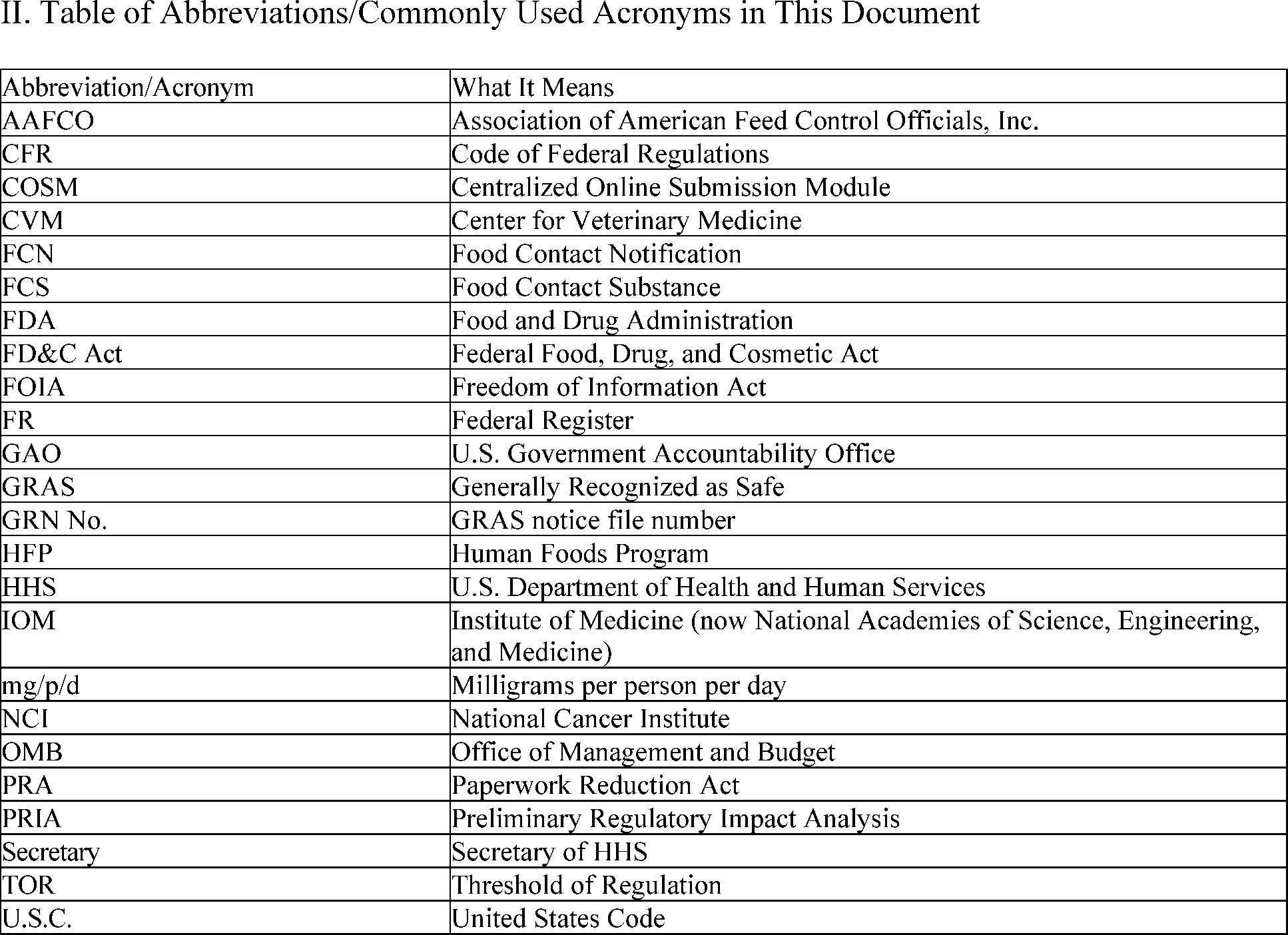
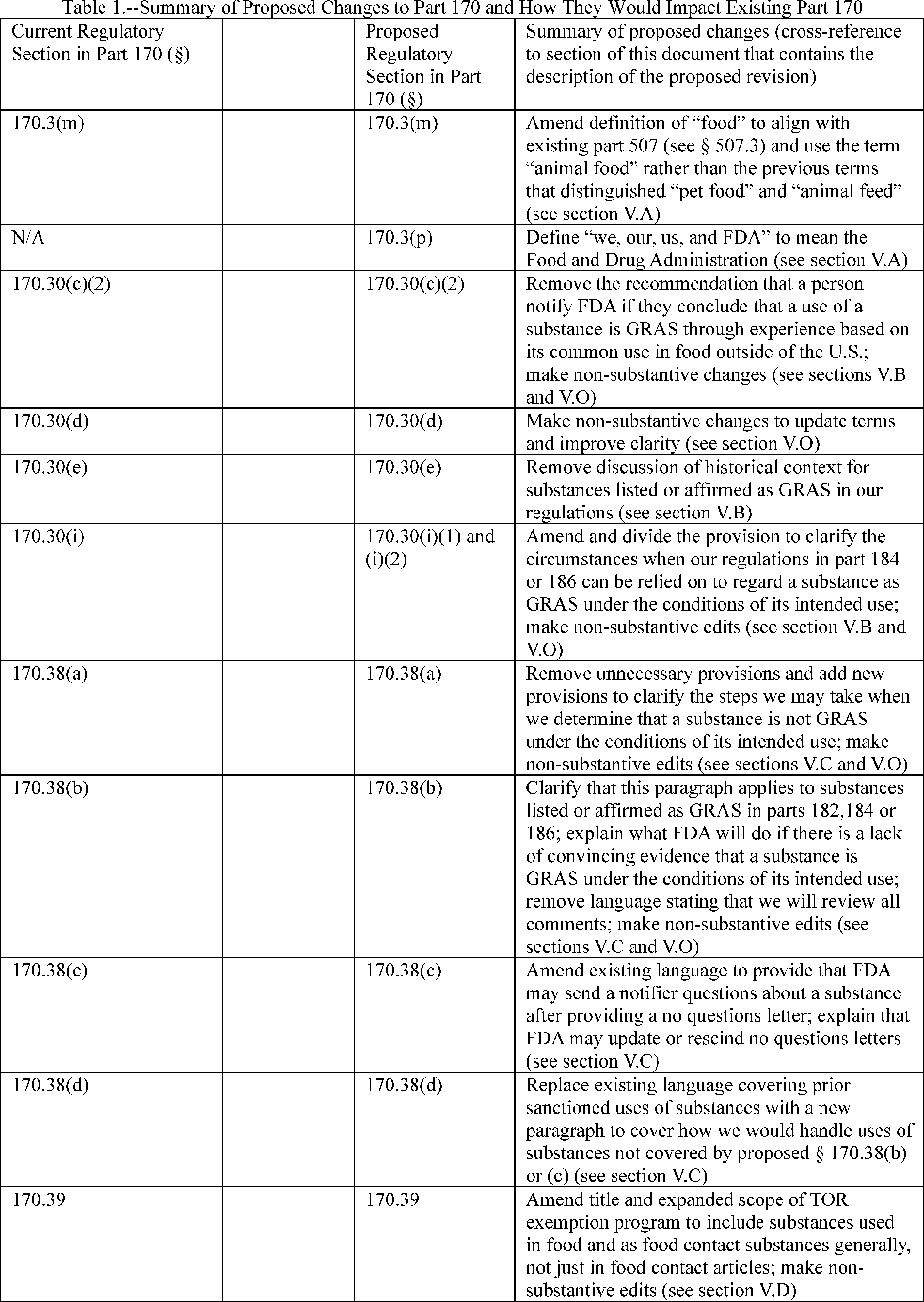
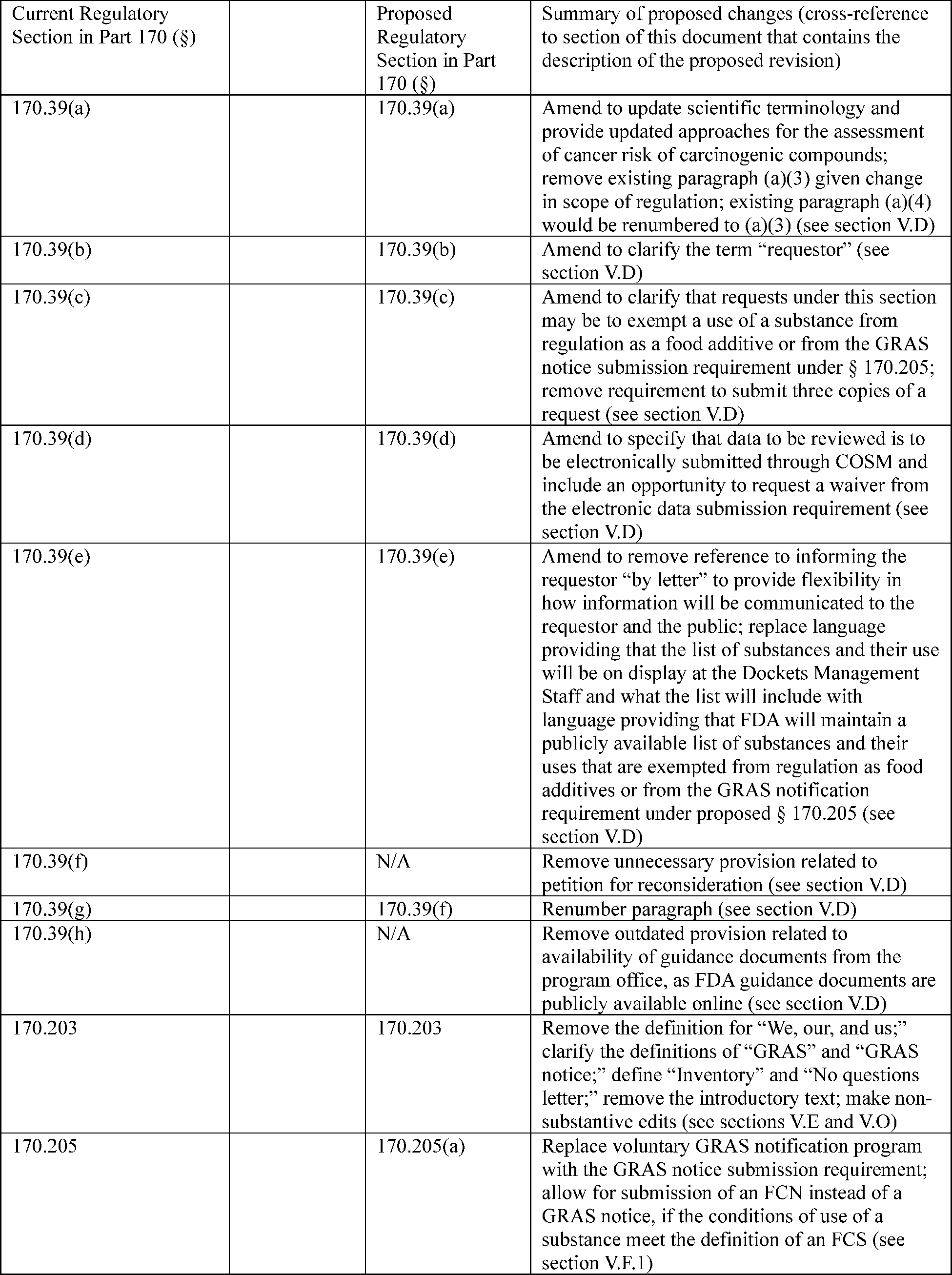
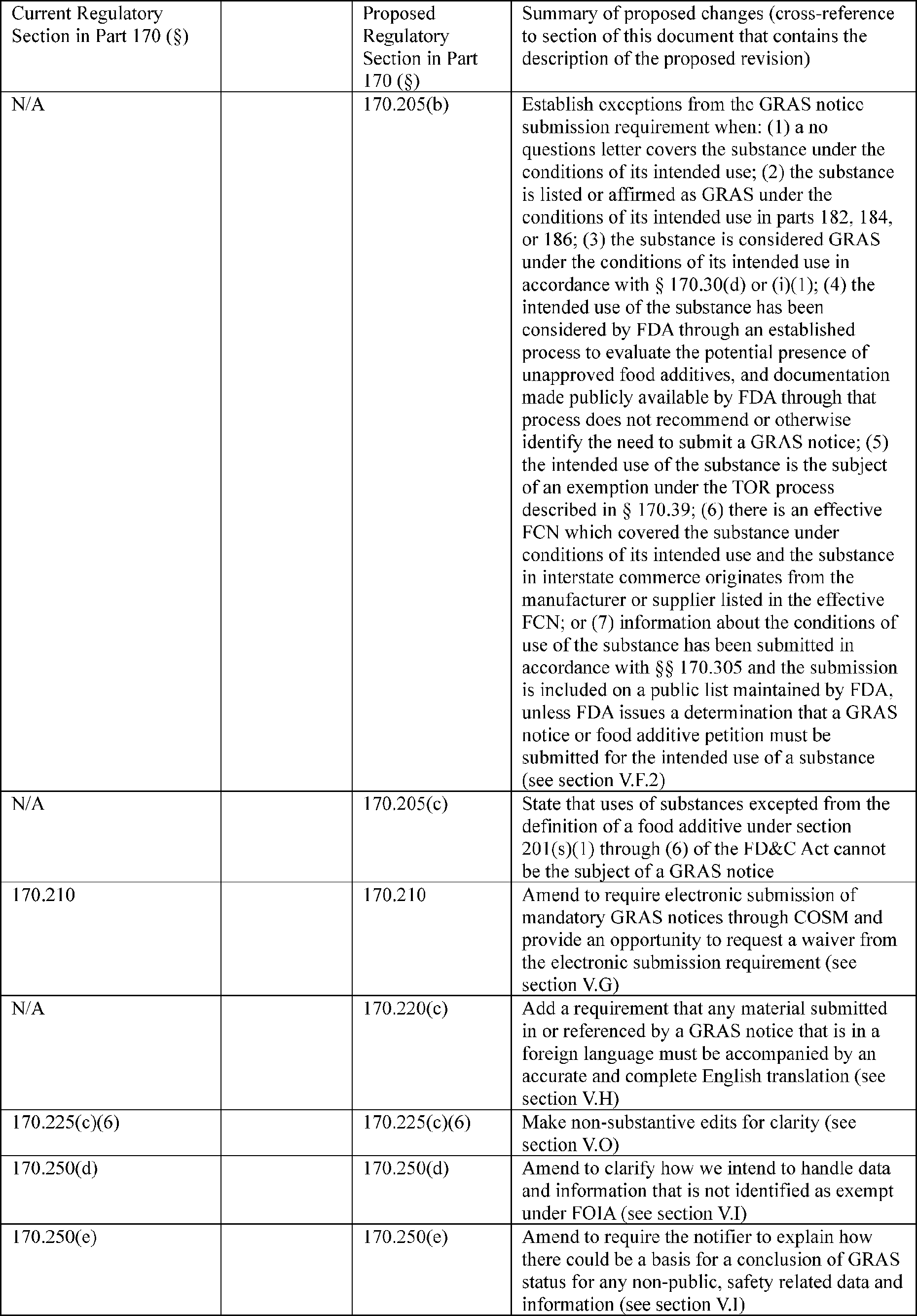
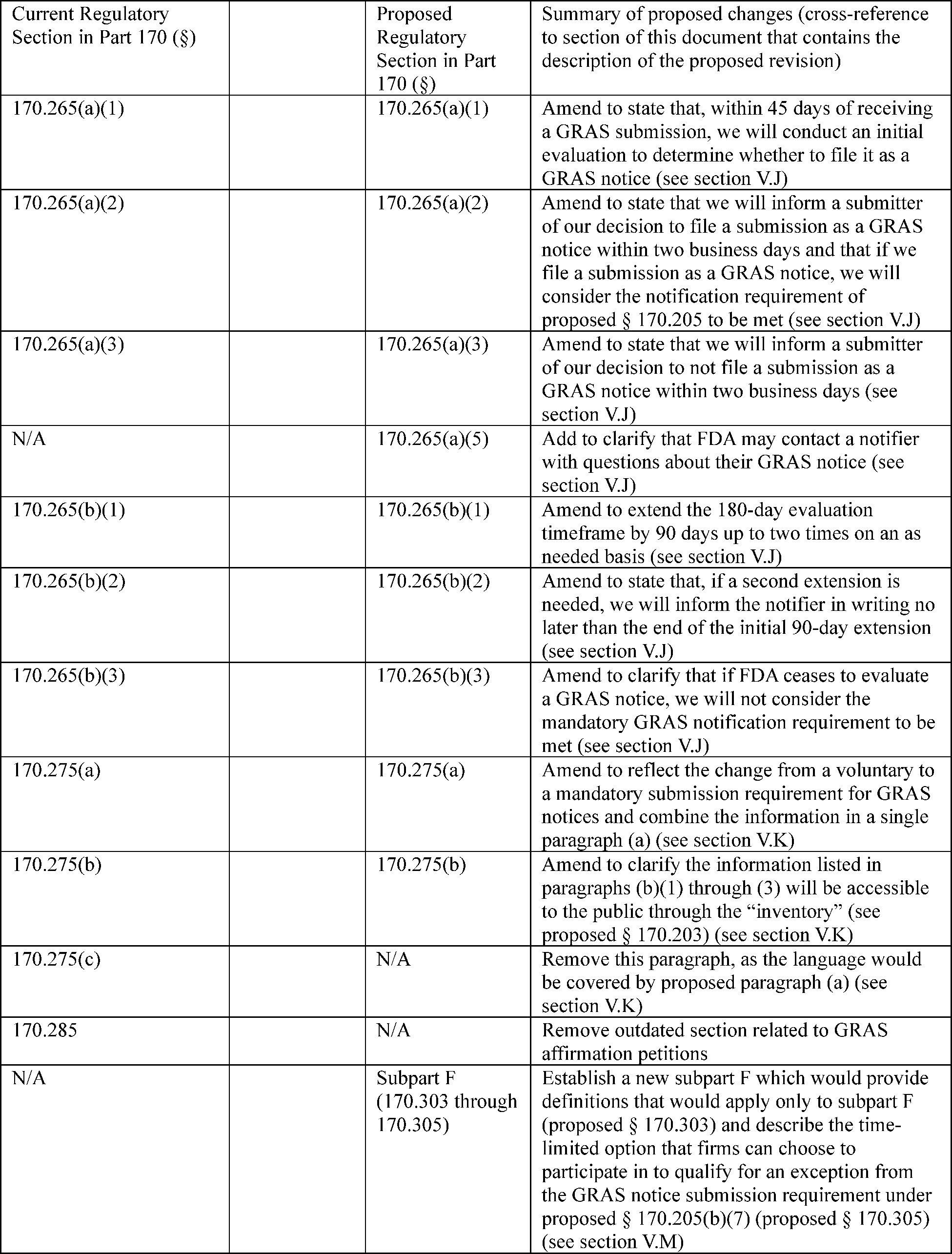
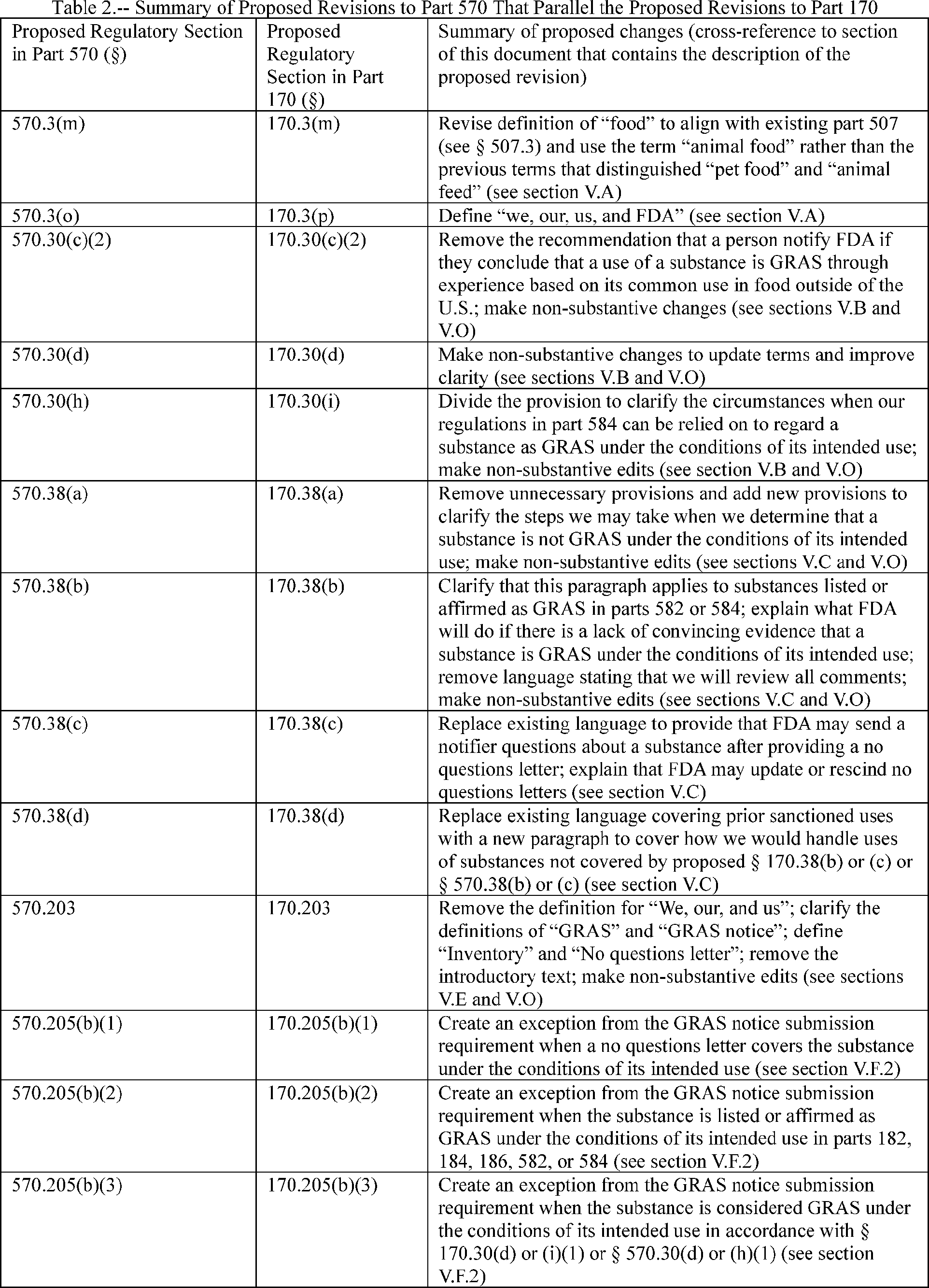
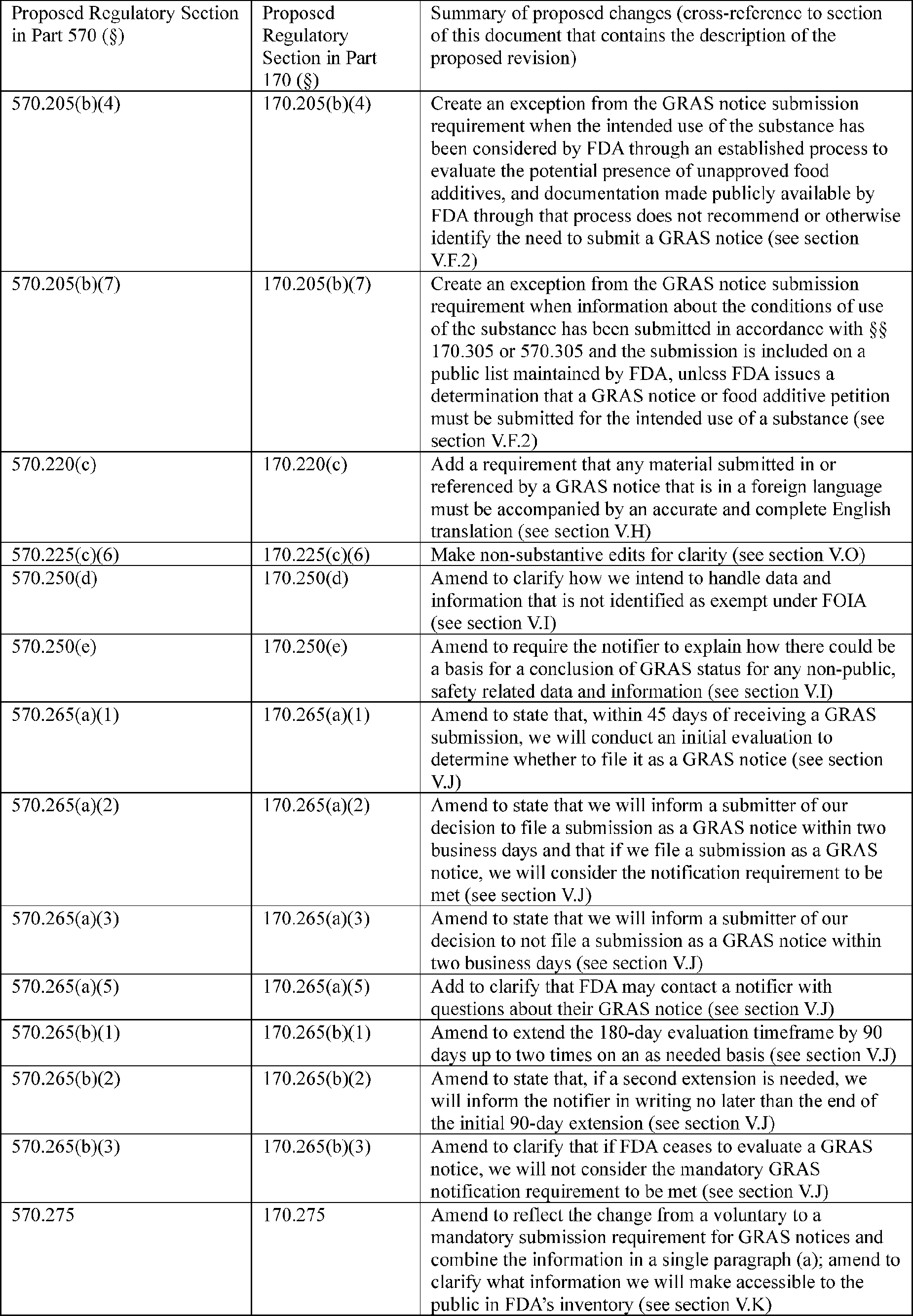
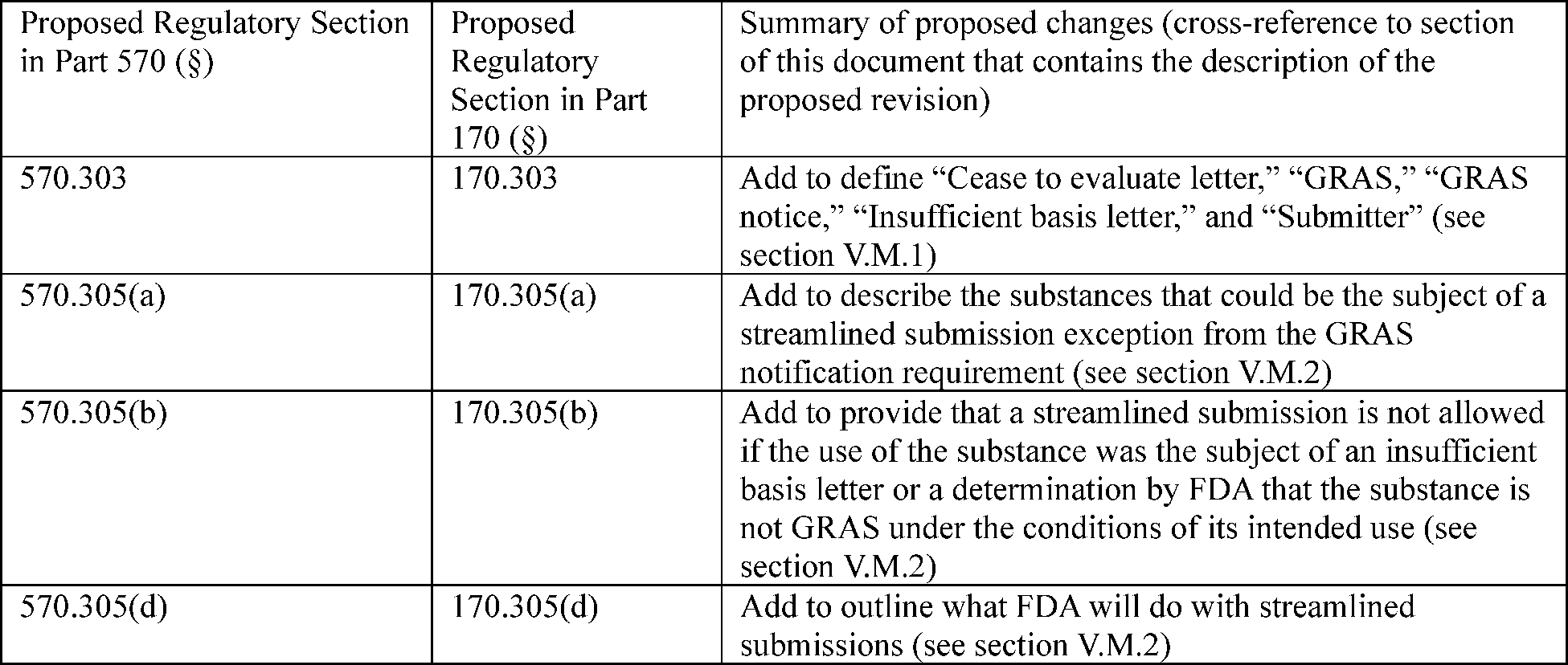
 www.aafco.org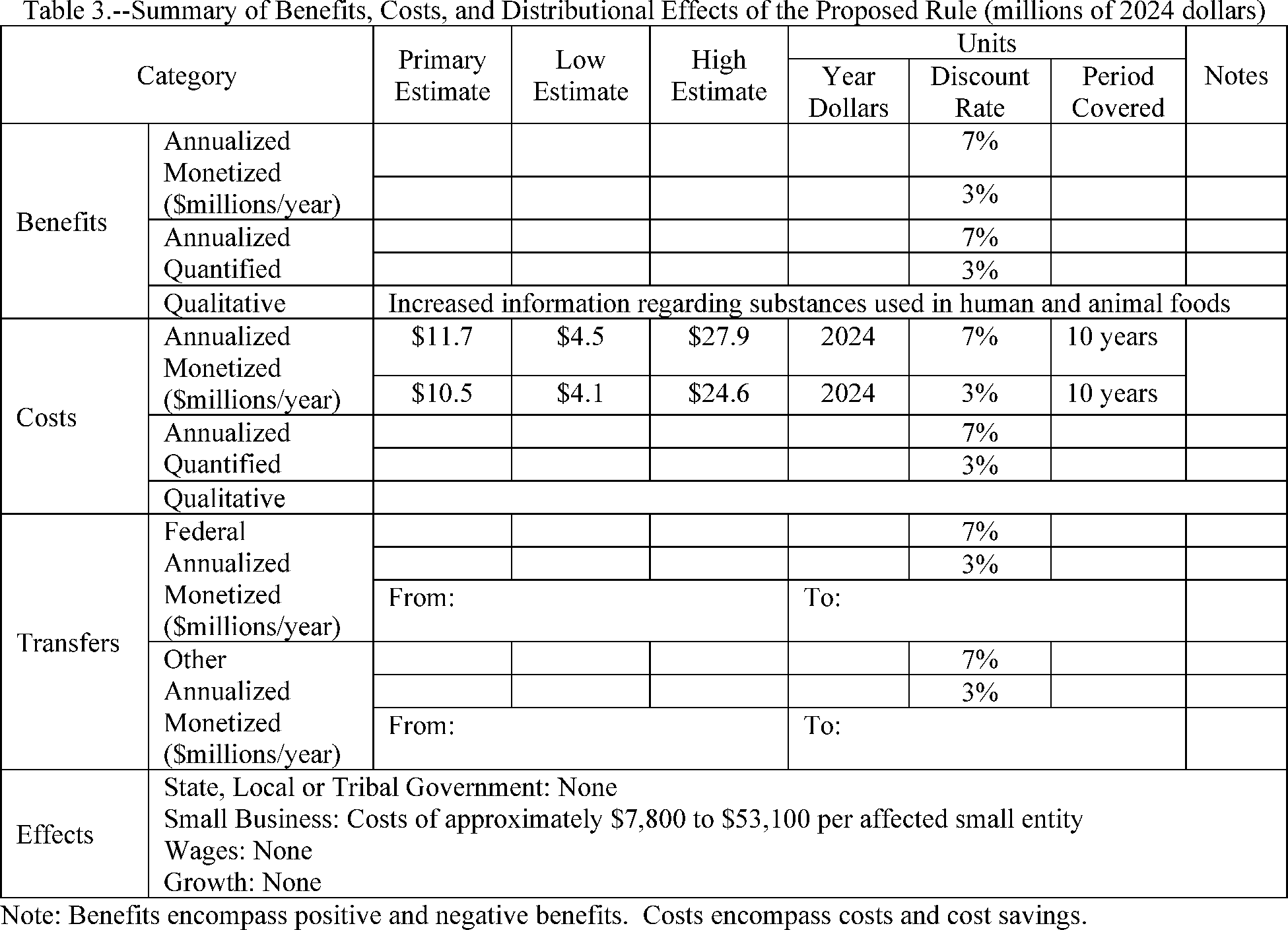
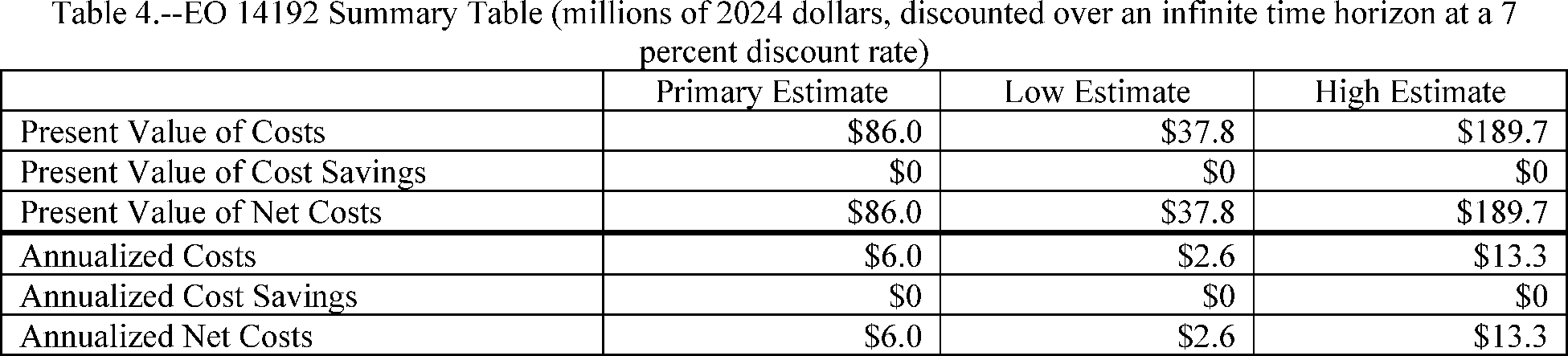
 www.fda.gov/economics-staff/regulatory-impact-analyses-ria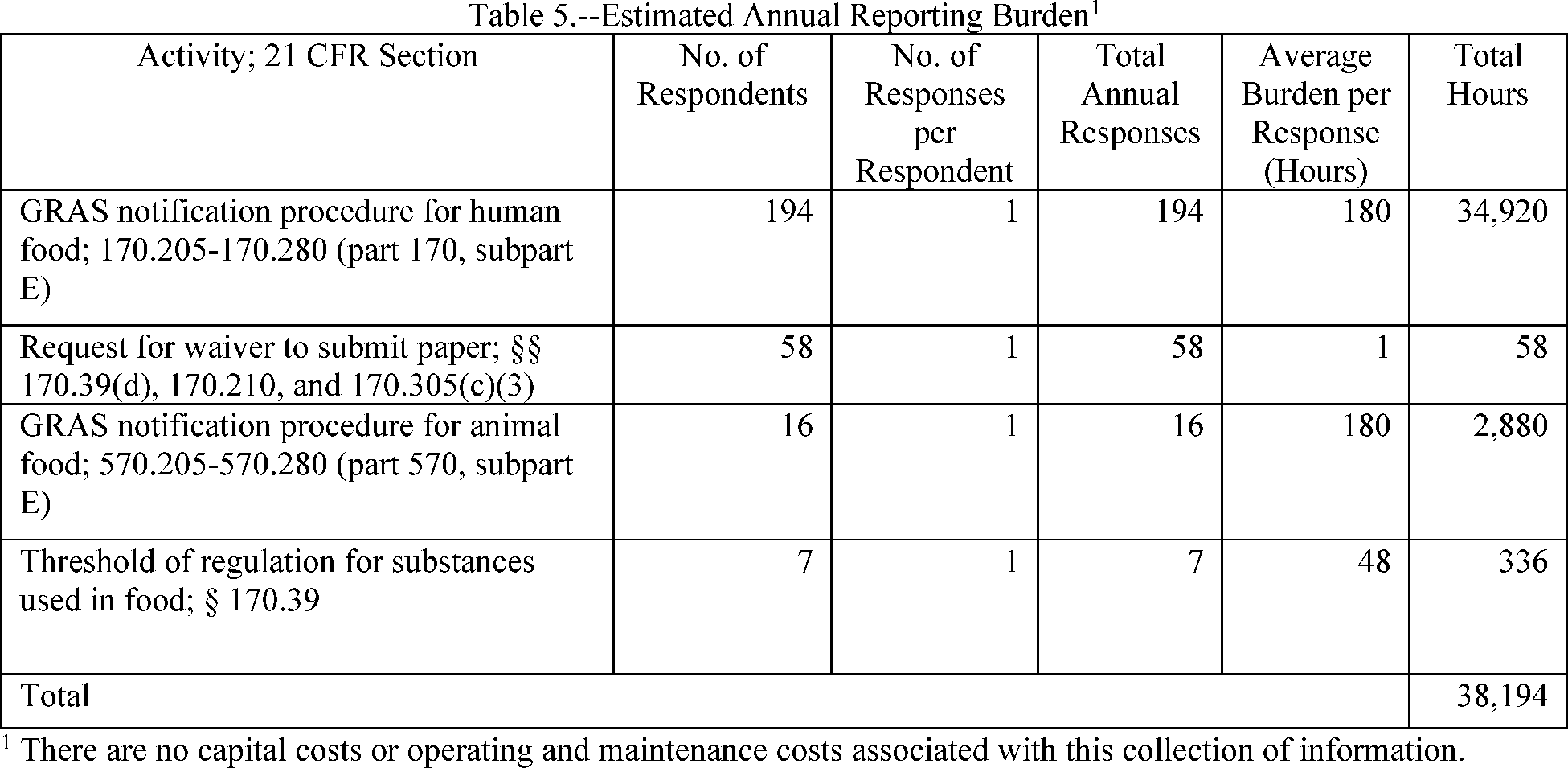
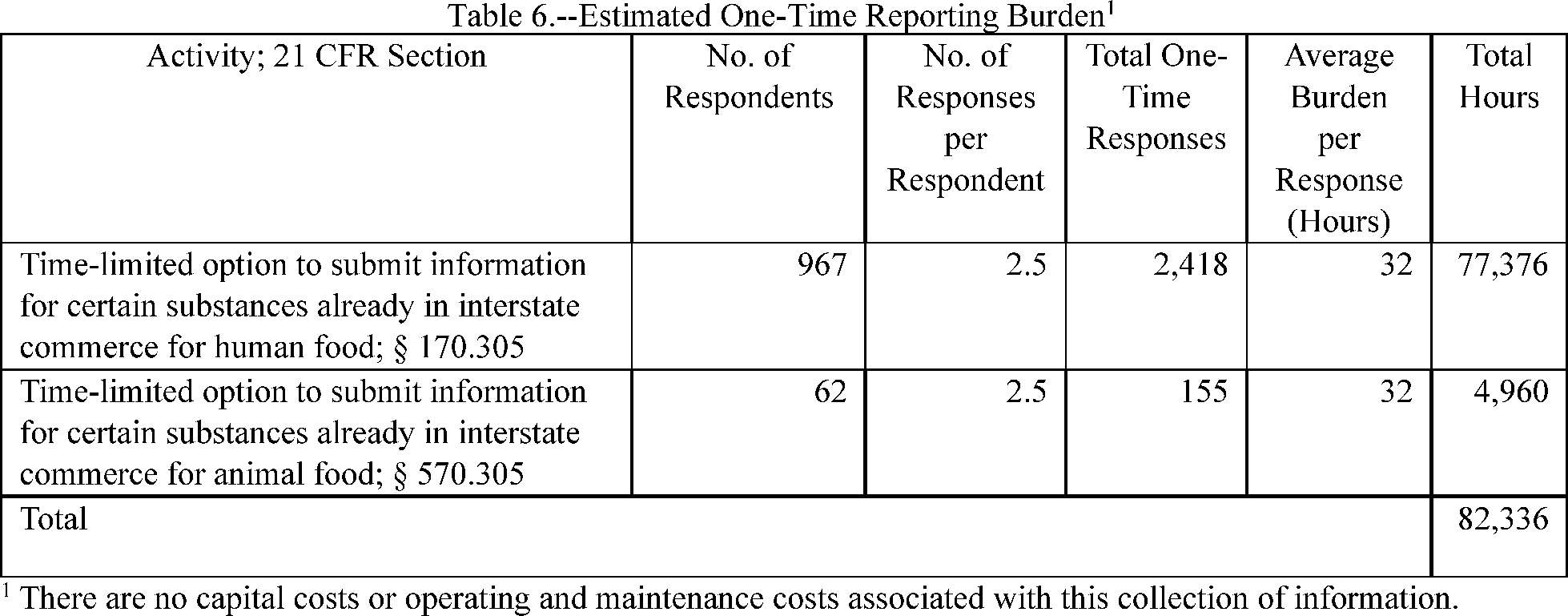
 www.hhs.gov/press-room/revising-gras-pathway.html
 www.whitehouse.gov/maha/
 www.hfpappexternal.fda.gov/scripts/fdcc/index.cfm?set=GRASNotices
 www.gao.gov/products/gao-10-246
 www.pew.org/en/research-and-analysis/reports/2013/11/07/fixing-the-oversight-of-chemicals-added-to-our-food
 doi.org/10.1111/j.1541-4337.2011.00166.x
 timesmachine.nytimes.com/timesmachine/1969/10/31/issue.html
 www.accessdata.fda.gov/cms_ia/importalert_119.html
 wayback.archive-it.org/7993/20161024020218/www.fda.gov/NewsEvents/PublicHealthFocus/ucm234900.htm
 news.gallup.com/poll/650024/trust-government-assurance-food-safety-hits-record-low.aspx
 ific.org/wp-content/uploads/2025/07/2025-IFIC-Food-Health-Survey-Food-Ingredient-Safety.pdf
 www.ncbi.nlm.nih.gov/books/NBK222879
 nap.nationalacademies.org/resource/13050/Vitamin-D-and-Calcium-2010-Report-Brief.pdf
 ods.od.nih.gov/factsheets/Calcium-HealthProfessional/
 www.plainlanguage.gov/guidelines/
 www.archives.gov/federal-register/cfr/ibr-locations.html